window.__IS_SSR__=true
window.__INITIAL_STATE__={
"attachmentsReducer": {
"audio_0": {
"type": "attachments",
"id": "audio_0",
"imgSizes": {
"kqedFullSize": {
"file": "https://ww2.kqed.org/news/wp-content/themes/KQED-unified/img/audio_bgs/background0.jpg"
}
}
},
"audio_1": {
"type": "attachments",
"id": "audio_1",
"imgSizes": {
"kqedFullSize": {
"file": "https://ww2.kqed.org/news/wp-content/themes/KQED-unified/img/audio_bgs/background1.jpg"
}
}
},
"audio_2": {
"type": "attachments",
"id": "audio_2",
"imgSizes": {
"kqedFullSize": {
"file": "https://ww2.kqed.org/news/wp-content/themes/KQED-unified/img/audio_bgs/background2.jpg"
}
}
},
"audio_3": {
"type": "attachments",
"id": "audio_3",
"imgSizes": {
"kqedFullSize": {
"file": "https://ww2.kqed.org/news/wp-content/themes/KQED-unified/img/audio_bgs/background3.jpg"
}
}
},
"audio_4": {
"type": "attachments",
"id": "audio_4",
"imgSizes": {
"kqedFullSize": {
"file": "https://ww2.kqed.org/news/wp-content/themes/KQED-unified/img/audio_bgs/background4.jpg"
}
}
},
"placeholder": {
"type": "attachments",
"id": "placeholder",
"imgSizes": {
"thumbnail": {
"file": "https://cdn.kqed.org/wp-content/uploads/2024/12/KQED-Default-Image-816638274-2000x1333-1-160x107.jpg",
"width": 160,
"height": 107,
"mimeType": "image/jpeg"
},
"medium": {
"file": "https://cdn.kqed.org/wp-content/uploads/2024/12/KQED-Default-Image-816638274-2000x1333-1-800x533.jpg",
"width": 800,
"height": 533,
"mimeType": "image/jpeg"
},
"medium_large": {
"file": "https://cdn.kqed.org/wp-content/uploads/2024/12/KQED-Default-Image-816638274-2000x1333-1-768x512.jpg",
"width": 768,
"height": 512,
"mimeType": "image/jpeg"
},
"large": {
"file": "https://cdn.kqed.org/wp-content/uploads/2024/12/KQED-Default-Image-816638274-2000x1333-1-1020x680.jpg",
"width": 1020,
"height": 680,
"mimeType": "image/jpeg"
},
"1536x1536": {
"file": "https://cdn.kqed.org/wp-content/uploads/2024/12/KQED-Default-Image-816638274-2000x1333-1-1536x1024.jpg",
"width": 1536,
"height": 1024,
"mimeType": "image/jpeg"
},
"fd-lrg": {
"file": "https://cdn.kqed.org/wp-content/uploads/2024/12/KQED-Default-Image-816638274-2000x1333-1-1536x1024.jpg",
"width": 1536,
"height": 1024,
"mimeType": "image/jpeg"
},
"fd-med": {
"file": "https://cdn.kqed.org/wp-content/uploads/2024/12/KQED-Default-Image-816638274-2000x1333-1-1020x680.jpg",
"width": 1020,
"height": 680,
"mimeType": "image/jpeg"
},
"fd-sm": {
"file": "https://cdn.kqed.org/wp-content/uploads/2024/12/KQED-Default-Image-816638274-2000x1333-1-800x533.jpg",
"width": 800,
"height": 533,
"mimeType": "image/jpeg"
},
"post-thumbnail": {
"file": "https://cdn.kqed.org/wp-content/uploads/2024/12/KQED-Default-Image-816638274-2000x1333-1-672x372.jpg",
"width": 672,
"height": 372,
"mimeType": "image/jpeg"
},
"twentyfourteen-full-width": {
"file": "https://cdn.kqed.org/wp-content/uploads/2024/12/KQED-Default-Image-816638274-2000x1333-1-1038x576.jpg",
"width": 1038,
"height": 576,
"mimeType": "image/jpeg"
},
"xxsmall": {
"file": "https://cdn.kqed.org/wp-content/uploads/2024/12/KQED-Default-Image-816638274-2000x1333-1-160x107.jpg",
"width": 160,
"height": 107,
"mimeType": "image/jpeg"
},
"xsmall": {
"file": "https://cdn.kqed.org/wp-content/uploads/2024/12/KQED-Default-Image-816638274-2000x1333-1-672x372.jpg",
"width": 672,
"height": 372,
"mimeType": "image/jpeg"
},
"small": {
"file": "https://cdn.kqed.org/wp-content/uploads/2024/12/KQED-Default-Image-816638274-2000x1333-1-672x372.jpg",
"width": 672,
"height": 372,
"mimeType": "image/jpeg"
},
"xlarge": {
"file": "https://cdn.kqed.org/wp-content/uploads/2024/12/KQED-Default-Image-816638274-2000x1333-1-1020x680.jpg",
"width": 1020,
"height": 680,
"mimeType": "image/jpeg"
},
"full-width": {
"file": "https://cdn.kqed.org/wp-content/uploads/2024/12/KQED-Default-Image-816638274-2000x1333-1-1920x1280.jpg",
"width": 1920,
"height": 1280,
"mimeType": "image/jpeg"
},
"guest-author-32": {
"file": "https://cdn.kqed.org/wp-content/uploads/2025/01/KQED-Default-Image-816638274-1333x1333-1-160x160.jpg",
"width": 32,
"height": 32,
"mimeType": "image/jpeg"
},
"guest-author-50": {
"file": "https://cdn.kqed.org/wp-content/uploads/2025/01/KQED-Default-Image-816638274-1333x1333-1-160x160.jpg",
"width": 50,
"height": 50,
"mimeType": "image/jpeg"
},
"guest-author-64": {
"file": "https://cdn.kqed.org/wp-content/uploads/2025/01/KQED-Default-Image-816638274-1333x1333-1-160x160.jpg",
"width": 64,
"height": 64,
"mimeType": "image/jpeg"
},
"guest-author-96": {
"file": "https://cdn.kqed.org/wp-content/uploads/2025/01/KQED-Default-Image-816638274-1333x1333-1-160x160.jpg",
"width": 96,
"height": 96,
"mimeType": "image/jpeg"
},
"guest-author-128": {
"file": "https://cdn.kqed.org/wp-content/uploads/2025/01/KQED-Default-Image-816638274-1333x1333-1-160x160.jpg",
"width": 128,
"height": 128,
"mimeType": "image/jpeg"
},
"detail": {
"file": "https://cdn.kqed.org/wp-content/uploads/2025/01/KQED-Default-Image-816638274-1333x1333-1-160x160.jpg",
"width": 160,
"height": 160,
"mimeType": "image/jpeg"
},
"kqedFullSize": {
"file": "https://cdn.kqed.org/wp-content/uploads/2024/12/KQED-Default-Image-816638274-2000x1333-1.jpg",
"width": 2000,
"height": 1333
}
}
},
"news_11950544": {
"type": "attachments",
"id": "news_11950544",
"meta": {
"index": "attachments_1716263798",
"site": "news",
"id": "11950544",
"found": true
},
"parent": 11950545,
"imgSizes": {
"twentyfourteen-full-width": {
"file": "https://ww2.kqed.org/app/uploads/sites/10/2023/05/RS19586_IMG_8795-qut-1038x576.jpg",
"width": 1038,
"mimeType": "image/jpeg",
"height": 576
},
"thumbnail": {
"file": "https://ww2.kqed.org/app/uploads/sites/10/2023/05/RS19586_IMG_8795-qut-160x120.jpg",
"width": 160,
"mimeType": "image/jpeg",
"height": 120
},
"post-thumbnail": {
"file": "https://ww2.kqed.org/app/uploads/sites/10/2023/05/RS19586_IMG_8795-qut-672x372.jpg",
"width": 672,
"mimeType": "image/jpeg",
"height": 372
},
"kqedFullSize": {
"file": "https://ww2.kqed.org/app/uploads/sites/10/2023/05/RS19586_IMG_8795-qut.jpg",
"width": 1920,
"height": 1440
},
"large": {
"file": "https://ww2.kqed.org/app/uploads/sites/10/2023/05/RS19586_IMG_8795-qut-1020x765.jpg",
"width": 1020,
"mimeType": "image/jpeg",
"height": 765
},
"1536x1536": {
"file": "https://ww2.kqed.org/app/uploads/sites/10/2023/05/RS19586_IMG_8795-qut-1536x1152.jpg",
"width": 1536,
"mimeType": "image/jpeg",
"height": 1152
},
"medium": {
"file": "https://ww2.kqed.org/app/uploads/sites/10/2023/05/RS19586_IMG_8795-qut-800x600.jpg",
"width": 800,
"mimeType": "image/jpeg",
"height": 600
}
},
"publishDate": 1684946127,
"modified": 1684964791,
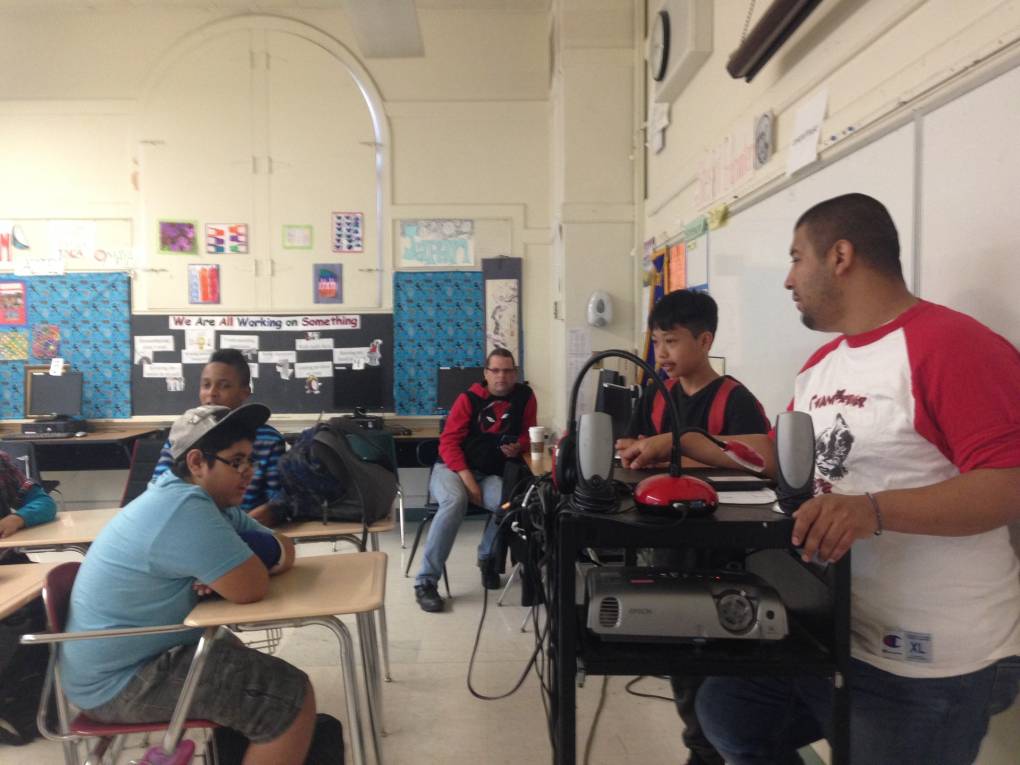
"caption": "Special education teacher and Oakland Education Association president Ismael Armendariz talks to some of his students in his classroom at Edna Brewer Middle School in Oakland, on May 20, 2016. Currently the Oakland Unified School District serves more than 6,000 students in special education programs, accounting for roughly 17% of students.",
"description": null,
"title": "RS19586_IMG_8795-qut",
"credit": "Sarah Tan/KQED",
"status": "inherit",
"altTag": "Inside a classroom, students sit at desks as a teacher wearing a red and white T-shirt stands behind a projector as he talks to his students.",
"isLoading": false,
"fetchFailed": false
},
"news_11949815": {
"type": "attachments",
"id": "news_11949815",
"meta": {
"index": "attachments_1716263798",
"site": "news",
"id": "11949815",
"found": true
},
"parent": 11949802,
"imgSizes": {
"twentyfourteen-full-width": {
"file": "https://ww2.kqed.org/app/uploads/sites/10/2023/05/RS65582_007_KQED_UCHastingsMeganWilhelm_05152023-qut-1038x576.jpg",
"width": 1038,
"mimeType": "image/jpeg",
"height": 576
},
"thumbnail": {
"file": "https://ww2.kqed.org/app/uploads/sites/10/2023/05/RS65582_007_KQED_UCHastingsMeganWilhelm_05152023-qut-160x107.jpg",
"width": 160,
"mimeType": "image/jpeg",
"height": 107
},
"post-thumbnail": {
"file": "https://ww2.kqed.org/app/uploads/sites/10/2023/05/RS65582_007_KQED_UCHastingsMeganWilhelm_05152023-qut-672x372.jpg",
"width": 672,
"mimeType": "image/jpeg",
"height": 372
},
"kqedFullSize": {
"file": "https://ww2.kqed.org/app/uploads/sites/10/2023/05/RS65582_007_KQED_UCHastingsMeganWilhelm_05152023-qut.jpg",
"width": 1920,
"height": 1280
},
"large": {
"file": "https://ww2.kqed.org/app/uploads/sites/10/2023/05/RS65582_007_KQED_UCHastingsMeganWilhelm_05152023-qut-1020x680.jpg",
"width": 1020,
"mimeType": "image/jpeg",
"height": 680
},
"1536x1536": {
"file": "https://ww2.kqed.org/app/uploads/sites/10/2023/05/RS65582_007_KQED_UCHastingsMeganWilhelm_05152023-qut-1536x1024.jpg",
"width": 1536,
"mimeType": "image/jpeg",
"height": 1024
},
"medium": {
"file": "https://ww2.kqed.org/app/uploads/sites/10/2023/05/RS65582_007_KQED_UCHastingsMeganWilhelm_05152023-qut-800x533.jpg",
"width": 800,
"mimeType": "image/jpeg",
"height": 533
}
},
"publishDate": 1684346844,
"modified": 1684787498,
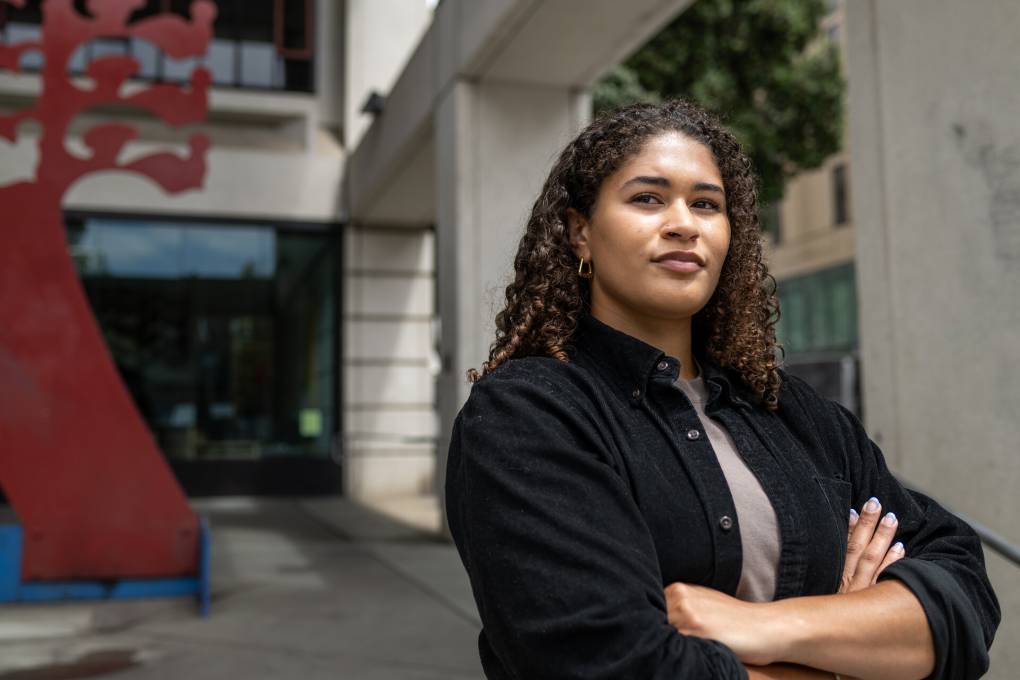
"caption": "Megan Wilhelm, a member of the Black Law Student Association at UC Law SF (formerly UC Hastings), stands outside the campus on May 15, 2023. She alleges student accounts of racism on campus have gone ignored by the school's administration.",
"description": null,
"title": "RS65582_007_KQED_UCHastingsMeganWilhelm_05152023-qut",
"credit": "Beth LaBerge/KQED",
"status": "inherit",
"altTag": "A young African American woman stands with arms crossed while looking at camera with a building behind her.",
"isLoading": false,
"fetchFailed": false
},
"news_11948803": {
"type": "attachments",
"id": "news_11948803",
"meta": {
"index": "attachments_1716263798",
"site": "news",
"id": "11948803",
"found": true
},
"parent": 11948773,
"imgSizes": {
"twentyfourteen-full-width": {
"file": "https://ww2.kqed.org/app/uploads/sites/10/2023/05/day-care-kids-at-are-table-1020x576.jpg",
"width": 1020,
"mimeType": "image/jpeg",
"height": 576
},
"thumbnail": {
"file": "https://ww2.kqed.org/app/uploads/sites/10/2023/05/day-care-kids-at-are-table-160x107.jpg",
"width": 160,
"mimeType": "image/jpeg",
"height": 107
},
"post-thumbnail": {
"file": "https://ww2.kqed.org/app/uploads/sites/10/2023/05/day-care-kids-at-are-table-672x372.jpg",
"width": 672,
"mimeType": "image/jpeg",
"height": 372
},
"kqedFullSize": {
"file": "https://ww2.kqed.org/app/uploads/sites/10/2023/05/day-care-kids-at-are-table.jpg",
"width": 1020,
"height": 680
},
"medium": {
"file": "https://ww2.kqed.org/app/uploads/sites/10/2023/05/day-care-kids-at-are-table-800x533.jpg",
"width": 800,
"mimeType": "image/jpeg",
"height": 533
}
},
"publishDate": 1683573072,
"modified": 1683573092,
"caption": "Yolanda Thomas trabaja en un proyecto de arte con los niños de su guardería en su casa de Pittsburg el 14 de diciembre de 2022. A partir del 1 de julio de 2023, muchos padres que dependen de guarderías subvencionadas podrían tener que empezar a pagar cuotas por primera vez desde 2020.",
"description": null,
"title": "day care kids at are table",
"credit": "Beth LaBerge/KQED",
"status": "inherit",
"altTag": null,
"isLoading": false,
"fetchFailed": false
},
"news_11950151": {
"type": "attachments",
"id": "news_11950151",
"meta": {
"index": "attachments_1716263798",
"site": "news",
"id": "11950151",
"found": true
},
"parent": 0,
"imgSizes": {
"twentyfourteen-full-width": {
"file": "https://ww2.kqed.org/app/uploads/sites/10/2023/05/001_KQED_WoodStreet_JessicaFountaine_01052023-1038x576.jpg",
"width": 1038,
"mimeType": "image/jpeg",
"height": 576
},
"thumbnail": {
"file": "https://ww2.kqed.org/app/uploads/sites/10/2023/05/001_KQED_WoodStreet_JessicaFountaine_01052023-160x107.jpg",
"width": 160,
"mimeType": "image/jpeg",
"height": 107
},
"post-thumbnail": {
"file": "https://ww2.kqed.org/app/uploads/sites/10/2023/05/001_KQED_WoodStreet_JessicaFountaine_01052023-672x372.jpg",
"width": 672,
"mimeType": "image/jpeg",
"height": 372
},
"kqedFullSize": {
"file": "https://ww2.kqed.org/app/uploads/sites/10/2023/05/001_KQED_WoodStreet_JessicaFountaine_01052023.jpg",
"width": 1920,
"height": 1280
},
"large": {
"file": "https://ww2.kqed.org/app/uploads/sites/10/2023/05/001_KQED_WoodStreet_JessicaFountaine_01052023-1020x680.jpg",
"width": 1020,
"mimeType": "image/jpeg",
"height": 680
},
"1536x1536": {
"file": "https://ww2.kqed.org/app/uploads/sites/10/2023/05/001_KQED_WoodStreet_JessicaFountaine_01052023-1536x1024.jpg",
"width": 1536,
"mimeType": "image/jpeg",
"height": 1024
},
"medium": {
"file": "https://ww2.kqed.org/app/uploads/sites/10/2023/05/001_KQED_WoodStreet_JessicaFountaine_01052023-800x533.jpg",
"width": 800,
"mimeType": "image/jpeg",
"height": 533
}
},
"publishDate": 1684462565,
"modified": 1684462642,
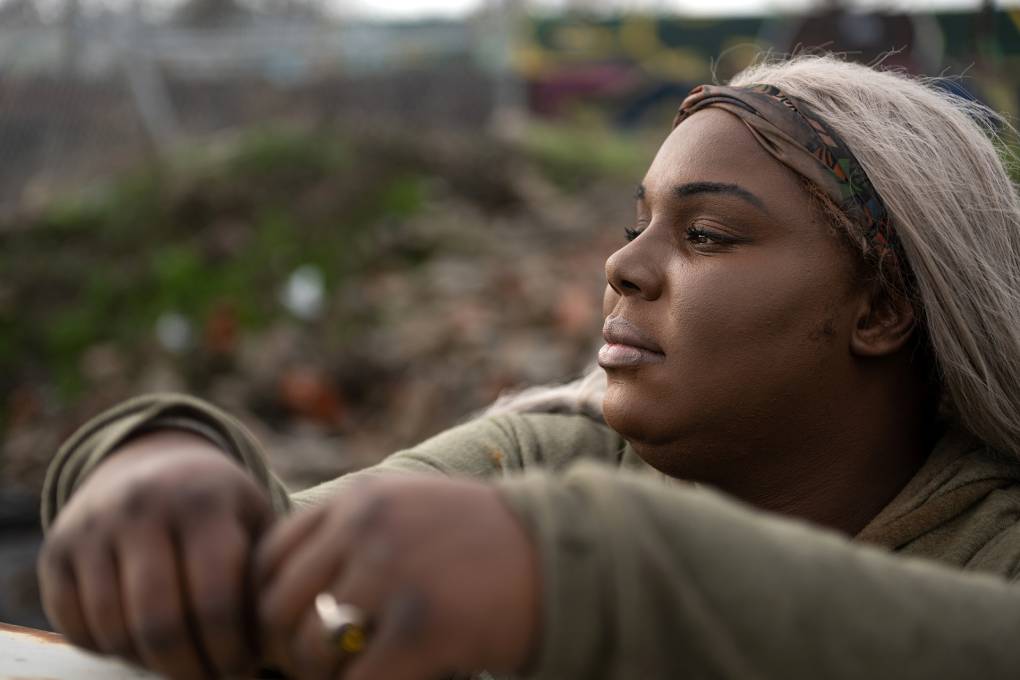
"caption": "Jessica Fountaine looks into an empty lot beside her RV at the end of 9th and Pine streets in Oakland.",
"description": null,
"title": "001_KQED_WoodStreet_JessicaFountaine_01052023",
"credit": "Beth LaBerge/KQED",
"status": "inherit",
"altTag": "Close-up of an African American woman looking out and away from the camera as her arms rest on something and an open blurred area behind.",
"isLoading": false,
"fetchFailed": false
},
"news_11950064": {
"type": "attachments",
"id": "news_11950064",
"meta": {
"index": "attachments_1716263798",
"site": "news",
"id": "11950064",
"found": true
},
"parent": 0,
"imgSizes": {
"twentyfourteen-full-width": {
"file": "https://ww2.kqed.org/app/uploads/sites/10/2023/05/RS38497_GettyImages-73909601-qut-1038x576.jpg",
"width": 1038,
"mimeType": "image/jpeg",
"height": 576
},
"thumbnail": {
"file": "https://ww2.kqed.org/app/uploads/sites/10/2023/05/RS38497_GettyImages-73909601-qut-160x115.jpg",
"width": 160,
"mimeType": "image/jpeg",
"height": 115
},
"post-thumbnail": {
"file": "https://ww2.kqed.org/app/uploads/sites/10/2023/05/RS38497_GettyImages-73909601-qut-672x372.jpg",
"width": 672,
"mimeType": "image/jpeg",
"height": 372
},
"kqedFullSize": {
"file": "https://ww2.kqed.org/app/uploads/sites/10/2023/05/RS38497_GettyImages-73909601-qut.jpg",
"width": 1920,
"height": 1376
},
"large": {
"file": "https://ww2.kqed.org/app/uploads/sites/10/2023/05/RS38497_GettyImages-73909601-qut-1020x731.jpg",
"width": 1020,
"mimeType": "image/jpeg",
"height": 731
},
"1536x1536": {
"file": "https://ww2.kqed.org/app/uploads/sites/10/2023/05/RS38497_GettyImages-73909601-qut-1536x1101.jpg",
"width": 1536,
"mimeType": "image/jpeg",
"height": 1101
},
"medium": {
"file": "https://ww2.kqed.org/app/uploads/sites/10/2023/05/RS38497_GettyImages-73909601-qut-800x573.jpg",
"width": 800,
"mimeType": "image/jpeg",
"height": 573
}
},
"publishDate": 1684445486,
"modified": 1684445661,
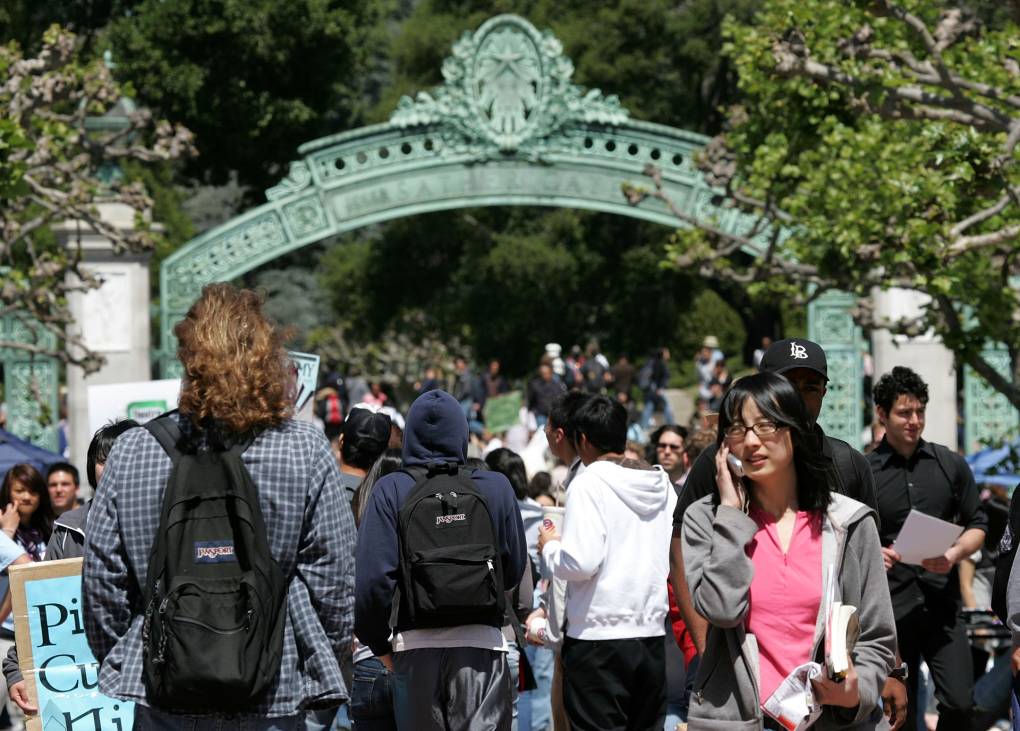
"caption": "UC Berkeley students walk through Sather Gate on the UC Berkeley campus April 17, 2007 in Berkeley, California. ",
"description": null,
"title": "U.S. Campus Security Scrutinized In Wake Of Virginia Tech Tragedy",
"credit": "Justin Sullivan/Getty Images",
"status": "inherit",
"altTag": "College students walk through a large, green archway surrounded by lush, tall trees. Many students wear black Jansport brand backpacks. Another female student with black hair and glasses talks on her cellphone in the foreground.",
"isLoading": false,
"fetchFailed": false
},
"news_11949979": {
"type": "attachments",
"id": "news_11949979",
"meta": {
"index": "attachments_1716263798",
"site": "news",
"id": "11949979",
"found": true
},
"parent": 11949957,
"imgSizes": {
"twentyfourteen-full-width": {
"file": "https://ww2.kqed.org/app/uploads/sites/10/2023/05/GettyImages-1194312424-1038x576.jpg",
"width": 1038,
"mimeType": "image/jpeg",
"height": 576
},
"thumbnail": {
"file": "https://ww2.kqed.org/app/uploads/sites/10/2023/05/GettyImages-1194312424-160x105.jpg",
"width": 160,
"mimeType": "image/jpeg",
"height": 105
},
"post-thumbnail": {
"file": "https://ww2.kqed.org/app/uploads/sites/10/2023/05/GettyImages-1194312424-672x372.jpg",
"width": 672,
"mimeType": "image/jpeg",
"height": 372
},
"kqedFullSize": {
"file": "https://ww2.kqed.org/app/uploads/sites/10/2023/05/GettyImages-1194312424.jpg",
"width": 2133,
"height": 1406
},
"2048x2048": {
"file": "https://ww2.kqed.org/app/uploads/sites/10/2023/05/GettyImages-1194312424-2048x1350.jpg",
"width": 2048,
"mimeType": "image/jpeg",
"height": 1350
},
"large": {
"file": "https://ww2.kqed.org/app/uploads/sites/10/2023/05/GettyImages-1194312424-1020x672.jpg",
"width": 1020,
"mimeType": "image/jpeg",
"height": 672
},
"1536x1536": {
"file": "https://ww2.kqed.org/app/uploads/sites/10/2023/05/GettyImages-1194312424-1536x1012.jpg",
"width": 1536,
"mimeType": "image/jpeg",
"height": 1012
},
"full-width": {
"file": "https://ww2.kqed.org/app/uploads/sites/10/2023/05/GettyImages-1194312424-1920x1266.jpg",
"width": 1920,
"mimeType": "image/jpeg",
"height": 1266
},
"medium": {
"file": "https://ww2.kqed.org/app/uploads/sites/10/2023/05/GettyImages-1194312424-800x527.jpg",
"width": 800,
"mimeType": "image/jpeg",
"height": 527
}
},
"publishDate": 1684437809,
"modified": 1684437997,
"caption": "A stock image of an African-American teacher, sitting in front of her class of elementary school students, 6 and 7 years old, reading a book. She has asked a question and most of the children are raising their hands. ",
"description": null,
"title": "African-American teacher reading to school children",
"credit": "kali9 via Getty Images",
"status": "inherit",
"altTag": "A Black woman wearing a light green shirt sits in front of a class of students with their hands raised.",
"isLoading": false,
"fetchFailed": false
},
"news_11949300": {
"type": "attachments",
"id": "news_11949300",
"meta": {
"index": "attachments_1716263798",
"site": "news",
"id": "11949300",
"found": true
},
"parent": 0,
"imgSizes": {
"twentyfourteen-full-width": {
"file": "https://ww2.kqed.org/app/uploads/sites/10/2023/05/718AB56C-461F-4399-BBEE-75AFC9BE9D84-1038x576.jpg",
"width": 1038,
"mimeType": "image/jpeg",
"height": 576
},
"thumbnail": {
"file": "https://ww2.kqed.org/app/uploads/sites/10/2023/05/718AB56C-461F-4399-BBEE-75AFC9BE9D84-160x107.jpg",
"width": 160,
"mimeType": "image/jpeg",
"height": 107
},
"post-thumbnail": {
"file": "https://ww2.kqed.org/app/uploads/sites/10/2023/05/718AB56C-461F-4399-BBEE-75AFC9BE9D84-672x372.jpg",
"width": 672,
"mimeType": "image/jpeg",
"height": 372
},
"kqedFullSize": {
"file": "https://ww2.kqed.org/app/uploads/sites/10/2023/05/718AB56C-461F-4399-BBEE-75AFC9BE9D84.jpg",
"width": 1620,
"height": 1080
},
"large": {
"file": "https://ww2.kqed.org/app/uploads/sites/10/2023/05/718AB56C-461F-4399-BBEE-75AFC9BE9D84-1020x680.jpg",
"width": 1020,
"mimeType": "image/jpeg",
"height": 680
},
"1536x1536": {
"file": "https://ww2.kqed.org/app/uploads/sites/10/2023/05/718AB56C-461F-4399-BBEE-75AFC9BE9D84-1536x1024.jpg",
"width": 1536,
"mimeType": "image/jpeg",
"height": 1024
},
"medium": {
"file": "https://ww2.kqed.org/app/uploads/sites/10/2023/05/718AB56C-461F-4399-BBEE-75AFC9BE9D84-800x533.jpg",
"width": 800,
"mimeType": "image/jpeg",
"height": 533
}
},
"publishDate": 1683914467,
"modified": 1683922577,
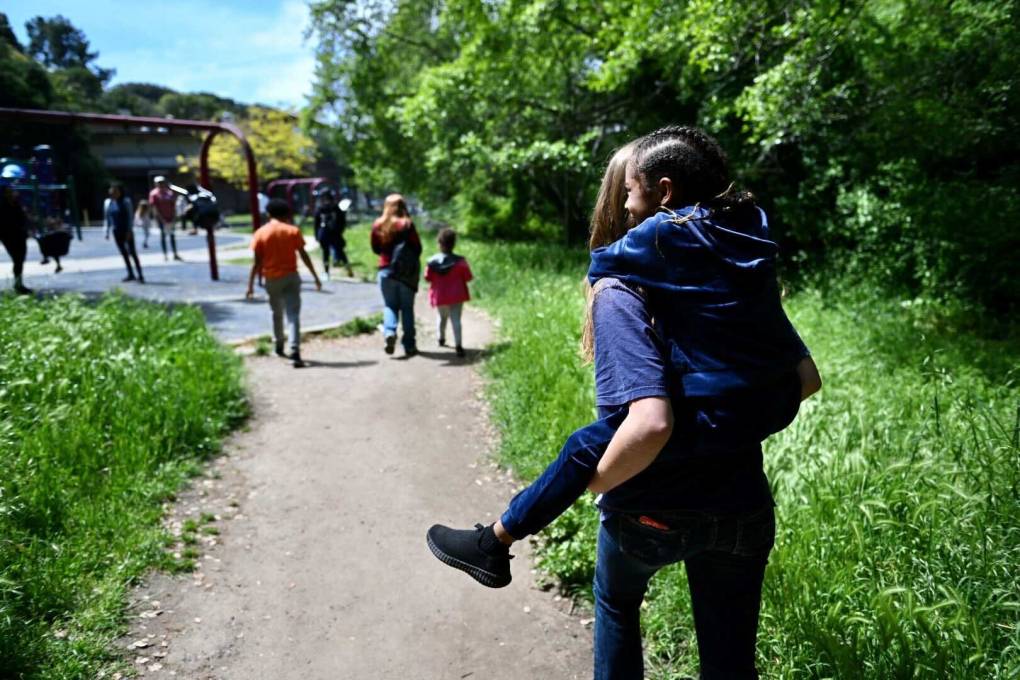
"caption": "Oakland Unified high school student Ruby Mechanic carries a student during a nature walk at a 'solidarity school' in Dimond Park, Oakland, on May 11, 2023, during a teachers' strike in the district.",
"description": null,
"title": "718AB56C-461F-4399-BBEE-75AFC9BE9D84",
"credit": "Beth LaBerge/KQED",
"status": "inherit",
"altTag": "A teenage girl carries an elementary student on her back in a playful way as they walk down a dirt trail with lush grass on either side, along with green trees. A swing set and many parents and children are playing in the background.",
"isLoading": false,
"fetchFailed": false
},
"news_11949255": {
"type": "attachments",
"id": "news_11949255",
"meta": {
"index": "attachments_1716263798",
"site": "news",
"id": "11949255",
"found": true
},
"parent": 11948465,
"imgSizes": {
"twentyfourteen-full-width": {
"file": "https://ww2.kqed.org/app/uploads/sites/10/2023/05/DSC_9773-1038x576.jpg",
"width": 1038,
"mimeType": "image/jpeg",
"height": 576
},
"thumbnail": {
"file": "https://ww2.kqed.org/app/uploads/sites/10/2023/05/DSC_9773-160x107.jpg",
"width": 160,
"mimeType": "image/jpeg",
"height": 107
},
"post-thumbnail": {
"file": "https://ww2.kqed.org/app/uploads/sites/10/2023/05/DSC_9773-672x372.jpg",
"width": 672,
"mimeType": "image/jpeg",
"height": 372
},
"kqedFullSize": {
"file": "https://ww2.kqed.org/app/uploads/sites/10/2023/05/DSC_9773.jpg",
"width": 1620,
"height": 1080
},
"large": {
"file": "https://ww2.kqed.org/app/uploads/sites/10/2023/05/DSC_9773-1020x680.jpg",
"width": 1020,
"mimeType": "image/jpeg",
"height": 680
},
"1536x1536": {
"file": "https://ww2.kqed.org/app/uploads/sites/10/2023/05/DSC_9773-1536x1024.jpg",
"width": 1536,
"mimeType": "image/jpeg",
"height": 1024
},
"medium": {
"file": "https://ww2.kqed.org/app/uploads/sites/10/2023/05/DSC_9773-800x533.jpg",
"width": 800,
"mimeType": "image/jpeg",
"height": 533
}
},
"publishDate": 1683852848,
"modified": 1683854305,
"caption": "Oakland Unified School District teachers, parents and students rally outside Glenview Elementary in Oakland on May 11, 2023, during a teacher strike.",
"description": null,
"title": "DSC_9773",
"credit": "Beth LaBerge/KQED",
"status": "inherit",
"altTag": null,
"isLoading": false,
"fetchFailed": false
},
"news_11948817": {
"type": "attachments",
"id": "news_11948817",
"meta": {
"index": "attachments_1716263798",
"site": "news",
"id": "11948817",
"found": true
},
"parent": 11948690,
"imgSizes": {
"twentyfourteen-full-width": {
"file": "https://ww2.kqed.org/app/uploads/sites/10/2030/05/RS64810_010_KQED_EachOneTeachOneChildCare_04262023-qut-1038x576.jpg",
"width": 1038,
"mimeType": "image/jpeg",
"height": 576
},
"thumbnail": {
"file": "https://ww2.kqed.org/app/uploads/sites/10/2030/05/RS64810_010_KQED_EachOneTeachOneChildCare_04262023-qut-160x107.jpg",
"width": 160,
"mimeType": "image/jpeg",
"height": 107
},
"post-thumbnail": {
"file": "https://ww2.kqed.org/app/uploads/sites/10/2030/05/RS64810_010_KQED_EachOneTeachOneChildCare_04262023-qut-672x372.jpg",
"width": 672,
"mimeType": "image/jpeg",
"height": 372
},
"kqedFullSize": {
"file": "https://ww2.kqed.org/app/uploads/sites/10/2030/05/RS64810_010_KQED_EachOneTeachOneChildCare_04262023-qut.jpg",
"width": 1920,
"height": 1280
},
"large": {
"file": "https://ww2.kqed.org/app/uploads/sites/10/2030/05/RS64810_010_KQED_EachOneTeachOneChildCare_04262023-qut-1020x680.jpg",
"width": 1020,
"mimeType": "image/jpeg",
"height": 680
},
"1536x1536": {
"file": "https://ww2.kqed.org/app/uploads/sites/10/2030/05/RS64810_010_KQED_EachOneTeachOneChildCare_04262023-qut-1536x1024.jpg",
"width": 1536,
"mimeType": "image/jpeg",
"height": 1024
},
"medium": {
"file": "https://ww2.kqed.org/app/uploads/sites/10/2030/05/RS64810_010_KQED_EachOneTeachOneChildCare_04262023-qut-800x533.jpg",
"width": 800,
"mimeType": "image/jpeg",
"height": 533
}
},
"publishDate": 1683575689,
"modified": 1683580282,
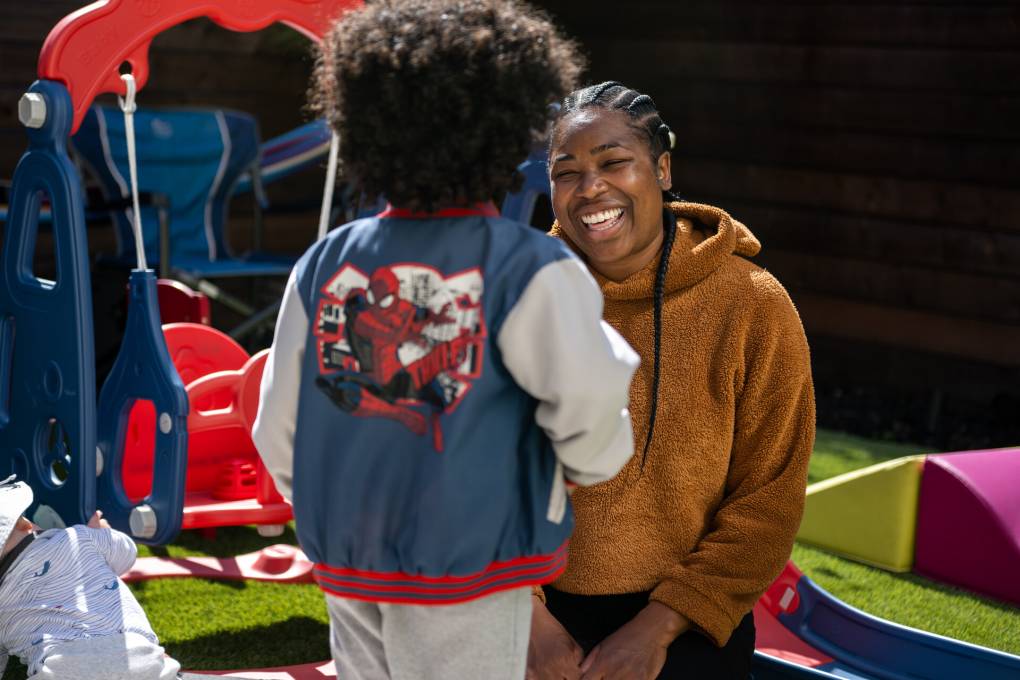
"caption": "Krystle Danridge-Pierson, founder and director at Each One Teach One Child Care, talks with a child at the San Francisco day care facility on April 26, 2023.",
"description": null,
"title": "RS64810_010_KQED_EachOneTeachOneChildCare_04262023-qut",
"credit": "Beth LaBerge/KQED",
"status": "inherit",
"altTag": "A Black woman kneels down to speak to a young child.",
"isLoading": false,
"fetchFailed": false
},
"news_11948359": {
"type": "attachments",
"id": "news_11948359",
"meta": {
"index": "attachments_1716263798",
"site": "news",
"id": "11948359",
"found": true
},
"parent": 11948231,
"imgSizes": {
"twentyfourteen-full-width": {
"file": "https://ww2.kqed.org/app/uploads/sites/10/2023/05/RS64910_002_KQED_UCBerkeleyLibraryProtest_IMG_9707_04302023-1038x576.jpg",
"width": 1038,
"mimeType": "image/jpeg",
"height": 576
},
"thumbnail": {
"file": "https://ww2.kqed.org/app/uploads/sites/10/2023/05/RS64910_002_KQED_UCBerkeleyLibraryProtest_IMG_9707_04302023-160x114.jpg",
"width": 160,
"mimeType": "image/jpeg",
"height": 114
},
"post-thumbnail": {
"file": "https://ww2.kqed.org/app/uploads/sites/10/2023/05/RS64910_002_KQED_UCBerkeleyLibraryProtest_IMG_9707_04302023-672x372.jpg",
"width": 672,
"mimeType": "image/jpeg",
"height": 372
},
"kqedFullSize": {
"file": "https://ww2.kqed.org/app/uploads/sites/10/2023/05/RS64910_002_KQED_UCBerkeleyLibraryProtest_IMG_9707_04302023-scaled.jpg",
"width": 2560,
"height": 1828
},
"2048x2048": {
"file": "https://ww2.kqed.org/app/uploads/sites/10/2023/05/RS64910_002_KQED_UCBerkeleyLibraryProtest_IMG_9707_04302023-2048x1463.jpg",
"width": 2048,
"mimeType": "image/jpeg",
"height": 1463
},
"large": {
"file": "https://ww2.kqed.org/app/uploads/sites/10/2023/05/RS64910_002_KQED_UCBerkeleyLibraryProtest_IMG_9707_04302023-1020x729.jpg",
"width": 1020,
"mimeType": "image/jpeg",
"height": 729
},
"1536x1536": {
"file": "https://ww2.kqed.org/app/uploads/sites/10/2023/05/RS64910_002_KQED_UCBerkeleyLibraryProtest_IMG_9707_04302023-1536x1097.jpg",
"width": 1536,
"mimeType": "image/jpeg",
"height": 1097
},
"full-width": {
"file": "https://ww2.kqed.org/app/uploads/sites/10/2023/05/RS64910_002_KQED_UCBerkeleyLibraryProtest_IMG_9707_04302023-1920x1371.jpg",
"width": 1920,
"mimeType": "image/jpeg",
"height": 1371
},
"medium": {
"file": "https://ww2.kqed.org/app/uploads/sites/10/2023/05/RS64910_002_KQED_UCBerkeleyLibraryProtest_IMG_9707_04302023-800x571.jpg",
"width": 800,
"mimeType": "image/jpeg",
"height": 571
}
},
"publishDate": 1683072498,
"modified": 1683141250,
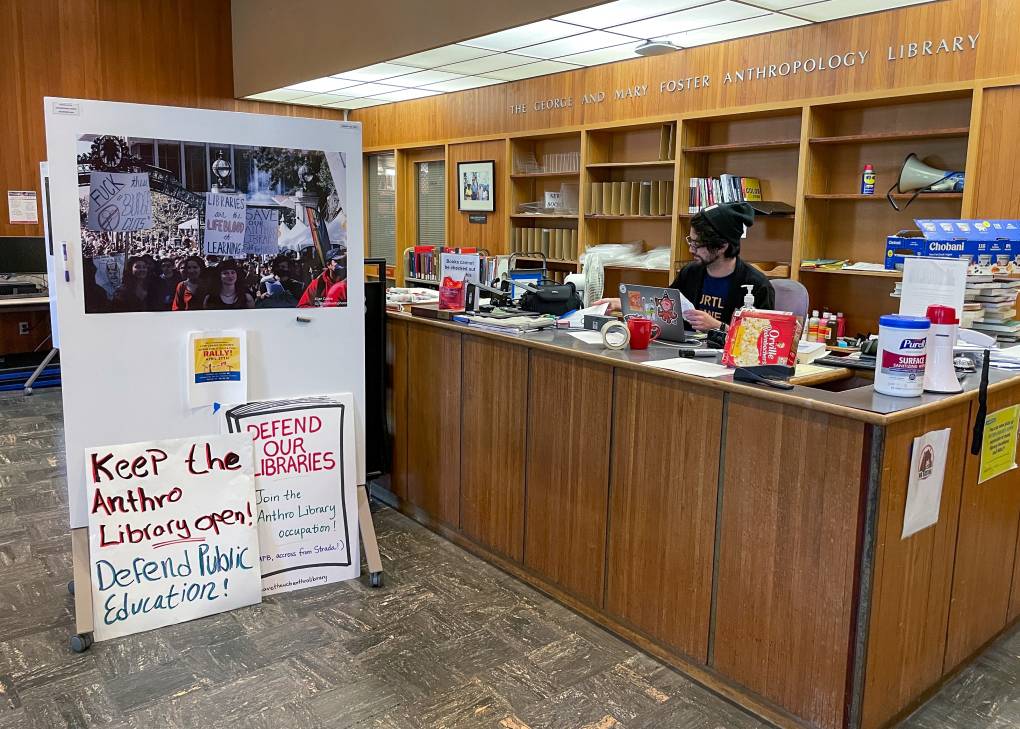
"caption": "UC Berkeley Anthropology graduate student Rabindra Hayashi \nsits behind the circulation desk of the George and Mary Foster Anthropology Library on April 30, 2023, more than a week into an occupation of the library by student and faculty protesters seeking to block the university from closing it.",
"description": null,
"title": "UC Berkeley Anthropology Library Protest on April 30, 2023.",
"credit": "Annelise Finney/KQED",
"status": "inherit",
"altTag": "A man sits behind a library circulation desk. In front of him is a large sign board protesting the library's closure.",
"isLoading": false,
"fetchFailed": false
},
"news_11948331": {
"type": "attachments",
"id": "news_11948331",
"meta": {
"index": "attachments_1716263798",
"site": "news",
"id": "11948331",
"found": true
},
"title": "RS55916_058_KQED_OaklandTeacherStrike_04292022-qut",
"publishDate": 1683062568,
"status": "inherit",
"parent": 11948320,
"modified": 1772216225,
"caption": "Oakland teachers and students listen to speakers during a rally as part of a one-day walkout on April 29, 2022, to protest the Oakland Unified School District's planned closures. Teachers represented by the Oakland Education Association may go on strike once again on Thursday.",
"credit": "Beth LaBerge/KQED",
"altTag": "An older Black man stands outside at a rally, with a sign hanging from his neck that says: 'Fund Public Schools.'",
"description": null,
"imgSizes": {
"medium": {
"file": "https://cdn.kqed.org/wp-content/uploads/sites/10/2023/05/RS55916_058_KQED_OaklandTeacherStrike_04292022-qut-800x533.jpg",
"width": 800,
"height": 533,
"mimeType": "image/jpeg"
},
"large": {
"file": "https://cdn.kqed.org/wp-content/uploads/sites/10/2023/05/RS55916_058_KQED_OaklandTeacherStrike_04292022-qut-1020x680.jpg",
"width": 1020,
"height": 680,
"mimeType": "image/jpeg"
},
"thumbnail": {
"file": "https://cdn.kqed.org/wp-content/uploads/sites/10/2023/05/RS55916_058_KQED_OaklandTeacherStrike_04292022-qut-160x107.jpg",
"width": 160,
"height": 107,
"mimeType": "image/jpeg"
},
"1536x1536": {
"file": "https://cdn.kqed.org/wp-content/uploads/sites/10/2023/05/RS55916_058_KQED_OaklandTeacherStrike_04292022-qut-1536x1024.jpg",
"width": 1536,
"height": 1024,
"mimeType": "image/jpeg"
},
"post-thumbnail": {
"file": "https://cdn.kqed.org/wp-content/uploads/sites/10/2023/05/RS55916_058_KQED_OaklandTeacherStrike_04292022-qut-672x372.jpg",
"width": 672,
"height": 372,
"mimeType": "image/jpeg"
},
"twentyfourteen-full-width": {
"file": "https://cdn.kqed.org/wp-content/uploads/sites/10/2023/05/RS55916_058_KQED_OaklandTeacherStrike_04292022-qut-1038x576.jpg",
"width": 1038,
"height": 576,
"mimeType": "image/jpeg"
},
"kqedFullSize": {
"file": "https://cdn.kqed.org/wp-content/uploads/sites/10/2023/05/RS55916_058_KQED_OaklandTeacherStrike_04292022-qut.jpg",
"width": 1920,
"height": 1280
}
},
"isLoading": false,
"fetchFailed": false
},
"news_11946891": {
"type": "attachments",
"id": "news_11946891",
"meta": {
"index": "attachments_1716263798",
"site": "news",
"id": "11946891",
"found": true
},
"parent": 11946523,
"imgSizes": {
"twentyfourteen-full-width": {
"file": "https://ww2.kqed.org/app/uploads/sites/10/2025/04/RS64496_OaklandHighSchoolBasketballParade-4_16_23-KQED-35-qut-1038x576.jpg",
"width": 1038,
"mimeType": "image/jpeg",
"height": 576
},
"thumbnail": {
"file": "https://ww2.kqed.org/app/uploads/sites/10/2025/04/RS64496_OaklandHighSchoolBasketballParade-4_16_23-KQED-35-qut-160x107.jpg",
"width": 160,
"mimeType": "image/jpeg",
"height": 107
},
"post-thumbnail": {
"file": "https://ww2.kqed.org/app/uploads/sites/10/2025/04/RS64496_OaklandHighSchoolBasketballParade-4_16_23-KQED-35-qut-672x372.jpg",
"width": 672,
"mimeType": "image/jpeg",
"height": 372
},
"kqedFullSize": {
"file": "https://ww2.kqed.org/app/uploads/sites/10/2025/04/RS64496_OaklandHighSchoolBasketballParade-4_16_23-KQED-35-qut.jpg",
"width": 1920,
"height": 1280
},
"large": {
"file": "https://ww2.kqed.org/app/uploads/sites/10/2025/04/RS64496_OaklandHighSchoolBasketballParade-4_16_23-KQED-35-qut-1020x680.jpg",
"width": 1020,
"mimeType": "image/jpeg",
"height": 680
},
"1536x1536": {
"file": "https://ww2.kqed.org/app/uploads/sites/10/2025/04/RS64496_OaklandHighSchoolBasketballParade-4_16_23-KQED-35-qut-1536x1024.jpg",
"width": 1536,
"mimeType": "image/jpeg",
"height": 1024
},
"medium": {
"file": "https://ww2.kqed.org/app/uploads/sites/10/2025/04/RS64496_OaklandHighSchoolBasketballParade-4_16_23-KQED-35-qut-800x533.jpg",
"width": 800,
"mimeType": "image/jpeg",
"height": 533
}
},
"publishDate": 1681699578,
"modified": 1681756634,
"caption": "The Oakland Tech girls basketball team show off their championship trophy during a parade and rally with Oakland High's boys basketball team to celebrate their dual 2023 California Interscholastic Federation State Basketball Championships, in Oakland on Sunday, April 16, 2023.",
"description": null,
"title": "RS64496_OaklandHighSchoolBasketballParade-4_16_23-KQED-35-qut",
"credit": "Raphael Timmons/KQED",
"status": "inherit",
"altTag": "A group of young women wearing purple clothing stand on a bus waving with one person holding a trophy above their head.",
"isLoading": false,
"fetchFailed": false
}
},
"audioPlayerReducer": {
"postId": "stream_live",
"isPaused": true,
"isPlaying": false,
"pfsActive": false,
"pledgeModalIsOpen": true,
"playerDrawerIsOpen": false,
"liveAudioPlayStartedAt": 0,
"liveAudioPlayContext": ""
},
"authorsReducer": {
"byline_news_11950545": {
"type": "authors",
"id": "byline_news_11950545",
"meta": {
"override": true
},
"slug": "byline_news_11950545",
"name": "\u003ca href=\"https://twitter.com/pquinton99\">Phoebe Quinton\u003c/a>",
"isLoading": false
},
"byline_news_11949956": {
"type": "authors",
"id": "byline_news_11949956",
"meta": {
"override": true
},
"slug": "byline_news_11949956",
"name": "\u003ca href=\"https://edsource.org/author/mburke\">Michael Burke\u003c/a>\u003cbr> EdSource",
"isLoading": false
},
"byline_news_11949957": {
"type": "authors",
"id": "byline_news_11949957",
"meta": {
"override": true
},
"slug": "byline_news_11949957",
"name": "Diana Lambert and Zaidee Stavely",
"isLoading": false
},
"matthewgreen": {
"type": "authors",
"id": "1263",
"meta": {
"index": "authors_1716337520",
"id": "1263",
"found": true
},
"name": "Matthew Green",
"firstName": "Matthew",
"lastName": "Green",
"slug": "matthewgreen",
"email": "mgreen@kqed.org",
"display_author_email": false,
"staff_mastheads": [],
"title": "KQED Editor/Reporter",
"bio": "Matthew Green is a digital media producer for KQED News. He previously produced \u003ca href=\"http://www.kqed.org/lowdown\">The Lowdown\u003c/a>, KQED’s multimedia news education blog. Matthew's written for numerous Bay Area publications, including the Oakland Tribune and San Francisco Chronicle. He also taught journalism classes at Fremont High School in East Oakland.\r\n\r\nEmail: mgreen@kqed.org; Twitter: @MGreenKQED",
"avatar": "https://secure.gravatar.com/avatar/3bf498d1267ca02c8494f33d8cfc575e?s=600&d=blank&r=g",
"twitter": "MGreenKQED",
"facebook": null,
"instagram": null,
"linkedin": null,
"sites": [
{
"site": "news",
"roles": []
},
{
"site": "lowdown",
"roles": []
},
{
"site": "science",
"roles": []
},
{
"site": "education",
"roles": []
},
{
"site": "quest",
"roles": []
},
{
"site": "liveblog",
"roles": []
}
],
"headData": {
"title": "Matthew Green | KQED",
"description": "KQED Editor/Reporter",
"ogImgSrc": "https://secure.gravatar.com/avatar/3bf498d1267ca02c8494f33d8cfc575e?s=600&d=blank&r=g",
"twImgSrc": "https://secure.gravatar.com/avatar/3bf498d1267ca02c8494f33d8cfc575e?s=600&d=blank&r=g"
},
"isLoading": false,
"link": "/author/matthewgreen"
},
"carlysevern": {
"type": "authors",
"id": "3243",
"meta": {
"index": "authors_1716337520",
"id": "3243",
"found": true
},
"name": "Carly Severn",
"firstName": "Carly",
"lastName": "Severn",
"slug": "carlysevern",
"email": "csevern@kqed.org",
"display_author_email": false,
"staff_mastheads": [
"news"
],
"title": "Senior Editor, Audience News ",
"bio": "Carly is KQED's Senior Editor of Audience News on the Digital News team, and has reported for the California Report Magazine, Bay Curious and KQED Arts. She's formerly the host of \u003ca href=\"http://ww2.kqed.org/pop/category/the-cooler/\" rel=\"noopener noreferrer\">The Cooler\u003c/a> podcast.",
"avatar": "https://secure.gravatar.com/avatar/54037bf5c128fe678f0ef26cec97a93f2e7f220a22d7285703328f12c42c1b1d?s=600&d=blank&r=g",
"twitter": "teacupinthebay",
"bluesky": null,
"facebook": null,
"instagram": null,
"linkedin": null,
"sites": [
{
"site": "",
"roles": [
"editor"
]
},
{
"site": "arts",
"roles": [
"editor"
]
},
{
"site": "news",
"roles": [
"administrator"
]
},
{
"site": "pop",
"roles": [
"editor"
]
},
{
"site": "futureofyou",
"roles": [
"editor"
]
},
{
"site": "about",
"roles": [
"administrator"
]
},
{
"site": "mindshift",
"roles": [
"editor"
]
},
{
"site": "bayareabites",
"roles": [
"editor"
]
},
{
"site": "stateofhealth",
"roles": [
"editor"
]
},
{
"site": "science",
"roles": [
"editor"
]
},
{
"site": "food",
"roles": [
"contributor"
]
},
{
"site": "forum",
"roles": [
"editor"
]
},
{
"site": "perspectives",
"roles": [
"administrator"
]
},
{
"site": "liveblog",
"roles": [
"editor"
]
}
],
"headData": {
"title": "Carly Severn | KQED",
"description": "Senior Editor, Audience News ",
"ogImgSrc": "https://secure.gravatar.com/avatar/54037bf5c128fe678f0ef26cec97a93f2e7f220a22d7285703328f12c42c1b1d?s=600&d=blank&r=g",
"twImgSrc": "https://secure.gravatar.com/avatar/54037bf5c128fe678f0ef26cec97a93f2e7f220a22d7285703328f12c42c1b1d?s=600&d=blank&r=g"
},
"isLoading": false,
"link": "/author/carlysevern"
},
"hmcdede": {
"type": "authors",
"id": "11635",
"meta": {
"index": "authors_1716337520",
"id": "11635",
"found": true
},
"name": "Holly McDede",
"firstName": "Holly",
"lastName": "McDede",
"slug": "hmcdede",
"email": "hmcdede@KQED.org",
"display_author_email": false,
"staff_mastheads": [],
"title": "KQED Contributor",
"bio": null,
"avatar": "https://secure.gravatar.com/avatar/35d1a1f5422c9d266f7ace9348d170f2136671a65fffc90a592e4d7fbf8dc3f6?s=600&d=blank&r=g",
"twitter": null,
"bluesky": null,
"facebook": null,
"instagram": null,
"linkedin": null,
"sites": [
{
"site": "arts",
"roles": [
"editor"
]
},
{
"site": "news",
"roles": [
"edit_others_posts",
"editor"
]
},
{
"site": "science",
"roles": [
"editor"
]
},
{
"site": "forum",
"roles": [
"editor"
]
},
{
"site": "perspectives",
"roles": [
"administrator"
]
}
],
"headData": {
"title": "Holly McDede | KQED",
"description": "KQED Contributor",
"ogImgSrc": "https://secure.gravatar.com/avatar/35d1a1f5422c9d266f7ace9348d170f2136671a65fffc90a592e4d7fbf8dc3f6?s=600&d=blank&r=g",
"twImgSrc": "https://secure.gravatar.com/avatar/35d1a1f5422c9d266f7ace9348d170f2136671a65fffc90a592e4d7fbf8dc3f6?s=600&d=blank&r=g"
},
"isLoading": false,
"link": "/author/hmcdede"
},
"ebaldassari": {
"type": "authors",
"id": "11652",
"meta": {
"index": "authors_1716337520",
"id": "11652",
"found": true
},
"name": "Erin Baldassari",
"firstName": "Erin",
"lastName": "Baldassari",
"slug": "ebaldassari",
"email": "ebaldassari@KQED.org",
"display_author_email": true,
"staff_mastheads": [
"news"
],
"title": "Staff Writer",
"bio": "Erin Baldassari covers housing for KQED. She's a former print journalist and most recently worked as the transportation reporter for the \u003cem>Mercury News\u003c/em> and \u003cem>East Bay Times. \u003c/em>There, she focused on how the Bay Area’s housing shortage has changed the way people move around the region. She also served on the \u003cem>East Bay Times\u003c/em>’ 2017 Pulitzer Prize-winning team for coverage of the Ghost Ship Fire in Oakland. Prior to that, Erin worked as a breaking news and general assignment reporter for a variety of outlets in the Bay Area and the greater Boston area. A Tufts University alumna, Erin grew up in the foothills of the Sierra Nevada mountains and in Sonoma County. She is a life-long KQED listener.",
"avatar": "https://secure.gravatar.com/avatar/5e95cad64a8ca08288082212e199d2b0cbeb4fd8e8ef5339395f361032bbe005?s=600&d=blank&r=g",
"twitter": "e_baldi",
"bluesky": null,
"facebook": null,
"instagram": null,
"linkedin": null,
"sites": [
{
"site": "news",
"roles": [
"edit_others_posts",
"editor"
]
},
{
"site": "science",
"roles": [
"editor"
]
},
{
"site": "liveblog",
"roles": [
"editor"
]
}
],
"headData": {
"title": "Erin Baldassari | KQED",
"description": "Staff Writer",
"ogImgSrc": "https://secure.gravatar.com/avatar/5e95cad64a8ca08288082212e199d2b0cbeb4fd8e8ef5339395f361032bbe005?s=600&d=blank&r=g",
"twImgSrc": "https://secure.gravatar.com/avatar/5e95cad64a8ca08288082212e199d2b0cbeb4fd8e8ef5339395f361032bbe005?s=600&d=blank&r=g"
},
"isLoading": false,
"link": "/author/ebaldassari"
},
"blaberge": {
"type": "authors",
"id": "11667",
"meta": {
"index": "authors_1716337520",
"id": "11667",
"found": true
},
"name": "Beth LaBerge",
"firstName": "Beth",
"lastName": "LaBerge",
"slug": "blaberge",
"email": "blaberge@KQED.org",
"display_author_email": true,
"staff_mastheads": [
"news"
],
"title": "Photographer, News",
"bio": "Beth LaBerge is a visual journalist for \u003ca href=\"https://www.kqed.org/news\">KQED News\u003c/a>.",
"avatar": "https://secure.gravatar.com/avatar/ce49ecd7a1306685637b45a1f6f5dedfc4ae9481966eb596fea5160466dd6319?s=600&d=blank&r=g",
"twitter": null,
"bluesky": null,
"facebook": null,
"instagram": "https://www.instagram.com/bethlaberge/",
"linkedin": null,
"sites": [
{
"site": "arts",
"roles": [
"editor",
"manage_categories"
]
},
{
"site": "news",
"roles": [
"editor",
"edit_plugins",
"manage_categories"
]
},
{
"site": "science",
"roles": [
"editor",
"contributor",
"author",
"manage_categories"
]
},
{
"site": "perspectives",
"roles": [
"editor"
]
},
{
"site": "liveblog",
"roles": [
"editor"
]
}
],
"headData": {
"title": "Beth LaBerge | KQED",
"description": "Photographer, News",
"ogImgSrc": "https://secure.gravatar.com/avatar/ce49ecd7a1306685637b45a1f6f5dedfc4ae9481966eb596fea5160466dd6319?s=600&d=blank&r=g",
"twImgSrc": "https://secure.gravatar.com/avatar/ce49ecd7a1306685637b45a1f6f5dedfc4ae9481966eb596fea5160466dd6319?s=600&d=blank&r=g"
},
"isLoading": false,
"link": "/author/blaberge"
},
"afinney": {
"type": "authors",
"id": "11772",
"meta": {
"index": "authors_1716337520",
"id": "11772",
"found": true
},
"name": "Annelise Finney",
"firstName": "Annelise",
"lastName": "Finney",
"slug": "afinney",
"email": "afinney@kqed.org",
"display_author_email": false,
"staff_mastheads": [],
"title": "Reporter",
"bio": "Annelise reports on reparations in California and East Bay politics. She co-produced the Sunday Music Drop, a limited-term radio series featuring Bay Area musicians that aired between Sept 2022 and Oct 2024. She joined KQED in 2021 as a general assignment reporter and is an alumna of KALW's Audio Academy. She was born and raised in the East Bay. She is currently away from KQED completing a year-long reporting project in Berlin, Germany as a Alexander Von Humboldt German Chancellor Fellow.",
"avatar": "https://secure.gravatar.com/avatar/b439010ea6540bec1060ee74b3c94314480991106a4a84e774fe5a0fd6605878?s=600&d=mm&r=g",
"twitter": null,
"bluesky": null,
"facebook": null,
"instagram": null,
"linkedin": null,
"sites": [
{
"site": "news",
"roles": [
"subscriber"
]
},
{
"site": "liveblog",
"roles": [
"subscriber"
]
}
],
"headData": {
"title": "Annelise Finney | KQED",
"description": "Reporter",
"ogImgSrc": "https://secure.gravatar.com/avatar/b439010ea6540bec1060ee74b3c94314480991106a4a84e774fe5a0fd6605878?s=600&d=mm&r=g",
"twImgSrc": "https://secure.gravatar.com/avatar/b439010ea6540bec1060ee74b3c94314480991106a4a84e774fe5a0fd6605878?s=600&d=mm&r=g"
},
"isLoading": false,
"link": "/author/afinney"
},
"swhitney": {
"type": "authors",
"id": "11784",
"meta": {
"index": "authors_1716337520",
"id": "11784",
"found": true
},
"name": "Spencer Whitney",
"firstName": "Spencer",
"lastName": "Whitney",
"slug": "swhitney",
"email": "swhitney@kqed.org",
"display_author_email": false,
"staff_mastheads": [],
"title": "KQED Digital Editor",
"bio": "Spencer Whitney is currently a Digital Editor for KQED News. Prior to joining KQED News, Spencer worked as the Multimedia Editor at the Oakland Post and an Assistant Editor in the Editorial department at the San Francisco Chronicle. He attended Howard University as an undergraduate and interned with SiriusXM. He also attended UC Berkeley's Graduate School of Journalism and had the opportunity to write for the hyperlocal news sites Richmond Confidential and Oakland North.",
"avatar": "https://secure.gravatar.com/avatar/e33ff4fd8b8f0d2796f36472fb32607ca8fc46ef5e537dcfdbdee688d8ea5b80?s=600&d=mm&r=g",
"twitter": null,
"bluesky": null,
"facebook": null,
"instagram": null,
"linkedin": null,
"sites": [
{
"site": "arts",
"roles": [
"editor"
]
},
{
"site": "news",
"roles": [
"editor"
]
},
{
"site": "science",
"roles": [
"editor"
]
},
{
"site": "perspectives",
"roles": [
"editor"
]
}
],
"headData": {
"title": "Spencer Whitney | KQED",
"description": "KQED Digital Editor",
"ogImgSrc": "https://secure.gravatar.com/avatar/e33ff4fd8b8f0d2796f36472fb32607ca8fc46ef5e537dcfdbdee688d8ea5b80?s=600&d=mm&r=g",
"twImgSrc": "https://secure.gravatar.com/avatar/e33ff4fd8b8f0d2796f36472fb32607ca8fc46ef5e537dcfdbdee688d8ea5b80?s=600&d=mm&r=g"
},
"isLoading": false,
"link": "/author/swhitney"
},
"daisynguyen": {
"type": "authors",
"id": "11829",
"meta": {
"index": "authors_1716337520",
"id": "11829",
"found": true
},
"name": "Daisy Nguyen",
"firstName": "Daisy",
"lastName": "Nguyen",
"slug": "daisynguyen",
"email": "daisynguyen@kqed.org",
"display_author_email": true,
"staff_mastheads": [
"news"
],
"title": "KQED Contributor",
"bio": "I have covered early childhood education and child care for KQED since 2022. I focus on policies aimed at increasing access to early care and education and how they shape individual lives. I've been a journalist for more than two decades, with most of that time devoted to covering breaking news throughout California for The Associated Press. I grew up in San Francisco and studied at UC Davis and Columbia University's Graduate School of Journalism. I live in Oakland with my husband and two kids.",
"avatar": "https://secure.gravatar.com/avatar/2da2127c27f7143b53ebd419800fd55f?s=600&d=blank&r=g",
"twitter": null,
"facebook": null,
"instagram": null,
"linkedin": "https://www.linkedin.com/in/daisynguyen/",
"sites": [
{
"site": "news",
"roles": [
"author"
]
},
{
"site": "liveblog",
"roles": [
"author"
]
}
],
"headData": {
"title": "Daisy Nguyen | KQED",
"description": "KQED Contributor",
"ogImgSrc": "https://secure.gravatar.com/avatar/2da2127c27f7143b53ebd419800fd55f?s=600&d=blank&r=g",
"twImgSrc": "https://secure.gravatar.com/avatar/2da2127c27f7143b53ebd419800fd55f?s=600&d=blank&r=g"
},
"isLoading": false,
"link": "/author/daisynguyen"
},
"sjohnson": {
"type": "authors",
"id": "11840",
"meta": {
"index": "authors_1716337520",
"id": "11840",
"found": true
},
"name": "Sydney Johnson",
"firstName": "Sydney",
"lastName": "Johnson",
"slug": "sjohnson",
"email": "sjohnson@kqed.org",
"display_author_email": false,
"staff_mastheads": [
"news"
],
"title": "KQED Reporter",
"bio": "Sydney Johnson is a general assignment reporter at KQED. She previously reported on public health and city government at the San Francisco Examiner, and before that, she covered statewide education policy for EdSource. Her reporting has won multiple local, state and national awards. Sydney is a graduate of the University of California, Berkeley and lives in San Francisco.",
"avatar": "https://secure.gravatar.com/avatar/97855f2719b72ad6190b7c535fe642c8?s=600&d=blank&r=g",
"twitter": "sydneyfjohnson",
"facebook": null,
"instagram": null,
"linkedin": null,
"sites": [
{
"site": "news",
"roles": [
"editor"
]
}
],
"headData": {
"title": "Sydney Johnson | KQED",
"description": "KQED Reporter",
"ogImgSrc": "https://secure.gravatar.com/avatar/97855f2719b72ad6190b7c535fe642c8?s=600&d=blank&r=g",
"twImgSrc": "https://secure.gravatar.com/avatar/97855f2719b72ad6190b7c535fe642c8?s=600&d=blank&r=g"
},
"isLoading": false,
"link": "/author/sjohnson"
},
"srodriguez": {
"type": "authors",
"id": "11852",
"meta": {
"index": "authors_1716337520",
"id": "11852",
"found": true
},
"name": "Steph Rodriguez",
"firstName": "Steph",
"lastName": "Rodriguez",
"slug": "srodriguez",
"email": "srodriguez@KQED.org",
"display_author_email": true,
"staff_mastheads": [
"news"
],
"title": "KQED Contributor",
"bio": "Steph Rodriguez is an award-winning editor and journalist who specializes in writing stories about food and music, arts and culture. She’s currently a Digital Editor for KQED News in San Francisco. Her past professional experience includes Food Editor for SFGATE as well as Managing Editor and Dining Editor for the Sacramento News & Review. She has roots in Bakersfield and Sacramento California and currently lives in Oakland with her family.",
"avatar": "https://secure.gravatar.com/avatar/5220c101baf7d495ca871563de9b8653e5863afdbd5f55ea5db0dda0732db3a2?s=600&d=blank&r=g",
"twitter": "wordstospill",
"bluesky": null,
"facebook": null,
"instagram": null,
"linkedin": null,
"sites": [
{
"site": "",
"roles": [
"administrator"
]
},
{
"site": "arts",
"roles": [
"administrator"
]
},
{
"site": "news",
"roles": [
"administrator"
]
},
{
"site": "science",
"roles": [
"administrator"
]
}
],
"headData": {
"title": "Steph Rodriguez | KQED",
"description": "KQED Contributor",
"ogImgSrc": "https://secure.gravatar.com/avatar/5220c101baf7d495ca871563de9b8653e5863afdbd5f55ea5db0dda0732db3a2?s=600&d=blank&r=g",
"twImgSrc": "https://secure.gravatar.com/avatar/5220c101baf7d495ca871563de9b8653e5863afdbd5f55ea5db0dda0732db3a2?s=600&d=blank&r=g"
},
"isLoading": false,
"link": "/author/srodriguez"
},
"rpalmer": {
"type": "authors",
"id": "11880",
"meta": {
"index": "authors_1716337520",
"id": "11880",
"found": true
},
"name": "Riley Palmer",
"firstName": "Riley",
"lastName": "Palmer",
"slug": "rpalmer",
"email": "rpalmer@KQED.org",
"display_author_email": true,
"staff_mastheads": [],
"title": "KQED Contributor",
"bio": "Riley Palmer is a North Bay Native who stayed close in order to report on the community she calls home. She is a Santa Rosa Junior College and UC Berkeley alum. Palmer started working at KQED as a radio newscast intern in January 2023. Since then she has reported on school safety, education, and mobile home tenancy rights along with other general assignments. She lives in Oakland, CA.",
"avatar": "https://secure.gravatar.com/avatar/28824e9d4a299de4200bd003607bee3a?s=600&d=blank&r=g",
"twitter": "ReporterRileyp",
"facebook": null,
"instagram": null,
"linkedin": null,
"sites": [
{
"site": "news",
"roles": []
}
],
"headData": {
"title": "Riley Palmer | KQED",
"description": "KQED Contributor",
"ogImgSrc": "https://secure.gravatar.com/avatar/28824e9d4a299de4200bd003607bee3a?s=600&d=blank&r=g",
"twImgSrc": "https://secure.gravatar.com/avatar/28824e9d4a299de4200bd003607bee3a?s=600&d=blank&r=g"
},
"isLoading": false,
"link": "/author/rpalmer"
}
},
"pagesReducer": {
"news_category_education": {
"type": "terms",
"id": "news_18540",
"meta": {
"index": "terms_1716263798",
"site": "news",
"id": "18540",
"score": 10.973179
},
"featImg": null,
"name": "Education",
"description": null,
"taxonomy": "category",
"headData": {
"twImgId": null,
"twTitle": null,
"ogTitle": null,
"ogImgId": null,
"twDescription": null,
"description": null,
"title": "Education Archives | KQED News",
"ogDescription": null
},
"ttid": 2595,
"slug": "education",
"isLoading": false,
"title": "Education",
"pageMeta": {
"site": "news",
"WpPageTemplate": "page-topic-editorial",
"currentPage": 62
},
"blocks": [
{
"blockName": "kqed/post-list",
"attrs": {
"layout": "cardArticle2",
"query": "posts/news?category=education",
"seeMore": false,
"paginated": true,
"page": 62
}
},
{
"blockName": "kqed/ad"
}
]
}
},
"pfsSessionReducer": {},
"postsReducer": {
"stream_live": {
"type": "live",
"id": "stream_live",
"audioUrl": "https://streams.kqed.org/kqedradio",
"title": "Live Stream",
"excerpt": "Live Stream information currently unavailable.",
"link": "/radio",
"featImg": "",
"label": {
"name": "KQED Live",
"link": "/"
}
},
"stream_kqedNewscast": {
"type": "posts",
"id": "stream_kqedNewscast",
"audioUrl": "https://www.kqed.org/.stream/anon/radio/RDnews/newscast.mp3?_=1",
"title": "KQED Newscast",
"featImg": "",
"label": {
"name": "88.5 FM",
"link": "/"
}
},
"news_11950545": {
"type": "posts",
"id": "news_11950545",
"meta": {
"index": "posts_1716263798",
"site": "news",
"id": "11950545",
"score": null,
"sort": [
1684965319000
]
},
"guestAuthors": [],
"slug": "special-education-gets-modest-gains-in-latest-talks-with-district-says-oakland-teachers-union",
"title": "Special Education Gets 'Modest Gains' in Latest Talks With District, Says Oakland Teachers Union",
"publishDate": 1684965319,
"format": "standard",
"headTitle": "Special Education Gets ‘Modest Gains’ in Latest Talks With District, Says Oakland Teachers Union | KQED",
"labelTerm": {
"site": "news"
},
"content": "\u003cp>On Monday, the Oakland Education Association reached a 90% vote in favor of its \u003ca href=\"https://www.kqed.org/news/11949458/oakland-teachers-strike-ends-as-union-reaches-agreement-with-school-district\">tentative agreement\u003c/a> with the Oakland Unified School District. In the coming weeks, the two groups will vote separately on the proposal, negotiated during a seven-day strike.\u003c/p>\n\u003cp>“There are major gains in some areas, and there’s other areas where we made modest gains, and some areas where we have the status quo,” said Ismael Armendariz, a special education teacher and the union’s president. “But as a package, it is amazing what they accomplished.”\u003c/p>\n\u003cp>The agreement includes plans for substantial changes to teachers’ salaries, improvements on classroom conditions, and “common good” proposals such as student housing assistance and programs that benefit students of color.\u003c/p>\n\u003cp>It also features amendments to special education, but parents and teachers say there is more work to do.\u003c/p>\n\u003cp>https://twitter.com/oaklandea/status/1660824964633878529?s=46&t=r9Q2R3VlaGIjgJa5ishJag\u003c/p>\n\u003cp>“We made modest gains,” Armendariz repeated. “But we’re going to center special education going forward.”\u003c/p>\n\u003cp>Currently, the school district serves more than 6,000 students in special education programs, accounting for roughly 17% of students.\u003c/p>\n\u003cp>As Oakland’s population of students in special education programming continues to grow, the school district has struggled to find enough staff and funding to meet the needs of these students. It has consolidated programming, closing programs in some schools and moving them to others.\u003c/p>\n\u003cp>“We’re piloting a workload model that allows us to think about how we manage our caseloads, so that we can provide all the services to our students and that we’re able to manage that in a way that doesn’t burn teachers out,” Armendariz said.\u003c/p>\n\u003cfigure id=\"attachment_11950560\" class=\"wp-caption aligncenter\" style=\"max-width: 1920px\">\u003cimg loading=\"lazy\" decoding=\"async\" class=\"size-full wp-image-11950560\" src=\"https://ww2.kqed.org/app/uploads/sites/10/2023/05/RS65043_DSC06574-qut.jpg\" alt='A man in a red T-shirt with dark hair speaks from a podium as large signs behind him read, \"Safe, Stable, Racially Just Schools.\"' width=\"1920\" height=\"1280\" srcset=\"https://cdn.kqed.org/wp-content/uploads/sites/10/2023/05/RS65043_DSC06574-qut.jpg 1920w, https://cdn.kqed.org/wp-content/uploads/sites/10/2023/05/RS65043_DSC06574-qut-800x533.jpg 800w, https://cdn.kqed.org/wp-content/uploads/sites/10/2023/05/RS65043_DSC06574-qut-1020x680.jpg 1020w, https://cdn.kqed.org/wp-content/uploads/sites/10/2023/05/RS65043_DSC06574-qut-160x107.jpg 160w, https://cdn.kqed.org/wp-content/uploads/sites/10/2023/05/RS65043_DSC06574-qut-1536x1024.jpg 1536w\" sizes=\"auto, (max-width: 1920px) 100vw, 1920px\">\u003cfigcaption class=\"wp-caption-text\">Oakland Education Association president Ismael Armendariz, who is also a special education teacher, speaks at the teachers union rally held at Frank Ogawa Plaza in Oakland on May 4, 2023. \u003ccite>(Aryk Copley/KQED)\u003c/cite>\u003c/figcaption>\u003c/figure>\n\u003cp>Last year, the school district decided to close seven schools due to costs, but \u003ca href=\"https://www.kqed.org/news/11911675/they-see-us-as-expendable-oakland-families-of-children-with-disabilities-call-school-closure-plan-discriminatory\">some families with children in special education programs called the plan discriminatory\u003c/a>.\u003c/p>\n\u003cp>At the end of this school year, the district expects to cut at least one classroom for special education students with individualized learning plans from Joaquin Miller Elementary, Manzanita Community School, Bella Vista Elementary, United for Success Academy and Montera Middle School.\u003c/p>\n\u003cp>At the end of \u003cem>next\u003c/em> school year, the school board intends to close some special education programs at Joaquin Miller, Manzanita SEED and Montera Middle School. The district will add new early childhood special education classes at Montclair Elementary and Melrose Leadership Academy.\u003c/p>\n\u003cp>[ad fullwidth]\u003c/p>\n\u003cp>Members of the school district’s Community Advisory Committee are fighting these upcoming closures with a \u003ca href=\"https://www.change.org/p/call-on-ousd-to-stop-expelling-disabled-students-from-schools-to-close-their-programs?utm_source=share_petition&utm_medium=custom_url&recruited_by_id=f5a168c0-e7e0-11ed-9308-716afd1259c7\">petition\u003c/a>. The group also plans to protest with an \u003ca href=\"https://www.facebook.com/events/1507997136401647/?acontext=%7B%22event_action_history%22%3A%5b%5d%7D\">art-in at the school board meeting\u003c/a> on May 24.\u003c/p>\n\u003cp>[pullquote size=\"medium\" align=\"right\" citation=\"Ismael Armendariz, special education teacher, OEA president\"]‘For far too long, special education has been siloed and we have been put aside and thought of as second to all the other programming.’[/pullquote]\u003c/p>\n\u003cp>Monday’s tentative agreement takes a step toward meeting these needs by creating a new joint committee to oversee special education programs and by piloting a one-year program to maintain more equitable workloads for special education professionals, according to Armendariz.\u003c/p>\n\u003cp>“I think one of the most revolutionary things out of [the agreement] is that now, for the first time, a high-ranking general education administrator has to attend,” he said. “For far too long, special education has been siloed and we have been put aside and thought of as second to all the other programming.”\u003c/p>\n\u003cp>Coriander Melious is a special education teacher and parent of an eighth grader who has Down syndrome. She said she’s excited that the new committee will include general education teachers and administrators.\u003c/p>\n\u003cp>“Real inclusion comes with shifting the culture,” she said. “[It’s] how we as a community view our disabled students and the disabled community as actual members of our community and not this separate section over there.”\u003c/p>\n\u003cfigure id=\"attachment_11950561\" class=\"wp-caption aligncenter\" style=\"max-width: 1920px\">\u003cimg loading=\"lazy\" decoding=\"async\" class=\"size-full wp-image-11950561\" src=\"https://ww2.kqed.org/app/uploads/sites/10/2023/05/RS65519_013_KQED_OUSDSolidaritySchool_05112023-qut.jpg\" alt='A little boy in a green T-shirt and a striped sweater wrapped around his wait stands next to a man with a black hoodie on with a back patch that reads, \"Strike for a fair contract.\" Both of their backs face the camera. The two are standing at a picnic bench with neat stacks of juice boxes and snacks for kids.' width=\"1920\" height=\"1280\" srcset=\"https://cdn.kqed.org/wp-content/uploads/sites/10/2023/05/RS65519_013_KQED_OUSDSolidaritySchool_05112023-qut.jpg 1920w, https://cdn.kqed.org/wp-content/uploads/sites/10/2023/05/RS65519_013_KQED_OUSDSolidaritySchool_05112023-qut-800x533.jpg 800w, https://cdn.kqed.org/wp-content/uploads/sites/10/2023/05/RS65519_013_KQED_OUSDSolidaritySchool_05112023-qut-1020x680.jpg 1020w, https://cdn.kqed.org/wp-content/uploads/sites/10/2023/05/RS65519_013_KQED_OUSDSolidaritySchool_05112023-qut-160x107.jpg 160w, https://cdn.kqed.org/wp-content/uploads/sites/10/2023/05/RS65519_013_KQED_OUSDSolidaritySchool_05112023-qut-1536x1024.jpg 1536w\" sizes=\"auto, (max-width: 1920px) 100vw, 1920px\">\u003cfigcaption class=\"wp-caption-text\">Parents, teachers and high school students hand out lunch to Oakland Unified students at a ‘solidarity school’ at Dimond Park in Oakland on May 11, 2023. Solidarity schools were run by volunteers during the seven-day teachers’ strike to give parents a safe place to send their children for supervised activities. \u003ccite>(Beth LaBerge/KQED)\u003c/cite>\u003c/figcaption>\u003c/figure>\n\u003cp>Other parents and educators think the major win is the new pilot program aiming to balance the workloads of special education professionals. It allows employees to request more support once they reach certain limits, which could include additional compensation or staffing.\u003c/p>\n\u003cp>Rather than base caseloads purely on the number of students, the program will take into account the specific needs and learning levels of each student.\u003c/p>\n\u003cp>“It’s really been a big issue,” said Holly Adler, a member of the union’s bargaining team and a resource specialist. “Teachers haven’t been getting support with high-needs students that are now being mainstreamed.”[pullquote size=\"medium\" align=\"right\" citation=\"Coriander Melious, parent and special education teacher\"]‘Real inclusion comes with shifting the culture.’[/pullquote]Not all parents are happy about the “mainstreaming,” which will place more students with special needs in general education classrooms.\u003c/p>\n\u003cp>Alan Pursell is the parent of a sixth grader with autism. He said his son performs well in a general education classroom, but still needs time in a smaller, separate classroom to fully thrive.\u003c/p>\n\u003cp>“I’m worried that if he’s placed in a generalist setting, that he’ll lose all that progress and fall through the cracks,” he said.\u003c/p>\n\u003cp>The program to help teachers manage their caseloads conflicts with difficulties in hiring support staff. But these support staff, called paraeducators, are not included in the union and do not benefit from the salary raises.\u003c/p>\n\u003cp>Melious said that the low pay means these positions are often left empty, and students lose much-needed support.\u003c/p>\n\u003cp>Her daughter was not able to participate in a musical performance because she was unable to learn guitar without a teacher’s aide. Melious said the position had been unfilled for over a year.\u003c/p>\n\u003cp>“It made me so sad when I realized what was going on,” she said. “She’d just been sitting in there not doing anything, and she’s the only one.”\u003cspan style=\"font-weight: 400\">[aside label='More Stories on Education' tag='education']\u003c/span>She wants the district to raise the pay for these positions and hire more staff to support students with additional needs.\u003c/p>\n\u003cp>“These students are going to be sitting in classrooms not learning,” she said. “They’re just waiting for the class to end. And that’s, like, criminal to me.”\u003c/p>\n\u003cp>Adler said the lack of support staff also affects teachers. In violation of the law, early childhood special education teachers were not getting a lunch break because of the demanding workload. Like Melious, she said higher salaries for support staff would help resolve the issue.\u003c/p>\n\u003cp>Armendariz said the bargaining team will hold the district accountable for lunch breaks moving forward. While he is proud of what the team accomplished overall, he wants to focus on special education more.\u003c/p>\n\u003cp>“For far too long, our students and our faculty have been ignored by this district and put as an afterthought. And that’s not going to happen anymore,” he said.\u003c/p>\n\u003cp>[ad floatright]\u003c/p>\n",
"blocks": [],
"excerpt": "The Oakland Education Association reached a 90% vote in favor of its tentative agreement with the Oakland Unified School District. It features much-needed amendments to special education, but parents and teachers say there is more work to do.",
"status": "publish",
"parent": 0,
"modified": 1740612986,
"stats": {
"hasAudio": false,
"hasVideo": false,
"hasChartOrMap": false,
"iframeSrcs": [],
"hasGoogleForm": false,
"hasGallery": false,
"hasHearkenModule": false,
"hasPolis": false,
"paragraphCount": 32,
"wordCount": 1275
},
"headData": {
"title": "Special Education Gets 'Modest Gains' in Latest Talks With District, Says Oakland Teachers Union | KQED",
"description": "The Oakland Education Association reached a 90% vote in favor of its tentative agreement with the Oakland Unified School District. It features much-needed amendments to special education, but parents and teachers say there is more work to do.",
"ogTitle": "",
"ogDescription": "",
"ogImgId": "",
"twTitle": "",
"twDescription": "",
"twImgId": "",
"schema": {
"@context": "https://schema.org",
"@type": "NewsArticle",
"headline": "Special Education Gets 'Modest Gains' in Latest Talks With District, Says Oakland Teachers Union",
"datePublished": "2023-05-24T14:55:19-07:00",
"dateModified": "2025-02-26T15:36:26-08:00",
"image": "https://cdn.kqed.org/wp-content/uploads/2020/02/KQED-OG-Image@1x.png",
"isAccessibleForFree": "True",
"publisher": {
"@type": "NewsMediaOrganization",
"@id": "https://www.kqed.org/#organization",
"name": "KQED",
"logo": "https://cdn.kqed.org/wp-content/uploads/2020/02/KQED-OG-Image@1x.png",
"url": "https://www.kqed.org",
"sameAs": [
"https://www.facebook.com/KQED",
"https://twitter.com/KQED",
"https://www.instagram.com/kqed/",
"https://www.tiktok.com/@kqedofficial",
"https://www.linkedin.com/company/kqed",
"https://www.youtube.com/channel/UCeC0IOo7i1P_61zVUWbJ4nw"
]
}
}
},
"sticky": false,
"nprByline": "\u003ca href=\"https://twitter.com/pquinton99\">Phoebe Quinton\u003c/a>",
"excludeFromSiteSearch": "Include",
"showOnAuthorArchivePages": "No",
"articleAge": "0",
"path": "/news/11950545/special-education-gets-modest-gains-in-latest-talks-with-district-says-oakland-teachers-union",
"audioTrackLength": null,
"parsedContent": [
{
"type": "contentString",
"content": "\u003cdiv class=\"post-body\">\u003cp>\u003cp>On Monday, the Oakland Education Association reached a 90% vote in favor of its \u003ca href=\"https://www.kqed.org/news/11949458/oakland-teachers-strike-ends-as-union-reaches-agreement-with-school-district\">tentative agreement\u003c/a> with the Oakland Unified School District. In the coming weeks, the two groups will vote separately on the proposal, negotiated during a seven-day strike.\u003c/p>\n\u003cp>“There are major gains in some areas, and there’s other areas where we made modest gains, and some areas where we have the status quo,” said Ismael Armendariz, a special education teacher and the union’s president. “But as a package, it is amazing what they accomplished.”\u003c/p>\n\u003cp>The agreement includes plans for substantial changes to teachers’ salaries, improvements on classroom conditions, and “common good” proposals such as student housing assistance and programs that benefit students of color.\u003c/p>\n\u003cp>It also features amendments to special education, but parents and teachers say there is more work to do.\u003c/p>\u003c/p>\u003c/div>",
"attributes": {
"named": {},
"numeric": []
}
},
{
"type": "component",
"content": "",
"name": "singleTwitterStatus",
"attributes": {
"named": {
"id": "1660824964633878529"
},
"numeric": []
}
},
{
"type": "contentString",
"content": "\u003cdiv class=\"post-body\">\u003cp>\n\u003cp>“We made modest gains,” Armendariz repeated. “But we’re going to center special education going forward.”\u003c/p>\n\u003cp>Currently, the school district serves more than 6,000 students in special education programs, accounting for roughly 17% of students.\u003c/p>\n\u003cp>As Oakland’s population of students in special education programming continues to grow, the school district has struggled to find enough staff and funding to meet the needs of these students. It has consolidated programming, closing programs in some schools and moving them to others.\u003c/p>\n\u003cp>“We’re piloting a workload model that allows us to think about how we manage our caseloads, so that we can provide all the services to our students and that we’re able to manage that in a way that doesn’t burn teachers out,” Armendariz said.\u003c/p>\n\u003cfigure id=\"attachment_11950560\" class=\"wp-caption aligncenter\" style=\"max-width: 1920px\">\u003cimg loading=\"lazy\" decoding=\"async\" class=\"size-full wp-image-11950560\" src=\"https://ww2.kqed.org/app/uploads/sites/10/2023/05/RS65043_DSC06574-qut.jpg\" alt='A man in a red T-shirt with dark hair speaks from a podium as large signs behind him read, \"Safe, Stable, Racially Just Schools.\"' width=\"1920\" height=\"1280\" srcset=\"https://cdn.kqed.org/wp-content/uploads/sites/10/2023/05/RS65043_DSC06574-qut.jpg 1920w, https://cdn.kqed.org/wp-content/uploads/sites/10/2023/05/RS65043_DSC06574-qut-800x533.jpg 800w, https://cdn.kqed.org/wp-content/uploads/sites/10/2023/05/RS65043_DSC06574-qut-1020x680.jpg 1020w, https://cdn.kqed.org/wp-content/uploads/sites/10/2023/05/RS65043_DSC06574-qut-160x107.jpg 160w, https://cdn.kqed.org/wp-content/uploads/sites/10/2023/05/RS65043_DSC06574-qut-1536x1024.jpg 1536w\" sizes=\"auto, (max-width: 1920px) 100vw, 1920px\">\u003cfigcaption class=\"wp-caption-text\">Oakland Education Association president Ismael Armendariz, who is also a special education teacher, speaks at the teachers union rally held at Frank Ogawa Plaza in Oakland on May 4, 2023. \u003ccite>(Aryk Copley/KQED)\u003c/cite>\u003c/figcaption>\u003c/figure>\n\u003cp>Last year, the school district decided to close seven schools due to costs, but \u003ca href=\"https://www.kqed.org/news/11911675/they-see-us-as-expendable-oakland-families-of-children-with-disabilities-call-school-closure-plan-discriminatory\">some families with children in special education programs called the plan discriminatory\u003c/a>.\u003c/p>\n\u003cp>At the end of this school year, the district expects to cut at least one classroom for special education students with individualized learning plans from Joaquin Miller Elementary, Manzanita Community School, Bella Vista Elementary, United for Success Academy and Montera Middle School.\u003c/p>\n\u003cp>At the end of \u003cem>next\u003c/em> school year, the school board intends to close some special education programs at Joaquin Miller, Manzanita SEED and Montera Middle School. The district will add new early childhood special education classes at Montclair Elementary and Melrose Leadership Academy.\u003c/p>\n\u003cp>\u003c/p>\u003c/div>",
"attributes": {
"named": {},
"numeric": []
}
},
{
"type": "component",
"content": "",
"name": "ad",
"attributes": {
"named": {
"label": "fullwidth"
},
"numeric": [
"fullwidth"
]
}
},
{
"type": "contentString",
"content": "\u003cdiv class=\"post-body\">\u003cp>\u003c/p>\n\u003cp>Members of the school district’s Community Advisory Committee are fighting these upcoming closures with a \u003ca href=\"https://www.change.org/p/call-on-ousd-to-stop-expelling-disabled-students-from-schools-to-close-their-programs?utm_source=share_petition&utm_medium=custom_url&recruited_by_id=f5a168c0-e7e0-11ed-9308-716afd1259c7\">petition\u003c/a>. The group also plans to protest with an \u003ca href=\"https://www.facebook.com/events/1507997136401647/?acontext=%7B%22event_action_history%22%3A%5b%5d%7D\">art-in at the school board meeting\u003c/a> on May 24.\u003c/p>\n\u003cp>\u003c/p>\u003c/div>",
"attributes": {
"named": {},
"numeric": []
}
},
{
"type": "component",
"content": "‘For far too long, special education has been siloed and we have been put aside and thought of as second to all the other programming.’",
"name": "pullquote",
"attributes": {
"named": {
"size": "medium",
"align": "right",
"citation": "Ismael Armendariz, special education teacher, OEA president",
"label": ""
},
"numeric": []
}
},
{
"type": "contentString",
"content": "\u003cdiv class=\"post-body\">\u003cp>\u003c/p>\n\u003cp>Monday’s tentative agreement takes a step toward meeting these needs by creating a new joint committee to oversee special education programs and by piloting a one-year program to maintain more equitable workloads for special education professionals, according to Armendariz.\u003c/p>\n\u003cp>“I think one of the most revolutionary things out of [the agreement] is that now, for the first time, a high-ranking general education administrator has to attend,” he said. “For far too long, special education has been siloed and we have been put aside and thought of as second to all the other programming.”\u003c/p>\n\u003cp>Coriander Melious is a special education teacher and parent of an eighth grader who has Down syndrome. She said she’s excited that the new committee will include general education teachers and administrators.\u003c/p>\n\u003cp>“Real inclusion comes with shifting the culture,” she said. “[It’s] how we as a community view our disabled students and the disabled community as actual members of our community and not this separate section over there.”\u003c/p>\n\u003cfigure id=\"attachment_11950561\" class=\"wp-caption aligncenter\" style=\"max-width: 1920px\">\u003cimg loading=\"lazy\" decoding=\"async\" class=\"size-full wp-image-11950561\" src=\"https://ww2.kqed.org/app/uploads/sites/10/2023/05/RS65519_013_KQED_OUSDSolidaritySchool_05112023-qut.jpg\" alt='A little boy in a green T-shirt and a striped sweater wrapped around his wait stands next to a man with a black hoodie on with a back patch that reads, \"Strike for a fair contract.\" Both of their backs face the camera. The two are standing at a picnic bench with neat stacks of juice boxes and snacks for kids.' width=\"1920\" height=\"1280\" srcset=\"https://cdn.kqed.org/wp-content/uploads/sites/10/2023/05/RS65519_013_KQED_OUSDSolidaritySchool_05112023-qut.jpg 1920w, https://cdn.kqed.org/wp-content/uploads/sites/10/2023/05/RS65519_013_KQED_OUSDSolidaritySchool_05112023-qut-800x533.jpg 800w, https://cdn.kqed.org/wp-content/uploads/sites/10/2023/05/RS65519_013_KQED_OUSDSolidaritySchool_05112023-qut-1020x680.jpg 1020w, https://cdn.kqed.org/wp-content/uploads/sites/10/2023/05/RS65519_013_KQED_OUSDSolidaritySchool_05112023-qut-160x107.jpg 160w, https://cdn.kqed.org/wp-content/uploads/sites/10/2023/05/RS65519_013_KQED_OUSDSolidaritySchool_05112023-qut-1536x1024.jpg 1536w\" sizes=\"auto, (max-width: 1920px) 100vw, 1920px\">\u003cfigcaption class=\"wp-caption-text\">Parents, teachers and high school students hand out lunch to Oakland Unified students at a ‘solidarity school’ at Dimond Park in Oakland on May 11, 2023. Solidarity schools were run by volunteers during the seven-day teachers’ strike to give parents a safe place to send their children for supervised activities. \u003ccite>(Beth LaBerge/KQED)\u003c/cite>\u003c/figcaption>\u003c/figure>\n\u003cp>Other parents and educators think the major win is the new pilot program aiming to balance the workloads of special education professionals. It allows employees to request more support once they reach certain limits, which could include additional compensation or staffing.\u003c/p>\n\u003cp>Rather than base caseloads purely on the number of students, the program will take into account the specific needs and learning levels of each student.\u003c/p>\n\u003cp>“It’s really been a big issue,” said Holly Adler, a member of the union’s bargaining team and a resource specialist. “Teachers haven’t been getting support with high-needs students that are now being mainstreamed.”\u003c/p>\u003c/div>",
"attributes": {
"named": {},
"numeric": []
}
},
{
"type": "component",
"content": "‘Real inclusion comes with shifting the culture.’",
"name": "pullquote",
"attributes": {
"named": {
"size": "medium",
"align": "right",
"citation": "Coriander Melious, parent and special education teacher",
"label": ""
},
"numeric": []
}
},
{
"type": "contentString",
"content": "\u003cdiv class=\"post-body\">\u003cp>Not all parents are happy about the “mainstreaming,” which will place more students with special needs in general education classrooms.\u003c/p>\n\u003cp>Alan Pursell is the parent of a sixth grader with autism. He said his son performs well in a general education classroom, but still needs time in a smaller, separate classroom to fully thrive.\u003c/p>\n\u003cp>“I’m worried that if he’s placed in a generalist setting, that he’ll lose all that progress and fall through the cracks,” he said.\u003c/p>\n\u003cp>The program to help teachers manage their caseloads conflicts with difficulties in hiring support staff. But these support staff, called paraeducators, are not included in the union and do not benefit from the salary raises.\u003c/p>\n\u003cp>Melious said that the low pay means these positions are often left empty, and students lose much-needed support.\u003c/p>\n\u003cp>Her daughter was not able to participate in a musical performance because she was unable to learn guitar without a teacher’s aide. Melious said the position had been unfilled for over a year.\u003c/p>\n\u003cp>“It made me so sad when I realized what was going on,” she said. “She’d just been sitting in there not doing anything, and she’s the only one.”\u003cspan style=\"font-weight: 400\">\u003c/p>\u003c/div>",
"attributes": {
"named": {},
"numeric": []
}
},
{
"type": "component",
"content": "",
"name": "aside",
"attributes": {
"named": {
"label": "More Stories on Education ",
"tag": "education"
},
"numeric": []
}
},
{
"type": "contentString",
"content": "\u003cdiv class=\"post-body\">\u003cp>\u003c/span>She wants the district to raise the pay for these positions and hire more staff to support students with additional needs.\u003c/p>\n\u003cp>“These students are going to be sitting in classrooms not learning,” she said. “They’re just waiting for the class to end. And that’s, like, criminal to me.”\u003c/p>\n\u003cp>Adler said the lack of support staff also affects teachers. In violation of the law, early childhood special education teachers were not getting a lunch break because of the demanding workload. Like Melious, she said higher salaries for support staff would help resolve the issue.\u003c/p>\n\u003cp>Armendariz said the bargaining team will hold the district accountable for lunch breaks moving forward. While he is proud of what the team accomplished overall, he wants to focus on special education more.\u003c/p>\n\u003cp>“For far too long, our students and our faculty have been ignored by this district and put as an afterthought. And that’s not going to happen anymore,” he said.\u003c/p>\n\u003cp>\u003c/p>\u003c/div>",
"attributes": {
"named": {},
"numeric": []
}
},
{
"type": "component",
"content": "",
"name": "ad",
"attributes": {
"named": {
"label": "floatright"
},
"numeric": [
"floatright"
]
}
},
{
"type": "contentString",
"content": "\u003cdiv class=\"post-body\">\u003cp>\u003c/p>\n\u003c/div>\u003c/p>",
"attributes": {
"named": {},
"numeric": []
}
}
],
"link": "/news/11950545/special-education-gets-modest-gains-in-latest-talks-with-district-says-oakland-teachers-union",
"authors": [
"byline_news_11950545"
],
"categories": [
"news_18540",
"news_8"
],
"tags": [
"news_31933",
"news_20013",
"news_4020",
"news_24851",
"news_31016",
"news_4449",
"news_3457"
],
"featImg": "news_11950544",
"label": "news"
},
"news_11949802": {
"type": "posts",
"id": "news_11949802",
"meta": {
"index": "posts_1716263798",
"site": "news",
"id": "11949802",
"score": null,
"sort": [
1684788720000
]
},
"parent": 0,
"labelTerm": {
"site": "news"
},
"blocks": [],
"publishDate": 1684788720,
"format": "standard",
"title": "UC Law SF Students Say Complaints of Racism and Discrimination Were Dismissed",
"headTitle": "UC Law SF Students Say Complaints of Racism and Discrimination Were Dismissed | KQED",
"content": "\u003cp>A group of students of color at \u003cspan style=\"font-weight: 400\">UC College of the Law, San Francisco,\u003c/span> allege the school downplayed multiple complaints of discriminatory behavior and racist marginalization on campus and claim administrators have done little to develop a more inclusive environment.\u003c/p>\n\u003cp>The issue became abundantly clear to Megan Wilhelm during her first year at the law school formerly known as UC Hastings.\u003c/p>\n\u003cp>“I would cry every day,” said Wilhelm, who just finished her second year at the school. “It got to the point where I didn’t know if I was going to come back that year. ‘Draining’ is the word I would use.”\u003c/p>\n\u003cp>During a legal research and writing class, Wilhelm was assigned an oral argument around workplace discrimination. The case involved an employee who called another employee the N-word, and Wilhelm was tasked with defending the perpetrator’s employer.\u003c/p>\n\u003cp>Wilhelm recalls being the only Black student in the room asked to participate, and said she felt alienated when a teacher’s assistant told other students they could use the N-word because it was a fact of the case.\u003c/p>\n\u003cfigure id=\"attachment_11949830\" class=\"wp-caption alignnone\" style=\"max-width: 1920px\">\u003cimg decoding=\"async\" loading=\"lazy\" class=\"wp-image-11949830 size-full\" src=\"https://ww2.kqed.org/app/uploads/sites/10/2024/05/RS64621__DSC5581-qut.jpg\" alt=\"Students seated in a circle while in discussion, outside in a courtyard with buildings behind them and a little lawn underneath them.\" width=\"1920\" height=\"1280\" srcset=\"https://ww2.kqed.org/app/uploads/sites/10/2024/05/RS64621__DSC5581-qut.jpg 1920w, https://ww2.kqed.org/app/uploads/sites/10/2024/05/RS64621__DSC5581-qut-800x533.jpg 800w, https://ww2.kqed.org/app/uploads/sites/10/2024/05/RS64621__DSC5581-qut-1020x680.jpg 1020w, https://ww2.kqed.org/app/uploads/sites/10/2024/05/RS64621__DSC5581-qut-160x107.jpg 160w, https://ww2.kqed.org/app/uploads/sites/10/2024/05/RS64621__DSC5581-qut-1536x1024.jpg 1536w\" sizes=\"(max-width: 1920px) 100vw, 1920px\">\u003cfigcaption class=\"wp-caption-text\">Student organizers debrief outside UC Law SF after demonstrating against an alleged pattern of inaction from school staff regarding student concerns, on April 18, 2023. \u003ccite>(Aryk Copley/KQED)\u003c/cite>\u003c/figcaption>\u003c/figure>\n\u003cp>After discovering that the case involved a majority-Black workplace, Wilhelm said she recalled telling the class, “You have no idea what this conversation is.”\u003c/p>\n\u003cp>She said she was marked down on her grade for the assignment, and later broke down crying in the library.\u003c/p>\n\u003cp>When she complained to her professor about the experience, the professor brought the issue to Dean of Students Grace Hum, who was also responsible for advising on issues of diversity and inclusion, as well as providing guidance on student and personal life, according to the university’s website. But the professor later informed Wilhelm that the dean did not consider it a pressing issue.\u003c/p>\n\u003cp>Hum resigned last month to take a job in the executive office of the 9th Circuit Court of Appeals. The university provided a written statement but declined requests to interview Hum or other officials.\u003c/p>\n\u003ch2>‘We need more Black attorneys’\u003c/h2>\n\u003cp>“There was no source, no outlet to talk about it and make sure that it could change,” Wilhelm said. “Why was this even an option of cases that we should be discussing without any background or any cultural education about it?”[pullquote align=\"right\" size=\"medium\" citation=\"Dominique Armstrong, student, UC Law SF\"]‘For us, it was trying to convey a message that we are tired of being treated like second-class citizens. We are paying the same tuition as white students and we aren’t getting the same treatment.’[/pullquote]Wilhelm is among a group of students of color at the school who say they are struggling from a lack of support, and have accused some professors and key administrators of largely dismissing their grievances. That, they argue, is an issue of particular concern, as they prepare to enter a field vastly overrepresented by white people.\u003c/p>\n\u003cp>“It’s also not about individual students. It’s a pattern,” Wilhem said. “I just know that if I don’t say something, more people are going to be hurt, and we need more Black attorneys, not less.”\u003c/p>\n\u003cp>In California, like much of the rest of the country, Wilhelm notes, there is a striking dearth of lawyers of color, with numbers that fail to reflect the diversity of the larger population. In 2022, \u003ca href=\"https://publications.calbar.ca.gov/2022-diversity-report-card/diversity-2022-california-licensed-attorneys\">just 3% of all licensed attorneys in California were Black, and just 6% were Latino\u003c/a>, according to data from the State Bar of California.\u003c/p>\n\u003cp>“And if they’re going to sit here and advertise that they’re a social justice-focused school, they need to have a system that supports us and protects us from the harms that they are continuing to put us through,” Wilhem added.\u003c/p>\n\u003ch2>A quiet pattern\u003c/h2>\n\u003cp>Just over a year ago, students at UC Law SF shut down a speaking engagement featuring Ilya Shapiro, a conservative legal scholar. Shapiro, who was invited by the campus’ chapter of the Federalist Society, a conservative legal group, had recently posted racist tweets denigrating the Black female judges President Biden was considering for the Supreme Court.\u003c/p>\n\u003cp>\u003ca href=\"https://www.sfchronicle.com/bayarea/justinphillips/article/When-Black-people-refuse-to-quietly-endure-17029870.php\">The protesters successfully halted the event.\u003c/a>\u003c/p>\n\u003cp>“For us, it was trying to convey a message that we are tired of being treated like second-class citizens. We are paying the same tuition as white students and we aren’t getting the same treatment,” said Dominique Armstrong, then co-president of the school’s Black Law Student Association, who helped organize the protest.\u003c/p>\n\u003cp>“There isn’t much acknowledgement of race, and our administration has done little to address the racism and misogyny in our coursework,” she said.\u003c/p>\n\u003cp>But shortly after the demonstration, the administration sent students an updated policy introducing new rules for campus protests and counterprotests.\u003c/p>\n\u003cfigure id=\"attachment_11949820\" class=\"wp-caption alignnone\" style=\"max-width: 1920px\">\u003cimg decoding=\"async\" loading=\"lazy\" class=\"size-full wp-image-11949820\" src=\"https://ww2.kqed.org/app/uploads/sites/10/2023/05/RS64627_DSC05494-qut.jpg\" alt=\"A young African American woman wearing a denim jacket leans against a building while looking away from the camera.\" width=\"1920\" height=\"1280\" srcset=\"https://ww2.kqed.org/app/uploads/sites/10/2023/05/RS64627_DSC05494-qut.jpg 1920w, https://ww2.kqed.org/app/uploads/sites/10/2023/05/RS64627_DSC05494-qut-800x533.jpg 800w, https://ww2.kqed.org/app/uploads/sites/10/2023/05/RS64627_DSC05494-qut-1020x680.jpg 1020w, https://ww2.kqed.org/app/uploads/sites/10/2023/05/RS64627_DSC05494-qut-160x107.jpg 160w, https://ww2.kqed.org/app/uploads/sites/10/2023/05/RS64627_DSC05494-qut-1536x1024.jpg 1536w\" sizes=\"(max-width: 1920px) 100vw, 1920px\">\u003cfigcaption class=\"wp-caption-text\">Dominique Armstrong, a third-year law student at UC Law SF, has been working to organize other law students at the university to enact change in the way the administration responds to student accounts of racism and ableism on campus. \u003ccite>(Aryk Copley/KQED)\u003c/cite>\u003c/figcaption>\u003c/figure>\n\u003cp>“Impermissible forms of protest are those that substantially disrupt an in-person or virtual event in a way that has the effect of silencing a speaker,” \u003ca href=\"https://www.documentcloud.org/documents/23817782-10122-event-policy-adopted-1\">the document reads\u003c/a>. “This includes but is not limited to forcing a change to the planned event format; disregarding time limits or other event guidelines to prevent speakers or other attendees from participating; preventing a person from speaking or being heard via such means as heckling, making noise, standing in the area of a room reserved for the speaker, blocking the speaker or event organizers from accessing AV equipment, blocking the views of attendees attempting to view the speaker; using or implementing technology features, such as the mute button and the camera button.”\u003c/p>\n\u003cp>The updated policies were adopted Oct. 1, 2022.\u003c/p>\n\u003cp>Now, students involved in that organizing effort say the protest was merely a flashpoint in a much broader campus discussion about freedom of speech and how administrators should respond when students bring up their experiences of racism and sexism.\u003c/p>\n\u003cp>Until meeting other organizers at that protest, Sonja Chen, who just completed her second year as a student, didn’t realize that a traumatizing experience she had had soon after starting the school was hardly unique.\u003c/p>\n\u003cp>During orientation, a fellow classmate taunted Chen over her race, she said.\u003c/p>\n\u003cp>“Without prompting, this person immediately was like, ‘You should thank Lyndon B. Johnson and the New Deal for you being a student at this law school, because without him, Chinese people wouldn’t be allowed in this space,’” Chen, who is Chinese and white, told KQED.\u003c/p>\n\u003cp>“I was very much taken aback by that framing of history,” she added. “But also I wasn’t wearing a name tag or anything that was identifying me specifically as Chinese, and I thought that that was just very confronting to be called out immediately on one specific race, especially after COVID.”\u003c/p>\n\u003cfigure id=\"attachment_11949821\" class=\"wp-caption alignnone\" style=\"max-width: 1920px\">\u003cimg decoding=\"async\" loading=\"lazy\" class=\"size-full wp-image-11949821\" src=\"https://ww2.kqed.org/app/uploads/sites/10/2023/05/RS64645_DSC05709-qut.jpg\" alt=\"A young woman of half-white, half-Asian descent leans against a wall and looks at the camera. \" width=\"1920\" height=\"1280\" srcset=\"https://ww2.kqed.org/app/uploads/sites/10/2023/05/RS64645_DSC05709-qut.jpg 1920w, https://ww2.kqed.org/app/uploads/sites/10/2023/05/RS64645_DSC05709-qut-800x533.jpg 800w, https://ww2.kqed.org/app/uploads/sites/10/2023/05/RS64645_DSC05709-qut-1020x680.jpg 1020w, https://ww2.kqed.org/app/uploads/sites/10/2023/05/RS64645_DSC05709-qut-160x107.jpg 160w, https://ww2.kqed.org/app/uploads/sites/10/2023/05/RS64645_DSC05709-qut-1536x1024.jpg 1536w\" sizes=\"(max-width: 1920px) 100vw, 1920px\">\u003cfigcaption class=\"wp-caption-text\">Sonja Chen raised concerns about racism on the UC Law SF campus, but feels her voice went unheard when it came to taking action. \u003ccite>(Aryk Copley/KQED)\u003c/cite>\u003c/figcaption>\u003c/figure>\n\u003cp>Chen came to Hum, the dean of students, to report the interaction.\u003c/p>\n\u003cp>“When I first brought this to [the dean’s] attention, she focused on the individual man’s rights around free speech and basically said there’s nothing that she can do,” Chen said. “There was no option generating. There was no plan of action. And I left feeling really disheartened.”\u003c/p>\n\u003cp>According to Chen, the dean later offered to change Chen’s schedule so she and the other student wouldn’t have any classes together.\u003c/p>\n\u003cp>“The second meeting, I told her this is still on my mind,” she said. “And she offered me to switch sections, which means you have to switch your section for every single class. So that’s just a very disruptive offering.”\u003c/p>\n\u003ch2>Incremental changes\u003c/h2>\n\u003cp>Officials at the university declined to comment on specific incidents, but said the administration is actively working to address its systems and culture to be more inclusive of students from all backgrounds.\u003c/p>\n\u003cp>“When a student would like to express a concern about racist or other bias-related issues, they have a variety of resources upon which to rely, including reporting the issue to the Provost and Academic Dean, the Dean of Students, or a variety of other administrators ready to support,” UC Law SF Chancellor and Dean David Faigman said in an email response to KQED. “Administrators and staff members often engage in informal mechanisms to help resolve differences and provide opportunities for learning and reflections for all community members, including faculty, staff, and students.”\u003c/p>\n\u003cfigure id=\"attachment_11949840\" class=\"wp-caption alignnone\" style=\"max-width: 1920px\">\u003cimg decoding=\"async\" loading=\"lazy\" class=\"wp-image-11949840 size-full\" src=\"https://ww2.kqed.org/app/uploads/sites/10/2024/05/RS64625_DSC05457-qut.jpg\" alt=\"Three students walk down a brightly lit indoor hallway with florescent lighting and white walls.\" width=\"1920\" height=\"1280\" srcset=\"https://ww2.kqed.org/app/uploads/sites/10/2024/05/RS64625_DSC05457-qut.jpg 1920w, https://ww2.kqed.org/app/uploads/sites/10/2024/05/RS64625_DSC05457-qut-800x533.jpg 800w, https://ww2.kqed.org/app/uploads/sites/10/2024/05/RS64625_DSC05457-qut-1020x680.jpg 1020w, https://ww2.kqed.org/app/uploads/sites/10/2024/05/RS64625_DSC05457-qut-160x107.jpg 160w, https://ww2.kqed.org/app/uploads/sites/10/2024/05/RS64625_DSC05457-qut-1536x1024.jpg 1536w\" sizes=\"(max-width: 1920px) 100vw, 1920px\">\u003cfigcaption class=\"wp-caption-text\">Miquela Kallenberger leads students to the office of Academic Dean Morris Ratner to demonstrate against an alleged lack of accountability from school officials, on April 18, 2023, on the UC Law SF campus. \u003ccite>(Aryk Copley/KQED)\u003c/cite>\u003c/figcaption>\u003c/figure>\n\u003cp>The school is also actively recruiting its first ombudsperson to facilitate conflict resolution, Faigman said. He pointed to a list of initiatives on campus that aim to promote diversity and inclusion, such as a program specifically for students who are the first in their families to go to law school; merit-based scholarships for students from historically Black colleges or universities (HBCUs); and about 20 affinity groups.\u003c/p>\n\u003cp>“UC Law SF is committed to ensuring that all our law students feel a sense of belonging, so we intentionally and thoughtfully created programs and initiatives to inculcate that feeling within our community,” Faigman added.\u003c/p>\n\u003cp>[ad fullwidth]\u003c/p>\n\u003cp>In 2022, the school decided to change its name, following years of pressure by advocates who underscored that Serranus Hastings, the school’s founder and a prominent politician and rancher, participated in the genocide of thousands of the Indigenous people in California. The new name went into effect on Jan. 1, 2023.\u003c/p>\n\u003cp>Still, many student advocates of color say the school’s recent efforts fall short and student voices are not driving the conversations about inclusivity.\u003c/p>\n\u003cp>“To hear those discussions coming from the faculty of the name change and how it would affect all these student organizations, it was totally missing the mark,” said Chen. “Y’all are out searching for Pluto and we’re looking for water on Earth right now.”\u003c/p>\n\u003ch2>New tactics\u003c/h2>\n\u003cp>As classes were wrapping up for the most recent school year, students from the protest and others who had come forward to report issues with racism made one final push to elevate some of the roadblocks they’d run into when reporting discrimination on campus.\u003c/p>\n\u003cp>They posted flyers asking peers to share their experiences with Hum. Within days, they received dozens of examples in which the dean and other administrators had responded dismissively to student concerns.\u003c/p>\n\u003cfigure id=\"attachment_11949824\" class=\"wp-caption alignnone\" style=\"max-width: 1920px\">\u003cimg decoding=\"async\" loading=\"lazy\" class=\"size-full wp-image-11949824\" src=\"https://ww2.kqed.org/app/uploads/sites/10/2024/05/RS64623_DSC05483-qut.jpg\" alt=\"Two students, one male, the other female, stand on either side of a door with their backs to the camera, through the door we see a white man in a brown suit sitting behind a desk explaining something.\" width=\"1920\" height=\"1280\" srcset=\"https://ww2.kqed.org/app/uploads/sites/10/2024/05/RS64623_DSC05483-qut.jpg 1920w, https://ww2.kqed.org/app/uploads/sites/10/2024/05/RS64623_DSC05483-qut-800x533.jpg 800w, https://ww2.kqed.org/app/uploads/sites/10/2024/05/RS64623_DSC05483-qut-1020x680.jpg 1020w, https://ww2.kqed.org/app/uploads/sites/10/2024/05/RS64623_DSC05483-qut-160x107.jpg 160w, https://ww2.kqed.org/app/uploads/sites/10/2024/05/RS64623_DSC05483-qut-1536x1024.jpg 1536w\" sizes=\"(max-width: 1920px) 100vw, 1920px\">\u003cfigcaption class=\"wp-caption-text\">Academic Dean Morris Ratner talks with students about an alleged pattern of inaction from Dean Grace Hum and other school staff regarding reports of racism and ableism on campus, on April 18, 2023. \u003ccite>(Aryk Copley/KQED)\u003c/cite>\u003c/figcaption>\u003c/figure>\n\u003cp>During the last week of classes in April, a group of about 15 students attempted to hand-deliver a hard copy of the examples to Hum, only to find she was not on campus that day.\u003c/p>\n\u003cp>They instead met with Morris Ratner, the school’s academic dean, who spoke with them for nearly 30 minutes about their concerns and advised them to refer to formal complaint processes in the student handbook.\u003c/p>\n\u003cp>After the meeting, students hugged with teary eyes. For some, it would be the last time they would see each other before graduating. Others said they planned to continue pushing their demands next fall.\u003c/p>\n\u003cfigure id=\"attachment_11949827\" class=\"wp-caption alignnone\" style=\"max-width: 1920px\">\u003cimg decoding=\"async\" loading=\"lazy\" class=\"size-full wp-image-11949827\" src=\"https://ww2.kqed.org/app/uploads/sites/10/2024/05/RS64622__DSC5562-qut.jpg\" alt=\"Various students seated and standing in an office listening to somebody speak (who is not in the photo), with a sign that says 'Dean of Students, Listen to Students.'\" width=\"1920\" height=\"1280\" srcset=\"https://ww2.kqed.org/app/uploads/sites/10/2024/05/RS64622__DSC5562-qut.jpg 1920w, https://ww2.kqed.org/app/uploads/sites/10/2024/05/RS64622__DSC5562-qut-800x533.jpg 800w, https://ww2.kqed.org/app/uploads/sites/10/2024/05/RS64622__DSC5562-qut-1020x680.jpg 1020w, https://ww2.kqed.org/app/uploads/sites/10/2024/05/RS64622__DSC5562-qut-160x107.jpg 160w, https://ww2.kqed.org/app/uploads/sites/10/2024/05/RS64622__DSC5562-qut-1536x1024.jpg 1536w\" sizes=\"(max-width: 1920px) 100vw, 1920px\">\u003cfigcaption class=\"wp-caption-text\">Students at UC Law SF stage a protest against the school’s administration, in San Francisco on April 18, 2023, alleging that concerns of racism and ableism on campus are often ignored or brushed off. \u003ccite>(Aryk Copley/KQED)\u003c/cite>\u003c/figcaption>\u003c/figure>\n\u003cp>The school has since started its search for a new dean of students, and several student organizers told KQED they would like to see students from different corners of campus represented in the hiring process.\u003c/p>\n\u003cp>“They know why I applied to law school. It was to change a systemic issue of oppression. It was to address racism in our country. It was to call people out for hurting others and making spaces feel like they aren’t meant for people like me,” Wilhelm said. “That was in my admissions essay. But they’re surprised now that I’m saying something.”\u003c/p>\n\u003cp>[ad floatright]\u003c/p>\n",
"stats": {
"hasVideo": false,
"hasChartOrMap": false,
"hasAudio": false,
"hasPolis": false,
"wordCount": 2160,
"hasGoogleForm": false,
"hasGallery": false,
"hasHearkenModule": false,
"iframeSrcs": [],
"paragraphCount": 45
},
"modified": 1684867634,
"excerpt": "A group of students of color say they have felt repeatedly marginalized and that the school’s administration has done little to address their concerns.",
"headData": {
"twImgId": "",
"twTitle": "",
"ogTitle": "",
"ogImgId": "",
"twDescription": "",
"description": "A group of students of color say they have felt repeatedly marginalized and that the school’s administration has done little to address their concerns.",
"title": "UC Law SF Students Say Complaints of Racism and Discrimination Were Dismissed | KQED",
"ogDescription": "",
"schema": {
"@context": "https://schema.org",
"@type": "NewsArticle",
"headline": "UC Law SF Students Say Complaints of Racism and Discrimination Were Dismissed",
"datePublished": "2023-05-22T13:52:00-07:00",
"dateModified": "2023-05-23T11:47:14-07:00",
"image": "https://cdn.kqed.org/wp-content/uploads/2020/02/KQED-OG-Image@1x.png",
"isAccessibleForFree": "True",
"publisher": {
"@type": "NewsMediaOrganization",
"@id": "https://www.kqed.org/#organization",
"name": "KQED",
"logo": "https://cdn.kqed.org/wp-content/uploads/2020/02/KQED-OG-Image@1x.png",
"url": "https://www.kqed.org",
"sameAs": [
"https://www.facebook.com/KQED",
"https://twitter.com/KQED",
"https://www.instagram.com/kqed/",
"https://www.tiktok.com/@kqedofficial",
"https://www.linkedin.com/company/kqed",
"https://www.youtube.com/channel/UCeC0IOo7i1P_61zVUWbJ4nw"
]
}
}
},
"guestAuthors": [],
"slug": "uc-law-sf-students-say-complaints-of-racism-and-discrimination-on-campus-were-dismissed",
"status": "publish",
"excludeFromSiteSearch": "Include",
"articleAge": "0",
"path": "/news/11949802/uc-law-sf-students-say-complaints-of-racism-and-discrimination-on-campus-were-dismissed",
"audioTrackLength": null,
"parsedContent": [
{
"type": "contentString",
"content": "\u003cdiv class=\"post-body\">\u003cp>\u003cp>A group of students of color at \u003cspan style=\"font-weight: 400\">UC College of the Law, San Francisco,\u003c/span> allege the school downplayed multiple complaints of discriminatory behavior and racist marginalization on campus and claim administrators have done little to develop a more inclusive environment.\u003c/p>\n\u003cp>The issue became abundantly clear to Megan Wilhelm during her first year at the law school formerly known as UC Hastings.\u003c/p>\n\u003cp>“I would cry every day,” said Wilhelm, who just finished her second year at the school. “It got to the point where I didn’t know if I was going to come back that year. ‘Draining’ is the word I would use.”\u003c/p>\n\u003cp>During a legal research and writing class, Wilhelm was assigned an oral argument around workplace discrimination. The case involved an employee who called another employee the N-word, and Wilhelm was tasked with defending the perpetrator’s employer.\u003c/p>\n\u003cp>Wilhelm recalls being the only Black student in the room asked to participate, and said she felt alienated when a teacher’s assistant told other students they could use the N-word because it was a fact of the case.\u003c/p>\n\u003cfigure id=\"attachment_11949830\" class=\"wp-caption alignnone\" style=\"max-width: 1920px\">\u003cimg decoding=\"async\" loading=\"lazy\" class=\"wp-image-11949830 size-full\" src=\"https://ww2.kqed.org/app/uploads/sites/10/2024/05/RS64621__DSC5581-qut.jpg\" alt=\"Students seated in a circle while in discussion, outside in a courtyard with buildings behind them and a little lawn underneath them.\" width=\"1920\" height=\"1280\" srcset=\"https://ww2.kqed.org/app/uploads/sites/10/2024/05/RS64621__DSC5581-qut.jpg 1920w, https://ww2.kqed.org/app/uploads/sites/10/2024/05/RS64621__DSC5581-qut-800x533.jpg 800w, https://ww2.kqed.org/app/uploads/sites/10/2024/05/RS64621__DSC5581-qut-1020x680.jpg 1020w, https://ww2.kqed.org/app/uploads/sites/10/2024/05/RS64621__DSC5581-qut-160x107.jpg 160w, https://ww2.kqed.org/app/uploads/sites/10/2024/05/RS64621__DSC5581-qut-1536x1024.jpg 1536w\" sizes=\"(max-width: 1920px) 100vw, 1920px\">\u003cfigcaption class=\"wp-caption-text\">Student organizers debrief outside UC Law SF after demonstrating against an alleged pattern of inaction from school staff regarding student concerns, on April 18, 2023. \u003ccite>(Aryk Copley/KQED)\u003c/cite>\u003c/figcaption>\u003c/figure>\n\u003cp>After discovering that the case involved a majority-Black workplace, Wilhelm said she recalled telling the class, “You have no idea what this conversation is.”\u003c/p>\n\u003cp>She said she was marked down on her grade for the assignment, and later broke down crying in the library.\u003c/p>\n\u003cp>When she complained to her professor about the experience, the professor brought the issue to Dean of Students Grace Hum, who was also responsible for advising on issues of diversity and inclusion, as well as providing guidance on student and personal life, according to the university’s website. But the professor later informed Wilhelm that the dean did not consider it a pressing issue.\u003c/p>\n\u003cp>Hum resigned last month to take a job in the executive office of the 9th Circuit Court of Appeals. The university provided a written statement but declined requests to interview Hum or other officials.\u003c/p>\n\u003ch2>‘We need more Black attorneys’\u003c/h2>\n\u003cp>“There was no source, no outlet to talk about it and make sure that it could change,” Wilhelm said. “Why was this even an option of cases that we should be discussing without any background or any cultural education about it?”\u003c/p>\u003c/div>",
"attributes": {
"named": {},
"numeric": []
}
},
{
"type": "component",
"content": "‘For us, it was trying to convey a message that we are tired of being treated like second-class citizens. We are paying the same tuition as white students and we aren’t getting the same treatment.’",
"name": "pullquote",
"attributes": {
"named": {
"align": "right",
"size": "medium",
"citation": "Dominique Armstrong, student, UC Law SF",
"label": ""
},
"numeric": []
}
},
{
"type": "contentString",
"content": "\u003cdiv class=\"post-body\">\u003cp>Wilhelm is among a group of students of color at the school who say they are struggling from a lack of support, and have accused some professors and key administrators of largely dismissing their grievances. That, they argue, is an issue of particular concern, as they prepare to enter a field vastly overrepresented by white people.\u003c/p>\n\u003cp>“It’s also not about individual students. It’s a pattern,” Wilhem said. “I just know that if I don’t say something, more people are going to be hurt, and we need more Black attorneys, not less.”\u003c/p>\n\u003cp>In California, like much of the rest of the country, Wilhelm notes, there is a striking dearth of lawyers of color, with numbers that fail to reflect the diversity of the larger population. In 2022, \u003ca href=\"https://publications.calbar.ca.gov/2022-diversity-report-card/diversity-2022-california-licensed-attorneys\">just 3% of all licensed attorneys in California were Black, and just 6% were Latino\u003c/a>, according to data from the State Bar of California.\u003c/p>\n\u003cp>“And if they’re going to sit here and advertise that they’re a social justice-focused school, they need to have a system that supports us and protects us from the harms that they are continuing to put us through,” Wilhem added.\u003c/p>\n\u003ch2>A quiet pattern\u003c/h2>\n\u003cp>Just over a year ago, students at UC Law SF shut down a speaking engagement featuring Ilya Shapiro, a conservative legal scholar. Shapiro, who was invited by the campus’ chapter of the Federalist Society, a conservative legal group, had recently posted racist tweets denigrating the Black female judges President Biden was considering for the Supreme Court.\u003c/p>\n\u003cp>\u003ca href=\"https://www.sfchronicle.com/bayarea/justinphillips/article/When-Black-people-refuse-to-quietly-endure-17029870.php\">The protesters successfully halted the event.\u003c/a>\u003c/p>\n\u003cp>“For us, it was trying to convey a message that we are tired of being treated like second-class citizens. We are paying the same tuition as white students and we aren’t getting the same treatment,” said Dominique Armstrong, then co-president of the school’s Black Law Student Association, who helped organize the protest.\u003c/p>\n\u003cp>“There isn’t much acknowledgement of race, and our administration has done little to address the racism and misogyny in our coursework,” she said.\u003c/p>\n\u003cp>But shortly after the demonstration, the administration sent students an updated policy introducing new rules for campus protests and counterprotests.\u003c/p>\n\u003cfigure id=\"attachment_11949820\" class=\"wp-caption alignnone\" style=\"max-width: 1920px\">\u003cimg decoding=\"async\" loading=\"lazy\" class=\"size-full wp-image-11949820\" src=\"https://ww2.kqed.org/app/uploads/sites/10/2023/05/RS64627_DSC05494-qut.jpg\" alt=\"A young African American woman wearing a denim jacket leans against a building while looking away from the camera.\" width=\"1920\" height=\"1280\" srcset=\"https://ww2.kqed.org/app/uploads/sites/10/2023/05/RS64627_DSC05494-qut.jpg 1920w, https://ww2.kqed.org/app/uploads/sites/10/2023/05/RS64627_DSC05494-qut-800x533.jpg 800w, https://ww2.kqed.org/app/uploads/sites/10/2023/05/RS64627_DSC05494-qut-1020x680.jpg 1020w, https://ww2.kqed.org/app/uploads/sites/10/2023/05/RS64627_DSC05494-qut-160x107.jpg 160w, https://ww2.kqed.org/app/uploads/sites/10/2023/05/RS64627_DSC05494-qut-1536x1024.jpg 1536w\" sizes=\"(max-width: 1920px) 100vw, 1920px\">\u003cfigcaption class=\"wp-caption-text\">Dominique Armstrong, a third-year law student at UC Law SF, has been working to organize other law students at the university to enact change in the way the administration responds to student accounts of racism and ableism on campus. \u003ccite>(Aryk Copley/KQED)\u003c/cite>\u003c/figcaption>\u003c/figure>\n\u003cp>“Impermissible forms of protest are those that substantially disrupt an in-person or virtual event in a way that has the effect of silencing a speaker,” \u003ca href=\"https://www.documentcloud.org/documents/23817782-10122-event-policy-adopted-1\">the document reads\u003c/a>. “This includes but is not limited to forcing a change to the planned event format; disregarding time limits or other event guidelines to prevent speakers or other attendees from participating; preventing a person from speaking or being heard via such means as heckling, making noise, standing in the area of a room reserved for the speaker, blocking the speaker or event organizers from accessing AV equipment, blocking the views of attendees attempting to view the speaker; using or implementing technology features, such as the mute button and the camera button.”\u003c/p>\n\u003cp>The updated policies were adopted Oct. 1, 2022.\u003c/p>\n\u003cp>Now, students involved in that organizing effort say the protest was merely a flashpoint in a much broader campus discussion about freedom of speech and how administrators should respond when students bring up their experiences of racism and sexism.\u003c/p>\n\u003cp>Until meeting other organizers at that protest, Sonja Chen, who just completed her second year as a student, didn’t realize that a traumatizing experience she had had soon after starting the school was hardly unique.\u003c/p>\n\u003cp>During orientation, a fellow classmate taunted Chen over her race, she said.\u003c/p>\n\u003cp>“Without prompting, this person immediately was like, ‘You should thank Lyndon B. Johnson and the New Deal for you being a student at this law school, because without him, Chinese people wouldn’t be allowed in this space,’” Chen, who is Chinese and white, told KQED.\u003c/p>\n\u003cp>“I was very much taken aback by that framing of history,” she added. “But also I wasn’t wearing a name tag or anything that was identifying me specifically as Chinese, and I thought that that was just very confronting to be called out immediately on one specific race, especially after COVID.”\u003c/p>\n\u003cfigure id=\"attachment_11949821\" class=\"wp-caption alignnone\" style=\"max-width: 1920px\">\u003cimg decoding=\"async\" loading=\"lazy\" class=\"size-full wp-image-11949821\" src=\"https://ww2.kqed.org/app/uploads/sites/10/2023/05/RS64645_DSC05709-qut.jpg\" alt=\"A young woman of half-white, half-Asian descent leans against a wall and looks at the camera. \" width=\"1920\" height=\"1280\" srcset=\"https://ww2.kqed.org/app/uploads/sites/10/2023/05/RS64645_DSC05709-qut.jpg 1920w, https://ww2.kqed.org/app/uploads/sites/10/2023/05/RS64645_DSC05709-qut-800x533.jpg 800w, https://ww2.kqed.org/app/uploads/sites/10/2023/05/RS64645_DSC05709-qut-1020x680.jpg 1020w, https://ww2.kqed.org/app/uploads/sites/10/2023/05/RS64645_DSC05709-qut-160x107.jpg 160w, https://ww2.kqed.org/app/uploads/sites/10/2023/05/RS64645_DSC05709-qut-1536x1024.jpg 1536w\" sizes=\"(max-width: 1920px) 100vw, 1920px\">\u003cfigcaption class=\"wp-caption-text\">Sonja Chen raised concerns about racism on the UC Law SF campus, but feels her voice went unheard when it came to taking action. \u003ccite>(Aryk Copley/KQED)\u003c/cite>\u003c/figcaption>\u003c/figure>\n\u003cp>Chen came to Hum, the dean of students, to report the interaction.\u003c/p>\n\u003cp>“When I first brought this to [the dean’s] attention, she focused on the individual man’s rights around free speech and basically said there’s nothing that she can do,” Chen said. “There was no option generating. There was no plan of action. And I left feeling really disheartened.”\u003c/p>\n\u003cp>According to Chen, the dean later offered to change Chen’s schedule so she and the other student wouldn’t have any classes together.\u003c/p>\n\u003cp>“The second meeting, I told her this is still on my mind,” she said. “And she offered me to switch sections, which means you have to switch your section for every single class. So that’s just a very disruptive offering.”\u003c/p>\n\u003ch2>Incremental changes\u003c/h2>\n\u003cp>Officials at the university declined to comment on specific incidents, but said the administration is actively working to address its systems and culture to be more inclusive of students from all backgrounds.\u003c/p>\n\u003cp>“When a student would like to express a concern about racist or other bias-related issues, they have a variety of resources upon which to rely, including reporting the issue to the Provost and Academic Dean, the Dean of Students, or a variety of other administrators ready to support,” UC Law SF Chancellor and Dean David Faigman said in an email response to KQED. “Administrators and staff members often engage in informal mechanisms to help resolve differences and provide opportunities for learning and reflections for all community members, including faculty, staff, and students.”\u003c/p>\n\u003cfigure id=\"attachment_11949840\" class=\"wp-caption alignnone\" style=\"max-width: 1920px\">\u003cimg decoding=\"async\" loading=\"lazy\" class=\"wp-image-11949840 size-full\" src=\"https://ww2.kqed.org/app/uploads/sites/10/2024/05/RS64625_DSC05457-qut.jpg\" alt=\"Three students walk down a brightly lit indoor hallway with florescent lighting and white walls.\" width=\"1920\" height=\"1280\" srcset=\"https://ww2.kqed.org/app/uploads/sites/10/2024/05/RS64625_DSC05457-qut.jpg 1920w, https://ww2.kqed.org/app/uploads/sites/10/2024/05/RS64625_DSC05457-qut-800x533.jpg 800w, https://ww2.kqed.org/app/uploads/sites/10/2024/05/RS64625_DSC05457-qut-1020x680.jpg 1020w, https://ww2.kqed.org/app/uploads/sites/10/2024/05/RS64625_DSC05457-qut-160x107.jpg 160w, https://ww2.kqed.org/app/uploads/sites/10/2024/05/RS64625_DSC05457-qut-1536x1024.jpg 1536w\" sizes=\"(max-width: 1920px) 100vw, 1920px\">\u003cfigcaption class=\"wp-caption-text\">Miquela Kallenberger leads students to the office of Academic Dean Morris Ratner to demonstrate against an alleged lack of accountability from school officials, on April 18, 2023, on the UC Law SF campus. \u003ccite>(Aryk Copley/KQED)\u003c/cite>\u003c/figcaption>\u003c/figure>\n\u003cp>The school is also actively recruiting its first ombudsperson to facilitate conflict resolution, Faigman said. He pointed to a list of initiatives on campus that aim to promote diversity and inclusion, such as a program specifically for students who are the first in their families to go to law school; merit-based scholarships for students from historically Black colleges or universities (HBCUs); and about 20 affinity groups.\u003c/p>\n\u003cp>“UC Law SF is committed to ensuring that all our law students feel a sense of belonging, so we intentionally and thoughtfully created programs and initiatives to inculcate that feeling within our community,” Faigman added.\u003c/p>\n\u003cp>\u003c/p>\u003c/div>",
"attributes": {
"named": {},
"numeric": []
}
},
{
"type": "component",
"content": "",
"name": "ad",
"attributes": {
"named": {
"label": "fullwidth"
},
"numeric": [
"fullwidth"
]
}
},
{
"type": "contentString",
"content": "\u003cdiv class=\"post-body\">\u003cp>\u003c/p>\n\u003cp>In 2022, the school decided to change its name, following years of pressure by advocates who underscored that Serranus Hastings, the school’s founder and a prominent politician and rancher, participated in the genocide of thousands of the Indigenous people in California. The new name went into effect on Jan. 1, 2023.\u003c/p>\n\u003cp>Still, many student advocates of color say the school’s recent efforts fall short and student voices are not driving the conversations about inclusivity.\u003c/p>\n\u003cp>“To hear those discussions coming from the faculty of the name change and how it would affect all these student organizations, it was totally missing the mark,” said Chen. “Y’all are out searching for Pluto and we’re looking for water on Earth right now.”\u003c/p>\n\u003ch2>New tactics\u003c/h2>\n\u003cp>As classes were wrapping up for the most recent school year, students from the protest and others who had come forward to report issues with racism made one final push to elevate some of the roadblocks they’d run into when reporting discrimination on campus.\u003c/p>\n\u003cp>They posted flyers asking peers to share their experiences with Hum. Within days, they received dozens of examples in which the dean and other administrators had responded dismissively to student concerns.\u003c/p>\n\u003cfigure id=\"attachment_11949824\" class=\"wp-caption alignnone\" style=\"max-width: 1920px\">\u003cimg decoding=\"async\" loading=\"lazy\" class=\"size-full wp-image-11949824\" src=\"https://ww2.kqed.org/app/uploads/sites/10/2024/05/RS64623_DSC05483-qut.jpg\" alt=\"Two students, one male, the other female, stand on either side of a door with their backs to the camera, through the door we see a white man in a brown suit sitting behind a desk explaining something.\" width=\"1920\" height=\"1280\" srcset=\"https://ww2.kqed.org/app/uploads/sites/10/2024/05/RS64623_DSC05483-qut.jpg 1920w, https://ww2.kqed.org/app/uploads/sites/10/2024/05/RS64623_DSC05483-qut-800x533.jpg 800w, https://ww2.kqed.org/app/uploads/sites/10/2024/05/RS64623_DSC05483-qut-1020x680.jpg 1020w, https://ww2.kqed.org/app/uploads/sites/10/2024/05/RS64623_DSC05483-qut-160x107.jpg 160w, https://ww2.kqed.org/app/uploads/sites/10/2024/05/RS64623_DSC05483-qut-1536x1024.jpg 1536w\" sizes=\"(max-width: 1920px) 100vw, 1920px\">\u003cfigcaption class=\"wp-caption-text\">Academic Dean Morris Ratner talks with students about an alleged pattern of inaction from Dean Grace Hum and other school staff regarding reports of racism and ableism on campus, on April 18, 2023. \u003ccite>(Aryk Copley/KQED)\u003c/cite>\u003c/figcaption>\u003c/figure>\n\u003cp>During the last week of classes in April, a group of about 15 students attempted to hand-deliver a hard copy of the examples to Hum, only to find she was not on campus that day.\u003c/p>\n\u003cp>They instead met with Morris Ratner, the school’s academic dean, who spoke with them for nearly 30 minutes about their concerns and advised them to refer to formal complaint processes in the student handbook.\u003c/p>\n\u003cp>After the meeting, students hugged with teary eyes. For some, it would be the last time they would see each other before graduating. Others said they planned to continue pushing their demands next fall.\u003c/p>\n\u003cfigure id=\"attachment_11949827\" class=\"wp-caption alignnone\" style=\"max-width: 1920px\">\u003cimg decoding=\"async\" loading=\"lazy\" class=\"size-full wp-image-11949827\" src=\"https://ww2.kqed.org/app/uploads/sites/10/2024/05/RS64622__DSC5562-qut.jpg\" alt=\"Various students seated and standing in an office listening to somebody speak (who is not in the photo), with a sign that says 'Dean of Students, Listen to Students.'\" width=\"1920\" height=\"1280\" srcset=\"https://ww2.kqed.org/app/uploads/sites/10/2024/05/RS64622__DSC5562-qut.jpg 1920w, https://ww2.kqed.org/app/uploads/sites/10/2024/05/RS64622__DSC5562-qut-800x533.jpg 800w, https://ww2.kqed.org/app/uploads/sites/10/2024/05/RS64622__DSC5562-qut-1020x680.jpg 1020w, https://ww2.kqed.org/app/uploads/sites/10/2024/05/RS64622__DSC5562-qut-160x107.jpg 160w, https://ww2.kqed.org/app/uploads/sites/10/2024/05/RS64622__DSC5562-qut-1536x1024.jpg 1536w\" sizes=\"(max-width: 1920px) 100vw, 1920px\">\u003cfigcaption class=\"wp-caption-text\">Students at UC Law SF stage a protest against the school’s administration, in San Francisco on April 18, 2023, alleging that concerns of racism and ableism on campus are often ignored or brushed off. \u003ccite>(Aryk Copley/KQED)\u003c/cite>\u003c/figcaption>\u003c/figure>\n\u003cp>The school has since started its search for a new dean of students, and several student organizers told KQED they would like to see students from different corners of campus represented in the hiring process.\u003c/p>\n\u003cp>“They know why I applied to law school. It was to change a systemic issue of oppression. It was to address racism in our country. It was to call people out for hurting others and making spaces feel like they aren’t meant for people like me,” Wilhelm said. “That was in my admissions essay. But they’re surprised now that I’m saying something.”\u003c/p>\n\u003cp>\u003c/p>\u003c/div>",
"attributes": {
"named": {},
"numeric": []
}
},
{
"type": "component",
"content": "",
"name": "ad",
"attributes": {
"named": {
"label": "floatright"
},
"numeric": [
"floatright"
]
}
},
{
"type": "contentString",
"content": "\u003cdiv class=\"post-body\">\u003cp>\u003c/p>\n\u003c/div>\u003c/p>",
"attributes": {
"named": {},
"numeric": []
}
}
],
"link": "/news/11949802/uc-law-sf-students-say-complaints-of-racism-and-discrimination-on-campus-were-dismissed",
"authors": [
"11840"
],
"categories": [
"news_18540",
"news_6188",
"news_8"
],
"tags": [
"news_27626",
"news_32745",
"news_3457",
"news_32744",
"news_32743"
],
"featImg": "news_11949815",
"label": "news"
},
"news_11948773": {
"type": "posts",
"id": "news_11948773",
"meta": {
"index": "posts_1716263798",
"site": "news",
"id": "11948773",
"score": null,
"sort": [
1684760433000
]
},
"guestAuthors": [],
"slug": "guarderias-en-california-cuotas-familiares",
"title": "Alzas de cuotas de guarderías en California",
"publishDate": 1684760433,
"format": "standard",
"headTitle": "Alzas de cuotas de guarderías en California | KQED",
"labelTerm": {},
"content": "\u003cp>\u003ca href=\"https://www.kqed.org/news/11947683/subsidized-child-care-fees-could-be-going-up-in-july-heres-what-to-know\">\u003cem>Read in English\u003c/em>\u003c/a>\u003c/p>\n\u003cp>Durante la pandemia, California dejó de cobrar las cuotas mensuales de varios programas para el cuidado de niños, con el próposito de ayudar a las familias con menos ingresos acceder al cuidado infantil.\u003c/p>\n\u003cp>Pero a partir del 30 de septiembre, estos subsidios estatales desaparecerán, lo que significa que estas familias tendrán que pagar mucho más para porder seguir llevando a sus pequeños a la guardería.\u003c/p>\n\u003cp>Anteriormente, las cuotas para las guarderías subvencionadas por el estado iban a regresar el 30 de junio, pero el gobernador Gavin Newsom llegó a un acuerdo la semana pasada para extender hasta el 30 de septiembre el programa de ayuda financiera que ha congelado estas tarifas. Newsom anunció que el estado usará 29.4 millones de dólares para extender esta ayuda a familias de bajos ingresos que necesitan cuidado infantil, pero todavía se desconoce qué pasará después del 30 de septiembre.\u003c/p>\n\u003cp>Esta es una situación complicada y cambiante, y para complicarla aún más, estos cambios podrían verse frenados por una o varias medidas legales en curso.\u003c/p>\n\u003cp>Así que si usted o alguien que conoce depende del cuidado infantil subsidiado por el estado, siga leyendo para saber cómo podría verse afectado, qué puede hacer ahora para prepararse para un posible aumento de los costos, y qué están haciendo las autoridades en respuesta a esta situación. Seguiremos actualizando esta guía a medida que sepamos más.\u003c/p>\n\u003cp>Ir directamente a:\u003c/p>\n\u003cul>\n\u003cli>\u003ca href=\"#familias\">\u003cstrong>¿Qué pueden hacer ahora las familias si regresan estas cuotas?\u003c/strong>\u003c/a>\u003c/li>\n\u003c/ul>\n\u003ch3>\u003cstrong>¿Por qué está subiendo el costo de las guarderías subvencionadas en California?\u003c/strong>\u003c/h3>\n\u003cp>Desde 1998, las familias que participan en programas de asistencia para el cuidado de niños en California \u003ca href=\"https://www.cdss.ca.gov/inforesources/calworks-child-care/program-eligibility\">tienen que pagar una cuota mensual\u003c/a>, también llamada copago, la cual es determinada por su nivel de ingresos. Estas cuotas mensuales se conocen como “cuotas familiares”, y van desde $36 a $600 dólares al mes.\u003c/p>\n\u003cp>[pullquote size='medium' align='right']Las ‘cuotas familiares’ son tarifas mensuales que familias tienen que pagar cada mes si es que tienen a sus niños en programas de cuidado infantil subvencionados por el estado de California.[/pullquote]Al inicio de la pandemia, California recibió permiso del gobierno federal para no cobrar las cuotas familiares y dejó de cobrarlas temporalmente a las familias que ya recibían subsidios para las guarderías a tiempo parcial o completo.\u003c/p>\n\u003cp>California pudo detener la recolección de estas cuotas gracias a fondos federales asignados durante la pandemia. Pero esta ayuda del gobierno federal se está agotando. Esto significa que, a partir del 1 de octubre, las familias volverán a tener que aportar las cuotas familiares, a menos que las autoridades estatales tomen acción.\u003cbr>\n[ad fullwidth]\u003c/p>\n\u003ch3>\u003cstrong>Si regresan las cuotas familiares a partir del 1 de octubre, ¿cuáles familias son las que tendrían que pagar por la guardería?\u003c/strong>\u003c/h3>\n\u003cp>Las normas federales permiten a los estados \u003ca href=\"https://childcareta.acf.hhs.gov/sites/default/files/family_co-payment_brief_0.pdf#:~:text=While%20the%20definition%20did%20not%20change%2C%20the%20Administration,access%20section%20of%20the%20CCDF%20Final%203%20Rule.\">fijar sus propias cuotas familiares, en función del tamaño de la familia y sus ingresos\u003c/a>, siempre y cuando estas sean asequibles y no se conviertan en un obstáculo para que las familias reciban asistencia.\u003c/p>\n\u003cp>En la actualidad, para tener derecho a una guardería subvencionada por el estado, una familia debe ganar el 85 por ciento o menos del ingreso promedio del estado. En California, esa cantidad sería de 82 mil 102 dólares anuales para una familia de tres miembros, y de 95 mil 289 dólares para una familia de cuatro.\u003c/p>\n\u003cp>Quienes ganan menos del 40 por ciento de esa cantidad no pagan nada por la guardería. Las familias que ganan \u003ca href=\"https://calmatters.org/wp-content/uploads/2022/06/CDSS_Famfeeschedule_SubChildCare_FY2022-23.pdf\">entre el 40 por ciento y el 85 por ciento de los ingresos promedios del estado pagan una cuota a la guardería que se calcula según una escala variable\u003c/a>. Esta tarifa puede llegar a ser hasta al 10 por ciento de los ingresos de una familia.\u003c/p>\n\u003cp>Sin embargo, el Departamento de Servicios Sociales de California ha reiterado que las familias que ganan el 39 por ciento o menos de los ingresos medios del estado, y las familias que reciben ayuda CalWORKS, no tendrán que pagar cuotas después del 1 de octubre. Además, las familias que reciben ayuda de los Servicios de Protección Infantil pueden quedar exentas de las cuotas familiares durante otros 12 meses.[pullquote align=\"right\" size=\"medium\"]Las familias que ganan el 39 por ciento o menos del ingreso promedio estatal, y las familias que reciben ayuda de CalWORKS, no tendrán que pagar cuotas después del 1 de octubre, según funcionarios estatales.[/pullquote]Usted puede utilizar la \u003cstrong>\u003ca href=\"https://ccffrc.ccdd.dss.ca.gov/\">Calculadora de Cuotas Familiares de Cuidado Infantil\u003c/a>\u003c/strong> (enlace disponible sólo en inglés) del Departamento de Servicios Sociales de California para ver cuánto tendría que pagar por cuidado infantil subvencionado, en función del número de personas de su familia y de sus ingresos mensuales.\u003c/p>\n\u003cp>¿Tiene problemas para calcular los ingresos mensuales de su familia? Puede utilizar \u003ca href=\"https://ccffrc.ccdd.dss.ca.gov/FeeRate2021/CalculationWorksheet\">\u003cstrong>esta hoja de cálculo\u003c/strong>\u003c/a> (enlace disponible sólo en inglés), que también proporciona instrucciones sobre cómo sumar con exactitud los ingresos procedentes de trabajos irregulares o estacionales. También encontrará instrucciones sobre cómo incluir otras fuentes de ingresos mensuales, incluidas las ayudas públicas, las prestaciones por discapacidad o desempleo y la manutención por parte de su pareja.\u003c/p>\n\u003cfigure id=\"attachment_11948805\" class=\"wp-caption aligncenter\" style=\"max-width: 1536px\">\u003cimg loading=\"lazy\" decoding=\"async\" class=\"size-full wp-image-11948805\" src=\"https://ww2.kqed.org/app/uploads/sites/10/2023/05/dad-with-daughter-on-dark-couch.jpg\" alt=\"\" width=\"1536\" height=\"1025\" srcset=\"https://cdn.kqed.org/wp-content/uploads/sites/10/2023/05/dad-with-daughter-on-dark-couch.jpg 1536w, https://cdn.kqed.org/wp-content/uploads/sites/10/2023/05/dad-with-daughter-on-dark-couch-800x534.jpg 800w, https://cdn.kqed.org/wp-content/uploads/sites/10/2023/05/dad-with-daughter-on-dark-couch-1020x681.jpg 1020w, https://cdn.kqed.org/wp-content/uploads/sites/10/2023/05/dad-with-daughter-on-dark-couch-160x107.jpg 160w\" sizes=\"auto, (max-width: 1536px) 100vw, 1536px\">\u003cfigcaption class=\"wp-caption-text\">Los defensores de los programas de educación infantil y guardería recomiendan a los padres que empiecen a ahorrar dinero, si pueden, para prepararse para el posible regreso de las cuotas familiares el 1 de julio. \u003ccite>(Cavan Images/Getty Images)\u003c/cite>\u003c/figcaption>\u003c/figure>\n\u003ch3>\u003ca id=\"familias\">\u003c/a>¿Qué pueden hacer ahora las familias en medio de esta incertidumbre?\u003c/h3>\n\u003cp>\u003cstrong>No haga cambios grandes en el cuidado de su hijo\u003c/strong>\u003c/p>\n\u003cp>Nina Buthee, directora ejecutiva de la organización sin fines de lucro \u003ca href=\"https://www.everychildca.org/\">EveryChild California\u003c/a>, dice que su mensaje a las familias en este momento es mantenerse firmes en estos momentos, aunque las cosas puedan parecer inciertas.\u003c/p>\n\u003cp>“No se precipite ni saque a su hijo de ningún programa, independientemente de lo que diga este papel en términos de cuotas”, afirma Buthee, cuya organización defiende los programas de atención y educación infantil.\u003c/p>\n\u003cp>Buthee también cree que es muy probable que el estado reduzca las cuotas, incluso sin el apoyo del gobierno federal, algo por lo que EveryChild California, junto con otros, está abogando. Vea a continuación más información sobre las medidas legales que podrían cambiar la situación de las cuotas familiares en los próximos meses.\u003c/p>\n\u003cp>\u003cstrong>Ahorre lo que pueda ante el posible retorno de las cuotas familiares\u003c/strong>\u003c/p>\n\u003cp>Buthee recomienda que si su familia puede “ahorrar algo de dinero”, lo haga.\u003c/p>\n\u003cp>Y mientras ahorra, si es que puede, “sepa que hay activistas y legisladores que están trabajando muy, muy duro para asegurarse de que las cuotas familiares queden exentas al menos hasta el 1 de octubre, y además, esperamos conseguir que se reduzcan durante el resto del año”, dijo Buthee.[aside postID=\"news_11941448\" hero=\"https://ww2.kqed.org/app/uploads/sites/10/2023/02/FARMWORKETS-SHOVELING-DIRT-YELLOW-RAINGEAR.jpg\"]\u003c/p>\n\u003cp>\u003cstrong>Asegúrese de que su familia está recibiendo todas las prestaciones a las que califica\u003c/strong>\u003c/p>\n\u003cp>Si su hogar \u003ca href=\"https://www.kqed.org/news/11943420/your-calfresh-benefits-will-drop-in-april-heres-what-you-can-do\">califica para recibir estampillas de comida de CalFresh\u003c/a>, asegúrese de que está recibiendo los fondos a los que tiene derecho. Si sus ingresos han disminuido o sus gastos han aumentado este año, puede solicitar más fondos. Si esta es su situación, \u003ca href=\"https://www.cdss.ca.gov/county-offices\">póngase en contacto con su oficina local de servicios sociales\u003c/a>. \u003ca href=\"https://www.cdss.ca.gov/Portals/9/CalFreshOutreach/Brochures/Income_Inserts_FFY2023-English.pdf?ver=2022-09-27-105231-437\">Consulte los requisitos de ingresos y las asignaciones mensuales máximas de CalFresh\u003c/a> vigentes hasta el 30 de septiembre de 2023.\u003c/p>\n\u003cp>Si está recibiendo su asignación completa de CalFresh y tiene problemas para conseguir alimentos, \u003ca href=\"https://www.kqed.org/news/11943420/your-calfresh-benefits-will-drop-in-april-heres-what-you-can-do#foodsupport\">consulte nuestra lista de fuentes alternativas de asistencia alimentaria, incluidos bancos de alimentos \u003c/a>(enlace disponible sólo en inglés).\u003c/p>\n\u003cp>También tenga en cuenta que si su familia utiliza Medi-Cal, \u003ca href=\"https://www.kqed.org/news/11944543/on-medi-cal-eligibility-changes-starting-in-april-could-mean-you-lose-coverage-heres-what-to-do\">a partir de abril tendrá que volver a certificar su elegibilidad para mantener su cobertura de Medi-Cal\u003c/a>, lo cual ocurre por primera vez desde que comenzó la pandemia. Asegúrese de que su oficina local de servicios sociales tenga su información de contacto más actualizada, especialmente si se ha mudado durante la pandemia.\u003c/p>\n\u003ch3>\u003cstrong>¿Qué podría cambiar la situación con las cuotas familiares?\u003c/strong>\u003c/h3>\n\u003cp>De momento, el gobernador Gavin Newsom no ha incluido una propuesta para mantener las cuota familiar congeladas en su presupuesto para 2023-2024. Pero hay dos medidas legales en marcha que podrían cambiar esta situación.\u003c/p>\n\u003cp>La primera es a nivel estatal: La líder de la Asamblea de California, Eloise Gómez Reyes, \u003ca href=\"https://a50.asmdc.org/press-releases/20230209-assembly-majority-leader-reyes-and-senator-senator-limon-introduce-child\">propone suspender el cobro de estas cuotas hasta que el estado implemente un nuevo sistema de tarifas más equitativo\u003c/a>. Su legislación también abordaría la forma en que se reembolsa a los trabajadores de guarderías por proporcionar cuidados subvencionados.\u003c/p>\n\u003cp>[aside label='Más en español' tag='kqed-en-espanol']En cuanto a la situación actual de esta legislación, fue aprobada por unanimidad por la Comisión de Servicios Humanos de la Asamblea el mes pasado y ahora se está estudiando en la Comisión de Educación.\u003c/p>\n\u003cp>Reyes dijo a KQED que las familias de California están pagando “hasta el 25 por ciento de sus ingresos” en estas cuotas y afirma que estas familias ya han demostrado que cumplen con los requisitos para recibir cuidado infantil subsidiado. “Y sin embargo estamos diciendo, sí, usted tiene que pagar casi $600 dólares al mes para el cuidado de su niño”, dijo Reyes.\u003c/p>\n\u003cp>El año pasado, Newsom vetó un proyecto de ley de Reyes \u003ca href=\"https://leginfo.legislature.ca.gov/faces/billTextClient.xhtml?bill_id=202120220AB92\">para reducir las cuotas a partir del 1 de julio\u003c/a>.\u003c/p>\n\u003cp>La segunda gran novedad que podría afectar a las cuotas familiares es que el 18 de abril, el Presidente Joe Biden firmó \u003ca href=\"https://www.whitehouse.gov/briefing-room/statements-releases/2023/04/18/fact-sheet-biden-harris-administration-announces-most-sweeping-set-of-executive-actions-to-improve-care-in-history/\">una serie de órdenes ejecutivas destinadas a mejorar el acceso a la cuidado infantil\u003c/a>.\u003c/p>\n\u003cp>Una de las órdenes de Biden dirige al Departamento de Salud y Servicios Humanos de EE.UU. que estudie medidas para reducir o eliminar las cuotas para las familias que ya reciben ayuda financiera del programa federal ‘Child Care and Development Block Grant’ (CCDBG, por sus siglas en inglés).\u003c/p>\n\u003cp>Buthee, de EveryChild California, dijo que la orden ejecutiva de Biden anima a los estados a no imponer cuotas a quienes ganan el 75 por ciento o menos de la renta familiar media del estado. En el caso de las familias que ganen más del 75 por ciento, seguirán pagando las cuotas según una escala variable, pero la orden de Biden establece que las cuotas no superen el 7 por ciento de los ingresos familiares. Esto se debe a que el gobierno federal ha determinado que las guarderías que cuestan más del 7 por ciento del presupuesto familiar no son asequibles.\u003c/p>\n\u003cp>[aside postID=\"news_11947683\" label=\"Read this story in English\" hero=\"https://ww2.kqed.org/app/uploads/sites/10/2023/04/RS61650_006_KQED_DaycareYolandaThomas_12142022-qut-1020x680-1.jpg\"]El motivo por el que la orden ejecutiva de Biden es tan importante es que el reloj sigue corriendo en California: a fines de abril, el Departamento de Servicios Sociales y el Departamento de Educación del estado enviaron a los proveedores la nueva tabla de cuotas familiares que entraría en vigor a partir del 1 de julio (cuando comienza el nuevo año fiscal en California) porque las familias necesitan al menos un preaviso de 60 días. Dicho esto, aún no está claro cuándo podría cambiar el gobierno federal las normas relativas a estas cuotas.\u003c/p>\n\u003cp>Mientras tanto, los defensores del cuidado infantil en California y legisladores como Reyes han instado al estado a solicitar una prórroga federal para continuar eximiendo las cuotas hasta el 30 de septiembre, utilizando los fondos no gastados de la Ley de Asignaciones Suplementarias de Respuesta y Alivio del Coronavirus, que originalmente permitió la exención de tarifas familiares. Esto daría al estado más tiempo hasta que comience el año fiscal federal el 1 de octubre, cuando se espera que el gobierno federal cambie las regulaciones de los programas de cuidado de niños como el CCDBG.\u003c/p>\n\u003cp>El 25 de abril, un portavoz del Departamento de Servicios Sociales de California dijo a KQED en un correo electrónico que “actualmente, California no tiene una propuesta o solicitud pendiente con el gobierno federal en relación con las cuotas familiares.”\u003c/p>\n\u003cp>En resumen, es cuestión de esperar.\u003c/p>\n\u003cp>\u003cstrong>Una actualización:\u003c/strong> El 26 de abril, el Senado estatal señaló su apoyo al proyecto de Reyes al incluir en su propuesta la financiación del \u003ca href=\"https://sbud.senate.ca.gov/sites/sbud.senate.ca.gov/files/Protect%20Our%20Progress%20Senate%20Budget%20Plan.pdf\">presupuesto 2023-24\u003c/a> para revisar la estructura de cuotas familiares “para evitar que las familias de bajos ingresos pierdan el acceso al cuidado infantil porque no pueden pagar las cuotas”.\u003c/p>\n\u003ch3>\u003cstrong>Si regresan las cuotas familiares, ¿cómo se verían afectadas las familias californianas?\u003c/strong>\u003c/h3>\n\u003cp>El portavoz del Departamento de Servicios Sociales de California, Scott Murray, dijo a CalMatters \u003ca href=\"https://calmatters.org/children-and-youth/2022/10/subsidized-child-care/\">que más de 26 mil familias en varios programas de asistencia de cuidado infantil pueden haberse beneficiado de las exenciones de cuotas familiares en el año fiscal 2021-22\u003c/a>.\u003c/p>\n\u003cp>En una encuesta realizada en 2023 por EveryChild California a padres y tutores con hijos en guarderías subvencionadas por el estado, el 56 por ciento de los encuestados afirmó que no podrían mantener a sus hijos en su programa actual si se llegaran a restablecer las cuotas familiares.\u003c/p>\n\u003cp>Rachel Church, madre soltera de San Francisco que trabaja en el sector de atención al cliente, dice que depende de una guardería subvencionada para poder cuidar a su hijo de 6 años. Antes de la pandemia, pagaba 200 dólares al mes por las cuotas familiares de la guardería. “Tengo estampillas de comida y trabajo tiempo completo, y sólo tengo lo suficiente para llegar a fin de mes, vivo de cheque en cheque, la cuota familiar sería una carga”, dijo Church.\u003c/p>\n\u003cp>“Cuando he tenido que pagar, es todo un reto tener que hacer ese pago, incluso con un horario a tiempo completo”, dijo.\u003c/p>\n\u003cp>Tener que volver a pagar las cuotas “nos dejaría definitivamente, yo creo, sin comida”, dijo Church. “Es lo primero que se me viene a la mente”.\u003c/p>\n\u003chr>\n\u003cp>\u003cem>Este artículo fue traducido por la periodista \u003ca href=\"https://www.kqed.org/author/mpena/\">María Peña\u003c/a> y editado por el periodista \u003ca href=\"https://www.kqed.org/author/ccabreralomeli\">Carlos Cabrera-Lomelí\u003c/a>.\u003c/em>\u003c/p>\n\u003cp>[ad fullwidth]\u003c/p>\n\u003cp>[ad floatright]\u003c/p>\n",
"blocks": [],
"excerpt": "¿Tiene a sus hijos en una guardería subsidiada por el estado de California? Durante la pandemia, las tarifas por estas guarderías fueron congeladas, pero es posible que padres tengan que pagarlas de nuevo este año.",
"status": "publish",
"parent": 0,
"modified": 1746531370,
"stats": {
"hasAudio": false,
"hasVideo": false,
"hasChartOrMap": false,
"iframeSrcs": [],
"hasGoogleForm": false,
"hasGallery": false,
"hasHearkenModule": false,
"hasPolis": false,
"paragraphCount": 47,
"wordCount": 2680
},
"headData": {
"title": "Alzas en cuotas de guarderías en California | KQED",
"description": "Averigua sobre el alza de las cuotas de las guarderías en California. Descubre consejos y recomendaciones para mantener el cuidado de tus hijos.",
"ogTitle": "",
"ogDescription": "",
"ogImgId": "",
"twTitle": "",
"twDescription": "",
"twImgId": "",
"socialTitle": "Alzas en cuotas de guarderías en California | KQED",
"socialDescription": "Averigua sobre el alza de las cuotas de las guarderías en California. Descubre consejos y recomendaciones para mantener el cuidado de tus hijos.",
"schema": {
"@context": "https://schema.org",
"@type": "NewsArticle",
"headline": "Alzas de cuotas de guarderías en California",
"datePublished": "2023-05-22T06:00:33-07:00",
"dateModified": "2025-05-06T04:36:10-07:00",
"image": "https://cdn.kqed.org/wp-content/uploads/2020/02/KQED-OG-Image@1x.png",
"isAccessibleForFree": "True",
"publisher": {
"@type": "NewsMediaOrganization",
"@id": "https://www.kqed.org/#organization",
"name": "KQED",
"logo": "https://cdn.kqed.org/wp-content/uploads/2020/02/KQED-OG-Image@1x.png",
"url": "https://www.kqed.org",
"sameAs": [
"https://www.facebook.com/KQED",
"https://twitter.com/KQED",
"https://www.instagram.com/kqed/",
"https://www.tiktok.com/@kqedofficial",
"https://www.linkedin.com/company/kqed",
"https://www.youtube.com/channel/UCeC0IOo7i1P_61zVUWbJ4nw"
]
}
}
},
"source": "KQED en Español",
"sourceUrl": "https://www.kqed.org/kqedenespanol",
"sticky": false,
"templateType": "standard",
"featuredImageType": "standard",
"excludeFromSiteSearch": "Include",
"articleAge": "0",
"path": "/news/11948773/guarderias-en-california-cuotas-familiares",
"audioTrackLength": null,
"parsedContent": [
{
"type": "contentString",
"content": "\u003cdiv class=\"post-body\">\u003cp>\u003cp>\u003ca href=\"https://www.kqed.org/news/11947683/subsidized-child-care-fees-could-be-going-up-in-july-heres-what-to-know\">\u003cem>Read in English\u003c/em>\u003c/a>\u003c/p>\n\u003cp>Durante la pandemia, California dejó de cobrar las cuotas mensuales de varios programas para el cuidado de niños, con el próposito de ayudar a las familias con menos ingresos acceder al cuidado infantil.\u003c/p>\n\u003cp>Pero a partir del 30 de septiembre, estos subsidios estatales desaparecerán, lo que significa que estas familias tendrán que pagar mucho más para porder seguir llevando a sus pequeños a la guardería.\u003c/p>\n\u003cp>Anteriormente, las cuotas para las guarderías subvencionadas por el estado iban a regresar el 30 de junio, pero el gobernador Gavin Newsom llegó a un acuerdo la semana pasada para extender hasta el 30 de septiembre el programa de ayuda financiera que ha congelado estas tarifas. Newsom anunció que el estado usará 29.4 millones de dólares para extender esta ayuda a familias de bajos ingresos que necesitan cuidado infantil, pero todavía se desconoce qué pasará después del 30 de septiembre.\u003c/p>\n\u003cp>Esta es una situación complicada y cambiante, y para complicarla aún más, estos cambios podrían verse frenados por una o varias medidas legales en curso.\u003c/p>\n\u003cp>Así que si usted o alguien que conoce depende del cuidado infantil subsidiado por el estado, siga leyendo para saber cómo podría verse afectado, qué puede hacer ahora para prepararse para un posible aumento de los costos, y qué están haciendo las autoridades en respuesta a esta situación. Seguiremos actualizando esta guía a medida que sepamos más.\u003c/p>\n\u003cp>Ir directamente a:\u003c/p>\n\u003cul>\n\u003cli>\u003ca href=\"#familias\">\u003cstrong>¿Qué pueden hacer ahora las familias si regresan estas cuotas?\u003c/strong>\u003c/a>\u003c/li>\n\u003c/ul>\n\u003ch3>\u003cstrong>¿Por qué está subiendo el costo de las guarderías subvencionadas en California?\u003c/strong>\u003c/h3>\n\u003cp>Desde 1998, las familias que participan en programas de asistencia para el cuidado de niños en California \u003ca href=\"https://www.cdss.ca.gov/inforesources/calworks-child-care/program-eligibility\">tienen que pagar una cuota mensual\u003c/a>, también llamada copago, la cual es determinada por su nivel de ingresos. Estas cuotas mensuales se conocen como “cuotas familiares”, y van desde $36 a $600 dólares al mes.\u003c/p>\n\u003cp>\u003c/p>\u003c/div>",
"attributes": {
"named": {},
"numeric": []
}
},
{
"type": "component",
"content": "Las ‘cuotas familiares’ son tarifas mensuales que familias tienen que pagar cada mes si es que tienen a sus niños en programas de cuidado infantil subvencionados por el estado de California.",
"name": "pullquote",
"attributes": {
"named": {
"size": "medium",
"align": "right",
"label": ""
},
"numeric": []
}
},
{
"type": "contentString",
"content": "\u003cdiv class=\"post-body\">\u003cp>Al inicio de la pandemia, California recibió permiso del gobierno federal para no cobrar las cuotas familiares y dejó de cobrarlas temporalmente a las familias que ya recibían subsidios para las guarderías a tiempo parcial o completo.\u003c/p>\n\u003cp>California pudo detener la recolección de estas cuotas gracias a fondos federales asignados durante la pandemia. Pero esta ayuda del gobierno federal se está agotando. Esto significa que, a partir del 1 de octubre, las familias volverán a tener que aportar las cuotas familiares, a menos que las autoridades estatales tomen acción.\u003cbr>\n\u003c/p>\u003c/div>",
"attributes": {
"named": {},
"numeric": []
}
},
{
"type": "component",
"content": "",
"name": "ad",
"attributes": {
"named": {
"label": "fullwidth"
},
"numeric": [
"fullwidth"
]
}
},
{
"type": "contentString",
"content": "\u003cdiv class=\"post-body\">\u003cp>\u003c/p>\n\u003ch3>\u003cstrong>Si regresan las cuotas familiares a partir del 1 de octubre, ¿cuáles familias son las que tendrían que pagar por la guardería?\u003c/strong>\u003c/h3>\n\u003cp>Las normas federales permiten a los estados \u003ca href=\"https://childcareta.acf.hhs.gov/sites/default/files/family_co-payment_brief_0.pdf#:~:text=While%20the%20definition%20did%20not%20change%2C%20the%20Administration,access%20section%20of%20the%20CCDF%20Final%203%20Rule.\">fijar sus propias cuotas familiares, en función del tamaño de la familia y sus ingresos\u003c/a>, siempre y cuando estas sean asequibles y no se conviertan en un obstáculo para que las familias reciban asistencia.\u003c/p>\n\u003cp>En la actualidad, para tener derecho a una guardería subvencionada por el estado, una familia debe ganar el 85 por ciento o menos del ingreso promedio del estado. En California, esa cantidad sería de 82 mil 102 dólares anuales para una familia de tres miembros, y de 95 mil 289 dólares para una familia de cuatro.\u003c/p>\n\u003cp>Quienes ganan menos del 40 por ciento de esa cantidad no pagan nada por la guardería. Las familias que ganan \u003ca href=\"https://calmatters.org/wp-content/uploads/2022/06/CDSS_Famfeeschedule_SubChildCare_FY2022-23.pdf\">entre el 40 por ciento y el 85 por ciento de los ingresos promedios del estado pagan una cuota a la guardería que se calcula según una escala variable\u003c/a>. Esta tarifa puede llegar a ser hasta al 10 por ciento de los ingresos de una familia.\u003c/p>\n\u003cp>Sin embargo, el Departamento de Servicios Sociales de California ha reiterado que las familias que ganan el 39 por ciento o menos de los ingresos medios del estado, y las familias que reciben ayuda CalWORKS, no tendrán que pagar cuotas después del 1 de octubre. Además, las familias que reciben ayuda de los Servicios de Protección Infantil pueden quedar exentas de las cuotas familiares durante otros 12 meses.\u003c/p>\u003c/div>",
"attributes": {
"named": {},
"numeric": []
}
},
{
"type": "component",
"content": "Las familias que ganan el 39 por ciento o menos del ingreso promedio estatal, y las familias que reciben ayuda de CalWORKS, no tendrán que pagar cuotas después del 1 de octubre, según funcionarios estatales.",
"name": "pullquote",
"attributes": {
"named": {
"align": "right",
"size": "medium",
"label": ""
},
"numeric": []
}
},
{
"type": "contentString",
"content": "\u003cdiv class=\"post-body\">\u003cp>Usted puede utilizar la \u003cstrong>\u003ca href=\"https://ccffrc.ccdd.dss.ca.gov/\">Calculadora de Cuotas Familiares de Cuidado Infantil\u003c/a>\u003c/strong> (enlace disponible sólo en inglés) del Departamento de Servicios Sociales de California para ver cuánto tendría que pagar por cuidado infantil subvencionado, en función del número de personas de su familia y de sus ingresos mensuales.\u003c/p>\n\u003cp>¿Tiene problemas para calcular los ingresos mensuales de su familia? Puede utilizar \u003ca href=\"https://ccffrc.ccdd.dss.ca.gov/FeeRate2021/CalculationWorksheet\">\u003cstrong>esta hoja de cálculo\u003c/strong>\u003c/a> (enlace disponible sólo en inglés), que también proporciona instrucciones sobre cómo sumar con exactitud los ingresos procedentes de trabajos irregulares o estacionales. También encontrará instrucciones sobre cómo incluir otras fuentes de ingresos mensuales, incluidas las ayudas públicas, las prestaciones por discapacidad o desempleo y la manutención por parte de su pareja.\u003c/p>\n\u003cfigure id=\"attachment_11948805\" class=\"wp-caption aligncenter\" style=\"max-width: 1536px\">\u003cimg loading=\"lazy\" decoding=\"async\" class=\"size-full wp-image-11948805\" src=\"https://ww2.kqed.org/app/uploads/sites/10/2023/05/dad-with-daughter-on-dark-couch.jpg\" alt=\"\" width=\"1536\" height=\"1025\" srcset=\"https://cdn.kqed.org/wp-content/uploads/sites/10/2023/05/dad-with-daughter-on-dark-couch.jpg 1536w, https://cdn.kqed.org/wp-content/uploads/sites/10/2023/05/dad-with-daughter-on-dark-couch-800x534.jpg 800w, https://cdn.kqed.org/wp-content/uploads/sites/10/2023/05/dad-with-daughter-on-dark-couch-1020x681.jpg 1020w, https://cdn.kqed.org/wp-content/uploads/sites/10/2023/05/dad-with-daughter-on-dark-couch-160x107.jpg 160w\" sizes=\"auto, (max-width: 1536px) 100vw, 1536px\">\u003cfigcaption class=\"wp-caption-text\">Los defensores de los programas de educación infantil y guardería recomiendan a los padres que empiecen a ahorrar dinero, si pueden, para prepararse para el posible regreso de las cuotas familiares el 1 de julio. \u003ccite>(Cavan Images/Getty Images)\u003c/cite>\u003c/figcaption>\u003c/figure>\n\u003ch3>\u003ca id=\"familias\">\u003c/a>¿Qué pueden hacer ahora las familias en medio de esta incertidumbre?\u003c/h3>\n\u003cp>\u003cstrong>No haga cambios grandes en el cuidado de su hijo\u003c/strong>\u003c/p>\n\u003cp>Nina Buthee, directora ejecutiva de la organización sin fines de lucro \u003ca href=\"https://www.everychildca.org/\">EveryChild California\u003c/a>, dice que su mensaje a las familias en este momento es mantenerse firmes en estos momentos, aunque las cosas puedan parecer inciertas.\u003c/p>\n\u003cp>“No se precipite ni saque a su hijo de ningún programa, independientemente de lo que diga este papel en términos de cuotas”, afirma Buthee, cuya organización defiende los programas de atención y educación infantil.\u003c/p>\n\u003cp>Buthee también cree que es muy probable que el estado reduzca las cuotas, incluso sin el apoyo del gobierno federal, algo por lo que EveryChild California, junto con otros, está abogando. Vea a continuación más información sobre las medidas legales que podrían cambiar la situación de las cuotas familiares en los próximos meses.\u003c/p>\n\u003cp>\u003cstrong>Ahorre lo que pueda ante el posible retorno de las cuotas familiares\u003c/strong>\u003c/p>\n\u003cp>Buthee recomienda que si su familia puede “ahorrar algo de dinero”, lo haga.\u003c/p>\n\u003cp>Y mientras ahorra, si es que puede, “sepa que hay activistas y legisladores que están trabajando muy, muy duro para asegurarse de que las cuotas familiares queden exentas al menos hasta el 1 de octubre, y además, esperamos conseguir que se reduzcan durante el resto del año”, dijo Buthee.\u003c/p>\u003c/div>",
"attributes": {
"named": {},
"numeric": []
}
},
{
"type": "component",
"content": "",
"name": "aside",
"attributes": {
"named": {
"postid": "news_11941448",
"hero": "https://ww2.kqed.org/app/uploads/sites/10/2023/02/FARMWORKETS-SHOVELING-DIRT-YELLOW-RAINGEAR.jpg",
"label": ""
},
"numeric": []
}
},
{
"type": "contentString",
"content": "\u003cdiv class=\"post-body\">\u003cp>\u003c/p>\n\u003cp>\u003cstrong>Asegúrese de que su familia está recibiendo todas las prestaciones a las que califica\u003c/strong>\u003c/p>\n\u003cp>Si su hogar \u003ca href=\"https://www.kqed.org/news/11943420/your-calfresh-benefits-will-drop-in-april-heres-what-you-can-do\">califica para recibir estampillas de comida de CalFresh\u003c/a>, asegúrese de que está recibiendo los fondos a los que tiene derecho. Si sus ingresos han disminuido o sus gastos han aumentado este año, puede solicitar más fondos. Si esta es su situación, \u003ca href=\"https://www.cdss.ca.gov/county-offices\">póngase en contacto con su oficina local de servicios sociales\u003c/a>. \u003ca href=\"https://www.cdss.ca.gov/Portals/9/CalFreshOutreach/Brochures/Income_Inserts_FFY2023-English.pdf?ver=2022-09-27-105231-437\">Consulte los requisitos de ingresos y las asignaciones mensuales máximas de CalFresh\u003c/a> vigentes hasta el 30 de septiembre de 2023.\u003c/p>\n\u003cp>Si está recibiendo su asignación completa de CalFresh y tiene problemas para conseguir alimentos, \u003ca href=\"https://www.kqed.org/news/11943420/your-calfresh-benefits-will-drop-in-april-heres-what-you-can-do#foodsupport\">consulte nuestra lista de fuentes alternativas de asistencia alimentaria, incluidos bancos de alimentos \u003c/a>(enlace disponible sólo en inglés).\u003c/p>\n\u003cp>También tenga en cuenta que si su familia utiliza Medi-Cal, \u003ca href=\"https://www.kqed.org/news/11944543/on-medi-cal-eligibility-changes-starting-in-april-could-mean-you-lose-coverage-heres-what-to-do\">a partir de abril tendrá que volver a certificar su elegibilidad para mantener su cobertura de Medi-Cal\u003c/a>, lo cual ocurre por primera vez desde que comenzó la pandemia. Asegúrese de que su oficina local de servicios sociales tenga su información de contacto más actualizada, especialmente si se ha mudado durante la pandemia.\u003c/p>\n\u003ch3>\u003cstrong>¿Qué podría cambiar la situación con las cuotas familiares?\u003c/strong>\u003c/h3>\n\u003cp>De momento, el gobernador Gavin Newsom no ha incluido una propuesta para mantener las cuota familiar congeladas en su presupuesto para 2023-2024. Pero hay dos medidas legales en marcha que podrían cambiar esta situación.\u003c/p>\n\u003cp>La primera es a nivel estatal: La líder de la Asamblea de California, Eloise Gómez Reyes, \u003ca href=\"https://a50.asmdc.org/press-releases/20230209-assembly-majority-leader-reyes-and-senator-senator-limon-introduce-child\">propone suspender el cobro de estas cuotas hasta que el estado implemente un nuevo sistema de tarifas más equitativo\u003c/a>. Su legislación también abordaría la forma en que se reembolsa a los trabajadores de guarderías por proporcionar cuidados subvencionados.\u003c/p>\n\u003cp>\u003c/p>\u003c/div>",
"attributes": {
"named": {},
"numeric": []
}
},
{
"type": "component",
"content": "",
"name": "aside",
"attributes": {
"named": {
"label": "Más en español ",
"tag": "kqed-en-espanol"
},
"numeric": []
}
},
{
"type": "contentString",
"content": "\u003cdiv class=\"post-body\">\u003cp>En cuanto a la situación actual de esta legislación, fue aprobada por unanimidad por la Comisión de Servicios Humanos de la Asamblea el mes pasado y ahora se está estudiando en la Comisión de Educación.\u003c/p>\n\u003cp>Reyes dijo a KQED que las familias de California están pagando “hasta el 25 por ciento de sus ingresos” en estas cuotas y afirma que estas familias ya han demostrado que cumplen con los requisitos para recibir cuidado infantil subsidiado. “Y sin embargo estamos diciendo, sí, usted tiene que pagar casi $600 dólares al mes para el cuidado de su niño”, dijo Reyes.\u003c/p>\n\u003cp>El año pasado, Newsom vetó un proyecto de ley de Reyes \u003ca href=\"https://leginfo.legislature.ca.gov/faces/billTextClient.xhtml?bill_id=202120220AB92\">para reducir las cuotas a partir del 1 de julio\u003c/a>.\u003c/p>\n\u003cp>La segunda gran novedad que podría afectar a las cuotas familiares es que el 18 de abril, el Presidente Joe Biden firmó \u003ca href=\"https://www.whitehouse.gov/briefing-room/statements-releases/2023/04/18/fact-sheet-biden-harris-administration-announces-most-sweeping-set-of-executive-actions-to-improve-care-in-history/\">una serie de órdenes ejecutivas destinadas a mejorar el acceso a la cuidado infantil\u003c/a>.\u003c/p>\n\u003cp>Una de las órdenes de Biden dirige al Departamento de Salud y Servicios Humanos de EE.UU. que estudie medidas para reducir o eliminar las cuotas para las familias que ya reciben ayuda financiera del programa federal ‘Child Care and Development Block Grant’ (CCDBG, por sus siglas en inglés).\u003c/p>\n\u003cp>Buthee, de EveryChild California, dijo que la orden ejecutiva de Biden anima a los estados a no imponer cuotas a quienes ganan el 75 por ciento o menos de la renta familiar media del estado. En el caso de las familias que ganen más del 75 por ciento, seguirán pagando las cuotas según una escala variable, pero la orden de Biden establece que las cuotas no superen el 7 por ciento de los ingresos familiares. Esto se debe a que el gobierno federal ha determinado que las guarderías que cuestan más del 7 por ciento del presupuesto familiar no son asequibles.\u003c/p>\n\u003cp>\u003c/p>\u003c/div>",
"attributes": {
"named": {},
"numeric": []
}
},
{
"type": "component",
"content": "",
"name": "aside",
"attributes": {
"named": {
"postid": "news_11947683",
"label": "Read this story in English ",
"hero": "https://ww2.kqed.org/app/uploads/sites/10/2023/04/RS61650_006_KQED_DaycareYolandaThomas_12142022-qut-1020x680-1.jpg"
},
"numeric": []
}
},
{
"type": "contentString",
"content": "\u003cdiv class=\"post-body\">\u003cp>El motivo por el que la orden ejecutiva de Biden es tan importante es que el reloj sigue corriendo en California: a fines de abril, el Departamento de Servicios Sociales y el Departamento de Educación del estado enviaron a los proveedores la nueva tabla de cuotas familiares que entraría en vigor a partir del 1 de julio (cuando comienza el nuevo año fiscal en California) porque las familias necesitan al menos un preaviso de 60 días. Dicho esto, aún no está claro cuándo podría cambiar el gobierno federal las normas relativas a estas cuotas.\u003c/p>\n\u003cp>Mientras tanto, los defensores del cuidado infantil en California y legisladores como Reyes han instado al estado a solicitar una prórroga federal para continuar eximiendo las cuotas hasta el 30 de septiembre, utilizando los fondos no gastados de la Ley de Asignaciones Suplementarias de Respuesta y Alivio del Coronavirus, que originalmente permitió la exención de tarifas familiares. Esto daría al estado más tiempo hasta que comience el año fiscal federal el 1 de octubre, cuando se espera que el gobierno federal cambie las regulaciones de los programas de cuidado de niños como el CCDBG.\u003c/p>\n\u003cp>El 25 de abril, un portavoz del Departamento de Servicios Sociales de California dijo a KQED en un correo electrónico que “actualmente, California no tiene una propuesta o solicitud pendiente con el gobierno federal en relación con las cuotas familiares.”\u003c/p>\n\u003cp>En resumen, es cuestión de esperar.\u003c/p>\n\u003cp>\u003cstrong>Una actualización:\u003c/strong> El 26 de abril, el Senado estatal señaló su apoyo al proyecto de Reyes al incluir en su propuesta la financiación del \u003ca href=\"https://sbud.senate.ca.gov/sites/sbud.senate.ca.gov/files/Protect%20Our%20Progress%20Senate%20Budget%20Plan.pdf\">presupuesto 2023-24\u003c/a> para revisar la estructura de cuotas familiares “para evitar que las familias de bajos ingresos pierdan el acceso al cuidado infantil porque no pueden pagar las cuotas”.\u003c/p>\n\u003ch3>\u003cstrong>Si regresan las cuotas familiares, ¿cómo se verían afectadas las familias californianas?\u003c/strong>\u003c/h3>\n\u003cp>El portavoz del Departamento de Servicios Sociales de California, Scott Murray, dijo a CalMatters \u003ca href=\"https://calmatters.org/children-and-youth/2022/10/subsidized-child-care/\">que más de 26 mil familias en varios programas de asistencia de cuidado infantil pueden haberse beneficiado de las exenciones de cuotas familiares en el año fiscal 2021-22\u003c/a>.\u003c/p>\n\u003cp>En una encuesta realizada en 2023 por EveryChild California a padres y tutores con hijos en guarderías subvencionadas por el estado, el 56 por ciento de los encuestados afirmó que no podrían mantener a sus hijos en su programa actual si se llegaran a restablecer las cuotas familiares.\u003c/p>\n\u003cp>Rachel Church, madre soltera de San Francisco que trabaja en el sector de atención al cliente, dice que depende de una guardería subvencionada para poder cuidar a su hijo de 6 años. Antes de la pandemia, pagaba 200 dólares al mes por las cuotas familiares de la guardería. “Tengo estampillas de comida y trabajo tiempo completo, y sólo tengo lo suficiente para llegar a fin de mes, vivo de cheque en cheque, la cuota familiar sería una carga”, dijo Church.\u003c/p>\n\u003cp>“Cuando he tenido que pagar, es todo un reto tener que hacer ese pago, incluso con un horario a tiempo completo”, dijo.\u003c/p>\n\u003cp>Tener que volver a pagar las cuotas “nos dejaría definitivamente, yo creo, sin comida”, dijo Church. “Es lo primero que se me viene a la mente”.\u003c/p>\n\u003chr>\n\u003cp>\u003cem>Este artículo fue traducido por la periodista \u003ca href=\"https://www.kqed.org/author/mpena/\">María Peña\u003c/a> y editado por el periodista \u003ca href=\"https://www.kqed.org/author/ccabreralomeli\">Carlos Cabrera-Lomelí\u003c/a>.\u003c/em>\u003c/p>\n\u003cp>\u003c/p>\u003c/div>",
"attributes": {
"named": {},
"numeric": []
}
},
{
"type": "component",
"content": "",
"name": "ad",
"attributes": {
"named": {
"label": "fullwidth"
},
"numeric": [
"fullwidth"
]
}
},
{
"type": "contentString",
"content": "\u003cdiv class=\"post-body\">\u003cp>\u003c/p>\n\u003cp>\u003c/p>\u003c/div>",
"attributes": {
"named": {},
"numeric": []
}
},
{
"type": "component",
"content": "",
"name": "ad",
"attributes": {
"named": {
"label": "floatright"
},
"numeric": [
"floatright"
]
}
},
{
"type": "contentString",
"content": "\u003cdiv class=\"post-body\">\u003cp>\u003c/p>\n\u003c/div>\u003c/p>",
"attributes": {
"named": {},
"numeric": []
}
}
],
"link": "/news/11948773/guarderias-en-california-cuotas-familiares",
"authors": [
"11829",
"3243"
],
"categories": [
"news_18540",
"news_28523",
"news_8"
],
"tags": [
"news_32707",
"news_20754",
"news_27735",
"news_28586",
"news_21405",
"news_16",
"news_30152",
"news_26702",
"news_28444"
],
"featImg": "news_11948803",
"label": "source_news_11948773"
},
"news_11949978": {
"type": "posts",
"id": "news_11949978",
"meta": {
"index": "posts_1716263798",
"site": "news",
"id": "11949978",
"score": null,
"sort": [
1684504805000
]
},
"guestAuthors": [],
"slug": "i-fight-for-my-community-how-1-woman-found-courage-pride-and-meaning-at-wood-street-settlement",
"title": "'I Fight for My Community': How 1 Woman Found Courage, Pride and Meaning at Wood Street Settlement",
"publishDate": 1684504805,
"format": "standard",
"headTitle": "‘I Fight for My Community’: How 1 Woman Found Courage, Pride and Meaning at Wood Street Settlement | KQED",
"labelTerm": {
"site": "news"
},
"content": "\u003cp>Born in Oakland, Jessica Katrice Fountaine and her family moved around the Bay, first to Hayward, then Vallejo. But she still spent much of her time in The Town. “I don’t remember a weekend where I was not out here. I was always here,” she said.\u003c/p>\n\u003cp>When she moved to the Wood Street encampment last year at the age of 33, she said she felt like she had come home.\u003c/p>\n\u003cp>This area of the Wood Street community stretched along a long-vacant plot of land in West Oakland under a maze of freeway overpasses, a wastewater treatment plant and freight-train tracks on one side, and a line of warehouses and businesses on the other. Fountaine said she became familiar with this area as a kid. One day, her brothers made a game of jumping off a railroad bridge onto a mattress on the dirt below.[aside label=\"Related Stories\" postID=\"news_11949327,news_11945984,news_11945422\"]“The first bone I broke was off this bridge,” she said, recalling how, as she jumped, her brothers pulled the mattress out from under her. “It made me tough, though.”\u003c/p>\n\u003cp>Fountaine said she had lived with her family for much of her life but, after a falling out, set out on her own, first living in her truck, then in an RV community in Richmond, before arriving at Wood Street in June 2022. The settlement provided a safety net, she said, a community where people looked out for each other.\u003c/p>\n\u003cp>At the time, it was Northern California’s largest settlement of unhoused people. But in September, just months after Fountaine arrived at Wood Street, a serious fire near her trailer prompted Caltrans, the agency that owns the land, to order all of the roughly 300 residents to pack up and leave within five days.\u003c/p>\n\u003cp>After the eviction, many residents scattered to areas around Wood Street, including the neighboring city-owned land, which they dubbed the Commons. But people staying there were soon forced to leave as well, and by April, the city had cleared the last remaining residents, with Oakland officials saying the site would be used to develop 170 units of affordable housing. Hundreds of people continue to live in the area without permanent housing.\u003c/p>\n\u003cp>\u003cem>This story follows Jessica Katrice Fountaine from July 2022 through May 2023.\u003c/em>\u003c/p>\n\u003cfigure id=\"attachment_11950152\" class=\"wp-caption alignnone\" style=\"max-width: 800px\">\u003cimg loading=\"lazy\" decoding=\"async\" class=\"size-medium wp-image-11950152\" src=\"https://ww2.kqed.org/app/uploads/sites/10/2023/05/002_KQED_WoodStreet_JessicaFountaine_08032022-800x533.jpg\" alt=\"An RV parked beneath a freeway ramp.\" width=\"800\" height=\"533\" srcset=\"https://cdn.kqed.org/wp-content/uploads/sites/10/2023/05/002_KQED_WoodStreet_JessicaFountaine_08032022-800x533.jpg 800w, https://cdn.kqed.org/wp-content/uploads/sites/10/2023/05/002_KQED_WoodStreet_JessicaFountaine_08032022-1020x680.jpg 1020w, https://cdn.kqed.org/wp-content/uploads/sites/10/2023/05/002_KQED_WoodStreet_JessicaFountaine_08032022-160x107.jpg 160w, https://cdn.kqed.org/wp-content/uploads/sites/10/2023/05/002_KQED_WoodStreet_JessicaFountaine_08032022-1536x1024.jpg 1536w, https://cdn.kqed.org/wp-content/uploads/sites/10/2023/05/002_KQED_WoodStreet_JessicaFountaine_08032022.jpg 1920w\" sizes=\"auto, (max-width: 800px) 100vw, 800px\">\u003cfigcaption class=\"wp-caption-text\">The sun sets on the Wood Street settlement seen from an abandoned railroad bridge in West Oakland. \u003ccite>(Beth LaBerge/KQED)\u003c/cite>\u003c/figcaption>\u003c/figure>\n\u003cfigure id=\"attachment_11950153\" class=\"wp-caption alignnone\" style=\"max-width: 800px\">\u003cimg loading=\"lazy\" decoding=\"async\" class=\"size-medium wp-image-11950153\" src=\"https://ww2.kqed.org/app/uploads/sites/10/2023/05/003_KQED_WoodStreet_JessicaFountaine_08302022-800x533.jpg\" alt=\"An African American woman with a black shirt and a denim jacket fixes the baseball hat on her head inside her RV as she laughs.\" width=\"800\" height=\"533\" srcset=\"https://cdn.kqed.org/wp-content/uploads/sites/10/2023/05/003_KQED_WoodStreet_JessicaFountaine_08302022-800x533.jpg 800w, https://cdn.kqed.org/wp-content/uploads/sites/10/2023/05/003_KQED_WoodStreet_JessicaFountaine_08302022-1020x680.jpg 1020w, https://cdn.kqed.org/wp-content/uploads/sites/10/2023/05/003_KQED_WoodStreet_JessicaFountaine_08302022-160x107.jpg 160w, https://cdn.kqed.org/wp-content/uploads/sites/10/2023/05/003_KQED_WoodStreet_JessicaFountaine_08302022-1536x1024.jpg 1536w, https://cdn.kqed.org/wp-content/uploads/sites/10/2023/05/003_KQED_WoodStreet_JessicaFountaine_08302022.jpg 1920w\" sizes=\"auto, (max-width: 800px) 100vw, 800px\">\u003cfigcaption class=\"wp-caption-text\">Jessica Fountaine laughs with a friend in her RV at Wood Street. \u003ccite>(Beth LaBerge/KQED)\u003c/cite>\u003c/figcaption>\u003c/figure>\n\u003cp>When Fountaine arrived at Wood Street, a friend let her live in an empty trailer at his compound. Although residents see themselves as one community, most people separate into smaller groups — or compounds — for both camaraderie and protection. “I’m the compound cook,” Fountaine said.\u003c/p>\n\u003cfigure id=\"attachment_11950154\" class=\"wp-caption alignnone\" style=\"max-width: 800px\">\u003cimg loading=\"lazy\" decoding=\"async\" class=\"size-medium wp-image-11950154\" src=\"https://ww2.kqed.org/app/uploads/sites/10/2023/05/004_KQED_WoodStreet_JessicaFountaine_08022022-800x533.jpg\" alt=\"An African American woman applies eye makeup in a mirror.\" width=\"800\" height=\"533\" srcset=\"https://cdn.kqed.org/wp-content/uploads/sites/10/2023/05/004_KQED_WoodStreet_JessicaFountaine_08022022-800x533.jpg 800w, https://cdn.kqed.org/wp-content/uploads/sites/10/2023/05/004_KQED_WoodStreet_JessicaFountaine_08022022-1020x680.jpg 1020w, https://cdn.kqed.org/wp-content/uploads/sites/10/2023/05/004_KQED_WoodStreet_JessicaFountaine_08022022-160x107.jpg 160w, https://cdn.kqed.org/wp-content/uploads/sites/10/2023/05/004_KQED_WoodStreet_JessicaFountaine_08022022-1536x1024.jpg 1536w, https://cdn.kqed.org/wp-content/uploads/sites/10/2023/05/004_KQED_WoodStreet_JessicaFountaine_08022022.jpg 1920w\" sizes=\"auto, (max-width: 800px) 100vw, 800px\">\u003cfigcaption class=\"wp-caption-text\">Fountaine practices putting makeup on herself in her RV at Wood Street. \u003ccite>(Beth LaBerge/KQED)\u003c/cite>\u003c/figcaption>\u003c/figure>\n\u003cp>Before the pandemic, Fountaine worked as an in-home caregiver to her two godchildren. After losing her job when the lockdown started, she said she took time to think about what she wanted to do to make money. “I don’t want to live to work. And I don’t want to work to live,” she said. “I want to be able to enjoy some part of it and try to make a change just a little bit.”\u003c/p>\n\u003cfigure id=\"attachment_11950172\" class=\"wp-caption alignnone\" style=\"max-width: 800px\">\u003cimg loading=\"lazy\" decoding=\"async\" class=\"size-medium wp-image-11950172\" src=\"https://ww2.kqed.org/app/uploads/sites/10/2023/05/005_KQED_WoodStreet_JessicaFountaine_08302022-800x533.jpg\" alt=\"A written note in red ink on lined notebook paper lays on the ground.\" width=\"800\" height=\"533\" srcset=\"https://cdn.kqed.org/wp-content/uploads/sites/10/2023/05/005_KQED_WoodStreet_JessicaFountaine_08302022-800x533.jpg 800w, https://cdn.kqed.org/wp-content/uploads/sites/10/2023/05/005_KQED_WoodStreet_JessicaFountaine_08302022-1020x680.jpg 1020w, https://cdn.kqed.org/wp-content/uploads/sites/10/2023/05/005_KQED_WoodStreet_JessicaFountaine_08302022-160x107.jpg 160w, https://cdn.kqed.org/wp-content/uploads/sites/10/2023/05/005_KQED_WoodStreet_JessicaFountaine_08302022-1536x1024.jpg 1536w, https://cdn.kqed.org/wp-content/uploads/sites/10/2023/05/005_KQED_WoodStreet_JessicaFountaine_08302022.jpg 1920w\" sizes=\"auto, (max-width: 800px) 100vw, 800px\">\u003cfigcaption class=\"wp-caption-text\">A sign notifying people not to disturb Fountaine’s virtual church fell to the ground after being taped to her RV door at Wood Street. \u003ccite>(Beth LaBerge/KQED)\u003c/cite>\u003c/figcaption>\u003c/figure>\n\u003cp>Fountaine grew up attending Trinity Missionary Baptist Church in West Oakland, where she was baptized and went to her first praise dance, and religion continues to play a large role in her life. She recalled a time before moving to Wood Street that brought her closer to her church: “I walked around for days with nowhere to go. I couldn’t sleep because it’s not safe. It just took one person to offer for me to live in her trailer that she wasn’t living in, and I cried for three days. I slept, and I cried. And then I just got up. It was a Sunday, and I got on my phone, and I went to church because my church goes live on Facebook … I’ve never been more deep and more strong in my religion than I am now.”\u003c/p>\n\u003cfigure id=\"attachment_11950155\" class=\"wp-caption alignnone\" style=\"max-width: 800px\">\u003cimg loading=\"lazy\" decoding=\"async\" class=\"size-medium wp-image-11950155\" src=\"https://ww2.kqed.org/app/uploads/sites/10/2023/05/006_KQED_WoodStreet_JessicaFountaine_08302022-800x533.jpg\" alt=\"An African American woman leaves her RV as she prepares to exit the open door and down the stairs.\" width=\"800\" height=\"533\" srcset=\"https://cdn.kqed.org/wp-content/uploads/sites/10/2023/05/006_KQED_WoodStreet_JessicaFountaine_08302022-800x533.jpg 800w, https://cdn.kqed.org/wp-content/uploads/sites/10/2023/05/006_KQED_WoodStreet_JessicaFountaine_08302022-1020x680.jpg 1020w, https://cdn.kqed.org/wp-content/uploads/sites/10/2023/05/006_KQED_WoodStreet_JessicaFountaine_08302022-160x107.jpg 160w, https://cdn.kqed.org/wp-content/uploads/sites/10/2023/05/006_KQED_WoodStreet_JessicaFountaine_08302022-1536x1024.jpg 1536w, https://cdn.kqed.org/wp-content/uploads/sites/10/2023/05/006_KQED_WoodStreet_JessicaFountaine_08302022.jpg 1920w\" sizes=\"auto, (max-width: 800px) 100vw, 800px\">\u003cfigcaption class=\"wp-caption-text\">Jessica Fountaine leaves her RV to visit a neighbor. \u003ccite>(Beth LaBerge/KQED)\u003c/cite>\u003c/figcaption>\u003c/figure>\n\u003cp>Wood Street life could be tough. Residents often used generators or solar power for electricity, and there was no running water. That scarcity heightened Fountaine’s awareness of the resources she uses.\u003c/p>\n\u003cp>“I come from a very traditional background, so it’s weird for my family to see or to accept how I live, but I’ve never been more aware of my carbon footprint in my life,” she said. “I went home for Christmas, and I sat back, and I watched how they just let the water run washing dishes. I don’t have that luxury no more. How I used to let the shower run to get hot. I don’t have that luxury no more … I don’t let food go to waste. I preserve my lights. My everything has changed with me living like this.”\u003c/p>\n\u003cfigure id=\"attachment_11950156\" class=\"wp-caption alignnone\" style=\"max-width: 800px\">\u003cimg loading=\"lazy\" decoding=\"async\" class=\"size-medium wp-image-11950156\" src=\"https://ww2.kqed.org/app/uploads/sites/10/2023/05/007_KQED_WoodStreet_JessicaFountaine_08302022-800x533.jpg\" alt=\"Manicured and stylized long fingernails in a photo of an African American woman's right hand with a denim jacket sleeve.\" width=\"800\" height=\"533\" srcset=\"https://cdn.kqed.org/wp-content/uploads/sites/10/2023/05/007_KQED_WoodStreet_JessicaFountaine_08302022-800x533.jpg 800w, https://cdn.kqed.org/wp-content/uploads/sites/10/2023/05/007_KQED_WoodStreet_JessicaFountaine_08302022-1020x680.jpg 1020w, https://cdn.kqed.org/wp-content/uploads/sites/10/2023/05/007_KQED_WoodStreet_JessicaFountaine_08302022-160x107.jpg 160w, https://cdn.kqed.org/wp-content/uploads/sites/10/2023/05/007_KQED_WoodStreet_JessicaFountaine_08302022-1536x1024.jpg 1536w, https://cdn.kqed.org/wp-content/uploads/sites/10/2023/05/007_KQED_WoodStreet_JessicaFountaine_08302022.jpg 1920w\" sizes=\"auto, (max-width: 800px) 100vw, 800px\">\u003cfigcaption class=\"wp-caption-text\">Fountaine shows off the nails she did for herself in her RV at Wood Street. \u003ccite>(Beth LaBerge/KQED)\u003c/cite>\u003c/figcaption>\u003c/figure>\n\u003cp>Nevertheless, Fountaine said, she still considers herself “a girly girl.” “I like nails. I like makeup. So I made the choice to go to cosmetology school,” she said. Fountaine said she has already picked a name for the salon she hopes to one day own: Rosalind’s Beauty Bar, an homage to her mother. Despite their strained relationship, she said, she still cares deeply about her mom. “And all I do is pray about it. I just pray that, before God calls either one of us home, he fix whatever is broken.”\u003c/p>\n\u003cfigure id=\"attachment_11950157\" class=\"wp-caption alignnone\" style=\"max-width: 800px\">\u003cimg loading=\"lazy\" decoding=\"async\" class=\"size-medium wp-image-11950157\" src=\"https://ww2.kqed.org/app/uploads/sites/10/2023/05/008_KQED_WoodStreet_JessicaFountaine_08022022-800x533.jpg\" alt=\"Two African American women, one seated in the drivers seat of a car and the other standing outside her car door, holding a box.\" width=\"800\" height=\"533\" srcset=\"https://cdn.kqed.org/wp-content/uploads/sites/10/2023/05/008_KQED_WoodStreet_JessicaFountaine_08022022-800x533.jpg 800w, https://cdn.kqed.org/wp-content/uploads/sites/10/2023/05/008_KQED_WoodStreet_JessicaFountaine_08022022-1020x680.jpg 1020w, https://cdn.kqed.org/wp-content/uploads/sites/10/2023/05/008_KQED_WoodStreet_JessicaFountaine_08022022-160x107.jpg 160w, https://cdn.kqed.org/wp-content/uploads/sites/10/2023/05/008_KQED_WoodStreet_JessicaFountaine_08022022-1536x1024.jpg 1536w, https://cdn.kqed.org/wp-content/uploads/sites/10/2023/05/008_KQED_WoodStreet_JessicaFountaine_08022022.jpg 1920w\" sizes=\"auto, (max-width: 800px) 100vw, 800px\">\u003cfigcaption class=\"wp-caption-text\">Fountaine talks with her friend Shavon who had recently been in a car accident near Wood Street. As soon as Fountaine heard about it, she and another friend jumped into action to tow the car back to the settlement. \u003ccite>(Beth LaBerge/KQED)\u003c/cite>\u003c/figcaption>\u003c/figure>\n\u003cfigure id=\"attachment_11950158\" class=\"wp-caption alignnone\" style=\"max-width: 800px\">\u003cimg loading=\"lazy\" decoding=\"async\" class=\"size-medium wp-image-11950158\" src=\"https://ww2.kqed.org/app/uploads/sites/10/2023/05/009_KQED_WoodStreet_JessicaFountaine_08022022-800x533.jpg\" alt=\"A car being towed ahead seen from inside another car driving behind it as they pass under an overpass.\" width=\"800\" height=\"533\" srcset=\"https://cdn.kqed.org/wp-content/uploads/sites/10/2023/05/009_KQED_WoodStreet_JessicaFountaine_08022022-800x533.jpg 800w, https://cdn.kqed.org/wp-content/uploads/sites/10/2023/05/009_KQED_WoodStreet_JessicaFountaine_08022022-1020x680.jpg 1020w, https://cdn.kqed.org/wp-content/uploads/sites/10/2023/05/009_KQED_WoodStreet_JessicaFountaine_08022022-160x107.jpg 160w, https://cdn.kqed.org/wp-content/uploads/sites/10/2023/05/009_KQED_WoodStreet_JessicaFountaine_08022022-1536x1024.jpg 1536w, https://cdn.kqed.org/wp-content/uploads/sites/10/2023/05/009_KQED_WoodStreet_JessicaFountaine_08022022.jpg 1920w\" sizes=\"auto, (max-width: 800px) 100vw, 800px\">\u003cfigcaption class=\"wp-caption-text\">Fountaine drives behind as her friend Shavon’s car is towed into the settlement to be repaired. \u003ccite>(Beth LaBerge/KQED)\u003c/cite>\u003c/figcaption>\u003c/figure>\n\u003cfigure id=\"attachment_11950159\" class=\"wp-caption alignnone\" style=\"max-width: 800px\">\u003cimg loading=\"lazy\" decoding=\"async\" class=\"size-medium wp-image-11950159\" src=\"https://ww2.kqed.org/app/uploads/sites/10/2023/05/010_KQED_WoodStreet_JessicaFountaine_08302022-800x533.jpg\" alt=\"An African American woman wearing a blue denim jacket smoking while seated inside an RV.\" width=\"800\" height=\"533\" srcset=\"https://cdn.kqed.org/wp-content/uploads/sites/10/2023/05/010_KQED_WoodStreet_JessicaFountaine_08302022-800x533.jpg 800w, https://cdn.kqed.org/wp-content/uploads/sites/10/2023/05/010_KQED_WoodStreet_JessicaFountaine_08302022-1020x680.jpg 1020w, https://cdn.kqed.org/wp-content/uploads/sites/10/2023/05/010_KQED_WoodStreet_JessicaFountaine_08302022-160x107.jpg 160w, https://cdn.kqed.org/wp-content/uploads/sites/10/2023/05/010_KQED_WoodStreet_JessicaFountaine_08302022-1536x1024.jpg 1536w, https://cdn.kqed.org/wp-content/uploads/sites/10/2023/05/010_KQED_WoodStreet_JessicaFountaine_08302022.jpg 1920w\" sizes=\"auto, (max-width: 800px) 100vw, 800px\">\u003cfigcaption class=\"wp-caption-text\">Jessica Fountaine smokes a vape pen in her RV. \u003ccite>(Beth LaBerge/KQED)\u003c/cite>\u003c/figcaption>\u003c/figure>\n\u003cfigure id=\"attachment_11950160\" class=\"wp-caption alignnone\" style=\"max-width: 800px\">\u003cimg loading=\"lazy\" decoding=\"async\" class=\"size-medium wp-image-11950160\" src=\"https://ww2.kqed.org/app/uploads/sites/10/2023/05/011_KQED_WoodStreet_JessicaFountaine_08032022-800x533.jpg\" alt=\"An African American woman dancing with a dog as dust is kicked up, with industrial structures behind them, and she's wearing a pink sleeveless shirt.\" width=\"800\" height=\"533\" srcset=\"https://cdn.kqed.org/wp-content/uploads/sites/10/2023/05/011_KQED_WoodStreet_JessicaFountaine_08032022-800x533.jpg 800w, https://cdn.kqed.org/wp-content/uploads/sites/10/2023/05/011_KQED_WoodStreet_JessicaFountaine_08032022-1020x680.jpg 1020w, https://cdn.kqed.org/wp-content/uploads/sites/10/2023/05/011_KQED_WoodStreet_JessicaFountaine_08032022-160x107.jpg 160w, https://cdn.kqed.org/wp-content/uploads/sites/10/2023/05/011_KQED_WoodStreet_JessicaFountaine_08032022-1536x1024.jpg 1536w, https://cdn.kqed.org/wp-content/uploads/sites/10/2023/05/011_KQED_WoodStreet_JessicaFountaine_08032022.jpg 1920w\" sizes=\"auto, (max-width: 800px) 100vw, 800px\">\u003cfigcaption class=\"wp-caption-text\">At Wood Street, Fountaine dances with Bonita, a neighbor’s dog, in front of an abandoned railroad bridge. \u003ccite>(Beth LaBerge/KQED)\u003c/cite>\u003c/figcaption>\u003c/figure>\n\u003cp>Although people formed into small compounds, Fountaine said Wood Street residents also saw themselves as one community and built up shared resources. “We still all come together. We have a community center called the Cob. It’s all the way in the middle … It’s pretty nice,” she said, as the eviction loomed closer. “During what’s going on now, we’ve been having a lot of family dinners and stuff. You will find more help here than you will from a government facility. Clothes, food, shelter from the weather, mental health, hygiene.”\u003c/p>\n\u003cfigure id=\"attachment_11950161\" class=\"wp-caption alignnone\" style=\"max-width: 800px\">\u003cimg loading=\"lazy\" decoding=\"async\" class=\"size-medium wp-image-11950161\" src=\"https://ww2.kqed.org/app/uploads/sites/10/2023/05/012_KQED_WoodStreet_JessicaFountaine_09022022-800x533.jpg\" alt=\"An African American woman looks out pensively from the passenger seat of a car.\" width=\"800\" height=\"533\" srcset=\"https://cdn.kqed.org/wp-content/uploads/sites/10/2023/05/012_KQED_WoodStreet_JessicaFountaine_09022022-800x533.jpg 800w, https://cdn.kqed.org/wp-content/uploads/sites/10/2023/05/012_KQED_WoodStreet_JessicaFountaine_09022022-1020x680.jpg 1020w, https://cdn.kqed.org/wp-content/uploads/sites/10/2023/05/012_KQED_WoodStreet_JessicaFountaine_09022022-160x107.jpg 160w, https://cdn.kqed.org/wp-content/uploads/sites/10/2023/05/012_KQED_WoodStreet_JessicaFountaine_09022022-1536x1024.jpg 1536w, https://cdn.kqed.org/wp-content/uploads/sites/10/2023/05/012_KQED_WoodStreet_JessicaFountaine_09022022.jpg 1920w\" sizes=\"auto, (max-width: 800px) 100vw, 800px\">\u003cfigcaption class=\"wp-caption-text\">Fountaine sits in a friend’s car at Wood Street Fountaine after losing the RV where she was living. \u003ccite>(Beth LaBerge/KQED)\u003c/cite>\u003c/figcaption>\u003c/figure>\n\u003cp>But things weren’t always harmonious. A dispute within her compound at the beginning of September cost her the trailer where she was living: Its owner took it back without warning, along with all her belongings. Although she didn’t know where she would live at the time, she expressed confidence in her friends and herself. “My family … They did not raise a quitter. And they didn’t raise me to just sit and wallow in my self-pity. So I’m figuring it out one day at a time.”\u003c/p>\n\u003cp>When Caltrans began evicting residents just days later, she remained optimistic. “Well, I’ll be OK. I just got to make sure that my family’s OK because that’s what they don’t understand. We are not friends. We are not associates. This is our family. We depend on one another. We help one another, and when we sick, we help each other get well. That’s us.”\u003c/p>\n\u003cfigure id=\"attachment_11950162\" class=\"wp-caption alignnone\" style=\"max-width: 800px\">\u003cimg loading=\"lazy\" decoding=\"async\" class=\"size-medium wp-image-11950162\" src=\"https://ww2.kqed.org/app/uploads/sites/10/2023/05/013_KQED_WoodStreet_JessicaFountaine_09082022-800x533.jpg\" alt=\"RVs in an encampment under a freeway ramp with signs that say 'Where do we go?' draped on the nearest RV.\" width=\"800\" height=\"533\" srcset=\"https://cdn.kqed.org/wp-content/uploads/sites/10/2023/05/013_KQED_WoodStreet_JessicaFountaine_09082022-800x533.jpg 800w, https://cdn.kqed.org/wp-content/uploads/sites/10/2023/05/013_KQED_WoodStreet_JessicaFountaine_09082022-1020x680.jpg 1020w, https://cdn.kqed.org/wp-content/uploads/sites/10/2023/05/013_KQED_WoodStreet_JessicaFountaine_09082022-160x107.jpg 160w, https://cdn.kqed.org/wp-content/uploads/sites/10/2023/05/013_KQED_WoodStreet_JessicaFountaine_09082022-1536x1024.jpg 1536w, https://cdn.kqed.org/wp-content/uploads/sites/10/2023/05/013_KQED_WoodStreet_JessicaFountaine_09082022.jpg 1920w\" sizes=\"auto, (max-width: 800px) 100vw, 800px\">\u003cfigcaption class=\"wp-caption-text\">Signs cover 2 RVs at the Wood Street encampment as Caltrans moved in to clear the area. \u003ccite>(Beth LaBerge/KQED)\u003c/cite>\u003c/figcaption>\u003c/figure>\n\u003cp>As the evictions continued over several weeks, Fountaine reflected on the resilience of her community. “We didn’t [just] survive. We were living. We lived here. We can do it anywhere. So just shutting us down and pushing us out does nothing but make the city have to really figure it out because where are we gonna go? We’re just going to find another empty lot, and we’re gonna do this all over. So find a permanent solution,” Fountaine said.\u003c/p>\n\u003cfigure id=\"attachment_11950163\" class=\"wp-caption alignnone\" style=\"max-width: 800px\">\u003cimg loading=\"lazy\" decoding=\"async\" class=\"size-medium wp-image-11950163\" src=\"https://ww2.kqed.org/app/uploads/sites/10/2023/05/014_KQED_WoodStreet_JessicaFountaine_01182023-800x533.jpg\" alt=\"An African American woman sweeps a dirt path with a broom with cars and RVs parked behind her.\" width=\"800\" height=\"533\" srcset=\"https://cdn.kqed.org/wp-content/uploads/sites/10/2023/05/014_KQED_WoodStreet_JessicaFountaine_01182023-800x533.jpg 800w, https://cdn.kqed.org/wp-content/uploads/sites/10/2023/05/014_KQED_WoodStreet_JessicaFountaine_01182023-1020x680.jpg 1020w, https://cdn.kqed.org/wp-content/uploads/sites/10/2023/05/014_KQED_WoodStreet_JessicaFountaine_01182023-160x107.jpg 160w, https://cdn.kqed.org/wp-content/uploads/sites/10/2023/05/014_KQED_WoodStreet_JessicaFountaine_01182023-1536x1024.jpg 1536w, https://cdn.kqed.org/wp-content/uploads/sites/10/2023/05/014_KQED_WoodStreet_JessicaFountaine_01182023.jpg 1920w\" sizes=\"auto, (max-width: 800px) 100vw, 800px\">\u003cfigcaption class=\"wp-caption-text\">Jessica Fountaine uses a broom to sweep around her new RV parked at the end of 9th and Pine streets, near the Lower Bobs Skatepark. \u003ccite>(Beth LaBerge/KQED)\u003c/cite>\u003c/figcaption>\u003c/figure>\n\u003cp>After being evicted from Wood Street, Fountaine found another RV to live in and relocated about a mile away to 9th and Pine streets in October, where a growing number of displaced residents had relocated.\u003c/p>\n\u003cfigure id=\"attachment_11950164\" class=\"wp-caption alignnone\" style=\"max-width: 800px\">\u003cimg loading=\"lazy\" decoding=\"async\" class=\"size-medium wp-image-11950164\" src=\"https://ww2.kqed.org/app/uploads/sites/10/2023/05/015_KQED_WoodStreet_JessicaFountaine_10272022-800x533.jpg\" alt=\"A white man leans on the open door of an SUV with window rolled down, talking with an African American woman seated in the drivers seat.\" width=\"800\" height=\"533\" srcset=\"https://cdn.kqed.org/wp-content/uploads/sites/10/2023/05/015_KQED_WoodStreet_JessicaFountaine_10272022-800x533.jpg 800w, https://cdn.kqed.org/wp-content/uploads/sites/10/2023/05/015_KQED_WoodStreet_JessicaFountaine_10272022-1020x680.jpg 1020w, https://cdn.kqed.org/wp-content/uploads/sites/10/2023/05/015_KQED_WoodStreet_JessicaFountaine_10272022-160x107.jpg 160w, https://cdn.kqed.org/wp-content/uploads/sites/10/2023/05/015_KQED_WoodStreet_JessicaFountaine_10272022-1536x1024.jpg 1536w, https://cdn.kqed.org/wp-content/uploads/sites/10/2023/05/015_KQED_WoodStreet_JessicaFountaine_10272022.jpg 1920w\" sizes=\"auto, (max-width: 800px) 100vw, 800px\">\u003cfigcaption class=\"wp-caption-text\">Fountaine talks with her neighbor, Bradford Nicholson, on 9th and Pine streets. \u003ccite>(Beth LaBerge/KQED)\u003c/cite>\u003c/figcaption>\u003c/figure>\n\u003cp>At the new site, Fountaine helped arrange toilets, a sink and a regular trash pick-up at the end of the street. “I fight for my community to be better because I want my family to come over here,” she said.\u003c/p>\n\u003cfigure id=\"attachment_11950165\" class=\"wp-caption alignnone\" style=\"max-width: 800px\">\u003cimg loading=\"lazy\" decoding=\"async\" class=\"size-medium wp-image-11950165\" src=\"https://ww2.kqed.org/app/uploads/sites/10/2023/05/016_KQED_WoodStreet_JessicaFountaine_05142023-800x533.jpg\" alt=\"An African American looking out of her RV door, smiling, seen from the left.\" width=\"800\" height=\"533\" srcset=\"https://cdn.kqed.org/wp-content/uploads/sites/10/2023/05/016_KQED_WoodStreet_JessicaFountaine_05142023-800x533.jpg 800w, https://cdn.kqed.org/wp-content/uploads/sites/10/2023/05/016_KQED_WoodStreet_JessicaFountaine_05142023-1020x680.jpg 1020w, https://cdn.kqed.org/wp-content/uploads/sites/10/2023/05/016_KQED_WoodStreet_JessicaFountaine_05142023-160x107.jpg 160w, https://cdn.kqed.org/wp-content/uploads/sites/10/2023/05/016_KQED_WoodStreet_JessicaFountaine_05142023-1536x1024.jpg 1536w, https://cdn.kqed.org/wp-content/uploads/sites/10/2023/05/016_KQED_WoodStreet_JessicaFountaine_05142023.jpg 1920w\" sizes=\"auto, (max-width: 800px) 100vw, 800px\">\u003cfigcaption class=\"wp-caption-text\">Fountaine talks to her cousins from the doorway of the RV where she lives at 9th and Pine streets. A sign about faith and trust in God she made hangs on the wall. \u003ccite>(Beth LaBerge/KQED)\u003c/cite>\u003c/figcaption>\u003c/figure>\n\u003cfigure id=\"attachment_11950166\" class=\"wp-caption alignnone\" style=\"max-width: 800px\">\u003cimg loading=\"lazy\" decoding=\"async\" class=\"size-medium wp-image-11950166\" src=\"https://ww2.kqed.org/app/uploads/sites/10/2023/05/017_KQED_WoodStreet_JessicaFountaine_01182023-800x533.jpg\" alt=\"An African American woman lying in bed with her cat\" width=\"800\" height=\"533\" srcset=\"https://cdn.kqed.org/wp-content/uploads/sites/10/2023/05/017_KQED_WoodStreet_JessicaFountaine_01182023-800x533.jpg 800w, https://cdn.kqed.org/wp-content/uploads/sites/10/2023/05/017_KQED_WoodStreet_JessicaFountaine_01182023-1020x680.jpg 1020w, https://cdn.kqed.org/wp-content/uploads/sites/10/2023/05/017_KQED_WoodStreet_JessicaFountaine_01182023-160x107.jpg 160w, https://cdn.kqed.org/wp-content/uploads/sites/10/2023/05/017_KQED_WoodStreet_JessicaFountaine_01182023-1536x1024.jpg 1536w, https://cdn.kqed.org/wp-content/uploads/sites/10/2023/05/017_KQED_WoodStreet_JessicaFountaine_01182023.jpg 1920w\" sizes=\"auto, (max-width: 800px) 100vw, 800px\">\u003cfigcaption class=\"wp-caption-text\">Jessica Fountaine lies in bed with her cat BW in the bedroom of her RV on 9th and Pine Streets. \u003ccite>(Beth LaBerge/KQED)\u003c/cite>\u003c/figcaption>\u003c/figure>\n\u003cp>In December, as the holidays approached, Fountaine said she had been thinking a lot about her relationship with her mother after her difficult teen and young-adult years. “Our relationship is so torn apart. All I can do is be the best daughter that I can be right now. I want her to see me for who I am now and not who I was 10 years ago. Like she doesn’t understand how important a hug means to me right now … I miss her so much,” she said.\u003c/p>\n\u003cfigure id=\"attachment_11950167\" class=\"wp-caption alignnone\" style=\"max-width: 800px\">\u003cimg loading=\"lazy\" decoding=\"async\" class=\"size-medium wp-image-11950167\" src=\"https://ww2.kqed.org/app/uploads/sites/10/2023/05/018_KQED_WoodStreet_JessicaFountaine_05142023-800x533.jpg\" alt=\"A notebook open on a lap.\" width=\"800\" height=\"533\" srcset=\"https://cdn.kqed.org/wp-content/uploads/sites/10/2023/05/018_KQED_WoodStreet_JessicaFountaine_05142023-800x533.jpg 800w, https://cdn.kqed.org/wp-content/uploads/sites/10/2023/05/018_KQED_WoodStreet_JessicaFountaine_05142023-1020x680.jpg 1020w, https://cdn.kqed.org/wp-content/uploads/sites/10/2023/05/018_KQED_WoodStreet_JessicaFountaine_05142023-160x107.jpg 160w, https://cdn.kqed.org/wp-content/uploads/sites/10/2023/05/018_KQED_WoodStreet_JessicaFountaine_05142023-1536x1024.jpg 1536w, https://cdn.kqed.org/wp-content/uploads/sites/10/2023/05/018_KQED_WoodStreet_JessicaFountaine_05142023.jpg 1920w\" sizes=\"auto, (max-width: 800px) 100vw, 800px\">\u003cfigcaption class=\"wp-caption-text\">While lying in her bed in the RV at 9th and Pine streets, Fountaine reads through responses she wrote to prompts in a life-story journal. For her greatest achievement, she wrote, ‘Living on my own.’ \u003ccite>(Beth LaBerge/KQED)\u003c/cite>\u003c/figcaption>\u003c/figure>\n\u003cp>“I was taught that being book smart is one thing, but you still need to know how to be street smart. And it comes in handy,” she said.\u003c/p>\n\u003cfigure id=\"attachment_11950168\" class=\"wp-caption alignnone\" style=\"max-width: 800px\">\u003cimg loading=\"lazy\" decoding=\"async\" class=\"size-medium wp-image-11950168\" src=\"https://ww2.kqed.org/app/uploads/sites/10/2023/05/019_KQED_WoodStreet_JessicaFountaine_05142023-800x533.jpg\" alt=\"An African American man smiles as he looks through an RV window.\" width=\"800\" height=\"533\" srcset=\"https://cdn.kqed.org/wp-content/uploads/sites/10/2023/05/019_KQED_WoodStreet_JessicaFountaine_05142023-800x533.jpg 800w, https://cdn.kqed.org/wp-content/uploads/sites/10/2023/05/019_KQED_WoodStreet_JessicaFountaine_05142023-1020x680.jpg 1020w, https://cdn.kqed.org/wp-content/uploads/sites/10/2023/05/019_KQED_WoodStreet_JessicaFountaine_05142023-160x107.jpg 160w, https://cdn.kqed.org/wp-content/uploads/sites/10/2023/05/019_KQED_WoodStreet_JessicaFountaine_05142023-1536x1024.jpg 1536w, https://cdn.kqed.org/wp-content/uploads/sites/10/2023/05/019_KQED_WoodStreet_JessicaFountaine_05142023.jpg 1864w\" sizes=\"auto, (max-width: 800px) 100vw, 800px\">\u003cfigcaption class=\"wp-caption-text\">Fountaine’s cousin, Earnest Jasper, talks to her through the window of her RV at 9th and Pine streets. \u003ccite>(Beth LaBerge/KQED)\u003c/cite>\u003c/figcaption>\u003c/figure>\n\u003cfigure id=\"attachment_11950169\" class=\"wp-caption alignnone\" style=\"max-width: 800px\">\u003cimg loading=\"lazy\" decoding=\"async\" class=\"size-medium wp-image-11950169\" src=\"https://ww2.kqed.org/app/uploads/sites/10/2023/05/020_KQED_WoodStreet_JessicaFountaine_10272022-800x533.jpg\" alt=\"An African American woman cooking food on a BBQ, wearing a broadbrimmed hat.\" width=\"800\" height=\"533\" srcset=\"https://cdn.kqed.org/wp-content/uploads/sites/10/2023/05/020_KQED_WoodStreet_JessicaFountaine_10272022-800x533.jpg 800w, https://cdn.kqed.org/wp-content/uploads/sites/10/2023/05/020_KQED_WoodStreet_JessicaFountaine_10272022-1020x680.jpg 1020w, https://cdn.kqed.org/wp-content/uploads/sites/10/2023/05/020_KQED_WoodStreet_JessicaFountaine_10272022-160x107.jpg 160w, https://cdn.kqed.org/wp-content/uploads/sites/10/2023/05/020_KQED_WoodStreet_JessicaFountaine_10272022-1536x1024.jpg 1536w, https://cdn.kqed.org/wp-content/uploads/sites/10/2023/05/020_KQED_WoodStreet_JessicaFountaine_10272022.jpg 1920w\" sizes=\"auto, (max-width: 800px) 100vw, 800px\">\u003cfigcaption class=\"wp-caption-text\">Fountaine cooks on a stove she created in the bed of a pickup truck on 9th and Pine streets. \u003ccite>(Beth LaBerge/KQED)\u003c/cite>\u003c/figcaption>\u003c/figure>\n\u003cp>Fountaine is often the cook for her community but said they also look out for her. “We all depend on each other. I’m diabetic,” she said. “My neighbors come over there and be like, ‘You eat today?’” But living alone, often without a cellphone, also worries her.\u003c/p>\n\u003cfigure id=\"attachment_11950170\" class=\"wp-caption alignnone\" style=\"max-width: 800px\">\u003cimg loading=\"lazy\" decoding=\"async\" class=\"size-medium wp-image-11950170\" src=\"https://ww2.kqed.org/app/uploads/sites/10/2023/05/021_KQED_WoodStreet_JessicaFountaine_12162022-800x533.jpg\" alt=\"An RV kitchen with food on the counter.\" width=\"800\" height=\"533\" srcset=\"https://cdn.kqed.org/wp-content/uploads/sites/10/2023/05/021_KQED_WoodStreet_JessicaFountaine_12162022-800x533.jpg 800w, https://cdn.kqed.org/wp-content/uploads/sites/10/2023/05/021_KQED_WoodStreet_JessicaFountaine_12162022-1020x680.jpg 1020w, https://cdn.kqed.org/wp-content/uploads/sites/10/2023/05/021_KQED_WoodStreet_JessicaFountaine_12162022-160x107.jpg 160w, https://cdn.kqed.org/wp-content/uploads/sites/10/2023/05/021_KQED_WoodStreet_JessicaFountaine_12162022-1536x1024.jpg 1536w, https://cdn.kqed.org/wp-content/uploads/sites/10/2023/05/021_KQED_WoodStreet_JessicaFountaine_12162022.jpg 1920w\" sizes=\"auto, (max-width: 800px) 100vw, 800px\">\u003cfigcaption class=\"wp-caption-text\">Food sits in Fountaine’s kitchen as smoke wafts through the air. \u003ccite>(Beth LaBerge/KQED)\u003c/cite>\u003c/figcaption>\u003c/figure>\n\u003cp>Fountaine said she has considered moving into safe RV parking, a space for RV residents that offers electrical hookups, bathrooms and other amenities, but the rumors of limited-term stays or RV park closures have dissuaded her. \u003cb>“\u003c/b>\u003cspan style=\"font-weight: 400\">That’s what these are for, to house those who are unhoused,” she said. “So you’re going to house us, then unhouse us?”\u003c/span>\u003c/p>\n\u003cfigure id=\"attachment_11950171\" class=\"wp-caption alignnone\" style=\"max-width: 800px\">\u003cimg loading=\"lazy\" decoding=\"async\" class=\"size-medium wp-image-11950171\" src=\"https://ww2.kqed.org/app/uploads/sites/10/2023/05/022_KQED_WoodStreet_JessicaFountaine_01092023-800x533.jpg\" alt=\"An African American woman sits on a chair outside by the road, closing her eyes as she smokes a cigarette, wearing a black outfit.\" width=\"800\" height=\"533\" srcset=\"https://cdn.kqed.org/wp-content/uploads/sites/10/2023/05/022_KQED_WoodStreet_JessicaFountaine_01092023-800x533.jpg 800w, https://cdn.kqed.org/wp-content/uploads/sites/10/2023/05/022_KQED_WoodStreet_JessicaFountaine_01092023-1020x680.jpg 1020w, https://cdn.kqed.org/wp-content/uploads/sites/10/2023/05/022_KQED_WoodStreet_JessicaFountaine_01092023-160x107.jpg 160w, https://cdn.kqed.org/wp-content/uploads/sites/10/2023/05/022_KQED_WoodStreet_JessicaFountaine_01092023-1536x1024.jpg 1536w, https://cdn.kqed.org/wp-content/uploads/sites/10/2023/05/022_KQED_WoodStreet_JessicaFountaine_01092023.jpg 1920w\" sizes=\"auto, (max-width: 800px) 100vw, 800px\">\u003cfigcaption class=\"wp-caption-text\">Jessica Fountaine sits on an abandoned chair left on the road outside her RV. \u003ccite>(Beth LaBerge/KQED)\u003c/cite>\u003c/figcaption>\u003c/figure>\n\u003cp>With the 9th and Pine streets area scheduled to be cleared by the city of Oakland on May 17, 2023, Fountaine said she’s considering moving to a city-run shelter, consisting of “community cabins” — essentially, Tuff Sheds — where other former Wood Street residents have gone. But she said that would only be a temporary solution to a long-term problem.\u003c/p>\n\u003cp>“How I live is not who I am. And unfortunately, I’m sorry. I can’t afford that $1,500, that $1,200 rent,” she said, adding that lower-cost housing is the only solution she can see.\u003c/p>\n\u003cp>“If we can’t afford it, we gonna be right back where we started. That’s what I feel like nobody understands.”\u003c/p>\n\u003cp>[ad fullwidth]\u003c/p>\n\u003cp>[ad floatright]\u003c/p>\n",
"blocks": [],
"excerpt": "Oakland-born Jessica Katrice Fountaine was estranged from her family and fell on hard times with nowhere to go — until she found home at Wood Street.",
"status": "publish",
"parent": 0,
"modified": 1740516864,
"stats": {
"hasAudio": false,
"hasVideo": false,
"hasChartOrMap": false,
"iframeSrcs": [],
"hasGoogleForm": false,
"hasGallery": false,
"hasHearkenModule": false,
"hasPolis": false,
"paragraphCount": 28,
"wordCount": 2218
},
"headData": {
"title": "'I Fight for My Community': How 1 Woman Found Courage, Pride and Meaning at Wood Street Settlement | KQED",
"description": "Oakland-born Jessica Katrice Fountaine was estranged from her family and fell on hard times with nowhere to go — until she found home at Wood Street.",
"ogTitle": "",
"ogDescription": "",
"ogImgId": "",
"twTitle": "",
"twDescription": "",
"twImgId": "",
"schema": {
"@context": "https://schema.org",
"@type": "NewsArticle",
"headline": "'I Fight for My Community': How 1 Woman Found Courage, Pride and Meaning at Wood Street Settlement",
"datePublished": "2023-05-19T07:00:05-07:00",
"dateModified": "2025-02-25T12:54:24-08:00",
"image": "https://cdn.kqed.org/wp-content/uploads/2020/02/KQED-OG-Image@1x.png",
"isAccessibleForFree": "True",
"publisher": {
"@type": "NewsMediaOrganization",
"@id": "https://www.kqed.org/#organization",
"name": "KQED",
"logo": "https://cdn.kqed.org/wp-content/uploads/2020/02/KQED-OG-Image@1x.png",
"url": "https://www.kqed.org",
"sameAs": [
"https://www.facebook.com/KQED",
"https://twitter.com/KQED",
"https://www.instagram.com/kqed/",
"https://www.tiktok.com/@kqedofficial",
"https://www.linkedin.com/company/kqed",
"https://www.youtube.com/channel/UCeC0IOo7i1P_61zVUWbJ4nw"
]
}
}
},
"sticky": false,
"excludeFromSiteSearch": "Include",
"articleAge": "0",
"path": "/news/11949978/i-fight-for-my-community-how-1-woman-found-courage-pride-and-meaning-at-wood-street-settlement",
"audioTrackLength": null,
"parsedContent": [
{
"type": "contentString",
"content": "\u003cdiv class=\"post-body\">\u003cp>\u003cp>Born in Oakland, Jessica Katrice Fountaine and her family moved around the Bay, first to Hayward, then Vallejo. But she still spent much of her time in The Town. “I don’t remember a weekend where I was not out here. I was always here,” she said.\u003c/p>\n\u003cp>When she moved to the Wood Street encampment last year at the age of 33, she said she felt like she had come home.\u003c/p>\n\u003cp>This area of the Wood Street community stretched along a long-vacant plot of land in West Oakland under a maze of freeway overpasses, a wastewater treatment plant and freight-train tracks on one side, and a line of warehouses and businesses on the other. Fountaine said she became familiar with this area as a kid. One day, her brothers made a game of jumping off a railroad bridge onto a mattress on the dirt below.\u003c/p>\u003c/div>",
"attributes": {
"named": {},
"numeric": []
}
},
{
"type": "component",
"content": "",
"name": "aside",
"attributes": {
"named": {
"label": "Related Stories ",
"postid": "news_11949327,news_11945984,news_11945422"
},
"numeric": []
}
},
{
"type": "contentString",
"content": "\u003cdiv class=\"post-body\">\u003cp>“The first bone I broke was off this bridge,” she said, recalling how, as she jumped, her brothers pulled the mattress out from under her. “It made me tough, though.”\u003c/p>\n\u003cp>Fountaine said she had lived with her family for much of her life but, after a falling out, set out on her own, first living in her truck, then in an RV community in Richmond, before arriving at Wood Street in June 2022. The settlement provided a safety net, she said, a community where people looked out for each other.\u003c/p>\n\u003cp>At the time, it was Northern California’s largest settlement of unhoused people. But in September, just months after Fountaine arrived at Wood Street, a serious fire near her trailer prompted Caltrans, the agency that owns the land, to order all of the roughly 300 residents to pack up and leave within five days.\u003c/p>\n\u003cp>After the eviction, many residents scattered to areas around Wood Street, including the neighboring city-owned land, which they dubbed the Commons. But people staying there were soon forced to leave as well, and by April, the city had cleared the last remaining residents, with Oakland officials saying the site would be used to develop 170 units of affordable housing. Hundreds of people continue to live in the area without permanent housing.\u003c/p>\n\u003cp>\u003cem>This story follows Jessica Katrice Fountaine from July 2022 through May 2023.\u003c/em>\u003c/p>\n\u003cfigure id=\"attachment_11950152\" class=\"wp-caption alignnone\" style=\"max-width: 800px\">\u003cimg loading=\"lazy\" decoding=\"async\" class=\"size-medium wp-image-11950152\" src=\"https://ww2.kqed.org/app/uploads/sites/10/2023/05/002_KQED_WoodStreet_JessicaFountaine_08032022-800x533.jpg\" alt=\"An RV parked beneath a freeway ramp.\" width=\"800\" height=\"533\" srcset=\"https://cdn.kqed.org/wp-content/uploads/sites/10/2023/05/002_KQED_WoodStreet_JessicaFountaine_08032022-800x533.jpg 800w, https://cdn.kqed.org/wp-content/uploads/sites/10/2023/05/002_KQED_WoodStreet_JessicaFountaine_08032022-1020x680.jpg 1020w, https://cdn.kqed.org/wp-content/uploads/sites/10/2023/05/002_KQED_WoodStreet_JessicaFountaine_08032022-160x107.jpg 160w, https://cdn.kqed.org/wp-content/uploads/sites/10/2023/05/002_KQED_WoodStreet_JessicaFountaine_08032022-1536x1024.jpg 1536w, https://cdn.kqed.org/wp-content/uploads/sites/10/2023/05/002_KQED_WoodStreet_JessicaFountaine_08032022.jpg 1920w\" sizes=\"auto, (max-width: 800px) 100vw, 800px\">\u003cfigcaption class=\"wp-caption-text\">The sun sets on the Wood Street settlement seen from an abandoned railroad bridge in West Oakland. \u003ccite>(Beth LaBerge/KQED)\u003c/cite>\u003c/figcaption>\u003c/figure>\n\u003cfigure id=\"attachment_11950153\" class=\"wp-caption alignnone\" style=\"max-width: 800px\">\u003cimg loading=\"lazy\" decoding=\"async\" class=\"size-medium wp-image-11950153\" src=\"https://ww2.kqed.org/app/uploads/sites/10/2023/05/003_KQED_WoodStreet_JessicaFountaine_08302022-800x533.jpg\" alt=\"An African American woman with a black shirt and a denim jacket fixes the baseball hat on her head inside her RV as she laughs.\" width=\"800\" height=\"533\" srcset=\"https://cdn.kqed.org/wp-content/uploads/sites/10/2023/05/003_KQED_WoodStreet_JessicaFountaine_08302022-800x533.jpg 800w, https://cdn.kqed.org/wp-content/uploads/sites/10/2023/05/003_KQED_WoodStreet_JessicaFountaine_08302022-1020x680.jpg 1020w, https://cdn.kqed.org/wp-content/uploads/sites/10/2023/05/003_KQED_WoodStreet_JessicaFountaine_08302022-160x107.jpg 160w, https://cdn.kqed.org/wp-content/uploads/sites/10/2023/05/003_KQED_WoodStreet_JessicaFountaine_08302022-1536x1024.jpg 1536w, https://cdn.kqed.org/wp-content/uploads/sites/10/2023/05/003_KQED_WoodStreet_JessicaFountaine_08302022.jpg 1920w\" sizes=\"auto, (max-width: 800px) 100vw, 800px\">\u003cfigcaption class=\"wp-caption-text\">Jessica Fountaine laughs with a friend in her RV at Wood Street. \u003ccite>(Beth LaBerge/KQED)\u003c/cite>\u003c/figcaption>\u003c/figure>\n\u003cp>When Fountaine arrived at Wood Street, a friend let her live in an empty trailer at his compound. Although residents see themselves as one community, most people separate into smaller groups — or compounds — for both camaraderie and protection. “I’m the compound cook,” Fountaine said.\u003c/p>\n\u003cfigure id=\"attachment_11950154\" class=\"wp-caption alignnone\" style=\"max-width: 800px\">\u003cimg loading=\"lazy\" decoding=\"async\" class=\"size-medium wp-image-11950154\" src=\"https://ww2.kqed.org/app/uploads/sites/10/2023/05/004_KQED_WoodStreet_JessicaFountaine_08022022-800x533.jpg\" alt=\"An African American woman applies eye makeup in a mirror.\" width=\"800\" height=\"533\" srcset=\"https://cdn.kqed.org/wp-content/uploads/sites/10/2023/05/004_KQED_WoodStreet_JessicaFountaine_08022022-800x533.jpg 800w, https://cdn.kqed.org/wp-content/uploads/sites/10/2023/05/004_KQED_WoodStreet_JessicaFountaine_08022022-1020x680.jpg 1020w, https://cdn.kqed.org/wp-content/uploads/sites/10/2023/05/004_KQED_WoodStreet_JessicaFountaine_08022022-160x107.jpg 160w, https://cdn.kqed.org/wp-content/uploads/sites/10/2023/05/004_KQED_WoodStreet_JessicaFountaine_08022022-1536x1024.jpg 1536w, https://cdn.kqed.org/wp-content/uploads/sites/10/2023/05/004_KQED_WoodStreet_JessicaFountaine_08022022.jpg 1920w\" sizes=\"auto, (max-width: 800px) 100vw, 800px\">\u003cfigcaption class=\"wp-caption-text\">Fountaine practices putting makeup on herself in her RV at Wood Street. \u003ccite>(Beth LaBerge/KQED)\u003c/cite>\u003c/figcaption>\u003c/figure>\n\u003cp>Before the pandemic, Fountaine worked as an in-home caregiver to her two godchildren. After losing her job when the lockdown started, she said she took time to think about what she wanted to do to make money. “I don’t want to live to work. And I don’t want to work to live,” she said. “I want to be able to enjoy some part of it and try to make a change just a little bit.”\u003c/p>\n\u003cfigure id=\"attachment_11950172\" class=\"wp-caption alignnone\" style=\"max-width: 800px\">\u003cimg loading=\"lazy\" decoding=\"async\" class=\"size-medium wp-image-11950172\" src=\"https://ww2.kqed.org/app/uploads/sites/10/2023/05/005_KQED_WoodStreet_JessicaFountaine_08302022-800x533.jpg\" alt=\"A written note in red ink on lined notebook paper lays on the ground.\" width=\"800\" height=\"533\" srcset=\"https://cdn.kqed.org/wp-content/uploads/sites/10/2023/05/005_KQED_WoodStreet_JessicaFountaine_08302022-800x533.jpg 800w, https://cdn.kqed.org/wp-content/uploads/sites/10/2023/05/005_KQED_WoodStreet_JessicaFountaine_08302022-1020x680.jpg 1020w, https://cdn.kqed.org/wp-content/uploads/sites/10/2023/05/005_KQED_WoodStreet_JessicaFountaine_08302022-160x107.jpg 160w, https://cdn.kqed.org/wp-content/uploads/sites/10/2023/05/005_KQED_WoodStreet_JessicaFountaine_08302022-1536x1024.jpg 1536w, https://cdn.kqed.org/wp-content/uploads/sites/10/2023/05/005_KQED_WoodStreet_JessicaFountaine_08302022.jpg 1920w\" sizes=\"auto, (max-width: 800px) 100vw, 800px\">\u003cfigcaption class=\"wp-caption-text\">A sign notifying people not to disturb Fountaine’s virtual church fell to the ground after being taped to her RV door at Wood Street. \u003ccite>(Beth LaBerge/KQED)\u003c/cite>\u003c/figcaption>\u003c/figure>\n\u003cp>Fountaine grew up attending Trinity Missionary Baptist Church in West Oakland, where she was baptized and went to her first praise dance, and religion continues to play a large role in her life. She recalled a time before moving to Wood Street that brought her closer to her church: “I walked around for days with nowhere to go. I couldn’t sleep because it’s not safe. It just took one person to offer for me to live in her trailer that she wasn’t living in, and I cried for three days. I slept, and I cried. And then I just got up. It was a Sunday, and I got on my phone, and I went to church because my church goes live on Facebook … I’ve never been more deep and more strong in my religion than I am now.”\u003c/p>\n\u003cfigure id=\"attachment_11950155\" class=\"wp-caption alignnone\" style=\"max-width: 800px\">\u003cimg loading=\"lazy\" decoding=\"async\" class=\"size-medium wp-image-11950155\" src=\"https://ww2.kqed.org/app/uploads/sites/10/2023/05/006_KQED_WoodStreet_JessicaFountaine_08302022-800x533.jpg\" alt=\"An African American woman leaves her RV as she prepares to exit the open door and down the stairs.\" width=\"800\" height=\"533\" srcset=\"https://cdn.kqed.org/wp-content/uploads/sites/10/2023/05/006_KQED_WoodStreet_JessicaFountaine_08302022-800x533.jpg 800w, https://cdn.kqed.org/wp-content/uploads/sites/10/2023/05/006_KQED_WoodStreet_JessicaFountaine_08302022-1020x680.jpg 1020w, https://cdn.kqed.org/wp-content/uploads/sites/10/2023/05/006_KQED_WoodStreet_JessicaFountaine_08302022-160x107.jpg 160w, https://cdn.kqed.org/wp-content/uploads/sites/10/2023/05/006_KQED_WoodStreet_JessicaFountaine_08302022-1536x1024.jpg 1536w, https://cdn.kqed.org/wp-content/uploads/sites/10/2023/05/006_KQED_WoodStreet_JessicaFountaine_08302022.jpg 1920w\" sizes=\"auto, (max-width: 800px) 100vw, 800px\">\u003cfigcaption class=\"wp-caption-text\">Jessica Fountaine leaves her RV to visit a neighbor. \u003ccite>(Beth LaBerge/KQED)\u003c/cite>\u003c/figcaption>\u003c/figure>\n\u003cp>Wood Street life could be tough. Residents often used generators or solar power for electricity, and there was no running water. That scarcity heightened Fountaine’s awareness of the resources she uses.\u003c/p>\n\u003cp>“I come from a very traditional background, so it’s weird for my family to see or to accept how I live, but I’ve never been more aware of my carbon footprint in my life,” she said. “I went home for Christmas, and I sat back, and I watched how they just let the water run washing dishes. I don’t have that luxury no more. How I used to let the shower run to get hot. I don’t have that luxury no more … I don’t let food go to waste. I preserve my lights. My everything has changed with me living like this.”\u003c/p>\n\u003cfigure id=\"attachment_11950156\" class=\"wp-caption alignnone\" style=\"max-width: 800px\">\u003cimg loading=\"lazy\" decoding=\"async\" class=\"size-medium wp-image-11950156\" src=\"https://ww2.kqed.org/app/uploads/sites/10/2023/05/007_KQED_WoodStreet_JessicaFountaine_08302022-800x533.jpg\" alt=\"Manicured and stylized long fingernails in a photo of an African American woman's right hand with a denim jacket sleeve.\" width=\"800\" height=\"533\" srcset=\"https://cdn.kqed.org/wp-content/uploads/sites/10/2023/05/007_KQED_WoodStreet_JessicaFountaine_08302022-800x533.jpg 800w, https://cdn.kqed.org/wp-content/uploads/sites/10/2023/05/007_KQED_WoodStreet_JessicaFountaine_08302022-1020x680.jpg 1020w, https://cdn.kqed.org/wp-content/uploads/sites/10/2023/05/007_KQED_WoodStreet_JessicaFountaine_08302022-160x107.jpg 160w, https://cdn.kqed.org/wp-content/uploads/sites/10/2023/05/007_KQED_WoodStreet_JessicaFountaine_08302022-1536x1024.jpg 1536w, https://cdn.kqed.org/wp-content/uploads/sites/10/2023/05/007_KQED_WoodStreet_JessicaFountaine_08302022.jpg 1920w\" sizes=\"auto, (max-width: 800px) 100vw, 800px\">\u003cfigcaption class=\"wp-caption-text\">Fountaine shows off the nails she did for herself in her RV at Wood Street. \u003ccite>(Beth LaBerge/KQED)\u003c/cite>\u003c/figcaption>\u003c/figure>\n\u003cp>Nevertheless, Fountaine said, she still considers herself “a girly girl.” “I like nails. I like makeup. So I made the choice to go to cosmetology school,” she said. Fountaine said she has already picked a name for the salon she hopes to one day own: Rosalind’s Beauty Bar, an homage to her mother. Despite their strained relationship, she said, she still cares deeply about her mom. “And all I do is pray about it. I just pray that, before God calls either one of us home, he fix whatever is broken.”\u003c/p>\n\u003cfigure id=\"attachment_11950157\" class=\"wp-caption alignnone\" style=\"max-width: 800px\">\u003cimg loading=\"lazy\" decoding=\"async\" class=\"size-medium wp-image-11950157\" src=\"https://ww2.kqed.org/app/uploads/sites/10/2023/05/008_KQED_WoodStreet_JessicaFountaine_08022022-800x533.jpg\" alt=\"Two African American women, one seated in the drivers seat of a car and the other standing outside her car door, holding a box.\" width=\"800\" height=\"533\" srcset=\"https://cdn.kqed.org/wp-content/uploads/sites/10/2023/05/008_KQED_WoodStreet_JessicaFountaine_08022022-800x533.jpg 800w, https://cdn.kqed.org/wp-content/uploads/sites/10/2023/05/008_KQED_WoodStreet_JessicaFountaine_08022022-1020x680.jpg 1020w, https://cdn.kqed.org/wp-content/uploads/sites/10/2023/05/008_KQED_WoodStreet_JessicaFountaine_08022022-160x107.jpg 160w, https://cdn.kqed.org/wp-content/uploads/sites/10/2023/05/008_KQED_WoodStreet_JessicaFountaine_08022022-1536x1024.jpg 1536w, https://cdn.kqed.org/wp-content/uploads/sites/10/2023/05/008_KQED_WoodStreet_JessicaFountaine_08022022.jpg 1920w\" sizes=\"auto, (max-width: 800px) 100vw, 800px\">\u003cfigcaption class=\"wp-caption-text\">Fountaine talks with her friend Shavon who had recently been in a car accident near Wood Street. As soon as Fountaine heard about it, she and another friend jumped into action to tow the car back to the settlement. \u003ccite>(Beth LaBerge/KQED)\u003c/cite>\u003c/figcaption>\u003c/figure>\n\u003cfigure id=\"attachment_11950158\" class=\"wp-caption alignnone\" style=\"max-width: 800px\">\u003cimg loading=\"lazy\" decoding=\"async\" class=\"size-medium wp-image-11950158\" src=\"https://ww2.kqed.org/app/uploads/sites/10/2023/05/009_KQED_WoodStreet_JessicaFountaine_08022022-800x533.jpg\" alt=\"A car being towed ahead seen from inside another car driving behind it as they pass under an overpass.\" width=\"800\" height=\"533\" srcset=\"https://cdn.kqed.org/wp-content/uploads/sites/10/2023/05/009_KQED_WoodStreet_JessicaFountaine_08022022-800x533.jpg 800w, https://cdn.kqed.org/wp-content/uploads/sites/10/2023/05/009_KQED_WoodStreet_JessicaFountaine_08022022-1020x680.jpg 1020w, https://cdn.kqed.org/wp-content/uploads/sites/10/2023/05/009_KQED_WoodStreet_JessicaFountaine_08022022-160x107.jpg 160w, https://cdn.kqed.org/wp-content/uploads/sites/10/2023/05/009_KQED_WoodStreet_JessicaFountaine_08022022-1536x1024.jpg 1536w, https://cdn.kqed.org/wp-content/uploads/sites/10/2023/05/009_KQED_WoodStreet_JessicaFountaine_08022022.jpg 1920w\" sizes=\"auto, (max-width: 800px) 100vw, 800px\">\u003cfigcaption class=\"wp-caption-text\">Fountaine drives behind as her friend Shavon’s car is towed into the settlement to be repaired. \u003ccite>(Beth LaBerge/KQED)\u003c/cite>\u003c/figcaption>\u003c/figure>\n\u003cfigure id=\"attachment_11950159\" class=\"wp-caption alignnone\" style=\"max-width: 800px\">\u003cimg loading=\"lazy\" decoding=\"async\" class=\"size-medium wp-image-11950159\" src=\"https://ww2.kqed.org/app/uploads/sites/10/2023/05/010_KQED_WoodStreet_JessicaFountaine_08302022-800x533.jpg\" alt=\"An African American woman wearing a blue denim jacket smoking while seated inside an RV.\" width=\"800\" height=\"533\" srcset=\"https://cdn.kqed.org/wp-content/uploads/sites/10/2023/05/010_KQED_WoodStreet_JessicaFountaine_08302022-800x533.jpg 800w, https://cdn.kqed.org/wp-content/uploads/sites/10/2023/05/010_KQED_WoodStreet_JessicaFountaine_08302022-1020x680.jpg 1020w, https://cdn.kqed.org/wp-content/uploads/sites/10/2023/05/010_KQED_WoodStreet_JessicaFountaine_08302022-160x107.jpg 160w, https://cdn.kqed.org/wp-content/uploads/sites/10/2023/05/010_KQED_WoodStreet_JessicaFountaine_08302022-1536x1024.jpg 1536w, https://cdn.kqed.org/wp-content/uploads/sites/10/2023/05/010_KQED_WoodStreet_JessicaFountaine_08302022.jpg 1920w\" sizes=\"auto, (max-width: 800px) 100vw, 800px\">\u003cfigcaption class=\"wp-caption-text\">Jessica Fountaine smokes a vape pen in her RV. \u003ccite>(Beth LaBerge/KQED)\u003c/cite>\u003c/figcaption>\u003c/figure>\n\u003cfigure id=\"attachment_11950160\" class=\"wp-caption alignnone\" style=\"max-width: 800px\">\u003cimg loading=\"lazy\" decoding=\"async\" class=\"size-medium wp-image-11950160\" src=\"https://ww2.kqed.org/app/uploads/sites/10/2023/05/011_KQED_WoodStreet_JessicaFountaine_08032022-800x533.jpg\" alt=\"An African American woman dancing with a dog as dust is kicked up, with industrial structures behind them, and she's wearing a pink sleeveless shirt.\" width=\"800\" height=\"533\" srcset=\"https://cdn.kqed.org/wp-content/uploads/sites/10/2023/05/011_KQED_WoodStreet_JessicaFountaine_08032022-800x533.jpg 800w, https://cdn.kqed.org/wp-content/uploads/sites/10/2023/05/011_KQED_WoodStreet_JessicaFountaine_08032022-1020x680.jpg 1020w, https://cdn.kqed.org/wp-content/uploads/sites/10/2023/05/011_KQED_WoodStreet_JessicaFountaine_08032022-160x107.jpg 160w, https://cdn.kqed.org/wp-content/uploads/sites/10/2023/05/011_KQED_WoodStreet_JessicaFountaine_08032022-1536x1024.jpg 1536w, https://cdn.kqed.org/wp-content/uploads/sites/10/2023/05/011_KQED_WoodStreet_JessicaFountaine_08032022.jpg 1920w\" sizes=\"auto, (max-width: 800px) 100vw, 800px\">\u003cfigcaption class=\"wp-caption-text\">At Wood Street, Fountaine dances with Bonita, a neighbor’s dog, in front of an abandoned railroad bridge. \u003ccite>(Beth LaBerge/KQED)\u003c/cite>\u003c/figcaption>\u003c/figure>\n\u003cp>Although people formed into small compounds, Fountaine said Wood Street residents also saw themselves as one community and built up shared resources. “We still all come together. We have a community center called the Cob. It’s all the way in the middle … It’s pretty nice,” she said, as the eviction loomed closer. “During what’s going on now, we’ve been having a lot of family dinners and stuff. You will find more help here than you will from a government facility. Clothes, food, shelter from the weather, mental health, hygiene.”\u003c/p>\n\u003cfigure id=\"attachment_11950161\" class=\"wp-caption alignnone\" style=\"max-width: 800px\">\u003cimg loading=\"lazy\" decoding=\"async\" class=\"size-medium wp-image-11950161\" src=\"https://ww2.kqed.org/app/uploads/sites/10/2023/05/012_KQED_WoodStreet_JessicaFountaine_09022022-800x533.jpg\" alt=\"An African American woman looks out pensively from the passenger seat of a car.\" width=\"800\" height=\"533\" srcset=\"https://cdn.kqed.org/wp-content/uploads/sites/10/2023/05/012_KQED_WoodStreet_JessicaFountaine_09022022-800x533.jpg 800w, https://cdn.kqed.org/wp-content/uploads/sites/10/2023/05/012_KQED_WoodStreet_JessicaFountaine_09022022-1020x680.jpg 1020w, https://cdn.kqed.org/wp-content/uploads/sites/10/2023/05/012_KQED_WoodStreet_JessicaFountaine_09022022-160x107.jpg 160w, https://cdn.kqed.org/wp-content/uploads/sites/10/2023/05/012_KQED_WoodStreet_JessicaFountaine_09022022-1536x1024.jpg 1536w, https://cdn.kqed.org/wp-content/uploads/sites/10/2023/05/012_KQED_WoodStreet_JessicaFountaine_09022022.jpg 1920w\" sizes=\"auto, (max-width: 800px) 100vw, 800px\">\u003cfigcaption class=\"wp-caption-text\">Fountaine sits in a friend’s car at Wood Street Fountaine after losing the RV where she was living. \u003ccite>(Beth LaBerge/KQED)\u003c/cite>\u003c/figcaption>\u003c/figure>\n\u003cp>But things weren’t always harmonious. A dispute within her compound at the beginning of September cost her the trailer where she was living: Its owner took it back without warning, along with all her belongings. Although she didn’t know where she would live at the time, she expressed confidence in her friends and herself. “My family … They did not raise a quitter. And they didn’t raise me to just sit and wallow in my self-pity. So I’m figuring it out one day at a time.”\u003c/p>\n\u003cp>When Caltrans began evicting residents just days later, she remained optimistic. “Well, I’ll be OK. I just got to make sure that my family’s OK because that’s what they don’t understand. We are not friends. We are not associates. This is our family. We depend on one another. We help one another, and when we sick, we help each other get well. That’s us.”\u003c/p>\n\u003cfigure id=\"attachment_11950162\" class=\"wp-caption alignnone\" style=\"max-width: 800px\">\u003cimg loading=\"lazy\" decoding=\"async\" class=\"size-medium wp-image-11950162\" src=\"https://ww2.kqed.org/app/uploads/sites/10/2023/05/013_KQED_WoodStreet_JessicaFountaine_09082022-800x533.jpg\" alt=\"RVs in an encampment under a freeway ramp with signs that say 'Where do we go?' draped on the nearest RV.\" width=\"800\" height=\"533\" srcset=\"https://cdn.kqed.org/wp-content/uploads/sites/10/2023/05/013_KQED_WoodStreet_JessicaFountaine_09082022-800x533.jpg 800w, https://cdn.kqed.org/wp-content/uploads/sites/10/2023/05/013_KQED_WoodStreet_JessicaFountaine_09082022-1020x680.jpg 1020w, https://cdn.kqed.org/wp-content/uploads/sites/10/2023/05/013_KQED_WoodStreet_JessicaFountaine_09082022-160x107.jpg 160w, https://cdn.kqed.org/wp-content/uploads/sites/10/2023/05/013_KQED_WoodStreet_JessicaFountaine_09082022-1536x1024.jpg 1536w, https://cdn.kqed.org/wp-content/uploads/sites/10/2023/05/013_KQED_WoodStreet_JessicaFountaine_09082022.jpg 1920w\" sizes=\"auto, (max-width: 800px) 100vw, 800px\">\u003cfigcaption class=\"wp-caption-text\">Signs cover 2 RVs at the Wood Street encampment as Caltrans moved in to clear the area. \u003ccite>(Beth LaBerge/KQED)\u003c/cite>\u003c/figcaption>\u003c/figure>\n\u003cp>As the evictions continued over several weeks, Fountaine reflected on the resilience of her community. “We didn’t [just] survive. We were living. We lived here. We can do it anywhere. So just shutting us down and pushing us out does nothing but make the city have to really figure it out because where are we gonna go? We’re just going to find another empty lot, and we’re gonna do this all over. So find a permanent solution,” Fountaine said.\u003c/p>\n\u003cfigure id=\"attachment_11950163\" class=\"wp-caption alignnone\" style=\"max-width: 800px\">\u003cimg loading=\"lazy\" decoding=\"async\" class=\"size-medium wp-image-11950163\" src=\"https://ww2.kqed.org/app/uploads/sites/10/2023/05/014_KQED_WoodStreet_JessicaFountaine_01182023-800x533.jpg\" alt=\"An African American woman sweeps a dirt path with a broom with cars and RVs parked behind her.\" width=\"800\" height=\"533\" srcset=\"https://cdn.kqed.org/wp-content/uploads/sites/10/2023/05/014_KQED_WoodStreet_JessicaFountaine_01182023-800x533.jpg 800w, https://cdn.kqed.org/wp-content/uploads/sites/10/2023/05/014_KQED_WoodStreet_JessicaFountaine_01182023-1020x680.jpg 1020w, https://cdn.kqed.org/wp-content/uploads/sites/10/2023/05/014_KQED_WoodStreet_JessicaFountaine_01182023-160x107.jpg 160w, https://cdn.kqed.org/wp-content/uploads/sites/10/2023/05/014_KQED_WoodStreet_JessicaFountaine_01182023-1536x1024.jpg 1536w, https://cdn.kqed.org/wp-content/uploads/sites/10/2023/05/014_KQED_WoodStreet_JessicaFountaine_01182023.jpg 1920w\" sizes=\"auto, (max-width: 800px) 100vw, 800px\">\u003cfigcaption class=\"wp-caption-text\">Jessica Fountaine uses a broom to sweep around her new RV parked at the end of 9th and Pine streets, near the Lower Bobs Skatepark. \u003ccite>(Beth LaBerge/KQED)\u003c/cite>\u003c/figcaption>\u003c/figure>\n\u003cp>After being evicted from Wood Street, Fountaine found another RV to live in and relocated about a mile away to 9th and Pine streets in October, where a growing number of displaced residents had relocated.\u003c/p>\n\u003cfigure id=\"attachment_11950164\" class=\"wp-caption alignnone\" style=\"max-width: 800px\">\u003cimg loading=\"lazy\" decoding=\"async\" class=\"size-medium wp-image-11950164\" src=\"https://ww2.kqed.org/app/uploads/sites/10/2023/05/015_KQED_WoodStreet_JessicaFountaine_10272022-800x533.jpg\" alt=\"A white man leans on the open door of an SUV with window rolled down, talking with an African American woman seated in the drivers seat.\" width=\"800\" height=\"533\" srcset=\"https://cdn.kqed.org/wp-content/uploads/sites/10/2023/05/015_KQED_WoodStreet_JessicaFountaine_10272022-800x533.jpg 800w, https://cdn.kqed.org/wp-content/uploads/sites/10/2023/05/015_KQED_WoodStreet_JessicaFountaine_10272022-1020x680.jpg 1020w, https://cdn.kqed.org/wp-content/uploads/sites/10/2023/05/015_KQED_WoodStreet_JessicaFountaine_10272022-160x107.jpg 160w, https://cdn.kqed.org/wp-content/uploads/sites/10/2023/05/015_KQED_WoodStreet_JessicaFountaine_10272022-1536x1024.jpg 1536w, https://cdn.kqed.org/wp-content/uploads/sites/10/2023/05/015_KQED_WoodStreet_JessicaFountaine_10272022.jpg 1920w\" sizes=\"auto, (max-width: 800px) 100vw, 800px\">\u003cfigcaption class=\"wp-caption-text\">Fountaine talks with her neighbor, Bradford Nicholson, on 9th and Pine streets. \u003ccite>(Beth LaBerge/KQED)\u003c/cite>\u003c/figcaption>\u003c/figure>\n\u003cp>At the new site, Fountaine helped arrange toilets, a sink and a regular trash pick-up at the end of the street. “I fight for my community to be better because I want my family to come over here,” she said.\u003c/p>\n\u003cfigure id=\"attachment_11950165\" class=\"wp-caption alignnone\" style=\"max-width: 800px\">\u003cimg loading=\"lazy\" decoding=\"async\" class=\"size-medium wp-image-11950165\" src=\"https://ww2.kqed.org/app/uploads/sites/10/2023/05/016_KQED_WoodStreet_JessicaFountaine_05142023-800x533.jpg\" alt=\"An African American looking out of her RV door, smiling, seen from the left.\" width=\"800\" height=\"533\" srcset=\"https://cdn.kqed.org/wp-content/uploads/sites/10/2023/05/016_KQED_WoodStreet_JessicaFountaine_05142023-800x533.jpg 800w, https://cdn.kqed.org/wp-content/uploads/sites/10/2023/05/016_KQED_WoodStreet_JessicaFountaine_05142023-1020x680.jpg 1020w, https://cdn.kqed.org/wp-content/uploads/sites/10/2023/05/016_KQED_WoodStreet_JessicaFountaine_05142023-160x107.jpg 160w, https://cdn.kqed.org/wp-content/uploads/sites/10/2023/05/016_KQED_WoodStreet_JessicaFountaine_05142023-1536x1024.jpg 1536w, https://cdn.kqed.org/wp-content/uploads/sites/10/2023/05/016_KQED_WoodStreet_JessicaFountaine_05142023.jpg 1920w\" sizes=\"auto, (max-width: 800px) 100vw, 800px\">\u003cfigcaption class=\"wp-caption-text\">Fountaine talks to her cousins from the doorway of the RV where she lives at 9th and Pine streets. A sign about faith and trust in God she made hangs on the wall. \u003ccite>(Beth LaBerge/KQED)\u003c/cite>\u003c/figcaption>\u003c/figure>\n\u003cfigure id=\"attachment_11950166\" class=\"wp-caption alignnone\" style=\"max-width: 800px\">\u003cimg loading=\"lazy\" decoding=\"async\" class=\"size-medium wp-image-11950166\" src=\"https://ww2.kqed.org/app/uploads/sites/10/2023/05/017_KQED_WoodStreet_JessicaFountaine_01182023-800x533.jpg\" alt=\"An African American woman lying in bed with her cat\" width=\"800\" height=\"533\" srcset=\"https://cdn.kqed.org/wp-content/uploads/sites/10/2023/05/017_KQED_WoodStreet_JessicaFountaine_01182023-800x533.jpg 800w, https://cdn.kqed.org/wp-content/uploads/sites/10/2023/05/017_KQED_WoodStreet_JessicaFountaine_01182023-1020x680.jpg 1020w, https://cdn.kqed.org/wp-content/uploads/sites/10/2023/05/017_KQED_WoodStreet_JessicaFountaine_01182023-160x107.jpg 160w, https://cdn.kqed.org/wp-content/uploads/sites/10/2023/05/017_KQED_WoodStreet_JessicaFountaine_01182023-1536x1024.jpg 1536w, https://cdn.kqed.org/wp-content/uploads/sites/10/2023/05/017_KQED_WoodStreet_JessicaFountaine_01182023.jpg 1920w\" sizes=\"auto, (max-width: 800px) 100vw, 800px\">\u003cfigcaption class=\"wp-caption-text\">Jessica Fountaine lies in bed with her cat BW in the bedroom of her RV on 9th and Pine Streets. \u003ccite>(Beth LaBerge/KQED)\u003c/cite>\u003c/figcaption>\u003c/figure>\n\u003cp>In December, as the holidays approached, Fountaine said she had been thinking a lot about her relationship with her mother after her difficult teen and young-adult years. “Our relationship is so torn apart. All I can do is be the best daughter that I can be right now. I want her to see me for who I am now and not who I was 10 years ago. Like she doesn’t understand how important a hug means to me right now … I miss her so much,” she said.\u003c/p>\n\u003cfigure id=\"attachment_11950167\" class=\"wp-caption alignnone\" style=\"max-width: 800px\">\u003cimg loading=\"lazy\" decoding=\"async\" class=\"size-medium wp-image-11950167\" src=\"https://ww2.kqed.org/app/uploads/sites/10/2023/05/018_KQED_WoodStreet_JessicaFountaine_05142023-800x533.jpg\" alt=\"A notebook open on a lap.\" width=\"800\" height=\"533\" srcset=\"https://cdn.kqed.org/wp-content/uploads/sites/10/2023/05/018_KQED_WoodStreet_JessicaFountaine_05142023-800x533.jpg 800w, https://cdn.kqed.org/wp-content/uploads/sites/10/2023/05/018_KQED_WoodStreet_JessicaFountaine_05142023-1020x680.jpg 1020w, https://cdn.kqed.org/wp-content/uploads/sites/10/2023/05/018_KQED_WoodStreet_JessicaFountaine_05142023-160x107.jpg 160w, https://cdn.kqed.org/wp-content/uploads/sites/10/2023/05/018_KQED_WoodStreet_JessicaFountaine_05142023-1536x1024.jpg 1536w, https://cdn.kqed.org/wp-content/uploads/sites/10/2023/05/018_KQED_WoodStreet_JessicaFountaine_05142023.jpg 1920w\" sizes=\"auto, (max-width: 800px) 100vw, 800px\">\u003cfigcaption class=\"wp-caption-text\">While lying in her bed in the RV at 9th and Pine streets, Fountaine reads through responses she wrote to prompts in a life-story journal. For her greatest achievement, she wrote, ‘Living on my own.’ \u003ccite>(Beth LaBerge/KQED)\u003c/cite>\u003c/figcaption>\u003c/figure>\n\u003cp>“I was taught that being book smart is one thing, but you still need to know how to be street smart. And it comes in handy,” she said.\u003c/p>\n\u003cfigure id=\"attachment_11950168\" class=\"wp-caption alignnone\" style=\"max-width: 800px\">\u003cimg loading=\"lazy\" decoding=\"async\" class=\"size-medium wp-image-11950168\" src=\"https://ww2.kqed.org/app/uploads/sites/10/2023/05/019_KQED_WoodStreet_JessicaFountaine_05142023-800x533.jpg\" alt=\"An African American man smiles as he looks through an RV window.\" width=\"800\" height=\"533\" srcset=\"https://cdn.kqed.org/wp-content/uploads/sites/10/2023/05/019_KQED_WoodStreet_JessicaFountaine_05142023-800x533.jpg 800w, https://cdn.kqed.org/wp-content/uploads/sites/10/2023/05/019_KQED_WoodStreet_JessicaFountaine_05142023-1020x680.jpg 1020w, https://cdn.kqed.org/wp-content/uploads/sites/10/2023/05/019_KQED_WoodStreet_JessicaFountaine_05142023-160x107.jpg 160w, https://cdn.kqed.org/wp-content/uploads/sites/10/2023/05/019_KQED_WoodStreet_JessicaFountaine_05142023-1536x1024.jpg 1536w, https://cdn.kqed.org/wp-content/uploads/sites/10/2023/05/019_KQED_WoodStreet_JessicaFountaine_05142023.jpg 1864w\" sizes=\"auto, (max-width: 800px) 100vw, 800px\">\u003cfigcaption class=\"wp-caption-text\">Fountaine’s cousin, Earnest Jasper, talks to her through the window of her RV at 9th and Pine streets. \u003ccite>(Beth LaBerge/KQED)\u003c/cite>\u003c/figcaption>\u003c/figure>\n\u003cfigure id=\"attachment_11950169\" class=\"wp-caption alignnone\" style=\"max-width: 800px\">\u003cimg loading=\"lazy\" decoding=\"async\" class=\"size-medium wp-image-11950169\" src=\"https://ww2.kqed.org/app/uploads/sites/10/2023/05/020_KQED_WoodStreet_JessicaFountaine_10272022-800x533.jpg\" alt=\"An African American woman cooking food on a BBQ, wearing a broadbrimmed hat.\" width=\"800\" height=\"533\" srcset=\"https://cdn.kqed.org/wp-content/uploads/sites/10/2023/05/020_KQED_WoodStreet_JessicaFountaine_10272022-800x533.jpg 800w, https://cdn.kqed.org/wp-content/uploads/sites/10/2023/05/020_KQED_WoodStreet_JessicaFountaine_10272022-1020x680.jpg 1020w, https://cdn.kqed.org/wp-content/uploads/sites/10/2023/05/020_KQED_WoodStreet_JessicaFountaine_10272022-160x107.jpg 160w, https://cdn.kqed.org/wp-content/uploads/sites/10/2023/05/020_KQED_WoodStreet_JessicaFountaine_10272022-1536x1024.jpg 1536w, https://cdn.kqed.org/wp-content/uploads/sites/10/2023/05/020_KQED_WoodStreet_JessicaFountaine_10272022.jpg 1920w\" sizes=\"auto, (max-width: 800px) 100vw, 800px\">\u003cfigcaption class=\"wp-caption-text\">Fountaine cooks on a stove she created in the bed of a pickup truck on 9th and Pine streets. \u003ccite>(Beth LaBerge/KQED)\u003c/cite>\u003c/figcaption>\u003c/figure>\n\u003cp>Fountaine is often the cook for her community but said they also look out for her. “We all depend on each other. I’m diabetic,” she said. “My neighbors come over there and be like, ‘You eat today?’” But living alone, often without a cellphone, also worries her.\u003c/p>\n\u003cfigure id=\"attachment_11950170\" class=\"wp-caption alignnone\" style=\"max-width: 800px\">\u003cimg loading=\"lazy\" decoding=\"async\" class=\"size-medium wp-image-11950170\" src=\"https://ww2.kqed.org/app/uploads/sites/10/2023/05/021_KQED_WoodStreet_JessicaFountaine_12162022-800x533.jpg\" alt=\"An RV kitchen with food on the counter.\" width=\"800\" height=\"533\" srcset=\"https://cdn.kqed.org/wp-content/uploads/sites/10/2023/05/021_KQED_WoodStreet_JessicaFountaine_12162022-800x533.jpg 800w, https://cdn.kqed.org/wp-content/uploads/sites/10/2023/05/021_KQED_WoodStreet_JessicaFountaine_12162022-1020x680.jpg 1020w, https://cdn.kqed.org/wp-content/uploads/sites/10/2023/05/021_KQED_WoodStreet_JessicaFountaine_12162022-160x107.jpg 160w, https://cdn.kqed.org/wp-content/uploads/sites/10/2023/05/021_KQED_WoodStreet_JessicaFountaine_12162022-1536x1024.jpg 1536w, https://cdn.kqed.org/wp-content/uploads/sites/10/2023/05/021_KQED_WoodStreet_JessicaFountaine_12162022.jpg 1920w\" sizes=\"auto, (max-width: 800px) 100vw, 800px\">\u003cfigcaption class=\"wp-caption-text\">Food sits in Fountaine’s kitchen as smoke wafts through the air. \u003ccite>(Beth LaBerge/KQED)\u003c/cite>\u003c/figcaption>\u003c/figure>\n\u003cp>Fountaine said she has considered moving into safe RV parking, a space for RV residents that offers electrical hookups, bathrooms and other amenities, but the rumors of limited-term stays or RV park closures have dissuaded her. \u003cb>“\u003c/b>\u003cspan style=\"font-weight: 400\">That’s what these are for, to house those who are unhoused,” she said. “So you’re going to house us, then unhouse us?”\u003c/span>\u003c/p>\n\u003cfigure id=\"attachment_11950171\" class=\"wp-caption alignnone\" style=\"max-width: 800px\">\u003cimg loading=\"lazy\" decoding=\"async\" class=\"size-medium wp-image-11950171\" src=\"https://ww2.kqed.org/app/uploads/sites/10/2023/05/022_KQED_WoodStreet_JessicaFountaine_01092023-800x533.jpg\" alt=\"An African American woman sits on a chair outside by the road, closing her eyes as she smokes a cigarette, wearing a black outfit.\" width=\"800\" height=\"533\" srcset=\"https://cdn.kqed.org/wp-content/uploads/sites/10/2023/05/022_KQED_WoodStreet_JessicaFountaine_01092023-800x533.jpg 800w, https://cdn.kqed.org/wp-content/uploads/sites/10/2023/05/022_KQED_WoodStreet_JessicaFountaine_01092023-1020x680.jpg 1020w, https://cdn.kqed.org/wp-content/uploads/sites/10/2023/05/022_KQED_WoodStreet_JessicaFountaine_01092023-160x107.jpg 160w, https://cdn.kqed.org/wp-content/uploads/sites/10/2023/05/022_KQED_WoodStreet_JessicaFountaine_01092023-1536x1024.jpg 1536w, https://cdn.kqed.org/wp-content/uploads/sites/10/2023/05/022_KQED_WoodStreet_JessicaFountaine_01092023.jpg 1920w\" sizes=\"auto, (max-width: 800px) 100vw, 800px\">\u003cfigcaption class=\"wp-caption-text\">Jessica Fountaine sits on an abandoned chair left on the road outside her RV. \u003ccite>(Beth LaBerge/KQED)\u003c/cite>\u003c/figcaption>\u003c/figure>\n\u003cp>With the 9th and Pine streets area scheduled to be cleared by the city of Oakland on May 17, 2023, Fountaine said she’s considering moving to a city-run shelter, consisting of “community cabins” — essentially, Tuff Sheds — where other former Wood Street residents have gone. But she said that would only be a temporary solution to a long-term problem.\u003c/p>\n\u003cp>“How I live is not who I am. And unfortunately, I’m sorry. I can’t afford that $1,500, that $1,200 rent,” she said, adding that lower-cost housing is the only solution she can see.\u003c/p>\n\u003cp>“If we can’t afford it, we gonna be right back where we started. That’s what I feel like nobody understands.”\u003c/p>\n\u003cp>\u003c/p>\u003c/div>",
"attributes": {
"named": {},
"numeric": []
}
},
{
"type": "component",
"content": "",
"name": "ad",
"attributes": {
"named": {
"label": "fullwidth"
},
"numeric": [
"fullwidth"
]
}
},
{
"type": "contentString",
"content": "\u003cdiv class=\"post-body\">\u003cp>\u003c/p>\n\u003cp>\u003c/p>\u003c/div>",
"attributes": {
"named": {},
"numeric": []
}
},
{
"type": "component",
"content": "",
"name": "ad",
"attributes": {
"named": {
"label": "floatright"
},
"numeric": [
"floatright"
]
}
},
{
"type": "contentString",
"content": "\u003cdiv class=\"post-body\">\u003cp>\u003c/p>\n\u003c/div>\u003c/p>",
"attributes": {
"named": {},
"numeric": []
}
}
],
"link": "/news/11949978/i-fight-for-my-community-how-1-woman-found-courage-pride-and-meaning-at-wood-street-settlement",
"authors": [
"11667",
"11652"
],
"categories": [
"news_18540",
"news_6266",
"news_28250",
"news_8"
],
"tags": [
"news_20013",
"news_4020",
"news_2672",
"news_29607"
],
"featImg": "news_11950151",
"label": "news"
},
"news_11949956": {
"type": "posts",
"id": "news_11949956",
"meta": {
"index": "posts_1716263798",
"site": "news",
"id": "11949956",
"score": null,
"sort": [
1684459417000
]
},
"guestAuthors": [],
"slug": "uc-signals-support-for-hiring-of-undocumented-students-following-six-month-study",
"title": "UC Signals Support for Hiring of Undocumented Students, Following 6-Month Study",
"publishDate": 1684459417,
"format": "standard",
"headTitle": "UC Signals Support for Hiring of Undocumented Students, Following 6-Month Study | KQED",
"labelTerm": {},
"content": "\u003cp>The University of California on Thursday took a first step toward allowing the hiring of undocumented students for jobs across the 10-campus system, a move that follows months of pleas from those students.\u003c/p>\n\u003cp>\u003ca href=\"https://regents.universityofcalifornia.edu/regmeet/may23/b2.pdf\">The action by the system’s board of regents (PDF)\u003c/a> Thursday does not immediately authorize the employment of undocumented students. Instead, UC plans to create a working group that will spend the next six months considering the proposal.\u003c/p>\n\u003cp>Regent leaders insisted Thursday that their intention is to ultimately permit the hiring of undocumented students, but said they want time to carefully consider the issue, including legal strategies. If implemented, UC would be the first known institution to argue that a federal statute barring the hiring of undocumented immigrants doesn’t apply to state entities. Doing so could attract a legal challenge.\u003c/p>\n\u003cp>“It is our intention to find a way to allow employment opportunities for all our students regardless of their immigration status,” John Pérez, a regent and former chair of the board, told reporters following the vote.\u003c/p>\n\u003cp>[pullquote size=\"medium\" align=\"right\" citation=\"Richard Leib, chair, Board of Regents, University of California\"]‘We have a moral obligation to try to do what we can, because it is ridiculous. We are the University of California. We’re educating people. What are we educating them for? In part, to get into the workforce.’[/pullquote]First, though, the regents want to ensure they have “the best case to do that” legally, said Richard Leib, the current chair of the board who will be responsible for creating the working group, which will be made up entirely of regents.\u003c/p>\n\u003cp>“I think people would enjoy having a decision right away, but it would be irresponsible from our standpoint,” he said.\u003c/p>\n\u003cp>The working group will complete its work by Nov. 30, at which point it will direct the system’s president, Michael Drake, on how to move forward.\u003c/p>\n\u003cp>[ad fullwidth]\u003c/p>\n\u003cp>Since last fall, a coalition of undocumented students and their allies, including legal scholars at UCLA, \u003ca href=\"https://edsource.org/2023/university-of-californias-undocumented-students-push-for-right-to-work-campus-jobs/690413\">have called on the system to authorize the hiring of undocumented students\u003c/a> who don’t have protections offered under the Obama-era Deferred Action for Childhood Arrivals program. DACA offered permission to work for tens of thousands of young people, but the Trump administration ended the program in 2017 and no new applications have been accepted since then, leaving many undocumented students in higher education ineligible to work.\u003c/p>\n\u003cp>Undocumented student leaders with the Opportunity for All Campaign, the coalition that advocated for the policy, said they consider Thursday’s vote a victory. Students had lobbied the regents with a demonstration Wednesday, the second day of the three-day regents meeting, on the campus of UCLA, where the meeting was held. The students and their allies held signs calling for UC to allow the hiring of undocumented students as they took turns speaking and then marching across the campus.\u003c/p>\n\u003cp>“What we were going for was full implementation, but I still consider this a win,” said Carlos Alarcón, who is pursuing a master’s degree in public policy at UCLA. “They’re creating a working group to come up with a plan of how the UC will implement and there’s a deadline of November. That is very important to us, so we can hold them accountable.”\u003c/p>\n\u003cp>Alarcón said the campaign’s goal over the next several months will be to engage the regents and make sure the working group is considering the input of undocumented students.\u003c/p>\n\u003cp>“We don’t have the same opportunities our classmates are afforded,” said Carelia Maya Rios, an undocumented student who spoke during the regents meeting. “Yesterday, hundreds of students marched and rallied for victory… to let you know this is a critical and urgent need.”\u003c/p>\n\u003cfigure id=\"attachment_11950066\" class=\"wp-caption aligncenter\" style=\"max-width: 1920px\">\u003cimg loading=\"lazy\" decoding=\"async\" class=\"size-full wp-image-11950066\" src=\"https://ww2.kqed.org/app/uploads/sites/10/2023/05/RS19451_GettyImages-143309520-qut.jpg\" alt=\"A large, bronze statue of a bear showing its teeth is displayed outdoors on an university campus. Six students in UCLA hooded sweatshirts and jeans walk around the statue on their way to class. One young woman sits on a tan, chunky bench writing on a notepad.\" width=\"1920\" height=\"1291\" srcset=\"https://cdn.kqed.org/wp-content/uploads/sites/10/2023/05/RS19451_GettyImages-143309520-qut.jpg 1920w, https://cdn.kqed.org/wp-content/uploads/sites/10/2023/05/RS19451_GettyImages-143309520-qut-800x538.jpg 800w, https://cdn.kqed.org/wp-content/uploads/sites/10/2023/05/RS19451_GettyImages-143309520-qut-1020x686.jpg 1020w, https://cdn.kqed.org/wp-content/uploads/sites/10/2023/05/RS19451_GettyImages-143309520-qut-160x108.jpg 160w, https://cdn.kqed.org/wp-content/uploads/sites/10/2023/05/RS19451_GettyImages-143309520-qut-1536x1033.jpg 1536w\" sizes=\"auto, (max-width: 1920px) 100vw, 1920px\">\u003cfigcaption class=\"wp-caption-text\">Students sit around the Bruin Bear statue during lunchtime on the campus of UCLA on April 23, 2012 in Los Angeles, California. \u003ccite>(Kevork Djansezian/Getty Images)\u003c/cite>\u003c/figcaption>\u003c/figure>\n\u003cp>Diana Ortiz Aguilar, a student advocate and organizer for the group Opportunity4All at UC Berkeley, told KQED she’s familiar with the hardships many undocumented students face trying to find jobs on campus. She said, as an undocumented student herself, the regents’ decision directly impacts her life.\u003c/p>\n\u003cp>[aside label='More Stories on Education' tag='education']\u003c/p>\n\u003cp>“I’ve been barred from multiple opportunities to continue developing my career and even [getting] financial security,” she said. “This isn’t the first time that [the regents are] deciding on undocumented rights, on my rights. Mainly, it’s fear of just continuing to live in uncertainty and living in a state where I don’t feel welcome. But I’m also just very hopeful, mainly because we’ve had such strong support from multiple UCs across the UC system. So it’s a little bit of both, happiness and just fear.”\u003c/p>\n\u003cp>The legal theory was developed by \u003ca href=\"https://law.ucla.edu/academics/centers/center-immigration-law-and-policy\">UCLA’s Center for Immigration Law and Policy\u003c/a> and is supported by legal scholars including \u003ca href=\"https://www.law.berkeley.edu/our-faculty/faculty-profiles/erwin-chemerinsky/\">Erwin Chemerinsky, the dean of UC Berkeley’s School of Law.\u003c/a>\u003c/p>\n\u003cfigure id=\"attachment_11950082\" class=\"wp-caption aligncenter\" style=\"max-width: 1920px\">\u003cimg loading=\"lazy\" decoding=\"async\" class=\"size-full wp-image-11950082\" src=\"https://ww2.kqed.org/app/uploads/sites/10/2023/05/RS18894_GettyImages-52237594-qut.jpg\" alt=\"A tall, white clock tower punctuates the middle of a college campus outdoor space. Sections of grass and chunky trees are scattered throughout. The sky is gray. Three college students walk down a brick pathway together toward the clock tower. They wear book bags and jackets.\" width=\"1920\" height=\"1282\" srcset=\"https://cdn.kqed.org/wp-content/uploads/sites/10/2023/05/RS18894_GettyImages-52237594-qut.jpg 1920w, https://cdn.kqed.org/wp-content/uploads/sites/10/2023/05/RS18894_GettyImages-52237594-qut-800x534.jpg 800w, https://cdn.kqed.org/wp-content/uploads/sites/10/2023/05/RS18894_GettyImages-52237594-qut-1020x681.jpg 1020w, https://cdn.kqed.org/wp-content/uploads/sites/10/2023/05/RS18894_GettyImages-52237594-qut-160x107.jpg 160w, https://cdn.kqed.org/wp-content/uploads/sites/10/2023/05/RS18894_GettyImages-52237594-qut-1536x1026.jpg 1536w\" sizes=\"auto, (max-width: 1920px) 100vw, 1920px\">\u003cfigcaption class=\"wp-caption-text\">Students walk near Sather Tower on the University of California at Berkeley campus on February 24, 2005, in Berkeley, California. \u003ccite>(Justin Sullivan/Getty Images)\u003c/cite>\u003c/figcaption>\u003c/figure>\n\u003cp>Historically, states have followed a 1986 federal statute, the Immigration Reform and Control Act, that bans the hiring of undocumented immigrants without legal status and have required proof of legal status for employment. But in the view of UC’s undocumented students and their allies, UC is free to hire undocumented students because the statute doesn’t apply to state entities like UC. The legal theory was developed by \u003ca href=\"https://law.ucla.edu/academics/centers/center-immigration-law-and-policy\">UCLA’s Center for Immigration Law and Policy\u003c/a>.\u003c/p>\n\u003cp>If the idea were to ultimately be adopted, it could impact thousands of students at UC. There are more than 4,000 undocumented students across the ten campuses. It’s not known how many are without DACA protections, but it’s at least hundreds and likely many more, according to a spokesperson for the Opportunity for All Campaign.\u003c/p>\n\u003cp>Without the ability to work at UC, undocumented students not only have a harder time affording college, but they are also shut out of critical opportunities that further their educational experience, such as internships and research jobs.\u003c/p>\n\u003cp>“We have a moral obligation to try to do what we can, because it is ridiculous,” Leib said. “We are the University of California. We’re educating people. What are we educating them for? In part, to get into the workforce.”\u003c/p>\n\u003cp>If UC were to ultimately allow the hiring of undocumented students, it could have national implications, Pérez predicted. He compared it to \u003ca href=\"https://edsource.org/2020/in-historic-action-uc-moves-to-drop-sat-act-and-develop-a-replacement-exam-for-admissions/632174\">UC’s decision to drop the SAT and ACT as admissions requirements\u003c/a>, a policy that many other universities across the country later adopted.\u003c/p>\n\u003cp>“We are often at the cutting edge of big national conversations. I think this will be much in the same way,” he said.\u003c/p>\n\u003cp>\u003cem>This story includes reporting from KQED’s \u003ca href=\"https://www.kqed.org/author/bwatt#:~:text=Brian%20Watt%20is%20KQED's%20morning,his%20work%20won%20several%20awards.\">Brian Watt\u003c/a>, \u003ca href=\"https://www.kqed.org/author/agonzalez\">Alexander Gonzalez\u003c/a> and \u003ca href=\"https://www.kqed.org/author/lesleymcclurg\">Lesley McClurg\u003c/a>. \u003c/em>\u003c/p>\n\u003cp>\u003cem>\u003ca href=\"https://edsource.org/2023/uc-signals-support-for-hiring-of-undocumented-students-following-six-month-study/690855\">This story was originally published in EdSource.\u003c/a>\u003c/em>\u003c/p>\n\u003cp>[ad floatright]\u003c/p>\n",
"blocks": [],
"excerpt": "The University of California on Thursday took a first step toward allowing the hiring of undocumented students for jobs across the 10-campus system, a move that follows months of pleas from those students.\r\n",
"status": "publish",
"parent": 0,
"modified": 1740612857,
"stats": {
"hasAudio": false,
"hasVideo": false,
"hasChartOrMap": false,
"iframeSrcs": [],
"hasGoogleForm": false,
"hasGallery": false,
"hasHearkenModule": false,
"hasPolis": false,
"paragraphCount": 26,
"wordCount": 1223
},
"headData": {
"title": "UC Signals Support for Hiring of Undocumented Students, Following 6-Month Study | KQED",
"description": "The University of California on Thursday took a first step toward allowing the hiring of undocumented students for jobs across the 10-campus system, a move that follows months of pleas from those students.\r\n",
"ogTitle": "",
"ogDescription": "",
"ogImgId": "",
"twTitle": "",
"twDescription": "",
"twImgId": "",
"schema": {
"@context": "https://schema.org",
"@type": "NewsArticle",
"headline": "UC Signals Support for Hiring of Undocumented Students, Following 6-Month Study",
"datePublished": "2023-05-18T18:23:37-07:00",
"dateModified": "2025-02-26T15:34:17-08:00",
"image": "https://cdn.kqed.org/wp-content/uploads/2020/02/KQED-OG-Image@1x.png",
"isAccessibleForFree": "True",
"publisher": {
"@type": "NewsMediaOrganization",
"@id": "https://www.kqed.org/#organization",
"name": "KQED",
"logo": "https://cdn.kqed.org/wp-content/uploads/2020/02/KQED-OG-Image@1x.png",
"url": "https://www.kqed.org",
"sameAs": [
"https://www.facebook.com/KQED",
"https://twitter.com/KQED",
"https://www.instagram.com/kqed/",
"https://www.tiktok.com/@kqedofficial",
"https://www.linkedin.com/company/kqed",
"https://www.youtube.com/channel/UCeC0IOo7i1P_61zVUWbJ4nw"
]
}
}
},
"source": "EdSource",
"sourceUrl": "https://edsource.org/2023/university-of-californias-undocumented-students-push-for-right-to-work-campus-jobs/690413",
"sticky": false,
"nprByline": "\u003ca href=\"https://edsource.org/author/mburke\">Michael Burke\u003c/a>\u003cbr> EdSource",
"excludeFromSiteSearch": "Include",
"showOnAuthorArchivePages": "No",
"articleAge": "0",
"path": "/news/11949956/uc-signals-support-for-hiring-of-undocumented-students-following-six-month-study",
"audioTrackLength": null,
"parsedContent": [
{
"type": "contentString",
"content": "\u003cdiv class=\"post-body\">\u003cp>\u003cp>The University of California on Thursday took a first step toward allowing the hiring of undocumented students for jobs across the 10-campus system, a move that follows months of pleas from those students.\u003c/p>\n\u003cp>\u003ca href=\"https://regents.universityofcalifornia.edu/regmeet/may23/b2.pdf\">The action by the system’s board of regents (PDF)\u003c/a> Thursday does not immediately authorize the employment of undocumented students. Instead, UC plans to create a working group that will spend the next six months considering the proposal.\u003c/p>\n\u003cp>Regent leaders insisted Thursday that their intention is to ultimately permit the hiring of undocumented students, but said they want time to carefully consider the issue, including legal strategies. If implemented, UC would be the first known institution to argue that a federal statute barring the hiring of undocumented immigrants doesn’t apply to state entities. Doing so could attract a legal challenge.\u003c/p>\n\u003cp>“It is our intention to find a way to allow employment opportunities for all our students regardless of their immigration status,” John Pérez, a regent and former chair of the board, told reporters following the vote.\u003c/p>\n\u003cp>\u003c/p>\u003c/div>",
"attributes": {
"named": {},
"numeric": []
}
},
{
"type": "component",
"content": "‘We have a moral obligation to try to do what we can, because it is ridiculous. We are the University of California. We’re educating people. What are we educating them for? In part, to get into the workforce.’",
"name": "pullquote",
"attributes": {
"named": {
"size": "medium",
"align": "right",
"citation": "Richard Leib, chair, Board of Regents, University of California",
"label": ""
},
"numeric": []
}
},
{
"type": "contentString",
"content": "\u003cdiv class=\"post-body\">\u003cp>First, though, the regents want to ensure they have “the best case to do that” legally, said Richard Leib, the current chair of the board who will be responsible for creating the working group, which will be made up entirely of regents.\u003c/p>\n\u003cp>“I think people would enjoy having a decision right away, but it would be irresponsible from our standpoint,” he said.\u003c/p>\n\u003cp>The working group will complete its work by Nov. 30, at which point it will direct the system’s president, Michael Drake, on how to move forward.\u003c/p>\n\u003cp>\u003c/p>\u003c/div>",
"attributes": {
"named": {},
"numeric": []
}
},
{
"type": "component",
"content": "",
"name": "ad",
"attributes": {
"named": {
"label": "fullwidth"
},
"numeric": [
"fullwidth"
]
}
},
{
"type": "contentString",
"content": "\u003cdiv class=\"post-body\">\u003cp>\u003c/p>\n\u003cp>Since last fall, a coalition of undocumented students and their allies, including legal scholars at UCLA, \u003ca href=\"https://edsource.org/2023/university-of-californias-undocumented-students-push-for-right-to-work-campus-jobs/690413\">have called on the system to authorize the hiring of undocumented students\u003c/a> who don’t have protections offered under the Obama-era Deferred Action for Childhood Arrivals program. DACA offered permission to work for tens of thousands of young people, but the Trump administration ended the program in 2017 and no new applications have been accepted since then, leaving many undocumented students in higher education ineligible to work.\u003c/p>\n\u003cp>Undocumented student leaders with the Opportunity for All Campaign, the coalition that advocated for the policy, said they consider Thursday’s vote a victory. Students had lobbied the regents with a demonstration Wednesday, the second day of the three-day regents meeting, on the campus of UCLA, where the meeting was held. The students and their allies held signs calling for UC to allow the hiring of undocumented students as they took turns speaking and then marching across the campus.\u003c/p>\n\u003cp>“What we were going for was full implementation, but I still consider this a win,” said Carlos Alarcón, who is pursuing a master’s degree in public policy at UCLA. “They’re creating a working group to come up with a plan of how the UC will implement and there’s a deadline of November. That is very important to us, so we can hold them accountable.”\u003c/p>\n\u003cp>Alarcón said the campaign’s goal over the next several months will be to engage the regents and make sure the working group is considering the input of undocumented students.\u003c/p>\n\u003cp>“We don’t have the same opportunities our classmates are afforded,” said Carelia Maya Rios, an undocumented student who spoke during the regents meeting. “Yesterday, hundreds of students marched and rallied for victory… to let you know this is a critical and urgent need.”\u003c/p>\n\u003cfigure id=\"attachment_11950066\" class=\"wp-caption aligncenter\" style=\"max-width: 1920px\">\u003cimg loading=\"lazy\" decoding=\"async\" class=\"size-full wp-image-11950066\" src=\"https://ww2.kqed.org/app/uploads/sites/10/2023/05/RS19451_GettyImages-143309520-qut.jpg\" alt=\"A large, bronze statue of a bear showing its teeth is displayed outdoors on an university campus. Six students in UCLA hooded sweatshirts and jeans walk around the statue on their way to class. One young woman sits on a tan, chunky bench writing on a notepad.\" width=\"1920\" height=\"1291\" srcset=\"https://cdn.kqed.org/wp-content/uploads/sites/10/2023/05/RS19451_GettyImages-143309520-qut.jpg 1920w, https://cdn.kqed.org/wp-content/uploads/sites/10/2023/05/RS19451_GettyImages-143309520-qut-800x538.jpg 800w, https://cdn.kqed.org/wp-content/uploads/sites/10/2023/05/RS19451_GettyImages-143309520-qut-1020x686.jpg 1020w, https://cdn.kqed.org/wp-content/uploads/sites/10/2023/05/RS19451_GettyImages-143309520-qut-160x108.jpg 160w, https://cdn.kqed.org/wp-content/uploads/sites/10/2023/05/RS19451_GettyImages-143309520-qut-1536x1033.jpg 1536w\" sizes=\"auto, (max-width: 1920px) 100vw, 1920px\">\u003cfigcaption class=\"wp-caption-text\">Students sit around the Bruin Bear statue during lunchtime on the campus of UCLA on April 23, 2012 in Los Angeles, California. \u003ccite>(Kevork Djansezian/Getty Images)\u003c/cite>\u003c/figcaption>\u003c/figure>\n\u003cp>Diana Ortiz Aguilar, a student advocate and organizer for the group Opportunity4All at UC Berkeley, told KQED she’s familiar with the hardships many undocumented students face trying to find jobs on campus. She said, as an undocumented student herself, the regents’ decision directly impacts her life.\u003c/p>\n\u003cp>\u003c/p>\u003c/div>",
"attributes": {
"named": {},
"numeric": []
}
},
{
"type": "component",
"content": "",
"name": "aside",
"attributes": {
"named": {
"label": "More Stories on Education ",
"tag": "education"
},
"numeric": []
}
},
{
"type": "contentString",
"content": "\u003cdiv class=\"post-body\">\u003cp>\u003c/p>\n\u003cp>“I’ve been barred from multiple opportunities to continue developing my career and even [getting] financial security,” she said. “This isn’t the first time that [the regents are] deciding on undocumented rights, on my rights. Mainly, it’s fear of just continuing to live in uncertainty and living in a state where I don’t feel welcome. But I’m also just very hopeful, mainly because we’ve had such strong support from multiple UCs across the UC system. So it’s a little bit of both, happiness and just fear.”\u003c/p>\n\u003cp>The legal theory was developed by \u003ca href=\"https://law.ucla.edu/academics/centers/center-immigration-law-and-policy\">UCLA’s Center for Immigration Law and Policy\u003c/a> and is supported by legal scholars including \u003ca href=\"https://www.law.berkeley.edu/our-faculty/faculty-profiles/erwin-chemerinsky/\">Erwin Chemerinsky, the dean of UC Berkeley’s School of Law.\u003c/a>\u003c/p>\n\u003cfigure id=\"attachment_11950082\" class=\"wp-caption aligncenter\" style=\"max-width: 1920px\">\u003cimg loading=\"lazy\" decoding=\"async\" class=\"size-full wp-image-11950082\" src=\"https://ww2.kqed.org/app/uploads/sites/10/2023/05/RS18894_GettyImages-52237594-qut.jpg\" alt=\"A tall, white clock tower punctuates the middle of a college campus outdoor space. Sections of grass and chunky trees are scattered throughout. The sky is gray. Three college students walk down a brick pathway together toward the clock tower. They wear book bags and jackets.\" width=\"1920\" height=\"1282\" srcset=\"https://cdn.kqed.org/wp-content/uploads/sites/10/2023/05/RS18894_GettyImages-52237594-qut.jpg 1920w, https://cdn.kqed.org/wp-content/uploads/sites/10/2023/05/RS18894_GettyImages-52237594-qut-800x534.jpg 800w, https://cdn.kqed.org/wp-content/uploads/sites/10/2023/05/RS18894_GettyImages-52237594-qut-1020x681.jpg 1020w, https://cdn.kqed.org/wp-content/uploads/sites/10/2023/05/RS18894_GettyImages-52237594-qut-160x107.jpg 160w, https://cdn.kqed.org/wp-content/uploads/sites/10/2023/05/RS18894_GettyImages-52237594-qut-1536x1026.jpg 1536w\" sizes=\"auto, (max-width: 1920px) 100vw, 1920px\">\u003cfigcaption class=\"wp-caption-text\">Students walk near Sather Tower on the University of California at Berkeley campus on February 24, 2005, in Berkeley, California. \u003ccite>(Justin Sullivan/Getty Images)\u003c/cite>\u003c/figcaption>\u003c/figure>\n\u003cp>Historically, states have followed a 1986 federal statute, the Immigration Reform and Control Act, that bans the hiring of undocumented immigrants without legal status and have required proof of legal status for employment. But in the view of UC’s undocumented students and their allies, UC is free to hire undocumented students because the statute doesn’t apply to state entities like UC. The legal theory was developed by \u003ca href=\"https://law.ucla.edu/academics/centers/center-immigration-law-and-policy\">UCLA’s Center for Immigration Law and Policy\u003c/a>.\u003c/p>\n\u003cp>If the idea were to ultimately be adopted, it could impact thousands of students at UC. There are more than 4,000 undocumented students across the ten campuses. It’s not known how many are without DACA protections, but it’s at least hundreds and likely many more, according to a spokesperson for the Opportunity for All Campaign.\u003c/p>\n\u003cp>Without the ability to work at UC, undocumented students not only have a harder time affording college, but they are also shut out of critical opportunities that further their educational experience, such as internships and research jobs.\u003c/p>\n\u003cp>“We have a moral obligation to try to do what we can, because it is ridiculous,” Leib said. “We are the University of California. We’re educating people. What are we educating them for? In part, to get into the workforce.”\u003c/p>\n\u003cp>If UC were to ultimately allow the hiring of undocumented students, it could have national implications, Pérez predicted. He compared it to \u003ca href=\"https://edsource.org/2020/in-historic-action-uc-moves-to-drop-sat-act-and-develop-a-replacement-exam-for-admissions/632174\">UC’s decision to drop the SAT and ACT as admissions requirements\u003c/a>, a policy that many other universities across the country later adopted.\u003c/p>\n\u003cp>“We are often at the cutting edge of big national conversations. I think this will be much in the same way,” he said.\u003c/p>\n\u003cp>\u003cem>This story includes reporting from KQED’s \u003ca href=\"https://www.kqed.org/author/bwatt#:~:text=Brian%20Watt%20is%20KQED's%20morning,his%20work%20won%20several%20awards.\">Brian Watt\u003c/a>, \u003ca href=\"https://www.kqed.org/author/agonzalez\">Alexander Gonzalez\u003c/a> and \u003ca href=\"https://www.kqed.org/author/lesleymcclurg\">Lesley McClurg\u003c/a>. \u003c/em>\u003c/p>\n\u003cp>\u003cem>\u003ca href=\"https://edsource.org/2023/uc-signals-support-for-hiring-of-undocumented-students-following-six-month-study/690855\">This story was originally published in EdSource.\u003c/a>\u003c/em>\u003c/p>\n\u003cp>\u003c/p>\u003c/div>",
"attributes": {
"named": {},
"numeric": []
}
},
{
"type": "component",
"content": "",
"name": "ad",
"attributes": {
"named": {
"label": "floatright"
},
"numeric": [
"floatright"
]
}
},
{
"type": "contentString",
"content": "\u003cdiv class=\"post-body\">\u003cp>\u003c/p>\n\u003c/div>\u003c/p>",
"attributes": {
"named": {},
"numeric": []
}
}
],
"link": "/news/11949956/uc-signals-support-for-hiring-of-undocumented-students-following-six-month-study",
"authors": [
"byline_news_11949956"
],
"categories": [
"news_18540",
"news_1169",
"news_8"
],
"tags": [
"news_18085",
"news_29912",
"news_20013",
"news_20202",
"news_3457",
"news_2792",
"news_794",
"news_206"
],
"featImg": "news_11950064",
"label": "source_news_11949956"
},
"news_11949957": {
"type": "posts",
"id": "news_11949957",
"meta": {
"index": "posts_1716263798",
"site": "news",
"id": "11949957",
"score": null,
"sort": [
1684449339000
]
},
"guestAuthors": [],
"slug": "proposed-state-budget-revision-could-help-reduce-teacher-shortage",
"title": "Proposed State Budget Revision Could Help Reduce Teacher Shortage",
"publishDate": 1684449339,
"format": "standard",
"headTitle": "Proposed State Budget Revision Could Help Reduce Teacher Shortage | KQED",
"labelTerm": {},
"content": "\u003cp>California’s proposed state budget revision could make a dent in the state’s ongoing teacher shortage by reducing obstacles to earning teaching credentials, such as making it easier for members of the military and their spouses to earn teaching credentials, requiring that teacher residents are paid and preparing more bilingual teachers.\u003c/p>\n\u003cp>Despite a $2 billion cut to TK-12 and community colleges from the budget proposed in January, the \u003ca href=\"https://ebudget.ca.gov/\">budget revision\u003c/a> adds funding for state programs that train teachers for hard-to-fill positions. The \u003ca href=\"https://esd.dof.ca.gov/trailer-bill/public/trailerBill/pdf/909\">budget trailer bill\u003c/a> also alters former legislation to remove impediments to becoming a teacher.\u003c/p>\n\u003cp>[pullquote size=\"medium\" align=\"right\" citation=\"Shireen Pavri, assistant vice chancellor of educator and leadership programs, California State University\"]‘Residencies are high quality, clinically rich pathways to teacher preparation, and it is essential to provide affordable options for teacher candidates to select this preparation pathway.’[/pullquote]“In California, we are rising to the challenge and removing financial barriers to the profession in ways that are proven to not only recruit but retain quality educators,” said Superintendent of Public Instruction Tony Thurmond \u003ca href=\"https://www.cde.ca.gov/nr/ne/yr23/yr23rel36.asp\">in a statement\u003c/a>. “It is estimated that California needs to recruit 27,000 teachers, including thousands of universal transitional kindergarten teachers, and we are stepping in to fill this gap and find solutions.”\u003c/p>\n\u003cp>The budget, if passed this summer as revised, would clear the way for U.S. military service members and their spouses, who hold a valid teaching credential in another state, to earn a California credential. Currently, they must go through the \u003ca href=\"https://www.ctc.ca.gov/credentials/out-of-state-app\">same process\u003c/a> as other teachers who have out-of-state credentials, including meeting the state’s basic skills requirement and verifying out-of-state teaching preparation and experience.\u003c/p>\n\u003cp>The budget would also give concessions to those who were unable to earn their teaching credential during the Covid-19 pandemic because they could not complete the required Teaching Performance Assessment. It would allow them to meet the requirement through a state-approved induction program or two years of satisfactory teacher evaluations.\u003c/p>\n\u003cp>[ad fullwidth]\u003c/p>\n\u003cp>Teachers in California must complete an induction program, focused on extensive support and mentoring during their first two years of teaching, before they can clear their credential.\u003c/p>\n\u003ch2>Teaching residents in state-funded program would be paid\u003c/h2>\n\u003cp>The budget would also go a long way toward \u003ca href=\"https://edsource.org/2023/california-sunk-millions-into-teacher-residency-program-but-many-cant-afford-to-enroll/685984\">fixing flaws\u003c/a> in the state’s Teacher and School Counselor Residency Grant Program. The proposed budget wouldn’t add any funding to the program, but it would ensure residents get paid.\u003c/p>\n\u003cp>Residents work alongside experienced mentors for a year of clinical training, while completing required university coursework. A report by the \u003ca href=\"https://nctresidencies.org/annual-report/\">National Center for Teacher Residencies\u003c/a> found that 89% of graduates of teacher residency programs remain in the profession for at least three years.\u003c/p>\n\u003cp>The state residency grant program, initially funded with $350 million in the 2021-22 state budget, pays school districts to operate teacher residency programs in partnership with university teacher preparation programs. Another $250 million and school counselor residency programs were added to the grant program in the 2022-23 fiscal year.\u003c/p>\n\u003cp>[aside postID=\"mindshift_61532,news_11945189,news_11949458\" label=\"Related Posts\"]Currently, school districts can apply for grants of $25,000 per resident to administer a residency program, pay costs of resident teachers’ preparation and induction, as well as stipends to mentors. School districts are not required to pay residents a salary or stipend, although most pay something.\u003c/p>\n\u003cp>The budget proposes increasing the amount paid to school districts and charter schools to $40,000 per resident. It also requires the residency programs pay residents a minimum of $20,000 a year.\u003c/p>\n\u003cp>Shireen Pavri, assistant vice chancellor of educator and leadership programs at California State University, is in favor of a minimum salary for residents preparing to be teachers.\u003c/p>\n\u003cp>“Residencies are high quality, clinically rich pathways to teacher preparation, and it is essential to provide affordable options for teacher candidates to select this preparation pathway,” she said.\u003c/p>\n\u003cp>An \u003ca href=\"https://www.wested.org/wp-content/uploads/2022/01/Teacher-Residency-Programs-in-California_Brief.pdf\">evaluation of the grant program by WestEd\u003c/a> earlier this year revealed that residency programs funded by the state grant were \u003ca href=\"https://edsource.org/2023/california-sunk-millions-into-teacher-residency-program-but-many-cant-afford-to-enroll/685984\">struggling to fill their rosters\u003c/a> because teacher candidates could not afford to live on the stipends provided. The time commitment required of residents usually precludes them from taking even a part-time job to pay the bills.\u003c/p>\n\u003cp>About 30% of teacher residents experience food or housing insecurity during their year of residency and about half of them experienced an inability to pay their bills, Kate Hirschboeck, a senior researcher for WestEd, told the California Commission on Teacher Credentialing.\u003c/p>\n\u003cp>A \u003ca href=\"https://esd.dof.ca.gov/trailer-bill/public/trailerBill/pdf/909\">trailer bill\u003c/a> to the budget would remove other hurdles for residents in the state-funded program. Residents, who are required to serve four years as a teacher after completing their preliminary credential, would no longer be restricted to the school district that hosted their residency. Instead, they could serve in any public school in the state. They also have eight years to complete their four-year teaching obligation, instead of the five years required by previous legislation.\u003c/p>\n\u003cp>The proposal also eases financial sanctions against former residents who don’t complete the four-year obligation to teach. If the budget passes, school districts who run a residency program will only be able to recover the cost of tuition and materials from former residents, and not the cost of administering the grant or the stipends paid to mentors and residents. The amount owed also depends on how long the former resident taught before quitting.\u003c/p>\n\u003cp>School districts also could be held responsible for residents’ success. Districts where more than 10% of the residents fail to earn a preliminary teaching credential in a year or fail to complete their service commitment may have to repay a portion of their grant to the state.\u003c/p>\n\u003ch2>State adds funds to prepare special education teachers\u003c/h2>\n\u003cp>The new budget also adds $6 million to the Golden State Teacher Grant Program, which offers up to $20,000 to a teacher candidate who commits to working in a priority school for four years. The funds will support grants to teacher candidates enrolled in a special education teacher preparation program who agree to teach at a high-needs school site.\u003c/p>\n\u003cp>The nation has had a severe shortage of special education teachers. The U.S.Bureau of Labor Statistics predicted an annual need for 37,600 special education teachers between 2021 and 2031.\u003c/p>\n\u003ch2>Budget would bring back program to prepare bilingual teachers\u003c/h2>\n\u003cp>The governor’s proposed budget also includes $20 million, to be used over five years, to renew a program that helps prepare bilingual teachers.\u003c/p>\n\u003cp>School districts in California have \u003ca href=\"https://learningpolicyinstitute.org/sites/default/files/product-files/California_COVID_Teacher_Workforce_REPORT.pdf\">struggled for years\u003c/a> to hire teachers with bilingual authorizations – a specialized credential required to teach English language learners. Demand has grown as more schools open dual language immersion programs, which teach all students in two languages.\u003c/p>\n\u003cp>The shortage is in part a legacy of Proposition 227, which voters passed in 1998, limiting bilingual education in the state. After it passed, the number of teachers receiving bilingual credentials dropped. When voters \u003ca href=\"https://edsource.org/2017/a-new-era-for-bilingual-education-explaining-californias-proposition-58/574852\">repealed the law\u003c/a> in 2016, school districts began increasing the number of bilingual classrooms, but had a hard time finding enough teachers who had both the credentials and the experience or preparation to work in dual-language settings.\u003c/p>\n\u003cp>In 2018, the Bilingual Teacher Professional Development Program began to prepare bilingual teachers through eight county offices of education and school districts. According to the California Department of Education, the program helped 353 teachers get bilingual credentials, and helped prepare an additional 392 teachers who already had their bilingual credentials but had been teaching only in English.\u003c/p>\n\u003cp>Since the program \u003ca href=\"https://edsource.org/2021/why-training-california-bilingual-teachers-just-got-harder/656558\">ended in 2021\u003c/a>, a number of advocacy organizations, county offices of education and school districts have called for it to be renewed, and bills have been introduced in the legislature, including\u003ca href=\"https://leginfo.legislature.ca.gov/faces/billNavClient.xhtml?bill_id=202320240AB1127\"> AB 1127\u003c/a> this year, but funding was not included in the state budget until now.\u003c/p>\n\u003cp>District officials and bilingual education advocates celebrated the proposed renewal.\u003c/p>\n\u003cp>“It’s important that we provide these incentives, to help them pay for coursework, to help them pay for taking the tests. It really does help them get across the finish line,” said Martha I. Martínez, senior director of research and evaluation for SEAL, a nonprofit organization that provides training and assistance to help school districts implement bilingual programs.\u003c/p>\n\u003cp>Nicole Knight, executive director of English Language Learner and Multilingual Achievement at Oakland Unified School District said the funding to renew this program is a step in the right direction, but not enough to fill the shortage of bilingual teachers. She said more colleges need to offer bilingual authorizations as part of their teacher credentialing programs and there needs to be more done to prepare bilingual middle and high school teachers to teach single-subject classes in languages other than English.\u003c/p>\n\u003cp>“We have really struggled with getting our teachers bilingually authorized,” she said. “We’re completely reliant on the Spain and Mexico visiting teachers program, and ideally what we’re looking for is to be able to grow our own and develop completely bilingual and biliterate students and encourage cohorts of those students to enroll in programs that are affordable.”\u003c/p>\n\u003cp>\u003ca class=\"c-link\" href=\"https://edsource.org/2023/proposed-state-budget-could-make-becoming-a-teacher-easier/690789\" target=\"_blank\" rel=\"noopener noreferrer\" data-stringify-link=\"https://edsource.org/2023/proposed-state-budget-could-make-becoming-a-teacher-easier/690789\" data-sk=\"tooltip_parent\">This story was originally published by EdSource\u003c/a>.\u003c/p>\n\u003cp>[ad floatright]\u003c/p>\n\u003cp> \u003c/p>\n\n",
"blocks": [],
"excerpt": "The governor's revised budget could put a dent in California's ongoing teacher shortage by removing obstacles to earning a credential and providing more funds to train teachers for hard-to-fill positions. ",
"status": "publish",
"parent": 0,
"modified": 1721133024,
"stats": {
"hasAudio": false,
"hasVideo": false,
"hasChartOrMap": false,
"iframeSrcs": [],
"hasGoogleForm": false,
"hasGallery": false,
"hasHearkenModule": false,
"hasPolis": false,
"paragraphCount": 32,
"wordCount": 1550
},
"headData": {
"title": "Proposed State Budget Revision Could Help Reduce Teacher Shortage | KQED",
"description": "The governor's revised budget could put a dent in California's ongoing teacher shortage by removing obstacles to earning a credential and providing more funds to train teachers for hard-to-fill positions. ",
"ogTitle": "",
"ogDescription": "",
"ogImgId": "",
"twTitle": "",
"twDescription": "",
"twImgId": "",
"schema": {
"@context": "https://schema.org",
"@type": "NewsArticle",
"headline": "Proposed State Budget Revision Could Help Reduce Teacher Shortage",
"datePublished": "2023-05-18T15:35:39-07:00",
"dateModified": "2024-07-16T05:30:24-07:00",
"image": "https://cdn.kqed.org/wp-content/uploads/2020/02/KQED-OG-Image@1x.png",
"isAccessibleForFree": "True",
"publisher": {
"@type": "NewsMediaOrganization",
"@id": "https://www.kqed.org/#organization",
"name": "KQED",
"logo": "https://cdn.kqed.org/wp-content/uploads/2020/02/KQED-OG-Image@1x.png",
"url": "https://www.kqed.org",
"sameAs": [
"https://www.facebook.com/KQED",
"https://twitter.com/KQED",
"https://www.instagram.com/kqed/",
"https://www.tiktok.com/@kqedofficial",
"https://www.linkedin.com/company/kqed",
"https://www.youtube.com/channel/UCeC0IOo7i1P_61zVUWbJ4nw"
]
}
}
},
"source": "EdSource",
"sourceUrl": "https://edsource.org/",
"sticky": false,
"nprByline": "Diana Lambert and Zaidee Stavely",
"excludeFromSiteSearch": "Include",
"showOnAuthorArchivePages": "No",
"articleAge": "0",
"path": "/news/11949957/proposed-state-budget-revision-could-help-reduce-teacher-shortage",
"audioTrackLength": null,
"parsedContent": [
{
"type": "contentString",
"content": "\u003cdiv class=\"post-body\">\u003cp>\u003cp>California’s proposed state budget revision could make a dent in the state’s ongoing teacher shortage by reducing obstacles to earning teaching credentials, such as making it easier for members of the military and their spouses to earn teaching credentials, requiring that teacher residents are paid and preparing more bilingual teachers.\u003c/p>\n\u003cp>Despite a $2 billion cut to TK-12 and community colleges from the budget proposed in January, the \u003ca href=\"https://ebudget.ca.gov/\">budget revision\u003c/a> adds funding for state programs that train teachers for hard-to-fill positions. The \u003ca href=\"https://esd.dof.ca.gov/trailer-bill/public/trailerBill/pdf/909\">budget trailer bill\u003c/a> also alters former legislation to remove impediments to becoming a teacher.\u003c/p>\n\u003cp>\u003c/p>\u003c/div>",
"attributes": {
"named": {},
"numeric": []
}
},
{
"type": "component",
"content": "‘Residencies are high quality, clinically rich pathways to teacher preparation, and it is essential to provide affordable options for teacher candidates to select this preparation pathway.’",
"name": "pullquote",
"attributes": {
"named": {
"size": "medium",
"align": "right",
"citation": "Shireen Pavri, assistant vice chancellor of educator and leadership programs, California State University",
"label": ""
},
"numeric": []
}
},
{
"type": "contentString",
"content": "\u003cdiv class=\"post-body\">\u003cp>“In California, we are rising to the challenge and removing financial barriers to the profession in ways that are proven to not only recruit but retain quality educators,” said Superintendent of Public Instruction Tony Thurmond \u003ca href=\"https://www.cde.ca.gov/nr/ne/yr23/yr23rel36.asp\">in a statement\u003c/a>. “It is estimated that California needs to recruit 27,000 teachers, including thousands of universal transitional kindergarten teachers, and we are stepping in to fill this gap and find solutions.”\u003c/p>\n\u003cp>The budget, if passed this summer as revised, would clear the way for U.S. military service members and their spouses, who hold a valid teaching credential in another state, to earn a California credential. Currently, they must go through the \u003ca href=\"https://www.ctc.ca.gov/credentials/out-of-state-app\">same process\u003c/a> as other teachers who have out-of-state credentials, including meeting the state’s basic skills requirement and verifying out-of-state teaching preparation and experience.\u003c/p>\n\u003cp>The budget would also give concessions to those who were unable to earn their teaching credential during the Covid-19 pandemic because they could not complete the required Teaching Performance Assessment. It would allow them to meet the requirement through a state-approved induction program or two years of satisfactory teacher evaluations.\u003c/p>\n\u003cp>\u003c/p>\u003c/div>",
"attributes": {
"named": {},
"numeric": []
}
},
{
"type": "component",
"content": "",
"name": "ad",
"attributes": {
"named": {
"label": "fullwidth"
},
"numeric": [
"fullwidth"
]
}
},
{
"type": "contentString",
"content": "\u003cdiv class=\"post-body\">\u003cp>\u003c/p>\n\u003cp>Teachers in California must complete an induction program, focused on extensive support and mentoring during their first two years of teaching, before they can clear their credential.\u003c/p>\n\u003ch2>Teaching residents in state-funded program would be paid\u003c/h2>\n\u003cp>The budget would also go a long way toward \u003ca href=\"https://edsource.org/2023/california-sunk-millions-into-teacher-residency-program-but-many-cant-afford-to-enroll/685984\">fixing flaws\u003c/a> in the state’s Teacher and School Counselor Residency Grant Program. The proposed budget wouldn’t add any funding to the program, but it would ensure residents get paid.\u003c/p>\n\u003cp>Residents work alongside experienced mentors for a year of clinical training, while completing required university coursework. A report by the \u003ca href=\"https://nctresidencies.org/annual-report/\">National Center for Teacher Residencies\u003c/a> found that 89% of graduates of teacher residency programs remain in the profession for at least three years.\u003c/p>\n\u003cp>The state residency grant program, initially funded with $350 million in the 2021-22 state budget, pays school districts to operate teacher residency programs in partnership with university teacher preparation programs. Another $250 million and school counselor residency programs were added to the grant program in the 2022-23 fiscal year.\u003c/p>\n\u003cp>\u003c/p>\u003c/div>",
"attributes": {
"named": {},
"numeric": []
}
},
{
"type": "component",
"content": "",
"name": "aside",
"attributes": {
"named": {
"postid": "mindshift_61532,news_11945189,news_11949458",
"label": "Related Posts "
},
"numeric": []
}
},
{
"type": "contentString",
"content": "\u003cdiv class=\"post-body\">\u003cp>Currently, school districts can apply for grants of $25,000 per resident to administer a residency program, pay costs of resident teachers’ preparation and induction, as well as stipends to mentors. School districts are not required to pay residents a salary or stipend, although most pay something.\u003c/p>\n\u003cp>The budget proposes increasing the amount paid to school districts and charter schools to $40,000 per resident. It also requires the residency programs pay residents a minimum of $20,000 a year.\u003c/p>\n\u003cp>Shireen Pavri, assistant vice chancellor of educator and leadership programs at California State University, is in favor of a minimum salary for residents preparing to be teachers.\u003c/p>\n\u003cp>“Residencies are high quality, clinically rich pathways to teacher preparation, and it is essential to provide affordable options for teacher candidates to select this preparation pathway,” she said.\u003c/p>\n\u003cp>An \u003ca href=\"https://www.wested.org/wp-content/uploads/2022/01/Teacher-Residency-Programs-in-California_Brief.pdf\">evaluation of the grant program by WestEd\u003c/a> earlier this year revealed that residency programs funded by the state grant were \u003ca href=\"https://edsource.org/2023/california-sunk-millions-into-teacher-residency-program-but-many-cant-afford-to-enroll/685984\">struggling to fill their rosters\u003c/a> because teacher candidates could not afford to live on the stipends provided. The time commitment required of residents usually precludes them from taking even a part-time job to pay the bills.\u003c/p>\n\u003cp>About 30% of teacher residents experience food or housing insecurity during their year of residency and about half of them experienced an inability to pay their bills, Kate Hirschboeck, a senior researcher for WestEd, told the California Commission on Teacher Credentialing.\u003c/p>\n\u003cp>A \u003ca href=\"https://esd.dof.ca.gov/trailer-bill/public/trailerBill/pdf/909\">trailer bill\u003c/a> to the budget would remove other hurdles for residents in the state-funded program. Residents, who are required to serve four years as a teacher after completing their preliminary credential, would no longer be restricted to the school district that hosted their residency. Instead, they could serve in any public school in the state. They also have eight years to complete their four-year teaching obligation, instead of the five years required by previous legislation.\u003c/p>\n\u003cp>The proposal also eases financial sanctions against former residents who don’t complete the four-year obligation to teach. If the budget passes, school districts who run a residency program will only be able to recover the cost of tuition and materials from former residents, and not the cost of administering the grant or the stipends paid to mentors and residents. The amount owed also depends on how long the former resident taught before quitting.\u003c/p>\n\u003cp>School districts also could be held responsible for residents’ success. Districts where more than 10% of the residents fail to earn a preliminary teaching credential in a year or fail to complete their service commitment may have to repay a portion of their grant to the state.\u003c/p>\n\u003ch2>State adds funds to prepare special education teachers\u003c/h2>\n\u003cp>The new budget also adds $6 million to the Golden State Teacher Grant Program, which offers up to $20,000 to a teacher candidate who commits to working in a priority school for four years. The funds will support grants to teacher candidates enrolled in a special education teacher preparation program who agree to teach at a high-needs school site.\u003c/p>\n\u003cp>The nation has had a severe shortage of special education teachers. The U.S.Bureau of Labor Statistics predicted an annual need for 37,600 special education teachers between 2021 and 2031.\u003c/p>\n\u003ch2>Budget would bring back program to prepare bilingual teachers\u003c/h2>\n\u003cp>The governor’s proposed budget also includes $20 million, to be used over five years, to renew a program that helps prepare bilingual teachers.\u003c/p>\n\u003cp>School districts in California have \u003ca href=\"https://learningpolicyinstitute.org/sites/default/files/product-files/California_COVID_Teacher_Workforce_REPORT.pdf\">struggled for years\u003c/a> to hire teachers with bilingual authorizations – a specialized credential required to teach English language learners. Demand has grown as more schools open dual language immersion programs, which teach all students in two languages.\u003c/p>\n\u003cp>The shortage is in part a legacy of Proposition 227, which voters passed in 1998, limiting bilingual education in the state. After it passed, the number of teachers receiving bilingual credentials dropped. When voters \u003ca href=\"https://edsource.org/2017/a-new-era-for-bilingual-education-explaining-californias-proposition-58/574852\">repealed the law\u003c/a> in 2016, school districts began increasing the number of bilingual classrooms, but had a hard time finding enough teachers who had both the credentials and the experience or preparation to work in dual-language settings.\u003c/p>\n\u003cp>In 2018, the Bilingual Teacher Professional Development Program began to prepare bilingual teachers through eight county offices of education and school districts. According to the California Department of Education, the program helped 353 teachers get bilingual credentials, and helped prepare an additional 392 teachers who already had their bilingual credentials but had been teaching only in English.\u003c/p>\n\u003cp>Since the program \u003ca href=\"https://edsource.org/2021/why-training-california-bilingual-teachers-just-got-harder/656558\">ended in 2021\u003c/a>, a number of advocacy organizations, county offices of education and school districts have called for it to be renewed, and bills have been introduced in the legislature, including\u003ca href=\"https://leginfo.legislature.ca.gov/faces/billNavClient.xhtml?bill_id=202320240AB1127\"> AB 1127\u003c/a> this year, but funding was not included in the state budget until now.\u003c/p>\n\u003cp>District officials and bilingual education advocates celebrated the proposed renewal.\u003c/p>\n\u003cp>“It’s important that we provide these incentives, to help them pay for coursework, to help them pay for taking the tests. It really does help them get across the finish line,” said Martha I. Martínez, senior director of research and evaluation for SEAL, a nonprofit organization that provides training and assistance to help school districts implement bilingual programs.\u003c/p>\n\u003cp>Nicole Knight, executive director of English Language Learner and Multilingual Achievement at Oakland Unified School District said the funding to renew this program is a step in the right direction, but not enough to fill the shortage of bilingual teachers. She said more colleges need to offer bilingual authorizations as part of their teacher credentialing programs and there needs to be more done to prepare bilingual middle and high school teachers to teach single-subject classes in languages other than English.\u003c/p>\n\u003cp>“We have really struggled with getting our teachers bilingually authorized,” she said. “We’re completely reliant on the Spain and Mexico visiting teachers program, and ideally what we’re looking for is to be able to grow our own and develop completely bilingual and biliterate students and encourage cohorts of those students to enroll in programs that are affordable.”\u003c/p>\n\u003cp>\u003ca class=\"c-link\" href=\"https://edsource.org/2023/proposed-state-budget-could-make-becoming-a-teacher-easier/690789\" target=\"_blank\" rel=\"noopener noreferrer\" data-stringify-link=\"https://edsource.org/2023/proposed-state-budget-could-make-becoming-a-teacher-easier/690789\" data-sk=\"tooltip_parent\">This story was originally published by EdSource\u003c/a>.\u003c/p>\n\u003cp>\u003c/p>\u003c/div>",
"attributes": {
"named": {},
"numeric": []
}
},
{
"type": "component",
"content": "",
"name": "ad",
"attributes": {
"named": {
"label": "floatright"
},
"numeric": [
"floatright"
]
}
},
{
"type": "contentString",
"content": "\u003cdiv class=\"post-body\">\u003cp>\u003c/p>\n\u003cp> \u003c/p>\n\n\u003c/div>\u003c/p>",
"attributes": {
"named": {},
"numeric": []
}
}
],
"link": "/news/11949957/proposed-state-budget-revision-could-help-reduce-teacher-shortage",
"authors": [
"byline_news_11949957"
],
"categories": [
"news_18540",
"news_8"
],
"tags": [
"news_29912",
"news_20013",
"news_70"
],
"featImg": "news_11949979",
"label": "source_news_11949957"
},
"news_11949281": {
"type": "posts",
"id": "news_11949281",
"meta": {
"index": "posts_1716263798",
"site": "news",
"id": "11949281",
"score": null,
"sort": [
1683922911000
]
},
"guestAuthors": [],
"slug": "oakland-students-parents-keep-kids-learning-at-solidarity-schools-during-teachers-strike",
"title": "Oakland Students, Parents Keep Kids Learning at 'Solidarity Schools' During Teachers' Strike",
"publishDate": 1683922911,
"format": "standard",
"headTitle": "Oakland Students, Parents Keep Kids Learning at ‘Solidarity Schools’ During Teachers’ Strike | KQED",
"labelTerm": {
"site": "news"
},
"content": "\u003cp>On Wednesday morning, as her \u003ca href=\"https://www.kqed.org/news/11948465/oakland-teachers-to-go-on-strike-thursday-amid-deadlock-with-district\">teachers hit the picket lines\u003c/a> for the fifth day of a district-wide strike, 17-year-old Noemi Grascoeur arrived at the picnic area of Dimond Park to help look after a group of Oakland elementary school students.\u003c/p>\n\u003cp>“We’re playing frisbee with them, drawing with them, teaching them how to share, which is odd because I’ve never had to do that before. I don’t have experience with kids,” said the Oakland Tech senior.\u003c/p>\n\u003cp>“What else do I have to do?” she added. “I could go to the picket line or I can come and change these kids’ lives because, ultimately, we make a huge difference for these kids.”\u003c/p>\n\u003cfigure id=\"attachment_11949298\" class=\"wp-caption aligncenter\" style=\"max-width: 1455px\">\u003cimg loading=\"lazy\" decoding=\"async\" class=\"size-full wp-image-11949298\" src=\"https://ww2.kqed.org/app/uploads/sites/10/2023/05/4D019DC6-33FE-4B0F-9326-F41794B0ECB9.jpg\" alt='A black sign with pink and blue writing sits on a table at a park. The sign reads, \"OEA Strike Solidarity School.\" It also reads, \"Free meals, arts and crafts, and a safe place to stand in solidarity with our teachers and staff!\" There is a single apple on the table, along with blue and white, three-ring binders. A white pastry box and a bottle of hand sanitizer are also on the table. Parents and children are blurry in the background.' width=\"1455\" height=\"970\" srcset=\"https://cdn.kqed.org/wp-content/uploads/sites/10/2023/05/4D019DC6-33FE-4B0F-9326-F41794B0ECB9.jpg 1455w, https://cdn.kqed.org/wp-content/uploads/sites/10/2023/05/4D019DC6-33FE-4B0F-9326-F41794B0ECB9-800x533.jpg 800w, https://cdn.kqed.org/wp-content/uploads/sites/10/2023/05/4D019DC6-33FE-4B0F-9326-F41794B0ECB9-1020x680.jpg 1020w, https://cdn.kqed.org/wp-content/uploads/sites/10/2023/05/4D019DC6-33FE-4B0F-9326-F41794B0ECB9-160x107.jpg 160w\" sizes=\"auto, (max-width: 1455px) 100vw, 1455px\">\u003cfigcaption class=\"wp-caption-text\">A sign for the OEA strike solidarity school sits on a picnic table in Dimond Park on May 11, 2023. \u003ccite>(Beth LaBerge/KQED)\u003c/cite>\u003c/figcaption>\u003c/figure>\n\u003cp>The pop-up child care program, known as a “solidarity school,” offers parents who don’t want to cross the picket line a safe place to drop off their kids for the day. The teachers union and parent volunteers have operated a handful of these across the city since schools emptied out last week.\u003c/p>\n\u003cp>Anna Beliel, whose daughter is a kindergartner at Manzanita Seed Elementary in East Oakland, is running the temporary child care center at Dimond Park.[pullquote size=\"medium\" align=\"right\" citation=\"Anna Beliel, parent and solidarity school volunteer\"]‘[T]he hardest part is that I didn’t expect nearly as many kids as we ended up getting. This is all just parent-run, so one of the hardest parts … is financially trying to fund it. But, we’re making that work, too.’[/pullquote]“I think the hardest part is that I didn’t expect nearly as many kids as we ended up getting,” she said. “This is all just parent-run, so one of the hardest parts I think is financially trying to fund it. But, we’re making that work, too.”\u003c/p>\n\u003cp>When it opened last Thursday, on the first day of the Oakland teachers’ strike, only two students showed up.\u003c/p>\n\u003cp>“Ever since, it’s evolved,” said Grascouer, who has come every day to volunteer. “Like now, we have over 50 kids and we just spend our days playing with them.”\u003c/p>\n\u003cp>As the students drop their backpacks on a wooden bench and sprint for the grass, Ruby Mechanic, a fellow Oakland Tech senior, heads to the line of picnic tables that are overflowing with backpacks, snacks and art supplies.\u003c/p>\n\u003cfigure id=\"attachment_11949297\" class=\"wp-caption aligncenter\" style=\"max-width: 1620px\">\u003cimg loading=\"lazy\" decoding=\"async\" class=\"size-full wp-image-11949297\" src=\"https://ww2.kqed.org/app/uploads/sites/10/2023/05/8138DCC0-E68A-42EE-BC51-73B3DE2AE9B8.jpg\" alt=\"A blonde, teenage girl looks over students at a park. A pop-up canopy is seen in the background, along with many parents and little kids.\" width=\"1620\" height=\"1080\" srcset=\"https://cdn.kqed.org/wp-content/uploads/sites/10/2023/05/8138DCC0-E68A-42EE-BC51-73B3DE2AE9B8.jpg 1620w, https://cdn.kqed.org/wp-content/uploads/sites/10/2023/05/8138DCC0-E68A-42EE-BC51-73B3DE2AE9B8-800x533.jpg 800w, https://cdn.kqed.org/wp-content/uploads/sites/10/2023/05/8138DCC0-E68A-42EE-BC51-73B3DE2AE9B8-1020x680.jpg 1020w, https://cdn.kqed.org/wp-content/uploads/sites/10/2023/05/8138DCC0-E68A-42EE-BC51-73B3DE2AE9B8-160x107.jpg 160w, https://cdn.kqed.org/wp-content/uploads/sites/10/2023/05/8138DCC0-E68A-42EE-BC51-73B3DE2AE9B8-1536x1024.jpg 1536w\" sizes=\"auto, (max-width: 1620px) 100vw, 1620px\">\u003cfigcaption class=\"wp-caption-text\">Oakland Unified high school student Ruby Mechanic helps hand out lunch to OUSD students at a ‘solidarity school’ in Dimond Park. \u003ccite>(Beth LaBerge/KQED)\u003c/cite>\u003c/figcaption>\u003c/figure>\n\u003cp>“I think we spend most of our time running around, getting energy out, because with this many kids and these few volunteers, it’s definitely a high ratio of energy,” she said.\u003c/p>\n\u003cp>Mechanic found out about this opportunity from her old elementary school teacher, whom she’s kept in touch with over the years.\u003c/p>\n\u003cp>[ad fullwidth]\u003c/p>\n\u003cp>“I think it’s important that there’s a place for these kids, and that we’re here,” she said.\u003c/p>\n\u003cp>But with just over two weeks left in their high school careers, both Mechanic and Grascouer are struggling with the uncertainty of this moment, and don’t know whether they’ll actually get a chance to return to their school.\u003c/p>\n\u003cfigure id=\"attachment_11949293\" class=\"wp-caption aligncenter\" style=\"max-width: 1375px\">\u003cimg loading=\"lazy\" decoding=\"async\" class=\"size-full wp-image-11949293\" src=\"https://ww2.kqed.org/app/uploads/sites/10/2023/05/4A3FD665-2737-44A9-8FE3-2554B45C63CB.jpg\" alt=\"A boy in an orange T-shirt and short, dark hair does a handshake with a teenage girl who is watching him at the park. The two sit at a wooden picnic table talking. Green grass and large trees are in the background, along with parents and children playing.\" width=\"1375\" height=\"917\" srcset=\"https://cdn.kqed.org/wp-content/uploads/sites/10/2023/05/4A3FD665-2737-44A9-8FE3-2554B45C63CB.jpg 1375w, https://cdn.kqed.org/wp-content/uploads/sites/10/2023/05/4A3FD665-2737-44A9-8FE3-2554B45C63CB-800x534.jpg 800w, https://cdn.kqed.org/wp-content/uploads/sites/10/2023/05/4A3FD665-2737-44A9-8FE3-2554B45C63CB-1020x680.jpg 1020w, https://cdn.kqed.org/wp-content/uploads/sites/10/2023/05/4A3FD665-2737-44A9-8FE3-2554B45C63CB-160x107.jpg 160w\" sizes=\"auto, (max-width: 1375px) 100vw, 1375px\">\u003cfigcaption class=\"wp-caption-text\">High school student Noemi Grascoeur hangs with students at a ‘solidarity school’ in Dimond Park. \u003ccite>(Beth LaBerge/KQED)\u003c/cite>\u003c/figcaption>\u003c/figure>\n\u003cp>“I didn’t finish my graduation project,” Grascouer said. “I feel kind of weird because I didn’t say bye to any teacher. I didn’t say bye to any friends. Like, I’m done with high school more or less.”\u003c/p>\n\u003cp>She added, “I just think we’re kind of stuck. We don’t know if our high school experience is over or if we have to go back.”\u003c/p>\n\u003cp>While Mechanic was able to finish her final senior project, she’s disappointed her classmates won’t be able to see it.\u003c/p>\n\u003cfigure id=\"attachment_11949296\" class=\"wp-caption aligncenter\" style=\"max-width: 1620px\">\u003cimg loading=\"lazy\" decoding=\"async\" class=\"size-full wp-image-11949296\" src=\"https://ww2.kqed.org/app/uploads/sites/10/2023/05/9AFA50B6-E57B-4FD9-A2B7-2373A90DE8AC.jpg\" alt=\"A close-up shot of a grown-up's hand, handing a wrapped snack to a child's hand. A box of red apples and a box of tangerines, along with pallets of water bottles and juice boxes are pictured in the background placed on a park picnic table.\" width=\"1620\" height=\"1080\" srcset=\"https://cdn.kqed.org/wp-content/uploads/sites/10/2023/05/9AFA50B6-E57B-4FD9-A2B7-2373A90DE8AC.jpg 1620w, https://cdn.kqed.org/wp-content/uploads/sites/10/2023/05/9AFA50B6-E57B-4FD9-A2B7-2373A90DE8AC-800x533.jpg 800w, https://cdn.kqed.org/wp-content/uploads/sites/10/2023/05/9AFA50B6-E57B-4FD9-A2B7-2373A90DE8AC-1020x680.jpg 1020w, https://cdn.kqed.org/wp-content/uploads/sites/10/2023/05/9AFA50B6-E57B-4FD9-A2B7-2373A90DE8AC-160x107.jpg 160w, https://cdn.kqed.org/wp-content/uploads/sites/10/2023/05/9AFA50B6-E57B-4FD9-A2B7-2373A90DE8AC-1536x1024.jpg 1536w\" sizes=\"auto, (max-width: 1620px) 100vw, 1620px\">\u003cfigcaption class=\"wp-caption-text\">Oakland Unified students pick up lunch at a ‘solidarity school’ in Dimond Park. \u003ccite>(Beth LaBerge/KQED)\u003c/cite>\u003c/figcaption>\u003c/figure>\n\u003cp>“It’s a goal of our entire high school experience that would be nice to complete and present before we go,” she said.\u003c/p>\n\u003cp>Advanced placement testing, which was scheduled for this week, has also been a challenge — it’s forced students to cross picket lines to enter their schools where the exams are administered.\u003c/p>\n\u003cp>“I’ve had to cross the picket line twice,” Grascouer said. “The teachers have been really nice about it. They’ve been supporting us.”\u003c/p>\n\u003cp>For seniors, the strike has also complicated many quintessential end-of-high school events. Senior prom, for instance, is on Friday, and students have to pick up their tickets at school.\u003c/p>\n\u003cfigure id=\"attachment_11949295\" class=\"wp-caption aligncenter\" style=\"max-width: 1620px\">\u003cimg loading=\"lazy\" decoding=\"async\" class=\"size-full wp-image-11949295\" src=\"https://ww2.kqed.org/app/uploads/sites/10/2023/05/B9D5ABF9-88DE-4A08-B2AA-756617549DF4.jpg\" alt='A man wears a black jacket with a white patch with red and black print that reads,\"Strike for a fair contract.\" He stands next to a boy wearing a green T-shirt. The two are in front of a green picnic table that has many snacks and juice boxes on top of it. Many children and parents are seen in the background, along with a blue playground structure shaded by lush trees.' width=\"1620\" height=\"1080\" srcset=\"https://cdn.kqed.org/wp-content/uploads/sites/10/2023/05/B9D5ABF9-88DE-4A08-B2AA-756617549DF4.jpg 1620w, https://cdn.kqed.org/wp-content/uploads/sites/10/2023/05/B9D5ABF9-88DE-4A08-B2AA-756617549DF4-800x533.jpg 800w, https://cdn.kqed.org/wp-content/uploads/sites/10/2023/05/B9D5ABF9-88DE-4A08-B2AA-756617549DF4-1020x680.jpg 1020w, https://cdn.kqed.org/wp-content/uploads/sites/10/2023/05/B9D5ABF9-88DE-4A08-B2AA-756617549DF4-160x107.jpg 160w, https://cdn.kqed.org/wp-content/uploads/sites/10/2023/05/B9D5ABF9-88DE-4A08-B2AA-756617549DF4-1536x1024.jpg 1536w\" sizes=\"auto, (max-width: 1620px) 100vw, 1620px\">\u003cfigcaption class=\"wp-caption-text\">Parents, teachers and high school students hand out lunch to Oakland Unified students. \u003ccite>(Beth LaBerge/KQED)\u003c/cite>\u003c/figcaption>\u003c/figure>\n\u003cp>Mechanic said that her striking teachers are sympathetic and have tried to make it as easy as possible for their students.\u003cspan style=\"font-weight: 400\">[aside label='More on Education' tag='education']\u003c/span>“I think the teachers are doing their best to make it possible for us to get those prom tickets and to finish our few tests without feeling ashamed for crossing the picket line,” she said. “They opened the entrance on the side of the school so we didn’t have to go through the front.”\u003c/p>\n\u003cp>With many unknowns between now and their graduation on May 24, Grascouer and Mechanic both said working at the solidarity school is a good way to stay busy and fill an important need.\u003c/p>\n\u003cp>On Wednesday, the two spent the morning playing basketball with fifth graders at the park and tricking children into capturing dummy squirrels made out of wood chips.\u003c/p>\n\u003cp>“Even though I’m talking about how I’m done with high school and I’m going on to college next year, I’m acting like a little kid today and this past week,” Grascouer said, “and I’ve absolutely loved it.”\u003c/p>\n\u003cp>\u003c/p>\n",
"blocks": [],
"excerpt": "Oakland's Dimond Park has doubled as a solidarity school run by parent and student volunteers to care for OUSD students during the ongoing teachers' strike.",
"status": "publish",
"parent": 0,
"modified": 1740613341,
"stats": {
"hasAudio": false,
"hasVideo": false,
"hasChartOrMap": false,
"iframeSrcs": [],
"hasGoogleForm": false,
"hasGallery": false,
"hasHearkenModule": false,
"hasPolis": false,
"paragraphCount": 25,
"wordCount": 1072
},
"headData": {
"title": "Oakland Students, Parents Keep Kids Learning at 'Solidarity Schools' During Teachers' Strike | KQED",
"description": "Oakland's Dimond Park has doubled as a solidarity school run by parent and student volunteers to care for OUSD students during the ongoing teachers' strike.",
"ogTitle": "",
"ogDescription": "",
"ogImgId": "",
"twTitle": "",
"twDescription": "",
"twImgId": "",
"schema": {
"@context": "https://schema.org",
"@type": "NewsArticle",
"headline": "Oakland Students, Parents Keep Kids Learning at 'Solidarity Schools' During Teachers' Strike",
"datePublished": "2023-05-12T13:21:51-07:00",
"dateModified": "2025-02-26T15:42:21-08:00",
"image": "https://cdn.kqed.org/wp-content/uploads/2020/02/KQED-OG-Image@1x.png",
"isAccessibleForFree": "True",
"publisher": {
"@type": "NewsMediaOrganization",
"@id": "https://www.kqed.org/#organization",
"name": "KQED",
"logo": "https://cdn.kqed.org/wp-content/uploads/2020/02/KQED-OG-Image@1x.png",
"url": "https://www.kqed.org",
"sameAs": [
"https://www.facebook.com/KQED",
"https://twitter.com/KQED",
"https://www.instagram.com/kqed/",
"https://www.tiktok.com/@kqedofficial",
"https://www.linkedin.com/company/kqed",
"https://www.youtube.com/channel/UCeC0IOo7i1P_61zVUWbJ4nw"
]
}
}
},
"audioUrl": "https://traffic.omny.fm/d/clips/0af137ef-751e-4b19-a055-aaef00d2d578/ffca7e9f-6831-4[…]f-aaef00f5a073/e58a9b5e-7264-43df-834c-b00001510527/audio.mp3",
"sticky": false,
"excludeFromSiteSearch": "Include",
"showOnAuthorArchivePages": "No",
"articleAge": "0",
"path": "/news/11949281/oakland-students-parents-keep-kids-learning-at-solidarity-schools-during-teachers-strike",
"audioTrackLength": null,
"parsedContent": [
{
"type": "contentString",
"content": "\u003cdiv class=\"post-body\">\u003cp>\u003cp>On Wednesday morning, as her \u003ca href=\"https://www.kqed.org/news/11948465/oakland-teachers-to-go-on-strike-thursday-amid-deadlock-with-district\">teachers hit the picket lines\u003c/a> for the fifth day of a district-wide strike, 17-year-old Noemi Grascoeur arrived at the picnic area of Dimond Park to help look after a group of Oakland elementary school students.\u003c/p>\n\u003cp>“We’re playing frisbee with them, drawing with them, teaching them how to share, which is odd because I’ve never had to do that before. I don’t have experience with kids,” said the Oakland Tech senior.\u003c/p>\n\u003cp>“What else do I have to do?” she added. “I could go to the picket line or I can come and change these kids’ lives because, ultimately, we make a huge difference for these kids.”\u003c/p>\n\u003cfigure id=\"attachment_11949298\" class=\"wp-caption aligncenter\" style=\"max-width: 1455px\">\u003cimg loading=\"lazy\" decoding=\"async\" class=\"size-full wp-image-11949298\" src=\"https://ww2.kqed.org/app/uploads/sites/10/2023/05/4D019DC6-33FE-4B0F-9326-F41794B0ECB9.jpg\" alt='A black sign with pink and blue writing sits on a table at a park. The sign reads, \"OEA Strike Solidarity School.\" It also reads, \"Free meals, arts and crafts, and a safe place to stand in solidarity with our teachers and staff!\" There is a single apple on the table, along with blue and white, three-ring binders. A white pastry box and a bottle of hand sanitizer are also on the table. Parents and children are blurry in the background.' width=\"1455\" height=\"970\" srcset=\"https://cdn.kqed.org/wp-content/uploads/sites/10/2023/05/4D019DC6-33FE-4B0F-9326-F41794B0ECB9.jpg 1455w, https://cdn.kqed.org/wp-content/uploads/sites/10/2023/05/4D019DC6-33FE-4B0F-9326-F41794B0ECB9-800x533.jpg 800w, https://cdn.kqed.org/wp-content/uploads/sites/10/2023/05/4D019DC6-33FE-4B0F-9326-F41794B0ECB9-1020x680.jpg 1020w, https://cdn.kqed.org/wp-content/uploads/sites/10/2023/05/4D019DC6-33FE-4B0F-9326-F41794B0ECB9-160x107.jpg 160w\" sizes=\"auto, (max-width: 1455px) 100vw, 1455px\">\u003cfigcaption class=\"wp-caption-text\">A sign for the OEA strike solidarity school sits on a picnic table in Dimond Park on May 11, 2023. \u003ccite>(Beth LaBerge/KQED)\u003c/cite>\u003c/figcaption>\u003c/figure>\n\u003cp>The pop-up child care program, known as a “solidarity school,” offers parents who don’t want to cross the picket line a safe place to drop off their kids for the day. The teachers union and parent volunteers have operated a handful of these across the city since schools emptied out last week.\u003c/p>\n\u003cp>Anna Beliel, whose daughter is a kindergartner at Manzanita Seed Elementary in East Oakland, is running the temporary child care center at Dimond Park.\u003c/p>\u003c/div>",
"attributes": {
"named": {},
"numeric": []
}
},
{
"type": "component",
"content": "‘[T]he hardest part is that I didn’t expect nearly as many kids as we ended up getting. This is all just parent-run, so one of the hardest parts … is financially trying to fund it. But, we’re making that work, too.’",
"name": "pullquote",
"attributes": {
"named": {
"size": "medium",
"align": "right",
"citation": "Anna Beliel, parent and solidarity school volunteer",
"label": ""
},
"numeric": []
}
},
{
"type": "contentString",
"content": "\u003cdiv class=\"post-body\">\u003cp>“I think the hardest part is that I didn’t expect nearly as many kids as we ended up getting,” she said. “This is all just parent-run, so one of the hardest parts I think is financially trying to fund it. But, we’re making that work, too.”\u003c/p>\n\u003cp>When it opened last Thursday, on the first day of the Oakland teachers’ strike, only two students showed up.\u003c/p>\n\u003cp>“Ever since, it’s evolved,” said Grascouer, who has come every day to volunteer. “Like now, we have over 50 kids and we just spend our days playing with them.”\u003c/p>\n\u003cp>As the students drop their backpacks on a wooden bench and sprint for the grass, Ruby Mechanic, a fellow Oakland Tech senior, heads to the line of picnic tables that are overflowing with backpacks, snacks and art supplies.\u003c/p>\n\u003cfigure id=\"attachment_11949297\" class=\"wp-caption aligncenter\" style=\"max-width: 1620px\">\u003cimg loading=\"lazy\" decoding=\"async\" class=\"size-full wp-image-11949297\" src=\"https://ww2.kqed.org/app/uploads/sites/10/2023/05/8138DCC0-E68A-42EE-BC51-73B3DE2AE9B8.jpg\" alt=\"A blonde, teenage girl looks over students at a park. A pop-up canopy is seen in the background, along with many parents and little kids.\" width=\"1620\" height=\"1080\" srcset=\"https://cdn.kqed.org/wp-content/uploads/sites/10/2023/05/8138DCC0-E68A-42EE-BC51-73B3DE2AE9B8.jpg 1620w, https://cdn.kqed.org/wp-content/uploads/sites/10/2023/05/8138DCC0-E68A-42EE-BC51-73B3DE2AE9B8-800x533.jpg 800w, https://cdn.kqed.org/wp-content/uploads/sites/10/2023/05/8138DCC0-E68A-42EE-BC51-73B3DE2AE9B8-1020x680.jpg 1020w, https://cdn.kqed.org/wp-content/uploads/sites/10/2023/05/8138DCC0-E68A-42EE-BC51-73B3DE2AE9B8-160x107.jpg 160w, https://cdn.kqed.org/wp-content/uploads/sites/10/2023/05/8138DCC0-E68A-42EE-BC51-73B3DE2AE9B8-1536x1024.jpg 1536w\" sizes=\"auto, (max-width: 1620px) 100vw, 1620px\">\u003cfigcaption class=\"wp-caption-text\">Oakland Unified high school student Ruby Mechanic helps hand out lunch to OUSD students at a ‘solidarity school’ in Dimond Park. \u003ccite>(Beth LaBerge/KQED)\u003c/cite>\u003c/figcaption>\u003c/figure>\n\u003cp>“I think we spend most of our time running around, getting energy out, because with this many kids and these few volunteers, it’s definitely a high ratio of energy,” she said.\u003c/p>\n\u003cp>Mechanic found out about this opportunity from her old elementary school teacher, whom she’s kept in touch with over the years.\u003c/p>\n\u003cp>\u003c/p>\u003c/div>",
"attributes": {
"named": {},
"numeric": []
}
},
{
"type": "component",
"content": "",
"name": "ad",
"attributes": {
"named": {
"label": "fullwidth"
},
"numeric": [
"fullwidth"
]
}
},
{
"type": "contentString",
"content": "\u003cdiv class=\"post-body\">\u003cp>\u003c/p>\n\u003cp>“I think it’s important that there’s a place for these kids, and that we’re here,” she said.\u003c/p>\n\u003cp>But with just over two weeks left in their high school careers, both Mechanic and Grascouer are struggling with the uncertainty of this moment, and don’t know whether they’ll actually get a chance to return to their school.\u003c/p>\n\u003cfigure id=\"attachment_11949293\" class=\"wp-caption aligncenter\" style=\"max-width: 1375px\">\u003cimg loading=\"lazy\" decoding=\"async\" class=\"size-full wp-image-11949293\" src=\"https://ww2.kqed.org/app/uploads/sites/10/2023/05/4A3FD665-2737-44A9-8FE3-2554B45C63CB.jpg\" alt=\"A boy in an orange T-shirt and short, dark hair does a handshake with a teenage girl who is watching him at the park. The two sit at a wooden picnic table talking. Green grass and large trees are in the background, along with parents and children playing.\" width=\"1375\" height=\"917\" srcset=\"https://cdn.kqed.org/wp-content/uploads/sites/10/2023/05/4A3FD665-2737-44A9-8FE3-2554B45C63CB.jpg 1375w, https://cdn.kqed.org/wp-content/uploads/sites/10/2023/05/4A3FD665-2737-44A9-8FE3-2554B45C63CB-800x534.jpg 800w, https://cdn.kqed.org/wp-content/uploads/sites/10/2023/05/4A3FD665-2737-44A9-8FE3-2554B45C63CB-1020x680.jpg 1020w, https://cdn.kqed.org/wp-content/uploads/sites/10/2023/05/4A3FD665-2737-44A9-8FE3-2554B45C63CB-160x107.jpg 160w\" sizes=\"auto, (max-width: 1375px) 100vw, 1375px\">\u003cfigcaption class=\"wp-caption-text\">High school student Noemi Grascoeur hangs with students at a ‘solidarity school’ in Dimond Park. \u003ccite>(Beth LaBerge/KQED)\u003c/cite>\u003c/figcaption>\u003c/figure>\n\u003cp>“I didn’t finish my graduation project,” Grascouer said. “I feel kind of weird because I didn’t say bye to any teacher. I didn’t say bye to any friends. Like, I’m done with high school more or less.”\u003c/p>\n\u003cp>She added, “I just think we’re kind of stuck. We don’t know if our high school experience is over or if we have to go back.”\u003c/p>\n\u003cp>While Mechanic was able to finish her final senior project, she’s disappointed her classmates won’t be able to see it.\u003c/p>\n\u003cfigure id=\"attachment_11949296\" class=\"wp-caption aligncenter\" style=\"max-width: 1620px\">\u003cimg loading=\"lazy\" decoding=\"async\" class=\"size-full wp-image-11949296\" src=\"https://ww2.kqed.org/app/uploads/sites/10/2023/05/9AFA50B6-E57B-4FD9-A2B7-2373A90DE8AC.jpg\" alt=\"A close-up shot of a grown-up's hand, handing a wrapped snack to a child's hand. A box of red apples and a box of tangerines, along with pallets of water bottles and juice boxes are pictured in the background placed on a park picnic table.\" width=\"1620\" height=\"1080\" srcset=\"https://cdn.kqed.org/wp-content/uploads/sites/10/2023/05/9AFA50B6-E57B-4FD9-A2B7-2373A90DE8AC.jpg 1620w, https://cdn.kqed.org/wp-content/uploads/sites/10/2023/05/9AFA50B6-E57B-4FD9-A2B7-2373A90DE8AC-800x533.jpg 800w, https://cdn.kqed.org/wp-content/uploads/sites/10/2023/05/9AFA50B6-E57B-4FD9-A2B7-2373A90DE8AC-1020x680.jpg 1020w, https://cdn.kqed.org/wp-content/uploads/sites/10/2023/05/9AFA50B6-E57B-4FD9-A2B7-2373A90DE8AC-160x107.jpg 160w, https://cdn.kqed.org/wp-content/uploads/sites/10/2023/05/9AFA50B6-E57B-4FD9-A2B7-2373A90DE8AC-1536x1024.jpg 1536w\" sizes=\"auto, (max-width: 1620px) 100vw, 1620px\">\u003cfigcaption class=\"wp-caption-text\">Oakland Unified students pick up lunch at a ‘solidarity school’ in Dimond Park. \u003ccite>(Beth LaBerge/KQED)\u003c/cite>\u003c/figcaption>\u003c/figure>\n\u003cp>“It’s a goal of our entire high school experience that would be nice to complete and present before we go,” she said.\u003c/p>\n\u003cp>Advanced placement testing, which was scheduled for this week, has also been a challenge — it’s forced students to cross picket lines to enter their schools where the exams are administered.\u003c/p>\n\u003cp>“I’ve had to cross the picket line twice,” Grascouer said. “The teachers have been really nice about it. They’ve been supporting us.”\u003c/p>\n\u003cp>For seniors, the strike has also complicated many quintessential end-of-high school events. Senior prom, for instance, is on Friday, and students have to pick up their tickets at school.\u003c/p>\n\u003cfigure id=\"attachment_11949295\" class=\"wp-caption aligncenter\" style=\"max-width: 1620px\">\u003cimg loading=\"lazy\" decoding=\"async\" class=\"size-full wp-image-11949295\" src=\"https://ww2.kqed.org/app/uploads/sites/10/2023/05/B9D5ABF9-88DE-4A08-B2AA-756617549DF4.jpg\" alt='A man wears a black jacket with a white patch with red and black print that reads,\"Strike for a fair contract.\" He stands next to a boy wearing a green T-shirt. The two are in front of a green picnic table that has many snacks and juice boxes on top of it. Many children and parents are seen in the background, along with a blue playground structure shaded by lush trees.' width=\"1620\" height=\"1080\" srcset=\"https://cdn.kqed.org/wp-content/uploads/sites/10/2023/05/B9D5ABF9-88DE-4A08-B2AA-756617549DF4.jpg 1620w, https://cdn.kqed.org/wp-content/uploads/sites/10/2023/05/B9D5ABF9-88DE-4A08-B2AA-756617549DF4-800x533.jpg 800w, https://cdn.kqed.org/wp-content/uploads/sites/10/2023/05/B9D5ABF9-88DE-4A08-B2AA-756617549DF4-1020x680.jpg 1020w, https://cdn.kqed.org/wp-content/uploads/sites/10/2023/05/B9D5ABF9-88DE-4A08-B2AA-756617549DF4-160x107.jpg 160w, https://cdn.kqed.org/wp-content/uploads/sites/10/2023/05/B9D5ABF9-88DE-4A08-B2AA-756617549DF4-1536x1024.jpg 1536w\" sizes=\"auto, (max-width: 1620px) 100vw, 1620px\">\u003cfigcaption class=\"wp-caption-text\">Parents, teachers and high school students hand out lunch to Oakland Unified students. \u003ccite>(Beth LaBerge/KQED)\u003c/cite>\u003c/figcaption>\u003c/figure>\n\u003cp>Mechanic said that her striking teachers are sympathetic and have tried to make it as easy as possible for their students.\u003cspan style=\"font-weight: 400\">\u003c/p>\u003c/div>",
"attributes": {
"named": {},
"numeric": []
}
},
{
"type": "component",
"content": "",
"name": "aside",
"attributes": {
"named": {
"label": "More on Education ",
"tag": "education"
},
"numeric": []
}
},
{
"type": "contentString",
"content": "\u003cdiv class=\"post-body\">\u003cp>\u003c/span>“I think the teachers are doing their best to make it possible for us to get those prom tickets and to finish our few tests without feeling ashamed for crossing the picket line,” she said. “They opened the entrance on the side of the school so we didn’t have to go through the front.”\u003c/p>\n\u003cp>With many unknowns between now and their graduation on May 24, Grascouer and Mechanic both said working at the solidarity school is a good way to stay busy and fill an important need.\u003c/p>\n\u003cp>On Wednesday, the two spent the morning playing basketball with fifth graders at the park and tricking children into capturing dummy squirrels made out of wood chips.\u003c/p>\n\u003cp>“Even though I’m talking about how I’m done with high school and I’m going on to college next year, I’m acting like a little kid today and this past week,” Grascouer said, “and I’ve absolutely loved it.”\u003c/p>\n\u003cp>\u003c/p>\n\u003c/div>\u003c/p>",
"attributes": {
"named": {},
"numeric": []
}
}
],
"link": "/news/11949281/oakland-students-parents-keep-kids-learning-at-solidarity-schools-during-teachers-strike",
"authors": [
"11880"
],
"categories": [
"news_18540",
"news_8"
],
"tags": [
"news_20013",
"news_27626",
"news_24590",
"news_2432",
"news_24851",
"news_31016",
"news_1826",
"news_3457",
"news_21221"
],
"featImg": "news_11949300",
"label": "news"
},
"news_11948465": {
"type": "posts",
"id": "news_11948465",
"meta": {
"index": "posts_1716263798",
"site": "news",
"id": "11948465",
"score": null,
"sort": [
1683921861000
]
},
"parent": 0,
"labelTerm": {
"site": "news"
},
"blocks": [],
"publishDate": 1683921861,
"format": "standard",
"title": "Oakland Teachers' Strike Continues Despite Incremental Gains at Bargaining Table",
"headTitle": "Oakland Teachers’ Strike Continues Despite Incremental Gains at Bargaining Table | KQED",
"content": "\u003cp>\u003cem>This article will no longer be updated.\u003c/em>\u003c/p>\n\u003cp>\u003cstrong>Update, 2 p.m. Friday:\u003c/strong> As the standoff between striking educators and the Oakland Unified School District continues into its seventh school day, a major sticking point remains the “common good” demands from the union, with both sides citing wildly varying figures on the costs of implementing them.\u003c/p>\n\u003cp>In an emailed statement Thursday evening, OUSD Director of Communications John Sasaki told KQED that the Oakland Education Association’s proposal is “cost prohibitive” and that the overall price tag could run upwards of $1 billion. Sasaki said many of the “common good” demands would fall under \u003ca href=\"https://www.ousd.org/site/handlers/filedownload.ashx?moduleinstanceid=39353&dataid=36993&FileName=2020%20Facilities%20Master%20Plan.pdf\">OUSD’s Facilities Master Plan (PDF)\u003c/a>, which “shows the District has a total of $3.4 billion in upgrades and other changes that must happen to get all schools upgraded and modernized,” adding that OEA’s proposal is “far too costly for the District to handle” and that it should not be included in any collective bargaining agreement.\u003c/p>\n\u003cp>But Rachel Warino of the California Teachers Association — which has expressed its solidarity with the OEA — said OUSD’s numbers are “months old” and “ridiculous.”\u003c/p>\n\u003cp>“The goals we are committed to winning would cost an estimated $500,000 annually — this would be to pay for staffing increases including counselors,” Warino said, in a statement emailed to KQED on Thursday evening. “It’s unfortunate that the district is spending time sending out outlandish claims about proposals that are months old when we are 6 days into a strike. It’s unfair and unhelpful for our Oakland community.”\u003c/p>\n\u003cp>Warino did not provide cost estimates for the rest of the “common good” proposals, which include housing unhoused students in vacant school buildings and replacing HVAC systems in aging school buildings. On Wednesday, OEA Interim President Ismael Armendariz argued the union’s common good proposals “reflect the priorities identified by Oakland educators and in conversations with thousands of OUSD parents and community members,” and that several of them “would not cost the district a dime.”\u003c/p>\n\u003cfigure id=\"attachment_11949362\" class=\"wp-caption aligncenter\" style=\"max-width: 1620px\">\u003cimg decoding=\"async\" loading=\"lazy\" class=\"size-full wp-image-11949362\" src=\"https://ww2.kqed.org/app/uploads/sites/10/2023/05/DSC_9874.jpg\" alt=\"a group of people which appears to be multi-ethnic in composition walks down a street carrying a large banner reading 'ready to strike for a fair contract' in both English and Spanish\" width=\"1620\" height=\"1080\" srcset=\"https://ww2.kqed.org/app/uploads/sites/10/2023/05/DSC_9874.jpg 1620w, https://ww2.kqed.org/app/uploads/sites/10/2023/05/DSC_9874-800x533.jpg 800w, https://ww2.kqed.org/app/uploads/sites/10/2023/05/DSC_9874-1020x680.jpg 1020w, https://ww2.kqed.org/app/uploads/sites/10/2023/05/DSC_9874-160x107.jpg 160w, https://ww2.kqed.org/app/uploads/sites/10/2023/05/DSC_9874-1536x1024.jpg 1536w\" sizes=\"(max-width: 1620px) 100vw, 1620px\">\u003cfigcaption class=\"wp-caption-text\">OUSD educators and their supporters rally outside Glenview Elementary in Oakland on May 11. \u003ccite>(Beth LaBerge/KQED)\u003c/cite>\u003c/figcaption>\u003c/figure>\n\u003cp>On Friday morning, State Superintendent of Public Instruction Tony Thurmond, who has been mediating the negotiations since last Thursday, praised both parties for “working incredibly hard” and said the talks had been “productive,” but added that it’s ultimately up to the two sides to come to an agreement.\u003c/p>\n\u003cp>“The state is providing right now historic levels of funding that can be used to provide these services for students: $4 billion for community schools, $8 billion for the Learning Recovery Emergency Block Grant, $3.5 billion dollars for arts, financial literacy and basically giving districts discretion to do as they will, $4 billion for expanded learning — after-school programs, before-school programs,” said Thurmond, in a press conference at Burbank Elementary School in Hayward. “We have not seen funding at this level before. [W]e are seeing the state provide districts with resources that they can use for programs that would support the common good of students. Ultimately, it’s up to the board of every one of our 1,000 school districts, including Oakland, to decide how those resources might get used.”\u003c/p>\n\u003cp>Thurmond said he had no idea how long the strike would last, adding that he wouldn’t be mediating if he “thought the strike would take up the whole school year.”\u003c/p>\n\u003cp>“I’m a believer that we can all win, that we can find an agreement that compensates educators the way they deserve to be compensated, that we can find a way to provide programs that support students who’ve been disadvantaged, and we can do it in a way where we prioritize getting our students back into the classroom — and that is the priority,” he said.\u003c/p>\n\u003cp>\u003cstrong>Update, 6 p.m. Thursday:\u003c/strong> As the Oakland teachers’ strike continues to grind on, the number of students attending their teacherless schools — which have remained open, behind the picket lines — has steadily dipped.\u003c/p>\n\u003cp>On Wednesday, the fifth day of the ongoing walkout, just 1,200 of OUSD’s more than 34,000 students attended one of its 77 school sites, where food and other basic services and activities are still being offered, according to district spokesperson John Sasaki.\u003c/p>\n\u003cp>Meanwhile, Oakland city officials say they’ve seen a 75% drop in attendance in city-run after-school programs since the strike began last Thursday. The teachers union and parent volunteers also have organized pop-up care centers — called “solidarity schools” — at various sites throughout the city, but it’s unclear how many students are attending them.\u003c/p>\n\u003cfigure id=\"attachment_11949257\" class=\"wp-caption alignnone\" style=\"max-width: 1620px\">\u003cimg decoding=\"async\" loading=\"lazy\" class=\"wp-image-11949257 size-full\" src=\"https://ww2.kqed.org/app/uploads/sites/10/2023/05/DSC_9905.jpg\" alt=\"In the foreground is what appears to be a middle school student in a full-body, bright green Oscar the Grouch costume, with a fuzzy brown unibrow, big googly eyes, and the person's face inside the mouth, holding a cardboard sign on a flat wooden stick that says, 'OUSD, Stop bringing us proposals that belong in the trash!' Oscar is in a crowd of people in a street, including someone to their right playing a trombone.\" width=\"1620\" height=\"1080\" srcset=\"https://ww2.kqed.org/app/uploads/sites/10/2023/05/DSC_9905.jpg 1620w, https://ww2.kqed.org/app/uploads/sites/10/2023/05/DSC_9905-800x533.jpg 800w, https://ww2.kqed.org/app/uploads/sites/10/2023/05/DSC_9905-1020x680.jpg 1020w, https://ww2.kqed.org/app/uploads/sites/10/2023/05/DSC_9905-160x107.jpg 160w, https://ww2.kqed.org/app/uploads/sites/10/2023/05/DSC_9905-1536x1024.jpg 1536w\" sizes=\"(max-width: 1620px) 100vw, 1620px\">\u003cfigcaption class=\"wp-caption-text\">Oakland Unified School District teachers, parents and students rally outside Glenview Elementary in Oakland on May 11, 2023, during a teacher strike. \u003ccite>(Beth LaBerge/KQED)\u003c/cite>\u003c/figcaption>\u003c/figure>\n\u003cp>That massive disappearing act offers some indication of just how disruptive this strike has been for Oakland students and their families, who still have no idea when — or if — school will open again before the year ends in just two weeks.\u003c/p>\n\u003cp>On Thursday, the sixth day of the district-wide strike, tense negotiations continued between the teachers union and school district officials, with the union’s “common good” demands for more community services remaining the major sticking point, even as the two sides appeared close to an agreement over compensation.\u003c/p>\n\u003cp>Rosa Gonzalez, vice president of her ninth grade class at Castlemont High School in East Oakland, came out Thursday to support her teachers on the picket line, even as most of her classmates stayed home.\u003c/p>\n\u003cp>https://twitter.com/OaklandEA/status/1656747427133788161\u003c/p>\n\u003cp> \u003c/p>\n\u003cp>“I feel bored at home,” she said. “I decided to come and strike with my teachers because they work hard. They plan lessons. They take time out of their personal lives to grade and stuff like that, and they deserve what they’re asking for.”\u003c/p>\n\u003cp>At an Oakland City Council committee hearing on Thursday, a stream of attendees spoke of the decrepit conditions they’ve witnessed in many of the district’s schools, and implored city officials to get involved in the negotiations.\u003c/p>\n\u003cp>OUSD teacher Edgar Sanchez, whose daughter attends United for Success Academy, told council members of the school’s rodent problems and “the issue of the sewage coming into the classroom.”\u003c/p>\n\u003cp>“They’ve been asking for that to be fixed for a year and a half,” he said.\u003c/p>\n\u003cp>Sanchez added that the school where he teaches doesn’t have air-conditioning in the classrooms, and said that during last year’s heat wave, teachers had to constantly move students to cooler areas of the building just to maintain a safe learning environment.\u003c/p>\n\u003cp>“So on Day Six of our strike, you all need to stand with us and push the district to do what’s right for our kids,” he said.\u003c/p>\n\u003cp>In a statement Thursday, Oakland Mayor Sheng Thao, who has remained largely quiet during the labor dispute, urged the school district and teachers union to “work together to settle the strike.”\u003c/p>\n\u003cp>\u003cb>Update, 8 a.m. Thursday:\u003c/b> Thousands of Oakland teachers, counselors and librarians, along with their supporters, once again formed picket lines in front of schools on Thursday, the sixth day of a district-wide strike that has emptied out classrooms and ground instruction to a halt, with little more than two weeks remaining in the school year and a deal still out of reach.\u003c/p>\n\u003cp>[pullquote align=\"right\" size=\"medium\" citation=\"Vilma Serrano, bargaining co-chair, Oakland Education Association\"]‘We want to be back in our classrooms, back in our schools. But we’ll do whatever it takes to really get a strong, tentative agreement that improves teaching and learning conditions for our kids and for our members.’[/pullquote]As heated negotiations continue between the district and the teachers union — including a Tuesday session that ran until 1 a.m. — both sides say they are inching closer to a tentative contract agreement, but have given little indication as to how soon the walkout might end. Meanwhile, as an immediate resolution seemed increasingly unlikely, the district canceled its regularly scheduled Wednesday evening school board meeting.\u003c/p>\n\u003cp>Vilma Serrano, a teacher at Oakland’s Melrose Leadership Academy, and the bargaining co-chair for the Oakland Education Association, said her team is standing firm on its list of demands. She said the district this week delivered “a fuller package” counteroffer that, for the first time, suggests it is willing to consider some of the union’s \u003ca href=\"https://www.sfchronicle.com/bayarea/article/ousd-teacher-strike-oakland-schools-common-good-18081358.php\">common good proposals\u003c/a> in the new contract.\u003c/p>\n\u003cp>But “we still have many issues on the table that are unresolved. So there’s still a lot of work ahead of us to reach a tentative agreement,” Serrano said. “We want to be back in our classrooms, back in our schools. But we’ll do whatever it takes to really get a strong, tentative agreement that improves teaching and learning conditions for our kids and for our members.”\u003c/p>\n\u003cp>More support for special education teachers and their students is among the many outstanding demands on which the union refuses to budge, said Timothy Douglas, the other co-chair of OEA’s bargaining team, and a fifth grade teacher at International Community School in East Oakland.\u003c/p>\n\u003cp>“There are a lot of issues in special education that we find unacceptable and potentially illegal,” he said. “So we are really working with the district to implement a more sustainable and healthier workload model for our educators.”\u003c/p>\n\u003cp>Among those educators is Gena Rinaldi, a special education teacher at Kaiser Early Childhood Center in the Oakland hills.\u003c/p>\n\u003cp>“One of the things that we’re really focused on right now is increasing our support staff to ensure the safety of students in our classrooms,” she said, during a spirited rally Wednesday at Burbank Elementary in East Oakland. “Many of our teachers and our para-educators are not getting their lunch breaks right now because we don’t have enough staff for teachers to leave and still have supervision for our students. So we’re trying to convince the district that our youngest students need more support and we’re hopeful we can come to an agreement to make that happen.”[aside label=\"More Oakland Schools coverage\" postID=\"news_11948320,news_11937906,news_11912597\"]Meanwhile, district officials have reiterated that they’ve offered teachers an unprecedented compensation package — yielding significant pay increases of as much as 22%, plus back pay — and do not have the financial capacity or legal authority to negotiate many of the union’s key “common good” proposals.\u003c/p>\n\u003cp>“We appear close to an agreement for a robust compensation package, which would give teachers a historic raise … thereby supporting the critical goal of attracting and retaining excellent teachers,” OUSD Superintendent Kyla Johnson-Trammell said in \u003ca href=\"https://www.parentsquare.com/feeds/20430541?s=eyJhbGciOiJIUzI1NiJ9.eyJ1c2VyX2lkIjoxNjA5ODQ3OSwiZXhwIjoxNjkxNzE5Mzc5LCJ1cmwiOiJodHRwczovL3d3dy5wYXJlbnRzcXVhcmUuY29tL2ZlZWRzLzIwNDMwNTQxIiwibWV0aG9kIjoiR0VUIiwicXVlcnkiOnt9LCJyZXF1ZXN0Ijp7fX0.PePW3sJs4be05bTASVEqyC0pp0U8LRec86ZLQOe46PY\">a video message sent to families\u003c/a> on Wednesday evening. “The remaining issue is how best to work on the common good proposal, which seeks to assign the school district with addressing such broad societal issues as housing for homeless [students] and drought-tolerant landscaping.”\u003c/p>\n\u003cp>These are critical issues, Johnson-Trammell noted, but they “demand multiagency and government support,” and certainly can’t be single-handedly tackled through the school district’s limited budget. Fully implementing the proposals, district officials said, would cost more than $1 billion.\u003c/p>\n\u003cp>“Moreover, as laudable as common good causes may be, they should not hold children’s learning hostage or deprive students of the services that schools provide,” she said. “OUSD wants to find a way other than the bargaining table to take on these issues and move forward with getting students back in the classroom and putting a significant raise into employees’ paychecks now.”\u003c/p>\n\u003cp>But in an email response sent late Wednesday to KQED, Ismael Armendariz, OEA’s interim president, argued the union’s common good proposals “reflect the priorities identified by Oakland educators and in conversations with thousands of OUSD parents and community members,” and said several of them “would not cost the district a dime.”\u003c/p>\n\u003cp>“All of these issues are critical to supporting our schools,” he said. “We urge the district to spend more time negotiating in good faith and less time making outlandish claims about the total cost of the proposals in email blasts to the community.”\u003c/p>\n\u003cp>And although scores of families in the district during the walkout have continued to staunchly support teachers — and their demands — some parent leaders are lambasting the union, accusing its negotiators of pushing for unrealistic goals at the expense of the most vulnerable students.\u003c/p>\n\u003cp>“There’s a false assumption going around that this ongoing strike is meant to help Black and brown students. It’s not. Instead, this strike is proving the opposite,” Lakisha Young, co-founder of The Oakland Reach, a parent-run group, said in a statement on Wednesday. “Without school in session, the flatlands of Oakland are a ghost town, where our lower income Black and brown students already have some of the lowest reading and math scores in California and an absenteeism rate close to 50% among Black students.”\u003c/p>\n\u003cp>“The longer this strike continues,” she added, “the more it will cost us — physically, emotionally, academically, and in literal dollars.”\u003c/p>\n\u003cp>\u003cstrong>Update, 7:25 p.m. Tuesday: \u003c/strong>For Laura Kaneko, a middle school teacher at Melrose Leadership Academy in East Oakland, this strike is about much more than demanding a much-needed raise.\u003c/p>\n\u003cp>“It’s been kind of rejuvenating … to remember that our community is here supporting us not only for our compensation, but really for the common good for everybody,” said Kaneko, while attending a teacher support rally outside her school on Tuesday, the fourth day of a district-wide walkout. “They’ve made so much progress in the negotiations for a contract for our salary, but there’s still so much more.”\u003c/p>\n\u003cp>Just look at the school’s defective HVAC system, Kaneko said. “Our heater here at the site has been broken for 10 years. So it’s either too hot on warm days or it’s off on really cold days. And there’s no way for us to control that,” she said.\u003c/p>\n\u003cp>“And so one of the common good demands that we’re asking for is for a plan for there to be climate control in every classroom. Seems like a fairly reasonable thing to ask for our students’ learning conditions.”\u003c/p>\n\u003cp>Indeed, the district has largely conceded to the union’s demands for a significant pay raise, offering up to a 22% salary increase, along with a retroactive bump and a one-time payout as part of a nearly $70 million compensation package. The sticking point, though, and apparent reason the strike is still on — with just 12 days left in the school year — is the impasse over those “common good” proposals: things like building housing for the district’s many unhoused students on surplus district land, offering reparations to historically underserved Black students, addressing long-neglected safety and infrastructure issues at school sites and allowing for shared governance of the \u003ca href=\"https://www.ousd.org/communityschools\">district’s community schools\u003c/a>.\u003c/p>\n\u003cp>As the Oakland Education Association’s negotiating team on Tuesday continued to grapple with district officials behind closed doors over the terms of a new contract — with little indication of resolution anytime soon — union leaders and teachers on the picket line made clear that those demands were just as essential for a fair contract as the most generous salary increase.\u003c/p>\n\u003cp>“My message to the community is that you are here with us today. You have been with us through the years and we are with you at the bargaining table,” interim OEA President Ismael Armendariz, a special education teacher, told supporters gathered outside Melrose on Tuesday. “And your demands are central, just as valuable to us, as is our wages.”\u003c/p>\n\u003cp>An increasing number of teachers unions around the country have in recent years begun fighting for similar common good demands, including Los Angeles educators, who during a 2019 strike pushed their district to commit to a host of racial and environmental justice initiatives.\u003c/p>\n\u003cp>But OUSD leaders, and half the members of the school board, argue that these goals, while admirable, pertain to larger societal issues the district can’t single-handedly address and that certainly don’t belong in a teachers’ contract.\u003c/p>\n\u003cp>“We would love to continue partnering with teachers and the teachers union to find solutions to some of these issues that plague our communities,” Mike Hutchinson, president of the school board, told reporters on Monday.\u003c/p>\n\u003cp>But, he argued, the district’s bargaining team is not authorized to even consider many of these proposals. “Items that are outside of the scope of the contract, which are basically compensation and work conditions, are not going to be negotiated,” he said.\u003c/p>\n\u003cp>Union officials, however, say district negotiators, desperate to get students back in the classroom, are finally beginning to consider some of these proposals — even though the district has not publicly confirmed this.\u003c/p>\n\u003cp>Back at the Melrose rally, Malaika Parker, who runs Oakland’s Black Organizing Project, said the district was being extremely shortsighted in refusing to even consider many of the union’s common good proposals.\u003c/p>\n\u003cp>“The debate over teacher compensation versus common good is ridiculous,” she said. “That is a false choice. We deserve communities where all is incorporated — where our teachers are paid well and where our young people feel safe.”\u003c/p>\n\u003cp>Teachers shouldn’t have to demand these things, Parker argued.\u003c/p>\n\u003cp>“Why are our teachers, the people who we trust with our children, not automatically guaranteed respect and living conditions?” she said. “Why are we having to ask for the basics when we should be demanding the most? Our teachers, our communities, deserve to thrive.”\u003c/p>\n\u003cp>\u003cb>Update, 9 p.m. Monday:\u003c/b> Oakland school district officials and the teachers union on Monday evening announced that some 3,000 teachers and other school staff would continue striking on Tuesday, leaving classrooms across the district largely empty for a fourth day.\u003c/p>\n\u003cp>“As another day of working toward an agreement with the Oakland Education Association approaches an end, we are sorry to report we are preparing for a fourth consecutive day of the teachers’ strike,” the district said in a letter to parents, noting that schools will remain open, with food service and other resources still available for students. “But with teachers engaging in the work stoppage, school operations will be reduced as they have been since Thursday of last week.”\u003c/p>\n\u003cp>\u003cb>Update, 4:30 p.m. Monday:\u003c/b> With less than three weeks remaining in the school year, some 3,000 Oakland teachers, counselors and other school staff returned to the picket lines Monday for the third day of a district-wide strike, after the teachers union and the school district failed to reach a contract agreement over the weekend.\u003c/p>\n\u003cp>On Monday, Oakland School Board President Mike Hutchinson expressed his “disappointment for where we are today,” imploring the Oakland Education Association to come back to the negotiating table and accusing its leaders of holding up the process with unreasonable demands, at the expense of Oakland students.\u003c/p>\n\u003cp>“It’s unprecedented and simply unacceptable for our students and families to be forced into this position during a time when we should instead be focused on planning, graduation and end-of-year celebrations,” he told reporters at an afternoon press briefing.\u003c/p>\n\u003cp>Hutchinson said that despite the the union’s claims to the contrary, the district’s bargaining team has continued to negotiate in good faith and devoted countless hours toward reaching a deal, including a late-night Sunday session to review OEA’s latest counterproposal. And while State Superintendent Tony Thurmond and his staff helped support the process over the weekend, “it still did not lead us to an agreement,” Hutchinson said.\u003c/p>\n\u003cp>The district, he said, has already made a nearly $70 million \u003ca href=\"https://drive.google.com/drive/folders/1ZNSGZxnaZU5S_HBv_FNZPr0R_TbJG0xd\">“historic” offer to teachers\u003c/a> that would significantly boost their pay — up to 22% — while addressing a host of other demands for more support and resources. But Hutchinson said the union remains unrealistically fixated on its “\u003ca href=\"https://sites.google.com/view/oeabargaining-2022-2023/\">common good proposals\u003c/a>” demands — including housing for unhoused students, major school infrastructure and safety improvements, climate change actions and racial justice measures such as reparations for Black students and their families. The district supports these objectives, he said, but fundamentally lacks the capacity to take them on single-handedly.\u003c/p>\n\u003cp>“While we agree on the principles of the proposal, they simply do not belong in contract language and we have not authorized any changes to our approach to this position shared last week,” Hutchinson said. He argued that the district already has some policies in place to work toward certain common good goals, and that other demands — including more mental health services for students — have already been addressed in the current contract offer.\u003c/p>\n\u003cp>“Our students need to be back at school immediately and I cannot make this point more urgently,” he said.\u003c/p>\n\u003cp>But the union argues that the district has long been aware of, but until recently ignored, these common good proposals, which OEA presented months ago. And the district, the union insists, already has the resources in place to address them.\u003c/p>\n\u003cp>“OUSD is a district exactly designed to deal with outside things like homelessness,” said Jacob Fowler, a Lincoln Elementary School teacher and member of the union’s negotiating team, in \u003ca href=\"https://www.youtube.com/watch?v=yOgkb2v_sw4\">a video message\u003c/a> to parents over the weekend.\u003c/p>\n\u003cfigure id=\"attachment_11948680\" class=\"wp-caption aligncenter\" style=\"max-width: 1920px\">\u003cimg decoding=\"async\" loading=\"lazy\" class=\"size-full wp-image-11948680\" src=\"https://ww2.kqed.org/app/uploads/sites/10/2023/05/StrikingEducators.jpg\" alt='A huge crowd of protestors walk down a street in Oakland carrying green and yellow picket signs that read \"On Strike Unfair Labor Practices.\" Many participants wear red and one woman has a hooded sweatshirt that reads \"phenomenal teacher.\" Another sign reads \"Safe, Stable and Racially Just Schools\"' width=\"1920\" height=\"1398\" srcset=\"https://ww2.kqed.org/app/uploads/sites/10/2023/05/StrikingEducators.jpg 1920w, https://ww2.kqed.org/app/uploads/sites/10/2023/05/StrikingEducators-800x583.jpg 800w, https://ww2.kqed.org/app/uploads/sites/10/2023/05/StrikingEducators-1020x743.jpg 1020w, https://ww2.kqed.org/app/uploads/sites/10/2023/05/StrikingEducators-160x117.jpg 160w, https://ww2.kqed.org/app/uploads/sites/10/2023/05/StrikingEducators-1536x1118.jpg 1536w\" sizes=\"(max-width: 1920px) 100vw, 1920px\">\u003cfigcaption class=\"wp-caption-text\">Educators and their supporters march down Foothill Avenue in Oakland on the second day of an ongoing teachers strike on May 5, 2023. \u003ccite>(Erin Baldassari/KQED)\u003c/cite>\u003c/figcaption>\u003c/figure>\n\u003cp>The district, he argued, receives millions of dollars a year from the state for its \u003ca href=\"https://www.ousd.org/communityschools\">community schools\u003c/a>, aimed at providing services to students outside of the normal school day. The union simply wants to make sure there is a community engagement strategy in place to determine how those funds get spent, he said.\u003c/p>\n\u003cp>“They’re not asking for any more funds. It costs the district $0 to agree to this proposal. But they’re not even addressing it,” Fowler said. “We just want a fair, complete proposal so that we can get back to the classroom quickly. If OUSD continues to drag their feet, we will continue to be on strike.”\u003c/p>\n\u003cp>Fowler added that the union has also set up “solidarity schools” across the district, run by credentialed teachers and community members, for students to attend for as long as the strike lasts.\u003c/p>\n\u003cp>In a \u003ca href=\"https://www.facebook.com/watch/live/?extid=CL-UNK-UNK-UNK-IOS_GK0T-GK1C&mibextid=YCRy0i&ref=watch_permalink&v=591680859401402\">press conference on Monday morning\u003c/a> in front of the district’s headquarters, Oakland school board members Valarie Bachelor, Jennifer Brouhard and VanCedric Williams — representing half of the board — voiced their support for the union’s common good proposals and urged the other three members of the board, including Hutchinson, to embrace them.\u003c/p>\n\u003cp>“We do not agree that common good should require a separate authorization to negotiate,” Bachelor said. As one of the largest landowners in Oakland, the district is particularly well positioned to work toward housing solutions for its many unhoused students, she added.\u003c/p>\n\u003cp>Brouhard, a retired Oakland teacher, said recent historic state funding for community schools has created the opportunity to change how decisions in schools are made.\u003c/p>\n\u003cp>“For too long, decision-making power has been held at the district level,” she said. “It must be shared with teachers, parents and students and those voices must be centered at the table.”\u003c/p>\n\u003cp>Brouhard recalled, as a teacher, sitting on committees that had no real power.\u003c/p>\n\u003cp>“We met, we met, we met. We talked about things our students needed, and they were never funded,” she said. “It’s time to have shared governance in our common good goals.”\u003c/p>\n\u003cp>\u003cb>Update, 7 p.m. Saturday: \u003c/b>No negotiations were planned over the weekend, said Oakland Education Association bargaining team member Samia Khattab, raising the prospect that striking teachers would be back on the picket lines on Monday.\u003c/p>\n\u003cp>“[Friday] evening we received a package proposal from [the OUSD] that is still incomplete and [that has] quite a few errors in it,” said Khattab, who is a teacher and librarian at Franklin Elementary School, in an interview with KQED. “We haven’t been able to sit at the table with them to go over some of these inconsistencies, to be able to discuss and walk through the proposal with them, because there is a holdup, and the holdup is that the OUSD school board has not given authority to the OUSD bargaining team to bargain on all of the proposals that the OEA has brought forth.”\u003c/p>\n\u003cp>Khattab said the 50-member OEA bargaining team was working on a counterproposal Saturday, and said she hopes the district is able to return to the table so they can begin the “back-and-forth process of settling a fair contract.”\u003c/p>\n\u003cp>“The district hasn’t responded this weekend,” said Khattab. “We have nothing on our agenda that indicates that they are going to be joining us at the table today … We will be on the picket lines unless we can come to an agreement.”\u003c/p>\n\u003cp>In a separate interview with KQED on Saturday, Deputy Mayor Kimberly Mayfield said Oakland is committed to education and that the mayor’s office has a good relationship with the districts and the teachers.\u003c/p>\n\u003cp>“Our desire is that they can work as hard as they can over this weekend to come up with a solution that will be agreeable to both parties,” said Mayfield. “I will trust the wisdom of the bargaining teams to make the best decision to bring our kids back to school and to bring our teachers back to school with safe conditions for learning.”\u003c/p>\n\u003cp>\u003cb>Update, 6 p.m. Friday:\u003c/b> Oakland teachers continued to strike for a second day Friday, with union, district and state education officials saying they planned to continue negotiating, likely through the weekend.\u003c/p>\n\u003cp>One union rally was held at the United for Success Academy in Oakland’s Fruitvale District on Thursday. Oakland Education Association representatives said they chose the OUSD middle school because it highlights the lack of needed “common good” measures that teachers are demanding in their ongoing fight for a new contract across the school district.\u003c/p>\n\u003cp>Teachers at the UFSA say the school’s buildings are old and in need of renovation, that there’s \u003ca href=\"https://oaklandside.org/2022/06/03/fruitvale-students-lead-soil-contamination-poisoning/\">lead in the soil\u003c/a> and a rat and mice infestation in the classrooms, and that they’re concerned about lead in the water.\u003c/p>\n\u003cp>https://twitter.com/KQEDnews/status/1654608654396710913\u003c/p>\n\u003cp>Maha Nusrat, a sixth grade humanities teacher who’s taught at UFSA for 13 years, told KQED that it’s impossible to separate the physical conditions of the buildings from the teaching experience, or a child’s home environment from their education.\u003c/p>\n\u003cp>“When we’re talking about common good proposals, we’re talking about disability justice, we’re talking about racial justice, we’re talking about social justice, we’re talking about schools in the flatlands having a just experience,” said Nusrat. “And that’s both in the environment, coming to a school that is welcoming, loving, safe — physically — and also [has] enough resources to actually fully serve those students that are in the building.”\u003c/p>\n\u003cp>Michael Aponte, a special education teacher going into his eighth year at UFSA, advocated for the needs of the most vulnerable students.\u003c/p>\n\u003cp>“The [special education] program at UFSA is closing down, and as a special education teacher, that really hits us where it hurts,” said Aponte. “The students need these supports and these services … We need more qualified teachers to support the most vulnerable students that we have.”\u003c/p>\n\u003cfigure id=\"attachment_11948687\" class=\"wp-caption alignnone\" style=\"max-width: 1920px\">\u003cimg decoding=\"async\" loading=\"lazy\" class=\"size-full wp-image-11948687\" src=\"https://ww2.kqed.org/app/uploads/sites/10/2023/05/TeachersStrikeBanner.jpg\" alt=\"Striking teachers marching holding a big colorful banner.\" width=\"1920\" height=\"1443\" srcset=\"https://ww2.kqed.org/app/uploads/sites/10/2023/05/TeachersStrikeBanner.jpg 1920w, https://ww2.kqed.org/app/uploads/sites/10/2023/05/TeachersStrikeBanner-800x601.jpg 800w, https://ww2.kqed.org/app/uploads/sites/10/2023/05/TeachersStrikeBanner-1020x767.jpg 1020w, https://ww2.kqed.org/app/uploads/sites/10/2023/05/TeachersStrikeBanner-160x120.jpg 160w, https://ww2.kqed.org/app/uploads/sites/10/2023/05/TeachersStrikeBanner-1536x1154.jpg 1536w\" sizes=\"(max-width: 1920px) 100vw, 1920px\">\u003cfigcaption class=\"wp-caption-text\">Oakland teachers and their supporters march down Foothill Avenue from United for Success Academy, on May 5, 2023. \u003ccite>(Erin Baldassari/KQED)\u003c/cite>\u003c/figcaption>\u003c/figure>\n\u003cp>Nusrat said schools like UFSA in the flatlands are a hub for families, a place to find additional resources outside the school day, and a place that serves as a safe space where students can get an “equitable education experience,” adding that UFSA is “a model” of some of the “common good” proposals teachers are demanding in the current strike.\u003c/p>\n\u003cp>“When people on campuses like ours are doing eight jobs because we simply don’t have the human power, no one is actually able to do their job that well,” said Nusrat. “We want to create wraparound services. We want to serve the whole student, including their families.”\u003c/p>\n\u003cp>While district officials have said they agree in principle with the union’s proposals, they are prioritizing teacher retention by offering raises of up to 22%. But teachers demand that their “common good” proposals be met and that OUSD have a long-term plan in place for the coming years.\u003c/p>\n\u003cp>“We would love to have that transparency of a long game,” said Nusrat. “A two-year plan, a three-year plan, a five-year plan that’s going to include some of those common good things and some of those staffing issues that actually don’t let us do the jobs that we need to in our buildings with the integrity that we want to.”\u003c/p>\n\u003cp>\u003cstrong>Update, 5 p.m. Friday:\u003c/strong> As the \u003ca href=\"https://www.kqed.org/forum/2010101893056/oaklands-teachers-are-on-strike-again\">Oakland teachers’ strike\u003c/a> continues into its second day, First Covenant Church is opening its doors during the day to support K–5 students in the district.\u003c/p>\n\u003cp>Pastor Danny Fitelson said\u003ca href=\"https://www.oaklandfcc.org/who-we-are\"> the church\u003c/a> also provided a space for students to read and learn when Oakland Unified teachers went on strike in 2019.\u003c/p>\n\u003cp>“One of our mission statements is to be a light to the city. We think this is just a way to respond to a need that our city has right now,” Fitelson said.\u003c/p>\n\u003cp>The church transformed the choir room into a library for kids to lounge, snuggle with stuffed animals, read and munch on popcorn. Volunteers offered lessons on multiplication and division, and showed a science video about building bridges using pasta.\u003c/p>\n\u003cp>The church’s board voted to provide this “community educational support program” until at least the end of next week if the strike continues.\u003c/p>\n\u003cp>“This isn’t just about everybody making more money, it’s also about trying to get schools taken care of that have maybe been neglected,” Fitelson said. “I’ve been weighing that, and I think that hopefully something will get worked out. But I know it’s tough for everybody while it’s getting worked out.”\u003c/p>\n\u003cp>Some Oakland parents remain frustrated by the disruption in schools as a teachers’ strike continues into its second day.\u003c/p>\n\u003cp>The Oakland Education Association, which represents 3,000 teachers, librarians, nurses and other staff members, has asked the district for what it’s calling “common good” proposals, including providing housing for unhoused students and investing in historically Black schools.\u003c/p>\n\u003cp>Speaking on \u003ca href=\"https://www.kqed.org/forum\">KQED’s Forum\u003c/a> on Friday morning, Lakisha Young, founder of the parent-run organization The Oakland Reach, said some of the issues being raised are deep and longstanding, and unlikely to be resolved any time soon.\u003c/p>\n\u003cp>“So when does this end?” Young said. “I feel like this is what parents are saying. They’re saying, ‘Why does my kid have to be out of school for these conversations amongst adults to happen?’”\u003c/p>\n\u003cp>The Oakland Reach and another parent group, CA Parent Power, proposed a resolution last year to the school board that would have offered families more of a say in collective bargaining.\u003c/p>\n\u003cp>[aside postID=news_11927865 hero='https://ww2.kqed.org/app/uploads/sites/10/2022/10/RS59078_Oakland_Parents_003-qut-1020x681.jpg']It’s unclear when the students and teachers will return to the classroom. State Superintendent Tony Thurmond has been mediating talks between the district and the union since Thursday.\u003c/p>\n\u003cp>Thurmond aims to continue the mediated talks through the weekend in hopes of ending the strike, though a spokesperson for the California Department of Education said several “significant items” remain unresolved.\u003c/p>\n\u003cp>\u003cstrong>Update, 7 p.m. Thursday:\u003c/strong> In an \u003ca href=\"https://www.facebook.com/OaklandEA/posts/pfbid02tGwEMfFZtoLntHwTSvwcYxuU5mjv361p4VV3AnkcQq2PY6qnbDyRWggiQ9hz3vV6l\">update posted to social media Thursday evening\u003c/a>, the Oakland Education Association confirmed that the strike would continue on Friday, with the union’s president calling for a return to the picket lines.\u003c/p>\n\u003cp>“United we will win,” said OEA President Ismael Armendariz in a video update. “We will have a midday rally at United for Success [Academy, in Oakland], to highlight our social justice and environmental justice demands. We’ll see you on the picket lines at 7:30 a.m.”\u003c/p>\n\u003cp>In the same video, Vilma Serrano, bargaining co-chair for OEA, called on Oaklanders and supporters to “push the school board to have a meeting to give the OUSD bargaining team the authority to bargain.”\u003c/p>\n\u003cp>“We learned this week that the school board has not given the OUSD full authority to bargain,” said Serrano. “It has been really deeply frustrating to get to this point after seven months of bargaining … We need to settle a contract.”\u003c/p>\n\u003cfigure id=\"attachment_11948634\" class=\"wp-caption aligncenter\" style=\"max-width: 1616px\">\u003cimg decoding=\"async\" loading=\"lazy\" class=\"size-full wp-image-11948634\" src=\"https://ww2.kqed.org/app/uploads/sites/10/2023/05/DSC7354.jpg\" alt=\"Protestors in a square, with one man holding a sign and arms raised high.\" width=\"1616\" height=\"1080\" srcset=\"https://ww2.kqed.org/app/uploads/sites/10/2023/05/DSC7354.jpg 1616w, https://ww2.kqed.org/app/uploads/sites/10/2023/05/DSC7354-800x535.jpg 800w, https://ww2.kqed.org/app/uploads/sites/10/2023/05/DSC7354-1020x682.jpg 1020w, https://ww2.kqed.org/app/uploads/sites/10/2023/05/DSC7354-160x107.jpg 160w, https://ww2.kqed.org/app/uploads/sites/10/2023/05/DSC7354-1536x1027.jpg 1536w\" sizes=\"(max-width: 1616px) 100vw, 1616px\">\u003cfigcaption class=\"wp-caption-text\">Hundreds of Oakland teachers and their supporters converged on Frank H. Ogawa Plaza in front of City Hall Thursday afternoon for a festive rally to close out the first day of an open-ended strike. \u003ccite>(Aryk Copley/KQED)\u003c/cite>\u003c/figcaption>\u003c/figure>\n\u003cp>\u003cb>Update, 3 p.m. Thursday: \u003c/b>After spending the morning picketing in front of their schools, hundreds of Oakland teachers and supporters converged on Frank Ogawa Plaza in front of City Hall Thursday afternoon for a festive rally to close out the first day of an open-ended strike.\u003c/p>\n\u003cp>With union and school district negotiators still at an impasse over the terms of a new contract, it appeared likely — save for a last-minute agreement — that teachers would be spending at least one more day on the picket lines, resulting in empty classrooms and another lost day of instruction for some 34,000 students in the district, with just three weeks left in the school year.\u003c/p>\n\u003cfigure id=\"attachment_11948635\" class=\"wp-caption alignnone\" style=\"max-width: 1616px\">\u003cimg decoding=\"async\" loading=\"lazy\" class=\"size-full wp-image-11948635\" src=\"https://ww2.kqed.org/app/uploads/sites/10/2023/05/DSC7247.jpg\" alt=\"Protestors in front of Oakland City Hall, carrying signs and banners.\" width=\"1616\" height=\"1080\" srcset=\"https://ww2.kqed.org/app/uploads/sites/10/2023/05/DSC7247.jpg 1616w, https://ww2.kqed.org/app/uploads/sites/10/2023/05/DSC7247-800x535.jpg 800w, https://ww2.kqed.org/app/uploads/sites/10/2023/05/DSC7247-1020x682.jpg 1020w, https://ww2.kqed.org/app/uploads/sites/10/2023/05/DSC7247-160x107.jpg 160w, https://ww2.kqed.org/app/uploads/sites/10/2023/05/DSC7247-1536x1027.jpg 1536w\" sizes=\"(max-width: 1616px) 100vw, 1616px\">\u003cfigcaption class=\"wp-caption-text\">Striking educators and their supporters at Frank H. Ogawa Plaza on Thursday. \u003ccite>(Aryk Copley/KQED)\u003c/cite>\u003c/figcaption>\u003c/figure>\n\u003cp>Jesse Shapiro, a veteran Oakland High School history and photography teacher, said the district had not yet put forward a reasonable offer, and urged parents and other community members to be patient despite the disruption caused by the walkout.\u003c/p>\n\u003cp>“People have to understand that short-term sacrifice is something that’s necessary for long-term gains,” he said at the rally, as Bill Withers’ “Lovely Day” reverberated from the speakers behind him. “So I’d ask them to be patient, supportive of what the people who teach their children are asking for. Because we’re not just asking for us, we’re asking for them.”\u003c/p>\n\u003cp>Shapiro said his daughter, who attends an elementary school in the district, stands to directly gain from the increases teachers are demanding — rather than being subjected to a succession of novice teachers who leave the district after a year or two because the pay is so low and the resources so limited.\u003c/p>\n\u003cfigure id=\"attachment_11948637\" class=\"wp-caption alignnone\" style=\"max-width: 1616px\">\u003cimg decoding=\"async\" loading=\"lazy\" class=\"size-full wp-image-11948637\" src=\"https://ww2.kqed.org/app/uploads/sites/10/2023/05/DSC7397.jpg\" alt=\"Protestors gather and hold signs, with two female protestors engaged in a mock sword fight.\" width=\"1616\" height=\"1080\" srcset=\"https://ww2.kqed.org/app/uploads/sites/10/2023/05/DSC7397.jpg 1616w, https://ww2.kqed.org/app/uploads/sites/10/2023/05/DSC7397-800x535.jpg 800w, https://ww2.kqed.org/app/uploads/sites/10/2023/05/DSC7397-1020x682.jpg 1020w, https://ww2.kqed.org/app/uploads/sites/10/2023/05/DSC7397-160x107.jpg 160w, https://ww2.kqed.org/app/uploads/sites/10/2023/05/DSC7397-1536x1027.jpg 1536w\" sizes=\"(max-width: 1616px) 100vw, 1616px\">\u003cfigcaption class=\"wp-caption-text\">The picket took on a festive air Thursday with hundreds gathered at Frank H. Ogawa Plaza. \u003ccite>(Aryk Copley/KQED)\u003c/cite>\u003c/figcaption>\u003c/figure>\n\u003cp>“I want her to be in a classroom where there’s a teacher who wants to be there, who has a manageable number of kids, who has the facilities to teach my kid in a safe environment where she wants to be when she gets into high school,” he said. “I want her to be able to have access to a counselor so she can discuss what her options are after high school. And I think every parent wants that.”\u003c/p>\n\u003cp>Karen Chan, a single mom of a fifth grader at Sequoia Elementary School in the Lower Dimond District, said she came to the rally to support teachers in their fight for a fair contract that “really values them in the classroom.”\u003c/p>\n\u003cp>“I think that we just need the district to listen to the teachers on what they’re saying,” Chan said, pointing to accounts she’s heard from teachers of working in dilapidated classrooms where the ceiling tiles were literally falling down, or where students were experiencing homelessness or suffering from serious mental health issues that were not being addressed.\u003c/p>\n\u003cfigure id=\"attachment_11948638\" class=\"wp-caption alignnone\" style=\"max-width: 1616px\">\u003cimg decoding=\"async\" loading=\"lazy\" class=\"wp-image-11948638 size-full\" src=\"https://ww2.kqed.org/app/uploads/sites/10/2023/05/DSC06636.jpg\" alt=\"Misa Takaki and her son, Akira Takaki, hold a sign that reads "We Love Teachers" at Thursday's noontime rally at Frank H. Ogawa Plaza. \" width=\"1616\" height=\"1080\" srcset=\"https://ww2.kqed.org/app/uploads/sites/10/2023/05/DSC06636.jpg 1616w, https://ww2.kqed.org/app/uploads/sites/10/2023/05/DSC06636-800x535.jpg 800w, https://ww2.kqed.org/app/uploads/sites/10/2023/05/DSC06636-1020x682.jpg 1020w, https://ww2.kqed.org/app/uploads/sites/10/2023/05/DSC06636-160x107.jpg 160w, https://ww2.kqed.org/app/uploads/sites/10/2023/05/DSC06636-1536x1027.jpg 1536w\" sizes=\"(max-width: 1616px) 100vw, 1616px\">\u003cfigcaption class=\"wp-caption-text\">Misa Takaki and her son, Akira Takaki, hold a sign that reads “We Love Teachers” at Thursday’s noontime rally at Frank H. Ogawa Plaza. \u003ccite>(Aryk Copley/KQED)\u003c/cite>\u003c/figcaption>\u003c/figure>\n\u003cp>Particularly as a single mom, Chan said, a strike like this makes life a lot more difficult. “But I think we as parents have dealt with a lot of issues the last few years, and interruptions. We’ve dealt with smoke days, we’ve dealt with the pandemic,” she said. “And this was completely preventable by the district. But we’re going to keep on dealing with it because it’s the right thing to do.”\u003c/p>\n\u003cp>Some parents, however, took to social media to voice their frustrations with both the district and the teachers union, lambasting the two sides for failing to reach an agreement.\u003c/p>\n\u003cp>“At 9pm at night, we learn our kids won’t have school tomorrow,” Lakisha Young, co-founder of parent advocacy group The Oakland Reach, wrote in a tweet late Wednesday, after the strike was announced. “I’m so disappointed in both sides. Once again, our kids are collateral damage in adult fights.”\u003c/p>\n\u003cp>\u003cstrong>Update, 12 p.m. Thursday:\u003c/strong> Thousands of \u003ca href=\"https://www.kqed.org/news/11948320/weary-oakland-parents-divided-over-whether-to-support-teachers-in-looming-strike\">Oakland teachers\u003c/a> joined picket lines early Thursday morning in front of schools, leaving classrooms largely empty, on the first day of an open-ended strike in an ongoing push for higher wages and better working conditions.\u003c/p>\n\u003cp>Luz Chavez, a resource specialist at Manzanita Community School, marched with her colleagues in front of their East Oakland elementary school, chanting, “We want justice for our students.”\u003c/p>\n\u003cp>Chavez said that while it was essential for teachers in the district to receive higher pay, this walkout is about much more than just compensation.\u003c/p>\n\u003cp>“A lot of what we’re fighting for are just basic rights, especially for our special education students,” she said. “Those are legal mandates that we aren’t meeting because we don’t have the human capacity to meet them. And a lot of the other things that we’re asking are like, for safety in our schools, for actual ACs, and not to have mice, and not to have real just basic health concerns.”\u003c/p>\n\u003cp>Ismael Armendariz, interim president of the Oakland Education Association, the union representing some 3,000 teachers and other school personnel, joined Manzanita teachers on Thursday morning. He said the district had not delivered on its promise to submit a comprehensive proposal to the union, and had consistently failed to address many of \u003ca href=\"https://sites.google.com/view/oeabargaining-2022-2023/bargaining-proposals?authuser=0\">its crucial demands\u003c/a>.\u003c/p>\n\u003cp>“We have not received anything in writing. We are waiting to receive everything in writing so that we can settle this contract,” said Armendariz. He urged the school board president to intervene in the negotiating process, which he called “dysfunctional,” accusing the district of negotiating in bad faith.\u003c/p>\n\u003cp>At a press conference on Thursday morning, Oakland school board president Mike Hutchinson denied that claim, arguing, “We have been negotiating every day.”\u003c/p>\n\u003cp>OUSD leaders said \u003ca href=\"https://www.facebook.com/ousdnews/posts/pfbid027XfdPTjL7txwyziTMF4E6SPawMrR265SCCKPD8zhH1XBDotZ5nrXrmwpQpoaUKoGl\">their latest contract offer\u003c/a>, of nearly $70 million, would give teachers a generous raise — of as much as 22% — while addressing a host of other demands, including investing to hire more counselors and performing arts teachers and giving teachers more classroom preparation time.\u003c/p>\n\u003cp>“The latest salary proposal would give teachers an unprecedented raise — one that they deserve, and one that OUSD teachers haven’t seen in years if not decades,” OUSD Superintendent Kyla Johnson-Trammell said, noting that teacher retention was her top priority.\u003c/p>\n\u003cp>https://twitter.com/e_baldi/status/1654185032083185664\u003c/p>\n\u003cp>“My team has thoughtfully planned out a way and made recommendations to make sure the district can afford this massive compensation package to maintain financial stability in the years to come.”\u003c/p>\n\u003cp>But, she said, despite negotiations that ran late into the evening on Wednesday, the union ultimately walked away because of what she called wholly unrealistic demands.\u003c/p>\n\u003cp>The union is asking the district to “singularly solve complex societal realities, such as homelessness, that go far beyond the scope of what public schools can and should do alone,” Johnson-Trammell said. “As a district we simply can’t do everything, and it is our mission critical that we remain focused on prioritizing our primary purpose, which is teaching and learning and student well-being.”\u003c/p>\n\u003cp>State Superintendent Tony Thurmond on Thursday said he had invited the union and the district to come back to the table, where he and his team could “formally mediate negotiations to end the strike.” Thurmond offered to arrange a meeting space where his staff could “lead, facilitate, and mediate discussions between the parties.”\u003c/p>\n\u003cp>“We are disappointed that the parties could not find an agreement in time to avert a strike,” he said in a statement. “Our goal is to help the parties reach an agreement and to end the strike so that students can return to class as quickly as possible.”\u003c/p>\n\u003cp>\u003cstrong>Original story, 5 a.m. Thursday:\u003c/strong> Some 3,000 Oakland teachers are striking Thursday morning in a push for higher wages and better resources, the teachers union and school district confirmed late Wednesday.\u003c/p>\n\u003cp>The walkout — \u003ca href=\"https://www.sfchronicle.com/education/article/ousd-teacher-strike-oakland-schools-could-close-17920873.php\">the third in just over a year\u003c/a> — comes after the two sides, who have been in intense negotiations for seven days, failed to reach an agreement over a new contract.\u003c/p>\n\u003cp>The impasse leaves the district’s more than 34,000 students stranded without teachers and other school staff, including counselors, nurses, librarians and social workers, who are also represented by the union.\u003c/p>\n\u003cp>“Educators will be on the picket line tomorrow, on strike for our students & for Oakland schools,” the Oakland Education Association said in a tweet Wednesday night, accusing the district of not negotiating in good faith. “We will continue to negotiate in good faith and hope the district will do the same.”\u003c/p>\n\u003cp>https://twitter.com/OaklandEA/status/1653983303840727040\u003c/p>\n\u003cp>The Oakland Unified School District said in a statement it couldn’t predict how long the strike would last, but pledged to continue negotiating with the teachers union. District officials held a news conference on Thursday at 10:30 a.m. at the district office in downtown Oakland “to discuss the strike, the impact it will have on Oakland’s young people, and the reasons behind it.”\u003c/p>\n\u003cp>“The end of the school year is always filled with milestone events for our students, so we want to ensure regular school resumes as soon as possible,” the district said.\u003c/p>\n\u003cp>Schools will still be open, with central office staff assigned to each site “to ensure students are safe,” according to the statement. Students are expected to attend school, but those who don’t will receive an “excused absence,” the district said.\u003c/p>\n\u003cp>School meals, including a simplified breakfast and full lunch, will still be served in each campus’ cafeteria, and most after-school programs will continue, according to the district’s multilingual \u003ca href=\"https://drive.google.com/drive/folders/1bcqhvvyZPTL8JTXCjJhMic7ipY1pSKgm\">strike information document\u003c/a>.\u003c/p>\n\u003cp>OEA contends that its teachers receive inadequate support and some of the lowest salaries in the region, even after modest gains in recent years, contributing to the district’s low teacher-retention rates. A first-year Oakland teacher \u003ca href=\"https://twitter.com/OUSDNews/status/1653844779145351169/photo/1\">currently makes just under $53,000\u003c/a>, which the union says falls far short of what is necessary to make ends meet in the Bay Area.\u003c/p>\n\u003cp>Negotiators are \u003ca href=\"https://sites.google.com/view/oeabargaining-2022-2023/bargaining-proposals?authuser=0\">demanding a 23% raise\u003c/a> for all of its members. The union has also pushed for smaller special education classes, better services for students experiencing homelessness, more nursing and mental health staff and improvements to physical infrastructure, among other asks.\u003c/p>\n\u003cp>Oakland teachers have been working without an active contract since their previous one expired in the fall of 2022. That contract only came to fruition after teachers \u003ca href=\"https://www.sfchronicle.com/bayarea/article/Parents-children-brace-for-Oakland-teacher-strike-13631422.php\">staged a six-day strike in 2019\u003c/a>.\u003c/p>\n\u003cp>“We promise you we’ve done everything we can to avert this strike,” interim union president Ismael Armendariz said during a press conference earlier this week. “The district has truly failed our students, and the time for us to act is now.”\u003c/p>\n\u003cp>[ad fullwidth]\u003c/p>\n\u003cp>The union recently filed an unfair labor practice grievance with the state’s Public Employment Relations Board, accusing the district of not “bargaining in good faith” by arriving late or repeatedly failing to show up to bargaining sessions.\u003c/p>\n\u003cp>District officials on Tuesday said they had offered teachers a fair contract that would give all union members a 13% to 22% raise, as well as a one-time bonus and backpay. The offer would also reduce health care costs by 15%. Under that proposal, first-year teachers would get a bump of about 20% — to $63,604.\u003c/p>\n\u003cp>“Our teachers want a pay increase, and we agree they need it,” district officials said, noting they were committed to continuing to negotiate, and imploring the union to avoid calling for a walkout.\u003c/p>\n\u003cp>“Following all the turmoil and disruption of Covid, the idea that our children might be out of school yet again while both sides work to reach an agreement only harms our students and families,” the district said in the statement. “The adults need to be adults, so that students can be students.”\u003c/p>\n\u003cp>Oakland teachers most recently went on \u003ca href=\"https://abc7news.com/oakland-teacher-strike-wildcat-ousd-contract-negotiations/13004171/\">a one-day “wildcat strike”\u003c/a> in March — one not authorized by the union — over staffing cuts and what they called the school board’s unwillingness to address teacher pay. And in April 2022, \u003ca href=\"https://oaklandside.org/2022/04/29/oakland-teachers-strike-school-closures/\">teachers staged another one-day walkout\u003c/a> over the board’s decision to permanently shutter multiple schools in the district.\u003c/p>\n\u003cp>Luz Chavez, a resource specialist at Manzanita Community School, said this was “unfortunately” her fourth strike in “these long 15 years” she’s worked for the district.\u003c/p>\n\u003cp>“We’re asking for support, we’re asking for resources, we’re asking for actual human beings to be here to give those resources,” she said. “And especially with inflation and the housing market in the Bay Area, we’ve lost hordes of people every single year that we don’t ever get back.”\u003c/p>\n\u003cp>Chavez added, “We’re really asking the district to match the pay and the resources that other districts have so that it’s for our Oakland youth.”\u003c/p>\n\u003cp>\u003cem>KQED’s Phoebe Quinton, Attila Pelit, Juan Carlos Lara, Christopher Alam and Billy Cruz contributed to this story. This story was originally published on May 4.\u003c/em>\u003c/p>\n\u003cp>[ad floatright]\u003c/p>\n",
"stats": {
"hasVideo": false,
"hasChartOrMap": false,
"hasAudio": false,
"hasPolis": false,
"wordCount": 8105,
"hasGoogleForm": false,
"hasGallery": false,
"hasHearkenModule": false,
"iframeSrcs": [],
"paragraphCount": 157
},
"modified": 1684800748,
"excerpt": "Ongoing negotiations have been tense, with the union's 'common good' demands for more community services remaining the major sticking point.",
"headData": {
"twImgId": "",
"twTitle": "",
"ogTitle": "",
"ogImgId": "",
"twDescription": "",
"description": "Ongoing negotiations have been tense, with the union's 'common good' demands for more community services remaining the major sticking point.",
"title": "Oakland Teachers' Strike Continues Despite Incremental Gains at Bargaining Table | KQED",
"ogDescription": "",
"schema": {
"@context": "https://schema.org",
"@type": "NewsArticle",
"headline": "Oakland Teachers' Strike Continues Despite Incremental Gains at Bargaining Table",
"datePublished": "2023-05-12T13:04:21-07:00",
"dateModified": "2023-05-22T17:12:28-07:00",
"image": "https://cdn.kqed.org/wp-content/uploads/2020/02/KQED-OG-Image@1x.png",
"isAccessibleForFree": "True",
"publisher": {
"@type": "NewsMediaOrganization",
"@id": "https://www.kqed.org/#organization",
"name": "KQED",
"logo": "https://cdn.kqed.org/wp-content/uploads/2020/02/KQED-OG-Image@1x.png",
"url": "https://www.kqed.org",
"sameAs": [
"https://www.facebook.com/KQED",
"https://twitter.com/KQED",
"https://www.instagram.com/kqed/",
"https://www.tiktok.com/@kqedofficial",
"https://www.linkedin.com/company/kqed",
"https://www.youtube.com/channel/UCeC0IOo7i1P_61zVUWbJ4nw"
]
}
}
},
"guestAuthors": [],
"slug": "oakland-teachers-to-go-on-strike-thursday-amid-deadlock-with-district",
"status": "publish",
"excludeFromSiteSearch": "Include",
"articleAge": "0",
"path": "/news/11948465/oakland-teachers-to-go-on-strike-thursday-amid-deadlock-with-district",
"audioTrackLength": null,
"parsedContent": [
{
"type": "contentString",
"content": "\u003cdiv class=\"post-body\">\u003cp>\u003cp>\u003cem>This article will no longer be updated.\u003c/em>\u003c/p>\n\u003cp>\u003cstrong>Update, 2 p.m. Friday:\u003c/strong> As the standoff between striking educators and the Oakland Unified School District continues into its seventh school day, a major sticking point remains the “common good” demands from the union, with both sides citing wildly varying figures on the costs of implementing them.\u003c/p>\n\u003cp>In an emailed statement Thursday evening, OUSD Director of Communications John Sasaki told KQED that the Oakland Education Association’s proposal is “cost prohibitive” and that the overall price tag could run upwards of $1 billion. Sasaki said many of the “common good” demands would fall under \u003ca href=\"https://www.ousd.org/site/handlers/filedownload.ashx?moduleinstanceid=39353&dataid=36993&FileName=2020%20Facilities%20Master%20Plan.pdf\">OUSD’s Facilities Master Plan (PDF)\u003c/a>, which “shows the District has a total of $3.4 billion in upgrades and other changes that must happen to get all schools upgraded and modernized,” adding that OEA’s proposal is “far too costly for the District to handle” and that it should not be included in any collective bargaining agreement.\u003c/p>\n\u003cp>But Rachel Warino of the California Teachers Association — which has expressed its solidarity with the OEA — said OUSD’s numbers are “months old” and “ridiculous.”\u003c/p>\n\u003cp>“The goals we are committed to winning would cost an estimated $500,000 annually — this would be to pay for staffing increases including counselors,” Warino said, in a statement emailed to KQED on Thursday evening. “It’s unfortunate that the district is spending time sending out outlandish claims about proposals that are months old when we are 6 days into a strike. It’s unfair and unhelpful for our Oakland community.”\u003c/p>\n\u003cp>Warino did not provide cost estimates for the rest of the “common good” proposals, which include housing unhoused students in vacant school buildings and replacing HVAC systems in aging school buildings. On Wednesday, OEA Interim President Ismael Armendariz argued the union’s common good proposals “reflect the priorities identified by Oakland educators and in conversations with thousands of OUSD parents and community members,” and that several of them “would not cost the district a dime.”\u003c/p>\n\u003cfigure id=\"attachment_11949362\" class=\"wp-caption aligncenter\" style=\"max-width: 1620px\">\u003cimg decoding=\"async\" loading=\"lazy\" class=\"size-full wp-image-11949362\" src=\"https://ww2.kqed.org/app/uploads/sites/10/2023/05/DSC_9874.jpg\" alt=\"a group of people which appears to be multi-ethnic in composition walks down a street carrying a large banner reading 'ready to strike for a fair contract' in both English and Spanish\" width=\"1620\" height=\"1080\" srcset=\"https://ww2.kqed.org/app/uploads/sites/10/2023/05/DSC_9874.jpg 1620w, https://ww2.kqed.org/app/uploads/sites/10/2023/05/DSC_9874-800x533.jpg 800w, https://ww2.kqed.org/app/uploads/sites/10/2023/05/DSC_9874-1020x680.jpg 1020w, https://ww2.kqed.org/app/uploads/sites/10/2023/05/DSC_9874-160x107.jpg 160w, https://ww2.kqed.org/app/uploads/sites/10/2023/05/DSC_9874-1536x1024.jpg 1536w\" sizes=\"(max-width: 1620px) 100vw, 1620px\">\u003cfigcaption class=\"wp-caption-text\">OUSD educators and their supporters rally outside Glenview Elementary in Oakland on May 11. \u003ccite>(Beth LaBerge/KQED)\u003c/cite>\u003c/figcaption>\u003c/figure>\n\u003cp>On Friday morning, State Superintendent of Public Instruction Tony Thurmond, who has been mediating the negotiations since last Thursday, praised both parties for “working incredibly hard” and said the talks had been “productive,” but added that it’s ultimately up to the two sides to come to an agreement.\u003c/p>\n\u003cp>“The state is providing right now historic levels of funding that can be used to provide these services for students: $4 billion for community schools, $8 billion for the Learning Recovery Emergency Block Grant, $3.5 billion dollars for arts, financial literacy and basically giving districts discretion to do as they will, $4 billion for expanded learning — after-school programs, before-school programs,” said Thurmond, in a press conference at Burbank Elementary School in Hayward. “We have not seen funding at this level before. [W]e are seeing the state provide districts with resources that they can use for programs that would support the common good of students. Ultimately, it’s up to the board of every one of our 1,000 school districts, including Oakland, to decide how those resources might get used.”\u003c/p>\n\u003cp>Thurmond said he had no idea how long the strike would last, adding that he wouldn’t be mediating if he “thought the strike would take up the whole school year.”\u003c/p>\n\u003cp>“I’m a believer that we can all win, that we can find an agreement that compensates educators the way they deserve to be compensated, that we can find a way to provide programs that support students who’ve been disadvantaged, and we can do it in a way where we prioritize getting our students back into the classroom — and that is the priority,” he said.\u003c/p>\n\u003cp>\u003cstrong>Update, 6 p.m. Thursday:\u003c/strong> As the Oakland teachers’ strike continues to grind on, the number of students attending their teacherless schools — which have remained open, behind the picket lines — has steadily dipped.\u003c/p>\n\u003cp>On Wednesday, the fifth day of the ongoing walkout, just 1,200 of OUSD’s more than 34,000 students attended one of its 77 school sites, where food and other basic services and activities are still being offered, according to district spokesperson John Sasaki.\u003c/p>\n\u003cp>Meanwhile, Oakland city officials say they’ve seen a 75% drop in attendance in city-run after-school programs since the strike began last Thursday. The teachers union and parent volunteers also have organized pop-up care centers — called “solidarity schools” — at various sites throughout the city, but it’s unclear how many students are attending them.\u003c/p>\n\u003cfigure id=\"attachment_11949257\" class=\"wp-caption alignnone\" style=\"max-width: 1620px\">\u003cimg decoding=\"async\" loading=\"lazy\" class=\"wp-image-11949257 size-full\" src=\"https://ww2.kqed.org/app/uploads/sites/10/2023/05/DSC_9905.jpg\" alt=\"In the foreground is what appears to be a middle school student in a full-body, bright green Oscar the Grouch costume, with a fuzzy brown unibrow, big googly eyes, and the person's face inside the mouth, holding a cardboard sign on a flat wooden stick that says, 'OUSD, Stop bringing us proposals that belong in the trash!' Oscar is in a crowd of people in a street, including someone to their right playing a trombone.\" width=\"1620\" height=\"1080\" srcset=\"https://ww2.kqed.org/app/uploads/sites/10/2023/05/DSC_9905.jpg 1620w, https://ww2.kqed.org/app/uploads/sites/10/2023/05/DSC_9905-800x533.jpg 800w, https://ww2.kqed.org/app/uploads/sites/10/2023/05/DSC_9905-1020x680.jpg 1020w, https://ww2.kqed.org/app/uploads/sites/10/2023/05/DSC_9905-160x107.jpg 160w, https://ww2.kqed.org/app/uploads/sites/10/2023/05/DSC_9905-1536x1024.jpg 1536w\" sizes=\"(max-width: 1620px) 100vw, 1620px\">\u003cfigcaption class=\"wp-caption-text\">Oakland Unified School District teachers, parents and students rally outside Glenview Elementary in Oakland on May 11, 2023, during a teacher strike. \u003ccite>(Beth LaBerge/KQED)\u003c/cite>\u003c/figcaption>\u003c/figure>\n\u003cp>That massive disappearing act offers some indication of just how disruptive this strike has been for Oakland students and their families, who still have no idea when — or if — school will open again before the year ends in just two weeks.\u003c/p>\n\u003cp>On Thursday, the sixth day of the district-wide strike, tense negotiations continued between the teachers union and school district officials, with the union’s “common good” demands for more community services remaining the major sticking point, even as the two sides appeared close to an agreement over compensation.\u003c/p>\n\u003cp>Rosa Gonzalez, vice president of her ninth grade class at Castlemont High School in East Oakland, came out Thursday to support her teachers on the picket line, even as most of her classmates stayed home.\u003c/p>\u003c/p>\u003c/div>",
"attributes": {
"named": {},
"numeric": []
}
},
{
"type": "component",
"content": "",
"name": "singleTwitterStatus",
"attributes": {
"named": {
"id": "1656747427133788161"
},
"numeric": []
}
},
{
"type": "contentString",
"content": "\u003cdiv class=\"post-body\">\u003cp>\n\u003cp> \u003c/p>\n\u003cp>“I feel bored at home,” she said. “I decided to come and strike with my teachers because they work hard. They plan lessons. They take time out of their personal lives to grade and stuff like that, and they deserve what they’re asking for.”\u003c/p>\n\u003cp>At an Oakland City Council committee hearing on Thursday, a stream of attendees spoke of the decrepit conditions they’ve witnessed in many of the district’s schools, and implored city officials to get involved in the negotiations.\u003c/p>\n\u003cp>OUSD teacher Edgar Sanchez, whose daughter attends United for Success Academy, told council members of the school’s rodent problems and “the issue of the sewage coming into the classroom.”\u003c/p>\n\u003cp>“They’ve been asking for that to be fixed for a year and a half,” he said.\u003c/p>\n\u003cp>Sanchez added that the school where he teaches doesn’t have air-conditioning in the classrooms, and said that during last year’s heat wave, teachers had to constantly move students to cooler areas of the building just to maintain a safe learning environment.\u003c/p>\n\u003cp>“So on Day Six of our strike, you all need to stand with us and push the district to do what’s right for our kids,” he said.\u003c/p>\n\u003cp>In a statement Thursday, Oakland Mayor Sheng Thao, who has remained largely quiet during the labor dispute, urged the school district and teachers union to “work together to settle the strike.”\u003c/p>\n\u003cp>\u003cb>Update, 8 a.m. Thursday:\u003c/b> Thousands of Oakland teachers, counselors and librarians, along with their supporters, once again formed picket lines in front of schools on Thursday, the sixth day of a district-wide strike that has emptied out classrooms and ground instruction to a halt, with little more than two weeks remaining in the school year and a deal still out of reach.\u003c/p>\n\u003cp>\u003c/p>\u003c/div>",
"attributes": {
"named": {},
"numeric": []
}
},
{
"type": "component",
"content": "‘We want to be back in our classrooms, back in our schools. But we’ll do whatever it takes to really get a strong, tentative agreement that improves teaching and learning conditions for our kids and for our members.’",
"name": "pullquote",
"attributes": {
"named": {
"align": "right",
"size": "medium",
"citation": "Vilma Serrano, bargaining co-chair, Oakland Education Association",
"label": ""
},
"numeric": []
}
},
{
"type": "contentString",
"content": "\u003cdiv class=\"post-body\">\u003cp>As heated negotiations continue between the district and the teachers union — including a Tuesday session that ran until 1 a.m. — both sides say they are inching closer to a tentative contract agreement, but have given little indication as to how soon the walkout might end. Meanwhile, as an immediate resolution seemed increasingly unlikely, the district canceled its regularly scheduled Wednesday evening school board meeting.\u003c/p>\n\u003cp>Vilma Serrano, a teacher at Oakland’s Melrose Leadership Academy, and the bargaining co-chair for the Oakland Education Association, said her team is standing firm on its list of demands. She said the district this week delivered “a fuller package” counteroffer that, for the first time, suggests it is willing to consider some of the union’s \u003ca href=\"https://www.sfchronicle.com/bayarea/article/ousd-teacher-strike-oakland-schools-common-good-18081358.php\">common good proposals\u003c/a> in the new contract.\u003c/p>\n\u003cp>But “we still have many issues on the table that are unresolved. So there’s still a lot of work ahead of us to reach a tentative agreement,” Serrano said. “We want to be back in our classrooms, back in our schools. But we’ll do whatever it takes to really get a strong, tentative agreement that improves teaching and learning conditions for our kids and for our members.”\u003c/p>\n\u003cp>More support for special education teachers and their students is among the many outstanding demands on which the union refuses to budge, said Timothy Douglas, the other co-chair of OEA’s bargaining team, and a fifth grade teacher at International Community School in East Oakland.\u003c/p>\n\u003cp>“There are a lot of issues in special education that we find unacceptable and potentially illegal,” he said. “So we are really working with the district to implement a more sustainable and healthier workload model for our educators.”\u003c/p>\n\u003cp>Among those educators is Gena Rinaldi, a special education teacher at Kaiser Early Childhood Center in the Oakland hills.\u003c/p>\n\u003cp>“One of the things that we’re really focused on right now is increasing our support staff to ensure the safety of students in our classrooms,” she said, during a spirited rally Wednesday at Burbank Elementary in East Oakland. “Many of our teachers and our para-educators are not getting their lunch breaks right now because we don’t have enough staff for teachers to leave and still have supervision for our students. So we’re trying to convince the district that our youngest students need more support and we’re hopeful we can come to an agreement to make that happen.”\u003c/p>\u003c/div>",
"attributes": {
"named": {},
"numeric": []
}
},
{
"type": "component",
"content": "",
"name": "aside",
"attributes": {
"named": {
"label": "More Oakland Schools coverage ",
"postid": "news_11948320,news_11937906,news_11912597"
},
"numeric": []
}
},
{
"type": "contentString",
"content": "\u003cdiv class=\"post-body\">\u003cp>Meanwhile, district officials have reiterated that they’ve offered teachers an unprecedented compensation package — yielding significant pay increases of as much as 22%, plus back pay — and do not have the financial capacity or legal authority to negotiate many of the union’s key “common good” proposals.\u003c/p>\n\u003cp>“We appear close to an agreement for a robust compensation package, which would give teachers a historic raise … thereby supporting the critical goal of attracting and retaining excellent teachers,” OUSD Superintendent Kyla Johnson-Trammell said in \u003ca href=\"https://www.parentsquare.com/feeds/20430541?s=eyJhbGciOiJIUzI1NiJ9.eyJ1c2VyX2lkIjoxNjA5ODQ3OSwiZXhwIjoxNjkxNzE5Mzc5LCJ1cmwiOiJodHRwczovL3d3dy5wYXJlbnRzcXVhcmUuY29tL2ZlZWRzLzIwNDMwNTQxIiwibWV0aG9kIjoiR0VUIiwicXVlcnkiOnt9LCJyZXF1ZXN0Ijp7fX0.PePW3sJs4be05bTASVEqyC0pp0U8LRec86ZLQOe46PY\">a video message sent to families\u003c/a> on Wednesday evening. “The remaining issue is how best to work on the common good proposal, which seeks to assign the school district with addressing such broad societal issues as housing for homeless [students] and drought-tolerant landscaping.”\u003c/p>\n\u003cp>These are critical issues, Johnson-Trammell noted, but they “demand multiagency and government support,” and certainly can’t be single-handedly tackled through the school district’s limited budget. Fully implementing the proposals, district officials said, would cost more than $1 billion.\u003c/p>\n\u003cp>“Moreover, as laudable as common good causes may be, they should not hold children’s learning hostage or deprive students of the services that schools provide,” she said. “OUSD wants to find a way other than the bargaining table to take on these issues and move forward with getting students back in the classroom and putting a significant raise into employees’ paychecks now.”\u003c/p>\n\u003cp>But in an email response sent late Wednesday to KQED, Ismael Armendariz, OEA’s interim president, argued the union’s common good proposals “reflect the priorities identified by Oakland educators and in conversations with thousands of OUSD parents and community members,” and said several of them “would not cost the district a dime.”\u003c/p>\n\u003cp>“All of these issues are critical to supporting our schools,” he said. “We urge the district to spend more time negotiating in good faith and less time making outlandish claims about the total cost of the proposals in email blasts to the community.”\u003c/p>\n\u003cp>And although scores of families in the district during the walkout have continued to staunchly support teachers — and their demands — some parent leaders are lambasting the union, accusing its negotiators of pushing for unrealistic goals at the expense of the most vulnerable students.\u003c/p>\n\u003cp>“There’s a false assumption going around that this ongoing strike is meant to help Black and brown students. It’s not. Instead, this strike is proving the opposite,” Lakisha Young, co-founder of The Oakland Reach, a parent-run group, said in a statement on Wednesday. “Without school in session, the flatlands of Oakland are a ghost town, where our lower income Black and brown students already have some of the lowest reading and math scores in California and an absenteeism rate close to 50% among Black students.”\u003c/p>\n\u003cp>“The longer this strike continues,” she added, “the more it will cost us — physically, emotionally, academically, and in literal dollars.”\u003c/p>\n\u003cp>\u003cstrong>Update, 7:25 p.m. Tuesday: \u003c/strong>For Laura Kaneko, a middle school teacher at Melrose Leadership Academy in East Oakland, this strike is about much more than demanding a much-needed raise.\u003c/p>\n\u003cp>“It’s been kind of rejuvenating … to remember that our community is here supporting us not only for our compensation, but really for the common good for everybody,” said Kaneko, while attending a teacher support rally outside her school on Tuesday, the fourth day of a district-wide walkout. “They’ve made so much progress in the negotiations for a contract for our salary, but there’s still so much more.”\u003c/p>\n\u003cp>Just look at the school’s defective HVAC system, Kaneko said. “Our heater here at the site has been broken for 10 years. So it’s either too hot on warm days or it’s off on really cold days. And there’s no way for us to control that,” she said.\u003c/p>\n\u003cp>“And so one of the common good demands that we’re asking for is for a plan for there to be climate control in every classroom. Seems like a fairly reasonable thing to ask for our students’ learning conditions.”\u003c/p>\n\u003cp>Indeed, the district has largely conceded to the union’s demands for a significant pay raise, offering up to a 22% salary increase, along with a retroactive bump and a one-time payout as part of a nearly $70 million compensation package. The sticking point, though, and apparent reason the strike is still on — with just 12 days left in the school year — is the impasse over those “common good” proposals: things like building housing for the district’s many unhoused students on surplus district land, offering reparations to historically underserved Black students, addressing long-neglected safety and infrastructure issues at school sites and allowing for shared governance of the \u003ca href=\"https://www.ousd.org/communityschools\">district’s community schools\u003c/a>.\u003c/p>\n\u003cp>As the Oakland Education Association’s negotiating team on Tuesday continued to grapple with district officials behind closed doors over the terms of a new contract — with little indication of resolution anytime soon — union leaders and teachers on the picket line made clear that those demands were just as essential for a fair contract as the most generous salary increase.\u003c/p>\n\u003cp>“My message to the community is that you are here with us today. You have been with us through the years and we are with you at the bargaining table,” interim OEA President Ismael Armendariz, a special education teacher, told supporters gathered outside Melrose on Tuesday. “And your demands are central, just as valuable to us, as is our wages.”\u003c/p>\n\u003cp>An increasing number of teachers unions around the country have in recent years begun fighting for similar common good demands, including Los Angeles educators, who during a 2019 strike pushed their district to commit to a host of racial and environmental justice initiatives.\u003c/p>\n\u003cp>But OUSD leaders, and half the members of the school board, argue that these goals, while admirable, pertain to larger societal issues the district can’t single-handedly address and that certainly don’t belong in a teachers’ contract.\u003c/p>\n\u003cp>“We would love to continue partnering with teachers and the teachers union to find solutions to some of these issues that plague our communities,” Mike Hutchinson, president of the school board, told reporters on Monday.\u003c/p>\n\u003cp>But, he argued, the district’s bargaining team is not authorized to even consider many of these proposals. “Items that are outside of the scope of the contract, which are basically compensation and work conditions, are not going to be negotiated,” he said.\u003c/p>\n\u003cp>Union officials, however, say district negotiators, desperate to get students back in the classroom, are finally beginning to consider some of these proposals — even though the district has not publicly confirmed this.\u003c/p>\n\u003cp>Back at the Melrose rally, Malaika Parker, who runs Oakland’s Black Organizing Project, said the district was being extremely shortsighted in refusing to even consider many of the union’s common good proposals.\u003c/p>\n\u003cp>“The debate over teacher compensation versus common good is ridiculous,” she said. “That is a false choice. We deserve communities where all is incorporated — where our teachers are paid well and where our young people feel safe.”\u003c/p>\n\u003cp>Teachers shouldn’t have to demand these things, Parker argued.\u003c/p>\n\u003cp>“Why are our teachers, the people who we trust with our children, not automatically guaranteed respect and living conditions?” she said. “Why are we having to ask for the basics when we should be demanding the most? Our teachers, our communities, deserve to thrive.”\u003c/p>\n\u003cp>\u003cb>Update, 9 p.m. Monday:\u003c/b> Oakland school district officials and the teachers union on Monday evening announced that some 3,000 teachers and other school staff would continue striking on Tuesday, leaving classrooms across the district largely empty for a fourth day.\u003c/p>\n\u003cp>“As another day of working toward an agreement with the Oakland Education Association approaches an end, we are sorry to report we are preparing for a fourth consecutive day of the teachers’ strike,” the district said in a letter to parents, noting that schools will remain open, with food service and other resources still available for students. “But with teachers engaging in the work stoppage, school operations will be reduced as they have been since Thursday of last week.”\u003c/p>\n\u003cp>\u003cb>Update, 4:30 p.m. Monday:\u003c/b> With less than three weeks remaining in the school year, some 3,000 Oakland teachers, counselors and other school staff returned to the picket lines Monday for the third day of a district-wide strike, after the teachers union and the school district failed to reach a contract agreement over the weekend.\u003c/p>\n\u003cp>On Monday, Oakland School Board President Mike Hutchinson expressed his “disappointment for where we are today,” imploring the Oakland Education Association to come back to the negotiating table and accusing its leaders of holding up the process with unreasonable demands, at the expense of Oakland students.\u003c/p>\n\u003cp>“It’s unprecedented and simply unacceptable for our students and families to be forced into this position during a time when we should instead be focused on planning, graduation and end-of-year celebrations,” he told reporters at an afternoon press briefing.\u003c/p>\n\u003cp>Hutchinson said that despite the the union’s claims to the contrary, the district’s bargaining team has continued to negotiate in good faith and devoted countless hours toward reaching a deal, including a late-night Sunday session to review OEA’s latest counterproposal. And while State Superintendent Tony Thurmond and his staff helped support the process over the weekend, “it still did not lead us to an agreement,” Hutchinson said.\u003c/p>\n\u003cp>The district, he said, has already made a nearly $70 million \u003ca href=\"https://drive.google.com/drive/folders/1ZNSGZxnaZU5S_HBv_FNZPr0R_TbJG0xd\">“historic” offer to teachers\u003c/a> that would significantly boost their pay — up to 22% — while addressing a host of other demands for more support and resources. But Hutchinson said the union remains unrealistically fixated on its “\u003ca href=\"https://sites.google.com/view/oeabargaining-2022-2023/\">common good proposals\u003c/a>” demands — including housing for unhoused students, major school infrastructure and safety improvements, climate change actions and racial justice measures such as reparations for Black students and their families. The district supports these objectives, he said, but fundamentally lacks the capacity to take them on single-handedly.\u003c/p>\n\u003cp>“While we agree on the principles of the proposal, they simply do not belong in contract language and we have not authorized any changes to our approach to this position shared last week,” Hutchinson said. He argued that the district already has some policies in place to work toward certain common good goals, and that other demands — including more mental health services for students — have already been addressed in the current contract offer.\u003c/p>\n\u003cp>“Our students need to be back at school immediately and I cannot make this point more urgently,” he said.\u003c/p>\n\u003cp>But the union argues that the district has long been aware of, but until recently ignored, these common good proposals, which OEA presented months ago. And the district, the union insists, already has the resources in place to address them.\u003c/p>\n\u003cp>“OUSD is a district exactly designed to deal with outside things like homelessness,” said Jacob Fowler, a Lincoln Elementary School teacher and member of the union’s negotiating team, in \u003ca href=\"https://www.youtube.com/watch?v=yOgkb2v_sw4\">a video message\u003c/a> to parents over the weekend.\u003c/p>\n\u003cfigure id=\"attachment_11948680\" class=\"wp-caption aligncenter\" style=\"max-width: 1920px\">\u003cimg decoding=\"async\" loading=\"lazy\" class=\"size-full wp-image-11948680\" src=\"https://ww2.kqed.org/app/uploads/sites/10/2023/05/StrikingEducators.jpg\" alt='A huge crowd of protestors walk down a street in Oakland carrying green and yellow picket signs that read \"On Strike Unfair Labor Practices.\" Many participants wear red and one woman has a hooded sweatshirt that reads \"phenomenal teacher.\" Another sign reads \"Safe, Stable and Racially Just Schools\"' width=\"1920\" height=\"1398\" srcset=\"https://ww2.kqed.org/app/uploads/sites/10/2023/05/StrikingEducators.jpg 1920w, https://ww2.kqed.org/app/uploads/sites/10/2023/05/StrikingEducators-800x583.jpg 800w, https://ww2.kqed.org/app/uploads/sites/10/2023/05/StrikingEducators-1020x743.jpg 1020w, https://ww2.kqed.org/app/uploads/sites/10/2023/05/StrikingEducators-160x117.jpg 160w, https://ww2.kqed.org/app/uploads/sites/10/2023/05/StrikingEducators-1536x1118.jpg 1536w\" sizes=\"(max-width: 1920px) 100vw, 1920px\">\u003cfigcaption class=\"wp-caption-text\">Educators and their supporters march down Foothill Avenue in Oakland on the second day of an ongoing teachers strike on May 5, 2023. \u003ccite>(Erin Baldassari/KQED)\u003c/cite>\u003c/figcaption>\u003c/figure>\n\u003cp>The district, he argued, receives millions of dollars a year from the state for its \u003ca href=\"https://www.ousd.org/communityschools\">community schools\u003c/a>, aimed at providing services to students outside of the normal school day. The union simply wants to make sure there is a community engagement strategy in place to determine how those funds get spent, he said.\u003c/p>\n\u003cp>“They’re not asking for any more funds. It costs the district $0 to agree to this proposal. But they’re not even addressing it,” Fowler said. “We just want a fair, complete proposal so that we can get back to the classroom quickly. If OUSD continues to drag their feet, we will continue to be on strike.”\u003c/p>\n\u003cp>Fowler added that the union has also set up “solidarity schools” across the district, run by credentialed teachers and community members, for students to attend for as long as the strike lasts.\u003c/p>\n\u003cp>In a \u003ca href=\"https://www.facebook.com/watch/live/?extid=CL-UNK-UNK-UNK-IOS_GK0T-GK1C&mibextid=YCRy0i&ref=watch_permalink&v=591680859401402\">press conference on Monday morning\u003c/a> in front of the district’s headquarters, Oakland school board members Valarie Bachelor, Jennifer Brouhard and VanCedric Williams — representing half of the board — voiced their support for the union’s common good proposals and urged the other three members of the board, including Hutchinson, to embrace them.\u003c/p>\n\u003cp>“We do not agree that common good should require a separate authorization to negotiate,” Bachelor said. As one of the largest landowners in Oakland, the district is particularly well positioned to work toward housing solutions for its many unhoused students, she added.\u003c/p>\n\u003cp>Brouhard, a retired Oakland teacher, said recent historic state funding for community schools has created the opportunity to change how decisions in schools are made.\u003c/p>\n\u003cp>“For too long, decision-making power has been held at the district level,” she said. “It must be shared with teachers, parents and students and those voices must be centered at the table.”\u003c/p>\n\u003cp>Brouhard recalled, as a teacher, sitting on committees that had no real power.\u003c/p>\n\u003cp>“We met, we met, we met. We talked about things our students needed, and they were never funded,” she said. “It’s time to have shared governance in our common good goals.”\u003c/p>\n\u003cp>\u003cb>Update, 7 p.m. Saturday: \u003c/b>No negotiations were planned over the weekend, said Oakland Education Association bargaining team member Samia Khattab, raising the prospect that striking teachers would be back on the picket lines on Monday.\u003c/p>\n\u003cp>“[Friday] evening we received a package proposal from [the OUSD] that is still incomplete and [that has] quite a few errors in it,” said Khattab, who is a teacher and librarian at Franklin Elementary School, in an interview with KQED. “We haven’t been able to sit at the table with them to go over some of these inconsistencies, to be able to discuss and walk through the proposal with them, because there is a holdup, and the holdup is that the OUSD school board has not given authority to the OUSD bargaining team to bargain on all of the proposals that the OEA has brought forth.”\u003c/p>\n\u003cp>Khattab said the 50-member OEA bargaining team was working on a counterproposal Saturday, and said she hopes the district is able to return to the table so they can begin the “back-and-forth process of settling a fair contract.”\u003c/p>\n\u003cp>“The district hasn’t responded this weekend,” said Khattab. “We have nothing on our agenda that indicates that they are going to be joining us at the table today … We will be on the picket lines unless we can come to an agreement.”\u003c/p>\n\u003cp>In a separate interview with KQED on Saturday, Deputy Mayor Kimberly Mayfield said Oakland is committed to education and that the mayor’s office has a good relationship with the districts and the teachers.\u003c/p>\n\u003cp>“Our desire is that they can work as hard as they can over this weekend to come up with a solution that will be agreeable to both parties,” said Mayfield. “I will trust the wisdom of the bargaining teams to make the best decision to bring our kids back to school and to bring our teachers back to school with safe conditions for learning.”\u003c/p>\n\u003cp>\u003cb>Update, 6 p.m. Friday:\u003c/b> Oakland teachers continued to strike for a second day Friday, with union, district and state education officials saying they planned to continue negotiating, likely through the weekend.\u003c/p>\n\u003cp>One union rally was held at the United for Success Academy in Oakland’s Fruitvale District on Thursday. Oakland Education Association representatives said they chose the OUSD middle school because it highlights the lack of needed “common good” measures that teachers are demanding in their ongoing fight for a new contract across the school district.\u003c/p>\n\u003cp>Teachers at the UFSA say the school’s buildings are old and in need of renovation, that there’s \u003ca href=\"https://oaklandside.org/2022/06/03/fruitvale-students-lead-soil-contamination-poisoning/\">lead in the soil\u003c/a> and a rat and mice infestation in the classrooms, and that they’re concerned about lead in the water.\u003c/p>\u003c/p>\u003c/div>",
"attributes": {
"named": {},
"numeric": []
}
},
{
"type": "component",
"content": "",
"name": "singleTwitterStatus",
"attributes": {
"named": {
"id": "1654608654396710913"
},
"numeric": []
}
},
{
"type": "contentString",
"content": "\u003cdiv class=\"post-body\">\u003cp>\n\u003cp>Maha Nusrat, a sixth grade humanities teacher who’s taught at UFSA for 13 years, told KQED that it’s impossible to separate the physical conditions of the buildings from the teaching experience, or a child’s home environment from their education.\u003c/p>\n\u003cp>“When we’re talking about common good proposals, we’re talking about disability justice, we’re talking about racial justice, we’re talking about social justice, we’re talking about schools in the flatlands having a just experience,” said Nusrat. “And that’s both in the environment, coming to a school that is welcoming, loving, safe — physically — and also [has] enough resources to actually fully serve those students that are in the building.”\u003c/p>\n\u003cp>Michael Aponte, a special education teacher going into his eighth year at UFSA, advocated for the needs of the most vulnerable students.\u003c/p>\n\u003cp>“The [special education] program at UFSA is closing down, and as a special education teacher, that really hits us where it hurts,” said Aponte. “The students need these supports and these services … We need more qualified teachers to support the most vulnerable students that we have.”\u003c/p>\n\u003cfigure id=\"attachment_11948687\" class=\"wp-caption alignnone\" style=\"max-width: 1920px\">\u003cimg decoding=\"async\" loading=\"lazy\" class=\"size-full wp-image-11948687\" src=\"https://ww2.kqed.org/app/uploads/sites/10/2023/05/TeachersStrikeBanner.jpg\" alt=\"Striking teachers marching holding a big colorful banner.\" width=\"1920\" height=\"1443\" srcset=\"https://ww2.kqed.org/app/uploads/sites/10/2023/05/TeachersStrikeBanner.jpg 1920w, https://ww2.kqed.org/app/uploads/sites/10/2023/05/TeachersStrikeBanner-800x601.jpg 800w, https://ww2.kqed.org/app/uploads/sites/10/2023/05/TeachersStrikeBanner-1020x767.jpg 1020w, https://ww2.kqed.org/app/uploads/sites/10/2023/05/TeachersStrikeBanner-160x120.jpg 160w, https://ww2.kqed.org/app/uploads/sites/10/2023/05/TeachersStrikeBanner-1536x1154.jpg 1536w\" sizes=\"(max-width: 1920px) 100vw, 1920px\">\u003cfigcaption class=\"wp-caption-text\">Oakland teachers and their supporters march down Foothill Avenue from United for Success Academy, on May 5, 2023. \u003ccite>(Erin Baldassari/KQED)\u003c/cite>\u003c/figcaption>\u003c/figure>\n\u003cp>Nusrat said schools like UFSA in the flatlands are a hub for families, a place to find additional resources outside the school day, and a place that serves as a safe space where students can get an “equitable education experience,” adding that UFSA is “a model” of some of the “common good” proposals teachers are demanding in the current strike.\u003c/p>\n\u003cp>“When people on campuses like ours are doing eight jobs because we simply don’t have the human power, no one is actually able to do their job that well,” said Nusrat. “We want to create wraparound services. We want to serve the whole student, including their families.”\u003c/p>\n\u003cp>While district officials have said they agree in principle with the union’s proposals, they are prioritizing teacher retention by offering raises of up to 22%. But teachers demand that their “common good” proposals be met and that OUSD have a long-term plan in place for the coming years.\u003c/p>\n\u003cp>“We would love to have that transparency of a long game,” said Nusrat. “A two-year plan, a three-year plan, a five-year plan that’s going to include some of those common good things and some of those staffing issues that actually don’t let us do the jobs that we need to in our buildings with the integrity that we want to.”\u003c/p>\n\u003cp>\u003cstrong>Update, 5 p.m. Friday:\u003c/strong> As the \u003ca href=\"https://www.kqed.org/forum/2010101893056/oaklands-teachers-are-on-strike-again\">Oakland teachers’ strike\u003c/a> continues into its second day, First Covenant Church is opening its doors during the day to support K–5 students in the district.\u003c/p>\n\u003cp>Pastor Danny Fitelson said\u003ca href=\"https://www.oaklandfcc.org/who-we-are\"> the church\u003c/a> also provided a space for students to read and learn when Oakland Unified teachers went on strike in 2019.\u003c/p>\n\u003cp>“One of our mission statements is to be a light to the city. We think this is just a way to respond to a need that our city has right now,” Fitelson said.\u003c/p>\n\u003cp>The church transformed the choir room into a library for kids to lounge, snuggle with stuffed animals, read and munch on popcorn. Volunteers offered lessons on multiplication and division, and showed a science video about building bridges using pasta.\u003c/p>\n\u003cp>The church’s board voted to provide this “community educational support program” until at least the end of next week if the strike continues.\u003c/p>\n\u003cp>“This isn’t just about everybody making more money, it’s also about trying to get schools taken care of that have maybe been neglected,” Fitelson said. “I’ve been weighing that, and I think that hopefully something will get worked out. But I know it’s tough for everybody while it’s getting worked out.”\u003c/p>\n\u003cp>Some Oakland parents remain frustrated by the disruption in schools as a teachers’ strike continues into its second day.\u003c/p>\n\u003cp>The Oakland Education Association, which represents 3,000 teachers, librarians, nurses and other staff members, has asked the district for what it’s calling “common good” proposals, including providing housing for unhoused students and investing in historically Black schools.\u003c/p>\n\u003cp>Speaking on \u003ca href=\"https://www.kqed.org/forum\">KQED’s Forum\u003c/a> on Friday morning, Lakisha Young, founder of the parent-run organization The Oakland Reach, said some of the issues being raised are deep and longstanding, and unlikely to be resolved any time soon.\u003c/p>\n\u003cp>“So when does this end?” Young said. “I feel like this is what parents are saying. They’re saying, ‘Why does my kid have to be out of school for these conversations amongst adults to happen?’”\u003c/p>\n\u003cp>The Oakland Reach and another parent group, CA Parent Power, proposed a resolution last year to the school board that would have offered families more of a say in collective bargaining.\u003c/p>\n\u003cp>\u003c/p>\u003c/div>",
"attributes": {
"named": {},
"numeric": []
}
},
{
"type": "component",
"content": "",
"name": "aside",
"attributes": {
"named": {
"postid": "news_11927865",
"hero": "https://ww2.kqed.org/app/uploads/sites/10/2022/10/RS59078_Oakland_Parents_003-qut-1020x681.jpg",
"label": ""
},
"numeric": []
}
},
{
"type": "contentString",
"content": "\u003cdiv class=\"post-body\">\u003cp>It’s unclear when the students and teachers will return to the classroom. State Superintendent Tony Thurmond has been mediating talks between the district and the union since Thursday.\u003c/p>\n\u003cp>Thurmond aims to continue the mediated talks through the weekend in hopes of ending the strike, though a spokesperson for the California Department of Education said several “significant items” remain unresolved.\u003c/p>\n\u003cp>\u003cstrong>Update, 7 p.m. Thursday:\u003c/strong> In an \u003ca href=\"https://www.facebook.com/OaklandEA/posts/pfbid02tGwEMfFZtoLntHwTSvwcYxuU5mjv361p4VV3AnkcQq2PY6qnbDyRWggiQ9hz3vV6l\">update posted to social media Thursday evening\u003c/a>, the Oakland Education Association confirmed that the strike would continue on Friday, with the union’s president calling for a return to the picket lines.\u003c/p>\n\u003cp>“United we will win,” said OEA President Ismael Armendariz in a video update. “We will have a midday rally at United for Success [Academy, in Oakland], to highlight our social justice and environmental justice demands. We’ll see you on the picket lines at 7:30 a.m.”\u003c/p>\n\u003cp>In the same video, Vilma Serrano, bargaining co-chair for OEA, called on Oaklanders and supporters to “push the school board to have a meeting to give the OUSD bargaining team the authority to bargain.”\u003c/p>\n\u003cp>“We learned this week that the school board has not given the OUSD full authority to bargain,” said Serrano. “It has been really deeply frustrating to get to this point after seven months of bargaining … We need to settle a contract.”\u003c/p>\n\u003cfigure id=\"attachment_11948634\" class=\"wp-caption aligncenter\" style=\"max-width: 1616px\">\u003cimg decoding=\"async\" loading=\"lazy\" class=\"size-full wp-image-11948634\" src=\"https://ww2.kqed.org/app/uploads/sites/10/2023/05/DSC7354.jpg\" alt=\"Protestors in a square, with one man holding a sign and arms raised high.\" width=\"1616\" height=\"1080\" srcset=\"https://ww2.kqed.org/app/uploads/sites/10/2023/05/DSC7354.jpg 1616w, https://ww2.kqed.org/app/uploads/sites/10/2023/05/DSC7354-800x535.jpg 800w, https://ww2.kqed.org/app/uploads/sites/10/2023/05/DSC7354-1020x682.jpg 1020w, https://ww2.kqed.org/app/uploads/sites/10/2023/05/DSC7354-160x107.jpg 160w, https://ww2.kqed.org/app/uploads/sites/10/2023/05/DSC7354-1536x1027.jpg 1536w\" sizes=\"(max-width: 1616px) 100vw, 1616px\">\u003cfigcaption class=\"wp-caption-text\">Hundreds of Oakland teachers and their supporters converged on Frank H. Ogawa Plaza in front of City Hall Thursday afternoon for a festive rally to close out the first day of an open-ended strike. \u003ccite>(Aryk Copley/KQED)\u003c/cite>\u003c/figcaption>\u003c/figure>\n\u003cp>\u003cb>Update, 3 p.m. Thursday: \u003c/b>After spending the morning picketing in front of their schools, hundreds of Oakland teachers and supporters converged on Frank Ogawa Plaza in front of City Hall Thursday afternoon for a festive rally to close out the first day of an open-ended strike.\u003c/p>\n\u003cp>With union and school district negotiators still at an impasse over the terms of a new contract, it appeared likely — save for a last-minute agreement — that teachers would be spending at least one more day on the picket lines, resulting in empty classrooms and another lost day of instruction for some 34,000 students in the district, with just three weeks left in the school year.\u003c/p>\n\u003cfigure id=\"attachment_11948635\" class=\"wp-caption alignnone\" style=\"max-width: 1616px\">\u003cimg decoding=\"async\" loading=\"lazy\" class=\"size-full wp-image-11948635\" src=\"https://ww2.kqed.org/app/uploads/sites/10/2023/05/DSC7247.jpg\" alt=\"Protestors in front of Oakland City Hall, carrying signs and banners.\" width=\"1616\" height=\"1080\" srcset=\"https://ww2.kqed.org/app/uploads/sites/10/2023/05/DSC7247.jpg 1616w, https://ww2.kqed.org/app/uploads/sites/10/2023/05/DSC7247-800x535.jpg 800w, https://ww2.kqed.org/app/uploads/sites/10/2023/05/DSC7247-1020x682.jpg 1020w, https://ww2.kqed.org/app/uploads/sites/10/2023/05/DSC7247-160x107.jpg 160w, https://ww2.kqed.org/app/uploads/sites/10/2023/05/DSC7247-1536x1027.jpg 1536w\" sizes=\"(max-width: 1616px) 100vw, 1616px\">\u003cfigcaption class=\"wp-caption-text\">Striking educators and their supporters at Frank H. Ogawa Plaza on Thursday. \u003ccite>(Aryk Copley/KQED)\u003c/cite>\u003c/figcaption>\u003c/figure>\n\u003cp>Jesse Shapiro, a veteran Oakland High School history and photography teacher, said the district had not yet put forward a reasonable offer, and urged parents and other community members to be patient despite the disruption caused by the walkout.\u003c/p>\n\u003cp>“People have to understand that short-term sacrifice is something that’s necessary for long-term gains,” he said at the rally, as Bill Withers’ “Lovely Day” reverberated from the speakers behind him. “So I’d ask them to be patient, supportive of what the people who teach their children are asking for. Because we’re not just asking for us, we’re asking for them.”\u003c/p>\n\u003cp>Shapiro said his daughter, who attends an elementary school in the district, stands to directly gain from the increases teachers are demanding — rather than being subjected to a succession of novice teachers who leave the district after a year or two because the pay is so low and the resources so limited.\u003c/p>\n\u003cfigure id=\"attachment_11948637\" class=\"wp-caption alignnone\" style=\"max-width: 1616px\">\u003cimg decoding=\"async\" loading=\"lazy\" class=\"size-full wp-image-11948637\" src=\"https://ww2.kqed.org/app/uploads/sites/10/2023/05/DSC7397.jpg\" alt=\"Protestors gather and hold signs, with two female protestors engaged in a mock sword fight.\" width=\"1616\" height=\"1080\" srcset=\"https://ww2.kqed.org/app/uploads/sites/10/2023/05/DSC7397.jpg 1616w, https://ww2.kqed.org/app/uploads/sites/10/2023/05/DSC7397-800x535.jpg 800w, https://ww2.kqed.org/app/uploads/sites/10/2023/05/DSC7397-1020x682.jpg 1020w, https://ww2.kqed.org/app/uploads/sites/10/2023/05/DSC7397-160x107.jpg 160w, https://ww2.kqed.org/app/uploads/sites/10/2023/05/DSC7397-1536x1027.jpg 1536w\" sizes=\"(max-width: 1616px) 100vw, 1616px\">\u003cfigcaption class=\"wp-caption-text\">The picket took on a festive air Thursday with hundreds gathered at Frank H. Ogawa Plaza. \u003ccite>(Aryk Copley/KQED)\u003c/cite>\u003c/figcaption>\u003c/figure>\n\u003cp>“I want her to be in a classroom where there’s a teacher who wants to be there, who has a manageable number of kids, who has the facilities to teach my kid in a safe environment where she wants to be when she gets into high school,” he said. “I want her to be able to have access to a counselor so she can discuss what her options are after high school. And I think every parent wants that.”\u003c/p>\n\u003cp>Karen Chan, a single mom of a fifth grader at Sequoia Elementary School in the Lower Dimond District, said she came to the rally to support teachers in their fight for a fair contract that “really values them in the classroom.”\u003c/p>\n\u003cp>“I think that we just need the district to listen to the teachers on what they’re saying,” Chan said, pointing to accounts she’s heard from teachers of working in dilapidated classrooms where the ceiling tiles were literally falling down, or where students were experiencing homelessness or suffering from serious mental health issues that were not being addressed.\u003c/p>\n\u003cfigure id=\"attachment_11948638\" class=\"wp-caption alignnone\" style=\"max-width: 1616px\">\u003cimg decoding=\"async\" loading=\"lazy\" class=\"wp-image-11948638 size-full\" src=\"https://ww2.kqed.org/app/uploads/sites/10/2023/05/DSC06636.jpg\" alt=\"Misa Takaki and her son, Akira Takaki, hold a sign that reads "We Love Teachers" at Thursday's noontime rally at Frank H. Ogawa Plaza. \" width=\"1616\" height=\"1080\" srcset=\"https://ww2.kqed.org/app/uploads/sites/10/2023/05/DSC06636.jpg 1616w, https://ww2.kqed.org/app/uploads/sites/10/2023/05/DSC06636-800x535.jpg 800w, https://ww2.kqed.org/app/uploads/sites/10/2023/05/DSC06636-1020x682.jpg 1020w, https://ww2.kqed.org/app/uploads/sites/10/2023/05/DSC06636-160x107.jpg 160w, https://ww2.kqed.org/app/uploads/sites/10/2023/05/DSC06636-1536x1027.jpg 1536w\" sizes=\"(max-width: 1616px) 100vw, 1616px\">\u003cfigcaption class=\"wp-caption-text\">Misa Takaki and her son, Akira Takaki, hold a sign that reads “We Love Teachers” at Thursday’s noontime rally at Frank H. Ogawa Plaza. \u003ccite>(Aryk Copley/KQED)\u003c/cite>\u003c/figcaption>\u003c/figure>\n\u003cp>Particularly as a single mom, Chan said, a strike like this makes life a lot more difficult. “But I think we as parents have dealt with a lot of issues the last few years, and interruptions. We’ve dealt with smoke days, we’ve dealt with the pandemic,” she said. “And this was completely preventable by the district. But we’re going to keep on dealing with it because it’s the right thing to do.”\u003c/p>\n\u003cp>Some parents, however, took to social media to voice their frustrations with both the district and the teachers union, lambasting the two sides for failing to reach an agreement.\u003c/p>\n\u003cp>“At 9pm at night, we learn our kids won’t have school tomorrow,” Lakisha Young, co-founder of parent advocacy group The Oakland Reach, wrote in a tweet late Wednesday, after the strike was announced. “I’m so disappointed in both sides. Once again, our kids are collateral damage in adult fights.”\u003c/p>\n\u003cp>\u003cstrong>Update, 12 p.m. Thursday:\u003c/strong> Thousands of \u003ca href=\"https://www.kqed.org/news/11948320/weary-oakland-parents-divided-over-whether-to-support-teachers-in-looming-strike\">Oakland teachers\u003c/a> joined picket lines early Thursday morning in front of schools, leaving classrooms largely empty, on the first day of an open-ended strike in an ongoing push for higher wages and better working conditions.\u003c/p>\n\u003cp>Luz Chavez, a resource specialist at Manzanita Community School, marched with her colleagues in front of their East Oakland elementary school, chanting, “We want justice for our students.”\u003c/p>\n\u003cp>Chavez said that while it was essential for teachers in the district to receive higher pay, this walkout is about much more than just compensation.\u003c/p>\n\u003cp>“A lot of what we’re fighting for are just basic rights, especially for our special education students,” she said. “Those are legal mandates that we aren’t meeting because we don’t have the human capacity to meet them. And a lot of the other things that we’re asking are like, for safety in our schools, for actual ACs, and not to have mice, and not to have real just basic health concerns.”\u003c/p>\n\u003cp>Ismael Armendariz, interim president of the Oakland Education Association, the union representing some 3,000 teachers and other school personnel, joined Manzanita teachers on Thursday morning. He said the district had not delivered on its promise to submit a comprehensive proposal to the union, and had consistently failed to address many of \u003ca href=\"https://sites.google.com/view/oeabargaining-2022-2023/bargaining-proposals?authuser=0\">its crucial demands\u003c/a>.\u003c/p>\n\u003cp>“We have not received anything in writing. We are waiting to receive everything in writing so that we can settle this contract,” said Armendariz. He urged the school board president to intervene in the negotiating process, which he called “dysfunctional,” accusing the district of negotiating in bad faith.\u003c/p>\n\u003cp>At a press conference on Thursday morning, Oakland school board president Mike Hutchinson denied that claim, arguing, “We have been negotiating every day.”\u003c/p>\n\u003cp>OUSD leaders said \u003ca href=\"https://www.facebook.com/ousdnews/posts/pfbid027XfdPTjL7txwyziTMF4E6SPawMrR265SCCKPD8zhH1XBDotZ5nrXrmwpQpoaUKoGl\">their latest contract offer\u003c/a>, of nearly $70 million, would give teachers a generous raise — of as much as 22% — while addressing a host of other demands, including investing to hire more counselors and performing arts teachers and giving teachers more classroom preparation time.\u003c/p>\n\u003cp>“The latest salary proposal would give teachers an unprecedented raise — one that they deserve, and one that OUSD teachers haven’t seen in years if not decades,” OUSD Superintendent Kyla Johnson-Trammell said, noting that teacher retention was her top priority.\u003c/p>\u003c/p>\u003c/div>",
"attributes": {
"named": {},
"numeric": []
}
},
{
"type": "component",
"content": "",
"name": "singleTwitterStatus",
"attributes": {
"named": {
"id": "1654185032083185664"
},
"numeric": []
}
},
{
"type": "contentString",
"content": "\u003cdiv class=\"post-body\">\u003cp>\n\u003cp>“My team has thoughtfully planned out a way and made recommendations to make sure the district can afford this massive compensation package to maintain financial stability in the years to come.”\u003c/p>\n\u003cp>But, she said, despite negotiations that ran late into the evening on Wednesday, the union ultimately walked away because of what she called wholly unrealistic demands.\u003c/p>\n\u003cp>The union is asking the district to “singularly solve complex societal realities, such as homelessness, that go far beyond the scope of what public schools can and should do alone,” Johnson-Trammell said. “As a district we simply can’t do everything, and it is our mission critical that we remain focused on prioritizing our primary purpose, which is teaching and learning and student well-being.”\u003c/p>\n\u003cp>State Superintendent Tony Thurmond on Thursday said he had invited the union and the district to come back to the table, where he and his team could “formally mediate negotiations to end the strike.” Thurmond offered to arrange a meeting space where his staff could “lead, facilitate, and mediate discussions between the parties.”\u003c/p>\n\u003cp>“We are disappointed that the parties could not find an agreement in time to avert a strike,” he said in a statement. “Our goal is to help the parties reach an agreement and to end the strike so that students can return to class as quickly as possible.”\u003c/p>\n\u003cp>\u003cstrong>Original story, 5 a.m. Thursday:\u003c/strong> Some 3,000 Oakland teachers are striking Thursday morning in a push for higher wages and better resources, the teachers union and school district confirmed late Wednesday.\u003c/p>\n\u003cp>The walkout — \u003ca href=\"https://www.sfchronicle.com/education/article/ousd-teacher-strike-oakland-schools-could-close-17920873.php\">the third in just over a year\u003c/a> — comes after the two sides, who have been in intense negotiations for seven days, failed to reach an agreement over a new contract.\u003c/p>\n\u003cp>The impasse leaves the district’s more than 34,000 students stranded without teachers and other school staff, including counselors, nurses, librarians and social workers, who are also represented by the union.\u003c/p>\n\u003cp>“Educators will be on the picket line tomorrow, on strike for our students & for Oakland schools,” the Oakland Education Association said in a tweet Wednesday night, accusing the district of not negotiating in good faith. “We will continue to negotiate in good faith and hope the district will do the same.”\u003c/p>\u003c/p>\u003c/div>",
"attributes": {
"named": {},
"numeric": []
}
},
{
"type": "component",
"content": "",
"name": "singleTwitterStatus",
"attributes": {
"named": {
"id": "1653983303840727040"
},
"numeric": []
}
},
{
"type": "contentString",
"content": "\u003cdiv class=\"post-body\">\u003cp>\n\u003cp>The Oakland Unified School District said in a statement it couldn’t predict how long the strike would last, but pledged to continue negotiating with the teachers union. District officials held a news conference on Thursday at 10:30 a.m. at the district office in downtown Oakland “to discuss the strike, the impact it will have on Oakland’s young people, and the reasons behind it.”\u003c/p>\n\u003cp>“The end of the school year is always filled with milestone events for our students, so we want to ensure regular school resumes as soon as possible,” the district said.\u003c/p>\n\u003cp>Schools will still be open, with central office staff assigned to each site “to ensure students are safe,” according to the statement. Students are expected to attend school, but those who don’t will receive an “excused absence,” the district said.\u003c/p>\n\u003cp>School meals, including a simplified breakfast and full lunch, will still be served in each campus’ cafeteria, and most after-school programs will continue, according to the district’s multilingual \u003ca href=\"https://drive.google.com/drive/folders/1bcqhvvyZPTL8JTXCjJhMic7ipY1pSKgm\">strike information document\u003c/a>.\u003c/p>\n\u003cp>OEA contends that its teachers receive inadequate support and some of the lowest salaries in the region, even after modest gains in recent years, contributing to the district’s low teacher-retention rates. A first-year Oakland teacher \u003ca href=\"https://twitter.com/OUSDNews/status/1653844779145351169/photo/1\">currently makes just under $53,000\u003c/a>, which the union says falls far short of what is necessary to make ends meet in the Bay Area.\u003c/p>\n\u003cp>Negotiators are \u003ca href=\"https://sites.google.com/view/oeabargaining-2022-2023/bargaining-proposals?authuser=0\">demanding a 23% raise\u003c/a> for all of its members. The union has also pushed for smaller special education classes, better services for students experiencing homelessness, more nursing and mental health staff and improvements to physical infrastructure, among other asks.\u003c/p>\n\u003cp>Oakland teachers have been working without an active contract since their previous one expired in the fall of 2022. That contract only came to fruition after teachers \u003ca href=\"https://www.sfchronicle.com/bayarea/article/Parents-children-brace-for-Oakland-teacher-strike-13631422.php\">staged a six-day strike in 2019\u003c/a>.\u003c/p>\n\u003cp>“We promise you we’ve done everything we can to avert this strike,” interim union president Ismael Armendariz said during a press conference earlier this week. “The district has truly failed our students, and the time for us to act is now.”\u003c/p>\n\u003cp>\u003c/p>\u003c/div>",
"attributes": {
"named": {},
"numeric": []
}
},
{
"type": "component",
"content": "",
"name": "ad",
"attributes": {
"named": {
"label": "fullwidth"
},
"numeric": [
"fullwidth"
]
}
},
{
"type": "contentString",
"content": "\u003cdiv class=\"post-body\">\u003cp>\u003c/p>\n\u003cp>The union recently filed an unfair labor practice grievance with the state’s Public Employment Relations Board, accusing the district of not “bargaining in good faith” by arriving late or repeatedly failing to show up to bargaining sessions.\u003c/p>\n\u003cp>District officials on Tuesday said they had offered teachers a fair contract that would give all union members a 13% to 22% raise, as well as a one-time bonus and backpay. The offer would also reduce health care costs by 15%. Under that proposal, first-year teachers would get a bump of about 20% — to $63,604.\u003c/p>\n\u003cp>“Our teachers want a pay increase, and we agree they need it,” district officials said, noting they were committed to continuing to negotiate, and imploring the union to avoid calling for a walkout.\u003c/p>\n\u003cp>“Following all the turmoil and disruption of Covid, the idea that our children might be out of school yet again while both sides work to reach an agreement only harms our students and families,” the district said in the statement. “The adults need to be adults, so that students can be students.”\u003c/p>\n\u003cp>Oakland teachers most recently went on \u003ca href=\"https://abc7news.com/oakland-teacher-strike-wildcat-ousd-contract-negotiations/13004171/\">a one-day “wildcat strike”\u003c/a> in March — one not authorized by the union — over staffing cuts and what they called the school board’s unwillingness to address teacher pay. And in April 2022, \u003ca href=\"https://oaklandside.org/2022/04/29/oakland-teachers-strike-school-closures/\">teachers staged another one-day walkout\u003c/a> over the board’s decision to permanently shutter multiple schools in the district.\u003c/p>\n\u003cp>Luz Chavez, a resource specialist at Manzanita Community School, said this was “unfortunately” her fourth strike in “these long 15 years” she’s worked for the district.\u003c/p>\n\u003cp>“We’re asking for support, we’re asking for resources, we’re asking for actual human beings to be here to give those resources,” she said. “And especially with inflation and the housing market in the Bay Area, we’ve lost hordes of people every single year that we don’t ever get back.”\u003c/p>\n\u003cp>Chavez added, “We’re really asking the district to match the pay and the resources that other districts have so that it’s for our Oakland youth.”\u003c/p>\n\u003cp>\u003cem>KQED’s Phoebe Quinton, Attila Pelit, Juan Carlos Lara, Christopher Alam and Billy Cruz contributed to this story. This story was originally published on May 4.\u003c/em>\u003c/p>\n\u003cp>\u003c/p>\u003c/div>",
"attributes": {
"named": {},
"numeric": []
}
},
{
"type": "component",
"content": "",
"name": "ad",
"attributes": {
"named": {
"label": "floatright"
},
"numeric": [
"floatright"
]
}
},
{
"type": "contentString",
"content": "\u003cdiv class=\"post-body\">\u003cp>\u003c/p>\n\u003c/div>\u003c/p>",
"attributes": {
"named": {},
"numeric": []
}
}
],
"link": "/news/11948465/oakland-teachers-to-go-on-strike-thursday-amid-deadlock-with-district",
"authors": [
"1263",
"11652",
"11852",
"11635"
],
"categories": [
"news_18540",
"news_8"
],
"tags": [
"news_20013",
"news_19904",
"news_20482",
"news_2432",
"news_31016",
"news_1826",
"news_3366"
],
"featImg": "news_11949255",
"label": "news"
},
"news_11948690": {
"type": "posts",
"id": "news_11948690",
"meta": {
"index": "posts_1716263798",
"site": "news",
"id": "11948690",
"score": null,
"sort": [
1683582144000
]
},
"parent": 0,
"labelTerm": {},
"blocks": [],
"publishDate": 1683582144,
"format": "standard",
"title": "How a Local Tax Is Keeping Much-Needed Child Care in San Francisco Affordable",
"headTitle": "How a Local Tax Is Keeping Much-Needed Child Care in San Francisco Affordable | KQED",
"content": "\u003cp>When rain from an atmospheric river storm flooded the preschool inside Corey Santillan’s hillside home in San Francisco this past winter, she thought she’d have to cancel class for weeks.\u003c/p>\n\u003cp>Water seeping from underground wrecked the wood floors, books, art supplies, costumes for pretend play and other classroom materials. The damage was the latest existential threat to La Bamba Preschool — a business Santillan started 16 years ago when she couldn’t find a Spanish-immersion program for her daughter in their Oceanview neighborhood. It survived a recession, a pandemic in which two of her longtime teachers quit and years of financial struggle.\u003c/p>\n\u003cp>“There have been times when I thought it was time to say goodbye to this beautiful program,” Santillan said.\u003c/p>\n\u003cp>But thanks to Baby Prop. C, a business tax to support San Francisco’s goal of providing early education and care for all of the city’s children, Santillan is starting to see some change.\u003c/p>\n\u003cp>She received a $15,000 grant to install a water pump and repair some of the damage.\u003c/p>\n\u003cfigure id=\"attachment_11948785\" class=\"wp-caption alignnone\" style=\"max-width: 2560px\">\u003ca href=\"https://ww2.kqed.org/app/uploads/sites/10/2030/05/RS64791_015_KQED_LaBombaPreschool_04202023-1-scaled.jpg\">\u003cimg decoding=\"async\" loading=\"lazy\" class=\"size-full wp-image-11948785\" src=\"https://ww2.kqed.org/app/uploads/sites/10/2030/05/RS64791_015_KQED_LaBombaPreschool_04202023-1-scaled.jpg\" alt=\"A teacher reads to children gathered around her.\" width=\"2560\" height=\"1707\" srcset=\"https://ww2.kqed.org/app/uploads/sites/10/2030/05/RS64791_015_KQED_LaBombaPreschool_04202023-1-scaled.jpg 2560w, https://ww2.kqed.org/app/uploads/sites/10/2030/05/RS64791_015_KQED_LaBombaPreschool_04202023-1-800x533.jpg 800w, https://ww2.kqed.org/app/uploads/sites/10/2030/05/RS64791_015_KQED_LaBombaPreschool_04202023-1-1020x680.jpg 1020w, https://ww2.kqed.org/app/uploads/sites/10/2030/05/RS64791_015_KQED_LaBombaPreschool_04202023-1-160x107.jpg 160w, https://ww2.kqed.org/app/uploads/sites/10/2030/05/RS64791_015_KQED_LaBombaPreschool_04202023-1-1536x1024.jpg 1536w, https://ww2.kqed.org/app/uploads/sites/10/2030/05/RS64791_015_KQED_LaBombaPreschool_04202023-1-2048x1365.jpg 2048w, https://ww2.kqed.org/app/uploads/sites/10/2030/05/RS64791_015_KQED_LaBombaPreschool_04202023-1-1920x1280.jpg 1920w\" sizes=\"(max-width: 2560px) 100vw, 2560px\">\u003c/a>\u003cfigcaption class=\"wp-caption-text\">Teacher Martha Guarnizo reads a book with her students in the back yard at La Bamba day care in San Francisco on April 20, 2023. \u003ccite>(Beth LaBerge/KQED)\u003c/cite>\u003c/figcaption>\u003c/figure>\n\u003cp>She also received stipends to boost her income — enough to allow her to hire a part-time assistant — and was able to access funding to build a structure in her back yard that will be used as a therapeutic room for kids who experience sensory overload. Since the pandemic, she’s seeing more kids with developmental delays due to social isolation.\u003c/p>\n\u003cp>“I feel I can afford to hire an extra staff so we can do that one-on-one work with the children that need it,” Santillan said.\u003c/p>\n\u003cp>In 2018, San Francisco voters narrowly approved a commercial rent tax to expand access to child care, particularly for lower- and middle-income families, and to help pay early educators a living wage. At the time, proponents argued for a dedicated funding stream for child care to help with waitlists \u003ca href=\"https://sfelections.sfgov.org/sites/default/files/Documents/candidates/Universal_Child_Rent_Tax.pdf\">for subsidized care for children under the age of 4 (PDF)\u003c/a> and to cover pay raises for early educators, a third of whom were relying on public assistance programs to make ends meet.\u003c/p>\n\u003cp>To keep them in the workforce, the city intends to pay early educators \u003ca href=\"https://sfdec.org/mayor-breed-announces-landmark-pay-raise-initiative-for-early-educators-in-city-funded-programs/\">at least $28 per hour by 2025\u003c/a>. This far exceeds \u003ca href=\"https://cscce.berkeley.edu/workforce-index-2020/states/california/\">the $13.43 median wage for child care workers in California\u003c/a>, according to the latest data from the Center for the Study of Child Care Employment at UC Berkeley.\u003c/p>\n\u003cfigure id=\"attachment_11948703\" class=\"wp-caption alignnone\" style=\"max-width: 1920px\">\u003cimg decoding=\"async\" loading=\"lazy\" class=\"size-full wp-image-11948703\" src=\"https://ww2.kqed.org/app/uploads/sites/10/2023/05/RS64799_029_KQED_LaBombaPreschool_04202023-qut.jpg\" alt=\"A Latinx woman looks up at a boy as they stand in a yard with plants.\" width=\"1920\" height=\"1280\" srcset=\"https://ww2.kqed.org/app/uploads/sites/10/2023/05/RS64799_029_KQED_LaBombaPreschool_04202023-qut.jpg 1920w, https://ww2.kqed.org/app/uploads/sites/10/2023/05/RS64799_029_KQED_LaBombaPreschool_04202023-qut-800x533.jpg 800w, https://ww2.kqed.org/app/uploads/sites/10/2023/05/RS64799_029_KQED_LaBombaPreschool_04202023-qut-1020x680.jpg 1020w, https://ww2.kqed.org/app/uploads/sites/10/2023/05/RS64799_029_KQED_LaBombaPreschool_04202023-qut-160x107.jpg 160w, https://ww2.kqed.org/app/uploads/sites/10/2023/05/RS64799_029_KQED_LaBombaPreschool_04202023-qut-1536x1024.jpg 1536w\" sizes=\"(max-width: 1920px) 100vw, 1920px\">\u003cfigcaption class=\"wp-caption-text\">Corey Santillan works with a student in the back yard at La Bamba day care in San Francisco on April 20, 2023. \u003ccite>(Beth LaBerge/KQED)\u003c/cite>\u003c/figcaption>\u003c/figure>\n\u003cp>Taxpayer and business groups challenged the measure and held it up in the courts but funds collected under it began reaching families and providers last year. Around the same time, Mayor London Breed launched the Department of Early Childhood, dedicating $300 million annually to support the city’s goal of providing universal early care and education to all young children. The bulk of the revenue comes from the commercial tax, although that number will likely dip \u003ca href=\"https://www.nbcbayarea.com/news/local/san-francisco-office-vacancy/3204043/#:~:text=%22The%20vacancy%20rate%20in%20San,commercial%20real%20estate%20firm%20CBRE.\">due to rising vacancy rates at downtown offices and retail spaces\u003c/a>.\u003c/p>\n\u003cp>\u003ciframe class=\"wp-embedded-content\" sandbox=\"allow-scripts\" security=\"restricted\" title=\"The Benefits of Investing in Early Childhood Education and Care\" src=\"https://omny.fm/shows/kqed-segmented-audio/the-benefits-of-investing-in-early-childhood-educa/embed#?secret=2SEccoZXfv\" data-secret=\"2SEccoZXfv\" width=\"100%\" height=\"180\" frameborder=\"0\">\u003c/iframe>\u003c/p>\n\u003cp>Those funds \u003ca href=\"https://sfdec.org/decs-year-in-review/\">have increased wages for teachers and expanded access to child care\u003c/a>, putting San Francisco further along than the rest of the state in reforming the child care system.\u003c/p>\n\u003cp>Now, families making up to 110% of the San Francisco area’s median income — \u003ca href=\"https://sfdec.org/paying-for-ece/\">or up to $152,400 a year for a family of four\u003c/a> — can qualify for subsidized child care for their kids under age 4.\u003c/p>\n\u003cp>“This is not some luxury that you can do without,” said Wei-min Wang, deputy director for the Department of Early Childhood.\u003c/p>\n\u003cp>“I think at this point, almost every family, every parent, every caregiver knows that early education is essential to getting kids a leg up in terms of getting ready for school — and, by virtue of that, ready for life,” he said.\u003c/p>\n\u003cfigure id=\"attachment_11948712\" class=\"wp-caption alignnone\" style=\"max-width: 1920px\">\u003ca href=\"https://ww2.kqed.org/app/uploads/sites/10/2023/05/022_KQED_LaBombaPreschool_04202023.jpg\">\u003cimg decoding=\"async\" loading=\"lazy\" class=\"wp-image-11948712 size-full\" src=\"https://ww2.kqed.org/app/uploads/sites/10/2023/05/022_KQED_LaBombaPreschool_04202023.jpg\" alt=\"A Latinx woman engaged in arts activity with two children, one boy and one girl.\" width=\"1920\" height=\"1280\" srcset=\"https://ww2.kqed.org/app/uploads/sites/10/2023/05/022_KQED_LaBombaPreschool_04202023.jpg 1920w, https://ww2.kqed.org/app/uploads/sites/10/2023/05/022_KQED_LaBombaPreschool_04202023-800x533.jpg 800w, https://ww2.kqed.org/app/uploads/sites/10/2023/05/022_KQED_LaBombaPreschool_04202023-1020x680.jpg 1020w, https://ww2.kqed.org/app/uploads/sites/10/2023/05/022_KQED_LaBombaPreschool_04202023-160x107.jpg 160w, https://ww2.kqed.org/app/uploads/sites/10/2023/05/022_KQED_LaBombaPreschool_04202023-1536x1024.jpg 1536w\" sizes=\"(max-width: 1920px) 100vw, 1920px\">\u003c/a>\u003cfigcaption class=\"wp-caption-text\">Teacher Martha Guarnizo engages in an art activity with her students at La Bamba day care in San Francisco on April 20, 2023. \u003ccite>(Beth LaBerge/KQED)\u003c/cite>\u003c/figcaption>\u003c/figure>\n\u003cp>Since the rollout of Baby Prop. C, the waitlist for families eligible for subsidized care has gotten shorter — from the 2,000–3,000 range down to about 1,000, according to Wang — but there are lingering concerns about meeting the needs of families with babies and toddlers.\u003c/p>\n\u003cp>“The ability to provide subsidies for low-income families with infant and toddlers will take some time. The infrastructure needed will take time,” former Supervisor Norman Yee, who spearheaded the campaign for Baby Prop. C, told KQED in an email.\u003c/p>\n\u003cp>“The most concern I have is the growing of the workforce,” he added.\u003c/p>\n\u003cp>That’s because caring for infants and toddlers is a labor-intensive job that costs more than other types of child care.\u003c/p>\n\u003cp>“It is the most expensive because ideally you’re in a situation where you have no more than three infants to each adult. Anything higher than that, I mean, you can just imagine … like having to care for four babies at one time,” Wang said.\u003c/p>\n\u003cp>[aside label='The True Cost of Child Care' tag='true-cost-of-child-care']\u003c/p>\n\u003cp>Krystle Danridge-Pierson saw the acute demand when, a year ago, she opened Each One Teach One out of her home in the Bernal Heights neighborhood.\u003c/p>\n\u003cp>“The minute I opened, my waitlist filled with pregnant women trying to line up child care for the babies in their bellies,” she said.\u003c/p>\n\u003cp>Danridge-Pierson said she received robust support from the San Francisco Children’s Council’s \u003ca href=\"https://www.childrenscouncil.org/for-child-care-programs/start-or-grow-your-business/\">Family Child Care Business Incubator program\u003c/a> to obtain a state license to open and grow her business.\u003c/p>\n\u003cp>Nine months after opening, she was able to access city funding after meeting a set of high-quality standards. They include maintaining a safe and enriching environment, closely monitoring children’s development, communicating with parents about their children’s learning and keeping up with training to improve her skills.\u003c/p>\n\u003cp>She also has to agree to serve lower- and middle-income parents and guardians like Keith Anderson, grandfather of a 2-year-old named Ajani — ensuring that they have access to a high-quality program.\u003c/p>\n\u003cp>“His growth in communication, his activities, the way he sings, the way he plays the piano,” Anderson said. “I can attribute that to Miss Krystle because she has a music session once a week on Fridays.”\u003c/p>\n\u003cp>Parent Katie Le-Blanc said she sends her 5-year-old son, Remo, to Santillan’s small program because it offers him the opportunity to learn Spanish and focuses on developing the whole child.\u003c/p>\n\u003cp>“She’s growing compassionate children, she’s teaching curious children and she’s teaching them things like social justice, environmentalism, art, dance, sports,” Le-Blanc said.\u003c/p>\n\u003cp>Both Santillan and Danridge-Pierson are certified to teach in elementary schools, but instead they choose to dedicate themselves to early childhood education.\u003c/p>\n\u003cfigure id=\"attachment_11948823\" class=\"wp-caption alignnone\" style=\"max-width: 1920px\">\u003ca href=\"https://ww2.kqed.org/app/uploads/sites/10/2030/05/018_KQED_EachOneTeachOneChildCare_04262023.jpg\">\u003cimg decoding=\"async\" loading=\"lazy\" class=\"size-full wp-image-11948823\" src=\"https://ww2.kqed.org/app/uploads/sites/10/2030/05/018_KQED_EachOneTeachOneChildCare_04262023.jpg\" alt=\"A Black woman holds a small child up to her face while smiling. The child touches her face.\" width=\"1920\" height=\"1280\" srcset=\"https://ww2.kqed.org/app/uploads/sites/10/2030/05/018_KQED_EachOneTeachOneChildCare_04262023.jpg 1920w, https://ww2.kqed.org/app/uploads/sites/10/2030/05/018_KQED_EachOneTeachOneChildCare_04262023-800x533.jpg 800w, https://ww2.kqed.org/app/uploads/sites/10/2030/05/018_KQED_EachOneTeachOneChildCare_04262023-1020x680.jpg 1020w, https://ww2.kqed.org/app/uploads/sites/10/2030/05/018_KQED_EachOneTeachOneChildCare_04262023-160x107.jpg 160w, https://ww2.kqed.org/app/uploads/sites/10/2030/05/018_KQED_EachOneTeachOneChildCare_04262023-1536x1024.jpg 1536w\" sizes=\"(max-width: 1920px) 100vw, 1920px\">\u003c/a>\u003cfigcaption class=\"wp-caption-text\">Krystle Danridge-Pierson, founder and director at Each One Teach One Child Care, holds a small child at the San Francisco day care facility on April 26, 2023. \u003ccite>(Beth LaBerge/KQED)\u003c/cite>\u003c/figcaption>\u003c/figure>\n\u003cp>“The age group that I enjoy and love pretty much the most is the babies, the beginning of all of their educational journey,” Danridge-Pierson said.\u003c/p>\n\u003cp>The longer-term goal is to pay early educators the same salary as public school teachers so they can see a future in the profession, Wang said.\u003cbr>\n[ad fullwidth]\u003c/p>\n\u003cp>[ad floatright]\u003c/p>\n",
"stats": {
"hasVideo": false,
"hasChartOrMap": false,
"hasAudio": false,
"hasPolis": false,
"wordCount": 1304,
"hasGoogleForm": false,
"hasGallery": false,
"hasHearkenModule": false,
"iframeSrcs": [],
"paragraphCount": 33
},
"modified": 1683674099,
"excerpt": "Narrowly passed in 2018, Baby Prop. C has expanded access to child care, particularly for lower- and middle-income families, and is helping pay early educators a living wage.",
"headData": {
"twImgId": "",
"twTitle": "",
"ogTitle": "",
"ogImgId": "",
"twDescription": "",
"description": "Narrowly passed in 2018, Baby Prop. C has expanded access to child care, particularly for lower- and middle-income families, and is helping pay early educators a living wage.",
"title": "How a Local Tax Is Keeping Much-Needed Child Care in San Francisco Affordable | KQED",
"ogDescription": "",
"schema": {
"@context": "https://schema.org",
"@type": "NewsArticle",
"headline": "How a Local Tax Is Keeping Much-Needed Child Care in San Francisco Affordable",
"datePublished": "2023-05-08T14:42:24-07:00",
"dateModified": "2023-05-09T16:14:59-07:00",
"image": "https://cdn.kqed.org/wp-content/uploads/2020/02/KQED-OG-Image@1x.png",
"isAccessibleForFree": "True",
"publisher": {
"@type": "NewsMediaOrganization",
"@id": "https://www.kqed.org/#organization",
"name": "KQED",
"logo": "https://cdn.kqed.org/wp-content/uploads/2020/02/KQED-OG-Image@1x.png",
"url": "https://www.kqed.org",
"sameAs": [
"https://www.facebook.com/KQED",
"https://twitter.com/KQED",
"https://www.instagram.com/kqed/",
"https://www.tiktok.com/@kqedofficial",
"https://www.linkedin.com/company/kqed",
"https://www.youtube.com/channel/UCeC0IOo7i1P_61zVUWbJ4nw"
]
}
}
},
"guestAuthors": [],
"slug": "business-tax-provides-crucial-funding-for-early-childhood-education-and-care-in-san-francisco",
"status": "publish",
"sourceUrl": "https://www.kqed.org/news/tag/true-cost-of-child-care",
"audioUrl": "https://traffic.omny.fm/d/clips/0af137ef-751e-4b19-a055-aaef00d2d578/ffca7e9f-6831-4[…]f-aaef00f5a073/ef020598-af97-42f1-bbb0-aff8015b2fff/audio.mp3",
"excludeFromSiteSearch": "Include",
"source": "The True Cost of Child Care",
"articleAge": "0",
"path": "/news/11948690/business-tax-provides-crucial-funding-for-early-childhood-education-and-care-in-san-francisco",
"audioTrackLength": null,
"parsedContent": [
{
"type": "contentString",
"content": "\u003cdiv class=\"post-body\">\u003cp>\u003cp>When rain from an atmospheric river storm flooded the preschool inside Corey Santillan’s hillside home in San Francisco this past winter, she thought she’d have to cancel class for weeks.\u003c/p>\n\u003cp>Water seeping from underground wrecked the wood floors, books, art supplies, costumes for pretend play and other classroom materials. The damage was the latest existential threat to La Bamba Preschool — a business Santillan started 16 years ago when she couldn’t find a Spanish-immersion program for her daughter in their Oceanview neighborhood. It survived a recession, a pandemic in which two of her longtime teachers quit and years of financial struggle.\u003c/p>\n\u003cp>“There have been times when I thought it was time to say goodbye to this beautiful program,” Santillan said.\u003c/p>\n\u003cp>But thanks to Baby Prop. C, a business tax to support San Francisco’s goal of providing early education and care for all of the city’s children, Santillan is starting to see some change.\u003c/p>\n\u003cp>She received a $15,000 grant to install a water pump and repair some of the damage.\u003c/p>\n\u003cfigure id=\"attachment_11948785\" class=\"wp-caption alignnone\" style=\"max-width: 2560px\">\u003ca href=\"https://ww2.kqed.org/app/uploads/sites/10/2030/05/RS64791_015_KQED_LaBombaPreschool_04202023-1-scaled.jpg\">\u003cimg decoding=\"async\" loading=\"lazy\" class=\"size-full wp-image-11948785\" src=\"https://ww2.kqed.org/app/uploads/sites/10/2030/05/RS64791_015_KQED_LaBombaPreschool_04202023-1-scaled.jpg\" alt=\"A teacher reads to children gathered around her.\" width=\"2560\" height=\"1707\" srcset=\"https://ww2.kqed.org/app/uploads/sites/10/2030/05/RS64791_015_KQED_LaBombaPreschool_04202023-1-scaled.jpg 2560w, https://ww2.kqed.org/app/uploads/sites/10/2030/05/RS64791_015_KQED_LaBombaPreschool_04202023-1-800x533.jpg 800w, https://ww2.kqed.org/app/uploads/sites/10/2030/05/RS64791_015_KQED_LaBombaPreschool_04202023-1-1020x680.jpg 1020w, https://ww2.kqed.org/app/uploads/sites/10/2030/05/RS64791_015_KQED_LaBombaPreschool_04202023-1-160x107.jpg 160w, https://ww2.kqed.org/app/uploads/sites/10/2030/05/RS64791_015_KQED_LaBombaPreschool_04202023-1-1536x1024.jpg 1536w, https://ww2.kqed.org/app/uploads/sites/10/2030/05/RS64791_015_KQED_LaBombaPreschool_04202023-1-2048x1365.jpg 2048w, https://ww2.kqed.org/app/uploads/sites/10/2030/05/RS64791_015_KQED_LaBombaPreschool_04202023-1-1920x1280.jpg 1920w\" sizes=\"(max-width: 2560px) 100vw, 2560px\">\u003c/a>\u003cfigcaption class=\"wp-caption-text\">Teacher Martha Guarnizo reads a book with her students in the back yard at La Bamba day care in San Francisco on April 20, 2023. \u003ccite>(Beth LaBerge/KQED)\u003c/cite>\u003c/figcaption>\u003c/figure>\n\u003cp>She also received stipends to boost her income — enough to allow her to hire a part-time assistant — and was able to access funding to build a structure in her back yard that will be used as a therapeutic room for kids who experience sensory overload. Since the pandemic, she’s seeing more kids with developmental delays due to social isolation.\u003c/p>\n\u003cp>“I feel I can afford to hire an extra staff so we can do that one-on-one work with the children that need it,” Santillan said.\u003c/p>\n\u003cp>In 2018, San Francisco voters narrowly approved a commercial rent tax to expand access to child care, particularly for lower- and middle-income families, and to help pay early educators a living wage. At the time, proponents argued for a dedicated funding stream for child care to help with waitlists \u003ca href=\"https://sfelections.sfgov.org/sites/default/files/Documents/candidates/Universal_Child_Rent_Tax.pdf\">for subsidized care for children under the age of 4 (PDF)\u003c/a> and to cover pay raises for early educators, a third of whom were relying on public assistance programs to make ends meet.\u003c/p>\n\u003cp>To keep them in the workforce, the city intends to pay early educators \u003ca href=\"https://sfdec.org/mayor-breed-announces-landmark-pay-raise-initiative-for-early-educators-in-city-funded-programs/\">at least $28 per hour by 2025\u003c/a>. This far exceeds \u003ca href=\"https://cscce.berkeley.edu/workforce-index-2020/states/california/\">the $13.43 median wage for child care workers in California\u003c/a>, according to the latest data from the Center for the Study of Child Care Employment at UC Berkeley.\u003c/p>\n\u003cfigure id=\"attachment_11948703\" class=\"wp-caption alignnone\" style=\"max-width: 1920px\">\u003cimg decoding=\"async\" loading=\"lazy\" class=\"size-full wp-image-11948703\" src=\"https://ww2.kqed.org/app/uploads/sites/10/2023/05/RS64799_029_KQED_LaBombaPreschool_04202023-qut.jpg\" alt=\"A Latinx woman looks up at a boy as they stand in a yard with plants.\" width=\"1920\" height=\"1280\" srcset=\"https://ww2.kqed.org/app/uploads/sites/10/2023/05/RS64799_029_KQED_LaBombaPreschool_04202023-qut.jpg 1920w, https://ww2.kqed.org/app/uploads/sites/10/2023/05/RS64799_029_KQED_LaBombaPreschool_04202023-qut-800x533.jpg 800w, https://ww2.kqed.org/app/uploads/sites/10/2023/05/RS64799_029_KQED_LaBombaPreschool_04202023-qut-1020x680.jpg 1020w, https://ww2.kqed.org/app/uploads/sites/10/2023/05/RS64799_029_KQED_LaBombaPreschool_04202023-qut-160x107.jpg 160w, https://ww2.kqed.org/app/uploads/sites/10/2023/05/RS64799_029_KQED_LaBombaPreschool_04202023-qut-1536x1024.jpg 1536w\" sizes=\"(max-width: 1920px) 100vw, 1920px\">\u003cfigcaption class=\"wp-caption-text\">Corey Santillan works with a student in the back yard at La Bamba day care in San Francisco on April 20, 2023. \u003ccite>(Beth LaBerge/KQED)\u003c/cite>\u003c/figcaption>\u003c/figure>\n\u003cp>Taxpayer and business groups challenged the measure and held it up in the courts but funds collected under it began reaching families and providers last year. Around the same time, Mayor London Breed launched the Department of Early Childhood, dedicating $300 million annually to support the city’s goal of providing universal early care and education to all young children. The bulk of the revenue comes from the commercial tax, although that number will likely dip \u003ca href=\"https://www.nbcbayarea.com/news/local/san-francisco-office-vacancy/3204043/#:~:text=%22The%20vacancy%20rate%20in%20San,commercial%20real%20estate%20firm%20CBRE.\">due to rising vacancy rates at downtown offices and retail spaces\u003c/a>.\u003c/p>\n\u003cp>\u003ciframe class=\"wp-embedded-content\" sandbox=\"allow-scripts\" security=\"restricted\" title=\"The Benefits of Investing in Early Childhood Education and Care\" src=\"https://omny.fm/shows/kqed-segmented-audio/the-benefits-of-investing-in-early-childhood-educa/embed#?secret=2SEccoZXfv\" data-secret=\"2SEccoZXfv\" width=\"100%\" height=\"180\" frameborder=\"0\">\u003c/iframe>\u003c/p>\n\u003cp>Those funds \u003ca href=\"https://sfdec.org/decs-year-in-review/\">have increased wages for teachers and expanded access to child care\u003c/a>, putting San Francisco further along than the rest of the state in reforming the child care system.\u003c/p>\n\u003cp>Now, families making up to 110% of the San Francisco area’s median income — \u003ca href=\"https://sfdec.org/paying-for-ece/\">or up to $152,400 a year for a family of four\u003c/a> — can qualify for subsidized child care for their kids under age 4.\u003c/p>\n\u003cp>“This is not some luxury that you can do without,” said Wei-min Wang, deputy director for the Department of Early Childhood.\u003c/p>\n\u003cp>“I think at this point, almost every family, every parent, every caregiver knows that early education is essential to getting kids a leg up in terms of getting ready for school — and, by virtue of that, ready for life,” he said.\u003c/p>\n\u003cfigure id=\"attachment_11948712\" class=\"wp-caption alignnone\" style=\"max-width: 1920px\">\u003ca href=\"https://ww2.kqed.org/app/uploads/sites/10/2023/05/022_KQED_LaBombaPreschool_04202023.jpg\">\u003cimg decoding=\"async\" loading=\"lazy\" class=\"wp-image-11948712 size-full\" src=\"https://ww2.kqed.org/app/uploads/sites/10/2023/05/022_KQED_LaBombaPreschool_04202023.jpg\" alt=\"A Latinx woman engaged in arts activity with two children, one boy and one girl.\" width=\"1920\" height=\"1280\" srcset=\"https://ww2.kqed.org/app/uploads/sites/10/2023/05/022_KQED_LaBombaPreschool_04202023.jpg 1920w, https://ww2.kqed.org/app/uploads/sites/10/2023/05/022_KQED_LaBombaPreschool_04202023-800x533.jpg 800w, https://ww2.kqed.org/app/uploads/sites/10/2023/05/022_KQED_LaBombaPreschool_04202023-1020x680.jpg 1020w, https://ww2.kqed.org/app/uploads/sites/10/2023/05/022_KQED_LaBombaPreschool_04202023-160x107.jpg 160w, https://ww2.kqed.org/app/uploads/sites/10/2023/05/022_KQED_LaBombaPreschool_04202023-1536x1024.jpg 1536w\" sizes=\"(max-width: 1920px) 100vw, 1920px\">\u003c/a>\u003cfigcaption class=\"wp-caption-text\">Teacher Martha Guarnizo engages in an art activity with her students at La Bamba day care in San Francisco on April 20, 2023. \u003ccite>(Beth LaBerge/KQED)\u003c/cite>\u003c/figcaption>\u003c/figure>\n\u003cp>Since the rollout of Baby Prop. C, the waitlist for families eligible for subsidized care has gotten shorter — from the 2,000–3,000 range down to about 1,000, according to Wang — but there are lingering concerns about meeting the needs of families with babies and toddlers.\u003c/p>\n\u003cp>“The ability to provide subsidies for low-income families with infant and toddlers will take some time. The infrastructure needed will take time,” former Supervisor Norman Yee, who spearheaded the campaign for Baby Prop. C, told KQED in an email.\u003c/p>\n\u003cp>“The most concern I have is the growing of the workforce,” he added.\u003c/p>\n\u003cp>That’s because caring for infants and toddlers is a labor-intensive job that costs more than other types of child care.\u003c/p>\n\u003cp>“It is the most expensive because ideally you’re in a situation where you have no more than three infants to each adult. Anything higher than that, I mean, you can just imagine … like having to care for four babies at one time,” Wang said.\u003c/p>\n\u003cp>\u003c/p>\u003c/div>",
"attributes": {
"named": {},
"numeric": []
}
},
{
"type": "component",
"content": "",
"name": "aside",
"attributes": {
"named": {
"label": "The True Cost of Child Care ",
"tag": "true-cost-of-child-care"
},
"numeric": []
}
},
{
"type": "contentString",
"content": "\u003cdiv class=\"post-body\">\u003cp>\u003c/p>\n\u003cp>Krystle Danridge-Pierson saw the acute demand when, a year ago, she opened Each One Teach One out of her home in the Bernal Heights neighborhood.\u003c/p>\n\u003cp>“The minute I opened, my waitlist filled with pregnant women trying to line up child care for the babies in their bellies,” she said.\u003c/p>\n\u003cp>Danridge-Pierson said she received robust support from the San Francisco Children’s Council’s \u003ca href=\"https://www.childrenscouncil.org/for-child-care-programs/start-or-grow-your-business/\">Family Child Care Business Incubator program\u003c/a> to obtain a state license to open and grow her business.\u003c/p>\n\u003cp>Nine months after opening, she was able to access city funding after meeting a set of high-quality standards. They include maintaining a safe and enriching environment, closely monitoring children’s development, communicating with parents about their children’s learning and keeping up with training to improve her skills.\u003c/p>\n\u003cp>She also has to agree to serve lower- and middle-income parents and guardians like Keith Anderson, grandfather of a 2-year-old named Ajani — ensuring that they have access to a high-quality program.\u003c/p>\n\u003cp>“His growth in communication, his activities, the way he sings, the way he plays the piano,” Anderson said. “I can attribute that to Miss Krystle because she has a music session once a week on Fridays.”\u003c/p>\n\u003cp>Parent Katie Le-Blanc said she sends her 5-year-old son, Remo, to Santillan’s small program because it offers him the opportunity to learn Spanish and focuses on developing the whole child.\u003c/p>\n\u003cp>“She’s growing compassionate children, she’s teaching curious children and she’s teaching them things like social justice, environmentalism, art, dance, sports,” Le-Blanc said.\u003c/p>\n\u003cp>Both Santillan and Danridge-Pierson are certified to teach in elementary schools, but instead they choose to dedicate themselves to early childhood education.\u003c/p>\n\u003cfigure id=\"attachment_11948823\" class=\"wp-caption alignnone\" style=\"max-width: 1920px\">\u003ca href=\"https://ww2.kqed.org/app/uploads/sites/10/2030/05/018_KQED_EachOneTeachOneChildCare_04262023.jpg\">\u003cimg decoding=\"async\" loading=\"lazy\" class=\"size-full wp-image-11948823\" src=\"https://ww2.kqed.org/app/uploads/sites/10/2030/05/018_KQED_EachOneTeachOneChildCare_04262023.jpg\" alt=\"A Black woman holds a small child up to her face while smiling. The child touches her face.\" width=\"1920\" height=\"1280\" srcset=\"https://ww2.kqed.org/app/uploads/sites/10/2030/05/018_KQED_EachOneTeachOneChildCare_04262023.jpg 1920w, https://ww2.kqed.org/app/uploads/sites/10/2030/05/018_KQED_EachOneTeachOneChildCare_04262023-800x533.jpg 800w, https://ww2.kqed.org/app/uploads/sites/10/2030/05/018_KQED_EachOneTeachOneChildCare_04262023-1020x680.jpg 1020w, https://ww2.kqed.org/app/uploads/sites/10/2030/05/018_KQED_EachOneTeachOneChildCare_04262023-160x107.jpg 160w, https://ww2.kqed.org/app/uploads/sites/10/2030/05/018_KQED_EachOneTeachOneChildCare_04262023-1536x1024.jpg 1536w\" sizes=\"(max-width: 1920px) 100vw, 1920px\">\u003c/a>\u003cfigcaption class=\"wp-caption-text\">Krystle Danridge-Pierson, founder and director at Each One Teach One Child Care, holds a small child at the San Francisco day care facility on April 26, 2023. \u003ccite>(Beth LaBerge/KQED)\u003c/cite>\u003c/figcaption>\u003c/figure>\n\u003cp>“The age group that I enjoy and love pretty much the most is the babies, the beginning of all of their educational journey,” Danridge-Pierson said.\u003c/p>\n\u003cp>The longer-term goal is to pay early educators the same salary as public school teachers so they can see a future in the profession, Wang said.\u003cbr>\n\u003c/p>\u003c/div>",
"attributes": {
"named": {},
"numeric": []
}
},
{
"type": "component",
"content": "",
"name": "ad",
"attributes": {
"named": {
"label": "fullwidth"
},
"numeric": [
"fullwidth"
]
}
},
{
"type": "contentString",
"content": "\u003cdiv class=\"post-body\">\u003cp>\u003c/p>\n\u003cp>\u003c/p>\u003c/div>",
"attributes": {
"named": {},
"numeric": []
}
},
{
"type": "component",
"content": "",
"name": "ad",
"attributes": {
"named": {
"label": "floatright"
},
"numeric": [
"floatright"
]
}
},
{
"type": "contentString",
"content": "\u003cdiv class=\"post-body\">\u003cp>\u003c/p>\n\u003c/div>\u003c/p>",
"attributes": {
"named": {},
"numeric": []
}
}
],
"link": "/news/11948690/business-tax-provides-crucial-funding-for-early-childhood-education-and-care-in-san-francisco",
"authors": [
"11829"
],
"categories": [
"news_31795",
"news_18540",
"news_8"
],
"tags": [
"news_32710",
"news_18538",
"news_32102",
"news_20013",
"news_17763",
"news_32709",
"news_32697"
],
"featImg": "news_11948817",
"label": "source_news_11948690"
},
"news_11948231": {
"type": "posts",
"id": "news_11948231",
"meta": {
"index": "posts_1716263798",
"site": "news",
"id": "11948231",
"score": null,
"sort": [
1683141615000
]
},
"parent": 0,
"labelTerm": {
"site": "news"
},
"blocks": [],
"publishDate": 1683141615,
"format": "standard",
"title": "'Not Just a Room That Holds Books': Inside the Fight to Save UC Berkeley's Anthropology Library",
"headTitle": "‘Not Just a Room That Holds Books’: Inside the Fight to Save UC Berkeley’s Anthropology Library | KQED",
"content": "\u003cp>Jesús Gutiérrez can often be found perusing a shelf full of myths.\u003c/p>\n\u003cp>Tucked among the second-floor stacks of the UC Berkeley Anthropology Library, the collection features stories curated by cultural origin. “For instance, classical European folktales, moving into folktales from Jewish and Black diasporas around the world. And interestingly, some books that contain cross-sections of these different kinds of traditions,” he said.\u003c/p>\n\u003cp>Ever since the university stopped staffing the library more than a year ago, the 29-year-old anthropology Ph.D. candidate has served as its de facto librarian.\u003c/p>\n\u003cp>“This library would essentially have been closed and just left to languish if the [anthropology] department had not stepped in and offered to hire me as someone to just basically keep the collection open and accessible,” he said.\u003c/p>\n\u003cp>Gutiérrez is leading a small but passionate group of students, faculty and community members who have occupied the George and Mary Foster Anthropology Library since April 21, pledging — in true Berkeley protest tradition — to live among its stacks until the administration halts its plan to close the facility.\u003c/p>\n\u003cp>“We are fighting for public resources for all,” said Gutiérrez, as he toured the library on a recent afternoon, passing a handful of students reading quietly at tables on the main floor. Only the cloth protest banners hanging from shelves and folded cots pushed into corners suggested any kind of situation out of the ordinary.\u003c/p>\n\u003cp>Gutiérrez said his group has already met with Chancellor Carol Christ and other campus administrators, and “tried every single bureaucratic channel,” to no avail.\u003c/p>\n\u003cfigure id=\"attachment_11948357\" class=\"wp-caption alignnone\" style=\"max-width: 2560px\">\u003ca href=\"https://ww2.kqed.org/app/uploads/sites/10/2023/05/RS64908_001_KQED_UCBerkeleyLibraryProtest_IMG_9697_04302023-scaled.jpg\">\u003cimg decoding=\"async\" loading=\"lazy\" class=\"wp-image-11948357 size-full\" src=\"https://ww2.kqed.org/app/uploads/sites/10/2023/05/RS64908_001_KQED_UCBerkeleyLibraryProtest_IMG_9697_04302023-scaled.jpg\" alt=\"A young man with bushy hair poses among the stacks of a library. \" width=\"2560\" height=\"1829\" srcset=\"https://ww2.kqed.org/app/uploads/sites/10/2023/05/RS64908_001_KQED_UCBerkeleyLibraryProtest_IMG_9697_04302023-scaled.jpg 2560w, https://ww2.kqed.org/app/uploads/sites/10/2023/05/RS64908_001_KQED_UCBerkeleyLibraryProtest_IMG_9697_04302023-800x571.jpg 800w, https://ww2.kqed.org/app/uploads/sites/10/2023/05/RS64908_001_KQED_UCBerkeleyLibraryProtest_IMG_9697_04302023-1020x729.jpg 1020w, https://ww2.kqed.org/app/uploads/sites/10/2023/05/RS64908_001_KQED_UCBerkeleyLibraryProtest_IMG_9697_04302023-160x114.jpg 160w, https://ww2.kqed.org/app/uploads/sites/10/2023/05/RS64908_001_KQED_UCBerkeleyLibraryProtest_IMG_9697_04302023-1536x1097.jpg 1536w, https://ww2.kqed.org/app/uploads/sites/10/2023/05/RS64908_001_KQED_UCBerkeleyLibraryProtest_IMG_9697_04302023-2048x1463.jpg 2048w, https://ww2.kqed.org/app/uploads/sites/10/2023/05/RS64908_001_KQED_UCBerkeleyLibraryProtest_IMG_9697_04302023-1920x1371.jpg 1920w\" sizes=\"(max-width: 2560px) 100vw, 2560px\">\u003c/a>\u003cfigcaption class=\"wp-caption-text\">Jesús Gutiérrez, a UC Berkeley anthropology graduate student, standing among the stacks of the anthropology library, which he and other activists have occupied since April 21, in an effort to thwart the university’s plans to close it by January 2024. \u003ccite>(Annelise Finney/KQED)\u003c/cite>\u003c/figcaption>\u003c/figure>\n\u003cp>Facing a projected $75 million budget shortfall, the university in February announced plans to close the library along with two other small specialty libraries — for math statistics and for physics and astronomy — and merge them over the course of the next two years with larger campus libraries as part of its “\u003ca href=\"https://www.lib.berkeley.edu/about/news/space-plan-announcement\">long-term space plan\u003c/a>.”\u003c/p>\n\u003cp>The anthropology library is slated to shutter first, by January 2024, with its “low-use materials” moved to a Richmond warehouse and “a significant portion” of its remaining collections transferred to the stacks of the main campus library, \u003ca href=\"https://www.lib.berkeley.edu/about/news/space-plan-announcement\">according to a description of the plan on the school’s website\u003c/a>.[pullquote align=\"right\" size=\"medium\" citation=\"Jesús Gutiérrez, Ph.D. candidate, UC Berkeley Anthropology Department\"]‘We believe that what we’re fighting for here is the collection itself, the actual stories that these shelves tell and the actual communities that they represent.’[/pullquote]In touting its plan, the university suggests that its online library search tool is more effective than physically looking for materials in person.\u003c/p>\n\u003cp>Gutiérrez fundamentally disagrees, arguing that the experience of being here in person is deeply valuable and irreplaceable.\u003c/p>\n\u003cp>“There is a serious lack of understanding by some folks in the administration who seem to believe that the future is so digital that there’s no real place for books in a tight and difficult public education budget in California,” he said. “We believe differently.”\u003c/p>\n\u003cp>A library “is not just a room that holds books,” Gutiérrez added. “We believe that what we’re fighting for here is the collection itself, the actual stories that these shelves tell and the actual communities that they represent, many of whom are communities that use this library on the regular.”\u003c/p>\n\u003cp>In an email, UC Berkeley spokesperson Janet Gilmore said administrators are still considering a proposal to continue using the library as a reading room and meeting space for the anthropology department and for members of Native communities.\u003c/p>\n\u003cp>“Regarding the Anthropology library’s closure, we, too, wish the library could remain open, but that is not an option at this point,” she said, citing the university’s “series of financial challenges in recent years, including the budgetary impacts of the pandemic.”\u003c/p>\n\u003cfigure id=\"attachment_11948360\" class=\"wp-caption alignnone\" style=\"max-width: 2560px\">\u003ca href=\"https://ww2.kqed.org/app/uploads/sites/10/2023/05/RS64911_005_KQED_UCBerkeleyLibraryProtest_IMG_9702_04302023-scaled.jpg\">\u003cimg decoding=\"async\" loading=\"lazy\" class=\"size-full wp-image-11948360\" src=\"https://ww2.kqed.org/app/uploads/sites/10/2023/05/RS64911_005_KQED_UCBerkeleyLibraryProtest_IMG_9702_04302023-scaled.jpg\" alt=\"Cloth protest banners hanging from low shelves in the library, that say, 'Defend Public Education' and 'Save the Anthropology Library.'\" width=\"2560\" height=\"1828\" srcset=\"https://ww2.kqed.org/app/uploads/sites/10/2023/05/RS64911_005_KQED_UCBerkeleyLibraryProtest_IMG_9702_04302023-scaled.jpg 2560w, https://ww2.kqed.org/app/uploads/sites/10/2023/05/RS64911_005_KQED_UCBerkeleyLibraryProtest_IMG_9702_04302023-800x571.jpg 800w, https://ww2.kqed.org/app/uploads/sites/10/2023/05/RS64911_005_KQED_UCBerkeleyLibraryProtest_IMG_9702_04302023-1020x729.jpg 1020w, https://ww2.kqed.org/app/uploads/sites/10/2023/05/RS64911_005_KQED_UCBerkeleyLibraryProtest_IMG_9702_04302023-160x114.jpg 160w, https://ww2.kqed.org/app/uploads/sites/10/2023/05/RS64911_005_KQED_UCBerkeleyLibraryProtest_IMG_9702_04302023-1536x1097.jpg 1536w, https://ww2.kqed.org/app/uploads/sites/10/2023/05/RS64911_005_KQED_UCBerkeleyLibraryProtest_IMG_9702_04302023-2048x1463.jpg 2048w, https://ww2.kqed.org/app/uploads/sites/10/2023/05/RS64911_005_KQED_UCBerkeleyLibraryProtest_IMG_9702_04302023-1920x1371.jpg 1920w\" sizes=\"(max-width: 2560px) 100vw, 2560px\">\u003c/a>\u003cfigcaption class=\"wp-caption-text\">Protest banners line the bookshelves on the main floor of the UC Berkeley anthropology library, on April 30, 2023. \u003ccite>(Annelise Finney/KQED)\u003c/cite>\u003c/figcaption>\u003c/figure>\n\u003cp>“Overall, the university continues to experience cost pressures due to historically high inflation, mandated increases in academic and staff wages, and increased expenses associated with aging campus infrastructure,” she said.\u003c/p>\n\u003cp>Gilmore noted that funding for campus library services has nose-dived in recent years, dropping by more than 30% since 2003 (when adjusted for inflation). Last year, she said, there were just 64 full-time librarians on campus, down from nearly 80 on staff two decades ago — even as campus enrollment has grown by more 12,000.[pullquote align=\"right\" size=\"medium\" citation=\"Charles Hirschkind, chair, UC Berkeley Anthropology Department\"]‘This decision [to close the library] has been opposed by every unit on campus. Every faculty association voted against it. Despite all of that support for keeping it open, the university has been unwavering in its decision.’[/pullquote]Gutiérrez called that steady disinvestment “a symptom of inverted priorities.”\u003c/p>\n\u003cp>“We would like to see UC Berkeley prioritize educational resources that benefit the public and underrepresented minorities on this campus, such as this collection, such as the other libraries that are closing,” he said. “The conversation is fundamentally about the devaluing of knowledge and the devaluing of the people who make this university work, which are, for the most part, the actual researchers who teach the classes, the actual undergraduates who fight and advocate for themselves on issues of disability, of race and gender equity.”\u003c/p>\n\u003cp>He added, “We want to use those resources to educate ourselves about the history of violence, subjugation, but also triumph, of the world’s peoples.”\u003c/p>\n\u003cp>The UC Berkeley Anthropology Library is one of just three of its kind in the nation, with the other two housed on the campuses of Harvard University and the University of Pennsylvania. As of Sunday, nearly \u003ca href=\"https://www.change.org/p/return-the-george-and-mary-foster-anthropology-library-to-a-fully-operational-library?source_location=search\">3,000 people had signed the petition\u003c/a> to keep the library open.\u003c/p>\n\u003cp>“There is a larger number of people who have been here in the last day, giving more energy to the place and more optimism,” said UC Berkeley Anthropology Department Chair Charles Hirschkind.\u003c/p>\n\u003cfigure id=\"attachment_11948358\" class=\"wp-caption alignnone\" style=\"max-width: 2560px\">\u003ca href=\"https://ww2.kqed.org/app/uploads/sites/10/2023/05/RS64909_004_KQED_UCBerkeleyLibraryProtest_IMG_9696_04302023-scaled.jpg\">\u003cimg decoding=\"async\" loading=\"lazy\" class=\"size-full wp-image-11948358\" src=\"https://ww2.kqed.org/app/uploads/sites/10/2023/05/RS64909_004_KQED_UCBerkeleyLibraryProtest_IMG_9696_04302023-scaled.jpg\" alt=\"A banner hung from the side of a three-story building says, 'Save the anthro library.'\" width=\"2560\" height=\"1829\" srcset=\"https://ww2.kqed.org/app/uploads/sites/10/2023/05/RS64909_004_KQED_UCBerkeleyLibraryProtest_IMG_9696_04302023-scaled.jpg 2560w, https://ww2.kqed.org/app/uploads/sites/10/2023/05/RS64909_004_KQED_UCBerkeleyLibraryProtest_IMG_9696_04302023-800x571.jpg 800w, https://ww2.kqed.org/app/uploads/sites/10/2023/05/RS64909_004_KQED_UCBerkeleyLibraryProtest_IMG_9696_04302023-1020x729.jpg 1020w, https://ww2.kqed.org/app/uploads/sites/10/2023/05/RS64909_004_KQED_UCBerkeleyLibraryProtest_IMG_9696_04302023-160x114.jpg 160w, https://ww2.kqed.org/app/uploads/sites/10/2023/05/RS64909_004_KQED_UCBerkeleyLibraryProtest_IMG_9696_04302023-1536x1097.jpg 1536w, https://ww2.kqed.org/app/uploads/sites/10/2023/05/RS64909_004_KQED_UCBerkeleyLibraryProtest_IMG_9696_04302023-2048x1463.jpg 2048w, https://ww2.kqed.org/app/uploads/sites/10/2023/05/RS64909_004_KQED_UCBerkeleyLibraryProtest_IMG_9696_04302023-1920x1371.jpg 1920w\" sizes=\"(max-width: 2560px) 100vw, 2560px\">\u003c/a>\u003cfigcaption class=\"wp-caption-text\">Outside UC Berkeley’s anthropology library on April 30, 2023. \u003ccite>(Annelise Finney/KQED)\u003c/cite>\u003c/figcaption>\u003c/figure>\n\u003cp>The library is an important resource for Indigenous people seeking to rediscover and revitalize some of their own traditions, he added, noting that many students — particularly students of color — have said the library is “important for their own identities.”\u003c/p>\n\u003cp>“This decision [to close the library] has been opposed by every unit on campus. Every faculty association voted against it,” Hirschkind said. “Despite all of that support for keeping it open, the university has been unwavering in its decision.”\u003c/p>\n\u003cp>Well into the second week of the occupation, Gutiérrez said the group of as many as 30 core activists has fallen into a steady routine, with the handful who have spent the night eating breakfast together at 7:30 a.m. before heading out to their classes or to “you know, shower.” The protesters return in the evening, he said, to participate in teach-ins and “make decisions about how we want to make use of our time here.”\u003c/p>\n\u003cp>“If you walked into the library [at that time], you’d see tons of sleeping bags all over the place, students studying, clubs meeting, teacher assistants from other departments doing office hours, air mattresses and a couple of tents,” Gutiérrez said. “It’s been a space of tremendous amounts of solidarity from professors, student organizations, community groups of all kinds to come here and really demonstrate that we stand for a different set of priorities than those of the current UC Berkeley administration.”\u003c/p>\n\u003cp>\u003cem>This story includes reporting from KQED’s Erin Baldassari, and Kiley Russell of Bay City News.\u003c/em>\u003c/p>\n\u003cp>[ad fullwidth]\u003c/p>\n\u003cp>[ad floatright]\u003c/p>\n",
"stats": {
"hasVideo": false,
"hasChartOrMap": false,
"hasAudio": false,
"hasPolis": false,
"wordCount": 1402,
"hasGoogleForm": false,
"hasGallery": false,
"hasHearkenModule": false,
"iframeSrcs": [],
"paragraphCount": 27
},
"modified": 1683141615,
"excerpt": "The group of students, faculty and community members who have occupied the university's anthropology library for well over a week say they won't leave until the administration walks back its plan to close it.",
"headData": {
"twImgId": "",
"twTitle": "",
"ogTitle": "",
"ogImgId": "",
"twDescription": "",
"description": "The group of students, faculty and community members who have occupied the university's anthropology library for well over a week say they won't leave until the administration walks back its plan to close it.",
"title": "'Not Just a Room That Holds Books': Inside the Fight to Save UC Berkeley's Anthropology Library | KQED",
"ogDescription": "",
"schema": {
"@context": "https://schema.org",
"@type": "NewsArticle",
"headline": "'Not Just a Room That Holds Books': Inside the Fight to Save UC Berkeley's Anthropology Library",
"datePublished": "2023-05-03T12:20:15-07:00",
"dateModified": "2023-05-03T12:20:15-07:00",
"image": "https://cdn.kqed.org/wp-content/uploads/2020/02/KQED-OG-Image@1x.png",
"isAccessibleForFree": "True",
"publisher": {
"@type": "NewsMediaOrganization",
"@id": "https://www.kqed.org/#organization",
"name": "KQED",
"logo": "https://cdn.kqed.org/wp-content/uploads/2020/02/KQED-OG-Image@1x.png",
"url": "https://www.kqed.org",
"sameAs": [
"https://www.facebook.com/KQED",
"https://twitter.com/KQED",
"https://www.instagram.com/kqed/",
"https://www.tiktok.com/@kqedofficial",
"https://www.linkedin.com/company/kqed",
"https://www.youtube.com/channel/UCeC0IOo7i1P_61zVUWbJ4nw"
]
}
}
},
"guestAuthors": [],
"slug": "not-just-a-room-that-holds-books-inside-the-fight-to-save-uc-berkeleys-anthropology-library",
"status": "publish",
"excludeFromSiteSearch": "Include",
"articleAge": "0",
"path": "/news/11948231/not-just-a-room-that-holds-books-inside-the-fight-to-save-uc-berkeleys-anthropology-library",
"audioTrackLength": null,
"parsedContent": [
{
"type": "contentString",
"content": "\u003cdiv class=\"post-body\">\u003cp>\u003cp>Jesús Gutiérrez can often be found perusing a shelf full of myths.\u003c/p>\n\u003cp>Tucked among the second-floor stacks of the UC Berkeley Anthropology Library, the collection features stories curated by cultural origin. “For instance, classical European folktales, moving into folktales from Jewish and Black diasporas around the world. And interestingly, some books that contain cross-sections of these different kinds of traditions,” he said.\u003c/p>\n\u003cp>Ever since the university stopped staffing the library more than a year ago, the 29-year-old anthropology Ph.D. candidate has served as its de facto librarian.\u003c/p>\n\u003cp>“This library would essentially have been closed and just left to languish if the [anthropology] department had not stepped in and offered to hire me as someone to just basically keep the collection open and accessible,” he said.\u003c/p>\n\u003cp>Gutiérrez is leading a small but passionate group of students, faculty and community members who have occupied the George and Mary Foster Anthropology Library since April 21, pledging — in true Berkeley protest tradition — to live among its stacks until the administration halts its plan to close the facility.\u003c/p>\n\u003cp>“We are fighting for public resources for all,” said Gutiérrez, as he toured the library on a recent afternoon, passing a handful of students reading quietly at tables on the main floor. Only the cloth protest banners hanging from shelves and folded cots pushed into corners suggested any kind of situation out of the ordinary.\u003c/p>\n\u003cp>Gutiérrez said his group has already met with Chancellor Carol Christ and other campus administrators, and “tried every single bureaucratic channel,” to no avail.\u003c/p>\n\u003cfigure id=\"attachment_11948357\" class=\"wp-caption alignnone\" style=\"max-width: 2560px\">\u003ca href=\"https://ww2.kqed.org/app/uploads/sites/10/2023/05/RS64908_001_KQED_UCBerkeleyLibraryProtest_IMG_9697_04302023-scaled.jpg\">\u003cimg decoding=\"async\" loading=\"lazy\" class=\"wp-image-11948357 size-full\" src=\"https://ww2.kqed.org/app/uploads/sites/10/2023/05/RS64908_001_KQED_UCBerkeleyLibraryProtest_IMG_9697_04302023-scaled.jpg\" alt=\"A young man with bushy hair poses among the stacks of a library. \" width=\"2560\" height=\"1829\" srcset=\"https://ww2.kqed.org/app/uploads/sites/10/2023/05/RS64908_001_KQED_UCBerkeleyLibraryProtest_IMG_9697_04302023-scaled.jpg 2560w, https://ww2.kqed.org/app/uploads/sites/10/2023/05/RS64908_001_KQED_UCBerkeleyLibraryProtest_IMG_9697_04302023-800x571.jpg 800w, https://ww2.kqed.org/app/uploads/sites/10/2023/05/RS64908_001_KQED_UCBerkeleyLibraryProtest_IMG_9697_04302023-1020x729.jpg 1020w, https://ww2.kqed.org/app/uploads/sites/10/2023/05/RS64908_001_KQED_UCBerkeleyLibraryProtest_IMG_9697_04302023-160x114.jpg 160w, https://ww2.kqed.org/app/uploads/sites/10/2023/05/RS64908_001_KQED_UCBerkeleyLibraryProtest_IMG_9697_04302023-1536x1097.jpg 1536w, https://ww2.kqed.org/app/uploads/sites/10/2023/05/RS64908_001_KQED_UCBerkeleyLibraryProtest_IMG_9697_04302023-2048x1463.jpg 2048w, https://ww2.kqed.org/app/uploads/sites/10/2023/05/RS64908_001_KQED_UCBerkeleyLibraryProtest_IMG_9697_04302023-1920x1371.jpg 1920w\" sizes=\"(max-width: 2560px) 100vw, 2560px\">\u003c/a>\u003cfigcaption class=\"wp-caption-text\">Jesús Gutiérrez, a UC Berkeley anthropology graduate student, standing among the stacks of the anthropology library, which he and other activists have occupied since April 21, in an effort to thwart the university’s plans to close it by January 2024. \u003ccite>(Annelise Finney/KQED)\u003c/cite>\u003c/figcaption>\u003c/figure>\n\u003cp>Facing a projected $75 million budget shortfall, the university in February announced plans to close the library along with two other small specialty libraries — for math statistics and for physics and astronomy — and merge them over the course of the next two years with larger campus libraries as part of its “\u003ca href=\"https://www.lib.berkeley.edu/about/news/space-plan-announcement\">long-term space plan\u003c/a>.”\u003c/p>\n\u003cp>The anthropology library is slated to shutter first, by January 2024, with its “low-use materials” moved to a Richmond warehouse and “a significant portion” of its remaining collections transferred to the stacks of the main campus library, \u003ca href=\"https://www.lib.berkeley.edu/about/news/space-plan-announcement\">according to a description of the plan on the school’s website\u003c/a>.\u003c/p>\u003c/div>",
"attributes": {
"named": {},
"numeric": []
}
},
{
"type": "component",
"content": "‘We believe that what we’re fighting for here is the collection itself, the actual stories that these shelves tell and the actual communities that they represent.’",
"name": "pullquote",
"attributes": {
"named": {
"align": "right",
"size": "medium",
"citation": "Jesús Gutiérrez, Ph.D. candidate, UC Berkeley Anthropology Department",
"label": ""
},
"numeric": []
}
},
{
"type": "contentString",
"content": "\u003cdiv class=\"post-body\">\u003cp>In touting its plan, the university suggests that its online library search tool is more effective than physically looking for materials in person.\u003c/p>\n\u003cp>Gutiérrez fundamentally disagrees, arguing that the experience of being here in person is deeply valuable and irreplaceable.\u003c/p>\n\u003cp>“There is a serious lack of understanding by some folks in the administration who seem to believe that the future is so digital that there’s no real place for books in a tight and difficult public education budget in California,” he said. “We believe differently.”\u003c/p>\n\u003cp>A library “is not just a room that holds books,” Gutiérrez added. “We believe that what we’re fighting for here is the collection itself, the actual stories that these shelves tell and the actual communities that they represent, many of whom are communities that use this library on the regular.”\u003c/p>\n\u003cp>In an email, UC Berkeley spokesperson Janet Gilmore said administrators are still considering a proposal to continue using the library as a reading room and meeting space for the anthropology department and for members of Native communities.\u003c/p>\n\u003cp>“Regarding the Anthropology library’s closure, we, too, wish the library could remain open, but that is not an option at this point,” she said, citing the university’s “series of financial challenges in recent years, including the budgetary impacts of the pandemic.”\u003c/p>\n\u003cfigure id=\"attachment_11948360\" class=\"wp-caption alignnone\" style=\"max-width: 2560px\">\u003ca href=\"https://ww2.kqed.org/app/uploads/sites/10/2023/05/RS64911_005_KQED_UCBerkeleyLibraryProtest_IMG_9702_04302023-scaled.jpg\">\u003cimg decoding=\"async\" loading=\"lazy\" class=\"size-full wp-image-11948360\" src=\"https://ww2.kqed.org/app/uploads/sites/10/2023/05/RS64911_005_KQED_UCBerkeleyLibraryProtest_IMG_9702_04302023-scaled.jpg\" alt=\"Cloth protest banners hanging from low shelves in the library, that say, 'Defend Public Education' and 'Save the Anthropology Library.'\" width=\"2560\" height=\"1828\" srcset=\"https://ww2.kqed.org/app/uploads/sites/10/2023/05/RS64911_005_KQED_UCBerkeleyLibraryProtest_IMG_9702_04302023-scaled.jpg 2560w, https://ww2.kqed.org/app/uploads/sites/10/2023/05/RS64911_005_KQED_UCBerkeleyLibraryProtest_IMG_9702_04302023-800x571.jpg 800w, https://ww2.kqed.org/app/uploads/sites/10/2023/05/RS64911_005_KQED_UCBerkeleyLibraryProtest_IMG_9702_04302023-1020x729.jpg 1020w, https://ww2.kqed.org/app/uploads/sites/10/2023/05/RS64911_005_KQED_UCBerkeleyLibraryProtest_IMG_9702_04302023-160x114.jpg 160w, https://ww2.kqed.org/app/uploads/sites/10/2023/05/RS64911_005_KQED_UCBerkeleyLibraryProtest_IMG_9702_04302023-1536x1097.jpg 1536w, https://ww2.kqed.org/app/uploads/sites/10/2023/05/RS64911_005_KQED_UCBerkeleyLibraryProtest_IMG_9702_04302023-2048x1463.jpg 2048w, https://ww2.kqed.org/app/uploads/sites/10/2023/05/RS64911_005_KQED_UCBerkeleyLibraryProtest_IMG_9702_04302023-1920x1371.jpg 1920w\" sizes=\"(max-width: 2560px) 100vw, 2560px\">\u003c/a>\u003cfigcaption class=\"wp-caption-text\">Protest banners line the bookshelves on the main floor of the UC Berkeley anthropology library, on April 30, 2023. \u003ccite>(Annelise Finney/KQED)\u003c/cite>\u003c/figcaption>\u003c/figure>\n\u003cp>“Overall, the university continues to experience cost pressures due to historically high inflation, mandated increases in academic and staff wages, and increased expenses associated with aging campus infrastructure,” she said.\u003c/p>\n\u003cp>Gilmore noted that funding for campus library services has nose-dived in recent years, dropping by more than 30% since 2003 (when adjusted for inflation). Last year, she said, there were just 64 full-time librarians on campus, down from nearly 80 on staff two decades ago — even as campus enrollment has grown by more 12,000.\u003c/p>\u003c/div>",
"attributes": {
"named": {},
"numeric": []
}
},
{
"type": "component",
"content": "‘This decision [to close the library] has been opposed by every unit on campus. Every faculty association voted against it. Despite all of that support for keeping it open, the university has been unwavering in its decision.’",
"name": "pullquote",
"attributes": {
"named": {
"align": "right",
"size": "medium",
"citation": "Charles Hirschkind, chair, UC Berkeley Anthropology Department",
"label": ""
},
"numeric": []
}
},
{
"type": "contentString",
"content": "\u003cdiv class=\"post-body\">\u003cp>Gutiérrez called that steady disinvestment “a symptom of inverted priorities.”\u003c/p>\n\u003cp>“We would like to see UC Berkeley prioritize educational resources that benefit the public and underrepresented minorities on this campus, such as this collection, such as the other libraries that are closing,” he said. “The conversation is fundamentally about the devaluing of knowledge and the devaluing of the people who make this university work, which are, for the most part, the actual researchers who teach the classes, the actual undergraduates who fight and advocate for themselves on issues of disability, of race and gender equity.”\u003c/p>\n\u003cp>He added, “We want to use those resources to educate ourselves about the history of violence, subjugation, but also triumph, of the world’s peoples.”\u003c/p>\n\u003cp>The UC Berkeley Anthropology Library is one of just three of its kind in the nation, with the other two housed on the campuses of Harvard University and the University of Pennsylvania. As of Sunday, nearly \u003ca href=\"https://www.change.org/p/return-the-george-and-mary-foster-anthropology-library-to-a-fully-operational-library?source_location=search\">3,000 people had signed the petition\u003c/a> to keep the library open.\u003c/p>\n\u003cp>“There is a larger number of people who have been here in the last day, giving more energy to the place and more optimism,” said UC Berkeley Anthropology Department Chair Charles Hirschkind.\u003c/p>\n\u003cfigure id=\"attachment_11948358\" class=\"wp-caption alignnone\" style=\"max-width: 2560px\">\u003ca href=\"https://ww2.kqed.org/app/uploads/sites/10/2023/05/RS64909_004_KQED_UCBerkeleyLibraryProtest_IMG_9696_04302023-scaled.jpg\">\u003cimg decoding=\"async\" loading=\"lazy\" class=\"size-full wp-image-11948358\" src=\"https://ww2.kqed.org/app/uploads/sites/10/2023/05/RS64909_004_KQED_UCBerkeleyLibraryProtest_IMG_9696_04302023-scaled.jpg\" alt=\"A banner hung from the side of a three-story building says, 'Save the anthro library.'\" width=\"2560\" height=\"1829\" srcset=\"https://ww2.kqed.org/app/uploads/sites/10/2023/05/RS64909_004_KQED_UCBerkeleyLibraryProtest_IMG_9696_04302023-scaled.jpg 2560w, https://ww2.kqed.org/app/uploads/sites/10/2023/05/RS64909_004_KQED_UCBerkeleyLibraryProtest_IMG_9696_04302023-800x571.jpg 800w, https://ww2.kqed.org/app/uploads/sites/10/2023/05/RS64909_004_KQED_UCBerkeleyLibraryProtest_IMG_9696_04302023-1020x729.jpg 1020w, https://ww2.kqed.org/app/uploads/sites/10/2023/05/RS64909_004_KQED_UCBerkeleyLibraryProtest_IMG_9696_04302023-160x114.jpg 160w, https://ww2.kqed.org/app/uploads/sites/10/2023/05/RS64909_004_KQED_UCBerkeleyLibraryProtest_IMG_9696_04302023-1536x1097.jpg 1536w, https://ww2.kqed.org/app/uploads/sites/10/2023/05/RS64909_004_KQED_UCBerkeleyLibraryProtest_IMG_9696_04302023-2048x1463.jpg 2048w, https://ww2.kqed.org/app/uploads/sites/10/2023/05/RS64909_004_KQED_UCBerkeleyLibraryProtest_IMG_9696_04302023-1920x1371.jpg 1920w\" sizes=\"(max-width: 2560px) 100vw, 2560px\">\u003c/a>\u003cfigcaption class=\"wp-caption-text\">Outside UC Berkeley’s anthropology library on April 30, 2023. \u003ccite>(Annelise Finney/KQED)\u003c/cite>\u003c/figcaption>\u003c/figure>\n\u003cp>The library is an important resource for Indigenous people seeking to rediscover and revitalize some of their own traditions, he added, noting that many students — particularly students of color — have said the library is “important for their own identities.”\u003c/p>\n\u003cp>“This decision [to close the library] has been opposed by every unit on campus. Every faculty association voted against it,” Hirschkind said. “Despite all of that support for keeping it open, the university has been unwavering in its decision.”\u003c/p>\n\u003cp>Well into the second week of the occupation, Gutiérrez said the group of as many as 30 core activists has fallen into a steady routine, with the handful who have spent the night eating breakfast together at 7:30 a.m. before heading out to their classes or to “you know, shower.” The protesters return in the evening, he said, to participate in teach-ins and “make decisions about how we want to make use of our time here.”\u003c/p>\n\u003cp>“If you walked into the library [at that time], you’d see tons of sleeping bags all over the place, students studying, clubs meeting, teacher assistants from other departments doing office hours, air mattresses and a couple of tents,” Gutiérrez said. “It’s been a space of tremendous amounts of solidarity from professors, student organizations, community groups of all kinds to come here and really demonstrate that we stand for a different set of priorities than those of the current UC Berkeley administration.”\u003c/p>\n\u003cp>\u003cem>This story includes reporting from KQED’s Erin Baldassari, and Kiley Russell of Bay City News.\u003c/em>\u003c/p>\n\u003cp>\u003c/p>\u003c/div>",
"attributes": {
"named": {},
"numeric": []
}
},
{
"type": "component",
"content": "",
"name": "ad",
"attributes": {
"named": {
"label": "fullwidth"
},
"numeric": [
"fullwidth"
]
}
},
{
"type": "contentString",
"content": "\u003cdiv class=\"post-body\">\u003cp>\u003c/p>\n\u003cp>\u003c/p>\u003c/div>",
"attributes": {
"named": {},
"numeric": []
}
},
{
"type": "component",
"content": "",
"name": "ad",
"attributes": {
"named": {
"label": "floatright"
},
"numeric": [
"floatright"
]
}
},
{
"type": "contentString",
"content": "\u003cdiv class=\"post-body\">\u003cp>\u003c/p>\n\u003c/div>\u003c/p>",
"attributes": {
"named": {},
"numeric": []
}
}
],
"link": "/news/11948231/not-just-a-room-that-holds-books-inside-the-fight-to-save-uc-berkeleys-anthropology-library",
"authors": [
"1263",
"11772"
],
"categories": [
"news_18540",
"news_8"
],
"tags": [
"news_32699",
"news_32700",
"news_17597"
],
"featImg": "news_11948359",
"label": "news"
},
"news_11948320": {
"type": "posts",
"id": "news_11948320",
"meta": {
"index": "posts_1716263798",
"site": "news",
"id": "11948320",
"score": null,
"sort": [
1683067968000
]
},
"guestAuthors": [],
"slug": "weary-oakland-parents-divided-over-whether-to-support-teachers-in-looming-strike",
"title": "Weary Oakland Parents Divided Over Whether to Support Teachers in Looming Strike",
"publishDate": 1683067968,
"format": "standard",
"headTitle": "Weary Oakland Parents Divided Over Whether to Support Teachers in Looming Strike | KQED",
"labelTerm": {
"site": "news"
},
"content": "\u003cp>As Oakland teachers \u003ca href=\"https://www.sfchronicle.com/bayarea/article/oakland-teachers-strike-schools-close-ousd-18001248.php\">threaten to once again go on strike\u003c/a> as soon as Thursday, parents in the district say they are split over whether to support them this time around.\u003c/p>\n\u003cp>Part of an ongoing push for higher wages and smaller class sizes, the walkout could potentially strand some 34,000 students for at least one day. It would mark the \u003ca href=\"https://www.sfchronicle.com/education/article/ousd-teacher-strike-oakland-schools-could-close-17920873.php\">third teacher walkout in just over a year\u003c/a>, a track record that Lakisha Young, founder of the parent-run organization The Oakland REACH, calls “excessive.”\u003c/p>\n\u003cp>“They always strike during a bargaining agreement,” Young said, noting that she supports teachers’ demands, but not their tactics. “Enough is enough.”\u003c/p>\n\u003cp>Oakland teachers most recently launched \u003ca href=\"https://abc7news.com/oakland-teacher-strike-wildcat-ousd-contract-negotiations/13004171/\">a one-day wildcat strike\u003c/a> in March, which was not authorized by the union, over staffing cuts and what they called the school board’s unwillingness to address teacher pay. And in April 2022, \u003ca href=\"https://oaklandside.org/2022/04/29/oakland-teachers-strike-school-closures/\">educators staged a one-day walkout\u003c/a> over the board’s decision to permanently shutter multiple schools in the district.\u003c/p>\n\u003cp>Young said students and their families have already suffered from enough disruption during the pandemic, when schools were forced to operate remotely. Last year, \u003ca href=\"https://www.sfchronicle.com/bayarea/article/California-reading-and-math-scores-finally-show-17530574.php\">just over a third\u003c/a> of students in the district tested proficient in reading levels. In math, it was just over a quarter.\u003c/p>\n\u003cp>“In a district where most kids can’t read and kids can’t do math, we need to have every kid in the building doing work every day,” Young said. “They should not be missing school.”\u003c/p>\n\u003cp>[ad fullwidth]\u003c/p>\n\u003cp>Other parent leaders, however, said they would stand in solidarity with teachers, even if that meant having to scramble to find alternative options for their kids.\u003c/p>\n\u003cp>“We see the conditions teachers are experiencing,” said Pecolia Manigo, a parent and former school board candidate. “We know how difficult it is to recruit teachers, even ones who live in our lovely city of Oakland.”\u003c/p>\n\u003cp>The Oakland Education Association has argued that the teachers it represents receive inadequate support and some of the lowest salaries in the region, even after modest gains in recent years. Meanwhile, just 57% of teachers are assigned to classrooms they are actually credentialed to teach – one of the lowest ratios in the state, \u003ca href=\"https://edsource.org/2022/oakland-with-the-lowest-ratio-of-fully-prepared-rightly-assigned-teachers-has-a-strategy-to-address-teacher-churn/676288\">according to EdSource\u003c/a>.\u003c/p>\n\u003cp>“We promise you we’ve done everything we can to avert this strike,” interim union president Ismael Armendariz said during a Monday evening press conference announcing the potential walkout. “The district has truly failed our students, and the time for us to act is now.”\u003c/p>\n\u003cp>[aside label=\"More Education Coverage\" tag=\"education\"]The union accuses the district of bargaining in bad faith and repeatedly failing to show up, or arriving late, to bargaining sessions.\u003c/p>\n\u003cp>The district did not respond to requests for comment. But in a statement it issued Tuesday, officials said they had offered teachers a fair contract that would provide raises of up to 22%.\u003c/p>\n\u003cp>“Our teachers want a pay increase, and we agree they need it,” the district said. “We are committed to continuing to work with our labor leaders to discuss their salaries and support services for our students without the need for a strike. Let’s not interrupt our students’ learning.”\u003c/p>\n\u003cp>But Samia Khattab, an OUSD teacher-librarian on the union’s bargaining team, says this isn’t just about the money.\u003c/p>\n\u003cp>“Compensation is one out of the 20 proposals that we put forth,” she said. The other sticking points concern mental health support for students, smaller special education classes, more services for students experiencing homelessness and improvements to physical infrastructure, among other asks.\u003c/p>\n\u003cp>“It is ultimately our goal that the contract that we hopefully will ratify soon will reflect the values that we hold in order to have racially just, safe and high-quality schools in Oakland,” Khattab said. She added that state and county education officials, including California Superintendent of Public Instruction Tony Thurmond, had gotten involved in negotiations today to help avert a strike.\u003c/p>\n\u003cp>Last week, after the union voted overwhelmingly to authorize a strike, talks between the two sides resumed in earnest, but Vilma Serrano, the union’s lead negotiator, said more work was needed.\u003c/p>\n\u003cp>“We have been making some progress,” Serrano said. But, she added, “We’re still needing to see movement on our common good demands to really support our community and our students in other ways beyond just our normal teaching and learning.”\u003c/p>\n\u003cp>Robert Daves, a former OUSD English teacher, said low salaries and lack of support were big reasons he left the district in the spring of 2020, before leaving the profession altogether.\u003c/p>\n\u003cp>“If you’re part of a team that is bringing resources to address problems, then you kind of feel like you’re all in the trenches together,” said Daves, who now works as a field chemist, and is the parent of a middle school student in the district. “But if you feel like you’re a lone voice in the wilderness, it can be isolating and lonely to be in a classroom.”\u003c/p>\n\u003cp>He said that although a strike would be an inconvenience for his family, he intended to fully support his former colleagues.\u003c/p>\n\u003cp>“I don’t feel like this is out of greed,” Daves said. “This is out of [teachers] wanting smaller class sizes, wanting a wage that allows them to live in the Bay Area and not be broke all the time.”\u003c/p>\n\u003cp>\u003c/p>\n",
"blocks": [],
"excerpt": "The Oakland teachers' union announced plans late Monday to potentially go on strike as early as Thursday if an agreement cannot be reached in ongoing contract negotiations with the district.",
"status": "publish",
"parent": 0,
"modified": 1721123179,
"stats": {
"hasAudio": false,
"hasVideo": false,
"hasChartOrMap": false,
"iframeSrcs": [],
"hasGoogleForm": false,
"hasGallery": false,
"hasHearkenModule": false,
"hasPolis": false,
"paragraphCount": 24,
"wordCount": 941
},
"headData": {
"title": "Weary Oakland Parents Divided Over Whether to Support Teachers in Looming Strike | KQED",
"description": "The Oakland teachers' union announced plans late Monday to potentially go on strike as early as Thursday if an agreement cannot be reached in ongoing contract negotiations with the district.",
"ogTitle": "",
"ogDescription": "",
"ogImgId": "",
"twTitle": "",
"twDescription": "",
"twImgId": "",
"schema": {
"@context": "https://schema.org",
"@type": "NewsArticle",
"headline": "Weary Oakland Parents Divided Over Whether to Support Teachers in Looming Strike",
"datePublished": "2023-05-02T15:52:48-07:00",
"dateModified": "2024-07-16T02:46:19-07:00",
"image": "https://cdn.kqed.org/wp-content/uploads/2020/02/KQED-OG-Image@1x.png",
"isAccessibleForFree": "True",
"publisher": {
"@type": "NewsMediaOrganization",
"@id": "https://www.kqed.org/#organization",
"name": "KQED",
"logo": "https://cdn.kqed.org/wp-content/uploads/2020/02/KQED-OG-Image@1x.png",
"url": "https://www.kqed.org",
"sameAs": [
"https://www.facebook.com/KQED",
"https://twitter.com/KQED",
"https://www.instagram.com/kqed/",
"https://www.tiktok.com/@kqedofficial",
"https://www.linkedin.com/company/kqed",
"https://www.youtube.com/channel/UCeC0IOo7i1P_61zVUWbJ4nw"
]
}
}
},
"sticky": false,
"excludeFromSiteSearch": "Include",
"articleAge": "0",
"path": "/news/11948320/weary-oakland-parents-divided-over-whether-to-support-teachers-in-looming-strike",
"audioTrackLength": null,
"parsedContent": [
{
"type": "contentString",
"content": "\u003cdiv class=\"post-body\">\u003cp>\u003cp>As Oakland teachers \u003ca href=\"https://www.sfchronicle.com/bayarea/article/oakland-teachers-strike-schools-close-ousd-18001248.php\">threaten to once again go on strike\u003c/a> as soon as Thursday, parents in the district say they are split over whether to support them this time around.\u003c/p>\n\u003cp>Part of an ongoing push for higher wages and smaller class sizes, the walkout could potentially strand some 34,000 students for at least one day. It would mark the \u003ca href=\"https://www.sfchronicle.com/education/article/ousd-teacher-strike-oakland-schools-could-close-17920873.php\">third teacher walkout in just over a year\u003c/a>, a track record that Lakisha Young, founder of the parent-run organization The Oakland REACH, calls “excessive.”\u003c/p>\n\u003cp>“They always strike during a bargaining agreement,” Young said, noting that she supports teachers’ demands, but not their tactics. “Enough is enough.”\u003c/p>\n\u003cp>Oakland teachers most recently launched \u003ca href=\"https://abc7news.com/oakland-teacher-strike-wildcat-ousd-contract-negotiations/13004171/\">a one-day wildcat strike\u003c/a> in March, which was not authorized by the union, over staffing cuts and what they called the school board’s unwillingness to address teacher pay. And in April 2022, \u003ca href=\"https://oaklandside.org/2022/04/29/oakland-teachers-strike-school-closures/\">educators staged a one-day walkout\u003c/a> over the board’s decision to permanently shutter multiple schools in the district.\u003c/p>\n\u003cp>Young said students and their families have already suffered from enough disruption during the pandemic, when schools were forced to operate remotely. Last year, \u003ca href=\"https://www.sfchronicle.com/bayarea/article/California-reading-and-math-scores-finally-show-17530574.php\">just over a third\u003c/a> of students in the district tested proficient in reading levels. In math, it was just over a quarter.\u003c/p>\n\u003cp>“In a district where most kids can’t read and kids can’t do math, we need to have every kid in the building doing work every day,” Young said. “They should not be missing school.”\u003c/p>\n\u003cp>\u003c/p>\u003c/div>",
"attributes": {
"named": {},
"numeric": []
}
},
{
"type": "component",
"content": "",
"name": "ad",
"attributes": {
"named": {
"label": "fullwidth"
},
"numeric": [
"fullwidth"
]
}
},
{
"type": "contentString",
"content": "\u003cdiv class=\"post-body\">\u003cp>\u003c/p>\n\u003cp>Other parent leaders, however, said they would stand in solidarity with teachers, even if that meant having to scramble to find alternative options for their kids.\u003c/p>\n\u003cp>“We see the conditions teachers are experiencing,” said Pecolia Manigo, a parent and former school board candidate. “We know how difficult it is to recruit teachers, even ones who live in our lovely city of Oakland.”\u003c/p>\n\u003cp>The Oakland Education Association has argued that the teachers it represents receive inadequate support and some of the lowest salaries in the region, even after modest gains in recent years. Meanwhile, just 57% of teachers are assigned to classrooms they are actually credentialed to teach – one of the lowest ratios in the state, \u003ca href=\"https://edsource.org/2022/oakland-with-the-lowest-ratio-of-fully-prepared-rightly-assigned-teachers-has-a-strategy-to-address-teacher-churn/676288\">according to EdSource\u003c/a>.\u003c/p>\n\u003cp>“We promise you we’ve done everything we can to avert this strike,” interim union president Ismael Armendariz said during a Monday evening press conference announcing the potential walkout. “The district has truly failed our students, and the time for us to act is now.”\u003c/p>\n\u003cp>\u003c/p>\u003c/div>",
"attributes": {
"named": {},
"numeric": []
}
},
{
"type": "component",
"content": "",
"name": "aside",
"attributes": {
"named": {
"label": "More Education Coverage ",
"tag": "education"
},
"numeric": []
}
},
{
"type": "contentString",
"content": "\u003cdiv class=\"post-body\">\u003cp>The union accuses the district of bargaining in bad faith and repeatedly failing to show up, or arriving late, to bargaining sessions.\u003c/p>\n\u003cp>The district did not respond to requests for comment. But in a statement it issued Tuesday, officials said they had offered teachers a fair contract that would provide raises of up to 22%.\u003c/p>\n\u003cp>“Our teachers want a pay increase, and we agree they need it,” the district said. “We are committed to continuing to work with our labor leaders to discuss their salaries and support services for our students without the need for a strike. Let’s not interrupt our students’ learning.”\u003c/p>\n\u003cp>But Samia Khattab, an OUSD teacher-librarian on the union’s bargaining team, says this isn’t just about the money.\u003c/p>\n\u003cp>“Compensation is one out of the 20 proposals that we put forth,” she said. The other sticking points concern mental health support for students, smaller special education classes, more services for students experiencing homelessness and improvements to physical infrastructure, among other asks.\u003c/p>\n\u003cp>“It is ultimately our goal that the contract that we hopefully will ratify soon will reflect the values that we hold in order to have racially just, safe and high-quality schools in Oakland,” Khattab said. She added that state and county education officials, including California Superintendent of Public Instruction Tony Thurmond, had gotten involved in negotiations today to help avert a strike.\u003c/p>\n\u003cp>Last week, after the union voted overwhelmingly to authorize a strike, talks between the two sides resumed in earnest, but Vilma Serrano, the union’s lead negotiator, said more work was needed.\u003c/p>\n\u003cp>“We have been making some progress,” Serrano said. But, she added, “We’re still needing to see movement on our common good demands to really support our community and our students in other ways beyond just our normal teaching and learning.”\u003c/p>\n\u003cp>Robert Daves, a former OUSD English teacher, said low salaries and lack of support were big reasons he left the district in the spring of 2020, before leaving the profession altogether.\u003c/p>\n\u003cp>“If you’re part of a team that is bringing resources to address problems, then you kind of feel like you’re all in the trenches together,” said Daves, who now works as a field chemist, and is the parent of a middle school student in the district. “But if you feel like you’re a lone voice in the wilderness, it can be isolating and lonely to be in a classroom.”\u003c/p>\n\u003cp>He said that although a strike would be an inconvenience for his family, he intended to fully support his former colleagues.\u003c/p>\n\u003cp>“I don’t feel like this is out of greed,” Daves said. “This is out of [teachers] wanting smaller class sizes, wanting a wage that allows them to live in the Bay Area and not be broke all the time.”\u003c/p>\n\u003cp>\u003c/p>\n\u003c/div>\u003c/p>",
"attributes": {
"named": {},
"numeric": []
}
}
],
"link": "/news/11948320/weary-oakland-parents-divided-over-whether-to-support-teachers-in-looming-strike",
"authors": [
"11652"
],
"categories": [
"news_18540",
"news_8"
],
"tags": [
"news_20013",
"news_24851",
"news_31016",
"news_1826",
"news_3366"
],
"featImg": "news_11948331",
"label": "news"
},
"news_11946523": {
"type": "posts",
"id": "news_11946523",
"meta": {
"index": "posts_1716263798",
"site": "news",
"id": "11946523",
"score": null,
"sort": [
1681702257000
]
},
"guestAuthors": [],
"slug": "oaklands-state-championship-winning-high-school-basketball-teams-celebrate-in-downtown-parade-and-rally",
"title": "Oakland's State Championship-Winning High School Basketball Teams Celebrate in Downtown Parade and Rally",
"publishDate": 1681702257,
"format": "standard",
"headTitle": "Oakland’s State Championship-Winning High School Basketball Teams Celebrate in Downtown Parade and Rally | KQED",
"labelTerm": {
"site": "news"
},
"content": "\u003cp>On Sunday morning, fans of the Oakland Technical High School’s girls and Oakland High School’s boys varsity basketball teams filled the streets at a downtown parade and rally to celebrate both winning state championships.\u003c/p>\n\u003cfigure id=\"attachment_11946895\" class=\"wp-caption aligncenter\" style=\"max-width: 800px\">\u003ca href=\"https://ww2.kqed.org/app/uploads/sites/10/2025/04/RS64506_OaklandHighSchoolBasketballParade-4_16_23-KQED-46-qut.jpg\">\u003cimg loading=\"lazy\" decoding=\"async\" class=\"size-medium wp-image-11946895\" src=\"https://ww2.kqed.org/app/uploads/sites/10/2025/04/RS64506_OaklandHighSchoolBasketballParade-4_16_23-KQED-46-qut-800x533.jpg\" alt=\"A young Black woman points to rings on her fingers while another young Black woman holds a trophy with several medals around her neck, surrounded by people.\" width=\"800\" height=\"533\" srcset=\"https://cdn.kqed.org/wp-content/uploads/sites/10/2025/04/RS64506_OaklandHighSchoolBasketballParade-4_16_23-KQED-46-qut-800x533.jpg 800w, https://cdn.kqed.org/wp-content/uploads/sites/10/2025/04/RS64506_OaklandHighSchoolBasketballParade-4_16_23-KQED-46-qut-1020x680.jpg 1020w, https://cdn.kqed.org/wp-content/uploads/sites/10/2025/04/RS64506_OaklandHighSchoolBasketballParade-4_16_23-KQED-46-qut-160x107.jpg 160w, https://cdn.kqed.org/wp-content/uploads/sites/10/2025/04/RS64506_OaklandHighSchoolBasketballParade-4_16_23-KQED-46-qut-1536x1024.jpg 1536w, https://cdn.kqed.org/wp-content/uploads/sites/10/2025/04/RS64506_OaklandHighSchoolBasketballParade-4_16_23-KQED-46-qut.jpg 1920w\" sizes=\"auto, (max-width: 800px) 100vw, 800px\">\u003c/a>\u003cfigcaption class=\"wp-caption-text\">Jada Williams (left) and Erin Sellers (right) carry the California Interscholastic Federation DI girls state championship trophy. \u003ccite>(Raphael Timmons/KQED)\u003c/cite>\u003c/figcaption>\u003c/figure>\n\u003cp>It was the first-ever state title for the Oakland High School boys, as the Wildcats sealed a 59–43 victory over Buena High School of Ventura in the California Interscholastic Federation (CIF) Division III championship game at the Golden 1 Center in Sacramento on March 10. On the very same night, Oakland Tech’s Lady Bulldogs secured their third consecutive championship — this time in Division I — after a 75–52 win over Santiago High School of Corona.\u003c/p>\n\u003cfigure id=\"attachment_11946893\" class=\"wp-caption aligncenter\" style=\"max-width: 800px\">\u003ca href=\"https://ww2.kqed.org/app/uploads/sites/10/2025/04/RS64499_OaklandHighSchoolBasketballParade-4_16_23-KQED-40-qut.jpg\">\u003cimg loading=\"lazy\" decoding=\"async\" class=\"wp-image-11946893 size-medium\" src=\"https://ww2.kqed.org/app/uploads/sites/10/2025/04/RS64499_OaklandHighSchoolBasketballParade-4_16_23-KQED-40-qut-800x533.jpg\" alt=\"Four Black male teenagers wearing blue clothing look around and at their phones on top of a bus.\" width=\"800\" height=\"533\" srcset=\"https://cdn.kqed.org/wp-content/uploads/sites/10/2025/04/RS64499_OaklandHighSchoolBasketballParade-4_16_23-KQED-40-qut-800x533.jpg 800w, https://cdn.kqed.org/wp-content/uploads/sites/10/2025/04/RS64499_OaklandHighSchoolBasketballParade-4_16_23-KQED-40-qut-1020x680.jpg 1020w, https://cdn.kqed.org/wp-content/uploads/sites/10/2025/04/RS64499_OaklandHighSchoolBasketballParade-4_16_23-KQED-40-qut-160x107.jpg 160w, https://cdn.kqed.org/wp-content/uploads/sites/10/2025/04/RS64499_OaklandHighSchoolBasketballParade-4_16_23-KQED-40-qut-1536x1024.jpg 1536w, https://cdn.kqed.org/wp-content/uploads/sites/10/2025/04/RS64499_OaklandHighSchoolBasketballParade-4_16_23-KQED-40-qut.jpg 1920w\" sizes=\"auto, (max-width: 800px) 100vw, 800px\">\u003c/a>\u003cfigcaption class=\"wp-caption-text\">From left, Money Williams, Couraji West, Ja’shaun Jackson and Anthony Lacy stand atop the parade bus. \u003ccite>(Raphael Timmons/KQED)\u003c/cite>\u003c/figcaption>\u003c/figure>\n\u003cp>“Ever since we won, it just feels like a movie,” said Wildcats co-captain Josh Clark. “It means a lot, because for us to see how we started our first year of varsity and the whole organization change from going 5–23 [in the 2018–2019 season] to win a state championship, it just means that we put in the hard work, effort and dedication.”\u003c/p>\n\u003cp>Around 11:30 a.m., the parade started at 699 Bellevue Avenue by Children’s Fairyland and continued east around Lake Merritt past the Lakeview Branch Library, making a right onto Lakeshore Avenue and eventually turning left on 14th Street to City Hall on Frank H. Ogawa Plaza. The rally featured live music, food trucks and games that lasted until 3 p.m.\u003c/p>\n\u003cfigure id=\"attachment_11946892\" class=\"wp-caption aligncenter\" style=\"max-width: 800px\">\u003ca href=\"https://ww2.kqed.org/app/uploads/sites/10/2025/04/RS64497_OaklandHighSchoolBasketballParade-4_16_23-KQED-39-qut.jpg\">\u003cimg loading=\"lazy\" decoding=\"async\" class=\"wp-image-11946892 size-medium\" src=\"https://ww2.kqed.org/app/uploads/sites/10/2025/04/RS64497_OaklandHighSchoolBasketballParade-4_16_23-KQED-39-qut-800x533.jpg\" alt=\"A group of teenage girls wearing purple and white stand on the top of a red double-decker bus driving down a city street, with parked cars and trees in the background.\" width=\"800\" height=\"533\" srcset=\"https://cdn.kqed.org/wp-content/uploads/sites/10/2025/04/RS64497_OaklandHighSchoolBasketballParade-4_16_23-KQED-39-qut-800x533.jpg 800w, https://cdn.kqed.org/wp-content/uploads/sites/10/2025/04/RS64497_OaklandHighSchoolBasketballParade-4_16_23-KQED-39-qut-1020x680.jpg 1020w, https://cdn.kqed.org/wp-content/uploads/sites/10/2025/04/RS64497_OaklandHighSchoolBasketballParade-4_16_23-KQED-39-qut-160x107.jpg 160w, https://cdn.kqed.org/wp-content/uploads/sites/10/2025/04/RS64497_OaklandHighSchoolBasketballParade-4_16_23-KQED-39-qut-1536x1024.jpg 1536w, https://cdn.kqed.org/wp-content/uploads/sites/10/2025/04/RS64497_OaklandHighSchoolBasketballParade-4_16_23-KQED-39-qut.jpg 1920w\" sizes=\"auto, (max-width: 800px) 100vw, 800px\">\u003c/a>\u003cfigcaption class=\"wp-caption-text\">Oakland Tech’s girls and Oakland High’s boys basketball teams celebrate with a parade bus driving down Lakeshore Avenue. \u003ccite>(Raphael Timmons/KQED)\u003c/cite>\u003c/figcaption>\u003c/figure>\n\u003cp>“We do this for the city of Oakland, so for them to support us like that, it means everything to us,” said Lady Bulldogs co-captain Mari Somvichian. “I have not been [on a doubler-decker bus]. It was crazy, I almost got hit by a couple of tree branches, almost fell off a couple times. But these are the stories that we’re going to tell our kids. So it means a lot.”\u003c/p>\n\u003cp>Somvichian is a senior and has committed to play at Loyola Marymount University. She says she hopes her team continues the tradition of winning.\u003c/p>\n\u003cfigure id=\"attachment_11946898\" class=\"wp-caption aligncenter\" style=\"max-width: 800px\">\u003ca href=\"https://ww2.kqed.org/app/uploads/sites/10/2025/04/RS64511_OaklandHighSchoolBasketballParade-4_16_23-KQED-51-qut.jpg\">\u003cimg loading=\"lazy\" decoding=\"async\" class=\"size-medium wp-image-11946898\" src=\"https://ww2.kqed.org/app/uploads/sites/10/2025/04/RS64511_OaklandHighSchoolBasketballParade-4_16_23-KQED-51-qut-800x533.jpg\" alt=\"A young Black teenager wearing blue clothing and a streak of blue in his hair holds a necklace with a medal in his right hand.\" width=\"800\" height=\"533\" srcset=\"https://cdn.kqed.org/wp-content/uploads/sites/10/2025/04/RS64511_OaklandHighSchoolBasketballParade-4_16_23-KQED-51-qut-800x533.jpg 800w, https://cdn.kqed.org/wp-content/uploads/sites/10/2025/04/RS64511_OaklandHighSchoolBasketballParade-4_16_23-KQED-51-qut-1020x680.jpg 1020w, https://cdn.kqed.org/wp-content/uploads/sites/10/2025/04/RS64511_OaklandHighSchoolBasketballParade-4_16_23-KQED-51-qut-160x107.jpg 160w, https://cdn.kqed.org/wp-content/uploads/sites/10/2025/04/RS64511_OaklandHighSchoolBasketballParade-4_16_23-KQED-51-qut-1536x1024.jpg 1536w, https://cdn.kqed.org/wp-content/uploads/sites/10/2025/04/RS64511_OaklandHighSchoolBasketballParade-4_16_23-KQED-51-qut.jpg 1920w\" sizes=\"auto, (max-width: 800px) 100vw, 800px\">\u003c/a>\u003cfigcaption class=\"wp-caption-text\">Zaymani Mitchell dances his way through Frank H. Ogawa Plaza in Oakland. \u003ccite>(Raphael Timmons/KQED)\u003c/cite>\u003c/figcaption>\u003c/figure>\n\u003cp>Players from both teams rode on a double-decker bus and received a police escort through downtown Oakland, followed closely by cheerleader teams and local politicians including Oakland Mayor Sheng Thao. Former WNBA Phoenix Mercury and Cal player Alexis Gray-Lawson was also in attendance and congratulated the teams on their wins.\u003c/p>\n\u003cfigure id=\"attachment_11946897\" class=\"wp-caption aligncenter\" style=\"max-width: 800px\">\u003ca href=\"https://ww2.kqed.org/app/uploads/sites/10/2025/04/RS64514_OaklandHighSchoolBasketballParade-4_16_23-KQED-55-qut.jpg\">\u003cimg loading=\"lazy\" decoding=\"async\" class=\"size-medium wp-image-11946897\" src=\"https://ww2.kqed.org/app/uploads/sites/10/2025/04/RS64514_OaklandHighSchoolBasketballParade-4_16_23-KQED-55-qut-800x533.jpg\" alt=\"\" width=\"800\" height=\"533\" srcset=\"https://cdn.kqed.org/wp-content/uploads/sites/10/2025/04/RS64514_OaklandHighSchoolBasketballParade-4_16_23-KQED-55-qut-800x533.jpg 800w, https://cdn.kqed.org/wp-content/uploads/sites/10/2025/04/RS64514_OaklandHighSchoolBasketballParade-4_16_23-KQED-55-qut-1020x680.jpg 1020w, https://cdn.kqed.org/wp-content/uploads/sites/10/2025/04/RS64514_OaklandHighSchoolBasketballParade-4_16_23-KQED-55-qut-160x107.jpg 160w, https://cdn.kqed.org/wp-content/uploads/sites/10/2025/04/RS64514_OaklandHighSchoolBasketballParade-4_16_23-KQED-55-qut-1536x1024.jpg 1536w, https://cdn.kqed.org/wp-content/uploads/sites/10/2025/04/RS64514_OaklandHighSchoolBasketballParade-4_16_23-KQED-55-qut.jpg 1920w\" sizes=\"auto, (max-width: 800px) 100vw, 800px\">\u003c/a>\u003cfigcaption class=\"wp-caption-text\">From left, California state Senator Nancy Skinner, Taliyah Logwood, Oakland Mayor Sheng Thao and Assemblymember Mia Bonta on stage at Frank H. Ogawa Plaza. \u003ccite>(Raphael Timmons/KQED)\u003c/cite>\u003c/figcaption>\u003c/figure>\n\u003cp>“Growing up with nothing, I know what it means to have to be celebrated for the little things that we do win,” said Oakland Mayor Sheng Thao. “And it’s huge. There are winners on the court and off the court, so I want this to be their special day. If the Warriors could have a parade, my babies are going to have a parade, too.”\u003c/p>\n\u003cp>https://www.instagram.com/p/CrHrxDmL9WQ/?hl=en\u003c/p>\n\u003cp>“We’re living in a time where it seems like everything is in chaos, especially in the city of Oakland, where we’re facing some of the most challenging aspects of governance that we’ve ever seen,” said Oakland District 3 Councilmember Carroll Fife. “I’m excited that so many elected officials are out here, the mayor, City Council members, school district members, to lift up what is hopeful about the city. And that’s about our young people.”\u003c/p>\n\u003cfigure id=\"attachment_11946896\" class=\"wp-caption aligncenter\" style=\"max-width: 800px\">\u003ca href=\"https://ww2.kqed.org/app/uploads/sites/10/2025/04/RS64513_OaklandHighSchoolBasketballParade-4_16_23-KQED-56-qut.jpg\">\u003cimg loading=\"lazy\" decoding=\"async\" class=\"wp-image-11946896 size-medium\" src=\"https://ww2.kqed.org/app/uploads/sites/10/2025/04/RS64513_OaklandHighSchoolBasketballParade-4_16_23-KQED-56-qut-800x533.jpg\" alt=\"A large group of people of all ages sit in an outdoor amphitheater amid high-rise buildings.\" width=\"800\" height=\"533\" srcset=\"https://cdn.kqed.org/wp-content/uploads/sites/10/2025/04/RS64513_OaklandHighSchoolBasketballParade-4_16_23-KQED-56-qut-800x533.jpg 800w, https://cdn.kqed.org/wp-content/uploads/sites/10/2025/04/RS64513_OaklandHighSchoolBasketballParade-4_16_23-KQED-56-qut-1020x680.jpg 1020w, https://cdn.kqed.org/wp-content/uploads/sites/10/2025/04/RS64513_OaklandHighSchoolBasketballParade-4_16_23-KQED-56-qut-160x107.jpg 160w, https://cdn.kqed.org/wp-content/uploads/sites/10/2025/04/RS64513_OaklandHighSchoolBasketballParade-4_16_23-KQED-56-qut-1536x1024.jpg 1536w, https://cdn.kqed.org/wp-content/uploads/sites/10/2025/04/RS64513_OaklandHighSchoolBasketballParade-4_16_23-KQED-56-qut.jpg 1920w\" sizes=\"auto, (max-width: 800px) 100vw, 800px\">\u003c/a>\u003cfigcaption class=\"wp-caption-text\">Spectators, families and fans seated at Frank H. Ogawa Plaza. \u003ccite>(Raphael Timmons/KQED)\u003c/cite>\u003c/figcaption>\u003c/figure>\n\u003cp>In 2019, Oakland Tech and Oakland High shared a downtown parade after each won girls basketball state titles, Oakland Tech in Division IV and Oakland High in Division III.\u003c/p>\n\u003cp>“Our pride is at a whole new level,” said Lady Bulldogs coach Leroy Hurt. “Honestly, a lot of bad comes out of Oakland and we don’t celebrate the good. So I think that makes me more proud than anything that when I go somewhere, [someone says], ‘You’re the coach at Oakland Tech.’ I always got on my purple … it’s no better place to do it at home.” [aside postID=\"news_11943132,news_11941158\" label=\"Related Posts\"]\u003c/p>\n\u003cp>Seniors at Oakland Tech have never lost a CIF postseason game and have secured three state crowns and three Northern California titles. The Lady Bulldogs have won an astonishing 25 playoff games in a row since 2019, and are considered a \u003ca href=\"https://oaklandside.org/2023/03/11/oakland-tech-girls-win-third-consecutive-basketball-state-championship-cif-2023/\">dynasty team\u003c/a>. They won the DIV title in 2019, and after the pandemic shutdown in 2020 (when their championship game was heartbreakingly canceled) and a total season shutdown in 2021, they came back to win the DIII title in 2022, and are now the reigning DI champions.\u003c/p>\n\u003cfigure id=\"attachment_11946894\" class=\"wp-caption aligncenter\" style=\"max-width: 800px\">\u003ca href=\"https://ww2.kqed.org/app/uploads/sites/10/2025/04/RS64504_OaklandHighSchoolBasketballParade-4_16_23-KQED-49-qut.jpg\">\u003cimg loading=\"lazy\" decoding=\"async\" class=\"wp-image-11946894 size-medium\" src=\"https://ww2.kqed.org/app/uploads/sites/10/2025/04/RS64504_OaklandHighSchoolBasketballParade-4_16_23-KQED-49-qut-800x533.jpg\" alt=\"A closeup of multiple medals around a young woman's neck, which she holds with a hand that sports a championship ring, against a bright purple varsity jacket with white sleeves.\" width=\"800\" height=\"533\" srcset=\"https://cdn.kqed.org/wp-content/uploads/sites/10/2025/04/RS64504_OaklandHighSchoolBasketballParade-4_16_23-KQED-49-qut-800x533.jpg 800w, https://cdn.kqed.org/wp-content/uploads/sites/10/2025/04/RS64504_OaklandHighSchoolBasketballParade-4_16_23-KQED-49-qut-1020x680.jpg 1020w, https://cdn.kqed.org/wp-content/uploads/sites/10/2025/04/RS64504_OaklandHighSchoolBasketballParade-4_16_23-KQED-49-qut-160x107.jpg 160w, https://cdn.kqed.org/wp-content/uploads/sites/10/2025/04/RS64504_OaklandHighSchoolBasketballParade-4_16_23-KQED-49-qut-1536x1024.jpg 1536w, https://cdn.kqed.org/wp-content/uploads/sites/10/2025/04/RS64504_OaklandHighSchoolBasketballParade-4_16_23-KQED-49-qut.jpg 1920w\" sizes=\"auto, (max-width: 800px) 100vw, 800px\">\u003c/a>\u003cfigcaption class=\"wp-caption-text\">Sophia Askew-Goncalves shows off her numerous basketball medals. \u003ccite>(Raphael Timmons/KQED)\u003c/cite>\u003c/figcaption>\u003c/figure>\n\u003cp>In the boys DIII, Oakland High had three losses to Oakland Tech, including one in the Oakland Section championship game. However, the team was able to overcome Oakland Tech in their fourth matchup during the semifinals, leading them to the championship and eventual win against Buena High School of Ventura.\u003c/p>\n\u003cp>In recent weeks, the teams have received attention from NBA stars, including legendary player and civil rights activist Kareem Abdul-Jabbar, who congratulated the players on their championship wins. Damian Lillard, NBA All-Star and Portland Trail Blazers point guard from Oakland, also reached out to Oakland High players before they played in the state title game. The Golden State Warriors honored both teams before their games against the New Orleans Pelicans and San Antonio Spurs. And after Oakland Tech’s girls won the 2022 DIII title, the Warriors’ Klay Thompson came to the ring ceremony, and teammate Stephen Curry sent the team a congratulatory video for their banner ceremony. NFL star and Oakland Tech alum \u003ca href=\"https://oaklandside.org/2023/01/24/oakland-tech-high-school-honors-inaugural-sports-hall-of-fame/\">Marshawn Lynch is a regular visitor\u003c/a> at the school gym, as are some 49ers.\u003c/p>\n\u003cfigure id=\"attachment_11946900\" class=\"wp-caption aligncenter\" style=\"max-width: 800px\">\u003ca href=\"https://ww2.kqed.org/app/uploads/sites/10/2025/04/RS64498_OaklandHighSchoolBasketballParade-4_16_23-KQED-44-qut.jpg\">\u003cimg loading=\"lazy\" decoding=\"async\" class=\"wp-image-11946900 size-medium\" src=\"https://ww2.kqed.org/app/uploads/sites/10/2025/04/RS64498_OaklandHighSchoolBasketballParade-4_16_23-KQED-44-qut-800x533.jpg\" alt=\"A group of female teenagers, all or mostly Black, stand with hands raised on the top of a red double decker bus, wearing purple T-shirts and varsity jackets and smiling.\" width=\"800\" height=\"533\" srcset=\"https://cdn.kqed.org/wp-content/uploads/sites/10/2025/04/RS64498_OaklandHighSchoolBasketballParade-4_16_23-KQED-44-qut-800x533.jpg 800w, https://cdn.kqed.org/wp-content/uploads/sites/10/2025/04/RS64498_OaklandHighSchoolBasketballParade-4_16_23-KQED-44-qut-1020x680.jpg 1020w, https://cdn.kqed.org/wp-content/uploads/sites/10/2025/04/RS64498_OaklandHighSchoolBasketballParade-4_16_23-KQED-44-qut-160x107.jpg 160w, https://cdn.kqed.org/wp-content/uploads/sites/10/2025/04/RS64498_OaklandHighSchoolBasketballParade-4_16_23-KQED-44-qut-1536x1024.jpg 1536w, https://cdn.kqed.org/wp-content/uploads/sites/10/2025/04/RS64498_OaklandHighSchoolBasketballParade-4_16_23-KQED-44-qut.jpg 1920w\" sizes=\"auto, (max-width: 800px) 100vw, 800px\">\u003c/a>\u003cfigcaption class=\"wp-caption-text\">Oakland Tech’s girls and Oakland High’s boys basketball teams celebrate their 2023 CIF State Basketball Championships with a parade and rally in downtown Oakland.\u003c/figcaption>\u003c/figure>\n\u003cp>“It was good to see [the Bulldogs] just get better, build their chemistry as new players started to come in, and it was fun to see that they get to be celebrated as much as the boys do,” said Anisa Walden, who plays point guard and guard for the Lady Bulldogs’ junior varsity team. “Hopefully, I’m able to fill the big shoes that they fill in and we can be here again next year. ”\u003c/p>\n\u003cp>\u003cem>This story includes reporting by KQED’s Annelise Finney, Raphael Timmons, Attila Pelit and Lakshmi Sarah.\u003c/em>\u003c/p>\n\u003cp>[ad fullwidth]\u003c/p>\n\u003cp>[ad floatright]\u003c/p>\n",
"blocks": [],
"excerpt": "On Sunday morning, fans of the Oakland High School boys and Oakland Technical High School's girls varsity basketball teams filled the streets at a downtown parade and rally to celebrate both winning state championships.",
"status": "publish",
"parent": 0,
"modified": 1740180158,
"stats": {
"hasAudio": false,
"hasVideo": false,
"hasChartOrMap": false,
"iframeSrcs": [],
"hasGoogleForm": false,
"hasGallery": false,
"hasHearkenModule": false,
"hasPolis": false,
"paragraphCount": 18,
"wordCount": 1227
},
"headData": {
"title": "Oakland's State Championship-Winning High School Basketball Teams Celebrate in Downtown Parade and Rally | KQED",
"description": "On Sunday morning, fans of the Oakland High School boys and Oakland Technical High School's girls varsity basketball teams filled the streets at a downtown parade and rally to celebrate both winning state championships.",
"ogTitle": "",
"ogDescription": "",
"ogImgId": "",
"twTitle": "",
"twDescription": "",
"twImgId": "",
"schema": {
"@context": "https://schema.org",
"@type": "NewsArticle",
"headline": "Oakland's State Championship-Winning High School Basketball Teams Celebrate in Downtown Parade and Rally",
"datePublished": "2023-04-16T20:30:57-07:00",
"dateModified": "2025-02-21T15:22:38-08:00",
"image": "https://cdn.kqed.org/wp-content/uploads/2020/02/KQED-OG-Image@1x.png",
"isAccessibleForFree": "True",
"publisher": {
"@type": "NewsMediaOrganization",
"@id": "https://www.kqed.org/#organization",
"name": "KQED",
"logo": "https://cdn.kqed.org/wp-content/uploads/2020/02/KQED-OG-Image@1x.png",
"url": "https://www.kqed.org",
"sameAs": [
"https://www.facebook.com/KQED",
"https://twitter.com/KQED",
"https://www.instagram.com/kqed/",
"https://www.tiktok.com/@kqedofficial",
"https://www.linkedin.com/company/kqed",
"https://www.youtube.com/channel/UCeC0IOo7i1P_61zVUWbJ4nw"
]
}
}
},
"audioUrl": "https://traffic.omny.fm/d/clips/0af137ef-751e-4b19-a055-aaef00d2d578/ffca7e9f-6831-4[…]f-aaef00f5a073/2c682120-4a3f-49c0-a96d-afe700038c8c/audio.mp3",
"sticky": false,
"excludeFromSiteSearch": "Include",
"articleAge": "0",
"path": "/news/11946523/oaklands-state-championship-winning-high-school-basketball-teams-celebrate-in-downtown-parade-and-rally",
"audioTrackLength": null,
"parsedContent": [
{
"type": "contentString",
"content": "\u003cdiv class=\"post-body\">\u003cp>\u003cp>On Sunday morning, fans of the Oakland Technical High School’s girls and Oakland High School’s boys varsity basketball teams filled the streets at a downtown parade and rally to celebrate both winning state championships.\u003c/p>\n\u003cfigure id=\"attachment_11946895\" class=\"wp-caption aligncenter\" style=\"max-width: 800px\">\u003ca href=\"https://ww2.kqed.org/app/uploads/sites/10/2025/04/RS64506_OaklandHighSchoolBasketballParade-4_16_23-KQED-46-qut.jpg\">\u003cimg loading=\"lazy\" decoding=\"async\" class=\"size-medium wp-image-11946895\" src=\"https://ww2.kqed.org/app/uploads/sites/10/2025/04/RS64506_OaklandHighSchoolBasketballParade-4_16_23-KQED-46-qut-800x533.jpg\" alt=\"A young Black woman points to rings on her fingers while another young Black woman holds a trophy with several medals around her neck, surrounded by people.\" width=\"800\" height=\"533\" srcset=\"https://cdn.kqed.org/wp-content/uploads/sites/10/2025/04/RS64506_OaklandHighSchoolBasketballParade-4_16_23-KQED-46-qut-800x533.jpg 800w, https://cdn.kqed.org/wp-content/uploads/sites/10/2025/04/RS64506_OaklandHighSchoolBasketballParade-4_16_23-KQED-46-qut-1020x680.jpg 1020w, https://cdn.kqed.org/wp-content/uploads/sites/10/2025/04/RS64506_OaklandHighSchoolBasketballParade-4_16_23-KQED-46-qut-160x107.jpg 160w, https://cdn.kqed.org/wp-content/uploads/sites/10/2025/04/RS64506_OaklandHighSchoolBasketballParade-4_16_23-KQED-46-qut-1536x1024.jpg 1536w, https://cdn.kqed.org/wp-content/uploads/sites/10/2025/04/RS64506_OaklandHighSchoolBasketballParade-4_16_23-KQED-46-qut.jpg 1920w\" sizes=\"auto, (max-width: 800px) 100vw, 800px\">\u003c/a>\u003cfigcaption class=\"wp-caption-text\">Jada Williams (left) and Erin Sellers (right) carry the California Interscholastic Federation DI girls state championship trophy. \u003ccite>(Raphael Timmons/KQED)\u003c/cite>\u003c/figcaption>\u003c/figure>\n\u003cp>It was the first-ever state title for the Oakland High School boys, as the Wildcats sealed a 59–43 victory over Buena High School of Ventura in the California Interscholastic Federation (CIF) Division III championship game at the Golden 1 Center in Sacramento on March 10. On the very same night, Oakland Tech’s Lady Bulldogs secured their third consecutive championship — this time in Division I — after a 75–52 win over Santiago High School of Corona.\u003c/p>\n\u003cfigure id=\"attachment_11946893\" class=\"wp-caption aligncenter\" style=\"max-width: 800px\">\u003ca href=\"https://ww2.kqed.org/app/uploads/sites/10/2025/04/RS64499_OaklandHighSchoolBasketballParade-4_16_23-KQED-40-qut.jpg\">\u003cimg loading=\"lazy\" decoding=\"async\" class=\"wp-image-11946893 size-medium\" src=\"https://ww2.kqed.org/app/uploads/sites/10/2025/04/RS64499_OaklandHighSchoolBasketballParade-4_16_23-KQED-40-qut-800x533.jpg\" alt=\"Four Black male teenagers wearing blue clothing look around and at their phones on top of a bus.\" width=\"800\" height=\"533\" srcset=\"https://cdn.kqed.org/wp-content/uploads/sites/10/2025/04/RS64499_OaklandHighSchoolBasketballParade-4_16_23-KQED-40-qut-800x533.jpg 800w, https://cdn.kqed.org/wp-content/uploads/sites/10/2025/04/RS64499_OaklandHighSchoolBasketballParade-4_16_23-KQED-40-qut-1020x680.jpg 1020w, https://cdn.kqed.org/wp-content/uploads/sites/10/2025/04/RS64499_OaklandHighSchoolBasketballParade-4_16_23-KQED-40-qut-160x107.jpg 160w, https://cdn.kqed.org/wp-content/uploads/sites/10/2025/04/RS64499_OaklandHighSchoolBasketballParade-4_16_23-KQED-40-qut-1536x1024.jpg 1536w, https://cdn.kqed.org/wp-content/uploads/sites/10/2025/04/RS64499_OaklandHighSchoolBasketballParade-4_16_23-KQED-40-qut.jpg 1920w\" sizes=\"auto, (max-width: 800px) 100vw, 800px\">\u003c/a>\u003cfigcaption class=\"wp-caption-text\">From left, Money Williams, Couraji West, Ja’shaun Jackson and Anthony Lacy stand atop the parade bus. \u003ccite>(Raphael Timmons/KQED)\u003c/cite>\u003c/figcaption>\u003c/figure>\n\u003cp>“Ever since we won, it just feels like a movie,” said Wildcats co-captain Josh Clark. “It means a lot, because for us to see how we started our first year of varsity and the whole organization change from going 5–23 [in the 2018–2019 season] to win a state championship, it just means that we put in the hard work, effort and dedication.”\u003c/p>\n\u003cp>Around 11:30 a.m., the parade started at 699 Bellevue Avenue by Children’s Fairyland and continued east around Lake Merritt past the Lakeview Branch Library, making a right onto Lakeshore Avenue and eventually turning left on 14th Street to City Hall on Frank H. Ogawa Plaza. The rally featured live music, food trucks and games that lasted until 3 p.m.\u003c/p>\n\u003cfigure id=\"attachment_11946892\" class=\"wp-caption aligncenter\" style=\"max-width: 800px\">\u003ca href=\"https://ww2.kqed.org/app/uploads/sites/10/2025/04/RS64497_OaklandHighSchoolBasketballParade-4_16_23-KQED-39-qut.jpg\">\u003cimg loading=\"lazy\" decoding=\"async\" class=\"wp-image-11946892 size-medium\" src=\"https://ww2.kqed.org/app/uploads/sites/10/2025/04/RS64497_OaklandHighSchoolBasketballParade-4_16_23-KQED-39-qut-800x533.jpg\" alt=\"A group of teenage girls wearing purple and white stand on the top of a red double-decker bus driving down a city street, with parked cars and trees in the background.\" width=\"800\" height=\"533\" srcset=\"https://cdn.kqed.org/wp-content/uploads/sites/10/2025/04/RS64497_OaklandHighSchoolBasketballParade-4_16_23-KQED-39-qut-800x533.jpg 800w, https://cdn.kqed.org/wp-content/uploads/sites/10/2025/04/RS64497_OaklandHighSchoolBasketballParade-4_16_23-KQED-39-qut-1020x680.jpg 1020w, https://cdn.kqed.org/wp-content/uploads/sites/10/2025/04/RS64497_OaklandHighSchoolBasketballParade-4_16_23-KQED-39-qut-160x107.jpg 160w, https://cdn.kqed.org/wp-content/uploads/sites/10/2025/04/RS64497_OaklandHighSchoolBasketballParade-4_16_23-KQED-39-qut-1536x1024.jpg 1536w, https://cdn.kqed.org/wp-content/uploads/sites/10/2025/04/RS64497_OaklandHighSchoolBasketballParade-4_16_23-KQED-39-qut.jpg 1920w\" sizes=\"auto, (max-width: 800px) 100vw, 800px\">\u003c/a>\u003cfigcaption class=\"wp-caption-text\">Oakland Tech’s girls and Oakland High’s boys basketball teams celebrate with a parade bus driving down Lakeshore Avenue. \u003ccite>(Raphael Timmons/KQED)\u003c/cite>\u003c/figcaption>\u003c/figure>\n\u003cp>“We do this for the city of Oakland, so for them to support us like that, it means everything to us,” said Lady Bulldogs co-captain Mari Somvichian. “I have not been [on a doubler-decker bus]. It was crazy, I almost got hit by a couple of tree branches, almost fell off a couple times. But these are the stories that we’re going to tell our kids. So it means a lot.”\u003c/p>\n\u003cp>Somvichian is a senior and has committed to play at Loyola Marymount University. She says she hopes her team continues the tradition of winning.\u003c/p>\n\u003cfigure id=\"attachment_11946898\" class=\"wp-caption aligncenter\" style=\"max-width: 800px\">\u003ca href=\"https://ww2.kqed.org/app/uploads/sites/10/2025/04/RS64511_OaklandHighSchoolBasketballParade-4_16_23-KQED-51-qut.jpg\">\u003cimg loading=\"lazy\" decoding=\"async\" class=\"size-medium wp-image-11946898\" src=\"https://ww2.kqed.org/app/uploads/sites/10/2025/04/RS64511_OaklandHighSchoolBasketballParade-4_16_23-KQED-51-qut-800x533.jpg\" alt=\"A young Black teenager wearing blue clothing and a streak of blue in his hair holds a necklace with a medal in his right hand.\" width=\"800\" height=\"533\" srcset=\"https://cdn.kqed.org/wp-content/uploads/sites/10/2025/04/RS64511_OaklandHighSchoolBasketballParade-4_16_23-KQED-51-qut-800x533.jpg 800w, https://cdn.kqed.org/wp-content/uploads/sites/10/2025/04/RS64511_OaklandHighSchoolBasketballParade-4_16_23-KQED-51-qut-1020x680.jpg 1020w, https://cdn.kqed.org/wp-content/uploads/sites/10/2025/04/RS64511_OaklandHighSchoolBasketballParade-4_16_23-KQED-51-qut-160x107.jpg 160w, https://cdn.kqed.org/wp-content/uploads/sites/10/2025/04/RS64511_OaklandHighSchoolBasketballParade-4_16_23-KQED-51-qut-1536x1024.jpg 1536w, https://cdn.kqed.org/wp-content/uploads/sites/10/2025/04/RS64511_OaklandHighSchoolBasketballParade-4_16_23-KQED-51-qut.jpg 1920w\" sizes=\"auto, (max-width: 800px) 100vw, 800px\">\u003c/a>\u003cfigcaption class=\"wp-caption-text\">Zaymani Mitchell dances his way through Frank H. Ogawa Plaza in Oakland. \u003ccite>(Raphael Timmons/KQED)\u003c/cite>\u003c/figcaption>\u003c/figure>\n\u003cp>Players from both teams rode on a double-decker bus and received a police escort through downtown Oakland, followed closely by cheerleader teams and local politicians including Oakland Mayor Sheng Thao. Former WNBA Phoenix Mercury and Cal player Alexis Gray-Lawson was also in attendance and congratulated the teams on their wins.\u003c/p>\n\u003cfigure id=\"attachment_11946897\" class=\"wp-caption aligncenter\" style=\"max-width: 800px\">\u003ca href=\"https://ww2.kqed.org/app/uploads/sites/10/2025/04/RS64514_OaklandHighSchoolBasketballParade-4_16_23-KQED-55-qut.jpg\">\u003cimg loading=\"lazy\" decoding=\"async\" class=\"size-medium wp-image-11946897\" src=\"https://ww2.kqed.org/app/uploads/sites/10/2025/04/RS64514_OaklandHighSchoolBasketballParade-4_16_23-KQED-55-qut-800x533.jpg\" alt=\"\" width=\"800\" height=\"533\" srcset=\"https://cdn.kqed.org/wp-content/uploads/sites/10/2025/04/RS64514_OaklandHighSchoolBasketballParade-4_16_23-KQED-55-qut-800x533.jpg 800w, https://cdn.kqed.org/wp-content/uploads/sites/10/2025/04/RS64514_OaklandHighSchoolBasketballParade-4_16_23-KQED-55-qut-1020x680.jpg 1020w, https://cdn.kqed.org/wp-content/uploads/sites/10/2025/04/RS64514_OaklandHighSchoolBasketballParade-4_16_23-KQED-55-qut-160x107.jpg 160w, https://cdn.kqed.org/wp-content/uploads/sites/10/2025/04/RS64514_OaklandHighSchoolBasketballParade-4_16_23-KQED-55-qut-1536x1024.jpg 1536w, https://cdn.kqed.org/wp-content/uploads/sites/10/2025/04/RS64514_OaklandHighSchoolBasketballParade-4_16_23-KQED-55-qut.jpg 1920w\" sizes=\"auto, (max-width: 800px) 100vw, 800px\">\u003c/a>\u003cfigcaption class=\"wp-caption-text\">From left, California state Senator Nancy Skinner, Taliyah Logwood, Oakland Mayor Sheng Thao and Assemblymember Mia Bonta on stage at Frank H. Ogawa Plaza. \u003ccite>(Raphael Timmons/KQED)\u003c/cite>\u003c/figcaption>\u003c/figure>\n\u003cp>“Growing up with nothing, I know what it means to have to be celebrated for the little things that we do win,” said Oakland Mayor Sheng Thao. “And it’s huge. There are winners on the court and off the court, so I want this to be their special day. If the Warriors could have a parade, my babies are going to have a parade, too.”\u003c/p>\u003c/p>\u003c/div>",
"attributes": {
"named": {},
"numeric": []
}
},
{
"type": "component",
"content": "",
"name": "instagramLink",
"attributes": {
"named": {
"instagramUrl": "https://www.instagram.com/p/CrHrxDmL9WQ/?hl=en"
},
"numeric": []
}
},
{
"type": "contentString",
"content": "\u003cdiv class=\"post-body\">\u003cp>\u003cp>“We’re living in a time where it seems like everything is in chaos, especially in the city of Oakland, where we’re facing some of the most challenging aspects of governance that we’ve ever seen,” said Oakland District 3 Councilmember Carroll Fife. “I’m excited that so many elected officials are out here, the mayor, City Council members, school district members, to lift up what is hopeful about the city. And that’s about our young people.”\u003c/p>\n\u003cfigure id=\"attachment_11946896\" class=\"wp-caption aligncenter\" style=\"max-width: 800px\">\u003ca href=\"https://ww2.kqed.org/app/uploads/sites/10/2025/04/RS64513_OaklandHighSchoolBasketballParade-4_16_23-KQED-56-qut.jpg\">\u003cimg loading=\"lazy\" decoding=\"async\" class=\"wp-image-11946896 size-medium\" src=\"https://ww2.kqed.org/app/uploads/sites/10/2025/04/RS64513_OaklandHighSchoolBasketballParade-4_16_23-KQED-56-qut-800x533.jpg\" alt=\"A large group of people of all ages sit in an outdoor amphitheater amid high-rise buildings.\" width=\"800\" height=\"533\" srcset=\"https://cdn.kqed.org/wp-content/uploads/sites/10/2025/04/RS64513_OaklandHighSchoolBasketballParade-4_16_23-KQED-56-qut-800x533.jpg 800w, https://cdn.kqed.org/wp-content/uploads/sites/10/2025/04/RS64513_OaklandHighSchoolBasketballParade-4_16_23-KQED-56-qut-1020x680.jpg 1020w, https://cdn.kqed.org/wp-content/uploads/sites/10/2025/04/RS64513_OaklandHighSchoolBasketballParade-4_16_23-KQED-56-qut-160x107.jpg 160w, https://cdn.kqed.org/wp-content/uploads/sites/10/2025/04/RS64513_OaklandHighSchoolBasketballParade-4_16_23-KQED-56-qut-1536x1024.jpg 1536w, https://cdn.kqed.org/wp-content/uploads/sites/10/2025/04/RS64513_OaklandHighSchoolBasketballParade-4_16_23-KQED-56-qut.jpg 1920w\" sizes=\"auto, (max-width: 800px) 100vw, 800px\">\u003c/a>\u003cfigcaption class=\"wp-caption-text\">Spectators, families and fans seated at Frank H. Ogawa Plaza. \u003ccite>(Raphael Timmons/KQED)\u003c/cite>\u003c/figcaption>\u003c/figure>\n\u003cp>In 2019, Oakland Tech and Oakland High shared a downtown parade after each won girls basketball state titles, Oakland Tech in Division IV and Oakland High in Division III.\u003c/p>\n\u003cp>“Our pride is at a whole new level,” said Lady Bulldogs coach Leroy Hurt. “Honestly, a lot of bad comes out of Oakland and we don’t celebrate the good. So I think that makes me more proud than anything that when I go somewhere, [someone says], ‘You’re the coach at Oakland Tech.’ I always got on my purple … it’s no better place to do it at home.” \u003c/p>\u003c/div>",
"attributes": {
"named": {},
"numeric": []
}
},
{
"type": "component",
"content": "",
"name": "aside",
"attributes": {
"named": {
"postid": "news_11943132,news_11941158",
"label": "Related Posts "
},
"numeric": []
}
},
{
"type": "contentString",
"content": "\u003cdiv class=\"post-body\">\u003cp>\u003c/p>\n\u003cp>Seniors at Oakland Tech have never lost a CIF postseason game and have secured three state crowns and three Northern California titles. The Lady Bulldogs have won an astonishing 25 playoff games in a row since 2019, and are considered a \u003ca href=\"https://oaklandside.org/2023/03/11/oakland-tech-girls-win-third-consecutive-basketball-state-championship-cif-2023/\">dynasty team\u003c/a>. They won the DIV title in 2019, and after the pandemic shutdown in 2020 (when their championship game was heartbreakingly canceled) and a total season shutdown in 2021, they came back to win the DIII title in 2022, and are now the reigning DI champions.\u003c/p>\n\u003cfigure id=\"attachment_11946894\" class=\"wp-caption aligncenter\" style=\"max-width: 800px\">\u003ca href=\"https://ww2.kqed.org/app/uploads/sites/10/2025/04/RS64504_OaklandHighSchoolBasketballParade-4_16_23-KQED-49-qut.jpg\">\u003cimg loading=\"lazy\" decoding=\"async\" class=\"wp-image-11946894 size-medium\" src=\"https://ww2.kqed.org/app/uploads/sites/10/2025/04/RS64504_OaklandHighSchoolBasketballParade-4_16_23-KQED-49-qut-800x533.jpg\" alt=\"A closeup of multiple medals around a young woman's neck, which she holds with a hand that sports a championship ring, against a bright purple varsity jacket with white sleeves.\" width=\"800\" height=\"533\" srcset=\"https://cdn.kqed.org/wp-content/uploads/sites/10/2025/04/RS64504_OaklandHighSchoolBasketballParade-4_16_23-KQED-49-qut-800x533.jpg 800w, https://cdn.kqed.org/wp-content/uploads/sites/10/2025/04/RS64504_OaklandHighSchoolBasketballParade-4_16_23-KQED-49-qut-1020x680.jpg 1020w, https://cdn.kqed.org/wp-content/uploads/sites/10/2025/04/RS64504_OaklandHighSchoolBasketballParade-4_16_23-KQED-49-qut-160x107.jpg 160w, https://cdn.kqed.org/wp-content/uploads/sites/10/2025/04/RS64504_OaklandHighSchoolBasketballParade-4_16_23-KQED-49-qut-1536x1024.jpg 1536w, https://cdn.kqed.org/wp-content/uploads/sites/10/2025/04/RS64504_OaklandHighSchoolBasketballParade-4_16_23-KQED-49-qut.jpg 1920w\" sizes=\"auto, (max-width: 800px) 100vw, 800px\">\u003c/a>\u003cfigcaption class=\"wp-caption-text\">Sophia Askew-Goncalves shows off her numerous basketball medals. \u003ccite>(Raphael Timmons/KQED)\u003c/cite>\u003c/figcaption>\u003c/figure>\n\u003cp>In the boys DIII, Oakland High had three losses to Oakland Tech, including one in the Oakland Section championship game. However, the team was able to overcome Oakland Tech in their fourth matchup during the semifinals, leading them to the championship and eventual win against Buena High School of Ventura.\u003c/p>\n\u003cp>In recent weeks, the teams have received attention from NBA stars, including legendary player and civil rights activist Kareem Abdul-Jabbar, who congratulated the players on their championship wins. Damian Lillard, NBA All-Star and Portland Trail Blazers point guard from Oakland, also reached out to Oakland High players before they played in the state title game. The Golden State Warriors honored both teams before their games against the New Orleans Pelicans and San Antonio Spurs. And after Oakland Tech’s girls won the 2022 DIII title, the Warriors’ Klay Thompson came to the ring ceremony, and teammate Stephen Curry sent the team a congratulatory video for their banner ceremony. NFL star and Oakland Tech alum \u003ca href=\"https://oaklandside.org/2023/01/24/oakland-tech-high-school-honors-inaugural-sports-hall-of-fame/\">Marshawn Lynch is a regular visitor\u003c/a> at the school gym, as are some 49ers.\u003c/p>\n\u003cfigure id=\"attachment_11946900\" class=\"wp-caption aligncenter\" style=\"max-width: 800px\">\u003ca href=\"https://ww2.kqed.org/app/uploads/sites/10/2025/04/RS64498_OaklandHighSchoolBasketballParade-4_16_23-KQED-44-qut.jpg\">\u003cimg loading=\"lazy\" decoding=\"async\" class=\"wp-image-11946900 size-medium\" src=\"https://ww2.kqed.org/app/uploads/sites/10/2025/04/RS64498_OaklandHighSchoolBasketballParade-4_16_23-KQED-44-qut-800x533.jpg\" alt=\"A group of female teenagers, all or mostly Black, stand with hands raised on the top of a red double decker bus, wearing purple T-shirts and varsity jackets and smiling.\" width=\"800\" height=\"533\" srcset=\"https://cdn.kqed.org/wp-content/uploads/sites/10/2025/04/RS64498_OaklandHighSchoolBasketballParade-4_16_23-KQED-44-qut-800x533.jpg 800w, https://cdn.kqed.org/wp-content/uploads/sites/10/2025/04/RS64498_OaklandHighSchoolBasketballParade-4_16_23-KQED-44-qut-1020x680.jpg 1020w, https://cdn.kqed.org/wp-content/uploads/sites/10/2025/04/RS64498_OaklandHighSchoolBasketballParade-4_16_23-KQED-44-qut-160x107.jpg 160w, https://cdn.kqed.org/wp-content/uploads/sites/10/2025/04/RS64498_OaklandHighSchoolBasketballParade-4_16_23-KQED-44-qut-1536x1024.jpg 1536w, https://cdn.kqed.org/wp-content/uploads/sites/10/2025/04/RS64498_OaklandHighSchoolBasketballParade-4_16_23-KQED-44-qut.jpg 1920w\" sizes=\"auto, (max-width: 800px) 100vw, 800px\">\u003c/a>\u003cfigcaption class=\"wp-caption-text\">Oakland Tech’s girls and Oakland High’s boys basketball teams celebrate their 2023 CIF State Basketball Championships with a parade and rally in downtown Oakland.\u003c/figcaption>\u003c/figure>\n\u003cp>“It was good to see [the Bulldogs] just get better, build their chemistry as new players started to come in, and it was fun to see that they get to be celebrated as much as the boys do,” said Anisa Walden, who plays point guard and guard for the Lady Bulldogs’ junior varsity team. “Hopefully, I’m able to fill the big shoes that they fill in and we can be here again next year. ”\u003c/p>\n\u003cp>\u003cem>This story includes reporting by KQED’s Annelise Finney, Raphael Timmons, Attila Pelit and Lakshmi Sarah.\u003c/em>\u003c/p>\n\u003cp>\u003c/p>\u003c/div>",
"attributes": {
"named": {},
"numeric": []
}
},
{
"type": "component",
"content": "",
"name": "ad",
"attributes": {
"named": {
"label": "fullwidth"
},
"numeric": [
"fullwidth"
]
}
},
{
"type": "contentString",
"content": "\u003cdiv class=\"post-body\">\u003cp>\u003c/p>\n\u003cp>\u003c/p>\u003c/div>",
"attributes": {
"named": {},
"numeric": []
}
},
{
"type": "component",
"content": "",
"name": "ad",
"attributes": {
"named": {
"label": "floatright"
},
"numeric": [
"floatright"
]
}
},
{
"type": "contentString",
"content": "\u003cdiv class=\"post-body\">\u003cp>\u003c/p>\n\u003c/div>\u003c/p>",
"attributes": {
"named": {},
"numeric": []
}
}
],
"link": "/news/11946523/oaklands-state-championship-winning-high-school-basketball-teams-celebrate-in-downtown-parade-and-rally",
"authors": [
"11784"
],
"categories": [
"news_31795",
"news_18540",
"news_8",
"news_10"
],
"tags": [
"news_18058",
"news_18538",
"news_20013",
"news_27626",
"news_935",
"news_34078"
],
"featImg": "news_11946891",
"label": "news"
}
},
"podcastsReducer": {
"isFetching": false,
"fetchFailed": false,
"hasFetched": false,
"podcasts": {}
},
"radioProgramsReducer": {
"isFetching": false,
"fetchFailed": false,
"hasFetched": false,
"radioPrograms": {}
},
"radioSearchSegmentsReducer": {},
"programsReducer": {
"all-things-considered": {
"id": "all-things-considered",
"title": "All Things Considered",
"info": "Every weekday, \u003cem>All Things Considered\u003c/em> hosts Robert Siegel, Audie Cornish, Ari Shapiro, and Kelly McEvers present the program's trademark mix of news, interviews, commentaries, reviews, and offbeat features. Michel Martin hosts on the weekends.",
"airtime": "MON-FRI 1pm-2pm, 4:30pm-6:30pm\u003cbr />SAT-SUN 5pm-6pm",
"imageSrc": "https://cdn.kqed.org/wp-content/uploads/2024/04/All-Things-Considered-Podcast-Tile-360x360-1.jpg",
"officialWebsiteLink": "https://www.npr.org/programs/all-things-considered/",
"meta": {
"site": "news",
"source": "npr"
},
"link": "/radio/program/all-things-considered"
},
"american-suburb-podcast": {
"id": "american-suburb-podcast",
"title": "American Suburb: The Podcast",
"tagline": "The flip side of gentrification, told through one town",
"info": "Gentrification is changing cities across America, forcing people from neighborhoods they have long called home. Call them the displaced. Now those priced out of the Bay Area are looking for a better life in an unlikely place. American Suburb follows this migration to one California town along the Delta, 45 miles from San Francisco. But is this once sleepy suburb ready for them?",
"imageSrc": "https://cdn.kqed.org/wp-content/uploads/2024/04/American-Suburb-Podcast-Tile-703x703-1.jpg",
"officialWebsiteLink": "/news/series/american-suburb-podcast",
"meta": {
"site": "news",
"source": "kqed",
"order": 19
},
"link": "/news/series/american-suburb-podcast/",
"subscribe": {
"npr": "https://rpb3r.app.goo.gl/RBrW",
"apple": "https://itunes.apple.com/WebObjects/MZStore.woa/wa/viewPodcast?mt=2&id=1287748328",
"tuneIn": "https://tunein.com/radio/American-Suburb-p1086805/",
"rss": "https://ww2.kqed.org/news/series/american-suburb-podcast/feed/podcast",
"google": "https://podcasts.google.com/feed/aHR0cHM6Ly9mZWVkcy5tZWdhcGhvbmUuZm0vS1FJTkMzMDExODgxNjA5"
}
},
"baycurious": {
"id": "baycurious",
"title": "Bay Curious",
"tagline": "Exploring the Bay Area, one question at a time",
"info": "KQED’s new podcast, Bay Curious, gets to the bottom of the mysteries — both profound and peculiar — that give the Bay Area its unique identity. And we’ll do it with your help! You ask the questions. You decide what Bay Curious investigates. And you join us on the journey to find the answers.",
"imageSrc": "https://cdn.kqed.org/wp-content/uploads/2024/04/Bay-Curious-Podcast-Tile-703x703-1.jpg",
"imageAlt": "KQED Bay Curious",
"officialWebsiteLink": "/news/series/baycurious",
"meta": {
"site": "news",
"source": "kqed",
"order": 3
},
"link": "/podcasts/baycurious",
"subscribe": {
"apple": "https://podcasts.apple.com/us/podcast/bay-curious/id1172473406",
"npr": "https://www.npr.org/podcasts/500557090/bay-curious",
"rss": "https://ww2.kqed.org/news/category/bay-curious-podcast/feed/podcast",
"amazon": "https://music.amazon.com/podcasts/9a90d476-aa04-455d-9a4c-0871ed6216d4/bay-curious",
"stitcher": "https://www.stitcher.com/podcast/kqed/bay-curious",
"spotify": "https://open.spotify.com/show/6O76IdmhixfijmhTZLIJ8k"
}
},
"bbc-world-service": {
"id": "bbc-world-service",
"title": "BBC World Service",
"info": "The day's top stories from BBC News compiled twice daily in the week, once at weekends.",
"airtime": "MON-FRI 9pm-10pm, TUE-FRI 1am-2am",
"imageSrc": "https://cdn.kqed.org/wp-content/uploads/2024/04/BBC-World-Service-Podcast-Tile-360x360-1.jpg",
"officialWebsiteLink": "https://www.bbc.co.uk/sounds/play/live:bbc_world_service",
"meta": {
"site": "news",
"source": "BBC World Service"
},
"link": "/radio/program/bbc-world-service",
"subscribe": {
"apple": "https://itunes.apple.com/us/podcast/global-news-podcast/id135067274?mt=2",
"tuneIn": "https://tunein.com/radio/BBC-World-Service-p455581/",
"rss": "https://podcasts.files.bbci.co.uk/p02nq0gn.rss"
}
},
"californiareport": {
"id": "californiareport",
"title": "The California Report",
"tagline": "California, day by day",
"info": "KQED’s statewide radio news program providing daily coverage of issues, trends and public policy decisions.",
"imageSrc": "https://cdn.kqed.org/wp-content/uploads/2024/04/The-California-Report-Podcast-Tile-703x703-1.jpg",
"imageAlt": "KQED The California Report",
"officialWebsiteLink": "/californiareport",
"meta": {
"site": "news",
"source": "kqed",
"order": 8
},
"link": "/californiareport",
"subscribe": {
"apple": "https://podcasts.apple.com/us/podcast/kqeds-the-california-report/id79681292",
"amazon": "https://music.amazon.com/podcasts/26099305-72af-4542-9dde-ac1807fe36d5/kqed-s-the-california-report",
"npr": "https://www.npr.org/podcasts/432285393/the-california-report",
"stitcher": "https://www.stitcher.com/podcast/kqedfm-kqeds-the-california-report-podcast-8838",
"rss": "https://ww2.kqed.org/news/tag/tcram/feed/podcast"
}
},
"californiareportmagazine": {
"id": "californiareportmagazine",
"title": "The California Report Magazine",
"tagline": "Your state, your stories",
"info": "Every week, The California Report Magazine takes you on a road trip for the ears: to visit the places and meet the people who make California unique. The in-depth storytelling podcast from the California Report.",
"airtime": "FRI 4:30pm-5pm, 6:30pm-7pm, 11pm-11:30pm",
"imageSrc": "https://cdn.kqed.org/wp-content/uploads/2024/04/The-California-Report-Magazine-Podcast-Tile-703x703-1.jpg",
"imageAlt": "KQED The California Report Magazine",
"officialWebsiteLink": "/californiareportmagazine",
"meta": {
"site": "news",
"source": "kqed",
"order": 10
},
"link": "/californiareportmagazine",
"subscribe": {
"apple": "https://podcasts.apple.com/us/podcast/the-california-report-magazine/id1314750545",
"google": "https://podcasts.google.com/feed/aHR0cHM6Ly9mZWVkcy5tZWdhcGhvbmUuZm0vS1FJTkM3NjkwNjk1OTAz",
"npr": "https://www.npr.org/podcasts/564733126/the-california-report-magazine",
"stitcher": "https://www.stitcher.com/podcast/kqed/the-california-report-magazine",
"rss": "https://ww2.kqed.org/news/tag/tcrmag/feed/podcast"
}
},
"city-arts": {
"id": "city-arts",
"title": "City Arts & Lectures",
"info": "A one-hour radio program to hear celebrated writers, artists and thinkers address contemporary ideas and values, often discussing the creative process. Please note: tapes or transcripts are not available",
"imageSrc": "https://ww2.kqed.org/radio/wp-content/uploads/sites/50/2018/05/cityartsandlecture-300x300.jpg",
"officialWebsiteLink": "https://www.cityarts.net/",
"airtime": "SUN 1pm-2pm, TUE 10pm, WED 1am",
"meta": {
"site": "news",
"source": "City Arts & Lectures"
},
"link": "https://www.cityarts.net",
"subscribe": {
"tuneIn": "https://tunein.com/radio/City-Arts-and-Lectures-p692/",
"rss": "https://www.cityarts.net/feed/"
}
},
"closealltabs": {
"id": "closealltabs",
"title": "Close All Tabs",
"tagline": "Your irreverent guide to the trends redefining our world",
"info": "Close All Tabs breaks down how digital culture shapes our world through thoughtful insights and irreverent humor.",
"imageSrc": "https://cdn.kqed.org/wp-content/uploads/2025/02/CAT_2_Tile-scaled.jpg",
"imageAlt": "KQED Close All Tabs",
"officialWebsiteLink": "/podcasts/closealltabs",
"meta": {
"site": "news",
"source": "kqed",
"order": 1
},
"link": "/podcasts/closealltabs",
"subscribe": {
"apple": "https://podcasts.apple.com/us/podcast/close-all-tabs/id214663465",
"rss": "https://feeds.megaphone.fm/KQINC6993880386",
"amazon": "https://music.amazon.com/podcasts/92d9d4ac-67a3-4eed-b10a-fb45d45b1ef2/close-all-tabs",
"spotify": "https://open.spotify.com/show/6LAJFHnGK1pYXYzv6SIol6?si=deb0cae19813417c"
}
},
"code-switch-life-kit": {
"id": "code-switch-life-kit",
"title": "Code Switch / Life Kit",
"info": "\u003cem>Code Switch\u003c/em>, which listeners will hear in the first part of the hour, has fearless and much-needed conversations about race. Hosted by journalists of color, the show tackles the subject of race head-on, exploring how it impacts every part of society — from politics and pop culture to history, sports and more.\u003cbr />\u003cbr />\u003cem>Life Kit\u003c/em>, which will be in the second part of the hour, guides you through spaces and feelings no one prepares you for — from finances to mental health, from workplace microaggressions to imposter syndrome, from relationships to parenting. The show features experts with real world experience and shares their knowledge. Because everyone needs a little help being human.\u003cbr />\u003cbr />\u003ca href=\"https://www.npr.org/podcasts/510312/codeswitch\">\u003cem>Code Switch\u003c/em> offical site and podcast\u003c/a>\u003cbr />\u003ca href=\"https://www.npr.org/lifekit\">\u003cem>Life Kit\u003c/em> offical site and podcast\u003c/a>\u003cbr />",
"airtime": "SUN 9pm-10pm",
"imageSrc": "https://cdn.kqed.org/wp-content/uploads/2024/04/Code-Switch-Life-Kit-Podcast-Tile-360x360-1.jpg",
"meta": {
"site": "radio",
"source": "npr"
},
"link": "/radio/program/code-switch-life-kit",
"subscribe": {
"apple": "https://podcasts.apple.com/podcast/1112190608?mt=2&at=11l79Y&ct=nprdirectory",
"google": "https://podcasts.google.com/feed/aHR0cHM6Ly93d3cubnByLm9yZy9yc3MvcG9kY2FzdC5waHA_aWQ9NTEwMzEy",
"spotify": "https://open.spotify.com/show/3bExJ9JQpkwNhoHvaIIuyV",
"rss": "https://feeds.npr.org/510312/podcast.xml"
}
},
"commonwealth-club": {
"id": "commonwealth-club",
"title": "Commonwealth Club of California Podcast",
"info": "The Commonwealth Club of California is the nation's oldest and largest public affairs forum. As a non-partisan forum, The Club brings to the public airwaves diverse viewpoints on important topics. The Club's weekly radio broadcast - the oldest in the U.S., dating back to 1924 - is carried across the nation on public radio stations and is now podcasting. Our website archive features audio of our recent programs, as well as selected speeches from our long and distinguished history. This podcast feed is usually updated twice a week and is always un-edited.",
"airtime": "THU 10pm, FRI 1am",
"imageSrc": "https://cdn.kqed.org/wp-content/uploads/2024/04/Commonwealth-Club-Podcast-Tile-360x360-1.jpg",
"officialWebsiteLink": "https://www.commonwealthclub.org/podcasts",
"meta": {
"site": "news",
"source": "Commonwealth Club of California"
},
"link": "/radio/program/commonwealth-club",
"subscribe": {
"apple": "https://itunes.apple.com/us/podcast/commonwealth-club-of-california-podcast/id976334034?mt=2",
"google": "https://podcasts.google.com/feed/aHR0cDovL3d3dy5jb21tb253ZWFsdGhjbHViLm9yZy9hdWRpby9wb2RjYXN0L3dlZWtseS54bWw",
"tuneIn": "https://tunein.com/radio/Commonwealth-Club-of-California-p1060/"
}
},
"forum": {
"id": "forum",
"title": "Forum",
"tagline": "The conversation starts here",
"info": "KQED’s live call-in program discussing local, state, national and international issues, as well as in-depth interviews.",
"airtime": "MON-FRI 9am-11am, 10pm-11pm",
"imageSrc": "https://cdn.kqed.org/wp-content/uploads/2024/04/Forum-Podcast-Tile-703x703-1.jpg",
"imageAlt": "KQED Forum with Mina Kim and Alexis Madrigal",
"officialWebsiteLink": "/forum",
"meta": {
"site": "news",
"source": "kqed",
"order": 9
},
"link": "/forum",
"subscribe": {
"apple": "https://podcasts.apple.com/us/podcast/kqeds-forum/id73329719",
"google": "https://podcasts.google.com/feed/aHR0cHM6Ly9mZWVkcy5tZWdhcGhvbmUuZm0vS1FJTkM5NTU3MzgxNjMz",
"npr": "https://www.npr.org/podcasts/432307980/forum",
"stitcher": "https://www.stitcher.com/podcast/kqedfm-kqeds-forum-podcast",
"rss": "https://feeds.megaphone.fm/KQINC9557381633"
}
},
"freakonomics-radio": {
"id": "freakonomics-radio",
"title": "Freakonomics Radio",
"info": "Freakonomics Radio is a one-hour award-winning podcast and public-radio project hosted by Stephen Dubner, with co-author Steve Levitt as a regular guest. It is produced in partnership with WNYC.",
"imageSrc": "https://ww2.kqed.org/news/wp-content/uploads/sites/10/2018/05/freakonomicsRadio.png",
"officialWebsiteLink": "http://freakonomics.com/",
"airtime": "SUN 1am-2am, SAT 3pm-4pm",
"meta": {
"site": "radio",
"source": "WNYC"
},
"link": "/radio/program/freakonomics-radio",
"subscribe": {
"npr": "https://rpb3r.app.goo.gl/4s8b",
"apple": "https://itunes.apple.com/us/podcast/freakonomics-radio/id354668519",
"tuneIn": "https://tunein.com/podcasts/WNYC-Podcasts/Freakonomics-Radio-p272293/",
"rss": "https://feeds.feedburner.com/freakonomicsradio"
}
},
"fresh-air": {
"id": "fresh-air",
"title": "Fresh Air",
"info": "Hosted by Terry Gross, \u003cem>Fresh Air from WHYY\u003c/em> is the Peabody Award-winning weekday magazine of contemporary arts and issues. One of public radio's most popular programs, Fresh Air features intimate conversations with today's biggest luminaries.",
"airtime": "MON-FRI 7pm-8pm",
"imageSrc": "https://cdn.kqed.org/wp-content/uploads/2024/04/Fresh-Air-Podcast-Tile-360x360-1.jpg",
"officialWebsiteLink": "https://www.npr.org/programs/fresh-air/",
"meta": {
"site": "radio",
"source": "npr"
},
"link": "/radio/program/fresh-air",
"subscribe": {
"npr": "https://rpb3r.app.goo.gl/4s8b",
"apple": "https://itunes.apple.com/WebObjects/MZStore.woa/wa/viewPodcast?s=143441&mt=2&id=214089682&at=11l79Y&ct=nprdirectory",
"tuneIn": "https://tunein.com/radio/Fresh-Air-p17/",
"rss": "https://feeds.npr.org/381444908/podcast.xml"
}
},
"here-and-now": {
"id": "here-and-now",
"title": "Here & Now",
"info": "A live production of NPR and WBUR Boston, in collaboration with stations across the country, Here & Now reflects the fluid world of news as it's happening in the middle of the day, with timely, in-depth news, interviews and conversation. Hosted by Robin Young, Jeremy Hobson and Tonya Mosley.",
"airtime": "MON-THU 11am-12pm",
"imageSrc": "https://cdn.kqed.org/wp-content/uploads/2024/04/Here-And-Now-Podcast-Tile-360x360-1.jpg",
"officialWebsiteLink": "http://www.wbur.org/hereandnow",
"meta": {
"site": "news",
"source": "npr"
},
"link": "/radio/program/here-and-now",
"subsdcribe": {
"apple": "https://itunes.apple.com/WebObjects/MZStore.woa/wa/viewPodcast?mt=2&id=426698661",
"tuneIn": "https://tunein.com/radio/Here--Now-p211/",
"rss": "https://feeds.npr.org/510051/podcast.xml"
}
},
"hidden-brain": {
"id": "hidden-brain",
"title": "Hidden Brain",
"info": "Shankar Vedantam uses science and storytelling to reveal the unconscious patterns that drive human behavior, shape our choices and direct our relationships.",
"imageSrc": "https://ww2.kqed.org/radio/wp-content/uploads/sites/50/2018/05/hiddenbrain.jpg",
"officialWebsiteLink": "https://www.npr.org/series/423302056/hidden-brain",
"airtime": "SUN 7pm-8pm",
"meta": {
"site": "news",
"source": "NPR"
},
"link": "/radio/program/hidden-brain",
"subscribe": {
"apple": "https://itunes.apple.com/us/podcast/hidden-brain/id1028908750?mt=2",
"tuneIn": "https://tunein.com/podcasts/Science-Podcasts/Hidden-Brain-p787503/",
"rss": "https://feeds.npr.org/510308/podcast.xml"
}
},
"how-i-built-this": {
"id": "how-i-built-this",
"title": "How I Built This with Guy Raz",
"info": "Guy Raz dives into the stories behind some of the world's best known companies. How I Built This weaves a narrative journey about innovators, entrepreneurs and idealists—and the movements they built.",
"imageSrc": "https://ww2.kqed.org/news/wp-content/uploads/sites/10/2018/05/howIBuiltThis.png",
"officialWebsiteLink": "https://www.npr.org/podcasts/510313/how-i-built-this",
"airtime": "SUN 7:30pm-8pm",
"meta": {
"site": "news",
"source": "npr"
},
"link": "/radio/program/how-i-built-this",
"subscribe": {
"npr": "https://rpb3r.app.goo.gl/3zxy",
"apple": "https://itunes.apple.com/us/podcast/how-i-built-this-with-guy-raz/id1150510297?mt=2",
"tuneIn": "https://tunein.com/podcasts/Arts--Culture-Podcasts/How-I-Built-This-p910896/",
"rss": "https://feeds.npr.org/510313/podcast.xml"
}
},
"hyphenacion": {
"id": "hyphenacion",
"title": "Hyphenación",
"tagline": "Where conversation and cultura meet",
"info": "What kind of no sabo word is Hyphenación? For us, it’s about living within a hyphenation. Like being a third-gen Mexican-American from the Texas border now living that Bay Area Chicano life. Like Xorje! Each week we bring together a couple of hyphenated Latinos to talk all about personal life choices: family, careers, relationships, belonging … everything is on the table. ",
"imageSrc": "https://cdn.kqed.org/wp-content/uploads/2025/03/Hyphenacion_FinalAssets_PodcastTile.png",
"imageAlt": "KQED Hyphenación",
"officialWebsiteLink": "/podcasts/hyphenacion",
"meta": {
"site": "news",
"source": "kqed",
"order": 15
},
"link": "/podcasts/hyphenacion",
"subscribe": {
"apple": "https://podcasts.apple.com/us/podcast/hyphenaci%C3%B3n/id1191591838",
"spotify": "https://open.spotify.com/show/2p3Fifq96nw9BPcmFdIq0o?si=39209f7b25774f38",
"youtube": "https://www.youtube.com/c/kqedarts",
"amazon": "https://music.amazon.com/podcasts/6c3dd23c-93fb-4aab-97ba-1725fa6315f1/hyphenaci%C3%B3n",
"rss": "https://feeds.megaphone.fm/KQINC2275451163"
}
},
"jerrybrown": {
"id": "jerrybrown",
"title": "The Political Mind of Jerry Brown",
"tagline": "Lessons from a lifetime in politics",
"info": "The Political Mind of Jerry Brown brings listeners the wisdom of the former Governor, Mayor, and presidential candidate. Scott Shafer interviewed Brown for more than 40 hours, covering the former governor's life and half-century in the political game – and Brown has some lessons he'd like to share. ",
"imageSrc": "https://cdn.kqed.org/wp-content/uploads/2024/04/The-Political-Mind-of-Jerry-Brown-Podcast-Tile-703x703-1.jpg",
"imageAlt": "KQED The Political Mind of Jerry Brown",
"officialWebsiteLink": "/podcasts/jerrybrown",
"meta": {
"site": "news",
"source": "kqed",
"order": 18
},
"link": "/podcasts/jerrybrown",
"subscribe": {
"npr": "https://www.npr.org/podcasts/790253322/the-political-mind-of-jerry-brown",
"apple": "https://itunes.apple.com/us/podcast/id1492194549",
"rss": "https://ww2.kqed.org/news/series/jerrybrown/feed/podcast/",
"tuneIn": "http://tun.in/pjGcK",
"stitcher": "https://www.stitcher.com/podcast/kqed/the-political-mind-of-jerry-brown",
"spotify": "https://open.spotify.com/show/54C1dmuyFyKMFttY6X2j6r?si=K8SgRCoISNK6ZbjpXrX5-w",
"amazon": "https://music.amazon.com/podcasts/44420f75-3b0e-4301-ab3b-16da6b09e543/the-political-mind-of-jerry-brown"
}
},
"latino-usa": {
"id": "latino-usa",
"title": "Latino USA",
"airtime": "MON 1am-2am, SUN 6pm-7pm",
"info": "Latino USA, the radio journal of news and culture, is the only national, English-language radio program produced from a Latino perspective.",
"imageSrc": "https://ww2.kqed.org/radio/wp-content/uploads/sites/50/2018/04/latinoUsa.jpg",
"officialWebsiteLink": "http://latinousa.org/",
"meta": {
"site": "news",
"source": "npr"
},
"link": "/radio/program/latino-usa",
"subscribe": {
"npr": "https://rpb3r.app.goo.gl/xtTd",
"apple": "https://itunes.apple.com/WebObjects/MZStore.woa/wa/viewPodcast?s=143441&mt=2&id=79681317&at=11l79Y&ct=nprdirectory",
"tuneIn": "https://tunein.com/radio/Latino-USA-p621/",
"rss": "https://feeds.npr.org/510016/podcast.xml"
}
},
"marketplace": {
"id": "marketplace",
"title": "Marketplace",
"info": "Our flagship program, helmed by Kai Ryssdal, examines what the day in money delivered, through stories, conversations, newsworthy numbers and more. Updated Monday through Friday at about 3:30 p.m. PT.",
"airtime": "MON-FRI 4pm-4:30pm, MON-WED 6:30pm-7pm",
"imageSrc": "https://cdn.kqed.org/wp-content/uploads/2024/04/Marketplace-Podcast-Tile-360x360-1.jpg",
"officialWebsiteLink": "https://www.marketplace.org/",
"meta": {
"site": "news",
"source": "American Public Media"
},
"link": "/radio/program/marketplace",
"subscribe": {
"apple": "https://itunes.apple.com/WebObjects/MZStore.woa/wa/viewPodcast?s=143441&mt=2&id=201853034&at=11l79Y&ct=nprdirectory",
"tuneIn": "https://tunein.com/radio/APM-Marketplace-p88/",
"rss": "https://feeds.publicradio.org/public_feeds/marketplace-pm/rss/rss"
}
},
"masters-of-scale": {
"id": "masters-of-scale",
"title": "Masters of Scale",
"info": "Masters of Scale is an original podcast in which LinkedIn co-founder and Greylock Partner Reid Hoffman sets out to describe and prove theories that explain how great entrepreneurs take their companies from zero to a gazillion in ingenious fashion.",
"airtime": "Every other Wednesday June 12 through October 16 at 8pm (repeats Thursdays at 2am)",
"imageSrc": "https://cdn.kqed.org/wp-content/uploads/2024/04/Masters-of-Scale-Podcast-Tile-360x360-1.jpg",
"officialWebsiteLink": "https://mastersofscale.com/",
"meta": {
"site": "radio",
"source": "WaitWhat"
},
"link": "/radio/program/masters-of-scale",
"subscribe": {
"apple": "http://mastersofscale.app.link/",
"rss": "https://rss.art19.com/masters-of-scale"
}
},
"mindshift": {
"id": "mindshift",
"title": "MindShift",
"tagline": "A podcast about the future of learning and how we raise our kids",
"info": "The MindShift podcast explores the innovations in education that are shaping how kids learn. Hosts Ki Sung and Katrina Schwartz introduce listeners to educators, researchers, parents and students who are developing effective ways to improve how kids learn. We cover topics like how fed-up administrators are developing surprising tactics to deal with classroom disruptions; how listening to podcasts are helping kids develop reading skills; the consequences of overparenting; and why interdisciplinary learning can engage students on all ends of the traditional achievement spectrum. This podcast is part of the MindShift education site, a division of KQED News. KQED is an NPR/PBS member station based in San Francisco. You can also visit the MindShift website for episodes and supplemental blog posts or tweet us \u003ca href=\"https://twitter.com/MindShiftKQED\">@MindShiftKQED\u003c/a> or visit us at \u003ca href=\"/mindshift\">MindShift.KQED.org\u003c/a>",
"imageSrc": "https://cdn.kqed.org/wp-content/uploads/2024/04/Mindshift-Podcast-Tile-703x703-1.jpg",
"imageAlt": "KQED MindShift: How We Will Learn",
"officialWebsiteLink": "/mindshift/",
"meta": {
"site": "news",
"source": "kqed",
"order": 12
},
"link": "/podcasts/mindshift",
"subscribe": {
"apple": "https://podcasts.apple.com/us/podcast/mindshift-podcast/id1078765985",
"google": "https://podcasts.google.com/feed/aHR0cHM6Ly9mZWVkcy5tZWdhcGhvbmUuZm0vS1FJTkM1NzY0NjAwNDI5",
"npr": "https://www.npr.org/podcasts/464615685/mind-shift-podcast",
"stitcher": "https://www.stitcher.com/podcast/kqed/stories-teachers-share",
"spotify": "https://open.spotify.com/show/0MxSpNYZKNprFLCl7eEtyx"
}
},
"morning-edition": {
"id": "morning-edition",
"title": "Morning Edition",
"info": "\u003cem>Morning Edition\u003c/em> takes listeners around the country and the world with multi-faceted stories and commentaries every weekday. Hosts Steve Inskeep, David Greene and Rachel Martin bring you the latest breaking news and features to prepare you for the day.",
"airtime": "MON-FRI 3am-9am",
"imageSrc": "https://cdn.kqed.org/wp-content/uploads/2024/04/Morning-Edition-Podcast-Tile-360x360-1.jpg",
"officialWebsiteLink": "https://www.npr.org/programs/morning-edition/",
"meta": {
"site": "news",
"source": "npr"
},
"link": "/radio/program/morning-edition"
},
"onourwatch": {
"id": "onourwatch",
"title": "On Our Watch",
"tagline": "Deeply-reported investigative journalism",
"info": "For decades, the process for how police police themselves has been inconsistent – if not opaque. In some states, like California, these proceedings were completely hidden. After a new police transparency law unsealed scores of internal affairs files, our reporters set out to examine these cases and the shadow world of police discipline. On Our Watch brings listeners into the rooms where officers are questioned and witnesses are interrogated to find out who this system is really protecting. Is it the officers, or the public they've sworn to serve?",
"imageSrc": "https://cdn.kqed.org/wp-content/uploads/2024/04/On-Our-Watch-Podcast-Tile-703x703-1.jpg",
"imageAlt": "On Our Watch from NPR and KQED",
"officialWebsiteLink": "/podcasts/onourwatch",
"meta": {
"site": "news",
"source": "kqed",
"order": 11
},
"link": "/podcasts/onourwatch",
"subscribe": {
"apple": "https://podcasts.apple.com/podcast/id1567098962",
"google": "https://podcasts.google.com/feed/aHR0cHM6Ly9mZWVkcy5ucHIub3JnLzUxMDM2MC9wb2RjYXN0LnhtbD9zYz1nb29nbGVwb2RjYXN0cw",
"npr": "https://rpb3r.app.goo.gl/onourwatch",
"spotify": "https://open.spotify.com/show/0OLWoyizopu6tY1XiuX70x",
"tuneIn": "https://tunein.com/radio/On-Our-Watch-p1436229/",
"stitcher": "https://www.stitcher.com/show/on-our-watch",
"rss": "https://feeds.npr.org/510360/podcast.xml"
}
},
"on-the-media": {
"id": "on-the-media",
"title": "On The Media",
"info": "Our weekly podcast explores how the media 'sausage' is made, casts an incisive eye on fluctuations in the marketplace of ideas, and examines threats to the freedom of information and expression in America and abroad. For one hour a week, the show tries to lift the veil from the process of \"making media,\" especially news media, because it's through that lens that we see the world and the world sees us",
"airtime": "SUN 2pm-3pm, MON 12am-1am",
"imageSrc": "https://ww2.kqed.org/radio/wp-content/uploads/sites/50/2018/04/onTheMedia.png",
"officialWebsiteLink": "https://www.wnycstudios.org/shows/otm",
"meta": {
"site": "news",
"source": "wnyc"
},
"link": "/radio/program/on-the-media",
"subscribe": {
"apple": "https://itunes.apple.com/us/podcast/on-the-media/id73330715?mt=2",
"tuneIn": "https://tunein.com/radio/On-the-Media-p69/",
"rss": "http://feeds.wnyc.org/onthemedia"
}
},
"pbs-newshour": {
"id": "pbs-newshour",
"title": "PBS NewsHour",
"info": "Analysis, background reports and updates from the PBS NewsHour putting today's news in context.",
"airtime": "MON-FRI 3pm-4pm",
"imageSrc": "https://cdn.kqed.org/wp-content/uploads/2024/04/PBS-News-Hour-Podcast-Tile-360x360-1.jpg",
"officialWebsiteLink": "https://www.pbs.org/newshour/",
"meta": {
"site": "news",
"source": "pbs"
},
"link": "/radio/program/pbs-newshour",
"subscribe": {
"apple": "https://itunes.apple.com/us/podcast/pbs-newshour-full-show/id394432287?mt=2",
"tuneIn": "https://tunein.com/radio/PBS-NewsHour---Full-Show-p425698/",
"rss": "https://www.pbs.org/newshour/feeds/rss/podcasts/show"
}
},
"perspectives": {
"id": "perspectives",
"title": "Perspectives",
"tagline": "KQED's series of daily listener commentaries since 1991",
"info": "KQED's series of daily listener commentaries since 1991.",
"imageSrc": "https://cdn.kqed.org/wp-content/uploads/2025/01/Perspectives_Tile_Final.jpg",
"imageAlt": "KQED Perspectives",
"officialWebsiteLink": "/perspectives/",
"meta": {
"site": "radio",
"source": "kqed",
"order": 14
},
"link": "/perspectives",
"subscribe": {
"apple": "https://podcasts.apple.com/us/podcast/id73801135",
"npr": "https://www.npr.org/podcasts/432309616/perspectives",
"rss": "https://ww2.kqed.org/perspectives/category/perspectives/feed/",
"google": "https://podcasts.google.com/feed/aHR0cHM6Ly93dzIua3FlZC5vcmcvcGVyc3BlY3RpdmVzL2NhdGVnb3J5L3BlcnNwZWN0aXZlcy9mZWVkLw"
}
},
"planet-money": {
"id": "planet-money",
"title": "Planet Money",
"info": "The economy explained. Imagine you could call up a friend and say, Meet me at the bar and tell me what's going on with the economy. Now imagine that's actually a fun evening.",
"airtime": "SUN 3pm-4pm",
"imageSrc": "https://ww2.kqed.org/radio/wp-content/uploads/sites/50/2018/04/planetmoney.jpg",
"officialWebsiteLink": "https://www.npr.org/sections/money/",
"meta": {
"site": "news",
"source": "npr"
},
"link": "/radio/program/planet-money",
"subscribe": {
"npr": "https://rpb3r.app.goo.gl/M4f5",
"apple": "https://itunes.apple.com/us/podcast/planet-money/id290783428?mt=2",
"tuneIn": "https://tunein.com/podcasts/Business--Economics-Podcasts/Planet-Money-p164680/",
"rss": "https://feeds.npr.org/510289/podcast.xml"
}
},
"politicalbreakdown": {
"id": "politicalbreakdown",
"title": "Political Breakdown",
"tagline": "Politics from a personal perspective",
"info": "Political Breakdown is a new series that explores the political intersection of California and the nation. Each week hosts Scott Shafer and Marisa Lagos are joined with a new special guest to unpack politics -- with personality — and offer an insider’s glimpse at how politics happens.",
"airtime": "THU 6:30pm-7pm",
"imageSrc": "https://cdn.kqed.org/wp-content/uploads/2024/04/Political-Breakdown-2024-Podcast-Tile-703x703-1.jpg",
"imageAlt": "KQED Political Breakdown",
"officialWebsiteLink": "/podcasts/politicalbreakdown",
"meta": {
"site": "radio",
"source": "kqed",
"order": 5
},
"link": "/podcasts/politicalbreakdown",
"subscribe": {
"apple": "https://podcasts.apple.com/us/podcast/political-breakdown/id1327641087",
"amazon": "https://music.amazon.com/podcasts/e0c2d153-ad36-4c8d-901d-f1da6a724824/political-breakdown",
"npr": "https://www.npr.org/podcasts/572155894/political-breakdown",
"stitcher": "https://www.stitcher.com/podcast/kqed/political-breakdown",
"spotify": "https://open.spotify.com/show/07RVyIjIdk2WDuVehvBMoN",
"rss": "https://ww2.kqed.org/news/tag/political-breakdown/feed/podcast"
}
},
"possible": {
"id": "possible",
"title": "Possible",
"info": "Possible is hosted by entrepreneur Reid Hoffman and writer Aria Finger. Together in Possible, Hoffman and Finger lead enlightening discussions about building a brighter collective future. The show features interviews with visionary guests like Trevor Noah, Sam Altman and Janette Sadik-Khan. Possible paints an optimistic portrait of the world we can create through science, policy, business, art and our shared humanity. It asks: What if everything goes right for once? How can we get there? Each episode also includes a short fiction story generated by advanced AI GPT-4, serving as a thought-provoking springboard to speculate how humanity could leverage technology for good.",
"airtime": "SUN 2pm",
"imageSrc": "https://cdn.kqed.org/wp-content/uploads/2024/04/Possible-Podcast-Tile-360x360-1.jpg",
"officialWebsiteLink": "https://www.possible.fm/",
"meta": {
"site": "news",
"source": "Possible"
},
"link": "/radio/program/possible",
"subscribe": {
"apple": "https://podcasts.apple.com/us/podcast/possible/id1677184070",
"spotify": "https://open.spotify.com/show/730YpdUSNlMyPQwNnyjp4k"
}
},
"pri-the-world": {
"id": "pri-the-world",
"title": "PRI's The World: Latest Edition",
"info": "Each weekday, host Marco Werman and his team of producers bring you the world's most interesting stories in an hour of radio that reminds us just how small our planet really is.",
"airtime": "MON-FRI 2pm-3pm",
"imageSrc": "https://cdn.kqed.org/wp-content/uploads/2024/04/The-World-Podcast-Tile-360x360-1.jpg",
"officialWebsiteLink": "https://www.pri.org/programs/the-world",
"meta": {
"site": "news",
"source": "PRI"
},
"link": "/radio/program/pri-the-world",
"subscribe": {
"apple": "https://itunes.apple.com/us/podcast/pris-the-world-latest-edition/id278196007?mt=2",
"tuneIn": "https://tunein.com/podcasts/News--Politics-Podcasts/PRIs-The-World-p24/",
"rss": "http://feeds.feedburner.com/pri/theworld"
}
},
"radiolab": {
"id": "radiolab",
"title": "Radiolab",
"info": "A two-time Peabody Award-winner, Radiolab is an investigation told through sounds and stories, and centered around one big idea. In the Radiolab world, information sounds like music and science and culture collide. Hosted by Jad Abumrad and Robert Krulwich, the show is designed for listeners who demand skepticism, but appreciate wonder. WNYC Studios is the producer of other leading podcasts including Freakonomics Radio, Death, Sex & Money, On the Media and many more.",
"airtime": "SUN 12am-1am, SAT 2pm-3pm",
"imageSrc": "https://ww2.kqed.org/radio/wp-content/uploads/sites/50/2018/04/radiolab1400.png",
"officialWebsiteLink": "https://www.wnycstudios.org/shows/radiolab/",
"meta": {
"site": "science",
"source": "WNYC"
},
"link": "/radio/program/radiolab",
"subscribe": {
"apple": "https://itunes.apple.com/us/podcast/radiolab/id152249110?mt=2",
"tuneIn": "https://tunein.com/radio/RadioLab-p68032/",
"rss": "https://feeds.wnyc.org/radiolab"
}
},
"reveal": {
"id": "reveal",
"title": "Reveal",
"info": "Created by The Center for Investigative Reporting and PRX, Reveal is public radios first one-hour weekly radio show and podcast dedicated to investigative reporting. Credible, fact based and without a partisan agenda, Reveal combines the power and artistry of driveway moment storytelling with data-rich reporting on critically important issues. The result is stories that inform and inspire, arming our listeners with information to right injustices, hold the powerful accountable and improve lives.Reveal is hosted by Al Letson and showcases the award-winning work of CIR and newsrooms large and small across the nation. In a radio and podcast market crowded with choices, Reveal focuses on important and often surprising stories that illuminate the world for our listeners.",
"airtime": "SAT 4pm-5pm",
"imageSrc": "https://ww2.kqed.org/radio/wp-content/uploads/sites/50/2018/04/reveal300px.png",
"officialWebsiteLink": "https://www.revealnews.org/episodes/",
"meta": {
"site": "news",
"source": "npr"
},
"link": "/radio/program/reveal",
"subscribe": {
"apple": "https://itunes.apple.com/us/podcast/reveal/id886009669",
"tuneIn": "https://tunein.com/radio/Reveal-p679597/",
"rss": "http://feeds.revealradio.org/revealpodcast"
}
},
"rightnowish": {
"id": "rightnowish",
"title": "Rightnowish",
"tagline": "Art is where you find it",
"info": "Rightnowish digs into life in the Bay Area right now… ish. Journalist Pendarvis Harshaw takes us to galleries painted on the sides of liquor stores in West Oakland. We'll dance in warehouses in the Bayview, make smoothies with kids in South Berkeley, and listen to classical music in a 1984 Cutlass Supreme in Richmond. Every week, Pen talks to movers and shakers about how the Bay Area shapes what they create, and how they shape the place we call home.",
"imageSrc": "https://cdn.kqed.org/wp-content/uploads/2024/04/Rightnowish-Podcast-Tile-500x500-1.jpg",
"imageAlt": "KQED Rightnowish with Pendarvis Harshaw",
"officialWebsiteLink": "/podcasts/rightnowish",
"meta": {
"site": "arts",
"source": "kqed",
"order": 16
},
"link": "/podcasts/rightnowish",
"subscribe": {
"npr": "https://www.npr.org/podcasts/721590300/rightnowish",
"rss": "https://ww2.kqed.org/arts/programs/rightnowish/feed/podcast",
"apple": "https://podcasts.apple.com/us/podcast/rightnowish/id1482187648",
"stitcher": "https://www.stitcher.com/podcast/kqed/rightnowish",
"google": "https://podcasts.google.com/feed/aHR0cHM6Ly9mZWVkcy5tZWdhcGhvbmUuZm0vS1FJTkMxMjU5MTY3NDc4",
"spotify": "https://open.spotify.com/show/7kEJuafTzTVan7B78ttz1I"
}
},
"science-friday": {
"id": "science-friday",
"title": "Science Friday",
"info": "Science Friday is a weekly science talk show, broadcast live over public radio stations nationwide. Each week, the show focuses on science topics that are in the news and tries to bring an educated, balanced discussion to bear on the scientific issues at hand. Panels of expert guests join host Ira Flatow, a veteran science journalist, to discuss science and to take questions from listeners during the call-in portion of the program.",
"airtime": "FRI 11am-1pm",
"imageSrc": "https://cdn.kqed.org/wp-content/uploads/2024/04/Science-Friday-Podcast-Tile-360x360-1.jpg",
"officialWebsiteLink": "https://www.wnycstudios.org/shows/science-friday",
"meta": {
"site": "news",
"source": "npr"
},
"link": "/radio/program/science-friday",
"subscribe": {
"apple": "https://itunes.apple.com/WebObjects/MZStore.woa/wa/viewPodcast?s=143441&mt=2&id=73329284&at=11l79Y&ct=nprdirectory",
"tuneIn": "https://tunein.com/radio/Science-Friday-p394/",
"rss": "http://feeds.wnyc.org/science-friday"
}
},
"snap-judgment": {
"id": "snap-judgment",
"title": "Snap Judgment",
"tagline": "Real stories with killer beats",
"info": "The Snap Judgment radio show and podcast mixes real stories with killer beats to produce cinematic, dramatic radio. Snap's musical brand of storytelling dares listeners to see the world through the eyes of another. This is storytelling... with a BEAT!! Snap first aired on public radio stations nationwide in July 2010. Today, Snap Judgment airs on over 450 public radio stations and is brought to the airwaves by KQED & PRX.",
"airtime": "SAT 1pm-2pm, 9pm-10pm",
"imageSrc": "https://cdn.kqed.org/wp-content/uploads/2024/05/Snap-Judgment-Podcast-Tile-703x703-1.jpg",
"imageAlt": "KQED Snap Judgment",
"officialWebsiteLink": "https://snapjudgment.org",
"meta": {
"site": "arts",
"source": "kqed",
"order": 4
},
"link": "https://snapjudgment.org",
"subscribe": {
"apple": "https://podcasts.apple.com/us/podcast/snap-judgment/id283657561",
"npr": "https://www.npr.org/podcasts/449018144/snap-judgment",
"stitcher": "https://www.pandora.com/podcast/snap-judgment/PC:241?source=stitcher-sunset",
"spotify": "https://open.spotify.com/show/3Cct7ZWmxHNAtLgBTqjC5v",
"rss": "https://snap.feed.snapjudgment.org/"
}
},
"soldout": {
"id": "soldout",
"title": "SOLD OUT: Rethinking Housing in America",
"tagline": "A new future for housing",
"info": "Sold Out: Rethinking Housing in America",
"imageSrc": "https://cdn.kqed.org/wp-content/uploads/2024/04/Sold-Out-Podcast-Tile-703x703-1.jpg",
"imageAlt": "KQED Sold Out: Rethinking Housing in America",
"officialWebsiteLink": "/podcasts/soldout",
"meta": {
"site": "news",
"source": "kqed",
"order": 13
},
"link": "/podcasts/soldout",
"subscribe": {
"npr": "https://www.npr.org/podcasts/911586047/s-o-l-d-o-u-t-a-new-future-for-housing",
"apple": "https://podcasts.apple.com/us/podcast/introducing-sold-out-rethinking-housing-in-america/id1531354937",
"rss": "https://feeds.megaphone.fm/soldout",
"spotify": "https://open.spotify.com/show/38dTBSk2ISFoPiyYNoKn1X",
"stitcher": "https://www.stitcher.com/podcast/kqed/sold-out-rethinking-housing-in-america",
"tunein": "https://tunein.com/radio/SOLD-OUT-Rethinking-Housing-in-America-p1365871/"
}
},
"spooked": {
"id": "spooked",
"title": "Spooked",
"tagline": "True-life supernatural stories",
"info": "",
"imageSrc": "https://cdn.kqed.org/wp-content/uploads/2024/10/Spooked-Podcast-Tile-703x703-1.jpg",
"imageAlt": "KQED Spooked",
"officialWebsiteLink": "https://spookedpodcast.org/",
"meta": {
"site": "news",
"source": "kqed",
"order": 7
},
"link": "https://spookedpodcast.org/",
"subscribe": {
"apple": "https://podcasts.apple.com/us/podcast/spooked/id1279361017",
"npr": "https://www.npr.org/podcasts/549547848/snap-judgment-presents-spooked",
"spotify": "https://open.spotify.com/show/76571Rfl3m7PLJQZKQIGCT",
"rss": "https://feeds.simplecast.com/TBotaapn"
}
},
"tech-nation": {
"id": "tech-nation",
"title": "Tech Nation Radio Podcast",
"info": "Tech Nation is a weekly public radio program, hosted by Dr. Moira Gunn. Founded in 1993, it has grown from a simple interview show to a multi-faceted production, featuring conversations with noted technology and science leaders, and a weekly science and technology-related commentary.",
"airtime": "FRI 10pm",
"imageSrc": "https://cdn.kqed.org/wp-content/uploads/2024/04/Tech-Nation-Radio-Podcast-Tile-360x360-1.jpg",
"officialWebsiteLink": "http://technation.podomatic.com/",
"meta": {
"site": "science",
"source": "Tech Nation Media"
},
"link": "/radio/program/tech-nation",
"subscribe": {
"rss": "https://technation.podomatic.com/rss2.xml"
}
},
"ted-radio-hour": {
"id": "ted-radio-hour",
"title": "TED Radio Hour",
"info": "The TED Radio Hour is a journey through fascinating ideas, astonishing inventions, fresh approaches to old problems, and new ways to think and create.",
"airtime": "SUN 3pm-4pm, SAT 10pm-11pm",
"imageSrc": "https://ww2.kqed.org/radio/wp-content/uploads/sites/50/2018/04/tedRadioHour.jpg",
"officialWebsiteLink": "https://www.npr.org/programs/ted-radio-hour/?showDate=2018-06-22",
"meta": {
"site": "news",
"source": "npr"
},
"link": "/radio/program/ted-radio-hour",
"subscribe": {
"npr": "https://rpb3r.app.goo.gl/8vsS",
"apple": "https://itunes.apple.com/WebObjects/MZStore.woa/wa/viewPodcast?s=143441&mt=2&id=523121474&at=11l79Y&ct=nprdirectory",
"tuneIn": "https://tunein.com/radio/TED-Radio-Hour-p418021/",
"rss": "https://feeds.npr.org/510298/podcast.xml"
}
},
"thebay": {
"id": "thebay",
"title": "The Bay",
"tagline": "Local news to keep you rooted",
"info": "Host Devin Katayama walks you through the biggest story of the day with reporters and newsmakers.",
"imageSrc": "https://cdn.kqed.org/wp-content/uploads/2024/04/The-Bay-Podcast-Tile-703x703-1.jpg",
"imageAlt": "KQED The Bay",
"officialWebsiteLink": "/podcasts/thebay",
"meta": {
"site": "radio",
"source": "kqed",
"order": 2
},
"link": "/podcasts/thebay",
"subscribe": {
"apple": "https://podcasts.apple.com/us/podcast/the-bay/id1350043452",
"amazon": "https://music.amazon.com/podcasts/d800ea4c-7a2c-42f2-b861-edaf78a5db0b/the-bay",
"npr": "https://www.npr.org/podcasts/586725995/the-bay",
"stitcher": "https://www.stitcher.com/podcast/kqed/the-bay",
"spotify": "https://open.spotify.com/show/4BIKBKIujizLHlIlBNaAqQ",
"rss": "https://feeds.megaphone.fm/KQINC8259786327"
}
},
"thelatest": {
"id": "thelatest",
"title": "The Latest",
"tagline": "Trusted local news in real time",
"info": "",
"imageSrc": "https://cdn.kqed.org/wp-content/uploads/2025/05/The-Latest-2025-Podcast-Tile-703x703-1.jpg",
"imageAlt": "KQED The Latest",
"officialWebsiteLink": "/thelatest",
"meta": {
"site": "news",
"source": "kqed",
"order": 6
},
"link": "/thelatest",
"subscribe": {
"apple": "https://podcasts.apple.com/us/podcast/the-latest-from-kqed/id1197721799",
"npr": "https://www.npr.org/podcasts/1257949365/the-latest-from-k-q-e-d",
"spotify": "https://open.spotify.com/show/5KIIXMgM9GTi5AepwOYvIZ?si=bd3053fec7244dba",
"rss": "https://feeds.megaphone.fm/KQINC9137121918"
}
},
"theleap": {
"id": "theleap",
"title": "The Leap",
"tagline": "What if you closed your eyes, and jumped?",
"info": "Stories about people making dramatic, risky changes, told by award-winning public radio reporter Judy Campbell.",
"imageSrc": "https://cdn.kqed.org/wp-content/uploads/2024/04/The-Leap-Podcast-Tile-703x703-1.jpg",
"imageAlt": "KQED The Leap",
"officialWebsiteLink": "/podcasts/theleap",
"meta": {
"site": "news",
"source": "kqed",
"order": 17
},
"link": "/podcasts/theleap",
"subscribe": {
"apple": "https://podcasts.apple.com/us/podcast/the-leap/id1046668171",
"npr": "https://www.npr.org/podcasts/447248267/the-leap",
"stitcher": "https://www.stitcher.com/podcast/kqed/the-leap",
"spotify": "https://open.spotify.com/show/3sSlVHHzU0ytLwuGs1SD1U",
"rss": "https://ww2.kqed.org/news/programs/the-leap/feed/podcast"
}
},
"the-moth-radio-hour": {
"id": "the-moth-radio-hour",
"title": "The Moth Radio Hour",
"info": "Since its launch in 1997, The Moth has presented thousands of true stories, told live and without notes, to standing-room-only crowds worldwide. Moth storytellers stand alone, under a spotlight, with only a microphone and a roomful of strangers. The storyteller and the audience embark on a high-wire act of shared experience which is both terrifying and exhilarating. Since 2008, The Moth podcast has featured many of our favorite stories told live on Moth stages around the country. For information on all of our programs and live events, visit themoth.org.",
"airtime": "SAT 8pm-9pm and SUN 11am-12pm",
"imageSrc": "https://ww2.kqed.org/radio/wp-content/uploads/sites/50/2018/04/theMoth.jpg",
"officialWebsiteLink": "https://themoth.org/",
"meta": {
"site": "arts",
"source": "prx"
},
"link": "/radio/program/the-moth-radio-hour",
"subscribe": {
"apple": "https://itunes.apple.com/us/podcast/the-moth-podcast/id275699983?mt=2",
"tuneIn": "https://tunein.com/radio/The-Moth-p273888/",
"rss": "http://feeds.themoth.org/themothpodcast"
}
},
"the-new-yorker-radio-hour": {
"id": "the-new-yorker-radio-hour",
"title": "The New Yorker Radio Hour",
"info": "The New Yorker Radio Hour is a weekly program presented by the magazine's editor, David Remnick, and produced by WNYC Studios and The New Yorker. Each episode features a diverse mix of interviews, profiles, storytelling, and an occasional burst of humor inspired by the magazine, and shaped by its writers, artists, and editors. This isn't a radio version of a magazine, but something all its own, reflecting the rich possibilities of audio storytelling and conversation. Theme music for the show was composed and performed by Merrill Garbus of tUnE-YArDs.",
"airtime": "SAT 10am-11am",
"imageSrc": "https://cdn.kqed.org/wp-content/uploads/2024/04/The-New-Yorker-Podcast-Tile-360x360-1.jpg",
"officialWebsiteLink": "https://www.wnycstudios.org/shows/tnyradiohour",
"meta": {
"site": "arts",
"source": "WNYC"
},
"link": "/radio/program/the-new-yorker-radio-hour",
"subscribe": {
"apple": "https://itunes.apple.com/us/podcast/id1050430296",
"tuneIn": "https://tunein.com/podcasts/WNYC-Podcasts/New-Yorker-Radio-Hour-p803804/",
"rss": "https://feeds.feedburner.com/newyorkerradiohour"
}
},
"the-sam-sanders-show": {
"id": "the-sam-sanders-show",
"title": "The Sam Sanders Show",
"info": "One of public radio's most dynamic voices, Sam Sanders helped launch The NPR Politics Podcast and hosted NPR's hit show It's Been A Minute. Now, the award-winning host returns with something brand new, The Sam Sanders Show. Every week, Sam Sanders and friends dig into the culture that shapes our lives: what's driving the biggest trends, how artists really think, and even the memes you can't stop scrolling past. Sam is beloved for his way of unpacking the world and bringing you up close to fresh currents and engaging conversations. The Sam Sanders Show is smart, funny and always a good time.",
"airtime": "FRI 12-1pm AND SAT 11am-12pm",
"imageSrc": "https://cdn.kqed.org/wp-content/uploads/2025/11/The-Sam-Sanders-Show-Podcast-Tile-400x400-1.jpg",
"officialWebsiteLink": "https://www.kcrw.com/shows/the-sam-sanders-show/latest",
"meta": {
"site": "arts",
"source": "KCRW"
},
"link": "https://www.kcrw.com/shows/the-sam-sanders-show/latest",
"subscribe": {
"rss": "https://feed.cdnstream1.com/zjb/feed/download/ac/28/59/ac28594c-e1d0-4231-8728-61865cdc80e8.xml"
}
},
"the-splendid-table": {
"id": "the-splendid-table",
"title": "The Splendid Table",
"info": "\u003cem>The Splendid Table\u003c/em> hosts our nation's conversations about cooking, sustainability and food culture.",
"imageSrc": "https://cdn.kqed.org/wp-content/uploads/2024/04/The-Splendid-Table-Podcast-Tile-360x360-1.jpg",
"officialWebsiteLink": "https://www.splendidtable.org/",
"airtime": "SUN 10-11 pm",
"meta": {
"site": "radio",
"source": "npr"
},
"link": "/radio/program/the-splendid-table"
},
"this-american-life": {
"id": "this-american-life",
"title": "This American Life",
"info": "This American Life is a weekly public radio show, heard by 2.2 million people on more than 500 stations. Another 2.5 million people download the weekly podcast. It is hosted by Ira Glass, produced in collaboration with Chicago Public Media, delivered to stations by PRX The Public Radio Exchange, and has won all of the major broadcasting awards.",
"airtime": "SAT 12pm-1pm, 7pm-8pm",
"imageSrc": "https://ww2.kqed.org/radio/wp-content/uploads/sites/50/2018/04/thisAmericanLife.png",
"officialWebsiteLink": "https://www.thisamericanlife.org/",
"meta": {
"site": "news",
"source": "wbez"
},
"link": "/radio/program/this-american-life",
"subscribe": {
"apple": "https://itunes.apple.com/WebObjects/MZStore.woa/wa/viewPodcast?s=143441&mt=2&id=201671138&at=11l79Y&ct=nprdirectory",
"rss": "https://www.thisamericanlife.org/podcast/rss.xml"
}
},
"tinydeskradio": {
"id": "tinydeskradio",
"title": "Tiny Desk Radio",
"info": "We're bringing the best of Tiny Desk to the airwaves, only on public radio.",
"airtime": "SUN 8pm and SAT 9pm",
"imageSrc": "https://cdn.kqed.org/wp-content/uploads/2025/04/300x300-For-Member-Station-Logo-Tiny-Desk-Radio-@2x.png",
"officialWebsiteLink": "https://www.npr.org/series/g-s1-52030/tiny-desk-radio",
"meta": {
"site": "news",
"source": "npr"
},
"link": "/radio/program/tinydeskradio",
"subscribe": {
"rss": "https://feeds.npr.org/g-s1-52030/rss.xml"
}
},
"wait-wait-dont-tell-me": {
"id": "wait-wait-dont-tell-me",
"title": "Wait Wait... Don't Tell Me!",
"info": "Peter Sagal and Bill Kurtis host the weekly NPR News quiz show alongside some of the best and brightest news and entertainment personalities.",
"airtime": "SUN 10am-11am, SAT 11am-12pm, SAT 6pm-7pm",
"imageSrc": "https://cdn.kqed.org/wp-content/uploads/2024/04/Wait-Wait-Podcast-Tile-300x300-1.jpg",
"officialWebsiteLink": "https://www.npr.org/programs/wait-wait-dont-tell-me/",
"meta": {
"site": "news",
"source": "npr"
},
"link": "/radio/program/wait-wait-dont-tell-me",
"subscribe": {
"npr": "https://rpb3r.app.goo.gl/Xogv",
"apple": "https://itunes.apple.com/WebObjects/MZStore.woa/wa/viewPodcast?s=143441&mt=2&id=121493804&at=11l79Y&ct=nprdirectory",
"tuneIn": "https://tunein.com/radio/Wait-Wait-Dont-Tell-Me-p46/",
"rss": "https://feeds.npr.org/344098539/podcast.xml"
}
},
"weekend-edition-saturday": {
"id": "weekend-edition-saturday",
"title": "Weekend Edition Saturday",
"info": "Weekend Edition Saturday wraps up the week's news and offers a mix of analysis and features on a wide range of topics, including arts, sports, entertainment, and human interest stories. The two-hour program is hosted by NPR's Peabody Award-winning Scott Simon.",
"airtime": "SAT 5am-10am",
"imageSrc": "https://cdn.kqed.org/wp-content/uploads/2024/04/Weekend-Edition-Podcast-Tile-360x360-1.jpg",
"officialWebsiteLink": "https://www.npr.org/programs/weekend-edition-saturday/",
"meta": {
"site": "news",
"source": "npr"
},
"link": "/radio/program/weekend-edition-saturday"
},
"weekend-edition-sunday": {
"id": "weekend-edition-sunday",
"title": "Weekend Edition Sunday",
"info": "Weekend Edition Sunday features interviews with newsmakers, artists, scientists, politicians, musicians, writers, theologians and historians. The program has covered news events from Nelson Mandela's 1990 release from a South African prison to the capture of Saddam Hussein.",
"airtime": "SUN 5am-10am",
"imageSrc": "https://cdn.kqed.org/wp-content/uploads/2024/04/Weekend-Edition-Podcast-Tile-360x360-1.jpg",
"officialWebsiteLink": "https://www.npr.org/programs/weekend-edition-sunday/",
"meta": {
"site": "news",
"source": "npr"
},
"link": "/radio/program/weekend-edition-sunday"
}
},
"racesReducer": {},
"racesGenElectionReducer": {},
"racesGenElection2026Reducer": {},
"racesGenElection2026PresidentialReducer": {},
"radioSchedulesReducer": {},
"listsReducer": {
"posts/news?category=education": {
"isFetching": false,
"latestQuery": {
"from": 732,
"size": 12
},
"vitalsOnly": false,
"totalRequested": 12,
"isLoading": false,
"isLoadingMore": true,
"total": {
"value": 2621,
"relation": "eq"
},
"items": [
"news_11950545",
"news_11949802",
"news_11948773",
"news_11949978",
"news_11949956",
"news_11949957",
"news_11949281",
"news_11948465",
"news_11948690",
"news_11948231",
"news_11948320",
"news_11946523"
],
"complete": true
}
},
"recallGuideReducer": {
"intros": {},
"policy": {},
"candidates": {}
},
"savedArticleReducer": {
"articles": [],
"status": {}
},
"newslettersReducer": {
"isFetching": false,
"fetchFailed": false,
"hasFetched": false,
"newsletters": {},
"isSubscribing": false,
"isUnsubscribing": false,
"subscribedNewsletters": {}
},
"termsReducer": {
"about": {
"name": "About",
"type": "terms",
"id": "about",
"slug": "about",
"link": "/about",
"taxonomy": "site"
},
"arts": {
"name": "Arts & Culture",
"grouping": [
"arts",
"pop",
"trulyca"
],
"description": "KQED Arts provides daily in-depth coverage of the Bay Area's music, art, film, performing arts, literature and arts news, as well as cultural commentary and criticism.",
"type": "terms",
"id": "arts",
"slug": "arts",
"link": "/arts",
"taxonomy": "site"
},
"artschool": {
"name": "Art School",
"parent": "arts",
"type": "terms",
"id": "artschool",
"slug": "artschool",
"link": "/artschool",
"taxonomy": "site"
},
"bayareabites": {
"name": "KQED food",
"grouping": [
"food",
"bayareabites",
"checkplease"
],
"parent": "food",
"type": "terms",
"id": "bayareabites",
"slug": "bayareabites",
"link": "/food",
"taxonomy": "site"
},
"bayareahiphop": {
"name": "Bay Area Hiphop",
"type": "terms",
"id": "bayareahiphop",
"slug": "bayareahiphop",
"link": "/bayareahiphop",
"taxonomy": "site"
},
"campaign21": {
"name": "Campaign 21",
"type": "terms",
"id": "campaign21",
"slug": "campaign21",
"link": "/campaign21",
"taxonomy": "site"
},
"careers": {
"name": "Careers",
"type": "terms",
"id": "careers",
"slug": "careers",
"link": "/careers",
"taxonomy": "site"
},
"checkplease": {
"name": "KQED food",
"grouping": [
"food",
"bayareabites",
"checkplease"
],
"parent": "food",
"type": "terms",
"id": "checkplease",
"slug": "checkplease",
"link": "/food",
"taxonomy": "site"
},
"education": {
"name": "Education",
"grouping": [
"education"
],
"type": "terms",
"id": "education",
"slug": "education",
"link": "/education",
"taxonomy": "site"
},
"elections": {
"name": "Elections",
"type": "terms",
"id": "elections",
"slug": "elections",
"link": "/elections",
"taxonomy": "site"
},
"events": {
"name": "Events",
"type": "terms",
"id": "events",
"slug": "events",
"link": "/events",
"taxonomy": "site"
},
"event": {
"name": "Event",
"alias": "events",
"type": "terms",
"id": "event",
"slug": "event",
"link": "/event",
"taxonomy": "site"
},
"filmschoolshorts": {
"name": "Film School Shorts",
"type": "terms",
"id": "filmschoolshorts",
"slug": "filmschoolshorts",
"link": "/filmschoolshorts",
"taxonomy": "site"
},
"food": {
"name": "KQED food",
"grouping": [
"food",
"bayareabites",
"checkplease"
],
"type": "terms",
"id": "food",
"slug": "food",
"link": "/food",
"taxonomy": "site"
},
"forum": {
"name": "Forum",
"relatedContentQuery": "posts/forum?",
"parent": "news",
"type": "terms",
"id": "forum",
"slug": "forum",
"link": "/forum",
"taxonomy": "site"
},
"futureofyou": {
"name": "Future of You",
"grouping": [
"science",
"futureofyou"
],
"parent": "science",
"type": "terms",
"id": "futureofyou",
"slug": "futureofyou",
"link": "/futureofyou",
"taxonomy": "site"
},
"jpepinheart": {
"name": "KQED food",
"relatedContentQuery": "posts/food,bayareabites,checkplease",
"parent": "food",
"type": "terms",
"id": "jpepinheart",
"slug": "jpepinheart",
"link": "/food",
"taxonomy": "site"
},
"liveblog": {
"name": "Live Blog",
"type": "terms",
"id": "liveblog",
"slug": "liveblog",
"link": "/liveblog",
"taxonomy": "site"
},
"livetv": {
"name": "Live TV",
"parent": "tv",
"type": "terms",
"id": "livetv",
"slug": "livetv",
"link": "/livetv",
"taxonomy": "site"
},
"lowdown": {
"name": "The Lowdown",
"relatedContentQuery": "posts/lowdown?",
"parent": "news",
"type": "terms",
"id": "lowdown",
"slug": "lowdown",
"link": "/lowdown",
"taxonomy": "site"
},
"mindshift": {
"name": "Mindshift",
"parent": "news",
"description": "MindShift explores the future of education by highlighting the innovative – and sometimes counterintuitive – ways educators and parents are helping all children succeed.",
"type": "terms",
"id": "mindshift",
"slug": "mindshift",
"link": "/mindshift",
"taxonomy": "site"
},
"news": {
"name": "News",
"grouping": [
"news",
"forum"
],
"type": "terms",
"id": "news",
"slug": "news",
"link": "/news",
"taxonomy": "site"
},
"newsletters": {
"name": "newsletters",
"type": "terms",
"id": "newsletters",
"slug": "newsletters",
"link": "/newsletters",
"taxonomy": "site"
},
"perspectives": {
"name": "Perspectives",
"parent": "radio",
"type": "terms",
"id": "perspectives",
"slug": "perspectives",
"link": "/perspectives",
"taxonomy": "site"
},
"podcasts": {
"name": "Podcasts",
"type": "terms",
"id": "podcasts",
"slug": "podcasts",
"link": "/podcasts",
"taxonomy": "site"
},
"pop": {
"name": "Pop",
"parent": "arts",
"type": "terms",
"id": "pop",
"slug": "pop",
"link": "/pop",
"taxonomy": "site"
},
"pressroom": {
"name": "Pressroom",
"type": "terms",
"id": "pressroom",
"slug": "pressroom",
"link": "/pressroom",
"taxonomy": "site"
},
"quest": {
"name": "Quest",
"parent": "science",
"type": "terms",
"id": "quest",
"slug": "quest",
"link": "/quest",
"taxonomy": "site"
},
"radio": {
"name": "Radio",
"grouping": [
"forum",
"perspectives"
],
"description": "Listen to KQED Public Radio – home of Forum and The California Report – on 88.5 FM in San Francisco, 89.3 FM in Sacramento, 88.3 FM in Santa Rosa and 88.1 FM in Martinez.",
"type": "terms",
"id": "radio",
"slug": "radio",
"link": "/radio",
"taxonomy": "site"
},
"root": {
"name": "KQED",
"image": "https://ww2.kqed.org/app/uploads/2020/02/KQED-OG-Image@1x.png",
"imageWidth": 1200,
"imageHeight": 630,
"headData": {
"title": "KQED | News, Radio, Podcasts, TV | Public Media for Northern California",
"description": "KQED provides public radio, television, and independent reporting on issues that matter to the Bay Area. We’re the NPR and PBS member station for Northern California."
},
"type": "terms",
"id": "root",
"slug": "root",
"link": "/root",
"taxonomy": "site"
},
"science": {
"name": "Science",
"grouping": [
"science",
"futureofyou"
],
"description": "KQED Science brings you award-winning science and environment coverage from the Bay Area and beyond.",
"type": "terms",
"id": "science",
"slug": "science",
"link": "/science",
"taxonomy": "site"
},
"stateofhealth": {
"name": "State of Health",
"parent": "science",
"type": "terms",
"id": "stateofhealth",
"slug": "stateofhealth",
"link": "/stateofhealth",
"taxonomy": "site"
},
"support": {
"name": "Support",
"type": "terms",
"id": "support",
"slug": "support",
"link": "/support",
"taxonomy": "site"
},
"thedolist": {
"name": "The Do List",
"parent": "arts",
"type": "terms",
"id": "thedolist",
"slug": "thedolist",
"link": "/thedolist",
"taxonomy": "site"
},
"trulyca": {
"name": "Truly CA",
"grouping": [
"arts",
"pop",
"trulyca"
],
"parent": "arts",
"type": "terms",
"id": "trulyca",
"slug": "trulyca",
"link": "/trulyca",
"taxonomy": "site"
},
"tv": {
"name": "TV",
"type": "terms",
"id": "tv",
"slug": "tv",
"link": "/tv",
"taxonomy": "site"
},
"voterguide": {
"name": "Voter Guide",
"parent": "elections",
"alias": "elections",
"type": "terms",
"id": "voterguide",
"slug": "voterguide",
"link": "/voterguide",
"taxonomy": "site"
},
"guiaelectoral": {
"name": "Guia Electoral",
"parent": "elections",
"alias": "elections",
"type": "terms",
"id": "guiaelectoral",
"slug": "guiaelectoral",
"link": "/guiaelectoral",
"taxonomy": "site"
},
"news_category_education": {
"isLoading": true
},
"news_18540": {
"type": "terms",
"id": "news_18540",
"meta": {
"index": "terms_1716263798",
"site": "news",
"id": "18540",
"found": true
},
"relationships": {},
"featImg": null,
"name": "Education",
"description": null,
"taxonomy": "category",
"headData": {
"twImgId": null,
"twTitle": null,
"ogTitle": null,
"ogImgId": null,
"twDescription": null,
"description": null,
"title": "Education Archives | KQED News",
"ogDescription": null
},
"ttid": 2595,
"slug": "education",
"isLoading": false,
"link": "/news/category/education"
},
"source_news_11948773": {
"type": "terms",
"id": "source_news_11948773",
"meta": {
"override": true
},
"name": "KQED en Español",
"link": "https://www.kqed.org/kqedenespanol",
"isLoading": false
},
"source_news_11949956": {
"type": "terms",
"id": "source_news_11949956",
"meta": {
"override": true
},
"name": "EdSource",
"link": "https://edsource.org/2023/university-of-californias-undocumented-students-push-for-right-to-work-campus-jobs/690413",
"isLoading": false
},
"source_news_11949957": {
"type": "terms",
"id": "source_news_11949957",
"meta": {
"override": true
},
"name": "EdSource",
"link": "https://edsource.org/",
"isLoading": false
},
"source_news_11948690": {
"type": "terms",
"id": "source_news_11948690",
"meta": {
"override": true
},
"name": "The True Cost of Child Care",
"link": "https://www.kqed.org/news/tag/true-cost-of-child-care",
"isLoading": false
},
"news_8": {
"type": "terms",
"id": "news_8",
"meta": {
"index": "terms_1716263798",
"site": "news",
"id": "8",
"found": true
},
"relationships": {},
"featImg": null,
"name": "News",
"description": null,
"taxonomy": "category",
"headData": {
"twImgId": null,
"twTitle": null,
"ogTitle": null,
"ogImgId": null,
"twDescription": null,
"description": null,
"title": "News Archives | KQED News",
"ogDescription": null
},
"ttid": 8,
"slug": "news",
"isLoading": false,
"link": "/news/category/news"
},
"news_31933": {
"type": "terms",
"id": "news_31933",
"meta": {
"index": "terms_1716263798",
"site": "news",
"id": "31933",
"found": true
},
"relationships": {},
"featImg": null,
"name": "California education",
"description": null,
"taxonomy": "tag",
"headData": {
"twImgId": null,
"twTitle": null,
"ogTitle": null,
"ogImgId": null,
"twDescription": null,
"description": null,
"title": "California education Archives | KQED News",
"ogDescription": null
},
"ttid": 31950,
"slug": "california-education",
"isLoading": false,
"link": "/news/tag/california-education"
},
"news_20013": {
"type": "terms",
"id": "news_20013",
"meta": {
"index": "terms_1716263798",
"site": "news",
"id": "20013",
"found": true
},
"relationships": {},
"featImg": null,
"name": "education",
"description": null,
"taxonomy": "tag",
"headData": {
"twImgId": null,
"twTitle": null,
"ogTitle": null,
"ogImgId": null,
"twDescription": null,
"description": null,
"title": "education Archives | KQED News",
"ogDescription": null
},
"ttid": 20030,
"slug": "education",
"isLoading": false,
"link": "/news/tag/education"
},
"news_4020": {
"type": "terms",
"id": "news_4020",
"meta": {
"index": "terms_1716263798",
"site": "news",
"id": "4020",
"found": true
},
"relationships": {},
"name": "Homelessness",
"slug": "homelessness",
"taxonomy": "tag",
"description": null,
"featImg": null,
"headData": {
"title": "Homelessness | KQED News",
"description": null,
"ogTitle": null,
"ogDescription": null,
"ogImgId": null,
"twTitle": null,
"twDescription": null,
"twImgId": null,
"metaRobotsNoIndex": "index"
},
"ttid": 4039,
"isLoading": false,
"link": "/news/tag/homelessness"
},
"news_24851": {
"type": "terms",
"id": "news_24851",
"meta": {
"index": "terms_1716263798",
"site": "news",
"id": "24851",
"found": true
},
"relationships": {},
"featImg": null,
"name": "Oakland teachers",
"description": null,
"taxonomy": "tag",
"headData": {
"twImgId": null,
"twTitle": null,
"ogTitle": null,
"ogImgId": null,
"twDescription": null,
"description": null,
"title": "Oakland teachers Archives | KQED News",
"ogDescription": null
},
"ttid": 24868,
"slug": "oakland-teachers",
"isLoading": false,
"link": "/news/tag/oakland-teachers"
},
"news_31016": {
"type": "terms",
"id": "news_31016",
"meta": {
"index": "terms_1716263798",
"site": "news",
"id": "31016",
"found": true
},
"relationships": {},
"featImg": null,
"name": "oakland teachers strike",
"description": null,
"taxonomy": "tag",
"headData": {
"twImgId": null,
"twTitle": null,
"ogTitle": null,
"ogImgId": null,
"twDescription": null,
"description": null,
"title": "oakland teachers strike Archives | KQED News",
"ogDescription": null
},
"ttid": 31033,
"slug": "oakland-teachers-strike",
"isLoading": false,
"link": "/news/tag/oakland-teachers-strike"
},
"news_4449": {
"type": "terms",
"id": "news_4449",
"meta": {
"index": "terms_1716263798",
"site": "news",
"id": "4449",
"found": true
},
"relationships": {},
"featImg": null,
"name": "special education",
"description": null,
"taxonomy": "tag",
"headData": {
"twImgId": null,
"twTitle": null,
"ogTitle": null,
"ogImgId": null,
"twDescription": null,
"description": null,
"title": "special education Archives | KQED News",
"ogDescription": null
},
"ttid": 4468,
"slug": "special-education",
"isLoading": false,
"link": "/news/tag/special-education"
},
"news_3457": {
"type": "terms",
"id": "news_3457",
"meta": {
"index": "terms_1716263798",
"site": "news",
"id": "3457",
"found": true
},
"relationships": {},
"name": "Students",
"slug": "students",
"taxonomy": "tag",
"description": null,
"featImg": null,
"headData": {
"title": "Students | KQED News",
"description": null,
"ogTitle": null,
"ogDescription": null,
"ogImgId": null,
"twTitle": null,
"twDescription": null,
"twImgId": null
},
"ttid": 3475,
"isLoading": false,
"link": "/news/tag/students"
},
"news_6188": {
"type": "terms",
"id": "news_6188",
"meta": {
"index": "terms_1716263798",
"site": "news",
"id": "6188",
"found": true
},
"relationships": {},
"featImg": null,
"name": "Law and Justice",
"description": null,
"taxonomy": "category",
"headData": {
"twImgId": null,
"twTitle": null,
"ogTitle": null,
"ogImgId": null,
"twDescription": null,
"description": null,
"title": "Law and Justice Archives | KQED News",
"ogDescription": null
},
"ttid": 6212,
"slug": "law-and-justice",
"isLoading": false,
"link": "/news/category/law-and-justice"
},
"news_27626": {
"type": "terms",
"id": "news_27626",
"meta": {
"index": "terms_1716263798",
"site": "news",
"id": "27626",
"found": true
},
"relationships": {},
"featImg": null,
"name": "featured-news",
"description": null,
"taxonomy": "tag",
"headData": {
"twImgId": null,
"twTitle": null,
"ogTitle": null,
"ogImgId": null,
"twDescription": null,
"description": null,
"title": "featured-news Archives | KQED News",
"ogDescription": null
},
"ttid": 27643,
"slug": "featured-news",
"isLoading": false,
"link": "/news/tag/featured-news"
},
"news_32743": {
"type": "terms",
"id": "news_32743",
"meta": {
"index": "terms_1716263798",
"site": "news",
"id": "32743",
"found": true
},
"relationships": {},
"featImg": null,
"name": "UC Law SF",
"description": null,
"taxonomy": "tag",
"headData": {
"twImgId": null,
"twTitle": null,
"ogTitle": null,
"ogImgId": null,
"twDescription": null,
"description": null,
"title": "UC Law SF Archives | KQED News",
"ogDescription": null
},
"ttid": 32760,
"slug": "uc-law-sf",
"isLoading": false,
"link": "/news/tag/uc-law-sf"
},
"news_28523": {
"type": "terms",
"id": "news_28523",
"meta": {
"index": "terms_1716263798",
"site": "news",
"id": "28523",
"found": true
},
"relationships": {},
"featImg": null,
"name": "KQED en Español",
"description": null,
"taxonomy": "category",
"headData": {
"twImgId": null,
"twTitle": null,
"ogTitle": null,
"ogImgId": null,
"twDescription": null,
"description": null,
"title": "KQED en Español Archives | KQED News",
"ogDescription": null
},
"ttid": 28540,
"slug": "kqed-en-espanol",
"isLoading": false,
"link": "/news/category/kqed-en-espanol"
},
"news_32707": {
"type": "terms",
"id": "news_32707",
"meta": {
"index": "terms_1716263798",
"site": "news",
"id": "32707",
"found": true
},
"relationships": {},
"featImg": null,
"name": "audience-news",
"description": null,
"taxonomy": "tag",
"headData": {
"twImgId": null,
"twTitle": null,
"ogTitle": null,
"ogImgId": null,
"twDescription": null,
"description": null,
"title": "audience-news Archives | KQED News",
"ogDescription": null
},
"ttid": 32724,
"slug": "audience-news",
"isLoading": false,
"link": "/news/tag/audience-news"
},
"news_20754": {
"type": "terms",
"id": "news_20754",
"meta": {
"index": "terms_1716263798",
"site": "news",
"id": "20754",
"found": true
},
"relationships": {},
"featImg": null,
"name": "child care",
"description": null,
"taxonomy": "tag",
"headData": {
"twImgId": null,
"twTitle": null,
"ogTitle": null,
"ogImgId": null,
"twDescription": null,
"description": null,
"title": "child care Archives | KQED News",
"ogDescription": null
},
"ttid": 20771,
"slug": "child-care",
"isLoading": false,
"link": "/news/tag/child-care"
},
"news_27735": {
"type": "terms",
"id": "news_27735",
"meta": {
"index": "terms_1716263798",
"site": "news",
"id": "27735",
"found": true
},
"relationships": {},
"featImg": null,
"name": "elcoronavirus",
"description": null,
"taxonomy": "tag",
"headData": {
"twImgId": null,
"twTitle": null,
"ogTitle": null,
"ogImgId": null,
"twDescription": null,
"description": null,
"title": "elcoronavirus Archives | KQED News",
"ogDescription": null
},
"ttid": 27752,
"slug": "elcoronavirus",
"isLoading": false,
"link": "/news/tag/elcoronavirus"
},
"news_28586": {
"type": "terms",
"id": "news_28586",
"meta": {
"index": "terms_1716263798",
"site": "news",
"id": "28586",
"found": true
},
"relationships": {},
"featImg": null,
"name": "en español",
"description": null,
"taxonomy": "tag",
"headData": {
"twImgId": null,
"twTitle": null,
"ogTitle": null,
"ogImgId": null,
"twDescription": null,
"description": null,
"title": "en español Archives | KQED News",
"ogDescription": null
},
"ttid": 28603,
"slug": "en-espanol",
"isLoading": false,
"link": "/news/tag/en-espanol"
},
"news_21405": {
"type": "terms",
"id": "news_21405",
"meta": {
"index": "terms_1716263798",
"site": "news",
"id": "21405",
"found": true
},
"relationships": {},
"featImg": null,
"name": "equity",
"description": null,
"taxonomy": "tag",
"headData": {
"twImgId": null,
"twTitle": null,
"ogTitle": null,
"ogImgId": null,
"twDescription": null,
"description": null,
"title": "equity Archives | KQED News",
"ogDescription": null
},
"ttid": 21422,
"slug": "equity",
"isLoading": false,
"link": "/news/tag/equity"
},
"news_16": {
"type": "terms",
"id": "news_16",
"meta": {
"index": "terms_1716263798",
"site": "news",
"id": "16",
"found": true
},
"relationships": {},
"featImg": null,
"name": "Gavin Newsom",
"description": null,
"taxonomy": "tag",
"headData": {
"twImgId": null,
"twTitle": null,
"ogTitle": null,
"ogImgId": null,
"twDescription": null,
"description": null,
"title": "Gavin Newsom Archives | KQED News",
"ogDescription": null
},
"ttid": 16,
"slug": "gavin-newsom",
"isLoading": false,
"link": "/news/tag/gavin-newsom"
},
"news_30152": {
"type": "terms",
"id": "news_30152",
"meta": {
"index": "terms_1716263798",
"site": "news",
"id": "30152",
"found": true
},
"relationships": {},
"featImg": null,
"name": "guías de KQED",
"description": null,
"taxonomy": "tag",
"headData": {
"twImgId": null,
"twTitle": null,
"ogTitle": null,
"ogImgId": null,
"twDescription": null,
"description": null,
"title": "guías de KQED Archives | KQED News",
"ogDescription": null
},
"ttid": 30169,
"slug": "guias-de-kqed",
"isLoading": false,
"link": "/news/tag/guias-de-kqed"
},
"news_26702": {
"type": "terms",
"id": "news_26702",
"meta": {
"index": "terms_1716263798",
"site": "news",
"id": "26702",
"found": true
},
"relationships": {},
"featImg": null,
"name": "KQED guides",
"description": null,
"taxonomy": "tag",
"headData": {
"twImgId": null,
"twTitle": null,
"ogTitle": null,
"ogImgId": null,
"twDescription": null,
"description": null,
"title": "KQED guides Archives | KQED News",
"ogDescription": null
},
"ttid": 26719,
"slug": "kqed-guides",
"isLoading": false,
"link": "/news/tag/kqed-guides"
},
"news_28444": {
"type": "terms",
"id": "news_28444",
"meta": {
"index": "terms_1716263798",
"site": "news",
"id": "28444",
"found": true
},
"relationships": {},
"featImg": null,
"name": "kqedenespanol",
"description": null,
"taxonomy": "tag",
"headData": {
"twImgId": null,
"twTitle": null,
"ogTitle": null,
"ogImgId": null,
"twDescription": null,
"description": null,
"title": "kqedenespanol Archives | KQED News",
"ogDescription": null
},
"ttid": 28461,
"slug": "kqedenespanol",
"isLoading": false,
"link": "/news/tag/kqedenespanol"
},
"news_6266": {
"type": "terms",
"id": "news_6266",
"meta": {
"index": "terms_1716263798",
"site": "news",
"id": "6266",
"found": true
},
"relationships": {},
"featImg": null,
"name": "Housing",
"description": null,
"taxonomy": "category",
"headData": {
"twImgId": null,
"twTitle": null,
"ogTitle": null,
"ogImgId": null,
"twDescription": null,
"description": null,
"title": "Housing Archives | KQED News",
"ogDescription": null
},
"ttid": 6290,
"slug": "housing",
"isLoading": false,
"link": "/news/category/housing"
},
"news_28250": {
"type": "terms",
"id": "news_28250",
"meta": {
"index": "terms_1716263798",
"site": "news",
"id": "28250",
"found": true
},
"relationships": {},
"featImg": null,
"name": "Local",
"description": null,
"taxonomy": "category",
"headData": {
"twImgId": null,
"twTitle": null,
"ogTitle": null,
"ogImgId": null,
"twDescription": null,
"description": null,
"title": "Local Archives | KQED News",
"ogDescription": null
},
"ttid": 28267,
"slug": "local",
"isLoading": false,
"link": "/news/category/local"
},
"news_2672": {
"type": "terms",
"id": "news_2672",
"meta": {
"index": "terms_1716263798",
"site": "news",
"id": "2672",
"found": true
},
"relationships": {},
"featImg": null,
"name": "Photography",
"description": "Witness the Bay Area through captivating images and compelling narratives. Explore the latest visually-driven storytelling by KQED and immerse yourself in the heart of our community.",
"taxonomy": "tag",
"headData": {
"twImgId": null,
"twTitle": null,
"ogTitle": null,
"ogImgId": null,
"twDescription": null,
"description": "Witness the Bay Area through captivating images and compelling narratives. Explore the latest visually-driven storytelling by KQED and immerse yourself in the heart of our community.",
"title": "Photography Archives | KQED News",
"ogDescription": null
},
"ttid": 2689,
"slug": "photography",
"isLoading": false,
"link": "/news/tag/photography"
},
"news_29607": {
"type": "terms",
"id": "news_29607",
"meta": {
"index": "terms_1716263798",
"site": "news",
"id": "29607",
"found": true
},
"relationships": {},
"featImg": null,
"name": "unhoused",
"description": null,
"taxonomy": "tag",
"headData": {
"twImgId": null,
"twTitle": null,
"ogTitle": null,
"ogImgId": null,
"twDescription": null,
"description": null,
"title": "unhoused Archives | KQED News",
"ogDescription": null
},
"ttid": 29624,
"slug": "unhoused",
"isLoading": false,
"link": "/news/tag/unhoused"
},
"news_1169": {
"type": "terms",
"id": "news_1169",
"meta": {
"index": "terms_1716263798",
"site": "news",
"id": "1169",
"found": true
},
"relationships": {},
"featImg": null,
"name": "Immigration",
"description": null,
"taxonomy": "category",
"headData": {
"twImgId": null,
"twTitle": null,
"ogTitle": null,
"ogImgId": null,
"twDescription": null,
"description": null,
"title": "Immigration Archives | KQED News",
"ogDescription": null
},
"ttid": 1180,
"slug": "immigration",
"isLoading": false,
"link": "/news/category/immigration"
},
"news_18085": {
"type": "terms",
"id": "news_18085",
"meta": {
"index": "terms_1716263798",
"site": "news",
"id": "18085",
"found": true
},
"relationships": {},
"name": "College",
"slug": "college",
"taxonomy": "tag",
"description": null,
"featImg": null,
"headData": {
"title": "College | KQED News",
"description": null,
"ogTitle": null,
"ogDescription": null,
"ogImgId": null,
"twTitle": null,
"twDescription": null,
"twImgId": null
},
"ttid": 18119,
"isLoading": false,
"link": "/news/tag/college"
},
"news_29912": {
"type": "terms",
"id": "news_29912",
"meta": {
"index": "terms_1716263798",
"site": "news",
"id": "29912",
"found": true
},
"relationships": {},
"featImg": null,
"name": "EdSource",
"description": null,
"taxonomy": "tag",
"headData": {
"twImgId": null,
"twTitle": null,
"ogTitle": null,
"ogImgId": null,
"twDescription": null,
"description": null,
"title": "EdSource Archives | KQED News",
"ogDescription": null
},
"ttid": 29929,
"slug": "edsource",
"isLoading": false,
"link": "/news/tag/edsource"
},
"news_20202": {
"type": "terms",
"id": "news_20202",
"meta": {
"index": "terms_1716263798",
"site": "news",
"id": "20202",
"found": true
},
"relationships": {},
"featImg": null,
"name": "immigration",
"description": null,
"taxonomy": "tag",
"headData": {
"twImgId": null,
"twTitle": null,
"ogTitle": null,
"ogImgId": null,
"twDescription": null,
"description": null,
"title": "immigration Archives | KQED News",
"ogDescription": null
},
"ttid": 20219,
"slug": "immigration",
"isLoading": false,
"link": "/news/tag/immigration"
},
"news_2792": {
"type": "terms",
"id": "news_2792",
"meta": {
"index": "terms_1716263798",
"site": "news",
"id": "2792",
"found": true
},
"relationships": {},
"featImg": null,
"name": "UCLA",
"description": null,
"taxonomy": "tag",
"headData": {
"twImgId": null,
"twTitle": null,
"ogTitle": null,
"ogImgId": null,
"twDescription": null,
"description": null,
"title": "UCLA Archives | KQED News",
"ogDescription": null
},
"ttid": 2810,
"slug": "ucla",
"isLoading": false,
"link": "/news/tag/ucla"
},
"news_794": {
"type": "terms",
"id": "news_794",
"meta": {
"index": "terms_1716263798",
"site": "news",
"id": "794",
"found": true
},
"relationships": {},
"name": "Unions",
"slug": "unions",
"taxonomy": "tag",
"description": null,
"featImg": null,
"headData": {
"title": "Unions | KQED News",
"description": null,
"ogTitle": null,
"ogDescription": null,
"ogImgId": null,
"twTitle": null,
"twDescription": null,
"twImgId": null
},
"ttid": 804,
"isLoading": false,
"link": "/news/tag/unions"
},
"news_206": {
"type": "terms",
"id": "news_206",
"meta": {
"index": "terms_1716263798",
"site": "news",
"id": "206",
"found": true
},
"relationships": {},
"featImg": null,
"name": "University of California",
"description": null,
"taxonomy": "tag",
"headData": {
"twImgId": null,
"twTitle": null,
"ogTitle": null,
"ogImgId": null,
"twDescription": null,
"description": null,
"title": "University of California Archives | KQED News",
"ogDescription": null
},
"ttid": 214,
"slug": "university-of-california",
"isLoading": false,
"link": "/news/tag/university-of-california"
},
"news_70": {
"type": "terms",
"id": "news_70",
"meta": {
"index": "terms_1716263798",
"site": "news",
"id": "70",
"found": true
},
"relationships": {},
"featImg": null,
"name": "state budget",
"description": null,
"taxonomy": "tag",
"headData": {
"twImgId": null,
"twTitle": null,
"ogTitle": null,
"ogImgId": null,
"twDescription": null,
"description": null,
"title": "state budget Archives | KQED News",
"ogDescription": null
},
"ttid": 71,
"slug": "state-budget",
"isLoading": false,
"link": "/news/tag/state-budget"
},
"news_24590": {
"type": "terms",
"id": "news_24590",
"meta": {
"index": "terms_1716263798",
"site": "news",
"id": "24590",
"found": true
},
"relationships": {},
"featImg": null,
"name": "labor strikes",
"description": null,
"taxonomy": "tag",
"headData": {
"twImgId": null,
"twTitle": null,
"ogTitle": null,
"ogImgId": null,
"twDescription": null,
"description": null,
"title": "labor strikes Archives | KQED News",
"ogDescription": null
},
"ttid": 24607,
"slug": "labor-strikes",
"isLoading": false,
"link": "/news/tag/labor-strikes"
},
"news_2432": {
"type": "terms",
"id": "news_2432",
"meta": {
"index": "terms_1716263798",
"site": "news",
"id": "2432",
"found": true
},
"relationships": {},
"featImg": null,
"name": "Oakland Education Association",
"description": null,
"taxonomy": "tag",
"headData": {
"twImgId": null,
"twTitle": null,
"ogTitle": null,
"ogImgId": null,
"twDescription": null,
"description": null,
"title": "Oakland Education Association Archives | KQED News",
"ogDescription": null
},
"ttid": 2447,
"slug": "oakland-education-association",
"isLoading": false,
"link": "/news/tag/oakland-education-association"
},
"news_1826": {
"type": "terms",
"id": "news_1826",
"meta": {
"index": "terms_1716263798",
"site": "news",
"id": "1826",
"found": true
},
"relationships": {},
"featImg": null,
"name": "Oakland Unified School District",
"description": null,
"taxonomy": "tag",
"headData": {
"twImgId": null,
"twTitle": null,
"ogTitle": null,
"ogImgId": null,
"twDescription": null,
"description": null,
"title": "Oakland Unified School District Archives | KQED News",
"ogDescription": null
},
"ttid": 1841,
"slug": "oakland-unified-school-district",
"isLoading": false,
"link": "/news/tag/oakland-unified-school-district"
},
"news_21221": {
"type": "terms",
"id": "news_21221",
"meta": {
"index": "terms_1716263798",
"site": "news",
"id": "21221",
"found": true
},
"relationships": {},
"featImg": null,
"name": "volunteers",
"description": null,
"taxonomy": "tag",
"headData": {
"twImgId": null,
"twTitle": null,
"ogTitle": null,
"ogImgId": null,
"twDescription": null,
"description": null,
"title": "volunteers Archives | KQED News",
"ogDescription": null
},
"ttid": 21238,
"slug": "volunteers",
"isLoading": false,
"link": "/news/tag/volunteers"
},
"news_19904": {
"type": "terms",
"id": "news_19904",
"meta": {
"index": "terms_1716263798",
"site": "news",
"id": "19904",
"found": true
},
"relationships": {},
"name": "Labor",
"slug": "labor",
"taxonomy": "tag",
"description": null,
"featImg": null,
"headData": {
"title": "Labor | KQED News",
"description": null,
"ogTitle": null,
"ogDescription": null,
"ogImgId": null,
"twTitle": null,
"twDescription": null,
"twImgId": null
},
"ttid": 19921,
"isLoading": false,
"link": "/news/tag/labor"
},
"news_20482": {
"type": "terms",
"id": "news_20482",
"meta": {
"index": "terms_1716263798",
"site": "news",
"id": "20482",
"found": true
},
"relationships": {},
"featImg": null,
"name": "labor unions",
"description": null,
"taxonomy": "tag",
"headData": {
"twImgId": null,
"twTitle": null,
"ogTitle": null,
"ogImgId": null,
"twDescription": null,
"description": null,
"title": "labor unions Archives | KQED News",
"ogDescription": null
},
"ttid": 20499,
"slug": "labor-unions",
"isLoading": false,
"link": "/news/tag/labor-unions"
},
"news_3366": {
"type": "terms",
"id": "news_3366",
"meta": {
"index": "terms_1716263798",
"site": "news",
"id": "3366",
"found": true
},
"relationships": {},
"featImg": null,
"name": "OUSD",
"description": null,
"taxonomy": "tag",
"headData": {
"twImgId": null,
"twTitle": null,
"ogTitle": null,
"ogImgId": null,
"twDescription": null,
"description": null,
"title": "OUSD Archives | KQED News",
"ogDescription": null
},
"ttid": 3384,
"slug": "ousd",
"isLoading": false,
"link": "/news/tag/ousd"
},
"news_31795": {
"type": "terms",
"id": "news_31795",
"meta": {
"index": "terms_1716263798",
"site": "news",
"id": "31795",
"found": true
},
"relationships": {},
"featImg": null,
"name": "California",
"description": null,
"taxonomy": "category",
"headData": {
"twImgId": null,
"twTitle": null,
"ogTitle": null,
"ogImgId": null,
"twDescription": null,
"description": null,
"title": "California Archives | KQED News",
"ogDescription": null
},
"ttid": 31812,
"slug": "california",
"isLoading": false,
"link": "/news/category/california"
},
"news_18538": {
"type": "terms",
"id": "news_18538",
"meta": {
"index": "terms_1716263798",
"site": "news",
"id": "18538",
"found": true
},
"relationships": {},
"featImg": null,
"name": "California",
"description": null,
"taxonomy": "tag",
"headData": {
"twImgId": null,
"twTitle": null,
"ogTitle": null,
"ogImgId": null,
"twDescription": null,
"description": null,
"title": "California Archives | KQED News",
"ogDescription": null
},
"ttid": 31,
"slug": "california",
"isLoading": false,
"link": "/news/tag/california"
},
"news_32102": {
"type": "terms",
"id": "news_32102",
"meta": {
"index": "terms_1716263798",
"site": "news",
"id": "32102",
"found": true
},
"relationships": {},
"featImg": null,
"name": "early childhood education and care",
"description": null,
"taxonomy": "tag",
"headData": {
"twImgId": null,
"twTitle": null,
"ogTitle": null,
"ogImgId": null,
"twDescription": null,
"description": null,
"title": "early childhood education and care Archives | KQED News",
"ogDescription": null
},
"ttid": 32119,
"slug": "early-childhood-education-and-care",
"isLoading": false,
"link": "/news/tag/early-childhood-education-and-care"
},
"news_17763": {
"type": "terms",
"id": "news_17763",
"meta": {
"index": "terms_1716263798",
"site": "news",
"id": "17763",
"found": true
},
"relationships": {},
"featImg": null,
"name": "preschool",
"description": null,
"taxonomy": "tag",
"headData": {
"twImgId": null,
"twTitle": null,
"ogTitle": null,
"ogImgId": null,
"twDescription": null,
"description": null,
"title": "preschool Archives | KQED News",
"ogDescription": null
},
"ttid": 17797,
"slug": "preschool",
"isLoading": false,
"link": "/news/tag/preschool"
},
"news_32709": {
"type": "terms",
"id": "news_32709",
"meta": {
"index": "terms_1716263798",
"site": "news",
"id": "32709",
"found": true
},
"relationships": {},
"name": "subsidies",
"slug": "subsidies",
"taxonomy": "tag",
"description": null,
"featImg": null,
"headData": {
"title": "subsidies | KQED News",
"description": null,
"ogTitle": null,
"ogDescription": null,
"ogImgId": null,
"twTitle": null,
"twDescription": null,
"twImgId": null,
"metaRobotsNoIndex": "noindex"
},
"ttid": 32726,
"isLoading": false,
"link": "/news/tag/subsidies"
},
"news_32697": {
"type": "terms",
"id": "news_32697",
"meta": {
"index": "terms_1716263798",
"site": "news",
"id": "32697",
"found": true
},
"relationships": {},
"name": "True Cost of Child Care",
"slug": "true-cost-of-child-care",
"taxonomy": "tag",
"description": null,
"featImg": null,
"headData": {
"title": "True Cost of Child Care | KQED News",
"description": null,
"ogTitle": null,
"ogDescription": null,
"ogImgId": null,
"twTitle": null,
"twDescription": null,
"twImgId": null,
"metaRobotsNoIndex": "noindex"
},
"ttid": 32714,
"isLoading": false,
"link": "/news/tag/true-cost-of-child-care"
},
"news_17597": {
"type": "terms",
"id": "news_17597",
"meta": {
"index": "terms_1716263798",
"site": "news",
"id": "17597",
"found": true
},
"relationships": {},
"featImg": null,
"name": "UC Berkeley",
"description": null,
"taxonomy": "tag",
"headData": {
"twImgId": null,
"twTitle": null,
"ogTitle": null,
"ogImgId": null,
"twDescription": null,
"description": null,
"title": "UC Berkeley Archives | KQED News",
"ogDescription": null
},
"ttid": 17631,
"slug": "uc-berkeley",
"isLoading": false,
"link": "/news/tag/uc-berkeley"
},
"news_10": {
"type": "terms",
"id": "news_10",
"meta": {
"index": "terms_1716263798",
"site": "news",
"id": "10",
"found": true
},
"relationships": {},
"featImg": null,
"name": "Sports",
"description": null,
"taxonomy": "category",
"headData": {
"twImgId": null,
"twTitle": null,
"ogTitle": null,
"ogImgId": null,
"twDescription": null,
"description": null,
"title": "Sports Archives | KQED News",
"ogDescription": null
},
"ttid": 10,
"slug": "sports",
"isLoading": false,
"link": "/news/category/sports"
},
"news_18058": {
"type": "terms",
"id": "news_18058",
"meta": {
"index": "terms_1716263798",
"site": "news",
"id": "18058",
"found": true
},
"relationships": {},
"featImg": null,
"name": "basketball",
"description": null,
"taxonomy": "tag",
"headData": {
"twImgId": null,
"twTitle": null,
"ogTitle": null,
"ogImgId": null,
"twDescription": null,
"description": null,
"title": "basketball Archives | KQED News",
"ogDescription": null
},
"ttid": 18092,
"slug": "basketball",
"isLoading": false,
"link": "/news/tag/basketball"
},
"news_935": {
"type": "terms",
"id": "news_935",
"meta": {
"index": "terms_1716263798",
"site": "news",
"id": "935",
"found": true
},
"relationships": {},
"featImg": null,
"name": "golden state warriors",
"description": null,
"taxonomy": "tag",
"headData": {
"twImgId": null,
"twTitle": null,
"ogTitle": null,
"ogImgId": null,
"twDescription": null,
"description": null,
"title": "golden state warriors Archives | KQED News",
"ogDescription": null
},
"ttid": 945,
"slug": "golden-state-warriors",
"isLoading": false,
"link": "/news/tag/golden-state-warriors"
},
"news_34078": {
"type": "terms",
"id": "news_34078",
"meta": {
"index": "terms_1716263798",
"site": "news",
"id": "34078",
"found": true
},
"relationships": {},
"featImg": null,
"name": "sports",
"description": null,
"taxonomy": "tag",
"headData": {
"twImgId": null,
"twTitle": null,
"ogTitle": null,
"ogImgId": null,
"twDescription": null,
"description": null,
"title": "sports Archives | KQED News",
"ogDescription": null
},
"ttid": 34095,
"slug": "sports",
"isLoading": false,
"link": "/news/tag/sports"
}
},
"userPermissionsReducer": {
"wpLoggedIn": false
},
"eventsReducer": {},
"fssReducer": {},
"tvDailyScheduleReducer": {},
"tvWeeklyScheduleReducer": {},
"tvPrimetimeScheduleReducer": {},
"tvMonthlyScheduleReducer": {},
"userAccountReducer": {
"user": {
"email": null,
"emailStatus": "EMAIL_UNVALIDATED",
"loggedStatus": "LOGGED_OUT",
"loggingChecked": false,
"articles": [],
"firstName": null,
"lastName": null,
"phoneNumber": null,
"fetchingMembership": false,
"membershipError": false,
"memberships": [
{
"id": null,
"startDate": null,
"firstName": null,
"lastName": null,
"familyNumber": null,
"memberNumber": null,
"memberSince": null,
"expirationDate": null,
"pfsEligible": false,
"isSustaining": false,
"membershipLevel": "Prospect",
"membershipStatus": "Non Member",
"lastGiftDate": null,
"renewalDate": null,
"lastDonationAmount": null
}
]
},
"authModal": {
"isOpen": false,
"view": "LANDING_VIEW"
},
"error": null
},
"youthMediaReducer": {},
"checkPleaseReducer": {
"filterData": {
"region": {
"key": "Restaurant Region",
"filters": [
"Any Region"
]
},
"cuisine": {
"key": "Restaurant Cuisine",
"filters": [
"Any Cuisine"
]
}
},
"restaurantDataById": {},
"restaurantIdsSorted": [],
"error": null
},
"userAgentReducer": {
"userAgent": "Mozilla/5.0 AppleWebKit/537.36 (KHTML, like Gecko; compatible; ClaudeBot/1.0; +claudebot@anthropic.com)",
"isBot": true
},
"requestOutcomesReducer": {
"notFound": []
}
}