window.__IS_SSR__=true
window.__INITIAL_STATE__={
"attachmentsReducer": {
"audio_0": {
"type": "attachments",
"id": "audio_0",
"imgSizes": {
"kqedFullSize": {
"file": "https://ww2.kqed.org/news/wp-content/themes/KQED-unified/img/audio_bgs/background0.jpg"
}
}
},
"audio_1": {
"type": "attachments",
"id": "audio_1",
"imgSizes": {
"kqedFullSize": {
"file": "https://ww2.kqed.org/news/wp-content/themes/KQED-unified/img/audio_bgs/background1.jpg"
}
}
},
"audio_2": {
"type": "attachments",
"id": "audio_2",
"imgSizes": {
"kqedFullSize": {
"file": "https://ww2.kqed.org/news/wp-content/themes/KQED-unified/img/audio_bgs/background2.jpg"
}
}
},
"audio_3": {
"type": "attachments",
"id": "audio_3",
"imgSizes": {
"kqedFullSize": {
"file": "https://ww2.kqed.org/news/wp-content/themes/KQED-unified/img/audio_bgs/background3.jpg"
}
}
},
"audio_4": {
"type": "attachments",
"id": "audio_4",
"imgSizes": {
"kqedFullSize": {
"file": "https://ww2.kqed.org/news/wp-content/themes/KQED-unified/img/audio_bgs/background4.jpg"
}
}
},
"placeholder": {
"type": "attachments",
"id": "placeholder",
"imgSizes": {
"thumbnail": {
"file": "https://cdn.kqed.org/wp-content/uploads/2024/12/KQED-Default-Image-816638274-2000x1333-1-160x107.jpg",
"width": 160,
"height": 107,
"mimeType": "image/jpeg"
},
"medium": {
"file": "https://cdn.kqed.org/wp-content/uploads/2024/12/KQED-Default-Image-816638274-2000x1333-1-800x533.jpg",
"width": 800,
"height": 533,
"mimeType": "image/jpeg"
},
"medium_large": {
"file": "https://cdn.kqed.org/wp-content/uploads/2024/12/KQED-Default-Image-816638274-2000x1333-1-768x512.jpg",
"width": 768,
"height": 512,
"mimeType": "image/jpeg"
},
"large": {
"file": "https://cdn.kqed.org/wp-content/uploads/2024/12/KQED-Default-Image-816638274-2000x1333-1-1020x680.jpg",
"width": 1020,
"height": 680,
"mimeType": "image/jpeg"
},
"1536x1536": {
"file": "https://cdn.kqed.org/wp-content/uploads/2024/12/KQED-Default-Image-816638274-2000x1333-1-1536x1024.jpg",
"width": 1536,
"height": 1024,
"mimeType": "image/jpeg"
},
"fd-lrg": {
"file": "https://cdn.kqed.org/wp-content/uploads/2024/12/KQED-Default-Image-816638274-2000x1333-1-1536x1024.jpg",
"width": 1536,
"height": 1024,
"mimeType": "image/jpeg"
},
"fd-med": {
"file": "https://cdn.kqed.org/wp-content/uploads/2024/12/KQED-Default-Image-816638274-2000x1333-1-1020x680.jpg",
"width": 1020,
"height": 680,
"mimeType": "image/jpeg"
},
"fd-sm": {
"file": "https://cdn.kqed.org/wp-content/uploads/2024/12/KQED-Default-Image-816638274-2000x1333-1-800x533.jpg",
"width": 800,
"height": 533,
"mimeType": "image/jpeg"
},
"post-thumbnail": {
"file": "https://cdn.kqed.org/wp-content/uploads/2024/12/KQED-Default-Image-816638274-2000x1333-1-672x372.jpg",
"width": 672,
"height": 372,
"mimeType": "image/jpeg"
},
"twentyfourteen-full-width": {
"file": "https://cdn.kqed.org/wp-content/uploads/2024/12/KQED-Default-Image-816638274-2000x1333-1-1038x576.jpg",
"width": 1038,
"height": 576,
"mimeType": "image/jpeg"
},
"xxsmall": {
"file": "https://cdn.kqed.org/wp-content/uploads/2024/12/KQED-Default-Image-816638274-2000x1333-1-160x107.jpg",
"width": 160,
"height": 107,
"mimeType": "image/jpeg"
},
"xsmall": {
"file": "https://cdn.kqed.org/wp-content/uploads/2024/12/KQED-Default-Image-816638274-2000x1333-1-672x372.jpg",
"width": 672,
"height": 372,
"mimeType": "image/jpeg"
},
"small": {
"file": "https://cdn.kqed.org/wp-content/uploads/2024/12/KQED-Default-Image-816638274-2000x1333-1-672x372.jpg",
"width": 672,
"height": 372,
"mimeType": "image/jpeg"
},
"xlarge": {
"file": "https://cdn.kqed.org/wp-content/uploads/2024/12/KQED-Default-Image-816638274-2000x1333-1-1020x680.jpg",
"width": 1020,
"height": 680,
"mimeType": "image/jpeg"
},
"full-width": {
"file": "https://cdn.kqed.org/wp-content/uploads/2024/12/KQED-Default-Image-816638274-2000x1333-1-1920x1280.jpg",
"width": 1920,
"height": 1280,
"mimeType": "image/jpeg"
},
"guest-author-32": {
"file": "https://cdn.kqed.org/wp-content/uploads/2025/01/KQED-Default-Image-816638274-1333x1333-1-160x160.jpg",
"width": 32,
"height": 32,
"mimeType": "image/jpeg"
},
"guest-author-50": {
"file": "https://cdn.kqed.org/wp-content/uploads/2025/01/KQED-Default-Image-816638274-1333x1333-1-160x160.jpg",
"width": 50,
"height": 50,
"mimeType": "image/jpeg"
},
"guest-author-64": {
"file": "https://cdn.kqed.org/wp-content/uploads/2025/01/KQED-Default-Image-816638274-1333x1333-1-160x160.jpg",
"width": 64,
"height": 64,
"mimeType": "image/jpeg"
},
"guest-author-96": {
"file": "https://cdn.kqed.org/wp-content/uploads/2025/01/KQED-Default-Image-816638274-1333x1333-1-160x160.jpg",
"width": 96,
"height": 96,
"mimeType": "image/jpeg"
},
"guest-author-128": {
"file": "https://cdn.kqed.org/wp-content/uploads/2025/01/KQED-Default-Image-816638274-1333x1333-1-160x160.jpg",
"width": 128,
"height": 128,
"mimeType": "image/jpeg"
},
"detail": {
"file": "https://cdn.kqed.org/wp-content/uploads/2025/01/KQED-Default-Image-816638274-1333x1333-1-160x160.jpg",
"width": 160,
"height": 160,
"mimeType": "image/jpeg"
},
"kqedFullSize": {
"file": "https://cdn.kqed.org/wp-content/uploads/2024/12/KQED-Default-Image-816638274-2000x1333-1.jpg",
"width": 2000,
"height": 1333
}
}
},
"news_11879940": {
"type": "attachments",
"id": "news_11879940",
"meta": {
"index": "attachments_1716263798",
"site": "news",
"id": "11879940",
"found": true
},
"parent": 11879912,
"imgSizes": {
"twentyfourteen-full-width": {
"file": "https://ww2.kqed.org/app/uploads/sites/10/2021/06/ACTA_ContraCovid_Madera124-1038x576.jpg",
"width": 1038,
"mimeType": "image/jpeg",
"height": 576
},
"thumbnail": {
"file": "https://ww2.kqed.org/app/uploads/sites/10/2021/06/ACTA_ContraCovid_Madera124-160x111.jpg",
"width": 160,
"mimeType": "image/jpeg",
"height": 111
},
"post-thumbnail": {
"file": "https://ww2.kqed.org/app/uploads/sites/10/2021/06/ACTA_ContraCovid_Madera124-672x372.jpg",
"width": 672,
"mimeType": "image/jpeg",
"height": 372
},
"kqedFullSize": {
"file": "https://ww2.kqed.org/app/uploads/sites/10/2021/06/ACTA_ContraCovid_Madera124.jpg",
"width": 2000,
"height": 1385
},
"large": {
"file": "https://ww2.kqed.org/app/uploads/sites/10/2021/06/ACTA_ContraCovid_Madera124-1020x706.jpg",
"width": 1020,
"mimeType": "image/jpeg",
"height": 706
},
"1536x1536": {
"file": "https://ww2.kqed.org/app/uploads/sites/10/2021/06/ACTA_ContraCovid_Madera124-1536x1064.jpg",
"width": 1536,
"mimeType": "image/jpeg",
"height": 1064
},
"full-width": {
"file": "https://ww2.kqed.org/app/uploads/sites/10/2021/06/ACTA_ContraCovid_Madera124-1920x1330.jpg",
"width": 1920,
"mimeType": "image/jpeg",
"height": 1330
},
"medium": {
"file": "https://ww2.kqed.org/app/uploads/sites/10/2021/06/ACTA_ContraCovid_Madera124-800x554.jpg",
"width": 800,
"mimeType": "image/jpeg",
"height": 554
}
},
"publishDate": 1625079730,
"modified": 1625250988,
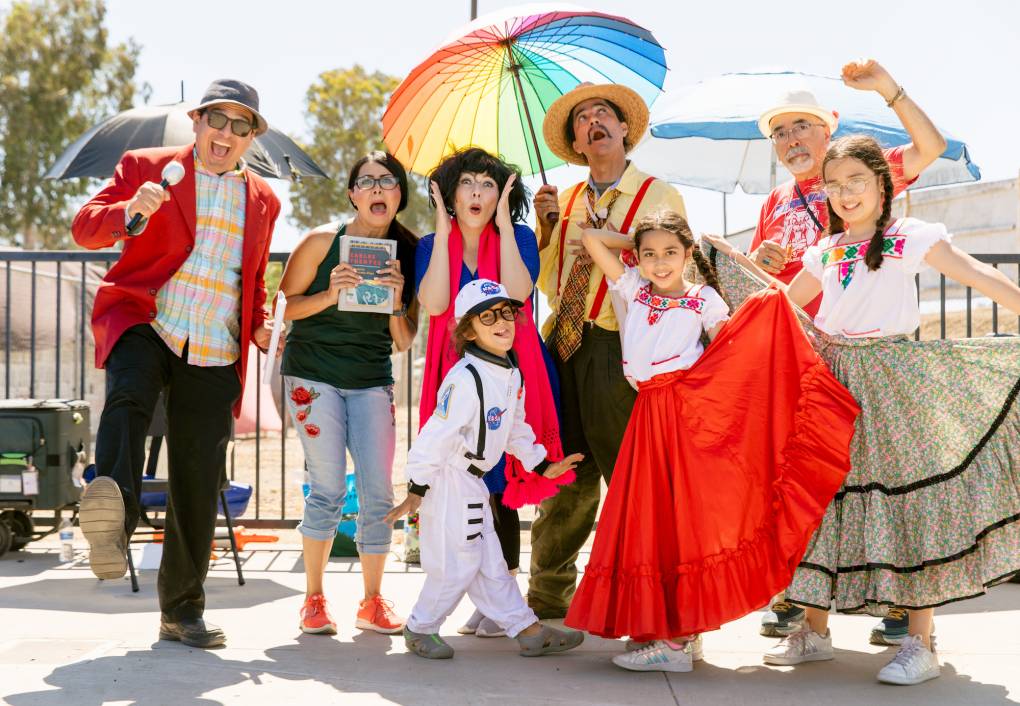
"caption": "Juan Felipe Herrera and his former students performing for an ACTAVANDO Contra COVID event at the Madera Flea Market on June 13, 2021.",
"description": "Juan Felipe Herrera and his former students performing for an ACTAVANDO Contra COVID event at the Madera Flea Market on June 13, 2021.",
"title": "ACTA_ContraCovid_Madera124",
"credit": "Courtesy of Jenn Emerling/ACTA",
"status": "inherit",
"altTag": "A group of artists, all dressed in colorful gear, pose for a photo.",
"isLoading": false,
"fetchFailed": false
},
"news_11879335": {
"type": "attachments",
"id": "news_11879335",
"meta": {
"index": "attachments_1716263798",
"site": "news",
"id": "11879335",
"found": true
},
"parent": 11879334,
"imgSizes": {
"twentyfourteen-full-width": {
"file": "https://ww2.kqed.org/app/uploads/sites/10/2021/06/Black-Lesbian-Contingent-Pride-1020x670-1-1020x576.jpeg",
"width": 1020,
"mimeType": "image/jpeg",
"height": 576
},
"thumbnail": {
"file": "https://ww2.kqed.org/app/uploads/sites/10/2021/06/Black-Lesbian-Contingent-Pride-1020x670-1-160x105.jpeg",
"width": 160,
"mimeType": "image/jpeg",
"height": 105
},
"post-thumbnail": {
"file": "https://ww2.kqed.org/app/uploads/sites/10/2021/06/Black-Lesbian-Contingent-Pride-1020x670-1-672x372.jpeg",
"width": 672,
"mimeType": "image/jpeg",
"height": 372
},
"kqedFullSize": {
"file": "https://ww2.kqed.org/app/uploads/sites/10/2021/06/Black-Lesbian-Contingent-Pride-1020x670-1.jpeg",
"width": 1020,
"height": 670
},
"medium": {
"file": "https://ww2.kqed.org/app/uploads/sites/10/2021/06/Black-Lesbian-Contingent-Pride-1020x670-1-800x525.jpeg",
"width": 800,
"mimeType": "image/jpeg",
"height": 525
}
},
"publishDate": 1624643303,
"modified": 1624643339,
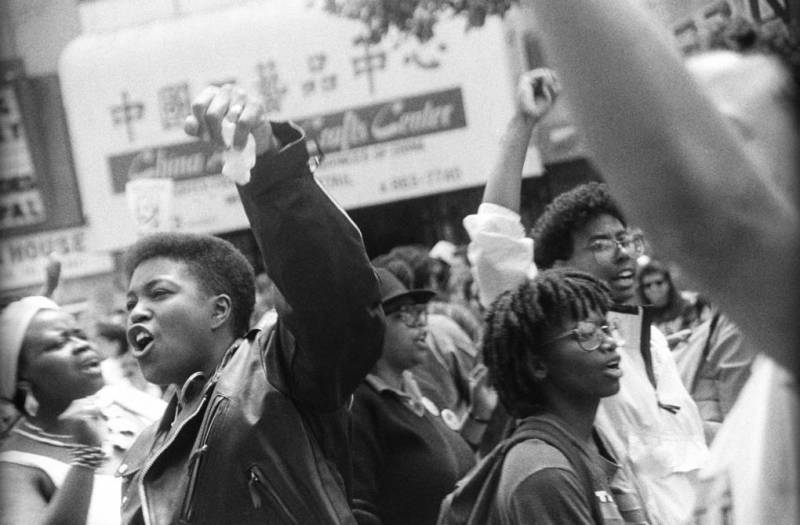
"caption": "Black lesbian contingent, San Francisco Pride Parade, 1991. ",
"description": null,
"title": "Black-Lesbian-Contingent-Pride-1020x670",
"credit": "Courtesy of H. Lenn Keller/ Oakland Museum of California",
"status": "inherit",
"altTag": null,
"isLoading": false,
"fetchFailed": false
},
"news_11879070": {
"type": "attachments",
"id": "news_11879070",
"meta": {
"index": "attachments_1716263798",
"site": "news",
"id": "11879070",
"found": true
},
"parent": 11879038,
"imgSizes": {
"twentyfourteen-full-width": {
"file": "https://ww2.kqed.org/app/uploads/sites/10/2021/06/Berkeley-Rep-exterior-1038x576.jpg",
"width": 1038,
"mimeType": "image/jpeg",
"height": 576
},
"thumbnail": {
"file": "https://ww2.kqed.org/app/uploads/sites/10/2021/06/Berkeley-Rep-exterior-160x125.jpg",
"width": 160,
"mimeType": "image/jpeg",
"height": 125
},
"post-thumbnail": {
"file": "https://ww2.kqed.org/app/uploads/sites/10/2021/06/Berkeley-Rep-exterior-672x372.jpg",
"width": 672,
"mimeType": "image/jpeg",
"height": 372
},
"kqedFullSize": {
"file": "https://ww2.kqed.org/app/uploads/sites/10/2021/06/Berkeley-Rep-exterior.jpg",
"width": 1920,
"height": 1497
},
"large": {
"file": "https://ww2.kqed.org/app/uploads/sites/10/2021/06/Berkeley-Rep-exterior-1020x795.jpg",
"width": 1020,
"mimeType": "image/jpeg",
"height": 795
},
"1536x1536": {
"file": "https://ww2.kqed.org/app/uploads/sites/10/2021/06/Berkeley-Rep-exterior-1536x1198.jpg",
"width": 1536,
"mimeType": "image/jpeg",
"height": 1198
},
"medium": {
"file": "https://ww2.kqed.org/app/uploads/sites/10/2021/06/Berkeley-Rep-exterior-800x624.jpg",
"width": 800,
"mimeType": "image/jpeg",
"height": 624
}
},
"publishDate": 1624477585,
"modified": 1624484962,
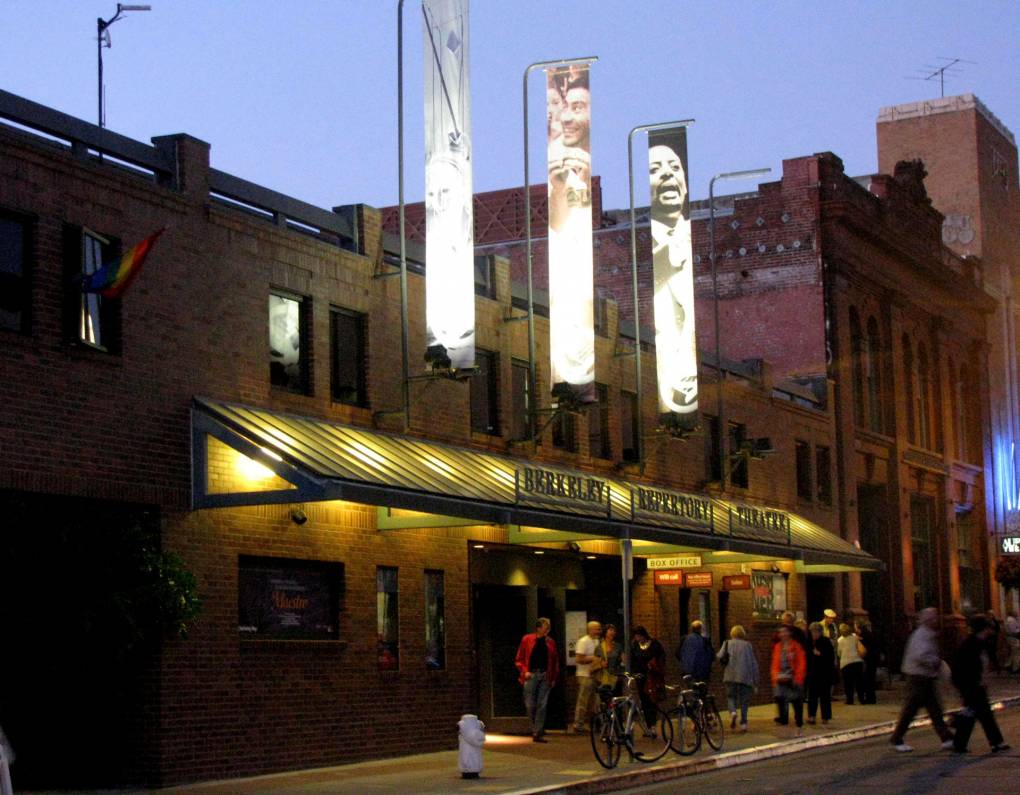
"caption": "Exterior of Berkeley Repertory Theatre",
"description": null,
"title": "Berkeley-Rep-exterior",
"credit": "\u003ca href=\"https://www.flickr.com/photos/rocor/14353591619/in/photolist-nSnUHz-fLJA46-bUX1ss-4f4jRL-6Vn8WN-agWBft-xbSGF-6cUS88-TQCKo7-U1qAmU-6cUS7D-6cZ1Aj-6cZ1zU-91cTSM-dNYdw-4tdgKM-6ZatRX-QM1yde-6Zev5w-p1X4N-D5Vv9t-dNYcQ-5EpH41-bDRCZi-5Y7Pox-6ZazUT-dNYdg-buQYeA-U5xL94-TSYwP6-nSnU8M-TuzTZj-U3KVQx-4BHUbG-U1qxum-Srvjo8-5Ekq2e-5EpGYo-5Ekq4H-5Ekq6n-5EkqcM-5EkqaB-5EpH25-5EpGYU-xyAfT4-5EpH1m-bDRCJe-5ZtoN7-x3uc1V-5EkpX8\">rocor\u003c/a>/Flickr",
"status": "inherit",
"altTag": "Exterior of Berkeley Rep theater",
"isLoading": false,
"fetchFailed": false
},
"news_11879049": {
"type": "attachments",
"id": "news_11879049",
"meta": {
"index": "attachments_1716263798",
"site": "news",
"id": "11879049",
"found": true
},
"parent": 11879024,
"imgSizes": {
"twentyfourteen-full-width": {
"file": "https://ww2.kqed.org/app/uploads/sites/10/2021/06/RS48246_008_Oakland_MillsCollege_03242021-qut-1038x576.jpg",
"width": 1038,
"mimeType": "image/jpeg",
"height": 576
},
"thumbnail": {
"file": "https://ww2.kqed.org/app/uploads/sites/10/2021/06/RS48246_008_Oakland_MillsCollege_03242021-qut-160x107.jpg",
"width": 160,
"mimeType": "image/jpeg",
"height": 107
},
"post-thumbnail": {
"file": "https://ww2.kqed.org/app/uploads/sites/10/2021/06/RS48246_008_Oakland_MillsCollege_03242021-qut-672x372.jpg",
"width": 672,
"mimeType": "image/jpeg",
"height": 372
},
"kqedFullSize": {
"file": "https://ww2.kqed.org/app/uploads/sites/10/2021/06/RS48246_008_Oakland_MillsCollege_03242021-qut.jpg",
"width": 1920,
"height": 1280
},
"large": {
"file": "https://ww2.kqed.org/app/uploads/sites/10/2021/06/RS48246_008_Oakland_MillsCollege_03242021-qut-1020x680.jpg",
"width": 1020,
"mimeType": "image/jpeg",
"height": 680
},
"1536x1536": {
"file": "https://ww2.kqed.org/app/uploads/sites/10/2021/06/RS48246_008_Oakland_MillsCollege_03242021-qut-1536x1024.jpg",
"width": 1536,
"mimeType": "image/jpeg",
"height": 1024
},
"medium": {
"file": "https://ww2.kqed.org/app/uploads/sites/10/2021/06/RS48246_008_Oakland_MillsCollege_03242021-qut-800x533.jpg",
"width": 800,
"mimeType": "image/jpeg",
"height": 533
}
},
"publishDate": 1624475412,
"modified": 1624475434,
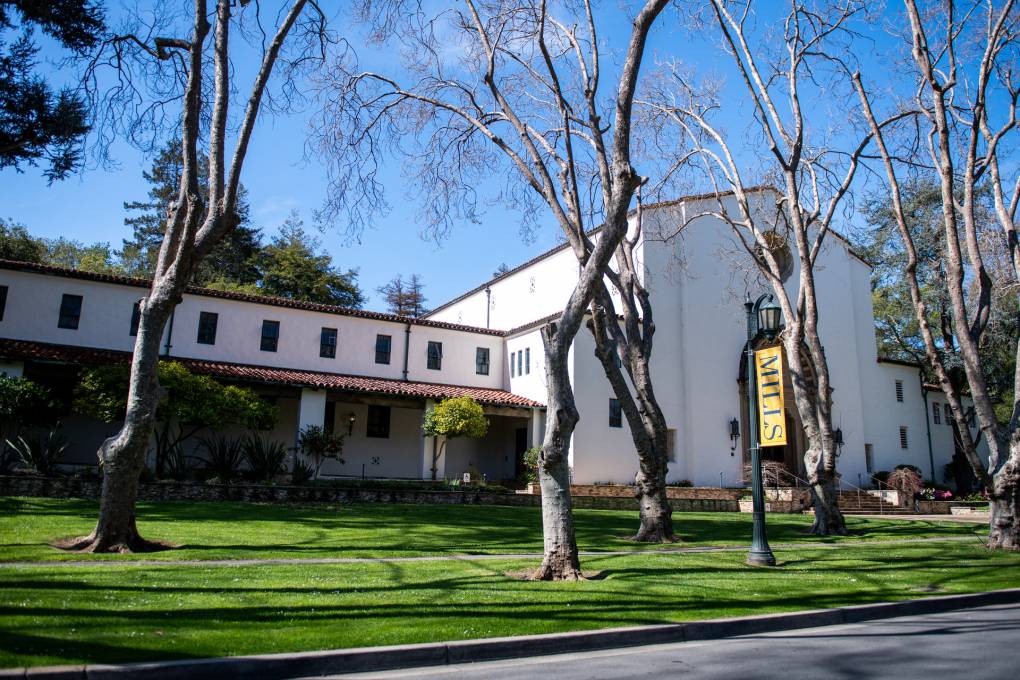
"caption": "The Littlefield Concert Hall at Mills College in Oakland on March 24, 2021.",
"description": null,
"title": "The Littlefield Concert Hall at Mills College in Oakland on March 24, 2021.",
"credit": "Beth LaBerge/KQED",
"status": "inherit",
"altTag": null,
"isLoading": false,
"fetchFailed": false
},
"news_11879009": {
"type": "attachments",
"id": "news_11879009",
"meta": {
"index": "attachments_1716263798",
"site": "news",
"id": "11879009",
"found": true
},
"parent": 11878995,
"imgSizes": {
"twentyfourteen-full-width": {
"file": "https://ww2.kqed.org/app/uploads/sites/10/2021/06/Beach-Blanket-BabylongSan-Francisco-Skyline-Hat-cropped-1038x576.jpg",
"width": 1038,
"mimeType": "image/jpeg",
"height": 576
},
"thumbnail": {
"file": "https://ww2.kqed.org/app/uploads/sites/10/2021/06/Beach-Blanket-BabylongSan-Francisco-Skyline-Hat-cropped-160x114.jpg",
"width": 160,
"mimeType": "image/jpeg",
"height": 114
},
"post-thumbnail": {
"file": "https://ww2.kqed.org/app/uploads/sites/10/2021/06/Beach-Blanket-BabylongSan-Francisco-Skyline-Hat-cropped-672x372.jpg",
"width": 672,
"mimeType": "image/jpeg",
"height": 372
},
"kqedFullSize": {
"file": "https://ww2.kqed.org/app/uploads/sites/10/2021/06/Beach-Blanket-BabylongSan-Francisco-Skyline-Hat-cropped-scaled.jpg",
"width": 2560,
"height": 1829
},
"2048x2048": {
"file": "https://ww2.kqed.org/app/uploads/sites/10/2021/06/Beach-Blanket-BabylongSan-Francisco-Skyline-Hat-cropped-2048x1464.jpg",
"width": 2048,
"mimeType": "image/jpeg",
"height": 1464
},
"large": {
"file": "https://ww2.kqed.org/app/uploads/sites/10/2021/06/Beach-Blanket-BabylongSan-Francisco-Skyline-Hat-cropped-1020x729.jpg",
"width": 1020,
"mimeType": "image/jpeg",
"height": 729
},
"1536x1536": {
"file": "https://ww2.kqed.org/app/uploads/sites/10/2021/06/Beach-Blanket-BabylongSan-Francisco-Skyline-Hat-cropped-1536x1098.jpg",
"width": 1536,
"mimeType": "image/jpeg",
"height": 1098
},
"full-width": {
"file": "https://ww2.kqed.org/app/uploads/sites/10/2021/06/Beach-Blanket-BabylongSan-Francisco-Skyline-Hat-cropped-1920x1372.jpg",
"width": 1920,
"mimeType": "image/jpeg",
"height": 1372
},
"medium": {
"file": "https://ww2.kqed.org/app/uploads/sites/10/2021/06/Beach-Blanket-BabylongSan-Francisco-Skyline-Hat-cropped-800x572.jpg",
"width": 800,
"mimeType": "image/jpeg",
"height": 572
}
},
"publishDate": 1624468333,
"modified": 1624468431,
"caption": "Steve Silver's sketch of a San Francisco skyline hat from Beach Blanket Babylon next to the on-stage character.",
"description": null,
"title": "Beach-Blanket-BabylongSan-Francisco-Skyline-Hat-cropped",
"credit": "Courtesy Beach Blanket Babylon",
"status": "inherit",
"altTag": "Sketch of Beach Blanket Babylon's San Francisco hat next to on-stage character",
"isLoading": false,
"fetchFailed": false
},
"news_11878731": {
"type": "attachments",
"id": "news_11878731",
"meta": {
"index": "attachments_1716263798",
"site": "news",
"id": "11878731",
"found": true
},
"parent": 11878712,
"imgSizes": {
"twentyfourteen-full-width": {
"file": "https://ww2.kqed.org/app/uploads/sites/10/2021/06/020_Oakland_BlackLiberationWalkingTourParty_06192021-1038x576.jpg",
"width": 1038,
"mimeType": "image/jpeg",
"height": 576
},
"thumbnail": {
"file": "https://ww2.kqed.org/app/uploads/sites/10/2021/06/020_Oakland_BlackLiberationWalkingTourParty_06192021-160x107.jpg",
"width": 160,
"mimeType": "image/jpeg",
"height": 107
},
"post-thumbnail": {
"file": "https://ww2.kqed.org/app/uploads/sites/10/2021/06/020_Oakland_BlackLiberationWalkingTourParty_06192021-672x372.jpg",
"width": 672,
"mimeType": "image/jpeg",
"height": 372
},
"kqedFullSize": {
"file": "https://ww2.kqed.org/app/uploads/sites/10/2021/06/020_Oakland_BlackLiberationWalkingTourParty_06192021.jpg",
"width": 1920,
"height": 1280
},
"large": {
"file": "https://ww2.kqed.org/app/uploads/sites/10/2021/06/020_Oakland_BlackLiberationWalkingTourParty_06192021-1020x680.jpg",
"width": 1020,
"mimeType": "image/jpeg",
"height": 680
},
"1536x1536": {
"file": "https://ww2.kqed.org/app/uploads/sites/10/2021/06/020_Oakland_BlackLiberationWalkingTourParty_06192021-1536x1024.jpg",
"width": 1536,
"mimeType": "image/jpeg",
"height": 1024
},
"medium": {
"file": "https://ww2.kqed.org/app/uploads/sites/10/2021/06/020_Oakland_BlackLiberationWalkingTourParty_06192021-800x533.jpg",
"width": 800,
"mimeType": "image/jpeg",
"height": 533
}
},
"publishDate": 1624216382,
"modified": 1624216400,
"caption": "People dance to Samba Funk during the Black Liberation Walking Tour launch party and Juneteenth Celebration at SPARC-it-Place in Oakland on June 19, 2021.",
"description": null,
"title": "020_Oakland_BlackLiberationWalkingTourParty_06192021",
"credit": "Beth LaBerge/KQED",
"status": "inherit",
"altTag": null,
"isLoading": false,
"fetchFailed": false
},
"news_11878701": {
"type": "attachments",
"id": "news_11878701",
"meta": {
"index": "attachments_1716263798",
"site": "news",
"id": "11878701",
"found": true
},
"parent": 11878694,
"imgSizes": {
"twentyfourteen-full-width": {
"file": "https://ww2.kqed.org/app/uploads/sites/10/2021/06/Image-from-iOS-1-1038x576.jpg",
"width": 1038,
"mimeType": "image/jpeg",
"height": 576
},
"thumbnail": {
"file": "https://ww2.kqed.org/app/uploads/sites/10/2021/06/Image-from-iOS-1-160x107.jpg",
"width": 160,
"mimeType": "image/jpeg",
"height": 107
},
"post-thumbnail": {
"file": "https://ww2.kqed.org/app/uploads/sites/10/2021/06/Image-from-iOS-1-672x372.jpg",
"width": 672,
"mimeType": "image/jpeg",
"height": 372
},
"kqedFullSize": {
"file": "https://ww2.kqed.org/app/uploads/sites/10/2021/06/Image-from-iOS-1.jpg",
"width": 1620,
"height": 1080
},
"large": {
"file": "https://ww2.kqed.org/app/uploads/sites/10/2021/06/Image-from-iOS-1-1020x680.jpg",
"width": 1020,
"mimeType": "image/jpeg",
"height": 680
},
"1536x1536": {
"file": "https://ww2.kqed.org/app/uploads/sites/10/2021/06/Image-from-iOS-1-1536x1024.jpg",
"width": 1536,
"mimeType": "image/jpeg",
"height": 1024
},
"medium": {
"file": "https://ww2.kqed.org/app/uploads/sites/10/2021/06/Image-from-iOS-1-800x533.jpg",
"width": 800,
"mimeType": "image/jpeg",
"height": 533
}
},
"publishDate": 1624143398,
"modified": 1624143418,
"caption": "Jilchristina Vest rides JJ, the horse of Oakland Black Cowboy Donnell McAlister, during a Juneteenth block party to celebrate the opening of the Black Panther Mini Museum in Oakland on June 19, 2021.",
"description": null,
"title": "Image from iOS",
"credit": "Beth LaBerge/KQED",
"status": "inherit",
"altTag": null,
"isLoading": false,
"fetchFailed": false
},
"news_11872594": {
"type": "attachments",
"id": "news_11872594",
"meta": {
"index": "attachments_1716263798",
"site": "news",
"id": "11872594",
"found": true
},
"parent": 11872593,
"imgSizes": {
"twentyfourteen-full-width": {
"file": "https://ww2.kqed.org/app/uploads/sites/10/2021/05/lm-collage-3-960x576.jpg",
"width": 960,
"mimeType": "image/jpeg",
"height": 576
},
"thumbnail": {
"file": "https://ww2.kqed.org/app/uploads/sites/10/2021/05/lm-collage-3-160x107.jpg",
"width": 160,
"mimeType": "image/jpeg",
"height": 107
},
"post-thumbnail": {
"file": "https://ww2.kqed.org/app/uploads/sites/10/2021/05/lm-collage-3-672x372.jpg",
"width": 672,
"mimeType": "image/jpeg",
"height": 372
},
"kqedFullSize": {
"file": "https://ww2.kqed.org/app/uploads/sites/10/2021/05/lm-collage-3.jpg",
"width": 960,
"height": 640
},
"medium": {
"file": "https://ww2.kqed.org/app/uploads/sites/10/2021/05/lm-collage-3-800x533.jpg",
"width": 800,
"mimeType": "image/jpeg",
"height": 533
}
},
"publishDate": 1620335099,
"modified": 1624039778,
"caption": "Stockton demolished many homes, businesses and community centers in historic Little Manila to build a cross-town freeway in the early 1970s. ",
"description": null,
"title": "lm-collage-3",
"credit": "Photos courtesy of SPD Historical Archives and Elena Mangahas",
"status": "inherit",
"altTag": null,
"isLoading": false,
"fetchFailed": false
},
"news_11804425": {
"type": "attachments",
"id": "news_11804425",
"meta": {
"index": "attachments_1716263798",
"site": "news",
"id": "11804425",
"found": true
},
"parent": 11804396,
"imgSizes": {
"apple_news_ca_landscape_5_5": {
"file": "https://ww2.kqed.org/app/uploads/sites/10/2020/03/022_KQED_SanFrancisco_Amnesia_LastNight_02292020_4864-1044x783.jpg",
"width": 1044,
"mimeType": "image/jpeg",
"height": 783
},
"apple_news_ca_square_4_0": {
"file": "https://ww2.kqed.org/app/uploads/sites/10/2020/03/022_KQED_SanFrancisco_Amnesia_LastNight_02292020_4864-470x470.jpg",
"width": 470,
"mimeType": "image/jpeg",
"height": 470
},
"twentyfourteen-full-width": {
"file": "https://ww2.kqed.org/app/uploads/sites/10/2020/03/022_KQED_SanFrancisco_Amnesia_LastNight_02292020_4864-1038x576.jpg",
"width": 1038,
"mimeType": "image/jpeg",
"height": 576
},
"thumbnail": {
"file": "https://ww2.kqed.org/app/uploads/sites/10/2020/03/022_KQED_SanFrancisco_Amnesia_LastNight_02292020_4864-160x107.jpg",
"width": 160,
"mimeType": "image/jpeg",
"height": 107
},
"post-thumbnail": {
"file": "https://ww2.kqed.org/app/uploads/sites/10/2020/03/022_KQED_SanFrancisco_Amnesia_LastNight_02292020_4864-672x372.jpg",
"width": 672,
"mimeType": "image/jpeg",
"height": 372
},
"kqedFullSize": {
"file": "https://ww2.kqed.org/app/uploads/sites/10/2020/03/022_KQED_SanFrancisco_Amnesia_LastNight_02292020_4864.jpg",
"width": 1920,
"height": 1280
},
"apple_news_ca_landscape_4_7": {
"file": "https://ww2.kqed.org/app/uploads/sites/10/2020/03/022_KQED_SanFrancisco_Amnesia_LastNight_02292020_4864-632x474.jpg",
"width": 632,
"mimeType": "image/jpeg",
"height": 474
},
"large": {
"file": "https://ww2.kqed.org/app/uploads/sites/10/2020/03/022_KQED_SanFrancisco_Amnesia_LastNight_02292020_4864-1020x680.jpg",
"width": 1020,
"mimeType": "image/jpeg",
"height": 680
},
"apple_news_ca_landscape_4_0": {
"file": "https://ww2.kqed.org/app/uploads/sites/10/2020/03/022_KQED_SanFrancisco_Amnesia_LastNight_02292020_4864-536x402.jpg",
"width": 536,
"mimeType": "image/jpeg",
"height": 402
},
"apple_news_ca_portrait_12_9": {
"file": "https://ww2.kqed.org/app/uploads/sites/10/2020/03/022_KQED_SanFrancisco_Amnesia_LastNight_02292020_4864-1122x1280.jpg",
"width": 1122,
"mimeType": "image/jpeg",
"height": 1280
},
"medium": {
"file": "https://ww2.kqed.org/app/uploads/sites/10/2020/03/022_KQED_SanFrancisco_Amnesia_LastNight_02292020_4864-800x533.jpg",
"width": 800,
"mimeType": "image/jpeg",
"height": 533
},
"apple_news_ca_portrait_4_0": {
"file": "https://ww2.kqed.org/app/uploads/sites/10/2020/03/022_KQED_SanFrancisco_Amnesia_LastNight_02292020_4864-354x472.jpg",
"width": 354,
"mimeType": "image/jpeg",
"height": 472
},
"apple_news_ca_portrait_9_7": {
"file": "https://ww2.kqed.org/app/uploads/sites/10/2020/03/022_KQED_SanFrancisco_Amnesia_LastNight_02292020_4864-840x1120.jpg",
"width": 840,
"mimeType": "image/jpeg",
"height": 1120
},
"apple_news_ca_landscape_12_9": {
"file": "https://ww2.kqed.org/app/uploads/sites/10/2020/03/022_KQED_SanFrancisco_Amnesia_LastNight_02292020_4864-1832x1280.jpg",
"width": 1832,
"mimeType": "image/jpeg",
"height": 1280
},
"apple_news_ca_square_9_7": {
"file": "https://ww2.kqed.org/app/uploads/sites/10/2020/03/022_KQED_SanFrancisco_Amnesia_LastNight_02292020_4864-1104x1104.jpg",
"width": 1104,
"mimeType": "image/jpeg",
"height": 1104
},
"apple_news_ca_portrait_4_7": {
"file": "https://ww2.kqed.org/app/uploads/sites/10/2020/03/022_KQED_SanFrancisco_Amnesia_LastNight_02292020_4864-414x552.jpg",
"width": 414,
"mimeType": "image/jpeg",
"height": 552
},
"apple_news_ca_square_12_9": {
"file": "https://ww2.kqed.org/app/uploads/sites/10/2020/03/022_KQED_SanFrancisco_Amnesia_LastNight_02292020_4864-1472x1280.jpg",
"width": 1472,
"mimeType": "image/jpeg",
"height": 1280
},
"apple_news_ca_portrait_5_5": {
"file": "https://ww2.kqed.org/app/uploads/sites/10/2020/03/022_KQED_SanFrancisco_Amnesia_LastNight_02292020_4864-687x916.jpg",
"width": 687,
"mimeType": "image/jpeg",
"height": 916
},
"full-width": {
"file": "https://ww2.kqed.org/app/uploads/sites/10/2020/03/022_KQED_SanFrancisco_Amnesia_LastNight_02292020_4864-1920x1280.jpg",
"width": 1920,
"mimeType": "image/jpeg",
"height": 1280
},
"apple_news_ca_square_4_7": {
"file": "https://ww2.kqed.org/app/uploads/sites/10/2020/03/022_KQED_SanFrancisco_Amnesia_LastNight_02292020_4864-550x550.jpg",
"width": 550,
"mimeType": "image/jpeg",
"height": 550
},
"apple_news_ca_landscape_9_7": {
"file": "https://ww2.kqed.org/app/uploads/sites/10/2020/03/022_KQED_SanFrancisco_Amnesia_LastNight_02292020_4864-1376x1032.jpg",
"width": 1376,
"mimeType": "image/jpeg",
"height": 1032
},
"apple_news_ca_square_5_5": {
"file": "https://ww2.kqed.org/app/uploads/sites/10/2020/03/022_KQED_SanFrancisco_Amnesia_LastNight_02292020_4864-912x912.jpg",
"width": 912,
"mimeType": "image/jpeg",
"height": 912
}
},
"publishDate": 1583082999,
"modified": 1623794025,
"caption": "California's June 15th reopening means that most live events like are back on. Though some of those working in the live entertainment industry are concerned about their safety, and about paying the bills.",
"description": "Regulars, band members and staff fill Amnesia during the last night of music on Saturday.",
"title": "Amnesia Music Venue Closes",
"credit": "Beth LaBerge/KQED",
"status": "inherit",
"altTag": "Regulars, band members and staff fill Amnesia during the last night of music on Saturday.",
"isLoading": false,
"fetchFailed": false
},
"news_11644119": {
"type": "attachments",
"id": "news_11644119",
"meta": {
"index": "attachments_1716263798",
"site": "news",
"id": "11644119",
"found": true
},
"parent": 11642644,
"imgSizes": {
"small": {
"file": "https://ww2.kqed.org/app/uploads/sites/10/2018/01/bridgemodel-520x293.jpg",
"width": 520,
"mimeType": "image/jpeg",
"height": 293
},
"thumbnail": {
"file": "https://ww2.kqed.org/app/uploads/sites/10/2018/01/bridgemodel-160x90.jpg",
"width": 160,
"mimeType": "image/jpeg",
"height": 90
},
"post-thumbnail": {
"file": "https://ww2.kqed.org/app/uploads/sites/10/2018/01/bridgemodel-672x372.jpg",
"width": 672,
"mimeType": "image/jpeg",
"height": 372
},
"xsmall": {
"file": "https://ww2.kqed.org/app/uploads/sites/10/2018/01/bridgemodel-375x211.jpg",
"width": 375,
"mimeType": "image/jpeg",
"height": 211
},
"kqedFullSize": {
"file": "https://ww2.kqed.org/app/uploads/sites/10/2018/01/bridgemodel.jpg",
"width": 800,
"height": 450
},
"guest-author-50": {
"file": "https://ww2.kqed.org/app/uploads/sites/10/2018/01/bridgemodel-50x50.jpg",
"width": 50,
"mimeType": "image/jpeg",
"height": 50
},
"guest-author-96": {
"file": "https://ww2.kqed.org/app/uploads/sites/10/2018/01/bridgemodel-96x96.jpg",
"width": 96,
"mimeType": "image/jpeg",
"height": 96
},
"medium": {
"file": "https://ww2.kqed.org/app/uploads/sites/10/2018/01/bridgemodel-800x450.jpg",
"width": 800,
"mimeType": "image/jpeg",
"height": 450
},
"guest-author-64": {
"file": "https://ww2.kqed.org/app/uploads/sites/10/2018/01/bridgemodel-64x64.jpg",
"width": 64,
"mimeType": "image/jpeg",
"height": 64
},
"guest-author-32": {
"file": "https://ww2.kqed.org/app/uploads/sites/10/2018/01/bridgemodel-32x32.jpg",
"width": 32,
"mimeType": "image/jpeg",
"height": 32
},
"detail": {
"file": "https://ww2.kqed.org/app/uploads/sites/10/2018/01/bridgemodel-150x150.jpg",
"width": 150,
"mimeType": "image/jpeg",
"height": 150
},
"guest-author-128": {
"file": "https://ww2.kqed.org/app/uploads/sites/10/2018/01/bridgemodel-128x128.jpg",
"width": 128,
"mimeType": "image/jpeg",
"height": 128
},
"xxsmall": {
"file": "https://ww2.kqed.org/app/uploads/sites/10/2018/01/bridgemodel-240x135.jpg",
"width": 240,
"mimeType": "image/jpeg",
"height": 135
}
},
"publishDate": 1516840686,
"modified": 1516843057,
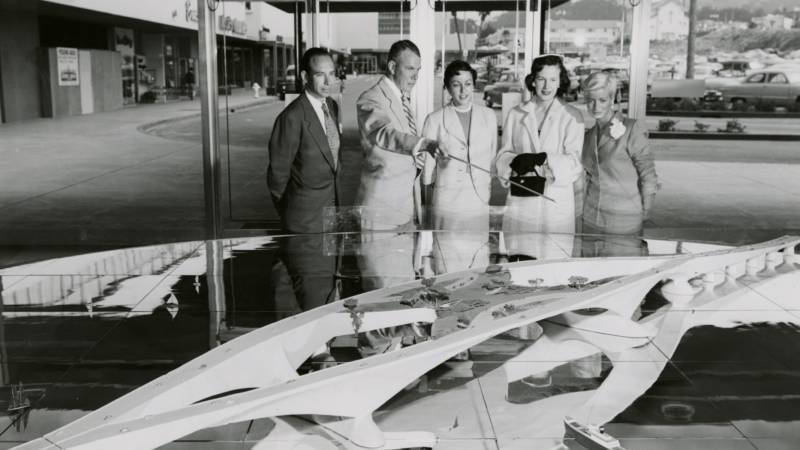
"caption": "Model of the Butterfly Bridge at Stonestown Shopping Center, San Francisco, 1953. L to R: Aaron Green, Arthur Haggard, Mrs. Donald Magnin, Mary Lee Futernick and Carol Weingarten. ",
"description": "Model of the Butterfly Bridge at Stonestown Shopping Center, San Francisco, 1953. L to R: Aaron Green, Arthur Haggard, Mrs. Donald Magnin, Mary Lee Futernick, and Carol Weingarten. ",
"title": "bridgemodel",
"credit": "Courtesy of Robot Skelton, San Francisco Call-Bulletin",
"status": "inherit",
"isLoading": false,
"fetchFailed": false
},
"news_11873839": {
"type": "attachments",
"id": "news_11873839",
"meta": {
"index": "attachments_1716263798",
"site": "news",
"id": "11873839",
"found": true
},
"parent": 11873838,
"imgSizes": {
"twentyfourteen-full-width": {
"file": "https://ww2.kqed.org/app/uploads/sites/10/2021/05/RS48928_006_Oakland_Buffalo_05062021-qut-1038x576.jpeg",
"width": 1038,
"mimeType": "image/jpeg",
"height": 576
},
"thumbnail": {
"file": "https://ww2.kqed.org/app/uploads/sites/10/2021/05/RS48928_006_Oakland_Buffalo_05062021-qut-160x107.jpeg",
"width": 160,
"mimeType": "image/jpeg",
"height": 107
},
"post-thumbnail": {
"file": "https://ww2.kqed.org/app/uploads/sites/10/2021/05/RS48928_006_Oakland_Buffalo_05062021-qut-672x372.jpeg",
"width": 672,
"mimeType": "image/jpeg",
"height": 372
},
"kqedFullSize": {
"file": "https://ww2.kqed.org/app/uploads/sites/10/2021/05/RS48928_006_Oakland_Buffalo_05062021-qut.jpeg",
"width": 1920,
"height": 1280
},
"large": {
"file": "https://ww2.kqed.org/app/uploads/sites/10/2021/05/RS48928_006_Oakland_Buffalo_05062021-qut-1020x680.jpeg",
"width": 1020,
"mimeType": "image/jpeg",
"height": 680
},
"1536x1536": {
"file": "https://ww2.kqed.org/app/uploads/sites/10/2021/05/RS48928_006_Oakland_Buffalo_05062021-qut-1536x1024.jpeg",
"width": 1536,
"mimeType": "image/jpeg",
"height": 1024
},
"medium": {
"file": "https://ww2.kqed.org/app/uploads/sites/10/2021/05/RS48928_006_Oakland_Buffalo_05062021-qut-800x533.jpeg",
"width": 800,
"mimeType": "image/jpeg",
"height": 533
}
},
"publishDate": 1621091769,
"modified": 1622568842,
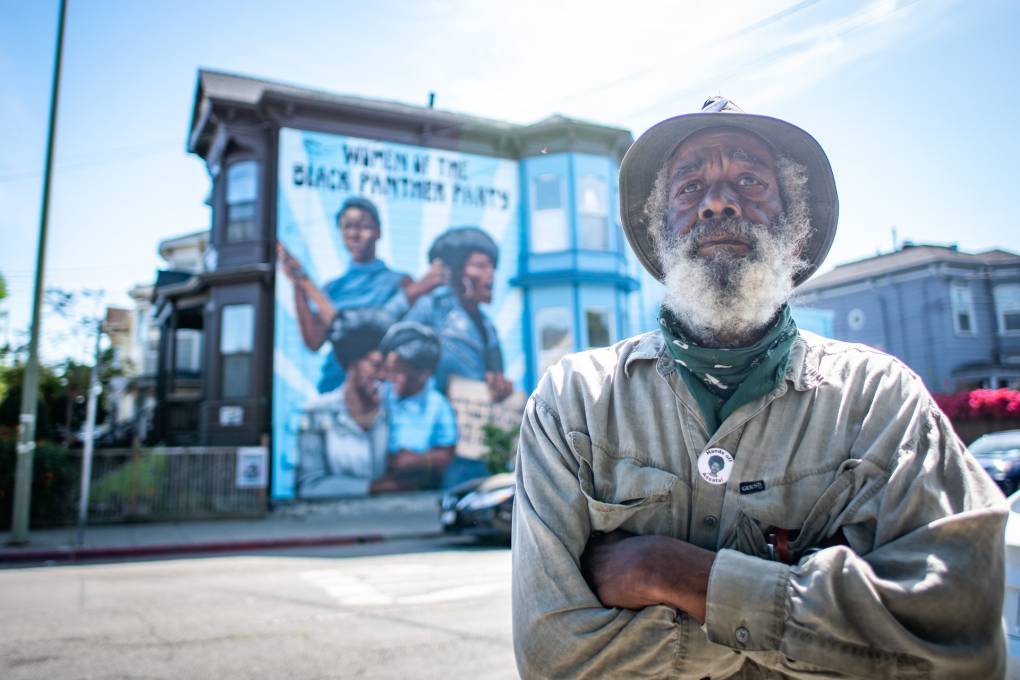
"caption": "Former Black Panther Buffalo stands on Center and 9th streets in Oakland on May 7, 2021, on the corner where Huey P. Newton was shot and killed in 1989. Across the street is a mural honoring the women of the Black Panther Party by Oakland-based muralist Rachel Wolfe-Goldsmith.",
"description": null,
"title": "RS48928_006_Oakland_Buffalo_05062021-qut",
"credit": "Beth LaBerge/KQED",
"status": "inherit",
"altTag": null,
"isLoading": false,
"fetchFailed": false
},
"news_11874738": {
"type": "attachments",
"id": "news_11874738",
"meta": {
"index": "attachments_1716263798",
"site": "news",
"id": "11874738",
"found": true
},
"parent": 11874704,
"imgSizes": {
"twentyfourteen-full-width": {
"file": "https://ww2.kqed.org/app/uploads/sites/10/2021/05/Arnett-Holding-Photo-1038x576.jpg",
"width": 1038,
"mimeType": "image/jpeg",
"height": 576
},
"thumbnail": {
"file": "https://ww2.kqed.org/app/uploads/sites/10/2021/05/Arnett-Holding-Photo-160x106.jpg",
"width": 160,
"mimeType": "image/jpeg",
"height": 106
},
"post-thumbnail": {
"file": "https://ww2.kqed.org/app/uploads/sites/10/2021/05/Arnett-Holding-Photo-672x372.jpg",
"width": 672,
"mimeType": "image/jpeg",
"height": 372
},
"kqedFullSize": {
"file": "https://ww2.kqed.org/app/uploads/sites/10/2021/05/Arnett-Holding-Photo.jpg",
"width": 1920,
"height": 1266
},
"large": {
"file": "https://ww2.kqed.org/app/uploads/sites/10/2021/05/Arnett-Holding-Photo-1020x673.jpg",
"width": 1020,
"mimeType": "image/jpeg",
"height": 673
},
"1536x1536": {
"file": "https://ww2.kqed.org/app/uploads/sites/10/2021/05/Arnett-Holding-Photo-1536x1013.jpg",
"width": 1536,
"mimeType": "image/jpeg",
"height": 1013
},
"medium": {
"file": "https://ww2.kqed.org/app/uploads/sites/10/2021/05/Arnett-Holding-Photo-800x528.jpg",
"width": 800,
"mimeType": "image/jpeg",
"height": 528
}
},
"publishDate": 1621625920,
"modified": 1621626096,
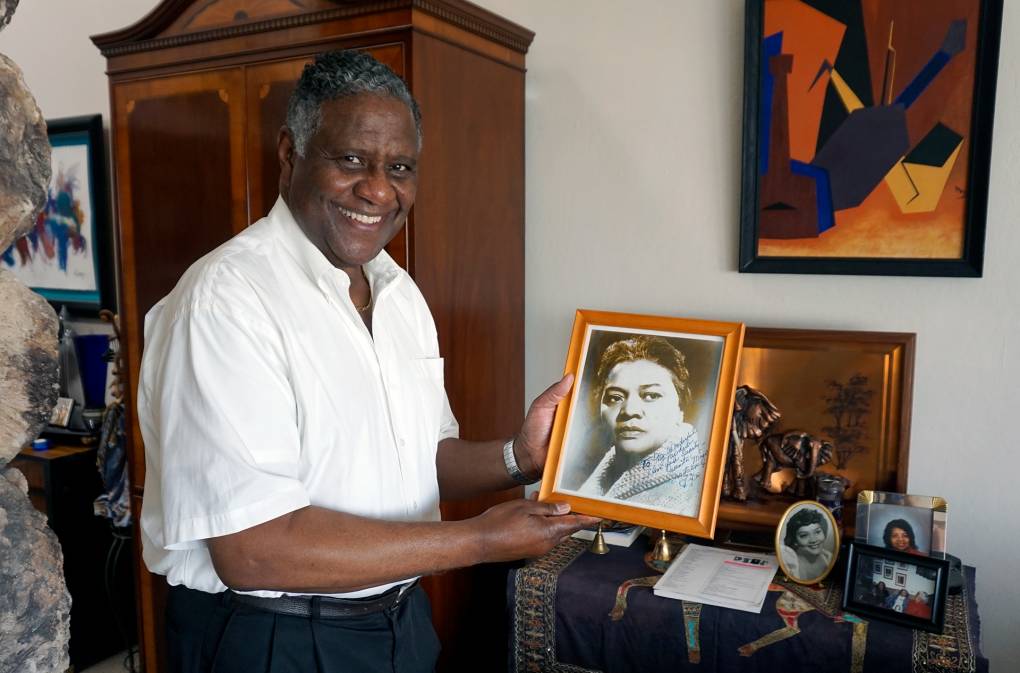
"caption": "Arnett Moore holds of photo of his late aunt, actress Juanita Moore. He's determined to get Juanita a star on the Hollywood Walk of Fame. ",
"description": null,
"title": "Arnett Holding Photo",
"credit": "Amanda Font/KQED",
"status": "inherit",
"altTag": null,
"isLoading": false,
"fetchFailed": false
}
},
"audioPlayerReducer": {
"postId": "stream_live",
"isPaused": true,
"isPlaying": false,
"pfsActive": false,
"pledgeModalIsOpen": true,
"playerDrawerIsOpen": false,
"liveAudioPlayStartedAt": 0,
"liveAudioPlayContext": ""
},
"authorsReducer": {
"katrinaschwartz": {
"type": "authors",
"id": "234",
"meta": {
"index": "authors_1716337520",
"id": "234",
"found": true
},
"name": "Katrina Schwartz",
"firstName": "Katrina",
"lastName": "Schwartz",
"slug": "katrinaschwartz",
"email": "kschwartz@kqed.org",
"display_author_email": false,
"staff_mastheads": [
"news"
],
"title": "Producer",
"bio": "Katrina Schwartz is a journalist based in San Francisco. She's worked at KPCC public radio in LA and has reported on air and online for KQED since 2010. She covered how teaching and learning is changing for MindShift between 2012 and 2020. She is the co-host of the MindShift podcast and now produces KQED's Bay Curious podcast.",
"avatar": "https://secure.gravatar.com/avatar/edb4ee79070447a018538c9aae6eeecf28786515b8a0c30e43b6b7dce5aa44c8?s=600&d=blank&r=g",
"twitter": "kschwart",
"bluesky": null,
"facebook": null,
"instagram": null,
"linkedin": null,
"sites": [
{
"site": "",
"roles": [
"editor"
]
},
{
"site": "news",
"roles": [
"editor"
]
},
{
"site": "mindshift",
"roles": [
"administrator"
]
},
{
"site": "stateofhealth",
"roles": [
"author"
]
},
{
"site": "science",
"roles": [
"editor"
]
}
],
"headData": {
"title": "Katrina Schwartz | KQED",
"description": "Producer",
"ogImgSrc": "https://secure.gravatar.com/avatar/edb4ee79070447a018538c9aae6eeecf28786515b8a0c30e43b6b7dce5aa44c8?s=600&d=blank&r=g",
"twImgSrc": "https://secure.gravatar.com/avatar/edb4ee79070447a018538c9aae6eeecf28786515b8a0c30e43b6b7dce5aa44c8?s=600&d=blank&r=g"
},
"isLoading": false,
"link": "/author/katrinaschwartz"
},
"kqed": {
"type": "authors",
"id": "236",
"meta": {
"index": "authors_1716337520",
"id": "236",
"found": true
},
"name": "KQED News Staff",
"firstName": "KQED News Staff",
"lastName": null,
"slug": "kqed",
"email": "faq@kqed.org",
"display_author_email": false,
"staff_mastheads": [],
"title": null,
"bio": null,
"avatar": "https://secure.gravatar.com/avatar/ef0e801a68c4c54afa9180db14084167?s=600&d=blank&r=g",
"twitter": null,
"facebook": null,
"instagram": null,
"linkedin": null,
"sites": [
{
"site": "arts",
"roles": [
"contributor"
]
},
{
"site": "news",
"roles": [
"editor"
]
},
{
"site": "futureofyou",
"roles": [
"author"
]
}
],
"headData": {
"title": "KQED News Staff | KQED",
"description": null,
"ogImgSrc": "https://secure.gravatar.com/avatar/ef0e801a68c4c54afa9180db14084167?s=600&d=blank&r=g",
"twImgSrc": "https://secure.gravatar.com/avatar/ef0e801a68c4c54afa9180db14084167?s=600&d=blank&r=g"
},
"isLoading": false,
"link": "/author/kqed"
},
"rachael-myrow": {
"type": "authors",
"id": "251",
"meta": {
"index": "authors_1716337520",
"id": "251",
"found": true
},
"name": "Rachael Myrow",
"firstName": "Rachael",
"lastName": "Myrow",
"slug": "rachael-myrow",
"email": "rmyrow@kqed.org",
"display_author_email": true,
"staff_mastheads": [
"news"
],
"title": "Senior Editor of KQED's Silicon Valley News Desk",
"bio": "• I write and edit stories about how Silicon Valley power and policies shape everyday life in California. I’m also passionate about making Bay Area history and culture more accessible to a broad public. • I’ve been a journalist for most of my life, starting in high school with The Franklin Press in Los Angeles, where I grew up. While earning my first degree in English at UC Berkeley, I got my start in public radio at KALX-FM. After completing a second degree in journalism at Cal, I landed my first professional job at Marketplace, then moved on to KPCC (now LAist), and then KQED, where I hosted The California Report for more than seven years. • My reporting has appeared on NPR, The World, WBUR’s \u003ci>Here & Now\u003c/i>, and the BBC. I also guest host for KQED’s \u003ci>Forum\u003c/i>, as well as the Commonwealth Club in San Francisco. • I speak periodically on media, democracy and technology issues, and do voiceover work for documentaries and educational video projects. • Outside of the studio, you'll find me hiking Bay Area trails and whipping up Insta-ready meals in my kitchen. • I do not accept gifts, money, or favors from anyone connected to my reporting, I don't pay people for information, and I do not support or donate to political causes. • I strive to treat the people I report on with fairness, honesty, and respect. I also recognize there are often multiple sides to a story and work to verify information through multiple sources and documentation. If I get something wrong, I correct it.",
"avatar": "https://secure.gravatar.com/avatar/3ed8a3c5f26025e4a805ba634cda8cd764906b97438a6d9ce216b044e340da4e?s=600&d=blank&r=g",
"twitter": "rachaelmyrow",
"bluesky": null,
"facebook": null,
"instagram": null,
"linkedin": "https://www.linkedin.com/in/rachaelmyrow/",
"sites": [
{
"site": "arts",
"roles": [
"administrator"
]
},
{
"site": "news",
"roles": [
"edit_others_posts",
"editor"
]
},
{
"site": "futureofyou",
"roles": [
"editor"
]
},
{
"site": "bayareabites",
"roles": [
"editor"
]
},
{
"site": "stateofhealth",
"roles": [
"editor"
]
},
{
"site": "science",
"roles": [
"editor"
]
},
{
"site": "food",
"roles": [
"editor"
]
},
{
"site": "forum",
"roles": [
"editor"
]
},
{
"site": "liveblog",
"roles": [
"author"
]
}
],
"headData": {
"title": "Rachael Myrow | KQED",
"description": "Senior Editor of KQED's Silicon Valley News Desk",
"ogImgSrc": "https://secure.gravatar.com/avatar/3ed8a3c5f26025e4a805ba634cda8cd764906b97438a6d9ce216b044e340da4e?s=600&d=blank&r=g",
"twImgSrc": "https://secure.gravatar.com/avatar/3ed8a3c5f26025e4a805ba634cda8cd764906b97438a6d9ce216b044e340da4e?s=600&d=blank&r=g"
},
"isLoading": false,
"link": "/author/rachael-myrow"
},
"dkatayama": {
"type": "authors",
"id": "7240",
"meta": {
"index": "authors_1716337520",
"id": "7240",
"found": true
},
"name": "Devin Katayama",
"firstName": "Devin",
"lastName": "Katayama",
"slug": "dkatayama",
"email": "dkatayama@kqed.org",
"display_author_email": true,
"staff_mastheads": [
"news"
],
"title": "Editor of Talent and Development",
"bio": "Devin Katayama is former Editor of Talent and Development for KQED. He supported our internship program and on-call staff by looking for equitable opportunities to improve the newsroom.\r\n\r\nHe previously hosted The Bay and American Suburb podcasts from KQED News. Prior to returning to the Bay Area in 2015, Devin was the education reporter for WFPL in Louisville and worked as a producer with radio stations in Chicago and Portland, OR. His work has appeared on NPR’s \u003cem>Morning Edition, All Things Considered, The Takeaway\u003c/em> and \u003cem>Here and Now.\u003c/em>\r\n\r\nDevin earned his MA in Journalism from Columbia College Chicago, where he was a Follett Fellow and the recipient of the 2011 Studs Terkel Community Media Workshop Scholarship for his story on Chicago's homeless youth. He won WBUR's 2014 Daniel Schorr award and a regional RTNDA Edward R. Murrow Award for his documentary \"At Risk\" that looked at issues facing some of Louisville's students. Devin has also received numerous local awards from the Associated Press and the Society of Professional Journalists.",
"avatar": "https://secure.gravatar.com/avatar/d0d2978a31002fb2de107921a8e18405?s=600&d=blank&r=g",
"twitter": "RadioDevin",
"facebook": null,
"instagram": null,
"linkedin": null,
"sites": [
{
"site": "arts",
"roles": []
},
{
"site": "news",
"roles": [
"author"
]
},
{
"site": "stateofhealth",
"roles": [
"author"
]
},
{
"site": "forum",
"roles": [
"editor"
]
},
{
"site": "perspectives",
"roles": [
"editor"
]
}
],
"headData": {
"title": "Devin Katayama | KQED",
"description": "Editor of Talent and Development",
"ogImgSrc": "https://secure.gravatar.com/avatar/d0d2978a31002fb2de107921a8e18405?s=600&d=blank&r=g",
"twImgSrc": "https://secure.gravatar.com/avatar/d0d2978a31002fb2de107921a8e18405?s=600&d=blank&r=g"
},
"isLoading": false,
"link": "/author/dkatayama"
},
"afont": {
"type": "authors",
"id": "8637",
"meta": {
"index": "authors_1716337520",
"id": "8637",
"found": true
},
"name": "Amanda Font",
"firstName": "Amanda",
"lastName": "Font",
"slug": "afont",
"email": "afont@kqed.org",
"display_author_email": false,
"staff_mastheads": [],
"title": "KQED Contributor",
"bio": "Amanda Font is a producer on \u003cem>The Latest\u003c/em> podcast, and the host and co-producer of the series \u003cem>Audible Cosmos\u003c/em>. She has previously worked as a producer and reporter on the \u003cem>Bay Curious\u003c/em> podcast, and director of \u003cem>The California Report Magazine\u003c/em>. She grew up in the deserts of Southern California and moved north for the trees. Amanda earned a B.A. from the BECA program at San Francisco State, where she worked in the university's radio station. Amanda Font is represented by SAG-AFTRA.",
"avatar": "https://secure.gravatar.com/avatar/d9e81cf0117d5849b9cfb7ab4b1422f1?s=600&d=blank&r=g",
"twitter": null,
"facebook": null,
"instagram": null,
"linkedin": null,
"sites": [
{
"site": "news",
"roles": [
"add_users",
"create_users"
]
},
{
"site": "science",
"roles": []
},
{
"site": "forum",
"roles": [
"administrator"
]
},
{
"site": "perspectives",
"roles": [
"administrator"
]
},
{
"site": "radio",
"roles": [
"administrator"
]
}
],
"headData": {
"title": "Amanda Font | KQED",
"description": "KQED Contributor",
"ogImgSrc": "https://secure.gravatar.com/avatar/d9e81cf0117d5849b9cfb7ab4b1422f1?s=600&d=blank&r=g",
"twImgSrc": "https://secure.gravatar.com/avatar/d9e81cf0117d5849b9cfb7ab4b1422f1?s=600&d=blank&r=g"
},
"isLoading": false,
"link": "/author/afont"
},
"ecruzguevarra": {
"type": "authors",
"id": "8654",
"meta": {
"index": "authors_1716337520",
"id": "8654",
"found": true
},
"name": "Ericka Cruz Guevarra",
"firstName": "Ericka",
"lastName": "Cruz Guevarra",
"slug": "ecruzguevarra",
"email": "ecruzguevarra@kqed.org",
"display_author_email": true,
"staff_mastheads": [
"news"
],
"title": "Producer, The Bay Podcast",
"bio": "Ericka Cruz Guevarra is host of \u003ca href=\"https://www.kqed.org/podcasts/thebay\">\u003cem>The Bay\u003c/em>\u003c/a> podcast at KQED. Before host, she was the show’s producer. Her work in that capacity includes a three-part reported series on policing in Vallejo, which won a 2020 excellence in journalism award from the Society of Professional Journalists. Ericka has worked as a breaking news reporter at Oregon Public Broadcasting, helped produce the Code Switch podcast, and was KQED’s inaugural Raul Ramirez Diversity Fund intern. She’s also an alumna of NPR’s Next Generation Radio program. Send her an email if you have strong feelings about whether Fairfield and Suisun City are the Bay. Ericka is represented by SAG-AFTRA.",
"avatar": "https://secure.gravatar.com/avatar/accefc1de4bafc7e234b69bcb9b6f6536c130fd84709bc3069ef11a78787e1bb?s=600&d=blank&r=g",
"twitter": "NotoriousECG",
"bluesky": null,
"facebook": null,
"instagram": null,
"linkedin": null,
"sites": [
{
"site": "arts",
"roles": [
"subscriber"
]
},
{
"site": "news",
"roles": [
"editor",
"manage_categories"
]
},
{
"site": "futureofyou",
"roles": [
"subscriber"
]
},
{
"site": "stateofhealth",
"roles": [
"subscriber"
]
},
{
"site": "science",
"roles": [
"editor"
]
},
{
"site": "forum",
"roles": [
"subscriber"
]
}
],
"headData": {
"title": "Ericka Cruz Guevarra | KQED",
"description": "Producer, The Bay Podcast",
"ogImgSrc": "https://secure.gravatar.com/avatar/accefc1de4bafc7e234b69bcb9b6f6536c130fd84709bc3069ef11a78787e1bb?s=600&d=blank&r=g",
"twImgSrc": "https://secure.gravatar.com/avatar/accefc1de4bafc7e234b69bcb9b6f6536c130fd84709bc3069ef11a78787e1bb?s=600&d=blank&r=g"
},
"isLoading": false,
"link": "/author/ecruzguevarra"
},
"nvoynovskaya": {
"type": "authors",
"id": "11387",
"meta": {
"index": "authors_1716337520",
"id": "11387",
"found": true
},
"name": "Nastia Voynovskaya",
"firstName": "Nastia",
"lastName": "Voynovskaya",
"slug": "nvoynovskaya",
"email": "nvoynovskaya@kqed.org",
"display_author_email": false,
"staff_mastheads": [
"arts"
],
"title": "Editor and reporter",
"bio": "Nastia Voynovskaya is a reporter, editor and host at KQED Arts & Culture. She's been covering the arts in the Bay Area for over a decade, with a focus on music, queer culture, labor issues and grassroots organizing. She has edited KQED story series such as Trans Bay: A History of San Francisco's Gender-Diverse Community, and co-created KQED's Bay Area hip-hop history project, That's My Word. Nastia's work has been recognized by the Society of Professional Journalists and San Francisco Press Club. She regularly appears on podcasts and radio programs, including NPR's All Songs Considered, and hosts live events where music, culture and conversation meet.",
"avatar": "https://secure.gravatar.com/avatar/5025ee460e5a85d69ca20ea6c6f2f80d7e17795c828f61ea3aecfcd924e9042e?s=600&d=blank&r=g",
"twitter": null,
"bluesky": null,
"facebook": null,
"instagram": "https://www.instagram.com/nananastia/",
"linkedin": null,
"sites": [
{
"site": "",
"roles": [
"editor"
]
},
{
"site": "arts",
"roles": [
"administrator"
]
},
{
"site": "news",
"roles": [
"editor"
]
},
{
"site": "pop",
"roles": [
"administrator"
]
},
{
"site": "bayareabites",
"roles": [
"editor"
]
},
{
"site": "podcasts",
"roles": [
"editor"
]
},
{
"site": "hiphop",
"roles": [
"editor"
]
}
],
"headData": {
"title": "Nastia Voynovskaya | KQED",
"description": "Editor and reporter",
"ogImgSrc": "https://secure.gravatar.com/avatar/5025ee460e5a85d69ca20ea6c6f2f80d7e17795c828f61ea3aecfcd924e9042e?s=600&d=blank&r=g",
"twImgSrc": "https://secure.gravatar.com/avatar/5025ee460e5a85d69ca20ea6c6f2f80d7e17795c828f61ea3aecfcd924e9042e?s=600&d=blank&r=g"
},
"isLoading": false,
"link": "/author/nvoynovskaya"
},
"katewolffe": {
"type": "authors",
"id": "11523",
"meta": {
"index": "authors_1716337520",
"id": "11523",
"found": true
},
"name": "Kate Wolffe",
"firstName": "Kate",
"lastName": "Wolffe",
"slug": "katewolffe",
"email": "kwolffe@kqed.org",
"display_author_email": true,
"staff_mastheads": [
"news"
],
"title": "KQED Reporter + Weekend Host",
"bio": "Kate Wolffe reports on local Bay Area happenings for KQED, and hosts the news on weekend afternoons. She joined KQED in 2018 as an intern on the Forum team, before moving to cover topics ranging from politics to criminal justice to homelessness. A Bay Area native and UC Berkeley graduate, Kate loves to discover new corners of the region.",
"avatar": "https://secure.gravatar.com/avatar/22455f14db824a03ee252f73052fe939?s=600&d=blank&r=g",
"twitter": "katewolffe",
"facebook": null,
"instagram": null,
"linkedin": null,
"sites": [
{
"site": "arts",
"roles": [
"editor"
]
},
{
"site": "news",
"roles": [
"author",
"edit_others_posts"
]
},
{
"site": "forum",
"roles": [
"editor"
]
}
],
"headData": {
"title": "Kate Wolffe | KQED",
"description": "KQED Reporter + Weekend Host",
"ogImgSrc": "https://secure.gravatar.com/avatar/22455f14db824a03ee252f73052fe939?s=600&d=blank&r=g",
"twImgSrc": "https://secure.gravatar.com/avatar/22455f14db824a03ee252f73052fe939?s=600&d=blank&r=g"
},
"isLoading": false,
"link": "/author/katewolffe"
},
"lsarah": {
"type": "authors",
"id": "11626",
"meta": {
"index": "authors_1716337520",
"id": "11626",
"found": true
},
"name": "Lakshmi Sarah",
"firstName": "Lakshmi",
"lastName": "Sarah",
"slug": "lsarah",
"email": "lsarah@kqed.org",
"display_author_email": false,
"staff_mastheads": [],
"title": "Digital Producer",
"bio": "Lakshmi Sarah is an educator, author and journalist with a focus on innovative storytelling. She has worked with newspapers, radio and magazines from Ahmedabad, India to Los Angeles, California. She has written and produced for Die Zeit, Global Voices, AJ+, KQED, Fusion Media Group and the New York Times.",
"avatar": "https://secure.gravatar.com/avatar/652dcaecd8b28826fc17a8b2d6bb4e93?s=600&d=blank&r=g",
"twitter": "lakitalki",
"facebook": null,
"instagram": "https://www.instagram.com/laki.talki/",
"linkedin": "https://www.linkedin.com/in/lakisarah/",
"sites": [
{
"site": "arts",
"roles": []
},
{
"site": "news",
"roles": []
},
{
"site": "bayareabites",
"roles": []
},
{
"site": "science",
"roles": []
}
],
"headData": {
"title": "Lakshmi Sarah | KQED",
"description": "Digital Producer",
"ogImgSrc": "https://secure.gravatar.com/avatar/652dcaecd8b28826fc17a8b2d6bb4e93?s=600&d=blank&r=g",
"twImgSrc": "https://secure.gravatar.com/avatar/652dcaecd8b28826fc17a8b2d6bb4e93?s=600&d=blank&r=g"
},
"isLoading": false,
"link": "/author/lsarah"
},
"amontecillo": {
"type": "authors",
"id": "11649",
"meta": {
"index": "authors_1716337520",
"id": "11649",
"found": true
},
"name": "Alan Montecillo",
"firstName": "Alan",
"lastName": "Montecillo",
"slug": "amontecillo",
"email": "amontecillo@kqed.org",
"display_author_email": false,
"staff_mastheads": [
"news"
],
"title": "KQED Contributor",
"bio": "Alan Montecillo is the senior editor of \u003cem>\u003ca href=\"http://kqed.org/thebay\">The Bay\u003c/a>, \u003c/em> KQED's local news podcast. Before moving to the Bay Area, he worked as a senior talk show producer for WILL in Champaign-Urbana, Illinois and at Oregon Public Broadcasting in Portland, Oregon. He has won journalism awards from the Society of Professional Journalists Northern California, the Public Media Journalists Association, The Signal Awards, and has also received a regional Edward R. Murrow award. Alan is a Filipino American from Hong Kong and a graduate of Reed College.",
"avatar": "https://secure.gravatar.com/avatar/268f53a2066899ea9efdd8a5900218b17c822d9862cbc9326cccec53ef41d349?s=600&d=blank&r=g",
"twitter": "alanmontecillo",
"bluesky": null,
"facebook": null,
"instagram": null,
"linkedin": null,
"sites": [
{
"site": "",
"roles": [
"editor"
]
},
{
"site": "news",
"roles": [
"editor",
"manage_categories"
]
}
],
"headData": {
"title": "Alan Montecillo | KQED",
"description": "KQED Contributor",
"ogImgSrc": "https://secure.gravatar.com/avatar/268f53a2066899ea9efdd8a5900218b17c822d9862cbc9326cccec53ef41d349?s=600&d=blank&r=g",
"twImgSrc": "https://secure.gravatar.com/avatar/268f53a2066899ea9efdd8a5900218b17c822d9862cbc9326cccec53ef41d349?s=600&d=blank&r=g"
},
"isLoading": false,
"link": "/author/amontecillo"
},
"blaberge": {
"type": "authors",
"id": "11667",
"meta": {
"index": "authors_1716337520",
"id": "11667",
"found": true
},
"name": "Beth LaBerge",
"firstName": "Beth",
"lastName": "LaBerge",
"slug": "blaberge",
"email": "blaberge@KQED.org",
"display_author_email": true,
"staff_mastheads": [
"news"
],
"title": "Photographer, News",
"bio": "Beth LaBerge is a visual journalist for \u003ca href=\"https://www.kqed.org/news\">KQED News\u003c/a>.",
"avatar": "https://secure.gravatar.com/avatar/ce49ecd7a1306685637b45a1f6f5dedfc4ae9481966eb596fea5160466dd6319?s=600&d=blank&r=g",
"twitter": null,
"bluesky": null,
"facebook": null,
"instagram": "https://www.instagram.com/bethlaberge/",
"linkedin": null,
"sites": [
{
"site": "arts",
"roles": [
"editor",
"manage_categories"
]
},
{
"site": "news",
"roles": [
"editor",
"edit_plugins",
"manage_categories"
]
},
{
"site": "science",
"roles": [
"editor",
"contributor",
"author",
"manage_categories"
]
},
{
"site": "perspectives",
"roles": [
"editor"
]
},
{
"site": "liveblog",
"roles": [
"editor"
]
}
],
"headData": {
"title": "Beth LaBerge | KQED",
"description": "Photographer, News",
"ogImgSrc": "https://secure.gravatar.com/avatar/ce49ecd7a1306685637b45a1f6f5dedfc4ae9481966eb596fea5160466dd6319?s=600&d=blank&r=g",
"twImgSrc": "https://secure.gravatar.com/avatar/ce49ecd7a1306685637b45a1f6f5dedfc4ae9481966eb596fea5160466dd6319?s=600&d=blank&r=g"
},
"isLoading": false,
"link": "/author/blaberge"
},
"harzate": {
"type": "authors",
"id": "11727",
"meta": {
"index": "authors_1716337520",
"id": "11727",
"found": true
},
"name": "Héctor Alejandro Arzate",
"firstName": "Héctor Alejandro",
"lastName": "Arzate",
"slug": "harzate",
"email": "harzate@kqed.org",
"display_author_email": false,
"staff_mastheads": [],
"title": "KQED Contributor",
"bio": null,
"avatar": "https://secure.gravatar.com/avatar/23c72c3afa19f2c6801c5db997a908d8?s=600&d=blank&r=g",
"twitter": null,
"facebook": null,
"instagram": null,
"linkedin": null,
"sites": [
{
"site": "news",
"roles": [
"author"
]
}
],
"headData": {
"title": "Héctor Alejandro Arzate | KQED",
"description": "KQED Contributor",
"ogImgSrc": "https://secure.gravatar.com/avatar/23c72c3afa19f2c6801c5db997a908d8?s=600&d=blank&r=g",
"twImgSrc": "https://secure.gravatar.com/avatar/23c72c3afa19f2c6801c5db997a908d8?s=600&d=blank&r=g"
},
"isLoading": false,
"link": "/author/harzate"
},
"mjohnson": {
"type": "authors",
"id": "11729",
"meta": {
"index": "authors_1716337520",
"id": "11729",
"found": true
},
"name": "MJ Johnson",
"firstName": "MJ",
"lastName": "Johnson",
"slug": "mjohnson",
"email": "mjohnson@kqed.org",
"display_author_email": false,
"staff_mastheads": [],
"title": "KQED Contributor",
"bio": " \u003ci>MJ Johnson is a visual journalist and writer who was born and raised in Japan. She received her B.A. in Journalism from San Francisco State University and has worked as a local reporter for the San Francisco Examiner and the Golden Gate Xpress. Her interest in journalism comes from a desire to absorb and understand media through a multicultural lens, leading her to cover stories on race, identity and history. \u003c/i>",
"avatar": "https://secure.gravatar.com/avatar/62308b3d5f2db77681f1d24bbe76b6de?s=600&d=blank&r=g",
"twitter": null,
"facebook": null,
"instagram": null,
"linkedin": null,
"sites": [
{
"site": "news",
"roles": []
}
],
"headData": {
"title": "MJ Johnson | KQED",
"description": "KQED Contributor",
"ogImgSrc": "https://secure.gravatar.com/avatar/62308b3d5f2db77681f1d24bbe76b6de?s=600&d=blank&r=g",
"twImgSrc": "https://secure.gravatar.com/avatar/62308b3d5f2db77681f1d24bbe76b6de?s=600&d=blank&r=g"
},
"isLoading": false,
"link": "/author/mjohnson"
},
"smartos": {
"type": "authors",
"id": "11741",
"meta": {
"index": "authors_1716337520",
"id": "11741",
"found": true
},
"name": "Shaylyn Martos",
"firstName": "Shaylyn",
"lastName": "Martos",
"slug": "smartos",
"email": "smartos@kqed.org",
"display_author_email": false,
"staff_mastheads": [],
"title": "KQED Contributor",
"bio": null,
"avatar": "https://secure.gravatar.com/avatar/ca566efb61a864c9a7fff48e77d45f31?s=600&d=blank&r=g",
"twitter": "@shaylynmartos",
"facebook": null,
"instagram": null,
"linkedin": null,
"sites": [
{
"site": "news",
"roles": [
"author"
]
}
],
"headData": {
"title": "Shaylyn Martos | KQED",
"description": "KQED Contributor",
"ogImgSrc": "https://secure.gravatar.com/avatar/ca566efb61a864c9a7fff48e77d45f31?s=600&d=blank&r=g",
"twImgSrc": "https://secure.gravatar.com/avatar/ca566efb61a864c9a7fff48e77d45f31?s=600&d=blank&r=g"
},
"isLoading": false,
"link": "/author/smartos"
}
},
"pagesReducer": {
"news_category_arts-and-culture": {
"type": "terms",
"id": "news_223",
"meta": {
"index": "terms_1716263798",
"site": "news",
"id": "223",
"score": 11.241959
},
"featImg": null,
"name": "Arts and Culture",
"description": null,
"taxonomy": "category",
"headData": {
"twImgId": null,
"twTitle": null,
"ogTitle": null,
"ogImgId": null,
"twDescription": null,
"description": null,
"title": "Arts and Culture Archives | KQED News",
"ogDescription": null
},
"ttid": 231,
"slug": "arts-and-culture",
"isLoading": false,
"title": "Arts and Culture",
"pageMeta": {
"site": "news",
"WpPageTemplate": "page-topic-editorial",
"currentPage": 36
},
"blocks": [
{
"blockName": "kqed/post-list",
"attrs": {
"layout": "cardArticle2",
"query": "posts/news?category=arts-and-culture",
"seeMore": false,
"paginated": true,
"page": 36
}
},
{
"blockName": "kqed/ad"
}
]
}
},
"pfsSessionReducer": {},
"postsReducer": {
"stream_live": {
"type": "live",
"id": "stream_live",
"audioUrl": "https://streams.kqed.org/kqedradio",
"title": "Live Stream",
"excerpt": "Live Stream information currently unavailable.",
"link": "/radio",
"featImg": "",
"label": {
"name": "KQED Live",
"link": "/"
}
},
"stream_kqedNewscast": {
"type": "posts",
"id": "stream_kqedNewscast",
"audioUrl": "https://www.kqed.org/.stream/anon/radio/RDnews/newscast.mp3?_=1",
"title": "KQED Newscast",
"featImg": "",
"label": {
"name": "88.5 FM",
"link": "/"
}
},
"news_11879912": {
"type": "posts",
"id": "news_11879912",
"meta": {
"index": "posts_1716263798",
"site": "news",
"id": "11879912",
"score": null,
"sort": [
1625252448000
]
},
"guestAuthors": [],
"slug": "come-on-papi-la-vacuna-a-new-arts-campaign-aims-to-boost-vaccination-rates-in-san-joaquin-valley",
"title": "'Come on Papi, La Vacuna!': A New Arts Campaign Aims to Boost Vaccination Rates in San Joaquin Valley",
"publishDate": 1625252448,
"format": "standard",
"headTitle": "‘Come on Papi, La Vacuna!’: A New Arts Campaign Aims to Boost Vaccination Rates in San Joaquin Valley | KQED",
"labelTerm": {},
"content": "\u003cp>“Together, so many years,” writes \u003ca href=\"https://www.kqed.org/news/10683695/californias-juan-felipe-herrera-inaugurates-term-as-u-s-poet-laureate\">Juan Felipe Herrera, former U.S. poet laureate\u003c/a>, in his recent poem “\u003ca href=\"https://actaonline.org/wp-content/uploads/2021/06/Tantos-An%CC%83os-Juntos_Bilingual.pdf\">Tantos Años Juntos\u003c/a>,” created to encourage farmworkers to get vaccinated.\u003c/p>\n\u003cp>“I do not want you to leave my side.”\u003c/p>\n\u003cp>Herrera has performed this poem at events throughout the Central Valley as part of a new cultural campaign called ACTAvando Contra COVID that is bringing songs, poems and radio dramas to farmworkers and other Spanish-speaking audiences. It’s a collaboration between the \u003ca href=\"http://actaonline.org\">Alliance for California Traditional Arts\u003c/a> (ACTA) and \u003ca href=\"http://radiobilingue.org/en/\">Radio Bilingüe\u003c/a>, the national Latino public radio network.\u003c/p>\n\u003cp>“Take the vaccine, I do not want you to leave my side,” the poem continues. “Nothing is stronger than our family and our love.”\u003c/p>\n\u003cfigure id=\"attachment_11879938\" class=\"wp-caption alignnone\" style=\"max-width: 2560px\">\u003cimg loading=\"lazy\" decoding=\"async\" class=\"wp-image-11879938 size-full\" src=\"https://ww2.kqed.org/app/uploads/sites/10/2021/06/ACTA_ContraCovid_Madera018-scaled.jpg\" alt=\"A person wearing a hat reads a poem and smiles in an open-air space.\" width=\"2560\" height=\"1680\" srcset=\"https://cdn.kqed.org/wp-content/uploads/sites/10/2021/06/ACTA_ContraCovid_Madera018-scaled.jpg 2560w, https://cdn.kqed.org/wp-content/uploads/sites/10/2021/06/ACTA_ContraCovid_Madera018-800x525.jpg 800w, https://cdn.kqed.org/wp-content/uploads/sites/10/2021/06/ACTA_ContraCovid_Madera018-1020x669.jpg 1020w, https://cdn.kqed.org/wp-content/uploads/sites/10/2021/06/ACTA_ContraCovid_Madera018-160x105.jpg 160w, https://cdn.kqed.org/wp-content/uploads/sites/10/2021/06/ACTA_ContraCovid_Madera018-1536x1008.jpg 1536w, https://cdn.kqed.org/wp-content/uploads/sites/10/2021/06/ACTA_ContraCovid_Madera018-2048x1344.jpg 2048w, https://cdn.kqed.org/wp-content/uploads/sites/10/2021/06/ACTA_ContraCovid_Madera018-1920x1260.jpg 1920w\" sizes=\"(max-width: 2560px) 100vw, 2560px\">\u003cfigcaption class=\"wp-caption-text\">Juan Felipe Herrera, former poet laureate of the United States, performs with Los Originarios del Plan at the Madera Flea Market on June 13, 2021. \u003ccite>(Courtesy of Jenn Emerling/ACTA.)\u003c/cite>\u003c/figcaption>\u003c/figure>\n\u003cp>Since the beginning of the pandemic, farmworkers throughout the Central Valley have been \u003ca href=\"https://www.cirsinc.org/phocadownload/farmworker_vulnerability_covid-19_research-report_final_villarejo_07-26-2020.pdf\">hard hit by COVID infections\u003c/a>.\u003c/p>\n\u003cp>“The farmworkers had to be out there,” said Hugo Morales, executive director and co-founder of Radio Bilingüe. “Because they had to eat, they had to feed their families. They had to earn an income. \u003cspan style=\"font-weight: 400\">Many of them are undocumented, so there was essentially no assistance for them.”\u003c/span>\u003c/p>\n\u003cp>[pullquote align=\"right\" size=\"medium\" citation=\"Hugo Morales, Radio Bilingüe\"]‘The farmworkers had to be out there … because they had to eat, they had to feed their families. They had to earn an income.’[/pullquote]But the vaccination rate among farmworkers still lags far behind the rest of the state.\u003c/p>\n\u003cp>Nearly\u003ca href=\"https://covid19.ca.gov/vaccination-progress-data/\"> 60% of \u003c/a>Californians are fully vaccinated, but health experts warn that some regions, like the San Joaquin Valley, still have dramatically low vaccination rates. In Kings County, for example, \u003ca href=\"https://covid19.ca.gov/vaccination-progress-data/\">nearly three-quarters of Latino residents have yet to get a shot.\u003c/a>\u003c/p>\n\u003cp>One of the key challenges for boosting vaccinations rates has been the spread of misinformation on social media platforms.\u003c/p>\n\u003cp>Morales explains that the historic mistreatment of migrant workers has led to a mistrust of Western medicine — like when migrants who arrived as part of the Bracero program in the 1950s and 1960s were \u003ca href=\"https://thebraceroprogram.weebly.com/dehumanization.html\">sprayed with DDT.\u003c/a>\u003c/p>\n\u003cp>[aside postID=\"news_10341616\" hero=\"https://ww2.kqed.org/app/uploads/sites/10/2014/09/morenocrop1.jpeg\"]“Unfortunately, [misinformation] plays on the fears,” he said. “There’s a history there that is very concrete.”\u003c/p>\n\u003cp>But Morales and the other organizers of the campaign hope that art can help address these concerns.\u003c/p>\n\u003cp>Along with Herrera, ACTA has commissioned other celebrated artists, like Carmencristina Moreno, known as the \u003ca href=\"https://www.kqed.org/news/10341616/the-chicana-first-lady-of-song\">Chicana First Lady of Song\u003c/a>, who has written original works encouraging vulnerable communities like farmworkers to stay safe by utilizing face masks, washing their hands and getting vaccinated.\u003c/p>\n\u003cp>https://youtu.be/9GFBkDwh9rY\u003c/p>\n\u003cp>The campaign is also relying on musicians with deep ties to the immigrant community, like Leonel Mendoza Acevedo. His acoustic string ensemble, \u003ca href=\"https://www.facebook.com/pages/category/Musician-Band/Originarios-del-Plan-149320349234548/\">Los Originarios del Plan,\u003c/a> has roots in the Mexican state of Michoacán.\u003c/p>\n\u003cp>“When we talked about what kind of song would they compose for this, Leonel immediately said, ‘We should we should use the form of a Valona,’ ” said Amy Kitchener, ACTA’s executive director. “It’s like lyric poetry, for expressing social concerns.”\u003c/p>\n\u003cfigure id=\"attachment_11879939\" class=\"wp-caption alignnone\" style=\"max-width: 2560px\">\u003cimg loading=\"lazy\" decoding=\"async\" class=\"wp-image-11879939 size-full\" src=\"https://ww2.kqed.org/app/uploads/sites/10/2021/06/ACTA_ContraCovid_Madera029-scaled.jpg\" alt=\"A band, including a pair of violinists, a harpist and a guitarist, perform on a stage.\" width=\"2560\" height=\"1693\" srcset=\"https://cdn.kqed.org/wp-content/uploads/sites/10/2021/06/ACTA_ContraCovid_Madera029-scaled.jpg 2560w, https://cdn.kqed.org/wp-content/uploads/sites/10/2021/06/ACTA_ContraCovid_Madera029-800x529.jpg 800w, https://cdn.kqed.org/wp-content/uploads/sites/10/2021/06/ACTA_ContraCovid_Madera029-1020x675.jpg 1020w, https://cdn.kqed.org/wp-content/uploads/sites/10/2021/06/ACTA_ContraCovid_Madera029-160x106.jpg 160w, https://cdn.kqed.org/wp-content/uploads/sites/10/2021/06/ACTA_ContraCovid_Madera029-1536x1016.jpg 1536w, https://cdn.kqed.org/wp-content/uploads/sites/10/2021/06/ACTA_ContraCovid_Madera029-2048x1354.jpg 2048w, https://cdn.kqed.org/wp-content/uploads/sites/10/2021/06/ACTA_ContraCovid_Madera029-1920x1270.jpg 1920w\" sizes=\"(max-width: 2560px) 100vw, 2560px\">\u003cfigcaption class=\"wp-caption-text\">Los Originarios del Plan perform at the Madera Flea Market on June 13, 2021. \u003ccite>(Courtesy of Jenn Emerling/ACTA.)\u003c/cite>\u003c/figcaption>\u003c/figure>\n\u003cp>Mendoza thought it was really important to use the very traditional form from his area because it was a way to call his community into action. “When people hear the Valona, they know I’m talking to them,” he said.\u003c/p>\n\u003cp>“We were all hit by the pandemic, with the death of two good friends,” added Mendoza. “We know how important it is to get vaccinated and we don’t want any more deaths. The longer it takes for us to all get vaccinated, death may be waiting for us around the corner.”\u003c/p>\n\u003cp>https://www.youtube.com/watch?v=dUR9R09a6wM\u003c/p>\n\u003cp>Meanwhile, artists like \u003ca href=\"https://www.facebook.com/Gruporecreacion\">Grupo Recreación Musical\u003c/a> are increasing messaging to Spanish and Mixteco-speaking communities by writing and composing songs in both languages.\u003c/p>\n\u003cp>“One of the communities that is most vulnerable to this pandemic has been the Indigenous community,” said Morales, a Mixteco immigrant himself who pioneered radio programming in Indigenous languages spoken in Mexico.\u003c/p>\n\u003cp>“Those that are dying under the age of 50 are often Mexican-Americans and Indigenous people,” he said. “So it’s not over for the essential workers.”\u003c/p>\n\u003cfigure id=\"attachment_11879937\" class=\"wp-caption alignnone\" style=\"max-width: 2000px\">\u003cimg loading=\"lazy\" decoding=\"async\" class=\"wp-image-11879937 size-full\" src=\"https://ww2.kqed.org/app/uploads/sites/10/2021/06/ACTA_ContraCovid_Madera014.jpg\" alt=\"A small child gets tested for COVID-19 by a nurse.\" width=\"2000\" height=\"1363\" srcset=\"https://cdn.kqed.org/wp-content/uploads/sites/10/2021/06/ACTA_ContraCovid_Madera014.jpg 2000w, https://cdn.kqed.org/wp-content/uploads/sites/10/2021/06/ACTA_ContraCovid_Madera014-800x545.jpg 800w, https://cdn.kqed.org/wp-content/uploads/sites/10/2021/06/ACTA_ContraCovid_Madera014-1020x695.jpg 1020w, https://cdn.kqed.org/wp-content/uploads/sites/10/2021/06/ACTA_ContraCovid_Madera014-160x109.jpg 160w, https://cdn.kqed.org/wp-content/uploads/sites/10/2021/06/ACTA_ContraCovid_Madera014-1536x1047.jpg 1536w, https://cdn.kqed.org/wp-content/uploads/sites/10/2021/06/ACTA_ContraCovid_Madera014-1920x1308.jpg 1920w\" sizes=\"(max-width: 2000px) 100vw, 2000px\">\u003cfigcaption class=\"wp-caption-text\">A child being tested for COVID-19 during an ACTAvando Contra COVID event at the Madera Flea Market on June 13, 2021. Visitors could get tested and sign up for vaccines while musicians played. \u003ccite>(Courtesy of Jenn Emerling/ACTA.)\u003c/cite>\u003c/figcaption>\u003c/figure>\n\u003cp>Radio drama is another tool artists are using to to get the word out.\u003c/p>\n\u003cp>Former Poet Laureate Herrera wrote and directed “¡Vacúnate Prudencio!,” a radio drama inspired by a weekly radio-comedy program from the 1930s called “La Familia Feliz” in Ciudad Juárez.\u003c/p>\n\u003cp>[aside postID=\"news_10683695\" hero=\"https://ww2.kqed.org/app/uploads/sites/10/2015/09/Herrera-1440x1080.jpg\"]“The style is similar to Teatro Campesino, and farmworkers’ theater,” said Herrera. “A beautiful form, because it is so familiar, funny, exaggerated and real all at the same time.”\u003c/p>\n\u003cp>“It’s for the people. With all our love. The actors are from the San Joaquin Valley, my former students. It is an embrace for our communities.”\u003c/p>\n\u003cp>The story follows Prudencio, a father and husband who refuses to get vaccinated out of pride.\u003c/p>\n\u003cp>“He’s fairly sure that he’s so strong,” Kitchener from ACTA explained. “He’s strong like iron and like a tree, like he’s not going to need the vaccine. So his son in middle school comes in and starts to urge him [to get vaccinated] based on his information.”\u003c/p>\n\u003cp>“Come on papi, la vacuna! Just a shot in the arm and a cool mask, dad,” says Prudencio’s son in the story. “Tenemos que usarla, papi.”\u003c/p>\n\u003cp>[ad fullwidth]\u003c/p>\n\u003cp>\u003c/p>\n",
"blocks": [],
"excerpt": "San Joaquin Valley musicians and poets launch a new campaign to push farmworkers to get the vaccine.",
"status": "publish",
"parent": 0,
"modified": 1721150596,
"stats": {
"hasAudio": false,
"hasVideo": true,
"hasChartOrMap": false,
"iframeSrcs": [],
"hasGoogleForm": false,
"hasGallery": false,
"hasHearkenModule": false,
"hasPolis": false,
"paragraphCount": 29,
"wordCount": 1079
},
"headData": {
"title": "'Come on Papi, La Vacuna!': A New Arts Campaign Aims to Boost Vaccination Rates in San Joaquin Valley | KQED",
"description": "San Joaquin Valley musicians and poets launch a new campaign to push farmworkers to get the vaccine.",
"ogTitle": "",
"ogDescription": "",
"ogImgId": "",
"twTitle": "",
"twDescription": "",
"twImgId": "",
"schema": {
"@context": "https://schema.org",
"@type": "NewsArticle",
"headline": "'Come on Papi, La Vacuna!': A New Arts Campaign Aims to Boost Vaccination Rates in San Joaquin Valley",
"datePublished": "2021-07-02T12:00:48-07:00",
"dateModified": "2024-07-16T10:23:16-07:00",
"image": "https://cdn.kqed.org/wp-content/uploads/2020/02/KQED-OG-Image@1x.png",
"isAccessibleForFree": "True",
"publisher": {
"@type": "NewsMediaOrganization",
"@id": "https://www.kqed.org/#organization",
"name": "KQED",
"logo": "https://cdn.kqed.org/wp-content/uploads/2020/02/KQED-OG-Image@1x.png",
"url": "https://www.kqed.org",
"sameAs": [
"https://www.facebook.com/KQED",
"https://twitter.com/KQED",
"https://www.instagram.com/kqed/",
"https://www.tiktok.com/@kqedofficial",
"https://www.linkedin.com/company/kqed",
"https://www.youtube.com/channel/UCeC0IOo7i1P_61zVUWbJ4nw"
]
}
}
},
"source": "The California Report Magazine",
"sourceUrl": "https://www.kqed.org/news/program/the-california-report-magazine",
"audioUrl": "https://traffic.omny.fm/d/clips/0af137ef-751e-4b19-a055-aaef00d2d578/ffca7e9f-6831-41c5-bcaf-aaef00f5a073/6d9715c5-bf18-46db-bac8-ad59017fd409/audio.mp3",
"sticky": false,
"path": "/news/11879912/come-on-papi-la-vacuna-a-new-arts-campaign-aims-to-boost-vaccination-rates-in-san-joaquin-valley",
"audioTrackLength": null,
"parsedContent": [
{
"type": "contentString",
"content": "\u003cdiv class=\"post-body\">\u003cp>\u003cp>“Together, so many years,” writes \u003ca href=\"https://www.kqed.org/news/10683695/californias-juan-felipe-herrera-inaugurates-term-as-u-s-poet-laureate\">Juan Felipe Herrera, former U.S. poet laureate\u003c/a>, in his recent poem “\u003ca href=\"https://actaonline.org/wp-content/uploads/2021/06/Tantos-An%CC%83os-Juntos_Bilingual.pdf\">Tantos Años Juntos\u003c/a>,” created to encourage farmworkers to get vaccinated.\u003c/p>\n\u003cp>“I do not want you to leave my side.”\u003c/p>\n\u003cp>Herrera has performed this poem at events throughout the Central Valley as part of a new cultural campaign called ACTAvando Contra COVID that is bringing songs, poems and radio dramas to farmworkers and other Spanish-speaking audiences. It’s a collaboration between the \u003ca href=\"http://actaonline.org\">Alliance for California Traditional Arts\u003c/a> (ACTA) and \u003ca href=\"http://radiobilingue.org/en/\">Radio Bilingüe\u003c/a>, the national Latino public radio network.\u003c/p>\n\u003cp>“Take the vaccine, I do not want you to leave my side,” the poem continues. “Nothing is stronger than our family and our love.”\u003c/p>\n\u003cfigure id=\"attachment_11879938\" class=\"wp-caption alignnone\" style=\"max-width: 2560px\">\u003cimg loading=\"lazy\" decoding=\"async\" class=\"wp-image-11879938 size-full\" src=\"https://ww2.kqed.org/app/uploads/sites/10/2021/06/ACTA_ContraCovid_Madera018-scaled.jpg\" alt=\"A person wearing a hat reads a poem and smiles in an open-air space.\" width=\"2560\" height=\"1680\" srcset=\"https://cdn.kqed.org/wp-content/uploads/sites/10/2021/06/ACTA_ContraCovid_Madera018-scaled.jpg 2560w, https://cdn.kqed.org/wp-content/uploads/sites/10/2021/06/ACTA_ContraCovid_Madera018-800x525.jpg 800w, https://cdn.kqed.org/wp-content/uploads/sites/10/2021/06/ACTA_ContraCovid_Madera018-1020x669.jpg 1020w, https://cdn.kqed.org/wp-content/uploads/sites/10/2021/06/ACTA_ContraCovid_Madera018-160x105.jpg 160w, https://cdn.kqed.org/wp-content/uploads/sites/10/2021/06/ACTA_ContraCovid_Madera018-1536x1008.jpg 1536w, https://cdn.kqed.org/wp-content/uploads/sites/10/2021/06/ACTA_ContraCovid_Madera018-2048x1344.jpg 2048w, https://cdn.kqed.org/wp-content/uploads/sites/10/2021/06/ACTA_ContraCovid_Madera018-1920x1260.jpg 1920w\" sizes=\"(max-width: 2560px) 100vw, 2560px\">\u003cfigcaption class=\"wp-caption-text\">Juan Felipe Herrera, former poet laureate of the United States, performs with Los Originarios del Plan at the Madera Flea Market on June 13, 2021. \u003ccite>(Courtesy of Jenn Emerling/ACTA.)\u003c/cite>\u003c/figcaption>\u003c/figure>\n\u003cp>Since the beginning of the pandemic, farmworkers throughout the Central Valley have been \u003ca href=\"https://www.cirsinc.org/phocadownload/farmworker_vulnerability_covid-19_research-report_final_villarejo_07-26-2020.pdf\">hard hit by COVID infections\u003c/a>.\u003c/p>\n\u003cp>“The farmworkers had to be out there,” said Hugo Morales, executive director and co-founder of Radio Bilingüe. “Because they had to eat, they had to feed their families. They had to earn an income. \u003cspan style=\"font-weight: 400\">Many of them are undocumented, so there was essentially no assistance for them.”\u003c/span>\u003c/p>\n\u003cp>\u003c/p>\u003c/div>",
"attributes": {
"named": {},
"numeric": []
}
},
{
"type": "component",
"content": "‘The farmworkers had to be out there … because they had to eat, they had to feed their families. They had to earn an income.’",
"name": "pullquote",
"attributes": {
"named": {
"align": "right",
"size": "medium",
"citation": "Hugo Morales, Radio Bilingüe",
"label": ""
},
"numeric": []
}
},
{
"type": "contentString",
"content": "\u003cdiv class=\"post-body\">\u003cp>But the vaccination rate among farmworkers still lags far behind the rest of the state.\u003c/p>\n\u003cp>Nearly\u003ca href=\"https://covid19.ca.gov/vaccination-progress-data/\"> 60% of \u003c/a>Californians are fully vaccinated, but health experts warn that some regions, like the San Joaquin Valley, still have dramatically low vaccination rates. In Kings County, for example, \u003ca href=\"https://covid19.ca.gov/vaccination-progress-data/\">nearly three-quarters of Latino residents have yet to get a shot.\u003c/a>\u003c/p>\n\u003cp>One of the key challenges for boosting vaccinations rates has been the spread of misinformation on social media platforms.\u003c/p>\n\u003cp>Morales explains that the historic mistreatment of migrant workers has led to a mistrust of Western medicine — like when migrants who arrived as part of the Bracero program in the 1950s and 1960s were \u003ca href=\"https://thebraceroprogram.weebly.com/dehumanization.html\">sprayed with DDT.\u003c/a>\u003c/p>\n\u003cp>\u003c/p>\u003c/div>",
"attributes": {
"named": {},
"numeric": []
}
},
{
"type": "component",
"content": "",
"name": "aside",
"attributes": {
"named": {
"postid": "news_10341616",
"hero": "https://ww2.kqed.org/app/uploads/sites/10/2014/09/morenocrop1.jpeg",
"label": ""
},
"numeric": []
}
},
{
"type": "contentString",
"content": "\u003cdiv class=\"post-body\">\u003cp>“Unfortunately, [misinformation] plays on the fears,” he said. “There’s a history there that is very concrete.”\u003c/p>\n\u003cp>But Morales and the other organizers of the campaign hope that art can help address these concerns.\u003c/p>\n\u003cp>Along with Herrera, ACTA has commissioned other celebrated artists, like Carmencristina Moreno, known as the \u003ca href=\"https://www.kqed.org/news/10341616/the-chicana-first-lady-of-song\">Chicana First Lady of Song\u003c/a>, who has written original works encouraging vulnerable communities like farmworkers to stay safe by utilizing face masks, washing their hands and getting vaccinated.\u003c/p>\u003c/p>\u003cp>\u003cspan class='utils-parseShortcode-shortcodes-__youtubeShortcode__embedYoutube'>\n \u003cspan class='utils-parseShortcode-shortcodes-__youtubeShortcode__embedYoutubeInside'>\n \u003ciframe\n loading='lazy'\n class='utils-parseShortcode-shortcodes-__youtubeShortcode__youtubePlayer'\n type='text/html'\n src='//www.youtube.com/embed/9GFBkDwh9rY'\n title='//www.youtube.com/embed/9GFBkDwh9rY'\n allowfullscreen='true'\n style='border:0;'>\u003c/iframe>\n \u003c/span>\n \u003c/span>\u003c/p>\u003cp>\u003cp>The campaign is also relying on musicians with deep ties to the immigrant community, like Leonel Mendoza Acevedo. His acoustic string ensemble, \u003ca href=\"https://www.facebook.com/pages/category/Musician-Band/Originarios-del-Plan-149320349234548/\">Los Originarios del Plan,\u003c/a> has roots in the Mexican state of Michoacán.\u003c/p>\n\u003cp>“When we talked about what kind of song would they compose for this, Leonel immediately said, ‘We should we should use the form of a Valona,’ ” said Amy Kitchener, ACTA’s executive director. “It’s like lyric poetry, for expressing social concerns.”\u003c/p>\n\u003cfigure id=\"attachment_11879939\" class=\"wp-caption alignnone\" style=\"max-width: 2560px\">\u003cimg loading=\"lazy\" decoding=\"async\" class=\"wp-image-11879939 size-full\" src=\"https://ww2.kqed.org/app/uploads/sites/10/2021/06/ACTA_ContraCovid_Madera029-scaled.jpg\" alt=\"A band, including a pair of violinists, a harpist and a guitarist, perform on a stage.\" width=\"2560\" height=\"1693\" srcset=\"https://cdn.kqed.org/wp-content/uploads/sites/10/2021/06/ACTA_ContraCovid_Madera029-scaled.jpg 2560w, https://cdn.kqed.org/wp-content/uploads/sites/10/2021/06/ACTA_ContraCovid_Madera029-800x529.jpg 800w, https://cdn.kqed.org/wp-content/uploads/sites/10/2021/06/ACTA_ContraCovid_Madera029-1020x675.jpg 1020w, https://cdn.kqed.org/wp-content/uploads/sites/10/2021/06/ACTA_ContraCovid_Madera029-160x106.jpg 160w, https://cdn.kqed.org/wp-content/uploads/sites/10/2021/06/ACTA_ContraCovid_Madera029-1536x1016.jpg 1536w, https://cdn.kqed.org/wp-content/uploads/sites/10/2021/06/ACTA_ContraCovid_Madera029-2048x1354.jpg 2048w, https://cdn.kqed.org/wp-content/uploads/sites/10/2021/06/ACTA_ContraCovid_Madera029-1920x1270.jpg 1920w\" sizes=\"(max-width: 2560px) 100vw, 2560px\">\u003cfigcaption class=\"wp-caption-text\">Los Originarios del Plan perform at the Madera Flea Market on June 13, 2021. \u003ccite>(Courtesy of Jenn Emerling/ACTA.)\u003c/cite>\u003c/figcaption>\u003c/figure>\n\u003cp>Mendoza thought it was really important to use the very traditional form from his area because it was a way to call his community into action. “When people hear the Valona, they know I’m talking to them,” he said.\u003c/p>\n\u003cp>“We were all hit by the pandemic, with the death of two good friends,” added Mendoza. “We know how important it is to get vaccinated and we don’t want any more deaths. The longer it takes for us to all get vaccinated, death may be waiting for us around the corner.”\u003c/p>\u003c/p>\u003cp>\u003cspan class='utils-parseShortcode-shortcodes-__youtubeShortcode__embedYoutube'>\n \u003cspan class='utils-parseShortcode-shortcodes-__youtubeShortcode__embedYoutubeInside'>\n \u003ciframe\n loading='lazy'\n class='utils-parseShortcode-shortcodes-__youtubeShortcode__youtubePlayer'\n type='text/html'\n src='//www.youtube.com/embed/dUR9R09a6wM'\n title='//www.youtube.com/embed/dUR9R09a6wM'\n allowfullscreen='true'\n style='border:0;'>\u003c/iframe>\n \u003c/span>\n \u003c/span>\u003c/p>\u003cp>\u003cp>Meanwhile, artists like \u003ca href=\"https://www.facebook.com/Gruporecreacion\">Grupo Recreación Musical\u003c/a> are increasing messaging to Spanish and Mixteco-speaking communities by writing and composing songs in both languages.\u003c/p>\n\u003cp>“One of the communities that is most vulnerable to this pandemic has been the Indigenous community,” said Morales, a Mixteco immigrant himself who pioneered radio programming in Indigenous languages spoken in Mexico.\u003c/p>\n\u003cp>“Those that are dying under the age of 50 are often Mexican-Americans and Indigenous people,” he said. “So it’s not over for the essential workers.”\u003c/p>\n\u003cfigure id=\"attachment_11879937\" class=\"wp-caption alignnone\" style=\"max-width: 2000px\">\u003cimg loading=\"lazy\" decoding=\"async\" class=\"wp-image-11879937 size-full\" src=\"https://ww2.kqed.org/app/uploads/sites/10/2021/06/ACTA_ContraCovid_Madera014.jpg\" alt=\"A small child gets tested for COVID-19 by a nurse.\" width=\"2000\" height=\"1363\" srcset=\"https://cdn.kqed.org/wp-content/uploads/sites/10/2021/06/ACTA_ContraCovid_Madera014.jpg 2000w, https://cdn.kqed.org/wp-content/uploads/sites/10/2021/06/ACTA_ContraCovid_Madera014-800x545.jpg 800w, https://cdn.kqed.org/wp-content/uploads/sites/10/2021/06/ACTA_ContraCovid_Madera014-1020x695.jpg 1020w, https://cdn.kqed.org/wp-content/uploads/sites/10/2021/06/ACTA_ContraCovid_Madera014-160x109.jpg 160w, https://cdn.kqed.org/wp-content/uploads/sites/10/2021/06/ACTA_ContraCovid_Madera014-1536x1047.jpg 1536w, https://cdn.kqed.org/wp-content/uploads/sites/10/2021/06/ACTA_ContraCovid_Madera014-1920x1308.jpg 1920w\" sizes=\"(max-width: 2000px) 100vw, 2000px\">\u003cfigcaption class=\"wp-caption-text\">A child being tested for COVID-19 during an ACTAvando Contra COVID event at the Madera Flea Market on June 13, 2021. Visitors could get tested and sign up for vaccines while musicians played. \u003ccite>(Courtesy of Jenn Emerling/ACTA.)\u003c/cite>\u003c/figcaption>\u003c/figure>\n\u003cp>Radio drama is another tool artists are using to to get the word out.\u003c/p>\n\u003cp>Former Poet Laureate Herrera wrote and directed “¡Vacúnate Prudencio!,” a radio drama inspired by a weekly radio-comedy program from the 1930s called “La Familia Feliz” in Ciudad Juárez.\u003c/p>\n\u003cp>\u003c/p>\u003c/div>",
"attributes": {
"named": {},
"numeric": []
}
},
{
"type": "component",
"content": "",
"name": "aside",
"attributes": {
"named": {
"postid": "news_10683695",
"hero": "https://ww2.kqed.org/app/uploads/sites/10/2015/09/Herrera-1440x1080.jpg",
"label": ""
},
"numeric": []
}
},
{
"type": "contentString",
"content": "\u003cdiv class=\"post-body\">\u003cp>“The style is similar to Teatro Campesino, and farmworkers’ theater,” said Herrera. “A beautiful form, because it is so familiar, funny, exaggerated and real all at the same time.”\u003c/p>\n\u003cp>“It’s for the people. With all our love. The actors are from the San Joaquin Valley, my former students. It is an embrace for our communities.”\u003c/p>\n\u003cp>The story follows Prudencio, a father and husband who refuses to get vaccinated out of pride.\u003c/p>\n\u003cp>“He’s fairly sure that he’s so strong,” Kitchener from ACTA explained. “He’s strong like iron and like a tree, like he’s not going to need the vaccine. So his son in middle school comes in and starts to urge him [to get vaccinated] based on his information.”\u003c/p>\n\u003cp>“Come on papi, la vacuna! Just a shot in the arm and a cool mask, dad,” says Prudencio’s son in the story. “Tenemos que usarla, papi.”\u003c/p>\n\u003cp>\u003c/p>\u003c/div>",
"attributes": {
"named": {},
"numeric": []
}
},
{
"type": "component",
"content": "",
"name": "ad",
"attributes": {
"named": {
"label": "fullwidth"
},
"numeric": [
"fullwidth"
]
}
},
{
"type": "contentString",
"content": "\u003cdiv class=\"post-body\">\u003cp>\u003c/p>\n\u003cp>\u003c/p>\n\u003c/div>\u003c/p>",
"attributes": {
"named": {},
"numeric": []
}
}
],
"link": "/news/11879912/come-on-papi-la-vacuna-a-new-arts-campaign-aims-to-boost-vaccination-rates-in-san-joaquin-valley",
"authors": [
"11727"
],
"programs": [
"news_72",
"news_26731"
],
"categories": [
"news_223",
"news_8"
],
"tags": [
"news_19133",
"news_28519",
"news_311",
"news_18269",
"news_1425",
"news_1222",
"news_312"
],
"featImg": "news_11879940",
"label": "source_news_11879912"
},
"news_11879334": {
"type": "posts",
"id": "news_11879334",
"meta": {
"index": "posts_1716263798",
"site": "news",
"id": "11879334",
"score": null,
"sort": [
1624724923000
]
},
"guestAuthors": [],
"slug": "celebrating-queer-california-history",
"title": "Celebrating Queer California History",
"publishDate": 1624724923,
"format": "audio",
"headTitle": "Celebrating Queer California History | KQED",
"labelTerm": {
"term": 26731,
"site": "news"
},
"content": "\u003cp>\u003cem>\u003ca href=\"http://itunes.apple.com/us/podcast/the-california-report-magazine/id1314750545?mt=2\" target=\"_blank\" rel=\"noopener noreferrer\">Listen to this and more in-depth storytelling by subscribing to The California Report Magazine podcast.\u003c/a>\u003c/em>\u003c/p>\n\u003cp>\u003cem>To celebrate Pride month, we reprise our 2019 episode looking back at the early days of the LGBTQ+ rights movement, with a visit to the Oakland Museum of California’s exhibit \u003ca href=\"https://museumca.org/exhibit/queer-california-untold-stories\">“Queer California: Untold Stories.”\u003c/a> We explore the impact of that activism on young people today, and hear about a place that’s become a refuge for the LGBTQ+ community in rural California.\u003c/em>\u003c/p>\n\u003ch2>\u003ca href=\"https://www.kqed.org/news/11757641/trans-man-finds-and-creates-refuge-in-his-familys-small-town-cafe\" target=\"_blank\" rel=\"noopener noreferrer\">Trans Man Finds – and Creates – Refuge in His Family’s Small Town Cafe\u003c/a>\u003c/h2>\n\u003cp>\u003cspan style=\"font-weight: 400\">Jackson is a quaint Gold Rush-era town with brick buildings on its main street. It’s pretty quiet, except when you walk into Rosebud’s Cafe. Rosebud’s is a place that shouts its values from its bright green walls: huge family portraits, and tons of posters and flyers announcing programs for the arts, supporting local homeless initiatives, and advocating for LGBTQ rights. For the series California Foodways, Lisa Morehouse tells us this place has become a refuge for people who don’t always feel accepted. \u003c/span>\u003c/p>\n\u003ch2>\u003ca href=\"https://www.kqed.org/news/11758014/meet-the-flower-guy-whos-watched-the-castro-change-over-38-years\" target=\"_blank\" rel=\"noopener noreferrer\">‘The Flower Guy’ A Constant in an Ever-Changing Castro District\u003c/a>\u003c/h2>\n\u003cp>\u003cspan style=\"font-weight: 400\">Guy Clark has been selling flowers on the same corner in San Francisco’s Castro District for 40 years. Surrounded by peonies and sunflowers, reporter Asal Ehsanipour joins Guy on a sunny San Francisco morning. He recalls how the community “came through the catastrophe of AIDS,” and how he survived eviction and temporary homelessness, and he talks about his enduring relationships with his loyal customers.\u003c/span>\u003c/p>\n\u003ch2>\u003ca href=\"https://www.kqed.org/news/11676014/letter-to-my-california-dreamer-finding-the-gay-mecca\" target=\"_blank\" rel=\"noopener noreferrer\">Letter to My CA Dreamer: Finding the Gay Mecca\u003c/a>\u003c/h2>\n\u003cp>\u003cspan style=\"font-weight: 400\">We’ve been asking listeners to write a letter to one of the first people in your family who came to California with a dream for our series, “Letter to My California Dreamer.” This week’s letter comes from trailblazer, activist, and Vietnam War veteran Felicia A. Elizondo, AKA Felicia Flames, who passed away in May of this year at the age of 74. In this letter, she shared the story of her journey from Texas to San Francisco’s Tenderloin neighborhood in 1962, and recalled the aftermath of the Compton’s Cafeteria riot.\u003c/span>\u003c/p>\n\u003ch2>\u003ca href=\"https://www.kqed.org/news/11707340/why-harvey-milk-still-matters-to-these-young-people\" target=\"_blank\" rel=\"noopener noreferrer\">Why Harvey Milk Still Matters to These Young People\u003c/a>\u003c/h2>\n\u003cp>\u003cspan style=\"font-weight: 400\">One of California’s most well-known LGBTQ voices is Harvey Milk. Milk became the state’s first openly gay elected official when he won a seat on San Francisco’s Board of Supervisors in 1977. But his time in office was cut short when he was gunned down in City Hall a year later by one of his colleagues on the board. Milk is a seminal figure in queer history, but for many people coming of age today, their first exposure to Milk and his story was not from firsthand experience or even their history books, but from the 2008 Oscar-winning film Milk. We sent reporter Ryan Levi to City College of San Francisco to find out what Milk means to young people today.\u003c/span>\u003c/p>\n\u003cp>[ad fullwidth]\u003c/p>\u003cp>\u003c/p>\n",
"blocks": [],
"excerpt": "A Queer history lesson: pre-Spanish times, Compton's Cafeteria + trans rights in rural Amador County. ",
"status": "publish",
"parent": 0,
"modified": 1721157006,
"stats": {
"hasAudio": false,
"hasVideo": false,
"hasChartOrMap": false,
"iframeSrcs": [],
"hasGoogleForm": false,
"hasGallery": false,
"hasHearkenModule": false,
"hasPolis": false,
"paragraphCount": 8,
"wordCount": 521
},
"headData": {
"title": "Celebrating Queer California History | KQED",
"description": "A Queer history lesson: pre-Spanish times, Compton's Cafeteria + trans rights in rural Amador County. ",
"ogTitle": "",
"ogDescription": "",
"ogImgId": "",
"twTitle": "",
"twDescription": "",
"twImgId": "",
"schema": {
"@context": "https://schema.org",
"@type": "NewsArticle",
"headline": "Celebrating Queer California History",
"datePublished": "2021-06-26T09:28:43-07:00",
"dateModified": "2024-07-16T12:10:06-07:00",
"image": "https://cdn.kqed.org/wp-content/uploads/2020/02/KQED-OG-Image@1x.png",
"isAccessibleForFree": "True",
"publisher": {
"@type": "NewsMediaOrganization",
"@id": "https://www.kqed.org/#organization",
"name": "KQED",
"logo": "https://cdn.kqed.org/wp-content/uploads/2020/02/KQED-OG-Image@1x.png",
"url": "https://www.kqed.org",
"sameAs": [
"https://www.facebook.com/KQED",
"https://twitter.com/KQED",
"https://www.instagram.com/kqed/",
"https://www.tiktok.com/@kqedofficial",
"https://www.linkedin.com/company/kqed",
"https://www.youtube.com/channel/UCeC0IOo7i1P_61zVUWbJ4nw"
]
}
}
},
"sourceUrl": "https://www.kqed.org/news/tag/tcrmag/ ",
"audioUrl": "https://www.podtrac.com/pts/redirect.mp3/traffic.megaphone.fm/KQINC4671230970.mp3?updated=1624669272",
"sticky": false,
"path": "/news/11879334/celebrating-queer-california-history",
"audioTrackLength": null,
"parsedContent": [
{
"type": "contentString",
"content": "\u003cdiv class=\"post-body\">\u003cp>\u003cp>\u003cem>\u003ca href=\"http://itunes.apple.com/us/podcast/the-california-report-magazine/id1314750545?mt=2\" target=\"_blank\" rel=\"noopener noreferrer\">Listen to this and more in-depth storytelling by subscribing to The California Report Magazine podcast.\u003c/a>\u003c/em>\u003c/p>\n\u003cp>\u003cem>To celebrate Pride month, we reprise our 2019 episode looking back at the early days of the LGBTQ+ rights movement, with a visit to the Oakland Museum of California’s exhibit \u003ca href=\"https://museumca.org/exhibit/queer-california-untold-stories\">“Queer California: Untold Stories.”\u003c/a> We explore the impact of that activism on young people today, and hear about a place that’s become a refuge for the LGBTQ+ community in rural California.\u003c/em>\u003c/p>\n\u003ch2>\u003ca href=\"https://www.kqed.org/news/11757641/trans-man-finds-and-creates-refuge-in-his-familys-small-town-cafe\" target=\"_blank\" rel=\"noopener noreferrer\">Trans Man Finds – and Creates – Refuge in His Family’s Small Town Cafe\u003c/a>\u003c/h2>\n\u003cp>\u003cspan style=\"font-weight: 400\">Jackson is a quaint Gold Rush-era town with brick buildings on its main street. It’s pretty quiet, except when you walk into Rosebud’s Cafe. Rosebud’s is a place that shouts its values from its bright green walls: huge family portraits, and tons of posters and flyers announcing programs for the arts, supporting local homeless initiatives, and advocating for LGBTQ rights. For the series California Foodways, Lisa Morehouse tells us this place has become a refuge for people who don’t always feel accepted. \u003c/span>\u003c/p>\n\u003ch2>\u003ca href=\"https://www.kqed.org/news/11758014/meet-the-flower-guy-whos-watched-the-castro-change-over-38-years\" target=\"_blank\" rel=\"noopener noreferrer\">‘The Flower Guy’ A Constant in an Ever-Changing Castro District\u003c/a>\u003c/h2>\n\u003cp>\u003cspan style=\"font-weight: 400\">Guy Clark has been selling flowers on the same corner in San Francisco’s Castro District for 40 years. Surrounded by peonies and sunflowers, reporter Asal Ehsanipour joins Guy on a sunny San Francisco morning. He recalls how the community “came through the catastrophe of AIDS,” and how he survived eviction and temporary homelessness, and he talks about his enduring relationships with his loyal customers.\u003c/span>\u003c/p>\n\u003ch2>\u003ca href=\"https://www.kqed.org/news/11676014/letter-to-my-california-dreamer-finding-the-gay-mecca\" target=\"_blank\" rel=\"noopener noreferrer\">Letter to My CA Dreamer: Finding the Gay Mecca\u003c/a>\u003c/h2>\n\u003cp>\u003cspan style=\"font-weight: 400\">We’ve been asking listeners to write a letter to one of the first people in your family who came to California with a dream for our series, “Letter to My California Dreamer.” This week’s letter comes from trailblazer, activist, and Vietnam War veteran Felicia A. Elizondo, AKA Felicia Flames, who passed away in May of this year at the age of 74. In this letter, she shared the story of her journey from Texas to San Francisco’s Tenderloin neighborhood in 1962, and recalled the aftermath of the Compton’s Cafeteria riot.\u003c/span>\u003c/p>\n\u003ch2>\u003ca href=\"https://www.kqed.org/news/11707340/why-harvey-milk-still-matters-to-these-young-people\" target=\"_blank\" rel=\"noopener noreferrer\">Why Harvey Milk Still Matters to These Young People\u003c/a>\u003c/h2>\n\u003cp>\u003cspan style=\"font-weight: 400\">One of California’s most well-known LGBTQ voices is Harvey Milk. Milk became the state’s first openly gay elected official when he won a seat on San Francisco’s Board of Supervisors in 1977. But his time in office was cut short when he was gunned down in City Hall a year later by one of his colleagues on the board. Milk is a seminal figure in queer history, but for many people coming of age today, their first exposure to Milk and his story was not from firsthand experience or even their history books, but from the 2008 Oscar-winning film Milk. We sent reporter Ryan Levi to City College of San Francisco to find out what Milk means to young people today.\u003c/span>\u003c/p>\n\u003cp>\u003c/p>\u003c/div>",
"attributes": {
"named": {},
"numeric": []
}
},
{
"type": "component",
"content": "",
"name": "ad",
"attributes": {
"named": {
"label": "fullwidth"
},
"numeric": [
"fullwidth"
]
}
},
{
"type": "contentString",
"content": "\u003cdiv class=\"post-body\">\u003cp>\u003c/p>\u003cp>\u003c/p>\n\u003c/div>\u003c/p>",
"attributes": {
"named": {},
"numeric": []
}
}
],
"link": "/news/11879334/celebrating-queer-california-history",
"authors": [
"236"
],
"programs": [
"news_72",
"news_26731"
],
"categories": [
"news_223"
],
"tags": [
"news_23414",
"news_20004",
"news_19345",
"news_3123",
"news_38",
"news_3181",
"news_2486"
],
"featImg": "news_11879335",
"label": "news_26731"
},
"news_11879038": {
"type": "posts",
"id": "news_11879038",
"meta": {
"index": "posts_1716263798",
"site": "news",
"id": "11879038",
"score": null,
"sort": [
1624529289000
]
},
"guestAuthors": [],
"slug": "is-the-bay-area-known-for-its-theater-scene-depends-on-who-you-ask",
"title": "Is the Bay Area Known for Its Theater Scene? Depends on Who You Ask",
"publishDate": 1624529289,
"format": "standard",
"headTitle": "Is the Bay Area Known for Its Theater Scene? Depends on Who You Ask | KQED",
"labelTerm": {},
"content": "\u003cp>Bay Curious listener Alan Kline loves theater. He grew up in Richmond and would often go to shows at the Berkeley Repertory Theatre with his family. Kline was a theater major and now works as a national arts consultant.\u003c/p>\n\u003cp>Before the pandemic he’d go see a show about once a week, favoring smaller theater companies like \u003ca href=\"https://shotgunplayers.org/Online/default.asp\">Shotgun Players\u003c/a>, \u003ca href=\"https://goldenthread.org/\">Golden Thread\u003c/a>, \u003ca href=\"http://www.crowdedfire.org/\">Crowded Fire\u003c/a> and \u003ca href=\"http://www.theatreofyugen.org/\">Theatre of Yugen\u003c/a>.\u003c/p>\n\u003cp>[baycuriouspodcastinfo]\u003c/p>\n\u003cp>“You start to see the same faces at everything,” he said. “So I think there definitely is some insularness to audiences in the Bay Area.”\u003c/p>\n\u003cp>He can’t understand why Bay Area residents and tourists aren’t more excited about live theater here. The Bay Area has four Tony Award-winning companies (\u003ca href=\"https://www.act-sf.org/\">The American Conservatory Theater\u003c/a> in 1979, \u003ca href=\"https://www.sfmt.org/\">the San Francisco Mime Troupe\u003c/a> in 1987, \u003ca href=\"https://www.berkeleyrep.org/\">Berkeley Repertory Theatre\u003c/a> in 1997 and \u003ca href=\"https://theatreworks.org/\">TheatreWorks\u003c/a> in Palo Alto \u003ca href=\"https://datebook.sfchronicle.com/theater/theatreworks-wins-regional-theatre-tony-award\">in 2019\u003c/a>), so he’s curious why more people don’t think of San Francisco, and the whole area, as a theater destination. It’s a question that has nagged him for years.\u003c/p>\n\u003cp>[ad fullwidth]\u003c/p>\n\u003cp>“The Bay Area is getting notice, but you have to be in the industry. And I don’t understand why that hasn’t permeated more,” Kline said.\u003c/p>\n\u003cp>I ran the question — and its premise — by the San Francisco Chronicle’s theater critic, \u003ca href=\"https://twitter.com/LilyJaniak?ref_src=twsrc%5Egoogle%7Ctwcamp%5Eserp%7Ctwgr%5Eauthor\">Lily Janiak\u003c/a>.\u003c/p>\n\u003cfigure id=\"attachment_11879132\" class=\"wp-caption aligncenter\" style=\"max-width: 1920px\">\u003cimg loading=\"lazy\" decoding=\"async\" class=\"size-full wp-image-11879132\" src=\"https://ww2.kqed.org/app/uploads/sites/10/2021/06/Bay-Area-Theater.jpg\" alt=\"The Orpheum Theater in San Francisco at night\" width=\"1920\" height=\"1280\" srcset=\"https://cdn.kqed.org/wp-content/uploads/sites/10/2021/06/Bay-Area-Theater.jpg 1920w, https://cdn.kqed.org/wp-content/uploads/sites/10/2021/06/Bay-Area-Theater-800x533.jpg 800w, https://cdn.kqed.org/wp-content/uploads/sites/10/2021/06/Bay-Area-Theater-1020x680.jpg 1020w, https://cdn.kqed.org/wp-content/uploads/sites/10/2021/06/Bay-Area-Theater-160x107.jpg 160w, https://cdn.kqed.org/wp-content/uploads/sites/10/2021/06/Bay-Area-Theater-1536x1024.jpg 1536w\" sizes=\"(max-width: 1920px) 100vw, 1920px\">\u003cfigcaption class=\"wp-caption-text\">The Orpheum Theater on Market Street in San Francisco. \u003ccite>(Beth LaBerge/KQED)\u003c/cite>\u003c/figcaption>\u003c/figure>\n\u003cp>“I think there is some validity to that question,” Janiak said. “And I came up with a few hypotheses as to why that might be the case.”\u003c/p>\n\u003col>\n\u003cli>\u003cstrong>Competition for tourist interest.\u003c/strong> Janiak points out that San Francisco has beautiful scenery, some of the best food and wine in the world, tons of festivals and great natural areas to explore, not to mention interesting neighborhoods. It offers a lot to tourists, which means going to a show might not be at the top priority like in other cities. Janiak says as a Midwesterner, she knows the value of fun inside activities during the long, cold winter nights. San Francisco doesn’t really have that problem.\u003c/li>\n\u003cli>\u003cstrong>Competition for headlines. \u003c/strong>“We have Big Tech, so they kind of dominate how many headlines can be about the Bay Area in other media outlets around the country and around the world,” Janiak said. Companies like Facebook, Google and Salesforce are changing the ways we interact, work and do business, so they dominate the headlines. That means visitors aren’t necessarily aware of the theater scene here when they visit.\u003c/li>\n\u003cli>\u003cstrong>Redefining terms of success.\u003c/strong> “We as a local art scene need to redefine the terms of our success,” Janiak said. “If a show that originates here is only truly a big deal if it shifts to, and then succeeds financially, in New York, then New York will remain the center of theater.” Janiak recognizes the role her journalism plays in this dynamic. The musical “Ain’t Too Proud: The Life and Times of the Temptations” premiered at Berkeley Rep, got picked up by a New York theater company and was nominated for a Tony award in 2019. “You’d better believe that I’m going to report that news,” Janiak said. “But at the same time, I recognize that by doing so, I’m feeding into the same cycle I just described to you.”\u003c/li>\n\u003cli>\u003cstrong>The financial model.\u003c/strong> Janiak points out that most theater companies depend on loyal subscribers and donors who tend to be older and white. “They are reliable supports,” she said, and “we just don’t give the arts the kind of government support that could truly make theater of, by and for the entire population.Theater jobs also pay notoriously poorly and real estate costs are high. It’s hard for artists to afford the area, even with multiple acting gigs and side jobs. That can be a barrier to entry for new talent that might speak to the entire community, but it also means talent moves away. And theater companies often struggle to find performance spaces they can afford.\u003c/li>\n\u003cli>\u003cstrong>Funding for arts education.\u003c/strong> Janiak says when Proposition 13 passed and tax revenue fell, the state gutted funding for public education in California. “If we funded arts education in our public schools in proportion to how wealthy we are as a state, that would be training not only for future artists but future audiences,” she said. “You’re teaching a whole new generation of folks that theater is fun and thrilling and something for them.”\u003c/li>\n\u003c/ol>\n\u003ch3>Bay Area Artists Chart Their Own Course\u003c/h3>\n\u003cp>I turned to Sean San José, \u003ca href=\"https://www.kqed.org/arts/13898099/two-distinctly-san-francisco-theater-companies-announce-bold-leadership-changes\">the new creative director\u003c/a> for San Francisco’s \u003ca href=\"http://magictheatre.org/\">Magic Theatre\u003c/a> for his take on the question. San José grew up in San Francisco and co-founded Campo Santo in 1996. He’s spent his creative life as an actor, producer, director and playwright here in the Bay Area. He thinks answering Alan’s question depends on perspective and who’s defining “success.”\u003c/p>\n\u003cfigure id=\"attachment_11879135\" class=\"wp-caption aligncenter\" style=\"max-width: 1536px\">\u003ca href=\"https://www.kqed.org/arts/13898099/two-distinctly-san-francisco-theater-companies-announce-bold-leadership-changes\">\u003cimg loading=\"lazy\" decoding=\"async\" class=\"size-full wp-image-11879135\" src=\"https://ww2.kqed.org/app/uploads/sites/10/2021/06/BRUJA_SeanSanJose%CC%81_SabinaZunigaVarela_courtesy_MagicTheatre-1536x1024-1.jpeg\" alt=\"Sean San José and Sabina Zuniga Varela in Luis Alfaro's Bruja at Magic Theatre. \" width=\"1536\" height=\"1024\" srcset=\"https://cdn.kqed.org/wp-content/uploads/sites/10/2021/06/BRUJA_SeanSanJosé_SabinaZunigaVarela_courtesy_MagicTheatre-1536x1024-1.jpeg 1536w, https://cdn.kqed.org/wp-content/uploads/sites/10/2021/06/BRUJA_SeanSanJosé_SabinaZunigaVarela_courtesy_MagicTheatre-1536x1024-1-800x533.jpeg 800w, https://cdn.kqed.org/wp-content/uploads/sites/10/2021/06/BRUJA_SeanSanJosé_SabinaZunigaVarela_courtesy_MagicTheatre-1536x1024-1-1020x680.jpeg 1020w, https://cdn.kqed.org/wp-content/uploads/sites/10/2021/06/BRUJA_SeanSanJosé_SabinaZunigaVarela_courtesy_MagicTheatre-1536x1024-1-160x107.jpeg 160w\" sizes=\"(max-width: 1536px) 100vw, 1536px\">\u003c/a>\u003cfigcaption class=\"wp-caption-text\">Sean San José and Sabina Zuniga Varela in Luis Alfaro’s Bruja at Magic Theatre. \u003ccite>((Courtesy of Magic Theatre))\u003c/cite>\u003c/figcaption>\u003c/figure>\n\u003cp>“It’s all elitist, classist, white supremacist-rooted thinking about what is classic, what is good, what is recognized,” San José said. “And clearly a place like the bay that is historically, culturally, aesthetically, so mixed, culturally, so rooted in ‘the other,’ we’re much more interested in plotting our own piece of land rather than sort of creating something so it fits into something to be accepted.”\u003c/p>\n\u003cp>San José says artists come to the Bay Area to push the limits. They’re interested in blurring the lines between types of performance to tell stories that speak to this particular community.\u003c/p>\n\u003cp>“Someone like me or our group, Campo Santo, we’re talking about a thing that responded to, hopefully neighbors and residents,” San José said.\u003c/p>\n\u003cp>He rejects the idea that “good theater” flows from New York or London to the Bay Area. He says that attitude is just more gatekeeping.\u003c/p>\n\u003cp>“The real thing that they’re saying is, ‘I don’t think we’re interested in your Chicano body. I don’t think we’re interested in your gay neighborhood. I don’t think we’re interested in your mixed population,’ ” San José said. “Well, that’s who we are; and those are the stories we’re going to tell.”\u003c/p>\n\u003cp>He says all artists want their work to be seen and appreciated. He’d love for audiences in other cities to see his plays, but that’s not the goal. He’s creating for his community and if the rest of the world doesn’t see the value, oh well. “I think we’re interested in something new and next and that should be celebrated, as opposed to crushed down into an old definition.”\u003c/p>\n\u003cp>And, he says, the creative freedom that happens here radiates out into the world, calling to artists everywhere. It’s impossible to know the impact that has on creators, the inspiration it brings, the haven it provides.\u003c/p>\n\u003cp>https://www.youtube.com/watch?v=Fxe60GVW034\u003c/p>\n\u003ch3>Where Can You Find Out About Bay Area Performances?\u003c/h3>\n\u003cp>One reason Bay Area residents may not express pride in the theater scene here is simply that they don’t know what’s happening any given night. Many local newspapers have cut their arts coverage, making it even more difficult to find out what’s on stage. The big Broadway shows often grab headlines, but there’s tons going on at smaller independent theaters all over the Bay Area.\u003c/p>\n\u003cp>Here are some resources to stay informed as theaters start opening up again.\u003c/p>\n\u003cul>\n\u003cli>\u003ca href=\"https://www.kqed.org/arts/category/theater\">KQED’s theater coverage\u003c/a>\u003c/li>\n\u003cli>Follow Lily Janiak’s \u003ca href=\"https://www.sfchronicle.com/author/lily-janiak/\">coverage\u003c/a> and \u003ca href=\"https://twitter.com/LilyJaniak?ref_src=twsrc%5Egoogle%7Ctwcamp%5Eserp%7Ctwgr%5Eauthor\">Twitter\u003c/a>\u003c/li>\n\u003cli>\u003ca href=\"https://sf.funcheap.com/\">FunCheapSF\u003c/a> has listings of events\u003c/li>\n\u003cli>\u003ca href=\"https://www.theatrebayarea.org/page/retakingthestage\">Theatre Bay Area\u003c/a>\u003c/li>\n\u003cli>\u003ca href=\"https://www.sfarts.org/\">SF/Arts\u003c/a>\u003c/li>\n\u003cli>\u003ca href=\"https://www.sfstation.com/theater-performance-arts/calendar/bay-area\">SF Station\u003c/a>\u003c/li>\n\u003cli>\u003ca href=\"https://dothebay.com/\">Do The Bay\u003c/a>\u003c/li>\n\u003c/ul>\n\u003cp>If you want to support theater and actors as we emerge from the coronavirus pandemic into an uncertain world, Lily Janiak suggests that you pick one local theater company or actor or director that moves you and actively support their work. Go see their plays, donate money, maybe even write a fan letter.\u003c/p>\n\u003cp>“Those small acts of appreciation and devotion are what bolster our art scene,” Janiak said. “And they matter. Artists don’t get them as much as you might think. It will not only make their day, but help feed their next creation.”\u003c/p>\n\u003cp>[ad floatright]\u003c/p>\n\u003cp>[baycuriousquestion]\u003c/p>\n\n",
"blocks": [],
"excerpt": "Is the Bay Area recognized for its contribution to the performing arts? Depends on who you ask.",
"status": "publish",
"parent": 0,
"modified": 1721129863,
"stats": {
"hasAudio": false,
"hasVideo": true,
"hasChartOrMap": false,
"iframeSrcs": [],
"hasGoogleForm": false,
"hasGallery": false,
"hasHearkenModule": true,
"hasPolis": false,
"paragraphCount": 23,
"wordCount": 1494
},
"headData": {
"title": "Is the Bay Area Known for Its Theater Scene? Depends on Who You Ask | KQED",
"description": "Is the Bay Area recognized for its contribution to the performing arts? Depends on who you ask.",
"ogTitle": "",
"ogDescription": "",
"ogImgId": "",
"twTitle": "",
"twDescription": "",
"twImgId": "",
"schema": {
"@context": "https://schema.org",
"@type": "NewsArticle",
"headline": "Is the Bay Area Known for Its Theater Scene? Depends on Who You Ask",
"datePublished": "2021-06-24T03:08:09-07:00",
"dateModified": "2024-07-16T04:37:43-07:00",
"image": "https://cdn.kqed.org/wp-content/uploads/2020/02/KQED-OG-Image@1x.png",
"isAccessibleForFree": "True",
"publisher": {
"@type": "NewsMediaOrganization",
"@id": "https://www.kqed.org/#organization",
"name": "KQED",
"logo": "https://cdn.kqed.org/wp-content/uploads/2020/02/KQED-OG-Image@1x.png",
"url": "https://www.kqed.org",
"sameAs": [
"https://www.facebook.com/KQED",
"https://twitter.com/KQED",
"https://www.instagram.com/kqed/",
"https://www.tiktok.com/@kqedofficial",
"https://www.linkedin.com/company/kqed",
"https://www.youtube.com/channel/UCeC0IOo7i1P_61zVUWbJ4nw"
]
}
}
},
"source": "Bay Curious",
"sourceUrl": "https://www.kqed.org/podcasts/baycurious",
"audioUrl": "https://www.podtrac.com/pts/redirect.mp3/traffic.megaphone.fm/KQINC7395407184.mp3?updated=1624467917",
"sticky": false,
"path": "/news/11879038/is-the-bay-area-known-for-its-theater-scene-depends-on-who-you-ask",
"audioTrackLength": null,
"parsedContent": [
{
"type": "contentString",
"content": "\u003cdiv class=\"post-body\">\u003cp>\u003cp>Bay Curious listener Alan Kline loves theater. He grew up in Richmond and would often go to shows at the Berkeley Repertory Theatre with his family. Kline was a theater major and now works as a national arts consultant.\u003c/p>\n\u003cp>Before the pandemic he’d go see a show about once a week, favoring smaller theater companies like \u003ca href=\"https://shotgunplayers.org/Online/default.asp\">Shotgun Players\u003c/a>, \u003ca href=\"https://goldenthread.org/\">Golden Thread\u003c/a>, \u003ca href=\"http://www.crowdedfire.org/\">Crowded Fire\u003c/a> and \u003ca href=\"http://www.theatreofyugen.org/\">Theatre of Yugen\u003c/a>.\u003c/p>\n\u003cp>\u003c/p>\u003cp>\u003caside class=\"alignleft utils-parseShortcode-shortcodes-__bayCuriousPodcastShortcode__bayCurious\">\u003cimg src=https://cdn.kqed.org/wp-content/uploads/2023/02/bayCuriousLogo.png alt=\"Bay Curious Podcast\" loading=\"lazy\" />\n \u003ca href=\"/news/series/baycurious\">Bay Curious\u003c/a> is a podcast that answers your questions about the Bay Area.\n Subscribe on \u003ca href=\"https://itunes.apple.com/us/podcast/bay-curious/id1172473406\" target=\"_blank\" rel=\"noopener noreferrer\">Apple Podcasts\u003c/a>,\n \u003ca href=\"http://www.npr.org/podcasts/500557090/bay-curious\" target=\"_blank\" rel=\"noopener noreferrer\">NPR One\u003c/a> or your favorite podcast platform.\u003c/aside>\u003c/p>\u003cp>\u003c/p>\n\u003cp>“You start to see the same faces at everything,” he said. “So I think there definitely is some insularness to audiences in the Bay Area.”\u003c/p>\n\u003cp>He can’t understand why Bay Area residents and tourists aren’t more excited about live theater here. The Bay Area has four Tony Award-winning companies (\u003ca href=\"https://www.act-sf.org/\">The American Conservatory Theater\u003c/a> in 1979, \u003ca href=\"https://www.sfmt.org/\">the San Francisco Mime Troupe\u003c/a> in 1987, \u003ca href=\"https://www.berkeleyrep.org/\">Berkeley Repertory Theatre\u003c/a> in 1997 and \u003ca href=\"https://theatreworks.org/\">TheatreWorks\u003c/a> in Palo Alto \u003ca href=\"https://datebook.sfchronicle.com/theater/theatreworks-wins-regional-theatre-tony-award\">in 2019\u003c/a>), so he’s curious why more people don’t think of San Francisco, and the whole area, as a theater destination. It’s a question that has nagged him for years.\u003c/p>\n\u003cp>\u003c/p>\u003c/div>",
"attributes": {
"named": {},
"numeric": []
}
},
{
"type": "component",
"content": "",
"name": "ad",
"attributes": {
"named": {
"label": "fullwidth"
},
"numeric": [
"fullwidth"
]
}
},
{
"type": "contentString",
"content": "\u003cdiv class=\"post-body\">\u003cp>\u003c/p>\n\u003cp>“The Bay Area is getting notice, but you have to be in the industry. And I don’t understand why that hasn’t permeated more,” Kline said.\u003c/p>\n\u003cp>I ran the question — and its premise — by the San Francisco Chronicle’s theater critic, \u003ca href=\"https://twitter.com/LilyJaniak?ref_src=twsrc%5Egoogle%7Ctwcamp%5Eserp%7Ctwgr%5Eauthor\">Lily Janiak\u003c/a>.\u003c/p>\n\u003cfigure id=\"attachment_11879132\" class=\"wp-caption aligncenter\" style=\"max-width: 1920px\">\u003cimg loading=\"lazy\" decoding=\"async\" class=\"size-full wp-image-11879132\" src=\"https://ww2.kqed.org/app/uploads/sites/10/2021/06/Bay-Area-Theater.jpg\" alt=\"The Orpheum Theater in San Francisco at night\" width=\"1920\" height=\"1280\" srcset=\"https://cdn.kqed.org/wp-content/uploads/sites/10/2021/06/Bay-Area-Theater.jpg 1920w, https://cdn.kqed.org/wp-content/uploads/sites/10/2021/06/Bay-Area-Theater-800x533.jpg 800w, https://cdn.kqed.org/wp-content/uploads/sites/10/2021/06/Bay-Area-Theater-1020x680.jpg 1020w, https://cdn.kqed.org/wp-content/uploads/sites/10/2021/06/Bay-Area-Theater-160x107.jpg 160w, https://cdn.kqed.org/wp-content/uploads/sites/10/2021/06/Bay-Area-Theater-1536x1024.jpg 1536w\" sizes=\"(max-width: 1920px) 100vw, 1920px\">\u003cfigcaption class=\"wp-caption-text\">The Orpheum Theater on Market Street in San Francisco. \u003ccite>(Beth LaBerge/KQED)\u003c/cite>\u003c/figcaption>\u003c/figure>\n\u003cp>“I think there is some validity to that question,” Janiak said. “And I came up with a few hypotheses as to why that might be the case.”\u003c/p>\n\u003col>\n\u003cli>\u003cstrong>Competition for tourist interest.\u003c/strong> Janiak points out that San Francisco has beautiful scenery, some of the best food and wine in the world, tons of festivals and great natural areas to explore, not to mention interesting neighborhoods. It offers a lot to tourists, which means going to a show might not be at the top priority like in other cities. Janiak says as a Midwesterner, she knows the value of fun inside activities during the long, cold winter nights. San Francisco doesn’t really have that problem.\u003c/li>\n\u003cli>\u003cstrong>Competition for headlines. \u003c/strong>“We have Big Tech, so they kind of dominate how many headlines can be about the Bay Area in other media outlets around the country and around the world,” Janiak said. Companies like Facebook, Google and Salesforce are changing the ways we interact, work and do business, so they dominate the headlines. That means visitors aren’t necessarily aware of the theater scene here when they visit.\u003c/li>\n\u003cli>\u003cstrong>Redefining terms of success.\u003c/strong> “We as a local art scene need to redefine the terms of our success,” Janiak said. “If a show that originates here is only truly a big deal if it shifts to, and then succeeds financially, in New York, then New York will remain the center of theater.” Janiak recognizes the role her journalism plays in this dynamic. The musical “Ain’t Too Proud: The Life and Times of the Temptations” premiered at Berkeley Rep, got picked up by a New York theater company and was nominated for a Tony award in 2019. “You’d better believe that I’m going to report that news,” Janiak said. “But at the same time, I recognize that by doing so, I’m feeding into the same cycle I just described to you.”\u003c/li>\n\u003cli>\u003cstrong>The financial model.\u003c/strong> Janiak points out that most theater companies depend on loyal subscribers and donors who tend to be older and white. “They are reliable supports,” she said, and “we just don’t give the arts the kind of government support that could truly make theater of, by and for the entire population.Theater jobs also pay notoriously poorly and real estate costs are high. It’s hard for artists to afford the area, even with multiple acting gigs and side jobs. That can be a barrier to entry for new talent that might speak to the entire community, but it also means talent moves away. And theater companies often struggle to find performance spaces they can afford.\u003c/li>\n\u003cli>\u003cstrong>Funding for arts education.\u003c/strong> Janiak says when Proposition 13 passed and tax revenue fell, the state gutted funding for public education in California. “If we funded arts education in our public schools in proportion to how wealthy we are as a state, that would be training not only for future artists but future audiences,” she said. “You’re teaching a whole new generation of folks that theater is fun and thrilling and something for them.”\u003c/li>\n\u003c/ol>\n\u003ch3>Bay Area Artists Chart Their Own Course\u003c/h3>\n\u003cp>I turned to Sean San José, \u003ca href=\"https://www.kqed.org/arts/13898099/two-distinctly-san-francisco-theater-companies-announce-bold-leadership-changes\">the new creative director\u003c/a> for San Francisco’s \u003ca href=\"http://magictheatre.org/\">Magic Theatre\u003c/a> for his take on the question. San José grew up in San Francisco and co-founded Campo Santo in 1996. He’s spent his creative life as an actor, producer, director and playwright here in the Bay Area. He thinks answering Alan’s question depends on perspective and who’s defining “success.”\u003c/p>\n\u003cfigure id=\"attachment_11879135\" class=\"wp-caption aligncenter\" style=\"max-width: 1536px\">\u003ca href=\"https://www.kqed.org/arts/13898099/two-distinctly-san-francisco-theater-companies-announce-bold-leadership-changes\">\u003cimg loading=\"lazy\" decoding=\"async\" class=\"size-full wp-image-11879135\" src=\"https://ww2.kqed.org/app/uploads/sites/10/2021/06/BRUJA_SeanSanJose%CC%81_SabinaZunigaVarela_courtesy_MagicTheatre-1536x1024-1.jpeg\" alt=\"Sean San José and Sabina Zuniga Varela in Luis Alfaro's Bruja at Magic Theatre. \" width=\"1536\" height=\"1024\" srcset=\"https://cdn.kqed.org/wp-content/uploads/sites/10/2021/06/BRUJA_SeanSanJosé_SabinaZunigaVarela_courtesy_MagicTheatre-1536x1024-1.jpeg 1536w, https://cdn.kqed.org/wp-content/uploads/sites/10/2021/06/BRUJA_SeanSanJosé_SabinaZunigaVarela_courtesy_MagicTheatre-1536x1024-1-800x533.jpeg 800w, https://cdn.kqed.org/wp-content/uploads/sites/10/2021/06/BRUJA_SeanSanJosé_SabinaZunigaVarela_courtesy_MagicTheatre-1536x1024-1-1020x680.jpeg 1020w, https://cdn.kqed.org/wp-content/uploads/sites/10/2021/06/BRUJA_SeanSanJosé_SabinaZunigaVarela_courtesy_MagicTheatre-1536x1024-1-160x107.jpeg 160w\" sizes=\"(max-width: 1536px) 100vw, 1536px\">\u003c/a>\u003cfigcaption class=\"wp-caption-text\">Sean San José and Sabina Zuniga Varela in Luis Alfaro’s Bruja at Magic Theatre. \u003ccite>((Courtesy of Magic Theatre))\u003c/cite>\u003c/figcaption>\u003c/figure>\n\u003cp>“It’s all elitist, classist, white supremacist-rooted thinking about what is classic, what is good, what is recognized,” San José said. “And clearly a place like the bay that is historically, culturally, aesthetically, so mixed, culturally, so rooted in ‘the other,’ we’re much more interested in plotting our own piece of land rather than sort of creating something so it fits into something to be accepted.”\u003c/p>\n\u003cp>San José says artists come to the Bay Area to push the limits. They’re interested in blurring the lines between types of performance to tell stories that speak to this particular community.\u003c/p>\n\u003cp>“Someone like me or our group, Campo Santo, we’re talking about a thing that responded to, hopefully neighbors and residents,” San José said.\u003c/p>\n\u003cp>He rejects the idea that “good theater” flows from New York or London to the Bay Area. He says that attitude is just more gatekeeping.\u003c/p>\n\u003cp>“The real thing that they’re saying is, ‘I don’t think we’re interested in your Chicano body. I don’t think we’re interested in your gay neighborhood. I don’t think we’re interested in your mixed population,’ ” San José said. “Well, that’s who we are; and those are the stories we’re going to tell.”\u003c/p>\n\u003cp>He says all artists want their work to be seen and appreciated. He’d love for audiences in other cities to see his plays, but that’s not the goal. He’s creating for his community and if the rest of the world doesn’t see the value, oh well. “I think we’re interested in something new and next and that should be celebrated, as opposed to crushed down into an old definition.”\u003c/p>\n\u003cp>And, he says, the creative freedom that happens here radiates out into the world, calling to artists everywhere. It’s impossible to know the impact that has on creators, the inspiration it brings, the haven it provides.\u003c/p>\u003c/p>\u003cp>\u003cspan class='utils-parseShortcode-shortcodes-__youtubeShortcode__embedYoutube'>\n \u003cspan class='utils-parseShortcode-shortcodes-__youtubeShortcode__embedYoutubeInside'>\n \u003ciframe\n loading='lazy'\n class='utils-parseShortcode-shortcodes-__youtubeShortcode__youtubePlayer'\n type='text/html'\n src='//www.youtube.com/embed/Fxe60GVW034'\n title='//www.youtube.com/embed/Fxe60GVW034'\n allowfullscreen='true'\n style='border:0;'>\u003c/iframe>\n \u003c/span>\n \u003c/span>\u003c/p>\u003cp>\u003ch3>Where Can You Find Out About Bay Area Performances?\u003c/h3>\n\u003cp>One reason Bay Area residents may not express pride in the theater scene here is simply that they don’t know what’s happening any given night. Many local newspapers have cut their arts coverage, making it even more difficult to find out what’s on stage. The big Broadway shows often grab headlines, but there’s tons going on at smaller independent theaters all over the Bay Area.\u003c/p>\n\u003cp>Here are some resources to stay informed as theaters start opening up again.\u003c/p>\n\u003cul>\n\u003cli>\u003ca href=\"https://www.kqed.org/arts/category/theater\">KQED’s theater coverage\u003c/a>\u003c/li>\n\u003cli>Follow Lily Janiak’s \u003ca href=\"https://www.sfchronicle.com/author/lily-janiak/\">coverage\u003c/a> and \u003ca href=\"https://twitter.com/LilyJaniak?ref_src=twsrc%5Egoogle%7Ctwcamp%5Eserp%7Ctwgr%5Eauthor\">Twitter\u003c/a>\u003c/li>\n\u003cli>\u003ca href=\"https://sf.funcheap.com/\">FunCheapSF\u003c/a> has listings of events\u003c/li>\n\u003cli>\u003ca href=\"https://www.theatrebayarea.org/page/retakingthestage\">Theatre Bay Area\u003c/a>\u003c/li>\n\u003cli>\u003ca href=\"https://www.sfarts.org/\">SF/Arts\u003c/a>\u003c/li>\n\u003cli>\u003ca href=\"https://www.sfstation.com/theater-performance-arts/calendar/bay-area\">SF Station\u003c/a>\u003c/li>\n\u003cli>\u003ca href=\"https://dothebay.com/\">Do The Bay\u003c/a>\u003c/li>\n\u003c/ul>\n\u003cp>If you want to support theater and actors as we emerge from the coronavirus pandemic into an uncertain world, Lily Janiak suggests that you pick one local theater company or actor or director that moves you and actively support their work. Go see their plays, donate money, maybe even write a fan letter.\u003c/p>\n\u003cp>“Those small acts of appreciation and devotion are what bolster our art scene,” Janiak said. “And they matter. Artists don’t get them as much as you might think. It will not only make their day, but help feed their next creation.”\u003c/p>\n\u003cp>\u003c/p>\u003c/div>",
"attributes": {
"named": {},
"numeric": []
}
},
{
"type": "component",
"content": "",
"name": "ad",
"attributes": {
"named": {
"label": "floatright"
},
"numeric": [
"floatright"
]
}
},
{
"type": "contentString",
"content": "\u003cdiv class=\"post-body\">\u003cp>\u003c/p>\n\u003cp>\u003c/p>\u003c/div>",
"attributes": {
"named": {},
"numeric": []
}
},
{
"type": "component",
"content": "",
"name": "baycuriousquestion",
"attributes": {
"named": {
"label": ""
},
"numeric": []
}
},
{
"type": "contentString",
"content": "\u003cdiv class=\"post-body\">\u003cp>\u003c/p>\n\n\u003c/div>\u003c/p>",
"attributes": {
"named": {},
"numeric": []
}
}
],
"link": "/news/11879038/is-the-bay-area-known-for-its-theater-scene-depends-on-who-you-ask",
"authors": [
"234"
],
"programs": [
"news_33523"
],
"series": [
"news_17986"
],
"categories": [
"news_223",
"news_28250",
"news_8",
"news_33520"
],
"tags": [
"news_19133",
"news_4731"
],
"featImg": "news_11879070",
"label": "source_news_11879038"
},
"news_11879024": {
"type": "posts",
"id": "news_11879024",
"meta": {
"index": "posts_1716263798",
"site": "news",
"id": "11879024",
"score": null,
"sort": [
1624529131000
]
},
"parent": 0,
"labelTerm": {},
"blocks": [],
"publishDate": 1624529131,
"format": "standard",
"title": "You've Heard Experimental Sounds From Mills College (Even If You Don't Realize It)",
"headTitle": "You’ve Heard Experimental Sounds From Mills College (Even If You Don’t Realize It) | KQED",
"content": "\u003cp>Right in the middle of Oakland, a densely populated large urban city, sits Mills College. Originally a finishing school, the oldest women’s college on the West Coast moved to its current location in 1875. It sports architecture from notables like Bernard Maybeck and Julia Morgan and over time has grown into an identity rooted in inclusivity, social activism and female leadership. But many people don’t even know it’s there.\u003c/p>\n\u003cp>[baycuriouspodcastinfo]\u003c/p>\n\u003cp>Bay Curious listener Sara Russell describes Mills as “an oasis of nature, architecture, art, history, activism, social impact and education.” She wants to know more about the school’s music program, which has produced dozens of famous musicians, including jazz legend Dave Brubeck and singer-songwriter Joanna Newsom.\u003c/p>\n\u003ch3>A Music Program of Possibility\u003c/h3>\n\u003cp>“The music program at Mills is \u003ca href=\"https://daily.bandcamp.com/features/mills-college-list\">legendary,” \u003c/a>says \u003ca href=\"https://www.kqed.org/author/gmeline\">Gabe Meline\u003c/a>, KQED’s Arts senior editor. “Some big names came out of there.”\u003c/p>\n\u003cp>People like Dave Brubeck, Roscoe Mitchell, Anthony Braxton, Steve Reich, Lou Harrison and Terry Riley all graduated from or taught at Mills. Meline says for most people these aren’t household names, but in certain circles they are revered for pushing the definition of jazz and for pioneering minimalism.\u003c/p>\n\u003cp>[ad fullwidth]\u003c/p>\n\u003cp>https://www.youtube.com/watch?v=Gcl6dS4_HnU\u003c/p>\n\u003cp>“I mean, I think the best word to sum up Mills’ approach to teaching music is possibility,” Meline said. “Students were just encouraged to do whatever to explore their imaginations.”\u003c/p>\n\u003cp>\u003ca href=\"https://www.mills.edu/academics/graduate-programs/music/center-contemporary-music/index.php\">Mills’ Center for Contemporary Music\u003c/a> is particularly famous for electronic music. Graduates include composers like \u003ca href=\"https://paulineoliveros.us/\">Pauline Oliveros\u003c/a>, \u003ca href=\"https://www.hollyherndon.com/\">Holly Herndon\u003c/a> and \u003ca href=\"https://sites.google.com/site/maggipayne/\">Maggi Payne\u003c/a> — a co-director of the center for 26 years.\u003c/p>\n\u003cp>“They developed modern electronic composition in a way that is revered in serious music circles all around the world,” Meline said.\u003c/p>\n\u003ch3>The Experimental Makes Its Way Into the Mainstream\u003c/h3>\n\u003cp>Decades later, as music production has migrated onto laptops, Meline hears echoes of the work done by Mills graduates in artists like Radiohead, Wilco, Tame Impala, Playboi Carti, Kanye West and even Justin Bieber.\u003c/p>\n\u003cp>https://www.youtube.com/watch?v=nntGTK2Fhb0\u003c/p>\n\u003cp>“There was a big hit song a few years ago by Justin Bieber, “Where Are You Now?,” that had this squeaky little kind of dolphin sound,” Meline said. “And that sound could be traced back absolutely to people pushing and pulling tape through old tape players at Mills.”\u003c/p>\n\u003cp>Mills composers were a little too experimental for many mainstream listeners of their time, but music has progressed since they were first experimenting in the ’50s. Each generation builds on the work of the one before, and over time sounds that seemed completely new have become commonplace.\u003c/p>\n\u003cp>https://www.youtube.com/watch?v=svwJTnZOaco\u003c/p>\n\u003ch3>An Uncertain Future\u003c/h3>\n\u003cp>Now the Mills music program is in jeopardy along with the rest of the college. Like many niche liberal arts schools, Mills has been struggling financially for years.\u003c/p>\n\u003cp>“We were shocked in 2019 when we learned that \u003ca href=\"https://www.kqed.org/arts/13871311/mills-college-to-sell-shakespeare-first-folio-mozart-manuscript-amid-budget-woes\">Mills was selling a Shakespeare “First Folio\u003c/a>,” which is essentially the first collected edition of Shakespeare’s plays,” Meline said. “It’s from 1623. They sold one at Christie’s for $10 million, which was a big sign that something was seriously amiss financially and that Mills needed money.”\u003c/p>\n\u003cp>Mills College President Elizabeth Hillman announced in \u003ca href=\"https://www.kqed.org/news/11865408/mills-college-to-stop-offering-degrees-cites-low-enrollment-financial-woes\">March 2021\u003c/a> that Mills College would stop admitting new students after the fall semester, and would likely stop granting degrees in 2023. Then, in June, she announced that the college is \u003ca href=\"https://www.mills.edu/announcement/index.php\">in negotiations with Northeastern University\u003c/a> to become a satellite campus.\u003c/p>\n\u003cfigure id=\"attachment_11879052\" class=\"wp-caption aligncenter\" style=\"max-width: 1920px\">\u003cimg decoding=\"async\" loading=\"lazy\" class=\"size-full wp-image-11879052\" src=\"https://ww2.kqed.org/app/uploads/sites/10/2021/06/RS48239_001_Oakland_MillsCollege_03242021-qut.jpg\" alt=\"\" width=\"1920\" height=\"1280\" srcset=\"https://ww2.kqed.org/app/uploads/sites/10/2021/06/RS48239_001_Oakland_MillsCollege_03242021-qut.jpg 1920w, https://ww2.kqed.org/app/uploads/sites/10/2021/06/RS48239_001_Oakland_MillsCollege_03242021-qut-800x533.jpg 800w, https://ww2.kqed.org/app/uploads/sites/10/2021/06/RS48239_001_Oakland_MillsCollege_03242021-qut-1020x680.jpg 1020w, https://ww2.kqed.org/app/uploads/sites/10/2021/06/RS48239_001_Oakland_MillsCollege_03242021-qut-160x107.jpg 160w, https://ww2.kqed.org/app/uploads/sites/10/2021/06/RS48239_001_Oakland_MillsCollege_03242021-qut-1536x1024.jpg 1536w\" sizes=\"(max-width: 1920px) 100vw, 1920px\">\u003cfigcaption class=\"wp-caption-text\">Mills College President Elizabeth Hillman at the campus in Oakland on March 24, 2021. \u003ccite>(Beth LaBerge/KQED)\u003c/cite>\u003c/figcaption>\u003c/figure>\n\u003cp>“We realized that all of this stuff is going on behind the scenes and the key core constituencies are not being consulted,” said David Bernstein, faculty chair of the music department after the original closure announcement. He and other faculty members have been fighting to be included in conversations about the college’s future.\u003c/p>\n\u003cp>Much of the \u003ca href=\"https://www.nytimes.com/2021/03/30/arts/music/mills-college-music.html\">press coverage about the music department\u003c/a> has focused on its archive, which he says includes an incredible collection of artifacts documenting the pioneering musical history of Mills students and famous composers who have come together to play on campus.\u003c/p>\n\u003cp>“It’s a documentation of the experimental music tradition at Mills College,” Bernstein said. “All kinds of incredible treasures. It’s a documentation of artistic activity at an institution that was a cauldron for all of these innovative ideas and different people working with one another.”\u003c/p>\n\u003cp>Bernstein understands how impressive the archive is — he’s used it in his research. But he’s more concerned about preserving the future of the program.\u003c/p>\n\u003cp>“There’s so much more institutionally that towers above the importance of the archive,” he said. “Yes, it has cultural significance, but actually the department itself is much more important than the archives. I don’t know that there are many places in the world that do what we do.”\u003c/p>\n\u003cp>He has been working to marshal the music program’s illustrious alumni to defend the Center for Contemporary Music and the department as a whole. He hopes that with more of the stakeholders involved, the Mills community can find a solution that allows the historic college to continue to exist in some form.\u003c/p>\n\u003cp>\u003c/p>\n\u003cp>[baycuriousquestion]\u003c/p>\n\n",
"stats": {
"hasVideo": true,
"hasChartOrMap": false,
"hasAudio": false,
"hasPolis": false,
"wordCount": 921,
"hasGoogleForm": false,
"hasGallery": false,
"hasHearkenModule": true,
"iframeSrcs": [],
"paragraphCount": 23
},
"modified": 1700588239,
"excerpt": "While the fate of Mills College in Oakland is up in the air, many wonder what will happen its music program, which has produced many influential musicians.",
"headData": {
"twImgId": "",
"twTitle": "",
"ogTitle": "",
"ogImgId": "",
"twDescription": "",
"description": "While the fate of Mills College in Oakland is up in the air, many wonder what will happen its music program, which has produced many influential musicians.",
"title": "You've Heard Experimental Sounds From Mills College (Even If You Don't Realize It) | KQED",
"ogDescription": "",
"schema": {
"@context": "https://schema.org",
"@type": "NewsArticle",
"headline": "You've Heard Experimental Sounds From Mills College (Even If You Don't Realize It)",
"datePublished": "2021-06-24T03:05:31-07:00",
"dateModified": "2023-11-21T09:37:19-08:00",
"image": "https://cdn.kqed.org/wp-content/uploads/2020/02/KQED-OG-Image@1x.png",
"isAccessibleForFree": "True",
"publisher": {
"@type": "NewsMediaOrganization",
"@id": "https://www.kqed.org/#organization",
"name": "KQED",
"logo": "https://cdn.kqed.org/wp-content/uploads/2020/02/KQED-OG-Image@1x.png",
"url": "https://www.kqed.org",
"sameAs": [
"https://www.facebook.com/KQED",
"https://twitter.com/KQED",
"https://www.instagram.com/kqed/",
"https://www.tiktok.com/@kqedofficial",
"https://www.linkedin.com/company/kqed",
"https://www.youtube.com/channel/UCeC0IOo7i1P_61zVUWbJ4nw"
]
}
}
},
"guestAuthors": [],
"slug": "youve-heard-experimental-sounds-from-mills-college-even-if-you-dont-realize-it",
"status": "publish",
"sourceUrl": "https://www.kqed.org/podcasts/baycurious",
"audioUrl": "https://www.podtrac.com/pts/redirect.mp3/traffic.megaphone.fm/KQINC7395407184.mp3?updated=1624467917",
"source": "Bay Curious",
"path": "/news/11879024/youve-heard-experimental-sounds-from-mills-college-even-if-you-dont-realize-it",
"audioTrackLength": null,
"parsedContent": [
{
"type": "contentString",
"content": "\u003cdiv class=\"post-body\">\u003cp>\u003cp>Right in the middle of Oakland, a densely populated large urban city, sits Mills College. Originally a finishing school, the oldest women’s college on the West Coast moved to its current location in 1875. It sports architecture from notables like Bernard Maybeck and Julia Morgan and over time has grown into an identity rooted in inclusivity, social activism and female leadership. But many people don’t even know it’s there.\u003c/p>\n\u003cp>\u003c/p>\u003cp>\u003caside class=\"alignleft utils-parseShortcode-shortcodes-__bayCuriousPodcastShortcode__bayCurious\">\u003cimg src=https://cdn.kqed.org/wp-content/uploads/2023/02/bayCuriousLogo.png alt=\"Bay Curious Podcast\" loading=\"lazy\" />\n \u003ca href=\"/news/series/baycurious\">Bay Curious\u003c/a> is a podcast that answers your questions about the Bay Area.\n Subscribe on \u003ca href=\"https://itunes.apple.com/us/podcast/bay-curious/id1172473406\" target=\"_blank\" rel=\"noopener noreferrer\">Apple Podcasts\u003c/a>,\n \u003ca href=\"http://www.npr.org/podcasts/500557090/bay-curious\" target=\"_blank\" rel=\"noopener noreferrer\">NPR One\u003c/a> or your favorite podcast platform.\u003c/aside>\u003c/p>\u003cp>\u003c/p>\n\u003cp>Bay Curious listener Sara Russell describes Mills as “an oasis of nature, architecture, art, history, activism, social impact and education.” She wants to know more about the school’s music program, which has produced dozens of famous musicians, including jazz legend Dave Brubeck and singer-songwriter Joanna Newsom.\u003c/p>\n\u003ch3>A Music Program of Possibility\u003c/h3>\n\u003cp>“The music program at Mills is \u003ca href=\"https://daily.bandcamp.com/features/mills-college-list\">legendary,” \u003c/a>says \u003ca href=\"https://www.kqed.org/author/gmeline\">Gabe Meline\u003c/a>, KQED’s Arts senior editor. “Some big names came out of there.”\u003c/p>\n\u003cp>People like Dave Brubeck, Roscoe Mitchell, Anthony Braxton, Steve Reich, Lou Harrison and Terry Riley all graduated from or taught at Mills. Meline says for most people these aren’t household names, but in certain circles they are revered for pushing the definition of jazz and for pioneering minimalism.\u003c/p>\n\u003cp>\u003c/p>\u003c/div>",
"attributes": {
"named": {},
"numeric": []
}
},
{
"type": "component",
"content": "",
"name": "ad",
"attributes": {
"named": {
"label": "fullwidth"
},
"numeric": [
"fullwidth"
]
}
},
{
"type": "contentString",
"content": "\u003cdiv class=\"post-body\">\u003cp>\u003c/p>\u003c/p>\u003cp>\u003cspan class='utils-parseShortcode-shortcodes-__youtubeShortcode__embedYoutube'>\n \u003cspan class='utils-parseShortcode-shortcodes-__youtubeShortcode__embedYoutubeInside'>\n \u003ciframe\n loading='lazy'\n class='utils-parseShortcode-shortcodes-__youtubeShortcode__youtubePlayer'\n type='text/html'\n src='//www.youtube.com/embed/Gcl6dS4_HnU'\n title='//www.youtube.com/embed/Gcl6dS4_HnU'\n allowfullscreen='true'\n style='border:0;'>\u003c/iframe>\n \u003c/span>\n \u003c/span>\u003c/p>\u003cp>\u003cp>“I mean, I think the best word to sum up Mills’ approach to teaching music is possibility,” Meline said. “Students were just encouraged to do whatever to explore their imaginations.”\u003c/p>\n\u003cp>\u003ca href=\"https://www.mills.edu/academics/graduate-programs/music/center-contemporary-music/index.php\">Mills’ Center for Contemporary Music\u003c/a> is particularly famous for electronic music. Graduates include composers like \u003ca href=\"https://paulineoliveros.us/\">Pauline Oliveros\u003c/a>, \u003ca href=\"https://www.hollyherndon.com/\">Holly Herndon\u003c/a> and \u003ca href=\"https://sites.google.com/site/maggipayne/\">Maggi Payne\u003c/a> — a co-director of the center for 26 years.\u003c/p>\n\u003cp>“They developed modern electronic composition in a way that is revered in serious music circles all around the world,” Meline said.\u003c/p>\n\u003ch3>The Experimental Makes Its Way Into the Mainstream\u003c/h3>\n\u003cp>Decades later, as music production has migrated onto laptops, Meline hears echoes of the work done by Mills graduates in artists like Radiohead, Wilco, Tame Impala, Playboi Carti, Kanye West and even Justin Bieber.\u003c/p>\u003c/p>\u003cp>\u003cspan class='utils-parseShortcode-shortcodes-__youtubeShortcode__embedYoutube'>\n \u003cspan class='utils-parseShortcode-shortcodes-__youtubeShortcode__embedYoutubeInside'>\n \u003ciframe\n loading='lazy'\n class='utils-parseShortcode-shortcodes-__youtubeShortcode__youtubePlayer'\n type='text/html'\n src='//www.youtube.com/embed/nntGTK2Fhb0'\n title='//www.youtube.com/embed/nntGTK2Fhb0'\n allowfullscreen='true'\n style='border:0;'>\u003c/iframe>\n \u003c/span>\n \u003c/span>\u003c/p>\u003cp>\u003cp>“There was a big hit song a few years ago by Justin Bieber, “Where Are You Now?,” that had this squeaky little kind of dolphin sound,” Meline said. “And that sound could be traced back absolutely to people pushing and pulling tape through old tape players at Mills.”\u003c/p>\n\u003cp>Mills composers were a little too experimental for many mainstream listeners of their time, but music has progressed since they were first experimenting in the ’50s. Each generation builds on the work of the one before, and over time sounds that seemed completely new have become commonplace.\u003c/p>\u003c/p>\u003cp>\u003cspan class='utils-parseShortcode-shortcodes-__youtubeShortcode__embedYoutube'>\n \u003cspan class='utils-parseShortcode-shortcodes-__youtubeShortcode__embedYoutubeInside'>\n \u003ciframe\n loading='lazy'\n class='utils-parseShortcode-shortcodes-__youtubeShortcode__youtubePlayer'\n type='text/html'\n src='//www.youtube.com/embed/svwJTnZOaco'\n title='//www.youtube.com/embed/svwJTnZOaco'\n allowfullscreen='true'\n style='border:0;'>\u003c/iframe>\n \u003c/span>\n \u003c/span>\u003c/p>\u003cp>\u003ch3>An Uncertain Future\u003c/h3>\n\u003cp>Now the Mills music program is in jeopardy along with the rest of the college. Like many niche liberal arts schools, Mills has been struggling financially for years.\u003c/p>\n\u003cp>“We were shocked in 2019 when we learned that \u003ca href=\"https://www.kqed.org/arts/13871311/mills-college-to-sell-shakespeare-first-folio-mozart-manuscript-amid-budget-woes\">Mills was selling a Shakespeare “First Folio\u003c/a>,” which is essentially the first collected edition of Shakespeare’s plays,” Meline said. “It’s from 1623. They sold one at Christie’s for $10 million, which was a big sign that something was seriously amiss financially and that Mills needed money.”\u003c/p>\n\u003cp>Mills College President Elizabeth Hillman announced in \u003ca href=\"https://www.kqed.org/news/11865408/mills-college-to-stop-offering-degrees-cites-low-enrollment-financial-woes\">March 2021\u003c/a> that Mills College would stop admitting new students after the fall semester, and would likely stop granting degrees in 2023. Then, in June, she announced that the college is \u003ca href=\"https://www.mills.edu/announcement/index.php\">in negotiations with Northeastern University\u003c/a> to become a satellite campus.\u003c/p>\n\u003cfigure id=\"attachment_11879052\" class=\"wp-caption aligncenter\" style=\"max-width: 1920px\">\u003cimg decoding=\"async\" loading=\"lazy\" class=\"size-full wp-image-11879052\" src=\"https://ww2.kqed.org/app/uploads/sites/10/2021/06/RS48239_001_Oakland_MillsCollege_03242021-qut.jpg\" alt=\"\" width=\"1920\" height=\"1280\" srcset=\"https://ww2.kqed.org/app/uploads/sites/10/2021/06/RS48239_001_Oakland_MillsCollege_03242021-qut.jpg 1920w, https://ww2.kqed.org/app/uploads/sites/10/2021/06/RS48239_001_Oakland_MillsCollege_03242021-qut-800x533.jpg 800w, https://ww2.kqed.org/app/uploads/sites/10/2021/06/RS48239_001_Oakland_MillsCollege_03242021-qut-1020x680.jpg 1020w, https://ww2.kqed.org/app/uploads/sites/10/2021/06/RS48239_001_Oakland_MillsCollege_03242021-qut-160x107.jpg 160w, https://ww2.kqed.org/app/uploads/sites/10/2021/06/RS48239_001_Oakland_MillsCollege_03242021-qut-1536x1024.jpg 1536w\" sizes=\"(max-width: 1920px) 100vw, 1920px\">\u003cfigcaption class=\"wp-caption-text\">Mills College President Elizabeth Hillman at the campus in Oakland on March 24, 2021. \u003ccite>(Beth LaBerge/KQED)\u003c/cite>\u003c/figcaption>\u003c/figure>\n\u003cp>“We realized that all of this stuff is going on behind the scenes and the key core constituencies are not being consulted,” said David Bernstein, faculty chair of the music department after the original closure announcement. He and other faculty members have been fighting to be included in conversations about the college’s future.\u003c/p>\n\u003cp>Much of the \u003ca href=\"https://www.nytimes.com/2021/03/30/arts/music/mills-college-music.html\">press coverage about the music department\u003c/a> has focused on its archive, which he says includes an incredible collection of artifacts documenting the pioneering musical history of Mills students and famous composers who have come together to play on campus.\u003c/p>\n\u003cp>“It’s a documentation of the experimental music tradition at Mills College,” Bernstein said. “All kinds of incredible treasures. It’s a documentation of artistic activity at an institution that was a cauldron for all of these innovative ideas and different people working with one another.”\u003c/p>\n\u003cp>Bernstein understands how impressive the archive is — he’s used it in his research. But he’s more concerned about preserving the future of the program.\u003c/p>\n\u003cp>“There’s so much more institutionally that towers above the importance of the archive,” he said. “Yes, it has cultural significance, but actually the department itself is much more important than the archives. I don’t know that there are many places in the world that do what we do.”\u003c/p>\n\u003cp>He has been working to marshal the music program’s illustrious alumni to defend the Center for Contemporary Music and the department as a whole. He hopes that with more of the stakeholders involved, the Mills community can find a solution that allows the historic college to continue to exist in some form.\u003c/p>\n\u003cp>\u003c/p>\n\u003cp>\u003c/p>\u003c/div>",
"attributes": {
"named": {},
"numeric": []
}
},
{
"type": "component",
"content": "",
"name": "baycuriousquestion",
"attributes": {
"named": {
"label": ""
},
"numeric": []
}
},
{
"type": "contentString",
"content": "\u003cdiv class=\"post-body\">\u003cp>\u003c/p>\n\n\u003c/div>\u003c/p>",
"attributes": {
"named": {},
"numeric": []
}
}
],
"link": "/news/11879024/youve-heard-experimental-sounds-from-mills-college-even-if-you-dont-realize-it",
"authors": [
"234"
],
"programs": [
"news_33523"
],
"series": [
"news_17986"
],
"categories": [
"news_223",
"news_28250",
"news_8",
"news_33520"
],
"tags": [
"news_6200",
"news_4142"
],
"featImg": "news_11879049",
"label": "source_news_11879024"
},
"news_11878995": {
"type": "posts",
"id": "news_11878995",
"meta": {
"index": "posts_1716263798",
"site": "news",
"id": "11878995",
"score": null,
"sort": [
1624528827000
]
},
"guestAuthors": [],
"slug": "preserving-the-legacy-of-beach-blanket-babylon-one-hat-at-a-time",
"title": "Preserving the Legacy of 'Beach Blanket Babylon' One Hat at a Time",
"publishDate": 1624528827,
"format": "standard",
"headTitle": "Preserving the Legacy of ‘Beach Blanket Babylon’ One Hat at a Time | KQED",
"labelTerm": {},
"content": "\u003cp>San Francisco is a town that prides itself on its quirkiness, sense of humor and colorful characters. Nothing captures that spirit quite like “Beach Blanket Babylon.” Created by Steve Silver in 1974, the musical revue tour de force featured parodies of celebrities and current events, poking fun at political figures on both sides of the spectrum and sparing no one. Tourists and locals alike loved the campy show that seemed to encapsulate some of San Francisco’s zany energy. Over its 45-year run, it became synonymous with the city.\u003c/p>\n\u003cp>[baycuriouspodcastinfo]\u003c/p>\n\u003cp>“The locals would come and see it about 10 times and bring people, because it was never the same show twice,” said Jo Schuman Silver, owner and producer of “Beach Blanket Babylon.” Schuman Silver was married to the show’s creator, Steve Silver, who \u003ca href=\"https://www.nytimes.com/1995/06/14/obituaries/steve-silver-51-creator-of-revue-that-captivated-san-francisco.html\">died of AIDS in 1995\u003c/a>. Before he passed, Steve asked Jo to run the show and made her promise to keep it intact and true to his vision.\u003c/p>\n\u003cp>Schuman Silver said the audience was two-thirds local, one-third tourist, even though most people thought it was the other way around. When the British royal family visited San Francisco, they went to “Beach Blanket Babylon.” And numerous San Francisco figures, like former Mayors Willie Brown and Ed Lee, have made appearances in the show.\u003c/p>\n\u003cp>The musical revue’s first home was the \u003ca href=\"https://brokeassstuart.com/sf/2014/09/25/the-city-that-was-the-savoy-tivoli/\">Savoy Tivoli\u003c/a>, a North Beach club.\u003c/p>\n\u003cp>[ad fullwidth]\u003c/p>\n\u003cp>“It was narrow, but very high,” said Schuman Silver. “And in order to fill the space [Steve] started building hats. Very small at first and they kept getting bigger and bigger and bigger.”\u003c/p>\n\u003cfigure id=\"attachment_11879015\" class=\"wp-caption aligncenter\" style=\"max-width: 2560px\">\u003cimg loading=\"lazy\" decoding=\"async\" class=\"size-full wp-image-11879015\" src=\"https://ww2.kqed.org/app/uploads/sites/10/2021/06/Beach-Blanket-Babylon-Waitress-Hat-scaled.jpg\" alt=\"Sketch of Beach Blanket Babylon waitress hat next to the character on stage.\" width=\"2560\" height=\"1966\" srcset=\"https://cdn.kqed.org/wp-content/uploads/sites/10/2021/06/Beach-Blanket-Babylon-Waitress-Hat-scaled.jpg 2560w, https://cdn.kqed.org/wp-content/uploads/sites/10/2021/06/Beach-Blanket-Babylon-Waitress-Hat-800x614.jpg 800w, https://cdn.kqed.org/wp-content/uploads/sites/10/2021/06/Beach-Blanket-Babylon-Waitress-Hat-1020x783.jpg 1020w, https://cdn.kqed.org/wp-content/uploads/sites/10/2021/06/Beach-Blanket-Babylon-Waitress-Hat-160x123.jpg 160w, https://cdn.kqed.org/wp-content/uploads/sites/10/2021/06/Beach-Blanket-Babylon-Waitress-Hat-1536x1180.jpg 1536w, https://cdn.kqed.org/wp-content/uploads/sites/10/2021/06/Beach-Blanket-Babylon-Waitress-Hat-2048x1573.jpg 2048w, https://cdn.kqed.org/wp-content/uploads/sites/10/2021/06/Beach-Blanket-Babylon-Waitress-Hat-1920x1475.jpg 1920w\" sizes=\"(max-width: 2560px) 100vw, 2560px\">\u003cfigcaption class=\"wp-caption-text\">Steve Silver sketch of ‘Beach Blanket Babylon’ waitress costume next to the character on stage. \u003ccite>(Courtesy Beach Blanket Babylon)\u003c/cite>\u003c/figcaption>\u003c/figure>\n\u003cp>When the show moved to \u003ca href=\"https://datebook.sfchronicle.com/theater/new-circus-show-to-take-the-stage-in-club-fugazi-former-venue-of-beach-blanket-babylon\">Club Fugazi\u003c/a>, its home for decades, it had already become known for the \u003ca href=\"https://www.sfchronicle.com/chronicle_vault/article/Beach-Blanket-Babylon-Behind-the-scenes-14927676.php#photo-18765215\">fabulous costumes\u003c/a>, sense of humor and humongous hats. Steve Silver changed the musical numbers continuously, aided by a 6,000-foot San Francisco warehouse full of costumes that could be repurposed to create fresh-feeling content in record time.\u003c/p>\n\u003cp>“We were very, very current,” Schuman Silver said. “If something happened in the morning that we thought was relevant and our audience would care, we would get in the show by that night.”\u003c/p>\n\u003cp>When Jo Schuman Silver took over producing the show, she tried to run it the way Silver would have wanted. But she admits, the show became \u003ca href=\"https://www.kqed.org/arts/10137317/naughty-and-nice-forty-years-of-beach-blanket-babylon\">a bit more political during her time\u003c/a>. One of her most memorable skits was from 2003 when Arnold Schwarzenegger announced his run for governor of California. Schuman Silver happened to see him make the announcement on Jay Leno, “which was really unusual for me. I hardly ever saw that show,” she said.\u003c/p>\n\u003cp>She called a team member and told them to dig up the “Terminator” costume from the warehouse for a skit the next night. When Donald Trump got into politics, the “Beach Blanket Babylon” team already had the wigs and costumes to \u003ca href=\"https://www.kqed.org/news/11780183/from-schwarzenegger-to-trump-beach-blanket-babylon-has-stayed-on-top-of-headlines-for-45-years\">make him a central character of the show\u003c/a> almost every night, sometimes more than once.\u003c/p>\n\u003cfigure id=\"attachment_11879016\" class=\"wp-caption aligncenter\" style=\"max-width: 1920px\">\u003cimg loading=\"lazy\" decoding=\"async\" class=\"size-full wp-image-11879016\" src=\"https://ww2.kqed.org/app/uploads/sites/10/2021/06/Beach-Blanket-Babylon-Hollywood-Hat-cropped.jpg\" alt=\"Steve Silver sketch of the Hollywood hat next to the on stage charcter.\" width=\"1920\" height=\"1485\" srcset=\"https://cdn.kqed.org/wp-content/uploads/sites/10/2021/06/Beach-Blanket-Babylon-Hollywood-Hat-cropped.jpg 1920w, https://cdn.kqed.org/wp-content/uploads/sites/10/2021/06/Beach-Blanket-Babylon-Hollywood-Hat-cropped-800x619.jpg 800w, https://cdn.kqed.org/wp-content/uploads/sites/10/2021/06/Beach-Blanket-Babylon-Hollywood-Hat-cropped-1020x789.jpg 1020w, https://cdn.kqed.org/wp-content/uploads/sites/10/2021/06/Beach-Blanket-Babylon-Hollywood-Hat-cropped-160x124.jpg 160w, https://cdn.kqed.org/wp-content/uploads/sites/10/2021/06/Beach-Blanket-Babylon-Hollywood-Hat-cropped-1536x1188.jpg 1536w\" sizes=\"(max-width: 1920px) 100vw, 1920px\">\u003cfigcaption class=\"wp-caption-text\">Steve Silver sketch of the Hollywood hat next to the on stage character. \u003ccite>(Courtesy of Beach Blanket Babylon)\u003c/cite>\u003c/figcaption>\u003c/figure>\n\u003cp>Schuman Silver announced that “Beach Blanket Babylon” would \u003ca href=\"https://datebook.sfchronicle.com/theater/sf-treasure-beach-blanket-babylon-to-close-after-45-years\">close at the end of 2019\u003c/a>, not because it was in financial trouble, but because she felt it was time. Little did she know the coronavirus pandemic would hit just a few months later, completely changing the theater landscape for the next year and a half.\u003c/p>\n\u003cp>“How lucky were we that I closed the show a month before COVID came? I cannot believe how fortunate we were,” she said.\u003c/p>\n\u003cp>Since the show closed, Schuman Silver and her team have been organizing their warehouse and fielding requests to either preserve “Beach Blanket” memorabilia or lend it out. Much of that work stopped when San Francisco shut down to prevent the spread of coronavirus, but now she is picking it back up again.\u003c/p>\n\u003cp>Looking back at all the props, crazy wigs, 300-pound hats and other ridiculous costumes, she says it’s like looking at a history of the later part of the 20th century into the 21st century. Preserving it is her “labor of love.”\u003c/p>\n\u003cp>The Smithsonian in Washington, D.C., wants a few pieces. The last time Schuman Silver spoke with them it seemed like they’d get a dancing Christmas tree, a Mr. Peanut dressed as Santa Claus and probably some royals stuff from when the show went on tour to London. They’re still finalizing the list. Other treasures will go to local museums, including the de Young.\u003c/p>\n\u003cp>“The thing about ‘Beach Blanket’ that made it so visually beautiful is that Steve Silver is an artist, so everything was drawn so beautifully,” Schuman Silver said. “He sketched everything; how he saw his show; how he saw numbers going in the show; and then we would give it to our makeup or costume designer and they would create what Steve had in mind.”\u003c/p>\n\u003cp>The famous \u003ca href=\"https://illustrationchronicles.com/al-hirschfeld-broadway-s-king-of-caricature\">sketch artist Al Hirschfeld\u003c/a> made several drawings of “Beach Blanket” characters. Those, Schuman Silver said, will go to the de Young Museum among other things.\u003c/p>\n\u003cp>https://www.youtube.com/watch?v=9mronRVvdmw\u003c/p>\n\u003cp>“We’re really careful where everything goes,” Schuman Silver said. She gets requests from all over the country, including local schools and theaters. She’s happy to help out by lending a hat or costume to a local group, but said when it comes to preserving the show’s legacy — and by extension Steve Silver’s legacy — she’s particular.\u003c/p>\n\u003cp>“It has to have a connection to the show, a connection to Steve Silver, a connection to the city. Everything in ‘Beach Blanket’ always had a reason why we did it. It looked like it didn’t have a reason, but everything has a meaning. So we have to decide where everything will go,” she said.\u003c/p>\n\u003cp>Young actors have approached her about reviving the show in some way, but she said no. She does, however, sometimes take requests for special performances at private events. Part of the reason “Beach Blanket Babylon” became so synonymous with the city was its inclusion of local celebrities and politicians. Steve Silver would often get requests for special musical numbers to commemorate an anniversary or wedding. Schuman Silver said if the cast who still live nearby want to do those types of events, she’s up for it.\u003c/p>\n\u003cp>“Steve always wanted the show intact. And that’s how we’re keeping it,” she said. “I don’t think the idea of ‘Beach Blanket’ will ever die. It will be in different incarnations. That’s how I figure it.”\u003c/p>\n\u003cp>[ad floatright]\u003c/p>\n\u003cp>[baycuriousquestion]\u003c/p>\n\n",
"blocks": [],
"excerpt": "Beach Blanket Babylon fans have been wondering what will happen to the show's signature costumes and hats. Jo Schuman Silver says some will go to the Smithsonian and other local museums.",
"status": "publish",
"parent": 0,
"modified": 1721154642,
"stats": {
"hasAudio": false,
"hasVideo": true,
"hasChartOrMap": false,
"iframeSrcs": [],
"hasGoogleForm": false,
"hasGallery": false,
"hasHearkenModule": true,
"hasPolis": false,
"paragraphCount": 24,
"wordCount": 1184
},
"headData": {
"title": "Preserving the Legacy of 'Beach Blanket Babylon' One Hat at a Time | KQED",
"description": "Beach Blanket Babylon fans have been wondering what will happen to the show's signature costumes and hats. Jo Schuman Silver says some will go to the Smithsonian and other local museums.",
"ogTitle": "",
"ogDescription": "",
"ogImgId": "",
"twTitle": "",
"twDescription": "",
"twImgId": "",
"schema": {
"@context": "https://schema.org",
"@type": "NewsArticle",
"headline": "Preserving the Legacy of 'Beach Blanket Babylon' One Hat at a Time",
"datePublished": "2021-06-24T03:00:27-07:00",
"dateModified": "2024-07-16T11:30:42-07:00",
"image": "https://cdn.kqed.org/wp-content/uploads/2020/02/KQED-OG-Image@1x.png",
"isAccessibleForFree": "True",
"publisher": {
"@type": "NewsMediaOrganization",
"@id": "https://www.kqed.org/#organization",
"name": "KQED",
"logo": "https://cdn.kqed.org/wp-content/uploads/2020/02/KQED-OG-Image@1x.png",
"url": "https://www.kqed.org",
"sameAs": [
"https://www.facebook.com/KQED",
"https://twitter.com/KQED",
"https://www.instagram.com/kqed/",
"https://www.tiktok.com/@kqedofficial",
"https://www.linkedin.com/company/kqed",
"https://www.youtube.com/channel/UCeC0IOo7i1P_61zVUWbJ4nw"
]
}
}
},
"source": "Bay Curious",
"sourceUrl": "https://www.kqed.org/podcasts/baycurious",
"audioUrl": "https://www.podtrac.com/pts/redirect.mp3/traffic.megaphone.fm/KQINC7395407184.mp3?updated=1624467917",
"sticky": false,
"subhead": "Pieces From Beach Blanket Babylon Will Be Preserved At The Smithsonian",
"path": "/news/11878995/preserving-the-legacy-of-beach-blanket-babylon-one-hat-at-a-time",
"audioTrackLength": null,
"parsedContent": [
{
"type": "contentString",
"content": "\u003cdiv class=\"post-body\">\u003cp>\u003cp>San Francisco is a town that prides itself on its quirkiness, sense of humor and colorful characters. Nothing captures that spirit quite like “Beach Blanket Babylon.” Created by Steve Silver in 1974, the musical revue tour de force featured parodies of celebrities and current events, poking fun at political figures on both sides of the spectrum and sparing no one. Tourists and locals alike loved the campy show that seemed to encapsulate some of San Francisco’s zany energy. Over its 45-year run, it became synonymous with the city.\u003c/p>\n\u003cp>\u003c/p>\u003cp>\u003caside class=\"alignleft utils-parseShortcode-shortcodes-__bayCuriousPodcastShortcode__bayCurious\">\u003cimg src=https://cdn.kqed.org/wp-content/uploads/2023/02/bayCuriousLogo.png alt=\"Bay Curious Podcast\" loading=\"lazy\" />\n \u003ca href=\"/news/series/baycurious\">Bay Curious\u003c/a> is a podcast that answers your questions about the Bay Area.\n Subscribe on \u003ca href=\"https://itunes.apple.com/us/podcast/bay-curious/id1172473406\" target=\"_blank\" rel=\"noopener noreferrer\">Apple Podcasts\u003c/a>,\n \u003ca href=\"http://www.npr.org/podcasts/500557090/bay-curious\" target=\"_blank\" rel=\"noopener noreferrer\">NPR One\u003c/a> or your favorite podcast platform.\u003c/aside>\u003c/p>\u003cp>\u003c/p>\n\u003cp>“The locals would come and see it about 10 times and bring people, because it was never the same show twice,” said Jo Schuman Silver, owner and producer of “Beach Blanket Babylon.” Schuman Silver was married to the show’s creator, Steve Silver, who \u003ca href=\"https://www.nytimes.com/1995/06/14/obituaries/steve-silver-51-creator-of-revue-that-captivated-san-francisco.html\">died of AIDS in 1995\u003c/a>. Before he passed, Steve asked Jo to run the show and made her promise to keep it intact and true to his vision.\u003c/p>\n\u003cp>Schuman Silver said the audience was two-thirds local, one-third tourist, even though most people thought it was the other way around. When the British royal family visited San Francisco, they went to “Beach Blanket Babylon.” And numerous San Francisco figures, like former Mayors Willie Brown and Ed Lee, have made appearances in the show.\u003c/p>\n\u003cp>The musical revue’s first home was the \u003ca href=\"https://brokeassstuart.com/sf/2014/09/25/the-city-that-was-the-savoy-tivoli/\">Savoy Tivoli\u003c/a>, a North Beach club.\u003c/p>\n\u003cp>\u003c/p>\u003c/div>",
"attributes": {
"named": {},
"numeric": []
}
},
{
"type": "component",
"content": "",
"name": "ad",
"attributes": {
"named": {
"label": "fullwidth"
},
"numeric": [
"fullwidth"
]
}
},
{
"type": "contentString",
"content": "\u003cdiv class=\"post-body\">\u003cp>\u003c/p>\n\u003cp>“It was narrow, but very high,” said Schuman Silver. “And in order to fill the space [Steve] started building hats. Very small at first and they kept getting bigger and bigger and bigger.”\u003c/p>\n\u003cfigure id=\"attachment_11879015\" class=\"wp-caption aligncenter\" style=\"max-width: 2560px\">\u003cimg loading=\"lazy\" decoding=\"async\" class=\"size-full wp-image-11879015\" src=\"https://ww2.kqed.org/app/uploads/sites/10/2021/06/Beach-Blanket-Babylon-Waitress-Hat-scaled.jpg\" alt=\"Sketch of Beach Blanket Babylon waitress hat next to the character on stage.\" width=\"2560\" height=\"1966\" srcset=\"https://cdn.kqed.org/wp-content/uploads/sites/10/2021/06/Beach-Blanket-Babylon-Waitress-Hat-scaled.jpg 2560w, https://cdn.kqed.org/wp-content/uploads/sites/10/2021/06/Beach-Blanket-Babylon-Waitress-Hat-800x614.jpg 800w, https://cdn.kqed.org/wp-content/uploads/sites/10/2021/06/Beach-Blanket-Babylon-Waitress-Hat-1020x783.jpg 1020w, https://cdn.kqed.org/wp-content/uploads/sites/10/2021/06/Beach-Blanket-Babylon-Waitress-Hat-160x123.jpg 160w, https://cdn.kqed.org/wp-content/uploads/sites/10/2021/06/Beach-Blanket-Babylon-Waitress-Hat-1536x1180.jpg 1536w, https://cdn.kqed.org/wp-content/uploads/sites/10/2021/06/Beach-Blanket-Babylon-Waitress-Hat-2048x1573.jpg 2048w, https://cdn.kqed.org/wp-content/uploads/sites/10/2021/06/Beach-Blanket-Babylon-Waitress-Hat-1920x1475.jpg 1920w\" sizes=\"(max-width: 2560px) 100vw, 2560px\">\u003cfigcaption class=\"wp-caption-text\">Steve Silver sketch of ‘Beach Blanket Babylon’ waitress costume next to the character on stage. \u003ccite>(Courtesy Beach Blanket Babylon)\u003c/cite>\u003c/figcaption>\u003c/figure>\n\u003cp>When the show moved to \u003ca href=\"https://datebook.sfchronicle.com/theater/new-circus-show-to-take-the-stage-in-club-fugazi-former-venue-of-beach-blanket-babylon\">Club Fugazi\u003c/a>, its home for decades, it had already become known for the \u003ca href=\"https://www.sfchronicle.com/chronicle_vault/article/Beach-Blanket-Babylon-Behind-the-scenes-14927676.php#photo-18765215\">fabulous costumes\u003c/a>, sense of humor and humongous hats. Steve Silver changed the musical numbers continuously, aided by a 6,000-foot San Francisco warehouse full of costumes that could be repurposed to create fresh-feeling content in record time.\u003c/p>\n\u003cp>“We were very, very current,” Schuman Silver said. “If something happened in the morning that we thought was relevant and our audience would care, we would get in the show by that night.”\u003c/p>\n\u003cp>When Jo Schuman Silver took over producing the show, she tried to run it the way Silver would have wanted. But she admits, the show became \u003ca href=\"https://www.kqed.org/arts/10137317/naughty-and-nice-forty-years-of-beach-blanket-babylon\">a bit more political during her time\u003c/a>. One of her most memorable skits was from 2003 when Arnold Schwarzenegger announced his run for governor of California. Schuman Silver happened to see him make the announcement on Jay Leno, “which was really unusual for me. I hardly ever saw that show,” she said.\u003c/p>\n\u003cp>She called a team member and told them to dig up the “Terminator” costume from the warehouse for a skit the next night. When Donald Trump got into politics, the “Beach Blanket Babylon” team already had the wigs and costumes to \u003ca href=\"https://www.kqed.org/news/11780183/from-schwarzenegger-to-trump-beach-blanket-babylon-has-stayed-on-top-of-headlines-for-45-years\">make him a central character of the show\u003c/a> almost every night, sometimes more than once.\u003c/p>\n\u003cfigure id=\"attachment_11879016\" class=\"wp-caption aligncenter\" style=\"max-width: 1920px\">\u003cimg loading=\"lazy\" decoding=\"async\" class=\"size-full wp-image-11879016\" src=\"https://ww2.kqed.org/app/uploads/sites/10/2021/06/Beach-Blanket-Babylon-Hollywood-Hat-cropped.jpg\" alt=\"Steve Silver sketch of the Hollywood hat next to the on stage charcter.\" width=\"1920\" height=\"1485\" srcset=\"https://cdn.kqed.org/wp-content/uploads/sites/10/2021/06/Beach-Blanket-Babylon-Hollywood-Hat-cropped.jpg 1920w, https://cdn.kqed.org/wp-content/uploads/sites/10/2021/06/Beach-Blanket-Babylon-Hollywood-Hat-cropped-800x619.jpg 800w, https://cdn.kqed.org/wp-content/uploads/sites/10/2021/06/Beach-Blanket-Babylon-Hollywood-Hat-cropped-1020x789.jpg 1020w, https://cdn.kqed.org/wp-content/uploads/sites/10/2021/06/Beach-Blanket-Babylon-Hollywood-Hat-cropped-160x124.jpg 160w, https://cdn.kqed.org/wp-content/uploads/sites/10/2021/06/Beach-Blanket-Babylon-Hollywood-Hat-cropped-1536x1188.jpg 1536w\" sizes=\"(max-width: 1920px) 100vw, 1920px\">\u003cfigcaption class=\"wp-caption-text\">Steve Silver sketch of the Hollywood hat next to the on stage character. \u003ccite>(Courtesy of Beach Blanket Babylon)\u003c/cite>\u003c/figcaption>\u003c/figure>\n\u003cp>Schuman Silver announced that “Beach Blanket Babylon” would \u003ca href=\"https://datebook.sfchronicle.com/theater/sf-treasure-beach-blanket-babylon-to-close-after-45-years\">close at the end of 2019\u003c/a>, not because it was in financial trouble, but because she felt it was time. Little did she know the coronavirus pandemic would hit just a few months later, completely changing the theater landscape for the next year and a half.\u003c/p>\n\u003cp>“How lucky were we that I closed the show a month before COVID came? I cannot believe how fortunate we were,” she said.\u003c/p>\n\u003cp>Since the show closed, Schuman Silver and her team have been organizing their warehouse and fielding requests to either preserve “Beach Blanket” memorabilia or lend it out. Much of that work stopped when San Francisco shut down to prevent the spread of coronavirus, but now she is picking it back up again.\u003c/p>\n\u003cp>Looking back at all the props, crazy wigs, 300-pound hats and other ridiculous costumes, she says it’s like looking at a history of the later part of the 20th century into the 21st century. Preserving it is her “labor of love.”\u003c/p>\n\u003cp>The Smithsonian in Washington, D.C., wants a few pieces. The last time Schuman Silver spoke with them it seemed like they’d get a dancing Christmas tree, a Mr. Peanut dressed as Santa Claus and probably some royals stuff from when the show went on tour to London. They’re still finalizing the list. Other treasures will go to local museums, including the de Young.\u003c/p>\n\u003cp>“The thing about ‘Beach Blanket’ that made it so visually beautiful is that Steve Silver is an artist, so everything was drawn so beautifully,” Schuman Silver said. “He sketched everything; how he saw his show; how he saw numbers going in the show; and then we would give it to our makeup or costume designer and they would create what Steve had in mind.”\u003c/p>\n\u003cp>The famous \u003ca href=\"https://illustrationchronicles.com/al-hirschfeld-broadway-s-king-of-caricature\">sketch artist Al Hirschfeld\u003c/a> made several drawings of “Beach Blanket” characters. Those, Schuman Silver said, will go to the de Young Museum among other things.\u003c/p>\u003c/p>\u003cp>\u003cspan class='utils-parseShortcode-shortcodes-__youtubeShortcode__embedYoutube'>\n \u003cspan class='utils-parseShortcode-shortcodes-__youtubeShortcode__embedYoutubeInside'>\n \u003ciframe\n loading='lazy'\n class='utils-parseShortcode-shortcodes-__youtubeShortcode__youtubePlayer'\n type='text/html'\n src='//www.youtube.com/embed/9mronRVvdmw'\n title='//www.youtube.com/embed/9mronRVvdmw'\n allowfullscreen='true'\n style='border:0;'>\u003c/iframe>\n \u003c/span>\n \u003c/span>\u003c/p>\u003cp>\u003cp>“We’re really careful where everything goes,” Schuman Silver said. She gets requests from all over the country, including local schools and theaters. She’s happy to help out by lending a hat or costume to a local group, but said when it comes to preserving the show’s legacy — and by extension Steve Silver’s legacy — she’s particular.\u003c/p>\n\u003cp>“It has to have a connection to the show, a connection to Steve Silver, a connection to the city. Everything in ‘Beach Blanket’ always had a reason why we did it. It looked like it didn’t have a reason, but everything has a meaning. So we have to decide where everything will go,” she said.\u003c/p>\n\u003cp>Young actors have approached her about reviving the show in some way, but she said no. She does, however, sometimes take requests for special performances at private events. Part of the reason “Beach Blanket Babylon” became so synonymous with the city was its inclusion of local celebrities and politicians. Steve Silver would often get requests for special musical numbers to commemorate an anniversary or wedding. Schuman Silver said if the cast who still live nearby want to do those types of events, she’s up for it.\u003c/p>\n\u003cp>“Steve always wanted the show intact. And that’s how we’re keeping it,” she said. “I don’t think the idea of ‘Beach Blanket’ will ever die. It will be in different incarnations. That’s how I figure it.”\u003c/p>\n\u003cp>\u003c/p>\u003c/div>",
"attributes": {
"named": {},
"numeric": []
}
},
{
"type": "component",
"content": "",
"name": "ad",
"attributes": {
"named": {
"label": "floatright"
},
"numeric": [
"floatright"
]
}
},
{
"type": "contentString",
"content": "\u003cdiv class=\"post-body\">\u003cp>\u003c/p>\n\u003cp>\u003c/p>\u003c/div>",
"attributes": {
"named": {},
"numeric": []
}
},
{
"type": "component",
"content": "",
"name": "baycuriousquestion",
"attributes": {
"named": {
"label": ""
},
"numeric": []
}
},
{
"type": "contentString",
"content": "\u003cdiv class=\"post-body\">\u003cp>\u003c/p>\n\n\u003c/div>\u003c/p>",
"attributes": {
"named": {},
"numeric": []
}
}
],
"link": "/news/11878995/preserving-the-legacy-of-beach-blanket-babylon-one-hat-at-a-time",
"authors": [
"234"
],
"programs": [
"news_33523"
],
"series": [
"news_17986"
],
"categories": [
"news_223",
"news_28250",
"news_8",
"news_33520"
],
"tags": [
"news_19133",
"news_4731"
],
"featImg": "news_11879009",
"label": "source_news_11878995"
},
"news_11878712": {
"type": "posts",
"id": "news_11878712",
"meta": {
"index": "posts_1716263798",
"site": "news",
"id": "11878712",
"score": null,
"sort": [
1624215372000
]
},
"guestAuthors": [],
"slug": "this-is-who-we-are-the-black-liberation-walking-tour-launches-in-oakland",
"title": "'This Is Who We Are': Black Liberation Walking Tour Launches in Oakland",
"publishDate": 1624215372,
"format": "audio",
"headTitle": "‘This Is Who We Are’: Black Liberation Walking Tour Launches in Oakland | KQED",
"labelTerm": {
"site": "news"
},
"content": "\u003cp>About 150 people attended the official launch of the \u003ca href=\"https://www.blwt.org/tour\" target=\"_blank\" rel=\"noopener noreferrer\">Black Liberation Walking Tour\u003c/a> — a new walking tour of West Oakland’s Hoover Durant neighborhood — on Juneteenth.\u003c/p>\n\u003cp>The all-day event included singing, dancing, drums and West African music, in addition to food vendors and speeches. [pullquote size=\"medium\" align=\"right\" citation=\"Gene Anderson, lifelong Oakland resident\"]‘A lot of Black history has been erased and forgotten. … This is one way to help resurface that history, but also a way for the neighborhood to claim itself: This is who we are.’[/pullquote]\u003c/p>\n\u003cp>The self-guided tour was made out of a “burning desire to share the stories of so much that has happened in this neighborhood to others that live here now, [and] that will live here in the future,” said creator David Peters, a third-generation West Oaklander.\u003c/p>\n\u003cp>Peters said he wants to celebrate the neighborhood’s vibrant but sometimes forgotten history.\u003c/p>\n\u003cp>There are nine locations on the tour, which takes about an hour, but since it’s self-guided via mobile phone, individuals can go faster or slower as needed. Those taking the tour can \u003ca href=\"https://www.blwt.org/tour\" target=\"_blank\" rel=\"noopener noreferrer\">scan a QR code on a smartphone to follow along\u003c/a>.\u003c/p>\n\u003cfigure id=\"attachment_11878714\" class=\"wp-caption alignnone\" style=\"max-width: 800px\">\u003cimg loading=\"lazy\" decoding=\"async\" class=\"size-medium wp-image-11878714\" src=\"https://ww2.kqed.org/app/uploads/sites/10/2021/06/Image-from-iOS-6-800x533.jpg\" alt=\"\" width=\"800\" height=\"533\" srcset=\"https://cdn.kqed.org/wp-content/uploads/sites/10/2021/06/Image-from-iOS-6-800x533.jpg 800w, https://cdn.kqed.org/wp-content/uploads/sites/10/2021/06/Image-from-iOS-6-1020x680.jpg 1020w, https://cdn.kqed.org/wp-content/uploads/sites/10/2021/06/Image-from-iOS-6-160x107.jpg 160w, https://cdn.kqed.org/wp-content/uploads/sites/10/2021/06/Image-from-iOS-6-1536x1024.jpg 1536w, https://cdn.kqed.org/wp-content/uploads/sites/10/2021/06/Image-from-iOS-6.jpg 1620w\" sizes=\"(max-width: 800px) 100vw, 800px\">\u003cfigcaption class=\"wp-caption-text\">David Peters speaks about the Black Liberation Walking Tour during a launch party and Juneteenth Celebration at SPARC-it-Place in Oakland on June 19, 2021. \u003ccite>(Beth LaBerge/KQED)\u003c/cite>\u003c/figcaption>\u003c/figure>\n\u003cp>Each location has a different story to tell, Peters said, noting that with gentrification, displacement and families moving out “these stories become lost.”\u003c/p>\n\u003cp>[ad fullwidth]\u003c/p>\n\u003cp>Some of the locations on the tour include St. Augustine’s Church, Flint’s Barbecue and the home of columnist \u003ca href=\"https://library.csun.edu/SCA/Peek-in-the-Stacks/delilah-beasley\" target=\"_blank\" rel=\"noopener noreferrer\">Delilah Beasley\u003c/a>, who was a columnist for the Oakland Tribune in 1923.\u003c/p>\n\u003cp>Peters said he felt it was important to bring the stories together “in order to build community cohesion, to build community power.”\u003c/p>\n\u003cp>The tour is grounded in the idea that if people who live in the area know more about where they live, they may be more respectful of its history and perhaps not so eager to “tear things down,” Peters said.\u003c/p>\n\u003cp>“A lot of Black history has been erased and forgotten,” said Gene Anderson, a lifelong resident of Oakland who helped conduct historical research for the walking tour. “This is one way to help resurface that history, but also a way for the neighborhood to claim itself: This is who we are.” [aside tag=\"juneteenth\" label=\"More Related Stories\"]\u003c/p>\n\u003cp>Husband and wife pair Susan Bodnar-Deren, a professor of sociology, and Dingani Mthethwa, a professor of history, both at Virginia Commonwealth University, attended the event and went on the self-guided walking tour. Learning about West Oakland’s history, both said they saw similarities to the struggles of Black people in Richmond, Virginia, and in South Africa, where Mthethwa is originally from. “Hearing this story brings in all those memories and parallels,” Mthethwa said.\u003c/p>\n\u003cp>“It is so nice to see Oakland as one of those places I’m proud to say I’m from,” said Tamika Nicole, a singer who grew up in Oakland and sang “\u003ca href=\"https://www.pbs.org/black-culture/explore/black-authors-spoken-word-poetry/lift-every-voice-and-sing/\" target=\"_blank\" rel=\"noopener noreferrer\">Lift Every Voice and Sing\u003c/a>” (also known as the Black National Anthem) at the event. She said she felt blessed to have had the opportunity to learn Black history and ethnic studies. “We have the opportunity to be around lots of other people and celebrate all of our contributions.”\u003c/p>\n\u003cp>\u003c/p>\n\u003cp>Despite the joy of celebrating Juneteenth, Nicole said there’s also much more to be done: “We did ask for us to stop being killed, but we got a holiday. So here we are.”\u003c/p>\n\n",
"blocks": [],
"excerpt": "'A lot of Black history has been erased and forgotten,' Gene Anderson said. 'This is one way to help resurface, that history, but also a way for the neighborhood to claim itself: This is who we are.'",
"status": "publish",
"parent": 0,
"modified": 1721157391,
"stats": {
"hasAudio": false,
"hasVideo": false,
"hasChartOrMap": false,
"iframeSrcs": [],
"hasGoogleForm": false,
"hasGallery": false,
"hasHearkenModule": false,
"hasPolis": false,
"paragraphCount": 15,
"wordCount": 628
},
"headData": {
"title": "'This Is Who We Are': Black Liberation Walking Tour Launches in Oakland | KQED",
"description": "'A lot of Black history has been erased and forgotten,' Gene Anderson said. 'This is one way to help resurface, that history, but also a way for the neighborhood to claim itself: This is who we are.'",
"ogTitle": "",
"ogDescription": "",
"ogImgId": "",
"twTitle": "",
"twDescription": "",
"twImgId": "",
"schema": {
"@context": "https://schema.org",
"@type": "NewsArticle",
"headline": "'This Is Who We Are': Black Liberation Walking Tour Launches in Oakland",
"datePublished": "2021-06-20T11:56:12-07:00",
"dateModified": "2024-07-16T12:16:31-07:00",
"image": "https://cdn.kqed.org/wp-content/uploads/2020/02/KQED-OG-Image@1x.png",
"isAccessibleForFree": "True",
"publisher": {
"@type": "NewsMediaOrganization",
"@id": "https://www.kqed.org/#organization",
"name": "KQED",
"logo": "https://cdn.kqed.org/wp-content/uploads/2020/02/KQED-OG-Image@1x.png",
"url": "https://www.kqed.org",
"sameAs": [
"https://www.facebook.com/KQED",
"https://twitter.com/KQED",
"https://www.instagram.com/kqed/",
"https://www.tiktok.com/@kqedofficial",
"https://www.linkedin.com/company/kqed",
"https://www.youtube.com/channel/UCeC0IOo7i1P_61zVUWbJ4nw"
]
}
}
},
"audioUrl": "https://www.kqed.org/.stream/anon/radio/RDnews/2021/06/JohnsonJuneteenthWalkingTour20210619.mp3",
"sticky": false,
"path": "/news/11878712/this-is-who-we-are-the-black-liberation-walking-tour-launches-in-oakland",
"audioTrackLength": null,
"parsedContent": [
{
"type": "contentString",
"content": "\u003cdiv class=\"post-body\">\u003cp>\u003cp>About 150 people attended the official launch of the \u003ca href=\"https://www.blwt.org/tour\" target=\"_blank\" rel=\"noopener noreferrer\">Black Liberation Walking Tour\u003c/a> — a new walking tour of West Oakland’s Hoover Durant neighborhood — on Juneteenth.\u003c/p>\n\u003cp>The all-day event included singing, dancing, drums and West African music, in addition to food vendors and speeches. \u003c/p>\u003c/div>",
"attributes": {
"named": {},
"numeric": []
}
},
{
"type": "component",
"content": "‘A lot of Black history has been erased and forgotten. … This is one way to help resurface that history, but also a way for the neighborhood to claim itself: This is who we are.’",
"name": "pullquote",
"attributes": {
"named": {
"size": "medium",
"align": "right",
"citation": "Gene Anderson, lifelong Oakland resident",
"label": ""
},
"numeric": []
}
},
{
"type": "contentString",
"content": "\u003cdiv class=\"post-body\">\u003cp>\u003c/p>\n\u003cp>The self-guided tour was made out of a “burning desire to share the stories of so much that has happened in this neighborhood to others that live here now, [and] that will live here in the future,” said creator David Peters, a third-generation West Oaklander.\u003c/p>\n\u003cp>Peters said he wants to celebrate the neighborhood’s vibrant but sometimes forgotten history.\u003c/p>\n\u003cp>There are nine locations on the tour, which takes about an hour, but since it’s self-guided via mobile phone, individuals can go faster or slower as needed. Those taking the tour can \u003ca href=\"https://www.blwt.org/tour\" target=\"_blank\" rel=\"noopener noreferrer\">scan a QR code on a smartphone to follow along\u003c/a>.\u003c/p>\n\u003cfigure id=\"attachment_11878714\" class=\"wp-caption alignnone\" style=\"max-width: 800px\">\u003cimg loading=\"lazy\" decoding=\"async\" class=\"size-medium wp-image-11878714\" src=\"https://ww2.kqed.org/app/uploads/sites/10/2021/06/Image-from-iOS-6-800x533.jpg\" alt=\"\" width=\"800\" height=\"533\" srcset=\"https://cdn.kqed.org/wp-content/uploads/sites/10/2021/06/Image-from-iOS-6-800x533.jpg 800w, https://cdn.kqed.org/wp-content/uploads/sites/10/2021/06/Image-from-iOS-6-1020x680.jpg 1020w, https://cdn.kqed.org/wp-content/uploads/sites/10/2021/06/Image-from-iOS-6-160x107.jpg 160w, https://cdn.kqed.org/wp-content/uploads/sites/10/2021/06/Image-from-iOS-6-1536x1024.jpg 1536w, https://cdn.kqed.org/wp-content/uploads/sites/10/2021/06/Image-from-iOS-6.jpg 1620w\" sizes=\"(max-width: 800px) 100vw, 800px\">\u003cfigcaption class=\"wp-caption-text\">David Peters speaks about the Black Liberation Walking Tour during a launch party and Juneteenth Celebration at SPARC-it-Place in Oakland on June 19, 2021. \u003ccite>(Beth LaBerge/KQED)\u003c/cite>\u003c/figcaption>\u003c/figure>\n\u003cp>Each location has a different story to tell, Peters said, noting that with gentrification, displacement and families moving out “these stories become lost.”\u003c/p>\n\u003cp>\u003c/p>\u003c/div>",
"attributes": {
"named": {},
"numeric": []
}
},
{
"type": "component",
"content": "",
"name": "ad",
"attributes": {
"named": {
"label": "fullwidth"
},
"numeric": [
"fullwidth"
]
}
},
{
"type": "contentString",
"content": "\u003cdiv class=\"post-body\">\u003cp>\u003c/p>\n\u003cp>Some of the locations on the tour include St. Augustine’s Church, Flint’s Barbecue and the home of columnist \u003ca href=\"https://library.csun.edu/SCA/Peek-in-the-Stacks/delilah-beasley\" target=\"_blank\" rel=\"noopener noreferrer\">Delilah Beasley\u003c/a>, who was a columnist for the Oakland Tribune in 1923.\u003c/p>\n\u003cp>Peters said he felt it was important to bring the stories together “in order to build community cohesion, to build community power.”\u003c/p>\n\u003cp>The tour is grounded in the idea that if people who live in the area know more about where they live, they may be more respectful of its history and perhaps not so eager to “tear things down,” Peters said.\u003c/p>\n\u003cp>“A lot of Black history has been erased and forgotten,” said Gene Anderson, a lifelong resident of Oakland who helped conduct historical research for the walking tour. “This is one way to help resurface that history, but also a way for the neighborhood to claim itself: This is who we are.” \u003c/p>\u003c/div>",
"attributes": {
"named": {},
"numeric": []
}
},
{
"type": "component",
"content": "",
"name": "aside",
"attributes": {
"named": {
"tag": "juneteenth",
"label": "More Related Stories "
},
"numeric": []
}
},
{
"type": "contentString",
"content": "\u003cdiv class=\"post-body\">\u003cp>\u003c/p>\n\u003cp>Husband and wife pair Susan Bodnar-Deren, a professor of sociology, and Dingani Mthethwa, a professor of history, both at Virginia Commonwealth University, attended the event and went on the self-guided walking tour. Learning about West Oakland’s history, both said they saw similarities to the struggles of Black people in Richmond, Virginia, and in South Africa, where Mthethwa is originally from. “Hearing this story brings in all those memories and parallels,” Mthethwa said.\u003c/p>\n\u003cp>“It is so nice to see Oakland as one of those places I’m proud to say I’m from,” said Tamika Nicole, a singer who grew up in Oakland and sang “\u003ca href=\"https://www.pbs.org/black-culture/explore/black-authors-spoken-word-poetry/lift-every-voice-and-sing/\" target=\"_blank\" rel=\"noopener noreferrer\">Lift Every Voice and Sing\u003c/a>” (also known as the Black National Anthem) at the event. She said she felt blessed to have had the opportunity to learn Black history and ethnic studies. “We have the opportunity to be around lots of other people and celebrate all of our contributions.”\u003c/p>\n\u003cp>\u003c/p>\n\u003cp>Despite the joy of celebrating Juneteenth, Nicole said there’s also much more to be done: “We did ask for us to stop being killed, but we got a holiday. So here we are.”\u003c/p>\n\n\u003c/div>\u003c/p>",
"attributes": {
"named": {},
"numeric": []
}
}
],
"link": "/news/11878712/this-is-who-we-are-the-black-liberation-walking-tour-launches-in-oakland",
"authors": [
"11729"
],
"categories": [
"news_223",
"news_28250",
"news_8"
],
"tags": [
"news_29600",
"news_20519",
"news_20013",
"news_4613"
],
"featImg": "news_11878731",
"label": "news"
},
"news_11878694": {
"type": "posts",
"id": "news_11878694",
"meta": {
"index": "posts_1716263798",
"site": "news",
"id": "11878694",
"score": null,
"sort": [
1624144187000
]
},
"guestAuthors": [],
"slug": "this-is-american-history-oakland-mini-museum-on-the-black-panther-party-opens-juneteenth",
"title": "'This Is American History': Oakland Mini Museum on the Black Panther Party Opens on Juneteenth",
"publishDate": 1624144187,
"format": "audio",
"headTitle": "‘This Is American History’: Oakland Mini Museum on the Black Panther Party Opens on Juneteenth | KQED",
"labelTerm": {
"site": "news"
},
"content": "\u003cp>In celebration of Juneteenth this year, \u003ca href=\"https://westoaklandmuralproject.org/\" target=\"_blank\" rel=\"noopener noreferrer\">The West Oakland Mural Project\u003c/a> opened a small museum to highlight Black Panther Party history.\u003c/p>\n\u003cp>“It’s going to stay here for as long as I am able to sustain it,” said Jilchristina Vest, the visionary and owner of the house and museum, on what she’s calling a “mini museum.”\u003c/p>\n\u003cp>KQED’s Kate Wolffe spoke with Vest about what she hopes to share with the community, the significance of the location and what it means to open this weekend.\u003c/p>\n\u003cfigure id=\"attachment_11878702\" class=\"wp-caption alignnone\" style=\"max-width: 800px\">\u003cimg loading=\"lazy\" decoding=\"async\" class=\"size-medium wp-image-11878702\" src=\"https://ww2.kqed.org/app/uploads/sites/10/2021/06/Image-from-iOS-2-800x533.jpg\" alt=\"\" width=\"800\" height=\"533\" srcset=\"https://cdn.kqed.org/wp-content/uploads/sites/10/2021/06/Image-from-iOS-2-800x533.jpg 800w, https://cdn.kqed.org/wp-content/uploads/sites/10/2021/06/Image-from-iOS-2-1020x680.jpg 1020w, https://cdn.kqed.org/wp-content/uploads/sites/10/2021/06/Image-from-iOS-2-160x107.jpg 160w, https://cdn.kqed.org/wp-content/uploads/sites/10/2021/06/Image-from-iOS-2-1536x1024.jpg 1536w, https://cdn.kqed.org/wp-content/uploads/sites/10/2021/06/Image-from-iOS-2.jpg 1620w\" sizes=\"(max-width: 800px) 100vw, 800px\">\u003cfigcaption class=\"wp-caption-text\">Abené (left) and Julian Rucker look at displays in the Black Panther Mini Museum in Oakland on June 19, 2021. \u003ccite>(Beth LaBerge/KQED)\u003c/cite>\u003c/figcaption>\u003c/figure>\n\u003cp>\u003cem>The following interview has been edited for length and clarity.\u003c/em>\u003c/p>\n\u003ch3>\u003cstrong>What can people find inside the mini museum?\u003c/strong>\u003c/h3>\n\u003cp>\u003cstrong>Jilchristina Vest:\u003c/strong> The mini museum is a combination of several 8-foot banners that have a lot of beautiful photographs and a lot of really amazing information on them. There’s a lot of news articles — and information to take away, things you’ve never seen. A lot of it has been educational material that \u003ca href=\"https://www.kqed.org/news/11858928/west-oakland-mural-honors-women-of-black-panther-party\" target=\"_blank\" rel=\"noopener noreferrer\">Ericka Huggins\u003c/a> has used in classrooms, as well as museum exhibits and pop ups.\u003cbr>\n[pullquote size=\"medium\" align=\"right\" citation=\"Jilchristina Vest\"]‘Oakland should be nothing but unabashedly proud that they are the birthplace of, in my opinion, the most dynamic group of humanitarians that ever gathered in one place at any point in history.’[/pullquote]\u003c/p>\n\u003cp>The items in the museum belong to Lisbet Tellefsen, who has curated other exhibits. These items have never been displayed all at the same time.\u003c/p>\n\u003cp>You really get to dive deep and learn about the Panthers taking elders to the grocery store, and making sure that people had their sugar checked and their blood pressure checked. It’s very in-depth and it’s very concentrated on 60 survival programs — giving people what they need.\u003c/p>\n\u003cp>What I have experienced so far, of people leaving the museum, is people walk away lighter and happier, joyful, taller and feeling proud and grateful to have this information in their brain. [ad fullwidth]\u003c/p>\n\u003ch3>\u003cstrong>Can you describe the history of this street and the legacy of the Black Panther Party here?\u003c/strong>\u003c/h3>\n\u003cp>I bought my house in 2000 and I purchased a house here in West Oakland because of the Black Panther legacy, and how it’s attached to West Oakland. About five years after I moved in, I realized that the house is across the street from where Huey P. Newton was killed in 1989. I did not know that when I bought the house.\u003c/p>\n\u003cp>It just became even more profound because of the Black Panther Party. Most recently, on Feb. 17, on Huey P. Newton’s birthday, they renamed Ninth Street Dr. Huey P. Newton Way. Coming up in October, they’re going to be installing a bust from the Huey P. Newton Foundation.\u003c/p>\n\u003cp>Now the mural is sitting on Huey P. Newton Way, which wasn’t the case when the mural was born last summer — everything really seems to be falling in place beautifully.\u003c/p>\n\u003cp>What I think is so important is there’s a large group of people that know a fuller story of who the Black Panther Party was. A majority of Americans have been fed misinformation and a very biased and negative story of who the Black Panther Party was. It’s very, very important to me to teach and educate people who they really were and this museum and the mural makes it very obvious.\u003c/p>\n\u003ch3>Can you talk a bit about preserving the legacy of the Black Panther Party?\u003c/h3>\n\u003cp>I think that there’s a movement right now, specifically in Oakland, and I hope that I am a part of that spark. I definitely want to be a part of the movement to ask Oakland to stand up and start behaving as if they are proud of this legacy. [aside postID=news_11873838,news_11858928]\u003c/p>\n\u003cp>Oakland should be nothing but unabashedly proud that they are the birthplace of, in my opinion, the most dynamic group of humanitarians that ever gathered in one place at any point in history. Oakland gave birth to that.\u003c/p>\n\u003cp>There’s a lot of Black Panthers still in the Bay Area that want to participate in that. Nobody’s trying to hide any part of the history — we’re trying to complete the story. This movement, this mural, this museum, my mission is to try to complete the story, give all the information.\u003c/p>\n\u003cp>This, along with all kinds of history that has been labeled Black history or ethnic history, and therefore [some say] we don’t have to teach it. This is American history. American citizens were helped by the Black Panther Party.\u003c/p>\n\u003cp>\u003c/p>\n",
"blocks": [],
"excerpt": "In celebration of Juneteenth this year, The West Oakland Mural Project opened a mini museum to highlight Black Panther Party history.",
"status": "publish",
"parent": 0,
"modified": 1721129811,
"stats": {
"hasAudio": false,
"hasVideo": false,
"hasChartOrMap": false,
"iframeSrcs": [],
"hasGoogleForm": false,
"hasGallery": false,
"hasHearkenModule": false,
"hasPolis": false,
"paragraphCount": 17,
"wordCount": 812
},
"headData": {
"title": "'This Is American History': Oakland Mini Museum on the Black Panther Party Opens on Juneteenth | KQED",
"description": "In celebration of Juneteenth this year, The West Oakland Mural Project opened a mini museum to highlight Black Panther Party history.",
"ogTitle": "",
"ogDescription": "",
"ogImgId": "",
"twTitle": "",
"twDescription": "",
"twImgId": "",
"schema": {
"@context": "https://schema.org",
"@type": "NewsArticle",
"headline": "'This Is American History': Oakland Mini Museum on the Black Panther Party Opens on Juneteenth",
"datePublished": "2021-06-19T16:09:47-07:00",
"dateModified": "2024-07-16T04:36:51-07:00",
"image": "https://cdn.kqed.org/wp-content/uploads/2020/02/KQED-OG-Image@1x.png",
"isAccessibleForFree": "True",
"publisher": {
"@type": "NewsMediaOrganization",
"@id": "https://www.kqed.org/#organization",
"name": "KQED",
"logo": "https://cdn.kqed.org/wp-content/uploads/2020/02/KQED-OG-Image@1x.png",
"url": "https://www.kqed.org",
"sameAs": [
"https://www.facebook.com/KQED",
"https://twitter.com/KQED",
"https://www.instagram.com/kqed/",
"https://www.tiktok.com/@kqedofficial",
"https://www.linkedin.com/company/kqed",
"https://www.youtube.com/channel/UCeC0IOo7i1P_61zVUWbJ4nw"
]
}
}
},
"audioUrl": "https://www.kqed.org/.stream/anon/radio/RDnews/2021/06/WolffeBlackPantherMuseum20210619.mp3",
"sticky": false,
"path": "/news/11878694/this-is-american-history-oakland-mini-museum-on-the-black-panther-party-opens-juneteenth",
"audioDuration": 236000,
"audioTrackLength": null,
"parsedContent": [
{
"type": "contentString",
"content": "\u003cdiv class=\"post-body\">\u003cp>\u003cp>In celebration of Juneteenth this year, \u003ca href=\"https://westoaklandmuralproject.org/\" target=\"_blank\" rel=\"noopener noreferrer\">The West Oakland Mural Project\u003c/a> opened a small museum to highlight Black Panther Party history.\u003c/p>\n\u003cp>“It’s going to stay here for as long as I am able to sustain it,” said Jilchristina Vest, the visionary and owner of the house and museum, on what she’s calling a “mini museum.”\u003c/p>\n\u003cp>KQED’s Kate Wolffe spoke with Vest about what she hopes to share with the community, the significance of the location and what it means to open this weekend.\u003c/p>\n\u003cfigure id=\"attachment_11878702\" class=\"wp-caption alignnone\" style=\"max-width: 800px\">\u003cimg loading=\"lazy\" decoding=\"async\" class=\"size-medium wp-image-11878702\" src=\"https://ww2.kqed.org/app/uploads/sites/10/2021/06/Image-from-iOS-2-800x533.jpg\" alt=\"\" width=\"800\" height=\"533\" srcset=\"https://cdn.kqed.org/wp-content/uploads/sites/10/2021/06/Image-from-iOS-2-800x533.jpg 800w, https://cdn.kqed.org/wp-content/uploads/sites/10/2021/06/Image-from-iOS-2-1020x680.jpg 1020w, https://cdn.kqed.org/wp-content/uploads/sites/10/2021/06/Image-from-iOS-2-160x107.jpg 160w, https://cdn.kqed.org/wp-content/uploads/sites/10/2021/06/Image-from-iOS-2-1536x1024.jpg 1536w, https://cdn.kqed.org/wp-content/uploads/sites/10/2021/06/Image-from-iOS-2.jpg 1620w\" sizes=\"(max-width: 800px) 100vw, 800px\">\u003cfigcaption class=\"wp-caption-text\">Abené (left) and Julian Rucker look at displays in the Black Panther Mini Museum in Oakland on June 19, 2021. \u003ccite>(Beth LaBerge/KQED)\u003c/cite>\u003c/figcaption>\u003c/figure>\n\u003cp>\u003cem>The following interview has been edited for length and clarity.\u003c/em>\u003c/p>\n\u003ch3>\u003cstrong>What can people find inside the mini museum?\u003c/strong>\u003c/h3>\n\u003cp>\u003cstrong>Jilchristina Vest:\u003c/strong> The mini museum is a combination of several 8-foot banners that have a lot of beautiful photographs and a lot of really amazing information on them. There’s a lot of news articles — and information to take away, things you’ve never seen. A lot of it has been educational material that \u003ca href=\"https://www.kqed.org/news/11858928/west-oakland-mural-honors-women-of-black-panther-party\" target=\"_blank\" rel=\"noopener noreferrer\">Ericka Huggins\u003c/a> has used in classrooms, as well as museum exhibits and pop ups.\u003cbr>\n\u003c/p>\u003c/div>",
"attributes": {
"named": {},
"numeric": []
}
},
{
"type": "component",
"content": "‘Oakland should be nothing but unabashedly proud that they are the birthplace of, in my opinion, the most dynamic group of humanitarians that ever gathered in one place at any point in history.’",
"name": "pullquote",
"attributes": {
"named": {
"size": "medium",
"align": "right",
"citation": "Jilchristina Vest",
"label": ""
},
"numeric": []
}
},
{
"type": "contentString",
"content": "\u003cdiv class=\"post-body\">\u003cp>\u003c/p>\n\u003cp>The items in the museum belong to Lisbet Tellefsen, who has curated other exhibits. These items have never been displayed all at the same time.\u003c/p>\n\u003cp>You really get to dive deep and learn about the Panthers taking elders to the grocery store, and making sure that people had their sugar checked and their blood pressure checked. It’s very in-depth and it’s very concentrated on 60 survival programs — giving people what they need.\u003c/p>\n\u003cp>What I have experienced so far, of people leaving the museum, is people walk away lighter and happier, joyful, taller and feeling proud and grateful to have this information in their brain. \u003c/p>\u003c/div>",
"attributes": {
"named": {},
"numeric": []
}
},
{
"type": "component",
"content": "",
"name": "ad",
"attributes": {
"named": {
"label": "fullwidth"
},
"numeric": [
"fullwidth"
]
}
},
{
"type": "contentString",
"content": "\u003cdiv class=\"post-body\">\u003cp>\u003c/p>\n\u003ch3>\u003cstrong>Can you describe the history of this street and the legacy of the Black Panther Party here?\u003c/strong>\u003c/h3>\n\u003cp>I bought my house in 2000 and I purchased a house here in West Oakland because of the Black Panther legacy, and how it’s attached to West Oakland. About five years after I moved in, I realized that the house is across the street from where Huey P. Newton was killed in 1989. I did not know that when I bought the house.\u003c/p>\n\u003cp>It just became even more profound because of the Black Panther Party. Most recently, on Feb. 17, on Huey P. Newton’s birthday, they renamed Ninth Street Dr. Huey P. Newton Way. Coming up in October, they’re going to be installing a bust from the Huey P. Newton Foundation.\u003c/p>\n\u003cp>Now the mural is sitting on Huey P. Newton Way, which wasn’t the case when the mural was born last summer — everything really seems to be falling in place beautifully.\u003c/p>\n\u003cp>What I think is so important is there’s a large group of people that know a fuller story of who the Black Panther Party was. A majority of Americans have been fed misinformation and a very biased and negative story of who the Black Panther Party was. It’s very, very important to me to teach and educate people who they really were and this museum and the mural makes it very obvious.\u003c/p>\n\u003ch3>Can you talk a bit about preserving the legacy of the Black Panther Party?\u003c/h3>\n\u003cp>I think that there’s a movement right now, specifically in Oakland, and I hope that I am a part of that spark. I definitely want to be a part of the movement to ask Oakland to stand up and start behaving as if they are proud of this legacy. \u003c/p>\u003c/div>",
"attributes": {
"named": {},
"numeric": []
}
},
{
"type": "component",
"content": "",
"name": "aside",
"attributes": {
"named": {
"postid": "news_11873838,news_11858928",
"label": ""
},
"numeric": []
}
},
{
"type": "contentString",
"content": "\u003cdiv class=\"post-body\">\u003cp>\u003c/p>\n\u003cp>Oakland should be nothing but unabashedly proud that they are the birthplace of, in my opinion, the most dynamic group of humanitarians that ever gathered in one place at any point in history. Oakland gave birth to that.\u003c/p>\n\u003cp>There’s a lot of Black Panthers still in the Bay Area that want to participate in that. Nobody’s trying to hide any part of the history — we’re trying to complete the story. This movement, this mural, this museum, my mission is to try to complete the story, give all the information.\u003c/p>\n\u003cp>This, along with all kinds of history that has been labeled Black history or ethnic history, and therefore [some say] we don’t have to teach it. This is American history. American citizens were helped by the Black Panther Party.\u003c/p>\n\u003cp>\u003c/p>\n\u003c/div>\u003c/p>",
"attributes": {
"named": {},
"numeric": []
}
}
],
"link": "/news/11878694/this-is-american-history-oakland-mini-museum-on-the-black-panther-party-opens-juneteenth",
"authors": [
"11523",
"11626"
],
"categories": [
"news_223",
"news_28250",
"news_8"
],
"tags": [
"news_29600",
"news_22590",
"news_20013",
"news_160",
"news_23528",
"news_28289"
],
"featImg": "news_11878701",
"label": "news"
},
"news_11878030": {
"type": "posts",
"id": "news_11878030",
"meta": {
"index": "posts_1716263798",
"site": "news",
"id": "11878030",
"score": null,
"sort": [
1624021231000
]
},
"guestAuthors": [],
"slug": "little-manila-perseveres-how-filipinx-leaders-in-stockton-are-organizing-for-the-next-generation",
"title": "Little Manila Perseveres: How Filipinx Leaders in Stockton Are Organizing for the Next Generation",
"publishDate": 1624021231,
"format": "standard",
"headTitle": "Little Manila Perseveres: How Filipinx Leaders in Stockton Are Organizing for the Next Generation | KQED",
"labelTerm": {
"term": 28779,
"site": "news"
},
"content": "\u003cp>On El Dorado Street in Stockton, only two buildings exist from the city’s original Little Manila neighborhood, though it was once home to the largest Filipino population outside of Manila itself.\u003c/p>\n\u003cp>Stockton was at the epicenter of Filipino migration in the 1920s, but as a queer and gender non-binary person who grew up in the city generations later, Donald Donaire did not feel supported by the Filipinx community.\u003c/p>\n\u003cp>“There was this culture that a lot of young people faced — a lot of my friends faced — that if we wanted to live happy lives, successful lives, we had to study and leave Stockton,” Donaire said.\u003c/p>\n\u003cp>Only when Donaire left Stockton in 2011 and studied at UC San Diego did they learn about the strong legacy of Filipino organizing and activism in their hometown. Now Donaire is one of several Filipinx people who have returned to Stockton as part of a new generation of leaders in the city working to reclaim their history.\u003c/p>\n\u003cp>“I think we’re definitely building on that legacy here, and really trying to make it more robust and inclusive to be responsive to the pandemic and movements that are happening at the same time for racial justice,” said Donaire.\u003c/p>\n\u003cfigure id=\"attachment_11687514\" class=\"wp-caption alignnone\" style=\"max-width: 800px\">\u003cimg loading=\"lazy\" decoding=\"async\" class=\"size-medium wp-image-11687514\" src=\"https://ww2.kqed.org/app/uploads/sites/10/2018/08/RS32460_littlemanila-1-qut-800x488.jpg\" alt=\"\" width=\"800\" height=\"488\" srcset=\"https://cdn.kqed.org/wp-content/uploads/sites/10/2018/08/RS32460_littlemanila-1-qut-800x488.jpg 800w, https://cdn.kqed.org/wp-content/uploads/sites/10/2018/08/RS32460_littlemanila-1-qut-160x98.jpg 160w, https://cdn.kqed.org/wp-content/uploads/sites/10/2018/08/RS32460_littlemanila-1-qut-1020x623.jpg 1020w, https://cdn.kqed.org/wp-content/uploads/sites/10/2018/08/RS32460_littlemanila-1-qut-1200x733.jpg 1200w, https://cdn.kqed.org/wp-content/uploads/sites/10/2018/08/RS32460_littlemanila-1-qut.jpg 1920w, https://cdn.kqed.org/wp-content/uploads/sites/10/2018/08/RS32460_littlemanila-1-qut-1180x720.jpg 1180w, https://cdn.kqed.org/wp-content/uploads/sites/10/2018/08/RS32460_littlemanila-1-qut-960x586.jpg 960w, https://cdn.kqed.org/wp-content/uploads/sites/10/2018/08/RS32460_littlemanila-1-qut-240x147.jpg 240w, https://cdn.kqed.org/wp-content/uploads/sites/10/2018/08/RS32460_littlemanila-1-qut-375x229.jpg 375w, https://cdn.kqed.org/wp-content/uploads/sites/10/2018/08/RS32460_littlemanila-1-qut-520x317.jpg 520w\" sizes=\"(max-width: 800px) 100vw, 800px\">\u003cfigcaption class=\"wp-caption-text\">The northern end of Little Manila in Stockton, at El Dorado and Washington streets, in the late 1920s. \u003ccite>(Photo: Frank Mancao. Courtesy of the Filipino American National Historic Society)\u003c/cite>\u003c/figcaption>\u003c/figure>\n\u003ch3>\u003cb>The Pioneers of Little Manila in Stockton\u003c/b>\u003c/h3>\n\u003cp>The history of Filipinos in Stockton dates back a century. After the Philippine-American War, a large influx of Filipino men came to California during the 1920s and ’30s to perform cheap labor — in the Central Valley that was mostly farming. Many Filipinos settled in Stockton, and in time built businesses, fraternities, churches and community spaces on El Dorado Street, which became known as Little Manila.\u003c/p>\n\u003cp>[ad fullwidth]\u003c/p>\n\u003cp>Leatrice Bantillo Perez is a part of the Manang/Manong Generation that pioneered the early days of Little Manila. Filipinx people use manang/manong to show respect to elders, meaning an older sibling, aunt or uncle. At 92 years old, Perez — known as Manang Letty — lived through the establishment of Filipino businesses and culture, while working in farm labor, and eventually serving as the president of the \u003ca href=\"http://fanhsstockton.com/home\">Filipino American National Historical Society\u003c/a> chapter in Stockton.\u003c/p>\n\u003cp>The majority of Filipinos in Stockton during the first wave of migration were bachelors in their 20s. They weren’t allowed to own property or marry white women, and they couldn’t live in certain neighborhoods due to racist housing policies like redlining. Because of this discrimination, Perez remembers that her mother always made time to check in with the young men of the community.\u003c/p>\n\u003cfigure id=\"attachment_109456\" class=\"wp-caption aligncenter\" style=\"max-width: 410px\">\u003cimg loading=\"lazy\" decoding=\"async\" class=\"size-full wp-image-109456\" src=\"https://ww2.kqed.org/app/uploads/sites/10/2013/09/Little-Manila-3.jpeg\" alt=\"\" width=\"410\" height=\"640\">\u003cfigcaption class=\"wp-caption-text\">Filipinos dressed up for photos headed back home in order to send the message ‘Doing well here in California!’ \u003ccite>(Courtesy of the Filipino American National Historical Society)\u003c/cite>\u003c/figcaption>\u003c/figure>\n\u003cp>“As we walked down the street, ‘Hello, hello, kamusta kayo?’ You know, very friendly,” Perez said. “And the men felt good because at least somebody recognized them as a human being.”\u003c/p>\n\u003cp>There were also very few Filipina women or families. By some counts, there were \u003ca href=\"https://www.littlemanila.org/more-than-history\">more than a dozen men to each woman\u003c/a> during the early years of Little Manila, and Perez said a young woman was lucky if she had 20 suitors. Some suitors, she remembers, would offer to take the whole family to the movies, but Perez’s mother would step in and offer Perez as a chaperone instead.\u003c/p>\n\u003cp>“My mother would go, ‘Kawawa niman, he is making so little money and he has to pay for the whole family,’ ” Perez said.\u003c/p>\n\u003cp>Perez and her community were pioneers of a new Filipino American identity — at the same time they banded together and organized efforts to fight for labor rights. In 1939, laborers who picked asparagus went on strike for three days against unfair wage reduction. This is now known as the Good Friday Asparagus Strike.\u003c/p>\n\u003cp>“Not one Filipino went out to the asparagus fields,” Perez said. “About 7,000 Filipinos did not go into the field.”\u003c/p>\n\u003cp>[pullquote size=\"medium\" align=\"right\" citation=\"Donald Donaire, Little Manila After School Program\"]‘I didn’t know that there was something so deep here in the city that I grew up in or that I call my hometown.’[/pullquote]\u003c/p>\n\u003cp>The asparagus workers formed a union called the Filipino Agricultural Labor Association, or FALA, to protest their pay cut. Since they worked and lived in company camps on the farms, the striking workers had no place to stay and no food to eat.\u003c/p>\n\u003cp>“The union and the Filipino community got together and asked the women of the community to do the cooking,” said Perez. “My mother cooked big kettles of chicken stew and some of the men would come and sit on our porch and eat there.”\u003c/p>\n\u003cp>From the 1930s through the 1950s, the Filipino community in Stockton continued to organize for workers’ rights, fighting for fair wages and safer working conditions. The organizing work didn’t stop even once Filipinos were granted citizenship after World War II, allowing those who fought in the war to own businesses and property and bring wives over from the Philippines.\u003c/p>\n\u003ch3>\u003cb>The Filipinx Force Behind the Farm Labor Movement\u003c/b>\u003c/h3>\n\u003cp>As Little Manila began to flourish with independent, family-owned businesses and community spaces, the landscape of agricultural work began to change; a large influx of Latinx farm laborers came to the Central Valley. The workers began to form their own unions and organizing bodies and banded together with the Filipinos to bolster their strength in numbers.\u003c/p>\n\u003cp>But the Filipino influence is often overlooked.\u003c/p>\n\u003cp>\u003c!-- iframe plugin v.4.3 wordpress.org/plugins/iframe/ -->\u003cbr>\n\u003ciframe loading=\"lazy\" frameborder=\"0\" height=\"200\" scrolling=\"no\" src=\"https://playlist.megaphone.fm?e=KQINC9465054694&light=true\" width=\"100%\" class=\"iframe-class\">\u003c/iframe>\u003c/p>\n\u003cp>Many people know about the organizing of the\u003ca href=\"https://ufw.org/\"> United Farm Workers\u003c/a>, and the National Farm Workers Association. They know about Cesar Chavez or Dolores Huerta. But one of the most famous agricultural worker strikes, the 1965 \u003ca href=\"https://ufw.org/1965-1970-delano-grape-strike-boycott/\">Delano Grape Strike\u003c/a> in California, was started by Filipino organizers and spearheaded by Larry Itliong, who characterized himself as a “son of a bitch” when it came to fighting for agricultural workers’ rights.\u003c/p>\n\u003cp>“I did not learn about Larry Itliong or what was going on here in my place of growing up until I got to college at Long Beach State,” said Gayle Romasanta, a writer, educator and publisher who grew up in Stockton.\u003c/p>\n\u003cp>When Romasanta’s daughter received a school assignment to write about a figure in history, she realized there was a huge gap in education — there were no children’s books on Larry Itliong.\u003c/p>\n\u003cp>“I thought, my God, don’t tell me I have to write it myself!” Romasanta said.\u003c/p>\n\u003cp>She partnered with historian and author Dr. Dawn Bohulano Mabalon, who wrote one of the few historical books that exists on Stockton’s Little Manila called “\u003ca href=\"https://www.dukeupress.edu/little-manila-is-in-the-heart\">Little Manila Is in the Heart: The Making of the Filipina/o American Community in Stockton, California\u003c/a>.” Together they wrote the children’s book “\u003ca href=\"https://www.bridgedelta.com/purchase/journey-for-justice-the-life-of-larry-itliong\">Journey to Justice: The Life of Larry Itliong\u003c/a>.” A copy of the book, illustrated by Andre Sibayan, was donated to every school in Stockton.\u003c/p>\n\u003cp>\u003ciframe loading=\"lazy\" title=\"Journey for Justice: The Life of Larry Itliong Read Aloud\" width=\"500\" height=\"281\" src=\"https://www.youtube.com/embed/jTl17BnAaPk?start=256&feature=oembed\" frameborder=\"0\" allow=\"accelerometer; autoplay; clipboard-write; encrypted-media; gyroscope; picture-in-picture; web-share\" referrerpolicy=\"strict-origin-when-cross-origin\" allowfullscreen>\u003c/iframe>\u003c/p>\n\u003cp>Romasanta said that there need to be more Filipinx historians and more people committed to sharing the history of Larry Itliong and the Filipinx people within the farm labor movement.\u003c/p>\n\u003cp>“We have to understand that Filipinos had decades worth of experience going on strike, and demanding for the living wage and working conditions,” Romasanta said. “Once we get to understand that … then we understand that we can continue that fight and it’s not recreating the wheel.”\u003c/p>\n\u003ch3>\u003cb>The Organizers Against Urban Renewal in Little Manila\u003c/b>\u003c/h3>\n\u003cp>Despite having spent decades building up Little Manila, Stockton’s local government enacted urban renewal policies that drastically changed the neighborhood from the 1960s to the 1980s. Businesses were shuttered and buildings knocked down to make space for a cross-town freeway.\u003c/p>\n\u003cp>[aside postID=\"news_11872593\" label=\"More on Little Manila\"]\u003c/p>\n\u003cp>The city’s Filipino community was changing, too. Many of the people who worked in the fields were growing older and the new Filipinx immigrants were professionals and skilled workers, like doctors and nurses who had no connection to the city’s Filipino labor organizing history, according to Manang Leatrice Perez.\u003c/p>\n\u003cp>Little Manila was in grave danger. As more of the manangs and manongs passed, the Filipinx people in Stockton were not only losing their oral historians, but the physical spaces they worked to build together were disappearing, too. The city tore down most of the last remaining block of Little Manila during the \u003ca href=\"https://books.google.com/books?id=1ES2AgAAQBAJ&pg=PA335&lpg=PA335&dq=gateway+project+stockton+california+1990s+crosstown+freeway&source=bl&ots=uOAakT15X_&sig=ACfU3U2EYJnol3kEopKgXe1nkF2DLPdjAw&hl=en&sa=X&ved=2ahUKEwiGusvx5ZfxAhXVJjQIHbKfBvQQ6AEwD3oECB0QAw#v=onepage&q=gateway%20project%20stockton%20california%201990s%20crosstown%20freeway&f=false\">Gateway Project\u003c/a> in 1999.\u003c/p>\n\u003cp>Stockton natives Dr. Mabalon and her friend Dillon Delvo found out about this demolition and decided to fight to preserve the history that was being lost.\u003c/p>\n\u003cp>“Dawn Mabalon was one of the foremost Filipino historians in America,” Delvo said. “And for me, she was one of my best friends, one of my best childhood friends.”\u003c/p>\n\u003cfigure id=\"attachment_11687512\" class=\"wp-caption aligncenter\" style=\"max-width: 1920px\">\u003cimg loading=\"lazy\" decoding=\"async\" class=\"wp-image-11687512 size-full\" src=\"https://ww2.kqed.org/app/uploads/sites/10/2018/08/RS32454_Dawn_Home1-qut.jpg\" alt=\"Dawn Bohulano Mabalon was a professor of history at San Francisco State University, co-founder of the Little Manila Foundation, and a board member of the Filipino National Historical Society.\" width=\"1920\" height=\"1280\" srcset=\"https://cdn.kqed.org/wp-content/uploads/sites/10/2018/08/RS32454_Dawn_Home1-qut.jpg 1920w, https://cdn.kqed.org/wp-content/uploads/sites/10/2018/08/RS32454_Dawn_Home1-qut-160x107.jpg 160w, https://cdn.kqed.org/wp-content/uploads/sites/10/2018/08/RS32454_Dawn_Home1-qut-800x533.jpg 800w, https://cdn.kqed.org/wp-content/uploads/sites/10/2018/08/RS32454_Dawn_Home1-qut-1020x680.jpg 1020w, https://cdn.kqed.org/wp-content/uploads/sites/10/2018/08/RS32454_Dawn_Home1-qut-1200x800.jpg 1200w, https://cdn.kqed.org/wp-content/uploads/sites/10/2018/08/RS32454_Dawn_Home1-qut-1180x787.jpg 1180w, https://cdn.kqed.org/wp-content/uploads/sites/10/2018/08/RS32454_Dawn_Home1-qut-960x640.jpg 960w, https://cdn.kqed.org/wp-content/uploads/sites/10/2018/08/RS32454_Dawn_Home1-qut-240x160.jpg 240w, https://cdn.kqed.org/wp-content/uploads/sites/10/2018/08/RS32454_Dawn_Home1-qut-375x250.jpg 375w, https://cdn.kqed.org/wp-content/uploads/sites/10/2018/08/RS32454_Dawn_Home1-qut-520x347.jpg 520w\" sizes=\"(max-width: 1920px) 100vw, 1920px\">\u003cfigcaption class=\"wp-caption-text\">Dawn Bohulano Mabalon was a professor of history at San Francisco State University, co-founder of the Little Manila Foundation and a board member of the Filipino National Historical Society. \u003ccite>(Courtesy of Gena Roma Photography)\u003c/cite>\u003c/figcaption>\u003c/figure>\n\u003cp>Delvo and Mabalon had left Stockton to study at San Francisco State University and UCLA, respectively, where they each found a deep love for ethnic studies and learned about the history of Little Manila and Filipino farm laborers in the Central Valley.\u003c/p>\n\u003cp>“Before ethnic studies I saw the experience [of being Filipino] as something you had to deal with, to progress from, that there wasn’t anything special, that it was embarrassing,” Delvo said. “But I realized, wow this is something extremely beautiful.”\u003c/p>\n\u003cp>Delvo and Mabalon returned to Stockton but were unable to stop the destruction of the neighborhood.\u003c/p>\n\u003cp>“We started raising funds to mark the area, so that people know this is a significant location not just to Filipino history but also to American history,” Delvo said.\u003c/p>\n\u003cfigure id=\"attachment_11878033\" class=\"wp-caption aligncenter\" style=\"max-width: 1920px\">\u003cimg loading=\"lazy\" decoding=\"async\" class=\"wp-image-11878033\" src=\"https://ww2.kqed.org/app/uploads/sites/10/2021/06/LM.Student-Tours.2012.jpg\" alt=\"\" width=\"1920\" height=\"1440\" srcset=\"https://cdn.kqed.org/wp-content/uploads/sites/10/2021/06/LM.Student-Tours.2012.jpg 960w, https://cdn.kqed.org/wp-content/uploads/sites/10/2021/06/LM.Student-Tours.2012-800x600.jpg 800w, https://cdn.kqed.org/wp-content/uploads/sites/10/2021/06/LM.Student-Tours.2012-160x120.jpg 160w\" sizes=\"(max-width: 1920px) 100vw, 1920px\">\u003cfigcaption class=\"wp-caption-text\">Volunteers from Little Manila Rising give a tour of the historic Little Manila neighborhood in Stockton in 2012. \u003ccite>(Courtesy of Elena Mangahas)\u003c/cite>\u003c/figcaption>\u003c/figure>\n\u003cp>They created an organization called Little Manila Rising (formerly the Little Manila Foundation) to prevent further destruction of the neighborhood, and in 2001 they were successful at getting the city to designate Little Manila as a historical site.\u003c/p>\n\u003cp>Over the next two decades, Little Manila Rising grew as a historical preservation organization, and implemented an after-school program in partnership with groups like the Filipino American National Historical Society.\u003c/p>\n\u003cp>In 2018, Mabalon passed from an asthma attack, which was a shock to the many people who organized with her, learned from her and were inspired by her. The most recent version of the \u003ca href=\"https://oehha.ca.gov/calenviroscreen/report/calenviroscreen-30\">California Communities Environmental Health Screening Tool (CalEnviroScreen)\u003c/a>, which identifies communities with multiple sources of pollution, showed that Stockton is in the 100th percentile of asthma-related issues, in large part due to long-term exposure to pollutants. Those pollutants can also be trace to the cross-town freeway that replaced much of Little Manila.\u003c/p>\n\u003cp>In her honor, Delvo and Little Manila Rising expanded its focus to include public health and mental health education, environmental justice, immigration rights and educational outreach for COVID-19 in South Stockton, including organizing testing and vaccination centers.\u003c/p>\n\u003cp>“If you just stay in historic preservation, you do not acknowledge that same freeway that destroyed your community is still killing people today,” Delvo said.\u003c/p>\n\u003cp>In October 2020, the city demolished the \u003ca href=\"https://www.littlemanila.org/blog/2020/10/22/the-demolition-of-the-rizal-social-club\">Rizal Social Club\u003c/a> building, and today, only two original buildings in Little Manila exist.\u003c/p>\n\u003cfigure id=\"attachment_11878034\" class=\"wp-caption aligncenter\" style=\"max-width: 1920px\">\u003cimg loading=\"lazy\" decoding=\"async\" class=\"wp-image-11878034\" src=\"https://ww2.kqed.org/app/uploads/sites/10/2021/06/LM.Three-Endangered-Buildings.2002-800x473.jpg\" alt=\"\" width=\"1920\" height=\"1134\" srcset=\"https://cdn.kqed.org/wp-content/uploads/sites/10/2021/06/LM.Three-Endangered-Buildings.2002-800x473.jpg 800w, https://cdn.kqed.org/wp-content/uploads/sites/10/2021/06/LM.Three-Endangered-Buildings.2002-1020x603.jpg 1020w, https://cdn.kqed.org/wp-content/uploads/sites/10/2021/06/LM.Three-Endangered-Buildings.2002-160x95.jpg 160w, https://cdn.kqed.org/wp-content/uploads/sites/10/2021/06/LM.Three-Endangered-Buildings.2002-1536x908.jpg 1536w, https://cdn.kqed.org/wp-content/uploads/sites/10/2021/06/LM.Three-Endangered-Buildings.2002-2048x1210.jpg 2048w, https://cdn.kqed.org/wp-content/uploads/sites/10/2021/06/LM.Three-Endangered-Buildings.2002-1920x1134.jpg 1920w\" sizes=\"(max-width: 1920px) 100vw, 1920px\">\u003cfigcaption class=\"wp-caption-text\">Little Manila Rising works to preserve the last remaining buildings of Stockton’s Little Manila. In October 2020, the Rizal Social Club, pictured in middle, was demolished. \u003ccite>(Courtesy of Elena Mangahas)\u003c/cite>\u003c/figcaption>\u003c/figure>\n\u003ch3>\u003cb>The New Generation of Filipinx Leaders in Stockton\u003c/b>\u003c/h3>\n\u003cp>Donald Donaire’s life changed when they met Dr. Dawn Mabalon. Mabalon was giving a talk at UC San Diego for her book, and Donaire realized that there were people working to preserve the history of their hometown and organize the Filipinx community in Stockton.\u003c/p>\n\u003cp>So they decided to come back.\u003c/p>\n\u003cp>“I didn’t know that there was something so deep here in the city that I grew up in or that I call my hometown,” they said.\u003c/p>\n\u003cp>When Donaire returned in 2015, they worked as a youth educator with the \u003ca href=\"https://www.littlemanila.org/lmasp\">Little Manila After School Program (LMASP)\u003c/a>, which holds workshops for students and partners with other cultural groups, including Healing Pilipinx Uplifting Self & Others, Little Manila Dance Collective and the Kulintang Academy.\u003c/p>\n\u003cp>The program discusses the history of Little Manilla, Filipinx America and farm labor organizing, but Donaire says the students also learn about anti-Blackness within Asian communities, queer and transgender identity, Latinx history, the effects of COVID-19 on communities of color and more. Each year, the program culminates in a showcase — LMASP’s version of a \u003ca href=\"https://blog.sfgate.com/chroncast/2007/05/08/pilipino-cultural-night-a-rite-of-passage-for-students/\">Pilipino Cultural Night\u003c/a> — where the students write and perform their own work.\u003c/p>\n\u003cp>\u003ciframe loading=\"lazy\" title=\"A Tribe Called Maguindanao - From the 2018 Little Manila Community Showcase\" width=\"500\" height=\"281\" src=\"https://www.youtube.com/embed/d_l1UuYb2Us?feature=oembed\" frameborder=\"0\" allow=\"accelerometer; autoplay; clipboard-write; encrypted-media; gyroscope; picture-in-picture; web-share\" referrerpolicy=\"strict-origin-when-cross-origin\" allowfullscreen>\u003c/iframe>\u003c/p>\n\u003cp>“I think the reason why Gen Z and the younger generation are so active at this moment is because, especially in COVID, there is so much going on and there are so many material needs that need to be met,” said Donaire. “And there’s so much organizing that’s happening to build bigger networks of care and mutual aid.”\u003c/p>\n\u003cp>For Donaire, this work allows them the opportunity to not only educate younger people in ethnic studies and community organizing, but also provide space for them to feel supported by the community — something they didn’t have growing up.\u003c/p>\n\u003cp>[ad floatright]\u003c/p>\n\u003cp>“I wanted to change that reality for young people now, coming back to Stockton, coming back to Little Manila,” said Donaire. “And making sure that they know that they can change the community in a way that makes them feel safe and wanted and loved and belong.”\u003c/p>\n\n",
"blocks": [],
"excerpt": "Stockton was at the epicenter of Filipino migration in the 1920s. Now a new generation of leaders is working to ensure the city remembers their story. ",
"status": "publish",
"parent": 0,
"modified": 1721157232,
"stats": {
"hasAudio": true,
"hasVideo": true,
"hasChartOrMap": false,
"iframeSrcs": [],
"hasGoogleForm": false,
"hasGallery": false,
"hasHearkenModule": false,
"hasPolis": false,
"paragraphCount": 55,
"wordCount": 2367
},
"headData": {
"title": "Little Manila Perseveres: How Filipinx Leaders in Stockton Are Organizing for the Next Generation | KQED",
"description": "Stockton was at the epicenter of Filipino migration in the 1920s. Now a new generation of leaders is working to ensure the city remembers their story. ",
"ogTitle": "",
"ogDescription": "",
"ogImgId": "",
"twTitle": "",
"twDescription": "",
"twImgId": "",
"schema": {
"@context": "https://schema.org",
"@type": "NewsArticle",
"headline": "Little Manila Perseveres: How Filipinx Leaders in Stockton Are Organizing for the Next Generation",
"datePublished": "2021-06-18T06:00:31-07:00",
"dateModified": "2024-07-16T12:13:52-07:00",
"image": "https://cdn.kqed.org/wp-content/uploads/2020/02/KQED-OG-Image@1x.png",
"isAccessibleForFree": "True",
"publisher": {
"@type": "NewsMediaOrganization",
"@id": "https://www.kqed.org/#organization",
"name": "KQED",
"logo": "https://cdn.kqed.org/wp-content/uploads/2020/02/KQED-OG-Image@1x.png",
"url": "https://www.kqed.org",
"sameAs": [
"https://www.facebook.com/KQED",
"https://twitter.com/KQED",
"https://www.instagram.com/kqed/",
"https://www.tiktok.com/@kqedofficial",
"https://www.linkedin.com/company/kqed",
"https://www.youtube.com/channel/UCeC0IOo7i1P_61zVUWbJ4nw"
]
}
}
},
"audioUrl": "https://www.podtrac.com/pts/redirect.mp3/traffic.megaphone.fm/KQINC9465054694.mp3?updated=1620365493",
"sticky": false,
"path": "/news/11878030/little-manila-perseveres-how-filipinx-leaders-in-stockton-are-organizing-for-the-next-generation",
"audioTrackLength": null,
"parsedContent": [
{
"type": "contentString",
"content": "\u003cdiv class=\"post-body\">\u003cp>\u003cp>On El Dorado Street in Stockton, only two buildings exist from the city’s original Little Manila neighborhood, though it was once home to the largest Filipino population outside of Manila itself.\u003c/p>\n\u003cp>Stockton was at the epicenter of Filipino migration in the 1920s, but as a queer and gender non-binary person who grew up in the city generations later, Donald Donaire did not feel supported by the Filipinx community.\u003c/p>\n\u003cp>“There was this culture that a lot of young people faced — a lot of my friends faced — that if we wanted to live happy lives, successful lives, we had to study and leave Stockton,” Donaire said.\u003c/p>\n\u003cp>Only when Donaire left Stockton in 2011 and studied at UC San Diego did they learn about the strong legacy of Filipino organizing and activism in their hometown. Now Donaire is one of several Filipinx people who have returned to Stockton as part of a new generation of leaders in the city working to reclaim their history.\u003c/p>\n\u003cp>“I think we’re definitely building on that legacy here, and really trying to make it more robust and inclusive to be responsive to the pandemic and movements that are happening at the same time for racial justice,” said Donaire.\u003c/p>\n\u003cfigure id=\"attachment_11687514\" class=\"wp-caption alignnone\" style=\"max-width: 800px\">\u003cimg loading=\"lazy\" decoding=\"async\" class=\"size-medium wp-image-11687514\" src=\"https://ww2.kqed.org/app/uploads/sites/10/2018/08/RS32460_littlemanila-1-qut-800x488.jpg\" alt=\"\" width=\"800\" height=\"488\" srcset=\"https://cdn.kqed.org/wp-content/uploads/sites/10/2018/08/RS32460_littlemanila-1-qut-800x488.jpg 800w, https://cdn.kqed.org/wp-content/uploads/sites/10/2018/08/RS32460_littlemanila-1-qut-160x98.jpg 160w, https://cdn.kqed.org/wp-content/uploads/sites/10/2018/08/RS32460_littlemanila-1-qut-1020x623.jpg 1020w, https://cdn.kqed.org/wp-content/uploads/sites/10/2018/08/RS32460_littlemanila-1-qut-1200x733.jpg 1200w, https://cdn.kqed.org/wp-content/uploads/sites/10/2018/08/RS32460_littlemanila-1-qut.jpg 1920w, https://cdn.kqed.org/wp-content/uploads/sites/10/2018/08/RS32460_littlemanila-1-qut-1180x720.jpg 1180w, https://cdn.kqed.org/wp-content/uploads/sites/10/2018/08/RS32460_littlemanila-1-qut-960x586.jpg 960w, https://cdn.kqed.org/wp-content/uploads/sites/10/2018/08/RS32460_littlemanila-1-qut-240x147.jpg 240w, https://cdn.kqed.org/wp-content/uploads/sites/10/2018/08/RS32460_littlemanila-1-qut-375x229.jpg 375w, https://cdn.kqed.org/wp-content/uploads/sites/10/2018/08/RS32460_littlemanila-1-qut-520x317.jpg 520w\" sizes=\"(max-width: 800px) 100vw, 800px\">\u003cfigcaption class=\"wp-caption-text\">The northern end of Little Manila in Stockton, at El Dorado and Washington streets, in the late 1920s. \u003ccite>(Photo: Frank Mancao. Courtesy of the Filipino American National Historic Society)\u003c/cite>\u003c/figcaption>\u003c/figure>\n\u003ch3>\u003cb>The Pioneers of Little Manila in Stockton\u003c/b>\u003c/h3>\n\u003cp>The history of Filipinos in Stockton dates back a century. After the Philippine-American War, a large influx of Filipino men came to California during the 1920s and ’30s to perform cheap labor — in the Central Valley that was mostly farming. Many Filipinos settled in Stockton, and in time built businesses, fraternities, churches and community spaces on El Dorado Street, which became known as Little Manila.\u003c/p>\n\u003cp>\u003c/p>\u003c/div>",
"attributes": {
"named": {},
"numeric": []
}
},
{
"type": "component",
"content": "",
"name": "ad",
"attributes": {
"named": {
"label": "fullwidth"
},
"numeric": [
"fullwidth"
]
}
},
{
"type": "contentString",
"content": "\u003cdiv class=\"post-body\">\u003cp>\u003c/p>\n\u003cp>Leatrice Bantillo Perez is a part of the Manang/Manong Generation that pioneered the early days of Little Manila. Filipinx people use manang/manong to show respect to elders, meaning an older sibling, aunt or uncle. At 92 years old, Perez — known as Manang Letty — lived through the establishment of Filipino businesses and culture, while working in farm labor, and eventually serving as the president of the \u003ca href=\"http://fanhsstockton.com/home\">Filipino American National Historical Society\u003c/a> chapter in Stockton.\u003c/p>\n\u003cp>The majority of Filipinos in Stockton during the first wave of migration were bachelors in their 20s. They weren’t allowed to own property or marry white women, and they couldn’t live in certain neighborhoods due to racist housing policies like redlining. Because of this discrimination, Perez remembers that her mother always made time to check in with the young men of the community.\u003c/p>\n\u003cfigure id=\"attachment_109456\" class=\"wp-caption aligncenter\" style=\"max-width: 410px\">\u003cimg loading=\"lazy\" decoding=\"async\" class=\"size-full wp-image-109456\" src=\"https://ww2.kqed.org/app/uploads/sites/10/2013/09/Little-Manila-3.jpeg\" alt=\"\" width=\"410\" height=\"640\">\u003cfigcaption class=\"wp-caption-text\">Filipinos dressed up for photos headed back home in order to send the message ‘Doing well here in California!’ \u003ccite>(Courtesy of the Filipino American National Historical Society)\u003c/cite>\u003c/figcaption>\u003c/figure>\n\u003cp>“As we walked down the street, ‘Hello, hello, kamusta kayo?’ You know, very friendly,” Perez said. “And the men felt good because at least somebody recognized them as a human being.”\u003c/p>\n\u003cp>There were also very few Filipina women or families. By some counts, there were \u003ca href=\"https://www.littlemanila.org/more-than-history\">more than a dozen men to each woman\u003c/a> during the early years of Little Manila, and Perez said a young woman was lucky if she had 20 suitors. Some suitors, she remembers, would offer to take the whole family to the movies, but Perez’s mother would step in and offer Perez as a chaperone instead.\u003c/p>\n\u003cp>“My mother would go, ‘Kawawa niman, he is making so little money and he has to pay for the whole family,’ ” Perez said.\u003c/p>\n\u003cp>Perez and her community were pioneers of a new Filipino American identity — at the same time they banded together and organized efforts to fight for labor rights. In 1939, laborers who picked asparagus went on strike for three days against unfair wage reduction. This is now known as the Good Friday Asparagus Strike.\u003c/p>\n\u003cp>“Not one Filipino went out to the asparagus fields,” Perez said. “About 7,000 Filipinos did not go into the field.”\u003c/p>\n\u003cp>\u003c/p>\u003c/div>",
"attributes": {
"named": {},
"numeric": []
}
},
{
"type": "component",
"content": "‘I didn’t know that there was something so deep here in the city that I grew up in or that I call my hometown.’",
"name": "pullquote",
"attributes": {
"named": {
"size": "medium",
"align": "right",
"citation": "Donald Donaire, Little Manila After School Program",
"label": ""
},
"numeric": []
}
},
{
"type": "contentString",
"content": "\u003cdiv class=\"post-body\">\u003cp>\u003c/p>\n\u003cp>The asparagus workers formed a union called the Filipino Agricultural Labor Association, or FALA, to protest their pay cut. Since they worked and lived in company camps on the farms, the striking workers had no place to stay and no food to eat.\u003c/p>\n\u003cp>“The union and the Filipino community got together and asked the women of the community to do the cooking,” said Perez. “My mother cooked big kettles of chicken stew and some of the men would come and sit on our porch and eat there.”\u003c/p>\n\u003cp>From the 1930s through the 1950s, the Filipino community in Stockton continued to organize for workers’ rights, fighting for fair wages and safer working conditions. The organizing work didn’t stop even once Filipinos were granted citizenship after World War II, allowing those who fought in the war to own businesses and property and bring wives over from the Philippines.\u003c/p>\n\u003ch3>\u003cb>The Filipinx Force Behind the Farm Labor Movement\u003c/b>\u003c/h3>\n\u003cp>As Little Manila began to flourish with independent, family-owned businesses and community spaces, the landscape of agricultural work began to change; a large influx of Latinx farm laborers came to the Central Valley. The workers began to form their own unions and organizing bodies and banded together with the Filipinos to bolster their strength in numbers.\u003c/p>\n\u003cp>But the Filipino influence is often overlooked.\u003c/p>\n\u003cp>\u003c!-- iframe plugin v.4.3 wordpress.org/plugins/iframe/ -->\u003cbr>\n\u003ciframe loading=\"lazy\" frameborder=\"0\" height=\"200\" scrolling=\"no\" src=\"https://playlist.megaphone.fm?e=KQINC9465054694&light=true\" width=\"100%\" class=\"iframe-class\">\u003c/iframe>\u003c/p>\n\u003cp>Many people know about the organizing of the\u003ca href=\"https://ufw.org/\"> United Farm Workers\u003c/a>, and the National Farm Workers Association. They know about Cesar Chavez or Dolores Huerta. But one of the most famous agricultural worker strikes, the 1965 \u003ca href=\"https://ufw.org/1965-1970-delano-grape-strike-boycott/\">Delano Grape Strike\u003c/a> in California, was started by Filipino organizers and spearheaded by Larry Itliong, who characterized himself as a “son of a bitch” when it came to fighting for agricultural workers’ rights.\u003c/p>\n\u003cp>“I did not learn about Larry Itliong or what was going on here in my place of growing up until I got to college at Long Beach State,” said Gayle Romasanta, a writer, educator and publisher who grew up in Stockton.\u003c/p>\n\u003cp>When Romasanta’s daughter received a school assignment to write about a figure in history, she realized there was a huge gap in education — there were no children’s books on Larry Itliong.\u003c/p>\n\u003cp>“I thought, my God, don’t tell me I have to write it myself!” Romasanta said.\u003c/p>\n\u003cp>She partnered with historian and author Dr. Dawn Bohulano Mabalon, who wrote one of the few historical books that exists on Stockton’s Little Manila called “\u003ca href=\"https://www.dukeupress.edu/little-manila-is-in-the-heart\">Little Manila Is in the Heart: The Making of the Filipina/o American Community in Stockton, California\u003c/a>.” Together they wrote the children’s book “\u003ca href=\"https://www.bridgedelta.com/purchase/journey-for-justice-the-life-of-larry-itliong\">Journey to Justice: The Life of Larry Itliong\u003c/a>.” A copy of the book, illustrated by Andre Sibayan, was donated to every school in Stockton.\u003c/p>\n\u003cp>\u003ciframe loading=\"lazy\" title=\"Journey for Justice: The Life of Larry Itliong Read Aloud\" width=\"500\" height=\"281\" src=\"https://www.youtube.com/embed/jTl17BnAaPk?start=256&feature=oembed\" frameborder=\"0\" allow=\"accelerometer; autoplay; clipboard-write; encrypted-media; gyroscope; picture-in-picture; web-share\" referrerpolicy=\"strict-origin-when-cross-origin\" allowfullscreen>\u003c/iframe>\u003c/p>\n\u003cp>Romasanta said that there need to be more Filipinx historians and more people committed to sharing the history of Larry Itliong and the Filipinx people within the farm labor movement.\u003c/p>\n\u003cp>“We have to understand that Filipinos had decades worth of experience going on strike, and demanding for the living wage and working conditions,” Romasanta said. “Once we get to understand that … then we understand that we can continue that fight and it’s not recreating the wheel.”\u003c/p>\n\u003ch3>\u003cb>The Organizers Against Urban Renewal in Little Manila\u003c/b>\u003c/h3>\n\u003cp>Despite having spent decades building up Little Manila, Stockton’s local government enacted urban renewal policies that drastically changed the neighborhood from the 1960s to the 1980s. Businesses were shuttered and buildings knocked down to make space for a cross-town freeway.\u003c/p>\n\u003cp>\u003c/p>\u003c/div>",
"attributes": {
"named": {},
"numeric": []
}
},
{
"type": "component",
"content": "",
"name": "aside",
"attributes": {
"named": {
"postid": "news_11872593",
"label": "More on Little Manila "
},
"numeric": []
}
},
{
"type": "contentString",
"content": "\u003cdiv class=\"post-body\">\u003cp>\u003c/p>\n\u003cp>The city’s Filipino community was changing, too. Many of the people who worked in the fields were growing older and the new Filipinx immigrants were professionals and skilled workers, like doctors and nurses who had no connection to the city’s Filipino labor organizing history, according to Manang Leatrice Perez.\u003c/p>\n\u003cp>Little Manila was in grave danger. As more of the manangs and manongs passed, the Filipinx people in Stockton were not only losing their oral historians, but the physical spaces they worked to build together were disappearing, too. The city tore down most of the last remaining block of Little Manila during the \u003ca href=\"https://books.google.com/books?id=1ES2AgAAQBAJ&pg=PA335&lpg=PA335&dq=gateway+project+stockton+california+1990s+crosstown+freeway&source=bl&ots=uOAakT15X_&sig=ACfU3U2EYJnol3kEopKgXe1nkF2DLPdjAw&hl=en&sa=X&ved=2ahUKEwiGusvx5ZfxAhXVJjQIHbKfBvQQ6AEwD3oECB0QAw#v=onepage&q=gateway%20project%20stockton%20california%201990s%20crosstown%20freeway&f=false\">Gateway Project\u003c/a> in 1999.\u003c/p>\n\u003cp>Stockton natives Dr. Mabalon and her friend Dillon Delvo found out about this demolition and decided to fight to preserve the history that was being lost.\u003c/p>\n\u003cp>“Dawn Mabalon was one of the foremost Filipino historians in America,” Delvo said. “And for me, she was one of my best friends, one of my best childhood friends.”\u003c/p>\n\u003cfigure id=\"attachment_11687512\" class=\"wp-caption aligncenter\" style=\"max-width: 1920px\">\u003cimg loading=\"lazy\" decoding=\"async\" class=\"wp-image-11687512 size-full\" src=\"https://ww2.kqed.org/app/uploads/sites/10/2018/08/RS32454_Dawn_Home1-qut.jpg\" alt=\"Dawn Bohulano Mabalon was a professor of history at San Francisco State University, co-founder of the Little Manila Foundation, and a board member of the Filipino National Historical Society.\" width=\"1920\" height=\"1280\" srcset=\"https://cdn.kqed.org/wp-content/uploads/sites/10/2018/08/RS32454_Dawn_Home1-qut.jpg 1920w, https://cdn.kqed.org/wp-content/uploads/sites/10/2018/08/RS32454_Dawn_Home1-qut-160x107.jpg 160w, https://cdn.kqed.org/wp-content/uploads/sites/10/2018/08/RS32454_Dawn_Home1-qut-800x533.jpg 800w, https://cdn.kqed.org/wp-content/uploads/sites/10/2018/08/RS32454_Dawn_Home1-qut-1020x680.jpg 1020w, https://cdn.kqed.org/wp-content/uploads/sites/10/2018/08/RS32454_Dawn_Home1-qut-1200x800.jpg 1200w, https://cdn.kqed.org/wp-content/uploads/sites/10/2018/08/RS32454_Dawn_Home1-qut-1180x787.jpg 1180w, https://cdn.kqed.org/wp-content/uploads/sites/10/2018/08/RS32454_Dawn_Home1-qut-960x640.jpg 960w, https://cdn.kqed.org/wp-content/uploads/sites/10/2018/08/RS32454_Dawn_Home1-qut-240x160.jpg 240w, https://cdn.kqed.org/wp-content/uploads/sites/10/2018/08/RS32454_Dawn_Home1-qut-375x250.jpg 375w, https://cdn.kqed.org/wp-content/uploads/sites/10/2018/08/RS32454_Dawn_Home1-qut-520x347.jpg 520w\" sizes=\"(max-width: 1920px) 100vw, 1920px\">\u003cfigcaption class=\"wp-caption-text\">Dawn Bohulano Mabalon was a professor of history at San Francisco State University, co-founder of the Little Manila Foundation and a board member of the Filipino National Historical Society. \u003ccite>(Courtesy of Gena Roma Photography)\u003c/cite>\u003c/figcaption>\u003c/figure>\n\u003cp>Delvo and Mabalon had left Stockton to study at San Francisco State University and UCLA, respectively, where they each found a deep love for ethnic studies and learned about the history of Little Manila and Filipino farm laborers in the Central Valley.\u003c/p>\n\u003cp>“Before ethnic studies I saw the experience [of being Filipino] as something you had to deal with, to progress from, that there wasn’t anything special, that it was embarrassing,” Delvo said. “But I realized, wow this is something extremely beautiful.”\u003c/p>\n\u003cp>Delvo and Mabalon returned to Stockton but were unable to stop the destruction of the neighborhood.\u003c/p>\n\u003cp>“We started raising funds to mark the area, so that people know this is a significant location not just to Filipino history but also to American history,” Delvo said.\u003c/p>\n\u003cfigure id=\"attachment_11878033\" class=\"wp-caption aligncenter\" style=\"max-width: 1920px\">\u003cimg loading=\"lazy\" decoding=\"async\" class=\"wp-image-11878033\" src=\"https://ww2.kqed.org/app/uploads/sites/10/2021/06/LM.Student-Tours.2012.jpg\" alt=\"\" width=\"1920\" height=\"1440\" srcset=\"https://cdn.kqed.org/wp-content/uploads/sites/10/2021/06/LM.Student-Tours.2012.jpg 960w, https://cdn.kqed.org/wp-content/uploads/sites/10/2021/06/LM.Student-Tours.2012-800x600.jpg 800w, https://cdn.kqed.org/wp-content/uploads/sites/10/2021/06/LM.Student-Tours.2012-160x120.jpg 160w\" sizes=\"(max-width: 1920px) 100vw, 1920px\">\u003cfigcaption class=\"wp-caption-text\">Volunteers from Little Manila Rising give a tour of the historic Little Manila neighborhood in Stockton in 2012. \u003ccite>(Courtesy of Elena Mangahas)\u003c/cite>\u003c/figcaption>\u003c/figure>\n\u003cp>They created an organization called Little Manila Rising (formerly the Little Manila Foundation) to prevent further destruction of the neighborhood, and in 2001 they were successful at getting the city to designate Little Manila as a historical site.\u003c/p>\n\u003cp>Over the next two decades, Little Manila Rising grew as a historical preservation organization, and implemented an after-school program in partnership with groups like the Filipino American National Historical Society.\u003c/p>\n\u003cp>In 2018, Mabalon passed from an asthma attack, which was a shock to the many people who organized with her, learned from her and were inspired by her. The most recent version of the \u003ca href=\"https://oehha.ca.gov/calenviroscreen/report/calenviroscreen-30\">California Communities Environmental Health Screening Tool (CalEnviroScreen)\u003c/a>, which identifies communities with multiple sources of pollution, showed that Stockton is in the 100th percentile of asthma-related issues, in large part due to long-term exposure to pollutants. Those pollutants can also be trace to the cross-town freeway that replaced much of Little Manila.\u003c/p>\n\u003cp>In her honor, Delvo and Little Manila Rising expanded its focus to include public health and mental health education, environmental justice, immigration rights and educational outreach for COVID-19 in South Stockton, including organizing testing and vaccination centers.\u003c/p>\n\u003cp>“If you just stay in historic preservation, you do not acknowledge that same freeway that destroyed your community is still killing people today,” Delvo said.\u003c/p>\n\u003cp>In October 2020, the city demolished the \u003ca href=\"https://www.littlemanila.org/blog/2020/10/22/the-demolition-of-the-rizal-social-club\">Rizal Social Club\u003c/a> building, and today, only two original buildings in Little Manila exist.\u003c/p>\n\u003cfigure id=\"attachment_11878034\" class=\"wp-caption aligncenter\" style=\"max-width: 1920px\">\u003cimg loading=\"lazy\" decoding=\"async\" class=\"wp-image-11878034\" src=\"https://ww2.kqed.org/app/uploads/sites/10/2021/06/LM.Three-Endangered-Buildings.2002-800x473.jpg\" alt=\"\" width=\"1920\" height=\"1134\" srcset=\"https://cdn.kqed.org/wp-content/uploads/sites/10/2021/06/LM.Three-Endangered-Buildings.2002-800x473.jpg 800w, https://cdn.kqed.org/wp-content/uploads/sites/10/2021/06/LM.Three-Endangered-Buildings.2002-1020x603.jpg 1020w, https://cdn.kqed.org/wp-content/uploads/sites/10/2021/06/LM.Three-Endangered-Buildings.2002-160x95.jpg 160w, https://cdn.kqed.org/wp-content/uploads/sites/10/2021/06/LM.Three-Endangered-Buildings.2002-1536x908.jpg 1536w, https://cdn.kqed.org/wp-content/uploads/sites/10/2021/06/LM.Three-Endangered-Buildings.2002-2048x1210.jpg 2048w, https://cdn.kqed.org/wp-content/uploads/sites/10/2021/06/LM.Three-Endangered-Buildings.2002-1920x1134.jpg 1920w\" sizes=\"(max-width: 1920px) 100vw, 1920px\">\u003cfigcaption class=\"wp-caption-text\">Little Manila Rising works to preserve the last remaining buildings of Stockton’s Little Manila. In October 2020, the Rizal Social Club, pictured in middle, was demolished. \u003ccite>(Courtesy of Elena Mangahas)\u003c/cite>\u003c/figcaption>\u003c/figure>\n\u003ch3>\u003cb>The New Generation of Filipinx Leaders in Stockton\u003c/b>\u003c/h3>\n\u003cp>Donald Donaire’s life changed when they met Dr. Dawn Mabalon. Mabalon was giving a talk at UC San Diego for her book, and Donaire realized that there were people working to preserve the history of their hometown and organize the Filipinx community in Stockton.\u003c/p>\n\u003cp>So they decided to come back.\u003c/p>\n\u003cp>“I didn’t know that there was something so deep here in the city that I grew up in or that I call my hometown,” they said.\u003c/p>\n\u003cp>When Donaire returned in 2015, they worked as a youth educator with the \u003ca href=\"https://www.littlemanila.org/lmasp\">Little Manila After School Program (LMASP)\u003c/a>, which holds workshops for students and partners with other cultural groups, including Healing Pilipinx Uplifting Self & Others, Little Manila Dance Collective and the Kulintang Academy.\u003c/p>\n\u003cp>The program discusses the history of Little Manilla, Filipinx America and farm labor organizing, but Donaire says the students also learn about anti-Blackness within Asian communities, queer and transgender identity, Latinx history, the effects of COVID-19 on communities of color and more. Each year, the program culminates in a showcase — LMASP’s version of a \u003ca href=\"https://blog.sfgate.com/chroncast/2007/05/08/pilipino-cultural-night-a-rite-of-passage-for-students/\">Pilipino Cultural Night\u003c/a> — where the students write and perform their own work.\u003c/p>\n\u003cp>\u003ciframe loading=\"lazy\" title=\"A Tribe Called Maguindanao - From the 2018 Little Manila Community Showcase\" width=\"500\" height=\"281\" src=\"https://www.youtube.com/embed/d_l1UuYb2Us?feature=oembed\" frameborder=\"0\" allow=\"accelerometer; autoplay; clipboard-write; encrypted-media; gyroscope; picture-in-picture; web-share\" referrerpolicy=\"strict-origin-when-cross-origin\" allowfullscreen>\u003c/iframe>\u003c/p>\n\u003cp>“I think the reason why Gen Z and the younger generation are so active at this moment is because, especially in COVID, there is so much going on and there are so many material needs that need to be met,” said Donaire. “And there’s so much organizing that’s happening to build bigger networks of care and mutual aid.”\u003c/p>\n\u003cp>For Donaire, this work allows them the opportunity to not only educate younger people in ethnic studies and community organizing, but also provide space for them to feel supported by the community — something they didn’t have growing up.\u003c/p>\n\u003cp>\u003c/p>\u003c/div>",
"attributes": {
"named": {},
"numeric": []
}
},
{
"type": "component",
"content": "",
"name": "ad",
"attributes": {
"named": {
"label": "floatright"
},
"numeric": [
"floatright"
]
}
},
{
"type": "contentString",
"content": "\u003cdiv class=\"post-body\">\u003cp>\u003c/p>\n\u003cp>“I wanted to change that reality for young people now, coming back to Stockton, coming back to Little Manila,” said Donaire. “And making sure that they know that they can change the community in a way that makes them feel safe and wanted and loved and belong.”\u003c/p>\n\n\u003c/div>\u003c/p>",
"attributes": {
"named": {},
"numeric": []
}
}
],
"link": "/news/11878030/little-manila-perseveres-how-filipinx-leaders-in-stockton-are-organizing-for-the-next-generation",
"authors": [
"11741"
],
"programs": [
"news_28779"
],
"categories": [
"news_223",
"news_8",
"news_33520"
],
"tags": [
"news_5056",
"news_784",
"news_22598"
],
"featImg": "news_11872594",
"label": "news_28779"
},
"news_11878058": {
"type": "posts",
"id": "news_11878058",
"meta": {
"index": "posts_1716263798",
"site": "news",
"id": "11878058",
"score": null,
"sort": [
1623837653000
]
},
"parent": 0,
"labelTerm": {},
"blocks": [],
"publishDate": 1623837653,
"format": "audio",
"title": "Live Events Are Coming Back, But Challenges Remain for Arts Workers and Venue Owners",
"headTitle": "Live Events Are Coming Back, But Challenges Remain for Arts Workers and Venue Owners | KQED",
"content": "\u003cp>\u003cspan style=\"font-weight: 400\">Many live concerts and events are returning to the Bay Area, as COVID-19 cases remain low and the state ends capacity limits, social distancing and mask requirements in most places. \u003c/span>\u003c/p>\n\u003cp>\u003cspan style=\"font-weight: 400\">But not everyone working in live events is comfortable with the idea of working indoors with unmasked guests, and small venues are still waiting for federal relief money that was promised months ago.\u003c/span>\u003c/p>\n\u003cp>\u003cb>Guest: \u003c/b>\u003ca href=\"https://twitter.com/nananastia\">\u003cspan style=\"font-weight: 400\">Nastia Voynovskaya\u003c/span>\u003c/a>\u003cspan style=\"font-weight: 400\">, KQED arts and culture associate editor\u003c/span>\u003c/p>\n\u003cp>\u003ci>\u003cspan style=\"font-weight: 400\">Episode transcript \u003ca href=\"https://bit.ly/2SEDDph\">here\u003c/a>. Subscribe to our newsletter \u003c/span>\u003c/i>\u003ca href=\"https://docs.google.com/forms/d/e/1FAIpQLSfeiQTfCnzwvOkxyTf8kUNPHsaoishgMkbMpQ25W5UpHOn9bw/viewform\">\u003ci>\u003cspan style=\"font-weight: 400\">here\u003c/span>\u003c/i>\u003c/a>\u003ci>\u003cspan style=\"font-weight: 400\">.\u003c/span>\u003c/i>\u003c/p>\n\u003cp id=\"embed-code\" class=\"inconsolata\">\n\u003c!-- iframe plugin v.4.3 wordpress.org/plugins/iframe/ -->\u003cbr>\n\u003ciframe loading=\"lazy\" frameborder=\"0\" height=\"200\" scrolling=\"no\" src=\"https://playlist.megaphone.fm?e=KQINC9505614137\" width=\"100%\" class=\"iframe-class\">\u003c/iframe>\n\u003c/p>\n\u003cp>[ad fullwidth]\u003c/p>\n\u003cp>\u003c/p>\n\u003cp>\u003ci>\u003cspan style=\"font-weight: 400\">Follow \u003c/span>\u003c/i>\u003ca href=\"https://www.kqed.org/news/tag/the-bay\">\u003ci>\u003cspan style=\"font-weight: 400\">The Bay\u003c/span>\u003c/i>\u003c/a>\u003ci>\u003cspan style=\"font-weight: 400\"> to hear more local Bay Area stories like this one. New episodes are released Monday, Wednesday and Friday at 3 a.m. Find The Bay on \u003c/span>\u003c/i>\u003ca href=\"https://podcasts.apple.com/us/podcast/the-bay/id1350043452?mt=2\">\u003ci>\u003cspan style=\"font-weight: 400\">Apple Podcasts\u003c/span>\u003c/i>\u003c/a>\u003ci>\u003cspan style=\"font-weight: 400\">, \u003c/span>\u003c/i>\u003ca href=\"https://open.spotify.com/show/4BIKBKIujizLHlIlBNaAqQ\">\u003ci>\u003cspan style=\"font-weight: 400\">Spotify\u003c/span>\u003c/i>\u003c/a>\u003ci>\u003cspan style=\"font-weight: 400\">, \u003c/span>\u003c/i>\u003ca href=\"https://www.stitcher.com/podcast/kqed/the-bay\">\u003ci>\u003cspan style=\"font-weight: 400\">Stitcher\u003c/span>\u003c/i>\u003c/a>\u003ci>\u003cspan style=\"font-weight: 400\">, NPR One or via \u003c/span>\u003c/i>\u003ca href=\"https://www.amazon.com/KQED-The-Bay-Flash-Briefing/dp/B07H6YYV23\">\u003ci>\u003cspan style=\"font-weight: 400\">Alexa\u003c/span>\u003c/i>\u003c/a>\u003cspan style=\"font-weight: 400\">. \u003c/span>\u003c/p>\n\n",
"stats": {
"hasVideo": false,
"hasChartOrMap": false,
"hasAudio": true,
"hasPolis": false,
"wordCount": 122,
"hasGoogleForm": false,
"hasGallery": false,
"hasHearkenModule": false,
"iframeSrcs": [],
"paragraphCount": 7
},
"modified": 1700692834,
"excerpt": null,
"headData": {
"twImgId": "",
"twTitle": "",
"ogTitle": "",
"ogImgId": "",
"twDescription": "",
"description": "Many live concerts and events are returning to the Bay Area, as COVID-19 cases remain low and the state ends capacity limits, social distancing and mask requirements in most places. But not everyone working in live events is comfortable with the idea of working indoors with unmasked guests, and small venues are still waiting for",
"title": "Live Events Are Coming Back, But Challenges Remain for Arts Workers and Venue Owners | KQED",
"ogDescription": "",
"schema": {
"@context": "https://schema.org",
"@type": "NewsArticle",
"headline": "Live Events Are Coming Back, But Challenges Remain for Arts Workers and Venue Owners",
"datePublished": "2021-06-16T03:00:53-07:00",
"dateModified": "2023-11-22T14:40:34-08:00",
"image": "https://cdn.kqed.org/wp-content/uploads/2020/02/KQED-OG-Image@1x.png",
"isAccessibleForFree": "True",
"publisher": {
"@type": "NewsMediaOrganization",
"@id": "https://www.kqed.org/#organization",
"name": "KQED",
"logo": "https://cdn.kqed.org/wp-content/uploads/2020/02/KQED-OG-Image@1x.png",
"url": "https://www.kqed.org",
"sameAs": [
"https://www.facebook.com/KQED",
"https://twitter.com/KQED",
"https://www.instagram.com/kqed/",
"https://www.tiktok.com/@kqedofficial",
"https://www.linkedin.com/company/kqed",
"https://www.youtube.com/channel/UCeC0IOo7i1P_61zVUWbJ4nw"
]
}
}
},
"guestAuthors": [],
"slug": "live-events-are-back-but-challenges-remain-for-arts-workers-and-venues",
"status": "publish",
"sourceUrl": "https://www.kqed.org/podcasts/thebay",
"audioUrl": "https://www.podtrac.com/pts/redirect.mp3/traffic.megaphone.fm/KQINC9505614137.mp3?updated=1623805636",
"source": "The Bay",
"path": "/news/11878058/live-events-are-back-but-challenges-remain-for-arts-workers-and-venues",
"audioTrackLength": null,
"parsedContent": [
{
"type": "contentString",
"content": "\u003cdiv class=\"post-body\">\u003cp>\u003cp>\u003cspan style=\"font-weight: 400\">Many live concerts and events are returning to the Bay Area, as COVID-19 cases remain low and the state ends capacity limits, social distancing and mask requirements in most places. \u003c/span>\u003c/p>\n\u003cp>\u003cspan style=\"font-weight: 400\">But not everyone working in live events is comfortable with the idea of working indoors with unmasked guests, and small venues are still waiting for federal relief money that was promised months ago.\u003c/span>\u003c/p>\n\u003cp>\u003cb>Guest: \u003c/b>\u003ca href=\"https://twitter.com/nananastia\">\u003cspan style=\"font-weight: 400\">Nastia Voynovskaya\u003c/span>\u003c/a>\u003cspan style=\"font-weight: 400\">, KQED arts and culture associate editor\u003c/span>\u003c/p>\n\u003cp>\u003ci>\u003cspan style=\"font-weight: 400\">Episode transcript \u003ca href=\"https://bit.ly/2SEDDph\">here\u003c/a>. Subscribe to our newsletter \u003c/span>\u003c/i>\u003ca href=\"https://docs.google.com/forms/d/e/1FAIpQLSfeiQTfCnzwvOkxyTf8kUNPHsaoishgMkbMpQ25W5UpHOn9bw/viewform\">\u003ci>\u003cspan style=\"font-weight: 400\">here\u003c/span>\u003c/i>\u003c/a>\u003ci>\u003cspan style=\"font-weight: 400\">.\u003c/span>\u003c/i>\u003c/p>\n\u003cp id=\"embed-code\" class=\"inconsolata\">\n\u003c!-- iframe plugin v.4.3 wordpress.org/plugins/iframe/ -->\u003cbr>\n\u003ciframe loading=\"lazy\" frameborder=\"0\" height=\"200\" scrolling=\"no\" src=\"https://playlist.megaphone.fm?e=KQINC9505614137\" width=\"100%\" class=\"iframe-class\">\u003c/iframe>\n\u003c/p>\n\u003cp>\u003c/p>\u003c/div>",
"attributes": {
"named": {},
"numeric": []
}
},
{
"type": "component",
"content": "",
"name": "ad",
"attributes": {
"named": {
"label": "fullwidth"
},
"numeric": [
"fullwidth"
]
}
},
{
"type": "contentString",
"content": "\u003cdiv class=\"post-body\">\u003cp>\u003c/p>\n\u003cp>\u003c/p>\n\u003cp>\u003ci>\u003cspan style=\"font-weight: 400\">Follow \u003c/span>\u003c/i>\u003ca href=\"https://www.kqed.org/news/tag/the-bay\">\u003ci>\u003cspan style=\"font-weight: 400\">The Bay\u003c/span>\u003c/i>\u003c/a>\u003ci>\u003cspan style=\"font-weight: 400\"> to hear more local Bay Area stories like this one. New episodes are released Monday, Wednesday and Friday at 3 a.m. Find The Bay on \u003c/span>\u003c/i>\u003ca href=\"https://podcasts.apple.com/us/podcast/the-bay/id1350043452?mt=2\">\u003ci>\u003cspan style=\"font-weight: 400\">Apple Podcasts\u003c/span>\u003c/i>\u003c/a>\u003ci>\u003cspan style=\"font-weight: 400\">, \u003c/span>\u003c/i>\u003ca href=\"https://open.spotify.com/show/4BIKBKIujizLHlIlBNaAqQ\">\u003ci>\u003cspan style=\"font-weight: 400\">Spotify\u003c/span>\u003c/i>\u003c/a>\u003ci>\u003cspan style=\"font-weight: 400\">, \u003c/span>\u003c/i>\u003ca href=\"https://www.stitcher.com/podcast/kqed/the-bay\">\u003ci>\u003cspan style=\"font-weight: 400\">Stitcher\u003c/span>\u003c/i>\u003c/a>\u003ci>\u003cspan style=\"font-weight: 400\">, NPR One or via \u003c/span>\u003c/i>\u003ca href=\"https://www.amazon.com/KQED-The-Bay-Flash-Briefing/dp/B07H6YYV23\">\u003ci>\u003cspan style=\"font-weight: 400\">Alexa\u003c/span>\u003c/i>\u003c/a>\u003cspan style=\"font-weight: 400\">. \u003c/span>\u003c/p>\n\n\u003c/div>\u003c/p>",
"attributes": {
"named": {},
"numeric": []
}
}
],
"link": "/news/11878058/live-events-are-back-but-challenges-remain-for-arts-workers-and-venues",
"authors": [
"7240",
"11387",
"8654",
"11649",
"11741"
],
"programs": [
"news_28779"
],
"categories": [
"news_223",
"news_33520"
],
"tags": [
"news_29495",
"news_29578",
"news_29577",
"news_22598"
],
"featImg": "news_11804425",
"label": "source_news_11878058"
},
"news_11642644": {
"type": "posts",
"id": "news_11642644",
"meta": {
"index": "posts_1716263798",
"site": "news",
"id": "11642644",
"score": null,
"sort": [
1623319255000
]
},
"parent": 0,
"labelTerm": {},
"blocks": [],
"publishDate": 1623319255,
"format": "standard",
"title": "The Beautiful Bay Bridge Frank Lloyd Wright Never Got to Build",
"headTitle": "The Beautiful Bay Bridge Frank Lloyd Wright Never Got to Build | KQED",
"content": "\u003cp>\u003cem>This article was first published on Jan. 25, 2018. \u003c/em>\u003c/p>\n\u003cp>Did you know the great American architect Frank Lloyd Wright wanted to build a bridge across the San Francisco Bay?\u003c/p>\n\u003cp>Bay Curious question-asker Duncan Keefe of San Jose did. He studied architecture in school.\u003c/p>\n\u003cp>[baycuriouspodcastinfo]\u003c/p>\n\u003cp>“It would have been brilliant, and I think it would have been very influential — and possibly changed the course of how other bridges subsequent to it would have been designed,” he says.\u003c/p>\n\u003cp>[ad fullwidth]\u003c/p>\n\u003cp>Frank Lloyd Wright loved the San Francisco Bay Area. But you wouldn’t know it, because there just aren’t a lot of his buildings around here.\u003c/p>\n\u003cp>“Seven or eight, depending on how you count them, including the houses,” says \u003ca href=\"https://art.stanford.edu/people/paul-v-turner\" target=\"_blank\" rel=\"noopener noreferrer\">Paul Turner\u003c/a>, a professor emeritus in architectural history at Stanford. He’s the author of “Frank Lloyd Wright and San Francisco,” a book that’s as much about the projects that \u003ci>didn’t\u003c/i> get built as the ones that did.\u003c/p>\n\u003cp>“Frank Lloyd Wright actually designed close to 30 projects for the Bay Area, and they include some of his most unusual and really amazing buildings,” Turner says.\u003c/p>\n\u003cfigure id=\"attachment_11642709\" class=\"wp-caption aligncenter\" style=\"max-width: 800px\">\u003cimg decoding=\"async\" loading=\"lazy\" class=\"wp-image-11642709 size-medium\" src=\"https://ww2.kqed.org/news/wp-content/uploads/sites/10/2018/01/RS28908_wright-qut-800x992.jpg\" alt=\"Master architect Frank Lloyd Wright in 1956, looking over his drawing of the Butterfly Bridge.\" width=\"800\" height=\"992\" srcset=\"https://ww2.kqed.org/app/uploads/sites/10/2018/01/RS28908_wright-qut-800x992.jpg 800w, https://ww2.kqed.org/app/uploads/sites/10/2018/01/RS28908_wright-qut-160x198.jpg 160w, https://ww2.kqed.org/app/uploads/sites/10/2018/01/RS28908_wright-qut-1020x1265.jpg 1020w, https://ww2.kqed.org/app/uploads/sites/10/2018/01/RS28908_wright-qut.jpg 1920w, https://ww2.kqed.org/app/uploads/sites/10/2018/01/RS28908_wright-qut-1180x1463.jpg 1180w, https://ww2.kqed.org/app/uploads/sites/10/2018/01/RS28908_wright-qut-960x1191.jpg 960w, https://ww2.kqed.org/app/uploads/sites/10/2018/01/RS28908_wright-qut-240x298.jpg 240w, https://ww2.kqed.org/app/uploads/sites/10/2018/01/RS28908_wright-qut-375x465.jpg 375w, https://ww2.kqed.org/app/uploads/sites/10/2018/01/RS28908_wright-qut-520x645.jpg 520w\" sizes=\"(max-width: 800px) 100vw, 800px\">\u003cfigcaption class=\"wp-caption-text\">Master architect Frank Lloyd Wright in 1956, looking over his drawing of the ‘Butterfly Bridge’. \u003ccite>(Photo: Courtesy of Gordon Peters/San Francisco Chronicle)\u003c/cite>\u003c/figcaption>\u003c/figure>\n\u003cp>Why did Wright’s proposals fail to get the go-ahead? A lot of times he was just dreaming too big (read: expensive) for the client. But that didn’t stop him from dreaming big.\u003c/p>\n\u003cp>“For example, his first skyscraper was designed for Market Street in San Francisco,” Turner says. “If there were some project that he found interesting, he would do the design and just hope that it would get built.”\u003c/p>\n\u003cp>Wright never got the commission for a San Francisco skyscraper. Just as he never got a commission to design another Bay Bridge.\u003c/p>\n\u003cp>There was talk of a second span \u003ca href=\"http://www.sfgate.com/thetake/article/Another-Bay-Bridge-70-years-of-absurd-crazy-and-12420536.php?t=8ed45000dc#photo-14668490\">almost as soon as the Bay Bridge was completed\u003c/a> in the 1930s. That’s right: Traffic was that bad, that early.\u003c/p>\n\u003cp>In the late 1940s, Wright was competing for projects all across the country. Jaroslav Joseph Polivka, a San Francisco Bay Area engineer and fan of Wright’s, suggested he throw his hat in the ring for the proposed second Bay Bridge.\u003c/p>\n\u003cfigure id=\"attachment_11642654\" class=\"wp-caption aligncenter\" style=\"max-width: 800px\">\u003cimg decoding=\"async\" loading=\"lazy\" class=\"wp-image-11642654 size-medium\" src=\"https://ww2.kqed.org/news/wp-content/uploads/sites/10/2018/01/Butterfly20Bridge20drawing-800x337.jpg\" alt=\"Frank Lloyd Wright's proposed "Butterfly Bridge." It would have stretched between San Francisco and Oakland, somewhere south of the Bay Bridge.\" width=\"800\" height=\"337\" srcset=\"https://ww2.kqed.org/app/uploads/sites/10/2018/01/Butterfly20Bridge20drawing-800x337.jpg 800w, https://ww2.kqed.org/app/uploads/sites/10/2018/01/Butterfly20Bridge20drawing-160x67.jpg 160w, https://ww2.kqed.org/app/uploads/sites/10/2018/01/Butterfly20Bridge20drawing-1020x430.jpg 1020w, https://ww2.kqed.org/app/uploads/sites/10/2018/01/Butterfly20Bridge20drawing-1920x810.jpg 1920w, https://ww2.kqed.org/app/uploads/sites/10/2018/01/Butterfly20Bridge20drawing-1180x498.jpg 1180w, https://ww2.kqed.org/app/uploads/sites/10/2018/01/Butterfly20Bridge20drawing-960x405.jpg 960w, https://ww2.kqed.org/app/uploads/sites/10/2018/01/Butterfly20Bridge20drawing-240x101.jpg 240w, https://ww2.kqed.org/app/uploads/sites/10/2018/01/Butterfly20Bridge20drawing-375x158.jpg 375w, https://ww2.kqed.org/app/uploads/sites/10/2018/01/Butterfly20Bridge20drawing-520x219.jpg 520w\" sizes=\"(max-width: 800px) 100vw, 800px\">\u003cfigcaption class=\"wp-caption-text\">Frank Lloyd Wright’s proposed ‘Butterfly Bridge.’ It would have stretched between San Francisco and Oakland, somewhere south of the Bay Bridge. \u003ccite>(Photo: Courtesy of the Frank Lloyd Wright Foundation)\u003c/cite>\u003c/figcaption>\u003c/figure>\n\u003cp>That was in 1949, and Wright would spend the last decade of his life trying to win over decision-makers in California. Essentially, he fell in love with his own proposal, which he called the “Butterfly Bridge.”\u003c/p>\n\u003cp>“The structure had the form of a thorax and wings of a butterfly in reinforced concrete. It’s a beautiful sculptural form when you look at the drawings that he did of it,” Turner says.\u003c/p>\n\u003cp>The Butterfly Bridge would have started on the San Francisco end of the bridge, at the terminus of Army Street, now Cesar Chavez. Long, curved, concrete arms stretch across the water toward Oakland, carrying six lanes of traffic and two pedestrian walkways.\u003c/p>\n\u003cp>The literal centerpiece of the bridge: a hanging garden.\u003c/p>\n\u003cp>“People driving across the bridge could pull off into this landscape park and enjoy the views from high above over the bay. It’s kind of a crazy idea that traffic going across the bay could stop and there would be enough room for parking and everything, but that was the idea,” Turner says.\u003c/p>\n\u003cp>[youtube https://www.youtube.com/watch?v=ZpPZVKMODqs]\u003c/p>\n\u003cp>The idea doesn’t sound too crazy to me. After all, the Golden Gate Bridge is a tourist destination as well as a throughput for traffic. The proposal for the Butterfly Bridge was received enthusiastically by the San Francisco press. But the state Assembly committee rejected the plan, influenced by consulting engineers dubious about the details.\u003c/p>\n\u003cp>“The engineers in Sacramento were able to say, ‘Well, it’s just not worked out in enough detail. We don’t think it’s going to work. It’s too radical,’ ” Turner says.\u003c/p>\n\u003cp>To be fair to the pencil pushers in the state Capitol, Turner adds we have to imagine how things looked back in the mid-20th century.\u003c/p>\n\u003cp>[baycuriousbug]\u003c/p>\n\u003cp>“The idea was so unusual, was so radical, it was unlike any earlier bridge that had been designed,” he says. “And because Wright had not gotten a commission to do it, wasn’t being paid anything, they weren’t able to design the bridge in the kind of detail that would really be required, with all of the structural analysis and everything. That would have to come later.”\u003c/p>\n\u003cp>Ultimately, they decided it wasn’t necessary, because a few years later people started talking about BART under the bay, and so that became the solution to this traffic problem.\u003c/p>\n\u003cp>Wright called that idea “suicidal,” which turns out to be an overstatement as the Transbay Tube is still going strong after nearly 50 years.\u003c/p>\n\u003cp>In the end, Wright died, and with it, serious thoughts of doing something with his plans. Especially after the new, expanded San Mateo Bridge opened in 1967.\u003c/p>\n\u003cfigure id=\"attachment_11642655\" class=\"wp-caption aligncenter\" style=\"max-width: 800px\">\u003cimg decoding=\"async\" loading=\"lazy\" class=\"size-medium wp-image-11642655\" src=\"https://ww2.kqed.org/news/wp-content/uploads/sites/10/2018/01/Bazett-FLW20drwg2c20red27d-800x448.jpg\" alt=\"The Bazett House in Hillsborough, drawing by Wright, 1939. This was one of the few Wright commissions that got built in the San Francisco Bay Area.\" width=\"800\" height=\"448\" srcset=\"https://ww2.kqed.org/app/uploads/sites/10/2018/01/Bazett-FLW20drwg2c20red27d-800x448.jpg 800w, https://ww2.kqed.org/app/uploads/sites/10/2018/01/Bazett-FLW20drwg2c20red27d-160x90.jpg 160w, https://ww2.kqed.org/app/uploads/sites/10/2018/01/Bazett-FLW20drwg2c20red27d-1020x571.jpg 1020w, https://ww2.kqed.org/app/uploads/sites/10/2018/01/Bazett-FLW20drwg2c20red27d-1920x1075.jpg 1920w, https://ww2.kqed.org/app/uploads/sites/10/2018/01/Bazett-FLW20drwg2c20red27d-1180x661.jpg 1180w, https://ww2.kqed.org/app/uploads/sites/10/2018/01/Bazett-FLW20drwg2c20red27d-960x538.jpg 960w, https://ww2.kqed.org/app/uploads/sites/10/2018/01/Bazett-FLW20drwg2c20red27d-240x134.jpg 240w, https://ww2.kqed.org/app/uploads/sites/10/2018/01/Bazett-FLW20drwg2c20red27d-375x210.jpg 375w, https://ww2.kqed.org/app/uploads/sites/10/2018/01/Bazett-FLW20drwg2c20red27d-520x291.jpg 520w\" sizes=\"(max-width: 800px) 100vw, 800px\">\u003cfigcaption class=\"wp-caption-text\">The Bazett House in Hillsborough, drawing by Wright, 1939. This was one of the few Wright commissions that got built in the San Francisco Bay Area. \u003ccite>(Photo: Courtesy of the Frank Lloyd Wright Foundation)\u003c/cite>\u003c/figcaption>\u003c/figure>\n\u003cp>People still talk of building another bridge to span the bay. Just a few years ago, Sen. Dianne Feinstein and East Bay Rep. Mark DeSaulnier \u003ca href=\"https://ww2.kqed.org/news/2017/12/18/you-say-you-want-a-new-bridge-or-2nd-bart-tube-heres-how-you-might-pay-for-it/\" target=\"_blank\" rel=\"noopener noreferrer\">called for another bay bridge\u003c/a>, a so-called Southern Crossing south of the Bay Bridge.\u003c/p>\n\u003cp>“Every now and then, people talk about an extra possible bridge and there’ll be stories in the newspapers. So it still captivates the imagination of the public because it is so beautiful,” Turner says, sighing.\u003c/p>\n\u003cp>So what does Duncan Keefe of San Jose think? Should we resurrect Frank Lloyd Wright’s Butterfly Bridge?\u003c/p>\n\u003cp>“As much as I would have liked to see this bridge have been built, it was for a different time. These days, if we’re going to make any investment, it ought to be in getting trains across the bay, not cars. We have enough cars already, and you know, throwing more cars across the bay is only going to make the traffic situation on the Peninsula and in San Francisco even worse,” Keefe says.\u003c/p>\n\u003cp>[ad floatright]\u003c/p>\n\u003cp>[baycuriousquestion]\u003c/p>\n\n",
"stats": {
"hasVideo": true,
"hasChartOrMap": false,
"hasAudio": false,
"hasPolis": false,
"wordCount": 1123,
"hasGoogleForm": false,
"hasGallery": false,
"hasHearkenModule": true,
"iframeSrcs": [],
"paragraphCount": 34
},
"modified": 1700588273,
"excerpt": "What would San Francisco Bay look like if Frank Lloyd Wright got to build the bridge he proposed in 1949?",
"headData": {
"twImgId": "",
"twTitle": "",
"ogTitle": "",
"ogImgId": "",
"twDescription": "",
"description": "What would San Francisco Bay look like if Frank Lloyd Wright got to build the bridge he proposed in 1949?",
"title": "The Beautiful Bay Bridge Frank Lloyd Wright Never Got to Build | KQED",
"ogDescription": "",
"schema": {
"@context": "https://schema.org",
"@type": "NewsArticle",
"headline": "The Beautiful Bay Bridge Frank Lloyd Wright Never Got to Build",
"datePublished": "2021-06-10T03:00:55-07:00",
"dateModified": "2023-11-21T09:37:53-08:00",
"image": "https://cdn.kqed.org/wp-content/uploads/2020/02/KQED-OG-Image@1x.png",
"isAccessibleForFree": "True",
"publisher": {
"@type": "NewsMediaOrganization",
"@id": "https://www.kqed.org/#organization",
"name": "KQED",
"logo": "https://cdn.kqed.org/wp-content/uploads/2020/02/KQED-OG-Image@1x.png",
"url": "https://www.kqed.org",
"sameAs": [
"https://www.facebook.com/KQED",
"https://twitter.com/KQED",
"https://www.instagram.com/kqed/",
"https://www.tiktok.com/@kqedofficial",
"https://www.linkedin.com/company/kqed",
"https://www.youtube.com/channel/UCeC0IOo7i1P_61zVUWbJ4nw"
]
}
}
},
"guestAuthors": [],
"slug": "the-beautiful-bay-bridge-frank-lloyd-wright-never-got-to-build",
"status": "publish",
"sourceUrl": "https://www.kqed.org/podcasts/baycurious",
"audioUrl": "https://www.kqed.org/.stream/anon/radio/bay-curious/2018/01/BayCuriousButterflyBridge.mp3",
"source": "Bay Curious",
"path": "/news/11642644/the-beautiful-bay-bridge-frank-lloyd-wright-never-got-to-build",
"audioDuration": 464000,
"audioTrackLength": null,
"parsedContent": [
{
"type": "contentString",
"content": "\u003cdiv class=\"post-body\">\u003cp>\u003cp>\u003cem>This article was first published on Jan. 25, 2018. \u003c/em>\u003c/p>\n\u003cp>Did you know the great American architect Frank Lloyd Wright wanted to build a bridge across the San Francisco Bay?\u003c/p>\n\u003cp>Bay Curious question-asker Duncan Keefe of San Jose did. He studied architecture in school.\u003c/p>\n\u003cp>\u003c/p>\u003cp>\u003caside class=\"alignleft utils-parseShortcode-shortcodes-__bayCuriousPodcastShortcode__bayCurious\">\u003cimg src=https://cdn.kqed.org/wp-content/uploads/2023/02/bayCuriousLogo.png alt=\"Bay Curious Podcast\" loading=\"lazy\" />\n \u003ca href=\"/news/series/baycurious\">Bay Curious\u003c/a> is a podcast that answers your questions about the Bay Area.\n Subscribe on \u003ca href=\"https://itunes.apple.com/us/podcast/bay-curious/id1172473406\" target=\"_blank\" rel=\"noopener noreferrer\">Apple Podcasts\u003c/a>,\n \u003ca href=\"http://www.npr.org/podcasts/500557090/bay-curious\" target=\"_blank\" rel=\"noopener noreferrer\">NPR One\u003c/a> or your favorite podcast platform.\u003c/aside>\u003c/p>\u003cp>\u003c/p>\n\u003cp>“It would have been brilliant, and I think it would have been very influential — and possibly changed the course of how other bridges subsequent to it would have been designed,” he says.\u003c/p>\n\u003cp>\u003c/p>\u003c/div>",
"attributes": {
"named": {},
"numeric": []
}
},
{
"type": "component",
"content": "",
"name": "ad",
"attributes": {
"named": {
"label": "fullwidth"
},
"numeric": [
"fullwidth"
]
}
},
{
"type": "contentString",
"content": "\u003cdiv class=\"post-body\">\u003cp>\u003c/p>\n\u003cp>Frank Lloyd Wright loved the San Francisco Bay Area. But you wouldn’t know it, because there just aren’t a lot of his buildings around here.\u003c/p>\n\u003cp>“Seven or eight, depending on how you count them, including the houses,” says \u003ca href=\"https://art.stanford.edu/people/paul-v-turner\" target=\"_blank\" rel=\"noopener noreferrer\">Paul Turner\u003c/a>, a professor emeritus in architectural history at Stanford. He’s the author of “Frank Lloyd Wright and San Francisco,” a book that’s as much about the projects that \u003ci>didn’t\u003c/i> get built as the ones that did.\u003c/p>\n\u003cp>“Frank Lloyd Wright actually designed close to 30 projects for the Bay Area, and they include some of his most unusual and really amazing buildings,” Turner says.\u003c/p>\n\u003cfigure id=\"attachment_11642709\" class=\"wp-caption aligncenter\" style=\"max-width: 800px\">\u003cimg decoding=\"async\" loading=\"lazy\" class=\"wp-image-11642709 size-medium\" src=\"https://ww2.kqed.org/news/wp-content/uploads/sites/10/2018/01/RS28908_wright-qut-800x992.jpg\" alt=\"Master architect Frank Lloyd Wright in 1956, looking over his drawing of the Butterfly Bridge.\" width=\"800\" height=\"992\" srcset=\"https://ww2.kqed.org/app/uploads/sites/10/2018/01/RS28908_wright-qut-800x992.jpg 800w, https://ww2.kqed.org/app/uploads/sites/10/2018/01/RS28908_wright-qut-160x198.jpg 160w, https://ww2.kqed.org/app/uploads/sites/10/2018/01/RS28908_wright-qut-1020x1265.jpg 1020w, https://ww2.kqed.org/app/uploads/sites/10/2018/01/RS28908_wright-qut.jpg 1920w, https://ww2.kqed.org/app/uploads/sites/10/2018/01/RS28908_wright-qut-1180x1463.jpg 1180w, https://ww2.kqed.org/app/uploads/sites/10/2018/01/RS28908_wright-qut-960x1191.jpg 960w, https://ww2.kqed.org/app/uploads/sites/10/2018/01/RS28908_wright-qut-240x298.jpg 240w, https://ww2.kqed.org/app/uploads/sites/10/2018/01/RS28908_wright-qut-375x465.jpg 375w, https://ww2.kqed.org/app/uploads/sites/10/2018/01/RS28908_wright-qut-520x645.jpg 520w\" sizes=\"(max-width: 800px) 100vw, 800px\">\u003cfigcaption class=\"wp-caption-text\">Master architect Frank Lloyd Wright in 1956, looking over his drawing of the ‘Butterfly Bridge’. \u003ccite>(Photo: Courtesy of Gordon Peters/San Francisco Chronicle)\u003c/cite>\u003c/figcaption>\u003c/figure>\n\u003cp>Why did Wright’s proposals fail to get the go-ahead? A lot of times he was just dreaming too big (read: expensive) for the client. But that didn’t stop him from dreaming big.\u003c/p>\n\u003cp>“For example, his first skyscraper was designed for Market Street in San Francisco,” Turner says. “If there were some project that he found interesting, he would do the design and just hope that it would get built.”\u003c/p>\n\u003cp>Wright never got the commission for a San Francisco skyscraper. Just as he never got a commission to design another Bay Bridge.\u003c/p>\n\u003cp>There was talk of a second span \u003ca href=\"http://www.sfgate.com/thetake/article/Another-Bay-Bridge-70-years-of-absurd-crazy-and-12420536.php?t=8ed45000dc#photo-14668490\">almost as soon as the Bay Bridge was completed\u003c/a> in the 1930s. That’s right: Traffic was that bad, that early.\u003c/p>\n\u003cp>In the late 1940s, Wright was competing for projects all across the country. Jaroslav Joseph Polivka, a San Francisco Bay Area engineer and fan of Wright’s, suggested he throw his hat in the ring for the proposed second Bay Bridge.\u003c/p>\n\u003cfigure id=\"attachment_11642654\" class=\"wp-caption aligncenter\" style=\"max-width: 800px\">\u003cimg decoding=\"async\" loading=\"lazy\" class=\"wp-image-11642654 size-medium\" src=\"https://ww2.kqed.org/news/wp-content/uploads/sites/10/2018/01/Butterfly20Bridge20drawing-800x337.jpg\" alt=\"Frank Lloyd Wright's proposed "Butterfly Bridge." It would have stretched between San Francisco and Oakland, somewhere south of the Bay Bridge.\" width=\"800\" height=\"337\" srcset=\"https://ww2.kqed.org/app/uploads/sites/10/2018/01/Butterfly20Bridge20drawing-800x337.jpg 800w, https://ww2.kqed.org/app/uploads/sites/10/2018/01/Butterfly20Bridge20drawing-160x67.jpg 160w, https://ww2.kqed.org/app/uploads/sites/10/2018/01/Butterfly20Bridge20drawing-1020x430.jpg 1020w, https://ww2.kqed.org/app/uploads/sites/10/2018/01/Butterfly20Bridge20drawing-1920x810.jpg 1920w, https://ww2.kqed.org/app/uploads/sites/10/2018/01/Butterfly20Bridge20drawing-1180x498.jpg 1180w, https://ww2.kqed.org/app/uploads/sites/10/2018/01/Butterfly20Bridge20drawing-960x405.jpg 960w, https://ww2.kqed.org/app/uploads/sites/10/2018/01/Butterfly20Bridge20drawing-240x101.jpg 240w, https://ww2.kqed.org/app/uploads/sites/10/2018/01/Butterfly20Bridge20drawing-375x158.jpg 375w, https://ww2.kqed.org/app/uploads/sites/10/2018/01/Butterfly20Bridge20drawing-520x219.jpg 520w\" sizes=\"(max-width: 800px) 100vw, 800px\">\u003cfigcaption class=\"wp-caption-text\">Frank Lloyd Wright’s proposed ‘Butterfly Bridge.’ It would have stretched between San Francisco and Oakland, somewhere south of the Bay Bridge. \u003ccite>(Photo: Courtesy of the Frank Lloyd Wright Foundation)\u003c/cite>\u003c/figcaption>\u003c/figure>\n\u003cp>That was in 1949, and Wright would spend the last decade of his life trying to win over decision-makers in California. Essentially, he fell in love with his own proposal, which he called the “Butterfly Bridge.”\u003c/p>\n\u003cp>“The structure had the form of a thorax and wings of a butterfly in reinforced concrete. It’s a beautiful sculptural form when you look at the drawings that he did of it,” Turner says.\u003c/p>\n\u003cp>The Butterfly Bridge would have started on the San Francisco end of the bridge, at the terminus of Army Street, now Cesar Chavez. Long, curved, concrete arms stretch across the water toward Oakland, carrying six lanes of traffic and two pedestrian walkways.\u003c/p>\n\u003cp>The literal centerpiece of the bridge: a hanging garden.\u003c/p>\n\u003cp>“People driving across the bridge could pull off into this landscape park and enjoy the views from high above over the bay. It’s kind of a crazy idea that traffic going across the bay could stop and there would be enough room for parking and everything, but that was the idea,” Turner says.\u003c/p>\n\u003cp>\u003c/p>\u003cp>\u003cspan class='utils-parseShortcode-shortcodes-__youtubeShortcode__embedYoutube'>\n \u003cspan class='utils-parseShortcode-shortcodes-__youtubeShortcode__embedYoutubeInside'>\n \u003ciframe\n loading='lazy'\n class='utils-parseShortcode-shortcodes-__youtubeShortcode__youtubePlayer'\n type='text/html'\n src='//www.youtube.com/embed/ZpPZVKMODqs'\n title='//www.youtube.com/embed/ZpPZVKMODqs'\n allowfullscreen='true'\n style='border:0;'>\u003c/iframe>\n \u003c/span>\n \u003c/span>\u003c/p>\u003cp>\u003c/p>\n\u003cp>The idea doesn’t sound too crazy to me. After all, the Golden Gate Bridge is a tourist destination as well as a throughput for traffic. The proposal for the Butterfly Bridge was received enthusiastically by the San Francisco press. But the state Assembly committee rejected the plan, influenced by consulting engineers dubious about the details.\u003c/p>\n\u003cp>“The engineers in Sacramento were able to say, ‘Well, it’s just not worked out in enough detail. We don’t think it’s going to work. It’s too radical,’ ” Turner says.\u003c/p>\n\u003cp>To be fair to the pencil pushers in the state Capitol, Turner adds we have to imagine how things looked back in the mid-20th century.\u003c/p>\n\u003cp>\u003c/p>\u003cp>\u003caside class=\"alignleft utils-parseShortcode-shortcodes-__bayCuriousPodcastShortcode__bayCurious\">\u003cimg src=https://cdn.kqed.org/wp-content/uploads/2023/02/bayCuriousLogo.png alt=\"Bay Curious Podcast\" loading=\"lazy\" />\n What do you wonder about the Bay Area, its culture or people that you want KQED to investigate?\n \u003ca href=\"/news/series/baycurious\">Ask Bay Curious.\u003c/a>\u003c/aside>\u003c/p>\u003cp>\u003c/p>\n\u003cp>“The idea was so unusual, was so radical, it was unlike any earlier bridge that had been designed,” he says. “And because Wright had not gotten a commission to do it, wasn’t being paid anything, they weren’t able to design the bridge in the kind of detail that would really be required, with all of the structural analysis and everything. That would have to come later.”\u003c/p>\n\u003cp>Ultimately, they decided it wasn’t necessary, because a few years later people started talking about BART under the bay, and so that became the solution to this traffic problem.\u003c/p>\n\u003cp>Wright called that idea “suicidal,” which turns out to be an overstatement as the Transbay Tube is still going strong after nearly 50 years.\u003c/p>\n\u003cp>In the end, Wright died, and with it, serious thoughts of doing something with his plans. Especially after the new, expanded San Mateo Bridge opened in 1967.\u003c/p>\n\u003cfigure id=\"attachment_11642655\" class=\"wp-caption aligncenter\" style=\"max-width: 800px\">\u003cimg decoding=\"async\" loading=\"lazy\" class=\"size-medium wp-image-11642655\" src=\"https://ww2.kqed.org/news/wp-content/uploads/sites/10/2018/01/Bazett-FLW20drwg2c20red27d-800x448.jpg\" alt=\"The Bazett House in Hillsborough, drawing by Wright, 1939. This was one of the few Wright commissions that got built in the San Francisco Bay Area.\" width=\"800\" height=\"448\" srcset=\"https://ww2.kqed.org/app/uploads/sites/10/2018/01/Bazett-FLW20drwg2c20red27d-800x448.jpg 800w, https://ww2.kqed.org/app/uploads/sites/10/2018/01/Bazett-FLW20drwg2c20red27d-160x90.jpg 160w, https://ww2.kqed.org/app/uploads/sites/10/2018/01/Bazett-FLW20drwg2c20red27d-1020x571.jpg 1020w, https://ww2.kqed.org/app/uploads/sites/10/2018/01/Bazett-FLW20drwg2c20red27d-1920x1075.jpg 1920w, https://ww2.kqed.org/app/uploads/sites/10/2018/01/Bazett-FLW20drwg2c20red27d-1180x661.jpg 1180w, https://ww2.kqed.org/app/uploads/sites/10/2018/01/Bazett-FLW20drwg2c20red27d-960x538.jpg 960w, https://ww2.kqed.org/app/uploads/sites/10/2018/01/Bazett-FLW20drwg2c20red27d-240x134.jpg 240w, https://ww2.kqed.org/app/uploads/sites/10/2018/01/Bazett-FLW20drwg2c20red27d-375x210.jpg 375w, https://ww2.kqed.org/app/uploads/sites/10/2018/01/Bazett-FLW20drwg2c20red27d-520x291.jpg 520w\" sizes=\"(max-width: 800px) 100vw, 800px\">\u003cfigcaption class=\"wp-caption-text\">The Bazett House in Hillsborough, drawing by Wright, 1939. This was one of the few Wright commissions that got built in the San Francisco Bay Area. \u003ccite>(Photo: Courtesy of the Frank Lloyd Wright Foundation)\u003c/cite>\u003c/figcaption>\u003c/figure>\n\u003cp>People still talk of building another bridge to span the bay. Just a few years ago, Sen. Dianne Feinstein and East Bay Rep. Mark DeSaulnier \u003ca href=\"https://ww2.kqed.org/news/2017/12/18/you-say-you-want-a-new-bridge-or-2nd-bart-tube-heres-how-you-might-pay-for-it/\" target=\"_blank\" rel=\"noopener noreferrer\">called for another bay bridge\u003c/a>, a so-called Southern Crossing south of the Bay Bridge.\u003c/p>\n\u003cp>“Every now and then, people talk about an extra possible bridge and there’ll be stories in the newspapers. So it still captivates the imagination of the public because it is so beautiful,” Turner says, sighing.\u003c/p>\n\u003cp>So what does Duncan Keefe of San Jose think? Should we resurrect Frank Lloyd Wright’s Butterfly Bridge?\u003c/p>\n\u003cp>“As much as I would have liked to see this bridge have been built, it was for a different time. These days, if we’re going to make any investment, it ought to be in getting trains across the bay, not cars. We have enough cars already, and you know, throwing more cars across the bay is only going to make the traffic situation on the Peninsula and in San Francisco even worse,” Keefe says.\u003c/p>\n\u003cp>\u003c/p>\u003c/div>",
"attributes": {
"named": {},
"numeric": []
}
},
{
"type": "component",
"content": "",
"name": "ad",
"attributes": {
"named": {
"label": "floatright"
},
"numeric": [
"floatright"
]
}
},
{
"type": "contentString",
"content": "\u003cdiv class=\"post-body\">\u003cp>\u003c/p>\n\u003cp>\u003c/p>\u003c/div>",
"attributes": {
"named": {},
"numeric": []
}
},
{
"type": "component",
"content": "",
"name": "baycuriousquestion",
"attributes": {
"named": {
"label": ""
},
"numeric": []
}
},
{
"type": "contentString",
"content": "\u003cdiv class=\"post-body\">\u003cp>\u003c/p>\n\n\u003c/div>\u003c/p>",
"attributes": {
"named": {},
"numeric": []
}
}
],
"link": "/news/11642644/the-beautiful-bay-bridge-frank-lloyd-wright-never-got-to-build",
"authors": [
"251"
],
"programs": [
"news_33523"
],
"series": [
"news_17986"
],
"categories": [
"news_223",
"news_28250",
"news_8",
"news_33520",
"news_1397"
],
"tags": [
"news_17657",
"news_4090",
"news_231",
"news_18426",
"news_22148"
],
"featImg": "news_11644119",
"label": "source_news_11642644"
},
"news_11873838": {
"type": "posts",
"id": "news_11873838",
"meta": {
"index": "posts_1716263798",
"site": "news",
"id": "11873838",
"score": null,
"sort": [
1622552442000
]
},
"guestAuthors": [],
"slug": "how-some-elders-are-working-to-preserve-the-legacy-of-the-black-panther-party-in-oakland",
"title": "How Some Elders are Working to Preserve the Legacy of the Black Panther Party in Oakland",
"publishDate": 1622552442,
"format": "standard",
"headTitle": "How Some Elders are Working to Preserve the Legacy of the Black Panther Party in Oakland | KQED",
"labelTerm": {
"site": "news"
},
"content": "\u003cp>Buffalo Sojourn, who just goes by Buffalo, has been a community advocate for decades. He’s also a former member of the Black Panther Party for Self-Defense and has served as a medical advocate for the past 15 years.\u003c/p>\n\u003cp>Lately, he’s focused in particular on pushing for co-housing models for seniors.\u003c/p>\n\u003cp>[pullquote size=\"medium\" align=\"right\" citation=\"Buffalo Sojourn\"]‘My higher education came through the Ministry of Information as led by the multimedia master and free speech developer [Leroy] Eldridge Cleaver. Mumia [Abu-Jamal] is my junior brother.’[/pullquote]\u003c/p>\n\u003cp>The Bay Area, where Buffalo has lived for over 40 years, can be a challenging place for seniors to find affordable housing. “Generally speaking, this is no place for old folks and it’s a hard place for old Panthers,” he said. Buffalo, 73, has been unhoused on and off for the past 20 years.\u003c/p>\n\u003cp>About three years ago, housing lawyer Beilal Chatila moved to West Oakland from Detroit. Chatila said he first met Buffalo while he was hanging out on the porch — they would sit and talk for hours. Eventually, Buffalo told Chatila about the many Black Panther Party-related documents he had in storage.\u003c/p>\n\u003cp>[ad fullwidth]\u003c/p>\n\u003cp>“When I found out that he was without shelter, it came as a shock because I knew at the time that he was helping people who had cancer,” Chatila said.\u003c/p>\n\u003cp>Chatila recently started a \u003ca href=\"https://www.gofundme.com/f/black-panther-party-member-needs-our-help\" target=\"_blank\" rel=\"noopener noreferrer\">GoFundMe\u003c/a> on Buffalo’s behalf, detailing his financial situation.\u003c/p>\n\u003cp>“Buffalo receives about $700 a month in government aid, but he spends $480 of that per month on a storage unit, where he has preserved thousands of important documents and other memorabilia related to the Black Panther Party,” Chatila wrote on the page.\u003c/p>\n\u003cfigure id=\"attachment_11873911\" class=\"wp-caption alignnone\" style=\"max-width: 800px\">\u003cimg loading=\"lazy\" decoding=\"async\" class=\"size-medium wp-image-11873911\" src=\"https://ww2.kqed.org/app/uploads/sites/10/2021/05/RS48929_007_Oakland_Buffalo_05062021-qut-800x533.jpeg\" alt=\"\" width=\"800\" height=\"533\" srcset=\"https://cdn.kqed.org/wp-content/uploads/sites/10/2021/05/RS48929_007_Oakland_Buffalo_05062021-qut-800x533.jpeg 800w, https://cdn.kqed.org/wp-content/uploads/sites/10/2021/05/RS48929_007_Oakland_Buffalo_05062021-qut-1020x680.jpeg 1020w, https://cdn.kqed.org/wp-content/uploads/sites/10/2021/05/RS48929_007_Oakland_Buffalo_05062021-qut-160x107.jpeg 160w, https://cdn.kqed.org/wp-content/uploads/sites/10/2021/05/RS48929_007_Oakland_Buffalo_05062021-qut-1536x1024.jpeg 1536w, https://cdn.kqed.org/wp-content/uploads/sites/10/2021/05/RS48929_007_Oakland_Buffalo_05062021-qut.jpeg 1920w\" sizes=\"(max-width: 800px) 100vw, 800px\">\u003cfigcaption class=\"wp-caption-text\">Buffalo and attorney Beilal Chatila on Center and Ninth streets in Oakland on May 6, 2021. \u003ccite>(Beth LaBerge/KQED)\u003c/cite>\u003c/figcaption>\u003c/figure>\n\u003cp>In Buffalo’s view, one of the most important things he can do is continue to preserve the legacy of the Black Panther Party for the generations to come.\u003c/p>\n\u003cp>Buffalo’s story brings up a larger issue of ownership, power and historical narrative when it comes to preserving and sharing the legacy of the Black Panther Party in Oakland, and the broader Bay Area. He’s one of many people eager to ensure the history of the Black Panther Party is accessible and available to the public.\u003c/p>\n\u003ch3>\u003cstrong>Buffalo and the Black Panther Party\u003c/strong>\u003c/h3>\n\u003cp>Buffalo’s relationship with the Black Panther Party spanned the course of several years.\u003c/p>\n\u003cp>“My higher education came through the Ministry of Information as led by the multimedia master and free speech developer [Leroy] Eldridge Cleaver,” Buffalo said. “Mumia [Abu-Jamal] is my junior brother.”\u003c/p>\n\u003cp>Buffalo also helped start a Black Panther Party chapter in Portland, Oregon, but eventually returned to San Francisco, where he last served the party.\u003c/p>\n\u003cp>“I’m an alumnus of Grove Street College,” he said. In the late ’60s and ’70s, the \u003ca href=\"https://sfbayview.com/2017/09/grove-street-college/\" target=\"_blank\" rel=\"noopener noreferrer\">Grove Street College\u003c/a> student body included Black Panther Party co-founders Huey P. Newton and Bobby Seale. Grove Street eventually turned into Merritt College, and a version of this evolved into what is now North Peralta Community College.\u003c/p>\n\u003cp>When considering his own documentation of his years in the party, Buffalo spoke to the idea of value — who is valuing what, and the broader need to train the next generation of archivists. “I’m part of a group that we’re training people, persuading people to gain knowledge in library and information science so that we have a group of archivists,” Buffalo said.\u003c/p>\n\u003cp>Who is telling the story, and how heavily police documents and FBI files are consulted, also forms the lens through which the story of the Black Panther Party is told. “There’s a number of additions and corrections to history as we know it,” Buffalo said.\u003c/p>\n\u003cp>Chatila added, “It’s basically the concept of controlling the narrative at least as it relates to the value of these artifacts,” with the idea to pass along the lessons to people today.\u003c/p>\n\u003cp>While Buffalo has many different documents in his storage unit, he highlighted a few specific pieces: “We have two or three collage posters about Mumia made in three cities, in three decades, on two coasts,” he said.\u003c/p>\n\u003cfigure id=\"attachment_11873903\" class=\"wp-caption alignnone\" style=\"max-width: 800px\">\u003cimg loading=\"lazy\" decoding=\"async\" class=\"size-medium wp-image-11873903\" src=\"https://ww2.kqed.org/app/uploads/sites/10/2021/05/RS48945_025_Oakland_Buffalo_05062021-qut-800x533.jpeg\" alt=\"\" width=\"800\" height=\"533\" srcset=\"https://cdn.kqed.org/wp-content/uploads/sites/10/2021/05/RS48945_025_Oakland_Buffalo_05062021-qut-800x533.jpeg 800w, https://cdn.kqed.org/wp-content/uploads/sites/10/2021/05/RS48945_025_Oakland_Buffalo_05062021-qut-1020x680.jpeg 1020w, https://cdn.kqed.org/wp-content/uploads/sites/10/2021/05/RS48945_025_Oakland_Buffalo_05062021-qut-160x107.jpeg 160w, https://cdn.kqed.org/wp-content/uploads/sites/10/2021/05/RS48945_025_Oakland_Buffalo_05062021-qut-1536x1024.jpeg 1536w, https://cdn.kqed.org/wp-content/uploads/sites/10/2021/05/RS48945_025_Oakland_Buffalo_05062021-qut.jpeg 1920w\" sizes=\"(max-width: 800px) 100vw, 800px\">\u003cfigcaption class=\"wp-caption-text\">Buffalo holds a Mumia Abu-Jamal poster on Center and Ninth streets in Oakland on May 7, 2021, in front of a mural honoring the women of the Black Panther Party by Oakland-based muralist Rachel Wolfe-Goldsmith. \u003ccite>(Beth LaBerge/KQED)\u003c/cite>\u003c/figcaption>\u003c/figure>\n\u003cp>“I have a number of things that, either Mumia gets out alive, and I give to him, or else he dies and I give to his kinfolks,” Buffalo said. He also noted that since Abu-Jamal’s birthday, earlier this year, there’s been renewed efforts to call for his freedom. \u003ca href=\"https://www.democracynow.org/topics/mumia_abu_jamal\">Abu-Jamal\u003c/a> is a journalist and \u003ca href=\"https://www.goodreads.com/author/list/57926.Mumia_Abu_Jamal\" target=\"_blank\" rel=\"noopener noreferrer\">author\u003c/a> currently serving a prison sentence for the alleged murder of a police officer in 1982 after a trial that failed to meet international standards, \u003ca href=\"https://web.archive.org/web/20081201103126/http://www.amnesty.org/en/library/info/AMR51/001/2000\" target=\"_blank\" rel=\"noopener noreferrer\">according to rights group Amnesty International\u003c/a>. Many national and international celebrities \u003ca href=\"https://whyy.org/articles/supporters-of-mumia-abu-jamal-rally-on-his-67th-birthday-for-his-release/\" target=\"_blank\" rel=\"noopener noreferrer\">believe he was framed\u003c/a>.\u003c/p>\n\u003cp>Cases like Abu-Jamal’s continue to highlight the importance of having a reliable place to find information about the Black Panther Party.\u003c/p>\n\u003cp>Buffalo added that they’d “love to release it all and put it on the digital archive.” Then the public would be able to see any discrepancy — specifically with what may have been reported by \u003ca href=\"https://www.britannica.com/topic/COINTELPRO\" target=\"_blank\" rel=\"noopener noreferrer\">COINTELPRO\u003c/a>, the FBI counterintelligence program that aimed to discredit individuals considered subversive to the U.S. government. COINTELPRO used tactics such as psychological warfare, harassment and had extensive files on many Black Panther Party members.\u003c/p>\n\u003ch3>\u003cstrong>Making the Black Panther Party’s History More Accessible in the Bay Area \u003c/strong>\u003c/h3>\n\u003cp>In the late ’90s, shortly after Dr. Huey P. Newton’s papers were acquired by Stanford University for an \u003ca href=\"https://news.stanford.edu/pr/96/960306panthers.html\" target=\"_blank\" rel=\"noopener noreferrer\">undisclosed amount\u003c/a>, Billy X Jennings started “\u003ca href=\"http://www.itsabouttimebpp.com/BPP_Newspapers/htm/Its_About_Time_The_Archives_of_Billy_X_Jennings.htm\" target=\"_blank\" rel=\"noopener noreferrer\">It’s About Time,\u003c/a>” an online archive with a physical space in Sacramento. \u003c/p>\n\u003cp>“I made a promise at the time that we were going to start our own archives, and we did,” he told KQED.\u003c/p>\n\u003cp>For Jennings, access is the main issue. He wants people to be able to find the information wherever they are, especially those in Oakland. His own interest in archiving and preserving is in part because the history has been “distorted,” he said, referring to \u003ca href=\"https://www.britannica.com/topic/COINTELPRO\" target=\"_blank\" rel=\"noopener noreferrer\">COINTELPRO\u003c/a>.\u003c/p>\n\u003cp>“I’m still participating in the struggle because in the Black Panther Party it was ‘each one, teach one.’ I have knowledge and experience to pass on,” Jennings said. “It’s very important to have the correct information to educate people about the legacy of the party … even though the party is not here today, the party has lessons to be taught.”\u003c/p>\n\u003cp>Fredrika Newton, widow of Black Panther Party co-founder Huey P. Newton, said the \u003ca href=\"https://hueypnewtonfoundation.org/\" target=\"_blank\" rel=\"noopener noreferrer\">Dr. Huey P. Newton Foundation\u003c/a> is working to digitize more archives and create public art to share the party’s history. She also said librarians have told her the Black Panther Party archives at Stanford libraries are some of the most visited. [pullquote size=\"medium\" align=\"right\" citation=\"Fredrika Newton, widow of Huey P. Newton, a co-founder of the Black Panther Party\"]‘Every member of the Black Panther Party has a false narrative courtesy of COINTELPRO … Lives were destroyed, relationships were destroyed, when people talk about: Did they just end? The party was destroyed.’[/pullquote]\u003c/p>\n\u003cp>Members of the party, as well as their supporters, often have a “false narrative courtesy of COINTELPRO,” Fredrika Newton said. “Lives were destroyed, relationships were destroyed, when people talk about: Did they just end? The party was destroyed.”\u003c/p>\n\u003cp>Displaying some of this history as public art is a major project of the foundation, to help reclaim the narrative.\u003c/p>\n\u003cp>“It’s exactly what we did in the Black Panther Party: using art as education,” she said.\u003c/p>\n\u003ch3>\u003cstrong>Rebalancing History Through Public Art\u003c/strong>\u003c/h3>\n\u003cp>For some supporters, that also means rebalancing the narrative, including the important role that women played in the party. Jilchristina Vest is the visionary and owner of the house with a \u003ca href=\"https://www.kqed.org/news/11858928/west-oakland-mural-honors-women-of-black-panther-party\" target=\"_blank\" rel=\"noopener noreferrer\">mural honoring those women\u003c/a>. She said balancing the narrative doesn’t take anything away, but provides a more holistic story.[aside postID=news_11858928]\u003c/p>\n\u003cp>“What we need to understand, and the reason why I created the mural, was I was in such a deep place of grief and rage last summer,” Vest said, “and I needed to find balance and I needed to find joy.”\u003c/p>\n\u003cfigure id=\"attachment_11873904\" class=\"wp-caption alignnone\" style=\"max-width: 800px\">\u003cimg loading=\"lazy\" decoding=\"async\" class=\"size-medium wp-image-11873904\" src=\"https://ww2.kqed.org/app/uploads/sites/10/2021/05/RS48943_023_Oakland_Buffalo_05062021-qut-800x533.jpeg\" alt=\"\" width=\"800\" height=\"533\" srcset=\"https://cdn.kqed.org/wp-content/uploads/sites/10/2021/05/RS48943_023_Oakland_Buffalo_05062021-qut-800x533.jpeg 800w, https://cdn.kqed.org/wp-content/uploads/sites/10/2021/05/RS48943_023_Oakland_Buffalo_05062021-qut-1020x680.jpeg 1020w, https://cdn.kqed.org/wp-content/uploads/sites/10/2021/05/RS48943_023_Oakland_Buffalo_05062021-qut-160x107.jpeg 160w, https://cdn.kqed.org/wp-content/uploads/sites/10/2021/05/RS48943_023_Oakland_Buffalo_05062021-qut-1536x1024.jpeg 1536w, https://cdn.kqed.org/wp-content/uploads/sites/10/2021/05/RS48943_023_Oakland_Buffalo_05062021-qut.jpeg 1920w\" sizes=\"(max-width: 800px) 100vw, 800px\">\u003cfigcaption class=\"wp-caption-text\">Beilal Chatila, Buffalo and Jilchristina Vest look at Buffalo’s Black Panther Party memorabilia on Center and Ninth streets in Oakland on May 7, 2021, in front of a mural honoring the women of the Black Panther Party by Oakland-based muralist Rachel Wolfe-Goldsmith. \u003ccite>(Beth LaBerge)\u003c/cite>\u003c/figcaption>\u003c/figure>\n\u003cp>She recently launched a \u003ca href=\"https://westoaklandmuralproject.org/pages/mini-museum-the-mural\" target=\"_blank\" rel=\"noopener noreferrer\">new website\u003c/a>, and tickets are now available for a new pop-up exhibit open for the first time Juneteenth weekend.\u003c/p>\n\u003cp>“We’ve gone too long with this negative false narrative of who the Black Panther Party was,” Vest said. “The Black Panther Party was systematically destroyed in ways in which that is still happening to people today.”\u003c/p>\n\u003cfigure id=\"attachment_11873909\" class=\"wp-caption alignnone\" style=\"max-width: 800px\">\u003cimg loading=\"lazy\" decoding=\"async\" class=\"size-medium wp-image-11873909\" src=\"https://ww2.kqed.org/app/uploads/sites/10/2021/05/RS48938_016_Oakland_Buffalo_05062021-qut-800x533.jpeg\" alt=\"\" width=\"800\" height=\"533\" srcset=\"https://cdn.kqed.org/wp-content/uploads/sites/10/2021/05/RS48938_016_Oakland_Buffalo_05062021-qut-800x533.jpeg 800w, https://cdn.kqed.org/wp-content/uploads/sites/10/2021/05/RS48938_016_Oakland_Buffalo_05062021-qut-1020x680.jpeg 1020w, https://cdn.kqed.org/wp-content/uploads/sites/10/2021/05/RS48938_016_Oakland_Buffalo_05062021-qut-160x107.jpeg 160w, https://cdn.kqed.org/wp-content/uploads/sites/10/2021/05/RS48938_016_Oakland_Buffalo_05062021-qut-1536x1024.jpeg 1536w, https://cdn.kqed.org/wp-content/uploads/sites/10/2021/05/RS48938_016_Oakland_Buffalo_05062021-qut.jpeg 1920w\" sizes=\"(max-width: 800px) 100vw, 800px\">\u003cfigcaption class=\"wp-caption-text\">Black Panther photos and posters at at the home of Jilchristina Vest on Center and Ninth streets in Oakland on May 7, 2021. Vest is making the ground floor of her home into a Black Panther Museum. \u003ccite>(Beth LaBerge/KQED)\u003c/cite>\u003c/figcaption>\u003c/figure>\n\u003cp>She echoes both Jennings and Buffalo in her view that much could be learned from the party’s legacy today.\u003c/p>\n\u003cp>“There was nothing that we were doing then, that cannot be done times 10 today,” Vest said. “They were a group of humanitarians that were trying to save people, feed people, clothe people, house people, educate people, protect people.”\u003c/p>\n\u003cp>Shortly after unveiling the mural in February, Vest called her friend \u003ca href=\"http://www.thealliance.media/profile/lisbet-tellefsen/\" target=\"_blank\" rel=\"noopener noreferrer\">Lisbet Tellefsen\u003c/a>, who she describes as “the cream of the crop archivist for the Black Panther Party.” Tellefsen brought over some banners that had been sitting in storage.\u003c/p>\n\u003cfigure id=\"attachment_11874964\" class=\"wp-caption alignnone\" style=\"max-width: 800px\">\u003cimg loading=\"lazy\" decoding=\"async\" class=\"size-medium wp-image-11874964\" src=\"https://ww2.kqed.org/app/uploads/sites/10/2021/05/RS48934_012_Oakland_Buffalo_05062021-qut-800x533.jpeg\" alt=\"\" width=\"800\" height=\"533\" srcset=\"https://cdn.kqed.org/wp-content/uploads/sites/10/2021/05/RS48934_012_Oakland_Buffalo_05062021-qut-800x533.jpeg 800w, https://cdn.kqed.org/wp-content/uploads/sites/10/2021/05/RS48934_012_Oakland_Buffalo_05062021-qut-1020x680.jpeg 1020w, https://cdn.kqed.org/wp-content/uploads/sites/10/2021/05/RS48934_012_Oakland_Buffalo_05062021-qut-160x107.jpeg 160w, https://cdn.kqed.org/wp-content/uploads/sites/10/2021/05/RS48934_012_Oakland_Buffalo_05062021-qut-1536x1024.jpeg 1536w, https://cdn.kqed.org/wp-content/uploads/sites/10/2021/05/RS48934_012_Oakland_Buffalo_05062021-qut.jpeg 1920w\" sizes=\"(max-width: 800px) 100vw, 800px\">\u003cfigcaption class=\"wp-caption-text\">Buffalo tours the future site of a Black Panther Museum to be opened by Jilchristina Vest at her home on Center and Ninth streets in Oakland on May 7, 2021. \u003ccite>(Beth LaBerge/KQED)\u003c/cite>\u003c/figcaption>\u003c/figure>\n\u003cp>Vest would like to see a permanent museum in Oakland, a permanent staff and dedicated researchers preserving the legacy of the party.\u003c/p>\n\u003cp>“If we continue to allow somebody else to tell us where we come from, then we’ll never know where we’re going,” she said. [aside tag=\"black-panther-party, oakland\" label=\"More Related Stories\"]\u003c/p>\n\u003cp>In the meantime, Vest said she’ll see how the pop-up museum goes and potentially keep it up longer.\u003c/p>\n\u003cp>“It’s our opportunity right now to unpack our own history and look at these archives and these photographs and the essays and speeches and remind ourselves that we’re descendants of,” she said, “in my opinion, one of the greatest groups of humanitarians that ever existed.”\u003c/p>\n\u003cp>Since Chatila launched the GoFundMe on behalf of Buffalo, they’ve raised nearly $25,000 of their goal of $100,000. As Chatila wrote in a recent update, “For now, he [Buffalo] is staying at Airbnb’s and is looking to buy a wheelchair accessible van for his medical advocacy work.”\u003c/p>\n\u003cp>Chatila said he’s going to make sure Buffalo has everything he needs and they’d like to be able to put money toward a house that can be used as an example of the collective senior housing Buffalo envisioned.\u003c/p>\n\u003cp>“Without us as a society providing health care and housing, and taking care of the basic needs of the elders, we’re losing a part of history,” Chatila said.\u003c/p>\n\u003cp>And since starting the GoFundMe, a company called \u003ca href=\"https://www.ripcord.com/about/\" target=\"_blank\" rel=\"noopener noreferrer\">Ripcord\u003c/a> has offered assistance in digitizing the Black Panther Party documents.\u003c/p>\n\u003cp>As KQED took photos in early May, Buffalo and Vest, who used to be neighbors, chatted about their time in the party.\u003c/p>\n\u003cp>[ad floatright]\u003c/p>\n\u003cp>She joked that perhaps he should sit in one of the rooms of the pop up — as a part of the museum.\u003c/p>\n\u003cfigure id=\"attachment_11873905\" class=\"wp-caption alignnone\" style=\"max-width: 800px\">\u003cimg loading=\"lazy\" decoding=\"async\" class=\"size-medium wp-image-11873905\" src=\"https://ww2.kqed.org/app/uploads/sites/10/2021/05/RS48925_003_Oakland_Buffalo_05062021-qut-800x533.jpeg\" alt=\"\" width=\"800\" height=\"533\" srcset=\"https://cdn.kqed.org/wp-content/uploads/sites/10/2021/05/RS48925_003_Oakland_Buffalo_05062021-qut-800x533.jpeg 800w, https://cdn.kqed.org/wp-content/uploads/sites/10/2021/05/RS48925_003_Oakland_Buffalo_05062021-qut-1020x680.jpeg 1020w, https://cdn.kqed.org/wp-content/uploads/sites/10/2021/05/RS48925_003_Oakland_Buffalo_05062021-qut-160x107.jpeg 160w, https://cdn.kqed.org/wp-content/uploads/sites/10/2021/05/RS48925_003_Oakland_Buffalo_05062021-qut-1536x1024.jpeg 1536w, https://cdn.kqed.org/wp-content/uploads/sites/10/2021/05/RS48925_003_Oakland_Buffalo_05062021-qut.jpeg 1920w\" sizes=\"(max-width: 800px) 100vw, 800px\">\u003cfigcaption class=\"wp-caption-text\">Buffalo, 73, stands on Center and Ninth streets in Oakland on May 7, 2021, in front of a mural honoring the women of the Black Panther Party by Oakland-based muralist Rachel Wolfe-Goldsmith. \u003ccite>(Beth LaBerge/KQED)\u003c/cite>\u003c/figcaption>\u003c/figure>\n\n",
"blocks": [],
"excerpt": "KQED spoke with a few of the people working to preserve and share Black Panther Party history with the community and the greater public.",
"status": "publish",
"parent": 0,
"modified": 1721157248,
"stats": {
"hasAudio": false,
"hasVideo": false,
"hasChartOrMap": false,
"iframeSrcs": [],
"hasGoogleForm": false,
"hasGallery": false,
"hasHearkenModule": false,
"hasPolis": false,
"paragraphCount": 48,
"wordCount": 2143
},
"headData": {
"title": "How Some Elders are Working to Preserve the Legacy of the Black Panther Party in Oakland | KQED",
"description": "KQED spoke with a few of the people working to preserve and share Black Panther Party history with the community and the greater public.",
"ogTitle": "",
"ogDescription": "",
"ogImgId": "",
"twTitle": "",
"twDescription": "",
"twImgId": "",
"schema": {
"@context": "https://schema.org",
"@type": "NewsArticle",
"headline": "How Some Elders are Working to Preserve the Legacy of the Black Panther Party in Oakland",
"datePublished": "2021-06-01T06:00:42-07:00",
"dateModified": "2024-07-16T12:14:08-07:00",
"image": "https://cdn.kqed.org/wp-content/uploads/2020/02/KQED-OG-Image@1x.png",
"isAccessibleForFree": "True",
"publisher": {
"@type": "NewsMediaOrganization",
"@id": "https://www.kqed.org/#organization",
"name": "KQED",
"logo": "https://cdn.kqed.org/wp-content/uploads/2020/02/KQED-OG-Image@1x.png",
"url": "https://www.kqed.org",
"sameAs": [
"https://www.facebook.com/KQED",
"https://twitter.com/KQED",
"https://www.instagram.com/kqed/",
"https://www.tiktok.com/@kqedofficial",
"https://www.linkedin.com/company/kqed",
"https://www.youtube.com/channel/UCeC0IOo7i1P_61zVUWbJ4nw"
]
}
}
},
"sticky": false,
"path": "/news/11873838/how-some-elders-are-working-to-preserve-the-legacy-of-the-black-panther-party-in-oakland",
"audioTrackLength": null,
"parsedContent": [
{
"type": "contentString",
"content": "\u003cdiv class=\"post-body\">\u003cp>\u003cp>Buffalo Sojourn, who just goes by Buffalo, has been a community advocate for decades. He’s also a former member of the Black Panther Party for Self-Defense and has served as a medical advocate for the past 15 years.\u003c/p>\n\u003cp>Lately, he’s focused in particular on pushing for co-housing models for seniors.\u003c/p>\n\u003cp>\u003c/p>\u003c/div>",
"attributes": {
"named": {},
"numeric": []
}
},
{
"type": "component",
"content": "‘My higher education came through the Ministry of Information as led by the multimedia master and free speech developer [Leroy] Eldridge Cleaver. Mumia [Abu-Jamal] is my junior brother.’",
"name": "pullquote",
"attributes": {
"named": {
"size": "medium",
"align": "right",
"citation": "Buffalo Sojourn",
"label": ""
},
"numeric": []
}
},
{
"type": "contentString",
"content": "\u003cdiv class=\"post-body\">\u003cp>\u003c/p>\n\u003cp>The Bay Area, where Buffalo has lived for over 40 years, can be a challenging place for seniors to find affordable housing. “Generally speaking, this is no place for old folks and it’s a hard place for old Panthers,” he said. Buffalo, 73, has been unhoused on and off for the past 20 years.\u003c/p>\n\u003cp>About three years ago, housing lawyer Beilal Chatila moved to West Oakland from Detroit. Chatila said he first met Buffalo while he was hanging out on the porch — they would sit and talk for hours. Eventually, Buffalo told Chatila about the many Black Panther Party-related documents he had in storage.\u003c/p>\n\u003cp>\u003c/p>\u003c/div>",
"attributes": {
"named": {},
"numeric": []
}
},
{
"type": "component",
"content": "",
"name": "ad",
"attributes": {
"named": {
"label": "fullwidth"
},
"numeric": [
"fullwidth"
]
}
},
{
"type": "contentString",
"content": "\u003cdiv class=\"post-body\">\u003cp>\u003c/p>\n\u003cp>“When I found out that he was without shelter, it came as a shock because I knew at the time that he was helping people who had cancer,” Chatila said.\u003c/p>\n\u003cp>Chatila recently started a \u003ca href=\"https://www.gofundme.com/f/black-panther-party-member-needs-our-help\" target=\"_blank\" rel=\"noopener noreferrer\">GoFundMe\u003c/a> on Buffalo’s behalf, detailing his financial situation.\u003c/p>\n\u003cp>“Buffalo receives about $700 a month in government aid, but he spends $480 of that per month on a storage unit, where he has preserved thousands of important documents and other memorabilia related to the Black Panther Party,” Chatila wrote on the page.\u003c/p>\n\u003cfigure id=\"attachment_11873911\" class=\"wp-caption alignnone\" style=\"max-width: 800px\">\u003cimg loading=\"lazy\" decoding=\"async\" class=\"size-medium wp-image-11873911\" src=\"https://ww2.kqed.org/app/uploads/sites/10/2021/05/RS48929_007_Oakland_Buffalo_05062021-qut-800x533.jpeg\" alt=\"\" width=\"800\" height=\"533\" srcset=\"https://cdn.kqed.org/wp-content/uploads/sites/10/2021/05/RS48929_007_Oakland_Buffalo_05062021-qut-800x533.jpeg 800w, https://cdn.kqed.org/wp-content/uploads/sites/10/2021/05/RS48929_007_Oakland_Buffalo_05062021-qut-1020x680.jpeg 1020w, https://cdn.kqed.org/wp-content/uploads/sites/10/2021/05/RS48929_007_Oakland_Buffalo_05062021-qut-160x107.jpeg 160w, https://cdn.kqed.org/wp-content/uploads/sites/10/2021/05/RS48929_007_Oakland_Buffalo_05062021-qut-1536x1024.jpeg 1536w, https://cdn.kqed.org/wp-content/uploads/sites/10/2021/05/RS48929_007_Oakland_Buffalo_05062021-qut.jpeg 1920w\" sizes=\"(max-width: 800px) 100vw, 800px\">\u003cfigcaption class=\"wp-caption-text\">Buffalo and attorney Beilal Chatila on Center and Ninth streets in Oakland on May 6, 2021. \u003ccite>(Beth LaBerge/KQED)\u003c/cite>\u003c/figcaption>\u003c/figure>\n\u003cp>In Buffalo’s view, one of the most important things he can do is continue to preserve the legacy of the Black Panther Party for the generations to come.\u003c/p>\n\u003cp>Buffalo’s story brings up a larger issue of ownership, power and historical narrative when it comes to preserving and sharing the legacy of the Black Panther Party in Oakland, and the broader Bay Area. He’s one of many people eager to ensure the history of the Black Panther Party is accessible and available to the public.\u003c/p>\n\u003ch3>\u003cstrong>Buffalo and the Black Panther Party\u003c/strong>\u003c/h3>\n\u003cp>Buffalo’s relationship with the Black Panther Party spanned the course of several years.\u003c/p>\n\u003cp>“My higher education came through the Ministry of Information as led by the multimedia master and free speech developer [Leroy] Eldridge Cleaver,” Buffalo said. “Mumia [Abu-Jamal] is my junior brother.”\u003c/p>\n\u003cp>Buffalo also helped start a Black Panther Party chapter in Portland, Oregon, but eventually returned to San Francisco, where he last served the party.\u003c/p>\n\u003cp>“I’m an alumnus of Grove Street College,” he said. In the late ’60s and ’70s, the \u003ca href=\"https://sfbayview.com/2017/09/grove-street-college/\" target=\"_blank\" rel=\"noopener noreferrer\">Grove Street College\u003c/a> student body included Black Panther Party co-founders Huey P. Newton and Bobby Seale. Grove Street eventually turned into Merritt College, and a version of this evolved into what is now North Peralta Community College.\u003c/p>\n\u003cp>When considering his own documentation of his years in the party, Buffalo spoke to the idea of value — who is valuing what, and the broader need to train the next generation of archivists. “I’m part of a group that we’re training people, persuading people to gain knowledge in library and information science so that we have a group of archivists,” Buffalo said.\u003c/p>\n\u003cp>Who is telling the story, and how heavily police documents and FBI files are consulted, also forms the lens through which the story of the Black Panther Party is told. “There’s a number of additions and corrections to history as we know it,” Buffalo said.\u003c/p>\n\u003cp>Chatila added, “It’s basically the concept of controlling the narrative at least as it relates to the value of these artifacts,” with the idea to pass along the lessons to people today.\u003c/p>\n\u003cp>While Buffalo has many different documents in his storage unit, he highlighted a few specific pieces: “We have two or three collage posters about Mumia made in three cities, in three decades, on two coasts,” he said.\u003c/p>\n\u003cfigure id=\"attachment_11873903\" class=\"wp-caption alignnone\" style=\"max-width: 800px\">\u003cimg loading=\"lazy\" decoding=\"async\" class=\"size-medium wp-image-11873903\" src=\"https://ww2.kqed.org/app/uploads/sites/10/2021/05/RS48945_025_Oakland_Buffalo_05062021-qut-800x533.jpeg\" alt=\"\" width=\"800\" height=\"533\" srcset=\"https://cdn.kqed.org/wp-content/uploads/sites/10/2021/05/RS48945_025_Oakland_Buffalo_05062021-qut-800x533.jpeg 800w, https://cdn.kqed.org/wp-content/uploads/sites/10/2021/05/RS48945_025_Oakland_Buffalo_05062021-qut-1020x680.jpeg 1020w, https://cdn.kqed.org/wp-content/uploads/sites/10/2021/05/RS48945_025_Oakland_Buffalo_05062021-qut-160x107.jpeg 160w, https://cdn.kqed.org/wp-content/uploads/sites/10/2021/05/RS48945_025_Oakland_Buffalo_05062021-qut-1536x1024.jpeg 1536w, https://cdn.kqed.org/wp-content/uploads/sites/10/2021/05/RS48945_025_Oakland_Buffalo_05062021-qut.jpeg 1920w\" sizes=\"(max-width: 800px) 100vw, 800px\">\u003cfigcaption class=\"wp-caption-text\">Buffalo holds a Mumia Abu-Jamal poster on Center and Ninth streets in Oakland on May 7, 2021, in front of a mural honoring the women of the Black Panther Party by Oakland-based muralist Rachel Wolfe-Goldsmith. \u003ccite>(Beth LaBerge/KQED)\u003c/cite>\u003c/figcaption>\u003c/figure>\n\u003cp>“I have a number of things that, either Mumia gets out alive, and I give to him, or else he dies and I give to his kinfolks,” Buffalo said. He also noted that since Abu-Jamal’s birthday, earlier this year, there’s been renewed efforts to call for his freedom. \u003ca href=\"https://www.democracynow.org/topics/mumia_abu_jamal\">Abu-Jamal\u003c/a> is a journalist and \u003ca href=\"https://www.goodreads.com/author/list/57926.Mumia_Abu_Jamal\" target=\"_blank\" rel=\"noopener noreferrer\">author\u003c/a> currently serving a prison sentence for the alleged murder of a police officer in 1982 after a trial that failed to meet international standards, \u003ca href=\"https://web.archive.org/web/20081201103126/http://www.amnesty.org/en/library/info/AMR51/001/2000\" target=\"_blank\" rel=\"noopener noreferrer\">according to rights group Amnesty International\u003c/a>. Many national and international celebrities \u003ca href=\"https://whyy.org/articles/supporters-of-mumia-abu-jamal-rally-on-his-67th-birthday-for-his-release/\" target=\"_blank\" rel=\"noopener noreferrer\">believe he was framed\u003c/a>.\u003c/p>\n\u003cp>Cases like Abu-Jamal’s continue to highlight the importance of having a reliable place to find information about the Black Panther Party.\u003c/p>\n\u003cp>Buffalo added that they’d “love to release it all and put it on the digital archive.” Then the public would be able to see any discrepancy — specifically with what may have been reported by \u003ca href=\"https://www.britannica.com/topic/COINTELPRO\" target=\"_blank\" rel=\"noopener noreferrer\">COINTELPRO\u003c/a>, the FBI counterintelligence program that aimed to discredit individuals considered subversive to the U.S. government. COINTELPRO used tactics such as psychological warfare, harassment and had extensive files on many Black Panther Party members.\u003c/p>\n\u003ch3>\u003cstrong>Making the Black Panther Party’s History More Accessible in the Bay Area \u003c/strong>\u003c/h3>\n\u003cp>In the late ’90s, shortly after Dr. Huey P. Newton’s papers were acquired by Stanford University for an \u003ca href=\"https://news.stanford.edu/pr/96/960306panthers.html\" target=\"_blank\" rel=\"noopener noreferrer\">undisclosed amount\u003c/a>, Billy X Jennings started “\u003ca href=\"http://www.itsabouttimebpp.com/BPP_Newspapers/htm/Its_About_Time_The_Archives_of_Billy_X_Jennings.htm\" target=\"_blank\" rel=\"noopener noreferrer\">It’s About Time,\u003c/a>” an online archive with a physical space in Sacramento. \u003c/p>\n\u003cp>“I made a promise at the time that we were going to start our own archives, and we did,” he told KQED.\u003c/p>\n\u003cp>For Jennings, access is the main issue. He wants people to be able to find the information wherever they are, especially those in Oakland. His own interest in archiving and preserving is in part because the history has been “distorted,” he said, referring to \u003ca href=\"https://www.britannica.com/topic/COINTELPRO\" target=\"_blank\" rel=\"noopener noreferrer\">COINTELPRO\u003c/a>.\u003c/p>\n\u003cp>“I’m still participating in the struggle because in the Black Panther Party it was ‘each one, teach one.’ I have knowledge and experience to pass on,” Jennings said. “It’s very important to have the correct information to educate people about the legacy of the party … even though the party is not here today, the party has lessons to be taught.”\u003c/p>\n\u003cp>Fredrika Newton, widow of Black Panther Party co-founder Huey P. Newton, said the \u003ca href=\"https://hueypnewtonfoundation.org/\" target=\"_blank\" rel=\"noopener noreferrer\">Dr. Huey P. Newton Foundation\u003c/a> is working to digitize more archives and create public art to share the party’s history. She also said librarians have told her the Black Panther Party archives at Stanford libraries are some of the most visited. \u003c/p>\u003c/div>",
"attributes": {
"named": {},
"numeric": []
}
},
{
"type": "component",
"content": "‘Every member of the Black Panther Party has a false narrative courtesy of COINTELPRO … Lives were destroyed, relationships were destroyed, when people talk about: Did they just end? The party was destroyed.’",
"name": "pullquote",
"attributes": {
"named": {
"size": "medium",
"align": "right",
"citation": "Fredrika Newton, widow of Huey P. Newton, a co-founder of the Black Panther Party",
"label": ""
},
"numeric": []
}
},
{
"type": "contentString",
"content": "\u003cdiv class=\"post-body\">\u003cp>\u003c/p>\n\u003cp>Members of the party, as well as their supporters, often have a “false narrative courtesy of COINTELPRO,” Fredrika Newton said. “Lives were destroyed, relationships were destroyed, when people talk about: Did they just end? The party was destroyed.”\u003c/p>\n\u003cp>Displaying some of this history as public art is a major project of the foundation, to help reclaim the narrative.\u003c/p>\n\u003cp>“It’s exactly what we did in the Black Panther Party: using art as education,” she said.\u003c/p>\n\u003ch3>\u003cstrong>Rebalancing History Through Public Art\u003c/strong>\u003c/h3>\n\u003cp>For some supporters, that also means rebalancing the narrative, including the important role that women played in the party. Jilchristina Vest is the visionary and owner of the house with a \u003ca href=\"https://www.kqed.org/news/11858928/west-oakland-mural-honors-women-of-black-panther-party\" target=\"_blank\" rel=\"noopener noreferrer\">mural honoring those women\u003c/a>. She said balancing the narrative doesn’t take anything away, but provides a more holistic story.\u003c/p>\u003c/div>",
"attributes": {
"named": {},
"numeric": []
}
},
{
"type": "component",
"content": "",
"name": "aside",
"attributes": {
"named": {
"postid": "news_11858928",
"label": ""
},
"numeric": []
}
},
{
"type": "contentString",
"content": "\u003cdiv class=\"post-body\">\u003cp>\u003c/p>\n\u003cp>“What we need to understand, and the reason why I created the mural, was I was in such a deep place of grief and rage last summer,” Vest said, “and I needed to find balance and I needed to find joy.”\u003c/p>\n\u003cfigure id=\"attachment_11873904\" class=\"wp-caption alignnone\" style=\"max-width: 800px\">\u003cimg loading=\"lazy\" decoding=\"async\" class=\"size-medium wp-image-11873904\" src=\"https://ww2.kqed.org/app/uploads/sites/10/2021/05/RS48943_023_Oakland_Buffalo_05062021-qut-800x533.jpeg\" alt=\"\" width=\"800\" height=\"533\" srcset=\"https://cdn.kqed.org/wp-content/uploads/sites/10/2021/05/RS48943_023_Oakland_Buffalo_05062021-qut-800x533.jpeg 800w, https://cdn.kqed.org/wp-content/uploads/sites/10/2021/05/RS48943_023_Oakland_Buffalo_05062021-qut-1020x680.jpeg 1020w, https://cdn.kqed.org/wp-content/uploads/sites/10/2021/05/RS48943_023_Oakland_Buffalo_05062021-qut-160x107.jpeg 160w, https://cdn.kqed.org/wp-content/uploads/sites/10/2021/05/RS48943_023_Oakland_Buffalo_05062021-qut-1536x1024.jpeg 1536w, https://cdn.kqed.org/wp-content/uploads/sites/10/2021/05/RS48943_023_Oakland_Buffalo_05062021-qut.jpeg 1920w\" sizes=\"(max-width: 800px) 100vw, 800px\">\u003cfigcaption class=\"wp-caption-text\">Beilal Chatila, Buffalo and Jilchristina Vest look at Buffalo’s Black Panther Party memorabilia on Center and Ninth streets in Oakland on May 7, 2021, in front of a mural honoring the women of the Black Panther Party by Oakland-based muralist Rachel Wolfe-Goldsmith. \u003ccite>(Beth LaBerge)\u003c/cite>\u003c/figcaption>\u003c/figure>\n\u003cp>She recently launched a \u003ca href=\"https://westoaklandmuralproject.org/pages/mini-museum-the-mural\" target=\"_blank\" rel=\"noopener noreferrer\">new website\u003c/a>, and tickets are now available for a new pop-up exhibit open for the first time Juneteenth weekend.\u003c/p>\n\u003cp>“We’ve gone too long with this negative false narrative of who the Black Panther Party was,” Vest said. “The Black Panther Party was systematically destroyed in ways in which that is still happening to people today.”\u003c/p>\n\u003cfigure id=\"attachment_11873909\" class=\"wp-caption alignnone\" style=\"max-width: 800px\">\u003cimg loading=\"lazy\" decoding=\"async\" class=\"size-medium wp-image-11873909\" src=\"https://ww2.kqed.org/app/uploads/sites/10/2021/05/RS48938_016_Oakland_Buffalo_05062021-qut-800x533.jpeg\" alt=\"\" width=\"800\" height=\"533\" srcset=\"https://cdn.kqed.org/wp-content/uploads/sites/10/2021/05/RS48938_016_Oakland_Buffalo_05062021-qut-800x533.jpeg 800w, https://cdn.kqed.org/wp-content/uploads/sites/10/2021/05/RS48938_016_Oakland_Buffalo_05062021-qut-1020x680.jpeg 1020w, https://cdn.kqed.org/wp-content/uploads/sites/10/2021/05/RS48938_016_Oakland_Buffalo_05062021-qut-160x107.jpeg 160w, https://cdn.kqed.org/wp-content/uploads/sites/10/2021/05/RS48938_016_Oakland_Buffalo_05062021-qut-1536x1024.jpeg 1536w, https://cdn.kqed.org/wp-content/uploads/sites/10/2021/05/RS48938_016_Oakland_Buffalo_05062021-qut.jpeg 1920w\" sizes=\"(max-width: 800px) 100vw, 800px\">\u003cfigcaption class=\"wp-caption-text\">Black Panther photos and posters at at the home of Jilchristina Vest on Center and Ninth streets in Oakland on May 7, 2021. Vest is making the ground floor of her home into a Black Panther Museum. \u003ccite>(Beth LaBerge/KQED)\u003c/cite>\u003c/figcaption>\u003c/figure>\n\u003cp>She echoes both Jennings and Buffalo in her view that much could be learned from the party’s legacy today.\u003c/p>\n\u003cp>“There was nothing that we were doing then, that cannot be done times 10 today,” Vest said. “They were a group of humanitarians that were trying to save people, feed people, clothe people, house people, educate people, protect people.”\u003c/p>\n\u003cp>Shortly after unveiling the mural in February, Vest called her friend \u003ca href=\"http://www.thealliance.media/profile/lisbet-tellefsen/\" target=\"_blank\" rel=\"noopener noreferrer\">Lisbet Tellefsen\u003c/a>, who she describes as “the cream of the crop archivist for the Black Panther Party.” Tellefsen brought over some banners that had been sitting in storage.\u003c/p>\n\u003cfigure id=\"attachment_11874964\" class=\"wp-caption alignnone\" style=\"max-width: 800px\">\u003cimg loading=\"lazy\" decoding=\"async\" class=\"size-medium wp-image-11874964\" src=\"https://ww2.kqed.org/app/uploads/sites/10/2021/05/RS48934_012_Oakland_Buffalo_05062021-qut-800x533.jpeg\" alt=\"\" width=\"800\" height=\"533\" srcset=\"https://cdn.kqed.org/wp-content/uploads/sites/10/2021/05/RS48934_012_Oakland_Buffalo_05062021-qut-800x533.jpeg 800w, https://cdn.kqed.org/wp-content/uploads/sites/10/2021/05/RS48934_012_Oakland_Buffalo_05062021-qut-1020x680.jpeg 1020w, https://cdn.kqed.org/wp-content/uploads/sites/10/2021/05/RS48934_012_Oakland_Buffalo_05062021-qut-160x107.jpeg 160w, https://cdn.kqed.org/wp-content/uploads/sites/10/2021/05/RS48934_012_Oakland_Buffalo_05062021-qut-1536x1024.jpeg 1536w, https://cdn.kqed.org/wp-content/uploads/sites/10/2021/05/RS48934_012_Oakland_Buffalo_05062021-qut.jpeg 1920w\" sizes=\"(max-width: 800px) 100vw, 800px\">\u003cfigcaption class=\"wp-caption-text\">Buffalo tours the future site of a Black Panther Museum to be opened by Jilchristina Vest at her home on Center and Ninth streets in Oakland on May 7, 2021. \u003ccite>(Beth LaBerge/KQED)\u003c/cite>\u003c/figcaption>\u003c/figure>\n\u003cp>Vest would like to see a permanent museum in Oakland, a permanent staff and dedicated researchers preserving the legacy of the party.\u003c/p>\n\u003cp>“If we continue to allow somebody else to tell us where we come from, then we’ll never know where we’re going,” she said. \u003c/p>\u003c/div>",
"attributes": {
"named": {},
"numeric": []
}
},
{
"type": "component",
"content": "",
"name": "aside",
"attributes": {
"named": {
"tag": "black-panther-party, oakland",
"label": "More Related Stories "
},
"numeric": []
}
},
{
"type": "contentString",
"content": "\u003cdiv class=\"post-body\">\u003cp>\u003c/p>\n\u003cp>In the meantime, Vest said she’ll see how the pop-up museum goes and potentially keep it up longer.\u003c/p>\n\u003cp>“It’s our opportunity right now to unpack our own history and look at these archives and these photographs and the essays and speeches and remind ourselves that we’re descendants of,” she said, “in my opinion, one of the greatest groups of humanitarians that ever existed.”\u003c/p>\n\u003cp>Since Chatila launched the GoFundMe on behalf of Buffalo, they’ve raised nearly $25,000 of their goal of $100,000. As Chatila wrote in a recent update, “For now, he [Buffalo] is staying at Airbnb’s and is looking to buy a wheelchair accessible van for his medical advocacy work.”\u003c/p>\n\u003cp>Chatila said he’s going to make sure Buffalo has everything he needs and they’d like to be able to put money toward a house that can be used as an example of the collective senior housing Buffalo envisioned.\u003c/p>\n\u003cp>“Without us as a society providing health care and housing, and taking care of the basic needs of the elders, we’re losing a part of history,” Chatila said.\u003c/p>\n\u003cp>And since starting the GoFundMe, a company called \u003ca href=\"https://www.ripcord.com/about/\" target=\"_blank\" rel=\"noopener noreferrer\">Ripcord\u003c/a> has offered assistance in digitizing the Black Panther Party documents.\u003c/p>\n\u003cp>As KQED took photos in early May, Buffalo and Vest, who used to be neighbors, chatted about their time in the party.\u003c/p>\n\u003cp>\u003c/p>\u003c/div>",
"attributes": {
"named": {},
"numeric": []
}
},
{
"type": "component",
"content": "",
"name": "ad",
"attributes": {
"named": {
"label": "floatright"
},
"numeric": [
"floatright"
]
}
},
{
"type": "contentString",
"content": "\u003cdiv class=\"post-body\">\u003cp>\u003c/p>\n\u003cp>She joked that perhaps he should sit in one of the rooms of the pop up — as a part of the museum.\u003c/p>\n\u003cfigure id=\"attachment_11873905\" class=\"wp-caption alignnone\" style=\"max-width: 800px\">\u003cimg loading=\"lazy\" decoding=\"async\" class=\"size-medium wp-image-11873905\" src=\"https://ww2.kqed.org/app/uploads/sites/10/2021/05/RS48925_003_Oakland_Buffalo_05062021-qut-800x533.jpeg\" alt=\"\" width=\"800\" height=\"533\" srcset=\"https://cdn.kqed.org/wp-content/uploads/sites/10/2021/05/RS48925_003_Oakland_Buffalo_05062021-qut-800x533.jpeg 800w, https://cdn.kqed.org/wp-content/uploads/sites/10/2021/05/RS48925_003_Oakland_Buffalo_05062021-qut-1020x680.jpeg 1020w, https://cdn.kqed.org/wp-content/uploads/sites/10/2021/05/RS48925_003_Oakland_Buffalo_05062021-qut-160x107.jpeg 160w, https://cdn.kqed.org/wp-content/uploads/sites/10/2021/05/RS48925_003_Oakland_Buffalo_05062021-qut-1536x1024.jpeg 1536w, https://cdn.kqed.org/wp-content/uploads/sites/10/2021/05/RS48925_003_Oakland_Buffalo_05062021-qut.jpeg 1920w\" sizes=\"(max-width: 800px) 100vw, 800px\">\u003cfigcaption class=\"wp-caption-text\">Buffalo, 73, stands on Center and Ninth streets in Oakland on May 7, 2021, in front of a mural honoring the women of the Black Panther Party by Oakland-based muralist Rachel Wolfe-Goldsmith. \u003ccite>(Beth LaBerge/KQED)\u003c/cite>\u003c/figcaption>\u003c/figure>\n\n\u003c/div>\u003c/p>",
"attributes": {
"named": {},
"numeric": []
}
}
],
"link": "/news/11873838/how-some-elders-are-working-to-preserve-the-legacy-of-the-black-panther-party-in-oakland",
"authors": [
"11626",
"11667"
],
"categories": [
"news_223",
"news_1758",
"news_6188",
"news_28250",
"news_8"
],
"tags": [
"news_22591",
"news_22590",
"news_28147"
],
"featImg": "news_11873839",
"label": "news"
},
"news_11874704": {
"type": "posts",
"id": "news_11874704",
"meta": {
"index": "posts_1716263798",
"site": "news",
"id": "11874704",
"score": null,
"sort": [
1621710304000
]
},
"guestAuthors": [],
"slug": "a-star-without-a-star-an-oakland-mans-mission-to-get-his-aunt-on-the-hollywood-walk-of-fame",
"title": "‘A Star Without a Star’: An Oakland Man's Mission to Get his Aunt on the Hollywood Walk of Fame",
"publishDate": 1621710304,
"format": "standard",
"headTitle": "‘A Star Without a Star’: An Oakland Man’s Mission to Get his Aunt on the Hollywood Walk of Fame | KQED",
"labelTerm": {
"term": 26731,
"site": "news"
},
"content": "\u003cp>Long before the current reckoning with the Golden Globe Awards and the push for more diverse representation in media, Black actors in Hollywood’s golden age paved the way in an industry that gave them few options and, often, no credit. In her seven-decade stage and screen career, Juanita Moore made more than 80 film and television appearances.\u003c/p>\n\u003cp>Though she was nominated for an Academy Award for her performance in the 1959 film, \u003ca href=\"https://www.imdb.com/title/tt0052918/?ref_=tt_mv_close\">“Imitation of Life,” \u003c/a>she didn’t reach the level of fame and recognition that might normally follow such a nomination. Her nephew, Arnett Moore, says her spotlight is long overdue. [pullquote size=\"medium\" align=\"right\" citation=\"Arnett Moore\"]‘In the ’50s when I was growing up, when you saw a Black person on the TV screen, you got excited. And Juanita was that face you saw again and again and again. You might not know her name, but you knew that she was that person.’[/pullquote]\u003c/p>\n\u003cp>From his home in the Oakland Hills, 75-year-old Arnett has launched a one-man campaign to get his late aunt a star on the Hollywood Walk of Fame. The Hollywood Chamber of Commerce only picks one posthumous candidate each year to get a star. Applications are due by May 28, and this is the third year in a row Arnett has submitted Juanita for consideration.\u003c/p>\n\u003cp>“In the ’50s when I was growing up, when you saw a Black person on the TV screen, you got excited. And Juanita was that face you saw again and again and again,” he says, “You might not know her name, but you knew that she was that person.”\u003c/p>\n\u003cfigure id=\"attachment_11874869\" class=\"wp-caption alignnone\" style=\"max-width: 800px\">\u003ca href=\"https://ww2.kqed.org/app/uploads/sites/10/2021/05/Juanita-Portrait.jpg\">\u003cimg loading=\"lazy\" decoding=\"async\" class=\"wp-image-11874869 size-medium\" src=\"https://ww2.kqed.org/app/uploads/sites/10/2021/05/Juanita-Portrait-800x947.jpg\" alt=\"\" width=\"800\" height=\"947\" srcset=\"https://cdn.kqed.org/wp-content/uploads/sites/10/2021/05/Juanita-Portrait-800x947.jpg 800w, https://cdn.kqed.org/wp-content/uploads/sites/10/2021/05/Juanita-Portrait-1020x1207.jpg 1020w, https://cdn.kqed.org/wp-content/uploads/sites/10/2021/05/Juanita-Portrait-160x189.jpg 160w, https://cdn.kqed.org/wp-content/uploads/sites/10/2021/05/Juanita-Portrait-1298x1536.jpg 1298w, https://cdn.kqed.org/wp-content/uploads/sites/10/2021/05/Juanita-Portrait-1731x2048.jpg 1731w, https://cdn.kqed.org/wp-content/uploads/sites/10/2021/05/Juanita-Portrait.jpg 1920w\" sizes=\"(max-width: 800px) 100vw, 800px\">\u003c/a>\u003cfigcaption class=\"wp-caption-text\">Portrait of Juanita Moore. Photo courtesy Arnett Moore \u003ccite>(Courtesy of Arnett Moore)\u003c/cite>\u003c/figcaption>\u003c/figure>\n\u003cp>Juanita was born in Itta Bena, Mississippi, one of seven sisters, and the youngest of nine children, though one of her brothers died in childhood. Her other brother was Arnett’s father. Juanita’s mother moved all the children to Los Angeles around 1921. Her brother, Juanita’s uncle, was a sleeping car porter and was able to get train tickets for the family to come to California.\u003c/p>\n\u003cp>[ad fullwidth]\u003c/p>\n\u003cp>While attending Thomas Jefferson High School in Los Angeles, Juanita was part of the glee club, singing and dancing. A teacher saw her perform and suggested that she had the talent to pursue a career on stage. Arnett says she and a friend moved to New York City to do just that.\u003c/p>\n\u003cp>“She was a showgirl at 18 at Small’s Paradise, at the (Cafe Zanzibar), at several venues throughout New York, during the Harlem Renaissance. This is in the thirties.\u003ci>” \u003c/i>\u003c/p>\n\u003cfigure id=\"attachment_11874820\" class=\"wp-caption alignnone\" style=\"max-width: 800px\">\u003ca href=\"https://ww2.kqed.org/app/uploads/sites/10/2021/05/Juanita-Age-18.jpg\">\u003cimg loading=\"lazy\" decoding=\"async\" class=\"wp-image-11874820 size-medium\" src=\"https://ww2.kqed.org/app/uploads/sites/10/2021/05/Juanita-Age-18-800x653.jpg\" alt=\"\" width=\"800\" height=\"653\" srcset=\"https://cdn.kqed.org/wp-content/uploads/sites/10/2021/05/Juanita-Age-18-800x653.jpg 800w, https://cdn.kqed.org/wp-content/uploads/sites/10/2021/05/Juanita-Age-18-1020x833.jpg 1020w, https://cdn.kqed.org/wp-content/uploads/sites/10/2021/05/Juanita-Age-18-160x131.jpg 160w, https://cdn.kqed.org/wp-content/uploads/sites/10/2021/05/Juanita-Age-18-1536x1255.jpg 1536w, https://cdn.kqed.org/wp-content/uploads/sites/10/2021/05/Juanita-Age-18.jpg 1921w\" sizes=\"(max-width: 800px) 100vw, 800px\">\u003c/a>\u003cfigcaption class=\"wp-caption-text\">Juanita Moore, around 18 years old, as a Chorus Girl in New York circa 1933. Photo courtesy Arnett Moore \u003ccite>(Courtesy of Arnett Moore)\u003c/cite>\u003c/figcaption>\u003c/figure>\n\u003cp>But soon after, says Arnett, Juanita headed to Europe, “Because Black entertainers weren’t as well received in America as they were in Europe.” She sang at the London Palladium, at the Moulin Rouge, and Arnett says she even had a chance to sing and dance with Josephine Baker, the entertainer and civil rights activist.\u003c/p>\n\u003cfigure id=\"attachment_11874838\" class=\"wp-caption alignleft\" style=\"max-width: 800px\">\u003ca href=\"https://ww2.kqed.org/app/uploads/sites/10/2021/05/Juanita-and-Friend.jpg\">\u003cimg loading=\"lazy\" decoding=\"async\" class=\"wp-image-11874838 size-medium\" src=\"https://ww2.kqed.org/app/uploads/sites/10/2021/05/Juanita-and-Friend-800x983.jpg\" alt=\"\" width=\"800\" height=\"983\" srcset=\"https://cdn.kqed.org/wp-content/uploads/sites/10/2021/05/Juanita-and-Friend-800x983.jpg 800w, https://cdn.kqed.org/wp-content/uploads/sites/10/2021/05/Juanita-and-Friend-1020x1253.jpg 1020w, https://cdn.kqed.org/wp-content/uploads/sites/10/2021/05/Juanita-and-Friend-160x197.jpg 160w, https://cdn.kqed.org/wp-content/uploads/sites/10/2021/05/Juanita-and-Friend-1250x1536.jpg 1250w, https://cdn.kqed.org/wp-content/uploads/sites/10/2021/05/Juanita-and-Friend-1667x2048.jpg 1667w, https://cdn.kqed.org/wp-content/uploads/sites/10/2021/05/Juanita-and-Friend.jpg 1920w\" sizes=\"(max-width: 800px) 100vw, 800px\">\u003c/a>\u003cfigcaption class=\"wp-caption-text\">Juanita Moore (right), with a friend, sometime in the early ’30s. Photo courtesy Arnett Moore \u003ccite>(Courtesy of Arnett Moore)\u003c/cite>\u003c/figcaption>\u003c/figure>\n\u003cp>Juanita returned to California after the death of her mother, and it was then that she began to pursue acting. “She started out in, they called it, Black cinema or\u003ca href=\"https://www.npr.org/sections/codeswitch/2016/03/04/469149240/restored-movies-by-african-american-filmmakers-find-new-audiences\"> race movies,\u003c/a>” Arnett says. These were films made by Black filmmakers featuring primary Black casts for Black audiences. “But these were all movies that you aren’t getting credit for, for being a Hollywood star yet.\u003cem>” \u003c/em>\u003c/p>\n\u003cp>Her first appearance in a mainstream movie came in the 1949 film, “Pinky,” in which she had a few lines as a nurse. Many of the roles available to her were based on negative stereotypes, Arnett says.\u003c/p>\n\u003cp>“She once said she was from the boudoir to the jungle,” he says, “In other words, she played a maid to a savage. And that was her early career.” Those were the roles available to Black women at the time, says Arnett, but Juanita had her limits. “One thing she wouldn’t do is play the mammy role or the buffoon roles. She would not do those, and those that did became very successful. But she refused to do those.”\u003c/p>\n\u003cp>It wasn’t until 1959 that Juanita got her big break when she was cast in the drama, “Imitation of Life,” alongside Lana Turner and Susan Kohner. Juanita plays Annie, a woman whose light-skinned daughter rejects her Black identity, to live her life passing as white.\u003c/p>\n\u003cp>https://youtu.be/-_ax1pt8zp0\u003c/p>\n\u003cp>“I remember that it was a very emotional picture,” Arnett says, “I once was asked by a friend of mine who was older, ‘Did you cry during Imitation of Life?’ I said, ‘No!’ I didn’t want him to think I cried. But yes,” Arnett admits, laughing, “I cry even today. And I cried then.”\u003c/p>\n\u003cp>During a 1995 interview with Turner Classic Movies, Juanita Moore remembered what the film’s producer, Ross Hunter, told her when she got the part: “’Juanita,’ he said, ‘I’ve put my neck out for you. If you’re no good, the picture is not gonna be any good.’”\u003c/p>\n\u003cfigure id=\"attachment_11874895\" class=\"wp-caption alignright\" style=\"max-width: 800px\">\u003ca href=\"https://ww2.kqed.org/app/uploads/sites/10/2021/05/Juanita-with-Ross-and-Sammy-scaled.jpg\">\u003cimg loading=\"lazy\" decoding=\"async\" class=\"wp-image-11874895 size-medium\" src=\"https://ww2.kqed.org/app/uploads/sites/10/2021/05/Juanita-with-Ross-and-Sammy-800x1234.jpg\" alt=\"\" width=\"800\" height=\"1234\" srcset=\"https://cdn.kqed.org/wp-content/uploads/sites/10/2021/05/Juanita-with-Ross-and-Sammy-800x1234.jpg 800w, https://cdn.kqed.org/wp-content/uploads/sites/10/2021/05/Juanita-with-Ross-and-Sammy-1020x1573.jpg 1020w, https://cdn.kqed.org/wp-content/uploads/sites/10/2021/05/Juanita-with-Ross-and-Sammy-160x247.jpg 160w, https://cdn.kqed.org/wp-content/uploads/sites/10/2021/05/Juanita-with-Ross-and-Sammy-996x1536.jpg 996w, https://cdn.kqed.org/wp-content/uploads/sites/10/2021/05/Juanita-with-Ross-and-Sammy-1328x2048.jpg 1328w, https://cdn.kqed.org/wp-content/uploads/sites/10/2021/05/Juanita-with-Ross-and-Sammy-1920x2960.jpg 1920w, https://cdn.kqed.org/wp-content/uploads/sites/10/2021/05/Juanita-with-Ross-and-Sammy-scaled.jpg 1660w\" sizes=\"(max-width: 800px) 100vw, 800px\">\u003c/a>\u003cfigcaption class=\"wp-caption-text\">Juanita with Ross Hunter, the producer of ‘Imitation of Life,’ and Sammy Davis Jr. Sammy was a friend of Juanita’s, and stopped by the set for a visit. Photo courtesy Arnett Moore \u003ccite>(Courtesy of Arnett Moore)\u003c/cite>\u003c/figcaption>\u003c/figure>\n\u003cp>“That was significant pressure,” Arnett says, “Because really that was her coming out too. She had been in movies prior to that, playing small parts and some uncredited parts. But this was her opportunity to bust out at 44-years-old.”\u003c/p>\n\u003cp>The film was a success and Juanita received an Academy Awards nomination for Best Supporting Actress. She became the fifth Black actor ever to be nominated for an Oscar. Although she didn’t win, Juanita hoped she would get cast in more leading roles. But the offers never came. She didn’t work for a year after that.\u003c/p>\n\u003cp>“I didn’t want to carry the trays anymore,” recalled Juanita during the 1995 interview. “I knew that was the only kind of job that I was going to get. I knew that, but I did not want to do that. So I don’t know if being nominated helped me or not.”\u003c/p>\n\u003cp>But true to her passion, Juanita never quit acting. She went on to perform in mostly small roles. Her last role was in 2000, as a grandmother in Disney’s “The Kid” with Bruce Willis.\u003c/p>\n\u003cp>She died just before New Year’s Day 2014, at the age of 99.\u003c/p>\n\u003cfigure id=\"attachment_11874843\" class=\"wp-caption alignnone\" style=\"max-width: 800px\">\u003ca href=\"https://ww2.kqed.org/app/uploads/sites/10/2021/05/Juanita-Laughing-1950s.jpg\">\u003cimg loading=\"lazy\" decoding=\"async\" class=\"wp-image-11874843 size-medium\" src=\"https://ww2.kqed.org/app/uploads/sites/10/2021/05/Juanita-Laughing-1950s-800x995.jpg\" alt=\"\" width=\"800\" height=\"995\">\u003c/a>\u003cfigcaption class=\"wp-caption-text\">Juanita Moore in the 1950s. Photo courtesy Arnett Moore\u003c/figcaption>\u003c/figure>\n\u003cp>Arnett says his aunt never talked much about her career when he was a kid growing up in LA.[aside tag=\"hollywood, golden globes\" label=\"More Hollywood Stories\"] He’s had to uncover much of her professional history himself after her death, including digging up hundreds of photos. A three-inch-thick binder holds much of the information he’s found about his aunt, and many family photos too. Framed portraits of her sit in his living room. His affection and admiration for her is clear.\u003c/p>\n\u003cp>“I’m very proud of her,” he says, “She had a lot of obstacles, the biggest one being racism … she’s a star without a star.”\u003c/p>\n\u003cp>Arnett recalls a conversation he had with Juanita just a few months before her death.\u003c/p>\n\u003cp>“I said, Nita, do you want a star on the Hollywood Walk of Fame? And she says, ‘If you think I deserve one, baby.’ From that point on, I did everything I could to look and research and see how she could earn a star on the Hollywood Walk of Fame.”\u003c/p>\n\u003cp>[ad floatright]\u003c/p>\n\u003cp>Arnett says he’s mostly optimistic. If Juanita isn’t selected this time around, he says he’ll keep trying until she gets her star.\u003c/p>\n\n",
"blocks": [],
"excerpt": "In her seven-decade stage and screen career, Juanita Moore made more than 80 film and television appearances.",
"status": "publish",
"parent": 0,
"modified": 1721157281,
"stats": {
"hasAudio": false,
"hasVideo": false,
"hasChartOrMap": false,
"iframeSrcs": [],
"hasGoogleForm": false,
"hasGallery": false,
"hasHearkenModule": false,
"hasPolis": false,
"paragraphCount": 26,
"wordCount": 1425
},
"headData": {
"title": "‘A Star Without a Star’: An Oakland Man's Mission to Get his Aunt on the Hollywood Walk of Fame | KQED",
"description": "In her seven-decade stage and screen career, Juanita Moore made more than 80 film and television appearances.",
"ogTitle": "",
"ogDescription": "",
"ogImgId": "",
"twTitle": "",
"twDescription": "",
"twImgId": "",
"schema": {
"@context": "https://schema.org",
"@type": "NewsArticle",
"headline": "‘A Star Without a Star’: An Oakland Man's Mission to Get his Aunt on the Hollywood Walk of Fame",
"datePublished": "2021-05-22T12:05:04-07:00",
"dateModified": "2024-07-16T12:14:41-07:00",
"image": "https://cdn.kqed.org/wp-content/uploads/2020/02/KQED-OG-Image@1x.png",
"isAccessibleForFree": "True",
"publisher": {
"@type": "NewsMediaOrganization",
"@id": "https://www.kqed.org/#organization",
"name": "KQED",
"logo": "https://cdn.kqed.org/wp-content/uploads/2020/02/KQED-OG-Image@1x.png",
"url": "https://www.kqed.org",
"sameAs": [
"https://www.facebook.com/KQED",
"https://twitter.com/KQED",
"https://www.instagram.com/kqed/",
"https://www.tiktok.com/@kqedofficial",
"https://www.linkedin.com/company/kqed",
"https://www.youtube.com/channel/UCeC0IOo7i1P_61zVUWbJ4nw"
]
}
}
},
"audioUrl": "https://traffic.omny.fm/d/clips/0af137ef-751e-4b19-a055-aaef00d2d578/ffca7e9f-6831-41c5-bcaf-aaef00f5a073/ff7dbe31-104a-402c-9a6a-ad30000b5f30/audio.mp3",
"sticky": false,
"path": "/news/11874704/a-star-without-a-star-an-oakland-mans-mission-to-get-his-aunt-on-the-hollywood-walk-of-fame",
"audioTrackLength": null,
"parsedContent": [
{
"type": "contentString",
"content": "\u003cdiv class=\"post-body\">\u003cp>\u003cp>Long before the current reckoning with the Golden Globe Awards and the push for more diverse representation in media, Black actors in Hollywood’s golden age paved the way in an industry that gave them few options and, often, no credit. In her seven-decade stage and screen career, Juanita Moore made more than 80 film and television appearances.\u003c/p>\n\u003cp>Though she was nominated for an Academy Award for her performance in the 1959 film, \u003ca href=\"https://www.imdb.com/title/tt0052918/?ref_=tt_mv_close\">“Imitation of Life,” \u003c/a>she didn’t reach the level of fame and recognition that might normally follow such a nomination. Her nephew, Arnett Moore, says her spotlight is long overdue. \u003c/p>\u003c/div>",
"attributes": {
"named": {},
"numeric": []
}
},
{
"type": "component",
"content": "‘In the ’50s when I was growing up, when you saw a Black person on the TV screen, you got excited. And Juanita was that face you saw again and again and again. You might not know her name, but you knew that she was that person.’",
"name": "pullquote",
"attributes": {
"named": {
"size": "medium",
"align": "right",
"citation": "Arnett Moore",
"label": ""
},
"numeric": []
}
},
{
"type": "contentString",
"content": "\u003cdiv class=\"post-body\">\u003cp>\u003c/p>\n\u003cp>From his home in the Oakland Hills, 75-year-old Arnett has launched a one-man campaign to get his late aunt a star on the Hollywood Walk of Fame. The Hollywood Chamber of Commerce only picks one posthumous candidate each year to get a star. Applications are due by May 28, and this is the third year in a row Arnett has submitted Juanita for consideration.\u003c/p>\n\u003cp>“In the ’50s when I was growing up, when you saw a Black person on the TV screen, you got excited. And Juanita was that face you saw again and again and again,” he says, “You might not know her name, but you knew that she was that person.”\u003c/p>\n\u003cfigure id=\"attachment_11874869\" class=\"wp-caption alignnone\" style=\"max-width: 800px\">\u003ca href=\"https://ww2.kqed.org/app/uploads/sites/10/2021/05/Juanita-Portrait.jpg\">\u003cimg loading=\"lazy\" decoding=\"async\" class=\"wp-image-11874869 size-medium\" src=\"https://ww2.kqed.org/app/uploads/sites/10/2021/05/Juanita-Portrait-800x947.jpg\" alt=\"\" width=\"800\" height=\"947\" srcset=\"https://cdn.kqed.org/wp-content/uploads/sites/10/2021/05/Juanita-Portrait-800x947.jpg 800w, https://cdn.kqed.org/wp-content/uploads/sites/10/2021/05/Juanita-Portrait-1020x1207.jpg 1020w, https://cdn.kqed.org/wp-content/uploads/sites/10/2021/05/Juanita-Portrait-160x189.jpg 160w, https://cdn.kqed.org/wp-content/uploads/sites/10/2021/05/Juanita-Portrait-1298x1536.jpg 1298w, https://cdn.kqed.org/wp-content/uploads/sites/10/2021/05/Juanita-Portrait-1731x2048.jpg 1731w, https://cdn.kqed.org/wp-content/uploads/sites/10/2021/05/Juanita-Portrait.jpg 1920w\" sizes=\"(max-width: 800px) 100vw, 800px\">\u003c/a>\u003cfigcaption class=\"wp-caption-text\">Portrait of Juanita Moore. Photo courtesy Arnett Moore \u003ccite>(Courtesy of Arnett Moore)\u003c/cite>\u003c/figcaption>\u003c/figure>\n\u003cp>Juanita was born in Itta Bena, Mississippi, one of seven sisters, and the youngest of nine children, though one of her brothers died in childhood. Her other brother was Arnett’s father. Juanita’s mother moved all the children to Los Angeles around 1921. Her brother, Juanita’s uncle, was a sleeping car porter and was able to get train tickets for the family to come to California.\u003c/p>\n\u003cp>\u003c/p>\u003c/div>",
"attributes": {
"named": {},
"numeric": []
}
},
{
"type": "component",
"content": "",
"name": "ad",
"attributes": {
"named": {
"label": "fullwidth"
},
"numeric": [
"fullwidth"
]
}
},
{
"type": "contentString",
"content": "\u003cdiv class=\"post-body\">\u003cp>\u003c/p>\n\u003cp>While attending Thomas Jefferson High School in Los Angeles, Juanita was part of the glee club, singing and dancing. A teacher saw her perform and suggested that she had the talent to pursue a career on stage. Arnett says she and a friend moved to New York City to do just that.\u003c/p>\n\u003cp>“She was a showgirl at 18 at Small’s Paradise, at the (Cafe Zanzibar), at several venues throughout New York, during the Harlem Renaissance. This is in the thirties.\u003ci>” \u003c/i>\u003c/p>\n\u003cfigure id=\"attachment_11874820\" class=\"wp-caption alignnone\" style=\"max-width: 800px\">\u003ca href=\"https://ww2.kqed.org/app/uploads/sites/10/2021/05/Juanita-Age-18.jpg\">\u003cimg loading=\"lazy\" decoding=\"async\" class=\"wp-image-11874820 size-medium\" src=\"https://ww2.kqed.org/app/uploads/sites/10/2021/05/Juanita-Age-18-800x653.jpg\" alt=\"\" width=\"800\" height=\"653\" srcset=\"https://cdn.kqed.org/wp-content/uploads/sites/10/2021/05/Juanita-Age-18-800x653.jpg 800w, https://cdn.kqed.org/wp-content/uploads/sites/10/2021/05/Juanita-Age-18-1020x833.jpg 1020w, https://cdn.kqed.org/wp-content/uploads/sites/10/2021/05/Juanita-Age-18-160x131.jpg 160w, https://cdn.kqed.org/wp-content/uploads/sites/10/2021/05/Juanita-Age-18-1536x1255.jpg 1536w, https://cdn.kqed.org/wp-content/uploads/sites/10/2021/05/Juanita-Age-18.jpg 1921w\" sizes=\"(max-width: 800px) 100vw, 800px\">\u003c/a>\u003cfigcaption class=\"wp-caption-text\">Juanita Moore, around 18 years old, as a Chorus Girl in New York circa 1933. Photo courtesy Arnett Moore \u003ccite>(Courtesy of Arnett Moore)\u003c/cite>\u003c/figcaption>\u003c/figure>\n\u003cp>But soon after, says Arnett, Juanita headed to Europe, “Because Black entertainers weren’t as well received in America as they were in Europe.” She sang at the London Palladium, at the Moulin Rouge, and Arnett says she even had a chance to sing and dance with Josephine Baker, the entertainer and civil rights activist.\u003c/p>\n\u003cfigure id=\"attachment_11874838\" class=\"wp-caption alignleft\" style=\"max-width: 800px\">\u003ca href=\"https://ww2.kqed.org/app/uploads/sites/10/2021/05/Juanita-and-Friend.jpg\">\u003cimg loading=\"lazy\" decoding=\"async\" class=\"wp-image-11874838 size-medium\" src=\"https://ww2.kqed.org/app/uploads/sites/10/2021/05/Juanita-and-Friend-800x983.jpg\" alt=\"\" width=\"800\" height=\"983\" srcset=\"https://cdn.kqed.org/wp-content/uploads/sites/10/2021/05/Juanita-and-Friend-800x983.jpg 800w, https://cdn.kqed.org/wp-content/uploads/sites/10/2021/05/Juanita-and-Friend-1020x1253.jpg 1020w, https://cdn.kqed.org/wp-content/uploads/sites/10/2021/05/Juanita-and-Friend-160x197.jpg 160w, https://cdn.kqed.org/wp-content/uploads/sites/10/2021/05/Juanita-and-Friend-1250x1536.jpg 1250w, https://cdn.kqed.org/wp-content/uploads/sites/10/2021/05/Juanita-and-Friend-1667x2048.jpg 1667w, https://cdn.kqed.org/wp-content/uploads/sites/10/2021/05/Juanita-and-Friend.jpg 1920w\" sizes=\"(max-width: 800px) 100vw, 800px\">\u003c/a>\u003cfigcaption class=\"wp-caption-text\">Juanita Moore (right), with a friend, sometime in the early ’30s. Photo courtesy Arnett Moore \u003ccite>(Courtesy of Arnett Moore)\u003c/cite>\u003c/figcaption>\u003c/figure>\n\u003cp>Juanita returned to California after the death of her mother, and it was then that she began to pursue acting. “She started out in, they called it, Black cinema or\u003ca href=\"https://www.npr.org/sections/codeswitch/2016/03/04/469149240/restored-movies-by-african-american-filmmakers-find-new-audiences\"> race movies,\u003c/a>” Arnett says. These were films made by Black filmmakers featuring primary Black casts for Black audiences. “But these were all movies that you aren’t getting credit for, for being a Hollywood star yet.\u003cem>” \u003c/em>\u003c/p>\n\u003cp>Her first appearance in a mainstream movie came in the 1949 film, “Pinky,” in which she had a few lines as a nurse. Many of the roles available to her were based on negative stereotypes, Arnett says.\u003c/p>\n\u003cp>“She once said she was from the boudoir to the jungle,” he says, “In other words, she played a maid to a savage. And that was her early career.” Those were the roles available to Black women at the time, says Arnett, but Juanita had her limits. “One thing she wouldn’t do is play the mammy role or the buffoon roles. She would not do those, and those that did became very successful. But she refused to do those.”\u003c/p>\n\u003cp>It wasn’t until 1959 that Juanita got her big break when she was cast in the drama, “Imitation of Life,” alongside Lana Turner and Susan Kohner. Juanita plays Annie, a woman whose light-skinned daughter rejects her Black identity, to live her life passing as white.\u003c/p>\u003c/p>\u003cp>\u003cspan class='utils-parseShortcode-shortcodes-__youtubeShortcode__embedYoutube'>\n \u003cspan class='utils-parseShortcode-shortcodes-__youtubeShortcode__embedYoutubeInside'>\n \u003ciframe\n loading='lazy'\n class='utils-parseShortcode-shortcodes-__youtubeShortcode__youtubePlayer'\n type='text/html'\n src='//www.youtube.com/embed/-_ax1pt8zp0'\n title='//www.youtube.com/embed/-_ax1pt8zp0'\n allowfullscreen='true'\n style='border:0;'>\u003c/iframe>\n \u003c/span>\n \u003c/span>\u003c/p>\u003cp>\u003cp>“I remember that it was a very emotional picture,” Arnett says, “I once was asked by a friend of mine who was older, ‘Did you cry during Imitation of Life?’ I said, ‘No!’ I didn’t want him to think I cried. But yes,” Arnett admits, laughing, “I cry even today. And I cried then.”\u003c/p>\n\u003cp>During a 1995 interview with Turner Classic Movies, Juanita Moore remembered what the film’s producer, Ross Hunter, told her when she got the part: “’Juanita,’ he said, ‘I’ve put my neck out for you. If you’re no good, the picture is not gonna be any good.’”\u003c/p>\n\u003cfigure id=\"attachment_11874895\" class=\"wp-caption alignright\" style=\"max-width: 800px\">\u003ca href=\"https://ww2.kqed.org/app/uploads/sites/10/2021/05/Juanita-with-Ross-and-Sammy-scaled.jpg\">\u003cimg loading=\"lazy\" decoding=\"async\" class=\"wp-image-11874895 size-medium\" src=\"https://ww2.kqed.org/app/uploads/sites/10/2021/05/Juanita-with-Ross-and-Sammy-800x1234.jpg\" alt=\"\" width=\"800\" height=\"1234\" srcset=\"https://cdn.kqed.org/wp-content/uploads/sites/10/2021/05/Juanita-with-Ross-and-Sammy-800x1234.jpg 800w, https://cdn.kqed.org/wp-content/uploads/sites/10/2021/05/Juanita-with-Ross-and-Sammy-1020x1573.jpg 1020w, https://cdn.kqed.org/wp-content/uploads/sites/10/2021/05/Juanita-with-Ross-and-Sammy-160x247.jpg 160w, https://cdn.kqed.org/wp-content/uploads/sites/10/2021/05/Juanita-with-Ross-and-Sammy-996x1536.jpg 996w, https://cdn.kqed.org/wp-content/uploads/sites/10/2021/05/Juanita-with-Ross-and-Sammy-1328x2048.jpg 1328w, https://cdn.kqed.org/wp-content/uploads/sites/10/2021/05/Juanita-with-Ross-and-Sammy-1920x2960.jpg 1920w, https://cdn.kqed.org/wp-content/uploads/sites/10/2021/05/Juanita-with-Ross-and-Sammy-scaled.jpg 1660w\" sizes=\"(max-width: 800px) 100vw, 800px\">\u003c/a>\u003cfigcaption class=\"wp-caption-text\">Juanita with Ross Hunter, the producer of ‘Imitation of Life,’ and Sammy Davis Jr. Sammy was a friend of Juanita’s, and stopped by the set for a visit. Photo courtesy Arnett Moore \u003ccite>(Courtesy of Arnett Moore)\u003c/cite>\u003c/figcaption>\u003c/figure>\n\u003cp>“That was significant pressure,” Arnett says, “Because really that was her coming out too. She had been in movies prior to that, playing small parts and some uncredited parts. But this was her opportunity to bust out at 44-years-old.”\u003c/p>\n\u003cp>The film was a success and Juanita received an Academy Awards nomination for Best Supporting Actress. She became the fifth Black actor ever to be nominated for an Oscar. Although she didn’t win, Juanita hoped she would get cast in more leading roles. But the offers never came. She didn’t work for a year after that.\u003c/p>\n\u003cp>“I didn’t want to carry the trays anymore,” recalled Juanita during the 1995 interview. “I knew that was the only kind of job that I was going to get. I knew that, but I did not want to do that. So I don’t know if being nominated helped me or not.”\u003c/p>\n\u003cp>But true to her passion, Juanita never quit acting. She went on to perform in mostly small roles. Her last role was in 2000, as a grandmother in Disney’s “The Kid” with Bruce Willis.\u003c/p>\n\u003cp>She died just before New Year’s Day 2014, at the age of 99.\u003c/p>\n\u003cfigure id=\"attachment_11874843\" class=\"wp-caption alignnone\" style=\"max-width: 800px\">\u003ca href=\"https://ww2.kqed.org/app/uploads/sites/10/2021/05/Juanita-Laughing-1950s.jpg\">\u003cimg loading=\"lazy\" decoding=\"async\" class=\"wp-image-11874843 size-medium\" src=\"https://ww2.kqed.org/app/uploads/sites/10/2021/05/Juanita-Laughing-1950s-800x995.jpg\" alt=\"\" width=\"800\" height=\"995\">\u003c/a>\u003cfigcaption class=\"wp-caption-text\">Juanita Moore in the 1950s. Photo courtesy Arnett Moore\u003c/figcaption>\u003c/figure>\n\u003cp>Arnett says his aunt never talked much about her career when he was a kid growing up in LA.\u003c/p>\u003c/div>",
"attributes": {
"named": {},
"numeric": []
}
},
{
"type": "component",
"content": "",
"name": "aside",
"attributes": {
"named": {
"tag": "hollywood, golden globes",
"label": "More Hollywood Stories "
},
"numeric": []
}
},
{
"type": "contentString",
"content": "\u003cdiv class=\"post-body\">\u003cp> He’s had to uncover much of her professional history himself after her death, including digging up hundreds of photos. A three-inch-thick binder holds much of the information he’s found about his aunt, and many family photos too. Framed portraits of her sit in his living room. His affection and admiration for her is clear.\u003c/p>\n\u003cp>“I’m very proud of her,” he says, “She had a lot of obstacles, the biggest one being racism … she’s a star without a star.”\u003c/p>\n\u003cp>Arnett recalls a conversation he had with Juanita just a few months before her death.\u003c/p>\n\u003cp>“I said, Nita, do you want a star on the Hollywood Walk of Fame? And she says, ‘If you think I deserve one, baby.’ From that point on, I did everything I could to look and research and see how she could earn a star on the Hollywood Walk of Fame.”\u003c/p>\n\u003cp>\u003c/p>\u003c/div>",
"attributes": {
"named": {},
"numeric": []
}
},
{
"type": "component",
"content": "",
"name": "ad",
"attributes": {
"named": {
"label": "floatright"
},
"numeric": [
"floatright"
]
}
},
{
"type": "contentString",
"content": "\u003cdiv class=\"post-body\">\u003cp>\u003c/p>\n\u003cp>Arnett says he’s mostly optimistic. If Juanita isn’t selected this time around, he says he’ll keep trying until she gets her star.\u003c/p>\n\n\u003c/div>\u003c/p>",
"attributes": {
"named": {},
"numeric": []
}
}
],
"link": "/news/11874704/a-star-without-a-star-an-oakland-mans-mission-to-get-his-aunt-on-the-hollywood-walk-of-fame",
"authors": [
"8637",
"11727"
],
"programs": [
"news_26731"
],
"categories": [
"news_223",
"news_8"
],
"tags": [
"news_19133",
"news_5396"
],
"featImg": "news_11874738",
"label": "news_26731"
}
},
"podcastsReducer": {
"isFetching": false,
"fetchFailed": false,
"hasFetched": false,
"podcasts": {}
},
"radioProgramsReducer": {
"isFetching": false,
"fetchFailed": false,
"hasFetched": false,
"radioPrograms": {}
},
"radioSearchSegmentsReducer": {},
"programsReducer": {
"all-things-considered": {
"id": "all-things-considered",
"title": "All Things Considered",
"info": "Every weekday, \u003cem>All Things Considered\u003c/em> hosts Robert Siegel, Audie Cornish, Ari Shapiro, and Kelly McEvers present the program's trademark mix of news, interviews, commentaries, reviews, and offbeat features. Michel Martin hosts on the weekends.",
"airtime": "MON-FRI 1pm-2pm, 4:30pm-6:30pm\u003cbr />SAT-SUN 5pm-6pm",
"imageSrc": "https://cdn.kqed.org/wp-content/uploads/2024/04/All-Things-Considered-Podcast-Tile-360x360-1.jpg",
"officialWebsiteLink": "https://www.npr.org/programs/all-things-considered/",
"meta": {
"site": "news",
"source": "npr"
},
"link": "/radio/program/all-things-considered"
},
"american-suburb-podcast": {
"id": "american-suburb-podcast",
"title": "American Suburb: The Podcast",
"tagline": "The flip side of gentrification, told through one town",
"info": "Gentrification is changing cities across America, forcing people from neighborhoods they have long called home. Call them the displaced. Now those priced out of the Bay Area are looking for a better life in an unlikely place. American Suburb follows this migration to one California town along the Delta, 45 miles from San Francisco. But is this once sleepy suburb ready for them?",
"imageSrc": "https://cdn.kqed.org/wp-content/uploads/2024/04/American-Suburb-Podcast-Tile-703x703-1.jpg",
"officialWebsiteLink": "/news/series/american-suburb-podcast",
"meta": {
"site": "news",
"source": "kqed",
"order": 19
},
"link": "/news/series/american-suburb-podcast/",
"subscribe": {
"npr": "https://rpb3r.app.goo.gl/RBrW",
"apple": "https://itunes.apple.com/WebObjects/MZStore.woa/wa/viewPodcast?mt=2&id=1287748328",
"tuneIn": "https://tunein.com/radio/American-Suburb-p1086805/",
"rss": "https://ww2.kqed.org/news/series/american-suburb-podcast/feed/podcast",
"google": "https://podcasts.google.com/feed/aHR0cHM6Ly9mZWVkcy5tZWdhcGhvbmUuZm0vS1FJTkMzMDExODgxNjA5"
}
},
"baycurious": {
"id": "baycurious",
"title": "Bay Curious",
"tagline": "Exploring the Bay Area, one question at a time",
"info": "KQED’s new podcast, Bay Curious, gets to the bottom of the mysteries — both profound and peculiar — that give the Bay Area its unique identity. And we’ll do it with your help! You ask the questions. You decide what Bay Curious investigates. And you join us on the journey to find the answers.",
"imageSrc": "https://cdn.kqed.org/wp-content/uploads/2024/04/Bay-Curious-Podcast-Tile-703x703-1.jpg",
"imageAlt": "KQED Bay Curious",
"officialWebsiteLink": "/news/series/baycurious",
"meta": {
"site": "news",
"source": "kqed",
"order": 3
},
"link": "/podcasts/baycurious",
"subscribe": {
"apple": "https://podcasts.apple.com/us/podcast/bay-curious/id1172473406",
"npr": "https://www.npr.org/podcasts/500557090/bay-curious",
"rss": "https://ww2.kqed.org/news/category/bay-curious-podcast/feed/podcast",
"amazon": "https://music.amazon.com/podcasts/9a90d476-aa04-455d-9a4c-0871ed6216d4/bay-curious",
"stitcher": "https://www.stitcher.com/podcast/kqed/bay-curious",
"spotify": "https://open.spotify.com/show/6O76IdmhixfijmhTZLIJ8k"
}
},
"bbc-world-service": {
"id": "bbc-world-service",
"title": "BBC World Service",
"info": "The day's top stories from BBC News compiled twice daily in the week, once at weekends.",
"airtime": "MON-FRI 9pm-10pm, TUE-FRI 1am-2am",
"imageSrc": "https://cdn.kqed.org/wp-content/uploads/2024/04/BBC-World-Service-Podcast-Tile-360x360-1.jpg",
"officialWebsiteLink": "https://www.bbc.co.uk/sounds/play/live:bbc_world_service",
"meta": {
"site": "news",
"source": "BBC World Service"
},
"link": "/radio/program/bbc-world-service",
"subscribe": {
"apple": "https://itunes.apple.com/us/podcast/global-news-podcast/id135067274?mt=2",
"tuneIn": "https://tunein.com/radio/BBC-World-Service-p455581/",
"rss": "https://podcasts.files.bbci.co.uk/p02nq0gn.rss"
}
},
"californiareport": {
"id": "californiareport",
"title": "The California Report",
"tagline": "California, day by day",
"info": "KQED’s statewide radio news program providing daily coverage of issues, trends and public policy decisions.",
"imageSrc": "https://cdn.kqed.org/wp-content/uploads/2024/04/The-California-Report-Podcast-Tile-703x703-1.jpg",
"imageAlt": "KQED The California Report",
"officialWebsiteLink": "/californiareport",
"meta": {
"site": "news",
"source": "kqed",
"order": 8
},
"link": "/californiareport",
"subscribe": {
"apple": "https://podcasts.apple.com/us/podcast/kqeds-the-california-report/id79681292",
"amazon": "https://music.amazon.com/podcasts/26099305-72af-4542-9dde-ac1807fe36d5/kqed-s-the-california-report",
"npr": "https://www.npr.org/podcasts/432285393/the-california-report",
"stitcher": "https://www.stitcher.com/podcast/kqedfm-kqeds-the-california-report-podcast-8838",
"rss": "https://ww2.kqed.org/news/tag/tcram/feed/podcast"
}
},
"californiareportmagazine": {
"id": "californiareportmagazine",
"title": "The California Report Magazine",
"tagline": "Your state, your stories",
"info": "Every week, The California Report Magazine takes you on a road trip for the ears: to visit the places and meet the people who make California unique. The in-depth storytelling podcast from the California Report.",
"airtime": "FRI 4:30pm-5pm, 6:30pm-7pm, 11pm-11:30pm",
"imageSrc": "https://cdn.kqed.org/wp-content/uploads/2024/04/The-California-Report-Magazine-Podcast-Tile-703x703-1.jpg",
"imageAlt": "KQED The California Report Magazine",
"officialWebsiteLink": "/californiareportmagazine",
"meta": {
"site": "news",
"source": "kqed",
"order": 10
},
"link": "/californiareportmagazine",
"subscribe": {
"apple": "https://podcasts.apple.com/us/podcast/the-california-report-magazine/id1314750545",
"google": "https://podcasts.google.com/feed/aHR0cHM6Ly9mZWVkcy5tZWdhcGhvbmUuZm0vS1FJTkM3NjkwNjk1OTAz",
"npr": "https://www.npr.org/podcasts/564733126/the-california-report-magazine",
"stitcher": "https://www.stitcher.com/podcast/kqed/the-california-report-magazine",
"rss": "https://ww2.kqed.org/news/tag/tcrmag/feed/podcast"
}
},
"city-arts": {
"id": "city-arts",
"title": "City Arts & Lectures",
"info": "A one-hour radio program to hear celebrated writers, artists and thinkers address contemporary ideas and values, often discussing the creative process. Please note: tapes or transcripts are not available",
"imageSrc": "https://ww2.kqed.org/radio/wp-content/uploads/sites/50/2018/05/cityartsandlecture-300x300.jpg",
"officialWebsiteLink": "https://www.cityarts.net/",
"airtime": "SUN 1pm-2pm, TUE 10pm, WED 1am",
"meta": {
"site": "news",
"source": "City Arts & Lectures"
},
"link": "https://www.cityarts.net",
"subscribe": {
"tuneIn": "https://tunein.com/radio/City-Arts-and-Lectures-p692/",
"rss": "https://www.cityarts.net/feed/"
}
},
"closealltabs": {
"id": "closealltabs",
"title": "Close All Tabs",
"tagline": "Your irreverent guide to the trends redefining our world",
"info": "Close All Tabs breaks down how digital culture shapes our world through thoughtful insights and irreverent humor.",
"imageSrc": "https://cdn.kqed.org/wp-content/uploads/2025/02/CAT_2_Tile-scaled.jpg",
"imageAlt": "KQED Close All Tabs",
"officialWebsiteLink": "/podcasts/closealltabs",
"meta": {
"site": "news",
"source": "kqed",
"order": 1
},
"link": "/podcasts/closealltabs",
"subscribe": {
"apple": "https://podcasts.apple.com/us/podcast/close-all-tabs/id214663465",
"rss": "https://feeds.megaphone.fm/KQINC6993880386",
"amazon": "https://music.amazon.com/podcasts/92d9d4ac-67a3-4eed-b10a-fb45d45b1ef2/close-all-tabs",
"spotify": "https://open.spotify.com/show/6LAJFHnGK1pYXYzv6SIol6?si=deb0cae19813417c"
}
},
"code-switch-life-kit": {
"id": "code-switch-life-kit",
"title": "Code Switch / Life Kit",
"info": "\u003cem>Code Switch\u003c/em>, which listeners will hear in the first part of the hour, has fearless and much-needed conversations about race. Hosted by journalists of color, the show tackles the subject of race head-on, exploring how it impacts every part of society — from politics and pop culture to history, sports and more.\u003cbr />\u003cbr />\u003cem>Life Kit\u003c/em>, which will be in the second part of the hour, guides you through spaces and feelings no one prepares you for — from finances to mental health, from workplace microaggressions to imposter syndrome, from relationships to parenting. The show features experts with real world experience and shares their knowledge. Because everyone needs a little help being human.\u003cbr />\u003cbr />\u003ca href=\"https://www.npr.org/podcasts/510312/codeswitch\">\u003cem>Code Switch\u003c/em> offical site and podcast\u003c/a>\u003cbr />\u003ca href=\"https://www.npr.org/lifekit\">\u003cem>Life Kit\u003c/em> offical site and podcast\u003c/a>\u003cbr />",
"airtime": "SUN 9pm-10pm",
"imageSrc": "https://cdn.kqed.org/wp-content/uploads/2024/04/Code-Switch-Life-Kit-Podcast-Tile-360x360-1.jpg",
"meta": {
"site": "radio",
"source": "npr"
},
"link": "/radio/program/code-switch-life-kit",
"subscribe": {
"apple": "https://podcasts.apple.com/podcast/1112190608?mt=2&at=11l79Y&ct=nprdirectory",
"google": "https://podcasts.google.com/feed/aHR0cHM6Ly93d3cubnByLm9yZy9yc3MvcG9kY2FzdC5waHA_aWQ9NTEwMzEy",
"spotify": "https://open.spotify.com/show/3bExJ9JQpkwNhoHvaIIuyV",
"rss": "https://feeds.npr.org/510312/podcast.xml"
}
},
"commonwealth-club": {
"id": "commonwealth-club",
"title": "Commonwealth Club of California Podcast",
"info": "The Commonwealth Club of California is the nation's oldest and largest public affairs forum. As a non-partisan forum, The Club brings to the public airwaves diverse viewpoints on important topics. The Club's weekly radio broadcast - the oldest in the U.S., dating back to 1924 - is carried across the nation on public radio stations and is now podcasting. Our website archive features audio of our recent programs, as well as selected speeches from our long and distinguished history. This podcast feed is usually updated twice a week and is always un-edited.",
"airtime": "THU 10pm, FRI 1am",
"imageSrc": "https://cdn.kqed.org/wp-content/uploads/2024/04/Commonwealth-Club-Podcast-Tile-360x360-1.jpg",
"officialWebsiteLink": "https://www.commonwealthclub.org/podcasts",
"meta": {
"site": "news",
"source": "Commonwealth Club of California"
},
"link": "/radio/program/commonwealth-club",
"subscribe": {
"apple": "https://itunes.apple.com/us/podcast/commonwealth-club-of-california-podcast/id976334034?mt=2",
"google": "https://podcasts.google.com/feed/aHR0cDovL3d3dy5jb21tb253ZWFsdGhjbHViLm9yZy9hdWRpby9wb2RjYXN0L3dlZWtseS54bWw",
"tuneIn": "https://tunein.com/radio/Commonwealth-Club-of-California-p1060/"
}
},
"forum": {
"id": "forum",
"title": "Forum",
"tagline": "The conversation starts here",
"info": "KQED’s live call-in program discussing local, state, national and international issues, as well as in-depth interviews.",
"airtime": "MON-FRI 9am-11am, 10pm-11pm",
"imageSrc": "https://cdn.kqed.org/wp-content/uploads/2024/04/Forum-Podcast-Tile-703x703-1.jpg",
"imageAlt": "KQED Forum with Mina Kim and Alexis Madrigal",
"officialWebsiteLink": "/forum",
"meta": {
"site": "news",
"source": "kqed",
"order": 9
},
"link": "/forum",
"subscribe": {
"apple": "https://podcasts.apple.com/us/podcast/kqeds-forum/id73329719",
"google": "https://podcasts.google.com/feed/aHR0cHM6Ly9mZWVkcy5tZWdhcGhvbmUuZm0vS1FJTkM5NTU3MzgxNjMz",
"npr": "https://www.npr.org/podcasts/432307980/forum",
"stitcher": "https://www.stitcher.com/podcast/kqedfm-kqeds-forum-podcast",
"rss": "https://feeds.megaphone.fm/KQINC9557381633"
}
},
"freakonomics-radio": {
"id": "freakonomics-radio",
"title": "Freakonomics Radio",
"info": "Freakonomics Radio is a one-hour award-winning podcast and public-radio project hosted by Stephen Dubner, with co-author Steve Levitt as a regular guest. It is produced in partnership with WNYC.",
"imageSrc": "https://ww2.kqed.org/news/wp-content/uploads/sites/10/2018/05/freakonomicsRadio.png",
"officialWebsiteLink": "http://freakonomics.com/",
"airtime": "SUN 1am-2am, SAT 3pm-4pm",
"meta": {
"site": "radio",
"source": "WNYC"
},
"link": "/radio/program/freakonomics-radio",
"subscribe": {
"npr": "https://rpb3r.app.goo.gl/4s8b",
"apple": "https://itunes.apple.com/us/podcast/freakonomics-radio/id354668519",
"tuneIn": "https://tunein.com/podcasts/WNYC-Podcasts/Freakonomics-Radio-p272293/",
"rss": "https://feeds.feedburner.com/freakonomicsradio"
}
},
"fresh-air": {
"id": "fresh-air",
"title": "Fresh Air",
"info": "Hosted by Terry Gross, \u003cem>Fresh Air from WHYY\u003c/em> is the Peabody Award-winning weekday magazine of contemporary arts and issues. One of public radio's most popular programs, Fresh Air features intimate conversations with today's biggest luminaries.",
"airtime": "MON-FRI 7pm-8pm",
"imageSrc": "https://cdn.kqed.org/wp-content/uploads/2024/04/Fresh-Air-Podcast-Tile-360x360-1.jpg",
"officialWebsiteLink": "https://www.npr.org/programs/fresh-air/",
"meta": {
"site": "radio",
"source": "npr"
},
"link": "/radio/program/fresh-air",
"subscribe": {
"npr": "https://rpb3r.app.goo.gl/4s8b",
"apple": "https://itunes.apple.com/WebObjects/MZStore.woa/wa/viewPodcast?s=143441&mt=2&id=214089682&at=11l79Y&ct=nprdirectory",
"tuneIn": "https://tunein.com/radio/Fresh-Air-p17/",
"rss": "https://feeds.npr.org/381444908/podcast.xml"
}
},
"here-and-now": {
"id": "here-and-now",
"title": "Here & Now",
"info": "A live production of NPR and WBUR Boston, in collaboration with stations across the country, Here & Now reflects the fluid world of news as it's happening in the middle of the day, with timely, in-depth news, interviews and conversation. Hosted by Robin Young, Jeremy Hobson and Tonya Mosley.",
"airtime": "MON-THU 11am-12pm",
"imageSrc": "https://cdn.kqed.org/wp-content/uploads/2024/04/Here-And-Now-Podcast-Tile-360x360-1.jpg",
"officialWebsiteLink": "http://www.wbur.org/hereandnow",
"meta": {
"site": "news",
"source": "npr"
},
"link": "/radio/program/here-and-now",
"subsdcribe": {
"apple": "https://itunes.apple.com/WebObjects/MZStore.woa/wa/viewPodcast?mt=2&id=426698661",
"tuneIn": "https://tunein.com/radio/Here--Now-p211/",
"rss": "https://feeds.npr.org/510051/podcast.xml"
}
},
"hidden-brain": {
"id": "hidden-brain",
"title": "Hidden Brain",
"info": "Shankar Vedantam uses science and storytelling to reveal the unconscious patterns that drive human behavior, shape our choices and direct our relationships.",
"imageSrc": "https://ww2.kqed.org/radio/wp-content/uploads/sites/50/2018/05/hiddenbrain.jpg",
"officialWebsiteLink": "https://www.npr.org/series/423302056/hidden-brain",
"airtime": "SUN 7pm-8pm",
"meta": {
"site": "news",
"source": "NPR"
},
"link": "/radio/program/hidden-brain",
"subscribe": {
"apple": "https://itunes.apple.com/us/podcast/hidden-brain/id1028908750?mt=2",
"tuneIn": "https://tunein.com/podcasts/Science-Podcasts/Hidden-Brain-p787503/",
"rss": "https://feeds.npr.org/510308/podcast.xml"
}
},
"how-i-built-this": {
"id": "how-i-built-this",
"title": "How I Built This with Guy Raz",
"info": "Guy Raz dives into the stories behind some of the world's best known companies. How I Built This weaves a narrative journey about innovators, entrepreneurs and idealists—and the movements they built.",
"imageSrc": "https://ww2.kqed.org/news/wp-content/uploads/sites/10/2018/05/howIBuiltThis.png",
"officialWebsiteLink": "https://www.npr.org/podcasts/510313/how-i-built-this",
"airtime": "SUN 7:30pm-8pm",
"meta": {
"site": "news",
"source": "npr"
},
"link": "/radio/program/how-i-built-this",
"subscribe": {
"npr": "https://rpb3r.app.goo.gl/3zxy",
"apple": "https://itunes.apple.com/us/podcast/how-i-built-this-with-guy-raz/id1150510297?mt=2",
"tuneIn": "https://tunein.com/podcasts/Arts--Culture-Podcasts/How-I-Built-This-p910896/",
"rss": "https://feeds.npr.org/510313/podcast.xml"
}
},
"hyphenacion": {
"id": "hyphenacion",
"title": "Hyphenación",
"tagline": "Where conversation and cultura meet",
"info": "What kind of no sabo word is Hyphenación? For us, it’s about living within a hyphenation. Like being a third-gen Mexican-American from the Texas border now living that Bay Area Chicano life. Like Xorje! Each week we bring together a couple of hyphenated Latinos to talk all about personal life choices: family, careers, relationships, belonging … everything is on the table. ",
"imageSrc": "https://cdn.kqed.org/wp-content/uploads/2025/03/Hyphenacion_FinalAssets_PodcastTile.png",
"imageAlt": "KQED Hyphenación",
"officialWebsiteLink": "/podcasts/hyphenacion",
"meta": {
"site": "news",
"source": "kqed",
"order": 15
},
"link": "/podcasts/hyphenacion",
"subscribe": {
"apple": "https://podcasts.apple.com/us/podcast/hyphenaci%C3%B3n/id1191591838",
"spotify": "https://open.spotify.com/show/2p3Fifq96nw9BPcmFdIq0o?si=39209f7b25774f38",
"youtube": "https://www.youtube.com/c/kqedarts",
"amazon": "https://music.amazon.com/podcasts/6c3dd23c-93fb-4aab-97ba-1725fa6315f1/hyphenaci%C3%B3n",
"rss": "https://feeds.megaphone.fm/KQINC2275451163"
}
},
"jerrybrown": {
"id": "jerrybrown",
"title": "The Political Mind of Jerry Brown",
"tagline": "Lessons from a lifetime in politics",
"info": "The Political Mind of Jerry Brown brings listeners the wisdom of the former Governor, Mayor, and presidential candidate. Scott Shafer interviewed Brown for more than 40 hours, covering the former governor's life and half-century in the political game – and Brown has some lessons he'd like to share. ",
"imageSrc": "https://cdn.kqed.org/wp-content/uploads/2024/04/The-Political-Mind-of-Jerry-Brown-Podcast-Tile-703x703-1.jpg",
"imageAlt": "KQED The Political Mind of Jerry Brown",
"officialWebsiteLink": "/podcasts/jerrybrown",
"meta": {
"site": "news",
"source": "kqed",
"order": 18
},
"link": "/podcasts/jerrybrown",
"subscribe": {
"npr": "https://www.npr.org/podcasts/790253322/the-political-mind-of-jerry-brown",
"apple": "https://itunes.apple.com/us/podcast/id1492194549",
"rss": "https://ww2.kqed.org/news/series/jerrybrown/feed/podcast/",
"tuneIn": "http://tun.in/pjGcK",
"stitcher": "https://www.stitcher.com/podcast/kqed/the-political-mind-of-jerry-brown",
"spotify": "https://open.spotify.com/show/54C1dmuyFyKMFttY6X2j6r?si=K8SgRCoISNK6ZbjpXrX5-w",
"amazon": "https://music.amazon.com/podcasts/44420f75-3b0e-4301-ab3b-16da6b09e543/the-political-mind-of-jerry-brown"
}
},
"latino-usa": {
"id": "latino-usa",
"title": "Latino USA",
"airtime": "MON 1am-2am, SUN 6pm-7pm",
"info": "Latino USA, the radio journal of news and culture, is the only national, English-language radio program produced from a Latino perspective.",
"imageSrc": "https://ww2.kqed.org/radio/wp-content/uploads/sites/50/2018/04/latinoUsa.jpg",
"officialWebsiteLink": "http://latinousa.org/",
"meta": {
"site": "news",
"source": "npr"
},
"link": "/radio/program/latino-usa",
"subscribe": {
"npr": "https://rpb3r.app.goo.gl/xtTd",
"apple": "https://itunes.apple.com/WebObjects/MZStore.woa/wa/viewPodcast?s=143441&mt=2&id=79681317&at=11l79Y&ct=nprdirectory",
"tuneIn": "https://tunein.com/radio/Latino-USA-p621/",
"rss": "https://feeds.npr.org/510016/podcast.xml"
}
},
"marketplace": {
"id": "marketplace",
"title": "Marketplace",
"info": "Our flagship program, helmed by Kai Ryssdal, examines what the day in money delivered, through stories, conversations, newsworthy numbers and more. Updated Monday through Friday at about 3:30 p.m. PT.",
"airtime": "MON-FRI 4pm-4:30pm, MON-WED 6:30pm-7pm",
"imageSrc": "https://cdn.kqed.org/wp-content/uploads/2024/04/Marketplace-Podcast-Tile-360x360-1.jpg",
"officialWebsiteLink": "https://www.marketplace.org/",
"meta": {
"site": "news",
"source": "American Public Media"
},
"link": "/radio/program/marketplace",
"subscribe": {
"apple": "https://itunes.apple.com/WebObjects/MZStore.woa/wa/viewPodcast?s=143441&mt=2&id=201853034&at=11l79Y&ct=nprdirectory",
"tuneIn": "https://tunein.com/radio/APM-Marketplace-p88/",
"rss": "https://feeds.publicradio.org/public_feeds/marketplace-pm/rss/rss"
}
},
"masters-of-scale": {
"id": "masters-of-scale",
"title": "Masters of Scale",
"info": "Masters of Scale is an original podcast in which LinkedIn co-founder and Greylock Partner Reid Hoffman sets out to describe and prove theories that explain how great entrepreneurs take their companies from zero to a gazillion in ingenious fashion.",
"airtime": "Every other Wednesday June 12 through October 16 at 8pm (repeats Thursdays at 2am)",
"imageSrc": "https://cdn.kqed.org/wp-content/uploads/2024/04/Masters-of-Scale-Podcast-Tile-360x360-1.jpg",
"officialWebsiteLink": "https://mastersofscale.com/",
"meta": {
"site": "radio",
"source": "WaitWhat"
},
"link": "/radio/program/masters-of-scale",
"subscribe": {
"apple": "http://mastersofscale.app.link/",
"rss": "https://rss.art19.com/masters-of-scale"
}
},
"mindshift": {
"id": "mindshift",
"title": "MindShift",
"tagline": "A podcast about the future of learning and how we raise our kids",
"info": "The MindShift podcast explores the innovations in education that are shaping how kids learn. Hosts Ki Sung and Katrina Schwartz introduce listeners to educators, researchers, parents and students who are developing effective ways to improve how kids learn. We cover topics like how fed-up administrators are developing surprising tactics to deal with classroom disruptions; how listening to podcasts are helping kids develop reading skills; the consequences of overparenting; and why interdisciplinary learning can engage students on all ends of the traditional achievement spectrum. This podcast is part of the MindShift education site, a division of KQED News. KQED is an NPR/PBS member station based in San Francisco. You can also visit the MindShift website for episodes and supplemental blog posts or tweet us \u003ca href=\"https://twitter.com/MindShiftKQED\">@MindShiftKQED\u003c/a> or visit us at \u003ca href=\"/mindshift\">MindShift.KQED.org\u003c/a>",
"imageSrc": "https://cdn.kqed.org/wp-content/uploads/2024/04/Mindshift-Podcast-Tile-703x703-1.jpg",
"imageAlt": "KQED MindShift: How We Will Learn",
"officialWebsiteLink": "/mindshift/",
"meta": {
"site": "news",
"source": "kqed",
"order": 12
},
"link": "/podcasts/mindshift",
"subscribe": {
"apple": "https://podcasts.apple.com/us/podcast/mindshift-podcast/id1078765985",
"google": "https://podcasts.google.com/feed/aHR0cHM6Ly9mZWVkcy5tZWdhcGhvbmUuZm0vS1FJTkM1NzY0NjAwNDI5",
"npr": "https://www.npr.org/podcasts/464615685/mind-shift-podcast",
"stitcher": "https://www.stitcher.com/podcast/kqed/stories-teachers-share",
"spotify": "https://open.spotify.com/show/0MxSpNYZKNprFLCl7eEtyx"
}
},
"morning-edition": {
"id": "morning-edition",
"title": "Morning Edition",
"info": "\u003cem>Morning Edition\u003c/em> takes listeners around the country and the world with multi-faceted stories and commentaries every weekday. Hosts Steve Inskeep, David Greene and Rachel Martin bring you the latest breaking news and features to prepare you for the day.",
"airtime": "MON-FRI 3am-9am",
"imageSrc": "https://cdn.kqed.org/wp-content/uploads/2024/04/Morning-Edition-Podcast-Tile-360x360-1.jpg",
"officialWebsiteLink": "https://www.npr.org/programs/morning-edition/",
"meta": {
"site": "news",
"source": "npr"
},
"link": "/radio/program/morning-edition"
},
"onourwatch": {
"id": "onourwatch",
"title": "On Our Watch",
"tagline": "Deeply-reported investigative journalism",
"info": "For decades, the process for how police police themselves has been inconsistent – if not opaque. In some states, like California, these proceedings were completely hidden. After a new police transparency law unsealed scores of internal affairs files, our reporters set out to examine these cases and the shadow world of police discipline. On Our Watch brings listeners into the rooms where officers are questioned and witnesses are interrogated to find out who this system is really protecting. Is it the officers, or the public they've sworn to serve?",
"imageSrc": "https://cdn.kqed.org/wp-content/uploads/2024/04/On-Our-Watch-Podcast-Tile-703x703-1.jpg",
"imageAlt": "On Our Watch from NPR and KQED",
"officialWebsiteLink": "/podcasts/onourwatch",
"meta": {
"site": "news",
"source": "kqed",
"order": 11
},
"link": "/podcasts/onourwatch",
"subscribe": {
"apple": "https://podcasts.apple.com/podcast/id1567098962",
"google": "https://podcasts.google.com/feed/aHR0cHM6Ly9mZWVkcy5ucHIub3JnLzUxMDM2MC9wb2RjYXN0LnhtbD9zYz1nb29nbGVwb2RjYXN0cw",
"npr": "https://rpb3r.app.goo.gl/onourwatch",
"spotify": "https://open.spotify.com/show/0OLWoyizopu6tY1XiuX70x",
"tuneIn": "https://tunein.com/radio/On-Our-Watch-p1436229/",
"stitcher": "https://www.stitcher.com/show/on-our-watch",
"rss": "https://feeds.npr.org/510360/podcast.xml"
}
},
"on-the-media": {
"id": "on-the-media",
"title": "On The Media",
"info": "Our weekly podcast explores how the media 'sausage' is made, casts an incisive eye on fluctuations in the marketplace of ideas, and examines threats to the freedom of information and expression in America and abroad. For one hour a week, the show tries to lift the veil from the process of \"making media,\" especially news media, because it's through that lens that we see the world and the world sees us",
"airtime": "SUN 2pm-3pm, MON 12am-1am",
"imageSrc": "https://ww2.kqed.org/radio/wp-content/uploads/sites/50/2018/04/onTheMedia.png",
"officialWebsiteLink": "https://www.wnycstudios.org/shows/otm",
"meta": {
"site": "news",
"source": "wnyc"
},
"link": "/radio/program/on-the-media",
"subscribe": {
"apple": "https://itunes.apple.com/us/podcast/on-the-media/id73330715?mt=2",
"tuneIn": "https://tunein.com/radio/On-the-Media-p69/",
"rss": "http://feeds.wnyc.org/onthemedia"
}
},
"pbs-newshour": {
"id": "pbs-newshour",
"title": "PBS NewsHour",
"info": "Analysis, background reports and updates from the PBS NewsHour putting today's news in context.",
"airtime": "MON-FRI 3pm-4pm",
"imageSrc": "https://cdn.kqed.org/wp-content/uploads/2024/04/PBS-News-Hour-Podcast-Tile-360x360-1.jpg",
"officialWebsiteLink": "https://www.pbs.org/newshour/",
"meta": {
"site": "news",
"source": "pbs"
},
"link": "/radio/program/pbs-newshour",
"subscribe": {
"apple": "https://itunes.apple.com/us/podcast/pbs-newshour-full-show/id394432287?mt=2",
"tuneIn": "https://tunein.com/radio/PBS-NewsHour---Full-Show-p425698/",
"rss": "https://www.pbs.org/newshour/feeds/rss/podcasts/show"
}
},
"perspectives": {
"id": "perspectives",
"title": "Perspectives",
"tagline": "KQED's series of daily listener commentaries since 1991",
"info": "KQED's series of daily listener commentaries since 1991.",
"imageSrc": "https://cdn.kqed.org/wp-content/uploads/2025/01/Perspectives_Tile_Final.jpg",
"imageAlt": "KQED Perspectives",
"officialWebsiteLink": "/perspectives/",
"meta": {
"site": "radio",
"source": "kqed",
"order": 14
},
"link": "/perspectives",
"subscribe": {
"apple": "https://podcasts.apple.com/us/podcast/id73801135",
"npr": "https://www.npr.org/podcasts/432309616/perspectives",
"rss": "https://ww2.kqed.org/perspectives/category/perspectives/feed/",
"google": "https://podcasts.google.com/feed/aHR0cHM6Ly93dzIua3FlZC5vcmcvcGVyc3BlY3RpdmVzL2NhdGVnb3J5L3BlcnNwZWN0aXZlcy9mZWVkLw"
}
},
"planet-money": {
"id": "planet-money",
"title": "Planet Money",
"info": "The economy explained. Imagine you could call up a friend and say, Meet me at the bar and tell me what's going on with the economy. Now imagine that's actually a fun evening.",
"airtime": "SUN 3pm-4pm",
"imageSrc": "https://ww2.kqed.org/radio/wp-content/uploads/sites/50/2018/04/planetmoney.jpg",
"officialWebsiteLink": "https://www.npr.org/sections/money/",
"meta": {
"site": "news",
"source": "npr"
},
"link": "/radio/program/planet-money",
"subscribe": {
"npr": "https://rpb3r.app.goo.gl/M4f5",
"apple": "https://itunes.apple.com/us/podcast/planet-money/id290783428?mt=2",
"tuneIn": "https://tunein.com/podcasts/Business--Economics-Podcasts/Planet-Money-p164680/",
"rss": "https://feeds.npr.org/510289/podcast.xml"
}
},
"politicalbreakdown": {
"id": "politicalbreakdown",
"title": "Political Breakdown",
"tagline": "Politics from a personal perspective",
"info": "Political Breakdown is a new series that explores the political intersection of California and the nation. Each week hosts Scott Shafer and Marisa Lagos are joined with a new special guest to unpack politics -- with personality — and offer an insider’s glimpse at how politics happens.",
"airtime": "THU 6:30pm-7pm",
"imageSrc": "https://cdn.kqed.org/wp-content/uploads/2024/04/Political-Breakdown-2024-Podcast-Tile-703x703-1.jpg",
"imageAlt": "KQED Political Breakdown",
"officialWebsiteLink": "/podcasts/politicalbreakdown",
"meta": {
"site": "radio",
"source": "kqed",
"order": 5
},
"link": "/podcasts/politicalbreakdown",
"subscribe": {
"apple": "https://podcasts.apple.com/us/podcast/political-breakdown/id1327641087",
"amazon": "https://music.amazon.com/podcasts/e0c2d153-ad36-4c8d-901d-f1da6a724824/political-breakdown",
"npr": "https://www.npr.org/podcasts/572155894/political-breakdown",
"stitcher": "https://www.stitcher.com/podcast/kqed/political-breakdown",
"spotify": "https://open.spotify.com/show/07RVyIjIdk2WDuVehvBMoN",
"rss": "https://ww2.kqed.org/news/tag/political-breakdown/feed/podcast"
}
},
"possible": {
"id": "possible",
"title": "Possible",
"info": "Possible is hosted by entrepreneur Reid Hoffman and writer Aria Finger. Together in Possible, Hoffman and Finger lead enlightening discussions about building a brighter collective future. The show features interviews with visionary guests like Trevor Noah, Sam Altman and Janette Sadik-Khan. Possible paints an optimistic portrait of the world we can create through science, policy, business, art and our shared humanity. It asks: What if everything goes right for once? How can we get there? Each episode also includes a short fiction story generated by advanced AI GPT-4, serving as a thought-provoking springboard to speculate how humanity could leverage technology for good.",
"airtime": "SUN 2pm",
"imageSrc": "https://cdn.kqed.org/wp-content/uploads/2024/04/Possible-Podcast-Tile-360x360-1.jpg",
"officialWebsiteLink": "https://www.possible.fm/",
"meta": {
"site": "news",
"source": "Possible"
},
"link": "/radio/program/possible",
"subscribe": {
"apple": "https://podcasts.apple.com/us/podcast/possible/id1677184070",
"spotify": "https://open.spotify.com/show/730YpdUSNlMyPQwNnyjp4k"
}
},
"pri-the-world": {
"id": "pri-the-world",
"title": "PRI's The World: Latest Edition",
"info": "Each weekday, host Marco Werman and his team of producers bring you the world's most interesting stories in an hour of radio that reminds us just how small our planet really is.",
"airtime": "MON-FRI 2pm-3pm",
"imageSrc": "https://cdn.kqed.org/wp-content/uploads/2024/04/The-World-Podcast-Tile-360x360-1.jpg",
"officialWebsiteLink": "https://www.pri.org/programs/the-world",
"meta": {
"site": "news",
"source": "PRI"
},
"link": "/radio/program/pri-the-world",
"subscribe": {
"apple": "https://itunes.apple.com/us/podcast/pris-the-world-latest-edition/id278196007?mt=2",
"tuneIn": "https://tunein.com/podcasts/News--Politics-Podcasts/PRIs-The-World-p24/",
"rss": "http://feeds.feedburner.com/pri/theworld"
}
},
"radiolab": {
"id": "radiolab",
"title": "Radiolab",
"info": "A two-time Peabody Award-winner, Radiolab is an investigation told through sounds and stories, and centered around one big idea. In the Radiolab world, information sounds like music and science and culture collide. Hosted by Jad Abumrad and Robert Krulwich, the show is designed for listeners who demand skepticism, but appreciate wonder. WNYC Studios is the producer of other leading podcasts including Freakonomics Radio, Death, Sex & Money, On the Media and many more.",
"airtime": "SUN 12am-1am, SAT 2pm-3pm",
"imageSrc": "https://ww2.kqed.org/radio/wp-content/uploads/sites/50/2018/04/radiolab1400.png",
"officialWebsiteLink": "https://www.wnycstudios.org/shows/radiolab/",
"meta": {
"site": "science",
"source": "WNYC"
},
"link": "/radio/program/radiolab",
"subscribe": {
"apple": "https://itunes.apple.com/us/podcast/radiolab/id152249110?mt=2",
"tuneIn": "https://tunein.com/radio/RadioLab-p68032/",
"rss": "https://feeds.wnyc.org/radiolab"
}
},
"reveal": {
"id": "reveal",
"title": "Reveal",
"info": "Created by The Center for Investigative Reporting and PRX, Reveal is public radios first one-hour weekly radio show and podcast dedicated to investigative reporting. Credible, fact based and without a partisan agenda, Reveal combines the power and artistry of driveway moment storytelling with data-rich reporting on critically important issues. The result is stories that inform and inspire, arming our listeners with information to right injustices, hold the powerful accountable and improve lives.Reveal is hosted by Al Letson and showcases the award-winning work of CIR and newsrooms large and small across the nation. In a radio and podcast market crowded with choices, Reveal focuses on important and often surprising stories that illuminate the world for our listeners.",
"airtime": "SAT 4pm-5pm",
"imageSrc": "https://ww2.kqed.org/radio/wp-content/uploads/sites/50/2018/04/reveal300px.png",
"officialWebsiteLink": "https://www.revealnews.org/episodes/",
"meta": {
"site": "news",
"source": "npr"
},
"link": "/radio/program/reveal",
"subscribe": {
"apple": "https://itunes.apple.com/us/podcast/reveal/id886009669",
"tuneIn": "https://tunein.com/radio/Reveal-p679597/",
"rss": "http://feeds.revealradio.org/revealpodcast"
}
},
"rightnowish": {
"id": "rightnowish",
"title": "Rightnowish",
"tagline": "Art is where you find it",
"info": "Rightnowish digs into life in the Bay Area right now… ish. Journalist Pendarvis Harshaw takes us to galleries painted on the sides of liquor stores in West Oakland. We'll dance in warehouses in the Bayview, make smoothies with kids in South Berkeley, and listen to classical music in a 1984 Cutlass Supreme in Richmond. Every week, Pen talks to movers and shakers about how the Bay Area shapes what they create, and how they shape the place we call home.",
"imageSrc": "https://cdn.kqed.org/wp-content/uploads/2024/04/Rightnowish-Podcast-Tile-500x500-1.jpg",
"imageAlt": "KQED Rightnowish with Pendarvis Harshaw",
"officialWebsiteLink": "/podcasts/rightnowish",
"meta": {
"site": "arts",
"source": "kqed",
"order": 16
},
"link": "/podcasts/rightnowish",
"subscribe": {
"npr": "https://www.npr.org/podcasts/721590300/rightnowish",
"rss": "https://ww2.kqed.org/arts/programs/rightnowish/feed/podcast",
"apple": "https://podcasts.apple.com/us/podcast/rightnowish/id1482187648",
"stitcher": "https://www.stitcher.com/podcast/kqed/rightnowish",
"google": "https://podcasts.google.com/feed/aHR0cHM6Ly9mZWVkcy5tZWdhcGhvbmUuZm0vS1FJTkMxMjU5MTY3NDc4",
"spotify": "https://open.spotify.com/show/7kEJuafTzTVan7B78ttz1I"
}
},
"science-friday": {
"id": "science-friday",
"title": "Science Friday",
"info": "Science Friday is a weekly science talk show, broadcast live over public radio stations nationwide. Each week, the show focuses on science topics that are in the news and tries to bring an educated, balanced discussion to bear on the scientific issues at hand. Panels of expert guests join host Ira Flatow, a veteran science journalist, to discuss science and to take questions from listeners during the call-in portion of the program.",
"airtime": "FRI 11am-1pm",
"imageSrc": "https://cdn.kqed.org/wp-content/uploads/2024/04/Science-Friday-Podcast-Tile-360x360-1.jpg",
"officialWebsiteLink": "https://www.wnycstudios.org/shows/science-friday",
"meta": {
"site": "news",
"source": "npr"
},
"link": "/radio/program/science-friday",
"subscribe": {
"apple": "https://itunes.apple.com/WebObjects/MZStore.woa/wa/viewPodcast?s=143441&mt=2&id=73329284&at=11l79Y&ct=nprdirectory",
"tuneIn": "https://tunein.com/radio/Science-Friday-p394/",
"rss": "http://feeds.wnyc.org/science-friday"
}
},
"snap-judgment": {
"id": "snap-judgment",
"title": "Snap Judgment",
"tagline": "Real stories with killer beats",
"info": "The Snap Judgment radio show and podcast mixes real stories with killer beats to produce cinematic, dramatic radio. Snap's musical brand of storytelling dares listeners to see the world through the eyes of another. This is storytelling... with a BEAT!! Snap first aired on public radio stations nationwide in July 2010. Today, Snap Judgment airs on over 450 public radio stations and is brought to the airwaves by KQED & PRX.",
"airtime": "SAT 1pm-2pm, 9pm-10pm",
"imageSrc": "https://cdn.kqed.org/wp-content/uploads/2024/05/Snap-Judgment-Podcast-Tile-703x703-1.jpg",
"imageAlt": "KQED Snap Judgment",
"officialWebsiteLink": "https://snapjudgment.org",
"meta": {
"site": "arts",
"source": "kqed",
"order": 4
},
"link": "https://snapjudgment.org",
"subscribe": {
"apple": "https://podcasts.apple.com/us/podcast/snap-judgment/id283657561",
"npr": "https://www.npr.org/podcasts/449018144/snap-judgment",
"stitcher": "https://www.pandora.com/podcast/snap-judgment/PC:241?source=stitcher-sunset",
"spotify": "https://open.spotify.com/show/3Cct7ZWmxHNAtLgBTqjC5v",
"rss": "https://snap.feed.snapjudgment.org/"
}
},
"soldout": {
"id": "soldout",
"title": "SOLD OUT: Rethinking Housing in America",
"tagline": "A new future for housing",
"info": "Sold Out: Rethinking Housing in America",
"imageSrc": "https://cdn.kqed.org/wp-content/uploads/2024/04/Sold-Out-Podcast-Tile-703x703-1.jpg",
"imageAlt": "KQED Sold Out: Rethinking Housing in America",
"officialWebsiteLink": "/podcasts/soldout",
"meta": {
"site": "news",
"source": "kqed",
"order": 13
},
"link": "/podcasts/soldout",
"subscribe": {
"npr": "https://www.npr.org/podcasts/911586047/s-o-l-d-o-u-t-a-new-future-for-housing",
"apple": "https://podcasts.apple.com/us/podcast/introducing-sold-out-rethinking-housing-in-america/id1531354937",
"rss": "https://feeds.megaphone.fm/soldout",
"spotify": "https://open.spotify.com/show/38dTBSk2ISFoPiyYNoKn1X",
"stitcher": "https://www.stitcher.com/podcast/kqed/sold-out-rethinking-housing-in-america",
"tunein": "https://tunein.com/radio/SOLD-OUT-Rethinking-Housing-in-America-p1365871/"
}
},
"spooked": {
"id": "spooked",
"title": "Spooked",
"tagline": "True-life supernatural stories",
"info": "",
"imageSrc": "https://cdn.kqed.org/wp-content/uploads/2024/10/Spooked-Podcast-Tile-703x703-1.jpg",
"imageAlt": "KQED Spooked",
"officialWebsiteLink": "https://spookedpodcast.org/",
"meta": {
"site": "news",
"source": "kqed",
"order": 7
},
"link": "https://spookedpodcast.org/",
"subscribe": {
"apple": "https://podcasts.apple.com/us/podcast/spooked/id1279361017",
"npr": "https://www.npr.org/podcasts/549547848/snap-judgment-presents-spooked",
"spotify": "https://open.spotify.com/show/76571Rfl3m7PLJQZKQIGCT",
"rss": "https://feeds.simplecast.com/TBotaapn"
}
},
"tech-nation": {
"id": "tech-nation",
"title": "Tech Nation Radio Podcast",
"info": "Tech Nation is a weekly public radio program, hosted by Dr. Moira Gunn. Founded in 1993, it has grown from a simple interview show to a multi-faceted production, featuring conversations with noted technology and science leaders, and a weekly science and technology-related commentary.",
"airtime": "FRI 10pm",
"imageSrc": "https://cdn.kqed.org/wp-content/uploads/2024/04/Tech-Nation-Radio-Podcast-Tile-360x360-1.jpg",
"officialWebsiteLink": "http://technation.podomatic.com/",
"meta": {
"site": "science",
"source": "Tech Nation Media"
},
"link": "/radio/program/tech-nation",
"subscribe": {
"rss": "https://technation.podomatic.com/rss2.xml"
}
},
"ted-radio-hour": {
"id": "ted-radio-hour",
"title": "TED Radio Hour",
"info": "The TED Radio Hour is a journey through fascinating ideas, astonishing inventions, fresh approaches to old problems, and new ways to think and create.",
"airtime": "SUN 3pm-4pm, SAT 10pm-11pm",
"imageSrc": "https://ww2.kqed.org/radio/wp-content/uploads/sites/50/2018/04/tedRadioHour.jpg",
"officialWebsiteLink": "https://www.npr.org/programs/ted-radio-hour/?showDate=2018-06-22",
"meta": {
"site": "news",
"source": "npr"
},
"link": "/radio/program/ted-radio-hour",
"subscribe": {
"npr": "https://rpb3r.app.goo.gl/8vsS",
"apple": "https://itunes.apple.com/WebObjects/MZStore.woa/wa/viewPodcast?s=143441&mt=2&id=523121474&at=11l79Y&ct=nprdirectory",
"tuneIn": "https://tunein.com/radio/TED-Radio-Hour-p418021/",
"rss": "https://feeds.npr.org/510298/podcast.xml"
}
},
"thebay": {
"id": "thebay",
"title": "The Bay",
"tagline": "Local news to keep you rooted",
"info": "Host Devin Katayama walks you through the biggest story of the day with reporters and newsmakers.",
"imageSrc": "https://cdn.kqed.org/wp-content/uploads/2024/04/The-Bay-Podcast-Tile-703x703-1.jpg",
"imageAlt": "KQED The Bay",
"officialWebsiteLink": "/podcasts/thebay",
"meta": {
"site": "radio",
"source": "kqed",
"order": 2
},
"link": "/podcasts/thebay",
"subscribe": {
"apple": "https://podcasts.apple.com/us/podcast/the-bay/id1350043452",
"amazon": "https://music.amazon.com/podcasts/d800ea4c-7a2c-42f2-b861-edaf78a5db0b/the-bay",
"npr": "https://www.npr.org/podcasts/586725995/the-bay",
"stitcher": "https://www.stitcher.com/podcast/kqed/the-bay",
"spotify": "https://open.spotify.com/show/4BIKBKIujizLHlIlBNaAqQ",
"rss": "https://feeds.megaphone.fm/KQINC8259786327"
}
},
"thelatest": {
"id": "thelatest",
"title": "The Latest",
"tagline": "Trusted local news in real time",
"info": "",
"imageSrc": "https://cdn.kqed.org/wp-content/uploads/2025/05/The-Latest-2025-Podcast-Tile-703x703-1.jpg",
"imageAlt": "KQED The Latest",
"officialWebsiteLink": "/thelatest",
"meta": {
"site": "news",
"source": "kqed",
"order": 6
},
"link": "/thelatest",
"subscribe": {
"apple": "https://podcasts.apple.com/us/podcast/the-latest-from-kqed/id1197721799",
"npr": "https://www.npr.org/podcasts/1257949365/the-latest-from-k-q-e-d",
"spotify": "https://open.spotify.com/show/5KIIXMgM9GTi5AepwOYvIZ?si=bd3053fec7244dba",
"rss": "https://feeds.megaphone.fm/KQINC9137121918"
}
},
"theleap": {
"id": "theleap",
"title": "The Leap",
"tagline": "What if you closed your eyes, and jumped?",
"info": "Stories about people making dramatic, risky changes, told by award-winning public radio reporter Judy Campbell.",
"imageSrc": "https://cdn.kqed.org/wp-content/uploads/2024/04/The-Leap-Podcast-Tile-703x703-1.jpg",
"imageAlt": "KQED The Leap",
"officialWebsiteLink": "/podcasts/theleap",
"meta": {
"site": "news",
"source": "kqed",
"order": 17
},
"link": "/podcasts/theleap",
"subscribe": {
"apple": "https://podcasts.apple.com/us/podcast/the-leap/id1046668171",
"npr": "https://www.npr.org/podcasts/447248267/the-leap",
"stitcher": "https://www.stitcher.com/podcast/kqed/the-leap",
"spotify": "https://open.spotify.com/show/3sSlVHHzU0ytLwuGs1SD1U",
"rss": "https://ww2.kqed.org/news/programs/the-leap/feed/podcast"
}
},
"the-moth-radio-hour": {
"id": "the-moth-radio-hour",
"title": "The Moth Radio Hour",
"info": "Since its launch in 1997, The Moth has presented thousands of true stories, told live and without notes, to standing-room-only crowds worldwide. Moth storytellers stand alone, under a spotlight, with only a microphone and a roomful of strangers. The storyteller and the audience embark on a high-wire act of shared experience which is both terrifying and exhilarating. Since 2008, The Moth podcast has featured many of our favorite stories told live on Moth stages around the country. For information on all of our programs and live events, visit themoth.org.",
"airtime": "SAT 8pm-9pm and SUN 11am-12pm",
"imageSrc": "https://ww2.kqed.org/radio/wp-content/uploads/sites/50/2018/04/theMoth.jpg",
"officialWebsiteLink": "https://themoth.org/",
"meta": {
"site": "arts",
"source": "prx"
},
"link": "/radio/program/the-moth-radio-hour",
"subscribe": {
"apple": "https://itunes.apple.com/us/podcast/the-moth-podcast/id275699983?mt=2",
"tuneIn": "https://tunein.com/radio/The-Moth-p273888/",
"rss": "http://feeds.themoth.org/themothpodcast"
}
},
"the-new-yorker-radio-hour": {
"id": "the-new-yorker-radio-hour",
"title": "The New Yorker Radio Hour",
"info": "The New Yorker Radio Hour is a weekly program presented by the magazine's editor, David Remnick, and produced by WNYC Studios and The New Yorker. Each episode features a diverse mix of interviews, profiles, storytelling, and an occasional burst of humor inspired by the magazine, and shaped by its writers, artists, and editors. This isn't a radio version of a magazine, but something all its own, reflecting the rich possibilities of audio storytelling and conversation. Theme music for the show was composed and performed by Merrill Garbus of tUnE-YArDs.",
"airtime": "SAT 10am-11am",
"imageSrc": "https://cdn.kqed.org/wp-content/uploads/2024/04/The-New-Yorker-Podcast-Tile-360x360-1.jpg",
"officialWebsiteLink": "https://www.wnycstudios.org/shows/tnyradiohour",
"meta": {
"site": "arts",
"source": "WNYC"
},
"link": "/radio/program/the-new-yorker-radio-hour",
"subscribe": {
"apple": "https://itunes.apple.com/us/podcast/id1050430296",
"tuneIn": "https://tunein.com/podcasts/WNYC-Podcasts/New-Yorker-Radio-Hour-p803804/",
"rss": "https://feeds.feedburner.com/newyorkerradiohour"
}
},
"the-sam-sanders-show": {
"id": "the-sam-sanders-show",
"title": "The Sam Sanders Show",
"info": "One of public radio's most dynamic voices, Sam Sanders helped launch The NPR Politics Podcast and hosted NPR's hit show It's Been A Minute. Now, the award-winning host returns with something brand new, The Sam Sanders Show. Every week, Sam Sanders and friends dig into the culture that shapes our lives: what's driving the biggest trends, how artists really think, and even the memes you can't stop scrolling past. Sam is beloved for his way of unpacking the world and bringing you up close to fresh currents and engaging conversations. The Sam Sanders Show is smart, funny and always a good time.",
"airtime": "FRI 12-1pm AND SAT 11am-12pm",
"imageSrc": "https://cdn.kqed.org/wp-content/uploads/2025/11/The-Sam-Sanders-Show-Podcast-Tile-400x400-1.jpg",
"officialWebsiteLink": "https://www.kcrw.com/shows/the-sam-sanders-show/latest",
"meta": {
"site": "arts",
"source": "KCRW"
},
"link": "https://www.kcrw.com/shows/the-sam-sanders-show/latest",
"subscribe": {
"rss": "https://feed.cdnstream1.com/zjb/feed/download/ac/28/59/ac28594c-e1d0-4231-8728-61865cdc80e8.xml"
}
},
"the-splendid-table": {
"id": "the-splendid-table",
"title": "The Splendid Table",
"info": "\u003cem>The Splendid Table\u003c/em> hosts our nation's conversations about cooking, sustainability and food culture.",
"imageSrc": "https://cdn.kqed.org/wp-content/uploads/2024/04/The-Splendid-Table-Podcast-Tile-360x360-1.jpg",
"officialWebsiteLink": "https://www.splendidtable.org/",
"airtime": "SUN 10-11 pm",
"meta": {
"site": "radio",
"source": "npr"
},
"link": "/radio/program/the-splendid-table"
},
"this-american-life": {
"id": "this-american-life",
"title": "This American Life",
"info": "This American Life is a weekly public radio show, heard by 2.2 million people on more than 500 stations. Another 2.5 million people download the weekly podcast. It is hosted by Ira Glass, produced in collaboration with Chicago Public Media, delivered to stations by PRX The Public Radio Exchange, and has won all of the major broadcasting awards.",
"airtime": "SAT 12pm-1pm, 7pm-8pm",
"imageSrc": "https://ww2.kqed.org/radio/wp-content/uploads/sites/50/2018/04/thisAmericanLife.png",
"officialWebsiteLink": "https://www.thisamericanlife.org/",
"meta": {
"site": "news",
"source": "wbez"
},
"link": "/radio/program/this-american-life",
"subscribe": {
"apple": "https://itunes.apple.com/WebObjects/MZStore.woa/wa/viewPodcast?s=143441&mt=2&id=201671138&at=11l79Y&ct=nprdirectory",
"rss": "https://www.thisamericanlife.org/podcast/rss.xml"
}
},
"tinydeskradio": {
"id": "tinydeskradio",
"title": "Tiny Desk Radio",
"info": "We're bringing the best of Tiny Desk to the airwaves, only on public radio.",
"airtime": "SUN 8pm and SAT 9pm",
"imageSrc": "https://cdn.kqed.org/wp-content/uploads/2025/04/300x300-For-Member-Station-Logo-Tiny-Desk-Radio-@2x.png",
"officialWebsiteLink": "https://www.npr.org/series/g-s1-52030/tiny-desk-radio",
"meta": {
"site": "news",
"source": "npr"
},
"link": "/radio/program/tinydeskradio",
"subscribe": {
"rss": "https://feeds.npr.org/g-s1-52030/rss.xml"
}
},
"wait-wait-dont-tell-me": {
"id": "wait-wait-dont-tell-me",
"title": "Wait Wait... Don't Tell Me!",
"info": "Peter Sagal and Bill Kurtis host the weekly NPR News quiz show alongside some of the best and brightest news and entertainment personalities.",
"airtime": "SUN 10am-11am, SAT 11am-12pm, SAT 6pm-7pm",
"imageSrc": "https://cdn.kqed.org/wp-content/uploads/2024/04/Wait-Wait-Podcast-Tile-300x300-1.jpg",
"officialWebsiteLink": "https://www.npr.org/programs/wait-wait-dont-tell-me/",
"meta": {
"site": "news",
"source": "npr"
},
"link": "/radio/program/wait-wait-dont-tell-me",
"subscribe": {
"npr": "https://rpb3r.app.goo.gl/Xogv",
"apple": "https://itunes.apple.com/WebObjects/MZStore.woa/wa/viewPodcast?s=143441&mt=2&id=121493804&at=11l79Y&ct=nprdirectory",
"tuneIn": "https://tunein.com/radio/Wait-Wait-Dont-Tell-Me-p46/",
"rss": "https://feeds.npr.org/344098539/podcast.xml"
}
},
"weekend-edition-saturday": {
"id": "weekend-edition-saturday",
"title": "Weekend Edition Saturday",
"info": "Weekend Edition Saturday wraps up the week's news and offers a mix of analysis and features on a wide range of topics, including arts, sports, entertainment, and human interest stories. The two-hour program is hosted by NPR's Peabody Award-winning Scott Simon.",
"airtime": "SAT 5am-10am",
"imageSrc": "https://cdn.kqed.org/wp-content/uploads/2024/04/Weekend-Edition-Podcast-Tile-360x360-1.jpg",
"officialWebsiteLink": "https://www.npr.org/programs/weekend-edition-saturday/",
"meta": {
"site": "news",
"source": "npr"
},
"link": "/radio/program/weekend-edition-saturday"
},
"weekend-edition-sunday": {
"id": "weekend-edition-sunday",
"title": "Weekend Edition Sunday",
"info": "Weekend Edition Sunday features interviews with newsmakers, artists, scientists, politicians, musicians, writers, theologians and historians. The program has covered news events from Nelson Mandela's 1990 release from a South African prison to the capture of Saddam Hussein.",
"airtime": "SUN 5am-10am",
"imageSrc": "https://cdn.kqed.org/wp-content/uploads/2024/04/Weekend-Edition-Podcast-Tile-360x360-1.jpg",
"officialWebsiteLink": "https://www.npr.org/programs/weekend-edition-sunday/",
"meta": {
"site": "news",
"source": "npr"
},
"link": "/radio/program/weekend-edition-sunday"
}
},
"racesReducer": {},
"racesGenElectionReducer": {},
"racesGenElection2026Reducer": {},
"radioSchedulesReducer": {},
"listsReducer": {
"posts/news?category=arts-and-culture": {
"isFetching": false,
"latestQuery": {
"from": 420,
"size": 12
},
"vitalsOnly": false,
"totalRequested": 12,
"isLoading": false,
"isLoadingMore": true,
"total": {
"value": 2196,
"relation": "eq"
},
"items": [
"news_11879912",
"news_11879334",
"news_11879038",
"news_11879024",
"news_11878995",
"news_11878712",
"news_11878694",
"news_11878030",
"news_11878058",
"news_11642644",
"news_11873838",
"news_11874704"
],
"complete": true
}
},
"recallGuideReducer": {
"intros": {},
"policy": {},
"candidates": {}
},
"savedArticleReducer": {
"articles": [],
"status": {}
},
"newslettersReducer": {
"isFetching": false,
"fetchFailed": false,
"hasFetched": false,
"newsletters": {},
"isSubscribing": false,
"isUnsubscribing": false,
"subscribedNewsletters": {}
},
"termsReducer": {
"about": {
"name": "About",
"type": "terms",
"id": "about",
"slug": "about",
"link": "/about",
"taxonomy": "site"
},
"arts": {
"name": "Arts & Culture",
"grouping": [
"arts",
"pop",
"trulyca"
],
"description": "KQED Arts provides daily in-depth coverage of the Bay Area's music, art, film, performing arts, literature and arts news, as well as cultural commentary and criticism.",
"type": "terms",
"id": "arts",
"slug": "arts",
"link": "/arts",
"taxonomy": "site"
},
"artschool": {
"name": "Art School",
"parent": "arts",
"type": "terms",
"id": "artschool",
"slug": "artschool",
"link": "/artschool",
"taxonomy": "site"
},
"bayareabites": {
"name": "KQED food",
"grouping": [
"food",
"bayareabites",
"checkplease"
],
"parent": "food",
"type": "terms",
"id": "bayareabites",
"slug": "bayareabites",
"link": "/food",
"taxonomy": "site"
},
"bayareahiphop": {
"name": "Bay Area Hiphop",
"type": "terms",
"id": "bayareahiphop",
"slug": "bayareahiphop",
"link": "/bayareahiphop",
"taxonomy": "site"
},
"campaign21": {
"name": "Campaign 21",
"type": "terms",
"id": "campaign21",
"slug": "campaign21",
"link": "/campaign21",
"taxonomy": "site"
},
"careers": {
"name": "Careers",
"type": "terms",
"id": "careers",
"slug": "careers",
"link": "/careers",
"taxonomy": "site"
},
"checkplease": {
"name": "KQED food",
"grouping": [
"food",
"bayareabites",
"checkplease"
],
"parent": "food",
"type": "terms",
"id": "checkplease",
"slug": "checkplease",
"link": "/food",
"taxonomy": "site"
},
"education": {
"name": "Education",
"grouping": [
"education"
],
"type": "terms",
"id": "education",
"slug": "education",
"link": "/education",
"taxonomy": "site"
},
"elections": {
"name": "Elections",
"type": "terms",
"id": "elections",
"slug": "elections",
"link": "/elections",
"taxonomy": "site"
},
"events": {
"name": "Events",
"type": "terms",
"id": "events",
"slug": "events",
"link": "/events",
"taxonomy": "site"
},
"event": {
"name": "Event",
"alias": "events",
"type": "terms",
"id": "event",
"slug": "event",
"link": "/event",
"taxonomy": "site"
},
"filmschoolshorts": {
"name": "Film School Shorts",
"type": "terms",
"id": "filmschoolshorts",
"slug": "filmschoolshorts",
"link": "/filmschoolshorts",
"taxonomy": "site"
},
"food": {
"name": "KQED food",
"grouping": [
"food",
"bayareabites",
"checkplease"
],
"type": "terms",
"id": "food",
"slug": "food",
"link": "/food",
"taxonomy": "site"
},
"forum": {
"name": "Forum",
"relatedContentQuery": "posts/forum?",
"parent": "news",
"type": "terms",
"id": "forum",
"slug": "forum",
"link": "/forum",
"taxonomy": "site"
},
"futureofyou": {
"name": "Future of You",
"grouping": [
"science",
"futureofyou"
],
"parent": "science",
"type": "terms",
"id": "futureofyou",
"slug": "futureofyou",
"link": "/futureofyou",
"taxonomy": "site"
},
"jpepinheart": {
"name": "KQED food",
"relatedContentQuery": "posts/food,bayareabites,checkplease",
"parent": "food",
"type": "terms",
"id": "jpepinheart",
"slug": "jpepinheart",
"link": "/food",
"taxonomy": "site"
},
"liveblog": {
"name": "Live Blog",
"type": "terms",
"id": "liveblog",
"slug": "liveblog",
"link": "/liveblog",
"taxonomy": "site"
},
"livetv": {
"name": "Live TV",
"parent": "tv",
"type": "terms",
"id": "livetv",
"slug": "livetv",
"link": "/livetv",
"taxonomy": "site"
},
"lowdown": {
"name": "The Lowdown",
"relatedContentQuery": "posts/lowdown?",
"parent": "news",
"type": "terms",
"id": "lowdown",
"slug": "lowdown",
"link": "/lowdown",
"taxonomy": "site"
},
"mindshift": {
"name": "Mindshift",
"parent": "news",
"description": "MindShift explores the future of education by highlighting the innovative – and sometimes counterintuitive – ways educators and parents are helping all children succeed.",
"type": "terms",
"id": "mindshift",
"slug": "mindshift",
"link": "/mindshift",
"taxonomy": "site"
},
"news": {
"name": "News",
"grouping": [
"news",
"forum"
],
"type": "terms",
"id": "news",
"slug": "news",
"link": "/news",
"taxonomy": "site"
},
"newsletters": {
"name": "newsletters",
"type": "terms",
"id": "newsletters",
"slug": "newsletters",
"link": "/newsletters",
"taxonomy": "site"
},
"perspectives": {
"name": "Perspectives",
"parent": "radio",
"type": "terms",
"id": "perspectives",
"slug": "perspectives",
"link": "/perspectives",
"taxonomy": "site"
},
"podcasts": {
"name": "Podcasts",
"type": "terms",
"id": "podcasts",
"slug": "podcasts",
"link": "/podcasts",
"taxonomy": "site"
},
"pop": {
"name": "Pop",
"parent": "arts",
"type": "terms",
"id": "pop",
"slug": "pop",
"link": "/pop",
"taxonomy": "site"
},
"pressroom": {
"name": "Pressroom",
"type": "terms",
"id": "pressroom",
"slug": "pressroom",
"link": "/pressroom",
"taxonomy": "site"
},
"quest": {
"name": "Quest",
"parent": "science",
"type": "terms",
"id": "quest",
"slug": "quest",
"link": "/quest",
"taxonomy": "site"
},
"radio": {
"name": "Radio",
"grouping": [
"forum",
"perspectives"
],
"description": "Listen to KQED Public Radio – home of Forum and The California Report – on 88.5 FM in San Francisco, 89.3 FM in Sacramento, 88.3 FM in Santa Rosa and 88.1 FM in Martinez.",
"type": "terms",
"id": "radio",
"slug": "radio",
"link": "/radio",
"taxonomy": "site"
},
"root": {
"name": "KQED",
"image": "https://ww2.kqed.org/app/uploads/2020/02/KQED-OG-Image@1x.png",
"imageWidth": 1200,
"imageHeight": 630,
"headData": {
"title": "KQED | News, Radio, Podcasts, TV | Public Media for Northern California",
"description": "KQED provides public radio, television, and independent reporting on issues that matter to the Bay Area. We’re the NPR and PBS member station for Northern California."
},
"type": "terms",
"id": "root",
"slug": "root",
"link": "/root",
"taxonomy": "site"
},
"science": {
"name": "Science",
"grouping": [
"science",
"futureofyou"
],
"description": "KQED Science brings you award-winning science and environment coverage from the Bay Area and beyond.",
"type": "terms",
"id": "science",
"slug": "science",
"link": "/science",
"taxonomy": "site"
},
"stateofhealth": {
"name": "State of Health",
"parent": "science",
"type": "terms",
"id": "stateofhealth",
"slug": "stateofhealth",
"link": "/stateofhealth",
"taxonomy": "site"
},
"support": {
"name": "Support",
"type": "terms",
"id": "support",
"slug": "support",
"link": "/support",
"taxonomy": "site"
},
"thedolist": {
"name": "The Do List",
"parent": "arts",
"type": "terms",
"id": "thedolist",
"slug": "thedolist",
"link": "/thedolist",
"taxonomy": "site"
},
"trulyca": {
"name": "Truly CA",
"grouping": [
"arts",
"pop",
"trulyca"
],
"parent": "arts",
"type": "terms",
"id": "trulyca",
"slug": "trulyca",
"link": "/trulyca",
"taxonomy": "site"
},
"tv": {
"name": "TV",
"type": "terms",
"id": "tv",
"slug": "tv",
"link": "/tv",
"taxonomy": "site"
},
"voterguide": {
"name": "Voter Guide",
"parent": "elections",
"alias": "elections",
"type": "terms",
"id": "voterguide",
"slug": "voterguide",
"link": "/voterguide",
"taxonomy": "site"
},
"guiaelectoral": {
"name": "Guia Electoral",
"parent": "elections",
"alias": "elections",
"type": "terms",
"id": "guiaelectoral",
"slug": "guiaelectoral",
"link": "/guiaelectoral",
"taxonomy": "site"
},
"news_category_arts-and-culture": {
"isLoading": true
},
"news_223": {
"type": "terms",
"id": "news_223",
"meta": {
"index": "terms_1716263798",
"site": "news",
"id": "223",
"found": true
},
"relationships": {},
"featImg": null,
"name": "Arts and Culture",
"description": null,
"taxonomy": "category",
"headData": {
"twImgId": null,
"twTitle": null,
"ogTitle": null,
"ogImgId": null,
"twDescription": null,
"description": null,
"title": "Arts and Culture Archives | KQED News",
"ogDescription": null
},
"ttid": 231,
"slug": "arts-and-culture",
"isLoading": false,
"link": "/news/category/arts-and-culture"
},
"source_news_11879912": {
"type": "terms",
"id": "source_news_11879912",
"meta": {
"override": true
},
"name": "The California Report Magazine",
"link": "https://www.kqed.org/news/program/the-california-report-magazine",
"isLoading": false
},
"source_news_11879038": {
"type": "terms",
"id": "source_news_11879038",
"meta": {
"override": true
},
"name": "Bay Curious",
"link": "https://www.kqed.org/podcasts/baycurious",
"isLoading": false
},
"source_news_11879024": {
"type": "terms",
"id": "source_news_11879024",
"meta": {
"override": true
},
"name": "Bay Curious",
"link": "https://www.kqed.org/podcasts/baycurious",
"isLoading": false
},
"source_news_11878995": {
"type": "terms",
"id": "source_news_11878995",
"meta": {
"override": true
},
"name": "Bay Curious",
"link": "https://www.kqed.org/podcasts/baycurious",
"isLoading": false
},
"source_news_11878058": {
"type": "terms",
"id": "source_news_11878058",
"meta": {
"override": true
},
"name": "The Bay",
"link": "https://www.kqed.org/podcasts/thebay",
"isLoading": false
},
"source_news_11642644": {
"type": "terms",
"id": "source_news_11642644",
"meta": {
"override": true
},
"name": "Bay Curious",
"link": "https://www.kqed.org/podcasts/baycurious",
"isLoading": false
},
"news_72": {
"type": "terms",
"id": "news_72",
"meta": {
"index": "terms_1716263798",
"site": "news",
"id": "72",
"found": true
},
"relationships": {},
"featImg": "https://ww2.kqed.org/app/uploads/sites/10/2014/10/TCR-2-Logo-Web-Banners-03.png",
"name": "The California Report",
"description": null,
"taxonomy": "program",
"headData": {
"twImgId": null,
"twTitle": null,
"ogTitle": null,
"ogImgId": null,
"twDescription": null,
"description": null,
"title": "The California Report Archives | KQED News",
"ogDescription": null
},
"ttid": 6969,
"slug": "the-california-report",
"isLoading": false,
"link": "/news/program/the-california-report"
},
"news_26731": {
"type": "terms",
"id": "news_26731",
"meta": {
"index": "terms_1716263798",
"site": "news",
"id": "26731",
"found": true
},
"relationships": {},
"featImg": null,
"name": "The California Report Magazine",
"description": null,
"taxonomy": "program",
"headData": {
"twImgId": null,
"twTitle": null,
"ogTitle": null,
"ogImgId": null,
"twDescription": null,
"description": null,
"title": "The California Report Magazine Archives | KQED News",
"ogDescription": null
},
"ttid": 26748,
"slug": "the-california-report-magazine",
"isLoading": false,
"link": "/news/program/the-california-report-magazine"
},
"news_8": {
"type": "terms",
"id": "news_8",
"meta": {
"index": "terms_1716263798",
"site": "news",
"id": "8",
"found": true
},
"relationships": {},
"featImg": null,
"name": "News",
"description": null,
"taxonomy": "category",
"headData": {
"twImgId": null,
"twTitle": null,
"ogTitle": null,
"ogImgId": null,
"twDescription": null,
"description": null,
"title": "News Archives | KQED News",
"ogDescription": null
},
"ttid": 8,
"slug": "news",
"isLoading": false,
"link": "/news/category/news"
},
"news_19133": {
"type": "terms",
"id": "news_19133",
"meta": {
"index": "terms_1716263798",
"site": "news",
"id": "19133",
"found": true
},
"relationships": {},
"featImg": null,
"name": "Arts",
"description": null,
"taxonomy": "tag",
"headData": {
"twImgId": null,
"twTitle": null,
"ogTitle": null,
"ogImgId": null,
"twDescription": null,
"description": null,
"title": "Arts Archives | KQED News",
"ogDescription": null
},
"ttid": 19150,
"slug": "arts",
"isLoading": false,
"link": "/news/tag/arts"
},
"news_28519": {
"type": "terms",
"id": "news_28519",
"meta": {
"index": "terms_1716263798",
"site": "news",
"id": "28519",
"found": true
},
"relationships": {},
"featImg": null,
"name": "California Report Magazine",
"description": null,
"taxonomy": "tag",
"headData": {
"twImgId": null,
"twTitle": null,
"ogTitle": null,
"ogImgId": null,
"twDescription": null,
"description": null,
"title": "California Report Magazine Archives | KQED News",
"ogDescription": null
},
"ttid": 28536,
"slug": "california-report-magazine",
"isLoading": false,
"link": "/news/tag/california-report-magazine"
},
"news_311": {
"type": "terms",
"id": "news_311",
"meta": {
"index": "terms_1716263798",
"site": "news",
"id": "311",
"found": true
},
"relationships": {},
"featImg": null,
"name": "Central Valley",
"description": null,
"taxonomy": "tag",
"headData": {
"twImgId": null,
"twTitle": null,
"ogTitle": null,
"ogImgId": null,
"twDescription": null,
"description": null,
"title": "Central Valley Archives | KQED News",
"ogDescription": null
},
"ttid": 319,
"slug": "central-valley",
"isLoading": false,
"link": "/news/tag/central-valley"
},
"news_18269": {
"type": "terms",
"id": "news_18269",
"meta": {
"index": "terms_1716263798",
"site": "news",
"id": "18269",
"found": true
},
"relationships": {},
"featImg": null,
"name": "farmworkers",
"description": null,
"taxonomy": "tag",
"headData": {
"twImgId": null,
"twTitle": null,
"ogTitle": null,
"ogImgId": null,
"twDescription": null,
"description": null,
"title": "farmworkers Archives | KQED News",
"ogDescription": null
},
"ttid": 18303,
"slug": "farmworkers",
"isLoading": false,
"link": "/news/tag/farmworkers"
},
"news_1425": {
"type": "terms",
"id": "news_1425",
"meta": {
"index": "terms_1716263798",
"site": "news",
"id": "1425",
"found": true
},
"relationships": {},
"featImg": null,
"name": "music",
"description": null,
"taxonomy": "tag",
"headData": {
"twImgId": null,
"twTitle": null,
"ogTitle": null,
"ogImgId": null,
"twDescription": null,
"description": null,
"title": "music Archives | KQED News",
"ogDescription": null
},
"ttid": 1437,
"slug": "music",
"isLoading": false,
"link": "/news/tag/music"
},
"news_1222": {
"type": "terms",
"id": "news_1222",
"meta": {
"index": "terms_1716263798",
"site": "news",
"id": "1222",
"found": true
},
"relationships": {},
"featImg": null,
"name": "poetry",
"description": null,
"taxonomy": "tag",
"headData": {
"twImgId": null,
"twTitle": null,
"ogTitle": null,
"ogImgId": null,
"twDescription": null,
"description": null,
"title": "poetry Archives | KQED News",
"ogDescription": null
},
"ttid": 1234,
"slug": "poetry",
"isLoading": false,
"link": "/news/tag/poetry"
},
"news_312": {
"type": "terms",
"id": "news_312",
"meta": {
"index": "terms_1716263798",
"site": "news",
"id": "312",
"found": true
},
"relationships": {},
"featImg": null,
"name": "San Joaquin Valley",
"description": null,
"taxonomy": "tag",
"headData": {
"twImgId": null,
"twTitle": null,
"ogTitle": null,
"ogImgId": null,
"twDescription": null,
"description": null,
"title": "San Joaquin Valley Archives | KQED News",
"ogDescription": null
},
"ttid": 320,
"slug": "san-joaquin-valley",
"isLoading": false,
"link": "/news/tag/san-joaquin-valley"
},
"news_23414": {
"type": "terms",
"id": "news_23414",
"meta": {
"index": "terms_1716263798",
"site": "news",
"id": "23414",
"found": true
},
"relationships": {},
"featImg": null,
"name": "Amador County",
"description": null,
"taxonomy": "tag",
"headData": {
"twImgId": null,
"twTitle": null,
"ogTitle": null,
"ogImgId": null,
"twDescription": null,
"description": null,
"title": "Amador County Archives | KQED News",
"ogDescription": null
},
"ttid": 23431,
"slug": "amador-county",
"isLoading": false,
"link": "/news/tag/amador-county"
},
"news_20004": {
"type": "terms",
"id": "news_20004",
"meta": {
"index": "terms_1716263798",
"site": "news",
"id": "20004",
"found": true
},
"relationships": {},
"featImg": null,
"name": "LGBTQ",
"description": null,
"taxonomy": "tag",
"headData": {
"twImgId": null,
"twTitle": null,
"ogTitle": null,
"ogImgId": null,
"twDescription": null,
"description": null,
"title": "LGBTQ Archives | KQED News",
"ogDescription": null
},
"ttid": 20021,
"slug": "lgbtq",
"isLoading": false,
"link": "/news/tag/lgbtq"
},
"news_19345": {
"type": "terms",
"id": "news_19345",
"meta": {
"index": "terms_1716263798",
"site": "news",
"id": "19345",
"found": true
},
"relationships": {},
"featImg": null,
"name": "LGBTQ rights",
"description": null,
"taxonomy": "tag",
"headData": {
"twImgId": null,
"twTitle": null,
"ogTitle": null,
"ogImgId": null,
"twDescription": null,
"description": null,
"title": "LGBTQ rights Archives | KQED News",
"ogDescription": null
},
"ttid": 19362,
"slug": "lgbtq-rights",
"isLoading": false,
"link": "/news/tag/lgbtq-rights"
},
"news_3123": {
"type": "terms",
"id": "news_3123",
"meta": {
"index": "terms_1716263798",
"site": "news",
"id": "3123",
"found": true
},
"relationships": {},
"featImg": null,
"name": "pride",
"description": null,
"taxonomy": "tag",
"headData": {
"twImgId": null,
"twTitle": null,
"ogTitle": null,
"ogImgId": null,
"twDescription": null,
"description": null,
"title": "pride Archives | KQED News",
"ogDescription": null
},
"ttid": 3141,
"slug": "pride",
"isLoading": false,
"link": "/news/tag/pride"
},
"news_38": {
"type": "terms",
"id": "news_38",
"meta": {
"index": "terms_1716263798",
"site": "news",
"id": "38",
"found": true
},
"relationships": {},
"featImg": null,
"name": "San Francisco",
"description": null,
"taxonomy": "tag",
"headData": {
"twImgId": null,
"twTitle": null,
"ogTitle": null,
"ogImgId": null,
"twDescription": null,
"description": null,
"title": "San Francisco Archives | KQED News",
"ogDescription": null
},
"ttid": 58,
"slug": "san-francisco",
"isLoading": false,
"link": "/news/tag/san-francisco"
},
"news_3181": {
"type": "terms",
"id": "news_3181",
"meta": {
"index": "terms_1716263798",
"site": "news",
"id": "3181",
"found": true
},
"relationships": {},
"featImg": null,
"name": "Tenderloin",
"description": null,
"taxonomy": "tag",
"headData": {
"twImgId": null,
"twTitle": null,
"ogTitle": null,
"ogImgId": null,
"twDescription": null,
"description": null,
"title": "Tenderloin Archives | KQED News",
"ogDescription": null
},
"ttid": 3199,
"slug": "tenderloin",
"isLoading": false,
"link": "/news/tag/tenderloin"
},
"news_2486": {
"type": "terms",
"id": "news_2486",
"meta": {
"index": "terms_1716263798",
"site": "news",
"id": "2486",
"found": true
},
"relationships": {},
"featImg": null,
"name": "transgender",
"description": null,
"taxonomy": "tag",
"headData": {
"twImgId": null,
"twTitle": null,
"ogTitle": null,
"ogImgId": null,
"twDescription": null,
"description": null,
"title": "transgender Archives | KQED News",
"ogDescription": null
},
"ttid": 2501,
"slug": "transgender",
"isLoading": false,
"link": "/news/tag/transgender"
},
"news_33523": {
"type": "terms",
"id": "news_33523",
"meta": {
"index": "terms_1716263798",
"site": "news",
"id": "33523",
"found": true
},
"relationships": {},
"featImg": null,
"name": "Bay Curious",
"description": null,
"taxonomy": "program",
"headData": {
"twImgId": null,
"twTitle": null,
"ogTitle": null,
"ogImgId": null,
"twDescription": null,
"description": null,
"title": "Bay Curious Archives | KQED News",
"ogDescription": null
},
"ttid": 33540,
"slug": "bay-curious",
"isLoading": false,
"link": "/news/program/bay-curious"
},
"news_17986": {
"type": "terms",
"id": "news_17986",
"meta": {
"index": "terms_1716263798",
"site": "news",
"id": "17986",
"found": true
},
"relationships": {},
"featImg": "https://ww2.kqed.org/app/uploads/sites/10/2016/11/BayCuriousLogoFinal01-e1493662037229.png",
"name": "Bay Curious",
"description": "\u003ch2>A podcast exploring the Bay Area one question at a time\u003c/h2>\r\n\r\n\u003caside>\r\n\u003cdiv style=\"width: 100%; padding-right: 20px;\">\r\n\r\nKQED’s \u003cstrong>Bay Curious\u003c/strong> gets to the bottom of the mysteries — both profound and peculiar — that give the Bay Area its unique identity. And we’ll do it with your help! You ask the questions. You decide what Bay Curious investigates. And you join us on the journey to find the answers.\r\n\u003cbr />\r\n\u003cspan class=\"alignleft\">\u003ca href=\"https://itunes.apple.com/us/podcast/id1172473406\">\u003cimg width=\"75px\" src=\"https://ww2.kqed.org/news/wp-content/uploads/sites/10/2016/11/DownloadOniTunes_100x100.png\">\u003c/a> \u003ca href=\"https://goo.gl/app/playmusic?ibi=com.google.PlayMusic&isi=691797987&ius=googleplaymusic&link=https://play.google.com/music/m/Ipi2mc5aqfen4nr2daayiziiyuy?t%3DBay_Curious\">\u003cimg width=\"75px\" src=\"https://ww2.kqed.org/news/wp-content/uploads/sites/10/2016/11/Google_Play_100x100.png\">\u003c/a>\u003c/span>\u003c/div>\r\n\u003c/aside> \r\n\u003ch2>What's your question?\u003c/h2>\r\n\u003cdiv id=\"huxq6\" class=\"curiosity-module\" data-pym-src=\"//modules.wearehearken.com/kqed/curiosity_modules/133\">\u003c/div>\r\n\u003cscript src=\"//assets.wearehearken.com/production/thirdparty/p.m.js\">\u003c/script>\r\n\u003ch2>Bay Curious monthly newsletter\u003c/h2>\r\nWe're launching it soon! \u003ca href=\"https://docs.google.com/forms/d/e/1FAIpQLSdEtzbyNbSQkRHCCAkKhoGiAl3Bd0zWxhk0ZseJ1KH_o_ZDjQ/viewform\" target=\"_blank\">Sign up\u003c/a> so you don't miss it when it drops.\r\n",
"taxonomy": "series",
"headData": {
"twImgId": null,
"twTitle": null,
"ogTitle": null,
"ogImgId": null,
"twDescription": null,
"description": "A podcast exploring the Bay Area one question at a time KQED’s Bay Curious gets to the bottom of the mysteries — both profound and peculiar — that give the Bay Area its unique identity. And we’ll do it with your help! You ask the questions. You decide what Bay Curious investigates. And you join us on the journey to find the answers. What's your question? Bay Curious monthly newsletter We're launching it soon! Sign up so you don't miss it when it drops.",
"title": "Bay Curious Archives | KQED News",
"ogDescription": null
},
"ttid": 18020,
"slug": "baycurious",
"isLoading": false,
"link": "/news/series/baycurious"
},
"news_28250": {
"type": "terms",
"id": "news_28250",
"meta": {
"index": "terms_1716263798",
"site": "news",
"id": "28250",
"found": true
},
"relationships": {},
"featImg": null,
"name": "Local",
"description": null,
"taxonomy": "category",
"headData": {
"twImgId": null,
"twTitle": null,
"ogTitle": null,
"ogImgId": null,
"twDescription": null,
"description": null,
"title": "Local Archives | KQED News",
"ogDescription": null
},
"ttid": 28267,
"slug": "local",
"isLoading": false,
"link": "/news/category/local"
},
"news_33520": {
"type": "terms",
"id": "news_33520",
"meta": {
"index": "terms_1716263798",
"site": "news",
"id": "33520",
"found": true
},
"relationships": {},
"featImg": null,
"name": "Podcast",
"description": null,
"taxonomy": "category",
"headData": {
"twImgId": null,
"twTitle": null,
"ogTitle": null,
"ogImgId": null,
"twDescription": null,
"description": null,
"title": "Podcast Archives | KQED News",
"ogDescription": null
},
"ttid": 33537,
"slug": "podcast",
"isLoading": false,
"link": "/news/category/podcast"
},
"news_4731": {
"type": "terms",
"id": "news_4731",
"meta": {
"index": "terms_1716263798",
"site": "news",
"id": "4731",
"found": true
},
"relationships": {},
"featImg": null,
"name": "Theater",
"description": null,
"taxonomy": "tag",
"headData": {
"twImgId": null,
"twTitle": null,
"ogTitle": null,
"ogImgId": null,
"twDescription": null,
"description": null,
"title": "Theater Archives | KQED News",
"ogDescription": null
},
"ttid": 4750,
"slug": "theater",
"isLoading": false,
"link": "/news/tag/theater"
},
"news_6200": {
"type": "terms",
"id": "news_6200",
"meta": {
"index": "terms_1716263798",
"site": "news",
"id": "6200",
"found": true
},
"relationships": {},
"featImg": null,
"name": "Mills College",
"description": null,
"taxonomy": "tag",
"headData": {
"twImgId": null,
"twTitle": null,
"ogTitle": null,
"ogImgId": null,
"twDescription": null,
"description": null,
"title": "Mills College Archives | KQED News",
"ogDescription": null
},
"ttid": 6224,
"slug": "mills-college",
"isLoading": false,
"link": "/news/tag/mills-college"
},
"news_4142": {
"type": "terms",
"id": "news_4142",
"meta": {
"index": "terms_1716263798",
"site": "news",
"id": "4142",
"found": true
},
"relationships": {},
"featImg": null,
"name": "musicians",
"description": null,
"taxonomy": "tag",
"headData": {
"twImgId": null,
"twTitle": null,
"ogTitle": null,
"ogImgId": null,
"twDescription": null,
"description": null,
"title": "musicians Archives | KQED News",
"ogDescription": null
},
"ttid": 4161,
"slug": "musicians",
"isLoading": false,
"link": "/news/tag/musicians"
},
"news_29600": {
"type": "terms",
"id": "news_29600",
"meta": {
"index": "terms_1716263798",
"site": "news",
"id": "29600",
"found": true
},
"relationships": {},
"featImg": null,
"name": "black history",
"description": null,
"taxonomy": "tag",
"headData": {
"twImgId": null,
"twTitle": null,
"ogTitle": null,
"ogImgId": null,
"twDescription": null,
"description": null,
"title": "black history Archives | KQED News",
"ogDescription": null
},
"ttid": 29617,
"slug": "black-history",
"isLoading": false,
"link": "/news/tag/black-history"
},
"news_20519": {
"type": "terms",
"id": "news_20519",
"meta": {
"index": "terms_1716263798",
"site": "news",
"id": "20519",
"found": true
},
"relationships": {},
"featImg": null,
"name": "displacement",
"description": null,
"taxonomy": "tag",
"headData": {
"twImgId": null,
"twTitle": null,
"ogTitle": null,
"ogImgId": null,
"twDescription": null,
"description": null,
"title": "displacement Archives | KQED News",
"ogDescription": null
},
"ttid": 20536,
"slug": "displacement",
"isLoading": false,
"link": "/news/tag/displacement"
},
"news_20013": {
"type": "terms",
"id": "news_20013",
"meta": {
"index": "terms_1716263798",
"site": "news",
"id": "20013",
"found": true
},
"relationships": {},
"featImg": null,
"name": "education",
"description": null,
"taxonomy": "tag",
"headData": {
"twImgId": null,
"twTitle": null,
"ogTitle": null,
"ogImgId": null,
"twDescription": null,
"description": null,
"title": "education Archives | KQED News",
"ogDescription": null
},
"ttid": 20030,
"slug": "education",
"isLoading": false,
"link": "/news/tag/education"
},
"news_4613": {
"type": "terms",
"id": "news_4613",
"meta": {
"index": "terms_1716263798",
"site": "news",
"id": "4613",
"found": true
},
"relationships": {},
"featImg": null,
"name": "gentrification",
"description": null,
"taxonomy": "tag",
"headData": {
"twImgId": null,
"twTitle": null,
"ogTitle": null,
"ogImgId": null,
"twDescription": null,
"description": null,
"title": "gentrification Archives | KQED News",
"ogDescription": null
},
"ttid": 4632,
"slug": "gentrification",
"isLoading": false,
"link": "/news/tag/gentrification"
},
"news_22590": {
"type": "terms",
"id": "news_22590",
"meta": {
"index": "terms_1716263798",
"site": "news",
"id": "22590",
"found": true
},
"relationships": {},
"featImg": null,
"name": "Black Panther Party",
"description": null,
"taxonomy": "tag",
"headData": {
"twImgId": null,
"twTitle": null,
"ogTitle": null,
"ogImgId": null,
"twDescription": null,
"description": null,
"title": "Black Panther Party Archives | KQED News",
"ogDescription": null
},
"ttid": 22607,
"slug": "black-panther-party",
"isLoading": false,
"link": "/news/tag/black-panther-party"
},
"news_160": {
"type": "terms",
"id": "news_160",
"meta": {
"index": "terms_1716263798",
"site": "news",
"id": "160",
"found": true
},
"relationships": {},
"featImg": null,
"name": "history",
"description": null,
"taxonomy": "tag",
"headData": {
"twImgId": null,
"twTitle": null,
"ogTitle": null,
"ogImgId": null,
"twDescription": null,
"description": null,
"title": "history Archives | KQED News",
"ogDescription": null
},
"ttid": 167,
"slug": "history",
"isLoading": false,
"link": "/news/tag/history"
},
"news_23528": {
"type": "terms",
"id": "news_23528",
"meta": {
"index": "terms_1716263798",
"site": "news",
"id": "23528",
"found": true
},
"relationships": {},
"featImg": null,
"name": "Juneteenth",
"description": null,
"taxonomy": "tag",
"headData": {
"twImgId": null,
"twTitle": null,
"ogTitle": null,
"ogImgId": null,
"twDescription": null,
"description": null,
"title": "Juneteenth Archives | KQED News",
"ogDescription": null
},
"ttid": 23545,
"slug": "juneteenth",
"isLoading": false,
"link": "/news/tag/juneteenth"
},
"news_28289": {
"type": "terms",
"id": "news_28289",
"meta": {
"index": "terms_1716263798",
"site": "news",
"id": "28289",
"found": true
},
"relationships": {},
"featImg": null,
"name": "racial reckoning",
"description": null,
"taxonomy": "tag",
"headData": {
"twImgId": null,
"twTitle": null,
"ogTitle": null,
"ogImgId": null,
"twDescription": null,
"description": null,
"title": "racial reckoning Archives | KQED News",
"ogDescription": null
},
"ttid": 28306,
"slug": "racial-reckoning",
"isLoading": false,
"link": "/news/tag/racial-reckoning"
},
"news_28779": {
"type": "terms",
"id": "news_28779",
"meta": {
"index": "terms_1716263798",
"site": "news",
"id": "28779",
"found": true
},
"relationships": {},
"featImg": null,
"name": "The Bay",
"description": null,
"taxonomy": "program",
"headData": {
"twImgId": null,
"twTitle": null,
"ogTitle": null,
"ogImgId": null,
"twDescription": null,
"description": "The Bay is a daily news and culture program from KQED that covers the latest headlines, trends, and stories that matter to the Bay Area.",
"title": "The Bay Area Archives | KQED",
"ogDescription": null
},
"ttid": 28796,
"slug": "the-bay",
"isLoading": false,
"link": "/news/program/the-bay"
},
"news_5056": {
"type": "terms",
"id": "news_5056",
"meta": {
"index": "terms_1716263798",
"site": "news",
"id": "5056",
"found": true
},
"relationships": {},
"featImg": null,
"name": "Filipino Americans",
"description": null,
"taxonomy": "tag",
"headData": {
"twImgId": null,
"twTitle": null,
"ogTitle": null,
"ogImgId": null,
"twDescription": null,
"description": null,
"title": "Filipino Americans Archives | KQED News",
"ogDescription": null
},
"ttid": 5077,
"slug": "filipino-americans",
"isLoading": false,
"link": "/news/tag/filipino-americans"
},
"news_784": {
"type": "terms",
"id": "news_784",
"meta": {
"index": "terms_1716263798",
"site": "news",
"id": "784",
"found": true
},
"relationships": {},
"featImg": null,
"name": "Stockton",
"description": null,
"taxonomy": "tag",
"headData": {
"twImgId": null,
"twTitle": null,
"ogTitle": null,
"ogImgId": null,
"twDescription": null,
"description": null,
"title": "Stockton Archives | KQED News",
"ogDescription": null
},
"ttid": 794,
"slug": "stockton",
"isLoading": false,
"link": "/news/tag/stockton"
},
"news_22598": {
"type": "terms",
"id": "news_22598",
"meta": {
"index": "terms_1716263798",
"site": "news",
"id": "22598",
"found": true
},
"relationships": {},
"featImg": null,
"name": "The Bay",
"description": "\u003cimg class=\"alignnone size-medium wp-image-11638190\" src=\"https://ww2.kqed.org/news/wp-content/uploads/sites/10/2018/02/TheBay_1200x6301.png\" alt=\"\" />\r\n\u003cbr/>\r\n\r\nEvery good story starts local. So that’s where we start. \u003ci>The Bay\u003c/i> is storytelling for daily news. KQED host Devin Katayama talks with reporters to help us make sense of what’s happening in the Bay Area. One story. One conversation. One idea.\r\n\r\n\u003cstrong>Subscribe to The Bay:\u003c/strong>\r\n\r\n\u003ca href=\"https://itunes.apple.com/us/podcast/the-bay/id1350043452?mt=2\">\u003cimg src=\"https://ww2.kqed.org/news/wp-content/uploads/sites/10/2018/01/Listen_on_Apple_Podcasts_sRGB_US-e1515635079510.png\" />\u003c/a>",
"taxonomy": "tag",
"headData": {
"twImgId": null,
"twTitle": null,
"ogTitle": null,
"ogImgId": null,
"twDescription": null,
"description": "Every good story starts local. So that’s where we start. The Bay is storytelling for daily news. KQED host Devin Katayama talks with reporters to help us make sense of what’s happening in the Bay Area. One story. One conversation. One idea. Subscribe to The Bay:",
"title": "The Bay Archives | KQED News",
"ogDescription": null
},
"ttid": 22615,
"slug": "the-bay",
"isLoading": false,
"link": "/news/tag/the-bay"
},
"news_29495": {
"type": "terms",
"id": "news_29495",
"meta": {
"index": "terms_1716263798",
"site": "news",
"id": "29495",
"found": true
},
"relationships": {},
"featImg": null,
"name": "california reopening",
"description": null,
"taxonomy": "tag",
"headData": {
"twImgId": null,
"twTitle": null,
"ogTitle": null,
"ogImgId": null,
"twDescription": null,
"description": null,
"title": "california reopening Archives | KQED News",
"ogDescription": null
},
"ttid": 29512,
"slug": "california-reopening",
"isLoading": false,
"link": "/news/tag/california-reopening"
},
"news_29577": {
"type": "terms",
"id": "news_29577",
"meta": {
"index": "terms_1716263798",
"site": "news",
"id": "29577",
"found": true
},
"relationships": {},
"featImg": null,
"name": "Live Music",
"description": null,
"taxonomy": "tag",
"headData": {
"twImgId": null,
"twTitle": null,
"ogTitle": null,
"ogImgId": null,
"twDescription": null,
"description": null,
"title": "Live Music Archives | KQED News",
"ogDescription": null
},
"ttid": 29594,
"slug": "live-music",
"isLoading": false,
"link": "/news/tag/live-music"
},
"news_1397": {
"type": "terms",
"id": "news_1397",
"meta": {
"index": "terms_1716263798",
"site": "news",
"id": "1397",
"found": true
},
"relationships": {},
"featImg": null,
"name": "Transportation",
"description": null,
"taxonomy": "category",
"headData": {
"twImgId": null,
"twTitle": null,
"ogTitle": null,
"ogImgId": null,
"twDescription": null,
"description": null,
"title": "Transportation Archives | KQED News",
"ogDescription": null
},
"ttid": 1409,
"slug": "transportation",
"isLoading": false,
"link": "/news/category/transportation"
},
"news_17657": {
"type": "terms",
"id": "news_17657",
"meta": {
"index": "terms_1716263798",
"site": "news",
"id": "17657",
"found": true
},
"relationships": {},
"featImg": null,
"name": "architecture",
"description": null,
"taxonomy": "tag",
"headData": {
"twImgId": null,
"twTitle": null,
"ogTitle": null,
"ogImgId": null,
"twDescription": null,
"description": null,
"title": "architecture Archives | KQED News",
"ogDescription": null
},
"ttid": 17691,
"slug": "architecture",
"isLoading": false,
"link": "/news/tag/architecture"
},
"news_4090": {
"type": "terms",
"id": "news_4090",
"meta": {
"index": "terms_1716263798",
"site": "news",
"id": "4090",
"found": true
},
"relationships": {},
"featImg": null,
"name": "Bay Area Traffic",
"description": null,
"taxonomy": "tag",
"headData": {
"twImgId": null,
"twTitle": null,
"ogTitle": null,
"ogImgId": null,
"twDescription": null,
"description": "KQED's Bay Area Traffic is your go-to source for the latest updates on traffic conditions. We share real-time traffic reports to help commuters stay informed.",
"title": "Bay Area Traffic Archives | KQED News",
"ogDescription": null
},
"ttid": 4109,
"slug": "bay-area-traffic",
"isLoading": false,
"link": "/news/tag/bay-area-traffic"
},
"news_231": {
"type": "terms",
"id": "news_231",
"meta": {
"index": "terms_1716263798",
"site": "news",
"id": "231",
"found": true
},
"relationships": {},
"featImg": null,
"name": "Bay Bridge",
"description": null,
"taxonomy": "tag",
"headData": {
"twImgId": null,
"twTitle": null,
"ogTitle": null,
"ogImgId": null,
"twDescription": null,
"description": null,
"title": "Bay Bridge Archives | KQED News",
"ogDescription": null
},
"ttid": 239,
"slug": "bay-bridge",
"isLoading": false,
"link": "/news/tag/bay-bridge"
},
"news_18426": {
"type": "terms",
"id": "news_18426",
"meta": {
"index": "terms_1716263798",
"site": "news",
"id": "18426",
"found": true
},
"relationships": {},
"featImg": null,
"name": "Bay Curious",
"description": null,
"taxonomy": "tag",
"headData": {
"twImgId": null,
"twTitle": null,
"ogTitle": null,
"ogImgId": null,
"twDescription": null,
"description": null,
"title": "Bay Curious Archives | KQED News",
"ogDescription": null
},
"ttid": 18460,
"slug": "bay-curious",
"isLoading": false,
"link": "/news/tag/bay-curious"
},
"news_22148": {
"type": "terms",
"id": "news_22148",
"meta": {
"index": "terms_1716263798",
"site": "news",
"id": "22148",
"found": true
},
"relationships": {},
"name": "Frank Lloyd Wright",
"slug": "frank-lloyd-wright",
"taxonomy": "tag",
"description": null,
"featImg": null,
"headData": {
"title": "Frank Lloyd Wright | KQED News",
"description": null,
"ogTitle": null,
"ogDescription": null,
"ogImgId": null,
"twTitle": null,
"twDescription": null,
"twImgId": null,
"metaRobotsNoIndex": "noindex"
},
"ttid": 22165,
"isLoading": false,
"link": "/news/tag/frank-lloyd-wright"
},
"news_1758": {
"type": "terms",
"id": "news_1758",
"meta": {
"index": "terms_1716263798",
"site": "news",
"id": "1758",
"found": true
},
"relationships": {},
"featImg": null,
"name": "Economy",
"description": null,
"taxonomy": "category",
"headData": {
"twImgId": null,
"twTitle": null,
"ogTitle": null,
"ogImgId": null,
"twDescription": null,
"description": "Full coverage of the economy",
"title": "Economy Archives | KQED News",
"ogDescription": null
},
"ttid": 2648,
"slug": "economy",
"isLoading": false,
"link": "/news/category/economy"
},
"news_6188": {
"type": "terms",
"id": "news_6188",
"meta": {
"index": "terms_1716263798",
"site": "news",
"id": "6188",
"found": true
},
"relationships": {},
"featImg": null,
"name": "Law and Justice",
"description": null,
"taxonomy": "category",
"headData": {
"twImgId": null,
"twTitle": null,
"ogTitle": null,
"ogImgId": null,
"twDescription": null,
"description": null,
"title": "Law and Justice Archives | KQED News",
"ogDescription": null
},
"ttid": 6212,
"slug": "law-and-justice",
"isLoading": false,
"link": "/news/category/law-and-justice"
},
"news_22591": {
"type": "terms",
"id": "news_22591",
"meta": {
"index": "terms_1716263798",
"site": "news",
"id": "22591",
"found": true
},
"relationships": {},
"featImg": null,
"name": "Black Panther",
"description": null,
"taxonomy": "tag",
"headData": {
"twImgId": null,
"twTitle": null,
"ogTitle": null,
"ogImgId": null,
"twDescription": null,
"description": null,
"title": "Black Panther Archives | KQED News",
"ogDescription": null
},
"ttid": 22608,
"slug": "black-panther",
"isLoading": false,
"link": "/news/tag/black-panther"
},
"news_28147": {
"type": "terms",
"id": "news_28147",
"meta": {
"index": "terms_1716263798",
"site": "news",
"id": "28147",
"found": true
},
"relationships": {},
"featImg": null,
"name": "library",
"description": null,
"taxonomy": "tag",
"headData": {
"twImgId": null,
"twTitle": null,
"ogTitle": null,
"ogImgId": null,
"twDescription": null,
"description": null,
"title": "library Archives | KQED News",
"ogDescription": null
},
"ttid": 28164,
"slug": "library",
"isLoading": false,
"link": "/news/tag/library"
},
"news_5396": {
"type": "terms",
"id": "news_5396",
"meta": {
"index": "terms_1716263798",
"site": "news",
"id": "5396",
"found": true
},
"relationships": {},
"featImg": null,
"name": "hollywood",
"description": null,
"taxonomy": "tag",
"headData": {
"twImgId": null,
"twTitle": null,
"ogTitle": null,
"ogImgId": null,
"twDescription": null,
"description": null,
"title": "hollywood Archives | KQED News",
"ogDescription": null
},
"ttid": 5419,
"slug": "hollywood",
"isLoading": false,
"link": "/news/tag/hollywood"
}
},
"userPermissionsReducer": {
"wpLoggedIn": false
},
"eventsReducer": {},
"fssReducer": {},
"tvDailyScheduleReducer": {},
"tvWeeklyScheduleReducer": {},
"tvPrimetimeScheduleReducer": {},
"tvMonthlyScheduleReducer": {},
"userAccountReducer": {
"user": {
"email": null,
"emailStatus": "EMAIL_UNVALIDATED",
"loggedStatus": "LOGGED_OUT",
"loggingChecked": false,
"articles": [],
"firstName": null,
"lastName": null,
"phoneNumber": null,
"fetchingMembership": false,
"membershipError": false,
"memberships": [
{
"id": null,
"startDate": null,
"firstName": null,
"lastName": null,
"familyNumber": null,
"memberNumber": null,
"memberSince": null,
"expirationDate": null,
"pfsEligible": false,
"isSustaining": false,
"membershipLevel": "Prospect",
"membershipStatus": "Non Member",
"lastGiftDate": null,
"renewalDate": null,
"lastDonationAmount": null
}
]
},
"authModal": {
"isOpen": false,
"view": "LANDING_VIEW"
},
"error": null
},
"youthMediaReducer": {},
"checkPleaseReducer": {
"filterData": {
"region": {
"key": "Restaurant Region",
"filters": [
"Any Region"
]
},
"cuisine": {
"key": "Restaurant Cuisine",
"filters": [
"Any Cuisine"
]
}
},
"restaurantDataById": {},
"restaurantIdsSorted": [],
"error": null
},
"userAgentReducer": {
"userAgent": "Mozilla/5.0 AppleWebKit/537.36 (KHTML, like Gecko; compatible; ClaudeBot/1.0; +claudebot@anthropic.com)",
"isBot": true
},
"requestOutcomesReducer": {
"notFound": []
}
}