window.__IS_SSR__=true
window.__INITIAL_STATE__={
"attachmentsReducer": {
"audio_0": {
"type": "attachments",
"id": "audio_0",
"imgSizes": {
"kqedFullSize": {
"file": "https://ww2.kqed.org/news/wp-content/themes/KQED-unified/img/audio_bgs/background0.jpg"
}
}
},
"audio_1": {
"type": "attachments",
"id": "audio_1",
"imgSizes": {
"kqedFullSize": {
"file": "https://ww2.kqed.org/news/wp-content/themes/KQED-unified/img/audio_bgs/background1.jpg"
}
}
},
"audio_2": {
"type": "attachments",
"id": "audio_2",
"imgSizes": {
"kqedFullSize": {
"file": "https://ww2.kqed.org/news/wp-content/themes/KQED-unified/img/audio_bgs/background2.jpg"
}
}
},
"audio_3": {
"type": "attachments",
"id": "audio_3",
"imgSizes": {
"kqedFullSize": {
"file": "https://ww2.kqed.org/news/wp-content/themes/KQED-unified/img/audio_bgs/background3.jpg"
}
}
},
"audio_4": {
"type": "attachments",
"id": "audio_4",
"imgSizes": {
"kqedFullSize": {
"file": "https://ww2.kqed.org/news/wp-content/themes/KQED-unified/img/audio_bgs/background4.jpg"
}
}
},
"placeholder": {
"type": "attachments",
"id": "placeholder",
"imgSizes": {
"thumbnail": {
"file": "https://cdn.kqed.org/wp-content/uploads/2024/12/KQED-Default-Image-816638274-2000x1333-1-160x107.jpg",
"width": 160,
"height": 107,
"mimeType": "image/jpeg"
},
"medium": {
"file": "https://cdn.kqed.org/wp-content/uploads/2024/12/KQED-Default-Image-816638274-2000x1333-1-800x533.jpg",
"width": 800,
"height": 533,
"mimeType": "image/jpeg"
},
"medium_large": {
"file": "https://cdn.kqed.org/wp-content/uploads/2024/12/KQED-Default-Image-816638274-2000x1333-1-768x512.jpg",
"width": 768,
"height": 512,
"mimeType": "image/jpeg"
},
"large": {
"file": "https://cdn.kqed.org/wp-content/uploads/2024/12/KQED-Default-Image-816638274-2000x1333-1-1020x680.jpg",
"width": 1020,
"height": 680,
"mimeType": "image/jpeg"
},
"1536x1536": {
"file": "https://cdn.kqed.org/wp-content/uploads/2024/12/KQED-Default-Image-816638274-2000x1333-1-1536x1024.jpg",
"width": 1536,
"height": 1024,
"mimeType": "image/jpeg"
},
"fd-lrg": {
"file": "https://cdn.kqed.org/wp-content/uploads/2024/12/KQED-Default-Image-816638274-2000x1333-1-1536x1024.jpg",
"width": 1536,
"height": 1024,
"mimeType": "image/jpeg"
},
"fd-med": {
"file": "https://cdn.kqed.org/wp-content/uploads/2024/12/KQED-Default-Image-816638274-2000x1333-1-1020x680.jpg",
"width": 1020,
"height": 680,
"mimeType": "image/jpeg"
},
"fd-sm": {
"file": "https://cdn.kqed.org/wp-content/uploads/2024/12/KQED-Default-Image-816638274-2000x1333-1-800x533.jpg",
"width": 800,
"height": 533,
"mimeType": "image/jpeg"
},
"post-thumbnail": {
"file": "https://cdn.kqed.org/wp-content/uploads/2024/12/KQED-Default-Image-816638274-2000x1333-1-672x372.jpg",
"width": 672,
"height": 372,
"mimeType": "image/jpeg"
},
"twentyfourteen-full-width": {
"file": "https://cdn.kqed.org/wp-content/uploads/2024/12/KQED-Default-Image-816638274-2000x1333-1-1038x576.jpg",
"width": 1038,
"height": 576,
"mimeType": "image/jpeg"
},
"xxsmall": {
"file": "https://cdn.kqed.org/wp-content/uploads/2024/12/KQED-Default-Image-816638274-2000x1333-1-160x107.jpg",
"width": 160,
"height": 107,
"mimeType": "image/jpeg"
},
"xsmall": {
"file": "https://cdn.kqed.org/wp-content/uploads/2024/12/KQED-Default-Image-816638274-2000x1333-1-672x372.jpg",
"width": 672,
"height": 372,
"mimeType": "image/jpeg"
},
"small": {
"file": "https://cdn.kqed.org/wp-content/uploads/2024/12/KQED-Default-Image-816638274-2000x1333-1-672x372.jpg",
"width": 672,
"height": 372,
"mimeType": "image/jpeg"
},
"xlarge": {
"file": "https://cdn.kqed.org/wp-content/uploads/2024/12/KQED-Default-Image-816638274-2000x1333-1-1020x680.jpg",
"width": 1020,
"height": 680,
"mimeType": "image/jpeg"
},
"full-width": {
"file": "https://cdn.kqed.org/wp-content/uploads/2024/12/KQED-Default-Image-816638274-2000x1333-1-1920x1280.jpg",
"width": 1920,
"height": 1280,
"mimeType": "image/jpeg"
},
"guest-author-32": {
"file": "https://cdn.kqed.org/wp-content/uploads/2025/01/KQED-Default-Image-816638274-1333x1333-1-160x160.jpg",
"width": 32,
"height": 32,
"mimeType": "image/jpeg"
},
"guest-author-50": {
"file": "https://cdn.kqed.org/wp-content/uploads/2025/01/KQED-Default-Image-816638274-1333x1333-1-160x160.jpg",
"width": 50,
"height": 50,
"mimeType": "image/jpeg"
},
"guest-author-64": {
"file": "https://cdn.kqed.org/wp-content/uploads/2025/01/KQED-Default-Image-816638274-1333x1333-1-160x160.jpg",
"width": 64,
"height": 64,
"mimeType": "image/jpeg"
},
"guest-author-96": {
"file": "https://cdn.kqed.org/wp-content/uploads/2025/01/KQED-Default-Image-816638274-1333x1333-1-160x160.jpg",
"width": 96,
"height": 96,
"mimeType": "image/jpeg"
},
"guest-author-128": {
"file": "https://cdn.kqed.org/wp-content/uploads/2025/01/KQED-Default-Image-816638274-1333x1333-1-160x160.jpg",
"width": 128,
"height": 128,
"mimeType": "image/jpeg"
},
"detail": {
"file": "https://cdn.kqed.org/wp-content/uploads/2025/01/KQED-Default-Image-816638274-1333x1333-1-160x160.jpg",
"width": 160,
"height": 160,
"mimeType": "image/jpeg"
},
"kqedFullSize": {
"file": "https://cdn.kqed.org/wp-content/uploads/2024/12/KQED-Default-Image-816638274-2000x1333-1.jpg",
"width": 2000,
"height": 1333
}
}
},
"news_11889735": {
"type": "attachments",
"id": "news_11889735",
"meta": {
"index": "attachments_1716263798",
"site": "news",
"id": "11889735",
"found": true
},
"parent": 11886264,
"imgSizes": {
"twentyfourteen-full-width": {
"file": "https://ww2.kqed.org/app/uploads/sites/10/2021/09/RS51194_IMG_5814-qut2-1038x576.png",
"width": 1038,
"mimeType": "image/png",
"height": 576
},
"thumbnail": {
"file": "https://ww2.kqed.org/app/uploads/sites/10/2021/09/RS51194_IMG_5814-qut2-160x107.png",
"width": 160,
"mimeType": "image/png",
"height": 107
},
"post-thumbnail": {
"file": "https://ww2.kqed.org/app/uploads/sites/10/2021/09/RS51194_IMG_5814-qut2-672x372.png",
"width": 672,
"mimeType": "image/png",
"height": 372
},
"kqedFullSize": {
"file": "https://ww2.kqed.org/app/uploads/sites/10/2021/09/RS51194_IMG_5814-qut2.png",
"width": 1920,
"height": 1280
},
"large": {
"file": "https://ww2.kqed.org/app/uploads/sites/10/2021/09/RS51194_IMG_5814-qut2-1020x680.png",
"width": 1020,
"mimeType": "image/png",
"height": 680
},
"1536x1536": {
"file": "https://ww2.kqed.org/app/uploads/sites/10/2021/09/RS51194_IMG_5814-qut2-1536x1024.png",
"width": 1536,
"mimeType": "image/png",
"height": 1024
},
"medium": {
"file": "https://ww2.kqed.org/app/uploads/sites/10/2021/09/RS51194_IMG_5814-qut2-800x533.png",
"width": 800,
"mimeType": "image/png",
"height": 533
}
},
"publishDate": 1632429997,
"modified": 1632440625,
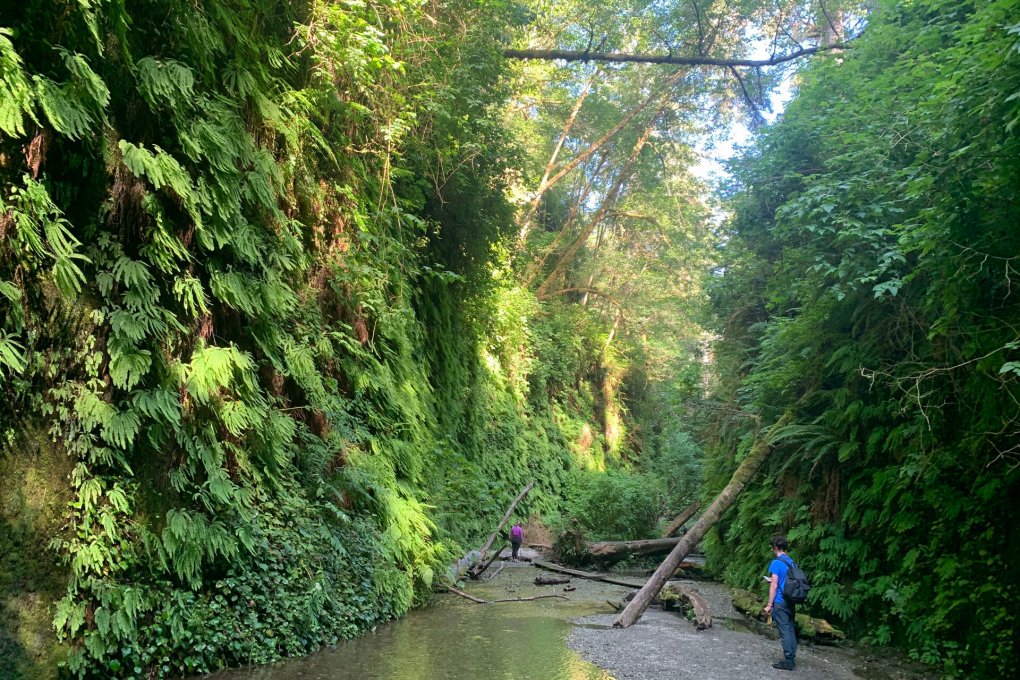
"caption": "If you can get past the aggressive elk, Fern Canyon is an emerald gem in Humboldt County.",
"description": null,
"title": "fern-canyon-jurassic-park",
"credit": "Sasha Khokha/KQED",
"status": "inherit",
"altTag": null,
"isLoading": false,
"fetchFailed": false
},
"news_11888468": {
"type": "attachments",
"id": "news_11888468",
"meta": {
"index": "attachments_1716263798",
"site": "news",
"id": "11888468",
"found": true
},
"parent": 11888465,
"imgSizes": {
"twentyfourteen-full-width": {
"file": "https://ww2.kqed.org/app/uploads/sites/10/2021/09/images_uploads_gallery_SBG07876_1-1-1038x576.jpg",
"width": 1038,
"mimeType": "image/jpeg",
"height": 576
},
"thumbnail": {
"file": "https://ww2.kqed.org/app/uploads/sites/10/2021/09/images_uploads_gallery_SBG07876_1-1-160x116.jpg",
"width": 160,
"mimeType": "image/jpeg",
"height": 116
},
"post-thumbnail": {
"file": "https://ww2.kqed.org/app/uploads/sites/10/2021/09/images_uploads_gallery_SBG07876_1-1-672x372.jpg",
"width": 672,
"mimeType": "image/jpeg",
"height": 372
},
"kqedFullSize": {
"file": "https://ww2.kqed.org/app/uploads/sites/10/2021/09/images_uploads_gallery_SBG07876_1-1.jpg",
"width": 2080,
"height": 1509
},
"2048x2048": {
"file": "https://ww2.kqed.org/app/uploads/sites/10/2021/09/images_uploads_gallery_SBG07876_1-1-2048x1486.jpg",
"width": 2048,
"mimeType": "image/jpeg",
"height": 1486
},
"large": {
"file": "https://ww2.kqed.org/app/uploads/sites/10/2021/09/images_uploads_gallery_SBG07876_1-1-1020x740.jpg",
"width": 1020,
"mimeType": "image/jpeg",
"height": 740
},
"1536x1536": {
"file": "https://ww2.kqed.org/app/uploads/sites/10/2021/09/images_uploads_gallery_SBG07876_1-1-1536x1114.jpg",
"width": 1536,
"mimeType": "image/jpeg",
"height": 1114
},
"full-width": {
"file": "https://ww2.kqed.org/app/uploads/sites/10/2021/09/images_uploads_gallery_SBG07876_1-1-1920x1393.jpg",
"width": 1920,
"mimeType": "image/jpeg",
"height": 1393
},
"medium": {
"file": "https://ww2.kqed.org/app/uploads/sites/10/2021/09/images_uploads_gallery_SBG07876_1-1-800x580.jpg",
"width": 800,
"mimeType": "image/jpeg",
"height": 580
}
},
"publishDate": 1631643380,
"modified": 1631901314,
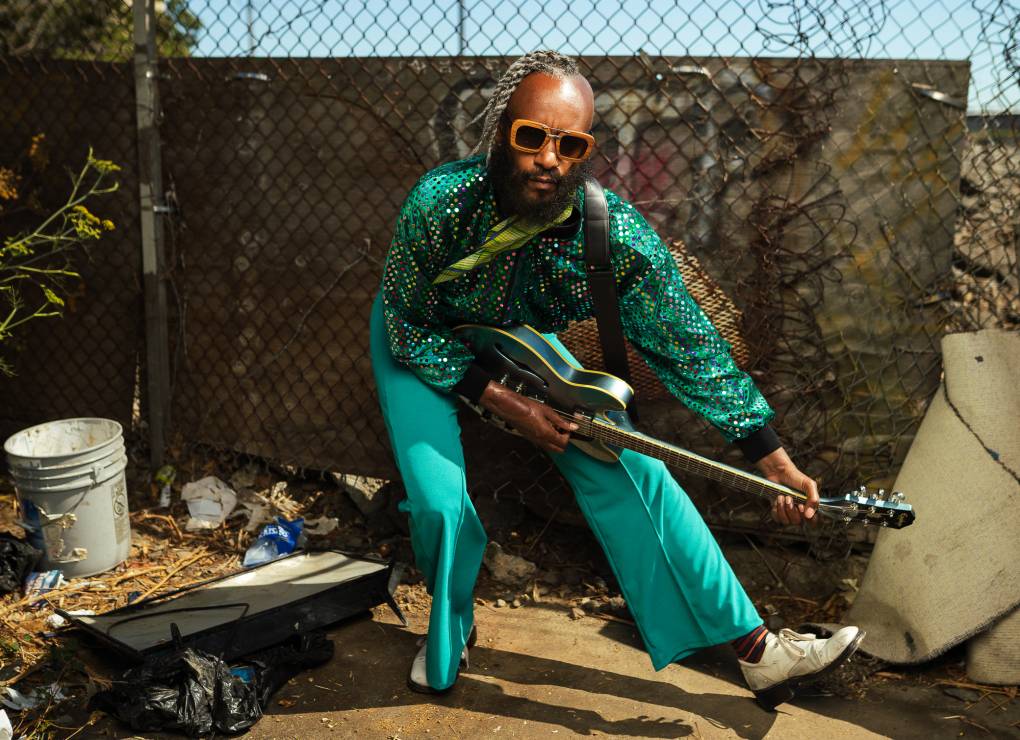
"caption": "Part of Fantastic Negrito's new music video was filmed in Santa Rosa. He explains that his team brought a young boy to see the remains of homes destroyed by forest fires in the area. 'I wanted to get his truest, real reaction,' he said. 'What does a 9-year-old think about that?'",
"description": "Part of Fantastic Negrito's new music video was filmed in Santa Rosa. He explains that his team brought a young boy to see the remains of homes destroyed by forest fires in the area.",
"title": "_images_uploads_gallery_SBG07876_1",
"credit": "Courtesy of Fantastic Negrito",
"status": "inherit",
"altTag": "A man in a shiny, teal outfit and sunglasses crouches as he plays a green guitar.",
"isLoading": false,
"fetchFailed": false
},
"news_11884873": {
"type": "attachments",
"id": "news_11884873",
"meta": {
"index": "attachments_1716263798",
"site": "news",
"id": "11884873",
"found": true
},
"parent": 11884783,
"imgSizes": {
"thumbnail": {
"file": "https://ww2.kqed.org/app/uploads/sites/10/2021/08/RS50619_Photo_1-qut-160x90.jpg",
"width": 160,
"mimeType": "image/jpeg",
"height": 90
},
"post-thumbnail": {
"file": "https://ww2.kqed.org/app/uploads/sites/10/2021/08/RS50619_Photo_1-qut-672x372.jpg",
"width": 672,
"mimeType": "image/jpeg",
"height": 372
},
"kqedFullSize": {
"file": "https://ww2.kqed.org/app/uploads/sites/10/2021/08/RS50619_Photo_1-qut.jpg",
"width": 960,
"height": 540
},
"medium": {
"file": "https://ww2.kqed.org/app/uploads/sites/10/2021/08/RS50619_Photo_1-qut-800x450.jpg",
"width": 800,
"mimeType": "image/jpeg",
"height": 450
}
},
"publishDate": 1628808916,
"modified": 1629754976,
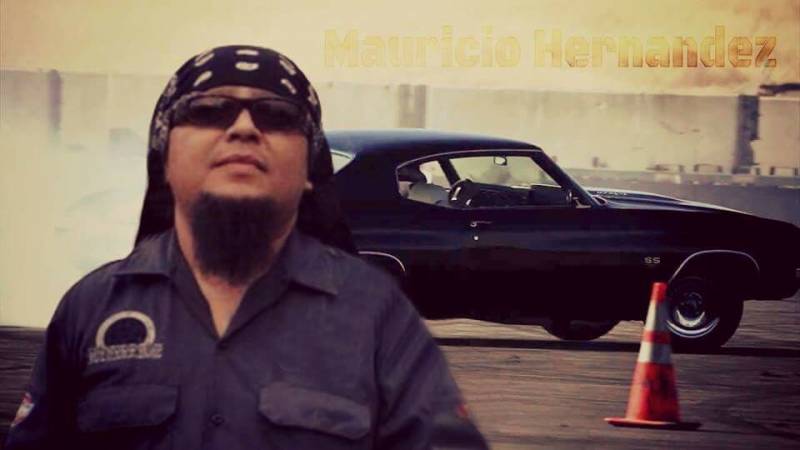
"caption": "When Mauricio Hernández was a kid in Mexico, he dreamed about being on television. After he moved to Los Angeles, he got a chance to trick out the cars on the MTV show \"Pimp My Ride.\"",
"description": null,
"title": "RS50619_Photo_1-qut",
"credit": "Photo Courtesy of Mauricio Hernández",
"status": "inherit",
"altTag": null,
"isLoading": false,
"fetchFailed": false
},
"news_11761535": {
"type": "attachments",
"id": "news_11761535",
"meta": {
"index": "attachments_1716263798",
"site": "news",
"id": "11761535",
"found": true
},
"parent": 0,
"imgSizes": {
"apple_news_ca_landscape_5_5": {
"file": "https://ww2.kqed.org/app/uploads/sites/10/2019/07/IMG_2431-1044x783.jpg",
"width": 1044,
"mimeType": "image/jpeg",
"height": 783
},
"apple_news_ca_square_4_0": {
"file": "https://ww2.kqed.org/app/uploads/sites/10/2019/07/IMG_2431-470x470.jpg",
"width": 470,
"mimeType": "image/jpeg",
"height": 470
},
"twentyfourteen-full-width": {
"file": "https://ww2.kqed.org/app/uploads/sites/10/2019/07/IMG_2431-1038x576.jpg",
"width": 1038,
"mimeType": "image/jpeg",
"height": 576
},
"thumbnail": {
"file": "https://ww2.kqed.org/app/uploads/sites/10/2019/07/IMG_2431-160x120.jpg",
"width": 160,
"mimeType": "image/jpeg",
"height": 120
},
"post-thumbnail": {
"file": "https://ww2.kqed.org/app/uploads/sites/10/2019/07/IMG_2431-672x372.jpg",
"width": 672,
"mimeType": "image/jpeg",
"height": 372
},
"kqedFullSize": {
"file": "https://ww2.kqed.org/app/uploads/sites/10/2019/07/IMG_2431-e1563235114141.jpg",
"width": 1920,
"height": 1440
},
"apple_news_ca_landscape_4_7": {
"file": "https://ww2.kqed.org/app/uploads/sites/10/2019/07/IMG_2431-632x474.jpg",
"width": 632,
"mimeType": "image/jpeg",
"height": 474
},
"large": {
"file": "https://ww2.kqed.org/app/uploads/sites/10/2019/07/IMG_2431-1020x765.jpg",
"width": 1020,
"mimeType": "image/jpeg",
"height": 765
},
"complete_open_graph": {
"file": "https://ww2.kqed.org/app/uploads/sites/10/2019/07/IMG_2431-1200x900.jpg",
"width": 1200,
"mimeType": "image/jpeg",
"height": 900
},
"apple_news_ca_landscape_4_0": {
"file": "https://ww2.kqed.org/app/uploads/sites/10/2019/07/IMG_2431-536x402.jpg",
"width": 536,
"mimeType": "image/jpeg",
"height": 402
},
"apple_news_ca_portrait_12_9": {
"file": "https://ww2.kqed.org/app/uploads/sites/10/2019/07/IMG_2431-1122x1496.jpg",
"width": 1122,
"mimeType": "image/jpeg",
"height": 1496
},
"medium": {
"file": "https://ww2.kqed.org/app/uploads/sites/10/2019/07/IMG_2431-800x600.jpg",
"width": 800,
"mimeType": "image/jpeg",
"height": 600
},
"apple_news_ca_portrait_4_0": {
"file": "https://ww2.kqed.org/app/uploads/sites/10/2019/07/IMG_2431-354x472.jpg",
"width": 354,
"mimeType": "image/jpeg",
"height": 472
},
"apple_news_ca_portrait_9_7": {
"file": "https://ww2.kqed.org/app/uploads/sites/10/2019/07/IMG_2431-840x1120.jpg",
"width": 840,
"mimeType": "image/jpeg",
"height": 1120
},
"apple_news_ca_landscape_12_9": {
"file": "https://ww2.kqed.org/app/uploads/sites/10/2019/07/IMG_2431-1832x1374.jpg",
"width": 1832,
"mimeType": "image/jpeg",
"height": 1374
},
"apple_news_ca_square_9_7": {
"file": "https://ww2.kqed.org/app/uploads/sites/10/2019/07/IMG_2431-1104x1104.jpg",
"width": 1104,
"mimeType": "image/jpeg",
"height": 1104
},
"apple_news_ca_portrait_4_7": {
"file": "https://ww2.kqed.org/app/uploads/sites/10/2019/07/IMG_2431-414x552.jpg",
"width": 414,
"mimeType": "image/jpeg",
"height": 552
},
"apple_news_ca_square_12_9": {
"file": "https://ww2.kqed.org/app/uploads/sites/10/2019/07/IMG_2431-1472x1472.jpg",
"width": 1472,
"mimeType": "image/jpeg",
"height": 1472
},
"apple_news_ca_portrait_5_5": {
"file": "https://ww2.kqed.org/app/uploads/sites/10/2019/07/IMG_2431-687x916.jpg",
"width": 687,
"mimeType": "image/jpeg",
"height": 916
},
"full-width": {
"file": "https://ww2.kqed.org/app/uploads/sites/10/2019/07/IMG_2431-1920x1440.jpg",
"width": 1920,
"mimeType": "image/jpeg",
"height": 1440
},
"apple_news_ca_square_4_7": {
"file": "https://ww2.kqed.org/app/uploads/sites/10/2019/07/IMG_2431-550x550.jpg",
"width": 550,
"mimeType": "image/jpeg",
"height": 550
},
"apple_news_ca_landscape_9_7": {
"file": "https://ww2.kqed.org/app/uploads/sites/10/2019/07/IMG_2431-1376x1032.jpg",
"width": 1376,
"mimeType": "image/jpeg",
"height": 1032
},
"apple_news_ca_square_5_5": {
"file": "https://ww2.kqed.org/app/uploads/sites/10/2019/07/IMG_2431-912x912.jpg",
"width": 912,
"mimeType": "image/jpeg",
"height": 912
}
},
"publishDate": 1563235069,
"modified": 1563409111,
"caption": "Mike Rose, co-owner of Semifreddi's Bakery, holds a tray of fresh Dutch Crunch rolls. ",
"description": null,
"title": "Fresh Dutch Crunch rolls",
"credit": "Amanda Font/KQED",
"status": "inherit",
"isLoading": false,
"fetchFailed": false
},
"news_11885421": {
"type": "attachments",
"id": "news_11885421",
"meta": {
"index": "attachments_1716263798",
"site": "news",
"id": "11885421",
"found": true
},
"parent": 11885304,
"imgSizes": {
"twentyfourteen-full-width": {
"file": "https://ww2.kqed.org/app/uploads/sites/10/2021/08/RS48239_001_Oakland_MillsCollege_03242021-qut-1038x576.jpg",
"width": 1038,
"mimeType": "image/jpeg",
"height": 576
},
"thumbnail": {
"file": "https://ww2.kqed.org/app/uploads/sites/10/2021/08/RS48239_001_Oakland_MillsCollege_03242021-qut-160x107.jpg",
"width": 160,
"mimeType": "image/jpeg",
"height": 107
},
"post-thumbnail": {
"file": "https://ww2.kqed.org/app/uploads/sites/10/2021/08/RS48239_001_Oakland_MillsCollege_03242021-qut-672x372.jpg",
"width": 672,
"mimeType": "image/jpeg",
"height": 372
},
"kqedFullSize": {
"file": "https://ww2.kqed.org/app/uploads/sites/10/2021/08/RS48239_001_Oakland_MillsCollege_03242021-qut.jpg",
"width": 1920,
"height": 1280
},
"large": {
"file": "https://ww2.kqed.org/app/uploads/sites/10/2021/08/RS48239_001_Oakland_MillsCollege_03242021-qut-1020x680.jpg",
"width": 1020,
"mimeType": "image/jpeg",
"height": 680
},
"1536x1536": {
"file": "https://ww2.kqed.org/app/uploads/sites/10/2021/08/RS48239_001_Oakland_MillsCollege_03242021-qut-1536x1024.jpg",
"width": 1536,
"mimeType": "image/jpeg",
"height": 1024
},
"medium": {
"file": "https://ww2.kqed.org/app/uploads/sites/10/2021/08/RS48239_001_Oakland_MillsCollege_03242021-qut-800x533.jpg",
"width": 800,
"mimeType": "image/jpeg",
"height": 533
}
},
"publishDate": 1629227824,
"modified": 1629227873,
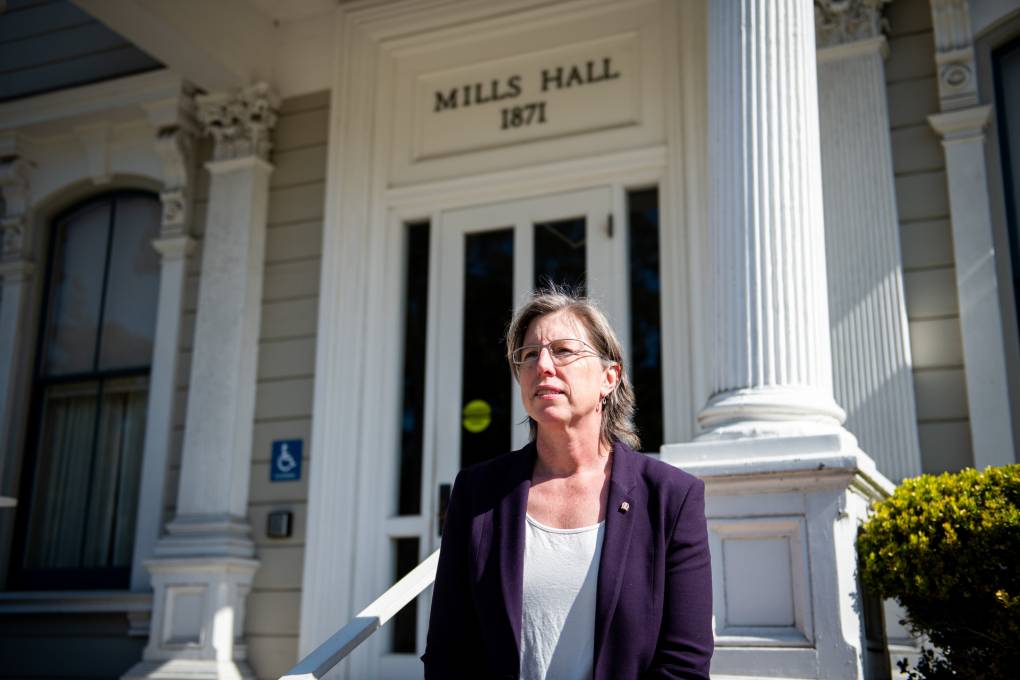
"caption": "Mills College president Elizabeth L. Hillman, pictured on campus in Oakland on March 24, 2021.",
"description": "Mills College president Elizabeth L. Hillman, pictured on campus in Oakland on March 24, 2021.",
"title": "RS48239_001_Oakland_MillsCollege_03242021-qut",
"credit": "Beth LaBerge/KQED",
"status": "inherit",
"altTag": null,
"isLoading": false,
"fetchFailed": false
},
"news_11885040": {
"type": "attachments",
"id": "news_11885040",
"meta": {
"index": "attachments_1716263798",
"site": "news",
"id": "11885040",
"found": true
},
"parent": 11885027,
"imgSizes": {
"twentyfourteen-full-width": {
"file": "https://ww2.kqed.org/app/uploads/sites/10/2021/08/RS43511_016_KQED_SanFrancisco_GeorgeFloydProtest_05312020-qut-1038x576.jpeg",
"width": 1038,
"mimeType": "image/jpeg",
"height": 576
},
"thumbnail": {
"file": "https://ww2.kqed.org/app/uploads/sites/10/2021/08/RS43511_016_KQED_SanFrancisco_GeorgeFloydProtest_05312020-qut-160x107.jpeg",
"width": 160,
"mimeType": "image/jpeg",
"height": 107
},
"post-thumbnail": {
"file": "https://ww2.kqed.org/app/uploads/sites/10/2021/08/RS43511_016_KQED_SanFrancisco_GeorgeFloydProtest_05312020-qut-672x372.jpeg",
"width": 672,
"mimeType": "image/jpeg",
"height": 372
},
"kqedFullSize": {
"file": "https://ww2.kqed.org/app/uploads/sites/10/2021/08/RS43511_016_KQED_SanFrancisco_GeorgeFloydProtest_05312020-qut.jpeg",
"width": 1920,
"height": 1280
},
"large": {
"file": "https://ww2.kqed.org/app/uploads/sites/10/2021/08/RS43511_016_KQED_SanFrancisco_GeorgeFloydProtest_05312020-qut-1020x680.jpeg",
"width": 1020,
"mimeType": "image/jpeg",
"height": 680
},
"1536x1536": {
"file": "https://ww2.kqed.org/app/uploads/sites/10/2021/08/RS43511_016_KQED_SanFrancisco_GeorgeFloydProtest_05312020-qut-1536x1024.jpeg",
"width": 1536,
"mimeType": "image/jpeg",
"height": 1024
},
"medium": {
"file": "https://ww2.kqed.org/app/uploads/sites/10/2021/08/RS43511_016_KQED_SanFrancisco_GeorgeFloydProtest_05312020-qut-800x533.jpeg",
"width": 800,
"mimeType": "image/jpeg",
"height": 533
}
},
"publishDate": 1628890426,
"modified": 1629151039,
"caption": "Demonstrators march toward San Francisco City Hall on May 31, 2020, to protest the police killing of George Floyd in Minneapolis. Several groups marched to the Embarcadero, through Union Square and to the Hall of Justice, eventually converging and returning to City Hall.",
"description": null,
"title": "RS43511_016_KQED_SanFrancisco_GeorgeFloydProtest_05312020-qut",
"credit": "Beth LaBerge/KQED",
"status": "inherit",
"altTag": "Demonstrators march toward San Francisco City Hall on Sunday May 31, 2020 to protest the police killing of George Floyd in Minneapolis. Several groups marched to the Embarcadero, through Union Square and to the Hall of Justice, eventually converging and returning to City Hall.",
"isLoading": false,
"fetchFailed": false
},
"news_11885163": {
"type": "attachments",
"id": "news_11885163",
"meta": {
"index": "attachments_1716263798",
"site": "news",
"id": "11885163",
"found": true
},
"parent": 11885160,
"imgSizes": {
"twentyfourteen-full-width": {
"file": "https://ww2.kqed.org/app/uploads/sites/10/2021/08/low-rider-vax-1038x576.jpg",
"width": 1038,
"mimeType": "image/jpeg",
"height": 576
},
"thumbnail": {
"file": "https://ww2.kqed.org/app/uploads/sites/10/2021/08/low-rider-vax-160x90.jpg",
"width": 160,
"mimeType": "image/jpeg",
"height": 90
},
"post-thumbnail": {
"file": "https://ww2.kqed.org/app/uploads/sites/10/2021/08/low-rider-vax-672x372.jpg",
"width": 672,
"mimeType": "image/jpeg",
"height": 372
},
"kqedFullSize": {
"file": "https://ww2.kqed.org/app/uploads/sites/10/2021/08/low-rider-vax-scaled.jpg",
"width": 2560,
"height": 1440
},
"2048x2048": {
"file": "https://ww2.kqed.org/app/uploads/sites/10/2021/08/low-rider-vax-2048x1152.jpg",
"width": 2048,
"mimeType": "image/jpeg",
"height": 1152
},
"large": {
"file": "https://ww2.kqed.org/app/uploads/sites/10/2021/08/low-rider-vax-1020x574.jpg",
"width": 1020,
"mimeType": "image/jpeg",
"height": 574
},
"1536x1536": {
"file": "https://ww2.kqed.org/app/uploads/sites/10/2021/08/low-rider-vax-1536x864.jpg",
"width": 1536,
"mimeType": "image/jpeg",
"height": 864
},
"full-width": {
"file": "https://ww2.kqed.org/app/uploads/sites/10/2021/08/low-rider-vax-1920x1080.jpg",
"width": 1920,
"mimeType": "image/jpeg",
"height": 1080
},
"medium": {
"file": "https://ww2.kqed.org/app/uploads/sites/10/2021/08/low-rider-vax-800x450.jpg",
"width": 800,
"mimeType": "image/jpeg",
"height": 450
}
},
"publishDate": 1629047387,
"modified": 1629153014,
"caption": "Carlos Huaman poses for a photo with his 1961 Chevy Impala at the King of the Streets' 40th anniversary lowrider show and hopping contest at the Cow Palace in Daly City on August 14, 2021. ‘It’s candy Aztec gold paint,’ he said. ",
"description": "Carlos Huaman poses for a photo with is 1961 Chevy Impala at the King of the Streets 40th Anniversary lowrider show and hopping contest at the Cow Palace in Daly City on August 14, 2021. ‘It’s candy Aztec gold paint,’ he said. ",
"title": "low-rider-vax",
"credit": "Sara Hosseini/KQED",
"status": "inherit",
"altTag": "man with yellow lowrider car",
"isLoading": false,
"fetchFailed": false
},
"news_11883846": {
"type": "attachments",
"id": "news_11883846",
"meta": {
"index": "attachments_1716263798",
"site": "news",
"id": "11883846",
"found": true
},
"parent": 11883845,
"imgSizes": {
"twentyfourteen-full-width": {
"file": "https://ww2.kqed.org/app/uploads/sites/10/2021/08/RS50285_002_Berkeley_SmallPressStory_07192021-qut-1038x576.jpg",
"width": 1038,
"mimeType": "image/jpeg",
"height": 576
},
"thumbnail": {
"file": "https://ww2.kqed.org/app/uploads/sites/10/2021/08/RS50285_002_Berkeley_SmallPressStory_07192021-qut-160x107.jpg",
"width": 160,
"mimeType": "image/jpeg",
"height": 107
},
"post-thumbnail": {
"file": "https://ww2.kqed.org/app/uploads/sites/10/2021/08/RS50285_002_Berkeley_SmallPressStory_07192021-qut-672x372.jpg",
"width": 672,
"mimeType": "image/jpeg",
"height": 372
},
"kqedFullSize": {
"file": "https://ww2.kqed.org/app/uploads/sites/10/2021/08/RS50285_002_Berkeley_SmallPressStory_07192021-qut.jpg",
"width": 1920,
"height": 1280
},
"large": {
"file": "https://ww2.kqed.org/app/uploads/sites/10/2021/08/RS50285_002_Berkeley_SmallPressStory_07192021-qut-1020x680.jpg",
"width": 1020,
"mimeType": "image/jpeg",
"height": 680
},
"1536x1536": {
"file": "https://ww2.kqed.org/app/uploads/sites/10/2021/08/RS50285_002_Berkeley_SmallPressStory_07192021-qut-1536x1024.jpg",
"width": 1536,
"mimeType": "image/jpeg",
"height": 1024
},
"medium": {
"file": "https://ww2.kqed.org/app/uploads/sites/10/2021/08/RS50285_002_Berkeley_SmallPressStory_07192021-qut-800x533.jpg",
"width": 800,
"mimeType": "image/jpeg",
"height": 533
}
},
"publishDate": 1628173705,
"modified": 1628620758,
"caption": "The Small Press Distribution offices in Berkeley on July 19, 2021, have operated at this location since 1995.",
"description": null,
"title": "RS50285_002_Berkeley_SmallPressStory_07192021-qut",
"credit": "Beth LaBerge/KQED",
"status": "inherit",
"altTag": null,
"isLoading": false,
"fetchFailed": false
},
"news_11883786": {
"type": "attachments",
"id": "news_11883786",
"meta": {
"index": "attachments_1716263798",
"site": "news",
"id": "11883786",
"found": true
},
"parent": 11883780,
"imgSizes": {
"twentyfourteen-full-width": {
"file": "https://ww2.kqed.org/app/uploads/sites/10/2021/08/PG_FrancisCustodio-sized-1038x576.jpg",
"width": 1038,
"mimeType": "image/jpeg",
"height": 576
},
"thumbnail": {
"file": "https://ww2.kqed.org/app/uploads/sites/10/2021/08/PG_FrancisCustodio-sized-160x90.jpg",
"width": 160,
"mimeType": "image/jpeg",
"height": 90
},
"post-thumbnail": {
"file": "https://ww2.kqed.org/app/uploads/sites/10/2021/08/PG_FrancisCustodio-sized-672x372.jpg",
"width": 672,
"mimeType": "image/jpeg",
"height": 372
},
"kqedFullSize": {
"file": "https://ww2.kqed.org/app/uploads/sites/10/2021/08/PG_FrancisCustodio-sized.jpg",
"width": 1920,
"height": 1080
},
"large": {
"file": "https://ww2.kqed.org/app/uploads/sites/10/2021/08/PG_FrancisCustodio-sized-1020x574.jpg",
"width": 1020,
"mimeType": "image/jpeg",
"height": 574
},
"1536x1536": {
"file": "https://ww2.kqed.org/app/uploads/sites/10/2021/08/PG_FrancisCustodio-sized-1536x864.jpg",
"width": 1536,
"mimeType": "image/jpeg",
"height": 864
},
"medium": {
"file": "https://ww2.kqed.org/app/uploads/sites/10/2021/08/PG_FrancisCustodio-sized-800x450.jpg",
"width": 800,
"mimeType": "image/jpeg",
"height": 450
}
},
"publishDate": 1628119836,
"modified": 1628271775,
"caption": "Patricio Ginelsa (left) directs childhood friend Francis Custodio in \u003ci>Lumpia With a Vengeance\u003c/i>.",
"description": "Patricio Ginelsa (left) directs childhood friend Francis Custodio in \u003ci>Lumpia With a Vengeance\u003c/i>.",
"title": "PG_FrancisCustodio-sized",
"credit": "\u003ca href=\"https://jcasasphotography.com/\">J.J Casas\u003c/a>/Courtesy \u003ca href=\"https://www.kidheroes.net/\">Kid Heroes Productions\u003c/a>",
"status": "inherit",
"altTag": "Patricio Ginelsa (left) directs childhood friend Francis Custodio in \"Lumpia With a Vengeance.\"",
"isLoading": false,
"fetchFailed": false
},
"news_11882634": {
"type": "attachments",
"id": "news_11882634",
"meta": {
"index": "attachments_1716263798",
"site": "news",
"id": "11882634",
"found": true
},
"parent": 11882513,
"imgSizes": {
"twentyfourteen-full-width": {
"file": "https://ww2.kqed.org/app/uploads/sites/10/2021/07/RS49633_WeHadaLittleRealEstateProblem_INS1_38_14EJoeClift-qut-1038x576.jpg",
"width": 1038,
"mimeType": "image/jpeg",
"height": 576
},
"thumbnail": {
"file": "https://ww2.kqed.org/app/uploads/sites/10/2021/07/RS49633_WeHadaLittleRealEstateProblem_INS1_38_14EJoeClift-qut-160x107.jpg",
"width": 160,
"mimeType": "image/jpeg",
"height": 107
},
"post-thumbnail": {
"file": "https://ww2.kqed.org/app/uploads/sites/10/2021/07/RS49633_WeHadaLittleRealEstateProblem_INS1_38_14EJoeClift-qut-672x372.jpg",
"width": 672,
"mimeType": "image/jpeg",
"height": 372
},
"kqedFullSize": {
"file": "https://ww2.kqed.org/app/uploads/sites/10/2021/07/RS49633_WeHadaLittleRealEstateProblem_INS1_38_14EJoeClift-qut.jpg",
"width": 1920,
"height": 1280
},
"large": {
"file": "https://ww2.kqed.org/app/uploads/sites/10/2021/07/RS49633_WeHadaLittleRealEstateProblem_INS1_38_14EJoeClift-qut-1020x680.jpg",
"width": 1020,
"mimeType": "image/jpeg",
"height": 680
},
"1536x1536": {
"file": "https://ww2.kqed.org/app/uploads/sites/10/2021/07/RS49633_WeHadaLittleRealEstateProblem_INS1_38_14EJoeClift-qut-1536x1024.jpg",
"width": 1536,
"mimeType": "image/jpeg",
"height": 1024
},
"medium": {
"file": "https://ww2.kqed.org/app/uploads/sites/10/2021/07/RS49633_WeHadaLittleRealEstateProblem_INS1_38_14EJoeClift-qut-800x533.jpg",
"width": 800,
"mimeType": "image/jpeg",
"height": 533
}
},
"publishDate": 1627422059,
"modified": 1627679504,
"caption": "Joey Clift is a Native American comedy writer working on the Netflix series Spirit Rangers. Clift is featured in the book, \"We Had a Little Real Estate Problem,\" which examines the history of Native Americans in comedy.\n",
"description": null,
"title": "RS49633_WeHadaLittleRealEstateProblem_INS1_38_14EJoeClift-qut",
"credit": "Robyn von Swank",
"status": "inherit",
"altTag": null,
"isLoading": false,
"fetchFailed": false
},
"news_11882808": {
"type": "attachments",
"id": "news_11882808",
"meta": {
"index": "attachments_1716263798",
"site": "news",
"id": "11882808",
"found": true
},
"parent": 11882379,
"imgSizes": {
"twentyfourteen-full-width": {
"file": "https://ww2.kqed.org/app/uploads/sites/10/2021/07/07272021_MinoBucheli_DalyCity-0272-1038x576.jpg",
"width": 1038,
"mimeType": "image/jpeg",
"height": 576
},
"thumbnail": {
"file": "https://ww2.kqed.org/app/uploads/sites/10/2021/07/07272021_MinoBucheli_DalyCity-0272-160x107.jpg",
"width": 160,
"mimeType": "image/jpeg",
"height": 107
},
"post-thumbnail": {
"file": "https://ww2.kqed.org/app/uploads/sites/10/2021/07/07272021_MinoBucheli_DalyCity-0272-672x372.jpg",
"width": 672,
"mimeType": "image/jpeg",
"height": 372
},
"kqedFullSize": {
"file": "https://ww2.kqed.org/app/uploads/sites/10/2021/07/07272021_MinoBucheli_DalyCity-0272.jpg",
"width": 2500,
"height": 1667
},
"2048x2048": {
"file": "https://ww2.kqed.org/app/uploads/sites/10/2021/07/07272021_MinoBucheli_DalyCity-0272-2048x1366.jpg",
"width": 2048,
"mimeType": "image/jpeg",
"height": 1366
},
"large": {
"file": "https://ww2.kqed.org/app/uploads/sites/10/2021/07/07272021_MinoBucheli_DalyCity-0272-1020x680.jpg",
"width": 1020,
"mimeType": "image/jpeg",
"height": 680
},
"1536x1536": {
"file": "https://ww2.kqed.org/app/uploads/sites/10/2021/07/07272021_MinoBucheli_DalyCity-0272-1536x1024.jpg",
"width": 1536,
"mimeType": "image/jpeg",
"height": 1024
},
"full-width": {
"file": "https://ww2.kqed.org/app/uploads/sites/10/2021/07/07272021_MinoBucheli_DalyCity-0272-1920x1280.jpg",
"width": 1920,
"mimeType": "image/jpeg",
"height": 1280
},
"medium": {
"file": "https://ww2.kqed.org/app/uploads/sites/10/2021/07/07272021_MinoBucheli_DalyCity-0272-800x533.jpg",
"width": 800,
"mimeType": "image/jpeg",
"height": 533
}
},
"publishDate": 1627503119,
"modified": 1628104133,
"caption": "A view from the Saint Francis neighborhood in Daly City. ",
"description": "A view from the Saint Francis neighborhood in Daly City. ",
"title": "07272021_MinoBucheli_DalyCity-0272",
"credit": "Sebastian Miño-Bucheli/KQED",
"status": "inherit",
"altTag": "A view from the Saint Francis neighborhood in Daly City.",
"isLoading": false,
"fetchFailed": false
},
"news_11882075": {
"type": "attachments",
"id": "news_11882075",
"meta": {
"index": "attachments_1716263798",
"site": "news",
"id": "11882075",
"found": true
},
"parent": 11881696,
"imgSizes": {
"twentyfourteen-full-width": {
"file": "https://ww2.kqed.org/app/uploads/sites/10/2021/07/E-40.DeFremery-1038x576.jpg",
"width": 1038,
"mimeType": "image/jpeg",
"height": 576
},
"thumbnail": {
"file": "https://ww2.kqed.org/app/uploads/sites/10/2021/07/E-40.DeFremery-160x107.jpg",
"width": 160,
"mimeType": "image/jpeg",
"height": 107
},
"post-thumbnail": {
"file": "https://ww2.kqed.org/app/uploads/sites/10/2021/07/E-40.DeFremery-672x372.jpg",
"width": 672,
"mimeType": "image/jpeg",
"height": 372
},
"kqedFullSize": {
"file": "https://ww2.kqed.org/app/uploads/sites/10/2021/07/E-40.DeFremery.jpg",
"width": 1920,
"height": 1283
},
"large": {
"file": "https://ww2.kqed.org/app/uploads/sites/10/2021/07/E-40.DeFremery-1020x682.jpg",
"width": 1020,
"mimeType": "image/jpeg",
"height": 682
},
"1536x1536": {
"file": "https://ww2.kqed.org/app/uploads/sites/10/2021/07/E-40.DeFremery-1536x1026.jpg",
"width": 1536,
"mimeType": "image/jpeg",
"height": 1026
},
"medium": {
"file": "https://ww2.kqed.org/app/uploads/sites/10/2021/07/E-40.DeFremery-800x535.jpg",
"width": 800,
"mimeType": "image/jpeg",
"height": 535
}
},
"publishDate": 1626933789,
"modified": 1626933814,
"caption": "E-40 at DeFremery Park in West Oakland, Oct. 12, 2018.",
"description": "E-40 at DeFremery Park in West Oakland, Oct. 12, 2018.",
"title": "E-40.DeFremery",
"credit": "Pendarvis Harshaw/KQED",
"status": "inherit",
"altTag": null,
"isLoading": false,
"fetchFailed": false
}
},
"audioPlayerReducer": {
"postId": "stream_live",
"isPaused": true,
"isPlaying": false,
"pfsActive": false,
"pledgeModalIsOpen": true,
"playerDrawerIsOpen": false,
"liveAudioPlayStartedAt": 0,
"liveAudioPlayContext": ""
},
"authorsReducer": {
"byline_news_11884783": {
"type": "authors",
"id": "byline_news_11884783",
"meta": {
"override": true
},
"slug": "byline_news_11884783",
"name": "Levi Bridges",
"isLoading": false
},
"byline_news_11881696": {
"type": "authors",
"id": "byline_news_11881696",
"meta": {
"override": true
},
"slug": "byline_news_11881696",
"name": "Pendarvis Harshaw and Olivia Allen-Price",
"isLoading": false
},
"astupi": {
"type": "authors",
"id": "70",
"meta": {
"index": "authors_1716337520",
"id": "70",
"found": true
},
"name": "Amanda Stupi",
"firstName": "Amanda",
"lastName": "Stupi",
"slug": "astupi",
"email": "astupi@kqed.org",
"display_author_email": false,
"staff_mastheads": [],
"title": "Senior Engagement Producer",
"bio": "Amanda joined KQED Science’s engagement team as a Senior Audience Engagement Strategist in the spring of 2019. She has helped craft messaging around wildfires, the coronavirus pandemic, climate change and many other stories. She has also brought KQED Science to new platforms such as Reddit’s Ask Me Anything series. Prior to joining KQED Science, Amanda spent seven years as an engagement producer with Forum, KQED’s daily live call-in show. She got her start in radio at KALW's weekly call in show, City Visions, before going on to an internship and stint at NPR's Talk of the Nation.\r\n\r\nPrior to journalism, Amanda taught English at Lowell High School. She's a native of Petaluma and currently lives under the \"South San Francisco the Industrial City\" sign in South City. She believes that engagement is vital to news’s future and that good journalism listens as much as it asks questions.",
"avatar": "https://secure.gravatar.com/avatar/e981c503e5c162da701dcaccfbf87e35?s=600&d=blank&r=g",
"twitter": null,
"facebook": null,
"instagram": null,
"linkedin": null,
"sites": [
{
"site": "arts",
"roles": [
"Contributor"
]
},
{
"site": "news",
"roles": [
"editor"
]
},
{
"site": "pop",
"roles": [
"contributor"
]
},
{
"site": "stateofhealth",
"roles": [
"editor"
]
},
{
"site": "science",
"roles": []
},
{
"site": "perspectives",
"roles": [
"editor"
]
}
],
"headData": {
"title": "Amanda Stupi | KQED",
"description": "Senior Engagement Producer",
"ogImgSrc": "https://secure.gravatar.com/avatar/e981c503e5c162da701dcaccfbf87e35?s=600&d=blank&r=g",
"twImgSrc": "https://secure.gravatar.com/avatar/e981c503e5c162da701dcaccfbf87e35?s=600&d=blank&r=g"
},
"isLoading": false,
"link": "/author/astupi"
},
"katrinaschwartz": {
"type": "authors",
"id": "234",
"meta": {
"index": "authors_1716337520",
"id": "234",
"found": true
},
"name": "Katrina Schwartz",
"firstName": "Katrina",
"lastName": "Schwartz",
"slug": "katrinaschwartz",
"email": "kschwartz@kqed.org",
"display_author_email": false,
"staff_mastheads": [
"news"
],
"title": "Producer",
"bio": "Katrina Schwartz is a journalist based in San Francisco. She's worked at KPCC public radio in LA and has reported on air and online for KQED since 2010. She covered how teaching and learning is changing for MindShift between 2012 and 2020. She is the co-host of the MindShift podcast and now produces KQED's Bay Curious podcast.",
"avatar": "https://secure.gravatar.com/avatar/edb4ee79070447a018538c9aae6eeecf28786515b8a0c30e43b6b7dce5aa44c8?s=600&d=blank&r=g",
"twitter": "kschwart",
"bluesky": null,
"facebook": null,
"instagram": null,
"linkedin": null,
"sites": [
{
"site": "",
"roles": [
"editor"
]
},
{
"site": "news",
"roles": [
"editor"
]
},
{
"site": "mindshift",
"roles": [
"administrator"
]
},
{
"site": "stateofhealth",
"roles": [
"author"
]
},
{
"site": "science",
"roles": [
"editor"
]
}
],
"headData": {
"title": "Katrina Schwartz | KQED",
"description": "Producer",
"ogImgSrc": "https://secure.gravatar.com/avatar/edb4ee79070447a018538c9aae6eeecf28786515b8a0c30e43b6b7dce5aa44c8?s=600&d=blank&r=g",
"twImgSrc": "https://secure.gravatar.com/avatar/edb4ee79070447a018538c9aae6eeecf28786515b8a0c30e43b6b7dce5aa44c8?s=600&d=blank&r=g"
},
"isLoading": false,
"link": "/author/katrinaschwartz"
},
"sasha-khokha": {
"type": "authors",
"id": "254",
"meta": {
"index": "authors_1716337520",
"id": "254",
"found": true
},
"name": "Sasha Khokha",
"firstName": "Sasha",
"lastName": "Khokha",
"slug": "sasha-khokha",
"email": "skhokha@kqed.org",
"display_author_email": true,
"staff_mastheads": [
"news"
],
"title": "Host, The California Report Magazine",
"bio": "Sasha Khokha is the host of \u003cem>The California Report's \u003c/em> weekly magazine program, which takes listeners on sound-rich excursions to meet the people that make the Golden State unique -- through audio documentaries and long-form stories. As \u003cem>The California Report's\u003c/em> Central Valley Bureau Chief based in Fresno for nearly a dozen years, Sasha brought the lives and concerns of rural Californians to listeners around the state. Her reporting helped expose the hidden price immigrant women janitors and farmworkers may pay to keep their jobs: sexual assault at work. It inspired two new California laws to protect them from sexual harassment. She was a key member of the reporting team for the Frontline film \u003cem>Rape on the Night Shift, \u003c/em>which was nominated for two national Emmys. Sasha has also won a national Edward R. Murrow and a national PRNDI award for investigative reporting, as well as multiple prizes from the Society for Professional Journalists. Sasha is a proud alum of the UC Berkeley Graduate School of Journalism and Brown University and a member of the South Asian Journalists Association.",
"avatar": "https://secure.gravatar.com/avatar/e4b5e1541aaeea2aa356aa1fb2a68950?s=600&d=blank&r=g",
"twitter": "KQEDSashaKhokha",
"facebook": null,
"instagram": null,
"linkedin": null,
"sites": [
{
"site": "news",
"roles": [
"editor"
]
},
{
"site": "stateofhealth",
"roles": [
"author"
]
},
{
"site": "science",
"roles": [
"author"
]
},
{
"site": "quest",
"roles": [
"subscriber"
]
}
],
"headData": {
"title": "Sasha Khokha | KQED",
"description": "Host, The California Report Magazine",
"ogImgSrc": "https://secure.gravatar.com/avatar/e4b5e1541aaeea2aa356aa1fb2a68950?s=600&d=blank&r=g",
"twImgSrc": "https://secure.gravatar.com/avatar/e4b5e1541aaeea2aa356aa1fb2a68950?s=600&d=blank&r=g"
},
"isLoading": false,
"link": "/author/sasha-khokha"
},
"shossaini": {
"type": "authors",
"id": "3214",
"meta": {
"index": "authors_1716337520",
"id": "3214",
"found": true
},
"name": "Sara Hossaini",
"firstName": "Sara",
"lastName": "Hossaini",
"slug": "shossaini",
"email": "shossaini@kqed.org",
"display_author_email": true,
"staff_mastheads": [
"news"
],
"title": "KQED Reporter",
"bio": "Sara Hossaini came to general assignment reporting at KQED in 2013 after two winters reporting at Wyoming Public Radio. She holds a bachelor's degree in broadcast journalism from the University of Nebraska-Lincoln. Her radio romance began after a bitter breakup with documentary film (Ok, maybe it's still complicated). Her first simultaneous jobs in San Francisco were as Associate Producer on a PBS film series through the Center for Asian American Media and as a butler. She likes to trot, plot and make things with her hands.",
"avatar": "https://secure.gravatar.com/avatar/060e9f56b9554e17942e89f413242774?s=600&d=blank&r=g",
"twitter": "mshossaini",
"facebook": null,
"instagram": null,
"linkedin": null,
"sites": [
{
"site": "news",
"roles": [
"author"
]
},
{
"site": "stateofhealth",
"roles": [
"author"
]
}
],
"headData": {
"title": "Sara Hossaini | KQED",
"description": "KQED Reporter",
"ogImgSrc": "https://secure.gravatar.com/avatar/060e9f56b9554e17942e89f413242774?s=600&d=blank&r=g",
"twImgSrc": "https://secure.gravatar.com/avatar/060e9f56b9554e17942e89f413242774?s=600&d=blank&r=g"
},
"isLoading": false,
"link": "/author/shossaini"
},
"afont": {
"type": "authors",
"id": "8637",
"meta": {
"index": "authors_1716337520",
"id": "8637",
"found": true
},
"name": "Amanda Font",
"firstName": "Amanda",
"lastName": "Font",
"slug": "afont",
"email": "afont@kqed.org",
"display_author_email": false,
"staff_mastheads": [],
"title": "KQED Contributor",
"bio": "Amanda Font is a producer on \u003cem>The Latest\u003c/em> podcast, and the host and co-producer of the series \u003cem>Audible Cosmos\u003c/em>. She has previously worked as a producer and reporter on the \u003cem>Bay Curious\u003c/em> podcast, and director of \u003cem>The California Report Magazine\u003c/em>. She grew up in the deserts of Southern California and moved north for the trees. Amanda earned a B.A. from the BECA program at San Francisco State, where she worked in the university's radio station. Amanda Font is represented by SAG-AFTRA.",
"avatar": "https://secure.gravatar.com/avatar/d9e81cf0117d5849b9cfb7ab4b1422f1?s=600&d=blank&r=g",
"twitter": null,
"facebook": null,
"instagram": null,
"linkedin": null,
"sites": [
{
"site": "news",
"roles": [
"add_users",
"create_users"
]
},
{
"site": "science",
"roles": []
},
{
"site": "forum",
"roles": [
"administrator"
]
},
{
"site": "perspectives",
"roles": [
"administrator"
]
},
{
"site": "radio",
"roles": [
"administrator"
]
}
],
"headData": {
"title": "Amanda Font | KQED",
"description": "KQED Contributor",
"ogImgSrc": "https://secure.gravatar.com/avatar/d9e81cf0117d5849b9cfb7ab4b1422f1?s=600&d=blank&r=g",
"twImgSrc": "https://secure.gravatar.com/avatar/d9e81cf0117d5849b9cfb7ab4b1422f1?s=600&d=blank&r=g"
},
"isLoading": false,
"link": "/author/afont"
},
"pgilstrap": {
"type": "authors",
"id": "11275",
"meta": {
"index": "authors_1716337520",
"id": "11275",
"found": true
},
"name": "Peter Gilstrap",
"firstName": "Peter",
"lastName": "Gilstrap",
"slug": "pgilstrap",
"email": "pgilstrap@sbcglobal.net",
"display_author_email": false,
"staff_mastheads": [],
"title": null,
"bio": null,
"avatar": "https://secure.gravatar.com/avatar/2bf93e4a8c1e35493845045175273916?s=600&d=blank&r=g",
"twitter": null,
"facebook": null,
"instagram": null,
"linkedin": null,
"sites": [
{
"site": "news",
"roles": [
"author"
]
}
],
"headData": {
"title": "Peter Gilstrap | KQED",
"description": null,
"ogImgSrc": "https://secure.gravatar.com/avatar/2bf93e4a8c1e35493845045175273916?s=600&d=blank&r=g",
"twImgSrc": "https://secure.gravatar.com/avatar/2bf93e4a8c1e35493845045175273916?s=600&d=blank&r=g"
},
"isLoading": false,
"link": "/author/pgilstrap"
},
"mwiley": {
"type": "authors",
"id": "11526",
"meta": {
"index": "authors_1716337520",
"id": "11526",
"found": true
},
"name": "Michelle Wiley",
"firstName": "Michelle",
"lastName": "Wiley",
"slug": "mwiley",
"email": "mwiley@KQED.org",
"display_author_email": true,
"staff_mastheads": [],
"title": null,
"bio": "Michelle Wiley was the senior editor of weekends.",
"avatar": "https://secure.gravatar.com/avatar/3b897d82a09e8587e8e73fa69fbcc635?s=600&d=blank&r=g",
"twitter": "michelleewiley",
"facebook": null,
"instagram": null,
"linkedin": null,
"sites": [
{
"site": "",
"roles": [
"editor"
]
},
{
"site": "arts",
"roles": [
"editor"
]
},
{
"site": "news",
"roles": [
"subscriber"
]
},
{
"site": "lowdown",
"roles": [
"editor"
]
},
{
"site": "science",
"roles": [
"editor"
]
},
{
"site": "podcasts",
"roles": [
"editor"
]
}
],
"headData": {
"title": "Michelle Wiley | KQED",
"description": null,
"ogImgSrc": "https://secure.gravatar.com/avatar/3b897d82a09e8587e8e73fa69fbcc635?s=600&d=blank&r=g",
"twImgSrc": "https://secure.gravatar.com/avatar/3b897d82a09e8587e8e73fa69fbcc635?s=600&d=blank&r=g"
},
"isLoading": false,
"link": "/author/mwiley"
},
"hmcdede": {
"type": "authors",
"id": "11635",
"meta": {
"index": "authors_1716337520",
"id": "11635",
"found": true
},
"name": "Holly McDede",
"firstName": "Holly",
"lastName": "McDede",
"slug": "hmcdede",
"email": "hmcdede@KQED.org",
"display_author_email": false,
"staff_mastheads": [],
"title": "KQED Contributor",
"bio": null,
"avatar": "https://secure.gravatar.com/avatar/999d9bf31bb3a2f0511932d99526cb3e?s=600&d=blank&r=g",
"twitter": null,
"facebook": null,
"instagram": null,
"linkedin": null,
"sites": [
{
"site": "arts",
"roles": [
"editor"
]
},
{
"site": "news",
"roles": [
"edit_others_posts",
"editor"
]
},
{
"site": "science",
"roles": [
"editor"
]
},
{
"site": "forum",
"roles": [
"editor"
]
},
{
"site": "perspectives",
"roles": [
"administrator"
]
}
],
"headData": {
"title": "Holly McDede | KQED",
"description": "KQED Contributor",
"ogImgSrc": "https://secure.gravatar.com/avatar/999d9bf31bb3a2f0511932d99526cb3e?s=600&d=blank&r=g",
"twImgSrc": "https://secure.gravatar.com/avatar/999d9bf31bb3a2f0511932d99526cb3e?s=600&d=blank&r=g"
},
"isLoading": false,
"link": "/author/hmcdede"
},
"nsparling": {
"type": "authors",
"id": "11655",
"meta": {
"index": "authors_1716337520",
"id": "11655",
"found": true
},
"name": "Nina Sparling",
"firstName": "Nina",
"lastName": "Sparling",
"slug": "nsparling",
"email": "nsparling@kqed.org",
"display_author_email": false,
"staff_mastheads": [],
"title": "KQED Contributor",
"bio": null,
"avatar": "https://secure.gravatar.com/avatar/4f605141f48bfba20520677de109f9bc?s=600&d=blank&r=g",
"twitter": null,
"facebook": null,
"instagram": null,
"linkedin": null,
"sites": [
{
"site": "",
"roles": [
"editor"
]
},
{
"site": "news",
"roles": [
"author"
]
},
{
"site": "forum",
"roles": [
"editor"
]
},
{
"site": "perspectives",
"roles": [
"editor"
]
}
],
"headData": {
"title": "Nina Sparling | KQED",
"description": "KQED Contributor",
"ogImgSrc": "https://secure.gravatar.com/avatar/4f605141f48bfba20520677de109f9bc?s=600&d=blank&r=g",
"twImgSrc": "https://secure.gravatar.com/avatar/4f605141f48bfba20520677de109f9bc?s=600&d=blank&r=g"
},
"isLoading": false,
"link": "/author/nsparling"
},
"imendoza": {
"type": "authors",
"id": "11673",
"meta": {
"index": "authors_1716337520",
"id": "11673",
"found": true
},
"name": "Isabeth Mendoza",
"firstName": "Isabeth",
"lastName": "Mendoza",
"slug": "imendoza",
"email": "imendoza@KQED.org",
"display_author_email": true,
"staff_mastheads": [
"news"
],
"title": "Engagement Producer",
"bio": "Isabeth \"Isa\" Mendoza is a former Engagement Producer for KQED's slate of podcasts. Isabeth is a bilingual audio journalist from Southeast Los Angeles and her interests are in wellness, social justice, lifestyle, arts and culture. Previously, she worked on Truth Be Told and as a freelancer for NPR’s Weekend Edition, Roxane Gay and Tressie McMillan Cottom’s Hear to Slay, KCRW's Bodies, and Feeling My Flo podcast. Isabeth is an NPR Next Generation Radio alum, an IWMF Gwen Ifill Fellow, and a previous NPR National Desk intern. She holds a Master’s in Public Health from Emory University and a Bachelor of Arts from UC Berkeley.",
"avatar": "https://secure.gravatar.com/avatar/122e7c21a0daf743684d9988238ef02f?s=600&d=blank&r=g",
"twitter": "IsabethKahlo",
"facebook": null,
"instagram": null,
"linkedin": null,
"sites": [
{
"site": "arts",
"roles": [
"contributor"
]
},
{
"site": "news",
"roles": [
"author"
]
},
{
"site": "podcasts",
"roles": [
"editor"
]
}
],
"headData": {
"title": "Isabeth Mendoza | KQED",
"description": "Engagement Producer",
"ogImgSrc": "https://secure.gravatar.com/avatar/122e7c21a0daf743684d9988238ef02f?s=600&d=blank&r=g",
"twImgSrc": "https://secure.gravatar.com/avatar/122e7c21a0daf743684d9988238ef02f?s=600&d=blank&r=g"
},
"isLoading": false,
"link": "/author/imendoza"
}
},
"pagesReducer": {
"news_category_arts-and-culture": {
"type": "terms",
"id": "news_223",
"meta": {
"index": "terms_1716263798",
"site": "news",
"id": "223",
"score": 11.242002
},
"featImg": null,
"name": "Arts and Culture",
"description": null,
"taxonomy": "category",
"headData": {
"twImgId": null,
"twTitle": null,
"ogTitle": null,
"ogImgId": null,
"twDescription": null,
"description": null,
"title": "Arts and Culture Archives | KQED News",
"ogDescription": null
},
"ttid": 231,
"slug": "arts-and-culture",
"isLoading": false,
"title": "Arts and Culture",
"pageMeta": {
"site": "news",
"WpPageTemplate": "page-topic-editorial",
"currentPage": 35
},
"blocks": [
{
"blockName": "kqed/post-list",
"attrs": {
"layout": "cardArticle2",
"query": "posts/news?category=arts-and-culture",
"seeMore": false,
"paginated": true,
"page": 35
}
},
{
"blockName": "kqed/ad"
}
]
}
},
"pfsSessionReducer": {},
"postsReducer": {
"stream_live": {
"type": "live",
"id": "stream_live",
"audioUrl": "https://streams.kqed.org/kqedradio",
"title": "Live Stream",
"excerpt": "Live Stream information currently unavailable.",
"link": "/radio",
"featImg": "",
"label": {
"name": "KQED Live",
"link": "/"
}
},
"stream_kqedNewscast": {
"type": "posts",
"id": "stream_kqedNewscast",
"audioUrl": "https://www.kqed.org/.stream/anon/radio/RDnews/newscast.mp3?_=1",
"title": "KQED Newscast",
"featImg": "",
"label": {
"name": "88.5 FM",
"link": "/"
}
},
"news_11886264": {
"type": "posts",
"id": "news_11886264",
"meta": {
"index": "posts_1716263798",
"site": "news",
"id": "11886264",
"score": null,
"sort": [
1632495911000
]
},
"guestAuthors": [],
"slug": "fern-canyon-humboldts-soaring-emerald-palace",
"title": "Fern Canyon: Humboldt's Soaring Emerald Palace",
"publishDate": 1632495911,
"format": "standard",
"headTitle": "Fern Canyon: Humboldt’s Soaring Emerald Palace | KQED",
"labelTerm": {
"term": 26731,
"site": "news"
},
"content": "\u003cul>\n\u003cli>\u003cstrong>\u003ca href=\"https://www.kqed.org/news/tag/hidden-gems\">\u003cem>Read more from The California Report Magazine’s ‘Hidden Gems’ series.\u003c/em>\u003c/a>\u003c/strong>\u003c/li>\n\u003c/ul>\n\u003cp>It’s a narrow, bumpy drive through the trees to get to \u003ca href=\"https://www.nps.gov/thingstodo/ferncanyon.htm\">Fern Canyon in Prairie Creek Redwoods State Park\u003c/a>, about 50 miles north of Eureka in Humboldt County. And when you do, there are warning signs to watch for aggressive 1,200-pound elk.\u003c/p>\n\u003cp>But if you can get past those obstacles, \u003ca href=\"https://www.nps.gov/thingstodo/ferncanyon.htm\">the 1-mile walk through the lush canyon\u003c/a> is relatively easy, especially in the summer — when rangers lay wooden boards across the creek that runs between the lush canyon walls, and you don’t have to get your feet wet.\u003c/p>\n\u003cfigure id=\"attachment_11886275\" class=\"wp-caption alignnone\" style=\"max-width: 800px\">\u003cimg loading=\"lazy\" decoding=\"async\" class=\"wp-image-11886275 size-medium\" src=\"https://ww2.kqed.org/app/uploads/sites/10/2021/08/RS51147_IMG_2749-qut-800x1067.jpg\" alt=\"Adults and kids walk across wet boards above a low creek amid lush green hills.\" width=\"800\" height=\"1067\" srcset=\"https://cdn.kqed.org/wp-content/uploads/sites/10/2021/08/RS51147_IMG_2749-qut-800x1067.jpg 800w, https://cdn.kqed.org/wp-content/uploads/sites/10/2021/08/RS51147_IMG_2749-qut-1020x1360.jpg 1020w, https://cdn.kqed.org/wp-content/uploads/sites/10/2021/08/RS51147_IMG_2749-qut-160x213.jpg 160w, https://cdn.kqed.org/wp-content/uploads/sites/10/2021/08/RS51147_IMG_2749-qut-1152x1536.jpg 1152w, https://cdn.kqed.org/wp-content/uploads/sites/10/2021/08/RS51147_IMG_2749-qut-1536x2048.jpg 1536w, https://cdn.kqed.org/wp-content/uploads/sites/10/2021/08/RS51147_IMG_2749-qut.jpg 1920w\" sizes=\"(max-width: 800px) 100vw, 800px\">\u003cfigcaption class=\"wp-caption-text\">In the summer, park rangers lay down wooden boards so visitors can easily traverse the creek that runs through Fern Canyon. \u003ccite>(Sasha Khokha/KQED)\u003c/cite>\u003c/figcaption>\u003c/figure>\n\u003cp>Fern Canyon is just inland from \u003ca href=\"https://www.visitredwoods.com/listing/gold-bluffs-beach-%26-campground/529/\">Gold Bluffs Beach in Orick\u003c/a>, named because early miners found flecks of gold in its sand. Once you’re in the canyon, though, it’s hard to believe you’re anywhere near a beach.\u003c/p>\n\u003cp>The sound of the waves gives way to ephemeral waterfalls trickling down the mossy walls. As the light moves through, the canyon lights up in different shades of electric green — a moist habitat for salamanders and banana slugs.\u003c/p>\n\u003cfigure id=\"attachment_11886273\" class=\"wp-caption alignnone\" style=\"max-width: 800px\">\u003cimg loading=\"lazy\" decoding=\"async\" class=\"wp-image-11886273 size-medium\" src=\"https://ww2.kqed.org/app/uploads/sites/10/2021/08/RS51148_IMG_2753-qut-800x600.jpg\" alt=\"Close-up of bright green fern fronds.\" width=\"800\" height=\"600\" srcset=\"https://cdn.kqed.org/wp-content/uploads/sites/10/2021/08/RS51148_IMG_2753-qut-800x600.jpg 800w, https://cdn.kqed.org/wp-content/uploads/sites/10/2021/08/RS51148_IMG_2753-qut-1020x765.jpg 1020w, https://cdn.kqed.org/wp-content/uploads/sites/10/2021/08/RS51148_IMG_2753-qut-160x120.jpg 160w, https://cdn.kqed.org/wp-content/uploads/sites/10/2021/08/RS51148_IMG_2753-qut-1536x1152.jpg 1536w, https://cdn.kqed.org/wp-content/uploads/sites/10/2021/08/RS51148_IMG_2753-qut.jpg 1920w\" sizes=\"(max-width: 800px) 100vw, 800px\">\u003cfigcaption class=\"wp-caption-text\">Five-finger ferns look like open palms hanging from the sheer cliff walls of Fern Canyon. Some species of ferns in the canyon date back 325 million years. \u003ccite>(Sasha Khokha/KQED)\u003c/cite>\u003c/figcaption>\u003c/figure>\n\u003cp>Millions of years ago, \u003ca href=\"https://www.visitredwoods.com/listing/fern-canyon-in-prairie-creek-redwoods-sp/464/\">a retreating sea sculpted these sheer walls\u003c/a>. Species of ferns dating back 325 million years are still growing on the cliffs.\u003c/p>\n\u003cp>[ad fullwidth]\u003c/p>\n\u003cp>There are sword ferns, with their spear-like tips; velvety five-finger ferns, like open palms; and the lady ferns (named, in the heyday of sexist botany, for their lacy feathery leaves and their spores, \u003ca href=\"https://www.uaex.uada.edu/yard-garden/resource-library/plant-week/fern-lady-6-5-09.aspx\">which were supposed to look “like the eye of the ‘fairer sex'”\u003c/a>).\u003c/p>\n\u003cp>But the delicacy of these ferns belie their hearty resilience. Some of these species are older than the dinosaurs, and the vibe of this place \u003cem>is\u003c/em> positively prehistoric.\u003c/p>\n\u003cp>Standing in this cathedral of ferns, it’s easy to see why \u003ca href=\"https://www.chicagotribune.com/travel/sc-trav-jurassic-park-fern-canyon-0822-story.html\">Steven Spielberg used this as one of the backdrops\u003c/a> for the filming of “The Lost World: Jurassic Park” (1997), the sequel to the classic “Jurassic Park.”\u003c/p>\n\u003cp>https://www.youtube.com/watch?v=uPQwNE4OsIE\u003c/p>\n\u003cp>“It’s seriously like going to Jurassic Park. Pretty crazy,” said Cody McEachren, visiting Fern Canyon from Utah. “Ultimate greenery, in my opinion.”\u003c/p>\n\u003cp>“It’s like you’ve been transported to another world,” added his wife, Molly. “It is so magical, and so lush, and green. It totally refuels your spirit.”\u003c/p>\n\u003cp>“I come from Montana, so to come from a place that’s known for it’s lush green, and then to come here and say, ‘I’ve never seen anything so beautiful’ — it says something,” she said.\u003c/p>\n\u003cfigure id=\"attachment_11886274\" class=\"wp-caption alignright\" style=\"max-width: 217px\">\u003cimg loading=\"lazy\" decoding=\"async\" class=\"wp-image-11886274\" src=\"https://ww2.kqed.org/app/uploads/sites/10/2021/08/RS51146_IMG_2738-qut-800x600.jpg\" alt=\"A yellow triangular sign with black figures: an elk, flanked by a baby elk, rearing up at a human.\" width=\"217\" height=\"163\" srcset=\"https://cdn.kqed.org/wp-content/uploads/sites/10/2021/08/RS51146_IMG_2738-qut-800x600.jpg 800w, https://cdn.kqed.org/wp-content/uploads/sites/10/2021/08/RS51146_IMG_2738-qut-1020x765.jpg 1020w, https://cdn.kqed.org/wp-content/uploads/sites/10/2021/08/RS51146_IMG_2738-qut-160x120.jpg 160w, https://cdn.kqed.org/wp-content/uploads/sites/10/2021/08/RS51146_IMG_2738-qut-1536x1152.jpg 1536w, https://cdn.kqed.org/wp-content/uploads/sites/10/2021/08/RS51146_IMG_2738-qut.jpg 1920w\" sizes=\"(max-width: 217px) 100vw, 217px\">\u003cfigcaption class=\"wp-caption-text\">Signs on the trail to Fern Canyon warn of aggressive Roosevelt elk, which can weigh 1,200 lbs. and behave aggressively toward human visitors. \u003ccite>(Sasha Khokha/KQED)\u003c/cite>\u003c/figcaption>\u003c/figure>\n\u003cp>The only drawback to Fern Canyon? It can be harder to get there in winter, when rain can flood the road and, sometimes, the canyon itself. The wooden planks rangers put down in the summer aren’t there for wintertime hikes, so water shoes are a must.\u003c/p>\n\u003cp>\u003c/p>\n\u003cp>\u003ca href=\"https://www.nps.gov/thingstodo/ferncanyon.htm\">If you’re planning to visit Fern Canyon\u003c/a>, be sure to call one of the visitor’s centers for trail conditions before you go.\u003c/p>\n\n",
"blocks": [],
"excerpt": "Fern Canyon, in Prairie Redwoods State Park, is an emerald gem of prehistoric ferns in Humboldt County. ",
"status": "publish",
"parent": 0,
"modified": 1721130309,
"stats": {
"hasAudio": false,
"hasVideo": true,
"hasChartOrMap": false,
"iframeSrcs": [],
"hasGoogleForm": false,
"hasGallery": false,
"hasHearkenModule": false,
"hasPolis": false,
"paragraphCount": 15,
"wordCount": 611
},
"headData": {
"title": "Fern Canyon: Humboldt's Soaring Emerald Palace | KQED",
"description": "Fern Canyon, in Prairie Redwoods State Park, is an emerald gem of prehistoric ferns in Humboldt County. ",
"ogTitle": "",
"ogDescription": "",
"ogImgId": "",
"twTitle": "",
"twDescription": "",
"twImgId": "",
"schema": {
"@context": "https://schema.org",
"@type": "NewsArticle",
"headline": "Fern Canyon: Humboldt's Soaring Emerald Palace",
"datePublished": "2021-09-24T08:05:11-07:00",
"dateModified": "2024-07-16T04:45:09-07:00",
"image": "https://cdn.kqed.org/wp-content/uploads/2020/02/KQED-OG-Image@1x.png",
"isAccessibleForFree": "True",
"publisher": {
"@type": "NewsMediaOrganization",
"@id": "https://www.kqed.org/#organization",
"name": "KQED",
"logo": "https://cdn.kqed.org/wp-content/uploads/2020/02/KQED-OG-Image@1x.png",
"url": "https://www.kqed.org",
"sameAs": [
"https://www.facebook.com/KQED",
"https://twitter.com/KQED",
"https://www.instagram.com/kqed/",
"https://www.tiktok.com/@kqedofficial",
"https://www.linkedin.com/company/kqed",
"https://www.youtube.com/channel/UCeC0IOo7i1P_61zVUWbJ4nw"
]
}
}
},
"audioUrl": "https://omny.fm/shows/kqed-segmented-audio/tcrpm-20210924-khokha-webleveled.mp3",
"sticky": false,
"path": "/news/11886264/fern-canyon-humboldts-soaring-emerald-palace",
"audioTrackLength": null,
"parsedContent": [
{
"type": "contentString",
"content": "\u003cdiv class=\"post-body\">\u003cp>\u003cul>\n\u003cli>\u003cstrong>\u003ca href=\"https://www.kqed.org/news/tag/hidden-gems\">\u003cem>Read more from The California Report Magazine’s ‘Hidden Gems’ series.\u003c/em>\u003c/a>\u003c/strong>\u003c/li>\n\u003c/ul>\n\u003cp>It’s a narrow, bumpy drive through the trees to get to \u003ca href=\"https://www.nps.gov/thingstodo/ferncanyon.htm\">Fern Canyon in Prairie Creek Redwoods State Park\u003c/a>, about 50 miles north of Eureka in Humboldt County. And when you do, there are warning signs to watch for aggressive 1,200-pound elk.\u003c/p>\n\u003cp>But if you can get past those obstacles, \u003ca href=\"https://www.nps.gov/thingstodo/ferncanyon.htm\">the 1-mile walk through the lush canyon\u003c/a> is relatively easy, especially in the summer — when rangers lay wooden boards across the creek that runs between the lush canyon walls, and you don’t have to get your feet wet.\u003c/p>\n\u003cfigure id=\"attachment_11886275\" class=\"wp-caption alignnone\" style=\"max-width: 800px\">\u003cimg loading=\"lazy\" decoding=\"async\" class=\"wp-image-11886275 size-medium\" src=\"https://ww2.kqed.org/app/uploads/sites/10/2021/08/RS51147_IMG_2749-qut-800x1067.jpg\" alt=\"Adults and kids walk across wet boards above a low creek amid lush green hills.\" width=\"800\" height=\"1067\" srcset=\"https://cdn.kqed.org/wp-content/uploads/sites/10/2021/08/RS51147_IMG_2749-qut-800x1067.jpg 800w, https://cdn.kqed.org/wp-content/uploads/sites/10/2021/08/RS51147_IMG_2749-qut-1020x1360.jpg 1020w, https://cdn.kqed.org/wp-content/uploads/sites/10/2021/08/RS51147_IMG_2749-qut-160x213.jpg 160w, https://cdn.kqed.org/wp-content/uploads/sites/10/2021/08/RS51147_IMG_2749-qut-1152x1536.jpg 1152w, https://cdn.kqed.org/wp-content/uploads/sites/10/2021/08/RS51147_IMG_2749-qut-1536x2048.jpg 1536w, https://cdn.kqed.org/wp-content/uploads/sites/10/2021/08/RS51147_IMG_2749-qut.jpg 1920w\" sizes=\"(max-width: 800px) 100vw, 800px\">\u003cfigcaption class=\"wp-caption-text\">In the summer, park rangers lay down wooden boards so visitors can easily traverse the creek that runs through Fern Canyon. \u003ccite>(Sasha Khokha/KQED)\u003c/cite>\u003c/figcaption>\u003c/figure>\n\u003cp>Fern Canyon is just inland from \u003ca href=\"https://www.visitredwoods.com/listing/gold-bluffs-beach-%26-campground/529/\">Gold Bluffs Beach in Orick\u003c/a>, named because early miners found flecks of gold in its sand. Once you’re in the canyon, though, it’s hard to believe you’re anywhere near a beach.\u003c/p>\n\u003cp>The sound of the waves gives way to ephemeral waterfalls trickling down the mossy walls. As the light moves through, the canyon lights up in different shades of electric green — a moist habitat for salamanders and banana slugs.\u003c/p>\n\u003cfigure id=\"attachment_11886273\" class=\"wp-caption alignnone\" style=\"max-width: 800px\">\u003cimg loading=\"lazy\" decoding=\"async\" class=\"wp-image-11886273 size-medium\" src=\"https://ww2.kqed.org/app/uploads/sites/10/2021/08/RS51148_IMG_2753-qut-800x600.jpg\" alt=\"Close-up of bright green fern fronds.\" width=\"800\" height=\"600\" srcset=\"https://cdn.kqed.org/wp-content/uploads/sites/10/2021/08/RS51148_IMG_2753-qut-800x600.jpg 800w, https://cdn.kqed.org/wp-content/uploads/sites/10/2021/08/RS51148_IMG_2753-qut-1020x765.jpg 1020w, https://cdn.kqed.org/wp-content/uploads/sites/10/2021/08/RS51148_IMG_2753-qut-160x120.jpg 160w, https://cdn.kqed.org/wp-content/uploads/sites/10/2021/08/RS51148_IMG_2753-qut-1536x1152.jpg 1536w, https://cdn.kqed.org/wp-content/uploads/sites/10/2021/08/RS51148_IMG_2753-qut.jpg 1920w\" sizes=\"(max-width: 800px) 100vw, 800px\">\u003cfigcaption class=\"wp-caption-text\">Five-finger ferns look like open palms hanging from the sheer cliff walls of Fern Canyon. Some species of ferns in the canyon date back 325 million years. \u003ccite>(Sasha Khokha/KQED)\u003c/cite>\u003c/figcaption>\u003c/figure>\n\u003cp>Millions of years ago, \u003ca href=\"https://www.visitredwoods.com/listing/fern-canyon-in-prairie-creek-redwoods-sp/464/\">a retreating sea sculpted these sheer walls\u003c/a>. Species of ferns dating back 325 million years are still growing on the cliffs.\u003c/p>\n\u003cp>\u003c/p>\u003c/div>",
"attributes": {
"named": {},
"numeric": []
}
},
{
"type": "component",
"content": "",
"name": "ad",
"attributes": {
"named": {
"label": "fullwidth"
},
"numeric": [
"fullwidth"
]
}
},
{
"type": "contentString",
"content": "\u003cdiv class=\"post-body\">\u003cp>\u003c/p>\n\u003cp>There are sword ferns, with their spear-like tips; velvety five-finger ferns, like open palms; and the lady ferns (named, in the heyday of sexist botany, for their lacy feathery leaves and their spores, \u003ca href=\"https://www.uaex.uada.edu/yard-garden/resource-library/plant-week/fern-lady-6-5-09.aspx\">which were supposed to look “like the eye of the ‘fairer sex'”\u003c/a>).\u003c/p>\n\u003cp>But the delicacy of these ferns belie their hearty resilience. Some of these species are older than the dinosaurs, and the vibe of this place \u003cem>is\u003c/em> positively prehistoric.\u003c/p>\n\u003cp>Standing in this cathedral of ferns, it’s easy to see why \u003ca href=\"https://www.chicagotribune.com/travel/sc-trav-jurassic-park-fern-canyon-0822-story.html\">Steven Spielberg used this as one of the backdrops\u003c/a> for the filming of “The Lost World: Jurassic Park” (1997), the sequel to the classic “Jurassic Park.”\u003c/p>\u003c/p>\u003cp>\u003cspan class='utils-parseShortcode-shortcodes-__youtubeShortcode__embedYoutube'>\n \u003cspan class='utils-parseShortcode-shortcodes-__youtubeShortcode__embedYoutubeInside'>\n \u003ciframe\n loading='lazy'\n class='utils-parseShortcode-shortcodes-__youtubeShortcode__youtubePlayer'\n type='text/html'\n src='//www.youtube.com/embed/uPQwNE4OsIE'\n title='//www.youtube.com/embed/uPQwNE4OsIE'\n allowfullscreen='true'\n style='border:0;'>\u003c/iframe>\n \u003c/span>\n \u003c/span>\u003c/p>\u003cp>\u003cp>“It’s seriously like going to Jurassic Park. Pretty crazy,” said Cody McEachren, visiting Fern Canyon from Utah. “Ultimate greenery, in my opinion.”\u003c/p>\n\u003cp>“It’s like you’ve been transported to another world,” added his wife, Molly. “It is so magical, and so lush, and green. It totally refuels your spirit.”\u003c/p>\n\u003cp>“I come from Montana, so to come from a place that’s known for it’s lush green, and then to come here and say, ‘I’ve never seen anything so beautiful’ — it says something,” she said.\u003c/p>\n\u003cfigure id=\"attachment_11886274\" class=\"wp-caption alignright\" style=\"max-width: 217px\">\u003cimg loading=\"lazy\" decoding=\"async\" class=\"wp-image-11886274\" src=\"https://ww2.kqed.org/app/uploads/sites/10/2021/08/RS51146_IMG_2738-qut-800x600.jpg\" alt=\"A yellow triangular sign with black figures: an elk, flanked by a baby elk, rearing up at a human.\" width=\"217\" height=\"163\" srcset=\"https://cdn.kqed.org/wp-content/uploads/sites/10/2021/08/RS51146_IMG_2738-qut-800x600.jpg 800w, https://cdn.kqed.org/wp-content/uploads/sites/10/2021/08/RS51146_IMG_2738-qut-1020x765.jpg 1020w, https://cdn.kqed.org/wp-content/uploads/sites/10/2021/08/RS51146_IMG_2738-qut-160x120.jpg 160w, https://cdn.kqed.org/wp-content/uploads/sites/10/2021/08/RS51146_IMG_2738-qut-1536x1152.jpg 1536w, https://cdn.kqed.org/wp-content/uploads/sites/10/2021/08/RS51146_IMG_2738-qut.jpg 1920w\" sizes=\"(max-width: 217px) 100vw, 217px\">\u003cfigcaption class=\"wp-caption-text\">Signs on the trail to Fern Canyon warn of aggressive Roosevelt elk, which can weigh 1,200 lbs. and behave aggressively toward human visitors. \u003ccite>(Sasha Khokha/KQED)\u003c/cite>\u003c/figcaption>\u003c/figure>\n\u003cp>The only drawback to Fern Canyon? It can be harder to get there in winter, when rain can flood the road and, sometimes, the canyon itself. The wooden planks rangers put down in the summer aren’t there for wintertime hikes, so water shoes are a must.\u003c/p>\n\u003cp>\u003c/p>\n\u003cp>\u003ca href=\"https://www.nps.gov/thingstodo/ferncanyon.htm\">If you’re planning to visit Fern Canyon\u003c/a>, be sure to call one of the visitor’s centers for trail conditions before you go.\u003c/p>\n\n\u003c/div>\u003c/p>",
"attributes": {
"named": {},
"numeric": []
}
}
],
"link": "/news/11886264/fern-canyon-humboldts-soaring-emerald-palace",
"authors": [
"254"
],
"programs": [
"news_72",
"news_26731"
],
"series": [
"news_29825"
],
"categories": [
"news_223",
"news_19906",
"news_8"
],
"tags": [
"news_20023",
"news_19623",
"news_29828",
"news_5923"
],
"featImg": "news_11889735",
"label": "news_26731"
},
"news_11888465": {
"type": "posts",
"id": "news_11888465",
"meta": {
"index": "posts_1716263798",
"site": "news",
"id": "11888465",
"score": null,
"sort": [
1631887233000
]
},
"guestAuthors": [],
"slug": "happiest-climate-change-song-ever-fantastic-negrito-and-rolling-through-california",
"title": "Happiest Climate Change Song Ever? Fantastic Negrito and 'Rolling Through California'",
"publishDate": 1631887233,
"format": "audio",
"headTitle": "Happiest Climate Change Song Ever? Fantastic Negrito and ‘Rolling Through California’ | KQED",
"labelTerm": {},
"content": "\u003cp>Smoky skies. Wildfires. The skyrocketing cost of living in the Golden State.\u003c/p>\n\u003cp>Oakland-based artist Fantastic Negrito has figured out a way to make a joyful melody about some of California’s toughest issues.\u003c/p>\n\u003cp>The\u003cstrong> \u003c/strong>music video for “Rolling Through California,” released last month and featuring fellow Oakland musician Miko Marks, shows a young boy dressed up as a firefighter, surveying a burned landscape. Fantastic Negrito appreciates the simplicity and honesty with which kids think about and process massive problems like climate change and the housing crisis.\u003c/p>\n\u003cp>Much of the video unfolds on a ranch owned by the Oakland Black Cowboy Association — a way to celebrate and highlight the role Black people played in shaping the American West.\u003c/p>\n\u003cp>https://www.youtube.com/watch?v=aFx88DdixyA\u003c/p>\n\u003cp>The California Report Magazine’s Sasha Khokha talked with Fantastic Negrito about his creative process — and why he remains hopeful and optimistic.\u003c/p>\n\u003cp>\u003cem>This conversation has been edited for brevity and clarity.\u003c/em>\u003c/p>\n\u003ch3>\u003cstrong>On how the lyrics for the song came to him\u003c/strong>\u003c/h3>\n\u003cp>\u003cstrong>Fantastic Negrito\u003c/strong>: I remember it was, I guess, September 9th. That \u003ca href=\"https://www.kqed.org/science/1969409/no-you-didnt-wake-up-to-the-apocalypse-wildfire-smoke-turns-bay-area-sky-orange-and-dark\">day of the red sky\u003c/a>. It was extremely surreal and it felt apocalyptic and it felt like a message.\u003c/p>\n\u003cp>It felt like that something greater than us was speaking. And I just stood there looking at this bloodshot sun in the sky with this orange hue. I got my guitar and sat out there for a little while and I guess the riff just came to me. I wanted to tell the story of what was happening in the moment.\u003cbr>\n[ad fullwidth]\u003c/p>\n\u003ch3>\u003cb>On staying optimistic in times of crisis\u003c/b>\u003c/h3>\n\u003cp>\u003cstrong>Fantastic Negrito\u003c/strong>: Someone said it’s the happiest climate change song ever. I’m going with this visceral energy that I’m feeling. I want to live the full spectrum of this life that I’m afforded to live, this opportunity that I have every day to contribute, exist, agitate, enlighten, disappoint.\u003c/p>\n\u003cp>I live in that free fall of emotions. That’s when you can feel life — when you can accept that, hey, it’s all going to happen. I thought that it was really appropriate to be celebratory, and to be optimistic about the challenges that we have to face, because at least we’re alive here and hopefully healthy to face them.\u003c/p>\n\u003cp>Those obstacles that we face become fuel, and that’s how we keep this motor running.\u003c/p>\n\u003cfigure id=\"attachment_11888824\" class=\"wp-caption alignright\" style=\"max-width: 1708px\">\u003cimg loading=\"lazy\" decoding=\"async\" class=\"wp-image-11888824 size-full\" src=\"https://ww2.kqed.org/app/uploads/sites/10/2021/09/images_uploads_gallery_SBG07799-scaled.jpg\" alt=\"A man and a woman, brightly dressed and wearing sunglasses, stand back-to-back looking at the camera on a path beside a large body of water.\" width=\"1708\" height=\"2560\" srcset=\"https://cdn.kqed.org/wp-content/uploads/sites/10/2021/09/images_uploads_gallery_SBG07799-scaled.jpg 1708w, https://cdn.kqed.org/wp-content/uploads/sites/10/2021/09/images_uploads_gallery_SBG07799-800x1199.jpg 800w, https://cdn.kqed.org/wp-content/uploads/sites/10/2021/09/images_uploads_gallery_SBG07799-1020x1529.jpg 1020w, https://cdn.kqed.org/wp-content/uploads/sites/10/2021/09/images_uploads_gallery_SBG07799-160x240.jpg 160w, https://cdn.kqed.org/wp-content/uploads/sites/10/2021/09/images_uploads_gallery_SBG07799-1025x1536.jpg 1025w, https://cdn.kqed.org/wp-content/uploads/sites/10/2021/09/images_uploads_gallery_SBG07799-1366x2048.jpg 1366w, https://cdn.kqed.org/wp-content/uploads/sites/10/2021/09/images_uploads_gallery_SBG07799-1920x2878.jpg 1920w\" sizes=\"(max-width: 1708px) 100vw, 1708px\">\u003cfigcaption class=\"wp-caption-text\">Fantastic Negrito and Miko Marks, singer, songwriter and fellow Oakland resident, collaborated on the new single ‘Rolling Through California.’ \u003ccite>(Courtesy of Fantastic Negrito)\u003c/cite>\u003c/figcaption>\u003c/figure>\n\u003ch3>\u003cb>Behind the scenes of the music video\u003c/b>\u003c/h3>\n\u003cp>\u003cstrong>Fantastic Negrito:\u003c/strong> I thought that it would be interesting to get a young person. I wanted it to be through his eyes. He had to find his tribe of people that believed in it.\u003c/p>\n\u003cp>The kid is someone that I know very well. He’s kind of like family. I talked to him about the fires and I really loved how simple his view was on fires, climate change. I thought that he — in an honest way — could embody that message.\u003c/p>\n\u003cp>We drove him out to Santa Rosa and you see him looking at all these charred remains of what was a forest. And I wanted to get his truest, real reaction. What does a 9-year-old think about that? I thought that was very important.\u003c/p>\n\u003cp>I [also] was so ignorant to the role of Black cowboys in America. I think it’s a chapter that is untold. So I decided to have the video right there on their ranch and I just thought it was important to shine the light on them.\u003c/p>\n\u003ch3>\u003cb>On optimism in his genes\u003c/b>\u003c/h3>\n\u003cp>\u003cstrong>Fantastic Negrito\u003c/strong>: I come from Southern people. All of my mama’s relatives go back to Virginia. A lot of my attitude comes from spending those summers and those Thanksgivings with my Virginia folks who are all very elderly people.\u003c/p>\n\u003cp>I remember we’re talking about the blues and spirituals. I was young. I didn’t really even care about the blues, but I remember one of them saying, “White folks thought we were sad. We weren’t sad.”\u003c/p>\n\u003cp>That means [that] things are dismal, things are tough, there are obstacles, but we’re going to keep on moving here.\u003c/p>\n\u003cp>Whatever we got to do, we’re going to make it through this. I’m here now because of the kind of courage my ancestors probably faced under fire. That attitude permeates. It’s pervasive. That’s the way I feel about everything: No matter what, stay upbeat and look at how things can be done. Stop looking at how things can’t be done.\u003c/p>\n\u003ch3>\u003cb>On the past, present and future for California\u003c/b>\u003c/h3>\n\u003cp>[aside label ='related coverage' tag='climate-change']\u003cstrong>Fantastic Negrito\u003c/strong>: We were once seen as the place to be, California, the dreamland that is the land of milk and honey. Twenty years ago, I remember this being the place people were overwhelmingly trying to live in. It is a beautiful place, we just have challenges right now, so that doesn’t mean that we abandon or retreat.\u003c/p>\n\u003cp>The future of the state, the country, of all of us, is that we embrace possibilities. Affordable housing, that can be done if we want it to be done. I think the control of the fires, containing fires, global warming, climate change — it can be done if we get on the right side of it.\u003c/p>\n\u003cp>If someone can have their own private satellite that we see up in the sky and people can take trips to the moon, we can do anything.\u003c/p>\n\u003cp>[ad fullwidth]\u003c/p>\n\u003cp>\u003c/p>\n",
"blocks": [],
"excerpt": "Back in August, Oakland-based artist Fantastic Negrito released \"Rolling Through California,\" a song that tackles wildfires and climate change, but embraces possibility.",
"status": "publish",
"parent": 0,
"modified": 1726001009,
"stats": {
"hasAudio": false,
"hasVideo": true,
"hasChartOrMap": false,
"iframeSrcs": [],
"hasGoogleForm": false,
"hasGallery": false,
"hasHearkenModule": false,
"hasPolis": false,
"paragraphCount": 24,
"wordCount": 966
},
"headData": {
"title": "Happiest Climate Change Song Ever? Fantastic Negrito and 'Rolling Through California' | KQED",
"description": "Back in August, Oakland-based artist Fantastic Negrito released "Rolling Through California," a song that tackles wildfires and climate change, but embraces possibility.",
"ogTitle": "",
"ogDescription": "",
"ogImgId": "",
"twTitle": "",
"twDescription": "",
"twImgId": "",
"schema": {
"@context": "https://schema.org",
"@type": "NewsArticle",
"headline": "Happiest Climate Change Song Ever? Fantastic Negrito and 'Rolling Through California'",
"datePublished": "2021-09-17T07:00:33-07:00",
"dateModified": "2024-09-10T13:43:29-07:00",
"image": "https://cdn.kqed.org/wp-content/uploads/2020/02/KQED-OG-Image@1x.png",
"isAccessibleForFree": "True",
"publisher": {
"@type": "NewsMediaOrganization",
"@id": "https://www.kqed.org/#organization",
"name": "KQED",
"logo": "https://cdn.kqed.org/wp-content/uploads/2020/02/KQED-OG-Image@1x.png",
"url": "https://www.kqed.org",
"sameAs": [
"https://www.facebook.com/KQED",
"https://twitter.com/KQED",
"https://www.instagram.com/kqed/",
"https://www.tiktok.com/@kqedofficial",
"https://www.linkedin.com/company/kqed",
"https://www.youtube.com/channel/UCeC0IOo7i1P_61zVUWbJ4nw"
]
}
}
},
"source": "The California Report",
"sourceUrl": "https://www.kqed.org/californiareport",
"audioUrl": "https://traffic.omny.fm/d/clips/0af137ef-751e-4b19-a055-aaef00d2d578/ffca7e9f-6831-4[…]f-aaef00f5a073/36674ffb-8a0d-40a7-8aaa-ada60164ba44/audio.mp3",
"sticky": false,
"path": "/news/11888465/happiest-climate-change-song-ever-fantastic-negrito-and-rolling-through-california",
"audioTrackLength": null,
"parsedContent": [
{
"type": "contentString",
"content": "\u003cdiv class=\"post-body\">\u003cp>\u003cp>Smoky skies. Wildfires. The skyrocketing cost of living in the Golden State.\u003c/p>\n\u003cp>Oakland-based artist Fantastic Negrito has figured out a way to make a joyful melody about some of California’s toughest issues.\u003c/p>\n\u003cp>The\u003cstrong> \u003c/strong>music video for “Rolling Through California,” released last month and featuring fellow Oakland musician Miko Marks, shows a young boy dressed up as a firefighter, surveying a burned landscape. Fantastic Negrito appreciates the simplicity and honesty with which kids think about and process massive problems like climate change and the housing crisis.\u003c/p>\n\u003cp>Much of the video unfolds on a ranch owned by the Oakland Black Cowboy Association — a way to celebrate and highlight the role Black people played in shaping the American West.\u003c/p>\u003c/p>\u003cp>\u003cspan class='utils-parseShortcode-shortcodes-__youtubeShortcode__embedYoutube'>\n \u003cspan class='utils-parseShortcode-shortcodes-__youtubeShortcode__embedYoutubeInside'>\n \u003ciframe\n loading='lazy'\n class='utils-parseShortcode-shortcodes-__youtubeShortcode__youtubePlayer'\n type='text/html'\n src='//www.youtube.com/embed/aFx88DdixyA'\n title='//www.youtube.com/embed/aFx88DdixyA'\n allowfullscreen='true'\n style='border:0;'>\u003c/iframe>\n \u003c/span>\n \u003c/span>\u003c/p>\u003cp>\u003cp>The California Report Magazine’s Sasha Khokha talked with Fantastic Negrito about his creative process — and why he remains hopeful and optimistic.\u003c/p>\n\u003cp>\u003cem>This conversation has been edited for brevity and clarity.\u003c/em>\u003c/p>\n\u003ch3>\u003cstrong>On how the lyrics for the song came to him\u003c/strong>\u003c/h3>\n\u003cp>\u003cstrong>Fantastic Negrito\u003c/strong>: I remember it was, I guess, September 9th. That \u003ca href=\"https://www.kqed.org/science/1969409/no-you-didnt-wake-up-to-the-apocalypse-wildfire-smoke-turns-bay-area-sky-orange-and-dark\">day of the red sky\u003c/a>. It was extremely surreal and it felt apocalyptic and it felt like a message.\u003c/p>\n\u003cp>It felt like that something greater than us was speaking. And I just stood there looking at this bloodshot sun in the sky with this orange hue. I got my guitar and sat out there for a little while and I guess the riff just came to me. I wanted to tell the story of what was happening in the moment.\u003cbr>\n\u003c/p>\u003c/div>",
"attributes": {
"named": {},
"numeric": []
}
},
{
"type": "component",
"content": "",
"name": "ad",
"attributes": {
"named": {
"label": "fullwidth"
},
"numeric": [
"fullwidth"
]
}
},
{
"type": "contentString",
"content": "\u003cdiv class=\"post-body\">\u003cp>\u003c/p>\n\u003ch3>\u003cb>On staying optimistic in times of crisis\u003c/b>\u003c/h3>\n\u003cp>\u003cstrong>Fantastic Negrito\u003c/strong>: Someone said it’s the happiest climate change song ever. I’m going with this visceral energy that I’m feeling. I want to live the full spectrum of this life that I’m afforded to live, this opportunity that I have every day to contribute, exist, agitate, enlighten, disappoint.\u003c/p>\n\u003cp>I live in that free fall of emotions. That’s when you can feel life — when you can accept that, hey, it’s all going to happen. I thought that it was really appropriate to be celebratory, and to be optimistic about the challenges that we have to face, because at least we’re alive here and hopefully healthy to face them.\u003c/p>\n\u003cp>Those obstacles that we face become fuel, and that’s how we keep this motor running.\u003c/p>\n\u003cfigure id=\"attachment_11888824\" class=\"wp-caption alignright\" style=\"max-width: 1708px\">\u003cimg loading=\"lazy\" decoding=\"async\" class=\"wp-image-11888824 size-full\" src=\"https://ww2.kqed.org/app/uploads/sites/10/2021/09/images_uploads_gallery_SBG07799-scaled.jpg\" alt=\"A man and a woman, brightly dressed and wearing sunglasses, stand back-to-back looking at the camera on a path beside a large body of water.\" width=\"1708\" height=\"2560\" srcset=\"https://cdn.kqed.org/wp-content/uploads/sites/10/2021/09/images_uploads_gallery_SBG07799-scaled.jpg 1708w, https://cdn.kqed.org/wp-content/uploads/sites/10/2021/09/images_uploads_gallery_SBG07799-800x1199.jpg 800w, https://cdn.kqed.org/wp-content/uploads/sites/10/2021/09/images_uploads_gallery_SBG07799-1020x1529.jpg 1020w, https://cdn.kqed.org/wp-content/uploads/sites/10/2021/09/images_uploads_gallery_SBG07799-160x240.jpg 160w, https://cdn.kqed.org/wp-content/uploads/sites/10/2021/09/images_uploads_gallery_SBG07799-1025x1536.jpg 1025w, https://cdn.kqed.org/wp-content/uploads/sites/10/2021/09/images_uploads_gallery_SBG07799-1366x2048.jpg 1366w, https://cdn.kqed.org/wp-content/uploads/sites/10/2021/09/images_uploads_gallery_SBG07799-1920x2878.jpg 1920w\" sizes=\"(max-width: 1708px) 100vw, 1708px\">\u003cfigcaption class=\"wp-caption-text\">Fantastic Negrito and Miko Marks, singer, songwriter and fellow Oakland resident, collaborated on the new single ‘Rolling Through California.’ \u003ccite>(Courtesy of Fantastic Negrito)\u003c/cite>\u003c/figcaption>\u003c/figure>\n\u003ch3>\u003cb>Behind the scenes of the music video\u003c/b>\u003c/h3>\n\u003cp>\u003cstrong>Fantastic Negrito:\u003c/strong> I thought that it would be interesting to get a young person. I wanted it to be through his eyes. He had to find his tribe of people that believed in it.\u003c/p>\n\u003cp>The kid is someone that I know very well. He’s kind of like family. I talked to him about the fires and I really loved how simple his view was on fires, climate change. I thought that he — in an honest way — could embody that message.\u003c/p>\n\u003cp>We drove him out to Santa Rosa and you see him looking at all these charred remains of what was a forest. And I wanted to get his truest, real reaction. What does a 9-year-old think about that? I thought that was very important.\u003c/p>\n\u003cp>I [also] was so ignorant to the role of Black cowboys in America. I think it’s a chapter that is untold. So I decided to have the video right there on their ranch and I just thought it was important to shine the light on them.\u003c/p>\n\u003ch3>\u003cb>On optimism in his genes\u003c/b>\u003c/h3>\n\u003cp>\u003cstrong>Fantastic Negrito\u003c/strong>: I come from Southern people. All of my mama’s relatives go back to Virginia. A lot of my attitude comes from spending those summers and those Thanksgivings with my Virginia folks who are all very elderly people.\u003c/p>\n\u003cp>I remember we’re talking about the blues and spirituals. I was young. I didn’t really even care about the blues, but I remember one of them saying, “White folks thought we were sad. We weren’t sad.”\u003c/p>\n\u003cp>That means [that] things are dismal, things are tough, there are obstacles, but we’re going to keep on moving here.\u003c/p>\n\u003cp>Whatever we got to do, we’re going to make it through this. I’m here now because of the kind of courage my ancestors probably faced under fire. That attitude permeates. It’s pervasive. That’s the way I feel about everything: No matter what, stay upbeat and look at how things can be done. Stop looking at how things can’t be done.\u003c/p>\n\u003ch3>\u003cb>On the past, present and future for California\u003c/b>\u003c/h3>\n\u003cp>\u003c/p>\u003c/div>",
"attributes": {
"named": {},
"numeric": []
}
},
{
"type": "component",
"content": "",
"name": "aside",
"attributes": {
"named": {
"label": "related coverage ",
"tag": "climate-change"
},
"numeric": []
}
},
{
"type": "contentString",
"content": "\u003cdiv class=\"post-body\">\u003cp>\u003cstrong>Fantastic Negrito\u003c/strong>: We were once seen as the place to be, California, the dreamland that is the land of milk and honey. Twenty years ago, I remember this being the place people were overwhelmingly trying to live in. It is a beautiful place, we just have challenges right now, so that doesn’t mean that we abandon or retreat.\u003c/p>\n\u003cp>The future of the state, the country, of all of us, is that we embrace possibilities. Affordable housing, that can be done if we want it to be done. I think the control of the fires, containing fires, global warming, climate change — it can be done if we get on the right side of it.\u003c/p>\n\u003cp>If someone can have their own private satellite that we see up in the sky and people can take trips to the moon, we can do anything.\u003c/p>\n\u003cp>\u003c/p>\u003c/div>",
"attributes": {
"named": {},
"numeric": []
}
},
{
"type": "component",
"content": "",
"name": "ad",
"attributes": {
"named": {
"label": "fullwidth"
},
"numeric": [
"fullwidth"
]
}
},
{
"type": "contentString",
"content": "\u003cdiv class=\"post-body\">\u003cp>\u003c/p>\n\u003cp>\u003c/p>\n\u003c/div>\u003c/p>",
"attributes": {
"named": {},
"numeric": []
}
}
],
"link": "/news/11888465/happiest-climate-change-song-ever-fantastic-negrito-and-rolling-through-california",
"authors": [
"11655"
],
"programs": [
"news_72",
"news_26731"
],
"categories": [
"news_223",
"news_34165",
"news_19906",
"news_8"
],
"tags": [
"news_19133",
"news_255",
"news_20013",
"news_4613",
"news_29851",
"news_4463"
],
"featImg": "news_11888468",
"label": "source_news_11888465"
},
"news_11884783": {
"type": "posts",
"id": "news_11884783",
"meta": {
"index": "posts_1716263798",
"site": "news",
"id": "11884783",
"score": null,
"sort": [
1629561654000
]
},
"guestAuthors": [],
"slug": "tuneame-la-nave-how-mauricio-hernandez-followed-his-dreams-on-two-sides-of-the-border",
"title": "Pimping His Ride: How Mauricio Hernández Followed His Dreams on Two Sides of the Border",
"publishDate": 1629561654,
"format": "standard",
"headTitle": "Pimping His Ride: How Mauricio Hernández Followed His Dreams on Two Sides of the Border | KQED",
"labelTerm": {},
"content": "\u003cp>When Mauricio Hernández met Arnold Schwarzenegger, the then-governor of California had just vetoed a \u003ca href=\"https://www.latimes.com/archives/la-xpm-2004-sep-23-me-bill23-story.html\" target=\"_blank\" rel=\"noopener noreferrer\">2004 bill\u003c/a> that would have allowed undocumented immigrants like him to get driver’s licenses. At the time, Hernández worked for a well-known body shop in Los Angeles called West Coast Customs, where Hollywood celebrities like Sylvester Stallone, Snoop Dogg and Paris Hilton often brought their cars to for repairs and customizations.\u003c/p>\n\u003cp>“When Schwarzenegger came to pick up his car, I drove it and handed him the keys,” Hernández said, chuckling.\u003c/p>\n\u003cp>Growing up in Mexico City, Hernández dreamed of being on television and becoming famous. He used to watch a kids’ show called “Chiquilladas” and aspired to be invited to be a part of the cast. When he was 8 years old, he learned that the show was offering acting lessons for kids. But his family didn’t have extra money to pay for them, so his dream was pushed to the back burner.\u003c/p>\n\u003cp>\u003c!-- iframe plugin v.4.3 wordpress.org/plugins/iframe/ -->\u003cbr>\n\u003ciframe loading=\"lazy\" width=\"800\" height=\"450\" src=\"https://www.youtube.com/embed/H2yUzmGAOxo\" title=\"YouTube video player\" frameborder=\"0\" allow=\"accelerometer; autoplay; clipboard-write; encrypted-media; gyroscope; picture-in-picture\" scrolling=\"yes\" class=\"iframe-class\">\u003c/iframe>\u003c/p>\n\u003cp>In high school Hernández started working at an auto repair shop to earn extra money. He liked working on cars — almost as much as he liked the idea of being on TV. He decided that he wanted to work on cars professionally.\u003c/p>\n\u003cp>In 1991, as a teenager, he crossed the U.S.-Mexico border with his brother. He then got a job working as a janitor at a body shop in Westchester, near the Los Angeles International Airport.\u003c/p>\n\u003cp>“The first time I seen a lowrider, I really went crazy,” Hernández said. “They used to make them dance and get up and spin around. And I was like, ‘How’d they do that?’”\u003c/p>\n\u003cfigure id=\"attachment_11884872\" class=\"wp-caption alignnone\" style=\"max-width: 800px\">\u003cimg loading=\"lazy\" decoding=\"async\" class=\"wp-image-11884872 size-medium\" src=\"https://ww2.kqed.org/app/uploads/sites/10/2021/08/RS50618_Photo_2-qut-800x533.jpg\" alt=\"\" width=\"800\" height=\"533\" srcset=\"https://cdn.kqed.org/wp-content/uploads/sites/10/2021/08/RS50618_Photo_2-qut-800x533.jpg 800w, https://cdn.kqed.org/wp-content/uploads/sites/10/2021/08/RS50618_Photo_2-qut-1020x680.jpg 1020w, https://cdn.kqed.org/wp-content/uploads/sites/10/2021/08/RS50618_Photo_2-qut-160x107.jpg 160w, https://cdn.kqed.org/wp-content/uploads/sites/10/2021/08/RS50618_Photo_2-qut-1536x1024.jpg 1536w, https://cdn.kqed.org/wp-content/uploads/sites/10/2021/08/RS50618_Photo_2-qut.jpg 1920w\" sizes=\"auto, (max-width: 800px) 100vw, 800px\">\u003cfigcaption class=\"wp-caption-text\">Mauricio Hernández grew up in a Mexico City neighborhood lined with mechanic shops and auto parts stores. (Photo courtesy Levi Bridges)\u003c/figcaption>\u003c/figure>\n\u003cp>Soon Hernández started picking up odd jobs fixing up cars. He had a cousin who was doing some gigs for \u003ca href=\"https://westcoastcustoms.com/\">West Coast Customs\u003c/a>.\u003c/p>\n\u003cp>\u003cspan class=\"Apple-converted-space\">Hernández and his cousin spent a long weekend doing the exterior work on a rickety old van for West Coast Customs. As they worked, a camera crew came out to film them. Hernández figured they were shooting a documentary, but he didn’t ask any questions.\u003c/span>\u003c/p>\n\u003cp>“We’re here to do the job. Our thing was the money. Never mind the cameras,” he said.\u003c/p>\n\u003cp>The following week, Hernández found out that they were filming the pilot episode of “\u003ca href=\"http://www.mtv.com/news/series/pimp-my-ride/\" target=\"_blank\" rel=\"noopener noreferrer\">Pimp My Ride\u003c/a>” — the MTV reality show hosted by the rapper Xzibit. Each episode featured West Coast Customs tricking out an old clunker and adding wild features like an Xbox or a jacuzzi. Hernández went on to work on many of the cars that appeared on the show.\u003c/p>\n\u003cp>\u003c!-- iframe plugin v.4.3 wordpress.org/plugins/iframe/ -->\u003cbr>\n\u003ciframe loading=\"lazy\" width=\"800\" height=\"450\" src=\"https://www.youtube.com/embed/EYtGosGqsZs\" title=\"YouTube video player\" frameborder=\"0\" allow=\"accelerometer; autoplay; clipboard-write; encrypted-media; gyroscope; picture-in-picture\" scrolling=\"yes\" class=\"iframe-class\">\u003c/iframe>\u003c/p>\n\u003cp>“We ended up doing ‘Pimp My Ride’ for six years,” he said. “Those six years were the happiest years of my life.”\u003c/p>\n\u003cp>The body shop soon launched its own reality show called “Street Customs.” Hernández became one of the show’s main characters — living his childhood fantasy on national TV in the United States. But he was also in California as an undocumented immigrant.\u003c/p>\n\u003cp>When his boss offered to sponsor Hernández with a U.S. visa if he returned to Mexico to open a West Coast Customs franchise, he jumped on the opportunity.\u003c/p>\n\u003cp>In the winter of 2009, Hernández said goodbye to his partner and three kids and flew to Mexico City.\u003cbr>\n[ad fullwidth]\u003c/p>\n\u003ch3>The world of “Tunéame la nave”\u003c/h3>\n\u003cp>When Hernández left Los Angeles, it was the first time in nearly 20 years that he had been back to Mexico City — the place where he grew up dreaming about being on television. And what’s extraordinary is that this dream of appearing on TV came true again, just not on the California side of the U.S.-Mexico border.\u003c/p>\n\u003cp>At the same time, Hernández worried that perhaps he’d made the wrong choice, and that this whole business venture in Mexico might fail. He promised his kids that he’d be back in California before the end of the year.\u003c/p>\n\u003cp>Once he’d returned to Mexico, the investors who brought the West Coast Customs brand there came up with the idea to launch a version of “Pimp My Ride” in Spanish. Hernández became the show’s host, and they called the show “Tunéame la nave,” a direct translation of “Pimp My Ride.”\u003c/p>\n\u003cp>\u003c!-- iframe plugin v.4.3 wordpress.org/plugins/iframe/ -->\u003cbr>\n\u003ciframe loading=\"lazy\" width=\"800\" height=\"450\" src=\"https://www.youtube.com/embed/E3FFB9Pcmis\" title=\"YouTube video player\" frameborder=\"0\" allow=\"accelerometer; autoplay; clipboard-write; encrypted-media; gyroscope; picture-in-picture\" scrolling=\"yes\" class=\"iframe-class\">\u003c/iframe>\u003c/p>\n\u003cp>Hernández designed most of “Tunéame la nave” himself. The premise of the show was that people would send in pictures of their cars each week. Hernández would choose which one would get tuned up. He wanted the show to be funny — less formal than “Pimp My Ride” — and something that Mexicans could identify with.\u003c/p>\n\u003cp>“I wanted to put the salsa in it,” Hernández recalled. “Mexicans, we always want to put chile in it, we want to put lemon in it, we want to put salt in it. So I wanted to put the spices in it.”\u003c/p>\n\u003cp>[pullquote align=\"right\" size=\"medium\" citation=\"Mauricio Hernández\"]‘I had a promise to my kids in the States … that I was going to come back on Christmas Eve so I could be with them.’[/pullquote]Soon “Tunéame la nave” was broadcast to every state in Mexico. For years, Hernández had done the grunt work on cars that appeared on “Pimp My Ride” — but he was always behind the scenes. Now he became famous in his own country, the Xzibit of Mexico’s version of “Pimp My Ride.”\u003c/p>\n\u003cp>Hernández said that his success in Mexico created a rift between him and Ryan Friedlinghaus, the owner of West Coast Customs in Los Angeles. Hernández arrived in Mexico believing that his former boss would sponsor him with a U.S. visa, which would allow him to return to his children in California.\u003c/p>\n\u003cp>But Hernández said that Friedlinghaus cut off communication with him in Mexico — he never helped Hernández get a visa. After multiple attempts to interview Friedlinghaus for this story, Friedlinghaus’s publicist sent an email saying they wish Hernández “our very best.”\u003c/p>\n\u003cfigure id=\"attachment_11885688\" class=\"wp-caption alignnone\" style=\"max-width: 800px\">\u003cimg loading=\"lazy\" decoding=\"async\" class=\"wp-image-11885688 size-medium\" src=\"https://ww2.kqed.org/app/uploads/sites/10/2021/08/RS50727_Photo_4-qut-800x530.jpg\" alt=\"\" width=\"800\" height=\"530\" srcset=\"https://cdn.kqed.org/wp-content/uploads/sites/10/2021/08/RS50727_Photo_4-qut-800x530.jpg 800w, https://cdn.kqed.org/wp-content/uploads/sites/10/2021/08/RS50727_Photo_4-qut-160x106.jpg 160w, https://cdn.kqed.org/wp-content/uploads/sites/10/2021/08/RS50727_Photo_4-qut.jpg 960w\" sizes=\"auto, (max-width: 800px) 100vw, 800px\">\u003cfigcaption class=\"wp-caption-text\">Mauricio Hernández still regularly holds events around Mexico for fans of his show “Tunéame la nave,” which was based on MTV’s hit show “Pimp My Ride.” (Photo courtesy Mauricio Hernández) \u003ccite>(Courtesy of Mauricio Hernández)\u003c/cite>\u003c/figcaption>\u003c/figure>\n\u003cp>But despite the fame he acquired from “Tunéame la nave,” Hernández didn’t want to stay in Mexico.\u003c/p>\n\u003cp>“I had a promise to my kids in the States,” Hernández said, “that I was gonna come back on Christmas Eve so I could be with them.”\u003c/p>\n\u003ch3>The crossing\u003c/h3>\n\u003cp>[aside label ='Related Coverage' tag='immigration']Hernández traveled to Tecate, a Mexican town on the border with California, and hired a coyote to take him to the United States. One night he set off with a group of about a dozen other migrants from Central America and Mexico around midnight and they began walking through the mountains into California.\u003c/p>\n\u003cp>“It was hard to cross at that moment,” Hernández said. “They had like so much security around the border.”\u003c/p>\n\u003cp>Hernández was a smoker and out of shape, so he had trouble keeping up with the group. Eventually, they all stopped in a cave up in the mountains. Mauricio collapsed on the ground and fell asleep.\u003c/p>\n\u003cp>“I don’t remember sleeping for a long time. But I do remember when I woke up. There was nobody at the cave,” Hernández said.\u003c/p>\n\u003cp>Hernández started walking through the darkness trying to find his way back to civilization. Soon, it started to rain. Hernández walked through the freezing cold, tripping and falling in these deep depressions in the earth that bruised his arms and legs.\u003c/p>\n\u003cp>“I was preparing myself to die,” Hernández said. “I remember I told God, ‘I don’t want to die like this, please.’”\u003c/p>\n\u003cp>Hernández had an old flip phone in his pocket that still had some battery left. He managed to call a Mexican emergency hotline. When the sun rose the next morning, an operator on the other end of the line was able to give Hernández directions back to Tecate based on landmarks he saw. A group of paramedics met Hernández at the edge of the city. Later, they told him that he nearly died from hypothermia.\u003c/p>\n\u003cp>Hernández never tried crossing the U.S. border again. Although his show, “Tunéame la nave” was eventually canceled, Hernández has formed a fulfilling life for himself in Mexico, where he runs his own body shop and regularly attends events where fans of the show come to get his autograph.\u003c/p>\n\u003cfigure id=\"attachment_11885687\" class=\"wp-caption alignnone\" style=\"max-width: 800px\">\u003cimg loading=\"lazy\" decoding=\"async\" class=\"size-medium wp-image-11885687\" src=\"https://ww2.kqed.org/app/uploads/sites/10/2021/08/RS50726_Photo_6-qut-800x533.jpg\" alt=\"\" width=\"800\" height=\"533\" srcset=\"https://cdn.kqed.org/wp-content/uploads/sites/10/2021/08/RS50726_Photo_6-qut-800x533.jpg 800w, https://cdn.kqed.org/wp-content/uploads/sites/10/2021/08/RS50726_Photo_6-qut-1020x680.jpg 1020w, https://cdn.kqed.org/wp-content/uploads/sites/10/2021/08/RS50726_Photo_6-qut-160x107.jpg 160w, https://cdn.kqed.org/wp-content/uploads/sites/10/2021/08/RS50726_Photo_6-qut-1536x1024.jpg 1536w, https://cdn.kqed.org/wp-content/uploads/sites/10/2021/08/RS50726_Photo_6-qut.jpg 1920w\" sizes=\"auto, (max-width: 800px) 100vw, 800px\">\u003cfigcaption class=\"wp-caption-text\">Today Mauricio Hernández runs his own body shop in Mexico City that does personal customization on cars. (Photo courtesy Levi Bridges) \u003ccite>(Levi Bridges)\u003c/cite>\u003c/figcaption>\u003c/figure>\n\u003cp>Today, he sometimes uses his fame to dissuade other Mexicans from trying to enter the United States.\u003c/p>\n\u003cp>“I tell them not to go, it’s not worth it,” Hernández said.\u003c/p>\n\u003cp>It’s hard to say whether things would have worked out so well for Hernández if he’d stayed in Mexico — whether he ever would have gotten a TV show or owned his own business.\u003c/p>\n\u003cp>Living in California was part of what helped make his dreams come true. But along with all the good things that came out of crossing the border, being an immigrant — and losing his connection to his children in California — also caused him a lot of pain. And Hernández wouldn’t wish that on anyone.\u003c/p>\n\u003cp>\u003cem>A version of this episode originally aired on the podcast \u003ca href=\"https://www.kcrw.com/culture/shows/unfictional\" target=\"_blank\" rel=\"noopener noreferrer\">UnFictional\u003c/a> by KCRW.\u003c/em>\u003cbr>\n[ad fullwidth]\u003c/p>\n\u003cp>[ad floatright]\u003c/p>\n",
"blocks": [],
"excerpt": "In the US, he worked in 'Pimp My Ride' and in Mexico, it was 'Tunéame la nave,' Mauricio Hernández helped pioneer TV shows that celebrated low-rider cars and culture.",
"status": "publish",
"parent": 0,
"modified": 1739493716,
"stats": {
"hasAudio": false,
"hasVideo": true,
"hasChartOrMap": false,
"iframeSrcs": [],
"hasGoogleForm": false,
"hasGallery": false,
"hasHearkenModule": false,
"hasPolis": false,
"paragraphCount": 41,
"wordCount": 1779
},
"headData": {
"title": "Pimping His Ride: How Mauricio Hernández Followed His Dreams on Two Sides of the Border | KQED",
"description": "In the US, he worked in 'Pimp My Ride' and in Mexico, it was 'Tunéame la nave,' Mauricio Hernández helped pioneer TV shows that celebrated low-rider cars and culture.",
"ogTitle": "",
"ogDescription": "",
"ogImgId": "",
"twTitle": "",
"twDescription": "",
"twImgId": "",
"schema": {
"@context": "https://schema.org",
"@type": "NewsArticle",
"headline": "Pimping His Ride: How Mauricio Hernández Followed His Dreams on Two Sides of the Border",
"datePublished": "2021-08-21T09:00:54-07:00",
"dateModified": "2025-02-13T16:41:56-08:00",
"image": "https://cdn.kqed.org/wp-content/uploads/2020/02/KQED-OG-Image@1x.png",
"isAccessibleForFree": "True",
"publisher": {
"@type": "NewsMediaOrganization",
"@id": "https://www.kqed.org/#organization",
"name": "KQED",
"logo": "https://cdn.kqed.org/wp-content/uploads/2020/02/KQED-OG-Image@1x.png",
"url": "https://www.kqed.org",
"sameAs": [
"https://www.facebook.com/KQED",
"https://twitter.com/KQED",
"https://www.instagram.com/kqed/",
"https://www.tiktok.com/@kqedofficial",
"https://www.linkedin.com/company/kqed",
"https://www.youtube.com/channel/UCeC0IOo7i1P_61zVUWbJ4nw"
]
}
}
},
"source": "The California Report Magazine",
"sourceUrl": "https://www.kqed.org/news/program/the-california-report-magazine",
"audioUrl": "https://traffic.omny.fm/d/clips/0af137ef-751e-4b19-a055-aaef00d2d578/ffca7e9f-6831-41c5-bcaf-aaef00f5a073/df0eb294-093d-4c5d-b913-ad8a016359d0/audio.mp3",
"sticky": false,
"nprByline": "Levi Bridges",
"path": "/news/11884783/tuneame-la-nave-how-mauricio-hernandez-followed-his-dreams-on-two-sides-of-the-border",
"audioTrackLength": null,
"parsedContent": [
{
"type": "contentString",
"content": "\u003cdiv class=\"post-body\">\u003cp>\u003cp>When Mauricio Hernández met Arnold Schwarzenegger, the then-governor of California had just vetoed a \u003ca href=\"https://www.latimes.com/archives/la-xpm-2004-sep-23-me-bill23-story.html\" target=\"_blank\" rel=\"noopener noreferrer\">2004 bill\u003c/a> that would have allowed undocumented immigrants like him to get driver’s licenses. At the time, Hernández worked for a well-known body shop in Los Angeles called West Coast Customs, where Hollywood celebrities like Sylvester Stallone, Snoop Dogg and Paris Hilton often brought their cars to for repairs and customizations.\u003c/p>\n\u003cp>“When Schwarzenegger came to pick up his car, I drove it and handed him the keys,” Hernández said, chuckling.\u003c/p>\n\u003cp>Growing up in Mexico City, Hernández dreamed of being on television and becoming famous. He used to watch a kids’ show called “Chiquilladas” and aspired to be invited to be a part of the cast. When he was 8 years old, he learned that the show was offering acting lessons for kids. But his family didn’t have extra money to pay for them, so his dream was pushed to the back burner.\u003c/p>\n\u003cp>\u003c!-- iframe plugin v.4.3 wordpress.org/plugins/iframe/ -->\u003cbr>\n\u003ciframe loading=\"lazy\" width=\"800\" height=\"450\" src=\"https://www.youtube.com/embed/H2yUzmGAOxo\" title=\"YouTube video player\" frameborder=\"0\" allow=\"accelerometer; autoplay; clipboard-write; encrypted-media; gyroscope; picture-in-picture\" scrolling=\"yes\" class=\"iframe-class\">\u003c/iframe>\u003c/p>\n\u003cp>In high school Hernández started working at an auto repair shop to earn extra money. He liked working on cars — almost as much as he liked the idea of being on TV. He decided that he wanted to work on cars professionally.\u003c/p>\n\u003cp>In 1991, as a teenager, he crossed the U.S.-Mexico border with his brother. He then got a job working as a janitor at a body shop in Westchester, near the Los Angeles International Airport.\u003c/p>\n\u003cp>“The first time I seen a lowrider, I really went crazy,” Hernández said. “They used to make them dance and get up and spin around. And I was like, ‘How’d they do that?’”\u003c/p>\n\u003cfigure id=\"attachment_11884872\" class=\"wp-caption alignnone\" style=\"max-width: 800px\">\u003cimg loading=\"lazy\" decoding=\"async\" class=\"wp-image-11884872 size-medium\" src=\"https://ww2.kqed.org/app/uploads/sites/10/2021/08/RS50618_Photo_2-qut-800x533.jpg\" alt=\"\" width=\"800\" height=\"533\" srcset=\"https://cdn.kqed.org/wp-content/uploads/sites/10/2021/08/RS50618_Photo_2-qut-800x533.jpg 800w, https://cdn.kqed.org/wp-content/uploads/sites/10/2021/08/RS50618_Photo_2-qut-1020x680.jpg 1020w, https://cdn.kqed.org/wp-content/uploads/sites/10/2021/08/RS50618_Photo_2-qut-160x107.jpg 160w, https://cdn.kqed.org/wp-content/uploads/sites/10/2021/08/RS50618_Photo_2-qut-1536x1024.jpg 1536w, https://cdn.kqed.org/wp-content/uploads/sites/10/2021/08/RS50618_Photo_2-qut.jpg 1920w\" sizes=\"auto, (max-width: 800px) 100vw, 800px\">\u003cfigcaption class=\"wp-caption-text\">Mauricio Hernández grew up in a Mexico City neighborhood lined with mechanic shops and auto parts stores. (Photo courtesy Levi Bridges)\u003c/figcaption>\u003c/figure>\n\u003cp>Soon Hernández started picking up odd jobs fixing up cars. He had a cousin who was doing some gigs for \u003ca href=\"https://westcoastcustoms.com/\">West Coast Customs\u003c/a>.\u003c/p>\n\u003cp>\u003cspan class=\"Apple-converted-space\">Hernández and his cousin spent a long weekend doing the exterior work on a rickety old van for West Coast Customs. As they worked, a camera crew came out to film them. Hernández figured they were shooting a documentary, but he didn’t ask any questions.\u003c/span>\u003c/p>\n\u003cp>“We’re here to do the job. Our thing was the money. Never mind the cameras,” he said.\u003c/p>\n\u003cp>The following week, Hernández found out that they were filming the pilot episode of “\u003ca href=\"http://www.mtv.com/news/series/pimp-my-ride/\" target=\"_blank\" rel=\"noopener noreferrer\">Pimp My Ride\u003c/a>” — the MTV reality show hosted by the rapper Xzibit. Each episode featured West Coast Customs tricking out an old clunker and adding wild features like an Xbox or a jacuzzi. Hernández went on to work on many of the cars that appeared on the show.\u003c/p>\n\u003cp>\u003c!-- iframe plugin v.4.3 wordpress.org/plugins/iframe/ -->\u003cbr>\n\u003ciframe loading=\"lazy\" width=\"800\" height=\"450\" src=\"https://www.youtube.com/embed/EYtGosGqsZs\" title=\"YouTube video player\" frameborder=\"0\" allow=\"accelerometer; autoplay; clipboard-write; encrypted-media; gyroscope; picture-in-picture\" scrolling=\"yes\" class=\"iframe-class\">\u003c/iframe>\u003c/p>\n\u003cp>“We ended up doing ‘Pimp My Ride’ for six years,” he said. “Those six years were the happiest years of my life.”\u003c/p>\n\u003cp>The body shop soon launched its own reality show called “Street Customs.” Hernández became one of the show’s main characters — living his childhood fantasy on national TV in the United States. But he was also in California as an undocumented immigrant.\u003c/p>\n\u003cp>When his boss offered to sponsor Hernández with a U.S. visa if he returned to Mexico to open a West Coast Customs franchise, he jumped on the opportunity.\u003c/p>\n\u003cp>In the winter of 2009, Hernández said goodbye to his partner and three kids and flew to Mexico City.\u003cbr>\n\u003c/p>\u003c/div>",
"attributes": {
"named": {},
"numeric": []
}
},
{
"type": "component",
"content": "",
"name": "ad",
"attributes": {
"named": {
"label": "fullwidth"
},
"numeric": [
"fullwidth"
]
}
},
{
"type": "contentString",
"content": "\u003cdiv class=\"post-body\">\u003cp>\u003c/p>\n\u003ch3>The world of “Tunéame la nave”\u003c/h3>\n\u003cp>When Hernández left Los Angeles, it was the first time in nearly 20 years that he had been back to Mexico City — the place where he grew up dreaming about being on television. And what’s extraordinary is that this dream of appearing on TV came true again, just not on the California side of the U.S.-Mexico border.\u003c/p>\n\u003cp>At the same time, Hernández worried that perhaps he’d made the wrong choice, and that this whole business venture in Mexico might fail. He promised his kids that he’d be back in California before the end of the year.\u003c/p>\n\u003cp>Once he’d returned to Mexico, the investors who brought the West Coast Customs brand there came up with the idea to launch a version of “Pimp My Ride” in Spanish. Hernández became the show’s host, and they called the show “Tunéame la nave,” a direct translation of “Pimp My Ride.”\u003c/p>\n\u003cp>\u003c!-- iframe plugin v.4.3 wordpress.org/plugins/iframe/ -->\u003cbr>\n\u003ciframe loading=\"lazy\" width=\"800\" height=\"450\" src=\"https://www.youtube.com/embed/E3FFB9Pcmis\" title=\"YouTube video player\" frameborder=\"0\" allow=\"accelerometer; autoplay; clipboard-write; encrypted-media; gyroscope; picture-in-picture\" scrolling=\"yes\" class=\"iframe-class\">\u003c/iframe>\u003c/p>\n\u003cp>Hernández designed most of “Tunéame la nave” himself. The premise of the show was that people would send in pictures of their cars each week. Hernández would choose which one would get tuned up. He wanted the show to be funny — less formal than “Pimp My Ride” — and something that Mexicans could identify with.\u003c/p>\n\u003cp>“I wanted to put the salsa in it,” Hernández recalled. “Mexicans, we always want to put chile in it, we want to put lemon in it, we want to put salt in it. So I wanted to put the spices in it.”\u003c/p>\n\u003cp>\u003c/p>\u003c/div>",
"attributes": {
"named": {},
"numeric": []
}
},
{
"type": "component",
"content": "‘I had a promise to my kids in the States … that I was going to come back on Christmas Eve so I could be with them.’",
"name": "pullquote",
"attributes": {
"named": {
"align": "right",
"size": "medium",
"citation": "Mauricio Hernández",
"label": ""
},
"numeric": []
}
},
{
"type": "contentString",
"content": "\u003cdiv class=\"post-body\">\u003cp>Soon “Tunéame la nave” was broadcast to every state in Mexico. For years, Hernández had done the grunt work on cars that appeared on “Pimp My Ride” — but he was always behind the scenes. Now he became famous in his own country, the Xzibit of Mexico’s version of “Pimp My Ride.”\u003c/p>\n\u003cp>Hernández said that his success in Mexico created a rift between him and Ryan Friedlinghaus, the owner of West Coast Customs in Los Angeles. Hernández arrived in Mexico believing that his former boss would sponsor him with a U.S. visa, which would allow him to return to his children in California.\u003c/p>\n\u003cp>But Hernández said that Friedlinghaus cut off communication with him in Mexico — he never helped Hernández get a visa. After multiple attempts to interview Friedlinghaus for this story, Friedlinghaus’s publicist sent an email saying they wish Hernández “our very best.”\u003c/p>\n\u003cfigure id=\"attachment_11885688\" class=\"wp-caption alignnone\" style=\"max-width: 800px\">\u003cimg loading=\"lazy\" decoding=\"async\" class=\"wp-image-11885688 size-medium\" src=\"https://ww2.kqed.org/app/uploads/sites/10/2021/08/RS50727_Photo_4-qut-800x530.jpg\" alt=\"\" width=\"800\" height=\"530\" srcset=\"https://cdn.kqed.org/wp-content/uploads/sites/10/2021/08/RS50727_Photo_4-qut-800x530.jpg 800w, https://cdn.kqed.org/wp-content/uploads/sites/10/2021/08/RS50727_Photo_4-qut-160x106.jpg 160w, https://cdn.kqed.org/wp-content/uploads/sites/10/2021/08/RS50727_Photo_4-qut.jpg 960w\" sizes=\"auto, (max-width: 800px) 100vw, 800px\">\u003cfigcaption class=\"wp-caption-text\">Mauricio Hernández still regularly holds events around Mexico for fans of his show “Tunéame la nave,” which was based on MTV’s hit show “Pimp My Ride.” (Photo courtesy Mauricio Hernández) \u003ccite>(Courtesy of Mauricio Hernández)\u003c/cite>\u003c/figcaption>\u003c/figure>\n\u003cp>But despite the fame he acquired from “Tunéame la nave,” Hernández didn’t want to stay in Mexico.\u003c/p>\n\u003cp>“I had a promise to my kids in the States,” Hernández said, “that I was gonna come back on Christmas Eve so I could be with them.”\u003c/p>\n\u003ch3>The crossing\u003c/h3>\n\u003cp>\u003c/p>\u003c/div>",
"attributes": {
"named": {},
"numeric": []
}
},
{
"type": "component",
"content": "",
"name": "aside",
"attributes": {
"named": {
"label": "Related Coverage ",
"tag": "immigration"
},
"numeric": []
}
},
{
"type": "contentString",
"content": "\u003cdiv class=\"post-body\">\u003cp>Hernández traveled to Tecate, a Mexican town on the border with California, and hired a coyote to take him to the United States. One night he set off with a group of about a dozen other migrants from Central America and Mexico around midnight and they began walking through the mountains into California.\u003c/p>\n\u003cp>“It was hard to cross at that moment,” Hernández said. “They had like so much security around the border.”\u003c/p>\n\u003cp>Hernández was a smoker and out of shape, so he had trouble keeping up with the group. Eventually, they all stopped in a cave up in the mountains. Mauricio collapsed on the ground and fell asleep.\u003c/p>\n\u003cp>“I don’t remember sleeping for a long time. But I do remember when I woke up. There was nobody at the cave,” Hernández said.\u003c/p>\n\u003cp>Hernández started walking through the darkness trying to find his way back to civilization. Soon, it started to rain. Hernández walked through the freezing cold, tripping and falling in these deep depressions in the earth that bruised his arms and legs.\u003c/p>\n\u003cp>“I was preparing myself to die,” Hernández said. “I remember I told God, ‘I don’t want to die like this, please.’”\u003c/p>\n\u003cp>Hernández had an old flip phone in his pocket that still had some battery left. He managed to call a Mexican emergency hotline. When the sun rose the next morning, an operator on the other end of the line was able to give Hernández directions back to Tecate based on landmarks he saw. A group of paramedics met Hernández at the edge of the city. Later, they told him that he nearly died from hypothermia.\u003c/p>\n\u003cp>Hernández never tried crossing the U.S. border again. Although his show, “Tunéame la nave” was eventually canceled, Hernández has formed a fulfilling life for himself in Mexico, where he runs his own body shop and regularly attends events where fans of the show come to get his autograph.\u003c/p>\n\u003cfigure id=\"attachment_11885687\" class=\"wp-caption alignnone\" style=\"max-width: 800px\">\u003cimg loading=\"lazy\" decoding=\"async\" class=\"size-medium wp-image-11885687\" src=\"https://ww2.kqed.org/app/uploads/sites/10/2021/08/RS50726_Photo_6-qut-800x533.jpg\" alt=\"\" width=\"800\" height=\"533\" srcset=\"https://cdn.kqed.org/wp-content/uploads/sites/10/2021/08/RS50726_Photo_6-qut-800x533.jpg 800w, https://cdn.kqed.org/wp-content/uploads/sites/10/2021/08/RS50726_Photo_6-qut-1020x680.jpg 1020w, https://cdn.kqed.org/wp-content/uploads/sites/10/2021/08/RS50726_Photo_6-qut-160x107.jpg 160w, https://cdn.kqed.org/wp-content/uploads/sites/10/2021/08/RS50726_Photo_6-qut-1536x1024.jpg 1536w, https://cdn.kqed.org/wp-content/uploads/sites/10/2021/08/RS50726_Photo_6-qut.jpg 1920w\" sizes=\"auto, (max-width: 800px) 100vw, 800px\">\u003cfigcaption class=\"wp-caption-text\">Today Mauricio Hernández runs his own body shop in Mexico City that does personal customization on cars. (Photo courtesy Levi Bridges) \u003ccite>(Levi Bridges)\u003c/cite>\u003c/figcaption>\u003c/figure>\n\u003cp>Today, he sometimes uses his fame to dissuade other Mexicans from trying to enter the United States.\u003c/p>\n\u003cp>“I tell them not to go, it’s not worth it,” Hernández said.\u003c/p>\n\u003cp>It’s hard to say whether things would have worked out so well for Hernández if he’d stayed in Mexico — whether he ever would have gotten a TV show or owned his own business.\u003c/p>\n\u003cp>Living in California was part of what helped make his dreams come true. But along with all the good things that came out of crossing the border, being an immigrant — and losing his connection to his children in California — also caused him a lot of pain. And Hernández wouldn’t wish that on anyone.\u003c/p>\n\u003cp>\u003cem>A version of this episode originally aired on the podcast \u003ca href=\"https://www.kcrw.com/culture/shows/unfictional\" target=\"_blank\" rel=\"noopener noreferrer\">UnFictional\u003c/a> by KCRW.\u003c/em>\u003cbr>\n\u003c/p>\u003c/div>",
"attributes": {
"named": {},
"numeric": []
}
},
{
"type": "component",
"content": "",
"name": "ad",
"attributes": {
"named": {
"label": "fullwidth"
},
"numeric": [
"fullwidth"
]
}
},
{
"type": "contentString",
"content": "\u003cdiv class=\"post-body\">\u003cp>\u003c/p>\n\u003cp>\u003c/p>\u003c/div>",
"attributes": {
"named": {},
"numeric": []
}
},
{
"type": "component",
"content": "",
"name": "ad",
"attributes": {
"named": {
"label": "floatright"
},
"numeric": [
"floatright"
]
}
},
{
"type": "contentString",
"content": "\u003cdiv class=\"post-body\">\u003cp>\u003c/p>\n\u003c/div>\u003c/p>",
"attributes": {
"named": {},
"numeric": []
}
}
],
"link": "/news/11884783/tuneame-la-nave-how-mauricio-hernandez-followed-his-dreams-on-two-sides-of-the-border",
"authors": [
"byline_news_11884783"
],
"programs": [
"news_72",
"news_26731"
],
"categories": [
"news_223",
"news_1169",
"news_8",
"news_33520"
],
"tags": [
"news_65",
"news_1202",
"news_27626",
"news_20202",
"news_4",
"news_29792",
"news_244"
],
"featImg": "news_11884873",
"label": "source_news_11884783"
},
"news_11761468": {
"type": "posts",
"id": "news_11761468",
"meta": {
"index": "posts_1716263798",
"site": "news",
"id": "11761468",
"score": null,
"sort": [
1629367211000
]
},
"guestAuthors": [],
"slug": "dutch-crunch-a-bay-area-favorite-but-not-a-bay-area-original",
"title": "Dutch Crunch: A Bay Area Favorite, But Not a Bay Area Original",
"publishDate": 1629367211,
"format": "standard",
"headTitle": "Dutch Crunch: A Bay Area Favorite, But Not a Bay Area Original | KQED",
"labelTerm": {},
"content": "\u003cp>\u003cem>This story originally published on July 18, 2019. Dutch Crunch is still delighting sandwich lovers around the Bay Area.\u003c/em>\u003c/p>\n\u003cp>[dropcap]S[/dropcap]ay you’re standing at a sandwich counter and ordering lunch. What kind of bread do you choose? Maybe sourdough, or wheat if you’re trying to be “good,” or — if you’re in the Bay Area — you might go with Dutch Crunch. It’s a pretty common find at sandwich shops and deli counters in San Francisco or Oakland … but get about 10 miles outside the Bay and that option disappears.\u003c/p>\n\u003cp>[baycuriouspodcastinfo]“It’s a very pleasant combination of a crunchy exterior and a soft, slightly sweet white bread on the inside,” says Jonathan Hillis of Oakland.\u003c/p>\n\u003cp>He and his fiancee, Lauren Alexander, originally from Austin, Texas and Boston respectively, stepped into the golden light of knowledge when they became Bay Area transplants and discovered Dutch Crunch at sandwich shops like Ike’s and Mr. Pickles. The couple were delighted with the texture and flavor.[aside postID='news_11401794,news_11679195' label='More Bread?']\u003c/p>\n\u003cp>“It holds up to cheese, avocado, any of the kind of soft things that you put on a sandwich,” says Lauren, “And it has a nice bite, but it’s not too crunchy.”\u003c/p>\n\u003cp>But with the revelation of discovery comes more questions. Where did it come from and why had they never heard of it before? So they turned to Bay Curious: “Where does Dutch Crunch bread come from?” ask Jonathan and Lauren. “How does everyone know about San Francisco sourdough, but not about the Bay Area’s best bread?”\u003c/p>\n\u003ch2>What makes it so dang good?\u003c/h2>\n\u003cp>Local bread comes from local bakers, and \u003ca href=\"http://www.semifreddis.com/\" target=\"_blank\" rel=\"noopener noreferrer\">Semifreddi’s \u003c/a>is a Bay Area institution. At their world headquarters in Alameda they’re turning out loads of loaves daily, including about 6,000 Dutch Crunch rolls. They let us into their huge, airy bakery to see what makes this particular bread unique.\u003c/p>\n\u003cfigure id=\"attachment_11762005\" class=\"wp-caption aligncenter\" style=\"max-width: 800px\">\u003cimg loading=\"lazy\" decoding=\"async\" class=\"size-medium wp-image-11762005\" src=\"https://ww2.kqed.org/news/wp-content/uploads/sites/10/2020/07/IMG_2403-800x600.jpg\" alt=\"Step 1: Rice flour, sugar, water, yeast, oil and salt are mixed together to make the Dutch crunch paste. \" width=\"800\" height=\"600\">\u003cfigcaption class=\"wp-caption-text\">Step 1: Rice flour, sugar, water, yeast, oil and salt are mixed together to make the Dutch crunch paste. \u003ccite>(Amanda Font/KQED)\u003c/cite>\u003c/figcaption>\u003c/figure>\n\u003cfigure id=\"attachment_11762072\" class=\"wp-caption aligncenter\" style=\"max-width: 800px\">\u003cimg loading=\"lazy\" decoding=\"async\" class=\"size-medium wp-image-11762072\" src=\"https://ww2.kqed.org/news/wp-content/uploads/sites/10/2019/07/IMG_2417-800x600.jpg\" alt=\"Step 2: Rice flour topping is scooped into a pastry bag for application. \" width=\"800\" height=\"600\" srcset=\"https://cdn.kqed.org/wp-content/uploads/sites/10/2019/07/IMG_2417-800x600.jpg 800w, https://cdn.kqed.org/wp-content/uploads/sites/10/2019/07/IMG_2417-160x120.jpg 160w, https://cdn.kqed.org/wp-content/uploads/sites/10/2019/07/IMG_2417-1020x765.jpg 1020w, https://cdn.kqed.org/wp-content/uploads/sites/10/2019/07/IMG_2417-1200x900.jpg 1200w, https://cdn.kqed.org/wp-content/uploads/sites/10/2019/07/IMG_2417-1920x1440.jpg 1920w, https://cdn.kqed.org/wp-content/uploads/sites/10/2019/07/IMG_2417-1832x1374.jpg 1832w, https://cdn.kqed.org/wp-content/uploads/sites/10/2019/07/IMG_2417-1376x1032.jpg 1376w, https://cdn.kqed.org/wp-content/uploads/sites/10/2019/07/IMG_2417-1044x783.jpg 1044w, https://cdn.kqed.org/wp-content/uploads/sites/10/2019/07/IMG_2417-632x474.jpg 632w, https://cdn.kqed.org/wp-content/uploads/sites/10/2019/07/IMG_2417-536x402.jpg 536w, https://cdn.kqed.org/wp-content/uploads/sites/10/2019/07/IMG_2417.jpg 2048w\" sizes=\"(max-width: 800px) 100vw, 800px\">\u003cfigcaption class=\"wp-caption-text\">Step 2: Rice flour topping is scooped into a pastry bag for application. \u003ccite>(Amanda Font/KQED)\u003c/cite>\u003c/figcaption>\u003c/figure>\n\u003cfigure id=\"attachment_11762002\" class=\"wp-caption aligncenter\" style=\"max-width: 800px\">\u003cimg loading=\"lazy\" decoding=\"async\" class=\"size-medium wp-image-11762002\" src=\"https://ww2.kqed.org/news/wp-content/uploads/sites/10/2020/07/IMG_2423-800x600.jpg\" alt=\"Step 3: The topping is applied to the raw dough. \" width=\"800\" height=\"600\">\u003cfigcaption class=\"wp-caption-text\">Step 3: The topping is applied to the raw dough. \u003ccite>(Amanda Font/KQED)\u003c/cite>\u003c/figcaption>\u003c/figure>\n\u003cfigure id=\"attachment_11762001\" class=\"wp-caption aligncenter\" style=\"max-width: 800px\">\u003cimg loading=\"lazy\" decoding=\"async\" class=\"size-medium wp-image-11762001\" src=\"https://ww2.kqed.org/news/wp-content/uploads/sites/10/2020/07/IMG_2432-800x600.jpg\" alt=\"Step 4: Finished Dutch crunch rolls. Look at that crackle!\" width=\"800\" height=\"600\">\u003cfigcaption class=\"wp-caption-text\">Step 4: Finished Dutch crunch rolls. Look at that crackle! \u003ccite>(Amanda Font/KQED)\u003c/cite>\u003c/figcaption>\u003c/figure>\n\u003cp>The signature crunchy, crackly topping of a Dutch Crunch roll is the result of a special paste that’s applied to rolled dough while it rises. The topping ingredients are rice flour, water, sugar, yeast, oil and salt. All of those things get mixed together and then sit for a few minutes to let the yeast develop.\u003c/p>\n\u003cfigure class=\"wp-caption alignright\" style=\"max-width: 400px\">\u003cimg loading=\"lazy\" decoding=\"async\" src=\"https://u.s.kqed.net/2019/07/15/dutchcrunchpastebig.gif\" alt=\"\" width=\"400\" height=\"400\">\u003cfigcaption class=\"wp-caption-text\">Layering on that special paste.\u003c/figcaption>\u003c/figure>\n\u003cp>Meanwhile, the dough is poured into a large machine that portions out roll-sized pieces and rolls them along a conveyor line to the waiting hands of a bakery employee. They get a final hand-shaping before pastry bags are used to apply the topping mixture to each roll.\u003c/p>\n\u003cp>Once they’re fully risen, they’ll go into the oven and emerge like beautiful crackly phoenixes from the fire.\u003c/p>\n\u003ch2>Is it Dutch?\u003c/h2>\n\u003cp>It seems to be. The earliest mention of a bread with a crispy, rice flour topping comes from the Netherlands in the early part of the 20th century. Over there they call it Tiger Bread (in Dutch: Tijgerbrood), which is a nod to the sort of stripy topping pattern. \u003ca href=\"https://www.ah.nl/producten/product/wi234164/ah-tijgerbrood-bruin-heel-vers-ingevroren\">It can still be found\u003c/a> there under that name and in some other countries, including the United Kingdom, where it is \u003ca href=\"https://www.tesco.com/groceries/en-GB/products/261326837\">widely available\u003c/a> in sliced loaf, roll and large loaf forms.\u003c/p>\n\u003cp>\u003cimg loading=\"lazy\" decoding=\"async\" class=\"size-medium alignleft\" src=\"https://media.giphy.com/media/dZLfyy5E2cb9L24szZ/source.gif\" width=\"200\" height=\"200\">\u003c/p>\n\u003cp>In 2012, the grocery chain Sainsbury’s \u003ca href=\"https://www.bbc.com/news/business-16812545\">renamed their version\u003c/a> “giraffe bread” at the suggestion of a 3-year-old girl who astutely pointed out the much closer resemblance in pattern to the long-necked ungulate.\u003c/p>\n\u003ch2>How did it get here?\u003c/h2>\n\u003cp>It’s difficult to trace Dutch Crunch’s emergence in the United States, but it was first mentioned in newspapers from Eugene, Oregon, in the 1930s. In 1941, we get the first clear reference to what makes the bread special — the topping — in some enticing ads. Eventually the bread makes it way to California and the Bay Area, but the recipe changes. Instead of the rice flour topping giving Dutch Crunch its crunch, local bakers use sesame seeds, possibly in an effort to differentiate the California recipe from the Oregon version. However, by the 1970s the rice topping recipe becomes the dominant form in the Bay Area, and it really takes off from there.\u003c/p>\n\u003ch2>Why can’t you find it other places?\u003c/h2>\n\u003cp>It’s not impossible to find it outside the Bay Area, but it’s very uncommon. Just ask your relatives from exotic locations as close as Southern California and as far away as Pennsylvania.\u003c/p>\n\u003cfigure id=\"attachment_11762210\" class=\"wp-caption aligncenter\" style=\"max-width: 375px\">\u003ca href=\"https://ww2.kqed.org/news/wp-content/uploads/sites/10/2019/07/IMG_3054.jpg\">\u003cimg loading=\"lazy\" decoding=\"async\" class=\"size-full wp-image-11762210\" src=\"https://ww2.kqed.org/news/wp-content/uploads/sites/10/2019/07/IMG_3054.jpg\" alt=\"\" width=\"375\" height=\"280\" srcset=\"https://cdn.kqed.org/wp-content/uploads/sites/10/2019/07/IMG_3054.jpg 750w, https://cdn.kqed.org/wp-content/uploads/sites/10/2019/07/IMG_3054-160x119.jpg 160w, https://cdn.kqed.org/wp-content/uploads/sites/10/2019/07/IMG_3054-632x474.jpg 632w, https://cdn.kqed.org/wp-content/uploads/sites/10/2019/07/IMG_3054-536x402.jpg 536w\" sizes=\"(max-width: 375px) 100vw, 375px\">\u003c/a>\u003cfigcaption class=\"wp-caption-text\">They’re really missing out in Pennsylvania.\u003c/figcaption>\u003c/figure>\n\u003cp>There’s no explanation why the secret of Dutch Crunch’s deliciousness hasn’t gotten out and gone viral. Some similar forms of bread are commercially available around the country, and a small number of sandwich shops appear to offer it as an option in Portland, but it appears most frequently in sandwich shops in the Bay Area. Maybe it’s better that way.\u003c/p>\n\u003cp>[baycuriousquestion]\u003c/p>\n\u003cp>[ad fullwidth]\u003c/p>\n\u003cp>\u003c/p>\n",
"blocks": [],
"excerpt": "Dutch Crunch is a common find at Bay Area sandwich shops, but get 10 miles outside of the Bay and that option disappears.",
"status": "publish",
"parent": 0,
"modified": 1721117273,
"stats": {
"hasAudio": false,
"hasVideo": false,
"hasChartOrMap": false,
"iframeSrcs": [],
"hasGoogleForm": false,
"hasGallery": false,
"hasHearkenModule": true,
"hasPolis": false,
"paragraphCount": 19,
"wordCount": 916
},
"headData": {
"title": "Dutch Crunch: A Bay Area Favorite, But Not a Bay Area Original | KQED",
"description": "Dutch Crunch is a common find at Bay Area sandwich shops, but get 10 miles outside of the Bay and that option disappears.",
"ogTitle": "",
"ogDescription": "",
"ogImgId": "",
"twTitle": "",
"twDescription": "",
"twImgId": "",
"schema": {
"@context": "https://schema.org",
"@type": "NewsArticle",
"headline": "Dutch Crunch: A Bay Area Favorite, But Not a Bay Area Original",
"datePublished": "2021-08-19T03:00:11-07:00",
"dateModified": "2024-07-16T01:07:53-07:00",
"image": "https://cdn.kqed.org/wp-content/uploads/2020/02/KQED-OG-Image@1x.png",
"isAccessibleForFree": "True",
"publisher": {
"@type": "NewsMediaOrganization",
"@id": "https://www.kqed.org/#organization",
"name": "KQED",
"logo": "https://cdn.kqed.org/wp-content/uploads/2020/02/KQED-OG-Image@1x.png",
"url": "https://www.kqed.org",
"sameAs": [
"https://www.facebook.com/KQED",
"https://twitter.com/KQED",
"https://www.instagram.com/kqed/",
"https://www.tiktok.com/@kqedofficial",
"https://www.linkedin.com/company/kqed",
"https://www.youtube.com/channel/UCeC0IOo7i1P_61zVUWbJ4nw"
]
}
}
},
"source": "Bay Curious",
"sourceUrl": "https://www.kqed.org/news/series/baycurious",
"sticky": false,
"audioTrackLength": 454,
"path": "/news/11761468/dutch-crunch-a-bay-area-favorite-but-not-a-bay-area-original",
"audioUrl": "https://www.kqed.org/.stream/anon/radio/new-bay-curious/2019/07/DutchCrunch.mp3",
"audioDuration": 454000,
"parsedContent": [
{
"type": "contentString",
"content": "\u003cdiv class=\"post-body\">\u003cp>\u003cp>\u003cem>This story originally published on July 18, 2019. Dutch Crunch is still delighting sandwich lovers around the Bay Area.\u003c/em>\u003c/p>\n\u003cp>\u003c/p>\u003cp>\u003cspan class=\"utils-parseShortcode-shortcodes-__dropcapShortcode__dropcap\">S\u003c/span>\u003c/p>\u003cp>ay you’re standing at a sandwich counter and ordering lunch. What kind of bread do you choose? Maybe sourdough, or wheat if you’re trying to be “good,” or — if you’re in the Bay Area — you might go with Dutch Crunch. It’s a pretty common find at sandwich shops and deli counters in San Francisco or Oakland … but get about 10 miles outside the Bay and that option disappears.\u003c/p>\n\u003cp>\u003c/p>\u003cp>\u003caside class=\"alignleft utils-parseShortcode-shortcodes-__bayCuriousPodcastShortcode__bayCurious\">\u003cimg src=https://cdn.kqed.org/wp-content/uploads/2023/02/bayCuriousLogo.png alt=\"Bay Curious Podcast\" loading=\"lazy\" />\n \u003ca href=\"/news/series/baycurious\">Bay Curious\u003c/a> is a podcast that answers your questions about the Bay Area.\n Subscribe on \u003ca href=\"https://itunes.apple.com/us/podcast/bay-curious/id1172473406\" target=\"_blank\" rel=\"noopener noreferrer\">Apple Podcasts\u003c/a>,\n \u003ca href=\"http://www.npr.org/podcasts/500557090/bay-curious\" target=\"_blank\" rel=\"noopener noreferrer\">NPR One\u003c/a> or your favorite podcast platform.\u003c/aside>\u003c/p>\u003cp>“It’s a very pleasant combination of a crunchy exterior and a soft, slightly sweet white bread on the inside,” says Jonathan Hillis of Oakland.\u003c/p>\n\u003cp>He and his fiancee, Lauren Alexander, originally from Austin, Texas and Boston respectively, stepped into the golden light of knowledge when they became Bay Area transplants and discovered Dutch Crunch at sandwich shops like Ike’s and Mr. Pickles. The couple were delighted with the texture and flavor.\u003c/p>\u003c/div>",
"attributes": {
"named": {},
"numeric": []
}
},
{
"type": "component",
"content": "",
"name": "aside",
"attributes": {
"named": {
"postid": "news_11401794,news_11679195",
"label": "More Bread? "
},
"numeric": []
}
},
{
"type": "contentString",
"content": "\u003cdiv class=\"post-body\">\u003cp>\u003c/p>\n\u003cp>“It holds up to cheese, avocado, any of the kind of soft things that you put on a sandwich,” says Lauren, “And it has a nice bite, but it’s not too crunchy.”\u003c/p>\n\u003cp>But with the revelation of discovery comes more questions. Where did it come from and why had they never heard of it before? So they turned to Bay Curious: “Where does Dutch Crunch bread come from?” ask Jonathan and Lauren. “How does everyone know about San Francisco sourdough, but not about the Bay Area’s best bread?”\u003c/p>\n\u003ch2>What makes it so dang good?\u003c/h2>\n\u003cp>Local bread comes from local bakers, and \u003ca href=\"http://www.semifreddis.com/\" target=\"_blank\" rel=\"noopener noreferrer\">Semifreddi’s \u003c/a>is a Bay Area institution. At their world headquarters in Alameda they’re turning out loads of loaves daily, including about 6,000 Dutch Crunch rolls. They let us into their huge, airy bakery to see what makes this particular bread unique.\u003c/p>\n\u003cfigure id=\"attachment_11762005\" class=\"wp-caption aligncenter\" style=\"max-width: 800px\">\u003cimg loading=\"lazy\" decoding=\"async\" class=\"size-medium wp-image-11762005\" src=\"https://ww2.kqed.org/news/wp-content/uploads/sites/10/2020/07/IMG_2403-800x600.jpg\" alt=\"Step 1: Rice flour, sugar, water, yeast, oil and salt are mixed together to make the Dutch crunch paste. \" width=\"800\" height=\"600\">\u003cfigcaption class=\"wp-caption-text\">Step 1: Rice flour, sugar, water, yeast, oil and salt are mixed together to make the Dutch crunch paste. \u003ccite>(Amanda Font/KQED)\u003c/cite>\u003c/figcaption>\u003c/figure>\n\u003cfigure id=\"attachment_11762072\" class=\"wp-caption aligncenter\" style=\"max-width: 800px\">\u003cimg loading=\"lazy\" decoding=\"async\" class=\"size-medium wp-image-11762072\" src=\"https://ww2.kqed.org/news/wp-content/uploads/sites/10/2019/07/IMG_2417-800x600.jpg\" alt=\"Step 2: Rice flour topping is scooped into a pastry bag for application. \" width=\"800\" height=\"600\" srcset=\"https://cdn.kqed.org/wp-content/uploads/sites/10/2019/07/IMG_2417-800x600.jpg 800w, https://cdn.kqed.org/wp-content/uploads/sites/10/2019/07/IMG_2417-160x120.jpg 160w, https://cdn.kqed.org/wp-content/uploads/sites/10/2019/07/IMG_2417-1020x765.jpg 1020w, https://cdn.kqed.org/wp-content/uploads/sites/10/2019/07/IMG_2417-1200x900.jpg 1200w, https://cdn.kqed.org/wp-content/uploads/sites/10/2019/07/IMG_2417-1920x1440.jpg 1920w, https://cdn.kqed.org/wp-content/uploads/sites/10/2019/07/IMG_2417-1832x1374.jpg 1832w, https://cdn.kqed.org/wp-content/uploads/sites/10/2019/07/IMG_2417-1376x1032.jpg 1376w, https://cdn.kqed.org/wp-content/uploads/sites/10/2019/07/IMG_2417-1044x783.jpg 1044w, https://cdn.kqed.org/wp-content/uploads/sites/10/2019/07/IMG_2417-632x474.jpg 632w, https://cdn.kqed.org/wp-content/uploads/sites/10/2019/07/IMG_2417-536x402.jpg 536w, https://cdn.kqed.org/wp-content/uploads/sites/10/2019/07/IMG_2417.jpg 2048w\" sizes=\"(max-width: 800px) 100vw, 800px\">\u003cfigcaption class=\"wp-caption-text\">Step 2: Rice flour topping is scooped into a pastry bag for application. \u003ccite>(Amanda Font/KQED)\u003c/cite>\u003c/figcaption>\u003c/figure>\n\u003cfigure id=\"attachment_11762002\" class=\"wp-caption aligncenter\" style=\"max-width: 800px\">\u003cimg loading=\"lazy\" decoding=\"async\" class=\"size-medium wp-image-11762002\" src=\"https://ww2.kqed.org/news/wp-content/uploads/sites/10/2020/07/IMG_2423-800x600.jpg\" alt=\"Step 3: The topping is applied to the raw dough. \" width=\"800\" height=\"600\">\u003cfigcaption class=\"wp-caption-text\">Step 3: The topping is applied to the raw dough. \u003ccite>(Amanda Font/KQED)\u003c/cite>\u003c/figcaption>\u003c/figure>\n\u003cfigure id=\"attachment_11762001\" class=\"wp-caption aligncenter\" style=\"max-width: 800px\">\u003cimg loading=\"lazy\" decoding=\"async\" class=\"size-medium wp-image-11762001\" src=\"https://ww2.kqed.org/news/wp-content/uploads/sites/10/2020/07/IMG_2432-800x600.jpg\" alt=\"Step 4: Finished Dutch crunch rolls. Look at that crackle!\" width=\"800\" height=\"600\">\u003cfigcaption class=\"wp-caption-text\">Step 4: Finished Dutch crunch rolls. Look at that crackle! \u003ccite>(Amanda Font/KQED)\u003c/cite>\u003c/figcaption>\u003c/figure>\n\u003cp>The signature crunchy, crackly topping of a Dutch Crunch roll is the result of a special paste that’s applied to rolled dough while it rises. The topping ingredients are rice flour, water, sugar, yeast, oil and salt. All of those things get mixed together and then sit for a few minutes to let the yeast develop.\u003c/p>\n\u003cfigure class=\"wp-caption alignright\" style=\"max-width: 400px\">\u003cimg loading=\"lazy\" decoding=\"async\" src=\"https://u.s.kqed.net/2019/07/15/dutchcrunchpastebig.gif\" alt=\"\" width=\"400\" height=\"400\">\u003cfigcaption class=\"wp-caption-text\">Layering on that special paste.\u003c/figcaption>\u003c/figure>\n\u003cp>Meanwhile, the dough is poured into a large machine that portions out roll-sized pieces and rolls them along a conveyor line to the waiting hands of a bakery employee. They get a final hand-shaping before pastry bags are used to apply the topping mixture to each roll.\u003c/p>\n\u003cp>Once they’re fully risen, they’ll go into the oven and emerge like beautiful crackly phoenixes from the fire.\u003c/p>\n\u003ch2>Is it Dutch?\u003c/h2>\n\u003cp>It seems to be. The earliest mention of a bread with a crispy, rice flour topping comes from the Netherlands in the early part of the 20th century. Over there they call it Tiger Bread (in Dutch: Tijgerbrood), which is a nod to the sort of stripy topping pattern. \u003ca href=\"https://www.ah.nl/producten/product/wi234164/ah-tijgerbrood-bruin-heel-vers-ingevroren\">It can still be found\u003c/a> there under that name and in some other countries, including the United Kingdom, where it is \u003ca href=\"https://www.tesco.com/groceries/en-GB/products/261326837\">widely available\u003c/a> in sliced loaf, roll and large loaf forms.\u003c/p>\n\u003cp>\u003cimg loading=\"lazy\" decoding=\"async\" class=\"size-medium alignleft\" src=\"https://media.giphy.com/media/dZLfyy5E2cb9L24szZ/source.gif\" width=\"200\" height=\"200\">\u003c/p>\n\u003cp>In 2012, the grocery chain Sainsbury’s \u003ca href=\"https://www.bbc.com/news/business-16812545\">renamed their version\u003c/a> “giraffe bread” at the suggestion of a 3-year-old girl who astutely pointed out the much closer resemblance in pattern to the long-necked ungulate.\u003c/p>\n\u003ch2>How did it get here?\u003c/h2>\n\u003cp>It’s difficult to trace Dutch Crunch’s emergence in the United States, but it was first mentioned in newspapers from Eugene, Oregon, in the 1930s. In 1941, we get the first clear reference to what makes the bread special — the topping — in some enticing ads. Eventually the bread makes it way to California and the Bay Area, but the recipe changes. Instead of the rice flour topping giving Dutch Crunch its crunch, local bakers use sesame seeds, possibly in an effort to differentiate the California recipe from the Oregon version. However, by the 1970s the rice topping recipe becomes the dominant form in the Bay Area, and it really takes off from there.\u003c/p>\n\u003ch2>Why can’t you find it other places?\u003c/h2>\n\u003cp>It’s not impossible to find it outside the Bay Area, but it’s very uncommon. Just ask your relatives from exotic locations as close as Southern California and as far away as Pennsylvania.\u003c/p>\n\u003cfigure id=\"attachment_11762210\" class=\"wp-caption aligncenter\" style=\"max-width: 375px\">\u003ca href=\"https://ww2.kqed.org/news/wp-content/uploads/sites/10/2019/07/IMG_3054.jpg\">\u003cimg loading=\"lazy\" decoding=\"async\" class=\"size-full wp-image-11762210\" src=\"https://ww2.kqed.org/news/wp-content/uploads/sites/10/2019/07/IMG_3054.jpg\" alt=\"\" width=\"375\" height=\"280\" srcset=\"https://cdn.kqed.org/wp-content/uploads/sites/10/2019/07/IMG_3054.jpg 750w, https://cdn.kqed.org/wp-content/uploads/sites/10/2019/07/IMG_3054-160x119.jpg 160w, https://cdn.kqed.org/wp-content/uploads/sites/10/2019/07/IMG_3054-632x474.jpg 632w, https://cdn.kqed.org/wp-content/uploads/sites/10/2019/07/IMG_3054-536x402.jpg 536w\" sizes=\"(max-width: 375px) 100vw, 375px\">\u003c/a>\u003cfigcaption class=\"wp-caption-text\">They’re really missing out in Pennsylvania.\u003c/figcaption>\u003c/figure>\n\u003cp>There’s no explanation why the secret of Dutch Crunch’s deliciousness hasn’t gotten out and gone viral. Some similar forms of bread are commercially available around the country, and a small number of sandwich shops appear to offer it as an option in Portland, but it appears most frequently in sandwich shops in the Bay Area. Maybe it’s better that way.\u003c/p>\n\u003cp>\u003c/p>\u003c/div>",
"attributes": {
"named": {},
"numeric": []
}
},
{
"type": "component",
"content": "",
"name": "baycuriousquestion",
"attributes": {
"named": {
"label": ""
},
"numeric": []
}
},
{
"type": "contentString",
"content": "\u003cdiv class=\"post-body\">\u003cp>\u003c/p>\n\u003cp>\u003c/p>\u003c/div>",
"attributes": {
"named": {},
"numeric": []
}
},
{
"type": "component",
"content": "",
"name": "ad",
"attributes": {
"named": {
"label": "fullwidth"
},
"numeric": [
"fullwidth"
]
}
},
{
"type": "contentString",
"content": "\u003cdiv class=\"post-body\">\u003cp>\u003c/p>\n\u003cp>\u003c/p>\n\u003c/div>\u003c/p>",
"attributes": {
"named": {},
"numeric": []
}
}
],
"link": "/news/11761468/dutch-crunch-a-bay-area-favorite-but-not-a-bay-area-original",
"authors": [
"8637"
],
"programs": [
"news_33523"
],
"series": [
"news_17986"
],
"categories": [
"news_223",
"news_24114",
"news_8",
"news_33520"
],
"tags": [
"news_24312",
"news_18426",
"news_24374",
"news_333"
],
"featImg": "news_11761535",
"label": "source_news_11761468"
},
"news_11885304": {
"type": "posts",
"id": "news_11885304",
"meta": {
"index": "posts_1716263798",
"site": "news",
"id": "11885304",
"score": null,
"sort": [
1629228640000
]
},
"guestAuthors": [],
"slug": "judge-puts-another-pause-on-mills-college-merger-allows-financial-document-review",
"title": "Judge Puts Another Pause on Mills College Merger, Allows Financial Document Review",
"publishDate": 1629228640,
"format": "standard",
"headTitle": "Judge Puts Another Pause on Mills College Merger, Allows Financial Document Review | KQED",
"labelTerm": {
"site": "news"
},
"content": "\u003cp>A superior court judge in Alameda County has ordered Mills College to provide financial documents to an alumnae trustee before any vote takes place on a potential merger with Northeastern University.\u003c/p>\n\u003cp>In a hearing Monday, Judge Stephen Pulido granted, in part, Mills College alum trustee Dr. Viji Nakka-Cammauf’s request for documents related to the financial health of the institution — including planning documents, term sheets and financial data. The documents must be delivered electronically by the end of the day on Aug. 18.\u003c/p>\n\u003cp>The court also issued a temporary injunction that prevents Mills College from entering any new contracts or commitments related to the future of the college. That order will expire on Sept. 3 at 5 p.m., after which the board of trustees (which governs the college) would be able to proceed with a vote on the merger.\u003c/p>\n\u003cp>“Thankfully, the Alameda County Superior Court has intervened and ruled in favor of truth and transparency about the future of Mills College, which otherwise would continue moving forward with a merger that’s been shrouded in secrecy,” said Alexa Pagonas, vice president of the Alumnae Association of Mills College (AAMC) Board of Governors in a press release. “I’m thankful the Court realized the important and historic nature of this decision.”\u003c/p>\n\u003cp>In a press release late Monday, Mills College President Elizabeth Hillman said the school would provide the financial records per Judge Pulido’s decision, and called “the continued pursuit” of a merger with Northeastern “vital to advancing the mission of Mills and to ensuring opportunities for our students, our faculty and staff, our alumnae and the broader Oakland community.”\u003c/p>\n\u003cp>[ad fullwidth]\u003c/p>\n\u003ch3>Access to financial documents\u003c/h3>\n\u003cp>Back in March, Hillman said \u003ca href=\"https://www.kqed.org/news/11865408/mills-college-to-stop-offering-degrees-cites-low-enrollment-financial-woes\">in a letter\u003c/a> that the college would cease to be a degree-granting institution in 2023, citing “the economic burdens of the COVID-19 pandemic, structural changes across higher education, and Mills’ declining enrollment and budget deficits.”\u003c/p>\n\u003cp>Months later — after Hillman announced that Mills would \u003ca href=\"https://www.mills.edu/announcement/index.php\">seek a merger with the Boston-based Northeastern University\u003c/a> — some alumnae members of the board of trustees filed a lawsuit in Alameda County Superior Court to get more information.\u003c/p>\n\u003cp>They allege, in court documents, that the college is denying them access to crucial financial documents that are essential in exercising their “fiduciary duties” to Mills. And that there should be a review of that information before any merger is considered.\u003c/p>\n\u003cp>While the college was originally willing to allow the plaintiff and AAMC President Nakka-Cammauf to review the documents, it was only under very limited circumstances.\u003c/p>\n\u003cp>[pullquote size=\"medium\" align=\"right\" citation=\"Judge Stephen Pulido\"]‘I’ll tell you right now, to tell a trustee that they’ve got to go alone into some room and review [these documents] without assistance from a professional … That’s not going to work.’[/pullquote]“The [AAMC] president was told she could basically sit in a room by herself with a ton of documents, thousands and thousands of pages printed out, but not make any copies and not discuss them with a lawyer or accountant,” Pagonas told KQED. “It’s like looking for a needle in a haystack.”\u003c/p>\n\u003cp>The lawsuit is aimed at allowing Nakka-Cammauf to review the documents in the presence of an expert. In court Monday, Judge Pulido seemed confused as to why the college was putting conditions around viewing the documents.\u003c/p>\n\u003cp>“I’m a little surprised why these documents can’t just get produced,” Pulido said. “I’ll tell you right now, to tell a trustee that they’ve got to go alone into some room and review them without assistance from a professional … That’s not going to work. There’s got to be a better way.”\u003c/p>\n\u003ch3>Pausing a merger\u003c/h3>\n\u003cp>The judge also put on hold the college’s proposed deal with Northeastern University, a contentious merger that is at the heart of the issue for several concerned alumnae. Mills officials originally announced they would pursue the merger in early June, which some alumnae felt was a very fast decision.\u003c/p>\n\u003cp>“We’re still trying to deal with what happened in March. So talking about new suitors seems to assume that there’s a \u003cem>reason\u003c/em> we need to talk about new suitors,” Pagonas said. “My analogy to that is somebody asking me, you know, where in Los Angeles I would like to buy a house when I sell mine? I haven’t decided to sell my house. So until I decide that I need to actually move, it seems kind of silly to be looking at other properties.”\u003c/p>\n\u003cp>Essentially, they want a better idea of what the entire financial situation is at Mills before a decision is made about entering into a relationship with \u003cem>any \u003c/em>other institution.\u003c/p>\n\u003cp>[aside label='Mills College' tag='mills-college']But attorney Stephanie Yonekura, who represents Mills President Hillman in the lawsuit, alleged that the ongoing delays in the deal were causing significant financial harm to the college, exacerbating its precipitous situation.\u003c/p>\n\u003cp>“Even if we talk about the little delay that has been at issue so far, it has caused harm to students,” Yonekura said in court. “The students are entering and having their first day of college in about less than 10 days, and they are being forced to make a decision whether or not to come to the school, not knowing if they’re going to be able to continue with their college career there and obtain a degree or whether or not the college will be even operational for the rest of the school year.”\u003c/p>\n\u003cp>Yonekura also said the delay is affecting faculty and staff as well.\u003c/p>\n\u003cp>In a declaration submitted to the court, Hillman said the lawsuit was also contributing to staff instability. The document says that, so far, three staff members at the college have resigned, with one citing “growing concerns about the future of Mills” as a reason.\u003c/p>\n\u003cp>According to Yonekura, the college could run out of cash as early as November or December of this year, and “under any circumstances will run out of cash by February of 2022.”\u003c/p>\n\u003cp>The AAMC \u003ca href=\"https://static1.squarespace.com/static/60de4f4aa25e053fedb84faa/t/6103d5a054377a15923f468c/1627641249151/AAMC-Alum-Survey-Responses-July-7-14-21.pdf\">conducted a survey\u003c/a> in early July asking if alums want them to pursue legal action against the college. The survey was sent to 4,000 alums, and out of the 755 responses, 83% said they want the action to go forward, though respondents were somewhat split on how much money the association should pour into the legal fight.\u003c/p>\n\u003cp>However, not all alumnae agreed the lawsuit is the best step forward — or that the survey is an accurate representation of how most alumnae feel.\u003c/p>\n\u003cp>On Aug. 10, 14 alumnae trustees \u003ca href=\"https://www.mills.edu/news/news-stories/trustees-oppose-aamc-lawsuit.php\">signed a letter\u003c/a> stating that the AAMC lawsuit “is ill considered, divisive, and detrimental to the future of Mills” and that their actions are “putting at great risk the futures of current students, faculty, and staff.”\u003c/p>\n\u003cp>Additionally, in a \u003ca href=\"https://inside.mills.edu/about-mills/office-president/mills-inside-out/august-6.php\">message to the Mills community\u003c/a> on Aug. 6, Hillman alleged that the alumnae association’s reluctance to see the college change was actively harming it.\u003c/p>\n\u003cp>“Because the alumnae association prefers that Mills not change, it is funding a lawsuit that could force Mills to cut expenses, sell assets, and risk closure rather than work with Northeastern to create a new educational model and achieve financial stability,” Hillman wrote.\u003c/p>\n\u003cp>In response, AAMC Vice President Pagonas told KQED that the assertion was “purposefully misleading.”\u003c/p>\n\u003cp>“We have, in fact, always been supportive of the college. We are, in fact, supportive of evolution and change. We are also supportive of truth and transparency. And so we believe all of us can work together,” she said. “And to say that we’re just trying to hurt the college or we don’t want change … is categorically untrue.”\u003c/p>\n\u003cp>[ad floatright]\u003c/p>\n",
"blocks": [],
"excerpt": "An Alameda County judge has ordered Mills College to provide financial documents to an alumnae trustee before any vote takes place on a potential merger with Northeastern University.",
"status": "publish",
"parent": 0,
"modified": 1721157647,
"stats": {
"hasAudio": false,
"hasVideo": false,
"hasChartOrMap": false,
"iframeSrcs": [],
"hasGoogleForm": false,
"hasGallery": false,
"hasHearkenModule": false,
"hasPolis": false,
"paragraphCount": 29,
"wordCount": 1361
},
"headData": {
"title": "Judge Puts Another Pause on Mills College Merger, Allows Financial Document Review | KQED",
"description": "An Alameda County judge has ordered Mills College to provide financial documents to an alumnae trustee before any vote takes place on a potential merger with Northeastern University.",
"ogTitle": "",
"ogDescription": "",
"ogImgId": "",
"twTitle": "",
"twDescription": "",
"twImgId": "",
"schema": {
"@context": "https://schema.org",
"@type": "NewsArticle",
"headline": "Judge Puts Another Pause on Mills College Merger, Allows Financial Document Review",
"datePublished": "2021-08-17T12:30:40-07:00",
"dateModified": "2024-07-16T12:20:47-07:00",
"image": "https://cdn.kqed.org/wp-content/uploads/2020/02/KQED-OG-Image@1x.png",
"isAccessibleForFree": "True",
"publisher": {
"@type": "NewsMediaOrganization",
"@id": "https://www.kqed.org/#organization",
"name": "KQED",
"logo": "https://cdn.kqed.org/wp-content/uploads/2020/02/KQED-OG-Image@1x.png",
"url": "https://www.kqed.org",
"sameAs": [
"https://www.facebook.com/KQED",
"https://twitter.com/KQED",
"https://www.instagram.com/kqed/",
"https://www.tiktok.com/@kqedofficial",
"https://www.linkedin.com/company/kqed",
"https://www.youtube.com/channel/UCeC0IOo7i1P_61zVUWbJ4nw"
]
}
}
},
"sticky": false,
"path": "/news/11885304/judge-puts-another-pause-on-mills-college-merger-allows-financial-document-review",
"audioTrackLength": null,
"parsedContent": [
{
"type": "contentString",
"content": "\u003cdiv class=\"post-body\">\u003cp>\u003cp>A superior court judge in Alameda County has ordered Mills College to provide financial documents to an alumnae trustee before any vote takes place on a potential merger with Northeastern University.\u003c/p>\n\u003cp>In a hearing Monday, Judge Stephen Pulido granted, in part, Mills College alum trustee Dr. Viji Nakka-Cammauf’s request for documents related to the financial health of the institution — including planning documents, term sheets and financial data. The documents must be delivered electronically by the end of the day on Aug. 18.\u003c/p>\n\u003cp>The court also issued a temporary injunction that prevents Mills College from entering any new contracts or commitments related to the future of the college. That order will expire on Sept. 3 at 5 p.m., after which the board of trustees (which governs the college) would be able to proceed with a vote on the merger.\u003c/p>\n\u003cp>“Thankfully, the Alameda County Superior Court has intervened and ruled in favor of truth and transparency about the future of Mills College, which otherwise would continue moving forward with a merger that’s been shrouded in secrecy,” said Alexa Pagonas, vice president of the Alumnae Association of Mills College (AAMC) Board of Governors in a press release. “I’m thankful the Court realized the important and historic nature of this decision.”\u003c/p>\n\u003cp>In a press release late Monday, Mills College President Elizabeth Hillman said the school would provide the financial records per Judge Pulido’s decision, and called “the continued pursuit” of a merger with Northeastern “vital to advancing the mission of Mills and to ensuring opportunities for our students, our faculty and staff, our alumnae and the broader Oakland community.”\u003c/p>\n\u003cp>\u003c/p>\u003c/div>",
"attributes": {
"named": {},
"numeric": []
}
},
{
"type": "component",
"content": "",
"name": "ad",
"attributes": {
"named": {
"label": "fullwidth"
},
"numeric": [
"fullwidth"
]
}
},
{
"type": "contentString",
"content": "\u003cdiv class=\"post-body\">\u003cp>\u003c/p>\n\u003ch3>Access to financial documents\u003c/h3>\n\u003cp>Back in March, Hillman said \u003ca href=\"https://www.kqed.org/news/11865408/mills-college-to-stop-offering-degrees-cites-low-enrollment-financial-woes\">in a letter\u003c/a> that the college would cease to be a degree-granting institution in 2023, citing “the economic burdens of the COVID-19 pandemic, structural changes across higher education, and Mills’ declining enrollment and budget deficits.”\u003c/p>\n\u003cp>Months later — after Hillman announced that Mills would \u003ca href=\"https://www.mills.edu/announcement/index.php\">seek a merger with the Boston-based Northeastern University\u003c/a> — some alumnae members of the board of trustees filed a lawsuit in Alameda County Superior Court to get more information.\u003c/p>\n\u003cp>They allege, in court documents, that the college is denying them access to crucial financial documents that are essential in exercising their “fiduciary duties” to Mills. And that there should be a review of that information before any merger is considered.\u003c/p>\n\u003cp>While the college was originally willing to allow the plaintiff and AAMC President Nakka-Cammauf to review the documents, it was only under very limited circumstances.\u003c/p>\n\u003cp>\u003c/p>\u003c/div>",
"attributes": {
"named": {},
"numeric": []
}
},
{
"type": "component",
"content": "‘I’ll tell you right now, to tell a trustee that they’ve got to go alone into some room and review [these documents] without assistance from a professional … That’s not going to work.’",
"name": "pullquote",
"attributes": {
"named": {
"size": "medium",
"align": "right",
"citation": "Judge Stephen Pulido",
"label": ""
},
"numeric": []
}
},
{
"type": "contentString",
"content": "\u003cdiv class=\"post-body\">\u003cp>“The [AAMC] president was told she could basically sit in a room by herself with a ton of documents, thousands and thousands of pages printed out, but not make any copies and not discuss them with a lawyer or accountant,” Pagonas told KQED. “It’s like looking for a needle in a haystack.”\u003c/p>\n\u003cp>The lawsuit is aimed at allowing Nakka-Cammauf to review the documents in the presence of an expert. In court Monday, Judge Pulido seemed confused as to why the college was putting conditions around viewing the documents.\u003c/p>\n\u003cp>“I’m a little surprised why these documents can’t just get produced,” Pulido said. “I’ll tell you right now, to tell a trustee that they’ve got to go alone into some room and review them without assistance from a professional … That’s not going to work. There’s got to be a better way.”\u003c/p>\n\u003ch3>Pausing a merger\u003c/h3>\n\u003cp>The judge also put on hold the college’s proposed deal with Northeastern University, a contentious merger that is at the heart of the issue for several concerned alumnae. Mills officials originally announced they would pursue the merger in early June, which some alumnae felt was a very fast decision.\u003c/p>\n\u003cp>“We’re still trying to deal with what happened in March. So talking about new suitors seems to assume that there’s a \u003cem>reason\u003c/em> we need to talk about new suitors,” Pagonas said. “My analogy to that is somebody asking me, you know, where in Los Angeles I would like to buy a house when I sell mine? I haven’t decided to sell my house. So until I decide that I need to actually move, it seems kind of silly to be looking at other properties.”\u003c/p>\n\u003cp>Essentially, they want a better idea of what the entire financial situation is at Mills before a decision is made about entering into a relationship with \u003cem>any \u003c/em>other institution.\u003c/p>\n\u003cp>\u003c/p>\u003c/div>",
"attributes": {
"named": {},
"numeric": []
}
},
{
"type": "component",
"content": "",
"name": "aside",
"attributes": {
"named": {
"label": "Mills College ",
"tag": "mills-college"
},
"numeric": []
}
},
{
"type": "contentString",
"content": "\u003cdiv class=\"post-body\">\u003cp>But attorney Stephanie Yonekura, who represents Mills President Hillman in the lawsuit, alleged that the ongoing delays in the deal were causing significant financial harm to the college, exacerbating its precipitous situation.\u003c/p>\n\u003cp>“Even if we talk about the little delay that has been at issue so far, it has caused harm to students,” Yonekura said in court. “The students are entering and having their first day of college in about less than 10 days, and they are being forced to make a decision whether or not to come to the school, not knowing if they’re going to be able to continue with their college career there and obtain a degree or whether or not the college will be even operational for the rest of the school year.”\u003c/p>\n\u003cp>Yonekura also said the delay is affecting faculty and staff as well.\u003c/p>\n\u003cp>In a declaration submitted to the court, Hillman said the lawsuit was also contributing to staff instability. The document says that, so far, three staff members at the college have resigned, with one citing “growing concerns about the future of Mills” as a reason.\u003c/p>\n\u003cp>According to Yonekura, the college could run out of cash as early as November or December of this year, and “under any circumstances will run out of cash by February of 2022.”\u003c/p>\n\u003cp>The AAMC \u003ca href=\"https://static1.squarespace.com/static/60de4f4aa25e053fedb84faa/t/6103d5a054377a15923f468c/1627641249151/AAMC-Alum-Survey-Responses-July-7-14-21.pdf\">conducted a survey\u003c/a> in early July asking if alums want them to pursue legal action against the college. The survey was sent to 4,000 alums, and out of the 755 responses, 83% said they want the action to go forward, though respondents were somewhat split on how much money the association should pour into the legal fight.\u003c/p>\n\u003cp>However, not all alumnae agreed the lawsuit is the best step forward — or that the survey is an accurate representation of how most alumnae feel.\u003c/p>\n\u003cp>On Aug. 10, 14 alumnae trustees \u003ca href=\"https://www.mills.edu/news/news-stories/trustees-oppose-aamc-lawsuit.php\">signed a letter\u003c/a> stating that the AAMC lawsuit “is ill considered, divisive, and detrimental to the future of Mills” and that their actions are “putting at great risk the futures of current students, faculty, and staff.”\u003c/p>\n\u003cp>Additionally, in a \u003ca href=\"https://inside.mills.edu/about-mills/office-president/mills-inside-out/august-6.php\">message to the Mills community\u003c/a> on Aug. 6, Hillman alleged that the alumnae association’s reluctance to see the college change was actively harming it.\u003c/p>\n\u003cp>“Because the alumnae association prefers that Mills not change, it is funding a lawsuit that could force Mills to cut expenses, sell assets, and risk closure rather than work with Northeastern to create a new educational model and achieve financial stability,” Hillman wrote.\u003c/p>\n\u003cp>In response, AAMC Vice President Pagonas told KQED that the assertion was “purposefully misleading.”\u003c/p>\n\u003cp>“We have, in fact, always been supportive of the college. We are, in fact, supportive of evolution and change. We are also supportive of truth and transparency. And so we believe all of us can work together,” she said. “And to say that we’re just trying to hurt the college or we don’t want change … is categorically untrue.”\u003c/p>\n\u003cp>\u003c/p>\u003c/div>",
"attributes": {
"named": {},
"numeric": []
}
},
{
"type": "component",
"content": "",
"name": "ad",
"attributes": {
"named": {
"label": "floatright"
},
"numeric": [
"floatright"
]
}
},
{
"type": "contentString",
"content": "\u003cdiv class=\"post-body\">\u003cp>\u003c/p>\n\u003c/div>\u003c/p>",
"attributes": {
"named": {},
"numeric": []
}
}
],
"link": "/news/11885304/judge-puts-another-pause-on-mills-college-merger-allows-financial-document-review",
"authors": [
"11526"
],
"categories": [
"news_223",
"news_18540",
"news_28250",
"news_8"
],
"tags": [
"news_20013",
"news_6200"
],
"featImg": "news_11885421",
"label": "news"
},
"news_11885027": {
"type": "posts",
"id": "news_11885027",
"meta": {
"index": "posts_1716263798",
"site": "news",
"id": "11885027",
"score": null,
"sort": [
1629122817000
]
},
"parent": 0,
"labelTerm": {
"site": "news",
"term": 28779
},
"blocks": [],
"publishDate": 1629122817,
"format": "standard",
"title": "How to Shift From Protest to Policy",
"headTitle": "How to Shift From Protest to Policy | KQED",
"content": "\u003cp>\u003cem>The Bay’s \u003ca href=\"https://docs.google.com/forms/d/e/1FAIpQLSfeiQTfCnzwvOkxyTf8kUNPHsaoishgMkbMpQ25W5UpHOn9bw/viewform\" target=\"_blank\" rel=\"noopener noreferrer\">how-to newsletter\u003c/a> series is an extension of \u003ca href=\"https://www.kqed.org/bythepeople\" target=\"_blank\" rel=\"noopener noreferrer\">By the People\u003c/a> episodes that look into how democracy functions in the spaces around us — and where, exactly, each of us can plug in. These features include changemakers who have learned how to get involved locally and who are now sharing their step-by-step guides with you.\u003c/em>\u003c/p>\n\u003cp>\u003cimg decoding=\"async\" loading=\"lazy\" class=\"aligncenter size-medium wp-image-11885124\" src=\"https://ww2.kqed.org/app/uploads/sites/10/2021/08/How-To-Headers-3-800x200.png\" alt=\"\" width=\"800\" height=\"200\" srcset=\"https://ww2.kqed.org/app/uploads/sites/10/2021/08/How-To-Headers-3-800x200.png 800w, https://ww2.kqed.org/app/uploads/sites/10/2021/08/How-To-Headers-3-1020x255.png 1020w, https://ww2.kqed.org/app/uploads/sites/10/2021/08/How-To-Headers-3-160x40.png 160w, https://ww2.kqed.org/app/uploads/sites/10/2021/08/How-To-Headers-3-1536x384.png 1536w, https://ww2.kqed.org/app/uploads/sites/10/2021/08/How-To-Headers-3.png 1584w\" sizes=\"(max-width: 800px) 100vw, 800px\">\u003c/p>\n\u003cp>Protest and policy can work together. Protests may raise awareness and understanding about issues and \u003ca href=\"https://global.oup.com/academic/product/the-politics-of-common-sense-9780190203986?cc=us&lang=en&\" target=\"_blank\" rel=\"noopener noreferrer\">affect legislation \u003c/a>— such as the \u003ca href=\"https://www.bbc.com/news/world-us-canada-30103078\" target=\"_blank\" rel=\"noopener noreferrer\">2016 protests\u003c/a> against the Keystone XL Pipeline in North Dakota that threatened sacred Native American sites and burial grounds and risked polluting a major water source for the Standing Rock Sioux Tribe. The added pressure from protests led to President Joe Biden \u003ca href=\"https://www.dw.com/en/with-a-pen-stroke-president-joe-biden-cancels-keystone-xl-pipeline-project/a-56285371\" target=\"_blank\" rel=\"noopener noreferrer\">canceling permits for the controversial project on his first day in office\u003c/a>. Last year’s protests around George Floyd’s death have \u003ca href=\"https://www.washingtonpost.com/nation/interactive/2021/george-floyd-protests-blm-impact/\" target=\"_blank\" rel=\"noopener noreferrer\">shifted\u003c/a> the national conversation and demands for change in policing and funding.\u003c/p>\n\u003cp>The \u003ca href=\"https://marchforourlives.com/mission-story/\" target=\"_blank\" rel=\"noopener noreferrer\">March for Our Lives\u003c/a> protests can be added to the list. After the \u003ca href=\"https://www.npr.org/series/692717472/parkland-school-shooting-one-year-later\" target=\"_blank\" rel=\"noopener noreferrer\">mass shooting\u003c/a> at Marjory Stoneman Douglas High School in Parkland, Florida, in February 2018, an estimated \u003ca href=\"https://www.npr.org/sections/thetwo-way/2018/03/24/596679790/hundreds-of-thousands-march-for-gun-control-across-the-u-s\" target=\"_blank\" rel=\"noopener noreferrer\">2 million people in 387 congressional districts\u003c/a> across the country protested the lack of meaningful gun control legislation. Since then, the organization has done bus tours to understand how gun violence affects communities, and registered over 50,000 new voters — contributing to record youth voter turnout during the 2018 election. In 2020 March for Our Lives wrote specific \u003ca href=\"https://marchforourlives.com/demands/?utm_medium=Email&utm_source=ExactTarget&utm_campaign=The%20Bay&mc_key=00Q1Y00001wB9IBUA0\" target=\"_blank\" rel=\"noopener noreferrer\">policy demands\u003c/a> for the Biden-Harris administration.\u003c/p>\n\u003cp>[pullquote size=\"medium\" align=\"right\" citation=\"Eve Levenson, March for Our Lives\"]‘The powerful personal stories that we hear at protests and see on social media also need to be shared directly with the people who are writing laws.’[/pullquote]\u003c/p>\n\u003cp>March for Our Lives members Yasmine Mabene and Eve Levenson believe protest and policy don’t have to be seen as separate from one another. “Once you’re able to get people mobilized, you have the attention and then you can come up with demands and policy proposals for your legislators,” Mabene said.\u003c/p>\n\u003cp>Levenson added that “the powerful personal stories that we hear at protests and see on social media also need to be shared directly with the people who are writing laws.”\u003c/p>\n\u003cp>Mabene and Levenson both got involved with the organization by leading demonstrations at their own high schools in Southern California after the Parkland shootings. Neither had been involved in policy work before, and they learned quite a bit from their time with the organization.\u003c/p>\n\u003cp>Here are Mabene and Levenson’s tips for leveraging protest for policy:\u003c/p>\n\u003ch3>1. Start local\u003c/h3>\n\u003cp>Mabene and Levenson acknowledge how inaccessible policy work can be. So it’s best to research coalitions, organizations or people in your own community, says Mabene, who are working on something you are passionate about — perhaps the environment, housing, or voting access. Join in to see where you can provide support, keep yourself up to date on the issues that are most important to you, and follow up on the policies affecting those issues.\u003cbr>\n[pullquote size=\"medium\" align=\"right\" citation=\"Yasmine Mabene, March for Our Lives members\"]‘I think a lot of attempts at reducing gun violence have led to criminalization that hurt communities of color so it’s also important to make sure that the approach that they’re taking isn’t going to further marginalize communities.’[/pullquote]\u003c/p>\n\u003cp>Levenson also suggests getting connected to programs that invest in teaching young people about policymaking and lobbying, like \u003ca href=\"https://ourbluefuture.us/\" target=\"_blank\" rel=\"noopener noreferrer\">Blue Future\u003c/a> (check out \u003ca href=\"https://www.teamenough.org/who-we-are?\" target=\"_blank\" rel=\"noopener noreferrer\">Team ENOUGH\u003c/a> and the \u003ca href=\"https://click.email.kqed.org/?qs=3ef26f4357ec2b68310c557cb441a0d672c18e1f245a4057eb7462190334a871f818fbb0d06018968c8030c755ef69fd86e6a1ab897b2375\" target=\"_blank\" rel=\"noopener noreferrer\">Brady campaign\u003c/a>, both of which Levenson helped found). In addition to these groups, Levenson recommends knowing who the decision makers are in your community, such as city council and local elected leaders. “Those people are more likely to listen to you because you help to vote them in. You can contact them via phone, email, and, once COVID gets better, also in-person lobbying meetings,” Levenson says.\u003c/p>\n\u003ch3>2. Dip your foot in the pool\u003c/h3>\n\u003cp>Policy work involves writing, research, creative thinking and, most of all, participation. For Mabene, attending city council or school board meetings helped her gain awareness of how these meetings work and allowed her to gain some exposure to what a city council does. “A lot of times local officials will host town halls, and not a lot of people show up, especially not a lot of young people,” Mabene says.\u003c/p>\n\u003cp>City council agendas are made public and there is usually a time period allotted for the public to make comments. You can speak out during those meetings or you can email elected officials directly.\u003cbr>\n[ad fullwidth]\u003c/p>\n\u003cp>If you choose to lobby legislators, Mabene says you won’t always talk to the elected officials themselves, but rather their chief lobbyist or someone of a similar position. Most of the time, legislative staff are the ones taking notes and relaying the message, but they’re still important people to talk to and establish relationships with.\u003c/p>\n\u003cp>Lastly, you don’t have to be registered or eligible to vote to partake in this process. Plus, you can lobby in areas you don’t live in, as seen through nationwide efforts for \u003ca href=\"http://teenvogue.com/story/5-youth-led-climate-justice-groups-to-save-the-environment\" target=\"_blank\" rel=\"noopener noreferrer\">climate change\u003c/a>.\u003c/p>\n\u003cp>\u003cem>For more on how to prepare for city council meetings, check out “\u003ca href=\"https://www.kqed.org/news/11852506/by-the-people-oaklands-longtime-city-clerk-on-how-to-make-use-of-city-council-meetings?utm_medium=Email&utm_source=ExactTarget&utm_campaign=The%20Bay&mc_key=00Q1Y00001wB9IBUA0\" target=\"_blank\" rel=\"noopener noreferrer\">By the People: Oakland’s Longtime City Clerk on Participating in Council Meetings\u003c/a>.” \u003c/em>\u003cbr>\n\u003c!-- iframe plugin v.4.3 wordpress.org/plugins/iframe/ -->\u003cbr>\n\u003ciframe loading=\"lazy\" frameborder=\"0\" height=\"200\" scrolling=\"no\" src=\"https://playlist.megaphone.fm?e=KQINC2983267421&light=true\" width=\"100%\" class=\"iframe-class\">\u003c/iframe>\u003c/p>\n\u003ch3>3. Do your research\u003c/h3>\n\u003cp>Suddenly you’ve got partners and you’re sitting in on local meetings. Next, it’s all about putting those policy ideas on paper, and finding the money to support them. How? Research!\u003c/p>\n\u003cp>First, identify the issue you want to fix. “If you have a specific issue in your city, look at neighboring cities that don’t have that issue,” Mabene says. “Base your proposal off what models they have and explore if that can work in your specific jurisdiction.” You can also look into the models of other states or countries to really examine the issue you are trying to address from a solutions-oriented perspective.\u003c/p>\n\u003ch3>4. Stay with it\u003c/h3>\n\u003cp>It’s important to note that passing policy is just the first step. The next step is making sure it gets implemented properly. “There are a lot of times where you’ll have really good policy, there’s research that backs it, but it ends up getting implemented poorly,” Mabene said. “It ends up not really achieving the goal you wanted.” [aside tag=\"the-bay, democracy\" label=\"More Related Stories\"]\u003c/p>\n\u003cp>Policy takes time. In general, Levenson says policy at the federal level moves slowly. Gun legislation, for example, moves dangerously slow. Nevertheless, Levenson and Mabene are hopeful about President Biden’s recent executive actions on guns. “It’s definitely exciting that the Biden administration is recognizing gun violence as a public health epidemic, which it is, and it’s long overdue for it to be treated as such,” Mabene said. “I think a lot of attempts at reducing gun violence have led to criminalization that hurt communities of color so it’s also important to make sure that the approach that they’re taking isn’t going to further marginalize communities.”\u003c/p>\n\u003cp>Getting policy passed and implemented requires a team and nonstop work. But, there is solace in the partnerships created and unfaltering motivation in the pursuit of bigger change. “I’m only 21 right now, and to know that there are people who have been doing this work for much longer, it gives me hope,” Levenson said.\u003c/p>\n\u003cp>\u003cimg decoding=\"async\" loading=\"lazy\" class=\"aligncenter size-medium wp-image-11885125\" src=\"https://ww2.kqed.org/app/uploads/sites/10/2021/08/HOW-TO-Newsletter-Graphic-44-800x450.png\" alt=\"\" width=\"800\" height=\"450\" srcset=\"https://ww2.kqed.org/app/uploads/sites/10/2021/08/HOW-TO-Newsletter-Graphic-44-800x450.png 800w, https://ww2.kqed.org/app/uploads/sites/10/2021/08/HOW-TO-Newsletter-Graphic-44-1020x574.png 1020w, https://ww2.kqed.org/app/uploads/sites/10/2021/08/HOW-TO-Newsletter-Graphic-44-160x90.png 160w, https://ww2.kqed.org/app/uploads/sites/10/2021/08/HOW-TO-Newsletter-Graphic-44.png 1280w\" sizes=\"(max-width: 800px) 100vw, 800px\">\u003c/p>\n\u003cp>\u003cem>Isabeth Mendoza is the engagement producer for The Bay, a podcast that explores local news every Monday, Wednesday and Friday. We launched a newsletter and episode series called \u003ca href=\"https://click.email.kqed.org/?qs=de9b073e9d21239f50f202cec0ebe6e98c8b13843e30e1061d8fee1c4457340bcf34b3833b85a9c8a14704995b30714fb0be02251915e015\" target=\"_blank\" rel=\"noopener noreferrer\">By The People\u003c/a> shortly after U.S. Election Day in 2020. The purpose of the series was to look into how democracy functions in the spaces around us, and the \u003ca href=\"https://docs.google.com/forms/u/1/d/e/1FAIpQLSfeiQTfCnzwvOkxyTf8kUNPHsaoishgMkbMpQ25W5UpHOn9bw/viewform?usp=send_form\" target=\"_blank\" rel=\"noopener noreferrer\">newsletter\u003c/a> continued the conversation focusing on how to plug in. We looked at how to run for office, how to use digital spaces for advocacy and how to get a measure on a ballot. If any of these spark your curiosity, keep reading because we break it down for you in simple how-to guides.\u003c/em>\u003c/p>\n\u003cp>[ad floatright]\u003c/p>\n",
"stats": {
"hasVideo": false,
"hasChartOrMap": false,
"hasAudio": true,
"hasPolis": false,
"wordCount": 1415,
"hasGoogleForm": false,
"hasGallery": false,
"hasHearkenModule": false,
"iframeSrcs": [],
"paragraphCount": 24
},
"modified": 1700692712,
"excerpt": "March for Our Lives members Yasmine Mabene and Eve Levenson believe protest and policy don’t have to be seen as separate from one another.",
"headData": {
"twImgId": "",
"twTitle": "",
"ogTitle": "",
"ogImgId": "",
"twDescription": "",
"description": "March for Our Lives members Yasmine Mabene and Eve Levenson believe protest and policy don’t have to be seen as separate from one another.",
"title": "How to Shift From Protest to Policy | KQED",
"ogDescription": "",
"schema": {
"@context": "https://schema.org",
"@type": "NewsArticle",
"headline": "How to Shift From Protest to Policy",
"datePublished": "2021-08-16T07:06:57-07:00",
"dateModified": "2023-11-22T14:38:32-08:00",
"image": "https://cdn.kqed.org/wp-content/uploads/2020/02/KQED-OG-Image@1x.png",
"isAccessibleForFree": "True",
"publisher": {
"@type": "NewsMediaOrganization",
"@id": "https://www.kqed.org/#organization",
"name": "KQED",
"logo": "https://cdn.kqed.org/wp-content/uploads/2020/02/KQED-OG-Image@1x.png",
"url": "https://www.kqed.org",
"sameAs": [
"https://www.facebook.com/KQED",
"https://twitter.com/KQED",
"https://www.instagram.com/kqed/",
"https://www.tiktok.com/@kqedofficial",
"https://www.linkedin.com/company/kqed",
"https://www.youtube.com/channel/UCeC0IOo7i1P_61zVUWbJ4nw"
]
}
}
},
"guestAuthors": [],
"slug": "how-to-shift-from-protest-to-policy",
"status": "publish",
"path": "/news/11885027/how-to-shift-from-protest-to-policy",
"audioTrackLength": null,
"parsedContent": [
{
"type": "contentString",
"content": "\u003cdiv class=\"post-body\">\u003cp>\u003cp>\u003cem>The Bay’s \u003ca href=\"https://docs.google.com/forms/d/e/1FAIpQLSfeiQTfCnzwvOkxyTf8kUNPHsaoishgMkbMpQ25W5UpHOn9bw/viewform\" target=\"_blank\" rel=\"noopener noreferrer\">how-to newsletter\u003c/a> series is an extension of \u003ca href=\"https://www.kqed.org/bythepeople\" target=\"_blank\" rel=\"noopener noreferrer\">By the People\u003c/a> episodes that look into how democracy functions in the spaces around us — and where, exactly, each of us can plug in. These features include changemakers who have learned how to get involved locally and who are now sharing their step-by-step guides with you.\u003c/em>\u003c/p>\n\u003cp>\u003cimg decoding=\"async\" loading=\"lazy\" class=\"aligncenter size-medium wp-image-11885124\" src=\"https://ww2.kqed.org/app/uploads/sites/10/2021/08/How-To-Headers-3-800x200.png\" alt=\"\" width=\"800\" height=\"200\" srcset=\"https://ww2.kqed.org/app/uploads/sites/10/2021/08/How-To-Headers-3-800x200.png 800w, https://ww2.kqed.org/app/uploads/sites/10/2021/08/How-To-Headers-3-1020x255.png 1020w, https://ww2.kqed.org/app/uploads/sites/10/2021/08/How-To-Headers-3-160x40.png 160w, https://ww2.kqed.org/app/uploads/sites/10/2021/08/How-To-Headers-3-1536x384.png 1536w, https://ww2.kqed.org/app/uploads/sites/10/2021/08/How-To-Headers-3.png 1584w\" sizes=\"(max-width: 800px) 100vw, 800px\">\u003c/p>\n\u003cp>Protest and policy can work together. Protests may raise awareness and understanding about issues and \u003ca href=\"https://global.oup.com/academic/product/the-politics-of-common-sense-9780190203986?cc=us&lang=en&\" target=\"_blank\" rel=\"noopener noreferrer\">affect legislation \u003c/a>— such as the \u003ca href=\"https://www.bbc.com/news/world-us-canada-30103078\" target=\"_blank\" rel=\"noopener noreferrer\">2016 protests\u003c/a> against the Keystone XL Pipeline in North Dakota that threatened sacred Native American sites and burial grounds and risked polluting a major water source for the Standing Rock Sioux Tribe. The added pressure from protests led to President Joe Biden \u003ca href=\"https://www.dw.com/en/with-a-pen-stroke-president-joe-biden-cancels-keystone-xl-pipeline-project/a-56285371\" target=\"_blank\" rel=\"noopener noreferrer\">canceling permits for the controversial project on his first day in office\u003c/a>. Last year’s protests around George Floyd’s death have \u003ca href=\"https://www.washingtonpost.com/nation/interactive/2021/george-floyd-protests-blm-impact/\" target=\"_blank\" rel=\"noopener noreferrer\">shifted\u003c/a> the national conversation and demands for change in policing and funding.\u003c/p>\n\u003cp>The \u003ca href=\"https://marchforourlives.com/mission-story/\" target=\"_blank\" rel=\"noopener noreferrer\">March for Our Lives\u003c/a> protests can be added to the list. After the \u003ca href=\"https://www.npr.org/series/692717472/parkland-school-shooting-one-year-later\" target=\"_blank\" rel=\"noopener noreferrer\">mass shooting\u003c/a> at Marjory Stoneman Douglas High School in Parkland, Florida, in February 2018, an estimated \u003ca href=\"https://www.npr.org/sections/thetwo-way/2018/03/24/596679790/hundreds-of-thousands-march-for-gun-control-across-the-u-s\" target=\"_blank\" rel=\"noopener noreferrer\">2 million people in 387 congressional districts\u003c/a> across the country protested the lack of meaningful gun control legislation. Since then, the organization has done bus tours to understand how gun violence affects communities, and registered over 50,000 new voters — contributing to record youth voter turnout during the 2018 election. In 2020 March for Our Lives wrote specific \u003ca href=\"https://marchforourlives.com/demands/?utm_medium=Email&utm_source=ExactTarget&utm_campaign=The%20Bay&mc_key=00Q1Y00001wB9IBUA0\" target=\"_blank\" rel=\"noopener noreferrer\">policy demands\u003c/a> for the Biden-Harris administration.\u003c/p>\n\u003cp>\u003c/p>\u003c/div>",
"attributes": {
"named": {},
"numeric": []
}
},
{
"type": "component",
"content": "‘The powerful personal stories that we hear at protests and see on social media also need to be shared directly with the people who are writing laws.’",
"name": "pullquote",
"attributes": {
"named": {
"size": "medium",
"align": "right",
"citation": "Eve Levenson, March for Our Lives",
"label": ""
},
"numeric": []
}
},
{
"type": "contentString",
"content": "\u003cdiv class=\"post-body\">\u003cp>\u003c/p>\n\u003cp>March for Our Lives members Yasmine Mabene and Eve Levenson believe protest and policy don’t have to be seen as separate from one another. “Once you’re able to get people mobilized, you have the attention and then you can come up with demands and policy proposals for your legislators,” Mabene said.\u003c/p>\n\u003cp>Levenson added that “the powerful personal stories that we hear at protests and see on social media also need to be shared directly with the people who are writing laws.”\u003c/p>\n\u003cp>Mabene and Levenson both got involved with the organization by leading demonstrations at their own high schools in Southern California after the Parkland shootings. Neither had been involved in policy work before, and they learned quite a bit from their time with the organization.\u003c/p>\n\u003cp>Here are Mabene and Levenson’s tips for leveraging protest for policy:\u003c/p>\n\u003ch3>1. Start local\u003c/h3>\n\u003cp>Mabene and Levenson acknowledge how inaccessible policy work can be. So it’s best to research coalitions, organizations or people in your own community, says Mabene, who are working on something you are passionate about — perhaps the environment, housing, or voting access. Join in to see where you can provide support, keep yourself up to date on the issues that are most important to you, and follow up on the policies affecting those issues.\u003cbr>\n\u003c/p>\u003c/div>",
"attributes": {
"named": {},
"numeric": []
}
},
{
"type": "component",
"content": "‘I think a lot of attempts at reducing gun violence have led to criminalization that hurt communities of color so it’s also important to make sure that the approach that they’re taking isn’t going to further marginalize communities.’",
"name": "pullquote",
"attributes": {
"named": {
"size": "medium",
"align": "right",
"citation": "Yasmine Mabene, March for Our Lives members",
"label": ""
},
"numeric": []
}
},
{
"type": "contentString",
"content": "\u003cdiv class=\"post-body\">\u003cp>\u003c/p>\n\u003cp>Levenson also suggests getting connected to programs that invest in teaching young people about policymaking and lobbying, like \u003ca href=\"https://ourbluefuture.us/\" target=\"_blank\" rel=\"noopener noreferrer\">Blue Future\u003c/a> (check out \u003ca href=\"https://www.teamenough.org/who-we-are?\" target=\"_blank\" rel=\"noopener noreferrer\">Team ENOUGH\u003c/a> and the \u003ca href=\"https://click.email.kqed.org/?qs=3ef26f4357ec2b68310c557cb441a0d672c18e1f245a4057eb7462190334a871f818fbb0d06018968c8030c755ef69fd86e6a1ab897b2375\" target=\"_blank\" rel=\"noopener noreferrer\">Brady campaign\u003c/a>, both of which Levenson helped found). In addition to these groups, Levenson recommends knowing who the decision makers are in your community, such as city council and local elected leaders. “Those people are more likely to listen to you because you help to vote them in. You can contact them via phone, email, and, once COVID gets better, also in-person lobbying meetings,” Levenson says.\u003c/p>\n\u003ch3>2. Dip your foot in the pool\u003c/h3>\n\u003cp>Policy work involves writing, research, creative thinking and, most of all, participation. For Mabene, attending city council or school board meetings helped her gain awareness of how these meetings work and allowed her to gain some exposure to what a city council does. “A lot of times local officials will host town halls, and not a lot of people show up, especially not a lot of young people,” Mabene says.\u003c/p>\n\u003cp>City council agendas are made public and there is usually a time period allotted for the public to make comments. You can speak out during those meetings or you can email elected officials directly.\u003cbr>\n\u003c/p>\u003c/div>",
"attributes": {
"named": {},
"numeric": []
}
},
{
"type": "component",
"content": "",
"name": "ad",
"attributes": {
"named": {
"label": "fullwidth"
},
"numeric": [
"fullwidth"
]
}
},
{
"type": "contentString",
"content": "\u003cdiv class=\"post-body\">\u003cp>\u003c/p>\n\u003cp>If you choose to lobby legislators, Mabene says you won’t always talk to the elected officials themselves, but rather their chief lobbyist or someone of a similar position. Most of the time, legislative staff are the ones taking notes and relaying the message, but they’re still important people to talk to and establish relationships with.\u003c/p>\n\u003cp>Lastly, you don’t have to be registered or eligible to vote to partake in this process. Plus, you can lobby in areas you don’t live in, as seen through nationwide efforts for \u003ca href=\"http://teenvogue.com/story/5-youth-led-climate-justice-groups-to-save-the-environment\" target=\"_blank\" rel=\"noopener noreferrer\">climate change\u003c/a>.\u003c/p>\n\u003cp>\u003cem>For more on how to prepare for city council meetings, check out “\u003ca href=\"https://www.kqed.org/news/11852506/by-the-people-oaklands-longtime-city-clerk-on-how-to-make-use-of-city-council-meetings?utm_medium=Email&utm_source=ExactTarget&utm_campaign=The%20Bay&mc_key=00Q1Y00001wB9IBUA0\" target=\"_blank\" rel=\"noopener noreferrer\">By the People: Oakland’s Longtime City Clerk on Participating in Council Meetings\u003c/a>.” \u003c/em>\u003cbr>\n\u003c!-- iframe plugin v.4.3 wordpress.org/plugins/iframe/ -->\u003cbr>\n\u003ciframe loading=\"lazy\" frameborder=\"0\" height=\"200\" scrolling=\"no\" src=\"https://playlist.megaphone.fm?e=KQINC2983267421&light=true\" width=\"100%\" class=\"iframe-class\">\u003c/iframe>\u003c/p>\n\u003ch3>3. Do your research\u003c/h3>\n\u003cp>Suddenly you’ve got partners and you’re sitting in on local meetings. Next, it’s all about putting those policy ideas on paper, and finding the money to support them. How? Research!\u003c/p>\n\u003cp>First, identify the issue you want to fix. “If you have a specific issue in your city, look at neighboring cities that don’t have that issue,” Mabene says. “Base your proposal off what models they have and explore if that can work in your specific jurisdiction.” You can also look into the models of other states or countries to really examine the issue you are trying to address from a solutions-oriented perspective.\u003c/p>\n\u003ch3>4. Stay with it\u003c/h3>\n\u003cp>It’s important to note that passing policy is just the first step. The next step is making sure it gets implemented properly. “There are a lot of times where you’ll have really good policy, there’s research that backs it, but it ends up getting implemented poorly,” Mabene said. “It ends up not really achieving the goal you wanted.” \u003c/p>\u003c/div>",
"attributes": {
"named": {},
"numeric": []
}
},
{
"type": "component",
"content": "",
"name": "aside",
"attributes": {
"named": {
"tag": "the-bay, democracy",
"label": "More Related Stories "
},
"numeric": []
}
},
{
"type": "contentString",
"content": "\u003cdiv class=\"post-body\">\u003cp>\u003c/p>\n\u003cp>Policy takes time. In general, Levenson says policy at the federal level moves slowly. Gun legislation, for example, moves dangerously slow. Nevertheless, Levenson and Mabene are hopeful about President Biden’s recent executive actions on guns. “It’s definitely exciting that the Biden administration is recognizing gun violence as a public health epidemic, which it is, and it’s long overdue for it to be treated as such,” Mabene said. “I think a lot of attempts at reducing gun violence have led to criminalization that hurt communities of color so it’s also important to make sure that the approach that they’re taking isn’t going to further marginalize communities.”\u003c/p>\n\u003cp>Getting policy passed and implemented requires a team and nonstop work. But, there is solace in the partnerships created and unfaltering motivation in the pursuit of bigger change. “I’m only 21 right now, and to know that there are people who have been doing this work for much longer, it gives me hope,” Levenson said.\u003c/p>\n\u003cp>\u003cimg decoding=\"async\" loading=\"lazy\" class=\"aligncenter size-medium wp-image-11885125\" src=\"https://ww2.kqed.org/app/uploads/sites/10/2021/08/HOW-TO-Newsletter-Graphic-44-800x450.png\" alt=\"\" width=\"800\" height=\"450\" srcset=\"https://ww2.kqed.org/app/uploads/sites/10/2021/08/HOW-TO-Newsletter-Graphic-44-800x450.png 800w, https://ww2.kqed.org/app/uploads/sites/10/2021/08/HOW-TO-Newsletter-Graphic-44-1020x574.png 1020w, https://ww2.kqed.org/app/uploads/sites/10/2021/08/HOW-TO-Newsletter-Graphic-44-160x90.png 160w, https://ww2.kqed.org/app/uploads/sites/10/2021/08/HOW-TO-Newsletter-Graphic-44.png 1280w\" sizes=\"(max-width: 800px) 100vw, 800px\">\u003c/p>\n\u003cp>\u003cem>Isabeth Mendoza is the engagement producer for The Bay, a podcast that explores local news every Monday, Wednesday and Friday. We launched a newsletter and episode series called \u003ca href=\"https://click.email.kqed.org/?qs=de9b073e9d21239f50f202cec0ebe6e98c8b13843e30e1061d8fee1c4457340bcf34b3833b85a9c8a14704995b30714fb0be02251915e015\" target=\"_blank\" rel=\"noopener noreferrer\">By The People\u003c/a> shortly after U.S. Election Day in 2020. The purpose of the series was to look into how democracy functions in the spaces around us, and the \u003ca href=\"https://docs.google.com/forms/u/1/d/e/1FAIpQLSfeiQTfCnzwvOkxyTf8kUNPHsaoishgMkbMpQ25W5UpHOn9bw/viewform?usp=send_form\" target=\"_blank\" rel=\"noopener noreferrer\">newsletter\u003c/a> continued the conversation focusing on how to plug in. We looked at how to run for office, how to use digital spaces for advocacy and how to get a measure on a ballot. If any of these spark your curiosity, keep reading because we break it down for you in simple how-to guides.\u003c/em>\u003c/p>\n\u003cp>\u003c/p>\u003c/div>",
"attributes": {
"named": {},
"numeric": []
}
},
{
"type": "component",
"content": "",
"name": "ad",
"attributes": {
"named": {
"label": "floatright"
},
"numeric": [
"floatright"
]
}
},
{
"type": "contentString",
"content": "\u003cdiv class=\"post-body\">\u003cp>\u003c/p>\n\u003c/div>\u003c/p>",
"attributes": {
"named": {},
"numeric": []
}
}
],
"link": "/news/11885027/how-to-shift-from-protest-to-policy",
"authors": [
"11673"
],
"programs": [
"news_28779"
],
"categories": [
"news_223",
"news_18540",
"news_8",
"news_33520",
"news_13"
],
"tags": [
"news_28976",
"news_27626",
"news_29795",
"news_1100",
"news_22598"
],
"featImg": "news_11885040",
"label": "news_28779"
},
"news_11885160": {
"type": "posts",
"id": "news_11885160",
"meta": {
"index": "posts_1716263798",
"site": "news",
"id": "11885160",
"score": null,
"sort": [
1629065756000
]
},
"guestAuthors": [],
"slug": "sf-lowrider-fest-watch-these-cars-bounce-and-get-a-vaccine-too",
"title": "SF Lowrider Fest: Watch These Cars Bounce and Get a Vaccine, Too",
"publishDate": 1629065756,
"format": "audio",
"headTitle": "SF Lowrider Fest: Watch These Cars Bounce and Get a Vaccine, Too | KQED",
"labelTerm": {
"site": "news"
},
"content": "\u003cp>Fans of lowrider car culture celebrated with a purpose over the weekend: The 40th annual “King of the Streets” lowrider car show at Daly City’s Cow Palace also included a vaccination clinic.\u003c/p>\n\u003cp>“It’s about being creative, just like lowriders, we’re creative,” said San Francisco Lowrider Council founder Roberto Y. Hernández.\u003c/p>\n\u003cp>While the usual hydraulic-propelled car-hopping contest took place, the lowrider council also came up with the idea to offer cash incentives to help reach unvaccinated folks, especially in the Latino community. And alongside the usual arts and crafts vendors, the council provided custom-made lowrider masks.\u003c/p>\n\u003cp>\u003ca href=\"https://www.sanfranciscolowridercouncil.com/\" target=\"_blank\" rel=\"noopener noreferrer\">The Lowrider Council\u003c/a> was initially founded in 1981 in an effort to push back against the racial profiling of young Latino men by the San Francisco Police Department. Hernández was arrested 113 times by San Francisco police under then-Mayor Dianne Feinstein, according to an event press release from the council.\u003c/p>\n\u003cp>Hernandez, along with others, filed a civil rights lawsuit against the city of San Francisco, and forced the removal of some police officers. Over the years, the council has collaborated with social justice organizations such as the United Farm Workers, Black Lives Matter and others calling for justice for Alex Nieto, a young Latino man killed by SFPD in 2014.\u003c/p>\n\u003cp>[ad fullwidth]\u003c/p>\n\u003cp>At Saturday’s event, the focus was on vaccinations.\u003c/p>\n\u003cp>“Eventually, you’re going to need a vaccine to go to indoor events,” Hernández said. “So let’s just get everybody vaccinated so that you don’t feel deprived of not being able to participate in things that you’re used to participating in.”\u003c/p>\n\u003cp>San Francisco Mayor London Breed announced Aug. 12 that the city will soon require proof of vaccination against COVID-19 to enter public indoor spaces including bars, restaurants and gyms. The new rule goes into effect Aug. 20. [aside postID=news_11884778]\u003c/p>\n\u003cp>“This is serious,” 58-year-old Marcus Gregory told KQED at the lowrider festival. He heard about the event from his friend, 59-year-old Ricky Ervin.\u003c/p>\n\u003cp>“I just want to … be on the safe side,” Gregory said. After his jab, he was up and headed toward the waiting area, where his friend Ricky sat with a Band-Aid on his arm.\u003c/p>\n\u003cp>Ervin said he’s been spreading the word after hearing about the event on the news. Each of them received a $100 Target gift card and a free “King of the Streets” T-shirt for their participation.\u003c/p>\n\u003cp>Pascal García-Montpetit, who is the health coordinator of the Latino Task Force, said vaccination rates in San Francisco are high — \u003ca href=\"https://sf.gov/data/covid-19-vaccinations\" target=\"_blank\" rel=\"noopener noreferrer\">77% of SF residents have had at least one dose\u003c/a> — but also noted the people coming to get their vaccines sometimes need a bit more encouragement.\u003c/p>\n\u003cp>“We do have to have these longer conversations with people,” he said, “with these extra incentives to help get them across that finish line.”\u003c/p>\n\u003cp>Catalina Cervantes Torres ended up getting COVID-19 before she decided to get vaccinated.\u003c/p>\n\u003cp>“I hadn’t planned on getting one [a vaccine] but a few months ago I got COVID and decided to do it,” she told KQED in Spanish. She came with her husband to admire the cars — and to get her shot.\u003c/p>\n\u003cp>\u003c/p>\n\u003cp>“Vacúnate ya, [vaccinate now] low and slow,” Hernandez said. “Winner takes home bragging rights and is the king of the streets all year long.”\u003c/p>\n\n",
"blocks": [],
"excerpt": "Fans of lowrider car culture celebrated with a purpose over the weekend: The 40th annual 'King of the Streets' lowrider car show and hopping contest at the Cow Palace included a vaccination clinic.",
"status": "publish",
"parent": 0,
"modified": 1740613570,
"stats": {
"hasAudio": false,
"hasVideo": false,
"hasChartOrMap": false,
"iframeSrcs": [],
"hasGoogleForm": false,
"hasGallery": false,
"hasHearkenModule": false,
"hasPolis": false,
"paragraphCount": 18,
"wordCount": 605
},
"headData": {
"title": "SF Lowrider Fest: Watch These Cars Bounce and Get a Vaccine, Too | KQED",
"description": "Fans of lowrider car culture celebrated with a purpose over the weekend: The 40th annual 'King of the Streets' lowrider car show and hopping contest at the Cow Palace included a vaccination clinic.",
"ogTitle": "",
"ogDescription": "",
"ogImgId": "",
"twTitle": "",
"twDescription": "",
"twImgId": "",
"schema": {
"@context": "https://schema.org",
"@type": "NewsArticle",
"headline": "SF Lowrider Fest: Watch These Cars Bounce and Get a Vaccine, Too",
"datePublished": "2021-08-15T15:15:56-07:00",
"dateModified": "2025-02-26T15:46:10-08:00",
"image": "https://cdn.kqed.org/wp-content/uploads/2020/02/KQED-OG-Image@1x.png",
"isAccessibleForFree": "True",
"publisher": {
"@type": "NewsMediaOrganization",
"@id": "https://www.kqed.org/#organization",
"name": "KQED",
"logo": "https://cdn.kqed.org/wp-content/uploads/2020/02/KQED-OG-Image@1x.png",
"url": "https://www.kqed.org",
"sameAs": [
"https://www.facebook.com/KQED",
"https://twitter.com/KQED",
"https://www.instagram.com/kqed/",
"https://www.tiktok.com/@kqedofficial",
"https://www.linkedin.com/company/kqed",
"https://www.youtube.com/channel/UCeC0IOo7i1P_61zVUWbJ4nw"
]
}
}
},
"audioUrl": "https://www.kqed.org/.stream/anon/radio/RDnews/2021/08/HossainiLowRiderVaccines.mp3",
"sticky": false,
"path": "/news/11885160/sf-lowrider-fest-watch-these-cars-bounce-and-get-a-vaccine-too",
"audioTrackLength": null,
"parsedContent": [
{
"type": "contentString",
"content": "\u003cdiv class=\"post-body\">\u003cp>\u003cp>Fans of lowrider car culture celebrated with a purpose over the weekend: The 40th annual “King of the Streets” lowrider car show at Daly City’s Cow Palace also included a vaccination clinic.\u003c/p>\n\u003cp>“It’s about being creative, just like lowriders, we’re creative,” said San Francisco Lowrider Council founder Roberto Y. Hernández.\u003c/p>\n\u003cp>While the usual hydraulic-propelled car-hopping contest took place, the lowrider council also came up with the idea to offer cash incentives to help reach unvaccinated folks, especially in the Latino community. And alongside the usual arts and crafts vendors, the council provided custom-made lowrider masks.\u003c/p>\n\u003cp>\u003ca href=\"https://www.sanfranciscolowridercouncil.com/\" target=\"_blank\" rel=\"noopener noreferrer\">The Lowrider Council\u003c/a> was initially founded in 1981 in an effort to push back against the racial profiling of young Latino men by the San Francisco Police Department. Hernández was arrested 113 times by San Francisco police under then-Mayor Dianne Feinstein, according to an event press release from the council.\u003c/p>\n\u003cp>Hernandez, along with others, filed a civil rights lawsuit against the city of San Francisco, and forced the removal of some police officers. Over the years, the council has collaborated with social justice organizations such as the United Farm Workers, Black Lives Matter and others calling for justice for Alex Nieto, a young Latino man killed by SFPD in 2014.\u003c/p>\n\u003cp>\u003c/p>\u003c/div>",
"attributes": {
"named": {},
"numeric": []
}
},
{
"type": "component",
"content": "",
"name": "ad",
"attributes": {
"named": {
"label": "fullwidth"
},
"numeric": [
"fullwidth"
]
}
},
{
"type": "contentString",
"content": "\u003cdiv class=\"post-body\">\u003cp>\u003c/p>\n\u003cp>At Saturday’s event, the focus was on vaccinations.\u003c/p>\n\u003cp>“Eventually, you’re going to need a vaccine to go to indoor events,” Hernández said. “So let’s just get everybody vaccinated so that you don’t feel deprived of not being able to participate in things that you’re used to participating in.”\u003c/p>\n\u003cp>San Francisco Mayor London Breed announced Aug. 12 that the city will soon require proof of vaccination against COVID-19 to enter public indoor spaces including bars, restaurants and gyms. The new rule goes into effect Aug. 20. \u003c/p>\u003c/div>",
"attributes": {
"named": {},
"numeric": []
}
},
{
"type": "component",
"content": "",
"name": "aside",
"attributes": {
"named": {
"postid": "news_11884778",
"label": ""
},
"numeric": []
}
},
{
"type": "contentString",
"content": "\u003cdiv class=\"post-body\">\u003cp>\u003c/p>\n\u003cp>“This is serious,” 58-year-old Marcus Gregory told KQED at the lowrider festival. He heard about the event from his friend, 59-year-old Ricky Ervin.\u003c/p>\n\u003cp>“I just want to … be on the safe side,” Gregory said. After his jab, he was up and headed toward the waiting area, where his friend Ricky sat with a Band-Aid on his arm.\u003c/p>\n\u003cp>Ervin said he’s been spreading the word after hearing about the event on the news. Each of them received a $100 Target gift card and a free “King of the Streets” T-shirt for their participation.\u003c/p>\n\u003cp>Pascal García-Montpetit, who is the health coordinator of the Latino Task Force, said vaccination rates in San Francisco are high — \u003ca href=\"https://sf.gov/data/covid-19-vaccinations\" target=\"_blank\" rel=\"noopener noreferrer\">77% of SF residents have had at least one dose\u003c/a> — but also noted the people coming to get their vaccines sometimes need a bit more encouragement.\u003c/p>\n\u003cp>“We do have to have these longer conversations with people,” he said, “with these extra incentives to help get them across that finish line.”\u003c/p>\n\u003cp>Catalina Cervantes Torres ended up getting COVID-19 before she decided to get vaccinated.\u003c/p>\n\u003cp>“I hadn’t planned on getting one [a vaccine] but a few months ago I got COVID and decided to do it,” she told KQED in Spanish. She came with her husband to admire the cars — and to get her shot.\u003c/p>\n\u003cp>\u003c/p>\n\u003cp>“Vacúnate ya, [vaccinate now] low and slow,” Hernandez said. “Winner takes home bragging rights and is the king of the streets all year long.”\u003c/p>\n\n\u003c/div>\u003c/p>",
"attributes": {
"named": {},
"numeric": []
}
}
],
"link": "/news/11885160/sf-lowrider-fest-watch-these-cars-bounce-and-get-a-vaccine-too",
"authors": [
"3214"
],
"categories": [
"news_223",
"news_457",
"news_28250",
"news_8"
],
"tags": [
"news_27989",
"news_27504",
"news_22044",
"news_29644",
"news_27626",
"news_18543",
"news_29792",
"news_38",
"news_981"
],
"featImg": "news_11885163",
"label": "news"
},
"news_11883845": {
"type": "posts",
"id": "news_11883845",
"meta": {
"index": "posts_1716263798",
"site": "news",
"id": "11883845",
"score": null,
"sort": [
1628621046000
]
},
"guestAuthors": [],
"slug": "how-former-employees-at-a-berkeley-bastion-for-literary-presses-ignited-a-reckoning",
"title": "How Former Employees at a Berkeley Bastion for Literary Presses Ignited a Reckoning",
"publishDate": 1628621046,
"format": "audio",
"headTitle": "How Former Employees at a Berkeley Bastion for Literary Presses Ignited a Reckoning | KQED",
"labelTerm": {
"site": "news"
},
"content": "\u003cp>When J. Worthen was hired as a warehouse assistant at Small Press Distribution in Berkeley in 2014, they hoped to work there for the rest of their career. The mission of Small Press Distribution, or SPD, is to make writing by underrepresented communities more accessible. Worthen loved having a role in helping to make that happen.\u003c/p>\n\u003cp>But by 2018, Worthen said it became impossible to ignore the divide between the nonprofit’s mission and how they were being treated because of their sexual orientation and gender identity.\u003c/p>\n\u003cp>During a trip to Tampa, Florida, for the Association of Writers and Writing Programs conference that year, Worthen was eating dinner with their boss, Brent Cunningham, and Abigail Beckel, the founder of \u003ca href=\"https://rosemetalpress.com/\">Rose Metal Press\u003c/a>, one of SPD’s publishers.\u003c/p>\n\u003cp>Out of nowhere, according to Worthen and Beckel, Cunningham said Worthen was asexual, and went on to ask a series of intrusive questions. Worthen said at one point he asked whether they would still be asexual if they weren’t so close to their sister.\u003c/p>\n\u003cp>“I really was in escape mode. I didn’t know how to address it at the moment without jeopardizing my job,” Worthen said. “[Rose Metal Press] is one of SPD’s top publishers. He had no problem creating an uncomfortable situation for both of us.”\u003c/p>\n\u003cp>Beckel said she thought Cunningham’s behavior was “wildly inappropriate.”\u003c/p>\n\u003cp>A few months later, Worthen published an \u003ca href=\"https://www.vidaweb.org/body-of-a-poem-neither-here-nor-there-asexual-and-agender-in-the-literary-world/\">essay\u003c/a> that described the experience. While Worthen did not name anyone in their piece, they still expected to lose their job, or for there to be some sort of reaction from the organization.\u003c/p>\n\u003cp>Instead, Cunningham “liked” the essay on Facebook and after that, Worthen said, they never heard from members of the SPD board or leadership about the incident until Cunningham apologized over two years later.\u003c/p>\n\u003cp>“It felt like I didn’t exist. It just felt like the experience meant nothing to the people who played a part in it,” they said.\u003c/p>\n\u003cfigure id=\"attachment_11883911\" class=\"wp-caption alignnone\" style=\"max-width: 800px\">\u003cimg loading=\"lazy\" decoding=\"async\" class=\"size-medium wp-image-11883911\" src=\"https://ww2.kqed.org/app/uploads/sites/10/2021/08/gQ-pw7hXa-800x600.jpg\" alt=\"\" width=\"800\" height=\"600\" srcset=\"https://cdn.kqed.org/wp-content/uploads/sites/10/2021/08/gQ-pw7hXa-800x600.jpg 800w, https://cdn.kqed.org/wp-content/uploads/sites/10/2021/08/gQ-pw7hXa-1020x765.jpg 1020w, https://cdn.kqed.org/wp-content/uploads/sites/10/2021/08/gQ-pw7hXa-160x120.jpg 160w, https://cdn.kqed.org/wp-content/uploads/sites/10/2021/08/gQ-pw7hXa.jpg 1200w\" sizes=\"(max-width: 800px) 100vw, 800px\">\u003cfigcaption class=\"wp-caption-text\">J. Worthen, who started as a warehouse assistant at Small Press Distribution in 2014, says they loved playing a role in helping to make literature accessible. \u003ccite>(Photo courtesy of J. Worthen)\u003c/cite>\u003c/figcaption>\u003c/figure>\n\u003cp>Cunningham, who left SPD in June, said in a statement that he “profoundly misread” the dinner and a number of situations with Worthen. Worthen said Cunningham referred to them as “my J.” and commented on their cheap lunches and “Midwestern work ethic.”\u003c/p>\n\u003cp>“I deeply apologize for any and all comments I made that were insensitive, and regret them. I never intended to hurt but now understand the unintended impact of my words. I have worked on and will continue to work on rooting out as much unconscious bias as I can in the hopes of being a better ally to marginalized people going forward,” Cunningham said in the statement.\u003c/p>\n\u003cp>Worthen said the issue was not just Cunningham’s behavior but the way the SPD board responded when employees came forward and denounced his behavior in posts \u003ca href=\"https://wearespd.medium.com/?p=21ce94bf25e0\">online\u003c/a>. In February 2021, Worthen says, they filed a harassment complaint when a different employee persistently misgendered them and sent them condescending messages. Cunningham was one of two people who determined whether that behavior violated SPD policies, emails shared with KQED show, even though a majority of SPD employees had previously penned an open letter that called for his termination or resignation. [pullquote size='medium' align='right' citation='J. Worthen, a former employee at SPD']‘I really felt like this could kill me, staying in a situation with no end in sight, having to deal with the person who harmed me, while the people who should have been holding him accountable were protecting him.’[/pullquote]\u003c/p>\n\u003cp>Alan Bernheimer, the president of the SPD board of directors, did not comment on the work dinner or respond to questions related to the complaint about Cunningham’s behavior or how the board responded. He also declined interview requests and declined to answer almost all questions sent to him with criticism or allegations about Cunningham or SPD.\u003c/p>\n\u003cp>SPD did, however, hire a law firm, Oppenheimer Investigations Group, to conduct an independent assessment of the nonprofit earlier this year.\u003c/p>\n\u003cp>“The OIG assessment concluded that SPD needed a reboot of its management, workplace policies, and relationship between staff and leaders,” Bernheimer wrote in a statement to KQED. “The OIG report was completed the first week in March, and we announced [Cunningham’s] departure as [executive director] on March 8.”\u003c/p>\n\u003cp>In response to a series of questions sent to him last month, Bernheimer wrote in an email sent to KQED seemingly by mistake, “For any response we provide, we should strongly consider aligning with what Brent [Cunningham] is telling her [KQED reporter Holly McDede].”\u003c/p>\n\u003cp>\u003cimg loading=\"lazy\" decoding=\"async\" class=\"size-medium wp-image-11884265\" src=\"https://ww2.kqed.org/app/uploads/sites/10/2031/08/KQED-Response-800x314.png\" alt=\"\" width=\"800\" height=\"314\" srcset=\"https://cdn.kqed.org/wp-content/uploads/sites/10/2031/08/KQED-Response-800x314.png 800w, https://cdn.kqed.org/wp-content/uploads/sites/10/2031/08/KQED-Response-1020x401.png 1020w, https://cdn.kqed.org/wp-content/uploads/sites/10/2031/08/KQED-Response-160x63.png 160w, https://cdn.kqed.org/wp-content/uploads/sites/10/2031/08/KQED-Response.png 1360w\" sizes=\"(max-width: 800px) 100vw, 800px\">\u003c/p>\n\u003cp>He did not answer any specific questions after that, writing instead, “No further comment.”\u003c/p>\n\u003cp>Worthen, who learned they had cancer in 2019, worried the stress of staying at SPD could affect their health. Soon after they filed the complaint, they decided to leave the organization.\u003c/p>\n\u003cp>“I really felt like this could kill me, staying in a situation with no end in sight, having to deal with the person who harmed me, while the people who should have been holding him accountable were protecting him,” they said. “I needed to get away from that so that I can heal from cancer and have a fighting chance.”\u003c/p>\n\u003cfigure id=\"attachment_11884059\" class=\"wp-caption alignnone\" style=\"max-width: 800px\">\u003cimg loading=\"lazy\" decoding=\"async\" class=\"size-medium wp-image-11884059\" src=\"https://ww2.kqed.org/app/uploads/sites/10/2031/08/SPD-Warehouse-Overview-Better-800x456.jpeg\" alt=\"\" width=\"800\" height=\"456\" srcset=\"https://cdn.kqed.org/wp-content/uploads/sites/10/2031/08/SPD-Warehouse-Overview-Better-800x456.jpeg 800w, https://cdn.kqed.org/wp-content/uploads/sites/10/2031/08/SPD-Warehouse-Overview-Better-1020x582.jpeg 1020w, https://cdn.kqed.org/wp-content/uploads/sites/10/2031/08/SPD-Warehouse-Overview-Better-160x91.jpeg 160w, https://cdn.kqed.org/wp-content/uploads/sites/10/2031/08/SPD-Warehouse-Overview-Better-1536x876.jpeg 1536w, https://cdn.kqed.org/wp-content/uploads/sites/10/2031/08/SPD-Warehouse-Overview-Better.jpeg 1920w\" sizes=\"(max-width: 800px) 100vw, 800px\">\u003cfigcaption class=\"wp-caption-text\">Small Press Distribution currently warehouses some 350,000 books. \u003ccite>(Photo courtesy of Sam Lefebvre)\u003c/cite>\u003c/figcaption>\u003c/figure>\n\u003ch3>A Reckoning for Literary Spaces\u003c/h3>\n\u003cp>Since its founding in 1969, Berkeley-based Small Press Distribution has distinguished itself as the place for indie publishers to get experimental, avant-garde works in the hands of booksellers and customers nationwide. The nonprofit has a staff of fewer than a dozen people and works with some 400 presses, and has distributed titles that have won prestigious awards, like Pulitzer in poetry winner “Olio” by Tyehimba Jess. On its website, SPD emphasizes this commitment: “Everything we do is aimed at helping essential but underrepresented literary communities participate fully in the marketplace and in the culture at large.”\u003c/p>\n\u003cp>But some former employees said that incidents like what Worthen experienced, and an overall lack of personal or professional boundaries, were part of a broader problem at SPD. They said management seemed to push the idea that employees were more like friends than co-workers. Workers said that contributed to a toxic environment where staff concerns were not taken seriously or addressed through formal mechanisms, and it felt impossible to hold people accountable.\u003c/p>\n\u003cp>Bernheimer said in a public statement that human resources departments were not commonplace when SPD was founded in 1969, particularly in small nonprofits.\u003c/p>\n\u003cp>“But it’s inexcusable that we failed to grow with the times and that SPD employees suffered as a result,” Bernheimer wrote. “We believe a holistic HR approach, run by specialized experts, will preclude recurrences, as well as foster a healthy workplace with interactional and procedural justice for all.” [pullquote size='medium' align='right' citation='Jeffrey Lependorf, former executive director at SPD']‘For many years, long before me, SPD was a small group of poets trying to get books out … We were not HR professionals. We were artists running an arts organization. We were doing our best to learn and to institute HR processes. We, in many ways, did a good job, and failed a lot in our best efforts. I think that’s fair to say.’[/pullquote]\u003c/p>\n\u003cp>Nonprofits have a \u003ca href=\"https://www.theatlantic.com/business/archive/2016/08/the-plight-of-the-overworked-nonprofit-employee/497081/\">reputation\u003c/a> for low pay, burnout and high turnover. Some former employees said they expected disorganization or poor treatment at SPD because those issues are common in arts nonprofits, bookstores and other creative industries. Former employees said the SPD board, which included poets and publishers, was absent or out of touch when it came to working conditions at SPD.\u003c/p>\n\u003cp>Cunningham said in a written statement that the working conditions and the culture at SPD were not meaningfully different from or worse than those at any under-resourced nonprofit. He said the primary obstacle to any change was always a lack of resources rather than a lack of will, and that there was also a lack of agreement or articulation among the staff about the real, practical changes they wanted to see.\u003c/p>\n\u003cp>“For many years, long before me, SPD was a small group of poets trying to get books out,” said Jeffrey Lependorf, who was the executive director at SPD until 2020. “We were not HR professionals. We were artists running an arts organization. We were doing our best to learn and to institute HR processes. We, in many ways, did a good job, and failed a lot in our best efforts. I think that’s fair to say.”\u003c/p>\n\u003cp>Bernheimer said since allegations were first made online in December, the SPD board has invited staff to attend board meetings and created a staff-board liaison process to improve communication.\u003c/p>\n\u003cfigure id=\"attachment_11884055\" class=\"wp-caption alignnone\" style=\"max-width: 800px\">\u003cimg loading=\"lazy\" decoding=\"async\" class=\"wp-image-11884055 size-medium\" src=\"https://ww2.kqed.org/app/uploads/sites/10/2031/08/Clay-Banes-800x596.jpg\" alt=\"\" width=\"800\" height=\"596\" srcset=\"https://cdn.kqed.org/wp-content/uploads/sites/10/2031/08/Clay-Banes-800x596.jpg 800w, https://cdn.kqed.org/wp-content/uploads/sites/10/2031/08/Clay-Banes-1020x760.jpg 1020w, https://cdn.kqed.org/wp-content/uploads/sites/10/2031/08/Clay-Banes-160x119.jpg 160w, https://cdn.kqed.org/wp-content/uploads/sites/10/2031/08/Clay-Banes.jpg 1180w\" sizes=\"(max-width: 800px) 100vw, 800px\">\u003cfigcaption class=\"wp-caption-text\">Clay Banes, a former Small Press Distribution employee, also worked at Pegasus Books in Berkeley, where he organized a reading series. \u003ccite>(Photo courtesy of Clay Banes)\u003c/cite>\u003c/figcaption>\u003c/figure>\n\u003cp>But while some of the longstanding problems at SPD may be common to many organizations, SPD holds a unique position as the only nonprofit literary distributor in the country. Small literary presses rooted in social justice and committed to bringing underrepresented voices to readers have few other distribution options.\u003c/p>\n\u003cp>“There’s pretty much no other. Whoever has existed, SPD is the one left standing. Even as we speak, everything is getting consolidated in the commercial distributing world,” Clay Banes, a former employee at SPD, said. “So many writers, so many publishers, so many poets, for the most part, none of these people want to get into the fray of this. No one wants to harm SPD, including me.”\u003c/p>\n\u003cp>But the pandemic caused workers all over the country to question not only their safety but also how they’re valued on the job — including at nonprofits and bookstores. Current and former Black and trans booksellers at Pegasus Books in Berkeley and Oakland created an \u003ca href=\"https://www.instagram.com/p/CEK89VTpFOC/\">anti-racist bookstore initiative\u003c/a> to demand better treatment. Booksellers at \u003ca href=\"https://twitter.com/moesbooksunion?lang=en\">Moe’s Books in Berkeley\u003c/a> and \u003ca href=\"https://twitter.com/bscworkers?lang=en\">Bookshop Santa Cruz\u003c/a> voted to form unions this year, a rare move for any independent bookstore.\u003c/p>\n\u003cfigure id=\"attachment_11883930\" class=\"wp-caption alignnone\" style=\"max-width: 800px\">\u003cimg loading=\"lazy\" decoding=\"async\" class=\"size-medium wp-image-11883930\" src=\"https://ww2.kqed.org/app/uploads/sites/10/2031/08/RS50297_014_Berkeley_SmallPressStory_07192021-qut-1-800x533.jpg\" alt=\"\" width=\"800\" height=\"533\" srcset=\"https://cdn.kqed.org/wp-content/uploads/sites/10/2031/08/RS50297_014_Berkeley_SmallPressStory_07192021-qut-1-800x533.jpg 800w, https://cdn.kqed.org/wp-content/uploads/sites/10/2031/08/RS50297_014_Berkeley_SmallPressStory_07192021-qut-1-1020x680.jpg 1020w, https://cdn.kqed.org/wp-content/uploads/sites/10/2031/08/RS50297_014_Berkeley_SmallPressStory_07192021-qut-1-160x107.jpg 160w, https://cdn.kqed.org/wp-content/uploads/sites/10/2031/08/RS50297_014_Berkeley_SmallPressStory_07192021-qut-1-1536x1024.jpg 1536w, https://cdn.kqed.org/wp-content/uploads/sites/10/2031/08/RS50297_014_Berkeley_SmallPressStory_07192021-qut-1.jpg 1920w\" sizes=\"(max-width: 800px) 100vw, 800px\">\u003cfigcaption class=\"wp-caption-text\">Rows of books line the second floor at Moe’s Books in Berkeley on July 19, 2021. \u003ccite>(Beth LaBerge/KQED)\u003c/cite>\u003c/figcaption>\u003c/figure>\n\u003cp>“I think there still is a perception that somehow these professions are special or have cultural capital,” said Amy Wilson, a poet, an organizer and a master’s student at the CUNY School of Labor and Urban Studies. “But what workers are saying is you can’t eat [or] can’t pay your rent with cultural capital.”\u003c/p>\n\u003ch3>Toxicity in the Workplace\u003c/h3>\n\u003cp>Many of the former workers who spoke to KQED said they had tried to fix the culture and structure at SPD internally, but not enough seemed to change. The environment became increasingly hostile in 2019, they said, when employees were told SPD was in the midst of a financial crisis.\u003c/p>\n\u003cp>“SPD is making available books that don’t make a lot of money,” said Jeffrey Lependorf, then-executive director of SPD. “And the book industry at that time was facing tough times. And we were a part of it.”\u003c/p>\n\u003cp>Employees said it seemed like workers who were vocal about changes they wanted to see at SPD were also under the most scrutiny during SPD’s financial challenges.\u003c/p>\n\u003cp>“It’s like SPD could fall apart at any moment, [so] we have to be hypervigilant and never change how we do anything,” said E Conner, who worked at SPD during that time.\u003c/p>\n\u003cfigure id=\"attachment_11883932\" class=\"wp-caption alignnone\" style=\"max-width: 800px\">\u003cimg loading=\"lazy\" decoding=\"async\" class=\"size-medium wp-image-11883932\" src=\"https://ww2.kqed.org/app/uploads/sites/10/2031/08/E-Conner-800x672.jpg\" alt=\"\" width=\"800\" height=\"672\" srcset=\"https://cdn.kqed.org/wp-content/uploads/sites/10/2031/08/E-Conner-800x672.jpg 800w, https://cdn.kqed.org/wp-content/uploads/sites/10/2031/08/E-Conner-1020x857.jpg 1020w, https://cdn.kqed.org/wp-content/uploads/sites/10/2031/08/E-Conner-160x134.jpg 160w, https://cdn.kqed.org/wp-content/uploads/sites/10/2031/08/E-Conner-1536x1291.jpg 1536w, https://cdn.kqed.org/wp-content/uploads/sites/10/2031/08/E-Conner-2048x1721.jpg 2048w, https://cdn.kqed.org/wp-content/uploads/sites/10/2031/08/E-Conner-1920x1614.jpg 1920w\" sizes=\"(max-width: 800px) 100vw, 800px\">\u003cfigcaption class=\"wp-caption-text\">E Conner worked at Small Press Distribution until late last year. \u003ccite>(Photo courtesy of E Conner)\u003c/cite>\u003c/figcaption>\u003c/figure>\n\u003cp>Former employees said managers began an “efficiency audit” to identify redundancies. As part of that effort, staff said they were asked to describe in detail what they did during the day. But Conner said it felt like even when she explained how she spent her workday, the manager didn’t believe her.\u003c/p>\n\u003cp>“As I was explaining what I did, I was told, ‘But you don’t really do that, right?'” Conner said. “And I explained that ‘I’m just trying to tell you what I do.’ Everybody was terrified we were going to lose our jobs.”\u003c/p>\n\u003cp>Another former employee at SPD, Nich Malone, said he was outspoken about some of the issues at SPD, like the lack of clear job descriptions or the need for professional boundaries. But he said his suggestions only seemed to make some of his bosses uncomfortable, and the efficiency audit felt like an attempt to wear him down.\u003c/p>\n\u003cp>“It was literally, like, sitting in a room for an hour, not doing work, so you could justify your job,” Malone said. “It would sort of break you down so that you work harder so that you’d keep your job.”\u003c/p>\n\u003cp>While these audits were happening, Lependorf lived on the other side of the country — another issue that employees said they found frustrating as they, and their lower-paid co-workers, faced the threat of layoffs. “He lived and worked in Hudson, New York, while Small Press Distribution is in Berkeley, California,” Conner said. “The knowledge and the skill to navigate through this very chaotic organization was all on the lower-paid workers to do, and do well.”\u003c/p>\n\u003cp>Lependorf said the remote position made sense for years, considering that many valuable ties in the publishing industry are in New York. But he said his distance from the nonprofit seemed less practical as the climate at the workplace became more toxic.\u003c/p>\n\u003cp>“There were issues of misgendering, there were issues of gender bias, there were issues of crossing boundaries, and [it] became more difficult … it was certainly difficult for me not being present,” he said. “I was in a position of being a little helpless to deal with some of that.”\u003c/p>\n\u003cp>He said management was working hard to make sure employees could keep their jobs, but he could also understand how the financial issues made staff feel threatened.\u003c/p>\n\u003cp>“We were really, really trying to listen. We were out there trying to pull in pennies to keep everyone employed,” he said. “You don’t want to scare your staff, but you also don’t want to hide things from them. It’s a tricky balance.”\u003c/p>\n\u003cfigure id=\"attachment_11884456\" class=\"wp-caption alignnone\" style=\"max-width: 800px\">\u003cimg loading=\"lazy\" decoding=\"async\" class=\"size-medium wp-image-11884456\" src=\"https://ww2.kqed.org/app/uploads/sites/10/2031/08/SPD-Kitchen-wall-800x472.jpeg\" alt=\"\" width=\"800\" height=\"472\" srcset=\"https://cdn.kqed.org/wp-content/uploads/sites/10/2031/08/SPD-Kitchen-wall-800x472.jpeg 800w, https://cdn.kqed.org/wp-content/uploads/sites/10/2031/08/SPD-Kitchen-wall-1020x601.jpeg 1020w, https://cdn.kqed.org/wp-content/uploads/sites/10/2031/08/SPD-Kitchen-wall-160x94.jpeg 160w, https://cdn.kqed.org/wp-content/uploads/sites/10/2031/08/SPD-Kitchen-wall-1536x906.jpeg 1536w, https://cdn.kqed.org/wp-content/uploads/sites/10/2031/08/SPD-Kitchen-wall.jpeg 1920w\" sizes=\"(max-width: 800px) 100vw, 800px\">\u003cfigcaption class=\"wp-caption-text\">Poetry covers the walls of the break room at Small Press Distribution in Berkeley. \u003ccite>(Photo courtesy of Sam Lefebvre)\u003c/cite>\u003c/figcaption>\u003c/figure>\n\u003cp>Lependorf left SPD last year, and Cunningham said Lependorf’s departure was the solution to the financial challenges. (Lependorf said he was planning to leave within a year or two anyway.) Cunningham, who became executive director after Lependorf left, said he could not comment on personnel matters out of concern for privacy. Cunningham said of himself that he treated all employees fairly and equally, and that while in leadership at SPD, he did not witness any other SPD director treating any employee in a way he would call unfair, unequal or retaliatory.\u003c/p>\n\u003cp>Then around the time of the nonprofit’s financial issues, staff learned from management about errors related to payroll. SPD leadership said in a statement last year that a total of five employees had been underpaid, and that staff had also been given pay stubs that were not in compliance with the law; they did not show hourly wages or hours worked.\u003c/p>\n\u003cp>One person was underpaid a total of more than $4,000 throughout most of 2019, documents shared with KQED show.\u003c/p>\n\u003cp>The SPD board of directors, Cunningham and SPD Finance Director Andrew Pai released a statement saying that as soon as the payroll errors came to their attention, leaders apologized to staff, informed all staff of the error and remedied the mistakes — including paying missing wages with interest to those affected. They said they also switched to a different payroll processing company that complies with current regulations.\u003c/p>\n\u003cfigure id=\"attachment_11883934\" class=\"wp-caption alignnone\" style=\"max-width: 800px\">\u003cimg loading=\"lazy\" decoding=\"async\" class=\"wp-image-11883934 size-medium\" src=\"https://ww2.kqed.org/app/uploads/sites/10/2031/08/E-Conner-Desk-800x760.jpg\" alt=\"\" width=\"800\" height=\"760\" srcset=\"https://cdn.kqed.org/wp-content/uploads/sites/10/2031/08/E-Conner-Desk-800x760.jpg 800w, https://cdn.kqed.org/wp-content/uploads/sites/10/2031/08/E-Conner-Desk-1020x969.jpg 1020w, https://cdn.kqed.org/wp-content/uploads/sites/10/2031/08/E-Conner-Desk-160x152.jpg 160w, https://cdn.kqed.org/wp-content/uploads/sites/10/2031/08/E-Conner-Desk-1536x1460.jpg 1536w, https://cdn.kqed.org/wp-content/uploads/sites/10/2031/08/E-Conner-Desk-2048x1946.jpg 2048w, https://cdn.kqed.org/wp-content/uploads/sites/10/2031/08/E-Conner-Desk-1920x1824.jpg 1920w\" sizes=\"(max-width: 800px) 100vw, 800px\">\u003cfigcaption class=\"wp-caption-text\">E Conner’s desk at Small Press Distribution, where she worked until late 2020. She advocated for better working conditions while an employee there. \u003ccite>(Photo courtesy of E Conner)\u003c/cite>\u003c/figcaption>\u003c/figure>\n\u003cp>Former employee Malone said that these financial issues and mismanagement contributed to the hostile environment at SPD, where employees felt they had to justify their positions, and eventually it became too much. Malone decided to leave last March.\u003c/p>\n\u003cp>“I just figured, if I could leave the organization, that means my friend who is also on the chopping block, at least … they probably won’t lose their job,” he said. “I couldn’t still be part of something that I loved so much, watching it slowly die.”\u003c/p>\n\u003cp>More than 60% of employees who worked at SPD in September 2019 have since left the nonprofit. [ad fullwidth]\u003c/p>\n\u003ch3>The Conversation Moves Online\u003c/h3>\n\u003cp>It took a Medium \u003ca href=\"https://damagedbookworker.medium.com/terrorized-by-spd-612014765e7c\">post\u003c/a> published last December by a former employee to force the conversation open about working conditions at SPD. Hundreds of writers, publishers and community members signed an \u003ca href=\"https://docs.google.com/document/d/1ZJKgNqaN_FZ7GWKiciKDFQQZgLZ1JI895b_Z3Apx5Ic/edit\">open letter calling for Cunningham to resign from his leadership position at SPD. \u003c/a>\u003c/p>\n\u003cp>We’re using a pseudonym — Marisela — to protect the identity of the former employee who wrote the post because of concern that being identified would put their safety or employment opportunities at risk.\u003c/p>\n\u003cp>In the post, Marisela described how management continued to ask them to perform intensive physical labor in the warehouse in spite of a reported physical disability.\u003c/p>\n\u003cp>They wrote that Cunningham would regularly “unload” to them about his personal life. They said he would approach their desk in the morning and begin complaining about personal issues with his family — emotional labor that Marisela, as well as several other former employees, said made them uncomfortable, particularly from a boss. Marisela described feeling like a “captive audience” as he overshared details about his life.\u003c/p>\n\u003cp>Marisela was also the employee who was underpaid more than $4,000 in 2019, documents shared with KQED show.\u003c/p>\n\u003cfigure id=\"attachment_11883938\" class=\"wp-caption alignnone\" style=\"max-width: 800px\">\u003cimg loading=\"lazy\" decoding=\"async\" class=\"size-medium wp-image-11883938\" src=\"https://ww2.kqed.org/app/uploads/sites/10/2031/08/img_d1d3773d8182-1_edit-2-1-800x600.jpeg\" alt=\"\" width=\"800\" height=\"600\" srcset=\"https://cdn.kqed.org/wp-content/uploads/sites/10/2031/08/img_d1d3773d8182-1_edit-2-1-800x600.jpeg 800w, https://cdn.kqed.org/wp-content/uploads/sites/10/2031/08/img_d1d3773d8182-1_edit-2-1-1020x765.jpeg 1020w, https://cdn.kqed.org/wp-content/uploads/sites/10/2031/08/img_d1d3773d8182-1_edit-2-1-160x120.jpeg 160w, https://cdn.kqed.org/wp-content/uploads/sites/10/2031/08/img_d1d3773d8182-1_edit-2-1.jpeg 1331w\" sizes=\"(max-width: 800px) 100vw, 800px\">\u003cfigcaption class=\"wp-caption-text\">A former employee at Small Press Distribution, who asked to be called Marisela, published a piece about working conditions at Small Press Distribution last December. \u003ccite>(Photo courtesy of Marisela and Beth LaBerge/KQED)\u003c/cite>\u003c/figcaption>\u003c/figure>\n\u003cp>Marisela said over a month before first learning they were underpaid, they had to borrow money from a church to pay rent. They said their mental and physical health continued to decline, and the stress was making it impossible to work there. They felt like they had no choice but to leave.\u003c/p>\n\u003cp>In a statement, Cunningham said he apologizes for and regrets “any instance of sharing too much personal information with staff members.” He also said he responded to all safety and employee health concerns as soon as they came to his attention.\u003c/p>\n\u003cp>A few days after Marisela handed in their resignation, SPD offered them a $2,500 severance agreement. In order to receive the money, Marisela would also have to sign nondisclosure and nondisparagement clauses, requiring them to pay $500 for every instance they disparaged SPD or broke the agreement.\u003c/p>\n\u003cp>While Marisela did not sign it, and thus did not receive any severance pay, they said it made them afraid to talk about their experience at SPD for months.\u003c/p>\n\u003cp>“I didn’t have any other resources. I didn’t expect them to do that. It did what they wanted it to do. I felt like disappearing was my only option,” Marisela said.\u003c/p>\n\u003cp>SPD Board President Bernheimer said the nonprofit has “rarely but occasionally offered severance to departing employees and, like the vast majority of organizations, used agreements that provided for confidentiality and mutual non-disparagement.”\u003c/p>\n\u003cp>Then, less than a month after Marisela quit, the pandemic hit. Marisela was not only unemployed but even more isolated. By December 2020, they decided to come forward publicly. [pullquote size='medium' align='right' citation='Marisela, a former worker at SPD']‘I felt like I physically needed to speak the truth, or my body was going to cave in … This whole thing has been an act of survival. I didn’t feel like I had any other choice.’[/pullquote]\u003c/p>\n\u003cp>“I felt like I physically needed to speak the truth, or my body was going to cave in,” Marisela said. “This whole thing has been an act of survival. I didn’t feel like I had any other choice.”\u003c/p>\n\u003cp>That post launched a reckoning at SPD that previous, internal demands for change had not. Bernheimer said after the post was published, SPD added a board member with HR experience, and brought in a law firm to conduct an assessment of employee concerns and the nonprofit’s culture.\u003c/p>\n\u003cp>The law firm found Cunningham was insensitive around issues related to gender identity and ethnicity, according to a portion of the assessment shared with KQED and publicly. The SPD board said he stepped down as executive director in March after the report was complete, though he continued to work for SPD in other roles for months afterward. The SPD board has not released that assessment, citing privacy concerns.\u003c/p>\n\u003ch3>A Boycott and Social Media Campaign\u003c/h3>\n\u003cp>But seeking accountability through social media has also been complicated and, at times, hostile. Since December, Marisela has been running Twitter and Instagram accounts aimed at keeping the pressure on SPD and and bringing attention to working conditions in the book industry. Then, in March, someone set up a Twitter account to mock them. Marisela said soon after that account was suspended, someone claiming to be a friend of Cunningham sent them an abusive and threatening email, which they shared with KQED, telling Marisela to “move on.”\u003c/p>\n\u003cp>https://www.instagram.com/p/CMxzrjhB6AR/\u003c/p>\n\u003cp>Many of the people who have advocated for change at SPD say they’re doing so in spite of backlash from the literary community.\u003c/p>\n\u003cp>“For a lot of people, it’s not just a fear of losing their job. It’s a fear of losing social access,” said Conner, who left SPD last year. “And I will say I’ve lost a lot of friends. A lot of friends. There’s a lot bound up in why it was so hard for anybody to say anything publicly for so long. It’s work, it’s art, it’s this whole community and really important things for people, their livelihood, and what they’re trying to create.”\u003c/p>\n\u003cp>Since the issues at SPD have been shared online, a few presses have been trying to find other ways to distribute their books. But that hasn’t been an easy process.\u003c/p>\n\u003cp>“I don’t think there’s an awareness about how much the publishers have to lose, and the books they represent,” said KMA Sullivan, founder and publisher at Portland, Oregon-based \u003ca href=\"https://www.yesyesbooks.com\">YesYes Books\u003c/a>, which describes itself online as a publisher of provocative collections of poetry, fiction and experimental art. “Presses are just trying to survive. Does that mean we shouldn’t speak out for justice? Of course not, we should.”\u003c/p>\n\u003cp>https://twitter.com/YesYesBooks/status/1393252835421085697\u003c/p>\n\u003cp>Game Over Books, a Boston-based publishing company of emerging and marginalized writers, announced it was ending its ties with SPD last year. Founder Josh Savory said they are still searching for a distributor.\u003c/p>\n\u003cp>“What SPD does is [get] your books into bookstores, libraries, university bookstores. You can’t just go to most stores and say, ‘Please carry our books,'” he said. “And without distribution, I think that you’re doing a disservice to your writers and your authors and their work.”\u003c/p>\n\u003cp>It’s also not clear what impact the social media callouts have had on the willingness of the SPD board to adopt changes.\u003c/p>\n\u003cp>This tension all came to a head in June when members of a recently formed group of anti-capitalist writers and publishers called Poets Union weighed in. The group, which is not an actual union or tied to SPD, decided to boycott SPD. One SPD employee released a \u003ca href=\"https://docs.google.com/document/d/1IzIF2s2IZ5EXzkqfYNdLkQKvNbjiexW2rUpWcxmJu98/edit\">statement \u003c/a>anonymously supporting the boycott and saying that she had no faith in the SPD board and felt isolated.\u003c/p>\n\u003cp>In an email sent to staff, and later \u003ca href=\"https://drive.google.com/file/d/1I57aq8arehBdBjh4AVn2kYw28WKSytmw/view\">shared online\u003c/a>, the interim executive director of SPD Cindy Myers wrote in response: “Torpedoing your employer on social media is truly not acceptable, in any organization. What is really needed is a statement from staff that conveys confidence that SPD is solving its problems collaboratively and is not a hostile workplace. I can’t make that statement for you – and you don’t have to make that statement at all, it’s really up to you. But I am telling you, that is what is called for.”\u003c/p>\n\u003cp>Myers declined interview requests.\u003c/p>\n\u003cp>After the email was sent, SPD employees released a \u003ca href=\"https://myemail.constantcontact.com/SPD-Staff-Response-to-Poetry-Workers-Union-Boycott.html?soid=1103707940910&aid=P6F7nYlvh4o\">statement\u003c/a> that said all but one worker opposed the boycott.\u003c/p>\n\u003cp>“We are SPD workers writing to express our dismay at the recent calls to action made in our name. At this time, the Poets Union boycott does not align with our wishes or needs as workers. We are a fragile, overworked crew and fear coming forward publicly would expose us to online harassment, which is why we are writing to you anonymously,” the statement reads. It was signed “7 of 8 Current SPD Workers.”\u003c/p>\n\u003cfigure id=\"attachment_11883940\" class=\"wp-caption alignnone\" style=\"max-width: 717px\">\u003cimg loading=\"lazy\" decoding=\"async\" class=\"size-full wp-image-11883940\" src=\"https://ww2.kqed.org/app/uploads/sites/10/2031/08/J-Worthen.jpg\" alt=\"\" width=\"717\" height=\"588\" srcset=\"https://cdn.kqed.org/wp-content/uploads/sites/10/2031/08/J-Worthen.jpg 717w, https://cdn.kqed.org/wp-content/uploads/sites/10/2031/08/J-Worthen-160x131.jpg 160w\" sizes=\"(max-width: 717px) 100vw, 717px\">\u003cfigcaption class=\"wp-caption-text\">J. Worthen during a reading. Worthen and other former workers at Small Press Distribution want to see working conditions improve. \u003ccite>(Photo courtesy of J. Worthen)\u003c/cite>\u003c/figcaption>\u003c/figure>\n\u003ch3>Still Hoping for a Transformation\u003c/h3>\n\u003cp>SPD staff members recently completed mediation, a process where employees agree to changes in the workplace with the help of a third party. In an email sent to the small press community, Myers said details of that mediation are confidential. Board President Bernheimer did not comment when asked what the next steps are for improving practices at SPD now that mediation has ended.\u003c/p>\n\u003cp>That means many in the literary world and former employees will have to continue to wait and see what SPD will look like over the next few months from the outside.\u003c/p>\n\u003cp>About a month into the pandemic lockdowns, Worthen shared a fundraiser for SPD online. In that post, they asked people wanting to help with expenses related to their cancer treatment to instead donate to SPD. They said they could not imagine a literary world without it.\u003c/p>\n\u003cp>More than a year since then, Worthen said it’s hurtful that people now claim they’re a threat to the nonprofit’s future. They said former employees have the right to speak about harm experienced in the literary community, and about improving the situation at SPD.\u003c/p>\n\u003cp>Both Worthen and Malone say they still care about the future of SPD.\u003c/p>\n\u003cp>“I would love the closure of, like, ‘Cool, close this book. And SPD is going to be OK,” Malone said. “Instead of being like, ‘Cool, close this book, and everything’s on fire.'”\u003c/p>\n\u003cp>\u003cem>Disclaimer: Holly J. McDede volunteered at Small Press Distribution in 2013.\u003c/em>\u003c/p>\n\u003cp>[ad floatright]\u003c/p>\n",
"blocks": [],
"excerpt": "Many consider Small Press Distribution, or SPD, vital to the nation's ecosystem of independent publications. But last December, an online post by a former employee forced a conversation about how the mission-based nonprofit treats its workers.",
"status": "publish",
"parent": 0,
"modified": 1721157581,
"stats": {
"hasAudio": false,
"hasVideo": false,
"hasChartOrMap": false,
"iframeSrcs": [],
"hasGoogleForm": false,
"hasGallery": false,
"hasHearkenModule": false,
"hasPolis": false,
"paragraphCount": 88,
"wordCount": 4627
},
"headData": {
"title": "How Former Employees at a Berkeley Bastion for Literary Presses Ignited a Reckoning | KQED",
"description": "Many consider Small Press Distribution, or SPD, vital to the nation's ecosystem of independent publications. But last December, an online post by a former employee forced a conversation about how the mission-based nonprofit treats its workers.",
"ogTitle": "",
"ogDescription": "",
"ogImgId": "",
"twTitle": "",
"twDescription": "",
"twImgId": "",
"schema": {
"@context": "https://schema.org",
"@type": "NewsArticle",
"headline": "How Former Employees at a Berkeley Bastion for Literary Presses Ignited a Reckoning",
"datePublished": "2021-08-10T11:44:06-07:00",
"dateModified": "2024-07-16T12:19:41-07:00",
"image": "https://cdn.kqed.org/wp-content/uploads/2020/02/KQED-OG-Image@1x.png",
"isAccessibleForFree": "True",
"publisher": {
"@type": "NewsMediaOrganization",
"@id": "https://www.kqed.org/#organization",
"name": "KQED",
"logo": "https://cdn.kqed.org/wp-content/uploads/2020/02/KQED-OG-Image@1x.png",
"url": "https://www.kqed.org",
"sameAs": [
"https://www.facebook.com/KQED",
"https://twitter.com/KQED",
"https://www.instagram.com/kqed/",
"https://www.tiktok.com/@kqedofficial",
"https://www.linkedin.com/company/kqed",
"https://www.youtube.com/channel/UCeC0IOo7i1P_61zVUWbJ4nw"
]
}
}
},
"audioUrl": "https://traffic.omny.fm/d/clips/0af137ef-751e-4b19-a055-aaef00d2d578/ffca7e9f-6831-41c5-bcaf-aaef00f5a073/bdeb628a-8348-406a-ad6e-ad9d011fa91c/audio.mp3",
"sticky": false,
"path": "/news/11883845/how-former-employees-at-a-berkeley-bastion-for-literary-presses-ignited-a-reckoning",
"audioTrackLength": null,
"parsedContent": [
{
"type": "contentString",
"content": "\u003cdiv class=\"post-body\">\u003cp>\u003cp>When J. Worthen was hired as a warehouse assistant at Small Press Distribution in Berkeley in 2014, they hoped to work there for the rest of their career. The mission of Small Press Distribution, or SPD, is to make writing by underrepresented communities more accessible. Worthen loved having a role in helping to make that happen.\u003c/p>\n\u003cp>But by 2018, Worthen said it became impossible to ignore the divide between the nonprofit’s mission and how they were being treated because of their sexual orientation and gender identity.\u003c/p>\n\u003cp>During a trip to Tampa, Florida, for the Association of Writers and Writing Programs conference that year, Worthen was eating dinner with their boss, Brent Cunningham, and Abigail Beckel, the founder of \u003ca href=\"https://rosemetalpress.com/\">Rose Metal Press\u003c/a>, one of SPD’s publishers.\u003c/p>\n\u003cp>Out of nowhere, according to Worthen and Beckel, Cunningham said Worthen was asexual, and went on to ask a series of intrusive questions. Worthen said at one point he asked whether they would still be asexual if they weren’t so close to their sister.\u003c/p>\n\u003cp>“I really was in escape mode. I didn’t know how to address it at the moment without jeopardizing my job,” Worthen said. “[Rose Metal Press] is one of SPD’s top publishers. He had no problem creating an uncomfortable situation for both of us.”\u003c/p>\n\u003cp>Beckel said she thought Cunningham’s behavior was “wildly inappropriate.”\u003c/p>\n\u003cp>A few months later, Worthen published an \u003ca href=\"https://www.vidaweb.org/body-of-a-poem-neither-here-nor-there-asexual-and-agender-in-the-literary-world/\">essay\u003c/a> that described the experience. While Worthen did not name anyone in their piece, they still expected to lose their job, or for there to be some sort of reaction from the organization.\u003c/p>\n\u003cp>Instead, Cunningham “liked” the essay on Facebook and after that, Worthen said, they never heard from members of the SPD board or leadership about the incident until Cunningham apologized over two years later.\u003c/p>\n\u003cp>“It felt like I didn’t exist. It just felt like the experience meant nothing to the people who played a part in it,” they said.\u003c/p>\n\u003cfigure id=\"attachment_11883911\" class=\"wp-caption alignnone\" style=\"max-width: 800px\">\u003cimg loading=\"lazy\" decoding=\"async\" class=\"size-medium wp-image-11883911\" src=\"https://ww2.kqed.org/app/uploads/sites/10/2021/08/gQ-pw7hXa-800x600.jpg\" alt=\"\" width=\"800\" height=\"600\" srcset=\"https://cdn.kqed.org/wp-content/uploads/sites/10/2021/08/gQ-pw7hXa-800x600.jpg 800w, https://cdn.kqed.org/wp-content/uploads/sites/10/2021/08/gQ-pw7hXa-1020x765.jpg 1020w, https://cdn.kqed.org/wp-content/uploads/sites/10/2021/08/gQ-pw7hXa-160x120.jpg 160w, https://cdn.kqed.org/wp-content/uploads/sites/10/2021/08/gQ-pw7hXa.jpg 1200w\" sizes=\"(max-width: 800px) 100vw, 800px\">\u003cfigcaption class=\"wp-caption-text\">J. Worthen, who started as a warehouse assistant at Small Press Distribution in 2014, says they loved playing a role in helping to make literature accessible. \u003ccite>(Photo courtesy of J. Worthen)\u003c/cite>\u003c/figcaption>\u003c/figure>\n\u003cp>Cunningham, who left SPD in June, said in a statement that he “profoundly misread” the dinner and a number of situations with Worthen. Worthen said Cunningham referred to them as “my J.” and commented on their cheap lunches and “Midwestern work ethic.”\u003c/p>\n\u003cp>“I deeply apologize for any and all comments I made that were insensitive, and regret them. I never intended to hurt but now understand the unintended impact of my words. I have worked on and will continue to work on rooting out as much unconscious bias as I can in the hopes of being a better ally to marginalized people going forward,” Cunningham said in the statement.\u003c/p>\n\u003cp>Worthen said the issue was not just Cunningham’s behavior but the way the SPD board responded when employees came forward and denounced his behavior in posts \u003ca href=\"https://wearespd.medium.com/?p=21ce94bf25e0\">online\u003c/a>. In February 2021, Worthen says, they filed a harassment complaint when a different employee persistently misgendered them and sent them condescending messages. Cunningham was one of two people who determined whether that behavior violated SPD policies, emails shared with KQED show, even though a majority of SPD employees had previously penned an open letter that called for his termination or resignation. \u003c/p>\u003c/div>",
"attributes": {
"named": {},
"numeric": []
}
},
{
"type": "component",
"content": "‘I really felt like this could kill me, staying in a situation with no end in sight, having to deal with the person who harmed me, while the people who should have been holding him accountable were protecting him.’",
"name": "pullquote",
"attributes": {
"named": {
"size": "medium",
"align": "right",
"citation": "J. Worthen, a former employee at SPD",
"label": ""
},
"numeric": []
}
},
{
"type": "contentString",
"content": "\u003cdiv class=\"post-body\">\u003cp>\u003c/p>\n\u003cp>Alan Bernheimer, the president of the SPD board of directors, did not comment on the work dinner or respond to questions related to the complaint about Cunningham’s behavior or how the board responded. He also declined interview requests and declined to answer almost all questions sent to him with criticism or allegations about Cunningham or SPD.\u003c/p>\n\u003cp>SPD did, however, hire a law firm, Oppenheimer Investigations Group, to conduct an independent assessment of the nonprofit earlier this year.\u003c/p>\n\u003cp>“The OIG assessment concluded that SPD needed a reboot of its management, workplace policies, and relationship between staff and leaders,” Bernheimer wrote in a statement to KQED. “The OIG report was completed the first week in March, and we announced [Cunningham’s] departure as [executive director] on March 8.”\u003c/p>\n\u003cp>In response to a series of questions sent to him last month, Bernheimer wrote in an email sent to KQED seemingly by mistake, “For any response we provide, we should strongly consider aligning with what Brent [Cunningham] is telling her [KQED reporter Holly McDede].”\u003c/p>\n\u003cp>\u003cimg loading=\"lazy\" decoding=\"async\" class=\"size-medium wp-image-11884265\" src=\"https://ww2.kqed.org/app/uploads/sites/10/2031/08/KQED-Response-800x314.png\" alt=\"\" width=\"800\" height=\"314\" srcset=\"https://cdn.kqed.org/wp-content/uploads/sites/10/2031/08/KQED-Response-800x314.png 800w, https://cdn.kqed.org/wp-content/uploads/sites/10/2031/08/KQED-Response-1020x401.png 1020w, https://cdn.kqed.org/wp-content/uploads/sites/10/2031/08/KQED-Response-160x63.png 160w, https://cdn.kqed.org/wp-content/uploads/sites/10/2031/08/KQED-Response.png 1360w\" sizes=\"(max-width: 800px) 100vw, 800px\">\u003c/p>\n\u003cp>He did not answer any specific questions after that, writing instead, “No further comment.”\u003c/p>\n\u003cp>Worthen, who learned they had cancer in 2019, worried the stress of staying at SPD could affect their health. Soon after they filed the complaint, they decided to leave the organization.\u003c/p>\n\u003cp>“I really felt like this could kill me, staying in a situation with no end in sight, having to deal with the person who harmed me, while the people who should have been holding him accountable were protecting him,” they said. “I needed to get away from that so that I can heal from cancer and have a fighting chance.”\u003c/p>\n\u003cfigure id=\"attachment_11884059\" class=\"wp-caption alignnone\" style=\"max-width: 800px\">\u003cimg loading=\"lazy\" decoding=\"async\" class=\"size-medium wp-image-11884059\" src=\"https://ww2.kqed.org/app/uploads/sites/10/2031/08/SPD-Warehouse-Overview-Better-800x456.jpeg\" alt=\"\" width=\"800\" height=\"456\" srcset=\"https://cdn.kqed.org/wp-content/uploads/sites/10/2031/08/SPD-Warehouse-Overview-Better-800x456.jpeg 800w, https://cdn.kqed.org/wp-content/uploads/sites/10/2031/08/SPD-Warehouse-Overview-Better-1020x582.jpeg 1020w, https://cdn.kqed.org/wp-content/uploads/sites/10/2031/08/SPD-Warehouse-Overview-Better-160x91.jpeg 160w, https://cdn.kqed.org/wp-content/uploads/sites/10/2031/08/SPD-Warehouse-Overview-Better-1536x876.jpeg 1536w, https://cdn.kqed.org/wp-content/uploads/sites/10/2031/08/SPD-Warehouse-Overview-Better.jpeg 1920w\" sizes=\"(max-width: 800px) 100vw, 800px\">\u003cfigcaption class=\"wp-caption-text\">Small Press Distribution currently warehouses some 350,000 books. \u003ccite>(Photo courtesy of Sam Lefebvre)\u003c/cite>\u003c/figcaption>\u003c/figure>\n\u003ch3>A Reckoning for Literary Spaces\u003c/h3>\n\u003cp>Since its founding in 1969, Berkeley-based Small Press Distribution has distinguished itself as the place for indie publishers to get experimental, avant-garde works in the hands of booksellers and customers nationwide. The nonprofit has a staff of fewer than a dozen people and works with some 400 presses, and has distributed titles that have won prestigious awards, like Pulitzer in poetry winner “Olio” by Tyehimba Jess. On its website, SPD emphasizes this commitment: “Everything we do is aimed at helping essential but underrepresented literary communities participate fully in the marketplace and in the culture at large.”\u003c/p>\n\u003cp>But some former employees said that incidents like what Worthen experienced, and an overall lack of personal or professional boundaries, were part of a broader problem at SPD. They said management seemed to push the idea that employees were more like friends than co-workers. Workers said that contributed to a toxic environment where staff concerns were not taken seriously or addressed through formal mechanisms, and it felt impossible to hold people accountable.\u003c/p>\n\u003cp>Bernheimer said in a public statement that human resources departments were not commonplace when SPD was founded in 1969, particularly in small nonprofits.\u003c/p>\n\u003cp>“But it’s inexcusable that we failed to grow with the times and that SPD employees suffered as a result,” Bernheimer wrote. “We believe a holistic HR approach, run by specialized experts, will preclude recurrences, as well as foster a healthy workplace with interactional and procedural justice for all.” \u003c/p>\u003c/div>",
"attributes": {
"named": {},
"numeric": []
}
},
{
"type": "component",
"content": "‘For many years, long before me, SPD was a small group of poets trying to get books out … We were not HR professionals. We were artists running an arts organization. We were doing our best to learn and to institute HR processes. We, in many ways, did a good job, and failed a lot in our best efforts. I think that’s fair to say.’",
"name": "pullquote",
"attributes": {
"named": {
"size": "medium",
"align": "right",
"citation": "Jeffrey Lependorf, former executive director at SPD",
"label": ""
},
"numeric": []
}
},
{
"type": "contentString",
"content": "\u003cdiv class=\"post-body\">\u003cp>\u003c/p>\n\u003cp>Nonprofits have a \u003ca href=\"https://www.theatlantic.com/business/archive/2016/08/the-plight-of-the-overworked-nonprofit-employee/497081/\">reputation\u003c/a> for low pay, burnout and high turnover. Some former employees said they expected disorganization or poor treatment at SPD because those issues are common in arts nonprofits, bookstores and other creative industries. Former employees said the SPD board, which included poets and publishers, was absent or out of touch when it came to working conditions at SPD.\u003c/p>\n\u003cp>Cunningham said in a written statement that the working conditions and the culture at SPD were not meaningfully different from or worse than those at any under-resourced nonprofit. He said the primary obstacle to any change was always a lack of resources rather than a lack of will, and that there was also a lack of agreement or articulation among the staff about the real, practical changes they wanted to see.\u003c/p>\n\u003cp>“For many years, long before me, SPD was a small group of poets trying to get books out,” said Jeffrey Lependorf, who was the executive director at SPD until 2020. “We were not HR professionals. We were artists running an arts organization. We were doing our best to learn and to institute HR processes. We, in many ways, did a good job, and failed a lot in our best efforts. I think that’s fair to say.”\u003c/p>\n\u003cp>Bernheimer said since allegations were first made online in December, the SPD board has invited staff to attend board meetings and created a staff-board liaison process to improve communication.\u003c/p>\n\u003cfigure id=\"attachment_11884055\" class=\"wp-caption alignnone\" style=\"max-width: 800px\">\u003cimg loading=\"lazy\" decoding=\"async\" class=\"wp-image-11884055 size-medium\" src=\"https://ww2.kqed.org/app/uploads/sites/10/2031/08/Clay-Banes-800x596.jpg\" alt=\"\" width=\"800\" height=\"596\" srcset=\"https://cdn.kqed.org/wp-content/uploads/sites/10/2031/08/Clay-Banes-800x596.jpg 800w, https://cdn.kqed.org/wp-content/uploads/sites/10/2031/08/Clay-Banes-1020x760.jpg 1020w, https://cdn.kqed.org/wp-content/uploads/sites/10/2031/08/Clay-Banes-160x119.jpg 160w, https://cdn.kqed.org/wp-content/uploads/sites/10/2031/08/Clay-Banes.jpg 1180w\" sizes=\"(max-width: 800px) 100vw, 800px\">\u003cfigcaption class=\"wp-caption-text\">Clay Banes, a former Small Press Distribution employee, also worked at Pegasus Books in Berkeley, where he organized a reading series. \u003ccite>(Photo courtesy of Clay Banes)\u003c/cite>\u003c/figcaption>\u003c/figure>\n\u003cp>But while some of the longstanding problems at SPD may be common to many organizations, SPD holds a unique position as the only nonprofit literary distributor in the country. Small literary presses rooted in social justice and committed to bringing underrepresented voices to readers have few other distribution options.\u003c/p>\n\u003cp>“There’s pretty much no other. Whoever has existed, SPD is the one left standing. Even as we speak, everything is getting consolidated in the commercial distributing world,” Clay Banes, a former employee at SPD, said. “So many writers, so many publishers, so many poets, for the most part, none of these people want to get into the fray of this. No one wants to harm SPD, including me.”\u003c/p>\n\u003cp>But the pandemic caused workers all over the country to question not only their safety but also how they’re valued on the job — including at nonprofits and bookstores. Current and former Black and trans booksellers at Pegasus Books in Berkeley and Oakland created an \u003ca href=\"https://www.instagram.com/p/CEK89VTpFOC/\">anti-racist bookstore initiative\u003c/a> to demand better treatment. Booksellers at \u003ca href=\"https://twitter.com/moesbooksunion?lang=en\">Moe’s Books in Berkeley\u003c/a> and \u003ca href=\"https://twitter.com/bscworkers?lang=en\">Bookshop Santa Cruz\u003c/a> voted to form unions this year, a rare move for any independent bookstore.\u003c/p>\n\u003cfigure id=\"attachment_11883930\" class=\"wp-caption alignnone\" style=\"max-width: 800px\">\u003cimg loading=\"lazy\" decoding=\"async\" class=\"size-medium wp-image-11883930\" src=\"https://ww2.kqed.org/app/uploads/sites/10/2031/08/RS50297_014_Berkeley_SmallPressStory_07192021-qut-1-800x533.jpg\" alt=\"\" width=\"800\" height=\"533\" srcset=\"https://cdn.kqed.org/wp-content/uploads/sites/10/2031/08/RS50297_014_Berkeley_SmallPressStory_07192021-qut-1-800x533.jpg 800w, https://cdn.kqed.org/wp-content/uploads/sites/10/2031/08/RS50297_014_Berkeley_SmallPressStory_07192021-qut-1-1020x680.jpg 1020w, https://cdn.kqed.org/wp-content/uploads/sites/10/2031/08/RS50297_014_Berkeley_SmallPressStory_07192021-qut-1-160x107.jpg 160w, https://cdn.kqed.org/wp-content/uploads/sites/10/2031/08/RS50297_014_Berkeley_SmallPressStory_07192021-qut-1-1536x1024.jpg 1536w, https://cdn.kqed.org/wp-content/uploads/sites/10/2031/08/RS50297_014_Berkeley_SmallPressStory_07192021-qut-1.jpg 1920w\" sizes=\"(max-width: 800px) 100vw, 800px\">\u003cfigcaption class=\"wp-caption-text\">Rows of books line the second floor at Moe’s Books in Berkeley on July 19, 2021. \u003ccite>(Beth LaBerge/KQED)\u003c/cite>\u003c/figcaption>\u003c/figure>\n\u003cp>“I think there still is a perception that somehow these professions are special or have cultural capital,” said Amy Wilson, a poet, an organizer and a master’s student at the CUNY School of Labor and Urban Studies. “But what workers are saying is you can’t eat [or] can’t pay your rent with cultural capital.”\u003c/p>\n\u003ch3>Toxicity in the Workplace\u003c/h3>\n\u003cp>Many of the former workers who spoke to KQED said they had tried to fix the culture and structure at SPD internally, but not enough seemed to change. The environment became increasingly hostile in 2019, they said, when employees were told SPD was in the midst of a financial crisis.\u003c/p>\n\u003cp>“SPD is making available books that don’t make a lot of money,” said Jeffrey Lependorf, then-executive director of SPD. “And the book industry at that time was facing tough times. And we were a part of it.”\u003c/p>\n\u003cp>Employees said it seemed like workers who were vocal about changes they wanted to see at SPD were also under the most scrutiny during SPD’s financial challenges.\u003c/p>\n\u003cp>“It’s like SPD could fall apart at any moment, [so] we have to be hypervigilant and never change how we do anything,” said E Conner, who worked at SPD during that time.\u003c/p>\n\u003cfigure id=\"attachment_11883932\" class=\"wp-caption alignnone\" style=\"max-width: 800px\">\u003cimg loading=\"lazy\" decoding=\"async\" class=\"size-medium wp-image-11883932\" src=\"https://ww2.kqed.org/app/uploads/sites/10/2031/08/E-Conner-800x672.jpg\" alt=\"\" width=\"800\" height=\"672\" srcset=\"https://cdn.kqed.org/wp-content/uploads/sites/10/2031/08/E-Conner-800x672.jpg 800w, https://cdn.kqed.org/wp-content/uploads/sites/10/2031/08/E-Conner-1020x857.jpg 1020w, https://cdn.kqed.org/wp-content/uploads/sites/10/2031/08/E-Conner-160x134.jpg 160w, https://cdn.kqed.org/wp-content/uploads/sites/10/2031/08/E-Conner-1536x1291.jpg 1536w, https://cdn.kqed.org/wp-content/uploads/sites/10/2031/08/E-Conner-2048x1721.jpg 2048w, https://cdn.kqed.org/wp-content/uploads/sites/10/2031/08/E-Conner-1920x1614.jpg 1920w\" sizes=\"(max-width: 800px) 100vw, 800px\">\u003cfigcaption class=\"wp-caption-text\">E Conner worked at Small Press Distribution until late last year. \u003ccite>(Photo courtesy of E Conner)\u003c/cite>\u003c/figcaption>\u003c/figure>\n\u003cp>Former employees said managers began an “efficiency audit” to identify redundancies. As part of that effort, staff said they were asked to describe in detail what they did during the day. But Conner said it felt like even when she explained how she spent her workday, the manager didn’t believe her.\u003c/p>\n\u003cp>“As I was explaining what I did, I was told, ‘But you don’t really do that, right?'” Conner said. “And I explained that ‘I’m just trying to tell you what I do.’ Everybody was terrified we were going to lose our jobs.”\u003c/p>\n\u003cp>Another former employee at SPD, Nich Malone, said he was outspoken about some of the issues at SPD, like the lack of clear job descriptions or the need for professional boundaries. But he said his suggestions only seemed to make some of his bosses uncomfortable, and the efficiency audit felt like an attempt to wear him down.\u003c/p>\n\u003cp>“It was literally, like, sitting in a room for an hour, not doing work, so you could justify your job,” Malone said. “It would sort of break you down so that you work harder so that you’d keep your job.”\u003c/p>\n\u003cp>While these audits were happening, Lependorf lived on the other side of the country — another issue that employees said they found frustrating as they, and their lower-paid co-workers, faced the threat of layoffs. “He lived and worked in Hudson, New York, while Small Press Distribution is in Berkeley, California,” Conner said. “The knowledge and the skill to navigate through this very chaotic organization was all on the lower-paid workers to do, and do well.”\u003c/p>\n\u003cp>Lependorf said the remote position made sense for years, considering that many valuable ties in the publishing industry are in New York. But he said his distance from the nonprofit seemed less practical as the climate at the workplace became more toxic.\u003c/p>\n\u003cp>“There were issues of misgendering, there were issues of gender bias, there were issues of crossing boundaries, and [it] became more difficult … it was certainly difficult for me not being present,” he said. “I was in a position of being a little helpless to deal with some of that.”\u003c/p>\n\u003cp>He said management was working hard to make sure employees could keep their jobs, but he could also understand how the financial issues made staff feel threatened.\u003c/p>\n\u003cp>“We were really, really trying to listen. We were out there trying to pull in pennies to keep everyone employed,” he said. “You don’t want to scare your staff, but you also don’t want to hide things from them. It’s a tricky balance.”\u003c/p>\n\u003cfigure id=\"attachment_11884456\" class=\"wp-caption alignnone\" style=\"max-width: 800px\">\u003cimg loading=\"lazy\" decoding=\"async\" class=\"size-medium wp-image-11884456\" src=\"https://ww2.kqed.org/app/uploads/sites/10/2031/08/SPD-Kitchen-wall-800x472.jpeg\" alt=\"\" width=\"800\" height=\"472\" srcset=\"https://cdn.kqed.org/wp-content/uploads/sites/10/2031/08/SPD-Kitchen-wall-800x472.jpeg 800w, https://cdn.kqed.org/wp-content/uploads/sites/10/2031/08/SPD-Kitchen-wall-1020x601.jpeg 1020w, https://cdn.kqed.org/wp-content/uploads/sites/10/2031/08/SPD-Kitchen-wall-160x94.jpeg 160w, https://cdn.kqed.org/wp-content/uploads/sites/10/2031/08/SPD-Kitchen-wall-1536x906.jpeg 1536w, https://cdn.kqed.org/wp-content/uploads/sites/10/2031/08/SPD-Kitchen-wall.jpeg 1920w\" sizes=\"(max-width: 800px) 100vw, 800px\">\u003cfigcaption class=\"wp-caption-text\">Poetry covers the walls of the break room at Small Press Distribution in Berkeley. \u003ccite>(Photo courtesy of Sam Lefebvre)\u003c/cite>\u003c/figcaption>\u003c/figure>\n\u003cp>Lependorf left SPD last year, and Cunningham said Lependorf’s departure was the solution to the financial challenges. (Lependorf said he was planning to leave within a year or two anyway.) Cunningham, who became executive director after Lependorf left, said he could not comment on personnel matters out of concern for privacy. Cunningham said of himself that he treated all employees fairly and equally, and that while in leadership at SPD, he did not witness any other SPD director treating any employee in a way he would call unfair, unequal or retaliatory.\u003c/p>\n\u003cp>Then around the time of the nonprofit’s financial issues, staff learned from management about errors related to payroll. SPD leadership said in a statement last year that a total of five employees had been underpaid, and that staff had also been given pay stubs that were not in compliance with the law; they did not show hourly wages or hours worked.\u003c/p>\n\u003cp>One person was underpaid a total of more than $4,000 throughout most of 2019, documents shared with KQED show.\u003c/p>\n\u003cp>The SPD board of directors, Cunningham and SPD Finance Director Andrew Pai released a statement saying that as soon as the payroll errors came to their attention, leaders apologized to staff, informed all staff of the error and remedied the mistakes — including paying missing wages with interest to those affected. They said they also switched to a different payroll processing company that complies with current regulations.\u003c/p>\n\u003cfigure id=\"attachment_11883934\" class=\"wp-caption alignnone\" style=\"max-width: 800px\">\u003cimg loading=\"lazy\" decoding=\"async\" class=\"wp-image-11883934 size-medium\" src=\"https://ww2.kqed.org/app/uploads/sites/10/2031/08/E-Conner-Desk-800x760.jpg\" alt=\"\" width=\"800\" height=\"760\" srcset=\"https://cdn.kqed.org/wp-content/uploads/sites/10/2031/08/E-Conner-Desk-800x760.jpg 800w, https://cdn.kqed.org/wp-content/uploads/sites/10/2031/08/E-Conner-Desk-1020x969.jpg 1020w, https://cdn.kqed.org/wp-content/uploads/sites/10/2031/08/E-Conner-Desk-160x152.jpg 160w, https://cdn.kqed.org/wp-content/uploads/sites/10/2031/08/E-Conner-Desk-1536x1460.jpg 1536w, https://cdn.kqed.org/wp-content/uploads/sites/10/2031/08/E-Conner-Desk-2048x1946.jpg 2048w, https://cdn.kqed.org/wp-content/uploads/sites/10/2031/08/E-Conner-Desk-1920x1824.jpg 1920w\" sizes=\"(max-width: 800px) 100vw, 800px\">\u003cfigcaption class=\"wp-caption-text\">E Conner’s desk at Small Press Distribution, where she worked until late 2020. She advocated for better working conditions while an employee there. \u003ccite>(Photo courtesy of E Conner)\u003c/cite>\u003c/figcaption>\u003c/figure>\n\u003cp>Former employee Malone said that these financial issues and mismanagement contributed to the hostile environment at SPD, where employees felt they had to justify their positions, and eventually it became too much. Malone decided to leave last March.\u003c/p>\n\u003cp>“I just figured, if I could leave the organization, that means my friend who is also on the chopping block, at least … they probably won’t lose their job,” he said. “I couldn’t still be part of something that I loved so much, watching it slowly die.”\u003c/p>\n\u003cp>More than 60% of employees who worked at SPD in September 2019 have since left the nonprofit. \u003c/p>\u003c/div>",
"attributes": {
"named": {},
"numeric": []
}
},
{
"type": "component",
"content": "",
"name": "ad",
"attributes": {
"named": {
"label": "fullwidth"
},
"numeric": [
"fullwidth"
]
}
},
{
"type": "contentString",
"content": "\u003cdiv class=\"post-body\">\u003cp>\u003c/p>\n\u003ch3>The Conversation Moves Online\u003c/h3>\n\u003cp>It took a Medium \u003ca href=\"https://damagedbookworker.medium.com/terrorized-by-spd-612014765e7c\">post\u003c/a> published last December by a former employee to force the conversation open about working conditions at SPD. Hundreds of writers, publishers and community members signed an \u003ca href=\"https://docs.google.com/document/d/1ZJKgNqaN_FZ7GWKiciKDFQQZgLZ1JI895b_Z3Apx5Ic/edit\">open letter calling for Cunningham to resign from his leadership position at SPD. \u003c/a>\u003c/p>\n\u003cp>We’re using a pseudonym — Marisela — to protect the identity of the former employee who wrote the post because of concern that being identified would put their safety or employment opportunities at risk.\u003c/p>\n\u003cp>In the post, Marisela described how management continued to ask them to perform intensive physical labor in the warehouse in spite of a reported physical disability.\u003c/p>\n\u003cp>They wrote that Cunningham would regularly “unload” to them about his personal life. They said he would approach their desk in the morning and begin complaining about personal issues with his family — emotional labor that Marisela, as well as several other former employees, said made them uncomfortable, particularly from a boss. Marisela described feeling like a “captive audience” as he overshared details about his life.\u003c/p>\n\u003cp>Marisela was also the employee who was underpaid more than $4,000 in 2019, documents shared with KQED show.\u003c/p>\n\u003cfigure id=\"attachment_11883938\" class=\"wp-caption alignnone\" style=\"max-width: 800px\">\u003cimg loading=\"lazy\" decoding=\"async\" class=\"size-medium wp-image-11883938\" src=\"https://ww2.kqed.org/app/uploads/sites/10/2031/08/img_d1d3773d8182-1_edit-2-1-800x600.jpeg\" alt=\"\" width=\"800\" height=\"600\" srcset=\"https://cdn.kqed.org/wp-content/uploads/sites/10/2031/08/img_d1d3773d8182-1_edit-2-1-800x600.jpeg 800w, https://cdn.kqed.org/wp-content/uploads/sites/10/2031/08/img_d1d3773d8182-1_edit-2-1-1020x765.jpeg 1020w, https://cdn.kqed.org/wp-content/uploads/sites/10/2031/08/img_d1d3773d8182-1_edit-2-1-160x120.jpeg 160w, https://cdn.kqed.org/wp-content/uploads/sites/10/2031/08/img_d1d3773d8182-1_edit-2-1.jpeg 1331w\" sizes=\"(max-width: 800px) 100vw, 800px\">\u003cfigcaption class=\"wp-caption-text\">A former employee at Small Press Distribution, who asked to be called Marisela, published a piece about working conditions at Small Press Distribution last December. \u003ccite>(Photo courtesy of Marisela and Beth LaBerge/KQED)\u003c/cite>\u003c/figcaption>\u003c/figure>\n\u003cp>Marisela said over a month before first learning they were underpaid, they had to borrow money from a church to pay rent. They said their mental and physical health continued to decline, and the stress was making it impossible to work there. They felt like they had no choice but to leave.\u003c/p>\n\u003cp>In a statement, Cunningham said he apologizes for and regrets “any instance of sharing too much personal information with staff members.” He also said he responded to all safety and employee health concerns as soon as they came to his attention.\u003c/p>\n\u003cp>A few days after Marisela handed in their resignation, SPD offered them a $2,500 severance agreement. In order to receive the money, Marisela would also have to sign nondisclosure and nondisparagement clauses, requiring them to pay $500 for every instance they disparaged SPD or broke the agreement.\u003c/p>\n\u003cp>While Marisela did not sign it, and thus did not receive any severance pay, they said it made them afraid to talk about their experience at SPD for months.\u003c/p>\n\u003cp>“I didn’t have any other resources. I didn’t expect them to do that. It did what they wanted it to do. I felt like disappearing was my only option,” Marisela said.\u003c/p>\n\u003cp>SPD Board President Bernheimer said the nonprofit has “rarely but occasionally offered severance to departing employees and, like the vast majority of organizations, used agreements that provided for confidentiality and mutual non-disparagement.”\u003c/p>\n\u003cp>Then, less than a month after Marisela quit, the pandemic hit. Marisela was not only unemployed but even more isolated. By December 2020, they decided to come forward publicly. \u003c/p>\u003c/div>",
"attributes": {
"named": {},
"numeric": []
}
},
{
"type": "component",
"content": "‘I felt like I physically needed to speak the truth, or my body was going to cave in … This whole thing has been an act of survival. I didn’t feel like I had any other choice.’",
"name": "pullquote",
"attributes": {
"named": {
"size": "medium",
"align": "right",
"citation": "Marisela, a former worker at SPD",
"label": ""
},
"numeric": []
}
},
{
"type": "contentString",
"content": "\u003cdiv class=\"post-body\">\u003cp>\u003c/p>\n\u003cp>“I felt like I physically needed to speak the truth, or my body was going to cave in,” Marisela said. “This whole thing has been an act of survival. I didn’t feel like I had any other choice.”\u003c/p>\n\u003cp>That post launched a reckoning at SPD that previous, internal demands for change had not. Bernheimer said after the post was published, SPD added a board member with HR experience, and brought in a law firm to conduct an assessment of employee concerns and the nonprofit’s culture.\u003c/p>\n\u003cp>The law firm found Cunningham was insensitive around issues related to gender identity and ethnicity, according to a portion of the assessment shared with KQED and publicly. The SPD board said he stepped down as executive director in March after the report was complete, though he continued to work for SPD in other roles for months afterward. The SPD board has not released that assessment, citing privacy concerns.\u003c/p>\n\u003ch3>A Boycott and Social Media Campaign\u003c/h3>\n\u003cp>But seeking accountability through social media has also been complicated and, at times, hostile. Since December, Marisela has been running Twitter and Instagram accounts aimed at keeping the pressure on SPD and and bringing attention to working conditions in the book industry. Then, in March, someone set up a Twitter account to mock them. Marisela said soon after that account was suspended, someone claiming to be a friend of Cunningham sent them an abusive and threatening email, which they shared with KQED, telling Marisela to “move on.”\u003c/p>\u003c/p>\u003c/div>",
"attributes": {
"named": {},
"numeric": []
}
},
{
"type": "component",
"content": "",
"name": "instagramLink",
"attributes": {
"named": {
"instagramUrl": "https://www.instagram.com/p/CMxzrjhB6AR/"
},
"numeric": []
}
},
{
"type": "contentString",
"content": "\u003cdiv class=\"post-body\">\u003cp>\u003cp>Many of the people who have advocated for change at SPD say they’re doing so in spite of backlash from the literary community.\u003c/p>\n\u003cp>“For a lot of people, it’s not just a fear of losing their job. It’s a fear of losing social access,” said Conner, who left SPD last year. “And I will say I’ve lost a lot of friends. A lot of friends. There’s a lot bound up in why it was so hard for anybody to say anything publicly for so long. It’s work, it’s art, it’s this whole community and really important things for people, their livelihood, and what they’re trying to create.”\u003c/p>\n\u003cp>Since the issues at SPD have been shared online, a few presses have been trying to find other ways to distribute their books. But that hasn’t been an easy process.\u003c/p>\n\u003cp>“I don’t think there’s an awareness about how much the publishers have to lose, and the books they represent,” said KMA Sullivan, founder and publisher at Portland, Oregon-based \u003ca href=\"https://www.yesyesbooks.com\">YesYes Books\u003c/a>, which describes itself online as a publisher of provocative collections of poetry, fiction and experimental art. “Presses are just trying to survive. Does that mean we shouldn’t speak out for justice? Of course not, we should.”\u003c/p>\u003c/p>\u003c/div>",
"attributes": {
"named": {},
"numeric": []
}
},
{
"type": "component",
"content": "",
"name": "singleTwitterStatus",
"attributes": {
"named": {
"id": "1393252835421085697"
},
"numeric": []
}
},
{
"type": "contentString",
"content": "\u003cdiv class=\"post-body\">\u003cp>\n\u003cp>Game Over Books, a Boston-based publishing company of emerging and marginalized writers, announced it was ending its ties with SPD last year. Founder Josh Savory said they are still searching for a distributor.\u003c/p>\n\u003cp>“What SPD does is [get] your books into bookstores, libraries, university bookstores. You can’t just go to most stores and say, ‘Please carry our books,'” he said. “And without distribution, I think that you’re doing a disservice to your writers and your authors and their work.”\u003c/p>\n\u003cp>It’s also not clear what impact the social media callouts have had on the willingness of the SPD board to adopt changes.\u003c/p>\n\u003cp>This tension all came to a head in June when members of a recently formed group of anti-capitalist writers and publishers called Poets Union weighed in. The group, which is not an actual union or tied to SPD, decided to boycott SPD. One SPD employee released a \u003ca href=\"https://docs.google.com/document/d/1IzIF2s2IZ5EXzkqfYNdLkQKvNbjiexW2rUpWcxmJu98/edit\">statement \u003c/a>anonymously supporting the boycott and saying that she had no faith in the SPD board and felt isolated.\u003c/p>\n\u003cp>In an email sent to staff, and later \u003ca href=\"https://drive.google.com/file/d/1I57aq8arehBdBjh4AVn2kYw28WKSytmw/view\">shared online\u003c/a>, the interim executive director of SPD Cindy Myers wrote in response: “Torpedoing your employer on social media is truly not acceptable, in any organization. What is really needed is a statement from staff that conveys confidence that SPD is solving its problems collaboratively and is not a hostile workplace. I can’t make that statement for you – and you don’t have to make that statement at all, it’s really up to you. But I am telling you, that is what is called for.”\u003c/p>\n\u003cp>Myers declined interview requests.\u003c/p>\n\u003cp>After the email was sent, SPD employees released a \u003ca href=\"https://myemail.constantcontact.com/SPD-Staff-Response-to-Poetry-Workers-Union-Boycott.html?soid=1103707940910&aid=P6F7nYlvh4o\">statement\u003c/a> that said all but one worker opposed the boycott.\u003c/p>\n\u003cp>“We are SPD workers writing to express our dismay at the recent calls to action made in our name. At this time, the Poets Union boycott does not align with our wishes or needs as workers. We are a fragile, overworked crew and fear coming forward publicly would expose us to online harassment, which is why we are writing to you anonymously,” the statement reads. It was signed “7 of 8 Current SPD Workers.”\u003c/p>\n\u003cfigure id=\"attachment_11883940\" class=\"wp-caption alignnone\" style=\"max-width: 717px\">\u003cimg loading=\"lazy\" decoding=\"async\" class=\"size-full wp-image-11883940\" src=\"https://ww2.kqed.org/app/uploads/sites/10/2031/08/J-Worthen.jpg\" alt=\"\" width=\"717\" height=\"588\" srcset=\"https://cdn.kqed.org/wp-content/uploads/sites/10/2031/08/J-Worthen.jpg 717w, https://cdn.kqed.org/wp-content/uploads/sites/10/2031/08/J-Worthen-160x131.jpg 160w\" sizes=\"(max-width: 717px) 100vw, 717px\">\u003cfigcaption class=\"wp-caption-text\">J. Worthen during a reading. Worthen and other former workers at Small Press Distribution want to see working conditions improve. \u003ccite>(Photo courtesy of J. Worthen)\u003c/cite>\u003c/figcaption>\u003c/figure>\n\u003ch3>Still Hoping for a Transformation\u003c/h3>\n\u003cp>SPD staff members recently completed mediation, a process where employees agree to changes in the workplace with the help of a third party. In an email sent to the small press community, Myers said details of that mediation are confidential. Board President Bernheimer did not comment when asked what the next steps are for improving practices at SPD now that mediation has ended.\u003c/p>\n\u003cp>That means many in the literary world and former employees will have to continue to wait and see what SPD will look like over the next few months from the outside.\u003c/p>\n\u003cp>About a month into the pandemic lockdowns, Worthen shared a fundraiser for SPD online. In that post, they asked people wanting to help with expenses related to their cancer treatment to instead donate to SPD. They said they could not imagine a literary world without it.\u003c/p>\n\u003cp>More than a year since then, Worthen said it’s hurtful that people now claim they’re a threat to the nonprofit’s future. They said former employees have the right to speak about harm experienced in the literary community, and about improving the situation at SPD.\u003c/p>\n\u003cp>Both Worthen and Malone say they still care about the future of SPD.\u003c/p>\n\u003cp>“I would love the closure of, like, ‘Cool, close this book. And SPD is going to be OK,” Malone said. “Instead of being like, ‘Cool, close this book, and everything’s on fire.'”\u003c/p>\n\u003cp>\u003cem>Disclaimer: Holly J. McDede volunteered at Small Press Distribution in 2013.\u003c/em>\u003c/p>\n\u003cp>\u003c/p>\u003c/div>",
"attributes": {
"named": {},
"numeric": []
}
},
{
"type": "component",
"content": "",
"name": "ad",
"attributes": {
"named": {
"label": "floatright"
},
"numeric": [
"floatright"
]
}
},
{
"type": "contentString",
"content": "\u003cdiv class=\"post-body\">\u003cp>\u003c/p>\n\u003c/div>\u003c/p>",
"attributes": {
"named": {},
"numeric": []
}
}
],
"link": "/news/11883845/how-former-employees-at-a-berkeley-bastion-for-literary-presses-ignited-a-reckoning",
"authors": [
"11635"
],
"categories": [
"news_223",
"news_8"
],
"tags": [
"news_27626",
"news_21892",
"news_19904"
],
"featImg": "news_11883846",
"label": "news"
},
"news_11883780": {
"type": "posts",
"id": "news_11883780",
"meta": {
"index": "posts_1716263798",
"site": "news",
"id": "11883780",
"score": null,
"sort": [
1628244028000
]
},
"parent": 0,
"labelTerm": {},
"blocks": [],
"publishDate": 1628244028,
"format": "standard",
"title": "How Growing Up in Daly City Influenced Filmmaker Patricio Ginelsa",
"headTitle": "How Growing Up in Daly City Influenced Filmmaker Patricio Ginelsa | KQED",
"content": "\u003cp>I met up with \u003ca href=\"http://www.patricioginelsa.com/\">Patricio Ginelsa\u003c/a> at his alma mater, Jefferson High School in Daly City. There’s a flagpole out front, a big box of a gymnasium, and a central courtyard where Ginelsa said “the cool kids” hung out. From the outside, it looks like a lot of Bay Area high schools. But for Ginelsa, it’s more than that. It’s where he fell in love with filmmaking.\u003c/p>\n\u003cp>Ginelsa pointed to a ground-level outdoor walkway at the front of the school: “We definitely shot around this area here.” Ginelsa is best known for his feature-length film “Lumpia,” first filmed in 1996 when he was home for summer break from the University of Southern California’s film school and completed in 2003.\u003c/p>\n\u003cp>“This is where we first meet the protagonist, when he trips,” he said. “It does bring back memories.”\u003c/p>\n\u003cp>[baycuriouspodcastinfo]\u003c/p>\n\u003cp>The film’s fictional Fogtown is Ginelsa’s hometown of Daly City, where \u003ca href=\"https://www.kqed.org/news/11883382/in-daly-city-the-bayanihan-spirit-is-alive-and-well\">about 30% of the population is Filipino\u003c/a>, like he is. “Lumpia,” a fun action-comedy, deals with discrimination against newer immigrants within the Filipino community.\u003c/p>\n\u003cp>[ad fullwidth]\u003c/p>\n\u003cp>“I’m a nerd at heart and I just felt it would be so much cooler and wackier to have a Filipino American as the central hero in this comic book world,” Ginelsa said. “And also some of the things I tackle are very serious in tone and I wanted to kind of make it more lighthearted and fun.”\u003c/p>\n\u003cfigure id=\"attachment_11883795\" class=\"wp-caption aligncenter\" style=\"max-width: 900px\">\u003cimg decoding=\"async\" loading=\"lazy\" class=\"size-full wp-image-11883795\" src=\"https://ww2.kqed.org/app/uploads/sites/10/2021/08/LUMPIA_MoviePoster-sm-1.jpg\" alt=\"A life-long comic book fan, Patricio Ginelsa featured a Filipino American hero in his first movie, making the weapon of choice the Filipino food staple lumpia.\" width=\"900\" height=\"1184\" srcset=\"https://ww2.kqed.org/app/uploads/sites/10/2021/08/LUMPIA_MoviePoster-sm-1.jpg 900w, https://ww2.kqed.org/app/uploads/sites/10/2021/08/LUMPIA_MoviePoster-sm-1-800x1052.jpg 800w, https://ww2.kqed.org/app/uploads/sites/10/2021/08/LUMPIA_MoviePoster-sm-1-160x210.jpg 160w\" sizes=\"(max-width: 900px) 100vw, 900px\">\u003cfigcaption class=\"wp-caption-text\">A life-long comic book fan, Patricio Ginelsa featured a Filipino American hero in his first movie, making the weapon of choice the Filipino food staple lumpia. \u003ccite>(Courtesy Kid Heroes Productions)\u003c/cite>\u003c/figcaption>\u003c/figure>\n\u003cp>Ginelsa said that, growing up in Daly City, he didn’t realize how special it was to be surrounded by such a large and vibrant Filipino community. All the student body officers he remembers were Filipino, and “the most popular person in high school was never the football jock — it was the Filipino deejay that would get you into the dance parties.”\u003c/p>\n\u003cp>It was only after Ginelsa left for film school that he understood what he’d taken for granted. At USC, he joined some Filipino student groups, something he’d never felt the need to do before, to try to build a similar community.\u003c/p>\n\u003ch3>Ginelsa’s Filmmaking Goes Way Back\u003c/h3>\n\u003cp>Ginelsa grew up near Hillside Park surrounded by other families with kids. He says that, more than any other place in his life, that park represents community. He and his friends would play baseball, then run to one of their houses for a snack. One summer, Ginelsa coordinated his friends to make a superhero movie they called “Kid Heroes.” Moviemaking soon became a summer tradition.\u003c/p>\n\u003cp>“And these superhero movies we would do during the summer started becoming popular,” Ginelsa said.\u003c/p>\n\u003cfigure id=\"attachment_11883799\" class=\"wp-caption aligncenter\" style=\"max-width: 1920px\">\u003cimg decoding=\"async\" loading=\"lazy\" class=\"size-full wp-image-11883799\" src=\"https://ww2.kqed.org/app/uploads/sites/10/2021/08/LumpiaVengeance_JeffersonHS.jpg\" alt=\"The cast and crew shot scenes at Ginelsa's alma mater, Jefferson High School in Daly City, for both the first "Lumpia" movie and "Lumpia With a Vengeance."\" width=\"1920\" height=\"1080\" srcset=\"https://ww2.kqed.org/app/uploads/sites/10/2021/08/LumpiaVengeance_JeffersonHS.jpg 1920w, https://ww2.kqed.org/app/uploads/sites/10/2021/08/LumpiaVengeance_JeffersonHS-800x450.jpg 800w, https://ww2.kqed.org/app/uploads/sites/10/2021/08/LumpiaVengeance_JeffersonHS-1020x574.jpg 1020w, https://ww2.kqed.org/app/uploads/sites/10/2021/08/LumpiaVengeance_JeffersonHS-160x90.jpg 160w, https://ww2.kqed.org/app/uploads/sites/10/2021/08/LumpiaVengeance_JeffersonHS-1536x864.jpg 1536w\" sizes=\"(max-width: 1920px) 100vw, 1920px\">\u003cfigcaption class=\"wp-caption-text\">The cast and crew shot scenes at Ginelsa’s alma mater, Jefferson High School in Daly City, for both the first “Lumpia” movie and “Lumpia With a Vengeance.” \u003ccite>(\u003ca href=\"https://www.jdbcreativity.com/\">Jamison Boyer\u003c/a>/Courtesy Kid Heroes Productions)\u003c/cite>\u003c/figcaption>\u003c/figure>\n\u003cp>They’d premier the movie on VHS at his house at the end of the summer and then pass it around to friends once school started in the fall. Each kid who watched had to sign a “slam book” where they wrote their favorite scenes and gave feedback on how Ginelsa and his friends could improve. By the end of the school year, everyone wanted to be in the next film.\u003c/p>\n\u003cp>So, when Ginelsa came home from USC, he and his friends decided to create a reunion summer movie — footage that was eventually added to the final cut of “Lumpia.”\u003c/p>\n\u003cp>“It started out with a bunch of Filipino kids in the neighborhood just making movies together. And now we’re playing on a playground that’s just a little bit bigger,” Ginelsa said.\u003c/p>\n\u003ch3>Fighting for Representation\u003c/h3>\n\u003cp>Ginelsa said that when he first showed up at USC, he felt pressure to make things that were more mainstream. It was hard to push back against critiques that no one would want to watch movies about Filipino characters.\u003c/p>\n\u003cp>“I didn’t find my voice until I got involved with the movie called ‘The Debut’,” he said. Ginelsa interned on the independent feature-length film starring Dante Basco (of “Hook” fame), the first Filipino American film to be released theatrically nationwide.\u003c/p>\n\u003cp>Working on that film, touring with it, meeting pockets of Filipino Americans around the country and selling the film to business people: “That was my real film school,” Ginelsa said. “Seeing what it takes to make a Filipino American film and getting it out there. And that gave me the confidence to put out this homemade movie I shot [“Lumpia”] and to finish it.”\u003c/p>\n\u003cp>Energized by what he’d learned on tour with “The Debut,” Ginelsa rewrote the third act of “Lumpia” and reconvened his friends and neighbors to shoot the end seven years after capturing the original scenes at Jefferson High.\u003c/p>\n\u003ch3>Infusing Filipino Heritage Into Other Projects\u003c/h3>\n\u003cp>“Lumpia” became a cult classic, and Ginelsa went on to work on some other big projects, including directing two music videos for the Black Eyed Peas, including “Bebot.”\u003c/p>\n\u003cp>https://www.youtube.com/watch?v=sV_Jh51XyBo\u003c/p>\n\u003cp>“I set it in Stockton, California,” he said of “Bebot.” “There’s a whole history of this where, you know, back in the ’30s, that’s where asparagus farmers came in. I felt like even though it’s a commercial to sell music for the Black Eyed Peas, at least I feel like I did some part to shine a light on that history that you don’t normally read in history books.”\u003c/p>\n\u003cp>In 2013, to honor the 10-year anniversary of “Lumpia,” Ginelsa started crowdfunding to make a sequel — what would eventually become “Lumpia With a Vengeance.” He raised $50,000 to make the movie and started shooting it in 2017. Now, he’s touring the country screening it at film festivals and seeking a distributor.\u003c/p>\n\u003cp>https://www.youtube.com/watch?v=IjiRMHszDJk\u003c/p>\n\u003ch3>On His Daly City Roots\u003c/h3>\n\u003cp>Ginelsa has come a long way from the “Kid Heroes” summer movie project, but Daly City has left an indelible stamp on his identity and his art. He lives in Los Angeles now, but when he returns to Daly City to visit family, he revels in the fog and makes sure to visit his old stomping grounds — Hillside Park, Jefferson High, and, of course, the Serramonte mall.\u003c/p>\n\u003cp>“Growing up here, I just felt like it boosted my pride in terms of being Fil-Am,” Ginelsa said. “As a filmmaker, it became almost like a responsibility to use my platform to tell my stories.”\u003c/p>\n\u003cp>[ad floatright]\u003c/p>\n\u003cp>[baycuriousquestion]\u003c/p>\n\n",
"stats": {
"hasVideo": true,
"hasChartOrMap": false,
"hasAudio": false,
"hasPolis": false,
"wordCount": 1201,
"hasGoogleForm": false,
"hasGallery": false,
"hasHearkenModule": true,
"iframeSrcs": [],
"paragraphCount": 25
},
"modified": 1700588155,
"excerpt": "Patricio Ginelsa draws inspiration for his movies from his experiences growing up in Daly City's large Filipino community.",
"headData": {
"twImgId": "",
"twTitle": "",
"ogTitle": "",
"ogImgId": "",
"twDescription": "",
"description": "Patricio Ginelsa draws inspiration for his movies from his experiences growing up in Daly City's large Filipino community.",
"title": "How Growing Up in Daly City Influenced Filmmaker Patricio Ginelsa | KQED",
"ogDescription": "",
"schema": {
"@context": "https://schema.org",
"@type": "NewsArticle",
"headline": "How Growing Up in Daly City Influenced Filmmaker Patricio Ginelsa",
"datePublished": "2021-08-06T03:00:28-07:00",
"dateModified": "2023-11-21T09:35:55-08:00",
"image": "https://cdn.kqed.org/wp-content/uploads/2020/02/KQED-OG-Image@1x.png",
"isAccessibleForFree": "True",
"publisher": {
"@type": "NewsMediaOrganization",
"@id": "https://www.kqed.org/#organization",
"name": "KQED",
"logo": "https://cdn.kqed.org/wp-content/uploads/2020/02/KQED-OG-Image@1x.png",
"url": "https://www.kqed.org",
"sameAs": [
"https://www.facebook.com/KQED",
"https://twitter.com/KQED",
"https://www.instagram.com/kqed/",
"https://www.tiktok.com/@kqedofficial",
"https://www.linkedin.com/company/kqed",
"https://www.youtube.com/channel/UCeC0IOo7i1P_61zVUWbJ4nw"
]
}
}
},
"guestAuthors": [],
"slug": "how-growing-up-in-daly-city-influenced-filmmaker-patricio-ginelsa",
"status": "publish",
"sourceUrl": "https://www.kqed.org/podcasts/baycurious",
"audioUrl": "https://www.podtrac.com/pts/redirect.mp3/traffic.megaphone.fm/KQINC1406853302.mp3?updated=1627082759",
"source": "Bay Curious",
"path": "/news/11883780/how-growing-up-in-daly-city-influenced-filmmaker-patricio-ginelsa",
"audioTrackLength": null,
"parsedContent": [
{
"type": "contentString",
"content": "\u003cdiv class=\"post-body\">\u003cp>\u003cp>I met up with \u003ca href=\"http://www.patricioginelsa.com/\">Patricio Ginelsa\u003c/a> at his alma mater, Jefferson High School in Daly City. There’s a flagpole out front, a big box of a gymnasium, and a central courtyard where Ginelsa said “the cool kids” hung out. From the outside, it looks like a lot of Bay Area high schools. But for Ginelsa, it’s more than that. It’s where he fell in love with filmmaking.\u003c/p>\n\u003cp>Ginelsa pointed to a ground-level outdoor walkway at the front of the school: “We definitely shot around this area here.” Ginelsa is best known for his feature-length film “Lumpia,” first filmed in 1996 when he was home for summer break from the University of Southern California’s film school and completed in 2003.\u003c/p>\n\u003cp>“This is where we first meet the protagonist, when he trips,” he said. “It does bring back memories.”\u003c/p>\n\u003cp>\u003c/p>\u003cp>\u003caside class=\"alignleft utils-parseShortcode-shortcodes-__bayCuriousPodcastShortcode__bayCurious\">\u003cimg src=https://cdn.kqed.org/wp-content/uploads/2023/02/bayCuriousLogo.png alt=\"Bay Curious Podcast\" loading=\"lazy\" />\n \u003ca href=\"/news/series/baycurious\">Bay Curious\u003c/a> is a podcast that answers your questions about the Bay Area.\n Subscribe on \u003ca href=\"https://itunes.apple.com/us/podcast/bay-curious/id1172473406\" target=\"_blank\" rel=\"noopener noreferrer\">Apple Podcasts\u003c/a>,\n \u003ca href=\"http://www.npr.org/podcasts/500557090/bay-curious\" target=\"_blank\" rel=\"noopener noreferrer\">NPR One\u003c/a> or your favorite podcast platform.\u003c/aside>\u003c/p>\u003cp>\u003c/p>\n\u003cp>The film’s fictional Fogtown is Ginelsa’s hometown of Daly City, where \u003ca href=\"https://www.kqed.org/news/11883382/in-daly-city-the-bayanihan-spirit-is-alive-and-well\">about 30% of the population is Filipino\u003c/a>, like he is. “Lumpia,” a fun action-comedy, deals with discrimination against newer immigrants within the Filipino community.\u003c/p>\n\u003cp>\u003c/p>\u003c/div>",
"attributes": {
"named": {},
"numeric": []
}
},
{
"type": "component",
"content": "",
"name": "ad",
"attributes": {
"named": {
"label": "fullwidth"
},
"numeric": [
"fullwidth"
]
}
},
{
"type": "contentString",
"content": "\u003cdiv class=\"post-body\">\u003cp>\u003c/p>\n\u003cp>“I’m a nerd at heart and I just felt it would be so much cooler and wackier to have a Filipino American as the central hero in this comic book world,” Ginelsa said. “And also some of the things I tackle are very serious in tone and I wanted to kind of make it more lighthearted and fun.”\u003c/p>\n\u003cfigure id=\"attachment_11883795\" class=\"wp-caption aligncenter\" style=\"max-width: 900px\">\u003cimg decoding=\"async\" loading=\"lazy\" class=\"size-full wp-image-11883795\" src=\"https://ww2.kqed.org/app/uploads/sites/10/2021/08/LUMPIA_MoviePoster-sm-1.jpg\" alt=\"A life-long comic book fan, Patricio Ginelsa featured a Filipino American hero in his first movie, making the weapon of choice the Filipino food staple lumpia.\" width=\"900\" height=\"1184\" srcset=\"https://ww2.kqed.org/app/uploads/sites/10/2021/08/LUMPIA_MoviePoster-sm-1.jpg 900w, https://ww2.kqed.org/app/uploads/sites/10/2021/08/LUMPIA_MoviePoster-sm-1-800x1052.jpg 800w, https://ww2.kqed.org/app/uploads/sites/10/2021/08/LUMPIA_MoviePoster-sm-1-160x210.jpg 160w\" sizes=\"(max-width: 900px) 100vw, 900px\">\u003cfigcaption class=\"wp-caption-text\">A life-long comic book fan, Patricio Ginelsa featured a Filipino American hero in his first movie, making the weapon of choice the Filipino food staple lumpia. \u003ccite>(Courtesy Kid Heroes Productions)\u003c/cite>\u003c/figcaption>\u003c/figure>\n\u003cp>Ginelsa said that, growing up in Daly City, he didn’t realize how special it was to be surrounded by such a large and vibrant Filipino community. All the student body officers he remembers were Filipino, and “the most popular person in high school was never the football jock — it was the Filipino deejay that would get you into the dance parties.”\u003c/p>\n\u003cp>It was only after Ginelsa left for film school that he understood what he’d taken for granted. At USC, he joined some Filipino student groups, something he’d never felt the need to do before, to try to build a similar community.\u003c/p>\n\u003ch3>Ginelsa’s Filmmaking Goes Way Back\u003c/h3>\n\u003cp>Ginelsa grew up near Hillside Park surrounded by other families with kids. He says that, more than any other place in his life, that park represents community. He and his friends would play baseball, then run to one of their houses for a snack. One summer, Ginelsa coordinated his friends to make a superhero movie they called “Kid Heroes.” Moviemaking soon became a summer tradition.\u003c/p>\n\u003cp>“And these superhero movies we would do during the summer started becoming popular,” Ginelsa said.\u003c/p>\n\u003cfigure id=\"attachment_11883799\" class=\"wp-caption aligncenter\" style=\"max-width: 1920px\">\u003cimg decoding=\"async\" loading=\"lazy\" class=\"size-full wp-image-11883799\" src=\"https://ww2.kqed.org/app/uploads/sites/10/2021/08/LumpiaVengeance_JeffersonHS.jpg\" alt=\"The cast and crew shot scenes at Ginelsa's alma mater, Jefferson High School in Daly City, for both the first "Lumpia" movie and "Lumpia With a Vengeance."\" width=\"1920\" height=\"1080\" srcset=\"https://ww2.kqed.org/app/uploads/sites/10/2021/08/LumpiaVengeance_JeffersonHS.jpg 1920w, https://ww2.kqed.org/app/uploads/sites/10/2021/08/LumpiaVengeance_JeffersonHS-800x450.jpg 800w, https://ww2.kqed.org/app/uploads/sites/10/2021/08/LumpiaVengeance_JeffersonHS-1020x574.jpg 1020w, https://ww2.kqed.org/app/uploads/sites/10/2021/08/LumpiaVengeance_JeffersonHS-160x90.jpg 160w, https://ww2.kqed.org/app/uploads/sites/10/2021/08/LumpiaVengeance_JeffersonHS-1536x864.jpg 1536w\" sizes=\"(max-width: 1920px) 100vw, 1920px\">\u003cfigcaption class=\"wp-caption-text\">The cast and crew shot scenes at Ginelsa’s alma mater, Jefferson High School in Daly City, for both the first “Lumpia” movie and “Lumpia With a Vengeance.” \u003ccite>(\u003ca href=\"https://www.jdbcreativity.com/\">Jamison Boyer\u003c/a>/Courtesy Kid Heroes Productions)\u003c/cite>\u003c/figcaption>\u003c/figure>\n\u003cp>They’d premier the movie on VHS at his house at the end of the summer and then pass it around to friends once school started in the fall. Each kid who watched had to sign a “slam book” where they wrote their favorite scenes and gave feedback on how Ginelsa and his friends could improve. By the end of the school year, everyone wanted to be in the next film.\u003c/p>\n\u003cp>So, when Ginelsa came home from USC, he and his friends decided to create a reunion summer movie — footage that was eventually added to the final cut of “Lumpia.”\u003c/p>\n\u003cp>“It started out with a bunch of Filipino kids in the neighborhood just making movies together. And now we’re playing on a playground that’s just a little bit bigger,” Ginelsa said.\u003c/p>\n\u003ch3>Fighting for Representation\u003c/h3>\n\u003cp>Ginelsa said that when he first showed up at USC, he felt pressure to make things that were more mainstream. It was hard to push back against critiques that no one would want to watch movies about Filipino characters.\u003c/p>\n\u003cp>“I didn’t find my voice until I got involved with the movie called ‘The Debut’,” he said. Ginelsa interned on the independent feature-length film starring Dante Basco (of “Hook” fame), the first Filipino American film to be released theatrically nationwide.\u003c/p>\n\u003cp>Working on that film, touring with it, meeting pockets of Filipino Americans around the country and selling the film to business people: “That was my real film school,” Ginelsa said. “Seeing what it takes to make a Filipino American film and getting it out there. And that gave me the confidence to put out this homemade movie I shot [“Lumpia”] and to finish it.”\u003c/p>\n\u003cp>Energized by what he’d learned on tour with “The Debut,” Ginelsa rewrote the third act of “Lumpia” and reconvened his friends and neighbors to shoot the end seven years after capturing the original scenes at Jefferson High.\u003c/p>\n\u003ch3>Infusing Filipino Heritage Into Other Projects\u003c/h3>\n\u003cp>“Lumpia” became a cult classic, and Ginelsa went on to work on some other big projects, including directing two music videos for the Black Eyed Peas, including “Bebot.”\u003c/p>\u003c/p>\u003cp>\u003cspan class='utils-parseShortcode-shortcodes-__youtubeShortcode__embedYoutube'>\n \u003cspan class='utils-parseShortcode-shortcodes-__youtubeShortcode__embedYoutubeInside'>\n \u003ciframe\n loading='lazy'\n class='utils-parseShortcode-shortcodes-__youtubeShortcode__youtubePlayer'\n type='text/html'\n src='//www.youtube.com/embed/sV_Jh51XyBo'\n title='//www.youtube.com/embed/sV_Jh51XyBo'\n allowfullscreen='true'\n style='border:0;'>\u003c/iframe>\n \u003c/span>\n \u003c/span>\u003c/p>\u003cp>\u003cp>“I set it in Stockton, California,” he said of “Bebot.” “There’s a whole history of this where, you know, back in the ’30s, that’s where asparagus farmers came in. I felt like even though it’s a commercial to sell music for the Black Eyed Peas, at least I feel like I did some part to shine a light on that history that you don’t normally read in history books.”\u003c/p>\n\u003cp>In 2013, to honor the 10-year anniversary of “Lumpia,” Ginelsa started crowdfunding to make a sequel — what would eventually become “Lumpia With a Vengeance.” He raised $50,000 to make the movie and started shooting it in 2017. Now, he’s touring the country screening it at film festivals and seeking a distributor.\u003c/p>\u003c/p>\u003cp>\u003cspan class='utils-parseShortcode-shortcodes-__youtubeShortcode__embedYoutube'>\n \u003cspan class='utils-parseShortcode-shortcodes-__youtubeShortcode__embedYoutubeInside'>\n \u003ciframe\n loading='lazy'\n class='utils-parseShortcode-shortcodes-__youtubeShortcode__youtubePlayer'\n type='text/html'\n src='//www.youtube.com/embed/IjiRMHszDJk'\n title='//www.youtube.com/embed/IjiRMHszDJk'\n allowfullscreen='true'\n style='border:0;'>\u003c/iframe>\n \u003c/span>\n \u003c/span>\u003c/p>\u003cp>\u003ch3>On His Daly City Roots\u003c/h3>\n\u003cp>Ginelsa has come a long way from the “Kid Heroes” summer movie project, but Daly City has left an indelible stamp on his identity and his art. He lives in Los Angeles now, but when he returns to Daly City to visit family, he revels in the fog and makes sure to visit his old stomping grounds — Hillside Park, Jefferson High, and, of course, the Serramonte mall.\u003c/p>\n\u003cp>“Growing up here, I just felt like it boosted my pride in terms of being Fil-Am,” Ginelsa said. “As a filmmaker, it became almost like a responsibility to use my platform to tell my stories.”\u003c/p>\n\u003cp>\u003c/p>\u003c/div>",
"attributes": {
"named": {},
"numeric": []
}
},
{
"type": "component",
"content": "",
"name": "ad",
"attributes": {
"named": {
"label": "floatright"
},
"numeric": [
"floatright"
]
}
},
{
"type": "contentString",
"content": "\u003cdiv class=\"post-body\">\u003cp>\u003c/p>\n\u003cp>\u003c/p>\u003c/div>",
"attributes": {
"named": {},
"numeric": []
}
},
{
"type": "component",
"content": "",
"name": "baycuriousquestion",
"attributes": {
"named": {
"label": ""
},
"numeric": []
}
},
{
"type": "contentString",
"content": "\u003cdiv class=\"post-body\">\u003cp>\u003c/p>\n\n\u003c/div>\u003c/p>",
"attributes": {
"named": {},
"numeric": []
}
}
],
"link": "/news/11883780/how-growing-up-in-daly-city-influenced-filmmaker-patricio-ginelsa",
"authors": [
"234"
],
"programs": [
"news_33523"
],
"series": [
"news_17986"
],
"categories": [
"news_223",
"news_8",
"news_33520"
],
"tags": [
"news_2567",
"news_5056",
"news_701"
],
"featImg": "news_11883786",
"label": "source_news_11883780"
},
"news_11882513": {
"type": "posts",
"id": "news_11882513",
"meta": {
"index": "posts_1716263798",
"site": "news",
"id": "11882513",
"score": null,
"sort": [
1627686006000
]
},
"parent": 0,
"labelTerm": {
"site": "news",
"term": 26731
},
"blocks": [],
"publishDate": 1627686006,
"format": "standard",
"disqusTitle": "'We're Not Stoic': Book Traces the History of Native Americans in Comedy",
"title": "'We're Not Stoic': Book Traces the History of Native Americans in Comedy",
"headTitle": "The California Report Magazine | KQED News",
"content": "\u003cp>Author Kliph Nesteroff has written about comedy for years. His new book, \"We Had a Little Real Estate Problem,\" takes a look at Native American comedians — a community that's been misunderstood, stereotyped and often erased in Hollywood.\u003c/p>\n\u003cp>The book's title is the punchline of a famous joke from pioneering Native American stand-up comedian, Charlie Hill, a member of the Oneida Nation of Wisconsin.\u003c/p>\n\u003cp>\"That was the crux of his joke,\" says Nesteroff. \"'My people are from Wisconsin. We used to be from New York, but we had a little real estate problem.'\"\u003c/p>\n\u003cp>https://youtu.be/545t5SvcyDo\u003c/p>\n\u003cp>In the mid-1970s, Hill was hot on the Los Angeles stand-up circuit. He worked clubs on the Sunset Strip along with Jay Leno, David Letterman and Jimmy Walker. He also appeared on \"The Tonight Show Starring Johnny Carson,\" the ultimate anointment for a comic during that period.\u003c/p>\n\u003cp>Hill's act tackled the absurd stereotype that Native Americans aren’t funny.\u003c/p>\n\u003cfigure id=\"attachment_11882635\" class=\"wp-caption alignright\" style=\"max-width: 800px\">\u003cimg src=\"https://ww2.kqed.org/app/uploads/sites/10/2021/07/RS49634_WeHadaLittleRealEstateProblem_INS1_18_8ACharlieHillheadshot-2-qut-800x938.jpg\" alt=\"\" width=\"800\" height=\"938\" class=\"size-medium wp-image-11882635\" srcset=\"https://ww2.kqed.org/app/uploads/sites/10/2021/07/RS49634_WeHadaLittleRealEstateProblem_INS1_18_8ACharlieHillheadshot-2-qut-800x938.jpg 800w, https://ww2.kqed.org/app/uploads/sites/10/2021/07/RS49634_WeHadaLittleRealEstateProblem_INS1_18_8ACharlieHillheadshot-2-qut-1020x1196.jpg 1020w, https://ww2.kqed.org/app/uploads/sites/10/2021/07/RS49634_WeHadaLittleRealEstateProblem_INS1_18_8ACharlieHillheadshot-2-qut-160x188.jpg 160w, https://ww2.kqed.org/app/uploads/sites/10/2021/07/RS49634_WeHadaLittleRealEstateProblem_INS1_18_8ACharlieHillheadshot-2-qut.jpg 1080w\" sizes=\"(max-width: 800px) 100vw, 800px\">\u003cfigcaption class=\"wp-caption-text\">Comedian Charlie Hill. \u003ccite>(Photo courtesy Nasbah Hill)\u003c/cite>\u003c/figcaption>\u003c/figure>\n\u003cp>\"You know, a lot of you white people never seen an Indian do stand-up comedy before,\" said Hill in a 1977 appearance on the Richard Pryor Show. \"Like, for so long you probably thought Indians never had a sense of humor. We never thought you were too funny either.\"\u003c/p>\n\u003cp>Hill died in 2013, without ever reaching stardom and still doing his real estate joke. But his unique stature in the comedy world of four decades ago shows young Native comics and writers that taking their skills to Hollywood is not impossible. To this day, he’s still the only Native American comic to have made it to \"The Tonight Show.\"\u003c/p>\n\u003cp>Though Nesteroff’s book is named for Hill’s signature joke, the subtitle is no punchline: The Unheralded Story of Native Americans & Comedy. Nesteroff says the stereotype of the stoic Native American was a dehumanizing tactic. \u003c/p>\n\u003cp>\"It helped to justify federal policy that subjugated Native Americans,\" he says. \"They're unsmiling. They're unfeeling. And if somebody doesn't have feelings, it doesn't matter what you do to them.\"\u003c/p>\n\u003cp>Nesteroff’s past work is meticulous and deeply researched, but this book came with a particular challenge.\u003c/p>\n\u003cp>\"It's a very delicate situation being a non-Native author, diving into the realm of Indigenous studies of any kind,\" he says. \"There's a long history and a huge stigma of racist anthropology, of racist historians studying Native Americans like they’re an amoeba under a microscope. What I really tried to do was to let people speak for themselves.\"\u003c/p>\n\u003cfigure id=\"attachment_11882675\" class=\"wp-caption aligncenter\" style=\"max-width: 843px\">\u003cimg src=\"https://ww2.kqed.org/app/uploads/sites/10/2021/07/RS49635_Kliph-Nesteroff-credit-Jim-Herrington-qut.jpg\" alt=\"\" width=\"843\" height=\"591\" class=\"size-full wp-image-11882675\" srcset=\"https://ww2.kqed.org/app/uploads/sites/10/2021/07/RS49635_Kliph-Nesteroff-credit-Jim-Herrington-qut.jpg 843w, https://ww2.kqed.org/app/uploads/sites/10/2021/07/RS49635_Kliph-Nesteroff-credit-Jim-Herrington-qut-800x561.jpg 800w, https://ww2.kqed.org/app/uploads/sites/10/2021/07/RS49635_Kliph-Nesteroff-credit-Jim-Herrington-qut-160x112.jpg 160w\" sizes=\"(max-width: 843px) 100vw, 843px\">\u003cfigcaption class=\"wp-caption-text\">Author Kliph Nesteroff, whose new book, \"We Had a Little Real Estate Problem,\" examines the history of Native Americans in comedy.\u003cbr> \u003ccite>(Jim Herrington)\u003c/cite>\u003c/figcaption>\u003c/figure>\n\u003cp>One of those people is comedian and writer \u003ca href=\"http://www.joeyclift.com/\">Joey Clift\u003c/a>.\u003c/p>\n\u003cp>\"There's definitely a stereotype of the stoic Indian who's best friends with an eagle, and flute music plays whenever they're pontificating about whatever,\" says Clift. \"That's just not reality. Some of us are stoic. Some of us are also real funny.\"\u003c/p>\n\u003cp>Clift is a member of the Cowlitz Tribe and was raised on the Tulalip reservation just north of Seattle. He says the misconceptions about Native Americans aren’t confined to simply determining who’s funny or not.\u003c/p>\n\u003cp>\"I've had grown adults who went to college, live in Los Angeles, work in comedy—ask me if I was born in a teepee, if my reservation had electricity growing up,\" says Clift.\u003c/p>\n\u003cp>Clift is quick to point out that he was born in a hospital, and he grew up with not only electricity, but with a television set. He spent hours in front of it, soaking up \"The Simpsons,\" \"Family Guy\" and \"Late Night with Conan O’Brien.\" He saw his future in those shows, but how to make it happen — that was the problem.\u003c/p>\n\u003cp>\"Because I didn't necessarily see any Native American comedians on TV growing up, I didn't think I was allowed to work in comedy,\" he says. \"So, instead I went to school for what to me was the next best thing, which was to be a small market TV weather guy.\"\u003c/p>\n\u003cp>That’s exactly what he became, but it wasn’t enough. In 2010, at the urging of his college professors, Clift decided to take a stab at a life beyond predicting sunny skies.\u003c/p>\n\u003cp>\"When I moved to LA, one of the first things that I did was just Google Native American TV writers or Native American comedians and see if anything came up.\" \u003c/p>\n\u003cp>It did and Clift ended up at a Writers Guild diversity event that changed his life.\u003c/p>\n\u003cp>\"There was one Native American writer on the panel,\" Clift recalls. \"And he very quickly introduced me to Native Hollywood, the loose collection of Native people working in the entertainment industry.\"\u003c/p>\n\u003cp>Clift started doing stand-up in L.A. clubs. In 2018, he created the annual Native American Comedy Showcase for the Hollywood sketch comedy group Upright Citizens Brigade.\u003c/p>\n\u003cp>He’s currently writing for the animated Netflix series \"Spirit Rangers,\" created by Native American showrunner Karissa Valencia. The show’s entirely Native American writing staff is a Hollywood first.\u003c/p>\n\u003cp>\"Because I’ve been featured in this book, there are a lot of younger, up-and-coming Native comedians who have reached out to me and said, 'Hey, I read your chapter in Kliph’s book, it really resonated with me. We should do a Zoom and talk. And can you give me any advice?' says Clift. \"I think that it's a really good Bat-Signal for Native comedy, letting Native comedians know that we exist.\"\u003c/p>\n\u003cp>But Native Americans getting a legitimate foothold in show business — on and offscreen — is still new.\u003c/p>\n\u003cp>There's a history of casting non-Native actors in native roles in Hollywood. Anthony Quinn, Charles Bronson, Burt Lancaster, Rock Hudson, Audrey Hepburn, Johnny Depp, Burt Reynolds, Boris Karloff and Elvis Presley all portrayed Native Americans.\u003c/p>\n\u003cp>You might also recognize the late actor Iron Eyes Cody from the character he played known as \"the Crying Indian\" from a famous 1970s public service announcement on littering. He had a tear running down his cheek as he witnessed America being consumed by garbage.\u003c/p>\n\u003cp>In real life, Cody was an Italian American named Espera de Corti, who made a career wearing an eagle feather headdress. He posed as a Native in over 100 films, and maintained that identity offscreen, too.\u003c/p>\n\u003cp>https://youtu.be/h0sxwGlTLWw\u003c/p>\n\u003cp>For the better part of a century, Hollywood has gone out of its way to not only exclude Native Americans from serious acting roles, but to create and perpetuate negative stereotypes.\u003c/p>\n\u003cp>\"Westerns were among the first movies ever made,\" Nesteroff says. \"And by the year 1911, a contingent of Indigenous leaders were already registering formal complaints with the White House saying, 'Can you do something to stop the spread of racist misinformation appearing in silent movies?'\"\u003c/p>\n\u003cp>Those requests went ignored.\u003c/p>\n\u003cfigure id=\"attachment_11882633\" class=\"wp-caption alignright\" style=\"max-width: 800px\">\u003cimg src=\"https://ww2.kqed.org/app/uploads/sites/10/2021/07/RS49631_WeHadaLittleRealEstateProblem_INS1_29_13AAdrianneChalepahjpg-qut-800x1000.jpg\" alt=\"\" width=\"800\" height=\"1000\" class=\"size-medium wp-image-11882633\" srcset=\"https://ww2.kqed.org/app/uploads/sites/10/2021/07/RS49631_WeHadaLittleRealEstateProblem_INS1_29_13AAdrianneChalepahjpg-qut-800x1000.jpg 800w, https://ww2.kqed.org/app/uploads/sites/10/2021/07/RS49631_WeHadaLittleRealEstateProblem_INS1_29_13AAdrianneChalepahjpg-qut-1020x1275.jpg 1020w, https://ww2.kqed.org/app/uploads/sites/10/2021/07/RS49631_WeHadaLittleRealEstateProblem_INS1_29_13AAdrianneChalepahjpg-qut-160x200.jpg 160w, https://ww2.kqed.org/app/uploads/sites/10/2021/07/RS49631_WeHadaLittleRealEstateProblem_INS1_29_13AAdrianneChalepahjpg-qut-1229x1536.jpg 1229w, https://ww2.kqed.org/app/uploads/sites/10/2021/07/RS49631_WeHadaLittleRealEstateProblem_INS1_29_13AAdrianneChalepahjpg-qut-1638x2048.jpg 1638w, https://ww2.kqed.org/app/uploads/sites/10/2021/07/RS49631_WeHadaLittleRealEstateProblem_INS1_29_13AAdrianneChalepahjpg-qut.jpg 1920w\" sizes=\"(max-width: 800px) 100vw, 800px\">\u003cfigcaption class=\"wp-caption-text\">Stand up comic, writer and actor Adrianne Chalepah, a featured voice in Kliph Nesteroff's new book.\u003cbr> \u003ccite>(Matthew Williamson)\u003c/cite>\u003c/figcaption>\u003c/figure>\n\u003cp>\"The stoic Indian is my favorite stereotype because there's nothing further from the truth,\" says comic \u003ca href=\"http://chalepah.com/\">Adrianne Chalepah\u003c/a>. She’s featured in Nesteroff’s book, and grew up on the Kiowa-Comanche-Apache Reservation in Oklahoma. As a kid, her father turned her on to Monty Python, Cheech & Chong and Mel Brooks.\u003c/p>\n\u003cp>\"I grew up in a very humorous family,\" she says. \"You can't go five minutes without someone making fun of someone. You know, culture’s cool, language is cool, tribal stuff is all cool, but humor is the foundation. That is what keeps us just thriving. Because without that humor? Man, you know, things get really dark.\"\u003c/p>\n\u003cp>After college, she was working a straight job at a bank when she finally decided to try stand-up in her early twenties.\u003c/p>\n\u003cp>\"It was a huge risk because I was actually about six months pregnant with my second child,\" says the mother of four. \"But the way that I looked at it is, it can't be any worse than what I've already been through. Because I grew up in so much poverty that, worst case scenario, I would tuck my tail between my legs and go live with my mom in a trailer park.\"\u003c/p>\n\u003cp>That didn’t happen. Chalepah moved to Albuquerque, maneuvering her comedy career around her young sons.\u003c/p>\n\u003cp>She gigged at tribal communities all over the country, from nighttime outdoor shows lit by car headlights to reservation casino stages. Pre-coronavirus, she was averaging four jobs a month.\u003c/p>\n\u003cp>\"I chased every stage, every opportunity. I had no ego and no pride in the matter. If they were like, 'Okay, you get five minutes in front of people who hate you,' I would've been like, great, I'll be there.\"\u003c/p>\n\u003cp>But, unlike Joey Clift, who came to Hollywood to carve out a career, Chalepah stayed away from the belly of the beast. \u003c/p>\n\u003cp>My opinion of the industry is that it is elitist because it's a pay-to-play thing,\" she explains. \"You’ve got to pay for training. You’ve got to pay for headshots. You’ve got to pay to live in LA. It's expensive. And then what ends up happening is you exclude middle America, and specifically the Natives on reservations get completely excluded because the idea is, 'No, you have to come to us.'\"\u003c/p>\n\u003cp>As the pandemic drags on, Chalepah is taking care of her kids and focusing on acting. The stand-up gigs are dead on the vine.\u003c/p>\n\u003cp>It’s still a struggle for Natives in Hollywood, but she says Nesteroff’s book is a positive step.\u003c/p>\n\u003cp>\"Really, my hope is that it will just open doors to more comedians, or at least let industry folks know that we're not a relic or we're not an antique. We have iPhones. We're not stoic.\"\u003c/p>\n\u003cp>[ad fullwidth]\u003c/p>\n\u003cp>[ad floatright]\u003c/p>\n",
"disqusIdentifier": "11882513 https://ww2.kqed.org/news/?p=11882513",
"disqusUrl": "https://ww2.kqed.org/news/2021/07/30/were-not-stoic-book-traces-the-history-of-native-americans-in-comedy/",
"stats": {
"hasVideo": false,
"hasChartOrMap": false,
"hasAudio": false,
"hasPolis": false,
"wordCount": 1688,
"hasGoogleForm": false,
"hasGallery": false,
"hasHearkenModule": false,
"iframeSrcs": [],
"paragraphCount": 45
},
"modified": 1627682988,
"excerpt": "Kliph Nesteroff's book, \"We Had a Little Real Estate Problem,\" looks at Native Americans in comedy. It's a community that Hollywood has misunderstood and stereotyped for decades.",
"headData": {
"twImgId": "",
"twTitle": "",
"ogTitle": "",
"ogImgId": "",
"twDescription": "",
"description": "Kliph Nesteroff's book, "We Had a Little Real Estate Problem," looks at Native Americans in comedy. It's a community that Hollywood has misunderstood and stereotyped for decades.",
"title": "'We're Not Stoic': Book Traces the History of Native Americans in Comedy | KQED",
"ogDescription": "",
"schema": {
"@context": "https://schema.org",
"@type": "NewsArticle",
"headline": "'We're Not Stoic': Book Traces the History of Native Americans in Comedy",
"datePublished": "2021-07-30T16:00:06-07:00",
"dateModified": "2021-07-30T15:09:48-07:00",
"image": "https://cdn.kqed.org/wp-content/uploads/2020/02/KQED-OG-Image@1x.png",
"isAccessibleForFree": "True",
"publisher": {
"@type": "NewsMediaOrganization",
"@id": "https://www.kqed.org/#organization",
"name": "KQED",
"logo": "https://cdn.kqed.org/wp-content/uploads/2020/02/KQED-OG-Image@1x.png",
"url": "https://www.kqed.org",
"sameAs": [
"https://www.facebook.com/KQED",
"https://twitter.com/KQED",
"https://www.instagram.com/kqed/",
"https://www.tiktok.com/@kqedofficial",
"https://www.linkedin.com/company/kqed",
"https://www.youtube.com/channel/UCeC0IOo7i1P_61zVUWbJ4nw"
]
}
}
},
"guestAuthors": [],
"slug": "were-not-stoic-book-traces-the-history-of-native-americans-in-comedy",
"status": "publish",
"audioUrl": "https://traffic.omny.fm/d/clips/0af137ef-751e-4b19-a055-aaef00d2d578/ffca7e9f-6831-4[…]f-aaef00f5a073/ec340a20-9956-4f43-a832-ad75014b5a4c/audio.mp3",
"path": "/news/11882513/were-not-stoic-book-traces-the-history-of-native-americans-in-comedy",
"audioTrackLength": null,
"parsedContent": [
{
"type": "contentString",
"content": "\u003cdiv class=\"post-body\">\u003cp>\u003cp>Author Kliph Nesteroff has written about comedy for years. His new book, \"We Had a Little Real Estate Problem,\" takes a look at Native American comedians — a community that's been misunderstood, stereotyped and often erased in Hollywood.\u003c/p>\n\u003cp>The book's title is the punchline of a famous joke from pioneering Native American stand-up comedian, Charlie Hill, a member of the Oneida Nation of Wisconsin.\u003c/p>\n\u003cp>\"That was the crux of his joke,\" says Nesteroff. \"'My people are from Wisconsin. We used to be from New York, but we had a little real estate problem.'\"\u003c/p>\u003c/p>\u003cp>\u003cspan class='utils-parseShortcode-shortcodes-__youtubeShortcode__embedYoutube'>\n \u003cspan class='utils-parseShortcode-shortcodes-__youtubeShortcode__embedYoutubeInside'>\n \u003ciframe\n loading='lazy'\n class='utils-parseShortcode-shortcodes-__youtubeShortcode__youtubePlayer'\n type='text/html'\n src='//www.youtube.com/embed/545t5SvcyDo'\n title='//www.youtube.com/embed/545t5SvcyDo'\n allowfullscreen='true'\n style='border:0;'>\u003c/iframe>\n \u003c/span>\n \u003c/span>\u003c/p>\u003cp>\u003cp>In the mid-1970s, Hill was hot on the Los Angeles stand-up circuit. He worked clubs on the Sunset Strip along with Jay Leno, David Letterman and Jimmy Walker. He also appeared on \"The Tonight Show Starring Johnny Carson,\" the ultimate anointment for a comic during that period.\u003c/p>\n\u003cp>Hill's act tackled the absurd stereotype that Native Americans aren’t funny.\u003c/p>\n\u003cfigure id=\"attachment_11882635\" class=\"wp-caption alignright\" style=\"max-width: 800px\">\u003cimg src=\"https://ww2.kqed.org/app/uploads/sites/10/2021/07/RS49634_WeHadaLittleRealEstateProblem_INS1_18_8ACharlieHillheadshot-2-qut-800x938.jpg\" alt=\"\" width=\"800\" height=\"938\" class=\"size-medium wp-image-11882635\" srcset=\"https://ww2.kqed.org/app/uploads/sites/10/2021/07/RS49634_WeHadaLittleRealEstateProblem_INS1_18_8ACharlieHillheadshot-2-qut-800x938.jpg 800w, https://ww2.kqed.org/app/uploads/sites/10/2021/07/RS49634_WeHadaLittleRealEstateProblem_INS1_18_8ACharlieHillheadshot-2-qut-1020x1196.jpg 1020w, https://ww2.kqed.org/app/uploads/sites/10/2021/07/RS49634_WeHadaLittleRealEstateProblem_INS1_18_8ACharlieHillheadshot-2-qut-160x188.jpg 160w, https://ww2.kqed.org/app/uploads/sites/10/2021/07/RS49634_WeHadaLittleRealEstateProblem_INS1_18_8ACharlieHillheadshot-2-qut.jpg 1080w\" sizes=\"(max-width: 800px) 100vw, 800px\">\u003cfigcaption class=\"wp-caption-text\">Comedian Charlie Hill. \u003ccite>(Photo courtesy Nasbah Hill)\u003c/cite>\u003c/figcaption>\u003c/figure>\n\u003cp>\"You know, a lot of you white people never seen an Indian do stand-up comedy before,\" said Hill in a 1977 appearance on the Richard Pryor Show. \"Like, for so long you probably thought Indians never had a sense of humor. We never thought you were too funny either.\"\u003c/p>\n\u003cp>Hill died in 2013, without ever reaching stardom and still doing his real estate joke. But his unique stature in the comedy world of four decades ago shows young Native comics and writers that taking their skills to Hollywood is not impossible. To this day, he’s still the only Native American comic to have made it to \"The Tonight Show.\"\u003c/p>\n\u003cp>Though Nesteroff’s book is named for Hill’s signature joke, the subtitle is no punchline: The Unheralded Story of Native Americans & Comedy. Nesteroff says the stereotype of the stoic Native American was a dehumanizing tactic. \u003c/p>\n\u003cp>\"It helped to justify federal policy that subjugated Native Americans,\" he says. \"They're unsmiling. They're unfeeling. And if somebody doesn't have feelings, it doesn't matter what you do to them.\"\u003c/p>\n\u003cp>Nesteroff’s past work is meticulous and deeply researched, but this book came with a particular challenge.\u003c/p>\n\u003cp>\"It's a very delicate situation being a non-Native author, diving into the realm of Indigenous studies of any kind,\" he says. \"There's a long history and a huge stigma of racist anthropology, of racist historians studying Native Americans like they’re an amoeba under a microscope. What I really tried to do was to let people speak for themselves.\"\u003c/p>\n\u003cfigure id=\"attachment_11882675\" class=\"wp-caption aligncenter\" style=\"max-width: 843px\">\u003cimg src=\"https://ww2.kqed.org/app/uploads/sites/10/2021/07/RS49635_Kliph-Nesteroff-credit-Jim-Herrington-qut.jpg\" alt=\"\" width=\"843\" height=\"591\" class=\"size-full wp-image-11882675\" srcset=\"https://ww2.kqed.org/app/uploads/sites/10/2021/07/RS49635_Kliph-Nesteroff-credit-Jim-Herrington-qut.jpg 843w, https://ww2.kqed.org/app/uploads/sites/10/2021/07/RS49635_Kliph-Nesteroff-credit-Jim-Herrington-qut-800x561.jpg 800w, https://ww2.kqed.org/app/uploads/sites/10/2021/07/RS49635_Kliph-Nesteroff-credit-Jim-Herrington-qut-160x112.jpg 160w\" sizes=\"(max-width: 843px) 100vw, 843px\">\u003cfigcaption class=\"wp-caption-text\">Author Kliph Nesteroff, whose new book, \"We Had a Little Real Estate Problem,\" examines the history of Native Americans in comedy.\u003cbr> \u003ccite>(Jim Herrington)\u003c/cite>\u003c/figcaption>\u003c/figure>\n\u003cp>One of those people is comedian and writer \u003ca href=\"http://www.joeyclift.com/\">Joey Clift\u003c/a>.\u003c/p>\n\u003cp>\"There's definitely a stereotype of the stoic Indian who's best friends with an eagle, and flute music plays whenever they're pontificating about whatever,\" says Clift. \"That's just not reality. Some of us are stoic. Some of us are also real funny.\"\u003c/p>\n\u003cp>Clift is a member of the Cowlitz Tribe and was raised on the Tulalip reservation just north of Seattle. He says the misconceptions about Native Americans aren’t confined to simply determining who’s funny or not.\u003c/p>\n\u003cp>\"I've had grown adults who went to college, live in Los Angeles, work in comedy—ask me if I was born in a teepee, if my reservation had electricity growing up,\" says Clift.\u003c/p>\n\u003cp>Clift is quick to point out that he was born in a hospital, and he grew up with not only electricity, but with a television set. He spent hours in front of it, soaking up \"The Simpsons,\" \"Family Guy\" and \"Late Night with Conan O’Brien.\" He saw his future in those shows, but how to make it happen — that was the problem.\u003c/p>\n\u003cp>\"Because I didn't necessarily see any Native American comedians on TV growing up, I didn't think I was allowed to work in comedy,\" he says. \"So, instead I went to school for what to me was the next best thing, which was to be a small market TV weather guy.\"\u003c/p>\n\u003cp>That’s exactly what he became, but it wasn’t enough. In 2010, at the urging of his college professors, Clift decided to take a stab at a life beyond predicting sunny skies.\u003c/p>\n\u003cp>\"When I moved to LA, one of the first things that I did was just Google Native American TV writers or Native American comedians and see if anything came up.\" \u003c/p>\n\u003cp>It did and Clift ended up at a Writers Guild diversity event that changed his life.\u003c/p>\n\u003cp>\"There was one Native American writer on the panel,\" Clift recalls. \"And he very quickly introduced me to Native Hollywood, the loose collection of Native people working in the entertainment industry.\"\u003c/p>\n\u003cp>Clift started doing stand-up in L.A. clubs. In 2018, he created the annual Native American Comedy Showcase for the Hollywood sketch comedy group Upright Citizens Brigade.\u003c/p>\n\u003cp>He’s currently writing for the animated Netflix series \"Spirit Rangers,\" created by Native American showrunner Karissa Valencia. The show’s entirely Native American writing staff is a Hollywood first.\u003c/p>\n\u003cp>\"Because I’ve been featured in this book, there are a lot of younger, up-and-coming Native comedians who have reached out to me and said, 'Hey, I read your chapter in Kliph’s book, it really resonated with me. We should do a Zoom and talk. And can you give me any advice?' says Clift. \"I think that it's a really good Bat-Signal for Native comedy, letting Native comedians know that we exist.\"\u003c/p>\n\u003cp>But Native Americans getting a legitimate foothold in show business — on and offscreen — is still new.\u003c/p>\n\u003cp>There's a history of casting non-Native actors in native roles in Hollywood. Anthony Quinn, Charles Bronson, Burt Lancaster, Rock Hudson, Audrey Hepburn, Johnny Depp, Burt Reynolds, Boris Karloff and Elvis Presley all portrayed Native Americans.\u003c/p>\n\u003cp>You might also recognize the late actor Iron Eyes Cody from the character he played known as \"the Crying Indian\" from a famous 1970s public service announcement on littering. He had a tear running down his cheek as he witnessed America being consumed by garbage.\u003c/p>\n\u003cp>In real life, Cody was an Italian American named Espera de Corti, who made a career wearing an eagle feather headdress. He posed as a Native in over 100 films, and maintained that identity offscreen, too.\u003c/p>\u003c/p>\u003cp>\u003cspan class='utils-parseShortcode-shortcodes-__youtubeShortcode__embedYoutube'>\n \u003cspan class='utils-parseShortcode-shortcodes-__youtubeShortcode__embedYoutubeInside'>\n \u003ciframe\n loading='lazy'\n class='utils-parseShortcode-shortcodes-__youtubeShortcode__youtubePlayer'\n type='text/html'\n src='//www.youtube.com/embed/h0sxwGlTLWw'\n title='//www.youtube.com/embed/h0sxwGlTLWw'\n allowfullscreen='true'\n style='border:0;'>\u003c/iframe>\n \u003c/span>\n \u003c/span>\u003c/p>\u003cp>\u003cp>For the better part of a century, Hollywood has gone out of its way to not only exclude Native Americans from serious acting roles, but to create and perpetuate negative stereotypes.\u003c/p>\n\u003cp>\"Westerns were among the first movies ever made,\" Nesteroff says. \"And by the year 1911, a contingent of Indigenous leaders were already registering formal complaints with the White House saying, 'Can you do something to stop the spread of racist misinformation appearing in silent movies?'\"\u003c/p>\n\u003cp>Those requests went ignored.\u003c/p>\n\u003cfigure id=\"attachment_11882633\" class=\"wp-caption alignright\" style=\"max-width: 800px\">\u003cimg src=\"https://ww2.kqed.org/app/uploads/sites/10/2021/07/RS49631_WeHadaLittleRealEstateProblem_INS1_29_13AAdrianneChalepahjpg-qut-800x1000.jpg\" alt=\"\" width=\"800\" height=\"1000\" class=\"size-medium wp-image-11882633\" srcset=\"https://ww2.kqed.org/app/uploads/sites/10/2021/07/RS49631_WeHadaLittleRealEstateProblem_INS1_29_13AAdrianneChalepahjpg-qut-800x1000.jpg 800w, https://ww2.kqed.org/app/uploads/sites/10/2021/07/RS49631_WeHadaLittleRealEstateProblem_INS1_29_13AAdrianneChalepahjpg-qut-1020x1275.jpg 1020w, https://ww2.kqed.org/app/uploads/sites/10/2021/07/RS49631_WeHadaLittleRealEstateProblem_INS1_29_13AAdrianneChalepahjpg-qut-160x200.jpg 160w, https://ww2.kqed.org/app/uploads/sites/10/2021/07/RS49631_WeHadaLittleRealEstateProblem_INS1_29_13AAdrianneChalepahjpg-qut-1229x1536.jpg 1229w, https://ww2.kqed.org/app/uploads/sites/10/2021/07/RS49631_WeHadaLittleRealEstateProblem_INS1_29_13AAdrianneChalepahjpg-qut-1638x2048.jpg 1638w, https://ww2.kqed.org/app/uploads/sites/10/2021/07/RS49631_WeHadaLittleRealEstateProblem_INS1_29_13AAdrianneChalepahjpg-qut.jpg 1920w\" sizes=\"(max-width: 800px) 100vw, 800px\">\u003cfigcaption class=\"wp-caption-text\">Stand up comic, writer and actor Adrianne Chalepah, a featured voice in Kliph Nesteroff's new book.\u003cbr> \u003ccite>(Matthew Williamson)\u003c/cite>\u003c/figcaption>\u003c/figure>\n\u003cp>\"The stoic Indian is my favorite stereotype because there's nothing further from the truth,\" says comic \u003ca href=\"http://chalepah.com/\">Adrianne Chalepah\u003c/a>. She’s featured in Nesteroff’s book, and grew up on the Kiowa-Comanche-Apache Reservation in Oklahoma. As a kid, her father turned her on to Monty Python, Cheech & Chong and Mel Brooks.\u003c/p>\n\u003cp>\"I grew up in a very humorous family,\" she says. \"You can't go five minutes without someone making fun of someone. You know, culture’s cool, language is cool, tribal stuff is all cool, but humor is the foundation. That is what keeps us just thriving. Because without that humor? Man, you know, things get really dark.\"\u003c/p>\n\u003cp>After college, she was working a straight job at a bank when she finally decided to try stand-up in her early twenties.\u003c/p>\n\u003cp>\"It was a huge risk because I was actually about six months pregnant with my second child,\" says the mother of four. \"But the way that I looked at it is, it can't be any worse than what I've already been through. Because I grew up in so much poverty that, worst case scenario, I would tuck my tail between my legs and go live with my mom in a trailer park.\"\u003c/p>\n\u003cp>That didn’t happen. Chalepah moved to Albuquerque, maneuvering her comedy career around her young sons.\u003c/p>\n\u003cp>She gigged at tribal communities all over the country, from nighttime outdoor shows lit by car headlights to reservation casino stages. Pre-coronavirus, she was averaging four jobs a month.\u003c/p>\n\u003cp>\"I chased every stage, every opportunity. I had no ego and no pride in the matter. If they were like, 'Okay, you get five minutes in front of people who hate you,' I would've been like, great, I'll be there.\"\u003c/p>\n\u003cp>But, unlike Joey Clift, who came to Hollywood to carve out a career, Chalepah stayed away from the belly of the beast. \u003c/p>\n\u003cp>My opinion of the industry is that it is elitist because it's a pay-to-play thing,\" she explains. \"You’ve got to pay for training. You’ve got to pay for headshots. You’ve got to pay to live in LA. It's expensive. And then what ends up happening is you exclude middle America, and specifically the Natives on reservations get completely excluded because the idea is, 'No, you have to come to us.'\"\u003c/p>\n\u003cp>As the pandemic drags on, Chalepah is taking care of her kids and focusing on acting. The stand-up gigs are dead on the vine.\u003c/p>\n\u003cp>It’s still a struggle for Natives in Hollywood, but she says Nesteroff’s book is a positive step.\u003c/p>\n\u003cp>\"Really, my hope is that it will just open doors to more comedians, or at least let industry folks know that we're not a relic or we're not an antique. We have iPhones. We're not stoic.\"\u003c/p>\n\u003cp>\u003c/p>\u003c/div>",
"attributes": {
"named": {},
"numeric": []
}
},
{
"type": "component",
"content": "",
"name": "ad",
"attributes": {
"named": {
"label": "fullwidth"
},
"numeric": [
"fullwidth"
]
}
},
{
"type": "contentString",
"content": "\u003cdiv class=\"post-body\">\u003cp>\u003c/p>\n\u003cp>\u003c/p>\u003c/div>",
"attributes": {
"named": {},
"numeric": []
}
},
{
"type": "component",
"content": "",
"name": "ad",
"attributes": {
"named": {
"label": "floatright"
},
"numeric": [
"floatright"
]
}
},
{
"type": "contentString",
"content": "\u003cdiv class=\"post-body\">\u003cp>\u003c/p>\n\u003c/div>\u003c/p>",
"attributes": {
"named": {},
"numeric": []
}
}
],
"link": "/news/11882513/were-not-stoic-book-traces-the-history-of-native-americans-in-comedy",
"authors": [
"11275"
],
"programs": [
"news_26731"
],
"categories": [
"news_223",
"news_8"
],
"tags": [
"news_29731",
"news_29733",
"news_21022",
"news_29730",
"news_29732",
"news_21512"
],
"featImg": "news_11882634",
"label": "news_26731"
},
"news_11882379": {
"type": "posts",
"id": "news_11882379",
"meta": {
"index": "posts_1716263798",
"site": "news",
"id": "11882379",
"score": null,
"sort": [
1627552812000
]
},
"parent": 0,
"labelTerm": {},
"blocks": [],
"publishDate": 1627552812,
"format": "image",
"title": "How Daly City Became One of the Most Densely Populated Cities in the Country",
"headTitle": "How Daly City Became One of the Most Densely Populated Cities in the Country | KQED",
"content": "\u003cp>In Daly City, looking down a block of manicured lawns and “cookie cutter houses,” it’s easy to feel like you’re in the heart of suburbia. That’s why listener Nick Crescenzi was surprised when a few years ago he read that Daly City is one of the densest cities in the country.\u003c/p>\n\u003cp>Nick, who works for the city’s parks and recreation department, wanted to know how this suburb, with its malls, cineplex and drive-through restaurants came to \u003ca href=\"https://www.census.gov/content/dam/Census/library/publications/2015/demo/p25-1142.pdf\" target=\"_blank\" rel=\"noopener noreferrer\">rank alongside places like Boston, Chicago and, yes, San Francisco\u003c/a>, in terms of the number of residents per square mile. According to a 2015 analysis of U.S. cities with populations over 100,000 people, Daly City is the 6th most densely populated.\u003c/p>\n\u003cp>[baycuriouspodcastinfo]\u003c/p>\n\u003cp>The answer leads to a history unknown to many who haven’t lived it, or to those who mistakenly choose to brush Daly City off like a B-side of a chart-topping single. And perhaps most importantly, the history shines light on some of America’s cruelest policies.\u003c/p>\n\u003ch2>Smaller Lots but Lots of Them\u003c/h2>\n\u003cp>Daly City came to be densely populated for four main reasons, says Tatum Mothershead, director of economic and community development for Daly City: A relatively high percentage of land in Daly City is used for housing; on average, families in Daly City have more people in them than families in other places; the average lot size in Daly City is small; and lastly, the architecture of the homes that were built.\u003c/p>\n\u003cp>[ad fullwidth]\u003c/p>\n\u003cp>The amount of land used in Daly City for residential purposes is apparent to anyone who has driven through the city. If you’re driving on the freeway or staring out a BART window, hill after hill reveals itself, each one dotted with lines of houses, like cars on an endless train. Those rows of houses are said to have inspired Malvina Reynolds’ anti-conformity song, “Little Boxes.”\u003c/p>\n\u003cp>The average lot size for a house in Daly City is well below that in the rest of San Mateo County. If you drive down Mission Street, through the neighborhood that long-time residents call “Top of the Hill” and take a left on any of the side streets, many of the houses you’ll see are either connected or within an arm’s length of one another. Most of those residences were built before World War II, and on lots around 2,500 square feet.\u003c/p>\n\u003cp>Even when Daly City expanded in the the post-World War II housing boom, Daly City’s parcel size stayed small, in large part because of the success of a housing developer named Henry Doelger.\u003c/p>\n\u003cfigure id=\"attachment_11882836\" class=\"wp-caption aligncenter\" style=\"max-width: 800px\">\u003cimg decoding=\"async\" loading=\"lazy\" class=\"size-medium wp-image-11882836\" src=\"https://ww2.kqed.org/app/uploads/sites/10/2021/07/07272021_MinoBucheli_DalyCity-0333-800x533.jpg\" alt=\"\" width=\"800\" height=\"533\" srcset=\"https://ww2.kqed.org/app/uploads/sites/10/2021/07/07272021_MinoBucheli_DalyCity-0333-800x533.jpg 800w, https://ww2.kqed.org/app/uploads/sites/10/2021/07/07272021_MinoBucheli_DalyCity-0333-1020x680.jpg 1020w, https://ww2.kqed.org/app/uploads/sites/10/2021/07/07272021_MinoBucheli_DalyCity-0333-160x107.jpg 160w, https://ww2.kqed.org/app/uploads/sites/10/2021/07/07272021_MinoBucheli_DalyCity-0333-1536x1024.jpg 1536w, https://ww2.kqed.org/app/uploads/sites/10/2021/07/07272021_MinoBucheli_DalyCity-0333-2048x1366.jpg 2048w, https://ww2.kqed.org/app/uploads/sites/10/2021/07/07272021_MinoBucheli_DalyCity-0333-1920x1280.jpg 1920w\" sizes=\"(max-width: 800px) 100vw, 800px\">\u003cfigcaption class=\"wp-caption-text\">For decades, a homeowners association enforced limits on the type of exterior changes that could be made to houses in Westlake, including what kind of trees could be planted. \u003ccite>((Sebastian Miño-Bucheli/KQED))\u003c/cite>\u003c/figcaption>\u003c/figure>\n\u003ch2>The Henry Ford of Housing\u003c/h2>\n\u003cp>If Daly City owes \u003ca href=\"https://youtu.be/DUiay1VPHUw\" target=\"_blank\" rel=\"noopener noreferrer\">its founding to John Daly\u003c/a>, it owes its expansion to Henry Doelger.\u003c/p>\n\u003cp>“Henry Doelger was a very smart man and he could see the World War II housing boom coming,” says Rob Keil, author of the book “Little Boxes: The Architecture of a Classic Midcentury Suburb,” which was also made into a movie.\u003c/p>\n\u003cp>Doelger built a lot of military housing — very quickly — in the Bay Area during World War II. He also built about 11,000 homes in San Francisco, largely in the Sunset and Richmond districts. There’s even a section deemed Doelger City, and Herb Caen, the former San Francisco Chronicle columnist, jokingly called the city’s western coast line “the white cliffs of Doelger.” But land in San Francisco was starting to be in short supply and Doelger was able to secure 1,350 acres of land just to the south of the city for a good price.\u003c/p>\n\u003cp>https://youtu.be/nsPO8-CXpM0\u003c/p>\n\u003cp>There, Doelger aimed to build Westlake, a city unto itself, that would be affordable for first-time homebuyers.\u003c/p>\n\u003cp>“From an economic standpoint, you obviously want to build as many homes on a piece of land as you can because you make money by selling homes,” says Keil. “However, he had to give people a reason to leave [San Francisco.]”\u003c/p>\n\u003cp>That reason for many customers was a yard and the opportunity to own a stand-alone house that didn’t share walls with the neighbors.\u003c/p>\n\u003cfigure id=\"attachment_11882845\" class=\"wp-caption aligncenter\" style=\"max-width: 800px\">\u003cimg decoding=\"async\" loading=\"lazy\" class=\"size-medium wp-image-11882845\" src=\"https://ww2.kqed.org/app/uploads/sites/10/2021/07/WestlakeConstruction-800x423.jpg\" alt=\"\" width=\"800\" height=\"423\" srcset=\"https://ww2.kqed.org/app/uploads/sites/10/2021/07/WestlakeConstruction-800x423.jpg 800w, https://ww2.kqed.org/app/uploads/sites/10/2021/07/WestlakeConstruction-160x85.jpg 160w, https://ww2.kqed.org/app/uploads/sites/10/2021/07/WestlakeConstruction.jpg 1000w\" sizes=\"(max-width: 800px) 100vw, 800px\">\u003cfigcaption class=\"wp-caption-text\">A view of Westlake while under construction, near the intersection of Higate Drive and Southdale Avenue. The undeveloped area would become Westmoor High School. \u003ccite>(OpenSFHistory / wnp25.6643)\u003c/cite>\u003c/figcaption>\u003c/figure>\n\u003cp>In Westlake, Doelger gave people \u003cem>juuust\u003c/em> enough room for a lawn and a bit of privacy. But not much.\u003c/p>\n\u003cp>“The lotting size attributed to the homes that Doelger built … was 3,300 square feet, which is still significantly smaller than what we’re seeing in other communities down the peninsula,” says Mothershead. The tendency toward smaller parcels was continued by developers like the Gellert Brothers who began building in Daly City after Doelger.\u003c/p>\n\u003cp>As decades passed and Bay Area wealth grew, houses and their yards did, too.\u003c/p>\n\u003cp>“It’s pretty typical that some of our neighboring communities have lots that are 5,000 square feet or greater,” Mothershead said.\u003c/p>\n\u003cp>But 40% of Daly City’s housing stock was built before 1950, before a super-sized McMansion was even something one might aspire to.\u003c/p>\n\u003cfigure id=\"attachment_11882837\" class=\"wp-caption aligncenter\" style=\"max-width: 800px\">\u003cimg decoding=\"async\" loading=\"lazy\" class=\"size-medium wp-image-11882837\" src=\"https://ww2.kqed.org/app/uploads/sites/10/2021/07/07272021_MinoBucheli_DalyCity-0427-800x533.jpg\" alt=\"\" width=\"800\" height=\"533\" srcset=\"https://ww2.kqed.org/app/uploads/sites/10/2021/07/07272021_MinoBucheli_DalyCity-0427-800x533.jpg 800w, https://ww2.kqed.org/app/uploads/sites/10/2021/07/07272021_MinoBucheli_DalyCity-0427-1020x680.jpg 1020w, https://ww2.kqed.org/app/uploads/sites/10/2021/07/07272021_MinoBucheli_DalyCity-0427-160x107.jpg 160w, https://ww2.kqed.org/app/uploads/sites/10/2021/07/07272021_MinoBucheli_DalyCity-0427-1536x1024.jpg 1536w, https://ww2.kqed.org/app/uploads/sites/10/2021/07/07272021_MinoBucheli_DalyCity-0427-2048x1366.jpg 2048w, https://ww2.kqed.org/app/uploads/sites/10/2021/07/07272021_MinoBucheli_DalyCity-0427-1920x1280.jpg 1920w\" sizes=\"(max-width: 800px) 100vw, 800px\">\u003cfigcaption class=\"wp-caption-text\">A house in Daly City’s Westlake neighborhood. \u003ccite>((Sebastian Miño-Bucheli/KQED))\u003c/cite>\u003c/figcaption>\u003c/figure>\n\u003cp>The nickname “The Henry Ford of Housing” was given to Doelger because he created so many ways to streamline the building process, saving himself time and money. Those innovations, coupled with the small houses and yards, allowed Doelger to make high-quality houses that first-time buyers could afford … but that still made him a profit.\u003c/p>\n\u003cp>Doelger’s innovations ran the gamut, from process to plumbing.\u003c/p>\n\u003cp>Waiting for trucks to be fixed could stall operations, so Doelger included a car repair shop in his operations. He built with redwood, but to keep costs down, he put his own lumber mill on what is now John Daly Boulevard. That mill would cut wood into pre-labeled components that were delivered straight to the worksites, where workers could start framing houses right away. Doelger even manufactured his own windows and doors.\u003c/p>\n\u003cfigure id=\"attachment_11882838\" class=\"wp-caption aligncenter\" style=\"max-width: 800px\">\u003cimg decoding=\"async\" loading=\"lazy\" class=\"size-medium wp-image-11882838\" src=\"https://ww2.kqed.org/app/uploads/sites/10/2021/07/07272021_MinoBucheli_DalyCity-0431-800x468.jpg\" alt=\"\" width=\"800\" height=\"468\" srcset=\"https://ww2.kqed.org/app/uploads/sites/10/2021/07/07272021_MinoBucheli_DalyCity-0431-800x468.jpg 800w, https://ww2.kqed.org/app/uploads/sites/10/2021/07/07272021_MinoBucheli_DalyCity-0431-1020x597.jpg 1020w, https://ww2.kqed.org/app/uploads/sites/10/2021/07/07272021_MinoBucheli_DalyCity-0431-160x94.jpg 160w, https://ww2.kqed.org/app/uploads/sites/10/2021/07/07272021_MinoBucheli_DalyCity-0431-1536x899.jpg 1536w, https://ww2.kqed.org/app/uploads/sites/10/2021/07/07272021_MinoBucheli_DalyCity-0431-2048x1198.jpg 2048w, https://ww2.kqed.org/app/uploads/sites/10/2021/07/07272021_MinoBucheli_DalyCity-0431-1920x1124.jpg 1920w\" sizes=\"(max-width: 800px) 100vw, 800px\">\u003cfigcaption class=\"wp-caption-text\">Today The Boulevard Cafe sits on the location where Henry Doelger built a former lumber yard to help streamline the construction of the Westlake subdivision. \u003ccite>((Sebastian Miño-Bucheli/KQED))\u003c/cite>\u003c/figcaption>\u003c/figure>\n\u003cp>The quest for efficiency carried into the floor plans that Doelger created. He was one of the first West Coast developers to use sheetrock, and because sheetrock came in 8-foot pieces, Doelger rarely incorporated ceilings that were taller than 8 feet high.\u003c/p>\n\u003cp>Bathrooms shared walls with kitchens to centralize a house’s plumbing, a big cost cutter, says Keil. And the houses were “designed in such a way that they were easy to build.”\u003c/p>\n\u003cp>Those easy-to-build floor plans often put all of the living space upstairs while the downstairs remained open as a basement or a garage. That design, in turn, contributes to how Daly City became so densely populated (and to the city’s propensity for \u003ca href=\"https://www.kqed.org/arts/13812554/how-daly-citys-filipino-mobile-dj-scene-changed-hip-hop-forever\">garage parties\u003c/a>).\u003c/p>\n\u003cp>“Over time, people were finding that they could add habitable space at the ground floor level and they could do it for a very low cost,” says Mothershead. “You can drive by a modest-looking house in Daly City and, you know, it probably doesn’t look any different than a home you might see somewhere else that’s three bedrooms, two baths, but [in Daly City] you could easily have six bedrooms in that house.”\u003c/p>\n\u003cp>That’s space that families can use for bedrooms as they grow, or rent out for supplemental income.\u003c/p>\n\u003ch2>A City Within a City\u003c/h2>\n\u003cp>Doelger’s vision for Westlake was much grander than what he had built before; he imagined a city within a city, and in many ways delivered on that idea.\u003c/p>\n\u003cp>“There was a bank, there was a post office, there were grocery stores,” says Keil. “All the stuff was planned in advance so that the people who moved in right from the beginning had access to these things.”\u003c/p>\n\u003cp>Doelger planned for parks and schools, and an outdoor shopping mall, a novelty at the time.\u003c/p>\n\u003cp>“If you lived out there, you were not in no man’s land,” says Keil. “You could go out and buy things you needed and not have to travel into San Francisco.”\u003c/p>\n\u003cp>Soon, Daly City was getting noticed.\u003c/p>\n\u003cp>The Ladies’ Home Journal magazine put it on its list of Top Ten Suburbs in America in 1975. Its schools were designed by architect Mario Ciampi and were featured in LIFE magazine. Community gatherings were held at the mall. Though many architects derided Doelger’s designs, his attention to detail shone through — and still does — when one walks through Westlake. The corner windows, slanted roofs, detailed facades — buyers loved it all.\u003c/p>\n\u003cp>\u003cem>White\u003c/em> buyers that is.\u003c/p>\n\u003cfigure id=\"attachment_11882841\" class=\"wp-caption aligncenter\" style=\"max-width: 800px\">\u003cimg decoding=\"async\" loading=\"lazy\" class=\"size-medium wp-image-11882841\" src=\"https://ww2.kqed.org/app/uploads/sites/10/2021/07/07272021_MinoBucheli_DalyCity-0376-800x533.jpg\" alt=\"\" width=\"800\" height=\"533\" srcset=\"https://ww2.kqed.org/app/uploads/sites/10/2021/07/07272021_MinoBucheli_DalyCity-0376-800x533.jpg 800w, https://ww2.kqed.org/app/uploads/sites/10/2021/07/07272021_MinoBucheli_DalyCity-0376-1020x680.jpg 1020w, https://ww2.kqed.org/app/uploads/sites/10/2021/07/07272021_MinoBucheli_DalyCity-0376-160x107.jpg 160w, https://ww2.kqed.org/app/uploads/sites/10/2021/07/07272021_MinoBucheli_DalyCity-0376-1536x1024.jpg 1536w, https://ww2.kqed.org/app/uploads/sites/10/2021/07/07272021_MinoBucheli_DalyCity-0376-2048x1366.jpg 2048w, https://ww2.kqed.org/app/uploads/sites/10/2021/07/07272021_MinoBucheli_DalyCity-0376-1920x1280.jpg 1920w\" sizes=\"(max-width: 800px) 100vw, 800px\">\u003cfigcaption class=\"wp-caption-text\">A Westlake entry sign near Eastgate Drive and John Daly Boulevard. Black, Indigenous and other people of color were banned from owning houses in Westlake, as in most suburbs built during the post-World War II housing boom. \u003ccite>((Sebastian Miño-Bucheli/KQED))\u003c/cite>\u003c/figcaption>\u003c/figure>\n\u003ch2>Discrimination by Law\u003c/h2>\n\u003cp>“The federal government required Doelger not only to refuse to sell homes to African Americans, but to put a clause in every deed that prohibited the owner from reselling to African Americans or renting to African Americans,” said Richard Rothstein, author of “The Color of Law,” on \u003ca href=\"https://www.kqed.org/forum/2010101866675/from-historical-redlining-to-modern-day-discrimination-how-race-affects-homeownership\">KQED’s Forum\u003c/a>.\u003c/p>\n\u003cp>A lot of “The Color of Law: A Forgotten History of How Our Government Segregated America” is devoted to housing policy, with post-war housing developments like New York’s Levittown and Daly City’s Westlake serving as Rothstein’s evidence that federal policy — not personal preference or economic differences — is largely what segregated America.\u003c/p>\n\u003cp>Rothstein focuses on African Americans in his book, because in a lot of places, that’s who racial covenants and deeds specified. But in Daly City, and across the Bay Area, it wasn’t just African Americans who were excluded — it was anyone who couldn’t pass as white. That included Filipinos — who make up about 30% of Daly City’s current population — as well as Latinos and Asians.\u003c/p>\n\u003cp>“The only way someone like Doelger could have gotten the capital to build that subdivision was by going to the federal government and getting a guarantee loan,” said Rothstein. And that was true for almost any developer who wanted to build on a large scale at that time.\u003c/p>\n\u003cp>In “The Color of Law,” Rothstein discusses two attempts to build integrated housing developments in the Bay Area, one by the writer Wallace Stegner and the other by a local union. Both failed, Rothstein writes, as just about all attempts to build integrated housing did.\u003c/p>\n\u003cp>Other than architect and developer \u003ca href=\"https://www.kqed.org/news/11635574/how-joseph-eichler-introduced-stylish-housing-for-the-masses\">Joseph Eichler (the subject of another Bay Curious episode\u003c/a>), Keil doesn’t know of a housing developer who would sell to buyers of color. He adds that discrimination was so prevalent that even Willie Mays, the beloved Say Hey Kid, was barred from buying a house in San Francisco.\u003c/p>\n\u003cp>Racist policies not only kept families of color out of suburban neighborhoods like Westlake, they blocked families of color from one of the most consistent ways to build wealth in America.\u003c/p>\n\u003cfigure id=\"attachment_11882843\" class=\"wp-caption aligncenter\" style=\"max-width: 800px\">\u003cimg decoding=\"async\" loading=\"lazy\" class=\"size-medium wp-image-11882843\" src=\"https://ww2.kqed.org/app/uploads/sites/10/2021/07/07272021_MinoBucheli_DalyCity-0102-800x533.jpg\" alt=\"\" width=\"800\" height=\"533\" srcset=\"https://ww2.kqed.org/app/uploads/sites/10/2021/07/07272021_MinoBucheli_DalyCity-0102-800x533.jpg 800w, https://ww2.kqed.org/app/uploads/sites/10/2021/07/07272021_MinoBucheli_DalyCity-0102-1020x680.jpg 1020w, https://ww2.kqed.org/app/uploads/sites/10/2021/07/07272021_MinoBucheli_DalyCity-0102-160x107.jpg 160w, https://ww2.kqed.org/app/uploads/sites/10/2021/07/07272021_MinoBucheli_DalyCity-0102-1536x1024.jpg 1536w, https://ww2.kqed.org/app/uploads/sites/10/2021/07/07272021_MinoBucheli_DalyCity-0102-2048x1366.jpg 2048w, https://ww2.kqed.org/app/uploads/sites/10/2021/07/07272021_MinoBucheli_DalyCity-0102-1920x1280.jpg 1920w\" sizes=\"(max-width: 800px) 100vw, 800px\">\u003cfigcaption class=\"wp-caption-text\">Daly City is said to have inspired the singer Malvina Reynolds to write “Little Boxes.” \u003ccite>((Sebastian Miño-Bucheli/KQED))\u003c/cite>\u003c/figcaption>\u003c/figure>\n\u003cp>Rothstein notes that white families that bought homes in the mid-20th century used their equity and earnings to great advantage: “They used it to send their children to college. They use that to take care of emergencies and they use it to bequeath it to their children, who [use it for] down payments for their own homes. African Americans were explicitly denied those opportunities by federal government, not by banks, but by federal government in the mid-20th century.”\u003c/p>\n\u003cp>Eventually, in 1968, the Fair Housing Act outlawed denying housing to someone based on their race.\u003c/p>\n\u003cp>Next week on the Bay Curious podcast, we’ll look into how Daly City went from a predominantly whites-only population, to having a thriving Filipino community.\u003c/p>\n\u003cp>[baycuriousbug]\u003c/p>\n\u003cp>[ad floatright]\u003c/p>\n\u003cp>[baycuriousquestion]\u003c/p>\n\n",
"stats": {
"hasVideo": false,
"hasChartOrMap": false,
"hasAudio": false,
"hasPolis": false,
"wordCount": 2134,
"hasGoogleForm": false,
"hasGallery": false,
"hasHearkenModule": true,
"iframeSrcs": [],
"paragraphCount": 48
},
"modified": 1700588178,
"excerpt": "Daly City is one of the most densely populated places in the country. Bay Curious finds out why.",
"headData": {
"twImgId": "",
"twTitle": "",
"ogTitle": "",
"ogImgId": "",
"twDescription": "",
"description": "Daly City is one of the most densely populated places in the country. Bay Curious finds out why.",
"title": "How Daly City Became One of the Most Densely Populated Cities in the Country | KQED",
"ogDescription": "",
"schema": {
"@context": "https://schema.org",
"@type": "NewsArticle",
"headline": "How Daly City Became One of the Most Densely Populated Cities in the Country",
"datePublished": "2021-07-29T03:00:12-07:00",
"dateModified": "2023-11-21T09:36:18-08:00",
"image": "https://cdn.kqed.org/wp-content/uploads/2020/02/KQED-OG-Image@1x.png",
"isAccessibleForFree": "True",
"publisher": {
"@type": "NewsMediaOrganization",
"@id": "https://www.kqed.org/#organization",
"name": "KQED",
"logo": "https://cdn.kqed.org/wp-content/uploads/2020/02/KQED-OG-Image@1x.png",
"url": "https://www.kqed.org",
"sameAs": [
"https://www.facebook.com/KQED",
"https://twitter.com/KQED",
"https://www.instagram.com/kqed/",
"https://www.tiktok.com/@kqedofficial",
"https://www.linkedin.com/company/kqed",
"https://www.youtube.com/channel/UCeC0IOo7i1P_61zVUWbJ4nw"
]
}
}
},
"guestAuthors": [],
"slug": "how-daly-city-became-one-of-the-most-densely-populated-cities-in-the-country",
"status": "publish",
"sourceUrl": "https://www.kqed.org/podcasts/baycurious",
"audioUrl": "https://www.podtrac.com/pts/redirect.mp3/traffic.megaphone.fm/KQINC3758342445.mp3?updated=1627082817",
"source": "Bay Curious",
"path": "/news/11882379/how-daly-city-became-one-of-the-most-densely-populated-cities-in-the-country",
"audioTrackLength": null,
"parsedContent": [
{
"type": "contentString",
"content": "\u003cdiv class=\"post-body\">\u003cp>\u003cp>In Daly City, looking down a block of manicured lawns and “cookie cutter houses,” it’s easy to feel like you’re in the heart of suburbia. That’s why listener Nick Crescenzi was surprised when a few years ago he read that Daly City is one of the densest cities in the country.\u003c/p>\n\u003cp>Nick, who works for the city’s parks and recreation department, wanted to know how this suburb, with its malls, cineplex and drive-through restaurants came to \u003ca href=\"https://www.census.gov/content/dam/Census/library/publications/2015/demo/p25-1142.pdf\" target=\"_blank\" rel=\"noopener noreferrer\">rank alongside places like Boston, Chicago and, yes, San Francisco\u003c/a>, in terms of the number of residents per square mile. According to a 2015 analysis of U.S. cities with populations over 100,000 people, Daly City is the 6th most densely populated.\u003c/p>\n\u003cp>\u003c/p>\u003cp>\u003caside class=\"alignleft utils-parseShortcode-shortcodes-__bayCuriousPodcastShortcode__bayCurious\">\u003cimg src=https://cdn.kqed.org/wp-content/uploads/2023/02/bayCuriousLogo.png alt=\"Bay Curious Podcast\" loading=\"lazy\" />\n \u003ca href=\"/news/series/baycurious\">Bay Curious\u003c/a> is a podcast that answers your questions about the Bay Area.\n Subscribe on \u003ca href=\"https://itunes.apple.com/us/podcast/bay-curious/id1172473406\" target=\"_blank\" rel=\"noopener noreferrer\">Apple Podcasts\u003c/a>,\n \u003ca href=\"http://www.npr.org/podcasts/500557090/bay-curious\" target=\"_blank\" rel=\"noopener noreferrer\">NPR One\u003c/a> or your favorite podcast platform.\u003c/aside>\u003c/p>\u003cp>\u003c/p>\n\u003cp>The answer leads to a history unknown to many who haven’t lived it, or to those who mistakenly choose to brush Daly City off like a B-side of a chart-topping single. And perhaps most importantly, the history shines light on some of America’s cruelest policies.\u003c/p>\n\u003ch2>Smaller Lots but Lots of Them\u003c/h2>\n\u003cp>Daly City came to be densely populated for four main reasons, says Tatum Mothershead, director of economic and community development for Daly City: A relatively high percentage of land in Daly City is used for housing; on average, families in Daly City have more people in them than families in other places; the average lot size in Daly City is small; and lastly, the architecture of the homes that were built.\u003c/p>\n\u003cp>\u003c/p>\u003c/div>",
"attributes": {
"named": {},
"numeric": []
}
},
{
"type": "component",
"content": "",
"name": "ad",
"attributes": {
"named": {
"label": "fullwidth"
},
"numeric": [
"fullwidth"
]
}
},
{
"type": "contentString",
"content": "\u003cdiv class=\"post-body\">\u003cp>\u003c/p>\n\u003cp>The amount of land used in Daly City for residential purposes is apparent to anyone who has driven through the city. If you’re driving on the freeway or staring out a BART window, hill after hill reveals itself, each one dotted with lines of houses, like cars on an endless train. Those rows of houses are said to have inspired Malvina Reynolds’ anti-conformity song, “Little Boxes.”\u003c/p>\n\u003cp>The average lot size for a house in Daly City is well below that in the rest of San Mateo County. If you drive down Mission Street, through the neighborhood that long-time residents call “Top of the Hill” and take a left on any of the side streets, many of the houses you’ll see are either connected or within an arm’s length of one another. Most of those residences were built before World War II, and on lots around 2,500 square feet.\u003c/p>\n\u003cp>Even when Daly City expanded in the the post-World War II housing boom, Daly City’s parcel size stayed small, in large part because of the success of a housing developer named Henry Doelger.\u003c/p>\n\u003cfigure id=\"attachment_11882836\" class=\"wp-caption aligncenter\" style=\"max-width: 800px\">\u003cimg decoding=\"async\" loading=\"lazy\" class=\"size-medium wp-image-11882836\" src=\"https://ww2.kqed.org/app/uploads/sites/10/2021/07/07272021_MinoBucheli_DalyCity-0333-800x533.jpg\" alt=\"\" width=\"800\" height=\"533\" srcset=\"https://ww2.kqed.org/app/uploads/sites/10/2021/07/07272021_MinoBucheli_DalyCity-0333-800x533.jpg 800w, https://ww2.kqed.org/app/uploads/sites/10/2021/07/07272021_MinoBucheli_DalyCity-0333-1020x680.jpg 1020w, https://ww2.kqed.org/app/uploads/sites/10/2021/07/07272021_MinoBucheli_DalyCity-0333-160x107.jpg 160w, https://ww2.kqed.org/app/uploads/sites/10/2021/07/07272021_MinoBucheli_DalyCity-0333-1536x1024.jpg 1536w, https://ww2.kqed.org/app/uploads/sites/10/2021/07/07272021_MinoBucheli_DalyCity-0333-2048x1366.jpg 2048w, https://ww2.kqed.org/app/uploads/sites/10/2021/07/07272021_MinoBucheli_DalyCity-0333-1920x1280.jpg 1920w\" sizes=\"(max-width: 800px) 100vw, 800px\">\u003cfigcaption class=\"wp-caption-text\">For decades, a homeowners association enforced limits on the type of exterior changes that could be made to houses in Westlake, including what kind of trees could be planted. \u003ccite>((Sebastian Miño-Bucheli/KQED))\u003c/cite>\u003c/figcaption>\u003c/figure>\n\u003ch2>The Henry Ford of Housing\u003c/h2>\n\u003cp>If Daly City owes \u003ca href=\"https://youtu.be/DUiay1VPHUw\" target=\"_blank\" rel=\"noopener noreferrer\">its founding to John Daly\u003c/a>, it owes its expansion to Henry Doelger.\u003c/p>\n\u003cp>“Henry Doelger was a very smart man and he could see the World War II housing boom coming,” says Rob Keil, author of the book “Little Boxes: The Architecture of a Classic Midcentury Suburb,” which was also made into a movie.\u003c/p>\n\u003cp>Doelger built a lot of military housing — very quickly — in the Bay Area during World War II. He also built about 11,000 homes in San Francisco, largely in the Sunset and Richmond districts. There’s even a section deemed Doelger City, and Herb Caen, the former San Francisco Chronicle columnist, jokingly called the city’s western coast line “the white cliffs of Doelger.” But land in San Francisco was starting to be in short supply and Doelger was able to secure 1,350 acres of land just to the south of the city for a good price.\u003c/p>\u003c/p>\u003cp>\u003cspan class='utils-parseShortcode-shortcodes-__youtubeShortcode__embedYoutube'>\n \u003cspan class='utils-parseShortcode-shortcodes-__youtubeShortcode__embedYoutubeInside'>\n \u003ciframe\n loading='lazy'\n class='utils-parseShortcode-shortcodes-__youtubeShortcode__youtubePlayer'\n type='text/html'\n src='//www.youtube.com/embed/nsPO8-CXpM0'\n title='//www.youtube.com/embed/nsPO8-CXpM0'\n allowfullscreen='true'\n style='border:0;'>\u003c/iframe>\n \u003c/span>\n \u003c/span>\u003c/p>\u003cp>\u003cp>There, Doelger aimed to build Westlake, a city unto itself, that would be affordable for first-time homebuyers.\u003c/p>\n\u003cp>“From an economic standpoint, you obviously want to build as many homes on a piece of land as you can because you make money by selling homes,” says Keil. “However, he had to give people a reason to leave [San Francisco.]”\u003c/p>\n\u003cp>That reason for many customers was a yard and the opportunity to own a stand-alone house that didn’t share walls with the neighbors.\u003c/p>\n\u003cfigure id=\"attachment_11882845\" class=\"wp-caption aligncenter\" style=\"max-width: 800px\">\u003cimg decoding=\"async\" loading=\"lazy\" class=\"size-medium wp-image-11882845\" src=\"https://ww2.kqed.org/app/uploads/sites/10/2021/07/WestlakeConstruction-800x423.jpg\" alt=\"\" width=\"800\" height=\"423\" srcset=\"https://ww2.kqed.org/app/uploads/sites/10/2021/07/WestlakeConstruction-800x423.jpg 800w, https://ww2.kqed.org/app/uploads/sites/10/2021/07/WestlakeConstruction-160x85.jpg 160w, https://ww2.kqed.org/app/uploads/sites/10/2021/07/WestlakeConstruction.jpg 1000w\" sizes=\"(max-width: 800px) 100vw, 800px\">\u003cfigcaption class=\"wp-caption-text\">A view of Westlake while under construction, near the intersection of Higate Drive and Southdale Avenue. The undeveloped area would become Westmoor High School. \u003ccite>(OpenSFHistory / wnp25.6643)\u003c/cite>\u003c/figcaption>\u003c/figure>\n\u003cp>In Westlake, Doelger gave people \u003cem>juuust\u003c/em> enough room for a lawn and a bit of privacy. But not much.\u003c/p>\n\u003cp>“The lotting size attributed to the homes that Doelger built … was 3,300 square feet, which is still significantly smaller than what we’re seeing in other communities down the peninsula,” says Mothershead. The tendency toward smaller parcels was continued by developers like the Gellert Brothers who began building in Daly City after Doelger.\u003c/p>\n\u003cp>As decades passed and Bay Area wealth grew, houses and their yards did, too.\u003c/p>\n\u003cp>“It’s pretty typical that some of our neighboring communities have lots that are 5,000 square feet or greater,” Mothershead said.\u003c/p>\n\u003cp>But 40% of Daly City’s housing stock was built before 1950, before a super-sized McMansion was even something one might aspire to.\u003c/p>\n\u003cfigure id=\"attachment_11882837\" class=\"wp-caption aligncenter\" style=\"max-width: 800px\">\u003cimg decoding=\"async\" loading=\"lazy\" class=\"size-medium wp-image-11882837\" src=\"https://ww2.kqed.org/app/uploads/sites/10/2021/07/07272021_MinoBucheli_DalyCity-0427-800x533.jpg\" alt=\"\" width=\"800\" height=\"533\" srcset=\"https://ww2.kqed.org/app/uploads/sites/10/2021/07/07272021_MinoBucheli_DalyCity-0427-800x533.jpg 800w, https://ww2.kqed.org/app/uploads/sites/10/2021/07/07272021_MinoBucheli_DalyCity-0427-1020x680.jpg 1020w, https://ww2.kqed.org/app/uploads/sites/10/2021/07/07272021_MinoBucheli_DalyCity-0427-160x107.jpg 160w, https://ww2.kqed.org/app/uploads/sites/10/2021/07/07272021_MinoBucheli_DalyCity-0427-1536x1024.jpg 1536w, https://ww2.kqed.org/app/uploads/sites/10/2021/07/07272021_MinoBucheli_DalyCity-0427-2048x1366.jpg 2048w, https://ww2.kqed.org/app/uploads/sites/10/2021/07/07272021_MinoBucheli_DalyCity-0427-1920x1280.jpg 1920w\" sizes=\"(max-width: 800px) 100vw, 800px\">\u003cfigcaption class=\"wp-caption-text\">A house in Daly City’s Westlake neighborhood. \u003ccite>((Sebastian Miño-Bucheli/KQED))\u003c/cite>\u003c/figcaption>\u003c/figure>\n\u003cp>The nickname “The Henry Ford of Housing” was given to Doelger because he created so many ways to streamline the building process, saving himself time and money. Those innovations, coupled with the small houses and yards, allowed Doelger to make high-quality houses that first-time buyers could afford … but that still made him a profit.\u003c/p>\n\u003cp>Doelger’s innovations ran the gamut, from process to plumbing.\u003c/p>\n\u003cp>Waiting for trucks to be fixed could stall operations, so Doelger included a car repair shop in his operations. He built with redwood, but to keep costs down, he put his own lumber mill on what is now John Daly Boulevard. That mill would cut wood into pre-labeled components that were delivered straight to the worksites, where workers could start framing houses right away. Doelger even manufactured his own windows and doors.\u003c/p>\n\u003cfigure id=\"attachment_11882838\" class=\"wp-caption aligncenter\" style=\"max-width: 800px\">\u003cimg decoding=\"async\" loading=\"lazy\" class=\"size-medium wp-image-11882838\" src=\"https://ww2.kqed.org/app/uploads/sites/10/2021/07/07272021_MinoBucheli_DalyCity-0431-800x468.jpg\" alt=\"\" width=\"800\" height=\"468\" srcset=\"https://ww2.kqed.org/app/uploads/sites/10/2021/07/07272021_MinoBucheli_DalyCity-0431-800x468.jpg 800w, https://ww2.kqed.org/app/uploads/sites/10/2021/07/07272021_MinoBucheli_DalyCity-0431-1020x597.jpg 1020w, https://ww2.kqed.org/app/uploads/sites/10/2021/07/07272021_MinoBucheli_DalyCity-0431-160x94.jpg 160w, https://ww2.kqed.org/app/uploads/sites/10/2021/07/07272021_MinoBucheli_DalyCity-0431-1536x899.jpg 1536w, https://ww2.kqed.org/app/uploads/sites/10/2021/07/07272021_MinoBucheli_DalyCity-0431-2048x1198.jpg 2048w, https://ww2.kqed.org/app/uploads/sites/10/2021/07/07272021_MinoBucheli_DalyCity-0431-1920x1124.jpg 1920w\" sizes=\"(max-width: 800px) 100vw, 800px\">\u003cfigcaption class=\"wp-caption-text\">Today The Boulevard Cafe sits on the location where Henry Doelger built a former lumber yard to help streamline the construction of the Westlake subdivision. \u003ccite>((Sebastian Miño-Bucheli/KQED))\u003c/cite>\u003c/figcaption>\u003c/figure>\n\u003cp>The quest for efficiency carried into the floor plans that Doelger created. He was one of the first West Coast developers to use sheetrock, and because sheetrock came in 8-foot pieces, Doelger rarely incorporated ceilings that were taller than 8 feet high.\u003c/p>\n\u003cp>Bathrooms shared walls with kitchens to centralize a house’s plumbing, a big cost cutter, says Keil. And the houses were “designed in such a way that they were easy to build.”\u003c/p>\n\u003cp>Those easy-to-build floor plans often put all of the living space upstairs while the downstairs remained open as a basement or a garage. That design, in turn, contributes to how Daly City became so densely populated (and to the city’s propensity for \u003ca href=\"https://www.kqed.org/arts/13812554/how-daly-citys-filipino-mobile-dj-scene-changed-hip-hop-forever\">garage parties\u003c/a>).\u003c/p>\n\u003cp>“Over time, people were finding that they could add habitable space at the ground floor level and they could do it for a very low cost,” says Mothershead. “You can drive by a modest-looking house in Daly City and, you know, it probably doesn’t look any different than a home you might see somewhere else that’s three bedrooms, two baths, but [in Daly City] you could easily have six bedrooms in that house.”\u003c/p>\n\u003cp>That’s space that families can use for bedrooms as they grow, or rent out for supplemental income.\u003c/p>\n\u003ch2>A City Within a City\u003c/h2>\n\u003cp>Doelger’s vision for Westlake was much grander than what he had built before; he imagined a city within a city, and in many ways delivered on that idea.\u003c/p>\n\u003cp>“There was a bank, there was a post office, there were grocery stores,” says Keil. “All the stuff was planned in advance so that the people who moved in right from the beginning had access to these things.”\u003c/p>\n\u003cp>Doelger planned for parks and schools, and an outdoor shopping mall, a novelty at the time.\u003c/p>\n\u003cp>“If you lived out there, you were not in no man’s land,” says Keil. “You could go out and buy things you needed and not have to travel into San Francisco.”\u003c/p>\n\u003cp>Soon, Daly City was getting noticed.\u003c/p>\n\u003cp>The Ladies’ Home Journal magazine put it on its list of Top Ten Suburbs in America in 1975. Its schools were designed by architect Mario Ciampi and were featured in LIFE magazine. Community gatherings were held at the mall. Though many architects derided Doelger’s designs, his attention to detail shone through — and still does — when one walks through Westlake. The corner windows, slanted roofs, detailed facades — buyers loved it all.\u003c/p>\n\u003cp>\u003cem>White\u003c/em> buyers that is.\u003c/p>\n\u003cfigure id=\"attachment_11882841\" class=\"wp-caption aligncenter\" style=\"max-width: 800px\">\u003cimg decoding=\"async\" loading=\"lazy\" class=\"size-medium wp-image-11882841\" src=\"https://ww2.kqed.org/app/uploads/sites/10/2021/07/07272021_MinoBucheli_DalyCity-0376-800x533.jpg\" alt=\"\" width=\"800\" height=\"533\" srcset=\"https://ww2.kqed.org/app/uploads/sites/10/2021/07/07272021_MinoBucheli_DalyCity-0376-800x533.jpg 800w, https://ww2.kqed.org/app/uploads/sites/10/2021/07/07272021_MinoBucheli_DalyCity-0376-1020x680.jpg 1020w, https://ww2.kqed.org/app/uploads/sites/10/2021/07/07272021_MinoBucheli_DalyCity-0376-160x107.jpg 160w, https://ww2.kqed.org/app/uploads/sites/10/2021/07/07272021_MinoBucheli_DalyCity-0376-1536x1024.jpg 1536w, https://ww2.kqed.org/app/uploads/sites/10/2021/07/07272021_MinoBucheli_DalyCity-0376-2048x1366.jpg 2048w, https://ww2.kqed.org/app/uploads/sites/10/2021/07/07272021_MinoBucheli_DalyCity-0376-1920x1280.jpg 1920w\" sizes=\"(max-width: 800px) 100vw, 800px\">\u003cfigcaption class=\"wp-caption-text\">A Westlake entry sign near Eastgate Drive and John Daly Boulevard. Black, Indigenous and other people of color were banned from owning houses in Westlake, as in most suburbs built during the post-World War II housing boom. \u003ccite>((Sebastian Miño-Bucheli/KQED))\u003c/cite>\u003c/figcaption>\u003c/figure>\n\u003ch2>Discrimination by Law\u003c/h2>\n\u003cp>“The federal government required Doelger not only to refuse to sell homes to African Americans, but to put a clause in every deed that prohibited the owner from reselling to African Americans or renting to African Americans,” said Richard Rothstein, author of “The Color of Law,” on \u003ca href=\"https://www.kqed.org/forum/2010101866675/from-historical-redlining-to-modern-day-discrimination-how-race-affects-homeownership\">KQED’s Forum\u003c/a>.\u003c/p>\n\u003cp>A lot of “The Color of Law: A Forgotten History of How Our Government Segregated America” is devoted to housing policy, with post-war housing developments like New York’s Levittown and Daly City’s Westlake serving as Rothstein’s evidence that federal policy — not personal preference or economic differences — is largely what segregated America.\u003c/p>\n\u003cp>Rothstein focuses on African Americans in his book, because in a lot of places, that’s who racial covenants and deeds specified. But in Daly City, and across the Bay Area, it wasn’t just African Americans who were excluded — it was anyone who couldn’t pass as white. That included Filipinos — who make up about 30% of Daly City’s current population — as well as Latinos and Asians.\u003c/p>\n\u003cp>“The only way someone like Doelger could have gotten the capital to build that subdivision was by going to the federal government and getting a guarantee loan,” said Rothstein. And that was true for almost any developer who wanted to build on a large scale at that time.\u003c/p>\n\u003cp>In “The Color of Law,” Rothstein discusses two attempts to build integrated housing developments in the Bay Area, one by the writer Wallace Stegner and the other by a local union. Both failed, Rothstein writes, as just about all attempts to build integrated housing did.\u003c/p>\n\u003cp>Other than architect and developer \u003ca href=\"https://www.kqed.org/news/11635574/how-joseph-eichler-introduced-stylish-housing-for-the-masses\">Joseph Eichler (the subject of another Bay Curious episode\u003c/a>), Keil doesn’t know of a housing developer who would sell to buyers of color. He adds that discrimination was so prevalent that even Willie Mays, the beloved Say Hey Kid, was barred from buying a house in San Francisco.\u003c/p>\n\u003cp>Racist policies not only kept families of color out of suburban neighborhoods like Westlake, they blocked families of color from one of the most consistent ways to build wealth in America.\u003c/p>\n\u003cfigure id=\"attachment_11882843\" class=\"wp-caption aligncenter\" style=\"max-width: 800px\">\u003cimg decoding=\"async\" loading=\"lazy\" class=\"size-medium wp-image-11882843\" src=\"https://ww2.kqed.org/app/uploads/sites/10/2021/07/07272021_MinoBucheli_DalyCity-0102-800x533.jpg\" alt=\"\" width=\"800\" height=\"533\" srcset=\"https://ww2.kqed.org/app/uploads/sites/10/2021/07/07272021_MinoBucheli_DalyCity-0102-800x533.jpg 800w, https://ww2.kqed.org/app/uploads/sites/10/2021/07/07272021_MinoBucheli_DalyCity-0102-1020x680.jpg 1020w, https://ww2.kqed.org/app/uploads/sites/10/2021/07/07272021_MinoBucheli_DalyCity-0102-160x107.jpg 160w, https://ww2.kqed.org/app/uploads/sites/10/2021/07/07272021_MinoBucheli_DalyCity-0102-1536x1024.jpg 1536w, https://ww2.kqed.org/app/uploads/sites/10/2021/07/07272021_MinoBucheli_DalyCity-0102-2048x1366.jpg 2048w, https://ww2.kqed.org/app/uploads/sites/10/2021/07/07272021_MinoBucheli_DalyCity-0102-1920x1280.jpg 1920w\" sizes=\"(max-width: 800px) 100vw, 800px\">\u003cfigcaption class=\"wp-caption-text\">Daly City is said to have inspired the singer Malvina Reynolds to write “Little Boxes.” \u003ccite>((Sebastian Miño-Bucheli/KQED))\u003c/cite>\u003c/figcaption>\u003c/figure>\n\u003cp>Rothstein notes that white families that bought homes in the mid-20th century used their equity and earnings to great advantage: “They used it to send their children to college. They use that to take care of emergencies and they use it to bequeath it to their children, who [use it for] down payments for their own homes. African Americans were explicitly denied those opportunities by federal government, not by banks, but by federal government in the mid-20th century.”\u003c/p>\n\u003cp>Eventually, in 1968, the Fair Housing Act outlawed denying housing to someone based on their race.\u003c/p>\n\u003cp>Next week on the Bay Curious podcast, we’ll look into how Daly City went from a predominantly whites-only population, to having a thriving Filipino community.\u003c/p>\n\u003cp>\u003c/p>\u003cp>\u003caside class=\"alignleft utils-parseShortcode-shortcodes-__bayCuriousPodcastShortcode__bayCurious\">\u003cimg src=https://cdn.kqed.org/wp-content/uploads/2023/02/bayCuriousLogo.png alt=\"Bay Curious Podcast\" loading=\"lazy\" />\n What do you wonder about the Bay Area, its culture or people that you want KQED to investigate?\n \u003ca href=\"/news/series/baycurious\">Ask Bay Curious.\u003c/a>\u003c/aside>\u003c/p>\u003cp>\u003c/p>\n\u003cp>\u003c/p>\u003c/div>",
"attributes": {
"named": {},
"numeric": []
}
},
{
"type": "component",
"content": "",
"name": "ad",
"attributes": {
"named": {
"label": "floatright"
},
"numeric": [
"floatright"
]
}
},
{
"type": "contentString",
"content": "\u003cdiv class=\"post-body\">\u003cp>\u003c/p>\n\u003cp>\u003c/p>\u003c/div>",
"attributes": {
"named": {},
"numeric": []
}
},
{
"type": "component",
"content": "",
"name": "baycuriousquestion",
"attributes": {
"named": {
"label": ""
},
"numeric": []
}
},
{
"type": "contentString",
"content": "\u003cdiv class=\"post-body\">\u003cp>\u003c/p>\n\n\u003c/div>\u003c/p>",
"attributes": {
"named": {},
"numeric": []
}
}
],
"link": "/news/11882379/how-daly-city-became-one-of-the-most-densely-populated-cities-in-the-country",
"authors": [
"70"
],
"programs": [
"news_33523"
],
"series": [
"news_17986"
],
"categories": [
"news_223",
"news_28250",
"news_8",
"news_33520",
"news_1397"
],
"tags": [
"news_17657",
"news_18426",
"news_27626"
],
"featImg": "news_11882808",
"label": "source_news_11882379"
},
"news_11881696": {
"type": "posts",
"id": "news_11881696",
"meta": {
"index": "posts_1716263798",
"site": "news",
"id": "11881696",
"score": null,
"sort": [
1626948012000
]
},
"guestAuthors": [],
"slug": "how-hyphy-came-to-define-bay-area-hip-hop",
"title": "‘It’s Pure Energy’: How Hyphy Came to Define Bay Area Hip-Hop",
"publishDate": 1626948012,
"format": "standard",
"headTitle": "‘It’s Pure Energy’: How Hyphy Came to Define Bay Area Hip-Hop | KQED",
"labelTerm": {},
"content": "\u003cp>When it comes to cultural exports of the Bay Area, hyphy is in a league of its own.\u003c/p>\n\u003cp>The subgenre of hip-hop has an up-tempo, hyperactive beat that makes you want to dance. In the early 2000s, artists like E-40 and Too Short had audiences around the world loving this distinctly Bay Area sound. But to locals who lived through the hyphy movement, it was much bigger than music.\u003c/p>\n\u003cp>“It’s an energy. It’s a culture. It’s a dance. It’s expression,” E-40 \u003ca href=\"https://www.youtube.com/watch?v=djs_t8MSvfw\">said in an interview posted by Artisan News Service\u003c/a>. “It’s cars. It’s the sideshows. It’s the swinging of donuts. It’s scraper cars — the Buick LeSabres, the Park Avenues, the old-school muscle cars … It’s the struggle. It’s the way we dress. It’s our lingo. It’s a culture, man.”\u003c/p>\n\u003cp>\u003ca href=\"https://twitter.com/ogpenn\">Pendarvis Harshaw\u003c/a>, who is now host of \u003ca href=\"https://www.kqed.org/podcasts/rightnowish\">KQED’s Rightnowish podcast\u003c/a>, recalled growing up in the midst of the hyphy movement.\u003c/p>\n\u003cp>“The scrapers getting sideways, airbrushed T-shirts, big stunna shades, all of that — that was my teenage experience,” he said. “I remember being in Emeryville at the record release party for E-40’s “My Ghetto Report Card” … which was arguably the height of the hyphy movement.”\u003c/p>\n\u003cp>[ad fullwidth]\u003c/p>\n\u003cp>He’s watched the culture and music evolve over the past 20 years. Now, young people who were just babies at the height of the hyphy movement are rediscovering it.\u003c/p>\n\u003cp>“To this new generation of young adults, what’s old is new again,” Harshaw said.\u003c/p>\n\u003cp>That’s also true for Bay Curious listener Lauren Tankeh. She grew up in San Carlos and remembers starting to listen to hyphy in high school. Now, she’s in college at Cal Poly and says when a hyphy song gets played at a party, all the Bay Area kids go crazy. She wants to know more about how the culture became so synonymous with the Bay.\u003c/p>\n\u003cp>\u003cem>Below is a conversation Pendarvis had with music producer Trackademicks for the Rightnowish podcast. They’ll answer Lauren’s question, taking us through the hip-hop legacy of Northern California, and dig in on the etymology of the word “hyphy.”\u003c/em>\u003c/p>\n\u003cfigure id=\"attachment_11882076\" class=\"wp-caption aligncenter\" style=\"max-width: 800px\">\u003cimg loading=\"lazy\" decoding=\"async\" class=\"size-medium wp-image-11882076\" src=\"https://ww2.kqed.org/app/uploads/sites/10/2021/07/EJbsFORUEAApF9v-1020x680-1-800x533.jpeg\" alt=\"\" width=\"800\" height=\"533\" srcset=\"https://cdn.kqed.org/wp-content/uploads/sites/10/2021/07/EJbsFORUEAApF9v-1020x680-1-800x533.jpeg 800w, https://cdn.kqed.org/wp-content/uploads/sites/10/2021/07/EJbsFORUEAApF9v-1020x680-1-160x107.jpeg 160w, https://cdn.kqed.org/wp-content/uploads/sites/10/2021/07/EJbsFORUEAApF9v-1020x680-1.jpeg 1020w\" sizes=\"(max-width: 800px) 100vw, 800px\">\u003cfigcaption class=\"wp-caption-text\">Jesus El stares into the camera as Pendarvis Harshaw does a video interview with E-40 at Youth Uprising in Deep East Oakland. \u003ccite>(Courtesy of Jacky Johnson.)\u003c/cite>\u003c/figcaption>\u003c/figure>\n\u003cp>\u003cstrong>Pendarvis:\u003c/strong> I think it’s time for a Bay Area history lesson on hyphy music, and who better to talk to than the cool collar scholar himself, the HNRL producer who has worked with J. Stalin, Kamaiyah, Mistah F.A.B. and more. His name is Trackademicks, and he knows a thing or two about hip-hop history in this region.\u003c/p>\n\u003cp>\u003cstrong>Pendarvis:\u003c/strong> What’s the first hyphy song you ever heard?\u003c/p>\n\u003cp>\u003cstrong>Trackademicks:\u003c/strong> I’d have to say that E-40 album … it had the song “Gasoline” with Turf Talk. That’s when I first started hearing like, ‘oh, this is an actual crazy sound.’ The hyphy sound. Turf Talk’s voice next to E-40’s voice, it just kind of created this crazy tone where it’s just unruly. It was in your face.\u003c/p>\n\u003cp>https://www.youtube.com/watch?v=ySel0OB-TDw\u003c/p>\n\u003cp>\u003cstrong>Trackademicks:\u003c/strong> The beat’s by Rick Rock.\u003c/p>\n\u003cp>\u003cstrong>Pendarvis:\u003c/strong> Rick Rock was the Northern California producer behind classic old-school songs, contemporary hits, and a ton of songs from major hip-hop artists, like Tupac, Jay-Z … even \u003ca href=\"https://www.youtube.com/watch?v=WDaNJW_jEBo\">Busta Rhymes and Mariah Carey\u003c/a>. Rick Rock was one of the producers who laid the cornerstone to the hyphy sound — producing songs like \u003ca href=\"https://www.youtube.com/watch?v=oe7ohnlZhBc\">“Hyphy”\u003c/a> and \u003ca href=\"https://www.youtube.com/watch?v=0vtZ0bYEW28\">“Go Dumb”\u003c/a> by The Federation, as well as E-40’s “Yay Area.”\u003c/p>\n\u003cp>https://www.youtube.com/watch?v=K71IXLQpGss\u003c/p>\n\u003cp>\u003cstrong>Trackademicks:\u003c/strong> Rick Rock was making crazy beats. He was making more uptempo songs with wacky, wacky sounds and crazy percussion. This is something different, it’s hyphy. I mean, we didn’t have the terminology yet. But it slapped.\u003c/p>\n\u003ch3>Where Did the Word “Hyphy” Come From?\u003c/h3>\n\u003cp>\u003cstrong>Pendarvis:\u003c/strong> “Hyphy” the word was first said on record by East Oakland’s Keak Da Sneak in the mid-’90s. It gained popularity in the early 2000s. But in the early days when Keak started using it, “hyphy” didn’t mean what it means now.\u003c/p>\n\u003cp>\u003cstrong>Trackademicks:\u003c/strong> He’s the one who created the hyphy terminology. In Oakland, hyphy … didn’t mean fun. Hyphy meant … “They hyphy over there.” Like I’m not trying to go over there. They might rob you. You never know what’s going on.\u003c/p>\n\u003cp>\u003cstrong>Pendarvis:\u003c/strong> But, as language does, the term evolved to mean hyperactive — in a good way. Full of exuberant energy, the life of the party.\u003c/p>\n\u003cp>\u003cstrong>Trackademicks:\u003c/strong> Hyphy is pure energy. It’s not a clap sound or ghostriding whips and all that … it’s pure energy.\u003c/p>\n\u003ch3>The Musical Lineage that Created Hyphy\u003c/h3>\n\u003cp>\u003cstrong>Pendarvis:\u003c/strong> The hyphy sound in the mid-2000s didn’t come out of nowhere; it was a combination of the energy of the people and the evolution of music styles happening locally. To start us off, back in the day, there was funk music…\u003c/p>\n\u003cp>https://www.youtube.com/watch?v=AoQ4AtsFWVM\u003c/p>\n\u003cp>\u003cstrong>Pendarvis:\u003c/strong> The heavy bass and synthesizers from funk shifted into a darker tone… becoming \u003ca href=\"https://www.criticalminded.com/2016/11/27/bay-area-mobb-music/\" target=\"_blank\" rel=\"noopener noreferrer\">mobb music\u003c/a>.\u003c/p>\n\u003cp>\u003cstrong>Trackademicks:\u003c/strong> In the ’80s, you had prehistoric mobb music. I call it prehistoric, Cro-Magnon mobb music, where it was influenced by East Coast rap like Whodini.\u003c/p>\n\u003cp>https://www.youtube.com/watch?v=qMnTawcUZLQ\u003c/p>\n\u003cp>\u003cstrong>Trackademicks:\u003c/strong> Specifically here, it’s just the bass lines, and the ominous sounds … the Moog synths, and the different synthesizers that they were using back then. So that’s the first iteration, like that mobb, that ’80s, you know, Too Short.\u003c/p>\n\u003cp>https://www.youtube.com/watch?v=1b8kTV4VtKA\u003c/p>\n\u003cp>\u003cstrong>Pendarvis:\u003c/strong> Everyone knows Short sampled Parliament Funkadelic and James Brown, but it’s the deep cuts that show how foundational the funk was. Tracks like the Conscious Daughters’ “\u003ca href=\"https://www.youtube.com/watch?v=p8KZ2CIpjto\">Somethin’ to Ride To (Fonky Expedition)\u003c/a>”. That song is built off a sample of the S.O.S. Band’s “\u003ca href=\"https://www.youtube.com/watch?v=JSEbDN49bYM\">No One’s Going to Love You\u003c/a>.”\u003c/p>\n\u003cp>\u003cstrong>Trackademicks:\u003c/strong> As it went through the late ’90s, mobb music started re-interpolating a lot of things. Musicians like Ant Banks and Khayree were producing very lavish productions.\u003c/p>\n\u003cp>https://www.youtube.com/watch?v=v2QjOclOzkU\u003c/p>\n\u003cp>\u003cstrong>Pendarvis: \u003c/strong>That sound got juiced up and grew into what we know as hyphy — same bass, more tempo, not as dark, and a lot more fun. The mobb era came with different flavors from all across Northern California. Similarly, the hyphy movement had different flavors from different towns too. There was \u003ca href=\"https://www.youtube.com/watch?v=mLRCIja0Eb4\">Dem Hoodstarz\u003c/a> out of East Palo Alto. \u003ca href=\"https://www.youtube.com/watch?v=o6FDYlpKek0\">J. Stalin and Livewire Records\u003c/a> out of West Oakland, and \u003ca href=\"https://www.youtube.com/watch?v=oe7ohnlZhBc\">The Federation\u003c/a> out of Fairfield, to name a few. And many artists had careers that spanned both mobb music and the hyphy movement — like Too Short, E-40, and this one guy whose birth name is Andre Hicks. But you might know him as the Furly Ghost, Ronald Dregan, Thizzelle Washington, Andre Macassi, the Cold Crest Creeper, or simply: Mac Dre.\u003c/p>\n\u003cp>\u003cstrong>Trackademicks:\u003c/strong> The thing that Mac Dre brought was the energy of hyphy, the caricature, the character of hyphy. He kind of set the groundwork of the fun aspect of it. And as the music started to catch up, with Rick Rock and E-40 bringing that actual sonic sound of hyphy, that connected with the characters that Mac Dre gave F.A.B in the 2000s. The baton from Mac Dre was kind of passed to Mistah F.A.B, and in that regard, everybody else.\u003c/p>\n\u003cp>https://www.youtube.com/watch?v=v37_C3WaTNk\u003c/p>\n\u003ch3>Music Today\u003c/h3>\n\u003cp>\u003cstrong>Pendarvis:\u003c/strong> What’s going on right now in terms of the Bay Area sound?\u003c/p>\n\u003cp>[ad floatright]\u003c/p>\n\u003cp>\u003cstrong>Trackademicks:\u003c/strong> It’s all like a post-mobb and hyphy sound kind of mixed together. So you have a lot of the slap and kind of the general rhythmic disposition. We’re back to the ominous chords and the pianos. It’s undeniable that the sonic backdrop of it all is a direct descendant of the older Bay Area music. Even someone like Rexx Life Raj, where it’s almost like soulful mobb or soulful hyphy. It amazes me how much it stays ingrained in our music. And I believe that it’s going to stay, because it actually has influenced the whole landscape of music.\u003c/p>\n\n",
"blocks": [],
"excerpt": "Over 15 years ago, Bay Area rappers put hyphy music and culture on the map. How did hyphy get its start here? ",
"status": "publish",
"parent": 0,
"modified": 1721159098,
"stats": {
"hasAudio": false,
"hasVideo": true,
"hasChartOrMap": false,
"iframeSrcs": [],
"hasGoogleForm": false,
"hasGallery": false,
"hasHearkenModule": false,
"hasPolis": false,
"paragraphCount": 31,
"wordCount": 1498
},
"headData": {
"title": "‘It’s Pure Energy’: How Hyphy Came to Define Bay Area Hip-Hop | KQED",
"description": "In the early 2000s, artists like E-40 and Too $hort had audiences around the world loving this distinctly Bay Area sound. But where did that sound come from? And what was Hyphy culture like more broadly?",
"ogTitle": "",
"ogDescription": "",
"ogImgId": "",
"twTitle": "",
"twDescription": "",
"twImgId": "",
"socialDescription": "In the early 2000s, artists like E-40 and Too $hort had audiences around the world loving this distinctly Bay Area sound. But where did that sound come from? And what was Hyphy culture like more broadly?",
"schema": {
"@context": "https://schema.org",
"@type": "NewsArticle",
"headline": "‘It’s Pure Energy’: How Hyphy Came to Define Bay Area Hip-Hop",
"datePublished": "2021-07-22T03:00:12-07:00",
"dateModified": "2024-07-16T12:44:58-07:00",
"image": "https://cdn.kqed.org/wp-content/uploads/2020/02/KQED-OG-Image@1x.png",
"isAccessibleForFree": "True",
"publisher": {
"@type": "NewsMediaOrganization",
"@id": "https://www.kqed.org/#organization",
"name": "KQED",
"logo": "https://cdn.kqed.org/wp-content/uploads/2020/02/KQED-OG-Image@1x.png",
"url": "https://www.kqed.org",
"sameAs": [
"https://www.facebook.com/KQED",
"https://twitter.com/KQED",
"https://www.instagram.com/kqed/",
"https://www.tiktok.com/@kqedofficial",
"https://www.linkedin.com/company/kqed",
"https://www.youtube.com/channel/UCeC0IOo7i1P_61zVUWbJ4nw"
]
}
}
},
"source": "Bay Curious",
"sourceUrl": "http://baycurious.org/",
"audioUrl": "https://www.podtrac.com/pts/redirect.mp3/traffic.megaphone.fm/KQINC9455293592.mp3?updated=1626883508",
"sticky": false,
"nprByline": "Pendarvis Harshaw and Olivia Allen-Price",
"templateType": "standard",
"featuredImageType": "standard",
"excludeFromSiteSearch": "Include",
"showOnAuthorArchivePages": "No",
"articleAge": "0",
"path": "/news/11881696/how-hyphy-came-to-define-bay-area-hip-hop",
"audioTrackLength": null,
"parsedContent": [
{
"type": "contentString",
"content": "\u003cdiv class=\"post-body\">\u003cp>\u003cp>When it comes to cultural exports of the Bay Area, hyphy is in a league of its own.\u003c/p>\n\u003cp>The subgenre of hip-hop has an up-tempo, hyperactive beat that makes you want to dance. In the early 2000s, artists like E-40 and Too Short had audiences around the world loving this distinctly Bay Area sound. But to locals who lived through the hyphy movement, it was much bigger than music.\u003c/p>\n\u003cp>“It’s an energy. It’s a culture. It’s a dance. It’s expression,” E-40 \u003ca href=\"https://www.youtube.com/watch?v=djs_t8MSvfw\">said in an interview posted by Artisan News Service\u003c/a>. “It’s cars. It’s the sideshows. It’s the swinging of donuts. It’s scraper cars — the Buick LeSabres, the Park Avenues, the old-school muscle cars … It’s the struggle. It’s the way we dress. It’s our lingo. It’s a culture, man.”\u003c/p>\n\u003cp>\u003ca href=\"https://twitter.com/ogpenn\">Pendarvis Harshaw\u003c/a>, who is now host of \u003ca href=\"https://www.kqed.org/podcasts/rightnowish\">KQED’s Rightnowish podcast\u003c/a>, recalled growing up in the midst of the hyphy movement.\u003c/p>\n\u003cp>“The scrapers getting sideways, airbrushed T-shirts, big stunna shades, all of that — that was my teenage experience,” he said. “I remember being in Emeryville at the record release party for E-40’s “My Ghetto Report Card” … which was arguably the height of the hyphy movement.”\u003c/p>\n\u003cp>\u003c/p>\u003c/div>",
"attributes": {
"named": {},
"numeric": []
}
},
{
"type": "component",
"content": "",
"name": "ad",
"attributes": {
"named": {
"label": "fullwidth"
},
"numeric": [
"fullwidth"
]
}
},
{
"type": "contentString",
"content": "\u003cdiv class=\"post-body\">\u003cp>\u003c/p>\n\u003cp>He’s watched the culture and music evolve over the past 20 years. Now, young people who were just babies at the height of the hyphy movement are rediscovering it.\u003c/p>\n\u003cp>“To this new generation of young adults, what’s old is new again,” Harshaw said.\u003c/p>\n\u003cp>That’s also true for Bay Curious listener Lauren Tankeh. She grew up in San Carlos and remembers starting to listen to hyphy in high school. Now, she’s in college at Cal Poly and says when a hyphy song gets played at a party, all the Bay Area kids go crazy. She wants to know more about how the culture became so synonymous with the Bay.\u003c/p>\n\u003cp>\u003cem>Below is a conversation Pendarvis had with music producer Trackademicks for the Rightnowish podcast. They’ll answer Lauren’s question, taking us through the hip-hop legacy of Northern California, and dig in on the etymology of the word “hyphy.”\u003c/em>\u003c/p>\n\u003cfigure id=\"attachment_11882076\" class=\"wp-caption aligncenter\" style=\"max-width: 800px\">\u003cimg loading=\"lazy\" decoding=\"async\" class=\"size-medium wp-image-11882076\" src=\"https://ww2.kqed.org/app/uploads/sites/10/2021/07/EJbsFORUEAApF9v-1020x680-1-800x533.jpeg\" alt=\"\" width=\"800\" height=\"533\" srcset=\"https://cdn.kqed.org/wp-content/uploads/sites/10/2021/07/EJbsFORUEAApF9v-1020x680-1-800x533.jpeg 800w, https://cdn.kqed.org/wp-content/uploads/sites/10/2021/07/EJbsFORUEAApF9v-1020x680-1-160x107.jpeg 160w, https://cdn.kqed.org/wp-content/uploads/sites/10/2021/07/EJbsFORUEAApF9v-1020x680-1.jpeg 1020w\" sizes=\"(max-width: 800px) 100vw, 800px\">\u003cfigcaption class=\"wp-caption-text\">Jesus El stares into the camera as Pendarvis Harshaw does a video interview with E-40 at Youth Uprising in Deep East Oakland. \u003ccite>(Courtesy of Jacky Johnson.)\u003c/cite>\u003c/figcaption>\u003c/figure>\n\u003cp>\u003cstrong>Pendarvis:\u003c/strong> I think it’s time for a Bay Area history lesson on hyphy music, and who better to talk to than the cool collar scholar himself, the HNRL producer who has worked with J. Stalin, Kamaiyah, Mistah F.A.B. and more. His name is Trackademicks, and he knows a thing or two about hip-hop history in this region.\u003c/p>\n\u003cp>\u003cstrong>Pendarvis:\u003c/strong> What’s the first hyphy song you ever heard?\u003c/p>\n\u003cp>\u003cstrong>Trackademicks:\u003c/strong> I’d have to say that E-40 album … it had the song “Gasoline” with Turf Talk. That’s when I first started hearing like, ‘oh, this is an actual crazy sound.’ The hyphy sound. Turf Talk’s voice next to E-40’s voice, it just kind of created this crazy tone where it’s just unruly. It was in your face.\u003c/p>\u003c/p>\u003cp>\u003cspan class='utils-parseShortcode-shortcodes-__youtubeShortcode__embedYoutube'>\n \u003cspan class='utils-parseShortcode-shortcodes-__youtubeShortcode__embedYoutubeInside'>\n \u003ciframe\n loading='lazy'\n class='utils-parseShortcode-shortcodes-__youtubeShortcode__youtubePlayer'\n type='text/html'\n src='//www.youtube.com/embed/ySel0OB-TDw'\n title='//www.youtube.com/embed/ySel0OB-TDw'\n allowfullscreen='true'\n style='border:0;'>\u003c/iframe>\n \u003c/span>\n \u003c/span>\u003c/p>\u003cp>\u003cp>\u003cstrong>Trackademicks:\u003c/strong> The beat’s by Rick Rock.\u003c/p>\n\u003cp>\u003cstrong>Pendarvis:\u003c/strong> Rick Rock was the Northern California producer behind classic old-school songs, contemporary hits, and a ton of songs from major hip-hop artists, like Tupac, Jay-Z … even \u003ca href=\"https://www.youtube.com/watch?v=WDaNJW_jEBo\">Busta Rhymes and Mariah Carey\u003c/a>. Rick Rock was one of the producers who laid the cornerstone to the hyphy sound — producing songs like \u003ca href=\"https://www.youtube.com/watch?v=oe7ohnlZhBc\">“Hyphy”\u003c/a> and \u003ca href=\"https://www.youtube.com/watch?v=0vtZ0bYEW28\">“Go Dumb”\u003c/a> by The Federation, as well as E-40’s “Yay Area.”\u003c/p>\u003c/p>\u003cp>\u003cspan class='utils-parseShortcode-shortcodes-__youtubeShortcode__embedYoutube'>\n \u003cspan class='utils-parseShortcode-shortcodes-__youtubeShortcode__embedYoutubeInside'>\n \u003ciframe\n loading='lazy'\n class='utils-parseShortcode-shortcodes-__youtubeShortcode__youtubePlayer'\n type='text/html'\n src='//www.youtube.com/embed/K71IXLQpGss'\n title='//www.youtube.com/embed/K71IXLQpGss'\n allowfullscreen='true'\n style='border:0;'>\u003c/iframe>\n \u003c/span>\n \u003c/span>\u003c/p>\u003cp>\u003cp>\u003cstrong>Trackademicks:\u003c/strong> Rick Rock was making crazy beats. He was making more uptempo songs with wacky, wacky sounds and crazy percussion. This is something different, it’s hyphy. I mean, we didn’t have the terminology yet. But it slapped.\u003c/p>\n\u003ch3>Where Did the Word “Hyphy” Come From?\u003c/h3>\n\u003cp>\u003cstrong>Pendarvis:\u003c/strong> “Hyphy” the word was first said on record by East Oakland’s Keak Da Sneak in the mid-’90s. It gained popularity in the early 2000s. But in the early days when Keak started using it, “hyphy” didn’t mean what it means now.\u003c/p>\n\u003cp>\u003cstrong>Trackademicks:\u003c/strong> He’s the one who created the hyphy terminology. In Oakland, hyphy … didn’t mean fun. Hyphy meant … “They hyphy over there.” Like I’m not trying to go over there. They might rob you. You never know what’s going on.\u003c/p>\n\u003cp>\u003cstrong>Pendarvis:\u003c/strong> But, as language does, the term evolved to mean hyperactive — in a good way. Full of exuberant energy, the life of the party.\u003c/p>\n\u003cp>\u003cstrong>Trackademicks:\u003c/strong> Hyphy is pure energy. It’s not a clap sound or ghostriding whips and all that … it’s pure energy.\u003c/p>\n\u003ch3>The Musical Lineage that Created Hyphy\u003c/h3>\n\u003cp>\u003cstrong>Pendarvis:\u003c/strong> The hyphy sound in the mid-2000s didn’t come out of nowhere; it was a combination of the energy of the people and the evolution of music styles happening locally. To start us off, back in the day, there was funk music…\u003c/p>\u003c/p>\u003cp>\u003cspan class='utils-parseShortcode-shortcodes-__youtubeShortcode__embedYoutube'>\n \u003cspan class='utils-parseShortcode-shortcodes-__youtubeShortcode__embedYoutubeInside'>\n \u003ciframe\n loading='lazy'\n class='utils-parseShortcode-shortcodes-__youtubeShortcode__youtubePlayer'\n type='text/html'\n src='//www.youtube.com/embed/AoQ4AtsFWVM'\n title='//www.youtube.com/embed/AoQ4AtsFWVM'\n allowfullscreen='true'\n style='border:0;'>\u003c/iframe>\n \u003c/span>\n \u003c/span>\u003c/p>\u003cp>\u003cp>\u003cstrong>Pendarvis:\u003c/strong> The heavy bass and synthesizers from funk shifted into a darker tone… becoming \u003ca href=\"https://www.criticalminded.com/2016/11/27/bay-area-mobb-music/\" target=\"_blank\" rel=\"noopener noreferrer\">mobb music\u003c/a>.\u003c/p>\n\u003cp>\u003cstrong>Trackademicks:\u003c/strong> In the ’80s, you had prehistoric mobb music. I call it prehistoric, Cro-Magnon mobb music, where it was influenced by East Coast rap like Whodini.\u003c/p>\u003c/p>\u003cp>\u003cspan class='utils-parseShortcode-shortcodes-__youtubeShortcode__embedYoutube'>\n \u003cspan class='utils-parseShortcode-shortcodes-__youtubeShortcode__embedYoutubeInside'>\n \u003ciframe\n loading='lazy'\n class='utils-parseShortcode-shortcodes-__youtubeShortcode__youtubePlayer'\n type='text/html'\n src='//www.youtube.com/embed/qMnTawcUZLQ'\n title='//www.youtube.com/embed/qMnTawcUZLQ'\n allowfullscreen='true'\n style='border:0;'>\u003c/iframe>\n \u003c/span>\n \u003c/span>\u003c/p>\u003cp>\u003cp>\u003cstrong>Trackademicks:\u003c/strong> Specifically here, it’s just the bass lines, and the ominous sounds … the Moog synths, and the different synthesizers that they were using back then. So that’s the first iteration, like that mobb, that ’80s, you know, Too Short.\u003c/p>\u003c/p>\u003cp>\u003cspan class='utils-parseShortcode-shortcodes-__youtubeShortcode__embedYoutube'>\n \u003cspan class='utils-parseShortcode-shortcodes-__youtubeShortcode__embedYoutubeInside'>\n \u003ciframe\n loading='lazy'\n class='utils-parseShortcode-shortcodes-__youtubeShortcode__youtubePlayer'\n type='text/html'\n src='//www.youtube.com/embed/1b8kTV4VtKA'\n title='//www.youtube.com/embed/1b8kTV4VtKA'\n allowfullscreen='true'\n style='border:0;'>\u003c/iframe>\n \u003c/span>\n \u003c/span>\u003c/p>\u003cp>\u003cp>\u003cstrong>Pendarvis:\u003c/strong> Everyone knows Short sampled Parliament Funkadelic and James Brown, but it’s the deep cuts that show how foundational the funk was. Tracks like the Conscious Daughters’ “\u003ca href=\"https://www.youtube.com/watch?v=p8KZ2CIpjto\">Somethin’ to Ride To (Fonky Expedition)\u003c/a>”. That song is built off a sample of the S.O.S. Band’s “\u003ca href=\"https://www.youtube.com/watch?v=JSEbDN49bYM\">No One’s Going to Love You\u003c/a>.”\u003c/p>\n\u003cp>\u003cstrong>Trackademicks:\u003c/strong> As it went through the late ’90s, mobb music started re-interpolating a lot of things. Musicians like Ant Banks and Khayree were producing very lavish productions.\u003c/p>\u003c/p>\u003cp>\u003cspan class='utils-parseShortcode-shortcodes-__youtubeShortcode__embedYoutube'>\n \u003cspan class='utils-parseShortcode-shortcodes-__youtubeShortcode__embedYoutubeInside'>\n \u003ciframe\n loading='lazy'\n class='utils-parseShortcode-shortcodes-__youtubeShortcode__youtubePlayer'\n type='text/html'\n src='//www.youtube.com/embed/v2QjOclOzkU'\n title='//www.youtube.com/embed/v2QjOclOzkU'\n allowfullscreen='true'\n style='border:0;'>\u003c/iframe>\n \u003c/span>\n \u003c/span>\u003c/p>\u003cp>\u003cp>\u003cstrong>Pendarvis: \u003c/strong>That sound got juiced up and grew into what we know as hyphy — same bass, more tempo, not as dark, and a lot more fun. The mobb era came with different flavors from all across Northern California. Similarly, the hyphy movement had different flavors from different towns too. There was \u003ca href=\"https://www.youtube.com/watch?v=mLRCIja0Eb4\">Dem Hoodstarz\u003c/a> out of East Palo Alto. \u003ca href=\"https://www.youtube.com/watch?v=o6FDYlpKek0\">J. Stalin and Livewire Records\u003c/a> out of West Oakland, and \u003ca href=\"https://www.youtube.com/watch?v=oe7ohnlZhBc\">The Federation\u003c/a> out of Fairfield, to name a few. And many artists had careers that spanned both mobb music and the hyphy movement — like Too Short, E-40, and this one guy whose birth name is Andre Hicks. But you might know him as the Furly Ghost, Ronald Dregan, Thizzelle Washington, Andre Macassi, the Cold Crest Creeper, or simply: Mac Dre.\u003c/p>\n\u003cp>\u003cstrong>Trackademicks:\u003c/strong> The thing that Mac Dre brought was the energy of hyphy, the caricature, the character of hyphy. He kind of set the groundwork of the fun aspect of it. And as the music started to catch up, with Rick Rock and E-40 bringing that actual sonic sound of hyphy, that connected with the characters that Mac Dre gave F.A.B in the 2000s. The baton from Mac Dre was kind of passed to Mistah F.A.B, and in that regard, everybody else.\u003c/p>\u003c/p>\u003cp>\u003cspan class='utils-parseShortcode-shortcodes-__youtubeShortcode__embedYoutube'>\n \u003cspan class='utils-parseShortcode-shortcodes-__youtubeShortcode__embedYoutubeInside'>\n \u003ciframe\n loading='lazy'\n class='utils-parseShortcode-shortcodes-__youtubeShortcode__youtubePlayer'\n type='text/html'\n src='//www.youtube.com/embed/v37_C3WaTNk'\n title='//www.youtube.com/embed/v37_C3WaTNk'\n allowfullscreen='true'\n style='border:0;'>\u003c/iframe>\n \u003c/span>\n \u003c/span>\u003c/p>\u003cp>\u003ch3>Music Today\u003c/h3>\n\u003cp>\u003cstrong>Pendarvis:\u003c/strong> What’s going on right now in terms of the Bay Area sound?\u003c/p>\n\u003cp>\u003c/p>\u003c/div>",
"attributes": {
"named": {},
"numeric": []
}
},
{
"type": "component",
"content": "",
"name": "ad",
"attributes": {
"named": {
"label": "floatright"
},
"numeric": [
"floatright"
]
}
},
{
"type": "contentString",
"content": "\u003cdiv class=\"post-body\">\u003cp>\u003c/p>\n\u003cp>\u003cstrong>Trackademicks:\u003c/strong> It’s all like a post-mobb and hyphy sound kind of mixed together. So you have a lot of the slap and kind of the general rhythmic disposition. We’re back to the ominous chords and the pianos. It’s undeniable that the sonic backdrop of it all is a direct descendant of the older Bay Area music. Even someone like Rexx Life Raj, where it’s almost like soulful mobb or soulful hyphy. It amazes me how much it stays ingrained in our music. And I believe that it’s going to stay, because it actually has influenced the whole landscape of music.\u003c/p>\n\n\u003c/div>\u003c/p>",
"attributes": {
"named": {},
"numeric": []
}
}
],
"link": "/news/11881696/how-hyphy-came-to-define-bay-area-hip-hop",
"authors": [
"byline_news_11881696"
],
"programs": [
"news_33523"
],
"series": [
"news_17986"
],
"categories": [
"news_223",
"news_8",
"news_33520"
],
"tags": [
"news_19133",
"news_26456",
"news_24374",
"news_27626",
"news_18477",
"news_1425"
],
"featImg": "news_11882075",
"label": "source_news_11881696"
}
},
"podcastsReducer": {
"isFetching": false,
"fetchFailed": false,
"hasFetched": false,
"podcasts": {}
},
"radioProgramsReducer": {
"isFetching": false,
"fetchFailed": false,
"hasFetched": false,
"radioPrograms": {}
},
"radioSearchSegmentsReducer": {},
"programsReducer": {
"all-things-considered": {
"id": "all-things-considered",
"title": "All Things Considered",
"info": "Every weekday, \u003cem>All Things Considered\u003c/em> hosts Robert Siegel, Audie Cornish, Ari Shapiro, and Kelly McEvers present the program's trademark mix of news, interviews, commentaries, reviews, and offbeat features. Michel Martin hosts on the weekends.",
"airtime": "MON-FRI 1pm-2pm, 4:30pm-6:30pm\u003cbr />SAT-SUN 5pm-6pm",
"imageSrc": "https://cdn.kqed.org/wp-content/uploads/2024/04/All-Things-Considered-Podcast-Tile-360x360-1.jpg",
"officialWebsiteLink": "https://www.npr.org/programs/all-things-considered/",
"meta": {
"site": "news",
"source": "npr"
},
"link": "/radio/program/all-things-considered"
},
"american-suburb-podcast": {
"id": "american-suburb-podcast",
"title": "American Suburb: The Podcast",
"tagline": "The flip side of gentrification, told through one town",
"info": "Gentrification is changing cities across America, forcing people from neighborhoods they have long called home. Call them the displaced. Now those priced out of the Bay Area are looking for a better life in an unlikely place. American Suburb follows this migration to one California town along the Delta, 45 miles from San Francisco. But is this once sleepy suburb ready for them?",
"imageSrc": "https://cdn.kqed.org/wp-content/uploads/2024/04/American-Suburb-Podcast-Tile-703x703-1.jpg",
"officialWebsiteLink": "/news/series/american-suburb-podcast",
"meta": {
"site": "news",
"source": "kqed",
"order": 19
},
"link": "/news/series/american-suburb-podcast/",
"subscribe": {
"npr": "https://rpb3r.app.goo.gl/RBrW",
"apple": "https://itunes.apple.com/WebObjects/MZStore.woa/wa/viewPodcast?mt=2&id=1287748328",
"tuneIn": "https://tunein.com/radio/American-Suburb-p1086805/",
"rss": "https://ww2.kqed.org/news/series/american-suburb-podcast/feed/podcast",
"google": "https://podcasts.google.com/feed/aHR0cHM6Ly9mZWVkcy5tZWdhcGhvbmUuZm0vS1FJTkMzMDExODgxNjA5"
}
},
"baycurious": {
"id": "baycurious",
"title": "Bay Curious",
"tagline": "Exploring the Bay Area, one question at a time",
"info": "KQED’s new podcast, Bay Curious, gets to the bottom of the mysteries — both profound and peculiar — that give the Bay Area its unique identity. And we’ll do it with your help! You ask the questions. You decide what Bay Curious investigates. And you join us on the journey to find the answers.",
"imageSrc": "https://cdn.kqed.org/wp-content/uploads/2024/04/Bay-Curious-Podcast-Tile-703x703-1.jpg",
"imageAlt": "KQED Bay Curious",
"officialWebsiteLink": "/news/series/baycurious",
"meta": {
"site": "news",
"source": "kqed",
"order": 3
},
"link": "/podcasts/baycurious",
"subscribe": {
"apple": "https://podcasts.apple.com/us/podcast/bay-curious/id1172473406",
"npr": "https://www.npr.org/podcasts/500557090/bay-curious",
"rss": "https://ww2.kqed.org/news/category/bay-curious-podcast/feed/podcast",
"amazon": "https://music.amazon.com/podcasts/9a90d476-aa04-455d-9a4c-0871ed6216d4/bay-curious",
"stitcher": "https://www.stitcher.com/podcast/kqed/bay-curious",
"spotify": "https://open.spotify.com/show/6O76IdmhixfijmhTZLIJ8k"
}
},
"bbc-world-service": {
"id": "bbc-world-service",
"title": "BBC World Service",
"info": "The day's top stories from BBC News compiled twice daily in the week, once at weekends.",
"airtime": "MON-FRI 9pm-10pm, TUE-FRI 1am-2am",
"imageSrc": "https://cdn.kqed.org/wp-content/uploads/2024/04/BBC-World-Service-Podcast-Tile-360x360-1.jpg",
"officialWebsiteLink": "https://www.bbc.co.uk/sounds/play/live:bbc_world_service",
"meta": {
"site": "news",
"source": "BBC World Service"
},
"link": "/radio/program/bbc-world-service",
"subscribe": {
"apple": "https://itunes.apple.com/us/podcast/global-news-podcast/id135067274?mt=2",
"tuneIn": "https://tunein.com/radio/BBC-World-Service-p455581/",
"rss": "https://podcasts.files.bbci.co.uk/p02nq0gn.rss"
}
},
"californiareport": {
"id": "californiareport",
"title": "The California Report",
"tagline": "California, day by day",
"info": "KQED’s statewide radio news program providing daily coverage of issues, trends and public policy decisions.",
"imageSrc": "https://cdn.kqed.org/wp-content/uploads/2024/04/The-California-Report-Podcast-Tile-703x703-1.jpg",
"imageAlt": "KQED The California Report",
"officialWebsiteLink": "/californiareport",
"meta": {
"site": "news",
"source": "kqed",
"order": 8
},
"link": "/californiareport",
"subscribe": {
"apple": "https://podcasts.apple.com/us/podcast/kqeds-the-california-report/id79681292",
"amazon": "https://music.amazon.com/podcasts/26099305-72af-4542-9dde-ac1807fe36d5/kqed-s-the-california-report",
"npr": "https://www.npr.org/podcasts/432285393/the-california-report",
"stitcher": "https://www.stitcher.com/podcast/kqedfm-kqeds-the-california-report-podcast-8838",
"rss": "https://ww2.kqed.org/news/tag/tcram/feed/podcast"
}
},
"californiareportmagazine": {
"id": "californiareportmagazine",
"title": "The California Report Magazine",
"tagline": "Your state, your stories",
"info": "Every week, The California Report Magazine takes you on a road trip for the ears: to visit the places and meet the people who make California unique. The in-depth storytelling podcast from the California Report.",
"airtime": "FRI 4:30pm-5pm, 6:30pm-7pm, 11pm-11:30pm",
"imageSrc": "https://cdn.kqed.org/wp-content/uploads/2024/04/The-California-Report-Magazine-Podcast-Tile-703x703-1.jpg",
"imageAlt": "KQED The California Report Magazine",
"officialWebsiteLink": "/californiareportmagazine",
"meta": {
"site": "news",
"source": "kqed",
"order": 10
},
"link": "/californiareportmagazine",
"subscribe": {
"apple": "https://podcasts.apple.com/us/podcast/the-california-report-magazine/id1314750545",
"google": "https://podcasts.google.com/feed/aHR0cHM6Ly9mZWVkcy5tZWdhcGhvbmUuZm0vS1FJTkM3NjkwNjk1OTAz",
"npr": "https://www.npr.org/podcasts/564733126/the-california-report-magazine",
"stitcher": "https://www.stitcher.com/podcast/kqed/the-california-report-magazine",
"rss": "https://ww2.kqed.org/news/tag/tcrmag/feed/podcast"
}
},
"city-arts": {
"id": "city-arts",
"title": "City Arts & Lectures",
"info": "A one-hour radio program to hear celebrated writers, artists and thinkers address contemporary ideas and values, often discussing the creative process. Please note: tapes or transcripts are not available",
"imageSrc": "https://ww2.kqed.org/radio/wp-content/uploads/sites/50/2018/05/cityartsandlecture-300x300.jpg",
"officialWebsiteLink": "https://www.cityarts.net/",
"airtime": "SUN 1pm-2pm, TUE 10pm, WED 1am",
"meta": {
"site": "news",
"source": "City Arts & Lectures"
},
"link": "https://www.cityarts.net",
"subscribe": {
"tuneIn": "https://tunein.com/radio/City-Arts-and-Lectures-p692/",
"rss": "https://www.cityarts.net/feed/"
}
},
"closealltabs": {
"id": "closealltabs",
"title": "Close All Tabs",
"tagline": "Your irreverent guide to the trends redefining our world",
"info": "Close All Tabs breaks down how digital culture shapes our world through thoughtful insights and irreverent humor.",
"imageSrc": "https://cdn.kqed.org/wp-content/uploads/2025/02/CAT_2_Tile-scaled.jpg",
"imageAlt": "KQED Close All Tabs",
"officialWebsiteLink": "/podcasts/closealltabs",
"meta": {
"site": "news",
"source": "kqed",
"order": 1
},
"link": "/podcasts/closealltabs",
"subscribe": {
"apple": "https://podcasts.apple.com/us/podcast/close-all-tabs/id214663465",
"rss": "https://feeds.megaphone.fm/KQINC6993880386",
"amazon": "https://music.amazon.com/podcasts/92d9d4ac-67a3-4eed-b10a-fb45d45b1ef2/close-all-tabs",
"spotify": "https://open.spotify.com/show/6LAJFHnGK1pYXYzv6SIol6?si=deb0cae19813417c"
}
},
"code-switch-life-kit": {
"id": "code-switch-life-kit",
"title": "Code Switch / Life Kit",
"info": "\u003cem>Code Switch\u003c/em>, which listeners will hear in the first part of the hour, has fearless and much-needed conversations about race. Hosted by journalists of color, the show tackles the subject of race head-on, exploring how it impacts every part of society — from politics and pop culture to history, sports and more.\u003cbr />\u003cbr />\u003cem>Life Kit\u003c/em>, which will be in the second part of the hour, guides you through spaces and feelings no one prepares you for — from finances to mental health, from workplace microaggressions to imposter syndrome, from relationships to parenting. The show features experts with real world experience and shares their knowledge. Because everyone needs a little help being human.\u003cbr />\u003cbr />\u003ca href=\"https://www.npr.org/podcasts/510312/codeswitch\">\u003cem>Code Switch\u003c/em> offical site and podcast\u003c/a>\u003cbr />\u003ca href=\"https://www.npr.org/lifekit\">\u003cem>Life Kit\u003c/em> offical site and podcast\u003c/a>\u003cbr />",
"airtime": "SUN 9pm-10pm",
"imageSrc": "https://cdn.kqed.org/wp-content/uploads/2024/04/Code-Switch-Life-Kit-Podcast-Tile-360x360-1.jpg",
"meta": {
"site": "radio",
"source": "npr"
},
"link": "/radio/program/code-switch-life-kit",
"subscribe": {
"apple": "https://podcasts.apple.com/podcast/1112190608?mt=2&at=11l79Y&ct=nprdirectory",
"google": "https://podcasts.google.com/feed/aHR0cHM6Ly93d3cubnByLm9yZy9yc3MvcG9kY2FzdC5waHA_aWQ9NTEwMzEy",
"spotify": "https://open.spotify.com/show/3bExJ9JQpkwNhoHvaIIuyV",
"rss": "https://feeds.npr.org/510312/podcast.xml"
}
},
"commonwealth-club": {
"id": "commonwealth-club",
"title": "Commonwealth Club of California Podcast",
"info": "The Commonwealth Club of California is the nation's oldest and largest public affairs forum. As a non-partisan forum, The Club brings to the public airwaves diverse viewpoints on important topics. The Club's weekly radio broadcast - the oldest in the U.S., dating back to 1924 - is carried across the nation on public radio stations and is now podcasting. Our website archive features audio of our recent programs, as well as selected speeches from our long and distinguished history. This podcast feed is usually updated twice a week and is always un-edited.",
"airtime": "THU 10pm, FRI 1am",
"imageSrc": "https://cdn.kqed.org/wp-content/uploads/2024/04/Commonwealth-Club-Podcast-Tile-360x360-1.jpg",
"officialWebsiteLink": "https://www.commonwealthclub.org/podcasts",
"meta": {
"site": "news",
"source": "Commonwealth Club of California"
},
"link": "/radio/program/commonwealth-club",
"subscribe": {
"apple": "https://itunes.apple.com/us/podcast/commonwealth-club-of-california-podcast/id976334034?mt=2",
"google": "https://podcasts.google.com/feed/aHR0cDovL3d3dy5jb21tb253ZWFsdGhjbHViLm9yZy9hdWRpby9wb2RjYXN0L3dlZWtseS54bWw",
"tuneIn": "https://tunein.com/radio/Commonwealth-Club-of-California-p1060/"
}
},
"forum": {
"id": "forum",
"title": "Forum",
"tagline": "The conversation starts here",
"info": "KQED’s live call-in program discussing local, state, national and international issues, as well as in-depth interviews.",
"airtime": "MON-FRI 9am-11am, 10pm-11pm",
"imageSrc": "https://cdn.kqed.org/wp-content/uploads/2024/04/Forum-Podcast-Tile-703x703-1.jpg",
"imageAlt": "KQED Forum with Mina Kim and Alexis Madrigal",
"officialWebsiteLink": "/forum",
"meta": {
"site": "news",
"source": "kqed",
"order": 9
},
"link": "/forum",
"subscribe": {
"apple": "https://podcasts.apple.com/us/podcast/kqeds-forum/id73329719",
"google": "https://podcasts.google.com/feed/aHR0cHM6Ly9mZWVkcy5tZWdhcGhvbmUuZm0vS1FJTkM5NTU3MzgxNjMz",
"npr": "https://www.npr.org/podcasts/432307980/forum",
"stitcher": "https://www.stitcher.com/podcast/kqedfm-kqeds-forum-podcast",
"rss": "https://feeds.megaphone.fm/KQINC9557381633"
}
},
"freakonomics-radio": {
"id": "freakonomics-radio",
"title": "Freakonomics Radio",
"info": "Freakonomics Radio is a one-hour award-winning podcast and public-radio project hosted by Stephen Dubner, with co-author Steve Levitt as a regular guest. It is produced in partnership with WNYC.",
"imageSrc": "https://ww2.kqed.org/news/wp-content/uploads/sites/10/2018/05/freakonomicsRadio.png",
"officialWebsiteLink": "http://freakonomics.com/",
"airtime": "SUN 1am-2am, SAT 3pm-4pm",
"meta": {
"site": "radio",
"source": "WNYC"
},
"link": "/radio/program/freakonomics-radio",
"subscribe": {
"npr": "https://rpb3r.app.goo.gl/4s8b",
"apple": "https://itunes.apple.com/us/podcast/freakonomics-radio/id354668519",
"tuneIn": "https://tunein.com/podcasts/WNYC-Podcasts/Freakonomics-Radio-p272293/",
"rss": "https://feeds.feedburner.com/freakonomicsradio"
}
},
"fresh-air": {
"id": "fresh-air",
"title": "Fresh Air",
"info": "Hosted by Terry Gross, \u003cem>Fresh Air from WHYY\u003c/em> is the Peabody Award-winning weekday magazine of contemporary arts and issues. One of public radio's most popular programs, Fresh Air features intimate conversations with today's biggest luminaries.",
"airtime": "MON-FRI 7pm-8pm",
"imageSrc": "https://cdn.kqed.org/wp-content/uploads/2024/04/Fresh-Air-Podcast-Tile-360x360-1.jpg",
"officialWebsiteLink": "https://www.npr.org/programs/fresh-air/",
"meta": {
"site": "radio",
"source": "npr"
},
"link": "/radio/program/fresh-air",
"subscribe": {
"npr": "https://rpb3r.app.goo.gl/4s8b",
"apple": "https://itunes.apple.com/WebObjects/MZStore.woa/wa/viewPodcast?s=143441&mt=2&id=214089682&at=11l79Y&ct=nprdirectory",
"tuneIn": "https://tunein.com/radio/Fresh-Air-p17/",
"rss": "https://feeds.npr.org/381444908/podcast.xml"
}
},
"here-and-now": {
"id": "here-and-now",
"title": "Here & Now",
"info": "A live production of NPR and WBUR Boston, in collaboration with stations across the country, Here & Now reflects the fluid world of news as it's happening in the middle of the day, with timely, in-depth news, interviews and conversation. Hosted by Robin Young, Jeremy Hobson and Tonya Mosley.",
"airtime": "MON-THU 11am-12pm",
"imageSrc": "https://cdn.kqed.org/wp-content/uploads/2024/04/Here-And-Now-Podcast-Tile-360x360-1.jpg",
"officialWebsiteLink": "http://www.wbur.org/hereandnow",
"meta": {
"site": "news",
"source": "npr"
},
"link": "/radio/program/here-and-now",
"subsdcribe": {
"apple": "https://itunes.apple.com/WebObjects/MZStore.woa/wa/viewPodcast?mt=2&id=426698661",
"tuneIn": "https://tunein.com/radio/Here--Now-p211/",
"rss": "https://feeds.npr.org/510051/podcast.xml"
}
},
"hidden-brain": {
"id": "hidden-brain",
"title": "Hidden Brain",
"info": "Shankar Vedantam uses science and storytelling to reveal the unconscious patterns that drive human behavior, shape our choices and direct our relationships.",
"imageSrc": "https://ww2.kqed.org/radio/wp-content/uploads/sites/50/2018/05/hiddenbrain.jpg",
"officialWebsiteLink": "https://www.npr.org/series/423302056/hidden-brain",
"airtime": "SUN 7pm-8pm",
"meta": {
"site": "news",
"source": "NPR"
},
"link": "/radio/program/hidden-brain",
"subscribe": {
"apple": "https://itunes.apple.com/us/podcast/hidden-brain/id1028908750?mt=2",
"tuneIn": "https://tunein.com/podcasts/Science-Podcasts/Hidden-Brain-p787503/",
"rss": "https://feeds.npr.org/510308/podcast.xml"
}
},
"how-i-built-this": {
"id": "how-i-built-this",
"title": "How I Built This with Guy Raz",
"info": "Guy Raz dives into the stories behind some of the world's best known companies. How I Built This weaves a narrative journey about innovators, entrepreneurs and idealists—and the movements they built.",
"imageSrc": "https://ww2.kqed.org/news/wp-content/uploads/sites/10/2018/05/howIBuiltThis.png",
"officialWebsiteLink": "https://www.npr.org/podcasts/510313/how-i-built-this",
"airtime": "SUN 7:30pm-8pm",
"meta": {
"site": "news",
"source": "npr"
},
"link": "/radio/program/how-i-built-this",
"subscribe": {
"npr": "https://rpb3r.app.goo.gl/3zxy",
"apple": "https://itunes.apple.com/us/podcast/how-i-built-this-with-guy-raz/id1150510297?mt=2",
"tuneIn": "https://tunein.com/podcasts/Arts--Culture-Podcasts/How-I-Built-This-p910896/",
"rss": "https://feeds.npr.org/510313/podcast.xml"
}
},
"hyphenacion": {
"id": "hyphenacion",
"title": "Hyphenación",
"tagline": "Where conversation and cultura meet",
"info": "What kind of no sabo word is Hyphenación? For us, it’s about living within a hyphenation. Like being a third-gen Mexican-American from the Texas border now living that Bay Area Chicano life. Like Xorje! Each week we bring together a couple of hyphenated Latinos to talk all about personal life choices: family, careers, relationships, belonging … everything is on the table. ",
"imageSrc": "https://cdn.kqed.org/wp-content/uploads/2025/03/Hyphenacion_FinalAssets_PodcastTile.png",
"imageAlt": "KQED Hyphenación",
"officialWebsiteLink": "/podcasts/hyphenacion",
"meta": {
"site": "news",
"source": "kqed",
"order": 15
},
"link": "/podcasts/hyphenacion",
"subscribe": {
"apple": "https://podcasts.apple.com/us/podcast/hyphenaci%C3%B3n/id1191591838",
"spotify": "https://open.spotify.com/show/2p3Fifq96nw9BPcmFdIq0o?si=39209f7b25774f38",
"youtube": "https://www.youtube.com/c/kqedarts",
"amazon": "https://music.amazon.com/podcasts/6c3dd23c-93fb-4aab-97ba-1725fa6315f1/hyphenaci%C3%B3n",
"rss": "https://feeds.megaphone.fm/KQINC2275451163"
}
},
"jerrybrown": {
"id": "jerrybrown",
"title": "The Political Mind of Jerry Brown",
"tagline": "Lessons from a lifetime in politics",
"info": "The Political Mind of Jerry Brown brings listeners the wisdom of the former Governor, Mayor, and presidential candidate. Scott Shafer interviewed Brown for more than 40 hours, covering the former governor's life and half-century in the political game – and Brown has some lessons he'd like to share. ",
"imageSrc": "https://cdn.kqed.org/wp-content/uploads/2024/04/The-Political-Mind-of-Jerry-Brown-Podcast-Tile-703x703-1.jpg",
"imageAlt": "KQED The Political Mind of Jerry Brown",
"officialWebsiteLink": "/podcasts/jerrybrown",
"meta": {
"site": "news",
"source": "kqed",
"order": 18
},
"link": "/podcasts/jerrybrown",
"subscribe": {
"npr": "https://www.npr.org/podcasts/790253322/the-political-mind-of-jerry-brown",
"apple": "https://itunes.apple.com/us/podcast/id1492194549",
"rss": "https://ww2.kqed.org/news/series/jerrybrown/feed/podcast/",
"tuneIn": "http://tun.in/pjGcK",
"stitcher": "https://www.stitcher.com/podcast/kqed/the-political-mind-of-jerry-brown",
"spotify": "https://open.spotify.com/show/54C1dmuyFyKMFttY6X2j6r?si=K8SgRCoISNK6ZbjpXrX5-w",
"amazon": "https://music.amazon.com/podcasts/44420f75-3b0e-4301-ab3b-16da6b09e543/the-political-mind-of-jerry-brown"
}
},
"latino-usa": {
"id": "latino-usa",
"title": "Latino USA",
"airtime": "MON 1am-2am, SUN 6pm-7pm",
"info": "Latino USA, the radio journal of news and culture, is the only national, English-language radio program produced from a Latino perspective.",
"imageSrc": "https://ww2.kqed.org/radio/wp-content/uploads/sites/50/2018/04/latinoUsa.jpg",
"officialWebsiteLink": "http://latinousa.org/",
"meta": {
"site": "news",
"source": "npr"
},
"link": "/radio/program/latino-usa",
"subscribe": {
"npr": "https://rpb3r.app.goo.gl/xtTd",
"apple": "https://itunes.apple.com/WebObjects/MZStore.woa/wa/viewPodcast?s=143441&mt=2&id=79681317&at=11l79Y&ct=nprdirectory",
"tuneIn": "https://tunein.com/radio/Latino-USA-p621/",
"rss": "https://feeds.npr.org/510016/podcast.xml"
}
},
"marketplace": {
"id": "marketplace",
"title": "Marketplace",
"info": "Our flagship program, helmed by Kai Ryssdal, examines what the day in money delivered, through stories, conversations, newsworthy numbers and more. Updated Monday through Friday at about 3:30 p.m. PT.",
"airtime": "MON-FRI 4pm-4:30pm, MON-WED 6:30pm-7pm",
"imageSrc": "https://cdn.kqed.org/wp-content/uploads/2024/04/Marketplace-Podcast-Tile-360x360-1.jpg",
"officialWebsiteLink": "https://www.marketplace.org/",
"meta": {
"site": "news",
"source": "American Public Media"
},
"link": "/radio/program/marketplace",
"subscribe": {
"apple": "https://itunes.apple.com/WebObjects/MZStore.woa/wa/viewPodcast?s=143441&mt=2&id=201853034&at=11l79Y&ct=nprdirectory",
"tuneIn": "https://tunein.com/radio/APM-Marketplace-p88/",
"rss": "https://feeds.publicradio.org/public_feeds/marketplace-pm/rss/rss"
}
},
"masters-of-scale": {
"id": "masters-of-scale",
"title": "Masters of Scale",
"info": "Masters of Scale is an original podcast in which LinkedIn co-founder and Greylock Partner Reid Hoffman sets out to describe and prove theories that explain how great entrepreneurs take their companies from zero to a gazillion in ingenious fashion.",
"airtime": "Every other Wednesday June 12 through October 16 at 8pm (repeats Thursdays at 2am)",
"imageSrc": "https://cdn.kqed.org/wp-content/uploads/2024/04/Masters-of-Scale-Podcast-Tile-360x360-1.jpg",
"officialWebsiteLink": "https://mastersofscale.com/",
"meta": {
"site": "radio",
"source": "WaitWhat"
},
"link": "/radio/program/masters-of-scale",
"subscribe": {
"apple": "http://mastersofscale.app.link/",
"rss": "https://rss.art19.com/masters-of-scale"
}
},
"mindshift": {
"id": "mindshift",
"title": "MindShift",
"tagline": "A podcast about the future of learning and how we raise our kids",
"info": "The MindShift podcast explores the innovations in education that are shaping how kids learn. Hosts Ki Sung and Katrina Schwartz introduce listeners to educators, researchers, parents and students who are developing effective ways to improve how kids learn. We cover topics like how fed-up administrators are developing surprising tactics to deal with classroom disruptions; how listening to podcasts are helping kids develop reading skills; the consequences of overparenting; and why interdisciplinary learning can engage students on all ends of the traditional achievement spectrum. This podcast is part of the MindShift education site, a division of KQED News. KQED is an NPR/PBS member station based in San Francisco. You can also visit the MindShift website for episodes and supplemental blog posts or tweet us \u003ca href=\"https://twitter.com/MindShiftKQED\">@MindShiftKQED\u003c/a> or visit us at \u003ca href=\"/mindshift\">MindShift.KQED.org\u003c/a>",
"imageSrc": "https://cdn.kqed.org/wp-content/uploads/2024/04/Mindshift-Podcast-Tile-703x703-1.jpg",
"imageAlt": "KQED MindShift: How We Will Learn",
"officialWebsiteLink": "/mindshift/",
"meta": {
"site": "news",
"source": "kqed",
"order": 12
},
"link": "/podcasts/mindshift",
"subscribe": {
"apple": "https://podcasts.apple.com/us/podcast/mindshift-podcast/id1078765985",
"google": "https://podcasts.google.com/feed/aHR0cHM6Ly9mZWVkcy5tZWdhcGhvbmUuZm0vS1FJTkM1NzY0NjAwNDI5",
"npr": "https://www.npr.org/podcasts/464615685/mind-shift-podcast",
"stitcher": "https://www.stitcher.com/podcast/kqed/stories-teachers-share",
"spotify": "https://open.spotify.com/show/0MxSpNYZKNprFLCl7eEtyx"
}
},
"morning-edition": {
"id": "morning-edition",
"title": "Morning Edition",
"info": "\u003cem>Morning Edition\u003c/em> takes listeners around the country and the world with multi-faceted stories and commentaries every weekday. Hosts Steve Inskeep, David Greene and Rachel Martin bring you the latest breaking news and features to prepare you for the day.",
"airtime": "MON-FRI 3am-9am",
"imageSrc": "https://cdn.kqed.org/wp-content/uploads/2024/04/Morning-Edition-Podcast-Tile-360x360-1.jpg",
"officialWebsiteLink": "https://www.npr.org/programs/morning-edition/",
"meta": {
"site": "news",
"source": "npr"
},
"link": "/radio/program/morning-edition"
},
"onourwatch": {
"id": "onourwatch",
"title": "On Our Watch",
"tagline": "Deeply-reported investigative journalism",
"info": "For decades, the process for how police police themselves has been inconsistent – if not opaque. In some states, like California, these proceedings were completely hidden. After a new police transparency law unsealed scores of internal affairs files, our reporters set out to examine these cases and the shadow world of police discipline. On Our Watch brings listeners into the rooms where officers are questioned and witnesses are interrogated to find out who this system is really protecting. Is it the officers, or the public they've sworn to serve?",
"imageSrc": "https://cdn.kqed.org/wp-content/uploads/2024/04/On-Our-Watch-Podcast-Tile-703x703-1.jpg",
"imageAlt": "On Our Watch from NPR and KQED",
"officialWebsiteLink": "/podcasts/onourwatch",
"meta": {
"site": "news",
"source": "kqed",
"order": 11
},
"link": "/podcasts/onourwatch",
"subscribe": {
"apple": "https://podcasts.apple.com/podcast/id1567098962",
"google": "https://podcasts.google.com/feed/aHR0cHM6Ly9mZWVkcy5ucHIub3JnLzUxMDM2MC9wb2RjYXN0LnhtbD9zYz1nb29nbGVwb2RjYXN0cw",
"npr": "https://rpb3r.app.goo.gl/onourwatch",
"spotify": "https://open.spotify.com/show/0OLWoyizopu6tY1XiuX70x",
"tuneIn": "https://tunein.com/radio/On-Our-Watch-p1436229/",
"stitcher": "https://www.stitcher.com/show/on-our-watch",
"rss": "https://feeds.npr.org/510360/podcast.xml"
}
},
"on-the-media": {
"id": "on-the-media",
"title": "On The Media",
"info": "Our weekly podcast explores how the media 'sausage' is made, casts an incisive eye on fluctuations in the marketplace of ideas, and examines threats to the freedom of information and expression in America and abroad. For one hour a week, the show tries to lift the veil from the process of \"making media,\" especially news media, because it's through that lens that we see the world and the world sees us",
"airtime": "SUN 2pm-3pm, MON 12am-1am",
"imageSrc": "https://ww2.kqed.org/radio/wp-content/uploads/sites/50/2018/04/onTheMedia.png",
"officialWebsiteLink": "https://www.wnycstudios.org/shows/otm",
"meta": {
"site": "news",
"source": "wnyc"
},
"link": "/radio/program/on-the-media",
"subscribe": {
"apple": "https://itunes.apple.com/us/podcast/on-the-media/id73330715?mt=2",
"tuneIn": "https://tunein.com/radio/On-the-Media-p69/",
"rss": "http://feeds.wnyc.org/onthemedia"
}
},
"pbs-newshour": {
"id": "pbs-newshour",
"title": "PBS NewsHour",
"info": "Analysis, background reports and updates from the PBS NewsHour putting today's news in context.",
"airtime": "MON-FRI 3pm-4pm",
"imageSrc": "https://cdn.kqed.org/wp-content/uploads/2024/04/PBS-News-Hour-Podcast-Tile-360x360-1.jpg",
"officialWebsiteLink": "https://www.pbs.org/newshour/",
"meta": {
"site": "news",
"source": "pbs"
},
"link": "/radio/program/pbs-newshour",
"subscribe": {
"apple": "https://itunes.apple.com/us/podcast/pbs-newshour-full-show/id394432287?mt=2",
"tuneIn": "https://tunein.com/radio/PBS-NewsHour---Full-Show-p425698/",
"rss": "https://www.pbs.org/newshour/feeds/rss/podcasts/show"
}
},
"perspectives": {
"id": "perspectives",
"title": "Perspectives",
"tagline": "KQED's series of daily listener commentaries since 1991",
"info": "KQED's series of daily listener commentaries since 1991.",
"imageSrc": "https://cdn.kqed.org/wp-content/uploads/2025/01/Perspectives_Tile_Final.jpg",
"imageAlt": "KQED Perspectives",
"officialWebsiteLink": "/perspectives/",
"meta": {
"site": "radio",
"source": "kqed",
"order": 14
},
"link": "/perspectives",
"subscribe": {
"apple": "https://podcasts.apple.com/us/podcast/id73801135",
"npr": "https://www.npr.org/podcasts/432309616/perspectives",
"rss": "https://ww2.kqed.org/perspectives/category/perspectives/feed/",
"google": "https://podcasts.google.com/feed/aHR0cHM6Ly93dzIua3FlZC5vcmcvcGVyc3BlY3RpdmVzL2NhdGVnb3J5L3BlcnNwZWN0aXZlcy9mZWVkLw"
}
},
"planet-money": {
"id": "planet-money",
"title": "Planet Money",
"info": "The economy explained. Imagine you could call up a friend and say, Meet me at the bar and tell me what's going on with the economy. Now imagine that's actually a fun evening.",
"airtime": "SUN 3pm-4pm",
"imageSrc": "https://ww2.kqed.org/radio/wp-content/uploads/sites/50/2018/04/planetmoney.jpg",
"officialWebsiteLink": "https://www.npr.org/sections/money/",
"meta": {
"site": "news",
"source": "npr"
},
"link": "/radio/program/planet-money",
"subscribe": {
"npr": "https://rpb3r.app.goo.gl/M4f5",
"apple": "https://itunes.apple.com/us/podcast/planet-money/id290783428?mt=2",
"tuneIn": "https://tunein.com/podcasts/Business--Economics-Podcasts/Planet-Money-p164680/",
"rss": "https://feeds.npr.org/510289/podcast.xml"
}
},
"politicalbreakdown": {
"id": "politicalbreakdown",
"title": "Political Breakdown",
"tagline": "Politics from a personal perspective",
"info": "Political Breakdown is a new series that explores the political intersection of California and the nation. Each week hosts Scott Shafer and Marisa Lagos are joined with a new special guest to unpack politics -- with personality — and offer an insider’s glimpse at how politics happens.",
"airtime": "THU 6:30pm-7pm",
"imageSrc": "https://cdn.kqed.org/wp-content/uploads/2024/04/Political-Breakdown-2024-Podcast-Tile-703x703-1.jpg",
"imageAlt": "KQED Political Breakdown",
"officialWebsiteLink": "/podcasts/politicalbreakdown",
"meta": {
"site": "radio",
"source": "kqed",
"order": 5
},
"link": "/podcasts/politicalbreakdown",
"subscribe": {
"apple": "https://podcasts.apple.com/us/podcast/political-breakdown/id1327641087",
"amazon": "https://music.amazon.com/podcasts/e0c2d153-ad36-4c8d-901d-f1da6a724824/political-breakdown",
"npr": "https://www.npr.org/podcasts/572155894/political-breakdown",
"stitcher": "https://www.stitcher.com/podcast/kqed/political-breakdown",
"spotify": "https://open.spotify.com/show/07RVyIjIdk2WDuVehvBMoN",
"rss": "https://ww2.kqed.org/news/tag/political-breakdown/feed/podcast"
}
},
"possible": {
"id": "possible",
"title": "Possible",
"info": "Possible is hosted by entrepreneur Reid Hoffman and writer Aria Finger. Together in Possible, Hoffman and Finger lead enlightening discussions about building a brighter collective future. The show features interviews with visionary guests like Trevor Noah, Sam Altman and Janette Sadik-Khan. Possible paints an optimistic portrait of the world we can create through science, policy, business, art and our shared humanity. It asks: What if everything goes right for once? How can we get there? Each episode also includes a short fiction story generated by advanced AI GPT-4, serving as a thought-provoking springboard to speculate how humanity could leverage technology for good.",
"airtime": "SUN 2pm",
"imageSrc": "https://cdn.kqed.org/wp-content/uploads/2024/04/Possible-Podcast-Tile-360x360-1.jpg",
"officialWebsiteLink": "https://www.possible.fm/",
"meta": {
"site": "news",
"source": "Possible"
},
"link": "/radio/program/possible",
"subscribe": {
"apple": "https://podcasts.apple.com/us/podcast/possible/id1677184070",
"spotify": "https://open.spotify.com/show/730YpdUSNlMyPQwNnyjp4k"
}
},
"pri-the-world": {
"id": "pri-the-world",
"title": "PRI's The World: Latest Edition",
"info": "Each weekday, host Marco Werman and his team of producers bring you the world's most interesting stories in an hour of radio that reminds us just how small our planet really is.",
"airtime": "MON-FRI 2pm-3pm",
"imageSrc": "https://cdn.kqed.org/wp-content/uploads/2024/04/The-World-Podcast-Tile-360x360-1.jpg",
"officialWebsiteLink": "https://www.pri.org/programs/the-world",
"meta": {
"site": "news",
"source": "PRI"
},
"link": "/radio/program/pri-the-world",
"subscribe": {
"apple": "https://itunes.apple.com/us/podcast/pris-the-world-latest-edition/id278196007?mt=2",
"tuneIn": "https://tunein.com/podcasts/News--Politics-Podcasts/PRIs-The-World-p24/",
"rss": "http://feeds.feedburner.com/pri/theworld"
}
},
"radiolab": {
"id": "radiolab",
"title": "Radiolab",
"info": "A two-time Peabody Award-winner, Radiolab is an investigation told through sounds and stories, and centered around one big idea. In the Radiolab world, information sounds like music and science and culture collide. Hosted by Jad Abumrad and Robert Krulwich, the show is designed for listeners who demand skepticism, but appreciate wonder. WNYC Studios is the producer of other leading podcasts including Freakonomics Radio, Death, Sex & Money, On the Media and many more.",
"airtime": "SUN 12am-1am, SAT 2pm-3pm",
"imageSrc": "https://ww2.kqed.org/radio/wp-content/uploads/sites/50/2018/04/radiolab1400.png",
"officialWebsiteLink": "https://www.wnycstudios.org/shows/radiolab/",
"meta": {
"site": "science",
"source": "WNYC"
},
"link": "/radio/program/radiolab",
"subscribe": {
"apple": "https://itunes.apple.com/us/podcast/radiolab/id152249110?mt=2",
"tuneIn": "https://tunein.com/radio/RadioLab-p68032/",
"rss": "https://feeds.wnyc.org/radiolab"
}
},
"reveal": {
"id": "reveal",
"title": "Reveal",
"info": "Created by The Center for Investigative Reporting and PRX, Reveal is public radios first one-hour weekly radio show and podcast dedicated to investigative reporting. Credible, fact based and without a partisan agenda, Reveal combines the power and artistry of driveway moment storytelling with data-rich reporting on critically important issues. The result is stories that inform and inspire, arming our listeners with information to right injustices, hold the powerful accountable and improve lives.Reveal is hosted by Al Letson and showcases the award-winning work of CIR and newsrooms large and small across the nation. In a radio and podcast market crowded with choices, Reveal focuses on important and often surprising stories that illuminate the world for our listeners.",
"airtime": "SAT 4pm-5pm",
"imageSrc": "https://ww2.kqed.org/radio/wp-content/uploads/sites/50/2018/04/reveal300px.png",
"officialWebsiteLink": "https://www.revealnews.org/episodes/",
"meta": {
"site": "news",
"source": "npr"
},
"link": "/radio/program/reveal",
"subscribe": {
"apple": "https://itunes.apple.com/us/podcast/reveal/id886009669",
"tuneIn": "https://tunein.com/radio/Reveal-p679597/",
"rss": "http://feeds.revealradio.org/revealpodcast"
}
},
"rightnowish": {
"id": "rightnowish",
"title": "Rightnowish",
"tagline": "Art is where you find it",
"info": "Rightnowish digs into life in the Bay Area right now… ish. Journalist Pendarvis Harshaw takes us to galleries painted on the sides of liquor stores in West Oakland. We'll dance in warehouses in the Bayview, make smoothies with kids in South Berkeley, and listen to classical music in a 1984 Cutlass Supreme in Richmond. Every week, Pen talks to movers and shakers about how the Bay Area shapes what they create, and how they shape the place we call home.",
"imageSrc": "https://cdn.kqed.org/wp-content/uploads/2024/04/Rightnowish-Podcast-Tile-500x500-1.jpg",
"imageAlt": "KQED Rightnowish with Pendarvis Harshaw",
"officialWebsiteLink": "/podcasts/rightnowish",
"meta": {
"site": "arts",
"source": "kqed",
"order": 16
},
"link": "/podcasts/rightnowish",
"subscribe": {
"npr": "https://www.npr.org/podcasts/721590300/rightnowish",
"rss": "https://ww2.kqed.org/arts/programs/rightnowish/feed/podcast",
"apple": "https://podcasts.apple.com/us/podcast/rightnowish/id1482187648",
"stitcher": "https://www.stitcher.com/podcast/kqed/rightnowish",
"google": "https://podcasts.google.com/feed/aHR0cHM6Ly9mZWVkcy5tZWdhcGhvbmUuZm0vS1FJTkMxMjU5MTY3NDc4",
"spotify": "https://open.spotify.com/show/7kEJuafTzTVan7B78ttz1I"
}
},
"science-friday": {
"id": "science-friday",
"title": "Science Friday",
"info": "Science Friday is a weekly science talk show, broadcast live over public radio stations nationwide. Each week, the show focuses on science topics that are in the news and tries to bring an educated, balanced discussion to bear on the scientific issues at hand. Panels of expert guests join host Ira Flatow, a veteran science journalist, to discuss science and to take questions from listeners during the call-in portion of the program.",
"airtime": "FRI 11am-1pm",
"imageSrc": "https://cdn.kqed.org/wp-content/uploads/2024/04/Science-Friday-Podcast-Tile-360x360-1.jpg",
"officialWebsiteLink": "https://www.wnycstudios.org/shows/science-friday",
"meta": {
"site": "news",
"source": "npr"
},
"link": "/radio/program/science-friday",
"subscribe": {
"apple": "https://itunes.apple.com/WebObjects/MZStore.woa/wa/viewPodcast?s=143441&mt=2&id=73329284&at=11l79Y&ct=nprdirectory",
"tuneIn": "https://tunein.com/radio/Science-Friday-p394/",
"rss": "http://feeds.wnyc.org/science-friday"
}
},
"snap-judgment": {
"id": "snap-judgment",
"title": "Snap Judgment",
"tagline": "Real stories with killer beats",
"info": "The Snap Judgment radio show and podcast mixes real stories with killer beats to produce cinematic, dramatic radio. Snap's musical brand of storytelling dares listeners to see the world through the eyes of another. This is storytelling... with a BEAT!! Snap first aired on public radio stations nationwide in July 2010. Today, Snap Judgment airs on over 450 public radio stations and is brought to the airwaves by KQED & PRX.",
"airtime": "SAT 1pm-2pm, 9pm-10pm",
"imageSrc": "https://cdn.kqed.org/wp-content/uploads/2024/05/Snap-Judgment-Podcast-Tile-703x703-1.jpg",
"imageAlt": "KQED Snap Judgment",
"officialWebsiteLink": "https://snapjudgment.org",
"meta": {
"site": "arts",
"source": "kqed",
"order": 4
},
"link": "https://snapjudgment.org",
"subscribe": {
"apple": "https://podcasts.apple.com/us/podcast/snap-judgment/id283657561",
"npr": "https://www.npr.org/podcasts/449018144/snap-judgment",
"stitcher": "https://www.pandora.com/podcast/snap-judgment/PC:241?source=stitcher-sunset",
"spotify": "https://open.spotify.com/show/3Cct7ZWmxHNAtLgBTqjC5v",
"rss": "https://snap.feed.snapjudgment.org/"
}
},
"soldout": {
"id": "soldout",
"title": "SOLD OUT: Rethinking Housing in America",
"tagline": "A new future for housing",
"info": "Sold Out: Rethinking Housing in America",
"imageSrc": "https://cdn.kqed.org/wp-content/uploads/2024/04/Sold-Out-Podcast-Tile-703x703-1.jpg",
"imageAlt": "KQED Sold Out: Rethinking Housing in America",
"officialWebsiteLink": "/podcasts/soldout",
"meta": {
"site": "news",
"source": "kqed",
"order": 13
},
"link": "/podcasts/soldout",
"subscribe": {
"npr": "https://www.npr.org/podcasts/911586047/s-o-l-d-o-u-t-a-new-future-for-housing",
"apple": "https://podcasts.apple.com/us/podcast/introducing-sold-out-rethinking-housing-in-america/id1531354937",
"rss": "https://feeds.megaphone.fm/soldout",
"spotify": "https://open.spotify.com/show/38dTBSk2ISFoPiyYNoKn1X",
"stitcher": "https://www.stitcher.com/podcast/kqed/sold-out-rethinking-housing-in-america",
"tunein": "https://tunein.com/radio/SOLD-OUT-Rethinking-Housing-in-America-p1365871/"
}
},
"spooked": {
"id": "spooked",
"title": "Spooked",
"tagline": "True-life supernatural stories",
"info": "",
"imageSrc": "https://cdn.kqed.org/wp-content/uploads/2024/10/Spooked-Podcast-Tile-703x703-1.jpg",
"imageAlt": "KQED Spooked",
"officialWebsiteLink": "https://spookedpodcast.org/",
"meta": {
"site": "news",
"source": "kqed",
"order": 7
},
"link": "https://spookedpodcast.org/",
"subscribe": {
"apple": "https://podcasts.apple.com/us/podcast/spooked/id1279361017",
"npr": "https://www.npr.org/podcasts/549547848/snap-judgment-presents-spooked",
"spotify": "https://open.spotify.com/show/76571Rfl3m7PLJQZKQIGCT",
"rss": "https://feeds.simplecast.com/TBotaapn"
}
},
"tech-nation": {
"id": "tech-nation",
"title": "Tech Nation Radio Podcast",
"info": "Tech Nation is a weekly public radio program, hosted by Dr. Moira Gunn. Founded in 1993, it has grown from a simple interview show to a multi-faceted production, featuring conversations with noted technology and science leaders, and a weekly science and technology-related commentary.",
"airtime": "FRI 10pm",
"imageSrc": "https://cdn.kqed.org/wp-content/uploads/2024/04/Tech-Nation-Radio-Podcast-Tile-360x360-1.jpg",
"officialWebsiteLink": "http://technation.podomatic.com/",
"meta": {
"site": "science",
"source": "Tech Nation Media"
},
"link": "/radio/program/tech-nation",
"subscribe": {
"rss": "https://technation.podomatic.com/rss2.xml"
}
},
"ted-radio-hour": {
"id": "ted-radio-hour",
"title": "TED Radio Hour",
"info": "The TED Radio Hour is a journey through fascinating ideas, astonishing inventions, fresh approaches to old problems, and new ways to think and create.",
"airtime": "SUN 3pm-4pm, SAT 10pm-11pm",
"imageSrc": "https://ww2.kqed.org/radio/wp-content/uploads/sites/50/2018/04/tedRadioHour.jpg",
"officialWebsiteLink": "https://www.npr.org/programs/ted-radio-hour/?showDate=2018-06-22",
"meta": {
"site": "news",
"source": "npr"
},
"link": "/radio/program/ted-radio-hour",
"subscribe": {
"npr": "https://rpb3r.app.goo.gl/8vsS",
"apple": "https://itunes.apple.com/WebObjects/MZStore.woa/wa/viewPodcast?s=143441&mt=2&id=523121474&at=11l79Y&ct=nprdirectory",
"tuneIn": "https://tunein.com/radio/TED-Radio-Hour-p418021/",
"rss": "https://feeds.npr.org/510298/podcast.xml"
}
},
"thebay": {
"id": "thebay",
"title": "The Bay",
"tagline": "Local news to keep you rooted",
"info": "Host Devin Katayama walks you through the biggest story of the day with reporters and newsmakers.",
"imageSrc": "https://cdn.kqed.org/wp-content/uploads/2024/04/The-Bay-Podcast-Tile-703x703-1.jpg",
"imageAlt": "KQED The Bay",
"officialWebsiteLink": "/podcasts/thebay",
"meta": {
"site": "radio",
"source": "kqed",
"order": 2
},
"link": "/podcasts/thebay",
"subscribe": {
"apple": "https://podcasts.apple.com/us/podcast/the-bay/id1350043452",
"amazon": "https://music.amazon.com/podcasts/d800ea4c-7a2c-42f2-b861-edaf78a5db0b/the-bay",
"npr": "https://www.npr.org/podcasts/586725995/the-bay",
"stitcher": "https://www.stitcher.com/podcast/kqed/the-bay",
"spotify": "https://open.spotify.com/show/4BIKBKIujizLHlIlBNaAqQ",
"rss": "https://feeds.megaphone.fm/KQINC8259786327"
}
},
"thelatest": {
"id": "thelatest",
"title": "The Latest",
"tagline": "Trusted local news in real time",
"info": "",
"imageSrc": "https://cdn.kqed.org/wp-content/uploads/2025/05/The-Latest-2025-Podcast-Tile-703x703-1.jpg",
"imageAlt": "KQED The Latest",
"officialWebsiteLink": "/thelatest",
"meta": {
"site": "news",
"source": "kqed",
"order": 6
},
"link": "/thelatest",
"subscribe": {
"apple": "https://podcasts.apple.com/us/podcast/the-latest-from-kqed/id1197721799",
"npr": "https://www.npr.org/podcasts/1257949365/the-latest-from-k-q-e-d",
"spotify": "https://open.spotify.com/show/5KIIXMgM9GTi5AepwOYvIZ?si=bd3053fec7244dba",
"rss": "https://feeds.megaphone.fm/KQINC9137121918"
}
},
"theleap": {
"id": "theleap",
"title": "The Leap",
"tagline": "What if you closed your eyes, and jumped?",
"info": "Stories about people making dramatic, risky changes, told by award-winning public radio reporter Judy Campbell.",
"imageSrc": "https://cdn.kqed.org/wp-content/uploads/2024/04/The-Leap-Podcast-Tile-703x703-1.jpg",
"imageAlt": "KQED The Leap",
"officialWebsiteLink": "/podcasts/theleap",
"meta": {
"site": "news",
"source": "kqed",
"order": 17
},
"link": "/podcasts/theleap",
"subscribe": {
"apple": "https://podcasts.apple.com/us/podcast/the-leap/id1046668171",
"npr": "https://www.npr.org/podcasts/447248267/the-leap",
"stitcher": "https://www.stitcher.com/podcast/kqed/the-leap",
"spotify": "https://open.spotify.com/show/3sSlVHHzU0ytLwuGs1SD1U",
"rss": "https://ww2.kqed.org/news/programs/the-leap/feed/podcast"
}
},
"the-moth-radio-hour": {
"id": "the-moth-radio-hour",
"title": "The Moth Radio Hour",
"info": "Since its launch in 1997, The Moth has presented thousands of true stories, told live and without notes, to standing-room-only crowds worldwide. Moth storytellers stand alone, under a spotlight, with only a microphone and a roomful of strangers. The storyteller and the audience embark on a high-wire act of shared experience which is both terrifying and exhilarating. Since 2008, The Moth podcast has featured many of our favorite stories told live on Moth stages around the country. For information on all of our programs and live events, visit themoth.org.",
"airtime": "SAT 8pm-9pm and SUN 11am-12pm",
"imageSrc": "https://ww2.kqed.org/radio/wp-content/uploads/sites/50/2018/04/theMoth.jpg",
"officialWebsiteLink": "https://themoth.org/",
"meta": {
"site": "arts",
"source": "prx"
},
"link": "/radio/program/the-moth-radio-hour",
"subscribe": {
"apple": "https://itunes.apple.com/us/podcast/the-moth-podcast/id275699983?mt=2",
"tuneIn": "https://tunein.com/radio/The-Moth-p273888/",
"rss": "http://feeds.themoth.org/themothpodcast"
}
},
"the-new-yorker-radio-hour": {
"id": "the-new-yorker-radio-hour",
"title": "The New Yorker Radio Hour",
"info": "The New Yorker Radio Hour is a weekly program presented by the magazine's editor, David Remnick, and produced by WNYC Studios and The New Yorker. Each episode features a diverse mix of interviews, profiles, storytelling, and an occasional burst of humor inspired by the magazine, and shaped by its writers, artists, and editors. This isn't a radio version of a magazine, but something all its own, reflecting the rich possibilities of audio storytelling and conversation. Theme music for the show was composed and performed by Merrill Garbus of tUnE-YArDs.",
"airtime": "SAT 10am-11am",
"imageSrc": "https://cdn.kqed.org/wp-content/uploads/2024/04/The-New-Yorker-Podcast-Tile-360x360-1.jpg",
"officialWebsiteLink": "https://www.wnycstudios.org/shows/tnyradiohour",
"meta": {
"site": "arts",
"source": "WNYC"
},
"link": "/radio/program/the-new-yorker-radio-hour",
"subscribe": {
"apple": "https://itunes.apple.com/us/podcast/id1050430296",
"tuneIn": "https://tunein.com/podcasts/WNYC-Podcasts/New-Yorker-Radio-Hour-p803804/",
"rss": "https://feeds.feedburner.com/newyorkerradiohour"
}
},
"the-sam-sanders-show": {
"id": "the-sam-sanders-show",
"title": "The Sam Sanders Show",
"info": "One of public radio's most dynamic voices, Sam Sanders helped launch The NPR Politics Podcast and hosted NPR's hit show It's Been A Minute. Now, the award-winning host returns with something brand new, The Sam Sanders Show. Every week, Sam Sanders and friends dig into the culture that shapes our lives: what's driving the biggest trends, how artists really think, and even the memes you can't stop scrolling past. Sam is beloved for his way of unpacking the world and bringing you up close to fresh currents and engaging conversations. The Sam Sanders Show is smart, funny and always a good time.",
"airtime": "FRI 12-1pm AND SAT 11am-12pm",
"imageSrc": "https://cdn.kqed.org/wp-content/uploads/2025/11/The-Sam-Sanders-Show-Podcast-Tile-400x400-1.jpg",
"officialWebsiteLink": "https://www.kcrw.com/shows/the-sam-sanders-show/latest",
"meta": {
"site": "arts",
"source": "KCRW"
},
"link": "https://www.kcrw.com/shows/the-sam-sanders-show/latest",
"subscribe": {
"rss": "https://feed.cdnstream1.com/zjb/feed/download/ac/28/59/ac28594c-e1d0-4231-8728-61865cdc80e8.xml"
}
},
"the-splendid-table": {
"id": "the-splendid-table",
"title": "The Splendid Table",
"info": "\u003cem>The Splendid Table\u003c/em> hosts our nation's conversations about cooking, sustainability and food culture.",
"imageSrc": "https://cdn.kqed.org/wp-content/uploads/2024/04/The-Splendid-Table-Podcast-Tile-360x360-1.jpg",
"officialWebsiteLink": "https://www.splendidtable.org/",
"airtime": "SUN 10-11 pm",
"meta": {
"site": "radio",
"source": "npr"
},
"link": "/radio/program/the-splendid-table"
},
"this-american-life": {
"id": "this-american-life",
"title": "This American Life",
"info": "This American Life is a weekly public radio show, heard by 2.2 million people on more than 500 stations. Another 2.5 million people download the weekly podcast. It is hosted by Ira Glass, produced in collaboration with Chicago Public Media, delivered to stations by PRX The Public Radio Exchange, and has won all of the major broadcasting awards.",
"airtime": "SAT 12pm-1pm, 7pm-8pm",
"imageSrc": "https://ww2.kqed.org/radio/wp-content/uploads/sites/50/2018/04/thisAmericanLife.png",
"officialWebsiteLink": "https://www.thisamericanlife.org/",
"meta": {
"site": "news",
"source": "wbez"
},
"link": "/radio/program/this-american-life",
"subscribe": {
"apple": "https://itunes.apple.com/WebObjects/MZStore.woa/wa/viewPodcast?s=143441&mt=2&id=201671138&at=11l79Y&ct=nprdirectory",
"rss": "https://www.thisamericanlife.org/podcast/rss.xml"
}
},
"tinydeskradio": {
"id": "tinydeskradio",
"title": "Tiny Desk Radio",
"info": "We're bringing the best of Tiny Desk to the airwaves, only on public radio.",
"airtime": "SUN 8pm and SAT 9pm",
"imageSrc": "https://cdn.kqed.org/wp-content/uploads/2025/04/300x300-For-Member-Station-Logo-Tiny-Desk-Radio-@2x.png",
"officialWebsiteLink": "https://www.npr.org/series/g-s1-52030/tiny-desk-radio",
"meta": {
"site": "news",
"source": "npr"
},
"link": "/radio/program/tinydeskradio",
"subscribe": {
"rss": "https://feeds.npr.org/g-s1-52030/rss.xml"
}
},
"wait-wait-dont-tell-me": {
"id": "wait-wait-dont-tell-me",
"title": "Wait Wait... Don't Tell Me!",
"info": "Peter Sagal and Bill Kurtis host the weekly NPR News quiz show alongside some of the best and brightest news and entertainment personalities.",
"airtime": "SUN 10am-11am, SAT 11am-12pm, SAT 6pm-7pm",
"imageSrc": "https://cdn.kqed.org/wp-content/uploads/2024/04/Wait-Wait-Podcast-Tile-300x300-1.jpg",
"officialWebsiteLink": "https://www.npr.org/programs/wait-wait-dont-tell-me/",
"meta": {
"site": "news",
"source": "npr"
},
"link": "/radio/program/wait-wait-dont-tell-me",
"subscribe": {
"npr": "https://rpb3r.app.goo.gl/Xogv",
"apple": "https://itunes.apple.com/WebObjects/MZStore.woa/wa/viewPodcast?s=143441&mt=2&id=121493804&at=11l79Y&ct=nprdirectory",
"tuneIn": "https://tunein.com/radio/Wait-Wait-Dont-Tell-Me-p46/",
"rss": "https://feeds.npr.org/344098539/podcast.xml"
}
},
"weekend-edition-saturday": {
"id": "weekend-edition-saturday",
"title": "Weekend Edition Saturday",
"info": "Weekend Edition Saturday wraps up the week's news and offers a mix of analysis and features on a wide range of topics, including arts, sports, entertainment, and human interest stories. The two-hour program is hosted by NPR's Peabody Award-winning Scott Simon.",
"airtime": "SAT 5am-10am",
"imageSrc": "https://cdn.kqed.org/wp-content/uploads/2024/04/Weekend-Edition-Podcast-Tile-360x360-1.jpg",
"officialWebsiteLink": "https://www.npr.org/programs/weekend-edition-saturday/",
"meta": {
"site": "news",
"source": "npr"
},
"link": "/radio/program/weekend-edition-saturday"
},
"weekend-edition-sunday": {
"id": "weekend-edition-sunday",
"title": "Weekend Edition Sunday",
"info": "Weekend Edition Sunday features interviews with newsmakers, artists, scientists, politicians, musicians, writers, theologians and historians. The program has covered news events from Nelson Mandela's 1990 release from a South African prison to the capture of Saddam Hussein.",
"airtime": "SUN 5am-10am",
"imageSrc": "https://cdn.kqed.org/wp-content/uploads/2024/04/Weekend-Edition-Podcast-Tile-360x360-1.jpg",
"officialWebsiteLink": "https://www.npr.org/programs/weekend-edition-sunday/",
"meta": {
"site": "news",
"source": "npr"
},
"link": "/radio/program/weekend-edition-sunday"
}
},
"racesReducer": {},
"racesGenElectionReducer": {},
"racesGenElection2026Reducer": {},
"radioSchedulesReducer": {},
"listsReducer": {
"posts/news?category=arts-and-culture": {
"isFetching": false,
"latestQuery": {
"from": 408,
"size": 12
},
"vitalsOnly": false,
"totalRequested": 12,
"isLoading": false,
"isLoadingMore": true,
"total": {
"value": 2196,
"relation": "eq"
},
"items": [
"news_11886264",
"news_11888465",
"news_11884783",
"news_11761468",
"news_11885304",
"news_11885027",
"news_11885160",
"news_11883845",
"news_11883780",
"news_11882513",
"news_11882379",
"news_11881696"
],
"complete": true
}
},
"recallGuideReducer": {
"intros": {},
"policy": {},
"candidates": {}
},
"savedArticleReducer": {
"articles": [],
"status": {}
},
"newslettersReducer": {
"isFetching": false,
"fetchFailed": false,
"hasFetched": false,
"newsletters": {},
"isSubscribing": false,
"isUnsubscribing": false,
"subscribedNewsletters": {}
},
"termsReducer": {
"about": {
"name": "About",
"type": "terms",
"id": "about",
"slug": "about",
"link": "/about",
"taxonomy": "site"
},
"arts": {
"name": "Arts & Culture",
"grouping": [
"arts",
"pop",
"trulyca"
],
"description": "KQED Arts provides daily in-depth coverage of the Bay Area's music, art, film, performing arts, literature and arts news, as well as cultural commentary and criticism.",
"type": "terms",
"id": "arts",
"slug": "arts",
"link": "/arts",
"taxonomy": "site"
},
"artschool": {
"name": "Art School",
"parent": "arts",
"type": "terms",
"id": "artschool",
"slug": "artschool",
"link": "/artschool",
"taxonomy": "site"
},
"bayareabites": {
"name": "KQED food",
"grouping": [
"food",
"bayareabites",
"checkplease"
],
"parent": "food",
"type": "terms",
"id": "bayareabites",
"slug": "bayareabites",
"link": "/food",
"taxonomy": "site"
},
"bayareahiphop": {
"name": "Bay Area Hiphop",
"type": "terms",
"id": "bayareahiphop",
"slug": "bayareahiphop",
"link": "/bayareahiphop",
"taxonomy": "site"
},
"campaign21": {
"name": "Campaign 21",
"type": "terms",
"id": "campaign21",
"slug": "campaign21",
"link": "/campaign21",
"taxonomy": "site"
},
"careers": {
"name": "Careers",
"type": "terms",
"id": "careers",
"slug": "careers",
"link": "/careers",
"taxonomy": "site"
},
"checkplease": {
"name": "KQED food",
"grouping": [
"food",
"bayareabites",
"checkplease"
],
"parent": "food",
"type": "terms",
"id": "checkplease",
"slug": "checkplease",
"link": "/food",
"taxonomy": "site"
},
"education": {
"name": "Education",
"grouping": [
"education"
],
"type": "terms",
"id": "education",
"slug": "education",
"link": "/education",
"taxonomy": "site"
},
"elections": {
"name": "Elections",
"type": "terms",
"id": "elections",
"slug": "elections",
"link": "/elections",
"taxonomy": "site"
},
"events": {
"name": "Events",
"type": "terms",
"id": "events",
"slug": "events",
"link": "/events",
"taxonomy": "site"
},
"event": {
"name": "Event",
"alias": "events",
"type": "terms",
"id": "event",
"slug": "event",
"link": "/event",
"taxonomy": "site"
},
"filmschoolshorts": {
"name": "Film School Shorts",
"type": "terms",
"id": "filmschoolshorts",
"slug": "filmschoolshorts",
"link": "/filmschoolshorts",
"taxonomy": "site"
},
"food": {
"name": "KQED food",
"grouping": [
"food",
"bayareabites",
"checkplease"
],
"type": "terms",
"id": "food",
"slug": "food",
"link": "/food",
"taxonomy": "site"
},
"forum": {
"name": "Forum",
"relatedContentQuery": "posts/forum?",
"parent": "news",
"type": "terms",
"id": "forum",
"slug": "forum",
"link": "/forum",
"taxonomy": "site"
},
"futureofyou": {
"name": "Future of You",
"grouping": [
"science",
"futureofyou"
],
"parent": "science",
"type": "terms",
"id": "futureofyou",
"slug": "futureofyou",
"link": "/futureofyou",
"taxonomy": "site"
},
"jpepinheart": {
"name": "KQED food",
"relatedContentQuery": "posts/food,bayareabites,checkplease",
"parent": "food",
"type": "terms",
"id": "jpepinheart",
"slug": "jpepinheart",
"link": "/food",
"taxonomy": "site"
},
"liveblog": {
"name": "Live Blog",
"type": "terms",
"id": "liveblog",
"slug": "liveblog",
"link": "/liveblog",
"taxonomy": "site"
},
"livetv": {
"name": "Live TV",
"parent": "tv",
"type": "terms",
"id": "livetv",
"slug": "livetv",
"link": "/livetv",
"taxonomy": "site"
},
"lowdown": {
"name": "The Lowdown",
"relatedContentQuery": "posts/lowdown?",
"parent": "news",
"type": "terms",
"id": "lowdown",
"slug": "lowdown",
"link": "/lowdown",
"taxonomy": "site"
},
"mindshift": {
"name": "Mindshift",
"parent": "news",
"description": "MindShift explores the future of education by highlighting the innovative – and sometimes counterintuitive – ways educators and parents are helping all children succeed.",
"type": "terms",
"id": "mindshift",
"slug": "mindshift",
"link": "/mindshift",
"taxonomy": "site"
},
"news": {
"name": "News",
"grouping": [
"news",
"forum"
],
"type": "terms",
"id": "news",
"slug": "news",
"link": "/news",
"taxonomy": "site"
},
"newsletters": {
"name": "newsletters",
"type": "terms",
"id": "newsletters",
"slug": "newsletters",
"link": "/newsletters",
"taxonomy": "site"
},
"perspectives": {
"name": "Perspectives",
"parent": "radio",
"type": "terms",
"id": "perspectives",
"slug": "perspectives",
"link": "/perspectives",
"taxonomy": "site"
},
"podcasts": {
"name": "Podcasts",
"type": "terms",
"id": "podcasts",
"slug": "podcasts",
"link": "/podcasts",
"taxonomy": "site"
},
"pop": {
"name": "Pop",
"parent": "arts",
"type": "terms",
"id": "pop",
"slug": "pop",
"link": "/pop",
"taxonomy": "site"
},
"pressroom": {
"name": "Pressroom",
"type": "terms",
"id": "pressroom",
"slug": "pressroom",
"link": "/pressroom",
"taxonomy": "site"
},
"quest": {
"name": "Quest",
"parent": "science",
"type": "terms",
"id": "quest",
"slug": "quest",
"link": "/quest",
"taxonomy": "site"
},
"radio": {
"name": "Radio",
"grouping": [
"forum",
"perspectives"
],
"description": "Listen to KQED Public Radio – home of Forum and The California Report – on 88.5 FM in San Francisco, 89.3 FM in Sacramento, 88.3 FM in Santa Rosa and 88.1 FM in Martinez.",
"type": "terms",
"id": "radio",
"slug": "radio",
"link": "/radio",
"taxonomy": "site"
},
"root": {
"name": "KQED",
"image": "https://ww2.kqed.org/app/uploads/2020/02/KQED-OG-Image@1x.png",
"imageWidth": 1200,
"imageHeight": 630,
"headData": {
"title": "KQED | News, Radio, Podcasts, TV | Public Media for Northern California",
"description": "KQED provides public radio, television, and independent reporting on issues that matter to the Bay Area. We’re the NPR and PBS member station for Northern California."
},
"type": "terms",
"id": "root",
"slug": "root",
"link": "/root",
"taxonomy": "site"
},
"science": {
"name": "Science",
"grouping": [
"science",
"futureofyou"
],
"description": "KQED Science brings you award-winning science and environment coverage from the Bay Area and beyond.",
"type": "terms",
"id": "science",
"slug": "science",
"link": "/science",
"taxonomy": "site"
},
"stateofhealth": {
"name": "State of Health",
"parent": "science",
"type": "terms",
"id": "stateofhealth",
"slug": "stateofhealth",
"link": "/stateofhealth",
"taxonomy": "site"
},
"support": {
"name": "Support",
"type": "terms",
"id": "support",
"slug": "support",
"link": "/support",
"taxonomy": "site"
},
"thedolist": {
"name": "The Do List",
"parent": "arts",
"type": "terms",
"id": "thedolist",
"slug": "thedolist",
"link": "/thedolist",
"taxonomy": "site"
},
"trulyca": {
"name": "Truly CA",
"grouping": [
"arts",
"pop",
"trulyca"
],
"parent": "arts",
"type": "terms",
"id": "trulyca",
"slug": "trulyca",
"link": "/trulyca",
"taxonomy": "site"
},
"tv": {
"name": "TV",
"type": "terms",
"id": "tv",
"slug": "tv",
"link": "/tv",
"taxonomy": "site"
},
"voterguide": {
"name": "Voter Guide",
"parent": "elections",
"alias": "elections",
"type": "terms",
"id": "voterguide",
"slug": "voterguide",
"link": "/voterguide",
"taxonomy": "site"
},
"guiaelectoral": {
"name": "Guia Electoral",
"parent": "elections",
"alias": "elections",
"type": "terms",
"id": "guiaelectoral",
"slug": "guiaelectoral",
"link": "/guiaelectoral",
"taxonomy": "site"
},
"news_category_arts-and-culture": {
"isLoading": true
},
"news_223": {
"type": "terms",
"id": "news_223",
"meta": {
"index": "terms_1716263798",
"site": "news",
"id": "223",
"found": true
},
"relationships": {},
"featImg": null,
"name": "Arts and Culture",
"description": null,
"taxonomy": "category",
"headData": {
"twImgId": null,
"twTitle": null,
"ogTitle": null,
"ogImgId": null,
"twDescription": null,
"description": null,
"title": "Arts and Culture Archives | KQED News",
"ogDescription": null
},
"ttid": 231,
"slug": "arts-and-culture",
"isLoading": false,
"link": "/news/category/arts-and-culture"
},
"source_news_11888465": {
"type": "terms",
"id": "source_news_11888465",
"meta": {
"override": true
},
"name": "The California Report",
"link": "https://www.kqed.org/californiareport",
"isLoading": false
},
"source_news_11884783": {
"type": "terms",
"id": "source_news_11884783",
"meta": {
"override": true
},
"name": "The California Report Magazine",
"link": "https://www.kqed.org/news/program/the-california-report-magazine",
"isLoading": false
},
"source_news_11761468": {
"type": "terms",
"id": "source_news_11761468",
"meta": {
"override": true
},
"name": "Bay Curious",
"link": "https://www.kqed.org/news/series/baycurious",
"isLoading": false
},
"source_news_11883780": {
"type": "terms",
"id": "source_news_11883780",
"meta": {
"override": true
},
"name": "Bay Curious",
"link": "https://www.kqed.org/podcasts/baycurious",
"isLoading": false
},
"source_news_11882379": {
"type": "terms",
"id": "source_news_11882379",
"meta": {
"override": true
},
"name": "Bay Curious",
"link": "https://www.kqed.org/podcasts/baycurious",
"isLoading": false
},
"source_news_11881696": {
"type": "terms",
"id": "source_news_11881696",
"meta": {
"override": true
},
"name": "Bay Curious",
"link": "http://baycurious.org/",
"isLoading": false
},
"news_72": {
"type": "terms",
"id": "news_72",
"meta": {
"index": "terms_1716263798",
"site": "news",
"id": "72",
"found": true
},
"relationships": {},
"featImg": "https://ww2.kqed.org/app/uploads/sites/10/2014/10/TCR-2-Logo-Web-Banners-03.png",
"name": "The California Report",
"description": null,
"taxonomy": "program",
"headData": {
"twImgId": null,
"twTitle": null,
"ogTitle": null,
"ogImgId": null,
"twDescription": null,
"description": null,
"title": "The California Report Archives | KQED News",
"ogDescription": null
},
"ttid": 6969,
"slug": "the-california-report",
"isLoading": false,
"link": "/news/program/the-california-report"
},
"news_26731": {
"type": "terms",
"id": "news_26731",
"meta": {
"index": "terms_1716263798",
"site": "news",
"id": "26731",
"found": true
},
"relationships": {},
"featImg": null,
"name": "The California Report Magazine",
"description": null,
"taxonomy": "program",
"headData": {
"twImgId": null,
"twTitle": null,
"ogTitle": null,
"ogImgId": null,
"twDescription": null,
"description": null,
"title": "The California Report Magazine Archives | KQED News",
"ogDescription": null
},
"ttid": 26748,
"slug": "the-california-report-magazine",
"isLoading": false,
"link": "/news/program/the-california-report-magazine"
},
"news_29825": {
"type": "terms",
"id": "news_29825",
"meta": {
"index": "terms_1716263798",
"site": "news",
"id": "29825",
"found": true
},
"relationships": {},
"featImg": null,
"name": "Hidden Gems",
"description": null,
"taxonomy": "series",
"headData": {
"twImgId": null,
"twTitle": null,
"ogTitle": null,
"ogImgId": null,
"twDescription": null,
"description": null,
"title": "Hidden Gems Archives | KQED News",
"ogDescription": null
},
"ttid": 29842,
"slug": "hidden-gems",
"isLoading": false,
"link": "/news/series/hidden-gems"
},
"news_19906": {
"type": "terms",
"id": "news_19906",
"meta": {
"index": "terms_1716263798",
"site": "news",
"id": "19906",
"found": true
},
"relationships": {},
"featImg": null,
"name": "Environment",
"description": null,
"taxonomy": "category",
"headData": {
"twImgId": null,
"twTitle": null,
"ogTitle": null,
"ogImgId": null,
"twDescription": null,
"description": null,
"title": "Environment Archives | KQED News",
"ogDescription": null
},
"ttid": 19923,
"slug": "environment",
"isLoading": false,
"link": "/news/category/environment"
},
"news_8": {
"type": "terms",
"id": "news_8",
"meta": {
"index": "terms_1716263798",
"site": "news",
"id": "8",
"found": true
},
"relationships": {},
"featImg": null,
"name": "News",
"description": null,
"taxonomy": "category",
"headData": {
"twImgId": null,
"twTitle": null,
"ogTitle": null,
"ogImgId": null,
"twDescription": null,
"description": null,
"title": "News Archives | KQED News",
"ogDescription": null
},
"ttid": 8,
"slug": "news",
"isLoading": false,
"link": "/news/category/news"
},
"news_20023": {
"type": "terms",
"id": "news_20023",
"meta": {
"index": "terms_1716263798",
"site": "news",
"id": "20023",
"found": true
},
"relationships": {},
"featImg": null,
"name": "environment",
"description": null,
"taxonomy": "tag",
"headData": {
"twImgId": null,
"twTitle": null,
"ogTitle": null,
"ogImgId": null,
"twDescription": null,
"description": null,
"title": "environment Archives | KQED News",
"ogDescription": null
},
"ttid": 20040,
"slug": "environment",
"isLoading": false,
"link": "/news/tag/environment"
},
"news_19623": {
"type": "terms",
"id": "news_19623",
"meta": {
"index": "terms_1716263798",
"site": "news",
"id": "19623",
"found": true
},
"relationships": {},
"featImg": "https://ww2.kqed.org/app/uploads/sites/10/2016/07/Ten-Commandments.jpg",
"name": "Hidden Gems",
"description": "A roller skating rink in a church, a Prohibition-era bowling alley, and a movie set tucked into dunes along the Central Coast. We’ve put together a list of hidden gems in California. ",
"taxonomy": "tag",
"headData": {
"twImgId": null,
"twTitle": null,
"ogTitle": null,
"ogImgId": null,
"twDescription": null,
"description": "A roller skating rink in a church, a Prohibition-era bowling alley, and a movie set tucked into dunes along the Central Coast. We’ve put together a list of hidden gems in California.",
"title": "Hidden Gems Archives | KQED News",
"ogDescription": null
},
"ttid": 19640,
"slug": "hidden-gems",
"isLoading": false,
"link": "/news/tag/hidden-gems"
},
"news_29828": {
"type": "terms",
"id": "news_29828",
"meta": {
"index": "terms_1716263798",
"site": "news",
"id": "29828",
"found": true
},
"relationships": {},
"featImg": null,
"name": "hikes",
"description": null,
"taxonomy": "tag",
"headData": {
"twImgId": null,
"twTitle": null,
"ogTitle": null,
"ogImgId": null,
"twDescription": null,
"description": null,
"title": "hikes Archives | KQED News",
"ogDescription": null
},
"ttid": 29845,
"slug": "hikes",
"isLoading": false,
"link": "/news/tag/hikes"
},
"news_5923": {
"type": "terms",
"id": "news_5923",
"meta": {
"index": "terms_1716263798",
"site": "news",
"id": "5923",
"found": true
},
"relationships": {},
"featImg": null,
"name": "Humboldt County",
"description": null,
"taxonomy": "tag",
"headData": {
"twImgId": null,
"twTitle": null,
"ogTitle": null,
"ogImgId": null,
"twDescription": null,
"description": null,
"title": "Humboldt County Archives | KQED News",
"ogDescription": null
},
"ttid": 5947,
"slug": "humboldt-county",
"isLoading": false,
"link": "/news/tag/humboldt-county"
},
"news_34165": {
"type": "terms",
"id": "news_34165",
"meta": {
"index": "terms_1716263798",
"site": "news",
"id": "34165",
"found": true
},
"relationships": {},
"name": "Climate",
"slug": "climate",
"taxonomy": "category",
"description": null,
"featImg": null,
"headData": {
"title": "Climate Archives | KQED News",
"description": null,
"ogTitle": null,
"ogDescription": null,
"ogImgId": null,
"twTitle": null,
"twDescription": null,
"twImgId": null
},
"ttid": 34182,
"isLoading": false,
"link": "/news/category/climate"
},
"news_19133": {
"type": "terms",
"id": "news_19133",
"meta": {
"index": "terms_1716263798",
"site": "news",
"id": "19133",
"found": true
},
"relationships": {},
"featImg": null,
"name": "Arts",
"description": null,
"taxonomy": "tag",
"headData": {
"twImgId": null,
"twTitle": null,
"ogTitle": null,
"ogImgId": null,
"twDescription": null,
"description": null,
"title": "Arts Archives | KQED News",
"ogDescription": null
},
"ttid": 19150,
"slug": "arts",
"isLoading": false,
"link": "/news/tag/arts"
},
"news_255": {
"type": "terms",
"id": "news_255",
"meta": {
"index": "terms_1716263798",
"site": "news",
"id": "255",
"found": true
},
"relationships": {},
"featImg": null,
"name": "climate change",
"description": null,
"taxonomy": "tag",
"headData": {
"twImgId": null,
"twTitle": null,
"ogTitle": null,
"ogImgId": null,
"twDescription": null,
"description": null,
"title": "climate change Archives | KQED News",
"ogDescription": null
},
"ttid": 263,
"slug": "climate-change",
"isLoading": false,
"link": "/news/tag/climate-change"
},
"news_20013": {
"type": "terms",
"id": "news_20013",
"meta": {
"index": "terms_1716263798",
"site": "news",
"id": "20013",
"found": true
},
"relationships": {},
"featImg": null,
"name": "education",
"description": null,
"taxonomy": "tag",
"headData": {
"twImgId": null,
"twTitle": null,
"ogTitle": null,
"ogImgId": null,
"twDescription": null,
"description": null,
"title": "education Archives | KQED News",
"ogDescription": null
},
"ttid": 20030,
"slug": "education",
"isLoading": false,
"link": "/news/tag/education"
},
"news_4613": {
"type": "terms",
"id": "news_4613",
"meta": {
"index": "terms_1716263798",
"site": "news",
"id": "4613",
"found": true
},
"relationships": {},
"featImg": null,
"name": "gentrification",
"description": null,
"taxonomy": "tag",
"headData": {
"twImgId": null,
"twTitle": null,
"ogTitle": null,
"ogImgId": null,
"twDescription": null,
"description": null,
"title": "gentrification Archives | KQED News",
"ogDescription": null
},
"ttid": 4632,
"slug": "gentrification",
"isLoading": false,
"link": "/news/tag/gentrification"
},
"news_29851": {
"type": "terms",
"id": "news_29851",
"meta": {
"index": "terms_1716263798",
"site": "news",
"id": "29851",
"found": true
},
"relationships": {},
"featImg": null,
"name": "wildfire smoke",
"description": null,
"taxonomy": "tag",
"headData": {
"twImgId": null,
"twTitle": null,
"ogTitle": null,
"ogImgId": null,
"twDescription": null,
"description": null,
"title": "wildfire smoke Archives | KQED News",
"ogDescription": null
},
"ttid": 29868,
"slug": "wildfire-smoke",
"isLoading": false,
"link": "/news/tag/wildfire-smoke"
},
"news_4463": {
"type": "terms",
"id": "news_4463",
"meta": {
"index": "terms_1716263798",
"site": "news",
"id": "4463",
"found": true
},
"relationships": {},
"featImg": null,
"name": "wildfires",
"description": null,
"taxonomy": "tag",
"headData": {
"twImgId": null,
"twTitle": null,
"ogTitle": null,
"ogImgId": null,
"twDescription": null,
"description": null,
"title": "wildfires Archives | KQED News",
"ogDescription": null
},
"ttid": 4482,
"slug": "wildfires",
"isLoading": false,
"link": "/news/tag/wildfires"
},
"news_1169": {
"type": "terms",
"id": "news_1169",
"meta": {
"index": "terms_1716263798",
"site": "news",
"id": "1169",
"found": true
},
"relationships": {},
"featImg": null,
"name": "Immigration",
"description": null,
"taxonomy": "category",
"headData": {
"twImgId": null,
"twTitle": null,
"ogTitle": null,
"ogImgId": null,
"twDescription": null,
"description": null,
"title": "Immigration Archives | KQED News",
"ogDescription": null
},
"ttid": 1180,
"slug": "immigration",
"isLoading": false,
"link": "/news/category/immigration"
},
"news_33520": {
"type": "terms",
"id": "news_33520",
"meta": {
"index": "terms_1716263798",
"site": "news",
"id": "33520",
"found": true
},
"relationships": {},
"featImg": null,
"name": "Podcast",
"description": null,
"taxonomy": "category",
"headData": {
"twImgId": null,
"twTitle": null,
"ogTitle": null,
"ogImgId": null,
"twDescription": null,
"description": null,
"title": "Podcast Archives | KQED News",
"ogDescription": null
},
"ttid": 33537,
"slug": "podcast",
"isLoading": false,
"link": "/news/category/podcast"
},
"news_65": {
"type": "terms",
"id": "news_65",
"meta": {
"index": "terms_1716263798",
"site": "news",
"id": "65",
"found": true
},
"relationships": {},
"featImg": null,
"name": "Arnold Schwarzenegger",
"description": null,
"taxonomy": "tag",
"headData": {
"twImgId": null,
"twTitle": null,
"ogTitle": null,
"ogImgId": null,
"twDescription": null,
"description": null,
"title": "Arnold Schwarzenegger Archives | KQED News",
"ogDescription": null
},
"ttid": 66,
"slug": "arnold-schwarzenegger",
"isLoading": false,
"link": "/news/tag/arnold-schwarzenegger"
},
"news_1202": {
"type": "terms",
"id": "news_1202",
"meta": {
"index": "terms_1716263798",
"site": "news",
"id": "1202",
"found": true
},
"relationships": {},
"featImg": null,
"name": "cars",
"description": null,
"taxonomy": "tag",
"headData": {
"twImgId": null,
"twTitle": null,
"ogTitle": null,
"ogImgId": null,
"twDescription": null,
"description": null,
"title": "cars Archives | KQED News",
"ogDescription": null
},
"ttid": 1214,
"slug": "cars",
"isLoading": false,
"link": "/news/tag/cars"
},
"news_27626": {
"type": "terms",
"id": "news_27626",
"meta": {
"index": "terms_1716263798",
"site": "news",
"id": "27626",
"found": true
},
"relationships": {},
"featImg": null,
"name": "featured-news",
"description": null,
"taxonomy": "tag",
"headData": {
"twImgId": null,
"twTitle": null,
"ogTitle": null,
"ogImgId": null,
"twDescription": null,
"description": null,
"title": "featured-news Archives | KQED News",
"ogDescription": null
},
"ttid": 27643,
"slug": "featured-news",
"isLoading": false,
"link": "/news/tag/featured-news"
},
"news_20202": {
"type": "terms",
"id": "news_20202",
"meta": {
"index": "terms_1716263798",
"site": "news",
"id": "20202",
"found": true
},
"relationships": {},
"featImg": null,
"name": "immigration",
"description": null,
"taxonomy": "tag",
"headData": {
"twImgId": null,
"twTitle": null,
"ogTitle": null,
"ogImgId": null,
"twDescription": null,
"description": null,
"title": "immigration Archives | KQED News",
"ogDescription": null
},
"ttid": 20219,
"slug": "immigration",
"isLoading": false,
"link": "/news/tag/immigration"
},
"news_4": {
"type": "terms",
"id": "news_4",
"meta": {
"index": "terms_1716263798",
"site": "news",
"id": "4",
"found": true
},
"relationships": {},
"featImg": null,
"name": "los angeles",
"description": null,
"taxonomy": "tag",
"headData": {
"twImgId": null,
"twTitle": null,
"ogTitle": null,
"ogImgId": null,
"twDescription": null,
"description": null,
"title": "los angeles Archives | KQED News",
"ogDescription": null
},
"ttid": 4,
"slug": "los-angeles",
"isLoading": false,
"link": "/news/tag/los-angeles"
},
"news_29792": {
"type": "terms",
"id": "news_29792",
"meta": {
"index": "terms_1716263798",
"site": "news",
"id": "29792",
"found": true
},
"relationships": {},
"name": "lowrider",
"slug": "lowrider",
"taxonomy": "tag",
"description": null,
"featImg": null,
"headData": {
"title": "lowrider | KQED News",
"description": null,
"ogTitle": null,
"ogDescription": null,
"ogImgId": null,
"twTitle": null,
"twDescription": null,
"twImgId": null,
"metaRobotsNoIndex": "noindex"
},
"ttid": 29809,
"isLoading": false,
"link": "/news/tag/lowrider"
},
"news_244": {
"type": "terms",
"id": "news_244",
"meta": {
"index": "terms_1716263798",
"site": "news",
"id": "244",
"found": true
},
"relationships": {},
"featImg": null,
"name": "undocumented immigrants",
"description": null,
"taxonomy": "tag",
"headData": {
"twImgId": null,
"twTitle": null,
"ogTitle": null,
"ogImgId": null,
"twDescription": null,
"description": null,
"title": "undocumented immigrants Archives | KQED News",
"ogDescription": null
},
"ttid": 252,
"slug": "undocumented-immigrants",
"isLoading": false,
"link": "/news/tag/undocumented-immigrants"
},
"news_33523": {
"type": "terms",
"id": "news_33523",
"meta": {
"index": "terms_1716263798",
"site": "news",
"id": "33523",
"found": true
},
"relationships": {},
"featImg": null,
"name": "Bay Curious",
"description": null,
"taxonomy": "program",
"headData": {
"twImgId": null,
"twTitle": null,
"ogTitle": null,
"ogImgId": null,
"twDescription": null,
"description": null,
"title": "Bay Curious Archives | KQED News",
"ogDescription": null
},
"ttid": 33540,
"slug": "bay-curious",
"isLoading": false,
"link": "/news/program/bay-curious"
},
"news_17986": {
"type": "terms",
"id": "news_17986",
"meta": {
"index": "terms_1716263798",
"site": "news",
"id": "17986",
"found": true
},
"relationships": {},
"featImg": "https://ww2.kqed.org/app/uploads/sites/10/2016/11/BayCuriousLogoFinal01-e1493662037229.png",
"name": "Bay Curious",
"description": "\u003ch2>A podcast exploring the Bay Area one question at a time\u003c/h2>\r\n\r\n\u003caside>\r\n\u003cdiv style=\"width: 100%; padding-right: 20px;\">\r\n\r\nKQED’s \u003cstrong>Bay Curious\u003c/strong> gets to the bottom of the mysteries — both profound and peculiar — that give the Bay Area its unique identity. And we’ll do it with your help! You ask the questions. You decide what Bay Curious investigates. And you join us on the journey to find the answers.\r\n\u003cbr />\r\n\u003cspan class=\"alignleft\">\u003ca href=\"https://itunes.apple.com/us/podcast/id1172473406\">\u003cimg width=\"75px\" src=\"https://ww2.kqed.org/news/wp-content/uploads/sites/10/2016/11/DownloadOniTunes_100x100.png\">\u003c/a> \u003ca href=\"https://goo.gl/app/playmusic?ibi=com.google.PlayMusic&isi=691797987&ius=googleplaymusic&link=https://play.google.com/music/m/Ipi2mc5aqfen4nr2daayiziiyuy?t%3DBay_Curious\">\u003cimg width=\"75px\" src=\"https://ww2.kqed.org/news/wp-content/uploads/sites/10/2016/11/Google_Play_100x100.png\">\u003c/a>\u003c/span>\u003c/div>\r\n\u003c/aside> \r\n\u003ch2>What's your question?\u003c/h2>\r\n\u003cdiv id=\"huxq6\" class=\"curiosity-module\" data-pym-src=\"//modules.wearehearken.com/kqed/curiosity_modules/133\">\u003c/div>\r\n\u003cscript src=\"//assets.wearehearken.com/production/thirdparty/p.m.js\">\u003c/script>\r\n\u003ch2>Bay Curious monthly newsletter\u003c/h2>\r\nWe're launching it soon! \u003ca href=\"https://docs.google.com/forms/d/e/1FAIpQLSdEtzbyNbSQkRHCCAkKhoGiAl3Bd0zWxhk0ZseJ1KH_o_ZDjQ/viewform\" target=\"_blank\">Sign up\u003c/a> so you don't miss it when it drops.\r\n",
"taxonomy": "series",
"headData": {
"twImgId": null,
"twTitle": null,
"ogTitle": null,
"ogImgId": null,
"twDescription": null,
"description": "A podcast exploring the Bay Area one question at a time KQED’s Bay Curious gets to the bottom of the mysteries — both profound and peculiar — that give the Bay Area its unique identity. And we’ll do it with your help! You ask the questions. You decide what Bay Curious investigates. And you join us on the journey to find the answers. What's your question? Bay Curious monthly newsletter We're launching it soon! Sign up so you don't miss it when it drops.",
"title": "Bay Curious Archives | KQED News",
"ogDescription": null
},
"ttid": 18020,
"slug": "baycurious",
"isLoading": false,
"link": "/news/series/baycurious"
},
"news_24114": {
"type": "terms",
"id": "news_24114",
"meta": {
"index": "terms_1716263798",
"site": "news",
"id": "24114",
"found": true
},
"relationships": {},
"featImg": null,
"name": "Food",
"description": null,
"taxonomy": "category",
"headData": {
"twImgId": null,
"twTitle": null,
"ogTitle": null,
"ogImgId": null,
"twDescription": null,
"description": null,
"title": "Food Archives | KQED News",
"ogDescription": null
},
"ttid": 24131,
"slug": "food",
"isLoading": false,
"link": "/news/category/food"
},
"news_24312": {
"type": "terms",
"id": "news_24312",
"meta": {
"index": "terms_1716263798",
"site": "news",
"id": "24312",
"found": true
},
"relationships": {},
"featImg": null,
"name": "Bay Area Food",
"description": null,
"taxonomy": "tag",
"headData": {
"twImgId": null,
"twTitle": null,
"ogTitle": null,
"ogImgId": null,
"twDescription": null,
"description": null,
"title": "Bay Area Food Archives | KQED News",
"ogDescription": null
},
"ttid": 24329,
"slug": "bay-area-food",
"isLoading": false,
"link": "/news/tag/bay-area-food"
},
"news_18426": {
"type": "terms",
"id": "news_18426",
"meta": {
"index": "terms_1716263798",
"site": "news",
"id": "18426",
"found": true
},
"relationships": {},
"featImg": null,
"name": "Bay Curious",
"description": null,
"taxonomy": "tag",
"headData": {
"twImgId": null,
"twTitle": null,
"ogTitle": null,
"ogImgId": null,
"twDescription": null,
"description": null,
"title": "Bay Curious Archives | KQED News",
"ogDescription": null
},
"ttid": 18460,
"slug": "bay-curious",
"isLoading": false,
"link": "/news/tag/bay-curious"
},
"news_24374": {
"type": "terms",
"id": "news_24374",
"meta": {
"index": "terms_1716263798",
"site": "news",
"id": "24374",
"found": true
},
"relationships": {},
"featImg": null,
"name": "Bay Curious featured",
"description": null,
"taxonomy": "tag",
"headData": {
"twImgId": null,
"twTitle": null,
"ogTitle": null,
"ogImgId": null,
"twDescription": null,
"description": null,
"title": "Bay Curious featured Archives | KQED News",
"ogDescription": null
},
"ttid": 24391,
"slug": "bay-curious-featured",
"isLoading": false,
"link": "/news/tag/bay-curious-featured"
},
"news_333": {
"type": "terms",
"id": "news_333",
"meta": {
"index": "terms_1716263798",
"site": "news",
"id": "333",
"found": true
},
"relationships": {},
"featImg": null,
"name": "Food",
"description": null,
"taxonomy": "tag",
"headData": {
"twImgId": null,
"twTitle": null,
"ogTitle": null,
"ogImgId": null,
"twDescription": null,
"description": null,
"title": "Food Archives | KQED News",
"ogDescription": null
},
"ttid": 341,
"slug": "food",
"isLoading": false,
"link": "/news/tag/food"
},
"news_18540": {
"type": "terms",
"id": "news_18540",
"meta": {
"index": "terms_1716263798",
"site": "news",
"id": "18540",
"found": true
},
"relationships": {},
"featImg": null,
"name": "Education",
"description": null,
"taxonomy": "category",
"headData": {
"twImgId": null,
"twTitle": null,
"ogTitle": null,
"ogImgId": null,
"twDescription": null,
"description": null,
"title": "Education Archives | KQED News",
"ogDescription": null
},
"ttid": 2595,
"slug": "education",
"isLoading": false,
"link": "/news/category/education"
},
"news_28250": {
"type": "terms",
"id": "news_28250",
"meta": {
"index": "terms_1716263798",
"site": "news",
"id": "28250",
"found": true
},
"relationships": {},
"featImg": null,
"name": "Local",
"description": null,
"taxonomy": "category",
"headData": {
"twImgId": null,
"twTitle": null,
"ogTitle": null,
"ogImgId": null,
"twDescription": null,
"description": null,
"title": "Local Archives | KQED News",
"ogDescription": null
},
"ttid": 28267,
"slug": "local",
"isLoading": false,
"link": "/news/category/local"
},
"news_6200": {
"type": "terms",
"id": "news_6200",
"meta": {
"index": "terms_1716263798",
"site": "news",
"id": "6200",
"found": true
},
"relationships": {},
"featImg": null,
"name": "Mills College",
"description": null,
"taxonomy": "tag",
"headData": {
"twImgId": null,
"twTitle": null,
"ogTitle": null,
"ogImgId": null,
"twDescription": null,
"description": null,
"title": "Mills College Archives | KQED News",
"ogDescription": null
},
"ttid": 6224,
"slug": "mills-college",
"isLoading": false,
"link": "/news/tag/mills-college"
},
"news_28779": {
"type": "terms",
"id": "news_28779",
"meta": {
"index": "terms_1716263798",
"site": "news",
"id": "28779",
"found": true
},
"relationships": {},
"featImg": null,
"name": "The Bay",
"description": null,
"taxonomy": "program",
"headData": {
"twImgId": null,
"twTitle": null,
"ogTitle": null,
"ogImgId": null,
"twDescription": null,
"description": "The Bay is a daily news and culture program from KQED that covers the latest headlines, trends, and stories that matter to the Bay Area.",
"title": "The Bay Area Archives | KQED",
"ogDescription": null
},
"ttid": 28796,
"slug": "the-bay",
"isLoading": false,
"link": "/news/program/the-bay"
},
"news_13": {
"type": "terms",
"id": "news_13",
"meta": {
"index": "terms_1716263798",
"site": "news",
"id": "13",
"found": true
},
"relationships": {},
"name": "Politics",
"slug": "politics",
"taxonomy": "category",
"description": null,
"featImg": null,
"headData": {
"title": "Politics | KQED News",
"description": null,
"ogTitle": null,
"ogDescription": null,
"ogImgId": null,
"twTitle": null,
"twDescription": null,
"twImgId": null
},
"ttid": 13,
"isLoading": false,
"link": "/news/category/politics"
},
"news_28976": {
"type": "terms",
"id": "news_28976",
"meta": {
"index": "terms_1716263798",
"site": "news",
"id": "28976",
"found": true
},
"relationships": {},
"featImg": null,
"name": "bythepeople",
"description": null,
"taxonomy": "tag",
"headData": {
"twImgId": null,
"twTitle": null,
"ogTitle": null,
"ogImgId": null,
"twDescription": null,
"description": null,
"title": "bythepeople Archives | KQED News",
"ogDescription": null
},
"ttid": 28993,
"slug": "bythepeople",
"isLoading": false,
"link": "/news/tag/bythepeople"
},
"news_29795": {
"type": "terms",
"id": "news_29795",
"meta": {
"index": "terms_1716263798",
"site": "news",
"id": "29795",
"found": true
},
"relationships": {},
"name": "policy",
"slug": "policy",
"taxonomy": "tag",
"description": null,
"featImg": null,
"headData": {
"title": "policy | KQED News",
"description": null,
"ogTitle": null,
"ogDescription": null,
"ogImgId": null,
"twTitle": null,
"twDescription": null,
"twImgId": null,
"metaRobotsNoIndex": "noindex"
},
"ttid": 29812,
"isLoading": false,
"link": "/news/tag/policy"
},
"news_1100": {
"type": "terms",
"id": "news_1100",
"meta": {
"index": "terms_1716263798",
"site": "news",
"id": "1100",
"found": true
},
"relationships": {},
"featImg": null,
"name": "protest",
"description": null,
"taxonomy": "tag",
"headData": {
"twImgId": null,
"twTitle": null,
"ogTitle": null,
"ogImgId": null,
"twDescription": null,
"description": null,
"title": "protest Archives | KQED News",
"ogDescription": null
},
"ttid": 1111,
"slug": "protest",
"isLoading": false,
"link": "/news/tag/protest"
},
"news_22598": {
"type": "terms",
"id": "news_22598",
"meta": {
"index": "terms_1716263798",
"site": "news",
"id": "22598",
"found": true
},
"relationships": {},
"featImg": null,
"name": "The Bay",
"description": "\u003cimg class=\"alignnone size-medium wp-image-11638190\" src=\"https://ww2.kqed.org/news/wp-content/uploads/sites/10/2018/02/TheBay_1200x6301.png\" alt=\"\" />\r\n\u003cbr/>\r\n\r\nEvery good story starts local. So that’s where we start. \u003ci>The Bay\u003c/i> is storytelling for daily news. KQED host Devin Katayama talks with reporters to help us make sense of what’s happening in the Bay Area. One story. One conversation. One idea.\r\n\r\n\u003cstrong>Subscribe to The Bay:\u003c/strong>\r\n\r\n\u003ca href=\"https://itunes.apple.com/us/podcast/the-bay/id1350043452?mt=2\">\u003cimg src=\"https://ww2.kqed.org/news/wp-content/uploads/sites/10/2018/01/Listen_on_Apple_Podcasts_sRGB_US-e1515635079510.png\" />\u003c/a>",
"taxonomy": "tag",
"headData": {
"twImgId": null,
"twTitle": null,
"ogTitle": null,
"ogImgId": null,
"twDescription": null,
"description": "Every good story starts local. So that’s where we start. The Bay is storytelling for daily news. KQED host Devin Katayama talks with reporters to help us make sense of what’s happening in the Bay Area. One story. One conversation. One idea. Subscribe to The Bay:",
"title": "The Bay Archives | KQED News",
"ogDescription": null
},
"ttid": 22615,
"slug": "the-bay",
"isLoading": false,
"link": "/news/tag/the-bay"
},
"news_457": {
"type": "terms",
"id": "news_457",
"meta": {
"index": "terms_1716263798",
"site": "news",
"id": "457",
"found": true
},
"relationships": {},
"featImg": null,
"name": "Health",
"description": null,
"taxonomy": "category",
"headData": {
"twImgId": null,
"twTitle": null,
"ogTitle": null,
"ogImgId": null,
"twDescription": null,
"description": null,
"title": "Health Archives | KQED News",
"ogDescription": null
},
"ttid": 16998,
"slug": "health",
"isLoading": false,
"link": "/news/category/health"
},
"news_27989": {
"type": "terms",
"id": "news_27989",
"meta": {
"index": "terms_1716263798",
"site": "news",
"id": "27989",
"found": true
},
"relationships": {},
"featImg": null,
"name": "covid",
"description": null,
"taxonomy": "tag",
"headData": {
"twImgId": null,
"twTitle": null,
"ogTitle": null,
"ogImgId": null,
"twDescription": null,
"description": null,
"title": "covid Archives | KQED News",
"ogDescription": null
},
"ttid": 28006,
"slug": "covid",
"isLoading": false,
"link": "/news/tag/covid"
},
"news_27504": {
"type": "terms",
"id": "news_27504",
"meta": {
"index": "terms_1716263798",
"site": "news",
"id": "27504",
"found": true
},
"relationships": {},
"featImg": null,
"name": "covid-19",
"description": null,
"taxonomy": "tag",
"headData": {
"twImgId": null,
"twTitle": null,
"ogTitle": null,
"ogImgId": null,
"twDescription": null,
"description": null,
"title": "covid-19 Archives | KQED News",
"ogDescription": null
},
"ttid": 27521,
"slug": "covid-19",
"isLoading": false,
"link": "/news/tag/covid-19"
},
"news_22044": {
"type": "terms",
"id": "news_22044",
"meta": {
"index": "terms_1716263798",
"site": "news",
"id": "22044",
"found": true
},
"relationships": {},
"featImg": null,
"name": "Cow Palace",
"description": null,
"taxonomy": "tag",
"headData": {
"twImgId": null,
"twTitle": null,
"ogTitle": null,
"ogImgId": null,
"twDescription": null,
"description": null,
"title": "Cow Palace Archives | KQED News",
"ogDescription": null
},
"ttid": 22061,
"slug": "cow-palace",
"isLoading": false,
"link": "/news/tag/cow-palace"
},
"news_29644": {
"type": "terms",
"id": "news_29644",
"meta": {
"index": "terms_1716263798",
"site": "news",
"id": "29644",
"found": true
},
"relationships": {},
"featImg": null,
"name": "delta variant",
"description": null,
"taxonomy": "tag",
"headData": {
"twImgId": null,
"twTitle": null,
"ogTitle": null,
"ogImgId": null,
"twDescription": null,
"description": null,
"title": "delta variant Archives | KQED News",
"ogDescription": null
},
"ttid": 29661,
"slug": "delta-variant",
"isLoading": false,
"link": "/news/tag/delta-variant"
},
"news_18543": {
"type": "terms",
"id": "news_18543",
"meta": {
"index": "terms_1716263798",
"site": "news",
"id": "18543",
"found": true
},
"relationships": {},
"featImg": null,
"name": "Health",
"description": null,
"taxonomy": "tag",
"headData": {
"twImgId": null,
"twTitle": null,
"ogTitle": null,
"ogImgId": null,
"twDescription": null,
"description": null,
"title": "Health Archives | KQED News",
"ogDescription": null
},
"ttid": 466,
"slug": "health",
"isLoading": false,
"link": "/news/tag/health"
},
"news_38": {
"type": "terms",
"id": "news_38",
"meta": {
"index": "terms_1716263798",
"site": "news",
"id": "38",
"found": true
},
"relationships": {},
"featImg": null,
"name": "San Francisco",
"description": null,
"taxonomy": "tag",
"headData": {
"twImgId": null,
"twTitle": null,
"ogTitle": null,
"ogImgId": null,
"twDescription": null,
"description": null,
"title": "San Francisco Archives | KQED News",
"ogDescription": null
},
"ttid": 58,
"slug": "san-francisco",
"isLoading": false,
"link": "/news/tag/san-francisco"
},
"news_981": {
"type": "terms",
"id": "news_981",
"meta": {
"index": "terms_1716263798",
"site": "news",
"id": "981",
"found": true
},
"relationships": {},
"name": "Vaccines",
"slug": "vaccines",
"taxonomy": "tag",
"description": null,
"featImg": null,
"headData": {
"title": "Vaccines | KQED News",
"description": null,
"ogTitle": null,
"ogDescription": null,
"ogImgId": null,
"twTitle": null,
"twDescription": null,
"twImgId": null
},
"ttid": 991,
"isLoading": false,
"link": "/news/tag/vaccines"
},
"news_21892": {
"type": "terms",
"id": "news_21892",
"meta": {
"index": "terms_1716263798",
"site": "news",
"id": "21892",
"found": true
},
"relationships": {},
"featImg": null,
"name": "Harassment",
"description": null,
"taxonomy": "tag",
"headData": {
"twImgId": null,
"twTitle": null,
"ogTitle": null,
"ogImgId": null,
"twDescription": null,
"description": null,
"title": "Harassment Archives | KQED News",
"ogDescription": null
},
"ttid": 21909,
"slug": "harassment",
"isLoading": false,
"link": "/news/tag/harassment"
},
"news_19904": {
"type": "terms",
"id": "news_19904",
"meta": {
"index": "terms_1716263798",
"site": "news",
"id": "19904",
"found": true
},
"relationships": {},
"name": "Labor",
"slug": "labor",
"taxonomy": "tag",
"description": null,
"featImg": null,
"headData": {
"title": "Labor | KQED News",
"description": null,
"ogTitle": null,
"ogDescription": null,
"ogImgId": null,
"twTitle": null,
"twDescription": null,
"twImgId": null
},
"ttid": 19921,
"isLoading": false,
"link": "/news/tag/labor"
},
"news_2567": {
"type": "terms",
"id": "news_2567",
"meta": {
"index": "terms_1716263798",
"site": "news",
"id": "2567",
"found": true
},
"relationships": {},
"featImg": null,
"name": "Daly City",
"description": null,
"taxonomy": "tag",
"headData": {
"twImgId": null,
"twTitle": null,
"ogTitle": null,
"ogImgId": null,
"twDescription": null,
"description": null,
"title": "Daly City Archives | KQED News",
"ogDescription": null
},
"ttid": 2582,
"slug": "daly-city",
"isLoading": false,
"link": "/news/tag/daly-city"
},
"news_5056": {
"type": "terms",
"id": "news_5056",
"meta": {
"index": "terms_1716263798",
"site": "news",
"id": "5056",
"found": true
},
"relationships": {},
"featImg": null,
"name": "Filipino Americans",
"description": null,
"taxonomy": "tag",
"headData": {
"twImgId": null,
"twTitle": null,
"ogTitle": null,
"ogImgId": null,
"twDescription": null,
"description": null,
"title": "Filipino Americans Archives | KQED News",
"ogDescription": null
},
"ttid": 5077,
"slug": "filipino-americans",
"isLoading": false,
"link": "/news/tag/filipino-americans"
},
"news_701": {
"type": "terms",
"id": "news_701",
"meta": {
"index": "terms_1716263798",
"site": "news",
"id": "701",
"found": true
},
"relationships": {},
"featImg": null,
"name": "movies",
"description": null,
"taxonomy": "tag",
"headData": {
"twImgId": null,
"twTitle": null,
"ogTitle": null,
"ogImgId": null,
"twDescription": null,
"description": null,
"title": "movies Archives | KQED News",
"ogDescription": null
},
"ttid": 710,
"slug": "movies",
"isLoading": false,
"link": "/news/tag/movies"
},
"news_21022": {
"type": "terms",
"id": "news_21022",
"meta": {
"index": "terms_1716263798",
"site": "news",
"id": "21022",
"found": true
},
"relationships": {},
"featImg": null,
"name": "comedy",
"description": null,
"taxonomy": "tag",
"headData": {
"twImgId": null,
"twTitle": null,
"ogTitle": null,
"ogImgId": null,
"twDescription": null,
"description": null,
"title": "comedy Archives | KQED News",
"ogDescription": null
},
"ttid": 21039,
"slug": "comedy",
"isLoading": false,
"link": "/news/tag/comedy"
},
"news_21512": {
"type": "terms",
"id": "news_21512",
"meta": {
"index": "terms_1716263798",
"site": "news",
"id": "21512",
"found": true
},
"relationships": {},
"featImg": null,
"name": "Native American",
"description": null,
"taxonomy": "tag",
"headData": {
"twImgId": null,
"twTitle": null,
"ogTitle": null,
"ogImgId": null,
"twDescription": null,
"description": null,
"title": "Native American Archives | KQED News",
"ogDescription": null
},
"ttid": 21529,
"slug": "native-american",
"isLoading": false,
"link": "/news/tag/native-american"
},
"news_1397": {
"type": "terms",
"id": "news_1397",
"meta": {
"index": "terms_1716263798",
"site": "news",
"id": "1397",
"found": true
},
"relationships": {},
"featImg": null,
"name": "Transportation",
"description": null,
"taxonomy": "category",
"headData": {
"twImgId": null,
"twTitle": null,
"ogTitle": null,
"ogImgId": null,
"twDescription": null,
"description": null,
"title": "Transportation Archives | KQED News",
"ogDescription": null
},
"ttid": 1409,
"slug": "transportation",
"isLoading": false,
"link": "/news/category/transportation"
},
"news_17657": {
"type": "terms",
"id": "news_17657",
"meta": {
"index": "terms_1716263798",
"site": "news",
"id": "17657",
"found": true
},
"relationships": {},
"featImg": null,
"name": "architecture",
"description": null,
"taxonomy": "tag",
"headData": {
"twImgId": null,
"twTitle": null,
"ogTitle": null,
"ogImgId": null,
"twDescription": null,
"description": null,
"title": "architecture Archives | KQED News",
"ogDescription": null
},
"ttid": 17691,
"slug": "architecture",
"isLoading": false,
"link": "/news/tag/architecture"
},
"news_26456": {
"type": "terms",
"id": "news_26456",
"meta": {
"index": "terms_1716263798",
"site": "news",
"id": "26456",
"found": true
},
"relationships": {},
"name": "Bay Curious Feature",
"slug": "bay-curious-feature",
"taxonomy": "tag",
"description": null,
"featImg": null,
"headData": {
"title": "Bay Curious Feature | KQED News",
"description": null,
"ogTitle": null,
"ogDescription": null,
"ogImgId": null,
"twTitle": null,
"twDescription": null,
"twImgId": null,
"metaRobotsNoIndex": "noindex"
},
"ttid": 26473,
"isLoading": false,
"link": "/news/tag/bay-curious-feature"
},
"news_18477": {
"type": "terms",
"id": "news_18477",
"meta": {
"index": "terms_1716263798",
"site": "news",
"id": "18477",
"found": true
},
"relationships": {},
"featImg": null,
"name": "hip-hop",
"description": null,
"taxonomy": "tag",
"headData": {
"twImgId": null,
"twTitle": null,
"ogTitle": null,
"ogImgId": null,
"twDescription": null,
"description": null,
"title": "hip-hop Archives | KQED News",
"ogDescription": null
},
"ttid": 18511,
"slug": "hip-hop",
"isLoading": false,
"link": "/news/tag/hip-hop"
},
"news_1425": {
"type": "terms",
"id": "news_1425",
"meta": {
"index": "terms_1716263798",
"site": "news",
"id": "1425",
"found": true
},
"relationships": {},
"featImg": null,
"name": "music",
"description": null,
"taxonomy": "tag",
"headData": {
"twImgId": null,
"twTitle": null,
"ogTitle": null,
"ogImgId": null,
"twDescription": null,
"description": null,
"title": "music Archives | KQED News",
"ogDescription": null
},
"ttid": 1437,
"slug": "music",
"isLoading": false,
"link": "/news/tag/music"
}
},
"userPermissionsReducer": {
"wpLoggedIn": false
},
"eventsReducer": {},
"fssReducer": {},
"tvDailyScheduleReducer": {},
"tvWeeklyScheduleReducer": {},
"tvPrimetimeScheduleReducer": {},
"tvMonthlyScheduleReducer": {},
"userAccountReducer": {
"user": {
"email": null,
"emailStatus": "EMAIL_UNVALIDATED",
"loggedStatus": "LOGGED_OUT",
"loggingChecked": false,
"articles": [],
"firstName": null,
"lastName": null,
"phoneNumber": null,
"fetchingMembership": false,
"membershipError": false,
"memberships": [
{
"id": null,
"startDate": null,
"firstName": null,
"lastName": null,
"familyNumber": null,
"memberNumber": null,
"memberSince": null,
"expirationDate": null,
"pfsEligible": false,
"isSustaining": false,
"membershipLevel": "Prospect",
"membershipStatus": "Non Member",
"lastGiftDate": null,
"renewalDate": null,
"lastDonationAmount": null
}
]
},
"authModal": {
"isOpen": false,
"view": "LANDING_VIEW"
},
"error": null
},
"youthMediaReducer": {},
"checkPleaseReducer": {
"filterData": {
"region": {
"key": "Restaurant Region",
"filters": [
"Any Region"
]
},
"cuisine": {
"key": "Restaurant Cuisine",
"filters": [
"Any Cuisine"
]
}
},
"restaurantDataById": {},
"restaurantIdsSorted": [],
"error": null
},
"userAgentReducer": {
"userAgent": "Mozilla/5.0 AppleWebKit/537.36 (KHTML, like Gecko; compatible; ClaudeBot/1.0; +claudebot@anthropic.com)",
"isBot": true
},
"requestOutcomesReducer": {
"notFound": []
}
}