window.__IS_SSR__=true
window.__INITIAL_STATE__={
"attachmentsReducer": {
"audio_0": {
"type": "attachments",
"id": "audio_0",
"imgSizes": {
"kqedFullSize": {
"file": "https://ww2.kqed.org/news/wp-content/themes/KQED-unified/img/audio_bgs/background0.jpg"
}
}
},
"audio_1": {
"type": "attachments",
"id": "audio_1",
"imgSizes": {
"kqedFullSize": {
"file": "https://ww2.kqed.org/news/wp-content/themes/KQED-unified/img/audio_bgs/background1.jpg"
}
}
},
"audio_2": {
"type": "attachments",
"id": "audio_2",
"imgSizes": {
"kqedFullSize": {
"file": "https://ww2.kqed.org/news/wp-content/themes/KQED-unified/img/audio_bgs/background2.jpg"
}
}
},
"audio_3": {
"type": "attachments",
"id": "audio_3",
"imgSizes": {
"kqedFullSize": {
"file": "https://ww2.kqed.org/news/wp-content/themes/KQED-unified/img/audio_bgs/background3.jpg"
}
}
},
"audio_4": {
"type": "attachments",
"id": "audio_4",
"imgSizes": {
"kqedFullSize": {
"file": "https://ww2.kqed.org/news/wp-content/themes/KQED-unified/img/audio_bgs/background4.jpg"
}
}
},
"placeholder": {
"type": "attachments",
"id": "placeholder",
"imgSizes": {
"thumbnail": {
"file": "https://cdn.kqed.org/wp-content/uploads/2024/12/KQED-Default-Image-816638274-2000x1333-1-160x107.jpg",
"width": 160,
"height": 107,
"mimeType": "image/jpeg"
},
"medium": {
"file": "https://cdn.kqed.org/wp-content/uploads/2024/12/KQED-Default-Image-816638274-2000x1333-1-800x533.jpg",
"width": 800,
"height": 533,
"mimeType": "image/jpeg"
},
"medium_large": {
"file": "https://cdn.kqed.org/wp-content/uploads/2024/12/KQED-Default-Image-816638274-2000x1333-1-768x512.jpg",
"width": 768,
"height": 512,
"mimeType": "image/jpeg"
},
"large": {
"file": "https://cdn.kqed.org/wp-content/uploads/2024/12/KQED-Default-Image-816638274-2000x1333-1-1020x680.jpg",
"width": 1020,
"height": 680,
"mimeType": "image/jpeg"
},
"1536x1536": {
"file": "https://cdn.kqed.org/wp-content/uploads/2024/12/KQED-Default-Image-816638274-2000x1333-1-1536x1024.jpg",
"width": 1536,
"height": 1024,
"mimeType": "image/jpeg"
},
"fd-lrg": {
"file": "https://cdn.kqed.org/wp-content/uploads/2024/12/KQED-Default-Image-816638274-2000x1333-1-1536x1024.jpg",
"width": 1536,
"height": 1024,
"mimeType": "image/jpeg"
},
"fd-med": {
"file": "https://cdn.kqed.org/wp-content/uploads/2024/12/KQED-Default-Image-816638274-2000x1333-1-1020x680.jpg",
"width": 1020,
"height": 680,
"mimeType": "image/jpeg"
},
"fd-sm": {
"file": "https://cdn.kqed.org/wp-content/uploads/2024/12/KQED-Default-Image-816638274-2000x1333-1-800x533.jpg",
"width": 800,
"height": 533,
"mimeType": "image/jpeg"
},
"post-thumbnail": {
"file": "https://cdn.kqed.org/wp-content/uploads/2024/12/KQED-Default-Image-816638274-2000x1333-1-672x372.jpg",
"width": 672,
"height": 372,
"mimeType": "image/jpeg"
},
"twentyfourteen-full-width": {
"file": "https://cdn.kqed.org/wp-content/uploads/2024/12/KQED-Default-Image-816638274-2000x1333-1-1038x576.jpg",
"width": 1038,
"height": 576,
"mimeType": "image/jpeg"
},
"xxsmall": {
"file": "https://cdn.kqed.org/wp-content/uploads/2024/12/KQED-Default-Image-816638274-2000x1333-1-160x107.jpg",
"width": 160,
"height": 107,
"mimeType": "image/jpeg"
},
"xsmall": {
"file": "https://cdn.kqed.org/wp-content/uploads/2024/12/KQED-Default-Image-816638274-2000x1333-1-672x372.jpg",
"width": 672,
"height": 372,
"mimeType": "image/jpeg"
},
"small": {
"file": "https://cdn.kqed.org/wp-content/uploads/2024/12/KQED-Default-Image-816638274-2000x1333-1-672x372.jpg",
"width": 672,
"height": 372,
"mimeType": "image/jpeg"
},
"xlarge": {
"file": "https://cdn.kqed.org/wp-content/uploads/2024/12/KQED-Default-Image-816638274-2000x1333-1-1020x680.jpg",
"width": 1020,
"height": 680,
"mimeType": "image/jpeg"
},
"full-width": {
"file": "https://cdn.kqed.org/wp-content/uploads/2024/12/KQED-Default-Image-816638274-2000x1333-1-1920x1280.jpg",
"width": 1920,
"height": 1280,
"mimeType": "image/jpeg"
},
"guest-author-32": {
"file": "https://cdn.kqed.org/wp-content/uploads/2025/01/KQED-Default-Image-816638274-1333x1333-1-160x160.jpg",
"width": 32,
"height": 32,
"mimeType": "image/jpeg"
},
"guest-author-50": {
"file": "https://cdn.kqed.org/wp-content/uploads/2025/01/KQED-Default-Image-816638274-1333x1333-1-160x160.jpg",
"width": 50,
"height": 50,
"mimeType": "image/jpeg"
},
"guest-author-64": {
"file": "https://cdn.kqed.org/wp-content/uploads/2025/01/KQED-Default-Image-816638274-1333x1333-1-160x160.jpg",
"width": 64,
"height": 64,
"mimeType": "image/jpeg"
},
"guest-author-96": {
"file": "https://cdn.kqed.org/wp-content/uploads/2025/01/KQED-Default-Image-816638274-1333x1333-1-160x160.jpg",
"width": 96,
"height": 96,
"mimeType": "image/jpeg"
},
"guest-author-128": {
"file": "https://cdn.kqed.org/wp-content/uploads/2025/01/KQED-Default-Image-816638274-1333x1333-1-160x160.jpg",
"width": 128,
"height": 128,
"mimeType": "image/jpeg"
},
"detail": {
"file": "https://cdn.kqed.org/wp-content/uploads/2025/01/KQED-Default-Image-816638274-1333x1333-1-160x160.jpg",
"width": 160,
"height": 160,
"mimeType": "image/jpeg"
},
"kqedFullSize": {
"file": "https://cdn.kqed.org/wp-content/uploads/2024/12/KQED-Default-Image-816638274-2000x1333-1.jpg",
"width": 2000,
"height": 1333
}
}
},
"news_11894419": {
"type": "attachments",
"id": "news_11894419",
"meta": {
"index": "attachments_1716263798",
"site": "news",
"id": "11894419",
"found": true
},
"parent": 11894359,
"imgSizes": {
"twentyfourteen-full-width": {
"file": "https://ww2.kqed.org/app/uploads/sites/10/2021/10/Josh-Withers-1038x576.jpg",
"width": 1038,
"mimeType": "image/jpeg",
"height": 576
},
"thumbnail": {
"file": "https://ww2.kqed.org/app/uploads/sites/10/2021/10/Josh-Withers-160x107.jpg",
"width": 160,
"mimeType": "image/jpeg",
"height": 107
},
"post-thumbnail": {
"file": "https://ww2.kqed.org/app/uploads/sites/10/2021/10/Josh-Withers-672x372.jpg",
"width": 672,
"mimeType": "image/jpeg",
"height": 372
},
"kqedFullSize": {
"file": "https://ww2.kqed.org/app/uploads/sites/10/2021/10/Josh-Withers-scaled-e1635549076106.jpg",
"width": 1920,
"height": 1280
},
"2048x2048": {
"file": "https://ww2.kqed.org/app/uploads/sites/10/2021/10/Josh-Withers-2048x1365.jpg",
"width": 2048,
"mimeType": "image/jpeg",
"height": 1365
},
"large": {
"file": "https://ww2.kqed.org/app/uploads/sites/10/2021/10/Josh-Withers-1020x680.jpg",
"width": 1020,
"mimeType": "image/jpeg",
"height": 680
},
"1536x1536": {
"file": "https://ww2.kqed.org/app/uploads/sites/10/2021/10/Josh-Withers-1536x1024.jpg",
"width": 1536,
"mimeType": "image/jpeg",
"height": 1024
},
"full-width": {
"file": "https://ww2.kqed.org/app/uploads/sites/10/2021/10/Josh-Withers-1920x1280.jpg",
"width": 1920,
"mimeType": "image/jpeg",
"height": 1280
},
"medium": {
"file": "https://ww2.kqed.org/app/uploads/sites/10/2021/10/Josh-Withers-800x533.jpg",
"width": 800,
"mimeType": "image/jpeg",
"height": 533
}
},
"publishDate": 1635548985,
"modified": 1691099266,
"caption": "A packed crowd at the Outside Lands Festival in Golden Gate Park in 2019, the last time the event was held before the COVID pandemic.",
"description": null,
"title": "Outside Lands 2019",
"credit": "Josh Withers/Outside Lands",
"status": "inherit",
"altTag": "A large crowd at a nighttime outdoor concert.",
"isLoading": false,
"fetchFailed": false
},
"news_11893573": {
"type": "attachments",
"id": "news_11893573",
"meta": {
"index": "attachments_1716263798",
"site": "news",
"id": "11893573",
"found": true
},
"parent": 11893532,
"imgSizes": {
"twentyfourteen-full-width": {
"file": "https://ww2.kqed.org/app/uploads/sites/10/2021/10/Image-from-iOS-8-1038x576.jpg",
"width": 1038,
"mimeType": "image/jpeg",
"height": 576
},
"thumbnail": {
"file": "https://ww2.kqed.org/app/uploads/sites/10/2021/10/Image-from-iOS-8-160x107.jpg",
"width": 160,
"mimeType": "image/jpeg",
"height": 107
},
"post-thumbnail": {
"file": "https://ww2.kqed.org/app/uploads/sites/10/2021/10/Image-from-iOS-8-672x372.jpg",
"width": 672,
"mimeType": "image/jpeg",
"height": 372
},
"kqedFullSize": {
"file": "https://ww2.kqed.org/app/uploads/sites/10/2021/10/Image-from-iOS-8.jpg",
"width": 1620,
"height": 1080
},
"large": {
"file": "https://ww2.kqed.org/app/uploads/sites/10/2021/10/Image-from-iOS-8-1020x680.jpg",
"width": 1020,
"mimeType": "image/jpeg",
"height": 680
},
"1536x1536": {
"file": "https://ww2.kqed.org/app/uploads/sites/10/2021/10/Image-from-iOS-8-1536x1024.jpg",
"width": 1536,
"mimeType": "image/jpeg",
"height": 1024
},
"medium": {
"file": "https://ww2.kqed.org/app/uploads/sites/10/2021/10/Image-from-iOS-8-800x533.jpg",
"width": 800,
"mimeType": "image/jpeg",
"height": 533
}
},
"publishDate": 1635111301,
"modified": 1635111376,
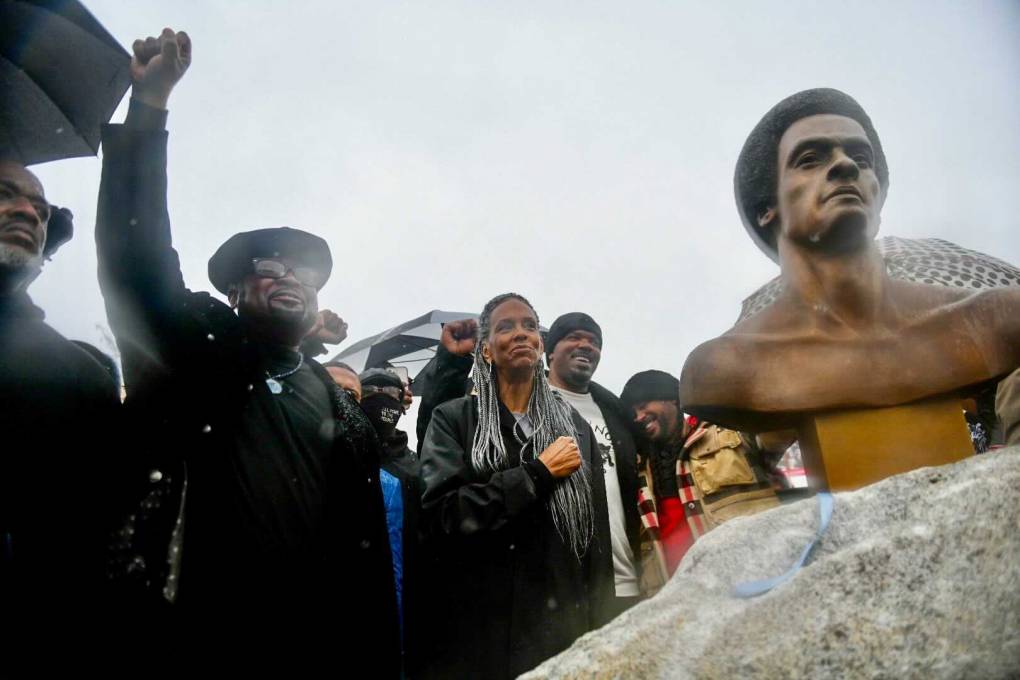
"caption": "The Dr. Huey P. Newton Memorial Sculpture, created by Dana King, is unveiled at Dr. Huey P. Newton Way and Mandela Parkway in Oakland on Oct. 24, 2021, near where Newton was murdered in 1989. The sculpture is the City of Oakland's first permanent art installation honoring the Black Panther Party and the unveiling took place during a commemoration of the party’s 55th anniversary.",
"description": null,
"title": "Fred Hampton Jr and Fredrika Newton",
"credit": "Beth LaBerge/KQED",
"status": "inherit",
"altTag": "Fred Hampton Jr and Fredrika Newton stand with the bust of Dr. Huey P. Newton",
"isLoading": false,
"fetchFailed": false
},
"news_11892054": {
"type": "attachments",
"id": "news_11892054",
"meta": {
"index": "attachments_1716263798",
"site": "news",
"id": "11892054",
"found": true
},
"parent": 11892003,
"imgSizes": {
"twentyfourteen-full-width": {
"file": "https://ww2.kqed.org/app/uploads/sites/10/2021/10/Deidra-Inversions-1038x576.jpg",
"width": 1038,
"mimeType": "image/jpeg",
"height": 576
},
"thumbnail": {
"file": "https://ww2.kqed.org/app/uploads/sites/10/2021/10/Deidra-Inversions-160x100.jpg",
"width": 160,
"mimeType": "image/jpeg",
"height": 100
},
"post-thumbnail": {
"file": "https://ww2.kqed.org/app/uploads/sites/10/2021/10/Deidra-Inversions-672x372.jpg",
"width": 672,
"mimeType": "image/jpeg",
"height": 372
},
"kqedFullSize": {
"file": "https://ww2.kqed.org/app/uploads/sites/10/2021/10/Deidra-Inversions-scaled.jpg",
"width": 2560,
"height": 1605
},
"2048x2048": {
"file": "https://ww2.kqed.org/app/uploads/sites/10/2021/10/Deidra-Inversions-2048x1284.jpg",
"width": 2048,
"mimeType": "image/jpeg",
"height": 1284
},
"large": {
"file": "https://ww2.kqed.org/app/uploads/sites/10/2021/10/Deidra-Inversions-1020x640.jpg",
"width": 1020,
"mimeType": "image/jpeg",
"height": 640
},
"1536x1536": {
"file": "https://ww2.kqed.org/app/uploads/sites/10/2021/10/Deidra-Inversions-1536x963.jpg",
"width": 1536,
"mimeType": "image/jpeg",
"height": 963
},
"full-width": {
"file": "https://ww2.kqed.org/app/uploads/sites/10/2021/10/Deidra-Inversions-1920x1204.jpg",
"width": 1920,
"mimeType": "image/jpeg",
"height": 1204
},
"medium": {
"file": "https://ww2.kqed.org/app/uploads/sites/10/2021/10/Deidra-Inversions-800x502.jpg",
"width": 800,
"mimeType": "image/jpeg",
"height": 502
}
},
"publishDate": 1634084056,
"modified": 1634939260,
"caption": "Deidra Demens, Berkeley's Adeline Yoga instructor, demonstrates a yoga pose at home. ",
"description": null,
"title": "Deidra-Inversions",
"credit": "Courtesy of Heather Haxo-Phillip",
"status": "inherit",
"altTag": "A woman in a blue top and shorts lies upside-down on a couch and the floor, her hips and leg on the couch and her shoulders and head on the ground.",
"isLoading": false,
"fetchFailed": false
},
"news_11892350": {
"type": "attachments",
"id": "news_11892350",
"meta": {
"index": "attachments_1716263798",
"site": "news",
"id": "11892350",
"found": true
},
"parent": 11892023,
"imgSizes": {
"twentyfourteen-full-width": {
"file": "https://ww2.kqed.org/app/uploads/sites/10/2021/10/Queen-Calafia-and-her-entourage-1038x576.jpg",
"width": 1038,
"mimeType": "image/jpeg",
"height": 576
},
"thumbnail": {
"file": "https://ww2.kqed.org/app/uploads/sites/10/2021/10/Queen-Calafia-and-her-entourage-160x107.jpg",
"width": 160,
"mimeType": "image/jpeg",
"height": 107
},
"post-thumbnail": {
"file": "https://ww2.kqed.org/app/uploads/sites/10/2021/10/Queen-Calafia-and-her-entourage-672x372.jpg",
"width": 672,
"mimeType": "image/jpeg",
"height": 372
},
"kqedFullSize": {
"file": "https://ww2.kqed.org/app/uploads/sites/10/2021/10/Queen-Calafia-and-her-entourage.jpg",
"width": 1600,
"height": 1068
},
"large": {
"file": "https://ww2.kqed.org/app/uploads/sites/10/2021/10/Queen-Calafia-and-her-entourage-1020x681.jpg",
"width": 1020,
"mimeType": "image/jpeg",
"height": 681
},
"1536x1536": {
"file": "https://ww2.kqed.org/app/uploads/sites/10/2021/10/Queen-Calafia-and-her-entourage-1536x1025.jpg",
"width": 1536,
"mimeType": "image/jpeg",
"height": 1025
},
"medium": {
"file": "https://ww2.kqed.org/app/uploads/sites/10/2021/10/Queen-Calafia-and-her-entourage-800x534.jpg",
"width": 800,
"mimeType": "image/jpeg",
"height": 534
}
},
"publishDate": 1634250925,
"modified": 1634335302,
"caption": "Queen Calafia and her entourage arrive at Dunphy Park in Sausalito, in a theatrical production performed on Oct. 3, 2021.",
"description": null,
"title": "Queen Calafia and her entourage",
"credit": "Herman Privette of Photography By Privette",
"status": "inherit",
"altTag": null,
"isLoading": false,
"fetchFailed": false
},
"news_11891332": {
"type": "attachments",
"id": "news_11891332",
"meta": {
"index": "attachments_1716263798",
"site": "news",
"id": "11891332",
"found": true
},
"parent": 11891329,
"imgSizes": {
"twentyfourteen-full-width": {
"file": "https://ww2.kqed.org/app/uploads/sites/10/2021/10/DragonTunnel-closeup-1038x576.jpg",
"width": 1038,
"mimeType": "image/jpeg",
"height": 576
},
"thumbnail": {
"file": "https://ww2.kqed.org/app/uploads/sites/10/2021/10/DragonTunnel-closeup-160x90.jpg",
"width": 160,
"mimeType": "image/jpeg",
"height": 90
},
"post-thumbnail": {
"file": "https://ww2.kqed.org/app/uploads/sites/10/2021/10/DragonTunnel-closeup-672x372.jpg",
"width": 672,
"mimeType": "image/jpeg",
"height": 372
},
"kqedFullSize": {
"file": "https://ww2.kqed.org/app/uploads/sites/10/2021/10/DragonTunnel-closeup.jpg",
"width": 1920,
"height": 1080
},
"large": {
"file": "https://ww2.kqed.org/app/uploads/sites/10/2021/10/DragonTunnel-closeup-1020x574.jpg",
"width": 1020,
"mimeType": "image/jpeg",
"height": 574
},
"1536x1536": {
"file": "https://ww2.kqed.org/app/uploads/sites/10/2021/10/DragonTunnel-closeup-1536x864.jpg",
"width": 1536,
"mimeType": "image/jpeg",
"height": 864
},
"medium": {
"file": "https://ww2.kqed.org/app/uploads/sites/10/2021/10/DragonTunnel-closeup-800x450.jpg",
"width": 800,
"mimeType": "image/jpeg",
"height": 450
}
},
"publishDate": 1633562885,
"modified": 1634240230,
"caption": "San Francisco-born artist Patti Bowler designed \"Dragon Relief,\" a metal sculpture hanging above the Broadway tunnel.",
"description": "An abstract metal dragon sculpture is mounted above a tunnel with cars driving through.",
"title": "DragonTunnel-closeup",
"credit": "Google Street View",
"status": "inherit",
"altTag": "An abstract metal dragon sculpture is mounted above a tunnel with cars driving through.",
"isLoading": false,
"fetchFailed": false
},
"news_11892163": {
"type": "attachments",
"id": "news_11892163",
"meta": {
"index": "attachments_1716263798",
"site": "news",
"id": "11892163",
"found": true
},
"parent": 11892152,
"imgSizes": {
"twentyfourteen-full-width": {
"file": "https://ww2.kqed.org/app/uploads/sites/10/2021/10/20210930_093846-1038x576.jpeg",
"width": 1038,
"mimeType": "image/jpeg",
"height": 576
},
"thumbnail": {
"file": "https://ww2.kqed.org/app/uploads/sites/10/2021/10/20210930_093846-160x120.jpeg",
"width": 160,
"mimeType": "image/jpeg",
"height": 120
},
"post-thumbnail": {
"file": "https://ww2.kqed.org/app/uploads/sites/10/2021/10/20210930_093846-672x372.jpeg",
"width": 672,
"mimeType": "image/jpeg",
"height": 372
},
"kqedFullSize": {
"file": "https://ww2.kqed.org/app/uploads/sites/10/2021/10/20210930_093846.jpeg",
"width": 1890,
"height": 1418
},
"large": {
"file": "https://ww2.kqed.org/app/uploads/sites/10/2021/10/20210930_093846-1020x765.jpeg",
"width": 1020,
"mimeType": "image/jpeg",
"height": 765
},
"1536x1536": {
"file": "https://ww2.kqed.org/app/uploads/sites/10/2021/10/20210930_093846-1536x1152.jpeg",
"width": 1536,
"mimeType": "image/jpeg",
"height": 1152
},
"medium": {
"file": "https://ww2.kqed.org/app/uploads/sites/10/2021/10/20210930_093846-800x600.jpeg",
"width": 800,
"mimeType": "image/jpeg",
"height": 600
}
},
"publishDate": 1634159169,
"modified": 1634237914,
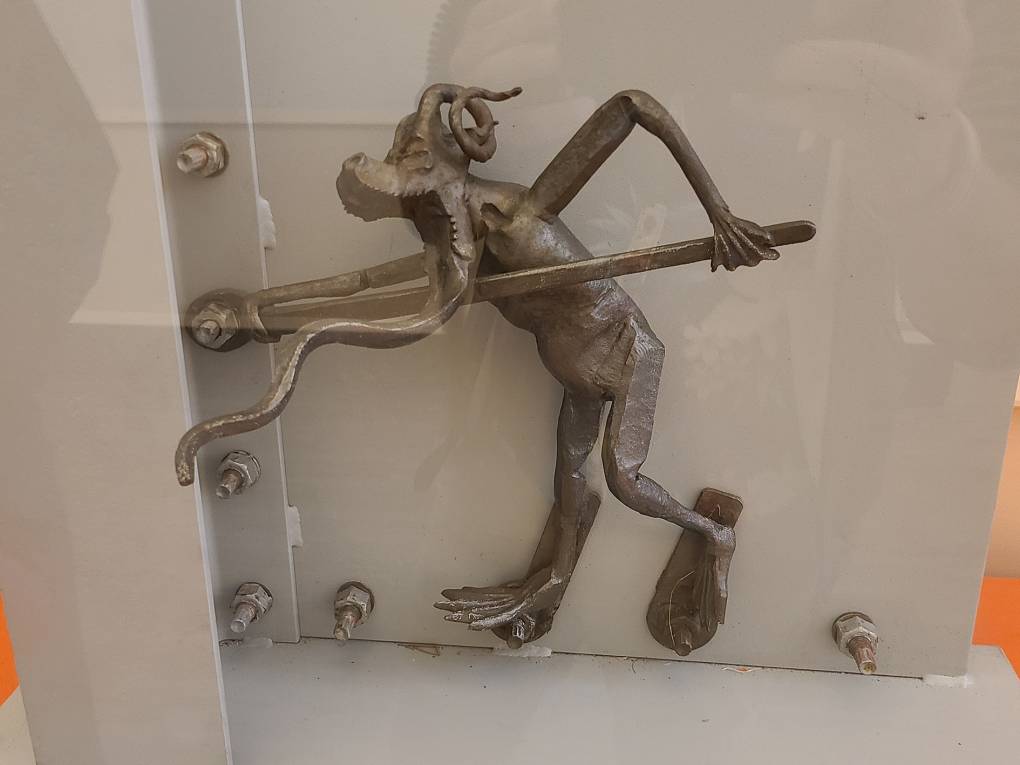
"caption": "The original Bay Bridge troll guarded over the bridge for 24 years. When the new eastern span was completed, he was retired and now lives at the Caltrans office at 111 Grand Ave. in Oakland.",
"description": "A skinny troll made of steel. He has a long tongue and is holding a metal tool. ",
"title": "20210930_093846",
"credit": "Christopher Beale/KQED",
"status": "inherit",
"altTag": "A light-colored metal figurine with two arms and two legs, holding a very long wrench to turn a bolt.",
"isLoading": false,
"fetchFailed": false
},
"news_11891077": {
"type": "attachments",
"id": "news_11891077",
"meta": {
"index": "attachments_1716263798",
"site": "news",
"id": "11891077",
"found": true
},
"parent": 11891063,
"imgSizes": {
"twentyfourteen-full-width": {
"file": "https://ww2.kqed.org/app/uploads/sites/10/2021/10/GettyImages-1235713578-1038x576.jpg",
"width": 1038,
"mimeType": "image/jpeg",
"height": 576
},
"thumbnail": {
"file": "https://ww2.kqed.org/app/uploads/sites/10/2021/10/GettyImages-1235713578-160x108.jpg",
"width": 160,
"mimeType": "image/jpeg",
"height": 108
},
"post-thumbnail": {
"file": "https://ww2.kqed.org/app/uploads/sites/10/2021/10/GettyImages-1235713578-672x372.jpg",
"width": 672,
"mimeType": "image/jpeg",
"height": 372
},
"kqedFullSize": {
"file": "https://ww2.kqed.org/app/uploads/sites/10/2021/10/GettyImages-1235713578-scaled.jpg",
"width": 2560,
"height": 1720
},
"2048x2048": {
"file": "https://ww2.kqed.org/app/uploads/sites/10/2021/10/GettyImages-1235713578-2048x1376.jpg",
"width": 2048,
"mimeType": "image/jpeg",
"height": 1376
},
"large": {
"file": "https://ww2.kqed.org/app/uploads/sites/10/2021/10/GettyImages-1235713578-1020x685.jpg",
"width": 1020,
"mimeType": "image/jpeg",
"height": 685
},
"1536x1536": {
"file": "https://ww2.kqed.org/app/uploads/sites/10/2021/10/GettyImages-1235713578-1536x1032.jpg",
"width": 1536,
"mimeType": "image/jpeg",
"height": 1032
},
"full-width": {
"file": "https://ww2.kqed.org/app/uploads/sites/10/2021/10/GettyImages-1235713578-1920x1290.jpg",
"width": 1920,
"mimeType": "image/jpeg",
"height": 1290
},
"medium": {
"file": "https://ww2.kqed.org/app/uploads/sites/10/2021/10/GettyImages-1235713578-800x538.jpg",
"width": 800,
"mimeType": "image/jpeg",
"height": 538
}
},
"publishDate": 1633460376,
"modified": 1633460486,
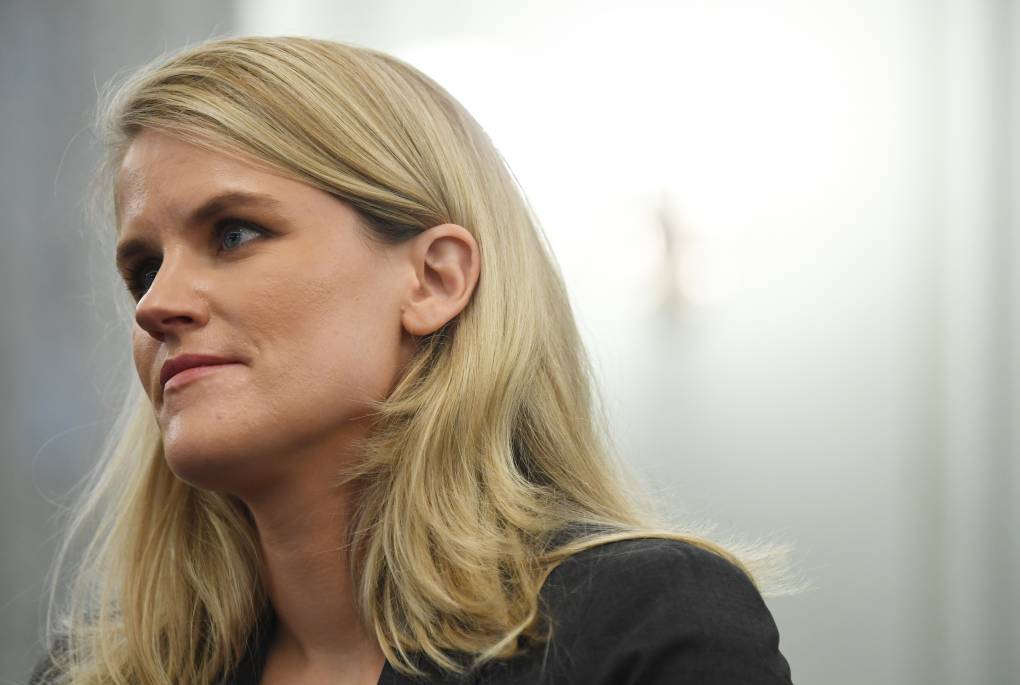
"caption": "Frances Haugen, former Facebook employee, appears before the Senate Commerce, Science, and Transportation Subcommittee during a hearing entitled 'Protecting Kids Online: Testimony from a Facebook Whistleblower' at the Russell Senate Office Building on October 05, 2021 in Washington, D.C.",
"description": "Frances Haugen, former Facebook employee, appears before the Senate Commerce, Science, and Transportation Subcommittee during a hearing entitled 'Protecting Kids Online: Testimony from a Facebook Whistleblower' at the Russell Senate Office Building on October 05, 2021 in Washington, D.C.",
"title": "Facebook Whistle Blower Frances Haugen Testifies To Senate Committee",
"credit": "Matt McClain-Pool/Getty Images",
"status": "inherit",
"altTag": "Close-up of Frances Haugen, who is looking away from the camera.",
"isLoading": false,
"fetchFailed": false
},
"news_11789507": {
"type": "attachments",
"id": "news_11789507",
"meta": {
"index": "attachments_1716263798",
"site": "news",
"id": "11789507",
"found": true
},
"title": "A close-up of a mobile phone screen, with app icons for Facebook, Instagram, WhatsApp, Snapchat, Facebook Messenger, and Twitter.",
"publishDate": 1575486209,
"status": "inherit",
"parent": 11789488,
"modified": 1786479738,
"caption": "California, Colorado, Kentucky and New Jersey argue Meta built features it knew would hook young users, and kept children under 13 on its platforms because they were valuable future customers, while claiming otherwise to parents and regulators. ",
"credit": "Chandan Khanna/AFP via Getty Images",
"altTag": null,
"description": "A photo taken on March 22, 2018, shows apps for Facebook, Instagram, Twitter and other social networks.",
"imgSizes": {
"thumbnail": {
"file": "https://cdn.kqed.org/wp-content/uploads/sites/10/2019/12/cellphone-1920-160x107.jpg",
"width": 160,
"height": 107,
"mimeType": "image/jpeg"
},
"medium": {
"file": "https://cdn.kqed.org/wp-content/uploads/sites/10/2019/12/cellphone-1920-800x534.jpg",
"width": 800,
"height": 534,
"mimeType": "image/jpeg"
},
"large": {
"file": "https://cdn.kqed.org/wp-content/uploads/sites/10/2019/12/cellphone-1920-1020x681.jpg",
"width": 1020,
"height": 681,
"mimeType": "image/jpeg"
},
"complete_open_graph": {
"file": "https://cdn.kqed.org/wp-content/uploads/sites/10/2019/12/cellphone-1920-1200x801.jpg",
"width": 1200,
"height": 801,
"mimeType": "image/jpeg"
},
"post-thumbnail": {
"file": "https://cdn.kqed.org/wp-content/uploads/sites/10/2019/12/cellphone-1920-672x372.jpg",
"width": 672,
"height": 372,
"mimeType": "image/jpeg"
},
"twentyfourteen-full-width": {
"file": "https://cdn.kqed.org/wp-content/uploads/sites/10/2019/12/cellphone-1920-1038x576.jpg",
"width": 1038,
"height": 576,
"mimeType": "image/jpeg"
},
"full-width": {
"file": "https://cdn.kqed.org/wp-content/uploads/sites/10/2019/12/cellphone-1920-1920x1281.jpg",
"width": 1920,
"height": 1281,
"mimeType": "image/jpeg"
},
"apple_news_ca_landscape_12_9": {
"file": "https://cdn.kqed.org/wp-content/uploads/sites/10/2019/12/cellphone-1920-1832x1281.jpg",
"width": 1832,
"height": 1281,
"mimeType": "image/jpeg"
},
"apple_news_ca_landscape_9_7": {
"file": "https://cdn.kqed.org/wp-content/uploads/sites/10/2019/12/cellphone-1920-1376x1032.jpg",
"width": 1376,
"height": 1032,
"mimeType": "image/jpeg"
},
"apple_news_ca_landscape_5_5": {
"file": "https://cdn.kqed.org/wp-content/uploads/sites/10/2019/12/cellphone-1920-1044x783.jpg",
"width": 1044,
"height": 783,
"mimeType": "image/jpeg"
},
"apple_news_ca_landscape_4_7": {
"file": "https://cdn.kqed.org/wp-content/uploads/sites/10/2019/12/cellphone-1920-632x474.jpg",
"width": 632,
"height": 474,
"mimeType": "image/jpeg"
},
"apple_news_ca_landscape_4_0": {
"file": "https://cdn.kqed.org/wp-content/uploads/sites/10/2019/12/cellphone-1920-536x402.jpg",
"width": 536,
"height": 402,
"mimeType": "image/jpeg"
},
"apple_news_ca_portrait_12_9": {
"file": "https://cdn.kqed.org/wp-content/uploads/sites/10/2019/12/cellphone-1920-1122x1281.jpg",
"width": 1122,
"height": 1281,
"mimeType": "image/jpeg"
},
"apple_news_ca_portrait_9_7": {
"file": "https://cdn.kqed.org/wp-content/uploads/sites/10/2019/12/cellphone-1920-840x1120.jpg",
"width": 840,
"height": 1120,
"mimeType": "image/jpeg"
},
"apple_news_ca_portrait_5_5": {
"file": "https://cdn.kqed.org/wp-content/uploads/sites/10/2019/12/cellphone-1920-687x916.jpg",
"width": 687,
"height": 916,
"mimeType": "image/jpeg"
},
"apple_news_ca_portrait_4_7": {
"file": "https://cdn.kqed.org/wp-content/uploads/sites/10/2019/12/cellphone-1920-414x552.jpg",
"width": 414,
"height": 552,
"mimeType": "image/jpeg"
},
"apple_news_ca_portrait_4_0": {
"file": "https://cdn.kqed.org/wp-content/uploads/sites/10/2019/12/cellphone-1920-354x472.jpg",
"width": 354,
"height": 472,
"mimeType": "image/jpeg"
},
"apple_news_ca_square_12_9": {
"file": "https://cdn.kqed.org/wp-content/uploads/sites/10/2019/12/cellphone-1920-1472x1281.jpg",
"width": 1472,
"height": 1281,
"mimeType": "image/jpeg"
},
"apple_news_ca_square_9_7": {
"file": "https://cdn.kqed.org/wp-content/uploads/sites/10/2019/12/cellphone-1920-1104x1104.jpg",
"width": 1104,
"height": 1104,
"mimeType": "image/jpeg"
},
"apple_news_ca_square_5_5": {
"file": "https://cdn.kqed.org/wp-content/uploads/sites/10/2019/12/cellphone-1920-912x912.jpg",
"width": 912,
"height": 912,
"mimeType": "image/jpeg"
},
"apple_news_ca_square_4_7": {
"file": "https://cdn.kqed.org/wp-content/uploads/sites/10/2019/12/cellphone-1920-550x550.jpg",
"width": 550,
"height": 550,
"mimeType": "image/jpeg"
},
"apple_news_ca_square_4_0": {
"file": "https://cdn.kqed.org/wp-content/uploads/sites/10/2019/12/cellphone-1920-470x470.jpg",
"width": 470,
"height": 470,
"mimeType": "image/jpeg"
},
"kqedFullSize": {
"file": "https://cdn.kqed.org/wp-content/uploads/sites/10/2019/12/cellphone-1920.jpg",
"width": 1920,
"height": 1281
}
},
"isLoading": false,
"fetchFailed": false
},
"news_11890412": {
"type": "attachments",
"id": "news_11890412",
"meta": {
"index": "attachments_1716263798",
"site": "news",
"id": "11890412",
"found": true
},
"parent": 11889712,
"imgSizes": {
"twentyfourteen-full-width": {
"file": "https://ww2.kqed.org/app/uploads/sites/10/2021/09/7714839914_be59a06c0a_h-1038x576.jpg",
"width": 1038,
"mimeType": "image/jpeg",
"height": 576
},
"thumbnail": {
"file": "https://ww2.kqed.org/app/uploads/sites/10/2021/09/7714839914_be59a06c0a_h-160x112.jpg",
"width": 160,
"mimeType": "image/jpeg",
"height": 112
},
"post-thumbnail": {
"file": "https://ww2.kqed.org/app/uploads/sites/10/2021/09/7714839914_be59a06c0a_h-672x372.jpg",
"width": 672,
"mimeType": "image/jpeg",
"height": 372
},
"kqedFullSize": {
"file": "https://ww2.kqed.org/app/uploads/sites/10/2021/09/7714839914_be59a06c0a_h.jpg",
"width": 1600,
"height": 1120
},
"large": {
"file": "https://ww2.kqed.org/app/uploads/sites/10/2021/09/7714839914_be59a06c0a_h-1020x714.jpg",
"width": 1020,
"mimeType": "image/jpeg",
"height": 714
},
"1536x1536": {
"file": "https://ww2.kqed.org/app/uploads/sites/10/2021/09/7714839914_be59a06c0a_h-1536x1075.jpg",
"width": 1536,
"mimeType": "image/jpeg",
"height": 1075
},
"medium": {
"file": "https://ww2.kqed.org/app/uploads/sites/10/2021/09/7714839914_be59a06c0a_h-800x560.jpg",
"width": 800,
"mimeType": "image/jpeg",
"height": 560
}
},
"publishDate": 1632937541,
"modified": 1632949251,
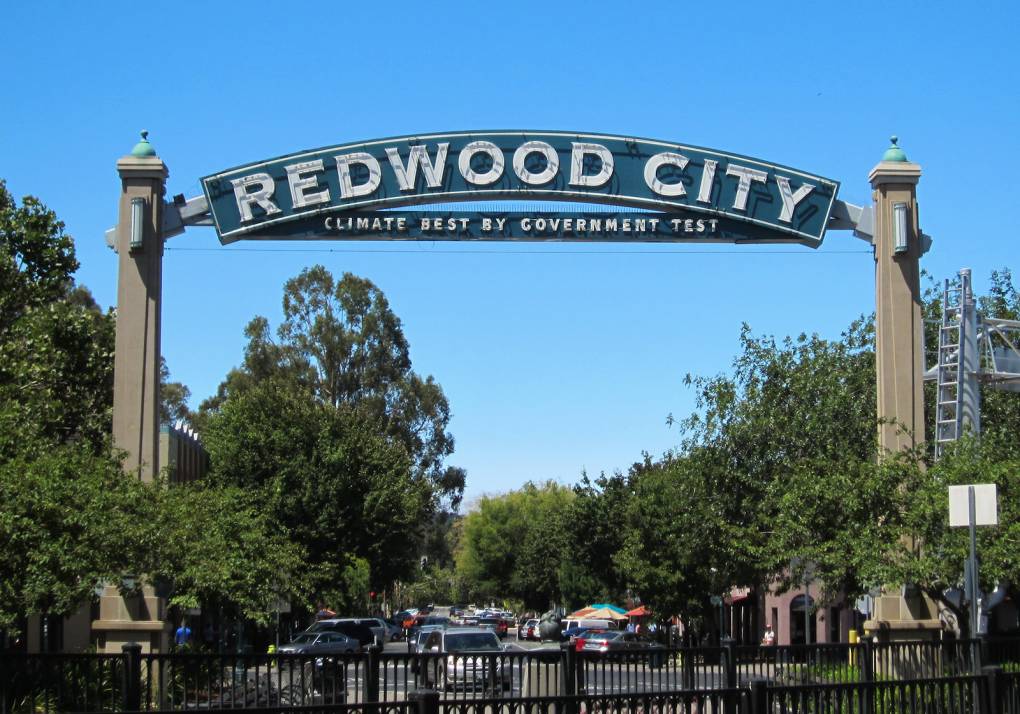
"caption": "How did Redwood City fix on the slogan \"Climate Best by Government Test\"?",
"description": "A green arching sign with white lettering that says \"Redwood City Climate Best By Government Test\".",
"title": "7714839914_be59a06c0a_h",
"credit": "\u003ca href=\"https://www.flickr.com/photos/donbrr/7714839914/in/photolist-8QVzeP-iRbj2-2jHSXME-reZH4B-oz8PAd-51szs5-51onL4-51ooTn-51oo32-Vf41cu-51szE1-51okhB-51sx9f-51ooAr-51sxqq-BaGwqh-51okB4-81ENa4-7nWKRX-28AwUGF-28AwUzM-6wPYyM-2iw8kHk-qUKgW-cKJz8h-5yAQGL-6xcF5U-dBmjaN-6KVkhL-2UaKoG-aDRpt6-cKF3G-d5DLr-riKw-6za6b\">Don Barrett\u003c/a>/Flickr",
"status": "inherit",
"altTag": "A long sign across a leafy street that says \"Redwood City,\" with the famous slogan in smaller type beneath.",
"isLoading": false,
"fetchFailed": false
},
"news_11889485": {
"type": "attachments",
"id": "news_11889485",
"meta": {
"index": "attachments_1716263798",
"site": "news",
"id": "11889485",
"found": true
},
"parent": 11889482,
"imgSizes": {
"twentyfourteen-full-width": {
"file": "https://ww2.kqed.org/app/uploads/sites/10/2021/09/IMG_1709-1038x576.jpg",
"width": 1038,
"mimeType": "image/jpeg",
"height": 576
},
"thumbnail": {
"file": "https://ww2.kqed.org/app/uploads/sites/10/2021/09/IMG_1709-160x120.jpg",
"width": 160,
"mimeType": "image/jpeg",
"height": 120
},
"post-thumbnail": {
"file": "https://ww2.kqed.org/app/uploads/sites/10/2021/09/IMG_1709-672x372.jpg",
"width": 672,
"mimeType": "image/jpeg",
"height": 372
},
"kqedFullSize": {
"file": "https://ww2.kqed.org/app/uploads/sites/10/2021/09/IMG_1709-scaled-e1632528966233.jpg",
"width": 1920,
"height": 1440
},
"2048x2048": {
"file": "https://ww2.kqed.org/app/uploads/sites/10/2021/09/IMG_1709-2048x1536.jpg",
"width": 2048,
"mimeType": "image/jpeg",
"height": 1536
},
"large": {
"file": "https://ww2.kqed.org/app/uploads/sites/10/2021/09/IMG_1709-1020x765.jpg",
"width": 1020,
"mimeType": "image/jpeg",
"height": 765
},
"1536x1536": {
"file": "https://ww2.kqed.org/app/uploads/sites/10/2021/09/IMG_1709-1536x1152.jpg",
"width": 1536,
"mimeType": "image/jpeg",
"height": 1152
},
"full-width": {
"file": "https://ww2.kqed.org/app/uploads/sites/10/2021/09/IMG_1709-1920x1440.jpg",
"width": 1920,
"mimeType": "image/jpeg",
"height": 1440
},
"medium": {
"file": "https://ww2.kqed.org/app/uploads/sites/10/2021/09/IMG_1709-800x600.jpg",
"width": 800,
"mimeType": "image/jpeg",
"height": 600
}
},
"publishDate": 1632342371,
"modified": 1632772460,
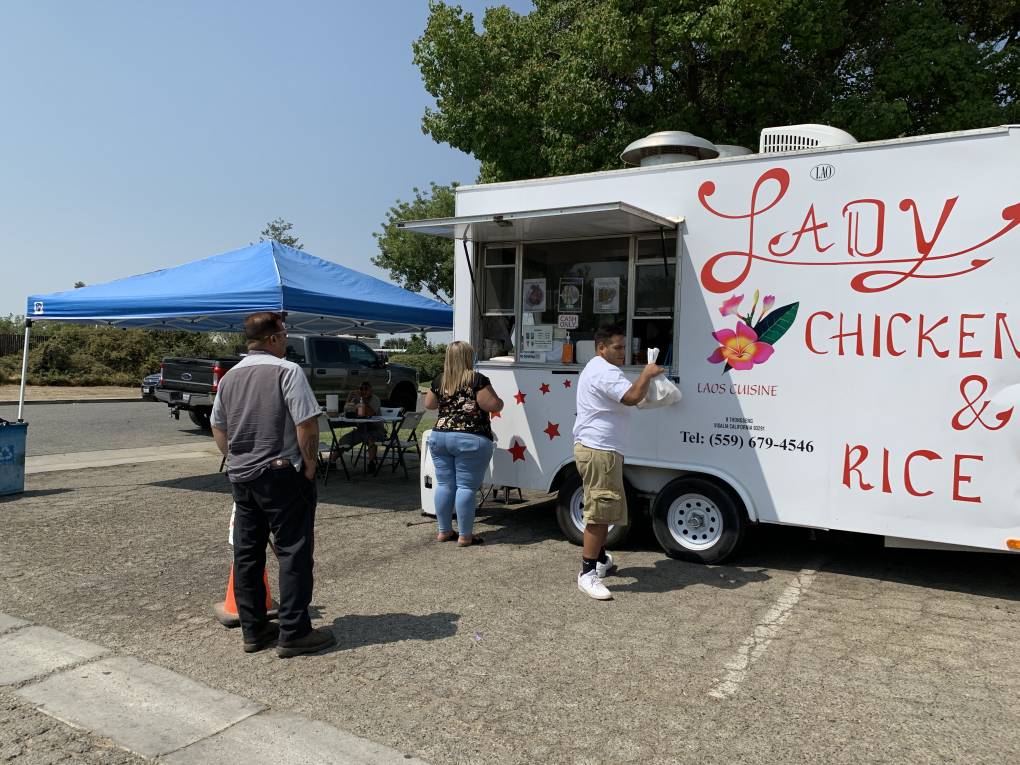
"caption": "In the heart of the Central Valley, Lady Chicken & Rice serves as many as 500 people Lao food every day. ",
"description": null,
"title": "IMG_1709",
"credit": "Alice Daniel/KVPR",
"status": "inherit",
"altTag": "People order food at a white food truck with red lettering and a red flower painted on the side.",
"isLoading": false,
"fetchFailed": false
},
"news_11886964": {
"type": "attachments",
"id": "news_11886964",
"meta": {
"index": "attachments_1716263798",
"site": "news",
"id": "11886964",
"found": true
},
"parent": 11886880,
"imgSizes": {
"twentyfourteen-full-width": {
"file": "https://ww2.kqed.org/app/uploads/sites/10/2021/08/IMG_0781-1038x576.jpeg",
"width": 1038,
"mimeType": "image/jpeg",
"height": 576
},
"thumbnail": {
"file": "https://ww2.kqed.org/app/uploads/sites/10/2021/08/IMG_0781-160x121.jpeg",
"width": 160,
"mimeType": "image/jpeg",
"height": 121
},
"post-thumbnail": {
"file": "https://ww2.kqed.org/app/uploads/sites/10/2021/08/IMG_0781-672x372.jpeg",
"width": 672,
"mimeType": "image/jpeg",
"height": 372
},
"kqedFullSize": {
"file": "https://ww2.kqed.org/app/uploads/sites/10/2021/08/IMG_0781-scaled.jpeg",
"width": 2560,
"height": 1932
},
"2048x2048": {
"file": "https://ww2.kqed.org/app/uploads/sites/10/2021/08/IMG_0781-2048x1545.jpeg",
"width": 2048,
"mimeType": "image/jpeg",
"height": 1545
},
"large": {
"file": "https://ww2.kqed.org/app/uploads/sites/10/2021/08/IMG_0781-1020x770.jpeg",
"width": 1020,
"mimeType": "image/jpeg",
"height": 770
},
"1536x1536": {
"file": "https://ww2.kqed.org/app/uploads/sites/10/2021/08/IMG_0781-1536x1159.jpeg",
"width": 1536,
"mimeType": "image/jpeg",
"height": 1159
},
"full-width": {
"file": "https://ww2.kqed.org/app/uploads/sites/10/2021/08/IMG_0781-1920x1449.jpeg",
"width": 1920,
"mimeType": "image/jpeg",
"height": 1449
},
"medium": {
"file": "https://ww2.kqed.org/app/uploads/sites/10/2021/08/IMG_0781-800x604.jpeg",
"width": 800,
"mimeType": "image/jpeg",
"height": 604
}
},
"publishDate": 1630422876,
"modified": 1632530649,
"caption": "For close to 70 years, Shuei-Do Manju Shop has been delighting customers with its \"country-style\" mochi, so soft, so fresh, that eating one is like eating a baby cheek — but in a good way.",
"description": "For close to 70 years, Shuei-do Manju Shop has been delighting customers with its \"country-style\" mochi, so soft, so fresh, eating one is like eating a baby cheek, but in a good way.",
"title": "IMG_0781",
"credit": "Rachael Myrow/KQED",
"status": "inherit",
"altTag": "A box of six colorful mochi, with a plastic top and the shop's label on it.",
"isLoading": false,
"fetchFailed": false
},
"news_11886254": {
"type": "attachments",
"id": "news_11886254",
"meta": {
"index": "attachments_1716263798",
"site": "news",
"id": "11886254",
"found": true
},
"parent": 11882522,
"imgSizes": {
"twentyfourteen-full-width": {
"file": "https://ww2.kqed.org/app/uploads/sites/10/2021/08/RS51137_IMG_3259-qut-1038x576.jpg",
"width": 1038,
"mimeType": "image/jpeg",
"height": 576
},
"thumbnail": {
"file": "https://ww2.kqed.org/app/uploads/sites/10/2021/08/RS51137_IMG_3259-qut-160x120.jpg",
"width": 160,
"mimeType": "image/jpeg",
"height": 120
},
"post-thumbnail": {
"file": "https://ww2.kqed.org/app/uploads/sites/10/2021/08/RS51137_IMG_3259-qut-672x372.jpg",
"width": 672,
"mimeType": "image/jpeg",
"height": 372
},
"kqedFullSize": {
"file": "https://ww2.kqed.org/app/uploads/sites/10/2021/08/RS51137_IMG_3259-qut.jpg",
"width": 1920,
"height": 1440
},
"large": {
"file": "https://ww2.kqed.org/app/uploads/sites/10/2021/08/RS51137_IMG_3259-qut-1020x765.jpg",
"width": 1020,
"mimeType": "image/jpeg",
"height": 765
},
"1536x1536": {
"file": "https://ww2.kqed.org/app/uploads/sites/10/2021/08/RS51137_IMG_3259-qut-1536x1152.jpg",
"width": 1536,
"mimeType": "image/jpeg",
"height": 1152
},
"medium": {
"file": "https://ww2.kqed.org/app/uploads/sites/10/2021/08/RS51137_IMG_3259-qut-800x600.jpg",
"width": 800,
"mimeType": "image/jpeg",
"height": 600
}
},
"publishDate": 1629912180,
"modified": 1629912339,
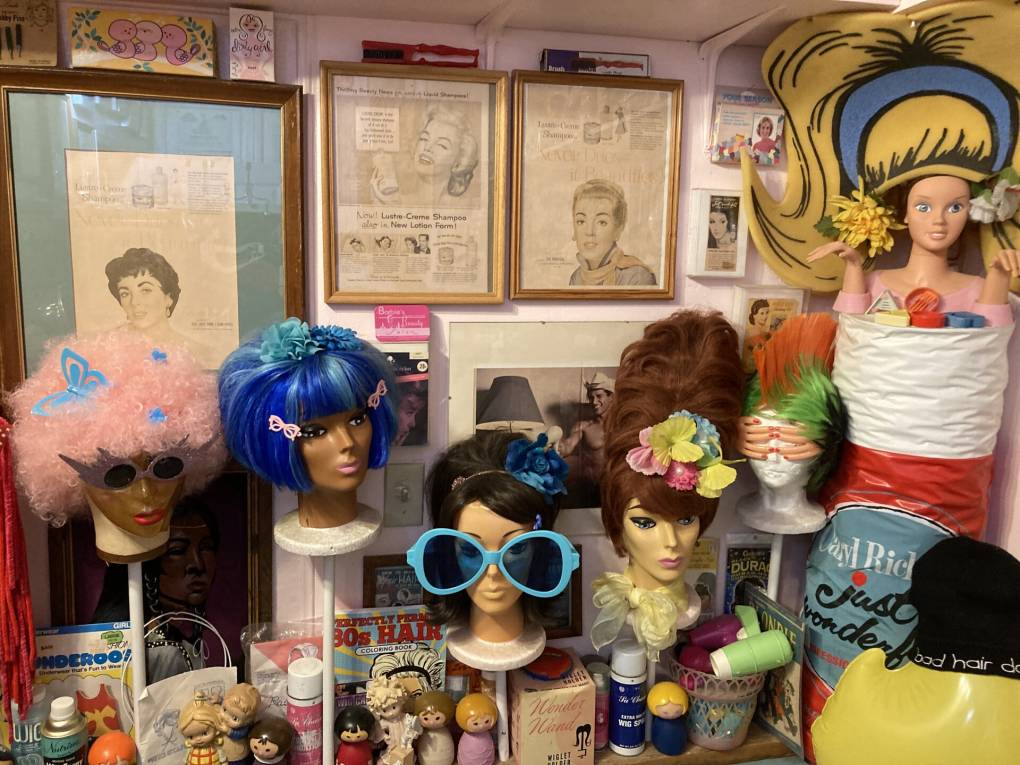
"caption": "Beauty Bubble is covered with vintage ephemera from floor to ceiling. ",
"description": null,
"title": "RS51137_IMG_3259-qut",
"credit": "Peter Gilstrap",
"status": "inherit",
"altTag": null,
"isLoading": false,
"fetchFailed": false
}
},
"audioPlayerReducer": {
"postId": "stream_live",
"isPaused": true,
"isPlaying": false,
"pfsActive": false,
"pledgeModalIsOpen": true,
"playerDrawerIsOpen": false,
"liveAudioPlayStartedAt": 0,
"liveAudioPlayContext": ""
},
"authorsReducer": {
"byline_news_11893532": {
"type": "authors",
"id": "byline_news_11893532",
"meta": {
"override": true
},
"slug": "byline_news_11893532",
"name": "Aaron Morrison \u003cbr> Associated Press",
"isLoading": false
},
"byline_news_11891063": {
"type": "authors",
"id": "byline_news_11891063",
"meta": {
"override": true
},
"slug": "byline_news_11891063",
"name": "Marcy Gordon \u003cbr> The Associated Press",
"isLoading": false
},
"byline_news_11891045": {
"type": "authors",
"id": "byline_news_11891045",
"meta": {
"override": true
},
"slug": "byline_news_11891045",
"name": "\u003ca href=\"https://www.npr.org/people/1019412563/jonathan-franklin\">Jonathan Franklin\u003c/a>, \u003ca href=\"https://www.npr.org/people/14562108/bill-chappell\">Bill Chappell\u003c/a>",
"isLoading": false
},
"aliceldaniel": {
"type": "authors",
"id": "208",
"meta": {
"index": "authors_1716337520",
"id": "208",
"found": true
},
"name": "Alice Daniel",
"firstName": "Alice",
"lastName": "Daniel",
"slug": "aliceldaniel",
"email": "adaniel@kqed.org",
"display_author_email": false,
"staff_mastheads": [],
"title": null,
"bio": "Alice Daniel loves the listening aspect of reporting because she gets to briefly walk in other people’s shoes. She has rappelled down into caves and gone up in helicopters for KQED’s The California Report but her favorite place to pursue a story is the High Sierra or any family-run bakery, of course. Alice has a masters in journalism from Columbia University and teaches at Fresno State. She is a California Healthline Regional Correspondent and a frequent contributor to Success magazine. In her free time, she skis and hikes, throws pottery, practices piano and looks out the window.",
"avatar": "https://secure.gravatar.com/avatar/e611aa06593b114a67f9f123a8e875ad?s=600&d=blank&r=g",
"twitter": null,
"facebook": null,
"instagram": null,
"linkedin": null,
"sites": [
{
"site": "news",
"roles": [
"author"
]
},
{
"site": "stateofhealth",
"roles": [
"author"
]
}
],
"headData": {
"title": "Alice Daniel | KQED",
"description": null,
"ogImgSrc": "https://secure.gravatar.com/avatar/e611aa06593b114a67f9f123a8e875ad?s=600&d=blank&r=g",
"twImgSrc": "https://secure.gravatar.com/avatar/e611aa06593b114a67f9f123a8e875ad?s=600&d=blank&r=g"
},
"isLoading": false,
"link": "/author/aliceldaniel"
},
"rachael-myrow": {
"type": "authors",
"id": "251",
"meta": {
"index": "authors_1716337520",
"id": "251",
"found": true
},
"name": "Rachael Myrow",
"firstName": "Rachael",
"lastName": "Myrow",
"slug": "rachael-myrow",
"email": "rmyrow@kqed.org",
"display_author_email": true,
"staff_mastheads": [
"news"
],
"title": "Senior Editor of KQED's Silicon Valley News Desk",
"bio": "• I write and edit stories about how Silicon Valley power and policies shape everyday life in California. I’m also passionate about making Bay Area history and culture more accessible to a broad public. • I’ve been a journalist for most of my life, starting in high school with The Franklin Press in Los Angeles, where I grew up. While earning my first degree in English at UC Berkeley, I got my start in public radio at KALX-FM. After completing a second degree in journalism at Cal, I landed my first professional job at Marketplace, then moved on to KPCC (now LAist), and then KQED, where I hosted The California Report for more than seven years. • My reporting has appeared on NPR, The World, WBUR’s \u003ci>Here & Now\u003c/i>, and the BBC. I also guest host for KQED’s \u003ci>Forum\u003c/i>, as well as the Commonwealth Club in San Francisco. • I speak periodically on media, democracy and technology issues, and do voiceover work for documentaries and educational video projects. • Outside of the studio, you'll find me hiking Bay Area trails and whipping up Insta-ready meals in my kitchen. • I do not accept gifts, money, or favors from anyone connected to my reporting, I don't pay people for information, and I do not support or donate to political causes. • I strive to treat the people I report on with fairness, honesty, and respect. I also recognize there are often multiple sides to a story and work to verify information through multiple sources and documentation. If I get something wrong, I correct it.",
"avatar": "https://secure.gravatar.com/avatar/3ed8a3c5f26025e4a805ba634cda8cd764906b97438a6d9ce216b044e340da4e?s=600&d=blank&r=g",
"twitter": "rachaelmyrow",
"bluesky": null,
"facebook": null,
"instagram": null,
"linkedin": "https://www.linkedin.com/in/rachaelmyrow/",
"sites": [
{
"site": "arts",
"roles": [
"administrator"
]
},
{
"site": "news",
"roles": [
"edit_others_posts",
"editor"
]
},
{
"site": "futureofyou",
"roles": [
"editor"
]
},
{
"site": "bayareabites",
"roles": [
"editor"
]
},
{
"site": "stateofhealth",
"roles": [
"editor"
]
},
{
"site": "science",
"roles": [
"editor"
]
},
{
"site": "food",
"roles": [
"editor"
]
},
{
"site": "forum",
"roles": [
"editor"
]
},
{
"site": "liveblog",
"roles": [
"author"
]
}
],
"headData": {
"title": "Rachael Myrow | KQED",
"description": "Senior Editor of KQED's Silicon Valley News Desk",
"ogImgSrc": "https://secure.gravatar.com/avatar/3ed8a3c5f26025e4a805ba634cda8cd764906b97438a6d9ce216b044e340da4e?s=600&d=blank&r=g",
"twImgSrc": "https://secure.gravatar.com/avatar/3ed8a3c5f26025e4a805ba634cda8cd764906b97438a6d9ce216b044e340da4e?s=600&d=blank&r=g"
},
"isLoading": false,
"link": "/author/rachael-myrow"
},
"ralexandra": {
"type": "authors",
"id": "11242",
"meta": {
"index": "authors_1716337520",
"id": "11242",
"found": true
},
"name": "Rae Alexandra",
"firstName": "Rae",
"lastName": "Alexandra",
"slug": "ralexandra",
"email": "ralexandra@kqed.org",
"display_author_email": true,
"staff_mastheads": [],
"title": "Reporter/Producer",
"bio": "Rae Alexandra is a Reporter/Producer for KQED Arts & Culture, and the creator/author of the \u003ca href=\"https://www.kqed.org/arts/program/rebel-girls-from-bay-area-history\">Rebel Girls From Bay Area History\u003c/a> and \u003ca href=\"https://www.kqed.org/bizarrebayarea\">Bizarre Bay Area\u003c/a> series. Her debut book, \u003ca href=\"https://citylights.com/politics-current-events-history/unsung-heroines35-women-who-changed/\">Unsung Heroines: 35 Women Who Changed the Bay Area\u003c/a> was published by City Lights in March 2026. In 2023, Rae was awarded an SPJ Excellence in Journalism Award for Arts & Culture. Rae was born and raised in Wales and subsequently — even after two decades in Northern California — still uses phrases that regularly baffle her coworkers.",
"avatar": "https://secure.gravatar.com/avatar/edfee8176c80cc0a382b051190f5341997df378a934a5774dcb0977732dfd401?s=600&d=blank&r=g",
"twitter": null,
"bluesky": null,
"facebook": null,
"instagram": null,
"linkedin": null,
"sites": [
{
"site": "arts",
"roles": [
"subscriber"
]
},
{
"site": "news",
"roles": [
"subscriber"
]
},
{
"site": "pop",
"roles": [
"subscriber"
]
},
{
"site": "bayareabites",
"roles": [
"subscriber"
]
},
{
"site": "science",
"roles": [
"subscriber"
]
}
],
"headData": {
"title": "Rae Alexandra | KQED",
"description": "Reporter/Producer",
"ogImgSrc": "https://secure.gravatar.com/avatar/edfee8176c80cc0a382b051190f5341997df378a934a5774dcb0977732dfd401?s=600&d=blank&r=g",
"twImgSrc": "https://secure.gravatar.com/avatar/edfee8176c80cc0a382b051190f5341997df378a934a5774dcb0977732dfd401?s=600&d=blank&r=g"
},
"isLoading": false,
"link": "/author/ralexandra"
},
"nsparling": {
"type": "authors",
"id": "11655",
"meta": {
"index": "authors_1716337520",
"id": "11655",
"found": true
},
"name": "Nina Sparling",
"firstName": "Nina",
"lastName": "Sparling",
"slug": "nsparling",
"email": "nsparling@kqed.org",
"display_author_email": false,
"staff_mastheads": [],
"title": "KQED Contributor",
"bio": null,
"avatar": "https://secure.gravatar.com/avatar/4f605141f48bfba20520677de109f9bc?s=600&d=blank&r=g",
"twitter": null,
"facebook": null,
"instagram": null,
"linkedin": null,
"sites": [
{
"site": "",
"roles": [
"editor"
]
},
{
"site": "news",
"roles": [
"author"
]
},
{
"site": "forum",
"roles": [
"editor"
]
},
{
"site": "perspectives",
"roles": [
"editor"
]
}
],
"headData": {
"title": "Nina Sparling | KQED",
"description": "KQED Contributor",
"ogImgSrc": "https://secure.gravatar.com/avatar/4f605141f48bfba20520677de109f9bc?s=600&d=blank&r=g",
"twImgSrc": "https://secure.gravatar.com/avatar/4f605141f48bfba20520677de109f9bc?s=600&d=blank&r=g"
},
"isLoading": false,
"link": "/author/nsparling"
},
"jrodriguez": {
"type": "authors",
"id": "11690",
"meta": {
"index": "authors_1716337520",
"id": "11690",
"found": true
},
"name": "Joe Fitzgerald Rodriguez",
"firstName": "Joe",
"lastName": "Fitzgerald Rodriguez",
"slug": "jrodriguez",
"email": "jrodriguez@kqed.org",
"display_author_email": true,
"staff_mastheads": [
"news"
],
"title": "Reporter and Producer",
"bio": "Joe Fitzgerald Rodriguez is a reporter and digital producer for KQED covering politics. Joe most recently wrote for the \u003cem>San Francisco Examiner\u003c/em> as a political columnist covering The City. He was raised in San Francisco and has spent his reporting career in his beloved, foggy, city by the bay. Joe was 12-years-old when he conducted his first interview in journalism, grilling former San Francisco Mayor Willie Brown for the Marina Middle School newspaper, \u003cem>The Penguin Press, \u003c/em>and he continues to report on the San Francisco Bay Area to this day.",
"avatar": "https://secure.gravatar.com/avatar/2247beb0564c1e9c62228d5649d2edac?s=600&d=blank&r=g",
"twitter": "FitztheReporter",
"facebook": null,
"instagram": "https://www.instagram.com/fitzthereporter/",
"linkedin": null,
"sites": [
{
"site": "",
"roles": [
"editor"
]
},
{
"site": "arts",
"roles": [
"editor"
]
},
{
"site": "news",
"roles": [
"editor"
]
},
{
"site": "science",
"roles": [
"editor"
]
},
{
"site": "elections",
"roles": [
"editor"
]
},
{
"site": "liveblog",
"roles": [
"editor"
]
}
],
"headData": {
"title": "Joe Fitzgerald Rodriguez | KQED",
"description": "Reporter and Producer",
"ogImgSrc": "https://secure.gravatar.com/avatar/2247beb0564c1e9c62228d5649d2edac?s=600&d=blank&r=g",
"twImgSrc": "https://secure.gravatar.com/avatar/2247beb0564c1e9c62228d5649d2edac?s=600&d=blank&r=g"
},
"isLoading": false,
"link": "/author/jrodriguez"
},
"gfrenes": {
"type": "authors",
"id": "11732",
"meta": {
"index": "authors_1716337520",
"id": "11732",
"found": true
},
"name": "Gabriella Frenes",
"firstName": "Gabriella",
"lastName": "Frenes",
"slug": "gfrenes",
"email": "gfrenes@kqed.org",
"display_author_email": false,
"staff_mastheads": [],
"title": "KQED Contributor",
"bio": null,
"avatar": "https://secure.gravatar.com/avatar/2c29f711ce960d0ec5d504b68e28e419?s=600&d=blank&r=g",
"twitter": null,
"facebook": null,
"instagram": null,
"linkedin": null,
"sites": [
{
"site": "arts",
"roles": [
"author"
]
},
{
"site": "news",
"roles": [
"author"
]
}
],
"headData": {
"title": "Gabriella Frenes | KQED",
"description": "KQED Contributor",
"ogImgSrc": "https://secure.gravatar.com/avatar/2c29f711ce960d0ec5d504b68e28e419?s=600&d=blank&r=g",
"twImgSrc": "https://secure.gravatar.com/avatar/2c29f711ce960d0ec5d504b68e28e419?s=600&d=blank&r=g"
},
"isLoading": false,
"link": "/author/gfrenes"
},
"cbeale": {
"type": "authors",
"id": "11749",
"meta": {
"index": "authors_1716337520",
"id": "11749",
"found": true
},
"name": "Christopher Beale",
"firstName": "Christopher",
"lastName": "Beale",
"slug": "cbeale",
"email": "cbeale@kqed.org",
"display_author_email": true,
"staff_mastheads": [
"news"
],
"title": "Engineer/Producer/Reporter",
"bio": "\u003ca href=\"https://linktr.ee/realchrisjbeale\" rel=\"noopener noreferrer\">Christopher J. Beale\u003c/a> is an award winning journalist, audio engineer, and media host living in San Francisco. \r\n\r\nChristopher works primarily as an audio engineer at KQED and serves as the sound designer for both the Bay Curious and Rightnowish podcasts. He is the host and producer of the LGBTQIA podcast and radio segment \u003ca href=\"https://stereotypespodcast.org\">Stereotypes\u003c/a>.",
"avatar": "https://secure.gravatar.com/avatar/dc485bf84788eb7e7414eb638e72407e?s=600&d=blank&r=g",
"twitter": "realchrisjbeale",
"facebook": null,
"instagram": "http://instagram.com/realchrisjbeale",
"linkedin": null,
"sites": [
{
"site": "arts",
"roles": [
"contributor"
]
},
{
"site": "news",
"roles": [
"editor"
]
},
{
"site": "forum",
"roles": [
"editor"
]
}
],
"headData": {
"title": "Christopher Beale | KQED",
"description": "Engineer/Producer/Reporter",
"ogImgSrc": "https://secure.gravatar.com/avatar/dc485bf84788eb7e7414eb638e72407e?s=600&d=blank&r=g",
"twImgSrc": "https://secure.gravatar.com/avatar/dc485bf84788eb7e7414eb638e72407e?s=600&d=blank&r=g"
},
"isLoading": false,
"link": "/author/cbeale"
},
"adahlstromeckman": {
"type": "authors",
"id": "11785",
"meta": {
"index": "authors_1716337520",
"id": "11785",
"found": true
},
"name": "Azul Dahlstrom-Eckman",
"firstName": "Azul",
"lastName": "Dahlstrom-Eckman",
"slug": "adahlstromeckman",
"email": "adahlstrom-eckman@kqed.org",
"display_author_email": true,
"staff_mastheads": [],
"title": "Reporter",
"bio": "Azul is a reporter for KQED focusing on transportation and features. He joined KQED in 2021 as an alumna of KALW's Audio Academy radio journalism training program.",
"avatar": "https://secure.gravatar.com/avatar/9cb750298435add7815a777f55bf1f46845c1386bb8452555c60a7b820b5aba3?s=600&d=blank&r=g",
"twitter": "@zuliemann",
"bluesky": "@azul415.bsky.social",
"facebook": null,
"instagram": null,
"linkedin": null,
"sites": [
{
"site": "arts",
"roles": [
"editor"
]
},
{
"site": "news",
"roles": [
"editor"
]
},
{
"site": "science",
"roles": [
"editor"
]
},
{
"site": "liveblog",
"roles": [
"author"
]
}
],
"headData": {
"title": "Azul Dahlstrom-Eckman | KQED",
"description": "Reporter",
"ogImgSrc": "https://secure.gravatar.com/avatar/9cb750298435add7815a777f55bf1f46845c1386bb8452555c60a7b820b5aba3?s=600&d=blank&r=g",
"twImgSrc": "https://secure.gravatar.com/avatar/9cb750298435add7815a777f55bf1f46845c1386bb8452555c60a7b820b5aba3?s=600&d=blank&r=g"
},
"isLoading": false,
"link": "/author/adahlstromeckman"
}
},
"pagesReducer": {
"news_category_arts-and-culture": {
"type": "terms",
"id": "news_223",
"meta": {
"index": "terms_1716263798",
"site": "news",
"id": "223",
"score": 11.242002
},
"featImg": null,
"name": "Arts and Culture",
"description": null,
"taxonomy": "category",
"headData": {
"twImgId": null,
"twTitle": null,
"ogTitle": null,
"ogImgId": null,
"twDescription": null,
"description": null,
"title": "Arts and Culture Archives | KQED News",
"ogDescription": null
},
"ttid": 231,
"slug": "arts-and-culture",
"isLoading": false,
"title": "Arts and Culture",
"pageMeta": {
"site": "news",
"WpPageTemplate": "page-topic-editorial",
"currentPage": 34
},
"blocks": [
{
"blockName": "kqed/post-list",
"attrs": {
"layout": "cardArticle2",
"query": "posts/news?category=arts-and-culture",
"seeMore": false,
"paginated": true,
"page": 34
}
},
{
"blockName": "kqed/ad"
}
]
}
},
"pfsSessionReducer": {},
"postsReducer": {
"stream_live": {
"type": "live",
"id": "stream_live",
"audioUrl": "https://streams.kqed.org/kqedradio",
"title": "Live Stream",
"excerpt": "Live Stream information currently unavailable.",
"link": "/radio",
"featImg": "",
"label": {
"name": "KQED Live",
"link": "/"
}
},
"stream_kqedNewscast": {
"type": "posts",
"id": "stream_kqedNewscast",
"audioUrl": "https://www.kqed.org/.stream/anon/radio/RDnews/newscast.mp3?_=1",
"title": "KQED Newscast",
"featImg": "",
"label": {
"name": "88.5 FM",
"link": "/"
}
},
"news_11894359": {
"type": "posts",
"id": "news_11894359",
"meta": {
"index": "posts_1716263798",
"site": "news",
"id": "11894359",
"score": null,
"sort": [
1635557859000
]
},
"guestAuthors": [],
"slug": "sf-ethics-commission-some-city-officials-got-free-tickets-to-pricey-outside-lands-music-fest-through-ethically-questionable-loophole",
"title": "City Report: SF Officials Got Free Tickets to Pricey Outside Lands Fest Through Ethically Questionable Loophole",
"publishDate": 1635557859,
"format": "standard",
"headTitle": "City Report: SF Officials Got Free Tickets to Pricey Outside Lands Fest Through Ethically Questionable Loophole | KQED",
"labelTerm": {
"site": "news"
},
"content": "\u003cp>After a two-year hiatus, Outside Lands is returning to Golden Gate Park this weekend.\u003c/p>\n\u003cp>And with the massive outdoor festival come some certainties: Neighbors will complain about the noise and Uber cars will clog the surrounding streets, while many avid \u003ca href=\"https://www.sfoutsidelands.com/tickets/\">concertgoers have shelled out more than $900\u003c/a> to attend the three-day music bash that includes headliners like Lizzo and The Strokes.\u003c/p>\n\u003cp>But for some San Francisco city officials, those tickets will be something of a fringe benefit, gratis. In other words: free.\u003c/p>\n\u003cp>According to a \u003ca href=\"https://sfethics.org/ethics/2021/09/report-on-gift-laws-part-b-gifts-to-city-departments.html\">San Francisco Ethics Commission report released in late September\u003c/a>, city officials have been gifted at least $430,950 in free tickets to the festival through a loophole that, although technically legal, is ethically dubious, according to the report’s authors.\u003c/p>\n\u003cp>That’s because the city’s Recreation and Parks Department — which is the agency accepting the tickets from Another Planet Entertainment, which puts on the festival — is also in charge of the contract for the event space. That makes them a “restricted source” for officials involved in the contract, which means that accepting any gifts from entities they are doing business with poses a potential conflict of interest.\u003c/p>\n\u003cp>[ad fullwidth]\u003c/p>\n\u003cp>But in this case, the Recreation and Parks Department is acting like a go-between, accepting the tickets in bulk from Another Planet and distributing them among its staff — so staff members needn’t accept them directly from the vendor. That, the report says, is effectively a loophole in the law.\u003c/p>\n\u003cp>“Department officials would clearly be prohibited from accepting free tickets provided to them directly by Another Planet. Yet, \u003ca href=\"https://sfethics.org/ethics/2021/09/report-on-gift-laws-part-b-gifts-to-city-departments.html\">Rec and Parks nonetheless regularly distributes tickets provided for free by Another Planet to its employees and officers\u003c/a>, effectively resulting in the same outcome,” the report found.\u003c/p>\n\u003cp> \u003c/p>\n\u003cfigure id=\"attachment_11894444\" class=\"wp-caption aligncenter\" style=\"max-width: 779px\">\u003ca href=\"https://ww2.kqed.org/app/uploads/sites/10/2021/10/ethics_recpark_1.png\">\u003cimg loading=\"lazy\" decoding=\"async\" class=\"size-full wp-image-11894444\" src=\"https://ww2.kqed.org/app/uploads/sites/10/2021/10/ethics_recpark_1.png\" alt=\"A graphic shows the Outside Lands vendor on the left, with an arrow to the Parks Department, and another arrow to officials. Another arrow directly from the Outside Lands vendor to city officials is crossed out.\" width=\"779\" height=\"402\" srcset=\"https://cdn.kqed.org/wp-content/uploads/sites/10/2021/10/ethics_recpark_1.png 779w, https://cdn.kqed.org/wp-content/uploads/sites/10/2021/10/ethics_recpark_1-160x83.png 160w\" sizes=\"(max-width: 779px) 100vw, 779px\">\u003c/a>\u003cfigcaption class=\"wp-caption-text\">Graphic from San Francisco Ethics Commission report\u003c/figcaption>\u003c/figure>\n\u003cp>In a statement in response, the Recreation and Parks Department said they follow “all local and state rules and reporting requirements” and that their contract, which includes a provision for free tickets in writing, was approved by the San Francisco Board of Supervisors. Recreation and Parks Department General Manager Phil Ginsburg declined an interview request.\u003c/p>\n\u003cp>The Ethics Commission report acknowledges the truth in that response (with the exception of some missing reporting going back to 2009, which it also dinged Rec and Parks for). But the report essentially makes the case that while the practice follows the letter of the law, it most certainly flouts the spirit of the law, particularly given the sheer number of free tickets doled out.\u003c/p>\n\u003cp>Between 2015 and 2019 — the last year the festival took place — the department distributed some 1,855 free tickets to public officials across the city, including department staffers and employees in other city departments, according to the report.\u003c/p>\n\u003cp>Of those known Outside Lands tickets handed to Rec and Parks between 2015 and 2019, more than 1,200 went to staffers and other officials in the departments. The report does not include ticket data from this year.\u003c/p>\n\u003cp>That includes Public Works, whose former director, Mohammed Nuru, was ousted last year after being indicted by the U.S. Department of Justice for allegedly taking bribes to award city contracts. He was one of four city department heads to step down or otherwise be ousted during the ensuing ethics scandal, which alleges many instances of bribery and corruption in San Francisco city government.\u003c/p>\n\u003cp>Ethics disclosure documents obtained by KQED in a records request also \u003ca href=\"https://www.documentcloud.org/projects/outside-lands-tickets-205461/\">detail other city officials who obtained those tickets\u003c/a> originally given to Rec and Parks in 2019 (at least two tickets each, and often more): Human Rights Commission Executive Director Sheryl Davis, former Homelessness Department Director Jeff Kositsky, Manny Yekutiel (who was appointed to an SFMTA commission in 2021), and San Francisco Municipal Transportation Agency Board of Directors Chair Gwyneth Borden, among others. Former Public Defender Jeff Adachi, who died in February 2019, also netted free Outside Lands tickets in 2018.\u003c/p>\n\u003cp>(\u003cem>Disclosure: KQED was given six free Outside Lands tickets in 2019, according to city filings. These were not related to news coverage. Another Planet Entertainment is also a sponsor of KQED.\u003c/em>)\u003c/p>\n\u003cp>In 2016, Ken Garcia, a former San Francisco Examiner columnist and then-de Young Museum staffer, netted free tickets from Rec and Parks. So did City Attorney Dennis Herrera (who netted six tickets), and former Assessor-Recorder (now City Administrator) Carmen Chu (who netted nine VIP tickets). Board of Supervisors staff netted 24 Outside Lands tickets among themselves in 2016.\u003c/p>\n\u003cp>The restriction on accepting gifts is “designed to limit the potential for pay-to-play and avoid the appearance of preferential treatment,” the report notes. “Acting as an intermediary for a high volume of such gifts gravely undermines the restricted source rule,” according to the report.\u003c/p>\n\u003cfigure id=\"attachment_11894446\" class=\"wp-caption aligncenter\" style=\"max-width: 613px\">\u003ca href=\"https://ww2.kqed.org/app/uploads/sites/10/2021/10/ethics_recpark2.jpg\">\u003cimg loading=\"lazy\" decoding=\"async\" class=\"size-full wp-image-11894446\" src=\"https://ww2.kqed.org/app/uploads/sites/10/2021/10/ethics_recpark2.jpg\" alt=\"A chart describes dollar amounts in tickets distributed by the Rec and Park department.\" width=\"613\" height=\"231\" srcset=\"https://cdn.kqed.org/wp-content/uploads/sites/10/2021/10/ethics_recpark2.jpg 613w, https://cdn.kqed.org/wp-content/uploads/sites/10/2021/10/ethics_recpark2-160x60.jpg 160w\" sizes=\"(max-width: 613px) 100vw, 613px\">\u003c/a>\u003cfigcaption class=\"wp-caption-text\">From San Francisco Ethics Commission report\u003c/figcaption>\u003c/figure>\n\u003cp>Another Planet Entertainment declined to be interviewed and instead directed comments to the Recreation and Parks Department.\u003c/p>\n\u003cp>[aside label=\"related coverage\" tag=\"san-francisco-corruption\"]The issue is hardly limited to Outside Lands. The same report also details the widespread legal, but ethically questionable, distribution of free tickets to city officials for events in various public venues, from the War Memorial Opera House to the San Francisco Symphony — cumulatively valued at more than $500,000 between 2009 and 2021.\u003c/p>\n\u003cp>“This flow of personal benefits to City officers and employees is significant,” the report found.\u003c/p>\n\u003cp>Rec and Parks Commission President Mark Buell did not return requests for comment. But a former commissioner and vice president, Allan Low, who stepped down in June, acknowledged that he had received free Outside Lands tickets in previous years, saying it was useful to attend the festival and see, firsthand, how his department’s work was being carried out.\u003c/p>\n\u003cp>“You could see the event and appreciate the event, plus observe the crowd control, the parking. There was always something coming up either immediately before or after Outside Lands where there were complaints about traffic, noise,” Low said. “Shutting down the park, or restoration of the park.”\u003c/p>\n\u003cp>Rec and Parks made similar arguments in its communications with Ethics Commission staff in a series of exchanges that KQED obtained using open records laws.\u003c/p>\n\u003cp>“We rely on requests [for tickets] because different circumstances create an interest for different people,” Rec and Parks spokesperson Sarah Madland wrote to Ethics Commission staff in an email sent on Sept. 14, 2021. “For example, this year, Outside Lands will be one of the first large events locally during COVID. This could create a subset of people with a desire to understand how the protocols are working.”\u003c/p>\n\u003cp>But the Ethics Commission report also pokes holes in that argument, noting that city officials don’t need tickets for entry if they have a work-related reason to be on-site.\u003c/p>\n\u003cp>“That’s fair criticism,” former Commissioner Low conceded.\u003c/p>\n\u003cp>Rec and Parks gave its own commissioners free tickets to Outside Lands in both 2017 and 2019, at least, the agency disclosed to Ethics Commission staff. In 2017, six commissioners received a total of 12 tickets worth a combined value of $9,540, and in 2019, two commissioners received a total of four tickets worth a combined value of $3,140.\u003c/p>\n\u003cp>Closing loopholes in ticket gifting would likely require new legislation from the San Francisco Board of Supervisors. But Supervisor Connie Chan, who represents the Richmond District — which borders the Outside Lands festival — told KQED that corruption is so widespread in the city that lawmakers may need to first concentrate on broader ethics reform.\u003c/p>\n\u003cp>“As we take a step back, we have to look at our city government as a whole, and have to look at the changes we need to make to root out corruption,” she said.\u003c/p>\n\u003cp>Chan has scheduled a hearing for Nov. 18 to probe the broader relationship between outside philanthropic entities and the Recreation and Parks Department, and examine the various ethics concerns that relationship has raised.\u003c/p>\n\u003cp>[ad floatright]\u003c/p>\n\u003cp>In the meantime, if you’re still looking for Outside Lands tickets for this weekend, you’re out of luck: It’s sold out across the board.\u003c/p>\n\n",
"blocks": [],
"excerpt": "Between 2015 and 2019, the San Francisco Recreation and Parks Department, which is in charge of the contract for the event space, distributed more than 1,800 free tickets to its staffers and other city officials, according to a recent San Francisco Ethics Commission report.",
"status": "publish",
"parent": 0,
"modified": 1721131263,
"stats": {
"hasAudio": false,
"hasVideo": false,
"hasChartOrMap": false,
"iframeSrcs": [],
"hasGoogleForm": false,
"hasGallery": false,
"hasHearkenModule": false,
"hasPolis": false,
"paragraphCount": 32,
"wordCount": 1380
},
"headData": {
"title": "City Report: SF Officials Got Free Tickets to Pricey Outside Lands Fest Through Ethically Questionable Loophole | KQED",
"description": "Between 2015 and 2019, the San Francisco Recreation and Parks Department, which is in charge of the contract for the event space, distributed more than 1,800 free tickets to its staffers and other city officials, according to a recent San Francisco Ethics Commission report.",
"ogTitle": "",
"ogDescription": "",
"ogImgId": "",
"twTitle": "",
"twDescription": "",
"twImgId": "",
"schema": {
"@context": "https://schema.org",
"@type": "NewsArticle",
"headline": "City Report: SF Officials Got Free Tickets to Pricey Outside Lands Fest Through Ethically Questionable Loophole",
"datePublished": "2021-10-29T18:37:39-07:00",
"dateModified": "2024-07-16T05:01:03-07:00",
"image": "https://cdn.kqed.org/wp-content/uploads/2020/02/KQED-OG-Image@1x.png",
"isAccessibleForFree": "True",
"publisher": {
"@type": "NewsMediaOrganization",
"@id": "https://www.kqed.org/#organization",
"name": "KQED",
"logo": "https://cdn.kqed.org/wp-content/uploads/2020/02/KQED-OG-Image@1x.png",
"url": "https://www.kqed.org",
"sameAs": [
"https://www.facebook.com/KQED",
"https://twitter.com/KQED",
"https://www.instagram.com/kqed/",
"https://www.tiktok.com/@kqedofficial",
"https://www.linkedin.com/company/kqed",
"https://www.youtube.com/channel/UCeC0IOo7i1P_61zVUWbJ4nw"
]
}
}
},
"sticky": false,
"excludeFromSiteSearch": "Include",
"path": "/news/11894359/sf-ethics-commission-some-city-officials-got-free-tickets-to-pricey-outside-lands-music-fest-through-ethically-questionable-loophole",
"audioTrackLength": null,
"parsedContent": [
{
"type": "contentString",
"content": "\u003cdiv class=\"post-body\">\u003cp>\u003cp>After a two-year hiatus, Outside Lands is returning to Golden Gate Park this weekend.\u003c/p>\n\u003cp>And with the massive outdoor festival come some certainties: Neighbors will complain about the noise and Uber cars will clog the surrounding streets, while many avid \u003ca href=\"https://www.sfoutsidelands.com/tickets/\">concertgoers have shelled out more than $900\u003c/a> to attend the three-day music bash that includes headliners like Lizzo and The Strokes.\u003c/p>\n\u003cp>But for some San Francisco city officials, those tickets will be something of a fringe benefit, gratis. In other words: free.\u003c/p>\n\u003cp>According to a \u003ca href=\"https://sfethics.org/ethics/2021/09/report-on-gift-laws-part-b-gifts-to-city-departments.html\">San Francisco Ethics Commission report released in late September\u003c/a>, city officials have been gifted at least $430,950 in free tickets to the festival through a loophole that, although technically legal, is ethically dubious, according to the report’s authors.\u003c/p>\n\u003cp>That’s because the city’s Recreation and Parks Department — which is the agency accepting the tickets from Another Planet Entertainment, which puts on the festival — is also in charge of the contract for the event space. That makes them a “restricted source” for officials involved in the contract, which means that accepting any gifts from entities they are doing business with poses a potential conflict of interest.\u003c/p>\n\u003cp>\u003c/p>\u003c/div>",
"attributes": {
"named": {},
"numeric": []
}
},
{
"type": "component",
"content": "",
"name": "ad",
"attributes": {
"named": {
"label": "fullwidth"
},
"numeric": [
"fullwidth"
]
}
},
{
"type": "contentString",
"content": "\u003cdiv class=\"post-body\">\u003cp>\u003c/p>\n\u003cp>But in this case, the Recreation and Parks Department is acting like a go-between, accepting the tickets in bulk from Another Planet and distributing them among its staff — so staff members needn’t accept them directly from the vendor. That, the report says, is effectively a loophole in the law.\u003c/p>\n\u003cp>“Department officials would clearly be prohibited from accepting free tickets provided to them directly by Another Planet. Yet, \u003ca href=\"https://sfethics.org/ethics/2021/09/report-on-gift-laws-part-b-gifts-to-city-departments.html\">Rec and Parks nonetheless regularly distributes tickets provided for free by Another Planet to its employees and officers\u003c/a>, effectively resulting in the same outcome,” the report found.\u003c/p>\n\u003cp> \u003c/p>\n\u003cfigure id=\"attachment_11894444\" class=\"wp-caption aligncenter\" style=\"max-width: 779px\">\u003ca href=\"https://ww2.kqed.org/app/uploads/sites/10/2021/10/ethics_recpark_1.png\">\u003cimg loading=\"lazy\" decoding=\"async\" class=\"size-full wp-image-11894444\" src=\"https://ww2.kqed.org/app/uploads/sites/10/2021/10/ethics_recpark_1.png\" alt=\"A graphic shows the Outside Lands vendor on the left, with an arrow to the Parks Department, and another arrow to officials. Another arrow directly from the Outside Lands vendor to city officials is crossed out.\" width=\"779\" height=\"402\" srcset=\"https://cdn.kqed.org/wp-content/uploads/sites/10/2021/10/ethics_recpark_1.png 779w, https://cdn.kqed.org/wp-content/uploads/sites/10/2021/10/ethics_recpark_1-160x83.png 160w\" sizes=\"(max-width: 779px) 100vw, 779px\">\u003c/a>\u003cfigcaption class=\"wp-caption-text\">Graphic from San Francisco Ethics Commission report\u003c/figcaption>\u003c/figure>\n\u003cp>In a statement in response, the Recreation and Parks Department said they follow “all local and state rules and reporting requirements” and that their contract, which includes a provision for free tickets in writing, was approved by the San Francisco Board of Supervisors. Recreation and Parks Department General Manager Phil Ginsburg declined an interview request.\u003c/p>\n\u003cp>The Ethics Commission report acknowledges the truth in that response (with the exception of some missing reporting going back to 2009, which it also dinged Rec and Parks for). But the report essentially makes the case that while the practice follows the letter of the law, it most certainly flouts the spirit of the law, particularly given the sheer number of free tickets doled out.\u003c/p>\n\u003cp>Between 2015 and 2019 — the last year the festival took place — the department distributed some 1,855 free tickets to public officials across the city, including department staffers and employees in other city departments, according to the report.\u003c/p>\n\u003cp>Of those known Outside Lands tickets handed to Rec and Parks between 2015 and 2019, more than 1,200 went to staffers and other officials in the departments. The report does not include ticket data from this year.\u003c/p>\n\u003cp>That includes Public Works, whose former director, Mohammed Nuru, was ousted last year after being indicted by the U.S. Department of Justice for allegedly taking bribes to award city contracts. He was one of four city department heads to step down or otherwise be ousted during the ensuing ethics scandal, which alleges many instances of bribery and corruption in San Francisco city government.\u003c/p>\n\u003cp>Ethics disclosure documents obtained by KQED in a records request also \u003ca href=\"https://www.documentcloud.org/projects/outside-lands-tickets-205461/\">detail other city officials who obtained those tickets\u003c/a> originally given to Rec and Parks in 2019 (at least two tickets each, and often more): Human Rights Commission Executive Director Sheryl Davis, former Homelessness Department Director Jeff Kositsky, Manny Yekutiel (who was appointed to an SFMTA commission in 2021), and San Francisco Municipal Transportation Agency Board of Directors Chair Gwyneth Borden, among others. Former Public Defender Jeff Adachi, who died in February 2019, also netted free Outside Lands tickets in 2018.\u003c/p>\n\u003cp>(\u003cem>Disclosure: KQED was given six free Outside Lands tickets in 2019, according to city filings. These were not related to news coverage. Another Planet Entertainment is also a sponsor of KQED.\u003c/em>)\u003c/p>\n\u003cp>In 2016, Ken Garcia, a former San Francisco Examiner columnist and then-de Young Museum staffer, netted free tickets from Rec and Parks. So did City Attorney Dennis Herrera (who netted six tickets), and former Assessor-Recorder (now City Administrator) Carmen Chu (who netted nine VIP tickets). Board of Supervisors staff netted 24 Outside Lands tickets among themselves in 2016.\u003c/p>\n\u003cp>The restriction on accepting gifts is “designed to limit the potential for pay-to-play and avoid the appearance of preferential treatment,” the report notes. “Acting as an intermediary for a high volume of such gifts gravely undermines the restricted source rule,” according to the report.\u003c/p>\n\u003cfigure id=\"attachment_11894446\" class=\"wp-caption aligncenter\" style=\"max-width: 613px\">\u003ca href=\"https://ww2.kqed.org/app/uploads/sites/10/2021/10/ethics_recpark2.jpg\">\u003cimg loading=\"lazy\" decoding=\"async\" class=\"size-full wp-image-11894446\" src=\"https://ww2.kqed.org/app/uploads/sites/10/2021/10/ethics_recpark2.jpg\" alt=\"A chart describes dollar amounts in tickets distributed by the Rec and Park department.\" width=\"613\" height=\"231\" srcset=\"https://cdn.kqed.org/wp-content/uploads/sites/10/2021/10/ethics_recpark2.jpg 613w, https://cdn.kqed.org/wp-content/uploads/sites/10/2021/10/ethics_recpark2-160x60.jpg 160w\" sizes=\"(max-width: 613px) 100vw, 613px\">\u003c/a>\u003cfigcaption class=\"wp-caption-text\">From San Francisco Ethics Commission report\u003c/figcaption>\u003c/figure>\n\u003cp>Another Planet Entertainment declined to be interviewed and instead directed comments to the Recreation and Parks Department.\u003c/p>\n\u003cp>\u003c/p>\u003c/div>",
"attributes": {
"named": {},
"numeric": []
}
},
{
"type": "component",
"content": "",
"name": "aside",
"attributes": {
"named": {
"label": "related coverage ",
"tag": "san-francisco-corruption"
},
"numeric": []
}
},
{
"type": "contentString",
"content": "\u003cdiv class=\"post-body\">\u003cp>The issue is hardly limited to Outside Lands. The same report also details the widespread legal, but ethically questionable, distribution of free tickets to city officials for events in various public venues, from the War Memorial Opera House to the San Francisco Symphony — cumulatively valued at more than $500,000 between 2009 and 2021.\u003c/p>\n\u003cp>“This flow of personal benefits to City officers and employees is significant,” the report found.\u003c/p>\n\u003cp>Rec and Parks Commission President Mark Buell did not return requests for comment. But a former commissioner and vice president, Allan Low, who stepped down in June, acknowledged that he had received free Outside Lands tickets in previous years, saying it was useful to attend the festival and see, firsthand, how his department’s work was being carried out.\u003c/p>\n\u003cp>“You could see the event and appreciate the event, plus observe the crowd control, the parking. There was always something coming up either immediately before or after Outside Lands where there were complaints about traffic, noise,” Low said. “Shutting down the park, or restoration of the park.”\u003c/p>\n\u003cp>Rec and Parks made similar arguments in its communications with Ethics Commission staff in a series of exchanges that KQED obtained using open records laws.\u003c/p>\n\u003cp>“We rely on requests [for tickets] because different circumstances create an interest for different people,” Rec and Parks spokesperson Sarah Madland wrote to Ethics Commission staff in an email sent on Sept. 14, 2021. “For example, this year, Outside Lands will be one of the first large events locally during COVID. This could create a subset of people with a desire to understand how the protocols are working.”\u003c/p>\n\u003cp>But the Ethics Commission report also pokes holes in that argument, noting that city officials don’t need tickets for entry if they have a work-related reason to be on-site.\u003c/p>\n\u003cp>“That’s fair criticism,” former Commissioner Low conceded.\u003c/p>\n\u003cp>Rec and Parks gave its own commissioners free tickets to Outside Lands in both 2017 and 2019, at least, the agency disclosed to Ethics Commission staff. In 2017, six commissioners received a total of 12 tickets worth a combined value of $9,540, and in 2019, two commissioners received a total of four tickets worth a combined value of $3,140.\u003c/p>\n\u003cp>Closing loopholes in ticket gifting would likely require new legislation from the San Francisco Board of Supervisors. But Supervisor Connie Chan, who represents the Richmond District — which borders the Outside Lands festival — told KQED that corruption is so widespread in the city that lawmakers may need to first concentrate on broader ethics reform.\u003c/p>\n\u003cp>“As we take a step back, we have to look at our city government as a whole, and have to look at the changes we need to make to root out corruption,” she said.\u003c/p>\n\u003cp>Chan has scheduled a hearing for Nov. 18 to probe the broader relationship between outside philanthropic entities and the Recreation and Parks Department, and examine the various ethics concerns that relationship has raised.\u003c/p>\n\u003cp>\u003c/p>\u003c/div>",
"attributes": {
"named": {},
"numeric": []
}
},
{
"type": "component",
"content": "",
"name": "ad",
"attributes": {
"named": {
"label": "floatright"
},
"numeric": [
"floatright"
]
}
},
{
"type": "contentString",
"content": "\u003cdiv class=\"post-body\">\u003cp>\u003c/p>\n\u003cp>In the meantime, if you’re still looking for Outside Lands tickets for this weekend, you’re out of luck: It’s sold out across the board.\u003c/p>\n\n\u003c/div>\u003c/p>",
"attributes": {
"named": {},
"numeric": []
}
}
],
"link": "/news/11894359/sf-ethics-commission-some-city-officials-got-free-tickets-to-pricey-outside-lands-music-fest-through-ethically-questionable-loophole",
"authors": [
"11690"
],
"categories": [
"news_29992",
"news_223",
"news_8"
],
"tags": [
"news_19133",
"news_28545",
"news_2483"
],
"featImg": "news_11894419",
"label": "news"
},
"news_11893532": {
"type": "posts",
"id": "news_11893532",
"meta": {
"index": "posts_1716263798",
"site": "news",
"id": "11893532",
"score": null,
"sort": [
1635113192000
]
},
"guestAuthors": [],
"slug": "debut-of-dr-huey-p-newton-bust-spotlights-an-influential-black-panther-party-leader",
"title": "Debut of Dr. Huey P. Newton Bust Spotlights an Influential Black Panther Party Leader",
"publishDate": 1635113192,
"format": "standard",
"headTitle": "Debut of Dr. Huey P. Newton Bust Spotlights an Influential Black Panther Party Leader | KQED",
"labelTerm": {
"site": "news"
},
"content": "\u003cp>It was the first time in decades that she’d seen his glow.\u003c/p>\n\u003cp>At the California foundry that fired a bust of Black Panther Party co-founder Huey Percy Newton, his surviving spouse supervised as a bronze caster put finishing touches on what is now the first permanent public art piece honoring the party in the city of its founding.\u003c/p>\n\u003cp>“It just glowed, like he did,” Fredrika Newton said. “His skin just glistened.”\u003c/p>\n\u003cp>The unveiling took place Sunday at Dr. Huey P. Newton Way and Mandela Parkway, near the spot where Newton was murdered in 1989. It came as Panther alumni, descendants and others gathered to mark the 55th anniversary of a party that has long been both celebrated and vilified. [pullquote size=\"medium\" align=\"right\" citation=\"Fredrika Newton, founder of the Dr. Huey P. Newton Foundation\"]‘I would like for people to see him as a total human being … he wasn’t just an iconic figure in a wicker chair. This was a man with vulnerabilities, with feelings, with insecurities, with frailties, just like anybody.’[/pullquote]\u003c/p>\n\u003cp>Newton remains a divisive figure. Many people still dismiss him as the leader of a band of beret-wearing, gun-toting hustlers — and no doubt would deplore the prospect of an American city memorializing him with a statue. Others say his failings were a drag on the Black Power movement.\u003c/p>\n\u003cp>Still, many love him to this day, venerating him as a man who, with Bobby Seale, sought to unite all Black, impoverished and oppressed people against America’s racist, capitalistic and unjust interests. His influence on the Black Lives Matter movement is undeniable.\u003c/p>\n\u003cp>“Huey was maybe the only man I’ve ever known that was a truly free man,” said his older brother, Melvin Newton. “He was universal. He felt that no one could be on his back, if he stood up. And he always stood ramrod straight.”\u003c/p>\n\u003cfigure id=\"attachment_11893574\" class=\"wp-caption alignnone\" style=\"max-width: 800px\">\u003cimg loading=\"lazy\" decoding=\"async\" class=\"wp-image-11893574 size-medium\" src=\"https://ww2.kqed.org/app/uploads/sites/10/2021/10/Frederika_Newton-800x533.jpg\" alt=\"A woman with long gray braids and hoop earrings smiles as she stands beside a bronze bust of the head and bare shoulders of Huey P. Newton, who has a '70s-style Afro.\" width=\"800\" height=\"533\" srcset=\"https://cdn.kqed.org/wp-content/uploads/sites/10/2021/10/Frederika_Newton-800x533.jpg 800w, https://cdn.kqed.org/wp-content/uploads/sites/10/2021/10/Frederika_Newton-1020x680.jpg 1020w, https://cdn.kqed.org/wp-content/uploads/sites/10/2021/10/Frederika_Newton-160x107.jpg 160w, https://cdn.kqed.org/wp-content/uploads/sites/10/2021/10/Frederika_Newton-1536x1024.jpg 1536w, https://cdn.kqed.org/wp-content/uploads/sites/10/2021/10/Frederika_Newton.jpg 1620w\" sizes=\"(max-width: 800px) 100vw, 800px\">\u003cfigcaption class=\"wp-caption-text\">Fredrika Newton, founder of the Dr. Huey P. Newton Foundation, stands with a sculpture created by Dana King in Oakland on Oct. 24, 2021, near where Newton was murdered in 1989. \u003ccite>(Beth LaBerge/KQED)\u003c/cite>\u003c/figcaption>\u003c/figure>\n\u003cp>The youngest of seven children, Newton was born on Feb. 17, 1942, in Monroe, Louisiana.\u003c/p>\n\u003cp>His parents, Walter and Armelia Newton, moved the family to Oakland during a wave of the Great Migration, when the promise of work and less overt racial oppression lured thousands of African American families out of the Jim Crow South.\u003c/p>\n\u003cp>Newton struggled with his education, unable to read or write in high school as he was arrested for petty crimes. It was only after graduation from high school that, one might say, his real education began; a self-taught reader, he studied the works of W.E.B. Du Bois, Frantz Fanon and James Baldwin.\u003cbr>\n[ad fullwidth]\u003c/p>\n\u003cp>By his late 30s, he had a doctorate in social philosophy from the University of California at Santa Cruz, and he was well on his way to global fame and notoriety.\u003c/p>\n\u003cp>Newton met Seale at a community college in Oakland, and the two founded the Black Panther Party for Self Defense in October 1966.\u003c/p>\n\u003cp>Newton, the minister for defense, and Seale, the chair, were frustrated with the largely Southern civil rights movement spearheaded by the Rev. Martin Luther King Jr., which they felt had failed to address the problems of Black people in the North and West.\u003c/p>\n\u003cfigure id=\"attachment_11893575\" class=\"wp-caption alignnone\" style=\"max-width: 800px\">\u003cimg loading=\"lazy\" decoding=\"async\" class=\"wp-image-11893575 size-medium\" src=\"https://ww2.kqed.org/app/uploads/sites/10/2021/10/Image-from-iOS-800x533.jpg\" alt=\"A woman with long gray hair and a purple knitted cap speaks into a microphone, amid people holding umbrellas.\" width=\"800\" height=\"533\" srcset=\"https://cdn.kqed.org/wp-content/uploads/sites/10/2021/10/Image-from-iOS-800x533.jpg 800w, https://cdn.kqed.org/wp-content/uploads/sites/10/2021/10/Image-from-iOS-1020x680.jpg 1020w, https://cdn.kqed.org/wp-content/uploads/sites/10/2021/10/Image-from-iOS-160x107.jpg 160w, https://cdn.kqed.org/wp-content/uploads/sites/10/2021/10/Image-from-iOS.jpg 1259w\" sizes=\"(max-width: 800px) 100vw, 800px\">\u003cfigcaption class=\"wp-caption-text\">Sculptor Dana King speaks to the audience at the unveiling at Dr. Huey P. Newton Way and Mandela Parkway in Oakland on Oct. 24, 2021, near where Newton was murdered in 1989. The sculpture is the City of Oakland’s first permanent art installation honoring the Black Panther Party, and the unveiling took place during a commemoration of the party’s 55th anniversary. \u003ccite>(Beth LaBerge/KQED)\u003c/cite>\u003c/figcaption>\u003c/figure>\n\u003cp>Historian Robert W. Widell Jr., who as a graduate student helped catalog Newton’s writings at Stanford University, said Newton was not a natural figurehead.\u003c/p>\n\u003cp>“My sense is that he sort of pushed himself out there to be this public, confrontational figure on the streets,” said Widell, now the history department chair at the University of Rhode Island.\u003c/p>\n\u003cp>“But I don’t know that that was his natural inclination, personality-wise. He was more of a theoretician. And I think he was pretty surprised at how rapidly [the Panthers] grew in exposure, whether it was fame or infamy.”\u003c/p>\n\u003cp>Newton and Seale wrote the party’s Ten-Point Program, which laid out the party’s beliefs and its demands. The party’s Survival Programs were beloved in nearly 70 communities the U.S. and abroad where it had chapters. The Panthers were known, among other things, for free breakfast programs for schoolchildren and a pioneering sickle cell disease testing program.\u003c/p>\n\u003cp>Panthers’ antagonistic relationship with law enforcement has long cast a shadow over its legacy. In 1967, Newton was jailed for the shooting death of an Oakland police officer who had pulled him over. Although Newton was himself shot during the encounter and denied being responsible for the officer’s death, he was tried and convicted of voluntary manslaughter in 1968.\u003c/p>\n\u003cp>While imprisoned, the “Free Huey” campaign helped make him a symbol of racial injustice in the American criminal legal system.\u003c/p>\n\u003cp>His conviction was overturned in 1970, and he emerged from prison to discover the party had grown well beyond Oakland. Its image largely centered on armed self-defense, including violent and lethal encounters between Panthers and police, both in Oakland and around the country.\u003c/p>\n\u003cp>“I think we also need to recognize the very real ways in which a lot of the violence that surrounded the Panthers was instigated and provoked by law enforcement themselves,” Widell said.\u003c/p>\n\u003cfigure id=\"attachment_11893580\" class=\"wp-caption alignnone\" style=\"max-width: 800px\">\u003cimg loading=\"lazy\" decoding=\"async\" class=\"wp-image-11893580 size-medium\" src=\"https://ww2.kqed.org/app/uploads/sites/10/2021/10/Image-from-iOS-7-800x533.jpg\" alt=\"A crowd of people with umbrellas and masks watch or record with their phone action beyond the frame to the right.\" width=\"800\" height=\"533\" srcset=\"https://cdn.kqed.org/wp-content/uploads/sites/10/2021/10/Image-from-iOS-7-800x533.jpg 800w, https://cdn.kqed.org/wp-content/uploads/sites/10/2021/10/Image-from-iOS-7-1020x680.jpg 1020w, https://cdn.kqed.org/wp-content/uploads/sites/10/2021/10/Image-from-iOS-7-160x107.jpg 160w, https://cdn.kqed.org/wp-content/uploads/sites/10/2021/10/Image-from-iOS-7.jpg 1368w\" sizes=\"(max-width: 800px) 100vw, 800px\">\u003cfigcaption class=\"wp-caption-text\">Despite the rain, the crowd turned out for the unveiling of the Dr. Huey P. Newton Memorial Sculpture, at Dr. Huey P. Newton Way and Mandela Parkway in Oakland on Oct. 24, 2021. \u003ccite>(Beth LaBerge/KQED)\u003c/cite>\u003c/figcaption>\u003c/figure>\n\u003cp>Newton sought to rehabilitate the Panthers’ image, urging members to focus on the popular Survival Programs. He advocated for the rights of the Black community to defend itself from police, but changed his view that party members should openly carry guns as a check on police brutality.\u003c/p>\n\u003cp>Peter Coyote, the American actor and founder of the Diggers, a San Francisco improv troupe that worked with Panthers early on, grew close to Newton. The actor said the two communicated by phone almost weekly while Newton was incarcerated.\u003c/p>\n\u003cp>“He was funny,” Coyote said, “and he was also deadly serious. He knew he was putting his life at risk and he was playing for keeps. And when you meet people like that, you don’t forget them.”[aside tag=\"black-panther-party\" label=\"More Related Stories\"]\u003c/p>\n\u003cp>Although it had been in decline for several years, the Black Panther Party didn’t fold until 1982. That was after years of police surveillance, as well as dwindling national membership, infighting, allegations of embezzlement and scandals in which Newton was implicated and criminally charged.\u003c/p>\n\u003cp>Then, on Aug. 22, 1989, Newton was murdered in Oakland, California, by a drug dealer. He was 47.\u003c/p>\n\u003cp>Newton’s bust, Fredrika Newton said, is meant to celebrate someone whose life and contributions to American history mean much more than his decline, including addictions to alcohol and drugs, and demise.\u003c/p>\n\u003cp>“I would like for people to see him as a total human being,” said Newton, co-founder of the Dr. Huey P. Newton Foundation. “That he wasn’t just an iconic figure in a wicker chair. This was a man with vulnerabilities, with feelings, with insecurities, with frailties, just like anybody.”\u003c/p>\n\u003cp>\u003cem>Aaron Morrison, a native of Oakland, California, is a member of The AP’s Race and Ethnicity team. Follow him on \u003ca href=\"https://www.twitter.com/aaronlmorrison\" target=\"_blank\" rel=\"noopener noreferrer\">Twitter\u003c/a>.\u003c/em>\u003c/p>\n\u003cp>[ad floatright]\u003c/p>\n",
"blocks": [],
"excerpt": "The Dr. Huey P. Newton Memorial Sculpture, created by Dana King, was unveiled during a commemoration of the Black Panther Party's 55th anniversary at Dr. Huey P. Newton Way and Mandela Parkway. The sculpture is the City of Oakland's first permanent art installation honoring the Black Panther Party.",
"status": "publish",
"parent": 0,
"modified": 1721157971,
"stats": {
"hasAudio": false,
"hasVideo": false,
"hasChartOrMap": false,
"iframeSrcs": [],
"hasGoogleForm": false,
"hasGallery": false,
"hasHearkenModule": false,
"hasPolis": false,
"paragraphCount": 30,
"wordCount": 1325
},
"headData": {
"title": "Debut of Dr. Huey P. Newton Bust Spotlights an Influential Black Panther Party Leader | KQED",
"description": "The Dr. Huey P. Newton Memorial Sculpture, created by Dana King, was unveiled during a commemoration of the Black Panther Party's 55th anniversary at Dr. Huey P. Newton Way and Mandela Parkway. The sculpture is the City of Oakland's first permanent art installation honoring the Black Panther Party.",
"ogTitle": "",
"ogDescription": "",
"ogImgId": "",
"twTitle": "",
"twDescription": "",
"twImgId": "",
"schema": {
"@context": "https://schema.org",
"@type": "NewsArticle",
"headline": "Debut of Dr. Huey P. Newton Bust Spotlights an Influential Black Panther Party Leader",
"datePublished": "2021-10-24T15:06:32-07:00",
"dateModified": "2024-07-16T12:26:11-07:00",
"image": "https://cdn.kqed.org/wp-content/uploads/2020/02/KQED-OG-Image@1x.png",
"isAccessibleForFree": "True",
"publisher": {
"@type": "NewsMediaOrganization",
"@id": "https://www.kqed.org/#organization",
"name": "KQED",
"logo": "https://cdn.kqed.org/wp-content/uploads/2020/02/KQED-OG-Image@1x.png",
"url": "https://www.kqed.org",
"sameAs": [
"https://www.facebook.com/KQED",
"https://twitter.com/KQED",
"https://www.instagram.com/kqed/",
"https://www.tiktok.com/@kqedofficial",
"https://www.linkedin.com/company/kqed",
"https://www.youtube.com/channel/UCeC0IOo7i1P_61zVUWbJ4nw"
]
}
}
},
"sticky": false,
"nprByline": "Aaron Morrison \u003cbr> Associated Press",
"path": "/news/11893532/debut-of-dr-huey-p-newton-bust-spotlights-an-influential-black-panther-party-leader",
"audioTrackLength": null,
"parsedContent": [
{
"type": "contentString",
"content": "\u003cdiv class=\"post-body\">\u003cp>\u003cp>It was the first time in decades that she’d seen his glow.\u003c/p>\n\u003cp>At the California foundry that fired a bust of Black Panther Party co-founder Huey Percy Newton, his surviving spouse supervised as a bronze caster put finishing touches on what is now the first permanent public art piece honoring the party in the city of its founding.\u003c/p>\n\u003cp>“It just glowed, like he did,” Fredrika Newton said. “His skin just glistened.”\u003c/p>\n\u003cp>The unveiling took place Sunday at Dr. Huey P. Newton Way and Mandela Parkway, near the spot where Newton was murdered in 1989. It came as Panther alumni, descendants and others gathered to mark the 55th anniversary of a party that has long been both celebrated and vilified. \u003c/p>\u003c/div>",
"attributes": {
"named": {},
"numeric": []
}
},
{
"type": "component",
"content": "‘I would like for people to see him as a total human being … he wasn’t just an iconic figure in a wicker chair. This was a man with vulnerabilities, with feelings, with insecurities, with frailties, just like anybody.’",
"name": "pullquote",
"attributes": {
"named": {
"size": "medium",
"align": "right",
"citation": "Fredrika Newton, founder of the Dr. Huey P. Newton Foundation",
"label": ""
},
"numeric": []
}
},
{
"type": "contentString",
"content": "\u003cdiv class=\"post-body\">\u003cp>\u003c/p>\n\u003cp>Newton remains a divisive figure. Many people still dismiss him as the leader of a band of beret-wearing, gun-toting hustlers — and no doubt would deplore the prospect of an American city memorializing him with a statue. Others say his failings were a drag on the Black Power movement.\u003c/p>\n\u003cp>Still, many love him to this day, venerating him as a man who, with Bobby Seale, sought to unite all Black, impoverished and oppressed people against America’s racist, capitalistic and unjust interests. His influence on the Black Lives Matter movement is undeniable.\u003c/p>\n\u003cp>“Huey was maybe the only man I’ve ever known that was a truly free man,” said his older brother, Melvin Newton. “He was universal. He felt that no one could be on his back, if he stood up. And he always stood ramrod straight.”\u003c/p>\n\u003cfigure id=\"attachment_11893574\" class=\"wp-caption alignnone\" style=\"max-width: 800px\">\u003cimg loading=\"lazy\" decoding=\"async\" class=\"wp-image-11893574 size-medium\" src=\"https://ww2.kqed.org/app/uploads/sites/10/2021/10/Frederika_Newton-800x533.jpg\" alt=\"A woman with long gray braids and hoop earrings smiles as she stands beside a bronze bust of the head and bare shoulders of Huey P. Newton, who has a '70s-style Afro.\" width=\"800\" height=\"533\" srcset=\"https://cdn.kqed.org/wp-content/uploads/sites/10/2021/10/Frederika_Newton-800x533.jpg 800w, https://cdn.kqed.org/wp-content/uploads/sites/10/2021/10/Frederika_Newton-1020x680.jpg 1020w, https://cdn.kqed.org/wp-content/uploads/sites/10/2021/10/Frederika_Newton-160x107.jpg 160w, https://cdn.kqed.org/wp-content/uploads/sites/10/2021/10/Frederika_Newton-1536x1024.jpg 1536w, https://cdn.kqed.org/wp-content/uploads/sites/10/2021/10/Frederika_Newton.jpg 1620w\" sizes=\"(max-width: 800px) 100vw, 800px\">\u003cfigcaption class=\"wp-caption-text\">Fredrika Newton, founder of the Dr. Huey P. Newton Foundation, stands with a sculpture created by Dana King in Oakland on Oct. 24, 2021, near where Newton was murdered in 1989. \u003ccite>(Beth LaBerge/KQED)\u003c/cite>\u003c/figcaption>\u003c/figure>\n\u003cp>The youngest of seven children, Newton was born on Feb. 17, 1942, in Monroe, Louisiana.\u003c/p>\n\u003cp>His parents, Walter and Armelia Newton, moved the family to Oakland during a wave of the Great Migration, when the promise of work and less overt racial oppression lured thousands of African American families out of the Jim Crow South.\u003c/p>\n\u003cp>Newton struggled with his education, unable to read or write in high school as he was arrested for petty crimes. It was only after graduation from high school that, one might say, his real education began; a self-taught reader, he studied the works of W.E.B. Du Bois, Frantz Fanon and James Baldwin.\u003cbr>\n\u003c/p>\u003c/div>",
"attributes": {
"named": {},
"numeric": []
}
},
{
"type": "component",
"content": "",
"name": "ad",
"attributes": {
"named": {
"label": "fullwidth"
},
"numeric": [
"fullwidth"
]
}
},
{
"type": "contentString",
"content": "\u003cdiv class=\"post-body\">\u003cp>\u003c/p>\n\u003cp>By his late 30s, he had a doctorate in social philosophy from the University of California at Santa Cruz, and he was well on his way to global fame and notoriety.\u003c/p>\n\u003cp>Newton met Seale at a community college in Oakland, and the two founded the Black Panther Party for Self Defense in October 1966.\u003c/p>\n\u003cp>Newton, the minister for defense, and Seale, the chair, were frustrated with the largely Southern civil rights movement spearheaded by the Rev. Martin Luther King Jr., which they felt had failed to address the problems of Black people in the North and West.\u003c/p>\n\u003cfigure id=\"attachment_11893575\" class=\"wp-caption alignnone\" style=\"max-width: 800px\">\u003cimg loading=\"lazy\" decoding=\"async\" class=\"wp-image-11893575 size-medium\" src=\"https://ww2.kqed.org/app/uploads/sites/10/2021/10/Image-from-iOS-800x533.jpg\" alt=\"A woman with long gray hair and a purple knitted cap speaks into a microphone, amid people holding umbrellas.\" width=\"800\" height=\"533\" srcset=\"https://cdn.kqed.org/wp-content/uploads/sites/10/2021/10/Image-from-iOS-800x533.jpg 800w, https://cdn.kqed.org/wp-content/uploads/sites/10/2021/10/Image-from-iOS-1020x680.jpg 1020w, https://cdn.kqed.org/wp-content/uploads/sites/10/2021/10/Image-from-iOS-160x107.jpg 160w, https://cdn.kqed.org/wp-content/uploads/sites/10/2021/10/Image-from-iOS.jpg 1259w\" sizes=\"(max-width: 800px) 100vw, 800px\">\u003cfigcaption class=\"wp-caption-text\">Sculptor Dana King speaks to the audience at the unveiling at Dr. Huey P. Newton Way and Mandela Parkway in Oakland on Oct. 24, 2021, near where Newton was murdered in 1989. The sculpture is the City of Oakland’s first permanent art installation honoring the Black Panther Party, and the unveiling took place during a commemoration of the party’s 55th anniversary. \u003ccite>(Beth LaBerge/KQED)\u003c/cite>\u003c/figcaption>\u003c/figure>\n\u003cp>Historian Robert W. Widell Jr., who as a graduate student helped catalog Newton’s writings at Stanford University, said Newton was not a natural figurehead.\u003c/p>\n\u003cp>“My sense is that he sort of pushed himself out there to be this public, confrontational figure on the streets,” said Widell, now the history department chair at the University of Rhode Island.\u003c/p>\n\u003cp>“But I don’t know that that was his natural inclination, personality-wise. He was more of a theoretician. And I think he was pretty surprised at how rapidly [the Panthers] grew in exposure, whether it was fame or infamy.”\u003c/p>\n\u003cp>Newton and Seale wrote the party’s Ten-Point Program, which laid out the party’s beliefs and its demands. The party’s Survival Programs were beloved in nearly 70 communities the U.S. and abroad where it had chapters. The Panthers were known, among other things, for free breakfast programs for schoolchildren and a pioneering sickle cell disease testing program.\u003c/p>\n\u003cp>Panthers’ antagonistic relationship with law enforcement has long cast a shadow over its legacy. In 1967, Newton was jailed for the shooting death of an Oakland police officer who had pulled him over. Although Newton was himself shot during the encounter and denied being responsible for the officer’s death, he was tried and convicted of voluntary manslaughter in 1968.\u003c/p>\n\u003cp>While imprisoned, the “Free Huey” campaign helped make him a symbol of racial injustice in the American criminal legal system.\u003c/p>\n\u003cp>His conviction was overturned in 1970, and he emerged from prison to discover the party had grown well beyond Oakland. Its image largely centered on armed self-defense, including violent and lethal encounters between Panthers and police, both in Oakland and around the country.\u003c/p>\n\u003cp>“I think we also need to recognize the very real ways in which a lot of the violence that surrounded the Panthers was instigated and provoked by law enforcement themselves,” Widell said.\u003c/p>\n\u003cfigure id=\"attachment_11893580\" class=\"wp-caption alignnone\" style=\"max-width: 800px\">\u003cimg loading=\"lazy\" decoding=\"async\" class=\"wp-image-11893580 size-medium\" src=\"https://ww2.kqed.org/app/uploads/sites/10/2021/10/Image-from-iOS-7-800x533.jpg\" alt=\"A crowd of people with umbrellas and masks watch or record with their phone action beyond the frame to the right.\" width=\"800\" height=\"533\" srcset=\"https://cdn.kqed.org/wp-content/uploads/sites/10/2021/10/Image-from-iOS-7-800x533.jpg 800w, https://cdn.kqed.org/wp-content/uploads/sites/10/2021/10/Image-from-iOS-7-1020x680.jpg 1020w, https://cdn.kqed.org/wp-content/uploads/sites/10/2021/10/Image-from-iOS-7-160x107.jpg 160w, https://cdn.kqed.org/wp-content/uploads/sites/10/2021/10/Image-from-iOS-7.jpg 1368w\" sizes=\"(max-width: 800px) 100vw, 800px\">\u003cfigcaption class=\"wp-caption-text\">Despite the rain, the crowd turned out for the unveiling of the Dr. Huey P. Newton Memorial Sculpture, at Dr. Huey P. Newton Way and Mandela Parkway in Oakland on Oct. 24, 2021. \u003ccite>(Beth LaBerge/KQED)\u003c/cite>\u003c/figcaption>\u003c/figure>\n\u003cp>Newton sought to rehabilitate the Panthers’ image, urging members to focus on the popular Survival Programs. He advocated for the rights of the Black community to defend itself from police, but changed his view that party members should openly carry guns as a check on police brutality.\u003c/p>\n\u003cp>Peter Coyote, the American actor and founder of the Diggers, a San Francisco improv troupe that worked with Panthers early on, grew close to Newton. The actor said the two communicated by phone almost weekly while Newton was incarcerated.\u003c/p>\n\u003cp>“He was funny,” Coyote said, “and he was also deadly serious. He knew he was putting his life at risk and he was playing for keeps. And when you meet people like that, you don’t forget them.”\u003c/p>\u003c/div>",
"attributes": {
"named": {},
"numeric": []
}
},
{
"type": "component",
"content": "",
"name": "aside",
"attributes": {
"named": {
"tag": "black-panther-party",
"label": "More Related Stories "
},
"numeric": []
}
},
{
"type": "contentString",
"content": "\u003cdiv class=\"post-body\">\u003cp>\u003c/p>\n\u003cp>Although it had been in decline for several years, the Black Panther Party didn’t fold until 1982. That was after years of police surveillance, as well as dwindling national membership, infighting, allegations of embezzlement and scandals in which Newton was implicated and criminally charged.\u003c/p>\n\u003cp>Then, on Aug. 22, 1989, Newton was murdered in Oakland, California, by a drug dealer. He was 47.\u003c/p>\n\u003cp>Newton’s bust, Fredrika Newton said, is meant to celebrate someone whose life and contributions to American history mean much more than his decline, including addictions to alcohol and drugs, and demise.\u003c/p>\n\u003cp>“I would like for people to see him as a total human being,” said Newton, co-founder of the Dr. Huey P. Newton Foundation. “That he wasn’t just an iconic figure in a wicker chair. This was a man with vulnerabilities, with feelings, with insecurities, with frailties, just like anybody.”\u003c/p>\n\u003cp>\u003cem>Aaron Morrison, a native of Oakland, California, is a member of The AP’s Race and Ethnicity team. Follow him on \u003ca href=\"https://www.twitter.com/aaronlmorrison\" target=\"_blank\" rel=\"noopener noreferrer\">Twitter\u003c/a>.\u003c/em>\u003c/p>\n\u003cp>\u003c/p>\u003c/div>",
"attributes": {
"named": {},
"numeric": []
}
},
{
"type": "component",
"content": "",
"name": "ad",
"attributes": {
"named": {
"label": "floatright"
},
"numeric": [
"floatright"
]
}
},
{
"type": "contentString",
"content": "\u003cdiv class=\"post-body\">\u003cp>\u003c/p>\n\u003c/div>\u003c/p>",
"attributes": {
"named": {},
"numeric": []
}
}
],
"link": "/news/11893532/debut-of-dr-huey-p-newton-bust-spotlights-an-influential-black-panther-party-leader",
"authors": [
"byline_news_11893532"
],
"categories": [
"news_223",
"news_6188",
"news_8"
],
"tags": [
"news_22591",
"news_22590",
"news_20013"
],
"featImg": "news_11893573",
"label": "news"
},
"news_11892003": {
"type": "posts",
"id": "news_11892003",
"meta": {
"index": "posts_1716263798",
"site": "news",
"id": "11892003",
"score": null,
"sort": [
1634926799000
]
},
"guestAuthors": [],
"slug": "how-the-yoga-industry-is-decentering-whiteness",
"title": "How the Yoga Industry Is Decentering Whiteness",
"publishDate": 1634926799,
"format": "audio",
"headTitle": "How the Yoga Industry Is Decentering Whiteness | KQED",
"labelTerm": {
"site": "news"
},
"content": "\u003cp>Yoga in the Bay Area has evolved in many ways over the years — from more trendy practices such as \u003ca href=\"https://www.lemosfarm.com/goat-yoga\" target=\"_blank\" rel=\"noopener noreferrer\">goat yoga\u003c/a> and hot yoga, to more well-known forms like vinyasa, often described as a flow-based practice. During the pandemic, yoga studios in the Bay Area and across the country were forced to adapt and change again. In doing so, many began offering classes online and reaching a wider audience than they might have in person.\u003c/p>\n\u003cp>Some say the history of white westerners co-opting yoga as a practice has created an elitist culture within the industry. Yet with the accessibility of online yoga classes, more people have been able to incorporate yoga into their lifestyles and daily rituals. [pullquote size=\"medium\" align=\"right\" citation=\"Heather Haxo Phillips, owner of Adeline Yoga in Berkeley\"]‘Whether it’s injuries or whether it’s body size or whether it’s cultural or ethnicity, race … just the ability to have your camera on or off, the ability to practice at home or wherever you may be … yoga can and should be done by anybody who wants to do it wherever they want to do it.’[/pullquote]\u003c/p>\n\u003cp>Yoga has roots in Hinduism in South Asia and was practiced as a way to unify the mind and body long before reemerging as what is now yoga in the U.S. — a mostly secular form of exercise popularized by a variety of yoga instructors. “Secularizing yoga made us abandon this concept of lineage,” Judith Carlisle, who is Black and a yoga studies instructor at Loyola Marymount University, said. “And at the same time, it legitimized white American and European teachers’ presence as yoga masters, becoming the yoga masters and the spokespeople for yoga.”\u003c/p>\n\u003cp>Heather Haxo Phillips, who is white, is the owner of \u003ca href=\"https://adelineyoga.com/\" target=\"_blank\" rel=\"noopener noreferrer\">Adeline Yoga\u003c/a> in Berkeley. In the online classes she’s been teaching since the start of the pandemic, she’s noticed an increase in the number of attendees from all over the country.\u003c/p>\n\u003cp>“There are so many people living in communities that don’t have access to high-quality instruction, and we’ve been able to provide that in a much more comprehensive way,” Haxo Phillips said. She said she knows of students who live in remote areas and used to drive for hours to attend in-person weekly classes, but are now able to participate in their homes.\u003c/p>\n\u003cfigure id=\"attachment_11892069\" class=\"wp-caption alignnone\" style=\"max-width: 800px\">\u003cimg loading=\"lazy\" decoding=\"async\" class=\"wp-image-11892069 size-medium\" src=\"https://ww2.kqed.org/app/uploads/sites/10/2021/10/Heather-cat-e1634230888817-800x458.png\" alt=\"Woman perched upside-down on a bench with a cat sitting on her bottom.\" width=\"800\" height=\"458\" srcset=\"https://cdn.kqed.org/wp-content/uploads/sites/10/2021/10/Heather-cat-e1634230888817-800x458.png 800w, https://cdn.kqed.org/wp-content/uploads/sites/10/2021/10/Heather-cat-e1634230888817-1020x584.png 1020w, https://cdn.kqed.org/wp-content/uploads/sites/10/2021/10/Heather-cat-e1634230888817-160x92.png 160w, https://cdn.kqed.org/wp-content/uploads/sites/10/2021/10/Heather-cat-e1634230888817.png 1029w\" sizes=\"(max-width: 800px) 100vw, 800px\">\u003cfigcaption class=\"wp-caption-text\">Heather Haxo Phillips, owner of Adeline Yoga, teaches a yoga class on Zoom. Her cat Tinker sits on top of her while she demonstrates a pose.\u003c/figcaption>\u003c/figure>\n\u003cp>The simplicity of logging into a session from home has created a new level of comfortability for many students, she said. And that has been an essential factor for welcoming students of color who often do not feel welcome in many western yoga spaces.\u003c/p>\n\u003cp>[ad fullwidth]\u003c/p>\n\u003cp>Renae Badruzzaman has been a student at Adeline Yoga for three years.\u003c/p>\n\u003cp>“Generally the yoga industry in the United States is pretty white dominated. And as someone who’s been doing yoga for some time, I recognize that,” said Badruzzaman, who is Black. She also recognizes that there are spaces cultivated by practitioners of color.\u003c/p>\n\u003cp>One way Adeline Yoga has reinforced engagement with students of color, like Badruzzaman, is by \u003ca href=\"https://adelineyoga.com/affordable-yoga/\" target=\"_blank\" rel=\"noopener noreferrer\">offering scholarships\u003c/a>. In the Bay Area, as in many parts of the U.S., race and socioeconomic status often overlap.\u003c/p>\n\u003cp>Badruzzaman attends through a scholarship, and because of the studio’s inclusivity, she says she misses in-person classes.\u003c/p>\n\u003cp>“I still miss the community aspect of seeing people and being in community, although it’s not completely not there,” Badruzzaman said. “It may not be as palpable as being in the room, but there’s some of that.”\u003c/p>\n\u003cp>The studio is still operating primarily online, with only two in-person beginner classes a week.\u003c/p>\n\u003cp>https://www.youtube.com/watch?v=6JqnVCyPWBQ\u003c/p>\n\u003cp>Tejal Patel is a Michigan-based yoga instructor and founder of \u003ca href=\"https://tejalyoga.com/\" target=\"_blank\" rel=\"noopener noreferrer\">Tejal Yoga\u003c/a>. She also has a podcast called \u003ca href=\"https://www.yogaisdeadpodcast.com/\" target=\"_blank\" rel=\"noopener noreferrer\">Yoga Is Dead\u003c/a>, which dives into the colonization of yoga. Patel and co-host Jesal Parikh, who both identify as South Asian American, explore topics of capitalism, diet culture and who is teaching and benefiting from yoga. They break down how the practice evolved in the U.S. into the westernized version of yoga that is seen today.[aside tag=\"yoga\" label=\"More Related Stories\"]“We had experiences with the culture of whiteness, essentially in yoga, showing up and dominating the space,” Patel said, reflecting on when she first began her yoga teacher training. “And also not just dominating the space, but falling into the typical class and race hierarchy, tropes of making power dynamics and racializing our identities in a way that felt really exclusionary and very harmful.”\u003c/p>\n\u003cp>This experience motivated Patel to bring the practice back to its cultural roots by recentering South Asian instructors. And with the flexibility of teaching online, she’s had the opportunity to invite a teacher from India to lead a South Asian LGBTQIA+ practice.\u003c/p>\n\u003cp>“These are things I never really dreamed of,” Patel said. “Because of the devastation of the pandemic, this little seed was able to flourish and grow into what it is now.”\u003c/p>\n\u003cp>Patel plans to continue teaching exclusively online. Her yoga community has expanded over the last few years and half of the instructors at her studio are now based in California — garnering a huge following on the West Coast.\u003c/p>\n\u003cp>With this growth of interest in virtual classes, Judith Carlisle, the yoga studies instructor, points out that these online platforms can help bring more attention to BIPOC instructors, and especially South Asian instructors.\u003c/p>\n\u003cp>“You can almost think of this as a type of digital activism, because by pursuing these things, you make them more available to other people, just like any other market economy,” Carlisle said. “We have to remember that yoga is a product that is commoditized and commercialized within a market economy.”\u003c/p>\n\u003cp>As a result of the pandemic, yoga will continue to exist in a hybrid space — both online and offline. But, regardless of where a class is being held, Haxo Phillips said it’s still possible to cultivate a comfortable atmosphere for all identities.\u003c/p>\n\u003cp>[ad floatright]\u003c/p>\n\u003cp>“Whether it’s injuries or whether it’s body size or whether it’s cultural or ethnicity, race … just the ability to have your camera on or off, the ability to practice at home or wherever you may be … yoga can and should be done by anybody who wants to do it wherever they want to do it,” she said.\u003c/p>\n\n",
"blocks": [],
"excerpt": "As a result of the pandemic, yoga will continue to exist in a hybrid space online and offline, opening the potential for greater diversity and inclusiveness. ",
"status": "publish",
"parent": 0,
"modified": 1721157873,
"stats": {
"hasAudio": false,
"hasVideo": true,
"hasChartOrMap": false,
"iframeSrcs": [],
"hasGoogleForm": false,
"hasGallery": false,
"hasHearkenModule": false,
"hasPolis": false,
"paragraphCount": 22,
"wordCount": 1144
},
"headData": {
"title": "How the Yoga Industry Is Decentering Whiteness | KQED",
"description": "As a result of the pandemic, yoga will continue to exist in a hybrid space online and offline, opening the potential for greater diversity and inclusiveness. ",
"ogTitle": "",
"ogDescription": "",
"ogImgId": "",
"twTitle": "",
"twDescription": "",
"twImgId": "",
"schema": {
"@context": "https://schema.org",
"@type": "NewsArticle",
"headline": "How the Yoga Industry Is Decentering Whiteness",
"datePublished": "2021-10-22T11:19:59-07:00",
"dateModified": "2024-07-16T12:24:33-07:00",
"image": "https://cdn.kqed.org/wp-content/uploads/2020/02/KQED-OG-Image@1x.png",
"isAccessibleForFree": "True",
"publisher": {
"@type": "NewsMediaOrganization",
"@id": "https://www.kqed.org/#organization",
"name": "KQED",
"logo": "https://cdn.kqed.org/wp-content/uploads/2020/02/KQED-OG-Image@1x.png",
"url": "https://www.kqed.org",
"sameAs": [
"https://www.facebook.com/KQED",
"https://twitter.com/KQED",
"https://www.instagram.com/kqed/",
"https://www.tiktok.com/@kqedofficial",
"https://www.linkedin.com/company/kqed",
"https://www.youtube.com/channel/UCeC0IOo7i1P_61zVUWbJ4nw"
]
}
}
},
"audioUrl": "https://traffic.omny.fm/d/clips/0af137ef-751e-4b19-a055-aaef00d2d578/ffca7e9f-6831-41c5-bcaf-aaef00f5a073/b2a28a51-1600-4a3c-8ed0-adbb00ef2541/audio.mp3",
"sticky": false,
"path": "/news/11892003/how-the-yoga-industry-is-decentering-whiteness",
"audioTrackLength": null,
"parsedContent": [
{
"type": "contentString",
"content": "\u003cdiv class=\"post-body\">\u003cp>\u003cp>Yoga in the Bay Area has evolved in many ways over the years — from more trendy practices such as \u003ca href=\"https://www.lemosfarm.com/goat-yoga\" target=\"_blank\" rel=\"noopener noreferrer\">goat yoga\u003c/a> and hot yoga, to more well-known forms like vinyasa, often described as a flow-based practice. During the pandemic, yoga studios in the Bay Area and across the country were forced to adapt and change again. In doing so, many began offering classes online and reaching a wider audience than they might have in person.\u003c/p>\n\u003cp>Some say the history of white westerners co-opting yoga as a practice has created an elitist culture within the industry. Yet with the accessibility of online yoga classes, more people have been able to incorporate yoga into their lifestyles and daily rituals. \u003c/p>\u003c/div>",
"attributes": {
"named": {},
"numeric": []
}
},
{
"type": "component",
"content": "‘Whether it’s injuries or whether it’s body size or whether it’s cultural or ethnicity, race … just the ability to have your camera on or off, the ability to practice at home or wherever you may be … yoga can and should be done by anybody who wants to do it wherever they want to do it.’",
"name": "pullquote",
"attributes": {
"named": {
"size": "medium",
"align": "right",
"citation": "Heather Haxo Phillips, owner of Adeline Yoga in Berkeley",
"label": ""
},
"numeric": []
}
},
{
"type": "contentString",
"content": "\u003cdiv class=\"post-body\">\u003cp>\u003c/p>\n\u003cp>Yoga has roots in Hinduism in South Asia and was practiced as a way to unify the mind and body long before reemerging as what is now yoga in the U.S. — a mostly secular form of exercise popularized by a variety of yoga instructors. “Secularizing yoga made us abandon this concept of lineage,” Judith Carlisle, who is Black and a yoga studies instructor at Loyola Marymount University, said. “And at the same time, it legitimized white American and European teachers’ presence as yoga masters, becoming the yoga masters and the spokespeople for yoga.”\u003c/p>\n\u003cp>Heather Haxo Phillips, who is white, is the owner of \u003ca href=\"https://adelineyoga.com/\" target=\"_blank\" rel=\"noopener noreferrer\">Adeline Yoga\u003c/a> in Berkeley. In the online classes she’s been teaching since the start of the pandemic, she’s noticed an increase in the number of attendees from all over the country.\u003c/p>\n\u003cp>“There are so many people living in communities that don’t have access to high-quality instruction, and we’ve been able to provide that in a much more comprehensive way,” Haxo Phillips said. She said she knows of students who live in remote areas and used to drive for hours to attend in-person weekly classes, but are now able to participate in their homes.\u003c/p>\n\u003cfigure id=\"attachment_11892069\" class=\"wp-caption alignnone\" style=\"max-width: 800px\">\u003cimg loading=\"lazy\" decoding=\"async\" class=\"wp-image-11892069 size-medium\" src=\"https://ww2.kqed.org/app/uploads/sites/10/2021/10/Heather-cat-e1634230888817-800x458.png\" alt=\"Woman perched upside-down on a bench with a cat sitting on her bottom.\" width=\"800\" height=\"458\" srcset=\"https://cdn.kqed.org/wp-content/uploads/sites/10/2021/10/Heather-cat-e1634230888817-800x458.png 800w, https://cdn.kqed.org/wp-content/uploads/sites/10/2021/10/Heather-cat-e1634230888817-1020x584.png 1020w, https://cdn.kqed.org/wp-content/uploads/sites/10/2021/10/Heather-cat-e1634230888817-160x92.png 160w, https://cdn.kqed.org/wp-content/uploads/sites/10/2021/10/Heather-cat-e1634230888817.png 1029w\" sizes=\"(max-width: 800px) 100vw, 800px\">\u003cfigcaption class=\"wp-caption-text\">Heather Haxo Phillips, owner of Adeline Yoga, teaches a yoga class on Zoom. Her cat Tinker sits on top of her while she demonstrates a pose.\u003c/figcaption>\u003c/figure>\n\u003cp>The simplicity of logging into a session from home has created a new level of comfortability for many students, she said. And that has been an essential factor for welcoming students of color who often do not feel welcome in many western yoga spaces.\u003c/p>\n\u003cp>\u003c/p>\u003c/div>",
"attributes": {
"named": {},
"numeric": []
}
},
{
"type": "component",
"content": "",
"name": "ad",
"attributes": {
"named": {
"label": "fullwidth"
},
"numeric": [
"fullwidth"
]
}
},
{
"type": "contentString",
"content": "\u003cdiv class=\"post-body\">\u003cp>\u003c/p>\n\u003cp>Renae Badruzzaman has been a student at Adeline Yoga for three years.\u003c/p>\n\u003cp>“Generally the yoga industry in the United States is pretty white dominated. And as someone who’s been doing yoga for some time, I recognize that,” said Badruzzaman, who is Black. She also recognizes that there are spaces cultivated by practitioners of color.\u003c/p>\n\u003cp>One way Adeline Yoga has reinforced engagement with students of color, like Badruzzaman, is by \u003ca href=\"https://adelineyoga.com/affordable-yoga/\" target=\"_blank\" rel=\"noopener noreferrer\">offering scholarships\u003c/a>. In the Bay Area, as in many parts of the U.S., race and socioeconomic status often overlap.\u003c/p>\n\u003cp>Badruzzaman attends through a scholarship, and because of the studio’s inclusivity, she says she misses in-person classes.\u003c/p>\n\u003cp>“I still miss the community aspect of seeing people and being in community, although it’s not completely not there,” Badruzzaman said. “It may not be as palpable as being in the room, but there’s some of that.”\u003c/p>\n\u003cp>The studio is still operating primarily online, with only two in-person beginner classes a week.\u003c/p>\u003c/p>\u003cp>\u003cspan class='utils-parseShortcode-shortcodes-__youtubeShortcode__embedYoutube'>\n \u003cspan class='utils-parseShortcode-shortcodes-__youtubeShortcode__embedYoutubeInside'>\n \u003ciframe\n loading='lazy'\n class='utils-parseShortcode-shortcodes-__youtubeShortcode__youtubePlayer'\n type='text/html'\n src='//www.youtube.com/embed/6JqnVCyPWBQ'\n title='//www.youtube.com/embed/6JqnVCyPWBQ'\n allowfullscreen='true'\n style='border:0;'>\u003c/iframe>\n \u003c/span>\n \u003c/span>\u003c/p>\u003cp>\u003cp>Tejal Patel is a Michigan-based yoga instructor and founder of \u003ca href=\"https://tejalyoga.com/\" target=\"_blank\" rel=\"noopener noreferrer\">Tejal Yoga\u003c/a>. She also has a podcast called \u003ca href=\"https://www.yogaisdeadpodcast.com/\" target=\"_blank\" rel=\"noopener noreferrer\">Yoga Is Dead\u003c/a>, which dives into the colonization of yoga. Patel and co-host Jesal Parikh, who both identify as South Asian American, explore topics of capitalism, diet culture and who is teaching and benefiting from yoga. They break down how the practice evolved in the U.S. into the westernized version of yoga that is seen today.\u003c/p>\u003c/div>",
"attributes": {
"named": {},
"numeric": []
}
},
{
"type": "component",
"content": "",
"name": "aside",
"attributes": {
"named": {
"tag": "yoga",
"label": "More Related Stories "
},
"numeric": []
}
},
{
"type": "contentString",
"content": "\u003cdiv class=\"post-body\">\u003cp>“We had experiences with the culture of whiteness, essentially in yoga, showing up and dominating the space,” Patel said, reflecting on when she first began her yoga teacher training. “And also not just dominating the space, but falling into the typical class and race hierarchy, tropes of making power dynamics and racializing our identities in a way that felt really exclusionary and very harmful.”\u003c/p>\n\u003cp>This experience motivated Patel to bring the practice back to its cultural roots by recentering South Asian instructors. And with the flexibility of teaching online, she’s had the opportunity to invite a teacher from India to lead a South Asian LGBTQIA+ practice.\u003c/p>\n\u003cp>“These are things I never really dreamed of,” Patel said. “Because of the devastation of the pandemic, this little seed was able to flourish and grow into what it is now.”\u003c/p>\n\u003cp>Patel plans to continue teaching exclusively online. Her yoga community has expanded over the last few years and half of the instructors at her studio are now based in California — garnering a huge following on the West Coast.\u003c/p>\n\u003cp>With this growth of interest in virtual classes, Judith Carlisle, the yoga studies instructor, points out that these online platforms can help bring more attention to BIPOC instructors, and especially South Asian instructors.\u003c/p>\n\u003cp>“You can almost think of this as a type of digital activism, because by pursuing these things, you make them more available to other people, just like any other market economy,” Carlisle said. “We have to remember that yoga is a product that is commoditized and commercialized within a market economy.”\u003c/p>\n\u003cp>As a result of the pandemic, yoga will continue to exist in a hybrid space — both online and offline. But, regardless of where a class is being held, Haxo Phillips said it’s still possible to cultivate a comfortable atmosphere for all identities.\u003c/p>\n\u003cp>\u003c/p>\u003c/div>",
"attributes": {
"named": {},
"numeric": []
}
},
{
"type": "component",
"content": "",
"name": "ad",
"attributes": {
"named": {
"label": "floatright"
},
"numeric": [
"floatright"
]
}
},
{
"type": "contentString",
"content": "\u003cdiv class=\"post-body\">\u003cp>\u003c/p>\n\u003cp>“Whether it’s injuries or whether it’s body size or whether it’s cultural or ethnicity, race … just the ability to have your camera on or off, the ability to practice at home or wherever you may be … yoga can and should be done by anybody who wants to do it wherever they want to do it,” she said.\u003c/p>\n\n\u003c/div>\u003c/p>",
"attributes": {
"named": {},
"numeric": []
}
}
],
"link": "/news/11892003/how-the-yoga-industry-is-decentering-whiteness",
"authors": [
"11732"
],
"categories": [
"news_223",
"news_8"
],
"tags": [
"news_27350",
"news_27504",
"news_27660",
"news_28528",
"news_21362"
],
"featImg": "news_11892054",
"label": "news"
},
"news_11892023": {
"type": "posts",
"id": "news_11892023",
"meta": {
"index": "posts_1716263798",
"site": "news",
"id": "11892023",
"score": null,
"sort": [
1634335358000
]
},
"guestAuthors": [],
"slug": "our-origin-story-queen-calafia-returns-to-california-in-new-theatre-production",
"title": "‘Our Origin Story’: Queen Calafia Returns to California in New Theatre Production",
"publishDate": 1634335358,
"format": "standard",
"headTitle": "‘Our Origin Story’: Queen Calafia Returns to California in New Theatre Production | KQED",
"labelTerm": {
"term": 26731,
"site": "news"
},
"content": "\u003cp>\u003cem>Editor’s Note: The audio version of this piece incorrectly identified Sankofa as a Swahili word. Its origins are with the Akan tribe in Ghana.\u003c/em>\u003c/p>\n\u003cp>Earlier this month, a modest crowd gathered at Dunphy Park in Sausalito to witness the return of a mythical head of state. Dressed in yellow and gold and covered in jewels, Queen Calafia stepped off her boat and onto California soil for the first time in hundreds of years.\u003c/p>\n\u003cp>The production, staged on Oct. 3 by the Antenna Theater of San Rafael, sought to showcase the rich story that answers a basic question: Where does California get its name?\u003c/p>\n\u003cp>If you’ve never heard of Queen Calafia, you’re not alone. She was a character in “Las Sergas de Esplandián,” an early 16th-century romantic adventure novel written by Spanish author Garci Rodríguez de Montalvo. In Las Sergas, Calafia was described as a Black warrior queen who ruled the mythical island of California. The island was inhabited only by Black women who lived like amazon warriors. Calafia wore armor made of fish bones, used weapons made of gold and commanded an army of griffins.\u003c/p>\n\u003cfigure id=\"attachment_11892346\" class=\"wp-caption aligncenter\" style=\"max-width: 800px\">\u003cimg loading=\"lazy\" decoding=\"async\" class=\"wp-image-11892346 size-medium\" src=\"https://ww2.kqed.org/app/uploads/sites/10/2021/10/244407173_4658589550847294_1358331450639600664_n-800x1199.jpeg\" alt=\"\" width=\"800\" height=\"1199\" srcset=\"https://cdn.kqed.org/wp-content/uploads/sites/10/2021/10/244407173_4658589550847294_1358331450639600664_n-800x1199.jpeg 800w, https://cdn.kqed.org/wp-content/uploads/sites/10/2021/10/244407173_4658589550847294_1358331450639600664_n-1020x1528.jpeg 1020w, https://cdn.kqed.org/wp-content/uploads/sites/10/2021/10/244407173_4658589550847294_1358331450639600664_n-160x240.jpeg 160w, https://cdn.kqed.org/wp-content/uploads/sites/10/2021/10/244407173_4658589550847294_1358331450639600664_n-1025x1536.jpeg 1025w, https://cdn.kqed.org/wp-content/uploads/sites/10/2021/10/244407173_4658589550847294_1358331450639600664_n.jpeg 1068w\" sizes=\"(max-width: 800px) 100vw, 800px\">\u003cfigcaption class=\"wp-caption-text\">Queen Calafia takes her first step onto California soil in 500 years. \u003ccite>(Herman Privette of Photography By Privette)\u003c/cite>\u003c/figcaption>\u003c/figure>\n\u003cp>Fantastical as that might seem, the novel was so popular in Spain that when conquistadors reached the tip of the Baja Peninsula, they thought they’d found the fabled island of California, and named it accordingly.\u003c/p>\n\u003cp>[ad fullwidth]\u003c/p>\n\u003cp>The name stuck, but the memory of Calafia largely faded. She has only appeared in popular culture in fits and starts: in a Diego Rivera fresco at the City Club of San Francisco, in a mural at the InterContinental Mark Hopkins San Francisco hotel and in a Disney California Adventure Park movie, in which she was played by Whoopi Goldberg.\u003c/p>\n\u003cp>Raylene Gorum, who attended the gathering, lives on a houseboat in Sausalito and said she only found out about Calafia a couple of months ago.\u003c/p>\n\u003cp>“I found it really intriguing and I really would like to celebrate this part of California history. I think it’s the right time.” Gorum said.\u003c/p>\n\u003cp>During a moment of racial reckoning in the United States, as racist statues are being removed and schools renamed, many here consider Calafia’s story part of a nationwide movement to re-examine and re-tell our nation’s history. Among them is Dee Nathaniel, the actress playing the queen herself.\u003c/p>\n\u003cfigure id=\"attachment_11892347\" class=\"wp-caption aligncenter\" style=\"max-width: 800px\">\u003cimg loading=\"lazy\" decoding=\"async\" class=\"wp-image-11892347 size-medium\" src=\"https://ww2.kqed.org/app/uploads/sites/10/2021/10/Calafia-Statue-800x1199.jpeg\" alt=\"\" width=\"800\" height=\"1199\" srcset=\"https://cdn.kqed.org/wp-content/uploads/sites/10/2021/10/Calafia-Statue-800x1199.jpeg 800w, https://cdn.kqed.org/wp-content/uploads/sites/10/2021/10/Calafia-Statue-1020x1528.jpeg 1020w, https://cdn.kqed.org/wp-content/uploads/sites/10/2021/10/Calafia-Statue-160x240.jpeg 160w, https://cdn.kqed.org/wp-content/uploads/sites/10/2021/10/Calafia-Statue-1025x1536.jpeg 1025w, https://cdn.kqed.org/wp-content/uploads/sites/10/2021/10/Calafia-Statue.jpeg 1068w\" sizes=\"(max-width: 800px) 100vw, 800px\">\u003cfigcaption class=\"wp-caption-text\">A large doll welcomes the queen. \u003ccite>(Herman Privette of Photography By Privette)\u003c/cite>\u003c/figcaption>\u003c/figure>\n\u003cp>“In the past, women of color, especially Black women, haven’t always had the best representation,” she said. “So I think corrective representation is really important because we’re looking at the new generation of Black girls and women of color coming up, and it’s really important for them to see positive role models.”\u003c/p>\n\u003cp>Calafia may be a particularly charismatic role model because there just isn’t anyone like her, says Stacey Triplette, a Spanish professor at the University of Pittsburgh at Greensburg.\u003c/p>\n\u003cp>“Positive representations of Black people in early modern literature are incredibly rare,” she said. “Things like Othello, where it’s a very negative, very stereotyped representation, are so much more common. So this Black, beautiful woman is really unique.”\u003c/p>\n\u003cp>And that’s part of why Nathaniel finds it so exciting to embody Calafia in this production.\u003c/p>\n\u003cp>“We have an issue with erasure, and when something doesn’t fit into the dominant cultural narrative it’s erased. I know that history is written by the winners, but if we want a more inclusive society, we need to reach back into history and restore some of what has been lost,” she said.\u003c/p>\n\u003cp>Calafia also doesn’t conform to the normalized gender roles of her time, Triplette added.\u003c/p>\n\u003cfigure id=\"attachment_11892349\" class=\"wp-caption aligncenter\" style=\"max-width: 800px\">\u003cimg loading=\"lazy\" decoding=\"async\" class=\"wp-image-11892349 size-medium\" src=\"https://ww2.kqed.org/app/uploads/sites/10/2021/10/Queen-Calafia-adresses-the-crowd-in-song-800x1199.jpg\" alt=\"\" width=\"800\" height=\"1199\" srcset=\"https://cdn.kqed.org/wp-content/uploads/sites/10/2021/10/Queen-Calafia-adresses-the-crowd-in-song-800x1199.jpg 800w, https://cdn.kqed.org/wp-content/uploads/sites/10/2021/10/Queen-Calafia-adresses-the-crowd-in-song-1020x1528.jpg 1020w, https://cdn.kqed.org/wp-content/uploads/sites/10/2021/10/Queen-Calafia-adresses-the-crowd-in-song-160x240.jpg 160w, https://cdn.kqed.org/wp-content/uploads/sites/10/2021/10/Queen-Calafia-adresses-the-crowd-in-song-1025x1536.jpg 1025w, https://cdn.kqed.org/wp-content/uploads/sites/10/2021/10/Queen-Calafia-adresses-the-crowd-in-song.jpg 1068w\" sizes=\"(max-width: 800px) 100vw, 800px\">\u003cfigcaption class=\"wp-caption-text\">Queen Calafia addresses the audience in song. \u003ccite>(Herman Privette of Photography By Privette)\u003c/cite>\u003c/figcaption>\u003c/figure>\n\u003cp>“There’s not that sort of intellectual framework to talk about what being LGBTQ would be in the medieval and Renaissance period, but you can find a literary character like Calafia who doesn’t conform to what their society’s notion of femininity or masculinity should be,” Triplette said, alluding to Calafia’s profile as a strong leader and warrior.\u003c/p>\n\u003cp>Regardless of what she represents, the Calafia story is essential knowledge for every Californian, argues Chris Hardman, the Antenna Theater’s artistic director.\u003c/p>\n\u003cp>“It’s our origin story. It’s like if you’ve decided not to read Genesis and you were a Christian,” Hardman said.\u003c/p>\n\u003cp>And he thinks that theater is the right medium to bring that story to life.\u003c/p>\n\u003cp>“That’s what the potential of the theater trick is. It brings the history in and puts it right in front of you, and says, ‘It’s live. Deal with it. Get in there, understand this.’ ”\u003c/p>\n\u003cfigure id=\"attachment_11892348\" class=\"wp-caption aligncenter\" style=\"max-width: 800px\">\u003cimg loading=\"lazy\" decoding=\"async\" class=\"wp-image-11892348 size-medium\" src=\"https://ww2.kqed.org/app/uploads/sites/10/2021/10/Calafia_0204-800x1199.jpg\" alt=\"\" width=\"800\" height=\"1199\" srcset=\"https://cdn.kqed.org/wp-content/uploads/sites/10/2021/10/Calafia_0204-800x1199.jpg 800w, https://cdn.kqed.org/wp-content/uploads/sites/10/2021/10/Calafia_0204-1020x1528.jpg 1020w, https://cdn.kqed.org/wp-content/uploads/sites/10/2021/10/Calafia_0204-160x240.jpg 160w, https://cdn.kqed.org/wp-content/uploads/sites/10/2021/10/Calafia_0204-1025x1536.jpg 1025w, https://cdn.kqed.org/wp-content/uploads/sites/10/2021/10/Calafia_0204.jpg 1068w\" sizes=\"(max-width: 800px) 100vw, 800px\">\u003cfigcaption class=\"wp-caption-text\">Queen Calafia leads the procession at Sausalito Dunphy Park. \u003ccite>(Herman Privette of Photography By Privette)\u003c/cite>\u003c/figcaption>\u003c/figure>\n\u003cp>Hardman plans to host more theatrical events that raise awareness about Calafia, including a fantastical archaeological dig for California griffin bones and creating a redesigned California state seal featuring the queen.\u003c/p>\n\u003cp>\u003c/p>\n\u003cp>All these efforts have one goal: to make Queen Calafia a household name in her own kingdom.\u003cbr>\n\u003cem>\u003cbr>\nThanks to Professor Ignacio Navarrete of the UC Berkeley Department of Spanish and Portuguese for reading Las Sergas de Esplandián in this story.\u003c/em>\u003c/p>\n\n",
"blocks": [],
"excerpt": "Where does California get its name from? The new Antenna Theater of San Rafael production gives answers.",
"status": "publish",
"parent": 0,
"modified": 1721147560,
"stats": {
"hasAudio": false,
"hasVideo": false,
"hasChartOrMap": false,
"iframeSrcs": [],
"hasGoogleForm": false,
"hasGallery": false,
"hasHearkenModule": false,
"hasPolis": false,
"paragraphCount": 24,
"wordCount": 939
},
"headData": {
"title": "‘Our Origin Story’: Queen Calafia Returns to California in New Theatre Production | KQED",
"description": "Where does California get its name from? The new Antenna Theater of San Rafael production gives answers.",
"ogTitle": "",
"ogDescription": "",
"ogImgId": "",
"twTitle": "",
"twDescription": "",
"twImgId": "",
"schema": {
"@context": "https://schema.org",
"@type": "NewsArticle",
"headline": "‘Our Origin Story’: Queen Calafia Returns to California in New Theatre Production",
"datePublished": "2021-10-15T15:02:38-07:00",
"dateModified": "2024-07-16T09:32:40-07:00",
"image": "https://cdn.kqed.org/wp-content/uploads/2020/02/KQED-OG-Image@1x.png",
"isAccessibleForFree": "True",
"publisher": {
"@type": "NewsMediaOrganization",
"@id": "https://www.kqed.org/#organization",
"name": "KQED",
"logo": "https://cdn.kqed.org/wp-content/uploads/2020/02/KQED-OG-Image@1x.png",
"url": "https://www.kqed.org",
"sameAs": [
"https://www.facebook.com/KQED",
"https://twitter.com/KQED",
"https://www.instagram.com/kqed/",
"https://www.tiktok.com/@kqedofficial",
"https://www.linkedin.com/company/kqed",
"https://www.youtube.com/channel/UCeC0IOo7i1P_61zVUWbJ4nw"
]
}
}
},
"audioUrl": "https://traffic.omny.fm/d/clips/0af137ef-751e-4b19-a055-aaef00d2d578/ffca7e9f-6831-41c5-bcaf-aaef00f5a073/8a45ed46-8ef9-4f7d-b5e6-adc20164c086/audio.mp3",
"sticky": false,
"excludeFromSiteSearch": "Include",
"path": "/news/11892023/our-origin-story-queen-calafia-returns-to-california-in-new-theatre-production",
"audioTrackLength": null,
"parsedContent": [
{
"type": "contentString",
"content": "\u003cdiv class=\"post-body\">\u003cp>\u003cp>\u003cem>Editor’s Note: The audio version of this piece incorrectly identified Sankofa as a Swahili word. Its origins are with the Akan tribe in Ghana.\u003c/em>\u003c/p>\n\u003cp>Earlier this month, a modest crowd gathered at Dunphy Park in Sausalito to witness the return of a mythical head of state. Dressed in yellow and gold and covered in jewels, Queen Calafia stepped off her boat and onto California soil for the first time in hundreds of years.\u003c/p>\n\u003cp>The production, staged on Oct. 3 by the Antenna Theater of San Rafael, sought to showcase the rich story that answers a basic question: Where does California get its name?\u003c/p>\n\u003cp>If you’ve never heard of Queen Calafia, you’re not alone. She was a character in “Las Sergas de Esplandián,” an early 16th-century romantic adventure novel written by Spanish author Garci Rodríguez de Montalvo. In Las Sergas, Calafia was described as a Black warrior queen who ruled the mythical island of California. The island was inhabited only by Black women who lived like amazon warriors. Calafia wore armor made of fish bones, used weapons made of gold and commanded an army of griffins.\u003c/p>\n\u003cfigure id=\"attachment_11892346\" class=\"wp-caption aligncenter\" style=\"max-width: 800px\">\u003cimg loading=\"lazy\" decoding=\"async\" class=\"wp-image-11892346 size-medium\" src=\"https://ww2.kqed.org/app/uploads/sites/10/2021/10/244407173_4658589550847294_1358331450639600664_n-800x1199.jpeg\" alt=\"\" width=\"800\" height=\"1199\" srcset=\"https://cdn.kqed.org/wp-content/uploads/sites/10/2021/10/244407173_4658589550847294_1358331450639600664_n-800x1199.jpeg 800w, https://cdn.kqed.org/wp-content/uploads/sites/10/2021/10/244407173_4658589550847294_1358331450639600664_n-1020x1528.jpeg 1020w, https://cdn.kqed.org/wp-content/uploads/sites/10/2021/10/244407173_4658589550847294_1358331450639600664_n-160x240.jpeg 160w, https://cdn.kqed.org/wp-content/uploads/sites/10/2021/10/244407173_4658589550847294_1358331450639600664_n-1025x1536.jpeg 1025w, https://cdn.kqed.org/wp-content/uploads/sites/10/2021/10/244407173_4658589550847294_1358331450639600664_n.jpeg 1068w\" sizes=\"(max-width: 800px) 100vw, 800px\">\u003cfigcaption class=\"wp-caption-text\">Queen Calafia takes her first step onto California soil in 500 years. \u003ccite>(Herman Privette of Photography By Privette)\u003c/cite>\u003c/figcaption>\u003c/figure>\n\u003cp>Fantastical as that might seem, the novel was so popular in Spain that when conquistadors reached the tip of the Baja Peninsula, they thought they’d found the fabled island of California, and named it accordingly.\u003c/p>\n\u003cp>\u003c/p>\u003c/div>",
"attributes": {
"named": {},
"numeric": []
}
},
{
"type": "component",
"content": "",
"name": "ad",
"attributes": {
"named": {
"label": "fullwidth"
},
"numeric": [
"fullwidth"
]
}
},
{
"type": "contentString",
"content": "\u003cdiv class=\"post-body\">\u003cp>\u003c/p>\n\u003cp>The name stuck, but the memory of Calafia largely faded. She has only appeared in popular culture in fits and starts: in a Diego Rivera fresco at the City Club of San Francisco, in a mural at the InterContinental Mark Hopkins San Francisco hotel and in a Disney California Adventure Park movie, in which she was played by Whoopi Goldberg.\u003c/p>\n\u003cp>Raylene Gorum, who attended the gathering, lives on a houseboat in Sausalito and said she only found out about Calafia a couple of months ago.\u003c/p>\n\u003cp>“I found it really intriguing and I really would like to celebrate this part of California history. I think it’s the right time.” Gorum said.\u003c/p>\n\u003cp>During a moment of racial reckoning in the United States, as racist statues are being removed and schools renamed, many here consider Calafia’s story part of a nationwide movement to re-examine and re-tell our nation’s history. Among them is Dee Nathaniel, the actress playing the queen herself.\u003c/p>\n\u003cfigure id=\"attachment_11892347\" class=\"wp-caption aligncenter\" style=\"max-width: 800px\">\u003cimg loading=\"lazy\" decoding=\"async\" class=\"wp-image-11892347 size-medium\" src=\"https://ww2.kqed.org/app/uploads/sites/10/2021/10/Calafia-Statue-800x1199.jpeg\" alt=\"\" width=\"800\" height=\"1199\" srcset=\"https://cdn.kqed.org/wp-content/uploads/sites/10/2021/10/Calafia-Statue-800x1199.jpeg 800w, https://cdn.kqed.org/wp-content/uploads/sites/10/2021/10/Calafia-Statue-1020x1528.jpeg 1020w, https://cdn.kqed.org/wp-content/uploads/sites/10/2021/10/Calafia-Statue-160x240.jpeg 160w, https://cdn.kqed.org/wp-content/uploads/sites/10/2021/10/Calafia-Statue-1025x1536.jpeg 1025w, https://cdn.kqed.org/wp-content/uploads/sites/10/2021/10/Calafia-Statue.jpeg 1068w\" sizes=\"(max-width: 800px) 100vw, 800px\">\u003cfigcaption class=\"wp-caption-text\">A large doll welcomes the queen. \u003ccite>(Herman Privette of Photography By Privette)\u003c/cite>\u003c/figcaption>\u003c/figure>\n\u003cp>“In the past, women of color, especially Black women, haven’t always had the best representation,” she said. “So I think corrective representation is really important because we’re looking at the new generation of Black girls and women of color coming up, and it’s really important for them to see positive role models.”\u003c/p>\n\u003cp>Calafia may be a particularly charismatic role model because there just isn’t anyone like her, says Stacey Triplette, a Spanish professor at the University of Pittsburgh at Greensburg.\u003c/p>\n\u003cp>“Positive representations of Black people in early modern literature are incredibly rare,” she said. “Things like Othello, where it’s a very negative, very stereotyped representation, are so much more common. So this Black, beautiful woman is really unique.”\u003c/p>\n\u003cp>And that’s part of why Nathaniel finds it so exciting to embody Calafia in this production.\u003c/p>\n\u003cp>“We have an issue with erasure, and when something doesn’t fit into the dominant cultural narrative it’s erased. I know that history is written by the winners, but if we want a more inclusive society, we need to reach back into history and restore some of what has been lost,” she said.\u003c/p>\n\u003cp>Calafia also doesn’t conform to the normalized gender roles of her time, Triplette added.\u003c/p>\n\u003cfigure id=\"attachment_11892349\" class=\"wp-caption aligncenter\" style=\"max-width: 800px\">\u003cimg loading=\"lazy\" decoding=\"async\" class=\"wp-image-11892349 size-medium\" src=\"https://ww2.kqed.org/app/uploads/sites/10/2021/10/Queen-Calafia-adresses-the-crowd-in-song-800x1199.jpg\" alt=\"\" width=\"800\" height=\"1199\" srcset=\"https://cdn.kqed.org/wp-content/uploads/sites/10/2021/10/Queen-Calafia-adresses-the-crowd-in-song-800x1199.jpg 800w, https://cdn.kqed.org/wp-content/uploads/sites/10/2021/10/Queen-Calafia-adresses-the-crowd-in-song-1020x1528.jpg 1020w, https://cdn.kqed.org/wp-content/uploads/sites/10/2021/10/Queen-Calafia-adresses-the-crowd-in-song-160x240.jpg 160w, https://cdn.kqed.org/wp-content/uploads/sites/10/2021/10/Queen-Calafia-adresses-the-crowd-in-song-1025x1536.jpg 1025w, https://cdn.kqed.org/wp-content/uploads/sites/10/2021/10/Queen-Calafia-adresses-the-crowd-in-song.jpg 1068w\" sizes=\"(max-width: 800px) 100vw, 800px\">\u003cfigcaption class=\"wp-caption-text\">Queen Calafia addresses the audience in song. \u003ccite>(Herman Privette of Photography By Privette)\u003c/cite>\u003c/figcaption>\u003c/figure>\n\u003cp>“There’s not that sort of intellectual framework to talk about what being LGBTQ would be in the medieval and Renaissance period, but you can find a literary character like Calafia who doesn’t conform to what their society’s notion of femininity or masculinity should be,” Triplette said, alluding to Calafia’s profile as a strong leader and warrior.\u003c/p>\n\u003cp>Regardless of what she represents, the Calafia story is essential knowledge for every Californian, argues Chris Hardman, the Antenna Theater’s artistic director.\u003c/p>\n\u003cp>“It’s our origin story. It’s like if you’ve decided not to read Genesis and you were a Christian,” Hardman said.\u003c/p>\n\u003cp>And he thinks that theater is the right medium to bring that story to life.\u003c/p>\n\u003cp>“That’s what the potential of the theater trick is. It brings the history in and puts it right in front of you, and says, ‘It’s live. Deal with it. Get in there, understand this.’ ”\u003c/p>\n\u003cfigure id=\"attachment_11892348\" class=\"wp-caption aligncenter\" style=\"max-width: 800px\">\u003cimg loading=\"lazy\" decoding=\"async\" class=\"wp-image-11892348 size-medium\" src=\"https://ww2.kqed.org/app/uploads/sites/10/2021/10/Calafia_0204-800x1199.jpg\" alt=\"\" width=\"800\" height=\"1199\" srcset=\"https://cdn.kqed.org/wp-content/uploads/sites/10/2021/10/Calafia_0204-800x1199.jpg 800w, https://cdn.kqed.org/wp-content/uploads/sites/10/2021/10/Calafia_0204-1020x1528.jpg 1020w, https://cdn.kqed.org/wp-content/uploads/sites/10/2021/10/Calafia_0204-160x240.jpg 160w, https://cdn.kqed.org/wp-content/uploads/sites/10/2021/10/Calafia_0204-1025x1536.jpg 1025w, https://cdn.kqed.org/wp-content/uploads/sites/10/2021/10/Calafia_0204.jpg 1068w\" sizes=\"(max-width: 800px) 100vw, 800px\">\u003cfigcaption class=\"wp-caption-text\">Queen Calafia leads the procession at Sausalito Dunphy Park. \u003ccite>(Herman Privette of Photography By Privette)\u003c/cite>\u003c/figcaption>\u003c/figure>\n\u003cp>Hardman plans to host more theatrical events that raise awareness about Calafia, including a fantastical archaeological dig for California griffin bones and creating a redesigned California state seal featuring the queen.\u003c/p>\n\u003cp>\u003c/p>\n\u003cp>All these efforts have one goal: to make Queen Calafia a household name in her own kingdom.\u003cbr>\n\u003cem>\u003cbr>\nThanks to Professor Ignacio Navarrete of the UC Berkeley Department of Spanish and Portuguese for reading Las Sergas de Esplandián in this story.\u003c/em>\u003c/p>\n\n\u003c/div>\u003c/p>",
"attributes": {
"named": {},
"numeric": []
}
}
],
"link": "/news/11892023/our-origin-story-queen-calafia-returns-to-california-in-new-theatre-production",
"authors": [
"11785"
],
"programs": [
"news_26731"
],
"categories": [
"news_29992",
"news_223",
"news_8"
],
"tags": [
"news_18538",
"news_20397",
"news_655"
],
"featImg": "news_11892350",
"label": "news_26731"
},
"news_11891329": {
"type": "posts",
"id": "news_11891329",
"meta": {
"index": "posts_1716263798",
"site": "news",
"id": "11891329",
"score": null,
"sort": [
1634205644000
]
},
"guestAuthors": [],
"slug": "hiding-in-plain-sight-the-dragon-sitting-on-top-of-s-fs-broadway-tunnel",
"title": "Hiding In Plain Sight: The Dragon Sitting on Top of SF’s Broadway Tunnel",
"publishDate": 1634205644,
"format": "standard",
"headTitle": "Hiding In Plain Sight: The Dragon Sitting on Top of SF’s Broadway Tunnel | KQED",
"labelTerm": {},
"content": "\u003cp>Stretching 56 feet across the Chinatown side of the Broadway Tunnel is a bronze and brass sculpture of a dragon, silently towering over the cars rumbling below. It’s been poised there — a stoic sort of guardian — since 1970. Bay Curious listener Sandi Sewell asked us to find out more about how it got there.\u003c/p>\n\u003cp>The dragon was designed by San Francisco-born artist Patti Bowler, and lovingly constructed by Santa Rosa metal worker Wade Lux. Sandi, our question asker, grew up with the Lux family and recently found out about the commission from some old photos. She was charmed to learn her old friend had a hand in making such a prestigious piece of art.\u003c/p>\n\u003cp>[baycuriouspodcastinfo]\u003c/p>\n\u003cp>The San Francisco Arts Commission says the imposing piece was one of the first public artworks to result from the city’s Art Enrichment Ordinance. The 1969 ordinance required every civic construction project in the city to dedicate two per cent of its budget to a piece of public art.\u003c/p>\n\u003cp>When the city approved the Chinatown Public Health Center to sit above the Broadway tunnel, architect Clarence Mayhew nominated Bowler to design the accompanying $27,500 artwork. (Mayhew’s judgment in such matters was trusted, thanks in part to his seat on the board of the SFMOMA.) The piece would be titled simply, “Dragon Relief.”\u003c/p>\n\u003cfigure id=\"attachment_11891330\" class=\"wp-caption aligncenter\" style=\"max-width: 1454px\">\u003cimg loading=\"lazy\" decoding=\"async\" class=\"size-full wp-image-11891330\" src=\"https://ww2.kqed.org/app/uploads/sites/10/2021/10/BroadwayDragon2-JohnnyDismal.jpg\" alt=\"The sun shines out from behind a large building with a dragon relief on it.\" width=\"1454\" height=\"1938\" srcset=\"https://cdn.kqed.org/wp-content/uploads/sites/10/2021/10/BroadwayDragon2-JohnnyDismal.jpg 1454w, https://cdn.kqed.org/wp-content/uploads/sites/10/2021/10/BroadwayDragon2-JohnnyDismal-800x1066.jpg 800w, https://cdn.kqed.org/wp-content/uploads/sites/10/2021/10/BroadwayDragon2-JohnnyDismal-1020x1360.jpg 1020w, https://cdn.kqed.org/wp-content/uploads/sites/10/2021/10/BroadwayDragon2-JohnnyDismal-160x213.jpg 160w, https://cdn.kqed.org/wp-content/uploads/sites/10/2021/10/BroadwayDragon2-JohnnyDismal-1152x1536.jpg 1152w\" sizes=\"(max-width: 1454px) 100vw, 1454px\">\u003cfigcaption class=\"wp-caption-text\">A dragon relief guards the Broadway tunnel and Chinatown Public Health Center that sits above. \u003ccite>(Courtesy Johnny Dismal)\u003c/cite>\u003c/figcaption>\u003c/figure>\n\u003cp>At that time, Bowler was a fashionable and forward-thinking mixed media artist and designer, whose most talked about pieces were created using a new kind of paint she had invented. Bowler manipulated her special combination of polyester resin and dry pigments using brushes and bamboo. The end results were three-dimensional, multi-colored and abstract works that were on regular display in galleries around the Bay Area.\u003c/p>\n\u003cp>[ad fullwidth]\u003c/p>\n\u003cp>[emailsignup newslettername=\"baycurious\" align=\"right\"]\u003c/p>\n\u003cp>In 1961, the San Francisco Examiner wrote that Bowler’s “striking designs” were “unusually dynamic, lucid and handsome.” Pennsylvania’s Republican and Herald newspaper once described Bowler as an “exceptionally talented artist … that seems to thrive on hard work.” Bowler had experience working on large-scale murals and construction projects too, so the size of the dragon wasn’t a source of intimidation. After she had finalized the design, it was up to Lux — a self-described “tin-bender” — to build something that would last, scales and all.\u003c/p>\n\u003cp>There is, however, a small twist in this tale—Bowler’s design might never have graced the tunnel if not for a dash of nepotism. It turns out that Clarence Mayhew — the architect who chose Bowler to helm the project — was both a friend and former employer of Bowler’s architect husband, J. Carson Bowler. Mayhew gave Mr. Bowler his first major architecture job, just two years after the Bowlers were married. By awarding the “Dragon Relief” commission to Patti Bowler, he offered his protégé’s wife a hand into the big leagues as well.\u003c/p>\n\u003cp>Regardless of how it ended up there, Bowler and Lux’s dragon continues to guard the Robert C. Levy tunnel today, beneath the tall windows of the health center. And while their creation has outlived them both, it remains a testament to Patti Bowler’s artistic vision and Wade Lux’s impeccable metal skills. It also, rather helpfully, serves as a symbol of strength and luck for all of the patients being treated above.\u003c/p>\n\u003cp>\u003c/p>\n\u003cp>[baycuriousquestion]\u003c/p>\n\n",
"blocks": [],
"excerpt": "It's easy to miss the large abstract metal sculpture of a dragon that hangs on the Chinatown Public Health Center building above the Broadway tunnel. But it's worth a closer look.",
"status": "publish",
"parent": 0,
"modified": 1721112444,
"stats": {
"hasAudio": false,
"hasVideo": false,
"hasChartOrMap": false,
"iframeSrcs": [],
"hasGoogleForm": false,
"hasGallery": false,
"hasHearkenModule": true,
"hasPolis": false,
"paragraphCount": 13,
"wordCount": 608
},
"headData": {
"title": "Hiding In Plain Sight: The Dragon Sitting on Top of SF’s Broadway Tunnel | KQED",
"description": "It's easy to miss the large abstract metal sculpture of a dragon that hangs on the Chinatown Public Health Center building above the Broadway tunnel. But it's worth a closer look.",
"ogTitle": "",
"ogDescription": "",
"ogImgId": "",
"twTitle": "",
"twDescription": "",
"twImgId": "",
"schema": {
"@context": "https://schema.org",
"@type": "NewsArticle",
"headline": "Hiding In Plain Sight: The Dragon Sitting on Top of SF’s Broadway Tunnel",
"datePublished": "2021-10-14T03:00:44-07:00",
"dateModified": "2024-07-15T23:47:24-07:00",
"image": "https://cdn.kqed.org/wp-content/uploads/2020/02/KQED-OG-Image@1x.png",
"isAccessibleForFree": "True",
"publisher": {
"@type": "NewsMediaOrganization",
"@id": "https://www.kqed.org/#organization",
"name": "KQED",
"logo": "https://cdn.kqed.org/wp-content/uploads/2020/02/KQED-OG-Image@1x.png",
"url": "https://www.kqed.org",
"sameAs": [
"https://www.facebook.com/KQED",
"https://twitter.com/KQED",
"https://www.instagram.com/kqed/",
"https://www.tiktok.com/@kqedofficial",
"https://www.linkedin.com/company/kqed",
"https://www.youtube.com/channel/UCeC0IOo7i1P_61zVUWbJ4nw"
]
}
}
},
"source": "Bay Curious",
"sourceUrl": "https://www.kqed.org/podcasts/baycurious",
"audioUrl": "https://www.podtrac.com/pts/redirect.mp3/traffic.megaphone.fm/KQINC8652651281.mp3?updated=1634164025",
"sticky": false,
"templateType": "standard",
"featuredImageType": "standard",
"excludeFromSiteSearch": "Include",
"articleAge": "0",
"path": "/news/11891329/hiding-in-plain-sight-the-dragon-sitting-on-top-of-s-fs-broadway-tunnel",
"audioTrackLength": null,
"parsedContent": [
{
"type": "contentString",
"content": "\u003cdiv class=\"post-body\">\u003cp>\u003cp>Stretching 56 feet across the Chinatown side of the Broadway Tunnel is a bronze and brass sculpture of a dragon, silently towering over the cars rumbling below. It’s been poised there — a stoic sort of guardian — since 1970. Bay Curious listener Sandi Sewell asked us to find out more about how it got there.\u003c/p>\n\u003cp>The dragon was designed by San Francisco-born artist Patti Bowler, and lovingly constructed by Santa Rosa metal worker Wade Lux. Sandi, our question asker, grew up with the Lux family and recently found out about the commission from some old photos. She was charmed to learn her old friend had a hand in making such a prestigious piece of art.\u003c/p>\n\u003cp>\u003c/p>\u003cp>\u003caside class=\"alignleft utils-parseShortcode-shortcodes-__bayCuriousPodcastShortcode__bayCurious\">\u003cimg src=https://cdn.kqed.org/wp-content/uploads/2023/02/bayCuriousLogo.png alt=\"Bay Curious Podcast\" loading=\"lazy\" />\n \u003ca href=\"/news/series/baycurious\">Bay Curious\u003c/a> is a podcast that answers your questions about the Bay Area.\n Subscribe on \u003ca href=\"https://itunes.apple.com/us/podcast/bay-curious/id1172473406\" target=\"_blank\" rel=\"noopener noreferrer\">Apple Podcasts\u003c/a>,\n \u003ca href=\"http://www.npr.org/podcasts/500557090/bay-curious\" target=\"_blank\" rel=\"noopener noreferrer\">NPR One\u003c/a> or your favorite podcast platform.\u003c/aside>\u003c/p>\u003cp>\u003c/p>\n\u003cp>The San Francisco Arts Commission says the imposing piece was one of the first public artworks to result from the city’s Art Enrichment Ordinance. The 1969 ordinance required every civic construction project in the city to dedicate two per cent of its budget to a piece of public art.\u003c/p>\n\u003cp>When the city approved the Chinatown Public Health Center to sit above the Broadway tunnel, architect Clarence Mayhew nominated Bowler to design the accompanying $27,500 artwork. (Mayhew’s judgment in such matters was trusted, thanks in part to his seat on the board of the SFMOMA.) The piece would be titled simply, “Dragon Relief.”\u003c/p>\n\u003cfigure id=\"attachment_11891330\" class=\"wp-caption aligncenter\" style=\"max-width: 1454px\">\u003cimg loading=\"lazy\" decoding=\"async\" class=\"size-full wp-image-11891330\" src=\"https://ww2.kqed.org/app/uploads/sites/10/2021/10/BroadwayDragon2-JohnnyDismal.jpg\" alt=\"The sun shines out from behind a large building with a dragon relief on it.\" width=\"1454\" height=\"1938\" srcset=\"https://cdn.kqed.org/wp-content/uploads/sites/10/2021/10/BroadwayDragon2-JohnnyDismal.jpg 1454w, https://cdn.kqed.org/wp-content/uploads/sites/10/2021/10/BroadwayDragon2-JohnnyDismal-800x1066.jpg 800w, https://cdn.kqed.org/wp-content/uploads/sites/10/2021/10/BroadwayDragon2-JohnnyDismal-1020x1360.jpg 1020w, https://cdn.kqed.org/wp-content/uploads/sites/10/2021/10/BroadwayDragon2-JohnnyDismal-160x213.jpg 160w, https://cdn.kqed.org/wp-content/uploads/sites/10/2021/10/BroadwayDragon2-JohnnyDismal-1152x1536.jpg 1152w\" sizes=\"(max-width: 1454px) 100vw, 1454px\">\u003cfigcaption class=\"wp-caption-text\">A dragon relief guards the Broadway tunnel and Chinatown Public Health Center that sits above. \u003ccite>(Courtesy Johnny Dismal)\u003c/cite>\u003c/figcaption>\u003c/figure>\n\u003cp>At that time, Bowler was a fashionable and forward-thinking mixed media artist and designer, whose most talked about pieces were created using a new kind of paint she had invented. Bowler manipulated her special combination of polyester resin and dry pigments using brushes and bamboo. The end results were three-dimensional, multi-colored and abstract works that were on regular display in galleries around the Bay Area.\u003c/p>\n\u003cp>\u003c/p>\u003c/div>",
"attributes": {
"named": {},
"numeric": []
}
},
{
"type": "component",
"content": "",
"name": "ad",
"attributes": {
"named": {
"label": "fullwidth"
},
"numeric": [
"fullwidth"
]
}
},
{
"type": "contentString",
"content": "\u003cdiv class=\"post-body\">\u003cp>\u003c/p>\n\u003cp>\u003c/p>\u003c/div>",
"attributes": {
"named": {},
"numeric": []
}
},
{
"type": "component",
"content": "",
"name": "emailsignup",
"attributes": {
"named": {
"newslettername": "baycurious",
"align": "right",
"label": ""
},
"numeric": []
}
},
{
"type": "contentString",
"content": "\u003cdiv class=\"post-body\">\u003cp>\u003c/p>\n\u003cp>In 1961, the San Francisco Examiner wrote that Bowler’s “striking designs” were “unusually dynamic, lucid and handsome.” Pennsylvania’s Republican and Herald newspaper once described Bowler as an “exceptionally talented artist … that seems to thrive on hard work.” Bowler had experience working on large-scale murals and construction projects too, so the size of the dragon wasn’t a source of intimidation. After she had finalized the design, it was up to Lux — a self-described “tin-bender” — to build something that would last, scales and all.\u003c/p>\n\u003cp>There is, however, a small twist in this tale—Bowler’s design might never have graced the tunnel if not for a dash of nepotism. It turns out that Clarence Mayhew — the architect who chose Bowler to helm the project — was both a friend and former employer of Bowler’s architect husband, J. Carson Bowler. Mayhew gave Mr. Bowler his first major architecture job, just two years after the Bowlers were married. By awarding the “Dragon Relief” commission to Patti Bowler, he offered his protégé’s wife a hand into the big leagues as well.\u003c/p>\n\u003cp>Regardless of how it ended up there, Bowler and Lux’s dragon continues to guard the Robert C. Levy tunnel today, beneath the tall windows of the health center. And while their creation has outlived them both, it remains a testament to Patti Bowler’s artistic vision and Wade Lux’s impeccable metal skills. It also, rather helpfully, serves as a symbol of strength and luck for all of the patients being treated above.\u003c/p>\n\u003cp>\u003c/p>\n\u003cp>\u003c/p>\u003c/div>",
"attributes": {
"named": {},
"numeric": []
}
},
{
"type": "component",
"content": "",
"name": "baycuriousquestion",
"attributes": {
"named": {
"label": ""
},
"numeric": []
}
},
{
"type": "contentString",
"content": "\u003cdiv class=\"post-body\">\u003cp>\u003c/p>\n\n\u003c/div>\u003c/p>",
"attributes": {
"named": {},
"numeric": []
}
}
],
"link": "/news/11891329/hiding-in-plain-sight-the-dragon-sitting-on-top-of-s-fs-broadway-tunnel",
"authors": [
"11242"
],
"programs": [
"news_33523"
],
"series": [
"news_17986"
],
"categories": [
"news_29992",
"news_223",
"news_28250",
"news_33520"
],
"tags": [
"news_19133",
"news_393"
],
"featImg": "news_11891332",
"label": "source_news_11891329"
},
"news_11892152": {
"type": "posts",
"id": "news_11892152",
"meta": {
"index": "posts_1716263798",
"site": "news",
"id": "11892152",
"score": null,
"sort": [
1634205604000
]
},
"guestAuthors": [],
"slug": "the-tale-of-the-bay-bridge-troll",
"title": "The Tale of the Bay Bridge Troll",
"publishDate": 1634205604,
"format": "standard",
"headTitle": "The Tale of the Bay Bridge Troll | KQED",
"labelTerm": {},
"content": "\u003cp>Every month, about 4 million trips are made across the San Francisco Bay Bridge — making it the busiest bridge in the Bay Area.\u003c/p>\n\u003cp>It’s a beautiful bridge with sweeping views, but driving across it can be harrowing. All those drivers, rushing to their busy lives. It can get a little dicey out there! So you might be relieved to hear this bridge has a secret guardian lurking under the eastern span, keeping us all safe: the Bay Bridge troll.\u003c/p>\n\u003cp>There have been a few trolls on the bridge over the years, but the legend of the first Bay Bridge troll begins in 1989.\u003c/p>\n\u003cp>The Loma Prieta earthquake — a magnitude 6.9 on the Richter scale — collapsed a large section of the upper deck of the Bay Bridge, “and honestly, if the earthquake would have continued for a few more seconds, the entire Eastern span would have collapsed,” said Bart Ney of Caltrans.\u003c/p>\n\u003cp>The repair work was done in about a month.\u003c/p>\n\u003cp>[ad fullwidth]\u003c/p>\n\u003cp>“The contractors and the state were working together out there around the clock, seven days a week,” said Ney. Crews on the bridge worked to install steel pieces fabricated, in part, at a shop in Oakland.\u003c/p>\n\u003cp>Workers from the Oakland shop contacted a local blacksmith and artist named Bill Roan with an idea — to build a gargoyle to protect the repaired bridge section.\u003c/p>\n\u003cp>Roan did his research and found that gargoyles are not typically bridge guardians, so he proposed something a little more useful.\u003c/p>\n\u003ch2>The troll is born\u003c/h2>\n\u003cblockquote>\u003cp>\u003cem>“Who’s that tripping over my bridge?” roared the troll … “Now, I’m coming to gobble you up.” — from “The Three Billy Goats Gruff”\u003c/em>\u003c/p>\u003c/blockquote>\n\u003cp>The connection between trolls and bridges reaches back to the Norwegian fairy tale “The Three Billy Goats Gruff,” published in the 1840s. The tale finds three billy goats trying to cross a bridge under which lives a scary troll. The three goats outsmart the troll to pass. The story was translated into English in the 1850s, and since then, trolls and bridges became inextricably linked in pop culture. As for what a troll actually looks like or does, that changes from culture to culture, bridge to bridge.\u003c/p>\n\u003cp>Roan decided a troll was what the repaired Bay Bridge needed to ward off evil spirits — seismic or supernatural. The result, said Ney, was, “particularly special. It was crafted out of a piece of metal that was from the [collapsed] bridge. Bill said he was trying to make a particularly fierce troll.”\u003c/p>\n\u003cp>Ney said the troll has webbed feet and hands, for swimming. He’s holding “a giant wrench welded into a bolt. And, he has a really long tongue, I mean his tongue is almost as long as half of his body.”\u003c/p>\n\u003cp>One night, under the cover of darkness, “[the troll] was placed on the bridge segment, facing the outside so no one else would really see it,” said Ney. After the retrofit was completed, the troll stayed on the bridge.\u003c/p>\n\u003cp>“Ultimately (the troll) did a good job out there for 24 years because we had no further, bigger earthquakes that impacted the structure,” said Ney.\u003c/p>\n\u003cp>When Caltrans began construction on the new eastern span of the San Francisco-Oakland Bay Bridge in 2002, the troll’s artist, Bill Roan, offered to make a new troll for the new bridge. Ney said they turned him down: “You can’t bring that sort of thing in the front door! This is where we talk about science and technology. That’s magic. The original troll came to Caltrans, we didn’t ask for him, and a new troll would need to be of the same ilk.”\u003c/p>\n\u003cp>No formal plans were made for a new troll. In fact, Caltrans’s official policy was “benign noninterference.” But when the new eastern span opened in 2013, a new, slightly taller troll was unveiled one night. Perched high atop a pier, the 2-foot troll is made of solid steel. He’s got a beard and tools in his hands.\u003c/p>\n\u003ch2>Finding the troll\u003c/h2>\n\u003cp>https://twitter.com/realchrisjbeale/status/1448421406631292928?t=Ud8Cy-cZn2nY-479Mp0V_g&s=19\u003c/p>\n\u003cp> \u003c/p>\n\u003cfigure id=\"attachment_11892166\" class=\"wp-caption aligncenter\" style=\"max-width: 800px\">\u003cimg loading=\"lazy\" decoding=\"async\" class=\"wp-image-11892166 size-medium\" src=\"https://ww2.kqed.org/app/uploads/sites/10/2021/10/20210929_121734-800x600.jpeg\" alt=\"A view of painted white iron beams, with one metal figurine of a troll on a lower level in shadow, and a white-painted one in the light.\" width=\"800\" height=\"600\" srcset=\"https://cdn.kqed.org/wp-content/uploads/sites/10/2021/10/20210929_121734-800x600.jpeg 800w, https://cdn.kqed.org/wp-content/uploads/sites/10/2021/10/20210929_121734-1020x765.jpeg 1020w, https://cdn.kqed.org/wp-content/uploads/sites/10/2021/10/20210929_121734-160x120.jpeg 160w, https://cdn.kqed.org/wp-content/uploads/sites/10/2021/10/20210929_121734-1536x1152.jpeg 1536w, https://cdn.kqed.org/wp-content/uploads/sites/10/2021/10/20210929_121734.jpeg 1890w\" sizes=\"(max-width: 800px) 100vw, 800px\">\u003cfigcaption class=\"wp-caption-text\">When searching for the Bay Bridge troll, you’ll find that there are at least two on the bridge. The lower troll is considered “the” troll. \u003ccite>(Christopher Beale/KQED)\u003c/cite>\u003c/figcaption>\u003c/figure>\n\u003cp>Head out onto the \u003ca href=\"https://511.org/biking/bay-bridge-trail\">Bay Bridge Trail\u003c/a>, a few miles in, \u003ca href=\"https://maps.app.goo.gl/WSghR5uRTkX3w5rn8\">where the cable connects to the bridge deck\u003c/a>, look down under the roadway, and you’ll spot the modern Bay Bridge troll in the shadows, spinning magic to this day.\u003c/p>\n\u003cfigure id=\"attachment_11892167\" class=\"wp-caption aligncenter\" style=\"max-width: 800px\">\u003cimg loading=\"lazy\" decoding=\"async\" class=\"wp-image-11892167 size-medium\" src=\"https://ww2.kqed.org/app/uploads/sites/10/2021/10/20210929_121724-800x600.jpeg\" alt=\"An angular dark metal figurine with legs and arms, holding tools, its feet affixed to the cement below it.\" width=\"800\" height=\"600\" srcset=\"https://cdn.kqed.org/wp-content/uploads/sites/10/2021/10/20210929_121724-800x600.jpeg 800w, https://cdn.kqed.org/wp-content/uploads/sites/10/2021/10/20210929_121724-1020x765.jpeg 1020w, https://cdn.kqed.org/wp-content/uploads/sites/10/2021/10/20210929_121724-160x120.jpeg 160w, https://cdn.kqed.org/wp-content/uploads/sites/10/2021/10/20210929_121724-1536x1152.jpeg 1536w, https://cdn.kqed.org/wp-content/uploads/sites/10/2021/10/20210929_121724.jpeg 1890w\" sizes=\"(max-width: 800px) 100vw, 800px\">\u003cfigcaption class=\"wp-caption-text\">The troll is always in shadow. Apparently trolls don’t like the sun. \u003ccite>(Christopher Beale/KQED)\u003c/cite>\u003c/figcaption>\u003c/figure>\n\u003cp>The original troll, from the old bridge, now lives in retirement at the Caltrans office in Oakland, where Ney said the troll never allows himself to be forgotten.\u003c/p>\n\u003cp>“I’ll be dead and gone and people will still be talking about the troll,” Ney said. “Every time I get off the elevator and I see him there, I just have to give him a wink. I never miss him.”\u003c/p>\n\u003cp>\u003c/p>\n\u003cp>If you’d like to visit the original troll, visit him at the Caltrans office at 111 Grand Ave. in Oakland, California.\u003c/p>\n\u003cfigure id=\"attachment_11892168\" class=\"wp-caption aligncenter\" style=\"max-width: 800px\">\u003cimg loading=\"lazy\" decoding=\"async\" class=\"wp-image-11892168 size-medium\" src=\"https://ww2.kqed.org/app/uploads/sites/10/2021/10/20210930_095400-800x600.jpeg\" alt=\"A smiling man in a black jacket and black pants poses in front of a glass case that hold a metal figurine of a fairly human-looking troll.\" width=\"800\" height=\"600\" srcset=\"https://cdn.kqed.org/wp-content/uploads/sites/10/2021/10/20210930_095400-800x600.jpeg 800w, https://cdn.kqed.org/wp-content/uploads/sites/10/2021/10/20210930_095400-1020x765.jpeg 1020w, https://cdn.kqed.org/wp-content/uploads/sites/10/2021/10/20210930_095400-160x120.jpeg 160w, https://cdn.kqed.org/wp-content/uploads/sites/10/2021/10/20210930_095400-1536x1152.jpeg 1536w, https://cdn.kqed.org/wp-content/uploads/sites/10/2021/10/20210930_095400.jpeg 1890w\" sizes=\"(max-width: 800px) 100vw, 800px\">\u003cfigcaption class=\"wp-caption-text\">Talking about the troll can be a bit of an annoyance for Bart Ney, the chief of public affairs at Caltrans District 4. But he admits that he gives the troll a wink every time he gets off the elevator. \u003ccite>(Christopher Beale/KQED)\u003c/cite>\u003c/figcaption>\u003c/figure>\n\n",
"blocks": [],
"excerpt": "A sculpture has been guarding the bridge since the old eastern span was repaired following the Loma Prieta earthquake. ",
"status": "publish",
"parent": 0,
"modified": 1721110497,
"stats": {
"hasAudio": false,
"hasVideo": false,
"hasChartOrMap": false,
"iframeSrcs": [],
"hasGoogleForm": false,
"hasGallery": false,
"hasHearkenModule": false,
"hasPolis": false,
"paragraphCount": 22,
"wordCount": 957
},
"headData": {
"title": "The Tale of the Bay Bridge Troll | KQED",
"description": "A sculpture has been guarding the bridge since the old eastern span was repaired following the Loma Prieta earthquake. ",
"ogTitle": "",
"ogDescription": "",
"ogImgId": "",
"twTitle": "",
"twDescription": "",
"twImgId": "",
"schema": {
"@context": "https://schema.org",
"@type": "NewsArticle",
"headline": "The Tale of the Bay Bridge Troll",
"datePublished": "2021-10-14T03:00:04-07:00",
"dateModified": "2024-07-15T23:14:57-07:00",
"image": "https://cdn.kqed.org/wp-content/uploads/2020/02/KQED-OG-Image@1x.png",
"isAccessibleForFree": "True",
"publisher": {
"@type": "NewsMediaOrganization",
"@id": "https://www.kqed.org/#organization",
"name": "KQED",
"logo": "https://cdn.kqed.org/wp-content/uploads/2020/02/KQED-OG-Image@1x.png",
"url": "https://www.kqed.org",
"sameAs": [
"https://www.facebook.com/KQED",
"https://twitter.com/KQED",
"https://www.instagram.com/kqed/",
"https://www.tiktok.com/@kqedofficial",
"https://www.linkedin.com/company/kqed",
"https://www.youtube.com/channel/UCeC0IOo7i1P_61zVUWbJ4nw"
]
}
}
},
"source": "Bay Curious",
"sourceUrl": "https://www.kqed.org/podcasts/baycurious",
"audioUrl": "https://www.podtrac.com/pts/redirect.mp3/traffic.megaphone.fm/KQINC8652651281.mp3?updated=1634164480",
"sticky": false,
"path": "/news/11892152/the-tale-of-the-bay-bridge-troll",
"audioTrackLength": null,
"parsedContent": [
{
"type": "contentString",
"content": "\u003cdiv class=\"post-body\">\u003cp>\u003cp>Every month, about 4 million trips are made across the San Francisco Bay Bridge — making it the busiest bridge in the Bay Area.\u003c/p>\n\u003cp>It’s a beautiful bridge with sweeping views, but driving across it can be harrowing. All those drivers, rushing to their busy lives. It can get a little dicey out there! So you might be relieved to hear this bridge has a secret guardian lurking under the eastern span, keeping us all safe: the Bay Bridge troll.\u003c/p>\n\u003cp>There have been a few trolls on the bridge over the years, but the legend of the first Bay Bridge troll begins in 1989.\u003c/p>\n\u003cp>The Loma Prieta earthquake — a magnitude 6.9 on the Richter scale — collapsed a large section of the upper deck of the Bay Bridge, “and honestly, if the earthquake would have continued for a few more seconds, the entire Eastern span would have collapsed,” said Bart Ney of Caltrans.\u003c/p>\n\u003cp>The repair work was done in about a month.\u003c/p>\n\u003cp>\u003c/p>\u003c/div>",
"attributes": {
"named": {},
"numeric": []
}
},
{
"type": "component",
"content": "",
"name": "ad",
"attributes": {
"named": {
"label": "fullwidth"
},
"numeric": [
"fullwidth"
]
}
},
{
"type": "contentString",
"content": "\u003cdiv class=\"post-body\">\u003cp>\u003c/p>\n\u003cp>“The contractors and the state were working together out there around the clock, seven days a week,” said Ney. Crews on the bridge worked to install steel pieces fabricated, in part, at a shop in Oakland.\u003c/p>\n\u003cp>Workers from the Oakland shop contacted a local blacksmith and artist named Bill Roan with an idea — to build a gargoyle to protect the repaired bridge section.\u003c/p>\n\u003cp>Roan did his research and found that gargoyles are not typically bridge guardians, so he proposed something a little more useful.\u003c/p>\n\u003ch2>The troll is born\u003c/h2>\n\u003cblockquote>\u003cp>\u003cem>“Who’s that tripping over my bridge?” roared the troll … “Now, I’m coming to gobble you up.” — from “The Three Billy Goats Gruff”\u003c/em>\u003c/p>\u003c/blockquote>\n\u003cp>The connection between trolls and bridges reaches back to the Norwegian fairy tale “The Three Billy Goats Gruff,” published in the 1840s. The tale finds three billy goats trying to cross a bridge under which lives a scary troll. The three goats outsmart the troll to pass. The story was translated into English in the 1850s, and since then, trolls and bridges became inextricably linked in pop culture. As for what a troll actually looks like or does, that changes from culture to culture, bridge to bridge.\u003c/p>\n\u003cp>Roan decided a troll was what the repaired Bay Bridge needed to ward off evil spirits — seismic or supernatural. The result, said Ney, was, “particularly special. It was crafted out of a piece of metal that was from the [collapsed] bridge. Bill said he was trying to make a particularly fierce troll.”\u003c/p>\n\u003cp>Ney said the troll has webbed feet and hands, for swimming. He’s holding “a giant wrench welded into a bolt. And, he has a really long tongue, I mean his tongue is almost as long as half of his body.”\u003c/p>\n\u003cp>One night, under the cover of darkness, “[the troll] was placed on the bridge segment, facing the outside so no one else would really see it,” said Ney. After the retrofit was completed, the troll stayed on the bridge.\u003c/p>\n\u003cp>“Ultimately (the troll) did a good job out there for 24 years because we had no further, bigger earthquakes that impacted the structure,” said Ney.\u003c/p>\n\u003cp>When Caltrans began construction on the new eastern span of the San Francisco-Oakland Bay Bridge in 2002, the troll’s artist, Bill Roan, offered to make a new troll for the new bridge. Ney said they turned him down: “You can’t bring that sort of thing in the front door! This is where we talk about science and technology. That’s magic. The original troll came to Caltrans, we didn’t ask for him, and a new troll would need to be of the same ilk.”\u003c/p>\n\u003cp>No formal plans were made for a new troll. In fact, Caltrans’s official policy was “benign noninterference.” But when the new eastern span opened in 2013, a new, slightly taller troll was unveiled one night. Perched high atop a pier, the 2-foot troll is made of solid steel. He’s got a beard and tools in his hands.\u003c/p>\n\u003ch2>Finding the troll\u003c/h2>\u003c/p>\u003c/div>",
"attributes": {
"named": {},
"numeric": []
}
},
{
"type": "component",
"content": "",
"name": "singleTwitterStatus",
"attributes": {
"named": {
"id": "1448421406631292928"
},
"numeric": []
}
},
{
"type": "contentString",
"content": "\u003cdiv class=\"post-body\">\u003cp>\n\u003cp> \u003c/p>\n\u003cfigure id=\"attachment_11892166\" class=\"wp-caption aligncenter\" style=\"max-width: 800px\">\u003cimg loading=\"lazy\" decoding=\"async\" class=\"wp-image-11892166 size-medium\" src=\"https://ww2.kqed.org/app/uploads/sites/10/2021/10/20210929_121734-800x600.jpeg\" alt=\"A view of painted white iron beams, with one metal figurine of a troll on a lower level in shadow, and a white-painted one in the light.\" width=\"800\" height=\"600\" srcset=\"https://cdn.kqed.org/wp-content/uploads/sites/10/2021/10/20210929_121734-800x600.jpeg 800w, https://cdn.kqed.org/wp-content/uploads/sites/10/2021/10/20210929_121734-1020x765.jpeg 1020w, https://cdn.kqed.org/wp-content/uploads/sites/10/2021/10/20210929_121734-160x120.jpeg 160w, https://cdn.kqed.org/wp-content/uploads/sites/10/2021/10/20210929_121734-1536x1152.jpeg 1536w, https://cdn.kqed.org/wp-content/uploads/sites/10/2021/10/20210929_121734.jpeg 1890w\" sizes=\"(max-width: 800px) 100vw, 800px\">\u003cfigcaption class=\"wp-caption-text\">When searching for the Bay Bridge troll, you’ll find that there are at least two on the bridge. The lower troll is considered “the” troll. \u003ccite>(Christopher Beale/KQED)\u003c/cite>\u003c/figcaption>\u003c/figure>\n\u003cp>Head out onto the \u003ca href=\"https://511.org/biking/bay-bridge-trail\">Bay Bridge Trail\u003c/a>, a few miles in, \u003ca href=\"https://maps.app.goo.gl/WSghR5uRTkX3w5rn8\">where the cable connects to the bridge deck\u003c/a>, look down under the roadway, and you’ll spot the modern Bay Bridge troll in the shadows, spinning magic to this day.\u003c/p>\n\u003cfigure id=\"attachment_11892167\" class=\"wp-caption aligncenter\" style=\"max-width: 800px\">\u003cimg loading=\"lazy\" decoding=\"async\" class=\"wp-image-11892167 size-medium\" src=\"https://ww2.kqed.org/app/uploads/sites/10/2021/10/20210929_121724-800x600.jpeg\" alt=\"An angular dark metal figurine with legs and arms, holding tools, its feet affixed to the cement below it.\" width=\"800\" height=\"600\" srcset=\"https://cdn.kqed.org/wp-content/uploads/sites/10/2021/10/20210929_121724-800x600.jpeg 800w, https://cdn.kqed.org/wp-content/uploads/sites/10/2021/10/20210929_121724-1020x765.jpeg 1020w, https://cdn.kqed.org/wp-content/uploads/sites/10/2021/10/20210929_121724-160x120.jpeg 160w, https://cdn.kqed.org/wp-content/uploads/sites/10/2021/10/20210929_121724-1536x1152.jpeg 1536w, https://cdn.kqed.org/wp-content/uploads/sites/10/2021/10/20210929_121724.jpeg 1890w\" sizes=\"(max-width: 800px) 100vw, 800px\">\u003cfigcaption class=\"wp-caption-text\">The troll is always in shadow. Apparently trolls don’t like the sun. \u003ccite>(Christopher Beale/KQED)\u003c/cite>\u003c/figcaption>\u003c/figure>\n\u003cp>The original troll, from the old bridge, now lives in retirement at the Caltrans office in Oakland, where Ney said the troll never allows himself to be forgotten.\u003c/p>\n\u003cp>“I’ll be dead and gone and people will still be talking about the troll,” Ney said. “Every time I get off the elevator and I see him there, I just have to give him a wink. I never miss him.”\u003c/p>\n\u003cp>\u003c/p>\n\u003cp>If you’d like to visit the original troll, visit him at the Caltrans office at 111 Grand Ave. in Oakland, California.\u003c/p>\n\u003cfigure id=\"attachment_11892168\" class=\"wp-caption aligncenter\" style=\"max-width: 800px\">\u003cimg loading=\"lazy\" decoding=\"async\" class=\"wp-image-11892168 size-medium\" src=\"https://ww2.kqed.org/app/uploads/sites/10/2021/10/20210930_095400-800x600.jpeg\" alt=\"A smiling man in a black jacket and black pants poses in front of a glass case that hold a metal figurine of a fairly human-looking troll.\" width=\"800\" height=\"600\" srcset=\"https://cdn.kqed.org/wp-content/uploads/sites/10/2021/10/20210930_095400-800x600.jpeg 800w, https://cdn.kqed.org/wp-content/uploads/sites/10/2021/10/20210930_095400-1020x765.jpeg 1020w, https://cdn.kqed.org/wp-content/uploads/sites/10/2021/10/20210930_095400-160x120.jpeg 160w, https://cdn.kqed.org/wp-content/uploads/sites/10/2021/10/20210930_095400-1536x1152.jpeg 1536w, https://cdn.kqed.org/wp-content/uploads/sites/10/2021/10/20210930_095400.jpeg 1890w\" sizes=\"(max-width: 800px) 100vw, 800px\">\u003cfigcaption class=\"wp-caption-text\">Talking about the troll can be a bit of an annoyance for Bart Ney, the chief of public affairs at Caltrans District 4. But he admits that he gives the troll a wink every time he gets off the elevator. \u003ccite>(Christopher Beale/KQED)\u003c/cite>\u003c/figcaption>\u003c/figure>\n\n\u003c/div>\u003c/p>",
"attributes": {
"named": {},
"numeric": []
}
}
],
"link": "/news/11892152/the-tale-of-the-bay-bridge-troll",
"authors": [
"11749"
],
"programs": [
"news_33523"
],
"series": [
"news_17986"
],
"categories": [
"news_223",
"news_8",
"news_33520",
"news_1397"
],
"tags": [
"news_19133",
"news_231",
"news_943"
],
"featImg": "news_11892163",
"label": "source_news_11892152"
},
"news_11891063": {
"type": "posts",
"id": "news_11891063",
"meta": {
"index": "posts_1716263798",
"site": "news",
"id": "11891063",
"score": null,
"sort": [
1633460706000
]
},
"guestAuthors": [],
"slug": "repeatedly-misled-the-public-facebook-whistleblower-frances-haugen-details-how-network-hurt-kids-fuels-division",
"title": "'Repeatedly Misled the Public': Facebook Whistleblower Frances Haugen Details How Network Hurts Kids, Fuels Division",
"publishDate": 1633460706,
"format": "standard",
"headTitle": "‘Repeatedly Misled the Public’: Facebook Whistleblower Frances Haugen Details How Network Hurts Kids, Fuels Division | KQED",
"labelTerm": {
"site": "news"
},
"content": "\u003cp>A former Facebook data scientist told Congress on Tuesday that the social network giant’s products harm children and fuel polarization in the U.S. while its executives refuse to change because they elevate profits over safety. And she laid responsibility with the company’s CEO Mark Zuckerberg.\u003c/p>\n\u003cp>[pullquote align=\"right\" size=\"medium\" citation=\"Frances Haugen, former Facebook employee\"]‘The company’s leadership knows how to make Facebook and Instagram safer but won’t make the necessary changes because they have put their astronomical profits before people.’[/pullquote]Frances Haugen testified to the Senate Commerce Subcommittee on Consumer Protection, Product Safety, and Data Security. Speaking confidently at a charged hearing, she \u003ca href=\"https://www.npr.org/2021/10/05/1043207218/whistleblower-to-congress-facebook-products-harm-children-and-weaken-democracy\">accused the company\u003c/a> of being aware of apparent harm to some teens from Instagram and being dishonest in its public fight against hate and misinformation.\u003c/p>\n\u003cp>“Facebook’s products harm children, stoke division and weaken our democracy,” Haugen said. “The company’s leadership knows how to make Facebook and Instagram safer but won’t make the necessary changes because they have put their astronomical profits before people.”\u003c/p>\n\u003cp>“Congressional action is needed,” she said. “They won’t solve this crisis without your help.”\u003c/p>\n\u003cp>The former employee challenging the social network giant with 2.8 billion users worldwide and nearly $1 trillion in market value is a 37-year-old data expert from Iowa with a degree in computer engineering and a master’s degree in business from Harvard. Prior to being recruited by Facebook in 2019, she worked for 15 years at tech companies including Google, Pinterest and Yelp.\u003c/p>\n\u003cp>Haugen said the company has acknowledged publicly that integrity controls were crucially needed for its systems that stoke the engagement of users, but then it disabled some of those controls.\u003c/p>\n\u003cp>In dialogue with receptive senators of both parties, Haugen, who focused on algorithm products in her work at Facebook, explained the importance to the company of algorithms that govern what shows up on users’ news feeds. She said a 2018 change to the content flow contributed to more divisiveness and ill will in a network ostensibly created to bring people closer together.\u003c/p>\n\u003cp>Despite the enmity that the new algorithms were feeding, she said Facebook found that they helped keep people coming back — a pattern that helped the social media giant sell more of the digital ads that generate most of its revenue.\u003c/p>\n\u003cp>Senators agreed.\u003c/p>\n\u003cp>“It has profited off spreading misinformation and disinformation and sowing hate,” said Democratic Sen. Richard Blumenthal of Connecticut, the panel’s chair. “Facebook’s answers to Facebook’s destructive impact always seems to be more Facebook, we need more Facebook — which means more pain, and more money for Facebook.”\u003c/p>\n\u003cfigure id=\"attachment_11891071\" class=\"wp-caption alignnone\" style=\"max-width: 2560px\">\u003cimg loading=\"lazy\" decoding=\"async\" class=\"wp-image-11891071 size-full\" src=\"https://ww2.kqed.org/app/uploads/sites/10/2021/10/GettyImages-1235711393-1-scaled.jpg\" alt=\"In the foreground is the back of Frances Haugen's out-of-focus head, and seated beyond her, and in focus, are Senators Marsha Blackburn and Richard Blumenthal on either side of her head.\" width=\"2560\" height=\"1644\" srcset=\"https://cdn.kqed.org/wp-content/uploads/sites/10/2021/10/GettyImages-1235711393-1-scaled.jpg 2560w, https://cdn.kqed.org/wp-content/uploads/sites/10/2021/10/GettyImages-1235711393-1-800x514.jpg 800w, https://cdn.kqed.org/wp-content/uploads/sites/10/2021/10/GettyImages-1235711393-1-1020x655.jpg 1020w, https://cdn.kqed.org/wp-content/uploads/sites/10/2021/10/GettyImages-1235711393-1-160x103.jpg 160w, https://cdn.kqed.org/wp-content/uploads/sites/10/2021/10/GettyImages-1235711393-1-1536x986.jpg 1536w, https://cdn.kqed.org/wp-content/uploads/sites/10/2021/10/GettyImages-1235711393-1-2048x1315.jpg 2048w, https://cdn.kqed.org/wp-content/uploads/sites/10/2021/10/GettyImages-1235711393-1-1920x1233.jpg 1920w\" sizes=\"auto, (max-width: 2560px) 100vw, 2560px\">\u003cfigcaption class=\"wp-caption-text\">Senators Marsha Blackburn (R-Tenn.), left, and Richard Blumenthal (D-Conn.) listen as former Facebook employee and whistleblower Frances Haugen testifies before the Senate Committee on Commerce, Science, and Transportation on Capitol Hill, Oct. 5, 2021, in Washington, D.C. \u003ccite>(Drew Angerer/Pool/ AFP/via Getty Images)\u003c/cite>\u003c/figcaption>\u003c/figure>\n\u003cp>Haugen said she believed Facebook didn’t set out to build a destructive platform. But “in the end, the buck stops with Mark,” she said referring to Zuckerberg, who controls more than 50% of Facebook’s voting shares. “There is no one currently holding Mark accountable but himself.”\u003c/p>\n\u003cp>[pullquote align=\"right\" size=\"medium\" citation=\"Sen. Richard Blumenthal (D-Conn.)\"]‘Facebook’s answers to Facebook’s destructive impact always seems to be more Facebook.’[/pullquote]Haugen said she believed that Zuckerberg was familiar with some of the internal research showing concerns for potential negative impacts of Instagram.\u003c/p>\n\u003cp>The government needs to step in with stricter oversight of the company, Haugen said.\u003c/p>\n\u003cp>Like fellow tech giants Google, Amazon and Apple, Facebook has enjoyed minimal regulation. A number of bipartisan legislative proposals for the tech industry address data privacy, protection of young people and anti-competitive conduct. But getting new laws through Congress is a heavy slog. The Federal Trade Commission has adopted a stricter stance recently toward Facebook and other companies.\u003cbr>\n[ad fullwidth]\u003cbr>\nThe subcommittee is examining Facebook’s use of information from its own researchers on Instagram that could indicate potential harm for some of its young users, especially girls, while it publicly downplayed the negative impacts\u003c/p>\n\u003cp>For some of the teens devoted to Instagram, the peer pressure generated by the visually focused platform has \u003ca href=\"https://www.kqed.org/arts/13897329/facebook-calls-links-to-depression-inconclusive-these-researchers-disagree\">led to mental health and body-image problems\u003c/a> and, in some cases, eating disorders and suicidal thoughts, the research leaked by Haugen showed.\u003c/p>\n\u003cp>One internal study cited 13.5% of teen girls saying Instagram makes thoughts of suicide worse and 17% of teen girls saying it makes eating disorders worse.\u003c/p>\n\u003cp>Because of the drive for user engagement, Haugen testified, “Facebook knows that they are leading young users to anorexia content … It’s just like cigarettes. Teenagers don’t have any self-regulation. We need to protect the kids.”\u003c/p>\n\u003cp>[aside postID=\"news_11891045\" hero=\"https://ww2.kqed.org/app/uploads/sites/10/2019/12/cellphone-1920-1020x681.jpg\"]Haugen has come forward with a wide-ranging condemnation of Facebook, buttressed with tens of thousands of pages of internal research documents she secretly copied before leaving her job in the company’s civic integrity unit. She also has filed complaints with federal authorities alleging that Facebook’s own research shows that it amplifies hate, misinformation and political unrest but the company hides what it knows.\u003c/p>\n\u003cp>“The company intentionally hides vital information from the public, from the U.S. government and from governments around the world,” Haugen said. “The documents I have provided to Congress prove that Facebook has repeatedly misled the public about what its own research reveals about the safety of children, the efficacy of its artificial intelligence systems and its role in spreading divisive and extreme messages.”\u003c/p>\n\u003cp>After recent reports in The Wall Street Journal based on documents she leaked to the newspaper raised a public outcry, Haugen revealed her identity in a CBS “60 Minutes” interview aired Sunday night.\u003c/p>\n\u003cp>As the public relations debacle over the Instagram research grew last week, Facebook put on hold its work on a kids’ version of Instagram, which the company says is meant mainly for tweens age 10 to 12.\u003c/p>\n\u003cp>Haugen said that Facebook prematurely turned off safeguards designed to thwart misinformation and incitement to violence after Joe Biden defeated Donald Trump last year, alleging that contributed to the deadly Jan. 6 assault on the U.S. Capitol.\u003c/p>\n\u003cp>After the November election, Facebook dissolved the civic integrity unit where Haugen had been working. That, she says, was the moment she realized “I don’t trust that they’re willing to actually invest what needs to be invested to keep Facebook from being dangerous.”\u003c/p>\n\u003cp>[aside label ='More Stories' tag='silicon-valley']Haugen says she told Facebook executives when they recruited her that she wanted to work in an area of the company that fights misinformation, because she had lost a friend to online conspiracy theories.\u003c/p>\n\u003cp>Facebook maintains that Haugen’s allegations are misleading and insists there is no evidence to support the premise that it is the primary cause of social polarization.\u003c/p>\n\u003cp>“Even with the most sophisticated technology, which I believe we deploy, even with the tens of thousands of people that we employ to try and maintain safety and integrity on our platform, we’re never going to be absolutely on top of this 100% of the time,” Nick Clegg, Facebook’s vice president of policy and global affairs, said Sunday on CNN’s “Reliable Sources.”\u003c/p>\n\u003cp>That’s because of the “instantaneous and spontaneous form of communication” on Facebook, Clegg said, adding, “I think we do more than any reasonable person can expect to.”\u003cbr>\n[ad fullwidth]\u003c/p>\n\u003cp>[ad floatright]\u003c/p>\n",
"blocks": [],
"excerpt": "Like fellow tech giants Google, Amazon and Apple, Facebook has enjoyed minimal regulation. Whistleblower Frances Haugen told senators on Tuesday that lawmakers need to step in.",
"status": "publish",
"parent": 0,
"modified": 1740178544,
"stats": {
"hasAudio": false,
"hasVideo": false,
"hasChartOrMap": false,
"iframeSrcs": [],
"hasGoogleForm": false,
"hasGallery": false,
"hasHearkenModule": false,
"hasPolis": false,
"paragraphCount": 28,
"wordCount": 1338
},
"headData": {
"title": "Facebook Whistleblower Frances Haugen Details How Company Hurt Kids, Fuels Division | KQED",
"description": "Like fellow tech giants Google, Amazon and Apple, Facebook has enjoyed minimal regulation. Whistleblower Frances Haugen told senators on Tuesday that lawmakers need to step in.",
"ogTitle": "",
"ogDescription": "",
"ogImgId": "",
"twTitle": "",
"twDescription": "",
"twImgId": "",
"socialTitle": "Facebook Whistleblower Frances Haugen Details How Company Hurt Kids, Fuels Division %%sep%% KQED",
"schema": {
"@context": "https://schema.org",
"@type": "NewsArticle",
"headline": "'Repeatedly Misled the Public': Facebook Whistleblower Frances Haugen Details How Network Hurts Kids, Fuels Division",
"datePublished": "2021-10-05T12:05:06-07:00",
"dateModified": "2025-02-21T14:55:44-08:00",
"image": "https://cdn.kqed.org/wp-content/uploads/2020/02/KQED-OG-Image@1x.png",
"isAccessibleForFree": "True",
"publisher": {
"@type": "NewsMediaOrganization",
"@id": "https://www.kqed.org/#organization",
"name": "KQED",
"logo": "https://cdn.kqed.org/wp-content/uploads/2020/02/KQED-OG-Image@1x.png",
"url": "https://www.kqed.org",
"sameAs": [
"https://www.facebook.com/KQED",
"https://twitter.com/KQED",
"https://www.instagram.com/kqed/",
"https://www.tiktok.com/@kqedofficial",
"https://www.linkedin.com/company/kqed",
"https://www.youtube.com/channel/UCeC0IOo7i1P_61zVUWbJ4nw"
]
}
}
},
"sticky": false,
"nprByline": "Marcy Gordon \u003cbr> The Associated Press",
"templateType": "standard",
"featuredImageType": "standard",
"path": "/news/11891063/repeatedly-misled-the-public-facebook-whistleblower-frances-haugen-details-how-network-hurt-kids-fuels-division",
"audioTrackLength": null,
"parsedContent": [
{
"type": "contentString",
"content": "\u003cdiv class=\"post-body\">\u003cp>\u003cp>A former Facebook data scientist told Congress on Tuesday that the social network giant’s products harm children and fuel polarization in the U.S. while its executives refuse to change because they elevate profits over safety. And she laid responsibility with the company’s CEO Mark Zuckerberg.\u003c/p>\n\u003cp>\u003c/p>\u003c/div>",
"attributes": {
"named": {},
"numeric": []
}
},
{
"type": "component",
"content": "‘The company’s leadership knows how to make Facebook and Instagram safer but won’t make the necessary changes because they have put their astronomical profits before people.’",
"name": "pullquote",
"attributes": {
"named": {
"align": "right",
"size": "medium",
"citation": "Frances Haugen, former Facebook employee",
"label": ""
},
"numeric": []
}
},
{
"type": "contentString",
"content": "\u003cdiv class=\"post-body\">\u003cp>Frances Haugen testified to the Senate Commerce Subcommittee on Consumer Protection, Product Safety, and Data Security. Speaking confidently at a charged hearing, she \u003ca href=\"https://www.npr.org/2021/10/05/1043207218/whistleblower-to-congress-facebook-products-harm-children-and-weaken-democracy\">accused the company\u003c/a> of being aware of apparent harm to some teens from Instagram and being dishonest in its public fight against hate and misinformation.\u003c/p>\n\u003cp>“Facebook’s products harm children, stoke division and weaken our democracy,” Haugen said. “The company’s leadership knows how to make Facebook and Instagram safer but won’t make the necessary changes because they have put their astronomical profits before people.”\u003c/p>\n\u003cp>“Congressional action is needed,” she said. “They won’t solve this crisis without your help.”\u003c/p>\n\u003cp>The former employee challenging the social network giant with 2.8 billion users worldwide and nearly $1 trillion in market value is a 37-year-old data expert from Iowa with a degree in computer engineering and a master’s degree in business from Harvard. Prior to being recruited by Facebook in 2019, she worked for 15 years at tech companies including Google, Pinterest and Yelp.\u003c/p>\n\u003cp>Haugen said the company has acknowledged publicly that integrity controls were crucially needed for its systems that stoke the engagement of users, but then it disabled some of those controls.\u003c/p>\n\u003cp>In dialogue with receptive senators of both parties, Haugen, who focused on algorithm products in her work at Facebook, explained the importance to the company of algorithms that govern what shows up on users’ news feeds. She said a 2018 change to the content flow contributed to more divisiveness and ill will in a network ostensibly created to bring people closer together.\u003c/p>\n\u003cp>Despite the enmity that the new algorithms were feeding, she said Facebook found that they helped keep people coming back — a pattern that helped the social media giant sell more of the digital ads that generate most of its revenue.\u003c/p>\n\u003cp>Senators agreed.\u003c/p>\n\u003cp>“It has profited off spreading misinformation and disinformation and sowing hate,” said Democratic Sen. Richard Blumenthal of Connecticut, the panel’s chair. “Facebook’s answers to Facebook’s destructive impact always seems to be more Facebook, we need more Facebook — which means more pain, and more money for Facebook.”\u003c/p>\n\u003cfigure id=\"attachment_11891071\" class=\"wp-caption alignnone\" style=\"max-width: 2560px\">\u003cimg loading=\"lazy\" decoding=\"async\" class=\"wp-image-11891071 size-full\" src=\"https://ww2.kqed.org/app/uploads/sites/10/2021/10/GettyImages-1235711393-1-scaled.jpg\" alt=\"In the foreground is the back of Frances Haugen's out-of-focus head, and seated beyond her, and in focus, are Senators Marsha Blackburn and Richard Blumenthal on either side of her head.\" width=\"2560\" height=\"1644\" srcset=\"https://cdn.kqed.org/wp-content/uploads/sites/10/2021/10/GettyImages-1235711393-1-scaled.jpg 2560w, https://cdn.kqed.org/wp-content/uploads/sites/10/2021/10/GettyImages-1235711393-1-800x514.jpg 800w, https://cdn.kqed.org/wp-content/uploads/sites/10/2021/10/GettyImages-1235711393-1-1020x655.jpg 1020w, https://cdn.kqed.org/wp-content/uploads/sites/10/2021/10/GettyImages-1235711393-1-160x103.jpg 160w, https://cdn.kqed.org/wp-content/uploads/sites/10/2021/10/GettyImages-1235711393-1-1536x986.jpg 1536w, https://cdn.kqed.org/wp-content/uploads/sites/10/2021/10/GettyImages-1235711393-1-2048x1315.jpg 2048w, https://cdn.kqed.org/wp-content/uploads/sites/10/2021/10/GettyImages-1235711393-1-1920x1233.jpg 1920w\" sizes=\"auto, (max-width: 2560px) 100vw, 2560px\">\u003cfigcaption class=\"wp-caption-text\">Senators Marsha Blackburn (R-Tenn.), left, and Richard Blumenthal (D-Conn.) listen as former Facebook employee and whistleblower Frances Haugen testifies before the Senate Committee on Commerce, Science, and Transportation on Capitol Hill, Oct. 5, 2021, in Washington, D.C. \u003ccite>(Drew Angerer/Pool/ AFP/via Getty Images)\u003c/cite>\u003c/figcaption>\u003c/figure>\n\u003cp>Haugen said she believed Facebook didn’t set out to build a destructive platform. But “in the end, the buck stops with Mark,” she said referring to Zuckerberg, who controls more than 50% of Facebook’s voting shares. “There is no one currently holding Mark accountable but himself.”\u003c/p>\n\u003cp>\u003c/p>\u003c/div>",
"attributes": {
"named": {},
"numeric": []
}
},
{
"type": "component",
"content": "‘Facebook’s answers to Facebook’s destructive impact always seems to be more Facebook.’",
"name": "pullquote",
"attributes": {
"named": {
"align": "right",
"size": "medium",
"citation": "Sen. Richard Blumenthal (D-Conn.)",
"label": ""
},
"numeric": []
}
},
{
"type": "contentString",
"content": "\u003cdiv class=\"post-body\">\u003cp>Haugen said she believed that Zuckerberg was familiar with some of the internal research showing concerns for potential negative impacts of Instagram.\u003c/p>\n\u003cp>The government needs to step in with stricter oversight of the company, Haugen said.\u003c/p>\n\u003cp>Like fellow tech giants Google, Amazon and Apple, Facebook has enjoyed minimal regulation. A number of bipartisan legislative proposals for the tech industry address data privacy, protection of young people and anti-competitive conduct. But getting new laws through Congress is a heavy slog. The Federal Trade Commission has adopted a stricter stance recently toward Facebook and other companies.\u003cbr>\n\u003c/p>\u003c/div>",
"attributes": {
"named": {},
"numeric": []
}
},
{
"type": "component",
"content": "",
"name": "ad",
"attributes": {
"named": {
"label": "fullwidth"
},
"numeric": [
"fullwidth"
]
}
},
{
"type": "contentString",
"content": "\u003cdiv class=\"post-body\">\u003cp>\u003cbr>\nThe subcommittee is examining Facebook’s use of information from its own researchers on Instagram that could indicate potential harm for some of its young users, especially girls, while it publicly downplayed the negative impacts\u003c/p>\n\u003cp>For some of the teens devoted to Instagram, the peer pressure generated by the visually focused platform has \u003ca href=\"https://www.kqed.org/arts/13897329/facebook-calls-links-to-depression-inconclusive-these-researchers-disagree\">led to mental health and body-image problems\u003c/a> and, in some cases, eating disorders and suicidal thoughts, the research leaked by Haugen showed.\u003c/p>\n\u003cp>One internal study cited 13.5% of teen girls saying Instagram makes thoughts of suicide worse and 17% of teen girls saying it makes eating disorders worse.\u003c/p>\n\u003cp>Because of the drive for user engagement, Haugen testified, “Facebook knows that they are leading young users to anorexia content … It’s just like cigarettes. Teenagers don’t have any self-regulation. We need to protect the kids.”\u003c/p>\n\u003cp>\u003c/p>\u003c/div>",
"attributes": {
"named": {},
"numeric": []
}
},
{
"type": "component",
"content": "",
"name": "aside",
"attributes": {
"named": {
"postid": "news_11891045",
"hero": "https://ww2.kqed.org/app/uploads/sites/10/2019/12/cellphone-1920-1020x681.jpg",
"label": ""
},
"numeric": []
}
},
{
"type": "contentString",
"content": "\u003cdiv class=\"post-body\">\u003cp>Haugen has come forward with a wide-ranging condemnation of Facebook, buttressed with tens of thousands of pages of internal research documents she secretly copied before leaving her job in the company’s civic integrity unit. She also has filed complaints with federal authorities alleging that Facebook’s own research shows that it amplifies hate, misinformation and political unrest but the company hides what it knows.\u003c/p>\n\u003cp>“The company intentionally hides vital information from the public, from the U.S. government and from governments around the world,” Haugen said. “The documents I have provided to Congress prove that Facebook has repeatedly misled the public about what its own research reveals about the safety of children, the efficacy of its artificial intelligence systems and its role in spreading divisive and extreme messages.”\u003c/p>\n\u003cp>After recent reports in The Wall Street Journal based on documents she leaked to the newspaper raised a public outcry, Haugen revealed her identity in a CBS “60 Minutes” interview aired Sunday night.\u003c/p>\n\u003cp>As the public relations debacle over the Instagram research grew last week, Facebook put on hold its work on a kids’ version of Instagram, which the company says is meant mainly for tweens age 10 to 12.\u003c/p>\n\u003cp>Haugen said that Facebook prematurely turned off safeguards designed to thwart misinformation and incitement to violence after Joe Biden defeated Donald Trump last year, alleging that contributed to the deadly Jan. 6 assault on the U.S. Capitol.\u003c/p>\n\u003cp>After the November election, Facebook dissolved the civic integrity unit where Haugen had been working. That, she says, was the moment she realized “I don’t trust that they’re willing to actually invest what needs to be invested to keep Facebook from being dangerous.”\u003c/p>\n\u003cp>\u003c/p>\u003c/div>",
"attributes": {
"named": {},
"numeric": []
}
},
{
"type": "component",
"content": "",
"name": "aside",
"attributes": {
"named": {
"label": "More Stories ",
"tag": "silicon-valley"
},
"numeric": []
}
},
{
"type": "contentString",
"content": "\u003cdiv class=\"post-body\">\u003cp>Haugen says she told Facebook executives when they recruited her that she wanted to work in an area of the company that fights misinformation, because she had lost a friend to online conspiracy theories.\u003c/p>\n\u003cp>Facebook maintains that Haugen’s allegations are misleading and insists there is no evidence to support the premise that it is the primary cause of social polarization.\u003c/p>\n\u003cp>“Even with the most sophisticated technology, which I believe we deploy, even with the tens of thousands of people that we employ to try and maintain safety and integrity on our platform, we’re never going to be absolutely on top of this 100% of the time,” Nick Clegg, Facebook’s vice president of policy and global affairs, said Sunday on CNN’s “Reliable Sources.”\u003c/p>\n\u003cp>That’s because of the “instantaneous and spontaneous form of communication” on Facebook, Clegg said, adding, “I think we do more than any reasonable person can expect to.”\u003cbr>\n\u003c/p>\u003c/div>",
"attributes": {
"named": {},
"numeric": []
}
},
{
"type": "component",
"content": "",
"name": "ad",
"attributes": {
"named": {
"label": "fullwidth"
},
"numeric": [
"fullwidth"
]
}
},
{
"type": "contentString",
"content": "\u003cdiv class=\"post-body\">\u003cp>\u003c/p>\n\u003cp>\u003c/p>\u003c/div>",
"attributes": {
"named": {},
"numeric": []
}
},
{
"type": "component",
"content": "",
"name": "ad",
"attributes": {
"named": {
"label": "floatright"
},
"numeric": [
"floatright"
]
}
},
{
"type": "contentString",
"content": "\u003cdiv class=\"post-body\">\u003cp>\u003c/p>\n\u003c/div>\u003c/p>",
"attributes": {
"named": {},
"numeric": []
}
}
],
"link": "/news/11891063/repeatedly-misled-the-public-facebook-whistleblower-frances-haugen-details-how-network-hurt-kids-fuels-division",
"authors": [
"byline_news_11891063"
],
"categories": [
"news_29992",
"news_223",
"news_6188",
"news_8",
"news_13",
"news_248"
],
"tags": [
"news_20149",
"news_249",
"news_2451",
"news_2109",
"news_1631",
"news_5800"
],
"featImg": "news_11891077",
"label": "news"
},
"news_11891045": {
"type": "posts",
"id": "news_11891045",
"meta": {
"index": "posts_1716263798",
"site": "news",
"id": "11891045",
"score": null,
"sort": [
1633456072000
]
},
"parent": 0,
"labelTerm": {
"site": "news",
"term": 253
},
"blocks": [],
"publishDate": 1633456072,
"format": "standard",
"disqusTitle": "Why Facebook, Instagram and WhatsApp Went Down for Hours on Monday",
"title": "Why Facebook, Instagram and WhatsApp Went Down for Hours on Monday",
"headTitle": "NPR | KQED News",
"content": "\u003cp>When Facebook suffered an outage of about six hours on Monday, businesses suffered along with it. The platform and its Instagram and WhatsApp siblings play key roles in commerce, with some companies relying on Facebook's network instead of their own websites.\u003c/p>\n\u003cp>But on Monday, that network came crashing down. It wasn't a hack, Facebook said, but rather a self-inflicted problem.\u003c/p>\n\u003cp>An update to Facebook's routers that coordinate network traffic went wrong, sending a wave of disruptions rippling through its systems. As a result, all things Facebook were effectively shut down, worldwide.\u003cbr>\n[ad fullwidth]\u003c/p>\n\u003ch3>So, what happened?\u003c/h3>\n\u003cp>This week's outage struck around 11:40 a.m. ET. At about 6:30 p.m. ET, the company announced that it had resolved the problem and was bringing services back online.\u003c/p>\n\u003cp>[aside postID=\"news_11890948\" hero=\"https://ww2.kqed.org/app/uploads/sites/10/2021/10/GettyImages-1344804031-1020x702.jpg\"]In an update on the outage, Facebook said that \"[c]onfiguration changes on the backbone routers that coordinate network traffic between our data centers\" blocked their ability to communicate and set off a cascade of network failures.\u003c/p>\n\u003cp>That explanation suggests the problem arose between Facebook and the Border Gateway Protocol, a vital tool underlying the internet.\u003c/p>\n\u003cp>Border Gateway Protocol is often compared with the GPS system or the Postal Service. Similar to ideas like map coordinates or ZIP codes, the system tells the rest of the world where to route traffic and information.\u003c/p>\n\u003cp>When a company can't use the gateway protocol, it's as if their online domains simply don't exist. But that didn't stop webpages, searches and messages from looking for Facebook's properties. And that, in turn, led to other problems.\u003c/p>\n\u003cp>\"Many organizations saw network disruptions and slowness thanks to billions of devices constantly asking for the current coordinates of facebook.com, instagram.com and whatsapp.com,\" tech expert Brian Krebs noted.\u003c/p>\n\u003cp>The outage came as Facebook faces intense scrutiny over its products and policies — including a whistleblower who is testifying before a Senate subcommittee on Tuesday — prompting some to wonder whether the company had been hacked. But the company said it was simply \"a faulty configuration change.\"\u003c/p>\n\u003cp>Facebook also stressed that there is \"no evidence that user data was compromised as a result of this downtime.\"\u003c/p>\n\u003ch3>Why did the outage last so long?\u003c/h3>\n\u003cp>The problem was made worse — and its solution more elusive — because the outage also whacked Facebook's own internal systems and tools that it relies on for daily operations. Employees also reportedly faced difficulty in physically reaching the space where the routers are housed.\u003c/p>\n\u003cp>\"From a technical perspective, they're going to have to review what they do and how they've designed things,\" cybersecurity expert Barrett Lyon said in an interview with NPR.\u003c/p>\n\u003cp>The outage cost the company tens of millions of dollars, MarketWatch says, comparing the company's lost hours with its most recent revenue report.\u003c/p>\n\u003cp>The disruption stands as one of Facebook's worst setbacks since a 2019 incident that took the platform offline for nearly 24 hours — an outage that, like Monday's, was attributed to a change in Facebook's server configuration.\u003c/p>\n\u003cp>Yesterday's Facebook outage lasted nearly an entire working day, leaving some businesses rattled and online habits frustrated.\u003c/p>\n\u003cp>Many people use Facebook, Instagram and WhatsApp to share photos and videos with their family and friends, but many businesses use the platforms as a primary tool, using them to advertise, connect with customers and sell products and services.\u003c/p>\n\u003cp>[aside label ='Related Coverage' tag='tech']Christopher Sumner, the owner of Lowcountry Overstock, a small clothing store based in South Carolina, says that while Monday's outage didn't severely impact sales, his main concern was losing touch with customers.\u003c/p>\n\u003cp>\"We've had longer periods when we've been locked out of Facebook completely, but our main concern was customer relations and not being able to communicate with customers,\" Sumner told NPR.\u003c/p>\n\u003cp>Sumner said they regularly make sales on Facebook Marketplace, the website's ecommerce platform. Despite Monday's disruption, Sumner says the recent outage isn't enough to make him take his business completely off Facebook.\u003c/p>\n\u003cp>\"While yes, there's been a few operational problems from the beginning with Facebook Marketplace, we wouldn't move our entire business or any portion of it, just because the sales are so good,\" Sumner said.\u003c/p>\n\u003cp>\u003cem>\u003cstrong>Editor's note\u003c/strong>: Facebook is among NPR's financial supporters.\u003c/em>\u003cbr>\n[ad fullwidth]\u003c/p>\n\u003cp>\u003c/p>\n",
"disqusIdentifier": "11891045 https://ww2.kqed.org/news/?p=11891045",
"disqusUrl": "https://ww2.kqed.org/news/2021/10/05/why-facebook-instagram-and-whatsapp-went-down-for-hours-on-monday/",
"stats": {
"hasVideo": false,
"hasChartOrMap": false,
"hasAudio": false,
"hasPolis": false,
"wordCount": 744,
"hasGoogleForm": false,
"hasGallery": false,
"hasHearkenModule": false,
"iframeSrcs": [],
"paragraphCount": 23
},
"modified": 1633471156,
"excerpt": "An update to Facebook's routers that coordinate network traffic went wrong. As a result, all things Facebook were effectively shut down worldwide.",
"headData": {
"twImgId": "",
"twTitle": "",
"ogTitle": "",
"ogImgId": "",
"twDescription": "",
"description": "An update to Facebook's routers that coordinate network traffic went wrong. As a result, all things Facebook were effectively shut down worldwide.",
"title": "Why Facebook, Instagram and WhatsApp Went Down for Hours on Monday | KQED",
"ogDescription": "",
"schema": {
"@context": "https://schema.org",
"@type": "NewsArticle",
"headline": "Why Facebook, Instagram and WhatsApp Went Down for Hours on Monday",
"datePublished": "2021-10-05T10:47:52-07:00",
"dateModified": "2021-10-05T14:59:16-07:00",
"image": "https://cdn.kqed.org/wp-content/uploads/2020/02/KQED-OG-Image@1x.png",
"isAccessibleForFree": "True",
"publisher": {
"@type": "NewsMediaOrganization",
"@id": "https://www.kqed.org/#organization",
"name": "KQED",
"logo": "https://cdn.kqed.org/wp-content/uploads/2020/02/KQED-OG-Image@1x.png",
"url": "https://www.kqed.org",
"sameAs": [
"https://www.facebook.com/KQED",
"https://twitter.com/KQED",
"https://www.instagram.com/kqed/",
"https://www.tiktok.com/@kqedofficial",
"https://www.linkedin.com/company/kqed",
"https://www.youtube.com/channel/UCeC0IOo7i1P_61zVUWbJ4nw"
]
}
}
},
"guestAuthors": [],
"slug": "why-facebook-instagram-and-whatsapp-went-down-for-hours-on-monday",
"status": "publish",
"nprByline": "\u003ca href=\"https://www.npr.org/people/1019412563/jonathan-franklin\">Jonathan Franklin\u003c/a>, \u003ca href=\"https://www.npr.org/people/14562108/bill-chappell\">Bill Chappell\u003c/a>",
"path": "/news/11891045/why-facebook-instagram-and-whatsapp-went-down-for-hours-on-monday",
"audioTrackLength": null,
"parsedContent": [
{
"type": "contentString",
"content": "\u003cdiv class=\"post-body\">\u003cp>\u003cp>When Facebook suffered an outage of about six hours on Monday, businesses suffered along with it. The platform and its Instagram and WhatsApp siblings play key roles in commerce, with some companies relying on Facebook's network instead of their own websites.\u003c/p>\n\u003cp>But on Monday, that network came crashing down. It wasn't a hack, Facebook said, but rather a self-inflicted problem.\u003c/p>\n\u003cp>An update to Facebook's routers that coordinate network traffic went wrong, sending a wave of disruptions rippling through its systems. As a result, all things Facebook were effectively shut down, worldwide.\u003cbr>\n\u003c/p>\u003c/div>",
"attributes": {
"named": {},
"numeric": []
}
},
{
"type": "component",
"content": "",
"name": "ad",
"attributes": {
"named": {
"label": "fullwidth"
},
"numeric": [
"fullwidth"
]
}
},
{
"type": "contentString",
"content": "\u003cdiv class=\"post-body\">\u003cp>\u003c/p>\n\u003ch3>So, what happened?\u003c/h3>\n\u003cp>This week's outage struck around 11:40 a.m. ET. At about 6:30 p.m. ET, the company announced that it had resolved the problem and was bringing services back online.\u003c/p>\n\u003cp>\u003c/p>\u003c/div>",
"attributes": {
"named": {},
"numeric": []
}
},
{
"type": "component",
"content": "",
"name": "aside",
"attributes": {
"named": {
"postid": "news_11890948",
"hero": "https://ww2.kqed.org/app/uploads/sites/10/2021/10/GettyImages-1344804031-1020x702.jpg",
"label": ""
},
"numeric": []
}
},
{
"type": "contentString",
"content": "\u003cdiv class=\"post-body\">\u003cp>In an update on the outage, Facebook said that \"[c]onfiguration changes on the backbone routers that coordinate network traffic between our data centers\" blocked their ability to communicate and set off a cascade of network failures.\u003c/p>\n\u003cp>That explanation suggests the problem arose between Facebook and the Border Gateway Protocol, a vital tool underlying the internet.\u003c/p>\n\u003cp>Border Gateway Protocol is often compared with the GPS system or the Postal Service. Similar to ideas like map coordinates or ZIP codes, the system tells the rest of the world where to route traffic and information.\u003c/p>\n\u003cp>When a company can't use the gateway protocol, it's as if their online domains simply don't exist. But that didn't stop webpages, searches and messages from looking for Facebook's properties. And that, in turn, led to other problems.\u003c/p>\n\u003cp>\"Many organizations saw network disruptions and slowness thanks to billions of devices constantly asking for the current coordinates of facebook.com, instagram.com and whatsapp.com,\" tech expert Brian Krebs noted.\u003c/p>\n\u003cp>The outage came as Facebook faces intense scrutiny over its products and policies — including a whistleblower who is testifying before a Senate subcommittee on Tuesday — prompting some to wonder whether the company had been hacked. But the company said it was simply \"a faulty configuration change.\"\u003c/p>\n\u003cp>Facebook also stressed that there is \"no evidence that user data was compromised as a result of this downtime.\"\u003c/p>\n\u003ch3>Why did the outage last so long?\u003c/h3>\n\u003cp>The problem was made worse — and its solution more elusive — because the outage also whacked Facebook's own internal systems and tools that it relies on for daily operations. Employees also reportedly faced difficulty in physically reaching the space where the routers are housed.\u003c/p>\n\u003cp>\"From a technical perspective, they're going to have to review what they do and how they've designed things,\" cybersecurity expert Barrett Lyon said in an interview with NPR.\u003c/p>\n\u003cp>The outage cost the company tens of millions of dollars, MarketWatch says, comparing the company's lost hours with its most recent revenue report.\u003c/p>\n\u003cp>The disruption stands as one of Facebook's worst setbacks since a 2019 incident that took the platform offline for nearly 24 hours — an outage that, like Monday's, was attributed to a change in Facebook's server configuration.\u003c/p>\n\u003cp>Yesterday's Facebook outage lasted nearly an entire working day, leaving some businesses rattled and online habits frustrated.\u003c/p>\n\u003cp>Many people use Facebook, Instagram and WhatsApp to share photos and videos with their family and friends, but many businesses use the platforms as a primary tool, using them to advertise, connect with customers and sell products and services.\u003c/p>\n\u003cp>\u003c/p>\u003c/div>",
"attributes": {
"named": {},
"numeric": []
}
},
{
"type": "component",
"content": "",
"name": "aside",
"attributes": {
"named": {
"label": "Related Coverage ",
"tag": "tech"
},
"numeric": []
}
},
{
"type": "contentString",
"content": "\u003cdiv class=\"post-body\">\u003cp>Christopher Sumner, the owner of Lowcountry Overstock, a small clothing store based in South Carolina, says that while Monday's outage didn't severely impact sales, his main concern was losing touch with customers.\u003c/p>\n\u003cp>\"We've had longer periods when we've been locked out of Facebook completely, but our main concern was customer relations and not being able to communicate with customers,\" Sumner told NPR.\u003c/p>\n\u003cp>Sumner said they regularly make sales on Facebook Marketplace, the website's ecommerce platform. Despite Monday's disruption, Sumner says the recent outage isn't enough to make him take his business completely off Facebook.\u003c/p>\n\u003cp>\"While yes, there's been a few operational problems from the beginning with Facebook Marketplace, we wouldn't move our entire business or any portion of it, just because the sales are so good,\" Sumner said.\u003c/p>\n\u003cp>\u003cem>\u003cstrong>Editor's note\u003c/strong>: Facebook is among NPR's financial supporters.\u003c/em>\u003cbr>\n\u003c/p>\u003c/div>",
"attributes": {
"named": {},
"numeric": []
}
},
{
"type": "component",
"content": "",
"name": "ad",
"attributes": {
"named": {
"label": "fullwidth"
},
"numeric": [
"fullwidth"
]
}
},
{
"type": "contentString",
"content": "\u003cdiv class=\"post-body\">\u003cp>\u003c/p>\n\u003cp>\u003c/p>\n\u003c/div>\u003c/p>",
"attributes": {
"named": {},
"numeric": []
}
}
],
"link": "/news/11891045/why-facebook-instagram-and-whatsapp-went-down-for-hours-on-monday",
"authors": [
"byline_news_11891045"
],
"categories": [
"news_223",
"news_8",
"news_248"
],
"tags": [
"news_19133",
"news_29989",
"news_249",
"news_2451",
"news_250",
"news_5800"
],
"affiliates": [
"news_253"
],
"featImg": "news_11789507",
"label": "news_253"
},
"news_11889712": {
"type": "posts",
"id": "news_11889712",
"meta": {
"index": "posts_1716263798",
"site": "news",
"id": "11889712",
"score": null,
"sort": [
1632996036000
]
},
"guestAuthors": [],
"slug": "can-redwood-city-really-boast-climate-best-by-government-test-yes-and-no",
"title": "Can Redwood City Really Boast \"Climate Best by Government Test\"? Yes and No",
"publishDate": 1632996036,
"format": "image",
"headTitle": "Can Redwood City Really Boast “Climate Best by Government Test”? Yes and No | KQED",
"labelTerm": {},
"content": "\u003cp>If you’ve spent any time at all in Redwood City, you know what we’re talking about: The sign! (Or signs, plural.) They say “Redwood City” across the top, and, in smaller font, is the city’s slogan: “Climate Best by Government Test.” Been there forever. Sounds kinda official. But is it?\u003c/p>\n\u003cp>“Does Redwood City actually have the best weather?” asks Lauren Tankeh of San Carlos, which lies just north of Redwood City. “I think it’s a little nicer in San Carlos. I think we actually have nicer weather.” There seems to be a somewhat competitive quality to Tankeh’s query. Time for a climate throw-down here in the Bay?\u003c/p>\n\u003cp>According to Michael Svanevik, historian and retired professor at the College of San Mateo, the sign’s origin dates back to 1925. At the time, Peninsula farmland had long given way to the suburbs of San Francisco, thanks to two things: the railroad that runs from San Francisco to San José (where Caltrain runs today), and \u003ca href=\"https://www.kqed.org/news/11621122/el-camino-not-so-real-the-true-story-of-the-ancient-road\" target=\"_blank\" rel=\"noopener noreferrer\">El Camino Real\u003c/a>, then called the County Road.\u003c/p>\n\u003cp>The mood of the day was growth. Many of the city founders owned a lot of real estate they bought on the cheap, and they were keen to sell it for profit. Also, there was lots of competition among the cities on the Peninsula, all vying for new residents.\u003c/p>\n\u003cp>“Right after [World War I], they started a number of advertising campaigns to attract people into their different communities,” Svanevik said.\u003c/p>\n\u003cfigure id=\"attachment_11890232\" class=\"wp-caption aligncenter\" style=\"max-width: 2560px\">\u003cimg loading=\"lazy\" decoding=\"async\" class=\"wp-image-11890232 size-full\" src=\"https://ww2.kqed.org/app/uploads/sites/10/2021/09/Doxsee-Family-@-G.-Rice-Title-Co.-scaled.jpg\" alt=\"A black-and-white photo of an office, with high windows along one wall, file cabinets, and a few desks. A man sits at one desk, a woman at another, and a second man leans against a cabinet.\" width=\"2560\" height=\"1689\" srcset=\"https://cdn.kqed.org/wp-content/uploads/sites/10/2021/09/Doxsee-Family-@-G.-Rice-Title-Co.-scaled.jpg 2560w, https://cdn.kqed.org/wp-content/uploads/sites/10/2021/09/Doxsee-Family-@-G.-Rice-Title-Co.-800x528.jpg 800w, https://cdn.kqed.org/wp-content/uploads/sites/10/2021/09/Doxsee-Family-@-G.-Rice-Title-Co.-1020x673.jpg 1020w, https://cdn.kqed.org/wp-content/uploads/sites/10/2021/09/Doxsee-Family-@-G.-Rice-Title-Co.-160x106.jpg 160w, https://cdn.kqed.org/wp-content/uploads/sites/10/2021/09/Doxsee-Family-@-G.-Rice-Title-Co.-1536x1013.jpg 1536w, https://cdn.kqed.org/wp-content/uploads/sites/10/2021/09/Doxsee-Family-@-G.-Rice-Title-Co.-2048x1351.jpg 2048w, https://cdn.kqed.org/wp-content/uploads/sites/10/2021/09/Doxsee-Family-@-G.-Rice-Title-Co.-1920x1266.jpg 1920w\" sizes=\"(max-width: 2560px) 100vw, 2560px\">\u003cfigcaption class=\"wp-caption-text\">The younger man, standing in this photo, is likely to be Wilbur Doxsee, the man who coined the phrase Redwood City is known for today. His father, Clarence, was president of the George H. Rice Abstract Company, which is pictured here. \u003ccite>(Courtesy: Redwood City Public Library)\u003c/cite>\u003c/figcaption>\u003c/figure>\n\u003cp>San Mateo built an amusement park, the ill-fated Pacific City, which may have been the most ambitious concept. Many cities just came up with slogans. Our question-asker Tankeh knows the one for her hometown, San Carlos: “The City of Good Living.”\u003c/p>\n\u003cp>[ad fullwidth]\u003c/p>\n\u003cp>[aside postID=\"news_11705654,news_11621122,news_11747125\" label=\"Related Coverage\"]In 1925, the Redwood City Chamber of Commerce and the Real Estate Board sponsored a contest for a slogan that would sum up the charms of Redwood City. Conveniently, the guy who won the contest was heavily involved in organizing the contest, in thick with the city founders because he was one himself: Wilbur Doxsee, the president of the Redwood City Chamber of Commerce.\u003c/p>\n\u003cp>Doxsee’s winning slogan? The one that beat out 78 other entries? “By Government Test, Our Climate Is Best” — later shortened to the somewhat catchier “Climate Best by Government Test.”\u003c/p>\n\u003cp>Svanevik said, “Immediately, somebody came forth and said, ‘Wilbur Doxsee, how do you know that’s true?’ And he said, ‘I don’t. I made it up.'”\u003c/p>\n\u003cp>Doxsee made the slogan up, but Svanevik suspects he was thinking of his friend, amateur meteorologist Henry C. Finkler. “He owned all the property that is today [Edgewood Park],” said Svanevik. That’s more than 450 acres.\u003c/p>\n\u003cfigure id=\"attachment_11890238\" class=\"wp-caption aligncenter\" style=\"max-width: 2560px\">\u003cimg loading=\"lazy\" decoding=\"async\" class=\"size-full wp-image-11890238\" src=\"https://ww2.kqed.org/app/uploads/sites/10/2021/09/Earliest-photo-of-Climate-Sign-scaled.jpg\" alt=\"This is believed to be the earliest known photo of Redwood City's "Climate Best by Government Test" slogan.\" width=\"2560\" height=\"1687\" srcset=\"https://cdn.kqed.org/wp-content/uploads/sites/10/2021/09/Earliest-photo-of-Climate-Sign-scaled.jpg 2560w, https://cdn.kqed.org/wp-content/uploads/sites/10/2021/09/Earliest-photo-of-Climate-Sign-800x527.jpg 800w, https://cdn.kqed.org/wp-content/uploads/sites/10/2021/09/Earliest-photo-of-Climate-Sign-1020x672.jpg 1020w, https://cdn.kqed.org/wp-content/uploads/sites/10/2021/09/Earliest-photo-of-Climate-Sign-160x105.jpg 160w, https://cdn.kqed.org/wp-content/uploads/sites/10/2021/09/Earliest-photo-of-Climate-Sign-1536x1012.jpg 1536w, https://cdn.kqed.org/wp-content/uploads/sites/10/2021/09/Earliest-photo-of-Climate-Sign-2048x1350.jpg 2048w, https://cdn.kqed.org/wp-content/uploads/sites/10/2021/09/Earliest-photo-of-Climate-Sign-1920x1265.jpg 1920w\" sizes=\"(max-width: 2560px) 100vw, 2560px\">\u003cfigcaption class=\"wp-caption-text\">This is believed to be the earliest known photo of Redwood City’s “Climate Best by Government Test” slogan. \u003ccite>(Courtesy Redwood City Library)\u003c/cite>\u003c/figcaption>\u003c/figure>\n\u003cp>“Henry C. Finkler was a bicyclist. And he became, I have to say, fanatically interested in weather. And he recorded, every day he rode down the hill, what the air temperature was, what the winds were, the number of days of rain,” Svanevik said.\u003c/p>\n\u003cp>It’s Finkler who first claimed there were only three parts of the world that had perfect weather: the Canary Islands off the coast of northwestern Africa, North Africa’s Mediterranean Coast, and anything within a 20-mile radius of Redwood City.\u003c/p>\n\u003cp>Finkler was buddies with a fellow cyclist, Franklin Lane, who was secretary of the interior under Woodrow Wilson when the U.S. got involved in World War I. Lane remembered his buddy Finkler with the weather research and, on the basis of that, convinced President Wilson to establish one of the first military bases on the West Coast, \u003ca href=\"https://www.kqed.org/news/11705654/wwi-and-the-peninsulas-forgotten-contribution-to-the-war-effort\" target=\"_blank\" rel=\"noopener noreferrer\">Camp Fremont\u003c/a>, in Menlo Park. (This put Menlo Park on the map, so to speak.)\u003c/p>\n\u003cp>Another way Doxsee may have been inspired comes from a nonmilitary, German weather survey conducted before World War I by the Kaiser Wilhelm Institute, a government research outfit in Berlin.\u003c/p>\n\u003cp>“In 1912, the German government asked counselor agents all over the world to send in statistics about weather in their area. Need I tell you not many people keep weather statistics. Well, Henry Finkler has it all,” Svanevik said.\u003c/p>\n\u003cp>Theory goes: Doxsee read an article in The San Francisco Chronicle about the climate survey, and this was how Finkler’s assessment of Redwood City got national, and even international, attention. Doxsee’s slogan sealed the deal.\u003c/p>\n\u003cp>“I feel almost cheated,” said our listener upon learning how bogus the science behind the sign was. She was thinking this story would go in an entirely different direction: “You know, is this test outdated? Has climate change shifted the best weather a little bit north to San Carlos?”\u003c/p>\n\u003cp>There is, of course, a good argument to be made that “best” weather is a purely subjective title. Lots of people love rain and fog. Some people like it hot. Speaking for myself, I think the weather on the Peninsula sits in the Goldilocks Zone: not too hot, not too cold, most of the time.\u003c/p>\n\u003cp>Which is to say, I think Finkler and Doxsee got it right. But then, I don’t live in San Carlos.\u003c/p>\n\u003cp>\u003c/p>\n\u003cp>[baycuriousquestion]\u003c/p>\n\n",
"blocks": [],
"excerpt": "The slogan has been used since the 1920s, when cities on the Peninsula were trying to lure new residents from San Francisco.",
"status": "publish",
"parent": 0,
"modified": 1729027845,
"stats": {
"hasAudio": false,
"hasVideo": false,
"hasChartOrMap": false,
"iframeSrcs": [],
"hasGoogleForm": false,
"hasGallery": false,
"hasHearkenModule": true,
"hasPolis": false,
"paragraphCount": 22,
"wordCount": 972
},
"headData": {
"title": "Can Redwood City Really Boast \"Climate Best by Government Test\"? Yes and No | KQED",
"description": "The slogan has been used since the 1920s, when cities on the Peninsula were trying to lure new residents from San Francisco.",
"ogTitle": "",
"ogDescription": "",
"ogImgId": "",
"twTitle": "",
"twDescription": "",
"twImgId": "",
"schema": {
"@context": "https://schema.org",
"@type": "NewsArticle",
"headline": "Can Redwood City Really Boast \"Climate Best by Government Test\"? Yes and No",
"datePublished": "2021-09-30T03:00:36-07:00",
"dateModified": "2024-10-15T14:30:45-07:00",
"image": "https://cdn.kqed.org/wp-content/uploads/2020/02/KQED-OG-Image@1x.png",
"isAccessibleForFree": "True",
"publisher": {
"@type": "NewsMediaOrganization",
"@id": "https://www.kqed.org/#organization",
"name": "KQED",
"logo": "https://cdn.kqed.org/wp-content/uploads/2020/02/KQED-OG-Image@1x.png",
"url": "https://www.kqed.org",
"sameAs": [
"https://www.facebook.com/KQED",
"https://twitter.com/KQED",
"https://www.instagram.com/kqed/",
"https://www.tiktok.com/@kqedofficial",
"https://www.linkedin.com/company/kqed",
"https://www.youtube.com/channel/UCeC0IOo7i1P_61zVUWbJ4nw"
]
}
}
},
"source": "Bay Curious",
"sourceUrl": "http://baycurious.org/",
"audioUrl": "https://www.podtrac.com/pts/redirect.mp3/traffic.megaphone.fm/KQINC4725240068.mp3?updated=1632937390",
"sticky": false,
"path": "/news/11889712/can-redwood-city-really-boast-climate-best-by-government-test-yes-and-no",
"audioTrackLength": null,
"parsedContent": [
{
"type": "contentString",
"content": "\u003cdiv class=\"post-body\">\u003cp>\u003cp>If you’ve spent any time at all in Redwood City, you know what we’re talking about: The sign! (Or signs, plural.) They say “Redwood City” across the top, and, in smaller font, is the city’s slogan: “Climate Best by Government Test.” Been there forever. Sounds kinda official. But is it?\u003c/p>\n\u003cp>“Does Redwood City actually have the best weather?” asks Lauren Tankeh of San Carlos, which lies just north of Redwood City. “I think it’s a little nicer in San Carlos. I think we actually have nicer weather.” There seems to be a somewhat competitive quality to Tankeh’s query. Time for a climate throw-down here in the Bay?\u003c/p>\n\u003cp>According to Michael Svanevik, historian and retired professor at the College of San Mateo, the sign’s origin dates back to 1925. At the time, Peninsula farmland had long given way to the suburbs of San Francisco, thanks to two things: the railroad that runs from San Francisco to San José (where Caltrain runs today), and \u003ca href=\"https://www.kqed.org/news/11621122/el-camino-not-so-real-the-true-story-of-the-ancient-road\" target=\"_blank\" rel=\"noopener noreferrer\">El Camino Real\u003c/a>, then called the County Road.\u003c/p>\n\u003cp>The mood of the day was growth. Many of the city founders owned a lot of real estate they bought on the cheap, and they were keen to sell it for profit. Also, there was lots of competition among the cities on the Peninsula, all vying for new residents.\u003c/p>\n\u003cp>“Right after [World War I], they started a number of advertising campaigns to attract people into their different communities,” Svanevik said.\u003c/p>\n\u003cfigure id=\"attachment_11890232\" class=\"wp-caption aligncenter\" style=\"max-width: 2560px\">\u003cimg loading=\"lazy\" decoding=\"async\" class=\"wp-image-11890232 size-full\" src=\"https://ww2.kqed.org/app/uploads/sites/10/2021/09/Doxsee-Family-@-G.-Rice-Title-Co.-scaled.jpg\" alt=\"A black-and-white photo of an office, with high windows along one wall, file cabinets, and a few desks. A man sits at one desk, a woman at another, and a second man leans against a cabinet.\" width=\"2560\" height=\"1689\" srcset=\"https://cdn.kqed.org/wp-content/uploads/sites/10/2021/09/Doxsee-Family-@-G.-Rice-Title-Co.-scaled.jpg 2560w, https://cdn.kqed.org/wp-content/uploads/sites/10/2021/09/Doxsee-Family-@-G.-Rice-Title-Co.-800x528.jpg 800w, https://cdn.kqed.org/wp-content/uploads/sites/10/2021/09/Doxsee-Family-@-G.-Rice-Title-Co.-1020x673.jpg 1020w, https://cdn.kqed.org/wp-content/uploads/sites/10/2021/09/Doxsee-Family-@-G.-Rice-Title-Co.-160x106.jpg 160w, https://cdn.kqed.org/wp-content/uploads/sites/10/2021/09/Doxsee-Family-@-G.-Rice-Title-Co.-1536x1013.jpg 1536w, https://cdn.kqed.org/wp-content/uploads/sites/10/2021/09/Doxsee-Family-@-G.-Rice-Title-Co.-2048x1351.jpg 2048w, https://cdn.kqed.org/wp-content/uploads/sites/10/2021/09/Doxsee-Family-@-G.-Rice-Title-Co.-1920x1266.jpg 1920w\" sizes=\"(max-width: 2560px) 100vw, 2560px\">\u003cfigcaption class=\"wp-caption-text\">The younger man, standing in this photo, is likely to be Wilbur Doxsee, the man who coined the phrase Redwood City is known for today. His father, Clarence, was president of the George H. Rice Abstract Company, which is pictured here. \u003ccite>(Courtesy: Redwood City Public Library)\u003c/cite>\u003c/figcaption>\u003c/figure>\n\u003cp>San Mateo built an amusement park, the ill-fated Pacific City, which may have been the most ambitious concept. Many cities just came up with slogans. Our question-asker Tankeh knows the one for her hometown, San Carlos: “The City of Good Living.”\u003c/p>\n\u003cp>\u003c/p>\u003c/div>",
"attributes": {
"named": {},
"numeric": []
}
},
{
"type": "component",
"content": "",
"name": "ad",
"attributes": {
"named": {
"label": "fullwidth"
},
"numeric": [
"fullwidth"
]
}
},
{
"type": "contentString",
"content": "\u003cdiv class=\"post-body\">\u003cp>\u003c/p>\n\u003cp>\u003c/p>\u003c/div>",
"attributes": {
"named": {},
"numeric": []
}
},
{
"type": "component",
"content": "",
"name": "aside",
"attributes": {
"named": {
"postid": "news_11705654,news_11621122,news_11747125",
"label": "Related Coverage "
},
"numeric": []
}
},
{
"type": "contentString",
"content": "\u003cdiv class=\"post-body\">\u003cp>In 1925, the Redwood City Chamber of Commerce and the Real Estate Board sponsored a contest for a slogan that would sum up the charms of Redwood City. Conveniently, the guy who won the contest was heavily involved in organizing the contest, in thick with the city founders because he was one himself: Wilbur Doxsee, the president of the Redwood City Chamber of Commerce.\u003c/p>\n\u003cp>Doxsee’s winning slogan? The one that beat out 78 other entries? “By Government Test, Our Climate Is Best” — later shortened to the somewhat catchier “Climate Best by Government Test.”\u003c/p>\n\u003cp>Svanevik said, “Immediately, somebody came forth and said, ‘Wilbur Doxsee, how do you know that’s true?’ And he said, ‘I don’t. I made it up.'”\u003c/p>\n\u003cp>Doxsee made the slogan up, but Svanevik suspects he was thinking of his friend, amateur meteorologist Henry C. Finkler. “He owned all the property that is today [Edgewood Park],” said Svanevik. That’s more than 450 acres.\u003c/p>\n\u003cfigure id=\"attachment_11890238\" class=\"wp-caption aligncenter\" style=\"max-width: 2560px\">\u003cimg loading=\"lazy\" decoding=\"async\" class=\"size-full wp-image-11890238\" src=\"https://ww2.kqed.org/app/uploads/sites/10/2021/09/Earliest-photo-of-Climate-Sign-scaled.jpg\" alt=\"This is believed to be the earliest known photo of Redwood City's "Climate Best by Government Test" slogan.\" width=\"2560\" height=\"1687\" srcset=\"https://cdn.kqed.org/wp-content/uploads/sites/10/2021/09/Earliest-photo-of-Climate-Sign-scaled.jpg 2560w, https://cdn.kqed.org/wp-content/uploads/sites/10/2021/09/Earliest-photo-of-Climate-Sign-800x527.jpg 800w, https://cdn.kqed.org/wp-content/uploads/sites/10/2021/09/Earliest-photo-of-Climate-Sign-1020x672.jpg 1020w, https://cdn.kqed.org/wp-content/uploads/sites/10/2021/09/Earliest-photo-of-Climate-Sign-160x105.jpg 160w, https://cdn.kqed.org/wp-content/uploads/sites/10/2021/09/Earliest-photo-of-Climate-Sign-1536x1012.jpg 1536w, https://cdn.kqed.org/wp-content/uploads/sites/10/2021/09/Earliest-photo-of-Climate-Sign-2048x1350.jpg 2048w, https://cdn.kqed.org/wp-content/uploads/sites/10/2021/09/Earliest-photo-of-Climate-Sign-1920x1265.jpg 1920w\" sizes=\"(max-width: 2560px) 100vw, 2560px\">\u003cfigcaption class=\"wp-caption-text\">This is believed to be the earliest known photo of Redwood City’s “Climate Best by Government Test” slogan. \u003ccite>(Courtesy Redwood City Library)\u003c/cite>\u003c/figcaption>\u003c/figure>\n\u003cp>“Henry C. Finkler was a bicyclist. And he became, I have to say, fanatically interested in weather. And he recorded, every day he rode down the hill, what the air temperature was, what the winds were, the number of days of rain,” Svanevik said.\u003c/p>\n\u003cp>It’s Finkler who first claimed there were only three parts of the world that had perfect weather: the Canary Islands off the coast of northwestern Africa, North Africa’s Mediterranean Coast, and anything within a 20-mile radius of Redwood City.\u003c/p>\n\u003cp>Finkler was buddies with a fellow cyclist, Franklin Lane, who was secretary of the interior under Woodrow Wilson when the U.S. got involved in World War I. Lane remembered his buddy Finkler with the weather research and, on the basis of that, convinced President Wilson to establish one of the first military bases on the West Coast, \u003ca href=\"https://www.kqed.org/news/11705654/wwi-and-the-peninsulas-forgotten-contribution-to-the-war-effort\" target=\"_blank\" rel=\"noopener noreferrer\">Camp Fremont\u003c/a>, in Menlo Park. (This put Menlo Park on the map, so to speak.)\u003c/p>\n\u003cp>Another way Doxsee may have been inspired comes from a nonmilitary, German weather survey conducted before World War I by the Kaiser Wilhelm Institute, a government research outfit in Berlin.\u003c/p>\n\u003cp>“In 1912, the German government asked counselor agents all over the world to send in statistics about weather in their area. Need I tell you not many people keep weather statistics. Well, Henry Finkler has it all,” Svanevik said.\u003c/p>\n\u003cp>Theory goes: Doxsee read an article in The San Francisco Chronicle about the climate survey, and this was how Finkler’s assessment of Redwood City got national, and even international, attention. Doxsee’s slogan sealed the deal.\u003c/p>\n\u003cp>“I feel almost cheated,” said our listener upon learning how bogus the science behind the sign was. She was thinking this story would go in an entirely different direction: “You know, is this test outdated? Has climate change shifted the best weather a little bit north to San Carlos?”\u003c/p>\n\u003cp>There is, of course, a good argument to be made that “best” weather is a purely subjective title. Lots of people love rain and fog. Some people like it hot. Speaking for myself, I think the weather on the Peninsula sits in the Goldilocks Zone: not too hot, not too cold, most of the time.\u003c/p>\n\u003cp>Which is to say, I think Finkler and Doxsee got it right. But then, I don’t live in San Carlos.\u003c/p>\n\u003cp>\u003c/p>\n\u003cp>\u003c/p>\u003c/div>",
"attributes": {
"named": {},
"numeric": []
}
},
{
"type": "component",
"content": "",
"name": "baycuriousquestion",
"attributes": {
"named": {
"label": ""
},
"numeric": []
}
},
{
"type": "contentString",
"content": "\u003cdiv class=\"post-body\">\u003cp>\u003c/p>\n\n\u003c/div>\u003c/p>",
"attributes": {
"named": {},
"numeric": []
}
}
],
"link": "/news/11889712/can-redwood-city-really-boast-climate-best-by-government-test-yes-and-no",
"authors": [
"251"
],
"programs": [
"news_28779",
"news_34552",
"news_33523"
],
"series": [
"news_17986"
],
"categories": [
"news_223",
"news_34165",
"news_1758",
"news_8",
"news_33520",
"news_248"
],
"tags": [
"news_3631",
"news_19204",
"news_480",
"news_2011",
"news_17867",
"news_1269",
"news_1631"
],
"featImg": "news_11890412",
"label": "source_news_11889712"
},
"news_11889482": {
"type": "posts",
"id": "news_11889482",
"meta": {
"index": "posts_1716263798",
"site": "news",
"id": "11889482",
"score": null,
"sort": [
1632762920000
]
},
"guestAuthors": [],
"slug": "coming-back-for-more-at-lady-chicken-rice",
"title": "Coming Back for More at Lady Chicken & Rice",
"publishDate": 1632762920,
"format": "standard",
"headTitle": "Coming Back for More at Lady Chicken & Rice | KQED",
"labelTerm": {},
"content": "\u003cul>\n\u003cli>\u003cstrong>\u003ca href=\"https://www.kqed.org/news/tag/hidden-gems\">\u003cem>Read more from The California Report Magazine’s ‘Hidden Gems’ series.\u003c/em>\u003c/a>\u003c/strong>\u003c/li>\n\u003c/ul>\n\u003cp>Just off Highway 99, halfway between Fresno and Bakersfield, lies the small community of Goshen. It’s mostly known for its ethanol plant, but among the warehouses and agricultural supply stores that line its commercial streets, there’s a jewel of a joint whose popularity goes well beyond even state lines: a food truck that serves Lao fried chicken and rice.\u003c/p>\n\u003cp>The truck sits in the parking lot of a large store that sells plastic dinosaurs, stuffed animals and novelty items for vending machines. Lady Chicken & Rice is hand painted in candied red letters on its front. Lady Chicken is named for the woman who created the deep-fried Lao chicken recipe that’s so popular here.\u003c/p>\n\u003cfigure id=\"attachment_11889486\" class=\"wp-caption alignright\" style=\"max-width: 800px\">\u003cimg loading=\"lazy\" decoding=\"async\" class=\"wp-image-11889486 size-medium\" src=\"https://ww2.kqed.org/app/uploads/sites/10/2021/09/IMG_1725-800x1067.jpg\" alt=\"A smiling man in a ball cap and glasses standing inside a food truck puts two small plastic containers into a plastic bag.\" width=\"800\" height=\"1067\" srcset=\"https://cdn.kqed.org/wp-content/uploads/sites/10/2021/09/IMG_1725-800x1067.jpg 800w, https://cdn.kqed.org/wp-content/uploads/sites/10/2021/09/IMG_1725-1020x1360.jpg 1020w, https://cdn.kqed.org/wp-content/uploads/sites/10/2021/09/IMG_1725-160x213.jpg 160w, https://cdn.kqed.org/wp-content/uploads/sites/10/2021/09/IMG_1725-1152x1536.jpg 1152w, https://cdn.kqed.org/wp-content/uploads/sites/10/2021/09/IMG_1725-1536x2048.jpg 1536w, https://cdn.kqed.org/wp-content/uploads/sites/10/2021/09/IMG_1725-scaled.jpg 1920w\" sizes=\"(max-width: 800px) 100vw, 800px\">\u003cfigcaption class=\"wp-caption-text\">Bounthong Sang prepares an order for a customer. \u003ccite>(Alice Daniel/KVPR)\u003c/cite>\u003c/figcaption>\u003c/figure>\n\u003cp>“I call her Lady. She’s my Lady,” said Bounthong Sang, who runs the business. He was talking about his wife, Bounleuk. Bounthong didn’t give her the nickname, though — fame did. Well, fame among the locals here in Goshen who love her chicken.\u003c/p>\n\u003cp>“They didn’t know her name. They call, ‘Oh, that’s Lady Chicken,’” he said.\u003c/p>\n\u003cp>The food truck serves as many as 500 customers a day. It’s open from 9 a.m. to 5 p.m., and lines form as soon as the first batch of chicken is out of the fryer.\u003c/p>\n\u003cp>Bounthong said he’s met travelers from as far away as Virginia and Texas who find rave reviews on Yelp or other food apps. But there are also plenty of regulars, like Tony Solis, a UPS driver who comes here at least once a week.\u003c/p>\n\u003cp>“Great food, good price, friendly people, awesome,” Tony said.\u003c/p>\n\u003cp>The friendly people include Bounthong’s employees, whom he calls family even though they’re from Mexico and he’s from Laos. Ramona Villa, who was inside the truck prepping the $3 plates of golden brown chicken and sticky rice, said they stay busy all day.\u003c/p>\n\u003cp>“We never stop cooking until it’s time to go home,” she said. Ramona has a large colorful tattoo just below her neck that says “Robert.”\u003c/p>\n\u003cp>“My husband,” she said, looking down at the word and smiling. Robert. Lady Chicken. Love is written all around here.\u003c/p>\n\u003cp>[pullquote align=\"right\" size=\"medium\" citation=\"Ramona Villa, Works at Lady Chicken & Rice\"]‘Everybody always comes back over and over and that’s the first thing they always say is the chile.’[/pullquote]Speaking of love, people also return for the homemade green jalapeño sauce that goes with the chicken, she said.\u003c/p>\n\u003cp>“Everybody always comes back over and over and that’s the first thing they always say is the chile,” Ramona said.\u003c/p>\n\u003cp>Villa packed two wrapped plates in a brown paper lunch bag, threw in a couple containers of sauce and handed them to Marbella Sotelo. Marbella ran the cash register and took orders, sometimes in English and sometimes in Spanish.\u003c/p>\n\u003cp>“Un pollo con arroz, unas spring rolls, y — gracias,” she said to a customer.\u003c/p>\n\u003cp>She said everyone who works here knows how to do all the tasks: ring up orders, make rice, deep-fry the egg rolls, deep-fry the chicken, twice. The second time, it’s fried at a higher temperature to make it extra crispy, she said.\u003c/p>\n\u003cfigure id=\"attachment_11889487\" class=\"wp-caption aligncenter\" style=\"max-width: 800px\">\u003cimg loading=\"lazy\" decoding=\"async\" class=\"wp-image-11889487 size-medium\" src=\"https://ww2.kqed.org/app/uploads/sites/10/2021/09/IMG_1737-800x600.jpg\" alt=\"Two women, backs turned, stand inside a food truck, one wearing an apron and pulling chicken from a deep fryer.\" width=\"800\" height=\"600\" srcset=\"https://cdn.kqed.org/wp-content/uploads/sites/10/2021/09/IMG_1737-800x600.jpg 800w, https://cdn.kqed.org/wp-content/uploads/sites/10/2021/09/IMG_1737-1020x765.jpg 1020w, https://cdn.kqed.org/wp-content/uploads/sites/10/2021/09/IMG_1737-160x120.jpg 160w, https://cdn.kqed.org/wp-content/uploads/sites/10/2021/09/IMG_1737-1536x1152.jpg 1536w, https://cdn.kqed.org/wp-content/uploads/sites/10/2021/09/IMG_1737-2048x1536.jpg 2048w, https://cdn.kqed.org/wp-content/uploads/sites/10/2021/09/IMG_1737-1920x1440.jpg 1920w\" sizes=\"(max-width: 800px) 100vw, 800px\">\u003cfigcaption class=\"wp-caption-text\">Bounleuk Sang, nicknamed ‘Lady,’ fries chicken at the food truck. \u003ccite>(Alice Daniel/KVPR)\u003c/cite>\u003c/figcaption>\u003c/figure>\n\u003cp>“I think it’s the flavor, you know, they’ve got something,” she said, explaining why the chicken is so popular. “The chicken, you know, it’s a good flavor and the way that they cook, it’s crispy, and soft inside. So it’s really good.”\u003c/p>\n\u003cp>Apart from the chicken, fresh spring rolls also are on the menu. Egg rolls, too. That’s why Erendira Aranzazu comes here. Often.\u003c/p>\n\u003cp>“More often than I should!” she said, laughing loudly. “Very, very good food. You can taste the authenticity of it, and my favorite are the egg rolls. Egg rolls by far are the best in town. For sure. Hands down.”\u003c/p>\n\u003cp>A few other customers in line shared why they visit.\u003c/p>\n\u003cp>“It’s close by, the food is good, and the ladies are friendly,” said one woman ordering for herself and her co-workers who work at a nearby grocery store.\u003c/p>\n\u003cp>[aside tag=\"hidden-gems\" label=\"More Stories From the California Report Magazine's Hidden Gems Series\"]\u003c/p>\n\u003cp>“Quality, I guess you could say. Because I’ve tried a lot of chicken and rice and it’s not the same,” said a young man named Brian.\u003c/p>\n\u003cp>“The authenticity of it. It’s not like anything else. You can’t really get this anywhere else other than here,” said Jonathan Zavaleta.\u003c/p>\n\u003cp>Bounthong knows he’s got a good thing going here: regulars he greets daily, people who come from far away to enjoy the food, employees he views as family and a popular chicken recipe created by the woman he loves\u003c/p>\n\u003cp>“Oh, maybe I say, ‘Hey, Lady, I love you.’ Something like that every day,” he said. “We have to.”\u003c/p>\n\u003cp>We have to, he said, because how can you run a popular food truck without letting the woman behind it know how much she’s appreciated? Without Lady Chicken, he said, there would be no Lady Chicken & Rice.\u003c/p>\n\u003cp>[ad fullwidth]\u003c/p>\n\u003cp>\u003c/p>\n",
"blocks": [],
"excerpt": "Among the warehouses and agricultural supply stores in Goshen, there's a jewel of a joint whose popularity goes well beyond even state lines: a food truck that serves Lao fried chicken and rice.",
"status": "publish",
"parent": 0,
"modified": 1721157798,
"stats": {
"hasAudio": false,
"hasVideo": false,
"hasChartOrMap": false,
"iframeSrcs": [],
"hasGoogleForm": false,
"hasGallery": false,
"hasHearkenModule": false,
"hasPolis": false,
"paragraphCount": 28,
"wordCount": 964
},
"headData": {
"title": "Coming Back for More at Lady Chicken & Rice | KQED",
"description": "Among the warehouses and agricultural supply stores in Goshen, there's a jewel of a joint whose popularity goes well beyond even state lines: a food truck that serves Lao fried chicken and rice.",
"ogTitle": "",
"ogDescription": "",
"ogImgId": "",
"twTitle": "",
"twDescription": "",
"twImgId": "",
"schema": {
"@context": "https://schema.org",
"@type": "NewsArticle",
"headline": "Coming Back for More at Lady Chicken & Rice",
"datePublished": "2021-09-27T10:15:20-07:00",
"dateModified": "2024-07-16T12:23:18-07:00",
"image": "https://cdn.kqed.org/wp-content/uploads/2020/02/KQED-OG-Image@1x.png",
"isAccessibleForFree": "True",
"publisher": {
"@type": "NewsMediaOrganization",
"@id": "https://www.kqed.org/#organization",
"name": "KQED",
"logo": "https://cdn.kqed.org/wp-content/uploads/2020/02/KQED-OG-Image@1x.png",
"url": "https://www.kqed.org",
"sameAs": [
"https://www.facebook.com/KQED",
"https://twitter.com/KQED",
"https://www.instagram.com/kqed/",
"https://www.tiktok.com/@kqedofficial",
"https://www.linkedin.com/company/kqed",
"https://www.youtube.com/channel/UCeC0IOo7i1P_61zVUWbJ4nw"
]
}
}
},
"source": "The California Report Magazine",
"sourceUrl": "https://www.kqed.org/news/program/the-california-report-magazine",
"audioUrl": "https://omny.fm/shows/kqed-segmented-audio/tcrpm-2021-09-24-daniel-webleveled.mp3",
"sticky": false,
"subhead": "Among warehouses and agricultural supply stores, there's a jewel of a joint whose popularity goes well beyond even state lines.",
"path": "/news/11889482/coming-back-for-more-at-lady-chicken-rice",
"audioTrackLength": null,
"parsedContent": [
{
"type": "contentString",
"content": "\u003cdiv class=\"post-body\">\u003cp>\u003cul>\n\u003cli>\u003cstrong>\u003ca href=\"https://www.kqed.org/news/tag/hidden-gems\">\u003cem>Read more from The California Report Magazine’s ‘Hidden Gems’ series.\u003c/em>\u003c/a>\u003c/strong>\u003c/li>\n\u003c/ul>\n\u003cp>Just off Highway 99, halfway between Fresno and Bakersfield, lies the small community of Goshen. It’s mostly known for its ethanol plant, but among the warehouses and agricultural supply stores that line its commercial streets, there’s a jewel of a joint whose popularity goes well beyond even state lines: a food truck that serves Lao fried chicken and rice.\u003c/p>\n\u003cp>The truck sits in the parking lot of a large store that sells plastic dinosaurs, stuffed animals and novelty items for vending machines. Lady Chicken & Rice is hand painted in candied red letters on its front. Lady Chicken is named for the woman who created the deep-fried Lao chicken recipe that’s so popular here.\u003c/p>\n\u003cfigure id=\"attachment_11889486\" class=\"wp-caption alignright\" style=\"max-width: 800px\">\u003cimg loading=\"lazy\" decoding=\"async\" class=\"wp-image-11889486 size-medium\" src=\"https://ww2.kqed.org/app/uploads/sites/10/2021/09/IMG_1725-800x1067.jpg\" alt=\"A smiling man in a ball cap and glasses standing inside a food truck puts two small plastic containers into a plastic bag.\" width=\"800\" height=\"1067\" srcset=\"https://cdn.kqed.org/wp-content/uploads/sites/10/2021/09/IMG_1725-800x1067.jpg 800w, https://cdn.kqed.org/wp-content/uploads/sites/10/2021/09/IMG_1725-1020x1360.jpg 1020w, https://cdn.kqed.org/wp-content/uploads/sites/10/2021/09/IMG_1725-160x213.jpg 160w, https://cdn.kqed.org/wp-content/uploads/sites/10/2021/09/IMG_1725-1152x1536.jpg 1152w, https://cdn.kqed.org/wp-content/uploads/sites/10/2021/09/IMG_1725-1536x2048.jpg 1536w, https://cdn.kqed.org/wp-content/uploads/sites/10/2021/09/IMG_1725-scaled.jpg 1920w\" sizes=\"(max-width: 800px) 100vw, 800px\">\u003cfigcaption class=\"wp-caption-text\">Bounthong Sang prepares an order for a customer. \u003ccite>(Alice Daniel/KVPR)\u003c/cite>\u003c/figcaption>\u003c/figure>\n\u003cp>“I call her Lady. She’s my Lady,” said Bounthong Sang, who runs the business. He was talking about his wife, Bounleuk. Bounthong didn’t give her the nickname, though — fame did. Well, fame among the locals here in Goshen who love her chicken.\u003c/p>\n\u003cp>“They didn’t know her name. They call, ‘Oh, that’s Lady Chicken,’” he said.\u003c/p>\n\u003cp>The food truck serves as many as 500 customers a day. It’s open from 9 a.m. to 5 p.m., and lines form as soon as the first batch of chicken is out of the fryer.\u003c/p>\n\u003cp>Bounthong said he’s met travelers from as far away as Virginia and Texas who find rave reviews on Yelp or other food apps. But there are also plenty of regulars, like Tony Solis, a UPS driver who comes here at least once a week.\u003c/p>\n\u003cp>“Great food, good price, friendly people, awesome,” Tony said.\u003c/p>\n\u003cp>The friendly people include Bounthong’s employees, whom he calls family even though they’re from Mexico and he’s from Laos. Ramona Villa, who was inside the truck prepping the $3 plates of golden brown chicken and sticky rice, said they stay busy all day.\u003c/p>\n\u003cp>“We never stop cooking until it’s time to go home,” she said. Ramona has a large colorful tattoo just below her neck that says “Robert.”\u003c/p>\n\u003cp>“My husband,” she said, looking down at the word and smiling. Robert. Lady Chicken. Love is written all around here.\u003c/p>\n\u003cp>\u003c/p>\u003c/div>",
"attributes": {
"named": {},
"numeric": []
}
},
{
"type": "component",
"content": "‘Everybody always comes back over and over and that’s the first thing they always say is the chile.’",
"name": "pullquote",
"attributes": {
"named": {
"align": "right",
"size": "medium",
"citation": "Ramona Villa, Works at Lady Chicken & Rice",
"label": ""
},
"numeric": []
}
},
{
"type": "contentString",
"content": "\u003cdiv class=\"post-body\">\u003cp>Speaking of love, people also return for the homemade green jalapeño sauce that goes with the chicken, she said.\u003c/p>\n\u003cp>“Everybody always comes back over and over and that’s the first thing they always say is the chile,” Ramona said.\u003c/p>\n\u003cp>Villa packed two wrapped plates in a brown paper lunch bag, threw in a couple containers of sauce and handed them to Marbella Sotelo. Marbella ran the cash register and took orders, sometimes in English and sometimes in Spanish.\u003c/p>\n\u003cp>“Un pollo con arroz, unas spring rolls, y — gracias,” she said to a customer.\u003c/p>\n\u003cp>She said everyone who works here knows how to do all the tasks: ring up orders, make rice, deep-fry the egg rolls, deep-fry the chicken, twice. The second time, it’s fried at a higher temperature to make it extra crispy, she said.\u003c/p>\n\u003cfigure id=\"attachment_11889487\" class=\"wp-caption aligncenter\" style=\"max-width: 800px\">\u003cimg loading=\"lazy\" decoding=\"async\" class=\"wp-image-11889487 size-medium\" src=\"https://ww2.kqed.org/app/uploads/sites/10/2021/09/IMG_1737-800x600.jpg\" alt=\"Two women, backs turned, stand inside a food truck, one wearing an apron and pulling chicken from a deep fryer.\" width=\"800\" height=\"600\" srcset=\"https://cdn.kqed.org/wp-content/uploads/sites/10/2021/09/IMG_1737-800x600.jpg 800w, https://cdn.kqed.org/wp-content/uploads/sites/10/2021/09/IMG_1737-1020x765.jpg 1020w, https://cdn.kqed.org/wp-content/uploads/sites/10/2021/09/IMG_1737-160x120.jpg 160w, https://cdn.kqed.org/wp-content/uploads/sites/10/2021/09/IMG_1737-1536x1152.jpg 1536w, https://cdn.kqed.org/wp-content/uploads/sites/10/2021/09/IMG_1737-2048x1536.jpg 2048w, https://cdn.kqed.org/wp-content/uploads/sites/10/2021/09/IMG_1737-1920x1440.jpg 1920w\" sizes=\"(max-width: 800px) 100vw, 800px\">\u003cfigcaption class=\"wp-caption-text\">Bounleuk Sang, nicknamed ‘Lady,’ fries chicken at the food truck. \u003ccite>(Alice Daniel/KVPR)\u003c/cite>\u003c/figcaption>\u003c/figure>\n\u003cp>“I think it’s the flavor, you know, they’ve got something,” she said, explaining why the chicken is so popular. “The chicken, you know, it’s a good flavor and the way that they cook, it’s crispy, and soft inside. So it’s really good.”\u003c/p>\n\u003cp>Apart from the chicken, fresh spring rolls also are on the menu. Egg rolls, too. That’s why Erendira Aranzazu comes here. Often.\u003c/p>\n\u003cp>“More often than I should!” she said, laughing loudly. “Very, very good food. You can taste the authenticity of it, and my favorite are the egg rolls. Egg rolls by far are the best in town. For sure. Hands down.”\u003c/p>\n\u003cp>A few other customers in line shared why they visit.\u003c/p>\n\u003cp>“It’s close by, the food is good, and the ladies are friendly,” said one woman ordering for herself and her co-workers who work at a nearby grocery store.\u003c/p>\n\u003cp>\u003c/p>\u003c/div>",
"attributes": {
"named": {},
"numeric": []
}
},
{
"type": "component",
"content": "",
"name": "aside",
"attributes": {
"named": {
"tag": "hidden-gems",
"label": "More Stories From the California Report Magazine's Hidden Gems Series "
},
"numeric": []
}
},
{
"type": "contentString",
"content": "\u003cdiv class=\"post-body\">\u003cp>\u003c/p>\n\u003cp>“Quality, I guess you could say. Because I’ve tried a lot of chicken and rice and it’s not the same,” said a young man named Brian.\u003c/p>\n\u003cp>“The authenticity of it. It’s not like anything else. You can’t really get this anywhere else other than here,” said Jonathan Zavaleta.\u003c/p>\n\u003cp>Bounthong knows he’s got a good thing going here: regulars he greets daily, people who come from far away to enjoy the food, employees he views as family and a popular chicken recipe created by the woman he loves\u003c/p>\n\u003cp>“Oh, maybe I say, ‘Hey, Lady, I love you.’ Something like that every day,” he said. “We have to.”\u003c/p>\n\u003cp>We have to, he said, because how can you run a popular food truck without letting the woman behind it know how much she’s appreciated? Without Lady Chicken, he said, there would be no Lady Chicken & Rice.\u003c/p>\n\u003cp>\u003c/p>\u003c/div>",
"attributes": {
"named": {},
"numeric": []
}
},
{
"type": "component",
"content": "",
"name": "ad",
"attributes": {
"named": {
"label": "fullwidth"
},
"numeric": [
"fullwidth"
]
}
},
{
"type": "contentString",
"content": "\u003cdiv class=\"post-body\">\u003cp>\u003c/p>\n\u003cp>\u003c/p>\n\u003c/div>\u003c/p>",
"attributes": {
"named": {},
"numeric": []
}
}
],
"link": "/news/11889482/coming-back-for-more-at-lady-chicken-rice",
"authors": [
"208"
],
"programs": [
"news_72",
"news_26731"
],
"categories": [
"news_223",
"news_8"
],
"tags": [
"news_333",
"news_37",
"news_19623"
],
"featImg": "news_11889485",
"label": "source_news_11889482"
},
"news_11886880": {
"type": "posts",
"id": "news_11886880",
"meta": {
"index": "posts_1716263798",
"site": "news",
"id": "11886880",
"score": null,
"sort": [
1632571210000
]
},
"guestAuthors": [],
"slug": "how-shuei-do-manju-shop-in-san-jose-inspires-a-cult-following-with-its-soft-pillowy-mochi",
"title": "How Shuei-Do Manju Shop in San José Inspires a Cult Following With Its Soft, Pillowy Mochi",
"publishDate": 1632571210,
"format": "standard",
"headTitle": "How Shuei-Do Manju Shop in San José Inspires a Cult Following With Its Soft, Pillowy Mochi | KQED",
"labelTerm": {},
"content": "\u003cul>\n\u003cli>\u003cstrong>\u003ca href=\"https://www.kqed.org/news/tag/hidden-gems\">\u003cem>Read more from The California Report Magazine’s ‘Hidden Gems’ series.\u003c/em>\u003c/a>\u003c/strong>\u003c/li>\n\u003c/ul>\n\u003cp>To be honest, The Shuei-Do Manju Shop is not quite a \u003cem>hidden\u003c/em> gem. It was established in 1953, and word has been out for almost 70 years now. But hidden or not, it’s certainly a \u003cem>gem — \u003c/em>There’s almost always a line at this little shop on Jackson Street, the main drag in San José’s Japantown.\u003c/p>\n\u003cp>The mochi made here by hand is so soft, so pillowy, one Instagram follower described them as “baby cheeks,” and this journalist (cough) can confirm the description is accurate.\u003c/p>\n\u003cp>“They’re some of the best I’ve ever had. It’s always nice and fresh,” said Gene Takahashi from the Takahashi Market in San Mateo (\u003cem>another\u003c/em> hidden gem, by the way). “I have a legion of addicts that come shopping at my store, looking for this.” He drives down twice a week to pick up 40 pieces of mochi for his store on Thursdays, and 80 to 90 on Saturdays.\u003c/p>\n\u003cp>If Takahashi miscalculates demand, and the treats don’t sell out, he’ll be unable to resist eating what’s left, especially the Kinako (top row, center in the photo below): That’s the mochi filled with white lima bean paste, covered on the outside with a blizzard of soybean flour.\u003c/p>\n\u003cp>“There’s a trick to eating it,” Takahashi advised. “You have to make sure and take a breath first before you bite it, so you don’t inhale, and sneeze, and get brown powder in the air!”\u003c/p>\n\u003cfigure id=\"attachment_11886965\" class=\"wp-caption aligncenter\" style=\"max-width: 2560px\">\u003cimg loading=\"lazy\" decoding=\"async\" class=\"wp-image-11886965 size-full\" src=\"https://ww2.kqed.org/app/uploads/sites/10/2021/08/IMG_0783-scaled.jpeg\" alt=\"Six pieces of mochi, from top left, pink, sandy-colored with powder topping, white, dark gray, and two gray mochis with white sugar powder topping.\" width=\"2560\" height=\"1919\" srcset=\"https://cdn.kqed.org/wp-content/uploads/sites/10/2021/08/IMG_0783-scaled.jpeg 2560w, https://cdn.kqed.org/wp-content/uploads/sites/10/2021/08/IMG_0783-800x600.jpeg 800w, https://cdn.kqed.org/wp-content/uploads/sites/10/2021/08/IMG_0783-1020x765.jpeg 1020w, https://cdn.kqed.org/wp-content/uploads/sites/10/2021/08/IMG_0783-160x120.jpeg 160w, https://cdn.kqed.org/wp-content/uploads/sites/10/2021/08/IMG_0783-1536x1151.jpeg 1536w, https://cdn.kqed.org/wp-content/uploads/sites/10/2021/08/IMG_0783-2048x1535.jpeg 2048w, https://cdn.kqed.org/wp-content/uploads/sites/10/2021/08/IMG_0783-1920x1439.jpeg 1920w\" sizes=\"(max-width: 2560px) 100vw, 2560px\">\u003cfigcaption class=\"wp-caption-text\">Which to pick? There’s no wrong choice at Shuei-Do Manju Shop in San José’s Japantown. \u003ccite>(Rachael Myrow/KQED)\u003c/cite>\u003c/figcaption>\u003c/figure>\n\u003cp>Japanese teatime sweets are called \u003ca href=\"https://sakura.co/blog/what-is-japanese-wagashi/\" target=\"_blank\" rel=\"noopener noreferrer\">wagashi,\u003c/a> and there are hundreds of varieties, many regional and seasonal. Here in the U.S., much of what you’ll find in supermarkets has been shipped directly from Japan. There are even Japanese chains like \u003ca href=\"https://www.kitchoan.com/shop/all/in-store-pickup/\" target=\"_blank\" rel=\"noopener noreferrer\">K. Minamoto\u003c/a> that feature stores in California and beyond.\u003c/p>\n\u003cp>[ad fullwidth]\u003c/p>\n\u003cp>But stores run by Japanese Americans are a special breed, and there are a vanishing few. \u003ca href=\"http://www.benkyodocompany.com\" target=\"_blank\" rel=\"noopener noreferrer\">Benkyodo\u003c/a> in San Francisco’s Japantown is expected to close at the end of the year. More widely, \u003ca href=\"https://www.kqed.org/news/11837511/whats-lost-in-bay-area-asian-culture-when-sf-eviction-moratorium-ends\">the Japantown mall has had a rough pandemic\u003c/a>.\u003c/p>\n\u003cp>Tom and Judy Kumamaru, the owners at Shuei-Do, specialize in mochi. Those are the sweets made with glutinous rice pounded into a paste and steamed, sometimes flavored and cut into squares, more often molded into something the size of a golf ball, filled with white lima or red adzuki bean paste, and lightly dusted so they don’t stick to your hand or the little paper cups they come in.\u003c/p>\n\u003cp>The Kumamarus also make manju (baked) and chichi dango (made with rice flour, versus rice). On the day I visited, wobbly pink squares of strawberry chichi dango were the featured special.\u003c/p>\n\u003cp>Their kitchen is tiny, packed with ancient copper kettles, giant steaming baskets, a baker’s oven and a simple wooden table for assembly. The two of them move with steady, practiced ease: pinching off the mochi paste, pressing with fingers to make a space for the filling.\u003c/p>\n\u003cfigure id=\"attachment_11886968\" class=\"wp-caption aligncenter\" style=\"max-width: 2560px\">\u003cimg loading=\"lazy\" decoding=\"async\" class=\"wp-image-11886968 size-full\" src=\"https://ww2.kqed.org/app/uploads/sites/10/2021/08/Photo-Aug-19-9-06-20-AM-scaled.jpeg\" alt='A whiteboard details the treats at Shuei-Do, saying \"chichidango flavors\" in multicolored marker, with a drawing of a bear with a mask on top of a mochi pastry. ' width=\"2560\" height=\"1920\" srcset=\"https://cdn.kqed.org/wp-content/uploads/sites/10/2021/08/Photo-Aug-19-9-06-20-AM-scaled.jpeg 2560w, https://cdn.kqed.org/wp-content/uploads/sites/10/2021/08/Photo-Aug-19-9-06-20-AM-800x600.jpeg 800w, https://cdn.kqed.org/wp-content/uploads/sites/10/2021/08/Photo-Aug-19-9-06-20-AM-1020x765.jpeg 1020w, https://cdn.kqed.org/wp-content/uploads/sites/10/2021/08/Photo-Aug-19-9-06-20-AM-160x120.jpeg 160w, https://cdn.kqed.org/wp-content/uploads/sites/10/2021/08/Photo-Aug-19-9-06-20-AM-1536x1152.jpeg 1536w, https://cdn.kqed.org/wp-content/uploads/sites/10/2021/08/Photo-Aug-19-9-06-20-AM-2048x1536.jpeg 2048w, https://cdn.kqed.org/wp-content/uploads/sites/10/2021/08/Photo-Aug-19-9-06-20-AM-1920x1440.jpeg 1920w\" sizes=\"(max-width: 2560px) 100vw, 2560px\">\u003cfigcaption class=\"wp-caption-text\">The teatime treats at Shuei-Do are made fresh, sans preservatives. Plan to eat them within three days, presuming you make it home without having finished them all. \u003ccite>(Rachael Myrow/KQED)\u003c/cite>\u003c/figcaption>\u003c/figure>\n\u003cp>“There’s no real recipe. Everything is by look, feel and timing,” said Judy.\u003c/p>\n\u003cp>[aside postID=\"news_10459596,news_11636018,arts_13814125\" label=\"Related Coverage\"]The Kumamarus didn’t start out in sweets. Judy was a dental technician. Tom worked for an electronics company. It so happens, Judy’s parents were pals with the original husband-and-wife team, the Ozawas, who launched Shuei-Do Manju Shop in 1953. So when they were ready to retire, in the late 1980s, Judy’s parents lined up a transfer of ownership.\u003c/p>\n\u003cp>“The shop was well known,” Tom explained. “It was already established. No competition. No other shops are around, until you go to San Francisco or LA or Fresno.” In short, they knew there was already an established, loyal customer base.\u003c/p>\n\u003cp>But Tom and Judy had to say yes to taking over the business before the Ozawas taught them the trade, and it turns out to be a lot of work. “I get here about 5 [a.m.], and I don’t get home till 8, 9 [p.m.],” said Tom. The couple downsized the menu of varieties from around 20 to around a dozen, but still struggle to meet consumer demand. They pull all-nighters ahead of major holidays.\u003c/p>\n\u003cp>While there are \u003ca href=\"https://www.taiwantrade.com/product/commercial-mochi-maker-machine-high-quality-good-design-1142679.html#\">machines now that can churn out thousands of mochi in an hour\u003c/a>, the Kumamarus looked into them years ago, and decided against the mechanical mochi-makers. They didn’t like the prospect of just running a wholesale business, spending their days on the computer, on the phone, managing accounts.\u003c/p>\n\u003cfigure id=\"attachment_11886969\" class=\"wp-caption aligncenter\" style=\"max-width: 2560px\">\u003cimg loading=\"lazy\" decoding=\"async\" class=\"size-full wp-image-11886969\" src=\"https://ww2.kqed.org/app/uploads/sites/10/2021/08/Photo-Aug-19-9-58-20-AM-scaled.jpeg\" alt=\"Tom and Judy Kumamaru make the peanut butter mochi, introduced into their lineup by customer demand.\" width=\"2560\" height=\"1922\" srcset=\"https://cdn.kqed.org/wp-content/uploads/sites/10/2021/08/Photo-Aug-19-9-58-20-AM-scaled.jpeg 2560w, https://cdn.kqed.org/wp-content/uploads/sites/10/2021/08/Photo-Aug-19-9-58-20-AM-800x601.jpeg 800w, https://cdn.kqed.org/wp-content/uploads/sites/10/2021/08/Photo-Aug-19-9-58-20-AM-1020x766.jpeg 1020w, https://cdn.kqed.org/wp-content/uploads/sites/10/2021/08/Photo-Aug-19-9-58-20-AM-160x120.jpeg 160w, https://cdn.kqed.org/wp-content/uploads/sites/10/2021/08/Photo-Aug-19-9-58-20-AM-1536x1153.jpeg 1536w, https://cdn.kqed.org/wp-content/uploads/sites/10/2021/08/Photo-Aug-19-9-58-20-AM-2048x1538.jpeg 2048w, https://cdn.kqed.org/wp-content/uploads/sites/10/2021/08/Photo-Aug-19-9-58-20-AM-1920x1442.jpeg 1920w\" sizes=\"(max-width: 2560px) 100vw, 2560px\">\u003cfigcaption class=\"wp-caption-text\">Tom and Judy Kumamaru make the peanut butter mochi, introduced into their lineup by customer demand. \u003ccite>(Rachael Myrow/KQED)\u003c/cite>\u003c/figcaption>\u003c/figure>\n\u003cp>Also, in a world where many mochi can be prettier to look at than tasty to eat, it matters to the Kumamarus that their preservative-free, “country-style” mochi tastes the way they like it: soft, fresh, not too sweet. They’re so particular, so focused on quality, they get relatives in Japan to ship them specialty ingredients that aren’t available in the U.S.\u003c/p>\n\u003cp>The Kumamarus like the simple delight it brings customers. “I love it when someone bites into it and they just go, ‘Ooooh.’ They like it, you know?” said Judy. She added she’s seen people open their boxes right outside the store and down several mochi immediately, unable to wait until they get home. They get customers from Los Angeles and Japan. NHK, Japan’s public broadcaster, \u003ca href=\"https://www.facebook.com/shueidomanju/posts/flashbackfriday-when-former-us-secretary-of-transportation-norman-mineta-and-act/10158660461832679/\" target=\"_blank\" rel=\"noopener noreferrer\">profiled the shop\u003c/a> a few years back, delighting Judy’s relatives in Japan.\u003c/p>\n\u003cfigure id=\"attachment_11886974\" class=\"wp-caption aligncenter\" style=\"max-width: 1920px\">\u003cimg loading=\"lazy\" decoding=\"async\" class=\"wp-image-11886974\" src=\"https://ww2.kqed.org/app/uploads/sites/10/2021/08/Photo-Aug-19-10-43-06-AM-scaled.jpeg\" alt=\"The outside of Shuei-Do, a mochi shop, with its door wide open. It has blue awning and beige lettering. \" width=\"1920\" height=\"1334\" srcset=\"https://cdn.kqed.org/wp-content/uploads/sites/10/2021/08/Photo-Aug-19-10-43-06-AM-scaled.jpeg 2560w, https://cdn.kqed.org/wp-content/uploads/sites/10/2021/08/Photo-Aug-19-10-43-06-AM-800x556.jpeg 800w, https://cdn.kqed.org/wp-content/uploads/sites/10/2021/08/Photo-Aug-19-10-43-06-AM-1020x709.jpeg 1020w, https://cdn.kqed.org/wp-content/uploads/sites/10/2021/08/Photo-Aug-19-10-43-06-AM-160x111.jpeg 160w, https://cdn.kqed.org/wp-content/uploads/sites/10/2021/08/Photo-Aug-19-10-43-06-AM-1536x1068.jpeg 1536w, https://cdn.kqed.org/wp-content/uploads/sites/10/2021/08/Photo-Aug-19-10-43-06-AM-2048x1424.jpeg 2048w, https://cdn.kqed.org/wp-content/uploads/sites/10/2021/08/Photo-Aug-19-10-43-06-AM-1920x1335.jpeg 1920w\" sizes=\"(max-width: 1920px) 100vw, 1920px\">\u003cfigcaption class=\"wp-caption-text\">When they first started, Tom and Judy Kumamaru were open six days a week, from 9 a.m. to 6 p.m. Now, it’s four days a week, from 10 a.m. to 4 p.m. \u003ccite>(Rachael Myrow/KQED)\u003c/cite>\u003c/figcaption>\u003c/figure>\n\u003cp>Somehow, 34 years have passed since the Kumamarus started. The original owners, the Ozawas, lasted 35 years. Who is going to continue this critical community service if Tom and Judy can’t convince their kids to?\u003c/p>\n\u003cp>There are four kids to choose from. Like other family members, the Kumamaru “children” (they’re grown now) already help, when they aren’t busy with their own jobs. Like that \u003ca href=\"https://www.instagram.com/shueidomanju/\">Instagram account\u003c/a> keeping Shuei-Do current with younger foodies? That’s the kids. But it’s not a sure bet one of them wants do this for another 35 years.\u003c/p>\n\u003cp>[ad floatright]\u003c/p>\n\u003cp>“The minute we get in here, it’s nonstop till we close. It’s hard for just one to take over. You would need a few people, in order to get all this done. So it’s still up in the air. They’re still not saying!” Judy said.\u003c/p>\n\n",
"blocks": [],
"excerpt": "Shuei-Do (the name means \"gathering place\") is one of a handful of Japanese mochi makers left in the San Francisco Bay Area.",
"status": "publish",
"parent": 0,
"modified": 1721133204,
"stats": {
"hasAudio": false,
"hasVideo": false,
"hasChartOrMap": false,
"iframeSrcs": [],
"hasGoogleForm": false,
"hasGallery": false,
"hasHearkenModule": false,
"hasPolis": false,
"paragraphCount": 22,
"wordCount": 1238
},
"headData": {
"title": "How Shuei-Do Manju Shop in San José Inspires a Cult Following With Its Soft, Pillowy Mochi | KQED",
"description": "Shuei-Do (the name means "gathering place") is one of a handful of Japanese mochi makers left in the San Francisco Bay Area.",
"ogTitle": "",
"ogDescription": "",
"ogImgId": "",
"twTitle": "",
"twDescription": "",
"twImgId": "",
"schema": {
"@context": "https://schema.org",
"@type": "NewsArticle",
"headline": "How Shuei-Do Manju Shop in San José Inspires a Cult Following With Its Soft, Pillowy Mochi",
"datePublished": "2021-09-25T05:00:10-07:00",
"dateModified": "2024-07-16T05:33:24-07:00",
"image": "https://cdn.kqed.org/wp-content/uploads/2020/02/KQED-OG-Image@1x.png",
"isAccessibleForFree": "True",
"publisher": {
"@type": "NewsMediaOrganization",
"@id": "https://www.kqed.org/#organization",
"name": "KQED",
"logo": "https://cdn.kqed.org/wp-content/uploads/2020/02/KQED-OG-Image@1x.png",
"url": "https://www.kqed.org",
"sameAs": [
"https://www.facebook.com/KQED",
"https://twitter.com/KQED",
"https://www.instagram.com/kqed/",
"https://www.tiktok.com/@kqedofficial",
"https://www.linkedin.com/company/kqed",
"https://www.youtube.com/channel/UCeC0IOo7i1P_61zVUWbJ4nw"
]
}
}
},
"source": "Food",
"sourceUrl": "/food/",
"audioUrl": "https://ww2.kqed.org/app/uploads/sites/10/2021/09/TCRPM-20210924_Myrow_webLeveled_1.mp3",
"sticky": false,
"excludeFromSiteSearch": "Include",
"path": "/news/11886880/how-shuei-do-manju-shop-in-san-jose-inspires-a-cult-following-with-its-soft-pillowy-mochi",
"audioTrackLength": null,
"parsedContent": [
{
"type": "contentString",
"content": "\u003cdiv class=\"post-body\">\u003cp>\u003cul>\n\u003cli>\u003cstrong>\u003ca href=\"https://www.kqed.org/news/tag/hidden-gems\">\u003cem>Read more from The California Report Magazine’s ‘Hidden Gems’ series.\u003c/em>\u003c/a>\u003c/strong>\u003c/li>\n\u003c/ul>\n\u003cp>To be honest, The Shuei-Do Manju Shop is not quite a \u003cem>hidden\u003c/em> gem. It was established in 1953, and word has been out for almost 70 years now. But hidden or not, it’s certainly a \u003cem>gem — \u003c/em>There’s almost always a line at this little shop on Jackson Street, the main drag in San José’s Japantown.\u003c/p>\n\u003cp>The mochi made here by hand is so soft, so pillowy, one Instagram follower described them as “baby cheeks,” and this journalist (cough) can confirm the description is accurate.\u003c/p>\n\u003cp>“They’re some of the best I’ve ever had. It’s always nice and fresh,” said Gene Takahashi from the Takahashi Market in San Mateo (\u003cem>another\u003c/em> hidden gem, by the way). “I have a legion of addicts that come shopping at my store, looking for this.” He drives down twice a week to pick up 40 pieces of mochi for his store on Thursdays, and 80 to 90 on Saturdays.\u003c/p>\n\u003cp>If Takahashi miscalculates demand, and the treats don’t sell out, he’ll be unable to resist eating what’s left, especially the Kinako (top row, center in the photo below): That’s the mochi filled with white lima bean paste, covered on the outside with a blizzard of soybean flour.\u003c/p>\n\u003cp>“There’s a trick to eating it,” Takahashi advised. “You have to make sure and take a breath first before you bite it, so you don’t inhale, and sneeze, and get brown powder in the air!”\u003c/p>\n\u003cfigure id=\"attachment_11886965\" class=\"wp-caption aligncenter\" style=\"max-width: 2560px\">\u003cimg loading=\"lazy\" decoding=\"async\" class=\"wp-image-11886965 size-full\" src=\"https://ww2.kqed.org/app/uploads/sites/10/2021/08/IMG_0783-scaled.jpeg\" alt=\"Six pieces of mochi, from top left, pink, sandy-colored with powder topping, white, dark gray, and two gray mochis with white sugar powder topping.\" width=\"2560\" height=\"1919\" srcset=\"https://cdn.kqed.org/wp-content/uploads/sites/10/2021/08/IMG_0783-scaled.jpeg 2560w, https://cdn.kqed.org/wp-content/uploads/sites/10/2021/08/IMG_0783-800x600.jpeg 800w, https://cdn.kqed.org/wp-content/uploads/sites/10/2021/08/IMG_0783-1020x765.jpeg 1020w, https://cdn.kqed.org/wp-content/uploads/sites/10/2021/08/IMG_0783-160x120.jpeg 160w, https://cdn.kqed.org/wp-content/uploads/sites/10/2021/08/IMG_0783-1536x1151.jpeg 1536w, https://cdn.kqed.org/wp-content/uploads/sites/10/2021/08/IMG_0783-2048x1535.jpeg 2048w, https://cdn.kqed.org/wp-content/uploads/sites/10/2021/08/IMG_0783-1920x1439.jpeg 1920w\" sizes=\"(max-width: 2560px) 100vw, 2560px\">\u003cfigcaption class=\"wp-caption-text\">Which to pick? There’s no wrong choice at Shuei-Do Manju Shop in San José’s Japantown. \u003ccite>(Rachael Myrow/KQED)\u003c/cite>\u003c/figcaption>\u003c/figure>\n\u003cp>Japanese teatime sweets are called \u003ca href=\"https://sakura.co/blog/what-is-japanese-wagashi/\" target=\"_blank\" rel=\"noopener noreferrer\">wagashi,\u003c/a> and there are hundreds of varieties, many regional and seasonal. Here in the U.S., much of what you’ll find in supermarkets has been shipped directly from Japan. There are even Japanese chains like \u003ca href=\"https://www.kitchoan.com/shop/all/in-store-pickup/\" target=\"_blank\" rel=\"noopener noreferrer\">K. Minamoto\u003c/a> that feature stores in California and beyond.\u003c/p>\n\u003cp>\u003c/p>\u003c/div>",
"attributes": {
"named": {},
"numeric": []
}
},
{
"type": "component",
"content": "",
"name": "ad",
"attributes": {
"named": {
"label": "fullwidth"
},
"numeric": [
"fullwidth"
]
}
},
{
"type": "contentString",
"content": "\u003cdiv class=\"post-body\">\u003cp>\u003c/p>\n\u003cp>But stores run by Japanese Americans are a special breed, and there are a vanishing few. \u003ca href=\"http://www.benkyodocompany.com\" target=\"_blank\" rel=\"noopener noreferrer\">Benkyodo\u003c/a> in San Francisco’s Japantown is expected to close at the end of the year. More widely, \u003ca href=\"https://www.kqed.org/news/11837511/whats-lost-in-bay-area-asian-culture-when-sf-eviction-moratorium-ends\">the Japantown mall has had a rough pandemic\u003c/a>.\u003c/p>\n\u003cp>Tom and Judy Kumamaru, the owners at Shuei-Do, specialize in mochi. Those are the sweets made with glutinous rice pounded into a paste and steamed, sometimes flavored and cut into squares, more often molded into something the size of a golf ball, filled with white lima or red adzuki bean paste, and lightly dusted so they don’t stick to your hand or the little paper cups they come in.\u003c/p>\n\u003cp>The Kumamarus also make manju (baked) and chichi dango (made with rice flour, versus rice). On the day I visited, wobbly pink squares of strawberry chichi dango were the featured special.\u003c/p>\n\u003cp>Their kitchen is tiny, packed with ancient copper kettles, giant steaming baskets, a baker’s oven and a simple wooden table for assembly. The two of them move with steady, practiced ease: pinching off the mochi paste, pressing with fingers to make a space for the filling.\u003c/p>\n\u003cfigure id=\"attachment_11886968\" class=\"wp-caption aligncenter\" style=\"max-width: 2560px\">\u003cimg loading=\"lazy\" decoding=\"async\" class=\"wp-image-11886968 size-full\" src=\"https://ww2.kqed.org/app/uploads/sites/10/2021/08/Photo-Aug-19-9-06-20-AM-scaled.jpeg\" alt='A whiteboard details the treats at Shuei-Do, saying \"chichidango flavors\" in multicolored marker, with a drawing of a bear with a mask on top of a mochi pastry. ' width=\"2560\" height=\"1920\" srcset=\"https://cdn.kqed.org/wp-content/uploads/sites/10/2021/08/Photo-Aug-19-9-06-20-AM-scaled.jpeg 2560w, https://cdn.kqed.org/wp-content/uploads/sites/10/2021/08/Photo-Aug-19-9-06-20-AM-800x600.jpeg 800w, https://cdn.kqed.org/wp-content/uploads/sites/10/2021/08/Photo-Aug-19-9-06-20-AM-1020x765.jpeg 1020w, https://cdn.kqed.org/wp-content/uploads/sites/10/2021/08/Photo-Aug-19-9-06-20-AM-160x120.jpeg 160w, https://cdn.kqed.org/wp-content/uploads/sites/10/2021/08/Photo-Aug-19-9-06-20-AM-1536x1152.jpeg 1536w, https://cdn.kqed.org/wp-content/uploads/sites/10/2021/08/Photo-Aug-19-9-06-20-AM-2048x1536.jpeg 2048w, https://cdn.kqed.org/wp-content/uploads/sites/10/2021/08/Photo-Aug-19-9-06-20-AM-1920x1440.jpeg 1920w\" sizes=\"(max-width: 2560px) 100vw, 2560px\">\u003cfigcaption class=\"wp-caption-text\">The teatime treats at Shuei-Do are made fresh, sans preservatives. Plan to eat them within three days, presuming you make it home without having finished them all. \u003ccite>(Rachael Myrow/KQED)\u003c/cite>\u003c/figcaption>\u003c/figure>\n\u003cp>“There’s no real recipe. Everything is by look, feel and timing,” said Judy.\u003c/p>\n\u003cp>\u003c/p>\u003c/div>",
"attributes": {
"named": {},
"numeric": []
}
},
{
"type": "component",
"content": "",
"name": "aside",
"attributes": {
"named": {
"postid": "news_10459596,news_11636018,arts_13814125",
"label": "Related Coverage "
},
"numeric": []
}
},
{
"type": "contentString",
"content": "\u003cdiv class=\"post-body\">\u003cp>The Kumamarus didn’t start out in sweets. Judy was a dental technician. Tom worked for an electronics company. It so happens, Judy’s parents were pals with the original husband-and-wife team, the Ozawas, who launched Shuei-Do Manju Shop in 1953. So when they were ready to retire, in the late 1980s, Judy’s parents lined up a transfer of ownership.\u003c/p>\n\u003cp>“The shop was well known,” Tom explained. “It was already established. No competition. No other shops are around, until you go to San Francisco or LA or Fresno.” In short, they knew there was already an established, loyal customer base.\u003c/p>\n\u003cp>But Tom and Judy had to say yes to taking over the business before the Ozawas taught them the trade, and it turns out to be a lot of work. “I get here about 5 [a.m.], and I don’t get home till 8, 9 [p.m.],” said Tom. The couple downsized the menu of varieties from around 20 to around a dozen, but still struggle to meet consumer demand. They pull all-nighters ahead of major holidays.\u003c/p>\n\u003cp>While there are \u003ca href=\"https://www.taiwantrade.com/product/commercial-mochi-maker-machine-high-quality-good-design-1142679.html#\">machines now that can churn out thousands of mochi in an hour\u003c/a>, the Kumamarus looked into them years ago, and decided against the mechanical mochi-makers. They didn’t like the prospect of just running a wholesale business, spending their days on the computer, on the phone, managing accounts.\u003c/p>\n\u003cfigure id=\"attachment_11886969\" class=\"wp-caption aligncenter\" style=\"max-width: 2560px\">\u003cimg loading=\"lazy\" decoding=\"async\" class=\"size-full wp-image-11886969\" src=\"https://ww2.kqed.org/app/uploads/sites/10/2021/08/Photo-Aug-19-9-58-20-AM-scaled.jpeg\" alt=\"Tom and Judy Kumamaru make the peanut butter mochi, introduced into their lineup by customer demand.\" width=\"2560\" height=\"1922\" srcset=\"https://cdn.kqed.org/wp-content/uploads/sites/10/2021/08/Photo-Aug-19-9-58-20-AM-scaled.jpeg 2560w, https://cdn.kqed.org/wp-content/uploads/sites/10/2021/08/Photo-Aug-19-9-58-20-AM-800x601.jpeg 800w, https://cdn.kqed.org/wp-content/uploads/sites/10/2021/08/Photo-Aug-19-9-58-20-AM-1020x766.jpeg 1020w, https://cdn.kqed.org/wp-content/uploads/sites/10/2021/08/Photo-Aug-19-9-58-20-AM-160x120.jpeg 160w, https://cdn.kqed.org/wp-content/uploads/sites/10/2021/08/Photo-Aug-19-9-58-20-AM-1536x1153.jpeg 1536w, https://cdn.kqed.org/wp-content/uploads/sites/10/2021/08/Photo-Aug-19-9-58-20-AM-2048x1538.jpeg 2048w, https://cdn.kqed.org/wp-content/uploads/sites/10/2021/08/Photo-Aug-19-9-58-20-AM-1920x1442.jpeg 1920w\" sizes=\"(max-width: 2560px) 100vw, 2560px\">\u003cfigcaption class=\"wp-caption-text\">Tom and Judy Kumamaru make the peanut butter mochi, introduced into their lineup by customer demand. \u003ccite>(Rachael Myrow/KQED)\u003c/cite>\u003c/figcaption>\u003c/figure>\n\u003cp>Also, in a world where many mochi can be prettier to look at than tasty to eat, it matters to the Kumamarus that their preservative-free, “country-style” mochi tastes the way they like it: soft, fresh, not too sweet. They’re so particular, so focused on quality, they get relatives in Japan to ship them specialty ingredients that aren’t available in the U.S.\u003c/p>\n\u003cp>The Kumamarus like the simple delight it brings customers. “I love it when someone bites into it and they just go, ‘Ooooh.’ They like it, you know?” said Judy. She added she’s seen people open their boxes right outside the store and down several mochi immediately, unable to wait until they get home. They get customers from Los Angeles and Japan. NHK, Japan’s public broadcaster, \u003ca href=\"https://www.facebook.com/shueidomanju/posts/flashbackfriday-when-former-us-secretary-of-transportation-norman-mineta-and-act/10158660461832679/\" target=\"_blank\" rel=\"noopener noreferrer\">profiled the shop\u003c/a> a few years back, delighting Judy’s relatives in Japan.\u003c/p>\n\u003cfigure id=\"attachment_11886974\" class=\"wp-caption aligncenter\" style=\"max-width: 1920px\">\u003cimg loading=\"lazy\" decoding=\"async\" class=\"wp-image-11886974\" src=\"https://ww2.kqed.org/app/uploads/sites/10/2021/08/Photo-Aug-19-10-43-06-AM-scaled.jpeg\" alt=\"The outside of Shuei-Do, a mochi shop, with its door wide open. It has blue awning and beige lettering. \" width=\"1920\" height=\"1334\" srcset=\"https://cdn.kqed.org/wp-content/uploads/sites/10/2021/08/Photo-Aug-19-10-43-06-AM-scaled.jpeg 2560w, https://cdn.kqed.org/wp-content/uploads/sites/10/2021/08/Photo-Aug-19-10-43-06-AM-800x556.jpeg 800w, https://cdn.kqed.org/wp-content/uploads/sites/10/2021/08/Photo-Aug-19-10-43-06-AM-1020x709.jpeg 1020w, https://cdn.kqed.org/wp-content/uploads/sites/10/2021/08/Photo-Aug-19-10-43-06-AM-160x111.jpeg 160w, https://cdn.kqed.org/wp-content/uploads/sites/10/2021/08/Photo-Aug-19-10-43-06-AM-1536x1068.jpeg 1536w, https://cdn.kqed.org/wp-content/uploads/sites/10/2021/08/Photo-Aug-19-10-43-06-AM-2048x1424.jpeg 2048w, https://cdn.kqed.org/wp-content/uploads/sites/10/2021/08/Photo-Aug-19-10-43-06-AM-1920x1335.jpeg 1920w\" sizes=\"(max-width: 1920px) 100vw, 1920px\">\u003cfigcaption class=\"wp-caption-text\">When they first started, Tom and Judy Kumamaru were open six days a week, from 9 a.m. to 6 p.m. Now, it’s four days a week, from 10 a.m. to 4 p.m. \u003ccite>(Rachael Myrow/KQED)\u003c/cite>\u003c/figcaption>\u003c/figure>\n\u003cp>Somehow, 34 years have passed since the Kumamarus started. The original owners, the Ozawas, lasted 35 years. Who is going to continue this critical community service if Tom and Judy can’t convince their kids to?\u003c/p>\n\u003cp>There are four kids to choose from. Like other family members, the Kumamaru “children” (they’re grown now) already help, when they aren’t busy with their own jobs. Like that \u003ca href=\"https://www.instagram.com/shueidomanju/\">Instagram account\u003c/a> keeping Shuei-Do current with younger foodies? That’s the kids. But it’s not a sure bet one of them wants do this for another 35 years.\u003c/p>\n\u003cp>\u003c/p>\u003c/div>",
"attributes": {
"named": {},
"numeric": []
}
},
{
"type": "component",
"content": "",
"name": "ad",
"attributes": {
"named": {
"label": "floatright"
},
"numeric": [
"floatright"
]
}
},
{
"type": "contentString",
"content": "\u003cdiv class=\"post-body\">\u003cp>\u003c/p>\n\u003cp>“The minute we get in here, it’s nonstop till we close. It’s hard for just one to take over. You would need a few people, in order to get all this done. So it’s still up in the air. They’re still not saying!” Judy said.\u003c/p>\n\n\u003c/div>\u003c/p>",
"attributes": {
"named": {},
"numeric": []
}
}
],
"link": "/news/11886880/how-shuei-do-manju-shop-in-san-jose-inspires-a-cult-following-with-its-soft-pillowy-mochi",
"authors": [
"251"
],
"programs": [
"news_72"
],
"categories": [
"news_223",
"news_24114",
"news_8"
],
"tags": [
"news_333",
"news_19623",
"news_17856",
"news_23056",
"news_2011",
"news_18541"
],
"featImg": "news_11886964",
"label": "source_news_11886880"
},
"news_11889702": {
"type": "posts",
"id": "news_11889702",
"meta": {
"index": "posts_1716263798",
"site": "news",
"id": "11889702",
"score": null,
"sort": [
1632514722000
]
},
"guestAuthors": [],
"slug": "hidden-gems-a-journey-through-californias-best-kept-secrets",
"title": "Hidden Gems: A Journey Through California's Best Kept Secrets",
"publishDate": 1632514722,
"format": "standard",
"headTitle": "Hidden Gems: A Journey Through California’s Best Kept Secrets | KQED",
"labelTerm": {
"term": 26731,
"site": "news"
},
"content": "\u003cp>\u003cspan style=\"font-weight: 400\">Every year we highlight some of our favorite secret spots in California — places tourists and longtime residents alike might not know about. This week, we’re taking you all over the state of California, from a coveted food truck in the Central Valley to remote corners of Humboldt County. \u003c/span>\u003c/p>\n\u003cp>\u003ca href=\"https://www.kqed.org/news/11886264/fern-canyon-humboldts-soaring-emerald-palace\">\u003cb>A Fern Canyon Fit for a Stegosaurus\u003c/b>\u003c/a>\u003c/p>\n\u003cp>\u003cspan style=\"font-weight: 400\">In the heart of Humboldt County lies a canyon exploding in bright green ferns — it’s easy to imagine a dinosaur popping up from behind the densest thickets. California Report Magazine host Sasha Khokha introduces us to a corner of California that feels more like Jurassic Park than the Golden State.\u003c/span>\u003c/p>\n\u003cp>\u003ca href=\"https://www.kqed.org/news/11882522/the-beauty-bubble-brings-vintage-style-to-the-high-desert\">\u003cb>Finding More than Natural Beauty in Joshua Tree\u003c/b>\u003c/a>\u003c/p>\n\u003cp>\u003cspan style=\"font-weight: 400\">Landscapes, vistas, and knotted trees abound in Joshua Tree National Park. But those natural stunners are not the only beauty game in town. Reporter Peter Gilstrap takes us to the Beauty Bubble — a cool refuge from the desert sun, and a snapshot of another era.\u003c/span>\u003c/p>\n\u003cp>[ad fullwidth]\u003c/p>\n\u003cp>\u003cb>The Truth Behind One of the State’s Most Ubiquitous Bumper Stickers\u003c/b>\u003c/p>\n\u003cp>\u003cspan style=\"font-weight: 400\">We’ve all seen them before — the bright yellow bumper stickers that read “Mystery Spot” in black lettering. But what, actually, happens at the Mystery Spot? Reporter Amanda Font follows the story to the heart of the Santa Cruz mountains, to a place where perception appears to bend reality.\u003c/span>\u003c/p>\n\u003cp>\u003cb>“Pillowy Goodness” in a San Jose’s Japantown\u003c/b>\u003c/p>\n\u003cp>\u003cspan style=\"font-weight: 400\">The Shuei-Do Manju secret has been out for decades now. The San Jose shop makes mochi so soft one Instagram follower described them as “baby cheeks.” There’s almost always a line out the door at the tiny shop. KQED’s Rachael Myrow stopped by to sample\u003c/span>\u003c/p>\n\u003cp>\u003cb>Coming Back for More at Lady Chicken and Rice\u003c/b>\u003c/p>\n\u003cp>\u003cspan style=\"font-weight: 400\">Tucked away among the warehouses and farm supply stores that dot Highway 99 between Fresno and Bakersfield sits a jewel of a joint. Reporter Alice Daniel takes us to a food truck in Goshen, California featuring Lao cuisine, and a reputation that extends far beyond the local community. \u003c/span>\u003c/p>\n\u003cp>\u003cb>Where Water Falls from the Sky\u003c/b>\u003c/p>\n\u003cp>\u003c/p>\n\u003cp>\u003cspan style=\"font-weight: 400\">McArthur-Burney Falls Memorial State Park in Shasta County is the second oldest state park in California. The waterfall it’s named for might not be the largest in the state — but the California Report’s intern Hector Arzate thinks it might be the most beautiful.\u003c/span>\u003c/p>\n\n",
"blocks": [],
"excerpt": "Our annual \"Road Trip for Your Ears\" to secret spots even longtime Californians might not know about. ",
"status": "publish",
"parent": 0,
"modified": 1721157802,
"stats": {
"hasAudio": false,
"hasVideo": false,
"hasChartOrMap": false,
"iframeSrcs": [],
"hasGoogleForm": false,
"hasGallery": false,
"hasHearkenModule": false,
"hasPolis": false,
"paragraphCount": 15,
"wordCount": 410
},
"headData": {
"title": "Hidden Gems: A Journey Through California's Best Kept Secrets | KQED",
"description": "Our annual "Road Trip for Your Ears" to secret spots even longtime Californians might not know about. ",
"ogTitle": "",
"ogDescription": "",
"ogImgId": "",
"twTitle": "",
"twDescription": "",
"twImgId": "",
"schema": {
"@context": "https://schema.org",
"@type": "NewsArticle",
"headline": "Hidden Gems: A Journey Through California's Best Kept Secrets",
"datePublished": "2021-09-24T13:18:42-07:00",
"dateModified": "2024-07-16T12:23:22-07:00",
"image": "https://cdn.kqed.org/wp-content/uploads/2020/02/KQED-OG-Image@1x.png",
"isAccessibleForFree": "True",
"publisher": {
"@type": "NewsMediaOrganization",
"@id": "https://www.kqed.org/#organization",
"name": "KQED",
"logo": "https://cdn.kqed.org/wp-content/uploads/2020/02/KQED-OG-Image@1x.png",
"url": "https://www.kqed.org",
"sameAs": [
"https://www.facebook.com/KQED",
"https://twitter.com/KQED",
"https://www.instagram.com/kqed/",
"https://www.tiktok.com/@kqedofficial",
"https://www.linkedin.com/company/kqed",
"https://www.youtube.com/channel/UCeC0IOo7i1P_61zVUWbJ4nw"
]
}
}
},
"audioUrl": "https://www.podtrac.com/pts/redirect.mp3/traffic.megaphone.fm/KQINC9721560294.mp3?updated=1632513639",
"sticky": false,
"path": "/news/11889702/hidden-gems-a-journey-through-californias-best-kept-secrets",
"audioTrackLength": null,
"parsedContent": [
{
"type": "contentString",
"content": "\u003cdiv class=\"post-body\">\u003cp>\u003cp>\u003cspan style=\"font-weight: 400\">Every year we highlight some of our favorite secret spots in California — places tourists and longtime residents alike might not know about. This week, we’re taking you all over the state of California, from a coveted food truck in the Central Valley to remote corners of Humboldt County. \u003c/span>\u003c/p>\n\u003cp>\u003ca href=\"https://www.kqed.org/news/11886264/fern-canyon-humboldts-soaring-emerald-palace\">\u003cb>A Fern Canyon Fit for a Stegosaurus\u003c/b>\u003c/a>\u003c/p>\n\u003cp>\u003cspan style=\"font-weight: 400\">In the heart of Humboldt County lies a canyon exploding in bright green ferns — it’s easy to imagine a dinosaur popping up from behind the densest thickets. California Report Magazine host Sasha Khokha introduces us to a corner of California that feels more like Jurassic Park than the Golden State.\u003c/span>\u003c/p>\n\u003cp>\u003ca href=\"https://www.kqed.org/news/11882522/the-beauty-bubble-brings-vintage-style-to-the-high-desert\">\u003cb>Finding More than Natural Beauty in Joshua Tree\u003c/b>\u003c/a>\u003c/p>\n\u003cp>\u003cspan style=\"font-weight: 400\">Landscapes, vistas, and knotted trees abound in Joshua Tree National Park. But those natural stunners are not the only beauty game in town. Reporter Peter Gilstrap takes us to the Beauty Bubble — a cool refuge from the desert sun, and a snapshot of another era.\u003c/span>\u003c/p>\n\u003cp>\u003c/p>\u003c/div>",
"attributes": {
"named": {},
"numeric": []
}
},
{
"type": "component",
"content": "",
"name": "ad",
"attributes": {
"named": {
"label": "fullwidth"
},
"numeric": [
"fullwidth"
]
}
},
{
"type": "contentString",
"content": "\u003cdiv class=\"post-body\">\u003cp>\u003c/p>\n\u003cp>\u003cb>The Truth Behind One of the State’s Most Ubiquitous Bumper Stickers\u003c/b>\u003c/p>\n\u003cp>\u003cspan style=\"font-weight: 400\">We’ve all seen them before — the bright yellow bumper stickers that read “Mystery Spot” in black lettering. But what, actually, happens at the Mystery Spot? Reporter Amanda Font follows the story to the heart of the Santa Cruz mountains, to a place where perception appears to bend reality.\u003c/span>\u003c/p>\n\u003cp>\u003cb>“Pillowy Goodness” in a San Jose’s Japantown\u003c/b>\u003c/p>\n\u003cp>\u003cspan style=\"font-weight: 400\">The Shuei-Do Manju secret has been out for decades now. The San Jose shop makes mochi so soft one Instagram follower described them as “baby cheeks.” There’s almost always a line out the door at the tiny shop. KQED’s Rachael Myrow stopped by to sample\u003c/span>\u003c/p>\n\u003cp>\u003cb>Coming Back for More at Lady Chicken and Rice\u003c/b>\u003c/p>\n\u003cp>\u003cspan style=\"font-weight: 400\">Tucked away among the warehouses and farm supply stores that dot Highway 99 between Fresno and Bakersfield sits a jewel of a joint. Reporter Alice Daniel takes us to a food truck in Goshen, California featuring Lao cuisine, and a reputation that extends far beyond the local community. \u003c/span>\u003c/p>\n\u003cp>\u003cb>Where Water Falls from the Sky\u003c/b>\u003c/p>\n\u003cp>\u003c/p>\n\u003cp>\u003cspan style=\"font-weight: 400\">McArthur-Burney Falls Memorial State Park in Shasta County is the second oldest state park in California. The waterfall it’s named for might not be the largest in the state — but the California Report’s intern Hector Arzate thinks it might be the most beautiful.\u003c/span>\u003c/p>\n\n\u003c/div>\u003c/p>",
"attributes": {
"named": {},
"numeric": []
}
}
],
"link": "/news/11889702/hidden-gems-a-journey-through-californias-best-kept-secrets",
"authors": [
"11655"
],
"programs": [
"news_72",
"news_26731"
],
"series": [
"news_29825"
],
"categories": [
"news_223",
"news_8"
],
"tags": [
"news_20023",
"news_19623",
"news_5923",
"news_18541",
"news_721",
"news_21801",
"news_22895",
"news_29941"
],
"featImg": "news_11886254",
"label": "news_26731"
}
},
"podcastsReducer": {
"isFetching": false,
"fetchFailed": false,
"hasFetched": false,
"podcasts": {}
},
"radioProgramsReducer": {
"isFetching": false,
"fetchFailed": false,
"hasFetched": false,
"radioPrograms": {}
},
"radioSearchSegmentsReducer": {},
"programsReducer": {
"all-things-considered": {
"id": "all-things-considered",
"title": "All Things Considered",
"info": "Every weekday, \u003cem>All Things Considered\u003c/em> hosts Robert Siegel, Audie Cornish, Ari Shapiro, and Kelly McEvers present the program's trademark mix of news, interviews, commentaries, reviews, and offbeat features. Michel Martin hosts on the weekends.",
"airtime": "MON-FRI 1pm-2pm, 4:30pm-6:30pm\u003cbr />SAT-SUN 5pm-6pm",
"imageSrc": "https://cdn.kqed.org/wp-content/uploads/2024/04/All-Things-Considered-Podcast-Tile-360x360-1.jpg",
"officialWebsiteLink": "https://www.npr.org/programs/all-things-considered/",
"meta": {
"site": "news",
"source": "npr"
},
"link": "/radio/program/all-things-considered"
},
"american-suburb-podcast": {
"id": "american-suburb-podcast",
"title": "American Suburb: The Podcast",
"tagline": "The flip side of gentrification, told through one town",
"info": "Gentrification is changing cities across America, forcing people from neighborhoods they have long called home. Call them the displaced. Now those priced out of the Bay Area are looking for a better life in an unlikely place. American Suburb follows this migration to one California town along the Delta, 45 miles from San Francisco. But is this once sleepy suburb ready for them?",
"imageSrc": "https://cdn.kqed.org/wp-content/uploads/2024/04/American-Suburb-Podcast-Tile-703x703-1.jpg",
"officialWebsiteLink": "/news/series/american-suburb-podcast",
"meta": {
"site": "news",
"source": "kqed",
"order": 19
},
"link": "/news/series/american-suburb-podcast/",
"subscribe": {
"npr": "https://rpb3r.app.goo.gl/RBrW",
"apple": "https://itunes.apple.com/WebObjects/MZStore.woa/wa/viewPodcast?mt=2&id=1287748328",
"tuneIn": "https://tunein.com/radio/American-Suburb-p1086805/",
"rss": "https://ww2.kqed.org/news/series/american-suburb-podcast/feed/podcast",
"google": "https://podcasts.google.com/feed/aHR0cHM6Ly9mZWVkcy5tZWdhcGhvbmUuZm0vS1FJTkMzMDExODgxNjA5"
}
},
"baycurious": {
"id": "baycurious",
"title": "Bay Curious",
"tagline": "Exploring the Bay Area, one question at a time",
"info": "KQED’s new podcast, Bay Curious, gets to the bottom of the mysteries — both profound and peculiar — that give the Bay Area its unique identity. And we’ll do it with your help! You ask the questions. You decide what Bay Curious investigates. And you join us on the journey to find the answers.",
"imageSrc": "https://cdn.kqed.org/wp-content/uploads/2024/04/Bay-Curious-Podcast-Tile-703x703-1.jpg",
"imageAlt": "KQED Bay Curious",
"officialWebsiteLink": "/news/series/baycurious",
"meta": {
"site": "news",
"source": "kqed",
"order": 3
},
"link": "/podcasts/baycurious",
"subscribe": {
"apple": "https://podcasts.apple.com/us/podcast/bay-curious/id1172473406",
"npr": "https://www.npr.org/podcasts/500557090/bay-curious",
"rss": "https://ww2.kqed.org/news/category/bay-curious-podcast/feed/podcast",
"amazon": "https://music.amazon.com/podcasts/9a90d476-aa04-455d-9a4c-0871ed6216d4/bay-curious",
"stitcher": "https://www.stitcher.com/podcast/kqed/bay-curious",
"spotify": "https://open.spotify.com/show/6O76IdmhixfijmhTZLIJ8k"
}
},
"bbc-world-service": {
"id": "bbc-world-service",
"title": "BBC World Service",
"info": "The day's top stories from BBC News compiled twice daily in the week, once at weekends.",
"airtime": "MON-FRI 9pm-10pm, TUE-FRI 1am-2am",
"imageSrc": "https://cdn.kqed.org/wp-content/uploads/2024/04/BBC-World-Service-Podcast-Tile-360x360-1.jpg",
"officialWebsiteLink": "https://www.bbc.co.uk/sounds/play/live:bbc_world_service",
"meta": {
"site": "news",
"source": "BBC World Service"
},
"link": "/radio/program/bbc-world-service",
"subscribe": {
"apple": "https://itunes.apple.com/us/podcast/global-news-podcast/id135067274?mt=2",
"tuneIn": "https://tunein.com/radio/BBC-World-Service-p455581/",
"rss": "https://podcasts.files.bbci.co.uk/p02nq0gn.rss"
}
},
"californiareport": {
"id": "californiareport",
"title": "The California Report",
"tagline": "California, day by day",
"info": "KQED’s statewide radio news program providing daily coverage of issues, trends and public policy decisions.",
"imageSrc": "https://cdn.kqed.org/wp-content/uploads/2024/04/The-California-Report-Podcast-Tile-703x703-1.jpg",
"imageAlt": "KQED The California Report",
"officialWebsiteLink": "/californiareport",
"meta": {
"site": "news",
"source": "kqed",
"order": 8
},
"link": "/californiareport",
"subscribe": {
"apple": "https://podcasts.apple.com/us/podcast/kqeds-the-california-report/id79681292",
"amazon": "https://music.amazon.com/podcasts/26099305-72af-4542-9dde-ac1807fe36d5/kqed-s-the-california-report",
"npr": "https://www.npr.org/podcasts/432285393/the-california-report",
"stitcher": "https://www.stitcher.com/podcast/kqedfm-kqeds-the-california-report-podcast-8838",
"rss": "https://ww2.kqed.org/news/tag/tcram/feed/podcast"
}
},
"californiareportmagazine": {
"id": "californiareportmagazine",
"title": "The California Report Magazine",
"tagline": "Your state, your stories",
"info": "Every week, The California Report Magazine takes you on a road trip for the ears: to visit the places and meet the people who make California unique. The in-depth storytelling podcast from the California Report.",
"airtime": "FRI 4:30pm-5pm, 6:30pm-7pm, 11pm-11:30pm",
"imageSrc": "https://cdn.kqed.org/wp-content/uploads/2024/04/The-California-Report-Magazine-Podcast-Tile-703x703-1.jpg",
"imageAlt": "KQED The California Report Magazine",
"officialWebsiteLink": "/californiareportmagazine",
"meta": {
"site": "news",
"source": "kqed",
"order": 10
},
"link": "/californiareportmagazine",
"subscribe": {
"apple": "https://podcasts.apple.com/us/podcast/the-california-report-magazine/id1314750545",
"google": "https://podcasts.google.com/feed/aHR0cHM6Ly9mZWVkcy5tZWdhcGhvbmUuZm0vS1FJTkM3NjkwNjk1OTAz",
"npr": "https://www.npr.org/podcasts/564733126/the-california-report-magazine",
"stitcher": "https://www.stitcher.com/podcast/kqed/the-california-report-magazine",
"rss": "https://ww2.kqed.org/news/tag/tcrmag/feed/podcast"
}
},
"city-arts": {
"id": "city-arts",
"title": "City Arts & Lectures",
"info": "A one-hour radio program to hear celebrated writers, artists and thinkers address contemporary ideas and values, often discussing the creative process. Please note: tapes or transcripts are not available",
"imageSrc": "https://ww2.kqed.org/radio/wp-content/uploads/sites/50/2018/05/cityartsandlecture-300x300.jpg",
"officialWebsiteLink": "https://www.cityarts.net/",
"airtime": "SUN 1pm-2pm, TUE 10pm, WED 1am",
"meta": {
"site": "news",
"source": "City Arts & Lectures"
},
"link": "https://www.cityarts.net",
"subscribe": {
"tuneIn": "https://tunein.com/radio/City-Arts-and-Lectures-p692/",
"rss": "https://www.cityarts.net/feed/"
}
},
"closealltabs": {
"id": "closealltabs",
"title": "Close All Tabs",
"tagline": "Your irreverent guide to the trends redefining our world",
"info": "Close All Tabs breaks down how digital culture shapes our world through thoughtful insights and irreverent humor.",
"imageSrc": "https://cdn.kqed.org/wp-content/uploads/2025/02/CAT_2_Tile-scaled.jpg",
"imageAlt": "KQED Close All Tabs",
"officialWebsiteLink": "/podcasts/closealltabs",
"meta": {
"site": "news",
"source": "kqed",
"order": 1
},
"link": "/podcasts/closealltabs",
"subscribe": {
"apple": "https://podcasts.apple.com/us/podcast/close-all-tabs/id214663465",
"rss": "https://feeds.megaphone.fm/KQINC6993880386",
"amazon": "https://music.amazon.com/podcasts/92d9d4ac-67a3-4eed-b10a-fb45d45b1ef2/close-all-tabs",
"spotify": "https://open.spotify.com/show/6LAJFHnGK1pYXYzv6SIol6?si=deb0cae19813417c"
}
},
"code-switch-life-kit": {
"id": "code-switch-life-kit",
"title": "Code Switch / Life Kit",
"info": "\u003cem>Code Switch\u003c/em>, which listeners will hear in the first part of the hour, has fearless and much-needed conversations about race. Hosted by journalists of color, the show tackles the subject of race head-on, exploring how it impacts every part of society — from politics and pop culture to history, sports and more.\u003cbr />\u003cbr />\u003cem>Life Kit\u003c/em>, which will be in the second part of the hour, guides you through spaces and feelings no one prepares you for — from finances to mental health, from workplace microaggressions to imposter syndrome, from relationships to parenting. The show features experts with real world experience and shares their knowledge. Because everyone needs a little help being human.\u003cbr />\u003cbr />\u003ca href=\"https://www.npr.org/podcasts/510312/codeswitch\">\u003cem>Code Switch\u003c/em> offical site and podcast\u003c/a>\u003cbr />\u003ca href=\"https://www.npr.org/lifekit\">\u003cem>Life Kit\u003c/em> offical site and podcast\u003c/a>\u003cbr />",
"airtime": "SUN 9pm-10pm",
"imageSrc": "https://cdn.kqed.org/wp-content/uploads/2024/04/Code-Switch-Life-Kit-Podcast-Tile-360x360-1.jpg",
"meta": {
"site": "radio",
"source": "npr"
},
"link": "/radio/program/code-switch-life-kit",
"subscribe": {
"apple": "https://podcasts.apple.com/podcast/1112190608?mt=2&at=11l79Y&ct=nprdirectory",
"google": "https://podcasts.google.com/feed/aHR0cHM6Ly93d3cubnByLm9yZy9yc3MvcG9kY2FzdC5waHA_aWQ9NTEwMzEy",
"spotify": "https://open.spotify.com/show/3bExJ9JQpkwNhoHvaIIuyV",
"rss": "https://feeds.npr.org/510312/podcast.xml"
}
},
"commonwealth-club": {
"id": "commonwealth-club",
"title": "Commonwealth Club of California Podcast",
"info": "The Commonwealth Club of California is the nation's oldest and largest public affairs forum. As a non-partisan forum, The Club brings to the public airwaves diverse viewpoints on important topics. The Club's weekly radio broadcast - the oldest in the U.S., dating back to 1924 - is carried across the nation on public radio stations and is now podcasting. Our website archive features audio of our recent programs, as well as selected speeches from our long and distinguished history. This podcast feed is usually updated twice a week and is always un-edited.",
"airtime": "THU 10pm, FRI 1am",
"imageSrc": "https://cdn.kqed.org/wp-content/uploads/2024/04/Commonwealth-Club-Podcast-Tile-360x360-1.jpg",
"officialWebsiteLink": "https://www.commonwealthclub.org/podcasts",
"meta": {
"site": "news",
"source": "Commonwealth Club of California"
},
"link": "/radio/program/commonwealth-club",
"subscribe": {
"apple": "https://itunes.apple.com/us/podcast/commonwealth-club-of-california-podcast/id976334034?mt=2",
"google": "https://podcasts.google.com/feed/aHR0cDovL3d3dy5jb21tb253ZWFsdGhjbHViLm9yZy9hdWRpby9wb2RjYXN0L3dlZWtseS54bWw",
"tuneIn": "https://tunein.com/radio/Commonwealth-Club-of-California-p1060/"
}
},
"forum": {
"id": "forum",
"title": "Forum",
"tagline": "The conversation starts here",
"info": "KQED’s live call-in program discussing local, state, national and international issues, as well as in-depth interviews.",
"airtime": "MON-FRI 9am-11am, 10pm-11pm",
"imageSrc": "https://cdn.kqed.org/wp-content/uploads/2024/04/Forum-Podcast-Tile-703x703-1.jpg",
"imageAlt": "KQED Forum with Mina Kim and Alexis Madrigal",
"officialWebsiteLink": "/forum",
"meta": {
"site": "news",
"source": "kqed",
"order": 9
},
"link": "/forum",
"subscribe": {
"apple": "https://podcasts.apple.com/us/podcast/kqeds-forum/id73329719",
"google": "https://podcasts.google.com/feed/aHR0cHM6Ly9mZWVkcy5tZWdhcGhvbmUuZm0vS1FJTkM5NTU3MzgxNjMz",
"npr": "https://www.npr.org/podcasts/432307980/forum",
"stitcher": "https://www.stitcher.com/podcast/kqedfm-kqeds-forum-podcast",
"rss": "https://feeds.megaphone.fm/KQINC9557381633"
}
},
"freakonomics-radio": {
"id": "freakonomics-radio",
"title": "Freakonomics Radio",
"info": "Freakonomics Radio is a one-hour award-winning podcast and public-radio project hosted by Stephen Dubner, with co-author Steve Levitt as a regular guest. It is produced in partnership with WNYC.",
"imageSrc": "https://ww2.kqed.org/news/wp-content/uploads/sites/10/2018/05/freakonomicsRadio.png",
"officialWebsiteLink": "http://freakonomics.com/",
"airtime": "SUN 1am-2am, SAT 3pm-4pm",
"meta": {
"site": "radio",
"source": "WNYC"
},
"link": "/radio/program/freakonomics-radio",
"subscribe": {
"npr": "https://rpb3r.app.goo.gl/4s8b",
"apple": "https://itunes.apple.com/us/podcast/freakonomics-radio/id354668519",
"tuneIn": "https://tunein.com/podcasts/WNYC-Podcasts/Freakonomics-Radio-p272293/",
"rss": "https://feeds.feedburner.com/freakonomicsradio"
}
},
"fresh-air": {
"id": "fresh-air",
"title": "Fresh Air",
"info": "Hosted by Terry Gross, \u003cem>Fresh Air from WHYY\u003c/em> is the Peabody Award-winning weekday magazine of contemporary arts and issues. One of public radio's most popular programs, Fresh Air features intimate conversations with today's biggest luminaries.",
"airtime": "MON-FRI 7pm-8pm",
"imageSrc": "https://cdn.kqed.org/wp-content/uploads/2024/04/Fresh-Air-Podcast-Tile-360x360-1.jpg",
"officialWebsiteLink": "https://www.npr.org/programs/fresh-air/",
"meta": {
"site": "radio",
"source": "npr"
},
"link": "/radio/program/fresh-air",
"subscribe": {
"npr": "https://rpb3r.app.goo.gl/4s8b",
"apple": "https://itunes.apple.com/WebObjects/MZStore.woa/wa/viewPodcast?s=143441&mt=2&id=214089682&at=11l79Y&ct=nprdirectory",
"tuneIn": "https://tunein.com/radio/Fresh-Air-p17/",
"rss": "https://feeds.npr.org/381444908/podcast.xml"
}
},
"here-and-now": {
"id": "here-and-now",
"title": "Here & Now",
"info": "A live production of NPR and WBUR Boston, in collaboration with stations across the country, Here & Now reflects the fluid world of news as it's happening in the middle of the day, with timely, in-depth news, interviews and conversation. Hosted by Robin Young, Jeremy Hobson and Tonya Mosley.",
"airtime": "MON-THU 11am-12pm",
"imageSrc": "https://cdn.kqed.org/wp-content/uploads/2024/04/Here-And-Now-Podcast-Tile-360x360-1.jpg",
"officialWebsiteLink": "http://www.wbur.org/hereandnow",
"meta": {
"site": "news",
"source": "npr"
},
"link": "/radio/program/here-and-now",
"subsdcribe": {
"apple": "https://itunes.apple.com/WebObjects/MZStore.woa/wa/viewPodcast?mt=2&id=426698661",
"tuneIn": "https://tunein.com/radio/Here--Now-p211/",
"rss": "https://feeds.npr.org/510051/podcast.xml"
}
},
"hidden-brain": {
"id": "hidden-brain",
"title": "Hidden Brain",
"info": "Shankar Vedantam uses science and storytelling to reveal the unconscious patterns that drive human behavior, shape our choices and direct our relationships.",
"imageSrc": "https://ww2.kqed.org/radio/wp-content/uploads/sites/50/2018/05/hiddenbrain.jpg",
"officialWebsiteLink": "https://www.npr.org/series/423302056/hidden-brain",
"airtime": "SUN 7pm-8pm",
"meta": {
"site": "news",
"source": "NPR"
},
"link": "/radio/program/hidden-brain",
"subscribe": {
"apple": "https://itunes.apple.com/us/podcast/hidden-brain/id1028908750?mt=2",
"tuneIn": "https://tunein.com/podcasts/Science-Podcasts/Hidden-Brain-p787503/",
"rss": "https://feeds.npr.org/510308/podcast.xml"
}
},
"how-i-built-this": {
"id": "how-i-built-this",
"title": "How I Built This with Guy Raz",
"info": "Guy Raz dives into the stories behind some of the world's best known companies. How I Built This weaves a narrative journey about innovators, entrepreneurs and idealists—and the movements they built.",
"imageSrc": "https://ww2.kqed.org/news/wp-content/uploads/sites/10/2018/05/howIBuiltThis.png",
"officialWebsiteLink": "https://www.npr.org/podcasts/510313/how-i-built-this",
"airtime": "SUN 7:30pm-8pm",
"meta": {
"site": "news",
"source": "npr"
},
"link": "/radio/program/how-i-built-this",
"subscribe": {
"npr": "https://rpb3r.app.goo.gl/3zxy",
"apple": "https://itunes.apple.com/us/podcast/how-i-built-this-with-guy-raz/id1150510297?mt=2",
"tuneIn": "https://tunein.com/podcasts/Arts--Culture-Podcasts/How-I-Built-This-p910896/",
"rss": "https://feeds.npr.org/510313/podcast.xml"
}
},
"hyphenacion": {
"id": "hyphenacion",
"title": "Hyphenación",
"tagline": "Where conversation and cultura meet",
"info": "What kind of no sabo word is Hyphenación? For us, it’s about living within a hyphenation. Like being a third-gen Mexican-American from the Texas border now living that Bay Area Chicano life. Like Xorje! Each week we bring together a couple of hyphenated Latinos to talk all about personal life choices: family, careers, relationships, belonging … everything is on the table. ",
"imageSrc": "https://cdn.kqed.org/wp-content/uploads/2025/03/Hyphenacion_FinalAssets_PodcastTile.png",
"imageAlt": "KQED Hyphenación",
"officialWebsiteLink": "/podcasts/hyphenacion",
"meta": {
"site": "news",
"source": "kqed",
"order": 15
},
"link": "/podcasts/hyphenacion",
"subscribe": {
"apple": "https://podcasts.apple.com/us/podcast/hyphenaci%C3%B3n/id1191591838",
"spotify": "https://open.spotify.com/show/2p3Fifq96nw9BPcmFdIq0o?si=39209f7b25774f38",
"youtube": "https://www.youtube.com/c/kqedarts",
"amazon": "https://music.amazon.com/podcasts/6c3dd23c-93fb-4aab-97ba-1725fa6315f1/hyphenaci%C3%B3n",
"rss": "https://feeds.megaphone.fm/KQINC2275451163"
}
},
"jerrybrown": {
"id": "jerrybrown",
"title": "The Political Mind of Jerry Brown",
"tagline": "Lessons from a lifetime in politics",
"info": "The Political Mind of Jerry Brown brings listeners the wisdom of the former Governor, Mayor, and presidential candidate. Scott Shafer interviewed Brown for more than 40 hours, covering the former governor's life and half-century in the political game – and Brown has some lessons he'd like to share. ",
"imageSrc": "https://cdn.kqed.org/wp-content/uploads/2024/04/The-Political-Mind-of-Jerry-Brown-Podcast-Tile-703x703-1.jpg",
"imageAlt": "KQED The Political Mind of Jerry Brown",
"officialWebsiteLink": "/podcasts/jerrybrown",
"meta": {
"site": "news",
"source": "kqed",
"order": 18
},
"link": "/podcasts/jerrybrown",
"subscribe": {
"npr": "https://www.npr.org/podcasts/790253322/the-political-mind-of-jerry-brown",
"apple": "https://itunes.apple.com/us/podcast/id1492194549",
"rss": "https://ww2.kqed.org/news/series/jerrybrown/feed/podcast/",
"tuneIn": "http://tun.in/pjGcK",
"stitcher": "https://www.stitcher.com/podcast/kqed/the-political-mind-of-jerry-brown",
"spotify": "https://open.spotify.com/show/54C1dmuyFyKMFttY6X2j6r?si=K8SgRCoISNK6ZbjpXrX5-w",
"amazon": "https://music.amazon.com/podcasts/44420f75-3b0e-4301-ab3b-16da6b09e543/the-political-mind-of-jerry-brown"
}
},
"latino-usa": {
"id": "latino-usa",
"title": "Latino USA",
"airtime": "MON 1am-2am, SUN 6pm-7pm",
"info": "Latino USA, the radio journal of news and culture, is the only national, English-language radio program produced from a Latino perspective.",
"imageSrc": "https://ww2.kqed.org/radio/wp-content/uploads/sites/50/2018/04/latinoUsa.jpg",
"officialWebsiteLink": "http://latinousa.org/",
"meta": {
"site": "news",
"source": "npr"
},
"link": "/radio/program/latino-usa",
"subscribe": {
"npr": "https://rpb3r.app.goo.gl/xtTd",
"apple": "https://itunes.apple.com/WebObjects/MZStore.woa/wa/viewPodcast?s=143441&mt=2&id=79681317&at=11l79Y&ct=nprdirectory",
"tuneIn": "https://tunein.com/radio/Latino-USA-p621/",
"rss": "https://feeds.npr.org/510016/podcast.xml"
}
},
"marketplace": {
"id": "marketplace",
"title": "Marketplace",
"info": "Our flagship program, helmed by Kai Ryssdal, examines what the day in money delivered, through stories, conversations, newsworthy numbers and more. Updated Monday through Friday at about 3:30 p.m. PT.",
"airtime": "MON-FRI 4pm-4:30pm, MON-WED 6:30pm-7pm",
"imageSrc": "https://cdn.kqed.org/wp-content/uploads/2024/04/Marketplace-Podcast-Tile-360x360-1.jpg",
"officialWebsiteLink": "https://www.marketplace.org/",
"meta": {
"site": "news",
"source": "American Public Media"
},
"link": "/radio/program/marketplace",
"subscribe": {
"apple": "https://itunes.apple.com/WebObjects/MZStore.woa/wa/viewPodcast?s=143441&mt=2&id=201853034&at=11l79Y&ct=nprdirectory",
"tuneIn": "https://tunein.com/radio/APM-Marketplace-p88/",
"rss": "https://feeds.publicradio.org/public_feeds/marketplace-pm/rss/rss"
}
},
"masters-of-scale": {
"id": "masters-of-scale",
"title": "Masters of Scale",
"info": "Masters of Scale is an original podcast in which LinkedIn co-founder and Greylock Partner Reid Hoffman sets out to describe and prove theories that explain how great entrepreneurs take their companies from zero to a gazillion in ingenious fashion.",
"airtime": "Every other Wednesday June 12 through October 16 at 8pm (repeats Thursdays at 2am)",
"imageSrc": "https://cdn.kqed.org/wp-content/uploads/2024/04/Masters-of-Scale-Podcast-Tile-360x360-1.jpg",
"officialWebsiteLink": "https://mastersofscale.com/",
"meta": {
"site": "radio",
"source": "WaitWhat"
},
"link": "/radio/program/masters-of-scale",
"subscribe": {
"apple": "http://mastersofscale.app.link/",
"rss": "https://rss.art19.com/masters-of-scale"
}
},
"mindshift": {
"id": "mindshift",
"title": "MindShift",
"tagline": "A podcast about the future of learning and how we raise our kids",
"info": "The MindShift podcast explores the innovations in education that are shaping how kids learn. Hosts Ki Sung and Katrina Schwartz introduce listeners to educators, researchers, parents and students who are developing effective ways to improve how kids learn. We cover topics like how fed-up administrators are developing surprising tactics to deal with classroom disruptions; how listening to podcasts are helping kids develop reading skills; the consequences of overparenting; and why interdisciplinary learning can engage students on all ends of the traditional achievement spectrum. This podcast is part of the MindShift education site, a division of KQED News. KQED is an NPR/PBS member station based in San Francisco. You can also visit the MindShift website for episodes and supplemental blog posts or tweet us \u003ca href=\"https://twitter.com/MindShiftKQED\">@MindShiftKQED\u003c/a> or visit us at \u003ca href=\"/mindshift\">MindShift.KQED.org\u003c/a>",
"imageSrc": "https://cdn.kqed.org/wp-content/uploads/2024/04/Mindshift-Podcast-Tile-703x703-1.jpg",
"imageAlt": "KQED MindShift: How We Will Learn",
"officialWebsiteLink": "/mindshift/",
"meta": {
"site": "news",
"source": "kqed",
"order": 12
},
"link": "/podcasts/mindshift",
"subscribe": {
"apple": "https://podcasts.apple.com/us/podcast/mindshift-podcast/id1078765985",
"google": "https://podcasts.google.com/feed/aHR0cHM6Ly9mZWVkcy5tZWdhcGhvbmUuZm0vS1FJTkM1NzY0NjAwNDI5",
"npr": "https://www.npr.org/podcasts/464615685/mind-shift-podcast",
"stitcher": "https://www.stitcher.com/podcast/kqed/stories-teachers-share",
"spotify": "https://open.spotify.com/show/0MxSpNYZKNprFLCl7eEtyx"
}
},
"morning-edition": {
"id": "morning-edition",
"title": "Morning Edition",
"info": "\u003cem>Morning Edition\u003c/em> takes listeners around the country and the world with multi-faceted stories and commentaries every weekday. Hosts Steve Inskeep, David Greene and Rachel Martin bring you the latest breaking news and features to prepare you for the day.",
"airtime": "MON-FRI 3am-9am",
"imageSrc": "https://cdn.kqed.org/wp-content/uploads/2024/04/Morning-Edition-Podcast-Tile-360x360-1.jpg",
"officialWebsiteLink": "https://www.npr.org/programs/morning-edition/",
"meta": {
"site": "news",
"source": "npr"
},
"link": "/radio/program/morning-edition"
},
"onourwatch": {
"id": "onourwatch",
"title": "On Our Watch",
"tagline": "Deeply-reported investigative journalism",
"info": "For decades, the process for how police police themselves has been inconsistent – if not opaque. In some states, like California, these proceedings were completely hidden. After a new police transparency law unsealed scores of internal affairs files, our reporters set out to examine these cases and the shadow world of police discipline. On Our Watch brings listeners into the rooms where officers are questioned and witnesses are interrogated to find out who this system is really protecting. Is it the officers, or the public they've sworn to serve?",
"imageSrc": "https://cdn.kqed.org/wp-content/uploads/2024/04/On-Our-Watch-Podcast-Tile-703x703-1.jpg",
"imageAlt": "On Our Watch from NPR and KQED",
"officialWebsiteLink": "/podcasts/onourwatch",
"meta": {
"site": "news",
"source": "kqed",
"order": 11
},
"link": "/podcasts/onourwatch",
"subscribe": {
"apple": "https://podcasts.apple.com/podcast/id1567098962",
"google": "https://podcasts.google.com/feed/aHR0cHM6Ly9mZWVkcy5ucHIub3JnLzUxMDM2MC9wb2RjYXN0LnhtbD9zYz1nb29nbGVwb2RjYXN0cw",
"npr": "https://rpb3r.app.goo.gl/onourwatch",
"spotify": "https://open.spotify.com/show/0OLWoyizopu6tY1XiuX70x",
"tuneIn": "https://tunein.com/radio/On-Our-Watch-p1436229/",
"stitcher": "https://www.stitcher.com/show/on-our-watch",
"rss": "https://feeds.npr.org/510360/podcast.xml"
}
},
"on-the-media": {
"id": "on-the-media",
"title": "On The Media",
"info": "Our weekly podcast explores how the media 'sausage' is made, casts an incisive eye on fluctuations in the marketplace of ideas, and examines threats to the freedom of information and expression in America and abroad. For one hour a week, the show tries to lift the veil from the process of \"making media,\" especially news media, because it's through that lens that we see the world and the world sees us",
"airtime": "SUN 2pm-3pm, MON 12am-1am",
"imageSrc": "https://ww2.kqed.org/radio/wp-content/uploads/sites/50/2018/04/onTheMedia.png",
"officialWebsiteLink": "https://www.wnycstudios.org/shows/otm",
"meta": {
"site": "news",
"source": "wnyc"
},
"link": "/radio/program/on-the-media",
"subscribe": {
"apple": "https://itunes.apple.com/us/podcast/on-the-media/id73330715?mt=2",
"tuneIn": "https://tunein.com/radio/On-the-Media-p69/",
"rss": "http://feeds.wnyc.org/onthemedia"
}
},
"pbs-newshour": {
"id": "pbs-newshour",
"title": "PBS NewsHour",
"info": "Analysis, background reports and updates from the PBS NewsHour putting today's news in context.",
"airtime": "MON-FRI 3pm-4pm",
"imageSrc": "https://cdn.kqed.org/wp-content/uploads/2024/04/PBS-News-Hour-Podcast-Tile-360x360-1.jpg",
"officialWebsiteLink": "https://www.pbs.org/newshour/",
"meta": {
"site": "news",
"source": "pbs"
},
"link": "/radio/program/pbs-newshour",
"subscribe": {
"apple": "https://itunes.apple.com/us/podcast/pbs-newshour-full-show/id394432287?mt=2",
"tuneIn": "https://tunein.com/radio/PBS-NewsHour---Full-Show-p425698/",
"rss": "https://www.pbs.org/newshour/feeds/rss/podcasts/show"
}
},
"perspectives": {
"id": "perspectives",
"title": "Perspectives",
"tagline": "KQED's series of daily listener commentaries since 1991",
"info": "KQED's series of daily listener commentaries since 1991.",
"imageSrc": "https://cdn.kqed.org/wp-content/uploads/2025/01/Perspectives_Tile_Final.jpg",
"imageAlt": "KQED Perspectives",
"officialWebsiteLink": "/perspectives/",
"meta": {
"site": "radio",
"source": "kqed",
"order": 14
},
"link": "/perspectives",
"subscribe": {
"apple": "https://podcasts.apple.com/us/podcast/id73801135",
"npr": "https://www.npr.org/podcasts/432309616/perspectives",
"rss": "https://ww2.kqed.org/perspectives/category/perspectives/feed/",
"google": "https://podcasts.google.com/feed/aHR0cHM6Ly93dzIua3FlZC5vcmcvcGVyc3BlY3RpdmVzL2NhdGVnb3J5L3BlcnNwZWN0aXZlcy9mZWVkLw"
}
},
"planet-money": {
"id": "planet-money",
"title": "Planet Money",
"info": "The economy explained. Imagine you could call up a friend and say, Meet me at the bar and tell me what's going on with the economy. Now imagine that's actually a fun evening.",
"airtime": "SUN 3pm-4pm",
"imageSrc": "https://ww2.kqed.org/radio/wp-content/uploads/sites/50/2018/04/planetmoney.jpg",
"officialWebsiteLink": "https://www.npr.org/sections/money/",
"meta": {
"site": "news",
"source": "npr"
},
"link": "/radio/program/planet-money",
"subscribe": {
"npr": "https://rpb3r.app.goo.gl/M4f5",
"apple": "https://itunes.apple.com/us/podcast/planet-money/id290783428?mt=2",
"tuneIn": "https://tunein.com/podcasts/Business--Economics-Podcasts/Planet-Money-p164680/",
"rss": "https://feeds.npr.org/510289/podcast.xml"
}
},
"politicalbreakdown": {
"id": "politicalbreakdown",
"title": "Political Breakdown",
"tagline": "Politics from a personal perspective",
"info": "Political Breakdown is a new series that explores the political intersection of California and the nation. Each week hosts Scott Shafer and Marisa Lagos are joined with a new special guest to unpack politics -- with personality — and offer an insider’s glimpse at how politics happens.",
"airtime": "THU 6:30pm-7pm",
"imageSrc": "https://cdn.kqed.org/wp-content/uploads/2024/04/Political-Breakdown-2024-Podcast-Tile-703x703-1.jpg",
"imageAlt": "KQED Political Breakdown",
"officialWebsiteLink": "/podcasts/politicalbreakdown",
"meta": {
"site": "radio",
"source": "kqed",
"order": 5
},
"link": "/podcasts/politicalbreakdown",
"subscribe": {
"apple": "https://podcasts.apple.com/us/podcast/political-breakdown/id1327641087",
"amazon": "https://music.amazon.com/podcasts/e0c2d153-ad36-4c8d-901d-f1da6a724824/political-breakdown",
"npr": "https://www.npr.org/podcasts/572155894/political-breakdown",
"stitcher": "https://www.stitcher.com/podcast/kqed/political-breakdown",
"spotify": "https://open.spotify.com/show/07RVyIjIdk2WDuVehvBMoN",
"rss": "https://ww2.kqed.org/news/tag/political-breakdown/feed/podcast"
}
},
"possible": {
"id": "possible",
"title": "Possible",
"info": "Possible is hosted by entrepreneur Reid Hoffman and writer Aria Finger. Together in Possible, Hoffman and Finger lead enlightening discussions about building a brighter collective future. The show features interviews with visionary guests like Trevor Noah, Sam Altman and Janette Sadik-Khan. Possible paints an optimistic portrait of the world we can create through science, policy, business, art and our shared humanity. It asks: What if everything goes right for once? How can we get there? Each episode also includes a short fiction story generated by advanced AI GPT-4, serving as a thought-provoking springboard to speculate how humanity could leverage technology for good.",
"airtime": "SUN 2pm",
"imageSrc": "https://cdn.kqed.org/wp-content/uploads/2024/04/Possible-Podcast-Tile-360x360-1.jpg",
"officialWebsiteLink": "https://www.possible.fm/",
"meta": {
"site": "news",
"source": "Possible"
},
"link": "/radio/program/possible",
"subscribe": {
"apple": "https://podcasts.apple.com/us/podcast/possible/id1677184070",
"spotify": "https://open.spotify.com/show/730YpdUSNlMyPQwNnyjp4k"
}
},
"pri-the-world": {
"id": "pri-the-world",
"title": "PRI's The World: Latest Edition",
"info": "Each weekday, host Marco Werman and his team of producers bring you the world's most interesting stories in an hour of radio that reminds us just how small our planet really is.",
"airtime": "MON-FRI 2pm-3pm",
"imageSrc": "https://cdn.kqed.org/wp-content/uploads/2024/04/The-World-Podcast-Tile-360x360-1.jpg",
"officialWebsiteLink": "https://www.pri.org/programs/the-world",
"meta": {
"site": "news",
"source": "PRI"
},
"link": "/radio/program/pri-the-world",
"subscribe": {
"apple": "https://itunes.apple.com/us/podcast/pris-the-world-latest-edition/id278196007?mt=2",
"tuneIn": "https://tunein.com/podcasts/News--Politics-Podcasts/PRIs-The-World-p24/",
"rss": "http://feeds.feedburner.com/pri/theworld"
}
},
"radiolab": {
"id": "radiolab",
"title": "Radiolab",
"info": "A two-time Peabody Award-winner, Radiolab is an investigation told through sounds and stories, and centered around one big idea. In the Radiolab world, information sounds like music and science and culture collide. Hosted by Jad Abumrad and Robert Krulwich, the show is designed for listeners who demand skepticism, but appreciate wonder. WNYC Studios is the producer of other leading podcasts including Freakonomics Radio, Death, Sex & Money, On the Media and many more.",
"airtime": "SUN 12am-1am, SAT 2pm-3pm",
"imageSrc": "https://ww2.kqed.org/radio/wp-content/uploads/sites/50/2018/04/radiolab1400.png",
"officialWebsiteLink": "https://www.wnycstudios.org/shows/radiolab/",
"meta": {
"site": "science",
"source": "WNYC"
},
"link": "/radio/program/radiolab",
"subscribe": {
"apple": "https://itunes.apple.com/us/podcast/radiolab/id152249110?mt=2",
"tuneIn": "https://tunein.com/radio/RadioLab-p68032/",
"rss": "https://feeds.wnyc.org/radiolab"
}
},
"reveal": {
"id": "reveal",
"title": "Reveal",
"info": "Created by The Center for Investigative Reporting and PRX, Reveal is public radios first one-hour weekly radio show and podcast dedicated to investigative reporting. Credible, fact based and without a partisan agenda, Reveal combines the power and artistry of driveway moment storytelling with data-rich reporting on critically important issues. The result is stories that inform and inspire, arming our listeners with information to right injustices, hold the powerful accountable and improve lives.Reveal is hosted by Al Letson and showcases the award-winning work of CIR and newsrooms large and small across the nation. In a radio and podcast market crowded with choices, Reveal focuses on important and often surprising stories that illuminate the world for our listeners.",
"airtime": "SAT 4pm-5pm",
"imageSrc": "https://ww2.kqed.org/radio/wp-content/uploads/sites/50/2018/04/reveal300px.png",
"officialWebsiteLink": "https://www.revealnews.org/episodes/",
"meta": {
"site": "news",
"source": "npr"
},
"link": "/radio/program/reveal",
"subscribe": {
"apple": "https://itunes.apple.com/us/podcast/reveal/id886009669",
"tuneIn": "https://tunein.com/radio/Reveal-p679597/",
"rss": "http://feeds.revealradio.org/revealpodcast"
}
},
"rightnowish": {
"id": "rightnowish",
"title": "Rightnowish",
"tagline": "Art is where you find it",
"info": "Rightnowish digs into life in the Bay Area right now… ish. Journalist Pendarvis Harshaw takes us to galleries painted on the sides of liquor stores in West Oakland. We'll dance in warehouses in the Bayview, make smoothies with kids in South Berkeley, and listen to classical music in a 1984 Cutlass Supreme in Richmond. Every week, Pen talks to movers and shakers about how the Bay Area shapes what they create, and how they shape the place we call home.",
"imageSrc": "https://cdn.kqed.org/wp-content/uploads/2024/04/Rightnowish-Podcast-Tile-500x500-1.jpg",
"imageAlt": "KQED Rightnowish with Pendarvis Harshaw",
"officialWebsiteLink": "/podcasts/rightnowish",
"meta": {
"site": "arts",
"source": "kqed",
"order": 16
},
"link": "/podcasts/rightnowish",
"subscribe": {
"npr": "https://www.npr.org/podcasts/721590300/rightnowish",
"rss": "https://ww2.kqed.org/arts/programs/rightnowish/feed/podcast",
"apple": "https://podcasts.apple.com/us/podcast/rightnowish/id1482187648",
"stitcher": "https://www.stitcher.com/podcast/kqed/rightnowish",
"google": "https://podcasts.google.com/feed/aHR0cHM6Ly9mZWVkcy5tZWdhcGhvbmUuZm0vS1FJTkMxMjU5MTY3NDc4",
"spotify": "https://open.spotify.com/show/7kEJuafTzTVan7B78ttz1I"
}
},
"science-friday": {
"id": "science-friday",
"title": "Science Friday",
"info": "Science Friday is a weekly science talk show, broadcast live over public radio stations nationwide. Each week, the show focuses on science topics that are in the news and tries to bring an educated, balanced discussion to bear on the scientific issues at hand. Panels of expert guests join host Ira Flatow, a veteran science journalist, to discuss science and to take questions from listeners during the call-in portion of the program.",
"airtime": "FRI 11am-1pm",
"imageSrc": "https://cdn.kqed.org/wp-content/uploads/2024/04/Science-Friday-Podcast-Tile-360x360-1.jpg",
"officialWebsiteLink": "https://www.wnycstudios.org/shows/science-friday",
"meta": {
"site": "news",
"source": "npr"
},
"link": "/radio/program/science-friday",
"subscribe": {
"apple": "https://itunes.apple.com/WebObjects/MZStore.woa/wa/viewPodcast?s=143441&mt=2&id=73329284&at=11l79Y&ct=nprdirectory",
"tuneIn": "https://tunein.com/radio/Science-Friday-p394/",
"rss": "http://feeds.wnyc.org/science-friday"
}
},
"snap-judgment": {
"id": "snap-judgment",
"title": "Snap Judgment",
"tagline": "Real stories with killer beats",
"info": "The Snap Judgment radio show and podcast mixes real stories with killer beats to produce cinematic, dramatic radio. Snap's musical brand of storytelling dares listeners to see the world through the eyes of another. This is storytelling... with a BEAT!! Snap first aired on public radio stations nationwide in July 2010. Today, Snap Judgment airs on over 450 public radio stations and is brought to the airwaves by KQED & PRX.",
"airtime": "SAT 1pm-2pm, 9pm-10pm",
"imageSrc": "https://cdn.kqed.org/wp-content/uploads/2024/05/Snap-Judgment-Podcast-Tile-703x703-1.jpg",
"imageAlt": "KQED Snap Judgment",
"officialWebsiteLink": "https://snapjudgment.org",
"meta": {
"site": "arts",
"source": "kqed",
"order": 4
},
"link": "https://snapjudgment.org",
"subscribe": {
"apple": "https://podcasts.apple.com/us/podcast/snap-judgment/id283657561",
"npr": "https://www.npr.org/podcasts/449018144/snap-judgment",
"stitcher": "https://www.pandora.com/podcast/snap-judgment/PC:241?source=stitcher-sunset",
"spotify": "https://open.spotify.com/show/3Cct7ZWmxHNAtLgBTqjC5v",
"rss": "https://snap.feed.snapjudgment.org/"
}
},
"soldout": {
"id": "soldout",
"title": "SOLD OUT: Rethinking Housing in America",
"tagline": "A new future for housing",
"info": "Sold Out: Rethinking Housing in America",
"imageSrc": "https://cdn.kqed.org/wp-content/uploads/2024/04/Sold-Out-Podcast-Tile-703x703-1.jpg",
"imageAlt": "KQED Sold Out: Rethinking Housing in America",
"officialWebsiteLink": "/podcasts/soldout",
"meta": {
"site": "news",
"source": "kqed",
"order": 13
},
"link": "/podcasts/soldout",
"subscribe": {
"npr": "https://www.npr.org/podcasts/911586047/s-o-l-d-o-u-t-a-new-future-for-housing",
"apple": "https://podcasts.apple.com/us/podcast/introducing-sold-out-rethinking-housing-in-america/id1531354937",
"rss": "https://feeds.megaphone.fm/soldout",
"spotify": "https://open.spotify.com/show/38dTBSk2ISFoPiyYNoKn1X",
"stitcher": "https://www.stitcher.com/podcast/kqed/sold-out-rethinking-housing-in-america",
"tunein": "https://tunein.com/radio/SOLD-OUT-Rethinking-Housing-in-America-p1365871/"
}
},
"spooked": {
"id": "spooked",
"title": "Spooked",
"tagline": "True-life supernatural stories",
"info": "",
"imageSrc": "https://cdn.kqed.org/wp-content/uploads/2024/10/Spooked-Podcast-Tile-703x703-1.jpg",
"imageAlt": "KQED Spooked",
"officialWebsiteLink": "https://spookedpodcast.org/",
"meta": {
"site": "news",
"source": "kqed",
"order": 7
},
"link": "https://spookedpodcast.org/",
"subscribe": {
"apple": "https://podcasts.apple.com/us/podcast/spooked/id1279361017",
"npr": "https://www.npr.org/podcasts/549547848/snap-judgment-presents-spooked",
"spotify": "https://open.spotify.com/show/76571Rfl3m7PLJQZKQIGCT",
"rss": "https://feeds.simplecast.com/TBotaapn"
}
},
"tech-nation": {
"id": "tech-nation",
"title": "Tech Nation Radio Podcast",
"info": "Tech Nation is a weekly public radio program, hosted by Dr. Moira Gunn. Founded in 1993, it has grown from a simple interview show to a multi-faceted production, featuring conversations with noted technology and science leaders, and a weekly science and technology-related commentary.",
"airtime": "FRI 10pm",
"imageSrc": "https://cdn.kqed.org/wp-content/uploads/2024/04/Tech-Nation-Radio-Podcast-Tile-360x360-1.jpg",
"officialWebsiteLink": "http://technation.podomatic.com/",
"meta": {
"site": "science",
"source": "Tech Nation Media"
},
"link": "/radio/program/tech-nation",
"subscribe": {
"rss": "https://technation.podomatic.com/rss2.xml"
}
},
"ted-radio-hour": {
"id": "ted-radio-hour",
"title": "TED Radio Hour",
"info": "The TED Radio Hour is a journey through fascinating ideas, astonishing inventions, fresh approaches to old problems, and new ways to think and create.",
"airtime": "SUN 3pm-4pm, SAT 10pm-11pm",
"imageSrc": "https://ww2.kqed.org/radio/wp-content/uploads/sites/50/2018/04/tedRadioHour.jpg",
"officialWebsiteLink": "https://www.npr.org/programs/ted-radio-hour/?showDate=2018-06-22",
"meta": {
"site": "news",
"source": "npr"
},
"link": "/radio/program/ted-radio-hour",
"subscribe": {
"npr": "https://rpb3r.app.goo.gl/8vsS",
"apple": "https://itunes.apple.com/WebObjects/MZStore.woa/wa/viewPodcast?s=143441&mt=2&id=523121474&at=11l79Y&ct=nprdirectory",
"tuneIn": "https://tunein.com/radio/TED-Radio-Hour-p418021/",
"rss": "https://feeds.npr.org/510298/podcast.xml"
}
},
"thebay": {
"id": "thebay",
"title": "The Bay",
"tagline": "Local news to keep you rooted",
"info": "Host Devin Katayama walks you through the biggest story of the day with reporters and newsmakers.",
"imageSrc": "https://cdn.kqed.org/wp-content/uploads/2024/04/The-Bay-Podcast-Tile-703x703-1.jpg",
"imageAlt": "KQED The Bay",
"officialWebsiteLink": "/podcasts/thebay",
"meta": {
"site": "radio",
"source": "kqed",
"order": 2
},
"link": "/podcasts/thebay",
"subscribe": {
"apple": "https://podcasts.apple.com/us/podcast/the-bay/id1350043452",
"amazon": "https://music.amazon.com/podcasts/d800ea4c-7a2c-42f2-b861-edaf78a5db0b/the-bay",
"npr": "https://www.npr.org/podcasts/586725995/the-bay",
"stitcher": "https://www.stitcher.com/podcast/kqed/the-bay",
"spotify": "https://open.spotify.com/show/4BIKBKIujizLHlIlBNaAqQ",
"rss": "https://feeds.megaphone.fm/KQINC8259786327"
}
},
"thelatest": {
"id": "thelatest",
"title": "The Latest",
"tagline": "Trusted local news in real time",
"info": "",
"imageSrc": "https://cdn.kqed.org/wp-content/uploads/2025/05/The-Latest-2025-Podcast-Tile-703x703-1.jpg",
"imageAlt": "KQED The Latest",
"officialWebsiteLink": "/thelatest",
"meta": {
"site": "news",
"source": "kqed",
"order": 6
},
"link": "/thelatest",
"subscribe": {
"apple": "https://podcasts.apple.com/us/podcast/the-latest-from-kqed/id1197721799",
"npr": "https://www.npr.org/podcasts/1257949365/the-latest-from-k-q-e-d",
"spotify": "https://open.spotify.com/show/5KIIXMgM9GTi5AepwOYvIZ?si=bd3053fec7244dba",
"rss": "https://feeds.megaphone.fm/KQINC9137121918"
}
},
"theleap": {
"id": "theleap",
"title": "The Leap",
"tagline": "What if you closed your eyes, and jumped?",
"info": "Stories about people making dramatic, risky changes, told by award-winning public radio reporter Judy Campbell.",
"imageSrc": "https://cdn.kqed.org/wp-content/uploads/2024/04/The-Leap-Podcast-Tile-703x703-1.jpg",
"imageAlt": "KQED The Leap",
"officialWebsiteLink": "/podcasts/theleap",
"meta": {
"site": "news",
"source": "kqed",
"order": 17
},
"link": "/podcasts/theleap",
"subscribe": {
"apple": "https://podcasts.apple.com/us/podcast/the-leap/id1046668171",
"npr": "https://www.npr.org/podcasts/447248267/the-leap",
"stitcher": "https://www.stitcher.com/podcast/kqed/the-leap",
"spotify": "https://open.spotify.com/show/3sSlVHHzU0ytLwuGs1SD1U",
"rss": "https://ww2.kqed.org/news/programs/the-leap/feed/podcast"
}
},
"the-moth-radio-hour": {
"id": "the-moth-radio-hour",
"title": "The Moth Radio Hour",
"info": "Since its launch in 1997, The Moth has presented thousands of true stories, told live and without notes, to standing-room-only crowds worldwide. Moth storytellers stand alone, under a spotlight, with only a microphone and a roomful of strangers. The storyteller and the audience embark on a high-wire act of shared experience which is both terrifying and exhilarating. Since 2008, The Moth podcast has featured many of our favorite stories told live on Moth stages around the country. For information on all of our programs and live events, visit themoth.org.",
"airtime": "SAT 8pm-9pm and SUN 11am-12pm",
"imageSrc": "https://ww2.kqed.org/radio/wp-content/uploads/sites/50/2018/04/theMoth.jpg",
"officialWebsiteLink": "https://themoth.org/",
"meta": {
"site": "arts",
"source": "prx"
},
"link": "/radio/program/the-moth-radio-hour",
"subscribe": {
"apple": "https://itunes.apple.com/us/podcast/the-moth-podcast/id275699983?mt=2",
"tuneIn": "https://tunein.com/radio/The-Moth-p273888/",
"rss": "http://feeds.themoth.org/themothpodcast"
}
},
"the-new-yorker-radio-hour": {
"id": "the-new-yorker-radio-hour",
"title": "The New Yorker Radio Hour",
"info": "The New Yorker Radio Hour is a weekly program presented by the magazine's editor, David Remnick, and produced by WNYC Studios and The New Yorker. Each episode features a diverse mix of interviews, profiles, storytelling, and an occasional burst of humor inspired by the magazine, and shaped by its writers, artists, and editors. This isn't a radio version of a magazine, but something all its own, reflecting the rich possibilities of audio storytelling and conversation. Theme music for the show was composed and performed by Merrill Garbus of tUnE-YArDs.",
"airtime": "SAT 10am-11am",
"imageSrc": "https://cdn.kqed.org/wp-content/uploads/2024/04/The-New-Yorker-Podcast-Tile-360x360-1.jpg",
"officialWebsiteLink": "https://www.wnycstudios.org/shows/tnyradiohour",
"meta": {
"site": "arts",
"source": "WNYC"
},
"link": "/radio/program/the-new-yorker-radio-hour",
"subscribe": {
"apple": "https://itunes.apple.com/us/podcast/id1050430296",
"tuneIn": "https://tunein.com/podcasts/WNYC-Podcasts/New-Yorker-Radio-Hour-p803804/",
"rss": "https://feeds.feedburner.com/newyorkerradiohour"
}
},
"the-sam-sanders-show": {
"id": "the-sam-sanders-show",
"title": "The Sam Sanders Show",
"info": "One of public radio's most dynamic voices, Sam Sanders helped launch The NPR Politics Podcast and hosted NPR's hit show It's Been A Minute. Now, the award-winning host returns with something brand new, The Sam Sanders Show. Every week, Sam Sanders and friends dig into the culture that shapes our lives: what's driving the biggest trends, how artists really think, and even the memes you can't stop scrolling past. Sam is beloved for his way of unpacking the world and bringing you up close to fresh currents and engaging conversations. The Sam Sanders Show is smart, funny and always a good time.",
"airtime": "FRI 12-1pm AND SAT 11am-12pm",
"imageSrc": "https://cdn.kqed.org/wp-content/uploads/2025/11/The-Sam-Sanders-Show-Podcast-Tile-400x400-1.jpg",
"officialWebsiteLink": "https://www.kcrw.com/shows/the-sam-sanders-show/latest",
"meta": {
"site": "arts",
"source": "KCRW"
},
"link": "https://www.kcrw.com/shows/the-sam-sanders-show/latest",
"subscribe": {
"rss": "https://feed.cdnstream1.com/zjb/feed/download/ac/28/59/ac28594c-e1d0-4231-8728-61865cdc80e8.xml"
}
},
"the-splendid-table": {
"id": "the-splendid-table",
"title": "The Splendid Table",
"info": "\u003cem>The Splendid Table\u003c/em> hosts our nation's conversations about cooking, sustainability and food culture.",
"imageSrc": "https://cdn.kqed.org/wp-content/uploads/2024/04/The-Splendid-Table-Podcast-Tile-360x360-1.jpg",
"officialWebsiteLink": "https://www.splendidtable.org/",
"airtime": "SUN 10-11 pm",
"meta": {
"site": "radio",
"source": "npr"
},
"link": "/radio/program/the-splendid-table"
},
"this-american-life": {
"id": "this-american-life",
"title": "This American Life",
"info": "This American Life is a weekly public radio show, heard by 2.2 million people on more than 500 stations. Another 2.5 million people download the weekly podcast. It is hosted by Ira Glass, produced in collaboration with Chicago Public Media, delivered to stations by PRX The Public Radio Exchange, and has won all of the major broadcasting awards.",
"airtime": "SAT 12pm-1pm, 7pm-8pm",
"imageSrc": "https://ww2.kqed.org/radio/wp-content/uploads/sites/50/2018/04/thisAmericanLife.png",
"officialWebsiteLink": "https://www.thisamericanlife.org/",
"meta": {
"site": "news",
"source": "wbez"
},
"link": "/radio/program/this-american-life",
"subscribe": {
"apple": "https://itunes.apple.com/WebObjects/MZStore.woa/wa/viewPodcast?s=143441&mt=2&id=201671138&at=11l79Y&ct=nprdirectory",
"rss": "https://www.thisamericanlife.org/podcast/rss.xml"
}
},
"tinydeskradio": {
"id": "tinydeskradio",
"title": "Tiny Desk Radio",
"info": "We're bringing the best of Tiny Desk to the airwaves, only on public radio.",
"airtime": "SUN 8pm and SAT 9pm",
"imageSrc": "https://cdn.kqed.org/wp-content/uploads/2025/04/300x300-For-Member-Station-Logo-Tiny-Desk-Radio-@2x.png",
"officialWebsiteLink": "https://www.npr.org/series/g-s1-52030/tiny-desk-radio",
"meta": {
"site": "news",
"source": "npr"
},
"link": "/radio/program/tinydeskradio",
"subscribe": {
"rss": "https://feeds.npr.org/g-s1-52030/rss.xml"
}
},
"wait-wait-dont-tell-me": {
"id": "wait-wait-dont-tell-me",
"title": "Wait Wait... Don't Tell Me!",
"info": "Peter Sagal and Bill Kurtis host the weekly NPR News quiz show alongside some of the best and brightest news and entertainment personalities.",
"airtime": "SUN 10am-11am, SAT 11am-12pm, SAT 6pm-7pm",
"imageSrc": "https://cdn.kqed.org/wp-content/uploads/2024/04/Wait-Wait-Podcast-Tile-300x300-1.jpg",
"officialWebsiteLink": "https://www.npr.org/programs/wait-wait-dont-tell-me/",
"meta": {
"site": "news",
"source": "npr"
},
"link": "/radio/program/wait-wait-dont-tell-me",
"subscribe": {
"npr": "https://rpb3r.app.goo.gl/Xogv",
"apple": "https://itunes.apple.com/WebObjects/MZStore.woa/wa/viewPodcast?s=143441&mt=2&id=121493804&at=11l79Y&ct=nprdirectory",
"tuneIn": "https://tunein.com/radio/Wait-Wait-Dont-Tell-Me-p46/",
"rss": "https://feeds.npr.org/344098539/podcast.xml"
}
},
"weekend-edition-saturday": {
"id": "weekend-edition-saturday",
"title": "Weekend Edition Saturday",
"info": "Weekend Edition Saturday wraps up the week's news and offers a mix of analysis and features on a wide range of topics, including arts, sports, entertainment, and human interest stories. The two-hour program is hosted by NPR's Peabody Award-winning Scott Simon.",
"airtime": "SAT 5am-10am",
"imageSrc": "https://cdn.kqed.org/wp-content/uploads/2024/04/Weekend-Edition-Podcast-Tile-360x360-1.jpg",
"officialWebsiteLink": "https://www.npr.org/programs/weekend-edition-saturday/",
"meta": {
"site": "news",
"source": "npr"
},
"link": "/radio/program/weekend-edition-saturday"
},
"weekend-edition-sunday": {
"id": "weekend-edition-sunday",
"title": "Weekend Edition Sunday",
"info": "Weekend Edition Sunday features interviews with newsmakers, artists, scientists, politicians, musicians, writers, theologians and historians. The program has covered news events from Nelson Mandela's 1990 release from a South African prison to the capture of Saddam Hussein.",
"airtime": "SUN 5am-10am",
"imageSrc": "https://cdn.kqed.org/wp-content/uploads/2024/04/Weekend-Edition-Podcast-Tile-360x360-1.jpg",
"officialWebsiteLink": "https://www.npr.org/programs/weekend-edition-sunday/",
"meta": {
"site": "news",
"source": "npr"
},
"link": "/radio/program/weekend-edition-sunday"
}
},
"racesReducer": {},
"racesGenElectionReducer": {},
"racesGenElection2026Reducer": {},
"radioSchedulesReducer": {},
"listsReducer": {
"posts/news?category=arts-and-culture": {
"isFetching": false,
"latestQuery": {
"from": 396,
"size": 12
},
"vitalsOnly": false,
"totalRequested": 12,
"isLoading": false,
"isLoadingMore": true,
"total": {
"value": 2196,
"relation": "eq"
},
"items": [
"news_11894359",
"news_11893532",
"news_11892003",
"news_11892023",
"news_11891329",
"news_11892152",
"news_11891063",
"news_11891045",
"news_11889712",
"news_11889482",
"news_11886880",
"news_11889702"
],
"complete": true
}
},
"recallGuideReducer": {
"intros": {},
"policy": {},
"candidates": {}
},
"savedArticleReducer": {
"articles": [],
"status": {}
},
"newslettersReducer": {
"isFetching": false,
"fetchFailed": false,
"hasFetched": false,
"newsletters": {},
"isSubscribing": false,
"isUnsubscribing": false,
"subscribedNewsletters": {}
},
"termsReducer": {
"about": {
"name": "About",
"type": "terms",
"id": "about",
"slug": "about",
"link": "/about",
"taxonomy": "site"
},
"arts": {
"name": "Arts & Culture",
"grouping": [
"arts",
"pop",
"trulyca"
],
"description": "KQED Arts provides daily in-depth coverage of the Bay Area's music, art, film, performing arts, literature and arts news, as well as cultural commentary and criticism.",
"type": "terms",
"id": "arts",
"slug": "arts",
"link": "/arts",
"taxonomy": "site"
},
"artschool": {
"name": "Art School",
"parent": "arts",
"type": "terms",
"id": "artschool",
"slug": "artschool",
"link": "/artschool",
"taxonomy": "site"
},
"bayareabites": {
"name": "KQED food",
"grouping": [
"food",
"bayareabites",
"checkplease"
],
"parent": "food",
"type": "terms",
"id": "bayareabites",
"slug": "bayareabites",
"link": "/food",
"taxonomy": "site"
},
"bayareahiphop": {
"name": "Bay Area Hiphop",
"type": "terms",
"id": "bayareahiphop",
"slug": "bayareahiphop",
"link": "/bayareahiphop",
"taxonomy": "site"
},
"campaign21": {
"name": "Campaign 21",
"type": "terms",
"id": "campaign21",
"slug": "campaign21",
"link": "/campaign21",
"taxonomy": "site"
},
"careers": {
"name": "Careers",
"type": "terms",
"id": "careers",
"slug": "careers",
"link": "/careers",
"taxonomy": "site"
},
"checkplease": {
"name": "KQED food",
"grouping": [
"food",
"bayareabites",
"checkplease"
],
"parent": "food",
"type": "terms",
"id": "checkplease",
"slug": "checkplease",
"link": "/food",
"taxonomy": "site"
},
"education": {
"name": "Education",
"grouping": [
"education"
],
"type": "terms",
"id": "education",
"slug": "education",
"link": "/education",
"taxonomy": "site"
},
"elections": {
"name": "Elections",
"type": "terms",
"id": "elections",
"slug": "elections",
"link": "/elections",
"taxonomy": "site"
},
"events": {
"name": "Events",
"type": "terms",
"id": "events",
"slug": "events",
"link": "/events",
"taxonomy": "site"
},
"event": {
"name": "Event",
"alias": "events",
"type": "terms",
"id": "event",
"slug": "event",
"link": "/event",
"taxonomy": "site"
},
"filmschoolshorts": {
"name": "Film School Shorts",
"type": "terms",
"id": "filmschoolshorts",
"slug": "filmschoolshorts",
"link": "/filmschoolshorts",
"taxonomy": "site"
},
"food": {
"name": "KQED food",
"grouping": [
"food",
"bayareabites",
"checkplease"
],
"type": "terms",
"id": "food",
"slug": "food",
"link": "/food",
"taxonomy": "site"
},
"forum": {
"name": "Forum",
"relatedContentQuery": "posts/forum?",
"parent": "news",
"type": "terms",
"id": "forum",
"slug": "forum",
"link": "/forum",
"taxonomy": "site"
},
"futureofyou": {
"name": "Future of You",
"grouping": [
"science",
"futureofyou"
],
"parent": "science",
"type": "terms",
"id": "futureofyou",
"slug": "futureofyou",
"link": "/futureofyou",
"taxonomy": "site"
},
"jpepinheart": {
"name": "KQED food",
"relatedContentQuery": "posts/food,bayareabites,checkplease",
"parent": "food",
"type": "terms",
"id": "jpepinheart",
"slug": "jpepinheart",
"link": "/food",
"taxonomy": "site"
},
"liveblog": {
"name": "Live Blog",
"type": "terms",
"id": "liveblog",
"slug": "liveblog",
"link": "/liveblog",
"taxonomy": "site"
},
"livetv": {
"name": "Live TV",
"parent": "tv",
"type": "terms",
"id": "livetv",
"slug": "livetv",
"link": "/livetv",
"taxonomy": "site"
},
"lowdown": {
"name": "The Lowdown",
"relatedContentQuery": "posts/lowdown?",
"parent": "news",
"type": "terms",
"id": "lowdown",
"slug": "lowdown",
"link": "/lowdown",
"taxonomy": "site"
},
"mindshift": {
"name": "Mindshift",
"parent": "news",
"description": "MindShift explores the future of education by highlighting the innovative – and sometimes counterintuitive – ways educators and parents are helping all children succeed.",
"type": "terms",
"id": "mindshift",
"slug": "mindshift",
"link": "/mindshift",
"taxonomy": "site"
},
"news": {
"name": "News",
"grouping": [
"news",
"forum"
],
"type": "terms",
"id": "news",
"slug": "news",
"link": "/news",
"taxonomy": "site"
},
"newsletters": {
"name": "newsletters",
"type": "terms",
"id": "newsletters",
"slug": "newsletters",
"link": "/newsletters",
"taxonomy": "site"
},
"perspectives": {
"name": "Perspectives",
"parent": "radio",
"type": "terms",
"id": "perspectives",
"slug": "perspectives",
"link": "/perspectives",
"taxonomy": "site"
},
"podcasts": {
"name": "Podcasts",
"type": "terms",
"id": "podcasts",
"slug": "podcasts",
"link": "/podcasts",
"taxonomy": "site"
},
"pop": {
"name": "Pop",
"parent": "arts",
"type": "terms",
"id": "pop",
"slug": "pop",
"link": "/pop",
"taxonomy": "site"
},
"pressroom": {
"name": "Pressroom",
"type": "terms",
"id": "pressroom",
"slug": "pressroom",
"link": "/pressroom",
"taxonomy": "site"
},
"quest": {
"name": "Quest",
"parent": "science",
"type": "terms",
"id": "quest",
"slug": "quest",
"link": "/quest",
"taxonomy": "site"
},
"radio": {
"name": "Radio",
"grouping": [
"forum",
"perspectives"
],
"description": "Listen to KQED Public Radio – home of Forum and The California Report – on 88.5 FM in San Francisco, 89.3 FM in Sacramento, 88.3 FM in Santa Rosa and 88.1 FM in Martinez.",
"type": "terms",
"id": "radio",
"slug": "radio",
"link": "/radio",
"taxonomy": "site"
},
"root": {
"name": "KQED",
"image": "https://ww2.kqed.org/app/uploads/2020/02/KQED-OG-Image@1x.png",
"imageWidth": 1200,
"imageHeight": 630,
"headData": {
"title": "KQED | News, Radio, Podcasts, TV | Public Media for Northern California",
"description": "KQED provides public radio, television, and independent reporting on issues that matter to the Bay Area. We’re the NPR and PBS member station for Northern California."
},
"type": "terms",
"id": "root",
"slug": "root",
"link": "/root",
"taxonomy": "site"
},
"science": {
"name": "Science",
"grouping": [
"science",
"futureofyou"
],
"description": "KQED Science brings you award-winning science and environment coverage from the Bay Area and beyond.",
"type": "terms",
"id": "science",
"slug": "science",
"link": "/science",
"taxonomy": "site"
},
"stateofhealth": {
"name": "State of Health",
"parent": "science",
"type": "terms",
"id": "stateofhealth",
"slug": "stateofhealth",
"link": "/stateofhealth",
"taxonomy": "site"
},
"support": {
"name": "Support",
"type": "terms",
"id": "support",
"slug": "support",
"link": "/support",
"taxonomy": "site"
},
"thedolist": {
"name": "The Do List",
"parent": "arts",
"type": "terms",
"id": "thedolist",
"slug": "thedolist",
"link": "/thedolist",
"taxonomy": "site"
},
"trulyca": {
"name": "Truly CA",
"grouping": [
"arts",
"pop",
"trulyca"
],
"parent": "arts",
"type": "terms",
"id": "trulyca",
"slug": "trulyca",
"link": "/trulyca",
"taxonomy": "site"
},
"tv": {
"name": "TV",
"type": "terms",
"id": "tv",
"slug": "tv",
"link": "/tv",
"taxonomy": "site"
},
"voterguide": {
"name": "Voter Guide",
"parent": "elections",
"alias": "elections",
"type": "terms",
"id": "voterguide",
"slug": "voterguide",
"link": "/voterguide",
"taxonomy": "site"
},
"guiaelectoral": {
"name": "Guia Electoral",
"parent": "elections",
"alias": "elections",
"type": "terms",
"id": "guiaelectoral",
"slug": "guiaelectoral",
"link": "/guiaelectoral",
"taxonomy": "site"
},
"news_category_arts-and-culture": {
"isLoading": true
},
"news_223": {
"type": "terms",
"id": "news_223",
"meta": {
"index": "terms_1716263798",
"site": "news",
"id": "223",
"found": true
},
"relationships": {},
"featImg": null,
"name": "Arts and Culture",
"description": null,
"taxonomy": "category",
"headData": {
"twImgId": null,
"twTitle": null,
"ogTitle": null,
"ogImgId": null,
"twDescription": null,
"description": null,
"title": "Arts and Culture Archives | KQED News",
"ogDescription": null
},
"ttid": 231,
"slug": "arts-and-culture",
"isLoading": false,
"link": "/news/category/arts-and-culture"
},
"source_news_11891329": {
"type": "terms",
"id": "source_news_11891329",
"meta": {
"override": true
},
"name": "Bay Curious",
"link": "https://www.kqed.org/podcasts/baycurious",
"isLoading": false
},
"source_news_11892152": {
"type": "terms",
"id": "source_news_11892152",
"meta": {
"override": true
},
"name": "Bay Curious",
"link": "https://www.kqed.org/podcasts/baycurious",
"isLoading": false
},
"source_news_11889712": {
"type": "terms",
"id": "source_news_11889712",
"meta": {
"override": true
},
"name": "Bay Curious",
"link": "http://baycurious.org/",
"isLoading": false
},
"source_news_11889482": {
"type": "terms",
"id": "source_news_11889482",
"meta": {
"override": true
},
"name": "The California Report Magazine",
"link": "https://www.kqed.org/news/program/the-california-report-magazine",
"isLoading": false
},
"source_news_11886880": {
"type": "terms",
"id": "source_news_11886880",
"meta": {
"override": true
},
"name": "Food",
"link": "/food/",
"isLoading": false
},
"news_29992": {
"type": "terms",
"id": "news_29992",
"meta": {
"index": "terms_1716263798",
"site": "news",
"id": "29992",
"found": true
},
"relationships": {},
"featImg": null,
"name": "Arts",
"description": null,
"taxonomy": "category",
"headData": {
"twImgId": null,
"twTitle": null,
"ogTitle": null,
"ogImgId": null,
"twDescription": null,
"description": null,
"title": "Arts Archives | KQED News",
"ogDescription": null
},
"ttid": 30009,
"slug": "arts",
"isLoading": false,
"link": "/news/category/arts"
},
"news_8": {
"type": "terms",
"id": "news_8",
"meta": {
"index": "terms_1716263798",
"site": "news",
"id": "8",
"found": true
},
"relationships": {},
"featImg": null,
"name": "News",
"description": null,
"taxonomy": "category",
"headData": {
"twImgId": null,
"twTitle": null,
"ogTitle": null,
"ogImgId": null,
"twDescription": null,
"description": null,
"title": "News Archives | KQED News",
"ogDescription": null
},
"ttid": 8,
"slug": "news",
"isLoading": false,
"link": "/news/category/news"
},
"news_19133": {
"type": "terms",
"id": "news_19133",
"meta": {
"index": "terms_1716263798",
"site": "news",
"id": "19133",
"found": true
},
"relationships": {},
"featImg": null,
"name": "Arts",
"description": null,
"taxonomy": "tag",
"headData": {
"twImgId": null,
"twTitle": null,
"ogTitle": null,
"ogImgId": null,
"twDescription": null,
"description": null,
"title": "Arts Archives | KQED News",
"ogDescription": null
},
"ttid": 19150,
"slug": "arts",
"isLoading": false,
"link": "/news/tag/arts"
},
"news_28545": {
"type": "terms",
"id": "news_28545",
"meta": {
"index": "terms_1716263798",
"site": "news",
"id": "28545",
"found": true
},
"relationships": {},
"featImg": null,
"name": "San Francisco corruption",
"description": null,
"taxonomy": "tag",
"headData": {
"twImgId": null,
"twTitle": null,
"ogTitle": null,
"ogImgId": null,
"twDescription": null,
"description": null,
"title": "San Francisco corruption Archives | KQED News",
"ogDescription": null
},
"ttid": 28562,
"slug": "san-francisco-corruption",
"isLoading": false,
"link": "/news/tag/san-francisco-corruption"
},
"news_2483": {
"type": "terms",
"id": "news_2483",
"meta": {
"index": "terms_1716263798",
"site": "news",
"id": "2483",
"found": true
},
"relationships": {},
"featImg": null,
"name": "San Francisco Ethics Commission",
"description": null,
"taxonomy": "tag",
"headData": {
"twImgId": null,
"twTitle": null,
"ogTitle": null,
"ogImgId": null,
"twDescription": null,
"description": null,
"title": "San Francisco Ethics Commission Archives | KQED News",
"ogDescription": null
},
"ttid": 2498,
"slug": "san-francisco-ethics-commission",
"isLoading": false,
"link": "/news/tag/san-francisco-ethics-commission"
},
"news_6188": {
"type": "terms",
"id": "news_6188",
"meta": {
"index": "terms_1716263798",
"site": "news",
"id": "6188",
"found": true
},
"relationships": {},
"featImg": null,
"name": "Law and Justice",
"description": null,
"taxonomy": "category",
"headData": {
"twImgId": null,
"twTitle": null,
"ogTitle": null,
"ogImgId": null,
"twDescription": null,
"description": null,
"title": "Law and Justice Archives | KQED News",
"ogDescription": null
},
"ttid": 6212,
"slug": "law-and-justice",
"isLoading": false,
"link": "/news/category/law-and-justice"
},
"news_22591": {
"type": "terms",
"id": "news_22591",
"meta": {
"index": "terms_1716263798",
"site": "news",
"id": "22591",
"found": true
},
"relationships": {},
"featImg": null,
"name": "Black Panther",
"description": null,
"taxonomy": "tag",
"headData": {
"twImgId": null,
"twTitle": null,
"ogTitle": null,
"ogImgId": null,
"twDescription": null,
"description": null,
"title": "Black Panther Archives | KQED News",
"ogDescription": null
},
"ttid": 22608,
"slug": "black-panther",
"isLoading": false,
"link": "/news/tag/black-panther"
},
"news_22590": {
"type": "terms",
"id": "news_22590",
"meta": {
"index": "terms_1716263798",
"site": "news",
"id": "22590",
"found": true
},
"relationships": {},
"featImg": null,
"name": "Black Panther Party",
"description": null,
"taxonomy": "tag",
"headData": {
"twImgId": null,
"twTitle": null,
"ogTitle": null,
"ogImgId": null,
"twDescription": null,
"description": null,
"title": "Black Panther Party Archives | KQED News",
"ogDescription": null
},
"ttid": 22607,
"slug": "black-panther-party",
"isLoading": false,
"link": "/news/tag/black-panther-party"
},
"news_20013": {
"type": "terms",
"id": "news_20013",
"meta": {
"index": "terms_1716263798",
"site": "news",
"id": "20013",
"found": true
},
"relationships": {},
"featImg": null,
"name": "education",
"description": null,
"taxonomy": "tag",
"headData": {
"twImgId": null,
"twTitle": null,
"ogTitle": null,
"ogImgId": null,
"twDescription": null,
"description": null,
"title": "education Archives | KQED News",
"ogDescription": null
},
"ttid": 20030,
"slug": "education",
"isLoading": false,
"link": "/news/tag/education"
},
"news_27350": {
"type": "terms",
"id": "news_27350",
"meta": {
"index": "terms_1716263798",
"site": "news",
"id": "27350",
"found": true
},
"relationships": {},
"featImg": null,
"name": "coronavirus",
"description": null,
"taxonomy": "tag",
"headData": {
"twImgId": null,
"twTitle": null,
"ogTitle": null,
"ogImgId": null,
"twDescription": null,
"description": null,
"title": "coronavirus Archives | KQED News",
"ogDescription": null
},
"ttid": 27367,
"slug": "coronavirus",
"isLoading": false,
"link": "/news/tag/coronavirus"
},
"news_27504": {
"type": "terms",
"id": "news_27504",
"meta": {
"index": "terms_1716263798",
"site": "news",
"id": "27504",
"found": true
},
"relationships": {},
"featImg": null,
"name": "covid-19",
"description": null,
"taxonomy": "tag",
"headData": {
"twImgId": null,
"twTitle": null,
"ogTitle": null,
"ogImgId": null,
"twDescription": null,
"description": null,
"title": "covid-19 Archives | KQED News",
"ogDescription": null
},
"ttid": 27521,
"slug": "covid-19",
"isLoading": false,
"link": "/news/tag/covid-19"
},
"news_27660": {
"type": "terms",
"id": "news_27660",
"meta": {
"index": "terms_1716263798",
"site": "news",
"id": "27660",
"found": true
},
"relationships": {},
"featImg": null,
"name": "pandemic",
"description": null,
"taxonomy": "tag",
"headData": {
"twImgId": null,
"twTitle": null,
"ogTitle": null,
"ogImgId": null,
"twDescription": null,
"description": null,
"title": "pandemic Archives | KQED News",
"ogDescription": null
},
"ttid": 27677,
"slug": "pandemic",
"isLoading": false,
"link": "/news/tag/pandemic"
},
"news_28528": {
"type": "terms",
"id": "news_28528",
"meta": {
"index": "terms_1716263798",
"site": "news",
"id": "28528",
"found": true
},
"relationships": {},
"featImg": null,
"name": "south asian",
"description": null,
"taxonomy": "tag",
"headData": {
"twImgId": null,
"twTitle": null,
"ogTitle": null,
"ogImgId": null,
"twDescription": null,
"description": null,
"title": "south asian Archives | KQED News",
"ogDescription": null
},
"ttid": 28545,
"slug": "south-asian",
"isLoading": false,
"link": "/news/tag/south-asian"
},
"news_21362": {
"type": "terms",
"id": "news_21362",
"meta": {
"index": "terms_1716263798",
"site": "news",
"id": "21362",
"found": true
},
"relationships": {},
"featImg": null,
"name": "yoga",
"description": null,
"taxonomy": "tag",
"headData": {
"twImgId": null,
"twTitle": null,
"ogTitle": null,
"ogImgId": null,
"twDescription": null,
"description": null,
"title": "yoga Archives | KQED News",
"ogDescription": null
},
"ttid": 21379,
"slug": "yoga",
"isLoading": false,
"link": "/news/tag/yoga"
},
"news_26731": {
"type": "terms",
"id": "news_26731",
"meta": {
"index": "terms_1716263798",
"site": "news",
"id": "26731",
"found": true
},
"relationships": {},
"featImg": null,
"name": "The California Report Magazine",
"description": null,
"taxonomy": "program",
"headData": {
"twImgId": null,
"twTitle": null,
"ogTitle": null,
"ogImgId": null,
"twDescription": null,
"description": null,
"title": "The California Report Magazine Archives | KQED News",
"ogDescription": null
},
"ttid": 26748,
"slug": "the-california-report-magazine",
"isLoading": false,
"link": "/news/program/the-california-report-magazine"
},
"news_18538": {
"type": "terms",
"id": "news_18538",
"meta": {
"index": "terms_1716263798",
"site": "news",
"id": "18538",
"found": true
},
"relationships": {},
"featImg": null,
"name": "California",
"description": null,
"taxonomy": "tag",
"headData": {
"twImgId": null,
"twTitle": null,
"ogTitle": null,
"ogImgId": null,
"twDescription": null,
"description": null,
"title": "California Archives | KQED News",
"ogDescription": null
},
"ttid": 31,
"slug": "california",
"isLoading": false,
"link": "/news/tag/california"
},
"news_20397": {
"type": "terms",
"id": "news_20397",
"meta": {
"index": "terms_1716263798",
"site": "news",
"id": "20397",
"found": true
},
"relationships": {},
"featImg": null,
"name": "California history",
"description": null,
"taxonomy": "tag",
"headData": {
"twImgId": null,
"twTitle": null,
"ogTitle": null,
"ogImgId": null,
"twDescription": null,
"description": null,
"title": "California history Archives | KQED News",
"ogDescription": null
},
"ttid": 20414,
"slug": "california-history",
"isLoading": false,
"link": "/news/tag/california-history"
},
"news_655": {
"type": "terms",
"id": "news_655",
"meta": {
"index": "terms_1716263798",
"site": "news",
"id": "655",
"found": true
},
"relationships": {},
"featImg": null,
"name": "Sausalito",
"description": null,
"taxonomy": "tag",
"headData": {
"twImgId": null,
"twTitle": null,
"ogTitle": null,
"ogImgId": null,
"twDescription": null,
"description": null,
"title": "Sausalito Archives | KQED News",
"ogDescription": null
},
"ttid": 664,
"slug": "sausalito",
"isLoading": false,
"link": "/news/tag/sausalito"
},
"news_33523": {
"type": "terms",
"id": "news_33523",
"meta": {
"index": "terms_1716263798",
"site": "news",
"id": "33523",
"found": true
},
"relationships": {},
"featImg": null,
"name": "Bay Curious",
"description": null,
"taxonomy": "program",
"headData": {
"twImgId": null,
"twTitle": null,
"ogTitle": null,
"ogImgId": null,
"twDescription": null,
"description": null,
"title": "Bay Curious Archives | KQED News",
"ogDescription": null
},
"ttid": 33540,
"slug": "bay-curious",
"isLoading": false,
"link": "/news/program/bay-curious"
},
"news_17986": {
"type": "terms",
"id": "news_17986",
"meta": {
"index": "terms_1716263798",
"site": "news",
"id": "17986",
"found": true
},
"relationships": {},
"featImg": "https://ww2.kqed.org/app/uploads/sites/10/2016/11/BayCuriousLogoFinal01-e1493662037229.png",
"name": "Bay Curious",
"description": "\u003ch2>A podcast exploring the Bay Area one question at a time\u003c/h2>\r\n\r\n\u003caside>\r\n\u003cdiv style=\"width: 100%; padding-right: 20px;\">\r\n\r\nKQED’s \u003cstrong>Bay Curious\u003c/strong> gets to the bottom of the mysteries — both profound and peculiar — that give the Bay Area its unique identity. And we’ll do it with your help! You ask the questions. You decide what Bay Curious investigates. And you join us on the journey to find the answers.\r\n\u003cbr />\r\n\u003cspan class=\"alignleft\">\u003ca href=\"https://itunes.apple.com/us/podcast/id1172473406\">\u003cimg width=\"75px\" src=\"https://ww2.kqed.org/news/wp-content/uploads/sites/10/2016/11/DownloadOniTunes_100x100.png\">\u003c/a> \u003ca href=\"https://goo.gl/app/playmusic?ibi=com.google.PlayMusic&isi=691797987&ius=googleplaymusic&link=https://play.google.com/music/m/Ipi2mc5aqfen4nr2daayiziiyuy?t%3DBay_Curious\">\u003cimg width=\"75px\" src=\"https://ww2.kqed.org/news/wp-content/uploads/sites/10/2016/11/Google_Play_100x100.png\">\u003c/a>\u003c/span>\u003c/div>\r\n\u003c/aside> \r\n\u003ch2>What's your question?\u003c/h2>\r\n\u003cdiv id=\"huxq6\" class=\"curiosity-module\" data-pym-src=\"//modules.wearehearken.com/kqed/curiosity_modules/133\">\u003c/div>\r\n\u003cscript src=\"//assets.wearehearken.com/production/thirdparty/p.m.js\">\u003c/script>\r\n\u003ch2>Bay Curious monthly newsletter\u003c/h2>\r\nWe're launching it soon! \u003ca href=\"https://docs.google.com/forms/d/e/1FAIpQLSdEtzbyNbSQkRHCCAkKhoGiAl3Bd0zWxhk0ZseJ1KH_o_ZDjQ/viewform\" target=\"_blank\">Sign up\u003c/a> so you don't miss it when it drops.\r\n",
"taxonomy": "series",
"headData": {
"twImgId": null,
"twTitle": null,
"ogTitle": null,
"ogImgId": null,
"twDescription": null,
"description": "A podcast exploring the Bay Area one question at a time KQED’s Bay Curious gets to the bottom of the mysteries — both profound and peculiar — that give the Bay Area its unique identity. And we’ll do it with your help! You ask the questions. You decide what Bay Curious investigates. And you join us on the journey to find the answers. What's your question? Bay Curious monthly newsletter We're launching it soon! Sign up so you don't miss it when it drops.",
"title": "Bay Curious Archives | KQED News",
"ogDescription": null
},
"ttid": 18020,
"slug": "baycurious",
"isLoading": false,
"link": "/news/series/baycurious"
},
"news_28250": {
"type": "terms",
"id": "news_28250",
"meta": {
"index": "terms_1716263798",
"site": "news",
"id": "28250",
"found": true
},
"relationships": {},
"featImg": null,
"name": "Local",
"description": null,
"taxonomy": "category",
"headData": {
"twImgId": null,
"twTitle": null,
"ogTitle": null,
"ogImgId": null,
"twDescription": null,
"description": null,
"title": "Local Archives | KQED News",
"ogDescription": null
},
"ttid": 28267,
"slug": "local",
"isLoading": false,
"link": "/news/category/local"
},
"news_33520": {
"type": "terms",
"id": "news_33520",
"meta": {
"index": "terms_1716263798",
"site": "news",
"id": "33520",
"found": true
},
"relationships": {},
"featImg": null,
"name": "Podcast",
"description": null,
"taxonomy": "category",
"headData": {
"twImgId": null,
"twTitle": null,
"ogTitle": null,
"ogImgId": null,
"twDescription": null,
"description": null,
"title": "Podcast Archives | KQED News",
"ogDescription": null
},
"ttid": 33537,
"slug": "podcast",
"isLoading": false,
"link": "/news/category/podcast"
},
"news_393": {
"type": "terms",
"id": "news_393",
"meta": {
"index": "terms_1716263798",
"site": "news",
"id": "393",
"found": true
},
"relationships": {},
"featImg": null,
"name": "Chinatown",
"description": null,
"taxonomy": "tag",
"headData": {
"twImgId": null,
"twTitle": null,
"ogTitle": null,
"ogImgId": null,
"twDescription": null,
"description": null,
"title": "Chinatown Archives | KQED News",
"ogDescription": null
},
"ttid": 401,
"slug": "chinatown",
"isLoading": false,
"link": "/news/tag/chinatown"
},
"news_1397": {
"type": "terms",
"id": "news_1397",
"meta": {
"index": "terms_1716263798",
"site": "news",
"id": "1397",
"found": true
},
"relationships": {},
"featImg": null,
"name": "Transportation",
"description": null,
"taxonomy": "category",
"headData": {
"twImgId": null,
"twTitle": null,
"ogTitle": null,
"ogImgId": null,
"twDescription": null,
"description": null,
"title": "Transportation Archives | KQED News",
"ogDescription": null
},
"ttid": 1409,
"slug": "transportation",
"isLoading": false,
"link": "/news/category/transportation"
},
"news_231": {
"type": "terms",
"id": "news_231",
"meta": {
"index": "terms_1716263798",
"site": "news",
"id": "231",
"found": true
},
"relationships": {},
"featImg": null,
"name": "Bay Bridge",
"description": null,
"taxonomy": "tag",
"headData": {
"twImgId": null,
"twTitle": null,
"ogTitle": null,
"ogImgId": null,
"twDescription": null,
"description": null,
"title": "Bay Bridge Archives | KQED News",
"ogDescription": null
},
"ttid": 239,
"slug": "bay-bridge",
"isLoading": false,
"link": "/news/tag/bay-bridge"
},
"news_943": {
"type": "terms",
"id": "news_943",
"meta": {
"index": "terms_1716263798",
"site": "news",
"id": "943",
"found": true
},
"relationships": {},
"featImg": null,
"name": "Caltrans",
"description": null,
"taxonomy": "tag",
"headData": {
"twImgId": null,
"twTitle": null,
"ogTitle": null,
"ogImgId": null,
"twDescription": null,
"description": null,
"title": "Caltrans Archives | KQED News",
"ogDescription": null
},
"ttid": 953,
"slug": "caltrans",
"isLoading": false,
"link": "/news/tag/caltrans"
},
"news_13": {
"type": "terms",
"id": "news_13",
"meta": {
"index": "terms_1716263798",
"site": "news",
"id": "13",
"found": true
},
"relationships": {},
"name": "Politics",
"slug": "politics",
"taxonomy": "category",
"description": null,
"featImg": null,
"headData": {
"title": "Politics | KQED News",
"description": null,
"ogTitle": null,
"ogDescription": null,
"ogImgId": null,
"twTitle": null,
"twDescription": null,
"twImgId": null
},
"ttid": 13,
"isLoading": false,
"link": "/news/category/politics"
},
"news_248": {
"type": "terms",
"id": "news_248",
"meta": {
"index": "terms_1716263798",
"site": "news",
"id": "248",
"found": true
},
"relationships": {},
"featImg": null,
"name": "Technology",
"description": null,
"taxonomy": "category",
"headData": {
"twImgId": null,
"twTitle": null,
"ogTitle": null,
"ogImgId": null,
"twDescription": null,
"description": null,
"title": "Technology Archives | KQED News",
"ogDescription": null
},
"ttid": 256,
"slug": "technology",
"isLoading": false,
"link": "/news/category/technology"
},
"news_20149": {
"type": "terms",
"id": "news_20149",
"meta": {
"index": "terms_1716263798",
"site": "news",
"id": "20149",
"found": true
},
"relationships": {},
"featImg": null,
"name": "Congress",
"description": null,
"taxonomy": "tag",
"headData": {
"twImgId": null,
"twTitle": null,
"ogTitle": null,
"ogImgId": null,
"twDescription": null,
"description": null,
"title": "Congress Archives | KQED News",
"ogDescription": null
},
"ttid": 20166,
"slug": "congress",
"isLoading": false,
"link": "/news/tag/congress"
},
"news_249": {
"type": "terms",
"id": "news_249",
"meta": {
"index": "terms_1716263798",
"site": "news",
"id": "249",
"found": true
},
"relationships": {},
"featImg": null,
"name": "Facebook",
"description": null,
"taxonomy": "tag",
"headData": {
"twImgId": null,
"twTitle": null,
"ogTitle": null,
"ogImgId": null,
"twDescription": null,
"description": null,
"title": "Facebook Archives | KQED News",
"ogDescription": null
},
"ttid": 257,
"slug": "facebook",
"isLoading": false,
"link": "/news/tag/facebook"
},
"news_2451": {
"type": "terms",
"id": "news_2451",
"meta": {
"index": "terms_1716263798",
"site": "news",
"id": "2451",
"found": true
},
"relationships": {},
"featImg": null,
"name": "Instagram",
"description": null,
"taxonomy": "tag",
"headData": {
"twImgId": null,
"twTitle": null,
"ogTitle": null,
"ogImgId": null,
"twDescription": null,
"description": null,
"title": "Instagram Archives | KQED News",
"ogDescription": null
},
"ttid": 2466,
"slug": "instagram",
"isLoading": false,
"link": "/news/tag/instagram"
},
"news_2109": {
"type": "terms",
"id": "news_2109",
"meta": {
"index": "terms_1716263798",
"site": "news",
"id": "2109",
"found": true
},
"relationships": {},
"featImg": null,
"name": "mental health",
"description": null,
"taxonomy": "tag",
"headData": {
"twImgId": null,
"twTitle": null,
"ogTitle": null,
"ogImgId": null,
"twDescription": null,
"description": null,
"title": "mental health Archives | KQED News",
"ogDescription": null
},
"ttid": 2124,
"slug": "mental-health",
"isLoading": false,
"link": "/news/tag/mental-health"
},
"news_1631": {
"type": "terms",
"id": "news_1631",
"meta": {
"index": "terms_1716263798",
"site": "news",
"id": "1631",
"found": true
},
"relationships": {},
"name": "Technology",
"slug": "technology",
"taxonomy": "tag",
"description": null,
"featImg": null,
"headData": {
"title": "Technology | KQED News",
"description": null,
"ogTitle": null,
"ogDescription": null,
"ogImgId": null,
"twTitle": null,
"twDescription": null,
"twImgId": null
},
"ttid": 1643,
"isLoading": false,
"link": "/news/tag/technology"
},
"news_5800": {
"type": "terms",
"id": "news_5800",
"meta": {
"index": "terms_1716263798",
"site": "news",
"id": "5800",
"found": true
},
"relationships": {},
"featImg": null,
"name": "Whatsapp",
"description": null,
"taxonomy": "tag",
"headData": {
"twImgId": null,
"twTitle": null,
"ogTitle": null,
"ogImgId": null,
"twDescription": null,
"description": null,
"title": "Whatsapp Archives | KQED News",
"ogDescription": null
},
"ttid": 5824,
"slug": "whatsapp",
"isLoading": false,
"link": "/news/tag/whatsapp"
},
"news_250": {
"type": "terms",
"id": "news_250",
"meta": {
"index": "terms_1716263798",
"site": "news",
"id": "250",
"found": true
},
"relationships": {},
"featImg": null,
"name": "Mark Zuckerberg",
"description": null,
"taxonomy": "tag",
"headData": {
"twImgId": null,
"twTitle": null,
"ogTitle": null,
"ogImgId": null,
"twDescription": null,
"description": null,
"title": "Mark Zuckerberg Archives | KQED News",
"ogDescription": null
},
"ttid": 258,
"slug": "mark-zuckerberg",
"isLoading": false,
"link": "/news/tag/mark-zuckerberg"
},
"news_253": {
"type": "terms",
"id": "news_253",
"meta": {
"index": "terms_1716263798",
"site": "news",
"id": "253",
"found": true
},
"relationships": {},
"featImg": null,
"name": "NPR",
"description": null,
"taxonomy": "affiliate",
"headData": {
"twImgId": null,
"twTitle": null,
"ogTitle": null,
"ogImgId": null,
"twDescription": null,
"description": "KQED is the NPR station for the Bay Area, providing award-winning news, programming, and community engagement.",
"title": "NPR Archives - Get the Latest News and Reports from California | KQED",
"ogDescription": null
},
"ttid": 7083,
"slug": "npr",
"isLoading": false,
"link": "/news/affiliate/npr"
},
"news_28779": {
"type": "terms",
"id": "news_28779",
"meta": {
"index": "terms_1716263798",
"site": "news",
"id": "28779",
"found": true
},
"relationships": {},
"featImg": null,
"name": "The Bay",
"description": null,
"taxonomy": "program",
"headData": {
"twImgId": null,
"twTitle": null,
"ogTitle": null,
"ogImgId": null,
"twDescription": null,
"description": "The Bay is a daily news and culture program from KQED that covers the latest headlines, trends, and stories that matter to the Bay Area.",
"title": "The Bay Area Archives | KQED",
"ogDescription": null
},
"ttid": 28796,
"slug": "the-bay",
"isLoading": false,
"link": "/news/program/the-bay"
},
"news_34552": {
"type": "terms",
"id": "news_34552",
"meta": {
"index": "terms_1716263798",
"site": "news",
"id": "34552",
"found": true
},
"relationships": {},
"name": "baycurious",
"slug": "baycurious",
"taxonomy": "program",
"description": null,
"featImg": null,
"headData": {
"title": "baycurious | KQED News",
"description": null,
"ogTitle": null,
"ogDescription": null,
"ogImgId": null,
"twTitle": null,
"twDescription": null,
"twImgId": null
},
"ttid": 34569,
"isLoading": false,
"link": "/news/program/baycurious"
},
"news_34165": {
"type": "terms",
"id": "news_34165",
"meta": {
"index": "terms_1716263798",
"site": "news",
"id": "34165",
"found": true
},
"relationships": {},
"name": "Climate",
"slug": "climate",
"taxonomy": "category",
"description": null,
"featImg": null,
"headData": {
"title": "Climate Archives | KQED News",
"description": null,
"ogTitle": null,
"ogDescription": null,
"ogImgId": null,
"twTitle": null,
"twDescription": null,
"twImgId": null
},
"ttid": 34182,
"isLoading": false,
"link": "/news/category/climate"
},
"news_1758": {
"type": "terms",
"id": "news_1758",
"meta": {
"index": "terms_1716263798",
"site": "news",
"id": "1758",
"found": true
},
"relationships": {},
"featImg": null,
"name": "Economy",
"description": null,
"taxonomy": "category",
"headData": {
"twImgId": null,
"twTitle": null,
"ogTitle": null,
"ogImgId": null,
"twDescription": null,
"description": "Full coverage of the economy",
"title": "Economy Archives | KQED News",
"ogDescription": null
},
"ttid": 2648,
"slug": "economy",
"isLoading": false,
"link": "/news/category/economy"
},
"news_3631": {
"type": "terms",
"id": "news_3631",
"meta": {
"index": "terms_1716263798",
"site": "news",
"id": "3631",
"found": true
},
"relationships": {},
"featImg": null,
"name": "Bay Area History",
"description": null,
"taxonomy": "tag",
"headData": {
"twImgId": null,
"twTitle": null,
"ogTitle": null,
"ogImgId": null,
"twDescription": null,
"description": null,
"title": "Bay Area History Archives | KQED News",
"ogDescription": null
},
"ttid": 3649,
"slug": "bay-area-history",
"isLoading": false,
"link": "/news/tag/bay-area-history"
},
"news_19204": {
"type": "terms",
"id": "news_19204",
"meta": {
"index": "terms_1716263798",
"site": "news",
"id": "19204",
"found": true
},
"relationships": {},
"featImg": null,
"name": "climate",
"description": null,
"taxonomy": "tag",
"headData": {
"twImgId": null,
"twTitle": null,
"ogTitle": null,
"ogImgId": null,
"twDescription": null,
"description": null,
"title": "climate Archives | KQED News",
"ogDescription": null
},
"ttid": 19221,
"slug": "climate",
"isLoading": false,
"link": "/news/tag/climate"
},
"news_480": {
"type": "terms",
"id": "news_480",
"meta": {
"index": "terms_1716263798",
"site": "news",
"id": "480",
"found": true
},
"relationships": {},
"featImg": null,
"name": "Menlo Park",
"description": null,
"taxonomy": "tag",
"headData": {
"twImgId": null,
"twTitle": null,
"ogTitle": null,
"ogImgId": null,
"twDescription": null,
"description": null,
"title": "Menlo Park Archives | KQED News",
"ogDescription": null
},
"ttid": 489,
"slug": "menlo-park",
"isLoading": false,
"link": "/news/tag/menlo-park"
},
"news_2011": {
"type": "terms",
"id": "news_2011",
"meta": {
"index": "terms_1716263798",
"site": "news",
"id": "2011",
"found": true
},
"relationships": {},
"featImg": null,
"name": "Rachael Myrow",
"description": null,
"taxonomy": "tag",
"headData": {
"twImgId": null,
"twTitle": null,
"ogTitle": null,
"ogImgId": null,
"twDescription": null,
"description": null,
"title": "Rachael Myrow Archives | KQED News",
"ogDescription": null
},
"ttid": 2026,
"slug": "rachael-myrow-2",
"isLoading": false,
"link": "/news/tag/rachael-myrow-2"
},
"news_17867": {
"type": "terms",
"id": "news_17867",
"meta": {
"index": "terms_1716263798",
"site": "news",
"id": "17867",
"found": true
},
"relationships": {},
"featImg": null,
"name": "Redwood City",
"description": null,
"taxonomy": "tag",
"headData": {
"twImgId": null,
"twTitle": null,
"ogTitle": null,
"ogImgId": null,
"twDescription": null,
"description": null,
"title": "Redwood City Archives | KQED News",
"ogDescription": null
},
"ttid": 17901,
"slug": "redwood-city",
"isLoading": false,
"link": "/news/tag/redwood-city"
},
"news_1269": {
"type": "terms",
"id": "news_1269",
"meta": {
"index": "terms_1716263798",
"site": "news",
"id": "1269",
"found": true
},
"relationships": {},
"name": "San Carlos",
"slug": "san-carlos",
"taxonomy": "tag",
"description": null,
"featImg": null,
"headData": {
"title": "San Carlos | KQED News",
"description": null,
"ogTitle": null,
"ogDescription": null,
"ogImgId": null,
"twTitle": null,
"twDescription": null,
"twImgId": null,
"metaRobotsNoIndex": "noindex"
},
"ttid": 1281,
"isLoading": false,
"link": "/news/tag/san-carlos"
},
"news_72": {
"type": "terms",
"id": "news_72",
"meta": {
"index": "terms_1716263798",
"site": "news",
"id": "72",
"found": true
},
"relationships": {},
"featImg": "https://ww2.kqed.org/app/uploads/sites/10/2014/10/TCR-2-Logo-Web-Banners-03.png",
"name": "The California Report",
"description": null,
"taxonomy": "program",
"headData": {
"twImgId": null,
"twTitle": null,
"ogTitle": null,
"ogImgId": null,
"twDescription": null,
"description": null,
"title": "The California Report Archives | KQED News",
"ogDescription": null
},
"ttid": 6969,
"slug": "the-california-report",
"isLoading": false,
"link": "/news/program/the-california-report"
},
"news_333": {
"type": "terms",
"id": "news_333",
"meta": {
"index": "terms_1716263798",
"site": "news",
"id": "333",
"found": true
},
"relationships": {},
"featImg": null,
"name": "Food",
"description": null,
"taxonomy": "tag",
"headData": {
"twImgId": null,
"twTitle": null,
"ogTitle": null,
"ogImgId": null,
"twDescription": null,
"description": null,
"title": "Food Archives | KQED News",
"ogDescription": null
},
"ttid": 341,
"slug": "food",
"isLoading": false,
"link": "/news/tag/food"
},
"news_37": {
"type": "terms",
"id": "news_37",
"meta": {
"index": "terms_1716263798",
"site": "news",
"id": "37",
"found": true
},
"relationships": {},
"featImg": null,
"name": "Fresno",
"description": null,
"taxonomy": "tag",
"headData": {
"twImgId": null,
"twTitle": null,
"ogTitle": null,
"ogImgId": null,
"twDescription": null,
"description": null,
"title": "Fresno Archives | KQED News",
"ogDescription": null
},
"ttid": 37,
"slug": "fresno",
"isLoading": false,
"link": "/news/tag/fresno"
},
"news_19623": {
"type": "terms",
"id": "news_19623",
"meta": {
"index": "terms_1716263798",
"site": "news",
"id": "19623",
"found": true
},
"relationships": {},
"featImg": "https://ww2.kqed.org/app/uploads/sites/10/2016/07/Ten-Commandments.jpg",
"name": "Hidden Gems",
"description": "A roller skating rink in a church, a Prohibition-era bowling alley, and a movie set tucked into dunes along the Central Coast. We’ve put together a list of hidden gems in California. ",
"taxonomy": "tag",
"headData": {
"twImgId": null,
"twTitle": null,
"ogTitle": null,
"ogImgId": null,
"twDescription": null,
"description": "A roller skating rink in a church, a Prohibition-era bowling alley, and a movie set tucked into dunes along the Central Coast. We’ve put together a list of hidden gems in California.",
"title": "Hidden Gems Archives | KQED News",
"ogDescription": null
},
"ttid": 19640,
"slug": "hidden-gems",
"isLoading": false,
"link": "/news/tag/hidden-gems"
},
"news_24114": {
"type": "terms",
"id": "news_24114",
"meta": {
"index": "terms_1716263798",
"site": "news",
"id": "24114",
"found": true
},
"relationships": {},
"featImg": null,
"name": "Food",
"description": null,
"taxonomy": "category",
"headData": {
"twImgId": null,
"twTitle": null,
"ogTitle": null,
"ogImgId": null,
"twDescription": null,
"description": null,
"title": "Food Archives | KQED News",
"ogDescription": null
},
"ttid": 24131,
"slug": "food",
"isLoading": false,
"link": "/news/category/food"
},
"news_17856": {
"type": "terms",
"id": "news_17856",
"meta": {
"index": "terms_1716263798",
"site": "news",
"id": "17856",
"found": true
},
"relationships": {},
"featImg": null,
"name": "Japanese Americans",
"description": null,
"taxonomy": "tag",
"headData": {
"twImgId": null,
"twTitle": null,
"ogTitle": null,
"ogImgId": null,
"twDescription": null,
"description": null,
"title": "Japanese Americans Archives | KQED News",
"ogDescription": null
},
"ttid": 17890,
"slug": "japanese-americans",
"isLoading": false,
"link": "/news/tag/japanese-americans"
},
"news_23056": {
"type": "terms",
"id": "news_23056",
"meta": {
"index": "terms_1716263798",
"site": "news",
"id": "23056",
"found": true
},
"relationships": {},
"featImg": null,
"name": "japantown",
"description": null,
"taxonomy": "tag",
"headData": {
"twImgId": null,
"twTitle": null,
"ogTitle": null,
"ogImgId": null,
"twDescription": null,
"description": null,
"title": "japantown Archives | KQED News",
"ogDescription": null
},
"ttid": 23073,
"slug": "japantown",
"isLoading": false,
"link": "/news/tag/japantown"
},
"news_18541": {
"type": "terms",
"id": "news_18541",
"meta": {
"index": "terms_1716263798",
"site": "news",
"id": "18541",
"found": true
},
"relationships": {},
"featImg": null,
"name": "San Jose",
"description": null,
"taxonomy": "tag",
"headData": {
"twImgId": null,
"twTitle": null,
"ogTitle": null,
"ogImgId": null,
"twDescription": null,
"description": null,
"title": "San Jose Archives | KQED News",
"ogDescription": null
},
"ttid": 91,
"slug": "san-jose",
"isLoading": false,
"link": "/news/tag/san-jose"
},
"news_29825": {
"type": "terms",
"id": "news_29825",
"meta": {
"index": "terms_1716263798",
"site": "news",
"id": "29825",
"found": true
},
"relationships": {},
"featImg": null,
"name": "Hidden Gems",
"description": null,
"taxonomy": "series",
"headData": {
"twImgId": null,
"twTitle": null,
"ogTitle": null,
"ogImgId": null,
"twDescription": null,
"description": null,
"title": "Hidden Gems Archives | KQED News",
"ogDescription": null
},
"ttid": 29842,
"slug": "hidden-gems",
"isLoading": false,
"link": "/news/series/hidden-gems"
},
"news_20023": {
"type": "terms",
"id": "news_20023",
"meta": {
"index": "terms_1716263798",
"site": "news",
"id": "20023",
"found": true
},
"relationships": {},
"featImg": null,
"name": "environment",
"description": null,
"taxonomy": "tag",
"headData": {
"twImgId": null,
"twTitle": null,
"ogTitle": null,
"ogImgId": null,
"twDescription": null,
"description": null,
"title": "environment Archives | KQED News",
"ogDescription": null
},
"ttid": 20040,
"slug": "environment",
"isLoading": false,
"link": "/news/tag/environment"
},
"news_5923": {
"type": "terms",
"id": "news_5923",
"meta": {
"index": "terms_1716263798",
"site": "news",
"id": "5923",
"found": true
},
"relationships": {},
"featImg": null,
"name": "Humboldt County",
"description": null,
"taxonomy": "tag",
"headData": {
"twImgId": null,
"twTitle": null,
"ogTitle": null,
"ogImgId": null,
"twDescription": null,
"description": null,
"title": "Humboldt County Archives | KQED News",
"ogDescription": null
},
"ttid": 5947,
"slug": "humboldt-county",
"isLoading": false,
"link": "/news/tag/humboldt-county"
},
"news_721": {
"type": "terms",
"id": "news_721",
"meta": {
"index": "terms_1716263798",
"site": "news",
"id": "721",
"found": true
},
"relationships": {},
"featImg": null,
"name": "Santa Cruz",
"description": null,
"taxonomy": "tag",
"headData": {
"twImgId": null,
"twTitle": null,
"ogTitle": null,
"ogImgId": null,
"twDescription": null,
"description": null,
"title": "Santa Cruz Archives | KQED News",
"ogDescription": null
},
"ttid": 730,
"slug": "santa-cruz",
"isLoading": false,
"link": "/news/tag/santa-cruz"
},
"news_21801": {
"type": "terms",
"id": "news_21801",
"meta": {
"index": "terms_1716263798",
"site": "news",
"id": "21801",
"found": true
},
"relationships": {},
"featImg": null,
"name": "Santa Cruz Mountains",
"description": null,
"taxonomy": "tag",
"headData": {
"twImgId": null,
"twTitle": null,
"ogTitle": null,
"ogImgId": null,
"twDescription": null,
"description": null,
"title": "Santa Cruz Mountains Archives | KQED News",
"ogDescription": null
},
"ttid": 21818,
"slug": "santa-cruz-mountains",
"isLoading": false,
"link": "/news/tag/santa-cruz-mountains"
},
"news_22895": {
"type": "terms",
"id": "news_22895",
"meta": {
"index": "terms_1716263798",
"site": "news",
"id": "22895",
"found": true
},
"relationships": {},
"featImg": null,
"name": "Shasta County",
"description": null,
"taxonomy": "tag",
"headData": {
"twImgId": null,
"twTitle": null,
"ogTitle": null,
"ogImgId": null,
"twDescription": null,
"description": null,
"title": "Shasta County Archives | KQED News",
"ogDescription": null
},
"ttid": 22912,
"slug": "shasta-county",
"isLoading": false,
"link": "/news/tag/shasta-county"
},
"news_29941": {
"type": "terms",
"id": "news_29941",
"meta": {
"index": "terms_1716263798",
"site": "news",
"id": "29941",
"found": true
},
"relationships": {},
"featImg": null,
"name": "Tulare County",
"description": null,
"taxonomy": "tag",
"headData": {
"twImgId": null,
"twTitle": null,
"ogTitle": null,
"ogImgId": null,
"twDescription": null,
"description": null,
"title": "Tulare County Archives | KQED News",
"ogDescription": null
},
"ttid": 29958,
"slug": "tulare-county",
"isLoading": false,
"link": "/news/tag/tulare-county"
}
},
"userPermissionsReducer": {
"wpLoggedIn": false
},
"eventsReducer": {},
"fssReducer": {},
"tvDailyScheduleReducer": {},
"tvWeeklyScheduleReducer": {},
"tvPrimetimeScheduleReducer": {},
"tvMonthlyScheduleReducer": {},
"userAccountReducer": {
"user": {
"email": null,
"emailStatus": "EMAIL_UNVALIDATED",
"loggedStatus": "LOGGED_OUT",
"loggingChecked": false,
"articles": [],
"firstName": null,
"lastName": null,
"phoneNumber": null,
"fetchingMembership": false,
"membershipError": false,
"memberships": [
{
"id": null,
"startDate": null,
"firstName": null,
"lastName": null,
"familyNumber": null,
"memberNumber": null,
"memberSince": null,
"expirationDate": null,
"pfsEligible": false,
"isSustaining": false,
"membershipLevel": "Prospect",
"membershipStatus": "Non Member",
"lastGiftDate": null,
"renewalDate": null,
"lastDonationAmount": null
}
]
},
"authModal": {
"isOpen": false,
"view": "LANDING_VIEW"
},
"error": null
},
"youthMediaReducer": {},
"checkPleaseReducer": {
"filterData": {
"region": {
"key": "Restaurant Region",
"filters": [
"Any Region"
]
},
"cuisine": {
"key": "Restaurant Cuisine",
"filters": [
"Any Cuisine"
]
}
},
"restaurantDataById": {},
"restaurantIdsSorted": [],
"error": null
},
"userAgentReducer": {
"userAgent": "Mozilla/5.0 AppleWebKit/537.36 (KHTML, like Gecko; compatible; ClaudeBot/1.0; +claudebot@anthropic.com)",
"isBot": true
},
"requestOutcomesReducer": {
"notFound": []
}
}