window.__IS_SSR__=true
window.__INITIAL_STATE__={
"attachmentsReducer": {
"audio_0": {
"type": "attachments",
"id": "audio_0",
"imgSizes": {
"kqedFullSize": {
"file": "https://ww2.kqed.org/news/wp-content/themes/KQED-unified/img/audio_bgs/background0.jpg"
}
}
},
"audio_1": {
"type": "attachments",
"id": "audio_1",
"imgSizes": {
"kqedFullSize": {
"file": "https://ww2.kqed.org/news/wp-content/themes/KQED-unified/img/audio_bgs/background1.jpg"
}
}
},
"audio_2": {
"type": "attachments",
"id": "audio_2",
"imgSizes": {
"kqedFullSize": {
"file": "https://ww2.kqed.org/news/wp-content/themes/KQED-unified/img/audio_bgs/background2.jpg"
}
}
},
"audio_3": {
"type": "attachments",
"id": "audio_3",
"imgSizes": {
"kqedFullSize": {
"file": "https://ww2.kqed.org/news/wp-content/themes/KQED-unified/img/audio_bgs/background3.jpg"
}
}
},
"audio_4": {
"type": "attachments",
"id": "audio_4",
"imgSizes": {
"kqedFullSize": {
"file": "https://ww2.kqed.org/news/wp-content/themes/KQED-unified/img/audio_bgs/background4.jpg"
}
}
},
"placeholder": {
"type": "attachments",
"id": "placeholder",
"imgSizes": {
"thumbnail": {
"file": "https://cdn.kqed.org/wp-content/uploads/2024/12/KQED-Default-Image-816638274-2000x1333-1-160x107.jpg",
"width": 160,
"height": 107,
"mimeType": "image/jpeg"
},
"medium": {
"file": "https://cdn.kqed.org/wp-content/uploads/2024/12/KQED-Default-Image-816638274-2000x1333-1-800x533.jpg",
"width": 800,
"height": 533,
"mimeType": "image/jpeg"
},
"medium_large": {
"file": "https://cdn.kqed.org/wp-content/uploads/2024/12/KQED-Default-Image-816638274-2000x1333-1-768x512.jpg",
"width": 768,
"height": 512,
"mimeType": "image/jpeg"
},
"large": {
"file": "https://cdn.kqed.org/wp-content/uploads/2024/12/KQED-Default-Image-816638274-2000x1333-1-1020x680.jpg",
"width": 1020,
"height": 680,
"mimeType": "image/jpeg"
},
"1536x1536": {
"file": "https://cdn.kqed.org/wp-content/uploads/2024/12/KQED-Default-Image-816638274-2000x1333-1-1536x1024.jpg",
"width": 1536,
"height": 1024,
"mimeType": "image/jpeg"
},
"fd-lrg": {
"file": "https://cdn.kqed.org/wp-content/uploads/2024/12/KQED-Default-Image-816638274-2000x1333-1-1536x1024.jpg",
"width": 1536,
"height": 1024,
"mimeType": "image/jpeg"
},
"fd-med": {
"file": "https://cdn.kqed.org/wp-content/uploads/2024/12/KQED-Default-Image-816638274-2000x1333-1-1020x680.jpg",
"width": 1020,
"height": 680,
"mimeType": "image/jpeg"
},
"fd-sm": {
"file": "https://cdn.kqed.org/wp-content/uploads/2024/12/KQED-Default-Image-816638274-2000x1333-1-800x533.jpg",
"width": 800,
"height": 533,
"mimeType": "image/jpeg"
},
"post-thumbnail": {
"file": "https://cdn.kqed.org/wp-content/uploads/2024/12/KQED-Default-Image-816638274-2000x1333-1-672x372.jpg",
"width": 672,
"height": 372,
"mimeType": "image/jpeg"
},
"twentyfourteen-full-width": {
"file": "https://cdn.kqed.org/wp-content/uploads/2024/12/KQED-Default-Image-816638274-2000x1333-1-1038x576.jpg",
"width": 1038,
"height": 576,
"mimeType": "image/jpeg"
},
"xxsmall": {
"file": "https://cdn.kqed.org/wp-content/uploads/2024/12/KQED-Default-Image-816638274-2000x1333-1-160x107.jpg",
"width": 160,
"height": 107,
"mimeType": "image/jpeg"
},
"xsmall": {
"file": "https://cdn.kqed.org/wp-content/uploads/2024/12/KQED-Default-Image-816638274-2000x1333-1-672x372.jpg",
"width": 672,
"height": 372,
"mimeType": "image/jpeg"
},
"small": {
"file": "https://cdn.kqed.org/wp-content/uploads/2024/12/KQED-Default-Image-816638274-2000x1333-1-672x372.jpg",
"width": 672,
"height": 372,
"mimeType": "image/jpeg"
},
"xlarge": {
"file": "https://cdn.kqed.org/wp-content/uploads/2024/12/KQED-Default-Image-816638274-2000x1333-1-1020x680.jpg",
"width": 1020,
"height": 680,
"mimeType": "image/jpeg"
},
"full-width": {
"file": "https://cdn.kqed.org/wp-content/uploads/2024/12/KQED-Default-Image-816638274-2000x1333-1-1920x1280.jpg",
"width": 1920,
"height": 1280,
"mimeType": "image/jpeg"
},
"guest-author-32": {
"file": "https://cdn.kqed.org/wp-content/uploads/2025/01/KQED-Default-Image-816638274-1333x1333-1-160x160.jpg",
"width": 32,
"height": 32,
"mimeType": "image/jpeg"
},
"guest-author-50": {
"file": "https://cdn.kqed.org/wp-content/uploads/2025/01/KQED-Default-Image-816638274-1333x1333-1-160x160.jpg",
"width": 50,
"height": 50,
"mimeType": "image/jpeg"
},
"guest-author-64": {
"file": "https://cdn.kqed.org/wp-content/uploads/2025/01/KQED-Default-Image-816638274-1333x1333-1-160x160.jpg",
"width": 64,
"height": 64,
"mimeType": "image/jpeg"
},
"guest-author-96": {
"file": "https://cdn.kqed.org/wp-content/uploads/2025/01/KQED-Default-Image-816638274-1333x1333-1-160x160.jpg",
"width": 96,
"height": 96,
"mimeType": "image/jpeg"
},
"guest-author-128": {
"file": "https://cdn.kqed.org/wp-content/uploads/2025/01/KQED-Default-Image-816638274-1333x1333-1-160x160.jpg",
"width": 128,
"height": 128,
"mimeType": "image/jpeg"
},
"detail": {
"file": "https://cdn.kqed.org/wp-content/uploads/2025/01/KQED-Default-Image-816638274-1333x1333-1-160x160.jpg",
"width": 160,
"height": 160,
"mimeType": "image/jpeg"
},
"kqedFullSize": {
"file": "https://cdn.kqed.org/wp-content/uploads/2024/12/KQED-Default-Image-816638274-2000x1333-1.jpg",
"width": 2000,
"height": 1333
}
}
},
"news_11874583": {
"type": "attachments",
"id": "news_11874583",
"meta": {
"index": "attachments_1716263798",
"site": "news",
"id": "11874583",
"found": true
},
"parent": 11874549,
"imgSizes": {
"twentyfourteen-full-width": {
"file": "https://ww2.kqed.org/app/uploads/sites/10/2021/05/MusiKaravan-1-large-1038x576.jpeg",
"width": 1038,
"mimeType": "image/jpeg",
"height": 576
},
"thumbnail": {
"file": "https://ww2.kqed.org/app/uploads/sites/10/2021/05/MusiKaravan-1-large-160x120.jpeg",
"width": 160,
"mimeType": "image/jpeg",
"height": 120
},
"post-thumbnail": {
"file": "https://ww2.kqed.org/app/uploads/sites/10/2021/05/MusiKaravan-1-large-672x372.jpeg",
"width": 672,
"mimeType": "image/jpeg",
"height": 372
},
"kqedFullSize": {
"file": "https://ww2.kqed.org/app/uploads/sites/10/2021/05/MusiKaravan-1-large-scaled.jpeg",
"width": 2560,
"height": 1920
},
"2048x2048": {
"file": "https://ww2.kqed.org/app/uploads/sites/10/2021/05/MusiKaravan-1-large-2048x1536.jpeg",
"width": 2048,
"mimeType": "image/jpeg",
"height": 1536
},
"large": {
"file": "https://ww2.kqed.org/app/uploads/sites/10/2021/05/MusiKaravan-1-large-1020x765.jpeg",
"width": 1020,
"mimeType": "image/jpeg",
"height": 765
},
"1536x1536": {
"file": "https://ww2.kqed.org/app/uploads/sites/10/2021/05/MusiKaravan-1-large-1536x1152.jpeg",
"width": 1536,
"mimeType": "image/jpeg",
"height": 1152
},
"full-width": {
"file": "https://ww2.kqed.org/app/uploads/sites/10/2021/05/MusiKaravan-1-large-1920x1440.jpeg",
"width": 1920,
"mimeType": "image/jpeg",
"height": 1440
},
"medium": {
"file": "https://ww2.kqed.org/app/uploads/sites/10/2021/05/MusiKaravan-1-large-800x600.jpeg",
"width": 800,
"mimeType": "image/jpeg",
"height": 600
}
},
"publishDate": 1621550989,
"modified": 1621620608,
"caption": "MusiKaravan violinists Etienne Gara and YuEun Kim in Paso Robles with their bright red 1971 VW bus named Boris.",
"description": "MusiKaravan violinists Etienne Gara and YuEun Kim in Paso Robles with their bright red 1971 VW bus named Boris.",
"title": "MusiKaravan 1 large",
"credit": "Courtesy Lathan J.",
"status": "inherit",
"altTag": null,
"isLoading": false,
"fetchFailed": false
},
"news_11873249": {
"type": "attachments",
"id": "news_11873249",
"meta": {
"index": "attachments_1716263798",
"site": "news",
"id": "11873249",
"found": true
},
"parent": 11873038,
"imgSizes": {
"twentyfourteen-full-width": {
"file": "https://ww2.kqed.org/app/uploads/sites/10/2021/05/RS48979_IMG_1077-qut-1038x576.jpg",
"width": 1038,
"mimeType": "image/jpeg",
"height": 576
},
"thumbnail": {
"file": "https://ww2.kqed.org/app/uploads/sites/10/2021/05/RS48979_IMG_1077-qut-160x92.jpg",
"width": 160,
"mimeType": "image/jpeg",
"height": 92
},
"post-thumbnail": {
"file": "https://ww2.kqed.org/app/uploads/sites/10/2021/05/RS48979_IMG_1077-qut-672x372.jpg",
"width": 672,
"mimeType": "image/jpeg",
"height": 372
},
"kqedFullSize": {
"file": "https://ww2.kqed.org/app/uploads/sites/10/2021/05/RS48979_IMG_1077-qut.jpg",
"width": 1920,
"height": 1107
},
"large": {
"file": "https://ww2.kqed.org/app/uploads/sites/10/2021/05/RS48979_IMG_1077-qut-1020x588.jpg",
"width": 1020,
"mimeType": "image/jpeg",
"height": 588
},
"1536x1536": {
"file": "https://ww2.kqed.org/app/uploads/sites/10/2021/05/RS48979_IMG_1077-qut-1536x886.jpg",
"width": 1536,
"mimeType": "image/jpeg",
"height": 886
},
"medium": {
"file": "https://ww2.kqed.org/app/uploads/sites/10/2021/05/RS48979_IMG_1077-qut-800x461.jpg",
"width": 800,
"mimeType": "image/jpeg",
"height": 461
}
},
"publishDate": 1620780205,
"modified": 1621016746,
"caption": "Karaoke fan Alyse Whitney (seen here holding dog and mic) belts out a song in her Los Angeles apartment with her neighbors during the COVID-19 pandemic. ",
"description": "Karaoke fan Alyse Whitney (seen here holding dog and mic) belts out a song in her Los Angeles apartment with her neighbors during the COVID-19 pandemic. ",
"title": "RS48979_IMG_1077-qut",
"credit": "Photo courtesy of Alyse Whitney",
"status": "inherit",
"altTag": null,
"isLoading": false,
"fetchFailed": false
},
"news_11872545": {
"type": "attachments",
"id": "news_11872545",
"meta": {
"index": "attachments_1716263798",
"site": "news",
"id": "11872545",
"found": true
},
"parent": 11872529,
"imgSizes": {
"twentyfourteen-full-width": {
"file": "https://ww2.kqed.org/app/uploads/sites/10/2021/05/courtesy_tiktok_02-1038x576.jpg",
"width": 1038,
"mimeType": "image/jpeg",
"height": 576
},
"thumbnail": {
"file": "https://ww2.kqed.org/app/uploads/sites/10/2021/05/courtesy_tiktok_02-160x90.jpg",
"width": 160,
"mimeType": "image/jpeg",
"height": 90
},
"post-thumbnail": {
"file": "https://ww2.kqed.org/app/uploads/sites/10/2021/05/courtesy_tiktok_02-672x372.jpg",
"width": 672,
"mimeType": "image/jpeg",
"height": 372
},
"kqedFullSize": {
"file": "https://ww2.kqed.org/app/uploads/sites/10/2021/05/courtesy_tiktok_02.jpg",
"width": 1920,
"height": 1080
},
"large": {
"file": "https://ww2.kqed.org/app/uploads/sites/10/2021/05/courtesy_tiktok_02-1020x574.jpg",
"width": 1020,
"mimeType": "image/jpeg",
"height": 574
},
"1536x1536": {
"file": "https://ww2.kqed.org/app/uploads/sites/10/2021/05/courtesy_tiktok_02-1536x864.jpg",
"width": 1536,
"mimeType": "image/jpeg",
"height": 864
},
"medium": {
"file": "https://ww2.kqed.org/app/uploads/sites/10/2021/05/courtesy_tiktok_02-800x450.jpg",
"width": 800,
"mimeType": "image/jpeg",
"height": 450
}
},
"publishDate": 1620326435,
"modified": 1620326464,
"caption": "TikTok influencer Jesus Morales has provided more than $90,000 to street vendors since the beginning of the pandemic.",
"description": null,
"title": "courtesy_tiktok_02",
"credit": "Photo courtesy of Jesus Morales",
"status": "inherit",
"altTag": null,
"isLoading": false,
"fetchFailed": false
},
"news_11871925": {
"type": "attachments",
"id": "news_11871925",
"meta": {
"index": "attachments_1716263798",
"site": "news",
"id": "11871925",
"found": true
},
"parent": 11871915,
"imgSizes": {
"twentyfourteen-full-width": {
"file": "https://ww2.kqed.org/app/uploads/sites/10/2021/04/Chinese-and-donuts1-1038x576.jpg",
"width": 1038,
"mimeType": "image/jpeg",
"height": 576
},
"thumbnail": {
"file": "https://ww2.kqed.org/app/uploads/sites/10/2021/04/Chinese-and-donuts1-160x107.jpg",
"width": 160,
"mimeType": "image/jpeg",
"height": 107
},
"post-thumbnail": {
"file": "https://ww2.kqed.org/app/uploads/sites/10/2021/04/Chinese-and-donuts1-672x372.jpg",
"width": 672,
"mimeType": "image/jpeg",
"height": 372
},
"kqedFullSize": {
"file": "https://ww2.kqed.org/app/uploads/sites/10/2021/04/Chinese-and-donuts1.jpg",
"width": 1920,
"height": 1280
},
"large": {
"file": "https://ww2.kqed.org/app/uploads/sites/10/2021/04/Chinese-and-donuts1-1020x680.jpg",
"width": 1020,
"mimeType": "image/jpeg",
"height": 680
},
"1536x1536": {
"file": "https://ww2.kqed.org/app/uploads/sites/10/2021/04/Chinese-and-donuts1-1536x1024.jpg",
"width": 1536,
"mimeType": "image/jpeg",
"height": 1024
},
"medium": {
"file": "https://ww2.kqed.org/app/uploads/sites/10/2021/04/Chinese-and-donuts1-800x533.jpg",
"width": 800,
"mimeType": "image/jpeg",
"height": 533
}
},
"publishDate": 1619824939,
"modified": 1619825059,
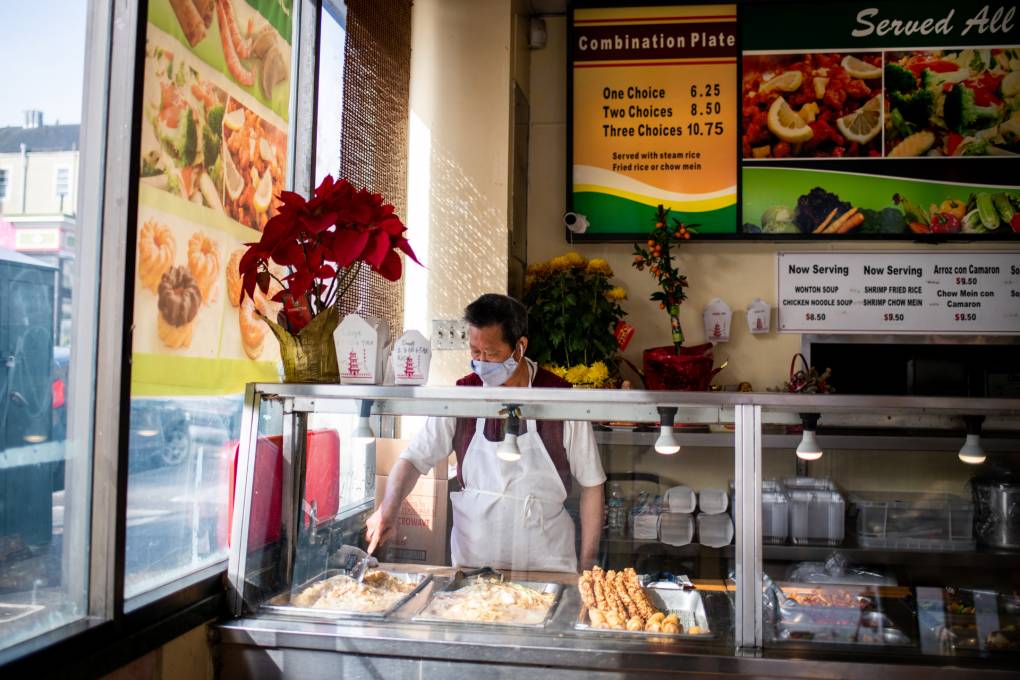
"caption": "An employee at China Express, a restaurant serving chinese food and doughnuts, on 24th and Mission Streets in San Francisco on March 19, 2021.",
"description": null,
"title": "Chinese-and-donuts1",
"credit": "Beth LaBerge/KQED",
"status": "inherit",
"altTag": "An employee at China Express on 24th and Mission Streets.",
"isLoading": false,
"fetchFailed": false
},
"news_11868010": {
"type": "attachments",
"id": "news_11868010",
"meta": {
"index": "attachments_1716263798",
"site": "news",
"id": "11868010",
"found": true
},
"parent": 11868008,
"imgSizes": {
"twentyfourteen-full-width": {
"file": "https://ww2.kqed.org/app/uploads/sites/10/2021/04/book_horizon_IMG_0944-copy-1038x576.jpg",
"width": 1038,
"mimeType": "image/jpeg",
"height": 576
},
"thumbnail": {
"file": "https://ww2.kqed.org/app/uploads/sites/10/2021/04/book_horizon_IMG_0944-copy-160x90.jpg",
"width": 160,
"mimeType": "image/jpeg",
"height": 90
},
"post-thumbnail": {
"file": "https://ww2.kqed.org/app/uploads/sites/10/2021/04/book_horizon_IMG_0944-copy-672x372.jpg",
"width": 672,
"mimeType": "image/jpeg",
"height": 372
},
"kqedFullSize": {
"file": "https://ww2.kqed.org/app/uploads/sites/10/2021/04/book_horizon_IMG_0944-copy-scaled.jpg",
"width": 2560,
"height": 1440
},
"2048x2048": {
"file": "https://ww2.kqed.org/app/uploads/sites/10/2021/04/book_horizon_IMG_0944-copy-2048x1152.jpg",
"width": 2048,
"mimeType": "image/jpeg",
"height": 1152
},
"large": {
"file": "https://ww2.kqed.org/app/uploads/sites/10/2021/04/book_horizon_IMG_0944-copy-1020x574.jpg",
"width": 1020,
"mimeType": "image/jpeg",
"height": 574
},
"1536x1536": {
"file": "https://ww2.kqed.org/app/uploads/sites/10/2021/04/book_horizon_IMG_0944-copy-1536x864.jpg",
"width": 1536,
"mimeType": "image/jpeg",
"height": 864
},
"full-width": {
"file": "https://ww2.kqed.org/app/uploads/sites/10/2021/04/book_horizon_IMG_0944-copy-1920x1080.jpg",
"width": 1920,
"mimeType": "image/jpeg",
"height": 1080
},
"medium": {
"file": "https://ww2.kqed.org/app/uploads/sites/10/2021/04/book_horizon_IMG_0944-copy-800x450.jpg",
"width": 800,
"mimeType": "image/jpeg",
"height": 450
}
},
"publishDate": 1617565323,
"modified": 1617584857,
"caption": "'How to Raise a Feminist Son'\nby Sonora Jha, published by Sasquatch Books, is available April 6, 2021.",
"description": null,
"title": "book_horizon_IMG_0944 copy",
"credit": "Lakshmi Sarah/KQED",
"status": "inherit",
"altTag": null,
"isLoading": false,
"fetchFailed": false
},
"news_11867248": {
"type": "attachments",
"id": "news_11867248",
"meta": {
"index": "attachments_1716263798",
"site": "news",
"id": "11867248",
"found": true
},
"parent": 11867137,
"imgSizes": {
"twentyfourteen-full-width": {
"file": "https://ww2.kqed.org/app/uploads/sites/10/2021/03/RS48245_007_Oakland_MillsCollege_03242021-qut-1038x576.jpg",
"width": 1038,
"mimeType": "image/jpeg",
"height": 576
},
"thumbnail": {
"file": "https://ww2.kqed.org/app/uploads/sites/10/2021/03/RS48245_007_Oakland_MillsCollege_03242021-qut-160x107.jpg",
"width": 160,
"mimeType": "image/jpeg",
"height": 107
},
"post-thumbnail": {
"file": "https://ww2.kqed.org/app/uploads/sites/10/2021/03/RS48245_007_Oakland_MillsCollege_03242021-qut-672x372.jpg",
"width": 672,
"mimeType": "image/jpeg",
"height": 372
},
"kqedFullSize": {
"file": "https://ww2.kqed.org/app/uploads/sites/10/2021/03/RS48245_007_Oakland_MillsCollege_03242021-qut.jpg",
"width": 1920,
"height": 1280
},
"large": {
"file": "https://ww2.kqed.org/app/uploads/sites/10/2021/03/RS48245_007_Oakland_MillsCollege_03242021-qut-1020x680.jpg",
"width": 1020,
"mimeType": "image/jpeg",
"height": 680
},
"1536x1536": {
"file": "https://ww2.kqed.org/app/uploads/sites/10/2021/03/RS48245_007_Oakland_MillsCollege_03242021-qut-1536x1024.jpg",
"width": 1536,
"mimeType": "image/jpeg",
"height": 1024
},
"medium": {
"file": "https://ww2.kqed.org/app/uploads/sites/10/2021/03/RS48245_007_Oakland_MillsCollege_03242021-qut-800x533.jpg",
"width": 800,
"mimeType": "image/jpeg",
"height": 533
}
},
"publishDate": 1617154117,
"modified": 1617154131,
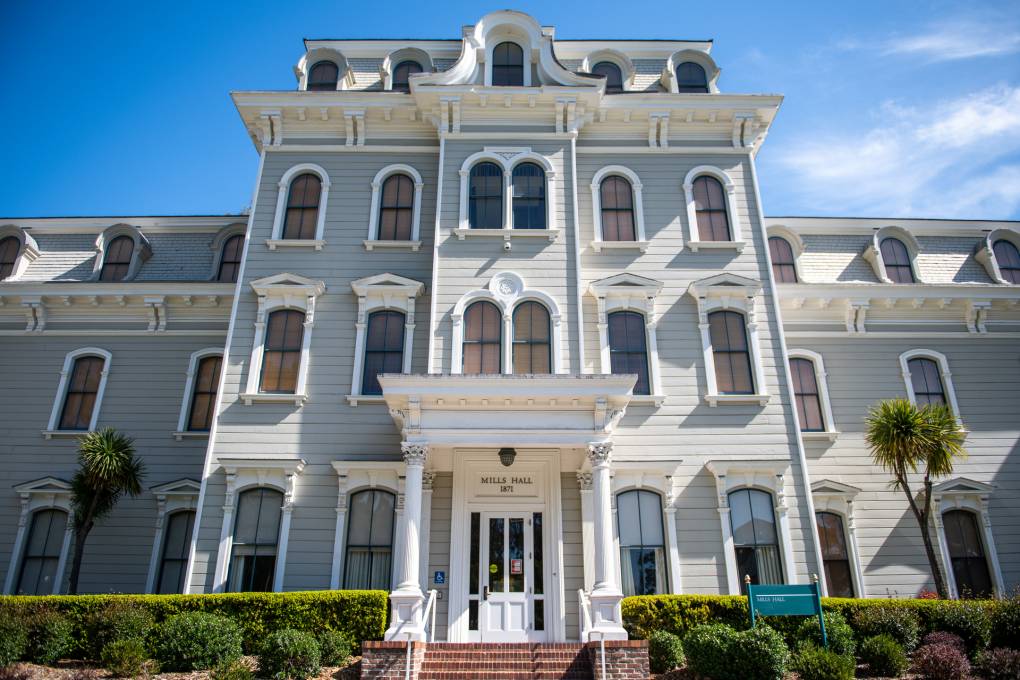
"caption": "Mills Hall, built in 1872, at Mills College in Oakland on March 24, 2021.",
"description": null,
"title": "Mills Hall, built in 1872, at Mills College in Oakland on March 24, 2021.",
"credit": "Beth LaBerge/KQED",
"status": "inherit",
"altTag": null,
"isLoading": false,
"fetchFailed": false
},
"news_11867067": {
"type": "attachments",
"id": "news_11867067",
"meta": {
"index": "attachments_1716263798",
"site": "news",
"id": "11867067",
"found": true
},
"parent": 11867051,
"imgSizes": {
"twentyfourteen-full-width": {
"file": "https://ww2.kqed.org/app/uploads/sites/10/2021/03/IMG_1308-1-1038x576.jpg",
"width": 1038,
"mimeType": "image/jpeg",
"height": 576
},
"thumbnail": {
"file": "https://ww2.kqed.org/app/uploads/sites/10/2021/03/IMG_1308-1-160x119.jpg",
"width": 160,
"mimeType": "image/jpeg",
"height": 119
},
"post-thumbnail": {
"file": "https://ww2.kqed.org/app/uploads/sites/10/2021/03/IMG_1308-1-672x372.jpg",
"width": 672,
"mimeType": "image/jpeg",
"height": 372
},
"kqedFullSize": {
"file": "https://ww2.kqed.org/app/uploads/sites/10/2021/03/IMG_1308-1.jpg",
"width": 1349,
"height": 1000
},
"large": {
"file": "https://ww2.kqed.org/app/uploads/sites/10/2021/03/IMG_1308-1-1020x756.jpg",
"width": 1020,
"mimeType": "image/jpeg",
"height": 756
},
"medium": {
"file": "https://ww2.kqed.org/app/uploads/sites/10/2021/03/IMG_1308-1-800x593.jpg",
"width": 800,
"mimeType": "image/jpeg",
"height": 593
}
},
"publishDate": 1617123482,
"modified": 1617146169,
"caption": "Bay Area parents and families demonstrate against anti-Asian hate during a rally on the San Francisco Peninsula on Sunday, March 28, 2021. Parents say they want to be role models for Asian American youth and empower them to stand up against racism.",
"description": "Bay Area parents and families rallied against anti-Asian hate in the Peninsula on Sunday, March 28, 2021. Parents say they wanted to be role models for Asian youth and empower them to stand up against racism.",
"title": "IMG_1308 (1)",
"credit": "Esther Lee/KQED",
"status": "inherit",
"altTag": null,
"isLoading": false,
"fetchFailed": false
},
"news_11866833": {
"type": "attachments",
"id": "news_11866833",
"meta": {
"index": "attachments_1716263798",
"site": "news",
"id": "11866833",
"found": true
},
"parent": 11866831,
"imgSizes": {
"twentyfourteen-full-width": {
"file": "https://ww2.kqed.org/app/uploads/sites/10/2021/03/Feature_RS48144_023_SanFrancisco_RiseUpRally_03262021-qut-1038x576.jpg",
"width": 1038,
"mimeType": "image/jpeg",
"height": 576
},
"thumbnail": {
"file": "https://ww2.kqed.org/app/uploads/sites/10/2021/03/Feature_RS48144_023_SanFrancisco_RiseUpRally_03262021-qut-160x107.jpg",
"width": 160,
"mimeType": "image/jpeg",
"height": 107
},
"post-thumbnail": {
"file": "https://ww2.kqed.org/app/uploads/sites/10/2021/03/Feature_RS48144_023_SanFrancisco_RiseUpRally_03262021-qut-672x372.jpg",
"width": 672,
"mimeType": "image/jpeg",
"height": 372
},
"kqedFullSize": {
"file": "https://ww2.kqed.org/app/uploads/sites/10/2021/03/Feature_RS48144_023_SanFrancisco_RiseUpRally_03262021-qut.jpg",
"width": 1920,
"height": 1280
},
"large": {
"file": "https://ww2.kqed.org/app/uploads/sites/10/2021/03/Feature_RS48144_023_SanFrancisco_RiseUpRally_03262021-qut-1020x680.jpg",
"width": 1020,
"mimeType": "image/jpeg",
"height": 680
},
"1536x1536": {
"file": "https://ww2.kqed.org/app/uploads/sites/10/2021/03/Feature_RS48144_023_SanFrancisco_RiseUpRally_03262021-qut-1536x1024.jpg",
"width": 1536,
"mimeType": "image/jpeg",
"height": 1024
},
"medium": {
"file": "https://ww2.kqed.org/app/uploads/sites/10/2021/03/Feature_RS48144_023_SanFrancisco_RiseUpRally_03262021-qut-800x533.jpg",
"width": 800,
"mimeType": "image/jpeg",
"height": 533
}
},
"publishDate": 1616882797,
"modified": 1617042619,
"caption": "A demonstrator holds a sign that says 'Justice for Angelo Quinto' during a student-led rally to show solidarity with the Asian American community and bring awareness to the death of Angelo Quinto, in San Francisco on March 26, 2021.",
"description": null,
"title": "Feature_RS48144_023_SanFrancisco_RiseUpRally_03262021-qut",
"credit": "Beth LaBerge/KQED",
"status": "inherit",
"altTag": "A demonstrator holds a sign that says, 'Justice for Angelo Quinto' during a student-led rally to show solidarity with the Asian American community and bring awareness to the death of Angelo Quinto, in San Francisco on March 26, 2021.",
"isLoading": false,
"fetchFailed": false
},
"news_11866138": {
"type": "attachments",
"id": "news_11866138",
"meta": {
"index": "attachments_1716263798",
"site": "news",
"id": "11866138",
"found": true
},
"parent": 11863423,
"imgSizes": {
"twentyfourteen-full-width": {
"file": "https://ww2.kqed.org/app/uploads/sites/10/2021/03/04-2-1038x576.jpg",
"width": 1038,
"mimeType": "image/jpeg",
"height": 576
},
"thumbnail": {
"file": "https://ww2.kqed.org/app/uploads/sites/10/2021/03/04-2-160x107.jpg",
"width": 160,
"mimeType": "image/jpeg",
"height": 107
},
"post-thumbnail": {
"file": "https://ww2.kqed.org/app/uploads/sites/10/2021/03/04-2-672x372.jpg",
"width": 672,
"mimeType": "image/jpeg",
"height": 372
},
"kqedFullSize": {
"file": "https://ww2.kqed.org/app/uploads/sites/10/2021/03/04-2-scaled.jpg",
"width": 2560,
"height": 1718
},
"2048x2048": {
"file": "https://ww2.kqed.org/app/uploads/sites/10/2021/03/04-2-2048x1374.jpg",
"width": 2048,
"mimeType": "image/jpeg",
"height": 1374
},
"large": {
"file": "https://ww2.kqed.org/app/uploads/sites/10/2021/03/04-2-1020x685.jpg",
"width": 1020,
"mimeType": "image/jpeg",
"height": 685
},
"1536x1536": {
"file": "https://ww2.kqed.org/app/uploads/sites/10/2021/03/04-2-1536x1031.jpg",
"width": 1536,
"mimeType": "image/jpeg",
"height": 1031
},
"full-width": {
"file": "https://ww2.kqed.org/app/uploads/sites/10/2021/03/04-2-1920x1289.jpg",
"width": 1920,
"mimeType": "image/jpeg",
"height": 1289
},
"medium": {
"file": "https://ww2.kqed.org/app/uploads/sites/10/2021/03/04-2-800x537.jpg",
"width": 800,
"mimeType": "image/jpeg",
"height": 537
}
},
"publishDate": 1616543285,
"modified": 1616798682,
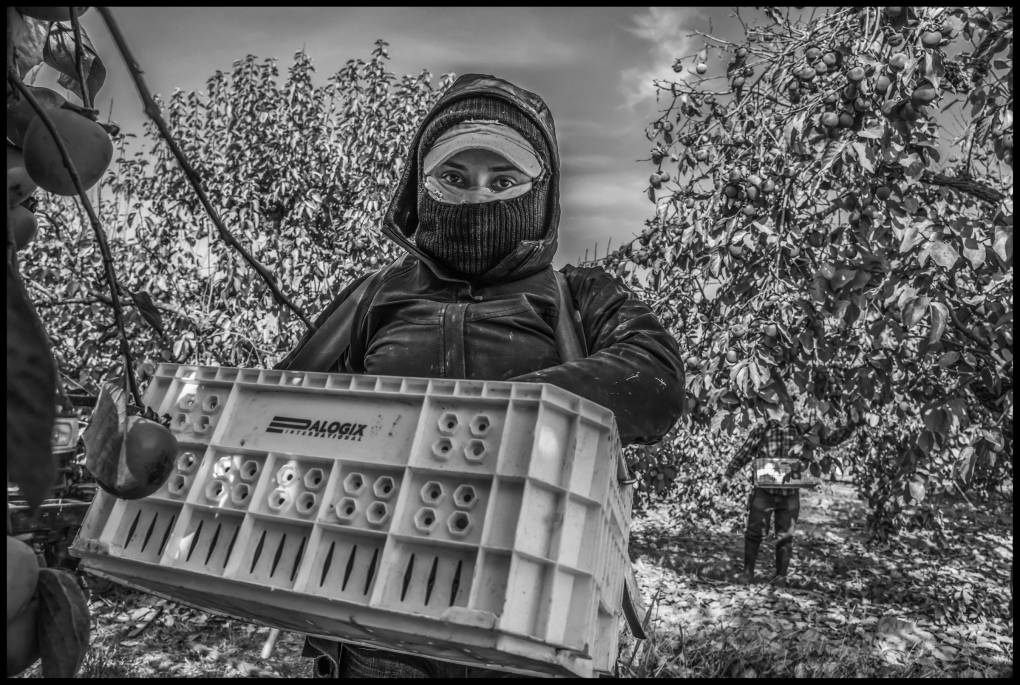
"caption": "Maria Madrigal picks persimmons in a field near Poplar in the San Joaquin Valley, in a crew of Mexican immigrants. Many workers wear face masks or bandanas as a protection against spreading the coronavirus.",
"description": "Maria Madrigal picks persimmons in a field near Poplar, in the San Joaquin Valley, in a crew of Mexican immigrants. Many workers wear facemasks or bandannas as a protection against spreading the coronavirus.",
"title": "Farmworkers pick persimmons in a San Joaquin Valley grove",
"credit": "David Bacon",
"status": "inherit",
"altTag": null,
"isLoading": false,
"fetchFailed": false
},
"news_11304129": {
"type": "attachments",
"id": "news_11304129",
"meta": {
"index": "attachments_1716263798",
"site": "news",
"id": "11304129",
"found": true
},
"parent": 11304127,
"imgSizes": {
"small": {
"file": "https://ww2.kqed.org/app/uploads/sites/10/2017/02/Hoo-Hoo-Museum-520x384.jpg",
"width": 520,
"mimeType": "image/jpeg",
"height": 384
},
"thumbnail": {
"file": "https://ww2.kqed.org/app/uploads/sites/10/2017/02/Hoo-Hoo-Museum-160x118.jpg",
"width": 160,
"mimeType": "image/jpeg",
"height": 118
},
"post-thumbnail": {
"file": "https://ww2.kqed.org/app/uploads/sites/10/2017/02/Hoo-Hoo-Museum-672x372.jpg",
"width": 672,
"mimeType": "image/jpeg",
"height": 372
},
"xsmall": {
"file": "https://ww2.kqed.org/app/uploads/sites/10/2017/02/Hoo-Hoo-Museum-375x277.jpg",
"width": 375,
"mimeType": "image/jpeg",
"height": 277
},
"kqedFullSize": {
"file": "https://ww2.kqed.org/app/uploads/sites/10/2017/02/Hoo-Hoo-Museum.jpg",
"width": 700,
"height": 517
},
"guest-author-50": {
"file": "https://ww2.kqed.org/app/uploads/sites/10/2017/02/Hoo-Hoo-Museum-50x50.jpg",
"width": 50,
"mimeType": "image/jpeg",
"height": 50
},
"guest-author-96": {
"file": "https://ww2.kqed.org/app/uploads/sites/10/2017/02/Hoo-Hoo-Museum-96x96.jpg",
"width": 96,
"mimeType": "image/jpeg",
"height": 96
},
"guest-author-64": {
"file": "https://ww2.kqed.org/app/uploads/sites/10/2017/02/Hoo-Hoo-Museum-64x64.jpg",
"width": 64,
"mimeType": "image/jpeg",
"height": 64
},
"guest-author-32": {
"file": "https://ww2.kqed.org/app/uploads/sites/10/2017/02/Hoo-Hoo-Museum-32x32.jpg",
"width": 32,
"mimeType": "image/jpeg",
"height": 32
},
"jmtc-small-thumb": {
"file": "https://ww2.kqed.org/app/uploads/sites/10/2017/02/Hoo-Hoo-Museum-280x150.jpg",
"width": 280,
"mimeType": "image/jpeg",
"height": 150
},
"detail": {
"file": "https://ww2.kqed.org/app/uploads/sites/10/2017/02/Hoo-Hoo-Museum-150x150.jpg",
"width": 150,
"mimeType": "image/jpeg",
"height": 150
},
"guest-author-128": {
"file": "https://ww2.kqed.org/app/uploads/sites/10/2017/02/Hoo-Hoo-Museum-128x128.jpg",
"width": 128,
"mimeType": "image/jpeg",
"height": 128
},
"xxsmall": {
"file": "https://ww2.kqed.org/app/uploads/sites/10/2017/02/Hoo-Hoo-Museum-240x177.jpg",
"width": 240,
"mimeType": "image/jpeg",
"height": 177
}
},
"publishDate": 1486414025,
"modified": 1487729247,
"caption": "Ohio Hoo-Hoos circa 1930.",
"description": "Ohio Hoo-Hoos circa 1930.",
"title": "Ohio Hoo-Hoos circa 1930 wearing the official robes that have their official titles.",
"credit": "Courtesy of the Hoo-Hoo Museum",
"status": "inherit",
"isLoading": false,
"fetchFailed": false
},
"news_11865510": {
"type": "attachments",
"id": "news_11865510",
"meta": {
"index": "attachments_1716263798",
"site": "news",
"id": "11865510",
"found": true
},
"parent": 11865408,
"imgSizes": {
"twentyfourteen-full-width": {
"file": "https://ww2.kqed.org/app/uploads/sites/10/2021/03/media_gallery_hi-res_mills_6-1038x576.jpeg",
"width": 1038,
"mimeType": "image/jpeg",
"height": 576
},
"thumbnail": {
"file": "https://ww2.kqed.org/app/uploads/sites/10/2021/03/media_gallery_hi-res_mills_6-160x107.jpeg",
"width": 160,
"mimeType": "image/jpeg",
"height": 107
},
"post-thumbnail": {
"file": "https://ww2.kqed.org/app/uploads/sites/10/2021/03/media_gallery_hi-res_mills_6-672x372.jpeg",
"width": 672,
"mimeType": "image/jpeg",
"height": 372
},
"kqedFullSize": {
"file": "https://ww2.kqed.org/app/uploads/sites/10/2021/03/media_gallery_hi-res_mills_6.jpeg",
"width": 1920,
"height": 1280
},
"large": {
"file": "https://ww2.kqed.org/app/uploads/sites/10/2021/03/media_gallery_hi-res_mills_6-1020x680.jpeg",
"width": 1020,
"mimeType": "image/jpeg",
"height": 680
},
"1536x1536": {
"file": "https://ww2.kqed.org/app/uploads/sites/10/2021/03/media_gallery_hi-res_mills_6-1536x1024.jpeg",
"width": 1536,
"mimeType": "image/jpeg",
"height": 1024
},
"medium": {
"file": "https://ww2.kqed.org/app/uploads/sites/10/2021/03/media_gallery_hi-res_mills_6-800x533.jpeg",
"width": 800,
"mimeType": "image/jpeg",
"height": 533
}
},
"publishDate": 1616106246,
"modified": 1616106295,
"caption": "The main commons on the campus of Mills College in Oakland.",
"description": null,
"title": "media_gallery_hi-res_mills_6",
"credit": "Phil Bond/Mills College",
"status": "inherit",
"altTag": null,
"isLoading": false,
"fetchFailed": false
},
"news_11863361": {
"type": "attachments",
"id": "news_11863361",
"meta": {
"index": "attachments_1716263798",
"site": "news",
"id": "11863361",
"found": true
},
"parent": 11863348,
"imgSizes": {
"apple_news_ca_landscape_5_5": {
"file": "https://ww2.kqed.org/app/uploads/sites/10/2021/03/Kamau_Bell_Conversation_Campaign_210304_screenshot-1044x698.png",
"width": 1044,
"mimeType": "image/png",
"height": 698
},
"apple_news_ca_square_4_0": {
"file": "https://ww2.kqed.org/app/uploads/sites/10/2021/03/Kamau_Bell_Conversation_Campaign_210304_screenshot-470x470.png",
"width": 470,
"mimeType": "image/png",
"height": 470
},
"twentyfourteen-full-width": {
"file": "https://ww2.kqed.org/app/uploads/sites/10/2021/03/Kamau_Bell_Conversation_Campaign_210304_screenshot-1038x576.png",
"width": 1038,
"mimeType": "image/png",
"height": 576
},
"thumbnail": {
"file": "https://ww2.kqed.org/app/uploads/sites/10/2021/03/Kamau_Bell_Conversation_Campaign_210304_screenshot-160x87.png",
"width": 160,
"mimeType": "image/png",
"height": 87
},
"post-thumbnail": {
"file": "https://ww2.kqed.org/app/uploads/sites/10/2021/03/Kamau_Bell_Conversation_Campaign_210304_screenshot-672x372.png",
"width": 672,
"mimeType": "image/png",
"height": 372
},
"kqedFullSize": {
"file": "https://ww2.kqed.org/app/uploads/sites/10/2021/03/Kamau_Bell_Conversation_Campaign_210304_screenshot.png",
"width": 1280,
"height": 698
},
"apple_news_ca_landscape_4_7": {
"file": "https://ww2.kqed.org/app/uploads/sites/10/2021/03/Kamau_Bell_Conversation_Campaign_210304_screenshot-632x474.png",
"width": 632,
"mimeType": "image/png",
"height": 474
},
"large": {
"file": "https://ww2.kqed.org/app/uploads/sites/10/2021/03/Kamau_Bell_Conversation_Campaign_210304_screenshot-1020x556.png",
"width": 1020,
"mimeType": "image/png",
"height": 556
},
"apple_news_ca_landscape_4_0": {
"file": "https://ww2.kqed.org/app/uploads/sites/10/2021/03/Kamau_Bell_Conversation_Campaign_210304_screenshot-536x402.png",
"width": 536,
"mimeType": "image/png",
"height": 402
},
"apple_news_ca_portrait_12_9": {
"file": "https://ww2.kqed.org/app/uploads/sites/10/2021/03/Kamau_Bell_Conversation_Campaign_210304_screenshot-1122x698.png",
"width": 1122,
"mimeType": "image/png",
"height": 698
},
"medium": {
"file": "https://ww2.kqed.org/app/uploads/sites/10/2021/03/Kamau_Bell_Conversation_Campaign_210304_screenshot-800x436.png",
"width": 800,
"mimeType": "image/png",
"height": 436
},
"apple_news_ca_portrait_4_0": {
"file": "https://ww2.kqed.org/app/uploads/sites/10/2021/03/Kamau_Bell_Conversation_Campaign_210304_screenshot-354x472.png",
"width": 354,
"mimeType": "image/png",
"height": 472
},
"apple_news_ca_portrait_9_7": {
"file": "https://ww2.kqed.org/app/uploads/sites/10/2021/03/Kamau_Bell_Conversation_Campaign_210304_screenshot-840x698.png",
"width": 840,
"mimeType": "image/png",
"height": 698
},
"apple_news_ca_square_9_7": {
"file": "https://ww2.kqed.org/app/uploads/sites/10/2021/03/Kamau_Bell_Conversation_Campaign_210304_screenshot-1104x698.png",
"width": 1104,
"mimeType": "image/png",
"height": 698
},
"apple_news_ca_portrait_4_7": {
"file": "https://ww2.kqed.org/app/uploads/sites/10/2021/03/Kamau_Bell_Conversation_Campaign_210304_screenshot-414x552.png",
"width": 414,
"mimeType": "image/png",
"height": 552
},
"apple_news_ca_portrait_5_5": {
"file": "https://ww2.kqed.org/app/uploads/sites/10/2021/03/Kamau_Bell_Conversation_Campaign_210304_screenshot-687x698.png",
"width": 687,
"mimeType": "image/png",
"height": 698
},
"apple_news_ca_square_4_7": {
"file": "https://ww2.kqed.org/app/uploads/sites/10/2021/03/Kamau_Bell_Conversation_Campaign_210304_screenshot-550x550.png",
"width": 550,
"mimeType": "image/png",
"height": 550
},
"apple_news_ca_square_5_5": {
"file": "https://ww2.kqed.org/app/uploads/sites/10/2021/03/Kamau_Bell_Conversation_Campaign_210304_screenshot-912x698.png",
"width": 912,
"mimeType": "image/png",
"height": 698
}
},
"publishDate": 1614899657,
"modified": 1614899767,
"caption": "W. Kamau Bell, Bay Area comedian and CNN host, says he wants to be part of the solution to make sure Black folks get the COVID-19 vaccine.",
"description": null,
"title": "Kamau_Bell_Conversation_Campaign_210304_screenshot",
"credit": null,
"status": "inherit",
"altTag": null,
"isLoading": false,
"fetchFailed": false
}
},
"audioPlayerReducer": {
"postId": "stream_live",
"isPaused": true,
"isPlaying": false,
"pfsActive": false,
"pledgeModalIsOpen": true,
"playerDrawerIsOpen": false,
"liveAudioPlayStartedAt": 0,
"liveAudioPlayContext": ""
},
"authorsReducer": {
"byline_news_11874549": {
"type": "authors",
"id": "byline_news_11874549",
"meta": {
"override": true
},
"slug": "byline_news_11874549",
"name": "Polina Cherezova",
"isLoading": false
},
"byline_news_11872529": {
"type": "authors",
"id": "byline_news_11872529",
"meta": {
"override": true
},
"slug": "byline_news_11872529",
"name": "Jacqueline Garcia",
"isLoading": false
},
"matthewgreen": {
"type": "authors",
"id": "1263",
"meta": {
"index": "authors_1716337520",
"id": "1263",
"found": true
},
"name": "Matthew Green",
"firstName": "Matthew",
"lastName": "Green",
"slug": "matthewgreen",
"email": "mgreen@kqed.org",
"display_author_email": false,
"staff_mastheads": [],
"title": "KQED Editor/Reporter",
"bio": "Matthew Green is a digital media producer for KQED News. He previously produced \u003ca href=\"http://www.kqed.org/lowdown\">The Lowdown\u003c/a>, KQED’s multimedia news education blog. Matthew's written for numerous Bay Area publications, including the Oakland Tribune and San Francisco Chronicle. He also taught journalism classes at Fremont High School in East Oakland.\r\n\r\nEmail: mgreen@kqed.org; Twitter: @MGreenKQED",
"avatar": "https://secure.gravatar.com/avatar/3bf498d1267ca02c8494f33d8cfc575e?s=600&d=blank&r=g",
"twitter": "MGreenKQED",
"facebook": null,
"instagram": null,
"linkedin": null,
"sites": [
{
"site": "news",
"roles": []
},
{
"site": "lowdown",
"roles": []
},
{
"site": "science",
"roles": []
},
{
"site": "education",
"roles": []
},
{
"site": "quest",
"roles": []
},
{
"site": "liveblog",
"roles": []
}
],
"headData": {
"title": "Matthew Green | KQED",
"description": "KQED Editor/Reporter",
"ogImgSrc": "https://secure.gravatar.com/avatar/3bf498d1267ca02c8494f33d8cfc575e?s=600&d=blank&r=g",
"twImgSrc": "https://secure.gravatar.com/avatar/3bf498d1267ca02c8494f33d8cfc575e?s=600&d=blank&r=g"
},
"isLoading": false,
"link": "/author/matthewgreen"
},
"dkatayama": {
"type": "authors",
"id": "7240",
"meta": {
"index": "authors_1716337520",
"id": "7240",
"found": true
},
"name": "Devin Katayama",
"firstName": "Devin",
"lastName": "Katayama",
"slug": "dkatayama",
"email": "dkatayama@kqed.org",
"display_author_email": true,
"staff_mastheads": [
"news"
],
"title": "Editor of Talent and Development",
"bio": "Devin Katayama is former Editor of Talent and Development for KQED. He supported our internship program and on-call staff by looking for equitable opportunities to improve the newsroom.\r\n\r\nHe previously hosted The Bay and American Suburb podcasts from KQED News. Prior to returning to the Bay Area in 2015, Devin was the education reporter for WFPL in Louisville and worked as a producer with radio stations in Chicago and Portland, OR. His work has appeared on NPR’s \u003cem>Morning Edition, All Things Considered, The Takeaway\u003c/em> and \u003cem>Here and Now.\u003c/em>\r\n\r\nDevin earned his MA in Journalism from Columbia College Chicago, where he was a Follett Fellow and the recipient of the 2011 Studs Terkel Community Media Workshop Scholarship for his story on Chicago's homeless youth. He won WBUR's 2014 Daniel Schorr award and a regional RTNDA Edward R. Murrow Award for his documentary \"At Risk\" that looked at issues facing some of Louisville's students. Devin has also received numerous local awards from the Associated Press and the Society of Professional Journalists.",
"avatar": "https://secure.gravatar.com/avatar/d0d2978a31002fb2de107921a8e18405?s=600&d=blank&r=g",
"twitter": "RadioDevin",
"facebook": null,
"instagram": null,
"linkedin": null,
"sites": [
{
"site": "arts",
"roles": []
},
{
"site": "news",
"roles": [
"author"
]
},
{
"site": "stateofhealth",
"roles": [
"author"
]
},
{
"site": "forum",
"roles": [
"editor"
]
},
{
"site": "perspectives",
"roles": [
"editor"
]
}
],
"headData": {
"title": "Devin Katayama | KQED",
"description": "Editor of Talent and Development",
"ogImgSrc": "https://secure.gravatar.com/avatar/d0d2978a31002fb2de107921a8e18405?s=600&d=blank&r=g",
"twImgSrc": "https://secure.gravatar.com/avatar/d0d2978a31002fb2de107921a8e18405?s=600&d=blank&r=g"
},
"isLoading": false,
"link": "/author/dkatayama"
},
"jplaczek": {
"type": "authors",
"id": "8606",
"meta": {
"index": "authors_1716337520",
"id": "8606",
"found": true
},
"name": "Jessica Placzek",
"firstName": "Jessica",
"lastName": "Placzek",
"slug": "jplaczek",
"email": "jessicalplaczek@gmail.com",
"display_author_email": false,
"staff_mastheads": [
"news"
],
"title": "KQED Contributor",
"bio": "Jessica Placzek is a former senior editor of podcasts at KQED where she served as the editorial lead of the podcast department. She worked with shows like MindShift, Rightnowish, Consider This, SOLD OUT, Bay Curious and The Bay. She’s also been a reporter and audio producer at KQED, KPFA, and KALW. She taught audio production to men incarcerated at California State Prison Solano and edited pieces they produced for the Uncuffed podcast through KALW. In 2018 she co-hosted and produced the third season of Raw Material for SFMOMA. In New Orleans she wrote for the Nola Defender. Her work has also appeared on Marketplace, All Things Considered, The California Report, and Vice. You can find more at jessicaplaczek.com",
"avatar": "https://secure.gravatar.com/avatar/5ead103b5880f672eceb84ce75eecd1b4b6f74a47edc457684a73ad5b8b158e9?s=600&d=blank&r=g",
"twitter": null,
"bluesky": null,
"facebook": null,
"instagram": null,
"linkedin": null,
"sites": [
{
"site": "arts",
"roles": [
"subscriber"
]
},
{
"site": "news",
"roles": [
"subscriber"
]
},
{
"site": "stateofhealth",
"roles": [
"editor"
]
},
{
"site": "forum",
"roles": [
"editor"
]
}
],
"headData": {
"title": "Jessica Placzek | KQED",
"description": "KQED Contributor",
"ogImgSrc": "https://secure.gravatar.com/avatar/5ead103b5880f672eceb84ce75eecd1b4b6f74a47edc457684a73ad5b8b158e9?s=600&d=blank&r=g",
"twImgSrc": "https://secure.gravatar.com/avatar/5ead103b5880f672eceb84ce75eecd1b4b6f74a47edc457684a73ad5b8b158e9?s=600&d=blank&r=g"
},
"isLoading": false,
"link": "/author/jplaczek"
},
"cveltman": {
"type": "authors",
"id": "8608",
"meta": {
"index": "authors_1716337520",
"id": "8608",
"found": true
},
"name": "Chloe Veltman",
"firstName": "Chloe",
"lastName": "Veltman",
"slug": "cveltman",
"email": "cveltman@kqed.org",
"display_author_email": true,
"staff_mastheads": [],
"title": "Arts and Culture Reporter",
"bio": "Chloe Veltman is a former arts and culture reporter for KQED. Prior to joining the organization, she launched and led the arts bureau at Colorado Public Radio, served as the Bay Area's culture columnist for the New York Times, and was the founder, host and executive producer of VoiceBox, a national award-winning weekly podcast/radio show and live events series all about the human voice. Chloe is the recipient of numerous prizes, grants and fellowships including a Webby Award for her work on interactive storytelling, both the John S Knight Journalism Fellowship and Humanities Center Fellowship at Stanford University, the Sundance Arts Writing Fellowship and a Library of Congress Research Fellowship. She is the author of the book \"On Acting\" and has appeared as a guest lecturer at Yale University and the San Francisco Conservatory of Music among other institutions. She holds a BA in english literature from King's College, Cambridge, and a Masters in Dramaturgy from the Central School of Speech and Drama/Harvard Institute for Advanced Theater Training.\r\n\u003ca href=\"https://www.chloeveltman.com\">www.chloeveltman.com\u003c/a>",
"avatar": "https://secure.gravatar.com/avatar/55403394b00a1ddab683952c2eb2cf85?s=600&d=blank&r=g",
"twitter": "chloeveltman",
"facebook": null,
"instagram": null,
"linkedin": null,
"sites": [
{
"site": "arts",
"roles": []
},
{
"site": "news",
"roles": [
"author"
]
},
{
"site": "pop",
"roles": [
"editor"
]
},
{
"site": "science",
"roles": []
}
],
"headData": {
"title": "Chloe Veltman | KQED",
"description": "Arts and Culture Reporter",
"ogImgSrc": "https://secure.gravatar.com/avatar/55403394b00a1ddab683952c2eb2cf85?s=600&d=blank&r=g",
"twImgSrc": "https://secure.gravatar.com/avatar/55403394b00a1ddab683952c2eb2cf85?s=600&d=blank&r=g"
},
"isLoading": false,
"link": "/author/cveltman"
},
"bwatt": {
"type": "authors",
"id": "11238",
"meta": {
"index": "authors_1716337520",
"id": "11238",
"found": true
},
"name": "Brian Watt",
"firstName": "Brian",
"lastName": "Watt",
"slug": "bwatt",
"email": "bwatt@KQED.org",
"display_author_email": false,
"staff_mastheads": [
"news"
],
"title": "Morning News Anchor",
"bio": "Brian Watt is KQED's morning radio news anchor. He joined the KQED News team in April of 2016. Prior to that, he worked as a Reporter for KPCC in Los Angeles and a producer at \u003cem>Marketplace.\u003c/em>\r\n\r\nDuring eight years at KPCC, Brian covered business and economics, and his work won several awards. In 2008, he won the Los Angeles Press Club’s first-place award for Business and Financial Reporting, Broadcast. He’s also received honorable mention and been first runner up for the Press Club’s Radio Journalist of the Year. He won two Golden Mike awards from the Radio and TV News Association of Southern California.\r\n\r\nBrian holds degrees in theater from Yale University and the Sorbonne, and has worked as an actor in France, Italy, Brazil, Hungary and . . . Hollywood. He appeared in a few television shows, including \u003cem>The West Wing, Judging Amy\u003c/em> and \u003cem>The District.\u003c/em>\r\n\r\nEmail: bwatt@KQED.org Twitter: @RadioBWatt",
"avatar": "https://secure.gravatar.com/avatar/55393ff57ed34e2be773ba4789dd6a19?s=600&d=blank&r=g",
"twitter": "@RadioBWatt",
"facebook": null,
"instagram": null,
"linkedin": null,
"sites": [
{
"site": "arts",
"roles": [
"contributor"
]
},
{
"site": "news",
"roles": [
"editor"
]
}
],
"headData": {
"title": "Brian Watt | KQED",
"description": "Morning News Anchor",
"ogImgSrc": "https://secure.gravatar.com/avatar/55393ff57ed34e2be773ba4789dd6a19?s=600&d=blank&r=g",
"twImgSrc": "https://secure.gravatar.com/avatar/55393ff57ed34e2be773ba4789dd6a19?s=600&d=blank&r=g"
},
"isLoading": false,
"link": "/author/bwatt"
},
"aehsanipour": {
"type": "authors",
"id": "11580",
"meta": {
"index": "authors_1716337520",
"id": "11580",
"found": true
},
"name": "Asal Ehsanipour",
"firstName": "Asal",
"lastName": "Ehsanipour",
"slug": "aehsanipour",
"email": "aehsanipour@kqed.org",
"display_author_email": false,
"staff_mastheads": [],
"title": "Reporter and Producer",
"bio": "Asal Ehsanipour is a producer and reporter for Rightnowish, Bay Curious and The California Report Magazine. She is also a producer for \u003ca href=\"https://www.thedoubleshift.com/\">The Double Shift\u003c/a>, a podcast about a new generation of working mothers. In 2018, Asal was named an Emerging Journalist Fellow by the Journalism and Women’s Symposium. Her work has appeared on KQED, KALW, PRI’s The World, and in several food and travel publications.",
"avatar": "https://secure.gravatar.com/avatar/c0e210438f5dca1b76921ff9f0eada52?s=600&d=blank&r=g",
"twitter": null,
"facebook": null,
"instagram": null,
"linkedin": null,
"sites": [
{
"site": "arts",
"roles": []
},
{
"site": "news",
"roles": [
"author",
"edit_others_posts"
]
}
],
"headData": {
"title": "Asal Ehsanipour | KQED",
"description": "Reporter and Producer",
"ogImgSrc": "https://secure.gravatar.com/avatar/c0e210438f5dca1b76921ff9f0eada52?s=600&d=blank&r=g",
"twImgSrc": "https://secure.gravatar.com/avatar/c0e210438f5dca1b76921ff9f0eada52?s=600&d=blank&r=g"
},
"isLoading": false,
"link": "/author/aehsanipour"
},
"lsarah": {
"type": "authors",
"id": "11626",
"meta": {
"index": "authors_1716337520",
"id": "11626",
"found": true
},
"name": "Lakshmi Sarah",
"firstName": "Lakshmi",
"lastName": "Sarah",
"slug": "lsarah",
"email": "lsarah@kqed.org",
"display_author_email": false,
"staff_mastheads": [],
"title": "Digital Producer",
"bio": "Lakshmi Sarah is an educator, author and journalist with a focus on innovative storytelling. She has worked with newspapers, radio and magazines from Ahmedabad, India to Los Angeles, California. She has written and produced for Die Zeit, Global Voices, AJ+, KQED, Fusion Media Group and the New York Times.",
"avatar": "https://secure.gravatar.com/avatar/652dcaecd8b28826fc17a8b2d6bb4e93?s=600&d=blank&r=g",
"twitter": "lakitalki",
"facebook": null,
"instagram": "https://www.instagram.com/laki.talki/",
"linkedin": "https://www.linkedin.com/in/lakisarah/",
"sites": [
{
"site": "arts",
"roles": []
},
{
"site": "news",
"roles": []
},
{
"site": "bayareabites",
"roles": []
},
{
"site": "science",
"roles": []
}
],
"headData": {
"title": "Lakshmi Sarah | KQED",
"description": "Digital Producer",
"ogImgSrc": "https://secure.gravatar.com/avatar/652dcaecd8b28826fc17a8b2d6bb4e93?s=600&d=blank&r=g",
"twImgSrc": "https://secure.gravatar.com/avatar/652dcaecd8b28826fc17a8b2d6bb4e93?s=600&d=blank&r=g"
},
"isLoading": false,
"link": "/author/lsarah"
},
"jchang": {
"type": "authors",
"id": "11642",
"meta": {
"index": "authors_1716337520",
"id": "11642",
"found": true
},
"name": "Julie Chang",
"firstName": "Julie",
"lastName": "Chang",
"slug": "jchang",
"email": "jchang@kqed.org",
"display_author_email": false,
"staff_mastheads": [
"news"
],
"title": "KQED Contributor",
"bio": "Julie Chang is a reporter and producer (and occasional anchor) with the radio and digital teams at KQED. Before KQED, she worked at WAMU 88.5 in Washington D.C. and 89.3 KPCC in Los Angeles County. Her work has been featured on NPR’s Morning Edition and All Things Considered, Here & Now, the New York Times, and more. Julie graduated from UC Berkeley’s Graduate School of Journalism. She previously taught English at Pasadena City College, Fullerton College and Cal Poly Pomona. Julie earned her M.A. in English from Cal Poly Pomona and her B.A. in English from UCI with a minor in criminology.",
"avatar": "https://secure.gravatar.com/avatar/a7afce94ef127082c5475116b4a3b77d?s=600&d=blank&r=g",
"twitter": "BayAreaJulie",
"facebook": null,
"instagram": null,
"linkedin": "https://www.linkedin.com/in/julieyc/",
"sites": [
{
"site": "",
"roles": [
"editor"
]
},
{
"site": "news",
"roles": [
"author"
]
},
{
"site": "science",
"roles": [
"editor"
]
}
],
"headData": {
"title": "Julie Chang | KQED",
"description": "KQED Contributor",
"ogImgSrc": "https://secure.gravatar.com/avatar/a7afce94ef127082c5475116b4a3b77d?s=600&d=blank&r=g",
"twImgSrc": "https://secure.gravatar.com/avatar/a7afce94ef127082c5475116b4a3b77d?s=600&d=blank&r=g"
},
"isLoading": false,
"link": "/author/jchang"
},
"amontecillo": {
"type": "authors",
"id": "11649",
"meta": {
"index": "authors_1716337520",
"id": "11649",
"found": true
},
"name": "Alan Montecillo",
"firstName": "Alan",
"lastName": "Montecillo",
"slug": "amontecillo",
"email": "amontecillo@kqed.org",
"display_author_email": false,
"staff_mastheads": [
"news"
],
"title": "KQED Contributor",
"bio": "Alan Montecillo is the senior editor of \u003cem>\u003ca href=\"http://kqed.org/thebay\">The Bay\u003c/a>, \u003c/em> KQED's local news podcast. Before moving to the Bay Area, he worked as a senior talk show producer for WILL in Champaign-Urbana, Illinois and at Oregon Public Broadcasting in Portland, Oregon. He has won journalism awards from the Society of Professional Journalists Northern California, the Public Media Journalists Association, The Signal Awards, and has also received a regional Edward R. Murrow award. Alan is a Filipino American from Hong Kong and a graduate of Reed College.",
"avatar": "https://secure.gravatar.com/avatar/268f53a2066899ea9efdd8a5900218b17c822d9862cbc9326cccec53ef41d349?s=600&d=blank&r=g",
"twitter": "alanmontecillo",
"bluesky": null,
"facebook": null,
"instagram": null,
"linkedin": null,
"sites": [
{
"site": "",
"roles": [
"editor"
]
},
{
"site": "news",
"roles": [
"editor",
"manage_categories"
]
}
],
"headData": {
"title": "Alan Montecillo | KQED",
"description": "KQED Contributor",
"ogImgSrc": "https://secure.gravatar.com/avatar/268f53a2066899ea9efdd8a5900218b17c822d9862cbc9326cccec53ef41d349?s=600&d=blank&r=g",
"twImgSrc": "https://secure.gravatar.com/avatar/268f53a2066899ea9efdd8a5900218b17c822d9862cbc9326cccec53ef41d349?s=600&d=blank&r=g"
},
"isLoading": false,
"link": "/author/amontecillo"
},
"blaberge": {
"type": "authors",
"id": "11667",
"meta": {
"index": "authors_1716337520",
"id": "11667",
"found": true
},
"name": "Beth LaBerge",
"firstName": "Beth",
"lastName": "LaBerge",
"slug": "blaberge",
"email": "blaberge@KQED.org",
"display_author_email": true,
"staff_mastheads": [
"news"
],
"title": "Photographer, News",
"bio": "Beth LaBerge is a visual journalist for \u003ca href=\"https://www.kqed.org/news\">KQED News\u003c/a>.",
"avatar": "https://secure.gravatar.com/avatar/ce49ecd7a1306685637b45a1f6f5dedfc4ae9481966eb596fea5160466dd6319?s=600&d=blank&r=g",
"twitter": null,
"bluesky": null,
"facebook": null,
"instagram": "https://www.instagram.com/bethlaberge/",
"linkedin": null,
"sites": [
{
"site": "arts",
"roles": [
"editor",
"manage_categories"
]
},
{
"site": "news",
"roles": [
"editor",
"edit_plugins",
"manage_categories"
]
},
{
"site": "science",
"roles": [
"editor",
"contributor",
"author",
"manage_categories"
]
},
{
"site": "perspectives",
"roles": [
"editor"
]
},
{
"site": "liveblog",
"roles": [
"editor"
]
}
],
"headData": {
"title": "Beth LaBerge | KQED",
"description": "Photographer, News",
"ogImgSrc": "https://secure.gravatar.com/avatar/ce49ecd7a1306685637b45a1f6f5dedfc4ae9481966eb596fea5160466dd6319?s=600&d=blank&r=g",
"twImgSrc": "https://secure.gravatar.com/avatar/ce49ecd7a1306685637b45a1f6f5dedfc4ae9481966eb596fea5160466dd6319?s=600&d=blank&r=g"
},
"isLoading": false,
"link": "/author/blaberge"
},
"abandlamudi": {
"type": "authors",
"id": "11672",
"meta": {
"index": "authors_1716337520",
"id": "11672",
"found": true
},
"name": "Adhiti Bandlamudi",
"firstName": "Adhiti",
"lastName": "Bandlamudi",
"slug": "abandlamudi",
"email": "abandlamudi@kqed.org",
"display_author_email": false,
"staff_mastheads": [
"news"
],
"title": "KQED Housing Reporter",
"bio": "Adhiti Bandlamudi reports for KQED's Housing desk. She focuses on how housing gets built across the Bay Area. Before joining KQED in 2020, she reported for WUNC in Durham, North Carolina, WABE in Atlanta, Georgia and Capital Public Radio in Sacramento. In 2017, she was awarded a Kroc Fellowship at NPR where she reported on everything from sprinkles to the Golden State Killer's arrest. When she's not reporting, she's baking new recipes in her kitchen or watching movies with friends and family. She's originally from Georgia and has strong opinions about Great British Bake Off.",
"avatar": "https://secure.gravatar.com/avatar/868129c8b257bb99a3500e2c86a65400?s=600&d=mm&r=g",
"twitter": "oddity_adhiti",
"facebook": null,
"instagram": null,
"linkedin": null,
"sites": [
{
"site": "arts",
"roles": [
"author"
]
},
{
"site": "news",
"roles": [
"editor"
]
},
{
"site": "liveblog",
"roles": [
"author"
]
}
],
"headData": {
"title": "Adhiti Bandlamudi | KQED",
"description": "KQED Housing Reporter",
"ogImgSrc": "https://secure.gravatar.com/avatar/868129c8b257bb99a3500e2c86a65400?s=600&d=mm&r=g",
"twImgSrc": "https://secure.gravatar.com/avatar/868129c8b257bb99a3500e2c86a65400?s=600&d=mm&r=g"
},
"isLoading": false,
"link": "/author/abandlamudi"
},
"agonzalez": {
"type": "authors",
"id": "11724",
"meta": {
"index": "authors_1716337520",
"id": "11724",
"found": true
},
"name": "Alexander Gonzalez",
"firstName": "Alexander",
"lastName": "Gonzalez",
"slug": "agonzalez",
"email": "AlexanderGonzalez@KQED.org",
"display_author_email": false,
"staff_mastheads": [
"news"
],
"title": "KQED Contributor",
"bio": null,
"avatar": "https://secure.gravatar.com/avatar/9e291ed34e154df4c662edf858b641d70b4859939bfe40be478408f9dfd057d2?s=600&d=blank&r=g",
"twitter": null,
"bluesky": null,
"facebook": null,
"instagram": null,
"linkedin": null,
"sites": [
{
"site": "arts",
"roles": [
"editor"
]
},
{
"site": "news",
"roles": [
"editor"
]
},
{
"site": "science",
"roles": [
"editor"
]
}
],
"headData": {
"title": "Alexander Gonzalez | KQED",
"description": "KQED Contributor",
"ogImgSrc": "https://secure.gravatar.com/avatar/9e291ed34e154df4c662edf858b641d70b4859939bfe40be478408f9dfd057d2?s=600&d=blank&r=g",
"twImgSrc": "https://secure.gravatar.com/avatar/9e291ed34e154df4c662edf858b641d70b4859939bfe40be478408f9dfd057d2?s=600&d=blank&r=g"
},
"isLoading": false,
"link": "/author/agonzalez"
},
"harzate": {
"type": "authors",
"id": "11727",
"meta": {
"index": "authors_1716337520",
"id": "11727",
"found": true
},
"name": "Héctor Alejandro Arzate",
"firstName": "Héctor Alejandro",
"lastName": "Arzate",
"slug": "harzate",
"email": "harzate@kqed.org",
"display_author_email": false,
"staff_mastheads": [],
"title": "KQED Contributor",
"bio": null,
"avatar": "https://secure.gravatar.com/avatar/23c72c3afa19f2c6801c5db997a908d8?s=600&d=blank&r=g",
"twitter": null,
"facebook": null,
"instagram": null,
"linkedin": null,
"sites": [
{
"site": "news",
"roles": [
"author"
]
}
],
"headData": {
"title": "Héctor Alejandro Arzate | KQED",
"description": "KQED Contributor",
"ogImgSrc": "https://secure.gravatar.com/avatar/23c72c3afa19f2c6801c5db997a908d8?s=600&d=blank&r=g",
"twImgSrc": "https://secure.gravatar.com/avatar/23c72c3afa19f2c6801c5db997a908d8?s=600&d=blank&r=g"
},
"isLoading": false,
"link": "/author/harzate"
},
"smartos": {
"type": "authors",
"id": "11741",
"meta": {
"index": "authors_1716337520",
"id": "11741",
"found": true
},
"name": "Shaylyn Martos",
"firstName": "Shaylyn",
"lastName": "Martos",
"slug": "smartos",
"email": "smartos@kqed.org",
"display_author_email": false,
"staff_mastheads": [],
"title": "KQED Contributor",
"bio": null,
"avatar": "https://secure.gravatar.com/avatar/ca566efb61a864c9a7fff48e77d45f31?s=600&d=blank&r=g",
"twitter": "@shaylynmartos",
"facebook": null,
"instagram": null,
"linkedin": null,
"sites": [
{
"site": "news",
"roles": [
"author"
]
}
],
"headData": {
"title": "Shaylyn Martos | KQED",
"description": "KQED Contributor",
"ogImgSrc": "https://secure.gravatar.com/avatar/ca566efb61a864c9a7fff48e77d45f31?s=600&d=blank&r=g",
"twImgSrc": "https://secure.gravatar.com/avatar/ca566efb61a864c9a7fff48e77d45f31?s=600&d=blank&r=g"
},
"isLoading": false,
"link": "/author/smartos"
}
},
"pagesReducer": {
"news_category_arts-and-culture": {
"type": "terms",
"id": "news_223",
"meta": {
"index": "terms_1716263798",
"site": "news",
"id": "223",
"score": 11.242002
},
"featImg": null,
"name": "Arts and Culture",
"description": null,
"taxonomy": "category",
"headData": {
"twImgId": null,
"twTitle": null,
"ogTitle": null,
"ogImgId": null,
"twDescription": null,
"description": null,
"title": "Arts and Culture Archives | KQED News",
"ogDescription": null
},
"ttid": 231,
"slug": "arts-and-culture",
"isLoading": false,
"title": "Arts and Culture",
"pageMeta": {
"site": "news",
"WpPageTemplate": "page-topic-editorial",
"currentPage": 37
},
"blocks": [
{
"blockName": "kqed/post-list",
"attrs": {
"layout": "cardArticle2",
"query": "posts/news?category=arts-and-culture",
"seeMore": false,
"paginated": true,
"page": 37
}
},
{
"blockName": "kqed/ad"
}
]
}
},
"pfsSessionReducer": {},
"postsReducer": {
"stream_live": {
"type": "live",
"id": "stream_live",
"audioUrl": "https://streams.kqed.org/kqedradio",
"title": "Live Stream",
"excerpt": "Live Stream information currently unavailable.",
"link": "/radio",
"featImg": "",
"label": {
"name": "KQED Live",
"link": "/"
}
},
"stream_kqedNewscast": {
"type": "posts",
"id": "stream_kqedNewscast",
"audioUrl": "https://www.kqed.org/.stream/anon/radio/RDnews/newscast.mp3?_=1",
"title": "KQED Newscast",
"featImg": "",
"label": {
"name": "88.5 FM",
"link": "/"
}
},
"news_11874549": {
"type": "posts",
"id": "news_11874549",
"meta": {
"index": "posts_1716263798",
"site": "news",
"id": "11874549",
"score": null,
"sort": [
1621638844000
]
},
"parent": 0,
"labelTerm": {
"site": "news",
"term": 26731
},
"blocks": [],
"publishDate": 1621638844,
"format": "image",
"disqusTitle": "MusiKaravan: Bringing Tunes and Human Bonding to California’s Countryside",
"title": "MusiKaravan: Bringing Tunes and Human Bonding to California’s Countryside",
"headTitle": "The California Report Magazine | KQED News",
"content": "\u003cp>A little red 1971 Volkswagen bus pulls up to the driveway of a farm in the countryside of California. Two violinists pop out. They’re exhausted from being on the road for hours, they need a shower, as well as a place to park overnight, but their eyes are sparkling with excitement.\u003c/p>\n\u003cp>[pullquote size=\"medium\" align=\"right\" citation=\"Etienne Gara, MusiKaravan violinist\"]'It’s about breaking that wall that we have, bond together, and create stories.'[/pullquote]Concert violinists Etienne Gara and YuEun Kim hit the road during the height of the pandemic, driving through our divided states, bringing music to farmers, winemakers and anyone they would meet along the way, including turkeys and even ostriches.\u003c/p>\n\u003cp>\u003ca href=\"http://deliriummusicum.com/projects-without-borders/musikaravan/\" target=\"_blank\" rel=\"noopener noreferrer\">MusiKaravan\u003c/a> emerged as a side project of \u003ca href=\"https://deliriummusicum.com/\" target=\"_blank\" rel=\"noopener noreferrer\">Delirium Musicum\u003c/a>, a Los Angeles-based string chamber orchestra. Gara is a French Hungarian violinist, artistic director and founder of Delirium Musicum. He recorded his \"French Recital\" CD on a 1714 Leonora Jackson Stradivarius, appeared on Leonard Cohen’s last album and was recently named artist in residence at \u003ca href=\"https://www.thesoraya.org/\" target=\"_blank\" rel=\"noopener noreferrer\">The Soraya\u003c/a>, a 1,700 seat state-of-the-art venue in Los Angeles. Kim is a Korean violinist, part of Delirium Musicum and an international competition winner with over 6 million views on YouTube.\u003c/p>\n\u003cp>Their mission is simple: to bring joy and human bonding through music. And in a time when our states are more divided than ever, they believe music can bring us a little closer.\u003c/p>\n\u003cp>“Music is going to save the world,” Gara said. “We all have the same dreams, we all have the same worries, we all have the same everything in life, no matter what political, social, religious background you have. And it’s about breaking that wall that we have, bond together and create stories.”\u003c/p>\n\u003cp>https://www.youtube.com/watch?v=Q-XGS6_4clo\u003c/p>\n\u003cp>Becoming traveling musicians on the road was far from what the two violinists had envisioned back in March 2020. Delirium Musicum was in full swing. They were getting ready for tours, preparing for a recording session with a major record label and they were just about to play a concert at the Wallis Annenberg Center for the Performing Arts in Beverly Hills.\u003c/p>\n\u003cp>“We were really looking forward to it,” Gara said.\u003c/p>\n\u003cp>https://www.youtube.com/watch?v=2bmFgGOfOEs\u003c/p>\n\u003cp>Then the pandemic hit, and everything stopped. Concert halls suddenly went silent. Like other performers and musicians this past year, Gara and Kim found themselves without any opportunities for live performances. But they couldn’t just stop making music.\u003c/p>\n\u003cp>“You cannot stop life,” Gara said. “It’s like, I still need to create, otherwise I cannot live.”\u003c/p>\n\u003cp>From this isolation, and necessity to create, an idea was born: What if they could continue performing, but outdoors and socially distanced?\u003c/p>\n\u003cp>As part of Delirium Musicum, they created a courtyard concert series in April, where they would play in the center of their apartment building in East Hollywood every Sunday. The music brought people out of their homes. From the elderly to parents with children, all kinds of listeners stepped out onto their balconies to experience live music.\u003c/p>\n\u003cp>“We realized it was so important for the people,” Gara said. “It was like a medical cure for them emotionally and physically.”\u003c/p>\n\u003cp>https://www.youtube.com/watch?v=fDpebnb4Bpg\u003c/p>\n\u003cp>Gara and Kim said they felt a sense of purpose in bringing music as a way to connect to people who were now spending their days isolated in their apartments. They started to think about how they could bring music to people all over America, not just Los Angeles.\u003c/p>\n\u003cp>That’s when Gara came up with the crazy idea to hit the road. Ever since he was a child, he said he always dreamed of traveling, and not being tied to a single place. Though Kim was hesitant at first, it didn’t take long before she was on board, too.\u003c/p>\n\u003cp>“I never imagined that I’m going to be living in a bus,” Kim said. “When he talked about this idea, of course, I thought, ‘It’s crazy!’ ”\u003c/p>\n\u003cp>Without a schedule full of concerts and tours, Kim agreed that they should take the opportunity to experience something different.\u003c/p>\n\u003cp>In June 2020, Gara and Kim started hunting for a vehicle. They scrolled through hundreds of buses and vans on Craigslist, stumbling upon some rustier than others, until they found the one: a little 1971 VW bus — a vehicle with personality, the third character to their story.\u003c/p>\n\u003cfigure id=\"attachment_11874563\" class=\"wp-caption alignnone\" style=\"max-width: 800px\">\u003cimg class=\"size-medium wp-image-11874563\" src=\"https://ww2.kqed.org/app/uploads/sites/10/2021/05/MusiKaravan-2-800x600.jpg\" alt=\"\" width=\"800\" height=\"600\" srcset=\"https://ww2.kqed.org/app/uploads/sites/10/2021/05/MusiKaravan-2-800x600.jpg 800w, https://ww2.kqed.org/app/uploads/sites/10/2021/05/MusiKaravan-2-1020x765.jpg 1020w, https://ww2.kqed.org/app/uploads/sites/10/2021/05/MusiKaravan-2-160x120.jpg 160w, https://ww2.kqed.org/app/uploads/sites/10/2021/05/MusiKaravan-2-1536x1152.jpg 1536w, https://ww2.kqed.org/app/uploads/sites/10/2021/05/MusiKaravan-2.jpg 1920w\" sizes=\"(max-width: 800px) 100vw, 800px\">\u003cfigcaption class=\"wp-caption-text\">MusiKaravan violinists Etienne Gara and YuEun Kim after they bought their 1971 VW bus in Los Angeles. \u003ccite>(Courtesy of MusiKaravan)\u003c/cite>\u003c/figcaption>\u003c/figure>\n\u003cp>They spent about a month and a half working on the bus to bring it into shape. The metal plates of the chassis were rusted, there were bumps and scratches and the paint was faded, but after some mechanical repairs, a new set of curtains and a coat of bright red paint, the bus was ready.\u003c/p>\n\u003cp>“It’s extremely cute,” Gara said. “It triggers imagination, it triggers stories because most people have a story about a VW bus about 50 years ago, and nobody can throw you out when they see this cute candy on wheels.”\u003c/p>\n\u003cp>They named him Boris. And finally, in August, they hit the road.\u003c/p>\n\u003cfigure id=\"attachment_11874565\" class=\"wp-caption alignnone\" style=\"max-width: 800px\">\u003cimg class=\"size-medium wp-image-11874565\" src=\"https://ww2.kqed.org/app/uploads/sites/10/2021/05/MusiKaravan-3-800x1067.jpeg\" alt=\"\" width=\"800\" height=\"1067\" srcset=\"https://ww2.kqed.org/app/uploads/sites/10/2021/05/MusiKaravan-3-800x1067.jpeg 800w, https://ww2.kqed.org/app/uploads/sites/10/2021/05/MusiKaravan-3-1020x1360.jpeg 1020w, https://ww2.kqed.org/app/uploads/sites/10/2021/05/MusiKaravan-3-160x213.jpeg 160w, https://ww2.kqed.org/app/uploads/sites/10/2021/05/MusiKaravan-3-1152x1536.jpeg 1152w, https://ww2.kqed.org/app/uploads/sites/10/2021/05/MusiKaravan-3.jpeg 1440w\" sizes=\"(max-width: 800px) 100vw, 800px\">\u003cfigcaption class=\"wp-caption-text\">MusiKaravan violinists Etienne Gara and YuEun Kim in Paso Robles. \u003ccite>(Lathan J.)\u003c/cite>\u003c/figcaption>\u003c/figure>\n\u003cp>It was the start of their own great American road trip — two violinists from foreign countries, traveling across the states from one place to the next, trying to bring people together.\u003c/p>\n\u003cp>“I like being on the road, I feel good,” Gara said. “I never thought about it as me being French or not from here. I always felt that I’m coming to people — they don’t know my background, I don’t know their background, but I see them just as people.”\u003c/p>\n\u003cp>Meeting people along the way gave them a sense of place in America, as they carried on this American tradition that is rooted in history. Their journey is reminiscent of the 1960s, the hippie era, when young people hit Route 66 searching for independence and their sense of identity.\u003c/p>\n\u003cp>“Where do I belong? Am I French? Am I Hungarian? American? European?” Gara pondered. “Where do I really come from? Where do I go? It became normal to be a foreigner, to be on the road.”\u003c/p>\n\u003cp>For Kim, being on the road helped her cope with grief. Her father passed away last year just as they had left Los Angeles and to start touring.\u003c/p>\n\u003cp>“Because of what happened to my father, the beginning was really hard,” Kim said.\u003c/p>\n\u003cp>After receiving the call about Kim’s father, Kim and Gara immediately returned to Los Angeles. Kim boarded a flight to South Korea to visit her family and attend her father’s funeral, which ended up delaying their MusiKaravan plans for a month.\u003c/p>\n\u003cp>[ad fullwidth]\u003c/p>\n\u003cp>When she returned, still mourning, she said, “But it was more helpful for me to travel and meet new people and [to experience] this crazy time on the road.”\u003c/p>\n\u003cp>There’s a kind of freedom in not knowing where the road would take them next. As Gara and Kim drove through cinematic landscapes, across deserts and forests, they experienced tall redwood trees in Northern California, the glistening of the sun rising in the mornings and snow-capped mountain tops. The scenery helped them see life from a different perspective.\u003c/p>\n\u003cp>“This is so beautiful and stunning, and at the same time, I’m so small,” Kim said. “Compared to this Earth, I’m nothing. I really like that feeling.”\u003c/p>\n\u003cp>Living in a tiny and cramped bus is not easy. Gara and Kim said they can only afford to keep only the essentials inside of their bus, like their violins, filming equipment, a small sink, a water tank, propane and a small ice box where they store their food. Their driveway hosts also generously gifted them meat from their farms, as well as fresh organic fruits and vegetables, and bottles of wine, they said. They even butchered an old rooster one time, which they turned into coq au vin.\u003c/p>\n\u003cp>“It’s like a Michelin star restaurant just in the bus!” Gara exclaimed.\u003c/p>\n\u003cfigure id=\"attachment_11874566\" class=\"wp-caption alignnone\" style=\"max-width: 800px\">\u003cimg class=\"size-medium wp-image-11874566\" src=\"https://ww2.kqed.org/app/uploads/sites/10/2021/05/MusiKaravan-4-800x450.jpg\" alt=\"\" width=\"800\" height=\"450\" srcset=\"https://ww2.kqed.org/app/uploads/sites/10/2021/05/MusiKaravan-4-800x450.jpg 800w, https://ww2.kqed.org/app/uploads/sites/10/2021/05/MusiKaravan-4-1020x574.jpg 1020w, https://ww2.kqed.org/app/uploads/sites/10/2021/05/MusiKaravan-4-160x90.jpg 160w, https://ww2.kqed.org/app/uploads/sites/10/2021/05/MusiKaravan-4-1536x864.jpg 1536w, https://ww2.kqed.org/app/uploads/sites/10/2021/05/MusiKaravan-4.jpg 1920w\" sizes=\"(max-width: 800px) 100vw, 800px\">\u003cfigcaption class=\"wp-caption-text\">MusiKaravan violinists Etienne Gara and YuEun Kim in Oceanside, California. \u003ccite>(Courtesy of MusiKaravan)\u003c/cite>\u003c/figcaption>\u003c/figure>\n\u003cp>The bus has taken Gara and Kim to farms, groves, vineyards and even an Orthodox Christian monastery. Along the road, they’ve met all kinds of people. From Trump supporters to liberals to war veterans and hippies who traveled in VW buses years ago, people from all political, religious and social backgrounds have welcomed Gara and Kim into their homes.\u003c/p>\n\u003cp>“They open their door no matter what,” Kim said. “They hear our story, what we’re doing at this time, and they immediately feel that, ‘Oh, I need to do something good, too.’”\u003c/p>\n\u003cp>[aside postID=news_11873038 hero='https://ww2.kqed.org/app/uploads/sites/10/2021/05/RS48979_IMG_1077-qut-1020x588.jpg']In Napa, Gara and Kim said they experienced a special moment of bonding between neighboring households. Their driveway hosts were pro-Trump, and they invited neighbors from a block away who were old hippies to listen to their garden concert.\u003c/p>\n\u003cp>“They were both surprised to find themselves in the same place, but it was courteous, it was nice,” Gara said. “They all enjoyed each other, and I think they saw that, you know, we’re human beings before everything.”\u003c/p>\n\u003cp>Another memorable moment was during the first month of their trip in Southern California. From Oceanside they drove north, through Ventura County heading toward the farms outside of Ojai, 80 miles north of Los Angeles. They parked Boris between vast groves of citrus, walnut and olive trees, near the farm of the Ojai Olive Oil Company.\u003c/p>\n\u003cp>They met with Alice Asquith, owner of the company. After 14 years working for the Los Angeles Philharmonic and LA Opera, Asquith moved to Ojai where she eventually got involved with the family business.\u003c/p>\n\u003cp>When Gara and Kim arrived at the grove, Asquith gave them a tour, shared her knowledge of olive trees and offered them a variety of olive oils to try. In exchange, they gave her live music. Behind the foothills, in a little canyon by a pond, Gara and Kim set up their music stands. They performed a concert for a little audience of five. Their program included their arrangement of Chopin’s \"Nocturne Op.9 No.2\" for two violins.\u003c/p>\n\u003cfigure id=\"attachment_11874567\" class=\"wp-caption alignnone\" style=\"max-width: 800px\">\u003cimg class=\"size-medium wp-image-11874567\" src=\"https://ww2.kqed.org/app/uploads/sites/10/2021/05/MusiKaravan-5-800x450.jpg\" alt=\"\" width=\"800\" height=\"450\" srcset=\"https://ww2.kqed.org/app/uploads/sites/10/2021/05/MusiKaravan-5-800x450.jpg 800w, https://ww2.kqed.org/app/uploads/sites/10/2021/05/MusiKaravan-5-1020x574.jpg 1020w, https://ww2.kqed.org/app/uploads/sites/10/2021/05/MusiKaravan-5-160x90.jpg 160w, https://ww2.kqed.org/app/uploads/sites/10/2021/05/MusiKaravan-5-1536x864.jpg 1536w, https://ww2.kqed.org/app/uploads/sites/10/2021/05/MusiKaravan-5.jpg 1920w\" sizes=\"(max-width: 800px) 100vw, 800px\">\u003cfigcaption class=\"wp-caption-text\">MusiKaravan violinists Etienne Gara and YuEun Kim performing in a canyon for Alice Asquith and friends at the Ojai Olive Oil Company. \u003ccite>(Courtesy of MusiKaravan)\u003c/cite>\u003c/figcaption>\u003c/figure>\n\u003cp>“It’s like somebody took them from some magical place and plonked them down there, there they were,” Asquith said. “And they could have been anywhere, you know? It was about the music, that’s all it was, it was about music.”\u003c/p>\n\u003cp>And down at the grove, the workers could hear the music, too.\u003c/p>\n\u003cp>“Everybody stopped and listened,” Asquith said. “And they all said the same thing — it was like time stopped.”\u003c/p>\n\u003cp>Whether Gara and Kim’s audience is a full concert hall or just several people, they say their goal is the same: to have a direct, intimate connection with the audience.\u003c/p>\n\u003cp>“If we play with our heart, then they will love it, whatever we play,” Kim said.\u003c/p>\n\u003cp>“So, it gives [us] faith in humanity,” Gara said. “People are compassionate, people are respectful, people have dreams and when you put all this together it’s pretty amazing to be alive.”\u003c/p>\n\u003cp>[pullquote size=\"medium\" align=\"right\" citation=\"YuEun Kim, MusiKaravan violinist\"]'If we play with our heart, then they will love it, whatever we play.'[/pullquote]Although MusiKaravan began as a response to a deadly pandemic, Gara and Kim said they’re just getting started. Without the barriers of the pandemic, Gara believes MusiKaravan can go further, with more buses, bringing other musicians from Delirium Musicum, and possibly inviting dozens of listeners into their driveway host’s backyard concerts instead of three people.\u003c/p>\n\u003cp>“It feels like it’s in the continuity of what was meant to do,” Gara said. “I think it will be part of the Delirium experience”\u003c/p>\n\u003cp>The little red bus has taken Gara and Kim from Southern California all the way to the Canadian border this past year. But there’s one thing that remains constant — the music and the power it has in bringing people together.\u003c/p>\n\u003cp>Gara and Kim will post updates on their journey to Instagram \u003ca href=\"https://www.instagram.com/musikaravan/\" target=\"_blank\" rel=\"noopener noreferrer\">@MusiKaravan\u003c/a> and their \u003ca href=\"https://www.youtube.com/channel/UCbD3bfbQdhaO6UbZeOmJxGA\" target=\"_blank\" rel=\"noopener noreferrer\">YouTube channel\u003c/a> throughout the summer.\u003c/p>\n\u003cp>\u003cem>This story is part of a collaboration between The California Report and students of the \u003ca href=\"https://annenberg.usc.edu/\">Annenberg School at USC.\u003c/a>\u003c/em>\u003c/p>\n\u003cp>[ad floatright]\u003c/p>\n",
"disqusIdentifier": "11874549 https://ww2.kqed.org/news/?p=11874549",
"disqusUrl": "https://ww2.kqed.org/news/2021/05/21/musikaravan-bringing-tunes-and-human-bonding-to-californias-countryside/",
"stats": {
"hasVideo": true,
"hasChartOrMap": false,
"hasAudio": false,
"hasPolis": false,
"wordCount": 2201,
"hasGoogleForm": false,
"hasGallery": false,
"hasHearkenModule": false,
"iframeSrcs": [],
"paragraphCount": 52
},
"modified": 1621896879,
"excerpt": "Concert violinists Etienne Gara and YuEun Kim hit the road with their bright red 1971 Volkswagen bus during the height of the pandemic. Their mission? Bringing joy and human bonding through music to farmers, winemakers and anyone else along the way.",
"headData": {
"twImgId": "",
"twTitle": "",
"ogTitle": "",
"ogImgId": "",
"twDescription": "",
"description": "Concert violinists Etienne Gara and YuEun Kim hit the road with their bright red 1971 Volkswagen bus during the height of the pandemic. Their mission? Bringing joy and human bonding through music to farmers, winemakers and anyone else along the way.",
"title": "MusiKaravan: Bringing Tunes and Human Bonding to California’s Countryside | KQED",
"ogDescription": "",
"schema": {
"@context": "https://schema.org",
"@type": "NewsArticle",
"headline": "MusiKaravan: Bringing Tunes and Human Bonding to California’s Countryside",
"datePublished": "2021-05-21T16:14:04-07:00",
"dateModified": "2021-05-24T15:54:39-07:00",
"image": "https://cdn.kqed.org/wp-content/uploads/2020/02/KQED-OG-Image@1x.png",
"isAccessibleForFree": "True",
"publisher": {
"@type": "NewsMediaOrganization",
"@id": "https://www.kqed.org/#organization",
"name": "KQED",
"logo": "https://cdn.kqed.org/wp-content/uploads/2020/02/KQED-OG-Image@1x.png",
"url": "https://www.kqed.org",
"sameAs": [
"https://www.facebook.com/KQED",
"https://twitter.com/KQED",
"https://www.instagram.com/kqed/",
"https://www.tiktok.com/@kqedofficial",
"https://www.linkedin.com/company/kqed",
"https://www.youtube.com/channel/UCeC0IOo7i1P_61zVUWbJ4nw"
]
}
}
},
"guestAuthors": [],
"slug": "musikaravan-bringing-tunes-and-human-bonding-to-californias-countryside",
"status": "publish",
"audioUrl": "https://traffic.omny.fm/d/clips/0af137ef-751e-4b19-a055-aaef00d2d578/ffca7e9f-6831-4[…]f-aaef00f5a073/384d8dbd-25ba-4a15-a450-ad2f017ca4c0/audio.mp3",
"nprByline": "Polina Cherezova",
"path": "/news/11874549/musikaravan-bringing-tunes-and-human-bonding-to-californias-countryside",
"audioTrackLength": null,
"parsedContent": [
{
"type": "contentString",
"content": "\u003cdiv class=\"post-body\">\u003cp>\u003cp>A little red 1971 Volkswagen bus pulls up to the driveway of a farm in the countryside of California. Two violinists pop out. They’re exhausted from being on the road for hours, they need a shower, as well as a place to park overnight, but their eyes are sparkling with excitement.\u003c/p>\n\u003cp>\u003c/p>\u003c/div>",
"attributes": {
"named": {},
"numeric": []
}
},
{
"type": "component",
"content": "'It’s about breaking that wall that we have, bond together, and create stories.'",
"name": "pullquote",
"attributes": {
"named": {
"size": "medium",
"align": "right",
"citation": "Etienne Gara, MusiKaravan violinist",
"label": ""
},
"numeric": []
}
},
{
"type": "contentString",
"content": "\u003cdiv class=\"post-body\">\u003cp>Concert violinists Etienne Gara and YuEun Kim hit the road during the height of the pandemic, driving through our divided states, bringing music to farmers, winemakers and anyone they would meet along the way, including turkeys and even ostriches.\u003c/p>\n\u003cp>\u003ca href=\"http://deliriummusicum.com/projects-without-borders/musikaravan/\" target=\"_blank\" rel=\"noopener noreferrer\">MusiKaravan\u003c/a> emerged as a side project of \u003ca href=\"https://deliriummusicum.com/\" target=\"_blank\" rel=\"noopener noreferrer\">Delirium Musicum\u003c/a>, a Los Angeles-based string chamber orchestra. Gara is a French Hungarian violinist, artistic director and founder of Delirium Musicum. He recorded his \"French Recital\" CD on a 1714 Leonora Jackson Stradivarius, appeared on Leonard Cohen’s last album and was recently named artist in residence at \u003ca href=\"https://www.thesoraya.org/\" target=\"_blank\" rel=\"noopener noreferrer\">The Soraya\u003c/a>, a 1,700 seat state-of-the-art venue in Los Angeles. Kim is a Korean violinist, part of Delirium Musicum and an international competition winner with over 6 million views on YouTube.\u003c/p>\n\u003cp>Their mission is simple: to bring joy and human bonding through music. And in a time when our states are more divided than ever, they believe music can bring us a little closer.\u003c/p>\n\u003cp>“Music is going to save the world,” Gara said. “We all have the same dreams, we all have the same worries, we all have the same everything in life, no matter what political, social, religious background you have. And it’s about breaking that wall that we have, bond together and create stories.”\u003c/p>\u003c/p>\u003cp>\u003cspan class='utils-parseShortcode-shortcodes-__youtubeShortcode__embedYoutube'>\n \u003cspan class='utils-parseShortcode-shortcodes-__youtubeShortcode__embedYoutubeInside'>\n \u003ciframe\n loading='lazy'\n class='utils-parseShortcode-shortcodes-__youtubeShortcode__youtubePlayer'\n type='text/html'\n src='//www.youtube.com/embed/Q-XGS6_4clo'\n title='//www.youtube.com/embed/Q-XGS6_4clo'\n allowfullscreen='true'\n style='border:0;'>\u003c/iframe>\n \u003c/span>\n \u003c/span>\u003c/p>\u003cp>\u003cp>Becoming traveling musicians on the road was far from what the two violinists had envisioned back in March 2020. Delirium Musicum was in full swing. They were getting ready for tours, preparing for a recording session with a major record label and they were just about to play a concert at the Wallis Annenberg Center for the Performing Arts in Beverly Hills.\u003c/p>\n\u003cp>“We were really looking forward to it,” Gara said.\u003c/p>\u003c/p>\u003cp>\u003cspan class='utils-parseShortcode-shortcodes-__youtubeShortcode__embedYoutube'>\n \u003cspan class='utils-parseShortcode-shortcodes-__youtubeShortcode__embedYoutubeInside'>\n \u003ciframe\n loading='lazy'\n class='utils-parseShortcode-shortcodes-__youtubeShortcode__youtubePlayer'\n type='text/html'\n src='//www.youtube.com/embed/2bmFgGOfOEs'\n title='//www.youtube.com/embed/2bmFgGOfOEs'\n allowfullscreen='true'\n style='border:0;'>\u003c/iframe>\n \u003c/span>\n \u003c/span>\u003c/p>\u003cp>\u003cp>Then the pandemic hit, and everything stopped. Concert halls suddenly went silent. Like other performers and musicians this past year, Gara and Kim found themselves without any opportunities for live performances. But they couldn’t just stop making music.\u003c/p>\n\u003cp>“You cannot stop life,” Gara said. “It’s like, I still need to create, otherwise I cannot live.”\u003c/p>\n\u003cp>From this isolation, and necessity to create, an idea was born: What if they could continue performing, but outdoors and socially distanced?\u003c/p>\n\u003cp>As part of Delirium Musicum, they created a courtyard concert series in April, where they would play in the center of their apartment building in East Hollywood every Sunday. The music brought people out of their homes. From the elderly to parents with children, all kinds of listeners stepped out onto their balconies to experience live music.\u003c/p>\n\u003cp>“We realized it was so important for the people,” Gara said. “It was like a medical cure for them emotionally and physically.”\u003c/p>\u003c/p>\u003cp>\u003cspan class='utils-parseShortcode-shortcodes-__youtubeShortcode__embedYoutube'>\n \u003cspan class='utils-parseShortcode-shortcodes-__youtubeShortcode__embedYoutubeInside'>\n \u003ciframe\n loading='lazy'\n class='utils-parseShortcode-shortcodes-__youtubeShortcode__youtubePlayer'\n type='text/html'\n src='//www.youtube.com/embed/fDpebnb4Bpg'\n title='//www.youtube.com/embed/fDpebnb4Bpg'\n allowfullscreen='true'\n style='border:0;'>\u003c/iframe>\n \u003c/span>\n \u003c/span>\u003c/p>\u003cp>\u003cp>Gara and Kim said they felt a sense of purpose in bringing music as a way to connect to people who were now spending their days isolated in their apartments. They started to think about how they could bring music to people all over America, not just Los Angeles.\u003c/p>\n\u003cp>That’s when Gara came up with the crazy idea to hit the road. Ever since he was a child, he said he always dreamed of traveling, and not being tied to a single place. Though Kim was hesitant at first, it didn’t take long before she was on board, too.\u003c/p>\n\u003cp>“I never imagined that I’m going to be living in a bus,” Kim said. “When he talked about this idea, of course, I thought, ‘It’s crazy!’ ”\u003c/p>\n\u003cp>Without a schedule full of concerts and tours, Kim agreed that they should take the opportunity to experience something different.\u003c/p>\n\u003cp>In June 2020, Gara and Kim started hunting for a vehicle. They scrolled through hundreds of buses and vans on Craigslist, stumbling upon some rustier than others, until they found the one: a little 1971 VW bus — a vehicle with personality, the third character to their story.\u003c/p>\n\u003cfigure id=\"attachment_11874563\" class=\"wp-caption alignnone\" style=\"max-width: 800px\">\u003cimg class=\"size-medium wp-image-11874563\" src=\"https://ww2.kqed.org/app/uploads/sites/10/2021/05/MusiKaravan-2-800x600.jpg\" alt=\"\" width=\"800\" height=\"600\" srcset=\"https://ww2.kqed.org/app/uploads/sites/10/2021/05/MusiKaravan-2-800x600.jpg 800w, https://ww2.kqed.org/app/uploads/sites/10/2021/05/MusiKaravan-2-1020x765.jpg 1020w, https://ww2.kqed.org/app/uploads/sites/10/2021/05/MusiKaravan-2-160x120.jpg 160w, https://ww2.kqed.org/app/uploads/sites/10/2021/05/MusiKaravan-2-1536x1152.jpg 1536w, https://ww2.kqed.org/app/uploads/sites/10/2021/05/MusiKaravan-2.jpg 1920w\" sizes=\"(max-width: 800px) 100vw, 800px\">\u003cfigcaption class=\"wp-caption-text\">MusiKaravan violinists Etienne Gara and YuEun Kim after they bought their 1971 VW bus in Los Angeles. \u003ccite>(Courtesy of MusiKaravan)\u003c/cite>\u003c/figcaption>\u003c/figure>\n\u003cp>They spent about a month and a half working on the bus to bring it into shape. The metal plates of the chassis were rusted, there were bumps and scratches and the paint was faded, but after some mechanical repairs, a new set of curtains and a coat of bright red paint, the bus was ready.\u003c/p>\n\u003cp>“It’s extremely cute,” Gara said. “It triggers imagination, it triggers stories because most people have a story about a VW bus about 50 years ago, and nobody can throw you out when they see this cute candy on wheels.”\u003c/p>\n\u003cp>They named him Boris. And finally, in August, they hit the road.\u003c/p>\n\u003cfigure id=\"attachment_11874565\" class=\"wp-caption alignnone\" style=\"max-width: 800px\">\u003cimg class=\"size-medium wp-image-11874565\" src=\"https://ww2.kqed.org/app/uploads/sites/10/2021/05/MusiKaravan-3-800x1067.jpeg\" alt=\"\" width=\"800\" height=\"1067\" srcset=\"https://ww2.kqed.org/app/uploads/sites/10/2021/05/MusiKaravan-3-800x1067.jpeg 800w, https://ww2.kqed.org/app/uploads/sites/10/2021/05/MusiKaravan-3-1020x1360.jpeg 1020w, https://ww2.kqed.org/app/uploads/sites/10/2021/05/MusiKaravan-3-160x213.jpeg 160w, https://ww2.kqed.org/app/uploads/sites/10/2021/05/MusiKaravan-3-1152x1536.jpeg 1152w, https://ww2.kqed.org/app/uploads/sites/10/2021/05/MusiKaravan-3.jpeg 1440w\" sizes=\"(max-width: 800px) 100vw, 800px\">\u003cfigcaption class=\"wp-caption-text\">MusiKaravan violinists Etienne Gara and YuEun Kim in Paso Robles. \u003ccite>(Lathan J.)\u003c/cite>\u003c/figcaption>\u003c/figure>\n\u003cp>It was the start of their own great American road trip — two violinists from foreign countries, traveling across the states from one place to the next, trying to bring people together.\u003c/p>\n\u003cp>“I like being on the road, I feel good,” Gara said. “I never thought about it as me being French or not from here. I always felt that I’m coming to people — they don’t know my background, I don’t know their background, but I see them just as people.”\u003c/p>\n\u003cp>Meeting people along the way gave them a sense of place in America, as they carried on this American tradition that is rooted in history. Their journey is reminiscent of the 1960s, the hippie era, when young people hit Route 66 searching for independence and their sense of identity.\u003c/p>\n\u003cp>“Where do I belong? Am I French? Am I Hungarian? American? European?” Gara pondered. “Where do I really come from? Where do I go? It became normal to be a foreigner, to be on the road.”\u003c/p>\n\u003cp>For Kim, being on the road helped her cope with grief. Her father passed away last year just as they had left Los Angeles and to start touring.\u003c/p>\n\u003cp>“Because of what happened to my father, the beginning was really hard,” Kim said.\u003c/p>\n\u003cp>After receiving the call about Kim’s father, Kim and Gara immediately returned to Los Angeles. Kim boarded a flight to South Korea to visit her family and attend her father’s funeral, which ended up delaying their MusiKaravan plans for a month.\u003c/p>\n\u003cp>\u003c/p>\u003c/div>",
"attributes": {
"named": {},
"numeric": []
}
},
{
"type": "component",
"content": "",
"name": "ad",
"attributes": {
"named": {
"label": "fullwidth"
},
"numeric": [
"fullwidth"
]
}
},
{
"type": "contentString",
"content": "\u003cdiv class=\"post-body\">\u003cp>\u003c/p>\n\u003cp>When she returned, still mourning, she said, “But it was more helpful for me to travel and meet new people and [to experience] this crazy time on the road.”\u003c/p>\n\u003cp>There’s a kind of freedom in not knowing where the road would take them next. As Gara and Kim drove through cinematic landscapes, across deserts and forests, they experienced tall redwood trees in Northern California, the glistening of the sun rising in the mornings and snow-capped mountain tops. The scenery helped them see life from a different perspective.\u003c/p>\n\u003cp>“This is so beautiful and stunning, and at the same time, I’m so small,” Kim said. “Compared to this Earth, I’m nothing. I really like that feeling.”\u003c/p>\n\u003cp>Living in a tiny and cramped bus is not easy. Gara and Kim said they can only afford to keep only the essentials inside of their bus, like their violins, filming equipment, a small sink, a water tank, propane and a small ice box where they store their food. Their driveway hosts also generously gifted them meat from their farms, as well as fresh organic fruits and vegetables, and bottles of wine, they said. They even butchered an old rooster one time, which they turned into coq au vin.\u003c/p>\n\u003cp>“It’s like a Michelin star restaurant just in the bus!” Gara exclaimed.\u003c/p>\n\u003cfigure id=\"attachment_11874566\" class=\"wp-caption alignnone\" style=\"max-width: 800px\">\u003cimg class=\"size-medium wp-image-11874566\" src=\"https://ww2.kqed.org/app/uploads/sites/10/2021/05/MusiKaravan-4-800x450.jpg\" alt=\"\" width=\"800\" height=\"450\" srcset=\"https://ww2.kqed.org/app/uploads/sites/10/2021/05/MusiKaravan-4-800x450.jpg 800w, https://ww2.kqed.org/app/uploads/sites/10/2021/05/MusiKaravan-4-1020x574.jpg 1020w, https://ww2.kqed.org/app/uploads/sites/10/2021/05/MusiKaravan-4-160x90.jpg 160w, https://ww2.kqed.org/app/uploads/sites/10/2021/05/MusiKaravan-4-1536x864.jpg 1536w, https://ww2.kqed.org/app/uploads/sites/10/2021/05/MusiKaravan-4.jpg 1920w\" sizes=\"(max-width: 800px) 100vw, 800px\">\u003cfigcaption class=\"wp-caption-text\">MusiKaravan violinists Etienne Gara and YuEun Kim in Oceanside, California. \u003ccite>(Courtesy of MusiKaravan)\u003c/cite>\u003c/figcaption>\u003c/figure>\n\u003cp>The bus has taken Gara and Kim to farms, groves, vineyards and even an Orthodox Christian monastery. Along the road, they’ve met all kinds of people. From Trump supporters to liberals to war veterans and hippies who traveled in VW buses years ago, people from all political, religious and social backgrounds have welcomed Gara and Kim into their homes.\u003c/p>\n\u003cp>“They open their door no matter what,” Kim said. “They hear our story, what we’re doing at this time, and they immediately feel that, ‘Oh, I need to do something good, too.’”\u003c/p>\n\u003cp>\u003c/p>\u003c/div>",
"attributes": {
"named": {},
"numeric": []
}
},
{
"type": "component",
"content": "",
"name": "aside",
"attributes": {
"named": {
"postid": "news_11873038",
"hero": "https://ww2.kqed.org/app/uploads/sites/10/2021/05/RS48979_IMG_1077-qut-1020x588.jpg",
"label": ""
},
"numeric": []
}
},
{
"type": "contentString",
"content": "\u003cdiv class=\"post-body\">\u003cp>In Napa, Gara and Kim said they experienced a special moment of bonding between neighboring households. Their driveway hosts were pro-Trump, and they invited neighbors from a block away who were old hippies to listen to their garden concert.\u003c/p>\n\u003cp>“They were both surprised to find themselves in the same place, but it was courteous, it was nice,” Gara said. “They all enjoyed each other, and I think they saw that, you know, we’re human beings before everything.”\u003c/p>\n\u003cp>Another memorable moment was during the first month of their trip in Southern California. From Oceanside they drove north, through Ventura County heading toward the farms outside of Ojai, 80 miles north of Los Angeles. They parked Boris between vast groves of citrus, walnut and olive trees, near the farm of the Ojai Olive Oil Company.\u003c/p>\n\u003cp>They met with Alice Asquith, owner of the company. After 14 years working for the Los Angeles Philharmonic and LA Opera, Asquith moved to Ojai where she eventually got involved with the family business.\u003c/p>\n\u003cp>When Gara and Kim arrived at the grove, Asquith gave them a tour, shared her knowledge of olive trees and offered them a variety of olive oils to try. In exchange, they gave her live music. Behind the foothills, in a little canyon by a pond, Gara and Kim set up their music stands. They performed a concert for a little audience of five. Their program included their arrangement of Chopin’s \"Nocturne Op.9 No.2\" for two violins.\u003c/p>\n\u003cfigure id=\"attachment_11874567\" class=\"wp-caption alignnone\" style=\"max-width: 800px\">\u003cimg class=\"size-medium wp-image-11874567\" src=\"https://ww2.kqed.org/app/uploads/sites/10/2021/05/MusiKaravan-5-800x450.jpg\" alt=\"\" width=\"800\" height=\"450\" srcset=\"https://ww2.kqed.org/app/uploads/sites/10/2021/05/MusiKaravan-5-800x450.jpg 800w, https://ww2.kqed.org/app/uploads/sites/10/2021/05/MusiKaravan-5-1020x574.jpg 1020w, https://ww2.kqed.org/app/uploads/sites/10/2021/05/MusiKaravan-5-160x90.jpg 160w, https://ww2.kqed.org/app/uploads/sites/10/2021/05/MusiKaravan-5-1536x864.jpg 1536w, https://ww2.kqed.org/app/uploads/sites/10/2021/05/MusiKaravan-5.jpg 1920w\" sizes=\"(max-width: 800px) 100vw, 800px\">\u003cfigcaption class=\"wp-caption-text\">MusiKaravan violinists Etienne Gara and YuEun Kim performing in a canyon for Alice Asquith and friends at the Ojai Olive Oil Company. \u003ccite>(Courtesy of MusiKaravan)\u003c/cite>\u003c/figcaption>\u003c/figure>\n\u003cp>“It’s like somebody took them from some magical place and plonked them down there, there they were,” Asquith said. “And they could have been anywhere, you know? It was about the music, that’s all it was, it was about music.”\u003c/p>\n\u003cp>And down at the grove, the workers could hear the music, too.\u003c/p>\n\u003cp>“Everybody stopped and listened,” Asquith said. “And they all said the same thing — it was like time stopped.”\u003c/p>\n\u003cp>Whether Gara and Kim’s audience is a full concert hall or just several people, they say their goal is the same: to have a direct, intimate connection with the audience.\u003c/p>\n\u003cp>“If we play with our heart, then they will love it, whatever we play,” Kim said.\u003c/p>\n\u003cp>“So, it gives [us] faith in humanity,” Gara said. “People are compassionate, people are respectful, people have dreams and when you put all this together it’s pretty amazing to be alive.”\u003c/p>\n\u003cp>\u003c/p>\u003c/div>",
"attributes": {
"named": {},
"numeric": []
}
},
{
"type": "component",
"content": "'If we play with our heart, then they will love it, whatever we play.'",
"name": "pullquote",
"attributes": {
"named": {
"size": "medium",
"align": "right",
"citation": "YuEun Kim, MusiKaravan violinist",
"label": ""
},
"numeric": []
}
},
{
"type": "contentString",
"content": "\u003cdiv class=\"post-body\">\u003cp>Although MusiKaravan began as a response to a deadly pandemic, Gara and Kim said they’re just getting started. Without the barriers of the pandemic, Gara believes MusiKaravan can go further, with more buses, bringing other musicians from Delirium Musicum, and possibly inviting dozens of listeners into their driveway host’s backyard concerts instead of three people.\u003c/p>\n\u003cp>“It feels like it’s in the continuity of what was meant to do,” Gara said. “I think it will be part of the Delirium experience”\u003c/p>\n\u003cp>The little red bus has taken Gara and Kim from Southern California all the way to the Canadian border this past year. But there’s one thing that remains constant — the music and the power it has in bringing people together.\u003c/p>\n\u003cp>Gara and Kim will post updates on their journey to Instagram \u003ca href=\"https://www.instagram.com/musikaravan/\" target=\"_blank\" rel=\"noopener noreferrer\">@MusiKaravan\u003c/a> and their \u003ca href=\"https://www.youtube.com/channel/UCbD3bfbQdhaO6UbZeOmJxGA\" target=\"_blank\" rel=\"noopener noreferrer\">YouTube channel\u003c/a> throughout the summer.\u003c/p>\n\u003cp>\u003cem>This story is part of a collaboration between The California Report and students of the \u003ca href=\"https://annenberg.usc.edu/\">Annenberg School at USC.\u003c/a>\u003c/em>\u003c/p>\n\u003cp>\u003c/p>\u003c/div>",
"attributes": {
"named": {},
"numeric": []
}
},
{
"type": "component",
"content": "",
"name": "ad",
"attributes": {
"named": {
"label": "floatright"
},
"numeric": [
"floatright"
]
}
},
{
"type": "contentString",
"content": "\u003cdiv class=\"post-body\">\u003cp>\u003c/p>\n\u003c/div>\u003c/p>",
"attributes": {
"named": {},
"numeric": []
}
}
],
"link": "/news/11874549/musikaravan-bringing-tunes-and-human-bonding-to-californias-countryside",
"authors": [
"byline_news_11874549"
],
"programs": [
"news_26731"
],
"categories": [
"news_223",
"news_8"
],
"tags": [
"news_19133",
"news_18538",
"news_4",
"news_1425"
],
"featImg": "news_11874583",
"label": "news_26731"
},
"news_11873038": {
"type": "posts",
"id": "news_11873038",
"meta": {
"index": "posts_1716263798",
"site": "news",
"id": "11873038",
"score": null,
"sort": [
1621033706000
]
},
"guestAuthors": [],
"slug": "the-year-when-singing-became-dangerous",
"title": "The Year When Singing Became Dangerous",
"publishDate": 1621033706,
"format": "standard",
"headTitle": "The Year When Singing Became Dangerous | KQED",
"labelTerm": {
"term": 26731,
"site": "news"
},
"content": "\u003cp>There’s nothing Alyse Whitney likes to do more than hit a karaoke bar with her friends, have a few drinks and sing her heart out.\u003c/p>\n\u003cp>“Feeling the presence of being kind of a rock star for the night is really fun and makes me realize that, hey, I’m good at something. This is my thing,” the Los Angeles resident told KQED in a recent video interview.\u003c/p>\n\u003cp>The last time Whitney went out karaokeing was right before the pandemic shut down all the bars. She and her friend were the only customers in the place.\u003c/p>\n\u003cp>“We sang almost all of Celine’s [Dion] catalog. We changed the words to Enrique Iglesias’ ‘Escape’ to say, ‘You can run, you can hide, but you can’t escape COVID!’ ” recalled Whitney. “And we didn’t realize it was going to be such a big deal and how impactful that night would have been as a last hurrah.”\u003c/p>\n\u003cfigure id=\"attachment_11873303\" class=\"wp-caption aligncenter\" style=\"max-width: 800px\">\u003cimg loading=\"lazy\" decoding=\"async\" class=\"wp-image-11873303 size-medium\" src=\"https://ww2.kqed.org/app/uploads/sites/10/2021/05/RS48981_IMG_7026-qut-800x1067.jpg\" alt=\"\" width=\"800\" height=\"1067\" srcset=\"https://cdn.kqed.org/wp-content/uploads/sites/10/2021/05/RS48981_IMG_7026-qut-800x1067.jpg 800w, https://cdn.kqed.org/wp-content/uploads/sites/10/2021/05/RS48981_IMG_7026-qut-1020x1360.jpg 1020w, https://cdn.kqed.org/wp-content/uploads/sites/10/2021/05/RS48981_IMG_7026-qut-160x213.jpg 160w, https://cdn.kqed.org/wp-content/uploads/sites/10/2021/05/RS48981_IMG_7026-qut-1152x1536.jpg 1152w, https://cdn.kqed.org/wp-content/uploads/sites/10/2021/05/RS48981_IMG_7026-qut-1536x2048.jpg 1536w, https://cdn.kqed.org/wp-content/uploads/sites/10/2021/05/RS48981_IMG_7026-qut.jpg 1920w\" sizes=\"(max-width: 800px) 100vw, 800px\">\u003cfigcaption class=\"wp-caption-text\">Alyse Whitney enjoying a night out at a karaoke bar. \u003ccite>(Courtesy Alyse Whitney)\u003c/cite>\u003c/figcaption>\u003c/figure>\n\u003cp>Whitney and her friend staggered out of there at four in the morning. They closed the place down — literally, as it turned out.\u003c/p>\n\u003cp>[ad fullwidth]\u003c/p>\n\u003cp>“This was March 6, 2020,” Whitney said. “And my karaoke drought started March 7.”\u003c/p>\n\u003cp>The drought Whitney is talking about didn’t just affect people who like sing in karaoke bars. COVID-19 impacted vocalists across the state — both amateur and professional — in community centers, schools, churches, recording studios, theaters, clubs and concert halls.\u003c/p>\n\u003cp>“Last year was going to be a pretty big year in terms of my singing engagements,” said vocalist, singing teacher and actress \u003ca href=\"https://cjsings.com/\" target=\"_blank\" rel=\"noopener noreferrer\">Candace Johnson\u003c/a>. “So I was really looking forward to the [concert] calendar. And then — BOOM — it was all gone.”\u003c/p>\n\u003cfigure id=\"attachment_11873304\" class=\"wp-caption aligncenter\" style=\"max-width: 800px\">\u003cimg loading=\"lazy\" decoding=\"async\" class=\"wp-image-11873304 size-medium\" src=\"https://ww2.kqed.org/app/uploads/sites/10/2021/05/RS48985_candace-qut-800x441.jpg\" alt=\"\" width=\"800\" height=\"441\" srcset=\"https://cdn.kqed.org/wp-content/uploads/sites/10/2021/05/RS48985_candace-qut-800x441.jpg 800w, https://cdn.kqed.org/wp-content/uploads/sites/10/2021/05/RS48985_candace-qut-1020x563.jpg 1020w, https://cdn.kqed.org/wp-content/uploads/sites/10/2021/05/RS48985_candace-qut-160x88.jpg 160w, https://cdn.kqed.org/wp-content/uploads/sites/10/2021/05/RS48985_candace-qut-1536x847.jpg 1536w, https://cdn.kqed.org/wp-content/uploads/sites/10/2021/05/RS48985_candace-qut.jpg 1914w\" sizes=\"(max-width: 800px) 100vw, 800px\">\u003cfigcaption class=\"wp-caption-text\">Singer and teacher Candace Johnson leading a class on Zoom during the pandemic. \u003ccite>(Zoom screenshot)\u003c/cite>\u003c/figcaption>\u003c/figure>\n\u003cp>The blow to singers across the state wasn’t just financial as their gigs dried up. They also mourned the loss of connection and community. And on top of that, they were forced to confront a devastating truth: This beloved, healthy, everyday activity had become a killer.\u003c/p>\n\u003cp>“We know that COVID-19 is caused by a transmission of the virus primarily through aerosol particles, and about three times as many aerosols are emitted during singing compared to talking,” said \u003cspan style=\"font-weight: 400\">UC Davis \u003c/span>\u003cspan style=\"font-weight: 400\">civil and environmental engineering professor \u003c/span>\u003cspan style=\"font-weight: 400\">\u003ca href=\"https://faculty.engineering.ucdavis.edu/cappa/\" target=\"_blank\" rel=\"noopener noreferrer\">Chris Cappa\u003c/a>, who’s been studying how COVID-19 is spread. “\u003c/span>This means that singing is inherently a riskier activity.”\u003c/p>\n\u003cp>Most singing in public stopped. But it didn’t go away entirely.\u003c/p>\n\u003cp>Throughout this pandemic, KQED has been chronicling the journeys of individuals and singing groups across California. Read on to find out how singing transformed over the past year, and went from almost disappearing entirely, to helping many across the state maintain solidarity, social purpose and a sense of humor through these dark, dark times.\u003c/p>\n\u003ch3>\u003cstrong>March 2020\u003c/strong>\u003c/h3>\n\u003cp>On the morning of March 11, 2020, Americans awoke to the latest in a deluge of coffee-spilling headlines: Despite practicing social distancing, \u003ca href=\"https://www.cnn.com/2020/05/13/us/coronavirus-washington-choir-outbreak-trnd/index.html\" target=\"_blank\" rel=\"noopener noreferrer\">53 members of a community choir in Washington state\u003c/a> tested positive for COVID-19 and started showing symptoms of the coronavirus after attending a rehearsal the previous evening. Two members died.\u003c/p>\n\u003cp>At the time this superspreader event occurred, COVID-19 tests were hard to come by, and health officials didn’t truly know how the virus was spread. In the early days, public messaging focused on things like telling people to avoid shaking hands with others, disinfecting surfaces and keeping their fingers off their faces.\u003c/p>\n\u003cp>Regardless, the wildfire-like spread of the coronavirus over a couple of hours of choral singing inside a Washington church was enough to send shockwaves throughout the singing community in California.\u003c/p>\n\u003cfigure id=\"attachment_11873305\" class=\"wp-caption aligncenter\" style=\"max-width: 800px\">\u003cimg loading=\"lazy\" decoding=\"async\" class=\"size-medium wp-image-11873305\" src=\"https://ww2.kqed.org/app/uploads/sites/10/2021/05/RS48980_001-Sunrise-Jamie-Pham-qut-800x533.jpg\" alt=\"\" width=\"800\" height=\"533\" srcset=\"https://cdn.kqed.org/wp-content/uploads/sites/10/2021/05/RS48980_001-Sunrise-Jamie-Pham-qut-800x533.jpg 800w, https://cdn.kqed.org/wp-content/uploads/sites/10/2021/05/RS48980_001-Sunrise-Jamie-Pham-qut-1020x680.jpg 1020w, https://cdn.kqed.org/wp-content/uploads/sites/10/2021/05/RS48980_001-Sunrise-Jamie-Pham-qut-160x107.jpg 160w, https://cdn.kqed.org/wp-content/uploads/sites/10/2021/05/RS48980_001-Sunrise-Jamie-Pham-qut-1536x1024.jpg 1536w, https://cdn.kqed.org/wp-content/uploads/sites/10/2021/05/RS48980_001-Sunrise-Jamie-Pham-qut.jpg 1920w\" sizes=\"(max-width: 800px) 100vw, 800px\">\u003cfigcaption class=\"wp-caption-text\">The Los Angeles Master Chorale performed its last live concert on Jan. 26, 2020. \u003ccite>(Jamie Pham)\u003c/cite>\u003c/figcaption>\u003c/figure>\n\u003cp>“That was a real warning shot for us,” said \u003ca href=\"https://lamasterchorale.org/jean-davidson\" target=\"_blank\" rel=\"noopener noreferrer\">Jean Davidson\u003c/a>, president and CEO of the \u003ca href=\"https://lamasterchorale.org/\" target=\"_blank\" rel=\"noopener noreferrer\">Los Angeles Master Chorale\u003c/a>, one of the most high-profile classical vocal ensembles in the state. “And we erred on the side of caution and canceled all of our rehearsals and performances.”\u003c/p>\n\u003cp>The chorale’s last live, in-person concert took place on Jan. 26, 2020. Its last rehearsal was March 4, 2020.\u003c/p>\n\u003ch3>\u003cstrong>May 2020\u003c/strong>\u003c/h3>\n\u003cp>In those first desolate and bewildering months of lockdown, singing retreated almost entirely indoors and became mostly a solitary act.\u003c/p>\n\u003cp>But despite the extraordinary circumstances and significant health risks, singers weren’t completely willing to give up on the idea of rehearsing together or even singing in public. [pullquote size=\"medium\" align=\"right\" citation=\"J. T. Williams\"]‘The audience has helped me get through very dark and difficult days.’[/pullquote]\u003c/p>\n\u003cp>Last May, in San Francisco, bass-baritone J. T. Williams started appearing on their balcony most late afternoons to sing opera arias. They soon started streaming the concerts on \u003ca href=\"https://www.facebook.com/OperaFromTheBalcony/\" target=\"_blank\" rel=\"noopener noreferrer\">Facebook\u003c/a>.\u003c/p>\n\u003cp>J. T. said they’d been struggling with suicidal thoughts near the start of the pandemic. They found healing in the smiles, waves and applause of the people who listened from neighboring homes or stopped by while out walking their dogs.\u003c/p>\n\u003cfigure id=\"attachment_11873306\" class=\"wp-caption aligncenter\" style=\"max-width: 552px\">\u003cimg loading=\"lazy\" decoding=\"async\" class=\"wp-image-11873306 size-full\" src=\"https://ww2.kqed.org/app/uploads/sites/10/2021/05/RS48983_J-T-Williams-qut-e1621018557411.jpg\" alt=\"\" width=\"552\" height=\"599\" srcset=\"https://cdn.kqed.org/wp-content/uploads/sites/10/2021/05/RS48983_J-T-Williams-qut-e1621018557411.jpg 552w, https://cdn.kqed.org/wp-content/uploads/sites/10/2021/05/RS48983_J-T-Williams-qut-e1621018557411-160x174.jpg 160w\" sizes=\"(max-width: 552px) 100vw, 552px\">\u003cfigcaption class=\"wp-caption-text\">J. T. Williams started singing opera arias on their balcony soon after the pandemic hit. \u003ccite>(Zoom screenshot)\u003c/cite>\u003c/figcaption>\u003c/figure>\n\u003cp>“The audience has helped me get through very dark and difficult days,” Williams said.\u003c/p>\n\u003cp>Meanwhile, singers were starting to figure out how to make music together online.\u003c/p>\n\u003cp>Many turned to platforms like \u003ca href=\"https://zoom.us/\" target=\"_blank\" rel=\"noopener noreferrer\">Zoom\u003c/a> and \u003ca href=\"https://hangouts.google.com/\" target=\"_blank\" rel=\"noopener noreferrer\">Google Hangouts\u003c/a>. But they were not built for making music. The delays caused by varying data transfer speeds made it almost impossible for people in different locations to sing together in sync.\u003c/p>\n\u003cp>Groups like the \u003ca href=\"https://www.piedmontchoirs.org/\" target=\"_blank\" rel=\"noopener noreferrer\">Piedmont East Bay Children’s Choir\u003c/a> forged ahead with online rehearsals, even though it was slow going.\u003c/p>\n\u003cp>In a practice held via Zoom KQED sat in on in May 2020, the group’s artistic director, \u003ca href=\"https://www.piedmontchoirs.org/staff/eric-tuan\" target=\"_blank\" rel=\"noopener noreferrer\">Eric Tuan\u003c/a>, tried to get the young singers to build a chord from the bottom up. “Actually mute yourselves,” he was forced to admit. “It’s not going to work.”\u003c/p>\n\u003cfigure id=\"attachment_11810148\" class=\"wp-caption aligncenter\" style=\"max-width: 800px\">\u003cimg loading=\"lazy\" decoding=\"async\" class=\"size-medium wp-image-11810148\" src=\"https://ww2.kqed.org/app/uploads/sites/10/2020/04/RS42474_eric-leading-online-rehearsal-qut-800x537.jpg\" alt=\"Piedmont East Bay Children's Choir artistic director Eric Tuan leads a virtual rehearsal via Zoom on March 30, 2020.\" width=\"800\" height=\"537\" srcset=\"https://cdn.kqed.org/wp-content/uploads/sites/10/2020/04/RS42474_eric-leading-online-rehearsal-qut-800x537.jpg 800w, https://cdn.kqed.org/wp-content/uploads/sites/10/2020/04/RS42474_eric-leading-online-rehearsal-qut-160x107.jpg 160w, https://cdn.kqed.org/wp-content/uploads/sites/10/2020/04/RS42474_eric-leading-online-rehearsal-qut-1020x684.jpg 1020w, https://cdn.kqed.org/wp-content/uploads/sites/10/2020/04/RS42474_eric-leading-online-rehearsal-qut.jpg 1920w\" sizes=\"(max-width: 800px) 100vw, 800px\">\u003cfigcaption class=\"wp-caption-text\">Piedmont East Bay Children’s Choir Artistic Director Eric Tuan leads a virtual rehearsal via Zoom. \u003ccite>(Zoom screenshot)\u003c/cite>\u003c/figcaption>\u003c/figure>\n\u003cp>But for others, virtual collaboration wasn’t even an option.\u003c/p>\n\u003cp>Singing teacher \u003ca href=\"http://www.bethwilmurt.com/\" target=\"_blank\" rel=\"noopener noreferrer\">Beth Wilmurt\u003c/a> spent the early months of the COVID-19 stay-at-home orders making short instructional videos for the young members of the \u003ca href=\"https://sfcmc.org/youth/group-classes-and-ensembles/#childrens-chorus\" target=\"_blank\" rel=\"noopener noreferrer\">San Francisco Community Music Center Children’s Chorus\u003c/a> she leads.\u003c/p>\n\u003cp>“Hi everybody. It’s just me and my ukulele,” Wilmurt said at the top of one of her very first videos. “I thought you could sing with me.”\u003c/p>\n\u003cp>\u003ciframe loading=\"lazy\" title=\"CMC Children's Chorus: Warm-up and "Ride This Train" with Beth Wilmurt\" width=\"500\" height=\"281\" src=\"https://www.youtube.com/embed/7B7WCRSwt8I?start=223&feature=oembed\" frameborder=\"0\" allow=\"accelerometer; autoplay; clipboard-write; encrypted-media; gyroscope; picture-in-picture; web-share\" referrerpolicy=\"strict-origin-when-cross-origin\" allowfullscreen>\u003c/iframe>\u003c/p>\n\u003cp>Many of the 8-12 year-olds in Wilmurt’s group come from low-income households. They don’t all have access to internet connections fast enough for online meetups. In the absence of in-person get-togethers for singing, Wilmurt’s videos provided the students with a way to learn songs in their own time from home. [pullquote size=\"medium\" align=\"right\" citation=\"Beth Wilmurt\"]‘It’s palpable, the energy that choirs bring singing together, there’s just nothing like it. And, we can’t do it with the technology yet.’[/pullquote]\u003c/p>\n\u003cp>“Days can really blend one into the other here,” said Yaron Milgrom, the father of three young singers in Wilmurt’s chorus. “Music and singing songs, it’s just part of keeping a sense of normalcy.”\u003c/p>\n\u003cp>Wilmurt has been teaching this children’s choir for over 20 years. She said what keeps her sticking with it is the sense of connection the kids feel when they get to meet up in person to sing.\u003c/p>\n\u003cp>“It’s palpable, the energy that choirs bring singing together, there’s just nothing like it,” Wilmurt said. “And, we can’t do it with the technology yet.”\u003c/p>\n\u003ch3>\u003cstrong>June 2020\u003c/strong>\u003c/h3>\n\u003cp>As the pitiless Spring dragged on, it became increasingly clear that breaking into song around others was one of the most unsafe things a person could do.\u003c/p>\n\u003cp>Even though California was beginning to emerge from the shelter-in-place orders, infections were on the rise. The state’s \u003ca href=\"https://www.cdph.ca.gov/\" target=\"_blank\" rel=\"noopener noreferrer\">Department of Public Health\u003c/a> started \u003ca href=\"https://www.cdph.ca.gov/Programs/CID/DCDC/CDPH%20Document%20Library/COVID-19/Guidance-for-the-Prevention-of-COVID-19-Transmission-for-Gatherings--en.pdf#search=singing\" target=\"_blank\" rel=\"noopener noreferrer\">issuing warnings\u003c/a> against singing in public, and it continued to do this throughout the year.\u003c/p>\n\u003cp>But when Californians took to the streets in protest after George Floyd was murdered by a policeman in Minneapolis, they sang anyway.\u003c/p>\n\u003cp>In the San Francisco Bay Area, people marched to the late Oakland-born rapper Mac Dre’s “Feelin’ Myself.”\u003c/p>\n\u003cp>In L.A., they sang “Alright” by Kendrick Lamar. The song has been embraced at Black Lives Matter rallies around the country in recent years because it speaks to hope in difficult times.\u003c/p>\n\u003cp>\u003ciframe loading=\"lazy\" title=\"LA riots 2020 GOERGE Floyd Los Angeles protest Kendrick Lamar we’re gonna be all right turn up\" width=\"500\" height=\"375\" src=\"https://www.youtube.com/embed/M9sDwLV_eQc?feature=oembed\" frameborder=\"0\" allow=\"accelerometer; autoplay; clipboard-write; encrypted-media; gyroscope; picture-in-picture; web-share\" referrerpolicy=\"strict-origin-when-cross-origin\" allowfullscreen>\u003c/iframe>\u003c/p>\n\u003cp>Also in June, in the wake of Floyd’s death, Vallejo-born R&B artist \u003ca href=\"https://www.instagram.com/hermusicofficial/?hl=en\" target=\"_blank\" rel=\"noopener noreferrer\">H.E.R.\u003c/a> released the song “I Can’t Breathe.” The singer’s gut-wrenching performance won the \u003ca href=\"https://www.grammy.com/grammys/news/her-wins-song-of-the-year-2021-winner\" target=\"_blank\" rel=\"noopener noreferrer\">Song of the Year Award at this year’s Grammys\u003c/a>.\u003c/p>\n\u003cp>Around the same time as many Californians took to the streets, many others stayed indoors.\u003c/p>\n\u003cp>\u003ca href=\"https://www.novajimenez.com/\" target=\"_blank\" rel=\"noopener noreferrer\">Nova Jimenez\u003c/a> was among them. The singer and vocal music teacher said she felt so sad at the start of the pandemic that she just locked herself in her room and sang. “It felt like the end of the world,” she said.\u003c/p>\n\u003cp>One day, Jimenez had an idea.\u003c/p>\n\u003cp>“Here I am singing by myself, and I thought, well, maybe, maybe someone wants to hear me, I don’t know,” she said.\u003c/p>\n\u003cp>As a professional singer, Jimenez realized in that moment maybe she could use her talent to help others overcome their feelings of exhaustion, loneliness and despair. So she placed an online ad offering her services for free to front-line workers, or anyone homebound or isolated due to the pandemic, and in need of a little uplift.\u003c/p>\n\u003cp>The vocalist has performed nearly 100 “\u003ca href=\"https://www.novajimenez.com/news\" target=\"_blank\" rel=\"noopener noreferrer\">Sidewalk Serenades\u003c/a>” through the pandemic for front-line workers and people who are isolated in the Bay Area.\u003c/p>\n\u003cp>One Sunday, KQED caught up with Jimenez as she was serenading elders outside a retirement home called \u003ca href=\"https://channinghouse.org/\" target=\"_blank\" rel=\"noopener noreferrer\">Channing House\u003c/a> in Palo Alto.\u003c/p>\n\u003cfigure id=\"attachment_11873310\" class=\"wp-caption aligncenter\" style=\"max-width: 800px\">\u003cimg loading=\"lazy\" decoding=\"async\" class=\"size-medium wp-image-11873310\" src=\"https://ww2.kqed.org/app/uploads/sites/10/2021/05/RS47195_nova-1-qut-800x600.jpg\" alt=\"\" width=\"800\" height=\"600\" srcset=\"https://cdn.kqed.org/wp-content/uploads/sites/10/2021/05/RS47195_nova-1-qut-800x600.jpg 800w, https://cdn.kqed.org/wp-content/uploads/sites/10/2021/05/RS47195_nova-1-qut-1020x765.jpg 1020w, https://cdn.kqed.org/wp-content/uploads/sites/10/2021/05/RS47195_nova-1-qut-160x120.jpg 160w, https://cdn.kqed.org/wp-content/uploads/sites/10/2021/05/RS47195_nova-1-qut-1536x1152.jpg 1536w, https://cdn.kqed.org/wp-content/uploads/sites/10/2021/05/RS47195_nova-1-qut.jpg 1920w\" sizes=\"(max-width: 800px) 100vw, 800px\">\u003cfigcaption class=\"wp-caption-text\">Nova Jimenez performs a sidewalk serenade outside Channing House in Palo Alto. \u003ccite>(Chloe Veltman/KQED)\u003c/cite>\u003c/figcaption>\u003c/figure>\n\u003cp>“Hello, Channing House!” she said after setting up her microphone, music stand and portable amp on the sidewalk across from the drab concrete building. “Oh, dear friends, I’m so happy to see you!”\u003c/p>\n\u003cp>Dozens of residents appeared on their balconies and in the parking lot to listen. “It’s so exciting to have Nova come and sing for us,” said resident Nancy Fiene.\u003c/p>\n\u003cp>Wearing a dress emblazoned with red peonies and white daisies, Jimenez exuded the spirit of warmth and romance as she sang old-time favorites like “Solamente Una Vez” and “La Vie en Rose.”\u003c/p>\n\u003cp>Life has been far from rosy for the residents of Channing House this past year. They’ve been rocked by two COVID-19 outbreaks and five people have died. It’s been a time of loss and confinement. Fiene said Jimenez’s performances at Channing House have provided a break from all of that.\u003c/p>\n\u003cp>“She’s got a lot of pizzazz,” said Fiene. “It’s a little bit of a breath of fresh air from the outside world,” said Fiene’s husband, Tom. “We’ve been pretty well isolated here for months.”\u003c/p>\n\u003cfigure id=\"attachment_11873311\" class=\"wp-caption aligncenter\" style=\"max-width: 800px\">\u003cimg loading=\"lazy\" decoding=\"async\" class=\"size-medium wp-image-11873311\" src=\"https://ww2.kqed.org/app/uploads/sites/10/2021/05/RS47193_george-nancy-tom-qut-800x600.jpg\" alt=\"\" width=\"800\" height=\"600\" srcset=\"https://cdn.kqed.org/wp-content/uploads/sites/10/2021/05/RS47193_george-nancy-tom-qut-800x600.jpg 800w, https://cdn.kqed.org/wp-content/uploads/sites/10/2021/05/RS47193_george-nancy-tom-qut-1020x765.jpg 1020w, https://cdn.kqed.org/wp-content/uploads/sites/10/2021/05/RS47193_george-nancy-tom-qut-160x120.jpg 160w, https://cdn.kqed.org/wp-content/uploads/sites/10/2021/05/RS47193_george-nancy-tom-qut-1536x1152.jpg 1536w, https://cdn.kqed.org/wp-content/uploads/sites/10/2021/05/RS47193_george-nancy-tom-qut.jpg 1920w\" sizes=\"(max-width: 800px) 100vw, 800px\">\u003cfigcaption class=\"wp-caption-text\">Channing House residents Nancy Fiene, Tom Fiene and George Young. \u003ccite>(Chloe Veltman/KQED)\u003c/cite>\u003c/figcaption>\u003c/figure>\n\u003cp>To add to the sense of community, Jimenez’s concerts often end with singalongs.\u003c/p>\n\u003cp>“I want you to feel like you’re going to just let it out and sing to the heavens!” she said.\u003c/p>\n\u003cp>The singer launched into her rendition of “Brand New Day” from the musical “The Wiz.”\u003c/p>\n\u003cp>Nearly everyone joined in for the choruses. They waved their arms and clapped. Some even danced around in the parking lot.\u003c/p>\n\u003cp>Afterward, the Channing House parking lot erupted in claps, cheers and cries of “Encore! Encore!”\u003c/p>\n\u003cp>“Thank you Channing House. Te amo! Te amo! I love you!” said Jimenez. Then the performer packed up her gear and the residents went back inside, maybe feeling just a bit more hopeful about the future.\u003c/p>\n\u003ch3>\u003cstrong>July 2020\u003c/strong>\u003c/h3>\n\u003cp>In July, state officials put \u003ca href=\"https://files.covid19.ca.gov/pdf/guidance-places-of-worship.pdf\" target=\"_blank\" rel=\"noopener noreferrer\">limitations on places of worship\u003c/a> after they were the site of several superspreader events. Indoor services had to be restricted to a maximum of 25% capacity or 100 people, whichever is lower, and there was a total ban on singing.\u003c/p>\n\u003cp>The new rules incensed \u003ca href=\"https://www.actsfullgospel.org/bishop\" target=\"_blank\" rel=\"noopener noreferrer\">Robert L. Jackson\u003c/a>, senior pastor of \u003ca href=\"https://www.actsfullgospel.org/\" target=\"_blank\" rel=\"noopener noreferrer\">Acts Full Gospel Church\u003c/a> in Oakland.\u003c/p>\n\u003cfigure id=\"attachment_11873727\" class=\"wp-caption alignnone\" style=\"max-width: 800px\">\u003cimg loading=\"lazy\" decoding=\"async\" class=\"size-medium wp-image-11873727\" src=\"https://ww2.kqed.org/app/uploads/sites/10/2021/05/RS48990_bishop-bob-qut-800x534.jpg\" alt=\"\" width=\"800\" height=\"534\" srcset=\"https://cdn.kqed.org/wp-content/uploads/sites/10/2021/05/RS48990_bishop-bob-qut-800x534.jpg 800w, https://cdn.kqed.org/wp-content/uploads/sites/10/2021/05/RS48990_bishop-bob-qut-160x107.jpg 160w, https://cdn.kqed.org/wp-content/uploads/sites/10/2021/05/RS48990_bishop-bob-qut.jpg 1000w\" sizes=\"(max-width: 800px) 100vw, 800px\">\u003cfigcaption class=\"wp-caption-text\">Acts Full Gospel Church senior pastor Robert L. Jackson. \u003ccite>(Courtesy Acts Full Gospel Church)\u003c/cite>\u003c/figcaption>\u003c/figure>\n\u003cp>“It’s like trying to play basketball without a basketball. It’s like playing football without a football,” Jackson said. “You just can’t have a service, a worship service to God, without singing.”\u003c/p>\n\u003cp>Like many other faith leaders, Jackson moved his services online and outdoors. He said singing was a regular part of his Sunday “drive-in” services out in the church parking lot.\u003c/p>\n\u003cp>“People were singing in their cars,” said Jackson. “Most of them had the windows down.”\u003c/p>\n\u003ch3>\u003cstrong>August 2020\u003c/strong>\u003c/h3>\n\u003cp>Live vocal performances continued to be a rarity for the rest of last year.\u003c/p>\n\u003cp>But Californians started to come up with creative ways, often involving technology, to keep singing going as the pandemic restrictions dragged on.\u003c/p>\n\u003cp>\u003ca href=\"https://www.youtube.com/watch?v=j63FFPh-loo\">https://www.youtube.com/watch?v=j63FFPh-loo\u003c/a>\u003c/p>\n\u003cp>Starting last August, \u003ca href=\"https://www.fox.com/\" target=\"_blank\" rel=\"noopener noreferrer\">Fox\u003c/a> managed to tape two seasons of “\u003ca href=\"https://www.fox.com/the-masked-singer/\" target=\"_blank\" rel=\"noopener noreferrer\">The Masked Singer\u003c/a>” in Los Angeles using cleverly edited virtual audiences. The hit reality TV show turned out to be the ultimate entertainment for these pandemic times with its mask-wearing celebrity contestants, like an appearance by Long Beach native and Olympic snowboarder \u003ca href=\"https://www.teamusa.org/us-ski-and-snowboard/athletes/Chloe-Kim\" target=\"_blank\" rel=\"noopener noreferrer\">Chloe Kim\u003c/a>, disguised as a cute, green jellyfish.\u003c/p>\n\u003ch3>\u003cstrong>September 2020\u003c/strong>\u003c/h3>\n\u003cp>In September, the Silicon Valley-based \u003ca href=\"https://ragazzi.org/\" target=\"_blank\" rel=\"noopener noreferrer\">Ragazzi Boys Chorus\u003c/a> went from struggling to sing together during remote rehearsals to being able to sing perfectly in sync online.\u003c/p>\n\u003cp>\u003ciframe loading=\"lazy\" title=\"JackTrip Virtual Studio demo\" width=\"500\" height=\"281\" src=\"https://www.youtube.com/embed/N-tQy_hdJHk?feature=oembed\" frameborder=\"0\" allow=\"accelerometer; autoplay; clipboard-write; encrypted-media; gyroscope; picture-in-picture; web-share\" referrerpolicy=\"strict-origin-when-cross-origin\" allowfullscreen>\u003c/iframe>\u003c/p>\n\u003cp>The transformation happened because a of choir member’s parent. Watching his kid struggle with online rehearsals on Zoom inspired entrepreneur Mike Dickey to develop a new technology called \u003ca href=\"https://www.jacktrip.org/\" target=\"_blank\" rel=\"noopener noreferrer\">JackTrip\u003c/a>. The free, open-source software, created in partnership with \u003ca href=\"https://ccrma.stanford.edu/\" target=\"_blank\" rel=\"noopener noreferrer\">Stanford University\u003c/a>, allows singers to sync their voices online from their homes in real time.\u003c/p>\n\u003cp>Solutions to the latency problem for musicians have existed for years, but they’re complicated and expensive to set up. “The idea with JackTrip is to help make online music performance and education as easy and accessible as possible,” Dickey said.\u003c/p>\n\u003ch3>\u003cstrong>December 2020\u003c/strong>\u003c/h3>\n\u003cp>As the statewide COVID-19 daily case count was hitting an all-time high at the end of the year, a San Francisco theater company decided it would do whatever it took to put on a show. [pullquote size=\"medium\" align=\"right\" citation=\"J. P. Gonzalez, cast member\"]‘I can reach people with my voice. I love singing. I love music. It’s so healing and it’s so powerful. That’s like the ultimate goal for me is to make people feel good.’[/pullquote]\u003c/p>\n\u003cp>In December, \u003ca href=\"https://www.sfplayhouse.org/\" target=\"_blank\" rel=\"noopener noreferrer\">San Francisco Playhouse\u003c/a> became the first professional performing arts company on the west coast (one of only a couple in the entire country) to produce a musical with a full cast in an indoor venue.\u003c/p>\n\u003cp>The company’s production of “\u003ca href=\"https://www.sfplayhouse.org/sfph/2020-2021-season/songs-for-a-new-world/\" target=\"_blank\" rel=\"noopener noreferrer\">Songs for a New World\u003c/a>” was quite an undertaking.\u003c/p>\n\u003cp>\u003ca href=\"https://vimeo.com/491741601\">https://vimeo.com/491741601\u003c/a>\u003c/p>\n\u003cp>“We had to test three times before we even showed up,” said cast member \u003ca href=\"https://www.sfplayhouse.org/sfph/actor/john-paul-gonzalez/\" target=\"_blank\" rel=\"noopener noreferrer\">J. P. Gonzalez\u003c/a>, a native of Lompoc, north of Santa Barbara.\u003c/p>\n\u003cp>They all podded up — actors and stage management in one pod, director and designers in another. “So basically we never mixed,” said Gonzalez.\u003c/p>\n\u003cp>They prerecorded all of the songs. “We couldn’t sing live on stage,” Gonzalez said. “So we had two days to record all the music.”\u003c/p>\n\u003cp>Once on stage, they lip-synched their way through the performance. And the stage was partitioned to further protect cast members from the potential for flying aerosols even while lip-synching.\u003c/p>\n\u003cfigure id=\"attachment_11873316\" class=\"wp-caption aligncenter\" style=\"max-width: 800px\">\u003cimg loading=\"lazy\" decoding=\"async\" class=\"size-medium wp-image-11873316\" src=\"https://ww2.kqed.org/app/uploads/sites/10/2021/05/RS48984_phpto-by-Jessica-Palopoli-qut-800x533.jpg\" alt=\"\" width=\"800\" height=\"533\" srcset=\"https://cdn.kqed.org/wp-content/uploads/sites/10/2021/05/RS48984_phpto-by-Jessica-Palopoli-qut-800x533.jpg 800w, https://cdn.kqed.org/wp-content/uploads/sites/10/2021/05/RS48984_phpto-by-Jessica-Palopoli-qut-1020x680.jpg 1020w, https://cdn.kqed.org/wp-content/uploads/sites/10/2021/05/RS48984_phpto-by-Jessica-Palopoli-qut-160x107.jpg 160w, https://cdn.kqed.org/wp-content/uploads/sites/10/2021/05/RS48984_phpto-by-Jessica-Palopoli-qut-1536x1024.jpg 1536w, https://cdn.kqed.org/wp-content/uploads/sites/10/2021/05/RS48984_phpto-by-Jessica-Palopoli-qut.jpg 1920w\" sizes=\"(max-width: 800px) 100vw, 800px\">\u003cfigcaption class=\"wp-caption-text\">The cast of ‘Songs for a New World’ at SF Playhouse. \u003ccite>(Jessica Palopoli)\u003c/cite>\u003c/figcaption>\u003c/figure>\n\u003cp>“We had plexiglass dividers on stage,” said Gonzalez.\u003c/p>\n\u003cp>Also, they didn’t share dressing rooms and wore masks when not singing or filming. “We were masked completely the entire time,” Gonzalez said.\u003c/p>\n\u003cp>COVID spikes in December meant that there was no live audience in the theater. The entire production was filmed and distributed online.\u003c/p>\n\u003cp>Gonzalez said he was very glad to be part of the production, despite the unorthodox process.\u003c/p>\n\u003cp>“I can reach people with my voice. I love singing. I love music. It’s so healing and it’s so powerful,” said Gonzalez. “That’s like the ultimate goal for me is to make people feel good.”\u003c/p>\n\u003ch3>\u003cstrong>January 2021\u003c/strong>\u003c/h3>\n\u003cp>Before the pandemic, the \u003ca href=\"https://hospiceslo.org/services/threshold-singers\" target=\"_blank\" rel=\"noopener noreferrer\">Threshold Singers\u003c/a> in San Luis Obispo on the central coast (one of many “\u003ca href=\"https://thresholdchoir.org\" target=\"_blank\" rel=\"noopener noreferrer\">threshold choirs\u003c/a>” around the country) sang at the bedsides of terminally ill patients in hospices and homes.\u003c/p>\n\u003cp>In January of this year, even as COVID-19 cases continued to spike in California, and bedside singing had by then been out of the question for many months, the choir members figured out how to meet to sing together in person — from the safety of their own cars.\u003c/p>\n\u003cfigure id=\"attachment_11873317\" class=\"wp-caption aligncenter\" style=\"max-width: 800px\">\u003cimg loading=\"lazy\" decoding=\"async\" class=\"size-medium wp-image-11873317\" src=\"https://ww2.kqed.org/app/uploads/sites/10/2021/05/RS48987_unnamed-qut-800x558.jpg\" alt=\"\" width=\"800\" height=\"558\" srcset=\"https://cdn.kqed.org/wp-content/uploads/sites/10/2021/05/RS48987_unnamed-qut-800x558.jpg 800w, https://cdn.kqed.org/wp-content/uploads/sites/10/2021/05/RS48987_unnamed-qut-1020x712.jpg 1020w, https://cdn.kqed.org/wp-content/uploads/sites/10/2021/05/RS48987_unnamed-qut-160x112.jpg 160w, https://cdn.kqed.org/wp-content/uploads/sites/10/2021/05/RS48987_unnamed-qut.jpg 1280w\" sizes=\"(max-width: 800px) 100vw, 800px\">\u003cfigcaption class=\"wp-caption-text\">The members of the Threshold Singers of San Luis Obispo meet in the parking lot of the local hospice. \u003ccite>(Ruth Baillie)\u003c/cite>\u003c/figcaption>\u003c/figure>\n\u003cp>“This time when we sing it, I really want us to think about who we’re singing for,” said Ruth Baillie, the group’s director, speaking into the microphone from her vehicle parked outside the local hospice during a rehearsal. Half a dozen other cars were parked in a semi-circle opposite hers. “So let’s think about being at the bedside. Can you picture somebody you want us to sing this to?”\u003c/p>\n\u003cp>Then Baillie sounded the starting note of “Rest Easy,” a slow and soothing song by \u003ca href=\"https://gesundheitpublishing.com/about/\" target=\"_blank\" rel=\"noopener noreferrer\">Marilyn Power Scott\u003c/a>, and the singers started to sing in harmony, a cappella, from their cars.\u003c/p>\n\u003cp>\u003ca href=\"https://www.drivewaychoir.org/\" target=\"_blank\" rel=\"noopener noreferrer\">Driveway choirs\u003c/a> like this one have been springing up around the country during the pandemic.\u003c/p>\n\u003cp>Singers connect from their vehicles with the help of a cheap FM transmitter that hooks into a mixer. The participants use microphones and can hear each other when tuned to the same frequency on their car radios. Baillie said the person receiving the song in the hospice can join in, too.\u003c/p>\n\u003cp>“We can hand them a radio and they can listen to the radio,” Baillie said. “And if we give them a microphone, we can talk to them.”\u003c/p>\n\u003ch3>\u003cstrong>February 2021\u003c/strong>\u003c/h3>\n\u003cp>In February, the state health department restrictions on places of worship involving singing came to a head when \u003ca href=\"https://www.supremecourt.gov/opinions/20pdf/20a136_bq7c.pdf\" target=\"_blank\" rel=\"noopener noreferrer\">a case\u003c/a> brought by a \u003ca href=\"https://southbaypentecostal.com/\" target=\"_blank\" rel=\"noopener noreferrer\">San Diego church\u003c/a> reached the Supreme Court.\u003c/p>\n\u003cp>Churches in California had been hitting back against the rules imposed in July 2020 with a string of lawsuits, saying they infringed on their constitutional rights.\u003c/p>\n\u003cfigure id=\"attachment_11873790\" class=\"wp-caption alignnone\" style=\"max-width: 800px\">\u003cimg loading=\"lazy\" decoding=\"async\" class=\"size-medium wp-image-11873790\" src=\"https://ww2.kqed.org/app/uploads/sites/10/2021/05/RS49032_acts-full-gospel-church-choir-qut-800x450.jpg\" alt=\"\" width=\"800\" height=\"450\" srcset=\"https://cdn.kqed.org/wp-content/uploads/sites/10/2021/05/RS49032_acts-full-gospel-church-choir-qut-800x450.jpg 800w, https://cdn.kqed.org/wp-content/uploads/sites/10/2021/05/RS49032_acts-full-gospel-church-choir-qut-1020x574.jpg 1020w, https://cdn.kqed.org/wp-content/uploads/sites/10/2021/05/RS49032_acts-full-gospel-church-choir-qut-160x90.jpg 160w, https://cdn.kqed.org/wp-content/uploads/sites/10/2021/05/RS49032_acts-full-gospel-church-choir-qut-1536x864.jpg 1536w, https://cdn.kqed.org/wp-content/uploads/sites/10/2021/05/RS49032_acts-full-gospel-church-choir-qut.jpg 1600w\" sizes=\"(max-width: 800px) 100vw, 800px\">\u003cfigcaption class=\"wp-caption-text\">Acts Full Gospel Church praise choir singing in pre-pandemic times. \u003ccite>(Courtesy of Acts Full Gospel Church)\u003c/cite>\u003c/figcaption>\u003c/figure>\n\u003cp>The Supreme Court ruled in a 6-to-3 decision that California could no longer restrict indoor church services. But the justices upheld the state’s ban on singing and chanting, which angered faith leaders around the state.\u003c/p>\n\u003cp>“Even though we have all the safety precautions, they still say, ‘OK, you can assemble, according to the Supreme Court. But no singing and no chanting.’ And I’m saying, ‘Hey, we have to be able to sing,’ said Bishop Jackson of Ask Full Gospel Church in Oakland. “So now we’re trying to figure it out — how we can sing and still be in accordance with what the law is asking us to do.”\u003c/p>\n\u003ch3>\u003cstrong>April 2021\u003c/strong>\u003c/h3>\n\u003cp>On April 2, Acts Full Gospel went ahead with its Good Friday service. \u003ca href=\"https://www.facebook.com/watch/live/?v=197116925509640&ref=watch_permalink\" target=\"_blank\" rel=\"noopener noreferrer\">Viewers watching on Facebook\u003c/a> could see it was held indoors, in a masked, socially distanced setting complete with plexiglass barriers — and plenty of singing.\u003c/p>\n\u003cp>California has since reversed its ban on singing and chanting in places of worship. The state is still recommending religious groups don’t do these things though — especially indoors.\u003c/p>\n\u003ch3>\u003cstrong>May 2021\u003c/strong>\u003c/h3>\n\u003cp>At this point, \u003ca href=\"https://covid19.ca.gov/vaccination-progress-data/\" target=\"_blank\" rel=\"noopener noreferrer\">well over half\u003c/a> of California’s residents are now fully or partially vaccinated.\u003c/p>\n\u003cp>But even though California is reopening on many fronts, singing has been slower than most other activities to make a return to the public sphere, though groups like the \u003ca href=\"https://sfopera.com/on-stage/\" target=\"_blank\" rel=\"noopener noreferrer\">San Francisco Opera\u003c/a> have already started experimenting with live performances in socially distanced settings, like the recent drive-in production of “Barber of Seville” and concert series featuring members of the the company’s young artists program, the Adler Fellows.\u003c/p>\n\u003cfigure id=\"attachment_11873319\" class=\"wp-caption aligncenter\" style=\"max-width: 800px\">\u003cimg loading=\"lazy\" decoding=\"async\" class=\"size-medium wp-image-11873319\" src=\"https://ww2.kqed.org/app/uploads/sites/10/2021/05/RS48986_Adler_rehearsal_2_lores-qut-800x534.jpg\" alt=\"\" width=\"800\" height=\"534\" srcset=\"https://cdn.kqed.org/wp-content/uploads/sites/10/2021/05/RS48986_Adler_rehearsal_2_lores-qut-800x534.jpg 800w, https://cdn.kqed.org/wp-content/uploads/sites/10/2021/05/RS48986_Adler_rehearsal_2_lores-qut-1020x681.jpg 1020w, https://cdn.kqed.org/wp-content/uploads/sites/10/2021/05/RS48986_Adler_rehearsal_2_lores-qut-160x107.jpg 160w, https://cdn.kqed.org/wp-content/uploads/sites/10/2021/05/RS48986_Adler_rehearsal_2_lores-qut.jpg 1500w\" sizes=\"(max-width: 800px) 100vw, 800px\">\u003cfigcaption class=\"wp-caption-text\">The San Francisco Opera’s Adler Fellows rehearse for outdoor performances at the Marin Civic Center. \u003ccite>(Kristen Loken)\u003c/cite>\u003c/figcaption>\u003c/figure>\n\u003cp>One person who’s been waiting for a long time for singing to make a comeback is Alyse Whitney — the karaoke queen in L.A.\u003c/p>\n\u003cp>In an interview via Zoom from her apartment, Whitney recalled the day she tried karaoke for the very first time. It was on the east coast where she grew up, on a field trip to New York City for kids like her, who had been adopted from Korea. She was around 11 or 12 at the time.\u003c/p>\n\u003cp>“We went to a buffet of Korean food in Flushing. There was a karaoke private room. And I remember singing ‘N Sync. I believe it was ‘Bye Bye Bye,’ ” Whitney said. “We just had a really fun time and that memory stuck with me.”\u003c/p>\n\u003cp>After that, her adoptive parents bought Whitney a home karaoke machine.\u003c/p>\n\u003cp>“It had a tape deck and it was the hit of every party, every sleepover that I hosted as a kid,” she said.\u003cbr>\n[pullquote size=\"medium\" align=\"right\" citation=\"Alyse Whitney\"]‘Even though this year was really hard, there’s that light at the end of the tunnel … And I think it’s a disco light.’[/pullquote]\u003c/p>\n\u003cp>Whitney said that tape deck is still in her childhood bedroom at her parents’ house. She thought about bringing it with her when she moved to Los Angeles last September to work as managing editor for celebrity and entrepreneur Chrissy Teigen’s \u003ca href=\"https://cravingsbychrissyteigen.com/\" target=\"_blank\" rel=\"noopener noreferrer\">lifestyle and cooking website\u003c/a>. On top of the weirdness of starting a new job in a new city in the middle of the pandemic was the sadness of not being able to karaoke with her friends back east.\u003c/p>\n\u003cp>“I thought about hosting a karaoke virtually,” said Whitney. “I talked to friends about it, but we thought it was weird with the feedback on Zoom and the delays. It wouldn’t have worked.”\u003c/p>\n\u003cp>Since Whitney couldn’t get out and explore the karaoke scene in her new city during the pandemic, her mom treated her to some shiny new gear for her birthday last October.\u003c/p>\n\u003cp>“It’s a big gold karaoke machine that sits under my TV,” she said.\u003c/p>\n\u003cfigure id=\"attachment_11873318\" class=\"wp-caption aligncenter\" style=\"max-width: 800px\">\u003cimg loading=\"lazy\" decoding=\"async\" class=\"size-medium wp-image-11873318\" src=\"https://ww2.kqed.org/app/uploads/sites/10/2021/05/RS48982_IMG_8109-qut-800x600.jpg\" alt=\"\" width=\"800\" height=\"600\" srcset=\"https://cdn.kqed.org/wp-content/uploads/sites/10/2021/05/RS48982_IMG_8109-qut-800x600.jpg 800w, https://cdn.kqed.org/wp-content/uploads/sites/10/2021/05/RS48982_IMG_8109-qut-1020x765.jpg 1020w, https://cdn.kqed.org/wp-content/uploads/sites/10/2021/05/RS48982_IMG_8109-qut-160x120.jpg 160w, https://cdn.kqed.org/wp-content/uploads/sites/10/2021/05/RS48982_IMG_8109-qut-1536x1152.jpg 1536w, https://cdn.kqed.org/wp-content/uploads/sites/10/2021/05/RS48982_IMG_8109-qut.jpg 1920w\" sizes=\"(max-width: 800px) 100vw, 800px\">\u003cfigcaption class=\"wp-caption-text\">Snapshots from Alyse Whitney’s collection depicting many good times doing karaoke with friends. \u003ccite>(Courtesy Alyse Whitney)\u003c/cite>\u003c/figcaption>\u003c/figure>\n\u003cp>And in recent months, she’s been putting that big gold karaoke machine to good use, hosting karaoke parties in her apartment for her neighbors. They live in the same fourplex and included Whitney in their pod after she moved in.\u003c/p>\n\u003cp>“When I moved in my neighbors came over and they said, ‘Welcome to the neighborhood.’ They brought croissants and wine. They were so sweet,” Whitney said.\u003c/p>\n\u003cp>They even formed a band.\u003c/p>\n\u003cp>“We call ourselves D5. And we all have a pose and our position in the band,” said Whitney. “It’s a fun time.” [aside tag=\"singing, choir\" label=\"More Related Stories\"]\u003c/p>\n\u003cp>But she said singing at home isn’t the same.\u003c/p>\n\u003cp>“That’s what I’m looking forward to when I can emerge into the world and go back and do a karaoke room, and celebrate, and remember that even though this year was really hard, there’s that light at the end of the tunnel,” Whitney said. “And I think it’s a disco light.”\u003c/p>\n\u003cp>Earlier this month, Whitney was finally able to visit an L.A. karaoke bar for the first time: \u003ca href=\"https://maxkaraokestudio.com/\" target=\"_blank\" rel=\"noopener noreferrer\">Max Karaoke\u003c/a> in Little Tokyo.\u003c/p>\n\u003cp>The smiley, bespectacled 30-year-old wore her sparkly jumpsuit, did high kicks on the dance floor (which she said she regretted the following day) and sang her signature song — “Mr. Brightside” by The Killers.\u003c/p>\n\u003cp>[ad floatright]\u003c/p>\n\u003cp>“It was exhilarating,” Whitney said. “I can’t wait to go back.”\u003c/p>\n\n",
"blocks": [],
"excerpt": "Throughout the pandemic, KQED has been following what happened to singing across California — from karaoke to choir — and how it went from almost disappearing to helping people maintain solidarity, social purpose and a sense of humor through these dark times.",
"status": "publish",
"parent": 0,
"modified": 1721115758,
"stats": {
"hasAudio": false,
"hasVideo": true,
"hasChartOrMap": false,
"iframeSrcs": [],
"hasGoogleForm": false,
"hasGallery": false,
"hasHearkenModule": false,
"hasPolis": false,
"paragraphCount": 118,
"wordCount": 4315
},
"headData": {
"title": "The Year When Singing Became Dangerous | KQED",
"description": "Throughout the pandemic, KQED has been following what happened to singing across California — from karaoke to choir — and how it went from almost disappearing to helping people maintain solidarity, social purpose and a sense of humor through these dark times.",
"ogTitle": "",
"ogDescription": "",
"ogImgId": "",
"twTitle": "",
"twDescription": "",
"twImgId": "",
"schema": {
"@context": "https://schema.org",
"@type": "NewsArticle",
"headline": "The Year When Singing Became Dangerous",
"datePublished": "2021-05-14T16:08:26-07:00",
"dateModified": "2024-07-16T00:42:38-07:00",
"image": "https://cdn.kqed.org/wp-content/uploads/2020/02/KQED-OG-Image@1x.png",
"isAccessibleForFree": "True",
"publisher": {
"@type": "NewsMediaOrganization",
"@id": "https://www.kqed.org/#organization",
"name": "KQED",
"logo": "https://cdn.kqed.org/wp-content/uploads/2020/02/KQED-OG-Image@1x.png",
"url": "https://www.kqed.org",
"sameAs": [
"https://www.facebook.com/KQED",
"https://twitter.com/KQED",
"https://www.instagram.com/kqed/",
"https://www.tiktok.com/@kqedofficial",
"https://www.linkedin.com/company/kqed",
"https://www.youtube.com/channel/UCeC0IOo7i1P_61zVUWbJ4nw"
]
}
}
},
"audioUrl": "https://www.podtrac.com/pts/redirect.mp3/traffic.megaphone.fm/KQINC7220961002.mp3",
"sticky": false,
"path": "/news/11873038/the-year-when-singing-became-dangerous",
"audioTrackLength": null,
"parsedContent": [
{
"type": "contentString",
"content": "\u003cdiv class=\"post-body\">\u003cp>\u003cp>There’s nothing Alyse Whitney likes to do more than hit a karaoke bar with her friends, have a few drinks and sing her heart out.\u003c/p>\n\u003cp>“Feeling the presence of being kind of a rock star for the night is really fun and makes me realize that, hey, I’m good at something. This is my thing,” the Los Angeles resident told KQED in a recent video interview.\u003c/p>\n\u003cp>The last time Whitney went out karaokeing was right before the pandemic shut down all the bars. She and her friend were the only customers in the place.\u003c/p>\n\u003cp>“We sang almost all of Celine’s [Dion] catalog. We changed the words to Enrique Iglesias’ ‘Escape’ to say, ‘You can run, you can hide, but you can’t escape COVID!’ ” recalled Whitney. “And we didn’t realize it was going to be such a big deal and how impactful that night would have been as a last hurrah.”\u003c/p>\n\u003cfigure id=\"attachment_11873303\" class=\"wp-caption aligncenter\" style=\"max-width: 800px\">\u003cimg loading=\"lazy\" decoding=\"async\" class=\"wp-image-11873303 size-medium\" src=\"https://ww2.kqed.org/app/uploads/sites/10/2021/05/RS48981_IMG_7026-qut-800x1067.jpg\" alt=\"\" width=\"800\" height=\"1067\" srcset=\"https://cdn.kqed.org/wp-content/uploads/sites/10/2021/05/RS48981_IMG_7026-qut-800x1067.jpg 800w, https://cdn.kqed.org/wp-content/uploads/sites/10/2021/05/RS48981_IMG_7026-qut-1020x1360.jpg 1020w, https://cdn.kqed.org/wp-content/uploads/sites/10/2021/05/RS48981_IMG_7026-qut-160x213.jpg 160w, https://cdn.kqed.org/wp-content/uploads/sites/10/2021/05/RS48981_IMG_7026-qut-1152x1536.jpg 1152w, https://cdn.kqed.org/wp-content/uploads/sites/10/2021/05/RS48981_IMG_7026-qut-1536x2048.jpg 1536w, https://cdn.kqed.org/wp-content/uploads/sites/10/2021/05/RS48981_IMG_7026-qut.jpg 1920w\" sizes=\"(max-width: 800px) 100vw, 800px\">\u003cfigcaption class=\"wp-caption-text\">Alyse Whitney enjoying a night out at a karaoke bar. \u003ccite>(Courtesy Alyse Whitney)\u003c/cite>\u003c/figcaption>\u003c/figure>\n\u003cp>Whitney and her friend staggered out of there at four in the morning. They closed the place down — literally, as it turned out.\u003c/p>\n\u003cp>\u003c/p>\u003c/div>",
"attributes": {
"named": {},
"numeric": []
}
},
{
"type": "component",
"content": "",
"name": "ad",
"attributes": {
"named": {
"label": "fullwidth"
},
"numeric": [
"fullwidth"
]
}
},
{
"type": "contentString",
"content": "\u003cdiv class=\"post-body\">\u003cp>\u003c/p>\n\u003cp>“This was March 6, 2020,” Whitney said. “And my karaoke drought started March 7.”\u003c/p>\n\u003cp>The drought Whitney is talking about didn’t just affect people who like sing in karaoke bars. COVID-19 impacted vocalists across the state — both amateur and professional — in community centers, schools, churches, recording studios, theaters, clubs and concert halls.\u003c/p>\n\u003cp>“Last year was going to be a pretty big year in terms of my singing engagements,” said vocalist, singing teacher and actress \u003ca href=\"https://cjsings.com/\" target=\"_blank\" rel=\"noopener noreferrer\">Candace Johnson\u003c/a>. “So I was really looking forward to the [concert] calendar. And then — BOOM — it was all gone.”\u003c/p>\n\u003cfigure id=\"attachment_11873304\" class=\"wp-caption aligncenter\" style=\"max-width: 800px\">\u003cimg loading=\"lazy\" decoding=\"async\" class=\"wp-image-11873304 size-medium\" src=\"https://ww2.kqed.org/app/uploads/sites/10/2021/05/RS48985_candace-qut-800x441.jpg\" alt=\"\" width=\"800\" height=\"441\" srcset=\"https://cdn.kqed.org/wp-content/uploads/sites/10/2021/05/RS48985_candace-qut-800x441.jpg 800w, https://cdn.kqed.org/wp-content/uploads/sites/10/2021/05/RS48985_candace-qut-1020x563.jpg 1020w, https://cdn.kqed.org/wp-content/uploads/sites/10/2021/05/RS48985_candace-qut-160x88.jpg 160w, https://cdn.kqed.org/wp-content/uploads/sites/10/2021/05/RS48985_candace-qut-1536x847.jpg 1536w, https://cdn.kqed.org/wp-content/uploads/sites/10/2021/05/RS48985_candace-qut.jpg 1914w\" sizes=\"(max-width: 800px) 100vw, 800px\">\u003cfigcaption class=\"wp-caption-text\">Singer and teacher Candace Johnson leading a class on Zoom during the pandemic. \u003ccite>(Zoom screenshot)\u003c/cite>\u003c/figcaption>\u003c/figure>\n\u003cp>The blow to singers across the state wasn’t just financial as their gigs dried up. They also mourned the loss of connection and community. And on top of that, they were forced to confront a devastating truth: This beloved, healthy, everyday activity had become a killer.\u003c/p>\n\u003cp>“We know that COVID-19 is caused by a transmission of the virus primarily through aerosol particles, and about three times as many aerosols are emitted during singing compared to talking,” said \u003cspan style=\"font-weight: 400\">UC Davis \u003c/span>\u003cspan style=\"font-weight: 400\">civil and environmental engineering professor \u003c/span>\u003cspan style=\"font-weight: 400\">\u003ca href=\"https://faculty.engineering.ucdavis.edu/cappa/\" target=\"_blank\" rel=\"noopener noreferrer\">Chris Cappa\u003c/a>, who’s been studying how COVID-19 is spread. “\u003c/span>This means that singing is inherently a riskier activity.”\u003c/p>\n\u003cp>Most singing in public stopped. But it didn’t go away entirely.\u003c/p>\n\u003cp>Throughout this pandemic, KQED has been chronicling the journeys of individuals and singing groups across California. Read on to find out how singing transformed over the past year, and went from almost disappearing entirely, to helping many across the state maintain solidarity, social purpose and a sense of humor through these dark, dark times.\u003c/p>\n\u003ch3>\u003cstrong>March 2020\u003c/strong>\u003c/h3>\n\u003cp>On the morning of March 11, 2020, Americans awoke to the latest in a deluge of coffee-spilling headlines: Despite practicing social distancing, \u003ca href=\"https://www.cnn.com/2020/05/13/us/coronavirus-washington-choir-outbreak-trnd/index.html\" target=\"_blank\" rel=\"noopener noreferrer\">53 members of a community choir in Washington state\u003c/a> tested positive for COVID-19 and started showing symptoms of the coronavirus after attending a rehearsal the previous evening. Two members died.\u003c/p>\n\u003cp>At the time this superspreader event occurred, COVID-19 tests were hard to come by, and health officials didn’t truly know how the virus was spread. In the early days, public messaging focused on things like telling people to avoid shaking hands with others, disinfecting surfaces and keeping their fingers off their faces.\u003c/p>\n\u003cp>Regardless, the wildfire-like spread of the coronavirus over a couple of hours of choral singing inside a Washington church was enough to send shockwaves throughout the singing community in California.\u003c/p>\n\u003cfigure id=\"attachment_11873305\" class=\"wp-caption aligncenter\" style=\"max-width: 800px\">\u003cimg loading=\"lazy\" decoding=\"async\" class=\"size-medium wp-image-11873305\" src=\"https://ww2.kqed.org/app/uploads/sites/10/2021/05/RS48980_001-Sunrise-Jamie-Pham-qut-800x533.jpg\" alt=\"\" width=\"800\" height=\"533\" srcset=\"https://cdn.kqed.org/wp-content/uploads/sites/10/2021/05/RS48980_001-Sunrise-Jamie-Pham-qut-800x533.jpg 800w, https://cdn.kqed.org/wp-content/uploads/sites/10/2021/05/RS48980_001-Sunrise-Jamie-Pham-qut-1020x680.jpg 1020w, https://cdn.kqed.org/wp-content/uploads/sites/10/2021/05/RS48980_001-Sunrise-Jamie-Pham-qut-160x107.jpg 160w, https://cdn.kqed.org/wp-content/uploads/sites/10/2021/05/RS48980_001-Sunrise-Jamie-Pham-qut-1536x1024.jpg 1536w, https://cdn.kqed.org/wp-content/uploads/sites/10/2021/05/RS48980_001-Sunrise-Jamie-Pham-qut.jpg 1920w\" sizes=\"(max-width: 800px) 100vw, 800px\">\u003cfigcaption class=\"wp-caption-text\">The Los Angeles Master Chorale performed its last live concert on Jan. 26, 2020. \u003ccite>(Jamie Pham)\u003c/cite>\u003c/figcaption>\u003c/figure>\n\u003cp>“That was a real warning shot for us,” said \u003ca href=\"https://lamasterchorale.org/jean-davidson\" target=\"_blank\" rel=\"noopener noreferrer\">Jean Davidson\u003c/a>, president and CEO of the \u003ca href=\"https://lamasterchorale.org/\" target=\"_blank\" rel=\"noopener noreferrer\">Los Angeles Master Chorale\u003c/a>, one of the most high-profile classical vocal ensembles in the state. “And we erred on the side of caution and canceled all of our rehearsals and performances.”\u003c/p>\n\u003cp>The chorale’s last live, in-person concert took place on Jan. 26, 2020. Its last rehearsal was March 4, 2020.\u003c/p>\n\u003ch3>\u003cstrong>May 2020\u003c/strong>\u003c/h3>\n\u003cp>In those first desolate and bewildering months of lockdown, singing retreated almost entirely indoors and became mostly a solitary act.\u003c/p>\n\u003cp>But despite the extraordinary circumstances and significant health risks, singers weren’t completely willing to give up on the idea of rehearsing together or even singing in public. \u003c/p>\u003c/div>",
"attributes": {
"named": {},
"numeric": []
}
},
{
"type": "component",
"content": "‘The audience has helped me get through very dark and difficult days.’",
"name": "pullquote",
"attributes": {
"named": {
"size": "medium",
"align": "right",
"citation": "J. T. Williams",
"label": ""
},
"numeric": []
}
},
{
"type": "contentString",
"content": "\u003cdiv class=\"post-body\">\u003cp>\u003c/p>\n\u003cp>Last May, in San Francisco, bass-baritone J. T. Williams started appearing on their balcony most late afternoons to sing opera arias. They soon started streaming the concerts on \u003ca href=\"https://www.facebook.com/OperaFromTheBalcony/\" target=\"_blank\" rel=\"noopener noreferrer\">Facebook\u003c/a>.\u003c/p>\n\u003cp>J. T. said they’d been struggling with suicidal thoughts near the start of the pandemic. They found healing in the smiles, waves and applause of the people who listened from neighboring homes or stopped by while out walking their dogs.\u003c/p>\n\u003cfigure id=\"attachment_11873306\" class=\"wp-caption aligncenter\" style=\"max-width: 552px\">\u003cimg loading=\"lazy\" decoding=\"async\" class=\"wp-image-11873306 size-full\" src=\"https://ww2.kqed.org/app/uploads/sites/10/2021/05/RS48983_J-T-Williams-qut-e1621018557411.jpg\" alt=\"\" width=\"552\" height=\"599\" srcset=\"https://cdn.kqed.org/wp-content/uploads/sites/10/2021/05/RS48983_J-T-Williams-qut-e1621018557411.jpg 552w, https://cdn.kqed.org/wp-content/uploads/sites/10/2021/05/RS48983_J-T-Williams-qut-e1621018557411-160x174.jpg 160w\" sizes=\"(max-width: 552px) 100vw, 552px\">\u003cfigcaption class=\"wp-caption-text\">J. T. Williams started singing opera arias on their balcony soon after the pandemic hit. \u003ccite>(Zoom screenshot)\u003c/cite>\u003c/figcaption>\u003c/figure>\n\u003cp>“The audience has helped me get through very dark and difficult days,” Williams said.\u003c/p>\n\u003cp>Meanwhile, singers were starting to figure out how to make music together online.\u003c/p>\n\u003cp>Many turned to platforms like \u003ca href=\"https://zoom.us/\" target=\"_blank\" rel=\"noopener noreferrer\">Zoom\u003c/a> and \u003ca href=\"https://hangouts.google.com/\" target=\"_blank\" rel=\"noopener noreferrer\">Google Hangouts\u003c/a>. But they were not built for making music. The delays caused by varying data transfer speeds made it almost impossible for people in different locations to sing together in sync.\u003c/p>\n\u003cp>Groups like the \u003ca href=\"https://www.piedmontchoirs.org/\" target=\"_blank\" rel=\"noopener noreferrer\">Piedmont East Bay Children’s Choir\u003c/a> forged ahead with online rehearsals, even though it was slow going.\u003c/p>\n\u003cp>In a practice held via Zoom KQED sat in on in May 2020, the group’s artistic director, \u003ca href=\"https://www.piedmontchoirs.org/staff/eric-tuan\" target=\"_blank\" rel=\"noopener noreferrer\">Eric Tuan\u003c/a>, tried to get the young singers to build a chord from the bottom up. “Actually mute yourselves,” he was forced to admit. “It’s not going to work.”\u003c/p>\n\u003cfigure id=\"attachment_11810148\" class=\"wp-caption aligncenter\" style=\"max-width: 800px\">\u003cimg loading=\"lazy\" decoding=\"async\" class=\"size-medium wp-image-11810148\" src=\"https://ww2.kqed.org/app/uploads/sites/10/2020/04/RS42474_eric-leading-online-rehearsal-qut-800x537.jpg\" alt=\"Piedmont East Bay Children's Choir artistic director Eric Tuan leads a virtual rehearsal via Zoom on March 30, 2020.\" width=\"800\" height=\"537\" srcset=\"https://cdn.kqed.org/wp-content/uploads/sites/10/2020/04/RS42474_eric-leading-online-rehearsal-qut-800x537.jpg 800w, https://cdn.kqed.org/wp-content/uploads/sites/10/2020/04/RS42474_eric-leading-online-rehearsal-qut-160x107.jpg 160w, https://cdn.kqed.org/wp-content/uploads/sites/10/2020/04/RS42474_eric-leading-online-rehearsal-qut-1020x684.jpg 1020w, https://cdn.kqed.org/wp-content/uploads/sites/10/2020/04/RS42474_eric-leading-online-rehearsal-qut.jpg 1920w\" sizes=\"(max-width: 800px) 100vw, 800px\">\u003cfigcaption class=\"wp-caption-text\">Piedmont East Bay Children’s Choir Artistic Director Eric Tuan leads a virtual rehearsal via Zoom. \u003ccite>(Zoom screenshot)\u003c/cite>\u003c/figcaption>\u003c/figure>\n\u003cp>But for others, virtual collaboration wasn’t even an option.\u003c/p>\n\u003cp>Singing teacher \u003ca href=\"http://www.bethwilmurt.com/\" target=\"_blank\" rel=\"noopener noreferrer\">Beth Wilmurt\u003c/a> spent the early months of the COVID-19 stay-at-home orders making short instructional videos for the young members of the \u003ca href=\"https://sfcmc.org/youth/group-classes-and-ensembles/#childrens-chorus\" target=\"_blank\" rel=\"noopener noreferrer\">San Francisco Community Music Center Children’s Chorus\u003c/a> she leads.\u003c/p>\n\u003cp>“Hi everybody. It’s just me and my ukulele,” Wilmurt said at the top of one of her very first videos. “I thought you could sing with me.”\u003c/p>\n\u003cp>\u003ciframe loading=\"lazy\" title=\"CMC Children's Chorus: Warm-up and "Ride This Train" with Beth Wilmurt\" width=\"500\" height=\"281\" src=\"https://www.youtube.com/embed/7B7WCRSwt8I?start=223&feature=oembed\" frameborder=\"0\" allow=\"accelerometer; autoplay; clipboard-write; encrypted-media; gyroscope; picture-in-picture; web-share\" referrerpolicy=\"strict-origin-when-cross-origin\" allowfullscreen>\u003c/iframe>\u003c/p>\n\u003cp>Many of the 8-12 year-olds in Wilmurt’s group come from low-income households. They don’t all have access to internet connections fast enough for online meetups. In the absence of in-person get-togethers for singing, Wilmurt’s videos provided the students with a way to learn songs in their own time from home. \u003c/p>\u003c/div>",
"attributes": {
"named": {},
"numeric": []
}
},
{
"type": "component",
"content": "‘It’s palpable, the energy that choirs bring singing together, there’s just nothing like it. And, we can’t do it with the technology yet.’",
"name": "pullquote",
"attributes": {
"named": {
"size": "medium",
"align": "right",
"citation": "Beth Wilmurt",
"label": ""
},
"numeric": []
}
},
{
"type": "contentString",
"content": "\u003cdiv class=\"post-body\">\u003cp>\u003c/p>\n\u003cp>“Days can really blend one into the other here,” said Yaron Milgrom, the father of three young singers in Wilmurt’s chorus. “Music and singing songs, it’s just part of keeping a sense of normalcy.”\u003c/p>\n\u003cp>Wilmurt has been teaching this children’s choir for over 20 years. She said what keeps her sticking with it is the sense of connection the kids feel when they get to meet up in person to sing.\u003c/p>\n\u003cp>“It’s palpable, the energy that choirs bring singing together, there’s just nothing like it,” Wilmurt said. “And, we can’t do it with the technology yet.”\u003c/p>\n\u003ch3>\u003cstrong>June 2020\u003c/strong>\u003c/h3>\n\u003cp>As the pitiless Spring dragged on, it became increasingly clear that breaking into song around others was one of the most unsafe things a person could do.\u003c/p>\n\u003cp>Even though California was beginning to emerge from the shelter-in-place orders, infections were on the rise. The state’s \u003ca href=\"https://www.cdph.ca.gov/\" target=\"_blank\" rel=\"noopener noreferrer\">Department of Public Health\u003c/a> started \u003ca href=\"https://www.cdph.ca.gov/Programs/CID/DCDC/CDPH%20Document%20Library/COVID-19/Guidance-for-the-Prevention-of-COVID-19-Transmission-for-Gatherings--en.pdf#search=singing\" target=\"_blank\" rel=\"noopener noreferrer\">issuing warnings\u003c/a> against singing in public, and it continued to do this throughout the year.\u003c/p>\n\u003cp>But when Californians took to the streets in protest after George Floyd was murdered by a policeman in Minneapolis, they sang anyway.\u003c/p>\n\u003cp>In the San Francisco Bay Area, people marched to the late Oakland-born rapper Mac Dre’s “Feelin’ Myself.”\u003c/p>\n\u003cp>In L.A., they sang “Alright” by Kendrick Lamar. The song has been embraced at Black Lives Matter rallies around the country in recent years because it speaks to hope in difficult times.\u003c/p>\n\u003cp>\u003ciframe loading=\"lazy\" title=\"LA riots 2020 GOERGE Floyd Los Angeles protest Kendrick Lamar we’re gonna be all right turn up\" width=\"500\" height=\"375\" src=\"https://www.youtube.com/embed/M9sDwLV_eQc?feature=oembed\" frameborder=\"0\" allow=\"accelerometer; autoplay; clipboard-write; encrypted-media; gyroscope; picture-in-picture; web-share\" referrerpolicy=\"strict-origin-when-cross-origin\" allowfullscreen>\u003c/iframe>\u003c/p>\n\u003cp>Also in June, in the wake of Floyd’s death, Vallejo-born R&B artist \u003ca href=\"https://www.instagram.com/hermusicofficial/?hl=en\" target=\"_blank\" rel=\"noopener noreferrer\">H.E.R.\u003c/a> released the song “I Can’t Breathe.” The singer’s gut-wrenching performance won the \u003ca href=\"https://www.grammy.com/grammys/news/her-wins-song-of-the-year-2021-winner\" target=\"_blank\" rel=\"noopener noreferrer\">Song of the Year Award at this year’s Grammys\u003c/a>.\u003c/p>\n\u003cp>Around the same time as many Californians took to the streets, many others stayed indoors.\u003c/p>\n\u003cp>\u003ca href=\"https://www.novajimenez.com/\" target=\"_blank\" rel=\"noopener noreferrer\">Nova Jimenez\u003c/a> was among them. The singer and vocal music teacher said she felt so sad at the start of the pandemic that she just locked herself in her room and sang. “It felt like the end of the world,” she said.\u003c/p>\n\u003cp>One day, Jimenez had an idea.\u003c/p>\n\u003cp>“Here I am singing by myself, and I thought, well, maybe, maybe someone wants to hear me, I don’t know,” she said.\u003c/p>\n\u003cp>As a professional singer, Jimenez realized in that moment maybe she could use her talent to help others overcome their feelings of exhaustion, loneliness and despair. So she placed an online ad offering her services for free to front-line workers, or anyone homebound or isolated due to the pandemic, and in need of a little uplift.\u003c/p>\n\u003cp>The vocalist has performed nearly 100 “\u003ca href=\"https://www.novajimenez.com/news\" target=\"_blank\" rel=\"noopener noreferrer\">Sidewalk Serenades\u003c/a>” through the pandemic for front-line workers and people who are isolated in the Bay Area.\u003c/p>\n\u003cp>One Sunday, KQED caught up with Jimenez as she was serenading elders outside a retirement home called \u003ca href=\"https://channinghouse.org/\" target=\"_blank\" rel=\"noopener noreferrer\">Channing House\u003c/a> in Palo Alto.\u003c/p>\n\u003cfigure id=\"attachment_11873310\" class=\"wp-caption aligncenter\" style=\"max-width: 800px\">\u003cimg loading=\"lazy\" decoding=\"async\" class=\"size-medium wp-image-11873310\" src=\"https://ww2.kqed.org/app/uploads/sites/10/2021/05/RS47195_nova-1-qut-800x600.jpg\" alt=\"\" width=\"800\" height=\"600\" srcset=\"https://cdn.kqed.org/wp-content/uploads/sites/10/2021/05/RS47195_nova-1-qut-800x600.jpg 800w, https://cdn.kqed.org/wp-content/uploads/sites/10/2021/05/RS47195_nova-1-qut-1020x765.jpg 1020w, https://cdn.kqed.org/wp-content/uploads/sites/10/2021/05/RS47195_nova-1-qut-160x120.jpg 160w, https://cdn.kqed.org/wp-content/uploads/sites/10/2021/05/RS47195_nova-1-qut-1536x1152.jpg 1536w, https://cdn.kqed.org/wp-content/uploads/sites/10/2021/05/RS47195_nova-1-qut.jpg 1920w\" sizes=\"(max-width: 800px) 100vw, 800px\">\u003cfigcaption class=\"wp-caption-text\">Nova Jimenez performs a sidewalk serenade outside Channing House in Palo Alto. \u003ccite>(Chloe Veltman/KQED)\u003c/cite>\u003c/figcaption>\u003c/figure>\n\u003cp>“Hello, Channing House!” she said after setting up her microphone, music stand and portable amp on the sidewalk across from the drab concrete building. “Oh, dear friends, I’m so happy to see you!”\u003c/p>\n\u003cp>Dozens of residents appeared on their balconies and in the parking lot to listen. “It’s so exciting to have Nova come and sing for us,” said resident Nancy Fiene.\u003c/p>\n\u003cp>Wearing a dress emblazoned with red peonies and white daisies, Jimenez exuded the spirit of warmth and romance as she sang old-time favorites like “Solamente Una Vez” and “La Vie en Rose.”\u003c/p>\n\u003cp>Life has been far from rosy for the residents of Channing House this past year. They’ve been rocked by two COVID-19 outbreaks and five people have died. It’s been a time of loss and confinement. Fiene said Jimenez’s performances at Channing House have provided a break from all of that.\u003c/p>\n\u003cp>“She’s got a lot of pizzazz,” said Fiene. “It’s a little bit of a breath of fresh air from the outside world,” said Fiene’s husband, Tom. “We’ve been pretty well isolated here for months.”\u003c/p>\n\u003cfigure id=\"attachment_11873311\" class=\"wp-caption aligncenter\" style=\"max-width: 800px\">\u003cimg loading=\"lazy\" decoding=\"async\" class=\"size-medium wp-image-11873311\" src=\"https://ww2.kqed.org/app/uploads/sites/10/2021/05/RS47193_george-nancy-tom-qut-800x600.jpg\" alt=\"\" width=\"800\" height=\"600\" srcset=\"https://cdn.kqed.org/wp-content/uploads/sites/10/2021/05/RS47193_george-nancy-tom-qut-800x600.jpg 800w, https://cdn.kqed.org/wp-content/uploads/sites/10/2021/05/RS47193_george-nancy-tom-qut-1020x765.jpg 1020w, https://cdn.kqed.org/wp-content/uploads/sites/10/2021/05/RS47193_george-nancy-tom-qut-160x120.jpg 160w, https://cdn.kqed.org/wp-content/uploads/sites/10/2021/05/RS47193_george-nancy-tom-qut-1536x1152.jpg 1536w, https://cdn.kqed.org/wp-content/uploads/sites/10/2021/05/RS47193_george-nancy-tom-qut.jpg 1920w\" sizes=\"(max-width: 800px) 100vw, 800px\">\u003cfigcaption class=\"wp-caption-text\">Channing House residents Nancy Fiene, Tom Fiene and George Young. \u003ccite>(Chloe Veltman/KQED)\u003c/cite>\u003c/figcaption>\u003c/figure>\n\u003cp>To add to the sense of community, Jimenez’s concerts often end with singalongs.\u003c/p>\n\u003cp>“I want you to feel like you’re going to just let it out and sing to the heavens!” she said.\u003c/p>\n\u003cp>The singer launched into her rendition of “Brand New Day” from the musical “The Wiz.”\u003c/p>\n\u003cp>Nearly everyone joined in for the choruses. They waved their arms and clapped. Some even danced around in the parking lot.\u003c/p>\n\u003cp>Afterward, the Channing House parking lot erupted in claps, cheers and cries of “Encore! Encore!”\u003c/p>\n\u003cp>“Thank you Channing House. Te amo! Te amo! I love you!” said Jimenez. Then the performer packed up her gear and the residents went back inside, maybe feeling just a bit more hopeful about the future.\u003c/p>\n\u003ch3>\u003cstrong>July 2020\u003c/strong>\u003c/h3>\n\u003cp>In July, state officials put \u003ca href=\"https://files.covid19.ca.gov/pdf/guidance-places-of-worship.pdf\" target=\"_blank\" rel=\"noopener noreferrer\">limitations on places of worship\u003c/a> after they were the site of several superspreader events. Indoor services had to be restricted to a maximum of 25% capacity or 100 people, whichever is lower, and there was a total ban on singing.\u003c/p>\n\u003cp>The new rules incensed \u003ca href=\"https://www.actsfullgospel.org/bishop\" target=\"_blank\" rel=\"noopener noreferrer\">Robert L. Jackson\u003c/a>, senior pastor of \u003ca href=\"https://www.actsfullgospel.org/\" target=\"_blank\" rel=\"noopener noreferrer\">Acts Full Gospel Church\u003c/a> in Oakland.\u003c/p>\n\u003cfigure id=\"attachment_11873727\" class=\"wp-caption alignnone\" style=\"max-width: 800px\">\u003cimg loading=\"lazy\" decoding=\"async\" class=\"size-medium wp-image-11873727\" src=\"https://ww2.kqed.org/app/uploads/sites/10/2021/05/RS48990_bishop-bob-qut-800x534.jpg\" alt=\"\" width=\"800\" height=\"534\" srcset=\"https://cdn.kqed.org/wp-content/uploads/sites/10/2021/05/RS48990_bishop-bob-qut-800x534.jpg 800w, https://cdn.kqed.org/wp-content/uploads/sites/10/2021/05/RS48990_bishop-bob-qut-160x107.jpg 160w, https://cdn.kqed.org/wp-content/uploads/sites/10/2021/05/RS48990_bishop-bob-qut.jpg 1000w\" sizes=\"(max-width: 800px) 100vw, 800px\">\u003cfigcaption class=\"wp-caption-text\">Acts Full Gospel Church senior pastor Robert L. Jackson. \u003ccite>(Courtesy Acts Full Gospel Church)\u003c/cite>\u003c/figcaption>\u003c/figure>\n\u003cp>“It’s like trying to play basketball without a basketball. It’s like playing football without a football,” Jackson said. “You just can’t have a service, a worship service to God, without singing.”\u003c/p>\n\u003cp>Like many other faith leaders, Jackson moved his services online and outdoors. He said singing was a regular part of his Sunday “drive-in” services out in the church parking lot.\u003c/p>\n\u003cp>“People were singing in their cars,” said Jackson. “Most of them had the windows down.”\u003c/p>\n\u003ch3>\u003cstrong>August 2020\u003c/strong>\u003c/h3>\n\u003cp>Live vocal performances continued to be a rarity for the rest of last year.\u003c/p>\n\u003cp>But Californians started to come up with creative ways, often involving technology, to keep singing going as the pandemic restrictions dragged on.\u003c/p>\n\u003cp>\u003ca href=\"https://www.youtube.com/watch?v=j63FFPh-loo\">https://www.youtube.com/watch?v=j63FFPh-loo\u003c/a>\u003c/p>\n\u003cp>Starting last August, \u003ca href=\"https://www.fox.com/\" target=\"_blank\" rel=\"noopener noreferrer\">Fox\u003c/a> managed to tape two seasons of “\u003ca href=\"https://www.fox.com/the-masked-singer/\" target=\"_blank\" rel=\"noopener noreferrer\">The Masked Singer\u003c/a>” in Los Angeles using cleverly edited virtual audiences. The hit reality TV show turned out to be the ultimate entertainment for these pandemic times with its mask-wearing celebrity contestants, like an appearance by Long Beach native and Olympic snowboarder \u003ca href=\"https://www.teamusa.org/us-ski-and-snowboard/athletes/Chloe-Kim\" target=\"_blank\" rel=\"noopener noreferrer\">Chloe Kim\u003c/a>, disguised as a cute, green jellyfish.\u003c/p>\n\u003ch3>\u003cstrong>September 2020\u003c/strong>\u003c/h3>\n\u003cp>In September, the Silicon Valley-based \u003ca href=\"https://ragazzi.org/\" target=\"_blank\" rel=\"noopener noreferrer\">Ragazzi Boys Chorus\u003c/a> went from struggling to sing together during remote rehearsals to being able to sing perfectly in sync online.\u003c/p>\n\u003cp>\u003ciframe loading=\"lazy\" title=\"JackTrip Virtual Studio demo\" width=\"500\" height=\"281\" src=\"https://www.youtube.com/embed/N-tQy_hdJHk?feature=oembed\" frameborder=\"0\" allow=\"accelerometer; autoplay; clipboard-write; encrypted-media; gyroscope; picture-in-picture; web-share\" referrerpolicy=\"strict-origin-when-cross-origin\" allowfullscreen>\u003c/iframe>\u003c/p>\n\u003cp>The transformation happened because a of choir member’s parent. Watching his kid struggle with online rehearsals on Zoom inspired entrepreneur Mike Dickey to develop a new technology called \u003ca href=\"https://www.jacktrip.org/\" target=\"_blank\" rel=\"noopener noreferrer\">JackTrip\u003c/a>. The free, open-source software, created in partnership with \u003ca href=\"https://ccrma.stanford.edu/\" target=\"_blank\" rel=\"noopener noreferrer\">Stanford University\u003c/a>, allows singers to sync their voices online from their homes in real time.\u003c/p>\n\u003cp>Solutions to the latency problem for musicians have existed for years, but they’re complicated and expensive to set up. “The idea with JackTrip is to help make online music performance and education as easy and accessible as possible,” Dickey said.\u003c/p>\n\u003ch3>\u003cstrong>December 2020\u003c/strong>\u003c/h3>\n\u003cp>As the statewide COVID-19 daily case count was hitting an all-time high at the end of the year, a San Francisco theater company decided it would do whatever it took to put on a show. \u003c/p>\u003c/div>",
"attributes": {
"named": {},
"numeric": []
}
},
{
"type": "component",
"content": "‘I can reach people with my voice. I love singing. I love music. It’s so healing and it’s so powerful. That’s like the ultimate goal for me is to make people feel good.’",
"name": "pullquote",
"attributes": {
"named": {
"size": "medium",
"align": "right",
"citation": "J. P. Gonzalez, cast member",
"label": ""
},
"numeric": []
}
},
{
"type": "contentString",
"content": "\u003cdiv class=\"post-body\">\u003cp>\u003c/p>\n\u003cp>In December, \u003ca href=\"https://www.sfplayhouse.org/\" target=\"_blank\" rel=\"noopener noreferrer\">San Francisco Playhouse\u003c/a> became the first professional performing arts company on the west coast (one of only a couple in the entire country) to produce a musical with a full cast in an indoor venue.\u003c/p>\n\u003cp>The company’s production of “\u003ca href=\"https://www.sfplayhouse.org/sfph/2020-2021-season/songs-for-a-new-world/\" target=\"_blank\" rel=\"noopener noreferrer\">Songs for a New World\u003c/a>” was quite an undertaking.\u003c/p>\n\u003cp>\u003ca href=\"https://vimeo.com/491741601\">https://vimeo.com/491741601\u003c/a>\u003c/p>\n\u003cp>“We had to test three times before we even showed up,” said cast member \u003ca href=\"https://www.sfplayhouse.org/sfph/actor/john-paul-gonzalez/\" target=\"_blank\" rel=\"noopener noreferrer\">J. P. Gonzalez\u003c/a>, a native of Lompoc, north of Santa Barbara.\u003c/p>\n\u003cp>They all podded up — actors and stage management in one pod, director and designers in another. “So basically we never mixed,” said Gonzalez.\u003c/p>\n\u003cp>They prerecorded all of the songs. “We couldn’t sing live on stage,” Gonzalez said. “So we had two days to record all the music.”\u003c/p>\n\u003cp>Once on stage, they lip-synched their way through the performance. And the stage was partitioned to further protect cast members from the potential for flying aerosols even while lip-synching.\u003c/p>\n\u003cfigure id=\"attachment_11873316\" class=\"wp-caption aligncenter\" style=\"max-width: 800px\">\u003cimg loading=\"lazy\" decoding=\"async\" class=\"size-medium wp-image-11873316\" src=\"https://ww2.kqed.org/app/uploads/sites/10/2021/05/RS48984_phpto-by-Jessica-Palopoli-qut-800x533.jpg\" alt=\"\" width=\"800\" height=\"533\" srcset=\"https://cdn.kqed.org/wp-content/uploads/sites/10/2021/05/RS48984_phpto-by-Jessica-Palopoli-qut-800x533.jpg 800w, https://cdn.kqed.org/wp-content/uploads/sites/10/2021/05/RS48984_phpto-by-Jessica-Palopoli-qut-1020x680.jpg 1020w, https://cdn.kqed.org/wp-content/uploads/sites/10/2021/05/RS48984_phpto-by-Jessica-Palopoli-qut-160x107.jpg 160w, https://cdn.kqed.org/wp-content/uploads/sites/10/2021/05/RS48984_phpto-by-Jessica-Palopoli-qut-1536x1024.jpg 1536w, https://cdn.kqed.org/wp-content/uploads/sites/10/2021/05/RS48984_phpto-by-Jessica-Palopoli-qut.jpg 1920w\" sizes=\"(max-width: 800px) 100vw, 800px\">\u003cfigcaption class=\"wp-caption-text\">The cast of ‘Songs for a New World’ at SF Playhouse. \u003ccite>(Jessica Palopoli)\u003c/cite>\u003c/figcaption>\u003c/figure>\n\u003cp>“We had plexiglass dividers on stage,” said Gonzalez.\u003c/p>\n\u003cp>Also, they didn’t share dressing rooms and wore masks when not singing or filming. “We were masked completely the entire time,” Gonzalez said.\u003c/p>\n\u003cp>COVID spikes in December meant that there was no live audience in the theater. The entire production was filmed and distributed online.\u003c/p>\n\u003cp>Gonzalez said he was very glad to be part of the production, despite the unorthodox process.\u003c/p>\n\u003cp>“I can reach people with my voice. I love singing. I love music. It’s so healing and it’s so powerful,” said Gonzalez. “That’s like the ultimate goal for me is to make people feel good.”\u003c/p>\n\u003ch3>\u003cstrong>January 2021\u003c/strong>\u003c/h3>\n\u003cp>Before the pandemic, the \u003ca href=\"https://hospiceslo.org/services/threshold-singers\" target=\"_blank\" rel=\"noopener noreferrer\">Threshold Singers\u003c/a> in San Luis Obispo on the central coast (one of many “\u003ca href=\"https://thresholdchoir.org\" target=\"_blank\" rel=\"noopener noreferrer\">threshold choirs\u003c/a>” around the country) sang at the bedsides of terminally ill patients in hospices and homes.\u003c/p>\n\u003cp>In January of this year, even as COVID-19 cases continued to spike in California, and bedside singing had by then been out of the question for many months, the choir members figured out how to meet to sing together in person — from the safety of their own cars.\u003c/p>\n\u003cfigure id=\"attachment_11873317\" class=\"wp-caption aligncenter\" style=\"max-width: 800px\">\u003cimg loading=\"lazy\" decoding=\"async\" class=\"size-medium wp-image-11873317\" src=\"https://ww2.kqed.org/app/uploads/sites/10/2021/05/RS48987_unnamed-qut-800x558.jpg\" alt=\"\" width=\"800\" height=\"558\" srcset=\"https://cdn.kqed.org/wp-content/uploads/sites/10/2021/05/RS48987_unnamed-qut-800x558.jpg 800w, https://cdn.kqed.org/wp-content/uploads/sites/10/2021/05/RS48987_unnamed-qut-1020x712.jpg 1020w, https://cdn.kqed.org/wp-content/uploads/sites/10/2021/05/RS48987_unnamed-qut-160x112.jpg 160w, https://cdn.kqed.org/wp-content/uploads/sites/10/2021/05/RS48987_unnamed-qut.jpg 1280w\" sizes=\"(max-width: 800px) 100vw, 800px\">\u003cfigcaption class=\"wp-caption-text\">The members of the Threshold Singers of San Luis Obispo meet in the parking lot of the local hospice. \u003ccite>(Ruth Baillie)\u003c/cite>\u003c/figcaption>\u003c/figure>\n\u003cp>“This time when we sing it, I really want us to think about who we’re singing for,” said Ruth Baillie, the group’s director, speaking into the microphone from her vehicle parked outside the local hospice during a rehearsal. Half a dozen other cars were parked in a semi-circle opposite hers. “So let’s think about being at the bedside. Can you picture somebody you want us to sing this to?”\u003c/p>\n\u003cp>Then Baillie sounded the starting note of “Rest Easy,” a slow and soothing song by \u003ca href=\"https://gesundheitpublishing.com/about/\" target=\"_blank\" rel=\"noopener noreferrer\">Marilyn Power Scott\u003c/a>, and the singers started to sing in harmony, a cappella, from their cars.\u003c/p>\n\u003cp>\u003ca href=\"https://www.drivewaychoir.org/\" target=\"_blank\" rel=\"noopener noreferrer\">Driveway choirs\u003c/a> like this one have been springing up around the country during the pandemic.\u003c/p>\n\u003cp>Singers connect from their vehicles with the help of a cheap FM transmitter that hooks into a mixer. The participants use microphones and can hear each other when tuned to the same frequency on their car radios. Baillie said the person receiving the song in the hospice can join in, too.\u003c/p>\n\u003cp>“We can hand them a radio and they can listen to the radio,” Baillie said. “And if we give them a microphone, we can talk to them.”\u003c/p>\n\u003ch3>\u003cstrong>February 2021\u003c/strong>\u003c/h3>\n\u003cp>In February, the state health department restrictions on places of worship involving singing came to a head when \u003ca href=\"https://www.supremecourt.gov/opinions/20pdf/20a136_bq7c.pdf\" target=\"_blank\" rel=\"noopener noreferrer\">a case\u003c/a> brought by a \u003ca href=\"https://southbaypentecostal.com/\" target=\"_blank\" rel=\"noopener noreferrer\">San Diego church\u003c/a> reached the Supreme Court.\u003c/p>\n\u003cp>Churches in California had been hitting back against the rules imposed in July 2020 with a string of lawsuits, saying they infringed on their constitutional rights.\u003c/p>\n\u003cfigure id=\"attachment_11873790\" class=\"wp-caption alignnone\" style=\"max-width: 800px\">\u003cimg loading=\"lazy\" decoding=\"async\" class=\"size-medium wp-image-11873790\" src=\"https://ww2.kqed.org/app/uploads/sites/10/2021/05/RS49032_acts-full-gospel-church-choir-qut-800x450.jpg\" alt=\"\" width=\"800\" height=\"450\" srcset=\"https://cdn.kqed.org/wp-content/uploads/sites/10/2021/05/RS49032_acts-full-gospel-church-choir-qut-800x450.jpg 800w, https://cdn.kqed.org/wp-content/uploads/sites/10/2021/05/RS49032_acts-full-gospel-church-choir-qut-1020x574.jpg 1020w, https://cdn.kqed.org/wp-content/uploads/sites/10/2021/05/RS49032_acts-full-gospel-church-choir-qut-160x90.jpg 160w, https://cdn.kqed.org/wp-content/uploads/sites/10/2021/05/RS49032_acts-full-gospel-church-choir-qut-1536x864.jpg 1536w, https://cdn.kqed.org/wp-content/uploads/sites/10/2021/05/RS49032_acts-full-gospel-church-choir-qut.jpg 1600w\" sizes=\"(max-width: 800px) 100vw, 800px\">\u003cfigcaption class=\"wp-caption-text\">Acts Full Gospel Church praise choir singing in pre-pandemic times. \u003ccite>(Courtesy of Acts Full Gospel Church)\u003c/cite>\u003c/figcaption>\u003c/figure>\n\u003cp>The Supreme Court ruled in a 6-to-3 decision that California could no longer restrict indoor church services. But the justices upheld the state’s ban on singing and chanting, which angered faith leaders around the state.\u003c/p>\n\u003cp>“Even though we have all the safety precautions, they still say, ‘OK, you can assemble, according to the Supreme Court. But no singing and no chanting.’ And I’m saying, ‘Hey, we have to be able to sing,’ said Bishop Jackson of Ask Full Gospel Church in Oakland. “So now we’re trying to figure it out — how we can sing and still be in accordance with what the law is asking us to do.”\u003c/p>\n\u003ch3>\u003cstrong>April 2021\u003c/strong>\u003c/h3>\n\u003cp>On April 2, Acts Full Gospel went ahead with its Good Friday service. \u003ca href=\"https://www.facebook.com/watch/live/?v=197116925509640&ref=watch_permalink\" target=\"_blank\" rel=\"noopener noreferrer\">Viewers watching on Facebook\u003c/a> could see it was held indoors, in a masked, socially distanced setting complete with plexiglass barriers — and plenty of singing.\u003c/p>\n\u003cp>California has since reversed its ban on singing and chanting in places of worship. The state is still recommending religious groups don’t do these things though — especially indoors.\u003c/p>\n\u003ch3>\u003cstrong>May 2021\u003c/strong>\u003c/h3>\n\u003cp>At this point, \u003ca href=\"https://covid19.ca.gov/vaccination-progress-data/\" target=\"_blank\" rel=\"noopener noreferrer\">well over half\u003c/a> of California’s residents are now fully or partially vaccinated.\u003c/p>\n\u003cp>But even though California is reopening on many fronts, singing has been slower than most other activities to make a return to the public sphere, though groups like the \u003ca href=\"https://sfopera.com/on-stage/\" target=\"_blank\" rel=\"noopener noreferrer\">San Francisco Opera\u003c/a> have already started experimenting with live performances in socially distanced settings, like the recent drive-in production of “Barber of Seville” and concert series featuring members of the the company’s young artists program, the Adler Fellows.\u003c/p>\n\u003cfigure id=\"attachment_11873319\" class=\"wp-caption aligncenter\" style=\"max-width: 800px\">\u003cimg loading=\"lazy\" decoding=\"async\" class=\"size-medium wp-image-11873319\" src=\"https://ww2.kqed.org/app/uploads/sites/10/2021/05/RS48986_Adler_rehearsal_2_lores-qut-800x534.jpg\" alt=\"\" width=\"800\" height=\"534\" srcset=\"https://cdn.kqed.org/wp-content/uploads/sites/10/2021/05/RS48986_Adler_rehearsal_2_lores-qut-800x534.jpg 800w, https://cdn.kqed.org/wp-content/uploads/sites/10/2021/05/RS48986_Adler_rehearsal_2_lores-qut-1020x681.jpg 1020w, https://cdn.kqed.org/wp-content/uploads/sites/10/2021/05/RS48986_Adler_rehearsal_2_lores-qut-160x107.jpg 160w, https://cdn.kqed.org/wp-content/uploads/sites/10/2021/05/RS48986_Adler_rehearsal_2_lores-qut.jpg 1500w\" sizes=\"(max-width: 800px) 100vw, 800px\">\u003cfigcaption class=\"wp-caption-text\">The San Francisco Opera’s Adler Fellows rehearse for outdoor performances at the Marin Civic Center. \u003ccite>(Kristen Loken)\u003c/cite>\u003c/figcaption>\u003c/figure>\n\u003cp>One person who’s been waiting for a long time for singing to make a comeback is Alyse Whitney — the karaoke queen in L.A.\u003c/p>\n\u003cp>In an interview via Zoom from her apartment, Whitney recalled the day she tried karaoke for the very first time. It was on the east coast where she grew up, on a field trip to New York City for kids like her, who had been adopted from Korea. She was around 11 or 12 at the time.\u003c/p>\n\u003cp>“We went to a buffet of Korean food in Flushing. There was a karaoke private room. And I remember singing ‘N Sync. I believe it was ‘Bye Bye Bye,’ ” Whitney said. “We just had a really fun time and that memory stuck with me.”\u003c/p>\n\u003cp>After that, her adoptive parents bought Whitney a home karaoke machine.\u003c/p>\n\u003cp>“It had a tape deck and it was the hit of every party, every sleepover that I hosted as a kid,” she said.\u003cbr>\n\u003c/p>\u003c/div>",
"attributes": {
"named": {},
"numeric": []
}
},
{
"type": "component",
"content": "‘Even though this year was really hard, there’s that light at the end of the tunnel … And I think it’s a disco light.’",
"name": "pullquote",
"attributes": {
"named": {
"size": "medium",
"align": "right",
"citation": "Alyse Whitney",
"label": ""
},
"numeric": []
}
},
{
"type": "contentString",
"content": "\u003cdiv class=\"post-body\">\u003cp>\u003c/p>\n\u003cp>Whitney said that tape deck is still in her childhood bedroom at her parents’ house. She thought about bringing it with her when she moved to Los Angeles last September to work as managing editor for celebrity and entrepreneur Chrissy Teigen’s \u003ca href=\"https://cravingsbychrissyteigen.com/\" target=\"_blank\" rel=\"noopener noreferrer\">lifestyle and cooking website\u003c/a>. On top of the weirdness of starting a new job in a new city in the middle of the pandemic was the sadness of not being able to karaoke with her friends back east.\u003c/p>\n\u003cp>“I thought about hosting a karaoke virtually,” said Whitney. “I talked to friends about it, but we thought it was weird with the feedback on Zoom and the delays. It wouldn’t have worked.”\u003c/p>\n\u003cp>Since Whitney couldn’t get out and explore the karaoke scene in her new city during the pandemic, her mom treated her to some shiny new gear for her birthday last October.\u003c/p>\n\u003cp>“It’s a big gold karaoke machine that sits under my TV,” she said.\u003c/p>\n\u003cfigure id=\"attachment_11873318\" class=\"wp-caption aligncenter\" style=\"max-width: 800px\">\u003cimg loading=\"lazy\" decoding=\"async\" class=\"size-medium wp-image-11873318\" src=\"https://ww2.kqed.org/app/uploads/sites/10/2021/05/RS48982_IMG_8109-qut-800x600.jpg\" alt=\"\" width=\"800\" height=\"600\" srcset=\"https://cdn.kqed.org/wp-content/uploads/sites/10/2021/05/RS48982_IMG_8109-qut-800x600.jpg 800w, https://cdn.kqed.org/wp-content/uploads/sites/10/2021/05/RS48982_IMG_8109-qut-1020x765.jpg 1020w, https://cdn.kqed.org/wp-content/uploads/sites/10/2021/05/RS48982_IMG_8109-qut-160x120.jpg 160w, https://cdn.kqed.org/wp-content/uploads/sites/10/2021/05/RS48982_IMG_8109-qut-1536x1152.jpg 1536w, https://cdn.kqed.org/wp-content/uploads/sites/10/2021/05/RS48982_IMG_8109-qut.jpg 1920w\" sizes=\"(max-width: 800px) 100vw, 800px\">\u003cfigcaption class=\"wp-caption-text\">Snapshots from Alyse Whitney’s collection depicting many good times doing karaoke with friends. \u003ccite>(Courtesy Alyse Whitney)\u003c/cite>\u003c/figcaption>\u003c/figure>\n\u003cp>And in recent months, she’s been putting that big gold karaoke machine to good use, hosting karaoke parties in her apartment for her neighbors. They live in the same fourplex and included Whitney in their pod after she moved in.\u003c/p>\n\u003cp>“When I moved in my neighbors came over and they said, ‘Welcome to the neighborhood.’ They brought croissants and wine. They were so sweet,” Whitney said.\u003c/p>\n\u003cp>They even formed a band.\u003c/p>\n\u003cp>“We call ourselves D5. And we all have a pose and our position in the band,” said Whitney. “It’s a fun time.” \u003c/p>\u003c/div>",
"attributes": {
"named": {},
"numeric": []
}
},
{
"type": "component",
"content": "",
"name": "aside",
"attributes": {
"named": {
"tag": "singing, choir",
"label": "More Related Stories "
},
"numeric": []
}
},
{
"type": "contentString",
"content": "\u003cdiv class=\"post-body\">\u003cp>\u003c/p>\n\u003cp>But she said singing at home isn’t the same.\u003c/p>\n\u003cp>“That’s what I’m looking forward to when I can emerge into the world and go back and do a karaoke room, and celebrate, and remember that even though this year was really hard, there’s that light at the end of the tunnel,” Whitney said. “And I think it’s a disco light.”\u003c/p>\n\u003cp>Earlier this month, Whitney was finally able to visit an L.A. karaoke bar for the first time: \u003ca href=\"https://maxkaraokestudio.com/\" target=\"_blank\" rel=\"noopener noreferrer\">Max Karaoke\u003c/a> in Little Tokyo.\u003c/p>\n\u003cp>The smiley, bespectacled 30-year-old wore her sparkly jumpsuit, did high kicks on the dance floor (which she said she regretted the following day) and sang her signature song — “Mr. Brightside” by The Killers.\u003c/p>\n\u003cp>\u003c/p>\u003c/div>",
"attributes": {
"named": {},
"numeric": []
}
},
{
"type": "component",
"content": "",
"name": "ad",
"attributes": {
"named": {
"label": "floatright"
},
"numeric": [
"floatright"
]
}
},
{
"type": "contentString",
"content": "\u003cdiv class=\"post-body\">\u003cp>\u003c/p>\n\u003cp>“It was exhilarating,” Whitney said. “I can’t wait to go back.”\u003c/p>\n\n\u003c/div>\u003c/p>",
"attributes": {
"named": {},
"numeric": []
}
}
],
"link": "/news/11873038/the-year-when-singing-became-dangerous",
"authors": [
"8608"
],
"programs": [
"news_26731"
],
"categories": [
"news_223",
"news_457",
"news_28250",
"news_8"
],
"tags": [
"news_19133",
"news_28519",
"news_27350",
"news_27989",
"news_27504",
"news_1425",
"news_17286"
],
"featImg": "news_11873249",
"label": "news_26731"
},
"news_11872529": {
"type": "posts",
"id": "news_11872529",
"meta": {
"index": "posts_1716263798",
"site": "news",
"id": "11872529",
"score": null,
"sort": [
1620328371000
]
},
"guestAuthors": [],
"slug": "meet-the-tiktok-angel-of-street-vendors",
"title": "Meet the TikTok Angel of Street Vendors",
"publishDate": 1620328371,
"format": "standard",
"headTitle": "Meet the TikTok Angel of Street Vendors | KQED",
"labelTerm": {},
"content": "\u003cp>\u003ca href=\"https://www.kqed.org/news/11872571/conoce-al-angel-de-tiktok-de-los-vendedores-ambulantes\">\u003cem>Leer en español\u003c/em>\u003c/a>\u003c/p>\n\u003cp>When TikTok started gaining popularity, Jesus Morales, like many other young people, decided to create original content to post on the social media platform. [pullquote size=\"right\" align=\"right\" citation=\"Jesus Morales, @Juixxe on Tiktok \"]‘Never in my life would I have imagined that I would be doing TikTok for a living. The interaction with the sellers takes a little time and I can do the editing of the video in about 20 or 30 minutes.’[/pullquote]\u003c/p>\n\u003cp>What he did not expect is that in a very short time he would become an influencer and a guardian angel for many street vendors in California.\u003c/p>\n\u003cp>The 24-year-old said that after being fired from his job at the beginning of the pandemic in 2020, he decided to use his free time to create funny videos. His followers increased, but the results didn’t really make him happy.\u003c/p>\n\u003cp>He felt something was missing.\u003c/p>\n\u003cfigure id=\"attachment_11872537\" class=\"wp-caption alignnone\" style=\"max-width: 800px\">\u003cimg loading=\"lazy\" decoding=\"async\" class=\"size-medium wp-image-11872537\" src=\"https://ww2.kqed.org/app/uploads/sites/10/2021/05/courtesy_tiktok_01-800x528.jpeg\" alt=\"\" width=\"800\" height=\"528\" srcset=\"https://cdn.kqed.org/wp-content/uploads/sites/10/2021/05/courtesy_tiktok_01-800x528.jpeg 800w, https://cdn.kqed.org/wp-content/uploads/sites/10/2021/05/courtesy_tiktok_01-1020x673.jpeg 1020w, https://cdn.kqed.org/wp-content/uploads/sites/10/2021/05/courtesy_tiktok_01-160x106.jpeg 160w, https://cdn.kqed.org/wp-content/uploads/sites/10/2021/05/courtesy_tiktok_01.jpeg 1024w\" sizes=\"(max-width: 800px) 100vw, 800px\">\u003cfigcaption class=\"wp-caption-text\">Jesus Moralez, who goes by Juixxe on TikTok, raises donations from followers that he shares with street vendors in Los Angeles. \u003ccite>(Photo courtesy of Jesus Morales)\u003c/cite>\u003c/figcaption>\u003c/figure>\n\u003cp>Then he started watching other TikTok videos with a purpose: people leaving large amounts of tips in restaurants and another showing a young woman giving money to street vendors. The influencers indicated that the money was mainly from donations from their followers.\u003c/p>\n\u003cp>[ad fullwidth]\u003c/p>\n\u003cp>“I made a video asking for donations to help the homeless,” said Morales, whose name on social media is @Juixxe, a play on his nickname Juice.\u003c/p>\n\u003cp>And it worked. He received some donations, which he used to buy food and water for the homeless. [aside tag=\"tiktok\" label=\"More Related Stories\"]\u003c/p>\n\u003cp>His target, however, was the Latino immigrant community.\u003c/p>\n\u003cp>Morales, who is the son of Mexican immigrants, was born and raised in Illinois and moved to San Diego a few years ago. He lived in Los Angeles for a year and noticed a high number of street vendors.\u003c/p>\n\u003cp>Most of them are older and undocumented, he recalled. This really hit close to home as he remembered the daily struggles of his parents.\u003c/p>\n\u003cp>“My dad worked multiple jobs and my mom was a server and she would tell me that sometimes people would tip her pennies,” Morales said.\u003c/p>\n\u003cp>To honor the hard work of immigrants he began working on videos with a purpose: the money raised from his followers would be used to search for random street vendors to give it to them.\u003c/p>\n\u003cblockquote class=\"tiktok-embed\" style=\"max-width: 605px;min-width: 325px\" cite=\"https://www.tiktok.com/@juixxe/video/6895084234248162566\" data-video-id=\"6895084234248162566\">\n\u003csection>\u003ca title=\"@juixxe\" href=\"https://www.tiktok.com/@juixxe\" target=\"_blank\" rel=\"noopener noreferrer\">@juixxe\u003c/a>Always supporting our street vendors! 🙏🏽 \u003ca title=\"juixxe\" href=\"https://www.tiktok.com/tag/juixxe\" target=\"_blank\" rel=\"noopener noreferrer\">#Juixxe\u003c/a> \u003ca title=\"streetvendor\" href=\"https://www.tiktok.com/tag/streetvendor\" target=\"_blank\" rel=\"noopener noreferrer\">#StreetVendor\u003c/a> \u003ca title=\"giveback\" href=\"https://www.tiktok.com/tag/giveback\" target=\"_blank\" rel=\"noopener noreferrer\">#Giveback\u003c/a>\n\u003cp>\u003ca title=\"♬ original sound - Jesús\" href=\"https://www.tiktok.com/music/original-sound-6895084249473469190\" target=\"_blank\" rel=\"noopener noreferrer\">♬ original sound – Jesús\u003c/a>\u003c/p>\n\u003c/section>\n\u003c/blockquote>\n\u003cp>[tiktok]\u003c/p>\n\u003ch3>Blessings from strangers\u003c/h3>\n\u003cp>Morales has distributed more than $90,000 in donations to street vendors throughout California but primarily in Los Angeles. He said his followers have donated anywhere from a few dollars to $1,000 in a single transaction.\u003c/p>\n\u003cp>Juixxe distributes the money once or twice a week, depending on the amount he collects.\u003c/p>\n\u003cp>He has a peculiar way of delivering the money. He asks to buy all their merchandise and when the sellers accept, Morales offers them money. He usually hands them $1,000 in an envelope and tells them to keep the merchandise.\u003c/p>\n\u003cp>It is very common to see on the videos street vendors shocked with the news, eventually thanking him for the gesture and sending blessings to his followers.\u003c/p>\n\u003cp>Some even kneel in amazement.\u003c/p>\n\u003cp>Morales said that these types of videos have filled him with inexplicable joy.\u003c/p>\n\u003cp>“I do not know (the sellers) nor do I know what they are going through,” Morales said, “I would not say that I come at a perfect time, but it is a visit with a purpose.”\u003c/p>\n\u003cblockquote class=\"tiktok-embed\" style=\"max-width: 605px;min-width: 325px\" cite=\"https://www.tiktok.com/@juixxe/video/6921152988044070150\" data-video-id=\"6921152988044070150\">\n\u003csection>\u003ca title=\"@juixxe\" href=\"https://www.tiktok.com/@juixxe\" target=\"_blank\" rel=\"noopener noreferrer\">@juixxe\u003c/a>They were only expecting $8 🥺 \u003ca title=\"juixxe\" href=\"https://www.tiktok.com/tag/juixxe\" target=\"_blank\" rel=\"noopener noreferrer\">#juixxe\u003c/a>\n\u003cp>\u003ca title=\"♬ оригинальный звук - nlaims\" href=\"https://www.tiktok.com/music/%D0%BE%D1%80%D0%B8%D0%B3%D0%B8%D0%BD%D0%B0%D0%BB%D1%8C%D0%BD%D1%8B%D0%B9-%D0%B7%D0%B2%D1%83%D0%BA-6865193361293216517\" target=\"_blank\" rel=\"noopener noreferrer\">♬ оригинальный звук – nlaims\u003c/a>\u003c/p>\n\u003c/section>\n\u003c/blockquote>\n\u003cp>[tiktok]\u003c/p>\n\u003ch3>A full-time job\u003c/h3>\n\u003cp>A few months into the TikTok video creating, Juixxe made it his full-time job. Now he has more than a million followers and his videos have thousands of views. It is from these views that he receives his salary as well as from sponsors.\u003c/p>\n\u003cp>“Never in my life would I have imagined that I would be doing TikTok for a living,” Morales said. “The interaction with the sellers takes a little time and I can do the editing of the video in about 20 or 30 minutes.”\u003c/p>\n\u003cp>Morales said after handing over the donation to the sellers, he waits a few days or weeks to post the video on social media. He also makes sure to cover the faces of the street vendors who appear in the videos. All of this is done for their safety.\u003c/p>\n\u003cp>“I would hate any street vendor to be targeted and be robbed,” said Juixxe, who travels once or twice a week from San Diego to Los Angeles to deliver to those most in need.\u003c/p>\n\u003cp>Morales has always wanted to make these kinds of videos but had to overcome his fear of failure.\u003c/p>\n\u003cp>“You know you have to fail to be successful,” he said, “and I have failed many times in my life. This is the only thing I can say that I have not failed.”\u003c/p>\n\u003cp> \u003c/p>\n\u003cp>\u003c/p>\n\u003cp>\u003cem>This article is part of the \u003ca href=\"https://calmatters.org/projects/california-divide/\" target=\"_blank\" rel=\"noopener noreferrer\">California Divide\u003c/a>, a collaboration among newsrooms examining income inequality and economic survival in California.\u003c/em>\u003c/p>\n\n",
"blocks": [],
"excerpt": "With a million followers donating thousands of dollars, one Tiktok creator is making videos to raise money for Los Angeles street vendors.",
"status": "publish",
"parent": 0,
"modified": 1721129417,
"stats": {
"hasAudio": false,
"hasVideo": false,
"hasChartOrMap": false,
"iframeSrcs": [],
"hasGoogleForm": false,
"hasGallery": false,
"hasHearkenModule": false,
"hasPolis": false,
"paragraphCount": 33,
"wordCount": 899
},
"headData": {
"title": "Meet the TikTok Angel of Street Vendors | KQED",
"description": "With a million followers donating thousands of dollars, one Tiktok creator is making videos to raise money for Los Angeles street vendors.",
"ogTitle": "",
"ogDescription": "",
"ogImgId": "",
"twTitle": "",
"twDescription": "",
"twImgId": "",
"schema": {
"@context": "https://schema.org",
"@type": "NewsArticle",
"headline": "Meet the TikTok Angel of Street Vendors",
"datePublished": "2021-05-06T12:12:51-07:00",
"dateModified": "2024-07-16T04:30:17-07:00",
"image": "https://cdn.kqed.org/wp-content/uploads/2020/02/KQED-OG-Image@1x.png",
"isAccessibleForFree": "True",
"publisher": {
"@type": "NewsMediaOrganization",
"@id": "https://www.kqed.org/#organization",
"name": "KQED",
"logo": "https://cdn.kqed.org/wp-content/uploads/2020/02/KQED-OG-Image@1x.png",
"url": "https://www.kqed.org",
"sameAs": [
"https://www.facebook.com/KQED",
"https://twitter.com/KQED",
"https://www.instagram.com/kqed/",
"https://www.tiktok.com/@kqedofficial",
"https://www.linkedin.com/company/kqed",
"https://www.youtube.com/channel/UCeC0IOo7i1P_61zVUWbJ4nw"
]
}
}
},
"source": "CalMatters",
"sourceUrl": "https://calmatters.org/",
"sticky": false,
"nprByline": "Jacqueline Garcia",
"path": "/news/11872529/meet-the-tiktok-angel-of-street-vendors",
"audioTrackLength": null,
"parsedContent": [
{
"type": "contentString",
"content": "\u003cdiv class=\"post-body\">\u003cp>\u003cp>\u003ca href=\"https://www.kqed.org/news/11872571/conoce-al-angel-de-tiktok-de-los-vendedores-ambulantes\">\u003cem>Leer en español\u003c/em>\u003c/a>\u003c/p>\n\u003cp>When TikTok started gaining popularity, Jesus Morales, like many other young people, decided to create original content to post on the social media platform. \u003c/p>\u003c/div>",
"attributes": {
"named": {},
"numeric": []
}
},
{
"type": "component",
"content": "‘Never in my life would I have imagined that I would be doing TikTok for a living. The interaction with the sellers takes a little time and I can do the editing of the video in about 20 or 30 minutes.’",
"name": "pullquote",
"attributes": {
"named": {
"size": "right",
"align": "right",
"citation": "Jesus Morales, @Juixxe on Tiktok ",
"label": ""
},
"numeric": []
}
},
{
"type": "contentString",
"content": "\u003cdiv class=\"post-body\">\u003cp>\u003c/p>\n\u003cp>What he did not expect is that in a very short time he would become an influencer and a guardian angel for many street vendors in California.\u003c/p>\n\u003cp>The 24-year-old said that after being fired from his job at the beginning of the pandemic in 2020, he decided to use his free time to create funny videos. His followers increased, but the results didn’t really make him happy.\u003c/p>\n\u003cp>He felt something was missing.\u003c/p>\n\u003cfigure id=\"attachment_11872537\" class=\"wp-caption alignnone\" style=\"max-width: 800px\">\u003cimg loading=\"lazy\" decoding=\"async\" class=\"size-medium wp-image-11872537\" src=\"https://ww2.kqed.org/app/uploads/sites/10/2021/05/courtesy_tiktok_01-800x528.jpeg\" alt=\"\" width=\"800\" height=\"528\" srcset=\"https://cdn.kqed.org/wp-content/uploads/sites/10/2021/05/courtesy_tiktok_01-800x528.jpeg 800w, https://cdn.kqed.org/wp-content/uploads/sites/10/2021/05/courtesy_tiktok_01-1020x673.jpeg 1020w, https://cdn.kqed.org/wp-content/uploads/sites/10/2021/05/courtesy_tiktok_01-160x106.jpeg 160w, https://cdn.kqed.org/wp-content/uploads/sites/10/2021/05/courtesy_tiktok_01.jpeg 1024w\" sizes=\"(max-width: 800px) 100vw, 800px\">\u003cfigcaption class=\"wp-caption-text\">Jesus Moralez, who goes by Juixxe on TikTok, raises donations from followers that he shares with street vendors in Los Angeles. \u003ccite>(Photo courtesy of Jesus Morales)\u003c/cite>\u003c/figcaption>\u003c/figure>\n\u003cp>Then he started watching other TikTok videos with a purpose: people leaving large amounts of tips in restaurants and another showing a young woman giving money to street vendors. The influencers indicated that the money was mainly from donations from their followers.\u003c/p>\n\u003cp>\u003c/p>\u003c/div>",
"attributes": {
"named": {},
"numeric": []
}
},
{
"type": "component",
"content": "",
"name": "ad",
"attributes": {
"named": {
"label": "fullwidth"
},
"numeric": [
"fullwidth"
]
}
},
{
"type": "contentString",
"content": "\u003cdiv class=\"post-body\">\u003cp>\u003c/p>\n\u003cp>“I made a video asking for donations to help the homeless,” said Morales, whose name on social media is @Juixxe, a play on his nickname Juice.\u003c/p>\n\u003cp>And it worked. He received some donations, which he used to buy food and water for the homeless. \u003c/p>\u003c/div>",
"attributes": {
"named": {},
"numeric": []
}
},
{
"type": "component",
"content": "",
"name": "aside",
"attributes": {
"named": {
"tag": "tiktok",
"label": "More Related Stories "
},
"numeric": []
}
},
{
"type": "contentString",
"content": "\u003cdiv class=\"post-body\">\u003cp>\u003c/p>\n\u003cp>His target, however, was the Latino immigrant community.\u003c/p>\n\u003cp>Morales, who is the son of Mexican immigrants, was born and raised in Illinois and moved to San Diego a few years ago. He lived in Los Angeles for a year and noticed a high number of street vendors.\u003c/p>\n\u003cp>Most of them are older and undocumented, he recalled. This really hit close to home as he remembered the daily struggles of his parents.\u003c/p>\n\u003cp>“My dad worked multiple jobs and my mom was a server and she would tell me that sometimes people would tip her pennies,” Morales said.\u003c/p>\n\u003cp>To honor the hard work of immigrants he began working on videos with a purpose: the money raised from his followers would be used to search for random street vendors to give it to them.\u003c/p>\n\u003cblockquote class=\"tiktok-embed\" style=\"max-width: 605px;min-width: 325px\" cite=\"https://www.tiktok.com/@juixxe/video/6895084234248162566\" data-video-id=\"6895084234248162566\">\n\u003csection>\u003ca title=\"@juixxe\" href=\"https://www.tiktok.com/@juixxe\" target=\"_blank\" rel=\"noopener noreferrer\">@juixxe\u003c/a>Always supporting our street vendors! 🙏🏽 \u003ca title=\"juixxe\" href=\"https://www.tiktok.com/tag/juixxe\" target=\"_blank\" rel=\"noopener noreferrer\">#Juixxe\u003c/a> \u003ca title=\"streetvendor\" href=\"https://www.tiktok.com/tag/streetvendor\" target=\"_blank\" rel=\"noopener noreferrer\">#StreetVendor\u003c/a> \u003ca title=\"giveback\" href=\"https://www.tiktok.com/tag/giveback\" target=\"_blank\" rel=\"noopener noreferrer\">#Giveback\u003c/a>\n\u003cp>\u003ca title=\"♬ original sound - Jesús\" href=\"https://www.tiktok.com/music/original-sound-6895084249473469190\" target=\"_blank\" rel=\"noopener noreferrer\">♬ original sound – Jesús\u003c/a>\u003c/p>\n\u003c/section>\n\u003c/blockquote>\n\u003cp>\u003c/p>\u003c/div>",
"attributes": {
"named": {},
"numeric": []
}
},
{
"type": "component",
"content": "",
"name": "tiktok",
"attributes": {
"named": {
"label": ""
},
"numeric": []
}
},
{
"type": "contentString",
"content": "\u003cdiv class=\"post-body\">\u003cp>\u003c/p>\n\u003ch3>Blessings from strangers\u003c/h3>\n\u003cp>Morales has distributed more than $90,000 in donations to street vendors throughout California but primarily in Los Angeles. He said his followers have donated anywhere from a few dollars to $1,000 in a single transaction.\u003c/p>\n\u003cp>Juixxe distributes the money once or twice a week, depending on the amount he collects.\u003c/p>\n\u003cp>He has a peculiar way of delivering the money. He asks to buy all their merchandise and when the sellers accept, Morales offers them money. He usually hands them $1,000 in an envelope and tells them to keep the merchandise.\u003c/p>\n\u003cp>It is very common to see on the videos street vendors shocked with the news, eventually thanking him for the gesture and sending blessings to his followers.\u003c/p>\n\u003cp>Some even kneel in amazement.\u003c/p>\n\u003cp>Morales said that these types of videos have filled him with inexplicable joy.\u003c/p>\n\u003cp>“I do not know (the sellers) nor do I know what they are going through,” Morales said, “I would not say that I come at a perfect time, but it is a visit with a purpose.”\u003c/p>\n\u003cblockquote class=\"tiktok-embed\" style=\"max-width: 605px;min-width: 325px\" cite=\"https://www.tiktok.com/@juixxe/video/6921152988044070150\" data-video-id=\"6921152988044070150\">\n\u003csection>\u003ca title=\"@juixxe\" href=\"https://www.tiktok.com/@juixxe\" target=\"_blank\" rel=\"noopener noreferrer\">@juixxe\u003c/a>They were only expecting $8 🥺 \u003ca title=\"juixxe\" href=\"https://www.tiktok.com/tag/juixxe\" target=\"_blank\" rel=\"noopener noreferrer\">#juixxe\u003c/a>\n\u003cp>\u003ca title=\"♬ оригинальный звук - nlaims\" href=\"https://www.tiktok.com/music/%D0%BE%D1%80%D0%B8%D0%B3%D0%B8%D0%BD%D0%B0%D0%BB%D1%8C%D0%BD%D1%8B%D0%B9-%D0%B7%D0%B2%D1%83%D0%BA-6865193361293216517\" target=\"_blank\" rel=\"noopener noreferrer\">♬ оригинальный звук – nlaims\u003c/a>\u003c/p>\n\u003c/section>\n\u003c/blockquote>\n\u003cp>\u003c/p>\u003c/div>",
"attributes": {
"named": {},
"numeric": []
}
},
{
"type": "component",
"content": "",
"name": "tiktok",
"attributes": {
"named": {
"label": ""
},
"numeric": []
}
},
{
"type": "contentString",
"content": "\u003cdiv class=\"post-body\">\u003cp>\u003c/p>\n\u003ch3>A full-time job\u003c/h3>\n\u003cp>A few months into the TikTok video creating, Juixxe made it his full-time job. Now he has more than a million followers and his videos have thousands of views. It is from these views that he receives his salary as well as from sponsors.\u003c/p>\n\u003cp>“Never in my life would I have imagined that I would be doing TikTok for a living,” Morales said. “The interaction with the sellers takes a little time and I can do the editing of the video in about 20 or 30 minutes.”\u003c/p>\n\u003cp>Morales said after handing over the donation to the sellers, he waits a few days or weeks to post the video on social media. He also makes sure to cover the faces of the street vendors who appear in the videos. All of this is done for their safety.\u003c/p>\n\u003cp>“I would hate any street vendor to be targeted and be robbed,” said Juixxe, who travels once or twice a week from San Diego to Los Angeles to deliver to those most in need.\u003c/p>\n\u003cp>Morales has always wanted to make these kinds of videos but had to overcome his fear of failure.\u003c/p>\n\u003cp>“You know you have to fail to be successful,” he said, “and I have failed many times in my life. This is the only thing I can say that I have not failed.”\u003c/p>\n\u003cp> \u003c/p>\n\u003cp>\u003c/p>\n\u003cp>\u003cem>This article is part of the \u003ca href=\"https://calmatters.org/projects/california-divide/\" target=\"_blank\" rel=\"noopener noreferrer\">California Divide\u003c/a>, a collaboration among newsrooms examining income inequality and economic survival in California.\u003c/em>\u003c/p>\n\n\u003c/div>\u003c/p>",
"attributes": {
"named": {},
"numeric": []
}
}
],
"link": "/news/11872529/meet-the-tiktok-angel-of-street-vendors",
"authors": [
"byline_news_11872529"
],
"categories": [
"news_223",
"news_8"
],
"tags": [
"news_18538",
"news_19904",
"news_4",
"news_29435"
],
"featImg": "news_11872545",
"label": "source_news_11872529"
},
"news_11871915": {
"type": "posts",
"id": "news_11871915",
"meta": {
"index": "posts_1716263798",
"site": "news",
"id": "11871915",
"score": null,
"sort": [
1620295292000
]
},
"guestAuthors": [],
"slug": "why-donuts-chinese-food-a-very-californian-combination",
"title": "Why Donuts + Chinese Food = A Very Californian Combination",
"publishDate": 1620295292,
"format": "standard",
"headTitle": "Why Donuts + Chinese Food = A Very Californian Combination | KQED",
"labelTerm": {},
"content": "\u003cp> \u003ca href=\"#episode-transcript\">\u003ci>View the full episode transcript.\u003c/i>\u003c/a>\u003c/p>\n\u003cp>[dropcap]B[/dropcap]ay Curious listener Jaimie Cohen wants to learn more about the \u003ca href=\"https://time.com/2837756/donut-or-doughnut/\">doughnut\u003c/a> and Chinese food shops she’s seen around the Bay Area:\u003c/p>\n\u003cp>“Why are there restaurants that serve Chinese food, doughnuts and burgers all in one location? And why are there so many of them specifically in the Bay Area? What is the history of it happening here?”\u003c/p>\n\u003cp>[baycuriouspodcastinfo]\u003c/p>\n\u003cp>Doughnuts have long been a favorite \u003ca href=\"https://www.smithsonianmag.com/history/the-history-of-the-doughnut-150405177/\">American treat\u003c/a>. But what if you could get some lo mein or fried rice while grabbing a dozen of your favorite crullers? It’s a uniquely Californian combination with an unexpected history.\u003c/p>\n\u003ch3>Inside the Mission District’s ‘China Express and Donut’\u003c/h3>\n\u003cp>Those passing through the 24th Street / Mission BART station may have seen the doughnut shop that first piqued Jaimie Cohen’s curiosity. It sits right on the corner: “Chinese Food and Donuts” in bold red lettering.\u003c/p>\n\u003cp>[ad fullwidth]\u003c/p>\n\u003cp>The shop’s owner, Jolly Chan, immigrated from Cambodia in 1981. He started off in Los Angeles, where he lived until 1985 when he moved up to San Francisco and started China Express and Donut in 1993. “I continue until now,” Chan says.\u003c/p>\n\u003cp>The walls of Chan’s shop flash with neon signs spotlighting the two wildly different foods he serves. He points to his daily array of doughnuts: glazed, sugar and sprinkles. A few feet away, he also offers a buffet of Chinese food classics, including chicken fried rice, pot stickers and sweet and sour pork.\u003c/p>\n\u003cfigure id=\"attachment_11871927\" class=\"wp-caption aligncenter\" style=\"max-width: 1920px\">\u003cimg loading=\"lazy\" decoding=\"async\" class=\"wp-image-11871927 size-full\" src=\"https://ww2.kqed.org/app/uploads/sites/10/2021/04/Chinese-and-donuts3.jpg\" alt=\"People wait for the bus across the street from China Express, a restaurant serving chinese food and donuts, on 24th and Mission Streets in San Francisco\" width=\"1920\" height=\"1280\" srcset=\"https://cdn.kqed.org/wp-content/uploads/sites/10/2021/04/Chinese-and-donuts3.jpg 1920w, https://cdn.kqed.org/wp-content/uploads/sites/10/2021/04/Chinese-and-donuts3-800x533.jpg 800w, https://cdn.kqed.org/wp-content/uploads/sites/10/2021/04/Chinese-and-donuts3-1020x680.jpg 1020w, https://cdn.kqed.org/wp-content/uploads/sites/10/2021/04/Chinese-and-donuts3-160x107.jpg 160w, https://cdn.kqed.org/wp-content/uploads/sites/10/2021/04/Chinese-and-donuts3-1536x1024.jpg 1536w\" sizes=\"auto, (max-width: 1920px) 100vw, 1920px\">\u003cfigcaption class=\"wp-caption-text\">People wait for the bus across the street from China Express, a restaurant serving Chinese food and doughnuts, on 24th and Mission Streets in San Francisco on March 19, 2021. \u003ccite>(Beth LaBerge/KQED)\u003c/cite>\u003c/figcaption>\u003c/figure>\n\u003cp>“A little spicy, a little sweet,” he laughs.\u003c/p>\n\u003cp>The beauty of his operation is that regulars can grab their coffee and a doughnut in the morning and a plate of orange chicken in the afternoon — all for under $10, he says.\u003c/p>\n\u003cp>Chan learned the ins and outs of this deep fried duo when he first immigrated to Los Angeles. While working at a Chinese restaurant, he learned to make doughnuts from friends who had also recently immigrated from Cambodia.\u003c/p>\n\u003cp>Those friends, he said, learned from one very unlikely entrepreneur: “Ted Ngoy, the king of doughnut.”\u003c/p>\n\u003ch3>Ted Ngoy, the Donut King, Sweeps California\u003c/h3>\n\u003cp>[dropcap]T[/dropcap]he Donut King is largely responsible for building a doughnut dynasty across California.\u003c/p>\n\u003cp>Ted Ngoy fled Cambodia after the \u003ca href=\"https://www.ushmm.org/genocide-prevention/countries/cambodia/case-study/background/origins-of-the-khmer-rouge\">Khmer Rouge\u003c/a> rose to power during the country’s civil war. In 1975, he arrived at Camp Pendleton, a refugee camp in San Diego County, without a penny to his name. Ngoy was working at a gas station in Tustin, California to support his wife and three children when he smelled a sweet aroma from a nearby doughnut shop.\u003c/p>\n\u003cp>“I remember it was a slow night, about midnight, and there was no traffic,” says Ngoy in \u003ca href=\"https://www.imdb.com/title/tt10214496/\">\u003cem>The Donut King\u003c/em>\u003c/a>, a recent documentary about his life by filmmaker Alice Gu (premiering on KQED Channel 9, May 24, 2021 at 10pm). “I ran real fast to come to this window right here. I say, ‘Lady, I would like to buy some doughnut.’ She said, ‘Okay, I’ll sell you a dozen doughnut.'”\u003c/p>\n\u003cp>\u003c!-- iframe plugin v.4.3 wordpress.org/plugins/iframe/ -->\u003cbr>\n\u003ciframe loading=\"lazy\" width=\"1920\" height=\"480\" src=\"https://www.youtube.com/embed/sY2jXx0OP88\" title=\"YouTube video player\" frameborder=\"0\" allow=\"accelerometer; autoplay; clipboard-write; encrypted-media; gyroscope; picture-in-picture\" scrolling=\"yes\" class=\"iframe-class\">\u003c/iframe>\u003c/p>\n\u003cp>It was love at first bite. Ngoy set out to learn how to make doughnuts himself.\u003c/p>\n\u003cp>He applied and got accepted to a training program with \u003ca href=\"https://en.wikipedia.org/wiki/Winchell%27s_Donuts\">Winchell’s Donut House\u003c/a>, then the leading doughnut chain in California. The company gave him a store to manage, and before long, Ngoy scraped together the money to buy his own shop. Then he bought another and another. Within a decade, he owned 70 doughnut shops across California.\u003c/p>\n\u003cp>Those iconic pink doughnut boxes were his idea. Before Ngoy came along, doughnuts in the U.S were typically sold in a white box.\u003c/p>\n\u003cp>“One day I asked the salesman, ‘How about we create some kind of pink box?'” Ngoy says in The Donut King. “The pink box costs a lot less. Even a dime or two dimes. We can save a lot of money.”\u003c/p>\n\u003cp>Ngoy was a shrewd businessman who shared his fortune with other immigrants. He sponsored over 100 Cambodian families to immigrate to the United States and even welcomed them to stay in his mansion when they first arrived.\u003c/p>\n\u003cp>Ngoy also taught dozens of Cambodian immigrants to make doughnuts. At one point, there were \u003ca href=\"https://www.latimes.com/entertainment-arts/movies/story/2020-10-29/review-the-donut-king-documentary\">reportedly over 5,000\u003c/a> independent doughnut shops sprinkled across the state — roughly 90 percent of them owned by Cambodians. Initially, most of these immigrant-owned, mom and pop shops were concentrated in Southern California, but it was only a matter of time before they began migrating up to the Bay Area.\u003c/p>\n\u003ch3>Supporting One Another to Get Ahead\u003c/h3>\n\u003cp>Decades after Ngoy took California’s doughnut scene by storm, these fried sweet treats still represent the promise of a better life. Dorothy Chow of B & H Bakery Distributors, a Cambodian-American-owned company, supplies doughnut ingredients throughout Northern California.\u003c/p>\n\u003cfigure id=\"attachment_11871926\" class=\"wp-caption aligncenter\" style=\"max-width: 1920px\">\u003cimg loading=\"lazy\" decoding=\"async\" class=\"wp-image-11871926 size-full\" src=\"https://ww2.kqed.org/app/uploads/sites/10/2021/04/Chinese-and-donuts2.jpg\" alt=\"The donut case at China Express and Donuts on Mission Street in San Francisco\" width=\"1920\" height=\"1280\" srcset=\"https://cdn.kqed.org/wp-content/uploads/sites/10/2021/04/Chinese-and-donuts2.jpg 1920w, https://cdn.kqed.org/wp-content/uploads/sites/10/2021/04/Chinese-and-donuts2-800x533.jpg 800w, https://cdn.kqed.org/wp-content/uploads/sites/10/2021/04/Chinese-and-donuts2-1020x680.jpg 1020w, https://cdn.kqed.org/wp-content/uploads/sites/10/2021/04/Chinese-and-donuts2-160x107.jpg 160w, https://cdn.kqed.org/wp-content/uploads/sites/10/2021/04/Chinese-and-donuts2-1536x1024.jpg 1536w\" sizes=\"auto, (max-width: 1920px) 100vw, 1920px\">\u003cfigcaption class=\"wp-caption-text\">The doughnut case at China Express and Donut on Mission Street in San Francisco on April 16, 2021. \u003ccite>(Beth LaBerge/KQED)\u003c/cite>\u003c/figcaption>\u003c/figure>\n\u003cp>“Basically [B&H] started to try and create another option to help our own people,” says Chow.\u003c/p>\n\u003cp>Chow’s dad started running the business decades ago as an alternative to the giant companies that held a monopoly on doughnut supplies, Chow says. As a survivor of the \u003ca href=\"https://en.wikipedia.org/wiki/Cambodian_Civil_War\">Cambodian Civil War\u003c/a> and resulting \u003ca href=\"https://en.wikipedia.org/wiki/Cambodian_genocide\">genocide\u003c/a>, his singular motivation was to support refugees like himself.\u003c/p>\n\u003cp>“My dad is actually one of the first groups that escaped out of Cambodia,” says Chow. “He was caught into the labor camps that were happening at the time. He’s seen really horrific things. And I’m sure a lot of these doughnut shop owners have their own experiences.”\u003c/p>\n\u003cp>Going to her dad’s warehouse and selling doughnuts in the summer, Chow spent a lot of time with people who had just come from Cambodia. They worked hard to get a better life for their kids. And took advantage of the resources and knowledge around them in their community, learning to cook new cuisines and how to run businesses in America.\u003c/p>\n\u003cp>“If you’ve gone through war and you’ve been able to escape,” says Chow. “If you’ve lost your family and you’ve seen terrible things, owning a doughnut shop is a piece of cake.”\u003c/p>\n\u003ch3>Adapting to Survive and Thrive\u003c/h3>\n\u003cp>[dropcap]M[/dropcap]ost Cambodian-owned doughnut shops focus on the dessert. However, others have the space, skills and equipment to make high-profit fast foods that cater to American tastes, like hot dogs and hamburgers. Chow says a majority of these doughnut crossover shops are in urban spaces, including San Francisco and Oakland.\u003c/p>\n\u003cp>For China Express and Donut owner Jolly Chan, the combination of the two tasty treats came out of necessity. Everything in the Bay Area is so expensive, he says, “We have to sell more stuff to make up the rent and the expense.”\u003c/p>\n\u003cp>Doughnut shops in less expensive areas can afford to close when they’ve sold out, but that’s not an option for Chan. He decided to incorporate another food option to appeal to the lunch crowd. He says he considered burgers, but that would mean competing with the McDonald’s across the street. He thought Chinese food would help his shop stand out on a crowded corner.\u003c/p>\n\u003cfigure id=\"attachment_11871932\" class=\"wp-caption aligncenter\" style=\"max-width: 1920px\">\u003cimg loading=\"lazy\" decoding=\"async\" class=\"size-full wp-image-11871932\" src=\"https://ww2.kqed.org/app/uploads/sites/10/2021/04/Chinese-and-donuts5.jpg\" alt=\"\" width=\"1920\" height=\"1280\" srcset=\"https://cdn.kqed.org/wp-content/uploads/sites/10/2021/04/Chinese-and-donuts5.jpg 1920w, https://cdn.kqed.org/wp-content/uploads/sites/10/2021/04/Chinese-and-donuts5-800x533.jpg 800w, https://cdn.kqed.org/wp-content/uploads/sites/10/2021/04/Chinese-and-donuts5-1020x680.jpg 1020w, https://cdn.kqed.org/wp-content/uploads/sites/10/2021/04/Chinese-and-donuts5-160x107.jpg 160w, https://cdn.kqed.org/wp-content/uploads/sites/10/2021/04/Chinese-and-donuts5-1536x1024.jpg 1536w\" sizes=\"auto, (max-width: 1920px) 100vw, 1920px\">\u003cfigcaption class=\"wp-caption-text\">China Express employee Kyi Sin Hnin Htet helps a customer at the restaurant on 24th and Mission Streets in San Francisco on March 19, 2021. \u003ccite>(Beth LaBerge/KQED)\u003c/cite>\u003c/figcaption>\u003c/figure>\n\u003cp>Chan says the majority of his customers are locals and commuters — 80 percent are Latino.\u003c/p>\n\u003cp>“They love it,” he said. However, he has noticed a drop in business since the Mission District started gentrifying.\u003c/p>\n\u003cp>Chan says once Valencia Street started changing, younger people moved to the area. And they have different tastes.\u003c/p>\n\u003cp>“They don’t like the food that we sell, the doughnuts that we sell. They eat different food,” he says.\u003c/p>\n\u003cp>Chan’s shop specializes in old fashioned treats, like gooey raspberry jelly doughnuts or cake doughnuts with rainbow sprinkles.\u003c/p>\n\u003cp>“What doughnuts used to be,” he says. “The traditional doughnut.”\u003c/p>\n\u003cp>Neighboring independent doughnut shops like \u003ca href=\"https://dynamodonut.com/\">Dynamo Donut\u003c/a> that sell artisanal, seasonal and organic doughnuts at a much higher price point than Chan’s doughnuts are the new trend. And Chan says during the coronavirus shutdowns, his sales dropped more than 50 percent.\u003c/p>\n\u003cp>His business used to be a 50-50 split between customers who would do takeaway and those who would eat inside. During the pandemic, the takeaway orders didn’t make up for the loss of indoor dining.\u003c/p>\n\u003cp>As a Cambodian entrepreneur, Chan is no stranger to thriving under difficult circumstances. But, he says that if things don’t look up soon he’s not sure he can continue to adapt. He worries his shop won’t survive the next year.\u003c/p>\n\u003cp>“We cannot make it,” he says.\u003c/p>\n\u003cp>[baycuriousquestion]\u003c/p>\n\u003ch2 id=\"episode-transcript\">Episode Transcript\u003c/h2>\n\u003cp>\u003cspan style=\"font-weight: 400;\">\u003cbr>\n\u003c/span>\u003cb>Olivia Allen-Price:\u003c/b> \u003cspan style=\"font-weight: 400;\">This is Bay Curious, the show that answers listener questions about the San Francisco Bay Area. I’m Olivia Allen-Price.\u003c/span>\u003c/p>\n\u003cp>\u003cspan style=\"font-weight: 400;\">You know how most offices have a “food table?” Some communal spot where you might find extra lemons from someone’s tree … or a bag of leftover Halloween candy … or, on a lucky day, the fresh scones your baking-obsessed colleague whipped together that morning. At KQED, I can’t walk by our food table without taking a glance. You know, just in case something delicious is on offer. Nothing gets me quite as excited as when I spot a \u003c/span>\u003ci>\u003cspan style=\"font-weight: 400;\">little pink cardboard box. \u003c/span>\u003c/i>\u003cspan style=\"font-weight: 400;\">Under the flap await a dozen golden doughnuts – just waiting to become my second breakfast.\u003c/span>\u003c/p>\n\u003cp>\u003cspan style=\"font-weight: 400;\">This particular pink box is from a shop just a few blocks away in San Francisco’s Mission District that’s grabbed the attention of our question asker today, Jaime Cohen. Because they have more than donuts for sale…\u003c/span>\u003cspan style=\"font-weight: 400;\">\u003cbr>\n\u003c/span>\u003cspan style=\"font-weight: 400;\">\u003cbr>\n\u003c/span>\u003cb>Jamie Cohen: \u003c/b>\u003cspan style=\"font-weight: 400;\">So my question is, why are there restaurants that serve Chinese food, doughnuts, and burgers all in one location?\u003c/span>\u003cb>\u003cbr>\n\u003c/b>\u003cb>\u003cbr>\n\u003c/b>\u003cb>Olivia Allen-Price:\u003c/b>\u003cspan style=\"font-weight: 400;\">This is a winning combination Jamie has only seen in California and she wants to know why. Today on the show, we’re exploring the fascinating history and the \u003c/span>\u003ci>\u003cspan style=\"font-weight: 400;\">donut king\u003c/span>\u003c/i>\u003cspan style=\"font-weight: 400;\"> behind it all. This story first aired in 2021, but its one that still makes my mouth water. Stick around. \u003c/span>\u003c/p>\n\u003cp>\u003cspan style=\"font-weight: 400;\">[[SPONSOR MESSAGE]]\u003cbr>\n\u003c/span>\u003c/p>\n\u003cp>\u003cb>Olivia Allen-Price: \u003c/b>\u003cspan style=\"font-weight: 400;\">Reporter Asal Ehsanipour called Jamie Cohen to find out more about her obsession with donut places that \u003c/span>\u003ci>\u003cspan style=\"font-weight: 400;\">also \u003c/span>\u003c/i>\u003cspan style=\"font-weight: 400;\">serve Chinese food.\u003c/span>\u003c/p>\n\u003cp>\u003cb>Asal Ehsanipour: \u003c/b>\u003cspan style=\"font-weight: 400;\">Paint me a picture. Can you remember the first time that you saw a sign that said Chinese food and doughnuts, or doughnuts and hamburgers or whatever the combination is? What were you thinking? \u003c/span>\u003c/p>\n\u003cp>\u003cb>Jamie Cohen:\u003c/b> \u003cspan style=\"font-weight: 400;\">So the very first time we ever–I ever noticed it, it was my husband and I. We pointed it out to each other and it said doughnuts and Chinese food and hamburgers. Why are there so many of them? And specifically in the Bay Area– what is the history of it happening here?\u003c/span>\u003c/p>\n\u003cp>\u003cb>Asal Ehsanipour:\u003c/b>\u003cspan style=\"font-weight: 400;\"> I’ll see if I can find out. \u003c/span>\u003c/p>\n\u003cp>\u003cb>Jamie Cohen: \u003c/b>\u003cspan style=\"font-weight: 400;\">I want to know the history. What’s the history? \u003c/span>\u003c/p>\n\u003cp>\u003cb>Asal Ehsanipour: \u003c/b>\u003cspan style=\"font-weight: 400;\">OK, you got it.\u003c/span>\u003c/p>\n\u003cp>\u003cb>Jamie Cohen: \u003c/b>\u003cspan style=\"font-weight: 400;\">Okay, cool.\u003c/span>\u003c/p>\n\u003cp>\u003ci>\u003cspan style=\"font-weight: 400;\">[STREET NOISE]\u003c/span>\u003c/i>\u003c/p>\n\u003cp>\u003cb>Asal Ehsanipour: \u003c/b>\u003cspan style=\"font-weight: 400;\">If you’ve ever gotten off at the 24th Street / Mission BART station, you’ve probably seen the doughnut shop that first piqued Jaime’s curiosity. It’s right on the corner: “Chinese Food and Donuts” in bold red lettering. \u003c/span>\u003c/p>\n\u003cp>\u003cb>Asal Ehsanipour: \u003c/b>\u003cspan style=\"font-weight: 400;\">Did you eat breakfast today?\u003c/span>\u003c/p>\n\u003cp>\u003cb>Jolly Chan:\u003c/b>\u003cspan style=\"font-weight: 400;\"> Yes. Early mornings, sometimes I feel hungry. I just grab a doughnut. \u003c/span>\u003ci>\u003cspan style=\"font-weight: 400;\">[laugh]\u003c/span>\u003c/i>\u003c/p>\n\u003cp>\u003cb>Asal Ehsanipour: \u003c/b>\u003cspan style=\"font-weight: 400;\">This is Jolly Chan, the owner of China Express and Donut.\u003c/span>\u003c/p>\n\u003cp>\u003cb>Jolly Chan:\u003c/b>\u003cspan style=\"font-weight: 400;\"> I’m an immigrant from Cambodia. I came to United States in 1981 and I have my small business started in 1985 in Los Angeles. And I move up to San Francisco and have this corner store in early 1993. And continue until now.\u003c/span>\u003c/p>\n\u003cp>\u003cb>Asal Ehsanipour: \u003c/b>\u003cspan style=\"font-weight: 400;\">Jolly’s shop is understated. On the wall there are neon signs flashing the two wildly different foods he serves. \u003c/span>\u003c/p>\n\u003cp>\u003cb>Jolly Chan:\u003c/b>\u003cspan style=\"font-weight: 400;\"> The doughnut that we have every day – have glaze, have sugar.\u003c/span>\u003c/p>\n\u003cp>\u003cb>Asal Ehsanipour: \u003c/b>\u003cspan style=\"font-weight: 400;\">Doughnut holes, sprinkles, there’s chocolate. A few feet away — there’s a buffet style array of Chinese food classics. Like chicken fried rice, pot stickers, and sweet and sour pork. \u003c/span>\u003c/p>\n\u003cp>\u003cb>Jolly Chan: \u003c/b>\u003cspan style=\"font-weight: 400;\">The most popular item for the Chinese food is the hot chicken wings, the teriyaki chicken and the broccoli beef. \u003c/span>\u003c/p>\n\u003cp>\u003cb>Asal Ehsanipour: \u003c/b>\u003cspan style=\"font-weight: 400;\">What’s your favorite?\u003c/span>\u003c/p>\n\u003cp>\u003cb>Jolly Chan: \u003c/b>\u003cspan style=\"font-weight: 400;\">The hot wings and the broccoli. \u003c/span>\u003c/p>\n\u003cp>\u003cb>Asal Ehsanipour: \u003c/b>\u003cspan style=\"font-weight: 400;\">Jolly says the beauty of this operation is that people can buy lunch and dinner for under 10 bucks. \u003c/span>\u003c/p>\n\u003cp>\u003cb>Jolly Chan: \u003c/b>\u003cspan style=\"font-weight: 400;\">Yeah because it’s a local customer. Yeah. it’s not a tourist spot. It’s a local. \u003c/span>\u003c/p>\n\u003cp>\u003cb>Asal Ehsanipour: \u003c/b>\u003cspan style=\"font-weight: 400;\">Regulars can grab their coffee and a doughnut in the morning… And a plate of orange chicken in the afternoon. \u003c/span>\u003c/p>\n\u003cp>\u003cb>Jolly Chan: \u003c/b>\u003cspan style=\"font-weight: 400;\">A little spicy, a little sweet.\u003c/span>\u003c/p>\n\u003cp>\u003cb>Asal Ehsanipour: \u003c/b>\u003cspan style=\"font-weight: 400;\">To some, it may seem like an unconventional pairing. But for \u003c/span>\u003cspan style=\"font-weight: 400;\">Jolly, this deep fried duo makes perfect sense. \u003c/span>\u003c/p>\n\u003cp>\u003cb>Jolly Chan: \u003c/b>\u003cspan style=\"font-weight: 400;\">Yeah, because I know both. Donut and Chinese food. I used to cook Chinese food in Los Angeles.\u003c/span>\u003c/p>\n\u003cp>\u003cb>Asal Ehsanipour: \u003c/b>\u003cspan style=\"font-weight: 400;\">…Which is also where he learned how to make doughnuts. \u003c/span>\u003c/p>\n\u003cp>\u003cb>Jolly Chan: \u003c/b>\u003cspan style=\"font-weight: 400;\">Yeah I learned it from my friend and the friend learned, yeah, it from each other. \u003c/span>\u003c/p>\n\u003cp>\u003cb>Asal Ehsanipour: \u003c/b>\u003cspan style=\"font-weight: 400;\">And those friends learned from one very unlikely entrepreneur: \u003c/span>\u003c/p>\n\u003cp>\u003cb>Jolly Chan: \u003c/b>\u003cspan style=\"font-weight: 400;\">Ted Ngoy, the king of donut. \u003c/span>\u003ci>\u003cspan style=\"font-weight: 400;\">[laugh]\u003c/span>\u003c/i>\u003c/p>\n\u003cp>\u003cb>Asal Ehsanipour: \u003c/b>\u003cspan style=\"font-weight: 400;\">Ted Ngoy. The Donut \u003c/span>\u003ci>\u003cspan style=\"font-weight: 400;\">King\u003c/span>\u003c/i>\u003cspan style=\"font-weight: 400;\">.\u003c/span>\u003c/p>\n\u003cp>\u003cb>Donut King: \u003c/b>\u003cspan style=\"font-weight: 400;\">Donut time!\u003c/span>\u003c/p>\n\u003cp>\u003cb>Asal Ehsanipour: \u003c/b>\u003cspan style=\"font-weight: 400;\">The Donut King is pretty much single-handedly responsible for building a doughnut dynasty across California. Ted was a refugee who fled Cambodia after the Khmer Rouge rose to power during the country’s civil war. In 1975, he arrived in California without a penny to his name. One day, he was working at a gas station when he smelled a sweet aroma from a nearby doughnut shop. Here he is in a recent documentary made by Alice Gu, aptly called “The Donut King.\u003c/span>\u003c/p>\n\u003cp>\u003cb>Ted Ngoy:\u003c/b>\u003cspan style=\"font-weight: 400;\"> I remember it was a slow night, about midnight and there’s no traffic. I ran real fast to come to this window right here. I say, ‘Lady, I would like to buy some doughnut.’ She said, ‘Okay, I’ll sell you a dozen doughnut.’ I fell in love with doughnuts from that moment that I had a bite. Doughnuts remind me of a cake called nom-ko in Cambodia. \u003c/span>\u003c/p>\n\u003cp>\u003cb>Asal Ehsanipour: \u003c/b>\u003cspan style=\"font-weight: 400;\">It was love at first bite. Ted applied and got accepted to a training program with Winchell’s Donut House. Before long he’d scraped together the money to buy his own shop. And then another. And then another. Within a decade, he owned 70 doughnut shops across California. And, get this… Those iconic pink boxes? That was Ted. \u003c/span>\u003c/p>\n\u003cp>\u003cb>Ted Ngoy: \u003c/b>\u003cspan style=\"font-weight: 400;\">Before we come to the picture, American people always use a white box. One day I asked the salesman, say ‘How about we create some kind of pink box? The pink box costs a lot less. Even a dime or two dime. We can save a lot of money.\u003c/span>\u003c/p>\n\u003cp>\u003cb>Asal Ehsanipour: \u003c/b>\u003cspan style=\"font-weight: 400;\">Ted had a knack for business and he shared his fortune with other immigrants. He sponsored over 100 Cambodian families to immigrate to the US and when they arrived he would literally open up his mansion to them. And he taught them how to make donuts. At one point, there were reportedly over 5,000 independent doughnut shops sprinkled around the state. Roughly 90 percent were owned by Cambodians. Most were concentrated in Southern California but pretty soon these immigrant-owned mom and pop shops started opening up in the Bay Area. \u003c/span>\u003c/p>\n\u003cp>\u003cb>Dorothy Chow: \u003c/b>\u003cspan style=\"font-weight: 400;\">We distribute currently all throughout Northern California. \u003c/span>\u003c/p>\n\u003cp>\u003cb>Asal Ehsanipour: \u003c/b>\u003cspan style=\"font-weight: 400;\">This is Dorothy Chow of B and H Bakery Distributors, a Cambodian American-owned company that supplies doughnut ingredients\u003c/span>\u003cb>. \u003c/b>\u003c/p>\n\u003cp>\u003cb>Dorothy Chow: \u003c/b>\u003cspan style=\"font-weight: 400;\">Basically the whole purpose is it started to just try and create another option to help our own people. \u003c/span>\u003c/p>\n\u003cp>\u003cb>Asal Ehsanipour: \u003c/b>\u003cspan style=\"font-weight: 400;\">Dorothy’s dad started running the business decades ago as an alternative to the giant companies that held a monopoly on doughnut supplies. His singular motivation was to support Cambodian refugees like himself. \u003c/span>\u003c/p>\n\u003cp>\u003cb>Dorothy Chow: \u003c/b>\u003cspan style=\"font-weight: 400;\">My dad is actually one of the first groups that escaped out of Cambodia. And on top of that he was caught into the labor camps that were happening at the time. He’s seen really, really horrific things and I’m sure a lot of these doughnut shop owners have their own experiences. \u003c/span>\u003c/p>\n\u003cp>\u003cb>Asal Ehsanipour: \u003c/b>\u003cspan style=\"font-weight: 400;\">Going to her dad’s warehouse and selling donuts in the summer, Dorothy spent a lot of time with people who had just come from Cambodia. They worked hard to get a better life for their kids. And took advantage of the resources and knowledge around them in their community, learning to cook new cuisines and run businesses. \u003c/span>\u003c/p>\n\u003cp>\u003cb>Dorothy Chow: \u003c/b>\u003cspan style=\"font-weight: 400;\">I mean if you’ve gone through war and you’ve been able to escape. You’ve lost your family and you’ve seen terrible things, you know, owning a doughnuts shop is a piece of cake. \u003c/span>\u003ci>\u003cspan style=\"font-weight: 400;\">[laughs]\u003c/span>\u003c/i>\u003c/p>\n\u003cp>\u003cb>Asal Ehsanipour: \u003c/b>\u003cspan style=\"font-weight: 400;\">Of course, most of these shops deal strictly in doughnuts. But others have the space, skills, and equipment to make high profit fast foods that cater to Americans tastes, like hot dogs and hamburgers. \u003c/span>\u003c/p>\n\u003cp>\u003cb>Dorothy Chow:\u003c/b>\u003cspan style=\"font-weight: 400;\"> Why not make something that can make more money? You know, doughnuts are fast food that you can get. And they’re trying to do the same thing with that lunch category. \u003c/span>\u003c/p>\n\u003cp>\u003cb>Asal Ehsanipour: \u003c/b>\u003cspan style=\"font-weight: 400;\">Dorothy says there are more donut-Chinese crossover shops in urban areas – like San Francisco and Oakland. \u003c/span>\u003cspan style=\"font-weight: 400;\">The reason why? It’s back at Jolly Chan’s restaurant near the 24th Street Bart station. Hi, can I get a veggie deluxe please? And I’ll get a \u003c/span>\u003cspan style=\"font-weight: 400;\">doughnut\u003c/span>\u003cspan style=\"font-weight: 400;\">, too.\u003c/span>\u003c/p>\n\u003cp>\u003cb>Asal Ehsanipour: \u003c/b>\u003cspan style=\"font-weight: 400;\">Jolly Chan says, for him – the combination of doughnuts and Chinese food came out of necessity. \u003c/span>\u003c/p>\n\u003cp>\u003cb>Jolly Chan:\u003c/b>\u003cspan style=\"font-weight: 400;\"> The rent, the cost of employee, the cost of everything in Bay Area is higher than other places. We have to sell more stuff to make up the rent and the expense. \u003c/span>\u003c/p>\n\u003cp>\u003cb>Asal Ehsanipour: \u003c/b>\u003cspan style=\"font-weight: 400;\">Doughnut shops in less expensive areas can \u003c/span>\u003ci>\u003cspan style=\"font-weight: 400;\">afford\u003c/span>\u003c/i>\u003cspan style=\"font-weight: 400;\"> to close when they’ve sold out. But closing at noon is impossible in urban areas where the rents are higher. So Jolly had to incorporate another food option to appeal to the lunch crowd. He considered burgers, but that would mean competing with the McDonalds across the street. He already knew how to make Chinese food from his early days in the US, and it helped his shop stand out on a crowded corner. Jolly says his customers are local to the Mission District. \u003c/span>\u003c/p>\n\u003cp>\u003cb>Jolly Chan: \u003c/b>\u003cspan style=\"font-weight: 400;\">80 percent Latino. 80 percent Latino. They love it. \u003c/span>\u003c/p>\n\u003cp>\u003cb>Asal Ehsanipour: \u003c/b>\u003cspan style=\"font-weight: 400;\">Or, the folks that used to be local. That’s all changing now.\u003c/span>\u003c/p>\n\u003cp>\u003cb>Jolly Chan: \u003c/b>\u003cspan style=\"font-weight: 400;\">In the 90s a lot of Latino, a lot of live in this Mission District. But now after they develop the Valencia, yeah a lot of younger people. They are coming and they don’t like the way that we sell. The food that we sell. The donuts that we sell. They eat different food.\u003c/span>\u003c/p>\n\u003cp>\u003cb>Asal Ehsanipour: \u003c/b>\u003cspan style=\"font-weight: 400;\">Jolly says he’s struggled to keep up with the changes in the Mission. He specializes in the good old fashioned stuff. Like – those gooey raspberry jelly donuts, or cake donuts with rainbow sprinkles. \u003c/span>\u003c/p>\n\u003cp>\u003cb>Jolly Chan: \u003c/b>\u003cspan style=\"font-weight: 400;\">What donut used to be.\u003c/span>\u003cb>\u003cbr>\n\u003c/b>\u003c/p>\n\u003cp>\u003cb>Asal Ehsanipour: \u003c/b>\u003cspan style=\"font-weight: 400;\">What did donuts used to be?\u003c/span>\u003c/p>\n\u003cp>\u003cb>Jolly Chan: \u003c/b>\u003cspan style=\"font-weight: 400;\">The traditional donut. Not the one that they make up like a cake like a decoration that cost more than the regular one, yeah.\u003c/span>\u003c/p>\n\u003cp>\u003cb>Asal Ehsanipour: \u003c/b>\u003cspan style=\"font-weight: 400;\">He’s talking about shops like Dynamo Donuts on 24th Street just a few blocks over. They sell donuts that are local, artisanal, seasonal, organic – you get it. And that competition has been hard for Jolly. Cambodian entrepreneurs like Jolly Chan are survivors. They left their homeland. And through sheer grit, they were able to thrive here in California. But, according to Jolly, everything is changing so fast. And after all this time, he’s not sure he has the energy to keep up.\u003c/span>\u003c/p>\n\u003cp>\u003cb>Olivia Allen-Price: \u003c/b>\u003cspan style=\"font-weight: 400;\">That was reporter Asal Ehsanipour. We do have an update since this story aired. China Express and Donut DID survive the challenges of the pandemic. Jolly Chan still owns the shop, though he is looking for his next step. Retirement perhaps. The business is for sale. So if you’re interested, give him a call.\u003c/span>\u003c/p>\n\u003cp>\u003cspan style=\"font-weight: 400;\">We’ve got a brand new voting round to kick off the new year – Here’s what’s up for consideration: \u003c/span>\u003c/p>\n\u003cp>\u003cspan style=\"font-weight: 400;\">Who is “Stevens” and why is Stevens Creek in San Jose and Cupertino named after him or her?\u003c/span>\u003c/p>\n\u003cp>\u003cspan style=\"font-weight: 400;\">Why does San Jose have such a high concentration of Vietnamese people?\u003c/span>\u003c/p>\n\u003cp>I see peacocks sometimes in the East Foothills of San Jose. They certainly are not native to California. How did they get here?\u003c/p>\n\u003cp>\u003cspan style=\"font-weight: 400;\">Head to BayCuriuos.org to vote for which question you’d like to hear on the program. It only takes a few seconds! \u003c/span>\u003c/p>\n\u003cp>[ad floatright]\u003c/p>\n\u003cp>\u003cspan style=\"font-weight: 400;\">This episode of Bay Curious was made in 2021 by Katie McMurran, Suzie Racho and Katrina Schwartz. It was updated this week by Christopher Beale, Olivia Allen-Price, Amanda Font and Ana De Almeida Amaral. Our show is a production of member-supported KQED in San Francisco. I’m Olivia Allen-Price. Have a great week!\u003c/span>\u003c/p>\n\n",
"blocks": [],
"excerpt": "Small businesses that sell doughnuts and Chinese food are a common sight in California. Many of their owners are Cambodian immigrants who escaped the Khamer Rouge.",
"status": "publish",
"parent": 0,
"modified": 1735778093,
"stats": {
"hasAudio": false,
"hasVideo": true,
"hasChartOrMap": false,
"iframeSrcs": [],
"hasGoogleForm": false,
"hasGallery": false,
"hasHearkenModule": true,
"hasPolis": false,
"paragraphCount": 112,
"wordCount": 3805
},
"headData": {
"title": "Why Donuts + Chinese Food = A Very Californian Combination | KQED",
"description": "Small businesses that sell doughnuts and Chinese food are a common sight in California. Many of their owners are Cambodian immigrants who escaped the Khamer Rouge.",
"ogTitle": "",
"ogDescription": "",
"ogImgId": "",
"twTitle": "",
"twDescription": "",
"twImgId": "",
"schema": {
"@context": "https://schema.org",
"@type": "NewsArticle",
"headline": "Why Donuts + Chinese Food = A Very Californian Combination",
"datePublished": "2021-05-06T03:01:32-07:00",
"dateModified": "2025-01-01T16:34:53-08:00",
"image": "https://cdn.kqed.org/wp-content/uploads/2020/02/KQED-OG-Image@1x.png",
"isAccessibleForFree": "True",
"publisher": {
"@type": "NewsMediaOrganization",
"@id": "https://www.kqed.org/#organization",
"name": "KQED",
"logo": "https://cdn.kqed.org/wp-content/uploads/2020/02/KQED-OG-Image@1x.png",
"url": "https://www.kqed.org",
"sameAs": [
"https://www.facebook.com/KQED",
"https://twitter.com/KQED",
"https://www.instagram.com/kqed/",
"https://www.tiktok.com/@kqedofficial",
"https://www.linkedin.com/company/kqed",
"https://www.youtube.com/channel/UCeC0IOo7i1P_61zVUWbJ4nw"
]
}
}
},
"source": "Food",
"sourceUrl": "https://www.kqed.org/food",
"audioUrl": "https://www.podtrac.com/pts/redirect.mp3/traffic.megaphone.fm/KQINC7113675020.mp3?updated=1620241348",
"sticky": false,
"excludeFromSiteSearch": "Include",
"articleAge": "0",
"path": "/news/11871915/why-donuts-chinese-food-a-very-californian-combination",
"audioTrackLength": null,
"parsedContent": [
{
"type": "contentString",
"content": "\u003cdiv class=\"post-body\">\u003cp>\u003cp> \u003ca href=\"#episode-transcript\">\u003ci>View the full episode transcript.\u003c/i>\u003c/a>\u003c/p>\n\u003cp>\u003c/p>\u003cp>\u003cspan class=\"utils-parseShortcode-shortcodes-__dropcapShortcode__dropcap\">B\u003c/span>\u003c/p>\u003cp>ay Curious listener Jaimie Cohen wants to learn more about the \u003ca href=\"https://time.com/2837756/donut-or-doughnut/\">doughnut\u003c/a> and Chinese food shops she’s seen around the Bay Area:\u003c/p>\n\u003cp>“Why are there restaurants that serve Chinese food, doughnuts and burgers all in one location? And why are there so many of them specifically in the Bay Area? What is the history of it happening here?”\u003c/p>\n\u003cp>\u003c/p>\u003cp>\u003caside class=\"alignleft utils-parseShortcode-shortcodes-__bayCuriousPodcastShortcode__bayCurious\">\u003cimg src=https://cdn.kqed.org/wp-content/uploads/2023/02/bayCuriousLogo.png alt=\"Bay Curious Podcast\" loading=\"lazy\" />\n \u003ca href=\"/news/series/baycurious\">Bay Curious\u003c/a> is a podcast that answers your questions about the Bay Area.\n Subscribe on \u003ca href=\"https://itunes.apple.com/us/podcast/bay-curious/id1172473406\" target=\"_blank\" rel=\"noopener noreferrer\">Apple Podcasts\u003c/a>,\n \u003ca href=\"http://www.npr.org/podcasts/500557090/bay-curious\" target=\"_blank\" rel=\"noopener noreferrer\">NPR One\u003c/a> or your favorite podcast platform.\u003c/aside>\u003c/p>\u003cp>\u003c/p>\n\u003cp>Doughnuts have long been a favorite \u003ca href=\"https://www.smithsonianmag.com/history/the-history-of-the-doughnut-150405177/\">American treat\u003c/a>. But what if you could get some lo mein or fried rice while grabbing a dozen of your favorite crullers? It’s a uniquely Californian combination with an unexpected history.\u003c/p>\n\u003ch3>Inside the Mission District’s ‘China Express and Donut’\u003c/h3>\n\u003cp>Those passing through the 24th Street / Mission BART station may have seen the doughnut shop that first piqued Jaimie Cohen’s curiosity. It sits right on the corner: “Chinese Food and Donuts” in bold red lettering.\u003c/p>\n\u003cp>\u003c/p>\u003c/div>",
"attributes": {
"named": {},
"numeric": []
}
},
{
"type": "component",
"content": "",
"name": "ad",
"attributes": {
"named": {
"label": "fullwidth"
},
"numeric": [
"fullwidth"
]
}
},
{
"type": "contentString",
"content": "\u003cdiv class=\"post-body\">\u003cp>\u003c/p>\n\u003cp>The shop’s owner, Jolly Chan, immigrated from Cambodia in 1981. He started off in Los Angeles, where he lived until 1985 when he moved up to San Francisco and started China Express and Donut in 1993. “I continue until now,” Chan says.\u003c/p>\n\u003cp>The walls of Chan’s shop flash with neon signs spotlighting the two wildly different foods he serves. He points to his daily array of doughnuts: glazed, sugar and sprinkles. A few feet away, he also offers a buffet of Chinese food classics, including chicken fried rice, pot stickers and sweet and sour pork.\u003c/p>\n\u003cfigure id=\"attachment_11871927\" class=\"wp-caption aligncenter\" style=\"max-width: 1920px\">\u003cimg loading=\"lazy\" decoding=\"async\" class=\"wp-image-11871927 size-full\" src=\"https://ww2.kqed.org/app/uploads/sites/10/2021/04/Chinese-and-donuts3.jpg\" alt=\"People wait for the bus across the street from China Express, a restaurant serving chinese food and donuts, on 24th and Mission Streets in San Francisco\" width=\"1920\" height=\"1280\" srcset=\"https://cdn.kqed.org/wp-content/uploads/sites/10/2021/04/Chinese-and-donuts3.jpg 1920w, https://cdn.kqed.org/wp-content/uploads/sites/10/2021/04/Chinese-and-donuts3-800x533.jpg 800w, https://cdn.kqed.org/wp-content/uploads/sites/10/2021/04/Chinese-and-donuts3-1020x680.jpg 1020w, https://cdn.kqed.org/wp-content/uploads/sites/10/2021/04/Chinese-and-donuts3-160x107.jpg 160w, https://cdn.kqed.org/wp-content/uploads/sites/10/2021/04/Chinese-and-donuts3-1536x1024.jpg 1536w\" sizes=\"auto, (max-width: 1920px) 100vw, 1920px\">\u003cfigcaption class=\"wp-caption-text\">People wait for the bus across the street from China Express, a restaurant serving Chinese food and doughnuts, on 24th and Mission Streets in San Francisco on March 19, 2021. \u003ccite>(Beth LaBerge/KQED)\u003c/cite>\u003c/figcaption>\u003c/figure>\n\u003cp>“A little spicy, a little sweet,” he laughs.\u003c/p>\n\u003cp>The beauty of his operation is that regulars can grab their coffee and a doughnut in the morning and a plate of orange chicken in the afternoon — all for under $10, he says.\u003c/p>\n\u003cp>Chan learned the ins and outs of this deep fried duo when he first immigrated to Los Angeles. While working at a Chinese restaurant, he learned to make doughnuts from friends who had also recently immigrated from Cambodia.\u003c/p>\n\u003cp>Those friends, he said, learned from one very unlikely entrepreneur: “Ted Ngoy, the king of doughnut.”\u003c/p>\n\u003ch3>Ted Ngoy, the Donut King, Sweeps California\u003c/h3>\n\u003cp>\u003c/p>\u003cp>\u003cspan class=\"utils-parseShortcode-shortcodes-__dropcapShortcode__dropcap\">T\u003c/span>\u003c/p>\u003cp>he Donut King is largely responsible for building a doughnut dynasty across California.\u003c/p>\n\u003cp>Ted Ngoy fled Cambodia after the \u003ca href=\"https://www.ushmm.org/genocide-prevention/countries/cambodia/case-study/background/origins-of-the-khmer-rouge\">Khmer Rouge\u003c/a> rose to power during the country’s civil war. In 1975, he arrived at Camp Pendleton, a refugee camp in San Diego County, without a penny to his name. Ngoy was working at a gas station in Tustin, California to support his wife and three children when he smelled a sweet aroma from a nearby doughnut shop.\u003c/p>\n\u003cp>“I remember it was a slow night, about midnight, and there was no traffic,” says Ngoy in \u003ca href=\"https://www.imdb.com/title/tt10214496/\">\u003cem>The Donut King\u003c/em>\u003c/a>, a recent documentary about his life by filmmaker Alice Gu (premiering on KQED Channel 9, May 24, 2021 at 10pm). “I ran real fast to come to this window right here. I say, ‘Lady, I would like to buy some doughnut.’ She said, ‘Okay, I’ll sell you a dozen doughnut.'”\u003c/p>\n\u003cp>\u003c!-- iframe plugin v.4.3 wordpress.org/plugins/iframe/ -->\u003cbr>\n\u003ciframe loading=\"lazy\" width=\"1920\" height=\"480\" src=\"https://www.youtube.com/embed/sY2jXx0OP88\" title=\"YouTube video player\" frameborder=\"0\" allow=\"accelerometer; autoplay; clipboard-write; encrypted-media; gyroscope; picture-in-picture\" scrolling=\"yes\" class=\"iframe-class\">\u003c/iframe>\u003c/p>\n\u003cp>It was love at first bite. Ngoy set out to learn how to make doughnuts himself.\u003c/p>\n\u003cp>He applied and got accepted to a training program with \u003ca href=\"https://en.wikipedia.org/wiki/Winchell%27s_Donuts\">Winchell’s Donut House\u003c/a>, then the leading doughnut chain in California. The company gave him a store to manage, and before long, Ngoy scraped together the money to buy his own shop. Then he bought another and another. Within a decade, he owned 70 doughnut shops across California.\u003c/p>\n\u003cp>Those iconic pink doughnut boxes were his idea. Before Ngoy came along, doughnuts in the U.S were typically sold in a white box.\u003c/p>\n\u003cp>“One day I asked the salesman, ‘How about we create some kind of pink box?'” Ngoy says in The Donut King. “The pink box costs a lot less. Even a dime or two dimes. We can save a lot of money.”\u003c/p>\n\u003cp>Ngoy was a shrewd businessman who shared his fortune with other immigrants. He sponsored over 100 Cambodian families to immigrate to the United States and even welcomed them to stay in his mansion when they first arrived.\u003c/p>\n\u003cp>Ngoy also taught dozens of Cambodian immigrants to make doughnuts. At one point, there were \u003ca href=\"https://www.latimes.com/entertainment-arts/movies/story/2020-10-29/review-the-donut-king-documentary\">reportedly over 5,000\u003c/a> independent doughnut shops sprinkled across the state — roughly 90 percent of them owned by Cambodians. Initially, most of these immigrant-owned, mom and pop shops were concentrated in Southern California, but it was only a matter of time before they began migrating up to the Bay Area.\u003c/p>\n\u003ch3>Supporting One Another to Get Ahead\u003c/h3>\n\u003cp>Decades after Ngoy took California’s doughnut scene by storm, these fried sweet treats still represent the promise of a better life. Dorothy Chow of B & H Bakery Distributors, a Cambodian-American-owned company, supplies doughnut ingredients throughout Northern California.\u003c/p>\n\u003cfigure id=\"attachment_11871926\" class=\"wp-caption aligncenter\" style=\"max-width: 1920px\">\u003cimg loading=\"lazy\" decoding=\"async\" class=\"wp-image-11871926 size-full\" src=\"https://ww2.kqed.org/app/uploads/sites/10/2021/04/Chinese-and-donuts2.jpg\" alt=\"The donut case at China Express and Donuts on Mission Street in San Francisco\" width=\"1920\" height=\"1280\" srcset=\"https://cdn.kqed.org/wp-content/uploads/sites/10/2021/04/Chinese-and-donuts2.jpg 1920w, https://cdn.kqed.org/wp-content/uploads/sites/10/2021/04/Chinese-and-donuts2-800x533.jpg 800w, https://cdn.kqed.org/wp-content/uploads/sites/10/2021/04/Chinese-and-donuts2-1020x680.jpg 1020w, https://cdn.kqed.org/wp-content/uploads/sites/10/2021/04/Chinese-and-donuts2-160x107.jpg 160w, https://cdn.kqed.org/wp-content/uploads/sites/10/2021/04/Chinese-and-donuts2-1536x1024.jpg 1536w\" sizes=\"auto, (max-width: 1920px) 100vw, 1920px\">\u003cfigcaption class=\"wp-caption-text\">The doughnut case at China Express and Donut on Mission Street in San Francisco on April 16, 2021. \u003ccite>(Beth LaBerge/KQED)\u003c/cite>\u003c/figcaption>\u003c/figure>\n\u003cp>“Basically [B&H] started to try and create another option to help our own people,” says Chow.\u003c/p>\n\u003cp>Chow’s dad started running the business decades ago as an alternative to the giant companies that held a monopoly on doughnut supplies, Chow says. As a survivor of the \u003ca href=\"https://en.wikipedia.org/wiki/Cambodian_Civil_War\">Cambodian Civil War\u003c/a> and resulting \u003ca href=\"https://en.wikipedia.org/wiki/Cambodian_genocide\">genocide\u003c/a>, his singular motivation was to support refugees like himself.\u003c/p>\n\u003cp>“My dad is actually one of the first groups that escaped out of Cambodia,” says Chow. “He was caught into the labor camps that were happening at the time. He’s seen really horrific things. And I’m sure a lot of these doughnut shop owners have their own experiences.”\u003c/p>\n\u003cp>Going to her dad’s warehouse and selling doughnuts in the summer, Chow spent a lot of time with people who had just come from Cambodia. They worked hard to get a better life for their kids. And took advantage of the resources and knowledge around them in their community, learning to cook new cuisines and how to run businesses in America.\u003c/p>\n\u003cp>“If you’ve gone through war and you’ve been able to escape,” says Chow. “If you’ve lost your family and you’ve seen terrible things, owning a doughnut shop is a piece of cake.”\u003c/p>\n\u003ch3>Adapting to Survive and Thrive\u003c/h3>\n\u003cp>\u003c/p>\u003cp>\u003cspan class=\"utils-parseShortcode-shortcodes-__dropcapShortcode__dropcap\">M\u003c/span>\u003c/p>\u003cp>ost Cambodian-owned doughnut shops focus on the dessert. However, others have the space, skills and equipment to make high-profit fast foods that cater to American tastes, like hot dogs and hamburgers. Chow says a majority of these doughnut crossover shops are in urban spaces, including San Francisco and Oakland.\u003c/p>\n\u003cp>For China Express and Donut owner Jolly Chan, the combination of the two tasty treats came out of necessity. Everything in the Bay Area is so expensive, he says, “We have to sell more stuff to make up the rent and the expense.”\u003c/p>\n\u003cp>Doughnut shops in less expensive areas can afford to close when they’ve sold out, but that’s not an option for Chan. He decided to incorporate another food option to appeal to the lunch crowd. He says he considered burgers, but that would mean competing with the McDonald’s across the street. He thought Chinese food would help his shop stand out on a crowded corner.\u003c/p>\n\u003cfigure id=\"attachment_11871932\" class=\"wp-caption aligncenter\" style=\"max-width: 1920px\">\u003cimg loading=\"lazy\" decoding=\"async\" class=\"size-full wp-image-11871932\" src=\"https://ww2.kqed.org/app/uploads/sites/10/2021/04/Chinese-and-donuts5.jpg\" alt=\"\" width=\"1920\" height=\"1280\" srcset=\"https://cdn.kqed.org/wp-content/uploads/sites/10/2021/04/Chinese-and-donuts5.jpg 1920w, https://cdn.kqed.org/wp-content/uploads/sites/10/2021/04/Chinese-and-donuts5-800x533.jpg 800w, https://cdn.kqed.org/wp-content/uploads/sites/10/2021/04/Chinese-and-donuts5-1020x680.jpg 1020w, https://cdn.kqed.org/wp-content/uploads/sites/10/2021/04/Chinese-and-donuts5-160x107.jpg 160w, https://cdn.kqed.org/wp-content/uploads/sites/10/2021/04/Chinese-and-donuts5-1536x1024.jpg 1536w\" sizes=\"auto, (max-width: 1920px) 100vw, 1920px\">\u003cfigcaption class=\"wp-caption-text\">China Express employee Kyi Sin Hnin Htet helps a customer at the restaurant on 24th and Mission Streets in San Francisco on March 19, 2021. \u003ccite>(Beth LaBerge/KQED)\u003c/cite>\u003c/figcaption>\u003c/figure>\n\u003cp>Chan says the majority of his customers are locals and commuters — 80 percent are Latino.\u003c/p>\n\u003cp>“They love it,” he said. However, he has noticed a drop in business since the Mission District started gentrifying.\u003c/p>\n\u003cp>Chan says once Valencia Street started changing, younger people moved to the area. And they have different tastes.\u003c/p>\n\u003cp>“They don’t like the food that we sell, the doughnuts that we sell. They eat different food,” he says.\u003c/p>\n\u003cp>Chan’s shop specializes in old fashioned treats, like gooey raspberry jelly doughnuts or cake doughnuts with rainbow sprinkles.\u003c/p>\n\u003cp>“What doughnuts used to be,” he says. “The traditional doughnut.”\u003c/p>\n\u003cp>Neighboring independent doughnut shops like \u003ca href=\"https://dynamodonut.com/\">Dynamo Donut\u003c/a> that sell artisanal, seasonal and organic doughnuts at a much higher price point than Chan’s doughnuts are the new trend. And Chan says during the coronavirus shutdowns, his sales dropped more than 50 percent.\u003c/p>\n\u003cp>His business used to be a 50-50 split between customers who would do takeaway and those who would eat inside. During the pandemic, the takeaway orders didn’t make up for the loss of indoor dining.\u003c/p>\n\u003cp>As a Cambodian entrepreneur, Chan is no stranger to thriving under difficult circumstances. But, he says that if things don’t look up soon he’s not sure he can continue to adapt. He worries his shop won’t survive the next year.\u003c/p>\n\u003cp>“We cannot make it,” he says.\u003c/p>\n\u003cp>\u003c/p>\u003c/div>",
"attributes": {
"named": {},
"numeric": []
}
},
{
"type": "component",
"content": "",
"name": "baycuriousquestion",
"attributes": {
"named": {
"label": ""
},
"numeric": []
}
},
{
"type": "contentString",
"content": "\u003cdiv class=\"post-body\">\u003c/div>",
"attributes": {
"named": {},
"numeric": []
}
},
{
"type": "contentString",
"content": "\u003cdiv class=\"post-content post-body\">\u003ch2 id=\"episode-transcript\">Episode Transcript\u003c/h2>\n\u003cp>\u003cspan style=\"font-weight: 400;\">\u003cbr>\n\u003c/span>\u003cb>Olivia Allen-Price:\u003c/b> \u003cspan style=\"font-weight: 400;\">This is Bay Curious, the show that answers listener questions about the San Francisco Bay Area. I’m Olivia Allen-Price.\u003c/span>\u003c/p>\n\u003cp>\u003cspan style=\"font-weight: 400;\">You know how most offices have a “food table?” Some communal spot where you might find extra lemons from someone’s tree … or a bag of leftover Halloween candy … or, on a lucky day, the fresh scones your baking-obsessed colleague whipped together that morning. At KQED, I can’t walk by our food table without taking a glance. You know, just in case something delicious is on offer. Nothing gets me quite as excited as when I spot a \u003c/span>\u003ci>\u003cspan style=\"font-weight: 400;\">little pink cardboard box. \u003c/span>\u003c/i>\u003cspan style=\"font-weight: 400;\">Under the flap await a dozen golden doughnuts – just waiting to become my second breakfast.\u003c/span>\u003c/p>\n\u003cp>\u003cspan style=\"font-weight: 400;\">This particular pink box is from a shop just a few blocks away in San Francisco’s Mission District that’s grabbed the attention of our question asker today, Jaime Cohen. Because they have more than donuts for sale…\u003c/span>\u003cspan style=\"font-weight: 400;\">\u003cbr>\n\u003c/span>\u003cspan style=\"font-weight: 400;\">\u003cbr>\n\u003c/span>\u003cb>Jamie Cohen: \u003c/b>\u003cspan style=\"font-weight: 400;\">So my question is, why are there restaurants that serve Chinese food, doughnuts, and burgers all in one location?\u003c/span>\u003cb>\u003cbr>\n\u003c/b>\u003cb>\u003cbr>\n\u003c/b>\u003cb>Olivia Allen-Price:\u003c/b>\u003cspan style=\"font-weight: 400;\">This is a winning combination Jamie has only seen in California and she wants to know why. Today on the show, we’re exploring the fascinating history and the \u003c/span>\u003ci>\u003cspan style=\"font-weight: 400;\">donut king\u003c/span>\u003c/i>\u003cspan style=\"font-weight: 400;\"> behind it all. This story first aired in 2021, but its one that still makes my mouth water. Stick around. \u003c/span>\u003c/p>\n\u003cp>\u003cspan style=\"font-weight: 400;\">[[SPONSOR MESSAGE]]\u003cbr>\n\u003c/span>\u003c/p>\n\u003cp>\u003cb>Olivia Allen-Price: \u003c/b>\u003cspan style=\"font-weight: 400;\">Reporter Asal Ehsanipour called Jamie Cohen to find out more about her obsession with donut places that \u003c/span>\u003ci>\u003cspan style=\"font-weight: 400;\">also \u003c/span>\u003c/i>\u003cspan style=\"font-weight: 400;\">serve Chinese food.\u003c/span>\u003c/p>\n\u003cp>\u003cb>Asal Ehsanipour: \u003c/b>\u003cspan style=\"font-weight: 400;\">Paint me a picture. Can you remember the first time that you saw a sign that said Chinese food and doughnuts, or doughnuts and hamburgers or whatever the combination is? What were you thinking? \u003c/span>\u003c/p>\n\u003cp>\u003cb>Jamie Cohen:\u003c/b> \u003cspan style=\"font-weight: 400;\">So the very first time we ever–I ever noticed it, it was my husband and I. We pointed it out to each other and it said doughnuts and Chinese food and hamburgers. Why are there so many of them? And specifically in the Bay Area– what is the history of it happening here?\u003c/span>\u003c/p>\n\u003cp>\u003cb>Asal Ehsanipour:\u003c/b>\u003cspan style=\"font-weight: 400;\"> I’ll see if I can find out. \u003c/span>\u003c/p>\n\u003cp>\u003cb>Jamie Cohen: \u003c/b>\u003cspan style=\"font-weight: 400;\">I want to know the history. What’s the history? \u003c/span>\u003c/p>\n\u003cp>\u003cb>Asal Ehsanipour: \u003c/b>\u003cspan style=\"font-weight: 400;\">OK, you got it.\u003c/span>\u003c/p>\n\u003cp>\u003cb>Jamie Cohen: \u003c/b>\u003cspan style=\"font-weight: 400;\">Okay, cool.\u003c/span>\u003c/p>\n\u003cp>\u003ci>\u003cspan style=\"font-weight: 400;\">[STREET NOISE]\u003c/span>\u003c/i>\u003c/p>\n\u003cp>\u003cb>Asal Ehsanipour: \u003c/b>\u003cspan style=\"font-weight: 400;\">If you’ve ever gotten off at the 24th Street / Mission BART station, you’ve probably seen the doughnut shop that first piqued Jaime’s curiosity. It’s right on the corner: “Chinese Food and Donuts” in bold red lettering. \u003c/span>\u003c/p>\n\u003cp>\u003cb>Asal Ehsanipour: \u003c/b>\u003cspan style=\"font-weight: 400;\">Did you eat breakfast today?\u003c/span>\u003c/p>\n\u003cp>\u003cb>Jolly Chan:\u003c/b>\u003cspan style=\"font-weight: 400;\"> Yes. Early mornings, sometimes I feel hungry. I just grab a doughnut. \u003c/span>\u003ci>\u003cspan style=\"font-weight: 400;\">[laugh]\u003c/span>\u003c/i>\u003c/p>\n\u003cp>\u003cb>Asal Ehsanipour: \u003c/b>\u003cspan style=\"font-weight: 400;\">This is Jolly Chan, the owner of China Express and Donut.\u003c/span>\u003c/p>\n\u003cp>\u003cb>Jolly Chan:\u003c/b>\u003cspan style=\"font-weight: 400;\"> I’m an immigrant from Cambodia. I came to United States in 1981 and I have my small business started in 1985 in Los Angeles. And I move up to San Francisco and have this corner store in early 1993. And continue until now.\u003c/span>\u003c/p>\n\u003cp>\u003cb>Asal Ehsanipour: \u003c/b>\u003cspan style=\"font-weight: 400;\">Jolly’s shop is understated. On the wall there are neon signs flashing the two wildly different foods he serves. \u003c/span>\u003c/p>\n\u003cp>\u003cb>Jolly Chan:\u003c/b>\u003cspan style=\"font-weight: 400;\"> The doughnut that we have every day – have glaze, have sugar.\u003c/span>\u003c/p>\n\u003cp>\u003cb>Asal Ehsanipour: \u003c/b>\u003cspan style=\"font-weight: 400;\">Doughnut holes, sprinkles, there’s chocolate. A few feet away — there’s a buffet style array of Chinese food classics. Like chicken fried rice, pot stickers, and sweet and sour pork. \u003c/span>\u003c/p>\n\u003cp>\u003cb>Jolly Chan: \u003c/b>\u003cspan style=\"font-weight: 400;\">The most popular item for the Chinese food is the hot chicken wings, the teriyaki chicken and the broccoli beef. \u003c/span>\u003c/p>\n\u003cp>\u003cb>Asal Ehsanipour: \u003c/b>\u003cspan style=\"font-weight: 400;\">What’s your favorite?\u003c/span>\u003c/p>\n\u003cp>\u003cb>Jolly Chan: \u003c/b>\u003cspan style=\"font-weight: 400;\">The hot wings and the broccoli. \u003c/span>\u003c/p>\n\u003cp>\u003cb>Asal Ehsanipour: \u003c/b>\u003cspan style=\"font-weight: 400;\">Jolly says the beauty of this operation is that people can buy lunch and dinner for under 10 bucks. \u003c/span>\u003c/p>\n\u003cp>\u003cb>Jolly Chan: \u003c/b>\u003cspan style=\"font-weight: 400;\">Yeah because it’s a local customer. Yeah. it’s not a tourist spot. It’s a local. \u003c/span>\u003c/p>\n\u003cp>\u003cb>Asal Ehsanipour: \u003c/b>\u003cspan style=\"font-weight: 400;\">Regulars can grab their coffee and a doughnut in the morning… And a plate of orange chicken in the afternoon. \u003c/span>\u003c/p>\n\u003cp>\u003cb>Jolly Chan: \u003c/b>\u003cspan style=\"font-weight: 400;\">A little spicy, a little sweet.\u003c/span>\u003c/p>\n\u003cp>\u003cb>Asal Ehsanipour: \u003c/b>\u003cspan style=\"font-weight: 400;\">To some, it may seem like an unconventional pairing. But for \u003c/span>\u003cspan style=\"font-weight: 400;\">Jolly, this deep fried duo makes perfect sense. \u003c/span>\u003c/p>\n\u003cp>\u003cb>Jolly Chan: \u003c/b>\u003cspan style=\"font-weight: 400;\">Yeah, because I know both. Donut and Chinese food. I used to cook Chinese food in Los Angeles.\u003c/span>\u003c/p>\n\u003cp>\u003cb>Asal Ehsanipour: \u003c/b>\u003cspan style=\"font-weight: 400;\">…Which is also where he learned how to make doughnuts. \u003c/span>\u003c/p>\n\u003cp>\u003cb>Jolly Chan: \u003c/b>\u003cspan style=\"font-weight: 400;\">Yeah I learned it from my friend and the friend learned, yeah, it from each other. \u003c/span>\u003c/p>\n\u003cp>\u003cb>Asal Ehsanipour: \u003c/b>\u003cspan style=\"font-weight: 400;\">And those friends learned from one very unlikely entrepreneur: \u003c/span>\u003c/p>\n\u003cp>\u003cb>Jolly Chan: \u003c/b>\u003cspan style=\"font-weight: 400;\">Ted Ngoy, the king of donut. \u003c/span>\u003ci>\u003cspan style=\"font-weight: 400;\">[laugh]\u003c/span>\u003c/i>\u003c/p>\n\u003cp>\u003cb>Asal Ehsanipour: \u003c/b>\u003cspan style=\"font-weight: 400;\">Ted Ngoy. The Donut \u003c/span>\u003ci>\u003cspan style=\"font-weight: 400;\">King\u003c/span>\u003c/i>\u003cspan style=\"font-weight: 400;\">.\u003c/span>\u003c/p>\n\u003cp>\u003cb>Donut King: \u003c/b>\u003cspan style=\"font-weight: 400;\">Donut time!\u003c/span>\u003c/p>\n\u003cp>\u003cb>Asal Ehsanipour: \u003c/b>\u003cspan style=\"font-weight: 400;\">The Donut King is pretty much single-handedly responsible for building a doughnut dynasty across California. Ted was a refugee who fled Cambodia after the Khmer Rouge rose to power during the country’s civil war. In 1975, he arrived in California without a penny to his name. One day, he was working at a gas station when he smelled a sweet aroma from a nearby doughnut shop. Here he is in a recent documentary made by Alice Gu, aptly called “The Donut King.\u003c/span>\u003c/p>\n\u003cp>\u003cb>Ted Ngoy:\u003c/b>\u003cspan style=\"font-weight: 400;\"> I remember it was a slow night, about midnight and there’s no traffic. I ran real fast to come to this window right here. I say, ‘Lady, I would like to buy some doughnut.’ She said, ‘Okay, I’ll sell you a dozen doughnut.’ I fell in love with doughnuts from that moment that I had a bite. Doughnuts remind me of a cake called nom-ko in Cambodia. \u003c/span>\u003c/p>\n\u003cp>\u003cb>Asal Ehsanipour: \u003c/b>\u003cspan style=\"font-weight: 400;\">It was love at first bite. Ted applied and got accepted to a training program with Winchell’s Donut House. Before long he’d scraped together the money to buy his own shop. And then another. And then another. Within a decade, he owned 70 doughnut shops across California. And, get this… Those iconic pink boxes? That was Ted. \u003c/span>\u003c/p>\n\u003cp>\u003cb>Ted Ngoy: \u003c/b>\u003cspan style=\"font-weight: 400;\">Before we come to the picture, American people always use a white box. One day I asked the salesman, say ‘How about we create some kind of pink box? The pink box costs a lot less. Even a dime or two dime. We can save a lot of money.\u003c/span>\u003c/p>\n\u003cp>\u003cb>Asal Ehsanipour: \u003c/b>\u003cspan style=\"font-weight: 400;\">Ted had a knack for business and he shared his fortune with other immigrants. He sponsored over 100 Cambodian families to immigrate to the US and when they arrived he would literally open up his mansion to them. And he taught them how to make donuts. At one point, there were reportedly over 5,000 independent doughnut shops sprinkled around the state. Roughly 90 percent were owned by Cambodians. Most were concentrated in Southern California but pretty soon these immigrant-owned mom and pop shops started opening up in the Bay Area. \u003c/span>\u003c/p>\n\u003cp>\u003cb>Dorothy Chow: \u003c/b>\u003cspan style=\"font-weight: 400;\">We distribute currently all throughout Northern California. \u003c/span>\u003c/p>\n\u003cp>\u003cb>Asal Ehsanipour: \u003c/b>\u003cspan style=\"font-weight: 400;\">This is Dorothy Chow of B and H Bakery Distributors, a Cambodian American-owned company that supplies doughnut ingredients\u003c/span>\u003cb>. \u003c/b>\u003c/p>\n\u003cp>\u003cb>Dorothy Chow: \u003c/b>\u003cspan style=\"font-weight: 400;\">Basically the whole purpose is it started to just try and create another option to help our own people. \u003c/span>\u003c/p>\n\u003cp>\u003cb>Asal Ehsanipour: \u003c/b>\u003cspan style=\"font-weight: 400;\">Dorothy’s dad started running the business decades ago as an alternative to the giant companies that held a monopoly on doughnut supplies. His singular motivation was to support Cambodian refugees like himself. \u003c/span>\u003c/p>\n\u003cp>\u003cb>Dorothy Chow: \u003c/b>\u003cspan style=\"font-weight: 400;\">My dad is actually one of the first groups that escaped out of Cambodia. And on top of that he was caught into the labor camps that were happening at the time. He’s seen really, really horrific things and I’m sure a lot of these doughnut shop owners have their own experiences. \u003c/span>\u003c/p>\n\u003cp>\u003cb>Asal Ehsanipour: \u003c/b>\u003cspan style=\"font-weight: 400;\">Going to her dad’s warehouse and selling donuts in the summer, Dorothy spent a lot of time with people who had just come from Cambodia. They worked hard to get a better life for their kids. And took advantage of the resources and knowledge around them in their community, learning to cook new cuisines and run businesses. \u003c/span>\u003c/p>\n\u003cp>\u003cb>Dorothy Chow: \u003c/b>\u003cspan style=\"font-weight: 400;\">I mean if you’ve gone through war and you’ve been able to escape. You’ve lost your family and you’ve seen terrible things, you know, owning a doughnuts shop is a piece of cake. \u003c/span>\u003ci>\u003cspan style=\"font-weight: 400;\">[laughs]\u003c/span>\u003c/i>\u003c/p>\n\u003cp>\u003cb>Asal Ehsanipour: \u003c/b>\u003cspan style=\"font-weight: 400;\">Of course, most of these shops deal strictly in doughnuts. But others have the space, skills, and equipment to make high profit fast foods that cater to Americans tastes, like hot dogs and hamburgers. \u003c/span>\u003c/p>\n\u003cp>\u003cb>Dorothy Chow:\u003c/b>\u003cspan style=\"font-weight: 400;\"> Why not make something that can make more money? You know, doughnuts are fast food that you can get. And they’re trying to do the same thing with that lunch category. \u003c/span>\u003c/p>\n\u003cp>\u003cb>Asal Ehsanipour: \u003c/b>\u003cspan style=\"font-weight: 400;\">Dorothy says there are more donut-Chinese crossover shops in urban areas – like San Francisco and Oakland. \u003c/span>\u003cspan style=\"font-weight: 400;\">The reason why? It’s back at Jolly Chan’s restaurant near the 24th Street Bart station. Hi, can I get a veggie deluxe please? And I’ll get a \u003c/span>\u003cspan style=\"font-weight: 400;\">doughnut\u003c/span>\u003cspan style=\"font-weight: 400;\">, too.\u003c/span>\u003c/p>\n\u003cp>\u003cb>Asal Ehsanipour: \u003c/b>\u003cspan style=\"font-weight: 400;\">Jolly Chan says, for him – the combination of doughnuts and Chinese food came out of necessity. \u003c/span>\u003c/p>\n\u003cp>\u003cb>Jolly Chan:\u003c/b>\u003cspan style=\"font-weight: 400;\"> The rent, the cost of employee, the cost of everything in Bay Area is higher than other places. We have to sell more stuff to make up the rent and the expense. \u003c/span>\u003c/p>\n\u003cp>\u003cb>Asal Ehsanipour: \u003c/b>\u003cspan style=\"font-weight: 400;\">Doughnut shops in less expensive areas can \u003c/span>\u003ci>\u003cspan style=\"font-weight: 400;\">afford\u003c/span>\u003c/i>\u003cspan style=\"font-weight: 400;\"> to close when they’ve sold out. But closing at noon is impossible in urban areas where the rents are higher. So Jolly had to incorporate another food option to appeal to the lunch crowd. He considered burgers, but that would mean competing with the McDonalds across the street. He already knew how to make Chinese food from his early days in the US, and it helped his shop stand out on a crowded corner. Jolly says his customers are local to the Mission District. \u003c/span>\u003c/p>\n\u003cp>\u003cb>Jolly Chan: \u003c/b>\u003cspan style=\"font-weight: 400;\">80 percent Latino. 80 percent Latino. They love it. \u003c/span>\u003c/p>\n\u003cp>\u003cb>Asal Ehsanipour: \u003c/b>\u003cspan style=\"font-weight: 400;\">Or, the folks that used to be local. That’s all changing now.\u003c/span>\u003c/p>\n\u003cp>\u003cb>Jolly Chan: \u003c/b>\u003cspan style=\"font-weight: 400;\">In the 90s a lot of Latino, a lot of live in this Mission District. But now after they develop the Valencia, yeah a lot of younger people. They are coming and they don’t like the way that we sell. The food that we sell. The donuts that we sell. They eat different food.\u003c/span>\u003c/p>\n\u003cp>\u003cb>Asal Ehsanipour: \u003c/b>\u003cspan style=\"font-weight: 400;\">Jolly says he’s struggled to keep up with the changes in the Mission. He specializes in the good old fashioned stuff. Like – those gooey raspberry jelly donuts, or cake donuts with rainbow sprinkles. \u003c/span>\u003c/p>\n\u003cp>\u003cb>Jolly Chan: \u003c/b>\u003cspan style=\"font-weight: 400;\">What donut used to be.\u003c/span>\u003cb>\u003cbr>\n\u003c/b>\u003c/p>\n\u003cp>\u003cb>Asal Ehsanipour: \u003c/b>\u003cspan style=\"font-weight: 400;\">What did donuts used to be?\u003c/span>\u003c/p>\n\u003cp>\u003cb>Jolly Chan: \u003c/b>\u003cspan style=\"font-weight: 400;\">The traditional donut. Not the one that they make up like a cake like a decoration that cost more than the regular one, yeah.\u003c/span>\u003c/p>\n\u003cp>\u003cb>Asal Ehsanipour: \u003c/b>\u003cspan style=\"font-weight: 400;\">He’s talking about shops like Dynamo Donuts on 24th Street just a few blocks over. They sell donuts that are local, artisanal, seasonal, organic – you get it. And that competition has been hard for Jolly. Cambodian entrepreneurs like Jolly Chan are survivors. They left their homeland. And through sheer grit, they were able to thrive here in California. But, according to Jolly, everything is changing so fast. And after all this time, he’s not sure he has the energy to keep up.\u003c/span>\u003c/p>\n\u003cp>\u003cb>Olivia Allen-Price: \u003c/b>\u003cspan style=\"font-weight: 400;\">That was reporter Asal Ehsanipour. We do have an update since this story aired. China Express and Donut DID survive the challenges of the pandemic. Jolly Chan still owns the shop, though he is looking for his next step. Retirement perhaps. The business is for sale. So if you’re interested, give him a call.\u003c/span>\u003c/p>\n\u003cp>\u003cspan style=\"font-weight: 400;\">We’ve got a brand new voting round to kick off the new year – Here’s what’s up for consideration: \u003c/span>\u003c/p>\n\u003cp>\u003cspan style=\"font-weight: 400;\">Who is “Stevens” and why is Stevens Creek in San Jose and Cupertino named after him or her?\u003c/span>\u003c/p>\n\u003cp>\u003cspan style=\"font-weight: 400;\">Why does San Jose have such a high concentration of Vietnamese people?\u003c/span>\u003c/p>\n\u003cp>I see peacocks sometimes in the East Foothills of San Jose. They certainly are not native to California. How did they get here?\u003c/p>\n\u003cp>\u003cspan style=\"font-weight: 400;\">Head to BayCuriuos.org to vote for which question you’d like to hear on the program. It only takes a few seconds! \u003c/span>\u003c/p>\n\u003cp>\u003c/p>\n\u003cp>\u003cspan style=\"font-weight: 400;\">This episode of Bay Curious was made in 2021 by Katie McMurran, Suzie Racho and Katrina Schwartz. It was updated this week by Christopher Beale, Olivia Allen-Price, Amanda Font and Ana De Almeida Amaral. Our show is a production of member-supported KQED in San Francisco. I’m Olivia Allen-Price. Have a great week!\u003c/span>\u003c/p>\n\n\u003c/div>"
}
],
"link": "/news/11871915/why-donuts-chinese-food-a-very-californian-combination",
"authors": [
"11580"
],
"programs": [
"news_33523",
"news_34552",
"news_28779"
],
"series": [
"news_17986"
],
"categories": [
"news_223",
"news_1758",
"news_24114",
"news_28250",
"news_8",
"news_33520"
],
"tags": [
"news_333",
"news_20920",
"news_519"
],
"featImg": "news_11871925",
"label": "source_news_11871915"
},
"news_11868008": {
"type": "posts",
"id": "news_11868008",
"meta": {
"index": "posts_1716263798",
"site": "news",
"id": "11868008",
"score": null,
"sort": [
1617631234000
]
},
"guestAuthors": [],
"slug": "part-memoir-part-manual-guidance-for-how-to-raise-a-feminist-son",
"title": "Part Memoir, Part Manual: Guidance for How to Raise a Feminist Son",
"publishDate": 1617631234,
"format": "standard",
"headTitle": "Part Memoir, Part Manual: Guidance for How to Raise a Feminist Son | KQED",
"labelTerm": {
"site": "news"
},
"content": "\u003cp>Seattle-based essayist and journalism professor Sonora Jha’s latest book, “\u003ca href=\"https://www.penguinrandomhouse.com/books/658292/how-to-raise-a-feminist-son-by-sonora-jha/\" target=\"_blank\" rel=\"noopener noreferrer\">How to Raise a Feminist Son: Motherhood, Masculinity and the Making of My Family\u003c/a>,” is both a memoir and clear set of instructions for raising an emotionally intelligent son, aimed at everyone involved in the raising of children — aunties and uncles included.\u003c/p>\n\u003cp>Jha’s first book, “Foreign,” published in 2013, is a novel with storyline that touches farmer suicides in India, as well as a mother-son relationship. But her latest book tackles topics some might see as too taboo or uncomfortable to talk to kids about, such as sex, and race, with a chapter on nursery rhymes and storytelling called “Has Mother Goose Ever Heard of Feminism?” and “Do I Really Have to Talk to Him About Sex?” Each chapter folds in Jha’s own experiences growing up in India, working as a journalist and becoming an academic in the U.S., and uses her first-hand accounts of polio, marriage, racism, divorce and everything in between. [pullquote size=\"medium\" align=\"right\" citation=\"Sonora Jha, author of 'How to Raise a Feminist Son'\"]‘I wanted my son to be able to cry … to express heartbreak and not feel like he has to hide it.’[/pullquote]\u003c/p>\n\u003cp>Jha’s words are powerful. Even before she began writing her most recent book — a \u003ca href=\"https://medium.com/@sonorajha/dear-india-when-youre-done-marching-for-asifa-clean-up-your-homes-42ed8abb5a04\" target=\"_blank\" rel=\"noopener noreferrer\">2018 essay\u003c/a> she wrote in a state of rage nearly three years ago prompted her mother to stop speaking to her. In conversation with KQED, she said her mother has yet to speak to her. The essay mentions Jha’s own Me Too experience and uncovers some of the violence within her family. She calls out incidences of violence in the home that go without consequences, which can lead to public violence as in the case of an 8-year-old girl named \u003ca href=\"https://www.bbc.com/news/world-asia-india-43722714\" target=\"_blank\" rel=\"noopener noreferrer\">Asifa Bano\u003c/a>. That essay garnered extensive attention and a BBC Asia interview that helped solidify her desire to continue sharing her story.\u003c/p>\n\u003cp>While Jha’s book looks at different family members, the central focus is her relationship with her son, Gibran, who is now an adult, and how she has intentionally raised him to be a feminist. “I wanted my son to be able to cry … to express heartbreak and not feel like he has to hide it,” she said.\u003c/p>\n\u003cp>Throughout the book, she weaves in her son’s perspectives, thoughts and growing feminist sensibilities, alongside interviews with researchers. “If boys are not able to talk about heartbreak, if they’re not able to cry when either they physically hurt or they see a moving piece of art … then we are just telling them to be less human,” Jha said. Educating boys, and all young people, with an eye toward emotional intelligence is good for boys themselves as well as the broader community. “These boys grow into men and they’re more emotionally available … And so they make better human beings, partners, parents and everything else,” Jha said. [aside tag=\"books, feminism\" label=\"More Related Stories\"]\u003c/p>\n\u003cp>[ad fullwidth]\u003c/p>\n\u003cp>The project of raising feminist boys is also an act of responding to toxic masculinity. For Jha, the effort to raise a feminist son has included telling her son her own Me Too stories at an age-appropriate time. “It’s only hard until it gets easier,” she said of sharing her experiences. “It’s going to be hard to talk about these things with our kids, and especially with our boys. But if we know that everyone else is doing it …f then it becomes easier,” she said. “These things are only hard because they’re forbidden.”\u003c/p>\n\u003cp>Jha has been writing her memoir in “fits and starts” for a while now. But she wanted to combine her feminist scholarship, as well as her lived experience as a mother. Some of the chapters started as political essays in response to controversies surrounding \u003ca href=\"https://theestablishment.co/to-raise-a-feminist-son-talk-to-him-about-aziz-ansari-1ae7fd41b074/index.html\" target=\"_blank\" rel=\"noopener noreferrer\">Aziz Ansari\u003c/a> and \u003ca href=\"https://theestablishment.co/serena-williams-naomi-osaka-and-the-right-kind-of-woman/index.html\" target=\"_blank\" rel=\"noopener noreferrer\">Serena Williams, \u003c/a>writing about different intersections of masculinity, motherhood and feminism. “There’s such a hunger in society to talk about boys and to talk about how we raise boys,” she said. “So much of my identity as a mother and as a scholar and writer is tied in with these questions.” Once she knew that was the heart of the book, it took about a year and a half to write. The final product is, as Rebecca Solnit \u003ca href=\"https://www.sonorajha.com/\" target=\"_blank\" rel=\"noopener noreferrer\">describes it\u003c/a>, “a beautiful hybrid of memoir, manifesto, instruction manual, and rumination.”\u003c/p>\n\u003cp>While the family details are some of the most heartbreaking and powerful storytelling nuggets, Jha admits that memoir is hard, and she has faced some occasional sleepless nights. Even though she has changed most people’s names in the book, “they know who they are.” But she sees this aspect of memoir as important — being able to recognize your own story in someone else’s. The book will also be published in India. That’s because for her, it’s even more important for South Asian women to tell their stories, both in the diaspora and in South Asia. “We need more personal stories, and we need more memoirs — because we really need to either be whistleblowers or say, ‘Hey, enough of the silence and the shame.’ ”\u003c/p>\n\u003cp>https://www.instagram.com/p/CNP5AGcjoiv/\u003c/p>\n\u003cp>For Jha, who is now in her early 50s, trying to break the silence and shame is part of what calls her to write, and act in solidarity. “Let’s just explode some of these things about shame that keep us back,” she said.\u003c/p>\n\u003cp>Jha’s writing is the kind that is pleasant to read, and her way with words means that even the uncomfortable parts are brought together with care. The way she deftly interweaves her own story, alongside educational anecdotes and academic research reminds me of taking long road trips with my mother, in which no thought or discussion is off the table, and everything comes back to our relationships with one another, and society at large.\u003c/p>\n\u003cp>[ad floatright]\u003c/p>\n\u003cp>As Jha said, “Living a feminist life … is really about making feminist choices and knowing that those only leads to good things,” she said, “once you start to live a feminist life, things do get better for all of us, and for our families.”\u003c/p>\n\n",
"blocks": [],
"excerpt": "'There's such a hunger in society to talk about how we raise boys,' said author Sonora Jha of her new book 'How to Raise a Feminist Son: Motherhood, Masculinity and the Making of My Family.'",
"status": "publish",
"parent": 0,
"modified": 1721157100,
"stats": {
"hasAudio": false,
"hasVideo": false,
"hasChartOrMap": false,
"iframeSrcs": [],
"hasGoogleForm": false,
"hasGallery": false,
"hasHearkenModule": false,
"hasPolis": false,
"paragraphCount": 13,
"wordCount": 1108
},
"headData": {
"title": "Part Memoir, Part Manual: Guidance for How to Raise a Feminist Son | KQED",
"description": "'There's such a hunger in society to talk about how we raise boys,' said author Sonora Jha of her new book 'How to Raise a Feminist Son: Motherhood, Masculinity and the Making of My Family.'",
"ogTitle": "",
"ogDescription": "",
"ogImgId": "",
"twTitle": "",
"twDescription": "",
"twImgId": "",
"schema": {
"@context": "https://schema.org",
"@type": "NewsArticle",
"headline": "Part Memoir, Part Manual: Guidance for How to Raise a Feminist Son",
"datePublished": "2021-04-05T07:00:34-07:00",
"dateModified": "2024-07-16T12:11:40-07:00",
"image": "https://cdn.kqed.org/wp-content/uploads/2020/02/KQED-OG-Image@1x.png",
"isAccessibleForFree": "True",
"publisher": {
"@type": "NewsMediaOrganization",
"@id": "https://www.kqed.org/#organization",
"name": "KQED",
"logo": "https://cdn.kqed.org/wp-content/uploads/2020/02/KQED-OG-Image@1x.png",
"url": "https://www.kqed.org",
"sameAs": [
"https://www.facebook.com/KQED",
"https://twitter.com/KQED",
"https://www.instagram.com/kqed/",
"https://www.tiktok.com/@kqedofficial",
"https://www.linkedin.com/company/kqed",
"https://www.youtube.com/channel/UCeC0IOo7i1P_61zVUWbJ4nw"
]
}
}
},
"sticky": false,
"path": "/news/11868008/part-memoir-part-manual-guidance-for-how-to-raise-a-feminist-son",
"audioTrackLength": null,
"parsedContent": [
{
"type": "contentString",
"content": "\u003cdiv class=\"post-body\">\u003cp>\u003cp>Seattle-based essayist and journalism professor Sonora Jha’s latest book, “\u003ca href=\"https://www.penguinrandomhouse.com/books/658292/how-to-raise-a-feminist-son-by-sonora-jha/\" target=\"_blank\" rel=\"noopener noreferrer\">How to Raise a Feminist Son: Motherhood, Masculinity and the Making of My Family\u003c/a>,” is both a memoir and clear set of instructions for raising an emotionally intelligent son, aimed at everyone involved in the raising of children — aunties and uncles included.\u003c/p>\n\u003cp>Jha’s first book, “Foreign,” published in 2013, is a novel with storyline that touches farmer suicides in India, as well as a mother-son relationship. But her latest book tackles topics some might see as too taboo or uncomfortable to talk to kids about, such as sex, and race, with a chapter on nursery rhymes and storytelling called “Has Mother Goose Ever Heard of Feminism?” and “Do I Really Have to Talk to Him About Sex?” Each chapter folds in Jha’s own experiences growing up in India, working as a journalist and becoming an academic in the U.S., and uses her first-hand accounts of polio, marriage, racism, divorce and everything in between. \u003c/p>\u003c/div>",
"attributes": {
"named": {},
"numeric": []
}
},
{
"type": "component",
"content": "‘I wanted my son to be able to cry … to express heartbreak and not feel like he has to hide it.’",
"name": "pullquote",
"attributes": {
"named": {
"size": "medium",
"align": "right",
"citation": "Sonora Jha, author of 'How to Raise a Feminist Son'",
"label": ""
},
"numeric": []
}
},
{
"type": "contentString",
"content": "\u003cdiv class=\"post-body\">\u003cp>\u003c/p>\n\u003cp>Jha’s words are powerful. Even before she began writing her most recent book — a \u003ca href=\"https://medium.com/@sonorajha/dear-india-when-youre-done-marching-for-asifa-clean-up-your-homes-42ed8abb5a04\" target=\"_blank\" rel=\"noopener noreferrer\">2018 essay\u003c/a> she wrote in a state of rage nearly three years ago prompted her mother to stop speaking to her. In conversation with KQED, she said her mother has yet to speak to her. The essay mentions Jha’s own Me Too experience and uncovers some of the violence within her family. She calls out incidences of violence in the home that go without consequences, which can lead to public violence as in the case of an 8-year-old girl named \u003ca href=\"https://www.bbc.com/news/world-asia-india-43722714\" target=\"_blank\" rel=\"noopener noreferrer\">Asifa Bano\u003c/a>. That essay garnered extensive attention and a BBC Asia interview that helped solidify her desire to continue sharing her story.\u003c/p>\n\u003cp>While Jha’s book looks at different family members, the central focus is her relationship with her son, Gibran, who is now an adult, and how she has intentionally raised him to be a feminist. “I wanted my son to be able to cry … to express heartbreak and not feel like he has to hide it,” she said.\u003c/p>\n\u003cp>Throughout the book, she weaves in her son’s perspectives, thoughts and growing feminist sensibilities, alongside interviews with researchers. “If boys are not able to talk about heartbreak, if they’re not able to cry when either they physically hurt or they see a moving piece of art … then we are just telling them to be less human,” Jha said. Educating boys, and all young people, with an eye toward emotional intelligence is good for boys themselves as well as the broader community. “These boys grow into men and they’re more emotionally available … And so they make better human beings, partners, parents and everything else,” Jha said. \u003c/p>\u003c/div>",
"attributes": {
"named": {},
"numeric": []
}
},
{
"type": "component",
"content": "",
"name": "aside",
"attributes": {
"named": {
"tag": "books, feminism",
"label": "More Related Stories "
},
"numeric": []
}
},
{
"type": "contentString",
"content": "\u003cdiv class=\"post-body\">\u003cp>\u003c/p>\n\u003cp>\u003c/p>\u003c/div>",
"attributes": {
"named": {},
"numeric": []
}
},
{
"type": "component",
"content": "",
"name": "ad",
"attributes": {
"named": {
"label": "fullwidth"
},
"numeric": [
"fullwidth"
]
}
},
{
"type": "contentString",
"content": "\u003cdiv class=\"post-body\">\u003cp>\u003c/p>\n\u003cp>The project of raising feminist boys is also an act of responding to toxic masculinity. For Jha, the effort to raise a feminist son has included telling her son her own Me Too stories at an age-appropriate time. “It’s only hard until it gets easier,” she said of sharing her experiences. “It’s going to be hard to talk about these things with our kids, and especially with our boys. But if we know that everyone else is doing it …f then it becomes easier,” she said. “These things are only hard because they’re forbidden.”\u003c/p>\n\u003cp>Jha has been writing her memoir in “fits and starts” for a while now. But she wanted to combine her feminist scholarship, as well as her lived experience as a mother. Some of the chapters started as political essays in response to controversies surrounding \u003ca href=\"https://theestablishment.co/to-raise-a-feminist-son-talk-to-him-about-aziz-ansari-1ae7fd41b074/index.html\" target=\"_blank\" rel=\"noopener noreferrer\">Aziz Ansari\u003c/a> and \u003ca href=\"https://theestablishment.co/serena-williams-naomi-osaka-and-the-right-kind-of-woman/index.html\" target=\"_blank\" rel=\"noopener noreferrer\">Serena Williams, \u003c/a>writing about different intersections of masculinity, motherhood and feminism. “There’s such a hunger in society to talk about boys and to talk about how we raise boys,” she said. “So much of my identity as a mother and as a scholar and writer is tied in with these questions.” Once she knew that was the heart of the book, it took about a year and a half to write. The final product is, as Rebecca Solnit \u003ca href=\"https://www.sonorajha.com/\" target=\"_blank\" rel=\"noopener noreferrer\">describes it\u003c/a>, “a beautiful hybrid of memoir, manifesto, instruction manual, and rumination.”\u003c/p>\n\u003cp>While the family details are some of the most heartbreaking and powerful storytelling nuggets, Jha admits that memoir is hard, and she has faced some occasional sleepless nights. Even though she has changed most people’s names in the book, “they know who they are.” But she sees this aspect of memoir as important — being able to recognize your own story in someone else’s. The book will also be published in India. That’s because for her, it’s even more important for South Asian women to tell their stories, both in the diaspora and in South Asia. “We need more personal stories, and we need more memoirs — because we really need to either be whistleblowers or say, ‘Hey, enough of the silence and the shame.’ ”\u003c/p>\u003c/p>\u003c/div>",
"attributes": {
"named": {},
"numeric": []
}
},
{
"type": "component",
"content": "",
"name": "instagramLink",
"attributes": {
"named": {
"instagramUrl": "https://www.instagram.com/p/CNP5AGcjoiv/"
},
"numeric": []
}
},
{
"type": "contentString",
"content": "\u003cdiv class=\"post-body\">\u003cp>\u003cp>For Jha, who is now in her early 50s, trying to break the silence and shame is part of what calls her to write, and act in solidarity. “Let’s just explode some of these things about shame that keep us back,” she said.\u003c/p>\n\u003cp>Jha’s writing is the kind that is pleasant to read, and her way with words means that even the uncomfortable parts are brought together with care. The way she deftly interweaves her own story, alongside educational anecdotes and academic research reminds me of taking long road trips with my mother, in which no thought or discussion is off the table, and everything comes back to our relationships with one another, and society at large.\u003c/p>\n\u003cp>\u003c/p>\u003c/div>",
"attributes": {
"named": {},
"numeric": []
}
},
{
"type": "component",
"content": "",
"name": "ad",
"attributes": {
"named": {
"label": "floatright"
},
"numeric": [
"floatright"
]
}
},
{
"type": "contentString",
"content": "\u003cdiv class=\"post-body\">\u003cp>\u003c/p>\n\u003cp>As Jha said, “Living a feminist life … is really about making feminist choices and knowing that those only leads to good things,” she said, “once you start to live a feminist life, things do get better for all of us, and for our families.”\u003c/p>\n\n\u003c/div>\u003c/p>",
"attributes": {
"named": {},
"numeric": []
}
}
],
"link": "/news/11868008/part-memoir-part-manual-guidance-for-how-to-raise-a-feminist-son",
"authors": [
"11626"
],
"categories": [
"news_223",
"news_18540",
"news_8"
],
"tags": [
"news_18880",
"news_20013",
"news_702"
],
"featImg": "news_11868010",
"label": "news"
},
"news_11867137": {
"type": "posts",
"id": "news_11867137",
"meta": {
"index": "posts_1716263798",
"site": "news",
"id": "11867137",
"score": null,
"sort": [
1617184807000
]
},
"guestAuthors": [],
"slug": "how-the-bay-area-shaped-mills-college-and-vice-versa",
"title": "How the Bay Area Shaped Mills College (and Vice Versa)",
"publishDate": 1617184807,
"format": "audio",
"headTitle": "How the Bay Area Shaped Mills College (and Vice Versa) | KQED",
"labelTerm": {},
"content": "\u003cp>Earlier this month, leaders at Mills College announced that the school, which has been in the Bay Area for 169 years, will no longer be awarding degrees starting in 2023.\u003c/p>\n\u003cp>This news came as a shock to many students, faculty and alumni, who know Mills as a unique place for women and LGBTQ people who care about the arts and about social justice.\u003c/p>\n\u003cp>Today, we’ll learn about the history and legacy of Mills College and its impact on the Bay Area.\u003c/p>\n\u003cp>\u003cstrong>Guest\u003c/strong>: \u003ca href=\"http://@chloeveltman\" target=\"_blank\" rel=\"noopener noreferrer\">Chloe Veltman\u003c/a>, KQED arts and culture reporter\u003c/p>\n\u003cp>\u003cem>Episode transcript is \u003ca href=\"https://bit.ly/3cGlgaN\">here\u003c/a>.\u003c/em>\u003c/p>\n\u003cp>[ad fullwidth]\u003c/p>\n\u003cp>\u003c/p>\n\u003cp>\u003ci>Subscribe to \u003c/i>\u003ca href=\"https://www.kqed.org/news/tag/the-bay\">\u003ci>The Bay\u003c/i>\u003c/a>\u003ci> to hear more local Bay Area stories like this one. New episodes are released Monday, Wednesday and Friday at 3 a.m. Find The Bay on \u003c/i>\u003ca href=\"https://podcasts.apple.com/us/podcast/the-bay/id1350043452?mt=2\">\u003ci>Apple Podcasts\u003c/i>\u003c/a>\u003ci>, \u003c/i>\u003ca href=\"https://open.spotify.com/show/4BIKBKIujizLHlIlBNaAqQ\">\u003ci>Spotify\u003c/i>\u003c/a>\u003ci>, \u003c/i>\u003ca href=\"https://www.stitcher.com/podcast/kqed/the-bay\">\u003ci>Stitcher\u003c/i>\u003c/a>\u003ci>, NPR One or via \u003c/i>\u003ca href=\"https://www.amazon.com/KQED-The-Bay-Flash-Briefing/dp/B07H6YYV23\">\u003ci>Alexa\u003c/i>\u003c/a>.\u003c/p>\n\n",
"blocks": [],
"excerpt": null,
"status": "publish",
"parent": 0,
"modified": 1721156445,
"stats": {
"hasAudio": false,
"hasVideo": false,
"hasChartOrMap": false,
"iframeSrcs": [],
"hasGoogleForm": false,
"hasGallery": false,
"hasHearkenModule": false,
"hasPolis": false,
"paragraphCount": 8,
"wordCount": 136
},
"headData": {
"title": "How the Bay Area Shaped Mills College (and Vice Versa) | KQED",
"description": "Earlier this month, leaders at Mills College announced that the school, which has been in the Bay Area for 169 years, will no longer be awarding degrees starting in 2023. This news came as a shock to many students, faculty and alumni, who know Mills as a unique place for women and LGBTQ people who",
"ogTitle": "",
"ogDescription": "",
"ogImgId": "",
"twTitle": "",
"twDescription": "",
"twImgId": "",
"schema": {
"@context": "https://schema.org",
"@type": "NewsArticle",
"headline": "How the Bay Area Shaped Mills College (and Vice Versa)",
"datePublished": "2021-03-31T03:00:07-07:00",
"dateModified": "2024-07-16T12:00:45-07:00",
"image": "https://cdn.kqed.org/wp-content/uploads/2020/02/KQED-OG-Image@1x.png",
"isAccessibleForFree": "True",
"publisher": {
"@type": "NewsMediaOrganization",
"@id": "https://www.kqed.org/#organization",
"name": "KQED",
"logo": "https://cdn.kqed.org/wp-content/uploads/2020/02/KQED-OG-Image@1x.png",
"url": "https://www.kqed.org",
"sameAs": [
"https://www.facebook.com/KQED",
"https://twitter.com/KQED",
"https://www.instagram.com/kqed/",
"https://www.tiktok.com/@kqedofficial",
"https://www.linkedin.com/company/kqed",
"https://www.youtube.com/channel/UCeC0IOo7i1P_61zVUWbJ4nw"
]
}
}
},
"source": "The Bay",
"sourceUrl": "https://www.kqed.org/podcasts/thebay",
"audioUrl": "https://www.podtrac.com/pts/redirect.mp3/traffic.megaphone.fm/KQINC6857955530.mp3?updated=1617168902",
"sticky": false,
"path": "/news/11867137/how-the-bay-area-shaped-mills-college-and-vice-versa",
"audioTrackLength": null,
"parsedContent": [
{
"type": "contentString",
"content": "\u003cdiv class=\"post-body\">\u003cp>\u003cp>Earlier this month, leaders at Mills College announced that the school, which has been in the Bay Area for 169 years, will no longer be awarding degrees starting in 2023.\u003c/p>\n\u003cp>This news came as a shock to many students, faculty and alumni, who know Mills as a unique place for women and LGBTQ people who care about the arts and about social justice.\u003c/p>\n\u003cp>Today, we’ll learn about the history and legacy of Mills College and its impact on the Bay Area.\u003c/p>\n\u003cp>\u003cstrong>Guest\u003c/strong>: \u003ca href=\"http://@chloeveltman\" target=\"_blank\" rel=\"noopener noreferrer\">Chloe Veltman\u003c/a>, KQED arts and culture reporter\u003c/p>\n\u003cp>\u003cem>Episode transcript is \u003ca href=\"https://bit.ly/3cGlgaN\">here\u003c/a>.\u003c/em>\u003c/p>\n\u003cp>\u003c/p>\u003c/div>",
"attributes": {
"named": {},
"numeric": []
}
},
{
"type": "component",
"content": "",
"name": "ad",
"attributes": {
"named": {
"label": "fullwidth"
},
"numeric": [
"fullwidth"
]
}
},
{
"type": "contentString",
"content": "\u003cdiv class=\"post-body\">\u003cp>\u003c/p>\n\u003cp>\u003c/p>\n\u003cp>\u003ci>Subscribe to \u003c/i>\u003ca href=\"https://www.kqed.org/news/tag/the-bay\">\u003ci>The Bay\u003c/i>\u003c/a>\u003ci> to hear more local Bay Area stories like this one. New episodes are released Monday, Wednesday and Friday at 3 a.m. Find The Bay on \u003c/i>\u003ca href=\"https://podcasts.apple.com/us/podcast/the-bay/id1350043452?mt=2\">\u003ci>Apple Podcasts\u003c/i>\u003c/a>\u003ci>, \u003c/i>\u003ca href=\"https://open.spotify.com/show/4BIKBKIujizLHlIlBNaAqQ\">\u003ci>Spotify\u003c/i>\u003c/a>\u003ci>, \u003c/i>\u003ca href=\"https://www.stitcher.com/podcast/kqed/the-bay\">\u003ci>Stitcher\u003c/i>\u003c/a>\u003ci>, NPR One or via \u003c/i>\u003ca href=\"https://www.amazon.com/KQED-The-Bay-Flash-Briefing/dp/B07H6YYV23\">\u003ci>Alexa\u003c/i>\u003c/a>.\u003c/p>\n\n\u003c/div>\u003c/p>",
"attributes": {
"named": {},
"numeric": []
}
}
],
"link": "/news/11867137/how-the-bay-area-shaped-mills-college-and-vice-versa",
"authors": [
"7240",
"8608",
"11672",
"11741",
"11649"
],
"programs": [
"news_28779"
],
"categories": [
"news_223",
"news_8",
"news_33520"
],
"tags": [
"news_19203",
"news_20004",
"news_6200",
"news_22598"
],
"featImg": "news_11867248",
"label": "source_news_11867137"
},
"news_11867051": {
"type": "posts",
"id": "news_11867051",
"meta": {
"index": "posts_1716263798",
"site": "news",
"id": "11867051",
"score": null,
"sort": [
1617146569000
]
},
"parent": 0,
"labelTerm": {
"site": "news"
},
"blocks": [],
"publishDate": 1617146569,
"format": "standard",
"disqusTitle": "'Role Models': Asian American Parents in the Bay Area Step Up to Rally Against Racism",
"title": "'Role Models': Asian American Parents in the Bay Area Step Up to Rally Against Racism",
"headTitle": "KQED News",
"content": "\u003cp>On Sunday, hundreds of demonstrators on the San Francisco Peninsula marched from Hillsborough to Burlingame in support of Asian and Asian American communities, chanting, “Hate is a virus, we won’t be silenced!” and “Where are you from? America!”\u003c/p>\n\u003cp>But unlike most other \u003ca href=\"https://www.kqed.org/news/11865791/bay-area-vigils-remember-atlanta-shooting-victims-challenge-white-supremacy\" target=\"_blank\" rel=\"noopener noreferrer\">rallies\u003c/a> that have sprung up across the region in recent weeks in support of Asian Americans and Pacific Islanders — including youth-led demonstrations in Berkeley and \u003ca href=\"https://www.kqed.org/news/11866831/students-have-been-yelling-for-decades-sf-youth-led-rally-for-aapi-community-remembers-angelo-quinto\" target=\"_blank\" rel=\"noopener noreferrer\">downtown San Francisco\u003c/a>, and an LGBTQ solidarity march in San Francisco’s Castro District — this one was organized by five Asian American mothers.\u003c/p>\n\u003cp>“We want our children to know that their parents are engaged, that their parents have a voice, and that they have a voice as well,” said Catherine Dao, one of the organizers of Sunday’s rally.\u003c/p>\n\u003cfigure id=\"attachment_11867055\" class=\"wp-caption alignnone\" style=\"max-width: 800px\">\u003cimg class=\"size-medium wp-image-11867055\" src=\"https://ww2.kqed.org/app/uploads/sites/10/2021/03/IMG_1251-800x1202.jpg\" alt=\"\" width=\"800\" height=\"1202\" srcset=\"https://ww2.kqed.org/app/uploads/sites/10/2021/03/IMG_1251-800x1202.jpg 800w, https://ww2.kqed.org/app/uploads/sites/10/2021/03/IMG_1251-1020x1532.jpg 1020w, https://ww2.kqed.org/app/uploads/sites/10/2021/03/IMG_1251-160x240.jpg 160w, https://ww2.kqed.org/app/uploads/sites/10/2021/03/IMG_1251-1022x1536.jpg 1022w, https://ww2.kqed.org/app/uploads/sites/10/2021/03/IMG_1251.jpg 1278w\" sizes=\"(max-width: 800px) 100vw, 800px\">\u003cfigcaption class=\"wp-caption-text\">Catherine Dao, one of the five moms who organized Sunday's rally in support of Asian communities, addresses the crowd. 'We want our children to know that their parents are engaged, that their parents have a voice, and that they have a voice as well,' Dao said. \u003ccite>(Esther Lee/KQED)\u003c/cite>\u003c/figcaption>\u003c/figure>\n\u003cp>[aside label=\"related coverage\" tag=\"aapi\"]Amid the recent wave of violence against Asian and Asian American people in the Bay Area and across the nation — including a mass shooting in Georgia earlier this month that left six Asian women and two others dead — a growing number of Asian American parents are making a concerted effort to serve as strong role models for their children. Many of those involved say there was a lack of such role models when they were growing up, largely because their parents were recently arrived immigrants who were simply trying to survive in a new country, or who lacked the resources and know-how to collectively advocate for themselves.\u003c/p>\n\u003cp>Natalie Louie, another organizer of Sunday’s rally, said one of her goals was to help start conversations around the recent attacks against Asian and Asian American people, “because we know coming from an Asian American background, we don't talk about these things” she said. “We've never had that conversation with our parents. Our parents don't talk about it.”\u003c/p>\n\u003cp>Louie added that in trying to arrange Sunday’s event, organizers initially had trouble finding speakers due to a general reluctance within the AAPI community to speak out. But to help find solutions, Louie stressed, people must first engage in discussions, and be open and willing to be uncomfortable.\u003c/p>\n\u003cp>“Anything that you're feeling, it's OK,” she said. But when we begin talking about it and sharing, that's when we can begin to take action.”\u003c/p>\n\u003cfigure id=\"attachment_11867056\" class=\"wp-caption alignnone\" style=\"max-width: 800px\">\u003cimg class=\"size-medium wp-image-11867056\" src=\"https://ww2.kqed.org/app/uploads/sites/10/2021/03/DSC4609-800x532.jpeg\" alt=\"\" width=\"800\" height=\"532\" srcset=\"https://ww2.kqed.org/app/uploads/sites/10/2021/03/DSC4609-800x532.jpeg 800w, https://ww2.kqed.org/app/uploads/sites/10/2021/03/DSC4609-1020x678.jpeg 1020w, https://ww2.kqed.org/app/uploads/sites/10/2021/03/DSC4609-160x106.jpeg 160w, https://ww2.kqed.org/app/uploads/sites/10/2021/03/DSC4609-1536x1022.jpeg 1536w, https://ww2.kqed.org/app/uploads/sites/10/2021/03/DSC4609.jpeg 1920w\" sizes=\"(max-width: 800px) 100vw, 800px\">\u003cfigcaption class=\"wp-caption-text\">Bay Area families on the San Francisco Peninsula march from Hillsborough to Burlingame on March 28, 2021, in support of the Asian American community, \u003ccite>(Esther Lee/KQED)\u003c/cite>\u003c/figcaption>\u003c/figure>\n\u003cp>Among the speakers at the rally was \u003ca href=\"https://en.wikipedia.org/wiki/Yul_Kwon\" target=\"_blank\" rel=\"noopener noreferrer\">Yul Kwon\u003c/a>, who 14 years ago became the first Asian American winner of the TV show \"Survivor,\" a challenge he said he took on to be a role model for Asian American children and to defy stereotypes.\u003c/p>\n\u003cp>Now married to one of the organizers of the rally, Kwon said his 76-year-old mother was accosted by a man at a gas station in Martinez several weeks ago. And more recently, he said, a friend of his was verbally assaulted while walking down a street in Washington, D.C., with her 10-year-old daughter.\u003c/p>\n\u003cp>Incidents like these aren’t new, Kwon noted, recalling being frequently bullied and harassed throughout his childhood in the East Bay city of Concord, including once being attacked by his elementary school classmates in the bathroom.\u003c/p>\n\u003cp>He vividly remembers when someone spray painted “gook lives here” on the street in front of his family’s home, and how almost every year, someone would smash their Christmas lights.\u003c/p>\n\u003cfigure id=\"attachment_11867068\" class=\"wp-caption alignnone\" style=\"max-width: 800px\">\u003cimg class=\"size-medium wp-image-11867068\" src=\"https://ww2.kqed.org/app/uploads/sites/10/2021/03/IMG_1286-800x533.jpg\" alt=\"\" width=\"800\" height=\"533\" srcset=\"https://ww2.kqed.org/app/uploads/sites/10/2021/03/IMG_1286-800x533.jpg 800w, https://ww2.kqed.org/app/uploads/sites/10/2021/03/IMG_1286-1020x679.jpg 1020w, https://ww2.kqed.org/app/uploads/sites/10/2021/03/IMG_1286-160x107.jpg 160w, https://ww2.kqed.org/app/uploads/sites/10/2021/03/IMG_1286-1536x1022.jpg 1536w, https://ww2.kqed.org/app/uploads/sites/10/2021/03/IMG_1286.jpg 1920w\" sizes=\"(max-width: 800px) 100vw, 800px\">\u003cfigcaption class=\"wp-caption-text\">Natalie Louie (right), one of the five moms who organized Sunday's event, said she wanted to help start conversations around the recent rise of hate crimes and racist acts against the AAPI community, “because we know coming from an Asian American background, we don't talk about these things.\" \u003ccite>(Esther Lee/KQED)\u003c/cite>\u003c/figcaption>\u003c/figure>\n\u003cp>While growing up, Kwon said, he didn’t see members of the AAPI community speaking out against injustices, and believes that maybe if they had, things may have been much different for him.\u003c/p>\n\u003cp>“No fault to our parents or the first generation. They just weren't even in a place where they could organize,” said Kwon, whose parents left South Korea after the Korean War to find better opportunities for their children. “They knew it was going to be super hard,” Kwon said, adding that during his childhood, “financially, it was always a struggle.”\u003c/p>\n\u003cp>But Kwon said he and his brother have been able to take advantage of opportunities that his parents didn’t have. “We were able to make a better life for ourselves,” he said.\u003c/p>\n\u003cfigure id=\"attachment_11867053\" class=\"wp-caption alignnone\" style=\"max-width: 800px\">\u003cimg class=\"size-medium wp-image-11867053\" src=\"https://ww2.kqed.org/app/uploads/sites/10/2021/03/IMG_1303-800x533.jpg\" alt=\"\" width=\"800\" height=\"533\" srcset=\"https://ww2.kqed.org/app/uploads/sites/10/2021/03/IMG_1303-800x533.jpg 800w, https://ww2.kqed.org/app/uploads/sites/10/2021/03/IMG_1303-1020x679.jpg 1020w, https://ww2.kqed.org/app/uploads/sites/10/2021/03/IMG_1303-160x107.jpg 160w, https://ww2.kqed.org/app/uploads/sites/10/2021/03/IMG_1303-1536x1022.jpg 1536w, https://ww2.kqed.org/app/uploads/sites/10/2021/03/IMG_1303.jpg 1920w\" sizes=\"(max-width: 800px) 100vw, 800px\">\u003cfigcaption class=\"wp-caption-text\">Yul Kwon addresses demonstrators at Sunday's rally. Kwon was the first Asian American winner of the show 'Survivor.' He says he went on the show to serve as a role model for Asian American children and to defy Asian stereotypes. \u003ccite>(Esther Lee/KQED)\u003c/cite>\u003c/figcaption>\u003c/figure>\n\u003cp>But that success, he said, comes with the responsibility to speak out against injustice — a message he emphasized on Sunday, after making his way on to the stage to address the crowd.\u003c/p>\n\u003cp>“Our parents came here and they're just struggling to survive,” he told demonstrators. \"They didn't have the voice, they didn't have the platform — but we do.”\u003c/p>\n\u003cp>Toward the end of the event, several Asian American youth, including Kwon’s daughter, also took the stage.\u003cbr>\n[ad fullwidth]\u003c/p>\n\u003cp>\u003ca href=\"https://www.youtube.com/channel/UCLuR42wJEtpX5I-FaTcvViA\" target=\"_blank\" rel=\"noopener noreferrer\">Matthew Huo\u003c/a>, a YouTube celebrity, urged parents to keep coming out to demonstrations to encourage Asian American youth to take risks and assume leadership roles, as they “will soon be taking the baton.”\u003c/p>\n\u003cp>Huo also urged his own generation to “take that baton” and stand adamantly against racism and bigotry, and understand that being vocal “is not making a scene, it's standing up for yourself.”\u003c/p>\n\u003cp>\u003c/p>\n",
"disqusIdentifier": "11867051 https://ww2.kqed.org/news/?p=11867051",
"disqusUrl": "https://ww2.kqed.org/news/2021/03/30/role-models-asian-american-parents-in-the-bay-area-step-up-to-rally-against-racism/",
"stats": {
"hasVideo": false,
"hasChartOrMap": false,
"hasAudio": false,
"hasPolis": false,
"wordCount": 1047,
"hasGoogleForm": false,
"hasGallery": false,
"hasHearkenModule": false,
"iframeSrcs": [],
"paragraphCount": 20
},
"modified": 1618005983,
"excerpt": "Five Asian American mothers organized Sunday's rally on the San Francisco Peninsula — an effort to be role models for Asian American youth and empower them to stand up against racism.",
"headData": {
"twImgId": "",
"twTitle": "",
"ogTitle": "",
"ogImgId": "",
"twDescription": "",
"description": "Five Asian American mothers organized Sunday's rally on the San Francisco Peninsula — an effort to be role models for Asian American youth and empower them to stand up against racism.",
"title": "'Role Models': Asian American Parents in the Bay Area Step Up to Rally Against Racism | KQED",
"ogDescription": "",
"schema": {
"@context": "https://schema.org",
"@type": "NewsArticle",
"headline": "'Role Models': Asian American Parents in the Bay Area Step Up to Rally Against Racism",
"datePublished": "2021-03-30T16:22:49-07:00",
"dateModified": "2021-04-09T15:06:23-07:00",
"image": "https://cdn.kqed.org/wp-content/uploads/2020/02/KQED-OG-Image@1x.png",
"isAccessibleForFree": "True",
"publisher": {
"@type": "NewsMediaOrganization",
"@id": "https://www.kqed.org/#organization",
"name": "KQED",
"logo": "https://cdn.kqed.org/wp-content/uploads/2020/02/KQED-OG-Image@1x.png",
"url": "https://www.kqed.org",
"sameAs": [
"https://www.facebook.com/KQED",
"https://twitter.com/KQED",
"https://www.instagram.com/kqed/",
"https://www.tiktok.com/@kqedofficial",
"https://www.linkedin.com/company/kqed",
"https://www.youtube.com/channel/UCeC0IOo7i1P_61zVUWbJ4nw"
]
}
}
},
"guestAuthors": [],
"slug": "role-models-asian-american-parents-in-the-bay-area-step-up-to-rally-against-racism",
"status": "publish",
"path": "/news/11867051/role-models-asian-american-parents-in-the-bay-area-step-up-to-rally-against-racism",
"audioTrackLength": null,
"parsedContent": [
{
"type": "contentString",
"content": "\u003cdiv class=\"post-body\">\u003cp>\u003cp>On Sunday, hundreds of demonstrators on the San Francisco Peninsula marched from Hillsborough to Burlingame in support of Asian and Asian American communities, chanting, “Hate is a virus, we won’t be silenced!” and “Where are you from? America!”\u003c/p>\n\u003cp>But unlike most other \u003ca href=\"https://www.kqed.org/news/11865791/bay-area-vigils-remember-atlanta-shooting-victims-challenge-white-supremacy\" target=\"_blank\" rel=\"noopener noreferrer\">rallies\u003c/a> that have sprung up across the region in recent weeks in support of Asian Americans and Pacific Islanders — including youth-led demonstrations in Berkeley and \u003ca href=\"https://www.kqed.org/news/11866831/students-have-been-yelling-for-decades-sf-youth-led-rally-for-aapi-community-remembers-angelo-quinto\" target=\"_blank\" rel=\"noopener noreferrer\">downtown San Francisco\u003c/a>, and an LGBTQ solidarity march in San Francisco’s Castro District — this one was organized by five Asian American mothers.\u003c/p>\n\u003cp>“We want our children to know that their parents are engaged, that their parents have a voice, and that they have a voice as well,” said Catherine Dao, one of the organizers of Sunday’s rally.\u003c/p>\n\u003cfigure id=\"attachment_11867055\" class=\"wp-caption alignnone\" style=\"max-width: 800px\">\u003cimg class=\"size-medium wp-image-11867055\" src=\"https://ww2.kqed.org/app/uploads/sites/10/2021/03/IMG_1251-800x1202.jpg\" alt=\"\" width=\"800\" height=\"1202\" srcset=\"https://ww2.kqed.org/app/uploads/sites/10/2021/03/IMG_1251-800x1202.jpg 800w, https://ww2.kqed.org/app/uploads/sites/10/2021/03/IMG_1251-1020x1532.jpg 1020w, https://ww2.kqed.org/app/uploads/sites/10/2021/03/IMG_1251-160x240.jpg 160w, https://ww2.kqed.org/app/uploads/sites/10/2021/03/IMG_1251-1022x1536.jpg 1022w, https://ww2.kqed.org/app/uploads/sites/10/2021/03/IMG_1251.jpg 1278w\" sizes=\"(max-width: 800px) 100vw, 800px\">\u003cfigcaption class=\"wp-caption-text\">Catherine Dao, one of the five moms who organized Sunday's rally in support of Asian communities, addresses the crowd. 'We want our children to know that their parents are engaged, that their parents have a voice, and that they have a voice as well,' Dao said. \u003ccite>(Esther Lee/KQED)\u003c/cite>\u003c/figcaption>\u003c/figure>\n\u003cp>\u003c/p>\u003c/div>",
"attributes": {
"named": {},
"numeric": []
}
},
{
"type": "component",
"content": "",
"name": "aside",
"attributes": {
"named": {
"label": "related coverage ",
"tag": "aapi"
},
"numeric": []
}
},
{
"type": "contentString",
"content": "\u003cdiv class=\"post-body\">\u003cp>Amid the recent wave of violence against Asian and Asian American people in the Bay Area and across the nation — including a mass shooting in Georgia earlier this month that left six Asian women and two others dead — a growing number of Asian American parents are making a concerted effort to serve as strong role models for their children. Many of those involved say there was a lack of such role models when they were growing up, largely because their parents were recently arrived immigrants who were simply trying to survive in a new country, or who lacked the resources and know-how to collectively advocate for themselves.\u003c/p>\n\u003cp>Natalie Louie, another organizer of Sunday’s rally, said one of her goals was to help start conversations around the recent attacks against Asian and Asian American people, “because we know coming from an Asian American background, we don't talk about these things” she said. “We've never had that conversation with our parents. Our parents don't talk about it.”\u003c/p>\n\u003cp>Louie added that in trying to arrange Sunday’s event, organizers initially had trouble finding speakers due to a general reluctance within the AAPI community to speak out. But to help find solutions, Louie stressed, people must first engage in discussions, and be open and willing to be uncomfortable.\u003c/p>\n\u003cp>“Anything that you're feeling, it's OK,” she said. But when we begin talking about it and sharing, that's when we can begin to take action.”\u003c/p>\n\u003cfigure id=\"attachment_11867056\" class=\"wp-caption alignnone\" style=\"max-width: 800px\">\u003cimg class=\"size-medium wp-image-11867056\" src=\"https://ww2.kqed.org/app/uploads/sites/10/2021/03/DSC4609-800x532.jpeg\" alt=\"\" width=\"800\" height=\"532\" srcset=\"https://ww2.kqed.org/app/uploads/sites/10/2021/03/DSC4609-800x532.jpeg 800w, https://ww2.kqed.org/app/uploads/sites/10/2021/03/DSC4609-1020x678.jpeg 1020w, https://ww2.kqed.org/app/uploads/sites/10/2021/03/DSC4609-160x106.jpeg 160w, https://ww2.kqed.org/app/uploads/sites/10/2021/03/DSC4609-1536x1022.jpeg 1536w, https://ww2.kqed.org/app/uploads/sites/10/2021/03/DSC4609.jpeg 1920w\" sizes=\"(max-width: 800px) 100vw, 800px\">\u003cfigcaption class=\"wp-caption-text\">Bay Area families on the San Francisco Peninsula march from Hillsborough to Burlingame on March 28, 2021, in support of the Asian American community, \u003ccite>(Esther Lee/KQED)\u003c/cite>\u003c/figcaption>\u003c/figure>\n\u003cp>Among the speakers at the rally was \u003ca href=\"https://en.wikipedia.org/wiki/Yul_Kwon\" target=\"_blank\" rel=\"noopener noreferrer\">Yul Kwon\u003c/a>, who 14 years ago became the first Asian American winner of the TV show \"Survivor,\" a challenge he said he took on to be a role model for Asian American children and to defy stereotypes.\u003c/p>\n\u003cp>Now married to one of the organizers of the rally, Kwon said his 76-year-old mother was accosted by a man at a gas station in Martinez several weeks ago. And more recently, he said, a friend of his was verbally assaulted while walking down a street in Washington, D.C., with her 10-year-old daughter.\u003c/p>\n\u003cp>Incidents like these aren’t new, Kwon noted, recalling being frequently bullied and harassed throughout his childhood in the East Bay city of Concord, including once being attacked by his elementary school classmates in the bathroom.\u003c/p>\n\u003cp>He vividly remembers when someone spray painted “gook lives here” on the street in front of his family’s home, and how almost every year, someone would smash their Christmas lights.\u003c/p>\n\u003cfigure id=\"attachment_11867068\" class=\"wp-caption alignnone\" style=\"max-width: 800px\">\u003cimg class=\"size-medium wp-image-11867068\" src=\"https://ww2.kqed.org/app/uploads/sites/10/2021/03/IMG_1286-800x533.jpg\" alt=\"\" width=\"800\" height=\"533\" srcset=\"https://ww2.kqed.org/app/uploads/sites/10/2021/03/IMG_1286-800x533.jpg 800w, https://ww2.kqed.org/app/uploads/sites/10/2021/03/IMG_1286-1020x679.jpg 1020w, https://ww2.kqed.org/app/uploads/sites/10/2021/03/IMG_1286-160x107.jpg 160w, https://ww2.kqed.org/app/uploads/sites/10/2021/03/IMG_1286-1536x1022.jpg 1536w, https://ww2.kqed.org/app/uploads/sites/10/2021/03/IMG_1286.jpg 1920w\" sizes=\"(max-width: 800px) 100vw, 800px\">\u003cfigcaption class=\"wp-caption-text\">Natalie Louie (right), one of the five moms who organized Sunday's event, said she wanted to help start conversations around the recent rise of hate crimes and racist acts against the AAPI community, “because we know coming from an Asian American background, we don't talk about these things.\" \u003ccite>(Esther Lee/KQED)\u003c/cite>\u003c/figcaption>\u003c/figure>\n\u003cp>While growing up, Kwon said, he didn’t see members of the AAPI community speaking out against injustices, and believes that maybe if they had, things may have been much different for him.\u003c/p>\n\u003cp>“No fault to our parents or the first generation. They just weren't even in a place where they could organize,” said Kwon, whose parents left South Korea after the Korean War to find better opportunities for their children. “They knew it was going to be super hard,” Kwon said, adding that during his childhood, “financially, it was always a struggle.”\u003c/p>\n\u003cp>But Kwon said he and his brother have been able to take advantage of opportunities that his parents didn’t have. “We were able to make a better life for ourselves,” he said.\u003c/p>\n\u003cfigure id=\"attachment_11867053\" class=\"wp-caption alignnone\" style=\"max-width: 800px\">\u003cimg class=\"size-medium wp-image-11867053\" src=\"https://ww2.kqed.org/app/uploads/sites/10/2021/03/IMG_1303-800x533.jpg\" alt=\"\" width=\"800\" height=\"533\" srcset=\"https://ww2.kqed.org/app/uploads/sites/10/2021/03/IMG_1303-800x533.jpg 800w, https://ww2.kqed.org/app/uploads/sites/10/2021/03/IMG_1303-1020x679.jpg 1020w, https://ww2.kqed.org/app/uploads/sites/10/2021/03/IMG_1303-160x107.jpg 160w, https://ww2.kqed.org/app/uploads/sites/10/2021/03/IMG_1303-1536x1022.jpg 1536w, https://ww2.kqed.org/app/uploads/sites/10/2021/03/IMG_1303.jpg 1920w\" sizes=\"(max-width: 800px) 100vw, 800px\">\u003cfigcaption class=\"wp-caption-text\">Yul Kwon addresses demonstrators at Sunday's rally. Kwon was the first Asian American winner of the show 'Survivor.' He says he went on the show to serve as a role model for Asian American children and to defy Asian stereotypes. \u003ccite>(Esther Lee/KQED)\u003c/cite>\u003c/figcaption>\u003c/figure>\n\u003cp>But that success, he said, comes with the responsibility to speak out against injustice — a message he emphasized on Sunday, after making his way on to the stage to address the crowd.\u003c/p>\n\u003cp>“Our parents came here and they're just struggling to survive,” he told demonstrators. \"They didn't have the voice, they didn't have the platform — but we do.”\u003c/p>\n\u003cp>Toward the end of the event, several Asian American youth, including Kwon’s daughter, also took the stage.\u003cbr>\n\u003c/p>\u003c/div>",
"attributes": {
"named": {},
"numeric": []
}
},
{
"type": "component",
"content": "",
"name": "ad",
"attributes": {
"named": {
"label": "fullwidth"
},
"numeric": [
"fullwidth"
]
}
},
{
"type": "contentString",
"content": "\u003cdiv class=\"post-body\">\u003cp>\u003c/p>\n\u003cp>\u003ca href=\"https://www.youtube.com/channel/UCLuR42wJEtpX5I-FaTcvViA\" target=\"_blank\" rel=\"noopener noreferrer\">Matthew Huo\u003c/a>, a YouTube celebrity, urged parents to keep coming out to demonstrations to encourage Asian American youth to take risks and assume leadership roles, as they “will soon be taking the baton.”\u003c/p>\n\u003cp>Huo also urged his own generation to “take that baton” and stand adamantly against racism and bigotry, and understand that being vocal “is not making a scene, it's standing up for yourself.”\u003c/p>\n\u003cp>\u003c/p>\n\u003c/div>\u003c/p>",
"attributes": {
"named": {},
"numeric": []
}
}
],
"link": "/news/11867051/role-models-asian-american-parents-in-the-bay-area-step-up-to-rally-against-racism",
"authors": [
"11642"
],
"categories": [
"news_223",
"news_6188",
"news_8"
],
"tags": [
"news_29182",
"news_29267",
"news_29173",
"news_29272",
"news_24788",
"news_19216",
"news_29159"
],
"featImg": "news_11867067",
"label": "news"
},
"news_11866831": {
"type": "posts",
"id": "news_11866831",
"meta": {
"index": "posts_1716263798",
"site": "news",
"id": "11866831",
"score": null,
"sort": [
1616899355000
]
},
"guestAuthors": [],
"slug": "students-have-been-yelling-for-decades-sf-youth-led-rally-for-aapi-community-remembers-angelo-quinto",
"title": "'Students Have Been Yelling for Decades': SF Youth-Led Rally for AAPI Community Remembers Angelo Quinto",
"publishDate": 1616899355,
"format": "standard",
"headTitle": "‘Students Have Been Yelling for Decades’: SF Youth-Led Rally for AAPI Community Remembers Angelo Quinto | KQED",
"labelTerm": {
"site": "news"
},
"content": "\u003cp>A youth-led “Rise Up With Asians” march and rally drew hundreds of attendees on Friday, with participants gathering at San Francisco’s Union Square and marching to Embarcadero Plaza.\u003c/p>\n\u003cp>While protesters aimed to bring attention to violence against the Asian American and Pacific Islander community in the wake of the Atlanta shootings, organizers also highlighted the death of \u003ca href=\"https://www.kqed.org/news/11863507/will-angelo-quintos-death-lead-to-police-reforms-in-antioch\" target=\"_blank\" rel=\"noopener noreferrer\">Angelo Quinto\u003c/a>.\u003c/p>\n\u003cp>The 30-year-old Filipino man was having a mental health crisis, but when his family called the police for help, \u003ca href=\"https://www.kqed.org/news/11863507/will-angelo-quintos-death-lead-to-police-reforms-in-antioch\">his family says an Antioch police officer knelt on his back near the neck before his body went limp\u003c/a>. He died a few days later.\u003c/p>\n\u003cp>“Despite awareness that this was a mental health crisis, the police kneeled on his neck while handcuffing him,” his sister, Bella Collins, told the crowd. The family is demanding the creation of mental health crisis response teams and has also said they would like to see changes at the state level.\u003c/p>\n\u003cfigure id=\"attachment_11866837\" class=\"wp-caption alignnone\" style=\"max-width: 800px\">\u003cimg loading=\"lazy\" decoding=\"async\" class=\"size-medium wp-image-11866837\" src=\"https://ww2.kqed.org/app/uploads/sites/10/2021/03/RS48140_019_SanFrancisco_RiseUpRally_03262021-qut-800x533.jpg\" alt=\"\" width=\"800\" height=\"533\" srcset=\"https://cdn.kqed.org/wp-content/uploads/sites/10/2021/03/RS48140_019_SanFrancisco_RiseUpRally_03262021-qut-800x533.jpg 800w, https://cdn.kqed.org/wp-content/uploads/sites/10/2021/03/RS48140_019_SanFrancisco_RiseUpRally_03262021-qut-1020x680.jpg 1020w, https://cdn.kqed.org/wp-content/uploads/sites/10/2021/03/RS48140_019_SanFrancisco_RiseUpRally_03262021-qut-160x107.jpg 160w, https://cdn.kqed.org/wp-content/uploads/sites/10/2021/03/RS48140_019_SanFrancisco_RiseUpRally_03262021-qut-1536x1024.jpg 1536w, https://cdn.kqed.org/wp-content/uploads/sites/10/2021/03/RS48140_019_SanFrancisco_RiseUpRally_03262021-qut.jpg 1920w\" sizes=\"(max-width: 800px) 100vw, 800px\">\u003cfigcaption class=\"wp-caption-text\">The family of Angelo Quinto march from Union Square to the Embarcadero Plaza followed by hundreds of demonstrators during a student-led rally in San Francisco on March 26, 2021 to bring awareness to Quinto’s death and to show solidarity with the Asian American community. \u003ccite>(Beth LaBerge/KQED)\u003c/cite>\u003c/figcaption>\u003c/figure>\n\u003cp>“We are going to go further,” said Robert Collins, Angelo Quinto’s stepfather, saying he would like “to get more responsive laws that treat every human being with respect and peace, and that’s … what we’re looking for, is genuine respect.”\u003c/p>\n\u003cp>[ad fullwidth]\u003c/p>\n\u003cp>Also speaking at the rally was Kiara Konishi, an ethnic studies student at the University of Hawaii. [pullquote size=\"medium\" align=\"right\" citation=\"Kiara Konishi, ethnic studies student, University of Hawaii\"]‘We as students have been yelling for decades — U.S. history curriculum seeks to erase us, but we have fought back every single time.’[/pullquote]\u003c/p>\n\u003cp>“Angelo Quinto shows us that it’s not police who keep us safe, but our communities,” Konishi told the crowd. Konishi called out white supremacy for systemic attempts to pit communities against each other. They are fighting for a day when we see an end to white supremacist violence and the dismantling of “settler institutions that have none of us in mind.”\u003c/p>\n\u003cp>Konishi’s address to the audience also highlighted the history of \u003ca href=\"https://www.kqed.org/news/11825573/ethnic-studies-to-be-required-for-cal-state-university-students\" target=\"_blank\" rel=\"noopener noreferrer\">ethnic studies rooted in San Francisco\u003c/a>, and they said they also see students, specifically ethnic studies students, as playing an important role in the current movement. “We as students have been yelling for decades — U.S. history curriculum seeks to erase us, but we have fought back every single time,” they said.\u003c/p>\n\u003cfigure id=\"attachment_11866842\" class=\"wp-caption alignnone\" style=\"max-width: 800px\">\u003cimg loading=\"lazy\" decoding=\"async\" class=\"size-medium wp-image-11866842\" src=\"https://ww2.kqed.org/app/uploads/sites/10/2021/03/RS48171_052_SanFrancisco_RiseUpRally_03262021-qut-800x533.jpg\" alt=\"\" width=\"800\" height=\"533\" srcset=\"https://cdn.kqed.org/wp-content/uploads/sites/10/2021/03/RS48171_052_SanFrancisco_RiseUpRally_03262021-qut-800x533.jpg 800w, https://cdn.kqed.org/wp-content/uploads/sites/10/2021/03/RS48171_052_SanFrancisco_RiseUpRally_03262021-qut-1020x679.jpg 1020w, https://cdn.kqed.org/wp-content/uploads/sites/10/2021/03/RS48171_052_SanFrancisco_RiseUpRally_03262021-qut-160x107.jpg 160w, https://cdn.kqed.org/wp-content/uploads/sites/10/2021/03/RS48171_052_SanFrancisco_RiseUpRally_03262021-qut-1536x1022.jpg 1536w, https://cdn.kqed.org/wp-content/uploads/sites/10/2021/03/RS48171_052_SanFrancisco_RiseUpRally_03262021-qut.jpg 1920w\" sizes=\"(max-width: 800px) 100vw, 800px\">\u003cfigcaption class=\"wp-caption-text\">Former San Francisco Supervisor Sandra Lee Fewer speaks during a student-led rally to show solidarity with the Asian American community at the Embarcadero Plaza in San Francisco on March 26, 2021. \u003ccite>(Beth LaBerge/KQED)\u003c/cite>\u003c/figcaption>\u003c/figure>\n\u003cp>Former San Francisco supervisor Sandra Lee Fewer spoke to the crowd, recalling her own experience of violence against her mother in San Francisco. [aside tag=\"aapi, racial-reckoning\" label=\"More Related Stories\"]Fewer said she was a 6-year-old child holding her mother’s hand on a Muni bus when a white woman pushed her mother. Her mother got up and said, “It’s OK, just ignore it.” But as Fewer said, the incident was imprinted in her brain. She was hurt, embarrassed and angry at the woman who pushed her mother and angry at her mother for not standing up for herself.\u003c/p>\n\u003cp>As Fewer told the crowd, she stopped blaming her mother decades ago. Instead, she blames “the framework in society that has kept us silent, ignored, invisible.”\u003c/p>\n\u003cp>The younger generation will right the wrongs she saw, Fewer said.\u003c/p>\n\u003cp>\u003c/p>\n\u003cp>“You cannot be stopped. You know too much,” she said.\u003c/p>\n\u003cfigure id=\"attachment_11866834\" class=\"wp-caption alignnone\" style=\"max-width: 800px\">\u003cimg loading=\"lazy\" decoding=\"async\" class=\"size-medium wp-image-11866834\" src=\"https://ww2.kqed.org/app/uploads/sites/10/2021/03/RS48124_002_SanFrancisco_RiseUpRally_03262021-qut-800x533.jpg\" alt=\"\" width=\"800\" height=\"533\" srcset=\"https://cdn.kqed.org/wp-content/uploads/sites/10/2021/03/RS48124_002_SanFrancisco_RiseUpRally_03262021-qut-800x533.jpg 800w, https://cdn.kqed.org/wp-content/uploads/sites/10/2021/03/RS48124_002_SanFrancisco_RiseUpRally_03262021-qut-1020x680.jpg 1020w, https://cdn.kqed.org/wp-content/uploads/sites/10/2021/03/RS48124_002_SanFrancisco_RiseUpRally_03262021-qut-160x107.jpg 160w, https://cdn.kqed.org/wp-content/uploads/sites/10/2021/03/RS48124_002_SanFrancisco_RiseUpRally_03262021-qut-1536x1024.jpg 1536w, https://cdn.kqed.org/wp-content/uploads/sites/10/2021/03/RS48124_002_SanFrancisco_RiseUpRally_03262021-qut.jpg 1920w\" sizes=\"(max-width: 800px) 100vw, 800px\">\u003cfigcaption class=\"wp-caption-text\">Student organizer An Vo speaks before a student-led march from Union Square to the Embarcadero Plaza on March 26, 2021 in San Francisco, to show solidarity with the Asian American community. \u003ccite>(Beth LaBerge/KQED)\u003c/cite>\u003c/figcaption>\u003c/figure>\n\u003cfigure id=\"attachment_11866840\" class=\"wp-caption alignnone\" style=\"max-width: 800px\">\u003cimg loading=\"lazy\" decoding=\"async\" class=\"size-medium wp-image-11866840\" src=\"https://ww2.kqed.org/app/uploads/sites/10/2021/03/RS48162_042_SanFrancisco_RiseUpRally_03262021-qut-800x533.jpg\" alt=\"\" width=\"800\" height=\"533\" srcset=\"https://cdn.kqed.org/wp-content/uploads/sites/10/2021/03/RS48162_042_SanFrancisco_RiseUpRally_03262021-qut-800x533.jpg 800w, https://cdn.kqed.org/wp-content/uploads/sites/10/2021/03/RS48162_042_SanFrancisco_RiseUpRally_03262021-qut-1020x679.jpg 1020w, https://cdn.kqed.org/wp-content/uploads/sites/10/2021/03/RS48162_042_SanFrancisco_RiseUpRally_03262021-qut-160x107.jpg 160w, https://cdn.kqed.org/wp-content/uploads/sites/10/2021/03/RS48162_042_SanFrancisco_RiseUpRally_03262021-qut-1536x1022.jpg 1536w, https://cdn.kqed.org/wp-content/uploads/sites/10/2021/03/RS48162_042_SanFrancisco_RiseUpRally_03262021-qut.jpg 1920w\" sizes=\"(max-width: 800px) 100vw, 800px\">\u003cfigcaption class=\"wp-caption-text\">Demonstrators have a five-minute moment of silence to honor Angelo Quinto at the Embarcadero Plaza in San Francisco on March 26, 2021, during a student-led rally to bring awareness to his death and show solidarity with the Asian American community. The family said Quinto died after police knelt on his neck for nearly five minutes. \u003ccite>(Beth LaBerge/KQED)\u003c/cite>\u003c/figcaption>\u003c/figure>\n\u003cfigure id=\"attachment_11866839\" class=\"wp-caption alignnone\" style=\"max-width: 800px\">\u003cimg loading=\"lazy\" decoding=\"async\" class=\"size-medium wp-image-11866839\" src=\"https://ww2.kqed.org/app/uploads/sites/10/2021/03/RS48159_039_SanFrancisco_RiseUpRally_03262021-qut-800x533.jpg\" alt=\"\" width=\"800\" height=\"533\" srcset=\"https://cdn.kqed.org/wp-content/uploads/sites/10/2021/03/RS48159_039_SanFrancisco_RiseUpRally_03262021-qut-800x533.jpg 800w, https://cdn.kqed.org/wp-content/uploads/sites/10/2021/03/RS48159_039_SanFrancisco_RiseUpRally_03262021-qut-1020x679.jpg 1020w, https://cdn.kqed.org/wp-content/uploads/sites/10/2021/03/RS48159_039_SanFrancisco_RiseUpRally_03262021-qut-160x107.jpg 160w, https://cdn.kqed.org/wp-content/uploads/sites/10/2021/03/RS48159_039_SanFrancisco_RiseUpRally_03262021-qut-1536x1022.jpg 1536w, https://cdn.kqed.org/wp-content/uploads/sites/10/2021/03/RS48159_039_SanFrancisco_RiseUpRally_03262021-qut.jpg 1920w\" sizes=\"(max-width: 800px) 100vw, 800px\">\u003cfigcaption class=\"wp-caption-text\">Bella Collins, the sister of Angelo Quinto, speaks about the death of her brother while surrounded by family at the Embarcadero Plaza during a student-led rally to bring awareness to his death and show solidarity with the Asian American community, in San Francisco on March 26, 2021. \u003ccite>(Beth LaBerge/KQED)\u003c/cite>\u003c/figcaption>\u003c/figure>\n\u003cfigure id=\"attachment_11866838\" class=\"wp-caption alignnone\" style=\"max-width: 800px\">\u003cimg loading=\"lazy\" decoding=\"async\" class=\"size-medium wp-image-11866838\" src=\"https://ww2.kqed.org/app/uploads/sites/10/2021/03/RS48147_026_SanFrancisco_RiseUpRally_03262021-qut-800x533.jpg\" alt=\"\" width=\"800\" height=\"533\" srcset=\"https://cdn.kqed.org/wp-content/uploads/sites/10/2021/03/RS48147_026_SanFrancisco_RiseUpRally_03262021-qut-800x533.jpg 800w, https://cdn.kqed.org/wp-content/uploads/sites/10/2021/03/RS48147_026_SanFrancisco_RiseUpRally_03262021-qut-1020x680.jpg 1020w, https://cdn.kqed.org/wp-content/uploads/sites/10/2021/03/RS48147_026_SanFrancisco_RiseUpRally_03262021-qut-160x107.jpg 160w, https://cdn.kqed.org/wp-content/uploads/sites/10/2021/03/RS48147_026_SanFrancisco_RiseUpRally_03262021-qut-1536x1024.jpg 1536w, https://cdn.kqed.org/wp-content/uploads/sites/10/2021/03/RS48147_026_SanFrancisco_RiseUpRally_03262021-qut.jpg 1920w\" sizes=\"(max-width: 800px) 100vw, 800px\">\u003cfigcaption class=\"wp-caption-text\">Demonstrators march down Market Street to the Embarcadero Plaza during a student-led rally to show solidarity with the Asian American community in San Francisco on March 26, 2021. \u003ccite>(Beth LaBerge/KQED)\u003c/cite>\u003c/figcaption>\u003c/figure>\n\u003cfigure id=\"attachment_11866836\" class=\"wp-caption alignnone\" style=\"max-width: 800px\">\u003cimg loading=\"lazy\" decoding=\"async\" class=\"size-medium wp-image-11866836\" src=\"https://ww2.kqed.org/app/uploads/sites/10/2021/03/RS48136_015_SanFrancisco_RiseUpRally_03262021-qut-800x533.jpg\" alt=\"\" width=\"800\" height=\"533\" srcset=\"https://cdn.kqed.org/wp-content/uploads/sites/10/2021/03/RS48136_015_SanFrancisco_RiseUpRally_03262021-qut-800x533.jpg 800w, https://cdn.kqed.org/wp-content/uploads/sites/10/2021/03/RS48136_015_SanFrancisco_RiseUpRally_03262021-qut-1020x679.jpg 1020w, https://cdn.kqed.org/wp-content/uploads/sites/10/2021/03/RS48136_015_SanFrancisco_RiseUpRally_03262021-qut-160x107.jpg 160w, https://cdn.kqed.org/wp-content/uploads/sites/10/2021/03/RS48136_015_SanFrancisco_RiseUpRally_03262021-qut-1536x1022.jpg 1536w, https://cdn.kqed.org/wp-content/uploads/sites/10/2021/03/RS48136_015_SanFrancisco_RiseUpRally_03262021-qut.jpg 1920w\" sizes=\"(max-width: 800px) 100vw, 800px\">\u003cfigcaption class=\"wp-caption-text\">Hundreds of demonstrators march from Union Square to the Embarcadero Plaza to show solidarity with the Asian American community in San Francisco on March 26, 2021. \u003ccite>(Beth LaBerge/KQED)\u003c/cite>\u003c/figcaption>\u003c/figure>\n\u003cfigure id=\"attachment_11866835\" class=\"wp-caption alignnone\" style=\"max-width: 800px\">\u003cimg loading=\"lazy\" decoding=\"async\" class=\"size-medium wp-image-11866835\" src=\"https://ww2.kqed.org/app/uploads/sites/10/2021/03/RS48125_003_SanFrancisco_RiseUpRally_03262021-qut-800x533.jpg\" alt=\"\" width=\"800\" height=\"533\" srcset=\"https://cdn.kqed.org/wp-content/uploads/sites/10/2021/03/RS48125_003_SanFrancisco_RiseUpRally_03262021-qut-800x533.jpg 800w, https://cdn.kqed.org/wp-content/uploads/sites/10/2021/03/RS48125_003_SanFrancisco_RiseUpRally_03262021-qut-1020x680.jpg 1020w, https://cdn.kqed.org/wp-content/uploads/sites/10/2021/03/RS48125_003_SanFrancisco_RiseUpRally_03262021-qut-160x107.jpg 160w, https://cdn.kqed.org/wp-content/uploads/sites/10/2021/03/RS48125_003_SanFrancisco_RiseUpRally_03262021-qut-1536x1024.jpg 1536w, https://cdn.kqed.org/wp-content/uploads/sites/10/2021/03/RS48125_003_SanFrancisco_RiseUpRally_03262021-qut.jpg 1920w\" sizes=\"(max-width: 800px) 100vw, 800px\">\u003cfigcaption class=\"wp-caption-text\">Volunteer organizer Krystal Mak wears a mask that says ‘Stop Asian Hate’ during a student-led rally to show solidarity with Asian Americans in San Francisco on March 26, 2021. \u003ccite>(Beth LaBerge/KQED)\u003c/cite>\u003c/figcaption>\u003c/figure>\n\u003cfigure id=\"attachment_11866841\" class=\"wp-caption alignnone\" style=\"max-width: 800px\">\u003cimg loading=\"lazy\" decoding=\"async\" class=\"size-medium wp-image-11866841\" src=\"https://ww2.kqed.org/app/uploads/sites/10/2021/03/RS48167_048_SanFrancisco_RiseUpRally_03262021-qut-800x533.jpg\" alt=\"\" width=\"800\" height=\"533\" srcset=\"https://cdn.kqed.org/wp-content/uploads/sites/10/2021/03/RS48167_048_SanFrancisco_RiseUpRally_03262021-qut-800x533.jpg 800w, https://cdn.kqed.org/wp-content/uploads/sites/10/2021/03/RS48167_048_SanFrancisco_RiseUpRally_03262021-qut-1020x680.jpg 1020w, https://cdn.kqed.org/wp-content/uploads/sites/10/2021/03/RS48167_048_SanFrancisco_RiseUpRally_03262021-qut-160x107.jpg 160w, https://cdn.kqed.org/wp-content/uploads/sites/10/2021/03/RS48167_048_SanFrancisco_RiseUpRally_03262021-qut-1536x1024.jpg 1536w, https://cdn.kqed.org/wp-content/uploads/sites/10/2021/03/RS48167_048_SanFrancisco_RiseUpRally_03262021-qut.jpg 1920w\" sizes=\"(max-width: 800px) 100vw, 800px\">\u003cfigcaption class=\"wp-caption-text\">Members of the United Playaz speak during a student-led rally to show solidarity with Asian Americans at the Embarcadero Plaza in San Francisco on March 26, 2021. \u003ccite>(Beth LaBerge/KQED)\u003c/cite>\u003c/figcaption>\u003c/figure>\n\n",
"blocks": [],
"excerpt": "'Angelo Quinto shows us that it's not police who keep us safe, but our communities,' said Kiara Konishi, speaking to a crowd at a march and rally on March 26.",
"status": "publish",
"parent": 0,
"modified": 1721107174,
"stats": {
"hasAudio": false,
"hasVideo": false,
"hasChartOrMap": false,
"iframeSrcs": [],
"hasGoogleForm": false,
"hasGallery": false,
"hasHearkenModule": false,
"hasPolis": false,
"paragraphCount": 14,
"wordCount": 925
},
"headData": {
"title": "'Students Have Been Yelling for Decades': SF Youth-Led Rally for AAPI Community Remembers Angelo Quinto | KQED",
"description": "'Angelo Quinto shows us that it's not police who keep us safe, but our communities,' said Kiara Konishi, speaking to a crowd at a march and rally on March 26.",
"ogTitle": "",
"ogDescription": "",
"ogImgId": "",
"twTitle": "",
"twDescription": "",
"twImgId": "",
"schema": {
"@context": "https://schema.org",
"@type": "NewsArticle",
"headline": "'Students Have Been Yelling for Decades': SF Youth-Led Rally for AAPI Community Remembers Angelo Quinto",
"datePublished": "2021-03-27T19:42:35-07:00",
"dateModified": "2024-07-15T22:19:34-07:00",
"image": "https://cdn.kqed.org/wp-content/uploads/2020/02/KQED-OG-Image@1x.png",
"isAccessibleForFree": "True",
"publisher": {
"@type": "NewsMediaOrganization",
"@id": "https://www.kqed.org/#organization",
"name": "KQED",
"logo": "https://cdn.kqed.org/wp-content/uploads/2020/02/KQED-OG-Image@1x.png",
"url": "https://www.kqed.org",
"sameAs": [
"https://www.facebook.com/KQED",
"https://twitter.com/KQED",
"https://www.instagram.com/kqed/",
"https://www.tiktok.com/@kqedofficial",
"https://www.linkedin.com/company/kqed",
"https://www.youtube.com/channel/UCeC0IOo7i1P_61zVUWbJ4nw"
]
}
}
},
"sticky": false,
"path": "/news/11866831/students-have-been-yelling-for-decades-sf-youth-led-rally-for-aapi-community-remembers-angelo-quinto",
"audioTrackLength": null,
"parsedContent": [
{
"type": "contentString",
"content": "\u003cdiv class=\"post-body\">\u003cp>\u003cp>A youth-led “Rise Up With Asians” march and rally drew hundreds of attendees on Friday, with participants gathering at San Francisco’s Union Square and marching to Embarcadero Plaza.\u003c/p>\n\u003cp>While protesters aimed to bring attention to violence against the Asian American and Pacific Islander community in the wake of the Atlanta shootings, organizers also highlighted the death of \u003ca href=\"https://www.kqed.org/news/11863507/will-angelo-quintos-death-lead-to-police-reforms-in-antioch\" target=\"_blank\" rel=\"noopener noreferrer\">Angelo Quinto\u003c/a>.\u003c/p>\n\u003cp>The 30-year-old Filipino man was having a mental health crisis, but when his family called the police for help, \u003ca href=\"https://www.kqed.org/news/11863507/will-angelo-quintos-death-lead-to-police-reforms-in-antioch\">his family says an Antioch police officer knelt on his back near the neck before his body went limp\u003c/a>. He died a few days later.\u003c/p>\n\u003cp>“Despite awareness that this was a mental health crisis, the police kneeled on his neck while handcuffing him,” his sister, Bella Collins, told the crowd. The family is demanding the creation of mental health crisis response teams and has also said they would like to see changes at the state level.\u003c/p>\n\u003cfigure id=\"attachment_11866837\" class=\"wp-caption alignnone\" style=\"max-width: 800px\">\u003cimg loading=\"lazy\" decoding=\"async\" class=\"size-medium wp-image-11866837\" src=\"https://ww2.kqed.org/app/uploads/sites/10/2021/03/RS48140_019_SanFrancisco_RiseUpRally_03262021-qut-800x533.jpg\" alt=\"\" width=\"800\" height=\"533\" srcset=\"https://cdn.kqed.org/wp-content/uploads/sites/10/2021/03/RS48140_019_SanFrancisco_RiseUpRally_03262021-qut-800x533.jpg 800w, https://cdn.kqed.org/wp-content/uploads/sites/10/2021/03/RS48140_019_SanFrancisco_RiseUpRally_03262021-qut-1020x680.jpg 1020w, https://cdn.kqed.org/wp-content/uploads/sites/10/2021/03/RS48140_019_SanFrancisco_RiseUpRally_03262021-qut-160x107.jpg 160w, https://cdn.kqed.org/wp-content/uploads/sites/10/2021/03/RS48140_019_SanFrancisco_RiseUpRally_03262021-qut-1536x1024.jpg 1536w, https://cdn.kqed.org/wp-content/uploads/sites/10/2021/03/RS48140_019_SanFrancisco_RiseUpRally_03262021-qut.jpg 1920w\" sizes=\"(max-width: 800px) 100vw, 800px\">\u003cfigcaption class=\"wp-caption-text\">The family of Angelo Quinto march from Union Square to the Embarcadero Plaza followed by hundreds of demonstrators during a student-led rally in San Francisco on March 26, 2021 to bring awareness to Quinto’s death and to show solidarity with the Asian American community. \u003ccite>(Beth LaBerge/KQED)\u003c/cite>\u003c/figcaption>\u003c/figure>\n\u003cp>“We are going to go further,” said Robert Collins, Angelo Quinto’s stepfather, saying he would like “to get more responsive laws that treat every human being with respect and peace, and that’s … what we’re looking for, is genuine respect.”\u003c/p>\n\u003cp>\u003c/p>\u003c/div>",
"attributes": {
"named": {},
"numeric": []
}
},
{
"type": "component",
"content": "",
"name": "ad",
"attributes": {
"named": {
"label": "fullwidth"
},
"numeric": [
"fullwidth"
]
}
},
{
"type": "contentString",
"content": "\u003cdiv class=\"post-body\">\u003cp>\u003c/p>\n\u003cp>Also speaking at the rally was Kiara Konishi, an ethnic studies student at the University of Hawaii. \u003c/p>\u003c/div>",
"attributes": {
"named": {},
"numeric": []
}
},
{
"type": "component",
"content": "‘We as students have been yelling for decades — U.S. history curriculum seeks to erase us, but we have fought back every single time.’",
"name": "pullquote",
"attributes": {
"named": {
"size": "medium",
"align": "right",
"citation": "Kiara Konishi, ethnic studies student, University of Hawaii",
"label": ""
},
"numeric": []
}
},
{
"type": "contentString",
"content": "\u003cdiv class=\"post-body\">\u003cp>\u003c/p>\n\u003cp>“Angelo Quinto shows us that it’s not police who keep us safe, but our communities,” Konishi told the crowd. Konishi called out white supremacy for systemic attempts to pit communities against each other. They are fighting for a day when we see an end to white supremacist violence and the dismantling of “settler institutions that have none of us in mind.”\u003c/p>\n\u003cp>Konishi’s address to the audience also highlighted the history of \u003ca href=\"https://www.kqed.org/news/11825573/ethnic-studies-to-be-required-for-cal-state-university-students\" target=\"_blank\" rel=\"noopener noreferrer\">ethnic studies rooted in San Francisco\u003c/a>, and they said they also see students, specifically ethnic studies students, as playing an important role in the current movement. “We as students have been yelling for decades — U.S. history curriculum seeks to erase us, but we have fought back every single time,” they said.\u003c/p>\n\u003cfigure id=\"attachment_11866842\" class=\"wp-caption alignnone\" style=\"max-width: 800px\">\u003cimg loading=\"lazy\" decoding=\"async\" class=\"size-medium wp-image-11866842\" src=\"https://ww2.kqed.org/app/uploads/sites/10/2021/03/RS48171_052_SanFrancisco_RiseUpRally_03262021-qut-800x533.jpg\" alt=\"\" width=\"800\" height=\"533\" srcset=\"https://cdn.kqed.org/wp-content/uploads/sites/10/2021/03/RS48171_052_SanFrancisco_RiseUpRally_03262021-qut-800x533.jpg 800w, https://cdn.kqed.org/wp-content/uploads/sites/10/2021/03/RS48171_052_SanFrancisco_RiseUpRally_03262021-qut-1020x679.jpg 1020w, https://cdn.kqed.org/wp-content/uploads/sites/10/2021/03/RS48171_052_SanFrancisco_RiseUpRally_03262021-qut-160x107.jpg 160w, https://cdn.kqed.org/wp-content/uploads/sites/10/2021/03/RS48171_052_SanFrancisco_RiseUpRally_03262021-qut-1536x1022.jpg 1536w, https://cdn.kqed.org/wp-content/uploads/sites/10/2021/03/RS48171_052_SanFrancisco_RiseUpRally_03262021-qut.jpg 1920w\" sizes=\"(max-width: 800px) 100vw, 800px\">\u003cfigcaption class=\"wp-caption-text\">Former San Francisco Supervisor Sandra Lee Fewer speaks during a student-led rally to show solidarity with the Asian American community at the Embarcadero Plaza in San Francisco on March 26, 2021. \u003ccite>(Beth LaBerge/KQED)\u003c/cite>\u003c/figcaption>\u003c/figure>\n\u003cp>Former San Francisco supervisor Sandra Lee Fewer spoke to the crowd, recalling her own experience of violence against her mother in San Francisco. \u003c/p>\u003c/div>",
"attributes": {
"named": {},
"numeric": []
}
},
{
"type": "component",
"content": "",
"name": "aside",
"attributes": {
"named": {
"tag": "aapi, racial-reckoning",
"label": "More Related Stories "
},
"numeric": []
}
},
{
"type": "contentString",
"content": "\u003cdiv class=\"post-body\">\u003cp>Fewer said she was a 6-year-old child holding her mother’s hand on a Muni bus when a white woman pushed her mother. Her mother got up and said, “It’s OK, just ignore it.” But as Fewer said, the incident was imprinted in her brain. She was hurt, embarrassed and angry at the woman who pushed her mother and angry at her mother for not standing up for herself.\u003c/p>\n\u003cp>As Fewer told the crowd, she stopped blaming her mother decades ago. Instead, she blames “the framework in society that has kept us silent, ignored, invisible.”\u003c/p>\n\u003cp>The younger generation will right the wrongs she saw, Fewer said.\u003c/p>\n\u003cp>\u003c/p>\n\u003cp>“You cannot be stopped. You know too much,” she said.\u003c/p>\n\u003cfigure id=\"attachment_11866834\" class=\"wp-caption alignnone\" style=\"max-width: 800px\">\u003cimg loading=\"lazy\" decoding=\"async\" class=\"size-medium wp-image-11866834\" src=\"https://ww2.kqed.org/app/uploads/sites/10/2021/03/RS48124_002_SanFrancisco_RiseUpRally_03262021-qut-800x533.jpg\" alt=\"\" width=\"800\" height=\"533\" srcset=\"https://cdn.kqed.org/wp-content/uploads/sites/10/2021/03/RS48124_002_SanFrancisco_RiseUpRally_03262021-qut-800x533.jpg 800w, https://cdn.kqed.org/wp-content/uploads/sites/10/2021/03/RS48124_002_SanFrancisco_RiseUpRally_03262021-qut-1020x680.jpg 1020w, https://cdn.kqed.org/wp-content/uploads/sites/10/2021/03/RS48124_002_SanFrancisco_RiseUpRally_03262021-qut-160x107.jpg 160w, https://cdn.kqed.org/wp-content/uploads/sites/10/2021/03/RS48124_002_SanFrancisco_RiseUpRally_03262021-qut-1536x1024.jpg 1536w, https://cdn.kqed.org/wp-content/uploads/sites/10/2021/03/RS48124_002_SanFrancisco_RiseUpRally_03262021-qut.jpg 1920w\" sizes=\"(max-width: 800px) 100vw, 800px\">\u003cfigcaption class=\"wp-caption-text\">Student organizer An Vo speaks before a student-led march from Union Square to the Embarcadero Plaza on March 26, 2021 in San Francisco, to show solidarity with the Asian American community. \u003ccite>(Beth LaBerge/KQED)\u003c/cite>\u003c/figcaption>\u003c/figure>\n\u003cfigure id=\"attachment_11866840\" class=\"wp-caption alignnone\" style=\"max-width: 800px\">\u003cimg loading=\"lazy\" decoding=\"async\" class=\"size-medium wp-image-11866840\" src=\"https://ww2.kqed.org/app/uploads/sites/10/2021/03/RS48162_042_SanFrancisco_RiseUpRally_03262021-qut-800x533.jpg\" alt=\"\" width=\"800\" height=\"533\" srcset=\"https://cdn.kqed.org/wp-content/uploads/sites/10/2021/03/RS48162_042_SanFrancisco_RiseUpRally_03262021-qut-800x533.jpg 800w, https://cdn.kqed.org/wp-content/uploads/sites/10/2021/03/RS48162_042_SanFrancisco_RiseUpRally_03262021-qut-1020x679.jpg 1020w, https://cdn.kqed.org/wp-content/uploads/sites/10/2021/03/RS48162_042_SanFrancisco_RiseUpRally_03262021-qut-160x107.jpg 160w, https://cdn.kqed.org/wp-content/uploads/sites/10/2021/03/RS48162_042_SanFrancisco_RiseUpRally_03262021-qut-1536x1022.jpg 1536w, https://cdn.kqed.org/wp-content/uploads/sites/10/2021/03/RS48162_042_SanFrancisco_RiseUpRally_03262021-qut.jpg 1920w\" sizes=\"(max-width: 800px) 100vw, 800px\">\u003cfigcaption class=\"wp-caption-text\">Demonstrators have a five-minute moment of silence to honor Angelo Quinto at the Embarcadero Plaza in San Francisco on March 26, 2021, during a student-led rally to bring awareness to his death and show solidarity with the Asian American community. The family said Quinto died after police knelt on his neck for nearly five minutes. \u003ccite>(Beth LaBerge/KQED)\u003c/cite>\u003c/figcaption>\u003c/figure>\n\u003cfigure id=\"attachment_11866839\" class=\"wp-caption alignnone\" style=\"max-width: 800px\">\u003cimg loading=\"lazy\" decoding=\"async\" class=\"size-medium wp-image-11866839\" src=\"https://ww2.kqed.org/app/uploads/sites/10/2021/03/RS48159_039_SanFrancisco_RiseUpRally_03262021-qut-800x533.jpg\" alt=\"\" width=\"800\" height=\"533\" srcset=\"https://cdn.kqed.org/wp-content/uploads/sites/10/2021/03/RS48159_039_SanFrancisco_RiseUpRally_03262021-qut-800x533.jpg 800w, https://cdn.kqed.org/wp-content/uploads/sites/10/2021/03/RS48159_039_SanFrancisco_RiseUpRally_03262021-qut-1020x679.jpg 1020w, https://cdn.kqed.org/wp-content/uploads/sites/10/2021/03/RS48159_039_SanFrancisco_RiseUpRally_03262021-qut-160x107.jpg 160w, https://cdn.kqed.org/wp-content/uploads/sites/10/2021/03/RS48159_039_SanFrancisco_RiseUpRally_03262021-qut-1536x1022.jpg 1536w, https://cdn.kqed.org/wp-content/uploads/sites/10/2021/03/RS48159_039_SanFrancisco_RiseUpRally_03262021-qut.jpg 1920w\" sizes=\"(max-width: 800px) 100vw, 800px\">\u003cfigcaption class=\"wp-caption-text\">Bella Collins, the sister of Angelo Quinto, speaks about the death of her brother while surrounded by family at the Embarcadero Plaza during a student-led rally to bring awareness to his death and show solidarity with the Asian American community, in San Francisco on March 26, 2021. \u003ccite>(Beth LaBerge/KQED)\u003c/cite>\u003c/figcaption>\u003c/figure>\n\u003cfigure id=\"attachment_11866838\" class=\"wp-caption alignnone\" style=\"max-width: 800px\">\u003cimg loading=\"lazy\" decoding=\"async\" class=\"size-medium wp-image-11866838\" src=\"https://ww2.kqed.org/app/uploads/sites/10/2021/03/RS48147_026_SanFrancisco_RiseUpRally_03262021-qut-800x533.jpg\" alt=\"\" width=\"800\" height=\"533\" srcset=\"https://cdn.kqed.org/wp-content/uploads/sites/10/2021/03/RS48147_026_SanFrancisco_RiseUpRally_03262021-qut-800x533.jpg 800w, https://cdn.kqed.org/wp-content/uploads/sites/10/2021/03/RS48147_026_SanFrancisco_RiseUpRally_03262021-qut-1020x680.jpg 1020w, https://cdn.kqed.org/wp-content/uploads/sites/10/2021/03/RS48147_026_SanFrancisco_RiseUpRally_03262021-qut-160x107.jpg 160w, https://cdn.kqed.org/wp-content/uploads/sites/10/2021/03/RS48147_026_SanFrancisco_RiseUpRally_03262021-qut-1536x1024.jpg 1536w, https://cdn.kqed.org/wp-content/uploads/sites/10/2021/03/RS48147_026_SanFrancisco_RiseUpRally_03262021-qut.jpg 1920w\" sizes=\"(max-width: 800px) 100vw, 800px\">\u003cfigcaption class=\"wp-caption-text\">Demonstrators march down Market Street to the Embarcadero Plaza during a student-led rally to show solidarity with the Asian American community in San Francisco on March 26, 2021. \u003ccite>(Beth LaBerge/KQED)\u003c/cite>\u003c/figcaption>\u003c/figure>\n\u003cfigure id=\"attachment_11866836\" class=\"wp-caption alignnone\" style=\"max-width: 800px\">\u003cimg loading=\"lazy\" decoding=\"async\" class=\"size-medium wp-image-11866836\" src=\"https://ww2.kqed.org/app/uploads/sites/10/2021/03/RS48136_015_SanFrancisco_RiseUpRally_03262021-qut-800x533.jpg\" alt=\"\" width=\"800\" height=\"533\" srcset=\"https://cdn.kqed.org/wp-content/uploads/sites/10/2021/03/RS48136_015_SanFrancisco_RiseUpRally_03262021-qut-800x533.jpg 800w, https://cdn.kqed.org/wp-content/uploads/sites/10/2021/03/RS48136_015_SanFrancisco_RiseUpRally_03262021-qut-1020x679.jpg 1020w, https://cdn.kqed.org/wp-content/uploads/sites/10/2021/03/RS48136_015_SanFrancisco_RiseUpRally_03262021-qut-160x107.jpg 160w, https://cdn.kqed.org/wp-content/uploads/sites/10/2021/03/RS48136_015_SanFrancisco_RiseUpRally_03262021-qut-1536x1022.jpg 1536w, https://cdn.kqed.org/wp-content/uploads/sites/10/2021/03/RS48136_015_SanFrancisco_RiseUpRally_03262021-qut.jpg 1920w\" sizes=\"(max-width: 800px) 100vw, 800px\">\u003cfigcaption class=\"wp-caption-text\">Hundreds of demonstrators march from Union Square to the Embarcadero Plaza to show solidarity with the Asian American community in San Francisco on March 26, 2021. \u003ccite>(Beth LaBerge/KQED)\u003c/cite>\u003c/figcaption>\u003c/figure>\n\u003cfigure id=\"attachment_11866835\" class=\"wp-caption alignnone\" style=\"max-width: 800px\">\u003cimg loading=\"lazy\" decoding=\"async\" class=\"size-medium wp-image-11866835\" src=\"https://ww2.kqed.org/app/uploads/sites/10/2021/03/RS48125_003_SanFrancisco_RiseUpRally_03262021-qut-800x533.jpg\" alt=\"\" width=\"800\" height=\"533\" srcset=\"https://cdn.kqed.org/wp-content/uploads/sites/10/2021/03/RS48125_003_SanFrancisco_RiseUpRally_03262021-qut-800x533.jpg 800w, https://cdn.kqed.org/wp-content/uploads/sites/10/2021/03/RS48125_003_SanFrancisco_RiseUpRally_03262021-qut-1020x680.jpg 1020w, https://cdn.kqed.org/wp-content/uploads/sites/10/2021/03/RS48125_003_SanFrancisco_RiseUpRally_03262021-qut-160x107.jpg 160w, https://cdn.kqed.org/wp-content/uploads/sites/10/2021/03/RS48125_003_SanFrancisco_RiseUpRally_03262021-qut-1536x1024.jpg 1536w, https://cdn.kqed.org/wp-content/uploads/sites/10/2021/03/RS48125_003_SanFrancisco_RiseUpRally_03262021-qut.jpg 1920w\" sizes=\"(max-width: 800px) 100vw, 800px\">\u003cfigcaption class=\"wp-caption-text\">Volunteer organizer Krystal Mak wears a mask that says ‘Stop Asian Hate’ during a student-led rally to show solidarity with Asian Americans in San Francisco on March 26, 2021. \u003ccite>(Beth LaBerge/KQED)\u003c/cite>\u003c/figcaption>\u003c/figure>\n\u003cfigure id=\"attachment_11866841\" class=\"wp-caption alignnone\" style=\"max-width: 800px\">\u003cimg loading=\"lazy\" decoding=\"async\" class=\"size-medium wp-image-11866841\" src=\"https://ww2.kqed.org/app/uploads/sites/10/2021/03/RS48167_048_SanFrancisco_RiseUpRally_03262021-qut-800x533.jpg\" alt=\"\" width=\"800\" height=\"533\" srcset=\"https://cdn.kqed.org/wp-content/uploads/sites/10/2021/03/RS48167_048_SanFrancisco_RiseUpRally_03262021-qut-800x533.jpg 800w, https://cdn.kqed.org/wp-content/uploads/sites/10/2021/03/RS48167_048_SanFrancisco_RiseUpRally_03262021-qut-1020x680.jpg 1020w, https://cdn.kqed.org/wp-content/uploads/sites/10/2021/03/RS48167_048_SanFrancisco_RiseUpRally_03262021-qut-160x107.jpg 160w, https://cdn.kqed.org/wp-content/uploads/sites/10/2021/03/RS48167_048_SanFrancisco_RiseUpRally_03262021-qut-1536x1024.jpg 1536w, https://cdn.kqed.org/wp-content/uploads/sites/10/2021/03/RS48167_048_SanFrancisco_RiseUpRally_03262021-qut.jpg 1920w\" sizes=\"(max-width: 800px) 100vw, 800px\">\u003cfigcaption class=\"wp-caption-text\">Members of the United Playaz speak during a student-led rally to show solidarity with Asian Americans at the Embarcadero Plaza in San Francisco on March 26, 2021. \u003ccite>(Beth LaBerge/KQED)\u003c/cite>\u003c/figcaption>\u003c/figure>\n\n\u003c/div>\u003c/p>",
"attributes": {
"named": {},
"numeric": []
}
}
],
"link": "/news/11866831/students-have-been-yelling-for-decades-sf-youth-led-rally-for-aapi-community-remembers-angelo-quinto",
"authors": [
"11626",
"11667"
],
"categories": [
"news_223",
"news_28250",
"news_8"
],
"tags": [
"news_29221",
"news_29173",
"news_29272",
"news_27626",
"news_2672",
"news_28289",
"news_38"
],
"featImg": "news_11866833",
"label": "news"
},
"news_11863423": {
"type": "posts",
"id": "news_11863423",
"meta": {
"index": "posts_1716263798",
"site": "news",
"id": "11863423",
"score": null,
"sort": [
1616796026000
]
},
"parent": 0,
"labelTerm": {
"site": "news",
"term": 26731
},
"blocks": [],
"publishDate": 1616796026,
"format": "audio",
"disqusTitle": "‘Everybody’s Hoping to See You at Their Door’: Lila Downs Honors Essential Workers Through Song",
"title": "‘Everybody’s Hoping to See You at Their Door’: Lila Downs Honors Essential Workers Through Song",
"headTitle": "The California Report Magazine | KQED News",
"content": "\u003cp>It's been more than a year since the pandemic began. And while some Californians are looking back at a year of working from home and ordering groceries online, essential workers are marking a year of risking their lives to stock grocery shelves, work in restaurant kitchens or to harvest crops. And COVID-19 has taken an especially heavy toll on migrant farmworkers in the state.\u003c/p>\n\u003cp>\"This time has been more difficult,\" says Nicolasa González, an Indigenous Mixteca farmworker who lives in Fresno. \"We need to protect ourselves, but some of my co-workers have gotten sick.\"\u003c/p>\n\u003cp>Like González, musician Lila Downs has Indigenous roots in the Mexican state of Oaxaca. She's released a new song to honor essential workers called “Dark Eyes.\" The lyrics reflect on people locked inside their homes who are \"waiting for the dark eyes outside\" to deliver food and packages, saying \"everybody's hoping to see you at their door.\"\u003c/p>\n\u003cp>https://www.youtube.com/watch?v=bdC2gE3SNWw\u003c/p>\n\u003cp>“You see the harsh way that sometimes people are treated in the U.S.,” Downs \u003ca href=\"https://www.npr.org/2021/01/20/958437186/lila-downs-new-song-is-about-indigenous-workers-invisible-labor\">told NPR in a recent interview\u003c/a>. “There still is a lot of discrimination and racism, and it's a difficult thing to face, especially when they are the people who are providing our food.”\u003c/p>\n\u003cp>[ad fullwidth]\u003c/p>\n\u003cp>Proceeds from the song will benefit the \u003ca href=\"https://www.centrobinacional.org\">Centro Binacional para el Desarrollo Indígena Oaxaqueño\u003c/a> (CBDIO), a nonprofit based in Fresno that advocates for Indigenous migrant communities living throughout the Central Valley and Central Coast.\u003c/p>\n\u003cp>Sarait Martinez, CBDIO's executive director, says Indigenous immigrants from Oaxaca are crucial to the agriculture industry and keeping California fed.\u003c/p>\n\u003cp>“It’s not a coincidence that [Indigenous people] work in agriculture, because we know how to take care of the land and produce our food,” says Martinez, who is Zapoteca. “It’s because of [farmworkers] that we continue to have food on our tables.”\u003c/p>\n\u003cfigure id=\"attachment_11866139\" class=\"wp-caption aligncenter\" style=\"max-width: 800px\">\u003cimg class=\"size-medium wp-image-11866139\" src=\"https://ww2.kqed.org/app/uploads/sites/10/2021/03/03-800x537.jpg\" alt=\"\" width=\"800\" height=\"537\" srcset=\"https://ww2.kqed.org/app/uploads/sites/10/2021/03/03-800x537.jpg 800w, https://ww2.kqed.org/app/uploads/sites/10/2021/03/03-1020x685.jpg 1020w, https://ww2.kqed.org/app/uploads/sites/10/2021/03/03-160x107.jpg 160w, https://ww2.kqed.org/app/uploads/sites/10/2021/03/03-1536x1031.jpg 1536w, https://ww2.kqed.org/app/uploads/sites/10/2021/03/03-2048x1374.jpg 2048w, https://ww2.kqed.org/app/uploads/sites/10/2021/03/03-1920x1289.jpg 1920w\" sizes=\"(max-width: 800px) 100vw, 800px\">\u003cfigcaption class=\"wp-caption-text\">Manuel Ortiz’s hands show a lifetime of work. Ortiz came to the U.S. from Mexico as a bracero in the late 1950s, and spent decades working on farms in California and Washington. \u003ccite>(David Bacon)\u003c/cite>\u003c/figcaption>\u003c/figure>\n\u003cp>Still, farmworkers like González worry about getting sick on the job and losing wages as a result.\u003c/p>\n\u003cp>\"If that happens to me, how will I make enough to pay rent?\" says González, who harvests bell peppers and table grapes each season.\u003c/p>\n\u003cp>According to a \u003ca href=\"https://www.cirsinc.org/phocadownload/farmworker_vulnerability_covid-19_research-report_final_villarejo_07-26-2020.pdf\">study last year by the California Institute for Rural Studies\u003c/a>, agricultural workers in Monterey County were infected by COVID-19 at rates three times higher than non-agricultural workers. Meanwhile, \u003ca href=\"https://cerch.berkeley.edu/sites/default/files/ucb_csvs_white_paper_12_01_20_final_compressed.pdf\">a study from UC Berkeley\u003c/a> that followed 1,091 participants in the Salinas Valley found that farmworkers with lower levels of education or who spoke an Indigenous language had a higher test positivity rate of 23% for COVID-19.\u003c/p>\n\u003cp>Martinez says that language accessibility is key to keeping people safe. Proceeds from the song have helped CBDIO provide workers with information on testing and vaccine sites, in Indigenous languages like Zapoteco and Mixteco.\u003c/p>\n\u003cfigure id=\"attachment_11866140\" class=\"wp-caption alignnone\" style=\"max-width: 800px\">\u003cimg class=\"size-medium wp-image-11866140\" src=\"https://ww2.kqed.org/app/uploads/sites/10/2021/03/02-800x537.jpg\" alt=\"\" width=\"800\" height=\"537\" srcset=\"https://ww2.kqed.org/app/uploads/sites/10/2021/03/02-800x537.jpg 800w, https://ww2.kqed.org/app/uploads/sites/10/2021/03/02-1020x685.jpg 1020w, https://ww2.kqed.org/app/uploads/sites/10/2021/03/02-160x107.jpg 160w, https://ww2.kqed.org/app/uploads/sites/10/2021/03/02-1536x1031.jpg 1536w, https://ww2.kqed.org/app/uploads/sites/10/2021/03/02-2048x1374.jpg 2048w, https://ww2.kqed.org/app/uploads/sites/10/2021/03/02-1920x1289.jpg 1920w\" sizes=\"(max-width: 800px) 100vw, 800px\">\u003cfigcaption class=\"wp-caption-text\">A farmworker named Petra tosses the pluots into a bag held on her shoulders by a harness. When the bag is full, it can weigh 40 to 50 pounds. In July, the temperature rises to over 105 degrees. It seems counterintuitive, but farmworkers dress in multiple layers of clothing because it provides insulation from the heat. \u003ccite>(David Bacon)\u003c/cite>\u003c/figcaption>\u003c/figure>\n\u003cp>“When you think of farmworkers, you think of folks that speak Spanish,\" Martinez said. \"But Indigenous farmworkers have very different linguistic and cultural needs that we keep forgetting about. The song really helps us to bring visibility to our work.”\u003c/p>\n\u003cp>Martinez attributes the high COVID-19 rates for farmworkers to factors like substandard housing, a lack of reliable transportation and the exploitation of undocumented workers.\u003c/p>\n\u003cp>“I’m really hoping that as we go through the pandemic, we reflect on [working conditions],” Martinez says. “And really paint not only us as farmworkers as heroes, but [also people who deserve] respect and dignity. And that that translates into adequate policies that ensure that we have a living wage for farmworkers and full labor rights at the workplace.”\u003c/p>\n\u003cfigure id=\"attachment_11866141\" class=\"wp-caption alignnone\" style=\"max-width: 800px\">\u003cimg class=\"size-medium wp-image-11866141\" src=\"https://ww2.kqed.org/app/uploads/sites/10/2021/03/01-800x537.jpg\" alt=\"\" width=\"800\" height=\"537\" srcset=\"https://ww2.kqed.org/app/uploads/sites/10/2021/03/01-800x537.jpg 800w, https://ww2.kqed.org/app/uploads/sites/10/2021/03/01-1020x685.jpg 1020w, https://ww2.kqed.org/app/uploads/sites/10/2021/03/01-160x107.jpg 160w, https://ww2.kqed.org/app/uploads/sites/10/2021/03/01-1536x1031.jpg 1536w, https://ww2.kqed.org/app/uploads/sites/10/2021/03/01-2048x1374.jpg 2048w, https://ww2.kqed.org/app/uploads/sites/10/2021/03/01-1920x1289.jpg 1920w\" sizes=\"(max-width: 800px) 100vw, 800px\">\u003cfigcaption class=\"wp-caption-text\">Erika, a farmworker in Tulare County, California, carries her ladder from one row of pluot trees to the next. The ladder weighs about 30 pounds. \u003ccite>(David Bacon)\u003c/cite>\u003c/figcaption>\u003c/figure>\n\u003cp>With the help of proceeds from \"Dark Eyes,\" and a partnership with local counties, the CBDIO has provided some essential workers with direct financial relief checks of $500 each.\u003c/p>\n\u003cp>Martinez says that some families are using the money to cover hours lost from work if they need to quarantine or to support their kids' expenses during virtual school.\u003c/p>\n\u003cp>For González, who pays about $600 for rent each month, the fund has put food on the table during the offseason.\u003c/p>\n\u003cp>\u003c/p>\n\u003cp>\"I was able to pay rent and buy food, that what's helped me the most,\" González says. \"God bless them for supporting us and helping us.\"\u003c/p>\n\n",
"disqusIdentifier": "11863423 https://ww2.kqed.org/news/?p=11863423",
"disqusUrl": "https://ww2.kqed.org/news/2021/03/26/everybodys-hoping-to-see-you-at-their-door-lila-downs-song-honors-essential-workers/",
"stats": {
"hasVideo": true,
"hasChartOrMap": false,
"hasAudio": false,
"hasPolis": false,
"wordCount": 849,
"hasGoogleForm": false,
"hasGallery": false,
"hasHearkenModule": false,
"iframeSrcs": [],
"paragraphCount": 20
},
"modified": 1616798686,
"excerpt": "The lyrics reflect on people locked inside their home 'waiting for the dark eyes outside their door' to deliver food and packages. Proceeds from the song go to Indigenous farmworkers impacted by the pandemic. ",
"headData": {
"twImgId": "",
"twTitle": "",
"ogTitle": "",
"ogImgId": "",
"twDescription": "",
"description": "The lyrics reflect on people locked inside their home 'waiting for the dark eyes outside their door' to deliver food and packages. Proceeds from the song go to Indigenous farmworkers impacted by the pandemic. ",
"title": "‘Everybody’s Hoping to See You at Their Door’: Lila Downs Honors Essential Workers Through Song | KQED",
"ogDescription": "",
"schema": {
"@context": "https://schema.org",
"@type": "NewsArticle",
"headline": "‘Everybody’s Hoping to See You at Their Door’: Lila Downs Honors Essential Workers Through Song",
"datePublished": "2021-03-26T15:00:26-07:00",
"dateModified": "2021-03-26T15:44:46-07:00",
"image": "https://cdn.kqed.org/wp-content/uploads/2020/02/KQED-OG-Image@1x.png",
"isAccessibleForFree": "True",
"publisher": {
"@type": "NewsMediaOrganization",
"@id": "https://www.kqed.org/#organization",
"name": "KQED",
"logo": "https://cdn.kqed.org/wp-content/uploads/2020/02/KQED-OG-Image@1x.png",
"url": "https://www.kqed.org",
"sameAs": [
"https://www.facebook.com/KQED",
"https://twitter.com/KQED",
"https://www.instagram.com/kqed/",
"https://www.tiktok.com/@kqedofficial",
"https://www.linkedin.com/company/kqed",
"https://www.youtube.com/channel/UCeC0IOo7i1P_61zVUWbJ4nw"
]
}
}
},
"guestAuthors": [],
"slug": "everybodys-hoping-to-see-you-at-their-door-lila-downs-song-honors-essential-workers",
"status": "publish",
"audioUrl": "https://traffic.omny.fm/d/clips/0af137ef-751e-4b19-a055-aaef00d2d578/ffca7e9f-6831-4[…]f-aaef00f5a073/69d91d5b-195e-4ecb-822d-acf70135cd98/audio.mp3",
"path": "/news/11863423/everybodys-hoping-to-see-you-at-their-door-lila-downs-song-honors-essential-workers",
"audioTrackLength": null,
"parsedContent": [
{
"type": "contentString",
"content": "\u003cdiv class=\"post-body\">\u003cp>\u003cp>It's been more than a year since the pandemic began. And while some Californians are looking back at a year of working from home and ordering groceries online, essential workers are marking a year of risking their lives to stock grocery shelves, work in restaurant kitchens or to harvest crops. And COVID-19 has taken an especially heavy toll on migrant farmworkers in the state.\u003c/p>\n\u003cp>\"This time has been more difficult,\" says Nicolasa González, an Indigenous Mixteca farmworker who lives in Fresno. \"We need to protect ourselves, but some of my co-workers have gotten sick.\"\u003c/p>\n\u003cp>Like González, musician Lila Downs has Indigenous roots in the Mexican state of Oaxaca. She's released a new song to honor essential workers called “Dark Eyes.\" The lyrics reflect on people locked inside their homes who are \"waiting for the dark eyes outside\" to deliver food and packages, saying \"everybody's hoping to see you at their door.\"\u003c/p>\u003c/p>\u003cp>\u003cspan class='utils-parseShortcode-shortcodes-__youtubeShortcode__embedYoutube'>\n \u003cspan class='utils-parseShortcode-shortcodes-__youtubeShortcode__embedYoutubeInside'>\n \u003ciframe\n loading='lazy'\n class='utils-parseShortcode-shortcodes-__youtubeShortcode__youtubePlayer'\n type='text/html'\n src='//www.youtube.com/embed/bdC2gE3SNWw'\n title='//www.youtube.com/embed/bdC2gE3SNWw'\n allowfullscreen='true'\n style='border:0;'>\u003c/iframe>\n \u003c/span>\n \u003c/span>\u003c/p>\u003cp>\u003cp>“You see the harsh way that sometimes people are treated in the U.S.,” Downs \u003ca href=\"https://www.npr.org/2021/01/20/958437186/lila-downs-new-song-is-about-indigenous-workers-invisible-labor\">told NPR in a recent interview\u003c/a>. “There still is a lot of discrimination and racism, and it's a difficult thing to face, especially when they are the people who are providing our food.”\u003c/p>\n\u003cp>\u003c/p>\u003c/div>",
"attributes": {
"named": {},
"numeric": []
}
},
{
"type": "component",
"content": "",
"name": "ad",
"attributes": {
"named": {
"label": "fullwidth"
},
"numeric": [
"fullwidth"
]
}
},
{
"type": "contentString",
"content": "\u003cdiv class=\"post-body\">\u003cp>\u003c/p>\n\u003cp>Proceeds from the song will benefit the \u003ca href=\"https://www.centrobinacional.org\">Centro Binacional para el Desarrollo Indígena Oaxaqueño\u003c/a> (CBDIO), a nonprofit based in Fresno that advocates for Indigenous migrant communities living throughout the Central Valley and Central Coast.\u003c/p>\n\u003cp>Sarait Martinez, CBDIO's executive director, says Indigenous immigrants from Oaxaca are crucial to the agriculture industry and keeping California fed.\u003c/p>\n\u003cp>“It’s not a coincidence that [Indigenous people] work in agriculture, because we know how to take care of the land and produce our food,” says Martinez, who is Zapoteca. “It’s because of [farmworkers] that we continue to have food on our tables.”\u003c/p>\n\u003cfigure id=\"attachment_11866139\" class=\"wp-caption aligncenter\" style=\"max-width: 800px\">\u003cimg class=\"size-medium wp-image-11866139\" src=\"https://ww2.kqed.org/app/uploads/sites/10/2021/03/03-800x537.jpg\" alt=\"\" width=\"800\" height=\"537\" srcset=\"https://ww2.kqed.org/app/uploads/sites/10/2021/03/03-800x537.jpg 800w, https://ww2.kqed.org/app/uploads/sites/10/2021/03/03-1020x685.jpg 1020w, https://ww2.kqed.org/app/uploads/sites/10/2021/03/03-160x107.jpg 160w, https://ww2.kqed.org/app/uploads/sites/10/2021/03/03-1536x1031.jpg 1536w, https://ww2.kqed.org/app/uploads/sites/10/2021/03/03-2048x1374.jpg 2048w, https://ww2.kqed.org/app/uploads/sites/10/2021/03/03-1920x1289.jpg 1920w\" sizes=\"(max-width: 800px) 100vw, 800px\">\u003cfigcaption class=\"wp-caption-text\">Manuel Ortiz’s hands show a lifetime of work. Ortiz came to the U.S. from Mexico as a bracero in the late 1950s, and spent decades working on farms in California and Washington. \u003ccite>(David Bacon)\u003c/cite>\u003c/figcaption>\u003c/figure>\n\u003cp>Still, farmworkers like González worry about getting sick on the job and losing wages as a result.\u003c/p>\n\u003cp>\"If that happens to me, how will I make enough to pay rent?\" says González, who harvests bell peppers and table grapes each season.\u003c/p>\n\u003cp>According to a \u003ca href=\"https://www.cirsinc.org/phocadownload/farmworker_vulnerability_covid-19_research-report_final_villarejo_07-26-2020.pdf\">study last year by the California Institute for Rural Studies\u003c/a>, agricultural workers in Monterey County were infected by COVID-19 at rates three times higher than non-agricultural workers. Meanwhile, \u003ca href=\"https://cerch.berkeley.edu/sites/default/files/ucb_csvs_white_paper_12_01_20_final_compressed.pdf\">a study from UC Berkeley\u003c/a> that followed 1,091 participants in the Salinas Valley found that farmworkers with lower levels of education or who spoke an Indigenous language had a higher test positivity rate of 23% for COVID-19.\u003c/p>\n\u003cp>Martinez says that language accessibility is key to keeping people safe. Proceeds from the song have helped CBDIO provide workers with information on testing and vaccine sites, in Indigenous languages like Zapoteco and Mixteco.\u003c/p>\n\u003cfigure id=\"attachment_11866140\" class=\"wp-caption alignnone\" style=\"max-width: 800px\">\u003cimg class=\"size-medium wp-image-11866140\" src=\"https://ww2.kqed.org/app/uploads/sites/10/2021/03/02-800x537.jpg\" alt=\"\" width=\"800\" height=\"537\" srcset=\"https://ww2.kqed.org/app/uploads/sites/10/2021/03/02-800x537.jpg 800w, https://ww2.kqed.org/app/uploads/sites/10/2021/03/02-1020x685.jpg 1020w, https://ww2.kqed.org/app/uploads/sites/10/2021/03/02-160x107.jpg 160w, https://ww2.kqed.org/app/uploads/sites/10/2021/03/02-1536x1031.jpg 1536w, https://ww2.kqed.org/app/uploads/sites/10/2021/03/02-2048x1374.jpg 2048w, https://ww2.kqed.org/app/uploads/sites/10/2021/03/02-1920x1289.jpg 1920w\" sizes=\"(max-width: 800px) 100vw, 800px\">\u003cfigcaption class=\"wp-caption-text\">A farmworker named Petra tosses the pluots into a bag held on her shoulders by a harness. When the bag is full, it can weigh 40 to 50 pounds. In July, the temperature rises to over 105 degrees. It seems counterintuitive, but farmworkers dress in multiple layers of clothing because it provides insulation from the heat. \u003ccite>(David Bacon)\u003c/cite>\u003c/figcaption>\u003c/figure>\n\u003cp>“When you think of farmworkers, you think of folks that speak Spanish,\" Martinez said. \"But Indigenous farmworkers have very different linguistic and cultural needs that we keep forgetting about. The song really helps us to bring visibility to our work.”\u003c/p>\n\u003cp>Martinez attributes the high COVID-19 rates for farmworkers to factors like substandard housing, a lack of reliable transportation and the exploitation of undocumented workers.\u003c/p>\n\u003cp>“I’m really hoping that as we go through the pandemic, we reflect on [working conditions],” Martinez says. “And really paint not only us as farmworkers as heroes, but [also people who deserve] respect and dignity. And that that translates into adequate policies that ensure that we have a living wage for farmworkers and full labor rights at the workplace.”\u003c/p>\n\u003cfigure id=\"attachment_11866141\" class=\"wp-caption alignnone\" style=\"max-width: 800px\">\u003cimg class=\"size-medium wp-image-11866141\" src=\"https://ww2.kqed.org/app/uploads/sites/10/2021/03/01-800x537.jpg\" alt=\"\" width=\"800\" height=\"537\" srcset=\"https://ww2.kqed.org/app/uploads/sites/10/2021/03/01-800x537.jpg 800w, https://ww2.kqed.org/app/uploads/sites/10/2021/03/01-1020x685.jpg 1020w, https://ww2.kqed.org/app/uploads/sites/10/2021/03/01-160x107.jpg 160w, https://ww2.kqed.org/app/uploads/sites/10/2021/03/01-1536x1031.jpg 1536w, https://ww2.kqed.org/app/uploads/sites/10/2021/03/01-2048x1374.jpg 2048w, https://ww2.kqed.org/app/uploads/sites/10/2021/03/01-1920x1289.jpg 1920w\" sizes=\"(max-width: 800px) 100vw, 800px\">\u003cfigcaption class=\"wp-caption-text\">Erika, a farmworker in Tulare County, California, carries her ladder from one row of pluot trees to the next. The ladder weighs about 30 pounds. \u003ccite>(David Bacon)\u003c/cite>\u003c/figcaption>\u003c/figure>\n\u003cp>With the help of proceeds from \"Dark Eyes,\" and a partnership with local counties, the CBDIO has provided some essential workers with direct financial relief checks of $500 each.\u003c/p>\n\u003cp>Martinez says that some families are using the money to cover hours lost from work if they need to quarantine or to support their kids' expenses during virtual school.\u003c/p>\n\u003cp>For González, who pays about $600 for rent each month, the fund has put food on the table during the offseason.\u003c/p>\n\u003cp>\u003c/p>\n\u003cp>\"I was able to pay rent and buy food, that what's helped me the most,\" González says. \"God bless them for supporting us and helping us.\"\u003c/p>\n\n\u003c/div>\u003c/p>",
"attributes": {
"named": {},
"numeric": []
}
}
],
"link": "/news/11863423/everybodys-hoping-to-see-you-at-their-door-lila-downs-song-honors-essential-workers",
"authors": [
"11727"
],
"programs": [
"news_72",
"news_26731"
],
"categories": [
"news_223",
"news_24114",
"news_457",
"news_1169",
"news_8"
],
"tags": [
"news_19133",
"news_29278",
"news_311",
"news_18269",
"news_37",
"news_27966",
"news_29282",
"news_23121",
"news_29283",
"news_2403",
"news_29280",
"news_1425",
"news_29279",
"news_29281"
],
"featImg": "news_11866138",
"label": "news_26731"
},
"news_11304127": {
"type": "posts",
"id": "news_11304127",
"meta": {
"index": "posts_1716263798",
"site": "news",
"id": "11304127",
"score": null,
"sort": [
1616666517000
]
},
"guestAuthors": [],
"slug": "this-lumberjack-frat-once-had-the-coolest-clubhouse-in-s-f",
"title": "This Lumberjack Frat Once Had the Coolest Clubhouse in SF",
"publishDate": 1616666517,
"format": "standard",
"headTitle": "This Lumberjack Frat Once Had the Coolest Clubhouse in SF | KQED",
"labelTerm": {},
"content": "\u003cp>\u003cem>The article was first published on Feb. 23, 2017. \u003c/em>\u003c/p>\n\u003cp>\u003ci>Peter Caravalho and Sarah Caravalho Khan love to walk around their Cupertino neighborhood. It’s got quiet side streets with beautiful gardens in front of cozy family homes. Over the past year they’ve become fascinated with one particular street near their house — Hoo Hoo Way. Which brings us to this week’s \u003ca href=\"http://baycurious.org/\" target=\"_blank\" rel=\"noopener noreferrer\">Bay Curious\u003c/a> question:\u003c/i>\u003c/p>\n\u003ch3>“What is a Hoo Hoo and why is it in Cupertino?”\u003c/h3>\n\u003cp>The Caravalhos have a theory.\u003c/p>\n\u003cp>“Maybe it’s a brothel?” Sarah guessed.\u003c/p>\n\u003cp>Others have speculated that Hoo Hoo might be a type of dessert or that it has something to do with ghosts. If you look up Hoo Hoo in \u003ca href=\"http://www.urbandictionary.com/define.php?term=hoohoo\" target=\"_blank\" rel=\"noopener noreferrer\">Urban Dictionary\u003c/a>, you’ll find it’s slang for … a woman’s genitalia.\u003c/p>\n\u003cp>[ad fullwidth]\u003c/p>\n\u003cp>But the meaning behind Hoo Hoo Way in Cupertino isn’t any of those things. Its origin stretches back to the first green rush in California, and one very wacky group.\u003c/p>\n\u003cfigure id=\"attachment_11320433\" class=\"wp-caption alignright\" style=\"max-width: 800px\">\u003cimg loading=\"lazy\" decoding=\"async\" class=\"wp-image-11320433 size-medium\" src=\"https://ww2.kqed.org/news/wp-content/uploads/sites/10/2017/02/Screen-Shot-2017-02-16-at-8.50.15-PM-800x540.png\" alt=\"Sarah Caravalho Kahn and Peter Caravalho.\" width=\"800\" height=\"540\" srcset=\"https://cdn.kqed.org/wp-content/uploads/sites/10/2017/02/Screen-Shot-2017-02-16-at-8.50.15-PM-800x540.png 800w, https://cdn.kqed.org/wp-content/uploads/sites/10/2017/02/Screen-Shot-2017-02-16-at-8.50.15-PM-160x108.png 160w, https://cdn.kqed.org/wp-content/uploads/sites/10/2017/02/Screen-Shot-2017-02-16-at-8.50.15-PM-1020x689.png 1020w, https://cdn.kqed.org/wp-content/uploads/sites/10/2017/02/Screen-Shot-2017-02-16-at-8.50.15-PM-1920x1297.png 1920w, https://cdn.kqed.org/wp-content/uploads/sites/10/2017/02/Screen-Shot-2017-02-16-at-8.50.15-PM-1180x797.png 1180w, https://cdn.kqed.org/wp-content/uploads/sites/10/2017/02/Screen-Shot-2017-02-16-at-8.50.15-PM-960x649.png 960w, https://cdn.kqed.org/wp-content/uploads/sites/10/2017/02/Screen-Shot-2017-02-16-at-8.50.15-PM-240x162.png 240w, https://cdn.kqed.org/wp-content/uploads/sites/10/2017/02/Screen-Shot-2017-02-16-at-8.50.15-PM-375x253.png 375w, https://cdn.kqed.org/wp-content/uploads/sites/10/2017/02/Screen-Shot-2017-02-16-at-8.50.15-PM-520x351.png 520w\" sizes=\"(max-width: 800px) 100vw, 800px\">\u003cfigcaption class=\"wp-caption-text\">Sarah Caravalho Khan and Peter Caravalho. \u003ccite>(Jessica Placzek/KQED)\u003c/cite>\u003c/figcaption>\u003c/figure>\n\u003ch3>What is a Hoo Hoo?\u003c/h3>\n\u003cp>Before we can answer what is a Hoo Hoo, we need to know \u003ci>who\u003c/i> are the Hoo-Hoo.\u003c/p>\n\u003cp>To find out, I head to a strip mall in Sacramento, where I find myself in an Italian restaurant surrounded by lumbermen.\u003c/p>\n\u003cp>Turns out, the Hoo-Hoo are a fraternity of people involved in the lumber industry. Think: the Masons or the Elks, not a college frat. (Though the drinking is perhaps comparable.)\u003c/p>\n\u003cp>[baycuriouspodcastinfo]\u003c/p>\n\u003cp>“We accept pretty much everybody in the supply chain,” says Hoo-Hoo Kent Bond. So anybody from lumberjacks and lumber barons to architects and logging journalists can be a Hoo-Hoo.\u003c/p>\n\u003cp>On the night I visit, it’s new-member initiation. A dozen new members, who the frat calls “kittens,” are here to join the club in a ceremony called a concatenation.\u003c/p>\n\u003cp>A little before the concat (a Hoo-Hoo abbreviation), Tom Von Moos walks into the restaurant bar holding the fraternal prop — a stuffed black cat — and leading a dozen new initiates into the room.\u003c/p>\n\u003cfigure id=\"attachment_11304375\" class=\"wp-caption alignnone\" style=\"max-width: 800px\">\u003cimg loading=\"lazy\" decoding=\"async\" class=\"size-medium wp-image-11304375\" src=\"https://ww2.kqed.org/news/wp-content/uploads/sites/10/2017/02/IMG_4825-800x600.jpg\" alt=\"Tom Von Moos and a stuffed black cat.\" width=\"800\" height=\"600\" srcset=\"https://cdn.kqed.org/wp-content/uploads/sites/10/2017/02/IMG_4825-800x600.jpg 800w, https://cdn.kqed.org/wp-content/uploads/sites/10/2017/02/IMG_4825-160x120.jpg 160w, https://cdn.kqed.org/wp-content/uploads/sites/10/2017/02/IMG_4825-1020x765.jpg 1020w, https://cdn.kqed.org/wp-content/uploads/sites/10/2017/02/IMG_4825-1920x1440.jpg 1920w, https://cdn.kqed.org/wp-content/uploads/sites/10/2017/02/IMG_4825-1180x885.jpg 1180w, https://cdn.kqed.org/wp-content/uploads/sites/10/2017/02/IMG_4825-960x720.jpg 960w, https://cdn.kqed.org/wp-content/uploads/sites/10/2017/02/IMG_4825-240x180.jpg 240w, https://cdn.kqed.org/wp-content/uploads/sites/10/2017/02/IMG_4825-375x281.jpg 375w, https://cdn.kqed.org/wp-content/uploads/sites/10/2017/02/IMG_4825-520x390.jpg 520w\" sizes=\"(max-width: 800px) 100vw, 800px\">\u003cfigcaption class=\"wp-caption-text\">Tom Von Moos and a stuffed black cat. \u003ccite>(Jessica Placzek/KQED)\u003c/cite>\u003c/figcaption>\u003c/figure>\n\u003cp>“I’m gonna take care of my kittens!” laughed Moos, while plying the new initiates with tequila and gin and tonics. “You’re lucky you didn’t get initiated in my class.”\u003c/p>\n\u003cp>Another Hoo-Hoo member whispers to me that the hazing isn’t what it used to be.\u003c/p>\n\u003cp>After the kittens were loosened up with booze, they were ushered toward a private room at the back of the restaurant for the concatenation.\u003c/p>\n\u003cp>I am not allowed to follow.\u003c/p>\n\u003cp>“It’s for members’ eyes only,” Robyn Russ Beckett tells me. Beckett is the current Snark of the Universe, which means she is the leader of about 1,600 members across the globe.\u003c/p>\n\u003cp>I have no idea what happened during the concatenation — and Beckett wouldn’t say much — but I did hear muffled cheers, and I suspect new members might have done something embarrassing with that stuffed black cat.\u003c/p>\n\u003cfigure id=\"attachment_11304373\" class=\"wp-caption alignnone\" style=\"max-width: 800px\">\u003cimg loading=\"lazy\" decoding=\"async\" class=\"size-medium wp-image-11304373\" src=\"https://ww2.kqed.org/news/wp-content/uploads/sites/10/2017/02/IMG_4845-800x600.jpg\" alt=\"Snarks\" width=\"800\" height=\"600\" srcset=\"https://cdn.kqed.org/wp-content/uploads/sites/10/2017/02/IMG_4845-800x600.jpg 800w, https://cdn.kqed.org/wp-content/uploads/sites/10/2017/02/IMG_4845-160x120.jpg 160w, https://cdn.kqed.org/wp-content/uploads/sites/10/2017/02/IMG_4845-1020x765.jpg 1020w, https://cdn.kqed.org/wp-content/uploads/sites/10/2017/02/IMG_4845-1920x1440.jpg 1920w, https://cdn.kqed.org/wp-content/uploads/sites/10/2017/02/IMG_4845-1180x885.jpg 1180w, https://cdn.kqed.org/wp-content/uploads/sites/10/2017/02/IMG_4845-960x720.jpg 960w, https://cdn.kqed.org/wp-content/uploads/sites/10/2017/02/IMG_4845-240x180.jpg 240w, https://cdn.kqed.org/wp-content/uploads/sites/10/2017/02/IMG_4845-375x281.jpg 375w, https://cdn.kqed.org/wp-content/uploads/sites/10/2017/02/IMG_4845-520x390.jpg 520w\" sizes=\"(max-width: 800px) 100vw, 800px\">\u003cfigcaption class=\"wp-caption-text\">Past and present Snarks of the Universe. Kent Bond, Robyn Russ Beckett and Gary Gamble. \u003ccite>(Jessica Placzek/KQED)\u003c/cite>\u003c/figcaption>\u003c/figure>\n\u003cp>The Hoo-Hoo have been concatenating people since the group was founded after a lumber convention in 1892. Beckett did say the official outfit hasn’t changed in a while. Based on old photographs, that means the Hoo-Hoo officials are bedecked in long black robes with a black cat emblazoned on the chest. Some photos show officials wearing pointy elfin-looking hats.\u003c/p>\n\u003cfigure id=\"attachment_11304135\" class=\"wp-caption alignnone\" style=\"max-width: 800px\">\u003cimg loading=\"lazy\" decoding=\"async\" class=\"wp-image-11304135 size-medium\" src=\"https://ww2.kqed.org/news/wp-content/uploads/sites/10/2017/02/Hoo-Hoo-Historical-800x641.jpg\" alt=\"Hoo Hoo Officials\" width=\"800\" height=\"641\" srcset=\"https://cdn.kqed.org/wp-content/uploads/sites/10/2017/02/Hoo-Hoo-Historical-800x641.jpg 800w, https://cdn.kqed.org/wp-content/uploads/sites/10/2017/02/Hoo-Hoo-Historical-160x128.jpg 160w, https://cdn.kqed.org/wp-content/uploads/sites/10/2017/02/Hoo-Hoo-Historical-1020x817.jpg 1020w, https://cdn.kqed.org/wp-content/uploads/sites/10/2017/02/Hoo-Hoo-Historical-1180x945.jpg 1180w, https://cdn.kqed.org/wp-content/uploads/sites/10/2017/02/Hoo-Hoo-Historical-960x769.jpg 960w, https://cdn.kqed.org/wp-content/uploads/sites/10/2017/02/Hoo-Hoo-Historical-240x192.jpg 240w, https://cdn.kqed.org/wp-content/uploads/sites/10/2017/02/Hoo-Hoo-Historical-375x300.jpg 375w, https://cdn.kqed.org/wp-content/uploads/sites/10/2017/02/Hoo-Hoo-Historical-520x416.jpg 520w, https://cdn.kqed.org/wp-content/uploads/sites/10/2017/02/Hoo-Hoo-Historical.jpg 1280w\" sizes=\"(max-width: 800px) 100vw, 800px\">\u003cfigcaption class=\"wp-caption-text\">Hoo-Hoo officials. One is seen carrying a stuffed cat. \u003ccite>(Courtesy of the Hoo-Hoo Museum)\u003c/cite>\u003c/figcaption>\u003c/figure>\n\u003cp>“There’s such value to uniting the forest products industry and that’s what we do. It’s all about goodwill, fellowship, relationship-building, community service and networking,” says Beckett.\u003c/p>\n\u003caside class=\"alignright\">\n\u003ch3>Hoo Hoo Facts\u003c/h3>\n\u003cul>\n\u003cli>They have members in the U.S., Canada, Australia, New Zealand, Malaysia and South Africa.\u003c/li>\n\u003cli>Their fraternal symbol is the black cat because they wanted something that was unconventional and un-superstitious. They liked the black cat’s association with bad luck.\u003c/li>\n\u003cli>The Hoo-Hoo have special names for their nine main officials. Many of the titles were lifted from the poems of Lewis Carroll. These include Snark, Bojum and Jabberwock. Other names are Hoo-Hoo originals like scrivenoter, arcanoper and custocatian, Sr. High Hoo-Hoo and Jr. High Hoo-Hoo. The title of gurdon comes from the name of the small town where the founders of the Hoo-Hoo first met while waiting for a train.\u003c/li>\n\u003cli>The Hoo-Hoo mission statement is: “Hoo-Hoo will achieve a united and progressive forest products industry through fraternal participation in its business, social and community programs so that there may result, Health, Happiness and Long Life to its members.”\u003c/li>\n\u003c/ul>\n\u003c/aside>\n\u003cp>They’re also about silliness. The group has described their existence as a “war on conventionality.”\u003c/p>\n\u003cp>For example, various clubs in the Hoo-Hoo have a tradition of giving gifts to visiting leaders. These gifts include hubcaps and toilet seats.\u003c/p>\n\u003cp>And as for where the word Hoo-Hoo comes from?\u003c/p>\n\u003cp>“One of the founders had a good friend that had a tuft of hair that he would oil and twist and it would stand up on his head, and he coined it a Hoo-Hoo,” said Beckett.\u003c/p>\n\u003cp>Early members used the term Hoo-Hoo for anything that was slightly out of the ordinary. An odd hat was a Hoo-Hoo, a good poker hand was a Hoo-Hoo and a chicken wearing pants would have certainly been called a Hoo-Hoo.\u003c/p>\n\u003ch3>How Did Hoo Hoo Way Come to Cupertino?\u003c/h3>\n\u003cp>To understand this, we need to go back to San Francisco during the 1915 Panama-Pacific International Exposition, also called the 1915 World’s Fair. In those days, the World’s Fair showcased all the wonders of modernity and brought far-flung cultures and wares to those who couldn’t afford to travel.\u003c/p>\n\u003cfigure id=\"attachment_11304378\" class=\"wp-caption alignnone\" style=\"max-width: 800px\">\u003cimg loading=\"lazy\" decoding=\"async\" class=\"size-medium wp-image-11304378\" src=\"https://ww2.kqed.org/news/wp-content/uploads/sites/10/2017/02/Panama-Pacific-International-Exposition-800x319.jpg\" alt=\"An aerial illustration of the Panama Pacific International Exposition\" width=\"800\" height=\"319\" srcset=\"https://cdn.kqed.org/wp-content/uploads/sites/10/2017/02/Panama-Pacific-International-Exposition-800x319.jpg 800w, https://cdn.kqed.org/wp-content/uploads/sites/10/2017/02/Panama-Pacific-International-Exposition-160x64.jpg 160w, https://cdn.kqed.org/wp-content/uploads/sites/10/2017/02/Panama-Pacific-International-Exposition-1020x406.jpg 1020w, https://cdn.kqed.org/wp-content/uploads/sites/10/2017/02/Panama-Pacific-International-Exposition-1920x765.jpg 1920w, https://cdn.kqed.org/wp-content/uploads/sites/10/2017/02/Panama-Pacific-International-Exposition-1180x470.jpg 1180w, https://cdn.kqed.org/wp-content/uploads/sites/10/2017/02/Panama-Pacific-International-Exposition-960x383.jpg 960w, https://cdn.kqed.org/wp-content/uploads/sites/10/2017/02/Panama-Pacific-International-Exposition-240x96.jpg 240w, https://cdn.kqed.org/wp-content/uploads/sites/10/2017/02/Panama-Pacific-International-Exposition-375x149.jpg 375w, https://cdn.kqed.org/wp-content/uploads/sites/10/2017/02/Panama-Pacific-International-Exposition-520x207.jpg 520w\" sizes=\"(max-width: 800px) 100vw, 800px\">\u003cfigcaption class=\"wp-caption-text\">An aerial illustration of the Panama-Pacific International Exposition \u003ccite>( Pacific Novelty Co.)\u003c/cite>\u003c/figcaption>\u003c/figure>\n\u003cp>The fair coincided with a time when the California Hoo-Hoo were riding high. They had 10,000 members and in 1905 had reached such prominence that President Theodore Roosevelt was honorarily concatenated.\u003c/p>\n\u003cp>“In the two decades straddling 1900, loggers felled roughly one-quarter of all mature sequoias in California,” wrote Jared Farmer in his book “\u003ca href=\"https://www.amazon.com/dp/B00CF2M99Q/ref=dp-kindle-redirect?_encoding=UTF8&btkr=1\" target=\"_blank\" rel=\"noopener noreferrer\">Trees in Paradise: A California History\u003c/a>.”\u003c/p>\n\u003cp>Furthermore, the redwoods were some of the best lumber anyone had ever seen and just one tree could supply enough wood to build 20 houses or one large building, such as the \u003ca href=\"https://en.wikipedia.org/wiki/Church_of_One_Tree\">Church of One Tree\u003c/a>.\u003c/p>\n\u003cp>Most of that lumber being cut was destined for San Francisco, which at that time should have been called the Wooden City, according to Farmer. Before the 1906 Earthquake and Fire, 90% of the buildings were made of lumber, the highest percentage of any U.S. metropolis. After the fire and before the groundbreaking of the Panama-Pacific International Exposition, 89% of the 28,507 new buildings had wooden frames. Mills had to work overtime to keep up with the demand.\u003c/p>\n\u003cfigure id=\"attachment_11304133\" class=\"wp-caption alignnone\" style=\"max-width: 790px\">\u003cimg loading=\"lazy\" decoding=\"async\" class=\"size-full wp-image-11304133\" src=\"https://ww2.kqed.org/news/wp-content/uploads/sites/10/2017/02/Loggers.jpg\" alt=\"Among the Redwoods in California.\" width=\"790\" height=\"612\" srcset=\"https://cdn.kqed.org/wp-content/uploads/sites/10/2017/02/Loggers.jpg 790w, https://cdn.kqed.org/wp-content/uploads/sites/10/2017/02/Loggers-160x124.jpg 160w, https://cdn.kqed.org/wp-content/uploads/sites/10/2017/02/Loggers-240x186.jpg 240w, https://cdn.kqed.org/wp-content/uploads/sites/10/2017/02/Loggers-375x291.jpg 375w, https://cdn.kqed.org/wp-content/uploads/sites/10/2017/02/Loggers-520x403.jpg 520w\" sizes=\"(max-width: 790px) 100vw, 790px\">\u003cfigcaption class=\"wp-caption-text\">Among the Redwoods in California. \u003ccite>(Ericson Photograph Collection, Humboldt State University Library.)\u003c/cite>\u003c/figcaption>\u003c/figure>\n\u003cp>As heavy hitters of that time and place, the Hoo-Hoo wanted to be represented at the fair.\u003c/p>\n\u003cp>“The House of Hoo-Hoo was the only building constructed by a fraternal organization on the entire 635-acre exposition grounds,” says Laura Ackley, author of “\u003ca href=\"http://www.sf1915.com/book.htm\">San Francisco’s Jewel City: The Panama Pacific International Exposition of 1915\u003c/a>.”\u003c/p>\n\u003cp>The Hoo-Hoo commissioned Bernard Maybeck, architect of the Palace of Fine Arts, to design a magnificent house for the fair.\u003c/p>\n\u003cp>“The building was meant to promote the use of western lumber and to provide hospitality for visiting lumbermen, and encourage social interaction so they could develop professional relationships,” says Ackley.\u003c/p>\n\u003cfigure id=\"attachment_11304273\" class=\"wp-caption alignnone\" style=\"max-width: 800px\">\u003cimg loading=\"lazy\" decoding=\"async\" class=\"size-medium wp-image-11304273\" src=\"https://ww2.kqed.org/news/wp-content/uploads/sites/10/2017/02/2015.03.05-1-800x507.jpg\" alt=\"The House of Hoo-Hoo at the Panama-Pacific International Exposition.\" width=\"800\" height=\"507\" srcset=\"https://cdn.kqed.org/wp-content/uploads/sites/10/2017/02/2015.03.05-1.jpg 800w, https://cdn.kqed.org/wp-content/uploads/sites/10/2017/02/2015.03.05-1-160x101.jpg 160w, https://cdn.kqed.org/wp-content/uploads/sites/10/2017/02/2015.03.05-1-240x152.jpg 240w, https://cdn.kqed.org/wp-content/uploads/sites/10/2017/02/2015.03.05-1-375x238.jpg 375w, https://cdn.kqed.org/wp-content/uploads/sites/10/2017/02/2015.03.05-1-520x330.jpg 520w\" sizes=\"(max-width: 800px) 100vw, 800px\">\u003cfigcaption class=\"wp-caption-text\">The House of Hoo-Hoo at the Panama-Pacific International Exposition. \u003ccite>(Courtesy of Ron Plain)\u003c/cite>\u003c/figcaption>\u003c/figure>\n\u003cp>Maybeck used huge tree trunks as columns outside the building. Rough bark still clung to the wood and was meant to remind visitors of a forest. Inside, an assortment of rooms showcased the uses of all sorts of Pacific coast woods.\u003c/p>\n\u003cp>The building had amenities, including a mail clerk, a stenographer, a telephone (new at the time), a ladies’ retiring room and a room for men to sit and read the paper. There was also a great hall for celebrations and rituals.\u003c/p>\n\u003cp>[baycuriousbug]\u003c/p>\n\u003cp>The House of Hoo-Hoo held a concatenation on the ninth hour of the ninth day of the ninth month of the fair — all an homage to the nine lives of the cat.\u003c/p>\n\u003cp>According to Ackley, the opening was attended by a cat named Panama, the “official exposition cat,” which undoubtedly was a good omen for the Hoo-Hoo.\u003c/p>\n\u003cfigure id=\"attachment_11304272\" class=\"wp-caption alignright\" style=\"max-width: 400px\">\u003cimg loading=\"lazy\" decoding=\"async\" class=\"wp-image-11304272\" src=\"https://ww2.kqed.org/news/wp-content/uploads/sites/10/2017/02/Hoo-Hoo-Dedication.jpg\" alt=\"Dedication Of House Of Hoo Hoo At Panama-Pacific International Exposition\" width=\"400\" height=\"308\" srcset=\"https://cdn.kqed.org/wp-content/uploads/sites/10/2017/02/Hoo-Hoo-Dedication.jpg 519w, https://cdn.kqed.org/wp-content/uploads/sites/10/2017/02/Hoo-Hoo-Dedication-160x123.jpg 160w, https://cdn.kqed.org/wp-content/uploads/sites/10/2017/02/Hoo-Hoo-Dedication-240x185.jpg 240w, https://cdn.kqed.org/wp-content/uploads/sites/10/2017/02/Hoo-Hoo-Dedication-375x289.jpg 375w\" sizes=\"(max-width: 400px) 100vw, 400px\">\u003cfigcaption class=\"wp-caption-text\">Dedication of House of Hoo-Hoo at Panama-Pacific International Exposition. Look closely and you can see the little pointy hats of the Hoo-Hoo members. \u003ccite>(San Francisco Public Library)\u003c/cite>\u003c/figcaption>\u003c/figure>\n\u003cp>The House of Hoo-Hoo was mostly closed to the public, though on the few days it was open, about 25,000 visitors toured the place.\u003c/p>\n\u003cp>When the fair ended, many of the buildings were torn down, but not the House of Hoo-Hoo. It was bought by a rich man unaffiliated with the Hoo-Hoo organization. He had the building disassembled, put on a barge and shipped down to Monta Vista, or modern-day Cupertino — close to our question-askers, the Caravalhos, and a road that would eventually become Hoo Hoo Way.\u003c/p>\n\u003cp>The building was supposed to be used as a community center but ended up as a kind of roadhouse, with lots of dancing and drinking (before prohibition was enacted). The establishment was considered unsavory at the time. Despite protests by the Hoo-Hoo, the new owner kept the name and symbols of the Hoo-Hoo. A large black cat still hung over the doorway and was used in newspaper ads.\u003c/p>\n\u003cfigure id=\"attachment_11304271\" class=\"wp-caption alignright\" style=\"max-width: 318px\">\u003cimg loading=\"lazy\" decoding=\"async\" class=\"size-full wp-image-11304271\" src=\"https://ww2.kqed.org/news/wp-content/uploads/sites/10/2017/02/Hoo-Hoo-Entrance.jpg\" alt=\"Main Entrance Of The Lumbermen's Building And House Of Hoo Hoo\" width=\"318\" height=\"400\" srcset=\"https://cdn.kqed.org/wp-content/uploads/sites/10/2017/02/Hoo-Hoo-Entrance.jpg 318w, https://cdn.kqed.org/wp-content/uploads/sites/10/2017/02/Hoo-Hoo-Entrance-160x201.jpg 160w, https://cdn.kqed.org/wp-content/uploads/sites/10/2017/02/Hoo-Hoo-Entrance-240x302.jpg 240w\" sizes=\"(max-width: 318px) 100vw, 318px\">\u003cfigcaption class=\"wp-caption-text\">Main Entrance of the Lumbermen’s Building and House of Hoo-Hoo \u003ccite>(San Francisco Public Library)\u003c/cite>\u003c/figcaption>\u003c/figure>\n\u003cp>The Hoo-Hoo didn’t appreciate the appropriation of their name and traditions, but it would soon become a moot point. On Aug. 15, 1926, the House of Hoo-Hoo caught fire and burned to the ground.\u003c/p>\n\u003cp>“It was said to be defective wiring, but we will never know,” says Ackley.\u003c/p>\n\u003cp>By that point, the hill that the House of Hoo-Hoo sat atop was being called Hoo-Hoo Hill, and the street nearby was — you guessed it — Hoo Hoo Way.\u003c/p>\n\u003cp>\u003ci>Editor’s Note: Hoo Hoo Way has been replaced by a street sign that reads Carmen Road.\u003c/i>\u003c/p>\n\u003cp>\u003cem>Update: Robyn Russ Beckett is no longer the Snark of the Universe. She stepped back from the role in 2018. The \u003ca href=\"https://www.hoohoo.org/snarks\">current Snark\u003c/a> is Steve Allison. Since this story first aired, the global membership of Hoo-Hoo International has fallen slightly to around 1,500 members.\u003c/em>\u003c/p>\n\u003cp>[ad floatright]\u003c/p>\n\u003cp>[baycuriousquestion]\u003c/p>\n\n",
"blocks": [],
"excerpt": "A Cupertino couple wondered where the street name 'Hoo Hoo Way' came from. Turns out, it's a long story involving a fraternity of lumberjacks, black cats and some quirky traditions.",
"status": "publish",
"parent": 0,
"modified": 1721147502,
"stats": {
"hasAudio": false,
"hasVideo": false,
"hasChartOrMap": false,
"iframeSrcs": [],
"hasGoogleForm": false,
"hasGallery": false,
"hasHearkenModule": true,
"hasPolis": false,
"paragraphCount": 51,
"wordCount": 1890
},
"headData": {
"title": "This Lumberjack Frat Once Had the Coolest Clubhouse in SF | KQED",
"description": "A Cupertino couple wondered where the street name 'Hoo Hoo Way' came from. Turns out, it's a long story involving a fraternity of lumberjacks, black cats and some quirky traditions.",
"ogTitle": "",
"ogDescription": "",
"ogImgId": "",
"twTitle": "",
"twDescription": "",
"twImgId": "",
"schema": {
"@context": "https://schema.org",
"@type": "NewsArticle",
"headline": "This Lumberjack Frat Once Had the Coolest Clubhouse in SF",
"datePublished": "2021-03-25T03:01:57-07:00",
"dateModified": "2024-07-16T09:31:42-07:00",
"image": "https://cdn.kqed.org/wp-content/uploads/2020/02/KQED-OG-Image@1x.png",
"isAccessibleForFree": "True",
"publisher": {
"@type": "NewsMediaOrganization",
"@id": "https://www.kqed.org/#organization",
"name": "KQED",
"logo": "https://cdn.kqed.org/wp-content/uploads/2020/02/KQED-OG-Image@1x.png",
"url": "https://www.kqed.org",
"sameAs": [
"https://www.facebook.com/KQED",
"https://twitter.com/KQED",
"https://www.instagram.com/kqed/",
"https://www.tiktok.com/@kqedofficial",
"https://www.linkedin.com/company/kqed",
"https://www.youtube.com/channel/UCeC0IOo7i1P_61zVUWbJ4nw"
]
}
}
},
"source": "Bay Curious",
"sourceUrl": "https://kqed.org/baycurious",
"audioUrl": "https://www.kqed.org/.stream/anon/radio/bay-curious/2017/02/Hoo-Hoo-Lumber-Frat.mp3",
"sticky": false,
"excludeFromSiteSearch": "Include",
"articleAge": "0",
"path": "/news/11304127/this-lumberjack-frat-once-had-the-coolest-clubhouse-in-s-f",
"audioDuration": 606000,
"audioTrackLength": null,
"parsedContent": [
{
"type": "contentString",
"content": "\u003cdiv class=\"post-body\">\u003cp>\u003cp>\u003cem>The article was first published on Feb. 23, 2017. \u003c/em>\u003c/p>\n\u003cp>\u003ci>Peter Caravalho and Sarah Caravalho Khan love to walk around their Cupertino neighborhood. It’s got quiet side streets with beautiful gardens in front of cozy family homes. Over the past year they’ve become fascinated with one particular street near their house — Hoo Hoo Way. Which brings us to this week’s \u003ca href=\"http://baycurious.org/\" target=\"_blank\" rel=\"noopener noreferrer\">Bay Curious\u003c/a> question:\u003c/i>\u003c/p>\n\u003ch3>“What is a Hoo Hoo and why is it in Cupertino?”\u003c/h3>\n\u003cp>The Caravalhos have a theory.\u003c/p>\n\u003cp>“Maybe it’s a brothel?” Sarah guessed.\u003c/p>\n\u003cp>Others have speculated that Hoo Hoo might be a type of dessert or that it has something to do with ghosts. If you look up Hoo Hoo in \u003ca href=\"http://www.urbandictionary.com/define.php?term=hoohoo\" target=\"_blank\" rel=\"noopener noreferrer\">Urban Dictionary\u003c/a>, you’ll find it’s slang for … a woman’s genitalia.\u003c/p>\n\u003cp>\u003c/p>\u003c/div>",
"attributes": {
"named": {},
"numeric": []
}
},
{
"type": "component",
"content": "",
"name": "ad",
"attributes": {
"named": {
"label": "fullwidth"
},
"numeric": [
"fullwidth"
]
}
},
{
"type": "contentString",
"content": "\u003cdiv class=\"post-body\">\u003cp>\u003c/p>\n\u003cp>But the meaning behind Hoo Hoo Way in Cupertino isn’t any of those things. Its origin stretches back to the first green rush in California, and one very wacky group.\u003c/p>\n\u003cfigure id=\"attachment_11320433\" class=\"wp-caption alignright\" style=\"max-width: 800px\">\u003cimg loading=\"lazy\" decoding=\"async\" class=\"wp-image-11320433 size-medium\" src=\"https://ww2.kqed.org/news/wp-content/uploads/sites/10/2017/02/Screen-Shot-2017-02-16-at-8.50.15-PM-800x540.png\" alt=\"Sarah Caravalho Kahn and Peter Caravalho.\" width=\"800\" height=\"540\" srcset=\"https://cdn.kqed.org/wp-content/uploads/sites/10/2017/02/Screen-Shot-2017-02-16-at-8.50.15-PM-800x540.png 800w, https://cdn.kqed.org/wp-content/uploads/sites/10/2017/02/Screen-Shot-2017-02-16-at-8.50.15-PM-160x108.png 160w, https://cdn.kqed.org/wp-content/uploads/sites/10/2017/02/Screen-Shot-2017-02-16-at-8.50.15-PM-1020x689.png 1020w, https://cdn.kqed.org/wp-content/uploads/sites/10/2017/02/Screen-Shot-2017-02-16-at-8.50.15-PM-1920x1297.png 1920w, https://cdn.kqed.org/wp-content/uploads/sites/10/2017/02/Screen-Shot-2017-02-16-at-8.50.15-PM-1180x797.png 1180w, https://cdn.kqed.org/wp-content/uploads/sites/10/2017/02/Screen-Shot-2017-02-16-at-8.50.15-PM-960x649.png 960w, https://cdn.kqed.org/wp-content/uploads/sites/10/2017/02/Screen-Shot-2017-02-16-at-8.50.15-PM-240x162.png 240w, https://cdn.kqed.org/wp-content/uploads/sites/10/2017/02/Screen-Shot-2017-02-16-at-8.50.15-PM-375x253.png 375w, https://cdn.kqed.org/wp-content/uploads/sites/10/2017/02/Screen-Shot-2017-02-16-at-8.50.15-PM-520x351.png 520w\" sizes=\"(max-width: 800px) 100vw, 800px\">\u003cfigcaption class=\"wp-caption-text\">Sarah Caravalho Khan and Peter Caravalho. \u003ccite>(Jessica Placzek/KQED)\u003c/cite>\u003c/figcaption>\u003c/figure>\n\u003ch3>What is a Hoo Hoo?\u003c/h3>\n\u003cp>Before we can answer what is a Hoo Hoo, we need to know \u003ci>who\u003c/i> are the Hoo-Hoo.\u003c/p>\n\u003cp>To find out, I head to a strip mall in Sacramento, where I find myself in an Italian restaurant surrounded by lumbermen.\u003c/p>\n\u003cp>Turns out, the Hoo-Hoo are a fraternity of people involved in the lumber industry. Think: the Masons or the Elks, not a college frat. (Though the drinking is perhaps comparable.)\u003c/p>\n\u003cp>\u003c/p>\u003cp>\u003caside class=\"alignleft utils-parseShortcode-shortcodes-__bayCuriousPodcastShortcode__bayCurious\">\u003cimg src=https://cdn.kqed.org/wp-content/uploads/2023/02/bayCuriousLogo.png alt=\"Bay Curious Podcast\" loading=\"lazy\" />\n \u003ca href=\"/news/series/baycurious\">Bay Curious\u003c/a> is a podcast that answers your questions about the Bay Area.\n Subscribe on \u003ca href=\"https://itunes.apple.com/us/podcast/bay-curious/id1172473406\" target=\"_blank\" rel=\"noopener noreferrer\">Apple Podcasts\u003c/a>,\n \u003ca href=\"http://www.npr.org/podcasts/500557090/bay-curious\" target=\"_blank\" rel=\"noopener noreferrer\">NPR One\u003c/a> or your favorite podcast platform.\u003c/aside>\u003c/p>\u003cp>\u003c/p>\n\u003cp>“We accept pretty much everybody in the supply chain,” says Hoo-Hoo Kent Bond. So anybody from lumberjacks and lumber barons to architects and logging journalists can be a Hoo-Hoo.\u003c/p>\n\u003cp>On the night I visit, it’s new-member initiation. A dozen new members, who the frat calls “kittens,” are here to join the club in a ceremony called a concatenation.\u003c/p>\n\u003cp>A little before the concat (a Hoo-Hoo abbreviation), Tom Von Moos walks into the restaurant bar holding the fraternal prop — a stuffed black cat — and leading a dozen new initiates into the room.\u003c/p>\n\u003cfigure id=\"attachment_11304375\" class=\"wp-caption alignnone\" style=\"max-width: 800px\">\u003cimg loading=\"lazy\" decoding=\"async\" class=\"size-medium wp-image-11304375\" src=\"https://ww2.kqed.org/news/wp-content/uploads/sites/10/2017/02/IMG_4825-800x600.jpg\" alt=\"Tom Von Moos and a stuffed black cat.\" width=\"800\" height=\"600\" srcset=\"https://cdn.kqed.org/wp-content/uploads/sites/10/2017/02/IMG_4825-800x600.jpg 800w, https://cdn.kqed.org/wp-content/uploads/sites/10/2017/02/IMG_4825-160x120.jpg 160w, https://cdn.kqed.org/wp-content/uploads/sites/10/2017/02/IMG_4825-1020x765.jpg 1020w, https://cdn.kqed.org/wp-content/uploads/sites/10/2017/02/IMG_4825-1920x1440.jpg 1920w, https://cdn.kqed.org/wp-content/uploads/sites/10/2017/02/IMG_4825-1180x885.jpg 1180w, https://cdn.kqed.org/wp-content/uploads/sites/10/2017/02/IMG_4825-960x720.jpg 960w, https://cdn.kqed.org/wp-content/uploads/sites/10/2017/02/IMG_4825-240x180.jpg 240w, https://cdn.kqed.org/wp-content/uploads/sites/10/2017/02/IMG_4825-375x281.jpg 375w, https://cdn.kqed.org/wp-content/uploads/sites/10/2017/02/IMG_4825-520x390.jpg 520w\" sizes=\"(max-width: 800px) 100vw, 800px\">\u003cfigcaption class=\"wp-caption-text\">Tom Von Moos and a stuffed black cat. \u003ccite>(Jessica Placzek/KQED)\u003c/cite>\u003c/figcaption>\u003c/figure>\n\u003cp>“I’m gonna take care of my kittens!” laughed Moos, while plying the new initiates with tequila and gin and tonics. “You’re lucky you didn’t get initiated in my class.”\u003c/p>\n\u003cp>Another Hoo-Hoo member whispers to me that the hazing isn’t what it used to be.\u003c/p>\n\u003cp>After the kittens were loosened up with booze, they were ushered toward a private room at the back of the restaurant for the concatenation.\u003c/p>\n\u003cp>I am not allowed to follow.\u003c/p>\n\u003cp>“It’s for members’ eyes only,” Robyn Russ Beckett tells me. Beckett is the current Snark of the Universe, which means she is the leader of about 1,600 members across the globe.\u003c/p>\n\u003cp>I have no idea what happened during the concatenation — and Beckett wouldn’t say much — but I did hear muffled cheers, and I suspect new members might have done something embarrassing with that stuffed black cat.\u003c/p>\n\u003cfigure id=\"attachment_11304373\" class=\"wp-caption alignnone\" style=\"max-width: 800px\">\u003cimg loading=\"lazy\" decoding=\"async\" class=\"size-medium wp-image-11304373\" src=\"https://ww2.kqed.org/news/wp-content/uploads/sites/10/2017/02/IMG_4845-800x600.jpg\" alt=\"Snarks\" width=\"800\" height=\"600\" srcset=\"https://cdn.kqed.org/wp-content/uploads/sites/10/2017/02/IMG_4845-800x600.jpg 800w, https://cdn.kqed.org/wp-content/uploads/sites/10/2017/02/IMG_4845-160x120.jpg 160w, https://cdn.kqed.org/wp-content/uploads/sites/10/2017/02/IMG_4845-1020x765.jpg 1020w, https://cdn.kqed.org/wp-content/uploads/sites/10/2017/02/IMG_4845-1920x1440.jpg 1920w, https://cdn.kqed.org/wp-content/uploads/sites/10/2017/02/IMG_4845-1180x885.jpg 1180w, https://cdn.kqed.org/wp-content/uploads/sites/10/2017/02/IMG_4845-960x720.jpg 960w, https://cdn.kqed.org/wp-content/uploads/sites/10/2017/02/IMG_4845-240x180.jpg 240w, https://cdn.kqed.org/wp-content/uploads/sites/10/2017/02/IMG_4845-375x281.jpg 375w, https://cdn.kqed.org/wp-content/uploads/sites/10/2017/02/IMG_4845-520x390.jpg 520w\" sizes=\"(max-width: 800px) 100vw, 800px\">\u003cfigcaption class=\"wp-caption-text\">Past and present Snarks of the Universe. Kent Bond, Robyn Russ Beckett and Gary Gamble. \u003ccite>(Jessica Placzek/KQED)\u003c/cite>\u003c/figcaption>\u003c/figure>\n\u003cp>The Hoo-Hoo have been concatenating people since the group was founded after a lumber convention in 1892. Beckett did say the official outfit hasn’t changed in a while. Based on old photographs, that means the Hoo-Hoo officials are bedecked in long black robes with a black cat emblazoned on the chest. Some photos show officials wearing pointy elfin-looking hats.\u003c/p>\n\u003cfigure id=\"attachment_11304135\" class=\"wp-caption alignnone\" style=\"max-width: 800px\">\u003cimg loading=\"lazy\" decoding=\"async\" class=\"wp-image-11304135 size-medium\" src=\"https://ww2.kqed.org/news/wp-content/uploads/sites/10/2017/02/Hoo-Hoo-Historical-800x641.jpg\" alt=\"Hoo Hoo Officials\" width=\"800\" height=\"641\" srcset=\"https://cdn.kqed.org/wp-content/uploads/sites/10/2017/02/Hoo-Hoo-Historical-800x641.jpg 800w, https://cdn.kqed.org/wp-content/uploads/sites/10/2017/02/Hoo-Hoo-Historical-160x128.jpg 160w, https://cdn.kqed.org/wp-content/uploads/sites/10/2017/02/Hoo-Hoo-Historical-1020x817.jpg 1020w, https://cdn.kqed.org/wp-content/uploads/sites/10/2017/02/Hoo-Hoo-Historical-1180x945.jpg 1180w, https://cdn.kqed.org/wp-content/uploads/sites/10/2017/02/Hoo-Hoo-Historical-960x769.jpg 960w, https://cdn.kqed.org/wp-content/uploads/sites/10/2017/02/Hoo-Hoo-Historical-240x192.jpg 240w, https://cdn.kqed.org/wp-content/uploads/sites/10/2017/02/Hoo-Hoo-Historical-375x300.jpg 375w, https://cdn.kqed.org/wp-content/uploads/sites/10/2017/02/Hoo-Hoo-Historical-520x416.jpg 520w, https://cdn.kqed.org/wp-content/uploads/sites/10/2017/02/Hoo-Hoo-Historical.jpg 1280w\" sizes=\"(max-width: 800px) 100vw, 800px\">\u003cfigcaption class=\"wp-caption-text\">Hoo-Hoo officials. One is seen carrying a stuffed cat. \u003ccite>(Courtesy of the Hoo-Hoo Museum)\u003c/cite>\u003c/figcaption>\u003c/figure>\n\u003cp>“There’s such value to uniting the forest products industry and that’s what we do. It’s all about goodwill, fellowship, relationship-building, community service and networking,” says Beckett.\u003c/p>\n\u003caside class=\"alignright\">\n\u003ch3>Hoo Hoo Facts\u003c/h3>\n\u003cul>\n\u003cli>They have members in the U.S., Canada, Australia, New Zealand, Malaysia and South Africa.\u003c/li>\n\u003cli>Their fraternal symbol is the black cat because they wanted something that was unconventional and un-superstitious. They liked the black cat’s association with bad luck.\u003c/li>\n\u003cli>The Hoo-Hoo have special names for their nine main officials. Many of the titles were lifted from the poems of Lewis Carroll. These include Snark, Bojum and Jabberwock. Other names are Hoo-Hoo originals like scrivenoter, arcanoper and custocatian, Sr. High Hoo-Hoo and Jr. High Hoo-Hoo. The title of gurdon comes from the name of the small town where the founders of the Hoo-Hoo first met while waiting for a train.\u003c/li>\n\u003cli>The Hoo-Hoo mission statement is: “Hoo-Hoo will achieve a united and progressive forest products industry through fraternal participation in its business, social and community programs so that there may result, Health, Happiness and Long Life to its members.”\u003c/li>\n\u003c/ul>\n\u003c/aside>\n\u003cp>They’re also about silliness. The group has described their existence as a “war on conventionality.”\u003c/p>\n\u003cp>For example, various clubs in the Hoo-Hoo have a tradition of giving gifts to visiting leaders. These gifts include hubcaps and toilet seats.\u003c/p>\n\u003cp>And as for where the word Hoo-Hoo comes from?\u003c/p>\n\u003cp>“One of the founders had a good friend that had a tuft of hair that he would oil and twist and it would stand up on his head, and he coined it a Hoo-Hoo,” said Beckett.\u003c/p>\n\u003cp>Early members used the term Hoo-Hoo for anything that was slightly out of the ordinary. An odd hat was a Hoo-Hoo, a good poker hand was a Hoo-Hoo and a chicken wearing pants would have certainly been called a Hoo-Hoo.\u003c/p>\n\u003ch3>How Did Hoo Hoo Way Come to Cupertino?\u003c/h3>\n\u003cp>To understand this, we need to go back to San Francisco during the 1915 Panama-Pacific International Exposition, also called the 1915 World’s Fair. In those days, the World’s Fair showcased all the wonders of modernity and brought far-flung cultures and wares to those who couldn’t afford to travel.\u003c/p>\n\u003cfigure id=\"attachment_11304378\" class=\"wp-caption alignnone\" style=\"max-width: 800px\">\u003cimg loading=\"lazy\" decoding=\"async\" class=\"size-medium wp-image-11304378\" src=\"https://ww2.kqed.org/news/wp-content/uploads/sites/10/2017/02/Panama-Pacific-International-Exposition-800x319.jpg\" alt=\"An aerial illustration of the Panama Pacific International Exposition\" width=\"800\" height=\"319\" srcset=\"https://cdn.kqed.org/wp-content/uploads/sites/10/2017/02/Panama-Pacific-International-Exposition-800x319.jpg 800w, https://cdn.kqed.org/wp-content/uploads/sites/10/2017/02/Panama-Pacific-International-Exposition-160x64.jpg 160w, https://cdn.kqed.org/wp-content/uploads/sites/10/2017/02/Panama-Pacific-International-Exposition-1020x406.jpg 1020w, https://cdn.kqed.org/wp-content/uploads/sites/10/2017/02/Panama-Pacific-International-Exposition-1920x765.jpg 1920w, https://cdn.kqed.org/wp-content/uploads/sites/10/2017/02/Panama-Pacific-International-Exposition-1180x470.jpg 1180w, https://cdn.kqed.org/wp-content/uploads/sites/10/2017/02/Panama-Pacific-International-Exposition-960x383.jpg 960w, https://cdn.kqed.org/wp-content/uploads/sites/10/2017/02/Panama-Pacific-International-Exposition-240x96.jpg 240w, https://cdn.kqed.org/wp-content/uploads/sites/10/2017/02/Panama-Pacific-International-Exposition-375x149.jpg 375w, https://cdn.kqed.org/wp-content/uploads/sites/10/2017/02/Panama-Pacific-International-Exposition-520x207.jpg 520w\" sizes=\"(max-width: 800px) 100vw, 800px\">\u003cfigcaption class=\"wp-caption-text\">An aerial illustration of the Panama-Pacific International Exposition \u003ccite>( Pacific Novelty Co.)\u003c/cite>\u003c/figcaption>\u003c/figure>\n\u003cp>The fair coincided with a time when the California Hoo-Hoo were riding high. They had 10,000 members and in 1905 had reached such prominence that President Theodore Roosevelt was honorarily concatenated.\u003c/p>\n\u003cp>“In the two decades straddling 1900, loggers felled roughly one-quarter of all mature sequoias in California,” wrote Jared Farmer in his book “\u003ca href=\"https://www.amazon.com/dp/B00CF2M99Q/ref=dp-kindle-redirect?_encoding=UTF8&btkr=1\" target=\"_blank\" rel=\"noopener noreferrer\">Trees in Paradise: A California History\u003c/a>.”\u003c/p>\n\u003cp>Furthermore, the redwoods were some of the best lumber anyone had ever seen and just one tree could supply enough wood to build 20 houses or one large building, such as the \u003ca href=\"https://en.wikipedia.org/wiki/Church_of_One_Tree\">Church of One Tree\u003c/a>.\u003c/p>\n\u003cp>Most of that lumber being cut was destined for San Francisco, which at that time should have been called the Wooden City, according to Farmer. Before the 1906 Earthquake and Fire, 90% of the buildings were made of lumber, the highest percentage of any U.S. metropolis. After the fire and before the groundbreaking of the Panama-Pacific International Exposition, 89% of the 28,507 new buildings had wooden frames. Mills had to work overtime to keep up with the demand.\u003c/p>\n\u003cfigure id=\"attachment_11304133\" class=\"wp-caption alignnone\" style=\"max-width: 790px\">\u003cimg loading=\"lazy\" decoding=\"async\" class=\"size-full wp-image-11304133\" src=\"https://ww2.kqed.org/news/wp-content/uploads/sites/10/2017/02/Loggers.jpg\" alt=\"Among the Redwoods in California.\" width=\"790\" height=\"612\" srcset=\"https://cdn.kqed.org/wp-content/uploads/sites/10/2017/02/Loggers.jpg 790w, https://cdn.kqed.org/wp-content/uploads/sites/10/2017/02/Loggers-160x124.jpg 160w, https://cdn.kqed.org/wp-content/uploads/sites/10/2017/02/Loggers-240x186.jpg 240w, https://cdn.kqed.org/wp-content/uploads/sites/10/2017/02/Loggers-375x291.jpg 375w, https://cdn.kqed.org/wp-content/uploads/sites/10/2017/02/Loggers-520x403.jpg 520w\" sizes=\"(max-width: 790px) 100vw, 790px\">\u003cfigcaption class=\"wp-caption-text\">Among the Redwoods in California. \u003ccite>(Ericson Photograph Collection, Humboldt State University Library.)\u003c/cite>\u003c/figcaption>\u003c/figure>\n\u003cp>As heavy hitters of that time and place, the Hoo-Hoo wanted to be represented at the fair.\u003c/p>\n\u003cp>“The House of Hoo-Hoo was the only building constructed by a fraternal organization on the entire 635-acre exposition grounds,” says Laura Ackley, author of “\u003ca href=\"http://www.sf1915.com/book.htm\">San Francisco’s Jewel City: The Panama Pacific International Exposition of 1915\u003c/a>.”\u003c/p>\n\u003cp>The Hoo-Hoo commissioned Bernard Maybeck, architect of the Palace of Fine Arts, to design a magnificent house for the fair.\u003c/p>\n\u003cp>“The building was meant to promote the use of western lumber and to provide hospitality for visiting lumbermen, and encourage social interaction so they could develop professional relationships,” says Ackley.\u003c/p>\n\u003cfigure id=\"attachment_11304273\" class=\"wp-caption alignnone\" style=\"max-width: 800px\">\u003cimg loading=\"lazy\" decoding=\"async\" class=\"size-medium wp-image-11304273\" src=\"https://ww2.kqed.org/news/wp-content/uploads/sites/10/2017/02/2015.03.05-1-800x507.jpg\" alt=\"The House of Hoo-Hoo at the Panama-Pacific International Exposition.\" width=\"800\" height=\"507\" srcset=\"https://cdn.kqed.org/wp-content/uploads/sites/10/2017/02/2015.03.05-1.jpg 800w, https://cdn.kqed.org/wp-content/uploads/sites/10/2017/02/2015.03.05-1-160x101.jpg 160w, https://cdn.kqed.org/wp-content/uploads/sites/10/2017/02/2015.03.05-1-240x152.jpg 240w, https://cdn.kqed.org/wp-content/uploads/sites/10/2017/02/2015.03.05-1-375x238.jpg 375w, https://cdn.kqed.org/wp-content/uploads/sites/10/2017/02/2015.03.05-1-520x330.jpg 520w\" sizes=\"(max-width: 800px) 100vw, 800px\">\u003cfigcaption class=\"wp-caption-text\">The House of Hoo-Hoo at the Panama-Pacific International Exposition. \u003ccite>(Courtesy of Ron Plain)\u003c/cite>\u003c/figcaption>\u003c/figure>\n\u003cp>Maybeck used huge tree trunks as columns outside the building. Rough bark still clung to the wood and was meant to remind visitors of a forest. Inside, an assortment of rooms showcased the uses of all sorts of Pacific coast woods.\u003c/p>\n\u003cp>The building had amenities, including a mail clerk, a stenographer, a telephone (new at the time), a ladies’ retiring room and a room for men to sit and read the paper. There was also a great hall for celebrations and rituals.\u003c/p>\n\u003cp>\u003c/p>\u003cp>\u003caside class=\"alignleft utils-parseShortcode-shortcodes-__bayCuriousPodcastShortcode__bayCurious\">\u003cimg src=https://cdn.kqed.org/wp-content/uploads/2023/02/bayCuriousLogo.png alt=\"Bay Curious Podcast\" loading=\"lazy\" />\n What do you wonder about the Bay Area, its culture or people that you want KQED to investigate?\n \u003ca href=\"/news/series/baycurious\">Ask Bay Curious.\u003c/a>\u003c/aside>\u003c/p>\u003cp>\u003c/p>\n\u003cp>The House of Hoo-Hoo held a concatenation on the ninth hour of the ninth day of the ninth month of the fair — all an homage to the nine lives of the cat.\u003c/p>\n\u003cp>According to Ackley, the opening was attended by a cat named Panama, the “official exposition cat,” which undoubtedly was a good omen for the Hoo-Hoo.\u003c/p>\n\u003cfigure id=\"attachment_11304272\" class=\"wp-caption alignright\" style=\"max-width: 400px\">\u003cimg loading=\"lazy\" decoding=\"async\" class=\"wp-image-11304272\" src=\"https://ww2.kqed.org/news/wp-content/uploads/sites/10/2017/02/Hoo-Hoo-Dedication.jpg\" alt=\"Dedication Of House Of Hoo Hoo At Panama-Pacific International Exposition\" width=\"400\" height=\"308\" srcset=\"https://cdn.kqed.org/wp-content/uploads/sites/10/2017/02/Hoo-Hoo-Dedication.jpg 519w, https://cdn.kqed.org/wp-content/uploads/sites/10/2017/02/Hoo-Hoo-Dedication-160x123.jpg 160w, https://cdn.kqed.org/wp-content/uploads/sites/10/2017/02/Hoo-Hoo-Dedication-240x185.jpg 240w, https://cdn.kqed.org/wp-content/uploads/sites/10/2017/02/Hoo-Hoo-Dedication-375x289.jpg 375w\" sizes=\"(max-width: 400px) 100vw, 400px\">\u003cfigcaption class=\"wp-caption-text\">Dedication of House of Hoo-Hoo at Panama-Pacific International Exposition. Look closely and you can see the little pointy hats of the Hoo-Hoo members. \u003ccite>(San Francisco Public Library)\u003c/cite>\u003c/figcaption>\u003c/figure>\n\u003cp>The House of Hoo-Hoo was mostly closed to the public, though on the few days it was open, about 25,000 visitors toured the place.\u003c/p>\n\u003cp>When the fair ended, many of the buildings were torn down, but not the House of Hoo-Hoo. It was bought by a rich man unaffiliated with the Hoo-Hoo organization. He had the building disassembled, put on a barge and shipped down to Monta Vista, or modern-day Cupertino — close to our question-askers, the Caravalhos, and a road that would eventually become Hoo Hoo Way.\u003c/p>\n\u003cp>The building was supposed to be used as a community center but ended up as a kind of roadhouse, with lots of dancing and drinking (before prohibition was enacted). The establishment was considered unsavory at the time. Despite protests by the Hoo-Hoo, the new owner kept the name and symbols of the Hoo-Hoo. A large black cat still hung over the doorway and was used in newspaper ads.\u003c/p>\n\u003cfigure id=\"attachment_11304271\" class=\"wp-caption alignright\" style=\"max-width: 318px\">\u003cimg loading=\"lazy\" decoding=\"async\" class=\"size-full wp-image-11304271\" src=\"https://ww2.kqed.org/news/wp-content/uploads/sites/10/2017/02/Hoo-Hoo-Entrance.jpg\" alt=\"Main Entrance Of The Lumbermen's Building And House Of Hoo Hoo\" width=\"318\" height=\"400\" srcset=\"https://cdn.kqed.org/wp-content/uploads/sites/10/2017/02/Hoo-Hoo-Entrance.jpg 318w, https://cdn.kqed.org/wp-content/uploads/sites/10/2017/02/Hoo-Hoo-Entrance-160x201.jpg 160w, https://cdn.kqed.org/wp-content/uploads/sites/10/2017/02/Hoo-Hoo-Entrance-240x302.jpg 240w\" sizes=\"(max-width: 318px) 100vw, 318px\">\u003cfigcaption class=\"wp-caption-text\">Main Entrance of the Lumbermen’s Building and House of Hoo-Hoo \u003ccite>(San Francisco Public Library)\u003c/cite>\u003c/figcaption>\u003c/figure>\n\u003cp>The Hoo-Hoo didn’t appreciate the appropriation of their name and traditions, but it would soon become a moot point. On Aug. 15, 1926, the House of Hoo-Hoo caught fire and burned to the ground.\u003c/p>\n\u003cp>“It was said to be defective wiring, but we will never know,” says Ackley.\u003c/p>\n\u003cp>By that point, the hill that the House of Hoo-Hoo sat atop was being called Hoo-Hoo Hill, and the street nearby was — you guessed it — Hoo Hoo Way.\u003c/p>\n\u003cp>\u003ci>Editor’s Note: Hoo Hoo Way has been replaced by a street sign that reads Carmen Road.\u003c/i>\u003c/p>\n\u003cp>\u003cem>Update: Robyn Russ Beckett is no longer the Snark of the Universe. She stepped back from the role in 2018. The \u003ca href=\"https://www.hoohoo.org/snarks\">current Snark\u003c/a> is Steve Allison. Since this story first aired, the global membership of Hoo-Hoo International has fallen slightly to around 1,500 members.\u003c/em>\u003c/p>\n\u003cp>\u003c/p>\u003c/div>",
"attributes": {
"named": {},
"numeric": []
}
},
{
"type": "component",
"content": "",
"name": "ad",
"attributes": {
"named": {
"label": "floatright"
},
"numeric": [
"floatright"
]
}
},
{
"type": "contentString",
"content": "\u003cdiv class=\"post-body\">\u003cp>\u003c/p>\n\u003cp>\u003c/p>\u003c/div>",
"attributes": {
"named": {},
"numeric": []
}
},
{
"type": "component",
"content": "",
"name": "baycuriousquestion",
"attributes": {
"named": {
"label": ""
},
"numeric": []
}
},
{
"type": "contentString",
"content": "\u003cdiv class=\"post-body\">\u003cp>\u003c/p>\n\n\u003c/div>\u003c/p>",
"attributes": {
"named": {},
"numeric": []
}
}
],
"link": "/news/11304127/this-lumberjack-frat-once-had-the-coolest-clubhouse-in-s-f",
"authors": [
"8606"
],
"programs": [
"news_33523"
],
"series": [
"news_17986"
],
"categories": [
"news_223",
"news_28250",
"news_8",
"news_33520"
],
"tags": [
"news_17657",
"news_3631"
],
"featImg": "news_11304129",
"label": "source_news_11304127"
},
"news_11865408": {
"type": "posts",
"id": "news_11865408",
"meta": {
"index": "posts_1716263798",
"site": "news",
"id": "11865408",
"score": null,
"sort": [
1616101888000
]
},
"parent": 0,
"labelTerm": {
"site": "news"
},
"blocks": [],
"publishDate": 1616101888,
"format": "standard",
"disqusTitle": "Mills College to Stop Offering Degrees, Citing Low Enrollment, Financial Woes",
"title": "Mills College to Stop Offering Degrees, Citing Low Enrollment, Financial Woes",
"headTitle": "KQED News",
"content": "\u003cp>Mills College in Oakland, the prestigious 169-year-old women’s institution, plans to stop enrolling first-year undergraduate students after this fall. It will likely hand out its final undergraduate and graduate degrees in 2023 following years of financial losses, the school announced Wednesday.\u003c/p>\n\u003cp>In \u003ca href=\"https://www.mills.edu/announcement\" target=\"_blank\" rel=\"noopener noreferrer\">a letter\u003c/a>, Mills College President Elizabeth Hillman cited “the economic burdens of the COVID-19 pandemic, structural changes across higher education, and Mills’ declining enrollment and budget deficits” as reasons for the move.\u003c/p>\n\u003cp>“Today’s news signals the end of an era in Mills College’s history. It may provoke a variety of reactions and emotions in you, as it has in me,” Hillman said in the letter. “I also expect you will have many questions, some of which I will not yet be able to answer. Mills takes seriously our obligation to keep you apprised as we assess options and build pathways for transition.”\u003c/p>\n\u003cp>Current students were informed of the decision on Wednesday morning - at nearly the same time it was announced publicly.\u003c/p>\n\u003cp>https://youtu.be/tEk9j9-2sa4\u003c/p>\n\u003cp>Mills is grappling with a $3 million deficit — against a $50 million budget — driven largely by years declining enrollment, a problem that has only been exacerbated by the pandemic. Student ranks have dropped by roughly 30% over the past five years, to just 900 during the pandemic, Hillman said.\u003c/p>\n\u003cp>[aside label=\"related coverage\" tag=\"mills-college\"]The college's Mission, \"to promote women's leadership, gender and racial justice, and critical and creative thought, has never been more urgent,\" Hillman said in a video message posted on the school's website. \"But it's become clear, through a deep and searching process of reflection and analysis by the college's leadership, that we cannot continue to fulfill Mills' mission in our current form.\"\u003c/p>\n\u003cp>Before the pandemic, Mills had considered becoming a shared campus, and was in talks with other universities — including UC Berkeley — about potential partnerships. But the pandemic tanked those plans when it forced the campus to shut down last year and shift to virtual instruction.\u003c/p>\n\u003cp>Hillman said the administration is now working to create a “Mills Institute” on the campus to “continue to foster women’s leadership and student success, advance gender and racial equity, and cultivate innovative pedagogy, research, and critical thinking.” The specific details of what the new institution will look like are still being worked out, she said.\u003c/p>\n\u003cp>The school will help current students either finish their degrees at Mills or transfer to other colleges or universities, Hillman added.\u003c/p>\n\u003cfigure id=\"attachment_11865511\" class=\"wp-caption aligncenter\" style=\"max-width: 1920px\">\u003ca href=\"https://ww2.kqed.org/app/uploads/sites/10/2021/03/media_gallery_hi-res_mills_10.jpeg\">\u003cimg class=\"wp-image-11865511 size-full\" src=\"https://ww2.kqed.org/app/uploads/sites/10/2021/03/media_gallery_hi-res_mills_10.jpeg\" alt=\"\" width=\"1920\" height=\"1280\" srcset=\"https://ww2.kqed.org/app/uploads/sites/10/2021/03/media_gallery_hi-res_mills_10.jpeg 1920w, https://ww2.kqed.org/app/uploads/sites/10/2021/03/media_gallery_hi-res_mills_10-800x533.jpeg 800w, https://ww2.kqed.org/app/uploads/sites/10/2021/03/media_gallery_hi-res_mills_10-1020x680.jpeg 1020w, https://ww2.kqed.org/app/uploads/sites/10/2021/03/media_gallery_hi-res_mills_10-160x107.jpeg 160w, https://ww2.kqed.org/app/uploads/sites/10/2021/03/media_gallery_hi-res_mills_10-1536x1024.jpeg 1536w\" sizes=\"(max-width: 1920px) 100vw, 1920px\">\u003c/a>\u003cfigcaption class=\"wp-caption-text\">Students walk onto the Mills College campus through the main gates on MacArthur Blvd. \u003ccite>(Steve Babuljak/Mills College)\u003c/cite>\u003c/figcaption>\u003c/figure>\n\u003cp>Most graduate students can continue to enroll after this fall, with the expectation that their degree programs will be completed by the end of spring 2023, said Tami Kelly, a Mills spokesperson. It's unclear though, what the announcement means for current faculty members.\u003c/p>\n\u003cp>\"We kind of knew that Mills was having issues,\" said Angel Fabre, a senior and editor-in-chief of \u003ca href=\"http://www.thecampanil.com/author/angelfabre/\">The Campanil\u003c/a>, the campus newspaper. The school, she noted, has struggled financially for years; in 2017 it declared a fiscal emergency and laid off several tenured professors. \"We just were under the assumption that it was seeking different avenues. ... At most, we thought that we were possibly going to merge with another college.\"\u003c/p>\n\u003cp>Fabre said the school administration has so far provided very few concrete details about how it came to its decision. Why, for instance, isn't it digging into its nearly $190 million endowment to cover some losses, she asked.\u003c/p>\n\u003cp>\"We've survived several major events. We've been struggling for a while,\" she said, noting that Hillman had until recently expressed confidence the school would survive, despite mounting financial challenges. \"It wasn’t just COVID. There had to be other financial factors that caused Mills to have to close. They're not telling us the specifics of why they don’t have enough money. Students deserve to know.\"\u003c/p>\n\u003cp>Fabre, who like most students, hasn't set foot on campus since last March, when the pandemic began, said the news is hitting hard.\u003c/p>\n\u003cp>\"It's been pretty emotional,\" she said. \"For a lot of students, it's really sinking in that they're never going to return to what they left from.\"\u003c/p>\n\u003cp>Mills is a unique institution, Fabre said, providing a much-needed safe environment for women and nonbinary students. \"You're able to come to a space where you're going to be respected, but also learn to advocate for yourself,\" she said.\u003c/p>\n\u003cp>But students here, she added, have a strong history of activism, and are unlikely to take the news sitting down.\u003c/p>\n\u003cp>That fighting spirit was evident in the swift, ardent response from a number of prominent alumni.\u003c/p>\n\u003cp>“I am heartbroken and outraged by today’s announcement that Mills College will cease to be as we know it,” U.S. Rep. Barbara Lee, D-Oakland, a Mills graduate, said in a statement. “Personally I owe a debt of gratitude to Mills College. Five decades ago, I was able to attend college and earn a degree as a young single mother on public assistance who often had to bring her sons to class — something that would have been impossible at many other colleges or universities.”\u003c/p>\n\u003cp>Mills is where Lee met her mentor, pioneering Congresswoman Shirley Chisholm, she said, and where “my passion for public service and politics began.”\u003c/p>\n\u003cp>https://twitter.com/KateABC7/status/1372418145944629250\u003c/p>\n\u003cp>One of just 34 all-women colleges in the U.S., Mills has served students at its 135-acre campus on MacArthur Boulevard since 1871, where it relocated after starting as a small seminary in Benicia.\u003c/p>\n\u003cp>“For generations, Mills has been a bastion of diversity in higher education, providing an excellent academic education to women who are too often shut out by other institution of higher education,” Lee said. The school has been essential in recruiting underrepresented students and must be able to continue that important role, she added.\u003cbr>\n[ad fullwidth]\u003cbr>\nLee said she will ask the college’s board of trustees to reconsider their decision, and to explore all available funding options.\u003c/p>\n\u003cp>“It is critical that the Board does everything possible to maintain Mill’s historic commitment to diversity and equity, and not allow any path that would diminish opportunities for African American and Latin students,” Lee said. “Such opportunities are already too rare in California.”\u003c/p>\n\u003cp>\u003cem>This post includes additional reporting from Bay City News.\u003c/em>\u003c/p>\n\u003cp>[ad floatright]\u003c/p>\n",
"disqusIdentifier": "11865408 https://ww2.kqed.org/news/?p=11865408",
"disqusUrl": "https://ww2.kqed.org/news/2021/03/18/mills-college-to-stop-offering-degrees-cites-low-enrollment-financial-woes/",
"stats": {
"hasVideo": false,
"hasChartOrMap": false,
"hasAudio": false,
"hasPolis": false,
"wordCount": 1113,
"hasGoogleForm": false,
"hasGallery": false,
"hasHearkenModule": false,
"iframeSrcs": [],
"paragraphCount": 25
},
"modified": 1616260520,
"excerpt": "The 169-year-old women’s school will likely hand out its final degrees in 2023 and become ‘Mills Institute.’ ",
"headData": {
"twImgId": "",
"twTitle": "",
"ogTitle": "",
"ogImgId": "",
"twDescription": "",
"description": "The 169-year-old women’s school will likely hand out its final degrees in 2023 and become ‘Mills Institute.’ ",
"title": "Mills College to Stop Offering Degrees, Citing Low Enrollment, Financial Woes | KQED",
"ogDescription": "",
"schema": {
"@context": "https://schema.org",
"@type": "NewsArticle",
"headline": "Mills College to Stop Offering Degrees, Citing Low Enrollment, Financial Woes",
"datePublished": "2021-03-18T14:11:28-07:00",
"dateModified": "2021-03-20T10:15:20-07:00",
"image": "https://cdn.kqed.org/wp-content/uploads/2020/02/KQED-OG-Image@1x.png",
"isAccessibleForFree": "True",
"publisher": {
"@type": "NewsMediaOrganization",
"@id": "https://www.kqed.org/#organization",
"name": "KQED",
"logo": "https://cdn.kqed.org/wp-content/uploads/2020/02/KQED-OG-Image@1x.png",
"url": "https://www.kqed.org",
"sameAs": [
"https://www.facebook.com/KQED",
"https://twitter.com/KQED",
"https://www.instagram.com/kqed/",
"https://www.tiktok.com/@kqedofficial",
"https://www.linkedin.com/company/kqed",
"https://www.youtube.com/channel/UCeC0IOo7i1P_61zVUWbJ4nw"
]
}
}
},
"guestAuthors": [],
"slug": "mills-college-to-stop-offering-degrees-cites-low-enrollment-financial-woes",
"status": "publish",
"templateType": "standard",
"featuredImageType": "standard",
"path": "/news/11865408/mills-college-to-stop-offering-degrees-cites-low-enrollment-financial-woes",
"audioTrackLength": null,
"parsedContent": [
{
"type": "contentString",
"content": "\u003cdiv class=\"post-body\">\u003cp>\u003cp>Mills College in Oakland, the prestigious 169-year-old women’s institution, plans to stop enrolling first-year undergraduate students after this fall. It will likely hand out its final undergraduate and graduate degrees in 2023 following years of financial losses, the school announced Wednesday.\u003c/p>\n\u003cp>In \u003ca href=\"https://www.mills.edu/announcement\" target=\"_blank\" rel=\"noopener noreferrer\">a letter\u003c/a>, Mills College President Elizabeth Hillman cited “the economic burdens of the COVID-19 pandemic, structural changes across higher education, and Mills’ declining enrollment and budget deficits” as reasons for the move.\u003c/p>\n\u003cp>“Today’s news signals the end of an era in Mills College’s history. It may provoke a variety of reactions and emotions in you, as it has in me,” Hillman said in the letter. “I also expect you will have many questions, some of which I will not yet be able to answer. Mills takes seriously our obligation to keep you apprised as we assess options and build pathways for transition.”\u003c/p>\n\u003cp>Current students were informed of the decision on Wednesday morning - at nearly the same time it was announced publicly.\u003c/p>\u003c/p>\u003cp>\u003cspan class='utils-parseShortcode-shortcodes-__youtubeShortcode__embedYoutube'>\n \u003cspan class='utils-parseShortcode-shortcodes-__youtubeShortcode__embedYoutubeInside'>\n \u003ciframe\n loading='lazy'\n class='utils-parseShortcode-shortcodes-__youtubeShortcode__youtubePlayer'\n type='text/html'\n src='//www.youtube.com/embed/tEk9j9-2sa4'\n title='//www.youtube.com/embed/tEk9j9-2sa4'\n allowfullscreen='true'\n style='border:0;'>\u003c/iframe>\n \u003c/span>\n \u003c/span>\u003c/p>\u003cp>\u003cp>Mills is grappling with a $3 million deficit — against a $50 million budget — driven largely by years declining enrollment, a problem that has only been exacerbated by the pandemic. Student ranks have dropped by roughly 30% over the past five years, to just 900 during the pandemic, Hillman said.\u003c/p>\n\u003cp>\u003c/p>\u003c/div>",
"attributes": {
"named": {},
"numeric": []
}
},
{
"type": "component",
"content": "",
"name": "aside",
"attributes": {
"named": {
"label": "related coverage ",
"tag": "mills-college"
},
"numeric": []
}
},
{
"type": "contentString",
"content": "\u003cdiv class=\"post-body\">\u003cp>The college's Mission, \"to promote women's leadership, gender and racial justice, and critical and creative thought, has never been more urgent,\" Hillman said in a video message posted on the school's website. \"But it's become clear, through a deep and searching process of reflection and analysis by the college's leadership, that we cannot continue to fulfill Mills' mission in our current form.\"\u003c/p>\n\u003cp>Before the pandemic, Mills had considered becoming a shared campus, and was in talks with other universities — including UC Berkeley — about potential partnerships. But the pandemic tanked those plans when it forced the campus to shut down last year and shift to virtual instruction.\u003c/p>\n\u003cp>Hillman said the administration is now working to create a “Mills Institute” on the campus to “continue to foster women’s leadership and student success, advance gender and racial equity, and cultivate innovative pedagogy, research, and critical thinking.” The specific details of what the new institution will look like are still being worked out, she said.\u003c/p>\n\u003cp>The school will help current students either finish their degrees at Mills or transfer to other colleges or universities, Hillman added.\u003c/p>\n\u003cfigure id=\"attachment_11865511\" class=\"wp-caption aligncenter\" style=\"max-width: 1920px\">\u003ca href=\"https://ww2.kqed.org/app/uploads/sites/10/2021/03/media_gallery_hi-res_mills_10.jpeg\">\u003cimg class=\"wp-image-11865511 size-full\" src=\"https://ww2.kqed.org/app/uploads/sites/10/2021/03/media_gallery_hi-res_mills_10.jpeg\" alt=\"\" width=\"1920\" height=\"1280\" srcset=\"https://ww2.kqed.org/app/uploads/sites/10/2021/03/media_gallery_hi-res_mills_10.jpeg 1920w, https://ww2.kqed.org/app/uploads/sites/10/2021/03/media_gallery_hi-res_mills_10-800x533.jpeg 800w, https://ww2.kqed.org/app/uploads/sites/10/2021/03/media_gallery_hi-res_mills_10-1020x680.jpeg 1020w, https://ww2.kqed.org/app/uploads/sites/10/2021/03/media_gallery_hi-res_mills_10-160x107.jpeg 160w, https://ww2.kqed.org/app/uploads/sites/10/2021/03/media_gallery_hi-res_mills_10-1536x1024.jpeg 1536w\" sizes=\"(max-width: 1920px) 100vw, 1920px\">\u003c/a>\u003cfigcaption class=\"wp-caption-text\">Students walk onto the Mills College campus through the main gates on MacArthur Blvd. \u003ccite>(Steve Babuljak/Mills College)\u003c/cite>\u003c/figcaption>\u003c/figure>\n\u003cp>Most graduate students can continue to enroll after this fall, with the expectation that their degree programs will be completed by the end of spring 2023, said Tami Kelly, a Mills spokesperson. It's unclear though, what the announcement means for current faculty members.\u003c/p>\n\u003cp>\"We kind of knew that Mills was having issues,\" said Angel Fabre, a senior and editor-in-chief of \u003ca href=\"http://www.thecampanil.com/author/angelfabre/\">The Campanil\u003c/a>, the campus newspaper. The school, she noted, has struggled financially for years; in 2017 it declared a fiscal emergency and laid off several tenured professors. \"We just were under the assumption that it was seeking different avenues. ... At most, we thought that we were possibly going to merge with another college.\"\u003c/p>\n\u003cp>Fabre said the school administration has so far provided very few concrete details about how it came to its decision. Why, for instance, isn't it digging into its nearly $190 million endowment to cover some losses, she asked.\u003c/p>\n\u003cp>\"We've survived several major events. We've been struggling for a while,\" she said, noting that Hillman had until recently expressed confidence the school would survive, despite mounting financial challenges. \"It wasn’t just COVID. There had to be other financial factors that caused Mills to have to close. They're not telling us the specifics of why they don’t have enough money. Students deserve to know.\"\u003c/p>\n\u003cp>Fabre, who like most students, hasn't set foot on campus since last March, when the pandemic began, said the news is hitting hard.\u003c/p>\n\u003cp>\"It's been pretty emotional,\" she said. \"For a lot of students, it's really sinking in that they're never going to return to what they left from.\"\u003c/p>\n\u003cp>Mills is a unique institution, Fabre said, providing a much-needed safe environment for women and nonbinary students. \"You're able to come to a space where you're going to be respected, but also learn to advocate for yourself,\" she said.\u003c/p>\n\u003cp>But students here, she added, have a strong history of activism, and are unlikely to take the news sitting down.\u003c/p>\n\u003cp>That fighting spirit was evident in the swift, ardent response from a number of prominent alumni.\u003c/p>\n\u003cp>“I am heartbroken and outraged by today’s announcement that Mills College will cease to be as we know it,” U.S. Rep. Barbara Lee, D-Oakland, a Mills graduate, said in a statement. “Personally I owe a debt of gratitude to Mills College. Five decades ago, I was able to attend college and earn a degree as a young single mother on public assistance who often had to bring her sons to class — something that would have been impossible at many other colleges or universities.”\u003c/p>\n\u003cp>Mills is where Lee met her mentor, pioneering Congresswoman Shirley Chisholm, she said, and where “my passion for public service and politics began.”\u003c/p>\u003c/p>\u003c/div>",
"attributes": {
"named": {},
"numeric": []
}
},
{
"type": "component",
"content": "",
"name": "singleTwitterStatus",
"attributes": {
"named": {
"id": "1372418145944629250"
},
"numeric": []
}
},
{
"type": "contentString",
"content": "\u003cdiv class=\"post-body\">\u003cp>\n\u003cp>One of just 34 all-women colleges in the U.S., Mills has served students at its 135-acre campus on MacArthur Boulevard since 1871, where it relocated after starting as a small seminary in Benicia.\u003c/p>\n\u003cp>“For generations, Mills has been a bastion of diversity in higher education, providing an excellent academic education to women who are too often shut out by other institution of higher education,” Lee said. The school has been essential in recruiting underrepresented students and must be able to continue that important role, she added.\u003cbr>\n\u003c/p>\u003c/div>",
"attributes": {
"named": {},
"numeric": []
}
},
{
"type": "component",
"content": "",
"name": "ad",
"attributes": {
"named": {
"label": "fullwidth"
},
"numeric": [
"fullwidth"
]
}
},
{
"type": "contentString",
"content": "\u003cdiv class=\"post-body\">\u003cp>\u003cbr>\nLee said she will ask the college’s board of trustees to reconsider their decision, and to explore all available funding options.\u003c/p>\n\u003cp>“It is critical that the Board does everything possible to maintain Mill’s historic commitment to diversity and equity, and not allow any path that would diminish opportunities for African American and Latin students,” Lee said. “Such opportunities are already too rare in California.”\u003c/p>\n\u003cp>\u003cem>This post includes additional reporting from Bay City News.\u003c/em>\u003c/p>\n\u003cp>\u003c/p>\u003c/div>",
"attributes": {
"named": {},
"numeric": []
}
},
{
"type": "component",
"content": "",
"name": "ad",
"attributes": {
"named": {
"label": "floatright"
},
"numeric": [
"floatright"
]
}
},
{
"type": "contentString",
"content": "\u003cdiv class=\"post-body\">\u003cp>\u003c/p>\n\u003c/div>\u003c/p>",
"attributes": {
"named": {},
"numeric": []
}
}
],
"link": "/news/11865408/mills-college-to-stop-offering-degrees-cites-low-enrollment-financial-woes",
"authors": [
"1263"
],
"categories": [
"news_223",
"news_18540",
"news_8"
],
"tags": [
"news_22185",
"news_6200",
"news_29259"
],
"featImg": "news_11865510",
"label": "news"
},
"news_11863348": {
"type": "posts",
"id": "news_11863348",
"meta": {
"index": "posts_1716263798",
"site": "news",
"id": "11863348",
"score": null,
"sort": [
1614976261000
]
},
"parent": 0,
"labelTerm": {
"site": "news"
},
"blocks": [],
"publishDate": 1614976261,
"format": "standard",
"disqusTitle": "W. Kamau Bell on Combatting COVID-19 Vaccine Worries Among Black People — in a Country That's 'Earned Our Distrust'",
"title": "W. Kamau Bell on Combatting COVID-19 Vaccine Worries Among Black People — in a Country That's 'Earned Our Distrust'",
"headTitle": "KQED News",
"content": "\u003cp>“It makes sense that a lot of Black people of all shapes, sizes, shades would be distrustful\" of the COVID-19 vaccine, says W. Kamau Bell. \"This country has earned our distrust.”\u003c/p>\n\u003cp>The Bay Area comedian and host of “United Shades of America\" on CNN is part of a new campaign that's aiming to dispel misinformation about the COVID-19 vaccine in Black communities.\u003c/p>\n\u003cp>Bell has partnered with a coalition of Black health care professionals — including several based in the Bay Area — to create \"\u003ca href=\"http://betweenusaboutus.org/\">The Conversation: Between Us, About Us.\"\u003c/a> It’s a comprehensive video series that addresses vaccine safety, effectiveness and other frequently asked questions.\u003c/p>\n\u003cp>\u003ciframe title=\"Hello Black America! with W. Kamau Bell & Black Health Care Workers (4:58)\" width=\"640\" height=\"360\" src=\"https://www.youtube.com/embed/qp6S4C6zG_M?feature=oembed\" frameborder=\"0\" allow=\"accelerometer; autoplay; clipboard-write; encrypted-media; gyroscope; picture-in-picture\" allowfullscreen>\u003c/iframe>\u003c/p>\n\u003cp>KQED’s Brian Watt spoke with W. Kamau Bell about the campaign on \u003ca href=\"https://www.kqed.org/radio\">KQED Radio\u003c/a>. Read on for the highlights:\u003c/p>\n\u003ch3>\u003cstrong>'At the Blunt End'\u003c/strong>\u003c/h3>\n\u003cp>Surveys show that Black Americans, who have disproportionately suffered from COVID-19, are more hesitant than white Americans to get the vaccine. According to a recent \u003ca href=\"https://www.kqed.org/news/11861810/no-the-tuskegee-study-is-not-the-top-reason-some-black-americans-question-the-covid-19-vaccine\">KQED report,\u003c/a> that hesitancy is often based on \u003cem>current\u003c/em> health disparities — rather than historical references like the Tuskegee syphilis experiment.\u003c/p>\n\u003cp>“You have to take in the history of the medical industry in this country — the history of the government and how Black folks have felt like we've been at the blunt end of that,” Bell said.\u003c/p>\n\u003cp>Bell says the the campaign's approach reflects the importance of trust. He says this crucial issue couldn’t be addressed with just one person, in one short video.\u003c/p>\n\u003cp>\u003ciframe title=\"Do the COVID vaccines protect against illness? Noha Aboelata, MD (0:44)\" width=\"640\" height=\"360\" src=\"https://www.youtube.com/embed/nwAEEg9nSk8?feature=oembed\" frameborder=\"0\" allow=\"accelerometer; autoplay; clipboard-write; encrypted-media; gyroscope; picture-in-picture\" allowfullscreen>\u003c/iframe>\u003c/p>\n\u003cp>Rather, in one sequence, the doctors say they have either gotten the vaccine or are anxiously awaiting to get it. “For me, it’s the fact that it’s not just \u003cem>one\u003c/em> doctor,” Bell said.\u003c/p>\n\u003cp>“They could have very easily gotten the leading Black doctor to talk about this, or the lead Black scientist. But the fact that it’s many, many, many Black faces, you get the feeling that this is something the community is telling you.\"\u003c/p>\n\u003ch3>\u003cstrong>'The Biggest Information Gap'\u003c/strong>\u003c/h3>\n\u003cp>Health experts say communication about \u003cem>getting\u003c/em> the vaccine is just as crucial as supply and access, as the rollout continues in California and across the country.\u003c/p>\n\u003cp>Part of the challenge is that the COVID-19 pandemic has coincided with an increasing erosion of trust regarding information sources — and the coronavirus has spread during a heightened era of disinformation. With \"The Conversation: Between Us, About Us,\" Bell and his collaborators want to combat this information gap that ultimately affects everyone.\u003c/p>\n\u003cp>[ad fullwidth]\u003c/p>\n\u003cp>“It’s not just Black folks who are dealing with the fact that there's an information gap,” Bell said. “We live in maybe the biggest information gap since the Middle Age[s]. \"\u003c/p>\n\u003cp>\"So I think it is important for those of us who are in positions of privilege, who \u003ca href=\"https://twitter.com/wkamaubell?ref_src=twsrc%5Egoogle%7Ctwcamp%5Eserp%7Ctwgr%5Eauthor\">have that blue check mark on Twitter\u003c/a> to really pass the mic to people — that we say 'these are the vetted sources. These are the people who you should really be listening to.' ”\u003c/p>\n\u003cp>As scientists prepare for the next pandemic, the lesson from this COVID-19 crisis might be that the right information could save many lives.\u003c/p>\n\u003cp>And if that next pandemic arrives? “Maybe we'll handle it better — \u003cem>because\u003c/em> we have relationships with these doctors and nurses and researchers,” Bell said.\u003c/p>\n\u003cp>\u003cstrong>Find more information at \u003ca href=\"http://betweenusaboutus.org/\">BetweenUsAboutUs.org\u003c/a>\u003c/strong>\u003c/p>\n\u003cp>\u003c/p>\n",
"disqusIdentifier": "11863348 https://ww2.kqed.org/news/?p=11863348",
"disqusUrl": "https://ww2.kqed.org/news/2021/03/05/w-kamau-bell-on-combatting-covid-19-vaccine-worries-among-black-people-in-a-country-thats-earned-our-distrust/",
"stats": {
"hasVideo": true,
"hasChartOrMap": false,
"hasAudio": false,
"hasPolis": false,
"wordCount": 572,
"hasGoogleForm": false,
"hasGallery": false,
"hasHearkenModule": false,
"iframeSrcs": [],
"paragraphCount": 20
},
"modified": 1614989326,
"excerpt": "Bay Area comedian W. Kamau Bell says the approach of 'The Conversation: Between Us, About Us' reflects the importance of trust around the COVID-19 vaccine.",
"headData": {
"twImgId": "",
"twTitle": "",
"ogTitle": "",
"ogImgId": "",
"twDescription": "",
"description": "Bay Area comedian W. Kamau Bell says the approach of 'The Conversation: Between Us, About Us' reflects the importance of trust around the COVID-19 vaccine.",
"title": "W. Kamau Bell on Combatting COVID-19 Vaccine Worries Among Black People — in a Country That's 'Earned Our Distrust' | KQED",
"ogDescription": "",
"schema": {
"@context": "https://schema.org",
"@type": "NewsArticle",
"headline": "W. Kamau Bell on Combatting COVID-19 Vaccine Worries Among Black People — in a Country That's 'Earned Our Distrust'",
"datePublished": "2021-03-05T12:31:01-08:00",
"dateModified": "2021-03-05T16:08:46-08:00",
"image": "https://cdn.kqed.org/wp-content/uploads/2020/02/KQED-OG-Image@1x.png",
"isAccessibleForFree": "True",
"publisher": {
"@type": "NewsMediaOrganization",
"@id": "https://www.kqed.org/#organization",
"name": "KQED",
"logo": "https://cdn.kqed.org/wp-content/uploads/2020/02/KQED-OG-Image@1x.png",
"url": "https://www.kqed.org",
"sameAs": [
"https://www.facebook.com/KQED",
"https://twitter.com/KQED",
"https://www.instagram.com/kqed/",
"https://www.tiktok.com/@kqedofficial",
"https://www.linkedin.com/company/kqed",
"https://www.youtube.com/channel/UCeC0IOo7i1P_61zVUWbJ4nw"
]
}
}
},
"guestAuthors": [],
"slug": "w-kamau-bell-on-combatting-covid-19-vaccine-worries-among-black-people-in-a-country-thats-earned-our-distrust",
"status": "publish",
"audioUrl": "https://traffic.omny.fm/d/clips/0af137ef-751e-4b19-a055-aaef00d2d578/ffca7e9f-6831-41c5-bcaf-aaef00f5a073/cf336890-dd51-49ab-9c23-ace1013277a1/audio.mp3",
"path": "/news/11863348/w-kamau-bell-on-combatting-covid-19-vaccine-worries-among-black-people-in-a-country-thats-earned-our-distrust",
"audioTrackLength": null,
"parsedContent": [
{
"type": "contentString",
"content": "\u003cdiv class=\"post-body\">\u003cp>\u003cp>“It makes sense that a lot of Black people of all shapes, sizes, shades would be distrustful\" of the COVID-19 vaccine, says W. Kamau Bell. \"This country has earned our distrust.”\u003c/p>\n\u003cp>The Bay Area comedian and host of “United Shades of America\" on CNN is part of a new campaign that's aiming to dispel misinformation about the COVID-19 vaccine in Black communities.\u003c/p>\n\u003cp>Bell has partnered with a coalition of Black health care professionals — including several based in the Bay Area — to create \"\u003ca href=\"http://betweenusaboutus.org/\">The Conversation: Between Us, About Us.\"\u003c/a> It’s a comprehensive video series that addresses vaccine safety, effectiveness and other frequently asked questions.\u003c/p>\n\u003cp>\u003ciframe title=\"Hello Black America! with W. Kamau Bell & Black Health Care Workers (4:58)\" width=\"640\" height=\"360\" src=\"https://www.youtube.com/embed/qp6S4C6zG_M?feature=oembed\" frameborder=\"0\" allow=\"accelerometer; autoplay; clipboard-write; encrypted-media; gyroscope; picture-in-picture\" allowfullscreen>\u003c/iframe>\u003c/p>\n\u003cp>KQED’s Brian Watt spoke with W. Kamau Bell about the campaign on \u003ca href=\"https://www.kqed.org/radio\">KQED Radio\u003c/a>. Read on for the highlights:\u003c/p>\n\u003ch3>\u003cstrong>'At the Blunt End'\u003c/strong>\u003c/h3>\n\u003cp>Surveys show that Black Americans, who have disproportionately suffered from COVID-19, are more hesitant than white Americans to get the vaccine. According to a recent \u003ca href=\"https://www.kqed.org/news/11861810/no-the-tuskegee-study-is-not-the-top-reason-some-black-americans-question-the-covid-19-vaccine\">KQED report,\u003c/a> that hesitancy is often based on \u003cem>current\u003c/em> health disparities — rather than historical references like the Tuskegee syphilis experiment.\u003c/p>\n\u003cp>“You have to take in the history of the medical industry in this country — the history of the government and how Black folks have felt like we've been at the blunt end of that,” Bell said.\u003c/p>\n\u003cp>Bell says the the campaign's approach reflects the importance of trust. He says this crucial issue couldn’t be addressed with just one person, in one short video.\u003c/p>\n\u003cp>\u003ciframe title=\"Do the COVID vaccines protect against illness? Noha Aboelata, MD (0:44)\" width=\"640\" height=\"360\" src=\"https://www.youtube.com/embed/nwAEEg9nSk8?feature=oembed\" frameborder=\"0\" allow=\"accelerometer; autoplay; clipboard-write; encrypted-media; gyroscope; picture-in-picture\" allowfullscreen>\u003c/iframe>\u003c/p>\n\u003cp>Rather, in one sequence, the doctors say they have either gotten the vaccine or are anxiously awaiting to get it. “For me, it’s the fact that it’s not just \u003cem>one\u003c/em> doctor,” Bell said.\u003c/p>\n\u003cp>“They could have very easily gotten the leading Black doctor to talk about this, or the lead Black scientist. But the fact that it’s many, many, many Black faces, you get the feeling that this is something the community is telling you.\"\u003c/p>\n\u003ch3>\u003cstrong>'The Biggest Information Gap'\u003c/strong>\u003c/h3>\n\u003cp>Health experts say communication about \u003cem>getting\u003c/em> the vaccine is just as crucial as supply and access, as the rollout continues in California and across the country.\u003c/p>\n\u003cp>Part of the challenge is that the COVID-19 pandemic has coincided with an increasing erosion of trust regarding information sources — and the coronavirus has spread during a heightened era of disinformation. With \"The Conversation: Between Us, About Us,\" Bell and his collaborators want to combat this information gap that ultimately affects everyone.\u003c/p>\n\u003cp>\u003c/p>\u003c/div>",
"attributes": {
"named": {},
"numeric": []
}
},
{
"type": "component",
"content": "",
"name": "ad",
"attributes": {
"named": {
"label": "fullwidth"
},
"numeric": [
"fullwidth"
]
}
},
{
"type": "contentString",
"content": "\u003cdiv class=\"post-body\">\u003cp>\u003c/p>\n\u003cp>“It’s not just Black folks who are dealing with the fact that there's an information gap,” Bell said. “We live in maybe the biggest information gap since the Middle Age[s]. \"\u003c/p>\n\u003cp>\"So I think it is important for those of us who are in positions of privilege, who \u003ca href=\"https://twitter.com/wkamaubell?ref_src=twsrc%5Egoogle%7Ctwcamp%5Eserp%7Ctwgr%5Eauthor\">have that blue check mark on Twitter\u003c/a> to really pass the mic to people — that we say 'these are the vetted sources. These are the people who you should really be listening to.' ”\u003c/p>\n\u003cp>As scientists prepare for the next pandemic, the lesson from this COVID-19 crisis might be that the right information could save many lives.\u003c/p>\n\u003cp>And if that next pandemic arrives? “Maybe we'll handle it better — \u003cem>because\u003c/em> we have relationships with these doctors and nurses and researchers,” Bell said.\u003c/p>\n\u003cp>\u003cstrong>Find more information at \u003ca href=\"http://betweenusaboutus.org/\">BetweenUsAboutUs.org\u003c/a>\u003c/strong>\u003c/p>\n\u003cp>\u003c/p>\n\u003c/div>\u003c/p>",
"attributes": {
"named": {},
"numeric": []
}
}
],
"link": "/news/11863348/w-kamau-bell-on-combatting-covid-19-vaccine-worries-among-black-people-in-a-country-thats-earned-our-distrust",
"authors": [
"11724",
"11238"
],
"categories": [
"news_223",
"news_8"
],
"tags": [
"news_27350",
"news_27989",
"news_28801",
"news_27504",
"news_27626",
"news_981"
],
"featImg": "news_11863361",
"label": "news"
}
},
"podcastsReducer": {
"isFetching": false,
"fetchFailed": false,
"hasFetched": false,
"podcasts": {}
},
"radioProgramsReducer": {
"isFetching": false,
"fetchFailed": false,
"hasFetched": false,
"radioPrograms": {}
},
"radioSearchSegmentsReducer": {},
"programsReducer": {
"all-things-considered": {
"id": "all-things-considered",
"title": "All Things Considered",
"info": "Every weekday, \u003cem>All Things Considered\u003c/em> hosts Robert Siegel, Audie Cornish, Ari Shapiro, and Kelly McEvers present the program's trademark mix of news, interviews, commentaries, reviews, and offbeat features. Michel Martin hosts on the weekends.",
"airtime": "MON-FRI 1pm-2pm, 4:30pm-6:30pm\u003cbr />SAT-SUN 5pm-6pm",
"imageSrc": "https://cdn.kqed.org/wp-content/uploads/2024/04/All-Things-Considered-Podcast-Tile-360x360-1.jpg",
"officialWebsiteLink": "https://www.npr.org/programs/all-things-considered/",
"meta": {
"site": "news",
"source": "npr"
},
"link": "/radio/program/all-things-considered"
},
"american-suburb-podcast": {
"id": "american-suburb-podcast",
"title": "American Suburb: The Podcast",
"tagline": "The flip side of gentrification, told through one town",
"info": "Gentrification is changing cities across America, forcing people from neighborhoods they have long called home. Call them the displaced. Now those priced out of the Bay Area are looking for a better life in an unlikely place. American Suburb follows this migration to one California town along the Delta, 45 miles from San Francisco. But is this once sleepy suburb ready for them?",
"imageSrc": "https://cdn.kqed.org/wp-content/uploads/2024/04/American-Suburb-Podcast-Tile-703x703-1.jpg",
"officialWebsiteLink": "/news/series/american-suburb-podcast",
"meta": {
"site": "news",
"source": "kqed",
"order": 19
},
"link": "/news/series/american-suburb-podcast/",
"subscribe": {
"npr": "https://rpb3r.app.goo.gl/RBrW",
"apple": "https://itunes.apple.com/WebObjects/MZStore.woa/wa/viewPodcast?mt=2&id=1287748328",
"tuneIn": "https://tunein.com/radio/American-Suburb-p1086805/",
"rss": "https://ww2.kqed.org/news/series/american-suburb-podcast/feed/podcast",
"google": "https://podcasts.google.com/feed/aHR0cHM6Ly9mZWVkcy5tZWdhcGhvbmUuZm0vS1FJTkMzMDExODgxNjA5"
}
},
"baycurious": {
"id": "baycurious",
"title": "Bay Curious",
"tagline": "Exploring the Bay Area, one question at a time",
"info": "KQED’s new podcast, Bay Curious, gets to the bottom of the mysteries — both profound and peculiar — that give the Bay Area its unique identity. And we’ll do it with your help! You ask the questions. You decide what Bay Curious investigates. And you join us on the journey to find the answers.",
"imageSrc": "https://cdn.kqed.org/wp-content/uploads/2024/04/Bay-Curious-Podcast-Tile-703x703-1.jpg",
"imageAlt": "KQED Bay Curious",
"officialWebsiteLink": "/news/series/baycurious",
"meta": {
"site": "news",
"source": "kqed",
"order": 3
},
"link": "/podcasts/baycurious",
"subscribe": {
"apple": "https://podcasts.apple.com/us/podcast/bay-curious/id1172473406",
"npr": "https://www.npr.org/podcasts/500557090/bay-curious",
"rss": "https://ww2.kqed.org/news/category/bay-curious-podcast/feed/podcast",
"amazon": "https://music.amazon.com/podcasts/9a90d476-aa04-455d-9a4c-0871ed6216d4/bay-curious",
"stitcher": "https://www.stitcher.com/podcast/kqed/bay-curious",
"spotify": "https://open.spotify.com/show/6O76IdmhixfijmhTZLIJ8k"
}
},
"bbc-world-service": {
"id": "bbc-world-service",
"title": "BBC World Service",
"info": "The day's top stories from BBC News compiled twice daily in the week, once at weekends.",
"airtime": "MON-FRI 9pm-10pm, TUE-FRI 1am-2am",
"imageSrc": "https://cdn.kqed.org/wp-content/uploads/2024/04/BBC-World-Service-Podcast-Tile-360x360-1.jpg",
"officialWebsiteLink": "https://www.bbc.co.uk/sounds/play/live:bbc_world_service",
"meta": {
"site": "news",
"source": "BBC World Service"
},
"link": "/radio/program/bbc-world-service",
"subscribe": {
"apple": "https://itunes.apple.com/us/podcast/global-news-podcast/id135067274?mt=2",
"tuneIn": "https://tunein.com/radio/BBC-World-Service-p455581/",
"rss": "https://podcasts.files.bbci.co.uk/p02nq0gn.rss"
}
},
"californiareport": {
"id": "californiareport",
"title": "The California Report",
"tagline": "California, day by day",
"info": "KQED’s statewide radio news program providing daily coverage of issues, trends and public policy decisions.",
"imageSrc": "https://cdn.kqed.org/wp-content/uploads/2024/04/The-California-Report-Podcast-Tile-703x703-1.jpg",
"imageAlt": "KQED The California Report",
"officialWebsiteLink": "/californiareport",
"meta": {
"site": "news",
"source": "kqed",
"order": 8
},
"link": "/californiareport",
"subscribe": {
"apple": "https://podcasts.apple.com/us/podcast/kqeds-the-california-report/id79681292",
"amazon": "https://music.amazon.com/podcasts/26099305-72af-4542-9dde-ac1807fe36d5/kqed-s-the-california-report",
"npr": "https://www.npr.org/podcasts/432285393/the-california-report",
"stitcher": "https://www.stitcher.com/podcast/kqedfm-kqeds-the-california-report-podcast-8838",
"rss": "https://ww2.kqed.org/news/tag/tcram/feed/podcast"
}
},
"californiareportmagazine": {
"id": "californiareportmagazine",
"title": "The California Report Magazine",
"tagline": "Your state, your stories",
"info": "Every week, The California Report Magazine takes you on a road trip for the ears: to visit the places and meet the people who make California unique. The in-depth storytelling podcast from the California Report.",
"airtime": "FRI 4:30pm-5pm, 6:30pm-7pm, 11pm-11:30pm",
"imageSrc": "https://cdn.kqed.org/wp-content/uploads/2024/04/The-California-Report-Magazine-Podcast-Tile-703x703-1.jpg",
"imageAlt": "KQED The California Report Magazine",
"officialWebsiteLink": "/californiareportmagazine",
"meta": {
"site": "news",
"source": "kqed",
"order": 10
},
"link": "/californiareportmagazine",
"subscribe": {
"apple": "https://podcasts.apple.com/us/podcast/the-california-report-magazine/id1314750545",
"google": "https://podcasts.google.com/feed/aHR0cHM6Ly9mZWVkcy5tZWdhcGhvbmUuZm0vS1FJTkM3NjkwNjk1OTAz",
"npr": "https://www.npr.org/podcasts/564733126/the-california-report-magazine",
"stitcher": "https://www.stitcher.com/podcast/kqed/the-california-report-magazine",
"rss": "https://ww2.kqed.org/news/tag/tcrmag/feed/podcast"
}
},
"city-arts": {
"id": "city-arts",
"title": "City Arts & Lectures",
"info": "A one-hour radio program to hear celebrated writers, artists and thinkers address contemporary ideas and values, often discussing the creative process. Please note: tapes or transcripts are not available",
"imageSrc": "https://ww2.kqed.org/radio/wp-content/uploads/sites/50/2018/05/cityartsandlecture-300x300.jpg",
"officialWebsiteLink": "https://www.cityarts.net/",
"airtime": "SUN 1pm-2pm, TUE 10pm, WED 1am",
"meta": {
"site": "news",
"source": "City Arts & Lectures"
},
"link": "https://www.cityarts.net",
"subscribe": {
"tuneIn": "https://tunein.com/radio/City-Arts-and-Lectures-p692/",
"rss": "https://www.cityarts.net/feed/"
}
},
"closealltabs": {
"id": "closealltabs",
"title": "Close All Tabs",
"tagline": "Your irreverent guide to the trends redefining our world",
"info": "Close All Tabs breaks down how digital culture shapes our world through thoughtful insights and irreverent humor.",
"imageSrc": "https://cdn.kqed.org/wp-content/uploads/2025/02/CAT_2_Tile-scaled.jpg",
"imageAlt": "KQED Close All Tabs",
"officialWebsiteLink": "/podcasts/closealltabs",
"meta": {
"site": "news",
"source": "kqed",
"order": 1
},
"link": "/podcasts/closealltabs",
"subscribe": {
"apple": "https://podcasts.apple.com/us/podcast/close-all-tabs/id214663465",
"rss": "https://feeds.megaphone.fm/KQINC6993880386",
"amazon": "https://music.amazon.com/podcasts/92d9d4ac-67a3-4eed-b10a-fb45d45b1ef2/close-all-tabs",
"spotify": "https://open.spotify.com/show/6LAJFHnGK1pYXYzv6SIol6?si=deb0cae19813417c"
}
},
"code-switch-life-kit": {
"id": "code-switch-life-kit",
"title": "Code Switch / Life Kit",
"info": "\u003cem>Code Switch\u003c/em>, which listeners will hear in the first part of the hour, has fearless and much-needed conversations about race. Hosted by journalists of color, the show tackles the subject of race head-on, exploring how it impacts every part of society — from politics and pop culture to history, sports and more.\u003cbr />\u003cbr />\u003cem>Life Kit\u003c/em>, which will be in the second part of the hour, guides you through spaces and feelings no one prepares you for — from finances to mental health, from workplace microaggressions to imposter syndrome, from relationships to parenting. The show features experts with real world experience and shares their knowledge. Because everyone needs a little help being human.\u003cbr />\u003cbr />\u003ca href=\"https://www.npr.org/podcasts/510312/codeswitch\">\u003cem>Code Switch\u003c/em> offical site and podcast\u003c/a>\u003cbr />\u003ca href=\"https://www.npr.org/lifekit\">\u003cem>Life Kit\u003c/em> offical site and podcast\u003c/a>\u003cbr />",
"airtime": "SUN 9pm-10pm",
"imageSrc": "https://cdn.kqed.org/wp-content/uploads/2024/04/Code-Switch-Life-Kit-Podcast-Tile-360x360-1.jpg",
"meta": {
"site": "radio",
"source": "npr"
},
"link": "/radio/program/code-switch-life-kit",
"subscribe": {
"apple": "https://podcasts.apple.com/podcast/1112190608?mt=2&at=11l79Y&ct=nprdirectory",
"google": "https://podcasts.google.com/feed/aHR0cHM6Ly93d3cubnByLm9yZy9yc3MvcG9kY2FzdC5waHA_aWQ9NTEwMzEy",
"spotify": "https://open.spotify.com/show/3bExJ9JQpkwNhoHvaIIuyV",
"rss": "https://feeds.npr.org/510312/podcast.xml"
}
},
"commonwealth-club": {
"id": "commonwealth-club",
"title": "Commonwealth Club of California Podcast",
"info": "The Commonwealth Club of California is the nation's oldest and largest public affairs forum. As a non-partisan forum, The Club brings to the public airwaves diverse viewpoints on important topics. The Club's weekly radio broadcast - the oldest in the U.S., dating back to 1924 - is carried across the nation on public radio stations and is now podcasting. Our website archive features audio of our recent programs, as well as selected speeches from our long and distinguished history. This podcast feed is usually updated twice a week and is always un-edited.",
"airtime": "THU 10pm, FRI 1am",
"imageSrc": "https://cdn.kqed.org/wp-content/uploads/2024/04/Commonwealth-Club-Podcast-Tile-360x360-1.jpg",
"officialWebsiteLink": "https://www.commonwealthclub.org/podcasts",
"meta": {
"site": "news",
"source": "Commonwealth Club of California"
},
"link": "/radio/program/commonwealth-club",
"subscribe": {
"apple": "https://itunes.apple.com/us/podcast/commonwealth-club-of-california-podcast/id976334034?mt=2",
"google": "https://podcasts.google.com/feed/aHR0cDovL3d3dy5jb21tb253ZWFsdGhjbHViLm9yZy9hdWRpby9wb2RjYXN0L3dlZWtseS54bWw",
"tuneIn": "https://tunein.com/radio/Commonwealth-Club-of-California-p1060/"
}
},
"forum": {
"id": "forum",
"title": "Forum",
"tagline": "The conversation starts here",
"info": "KQED’s live call-in program discussing local, state, national and international issues, as well as in-depth interviews.",
"airtime": "MON-FRI 9am-11am, 10pm-11pm",
"imageSrc": "https://cdn.kqed.org/wp-content/uploads/2024/04/Forum-Podcast-Tile-703x703-1.jpg",
"imageAlt": "KQED Forum with Mina Kim and Alexis Madrigal",
"officialWebsiteLink": "/forum",
"meta": {
"site": "news",
"source": "kqed",
"order": 9
},
"link": "/forum",
"subscribe": {
"apple": "https://podcasts.apple.com/us/podcast/kqeds-forum/id73329719",
"google": "https://podcasts.google.com/feed/aHR0cHM6Ly9mZWVkcy5tZWdhcGhvbmUuZm0vS1FJTkM5NTU3MzgxNjMz",
"npr": "https://www.npr.org/podcasts/432307980/forum",
"stitcher": "https://www.stitcher.com/podcast/kqedfm-kqeds-forum-podcast",
"rss": "https://feeds.megaphone.fm/KQINC9557381633"
}
},
"freakonomics-radio": {
"id": "freakonomics-radio",
"title": "Freakonomics Radio",
"info": "Freakonomics Radio is a one-hour award-winning podcast and public-radio project hosted by Stephen Dubner, with co-author Steve Levitt as a regular guest. It is produced in partnership with WNYC.",
"imageSrc": "https://ww2.kqed.org/news/wp-content/uploads/sites/10/2018/05/freakonomicsRadio.png",
"officialWebsiteLink": "http://freakonomics.com/",
"airtime": "SUN 1am-2am, SAT 3pm-4pm",
"meta": {
"site": "radio",
"source": "WNYC"
},
"link": "/radio/program/freakonomics-radio",
"subscribe": {
"npr": "https://rpb3r.app.goo.gl/4s8b",
"apple": "https://itunes.apple.com/us/podcast/freakonomics-radio/id354668519",
"tuneIn": "https://tunein.com/podcasts/WNYC-Podcasts/Freakonomics-Radio-p272293/",
"rss": "https://feeds.feedburner.com/freakonomicsradio"
}
},
"fresh-air": {
"id": "fresh-air",
"title": "Fresh Air",
"info": "Hosted by Terry Gross, \u003cem>Fresh Air from WHYY\u003c/em> is the Peabody Award-winning weekday magazine of contemporary arts and issues. One of public radio's most popular programs, Fresh Air features intimate conversations with today's biggest luminaries.",
"airtime": "MON-FRI 7pm-8pm",
"imageSrc": "https://cdn.kqed.org/wp-content/uploads/2024/04/Fresh-Air-Podcast-Tile-360x360-1.jpg",
"officialWebsiteLink": "https://www.npr.org/programs/fresh-air/",
"meta": {
"site": "radio",
"source": "npr"
},
"link": "/radio/program/fresh-air",
"subscribe": {
"npr": "https://rpb3r.app.goo.gl/4s8b",
"apple": "https://itunes.apple.com/WebObjects/MZStore.woa/wa/viewPodcast?s=143441&mt=2&id=214089682&at=11l79Y&ct=nprdirectory",
"tuneIn": "https://tunein.com/radio/Fresh-Air-p17/",
"rss": "https://feeds.npr.org/381444908/podcast.xml"
}
},
"here-and-now": {
"id": "here-and-now",
"title": "Here & Now",
"info": "A live production of NPR and WBUR Boston, in collaboration with stations across the country, Here & Now reflects the fluid world of news as it's happening in the middle of the day, with timely, in-depth news, interviews and conversation. Hosted by Robin Young, Jeremy Hobson and Tonya Mosley.",
"airtime": "MON-THU 11am-12pm",
"imageSrc": "https://cdn.kqed.org/wp-content/uploads/2024/04/Here-And-Now-Podcast-Tile-360x360-1.jpg",
"officialWebsiteLink": "http://www.wbur.org/hereandnow",
"meta": {
"site": "news",
"source": "npr"
},
"link": "/radio/program/here-and-now",
"subsdcribe": {
"apple": "https://itunes.apple.com/WebObjects/MZStore.woa/wa/viewPodcast?mt=2&id=426698661",
"tuneIn": "https://tunein.com/radio/Here--Now-p211/",
"rss": "https://feeds.npr.org/510051/podcast.xml"
}
},
"hidden-brain": {
"id": "hidden-brain",
"title": "Hidden Brain",
"info": "Shankar Vedantam uses science and storytelling to reveal the unconscious patterns that drive human behavior, shape our choices and direct our relationships.",
"imageSrc": "https://ww2.kqed.org/radio/wp-content/uploads/sites/50/2018/05/hiddenbrain.jpg",
"officialWebsiteLink": "https://www.npr.org/series/423302056/hidden-brain",
"airtime": "SUN 7pm-8pm",
"meta": {
"site": "news",
"source": "NPR"
},
"link": "/radio/program/hidden-brain",
"subscribe": {
"apple": "https://itunes.apple.com/us/podcast/hidden-brain/id1028908750?mt=2",
"tuneIn": "https://tunein.com/podcasts/Science-Podcasts/Hidden-Brain-p787503/",
"rss": "https://feeds.npr.org/510308/podcast.xml"
}
},
"how-i-built-this": {
"id": "how-i-built-this",
"title": "How I Built This with Guy Raz",
"info": "Guy Raz dives into the stories behind some of the world's best known companies. How I Built This weaves a narrative journey about innovators, entrepreneurs and idealists—and the movements they built.",
"imageSrc": "https://ww2.kqed.org/news/wp-content/uploads/sites/10/2018/05/howIBuiltThis.png",
"officialWebsiteLink": "https://www.npr.org/podcasts/510313/how-i-built-this",
"airtime": "SUN 7:30pm-8pm",
"meta": {
"site": "news",
"source": "npr"
},
"link": "/radio/program/how-i-built-this",
"subscribe": {
"npr": "https://rpb3r.app.goo.gl/3zxy",
"apple": "https://itunes.apple.com/us/podcast/how-i-built-this-with-guy-raz/id1150510297?mt=2",
"tuneIn": "https://tunein.com/podcasts/Arts--Culture-Podcasts/How-I-Built-This-p910896/",
"rss": "https://feeds.npr.org/510313/podcast.xml"
}
},
"hyphenacion": {
"id": "hyphenacion",
"title": "Hyphenación",
"tagline": "Where conversation and cultura meet",
"info": "What kind of no sabo word is Hyphenación? For us, it’s about living within a hyphenation. Like being a third-gen Mexican-American from the Texas border now living that Bay Area Chicano life. Like Xorje! Each week we bring together a couple of hyphenated Latinos to talk all about personal life choices: family, careers, relationships, belonging … everything is on the table. ",
"imageSrc": "https://cdn.kqed.org/wp-content/uploads/2025/03/Hyphenacion_FinalAssets_PodcastTile.png",
"imageAlt": "KQED Hyphenación",
"officialWebsiteLink": "/podcasts/hyphenacion",
"meta": {
"site": "news",
"source": "kqed",
"order": 15
},
"link": "/podcasts/hyphenacion",
"subscribe": {
"apple": "https://podcasts.apple.com/us/podcast/hyphenaci%C3%B3n/id1191591838",
"spotify": "https://open.spotify.com/show/2p3Fifq96nw9BPcmFdIq0o?si=39209f7b25774f38",
"youtube": "https://www.youtube.com/c/kqedarts",
"amazon": "https://music.amazon.com/podcasts/6c3dd23c-93fb-4aab-97ba-1725fa6315f1/hyphenaci%C3%B3n",
"rss": "https://feeds.megaphone.fm/KQINC2275451163"
}
},
"jerrybrown": {
"id": "jerrybrown",
"title": "The Political Mind of Jerry Brown",
"tagline": "Lessons from a lifetime in politics",
"info": "The Political Mind of Jerry Brown brings listeners the wisdom of the former Governor, Mayor, and presidential candidate. Scott Shafer interviewed Brown for more than 40 hours, covering the former governor's life and half-century in the political game – and Brown has some lessons he'd like to share. ",
"imageSrc": "https://cdn.kqed.org/wp-content/uploads/2024/04/The-Political-Mind-of-Jerry-Brown-Podcast-Tile-703x703-1.jpg",
"imageAlt": "KQED The Political Mind of Jerry Brown",
"officialWebsiteLink": "/podcasts/jerrybrown",
"meta": {
"site": "news",
"source": "kqed",
"order": 18
},
"link": "/podcasts/jerrybrown",
"subscribe": {
"npr": "https://www.npr.org/podcasts/790253322/the-political-mind-of-jerry-brown",
"apple": "https://itunes.apple.com/us/podcast/id1492194549",
"rss": "https://ww2.kqed.org/news/series/jerrybrown/feed/podcast/",
"tuneIn": "http://tun.in/pjGcK",
"stitcher": "https://www.stitcher.com/podcast/kqed/the-political-mind-of-jerry-brown",
"spotify": "https://open.spotify.com/show/54C1dmuyFyKMFttY6X2j6r?si=K8SgRCoISNK6ZbjpXrX5-w",
"amazon": "https://music.amazon.com/podcasts/44420f75-3b0e-4301-ab3b-16da6b09e543/the-political-mind-of-jerry-brown"
}
},
"latino-usa": {
"id": "latino-usa",
"title": "Latino USA",
"airtime": "MON 1am-2am, SUN 6pm-7pm",
"info": "Latino USA, the radio journal of news and culture, is the only national, English-language radio program produced from a Latino perspective.",
"imageSrc": "https://ww2.kqed.org/radio/wp-content/uploads/sites/50/2018/04/latinoUsa.jpg",
"officialWebsiteLink": "http://latinousa.org/",
"meta": {
"site": "news",
"source": "npr"
},
"link": "/radio/program/latino-usa",
"subscribe": {
"npr": "https://rpb3r.app.goo.gl/xtTd",
"apple": "https://itunes.apple.com/WebObjects/MZStore.woa/wa/viewPodcast?s=143441&mt=2&id=79681317&at=11l79Y&ct=nprdirectory",
"tuneIn": "https://tunein.com/radio/Latino-USA-p621/",
"rss": "https://feeds.npr.org/510016/podcast.xml"
}
},
"marketplace": {
"id": "marketplace",
"title": "Marketplace",
"info": "Our flagship program, helmed by Kai Ryssdal, examines what the day in money delivered, through stories, conversations, newsworthy numbers and more. Updated Monday through Friday at about 3:30 p.m. PT.",
"airtime": "MON-FRI 4pm-4:30pm, MON-WED 6:30pm-7pm",
"imageSrc": "https://cdn.kqed.org/wp-content/uploads/2024/04/Marketplace-Podcast-Tile-360x360-1.jpg",
"officialWebsiteLink": "https://www.marketplace.org/",
"meta": {
"site": "news",
"source": "American Public Media"
},
"link": "/radio/program/marketplace",
"subscribe": {
"apple": "https://itunes.apple.com/WebObjects/MZStore.woa/wa/viewPodcast?s=143441&mt=2&id=201853034&at=11l79Y&ct=nprdirectory",
"tuneIn": "https://tunein.com/radio/APM-Marketplace-p88/",
"rss": "https://feeds.publicradio.org/public_feeds/marketplace-pm/rss/rss"
}
},
"masters-of-scale": {
"id": "masters-of-scale",
"title": "Masters of Scale",
"info": "Masters of Scale is an original podcast in which LinkedIn co-founder and Greylock Partner Reid Hoffman sets out to describe and prove theories that explain how great entrepreneurs take their companies from zero to a gazillion in ingenious fashion.",
"airtime": "Every other Wednesday June 12 through October 16 at 8pm (repeats Thursdays at 2am)",
"imageSrc": "https://cdn.kqed.org/wp-content/uploads/2024/04/Masters-of-Scale-Podcast-Tile-360x360-1.jpg",
"officialWebsiteLink": "https://mastersofscale.com/",
"meta": {
"site": "radio",
"source": "WaitWhat"
},
"link": "/radio/program/masters-of-scale",
"subscribe": {
"apple": "http://mastersofscale.app.link/",
"rss": "https://rss.art19.com/masters-of-scale"
}
},
"mindshift": {
"id": "mindshift",
"title": "MindShift",
"tagline": "A podcast about the future of learning and how we raise our kids",
"info": "The MindShift podcast explores the innovations in education that are shaping how kids learn. Hosts Ki Sung and Katrina Schwartz introduce listeners to educators, researchers, parents and students who are developing effective ways to improve how kids learn. We cover topics like how fed-up administrators are developing surprising tactics to deal with classroom disruptions; how listening to podcasts are helping kids develop reading skills; the consequences of overparenting; and why interdisciplinary learning can engage students on all ends of the traditional achievement spectrum. This podcast is part of the MindShift education site, a division of KQED News. KQED is an NPR/PBS member station based in San Francisco. You can also visit the MindShift website for episodes and supplemental blog posts or tweet us \u003ca href=\"https://twitter.com/MindShiftKQED\">@MindShiftKQED\u003c/a> or visit us at \u003ca href=\"/mindshift\">MindShift.KQED.org\u003c/a>",
"imageSrc": "https://cdn.kqed.org/wp-content/uploads/2024/04/Mindshift-Podcast-Tile-703x703-1.jpg",
"imageAlt": "KQED MindShift: How We Will Learn",
"officialWebsiteLink": "/mindshift/",
"meta": {
"site": "news",
"source": "kqed",
"order": 12
},
"link": "/podcasts/mindshift",
"subscribe": {
"apple": "https://podcasts.apple.com/us/podcast/mindshift-podcast/id1078765985",
"google": "https://podcasts.google.com/feed/aHR0cHM6Ly9mZWVkcy5tZWdhcGhvbmUuZm0vS1FJTkM1NzY0NjAwNDI5",
"npr": "https://www.npr.org/podcasts/464615685/mind-shift-podcast",
"stitcher": "https://www.stitcher.com/podcast/kqed/stories-teachers-share",
"spotify": "https://open.spotify.com/show/0MxSpNYZKNprFLCl7eEtyx"
}
},
"morning-edition": {
"id": "morning-edition",
"title": "Morning Edition",
"info": "\u003cem>Morning Edition\u003c/em> takes listeners around the country and the world with multi-faceted stories and commentaries every weekday. Hosts Steve Inskeep, David Greene and Rachel Martin bring you the latest breaking news and features to prepare you for the day.",
"airtime": "MON-FRI 3am-9am",
"imageSrc": "https://cdn.kqed.org/wp-content/uploads/2024/04/Morning-Edition-Podcast-Tile-360x360-1.jpg",
"officialWebsiteLink": "https://www.npr.org/programs/morning-edition/",
"meta": {
"site": "news",
"source": "npr"
},
"link": "/radio/program/morning-edition"
},
"onourwatch": {
"id": "onourwatch",
"title": "On Our Watch",
"tagline": "Deeply-reported investigative journalism",
"info": "For decades, the process for how police police themselves has been inconsistent – if not opaque. In some states, like California, these proceedings were completely hidden. After a new police transparency law unsealed scores of internal affairs files, our reporters set out to examine these cases and the shadow world of police discipline. On Our Watch brings listeners into the rooms where officers are questioned and witnesses are interrogated to find out who this system is really protecting. Is it the officers, or the public they've sworn to serve?",
"imageSrc": "https://cdn.kqed.org/wp-content/uploads/2024/04/On-Our-Watch-Podcast-Tile-703x703-1.jpg",
"imageAlt": "On Our Watch from NPR and KQED",
"officialWebsiteLink": "/podcasts/onourwatch",
"meta": {
"site": "news",
"source": "kqed",
"order": 11
},
"link": "/podcasts/onourwatch",
"subscribe": {
"apple": "https://podcasts.apple.com/podcast/id1567098962",
"google": "https://podcasts.google.com/feed/aHR0cHM6Ly9mZWVkcy5ucHIub3JnLzUxMDM2MC9wb2RjYXN0LnhtbD9zYz1nb29nbGVwb2RjYXN0cw",
"npr": "https://rpb3r.app.goo.gl/onourwatch",
"spotify": "https://open.spotify.com/show/0OLWoyizopu6tY1XiuX70x",
"tuneIn": "https://tunein.com/radio/On-Our-Watch-p1436229/",
"stitcher": "https://www.stitcher.com/show/on-our-watch",
"rss": "https://feeds.npr.org/510360/podcast.xml"
}
},
"on-the-media": {
"id": "on-the-media",
"title": "On The Media",
"info": "Our weekly podcast explores how the media 'sausage' is made, casts an incisive eye on fluctuations in the marketplace of ideas, and examines threats to the freedom of information and expression in America and abroad. For one hour a week, the show tries to lift the veil from the process of \"making media,\" especially news media, because it's through that lens that we see the world and the world sees us",
"airtime": "SUN 2pm-3pm, MON 12am-1am",
"imageSrc": "https://ww2.kqed.org/radio/wp-content/uploads/sites/50/2018/04/onTheMedia.png",
"officialWebsiteLink": "https://www.wnycstudios.org/shows/otm",
"meta": {
"site": "news",
"source": "wnyc"
},
"link": "/radio/program/on-the-media",
"subscribe": {
"apple": "https://itunes.apple.com/us/podcast/on-the-media/id73330715?mt=2",
"tuneIn": "https://tunein.com/radio/On-the-Media-p69/",
"rss": "http://feeds.wnyc.org/onthemedia"
}
},
"pbs-newshour": {
"id": "pbs-newshour",
"title": "PBS NewsHour",
"info": "Analysis, background reports and updates from the PBS NewsHour putting today's news in context.",
"airtime": "MON-FRI 3pm-4pm",
"imageSrc": "https://cdn.kqed.org/wp-content/uploads/2024/04/PBS-News-Hour-Podcast-Tile-360x360-1.jpg",
"officialWebsiteLink": "https://www.pbs.org/newshour/",
"meta": {
"site": "news",
"source": "pbs"
},
"link": "/radio/program/pbs-newshour",
"subscribe": {
"apple": "https://itunes.apple.com/us/podcast/pbs-newshour-full-show/id394432287?mt=2",
"tuneIn": "https://tunein.com/radio/PBS-NewsHour---Full-Show-p425698/",
"rss": "https://www.pbs.org/newshour/feeds/rss/podcasts/show"
}
},
"perspectives": {
"id": "perspectives",
"title": "Perspectives",
"tagline": "KQED's series of daily listener commentaries since 1991",
"info": "KQED's series of daily listener commentaries since 1991.",
"imageSrc": "https://cdn.kqed.org/wp-content/uploads/2025/01/Perspectives_Tile_Final.jpg",
"imageAlt": "KQED Perspectives",
"officialWebsiteLink": "/perspectives/",
"meta": {
"site": "radio",
"source": "kqed",
"order": 14
},
"link": "/perspectives",
"subscribe": {
"apple": "https://podcasts.apple.com/us/podcast/id73801135",
"npr": "https://www.npr.org/podcasts/432309616/perspectives",
"rss": "https://ww2.kqed.org/perspectives/category/perspectives/feed/",
"google": "https://podcasts.google.com/feed/aHR0cHM6Ly93dzIua3FlZC5vcmcvcGVyc3BlY3RpdmVzL2NhdGVnb3J5L3BlcnNwZWN0aXZlcy9mZWVkLw"
}
},
"planet-money": {
"id": "planet-money",
"title": "Planet Money",
"info": "The economy explained. Imagine you could call up a friend and say, Meet me at the bar and tell me what's going on with the economy. Now imagine that's actually a fun evening.",
"airtime": "SUN 3pm-4pm",
"imageSrc": "https://ww2.kqed.org/radio/wp-content/uploads/sites/50/2018/04/planetmoney.jpg",
"officialWebsiteLink": "https://www.npr.org/sections/money/",
"meta": {
"site": "news",
"source": "npr"
},
"link": "/radio/program/planet-money",
"subscribe": {
"npr": "https://rpb3r.app.goo.gl/M4f5",
"apple": "https://itunes.apple.com/us/podcast/planet-money/id290783428?mt=2",
"tuneIn": "https://tunein.com/podcasts/Business--Economics-Podcasts/Planet-Money-p164680/",
"rss": "https://feeds.npr.org/510289/podcast.xml"
}
},
"politicalbreakdown": {
"id": "politicalbreakdown",
"title": "Political Breakdown",
"tagline": "Politics from a personal perspective",
"info": "Political Breakdown is a new series that explores the political intersection of California and the nation. Each week hosts Scott Shafer and Marisa Lagos are joined with a new special guest to unpack politics -- with personality — and offer an insider’s glimpse at how politics happens.",
"airtime": "THU 6:30pm-7pm",
"imageSrc": "https://cdn.kqed.org/wp-content/uploads/2024/04/Political-Breakdown-2024-Podcast-Tile-703x703-1.jpg",
"imageAlt": "KQED Political Breakdown",
"officialWebsiteLink": "/podcasts/politicalbreakdown",
"meta": {
"site": "radio",
"source": "kqed",
"order": 5
},
"link": "/podcasts/politicalbreakdown",
"subscribe": {
"apple": "https://podcasts.apple.com/us/podcast/political-breakdown/id1327641087",
"amazon": "https://music.amazon.com/podcasts/e0c2d153-ad36-4c8d-901d-f1da6a724824/political-breakdown",
"npr": "https://www.npr.org/podcasts/572155894/political-breakdown",
"stitcher": "https://www.stitcher.com/podcast/kqed/political-breakdown",
"spotify": "https://open.spotify.com/show/07RVyIjIdk2WDuVehvBMoN",
"rss": "https://ww2.kqed.org/news/tag/political-breakdown/feed/podcast"
}
},
"possible": {
"id": "possible",
"title": "Possible",
"info": "Possible is hosted by entrepreneur Reid Hoffman and writer Aria Finger. Together in Possible, Hoffman and Finger lead enlightening discussions about building a brighter collective future. The show features interviews with visionary guests like Trevor Noah, Sam Altman and Janette Sadik-Khan. Possible paints an optimistic portrait of the world we can create through science, policy, business, art and our shared humanity. It asks: What if everything goes right for once? How can we get there? Each episode also includes a short fiction story generated by advanced AI GPT-4, serving as a thought-provoking springboard to speculate how humanity could leverage technology for good.",
"airtime": "SUN 2pm",
"imageSrc": "https://cdn.kqed.org/wp-content/uploads/2024/04/Possible-Podcast-Tile-360x360-1.jpg",
"officialWebsiteLink": "https://www.possible.fm/",
"meta": {
"site": "news",
"source": "Possible"
},
"link": "/radio/program/possible",
"subscribe": {
"apple": "https://podcasts.apple.com/us/podcast/possible/id1677184070",
"spotify": "https://open.spotify.com/show/730YpdUSNlMyPQwNnyjp4k"
}
},
"pri-the-world": {
"id": "pri-the-world",
"title": "PRI's The World: Latest Edition",
"info": "Each weekday, host Marco Werman and his team of producers bring you the world's most interesting stories in an hour of radio that reminds us just how small our planet really is.",
"airtime": "MON-FRI 2pm-3pm",
"imageSrc": "https://cdn.kqed.org/wp-content/uploads/2024/04/The-World-Podcast-Tile-360x360-1.jpg",
"officialWebsiteLink": "https://www.pri.org/programs/the-world",
"meta": {
"site": "news",
"source": "PRI"
},
"link": "/radio/program/pri-the-world",
"subscribe": {
"apple": "https://itunes.apple.com/us/podcast/pris-the-world-latest-edition/id278196007?mt=2",
"tuneIn": "https://tunein.com/podcasts/News--Politics-Podcasts/PRIs-The-World-p24/",
"rss": "http://feeds.feedburner.com/pri/theworld"
}
},
"radiolab": {
"id": "radiolab",
"title": "Radiolab",
"info": "A two-time Peabody Award-winner, Radiolab is an investigation told through sounds and stories, and centered around one big idea. In the Radiolab world, information sounds like music and science and culture collide. Hosted by Jad Abumrad and Robert Krulwich, the show is designed for listeners who demand skepticism, but appreciate wonder. WNYC Studios is the producer of other leading podcasts including Freakonomics Radio, Death, Sex & Money, On the Media and many more.",
"airtime": "SUN 12am-1am, SAT 2pm-3pm",
"imageSrc": "https://ww2.kqed.org/radio/wp-content/uploads/sites/50/2018/04/radiolab1400.png",
"officialWebsiteLink": "https://www.wnycstudios.org/shows/radiolab/",
"meta": {
"site": "science",
"source": "WNYC"
},
"link": "/radio/program/radiolab",
"subscribe": {
"apple": "https://itunes.apple.com/us/podcast/radiolab/id152249110?mt=2",
"tuneIn": "https://tunein.com/radio/RadioLab-p68032/",
"rss": "https://feeds.wnyc.org/radiolab"
}
},
"reveal": {
"id": "reveal",
"title": "Reveal",
"info": "Created by The Center for Investigative Reporting and PRX, Reveal is public radios first one-hour weekly radio show and podcast dedicated to investigative reporting. Credible, fact based and without a partisan agenda, Reveal combines the power and artistry of driveway moment storytelling with data-rich reporting on critically important issues. The result is stories that inform and inspire, arming our listeners with information to right injustices, hold the powerful accountable and improve lives.Reveal is hosted by Al Letson and showcases the award-winning work of CIR and newsrooms large and small across the nation. In a radio and podcast market crowded with choices, Reveal focuses on important and often surprising stories that illuminate the world for our listeners.",
"airtime": "SAT 4pm-5pm",
"imageSrc": "https://ww2.kqed.org/radio/wp-content/uploads/sites/50/2018/04/reveal300px.png",
"officialWebsiteLink": "https://www.revealnews.org/episodes/",
"meta": {
"site": "news",
"source": "npr"
},
"link": "/radio/program/reveal",
"subscribe": {
"apple": "https://itunes.apple.com/us/podcast/reveal/id886009669",
"tuneIn": "https://tunein.com/radio/Reveal-p679597/",
"rss": "http://feeds.revealradio.org/revealpodcast"
}
},
"rightnowish": {
"id": "rightnowish",
"title": "Rightnowish",
"tagline": "Art is where you find it",
"info": "Rightnowish digs into life in the Bay Area right now… ish. Journalist Pendarvis Harshaw takes us to galleries painted on the sides of liquor stores in West Oakland. We'll dance in warehouses in the Bayview, make smoothies with kids in South Berkeley, and listen to classical music in a 1984 Cutlass Supreme in Richmond. Every week, Pen talks to movers and shakers about how the Bay Area shapes what they create, and how they shape the place we call home.",
"imageSrc": "https://cdn.kqed.org/wp-content/uploads/2024/04/Rightnowish-Podcast-Tile-500x500-1.jpg",
"imageAlt": "KQED Rightnowish with Pendarvis Harshaw",
"officialWebsiteLink": "/podcasts/rightnowish",
"meta": {
"site": "arts",
"source": "kqed",
"order": 16
},
"link": "/podcasts/rightnowish",
"subscribe": {
"npr": "https://www.npr.org/podcasts/721590300/rightnowish",
"rss": "https://ww2.kqed.org/arts/programs/rightnowish/feed/podcast",
"apple": "https://podcasts.apple.com/us/podcast/rightnowish/id1482187648",
"stitcher": "https://www.stitcher.com/podcast/kqed/rightnowish",
"google": "https://podcasts.google.com/feed/aHR0cHM6Ly9mZWVkcy5tZWdhcGhvbmUuZm0vS1FJTkMxMjU5MTY3NDc4",
"spotify": "https://open.spotify.com/show/7kEJuafTzTVan7B78ttz1I"
}
},
"science-friday": {
"id": "science-friday",
"title": "Science Friday",
"info": "Science Friday is a weekly science talk show, broadcast live over public radio stations nationwide. Each week, the show focuses on science topics that are in the news and tries to bring an educated, balanced discussion to bear on the scientific issues at hand. Panels of expert guests join host Ira Flatow, a veteran science journalist, to discuss science and to take questions from listeners during the call-in portion of the program.",
"airtime": "FRI 11am-1pm",
"imageSrc": "https://cdn.kqed.org/wp-content/uploads/2024/04/Science-Friday-Podcast-Tile-360x360-1.jpg",
"officialWebsiteLink": "https://www.wnycstudios.org/shows/science-friday",
"meta": {
"site": "news",
"source": "npr"
},
"link": "/radio/program/science-friday",
"subscribe": {
"apple": "https://itunes.apple.com/WebObjects/MZStore.woa/wa/viewPodcast?s=143441&mt=2&id=73329284&at=11l79Y&ct=nprdirectory",
"tuneIn": "https://tunein.com/radio/Science-Friday-p394/",
"rss": "http://feeds.wnyc.org/science-friday"
}
},
"snap-judgment": {
"id": "snap-judgment",
"title": "Snap Judgment",
"tagline": "Real stories with killer beats",
"info": "The Snap Judgment radio show and podcast mixes real stories with killer beats to produce cinematic, dramatic radio. Snap's musical brand of storytelling dares listeners to see the world through the eyes of another. This is storytelling... with a BEAT!! Snap first aired on public radio stations nationwide in July 2010. Today, Snap Judgment airs on over 450 public radio stations and is brought to the airwaves by KQED & PRX.",
"airtime": "SAT 1pm-2pm, 9pm-10pm",
"imageSrc": "https://cdn.kqed.org/wp-content/uploads/2024/05/Snap-Judgment-Podcast-Tile-703x703-1.jpg",
"imageAlt": "KQED Snap Judgment",
"officialWebsiteLink": "https://snapjudgment.org",
"meta": {
"site": "arts",
"source": "kqed",
"order": 4
},
"link": "https://snapjudgment.org",
"subscribe": {
"apple": "https://podcasts.apple.com/us/podcast/snap-judgment/id283657561",
"npr": "https://www.npr.org/podcasts/449018144/snap-judgment",
"stitcher": "https://www.pandora.com/podcast/snap-judgment/PC:241?source=stitcher-sunset",
"spotify": "https://open.spotify.com/show/3Cct7ZWmxHNAtLgBTqjC5v",
"rss": "https://snap.feed.snapjudgment.org/"
}
},
"soldout": {
"id": "soldout",
"title": "SOLD OUT: Rethinking Housing in America",
"tagline": "A new future for housing",
"info": "Sold Out: Rethinking Housing in America",
"imageSrc": "https://cdn.kqed.org/wp-content/uploads/2024/04/Sold-Out-Podcast-Tile-703x703-1.jpg",
"imageAlt": "KQED Sold Out: Rethinking Housing in America",
"officialWebsiteLink": "/podcasts/soldout",
"meta": {
"site": "news",
"source": "kqed",
"order": 13
},
"link": "/podcasts/soldout",
"subscribe": {
"npr": "https://www.npr.org/podcasts/911586047/s-o-l-d-o-u-t-a-new-future-for-housing",
"apple": "https://podcasts.apple.com/us/podcast/introducing-sold-out-rethinking-housing-in-america/id1531354937",
"rss": "https://feeds.megaphone.fm/soldout",
"spotify": "https://open.spotify.com/show/38dTBSk2ISFoPiyYNoKn1X",
"stitcher": "https://www.stitcher.com/podcast/kqed/sold-out-rethinking-housing-in-america",
"tunein": "https://tunein.com/radio/SOLD-OUT-Rethinking-Housing-in-America-p1365871/"
}
},
"spooked": {
"id": "spooked",
"title": "Spooked",
"tagline": "True-life supernatural stories",
"info": "",
"imageSrc": "https://cdn.kqed.org/wp-content/uploads/2024/10/Spooked-Podcast-Tile-703x703-1.jpg",
"imageAlt": "KQED Spooked",
"officialWebsiteLink": "https://spookedpodcast.org/",
"meta": {
"site": "news",
"source": "kqed",
"order": 7
},
"link": "https://spookedpodcast.org/",
"subscribe": {
"apple": "https://podcasts.apple.com/us/podcast/spooked/id1279361017",
"npr": "https://www.npr.org/podcasts/549547848/snap-judgment-presents-spooked",
"spotify": "https://open.spotify.com/show/76571Rfl3m7PLJQZKQIGCT",
"rss": "https://feeds.simplecast.com/TBotaapn"
}
},
"tech-nation": {
"id": "tech-nation",
"title": "Tech Nation Radio Podcast",
"info": "Tech Nation is a weekly public radio program, hosted by Dr. Moira Gunn. Founded in 1993, it has grown from a simple interview show to a multi-faceted production, featuring conversations with noted technology and science leaders, and a weekly science and technology-related commentary.",
"airtime": "FRI 10pm",
"imageSrc": "https://cdn.kqed.org/wp-content/uploads/2024/04/Tech-Nation-Radio-Podcast-Tile-360x360-1.jpg",
"officialWebsiteLink": "http://technation.podomatic.com/",
"meta": {
"site": "science",
"source": "Tech Nation Media"
},
"link": "/radio/program/tech-nation",
"subscribe": {
"rss": "https://technation.podomatic.com/rss2.xml"
}
},
"ted-radio-hour": {
"id": "ted-radio-hour",
"title": "TED Radio Hour",
"info": "The TED Radio Hour is a journey through fascinating ideas, astonishing inventions, fresh approaches to old problems, and new ways to think and create.",
"airtime": "SUN 3pm-4pm, SAT 10pm-11pm",
"imageSrc": "https://ww2.kqed.org/radio/wp-content/uploads/sites/50/2018/04/tedRadioHour.jpg",
"officialWebsiteLink": "https://www.npr.org/programs/ted-radio-hour/?showDate=2018-06-22",
"meta": {
"site": "news",
"source": "npr"
},
"link": "/radio/program/ted-radio-hour",
"subscribe": {
"npr": "https://rpb3r.app.goo.gl/8vsS",
"apple": "https://itunes.apple.com/WebObjects/MZStore.woa/wa/viewPodcast?s=143441&mt=2&id=523121474&at=11l79Y&ct=nprdirectory",
"tuneIn": "https://tunein.com/radio/TED-Radio-Hour-p418021/",
"rss": "https://feeds.npr.org/510298/podcast.xml"
}
},
"thebay": {
"id": "thebay",
"title": "The Bay",
"tagline": "Local news to keep you rooted",
"info": "Host Devin Katayama walks you through the biggest story of the day with reporters and newsmakers.",
"imageSrc": "https://cdn.kqed.org/wp-content/uploads/2024/04/The-Bay-Podcast-Tile-703x703-1.jpg",
"imageAlt": "KQED The Bay",
"officialWebsiteLink": "/podcasts/thebay",
"meta": {
"site": "radio",
"source": "kqed",
"order": 2
},
"link": "/podcasts/thebay",
"subscribe": {
"apple": "https://podcasts.apple.com/us/podcast/the-bay/id1350043452",
"amazon": "https://music.amazon.com/podcasts/d800ea4c-7a2c-42f2-b861-edaf78a5db0b/the-bay",
"npr": "https://www.npr.org/podcasts/586725995/the-bay",
"stitcher": "https://www.stitcher.com/podcast/kqed/the-bay",
"spotify": "https://open.spotify.com/show/4BIKBKIujizLHlIlBNaAqQ",
"rss": "https://feeds.megaphone.fm/KQINC8259786327"
}
},
"thelatest": {
"id": "thelatest",
"title": "The Latest",
"tagline": "Trusted local news in real time",
"info": "",
"imageSrc": "https://cdn.kqed.org/wp-content/uploads/2025/05/The-Latest-2025-Podcast-Tile-703x703-1.jpg",
"imageAlt": "KQED The Latest",
"officialWebsiteLink": "/thelatest",
"meta": {
"site": "news",
"source": "kqed",
"order": 6
},
"link": "/thelatest",
"subscribe": {
"apple": "https://podcasts.apple.com/us/podcast/the-latest-from-kqed/id1197721799",
"npr": "https://www.npr.org/podcasts/1257949365/the-latest-from-k-q-e-d",
"spotify": "https://open.spotify.com/show/5KIIXMgM9GTi5AepwOYvIZ?si=bd3053fec7244dba",
"rss": "https://feeds.megaphone.fm/KQINC9137121918"
}
},
"theleap": {
"id": "theleap",
"title": "The Leap",
"tagline": "What if you closed your eyes, and jumped?",
"info": "Stories about people making dramatic, risky changes, told by award-winning public radio reporter Judy Campbell.",
"imageSrc": "https://cdn.kqed.org/wp-content/uploads/2024/04/The-Leap-Podcast-Tile-703x703-1.jpg",
"imageAlt": "KQED The Leap",
"officialWebsiteLink": "/podcasts/theleap",
"meta": {
"site": "news",
"source": "kqed",
"order": 17
},
"link": "/podcasts/theleap",
"subscribe": {
"apple": "https://podcasts.apple.com/us/podcast/the-leap/id1046668171",
"npr": "https://www.npr.org/podcasts/447248267/the-leap",
"stitcher": "https://www.stitcher.com/podcast/kqed/the-leap",
"spotify": "https://open.spotify.com/show/3sSlVHHzU0ytLwuGs1SD1U",
"rss": "https://ww2.kqed.org/news/programs/the-leap/feed/podcast"
}
},
"the-moth-radio-hour": {
"id": "the-moth-radio-hour",
"title": "The Moth Radio Hour",
"info": "Since its launch in 1997, The Moth has presented thousands of true stories, told live and without notes, to standing-room-only crowds worldwide. Moth storytellers stand alone, under a spotlight, with only a microphone and a roomful of strangers. The storyteller and the audience embark on a high-wire act of shared experience which is both terrifying and exhilarating. Since 2008, The Moth podcast has featured many of our favorite stories told live on Moth stages around the country. For information on all of our programs and live events, visit themoth.org.",
"airtime": "SAT 8pm-9pm and SUN 11am-12pm",
"imageSrc": "https://ww2.kqed.org/radio/wp-content/uploads/sites/50/2018/04/theMoth.jpg",
"officialWebsiteLink": "https://themoth.org/",
"meta": {
"site": "arts",
"source": "prx"
},
"link": "/radio/program/the-moth-radio-hour",
"subscribe": {
"apple": "https://itunes.apple.com/us/podcast/the-moth-podcast/id275699983?mt=2",
"tuneIn": "https://tunein.com/radio/The-Moth-p273888/",
"rss": "http://feeds.themoth.org/themothpodcast"
}
},
"the-new-yorker-radio-hour": {
"id": "the-new-yorker-radio-hour",
"title": "The New Yorker Radio Hour",
"info": "The New Yorker Radio Hour is a weekly program presented by the magazine's editor, David Remnick, and produced by WNYC Studios and The New Yorker. Each episode features a diverse mix of interviews, profiles, storytelling, and an occasional burst of humor inspired by the magazine, and shaped by its writers, artists, and editors. This isn't a radio version of a magazine, but something all its own, reflecting the rich possibilities of audio storytelling and conversation. Theme music for the show was composed and performed by Merrill Garbus of tUnE-YArDs.",
"airtime": "SAT 10am-11am",
"imageSrc": "https://cdn.kqed.org/wp-content/uploads/2024/04/The-New-Yorker-Podcast-Tile-360x360-1.jpg",
"officialWebsiteLink": "https://www.wnycstudios.org/shows/tnyradiohour",
"meta": {
"site": "arts",
"source": "WNYC"
},
"link": "/radio/program/the-new-yorker-radio-hour",
"subscribe": {
"apple": "https://itunes.apple.com/us/podcast/id1050430296",
"tuneIn": "https://tunein.com/podcasts/WNYC-Podcasts/New-Yorker-Radio-Hour-p803804/",
"rss": "https://feeds.feedburner.com/newyorkerradiohour"
}
},
"the-sam-sanders-show": {
"id": "the-sam-sanders-show",
"title": "The Sam Sanders Show",
"info": "One of public radio's most dynamic voices, Sam Sanders helped launch The NPR Politics Podcast and hosted NPR's hit show It's Been A Minute. Now, the award-winning host returns with something brand new, The Sam Sanders Show. Every week, Sam Sanders and friends dig into the culture that shapes our lives: what's driving the biggest trends, how artists really think, and even the memes you can't stop scrolling past. Sam is beloved for his way of unpacking the world and bringing you up close to fresh currents and engaging conversations. The Sam Sanders Show is smart, funny and always a good time.",
"airtime": "FRI 12-1pm AND SAT 11am-12pm",
"imageSrc": "https://cdn.kqed.org/wp-content/uploads/2025/11/The-Sam-Sanders-Show-Podcast-Tile-400x400-1.jpg",
"officialWebsiteLink": "https://www.kcrw.com/shows/the-sam-sanders-show/latest",
"meta": {
"site": "arts",
"source": "KCRW"
},
"link": "https://www.kcrw.com/shows/the-sam-sanders-show/latest",
"subscribe": {
"rss": "https://feed.cdnstream1.com/zjb/feed/download/ac/28/59/ac28594c-e1d0-4231-8728-61865cdc80e8.xml"
}
},
"the-splendid-table": {
"id": "the-splendid-table",
"title": "The Splendid Table",
"info": "\u003cem>The Splendid Table\u003c/em> hosts our nation's conversations about cooking, sustainability and food culture.",
"imageSrc": "https://cdn.kqed.org/wp-content/uploads/2024/04/The-Splendid-Table-Podcast-Tile-360x360-1.jpg",
"officialWebsiteLink": "https://www.splendidtable.org/",
"airtime": "SUN 10-11 pm",
"meta": {
"site": "radio",
"source": "npr"
},
"link": "/radio/program/the-splendid-table"
},
"this-american-life": {
"id": "this-american-life",
"title": "This American Life",
"info": "This American Life is a weekly public radio show, heard by 2.2 million people on more than 500 stations. Another 2.5 million people download the weekly podcast. It is hosted by Ira Glass, produced in collaboration with Chicago Public Media, delivered to stations by PRX The Public Radio Exchange, and has won all of the major broadcasting awards.",
"airtime": "SAT 12pm-1pm, 7pm-8pm",
"imageSrc": "https://ww2.kqed.org/radio/wp-content/uploads/sites/50/2018/04/thisAmericanLife.png",
"officialWebsiteLink": "https://www.thisamericanlife.org/",
"meta": {
"site": "news",
"source": "wbez"
},
"link": "/radio/program/this-american-life",
"subscribe": {
"apple": "https://itunes.apple.com/WebObjects/MZStore.woa/wa/viewPodcast?s=143441&mt=2&id=201671138&at=11l79Y&ct=nprdirectory",
"rss": "https://www.thisamericanlife.org/podcast/rss.xml"
}
},
"tinydeskradio": {
"id": "tinydeskradio",
"title": "Tiny Desk Radio",
"info": "We're bringing the best of Tiny Desk to the airwaves, only on public radio.",
"airtime": "SUN 8pm and SAT 9pm",
"imageSrc": "https://cdn.kqed.org/wp-content/uploads/2025/04/300x300-For-Member-Station-Logo-Tiny-Desk-Radio-@2x.png",
"officialWebsiteLink": "https://www.npr.org/series/g-s1-52030/tiny-desk-radio",
"meta": {
"site": "news",
"source": "npr"
},
"link": "/radio/program/tinydeskradio",
"subscribe": {
"rss": "https://feeds.npr.org/g-s1-52030/rss.xml"
}
},
"wait-wait-dont-tell-me": {
"id": "wait-wait-dont-tell-me",
"title": "Wait Wait... Don't Tell Me!",
"info": "Peter Sagal and Bill Kurtis host the weekly NPR News quiz show alongside some of the best and brightest news and entertainment personalities.",
"airtime": "SUN 10am-11am, SAT 11am-12pm, SAT 6pm-7pm",
"imageSrc": "https://cdn.kqed.org/wp-content/uploads/2024/04/Wait-Wait-Podcast-Tile-300x300-1.jpg",
"officialWebsiteLink": "https://www.npr.org/programs/wait-wait-dont-tell-me/",
"meta": {
"site": "news",
"source": "npr"
},
"link": "/radio/program/wait-wait-dont-tell-me",
"subscribe": {
"npr": "https://rpb3r.app.goo.gl/Xogv",
"apple": "https://itunes.apple.com/WebObjects/MZStore.woa/wa/viewPodcast?s=143441&mt=2&id=121493804&at=11l79Y&ct=nprdirectory",
"tuneIn": "https://tunein.com/radio/Wait-Wait-Dont-Tell-Me-p46/",
"rss": "https://feeds.npr.org/344098539/podcast.xml"
}
},
"weekend-edition-saturday": {
"id": "weekend-edition-saturday",
"title": "Weekend Edition Saturday",
"info": "Weekend Edition Saturday wraps up the week's news and offers a mix of analysis and features on a wide range of topics, including arts, sports, entertainment, and human interest stories. The two-hour program is hosted by NPR's Peabody Award-winning Scott Simon.",
"airtime": "SAT 5am-10am",
"imageSrc": "https://cdn.kqed.org/wp-content/uploads/2024/04/Weekend-Edition-Podcast-Tile-360x360-1.jpg",
"officialWebsiteLink": "https://www.npr.org/programs/weekend-edition-saturday/",
"meta": {
"site": "news",
"source": "npr"
},
"link": "/radio/program/weekend-edition-saturday"
},
"weekend-edition-sunday": {
"id": "weekend-edition-sunday",
"title": "Weekend Edition Sunday",
"info": "Weekend Edition Sunday features interviews with newsmakers, artists, scientists, politicians, musicians, writers, theologians and historians. The program has covered news events from Nelson Mandela's 1990 release from a South African prison to the capture of Saddam Hussein.",
"airtime": "SUN 5am-10am",
"imageSrc": "https://cdn.kqed.org/wp-content/uploads/2024/04/Weekend-Edition-Podcast-Tile-360x360-1.jpg",
"officialWebsiteLink": "https://www.npr.org/programs/weekend-edition-sunday/",
"meta": {
"site": "news",
"source": "npr"
},
"link": "/radio/program/weekend-edition-sunday"
}
},
"racesReducer": {},
"racesGenElectionReducer": {},
"racesGenElection2026Reducer": {},
"radioSchedulesReducer": {},
"listsReducer": {
"posts/news?category=arts-and-culture": {
"isFetching": false,
"latestQuery": {
"from": 432,
"size": 12
},
"vitalsOnly": false,
"totalRequested": 12,
"isLoading": false,
"isLoadingMore": true,
"total": {
"value": 2196,
"relation": "eq"
},
"items": [
"news_11874549",
"news_11873038",
"news_11872529",
"news_11871915",
"news_11868008",
"news_11867137",
"news_11867051",
"news_11866831",
"news_11863423",
"news_11304127",
"news_11865408",
"news_11863348"
],
"complete": true
}
},
"recallGuideReducer": {
"intros": {},
"policy": {},
"candidates": {}
},
"savedArticleReducer": {
"articles": [],
"status": {}
},
"newslettersReducer": {
"isFetching": false,
"fetchFailed": false,
"hasFetched": false,
"newsletters": {},
"isSubscribing": false,
"isUnsubscribing": false,
"subscribedNewsletters": {}
},
"termsReducer": {
"about": {
"name": "About",
"type": "terms",
"id": "about",
"slug": "about",
"link": "/about",
"taxonomy": "site"
},
"arts": {
"name": "Arts & Culture",
"grouping": [
"arts",
"pop",
"trulyca"
],
"description": "KQED Arts provides daily in-depth coverage of the Bay Area's music, art, film, performing arts, literature and arts news, as well as cultural commentary and criticism.",
"type": "terms",
"id": "arts",
"slug": "arts",
"link": "/arts",
"taxonomy": "site"
},
"artschool": {
"name": "Art School",
"parent": "arts",
"type": "terms",
"id": "artschool",
"slug": "artschool",
"link": "/artschool",
"taxonomy": "site"
},
"bayareabites": {
"name": "KQED food",
"grouping": [
"food",
"bayareabites",
"checkplease"
],
"parent": "food",
"type": "terms",
"id": "bayareabites",
"slug": "bayareabites",
"link": "/food",
"taxonomy": "site"
},
"bayareahiphop": {
"name": "Bay Area Hiphop",
"type": "terms",
"id": "bayareahiphop",
"slug": "bayareahiphop",
"link": "/bayareahiphop",
"taxonomy": "site"
},
"campaign21": {
"name": "Campaign 21",
"type": "terms",
"id": "campaign21",
"slug": "campaign21",
"link": "/campaign21",
"taxonomy": "site"
},
"careers": {
"name": "Careers",
"type": "terms",
"id": "careers",
"slug": "careers",
"link": "/careers",
"taxonomy": "site"
},
"checkplease": {
"name": "KQED food",
"grouping": [
"food",
"bayareabites",
"checkplease"
],
"parent": "food",
"type": "terms",
"id": "checkplease",
"slug": "checkplease",
"link": "/food",
"taxonomy": "site"
},
"education": {
"name": "Education",
"grouping": [
"education"
],
"type": "terms",
"id": "education",
"slug": "education",
"link": "/education",
"taxonomy": "site"
},
"elections": {
"name": "Elections",
"type": "terms",
"id": "elections",
"slug": "elections",
"link": "/elections",
"taxonomy": "site"
},
"events": {
"name": "Events",
"type": "terms",
"id": "events",
"slug": "events",
"link": "/events",
"taxonomy": "site"
},
"event": {
"name": "Event",
"alias": "events",
"type": "terms",
"id": "event",
"slug": "event",
"link": "/event",
"taxonomy": "site"
},
"filmschoolshorts": {
"name": "Film School Shorts",
"type": "terms",
"id": "filmschoolshorts",
"slug": "filmschoolshorts",
"link": "/filmschoolshorts",
"taxonomy": "site"
},
"food": {
"name": "KQED food",
"grouping": [
"food",
"bayareabites",
"checkplease"
],
"type": "terms",
"id": "food",
"slug": "food",
"link": "/food",
"taxonomy": "site"
},
"forum": {
"name": "Forum",
"relatedContentQuery": "posts/forum?",
"parent": "news",
"type": "terms",
"id": "forum",
"slug": "forum",
"link": "/forum",
"taxonomy": "site"
},
"futureofyou": {
"name": "Future of You",
"grouping": [
"science",
"futureofyou"
],
"parent": "science",
"type": "terms",
"id": "futureofyou",
"slug": "futureofyou",
"link": "/futureofyou",
"taxonomy": "site"
},
"jpepinheart": {
"name": "KQED food",
"relatedContentQuery": "posts/food,bayareabites,checkplease",
"parent": "food",
"type": "terms",
"id": "jpepinheart",
"slug": "jpepinheart",
"link": "/food",
"taxonomy": "site"
},
"liveblog": {
"name": "Live Blog",
"type": "terms",
"id": "liveblog",
"slug": "liveblog",
"link": "/liveblog",
"taxonomy": "site"
},
"livetv": {
"name": "Live TV",
"parent": "tv",
"type": "terms",
"id": "livetv",
"slug": "livetv",
"link": "/livetv",
"taxonomy": "site"
},
"lowdown": {
"name": "The Lowdown",
"relatedContentQuery": "posts/lowdown?",
"parent": "news",
"type": "terms",
"id": "lowdown",
"slug": "lowdown",
"link": "/lowdown",
"taxonomy": "site"
},
"mindshift": {
"name": "Mindshift",
"parent": "news",
"description": "MindShift explores the future of education by highlighting the innovative – and sometimes counterintuitive – ways educators and parents are helping all children succeed.",
"type": "terms",
"id": "mindshift",
"slug": "mindshift",
"link": "/mindshift",
"taxonomy": "site"
},
"news": {
"name": "News",
"grouping": [
"news",
"forum"
],
"type": "terms",
"id": "news",
"slug": "news",
"link": "/news",
"taxonomy": "site"
},
"newsletters": {
"name": "newsletters",
"type": "terms",
"id": "newsletters",
"slug": "newsletters",
"link": "/newsletters",
"taxonomy": "site"
},
"perspectives": {
"name": "Perspectives",
"parent": "radio",
"type": "terms",
"id": "perspectives",
"slug": "perspectives",
"link": "/perspectives",
"taxonomy": "site"
},
"podcasts": {
"name": "Podcasts",
"type": "terms",
"id": "podcasts",
"slug": "podcasts",
"link": "/podcasts",
"taxonomy": "site"
},
"pop": {
"name": "Pop",
"parent": "arts",
"type": "terms",
"id": "pop",
"slug": "pop",
"link": "/pop",
"taxonomy": "site"
},
"pressroom": {
"name": "Pressroom",
"type": "terms",
"id": "pressroom",
"slug": "pressroom",
"link": "/pressroom",
"taxonomy": "site"
},
"quest": {
"name": "Quest",
"parent": "science",
"type": "terms",
"id": "quest",
"slug": "quest",
"link": "/quest",
"taxonomy": "site"
},
"radio": {
"name": "Radio",
"grouping": [
"forum",
"perspectives"
],
"description": "Listen to KQED Public Radio – home of Forum and The California Report – on 88.5 FM in San Francisco, 89.3 FM in Sacramento, 88.3 FM in Santa Rosa and 88.1 FM in Martinez.",
"type": "terms",
"id": "radio",
"slug": "radio",
"link": "/radio",
"taxonomy": "site"
},
"root": {
"name": "KQED",
"image": "https://ww2.kqed.org/app/uploads/2020/02/KQED-OG-Image@1x.png",
"imageWidth": 1200,
"imageHeight": 630,
"headData": {
"title": "KQED | News, Radio, Podcasts, TV | Public Media for Northern California",
"description": "KQED provides public radio, television, and independent reporting on issues that matter to the Bay Area. We’re the NPR and PBS member station for Northern California."
},
"type": "terms",
"id": "root",
"slug": "root",
"link": "/root",
"taxonomy": "site"
},
"science": {
"name": "Science",
"grouping": [
"science",
"futureofyou"
],
"description": "KQED Science brings you award-winning science and environment coverage from the Bay Area and beyond.",
"type": "terms",
"id": "science",
"slug": "science",
"link": "/science",
"taxonomy": "site"
},
"stateofhealth": {
"name": "State of Health",
"parent": "science",
"type": "terms",
"id": "stateofhealth",
"slug": "stateofhealth",
"link": "/stateofhealth",
"taxonomy": "site"
},
"support": {
"name": "Support",
"type": "terms",
"id": "support",
"slug": "support",
"link": "/support",
"taxonomy": "site"
},
"thedolist": {
"name": "The Do List",
"parent": "arts",
"type": "terms",
"id": "thedolist",
"slug": "thedolist",
"link": "/thedolist",
"taxonomy": "site"
},
"trulyca": {
"name": "Truly CA",
"grouping": [
"arts",
"pop",
"trulyca"
],
"parent": "arts",
"type": "terms",
"id": "trulyca",
"slug": "trulyca",
"link": "/trulyca",
"taxonomy": "site"
},
"tv": {
"name": "TV",
"type": "terms",
"id": "tv",
"slug": "tv",
"link": "/tv",
"taxonomy": "site"
},
"voterguide": {
"name": "Voter Guide",
"parent": "elections",
"alias": "elections",
"type": "terms",
"id": "voterguide",
"slug": "voterguide",
"link": "/voterguide",
"taxonomy": "site"
},
"guiaelectoral": {
"name": "Guia Electoral",
"parent": "elections",
"alias": "elections",
"type": "terms",
"id": "guiaelectoral",
"slug": "guiaelectoral",
"link": "/guiaelectoral",
"taxonomy": "site"
},
"news_category_arts-and-culture": {
"isLoading": true
},
"news_223": {
"type": "terms",
"id": "news_223",
"meta": {
"index": "terms_1716263798",
"site": "news",
"id": "223",
"found": true
},
"relationships": {},
"featImg": null,
"name": "Arts and Culture",
"description": null,
"taxonomy": "category",
"headData": {
"twImgId": null,
"twTitle": null,
"ogTitle": null,
"ogImgId": null,
"twDescription": null,
"description": null,
"title": "Arts and Culture Archives | KQED News",
"ogDescription": null
},
"ttid": 231,
"slug": "arts-and-culture",
"isLoading": false,
"link": "/news/category/arts-and-culture"
},
"source_news_11872529": {
"type": "terms",
"id": "source_news_11872529",
"meta": {
"override": true
},
"name": "CalMatters",
"link": "https://calmatters.org/",
"isLoading": false
},
"source_news_11871915": {
"type": "terms",
"id": "source_news_11871915",
"meta": {
"override": true
},
"name": "Food",
"link": "https://www.kqed.org/food",
"isLoading": false
},
"source_news_11867137": {
"type": "terms",
"id": "source_news_11867137",
"meta": {
"override": true
},
"name": "The Bay",
"link": "https://www.kqed.org/podcasts/thebay",
"isLoading": false
},
"source_news_11304127": {
"type": "terms",
"id": "source_news_11304127",
"meta": {
"override": true
},
"name": "Bay Curious",
"link": "https://kqed.org/baycurious",
"isLoading": false
},
"news_26731": {
"type": "terms",
"id": "news_26731",
"meta": {
"index": "terms_1716263798",
"site": "news",
"id": "26731",
"found": true
},
"relationships": {},
"featImg": null,
"name": "The California Report Magazine",
"description": null,
"taxonomy": "program",
"headData": {
"twImgId": null,
"twTitle": null,
"ogTitle": null,
"ogImgId": null,
"twDescription": null,
"description": null,
"title": "The California Report Magazine Archives | KQED News",
"ogDescription": null
},
"ttid": 26748,
"slug": "the-california-report-magazine",
"isLoading": false,
"link": "/news/program/the-california-report-magazine"
},
"news_8": {
"type": "terms",
"id": "news_8",
"meta": {
"index": "terms_1716263798",
"site": "news",
"id": "8",
"found": true
},
"relationships": {},
"featImg": null,
"name": "News",
"description": null,
"taxonomy": "category",
"headData": {
"twImgId": null,
"twTitle": null,
"ogTitle": null,
"ogImgId": null,
"twDescription": null,
"description": null,
"title": "News Archives | KQED News",
"ogDescription": null
},
"ttid": 8,
"slug": "news",
"isLoading": false,
"link": "/news/category/news"
},
"news_19133": {
"type": "terms",
"id": "news_19133",
"meta": {
"index": "terms_1716263798",
"site": "news",
"id": "19133",
"found": true
},
"relationships": {},
"featImg": null,
"name": "Arts",
"description": null,
"taxonomy": "tag",
"headData": {
"twImgId": null,
"twTitle": null,
"ogTitle": null,
"ogImgId": null,
"twDescription": null,
"description": null,
"title": "Arts Archives | KQED News",
"ogDescription": null
},
"ttid": 19150,
"slug": "arts",
"isLoading": false,
"link": "/news/tag/arts"
},
"news_18538": {
"type": "terms",
"id": "news_18538",
"meta": {
"index": "terms_1716263798",
"site": "news",
"id": "18538",
"found": true
},
"relationships": {},
"featImg": null,
"name": "California",
"description": null,
"taxonomy": "tag",
"headData": {
"twImgId": null,
"twTitle": null,
"ogTitle": null,
"ogImgId": null,
"twDescription": null,
"description": null,
"title": "California Archives | KQED News",
"ogDescription": null
},
"ttid": 31,
"slug": "california",
"isLoading": false,
"link": "/news/tag/california"
},
"news_4": {
"type": "terms",
"id": "news_4",
"meta": {
"index": "terms_1716263798",
"site": "news",
"id": "4",
"found": true
},
"relationships": {},
"featImg": null,
"name": "los angeles",
"description": null,
"taxonomy": "tag",
"headData": {
"twImgId": null,
"twTitle": null,
"ogTitle": null,
"ogImgId": null,
"twDescription": null,
"description": null,
"title": "los angeles Archives | KQED News",
"ogDescription": null
},
"ttid": 4,
"slug": "los-angeles",
"isLoading": false,
"link": "/news/tag/los-angeles"
},
"news_1425": {
"type": "terms",
"id": "news_1425",
"meta": {
"index": "terms_1716263798",
"site": "news",
"id": "1425",
"found": true
},
"relationships": {},
"featImg": null,
"name": "music",
"description": null,
"taxonomy": "tag",
"headData": {
"twImgId": null,
"twTitle": null,
"ogTitle": null,
"ogImgId": null,
"twDescription": null,
"description": null,
"title": "music Archives | KQED News",
"ogDescription": null
},
"ttid": 1437,
"slug": "music",
"isLoading": false,
"link": "/news/tag/music"
},
"news_457": {
"type": "terms",
"id": "news_457",
"meta": {
"index": "terms_1716263798",
"site": "news",
"id": "457",
"found": true
},
"relationships": {},
"featImg": null,
"name": "Health",
"description": null,
"taxonomy": "category",
"headData": {
"twImgId": null,
"twTitle": null,
"ogTitle": null,
"ogImgId": null,
"twDescription": null,
"description": null,
"title": "Health Archives | KQED News",
"ogDescription": null
},
"ttid": 16998,
"slug": "health",
"isLoading": false,
"link": "/news/category/health"
},
"news_28250": {
"type": "terms",
"id": "news_28250",
"meta": {
"index": "terms_1716263798",
"site": "news",
"id": "28250",
"found": true
},
"relationships": {},
"featImg": null,
"name": "Local",
"description": null,
"taxonomy": "category",
"headData": {
"twImgId": null,
"twTitle": null,
"ogTitle": null,
"ogImgId": null,
"twDescription": null,
"description": null,
"title": "Local Archives | KQED News",
"ogDescription": null
},
"ttid": 28267,
"slug": "local",
"isLoading": false,
"link": "/news/category/local"
},
"news_28519": {
"type": "terms",
"id": "news_28519",
"meta": {
"index": "terms_1716263798",
"site": "news",
"id": "28519",
"found": true
},
"relationships": {},
"featImg": null,
"name": "California Report Magazine",
"description": null,
"taxonomy": "tag",
"headData": {
"twImgId": null,
"twTitle": null,
"ogTitle": null,
"ogImgId": null,
"twDescription": null,
"description": null,
"title": "California Report Magazine Archives | KQED News",
"ogDescription": null
},
"ttid": 28536,
"slug": "california-report-magazine",
"isLoading": false,
"link": "/news/tag/california-report-magazine"
},
"news_27350": {
"type": "terms",
"id": "news_27350",
"meta": {
"index": "terms_1716263798",
"site": "news",
"id": "27350",
"found": true
},
"relationships": {},
"featImg": null,
"name": "coronavirus",
"description": null,
"taxonomy": "tag",
"headData": {
"twImgId": null,
"twTitle": null,
"ogTitle": null,
"ogImgId": null,
"twDescription": null,
"description": null,
"title": "coronavirus Archives | KQED News",
"ogDescription": null
},
"ttid": 27367,
"slug": "coronavirus",
"isLoading": false,
"link": "/news/tag/coronavirus"
},
"news_27989": {
"type": "terms",
"id": "news_27989",
"meta": {
"index": "terms_1716263798",
"site": "news",
"id": "27989",
"found": true
},
"relationships": {},
"featImg": null,
"name": "covid",
"description": null,
"taxonomy": "tag",
"headData": {
"twImgId": null,
"twTitle": null,
"ogTitle": null,
"ogImgId": null,
"twDescription": null,
"description": null,
"title": "covid Archives | KQED News",
"ogDescription": null
},
"ttid": 28006,
"slug": "covid",
"isLoading": false,
"link": "/news/tag/covid"
},
"news_27504": {
"type": "terms",
"id": "news_27504",
"meta": {
"index": "terms_1716263798",
"site": "news",
"id": "27504",
"found": true
},
"relationships": {},
"featImg": null,
"name": "covid-19",
"description": null,
"taxonomy": "tag",
"headData": {
"twImgId": null,
"twTitle": null,
"ogTitle": null,
"ogImgId": null,
"twDescription": null,
"description": null,
"title": "covid-19 Archives | KQED News",
"ogDescription": null
},
"ttid": 27521,
"slug": "covid-19",
"isLoading": false,
"link": "/news/tag/covid-19"
},
"news_17286": {
"type": "terms",
"id": "news_17286",
"meta": {
"index": "terms_1716263798",
"site": "news",
"id": "17286",
"found": true
},
"relationships": {},
"featImg": null,
"name": "tcr",
"description": null,
"taxonomy": "tag",
"headData": {
"twImgId": null,
"twTitle": null,
"ogTitle": null,
"ogImgId": null,
"twDescription": null,
"description": null,
"title": "tcr Archives | KQED News",
"ogDescription": null
},
"ttid": 17318,
"slug": "tcr",
"isLoading": false,
"link": "/news/tag/tcr"
},
"news_19904": {
"type": "terms",
"id": "news_19904",
"meta": {
"index": "terms_1716263798",
"site": "news",
"id": "19904",
"found": true
},
"relationships": {},
"name": "Labor",
"slug": "labor",
"taxonomy": "tag",
"description": null,
"featImg": null,
"headData": {
"title": "Labor | KQED News",
"description": null,
"ogTitle": null,
"ogDescription": null,
"ogImgId": null,
"twTitle": null,
"twDescription": null,
"twImgId": null
},
"ttid": 19921,
"isLoading": false,
"link": "/news/tag/labor"
},
"news_29435": {
"type": "terms",
"id": "news_29435",
"meta": {
"index": "terms_1716263798",
"site": "news",
"id": "29435",
"found": true
},
"relationships": {},
"featImg": null,
"name": "tiktok",
"description": null,
"taxonomy": "tag",
"headData": {
"twImgId": null,
"twTitle": null,
"ogTitle": null,
"ogImgId": null,
"twDescription": null,
"description": null,
"title": "tiktok Archives | KQED News",
"ogDescription": null
},
"ttid": 29452,
"slug": "tiktok",
"isLoading": false,
"link": "/news/tag/tiktok"
},
"news_33523": {
"type": "terms",
"id": "news_33523",
"meta": {
"index": "terms_1716263798",
"site": "news",
"id": "33523",
"found": true
},
"relationships": {},
"featImg": null,
"name": "Bay Curious",
"description": null,
"taxonomy": "program",
"headData": {
"twImgId": null,
"twTitle": null,
"ogTitle": null,
"ogImgId": null,
"twDescription": null,
"description": null,
"title": "Bay Curious Archives | KQED News",
"ogDescription": null
},
"ttid": 33540,
"slug": "bay-curious",
"isLoading": false,
"link": "/news/program/bay-curious"
},
"news_34552": {
"type": "terms",
"id": "news_34552",
"meta": {
"index": "terms_1716263798",
"site": "news",
"id": "34552",
"found": true
},
"relationships": {},
"name": "baycurious",
"slug": "baycurious",
"taxonomy": "program",
"description": null,
"featImg": null,
"headData": {
"title": "baycurious | KQED News",
"description": null,
"ogTitle": null,
"ogDescription": null,
"ogImgId": null,
"twTitle": null,
"twDescription": null,
"twImgId": null
},
"ttid": 34569,
"isLoading": false,
"link": "/news/program/baycurious"
},
"news_28779": {
"type": "terms",
"id": "news_28779",
"meta": {
"index": "terms_1716263798",
"site": "news",
"id": "28779",
"found": true
},
"relationships": {},
"featImg": null,
"name": "The Bay",
"description": null,
"taxonomy": "program",
"headData": {
"twImgId": null,
"twTitle": null,
"ogTitle": null,
"ogImgId": null,
"twDescription": null,
"description": "The Bay is a daily news and culture program from KQED that covers the latest headlines, trends, and stories that matter to the Bay Area.",
"title": "The Bay Area Archives | KQED",
"ogDescription": null
},
"ttid": 28796,
"slug": "the-bay",
"isLoading": false,
"link": "/news/program/the-bay"
},
"news_17986": {
"type": "terms",
"id": "news_17986",
"meta": {
"index": "terms_1716263798",
"site": "news",
"id": "17986",
"found": true
},
"relationships": {},
"featImg": "https://ww2.kqed.org/app/uploads/sites/10/2016/11/BayCuriousLogoFinal01-e1493662037229.png",
"name": "Bay Curious",
"description": "\u003ch2>A podcast exploring the Bay Area one question at a time\u003c/h2>\r\n\r\n\u003caside>\r\n\u003cdiv style=\"width: 100%; padding-right: 20px;\">\r\n\r\nKQED’s \u003cstrong>Bay Curious\u003c/strong> gets to the bottom of the mysteries — both profound and peculiar — that give the Bay Area its unique identity. And we’ll do it with your help! You ask the questions. You decide what Bay Curious investigates. And you join us on the journey to find the answers.\r\n\u003cbr />\r\n\u003cspan class=\"alignleft\">\u003ca href=\"https://itunes.apple.com/us/podcast/id1172473406\">\u003cimg width=\"75px\" src=\"https://ww2.kqed.org/news/wp-content/uploads/sites/10/2016/11/DownloadOniTunes_100x100.png\">\u003c/a> \u003ca href=\"https://goo.gl/app/playmusic?ibi=com.google.PlayMusic&isi=691797987&ius=googleplaymusic&link=https://play.google.com/music/m/Ipi2mc5aqfen4nr2daayiziiyuy?t%3DBay_Curious\">\u003cimg width=\"75px\" src=\"https://ww2.kqed.org/news/wp-content/uploads/sites/10/2016/11/Google_Play_100x100.png\">\u003c/a>\u003c/span>\u003c/div>\r\n\u003c/aside> \r\n\u003ch2>What's your question?\u003c/h2>\r\n\u003cdiv id=\"huxq6\" class=\"curiosity-module\" data-pym-src=\"//modules.wearehearken.com/kqed/curiosity_modules/133\">\u003c/div>\r\n\u003cscript src=\"//assets.wearehearken.com/production/thirdparty/p.m.js\">\u003c/script>\r\n\u003ch2>Bay Curious monthly newsletter\u003c/h2>\r\nWe're launching it soon! \u003ca href=\"https://docs.google.com/forms/d/e/1FAIpQLSdEtzbyNbSQkRHCCAkKhoGiAl3Bd0zWxhk0ZseJ1KH_o_ZDjQ/viewform\" target=\"_blank\">Sign up\u003c/a> so you don't miss it when it drops.\r\n",
"taxonomy": "series",
"headData": {
"twImgId": null,
"twTitle": null,
"ogTitle": null,
"ogImgId": null,
"twDescription": null,
"description": "A podcast exploring the Bay Area one question at a time KQED’s Bay Curious gets to the bottom of the mysteries — both profound and peculiar — that give the Bay Area its unique identity. And we’ll do it with your help! You ask the questions. You decide what Bay Curious investigates. And you join us on the journey to find the answers. What's your question? Bay Curious monthly newsletter We're launching it soon! Sign up so you don't miss it when it drops.",
"title": "Bay Curious Archives | KQED News",
"ogDescription": null
},
"ttid": 18020,
"slug": "baycurious",
"isLoading": false,
"link": "/news/series/baycurious"
},
"news_1758": {
"type": "terms",
"id": "news_1758",
"meta": {
"index": "terms_1716263798",
"site": "news",
"id": "1758",
"found": true
},
"relationships": {},
"featImg": null,
"name": "Economy",
"description": null,
"taxonomy": "category",
"headData": {
"twImgId": null,
"twTitle": null,
"ogTitle": null,
"ogImgId": null,
"twDescription": null,
"description": "Full coverage of the economy",
"title": "Economy Archives | KQED News",
"ogDescription": null
},
"ttid": 2648,
"slug": "economy",
"isLoading": false,
"link": "/news/category/economy"
},
"news_24114": {
"type": "terms",
"id": "news_24114",
"meta": {
"index": "terms_1716263798",
"site": "news",
"id": "24114",
"found": true
},
"relationships": {},
"featImg": null,
"name": "Food",
"description": null,
"taxonomy": "category",
"headData": {
"twImgId": null,
"twTitle": null,
"ogTitle": null,
"ogImgId": null,
"twDescription": null,
"description": null,
"title": "Food Archives | KQED News",
"ogDescription": null
},
"ttid": 24131,
"slug": "food",
"isLoading": false,
"link": "/news/category/food"
},
"news_33520": {
"type": "terms",
"id": "news_33520",
"meta": {
"index": "terms_1716263798",
"site": "news",
"id": "33520",
"found": true
},
"relationships": {},
"featImg": null,
"name": "Podcast",
"description": null,
"taxonomy": "category",
"headData": {
"twImgId": null,
"twTitle": null,
"ogTitle": null,
"ogImgId": null,
"twDescription": null,
"description": null,
"title": "Podcast Archives | KQED News",
"ogDescription": null
},
"ttid": 33537,
"slug": "podcast",
"isLoading": false,
"link": "/news/category/podcast"
},
"news_333": {
"type": "terms",
"id": "news_333",
"meta": {
"index": "terms_1716263798",
"site": "news",
"id": "333",
"found": true
},
"relationships": {},
"featImg": null,
"name": "Food",
"description": null,
"taxonomy": "tag",
"headData": {
"twImgId": null,
"twTitle": null,
"ogTitle": null,
"ogImgId": null,
"twDescription": null,
"description": null,
"title": "Food Archives | KQED News",
"ogDescription": null
},
"ttid": 341,
"slug": "food",
"isLoading": false,
"link": "/news/tag/food"
},
"news_20920": {
"type": "terms",
"id": "news_20920",
"meta": {
"index": "terms_1716263798",
"site": "news",
"id": "20920",
"found": true
},
"relationships": {},
"featImg": null,
"name": "small business",
"description": null,
"taxonomy": "tag",
"headData": {
"twImgId": null,
"twTitle": null,
"ogTitle": null,
"ogImgId": null,
"twDescription": null,
"description": null,
"title": "small business Archives | KQED News",
"ogDescription": null
},
"ttid": 20937,
"slug": "small-business",
"isLoading": false,
"link": "/news/tag/small-business"
},
"news_519": {
"type": "terms",
"id": "news_519",
"meta": {
"index": "terms_1716263798",
"site": "news",
"id": "519",
"found": true
},
"relationships": {},
"featImg": null,
"name": "the Mission",
"description": null,
"taxonomy": "tag",
"headData": {
"twImgId": null,
"twTitle": null,
"ogTitle": null,
"ogImgId": null,
"twDescription": null,
"description": null,
"title": "the Mission Archives | KQED News",
"ogDescription": null
},
"ttid": 528,
"slug": "the-mission",
"isLoading": false,
"link": "/news/tag/the-mission"
},
"news_18540": {
"type": "terms",
"id": "news_18540",
"meta": {
"index": "terms_1716263798",
"site": "news",
"id": "18540",
"found": true
},
"relationships": {},
"featImg": null,
"name": "Education",
"description": null,
"taxonomy": "category",
"headData": {
"twImgId": null,
"twTitle": null,
"ogTitle": null,
"ogImgId": null,
"twDescription": null,
"description": null,
"title": "Education Archives | KQED News",
"ogDescription": null
},
"ttid": 2595,
"slug": "education",
"isLoading": false,
"link": "/news/category/education"
},
"news_18880": {
"type": "terms",
"id": "news_18880",
"meta": {
"index": "terms_1716263798",
"site": "news",
"id": "18880",
"found": true
},
"relationships": {},
"featImg": null,
"name": "books",
"description": null,
"taxonomy": "tag",
"headData": {
"twImgId": null,
"twTitle": null,
"ogTitle": null,
"ogImgId": null,
"twDescription": null,
"description": null,
"title": "books Archives | KQED News",
"ogDescription": null
},
"ttid": 18897,
"slug": "books",
"isLoading": false,
"link": "/news/tag/books"
},
"news_20013": {
"type": "terms",
"id": "news_20013",
"meta": {
"index": "terms_1716263798",
"site": "news",
"id": "20013",
"found": true
},
"relationships": {},
"featImg": null,
"name": "education",
"description": null,
"taxonomy": "tag",
"headData": {
"twImgId": null,
"twTitle": null,
"ogTitle": null,
"ogImgId": null,
"twDescription": null,
"description": null,
"title": "education Archives | KQED News",
"ogDescription": null
},
"ttid": 20030,
"slug": "education",
"isLoading": false,
"link": "/news/tag/education"
},
"news_702": {
"type": "terms",
"id": "news_702",
"meta": {
"index": "terms_1716263798",
"site": "news",
"id": "702",
"found": true
},
"relationships": {},
"name": "Rebecca Solnit",
"slug": "rebecca-solnit",
"taxonomy": "tag",
"description": null,
"featImg": null,
"headData": {
"title": "Rebecca Solnit | KQED News",
"description": null,
"ogTitle": null,
"ogDescription": null,
"ogImgId": null,
"twTitle": null,
"twDescription": null,
"twImgId": null,
"metaRobotsNoIndex": "noindex"
},
"ttid": 711,
"isLoading": false,
"link": "/news/tag/rebecca-solnit"
},
"news_19203": {
"type": "terms",
"id": "news_19203",
"meta": {
"index": "terms_1716263798",
"site": "news",
"id": "19203",
"found": true
},
"relationships": {},
"featImg": null,
"name": "ethnic studies",
"description": null,
"taxonomy": "tag",
"headData": {
"twImgId": null,
"twTitle": null,
"ogTitle": null,
"ogImgId": null,
"twDescription": null,
"description": null,
"title": "ethnic studies Archives | KQED News",
"ogDescription": null
},
"ttid": 19220,
"slug": "ethnic-studies",
"isLoading": false,
"link": "/news/tag/ethnic-studies"
},
"news_20004": {
"type": "terms",
"id": "news_20004",
"meta": {
"index": "terms_1716263798",
"site": "news",
"id": "20004",
"found": true
},
"relationships": {},
"featImg": null,
"name": "LGBTQ",
"description": null,
"taxonomy": "tag",
"headData": {
"twImgId": null,
"twTitle": null,
"ogTitle": null,
"ogImgId": null,
"twDescription": null,
"description": null,
"title": "LGBTQ Archives | KQED News",
"ogDescription": null
},
"ttid": 20021,
"slug": "lgbtq",
"isLoading": false,
"link": "/news/tag/lgbtq"
},
"news_6200": {
"type": "terms",
"id": "news_6200",
"meta": {
"index": "terms_1716263798",
"site": "news",
"id": "6200",
"found": true
},
"relationships": {},
"featImg": null,
"name": "Mills College",
"description": null,
"taxonomy": "tag",
"headData": {
"twImgId": null,
"twTitle": null,
"ogTitle": null,
"ogImgId": null,
"twDescription": null,
"description": null,
"title": "Mills College Archives | KQED News",
"ogDescription": null
},
"ttid": 6224,
"slug": "mills-college",
"isLoading": false,
"link": "/news/tag/mills-college"
},
"news_22598": {
"type": "terms",
"id": "news_22598",
"meta": {
"index": "terms_1716263798",
"site": "news",
"id": "22598",
"found": true
},
"relationships": {},
"featImg": null,
"name": "The Bay",
"description": "\u003cimg class=\"alignnone size-medium wp-image-11638190\" src=\"https://ww2.kqed.org/news/wp-content/uploads/sites/10/2018/02/TheBay_1200x6301.png\" alt=\"\" />\r\n\u003cbr/>\r\n\r\nEvery good story starts local. So that’s where we start. \u003ci>The Bay\u003c/i> is storytelling for daily news. KQED host Devin Katayama talks with reporters to help us make sense of what’s happening in the Bay Area. One story. One conversation. One idea.\r\n\r\n\u003cstrong>Subscribe to The Bay:\u003c/strong>\r\n\r\n\u003ca href=\"https://itunes.apple.com/us/podcast/the-bay/id1350043452?mt=2\">\u003cimg src=\"https://ww2.kqed.org/news/wp-content/uploads/sites/10/2018/01/Listen_on_Apple_Podcasts_sRGB_US-e1515635079510.png\" />\u003c/a>",
"taxonomy": "tag",
"headData": {
"twImgId": null,
"twTitle": null,
"ogTitle": null,
"ogImgId": null,
"twDescription": null,
"description": "Every good story starts local. So that’s where we start. The Bay is storytelling for daily news. KQED host Devin Katayama talks with reporters to help us make sense of what’s happening in the Bay Area. One story. One conversation. One idea. Subscribe to The Bay:",
"title": "The Bay Archives | KQED News",
"ogDescription": null
},
"ttid": 22615,
"slug": "the-bay",
"isLoading": false,
"link": "/news/tag/the-bay"
},
"news_6188": {
"type": "terms",
"id": "news_6188",
"meta": {
"index": "terms_1716263798",
"site": "news",
"id": "6188",
"found": true
},
"relationships": {},
"featImg": null,
"name": "Law and Justice",
"description": null,
"taxonomy": "category",
"headData": {
"twImgId": null,
"twTitle": null,
"ogTitle": null,
"ogImgId": null,
"twDescription": null,
"description": null,
"title": "Law and Justice Archives | KQED News",
"ogDescription": null
},
"ttid": 6212,
"slug": "law-and-justice",
"isLoading": false,
"link": "/news/category/law-and-justice"
},
"news_29182": {
"type": "terms",
"id": "news_29182",
"meta": {
"index": "terms_1716263798",
"site": "news",
"id": "29182",
"found": true
},
"relationships": {},
"featImg": null,
"name": "AAPI",
"description": null,
"taxonomy": "tag",
"headData": {
"twImgId": null,
"twTitle": null,
"ogTitle": null,
"ogImgId": null,
"twDescription": null,
"description": null,
"title": "AAPI Archives | KQED News",
"ogDescription": null
},
"ttid": 29199,
"slug": "aapi",
"isLoading": false,
"link": "/news/tag/aapi"
},
"news_29267": {
"type": "terms",
"id": "news_29267",
"meta": {
"index": "terms_1716263798",
"site": "news",
"id": "29267",
"found": true
},
"relationships": {},
"featImg": null,
"name": "anti-asian",
"description": null,
"taxonomy": "tag",
"headData": {
"twImgId": null,
"twTitle": null,
"ogTitle": null,
"ogImgId": null,
"twDescription": null,
"description": null,
"title": "anti-asian Archives | KQED News",
"ogDescription": null
},
"ttid": 29284,
"slug": "anti-asian",
"isLoading": false,
"link": "/news/tag/anti-asian"
},
"news_29173": {
"type": "terms",
"id": "news_29173",
"meta": {
"index": "terms_1716263798",
"site": "news",
"id": "29173",
"found": true
},
"relationships": {},
"featImg": null,
"name": "anti-Asian attacks",
"description": null,
"taxonomy": "tag",
"headData": {
"twImgId": null,
"twTitle": null,
"ogTitle": null,
"ogImgId": null,
"twDescription": null,
"description": null,
"title": "anti-Asian attacks Archives | KQED News",
"ogDescription": null
},
"ttid": 29190,
"slug": "anti-asian-attacks",
"isLoading": false,
"link": "/news/tag/anti-asian-attacks"
},
"news_29272": {
"type": "terms",
"id": "news_29272",
"meta": {
"index": "terms_1716263798",
"site": "news",
"id": "29272",
"found": true
},
"relationships": {},
"featImg": null,
"name": "anti-asian violence",
"description": null,
"taxonomy": "tag",
"headData": {
"twImgId": null,
"twTitle": null,
"ogTitle": null,
"ogImgId": null,
"twDescription": null,
"description": null,
"title": "anti-asian violence Archives | KQED News",
"ogDescription": null
},
"ttid": 29289,
"slug": "anti-asian-violence",
"isLoading": false,
"link": "/news/tag/anti-asian-violence"
},
"news_24788": {
"type": "terms",
"id": "news_24788",
"meta": {
"index": "terms_1716263798",
"site": "news",
"id": "24788",
"found": true
},
"relationships": {},
"featImg": null,
"name": "Asian American",
"description": null,
"taxonomy": "tag",
"headData": {
"twImgId": null,
"twTitle": null,
"ogTitle": null,
"ogImgId": null,
"twDescription": null,
"description": null,
"title": "Asian American Archives | KQED News",
"ogDescription": null
},
"ttid": 24805,
"slug": "asian-american",
"isLoading": false,
"link": "/news/tag/asian-american"
},
"news_19216": {
"type": "terms",
"id": "news_19216",
"meta": {
"index": "terms_1716263798",
"site": "news",
"id": "19216",
"found": true
},
"relationships": {},
"featImg": null,
"name": "racism",
"description": null,
"taxonomy": "tag",
"headData": {
"twImgId": null,
"twTitle": null,
"ogTitle": null,
"ogImgId": null,
"twDescription": null,
"description": null,
"title": "racism Archives | KQED News",
"ogDescription": null
},
"ttid": 19233,
"slug": "racism",
"isLoading": false,
"link": "/news/tag/racism"
},
"news_29159": {
"type": "terms",
"id": "news_29159",
"meta": {
"index": "terms_1716263798",
"site": "news",
"id": "29159",
"found": true
},
"relationships": {},
"featImg": null,
"name": "stop aapi hate",
"description": null,
"taxonomy": "tag",
"headData": {
"twImgId": null,
"twTitle": null,
"ogTitle": null,
"ogImgId": null,
"twDescription": null,
"description": null,
"title": "stop aapi hate Archives | KQED News",
"ogDescription": null
},
"ttid": 29176,
"slug": "stop-aapi-hate",
"isLoading": false,
"link": "/news/tag/stop-aapi-hate"
},
"news_29221": {
"type": "terms",
"id": "news_29221",
"meta": {
"index": "terms_1716263798",
"site": "news",
"id": "29221",
"found": true
},
"relationships": {},
"featImg": null,
"name": "Angelo Quinto",
"description": null,
"taxonomy": "tag",
"headData": {
"twImgId": null,
"twTitle": null,
"ogTitle": null,
"ogImgId": null,
"twDescription": null,
"description": null,
"title": "Angelo Quinto Archives | KQED News",
"ogDescription": null
},
"ttid": 29238,
"slug": "angelo-quinto",
"isLoading": false,
"link": "/news/tag/angelo-quinto"
},
"news_27626": {
"type": "terms",
"id": "news_27626",
"meta": {
"index": "terms_1716263798",
"site": "news",
"id": "27626",
"found": true
},
"relationships": {},
"featImg": null,
"name": "featured-news",
"description": null,
"taxonomy": "tag",
"headData": {
"twImgId": null,
"twTitle": null,
"ogTitle": null,
"ogImgId": null,
"twDescription": null,
"description": null,
"title": "featured-news Archives | KQED News",
"ogDescription": null
},
"ttid": 27643,
"slug": "featured-news",
"isLoading": false,
"link": "/news/tag/featured-news"
},
"news_2672": {
"type": "terms",
"id": "news_2672",
"meta": {
"index": "terms_1716263798",
"site": "news",
"id": "2672",
"found": true
},
"relationships": {},
"featImg": null,
"name": "Photography",
"description": "Witness the Bay Area through captivating images and compelling narratives. Explore the latest visually-driven storytelling by KQED and immerse yourself in the heart of our community.",
"taxonomy": "tag",
"headData": {
"twImgId": null,
"twTitle": null,
"ogTitle": null,
"ogImgId": null,
"twDescription": null,
"description": "Witness the Bay Area through captivating images and compelling narratives. Explore the latest visually-driven storytelling by KQED and immerse yourself in the heart of our community.",
"title": "Photography Archives | KQED News",
"ogDescription": null
},
"ttid": 2689,
"slug": "photography",
"isLoading": false,
"link": "/news/tag/photography"
},
"news_28289": {
"type": "terms",
"id": "news_28289",
"meta": {
"index": "terms_1716263798",
"site": "news",
"id": "28289",
"found": true
},
"relationships": {},
"featImg": null,
"name": "racial reckoning",
"description": null,
"taxonomy": "tag",
"headData": {
"twImgId": null,
"twTitle": null,
"ogTitle": null,
"ogImgId": null,
"twDescription": null,
"description": null,
"title": "racial reckoning Archives | KQED News",
"ogDescription": null
},
"ttid": 28306,
"slug": "racial-reckoning",
"isLoading": false,
"link": "/news/tag/racial-reckoning"
},
"news_38": {
"type": "terms",
"id": "news_38",
"meta": {
"index": "terms_1716263798",
"site": "news",
"id": "38",
"found": true
},
"relationships": {},
"featImg": null,
"name": "San Francisco",
"description": null,
"taxonomy": "tag",
"headData": {
"twImgId": null,
"twTitle": null,
"ogTitle": null,
"ogImgId": null,
"twDescription": null,
"description": null,
"title": "San Francisco Archives | KQED News",
"ogDescription": null
},
"ttid": 58,
"slug": "san-francisco",
"isLoading": false,
"link": "/news/tag/san-francisco"
},
"news_72": {
"type": "terms",
"id": "news_72",
"meta": {
"index": "terms_1716263798",
"site": "news",
"id": "72",
"found": true
},
"relationships": {},
"featImg": "https://ww2.kqed.org/app/uploads/sites/10/2014/10/TCR-2-Logo-Web-Banners-03.png",
"name": "The California Report",
"description": null,
"taxonomy": "program",
"headData": {
"twImgId": null,
"twTitle": null,
"ogTitle": null,
"ogImgId": null,
"twDescription": null,
"description": null,
"title": "The California Report Archives | KQED News",
"ogDescription": null
},
"ttid": 6969,
"slug": "the-california-report",
"isLoading": false,
"link": "/news/program/the-california-report"
},
"news_1169": {
"type": "terms",
"id": "news_1169",
"meta": {
"index": "terms_1716263798",
"site": "news",
"id": "1169",
"found": true
},
"relationships": {},
"featImg": null,
"name": "Immigration",
"description": null,
"taxonomy": "category",
"headData": {
"twImgId": null,
"twTitle": null,
"ogTitle": null,
"ogImgId": null,
"twDescription": null,
"description": null,
"title": "Immigration Archives | KQED News",
"ogDescription": null
},
"ttid": 1180,
"slug": "immigration",
"isLoading": false,
"link": "/news/category/immigration"
},
"news_29278": {
"type": "terms",
"id": "news_29278",
"meta": {
"index": "terms_1716263798",
"site": "news",
"id": "29278",
"found": true
},
"relationships": {},
"featImg": null,
"name": "Central Coast",
"description": null,
"taxonomy": "tag",
"headData": {
"twImgId": null,
"twTitle": null,
"ogTitle": null,
"ogImgId": null,
"twDescription": null,
"description": null,
"title": "Central Coast Archives | KQED News",
"ogDescription": null
},
"ttid": 29295,
"slug": "central-coast",
"isLoading": false,
"link": "/news/tag/central-coast"
},
"news_311": {
"type": "terms",
"id": "news_311",
"meta": {
"index": "terms_1716263798",
"site": "news",
"id": "311",
"found": true
},
"relationships": {},
"featImg": null,
"name": "Central Valley",
"description": null,
"taxonomy": "tag",
"headData": {
"twImgId": null,
"twTitle": null,
"ogTitle": null,
"ogImgId": null,
"twDescription": null,
"description": null,
"title": "Central Valley Archives | KQED News",
"ogDescription": null
},
"ttid": 319,
"slug": "central-valley",
"isLoading": false,
"link": "/news/tag/central-valley"
},
"news_18269": {
"type": "terms",
"id": "news_18269",
"meta": {
"index": "terms_1716263798",
"site": "news",
"id": "18269",
"found": true
},
"relationships": {},
"featImg": null,
"name": "farmworkers",
"description": null,
"taxonomy": "tag",
"headData": {
"twImgId": null,
"twTitle": null,
"ogTitle": null,
"ogImgId": null,
"twDescription": null,
"description": null,
"title": "farmworkers Archives | KQED News",
"ogDescription": null
},
"ttid": 18303,
"slug": "farmworkers",
"isLoading": false,
"link": "/news/tag/farmworkers"
},
"news_37": {
"type": "terms",
"id": "news_37",
"meta": {
"index": "terms_1716263798",
"site": "news",
"id": "37",
"found": true
},
"relationships": {},
"featImg": null,
"name": "Fresno",
"description": null,
"taxonomy": "tag",
"headData": {
"twImgId": null,
"twTitle": null,
"ogTitle": null,
"ogImgId": null,
"twDescription": null,
"description": null,
"title": "Fresno Archives | KQED News",
"ogDescription": null
},
"ttid": 37,
"slug": "fresno",
"isLoading": false,
"link": "/news/tag/fresno"
},
"news_27966": {
"type": "terms",
"id": "news_27966",
"meta": {
"index": "terms_1716263798",
"site": "news",
"id": "27966",
"found": true
},
"relationships": {},
"featImg": null,
"name": "indigenous",
"description": null,
"taxonomy": "tag",
"headData": {
"twImgId": null,
"twTitle": null,
"ogTitle": null,
"ogImgId": null,
"twDescription": null,
"description": null,
"title": "indigenous Archives | KQED News",
"ogDescription": null
},
"ttid": 27983,
"slug": "indigenous",
"isLoading": false,
"link": "/news/tag/indigenous"
},
"news_23121": {
"type": "terms",
"id": "news_23121",
"meta": {
"index": "terms_1716263798",
"site": "news",
"id": "23121",
"found": true
},
"relationships": {},
"featImg": null,
"name": "Mexican Americans",
"description": null,
"taxonomy": "tag",
"headData": {
"twImgId": null,
"twTitle": null,
"ogTitle": null,
"ogImgId": null,
"twDescription": null,
"description": null,
"title": "Mexican Americans Archives | KQED News",
"ogDescription": null
},
"ttid": 23138,
"slug": "mexican-americans",
"isLoading": false,
"link": "/news/tag/mexican-americans"
},
"news_29283": {
"type": "terms",
"id": "news_29283",
"meta": {
"index": "terms_1716263798",
"site": "news",
"id": "29283",
"found": true
},
"relationships": {},
"featImg": null,
"name": "Mexican music",
"description": null,
"taxonomy": "tag",
"headData": {
"twImgId": null,
"twTitle": null,
"ogTitle": null,
"ogImgId": null,
"twDescription": null,
"description": null,
"title": "Mexican music Archives | KQED News",
"ogDescription": null
},
"ttid": 29300,
"slug": "mexican-music",
"isLoading": false,
"link": "/news/tag/mexican-music"
},
"news_2403": {
"type": "terms",
"id": "news_2403",
"meta": {
"index": "terms_1716263798",
"site": "news",
"id": "2403",
"found": true
},
"relationships": {},
"featImg": null,
"name": "Mexico",
"description": null,
"taxonomy": "tag",
"headData": {
"twImgId": null,
"twTitle": null,
"ogTitle": null,
"ogImgId": null,
"twDescription": null,
"description": null,
"title": "Mexico Archives | KQED News",
"ogDescription": null
},
"ttid": 2418,
"slug": "mexico",
"isLoading": false,
"link": "/news/tag/mexico"
},
"news_17657": {
"type": "terms",
"id": "news_17657",
"meta": {
"index": "terms_1716263798",
"site": "news",
"id": "17657",
"found": true
},
"relationships": {},
"featImg": null,
"name": "architecture",
"description": null,
"taxonomy": "tag",
"headData": {
"twImgId": null,
"twTitle": null,
"ogTitle": null,
"ogImgId": null,
"twDescription": null,
"description": null,
"title": "architecture Archives | KQED News",
"ogDescription": null
},
"ttid": 17691,
"slug": "architecture",
"isLoading": false,
"link": "/news/tag/architecture"
},
"news_3631": {
"type": "terms",
"id": "news_3631",
"meta": {
"index": "terms_1716263798",
"site": "news",
"id": "3631",
"found": true
},
"relationships": {},
"featImg": null,
"name": "Bay Area History",
"description": null,
"taxonomy": "tag",
"headData": {
"twImgId": null,
"twTitle": null,
"ogTitle": null,
"ogImgId": null,
"twDescription": null,
"description": null,
"title": "Bay Area History Archives | KQED News",
"ogDescription": null
},
"ttid": 3649,
"slug": "bay-area-history",
"isLoading": false,
"link": "/news/tag/bay-area-history"
},
"news_22185": {
"type": "terms",
"id": "news_22185",
"meta": {
"index": "terms_1716263798",
"site": "news",
"id": "22185",
"found": true
},
"relationships": {},
"featImg": null,
"name": "Barbara Lee",
"description": null,
"taxonomy": "tag",
"headData": {
"twImgId": null,
"twTitle": null,
"ogTitle": null,
"ogImgId": null,
"twDescription": null,
"description": null,
"title": "Barbara Lee Archives | KQED News",
"ogDescription": null
},
"ttid": 22202,
"slug": "barbara-lee",
"isLoading": false,
"link": "/news/tag/barbara-lee"
},
"news_28801": {
"type": "terms",
"id": "news_28801",
"meta": {
"index": "terms_1716263798",
"site": "news",
"id": "28801",
"found": true
},
"relationships": {},
"name": "COVID vaccines",
"slug": "covid-vaccines",
"taxonomy": "tag",
"description": null,
"featImg": null,
"headData": {
"title": "COVID vaccines | KQED News",
"description": null,
"ogTitle": null,
"ogDescription": null,
"ogImgId": null,
"twTitle": null,
"twDescription": null,
"twImgId": null
},
"ttid": 28818,
"isLoading": false,
"link": "/news/tag/covid-vaccines"
},
"news_981": {
"type": "terms",
"id": "news_981",
"meta": {
"index": "terms_1716263798",
"site": "news",
"id": "981",
"found": true
},
"relationships": {},
"name": "Vaccines",
"slug": "vaccines",
"taxonomy": "tag",
"description": null,
"featImg": null,
"headData": {
"title": "Vaccines | KQED News",
"description": null,
"ogTitle": null,
"ogDescription": null,
"ogImgId": null,
"twTitle": null,
"twDescription": null,
"twImgId": null
},
"ttid": 991,
"isLoading": false,
"link": "/news/tag/vaccines"
}
},
"userPermissionsReducer": {
"wpLoggedIn": false
},
"eventsReducer": {},
"fssReducer": {},
"tvDailyScheduleReducer": {},
"tvWeeklyScheduleReducer": {},
"tvPrimetimeScheduleReducer": {},
"tvMonthlyScheduleReducer": {},
"userAccountReducer": {
"user": {
"email": null,
"emailStatus": "EMAIL_UNVALIDATED",
"loggedStatus": "LOGGED_OUT",
"loggingChecked": false,
"articles": [],
"firstName": null,
"lastName": null,
"phoneNumber": null,
"fetchingMembership": false,
"membershipError": false,
"memberships": [
{
"id": null,
"startDate": null,
"firstName": null,
"lastName": null,
"familyNumber": null,
"memberNumber": null,
"memberSince": null,
"expirationDate": null,
"pfsEligible": false,
"isSustaining": false,
"membershipLevel": "Prospect",
"membershipStatus": "Non Member",
"lastGiftDate": null,
"renewalDate": null,
"lastDonationAmount": null
}
]
},
"authModal": {
"isOpen": false,
"view": "LANDING_VIEW"
},
"error": null
},
"youthMediaReducer": {},
"checkPleaseReducer": {
"filterData": {
"region": {
"key": "Restaurant Region",
"filters": [
"Any Region"
]
},
"cuisine": {
"key": "Restaurant Cuisine",
"filters": [
"Any Cuisine"
]
}
},
"restaurantDataById": {},
"restaurantIdsSorted": [],
"error": null
},
"userAgentReducer": {
"userAgent": "Mozilla/5.0 AppleWebKit/537.36 (KHTML, like Gecko; compatible; ClaudeBot/1.0; +claudebot@anthropic.com)",
"isBot": true
},
"requestOutcomesReducer": {
"notFound": []
}
}