window.__IS_SSR__=true
window.__INITIAL_STATE__={
"attachmentsReducer": {
"audio_0": {
"type": "attachments",
"id": "audio_0",
"imgSizes": {
"kqedFullSize": {
"file": "https://ww2.kqed.org/news/wp-content/themes/KQED-unified/img/audio_bgs/background0.jpg"
}
}
},
"audio_1": {
"type": "attachments",
"id": "audio_1",
"imgSizes": {
"kqedFullSize": {
"file": "https://ww2.kqed.org/news/wp-content/themes/KQED-unified/img/audio_bgs/background1.jpg"
}
}
},
"audio_2": {
"type": "attachments",
"id": "audio_2",
"imgSizes": {
"kqedFullSize": {
"file": "https://ww2.kqed.org/news/wp-content/themes/KQED-unified/img/audio_bgs/background2.jpg"
}
}
},
"audio_3": {
"type": "attachments",
"id": "audio_3",
"imgSizes": {
"kqedFullSize": {
"file": "https://ww2.kqed.org/news/wp-content/themes/KQED-unified/img/audio_bgs/background3.jpg"
}
}
},
"audio_4": {
"type": "attachments",
"id": "audio_4",
"imgSizes": {
"kqedFullSize": {
"file": "https://ww2.kqed.org/news/wp-content/themes/KQED-unified/img/audio_bgs/background4.jpg"
}
}
},
"placeholder": {
"type": "attachments",
"id": "placeholder",
"imgSizes": {
"thumbnail": {
"file": "https://cdn.kqed.org/wp-content/uploads/2024/12/KQED-Default-Image-816638274-2000x1333-1-160x107.jpg",
"width": 160,
"height": 107,
"mimeType": "image/jpeg"
},
"medium": {
"file": "https://cdn.kqed.org/wp-content/uploads/2024/12/KQED-Default-Image-816638274-2000x1333-1-800x533.jpg",
"width": 800,
"height": 533,
"mimeType": "image/jpeg"
},
"medium_large": {
"file": "https://cdn.kqed.org/wp-content/uploads/2024/12/KQED-Default-Image-816638274-2000x1333-1-768x512.jpg",
"width": 768,
"height": 512,
"mimeType": "image/jpeg"
},
"large": {
"file": "https://cdn.kqed.org/wp-content/uploads/2024/12/KQED-Default-Image-816638274-2000x1333-1-1020x680.jpg",
"width": 1020,
"height": 680,
"mimeType": "image/jpeg"
},
"1536x1536": {
"file": "https://cdn.kqed.org/wp-content/uploads/2024/12/KQED-Default-Image-816638274-2000x1333-1-1536x1024.jpg",
"width": 1536,
"height": 1024,
"mimeType": "image/jpeg"
},
"fd-lrg": {
"file": "https://cdn.kqed.org/wp-content/uploads/2024/12/KQED-Default-Image-816638274-2000x1333-1-1536x1024.jpg",
"width": 1536,
"height": 1024,
"mimeType": "image/jpeg"
},
"fd-med": {
"file": "https://cdn.kqed.org/wp-content/uploads/2024/12/KQED-Default-Image-816638274-2000x1333-1-1020x680.jpg",
"width": 1020,
"height": 680,
"mimeType": "image/jpeg"
},
"fd-sm": {
"file": "https://cdn.kqed.org/wp-content/uploads/2024/12/KQED-Default-Image-816638274-2000x1333-1-800x533.jpg",
"width": 800,
"height": 533,
"mimeType": "image/jpeg"
},
"post-thumbnail": {
"file": "https://cdn.kqed.org/wp-content/uploads/2024/12/KQED-Default-Image-816638274-2000x1333-1-672x372.jpg",
"width": 672,
"height": 372,
"mimeType": "image/jpeg"
},
"twentyfourteen-full-width": {
"file": "https://cdn.kqed.org/wp-content/uploads/2024/12/KQED-Default-Image-816638274-2000x1333-1-1038x576.jpg",
"width": 1038,
"height": 576,
"mimeType": "image/jpeg"
},
"xxsmall": {
"file": "https://cdn.kqed.org/wp-content/uploads/2024/12/KQED-Default-Image-816638274-2000x1333-1-160x107.jpg",
"width": 160,
"height": 107,
"mimeType": "image/jpeg"
},
"xsmall": {
"file": "https://cdn.kqed.org/wp-content/uploads/2024/12/KQED-Default-Image-816638274-2000x1333-1-672x372.jpg",
"width": 672,
"height": 372,
"mimeType": "image/jpeg"
},
"small": {
"file": "https://cdn.kqed.org/wp-content/uploads/2024/12/KQED-Default-Image-816638274-2000x1333-1-672x372.jpg",
"width": 672,
"height": 372,
"mimeType": "image/jpeg"
},
"xlarge": {
"file": "https://cdn.kqed.org/wp-content/uploads/2024/12/KQED-Default-Image-816638274-2000x1333-1-1020x680.jpg",
"width": 1020,
"height": 680,
"mimeType": "image/jpeg"
},
"full-width": {
"file": "https://cdn.kqed.org/wp-content/uploads/2024/12/KQED-Default-Image-816638274-2000x1333-1-1920x1280.jpg",
"width": 1920,
"height": 1280,
"mimeType": "image/jpeg"
},
"guest-author-32": {
"file": "https://cdn.kqed.org/wp-content/uploads/2025/01/KQED-Default-Image-816638274-1333x1333-1-160x160.jpg",
"width": 32,
"height": 32,
"mimeType": "image/jpeg"
},
"guest-author-50": {
"file": "https://cdn.kqed.org/wp-content/uploads/2025/01/KQED-Default-Image-816638274-1333x1333-1-160x160.jpg",
"width": 50,
"height": 50,
"mimeType": "image/jpeg"
},
"guest-author-64": {
"file": "https://cdn.kqed.org/wp-content/uploads/2025/01/KQED-Default-Image-816638274-1333x1333-1-160x160.jpg",
"width": 64,
"height": 64,
"mimeType": "image/jpeg"
},
"guest-author-96": {
"file": "https://cdn.kqed.org/wp-content/uploads/2025/01/KQED-Default-Image-816638274-1333x1333-1-160x160.jpg",
"width": 96,
"height": 96,
"mimeType": "image/jpeg"
},
"guest-author-128": {
"file": "https://cdn.kqed.org/wp-content/uploads/2025/01/KQED-Default-Image-816638274-1333x1333-1-160x160.jpg",
"width": 128,
"height": 128,
"mimeType": "image/jpeg"
},
"detail": {
"file": "https://cdn.kqed.org/wp-content/uploads/2025/01/KQED-Default-Image-816638274-1333x1333-1-160x160.jpg",
"width": 160,
"height": 160,
"mimeType": "image/jpeg"
},
"kqedFullSize": {
"file": "https://cdn.kqed.org/wp-content/uploads/2024/12/KQED-Default-Image-816638274-2000x1333-1.jpg",
"width": 2000,
"height": 1333
}
}
},
"news_11865987": {
"type": "attachments",
"id": "news_11865987",
"meta": {
"index": "attachments_1716263798",
"site": "news",
"id": "11865987",
"found": true
},
"parent": 11865975,
"imgSizes": {
"twentyfourteen-full-width": {
"file": "https://ww2.kqed.org/app/uploads/sites/10/2021/03/012321_NursingStudent_AB_01-1038x576.jpg",
"width": 1038,
"mimeType": "image/jpeg",
"height": 576
},
"thumbnail": {
"file": "https://ww2.kqed.org/app/uploads/sites/10/2021/03/012321_NursingStudent_AB_01-160x107.jpg",
"width": 160,
"mimeType": "image/jpeg",
"height": 107
},
"post-thumbnail": {
"file": "https://ww2.kqed.org/app/uploads/sites/10/2021/03/012321_NursingStudent_AB_01-672x372.jpg",
"width": 672,
"mimeType": "image/jpeg",
"height": 372
},
"kqedFullSize": {
"file": "https://ww2.kqed.org/app/uploads/sites/10/2021/03/012321_NursingStudent_AB_01.jpg",
"width": 1536,
"height": 1024
},
"large": {
"file": "https://ww2.kqed.org/app/uploads/sites/10/2021/03/012321_NursingStudent_AB_01-1020x680.jpg",
"width": 1020,
"mimeType": "image/jpeg",
"height": 680
},
"medium": {
"file": "https://ww2.kqed.org/app/uploads/sites/10/2021/03/012321_NursingStudent_AB_01-800x533.jpg",
"width": 800,
"mimeType": "image/jpeg",
"height": 533
}
},
"publishDate": 1616523397,
"modified": 1616523546,
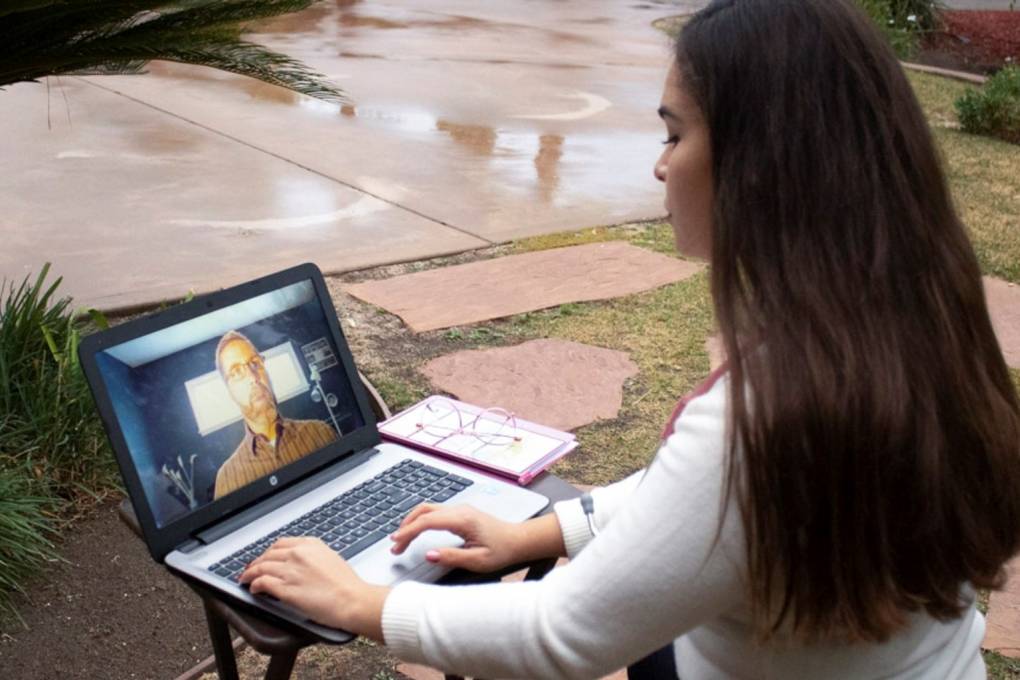
"caption": "Alexis Hawkins, a nursing student at Grossmont College in El Cajon, views an instructional video in the front yard of her home. Hawkins has been practicing her skills on family members while learning from home.",
"description": "A photo of Alexis Hawkins. Hawkins, a nursing student at Grossmont College in El Cajon, views an instructional video in the front yard of her home. Hawkins has been practicing her skills on family members while learning from home.",
"title": "012321_NursingStudent_AB_01",
"credit": "Arlene Banuelos for CalMatters",
"status": "inherit",
"altTag": null,
"isLoading": false,
"fetchFailed": false
},
"news_11863744": {
"type": "attachments",
"id": "news_11863744",
"meta": {
"index": "attachments_1716263798",
"site": "news",
"id": "11863744",
"found": true
},
"parent": 11863739,
"imgSizes": {
"apple_news_ca_landscape_5_5": {
"file": "https://ww2.kqed.org/app/uploads/sites/10/2021/03/022821_UFWvaccine_AI_03-1044x783.jpg",
"width": 1044,
"mimeType": "image/jpeg",
"height": 783
},
"apple_news_ca_square_4_0": {
"file": "https://ww2.kqed.org/app/uploads/sites/10/2021/03/022821_UFWvaccine_AI_03-470x470.jpg",
"width": 470,
"mimeType": "image/jpeg",
"height": 470
},
"twentyfourteen-full-width": {
"file": "https://ww2.kqed.org/app/uploads/sites/10/2021/03/022821_UFWvaccine_AI_03-1038x576.jpg",
"width": 1038,
"mimeType": "image/jpeg",
"height": 576
},
"thumbnail": {
"file": "https://ww2.kqed.org/app/uploads/sites/10/2021/03/022821_UFWvaccine_AI_03-160x120.jpg",
"width": 160,
"mimeType": "image/jpeg",
"height": 120
},
"post-thumbnail": {
"file": "https://ww2.kqed.org/app/uploads/sites/10/2021/03/022821_UFWvaccine_AI_03-672x372.jpg",
"width": 672,
"mimeType": "image/jpeg",
"height": 372
},
"kqedFullSize": {
"file": "https://ww2.kqed.org/app/uploads/sites/10/2021/03/022821_UFWvaccine_AI_03-e1615233334285.jpg",
"width": 1920,
"height": 1440
},
"apple_news_ca_landscape_4_7": {
"file": "https://ww2.kqed.org/app/uploads/sites/10/2021/03/022821_UFWvaccine_AI_03-632x474.jpg",
"width": 632,
"mimeType": "image/jpeg",
"height": 474
},
"large": {
"file": "https://ww2.kqed.org/app/uploads/sites/10/2021/03/022821_UFWvaccine_AI_03-1020x765.jpg",
"width": 1020,
"mimeType": "image/jpeg",
"height": 765
},
"apple_news_ca_landscape_4_0": {
"file": "https://ww2.kqed.org/app/uploads/sites/10/2021/03/022821_UFWvaccine_AI_03-536x402.jpg",
"width": 536,
"mimeType": "image/jpeg",
"height": 402
},
"apple_news_ca_portrait_12_9": {
"file": "https://ww2.kqed.org/app/uploads/sites/10/2021/03/022821_UFWvaccine_AI_03-1122x1496.jpg",
"width": 1122,
"mimeType": "image/jpeg",
"height": 1496
},
"medium": {
"file": "https://ww2.kqed.org/app/uploads/sites/10/2021/03/022821_UFWvaccine_AI_03-800x600.jpg",
"width": 800,
"mimeType": "image/jpeg",
"height": 600
},
"apple_news_ca_portrait_4_0": {
"file": "https://ww2.kqed.org/app/uploads/sites/10/2021/03/022821_UFWvaccine_AI_03-354x472.jpg",
"width": 354,
"mimeType": "image/jpeg",
"height": 472
},
"apple_news_ca_portrait_9_7": {
"file": "https://ww2.kqed.org/app/uploads/sites/10/2021/03/022821_UFWvaccine_AI_03-840x1120.jpg",
"width": 840,
"mimeType": "image/jpeg",
"height": 1120
},
"apple_news_ca_landscape_12_9": {
"file": "https://ww2.kqed.org/app/uploads/sites/10/2021/03/022821_UFWvaccine_AI_03-1832x1374.jpg",
"width": 1832,
"mimeType": "image/jpeg",
"height": 1374
},
"apple_news_ca_square_9_7": {
"file": "https://ww2.kqed.org/app/uploads/sites/10/2021/03/022821_UFWvaccine_AI_03-1104x1104.jpg",
"width": 1104,
"mimeType": "image/jpeg",
"height": 1104
},
"1536x1536": {
"file": "https://ww2.kqed.org/app/uploads/sites/10/2021/03/022821_UFWvaccine_AI_03-1536x1152.jpg",
"width": 1536,
"mimeType": "image/jpeg",
"height": 1152
},
"apple_news_ca_portrait_4_7": {
"file": "https://ww2.kqed.org/app/uploads/sites/10/2021/03/022821_UFWvaccine_AI_03-414x552.jpg",
"width": 414,
"mimeType": "image/jpeg",
"height": 552
},
"apple_news_ca_square_12_9": {
"file": "https://ww2.kqed.org/app/uploads/sites/10/2021/03/022821_UFWvaccine_AI_03-1472x1472.jpg",
"width": 1472,
"mimeType": "image/jpeg",
"height": 1472
},
"apple_news_ca_portrait_5_5": {
"file": "https://ww2.kqed.org/app/uploads/sites/10/2021/03/022821_UFWvaccine_AI_03-687x916.jpg",
"width": 687,
"mimeType": "image/jpeg",
"height": 916
},
"full-width": {
"file": "https://ww2.kqed.org/app/uploads/sites/10/2021/03/022821_UFWvaccine_AI_03-1920x1440.jpg",
"width": 1920,
"mimeType": "image/jpeg",
"height": 1440
},
"apple_news_ca_square_4_7": {
"file": "https://ww2.kqed.org/app/uploads/sites/10/2021/03/022821_UFWvaccine_AI_03-550x550.jpg",
"width": 550,
"mimeType": "image/jpeg",
"height": 550
},
"apple_news_ca_landscape_9_7": {
"file": "https://ww2.kqed.org/app/uploads/sites/10/2021/03/022821_UFWvaccine_AI_03-1376x1032.jpg",
"width": 1376,
"mimeType": "image/jpeg",
"height": 1032
},
"apple_news_ca_square_5_5": {
"file": "https://ww2.kqed.org/app/uploads/sites/10/2021/03/022821_UFWvaccine_AI_03-912x912.jpg",
"width": 912,
"mimeType": "image/jpeg",
"height": 912
}
},
"publishDate": 1615233259,
"modified": 1616791266,
"caption": "Mauricio Chavez of Hollister gets a COVID-19 vaccine at Monterey Mushrooms in Morgan Hill on Feb. 28, 2021.",
"description": "Mauricio Chavez of Hollister gets a COVID-19 vaccine at Monterey Mushrooms in Morgan Hill on Feb. 28, 2021. He works at a neighboring mushroom farm. Many California farmworkers still face obstacles getting the vaccine.",
"title": "022821_UFWvaccine_AI_03",
"credit": "Ana Ibarra/CalMatters",
"status": "inherit",
"altTag": "farmworker gets vaccine shot",
"isLoading": false,
"fetchFailed": false
},
"news_11849239": {
"type": "attachments",
"id": "news_11849239",
"meta": {
"index": "attachments_1716263798",
"site": "news",
"id": "11849239",
"found": true
},
"parent": 11849208,
"imgSizes": {
"apple_news_ca_landscape_5_5": {
"file": "https://ww2.kqed.org/app/uploads/sites/10/2020/12/RS14378_GettyImages_170810818-qut-1044x783.jpg",
"width": 1044,
"mimeType": "image/jpeg",
"height": 783
},
"apple_news_ca_square_4_0": {
"file": "https://ww2.kqed.org/app/uploads/sites/10/2020/12/RS14378_GettyImages_170810818-qut-470x470.jpg",
"width": 470,
"mimeType": "image/jpeg",
"height": 470
},
"twentyfourteen-full-width": {
"file": "https://ww2.kqed.org/app/uploads/sites/10/2020/12/RS14378_GettyImages_170810818-qut-1038x576.jpg",
"width": 1038,
"mimeType": "image/jpeg",
"height": 576
},
"thumbnail": {
"file": "https://ww2.kqed.org/app/uploads/sites/10/2020/12/RS14378_GettyImages_170810818-qut-160x115.jpg",
"width": 160,
"mimeType": "image/jpeg",
"height": 115
},
"post-thumbnail": {
"file": "https://ww2.kqed.org/app/uploads/sites/10/2020/12/RS14378_GettyImages_170810818-qut-672x372.jpg",
"width": 672,
"mimeType": "image/jpeg",
"height": 372
},
"kqedFullSize": {
"file": "https://ww2.kqed.org/app/uploads/sites/10/2020/12/RS14378_GettyImages_170810818-qut.jpg",
"width": 1920,
"height": 1374
},
"apple_news_ca_landscape_4_7": {
"file": "https://ww2.kqed.org/app/uploads/sites/10/2020/12/RS14378_GettyImages_170810818-qut-632x474.jpg",
"width": 632,
"mimeType": "image/jpeg",
"height": 474
},
"large": {
"file": "https://ww2.kqed.org/app/uploads/sites/10/2020/12/RS14378_GettyImages_170810818-qut-1020x730.jpg",
"width": 1020,
"mimeType": "image/jpeg",
"height": 730
},
"apple_news_ca_landscape_4_0": {
"file": "https://ww2.kqed.org/app/uploads/sites/10/2020/12/RS14378_GettyImages_170810818-qut-536x402.jpg",
"width": 536,
"mimeType": "image/jpeg",
"height": 402
},
"apple_news_ca_portrait_12_9": {
"file": "https://ww2.kqed.org/app/uploads/sites/10/2020/12/RS14378_GettyImages_170810818-qut-1122x1374.jpg",
"width": 1122,
"mimeType": "image/jpeg",
"height": 1374
},
"medium": {
"file": "https://ww2.kqed.org/app/uploads/sites/10/2020/12/RS14378_GettyImages_170810818-qut-800x573.jpg",
"width": 800,
"mimeType": "image/jpeg",
"height": 573
},
"apple_news_ca_portrait_4_0": {
"file": "https://ww2.kqed.org/app/uploads/sites/10/2020/12/RS14378_GettyImages_170810818-qut-354x472.jpg",
"width": 354,
"mimeType": "image/jpeg",
"height": 472
},
"apple_news_ca_portrait_9_7": {
"file": "https://ww2.kqed.org/app/uploads/sites/10/2020/12/RS14378_GettyImages_170810818-qut-840x1120.jpg",
"width": 840,
"mimeType": "image/jpeg",
"height": 1120
},
"apple_news_ca_landscape_12_9": {
"file": "https://ww2.kqed.org/app/uploads/sites/10/2020/12/RS14378_GettyImages_170810818-qut-1832x1374.jpg",
"width": 1832,
"mimeType": "image/jpeg",
"height": 1374
},
"apple_news_ca_square_9_7": {
"file": "https://ww2.kqed.org/app/uploads/sites/10/2020/12/RS14378_GettyImages_170810818-qut-1104x1104.jpg",
"width": 1104,
"mimeType": "image/jpeg",
"height": 1104
},
"1536x1536": {
"file": "https://ww2.kqed.org/app/uploads/sites/10/2020/12/RS14378_GettyImages_170810818-qut-1536x1099.jpg",
"width": 1536,
"mimeType": "image/jpeg",
"height": 1099
},
"apple_news_ca_portrait_4_7": {
"file": "https://ww2.kqed.org/app/uploads/sites/10/2020/12/RS14378_GettyImages_170810818-qut-414x552.jpg",
"width": 414,
"mimeType": "image/jpeg",
"height": 552
},
"apple_news_ca_square_12_9": {
"file": "https://ww2.kqed.org/app/uploads/sites/10/2020/12/RS14378_GettyImages_170810818-qut-1472x1374.jpg",
"width": 1472,
"mimeType": "image/jpeg",
"height": 1374
},
"apple_news_ca_portrait_5_5": {
"file": "https://ww2.kqed.org/app/uploads/sites/10/2020/12/RS14378_GettyImages_170810818-qut-687x916.jpg",
"width": 687,
"mimeType": "image/jpeg",
"height": 916
},
"apple_news_ca_square_4_7": {
"file": "https://ww2.kqed.org/app/uploads/sites/10/2020/12/RS14378_GettyImages_170810818-qut-550x550.jpg",
"width": 550,
"mimeType": "image/jpeg",
"height": 550
},
"apple_news_ca_landscape_9_7": {
"file": "https://ww2.kqed.org/app/uploads/sites/10/2020/12/RS14378_GettyImages_170810818-qut-1376x1032.jpg",
"width": 1376,
"mimeType": "image/jpeg",
"height": 1032
},
"apple_news_ca_square_5_5": {
"file": "https://ww2.kqed.org/app/uploads/sites/10/2020/12/RS14378_GettyImages_170810818-qut-912x912.jpg",
"width": 912,
"mimeType": "image/jpeg",
"height": 912
}
},
"publishDate": 1606860451,
"modified": 1606861538,
"caption": "Trabajador del supermercado empaca bolsas de productos el 18 de junio, 2013 en Los Angeles.",
"description": "Trabajador del supermercado empaca bolsas de productos el 18 de junio, 2013 en Los Angeles.",
"title": "RS14378_GettyImages_170810818-qut",
"credit": "Kevork Djansezian/Getty Images",
"status": "inherit",
"isLoading": false,
"fetchFailed": false
},
"news_11848686": {
"type": "attachments",
"id": "news_11848686",
"meta": {
"index": "attachments_1716263798",
"site": "news",
"id": "11848686",
"found": true
},
"parent": 11848684,
"imgSizes": {
"apple_news_ca_landscape_5_5": {
"file": "https://ww2.kqed.org/app/uploads/sites/10/2020/11/20200729_WATSONVILLE_FARMWORKERS_008-scaled-Spanish-Article-Use-Only-1044x783.jpeg",
"width": 1044,
"mimeType": "image/jpeg",
"height": 783
},
"apple_news_ca_square_4_0": {
"file": "https://ww2.kqed.org/app/uploads/sites/10/2020/11/20200729_WATSONVILLE_FARMWORKERS_008-scaled-Spanish-Article-Use-Only-470x470.jpeg",
"width": 470,
"mimeType": "image/jpeg",
"height": 470
},
"twentyfourteen-full-width": {
"file": "https://ww2.kqed.org/app/uploads/sites/10/2020/11/20200729_WATSONVILLE_FARMWORKERS_008-scaled-Spanish-Article-Use-Only-1038x576.jpeg",
"width": 1038,
"mimeType": "image/jpeg",
"height": 576
},
"thumbnail": {
"file": "https://ww2.kqed.org/app/uploads/sites/10/2020/11/20200729_WATSONVILLE_FARMWORKERS_008-scaled-Spanish-Article-Use-Only-160x117.jpeg",
"width": 160,
"mimeType": "image/jpeg",
"height": 117
},
"post-thumbnail": {
"file": "https://ww2.kqed.org/app/uploads/sites/10/2020/11/20200729_WATSONVILLE_FARMWORKERS_008-scaled-Spanish-Article-Use-Only-672x372.jpeg",
"width": 672,
"mimeType": "image/jpeg",
"height": 372
},
"kqedFullSize": {
"file": "https://ww2.kqed.org/app/uploads/sites/10/2020/11/20200729_WATSONVILLE_FARMWORKERS_008-scaled-Spanish-Article-Use-Only.jpeg",
"width": 1200,
"height": 877
},
"apple_news_ca_landscape_4_7": {
"file": "https://ww2.kqed.org/app/uploads/sites/10/2020/11/20200729_WATSONVILLE_FARMWORKERS_008-scaled-Spanish-Article-Use-Only-632x474.jpeg",
"width": 632,
"mimeType": "image/jpeg",
"height": 474
},
"large": {
"file": "https://ww2.kqed.org/app/uploads/sites/10/2020/11/20200729_WATSONVILLE_FARMWORKERS_008-scaled-Spanish-Article-Use-Only-1020x745.jpeg",
"width": 1020,
"mimeType": "image/jpeg",
"height": 745
},
"apple_news_ca_landscape_4_0": {
"file": "https://ww2.kqed.org/app/uploads/sites/10/2020/11/20200729_WATSONVILLE_FARMWORKERS_008-scaled-Spanish-Article-Use-Only-536x402.jpeg",
"width": 536,
"mimeType": "image/jpeg",
"height": 402
},
"apple_news_ca_portrait_12_9": {
"file": "https://ww2.kqed.org/app/uploads/sites/10/2020/11/20200729_WATSONVILLE_FARMWORKERS_008-scaled-Spanish-Article-Use-Only-1122x877.jpeg",
"width": 1122,
"mimeType": "image/jpeg",
"height": 877
},
"medium": {
"file": "https://ww2.kqed.org/app/uploads/sites/10/2020/11/20200729_WATSONVILLE_FARMWORKERS_008-scaled-Spanish-Article-Use-Only-800x585.jpeg",
"width": 800,
"mimeType": "image/jpeg",
"height": 585
},
"apple_news_ca_portrait_4_0": {
"file": "https://ww2.kqed.org/app/uploads/sites/10/2020/11/20200729_WATSONVILLE_FARMWORKERS_008-scaled-Spanish-Article-Use-Only-354x472.jpeg",
"width": 354,
"mimeType": "image/jpeg",
"height": 472
},
"apple_news_ca_portrait_9_7": {
"file": "https://ww2.kqed.org/app/uploads/sites/10/2020/11/20200729_WATSONVILLE_FARMWORKERS_008-scaled-Spanish-Article-Use-Only-840x877.jpeg",
"width": 840,
"mimeType": "image/jpeg",
"height": 877
},
"apple_news_ca_square_9_7": {
"file": "https://ww2.kqed.org/app/uploads/sites/10/2020/11/20200729_WATSONVILLE_FARMWORKERS_008-scaled-Spanish-Article-Use-Only-1104x877.jpeg",
"width": 1104,
"mimeType": "image/jpeg",
"height": 877
},
"apple_news_ca_portrait_4_7": {
"file": "https://ww2.kqed.org/app/uploads/sites/10/2020/11/20200729_WATSONVILLE_FARMWORKERS_008-scaled-Spanish-Article-Use-Only-414x552.jpeg",
"width": 414,
"mimeType": "image/jpeg",
"height": 552
},
"apple_news_ca_portrait_5_5": {
"file": "https://ww2.kqed.org/app/uploads/sites/10/2020/11/20200729_WATSONVILLE_FARMWORKERS_008-scaled-Spanish-Article-Use-Only-687x877.jpeg",
"width": 687,
"mimeType": "image/jpeg",
"height": 877
},
"apple_news_ca_square_4_7": {
"file": "https://ww2.kqed.org/app/uploads/sites/10/2020/11/20200729_WATSONVILLE_FARMWORKERS_008-scaled-Spanish-Article-Use-Only-550x550.jpeg",
"width": 550,
"mimeType": "image/jpeg",
"height": 550
},
"apple_news_ca_square_5_5": {
"file": "https://ww2.kqed.org/app/uploads/sites/10/2020/11/20200729_WATSONVILLE_FARMWORKERS_008-scaled-Spanish-Article-Use-Only-912x877.jpeg",
"width": 912,
"mimeType": "image/jpeg",
"height": 877
}
},
"publishDate": 1606258813,
"modified": 1606326635,
"caption": "Un trabajador agrícola sostiene una caja de fresas con la mano izquierda y un carro de una rueda con la derecha mientras camina para conseguir otra caja vacía en Watsonville, el miércoles 29 de julio de 2020.",
"description": null,
"title": "20200729_WATSONVILLE_FARMWORKERS_008-scaled-Spanish-Article-Use-Only",
"credit": "Foto de David Rodríguez, The Salinas Californian",
"status": "inherit",
"isLoading": false,
"fetchFailed": false
},
"news_11848026": {
"type": "attachments",
"id": "news_11848026",
"meta": {
"index": "attachments_1716263798",
"site": "news",
"id": "11848026",
"found": true
},
"parent": 11848024,
"imgSizes": {
"apple_news_ca_landscape_5_5": {
"file": "https://ww2.kqed.org/app/uploads/sites/10/2020/11/111420_DavidLewis_PU_CJN_02-Spanish-Article-Use-Only-1044x783.jpg",
"width": 1044,
"mimeType": "image/jpeg",
"height": 783
},
"apple_news_ca_square_4_0": {
"file": "https://ww2.kqed.org/app/uploads/sites/10/2020/11/111420_DavidLewis_PU_CJN_02-Spanish-Article-Use-Only-470x470.jpg",
"width": 470,
"mimeType": "image/jpeg",
"height": 470
},
"twentyfourteen-full-width": {
"file": "https://ww2.kqed.org/app/uploads/sites/10/2020/11/111420_DavidLewis_PU_CJN_02-Spanish-Article-Use-Only-1038x576.jpg",
"width": 1038,
"mimeType": "image/jpeg",
"height": 576
},
"thumbnail": {
"file": "https://ww2.kqed.org/app/uploads/sites/10/2020/11/111420_DavidLewis_PU_CJN_02-Spanish-Article-Use-Only-160x109.jpg",
"width": 160,
"mimeType": "image/jpeg",
"height": 109
},
"post-thumbnail": {
"file": "https://ww2.kqed.org/app/uploads/sites/10/2020/11/111420_DavidLewis_PU_CJN_02-Spanish-Article-Use-Only-672x372.jpg",
"width": 672,
"mimeType": "image/jpeg",
"height": 372
},
"kqedFullSize": {
"file": "https://ww2.kqed.org/app/uploads/sites/10/2020/11/111420_DavidLewis_PU_CJN_02-Spanish-Article-Use-Only.jpg",
"width": 1200,
"height": 818
},
"apple_news_ca_landscape_4_7": {
"file": "https://ww2.kqed.org/app/uploads/sites/10/2020/11/111420_DavidLewis_PU_CJN_02-Spanish-Article-Use-Only-632x474.jpg",
"width": 632,
"mimeType": "image/jpeg",
"height": 474
},
"large": {
"file": "https://ww2.kqed.org/app/uploads/sites/10/2020/11/111420_DavidLewis_PU_CJN_02-Spanish-Article-Use-Only-1020x695.jpg",
"width": 1020,
"mimeType": "image/jpeg",
"height": 695
},
"apple_news_ca_landscape_4_0": {
"file": "https://ww2.kqed.org/app/uploads/sites/10/2020/11/111420_DavidLewis_PU_CJN_02-Spanish-Article-Use-Only-536x402.jpg",
"width": 536,
"mimeType": "image/jpeg",
"height": 402
},
"apple_news_ca_portrait_12_9": {
"file": "https://ww2.kqed.org/app/uploads/sites/10/2020/11/111420_DavidLewis_PU_CJN_02-Spanish-Article-Use-Only-1122x818.jpg",
"width": 1122,
"mimeType": "image/jpeg",
"height": 818
},
"medium": {
"file": "https://ww2.kqed.org/app/uploads/sites/10/2020/11/111420_DavidLewis_PU_CJN_02-Spanish-Article-Use-Only-800x545.jpg",
"width": 800,
"mimeType": "image/jpeg",
"height": 545
},
"apple_news_ca_portrait_4_0": {
"file": "https://ww2.kqed.org/app/uploads/sites/10/2020/11/111420_DavidLewis_PU_CJN_02-Spanish-Article-Use-Only-354x472.jpg",
"width": 354,
"mimeType": "image/jpeg",
"height": 472
},
"apple_news_ca_portrait_9_7": {
"file": "https://ww2.kqed.org/app/uploads/sites/10/2020/11/111420_DavidLewis_PU_CJN_02-Spanish-Article-Use-Only-840x818.jpg",
"width": 840,
"mimeType": "image/jpeg",
"height": 818
},
"apple_news_ca_square_9_7": {
"file": "https://ww2.kqed.org/app/uploads/sites/10/2020/11/111420_DavidLewis_PU_CJN_02-Spanish-Article-Use-Only-1104x818.jpg",
"width": 1104,
"mimeType": "image/jpeg",
"height": 818
},
"apple_news_ca_portrait_4_7": {
"file": "https://ww2.kqed.org/app/uploads/sites/10/2020/11/111420_DavidLewis_PU_CJN_02-Spanish-Article-Use-Only-414x552.jpg",
"width": 414,
"mimeType": "image/jpeg",
"height": 552
},
"apple_news_ca_portrait_5_5": {
"file": "https://ww2.kqed.org/app/uploads/sites/10/2020/11/111420_DavidLewis_PU_CJN_02-Spanish-Article-Use-Only-687x818.jpg",
"width": 687,
"mimeType": "image/jpeg",
"height": 818
},
"apple_news_ca_square_4_7": {
"file": "https://ww2.kqed.org/app/uploads/sites/10/2020/11/111420_DavidLewis_PU_CJN_02-Spanish-Article-Use-Only-550x550.jpg",
"width": 550,
"mimeType": "image/jpeg",
"height": 550
},
"apple_news_ca_square_5_5": {
"file": "https://ww2.kqed.org/app/uploads/sites/10/2020/11/111420_DavidLewis_PU_CJN_02-Spanish-Article-Use-Only-912x818.jpg",
"width": 912,
"mimeType": "image/jpeg",
"height": 818
}
},
"publishDate": 1605755718,
"modified": 1605755745,
"caption": "David Lewis, de 29 años, dejó la escuela en Long Beach City College después de luchar para administrar las clases en línea con su trabajo en Trader Joe's. ",
"description": null,
"title": "111420_DavidLewis_PU_CJN_02-Spanish-Article-Use-Only",
"credit": "Foto de Pablo Unzueta para CalMatters",
"status": "inherit",
"isLoading": false,
"fetchFailed": false
},
"news_11843203": {
"type": "attachments",
"id": "news_11843203",
"meta": {
"index": "attachments_1716263798",
"site": "news",
"id": "11843203",
"found": true
},
"parent": 11843152,
"imgSizes": {
"apple_news_ca_landscape_5_5": {
"file": "https://ww2.kqed.org/app/uploads/sites/10/2020/10/RS45270_008_KQED_ElectionStockPhotos_TikaHall_10062020-qut-2-1044x783.jpg",
"width": 1044,
"mimeType": "image/jpeg",
"height": 783
},
"apple_news_ca_square_4_0": {
"file": "https://ww2.kqed.org/app/uploads/sites/10/2020/10/RS45270_008_KQED_ElectionStockPhotos_TikaHall_10062020-qut-2-470x470.jpg",
"width": 470,
"mimeType": "image/jpeg",
"height": 470
},
"twentyfourteen-full-width": {
"file": "https://ww2.kqed.org/app/uploads/sites/10/2020/10/RS45270_008_KQED_ElectionStockPhotos_TikaHall_10062020-qut-2-1038x576.jpg",
"width": 1038,
"mimeType": "image/jpeg",
"height": 576
},
"thumbnail": {
"file": "https://ww2.kqed.org/app/uploads/sites/10/2020/10/RS45270_008_KQED_ElectionStockPhotos_TikaHall_10062020-qut-2-160x107.jpg",
"width": 160,
"mimeType": "image/jpeg",
"height": 107
},
"post-thumbnail": {
"file": "https://ww2.kqed.org/app/uploads/sites/10/2020/10/RS45270_008_KQED_ElectionStockPhotos_TikaHall_10062020-qut-2-672x372.jpg",
"width": 672,
"mimeType": "image/jpeg",
"height": 372
},
"kqedFullSize": {
"file": "https://ww2.kqed.org/app/uploads/sites/10/2020/10/RS45270_008_KQED_ElectionStockPhotos_TikaHall_10062020-qut-2.jpg",
"width": 1920,
"height": 1280
},
"apple_news_ca_landscape_4_7": {
"file": "https://ww2.kqed.org/app/uploads/sites/10/2020/10/RS45270_008_KQED_ElectionStockPhotos_TikaHall_10062020-qut-2-632x474.jpg",
"width": 632,
"mimeType": "image/jpeg",
"height": 474
},
"large": {
"file": "https://ww2.kqed.org/app/uploads/sites/10/2020/10/RS45270_008_KQED_ElectionStockPhotos_TikaHall_10062020-qut-2-1020x680.jpg",
"width": 1020,
"mimeType": "image/jpeg",
"height": 680
},
"apple_news_ca_landscape_4_0": {
"file": "https://ww2.kqed.org/app/uploads/sites/10/2020/10/RS45270_008_KQED_ElectionStockPhotos_TikaHall_10062020-qut-2-536x402.jpg",
"width": 536,
"mimeType": "image/jpeg",
"height": 402
},
"apple_news_ca_portrait_12_9": {
"file": "https://ww2.kqed.org/app/uploads/sites/10/2020/10/RS45270_008_KQED_ElectionStockPhotos_TikaHall_10062020-qut-2-1122x1280.jpg",
"width": 1122,
"mimeType": "image/jpeg",
"height": 1280
},
"medium": {
"file": "https://ww2.kqed.org/app/uploads/sites/10/2020/10/RS45270_008_KQED_ElectionStockPhotos_TikaHall_10062020-qut-2-800x533.jpg",
"width": 800,
"mimeType": "image/jpeg",
"height": 533
},
"apple_news_ca_portrait_4_0": {
"file": "https://ww2.kqed.org/app/uploads/sites/10/2020/10/RS45270_008_KQED_ElectionStockPhotos_TikaHall_10062020-qut-2-354x472.jpg",
"width": 354,
"mimeType": "image/jpeg",
"height": 472
},
"apple_news_ca_portrait_9_7": {
"file": "https://ww2.kqed.org/app/uploads/sites/10/2020/10/RS45270_008_KQED_ElectionStockPhotos_TikaHall_10062020-qut-2-840x1120.jpg",
"width": 840,
"mimeType": "image/jpeg",
"height": 1120
},
"apple_news_ca_landscape_12_9": {
"file": "https://ww2.kqed.org/app/uploads/sites/10/2020/10/RS45270_008_KQED_ElectionStockPhotos_TikaHall_10062020-qut-2-1832x1280.jpg",
"width": 1832,
"mimeType": "image/jpeg",
"height": 1280
},
"apple_news_ca_square_9_7": {
"file": "https://ww2.kqed.org/app/uploads/sites/10/2020/10/RS45270_008_KQED_ElectionStockPhotos_TikaHall_10062020-qut-2-1104x1104.jpg",
"width": 1104,
"mimeType": "image/jpeg",
"height": 1104
},
"1536x1536": {
"file": "https://ww2.kqed.org/app/uploads/sites/10/2020/10/RS45270_008_KQED_ElectionStockPhotos_TikaHall_10062020-qut-2-1536x1024.jpg",
"width": 1536,
"mimeType": "image/jpeg",
"height": 1024
},
"apple_news_ca_portrait_4_7": {
"file": "https://ww2.kqed.org/app/uploads/sites/10/2020/10/RS45270_008_KQED_ElectionStockPhotos_TikaHall_10062020-qut-2-414x552.jpg",
"width": 414,
"mimeType": "image/jpeg",
"height": 552
},
"apple_news_ca_square_12_9": {
"file": "https://ww2.kqed.org/app/uploads/sites/10/2020/10/RS45270_008_KQED_ElectionStockPhotos_TikaHall_10062020-qut-2-1472x1280.jpg",
"width": 1472,
"mimeType": "image/jpeg",
"height": 1280
},
"apple_news_ca_portrait_5_5": {
"file": "https://ww2.kqed.org/app/uploads/sites/10/2020/10/RS45270_008_KQED_ElectionStockPhotos_TikaHall_10062020-qut-2-687x916.jpg",
"width": 687,
"mimeType": "image/jpeg",
"height": 916
},
"apple_news_ca_square_4_7": {
"file": "https://ww2.kqed.org/app/uploads/sites/10/2020/10/RS45270_008_KQED_ElectionStockPhotos_TikaHall_10062020-qut-2-550x550.jpg",
"width": 550,
"mimeType": "image/jpeg",
"height": 550
},
"apple_news_ca_landscape_9_7": {
"file": "https://ww2.kqed.org/app/uploads/sites/10/2020/10/RS45270_008_KQED_ElectionStockPhotos_TikaHall_10062020-qut-2-1376x1032.jpg",
"width": 1376,
"mimeType": "image/jpeg",
"height": 1032
},
"apple_news_ca_square_5_5": {
"file": "https://ww2.kqed.org/app/uploads/sites/10/2020/10/RS45270_008_KQED_ElectionStockPhotos_TikaHall_10062020-qut-2-912x912.jpg",
"width": 912,
"mimeType": "image/jpeg",
"height": 912
}
},
"publishDate": 1603320682,
"modified": 1603320811,
"caption": "Un residente de San Francisco coloca su boleta en un buzón del servicio postal el 6 de octubre del 2020.",
"description": null,
"title": "RS45270_008_KQED_ElectionStockPhotos_TikaHall_10062020-qut",
"credit": "Beth LaBerge/KQED",
"status": "inherit",
"isLoading": false,
"fetchFailed": false
},
"news_11846336": {
"type": "attachments",
"id": "news_11846336",
"meta": {
"index": "attachments_1716263798",
"site": "news",
"id": "11846336",
"found": true
},
"parent": 11846308,
"imgSizes": {
"apple_news_ca_landscape_5_5": {
"file": "https://ww2.kqed.org/app/uploads/sites/10/2020/11/102820_NonaClaypoole_AW_sized_03-Spanish-Article-Use-Only-1044x783.jpg",
"width": 1044,
"mimeType": "image/jpeg",
"height": 783
},
"apple_news_ca_square_4_0": {
"file": "https://ww2.kqed.org/app/uploads/sites/10/2020/11/102820_NonaClaypoole_AW_sized_03-Spanish-Article-Use-Only-470x470.jpg",
"width": 470,
"mimeType": "image/jpeg",
"height": 470
},
"twentyfourteen-full-width": {
"file": "https://ww2.kqed.org/app/uploads/sites/10/2020/11/102820_NonaClaypoole_AW_sized_03-Spanish-Article-Use-Only-1038x576.jpg",
"width": 1038,
"mimeType": "image/jpeg",
"height": 576
},
"thumbnail": {
"file": "https://ww2.kqed.org/app/uploads/sites/10/2020/11/102820_NonaClaypoole_AW_sized_03-Spanish-Article-Use-Only-160x107.jpg",
"width": 160,
"mimeType": "image/jpeg",
"height": 107
},
"post-thumbnail": {
"file": "https://ww2.kqed.org/app/uploads/sites/10/2020/11/102820_NonaClaypoole_AW_sized_03-Spanish-Article-Use-Only-672x372.jpg",
"width": 672,
"mimeType": "image/jpeg",
"height": 372
},
"kqedFullSize": {
"file": "https://ww2.kqed.org/app/uploads/sites/10/2020/11/102820_NonaClaypoole_AW_sized_03-Spanish-Article-Use-Only.jpg",
"width": 1200,
"height": 800
},
"apple_news_ca_landscape_4_7": {
"file": "https://ww2.kqed.org/app/uploads/sites/10/2020/11/102820_NonaClaypoole_AW_sized_03-Spanish-Article-Use-Only-632x474.jpg",
"width": 632,
"mimeType": "image/jpeg",
"height": 474
},
"large": {
"file": "https://ww2.kqed.org/app/uploads/sites/10/2020/11/102820_NonaClaypoole_AW_sized_03-Spanish-Article-Use-Only-1020x680.jpg",
"width": 1020,
"mimeType": "image/jpeg",
"height": 680
},
"apple_news_ca_landscape_4_0": {
"file": "https://ww2.kqed.org/app/uploads/sites/10/2020/11/102820_NonaClaypoole_AW_sized_03-Spanish-Article-Use-Only-536x402.jpg",
"width": 536,
"mimeType": "image/jpeg",
"height": 402
},
"apple_news_ca_portrait_12_9": {
"file": "https://ww2.kqed.org/app/uploads/sites/10/2020/11/102820_NonaClaypoole_AW_sized_03-Spanish-Article-Use-Only-1122x800.jpg",
"width": 1122,
"mimeType": "image/jpeg",
"height": 800
},
"medium": {
"file": "https://ww2.kqed.org/app/uploads/sites/10/2020/11/102820_NonaClaypoole_AW_sized_03-Spanish-Article-Use-Only-800x533.jpg",
"width": 800,
"mimeType": "image/jpeg",
"height": 533
},
"apple_news_ca_portrait_4_0": {
"file": "https://ww2.kqed.org/app/uploads/sites/10/2020/11/102820_NonaClaypoole_AW_sized_03-Spanish-Article-Use-Only-354x472.jpg",
"width": 354,
"mimeType": "image/jpeg",
"height": 472
},
"apple_news_ca_portrait_9_7": {
"file": "https://ww2.kqed.org/app/uploads/sites/10/2020/11/102820_NonaClaypoole_AW_sized_03-Spanish-Article-Use-Only-840x800.jpg",
"width": 840,
"mimeType": "image/jpeg",
"height": 800
},
"apple_news_ca_square_9_7": {
"file": "https://ww2.kqed.org/app/uploads/sites/10/2020/11/102820_NonaClaypoole_AW_sized_03-Spanish-Article-Use-Only-1104x800.jpg",
"width": 1104,
"mimeType": "image/jpeg",
"height": 800
},
"apple_news_ca_portrait_4_7": {
"file": "https://ww2.kqed.org/app/uploads/sites/10/2020/11/102820_NonaClaypoole_AW_sized_03-Spanish-Article-Use-Only-414x552.jpg",
"width": 414,
"mimeType": "image/jpeg",
"height": 552
},
"apple_news_ca_portrait_5_5": {
"file": "https://ww2.kqed.org/app/uploads/sites/10/2020/11/102820_NonaClaypoole_AW_sized_03-Spanish-Article-Use-Only-687x800.jpg",
"width": 687,
"mimeType": "image/jpeg",
"height": 800
},
"apple_news_ca_square_4_7": {
"file": "https://ww2.kqed.org/app/uploads/sites/10/2020/11/102820_NonaClaypoole_AW_sized_03-Spanish-Article-Use-Only-550x550.jpg",
"width": 550,
"mimeType": "image/jpeg",
"height": 550
},
"apple_news_ca_square_5_5": {
"file": "https://ww2.kqed.org/app/uploads/sites/10/2020/11/102820_NonaClaypoole_AW_sized_03-Spanish-Article-Use-Only-912x800.jpg",
"width": 912,
"mimeType": "image/jpeg",
"height": 800
}
},
"publishDate": 1604700120,
"modified": 1604945114,
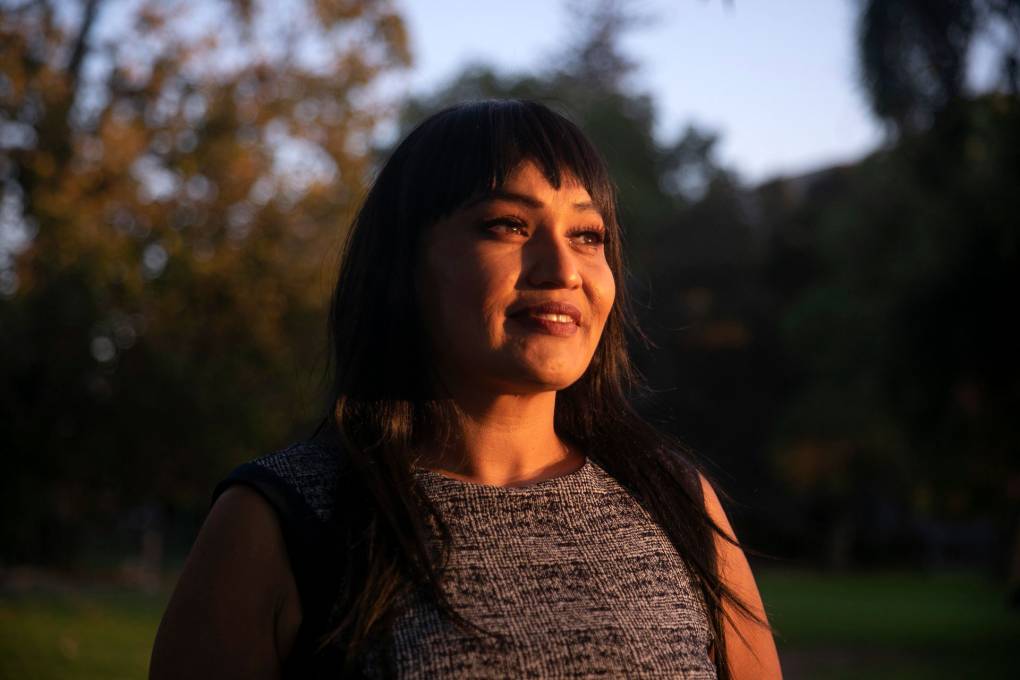
"caption": "Nona Claypool, estudiante de tercer año en UC Berkeley y coordinadora de estudiantes transferidos, en Mosswood Park en Oakland el 28 de octubre de 2020. Claypool, cuyo trabajo se enfoca en reclutar estudiantes Indígenas transferidos de colegios comunitarios, dice que a menudo son los estudiantes quienes no pueden acceder de la educación superior quienes se beneficiarían más de ella.",
"description": "Nona Claypool, estudiante de tercer año en UC Berkeley y coordinadora de estudiantes transferidos, en Mosswood Park en Oakland el 28 de octubre de 2020. Claypool, cuyo trabajo se enfoca en reclutar estudiantes Indígenas transferidos de colegios comunitarios, dice que a menudo son los estudiantes quienes no pueden acceder de la educación superior quienes se beneficiarían más de ella.",
"title": "1028200_NonaClaypoole_AW_sized_03-Spanish-Article-Use-Only",
"credit": "Anne Wernikoff para CalMatters",
"status": "inherit",
"isLoading": false,
"fetchFailed": false
},
"news_11845952": {
"type": "attachments",
"id": "news_11845952",
"meta": {
"index": "attachments_1716263798",
"site": "news",
"id": "11845952",
"found": true
},
"parent": 11845943,
"imgSizes": {
"apple_news_ca_landscape_5_5": {
"file": "https://ww2.kqed.org/app/uploads/sites/10/2020/11/Nona-Claypool-1044x783.jpg",
"width": 1044,
"mimeType": "image/jpeg",
"height": 783
},
"apple_news_ca_square_4_0": {
"file": "https://ww2.kqed.org/app/uploads/sites/10/2020/11/Nona-Claypool-470x470.jpg",
"width": 470,
"mimeType": "image/jpeg",
"height": 470
},
"twentyfourteen-full-width": {
"file": "https://ww2.kqed.org/app/uploads/sites/10/2020/11/Nona-Claypool-1038x576.jpg",
"width": 1038,
"mimeType": "image/jpeg",
"height": 576
},
"thumbnail": {
"file": "https://ww2.kqed.org/app/uploads/sites/10/2020/11/Nona-Claypool-160x107.jpg",
"width": 160,
"mimeType": "image/jpeg",
"height": 107
},
"post-thumbnail": {
"file": "https://ww2.kqed.org/app/uploads/sites/10/2020/11/Nona-Claypool-672x372.jpg",
"width": 672,
"mimeType": "image/jpeg",
"height": 372
},
"kqedFullSize": {
"file": "https://ww2.kqed.org/app/uploads/sites/10/2020/11/Nona-Claypool.jpg",
"width": 1920,
"height": 1280
},
"apple_news_ca_landscape_4_7": {
"file": "https://ww2.kqed.org/app/uploads/sites/10/2020/11/Nona-Claypool-632x474.jpg",
"width": 632,
"mimeType": "image/jpeg",
"height": 474
},
"large": {
"file": "https://ww2.kqed.org/app/uploads/sites/10/2020/11/Nona-Claypool-1020x680.jpg",
"width": 1020,
"mimeType": "image/jpeg",
"height": 680
},
"apple_news_ca_landscape_4_0": {
"file": "https://ww2.kqed.org/app/uploads/sites/10/2020/11/Nona-Claypool-536x402.jpg",
"width": 536,
"mimeType": "image/jpeg",
"height": 402
},
"apple_news_ca_portrait_12_9": {
"file": "https://ww2.kqed.org/app/uploads/sites/10/2020/11/Nona-Claypool-1122x1280.jpg",
"width": 1122,
"mimeType": "image/jpeg",
"height": 1280
},
"medium": {
"file": "https://ww2.kqed.org/app/uploads/sites/10/2020/11/Nona-Claypool-800x533.jpg",
"width": 800,
"mimeType": "image/jpeg",
"height": 533
},
"apple_news_ca_portrait_4_0": {
"file": "https://ww2.kqed.org/app/uploads/sites/10/2020/11/Nona-Claypool-354x472.jpg",
"width": 354,
"mimeType": "image/jpeg",
"height": 472
},
"apple_news_ca_portrait_9_7": {
"file": "https://ww2.kqed.org/app/uploads/sites/10/2020/11/Nona-Claypool-840x1120.jpg",
"width": 840,
"mimeType": "image/jpeg",
"height": 1120
},
"apple_news_ca_landscape_12_9": {
"file": "https://ww2.kqed.org/app/uploads/sites/10/2020/11/Nona-Claypool-1832x1280.jpg",
"width": 1832,
"mimeType": "image/jpeg",
"height": 1280
},
"apple_news_ca_square_9_7": {
"file": "https://ww2.kqed.org/app/uploads/sites/10/2020/11/Nona-Claypool-1104x1104.jpg",
"width": 1104,
"mimeType": "image/jpeg",
"height": 1104
},
"1536x1536": {
"file": "https://ww2.kqed.org/app/uploads/sites/10/2020/11/Nona-Claypool-1536x1024.jpg",
"width": 1536,
"mimeType": "image/jpeg",
"height": 1024
},
"apple_news_ca_portrait_4_7": {
"file": "https://ww2.kqed.org/app/uploads/sites/10/2020/11/Nona-Claypool-414x552.jpg",
"width": 414,
"mimeType": "image/jpeg",
"height": 552
},
"apple_news_ca_square_12_9": {
"file": "https://ww2.kqed.org/app/uploads/sites/10/2020/11/Nona-Claypool-1472x1280.jpg",
"width": 1472,
"mimeType": "image/jpeg",
"height": 1280
},
"apple_news_ca_portrait_5_5": {
"file": "https://ww2.kqed.org/app/uploads/sites/10/2020/11/Nona-Claypool-687x916.jpg",
"width": 687,
"mimeType": "image/jpeg",
"height": 916
},
"apple_news_ca_square_4_7": {
"file": "https://ww2.kqed.org/app/uploads/sites/10/2020/11/Nona-Claypool-550x550.jpg",
"width": 550,
"mimeType": "image/jpeg",
"height": 550
},
"apple_news_ca_landscape_9_7": {
"file": "https://ww2.kqed.org/app/uploads/sites/10/2020/11/Nona-Claypool-1376x1032.jpg",
"width": 1376,
"mimeType": "image/jpeg",
"height": 1032
},
"apple_news_ca_square_5_5": {
"file": "https://ww2.kqed.org/app/uploads/sites/10/2020/11/Nona-Claypool-912x912.jpg",
"width": 912,
"mimeType": "image/jpeg",
"height": 912
}
},
"publishDate": 1604609529,
"modified": 1604609616,
"caption": "Nona Claypool, a third-year student at UC Berkeley and transfer student coordinator, at Mosswood Park in Oakland on Oct. 28, 2020. Claypool, who focuses her work on recruiting Native American transfer students from community colleges, says it is often the students who would benefit most from higher education who are unable to access it.",
"description": "Nona Claypool, a third-year student at UC Berkeley and transfer student coordinator, at Mosswood Park in Oakland on Oct. 28, 2020. Claypool, who focuses her work on recruiting Native American transfer students from community colleges, says it is often the students who would benefit most from higher education who are unable to access it.",
"title": "Nona-Claypool",
"credit": "Anne Wernikoff/CALmatters",
"status": "inherit",
"isLoading": false,
"fetchFailed": false
},
"news_11844303": {
"type": "attachments",
"id": "news_11844303",
"meta": {
"index": "attachments_1716263798",
"site": "news",
"id": "11844303",
"found": true
},
"parent": 11844299,
"imgSizes": {
"apple_news_ca_landscape_5_5": {
"file": "https://ww2.kqed.org/app/uploads/sites/10/2020/10/BreanneYee_AW_sized-1044x783.jpg",
"width": 1044,
"mimeType": "image/jpeg",
"height": 783
},
"apple_news_ca_square_4_0": {
"file": "https://ww2.kqed.org/app/uploads/sites/10/2020/10/BreanneYee_AW_sized-470x470.jpg",
"width": 470,
"mimeType": "image/jpeg",
"height": 470
},
"twentyfourteen-full-width": {
"file": "https://ww2.kqed.org/app/uploads/sites/10/2020/10/BreanneYee_AW_sized-1038x576.jpg",
"width": 1038,
"mimeType": "image/jpeg",
"height": 576
},
"thumbnail": {
"file": "https://ww2.kqed.org/app/uploads/sites/10/2020/10/BreanneYee_AW_sized-160x109.jpg",
"width": 160,
"mimeType": "image/jpeg",
"height": 109
},
"post-thumbnail": {
"file": "https://ww2.kqed.org/app/uploads/sites/10/2020/10/BreanneYee_AW_sized-672x372.jpg",
"width": 672,
"mimeType": "image/jpeg",
"height": 372
},
"kqedFullSize": {
"file": "https://ww2.kqed.org/app/uploads/sites/10/2020/10/BreanneYee_AW_sized.jpg",
"width": 1920,
"height": 1305
},
"apple_news_ca_landscape_4_7": {
"file": "https://ww2.kqed.org/app/uploads/sites/10/2020/10/BreanneYee_AW_sized-632x474.jpg",
"width": 632,
"mimeType": "image/jpeg",
"height": 474
},
"large": {
"file": "https://ww2.kqed.org/app/uploads/sites/10/2020/10/BreanneYee_AW_sized-1020x693.jpg",
"width": 1020,
"mimeType": "image/jpeg",
"height": 693
},
"apple_news_ca_landscape_4_0": {
"file": "https://ww2.kqed.org/app/uploads/sites/10/2020/10/BreanneYee_AW_sized-536x402.jpg",
"width": 536,
"mimeType": "image/jpeg",
"height": 402
},
"apple_news_ca_portrait_12_9": {
"file": "https://ww2.kqed.org/app/uploads/sites/10/2020/10/BreanneYee_AW_sized-1122x1305.jpg",
"width": 1122,
"mimeType": "image/jpeg",
"height": 1305
},
"medium": {
"file": "https://ww2.kqed.org/app/uploads/sites/10/2020/10/BreanneYee_AW_sized-800x544.jpg",
"width": 800,
"mimeType": "image/jpeg",
"height": 544
},
"apple_news_ca_portrait_4_0": {
"file": "https://ww2.kqed.org/app/uploads/sites/10/2020/10/BreanneYee_AW_sized-354x472.jpg",
"width": 354,
"mimeType": "image/jpeg",
"height": 472
},
"apple_news_ca_portrait_9_7": {
"file": "https://ww2.kqed.org/app/uploads/sites/10/2020/10/BreanneYee_AW_sized-840x1120.jpg",
"width": 840,
"mimeType": "image/jpeg",
"height": 1120
},
"apple_news_ca_landscape_12_9": {
"file": "https://ww2.kqed.org/app/uploads/sites/10/2020/10/BreanneYee_AW_sized-1832x1305.jpg",
"width": 1832,
"mimeType": "image/jpeg",
"height": 1305
},
"apple_news_ca_square_9_7": {
"file": "https://ww2.kqed.org/app/uploads/sites/10/2020/10/BreanneYee_AW_sized-1104x1104.jpg",
"width": 1104,
"mimeType": "image/jpeg",
"height": 1104
},
"1536x1536": {
"file": "https://ww2.kqed.org/app/uploads/sites/10/2020/10/BreanneYee_AW_sized-1536x1044.jpg",
"width": 1536,
"mimeType": "image/jpeg",
"height": 1044
},
"apple_news_ca_portrait_4_7": {
"file": "https://ww2.kqed.org/app/uploads/sites/10/2020/10/BreanneYee_AW_sized-414x552.jpg",
"width": 414,
"mimeType": "image/jpeg",
"height": 552
},
"apple_news_ca_square_12_9": {
"file": "https://ww2.kqed.org/app/uploads/sites/10/2020/10/BreanneYee_AW_sized-1472x1305.jpg",
"width": 1472,
"mimeType": "image/jpeg",
"height": 1305
},
"apple_news_ca_portrait_5_5": {
"file": "https://ww2.kqed.org/app/uploads/sites/10/2020/10/BreanneYee_AW_sized-687x916.jpg",
"width": 687,
"mimeType": "image/jpeg",
"height": 916
},
"apple_news_ca_square_4_7": {
"file": "https://ww2.kqed.org/app/uploads/sites/10/2020/10/BreanneYee_AW_sized-550x550.jpg",
"width": 550,
"mimeType": "image/jpeg",
"height": 550
},
"apple_news_ca_landscape_9_7": {
"file": "https://ww2.kqed.org/app/uploads/sites/10/2020/10/BreanneYee_AW_sized-1376x1032.jpg",
"width": 1376,
"mimeType": "image/jpeg",
"height": 1032
},
"apple_news_ca_square_5_5": {
"file": "https://ww2.kqed.org/app/uploads/sites/10/2020/10/BreanneYee_AW_sized-912x912.jpg",
"width": 912,
"mimeType": "image/jpeg",
"height": 912
}
},
"publishDate": 1603998994,
"modified": 1603999097,
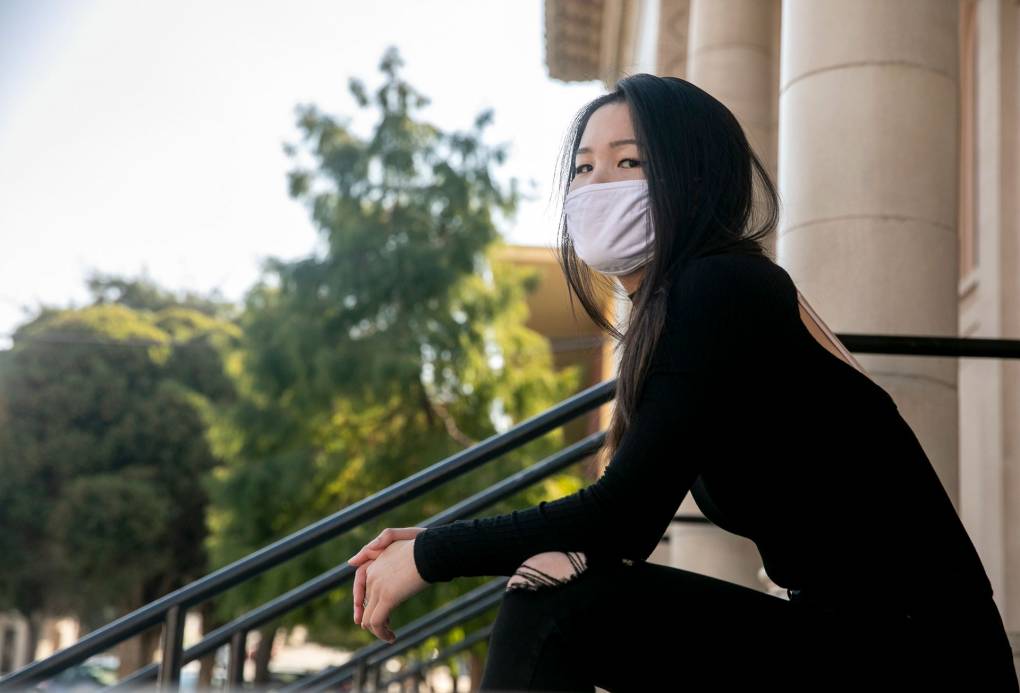
"caption": "Breanne Yee, 19, a third-year student at Cal State Long Beach, sits outside the Sunset District library near her parents’ San Francisco home. Yee says investing in community programs is a better way to fight inequality than affirmative action.",
"description": "Breanne Yee, 19, a third-year student at Cal State Long Beach, sits outside the Sunset District library near her parents’ San Francisco home. Yee says investing in community programs is a better way to fight inequality than affirmative action.",
"title": "BreanneYee_AW_sized",
"credit": "Anne Wernikoff/CALMatters",
"status": "inherit",
"isLoading": false,
"fetchFailed": false
},
"news_11843891": {
"type": "attachments",
"id": "news_11843891",
"meta": {
"index": "attachments_1716263798",
"site": "news",
"id": "11843891",
"found": true
},
"parent": 11843884,
"imgSizes": {
"apple_news_ca_square_4_0": {
"file": "https://ww2.kqed.org/app/uploads/sites/10/2020/10/RS44501_025_KQED_Vacaville_LNULightningComplexFire_08192020-sfi-470x360.jpg",
"width": 470,
"mimeType": "image/jpeg",
"height": 360
},
"thumbnail": {
"file": "https://ww2.kqed.org/app/uploads/sites/10/2020/10/RS44501_025_KQED_Vacaville_LNULightningComplexFire_08192020-sfi-160x107.jpg",
"width": 160,
"mimeType": "image/jpeg",
"height": 107
},
"kqedFullSize": {
"file": "https://ww2.kqed.org/app/uploads/sites/10/2020/10/RS44501_025_KQED_Vacaville_LNULightningComplexFire_08192020-sfi.jpg",
"width": 540,
"height": 360
},
"apple_news_ca_portrait_4_7": {
"file": "https://ww2.kqed.org/app/uploads/sites/10/2020/10/RS44501_025_KQED_Vacaville_LNULightningComplexFire_08192020-sfi-414x360.jpg",
"width": 414,
"mimeType": "image/jpeg",
"height": 360
},
"apple_news_ca_landscape_4_0": {
"file": "https://ww2.kqed.org/app/uploads/sites/10/2020/10/RS44501_025_KQED_Vacaville_LNULightningComplexFire_08192020-sfi-536x360.jpg",
"width": 536,
"mimeType": "image/jpeg",
"height": 360
},
"apple_news_ca_portrait_4_0": {
"file": "https://ww2.kqed.org/app/uploads/sites/10/2020/10/RS44501_025_KQED_Vacaville_LNULightningComplexFire_08192020-sfi-354x360.jpg",
"width": 354,
"mimeType": "image/jpeg",
"height": 360
}
},
"publishDate": 1603823789,
"modified": 1603825799,
"caption": "Bomberos combaten un incendio en Pleasants Valley Road cerca de Vacaville el Aug. 19, 2020.",
"description": null,
"title": "RS44501_025_KQED_Vacaville_LNULightningComplexFire_08192020-sfi",
"credit": "Beth LaBerge/KQED",
"status": "inherit",
"isLoading": false,
"fetchFailed": false
},
"news_11841506": {
"type": "attachments",
"id": "news_11841506",
"meta": {
"index": "attachments_1716263798",
"site": "news",
"id": "11841506",
"found": true
},
"parent": 11841453,
"imgSizes": {
"apple_news_ca_landscape_5_5": {
"file": "https://ww2.kqed.org/app/uploads/sites/10/2020/10/Farmworker-protections-Spanish-Article-Use-Only-1044x761.jpeg",
"width": 1044,
"mimeType": "image/jpeg",
"height": 761
},
"apple_news_ca_square_4_0": {
"file": "https://ww2.kqed.org/app/uploads/sites/10/2020/10/Farmworker-protections-Spanish-Article-Use-Only-470x470.jpeg",
"width": 470,
"mimeType": "image/jpeg",
"height": 470
},
"twentyfourteen-full-width": {
"file": "https://ww2.kqed.org/app/uploads/sites/10/2020/10/Farmworker-protections-Spanish-Article-Use-Only-1038x576.jpeg",
"width": 1038,
"mimeType": "image/jpeg",
"height": 576
},
"thumbnail": {
"file": "https://ww2.kqed.org/app/uploads/sites/10/2020/10/Farmworker-protections-Spanish-Article-Use-Only-160x101.jpeg",
"width": 160,
"mimeType": "image/jpeg",
"height": 101
},
"post-thumbnail": {
"file": "https://ww2.kqed.org/app/uploads/sites/10/2020/10/Farmworker-protections-Spanish-Article-Use-Only-672x372.jpeg",
"width": 672,
"mimeType": "image/jpeg",
"height": 372
},
"kqedFullSize": {
"file": "https://ww2.kqed.org/app/uploads/sites/10/2020/10/Farmworker-protections-Spanish-Article-Use-Only.jpeg",
"width": 1200,
"height": 761
},
"apple_news_ca_landscape_4_7": {
"file": "https://ww2.kqed.org/app/uploads/sites/10/2020/10/Farmworker-protections-Spanish-Article-Use-Only-632x474.jpeg",
"width": 632,
"mimeType": "image/jpeg",
"height": 474
},
"large": {
"file": "https://ww2.kqed.org/app/uploads/sites/10/2020/10/Farmworker-protections-Spanish-Article-Use-Only-1020x647.jpeg",
"width": 1020,
"mimeType": "image/jpeg",
"height": 647
},
"apple_news_ca_landscape_4_0": {
"file": "https://ww2.kqed.org/app/uploads/sites/10/2020/10/Farmworker-protections-Spanish-Article-Use-Only-536x402.jpeg",
"width": 536,
"mimeType": "image/jpeg",
"height": 402
},
"apple_news_ca_portrait_12_9": {
"file": "https://ww2.kqed.org/app/uploads/sites/10/2020/10/Farmworker-protections-Spanish-Article-Use-Only-1122x761.jpeg",
"width": 1122,
"mimeType": "image/jpeg",
"height": 761
},
"medium": {
"file": "https://ww2.kqed.org/app/uploads/sites/10/2020/10/Farmworker-protections-Spanish-Article-Use-Only-800x507.jpeg",
"width": 800,
"mimeType": "image/jpeg",
"height": 507
},
"apple_news_ca_portrait_4_0": {
"file": "https://ww2.kqed.org/app/uploads/sites/10/2020/10/Farmworker-protections-Spanish-Article-Use-Only-354x472.jpeg",
"width": 354,
"mimeType": "image/jpeg",
"height": 472
},
"apple_news_ca_portrait_9_7": {
"file": "https://ww2.kqed.org/app/uploads/sites/10/2020/10/Farmworker-protections-Spanish-Article-Use-Only-840x761.jpeg",
"width": 840,
"mimeType": "image/jpeg",
"height": 761
},
"apple_news_ca_square_9_7": {
"file": "https://ww2.kqed.org/app/uploads/sites/10/2020/10/Farmworker-protections-Spanish-Article-Use-Only-1104x761.jpeg",
"width": 1104,
"mimeType": "image/jpeg",
"height": 761
},
"apple_news_ca_portrait_4_7": {
"file": "https://ww2.kqed.org/app/uploads/sites/10/2020/10/Farmworker-protections-Spanish-Article-Use-Only-414x552.jpeg",
"width": 414,
"mimeType": "image/jpeg",
"height": 552
},
"apple_news_ca_portrait_5_5": {
"file": "https://ww2.kqed.org/app/uploads/sites/10/2020/10/Farmworker-protections-Spanish-Article-Use-Only-687x761.jpeg",
"width": 687,
"mimeType": "image/jpeg",
"height": 761
},
"apple_news_ca_square_4_7": {
"file": "https://ww2.kqed.org/app/uploads/sites/10/2020/10/Farmworker-protections-Spanish-Article-Use-Only-550x550.jpeg",
"width": 550,
"mimeType": "image/jpeg",
"height": 550
},
"apple_news_ca_square_5_5": {
"file": "https://ww2.kqed.org/app/uploads/sites/10/2020/10/Farmworker-protections-Spanish-Article-Use-Only-912x761.jpeg",
"width": 912,
"mimeType": "image/jpeg",
"height": 761
}
},
"publishDate": 1602116384,
"modified": 1602187048,
"caption": "Ocho agricultores de fresas se mantienen separados unos de los otros antes de su almuerzo en Watsonville, Calif., el miércoles 29 de julio de 2020. ",
"description": null,
"title": "Farmworker-protections-Spanish-Article-Use-Only",
"credit": "David Rodriguez/The Salinas Californian para Cal Matters",
"status": "inherit",
"isLoading": false,
"fetchFailed": false
},
"news_11838040": {
"type": "attachments",
"id": "news_11838040",
"meta": {
"index": "attachments_1716263798",
"site": "news",
"id": "11838040",
"found": true
},
"parent": 11838039,
"imgSizes": {
"apple_news_ca_landscape_5_5": {
"file": "https://ww2.kqed.org/app/uploads/sites/10/2020/09/090720_Mariana_AW-Spanish-Article-Use-Only-1044x783.jpg",
"width": 1044,
"mimeType": "image/jpeg",
"height": 783
},
"apple_news_ca_square_4_0": {
"file": "https://ww2.kqed.org/app/uploads/sites/10/2020/09/090720_Mariana_AW-Spanish-Article-Use-Only-470x470.jpg",
"width": 470,
"mimeType": "image/jpeg",
"height": 470
},
"twentyfourteen-full-width": {
"file": "https://ww2.kqed.org/app/uploads/sites/10/2020/09/090720_Mariana_AW-Spanish-Article-Use-Only-1038x576.jpg",
"width": 1038,
"mimeType": "image/jpeg",
"height": 576
},
"thumbnail": {
"file": "https://ww2.kqed.org/app/uploads/sites/10/2020/09/090720_Mariana_AW-Spanish-Article-Use-Only-160x107.jpg",
"width": 160,
"mimeType": "image/jpeg",
"height": 107
},
"post-thumbnail": {
"file": "https://ww2.kqed.org/app/uploads/sites/10/2020/09/090720_Mariana_AW-Spanish-Article-Use-Only-672x372.jpg",
"width": 672,
"mimeType": "image/jpeg",
"height": 372
},
"kqedFullSize": {
"file": "https://ww2.kqed.org/app/uploads/sites/10/2020/09/090720_Mariana_AW-Spanish-Article-Use-Only.jpg",
"width": 1200,
"height": 800
},
"apple_news_ca_landscape_4_7": {
"file": "https://ww2.kqed.org/app/uploads/sites/10/2020/09/090720_Mariana_AW-Spanish-Article-Use-Only-632x474.jpg",
"width": 632,
"mimeType": "image/jpeg",
"height": 474
},
"large": {
"file": "https://ww2.kqed.org/app/uploads/sites/10/2020/09/090720_Mariana_AW-Spanish-Article-Use-Only-1020x680.jpg",
"width": 1020,
"mimeType": "image/jpeg",
"height": 680
},
"apple_news_ca_landscape_4_0": {
"file": "https://ww2.kqed.org/app/uploads/sites/10/2020/09/090720_Mariana_AW-Spanish-Article-Use-Only-536x402.jpg",
"width": 536,
"mimeType": "image/jpeg",
"height": 402
},
"apple_news_ca_portrait_12_9": {
"file": "https://ww2.kqed.org/app/uploads/sites/10/2020/09/090720_Mariana_AW-Spanish-Article-Use-Only-1122x800.jpg",
"width": 1122,
"mimeType": "image/jpeg",
"height": 800
},
"medium": {
"file": "https://ww2.kqed.org/app/uploads/sites/10/2020/09/090720_Mariana_AW-Spanish-Article-Use-Only-800x533.jpg",
"width": 800,
"mimeType": "image/jpeg",
"height": 533
},
"apple_news_ca_portrait_4_0": {
"file": "https://ww2.kqed.org/app/uploads/sites/10/2020/09/090720_Mariana_AW-Spanish-Article-Use-Only-354x472.jpg",
"width": 354,
"mimeType": "image/jpeg",
"height": 472
},
"apple_news_ca_portrait_9_7": {
"file": "https://ww2.kqed.org/app/uploads/sites/10/2020/09/090720_Mariana_AW-Spanish-Article-Use-Only-840x800.jpg",
"width": 840,
"mimeType": "image/jpeg",
"height": 800
},
"apple_news_ca_square_9_7": {
"file": "https://ww2.kqed.org/app/uploads/sites/10/2020/09/090720_Mariana_AW-Spanish-Article-Use-Only-1104x800.jpg",
"width": 1104,
"mimeType": "image/jpeg",
"height": 800
},
"apple_news_ca_portrait_4_7": {
"file": "https://ww2.kqed.org/app/uploads/sites/10/2020/09/090720_Mariana_AW-Spanish-Article-Use-Only-414x552.jpg",
"width": 414,
"mimeType": "image/jpeg",
"height": 552
},
"apple_news_ca_portrait_5_5": {
"file": "https://ww2.kqed.org/app/uploads/sites/10/2020/09/090720_Mariana_AW-Spanish-Article-Use-Only-687x800.jpg",
"width": 687,
"mimeType": "image/jpeg",
"height": 800
},
"apple_news_ca_square_4_7": {
"file": "https://ww2.kqed.org/app/uploads/sites/10/2020/09/090720_Mariana_AW-Spanish-Article-Use-Only-550x550.jpg",
"width": 550,
"mimeType": "image/jpeg",
"height": 550
},
"apple_news_ca_square_5_5": {
"file": "https://ww2.kqed.org/app/uploads/sites/10/2020/09/090720_Mariana_AW-Spanish-Article-Use-Only-912x800.jpg",
"width": 912,
"mimeType": "image/jpeg",
"height": 800
}
},
"publishDate": 1600199363,
"modified": 1600199384,
"caption": "Mariana con sus hijos el 7 de septiembre de 2020. La familia de cuatro comparte un apartamento de una habitación en National City, pero se han retrasado en el pago del alquiler debido a que Mariana y su marido han perdido ingresos de meses de trabajo en medio de la pandemia. ",
"description": null,
"title": "090720_Mariana_AW-Spanish-Article-Use-Only",
"credit": "Foto de Anne Wernikoff para CalMatters",
"status": "inherit",
"isLoading": false,
"fetchFailed": false
}
},
"audioPlayerReducer": {
"postId": "stream_live",
"isPaused": true,
"isPlaying": false,
"pfsActive": false,
"pledgeModalIsOpen": true,
"playerDrawerIsOpen": false,
"liveAudioPlayStartedAt": 0,
"liveAudioPlayContext": ""
},
"authorsReducer": {
"byline_news_11865975": {
"type": "authors",
"id": "byline_news_11865975",
"meta": {
"override": true
},
"slug": "byline_news_11865975",
"name": "\u003ca href=\"https://calmatters.org/author/shehreen-karim/\">Shehreen Karim\u003c/a>",
"isLoading": false
},
"byline_news_11863739": {
"type": "authors",
"id": "byline_news_11863739",
"meta": {
"override": true
},
"slug": "byline_news_11863739",
"name": "\u003ca href=\"https://calmatters.org/author/anaibarra/\">Ana B. Ibarra\u003c/a>",
"isLoading": false
},
"byline_news_11849208": {
"type": "authors",
"id": "byline_news_11849208",
"meta": {
"override": true
},
"slug": "byline_news_11849208",
"name": " Jacqueline Garcia para Cal Matters",
"isLoading": false
},
"byline_news_11848684": {
"type": "authors",
"id": "byline_news_11848684",
"meta": {
"override": true
},
"slug": "byline_news_11848684",
"name": "Kate Cimini para Cal Matters",
"isLoading": false
},
"byline_news_11848024": {
"type": "authors",
"id": "byline_news_11848024",
"meta": {
"override": true
},
"slug": "byline_news_11848024",
"name": "Emma Hall and Tess Kazenoff",
"isLoading": false
},
"byline_news_11847012": {
"type": "authors",
"id": "byline_news_11847012",
"meta": {
"override": true
},
"slug": "byline_news_11847012",
"name": "Nigel Duara para Cal Matters",
"isLoading": false
},
"byline_news_11846308": {
"type": "authors",
"id": "byline_news_11846308",
"meta": {
"override": true
},
"slug": "byline_news_11846308",
"name": "\u003ca href=\"https://calmatters.org/author/kayleen-carter/\">Kayleen Carter\u003c/a>",
"isLoading": false
},
"byline_news_11845943": {
"type": "authors",
"id": "byline_news_11845943",
"meta": {
"override": true
},
"slug": "byline_news_11845943",
"name": "\u003ca href=\"https://calmatters.org/author/kayleen-carter/\">Kayleen Carter\u003c/a>",
"isLoading": false
},
"byline_news_11844299": {
"type": "authors",
"id": "byline_news_11844299",
"meta": {
"override": true
},
"slug": "byline_news_11844299",
"name": "\u003ca href=\"https://calmatters.org/author/janellesalanga/\">Janelle Marie Salanga\u003c/a>",
"isLoading": false
},
"byline_news_11843884": {
"type": "authors",
"id": "byline_news_11843884",
"meta": {
"override": true
},
"slug": "byline_news_11843884",
"name": "Isabella Bloom y Marco Torrez para Cal Matters",
"isLoading": false
},
"byline_news_11841453": {
"type": "authors",
"id": "byline_news_11841453",
"meta": {
"override": true
},
"slug": "byline_news_11841453",
"name": "Kate Cimini para Cal Matters",
"isLoading": false
},
"byline_news_11838039": {
"type": "authors",
"id": "byline_news_11838039",
"meta": {
"override": true
},
"slug": "byline_news_11838039",
"name": "\u003ca href=\"https://calmatters.org/author/jackie-botts/\">Jackie Botts\u003c/a> para CalMatters",
"isLoading": false
}
},
"pagesReducer": {
"news_affiliate_calmatters": {
"type": "terms",
"id": "news_18481",
"meta": {
"index": "terms_1716263798",
"site": "news",
"id": "18481",
"score": 15.355904
},
"featImg": null,
"name": "CALmatters",
"description": null,
"taxonomy": "affiliate",
"headData": {
"twImgId": null,
"twTitle": null,
"ogTitle": null,
"ogImgId": null,
"twDescription": null,
"description": null,
"title": "CALmatters Archives | KQED Arts",
"ogDescription": null
},
"ttid": 18515,
"slug": "calmatters",
"isLoading": false,
"title": "CALmatters",
"pageMeta": {
"site": "news",
"WpPageTemplate": "page-topic-editorial",
"currentPage": 59
},
"blocks": [
{
"blockName": "kqed/post-list",
"attrs": {
"layout": "cardArticle2",
"query": "posts/news?affiliate=calmatters",
"seeMore": false,
"paginated": true,
"page": 59
}
},
{
"blockName": "kqed/ad"
}
]
}
},
"pfsSessionReducer": {},
"postsReducer": {
"stream_live": {
"type": "live",
"id": "stream_live",
"audioUrl": "https://streams.kqed.org/kqedradio",
"title": "Live Stream",
"excerpt": "Live Stream information currently unavailable.",
"link": "/radio",
"featImg": "",
"label": {
"name": "KQED Live",
"link": "/"
}
},
"stream_kqedNewscast": {
"type": "posts",
"id": "stream_kqedNewscast",
"audioUrl": "https://www.kqed.org/.stream/anon/radio/RDnews/newscast.mp3?_=1",
"title": "KQED Newscast",
"featImg": "",
"label": {
"name": "88.5 FM",
"link": "/"
}
},
"news_11865975": {
"type": "posts",
"id": "news_11865975",
"meta": {
"index": "posts_1716263798",
"site": "news",
"id": "11865975",
"score": null,
"sort": [
1616528992000
]
},
"guestAuthors": [],
"slug": "nursing-schools-turned-to-computer-simulations-during-the-pandemic-are-students-learning",
"title": "Nursing Schools Turned to Computer Simulations During the Pandemic. Are Students Learning?",
"publishDate": 1616528992,
"format": "audio",
"headTitle": "Nursing Schools Turned to Computer Simulations During the Pandemic. Are Students Learning? | KQED",
"labelTerm": {},
"content": "\u003cp>Dressed in a white gown and hooked to an IV pump, Tina Jones was sitting on a hospital bed when nursing student Erin Abille greeted her.\u003c/p>\n\u003cp>Glancing at Jones’ chart, Abille saw that the patient came into the hospital for a foot infection and had a penicillin allergy.\u003c/p>\n\u003cp>“Are you in any pain?” Abille asked.\u003c/p>\n\u003cp>“Oh, OK,” Jones responded.\u003c/p>\n\u003cp>The bizarre response wasn’t the only unusual thing, Abille noted. The patient also had stilted facial and hand movements.\u003c/p>\n\u003cp>But those symptoms weren’t due to a medical condition — they were because Jones is not a real patient but a computer avatar in Shadow Health, a virtual simulation that has been widely adopted by nursing education programs across California since the start of the coronavirus pandemic.\u003c/p>\n\u003cp>The pandemic has restricted the number of clinical placements available to nursing students in hospitals, forcing them to practice their skills instead on mannequins, virtual patients like Jones, or at home with relatives and even stuffed animals.\u003c/p>\n\u003cp>California has relaxed regulations to allow for more virtual education, but some nursing students say they feel less confident in their skills, and others have had their graduation delayed, at a time when the state arguably needs nurses more than ever.\u003c/p>\n\u003cp>Hospitals have been reluctant to place nursing students at risk by having them enter a workplace filled with COVID patients, and more experienced nurses have been too busy with patient care to supervise them, said Loretta Melby, president of the California Board of Registered Nursing, a state agency that regulates nursing education.\u003c/p>\n\u003cp>“It was really difficult for all of our students when the facilities that they’ve relied on for years to do their clinical practice said, ‘We can’t have you here anymore,’ ” she said.\u003c/p>\n\u003ch3>What Practicing at Home Means\u003c/h3>\n\u003cfigure id=\"attachment_11866000\" class=\"wp-caption alignright\" style=\"max-width: 768px\">\u003cimg loading=\"lazy\" decoding=\"async\" class=\"size-full wp-image-11866000\" src=\"https://ww2.kqed.org/app/uploads/sites/10/2021/03/012321_NursingStudent_AB_10.jpg\" alt=\"\" width=\"768\" height=\"1152\" srcset=\"https://cdn.kqed.org/wp-content/uploads/sites/10/2021/03/012321_NursingStudent_AB_10.jpg 768w, https://cdn.kqed.org/wp-content/uploads/sites/10/2021/03/012321_NursingStudent_AB_10-160x240.jpg 160w\" sizes=\"(max-width: 768px) 100vw, 768px\">\u003cfigcaption class=\"wp-caption-text\">Nursing student Erin Abille finds new ways to learn medicine by practicing techniques on a stuffed animal in Mulberry Park in Chula Vista on Jan. 23, 2021. \u003ccite>(Arlene Banuelos for CalMatters)\u003c/cite>\u003c/figcaption>\u003c/figure>\n\u003cp>Prior to the pandemic, nursing students were required to spend at least 75% of their clinical time providing direct care to patients in hospitals. The Board of Registered Nursing \u003ca href=\"https://edsource.org/2020/new-california-nursing-waiver-will-allow-some-students-to-complete-training-but-leaves-others-out/628170\">relaxed its regulations\u003c/a> in April 2020 to allow students to fulfill half of their clinical hours in simulated scenarios, but said it will reverse that decision when the pandemic is over.\u003c/p>\n\u003cp>For Abille, that means that instead of checking her patients’ vital signs with her stethoscope and thermometer, she now relies on the electronic health records shown at the bottom of her laptop screen.\u003c/p>\n\u003cp>Caring for faux-patient Jones, she said, is a stark contrast to the close relationships she developed with patients when working as a certified nursing assistant at a skilled nursing facility. There, she had emotional conversations with elderly patients on the geriatrics floor, many of whom were reflecting on the choices they’d made in life as they neared its end.\u003c/p>\n\u003cp>Abille wasn’t able to do that with Jones. “I couldn’t pry into her personal life, I couldn’t pry into her worries, I couldn’t pry even into her pain,” she said.\u003c/p>\n\u003cp>Before the pandemic, Abille would have received one-on-one mentorship from a senior nurse on how to do sensitive procedures, such as inserting a catheter into a patient’s urethra. Now, with her college’s skills lab closed and even mannequins unavailable, she practices at home. A unicorn Pillow Pet stands in as her patient and she uses a water bottle to replicate the urethra.\u003c/p>\n\u003cp>Abille said she worries that she might accidentally reinforce mistakes because she doesn’t have her instructor to immediately correct her. Having a catheter inserted is a scary procedure for many patients, who often wonder whether the procedure will hurt. That’s not a conversation she can have with her unicorn.\u003c/p>\n\u003cp>In person, nursing students can use all of their senses when caring for patients, but with simulations, they miss out on the physical cues that patients give to signify pain or discomfort, said Melby of the BRN.\u003c/p>\n\u003cp>“When I worked in the ICU, I could smell various things like a gastrointestinal bleed,” she said. In a simulation, “you’re not getting that kind of input. Your mannequin can’t grimace.”\u003c/p>\n\u003cfigure id=\"attachment_11866001\" class=\"wp-caption alignnone\" style=\"max-width: 1024px\">\u003cimg loading=\"lazy\" decoding=\"async\" class=\"wp-image-11866001 size-full\" src=\"https://ww2.kqed.org/app/uploads/sites/10/2021/03/TINA-JONES.png\" alt=\"\" width=\"1024\" height=\"581\" srcset=\"https://cdn.kqed.org/wp-content/uploads/sites/10/2021/03/TINA-JONES.png 1024w, https://cdn.kqed.org/wp-content/uploads/sites/10/2021/03/TINA-JONES-800x454.png 800w, https://cdn.kqed.org/wp-content/uploads/sites/10/2021/03/TINA-JONES-1020x579.png 1020w, https://cdn.kqed.org/wp-content/uploads/sites/10/2021/03/TINA-JONES-160x91.png 160w\" sizes=\"(max-width: 1024px) 100vw, 1024px\">\u003cfigcaption class=\"wp-caption-text\">A screenshot from a simulated patient interaction in Shadow Health, a computer program that colleges are using to train nurses during the pandemic. \u003ccite>(CalMatters)\u003c/cite>\u003c/figcaption>\u003c/figure>\n\u003ch3>‘A Real-Life Situation in a Non-Threatening Environment’\u003c/h3>\n\u003cp>Despite the drawbacks, virtual simulations do have some upsides, said KT Waxman, director of the California Simulation Alliance at HealthImpact, a nonprofit focused on health workforce development.\u003c/p>\n\u003cp>Students can still develop their critical thinking and clinical judgement. When instructors create clinical scenarios over Zoom or show a video of a heart failure, debriefing allows students to grow more confident in their ability to handle those situations, Waxman said.\u003c/p>\n\u003cp>“You expose the students to a real-life situation in a non-threatening environment, where students know if they make a mistake that the life of the patient is not at stake,” said Salima Allahbachayo, director of the nursing program at Citrus College, which has relied on computer simulation to continue teaching during the pandemic.\u003c/p>\n\u003cp>She says her students were able to learn more through Zoom scenarios because repetition allows them to correct their mistakes.\u003c/p>\n\u003cp>Besides spurring a move toward more simulation, the pandemic has shrunk the number of available slots in colleges’ nursing programs, said Joanne Spetz, director of the Philip R. Lee Institute for Health Policy Studies at UCSF.\u003c/p>\n\u003cp>Some nursing programs in California didn’t admit any new students this year, at a time when the state is projected to have \u003ca href=\"https://bhw.hrsa.gov/sites/default/files/bureau-health-workforce/data-research/nchwa-hrsa-nursing-report.pdf\">a shortage of 44,500 full-time registered nurses by 2030\u003c/a>, according to the National Center for Health Workforce Analysis. And around one in 10 nursing programs in California has suspended admissions for 2021-2022, according to preliminary data from a survey Spetz is conducting.\u003c/p>\n\u003cp>“For those students, that’s another semester or quarter where they’re not able to get started,” said Spetz. “It slows down their graduation, and overall slows down the supply of nurses into our workforce.”\u003c/p>\n\u003cp>[ad fullwidth]\u003c/p>\n\u003ch3>A Growing Demand for Nurses\u003c/h3>\n\u003cp>Alexis Hawkins, a nursing student at Grossmont College in El Cajon, said her nursing program paused classes halfway through the spring 2020 semester. She had to redo the entire first semester online and missed out on learning how to give IV injections, a skill that’s only taught in person and that she should have learned her first year.\u003c/p>\n\u003cp>[pullquote align=\"right\" size=\"medium\" citation=\"Joanne Spetz, director of Philip R. Lee Institute for Health Policy Studies at UCSF\"]‘If we end up losing a bunch of nurses who are in their 30s, those are nurses who had another 20 or 30 years of working life available for us and that’s a much bigger loss for the workforce.’[/pullquote]Coming back for her second semester, she said, was like trying to keep up with a moving conveyor belt; she was expected to perform as if she’d had clinical rotations her first semester, and ended up quitting her job to study harder.\u003c/p>\n\u003cp>“I do feel that my education is compromised,” Hawkins said. “I’m not getting the best education that I think I would be getting if we were in person.”\u003c/p>\n\u003cp>Even before the pandemic, nursing programs were \u003ca href=\"https://hechingerreport.org/when-nurses-are-needed-most-nursing-programs-arent-keeping-up-with-demand/\">reporting record numbers of applicants\u003c/a> but struggling to accommodate more students.\u003c/p>\n\u003cp>“Nursing is a particularly resource-heavy field,” said Rehman Attar, director of health care workforce development at California State University. Colleges need to find space for labs, attract faculty away from other well-paying jobs and compete with other schools for limited clinical placements, Attar said.\u003c/p>\n\u003cp>At the same time, the last year on the front lines of COVID-19 has led many older nurses to retire early and younger nurses to quit. Spetz said hospital leaders are concerned that senior nurses currently in the workforce will burn out before new graduates can be hired.\u003c/p>\n\u003cp>“Hospitals are losing nurses close to retirement a few years early … but we knew that they were going to retire,” Spetz said. “But if we end up losing a bunch of nurses who are in their 30s, those are nurses who had another 20 or 30 years of working life available for us and that’s a much bigger loss for the workforce.”\u003c/p>\n\u003cp>The situation is more acute in high-demand areas such as the emergency room and intensive care unit, Spetz said. Those departments have been off-limits to nursing students during the pandemic — and that’s experience that can’t be replicated in a virtual scenario.\u003c/p>\n\u003ch3>‘You Cannot Simulate the Fear and Dread of Some People’\u003c/h3>\n\u003cp>Even with clinical experience, the transition from being a nursing student to being a nurse working in a hospital can be jarring, said Gerard Brogan, the director of nursing practice at the California Nurses Association, a labor union that represents registered nurses.\u003c/p>\n\u003cp>[aside label ='Related Coverage' tag='nurses']“Lack of access to these specialty units, and this more generic simulation-based education, is not going to prepare these nurses on their own for a major shock,” Brogan said. He likened it to soldiers learning warfare on simulators, which has been linked to significant increases in post-traumatic stress disorder.\u003c/p>\n\u003cp>Union members are also concerned that colleges will rely heavily on virtual simulations even after the pandemic because software is cheaper than staff, Brogan said. Instruction that doesn’t prepare students to connect with patients on a human level, he said, threatens to compromise safety.\u003c/p>\n\u003cp>“You cannot simulate the fear and dread of some people,” Brogan said. “And frankly, we’re worried about the attempt to do so.”\u003c/p>\n\u003cp>Experts say the availability of clinical placements has recently begun to increase in California as \u003ca href=\"https://calmatters.org/health/coronavirus/2021/03/california-milestone-reopening-today/\">more vaccines are distributed\u003c/a> and coronavirus cases decline.\u003c/p>\n\u003cp>But Waxman, of the nonprofit California Simulation Alliance, agreed that the state is likely to see an expanded use of technology in nurse training post-pandemic, including a wider adoption of virtual reality that will replace some clinical experience.\u003c/p>\n\u003cp>Though cost has limited the use of virtual reality in nursing programs — each headset costs around $300, not including the price of the software — it overcomes some of the shortcomings of the 2D virtual simulations that colleges currently use, Waxman said, because it is immersive and students can use their sense of touch when practicing physical assessments and hands-on skills such as immunization.\u003c/p>\n\u003cp>“Once the pandemic is over, I believe that students will need to get back into the hands-on skills lab. I don’t think that will go away,” Waxman said. “But education is going to change dramatically.”\u003c/p>\n\u003chr>\n\u003cp>\u003cem>\u003ca href=\"https://calmatters.org/author/shehreen-karim/\">Shehreen Karim\u003c/a> is a fellow with the \u003ca href=\"https://calmatters.org/projects/college-journalism-network/\">CalMatters College Journalism Network\u003c/a>, a collaboration between CalMatters and student journalists from across California. \u003ca href=\"https://calmatters.org/author/charlotte-west/\">Charlotte West\u003c/a> contributed reporting. This story and other higher education coverage are supported by the College Futures Foundation.\u003c/em>\u003cbr>\n[ad fullwidth]\u003c/p>\n\u003cp>[ad floatright]\u003c/p>\n",
"blocks": [],
"excerpt": "Nursing schools have turned to virtual simulations during the coronavirus pandemic to keep teaching. But students say this type of distance learning lacks many real-world elements.",
"status": "publish",
"parent": 0,
"modified": 1721124407,
"stats": {
"hasAudio": false,
"hasVideo": false,
"hasChartOrMap": false,
"iframeSrcs": [],
"hasGoogleForm": false,
"hasGallery": false,
"hasHearkenModule": false,
"hasPolis": false,
"paragraphCount": 44,
"wordCount": 1901
},
"headData": {
"title": "Nursing Schools Turned to Computer Simulations During the Pandemic. Are Students Learning? | KQED",
"description": "Nursing schools have turned to virtual simulations during the coronavirus pandemic to keep teaching. But students say this type of distance learning lacks many real-world elements.",
"ogTitle": "",
"ogDescription": "",
"ogImgId": "",
"twTitle": "",
"twDescription": "",
"twImgId": "",
"schema": {
"@context": "https://schema.org",
"@type": "NewsArticle",
"headline": "Nursing Schools Turned to Computer Simulations During the Pandemic. Are Students Learning?",
"datePublished": "2021-03-23T12:49:52-07:00",
"dateModified": "2024-07-16T03:06:47-07:00",
"image": "https://cdn.kqed.org/wp-content/uploads/2020/02/KQED-OG-Image@1x.png",
"isAccessibleForFree": "True",
"publisher": {
"@type": "NewsMediaOrganization",
"@id": "https://www.kqed.org/#organization",
"name": "KQED",
"logo": "https://cdn.kqed.org/wp-content/uploads/2020/02/KQED-OG-Image@1x.png",
"url": "https://www.kqed.org",
"sameAs": [
"https://www.facebook.com/KQED",
"https://twitter.com/KQED",
"https://www.instagram.com/kqed/",
"https://www.tiktok.com/@kqedofficial",
"https://www.linkedin.com/company/kqed",
"https://www.youtube.com/channel/UCeC0IOo7i1P_61zVUWbJ4nw"
]
}
}
},
"source": "CalMatters",
"sourceUrl": "https://calmatters.org/",
"audioUrl": "https://www.kqed.org/.stream/anon/radio//2021/03/ShehreenKarimNursingStudents.mp3",
"sticky": false,
"nprByline": "\u003ca href=\"https://calmatters.org/author/shehreen-karim/\">Shehreen Karim\u003c/a>",
"path": "/news/11865975/nursing-schools-turned-to-computer-simulations-during-the-pandemic-are-students-learning",
"audioTrackLength": null,
"parsedContent": [
{
"type": "contentString",
"content": "\u003cdiv class=\"post-body\">\u003cp>\u003cp>Dressed in a white gown and hooked to an IV pump, Tina Jones was sitting on a hospital bed when nursing student Erin Abille greeted her.\u003c/p>\n\u003cp>Glancing at Jones’ chart, Abille saw that the patient came into the hospital for a foot infection and had a penicillin allergy.\u003c/p>\n\u003cp>“Are you in any pain?” Abille asked.\u003c/p>\n\u003cp>“Oh, OK,” Jones responded.\u003c/p>\n\u003cp>The bizarre response wasn’t the only unusual thing, Abille noted. The patient also had stilted facial and hand movements.\u003c/p>\n\u003cp>But those symptoms weren’t due to a medical condition — they were because Jones is not a real patient but a computer avatar in Shadow Health, a virtual simulation that has been widely adopted by nursing education programs across California since the start of the coronavirus pandemic.\u003c/p>\n\u003cp>The pandemic has restricted the number of clinical placements available to nursing students in hospitals, forcing them to practice their skills instead on mannequins, virtual patients like Jones, or at home with relatives and even stuffed animals.\u003c/p>\n\u003cp>California has relaxed regulations to allow for more virtual education, but some nursing students say they feel less confident in their skills, and others have had their graduation delayed, at a time when the state arguably needs nurses more than ever.\u003c/p>\n\u003cp>Hospitals have been reluctant to place nursing students at risk by having them enter a workplace filled with COVID patients, and more experienced nurses have been too busy with patient care to supervise them, said Loretta Melby, president of the California Board of Registered Nursing, a state agency that regulates nursing education.\u003c/p>\n\u003cp>“It was really difficult for all of our students when the facilities that they’ve relied on for years to do their clinical practice said, ‘We can’t have you here anymore,’ ” she said.\u003c/p>\n\u003ch3>What Practicing at Home Means\u003c/h3>\n\u003cfigure id=\"attachment_11866000\" class=\"wp-caption alignright\" style=\"max-width: 768px\">\u003cimg loading=\"lazy\" decoding=\"async\" class=\"size-full wp-image-11866000\" src=\"https://ww2.kqed.org/app/uploads/sites/10/2021/03/012321_NursingStudent_AB_10.jpg\" alt=\"\" width=\"768\" height=\"1152\" srcset=\"https://cdn.kqed.org/wp-content/uploads/sites/10/2021/03/012321_NursingStudent_AB_10.jpg 768w, https://cdn.kqed.org/wp-content/uploads/sites/10/2021/03/012321_NursingStudent_AB_10-160x240.jpg 160w\" sizes=\"(max-width: 768px) 100vw, 768px\">\u003cfigcaption class=\"wp-caption-text\">Nursing student Erin Abille finds new ways to learn medicine by practicing techniques on a stuffed animal in Mulberry Park in Chula Vista on Jan. 23, 2021. \u003ccite>(Arlene Banuelos for CalMatters)\u003c/cite>\u003c/figcaption>\u003c/figure>\n\u003cp>Prior to the pandemic, nursing students were required to spend at least 75% of their clinical time providing direct care to patients in hospitals. The Board of Registered Nursing \u003ca href=\"https://edsource.org/2020/new-california-nursing-waiver-will-allow-some-students-to-complete-training-but-leaves-others-out/628170\">relaxed its regulations\u003c/a> in April 2020 to allow students to fulfill half of their clinical hours in simulated scenarios, but said it will reverse that decision when the pandemic is over.\u003c/p>\n\u003cp>For Abille, that means that instead of checking her patients’ vital signs with her stethoscope and thermometer, she now relies on the electronic health records shown at the bottom of her laptop screen.\u003c/p>\n\u003cp>Caring for faux-patient Jones, she said, is a stark contrast to the close relationships she developed with patients when working as a certified nursing assistant at a skilled nursing facility. There, she had emotional conversations with elderly patients on the geriatrics floor, many of whom were reflecting on the choices they’d made in life as they neared its end.\u003c/p>\n\u003cp>Abille wasn’t able to do that with Jones. “I couldn’t pry into her personal life, I couldn’t pry into her worries, I couldn’t pry even into her pain,” she said.\u003c/p>\n\u003cp>Before the pandemic, Abille would have received one-on-one mentorship from a senior nurse on how to do sensitive procedures, such as inserting a catheter into a patient’s urethra. Now, with her college’s skills lab closed and even mannequins unavailable, she practices at home. A unicorn Pillow Pet stands in as her patient and she uses a water bottle to replicate the urethra.\u003c/p>\n\u003cp>Abille said she worries that she might accidentally reinforce mistakes because she doesn’t have her instructor to immediately correct her. Having a catheter inserted is a scary procedure for many patients, who often wonder whether the procedure will hurt. That’s not a conversation she can have with her unicorn.\u003c/p>\n\u003cp>In person, nursing students can use all of their senses when caring for patients, but with simulations, they miss out on the physical cues that patients give to signify pain or discomfort, said Melby of the BRN.\u003c/p>\n\u003cp>“When I worked in the ICU, I could smell various things like a gastrointestinal bleed,” she said. In a simulation, “you’re not getting that kind of input. Your mannequin can’t grimace.”\u003c/p>\n\u003cfigure id=\"attachment_11866001\" class=\"wp-caption alignnone\" style=\"max-width: 1024px\">\u003cimg loading=\"lazy\" decoding=\"async\" class=\"wp-image-11866001 size-full\" src=\"https://ww2.kqed.org/app/uploads/sites/10/2021/03/TINA-JONES.png\" alt=\"\" width=\"1024\" height=\"581\" srcset=\"https://cdn.kqed.org/wp-content/uploads/sites/10/2021/03/TINA-JONES.png 1024w, https://cdn.kqed.org/wp-content/uploads/sites/10/2021/03/TINA-JONES-800x454.png 800w, https://cdn.kqed.org/wp-content/uploads/sites/10/2021/03/TINA-JONES-1020x579.png 1020w, https://cdn.kqed.org/wp-content/uploads/sites/10/2021/03/TINA-JONES-160x91.png 160w\" sizes=\"(max-width: 1024px) 100vw, 1024px\">\u003cfigcaption class=\"wp-caption-text\">A screenshot from a simulated patient interaction in Shadow Health, a computer program that colleges are using to train nurses during the pandemic. \u003ccite>(CalMatters)\u003c/cite>\u003c/figcaption>\u003c/figure>\n\u003ch3>‘A Real-Life Situation in a Non-Threatening Environment’\u003c/h3>\n\u003cp>Despite the drawbacks, virtual simulations do have some upsides, said KT Waxman, director of the California Simulation Alliance at HealthImpact, a nonprofit focused on health workforce development.\u003c/p>\n\u003cp>Students can still develop their critical thinking and clinical judgement. When instructors create clinical scenarios over Zoom or show a video of a heart failure, debriefing allows students to grow more confident in their ability to handle those situations, Waxman said.\u003c/p>\n\u003cp>“You expose the students to a real-life situation in a non-threatening environment, where students know if they make a mistake that the life of the patient is not at stake,” said Salima Allahbachayo, director of the nursing program at Citrus College, which has relied on computer simulation to continue teaching during the pandemic.\u003c/p>\n\u003cp>She says her students were able to learn more through Zoom scenarios because repetition allows them to correct their mistakes.\u003c/p>\n\u003cp>Besides spurring a move toward more simulation, the pandemic has shrunk the number of available slots in colleges’ nursing programs, said Joanne Spetz, director of the Philip R. Lee Institute for Health Policy Studies at UCSF.\u003c/p>\n\u003cp>Some nursing programs in California didn’t admit any new students this year, at a time when the state is projected to have \u003ca href=\"https://bhw.hrsa.gov/sites/default/files/bureau-health-workforce/data-research/nchwa-hrsa-nursing-report.pdf\">a shortage of 44,500 full-time registered nurses by 2030\u003c/a>, according to the National Center for Health Workforce Analysis. And around one in 10 nursing programs in California has suspended admissions for 2021-2022, according to preliminary data from a survey Spetz is conducting.\u003c/p>\n\u003cp>“For those students, that’s another semester or quarter where they’re not able to get started,” said Spetz. “It slows down their graduation, and overall slows down the supply of nurses into our workforce.”\u003c/p>\n\u003cp>\u003c/p>\u003c/div>",
"attributes": {
"named": {},
"numeric": []
}
},
{
"type": "component",
"content": "",
"name": "ad",
"attributes": {
"named": {
"label": "fullwidth"
},
"numeric": [
"fullwidth"
]
}
},
{
"type": "contentString",
"content": "\u003cdiv class=\"post-body\">\u003cp>\u003c/p>\n\u003ch3>A Growing Demand for Nurses\u003c/h3>\n\u003cp>Alexis Hawkins, a nursing student at Grossmont College in El Cajon, said her nursing program paused classes halfway through the spring 2020 semester. She had to redo the entire first semester online and missed out on learning how to give IV injections, a skill that’s only taught in person and that she should have learned her first year.\u003c/p>\n\u003cp>\u003c/p>\u003c/div>",
"attributes": {
"named": {},
"numeric": []
}
},
{
"type": "component",
"content": "‘If we end up losing a bunch of nurses who are in their 30s, those are nurses who had another 20 or 30 years of working life available for us and that’s a much bigger loss for the workforce.’",
"name": "pullquote",
"attributes": {
"named": {
"align": "right",
"size": "medium",
"citation": "Joanne Spetz, director of Philip R. Lee Institute for Health Policy Studies at UCSF",
"label": ""
},
"numeric": []
}
},
{
"type": "contentString",
"content": "\u003cdiv class=\"post-body\">\u003cp>Coming back for her second semester, she said, was like trying to keep up with a moving conveyor belt; she was expected to perform as if she’d had clinical rotations her first semester, and ended up quitting her job to study harder.\u003c/p>\n\u003cp>“I do feel that my education is compromised,” Hawkins said. “I’m not getting the best education that I think I would be getting if we were in person.”\u003c/p>\n\u003cp>Even before the pandemic, nursing programs were \u003ca href=\"https://hechingerreport.org/when-nurses-are-needed-most-nursing-programs-arent-keeping-up-with-demand/\">reporting record numbers of applicants\u003c/a> but struggling to accommodate more students.\u003c/p>\n\u003cp>“Nursing is a particularly resource-heavy field,” said Rehman Attar, director of health care workforce development at California State University. Colleges need to find space for labs, attract faculty away from other well-paying jobs and compete with other schools for limited clinical placements, Attar said.\u003c/p>\n\u003cp>At the same time, the last year on the front lines of COVID-19 has led many older nurses to retire early and younger nurses to quit. Spetz said hospital leaders are concerned that senior nurses currently in the workforce will burn out before new graduates can be hired.\u003c/p>\n\u003cp>“Hospitals are losing nurses close to retirement a few years early … but we knew that they were going to retire,” Spetz said. “But if we end up losing a bunch of nurses who are in their 30s, those are nurses who had another 20 or 30 years of working life available for us and that’s a much bigger loss for the workforce.”\u003c/p>\n\u003cp>The situation is more acute in high-demand areas such as the emergency room and intensive care unit, Spetz said. Those departments have been off-limits to nursing students during the pandemic — and that’s experience that can’t be replicated in a virtual scenario.\u003c/p>\n\u003ch3>‘You Cannot Simulate the Fear and Dread of Some People’\u003c/h3>\n\u003cp>Even with clinical experience, the transition from being a nursing student to being a nurse working in a hospital can be jarring, said Gerard Brogan, the director of nursing practice at the California Nurses Association, a labor union that represents registered nurses.\u003c/p>\n\u003cp>\u003c/p>\u003c/div>",
"attributes": {
"named": {},
"numeric": []
}
},
{
"type": "component",
"content": "",
"name": "aside",
"attributes": {
"named": {
"label": "Related Coverage ",
"tag": "nurses"
},
"numeric": []
}
},
{
"type": "contentString",
"content": "\u003cdiv class=\"post-body\">\u003cp>“Lack of access to these specialty units, and this more generic simulation-based education, is not going to prepare these nurses on their own for a major shock,” Brogan said. He likened it to soldiers learning warfare on simulators, which has been linked to significant increases in post-traumatic stress disorder.\u003c/p>\n\u003cp>Union members are also concerned that colleges will rely heavily on virtual simulations even after the pandemic because software is cheaper than staff, Brogan said. Instruction that doesn’t prepare students to connect with patients on a human level, he said, threatens to compromise safety.\u003c/p>\n\u003cp>“You cannot simulate the fear and dread of some people,” Brogan said. “And frankly, we’re worried about the attempt to do so.”\u003c/p>\n\u003cp>Experts say the availability of clinical placements has recently begun to increase in California as \u003ca href=\"https://calmatters.org/health/coronavirus/2021/03/california-milestone-reopening-today/\">more vaccines are distributed\u003c/a> and coronavirus cases decline.\u003c/p>\n\u003cp>But Waxman, of the nonprofit California Simulation Alliance, agreed that the state is likely to see an expanded use of technology in nurse training post-pandemic, including a wider adoption of virtual reality that will replace some clinical experience.\u003c/p>\n\u003cp>Though cost has limited the use of virtual reality in nursing programs — each headset costs around $300, not including the price of the software — it overcomes some of the shortcomings of the 2D virtual simulations that colleges currently use, Waxman said, because it is immersive and students can use their sense of touch when practicing physical assessments and hands-on skills such as immunization.\u003c/p>\n\u003cp>“Once the pandemic is over, I believe that students will need to get back into the hands-on skills lab. I don’t think that will go away,” Waxman said. “But education is going to change dramatically.”\u003c/p>\n\u003chr>\n\u003cp>\u003cem>\u003ca href=\"https://calmatters.org/author/shehreen-karim/\">Shehreen Karim\u003c/a> is a fellow with the \u003ca href=\"https://calmatters.org/projects/college-journalism-network/\">CalMatters College Journalism Network\u003c/a>, a collaboration between CalMatters and student journalists from across California. \u003ca href=\"https://calmatters.org/author/charlotte-west/\">Charlotte West\u003c/a> contributed reporting. This story and other higher education coverage are supported by the College Futures Foundation.\u003c/em>\u003cbr>\n\u003c/p>\u003c/div>",
"attributes": {
"named": {},
"numeric": []
}
},
{
"type": "component",
"content": "",
"name": "ad",
"attributes": {
"named": {
"label": "fullwidth"
},
"numeric": [
"fullwidth"
]
}
},
{
"type": "contentString",
"content": "\u003cdiv class=\"post-body\">\u003cp>\u003c/p>\n\u003cp>\u003c/p>\u003c/div>",
"attributes": {
"named": {},
"numeric": []
}
},
{
"type": "component",
"content": "",
"name": "ad",
"attributes": {
"named": {
"label": "floatright"
},
"numeric": [
"floatright"
]
}
},
{
"type": "contentString",
"content": "\u003cdiv class=\"post-body\">\u003cp>\u003c/p>\n\u003c/div>\u003c/p>",
"attributes": {
"named": {},
"numeric": []
}
}
],
"link": "/news/11865975/nursing-schools-turned-to-computer-simulations-during-the-pandemic-are-students-learning",
"authors": [
"byline_news_11865975"
],
"programs": [
"news_72"
],
"categories": [
"news_18540",
"news_457",
"news_8"
],
"tags": [
"news_18538",
"news_27350",
"news_27666",
"news_18543",
"news_19904",
"news_21789"
],
"affiliates": [
"news_18481"
],
"featImg": "news_11865987",
"label": "source_news_11865975"
},
"news_11863739": {
"type": "posts",
"id": "news_11863739",
"meta": {
"index": "posts_1716263798",
"site": "news",
"id": "11863739",
"score": null,
"sort": [
1615234659000
]
},
"guestAuthors": [],
"slug": "eager-to-be-vaccinated-california-farmworkers-still-face-obstacles",
"title": "Eager to Be Vaccinated, California Farmworkers Still Face Obstacles",
"publishDate": 1615234659,
"format": "standard",
"headTitle": "Eager to Be Vaccinated, California Farmworkers Still Face Obstacles | KQED",
"labelTerm": {},
"content": "\u003cp>There was a day in early December when Maria Cruz thought she might not make it.\u003c/p>\n\u003cp>“One morning my chest was in so much pain, I began to cry because honestly I panicked,” she said, recalling the cough, body aches and shivers during the grueling weeks she spent with COVID-19.\u003c/p>\n\u003cp>So when her employer, Monterey Mushrooms in Morgan Hill, offered its employees vaccines allotted by Santa Clara County, she drowned out anything negative she’d heard about the shots and signed up.\u003c/p>\n\u003cp>The process was easy enough: During a Sunday shift in late February, she walked from her workstation to an outdoor vaccine line. The whole process took less than 30 minutes, including the 15 minutes she sat in observation after her shot.\u003c/p>\n\u003cp>California has more than \u003ca href=\"https://farmworkerfamily.org/information\">half a million farmworkers\u003c/a> – and they appear to be eager to get vaccinated. Counties only recently started offering vaccinations to this hard-hit workforce, but agricultural workers are so far accepting the vaccine at high rates.\u003c/p>\n\u003cp>[pullquote size=\"medium\" align=\"right\" citation=\"Diana Tellefson Torres, executive director, United Farm Workers Foundation\"]‘We want to make sure the process is accessible. Just having something on a website isn’t going to get farmworkers somewhere because there is limited digital literacy and that limitation has been a huge barrier.’[/pullquote]Large employers like Foster Farms, Pom Wonderful and Terranova Ranch reported about a 90% vaccination rate in recent, on-site worker vaccination clinics, according to the Fresno County Department of Public Health.\u003c/p>\n\u003cp>“A big part is seeing how much growers really want it,” said Irene de Barraicua with \u003ca href=\"http://www.liderescampesinas.org/\">Lideres Campesinas\u003c/a>, a nonprofit network of women farmworkers based in Oxnard. “Some (growers) weren’t crazy about getting workers tested or bringing doctors to the fields, but vaccines are different.”\u003c/p>\n\u003cp>Gov. Gavin Newsom has visited farmworker vaccine events in the Central Valley, touting the state’s commitment to the workers who feed America and promising them more vaccines.\u003c/p>\n\u003cp>But workplace vaccination events are still few and far between in California, so farmworkers face many obstacles getting the vaccine, advocates say. The clinics are sometimes only open to workers of certain companies, and they are reliant on how many doses a county sets aside for them.\u003c/p>\n\u003cp>United Farm Workers Foundation Executive Director Diana Tellefson Torres said targeting farmworkers at their work sites is the best way to make the vaccine easy for them to get. But success will take more available doses, and also more coordination and ingenuity to ensure that vaccines are available where the workers are.\u003c/p>\n\u003cp>“We want to make sure the process is accessible. Just having something on a website isn’t going to get farmworkers somewhere because there is limited digital literacy and that limitation has been a huge barrier,” she said.\u003c/p>\n\u003cp>[ad fullwidth]\u003c/p>\n\u003cp>Some counties like Riverside have sent mobile clinics to agricultural worksites. Tulare County has opened its large \u003ca href=\"https://www.internationalagricenter.com/\">International Agri-Center\u003c/a>, well known in its farming community, where growers can send their employees for vaccinations.\u003c/p>\n\u003cp>Farmworkers, like other essential employees, can also get vaccinated at other distribution sites, like pharmacies, but that often requires taking time off work, navigating a county or pharmacy website or the My Turn online form and getting lucky finding an appointment.\u003c/p>\n\u003cp>In a nationwide United Farm Workers Foundation survey of 10,149 farmworkers – the vast majority of them in California – 73% said they would get the vaccine as soon as possible while only 5% said they would not. Twenty-two percent said they were neutral. That’s slightly more pro-vaccine than the 69% of all Americans who say they have been or will be vaccinated and the 30% who say they would not, according to a new \u003ca href=\"https://www.pewresearch.org/science/2021/03/05/growing-share-of-americans-say-they-plan-to-get-a-covid-19-vaccine--or-already-have/\">Pew Research Center survey\u003c/a>.\u003c/p>\n\u003ch3>Higher Infection Rates\u003c/h3>\n\u003cp>About \u003ca href=\"https://ag.purdue.edu/agecon/Pages/FoodandAgVulnerabilityIndex.aspx?_ga=2.152868540.4695762.1607534115-582371292.1607534115\">46,000\u003c/a> agricultural workers in California have been infected with COVID-19, according to estimates from Purdue University researchers. Their infection rates tend to run higher than the general population – 13% of farmworkers recruited for a study in the Salinas Valley tested positive for COVID-19 between July and November, compared to 5% of the general population, according to a \u003ca href=\"https://news.berkeley.edu/2020/12/02/california-farmworkers-hit-hard-by-covid-19-study-finds/\">UC Berkeley study\u003c/a> published in December.\u003c/p>\n\u003cp>Like Cruz, Mauricio Chavez of Hollister got his COVID-19 shot at Monterey Mushrooms. Although he works at a different, neighboring mushroom farm, its workers were invited to the vaccine clinic.\u003c/p>\n\u003cp>“At work they told us this wasn’t mandatory, it was voluntary,” he said. But he didn’t think twice about it. “I haven’t seen my parents in a year, they’re 80 and 82 … that’s a year we don’t get back.” Because his parents were also recently immunized, “this opens up the opportunity for me to see them again soon,” he said.\u003c/p>\n\u003cp>[aside postID=news_11860883 hero='https://ww2.kqed.org/app/uploads/sites/10/2021/02/SanJose_COVIDTesting-1038x576.jpg']Chavez said agricultural workers may be more inclined to get the vaccine because so many have either been infected or know someone who was. He has coworkers who have fallen ill, although not necessarily at work, but likely at home because they live in crowded housing.\u003c/p>\n\u003cp>“You have 10 or 15 people living in one house, and all you need is one person to get infected,” he said.\u003c/p>\n\u003cp>About four in 10 Californians who live with an agricultural or food processing worker live in an overcrowded home – defined as having more people than rooms, according to a CalMatters \u003ca href=\"https://calmatters.org/california-divide/2020/08/guest-worker-covid-outbreak-california/\">analysis\u003c/a> of census data.\u003c/p>\n\u003ch3>Rumors and Misinformation\u003c/h3>\n\u003cp>Despite some concerns about vaccine misinformation and hesitancy among farmworkers, if there is education and access, farmworkers will generally accept the vaccine, de Barraicua said.\u003c/p>\n\u003cp>Still, rumors and misinformation are common. Cruz said she’s heard that the vaccine is a government ploy to track them, or an attempt to make people sick and reduce the population. Cruz brushes the rumors aside, but knows this type of gossip could discourage some of her peers.\u003c/p>\n\u003cp>Other concerns are more technical. Some workers think they can’t be vaccinated because they don’t have health insurance, even though shots are free. According to a second UFW Foundation survey of nearly 15,000 farmworkers, 78% of respondents said they did not have health insurance, and 34% had medical conditions that put them at high risk for severe illness from COVID-19.\u003c/p>\n\u003cp>[aside label='Related Coverage' tag='farmworkers']There is also a fear about sharing any type of personal information because of their immigration status, de Barraicua said.\u003c/p>\n\u003cp>She said she’s attended events where some farmworkers said they didn’t get any advanced notice about the vaccination events, giving them little time to ask questions and ease their doubts.\u003c/p>\n\u003cp>Organizations like the UFW Foundation and Lideres Campesinas have been working with health officials across the state to provide vaccine education to workers in the fields.\u003c/p>\n\u003cp>Most of the worksite vaccination clinics are a partnership between a county and employers. Tulare County Supervisor Pete Vander Poel said he is concerned that switching to the \u003ca href=\"https://calmatters.org/health/coronavirus/2021/02/california-new-covid-vaccine-system/\">new vaccine distribution system\u003c/a>, led by Blue Shield, could limit how many of these events counties can schedule.\u003c/p>\n\u003cp>Tulare County recently started receiving double the doses of previous weeks, increasing from 3,800 doses a week to 7,600 doses per week.\u003c/p>\n\u003cp>But that’s for all eligible residents. \u003c/p>\n\u003cp>“And we have about 42,000 [agricultural] employees ready to be vaccinated,” Vander Poel said. “So that shows you the magnitude we’re dealing with.”\u003c/p>\n\u003cp>[ad floatright]\u003c/p>\n",
"blocks": [],
"excerpt": "About 73% of farmworkers said they would get the COVID-19 vaccine as soon as possible, but vaccination clinics at farm worksites are still infrequent and reliant on scarce supply.",
"status": "publish",
"parent": 0,
"modified": 1740614483,
"stats": {
"hasAudio": false,
"hasVideo": false,
"hasChartOrMap": false,
"iframeSrcs": [],
"hasGoogleForm": false,
"hasGallery": false,
"hasHearkenModule": false,
"hasPolis": false,
"paragraphCount": 32,
"wordCount": 1290
},
"headData": {
"title": "Eager to Be Vaccinated, California Farmworkers Still Face Obstacles | KQED",
"description": "About 73% of farmworkers said they would get the COVID-19 vaccine as soon as possible, but vaccination clinics at farm worksites are still infrequent and reliant on scarce supply.",
"ogTitle": "",
"ogDescription": "",
"ogImgId": "",
"twTitle": "",
"twDescription": "",
"twImgId": "",
"canonicalUrl": "https://calmatters.org/health/coronavirus/2021/03/california-farmworkers-vaccine-obstacles/",
"schema": {
"@context": "https://schema.org",
"@type": "NewsArticle",
"headline": "Eager to Be Vaccinated, California Farmworkers Still Face Obstacles",
"datePublished": "2021-03-08T12:17:39-08:00",
"dateModified": "2025-02-26T16:01:23-08:00",
"image": "https://cdn.kqed.org/wp-content/uploads/2020/02/KQED-OG-Image@1x.png",
"isAccessibleForFree": "True",
"publisher": {
"@type": "NewsMediaOrganization",
"@id": "https://www.kqed.org/#organization",
"name": "KQED",
"logo": "https://cdn.kqed.org/wp-content/uploads/2020/02/KQED-OG-Image@1x.png",
"url": "https://www.kqed.org",
"sameAs": [
"https://www.facebook.com/KQED",
"https://twitter.com/KQED",
"https://www.instagram.com/kqed/",
"https://www.tiktok.com/@kqedofficial",
"https://www.linkedin.com/company/kqed",
"https://www.youtube.com/channel/UCeC0IOo7i1P_61zVUWbJ4nw"
]
}
}
},
"source": "CalMatters",
"sourceUrl": "https://calmatters.org/",
"sticky": false,
"nprByline": "\u003ca href=\"https://calmatters.org/author/anaibarra/\">Ana B. Ibarra\u003c/a>",
"path": "https://calmatters.org/health/coronavirus/2021/03/california-farmworkers-vaccine-obstacles/",
"redirect": {
"type": "external",
"url": "https://calmatters.org/health/coronavirus/2021/03/california-farmworkers-vaccine-obstacles/"
},
"audioTrackLength": null,
"parsedContent": [
{
"type": "contentString",
"content": "\u003cdiv class=\"post-body\">\u003cp>\u003cp>There was a day in early December when Maria Cruz thought she might not make it.\u003c/p>\n\u003cp>“One morning my chest was in so much pain, I began to cry because honestly I panicked,” she said, recalling the cough, body aches and shivers during the grueling weeks she spent with COVID-19.\u003c/p>\n\u003cp>So when her employer, Monterey Mushrooms in Morgan Hill, offered its employees vaccines allotted by Santa Clara County, she drowned out anything negative she’d heard about the shots and signed up.\u003c/p>\n\u003cp>The process was easy enough: During a Sunday shift in late February, she walked from her workstation to an outdoor vaccine line. The whole process took less than 30 minutes, including the 15 minutes she sat in observation after her shot.\u003c/p>\n\u003cp>California has more than \u003ca href=\"https://farmworkerfamily.org/information\">half a million farmworkers\u003c/a> – and they appear to be eager to get vaccinated. Counties only recently started offering vaccinations to this hard-hit workforce, but agricultural workers are so far accepting the vaccine at high rates.\u003c/p>\n\u003cp>\u003c/p>\u003c/div>",
"attributes": {
"named": {},
"numeric": []
}
},
{
"type": "component",
"content": "‘We want to make sure the process is accessible. Just having something on a website isn’t going to get farmworkers somewhere because there is limited digital literacy and that limitation has been a huge barrier.’",
"name": "pullquote",
"attributes": {
"named": {
"size": "medium",
"align": "right",
"citation": "Diana Tellefson Torres, executive director, United Farm Workers Foundation",
"label": ""
},
"numeric": []
}
},
{
"type": "contentString",
"content": "\u003cdiv class=\"post-body\">\u003cp>Large employers like Foster Farms, Pom Wonderful and Terranova Ranch reported about a 90% vaccination rate in recent, on-site worker vaccination clinics, according to the Fresno County Department of Public Health.\u003c/p>\n\u003cp>“A big part is seeing how much growers really want it,” said Irene de Barraicua with \u003ca href=\"http://www.liderescampesinas.org/\">Lideres Campesinas\u003c/a>, a nonprofit network of women farmworkers based in Oxnard. “Some (growers) weren’t crazy about getting workers tested or bringing doctors to the fields, but vaccines are different.”\u003c/p>\n\u003cp>Gov. Gavin Newsom has visited farmworker vaccine events in the Central Valley, touting the state’s commitment to the workers who feed America and promising them more vaccines.\u003c/p>\n\u003cp>But workplace vaccination events are still few and far between in California, so farmworkers face many obstacles getting the vaccine, advocates say. The clinics are sometimes only open to workers of certain companies, and they are reliant on how many doses a county sets aside for them.\u003c/p>\n\u003cp>United Farm Workers Foundation Executive Director Diana Tellefson Torres said targeting farmworkers at their work sites is the best way to make the vaccine easy for them to get. But success will take more available doses, and also more coordination and ingenuity to ensure that vaccines are available where the workers are.\u003c/p>\n\u003cp>“We want to make sure the process is accessible. Just having something on a website isn’t going to get farmworkers somewhere because there is limited digital literacy and that limitation has been a huge barrier,” she said.\u003c/p>\n\u003cp>\u003c/p>\u003c/div>",
"attributes": {
"named": {},
"numeric": []
}
},
{
"type": "component",
"content": "",
"name": "ad",
"attributes": {
"named": {
"label": "fullwidth"
},
"numeric": [
"fullwidth"
]
}
},
{
"type": "contentString",
"content": "\u003cdiv class=\"post-body\">\u003cp>\u003c/p>\n\u003cp>Some counties like Riverside have sent mobile clinics to agricultural worksites. Tulare County has opened its large \u003ca href=\"https://www.internationalagricenter.com/\">International Agri-Center\u003c/a>, well known in its farming community, where growers can send their employees for vaccinations.\u003c/p>\n\u003cp>Farmworkers, like other essential employees, can also get vaccinated at other distribution sites, like pharmacies, but that often requires taking time off work, navigating a county or pharmacy website or the My Turn online form and getting lucky finding an appointment.\u003c/p>\n\u003cp>In a nationwide United Farm Workers Foundation survey of 10,149 farmworkers – the vast majority of them in California – 73% said they would get the vaccine as soon as possible while only 5% said they would not. Twenty-two percent said they were neutral. That’s slightly more pro-vaccine than the 69% of all Americans who say they have been or will be vaccinated and the 30% who say they would not, according to a new \u003ca href=\"https://www.pewresearch.org/science/2021/03/05/growing-share-of-americans-say-they-plan-to-get-a-covid-19-vaccine--or-already-have/\">Pew Research Center survey\u003c/a>.\u003c/p>\n\u003ch3>Higher Infection Rates\u003c/h3>\n\u003cp>About \u003ca href=\"https://ag.purdue.edu/agecon/Pages/FoodandAgVulnerabilityIndex.aspx?_ga=2.152868540.4695762.1607534115-582371292.1607534115\">46,000\u003c/a> agricultural workers in California have been infected with COVID-19, according to estimates from Purdue University researchers. Their infection rates tend to run higher than the general population – 13% of farmworkers recruited for a study in the Salinas Valley tested positive for COVID-19 between July and November, compared to 5% of the general population, according to a \u003ca href=\"https://news.berkeley.edu/2020/12/02/california-farmworkers-hit-hard-by-covid-19-study-finds/\">UC Berkeley study\u003c/a> published in December.\u003c/p>\n\u003cp>Like Cruz, Mauricio Chavez of Hollister got his COVID-19 shot at Monterey Mushrooms. Although he works at a different, neighboring mushroom farm, its workers were invited to the vaccine clinic.\u003c/p>\n\u003cp>“At work they told us this wasn’t mandatory, it was voluntary,” he said. But he didn’t think twice about it. “I haven’t seen my parents in a year, they’re 80 and 82 … that’s a year we don’t get back.” Because his parents were also recently immunized, “this opens up the opportunity for me to see them again soon,” he said.\u003c/p>\n\u003cp>\u003c/p>\u003c/div>",
"attributes": {
"named": {},
"numeric": []
}
},
{
"type": "component",
"content": "",
"name": "aside",
"attributes": {
"named": {
"postid": "news_11860883",
"hero": "https://ww2.kqed.org/app/uploads/sites/10/2021/02/SanJose_COVIDTesting-1038x576.jpg",
"label": ""
},
"numeric": []
}
},
{
"type": "contentString",
"content": "\u003cdiv class=\"post-body\">\u003cp>Chavez said agricultural workers may be more inclined to get the vaccine because so many have either been infected or know someone who was. He has coworkers who have fallen ill, although not necessarily at work, but likely at home because they live in crowded housing.\u003c/p>\n\u003cp>“You have 10 or 15 people living in one house, and all you need is one person to get infected,” he said.\u003c/p>\n\u003cp>About four in 10 Californians who live with an agricultural or food processing worker live in an overcrowded home – defined as having more people than rooms, according to a CalMatters \u003ca href=\"https://calmatters.org/california-divide/2020/08/guest-worker-covid-outbreak-california/\">analysis\u003c/a> of census data.\u003c/p>\n\u003ch3>Rumors and Misinformation\u003c/h3>\n\u003cp>Despite some concerns about vaccine misinformation and hesitancy among farmworkers, if there is education and access, farmworkers will generally accept the vaccine, de Barraicua said.\u003c/p>\n\u003cp>Still, rumors and misinformation are common. Cruz said she’s heard that the vaccine is a government ploy to track them, or an attempt to make people sick and reduce the population. Cruz brushes the rumors aside, but knows this type of gossip could discourage some of her peers.\u003c/p>\n\u003cp>Other concerns are more technical. Some workers think they can’t be vaccinated because they don’t have health insurance, even though shots are free. According to a second UFW Foundation survey of nearly 15,000 farmworkers, 78% of respondents said they did not have health insurance, and 34% had medical conditions that put them at high risk for severe illness from COVID-19.\u003c/p>\n\u003cp>\u003c/p>\u003c/div>",
"attributes": {
"named": {},
"numeric": []
}
},
{
"type": "component",
"content": "",
"name": "aside",
"attributes": {
"named": {
"label": "Related Coverage ",
"tag": "farmworkers"
},
"numeric": []
}
},
{
"type": "contentString",
"content": "\u003cdiv class=\"post-body\">\u003cp>There is also a fear about sharing any type of personal information because of their immigration status, de Barraicua said.\u003c/p>\n\u003cp>She said she’s attended events where some farmworkers said they didn’t get any advanced notice about the vaccination events, giving them little time to ask questions and ease their doubts.\u003c/p>\n\u003cp>Organizations like the UFW Foundation and Lideres Campesinas have been working with health officials across the state to provide vaccine education to workers in the fields.\u003c/p>\n\u003cp>Most of the worksite vaccination clinics are a partnership between a county and employers. Tulare County Supervisor Pete Vander Poel said he is concerned that switching to the \u003ca href=\"https://calmatters.org/health/coronavirus/2021/02/california-new-covid-vaccine-system/\">new vaccine distribution system\u003c/a>, led by Blue Shield, could limit how many of these events counties can schedule.\u003c/p>\n\u003cp>Tulare County recently started receiving double the doses of previous weeks, increasing from 3,800 doses a week to 7,600 doses per week.\u003c/p>\n\u003cp>But that’s for all eligible residents. \u003c/p>\n\u003cp>“And we have about 42,000 [agricultural] employees ready to be vaccinated,” Vander Poel said. “So that shows you the magnitude we’re dealing with.”\u003c/p>\n\u003cp>\u003c/p>\u003c/div>",
"attributes": {
"named": {},
"numeric": []
}
},
{
"type": "component",
"content": "",
"name": "ad",
"attributes": {
"named": {
"label": "floatright"
},
"numeric": [
"floatright"
]
}
},
{
"type": "contentString",
"content": "\u003cdiv class=\"post-body\">\u003cp>\u003c/p>\n\u003c/div>\u003c/p>",
"attributes": {
"named": {},
"numeric": []
}
}
],
"link": "https://calmatters.org/health/coronavirus/2021/03/california-farmworkers-vaccine-obstacles/",
"authors": [
"byline_news_11863739"
],
"categories": [
"news_457",
"news_1169",
"news_34551",
"news_8"
],
"tags": [
"news_18538",
"news_27350",
"news_28801",
"news_27504",
"news_18269",
"news_19904",
"news_17615"
],
"affiliates": [
"news_18481"
],
"featImg": "news_11863744",
"label": "source_news_11863739"
},
"news_11849208": {
"type": "posts",
"id": "news_11849208",
"meta": {
"index": "posts_1716263798",
"site": "news",
"id": "11849208",
"score": null,
"sort": [
1606862187000
]
},
"guestAuthors": [],
"slug": "los-empleados-de-los-supermercados-exigen-un-pago-de-heroe-y-protecciones-a-medida-que-aumenta-el-covid-19",
"title": "Los empleados de los supermercados exigen un pago de héroe y protecciones a medida que aumenta el COVID-19",
"publishDate": 1606862187,
"format": "image",
"headTitle": "Los empleados de los supermercados exigen un pago de héroe y protecciones a medida que aumenta el COVID-19 | KQED",
"labelTerm": {
"term": 18481,
"site": "news"
},
"content": "\u003cp>\u003cem>Read this article in \u003c/em>\u003ca href=\"https://calmatters.org/california-divide/2020/11/supermarket-employees-demand-hero-pay-protections-as-covid-19-spikes/\">\u003cem>English\u003c/em>\u003c/a>\u003c/p>\n\u003cp>Frente a fotos de trabajadores esenciales que murieron de COVID-19, los empleados y manifestantes de Food 4 Less se reunieron afuera del supermercado en el vecindario de Boyle Heights en Los Ángeles la semana pasada para exigir que la compañía restablezca el pago de héroes y adopte mejores protecciones a medida que aumentan los casos en todo el estado.\u003c/p>\n\u003cp>La solicitud se produjo cuando el gobernador Gavin Newsom anunció que la mayor parte del estado volvería a adoptar medidas más restrictivas en medio de un aumento alarmante de los casos de coronavirus. La semana pasada, el condado de Los Ángeles reportó 5,031 casos positivos de COVID-19, el más alto en un día desde el verano.\u003c/p>\n\u003cp>Los empleados culpan a la fatiga pandémica y señalan cuántas personas y empresas han comenzado a bajar la guardia. Elizabeth Rodríguez, quien trabajó en Food 4 Less de Highland Park durante casi 20 años, dijo hace meses que los supervisores de la tienda dejaron de limitar la cantidad de personas que ingresaban a la tienda y quitaron el letrero de la fila afuera para esperar la entrada.\u003c/p>\n\u003cp>“Esta semana empezaron a hacer las líneas nuevamente, pero porque sabían que íbamos a hacer este mitin”, dijo Rodríguez, señalando que no se siente segura en el trabajo.\u003c/p>\n\u003ch3>Los trabajadores entregan una petición\u003c/h3>\n\u003cp>Rodríguez y otros trabajadores y activistas caminaron dentro de Food 4 Less en Boyle Heights para presentar una petición con sus preocupaciones a los supervisores. Las demandas incluyen la reducción del número de personas que ingresan a las tiendas, lo que puede reducir la propagación, especialmente durante el Día de Acción de Gracias, Navidad y Año Nuevo acercándose rápidamente.\u003c/p>\n\u003cp>Los trabajadores dijeron que aunque ponen en riesgo sus vidas todos los días, Kroger, la empresa matriz de Food 4 Less, informó un aumento de 15,8% en las ventas. Durante el mes de abril, los trabajadores recibieron un aumento conocido como la paga de los héroes pero solo duró un mes.\u003c/p>\n\u003cp>El aumento salarial se debió a trabajar en condiciones peligrosas. Sin embargo, incluso cuando la pandemia se prolonga, la paga de los héroes no ha vuelto.\u003c/p>\n\u003cp>“Algunos de mis colegas están haciendo el trabajo de dos personas, pero (los supervisores) no les dan el trabajo de tiempo completo. Muchos trabajan solo 34 o 36 horas ”, dijo Rodríguez. Eso les impide calificar para beneficios tan necesarios como el seguro médico. [ad fullwidth]\u003c/p>\n\u003ch3>Empresa: una prioridad en la seguridad\u003c/h3>\n\u003cp>Vanessa Rosales, directora de asuntos corporativos de Kroger, dijo que la empresa prioriza un entorno seguro para los trabajadores y los clientes. La compañía se dedica a apoyar a los asociados que trabajan en la primera línea de la pandemia, sirviendo a los clientes cuando más lo necesitan.\u003c/p>\n\u003cp>“Desde marzo, hemos invertido más de $1 mil millones para recompensar a nuestros asociados … y proteger a nuestros asociados y clientes”, dijo Rosales.\u003c/p>\n\u003cp>Añadió que la empresa sigue escuchando las preocupaciones de los trabajadores y tomaría medidas adicionales para proporcionar un lugar de trabajo seguro. Esto incluye licencia de emergencia pagada y un fondo de Helping Hands de $15 millones, que brinda apoyo financiero a los asociados que atraviesan dificultades debido a COVID-19, incluido el cuidado de niños.\u003c/p>\n\u003ch3>Los trabajadores exigen la devolución de la paga de héroe\u003c/h3>\n\u003cp>El contrato de los trabajadores con Food 4 Less expirará en marzo. El sindicato está intensificando una campaña “Fight 4 More” para promover mejores salarios y protecciones, incluido el pago de héroes, suficientes horas de trabajo, lugares de trabajo más seguros y oportunidades de promoción.\u003c/p>\n\u003cp>Kathy Finn, secretaria-tesorera del United Food and Commercial Workers International Union (UFCW) Local 770, dijo que más de 1.400 miembros han sido infectados con COVID-19.\u003c/p>\n\u003cp>“Muchos todavía están enfermos y luchan por recuperarse, algunos han sufrido daños permanentes en su salud”, dijo Finn. “Ha habido nueve trabajadores en este Food 4 Less en Boyle Heights que han sido infectados con COVID-19”.\u003c/p>\n\u003cp>Finn dijo que es muy triste ver la pérdida de jóvenes debido al virus. Al menos cinco eran miembros del Local 770 y muchos más miembros de la familia inmediata de los trabajadores, incluidos cónyuges, padres e hijos.\u003c/p>\n\u003cp>Los trabajadores enfatizaron que algunas tiendas Food 4 Less no han implementado completamente las protecciones básicas en el lugar de trabajo, como garantizar que los clientes usen máscaras, brindar al personal suficiente tiempo para desinfectar las estaciones de trabajo y los carritos de compras.\u003c/p>\n\u003cp>“Los trabajadores esenciales merecen una mejor compensación, más protecciones y respeto mientras ayudan a alimentar a nuestras familias y garantizan que nuestras comunidades continúen prosperando”, dijo John Grant, presidente de UFCW 770.\u003c/p>\n\u003chr>\n\u003cp>\u003ca href=\"https://www.kqed.org/kqedenespanol\">Leer más reportajes de KQED en Español\u003c/a>\u003c/p>\n\u003cp>Síga a CalMatters en \u003ca href=\"https://twitter.com/calmatters\">Twitter\u003c/a> y \u003ca href=\"https://www.facebook.com/calmatters/\">Facebook\u003c/a>.\u003c/p>\n\u003cp>\u003cem>\u003ca href=\"https://calmatters.org/\">CalMatters.org\u003c/a> es una organización de medios de comunicación sin fines de lucro, no partidista, que explica las políticas públicas y los temas políticos de California. \u003c/em>\u003c/p>\n\u003cp>\u003c/p>\n",
"blocks": [],
"excerpt": "Los empleados y manifestantes de Food 4 Less se reunieron afuera del supermercado en el vecindario de Boyle Heights en Los Ángeles la semana pasada para exigir que la compañía restablezca el pago de héroes y adopte mejores protecciones para enfrentar la pandemia de COVID.",
"status": "publish",
"parent": 0,
"modified": 1721156269,
"stats": {
"hasAudio": false,
"hasVideo": false,
"hasChartOrMap": false,
"iframeSrcs": [],
"hasGoogleForm": false,
"hasGallery": false,
"hasHearkenModule": false,
"hasPolis": false,
"paragraphCount": 22,
"wordCount": 974
},
"headData": {
"title": "Los empleados de los supermercados exigen un pago de héroe y protecciones a medida que aumenta el COVID-19 | KQED",
"description": "Los empleados y manifestantes de Food 4 Less se reunieron afuera del supermercado en el vecindario de Boyle Heights en Los Ángeles la semana pasada para exigir que la compañía restablezca el pago de héroes y adopte mejores protecciones para enfrentar la pandemia de COVID.",
"ogTitle": "",
"ogDescription": "",
"ogImgId": "",
"twTitle": "",
"twDescription": "",
"twImgId": "",
"schema": {
"@context": "https://schema.org",
"@type": "NewsArticle",
"headline": "Los empleados de los supermercados exigen un pago de héroe y protecciones a medida que aumenta el COVID-19",
"datePublished": "2020-12-01T14:36:27-08:00",
"dateModified": "2024-07-16T11:57:49-07:00",
"image": "https://cdn.kqed.org/wp-content/uploads/2020/02/KQED-OG-Image@1x.png",
"isAccessibleForFree": "True",
"publisher": {
"@type": "NewsMediaOrganization",
"@id": "https://www.kqed.org/#organization",
"name": "KQED",
"logo": "https://cdn.kqed.org/wp-content/uploads/2020/02/KQED-OG-Image@1x.png",
"url": "https://www.kqed.org",
"sameAs": [
"https://www.facebook.com/KQED",
"https://twitter.com/KQED",
"https://www.instagram.com/kqed/",
"https://www.tiktok.com/@kqedofficial",
"https://www.linkedin.com/company/kqed",
"https://www.youtube.com/channel/UCeC0IOo7i1P_61zVUWbJ4nw"
]
}
}
},
"sticky": false,
"nprByline": " Jacqueline Garcia para Cal Matters",
"path": "/news/11849208/los-empleados-de-los-supermercados-exigen-un-pago-de-heroe-y-protecciones-a-medida-que-aumenta-el-covid-19",
"audioTrackLength": null,
"parsedContent": [
{
"type": "contentString",
"content": "\u003cdiv class=\"post-body\">\u003cp>\u003cp>\u003cem>Read this article in \u003c/em>\u003ca href=\"https://calmatters.org/california-divide/2020/11/supermarket-employees-demand-hero-pay-protections-as-covid-19-spikes/\">\u003cem>English\u003c/em>\u003c/a>\u003c/p>\n\u003cp>Frente a fotos de trabajadores esenciales que murieron de COVID-19, los empleados y manifestantes de Food 4 Less se reunieron afuera del supermercado en el vecindario de Boyle Heights en Los Ángeles la semana pasada para exigir que la compañía restablezca el pago de héroes y adopte mejores protecciones a medida que aumentan los casos en todo el estado.\u003c/p>\n\u003cp>La solicitud se produjo cuando el gobernador Gavin Newsom anunció que la mayor parte del estado volvería a adoptar medidas más restrictivas en medio de un aumento alarmante de los casos de coronavirus. La semana pasada, el condado de Los Ángeles reportó 5,031 casos positivos de COVID-19, el más alto en un día desde el verano.\u003c/p>\n\u003cp>Los empleados culpan a la fatiga pandémica y señalan cuántas personas y empresas han comenzado a bajar la guardia. Elizabeth Rodríguez, quien trabajó en Food 4 Less de Highland Park durante casi 20 años, dijo hace meses que los supervisores de la tienda dejaron de limitar la cantidad de personas que ingresaban a la tienda y quitaron el letrero de la fila afuera para esperar la entrada.\u003c/p>\n\u003cp>“Esta semana empezaron a hacer las líneas nuevamente, pero porque sabían que íbamos a hacer este mitin”, dijo Rodríguez, señalando que no se siente segura en el trabajo.\u003c/p>\n\u003ch3>Los trabajadores entregan una petición\u003c/h3>\n\u003cp>Rodríguez y otros trabajadores y activistas caminaron dentro de Food 4 Less en Boyle Heights para presentar una petición con sus preocupaciones a los supervisores. Las demandas incluyen la reducción del número de personas que ingresan a las tiendas, lo que puede reducir la propagación, especialmente durante el Día de Acción de Gracias, Navidad y Año Nuevo acercándose rápidamente.\u003c/p>\n\u003cp>Los trabajadores dijeron que aunque ponen en riesgo sus vidas todos los días, Kroger, la empresa matriz de Food 4 Less, informó un aumento de 15,8% en las ventas. Durante el mes de abril, los trabajadores recibieron un aumento conocido como la paga de los héroes pero solo duró un mes.\u003c/p>\n\u003cp>El aumento salarial se debió a trabajar en condiciones peligrosas. Sin embargo, incluso cuando la pandemia se prolonga, la paga de los héroes no ha vuelto.\u003c/p>\n\u003cp>“Algunos de mis colegas están haciendo el trabajo de dos personas, pero (los supervisores) no les dan el trabajo de tiempo completo. Muchos trabajan solo 34 o 36 horas ”, dijo Rodríguez. Eso les impide calificar para beneficios tan necesarios como el seguro médico. \u003c/p>\u003c/div>",
"attributes": {
"named": {},
"numeric": []
}
},
{
"type": "component",
"content": "",
"name": "ad",
"attributes": {
"named": {
"label": "fullwidth"
},
"numeric": [
"fullwidth"
]
}
},
{
"type": "contentString",
"content": "\u003cdiv class=\"post-body\">\u003cp>\u003c/p>\n\u003ch3>Empresa: una prioridad en la seguridad\u003c/h3>\n\u003cp>Vanessa Rosales, directora de asuntos corporativos de Kroger, dijo que la empresa prioriza un entorno seguro para los trabajadores y los clientes. La compañía se dedica a apoyar a los asociados que trabajan en la primera línea de la pandemia, sirviendo a los clientes cuando más lo necesitan.\u003c/p>\n\u003cp>“Desde marzo, hemos invertido más de $1 mil millones para recompensar a nuestros asociados … y proteger a nuestros asociados y clientes”, dijo Rosales.\u003c/p>\n\u003cp>Añadió que la empresa sigue escuchando las preocupaciones de los trabajadores y tomaría medidas adicionales para proporcionar un lugar de trabajo seguro. Esto incluye licencia de emergencia pagada y un fondo de Helping Hands de $15 millones, que brinda apoyo financiero a los asociados que atraviesan dificultades debido a COVID-19, incluido el cuidado de niños.\u003c/p>\n\u003ch3>Los trabajadores exigen la devolución de la paga de héroe\u003c/h3>\n\u003cp>El contrato de los trabajadores con Food 4 Less expirará en marzo. El sindicato está intensificando una campaña “Fight 4 More” para promover mejores salarios y protecciones, incluido el pago de héroes, suficientes horas de trabajo, lugares de trabajo más seguros y oportunidades de promoción.\u003c/p>\n\u003cp>Kathy Finn, secretaria-tesorera del United Food and Commercial Workers International Union (UFCW) Local 770, dijo que más de 1.400 miembros han sido infectados con COVID-19.\u003c/p>\n\u003cp>“Muchos todavía están enfermos y luchan por recuperarse, algunos han sufrido daños permanentes en su salud”, dijo Finn. “Ha habido nueve trabajadores en este Food 4 Less en Boyle Heights que han sido infectados con COVID-19”.\u003c/p>\n\u003cp>Finn dijo que es muy triste ver la pérdida de jóvenes debido al virus. Al menos cinco eran miembros del Local 770 y muchos más miembros de la familia inmediata de los trabajadores, incluidos cónyuges, padres e hijos.\u003c/p>\n\u003cp>Los trabajadores enfatizaron que algunas tiendas Food 4 Less no han implementado completamente las protecciones básicas en el lugar de trabajo, como garantizar que los clientes usen máscaras, brindar al personal suficiente tiempo para desinfectar las estaciones de trabajo y los carritos de compras.\u003c/p>\n\u003cp>“Los trabajadores esenciales merecen una mejor compensación, más protecciones y respeto mientras ayudan a alimentar a nuestras familias y garantizan que nuestras comunidades continúen prosperando”, dijo John Grant, presidente de UFCW 770.\u003c/p>\n\u003chr>\n\u003cp>\u003ca href=\"https://www.kqed.org/kqedenespanol\">Leer más reportajes de KQED en Español\u003c/a>\u003c/p>\n\u003cp>Síga a CalMatters en \u003ca href=\"https://twitter.com/calmatters\">Twitter\u003c/a> y \u003ca href=\"https://www.facebook.com/calmatters/\">Facebook\u003c/a>.\u003c/p>\n\u003cp>\u003cem>\u003ca href=\"https://calmatters.org/\">CalMatters.org\u003c/a> es una organización de medios de comunicación sin fines de lucro, no partidista, que explica las políticas públicas y los temas políticos de California. \u003c/em>\u003c/p>\n\u003cp>\u003c/p>\n\u003c/div>\u003c/p>",
"attributes": {
"named": {},
"numeric": []
}
}
],
"link": "/news/11849208/los-empleados-de-los-supermercados-exigen-un-pago-de-heroe-y-protecciones-a-medida-que-aumenta-el-covid-19",
"authors": [
"byline_news_11849208"
],
"categories": [
"news_28523"
],
"tags": [
"news_27350",
"news_28056",
"news_27775"
],
"affiliates": [
"news_18481"
],
"featImg": "news_11849239",
"label": "news_18481"
},
"news_11848684": {
"type": "posts",
"id": "news_11848684",
"meta": {
"index": "posts_1716263798",
"site": "news",
"id": "11848684",
"score": null,
"sort": [
1606326824000
]
},
"guestAuthors": [],
"slug": "tienen-los-condados-agricolas-de-california-soluciones-a-la-crisis-de-vivienda-para-trabajadores-agricolas-del-condado-de-monterey",
"title": "¿Tienen los condados agrícolas de California soluciones a la crisis de vivienda para trabajadores agrícolas del condado de Monterey?",
"publishDate": 1606326824,
"format": "standard",
"headTitle": "¿Tienen los condados agrícolas de California soluciones a la crisis de vivienda para trabajadores agrícolas del condado de Monterey? | KQED",
"labelTerm": {
"term": 18481,
"site": "news"
},
"content": "\u003cp>\u003ca href=\"https://calmatters.org/california-divide/2020/11/monterey-county-farmworker-housing-crisis/\">\u003cem>Read in English\u003c/em>\u003c/a>\u003c/p>\n\u003cp>En 2019, el condado de Monterey vendió más de cinco mil millones de dólares en productos agrícolas, desde cannabis hasta fresas y lechuga. Es, con mucho, la industria más grande del condado.\u003c/p>\n\u003cp>Sin embargo, esa industria necesita trabajadores sobre el terreno. Decenas de miles de personas plantan, recogen y empacan los productos que viajan por todo el país para alimentar a los residentes.\u003c/p>\n\u003cp>Según el Estudio de trabajadores agrícolas de Salinas y Pajaro Valley de 2018, más de 90,000 trabajadores agrícolas viven en la región, y ganan un promedio de $25,840 al año, muestra la Oficina de Estadísticas Laborales de EE. UU.\u003c/p>\n\u003cp>Salinas y el condado de Monterey en su conjunto son algunos de los lugares menos asequibles para vivir en los EE. UU., según el estudio de vivienda del estado de la nación de Harvard de 2019.\u003c/p>\n\u003cp>[ad fullwidth]\u003c/p>\n\u003cp>Durante más de una década, los \u003ca href=\"https://apnews.com/article/5ab03512959a42779442e7caa69d1dec\">periodistas\u003c/a> han \u003ca href=\"https://www.nytimes.com/2006/05/07/realestate/07california.html\">realizado un seguimiento\u003c/a> del exorbitante costo de \u003ca href=\"https://www.thecalifornian.com/in-depth/news/2020/01/21/salinas-farmworkers-california-housing-crisis-homeless-overcrowding/2750558001/\">vida\u003c/a> en Salinas. Mientras que los trabajadores agrícolas temporales en el condado con una visa H-2A pueden dormir cuatro por habitación en moteles, los trabajadores agrícolas domésticos a menudo se empaquetan a sí mismos y a sus familias en casas y apartamentos. No es inusual que dos o tres familias compartan apartamentos de una o dos habitaciones, duplicándose o triplicándose para mantener los costos bajos.\u003c/p>\n\u003cp>Este hacinamiento ha resultado en una de las poblaciones más altas en el estado de niños considerados sin hogar bajo la Ley McKinney-Vento, y desde el inicio de la pandemia, ha sido catalogado como un factor de riesgo significativo.\u003c/p>\n\u003cfigure id=\"attachment_11848687\" class=\"wp-caption aligncenter\" style=\"max-width: 800px\">\u003cimg loading=\"lazy\" decoding=\"async\" class=\"size-medium wp-image-11848687\" src=\"https://ww2.kqed.org/app/uploads/sites/10/2020/11/9a4e891a-3963-405d-b4b5-6ce1719de4be-20200402_H2A_004-scaled-1-800x562.jpeg\" alt=\"\" width=\"800\" height=\"562\" srcset=\"https://cdn.kqed.org/wp-content/uploads/sites/10/2020/11/9a4e891a-3963-405d-b4b5-6ce1719de4be-20200402_H2A_004-scaled-1-800x562.jpeg 800w, https://cdn.kqed.org/wp-content/uploads/sites/10/2020/11/9a4e891a-3963-405d-b4b5-6ce1719de4be-20200402_H2A_004-scaled-1-1020x716.jpeg 1020w, https://cdn.kqed.org/wp-content/uploads/sites/10/2020/11/9a4e891a-3963-405d-b4b5-6ce1719de4be-20200402_H2A_004-scaled-1-160x112.jpeg 160w, https://cdn.kqed.org/wp-content/uploads/sites/10/2020/11/9a4e891a-3963-405d-b4b5-6ce1719de4be-20200402_H2A_004-scaled-1.jpeg 1024w\" sizes=\"(max-width: 800px) 100vw, 800px\">\u003cfigcaption class=\"wp-caption-text\">Algunos trabajadores de H2A en el segundo piso del Budget Inn Motel en Salinas hablan con una persona que está afuera de su habitación el 2 de abril de 2020. \u003ccite>(Foto de David Rodríguez, The Salinas Californian)\u003c/cite>\u003c/figcaption>\u003c/figure>\n\u003cp>Tanto los defensores de la vivienda como los expertos de la industria agrícola están de acuerdo: los trabajadores agrícolas no pueden seguir viviendo en condiciones de hacinamiento y costosas. Pero dicen que el gobierno local a menudo se interpone en el camino.\u003c/p>\n\u003cp>Matt Barreras, gerente general de Valley Pride, intentó construir viviendas para trabajadores agrícolas en los últimos años, pero se vio obstaculizado por lo que llamó un “proceso lento y rígido”, escribió para \u003ca href=\"https://www.thecalifornian.com/story/news/2020/11/23/monterey-county-california-advocates-growers-urge-renewed-focus-farmworker-housing/6314876002/\">The Californian\u003c/a>.\u003c/p>\n\u003cp>“La falta de viviendas asequibles y los esfuerzos subsiguientes o continuos para aumentar las viviendas deben funcionar … en un escenario de crisis”, escribió el presidente de la Asociación de Productores y Transportistas, \u003ca href=\"https://www.thecalifornian.com/story/news/2020/11/23/monterey-county-california-advocates-growers-urge-renewed-focus-farmworker-housing/6314876002/\">Chris Valadez\u003c/a>.\u003c/p>\n\u003cp>Si bien el condado de Monterey ha tenido problemas para agregar viviendas para trabajadores agrícolas a lo largo de los años, otros condados agrícolas en California han encontrado formas de incentivar o despejar el camino para los posibles desarrolladores. Algunos han creado un conjunto de planes de construcción para las viviendas de los trabajadores agrícolas, mientras que otros han creado subvenciones para los agricultores que renuevan o agregan viviendas para los trabajadores agrícolas a sus lotes.\u003c/p>\n\u003cp>“La vida de los trabajadores agrícolas debe ser importante para los líderes locales, estatales y nacionales, ya sea durante todo el año, permanente, estacional, migrante, temporal, H-2A, senior o jubilado”. escribió \u003ca href=\"https://www.thecalifornian.com/story/news/2020/11/23/monterey-county-california-advocates-growers-urge-renewed-focus-farmworker-housing/6314876002/\">Jennifer Coile\u003c/a>, la directora retirada del Estudio de Vivienda de Salinas y Pajaro Valley. “Hasta ahora, no han importado, pero COVID-19 nos ha mostrado la fragilidad de la red alimentaria en los EE. UU. y nuestra creciente dependencia de los trabajadores extranjeros para plantar, cosechar y procesar nuestros alimentos”.\u003c/p>\n\u003cp>Matt Huerta, director de vivienda de la Asociación Económica de la Bahía de Monterey, instó a los electos locales a \u003ca href=\"https://www.thecalifornian.com/story/news/2020/11/23/monterey-county-california-advocates-growers-urge-renewed-focus-farmworker-housing/6314876002/\">incentivar a los desarrolladores para que construyan viviendas asequibles\u003c/a> a través de métodos, “como la exención de tarifas de impacto de desarrollo para hogares de bajos ingresos y deben proporcionar subsidios para igualar las fuentes estatales y federales para garantizar que los alquileres sean asequibles”.\u003c/p>\n\u003cp>Esto es lo que otras áreas han hecho al respecto:\u003c/p>\n\u003ch3>Condado de San Mateo\u003c/h3>\n\u003cfigure id=\"attachment_11848688\" class=\"wp-caption aligncenter\" style=\"max-width: 780px\">\u003cimg loading=\"lazy\" decoding=\"async\" class=\"size-full wp-image-11848688\" src=\"https://ww2.kqed.org/app/uploads/sites/10/2020/11/99855fcc-ae55-43e6-ab93-07a9186faca3-20200402_H2A_005.jpeg\" alt=\"\" width=\"780\" height=\"520\" srcset=\"https://cdn.kqed.org/wp-content/uploads/sites/10/2020/11/99855fcc-ae55-43e6-ab93-07a9186faca3-20200402_H2A_005.jpeg 780w, https://cdn.kqed.org/wp-content/uploads/sites/10/2020/11/99855fcc-ae55-43e6-ab93-07a9186faca3-20200402_H2A_005-160x107.jpeg 160w\" sizes=\"(max-width: 780px) 100vw, 780px\">\u003cfigcaption class=\"wp-caption-text\">Un trabajador de H2A pasa junto a la habitación de otra persona dentro del Budget Inn Motel en Salinas el 2 de abril de 2020. \u003ccite>(Foto de David Rodríguez, The Salinas Californian)\u003c/cite>\u003c/figcaption>\u003c/figure>\n\u003cp>Durante los últimos seis años, el supervisor del condado de San Mateo, Don Horsley, ha apoyado un programa de subvenciones que tiene como objetivo sufragar el costo de construir o (reconstruir) viviendas nuevas o existentes para trabajadores agrícolas.\u003c/p>\n\u003cp>Sheriff del condado antes de ser elegido supervisor, Horsley dijo que no tenía idea de cómo vivían los trabajadores agrícolas y se sorprendió cuando se enteró.\u003c/p>\n\u003cp>“Empecé a visitar todas nuestras granjas”, dijo Horsley. “En unos tenían una buena vivienda y en otros era pésimo. Francamente, estaba sorprendido y consternado. Eso se convirtió en, ‘bueno, ¿qué podemos hacer?’ “\u003c/p>\n\u003cp>Horsley recordó que cuando examinó por primera vez las normas de construcción del estado para las viviendas de los trabajadores agrícolas, le dijo a su personal que “no podíamos encarcelar a personas con estas normas”.\u003c/p>\n\u003cp>Una encuesta mostró que solo había alrededor de 250 unidades para trabajadores agrícolas y alrededor de 1,400 trabajadores agrícolas viviendo en el condado. Claramente, dijo Horsley, había una gran necesidad de vivienda.\u003c/p>\n\u003cp>Entre los desafíos que enfrentó San Mateo se encuentran la edad y el tipo de instalaciones que ya existen para los trabajadores agrícolas. Eran viejos y estaban hechos para los trabajadores migrantes, dijo Horsley, pero hoy en día, la mayoría de los trabajadores agrícolas en el condado de San Mateo viven allí todo el año y trabajan para los cultivadores de cultivos en hileras.\u003c/p>\n\u003cp>A Horsely y su personal se les ocurrió una idea para otorgar un préstamo a los productores interesados en renovar viviendas para trabajadores agrícolas existentes o construir nuevas, similar a una subvención para vivienda y desarrollo urbano.\u003c/p>\n\u003cfigure id=\"attachment_11848689\" class=\"wp-caption aligncenter\" style=\"max-width: 780px\">\u003cimg loading=\"lazy\" decoding=\"async\" class=\"size-full wp-image-11848689\" src=\"https://ww2.kqed.org/app/uploads/sites/10/2020/11/5a04bfd0-cd8c-448b-920e-ba66e5304fde-DSC_0106.jpg\" alt=\"\" width=\"780\" height=\"484\" srcset=\"https://cdn.kqed.org/wp-content/uploads/sites/10/2020/11/5a04bfd0-cd8c-448b-920e-ba66e5304fde-DSC_0106.jpg 780w, https://cdn.kqed.org/wp-content/uploads/sites/10/2020/11/5a04bfd0-cd8c-448b-920e-ba66e5304fde-DSC_0106-160x99.jpg 160w\" sizes=\"(max-width: 780px) 100vw, 780px\">\u003cfigcaption class=\"wp-caption-text\">Los trabajadores agrícolas domésticos recogen y empacan coliflor.\u003c/figcaption>\u003c/figure>\n\u003cp>Según el programa de vivienda para trabajadores agrícolas del condado, el condado de San Mateo pagará hasta $100,000 para reemplazar una unidad y perdonará el préstamo sin intereses durante un período de tiempo, siempre que el productor acepte cobrar nada a los trabajadores agrícolas cuando no estén trabajando, y solo $3 al día cuando están trabajando.\u003c/p>\n\u003cp>Si los productores quieren construir una nueva unidad de vivienda para trabajadores agrícolas, son elegibles para un préstamo de hasta $150,000, dijo Horsley.\u003c/p>\n\u003cp>Después de 10 años, se condona el préstamo. Sin embargo, se aplica una tasa de interés de 3% sobre el préstamo si los agricultores cobran a los trabajadores agrícolas más que la tasa aprobada por el condado.\u003c/p>\n\u003cp>El condado dedica alrededor de medio millón al año y se ha gastado alrededor de un millón de dólares a través del programa de préstamos, dijo Horsley.\u003c/p>\n\u003cp>“Sabíamos que los agricultores y ganaderos no tenían muchos fondos y no podían permitirse reemplazar las viviendas de sus trabajadores agrícolas … debido a la falta de infraestructura”, dijo. “Haciendo esto mantuvo a nuestra comunidad de trabajadores agrícolas alojados y los mantuvo en el área”.\u003c/p>\n\u003cp>El condado también trabajó con organizaciones como MidPen Housing, que ayudó a desarrollar los apartamentos Moon Gate Plaza en el centro de Salinas. MidPen y el condado de San Mateo colaboraron en los apartamentos Moonridge, un desarrollo de viviendas para personas de bajos ingresos en Half Moon Bay que los trabajadores agrícolas podrían aprovechar.\u003c/p>\n\u003cp>Horsley dijo que el alcance del programa fue mayor que solo las unidades a las que contribuyó con fondos.\u003c/p>\n\u003cp>Señaló a Blue House Farms, que tenía dos unidades existentes en la propiedad, pero quería reemplazarlas a través del programa de préstamos del condado.\u003c/p>\n\u003cp>“Reemplazaron dos por su cuenta y financiamos los dos nuevos, así que facilitamos la adición de cuatro”, dijo Horsley. “Esto permitió a los agricultores hacer un segundo por su cuenta a veces”.\u003c/p>\n\u003cp>Hasta ahora, se han construido nueve unidades a través del programa de préstamos, y se han construido tres unidades adicionales que, según Horsley, pueden atribuirse al alcance del programa, ya que los préstamos liberaron fondos para que los agricultores construyeran esas tres sin ayuda. Una décima unidad se enviará a la comisión de planificación para su aprobación condicional, dijo.\u003c/p>\n\u003cp>Aún así, está decepcionado de que el programa no haya tenido el éxito que cree que podría tener.\u003c/p>\n\u003cp>“Es útil, pero el potencial no se ha realizado”, dijo Horsley. “Se puede hacer más”.\u003c/p>\n\u003cfigure id=\"attachment_11848690\" class=\"wp-caption aligncenter\" style=\"max-width: 780px\">\u003cimg loading=\"lazy\" decoding=\"async\" class=\"size-full wp-image-11848690\" src=\"https://ww2.kqed.org/app/uploads/sites/10/2020/11/6cf487b0-ae87-45ab-94d9-95ad0602d8b4-David_workingwithCOVID-19_CATCHLIGHT_PT.3_005.jpeg\" alt=\"\" width=\"780\" height=\"533\" srcset=\"https://cdn.kqed.org/wp-content/uploads/sites/10/2020/11/6cf487b0-ae87-45ab-94d9-95ad0602d8b4-David_workingwithCOVID-19_CATCHLIGHT_PT.3_005.jpeg 780w, https://cdn.kqed.org/wp-content/uploads/sites/10/2020/11/6cf487b0-ae87-45ab-94d9-95ad0602d8b4-David_workingwithCOVID-19_CATCHLIGHT_PT.3_005-160x109.jpeg 160w\" sizes=\"(max-width: 780px) 100vw, 780px\">\u003cfigcaption class=\"wp-caption-text\">Un trabajador agrícola con una máscara facial recoge frambuesas en Watsonville \u003ccite>(Foto de David Rodríguez, The Salinas Californian)\u003c/cite>\u003c/figcaption>\u003c/figure>\n\u003cp>Horsley dijo que esperaba instalar viviendas en terrenos públicos en lugar de pequeñas unidades esparcidas por varios ranchos. De esa manera, dijo, el condado podría ofrecer más servicios integrales y ayudar mejor a los hijos de los trabajadores agrícolas, que podrían estar desconectados de Internet u otros servicios necesarios.\u003c/p>\n\u003cp>“Es un poco difícil de hacer cuando la población está dispersa por toda la costa”, agregó.\u003c/p>\n\u003ch3>Condado de Santa Bárbara\u003c/h3>\n\u003cp>Alrededor de 2018, Santa Bárbara tomó medidas para simplificar su proceso de construcción de viviendas para empleados agrícolas, dijo Kim Probert, técnico retirado del departamento de planificación del condado de Santa Bárbara.\u003c/p>\n\u003cp>“Estamos viendo un gran crecimiento en la agricultura en el área, por lo que se determinó que necesitábamos facilitar que la comunidad agrícola proporcione viviendas durante todo el año”, dijo Probert. “La Junta de Supervisores entró y dijo ‘queremos facilitar la construcción de viviendas en propiedades agrícolas zonificadas’”.\u003c/p>\n\u003cp>Con ese fin, Probert dijo que el Equipo de Planificación a Largo Plazo rebajó algunos de los requisitos de vivienda agrícola, lo que hizo posible albergar a nueve trabajadores agrícolas donde antes solo podían estar cuatro, por ejemplo.\u003c/p>\n\u003cp>Sin embargo, dijo Probert, el condado simplemente no ha tenido muchas personas que soliciten viviendas para trabajadores agrícolas de alta densidad en el condado de Santa Bárbara.\u003c/p>\n\u003ch3>Condado de Ventura\u003c/h3>\n\u003cp>En el condado de Ventura, la División de Construcción y Seguridad creó una plantilla para las unidades de vivienda accesorias (ADU) que también se pueden usar como unidades de vivienda para trabajadores agrícolas, con la intención de recortar los costos tanto para el condado como para el desarrollador mientras se agiliza el proceso de construcción.\u003c/p>\n\u003cp>Sin embargo, el personal del condado dice que los planes han sido subutilizados por el público, que tal vez ni siquiera se dé cuenta de que existen.\u003c/p>\n\u003cp>Estos planes para unidades de una, dos y tres habitaciones se pueden usar tal cual, aunque los solicitantes no pueden modificarlos. Los planes son gratuitos para que todos los usen y ahorran en tarifas de impresión e ingeniería, así como una parte de las tarifas de verificación del plan de construcción y seguridad.\u003c/p>\n\u003cfigure id=\"attachment_11848691\" class=\"wp-caption aligncenter\" style=\"max-width: 780px\">\u003cimg loading=\"lazy\" decoding=\"async\" class=\"size-full wp-image-11848691\" src=\"https://ww2.kqed.org/app/uploads/sites/10/2020/11/86f7a05c-6ead-4c2a-8d26-ce967e4380a1-David_workingwithCOVID-19_CATCHLIGHT_PT.3_013.jpeg\" alt=\"\" width=\"780\" height=\"503\" srcset=\"https://cdn.kqed.org/wp-content/uploads/sites/10/2020/11/86f7a05c-6ead-4c2a-8d26-ce967e4380a1-David_workingwithCOVID-19_CATCHLIGHT_PT.3_013.jpeg 780w, https://cdn.kqed.org/wp-content/uploads/sites/10/2020/11/86f7a05c-6ead-4c2a-8d26-ce967e4380a1-David_workingwithCOVID-19_CATCHLIGHT_PT.3_013-160x103.jpeg 160w\" sizes=\"(max-width: 780px) 100vw, 780px\">\u003cfigcaption class=\"wp-caption-text\">Los trabajadores agrícolas recogen fresas en Watsonville, ya que sus mochilas cuelgan cerca de tres baños portátiles. \u003ccite>(Foto de David Rodríguez, The Salinas Californian)\u003c/cite>\u003c/figcaption>\u003c/figure>\n\u003cp>“Estos planes se pueden utilizar tanto para ADU como para unidades de vivienda para trabajadores agrícolas o cuidadores de animales”, dijo Ruchita Kadakia, planificadora senior de la Sección de Planificación a Largo Plazo.\u003c/p>\n\u003cp>Kadakia dijo que incluso podrían servir como alojamiento para grupos, albergando a dos trabajadores agrícolas en una habitación, por ejemplo. Aclaró que las unidades no eran de estilo dormitorio, lo que pondría a los trabajadores agrícolas en mayor riesgo de contraer COVID-19 entre ellos también.\u003c/p>\n\u003cp>Aún así, dijo, los planes no han sido populares entre las personas que construyen viviendas para trabajadores agrícolas o ADU.\u003c/p>\n\u003cp>“Me gustaría poder decirles que han sido un éxito rotundo, pero ha habido una falta de alcance”, dijo Kadakia.\u003c/p>\n\u003cp>Añadió que el condado está renovando actualmente sus regulaciones de vivienda para trabajadores agrícolas que se ajustan al pasado del condado de Ventura como un centro agrícola principalmente similar a un huerto a un área enfocada en cultivos de riego y de especialidad.\u003c/p>\n\u003cp>Seguramente se incluirá en esas nuevas regulaciones un enfoque en brindar más información a los solicitantes sobre estos planes preestablecidos, dijo Kadakia.\u003c/p>\n\u003cp>“Esperamos que estas enmiendas y la información pública ayuden a las personas a utilizarlas más”.\u003c/p>\n\u003chr>\n\u003cp>\u003ca href=\"https://www.kqed.org/kqedenespanol\">Leer más reportajes de KQED en Español\u003c/a>\u003c/p>\n\u003cp>Síga a CalMatters en \u003ca href=\"https://twitter.com/calmatters\">Twitter\u003c/a> y \u003ca href=\"https://www.facebook.com/calmatters/\">Facebook\u003c/a>.\u003c/p>\n\u003cp>[ad floatright]\u003c/p>\n\u003cp>\u003cem>\u003ca href=\"https://calmatters.org/\">CalMatters.org\u003c/a> es una organización de medios de comunicación sin fines de lucro, no partidista, que explica las políticas públicas y los temas políticos de California. \u003c/em>\u003c/p>\n\n",
"blocks": [],
"excerpt": "El condado de Monterey vende más de cinco mil millones de dólares en productos agrícolas. Sin embargo, Salinas y el condado de Monterey en su conjunto son algunos de los lugares menos asequibles para vivir en los EE. UU.",
"status": "publish",
"parent": 0,
"modified": 1721127857,
"stats": {
"hasAudio": false,
"hasVideo": false,
"hasChartOrMap": false,
"iframeSrcs": [],
"hasGoogleForm": false,
"hasGallery": false,
"hasHearkenModule": false,
"hasPolis": false,
"paragraphCount": 54,
"wordCount": 2493
},
"headData": {
"title": "¿Tienen los condados agrícolas de California soluciones a la crisis de vivienda para trabajadores agrícolas del condado de Monterey? | KQED",
"description": "El condado de Monterey vende más de cinco mil millones de dólares en productos agrícolas. Sin embargo, Salinas y el condado de Monterey en su conjunto son algunos de los lugares menos asequibles para vivir en los EE. UU.",
"ogTitle": "",
"ogDescription": "",
"ogImgId": "",
"twTitle": "",
"twDescription": "",
"twImgId": "",
"schema": {
"@context": "https://schema.org",
"@type": "NewsArticle",
"headline": "¿Tienen los condados agrícolas de California soluciones a la crisis de vivienda para trabajadores agrícolas del condado de Monterey?",
"datePublished": "2020-11-25T09:53:44-08:00",
"dateModified": "2024-07-16T04:04:17-07:00",
"image": "https://cdn.kqed.org/wp-content/uploads/2020/02/KQED-OG-Image@1x.png",
"isAccessibleForFree": "True",
"publisher": {
"@type": "NewsMediaOrganization",
"@id": "https://www.kqed.org/#organization",
"name": "KQED",
"logo": "https://cdn.kqed.org/wp-content/uploads/2020/02/KQED-OG-Image@1x.png",
"url": "https://www.kqed.org",
"sameAs": [
"https://www.facebook.com/KQED",
"https://twitter.com/KQED",
"https://www.instagram.com/kqed/",
"https://www.tiktok.com/@kqedofficial",
"https://www.linkedin.com/company/kqed",
"https://www.youtube.com/channel/UCeC0IOo7i1P_61zVUWbJ4nw"
]
}
}
},
"sticky": false,
"nprByline": "Kate Cimini para Cal Matters",
"path": "/news/11848684/tienen-los-condados-agricolas-de-california-soluciones-a-la-crisis-de-vivienda-para-trabajadores-agricolas-del-condado-de-monterey",
"audioTrackLength": null,
"parsedContent": [
{
"type": "contentString",
"content": "\u003cdiv class=\"post-body\">\u003cp>\u003cp>\u003ca href=\"https://calmatters.org/california-divide/2020/11/monterey-county-farmworker-housing-crisis/\">\u003cem>Read in English\u003c/em>\u003c/a>\u003c/p>\n\u003cp>En 2019, el condado de Monterey vendió más de cinco mil millones de dólares en productos agrícolas, desde cannabis hasta fresas y lechuga. Es, con mucho, la industria más grande del condado.\u003c/p>\n\u003cp>Sin embargo, esa industria necesita trabajadores sobre el terreno. Decenas de miles de personas plantan, recogen y empacan los productos que viajan por todo el país para alimentar a los residentes.\u003c/p>\n\u003cp>Según el Estudio de trabajadores agrícolas de Salinas y Pajaro Valley de 2018, más de 90,000 trabajadores agrícolas viven en la región, y ganan un promedio de $25,840 al año, muestra la Oficina de Estadísticas Laborales de EE. UU.\u003c/p>\n\u003cp>Salinas y el condado de Monterey en su conjunto son algunos de los lugares menos asequibles para vivir en los EE. UU., según el estudio de vivienda del estado de la nación de Harvard de 2019.\u003c/p>\n\u003cp>\u003c/p>\u003c/div>",
"attributes": {
"named": {},
"numeric": []
}
},
{
"type": "component",
"content": "",
"name": "ad",
"attributes": {
"named": {
"label": "fullwidth"
},
"numeric": [
"fullwidth"
]
}
},
{
"type": "contentString",
"content": "\u003cdiv class=\"post-body\">\u003cp>\u003c/p>\n\u003cp>Durante más de una década, los \u003ca href=\"https://apnews.com/article/5ab03512959a42779442e7caa69d1dec\">periodistas\u003c/a> han \u003ca href=\"https://www.nytimes.com/2006/05/07/realestate/07california.html\">realizado un seguimiento\u003c/a> del exorbitante costo de \u003ca href=\"https://www.thecalifornian.com/in-depth/news/2020/01/21/salinas-farmworkers-california-housing-crisis-homeless-overcrowding/2750558001/\">vida\u003c/a> en Salinas. Mientras que los trabajadores agrícolas temporales en el condado con una visa H-2A pueden dormir cuatro por habitación en moteles, los trabajadores agrícolas domésticos a menudo se empaquetan a sí mismos y a sus familias en casas y apartamentos. No es inusual que dos o tres familias compartan apartamentos de una o dos habitaciones, duplicándose o triplicándose para mantener los costos bajos.\u003c/p>\n\u003cp>Este hacinamiento ha resultado en una de las poblaciones más altas en el estado de niños considerados sin hogar bajo la Ley McKinney-Vento, y desde el inicio de la pandemia, ha sido catalogado como un factor de riesgo significativo.\u003c/p>\n\u003cfigure id=\"attachment_11848687\" class=\"wp-caption aligncenter\" style=\"max-width: 800px\">\u003cimg loading=\"lazy\" decoding=\"async\" class=\"size-medium wp-image-11848687\" src=\"https://ww2.kqed.org/app/uploads/sites/10/2020/11/9a4e891a-3963-405d-b4b5-6ce1719de4be-20200402_H2A_004-scaled-1-800x562.jpeg\" alt=\"\" width=\"800\" height=\"562\" srcset=\"https://cdn.kqed.org/wp-content/uploads/sites/10/2020/11/9a4e891a-3963-405d-b4b5-6ce1719de4be-20200402_H2A_004-scaled-1-800x562.jpeg 800w, https://cdn.kqed.org/wp-content/uploads/sites/10/2020/11/9a4e891a-3963-405d-b4b5-6ce1719de4be-20200402_H2A_004-scaled-1-1020x716.jpeg 1020w, https://cdn.kqed.org/wp-content/uploads/sites/10/2020/11/9a4e891a-3963-405d-b4b5-6ce1719de4be-20200402_H2A_004-scaled-1-160x112.jpeg 160w, https://cdn.kqed.org/wp-content/uploads/sites/10/2020/11/9a4e891a-3963-405d-b4b5-6ce1719de4be-20200402_H2A_004-scaled-1.jpeg 1024w\" sizes=\"(max-width: 800px) 100vw, 800px\">\u003cfigcaption class=\"wp-caption-text\">Algunos trabajadores de H2A en el segundo piso del Budget Inn Motel en Salinas hablan con una persona que está afuera de su habitación el 2 de abril de 2020. \u003ccite>(Foto de David Rodríguez, The Salinas Californian)\u003c/cite>\u003c/figcaption>\u003c/figure>\n\u003cp>Tanto los defensores de la vivienda como los expertos de la industria agrícola están de acuerdo: los trabajadores agrícolas no pueden seguir viviendo en condiciones de hacinamiento y costosas. Pero dicen que el gobierno local a menudo se interpone en el camino.\u003c/p>\n\u003cp>Matt Barreras, gerente general de Valley Pride, intentó construir viviendas para trabajadores agrícolas en los últimos años, pero se vio obstaculizado por lo que llamó un “proceso lento y rígido”, escribió para \u003ca href=\"https://www.thecalifornian.com/story/news/2020/11/23/monterey-county-california-advocates-growers-urge-renewed-focus-farmworker-housing/6314876002/\">The Californian\u003c/a>.\u003c/p>\n\u003cp>“La falta de viviendas asequibles y los esfuerzos subsiguientes o continuos para aumentar las viviendas deben funcionar … en un escenario de crisis”, escribió el presidente de la Asociación de Productores y Transportistas, \u003ca href=\"https://www.thecalifornian.com/story/news/2020/11/23/monterey-county-california-advocates-growers-urge-renewed-focus-farmworker-housing/6314876002/\">Chris Valadez\u003c/a>.\u003c/p>\n\u003cp>Si bien el condado de Monterey ha tenido problemas para agregar viviendas para trabajadores agrícolas a lo largo de los años, otros condados agrícolas en California han encontrado formas de incentivar o despejar el camino para los posibles desarrolladores. Algunos han creado un conjunto de planes de construcción para las viviendas de los trabajadores agrícolas, mientras que otros han creado subvenciones para los agricultores que renuevan o agregan viviendas para los trabajadores agrícolas a sus lotes.\u003c/p>\n\u003cp>“La vida de los trabajadores agrícolas debe ser importante para los líderes locales, estatales y nacionales, ya sea durante todo el año, permanente, estacional, migrante, temporal, H-2A, senior o jubilado”. escribió \u003ca href=\"https://www.thecalifornian.com/story/news/2020/11/23/monterey-county-california-advocates-growers-urge-renewed-focus-farmworker-housing/6314876002/\">Jennifer Coile\u003c/a>, la directora retirada del Estudio de Vivienda de Salinas y Pajaro Valley. “Hasta ahora, no han importado, pero COVID-19 nos ha mostrado la fragilidad de la red alimentaria en los EE. UU. y nuestra creciente dependencia de los trabajadores extranjeros para plantar, cosechar y procesar nuestros alimentos”.\u003c/p>\n\u003cp>Matt Huerta, director de vivienda de la Asociación Económica de la Bahía de Monterey, instó a los electos locales a \u003ca href=\"https://www.thecalifornian.com/story/news/2020/11/23/monterey-county-california-advocates-growers-urge-renewed-focus-farmworker-housing/6314876002/\">incentivar a los desarrolladores para que construyan viviendas asequibles\u003c/a> a través de métodos, “como la exención de tarifas de impacto de desarrollo para hogares de bajos ingresos y deben proporcionar subsidios para igualar las fuentes estatales y federales para garantizar que los alquileres sean asequibles”.\u003c/p>\n\u003cp>Esto es lo que otras áreas han hecho al respecto:\u003c/p>\n\u003ch3>Condado de San Mateo\u003c/h3>\n\u003cfigure id=\"attachment_11848688\" class=\"wp-caption aligncenter\" style=\"max-width: 780px\">\u003cimg loading=\"lazy\" decoding=\"async\" class=\"size-full wp-image-11848688\" src=\"https://ww2.kqed.org/app/uploads/sites/10/2020/11/99855fcc-ae55-43e6-ab93-07a9186faca3-20200402_H2A_005.jpeg\" alt=\"\" width=\"780\" height=\"520\" srcset=\"https://cdn.kqed.org/wp-content/uploads/sites/10/2020/11/99855fcc-ae55-43e6-ab93-07a9186faca3-20200402_H2A_005.jpeg 780w, https://cdn.kqed.org/wp-content/uploads/sites/10/2020/11/99855fcc-ae55-43e6-ab93-07a9186faca3-20200402_H2A_005-160x107.jpeg 160w\" sizes=\"(max-width: 780px) 100vw, 780px\">\u003cfigcaption class=\"wp-caption-text\">Un trabajador de H2A pasa junto a la habitación de otra persona dentro del Budget Inn Motel en Salinas el 2 de abril de 2020. \u003ccite>(Foto de David Rodríguez, The Salinas Californian)\u003c/cite>\u003c/figcaption>\u003c/figure>\n\u003cp>Durante los últimos seis años, el supervisor del condado de San Mateo, Don Horsley, ha apoyado un programa de subvenciones que tiene como objetivo sufragar el costo de construir o (reconstruir) viviendas nuevas o existentes para trabajadores agrícolas.\u003c/p>\n\u003cp>Sheriff del condado antes de ser elegido supervisor, Horsley dijo que no tenía idea de cómo vivían los trabajadores agrícolas y se sorprendió cuando se enteró.\u003c/p>\n\u003cp>“Empecé a visitar todas nuestras granjas”, dijo Horsley. “En unos tenían una buena vivienda y en otros era pésimo. Francamente, estaba sorprendido y consternado. Eso se convirtió en, ‘bueno, ¿qué podemos hacer?’ “\u003c/p>\n\u003cp>Horsley recordó que cuando examinó por primera vez las normas de construcción del estado para las viviendas de los trabajadores agrícolas, le dijo a su personal que “no podíamos encarcelar a personas con estas normas”.\u003c/p>\n\u003cp>Una encuesta mostró que solo había alrededor de 250 unidades para trabajadores agrícolas y alrededor de 1,400 trabajadores agrícolas viviendo en el condado. Claramente, dijo Horsley, había una gran necesidad de vivienda.\u003c/p>\n\u003cp>Entre los desafíos que enfrentó San Mateo se encuentran la edad y el tipo de instalaciones que ya existen para los trabajadores agrícolas. Eran viejos y estaban hechos para los trabajadores migrantes, dijo Horsley, pero hoy en día, la mayoría de los trabajadores agrícolas en el condado de San Mateo viven allí todo el año y trabajan para los cultivadores de cultivos en hileras.\u003c/p>\n\u003cp>A Horsely y su personal se les ocurrió una idea para otorgar un préstamo a los productores interesados en renovar viviendas para trabajadores agrícolas existentes o construir nuevas, similar a una subvención para vivienda y desarrollo urbano.\u003c/p>\n\u003cfigure id=\"attachment_11848689\" class=\"wp-caption aligncenter\" style=\"max-width: 780px\">\u003cimg loading=\"lazy\" decoding=\"async\" class=\"size-full wp-image-11848689\" src=\"https://ww2.kqed.org/app/uploads/sites/10/2020/11/5a04bfd0-cd8c-448b-920e-ba66e5304fde-DSC_0106.jpg\" alt=\"\" width=\"780\" height=\"484\" srcset=\"https://cdn.kqed.org/wp-content/uploads/sites/10/2020/11/5a04bfd0-cd8c-448b-920e-ba66e5304fde-DSC_0106.jpg 780w, https://cdn.kqed.org/wp-content/uploads/sites/10/2020/11/5a04bfd0-cd8c-448b-920e-ba66e5304fde-DSC_0106-160x99.jpg 160w\" sizes=\"(max-width: 780px) 100vw, 780px\">\u003cfigcaption class=\"wp-caption-text\">Los trabajadores agrícolas domésticos recogen y empacan coliflor.\u003c/figcaption>\u003c/figure>\n\u003cp>Según el programa de vivienda para trabajadores agrícolas del condado, el condado de San Mateo pagará hasta $100,000 para reemplazar una unidad y perdonará el préstamo sin intereses durante un período de tiempo, siempre que el productor acepte cobrar nada a los trabajadores agrícolas cuando no estén trabajando, y solo $3 al día cuando están trabajando.\u003c/p>\n\u003cp>Si los productores quieren construir una nueva unidad de vivienda para trabajadores agrícolas, son elegibles para un préstamo de hasta $150,000, dijo Horsley.\u003c/p>\n\u003cp>Después de 10 años, se condona el préstamo. Sin embargo, se aplica una tasa de interés de 3% sobre el préstamo si los agricultores cobran a los trabajadores agrícolas más que la tasa aprobada por el condado.\u003c/p>\n\u003cp>El condado dedica alrededor de medio millón al año y se ha gastado alrededor de un millón de dólares a través del programa de préstamos, dijo Horsley.\u003c/p>\n\u003cp>“Sabíamos que los agricultores y ganaderos no tenían muchos fondos y no podían permitirse reemplazar las viviendas de sus trabajadores agrícolas … debido a la falta de infraestructura”, dijo. “Haciendo esto mantuvo a nuestra comunidad de trabajadores agrícolas alojados y los mantuvo en el área”.\u003c/p>\n\u003cp>El condado también trabajó con organizaciones como MidPen Housing, que ayudó a desarrollar los apartamentos Moon Gate Plaza en el centro de Salinas. MidPen y el condado de San Mateo colaboraron en los apartamentos Moonridge, un desarrollo de viviendas para personas de bajos ingresos en Half Moon Bay que los trabajadores agrícolas podrían aprovechar.\u003c/p>\n\u003cp>Horsley dijo que el alcance del programa fue mayor que solo las unidades a las que contribuyó con fondos.\u003c/p>\n\u003cp>Señaló a Blue House Farms, que tenía dos unidades existentes en la propiedad, pero quería reemplazarlas a través del programa de préstamos del condado.\u003c/p>\n\u003cp>“Reemplazaron dos por su cuenta y financiamos los dos nuevos, así que facilitamos la adición de cuatro”, dijo Horsley. “Esto permitió a los agricultores hacer un segundo por su cuenta a veces”.\u003c/p>\n\u003cp>Hasta ahora, se han construido nueve unidades a través del programa de préstamos, y se han construido tres unidades adicionales que, según Horsley, pueden atribuirse al alcance del programa, ya que los préstamos liberaron fondos para que los agricultores construyeran esas tres sin ayuda. Una décima unidad se enviará a la comisión de planificación para su aprobación condicional, dijo.\u003c/p>\n\u003cp>Aún así, está decepcionado de que el programa no haya tenido el éxito que cree que podría tener.\u003c/p>\n\u003cp>“Es útil, pero el potencial no se ha realizado”, dijo Horsley. “Se puede hacer más”.\u003c/p>\n\u003cfigure id=\"attachment_11848690\" class=\"wp-caption aligncenter\" style=\"max-width: 780px\">\u003cimg loading=\"lazy\" decoding=\"async\" class=\"size-full wp-image-11848690\" src=\"https://ww2.kqed.org/app/uploads/sites/10/2020/11/6cf487b0-ae87-45ab-94d9-95ad0602d8b4-David_workingwithCOVID-19_CATCHLIGHT_PT.3_005.jpeg\" alt=\"\" width=\"780\" height=\"533\" srcset=\"https://cdn.kqed.org/wp-content/uploads/sites/10/2020/11/6cf487b0-ae87-45ab-94d9-95ad0602d8b4-David_workingwithCOVID-19_CATCHLIGHT_PT.3_005.jpeg 780w, https://cdn.kqed.org/wp-content/uploads/sites/10/2020/11/6cf487b0-ae87-45ab-94d9-95ad0602d8b4-David_workingwithCOVID-19_CATCHLIGHT_PT.3_005-160x109.jpeg 160w\" sizes=\"(max-width: 780px) 100vw, 780px\">\u003cfigcaption class=\"wp-caption-text\">Un trabajador agrícola con una máscara facial recoge frambuesas en Watsonville \u003ccite>(Foto de David Rodríguez, The Salinas Californian)\u003c/cite>\u003c/figcaption>\u003c/figure>\n\u003cp>Horsley dijo que esperaba instalar viviendas en terrenos públicos en lugar de pequeñas unidades esparcidas por varios ranchos. De esa manera, dijo, el condado podría ofrecer más servicios integrales y ayudar mejor a los hijos de los trabajadores agrícolas, que podrían estar desconectados de Internet u otros servicios necesarios.\u003c/p>\n\u003cp>“Es un poco difícil de hacer cuando la población está dispersa por toda la costa”, agregó.\u003c/p>\n\u003ch3>Condado de Santa Bárbara\u003c/h3>\n\u003cp>Alrededor de 2018, Santa Bárbara tomó medidas para simplificar su proceso de construcción de viviendas para empleados agrícolas, dijo Kim Probert, técnico retirado del departamento de planificación del condado de Santa Bárbara.\u003c/p>\n\u003cp>“Estamos viendo un gran crecimiento en la agricultura en el área, por lo que se determinó que necesitábamos facilitar que la comunidad agrícola proporcione viviendas durante todo el año”, dijo Probert. “La Junta de Supervisores entró y dijo ‘queremos facilitar la construcción de viviendas en propiedades agrícolas zonificadas’”.\u003c/p>\n\u003cp>Con ese fin, Probert dijo que el Equipo de Planificación a Largo Plazo rebajó algunos de los requisitos de vivienda agrícola, lo que hizo posible albergar a nueve trabajadores agrícolas donde antes solo podían estar cuatro, por ejemplo.\u003c/p>\n\u003cp>Sin embargo, dijo Probert, el condado simplemente no ha tenido muchas personas que soliciten viviendas para trabajadores agrícolas de alta densidad en el condado de Santa Bárbara.\u003c/p>\n\u003ch3>Condado de Ventura\u003c/h3>\n\u003cp>En el condado de Ventura, la División de Construcción y Seguridad creó una plantilla para las unidades de vivienda accesorias (ADU) que también se pueden usar como unidades de vivienda para trabajadores agrícolas, con la intención de recortar los costos tanto para el condado como para el desarrollador mientras se agiliza el proceso de construcción.\u003c/p>\n\u003cp>Sin embargo, el personal del condado dice que los planes han sido subutilizados por el público, que tal vez ni siquiera se dé cuenta de que existen.\u003c/p>\n\u003cp>Estos planes para unidades de una, dos y tres habitaciones se pueden usar tal cual, aunque los solicitantes no pueden modificarlos. Los planes son gratuitos para que todos los usen y ahorran en tarifas de impresión e ingeniería, así como una parte de las tarifas de verificación del plan de construcción y seguridad.\u003c/p>\n\u003cfigure id=\"attachment_11848691\" class=\"wp-caption aligncenter\" style=\"max-width: 780px\">\u003cimg loading=\"lazy\" decoding=\"async\" class=\"size-full wp-image-11848691\" src=\"https://ww2.kqed.org/app/uploads/sites/10/2020/11/86f7a05c-6ead-4c2a-8d26-ce967e4380a1-David_workingwithCOVID-19_CATCHLIGHT_PT.3_013.jpeg\" alt=\"\" width=\"780\" height=\"503\" srcset=\"https://cdn.kqed.org/wp-content/uploads/sites/10/2020/11/86f7a05c-6ead-4c2a-8d26-ce967e4380a1-David_workingwithCOVID-19_CATCHLIGHT_PT.3_013.jpeg 780w, https://cdn.kqed.org/wp-content/uploads/sites/10/2020/11/86f7a05c-6ead-4c2a-8d26-ce967e4380a1-David_workingwithCOVID-19_CATCHLIGHT_PT.3_013-160x103.jpeg 160w\" sizes=\"(max-width: 780px) 100vw, 780px\">\u003cfigcaption class=\"wp-caption-text\">Los trabajadores agrícolas recogen fresas en Watsonville, ya que sus mochilas cuelgan cerca de tres baños portátiles. \u003ccite>(Foto de David Rodríguez, The Salinas Californian)\u003c/cite>\u003c/figcaption>\u003c/figure>\n\u003cp>“Estos planes se pueden utilizar tanto para ADU como para unidades de vivienda para trabajadores agrícolas o cuidadores de animales”, dijo Ruchita Kadakia, planificadora senior de la Sección de Planificación a Largo Plazo.\u003c/p>\n\u003cp>Kadakia dijo que incluso podrían servir como alojamiento para grupos, albergando a dos trabajadores agrícolas en una habitación, por ejemplo. Aclaró que las unidades no eran de estilo dormitorio, lo que pondría a los trabajadores agrícolas en mayor riesgo de contraer COVID-19 entre ellos también.\u003c/p>\n\u003cp>Aún así, dijo, los planes no han sido populares entre las personas que construyen viviendas para trabajadores agrícolas o ADU.\u003c/p>\n\u003cp>“Me gustaría poder decirles que han sido un éxito rotundo, pero ha habido una falta de alcance”, dijo Kadakia.\u003c/p>\n\u003cp>Añadió que el condado está renovando actualmente sus regulaciones de vivienda para trabajadores agrícolas que se ajustan al pasado del condado de Ventura como un centro agrícola principalmente similar a un huerto a un área enfocada en cultivos de riego y de especialidad.\u003c/p>\n\u003cp>Seguramente se incluirá en esas nuevas regulaciones un enfoque en brindar más información a los solicitantes sobre estos planes preestablecidos, dijo Kadakia.\u003c/p>\n\u003cp>“Esperamos que estas enmiendas y la información pública ayuden a las personas a utilizarlas más”.\u003c/p>\n\u003chr>\n\u003cp>\u003ca href=\"https://www.kqed.org/kqedenespanol\">Leer más reportajes de KQED en Español\u003c/a>\u003c/p>\n\u003cp>Síga a CalMatters en \u003ca href=\"https://twitter.com/calmatters\">Twitter\u003c/a> y \u003ca href=\"https://www.facebook.com/calmatters/\">Facebook\u003c/a>.\u003c/p>\n\u003cp>\u003c/p>\u003c/div>",
"attributes": {
"named": {},
"numeric": []
}
},
{
"type": "component",
"content": "",
"name": "ad",
"attributes": {
"named": {
"label": "floatright"
},
"numeric": [
"floatright"
]
}
},
{
"type": "contentString",
"content": "\u003cdiv class=\"post-body\">\u003cp>\u003c/p>\n\u003cp>\u003cem>\u003ca href=\"https://calmatters.org/\">CalMatters.org\u003c/a> es una organización de medios de comunicación sin fines de lucro, no partidista, que explica las políticas públicas y los temas políticos de California. \u003c/em>\u003c/p>\n\n\u003c/div>\u003c/p>",
"attributes": {
"named": {},
"numeric": []
}
}
],
"link": "/news/11848684/tienen-los-condados-agricolas-de-california-soluciones-a-la-crisis-de-vivienda-para-trabajadores-agricolas-del-condado-de-monterey",
"authors": [
"byline_news_11848684"
],
"categories": [
"news_28523"
],
"tags": [
"news_27775"
],
"affiliates": [
"news_18481"
],
"featImg": "news_11848686",
"label": "news_18481"
},
"news_11848024": {
"type": "posts",
"id": "news_11848024",
"meta": {
"index": "posts_1716263798",
"site": "news",
"id": "11848024",
"score": null,
"sort": [
1605814523000
]
},
"guestAuthors": [],
"slug": "la-matricula-de-los-colegios-comunitarios-cae-a-medida-que-los-estudiantes-luchan-contra-la-perdida-del-empleo-y-el-aprendizaje-en-linea",
"title": "La matrícula de los colegios comunitarios cae a medida que los estudiantes luchan contra la pérdida del empleo y el aprendizaje en línea",
"publishDate": 1605814523,
"format": "image",
"headTitle": "La matrícula de los colegios comunitarios cae a medida que los estudiantes luchan contra la pérdida del empleo y el aprendizaje en línea | KQED",
"labelTerm": {
"term": 18481,
"site": "news"
},
"content": "\u003cp>\u003cem>\u003ca href=\"https://calmatters.org/education/higher-education/college-beat-higher-education/2020/11/community-college-enrollment-drop/\">Read in English\u003c/a>\u003c/em>\u003c/p>\n\u003cp>A David Lewis le faltaban unos pocos créditos para obtener su título de asociado en periodismo en Long Beach City College cuando se produjo la pandemia.\u003c/p>\n\u003cp>Lewis, de 29 años, ya estaba enfrentando conflictos de horarios entre sus clases y un nuevo trabajo en Trader Joe’s. A medida que las asignaciones para sus clases en línea comenzaron a acumularse, luchó por mantener el ritmo. En marzo, dejó la escuela.\u003c/p>\n\u003cp>Fue una elección difícil porque había regresado a la universidad unos meses antes, decidido a cumplir una promesa que le había hecho a su madre antes de que falleciera de cáncer.\u003c/p>\n\u003cp>“Siempre le había dicho que iba a volver a la escuela y terminar”, dijo. “Así que no quería mentir”.\u003c/p>\n\u003cp>[ad fullwidth]\u003c/p>\n\u003cp>Lewis es uno de los miles de estudiantes de colegios comunitarios de California que no regresaron a la escuela este otoño cuando la pandemia de coronavirus cambió sus vidas. La inscripción en los colegios comunitarios de California ha bajado más del 9 por ciento con respecto al año anterior, lo que refleja una tendencia nacional, según una encuesta reciente del National Student Clearinghouse Research Center (NSCRC), que rastrea las tendencias de inscripción en todo el país.\u003c/p>\n\u003cp>Los datos confundieron las predicciones de algunos expertos en educación superior de que la matrícula de colegios comunitarios aumentaría este otoño, como lo ha hecho en recesiones anteriores, con el coronavirus motivando a los estudiantes a permanecer más cerca de casa.\u003c/p>\n\u003cp>Y difiere de la tendencia en las universidades públicas de cuatro años del estado, donde la inscripción en realidad ha aumentado levemente, encontró NSCRC.\u003c/p>\n\u003cp>“Pensamos que obtendríamos un impulso de aquellos estudiantes que decidan quedarse en su colegio comunitario local”, dijo Timothy Leong, director de comunicaciones del Distrito de Colegios Comunitarios de Contra Costa en el Área de la Bahía de San Francisco. En cambio, dijo, la inscripción en Contra Costa College se redujo en casi un 12 por ciento.\u003c/p>\n\u003cp>Las razones por las que los estudiantes se están yendo van desde inseguridades financieras hasta dificultades con el aprendizaje en línea, dijeron los líderes de los colegios comunitarios.\u003c/p>\n\u003cp>“Comenzaron esta pandemia ya con pocos recursos, poco acceso a ayuda financiera, por lo que no tenían esas redes de seguridad”, dijo Lizette Navarette, vicerrectora de finanzas universitarias de California Community Colleges, el sistema de educación superior más grande en los Estados Unidos con 2.1 millones de estudiantes, \u003ca href=\"https://abgt.assembly.ca.gov/sub2hearingagendas\">durante una audiencia legislativa reciente.\u003c/a> “Cualquier pérdida de trabajo, cambios en los salarios, los afecta de inmediato”.\u003c/p>\n\u003cp>En recesiones anteriores, la inscripción a los colegios comunitarios ha aumentado a medida que la gente buscaba nuevas habilidades y credenciales. Sin embargo, la pandemia es fundamentalmente diferente, dijo Julianna Barnes, presidenta de Cuyamaca College en El Cajon.\u003c/p>\n\u003cp>“En recesiones anteriores, se incentivó a las personas a aumentar sus habilidades”, dijo Barnes. “Sin embargo, en este caso, muchas personas poseen las habilidades y la capacitación que necesitan para ingresar a la fuerza laboral, pero simplemente no pueden trabajar debido a la pandemia”.\u003c/p>\n\u003cp>A diferencia de las universidades residenciales de cuatro años, las universidades comunitarias son en gran parte campus de cercanías. Si bien esto ayuda a prevenir la propagación del coronavirus, los estudiantes de colegios comunitarios están bajo niveles adicionales de presión, dijo Barnes.\u003c/p>\n\u003cp>“Muchos estudiantes trabajan y ayudan a sus propios hijos con el aprendizaje en casa”, dijo.\u003c/p>\n\u003cp>Para los padres estudiantes como Fulisha Oscar, una estudiante de criminología en Madera Community College en el Valle Central, equilibrar las tareas diarias se ha vuelto cada vez más difícil durante la pandemia. Actualmente está recibiendo 15 créditos mientras cría a cinco hijos y trabaja a tiempo completo. Oscar dice que se despierta a las 3 am para comenzar con sus propios cursos antes de que sus hijos se despierten y tenga que empezar a educar en casa.\u003c/p>\n\u003cp>“Es mucho más difícil concentrarse en casa”, dijo. El aprendizaje en línea, dijo, “fusiona la escuela y el hogar y es difícil separar los dos cuando están en el mismo entorno”.\u003c/p>\n\u003cp>A los expertos en educación superior les preocupa que si los estudiantes de colegios comunitarios como Oscar no reciben el apoyo que necesitan para seguir aprendiendo durante la pandemia, más de ellos puedan abandonar y nunca regresar.\u003c/p>\n\u003cp>Eso podría crear un efecto dominó en los campus de cuatro años, disminuyendo la cantidad de estudiantes que obtienen títulos de licenciatura y evitando la movilidad económica, dijo Audrey Dow, vicepresidenta senior de la campaña sin fines de lucro Campaign for College Opportunity.\u003c/p>\n\u003cp>“La pérdida de dos a cinco años de estudiantes que no obtuvieron títulos debería ser realmente devastadora para nuestra economía y la salud de nuestro estado”, dijo.\u003c/p>\n\u003cp>[pullquote size=\"medium\" align=\"right\" citation=\"DEVAN ESTRADA, ESPECIALISTA EN CIENCIAS DE LA COMPUTACIÓN, SAN JOAQUIN DELTA COLLEGE\"]‘Siento que no estoy viviendo. Siento que estoy sobreviviendo.’[/pullquote]Adrián Trinidad, miembro del Centro de Educación Urbana de la Universidad del Sur de California que estudia la equidad educativa, dijo que podría haber menos estudiantes de color matriculados en universidades de cuatro años en el futuro si los estudiantes de colegios comunitarios no se transfieren.\u003c/p>\n\u003cp>“Históricamente, los colegios comunitarios han sido un lugar para que las poblaciones negras, morenas, latinas e indígenas ingresen a la puerta de entrada a la educación superior”, dijo.\u003c/p>\n\u003cp>Algunas de las caídas más pronunciadas en las inscripciones se han producido en las universidades rurales y entre los estudiantes negros y nativos americanos.\u003c/p>\n\u003cp>Las comunidades rurales ya empobrecidas se están recuperando de las altas tasas de infección y desempleo por COVID-19. Las universidades rurales también tienen poblaciones más pequeñas a las que recurrir en comparación con sus contrapartes urbanas, por lo que es difícil compensar las caídas de matrículas con un mayor reclutamiento.\u003c/p>\n\u003cp>A nivel nacional, los estudiantes universitarios comunitarios nativos americanos y nativos de Alaska tuvieron la tasa de deserción más alta este otoño con un 9,6 por ciento, mientras que los estudiantes negros tuvieron la segunda más alta con un 7,5 por ciento, según el NSCRC.\u003c/p>\n\u003cp>En Woodland College, cerca de Sacramento, la inscripción general se redujo en un 5 por ciento este otoño, pero la inscripción de nativos americanos se redujo en un cuarto, de 49 estudiantes a 37.\u003c/p>\n\u003cp>“Hay varios problemas en juego, que incluyen, entre otros, inseguridades tecnológicas como problemas con las computadoras portátiles y wifi, mayores cargas de trabajo, mayores necesidades de apoyo a los hermanos con el aprendizaje a distancia y el impacto general de la pandemia en las comunidades de color”, dijo Lisceth Brasil- Cruz, decano interino de efectividad institucional.\u003c/p>\n\u003cp>La inscripción de estudiantes internacionales en algunos colegios comunitarios también se ha desplomado debido a restricciones de inmigración, retrasos en las visas y prohibiciones de viaje. Foothill College, DeAnza College, Santa Monica College y Orange Coast College se encuentran entre las mejores universidades comunitarias de todo el país para estudiantes internacionales, que pueden pagar más del triple de matrícula que los estudiantes del estado.\u003c/p>\n\u003cp>El distrito de colegios comunitarios de Foothill-De Anza proyecta una caída del 20 por ciento en la inscripción de estudiantes internacionales para el año escolar 2020-21, lo que le costará al distrito aproximadamente $5 millones. Juntos, Foothill y DeAnza acogen a unos 3.600 estudiantes internacionales.\u003c/p>\n\u003cp>Jordan England, director ejecutivo de programas para estudiantes internacionales en el distrito, dijo que la presencia de estudiantes internacionales en el campus es mucho más que el dinero.\u003c/p>\n\u003cp>“Siempre trabajaremos para retener a estos estudiantes porque son muy importantes para las universidades”, dijo. “Son parte integral de la estructura de las comunidades de ambas universidades y lo han sido durante décadas”.\u003c/p>\n\u003cp>\u003c!-- iframe plugin v.4.3 wordpress.org/plugins/iframe/ -->\u003cbr>\n\u003ciframe loading=\"lazy\" src=\"https://e.infogram.com/ac4a8ae7-2ae5-4d34-ac1e-6d8795196e5e?src=embed\" title=\"Spanish Copy: Fall Enrollment at California Public Colleges\" width=\"800\" height=\"876\" scrolling=\"no\" frameborder=\"0\" style=\"border:none;\" allowfullscreen=\"allowfullscreen\" class=\"iframe-class\">\u003c/iframe>\u003c/p>\n\u003cp>Parte de la caída en la matrícula de los colegios comunitarios que informan las universidades individuales provino de estudiantes que no abandonaron por completo, pero redujeron la cantidad de créditos que estaban tomando.\u003c/p>\n\u003cp>Devan Estrada, una estudiante de informática en San Joaquin Delta College, perdió su trabajo en una tienda de ropa en el centro comercial local cuando llegó Covid. Comenzó a trabajar 48 horas a la semana en un almacén, lo que la dejaba con poco tiempo para administrar un curso a tiempo completo. Así que abandonó las clases, retrasando su graduación.\u003c/p>\n\u003cp>La pandemia también obligó a otros cambios: la abuela de Estrada, con quien había estado viviendo, fue diagnosticada con leucemia y se mudó para evitar la exposición al COVID-19, dejando a Estrada y su hermano sin un lugar adonde ir.\u003c/p>\n\u003cp>“Tuvimos que irnos de inmediato y no podíamos pagar la casa”, dijo. “Estábamos luchando bastante para encontrar un lugar”.\u003c/p>\n\u003cp>Desde entonces, Estrada ha encontrado una vivienda, pero dijo que cubrir el costo de su educación sigue siendo una lucha y que simplemente no tiene tiempo para ser una estudiante de tiempo completo.\u003c/p>\n\u003cp>“Siento que no estoy viviendo. Siento que estoy sobreviviendo ”, dijo.\u003c/p>\n\u003cp>[aside tag='kqed-en-espanol']Para impulsar la retención, los colegios comunitarios han buscado formas de ayudar a los estudiantes a mantenerse enfocados en su educación. Estos incluyen clases de inicio tardío, tutoría en línea, servicios virtuales de salud mental, esfuerzos para abordar la inseguridad alimentaria y programas de apoyo dirigidos a estudiantes de color.\u003c/p>\n\u003cp>Foothill College creó un segundo horario de primavera con un inicio más tardío de las clases para los estudiantes que aún podrían necesitar obtener algunos créditos para graduarse. En la zona rural de Shasta College, donde la inscripción ha caído un 15 por ciento en comparación con el año pasado, los administradores cambiaron de un sistema semestral a un trimestre para algunos cursos prácticos, como laboratorios de ciencias, y duplicaron sus secciones de laboratorio para permitir que los estudiantes ocupados completen los cursos más con rapidez.\u003c/p>\n\u003cp>Imperial Valley College identificó la inseguridad alimentaria y de vivienda como algunos de los mayores desafíos que afectan la capacidad de los estudiantes para permanecer en la escuela durante la pandemia, dijo la presidenta Martha García. Los estudiantes están luchando para pagar incluso los útiles escolares básicos como papel, cuadernos y lápices, dijo García. El condado de Imperial, en la frontera con México, tiene la tasa más alta de hospitalizaciones por Covid-19 en el estado, con 34 por cada 100,000 personas. Alrededor del 90 por ciento de los estudiantes de la universidad se identifican como hispanos o latinos, una de las comunidades más afectadas por COVID-19.\u003c/p>\n\u003cp>La universidad ha distribuido alimentos a los estudiantes a través de servicios de entrega sin contacto, dijo García, y los miembros de la comunidad donaron 12 vehículos recreativos para que los estudiantes vivieran durante la pandemia. La universidad también está solicitando fondos para construir 26 casas pequeñas cerca del campus.\u003c/p>\n\u003cp>Aún así, la inscripción en el Imperial College ha caído un 14 por ciento este otoño.\u003c/p>\n\u003cp>“Al final del día, me encantaría haber retenido la inscripción, pero no puede ser a costa de la seguridad de nuestros estudiantes”, dijo García. “Quiero que los estudiantes aquí tengan éxito. Y si este entorno de aprendizaje no es propicio para ellos, entonces debemos intentar adaptarnos a medida que avanzamos. Y encuéntrelos donde están, no ellos se encuentran con nosotros donde asumimos que deberían estar “.\u003c/p>\n\u003cp>Algunos colegios comunitarios se han opuesto a la tendencia a la baja. En Cuyamaca College, la matrícula se ha mantenido relativamente estable, y el número de estudiantes que continúan en realidad aumentó en un 10 por ciento.\u003c/p>\n\u003cp>La gran cantidad de terrenos abiertos de la universidad permite que más estudiantes estudien de manera segura fuera del campus, dijo Barnes. Cuyamaca ha ampliado tanto su distribución de alimentos como sus servicios de salud mental, dijo. Los programas de Umoja Scholars y Pathways Academy brindan apoyo mental, emocional y académico para estudiantes negros y latinos, ambos grupos demográficos que se han visto particularmente afectados por la pandemia.\u003c/p>\n\u003cp>Una donación de $100 millones realizada a las universidades comunitarias de California el mes pasado podría ayudar a las universidades a apoyar a los estudiantes de bajos ingresos durante la pandemia. La donación más grande jamás otorgada a un sistema de colegios comunitarios, la subvención de la Fundación Jay Pritzker comenzará dando hasta $150,000 este año a cada una de las 34 universidades en el Valle Central, Inland Empire y el norte rural de California, regiones con los porcentajes más bajos de adultos con títulos universitarios. Las universidades gastarán el dinero en ayuda de emergencia para los estudiantes, con la opción de financiar becas más grandes en los próximos años.\u003c/p>\n\u003cp>El objetivo es que los estudiantes en esas regiones permanezcan matriculados a tiempo completo y se gradúen, dijo Eloy Ortiz Oakley, rector del sistema. “Queremos que las universidades aprovechen eso contra otros medios de ayuda para ayudar a los estudiantes cuando llegan a la universidad por primera vez”.\u003c/p>\n\u003cp>Lewis, el ex alumno de Long Beach City College, dijo que planea regresar a la escuela dentro de un año, ya sea que se haya reanudado o no el aprendizaje en persona.\u003c/p>\n\u003cp>“Me siento un poco excluido y dejado atrás. Y no quiero esperar tanto que surjan otras cosas ”, dijo.\u003c/p>\n\u003cp>En los últimos nueve meses, ha continuado trabajando, mientras pasa tiempo con sus hermanos y busca invertir en bienes raíces con la herencia que dejó su madre. Planea terminar su título de asociado y dijo que podría obtener una licenciatura si se lo puede permitir.\u003c/p>\n\u003cp>“Es como un retorno de mi inversión”, dijo. En este momento, he invertido mucho y he obtenido poco o nada. No he obtenido lo que quería de él “.\u003c/p>\n\u003cp>[ad floatright]\u003c/p>\n\u003cp> \u003c/p>\n\n",
"blocks": [],
"excerpt": "La inscripción en los colegios comunitarios de California ha bajado más del 9 por ciento con respecto al año anterior, lo que refleja una tendencia nacional",
"status": "publish",
"parent": 0,
"modified": 1721127755,
"stats": {
"hasAudio": false,
"hasVideo": false,
"hasChartOrMap": true,
"iframeSrcs": [
"https://e.infogram.com/ac4a8ae7-2ae5-4d34-ac1e-6d8795196e5e"
],
"hasGoogleForm": false,
"hasGallery": false,
"hasHearkenModule": false,
"hasPolis": false,
"paragraphCount": 54,
"wordCount": 2680
},
"headData": {
"title": "La matrícula de los colegios comunitarios cae a medida que los estudiantes luchan contra la pérdida del empleo y el aprendizaje en línea | KQED",
"description": "La inscripción en los colegios comunitarios de California ha bajado más del 9 por ciento con respecto al año anterior, lo que refleja una tendencia nacional",
"ogTitle": "",
"ogDescription": "",
"ogImgId": "",
"twTitle": "",
"twDescription": "",
"twImgId": "",
"schema": {
"@context": "https://schema.org",
"@type": "NewsArticle",
"headline": "La matrícula de los colegios comunitarios cae a medida que los estudiantes luchan contra la pérdida del empleo y el aprendizaje en línea",
"datePublished": "2020-11-19T11:35:23-08:00",
"dateModified": "2024-07-16T04:02:35-07:00",
"image": "https://cdn.kqed.org/wp-content/uploads/2020/02/KQED-OG-Image@1x.png",
"isAccessibleForFree": "True",
"publisher": {
"@type": "NewsMediaOrganization",
"@id": "https://www.kqed.org/#organization",
"name": "KQED",
"logo": "https://cdn.kqed.org/wp-content/uploads/2020/02/KQED-OG-Image@1x.png",
"url": "https://www.kqed.org",
"sameAs": [
"https://www.facebook.com/KQED",
"https://twitter.com/KQED",
"https://www.instagram.com/kqed/",
"https://www.tiktok.com/@kqedofficial",
"https://www.linkedin.com/company/kqed",
"https://www.youtube.com/channel/UCeC0IOo7i1P_61zVUWbJ4nw"
]
}
}
},
"sticky": false,
"nprByline": "Emma Hall and Tess Kazenoff",
"path": "/news/11848024/la-matricula-de-los-colegios-comunitarios-cae-a-medida-que-los-estudiantes-luchan-contra-la-perdida-del-empleo-y-el-aprendizaje-en-linea",
"audioTrackLength": null,
"parsedContent": [
{
"type": "contentString",
"content": "\u003cdiv class=\"post-body\">\u003cp>\u003cp>\u003cem>\u003ca href=\"https://calmatters.org/education/higher-education/college-beat-higher-education/2020/11/community-college-enrollment-drop/\">Read in English\u003c/a>\u003c/em>\u003c/p>\n\u003cp>A David Lewis le faltaban unos pocos créditos para obtener su título de asociado en periodismo en Long Beach City College cuando se produjo la pandemia.\u003c/p>\n\u003cp>Lewis, de 29 años, ya estaba enfrentando conflictos de horarios entre sus clases y un nuevo trabajo en Trader Joe’s. A medida que las asignaciones para sus clases en línea comenzaron a acumularse, luchó por mantener el ritmo. En marzo, dejó la escuela.\u003c/p>\n\u003cp>Fue una elección difícil porque había regresado a la universidad unos meses antes, decidido a cumplir una promesa que le había hecho a su madre antes de que falleciera de cáncer.\u003c/p>\n\u003cp>“Siempre le había dicho que iba a volver a la escuela y terminar”, dijo. “Así que no quería mentir”.\u003c/p>\n\u003cp>\u003c/p>\u003c/div>",
"attributes": {
"named": {},
"numeric": []
}
},
{
"type": "component",
"content": "",
"name": "ad",
"attributes": {
"named": {
"label": "fullwidth"
},
"numeric": [
"fullwidth"
]
}
},
{
"type": "contentString",
"content": "\u003cdiv class=\"post-body\">\u003cp>\u003c/p>\n\u003cp>Lewis es uno de los miles de estudiantes de colegios comunitarios de California que no regresaron a la escuela este otoño cuando la pandemia de coronavirus cambió sus vidas. La inscripción en los colegios comunitarios de California ha bajado más del 9 por ciento con respecto al año anterior, lo que refleja una tendencia nacional, según una encuesta reciente del National Student Clearinghouse Research Center (NSCRC), que rastrea las tendencias de inscripción en todo el país.\u003c/p>\n\u003cp>Los datos confundieron las predicciones de algunos expertos en educación superior de que la matrícula de colegios comunitarios aumentaría este otoño, como lo ha hecho en recesiones anteriores, con el coronavirus motivando a los estudiantes a permanecer más cerca de casa.\u003c/p>\n\u003cp>Y difiere de la tendencia en las universidades públicas de cuatro años del estado, donde la inscripción en realidad ha aumentado levemente, encontró NSCRC.\u003c/p>\n\u003cp>“Pensamos que obtendríamos un impulso de aquellos estudiantes que decidan quedarse en su colegio comunitario local”, dijo Timothy Leong, director de comunicaciones del Distrito de Colegios Comunitarios de Contra Costa en el Área de la Bahía de San Francisco. En cambio, dijo, la inscripción en Contra Costa College se redujo en casi un 12 por ciento.\u003c/p>\n\u003cp>Las razones por las que los estudiantes se están yendo van desde inseguridades financieras hasta dificultades con el aprendizaje en línea, dijeron los líderes de los colegios comunitarios.\u003c/p>\n\u003cp>“Comenzaron esta pandemia ya con pocos recursos, poco acceso a ayuda financiera, por lo que no tenían esas redes de seguridad”, dijo Lizette Navarette, vicerrectora de finanzas universitarias de California Community Colleges, el sistema de educación superior más grande en los Estados Unidos con 2.1 millones de estudiantes, \u003ca href=\"https://abgt.assembly.ca.gov/sub2hearingagendas\">durante una audiencia legislativa reciente.\u003c/a> “Cualquier pérdida de trabajo, cambios en los salarios, los afecta de inmediato”.\u003c/p>\n\u003cp>En recesiones anteriores, la inscripción a los colegios comunitarios ha aumentado a medida que la gente buscaba nuevas habilidades y credenciales. Sin embargo, la pandemia es fundamentalmente diferente, dijo Julianna Barnes, presidenta de Cuyamaca College en El Cajon.\u003c/p>\n\u003cp>“En recesiones anteriores, se incentivó a las personas a aumentar sus habilidades”, dijo Barnes. “Sin embargo, en este caso, muchas personas poseen las habilidades y la capacitación que necesitan para ingresar a la fuerza laboral, pero simplemente no pueden trabajar debido a la pandemia”.\u003c/p>\n\u003cp>A diferencia de las universidades residenciales de cuatro años, las universidades comunitarias son en gran parte campus de cercanías. Si bien esto ayuda a prevenir la propagación del coronavirus, los estudiantes de colegios comunitarios están bajo niveles adicionales de presión, dijo Barnes.\u003c/p>\n\u003cp>“Muchos estudiantes trabajan y ayudan a sus propios hijos con el aprendizaje en casa”, dijo.\u003c/p>\n\u003cp>Para los padres estudiantes como Fulisha Oscar, una estudiante de criminología en Madera Community College en el Valle Central, equilibrar las tareas diarias se ha vuelto cada vez más difícil durante la pandemia. Actualmente está recibiendo 15 créditos mientras cría a cinco hijos y trabaja a tiempo completo. Oscar dice que se despierta a las 3 am para comenzar con sus propios cursos antes de que sus hijos se despierten y tenga que empezar a educar en casa.\u003c/p>\n\u003cp>“Es mucho más difícil concentrarse en casa”, dijo. El aprendizaje en línea, dijo, “fusiona la escuela y el hogar y es difícil separar los dos cuando están en el mismo entorno”.\u003c/p>\n\u003cp>A los expertos en educación superior les preocupa que si los estudiantes de colegios comunitarios como Oscar no reciben el apoyo que necesitan para seguir aprendiendo durante la pandemia, más de ellos puedan abandonar y nunca regresar.\u003c/p>\n\u003cp>Eso podría crear un efecto dominó en los campus de cuatro años, disminuyendo la cantidad de estudiantes que obtienen títulos de licenciatura y evitando la movilidad económica, dijo Audrey Dow, vicepresidenta senior de la campaña sin fines de lucro Campaign for College Opportunity.\u003c/p>\n\u003cp>“La pérdida de dos a cinco años de estudiantes que no obtuvieron títulos debería ser realmente devastadora para nuestra economía y la salud de nuestro estado”, dijo.\u003c/p>\n\u003cp>\u003c/p>\u003c/div>",
"attributes": {
"named": {},
"numeric": []
}
},
{
"type": "component",
"content": "‘Siento que no estoy viviendo. Siento que estoy sobreviviendo.’",
"name": "pullquote",
"attributes": {
"named": {
"size": "medium",
"align": "right",
"citation": "DEVAN ESTRADA, ESPECIALISTA EN CIENCIAS DE LA COMPUTACIÓN, SAN JOAQUIN DELTA COLLEGE",
"label": ""
},
"numeric": []
}
},
{
"type": "contentString",
"content": "\u003cdiv class=\"post-body\">\u003cp>Adrián Trinidad, miembro del Centro de Educación Urbana de la Universidad del Sur de California que estudia la equidad educativa, dijo que podría haber menos estudiantes de color matriculados en universidades de cuatro años en el futuro si los estudiantes de colegios comunitarios no se transfieren.\u003c/p>\n\u003cp>“Históricamente, los colegios comunitarios han sido un lugar para que las poblaciones negras, morenas, latinas e indígenas ingresen a la puerta de entrada a la educación superior”, dijo.\u003c/p>\n\u003cp>Algunas de las caídas más pronunciadas en las inscripciones se han producido en las universidades rurales y entre los estudiantes negros y nativos americanos.\u003c/p>\n\u003cp>Las comunidades rurales ya empobrecidas se están recuperando de las altas tasas de infección y desempleo por COVID-19. Las universidades rurales también tienen poblaciones más pequeñas a las que recurrir en comparación con sus contrapartes urbanas, por lo que es difícil compensar las caídas de matrículas con un mayor reclutamiento.\u003c/p>\n\u003cp>A nivel nacional, los estudiantes universitarios comunitarios nativos americanos y nativos de Alaska tuvieron la tasa de deserción más alta este otoño con un 9,6 por ciento, mientras que los estudiantes negros tuvieron la segunda más alta con un 7,5 por ciento, según el NSCRC.\u003c/p>\n\u003cp>En Woodland College, cerca de Sacramento, la inscripción general se redujo en un 5 por ciento este otoño, pero la inscripción de nativos americanos se redujo en un cuarto, de 49 estudiantes a 37.\u003c/p>\n\u003cp>“Hay varios problemas en juego, que incluyen, entre otros, inseguridades tecnológicas como problemas con las computadoras portátiles y wifi, mayores cargas de trabajo, mayores necesidades de apoyo a los hermanos con el aprendizaje a distancia y el impacto general de la pandemia en las comunidades de color”, dijo Lisceth Brasil- Cruz, decano interino de efectividad institucional.\u003c/p>\n\u003cp>La inscripción de estudiantes internacionales en algunos colegios comunitarios también se ha desplomado debido a restricciones de inmigración, retrasos en las visas y prohibiciones de viaje. Foothill College, DeAnza College, Santa Monica College y Orange Coast College se encuentran entre las mejores universidades comunitarias de todo el país para estudiantes internacionales, que pueden pagar más del triple de matrícula que los estudiantes del estado.\u003c/p>\n\u003cp>El distrito de colegios comunitarios de Foothill-De Anza proyecta una caída del 20 por ciento en la inscripción de estudiantes internacionales para el año escolar 2020-21, lo que le costará al distrito aproximadamente $5 millones. Juntos, Foothill y DeAnza acogen a unos 3.600 estudiantes internacionales.\u003c/p>\n\u003cp>Jordan England, director ejecutivo de programas para estudiantes internacionales en el distrito, dijo que la presencia de estudiantes internacionales en el campus es mucho más que el dinero.\u003c/p>\n\u003cp>“Siempre trabajaremos para retener a estos estudiantes porque son muy importantes para las universidades”, dijo. “Son parte integral de la estructura de las comunidades de ambas universidades y lo han sido durante décadas”.\u003c/p>\n\u003cp>\u003c!-- iframe plugin v.4.3 wordpress.org/plugins/iframe/ -->\u003cbr>\n\u003ciframe loading=\"lazy\" src=\"https://e.infogram.com/ac4a8ae7-2ae5-4d34-ac1e-6d8795196e5e?src=embed\" title=\"Spanish Copy: Fall Enrollment at California Public Colleges\" width=\"800\" height=\"876\" scrolling=\"no\" frameborder=\"0\" style=\"border:none;\" allowfullscreen=\"allowfullscreen\" class=\"iframe-class\">\u003c/iframe>\u003c/p>\n\u003cp>Parte de la caída en la matrícula de los colegios comunitarios que informan las universidades individuales provino de estudiantes que no abandonaron por completo, pero redujeron la cantidad de créditos que estaban tomando.\u003c/p>\n\u003cp>Devan Estrada, una estudiante de informática en San Joaquin Delta College, perdió su trabajo en una tienda de ropa en el centro comercial local cuando llegó Covid. Comenzó a trabajar 48 horas a la semana en un almacén, lo que la dejaba con poco tiempo para administrar un curso a tiempo completo. Así que abandonó las clases, retrasando su graduación.\u003c/p>\n\u003cp>La pandemia también obligó a otros cambios: la abuela de Estrada, con quien había estado viviendo, fue diagnosticada con leucemia y se mudó para evitar la exposición al COVID-19, dejando a Estrada y su hermano sin un lugar adonde ir.\u003c/p>\n\u003cp>“Tuvimos que irnos de inmediato y no podíamos pagar la casa”, dijo. “Estábamos luchando bastante para encontrar un lugar”.\u003c/p>\n\u003cp>Desde entonces, Estrada ha encontrado una vivienda, pero dijo que cubrir el costo de su educación sigue siendo una lucha y que simplemente no tiene tiempo para ser una estudiante de tiempo completo.\u003c/p>\n\u003cp>“Siento que no estoy viviendo. Siento que estoy sobreviviendo ”, dijo.\u003c/p>\n\u003cp>\u003c/p>\u003c/div>",
"attributes": {
"named": {},
"numeric": []
}
},
{
"type": "component",
"content": "",
"name": "aside",
"attributes": {
"named": {
"tag": "kqed-en-espanol",
"label": ""
},
"numeric": []
}
},
{
"type": "contentString",
"content": "\u003cdiv class=\"post-body\">\u003cp>Para impulsar la retención, los colegios comunitarios han buscado formas de ayudar a los estudiantes a mantenerse enfocados en su educación. Estos incluyen clases de inicio tardío, tutoría en línea, servicios virtuales de salud mental, esfuerzos para abordar la inseguridad alimentaria y programas de apoyo dirigidos a estudiantes de color.\u003c/p>\n\u003cp>Foothill College creó un segundo horario de primavera con un inicio más tardío de las clases para los estudiantes que aún podrían necesitar obtener algunos créditos para graduarse. En la zona rural de Shasta College, donde la inscripción ha caído un 15 por ciento en comparación con el año pasado, los administradores cambiaron de un sistema semestral a un trimestre para algunos cursos prácticos, como laboratorios de ciencias, y duplicaron sus secciones de laboratorio para permitir que los estudiantes ocupados completen los cursos más con rapidez.\u003c/p>\n\u003cp>Imperial Valley College identificó la inseguridad alimentaria y de vivienda como algunos de los mayores desafíos que afectan la capacidad de los estudiantes para permanecer en la escuela durante la pandemia, dijo la presidenta Martha García. Los estudiantes están luchando para pagar incluso los útiles escolares básicos como papel, cuadernos y lápices, dijo García. El condado de Imperial, en la frontera con México, tiene la tasa más alta de hospitalizaciones por Covid-19 en el estado, con 34 por cada 100,000 personas. Alrededor del 90 por ciento de los estudiantes de la universidad se identifican como hispanos o latinos, una de las comunidades más afectadas por COVID-19.\u003c/p>\n\u003cp>La universidad ha distribuido alimentos a los estudiantes a través de servicios de entrega sin contacto, dijo García, y los miembros de la comunidad donaron 12 vehículos recreativos para que los estudiantes vivieran durante la pandemia. La universidad también está solicitando fondos para construir 26 casas pequeñas cerca del campus.\u003c/p>\n\u003cp>Aún así, la inscripción en el Imperial College ha caído un 14 por ciento este otoño.\u003c/p>\n\u003cp>“Al final del día, me encantaría haber retenido la inscripción, pero no puede ser a costa de la seguridad de nuestros estudiantes”, dijo García. “Quiero que los estudiantes aquí tengan éxito. Y si este entorno de aprendizaje no es propicio para ellos, entonces debemos intentar adaptarnos a medida que avanzamos. Y encuéntrelos donde están, no ellos se encuentran con nosotros donde asumimos que deberían estar “.\u003c/p>\n\u003cp>Algunos colegios comunitarios se han opuesto a la tendencia a la baja. En Cuyamaca College, la matrícula se ha mantenido relativamente estable, y el número de estudiantes que continúan en realidad aumentó en un 10 por ciento.\u003c/p>\n\u003cp>La gran cantidad de terrenos abiertos de la universidad permite que más estudiantes estudien de manera segura fuera del campus, dijo Barnes. Cuyamaca ha ampliado tanto su distribución de alimentos como sus servicios de salud mental, dijo. Los programas de Umoja Scholars y Pathways Academy brindan apoyo mental, emocional y académico para estudiantes negros y latinos, ambos grupos demográficos que se han visto particularmente afectados por la pandemia.\u003c/p>\n\u003cp>Una donación de $100 millones realizada a las universidades comunitarias de California el mes pasado podría ayudar a las universidades a apoyar a los estudiantes de bajos ingresos durante la pandemia. La donación más grande jamás otorgada a un sistema de colegios comunitarios, la subvención de la Fundación Jay Pritzker comenzará dando hasta $150,000 este año a cada una de las 34 universidades en el Valle Central, Inland Empire y el norte rural de California, regiones con los porcentajes más bajos de adultos con títulos universitarios. Las universidades gastarán el dinero en ayuda de emergencia para los estudiantes, con la opción de financiar becas más grandes en los próximos años.\u003c/p>\n\u003cp>El objetivo es que los estudiantes en esas regiones permanezcan matriculados a tiempo completo y se gradúen, dijo Eloy Ortiz Oakley, rector del sistema. “Queremos que las universidades aprovechen eso contra otros medios de ayuda para ayudar a los estudiantes cuando llegan a la universidad por primera vez”.\u003c/p>\n\u003cp>Lewis, el ex alumno de Long Beach City College, dijo que planea regresar a la escuela dentro de un año, ya sea que se haya reanudado o no el aprendizaje en persona.\u003c/p>\n\u003cp>“Me siento un poco excluido y dejado atrás. Y no quiero esperar tanto que surjan otras cosas ”, dijo.\u003c/p>\n\u003cp>En los últimos nueve meses, ha continuado trabajando, mientras pasa tiempo con sus hermanos y busca invertir en bienes raíces con la herencia que dejó su madre. Planea terminar su título de asociado y dijo que podría obtener una licenciatura si se lo puede permitir.\u003c/p>\n\u003cp>“Es como un retorno de mi inversión”, dijo. En este momento, he invertido mucho y he obtenido poco o nada. No he obtenido lo que quería de él “.\u003c/p>\n\u003cp>\u003c/p>\u003c/div>",
"attributes": {
"named": {},
"numeric": []
}
},
{
"type": "component",
"content": "",
"name": "ad",
"attributes": {
"named": {
"label": "floatright"
},
"numeric": [
"floatright"
]
}
},
{
"type": "contentString",
"content": "\u003cdiv class=\"post-body\">\u003cp>\u003c/p>\n\u003cp> \u003c/p>\n\n\u003c/div>\u003c/p>",
"attributes": {
"named": {},
"numeric": []
}
}
],
"link": "/news/11848024/la-matricula-de-los-colegios-comunitarios-cae-a-medida-que-los-estudiantes-luchan-contra-la-perdida-del-empleo-y-el-aprendizaje-en-linea",
"authors": [
"byline_news_11848024"
],
"categories": [
"news_28523"
],
"tags": [
"news_20652",
"news_27775"
],
"affiliates": [
"news_18481"
],
"featImg": "news_11848026",
"label": "news_18481"
},
"news_11847012": {
"type": "posts",
"id": "news_11847012",
"meta": {
"index": "posts_1716263798",
"site": "news",
"id": "11847012",
"score": null,
"sort": [
1605202455000
]
},
"parent": 0,
"labelTerm": {
"site": "news",
"term": 18481
},
"blocks": [],
"publishDate": 1605202455,
"format": "standard",
"disqusTitle": "Lo que significa el fracaso de la Propuesta 25 para la justicia racial en California",
"title": "Lo que significa el fracaso de la Propuesta 25 para la justicia racial en California",
"headTitle": "CALmatters | KQED News",
"content": "\u003cp>\u003cem>\u003ca href=\"https://calmatters.org/politics/california-election-2020/2020/11/what-the-failure-of-prop-25-means-for-racial-justice-in-california/\">Read in English\u003c/a>\u003c/em>\u003c/p>\n\u003cp>La Proposición 25 habría convertido a California en el primer estado en poner fin a la fianza en efectivo al permitir que cada condado use un algoritmo para evaluar el riesgo de fuga de una persona o la probabilidad de reincidir mientras espera el juicio. Los partidarios lanzaron el referéndum como el mejor plan de la Legislatura para promover la justicia racial al cambiar un sistema que se aprovecha de las comunidades de color y los pobres con fines de lucro.\u003c/p>\n\u003cp>Pero los oponentes, incluida la industria de las fianzas que lucha por su supervivencia y los grupos encargados de hacer cumplir la ley, argumentaron que el sistema existente podría y debería reformarse. A ellos se unieron un pequeño pero vocal número de defensores de las libertades civiles que se opusieron o se negaron a respaldar la medida.\u003c/p>\n\u003cp>Los votantes estuvieron de acuerdo. El conteo no oficial hizo que la Prop. 25, 55%-44%, fuera derrotada, dejando más trabajo por delante para los legisladores y defensores de la justicia civil para mediar cambios futuros.\u003c/p>\n\u003cp>“Lo que creo que sí dijeron fue que esto no estaba bien pensado y necesitaba trabajo”, dijo John Lovell, un cabildero de mucho tiempo que ha trabajado para grupos de aplicación de la ley en Sacramento. “Creo que encontrará un consenso general de que sí, se debe hacer algo con respecto a los programas de fianza. Pero que, fundamentalmente, la noción de tener algún incentivo para que alguien regrese a juicio es una noción sólida.\u003c/p>\n\u003cp>[ad fullwidth]\u003c/p>\n\u003cp>“Ahora, ¿eso es exclusivamente dinero? Quizás sí, quizás no ”.\u003c/p>\n\u003cp>La propuesta habría afirmado una ley de 2018, \u003ca href=\"https://leginfo.legislature.ca.gov/faces/billTextClient.xhtml?bill_id=201720180SB10\">SB 10\u003c/a>, firmado por el entonces gobernador Jerry Brown para poner fin a la fianza en efectivo permitiendo que un juez decida si libera a los sospechosos en espera de juicio consultando un algoritmo que clasifica a los acusados de bajo a alto riesgo de fuga o peligro.\u003c/p>\n\u003ch3>Los defensores de la justicia civil se dividen\u003c/h3>\n\u003cp>Pero los defensores de las libertades civiles estaban divididos. A algunos les preocupaba que la aprobación de la propuesta hubiera instituido un nuevo sistema que vino con los\u003ca href=\"https://calmatters.org/politics/california-election-2020/2020/10/cash-bail-justice-algorithm-risk-assessment-prop-25/\"> mismos problemas\u003c/a> raciales y socioeconómicos que la fianza en efectivo, o peor. La rama del sur de California de la Unión Estadounidense por las Libertades Civiles se opuso a la Prop. 25, mientras que sus contrapartes del norte permanecieron neutrales.\u003c/p>\n\u003cp>Una de sus principales preocupaciones fue la expansión propuesta de los departamentos de libertad condicional en cada condado, lo que habría sido necesario para mantenerse al día con el mandato de la propuesta de que los jueces comiencen en la mayoría de los casos con la presunción de liberar a un acusado.\u003c/p>\n\u003cp>“Esta propuesta realmente parecía estar avanzando hacia una especie de nueva frontera de la justicia penal, que es la vigilancia masiva”, dijo Alicia Virani, directora asociada del Programa de Justicia Penal de la Facultad de Derecho de UCLA.\u003c/p>\n\u003cp>“Estamos luchando contra un sistema que, de cualquier forma en que se reconstituya, se dirige a las personas de color, se dirige a las comunidades de color, se dirige a las personas LGBTQ, ¿verdad? Y entonces tenemos que mirar a largo plazo”.\u003c/p>\n\u003cp>Después de la derrota del martes, los partidarios de la Propuesta 25 tienen sus propias razones para su fracaso: la división dentro de la comunidad de justicia civil, el lugar de la medida en la parte inferior de la boleta electoral (donde los votantes fatigados tienen más probabilidades de ignorar o votar en contra sus opciones), un lenguaje de votación confuso y un año de controversias sobre los algoritmos utilizados para la evaluación de riesgos previa al juicio.\u003c/p>\n\u003ch3>Intermediación de un compromiso\u003c/h3>\n\u003cp>El senador estatal demócrata Bob Hertzberg, autor de SB 10, dijo que estaba decepcionado y preocupado por lo que significa para los acusados no violentos encerrados simplemente porque no pueden pagar la fianza, las mismas personas que probablemente serían liberadas bajo la ley que él escribió. Dijo que se dedicaron años de trabajo a la intermediación de SB 10.\u003c/p>\n\u003cp>[pullquote size=\"medium\" align=\"right\" citation=\"EL SENADOR DEMÓCRATA DE VAN NUYS BOB HERTZBERG, AUTOR DE SB 10\"]'Aprobamos la ley. Y luego, ya sabes, la industria de la fianza llega con millones de dólares …'.[/pullquote]\u003c/p>\n\u003cp>“Tuvimos cientos, miles de horas de reuniones y llamadas”, dijo el legislador de Van Nuys. “La legislación fue aprobada por ambas cámaras. El gobernador lo firmó. Tomamos la guía del grupo de trabajo establecido por la Corte Suprema del Estado de California. Y aprobamos la ley.\u003c/p>\n\u003cp>“Y luego, ya sabes, la industria de la fianza llega con millones de dólares y sale, recolecta firmas y las pone en la boleta”.\u003c/p>\n\u003cp>Hertzberg dijo que es demasiado simple llamar a la Propuesta 25 una brecha entre progresistas y más liberales de centro izquierda en California. En cambio, dijo, fue una división entre aquellos que soportaron el desgarrador proceso de compromiso en 2017 y 2018, y un nuevo grupo de escépticos que llegaron en 2020.\u003c/p>\n\u003ch3>Un electorado dividido\u003c/h3>\n\u003cp>Si algo, el \u003ca href=\"https://electionresults.sos.ca.gov/returns/maps/ballot-measures/prop/25\">mapa\u003c/a> de cómo California votó sobre la Proposición 25 capturó los sentimientos encontrados del electorado en un año lleno de protestas por la injusticia racial.\u003c/p>\n\u003cp>En el Área de la Bahía, que el retador presidencial demócrata Joe Biden ganó cómodamente, la Prop. 25 fue aprobada. En los condados tradicionalmente republicanos que eligieron al presidente Donald Trump, incluido el extremo norte de California y el Valle Central, la medida fracasó.\u003c/p>\n\u003cp>Pero en todos los demás condados azules o de tendencia azul, con la excepción de Alpine en la frontera de Nevada, la Prop. 25 también fracasó.\u003c/p>\n\u003cp>En algunos de los condados más poblados, fracasó a lo grande.\u003c/p>\n\u003cp>El condado de Los Ángeles votó 55%-44% y el mismo patrón se reprodujo en el resto del sur de California.\u003c/p>\n\u003cp>“Es menos un sentimiento de celebración y más un sentimiento de alivio”, dijo Lex Steppling, copresidente del Comité Contra el Racismo Previo al Juicio, que se opuso a la Prop. 25. “Lo que pasó de ser un proyecto de ley defectuoso pero decente se convirtió en algo, en nuestra opinión, fue horrible y representó una posible crisis para las comunidades de California “.\u003c/p>\n\u003cp>La campaña Sí a la Proposición 25 prometió volver a la lucha. Los partidarios de la medida gastaron más que sus oponentes, $15 millones a $8 millones.\u003c/p>\n\u003cp>“A medida que la industria de la fianza continúa profundizando las desigualdades raciales al aprovecharse de las comunidades de color con fines de lucro”, declaró la campaña el miércoles, “la reforma judicial y los defensores de los derechos civiles no retrocederán en la lucha para construir un sistema de justicia que trate a todos los californianos por igual bajo la ley.”\u003c/p>\n\u003cp>Laurel Rosenhall, reportera de CalMatters, contribuyó a este informe.\u003c/p>\n\u003chr>\n\u003cp>\u003ca href=\"https://www.kqed.org/kqedenespanol\">Leer más reportajes de KQED en Español\u003c/a>\u003c/p>\n\u003cp>Síga a CalMatters en \u003ca href=\"https://twitter.com/calmatters\">Twitter\u003c/a> y \u003ca href=\"https://www.facebook.com/calmatters/\">Facebook\u003c/a>.\u003c/p>\n\u003cp>[ad floatright]\u003c/p>\n\u003cp>\u003cem>\u003ca href=\"https://calmatters.org/\">CalMatters.org\u003c/a> es una organización de medios de comunicación sin fines de lucro, no partidista, que explica las políticas públicas y los temas políticos de California. \u003c/em>\u003c/p>\n\n",
"disqusIdentifier": "11847012 https://ww2.kqed.org/news/?p=11847012",
"disqusUrl": "https://ww2.kqed.org/news/2020/11/12/lo-que-significa-el-fracaso-de-la-propuesta-25-para-la-justicia-racial-en-california/",
"stats": {
"hasVideo": false,
"hasChartOrMap": false,
"hasAudio": false,
"hasPolis": false,
"wordCount": 1358,
"hasGoogleForm": false,
"hasGallery": false,
"hasHearkenModule": false,
"iframeSrcs": [],
"paragraphCount": 31
},
"modified": 1605202455,
"excerpt": "Los votantes de California rechazaron la decisión de la Legislatura de poner fin a la fianza en efectivo. Si bien no significa el fin de la reforma de la justicia penal, sí indica más trabajo por delante.",
"headData": {
"twImgId": "",
"twTitle": "",
"ogTitle": "",
"ogImgId": "",
"twDescription": "",
"description": "Los votantes de California rechazaron la decisión de la Legislatura de poner fin a la fianza en efectivo. Si bien no significa el fin de la reforma de la justicia penal, sí indica más trabajo por delante.",
"title": "Lo que significa el fracaso de la Propuesta 25 para la justicia racial en California | KQED",
"ogDescription": "",
"schema": {
"@context": "https://schema.org",
"@type": "NewsArticle",
"headline": "Lo que significa el fracaso de la Propuesta 25 para la justicia racial en California",
"datePublished": "2020-11-12T09:34:15-08:00",
"dateModified": "2020-11-12T09:34:15-08:00",
"image": "https://cdn.kqed.org/wp-content/uploads/2020/02/KQED-OG-Image@1x.png",
"isAccessibleForFree": "True",
"publisher": {
"@type": "NewsMediaOrganization",
"@id": "https://www.kqed.org/#organization",
"name": "KQED",
"logo": "https://cdn.kqed.org/wp-content/uploads/2020/02/KQED-OG-Image@1x.png",
"url": "https://www.kqed.org",
"sameAs": [
"https://www.facebook.com/KQED",
"https://twitter.com/KQED",
"https://www.instagram.com/kqed/",
"https://www.tiktok.com/@kqedofficial",
"https://www.linkedin.com/company/kqed",
"https://www.youtube.com/channel/UCeC0IOo7i1P_61zVUWbJ4nw"
]
}
}
},
"guestAuthors": [],
"slug": "lo-que-significa-el-fracaso-de-la-propuesta-25-para-la-justicia-racial-en-california",
"status": "publish",
"nprByline": "Nigel Duara para Cal Matters",
"path": "/news/11847012/lo-que-significa-el-fracaso-de-la-propuesta-25-para-la-justicia-racial-en-california",
"audioTrackLength": null,
"parsedContent": [
{
"type": "contentString",
"content": "\u003cdiv class=\"post-body\">\u003cp>\u003cp>\u003cem>\u003ca href=\"https://calmatters.org/politics/california-election-2020/2020/11/what-the-failure-of-prop-25-means-for-racial-justice-in-california/\">Read in English\u003c/a>\u003c/em>\u003c/p>\n\u003cp>La Proposición 25 habría convertido a California en el primer estado en poner fin a la fianza en efectivo al permitir que cada condado use un algoritmo para evaluar el riesgo de fuga de una persona o la probabilidad de reincidir mientras espera el juicio. Los partidarios lanzaron el referéndum como el mejor plan de la Legislatura para promover la justicia racial al cambiar un sistema que se aprovecha de las comunidades de color y los pobres con fines de lucro.\u003c/p>\n\u003cp>Pero los oponentes, incluida la industria de las fianzas que lucha por su supervivencia y los grupos encargados de hacer cumplir la ley, argumentaron que el sistema existente podría y debería reformarse. A ellos se unieron un pequeño pero vocal número de defensores de las libertades civiles que se opusieron o se negaron a respaldar la medida.\u003c/p>\n\u003cp>Los votantes estuvieron de acuerdo. El conteo no oficial hizo que la Prop. 25, 55%-44%, fuera derrotada, dejando más trabajo por delante para los legisladores y defensores de la justicia civil para mediar cambios futuros.\u003c/p>\n\u003cp>“Lo que creo que sí dijeron fue que esto no estaba bien pensado y necesitaba trabajo”, dijo John Lovell, un cabildero de mucho tiempo que ha trabajado para grupos de aplicación de la ley en Sacramento. “Creo que encontrará un consenso general de que sí, se debe hacer algo con respecto a los programas de fianza. Pero que, fundamentalmente, la noción de tener algún incentivo para que alguien regrese a juicio es una noción sólida.\u003c/p>\n\u003cp>\u003c/p>\u003c/div>",
"attributes": {
"named": {},
"numeric": []
}
},
{
"type": "component",
"content": "",
"name": "ad",
"attributes": {
"named": {
"label": "fullwidth"
},
"numeric": [
"fullwidth"
]
}
},
{
"type": "contentString",
"content": "\u003cdiv class=\"post-body\">\u003cp>\u003c/p>\n\u003cp>“Ahora, ¿eso es exclusivamente dinero? Quizás sí, quizás no ”.\u003c/p>\n\u003cp>La propuesta habría afirmado una ley de 2018, \u003ca href=\"https://leginfo.legislature.ca.gov/faces/billTextClient.xhtml?bill_id=201720180SB10\">SB 10\u003c/a>, firmado por el entonces gobernador Jerry Brown para poner fin a la fianza en efectivo permitiendo que un juez decida si libera a los sospechosos en espera de juicio consultando un algoritmo que clasifica a los acusados de bajo a alto riesgo de fuga o peligro.\u003c/p>\n\u003ch3>Los defensores de la justicia civil se dividen\u003c/h3>\n\u003cp>Pero los defensores de las libertades civiles estaban divididos. A algunos les preocupaba que la aprobación de la propuesta hubiera instituido un nuevo sistema que vino con los\u003ca href=\"https://calmatters.org/politics/california-election-2020/2020/10/cash-bail-justice-algorithm-risk-assessment-prop-25/\"> mismos problemas\u003c/a> raciales y socioeconómicos que la fianza en efectivo, o peor. La rama del sur de California de la Unión Estadounidense por las Libertades Civiles se opuso a la Prop. 25, mientras que sus contrapartes del norte permanecieron neutrales.\u003c/p>\n\u003cp>Una de sus principales preocupaciones fue la expansión propuesta de los departamentos de libertad condicional en cada condado, lo que habría sido necesario para mantenerse al día con el mandato de la propuesta de que los jueces comiencen en la mayoría de los casos con la presunción de liberar a un acusado.\u003c/p>\n\u003cp>“Esta propuesta realmente parecía estar avanzando hacia una especie de nueva frontera de la justicia penal, que es la vigilancia masiva”, dijo Alicia Virani, directora asociada del Programa de Justicia Penal de la Facultad de Derecho de UCLA.\u003c/p>\n\u003cp>“Estamos luchando contra un sistema que, de cualquier forma en que se reconstituya, se dirige a las personas de color, se dirige a las comunidades de color, se dirige a las personas LGBTQ, ¿verdad? Y entonces tenemos que mirar a largo plazo”.\u003c/p>\n\u003cp>Después de la derrota del martes, los partidarios de la Propuesta 25 tienen sus propias razones para su fracaso: la división dentro de la comunidad de justicia civil, el lugar de la medida en la parte inferior de la boleta electoral (donde los votantes fatigados tienen más probabilidades de ignorar o votar en contra sus opciones), un lenguaje de votación confuso y un año de controversias sobre los algoritmos utilizados para la evaluación de riesgos previa al juicio.\u003c/p>\n\u003ch3>Intermediación de un compromiso\u003c/h3>\n\u003cp>El senador estatal demócrata Bob Hertzberg, autor de SB 10, dijo que estaba decepcionado y preocupado por lo que significa para los acusados no violentos encerrados simplemente porque no pueden pagar la fianza, las mismas personas que probablemente serían liberadas bajo la ley que él escribió. Dijo que se dedicaron años de trabajo a la intermediación de SB 10.\u003c/p>\n\u003cp>\u003c/p>\u003c/div>",
"attributes": {
"named": {},
"numeric": []
}
},
{
"type": "component",
"content": "'Aprobamos la ley. Y luego, ya sabes, la industria de la fianza llega con millones de dólares …'.",
"name": "pullquote",
"attributes": {
"named": {
"size": "medium",
"align": "right",
"citation": "EL SENADOR DEMÓCRATA DE VAN NUYS BOB HERTZBERG, AUTOR DE SB 10",
"label": ""
},
"numeric": []
}
},
{
"type": "contentString",
"content": "\u003cdiv class=\"post-body\">\u003cp>\u003c/p>\n\u003cp>“Tuvimos cientos, miles de horas de reuniones y llamadas”, dijo el legislador de Van Nuys. “La legislación fue aprobada por ambas cámaras. El gobernador lo firmó. Tomamos la guía del grupo de trabajo establecido por la Corte Suprema del Estado de California. Y aprobamos la ley.\u003c/p>\n\u003cp>“Y luego, ya sabes, la industria de la fianza llega con millones de dólares y sale, recolecta firmas y las pone en la boleta”.\u003c/p>\n\u003cp>Hertzberg dijo que es demasiado simple llamar a la Propuesta 25 una brecha entre progresistas y más liberales de centro izquierda en California. En cambio, dijo, fue una división entre aquellos que soportaron el desgarrador proceso de compromiso en 2017 y 2018, y un nuevo grupo de escépticos que llegaron en 2020.\u003c/p>\n\u003ch3>Un electorado dividido\u003c/h3>\n\u003cp>Si algo, el \u003ca href=\"https://electionresults.sos.ca.gov/returns/maps/ballot-measures/prop/25\">mapa\u003c/a> de cómo California votó sobre la Proposición 25 capturó los sentimientos encontrados del electorado en un año lleno de protestas por la injusticia racial.\u003c/p>\n\u003cp>En el Área de la Bahía, que el retador presidencial demócrata Joe Biden ganó cómodamente, la Prop. 25 fue aprobada. En los condados tradicionalmente republicanos que eligieron al presidente Donald Trump, incluido el extremo norte de California y el Valle Central, la medida fracasó.\u003c/p>\n\u003cp>Pero en todos los demás condados azules o de tendencia azul, con la excepción de Alpine en la frontera de Nevada, la Prop. 25 también fracasó.\u003c/p>\n\u003cp>En algunos de los condados más poblados, fracasó a lo grande.\u003c/p>\n\u003cp>El condado de Los Ángeles votó 55%-44% y el mismo patrón se reprodujo en el resto del sur de California.\u003c/p>\n\u003cp>“Es menos un sentimiento de celebración y más un sentimiento de alivio”, dijo Lex Steppling, copresidente del Comité Contra el Racismo Previo al Juicio, que se opuso a la Prop. 25. “Lo que pasó de ser un proyecto de ley defectuoso pero decente se convirtió en algo, en nuestra opinión, fue horrible y representó una posible crisis para las comunidades de California “.\u003c/p>\n\u003cp>La campaña Sí a la Proposición 25 prometió volver a la lucha. Los partidarios de la medida gastaron más que sus oponentes, $15 millones a $8 millones.\u003c/p>\n\u003cp>“A medida que la industria de la fianza continúa profundizando las desigualdades raciales al aprovecharse de las comunidades de color con fines de lucro”, declaró la campaña el miércoles, “la reforma judicial y los defensores de los derechos civiles no retrocederán en la lucha para construir un sistema de justicia que trate a todos los californianos por igual bajo la ley.”\u003c/p>\n\u003cp>Laurel Rosenhall, reportera de CalMatters, contribuyó a este informe.\u003c/p>\n\u003chr>\n\u003cp>\u003ca href=\"https://www.kqed.org/kqedenespanol\">Leer más reportajes de KQED en Español\u003c/a>\u003c/p>\n\u003cp>Síga a CalMatters en \u003ca href=\"https://twitter.com/calmatters\">Twitter\u003c/a> y \u003ca href=\"https://www.facebook.com/calmatters/\">Facebook\u003c/a>.\u003c/p>\n\u003cp>\u003c/p>\u003c/div>",
"attributes": {
"named": {},
"numeric": []
}
},
{
"type": "component",
"content": "",
"name": "ad",
"attributes": {
"named": {
"label": "floatright"
},
"numeric": [
"floatright"
]
}
},
{
"type": "contentString",
"content": "\u003cdiv class=\"post-body\">\u003cp>\u003c/p>\n\u003cp>\u003cem>\u003ca href=\"https://calmatters.org/\">CalMatters.org\u003c/a> es una organización de medios de comunicación sin fines de lucro, no partidista, que explica las políticas públicas y los temas políticos de California. \u003c/em>\u003c/p>\n\n\u003c/div>\u003c/p>",
"attributes": {
"named": {},
"numeric": []
}
}
],
"link": "/news/11847012/lo-que-significa-el-fracaso-de-la-propuesta-25-para-la-justicia-racial-en-california",
"authors": [
"byline_news_11847012"
],
"categories": [
"news_28523"
],
"tags": [
"news_28422",
"news_27775"
],
"affiliates": [
"news_18481"
],
"featImg": "news_11843203",
"label": "news_18481"
},
"news_11846308": {
"type": "posts",
"id": "news_11846308",
"meta": {
"index": "posts_1716263798",
"site": "news",
"id": "11846308",
"score": null,
"sort": [
1604949852000
]
},
"guestAuthors": [],
"slug": "la-propuesta-16-en-favor-de-la-accion-afirmativa-fallo-pero-estos-estudiantes-siguen-luchando-para-diversificar-sus-universidades",
"title": "La propuesta 16 en favor de la acción afirmativa falló, pero estos estudiantes siguen luchando para diversificar sus universidades",
"publishDate": 1604949852,
"format": "audio",
"headTitle": "La propuesta 16 en favor de la acción afirmativa falló, pero estos estudiantes siguen luchando para diversificar sus universidades | KQED",
"labelTerm": {},
"content": "\u003cp>\u003ca href=\"https://www.kqed.org/news/11845943/prop-16-failed-but-these-students-will-keep-fighting-to-diversify-their-universities\" target=\"_blank\" rel=\"noopener noreferrer\">\u003cem>Read in English.\u003c/em>\u003c/a>\u003c/p>\n\u003cp>Cuando Ayo Banjo llegó a la Universidad de California en Santa Cruz (UC Santa Cruz) en su primer año, se sorprendió al descubrir que solo una pequeña fracción, aproximadamente 4%, de la población del campus era Negra. Fue “estresante”, recuerda, no ver a otras personas que se parecían a él en el campus.\u003c/p>\n\u003cp>“¿Dónde está el alcance?” Banjo, ahora un estudiante de último año, recuerda haberse preguntado. “Se supone que debemos ser un campus diverso … pero como estudiante Negro, no sentí esa representación”.\u003c/p>\n\u003cp>Así que Banjo entró en acción para crear la comunidad que estaba buscando. Comenzó un capítulo de la NAACP en el campus y se postuló para presidente del cuerpo estudiantil, convirtiéndose en el primer hombre Negro en ser elegido para el puesto. Se asoció con la Unión de Estudiantes Negros en un programa de tutoría para estudiantes Negros que estaban considerando UC Santa Cruz para animarlos a venir a la universidad. Y el año pasado, él y otros líderes estudiantiles de toda el sistema UC fundaron la Asociación de Estudiantes Panafricanos, una coalición de sindicatos de estudiantes Negros y africanos que aboga por el bienestar de los estudiantes Negros.\u003c/p>\n\u003cp>Los californianos \u003ca href=\"https://www.kqed.org/news/11844364/californians-voting-to-keep-states-affirmative-action-ban\">votaron esta semana\u003c/a> por un margen de 56.1% a 43.9% para continuar con la prohibición estatal de considerar la raza, la etnia y el género en las admisiones, contrataciones y contratos de las universidades públicas. Pero las universidades están impulsando otros esfuerzos para reclutar y retener un cuerpo estudiantil diverso. A menudo, están dirigidos por estudiantes de orígenes subrepresentados como Banjo, quienes hacen tiempo para asegurarse que sus campus sean más acogedores para otros estudiantes como ellos. Dicen que aunque la Proposición 16, la medida de votación de acción afirmativa, no se aprobó, su trabajo continuará.\u003c/p>\n\u003cp>Cabe agregar que la acción afirmativa describe el proceso que toma en cuenta la raza, género, y otros factores en aplicaciones y otras solicitudes, el mismo proceso que la Proposición 16 permitiría.\u003c/p>\n\u003cp>Los estudiantes Negros y latinos están subrepresentados en la Universidad de California en comparación con la proporción de esos grupos en la población del estado. En todo el estado, muchos estudiantes de color ingresan a la universidad pero no se gradúan. Entre los californianos que se identifican como Negros, Latinos, Indígenas e isleños del Pacífico, aproximadamente la mitad de los que asistieron a la universidad se fueron sin un título, según un informe de 2019 reporte por la Campaña para la Oportunidad Universitaria. Eso se compara con solo 20% de estudiantes asiáticos y 32% de estudiantes blancos.\u003c/p>\n\u003cp>La Universidad de California lleva a cabo programas de extensión que brindan asesoría académica y asistencia para las aplicaciones universitarias a estudiantes de secundaria de bajos ingresos, de un grupo subrepresentado o los primeros en sus familias en asistir a la universidad. Los estudiantes de secundaria que participan en los programas tienen más probabilidades que sus compañeros de ser admitidos y matriculados en la UC, según la universidad. Pero desde 2000, el presupuesto anual de esos programas ha caído de aproximadamente $85 millones en 2000 a poco más de $24 millones.\u003c/p>\n\u003cp>Y después de que California prohibiera la acción afirmativa en las universidades públicas con la Proposición 209 en 1996, también disminuyó la inscripción de estudiantes Negros e Indígenas en los programas de extensión de la UC. Temerosos de infringir la ley, los campus retiraron sus iniciativas para conectar con estudiantes de color, dijo Fabrizio Mejía, vicecanciller adjunto para la equidad y el éxito estudiantil en UC Berkeley.\u003c/p>\n\u003cp>\u003cem>“\u003c/em>Cuando sucedió la Prop. 209, creo que todos se inclinaron hacia los conservadores. ‘No queremos que nos demanden, mantengámonos alejados de todo eso’ ”, dijo Mejía.\u003c/p>\n\u003cp>[ad fullwidth]\u003c/p>\n\u003cp>Pero en los últimos años, dijo Mejía, los líderes del campus han comenzado a buscar formas creativas de apoyar el reclutamiento y la retención a través de la recaudación de fondos de fundaciones y donantes individuales, y trabajando con los estudiantes en referendos de tarifas.\u003c/p>\n\u003cp>La cantidad de personal de los centros de apoyo y retención en el campus de Berkeley ha aumentado de nueve a más de 25 en los últimos ocho años, dijo Mejía. Si bien los centros se enfocan en poblaciones específicas como estudiantes transferidos y anteriormente encarcelados, así como aquellos de grupos étnicos subrepresentados, sus servicios están abiertos a cualquier estudiante interesado, dijo Mejía, un elemento clave para cumplir con la Prop. 209.\u003c/p>\n\u003cp>Pero no todos los campus tienen los recursos de Berkeley o UCLA, dijo.\u003c/p>\n\u003cp>\u003cem>“\u003c/em>Es mucho más fácil (en Berkeley) porque tenemos una base de donantes más grande y una infraestructura de recaudación de fondos más grande ”, dijo Mejía. \u003cem>“\u003c/em>Una vez que la infraestructura de recaudación de fondos comprende la oportunidad de recaudar dinero con fines de equidad, se convierte en realidad. Es una oportunidad.\u003cem>“\u003c/em>\u003c/p>\n\u003cp>[pullquote size=\"medium\" align=\"right\" citation=\"Ayo Banjo, Asociación de Estudiantes Panafricanos, UC Santa Cruz\"]‘Estamos tratando de ayudar a dar forma a la UC como un modelo para los estudiantes Negros exitosos en la educación superior…mientras que los estudiantes Negros son compensados por esa labor como organizadores y académicos’.[/pullquote]\u003c/p>\n\u003cp>Nona Claypool, una estudiante de tercer año de Berkeley, trabaja con la Coalición de Indígenas Nativos en UC Berkeley, uno de los siete centros de reclutamiento y retención en el campus para grupos subrepresentados, y se esfuerza por llegar a estudiantes de colegios comunitarios de nativos americanos. Claypool, miembro de la tribu Cheyenne River Sioux, creció en Wyoming cerca de la reserva de Wind River.\u003c/p>\n\u003cp>“Cuando tenía nueve años, supe que tenía que salir de Wyoming”, dijo. “Sabía que allí me faltaba la oportunidad de crecer. Entonces supe que tenía que estar, como, en la ciudad. Sabía que tenía que obtener una educación universitaria “.\u003c/p>\n\u003cp>Claypool se mudó a California y se inscribió en Laney Community College en Oakland, cuando conoció por primera vez a la Coalición Indígena Nativa. Los estudiantes del programa la ayudaron a postularse a Berkeley y la presentaron a la comunidad Nativa allí.\u003c/p>\n\u003cp>Inspirada por su experiencia, Claypool está encuestando a estudiantes Indígenas sobre los desafíos que enfrentan para llegar a la universidad, preguntándoles sobre temas como vivienda y ayuda financiera. Ella cree que comunicarse directamente con los estudiantes es la mejor manera de identificar y abordar esos obstáculos.\u003c/p>\n\u003cp>“Los nativos americanos representan aproximadamente la población más pequeña en la educación superior”, dijo Claypool. “Pero nos beneficiaríamos enormemente de la educación. Necesitamos más líderes tribales que puedan hablar a favor de las tribus y hacer valer, ya sabes, sobre políticas y leyes y cosas que afectan directamente a nuestras comunidades “.\u003c/p>\n\u003cp>Durante el verano, la Asociación Panafricana de Estudiantes se reunió con representantes de la Oficina del Presidente de la Universidad de California para discutir las formas en que la UC podría apoyar a sus estudiantes negros. Propusieron una subvención de investigación Negra que financiaría a líderes estudiantiles Negros para estudiar cómo la universidad podría mejorar el reclutamiento y la retención en su comunidad.\u003c/p>\n\u003cp>Entre los temas que Banjo dijo que los estudiantes esperan abordar: cómo mejorar las tasas de graduación de estudiantes Negros y por qué los exalumnos Negros de algunos campus ganan significativamente menos que los exalumnos blancos después de la graduación.\u003c/p>\n\u003cp>“Estamos tratando de ayudar a dar forma a la UC como un modelo para los estudiantes Negros exitosos en la educación superior”, dijo, “mientras que los estudiantes Negros son compensados por esa labor como organizadores y académicos”.\u003c/p>\n\u003cp>La portavoz de la UC, Claire Doan, dijo que la universidad estaba “interesada en la idea de un programa de becas de investigación para alumnos Negros en todo el sistema” y había pedido a los estudiantes una propuesta detallada por escrito. Pero, agregó, “no podemos tomar ninguna medida hasta que tengamos una idea más clara de nuestro presupuesto y si tenemos los fondos necesarios”.\u003c/p>\n\u003cp>La Prop. 16 le habría dado a la UC más flexibilidad legal para apoyar proyectos como los de Claypoole y Banjo. Pero quizás un desafío mayor sea encontrar el dinero para impulsar el reclutamiento y la retención de estudiantes subrepresentados en todo el sistema. La universidad perdió $300 millones en fondos este año después de que la pandemia de coronavirus apretó los presupuestos estatales.\u003c/p>\n\u003cp>“Nuestra capacidad no satisface de ninguna manera la demanda, y a medida que la población de California ha seguido creciendo y diversificándose y los estudiantes (de entornos subrepresentados) se han mudado de los centros urbanos a áreas más suburbanas, nuestra capacidad para llegar a esos estudiantes se ha visto afectada”, dijo Yvette Gullatt, directora de diversidad de la UC, a los regentes de la universidad en una reunión reciente.\u003c/p>\n\u003cp>El miércoles, cuando llegó el total de votos para la Prop. 16, la campaña del No a la 16 declaró jubilosamente la victoria sobre una medida que la legislatura dominada por los demócratas de California había colocado en la boleta electoral.\u003c/p>\n\u003cp>“¡Hemos derrotado con éxito una medida de extrema izquierda en el estado más azul de los Estados Unidos!” Wenyuan Yu, director ejecutivo de Californianos por la Igualdad de Derechos, escribió en un comunicado.\u003c/p>\n\u003cp>El presidente de la UC, Michael Drake, calificó la derrota de la medida como un “revés” para la universidad, pero agregó: “Continuaremos nuestros esfuerzos inquebrantables para expandir el acceso de los grupos subrepresentados a la educación de la UC”.\u003c/p>\n\u003cp>Banjo dijo que para los estudiantes que trabajan en el reclutamiento y la retención, la derrota de la Prop. 16 es “desalentadora” pero también crea una oportunidad.\u003c/p>\n\u003cp>“Con suerte, también está empoderando a nuestros organizadores y comunidades estudiantiles”, dijo. “Porque les da una razón para continuar traduciendo lo que podrían haber sido los beneficios de la Prop. 16 en un plan intencional creado por su campus”.\u003c/p>\n\u003cp>\u003cem>Kayleen Carter es miembro del \u003ca href=\"https://calmatters.org/projects/college-journalism-network/\">CalMatters College Journalism Network\u003c/a>, una colaboración entre CalMatters y estudiantes de periodismo de todo California. Esta historia y otra cobertura de educación superior cuentan con el apoyo de la fundación College Futures.\u003c/em>\u003c/p>\n\u003chr>\n\u003cp>\u003cem>\u003ca href=\"https://www.kqed.org/kqedenespanol\"> Leer más reportajes de KQED en Español.\u003c/a>\u003c/em>\u003c/p>\n\u003cp>\u003cem>Síga a CalMatters en \u003ca href=\"https://twitter.com/calmatters\">Twitter\u003c/a> y \u003ca href=\"https://www.facebook.com/calmatters/\">Facebook\u003c/a>.\u003c/em>\u003c/p>\n\u003cp>\u003cem>\u003ca href=\"https://calmatters.org/\">CalMatters.org\u003c/a> es una organización de medios de comunicación sin fines de lucro, no partidista, que explica las políticas públicas y los temas políticos de California.\u003c/em>\u003c/p>\n\u003cp>[ad fullwidth]\u003c/p>\n\u003cp>[ad floatright]\u003c/p>\n",
"blocks": [],
"excerpt": "Los votantes de California no rechazaron la prohibición del estado en contra la acción afirmativa. Pero los estudiantes de color que han luchado por años para aumentar la representación de grupos marginados no van a parar.",
"status": "publish",
"parent": 0,
"modified": 1721127501,
"stats": {
"hasAudio": false,
"hasVideo": false,
"hasChartOrMap": false,
"iframeSrcs": [],
"hasGoogleForm": false,
"hasGallery": false,
"hasHearkenModule": false,
"hasPolis": false,
"paragraphCount": 38,
"wordCount": 2103
},
"headData": {
"title": "La propuesta 16 en favor de la acción afirmativa falló, pero estos estudiantes siguen luchando para diversificar sus universidades | KQED",
"description": "Los votantes de California no rechazaron la prohibición del estado en contra la acción afirmativa. Pero los estudiantes de color que han luchado por años para aumentar la representación de grupos marginados no van a parar.",
"ogTitle": "",
"ogDescription": "",
"ogImgId": "",
"twTitle": "",
"twDescription": "",
"twImgId": "",
"schema": {
"@context": "https://schema.org",
"@type": "NewsArticle",
"headline": "La propuesta 16 en favor de la acción afirmativa falló, pero estos estudiantes siguen luchando para diversificar sus universidades",
"datePublished": "2020-11-09T11:24:12-08:00",
"dateModified": "2024-07-16T03:58:21-07:00",
"image": "https://cdn.kqed.org/wp-content/uploads/2020/02/KQED-OG-Image@1x.png",
"isAccessibleForFree": "True",
"publisher": {
"@type": "NewsMediaOrganization",
"@id": "https://www.kqed.org/#organization",
"name": "KQED",
"logo": "https://cdn.kqed.org/wp-content/uploads/2020/02/KQED-OG-Image@1x.png",
"url": "https://www.kqed.org",
"sameAs": [
"https://www.facebook.com/KQED",
"https://twitter.com/KQED",
"https://www.instagram.com/kqed/",
"https://www.tiktok.com/@kqedofficial",
"https://www.linkedin.com/company/kqed",
"https://www.youtube.com/channel/UCeC0IOo7i1P_61zVUWbJ4nw"
]
}
}
},
"source": "CalMatters",
"sourceUrl": "https://calmatters.org/category/calmatters-en-espanol/",
"audioUrl": "https://www.kqed.org/.stream/anon/radio/tcr/2020/11/CarterRetentionnolede.mp3",
"sticky": false,
"nprByline": "\u003ca href=\"https://calmatters.org/author/kayleen-carter/\">Kayleen Carter\u003c/a>",
"subhead": "La Proposición 16 fracasó, pero los estudiantes de las universidades públicas de California que han luchado para aumentar el número de estudiantes de color en sus campus ya por varios años continuarán sus esfuerzos.",
"path": "/news/11846308/la-propuesta-16-en-favor-de-la-accion-afirmativa-fallo-pero-estos-estudiantes-siguen-luchando-para-diversificar-sus-universidades",
"audioTrackLength": null,
"parsedContent": [
{
"type": "contentString",
"content": "\u003cdiv class=\"post-body\">\u003cp>\u003cp>\u003ca href=\"https://www.kqed.org/news/11845943/prop-16-failed-but-these-students-will-keep-fighting-to-diversify-their-universities\" target=\"_blank\" rel=\"noopener noreferrer\">\u003cem>Read in English.\u003c/em>\u003c/a>\u003c/p>\n\u003cp>Cuando Ayo Banjo llegó a la Universidad de California en Santa Cruz (UC Santa Cruz) en su primer año, se sorprendió al descubrir que solo una pequeña fracción, aproximadamente 4%, de la población del campus era Negra. Fue “estresante”, recuerda, no ver a otras personas que se parecían a él en el campus.\u003c/p>\n\u003cp>“¿Dónde está el alcance?” Banjo, ahora un estudiante de último año, recuerda haberse preguntado. “Se supone que debemos ser un campus diverso … pero como estudiante Negro, no sentí esa representación”.\u003c/p>\n\u003cp>Así que Banjo entró en acción para crear la comunidad que estaba buscando. Comenzó un capítulo de la NAACP en el campus y se postuló para presidente del cuerpo estudiantil, convirtiéndose en el primer hombre Negro en ser elegido para el puesto. Se asoció con la Unión de Estudiantes Negros en un programa de tutoría para estudiantes Negros que estaban considerando UC Santa Cruz para animarlos a venir a la universidad. Y el año pasado, él y otros líderes estudiantiles de toda el sistema UC fundaron la Asociación de Estudiantes Panafricanos, una coalición de sindicatos de estudiantes Negros y africanos que aboga por el bienestar de los estudiantes Negros.\u003c/p>\n\u003cp>Los californianos \u003ca href=\"https://www.kqed.org/news/11844364/californians-voting-to-keep-states-affirmative-action-ban\">votaron esta semana\u003c/a> por un margen de 56.1% a 43.9% para continuar con la prohibición estatal de considerar la raza, la etnia y el género en las admisiones, contrataciones y contratos de las universidades públicas. Pero las universidades están impulsando otros esfuerzos para reclutar y retener un cuerpo estudiantil diverso. A menudo, están dirigidos por estudiantes de orígenes subrepresentados como Banjo, quienes hacen tiempo para asegurarse que sus campus sean más acogedores para otros estudiantes como ellos. Dicen que aunque la Proposición 16, la medida de votación de acción afirmativa, no se aprobó, su trabajo continuará.\u003c/p>\n\u003cp>Cabe agregar que la acción afirmativa describe el proceso que toma en cuenta la raza, género, y otros factores en aplicaciones y otras solicitudes, el mismo proceso que la Proposición 16 permitiría.\u003c/p>\n\u003cp>Los estudiantes Negros y latinos están subrepresentados en la Universidad de California en comparación con la proporción de esos grupos en la población del estado. En todo el estado, muchos estudiantes de color ingresan a la universidad pero no se gradúan. Entre los californianos que se identifican como Negros, Latinos, Indígenas e isleños del Pacífico, aproximadamente la mitad de los que asistieron a la universidad se fueron sin un título, según un informe de 2019 reporte por la Campaña para la Oportunidad Universitaria. Eso se compara con solo 20% de estudiantes asiáticos y 32% de estudiantes blancos.\u003c/p>\n\u003cp>La Universidad de California lleva a cabo programas de extensión que brindan asesoría académica y asistencia para las aplicaciones universitarias a estudiantes de secundaria de bajos ingresos, de un grupo subrepresentado o los primeros en sus familias en asistir a la universidad. Los estudiantes de secundaria que participan en los programas tienen más probabilidades que sus compañeros de ser admitidos y matriculados en la UC, según la universidad. Pero desde 2000, el presupuesto anual de esos programas ha caído de aproximadamente $85 millones en 2000 a poco más de $24 millones.\u003c/p>\n\u003cp>Y después de que California prohibiera la acción afirmativa en las universidades públicas con la Proposición 209 en 1996, también disminuyó la inscripción de estudiantes Negros e Indígenas en los programas de extensión de la UC. Temerosos de infringir la ley, los campus retiraron sus iniciativas para conectar con estudiantes de color, dijo Fabrizio Mejía, vicecanciller adjunto para la equidad y el éxito estudiantil en UC Berkeley.\u003c/p>\n\u003cp>\u003cem>“\u003c/em>Cuando sucedió la Prop. 209, creo que todos se inclinaron hacia los conservadores. ‘No queremos que nos demanden, mantengámonos alejados de todo eso’ ”, dijo Mejía.\u003c/p>\n\u003cp>\u003c/p>\u003c/div>",
"attributes": {
"named": {},
"numeric": []
}
},
{
"type": "component",
"content": "",
"name": "ad",
"attributes": {
"named": {
"label": "fullwidth"
},
"numeric": [
"fullwidth"
]
}
},
{
"type": "contentString",
"content": "\u003cdiv class=\"post-body\">\u003cp>\u003c/p>\n\u003cp>Pero en los últimos años, dijo Mejía, los líderes del campus han comenzado a buscar formas creativas de apoyar el reclutamiento y la retención a través de la recaudación de fondos de fundaciones y donantes individuales, y trabajando con los estudiantes en referendos de tarifas.\u003c/p>\n\u003cp>La cantidad de personal de los centros de apoyo y retención en el campus de Berkeley ha aumentado de nueve a más de 25 en los últimos ocho años, dijo Mejía. Si bien los centros se enfocan en poblaciones específicas como estudiantes transferidos y anteriormente encarcelados, así como aquellos de grupos étnicos subrepresentados, sus servicios están abiertos a cualquier estudiante interesado, dijo Mejía, un elemento clave para cumplir con la Prop. 209.\u003c/p>\n\u003cp>Pero no todos los campus tienen los recursos de Berkeley o UCLA, dijo.\u003c/p>\n\u003cp>\u003cem>“\u003c/em>Es mucho más fácil (en Berkeley) porque tenemos una base de donantes más grande y una infraestructura de recaudación de fondos más grande ”, dijo Mejía. \u003cem>“\u003c/em>Una vez que la infraestructura de recaudación de fondos comprende la oportunidad de recaudar dinero con fines de equidad, se convierte en realidad. Es una oportunidad.\u003cem>“\u003c/em>\u003c/p>\n\u003cp>\u003c/p>\u003c/div>",
"attributes": {
"named": {},
"numeric": []
}
},
{
"type": "component",
"content": "‘Estamos tratando de ayudar a dar forma a la UC como un modelo para los estudiantes Negros exitosos en la educación superior…mientras que los estudiantes Negros son compensados por esa labor como organizadores y académicos’.",
"name": "pullquote",
"attributes": {
"named": {
"size": "medium",
"align": "right",
"citation": "Ayo Banjo, Asociación de Estudiantes Panafricanos, UC Santa Cruz",
"label": ""
},
"numeric": []
}
},
{
"type": "contentString",
"content": "\u003cdiv class=\"post-body\">\u003cp>\u003c/p>\n\u003cp>Nona Claypool, una estudiante de tercer año de Berkeley, trabaja con la Coalición de Indígenas Nativos en UC Berkeley, uno de los siete centros de reclutamiento y retención en el campus para grupos subrepresentados, y se esfuerza por llegar a estudiantes de colegios comunitarios de nativos americanos. Claypool, miembro de la tribu Cheyenne River Sioux, creció en Wyoming cerca de la reserva de Wind River.\u003c/p>\n\u003cp>“Cuando tenía nueve años, supe que tenía que salir de Wyoming”, dijo. “Sabía que allí me faltaba la oportunidad de crecer. Entonces supe que tenía que estar, como, en la ciudad. Sabía que tenía que obtener una educación universitaria “.\u003c/p>\n\u003cp>Claypool se mudó a California y se inscribió en Laney Community College en Oakland, cuando conoció por primera vez a la Coalición Indígena Nativa. Los estudiantes del programa la ayudaron a postularse a Berkeley y la presentaron a la comunidad Nativa allí.\u003c/p>\n\u003cp>Inspirada por su experiencia, Claypool está encuestando a estudiantes Indígenas sobre los desafíos que enfrentan para llegar a la universidad, preguntándoles sobre temas como vivienda y ayuda financiera. Ella cree que comunicarse directamente con los estudiantes es la mejor manera de identificar y abordar esos obstáculos.\u003c/p>\n\u003cp>“Los nativos americanos representan aproximadamente la población más pequeña en la educación superior”, dijo Claypool. “Pero nos beneficiaríamos enormemente de la educación. Necesitamos más líderes tribales que puedan hablar a favor de las tribus y hacer valer, ya sabes, sobre políticas y leyes y cosas que afectan directamente a nuestras comunidades “.\u003c/p>\n\u003cp>Durante el verano, la Asociación Panafricana de Estudiantes se reunió con representantes de la Oficina del Presidente de la Universidad de California para discutir las formas en que la UC podría apoyar a sus estudiantes negros. Propusieron una subvención de investigación Negra que financiaría a líderes estudiantiles Negros para estudiar cómo la universidad podría mejorar el reclutamiento y la retención en su comunidad.\u003c/p>\n\u003cp>Entre los temas que Banjo dijo que los estudiantes esperan abordar: cómo mejorar las tasas de graduación de estudiantes Negros y por qué los exalumnos Negros de algunos campus ganan significativamente menos que los exalumnos blancos después de la graduación.\u003c/p>\n\u003cp>“Estamos tratando de ayudar a dar forma a la UC como un modelo para los estudiantes Negros exitosos en la educación superior”, dijo, “mientras que los estudiantes Negros son compensados por esa labor como organizadores y académicos”.\u003c/p>\n\u003cp>La portavoz de la UC, Claire Doan, dijo que la universidad estaba “interesada en la idea de un programa de becas de investigación para alumnos Negros en todo el sistema” y había pedido a los estudiantes una propuesta detallada por escrito. Pero, agregó, “no podemos tomar ninguna medida hasta que tengamos una idea más clara de nuestro presupuesto y si tenemos los fondos necesarios”.\u003c/p>\n\u003cp>La Prop. 16 le habría dado a la UC más flexibilidad legal para apoyar proyectos como los de Claypoole y Banjo. Pero quizás un desafío mayor sea encontrar el dinero para impulsar el reclutamiento y la retención de estudiantes subrepresentados en todo el sistema. La universidad perdió $300 millones en fondos este año después de que la pandemia de coronavirus apretó los presupuestos estatales.\u003c/p>\n\u003cp>“Nuestra capacidad no satisface de ninguna manera la demanda, y a medida que la población de California ha seguido creciendo y diversificándose y los estudiantes (de entornos subrepresentados) se han mudado de los centros urbanos a áreas más suburbanas, nuestra capacidad para llegar a esos estudiantes se ha visto afectada”, dijo Yvette Gullatt, directora de diversidad de la UC, a los regentes de la universidad en una reunión reciente.\u003c/p>\n\u003cp>El miércoles, cuando llegó el total de votos para la Prop. 16, la campaña del No a la 16 declaró jubilosamente la victoria sobre una medida que la legislatura dominada por los demócratas de California había colocado en la boleta electoral.\u003c/p>\n\u003cp>“¡Hemos derrotado con éxito una medida de extrema izquierda en el estado más azul de los Estados Unidos!” Wenyuan Yu, director ejecutivo de Californianos por la Igualdad de Derechos, escribió en un comunicado.\u003c/p>\n\u003cp>El presidente de la UC, Michael Drake, calificó la derrota de la medida como un “revés” para la universidad, pero agregó: “Continuaremos nuestros esfuerzos inquebrantables para expandir el acceso de los grupos subrepresentados a la educación de la UC”.\u003c/p>\n\u003cp>Banjo dijo que para los estudiantes que trabajan en el reclutamiento y la retención, la derrota de la Prop. 16 es “desalentadora” pero también crea una oportunidad.\u003c/p>\n\u003cp>“Con suerte, también está empoderando a nuestros organizadores y comunidades estudiantiles”, dijo. “Porque les da una razón para continuar traduciendo lo que podrían haber sido los beneficios de la Prop. 16 en un plan intencional creado por su campus”.\u003c/p>\n\u003cp>\u003cem>Kayleen Carter es miembro del \u003ca href=\"https://calmatters.org/projects/college-journalism-network/\">CalMatters College Journalism Network\u003c/a>, una colaboración entre CalMatters y estudiantes de periodismo de todo California. Esta historia y otra cobertura de educación superior cuentan con el apoyo de la fundación College Futures.\u003c/em>\u003c/p>\n\u003chr>\n\u003cp>\u003cem>\u003ca href=\"https://www.kqed.org/kqedenespanol\"> Leer más reportajes de KQED en Español.\u003c/a>\u003c/em>\u003c/p>\n\u003cp>\u003cem>Síga a CalMatters en \u003ca href=\"https://twitter.com/calmatters\">Twitter\u003c/a> y \u003ca href=\"https://www.facebook.com/calmatters/\">Facebook\u003c/a>.\u003c/em>\u003c/p>\n\u003cp>\u003cem>\u003ca href=\"https://calmatters.org/\">CalMatters.org\u003c/a> es una organización de medios de comunicación sin fines de lucro, no partidista, que explica las políticas públicas y los temas políticos de California.\u003c/em>\u003c/p>\n\u003cp>\u003c/p>\u003c/div>",
"attributes": {
"named": {},
"numeric": []
}
},
{
"type": "component",
"content": "",
"name": "ad",
"attributes": {
"named": {
"label": "fullwidth"
},
"numeric": [
"fullwidth"
]
}
},
{
"type": "contentString",
"content": "\u003cdiv class=\"post-body\">\u003cp>\u003c/p>\n\u003cp>\u003c/p>\u003c/div>",
"attributes": {
"named": {},
"numeric": []
}
},
{
"type": "component",
"content": "",
"name": "ad",
"attributes": {
"named": {
"label": "floatright"
},
"numeric": [
"floatright"
]
}
},
{
"type": "contentString",
"content": "\u003cdiv class=\"post-body\">\u003cp>\u003c/p>\n\u003c/div>\u003c/p>",
"attributes": {
"named": {},
"numeric": []
}
}
],
"link": "/news/11846308/la-propuesta-16-en-favor-de-la-accion-afirmativa-fallo-pero-estos-estudiantes-siguen-luchando-para-diversificar-sus-universidades",
"authors": [
"byline_news_11846308"
],
"categories": [
"news_28523"
],
"tags": [
"news_18538",
"news_28587",
"news_28586",
"news_27775",
"news_28444",
"news_17968"
],
"affiliates": [
"news_18481"
],
"featImg": "news_11846336",
"label": "source_news_11846308"
},
"news_11845943": {
"type": "posts",
"id": "news_11845943",
"meta": {
"index": "posts_1716263798",
"site": "news",
"id": "11845943",
"score": null,
"sort": [
1604613408000
]
},
"parent": 0,
"labelTerm": {},
"blocks": [],
"publishDate": 1604613408,
"format": "audio",
"disqusTitle": "Proposition 16 Failed. But These Students Will Keep Fighting to Diversify Their Universities",
"title": "Proposition 16 Failed. But These Students Will Keep Fighting to Diversify Their Universities",
"headTitle": "The California Report | KQED News",
"content": "\u003cp>\u003cem>\u003ca href=\"https://calmatters.org/calmatters-en-espanol/2020/11/la-medida-de-la-balota-de-accion-afirmativa-falla-pero-estos-estudiantes-aun-luchan-por-diversificar-sus-universidades/\">Lea este artículo en español\u003c/a>.\u003c/em>\u003c/p>\n\u003cp>When Ayo Banjo arrived at UC Santa Cruz for his freshman year, he was surprised to find that only a small fraction, about 4%, of the campus population was Black. It was “stressful,” he recalls, to not see other people who looked like him on campus.\u003c/p>\n\u003cp>“Where’s the outreach?” Banjo, now a senior, remembers asking himself. “We’re supposed to be this diverse campus ... but as a Black student, I didn’t feel that representation.”\u003c/p>\n\u003cp>So Banjo got to work creating the community he was searching for. He started an NAACP chapter on campus and ran for student body president, becoming the first Black man to be elected to the position. He partnered with the Black Student Union on a mentoring program for Black students considering UC Santa Cruz to help encourage them to come to the university. And last year, he and other student leaders from across the UC founded the Pan African Student Association, a coalition of Black and African student unions that advocates for the welfare of Black students. \u003c/p>\n\u003cp>In rejecting Proposition 16 by a 56.1% to 43.9% margin this week, Californians \u003ca href=\"https://www.kqed.org/news/11844364/californians-voting-to-keep-states-affirmative-action-ban\">effectively voted to continue the state’s ban\u003c/a> on considering race, ethnicity and gender in public college admissions, hiring and contracting. But universities are pushing forward with other efforts to recruit and retain a diverse student body. Often, they’re led by students from underrepresented backgrounds like Banjo, who take time out from their studies to make their campuses more welcoming for other students like them. They say that even though Proposition 16 did not pass, their work will continue.\u003c/p>\n\u003cp>[aside postID=news_11844364 hero='https://ww2.kqed.org/app/uploads/sites/10/2020/06/RS30257_GettyImages-941502788-qut-1020x694.jpg']Black and Latino students are underrepresented at the University of California compared to those groups’ share of the state’s population. Statewide, many students of color enter college but don’t graduate. Among Californians who identify as Black, Latino, Native American and Pacific Islander, about half of those who attended college left without a degree, according to a 2019 report by the Campaign for College Opportunity. That’s compared with only 20% of Asian students and 32% of white students.\u003c/p>\n\u003cp>The University of California runs outreach programs that provide academic advising and college application assistance to high school students who are low-income, from an underrepresented group or the first in their families to attend college. High schoolers who participate in the programs are more likely than their peers to be admitted to and enroll at UC, according to the university. But since 2000, the annual budget for those programs has fallen from about $85 million in 2000 to just over $24 million.\u003c/p>\n\u003cp>And after California banned affirmative action at public universities with Proposition 209 in 1996 – the measure Proposition 16 would have overturned – enrollment of Black and Native American students in UC’s outreach programs fell, too. Afraid of running afoul of the law, campuses pulled back on targeted outreach to students of color, said Fabrizio Mejia, assistant vice chancellor for student equity and success at UC Berkeley.\u003c/p>\n\u003cp>“Back when Prop. 209 happened, I think everybody swung to the conservative. ‘We don’t want to get sued, let’s stay away from all of that,’ ” said Mejia. \u003c/p>\n\u003cp>But in recent years, Mejia said, campus leaders have begun to look for creative ways to support recruitment and retention through fundraising from foundations and individual donors, and working with students on fee referenda. \u003c/p>\n\u003cp>[ad fullwidth]\u003c/p>\n\u003cp>The number of staff at Berkeley’s on-campus retention and support centers has grown from about nine to more than 25 over the last eight years, Mejia said. While the centers target specific populations like transfer and formerly incarcerated students as well as those from underrepresented ethnic groups, their services are open to any interested students, Mejia said — a key element in complying with Proposition 209.\u003c/p>\n\u003cp>But not every campus has the resources of a Berkeley or UCLA, he said.\u003c/p>\n\u003cp>“It’s a lot easier (at Berkeley) because we have a bigger donor base and a bigger fundraising infrastructure,” said Mejia. “Once the fundraising infrastructure understands the opportunity to raise money for equity purposes, it’s on. It’s a go.”\u003c/p>\n\u003cp>[pullquote size=\"medium\" align=\"right\" citation=\"Ayo Banjo, Pan African Student Association, UC Santa Cruz\"]'We're trying to help shape the UC as a model for successful Black students in higher education ... while Black students are compensated for that labor as organizers and scholars.'[/pullquote]Berkeley junior Nona Claypool works at the Indigenous Native Coalition at UC Berkeley, one of seven on-campus recruitment and retention centers for underrepresented groups, doing outreach to Native American community college students. A member of the Cheyenne River Sioux Tribe, Claypool grew up in Wyoming near the Wind River Reservation. \u003c/p>\n\u003cp>“When I was 9 years old, I knew that I had to get out of Wyoming,” she said. “I knew that I lacked opportunity there to grow. So I knew I had to be, like, in the city. I knew I had to get a university education.”\u003c/p>\n\u003cp>Claypool moved to California and enrolled at Laney Community College in Oakland, when she first encountered the Indigenous Native Coalition. Students from the program helped her apply to Berkeley and introduced her to the Native community there.\u003c/p>\n\u003cp>Inspired by her experience, Claypool is currently surveying Native American students about the challenges they face in getting to college — asking them about things like housing and financial aid. Communicating directly with students, she believes, is the best way to identify and address those hurdles. \u003c/p>\n\u003cp>“Native Americans represent about the smallest population in higher education,” Claypool said. “But we would benefit greatly from education. We need more tribal leaders who can speak up for tribes and assert, you know, on policy and legislation and things that affect our communities directly.”\u003c/p>\n\u003cp>Over the summer, the Pan African Student Association sat down with representatives of the University of California’s Office of the President to discuss ways the UC could support its Black students. They proposed a Black research grant that would fund Black student leaders to study how the university could improve recruitment and retention in their community. \u003c/p>\n\u003cp>Among the topics Banjo said students hope to tackle: how to improve Black graduation rates, and why Black alumni from some campuses earn significantly less than white alumni after graduation. \u003c/p>\n\u003cp>“We’re trying to help shape the UC as a model for successful Black students in higher education,” he said, “while Black students are compensated for that labor as organizers and scholars.” \u003c/p>\n\u003cp>[aside postID=news_11844299 hero='https://ww2.kqed.org/app/uploads/sites/10/2020/10/BreanneYee_AW_sized-1020x693.jpg']UC spokesperson Claire Doan said that the university was “interested in the idea of a Black research grant program systemwide” and had asked students for a detailed, written proposal. But, she added, “We cannot take any action until we have a clearer idea of our budget and whether we have the funding necessary.”\u003c/p>\n\u003cp>Proposition 16 would have given the UC more legal flexibility to support projects like Claypool’s and Banjo’s. But perhaps a bigger challenge is finding the money to boost recruitment and retention of underrepresented students systemwide. The university lost $300 million in funding this year after the coronavirus pandemic put the squeeze on state budgets. \u003c/p>\n\u003cp>“Our capacity does not in any way meet the demand, and as California’s population has continued to grow and diversify and as students (from underrepresented backgrounds) have moved out of urban centers into more suburban areas, our ability to reach those students has been impacted,” Yvette Gullatt, UC’s chief diversity officer, told the university’s regents at a recent meeting.\u003c/p>\n\u003cp>On Wednesday, as the vote totals for Proposition 16 rolled in, the No on 16 campaign jubilantly declared victory over a measure that California’s Democratic-dominated Legislature had placed on the ballot. \u003c/p>\n\u003cp>“We have successfully defeated a far-left measure in America’s bluest state!” Wenyuan Yu, executive director of Californians for Equal Rights wrote in a statement.\u003c/p>\n\u003cp>UC President Michael Drake called the measure’s defeat a “setback” for the university, but added, “We will continue our unwavering efforts to expand underrepresented groups’ access to a UC education.”\u003c/p>\n\u003cp>Banjo said that for students working on recruitment and retention, Proposition 16’s defeat is “disheartening” but also creates an opportunity.\u003c/p>\n\u003cp>“Hopefully, It’s also empowering for our student organizers and communities,” he said. “Because it gives them a reason to continue to translate what could have been the benefits of Prop. 16 into an intentional plan that’s created by their campus.”\u003c/p>\n\u003cp>\u003cem>Kayleen Carter is a fellow with the \u003ca href=\"https://calmatters.org/projects/college-journalism-network/\">CalMatters College Journalism Network\u003c/a>, a collaboration between CalMatters and student journalists from across California. This story and other higher education coverage are supported by the College Futures Foundation.\u003c/em>\u003c/p>\n\u003cp>[ad floatright]\u003c/p>\n",
"disqusIdentifier": "11845943 https://ww2.kqed.org/news/?p=11845943",
"disqusUrl": "https://ww2.kqed.org/news/2020/11/05/prop-16-failed-but-these-students-will-keep-fighting-to-diversify-their-universities/",
"stats": {
"hasVideo": false,
"hasChartOrMap": false,
"hasAudio": false,
"hasPolis": false,
"wordCount": 1559,
"hasGoogleForm": false,
"hasGallery": false,
"hasHearkenModule": false,
"iframeSrcs": [],
"paragraphCount": 32
},
"modified": 1604623750,
"excerpt": "Voters didn't overturn California's affirmative action ban. But students of color have been trying to increase representation at their campuses for years — and they won't stop.",
"headData": {
"twImgId": "",
"twTitle": "",
"ogTitle": "",
"ogImgId": "",
"twDescription": "",
"description": "Voters didn't overturn California's affirmative action ban. But students of color have been trying to increase representation at their campuses for years — and they won't stop.",
"title": "Proposition 16 Failed. But These Students Will Keep Fighting to Diversify Their Universities | KQED",
"ogDescription": "",
"schema": {
"@context": "https://schema.org",
"@type": "NewsArticle",
"headline": "Proposition 16 Failed. But These Students Will Keep Fighting to Diversify Their Universities",
"datePublished": "2020-11-05T13:56:48-08:00",
"dateModified": "2020-11-05T16:49:10-08:00",
"image": "https://cdn.kqed.org/wp-content/uploads/2020/02/KQED-OG-Image@1x.png",
"isAccessibleForFree": "True",
"publisher": {
"@type": "NewsMediaOrganization",
"@id": "https://www.kqed.org/#organization",
"name": "KQED",
"logo": "https://cdn.kqed.org/wp-content/uploads/2020/02/KQED-OG-Image@1x.png",
"url": "https://www.kqed.org",
"sameAs": [
"https://www.facebook.com/KQED",
"https://twitter.com/KQED",
"https://www.instagram.com/kqed/",
"https://www.tiktok.com/@kqedofficial",
"https://www.linkedin.com/company/kqed",
"https://www.youtube.com/channel/UCeC0IOo7i1P_61zVUWbJ4nw"
]
}
}
},
"guestAuthors": [],
"slug": "prop-16-failed-but-these-students-will-keep-fighting-to-diversify-their-universities",
"status": "publish",
"sourceUrl": "https://calmatters.org/",
"audioUrl": "https://www.kqed.org/.stream/anon/radio/tcr/2020/11/CarterRetentionnolede.mp3",
"nprByline": "\u003ca href=\"https://calmatters.org/author/kayleen-carter/\">Kayleen Carter\u003c/a>",
"source": "CalMatters",
"path": "/news/11845943/prop-16-failed-but-these-students-will-keep-fighting-to-diversify-their-universities",
"audioDuration": 226000,
"audioTrackLength": null,
"parsedContent": [
{
"type": "contentString",
"content": "\u003cdiv class=\"post-body\">\u003cp>\u003cp>\u003cem>\u003ca href=\"https://calmatters.org/calmatters-en-espanol/2020/11/la-medida-de-la-balota-de-accion-afirmativa-falla-pero-estos-estudiantes-aun-luchan-por-diversificar-sus-universidades/\">Lea este artículo en español\u003c/a>.\u003c/em>\u003c/p>\n\u003cp>When Ayo Banjo arrived at UC Santa Cruz for his freshman year, he was surprised to find that only a small fraction, about 4%, of the campus population was Black. It was “stressful,” he recalls, to not see other people who looked like him on campus.\u003c/p>\n\u003cp>“Where’s the outreach?” Banjo, now a senior, remembers asking himself. “We’re supposed to be this diverse campus ... but as a Black student, I didn’t feel that representation.”\u003c/p>\n\u003cp>So Banjo got to work creating the community he was searching for. He started an NAACP chapter on campus and ran for student body president, becoming the first Black man to be elected to the position. He partnered with the Black Student Union on a mentoring program for Black students considering UC Santa Cruz to help encourage them to come to the university. And last year, he and other student leaders from across the UC founded the Pan African Student Association, a coalition of Black and African student unions that advocates for the welfare of Black students. \u003c/p>\n\u003cp>In rejecting Proposition 16 by a 56.1% to 43.9% margin this week, Californians \u003ca href=\"https://www.kqed.org/news/11844364/californians-voting-to-keep-states-affirmative-action-ban\">effectively voted to continue the state’s ban\u003c/a> on considering race, ethnicity and gender in public college admissions, hiring and contracting. But universities are pushing forward with other efforts to recruit and retain a diverse student body. Often, they’re led by students from underrepresented backgrounds like Banjo, who take time out from their studies to make their campuses more welcoming for other students like them. They say that even though Proposition 16 did not pass, their work will continue.\u003c/p>\n\u003cp>\u003c/p>\u003c/div>",
"attributes": {
"named": {},
"numeric": []
}
},
{
"type": "component",
"content": "",
"name": "aside",
"attributes": {
"named": {
"postid": "news_11844364",
"hero": "https://ww2.kqed.org/app/uploads/sites/10/2020/06/RS30257_GettyImages-941502788-qut-1020x694.jpg",
"label": ""
},
"numeric": []
}
},
{
"type": "contentString",
"content": "\u003cdiv class=\"post-body\">\u003cp>Black and Latino students are underrepresented at the University of California compared to those groups’ share of the state’s population. Statewide, many students of color enter college but don’t graduate. Among Californians who identify as Black, Latino, Native American and Pacific Islander, about half of those who attended college left without a degree, according to a 2019 report by the Campaign for College Opportunity. That’s compared with only 20% of Asian students and 32% of white students.\u003c/p>\n\u003cp>The University of California runs outreach programs that provide academic advising and college application assistance to high school students who are low-income, from an underrepresented group or the first in their families to attend college. High schoolers who participate in the programs are more likely than their peers to be admitted to and enroll at UC, according to the university. But since 2000, the annual budget for those programs has fallen from about $85 million in 2000 to just over $24 million.\u003c/p>\n\u003cp>And after California banned affirmative action at public universities with Proposition 209 in 1996 – the measure Proposition 16 would have overturned – enrollment of Black and Native American students in UC’s outreach programs fell, too. Afraid of running afoul of the law, campuses pulled back on targeted outreach to students of color, said Fabrizio Mejia, assistant vice chancellor for student equity and success at UC Berkeley.\u003c/p>\n\u003cp>“Back when Prop. 209 happened, I think everybody swung to the conservative. ‘We don’t want to get sued, let’s stay away from all of that,’ ” said Mejia. \u003c/p>\n\u003cp>But in recent years, Mejia said, campus leaders have begun to look for creative ways to support recruitment and retention through fundraising from foundations and individual donors, and working with students on fee referenda. \u003c/p>\n\u003cp>\u003c/p>\u003c/div>",
"attributes": {
"named": {},
"numeric": []
}
},
{
"type": "component",
"content": "",
"name": "ad",
"attributes": {
"named": {
"label": "fullwidth"
},
"numeric": [
"fullwidth"
]
}
},
{
"type": "contentString",
"content": "\u003cdiv class=\"post-body\">\u003cp>\u003c/p>\n\u003cp>The number of staff at Berkeley’s on-campus retention and support centers has grown from about nine to more than 25 over the last eight years, Mejia said. While the centers target specific populations like transfer and formerly incarcerated students as well as those from underrepresented ethnic groups, their services are open to any interested students, Mejia said — a key element in complying with Proposition 209.\u003c/p>\n\u003cp>But not every campus has the resources of a Berkeley or UCLA, he said.\u003c/p>\n\u003cp>“It’s a lot easier (at Berkeley) because we have a bigger donor base and a bigger fundraising infrastructure,” said Mejia. “Once the fundraising infrastructure understands the opportunity to raise money for equity purposes, it’s on. It’s a go.”\u003c/p>\n\u003cp>\u003c/p>\u003c/div>",
"attributes": {
"named": {},
"numeric": []
}
},
{
"type": "component",
"content": "'We're trying to help shape the UC as a model for successful Black students in higher education ... while Black students are compensated for that labor as organizers and scholars.'",
"name": "pullquote",
"attributes": {
"named": {
"size": "medium",
"align": "right",
"citation": "Ayo Banjo, Pan African Student Association, UC Santa Cruz",
"label": ""
},
"numeric": []
}
},
{
"type": "contentString",
"content": "\u003cdiv class=\"post-body\">\u003cp>Berkeley junior Nona Claypool works at the Indigenous Native Coalition at UC Berkeley, one of seven on-campus recruitment and retention centers for underrepresented groups, doing outreach to Native American community college students. A member of the Cheyenne River Sioux Tribe, Claypool grew up in Wyoming near the Wind River Reservation. \u003c/p>\n\u003cp>“When I was 9 years old, I knew that I had to get out of Wyoming,” she said. “I knew that I lacked opportunity there to grow. So I knew I had to be, like, in the city. I knew I had to get a university education.”\u003c/p>\n\u003cp>Claypool moved to California and enrolled at Laney Community College in Oakland, when she first encountered the Indigenous Native Coalition. Students from the program helped her apply to Berkeley and introduced her to the Native community there.\u003c/p>\n\u003cp>Inspired by her experience, Claypool is currently surveying Native American students about the challenges they face in getting to college — asking them about things like housing and financial aid. Communicating directly with students, she believes, is the best way to identify and address those hurdles. \u003c/p>\n\u003cp>“Native Americans represent about the smallest population in higher education,” Claypool said. “But we would benefit greatly from education. We need more tribal leaders who can speak up for tribes and assert, you know, on policy and legislation and things that affect our communities directly.”\u003c/p>\n\u003cp>Over the summer, the Pan African Student Association sat down with representatives of the University of California’s Office of the President to discuss ways the UC could support its Black students. They proposed a Black research grant that would fund Black student leaders to study how the university could improve recruitment and retention in their community. \u003c/p>\n\u003cp>Among the topics Banjo said students hope to tackle: how to improve Black graduation rates, and why Black alumni from some campuses earn significantly less than white alumni after graduation. \u003c/p>\n\u003cp>“We’re trying to help shape the UC as a model for successful Black students in higher education,” he said, “while Black students are compensated for that labor as organizers and scholars.” \u003c/p>\n\u003cp>\u003c/p>\u003c/div>",
"attributes": {
"named": {},
"numeric": []
}
},
{
"type": "component",
"content": "",
"name": "aside",
"attributes": {
"named": {
"postid": "news_11844299",
"hero": "https://ww2.kqed.org/app/uploads/sites/10/2020/10/BreanneYee_AW_sized-1020x693.jpg",
"label": ""
},
"numeric": []
}
},
{
"type": "contentString",
"content": "\u003cdiv class=\"post-body\">\u003cp>UC spokesperson Claire Doan said that the university was “interested in the idea of a Black research grant program systemwide” and had asked students for a detailed, written proposal. But, she added, “We cannot take any action until we have a clearer idea of our budget and whether we have the funding necessary.”\u003c/p>\n\u003cp>Proposition 16 would have given the UC more legal flexibility to support projects like Claypool’s and Banjo’s. But perhaps a bigger challenge is finding the money to boost recruitment and retention of underrepresented students systemwide. The university lost $300 million in funding this year after the coronavirus pandemic put the squeeze on state budgets. \u003c/p>\n\u003cp>“Our capacity does not in any way meet the demand, and as California’s population has continued to grow and diversify and as students (from underrepresented backgrounds) have moved out of urban centers into more suburban areas, our ability to reach those students has been impacted,” Yvette Gullatt, UC’s chief diversity officer, told the university’s regents at a recent meeting.\u003c/p>\n\u003cp>On Wednesday, as the vote totals for Proposition 16 rolled in, the No on 16 campaign jubilantly declared victory over a measure that California’s Democratic-dominated Legislature had placed on the ballot. \u003c/p>\n\u003cp>“We have successfully defeated a far-left measure in America’s bluest state!” Wenyuan Yu, executive director of Californians for Equal Rights wrote in a statement.\u003c/p>\n\u003cp>UC President Michael Drake called the measure’s defeat a “setback” for the university, but added, “We will continue our unwavering efforts to expand underrepresented groups’ access to a UC education.”\u003c/p>\n\u003cp>Banjo said that for students working on recruitment and retention, Proposition 16’s defeat is “disheartening” but also creates an opportunity.\u003c/p>\n\u003cp>“Hopefully, It’s also empowering for our student organizers and communities,” he said. “Because it gives them a reason to continue to translate what could have been the benefits of Prop. 16 into an intentional plan that’s created by their campus.”\u003c/p>\n\u003cp>\u003cem>Kayleen Carter is a fellow with the \u003ca href=\"https://calmatters.org/projects/college-journalism-network/\">CalMatters College Journalism Network\u003c/a>, a collaboration between CalMatters and student journalists from across California. This story and other higher education coverage are supported by the College Futures Foundation.\u003c/em>\u003c/p>\n\u003cp>\u003c/p>\u003c/div>",
"attributes": {
"named": {},
"numeric": []
}
},
{
"type": "component",
"content": "",
"name": "ad",
"attributes": {
"named": {
"label": "floatright"
},
"numeric": [
"floatright"
]
}
},
{
"type": "contentString",
"content": "\u003cdiv class=\"post-body\">\u003cp>\u003c/p>\n\u003c/div>\u003c/p>",
"attributes": {
"named": {},
"numeric": []
}
}
],
"link": "/news/11845943/prop-16-failed-but-these-students-will-keep-fighting-to-diversify-their-universities",
"authors": [
"byline_news_11845943"
],
"programs": [
"news_72"
],
"categories": [
"news_18540",
"news_8",
"news_13"
],
"tags": [
"news_1895",
"news_18538",
"news_27370",
"news_17968",
"news_28626"
],
"affiliates": [
"news_18481"
],
"featImg": "news_11845952",
"label": "source_news_11845943"
},
"news_11844299": {
"type": "posts",
"id": "news_11844299",
"meta": {
"index": "posts_1716263798",
"site": "news",
"id": "11844299",
"score": null,
"sort": [
1604003075000
]
},
"guestAuthors": [],
"slug": "challenging-the-model-minority-myth-asian-american-students-divided-over-affirmative-action",
"title": "Challenging the Model Minority Myth: Asian American Students Divided Over Affirmative Action",
"publishDate": 1604003075,
"format": "audio",
"headTitle": "Challenging the Model Minority Myth: Asian American Students Divided Over Affirmative Action | KQED",
"labelTerm": {},
"content": "\u003cp>The moment he stepped into Clovis High School, Chali Lee – now a first-year at Clovis Community College – left his Hmong identity outside its doors.\u003c/p>\n\u003cp>Other students, he said, saw him as just another Asian male, another model minority – someone taking up all the seats at colleges.\u003c/p>\n\u003cp>Lee knows it’s not that simple.\u003c/p>\n\u003cp>“Although I am Asian, I carry the term Southeast Asian,” he said. “You have to disaggregate the data and look at the dangers of using umbrella terms — in the Hmong community specifically, not many pursue higher education.”\u003c/p>\n\u003cp>Next week, Californians will vote on \u003ca href=\"https://www.kqed.org/voterguide/proposition-16-affirmative-action\">Proposition 16\u003c/a>, which would allow public colleges to once again consider race, gender and ethnicity in admissions and hiring.\u003c/p>\n\u003cp>[aside label=\"Election 2020\" link1=\"https://www.kqed.org/voterguide,KQED's California Voter Guide\" hero=\"https://ww2.kqed.org/app/uploads/sites/10/2020/10/RS45342_001_KQED_SanFrancisco_Election2020_MailinBallot_10122020-qut-1020x680.jpg\"]\u003c/p>\n\u003cp>But some Asian American students and academics say they have been unfairly lumped together in discussions around affirmative action. The model minority myth, they say, obscures different Asian American ethnic communities’ varied access to resources and education.\u003c/p>\n\u003cp>Asian Americans have been at the center of affirmative action debates in California and nationwide. In Students for Fair Admissions v. Harvard, the federal court case that \u003ca href=\"https://admissionscase.harvard.edu/files/adm-case/files/2019-10-30_dkt_672_findings_of_fact_and_conclusions_of_law.pdf\">upheld the university’s affirmative action policies\u003c/a> in 2019 and is now under appeal, the plaintiffs are Asian American students who said they were discriminated against in the admission process. \u003c/p>\n\u003cp>And in 2014, when California legislators last tried reviving affirmative action, three Chinese-American state senators who initially backed its reinstatement received thousands of messages from constituents urging them to withdraw their support.\u003c/p>\n\u003cp>“As lifelong advocates for the Asian American and other communities, we would never support a policy that we believed would negatively impact our children,” the Democratic senators — Ted Lieu, Carol Liu and Leland Yee — wrote in a letter to then-Assembly Speaker John Pérez. The lobbying campaign worked, and the bill died.\u003c/p>\n\u003cp>[ad fullwidth]\u003c/p>\n\u003cp>While Prop. 16 made it on this year’s ballot, it still faces opposition from some Asian American groups. Assemblymember Evan Low, a Cupertino Democrat, \u003ca href=\"https://www.youtube.com/watch?v=dP4LieEaoJ4\">said on the Assembly floor\u003c/a> that he supported the ballot measure because it’s difficult to tackle race-specific problems with race-neutral policies — but he’d received over 3,000 messages from his constituents opposing the measure, compared to 99 messages in support.\u003c/p>\n\u003cp>Low, who is Chinese American, said elected officials in his district told him: “Aren’t you yellow? Why are you voting against your own people? Why are you betraying us?”\u003c/p>\n\u003cp>The reality is more complicated. AAPIs for Civic Empowerment, the Asian American Legal Defense and Education Fund and Asian Americans Advancing Justice are just a few organizations \u003ca href=\"https://voteyesonprop16.org/endorsements/\">backing\u003c/a> Prop. 16. Supporters of a No vote include \u003ca href=\"https://californiansforequalrights.org/endorsements/\">Asian American Legal Foundation Vice President Denise Louie\u003c/a> and \u003ca href=\"https://californiansforequalrights.org/about/our-organization-our-leaders/\">Californians for Equal Rights\u003c/a>.\u003c/p>\n\u003cp>Some of those different opinions are shaped by ethnicity and geography’s impact on Asian Americans’ educational opportunities. While 54% of Asians in California have a bachelor’s degree or higher, the number \u003ca href=\"https://data.census.gov/cedsci/table?t=Educational%20Attainment&g=0400000US06,06.050000&tid=ACSST1Y2019.S1501&hidePreview=true\">is lower in every Central Valley county\u003c/a>. Only 24% of Hmong adults had a bachelor’s degree in 2019, compared to 74% of Asian Indian.\u003c/p>\n\u003cp>\u003c!-- iframe plugin v.4.3 wordpress.org/plugins/iframe/ -->\u003cbr>\n\u003ciframe loading=\"lazy\" title=\"Educational attainment by Asian subgroup in California, 2019\" aria-label=\"chart\" id=\"datawrapper-chart-1fLkg\" src=\"https://datawrapper.dwcdn.net/1fLkg/2/\" scrolling=\"no\" frameborder=\"0\" style=\"width: 0; min-width: 100% !important; border: none;\" height=\"349\" width=\"100%\" class=\"iframe-class\">\u003c/iframe>\u003c/p>\n\u003cp>The University of California has \u003ca href=\"https://www.universityofcalifornia.edu/infocenter/disaggregated-data\">tracked enrollment and retention data\u003c/a> for 18 Asian sub-groups since the mid-2000s, after a student-led movement, \u003ca href=\"https://dailybruin.com/2007/05/31/groups_rally_admissions_data_count_me_in\">Count Me In\u003c/a>, pushed for disaggregated Asian and Pacific Islander student data.\u003c/p>\n\u003cp>Having that data means less-represented Asian American and Pacific Islander groups can receive more targeted support, said OiYan Poon, who supported the campaign as a graduate student at UCLA and now directs the Race & Intersectional Studies for Educational Equity Center at Colorado State University.\u003c/p>\n\u003cp>“For instance, a Cambodian student association could say, ‘Okay, here’s how many Cambodian American students applied to the university. Here’s how many got in, how many are on campus and what the retention challenges are that might need addressing,’” Poon said.\u003c/p>\n\u003cp>Asians and Asian Americans were 39% of UC’s student body in 2019, far more than their 15.5% share of California’s population.\u003c/p>\n\u003cp>But the data that emerged as a result of the Count Me In campaign complicates that narrative of Asian American overrepresentation. In 2019, there were only 534 Hmong students out of the 120,000 Asian American students at UCs — even though California’s Hmong population, at more than 100,000, is the highest nationwide.\u003c/p>\n\u003cp>Chinese students on California campuses are represented at two times the rate of their California population, while Filipino students make up roughly the same percentage of the UC student body as Filipinos in California, who are the state’s \u003ca href=\"https://www.migrationpolicy.org/article/filipino-immigrants-united-states\">largest Asian group\u003c/a>. Hmong students, by contrast, are represented at less than half a percent.\u003c/p>\n\u003cp>[aside postID=news_11840892 hero='https://ww2.kqed.org/app/uploads/sites/10/2020/10/GettyImages-138891408-1020x681.jpg']Seng Alexander Vang, a lecturer at Cal State Stanislaus and UC Merced, said his parents were among the first wave of Hmong refugees entering America after the Secret War in the ‘80s.\u003c/p>\n\u003cp>“In Laos and Thailand, when we were in the refugee camps, [my parents] never got the opportunity for education,” he said. “They were placed in job training and English classes, but it was very difficult for them to read and write a new language because they never had schools.”\u003c/p>\n\u003cp>Vang’s parents provided emotional support and wanted him to go to school, but didn’t know how to help him with homework and extracurricular activities. So he only applied to one university — Cal State Stanislaus — and said he wasn’t prepared to go to a four-year school.\u003c/p>\n\u003cp>“It was a struggle to the point where I didn’t feel like I was good enough,” Vang said. “Today, students, to just get into a UC, they need half a dozen AP classes, a 4.0+ (GPA) — and I barely passed my high school by one class.”\u003c/p>\n\u003cp>Vang, who teaches Hmong studies classes at Stanislaus, said he wanted to become a professor because he saw himself in students of color who had potential but didn’t feel understood or heard by their teachers.\u003c/p>\n\u003cp>One of the things he’s talked about with his students is affirmative action. Many of them, Vang said, come into his class believing affirmative action is bad and colorblindness is good.\u003c/p>\n\u003cp>“When you talk about race and ethnicity, they’ve become uncomfortable, because they’ve been taught not to talk about race,” he said. “But then they learn about (affirmative action) and realize that no, actually, colorblindness is harmful — it’s like you’re erasing people by saying you don’t see color.”\u003c/p>\n\u003cp>Vang, who voted yes on Prop. 16, said it’s important for students to be aware about racism today, because education can make it seem like racism no longer exists.\u003c/p>\n\u003cp>“They think we had the civil rights movement and it was all peaceful protest — but it wasn’t just that, it was violent,” Vang said. “There are conflicts between communities of color — there’s so much anti-Blackness in the Hmong community, because it’s something people learn as they assimilate and become Americanized.”\u003c/p>\n\u003cfigure id=\"attachment_11844319\" class=\"wp-caption aligncenter\" style=\"max-width: 1920px\">\u003cimg loading=\"lazy\" decoding=\"async\" class=\"size-full wp-image-11844319\" src=\"https://ww2.kqed.org/app/uploads/sites/10/2020/10/ChaliLee_ZS_sized.jpg\" alt=\"\" width=\"1920\" height=\"1281\" srcset=\"https://cdn.kqed.org/wp-content/uploads/sites/10/2020/10/ChaliLee_ZS_sized.jpg 1920w, https://cdn.kqed.org/wp-content/uploads/sites/10/2020/10/ChaliLee_ZS_sized-800x534.jpg 800w, https://cdn.kqed.org/wp-content/uploads/sites/10/2020/10/ChaliLee_ZS_sized-1020x681.jpg 1020w, https://cdn.kqed.org/wp-content/uploads/sites/10/2020/10/ChaliLee_ZS_sized-160x107.jpg 160w, https://cdn.kqed.org/wp-content/uploads/sites/10/2020/10/ChaliLee_ZS_sized-1536x1025.jpg 1536w\" sizes=\"(max-width: 1920px) 100vw, 1920px\">\u003cfigcaption class=\"wp-caption-text\">Chali Lee, a political science major at Clovis Community College, supports Prop. 16, the ballot initiative to allow affirmative action at California’s public colleges and universities. \u003ccite>(Zaeem Shaikh/CALMatters)\u003c/cite>\u003c/figcaption>\u003c/figure>\n\u003cp>The model minority myth, adds Poon, is rooted in anti-Blackness and a desire to show racism no longer exists in America.\u003c/p>\n\u003cp>“It’s a way to say without saying that Black, Latinx and Indigenous people, if they work hard like Asian Americans, maybe calls around racism are overblown,” she said. “But with anti-Asian coded racism, the Black Lives Matter movement, police killings on screen all the time — they know that racism is real.”\u003c/p>\n\u003cp>Affirmative action, she said, is a policy tool for public institutions to acknowledge the existence of racism, sexism and patriarchy and to combat them.\u003c/p>\n\u003cp>But some Asian American students say that affirmative action isn’t the best way to help communities of color.\u003c/p>\n\u003cp>Sunjay Muralitharan, a junior at Washington High School involved with \u003ca href=\"https://californiansforequalrights.org/\">Californians for Equal Rights\u003c/a>, which encourages a No vote on Prop. 16, said Prop. 16 is racist.\u003c/p>\n\u003cp>“Prop. 16 assumes that minorities like the Asian community and other communities won’t be able to get into a high-level institution without this upper-hand,” he said. “I think we need to shift the focus to more of a socioeconomic viewpoint than a racial standpoint.”\u003c/p>\n\u003cp>Though he admires Prop. 16’s proponents for diagnosing systemic racism and misogyny as problems, Muralitharan said the policy wouldn’t solve those underlying issues.\u003c/p>\n\u003cp>“We should focus on giving disadvantaged minorities the tools they need to succeed,” he said. “I support things like universal basic income, so people can pay off rent or get tutoring.”\u003c/p>\n\u003cp>[aside postID=science_1970355 hero='https://ww2.kqed.org/app/uploads/sites/35/2029/10/GettyImages-1206664280-1020x679.jpg']For Breanne Yee, a third-year student at CSU Long Beach, passing laws isn’t the only way to combat racial injustice.\u003c/p>\n\u003cp>“Elections are important, but investing in the community is just as, if not more, important,” Yee said. \u003c/p>\n\u003cp>Taking ethnic studies classes, as well as serving as a fellow at \u003ca href=\"https://www.seeding-change.org/\" rel=\"noopener noreferrer\" target=\"_blank\">Seeding Change\u003c/a> — a center focused on grassroots organizing in Asian American communities — shaped Yee’s belief that community-driven solutions, like the Black Panther Party’s free breakfast program, achieve more than legislation.\u003c/p>\n\u003cp>“I think people on the ground are closer to finding solutions than the people who don’t need to worry about where they’re going to get their next meal or where they’re going to sleep tonight,” she said. “The community knows what is needed and what works.”\u003c/p>\n\u003cp>Seventy percent of Asian American registered voters nationwide said they supported affirmative action, according to a \u003ca href=\"https://www.apiavote.org/sites/default/files/2020-09/2020%20Asian%20American%20Voter%20Survey%20-%20Sept%2015.pdf\">2020 AAPI Data survey\u003c/a> — a 2% increase from 2014. Still, that hides divisions among ethnicities, with only 56% of Chinese American voters in favor compared to 86% of Asian Indians.\u003c/p>\n\u003cp>Despite endorsements from Democratic vice presidential candidate Kamala Harris and all three public California university systems, Prop. 16’s future is still uncertain.\u003c/p>\n\u003cp>Two polls released in the past week by the \u003ca href=\"https://www.ppic.org/wp-content/uploads/crosstabs-likely-voters-1020.pdf\">Public Policy Institute of California\u003c/a> and the \u003ca href=\"https://escholarship.org/uc/item/2pr670k8?\">Berkeley Institute of Governmental Studies\u003c/a> show fewer than 40% of likely voters plan voting yes on Prop. 16, with about half saying they’ll vote against. Lee, the Clovis Community College student, said he recently had a conversation with one of his classmates who felt that there weren’t enough opportunities for white folks anymore.\u003c/p>\n\u003cp>But he said that’s exactly the narrative he hopes to disrupt in supporting Prop. 16.\u003c/p>\n\u003cp>“Many white people — even without affirmative action — have tutors, their parents have attended college before, have graduated from college,” Lee said. “Their chances of getting into UC are much, much, much higher — just because me and other Southeast Asians come from a disenfranchised community doesn’t mean we automatically get into a UC.”\u003c/p>\n\u003cp>And whether or not Prop. 16 passes, Lee said that there’s still work to be done to ensure students of color can thrive after being admitted to college.\u003c/p>\n\u003cp>“It’s one thing to get in and have these systems help us,” Lee said. “It’s another to make sure that students who were able to get a seat at the table also get resources that they need.”\u003c/p>\n\u003cp>\u003cem>Janelle Marie Salanga is a fellow with the \u003ca href=\"https://calmatters.org/projects/college-journalism-network/\">CalMatters College Journalism Network\u003c/a>, a collaboration between CalMatters and student journalists from across California. This story and other higher education coverage are supported by the College Futures Foundation.\u003c/em>\u003c/p>\n\u003cp>[ad floatright]\u003c/p>\n",
"blocks": [],
"excerpt": "As Californians decide on Prop. 16, some Asian American students say they've been unfairly lumped together in discussions around affirmative action. The model minority myth, they say, obscures different communities’ varied access to resources and education.",
"status": "publish",
"parent": 0,
"modified": 1721126587,
"stats": {
"hasAudio": false,
"hasVideo": false,
"hasChartOrMap": true,
"iframeSrcs": [
"https://datawrapper.dwcdn.net/1fLkg/2/"
],
"hasGoogleForm": false,
"hasGallery": false,
"hasHearkenModule": false,
"hasPolis": false,
"paragraphCount": 52,
"wordCount": 2063
},
"headData": {
"title": "Challenging the Model Minority Myth: Asian American Students Divided Over Affirmative Action | KQED",
"description": "As Californians decide on Prop. 16, some Asian American students say they've been unfairly lumped together in discussions around affirmative action. The model minority myth, they say, obscures different communities’ varied access to resources and education.",
"ogTitle": "",
"ogDescription": "",
"ogImgId": "",
"twTitle": "",
"twDescription": "",
"twImgId": "",
"socialDescription": "As Californians decide on Prop. 16, some Asian American students say they've been unfairly lumped together in discussions around affirmative action. The model minority myth, they say, obscures different communities’ varied access to resources and education.",
"canonicalUrl": "https://calmatters.org/education/higher-education/college-beat-higher-education/2020/10/asian-american-students-affirmative-action/",
"schema": {
"@context": "https://schema.org",
"@type": "NewsArticle",
"headline": "Challenging the Model Minority Myth: Asian American Students Divided Over Affirmative Action",
"datePublished": "2020-10-29T13:24:35-07:00",
"dateModified": "2024-07-16T03:43:07-07:00",
"image": "https://cdn.kqed.org/wp-content/uploads/2020/02/KQED-OG-Image@1x.png",
"isAccessibleForFree": "True",
"publisher": {
"@type": "NewsMediaOrganization",
"@id": "https://www.kqed.org/#organization",
"name": "KQED",
"logo": "https://cdn.kqed.org/wp-content/uploads/2020/02/KQED-OG-Image@1x.png",
"url": "https://www.kqed.org",
"sameAs": [
"https://www.facebook.com/KQED",
"https://twitter.com/KQED",
"https://www.instagram.com/kqed/",
"https://www.tiktok.com/@kqedofficial",
"https://www.linkedin.com/company/kqed",
"https://www.youtube.com/channel/UCeC0IOo7i1P_61zVUWbJ4nw"
]
}
}
},
"source": "CALmatters",
"sourceUrl": "https://calmatters.org/",
"audioUrl": "https://traffic.omny.fm/d/clips/0af137ef-751e-4b19-a055-aaef00d2d578/ffca7e9f-6831-41c5-bcaf-aaef00f5a073/db7b7968-443c-474b-8be2-ac62010e647d/audio.mp3",
"sticky": false,
"nprByline": "\u003ca href=\"https://calmatters.org/author/janellesalanga/\">Janelle Marie Salanga\u003c/a>",
"path": "https://calmatters.org/education/higher-education/college-beat-higher-education/2020/10/asian-american-students-affirmative-action/",
"redirect": {
"type": "external",
"url": "https://calmatters.org/education/higher-education/college-beat-higher-education/2020/10/asian-american-students-affirmative-action/"
},
"audioDuration": 228000,
"audioTrackLength": null,
"parsedContent": [
{
"type": "contentString",
"content": "\u003cdiv class=\"post-body\">\u003cp>\u003cp>The moment he stepped into Clovis High School, Chali Lee – now a first-year at Clovis Community College – left his Hmong identity outside its doors.\u003c/p>\n\u003cp>Other students, he said, saw him as just another Asian male, another model minority – someone taking up all the seats at colleges.\u003c/p>\n\u003cp>Lee knows it’s not that simple.\u003c/p>\n\u003cp>“Although I am Asian, I carry the term Southeast Asian,” he said. “You have to disaggregate the data and look at the dangers of using umbrella terms — in the Hmong community specifically, not many pursue higher education.”\u003c/p>\n\u003cp>Next week, Californians will vote on \u003ca href=\"https://www.kqed.org/voterguide/proposition-16-affirmative-action\">Proposition 16\u003c/a>, which would allow public colleges to once again consider race, gender and ethnicity in admissions and hiring.\u003c/p>\n\u003cp>\u003c/p>\u003c/div>",
"attributes": {
"named": {},
"numeric": []
}
},
{
"type": "component",
"content": "",
"name": "aside",
"attributes": {
"named": {
"label": "Election 2020 ",
"link1": "https://www.kqed.org/voterguide,KQED's California Voter Guide",
"hero": "https://ww2.kqed.org/app/uploads/sites/10/2020/10/RS45342_001_KQED_SanFrancisco_Election2020_MailinBallot_10122020-qut-1020x680.jpg"
},
"numeric": []
}
},
{
"type": "contentString",
"content": "\u003cdiv class=\"post-body\">\u003cp>\u003c/p>\n\u003cp>But some Asian American students and academics say they have been unfairly lumped together in discussions around affirmative action. The model minority myth, they say, obscures different Asian American ethnic communities’ varied access to resources and education.\u003c/p>\n\u003cp>Asian Americans have been at the center of affirmative action debates in California and nationwide. In Students for Fair Admissions v. Harvard, the federal court case that \u003ca href=\"https://admissionscase.harvard.edu/files/adm-case/files/2019-10-30_dkt_672_findings_of_fact_and_conclusions_of_law.pdf\">upheld the university’s affirmative action policies\u003c/a> in 2019 and is now under appeal, the plaintiffs are Asian American students who said they were discriminated against in the admission process. \u003c/p>\n\u003cp>And in 2014, when California legislators last tried reviving affirmative action, three Chinese-American state senators who initially backed its reinstatement received thousands of messages from constituents urging them to withdraw their support.\u003c/p>\n\u003cp>“As lifelong advocates for the Asian American and other communities, we would never support a policy that we believed would negatively impact our children,” the Democratic senators — Ted Lieu, Carol Liu and Leland Yee — wrote in a letter to then-Assembly Speaker John Pérez. The lobbying campaign worked, and the bill died.\u003c/p>\n\u003cp>\u003c/p>\u003c/div>",
"attributes": {
"named": {},
"numeric": []
}
},
{
"type": "component",
"content": "",
"name": "ad",
"attributes": {
"named": {
"label": "fullwidth"
},
"numeric": [
"fullwidth"
]
}
},
{
"type": "contentString",
"content": "\u003cdiv class=\"post-body\">\u003cp>\u003c/p>\n\u003cp>While Prop. 16 made it on this year’s ballot, it still faces opposition from some Asian American groups. Assemblymember Evan Low, a Cupertino Democrat, \u003ca href=\"https://www.youtube.com/watch?v=dP4LieEaoJ4\">said on the Assembly floor\u003c/a> that he supported the ballot measure because it’s difficult to tackle race-specific problems with race-neutral policies — but he’d received over 3,000 messages from his constituents opposing the measure, compared to 99 messages in support.\u003c/p>\n\u003cp>Low, who is Chinese American, said elected officials in his district told him: “Aren’t you yellow? Why are you voting against your own people? Why are you betraying us?”\u003c/p>\n\u003cp>The reality is more complicated. AAPIs for Civic Empowerment, the Asian American Legal Defense and Education Fund and Asian Americans Advancing Justice are just a few organizations \u003ca href=\"https://voteyesonprop16.org/endorsements/\">backing\u003c/a> Prop. 16. Supporters of a No vote include \u003ca href=\"https://californiansforequalrights.org/endorsements/\">Asian American Legal Foundation Vice President Denise Louie\u003c/a> and \u003ca href=\"https://californiansforequalrights.org/about/our-organization-our-leaders/\">Californians for Equal Rights\u003c/a>.\u003c/p>\n\u003cp>Some of those different opinions are shaped by ethnicity and geography’s impact on Asian Americans’ educational opportunities. While 54% of Asians in California have a bachelor’s degree or higher, the number \u003ca href=\"https://data.census.gov/cedsci/table?t=Educational%20Attainment&g=0400000US06,06.050000&tid=ACSST1Y2019.S1501&hidePreview=true\">is lower in every Central Valley county\u003c/a>. Only 24% of Hmong adults had a bachelor’s degree in 2019, compared to 74% of Asian Indian.\u003c/p>\n\u003cp>\u003c!-- iframe plugin v.4.3 wordpress.org/plugins/iframe/ -->\u003cbr>\n\u003ciframe loading=\"lazy\" title=\"Educational attainment by Asian subgroup in California, 2019\" aria-label=\"chart\" id=\"datawrapper-chart-1fLkg\" src=\"https://datawrapper.dwcdn.net/1fLkg/2/\" scrolling=\"no\" frameborder=\"0\" style=\"width: 0; min-width: 100% !important; border: none;\" height=\"349\" width=\"100%\" class=\"iframe-class\">\u003c/iframe>\u003c/p>\n\u003cp>The University of California has \u003ca href=\"https://www.universityofcalifornia.edu/infocenter/disaggregated-data\">tracked enrollment and retention data\u003c/a> for 18 Asian sub-groups since the mid-2000s, after a student-led movement, \u003ca href=\"https://dailybruin.com/2007/05/31/groups_rally_admissions_data_count_me_in\">Count Me In\u003c/a>, pushed for disaggregated Asian and Pacific Islander student data.\u003c/p>\n\u003cp>Having that data means less-represented Asian American and Pacific Islander groups can receive more targeted support, said OiYan Poon, who supported the campaign as a graduate student at UCLA and now directs the Race & Intersectional Studies for Educational Equity Center at Colorado State University.\u003c/p>\n\u003cp>“For instance, a Cambodian student association could say, ‘Okay, here’s how many Cambodian American students applied to the university. Here’s how many got in, how many are on campus and what the retention challenges are that might need addressing,’” Poon said.\u003c/p>\n\u003cp>Asians and Asian Americans were 39% of UC’s student body in 2019, far more than their 15.5% share of California’s population.\u003c/p>\n\u003cp>But the data that emerged as a result of the Count Me In campaign complicates that narrative of Asian American overrepresentation. In 2019, there were only 534 Hmong students out of the 120,000 Asian American students at UCs — even though California’s Hmong population, at more than 100,000, is the highest nationwide.\u003c/p>\n\u003cp>Chinese students on California campuses are represented at two times the rate of their California population, while Filipino students make up roughly the same percentage of the UC student body as Filipinos in California, who are the state’s \u003ca href=\"https://www.migrationpolicy.org/article/filipino-immigrants-united-states\">largest Asian group\u003c/a>. Hmong students, by contrast, are represented at less than half a percent.\u003c/p>\n\u003cp>\u003c/p>\u003c/div>",
"attributes": {
"named": {},
"numeric": []
}
},
{
"type": "component",
"content": "",
"name": "aside",
"attributes": {
"named": {
"postid": "news_11840892",
"hero": "https://ww2.kqed.org/app/uploads/sites/10/2020/10/GettyImages-138891408-1020x681.jpg",
"label": ""
},
"numeric": []
}
},
{
"type": "contentString",
"content": "\u003cdiv class=\"post-body\">\u003cp>Seng Alexander Vang, a lecturer at Cal State Stanislaus and UC Merced, said his parents were among the first wave of Hmong refugees entering America after the Secret War in the ‘80s.\u003c/p>\n\u003cp>“In Laos and Thailand, when we were in the refugee camps, [my parents] never got the opportunity for education,” he said. “They were placed in job training and English classes, but it was very difficult for them to read and write a new language because they never had schools.”\u003c/p>\n\u003cp>Vang’s parents provided emotional support and wanted him to go to school, but didn’t know how to help him with homework and extracurricular activities. So he only applied to one university — Cal State Stanislaus — and said he wasn’t prepared to go to a four-year school.\u003c/p>\n\u003cp>“It was a struggle to the point where I didn’t feel like I was good enough,” Vang said. “Today, students, to just get into a UC, they need half a dozen AP classes, a 4.0+ (GPA) — and I barely passed my high school by one class.”\u003c/p>\n\u003cp>Vang, who teaches Hmong studies classes at Stanislaus, said he wanted to become a professor because he saw himself in students of color who had potential but didn’t feel understood or heard by their teachers.\u003c/p>\n\u003cp>One of the things he’s talked about with his students is affirmative action. Many of them, Vang said, come into his class believing affirmative action is bad and colorblindness is good.\u003c/p>\n\u003cp>“When you talk about race and ethnicity, they’ve become uncomfortable, because they’ve been taught not to talk about race,” he said. “But then they learn about (affirmative action) and realize that no, actually, colorblindness is harmful — it’s like you’re erasing people by saying you don’t see color.”\u003c/p>\n\u003cp>Vang, who voted yes on Prop. 16, said it’s important for students to be aware about racism today, because education can make it seem like racism no longer exists.\u003c/p>\n\u003cp>“They think we had the civil rights movement and it was all peaceful protest — but it wasn’t just that, it was violent,” Vang said. “There are conflicts between communities of color — there’s so much anti-Blackness in the Hmong community, because it’s something people learn as they assimilate and become Americanized.”\u003c/p>\n\u003cfigure id=\"attachment_11844319\" class=\"wp-caption aligncenter\" style=\"max-width: 1920px\">\u003cimg loading=\"lazy\" decoding=\"async\" class=\"size-full wp-image-11844319\" src=\"https://ww2.kqed.org/app/uploads/sites/10/2020/10/ChaliLee_ZS_sized.jpg\" alt=\"\" width=\"1920\" height=\"1281\" srcset=\"https://cdn.kqed.org/wp-content/uploads/sites/10/2020/10/ChaliLee_ZS_sized.jpg 1920w, https://cdn.kqed.org/wp-content/uploads/sites/10/2020/10/ChaliLee_ZS_sized-800x534.jpg 800w, https://cdn.kqed.org/wp-content/uploads/sites/10/2020/10/ChaliLee_ZS_sized-1020x681.jpg 1020w, https://cdn.kqed.org/wp-content/uploads/sites/10/2020/10/ChaliLee_ZS_sized-160x107.jpg 160w, https://cdn.kqed.org/wp-content/uploads/sites/10/2020/10/ChaliLee_ZS_sized-1536x1025.jpg 1536w\" sizes=\"(max-width: 1920px) 100vw, 1920px\">\u003cfigcaption class=\"wp-caption-text\">Chali Lee, a political science major at Clovis Community College, supports Prop. 16, the ballot initiative to allow affirmative action at California’s public colleges and universities. \u003ccite>(Zaeem Shaikh/CALMatters)\u003c/cite>\u003c/figcaption>\u003c/figure>\n\u003cp>The model minority myth, adds Poon, is rooted in anti-Blackness and a desire to show racism no longer exists in America.\u003c/p>\n\u003cp>“It’s a way to say without saying that Black, Latinx and Indigenous people, if they work hard like Asian Americans, maybe calls around racism are overblown,” she said. “But with anti-Asian coded racism, the Black Lives Matter movement, police killings on screen all the time — they know that racism is real.”\u003c/p>\n\u003cp>Affirmative action, she said, is a policy tool for public institutions to acknowledge the existence of racism, sexism and patriarchy and to combat them.\u003c/p>\n\u003cp>But some Asian American students say that affirmative action isn’t the best way to help communities of color.\u003c/p>\n\u003cp>Sunjay Muralitharan, a junior at Washington High School involved with \u003ca href=\"https://californiansforequalrights.org/\">Californians for Equal Rights\u003c/a>, which encourages a No vote on Prop. 16, said Prop. 16 is racist.\u003c/p>\n\u003cp>“Prop. 16 assumes that minorities like the Asian community and other communities won’t be able to get into a high-level institution without this upper-hand,” he said. “I think we need to shift the focus to more of a socioeconomic viewpoint than a racial standpoint.”\u003c/p>\n\u003cp>Though he admires Prop. 16’s proponents for diagnosing systemic racism and misogyny as problems, Muralitharan said the policy wouldn’t solve those underlying issues.\u003c/p>\n\u003cp>“We should focus on giving disadvantaged minorities the tools they need to succeed,” he said. “I support things like universal basic income, so people can pay off rent or get tutoring.”\u003c/p>\n\u003cp>\u003c/p>\u003c/div>",
"attributes": {
"named": {},
"numeric": []
}
},
{
"type": "component",
"content": "",
"name": "aside",
"attributes": {
"named": {
"postid": "science_1970355",
"hero": "https://ww2.kqed.org/app/uploads/sites/35/2029/10/GettyImages-1206664280-1020x679.jpg",
"label": ""
},
"numeric": []
}
},
{
"type": "contentString",
"content": "\u003cdiv class=\"post-body\">\u003cp>For Breanne Yee, a third-year student at CSU Long Beach, passing laws isn’t the only way to combat racial injustice.\u003c/p>\n\u003cp>“Elections are important, but investing in the community is just as, if not more, important,” Yee said. \u003c/p>\n\u003cp>Taking ethnic studies classes, as well as serving as a fellow at \u003ca href=\"https://www.seeding-change.org/\" rel=\"noopener noreferrer\" target=\"_blank\">Seeding Change\u003c/a> — a center focused on grassroots organizing in Asian American communities — shaped Yee’s belief that community-driven solutions, like the Black Panther Party’s free breakfast program, achieve more than legislation.\u003c/p>\n\u003cp>“I think people on the ground are closer to finding solutions than the people who don’t need to worry about where they’re going to get their next meal or where they’re going to sleep tonight,” she said. “The community knows what is needed and what works.”\u003c/p>\n\u003cp>Seventy percent of Asian American registered voters nationwide said they supported affirmative action, according to a \u003ca href=\"https://www.apiavote.org/sites/default/files/2020-09/2020%20Asian%20American%20Voter%20Survey%20-%20Sept%2015.pdf\">2020 AAPI Data survey\u003c/a> — a 2% increase from 2014. Still, that hides divisions among ethnicities, with only 56% of Chinese American voters in favor compared to 86% of Asian Indians.\u003c/p>\n\u003cp>Despite endorsements from Democratic vice presidential candidate Kamala Harris and all three public California university systems, Prop. 16’s future is still uncertain.\u003c/p>\n\u003cp>Two polls released in the past week by the \u003ca href=\"https://www.ppic.org/wp-content/uploads/crosstabs-likely-voters-1020.pdf\">Public Policy Institute of California\u003c/a> and the \u003ca href=\"https://escholarship.org/uc/item/2pr670k8?\">Berkeley Institute of Governmental Studies\u003c/a> show fewer than 40% of likely voters plan voting yes on Prop. 16, with about half saying they’ll vote against. Lee, the Clovis Community College student, said he recently had a conversation with one of his classmates who felt that there weren’t enough opportunities for white folks anymore.\u003c/p>\n\u003cp>But he said that’s exactly the narrative he hopes to disrupt in supporting Prop. 16.\u003c/p>\n\u003cp>“Many white people — even without affirmative action — have tutors, their parents have attended college before, have graduated from college,” Lee said. “Their chances of getting into UC are much, much, much higher — just because me and other Southeast Asians come from a disenfranchised community doesn’t mean we automatically get into a UC.”\u003c/p>\n\u003cp>And whether or not Prop. 16 passes, Lee said that there’s still work to be done to ensure students of color can thrive after being admitted to college.\u003c/p>\n\u003cp>“It’s one thing to get in and have these systems help us,” Lee said. “It’s another to make sure that students who were able to get a seat at the table also get resources that they need.”\u003c/p>\n\u003cp>\u003cem>Janelle Marie Salanga is a fellow with the \u003ca href=\"https://calmatters.org/projects/college-journalism-network/\">CalMatters College Journalism Network\u003c/a>, a collaboration between CalMatters and student journalists from across California. This story and other higher education coverage are supported by the College Futures Foundation.\u003c/em>\u003c/p>\n\u003cp>\u003c/p>\u003c/div>",
"attributes": {
"named": {},
"numeric": []
}
},
{
"type": "component",
"content": "",
"name": "ad",
"attributes": {
"named": {
"label": "floatright"
},
"numeric": [
"floatright"
]
}
},
{
"type": "contentString",
"content": "\u003cdiv class=\"post-body\">\u003cp>\u003c/p>\n\u003c/div>\u003c/p>",
"attributes": {
"named": {},
"numeric": []
}
}
],
"link": "https://calmatters.org/education/higher-education/college-beat-higher-education/2020/10/asian-american-students-affirmative-action/",
"authors": [
"byline_news_11844299"
],
"programs": [
"news_72"
],
"categories": [
"news_18540",
"news_8",
"news_13"
],
"tags": [
"news_1895",
"news_24788",
"news_20075",
"news_18538",
"news_28756",
"news_17968",
"news_28626"
],
"affiliates": [
"news_18481"
],
"featImg": "news_11844303",
"label": "source_news_11844299"
},
"news_11843884": {
"type": "posts",
"id": "news_11843884",
"meta": {
"index": "posts_1716263798",
"site": "news",
"id": "11843884",
"score": null,
"sort": [
1603825913000
]
},
"guestAuthors": [],
"slug": "como-votar-ante-una-pandemia-cuando-se-pierde-la-casa-en-un-incendio-forestal",
"title": "Cómo votar ante una pandemia cuando se pierde la casa en un incendio forestal",
"publishDate": 1603825913,
"format": "image",
"headTitle": "Cómo votar ante una pandemia cuando se pierde la casa en un incendio forestal | KQED",
"labelTerm": {
"term": 18481,
"site": "news"
},
"content": "\u003cp>\u003ca href=\"https://calmatters.org/politics/votebeat/2020/10/vote-by-mail-wildfire/\">\u003cem>Read in English\u003c/em>\u003c/a>\u003c/p>\n\u003cp>En agosto, cuando un rayo inició el incendio de su casa en el condado de Napa, Ian MacMillan escapó de las llamas con su esposa, sus tres hijos y su suegra. Un mes más tarde, cuando otro incendio forestal rugió en la región vinícola del norte de California, tuvieron que huir de su casa otra vez.\u003c/p>\n\u003cp>“Sonaba como una zona de guerra”, dijo MacMillan, de 41 años. “El fuego estaba ardiendo, los vientos eran malos y se podía oír el sonido de los tanques de propano.”\u003c/p>\n\u003cp>Esta vez, su casa no se salvó.\u003c/p>\n\u003cp>MacMillan pasó las siguientes semanas atendiendo asuntos urgentes, como encontrar un lugar para vivir. Sin embargo, ahora que él y su familia están temporalmente instalados, planea buscar su boleta en la oficina de correos donde se guarda su correo. “Cruzo los dedos y espero que esté allí”, dijo.\u003c/p>\n\u003cp>[ad fullwidth]\u003c/p>\n\u003cp>California se ha propuesto facilitar el voto de los residentes durante la pandemia enviando una \u003ca href=\"https://www.sos.ca.gov/elections/voter-registration/vote-mail\">papeleta de voto por correo\u003c/a> a cada votante registrado. Pero para MacMillan y \u003ca href=\"https://www.fire.ca.gov/daily-wildfire-report/\">miles de otros\u003c/a> que perdieron sus casas en los incendios de este año, el voto por correo plantea un conjunto único de desafíos.\u003c/p>\n\u003cp>[pullquote size=\"medium\" align=\"right\"]‘Las boletas de reemplazo pueden ser enviadas fuera de los condados registrados de los votantes, e incluso fuera del estado, siempre y cuando se soliciten antes del 27 de octubre.’[/pullquote]\u003c/p>\n\u003cp>“Las boletas, en algunos casos, se enviaron por correo cuando estalló el incendio y pueden haber sido destruidas en el buzón o en sus casas”, dijo J\u003ca href=\"https://www.countyofnapa.org/396/Elections\">ohn Tuteur,\u003c/a> del Registro de Votantes del Condado de Napa.\u003c/p>\n\u003cp>En otros casos, las boletas pueden seguir guardándose en las oficinas de correos locales, pero \u003ca href=\"https://california.public.law/codes/ca_elec_code_section_3008\">por ley\u003c/a> no pueden enviarse a una nueva dirección, ni siquiera a petición del votante.\u003c/p>\n\u003cp>Así que hacer llegar una boleta a los votantes requiere un poco de empeño por ambos lados. Los condados están tomando medidas adicionales este año para informar a los votantes sobre sus opciones.\u003c/p>\n\u003cp>Por primera vez, el \u003ca href=\"https://elections.cdn.sos.ca.gov/pdfs/votesafe-displaced-voters.pdf\">Secretario de Estado de California\u003c/a> y los responsables del registro de los condados de \u003ca href=\"https://www.countyofnapa.org/2998/Disaster-Impacted-Voters\">Napa\u003c/a> y \u003ca href=\"https://sonomacounty.ca.gov/CRA/Registrar-of-Voters/General-Voting-Info/Disaster/\">Sonoma\u003c/a> han añadido secciones a sus sitios web para los votantes desplazados por desastres. Los condados crearon sus páginas en septiembre después del incendio del complejo LNU Lightning, que destruyó 1,491 estructuras, y justo antes del incendio Glass Fire que consumió 1,555 estructuras, incluyendo la casa de MacMillan.\u003c/p>\n\u003cp>En el condado de Shasta, el incendio de Zogg se inició el mismo día que el incendio Glass Fire que acabó destruyendo 204 estructuras. Cathy Darling Allen, la encargada del registro de votantes del condado de Shasta, dijo que su oficina planea llamar a los votantes registrados que pueden haber sido afectados por los incendios y que aún no han votado.\u003c/p>\n\u003cp>“También vamos a, probablemente una semana antes de las elecciones, revisar nuestro archivo de registro de votantes”, dijo Allen. “Probablemente haremos llamadas telefónicas en ese momento para tratar de encontrar a las personas y asegurarnos de que saben cuáles son sus opciones”.\u003c/p>\n\u003cp>Pero la mayoría de los votantes no se dan cuenta de que hay algo fácil que pueden hacer: pedir una boleta de reemplazo.\u003c/p>\n\u003cp>Según Tuteur, no hace falta ser una víctima de los incendios para obtener una boleta de reemplazo. Las razones legítimas pueden incluir: “Lo dejé en casa, mi perro se lo comió, [o] el gato orinó en él”, explicó.\u003c/p>\n\u003cp>Y estas boletas de reemplazo pueden ser enviadas fuera de los condados de registro de los votantes, e incluso fuera del estado, siempre y cuando se soliciten antes del 27 de octubre.\u003c/p>\n\u003cp>Votar en persona también sigue siendo una opción hasta el día de las elecciones, ya sea en los centros de votación o en la oficina de comicios de cada condado. Los votantes también pueden registrarse o solicitar una boleta de reemplazo en la oficina de comicios de su condado.\u003c/p>\n\u003cp>“Pero para votar con seguridad y votar temprano, estamos instando a la gente a obtener una segunda boleta”, dijo Tuteur. “Con la pandemia, estamos tratando de evitar aglomeraciones o largas colas en nuestros centros de votación.”\u003c/p>\n\u003cp>En última instancia, la mayoría de las personas como MacMillan esperan que su boleta se retenga en su oficina de correos. Pero muchas personas desplazadas por los incendios forestales están dispersas en remolques, refugios, hoteles y casas de familiares. Algunos no disponen de automóviles para recoger su correo en la oficina de correos. Y algunas oficinas de correos están en zonas de evacuación de incendios y cerradas durante varios días.\u003c/p>\n\u003cp>[pullquote size=\"medium\" align=\"right\" citation=\"John Tuteur del registro de votantes del Condado de Napa\"]‘Las boletas, en algunos casos, se enviaron por correo cuando estalló el incendio y pueden haber sido destruidas en el buzón o en sus casas.’[/pullquote]“Parece una especie de sistema defectuoso”, dijo Sean Piccirilli, quien vive en un remolque en el estacionamiento del negocio de su tío desde que su casa se quemó en el incendio Glass Fire.\u003c/p>\n\u003cp>Cuando Piccirilli se puso en contacto con la oficina de correos sobre su boleta electoral, dijo: “Parecían bastante nerviosos por todo el asunto porque no es sólo una persona la que les pregunta. Son todas las demás personas en la fila”.\u003c/p>\n\u003cp>Piccirilli nunca había votado en California antes. Acababa de mudarse de Oregon en marzo cuando estalló la pandemia, y dijo que se sentía aislado desde entonces. Ahora, su casa también desapareció.\u003c/p>\n\u003cp>“Todo lo que acumulé en mis 27 años en este planeta, todo lo que significaba algo para mí, se desvaneció”, dijo.\u003c/p>\n\u003cp>Sin embargo, la experiencia ha hecho que se comprometa más con el voto.\u003c/p>\n\u003cp>“Tengo una mochila con ropa y una foto de mi perro recientemente fallecido”, dijo. “¿Qué más tengo? Bueno, tengo mi voz y tengo las cosas que me importan y quiero expresarlas”.\u003c/p>\n\u003chr>\n\u003cp>\u003ca href=\"https://www.kqed.org/kqedenespanol\"> Leer más reportajes de KQED en Español.\u003c/a>\u003c/p>\n\u003cp>Síga CalMatters en Twitter y Facebook. Siga su canal RSS para artículos en español.\u003c/p>\n\u003cp>[ad floatright]\u003c/p>\n\u003cp>CalMatters.org es una organización de medios de comunicación sin fines de lucro, no partidista, que explica las políticas públicas y los temas políticos de California.\u003c/p>\n\n",
"blocks": [],
"excerpt": "Los residentes de California que se han visto afectados por los incendios se enfrentan con el reto adicional al querer votar en estas elecciones. ",
"status": "publish",
"parent": 0,
"modified": 1721127332,
"stats": {
"hasAudio": false,
"hasVideo": false,
"hasChartOrMap": false,
"iframeSrcs": [],
"hasGoogleForm": false,
"hasGallery": false,
"hasHearkenModule": false,
"hasPolis": false,
"paragraphCount": 30,
"wordCount": 1200
},
"headData": {
"title": "Cómo votar ante una pandemia cuando se pierde la casa en un incendio forestal | KQED",
"description": "Los residentes de California que se han visto afectados por los incendios se enfrentan con el reto adicional al querer votar en estas elecciones. ",
"ogTitle": "",
"ogDescription": "",
"ogImgId": "",
"twTitle": "",
"twDescription": "",
"twImgId": "",
"schema": {
"@context": "https://schema.org",
"@type": "NewsArticle",
"headline": "Cómo votar ante una pandemia cuando se pierde la casa en un incendio forestal",
"datePublished": "2020-10-27T12:11:53-07:00",
"dateModified": "2024-07-16T03:55:32-07:00",
"image": "https://cdn.kqed.org/wp-content/uploads/2020/02/KQED-OG-Image@1x.png",
"isAccessibleForFree": "True",
"publisher": {
"@type": "NewsMediaOrganization",
"@id": "https://www.kqed.org/#organization",
"name": "KQED",
"logo": "https://cdn.kqed.org/wp-content/uploads/2020/02/KQED-OG-Image@1x.png",
"url": "https://www.kqed.org",
"sameAs": [
"https://www.facebook.com/KQED",
"https://twitter.com/KQED",
"https://www.instagram.com/kqed/",
"https://www.tiktok.com/@kqedofficial",
"https://www.linkedin.com/company/kqed",
"https://www.youtube.com/channel/UCeC0IOo7i1P_61zVUWbJ4nw"
]
}
}
},
"sticky": false,
"nprByline": "Isabella Bloom y Marco Torrez para Cal Matters",
"path": "/news/11843884/como-votar-ante-una-pandemia-cuando-se-pierde-la-casa-en-un-incendio-forestal",
"audioTrackLength": null,
"parsedContent": [
{
"type": "contentString",
"content": "\u003cdiv class=\"post-body\">\u003cp>\u003cp>\u003ca href=\"https://calmatters.org/politics/votebeat/2020/10/vote-by-mail-wildfire/\">\u003cem>Read in English\u003c/em>\u003c/a>\u003c/p>\n\u003cp>En agosto, cuando un rayo inició el incendio de su casa en el condado de Napa, Ian MacMillan escapó de las llamas con su esposa, sus tres hijos y su suegra. Un mes más tarde, cuando otro incendio forestal rugió en la región vinícola del norte de California, tuvieron que huir de su casa otra vez.\u003c/p>\n\u003cp>“Sonaba como una zona de guerra”, dijo MacMillan, de 41 años. “El fuego estaba ardiendo, los vientos eran malos y se podía oír el sonido de los tanques de propano.”\u003c/p>\n\u003cp>Esta vez, su casa no se salvó.\u003c/p>\n\u003cp>MacMillan pasó las siguientes semanas atendiendo asuntos urgentes, como encontrar un lugar para vivir. Sin embargo, ahora que él y su familia están temporalmente instalados, planea buscar su boleta en la oficina de correos donde se guarda su correo. “Cruzo los dedos y espero que esté allí”, dijo.\u003c/p>\n\u003cp>\u003c/p>\u003c/div>",
"attributes": {
"named": {},
"numeric": []
}
},
{
"type": "component",
"content": "",
"name": "ad",
"attributes": {
"named": {
"label": "fullwidth"
},
"numeric": [
"fullwidth"
]
}
},
{
"type": "contentString",
"content": "\u003cdiv class=\"post-body\">\u003cp>\u003c/p>\n\u003cp>California se ha propuesto facilitar el voto de los residentes durante la pandemia enviando una \u003ca href=\"https://www.sos.ca.gov/elections/voter-registration/vote-mail\">papeleta de voto por correo\u003c/a> a cada votante registrado. Pero para MacMillan y \u003ca href=\"https://www.fire.ca.gov/daily-wildfire-report/\">miles de otros\u003c/a> que perdieron sus casas en los incendios de este año, el voto por correo plantea un conjunto único de desafíos.\u003c/p>\n\u003cp>\u003c/p>\u003c/div>",
"attributes": {
"named": {},
"numeric": []
}
},
{
"type": "component",
"content": "‘Las boletas de reemplazo pueden ser enviadas fuera de los condados registrados de los votantes, e incluso fuera del estado, siempre y cuando se soliciten antes del 27 de octubre.’",
"name": "pullquote",
"attributes": {
"named": {
"size": "medium",
"align": "right",
"label": ""
},
"numeric": []
}
},
{
"type": "contentString",
"content": "\u003cdiv class=\"post-body\">\u003cp>\u003c/p>\n\u003cp>“Las boletas, en algunos casos, se enviaron por correo cuando estalló el incendio y pueden haber sido destruidas en el buzón o en sus casas”, dijo J\u003ca href=\"https://www.countyofnapa.org/396/Elections\">ohn Tuteur,\u003c/a> del Registro de Votantes del Condado de Napa.\u003c/p>\n\u003cp>En otros casos, las boletas pueden seguir guardándose en las oficinas de correos locales, pero \u003ca href=\"https://california.public.law/codes/ca_elec_code_section_3008\">por ley\u003c/a> no pueden enviarse a una nueva dirección, ni siquiera a petición del votante.\u003c/p>\n\u003cp>Así que hacer llegar una boleta a los votantes requiere un poco de empeño por ambos lados. Los condados están tomando medidas adicionales este año para informar a los votantes sobre sus opciones.\u003c/p>\n\u003cp>Por primera vez, el \u003ca href=\"https://elections.cdn.sos.ca.gov/pdfs/votesafe-displaced-voters.pdf\">Secretario de Estado de California\u003c/a> y los responsables del registro de los condados de \u003ca href=\"https://www.countyofnapa.org/2998/Disaster-Impacted-Voters\">Napa\u003c/a> y \u003ca href=\"https://sonomacounty.ca.gov/CRA/Registrar-of-Voters/General-Voting-Info/Disaster/\">Sonoma\u003c/a> han añadido secciones a sus sitios web para los votantes desplazados por desastres. Los condados crearon sus páginas en septiembre después del incendio del complejo LNU Lightning, que destruyó 1,491 estructuras, y justo antes del incendio Glass Fire que consumió 1,555 estructuras, incluyendo la casa de MacMillan.\u003c/p>\n\u003cp>En el condado de Shasta, el incendio de Zogg se inició el mismo día que el incendio Glass Fire que acabó destruyendo 204 estructuras. Cathy Darling Allen, la encargada del registro de votantes del condado de Shasta, dijo que su oficina planea llamar a los votantes registrados que pueden haber sido afectados por los incendios y que aún no han votado.\u003c/p>\n\u003cp>“También vamos a, probablemente una semana antes de las elecciones, revisar nuestro archivo de registro de votantes”, dijo Allen. “Probablemente haremos llamadas telefónicas en ese momento para tratar de encontrar a las personas y asegurarnos de que saben cuáles son sus opciones”.\u003c/p>\n\u003cp>Pero la mayoría de los votantes no se dan cuenta de que hay algo fácil que pueden hacer: pedir una boleta de reemplazo.\u003c/p>\n\u003cp>Según Tuteur, no hace falta ser una víctima de los incendios para obtener una boleta de reemplazo. Las razones legítimas pueden incluir: “Lo dejé en casa, mi perro se lo comió, [o] el gato orinó en él”, explicó.\u003c/p>\n\u003cp>Y estas boletas de reemplazo pueden ser enviadas fuera de los condados de registro de los votantes, e incluso fuera del estado, siempre y cuando se soliciten antes del 27 de octubre.\u003c/p>\n\u003cp>Votar en persona también sigue siendo una opción hasta el día de las elecciones, ya sea en los centros de votación o en la oficina de comicios de cada condado. Los votantes también pueden registrarse o solicitar una boleta de reemplazo en la oficina de comicios de su condado.\u003c/p>\n\u003cp>“Pero para votar con seguridad y votar temprano, estamos instando a la gente a obtener una segunda boleta”, dijo Tuteur. “Con la pandemia, estamos tratando de evitar aglomeraciones o largas colas en nuestros centros de votación.”\u003c/p>\n\u003cp>En última instancia, la mayoría de las personas como MacMillan esperan que su boleta se retenga en su oficina de correos. Pero muchas personas desplazadas por los incendios forestales están dispersas en remolques, refugios, hoteles y casas de familiares. Algunos no disponen de automóviles para recoger su correo en la oficina de correos. Y algunas oficinas de correos están en zonas de evacuación de incendios y cerradas durante varios días.\u003c/p>\n\u003cp>\u003c/p>\u003c/div>",
"attributes": {
"named": {},
"numeric": []
}
},
{
"type": "component",
"content": "‘Las boletas, en algunos casos, se enviaron por correo cuando estalló el incendio y pueden haber sido destruidas en el buzón o en sus casas.’",
"name": "pullquote",
"attributes": {
"named": {
"size": "medium",
"align": "right",
"citation": "John Tuteur del registro de votantes del Condado de Napa",
"label": ""
},
"numeric": []
}
},
{
"type": "contentString",
"content": "\u003cdiv class=\"post-body\">\u003cp>“Parece una especie de sistema defectuoso”, dijo Sean Piccirilli, quien vive en un remolque en el estacionamiento del negocio de su tío desde que su casa se quemó en el incendio Glass Fire.\u003c/p>\n\u003cp>Cuando Piccirilli se puso en contacto con la oficina de correos sobre su boleta electoral, dijo: “Parecían bastante nerviosos por todo el asunto porque no es sólo una persona la que les pregunta. Son todas las demás personas en la fila”.\u003c/p>\n\u003cp>Piccirilli nunca había votado en California antes. Acababa de mudarse de Oregon en marzo cuando estalló la pandemia, y dijo que se sentía aislado desde entonces. Ahora, su casa también desapareció.\u003c/p>\n\u003cp>“Todo lo que acumulé en mis 27 años en este planeta, todo lo que significaba algo para mí, se desvaneció”, dijo.\u003c/p>\n\u003cp>Sin embargo, la experiencia ha hecho que se comprometa más con el voto.\u003c/p>\n\u003cp>“Tengo una mochila con ropa y una foto de mi perro recientemente fallecido”, dijo. “¿Qué más tengo? Bueno, tengo mi voz y tengo las cosas que me importan y quiero expresarlas”.\u003c/p>\n\u003chr>\n\u003cp>\u003ca href=\"https://www.kqed.org/kqedenespanol\"> Leer más reportajes de KQED en Español.\u003c/a>\u003c/p>\n\u003cp>Síga CalMatters en Twitter y Facebook. Siga su canal RSS para artículos en español.\u003c/p>\n\u003cp>\u003c/p>\u003c/div>",
"attributes": {
"named": {},
"numeric": []
}
},
{
"type": "component",
"content": "",
"name": "ad",
"attributes": {
"named": {
"label": "floatright"
},
"numeric": [
"floatright"
]
}
},
{
"type": "contentString",
"content": "\u003cdiv class=\"post-body\">\u003cp>\u003c/p>\n\u003cp>CalMatters.org es una organización de medios de comunicación sin fines de lucro, no partidista, que explica las políticas públicas y los temas políticos de California.\u003c/p>\n\n\u003c/div>\u003c/p>",
"attributes": {
"named": {},
"numeric": []
}
}
],
"link": "/news/11843884/como-votar-ante-una-pandemia-cuando-se-pierde-la-casa-en-un-incendio-forestal",
"authors": [
"byline_news_11843884"
],
"categories": [
"news_28523"
],
"tags": [
"news_28422",
"news_28423",
"news_27775",
"news_17968"
],
"affiliates": [
"news_18481"
],
"featImg": "news_11843891",
"label": "news_18481"
},
"news_11841453": {
"type": "posts",
"id": "news_11841453",
"meta": {
"index": "posts_1716263798",
"site": "news",
"id": "11841453",
"score": null,
"sort": [
1602187172000
]
},
"guestAuthors": [],
"slug": "newsom-firma-las-protecciones-contra-covid-19-para-los-agricultores",
"title": "Newsom firma las protecciones contra COVID-19 para los agricultores",
"publishDate": 1602187172,
"format": "image",
"headTitle": "Newsom firma las protecciones contra COVID-19 para los agricultores | KQED",
"labelTerm": {
"term": 18481,
"site": "news"
},
"content": "\u003cp>\u003ca href=\"https://calmatters.org/california-divide/2020/10/newsom-signs-covid-19-protections-for-agricultural-workers/\">Read in English\u003c/a>\u003c/p>\n\u003cp>Los legisladores de California están buscando proteger una de las fuerzas laborales más valiosas del estado con un nuevo paquete de alivio para COVID-19.\u003c/p>\n\u003cp>El Gob. Gavin Newsom firmó un paquete de ayuda a los trabajadores agrícolas esta semana, que promete a los trabajadores agrícolas una aplicación más estricta de las pautas de salud y educación para la licencia paga por enfermedad por COVID-19, entre otras cosas. Los legisladores también le pidieron a Newsom que priorice a los agricultores tanto para el equipo de protección personal (PPE) como para las pruebas.\u003c/p>\n\u003cp>El paquete, escrito por los miembros de la Asamblea estatal Robert Rivas (D-Hollister), Eduardo Garcia (D-Coachella) y Lorena Gonzalez (D-San Diego), es el primer paquete legislativo de la nación centrado en las protecciones contra COVID-19 para los agricultores.\u003c/p>\n\u003cp>El paquete incluía varias iniciativas tomadas por Newsom ante la insistencia de los legisladores, por ejemplo el programa Housing for the Harvest, un programa de viviendas de emergencia modelado después de uno creado por la Grower-Shipper Association para proveer vivienda a los agricultores expuestos o diagnosticados con COVID-19.\u003c/p>\n\u003cp>[ad fullwidth]\u003c/p>\n\u003cp>“Los agricultores de California han sido un salvavidas durante la pandemia de COVID-19 y arriesgaron sus vidas todos los días para asegurarse de que pudiéramos poner comida sobre la mesa,” una publicación de Rivas citó United Food and Commercial Workers Local 5, Director de la División de Agricultura Pete Maturino.\u003c/p>\n\u003cp>Los legisladores de ambos lados del pasillo votaron por el proyecto de ley, que fue aprobado en agosto.\u003c/p>\n\u003cp>Rivas, recientemente nombrado presidente de la Asamblea del Comité de Agricultura, dijo que el paquete de alivio tiene el propósito de proteger a un grupo de trabajadores vulnerables pasados por alto en la respuesta del gobierno federal ante el coronavirus.\u003c/p>\n\u003cp>“La cantidad de trabajadores indocumentados que tenemos en nuestro estado…ellos contribuyen cada uno de los días a nuestra economía,” dijo Rivas. “A pesar de que contribuyen a nuestra economía y pagan impuestos, no tienen derecho a beneficios para el dinero de estímulo puesto a disposición de tantas personas afectadas por COVID-19”\u003c/p>\n\u003cp>Rivas señaló los brotes de COVID-19 en las plantas procesadoras de carne en todo el país que han ralentizado o cerrado el negocio, lo que dio lugar a una escasez de ciertos productos de carne durante un tiempo. Él dijo que al aprobar las protecciones para los agricultores, los legisladores estaban, a su vez, protegiendo la cadena de suministro de alimentos.\u003c/p>\n\u003cp>Rivas dijo que la pandemia ha revelado vulnerabilidades extremas en la industria agrícola.\u003c/p>\n\u003cp>“Para mí, lo que fue desolador es que se trata de familias,” dijo Rivas. “Se trata de niños. Han tenido que soportar muchos desafíos: contraer el virus, tener que seguir saliendo y trabajar. Tienen que ganarse un sueldo. Es por eso que hemos visto esos brotes concentrados en la comunidad agrícola”.\u003c/p>\n\u003cp>Los datos recientes del Condado de Monterey muestran que los Latinos representan aproximadamente el 90% de los casos de COVID-19, pero solamente el 61% de la población total. La mayoría de los que fueron diagnosticados con el virus viven en los códigos postales más pobres y poblados de Salinas, que son principalmente comunidades de agricultores.\u003c/p>\n\u003cp>Un informe publicado este verano por el Instituto de Estudios Rurales de California mostró que los agricultores del Condado de Monterey tienen tres veces más probabilidades de contagiarse de COVID-19 que los trabajadores de cualquier otra industria. Similarmente, en la Universidad de California, Los Ángeles, un estudio demostró que las muertes de los latinos se han quintuplicado desde mayo debido a su estatus como “trabajadores esenciales no reconocidos,” incluyendo a los agricultores.\u003c/p>\n\u003cp>Rivas cree que el proyecto de ley que tendrá más impacto será el Proyecto de Ley 2043 de la Asamblea, la Ley de salud y seguridad en el trabajo agrícola. Según el proyecto de ley, se requerirá a Cal/OSHA que rastree e informe investigaciones del lugar de trabajo públicamente en este sitio. Entra en vigencia inmediatamente, y Rivas dice que podría ayudar a disminuir la propagación del virus.\u003c/p>\n\u003cp>“El Gobernador Newsom tiene razón cuando él dice que los datos son fundamentales en la política pública para detener esta pandemia,” dijo Rivas. “¿Cómo podemos minimizar los brotes y el riesgo si no sabemos qué está pasando en el lugar de trabajo? Espero que esto resulte en nuestra capacidad de utilizar estos informes para abordar los posibles problemas en todo el estado, para que ya no tengamos estos brotes”.\u003c/p>\n\u003cp>AB 2165, que amplía la presentación electrónica a todos los tribunales estatales de primera instancia, tendrá vigencia a partir del 1 de enero.\u003c/p>\n\u003ch3>Paquete de alivio para agricultores por COVID-19 de California\u003c/h3>\n\u003cul>\n\u003cli>AB 2043: Salud y seguridad en el trabajo agrícola\n\u003cul>\n\u003cli>Asegura el cumplimiento por parte de Cal/OSHA de su guía COVID-19, financia una campaña de divulgación bilingüe específica para educar a los trabajadores agrícolas sobre las pautas de Cal/OSHA, así como la licencia paga por enfermedad relacionada con COVID-19 y los beneficios de compensación laboral, e indica a Cal/OSHA que rastree e informe sobre las investigaciones en el lugar de trabajo relacionadas con la industria agrícola.\u003c/li>\n\u003c/ul>\n\u003c/li>\n\u003c/ul>\n\u003cul>\n\u003cli>AB 2165: Ley de presentación electrónica y acceso rural a la justicia\n\u003cul>\n\u003cli>Expande la disponibilidad de presentación electrónica a todos los tribunales estatales de primera instancia, debido a que el acceso a los juzgados es un problema en muchas comunidades agrícolas y rurales.\u003c/li>\n\u003c/ul>\n\u003c/li>\n\u003cli>Pedido de viviendas temporales por COVID-19 para los agricultores\n\u003cul>\n\u003cli>Luego de pedidos formales en marzo y abril, seguido por un pedido de presupuesto de $25 millones en mayo, para expandir los programas de la administración Project Roomkey y Homekey, Newsom anunció el programa Housing for the Harvest en julio para proporcionar espacios de aislamiento seguro y temporal a los trabajadores agrícolas enfermos o en riesgo.\u003c/li>\n\u003c/ul>\n\u003c/li>\n\u003cli>Pedido de prioridad para equipo de protección personal (PPE) y pruebas de COVID-19 para los agricultores\n\u003cul>\n\u003cli>Luego de pedidos formales en marzo y abril, Newsom anunció en mayo que su administración aumentaría la disponibilidad de pruebas para las comunidades rurales y otras comunidades desatendidas y, una vez más, en julio se mejoraría tanto la disponibilidad de pruebas como el acceso a PPE para los agricultores.\u003c/li>\n\u003c/ul>\n\u003c/li>\n\u003cli>AB 2164: Telesalud para la Ley de centros de salud rurales y comunitarios\n\u003cul>\n\u003cli style=\"list-style-type: none\">\n\u003cul>\n\u003cli>Expande los servicios de telesalud para los centros de salud rurales y comunitarios para beneficiar a los agricultores y a otros grupos marginales que tienen dificultades para acceder a la atención médica.\u003c/li>\n\u003c/ul>\n\u003c/li>\n\u003c/ul>\n\u003c/li>\n\u003c/ul>\n\u003chr>\n\u003cp>\u003ca href=\"https://www.kqed.org/kqedenespanol\"> Leer más reportajes de KQED en Español.\u003c/a>\u003c/p>\n\u003cp>Síga CalMatters en Twitter y Facebook. Siga su canal RSS para artículos en español.\u003c/p>\n\u003cp>[ad floatright]\u003c/p>\n\u003cp>CalMatters.org es una organización de medios de comunicación sin fines de lucro, no partidista, que explica las políticas públicas y los temas políticos de California.\u003c/p>\n\n",
"blocks": [],
"excerpt": "El Gob. Gavin Newsom firmó un paquete de ayuda a los trabajadores agrícolas esta semana, que promete a los trabajadores agrícolas una aplicación más estricta de las pautas de salud y educación para la licencia paga por enfermedad por COVID-19, entre otras cosas. ",
"status": "publish",
"parent": 0,
"modified": 1721156274,
"stats": {
"hasAudio": false,
"hasVideo": false,
"hasChartOrMap": false,
"iframeSrcs": [],
"hasGoogleForm": false,
"hasGallery": false,
"hasHearkenModule": false,
"hasPolis": false,
"paragraphCount": 21,
"wordCount": 1323
},
"headData": {
"title": "Newsom firma las protecciones contra COVID-19 para los agricultores | KQED",
"description": "El Gob. Gavin Newsom firmó un paquete de ayuda a los trabajadores agrícolas esta semana, que promete a los trabajadores agrícolas una aplicación más estricta de las pautas de salud y educación para la licencia paga por enfermedad por COVID-19, entre otras cosas. ",
"ogTitle": "",
"ogDescription": "",
"ogImgId": "",
"twTitle": "",
"twDescription": "",
"twImgId": "",
"schema": {
"@context": "https://schema.org",
"@type": "NewsArticle",
"headline": "Newsom firma las protecciones contra COVID-19 para los agricultores",
"datePublished": "2020-10-08T12:59:32-07:00",
"dateModified": "2024-07-16T11:57:54-07:00",
"image": "https://cdn.kqed.org/wp-content/uploads/2020/02/KQED-OG-Image@1x.png",
"isAccessibleForFree": "True",
"publisher": {
"@type": "NewsMediaOrganization",
"@id": "https://www.kqed.org/#organization",
"name": "KQED",
"logo": "https://cdn.kqed.org/wp-content/uploads/2020/02/KQED-OG-Image@1x.png",
"url": "https://www.kqed.org",
"sameAs": [
"https://www.facebook.com/KQED",
"https://twitter.com/KQED",
"https://www.instagram.com/kqed/",
"https://www.tiktok.com/@kqedofficial",
"https://www.linkedin.com/company/kqed",
"https://www.youtube.com/channel/UCeC0IOo7i1P_61zVUWbJ4nw"
]
}
}
},
"sticky": false,
"nprByline": "Kate Cimini para Cal Matters",
"path": "/news/11841453/newsom-firma-las-protecciones-contra-covid-19-para-los-agricultores",
"audioTrackLength": null,
"parsedContent": [
{
"type": "contentString",
"content": "\u003cdiv class=\"post-body\">\u003cp>\u003cp>\u003ca href=\"https://calmatters.org/california-divide/2020/10/newsom-signs-covid-19-protections-for-agricultural-workers/\">Read in English\u003c/a>\u003c/p>\n\u003cp>Los legisladores de California están buscando proteger una de las fuerzas laborales más valiosas del estado con un nuevo paquete de alivio para COVID-19.\u003c/p>\n\u003cp>El Gob. Gavin Newsom firmó un paquete de ayuda a los trabajadores agrícolas esta semana, que promete a los trabajadores agrícolas una aplicación más estricta de las pautas de salud y educación para la licencia paga por enfermedad por COVID-19, entre otras cosas. Los legisladores también le pidieron a Newsom que priorice a los agricultores tanto para el equipo de protección personal (PPE) como para las pruebas.\u003c/p>\n\u003cp>El paquete, escrito por los miembros de la Asamblea estatal Robert Rivas (D-Hollister), Eduardo Garcia (D-Coachella) y Lorena Gonzalez (D-San Diego), es el primer paquete legislativo de la nación centrado en las protecciones contra COVID-19 para los agricultores.\u003c/p>\n\u003cp>El paquete incluía varias iniciativas tomadas por Newsom ante la insistencia de los legisladores, por ejemplo el programa Housing for the Harvest, un programa de viviendas de emergencia modelado después de uno creado por la Grower-Shipper Association para proveer vivienda a los agricultores expuestos o diagnosticados con COVID-19.\u003c/p>\n\u003cp>\u003c/p>\u003c/div>",
"attributes": {
"named": {},
"numeric": []
}
},
{
"type": "component",
"content": "",
"name": "ad",
"attributes": {
"named": {
"label": "fullwidth"
},
"numeric": [
"fullwidth"
]
}
},
{
"type": "contentString",
"content": "\u003cdiv class=\"post-body\">\u003cp>\u003c/p>\n\u003cp>“Los agricultores de California han sido un salvavidas durante la pandemia de COVID-19 y arriesgaron sus vidas todos los días para asegurarse de que pudiéramos poner comida sobre la mesa,” una publicación de Rivas citó United Food and Commercial Workers Local 5, Director de la División de Agricultura Pete Maturino.\u003c/p>\n\u003cp>Los legisladores de ambos lados del pasillo votaron por el proyecto de ley, que fue aprobado en agosto.\u003c/p>\n\u003cp>Rivas, recientemente nombrado presidente de la Asamblea del Comité de Agricultura, dijo que el paquete de alivio tiene el propósito de proteger a un grupo de trabajadores vulnerables pasados por alto en la respuesta del gobierno federal ante el coronavirus.\u003c/p>\n\u003cp>“La cantidad de trabajadores indocumentados que tenemos en nuestro estado…ellos contribuyen cada uno de los días a nuestra economía,” dijo Rivas. “A pesar de que contribuyen a nuestra economía y pagan impuestos, no tienen derecho a beneficios para el dinero de estímulo puesto a disposición de tantas personas afectadas por COVID-19”\u003c/p>\n\u003cp>Rivas señaló los brotes de COVID-19 en las plantas procesadoras de carne en todo el país que han ralentizado o cerrado el negocio, lo que dio lugar a una escasez de ciertos productos de carne durante un tiempo. Él dijo que al aprobar las protecciones para los agricultores, los legisladores estaban, a su vez, protegiendo la cadena de suministro de alimentos.\u003c/p>\n\u003cp>Rivas dijo que la pandemia ha revelado vulnerabilidades extremas en la industria agrícola.\u003c/p>\n\u003cp>“Para mí, lo que fue desolador es que se trata de familias,” dijo Rivas. “Se trata de niños. Han tenido que soportar muchos desafíos: contraer el virus, tener que seguir saliendo y trabajar. Tienen que ganarse un sueldo. Es por eso que hemos visto esos brotes concentrados en la comunidad agrícola”.\u003c/p>\n\u003cp>Los datos recientes del Condado de Monterey muestran que los Latinos representan aproximadamente el 90% de los casos de COVID-19, pero solamente el 61% de la población total. La mayoría de los que fueron diagnosticados con el virus viven en los códigos postales más pobres y poblados de Salinas, que son principalmente comunidades de agricultores.\u003c/p>\n\u003cp>Un informe publicado este verano por el Instituto de Estudios Rurales de California mostró que los agricultores del Condado de Monterey tienen tres veces más probabilidades de contagiarse de COVID-19 que los trabajadores de cualquier otra industria. Similarmente, en la Universidad de California, Los Ángeles, un estudio demostró que las muertes de los latinos se han quintuplicado desde mayo debido a su estatus como “trabajadores esenciales no reconocidos,” incluyendo a los agricultores.\u003c/p>\n\u003cp>Rivas cree que el proyecto de ley que tendrá más impacto será el Proyecto de Ley 2043 de la Asamblea, la Ley de salud y seguridad en el trabajo agrícola. Según el proyecto de ley, se requerirá a Cal/OSHA que rastree e informe investigaciones del lugar de trabajo públicamente en este sitio. Entra en vigencia inmediatamente, y Rivas dice que podría ayudar a disminuir la propagación del virus.\u003c/p>\n\u003cp>“El Gobernador Newsom tiene razón cuando él dice que los datos son fundamentales en la política pública para detener esta pandemia,” dijo Rivas. “¿Cómo podemos minimizar los brotes y el riesgo si no sabemos qué está pasando en el lugar de trabajo? Espero que esto resulte en nuestra capacidad de utilizar estos informes para abordar los posibles problemas en todo el estado, para que ya no tengamos estos brotes”.\u003c/p>\n\u003cp>AB 2165, que amplía la presentación electrónica a todos los tribunales estatales de primera instancia, tendrá vigencia a partir del 1 de enero.\u003c/p>\n\u003ch3>Paquete de alivio para agricultores por COVID-19 de California\u003c/h3>\n\u003cul>\n\u003cli>AB 2043: Salud y seguridad en el trabajo agrícola\n\u003cul>\n\u003cli>Asegura el cumplimiento por parte de Cal/OSHA de su guía COVID-19, financia una campaña de divulgación bilingüe específica para educar a los trabajadores agrícolas sobre las pautas de Cal/OSHA, así como la licencia paga por enfermedad relacionada con COVID-19 y los beneficios de compensación laboral, e indica a Cal/OSHA que rastree e informe sobre las investigaciones en el lugar de trabajo relacionadas con la industria agrícola.\u003c/li>\n\u003c/ul>\n\u003c/li>\n\u003c/ul>\n\u003cul>\n\u003cli>AB 2165: Ley de presentación electrónica y acceso rural a la justicia\n\u003cul>\n\u003cli>Expande la disponibilidad de presentación electrónica a todos los tribunales estatales de primera instancia, debido a que el acceso a los juzgados es un problema en muchas comunidades agrícolas y rurales.\u003c/li>\n\u003c/ul>\n\u003c/li>\n\u003cli>Pedido de viviendas temporales por COVID-19 para los agricultores\n\u003cul>\n\u003cli>Luego de pedidos formales en marzo y abril, seguido por un pedido de presupuesto de $25 millones en mayo, para expandir los programas de la administración Project Roomkey y Homekey, Newsom anunció el programa Housing for the Harvest en julio para proporcionar espacios de aislamiento seguro y temporal a los trabajadores agrícolas enfermos o en riesgo.\u003c/li>\n\u003c/ul>\n\u003c/li>\n\u003cli>Pedido de prioridad para equipo de protección personal (PPE) y pruebas de COVID-19 para los agricultores\n\u003cul>\n\u003cli>Luego de pedidos formales en marzo y abril, Newsom anunció en mayo que su administración aumentaría la disponibilidad de pruebas para las comunidades rurales y otras comunidades desatendidas y, una vez más, en julio se mejoraría tanto la disponibilidad de pruebas como el acceso a PPE para los agricultores.\u003c/li>\n\u003c/ul>\n\u003c/li>\n\u003cli>AB 2164: Telesalud para la Ley de centros de salud rurales y comunitarios\n\u003cul>\n\u003cli style=\"list-style-type: none\">\n\u003cul>\n\u003cli>Expande los servicios de telesalud para los centros de salud rurales y comunitarios para beneficiar a los agricultores y a otros grupos marginales que tienen dificultades para acceder a la atención médica.\u003c/li>\n\u003c/ul>\n\u003c/li>\n\u003c/ul>\n\u003c/li>\n\u003c/ul>\n\u003chr>\n\u003cp>\u003ca href=\"https://www.kqed.org/kqedenespanol\"> Leer más reportajes de KQED en Español.\u003c/a>\u003c/p>\n\u003cp>Síga CalMatters en Twitter y Facebook. Siga su canal RSS para artículos en español.\u003c/p>\n\u003cp>\u003c/p>\u003c/div>",
"attributes": {
"named": {},
"numeric": []
}
},
{
"type": "component",
"content": "",
"name": "ad",
"attributes": {
"named": {
"label": "floatright"
},
"numeric": [
"floatright"
]
}
},
{
"type": "contentString",
"content": "\u003cdiv class=\"post-body\">\u003cp>\u003c/p>\n\u003cp>CalMatters.org es una organización de medios de comunicación sin fines de lucro, no partidista, que explica las políticas públicas y los temas políticos de California.\u003c/p>\n\n\u003c/div>\u003c/p>",
"attributes": {
"named": {},
"numeric": []
}
}
],
"link": "/news/11841453/newsom-firma-las-protecciones-contra-covid-19-para-los-agricultores",
"authors": [
"byline_news_11841453"
],
"categories": [
"news_28523"
],
"tags": [
"news_27504",
"news_28056",
"news_28535",
"news_27775"
],
"affiliates": [
"news_18481"
],
"featImg": "news_11841506",
"label": "news_18481"
},
"news_11838039": {
"type": "posts",
"id": "news_11838039",
"meta": {
"index": "posts_1716263798",
"site": "news",
"id": "11838039",
"score": null,
"sort": [
1600202829000
]
},
"guestAuthors": [],
"slug": "newsom-sopesa-la-ayuda-para-los-californianos-indocumentados-que-enfrentan-la-pandemia-sin-ningun-tipo-de-proteccion",
"title": "Newsom sopesa la ayuda para los californianos indocumentados que enfrentan la pandemia sin ningún tipo de protección",
"publishDate": 1600202829,
"format": "standard",
"headTitle": "Newsom sopesa la ayuda para los californianos indocumentados que enfrentan la pandemia sin ningún tipo de protección | KQED",
"labelTerm": {},
"content": "\u003cp>\u003ca href=\"https://calmatters.org/california-divide/2020/09/newsom-weighs-pandemic-relief-for-undocumented-immigrants/\">Read in English\u003c/a>\u003c/p>\n\u003cp>Sin ingresos desde la primavera, Mariana, que limpia casas, y su esposo Gerardo, que es un vendedor de puerta en puerta, pagaron a su arrendador apenas 300 dólares de los 1200 dólares del alquiler por un \u003ca href=\"https://calmatters.org/projects/california-coronavirus-overcrowded-neighborhoods-homes/\">apartamento de una habitación en el que se amontonan\u003c/a> con su hijo de 2 años y su hija de 8 años, en National City.\u003c/p>\n\u003cp>Mariana era trabajadora social en México antes de que su familia llegara a los EE. UU. Si tuviera la ciudadanía, eso es lo que le gustaría hacer aquí, o tal vez dirigiría una guardería o un hogar de ancianos. Podría trabajar desde la casa, no habría perdido su trabajo, e incluso si lo hubiera hecho, solicitaría beneficios por desempleo. “Yo hubiera podido trabajar de casa, no hubiera perdido mi trabajo, o aplicar para un desempleo” dijo.\u003c/p>\n\u003cp>“Esta podría ser la diferencia”, comentó Mariana.\u003c/p>\n\u003cp>En ausencia de medidas asistenciales de protección, los residentes indocumentados de California se han precipitado a una pobreza profunda, enfrentando largos períodos de desempleo, nuevas demandas en lo que respecta a cuidado infantil, gastos inesperados y, a menudo, la necesidad de arriesgar su salud para poder subsistir. CalMatters acordó usar únicamente el primer nombre de la entrevistada porque ella, su marido y su hija son indocumentados.\u003c/p>\n\u003cp>Incluso en un estado que ha tratado de romper las barreras económicas para quienes carecen de estatus legal mediante la concesión de licencias de conducir y la ampliación de la atención médica para los niños, los legisladores de California se debaten sobre cuánta ayuda se debe proporcionar a sus residentes más marginados. En los últimos días de la sesión legislativa, los legisladores aprobaron dos proyectos de ley para proporcionar una modesta asistencia financiera a los californianos indocumentados: uno proporcionaría un alivio inmediato a través de una \u003ca href=\"https://calmatters.org/california-divide/2020/09/undocumented-immigrants-pandemic-relief-bill/?_gl=1*1whiwv3*_ga*MjEzODYxOTkyMi4xNTU5NTgzMTM2\">asistencia de 600 dólares para comestibles\u003c/a> y el otro permitiría que los indocumentados que declaran impuestos reciban el crédito fiscal del estado para los trabajadores de bajos ingresos, a partir de la próxima primavera.\u003c/p>\n\u003cp>[pullquote size=\"large\" align=\"right\" ]‘Un proyecto de ley autorizaría 600 dólares en asistencia monetaria de emergencia para comestibles. El segundo daría créditos fiscales estatales a los trabajadores indocumentados.’[/pullquote]\u003c/p>\n\u003cp>Esta asistencia maltrecha no dará cuenta de la profunda necesidad que enfrentan entre 2 y \u003ca href=\"https://www.migrationpolicy.org/data/unauthorized-immigrant-population/state/CA\">3.1 millones de inmigrantes indocumentados\u003c/a> de California, y\u003ca href=\"https://www.pewresearch.org/hispanic/interactives/u-s-unauthorized-immigrants-by-state/\"> uno de cada ocho niños en edad escolar\u003c/a> que tienen un padre de familia indocumentado, dicen los defensores. Pero ayudará.\u003c/p>\n\u003cp>“Ya con eso pagaríamos la deuda”, afirmó Mariana: Con eso, pagaríamos la deuda, los 2000 dólares que ahora deben a su arrendador.\u003c/p>\n\u003cp>Ahora le toca al gobernador Gavin Newsom decidir si los convierte en ley. En el pasado, Newsom ha aplazado la inclusión de todos los trabajadores indocumentados en el crédito fiscal, \u003ca href=\"https://calmatters.org/economy/2020/06/newsom-paid-family-leave-job-protections-bill-legislation/\">incluso en una ampliación a mayor escala\u003c/a>, argumentando \u003ca href=\"https://www.sacbee.com/news/politics-government/capitol-alert/article231186638.html\">inquietudes financieras\u003c/a>, de las que se hicieron eco los legisladores conservadores en las audiencias de la semana pasada.\u003c/p>\n\u003cp>“Tenemos que ser muy cuidadosos en cuanto a cómo gastamos los dólares del estado”, señaló el senador John Moorlach, republicano de Costa Mesa, quien votó en contra del proyecto de ley.\u003c/p>\n\u003ch3>Dos olas de COVID, impactos financieros\u003c/h3>\n\u003cp>La mayoría de los californianos indocumentados trabajan en tareas que no se pueden hacer desde casa.\u003c/p>\n\u003cp>Alrededor de un tercio trabaja en industrias que la COVID-19 detuvo inmediatamente, como servicios de alimentos, venta al por menor, cuidado de niños, servicios de limpieza o jardinería, según un \u003ca href=\"https://calbudgetcenter.org/wp-content/uploads/2020/04/CA_Budget_Center_COVID_Undocumented_Workers_04152020.pdf\">análisis\u003c/a> del Centro de Presupuesto y Política de California.\u003c/p>\n\u003cp>En marzo, los trabajadores del sector de restaurantes perdieron sus empleos, dijo Arcenio López, director ejecutivo del Proyecto de Organización Comunitaria Mixteco/Indígena, que presta servicios principalmente con inmigrantes indocumentados e indígenas del sur de México que viven en los condados de Ventura y Santa Bárbara.\u003c/p>\n\u003cp>López comentó que muchos propietarios les dijeron a los trabajadores domésticos y de jardinería que dejaran de acudir a trabajar. Muchos perdieron sus ingresos durante tres meses, mientras gastaban dinero extra para abastecerse de comestibles, jabón y mascarillas.\u003c/p>\n\u003cp>[pullquote size=\"medium\" align=\"right\" citation=\"Arcenio López, Director Ejecutivo del Proyecto de Organización Comunitaria Mixteco/Indígena\"]‘No hay alternativa; no pueden solicitar el desempleo.’[/pullquote]\u003c/p>\n\u003cp>Luego, cuando esos trabajos comenzaron a reaparecer al comienzo del verano, una segunda ola golpeó a los trabajadores agrícolas. Los casos de COVID-19 se dispararon. Muchos perdieron semanas de trabajo porque se enfermaron, se les ordenó que se pusieran en cuarentena en casa, o los despidieron cuando las granjas donde trabajaban tuvieron que cerrar. A menudo, no se les pagaba los 10 días de licencia por enfermedad que exige la ley, señaló López. Los que se habían enfermado a veces tenían dificultades para encontrar nuevos trabajos.\u003c/p>\n\u003cp>La organización de López copatrocinó el \u003ca href=\"https://805undocufund.org/\">805 UndocuFund,\u003c/a> que ha recaudado casi 5 millones de dólares en donaciones para apoyar a 7000 familias indocumentadas de la región. Pero la falta de medidas asistenciales ha hecho que muchos vuelvan a trabajar, aunque sea riesgoso, dijo López: “No hay alternativa; no pueden solicitar el desempleo”.\u003c/p>\n\u003cp>Irónicamente, esa desigualdad ha mantenido en marcha a algunos sectores de la economía de California.\u003c/p>\n\u003cp>“Sin duda, así es como el sector agrícola, el de empacado de carne y las industrias de la confección han podido seguir avanzando”, expresó Manuel Pastor, sociólogo de la Universidad del Sur de California quien dirige el Instituto de Investigación de la Equidad y asesora al grupo de trabajo de recuperación de Newsom.\u003c/p>\n\u003cp>[aside tag='kqedenespanol' label='Leer KQED en Español']\u003c/p>\n\u003ch3>Desempleo persistente\u003c/h3>\n\u003cp>La Coalición para los Derechos Humanos de los Inmigrantes, con sede en Los Ángeles, que abogó por ambas medidas, encuestó a unos 38,500 residentes indocumentados de la zona que solicitaron asistencia en efectivo esta primavera.\u003c/p>\n\u003cp>Los resultados fueron contundentes: el 90% necesitaba ayuda para pagar el alquiler, y más de la mitad necesitaba ayuda para gastos de comida. Casi todos habían perdido sus trabajos o salarios durante la pandemia y cerca de un tercio dijo que tenían que quedarse en casa para cuidar a los niños debido al cierre de las escuelas.\u003c/p>\n\u003cp>Tres meses después de la realización de la encuesta, la directora ejecutiva Angélica Salas sigue viendo estos patrones: personas que limpian casas y ahora trabajan la tercera parte de lo que hacían antes porque las familias han dejado de llamar, vendedores ambulantes que descubren que la gente ya no compra sus alimentos o mercancías, trabajadores de la construcción enviados a casa porque un colega se enfermó, y madres solteras que se quedan en casa para cuidar a sus hijos.\u003c/p>\n\u003cp>Entre mayo y julio, el 27% de los no ciudadanos — categoría que incluye a los inmigrantes que tienen tarjetas de residencia, visas de trabajo o son indocumentados — no tenían trabajo, trabajaban menos de lo que les gustaría o habían renunciado a encontrar trabajo, en comparación con el 21% de los ciudadanos, según un análisis que llevó a cabo el Instituto de Políticas Públicas de California con respecto a la Encuesta de Población Actual de la Oficina del Censo.\u003c/p>\n\u003cp>\u003c!-- iframe plugin v.4.3 wordpress.org/plugins/iframe/ -->\u003cbr>\n\u003ciframe loading=\"lazy\" src=\"https://flo.uri.sh/visualisation/3738391/embed\" frameborder=\"0\" scrolling=\"no\" style=\"width:800px;height:600px;\" aria-label width=\"100%\" height=\"500\" class=\"iframe-class\">\u003c/iframe>\u003c/p>\n\u003cp>En otras palabras, en julio trabajaron alrededor de 701,000 no ciudadanos menos que en febrero en todo el estado, según un análisis de los mismos datos de la encuesta realizado por Edward Flores, un sociólogo del Centro Comunitario y Laboral de UC Merced.\u003c/p>\n\u003ch3>No hay medidas asistenciales\u003c/h3>\n\u003cp>Imaginémonos a dos madres solteras; una ciudadana estadounidense y otra indocumentada, ambas criando a dos niños en California. Ambas trabajaban a tiempo completo, ganando 12 dólares por hora antes de perder sus trabajos a finales de marzo. Por cuidar a sus hijos, ninguna de ellas ha vuelto a trabajar.\u003c/p>\n\u003cp>La madre indocumentada podría calificar para un crédito fiscal federal de 2,800 dólares, si sus hijos son ciudadanos. Si tuvo la suerte de que su llamada fuera una de las atendidas \u003ca href=\"https://calmatters.org/california-divide/2020/05/undocumented-immigrants-state-disaster-aid-unreachable/\">en las congestionadas líneas telefónicas\u003c/a>, podría haber sido una de las 150,000 inmigrantes indocumentados que solicitaron y recibieron una tarjeta prepagada con 500 dólares del estado, a través de un programa que Newsom creó en abril.\u003c/p>\n\u003cp>Tal vez solicitó cupones de alimentos únicamente para sus hijos ciudadanos, con lo cual recibió varios cientos de dólares para gastar en comestibles al mes. O el \u003ca href=\"https://calmatters.org/health/coronavirus/2020/05/california-pandemic-food-stamps/\">Pandemic-EBT,\u003c/a> una prestación no recurrente de 365 dólares para comprar alimentos, destinada a apoyar a los niños que no podían obtener comidas gratuitas o a precio reducido debido al cierre de las escuelas.\u003c/p>\n\u003cp>[pullquote size=\"medium\" align=\"right\" citation=\"Cálculos del Centro de Presupuesto y política de California\"]‘La ciudadanía permite a una madre soltera de dos hijos reciba unos 25,500 dólares de asistencia, en comparación con unos pocos cientos de dólares para una madre indocumentada.’[/pullquote]\u003c/p>\n\u003cp>En cambio, la madre ciudadana habría recibido unos 25,500 dólares en beneficios por desempleo, devoluciones de impuestos, los 600 dólares federales semanales de refuerzo por desempleo y el cheque de estímulo para septiembre, según los cálculos de Alissa Anderson, analista principal de políticas del Centro de Presupuesto y Políticas de California, una organización que cuenta con el respaldo de los trabajadores.\u003c/p>\n\u003cp>“El resultado final es que muchas familias de inmigrantes tienen muchos menos recursos”, dijo Anderson.\u003c/p>\n\u003cp>[ad fullwidth]\u003c/p>\n\u003ch3>El gobernador podría ampliar la asistencia\u003c/h3>\n\u003cp>Quizá venga en camino algo de alivio inmediato. En una votación bipartidista llevada a cabo contrarreloj en agosto, los legisladores aprobaron un \u003ca href=\"https://leginfo.legislature.ca.gov/faces/billTextClient.xhtml?bill_id=201920200AB826\">proyecto de ley\u003c/a> que crearía un programa de asistencia alimentaria en caso de desastre y que se distribuiría inmediatamente, hasta dos veces.\u003c/p>\n\u003cp>Al igual que CalFresh, los destinatarios obtendrían una tarjeta prepagada de 600 dólares que solamente se puede usar para comprar alimentos. Pero a diferencia de CalFresh, los indocumentados podrían inscribirse. Si Newsom firma el proyecto de ley, le corresponde a él o a la Legislatura decidir cuánto dinero destinar a esto, lo que determinará cuántas personas pueden beneficiarse, por orden de llegada.\u003c/p>\n\u003cp>\u003cstrong>El programa de asistencia alimentaria para desastres proporcionaría $600 para comestibles sin importar el estatus legal. Aun así, los legisladores no han identificado la fuente de financiamiento.\u003c/strong>\u003c/p>\n\u003cp>Otro \u003ca href=\"https://leginfo.legislature.ca.gov/faces/billNavClient.xhtml?bill_id=201920200AB1876\">proyecto de ley de presupuesto\u003c/a> reforzaría las medidas asistenciales a largo plazo, una victoria largamente disputada por los defensores de los inmigrantes y los legisladores del Caucus Legislativo Latino.\u003c/p>\n\u003cp>Mediante este, todos los trabajadores indocumentados que declaren impuestos podrían obtener el Crédito de Impuesto sobre la Renta del Estado, que puede sumar miles de dólares. Anteriormente, únicamente los hogares en los que cada sostén de familia tenía un número de seguro social podían exigir el reembolso. Un acuerdo presupuestario de junio extendió el crédito a los trabajadores indocumentados que declaran impuestos, solamente si tienen hijos menores de seis años.\u003c/p>\n\u003cp>Los defensores de los inmigrantes sostienen que incluir a los inmigrantes indocumentados que declaran impuestos es justo, ya que aportan a las arcas del estado y hacen un trabajo que se considera esencial.\u003c/p>\n\u003cp>“Existe la creencia de que… ¿Por qué tenemos que apoyar a esta gente?”, dijo López del Proyecto de Organización de la Comunidad Mixteco/Indígena. “Pero esta gente nos está apoyando”.\u003c/p>\n\u003chr>\n\u003cp>\u003cem>\u003ca href=\"https://www.kqed.org/kqedenespanol\" target=\"_blank\" rel=\"noopener noreferrer\">Leer más reportajes de KQED en Español. \u003c/a>\u003c/em>\u003c/p>\n\u003cp>\u003cem>Síga CalMatters en Twitter y Facebook. Siga su canal RSS para artículos en español.\u003c/em>\u003c/p>\n\u003cp>\u003cem>CalMatters.org es una organización de medios de comunicación sin fines de lucro, no partidista, que explica las políticas públicas y los temas políticos de California.\u003c/em>\u003c/p>\n\u003cp>[ad floatright]\u003c/p>\n",
"blocks": [],
"excerpt": "Los legisladores aprobaron dos medidas de asistencia destinadas a ayudar a los residentes indocumentados, muchos de los cuales realizan trabajos esenciales; dichas medidas les brindarán acceso a víveres y a créditos fiscales. ¿Firmará el gobernador Gavin Newsom los proyectos de ley?",
"status": "publish",
"parent": 0,
"modified": 1721126537,
"stats": {
"hasAudio": false,
"hasVideo": false,
"hasChartOrMap": true,
"iframeSrcs": [
"https://flo.uri.sh/visualisation/3738391/embed"
],
"hasGoogleForm": false,
"hasGallery": false,
"hasHearkenModule": false,
"hasPolis": false,
"paragraphCount": 45,
"wordCount": 2264
},
"headData": {
"title": "Newsom sopesa la ayuda para los californianos indocumentados que enfrentan la pandemia sin ningún tipo de protección | KQED",
"description": "Los legisladores aprobaron dos medidas de asistencia destinadas a ayudar a los residentes indocumentados, muchos de los cuales realizan trabajos esenciales; dichas medidas les brindarán acceso a víveres y a créditos fiscales. ¿Firmará el gobernador Gavin Newsom los proyectos de ley?",
"ogTitle": "",
"ogDescription": "",
"ogImgId": "",
"twTitle": "",
"twDescription": "",
"twImgId": "",
"schema": {
"@context": "https://schema.org",
"@type": "NewsArticle",
"headline": "Newsom sopesa la ayuda para los californianos indocumentados que enfrentan la pandemia sin ningún tipo de protección",
"datePublished": "2020-09-15T13:47:09-07:00",
"dateModified": "2024-07-16T03:42:17-07:00",
"image": "https://cdn.kqed.org/wp-content/uploads/2020/02/KQED-OG-Image@1x.png",
"isAccessibleForFree": "True",
"publisher": {
"@type": "NewsMediaOrganization",
"@id": "https://www.kqed.org/#organization",
"name": "KQED",
"logo": "https://cdn.kqed.org/wp-content/uploads/2020/02/KQED-OG-Image@1x.png",
"url": "https://www.kqed.org",
"sameAs": [
"https://www.facebook.com/KQED",
"https://twitter.com/KQED",
"https://www.instagram.com/kqed/",
"https://www.tiktok.com/@kqedofficial",
"https://www.linkedin.com/company/kqed",
"https://www.youtube.com/channel/UCeC0IOo7i1P_61zVUWbJ4nw"
]
}
}
},
"source": "CalMatters",
"sourceUrl": "https://calmatters.org/",
"sticky": false,
"nprByline": "\u003ca href=\"https://calmatters.org/author/jackie-botts/\">Jackie Botts\u003c/a> para CalMatters",
"path": "/news/11838039/newsom-sopesa-la-ayuda-para-los-californianos-indocumentados-que-enfrentan-la-pandemia-sin-ningun-tipo-de-proteccion",
"audioTrackLength": null,
"parsedContent": [
{
"type": "contentString",
"content": "\u003cdiv class=\"post-body\">\u003cp>\u003cp>\u003ca href=\"https://calmatters.org/california-divide/2020/09/newsom-weighs-pandemic-relief-for-undocumented-immigrants/\">Read in English\u003c/a>\u003c/p>\n\u003cp>Sin ingresos desde la primavera, Mariana, que limpia casas, y su esposo Gerardo, que es un vendedor de puerta en puerta, pagaron a su arrendador apenas 300 dólares de los 1200 dólares del alquiler por un \u003ca href=\"https://calmatters.org/projects/california-coronavirus-overcrowded-neighborhoods-homes/\">apartamento de una habitación en el que se amontonan\u003c/a> con su hijo de 2 años y su hija de 8 años, en National City.\u003c/p>\n\u003cp>Mariana era trabajadora social en México antes de que su familia llegara a los EE. UU. Si tuviera la ciudadanía, eso es lo que le gustaría hacer aquí, o tal vez dirigiría una guardería o un hogar de ancianos. Podría trabajar desde la casa, no habría perdido su trabajo, e incluso si lo hubiera hecho, solicitaría beneficios por desempleo. “Yo hubiera podido trabajar de casa, no hubiera perdido mi trabajo, o aplicar para un desempleo” dijo.\u003c/p>\n\u003cp>“Esta podría ser la diferencia”, comentó Mariana.\u003c/p>\n\u003cp>En ausencia de medidas asistenciales de protección, los residentes indocumentados de California se han precipitado a una pobreza profunda, enfrentando largos períodos de desempleo, nuevas demandas en lo que respecta a cuidado infantil, gastos inesperados y, a menudo, la necesidad de arriesgar su salud para poder subsistir. CalMatters acordó usar únicamente el primer nombre de la entrevistada porque ella, su marido y su hija son indocumentados.\u003c/p>\n\u003cp>Incluso en un estado que ha tratado de romper las barreras económicas para quienes carecen de estatus legal mediante la concesión de licencias de conducir y la ampliación de la atención médica para los niños, los legisladores de California se debaten sobre cuánta ayuda se debe proporcionar a sus residentes más marginados. En los últimos días de la sesión legislativa, los legisladores aprobaron dos proyectos de ley para proporcionar una modesta asistencia financiera a los californianos indocumentados: uno proporcionaría un alivio inmediato a través de una \u003ca href=\"https://calmatters.org/california-divide/2020/09/undocumented-immigrants-pandemic-relief-bill/?_gl=1*1whiwv3*_ga*MjEzODYxOTkyMi4xNTU5NTgzMTM2\">asistencia de 600 dólares para comestibles\u003c/a> y el otro permitiría que los indocumentados que declaran impuestos reciban el crédito fiscal del estado para los trabajadores de bajos ingresos, a partir de la próxima primavera.\u003c/p>\n\u003cp>\u003c/p>\u003c/div>",
"attributes": {
"named": {},
"numeric": []
}
},
{
"type": "component",
"content": "‘Un proyecto de ley autorizaría 600 dólares en asistencia monetaria de emergencia para comestibles. El segundo daría créditos fiscales estatales a los trabajadores indocumentados.’",
"name": "pullquote",
"attributes": {
"named": {
"size": "large",
"align": "right",
"label": ""
},
"numeric": []
}
},
{
"type": "contentString",
"content": "\u003cdiv class=\"post-body\">\u003cp>\u003c/p>\n\u003cp>Esta asistencia maltrecha no dará cuenta de la profunda necesidad que enfrentan entre 2 y \u003ca href=\"https://www.migrationpolicy.org/data/unauthorized-immigrant-population/state/CA\">3.1 millones de inmigrantes indocumentados\u003c/a> de California, y\u003ca href=\"https://www.pewresearch.org/hispanic/interactives/u-s-unauthorized-immigrants-by-state/\"> uno de cada ocho niños en edad escolar\u003c/a> que tienen un padre de familia indocumentado, dicen los defensores. Pero ayudará.\u003c/p>\n\u003cp>“Ya con eso pagaríamos la deuda”, afirmó Mariana: Con eso, pagaríamos la deuda, los 2000 dólares que ahora deben a su arrendador.\u003c/p>\n\u003cp>Ahora le toca al gobernador Gavin Newsom decidir si los convierte en ley. En el pasado, Newsom ha aplazado la inclusión de todos los trabajadores indocumentados en el crédito fiscal, \u003ca href=\"https://calmatters.org/economy/2020/06/newsom-paid-family-leave-job-protections-bill-legislation/\">incluso en una ampliación a mayor escala\u003c/a>, argumentando \u003ca href=\"https://www.sacbee.com/news/politics-government/capitol-alert/article231186638.html\">inquietudes financieras\u003c/a>, de las que se hicieron eco los legisladores conservadores en las audiencias de la semana pasada.\u003c/p>\n\u003cp>“Tenemos que ser muy cuidadosos en cuanto a cómo gastamos los dólares del estado”, señaló el senador John Moorlach, republicano de Costa Mesa, quien votó en contra del proyecto de ley.\u003c/p>\n\u003ch3>Dos olas de COVID, impactos financieros\u003c/h3>\n\u003cp>La mayoría de los californianos indocumentados trabajan en tareas que no se pueden hacer desde casa.\u003c/p>\n\u003cp>Alrededor de un tercio trabaja en industrias que la COVID-19 detuvo inmediatamente, como servicios de alimentos, venta al por menor, cuidado de niños, servicios de limpieza o jardinería, según un \u003ca href=\"https://calbudgetcenter.org/wp-content/uploads/2020/04/CA_Budget_Center_COVID_Undocumented_Workers_04152020.pdf\">análisis\u003c/a> del Centro de Presupuesto y Política de California.\u003c/p>\n\u003cp>En marzo, los trabajadores del sector de restaurantes perdieron sus empleos, dijo Arcenio López, director ejecutivo del Proyecto de Organización Comunitaria Mixteco/Indígena, que presta servicios principalmente con inmigrantes indocumentados e indígenas del sur de México que viven en los condados de Ventura y Santa Bárbara.\u003c/p>\n\u003cp>López comentó que muchos propietarios les dijeron a los trabajadores domésticos y de jardinería que dejaran de acudir a trabajar. Muchos perdieron sus ingresos durante tres meses, mientras gastaban dinero extra para abastecerse de comestibles, jabón y mascarillas.\u003c/p>\n\u003cp>\u003c/p>\u003c/div>",
"attributes": {
"named": {},
"numeric": []
}
},
{
"type": "component",
"content": "‘No hay alternativa; no pueden solicitar el desempleo.’",
"name": "pullquote",
"attributes": {
"named": {
"size": "medium",
"align": "right",
"citation": "Arcenio López, Director Ejecutivo del Proyecto de Organización Comunitaria Mixteco/Indígena",
"label": ""
},
"numeric": []
}
},
{
"type": "contentString",
"content": "\u003cdiv class=\"post-body\">\u003cp>\u003c/p>\n\u003cp>Luego, cuando esos trabajos comenzaron a reaparecer al comienzo del verano, una segunda ola golpeó a los trabajadores agrícolas. Los casos de COVID-19 se dispararon. Muchos perdieron semanas de trabajo porque se enfermaron, se les ordenó que se pusieran en cuarentena en casa, o los despidieron cuando las granjas donde trabajaban tuvieron que cerrar. A menudo, no se les pagaba los 10 días de licencia por enfermedad que exige la ley, señaló López. Los que se habían enfermado a veces tenían dificultades para encontrar nuevos trabajos.\u003c/p>\n\u003cp>La organización de López copatrocinó el \u003ca href=\"https://805undocufund.org/\">805 UndocuFund,\u003c/a> que ha recaudado casi 5 millones de dólares en donaciones para apoyar a 7000 familias indocumentadas de la región. Pero la falta de medidas asistenciales ha hecho que muchos vuelvan a trabajar, aunque sea riesgoso, dijo López: “No hay alternativa; no pueden solicitar el desempleo”.\u003c/p>\n\u003cp>Irónicamente, esa desigualdad ha mantenido en marcha a algunos sectores de la economía de California.\u003c/p>\n\u003cp>“Sin duda, así es como el sector agrícola, el de empacado de carne y las industrias de la confección han podido seguir avanzando”, expresó Manuel Pastor, sociólogo de la Universidad del Sur de California quien dirige el Instituto de Investigación de la Equidad y asesora al grupo de trabajo de recuperación de Newsom.\u003c/p>\n\u003cp>\u003c/p>\u003c/div>",
"attributes": {
"named": {},
"numeric": []
}
},
{
"type": "component",
"content": "",
"name": "aside",
"attributes": {
"named": {
"tag": "kqedenespanol",
"label": "Leer KQED en Español "
},
"numeric": []
}
},
{
"type": "contentString",
"content": "\u003cdiv class=\"post-body\">\u003cp>\u003c/p>\n\u003ch3>Desempleo persistente\u003c/h3>\n\u003cp>La Coalición para los Derechos Humanos de los Inmigrantes, con sede en Los Ángeles, que abogó por ambas medidas, encuestó a unos 38,500 residentes indocumentados de la zona que solicitaron asistencia en efectivo esta primavera.\u003c/p>\n\u003cp>Los resultados fueron contundentes: el 90% necesitaba ayuda para pagar el alquiler, y más de la mitad necesitaba ayuda para gastos de comida. Casi todos habían perdido sus trabajos o salarios durante la pandemia y cerca de un tercio dijo que tenían que quedarse en casa para cuidar a los niños debido al cierre de las escuelas.\u003c/p>\n\u003cp>Tres meses después de la realización de la encuesta, la directora ejecutiva Angélica Salas sigue viendo estos patrones: personas que limpian casas y ahora trabajan la tercera parte de lo que hacían antes porque las familias han dejado de llamar, vendedores ambulantes que descubren que la gente ya no compra sus alimentos o mercancías, trabajadores de la construcción enviados a casa porque un colega se enfermó, y madres solteras que se quedan en casa para cuidar a sus hijos.\u003c/p>\n\u003cp>Entre mayo y julio, el 27% de los no ciudadanos — categoría que incluye a los inmigrantes que tienen tarjetas de residencia, visas de trabajo o son indocumentados — no tenían trabajo, trabajaban menos de lo que les gustaría o habían renunciado a encontrar trabajo, en comparación con el 21% de los ciudadanos, según un análisis que llevó a cabo el Instituto de Políticas Públicas de California con respecto a la Encuesta de Población Actual de la Oficina del Censo.\u003c/p>\n\u003cp>\u003c!-- iframe plugin v.4.3 wordpress.org/plugins/iframe/ -->\u003cbr>\n\u003ciframe loading=\"lazy\" src=\"https://flo.uri.sh/visualisation/3738391/embed\" frameborder=\"0\" scrolling=\"no\" style=\"width:800px;height:600px;\" aria-label width=\"100%\" height=\"500\" class=\"iframe-class\">\u003c/iframe>\u003c/p>\n\u003cp>En otras palabras, en julio trabajaron alrededor de 701,000 no ciudadanos menos que en febrero en todo el estado, según un análisis de los mismos datos de la encuesta realizado por Edward Flores, un sociólogo del Centro Comunitario y Laboral de UC Merced.\u003c/p>\n\u003ch3>No hay medidas asistenciales\u003c/h3>\n\u003cp>Imaginémonos a dos madres solteras; una ciudadana estadounidense y otra indocumentada, ambas criando a dos niños en California. Ambas trabajaban a tiempo completo, ganando 12 dólares por hora antes de perder sus trabajos a finales de marzo. Por cuidar a sus hijos, ninguna de ellas ha vuelto a trabajar.\u003c/p>\n\u003cp>La madre indocumentada podría calificar para un crédito fiscal federal de 2,800 dólares, si sus hijos son ciudadanos. Si tuvo la suerte de que su llamada fuera una de las atendidas \u003ca href=\"https://calmatters.org/california-divide/2020/05/undocumented-immigrants-state-disaster-aid-unreachable/\">en las congestionadas líneas telefónicas\u003c/a>, podría haber sido una de las 150,000 inmigrantes indocumentados que solicitaron y recibieron una tarjeta prepagada con 500 dólares del estado, a través de un programa que Newsom creó en abril.\u003c/p>\n\u003cp>Tal vez solicitó cupones de alimentos únicamente para sus hijos ciudadanos, con lo cual recibió varios cientos de dólares para gastar en comestibles al mes. O el \u003ca href=\"https://calmatters.org/health/coronavirus/2020/05/california-pandemic-food-stamps/\">Pandemic-EBT,\u003c/a> una prestación no recurrente de 365 dólares para comprar alimentos, destinada a apoyar a los niños que no podían obtener comidas gratuitas o a precio reducido debido al cierre de las escuelas.\u003c/p>\n\u003cp>\u003c/p>\u003c/div>",
"attributes": {
"named": {},
"numeric": []
}
},
{
"type": "component",
"content": "‘La ciudadanía permite a una madre soltera de dos hijos reciba unos 25,500 dólares de asistencia, en comparación con unos pocos cientos de dólares para una madre indocumentada.’",
"name": "pullquote",
"attributes": {
"named": {
"size": "medium",
"align": "right",
"citation": "Cálculos del Centro de Presupuesto y política de California",
"label": ""
},
"numeric": []
}
},
{
"type": "contentString",
"content": "\u003cdiv class=\"post-body\">\u003cp>\u003c/p>\n\u003cp>En cambio, la madre ciudadana habría recibido unos 25,500 dólares en beneficios por desempleo, devoluciones de impuestos, los 600 dólares federales semanales de refuerzo por desempleo y el cheque de estímulo para septiembre, según los cálculos de Alissa Anderson, analista principal de políticas del Centro de Presupuesto y Políticas de California, una organización que cuenta con el respaldo de los trabajadores.\u003c/p>\n\u003cp>“El resultado final es que muchas familias de inmigrantes tienen muchos menos recursos”, dijo Anderson.\u003c/p>\n\u003cp>\u003c/p>\u003c/div>",
"attributes": {
"named": {},
"numeric": []
}
},
{
"type": "component",
"content": "",
"name": "ad",
"attributes": {
"named": {
"label": "fullwidth"
},
"numeric": [
"fullwidth"
]
}
},
{
"type": "contentString",
"content": "\u003cdiv class=\"post-body\">\u003cp>\u003c/p>\n\u003ch3>El gobernador podría ampliar la asistencia\u003c/h3>\n\u003cp>Quizá venga en camino algo de alivio inmediato. En una votación bipartidista llevada a cabo contrarreloj en agosto, los legisladores aprobaron un \u003ca href=\"https://leginfo.legislature.ca.gov/faces/billTextClient.xhtml?bill_id=201920200AB826\">proyecto de ley\u003c/a> que crearía un programa de asistencia alimentaria en caso de desastre y que se distribuiría inmediatamente, hasta dos veces.\u003c/p>\n\u003cp>Al igual que CalFresh, los destinatarios obtendrían una tarjeta prepagada de 600 dólares que solamente se puede usar para comprar alimentos. Pero a diferencia de CalFresh, los indocumentados podrían inscribirse. Si Newsom firma el proyecto de ley, le corresponde a él o a la Legislatura decidir cuánto dinero destinar a esto, lo que determinará cuántas personas pueden beneficiarse, por orden de llegada.\u003c/p>\n\u003cp>\u003cstrong>El programa de asistencia alimentaria para desastres proporcionaría $600 para comestibles sin importar el estatus legal. Aun así, los legisladores no han identificado la fuente de financiamiento.\u003c/strong>\u003c/p>\n\u003cp>Otro \u003ca href=\"https://leginfo.legislature.ca.gov/faces/billNavClient.xhtml?bill_id=201920200AB1876\">proyecto de ley de presupuesto\u003c/a> reforzaría las medidas asistenciales a largo plazo, una victoria largamente disputada por los defensores de los inmigrantes y los legisladores del Caucus Legislativo Latino.\u003c/p>\n\u003cp>Mediante este, todos los trabajadores indocumentados que declaren impuestos podrían obtener el Crédito de Impuesto sobre la Renta del Estado, que puede sumar miles de dólares. Anteriormente, únicamente los hogares en los que cada sostén de familia tenía un número de seguro social podían exigir el reembolso. Un acuerdo presupuestario de junio extendió el crédito a los trabajadores indocumentados que declaran impuestos, solamente si tienen hijos menores de seis años.\u003c/p>\n\u003cp>Los defensores de los inmigrantes sostienen que incluir a los inmigrantes indocumentados que declaran impuestos es justo, ya que aportan a las arcas del estado y hacen un trabajo que se considera esencial.\u003c/p>\n\u003cp>“Existe la creencia de que… ¿Por qué tenemos que apoyar a esta gente?”, dijo López del Proyecto de Organización de la Comunidad Mixteco/Indígena. “Pero esta gente nos está apoyando”.\u003c/p>\n\u003chr>\n\u003cp>\u003cem>\u003ca href=\"https://www.kqed.org/kqedenespanol\" target=\"_blank\" rel=\"noopener noreferrer\">Leer más reportajes de KQED en Español. \u003c/a>\u003c/em>\u003c/p>\n\u003cp>\u003cem>Síga CalMatters en Twitter y Facebook. Siga su canal RSS para artículos en español.\u003c/em>\u003c/p>\n\u003cp>\u003cem>CalMatters.org es una organización de medios de comunicación sin fines de lucro, no partidista, que explica las políticas públicas y los temas políticos de California.\u003c/em>\u003c/p>\n\u003cp>\u003c/p>\u003c/div>",
"attributes": {
"named": {},
"numeric": []
}
},
{
"type": "component",
"content": "",
"name": "ad",
"attributes": {
"named": {
"label": "floatright"
},
"numeric": [
"floatright"
]
}
},
{
"type": "contentString",
"content": "\u003cdiv class=\"post-body\">\u003cp>\u003c/p>\n\u003c/div>\u003c/p>",
"attributes": {
"named": {},
"numeric": []
}
}
],
"link": "/news/11838039/newsom-sopesa-la-ayuda-para-los-californianos-indocumentados-que-enfrentan-la-pandemia-sin-ningun-tipo-de-proteccion",
"authors": [
"byline_news_11838039"
],
"categories": [
"news_28523"
],
"tags": [
"news_22772",
"news_27737",
"news_27735",
"news_20202",
"news_28535",
"news_27775",
"news_28444",
"news_28482"
],
"affiliates": [
"news_18481"
],
"featImg": "news_11838040",
"label": "source_news_11838039"
}
},
"podcastsReducer": {
"isFetching": false,
"fetchFailed": false,
"hasFetched": false,
"podcasts": {}
},
"radioProgramsReducer": {
"isFetching": false,
"fetchFailed": false,
"hasFetched": false,
"radioPrograms": {}
},
"radioSearchSegmentsReducer": {},
"programsReducer": {
"all-things-considered": {
"id": "all-things-considered",
"title": "All Things Considered",
"info": "Every weekday, \u003cem>All Things Considered\u003c/em> hosts Robert Siegel, Audie Cornish, Ari Shapiro, and Kelly McEvers present the program's trademark mix of news, interviews, commentaries, reviews, and offbeat features. Michel Martin hosts on the weekends.",
"airtime": "MON-FRI 1pm-2pm, 4:30pm-6:30pm\u003cbr />SAT-SUN 5pm-6pm",
"imageSrc": "https://cdn.kqed.org/wp-content/uploads/2024/04/All-Things-Considered-Podcast-Tile-360x360-1.jpg",
"officialWebsiteLink": "https://www.npr.org/programs/all-things-considered/",
"meta": {
"site": "news",
"source": "npr"
},
"link": "/radio/program/all-things-considered"
},
"american-suburb-podcast": {
"id": "american-suburb-podcast",
"title": "American Suburb: The Podcast",
"tagline": "The flip side of gentrification, told through one town",
"info": "Gentrification is changing cities across America, forcing people from neighborhoods they have long called home. Call them the displaced. Now those priced out of the Bay Area are looking for a better life in an unlikely place. American Suburb follows this migration to one California town along the Delta, 45 miles from San Francisco. But is this once sleepy suburb ready for them?",
"imageSrc": "https://cdn.kqed.org/wp-content/uploads/2024/04/American-Suburb-Podcast-Tile-703x703-1.jpg",
"officialWebsiteLink": "/news/series/american-suburb-podcast",
"meta": {
"site": "news",
"source": "kqed",
"order": 19
},
"link": "/news/series/american-suburb-podcast/",
"subscribe": {
"npr": "https://rpb3r.app.goo.gl/RBrW",
"apple": "https://itunes.apple.com/WebObjects/MZStore.woa/wa/viewPodcast?mt=2&id=1287748328",
"tuneIn": "https://tunein.com/radio/American-Suburb-p1086805/",
"rss": "https://ww2.kqed.org/news/series/american-suburb-podcast/feed/podcast",
"google": "https://podcasts.google.com/feed/aHR0cHM6Ly9mZWVkcy5tZWdhcGhvbmUuZm0vS1FJTkMzMDExODgxNjA5"
}
},
"baycurious": {
"id": "baycurious",
"title": "Bay Curious",
"tagline": "Exploring the Bay Area, one question at a time",
"info": "KQED’s new podcast, Bay Curious, gets to the bottom of the mysteries — both profound and peculiar — that give the Bay Area its unique identity. And we’ll do it with your help! You ask the questions. You decide what Bay Curious investigates. And you join us on the journey to find the answers.",
"imageSrc": "https://cdn.kqed.org/wp-content/uploads/2024/04/Bay-Curious-Podcast-Tile-703x703-1.jpg",
"imageAlt": "KQED Bay Curious",
"officialWebsiteLink": "/news/series/baycurious",
"meta": {
"site": "news",
"source": "kqed",
"order": 3
},
"link": "/podcasts/baycurious",
"subscribe": {
"apple": "https://podcasts.apple.com/us/podcast/bay-curious/id1172473406",
"npr": "https://www.npr.org/podcasts/500557090/bay-curious",
"rss": "https://ww2.kqed.org/news/category/bay-curious-podcast/feed/podcast",
"amazon": "https://music.amazon.com/podcasts/9a90d476-aa04-455d-9a4c-0871ed6216d4/bay-curious",
"stitcher": "https://www.stitcher.com/podcast/kqed/bay-curious",
"spotify": "https://open.spotify.com/show/6O76IdmhixfijmhTZLIJ8k"
}
},
"bbc-world-service": {
"id": "bbc-world-service",
"title": "BBC World Service",
"info": "The day's top stories from BBC News compiled twice daily in the week, once at weekends.",
"airtime": "MON-FRI 9pm-10pm, TUE-FRI 1am-2am",
"imageSrc": "https://cdn.kqed.org/wp-content/uploads/2024/04/BBC-World-Service-Podcast-Tile-360x360-1.jpg",
"officialWebsiteLink": "https://www.bbc.co.uk/sounds/play/live:bbc_world_service",
"meta": {
"site": "news",
"source": "BBC World Service"
},
"link": "/radio/program/bbc-world-service",
"subscribe": {
"apple": "https://itunes.apple.com/us/podcast/global-news-podcast/id135067274?mt=2",
"tuneIn": "https://tunein.com/radio/BBC-World-Service-p455581/",
"rss": "https://podcasts.files.bbci.co.uk/p02nq0gn.rss"
}
},
"californiareport": {
"id": "californiareport",
"title": "The California Report",
"tagline": "California, day by day",
"info": "KQED’s statewide radio news program providing daily coverage of issues, trends and public policy decisions.",
"imageSrc": "https://cdn.kqed.org/wp-content/uploads/2024/04/The-California-Report-Podcast-Tile-703x703-1.jpg",
"imageAlt": "KQED The California Report",
"officialWebsiteLink": "/californiareport",
"meta": {
"site": "news",
"source": "kqed",
"order": 8
},
"link": "/californiareport",
"subscribe": {
"apple": "https://podcasts.apple.com/us/podcast/kqeds-the-california-report/id79681292",
"amazon": "https://music.amazon.com/podcasts/26099305-72af-4542-9dde-ac1807fe36d5/kqed-s-the-california-report",
"npr": "https://www.npr.org/podcasts/432285393/the-california-report",
"stitcher": "https://www.stitcher.com/podcast/kqedfm-kqeds-the-california-report-podcast-8838",
"rss": "https://ww2.kqed.org/news/tag/tcram/feed/podcast"
}
},
"californiareportmagazine": {
"id": "californiareportmagazine",
"title": "The California Report Magazine",
"tagline": "Your state, your stories",
"info": "Every week, The California Report Magazine takes you on a road trip for the ears: to visit the places and meet the people who make California unique. The in-depth storytelling podcast from the California Report.",
"airtime": "FRI 4:30pm-5pm, 6:30pm-7pm, 11pm-11:30pm",
"imageSrc": "https://cdn.kqed.org/wp-content/uploads/2024/04/The-California-Report-Magazine-Podcast-Tile-703x703-1.jpg",
"imageAlt": "KQED The California Report Magazine",
"officialWebsiteLink": "/californiareportmagazine",
"meta": {
"site": "news",
"source": "kqed",
"order": 10
},
"link": "/californiareportmagazine",
"subscribe": {
"apple": "https://podcasts.apple.com/us/podcast/the-california-report-magazine/id1314750545",
"google": "https://podcasts.google.com/feed/aHR0cHM6Ly9mZWVkcy5tZWdhcGhvbmUuZm0vS1FJTkM3NjkwNjk1OTAz",
"npr": "https://www.npr.org/podcasts/564733126/the-california-report-magazine",
"stitcher": "https://www.stitcher.com/podcast/kqed/the-california-report-magazine",
"rss": "https://ww2.kqed.org/news/tag/tcrmag/feed/podcast"
}
},
"city-arts": {
"id": "city-arts",
"title": "City Arts & Lectures",
"info": "A one-hour radio program to hear celebrated writers, artists and thinkers address contemporary ideas and values, often discussing the creative process. Please note: tapes or transcripts are not available",
"imageSrc": "https://ww2.kqed.org/radio/wp-content/uploads/sites/50/2018/05/cityartsandlecture-300x300.jpg",
"officialWebsiteLink": "https://www.cityarts.net/",
"airtime": "SUN 1pm-2pm, TUE 10pm, WED 1am",
"meta": {
"site": "news",
"source": "City Arts & Lectures"
},
"link": "https://www.cityarts.net",
"subscribe": {
"tuneIn": "https://tunein.com/radio/City-Arts-and-Lectures-p692/",
"rss": "https://www.cityarts.net/feed/"
}
},
"closealltabs": {
"id": "closealltabs",
"title": "Close All Tabs",
"tagline": "Your irreverent guide to the trends redefining our world",
"info": "Close All Tabs breaks down how digital culture shapes our world through thoughtful insights and irreverent humor.",
"imageSrc": "https://cdn.kqed.org/wp-content/uploads/2025/02/CAT_2_Tile-scaled.jpg",
"imageAlt": "KQED Close All Tabs",
"officialWebsiteLink": "/podcasts/closealltabs",
"meta": {
"site": "news",
"source": "kqed",
"order": 1
},
"link": "/podcasts/closealltabs",
"subscribe": {
"apple": "https://podcasts.apple.com/us/podcast/close-all-tabs/id214663465",
"rss": "https://feeds.megaphone.fm/KQINC6993880386",
"amazon": "https://music.amazon.com/podcasts/92d9d4ac-67a3-4eed-b10a-fb45d45b1ef2/close-all-tabs",
"spotify": "https://open.spotify.com/show/6LAJFHnGK1pYXYzv6SIol6?si=deb0cae19813417c"
}
},
"code-switch-life-kit": {
"id": "code-switch-life-kit",
"title": "Code Switch / Life Kit",
"info": "\u003cem>Code Switch\u003c/em>, which listeners will hear in the first part of the hour, has fearless and much-needed conversations about race. Hosted by journalists of color, the show tackles the subject of race head-on, exploring how it impacts every part of society — from politics and pop culture to history, sports and more.\u003cbr />\u003cbr />\u003cem>Life Kit\u003c/em>, which will be in the second part of the hour, guides you through spaces and feelings no one prepares you for — from finances to mental health, from workplace microaggressions to imposter syndrome, from relationships to parenting. The show features experts with real world experience and shares their knowledge. Because everyone needs a little help being human.\u003cbr />\u003cbr />\u003ca href=\"https://www.npr.org/podcasts/510312/codeswitch\">\u003cem>Code Switch\u003c/em> offical site and podcast\u003c/a>\u003cbr />\u003ca href=\"https://www.npr.org/lifekit\">\u003cem>Life Kit\u003c/em> offical site and podcast\u003c/a>\u003cbr />",
"airtime": "SUN 9pm-10pm",
"imageSrc": "https://cdn.kqed.org/wp-content/uploads/2024/04/Code-Switch-Life-Kit-Podcast-Tile-360x360-1.jpg",
"meta": {
"site": "radio",
"source": "npr"
},
"link": "/radio/program/code-switch-life-kit",
"subscribe": {
"apple": "https://podcasts.apple.com/podcast/1112190608?mt=2&at=11l79Y&ct=nprdirectory",
"google": "https://podcasts.google.com/feed/aHR0cHM6Ly93d3cubnByLm9yZy9yc3MvcG9kY2FzdC5waHA_aWQ9NTEwMzEy",
"spotify": "https://open.spotify.com/show/3bExJ9JQpkwNhoHvaIIuyV",
"rss": "https://feeds.npr.org/510312/podcast.xml"
}
},
"commonwealth-club": {
"id": "commonwealth-club",
"title": "Commonwealth Club of California Podcast",
"info": "The Commonwealth Club of California is the nation's oldest and largest public affairs forum. As a non-partisan forum, The Club brings to the public airwaves diverse viewpoints on important topics. The Club's weekly radio broadcast - the oldest in the U.S., dating back to 1924 - is carried across the nation on public radio stations and is now podcasting. Our website archive features audio of our recent programs, as well as selected speeches from our long and distinguished history. This podcast feed is usually updated twice a week and is always un-edited.",
"airtime": "THU 10pm, FRI 1am",
"imageSrc": "https://cdn.kqed.org/wp-content/uploads/2024/04/Commonwealth-Club-Podcast-Tile-360x360-1.jpg",
"officialWebsiteLink": "https://www.commonwealthclub.org/podcasts",
"meta": {
"site": "news",
"source": "Commonwealth Club of California"
},
"link": "/radio/program/commonwealth-club",
"subscribe": {
"apple": "https://itunes.apple.com/us/podcast/commonwealth-club-of-california-podcast/id976334034?mt=2",
"google": "https://podcasts.google.com/feed/aHR0cDovL3d3dy5jb21tb253ZWFsdGhjbHViLm9yZy9hdWRpby9wb2RjYXN0L3dlZWtseS54bWw",
"tuneIn": "https://tunein.com/radio/Commonwealth-Club-of-California-p1060/"
}
},
"forum": {
"id": "forum",
"title": "Forum",
"tagline": "The conversation starts here",
"info": "KQED’s live call-in program discussing local, state, national and international issues, as well as in-depth interviews.",
"airtime": "MON-FRI 9am-11am, 10pm-11pm",
"imageSrc": "https://cdn.kqed.org/wp-content/uploads/2024/04/Forum-Podcast-Tile-703x703-1.jpg",
"imageAlt": "KQED Forum with Mina Kim and Alexis Madrigal",
"officialWebsiteLink": "/forum",
"meta": {
"site": "news",
"source": "kqed",
"order": 9
},
"link": "/forum",
"subscribe": {
"apple": "https://podcasts.apple.com/us/podcast/kqeds-forum/id73329719",
"google": "https://podcasts.google.com/feed/aHR0cHM6Ly9mZWVkcy5tZWdhcGhvbmUuZm0vS1FJTkM5NTU3MzgxNjMz",
"npr": "https://www.npr.org/podcasts/432307980/forum",
"stitcher": "https://www.stitcher.com/podcast/kqedfm-kqeds-forum-podcast",
"rss": "https://feeds.megaphone.fm/KQINC9557381633"
}
},
"freakonomics-radio": {
"id": "freakonomics-radio",
"title": "Freakonomics Radio",
"info": "Freakonomics Radio is a one-hour award-winning podcast and public-radio project hosted by Stephen Dubner, with co-author Steve Levitt as a regular guest. It is produced in partnership with WNYC.",
"imageSrc": "https://ww2.kqed.org/news/wp-content/uploads/sites/10/2018/05/freakonomicsRadio.png",
"officialWebsiteLink": "http://freakonomics.com/",
"airtime": "SUN 1am-2am, SAT 3pm-4pm",
"meta": {
"site": "radio",
"source": "WNYC"
},
"link": "/radio/program/freakonomics-radio",
"subscribe": {
"npr": "https://rpb3r.app.goo.gl/4s8b",
"apple": "https://itunes.apple.com/us/podcast/freakonomics-radio/id354668519",
"tuneIn": "https://tunein.com/podcasts/WNYC-Podcasts/Freakonomics-Radio-p272293/",
"rss": "https://feeds.feedburner.com/freakonomicsradio"
}
},
"fresh-air": {
"id": "fresh-air",
"title": "Fresh Air",
"info": "Hosted by Terry Gross, \u003cem>Fresh Air from WHYY\u003c/em> is the Peabody Award-winning weekday magazine of contemporary arts and issues. One of public radio's most popular programs, Fresh Air features intimate conversations with today's biggest luminaries.",
"airtime": "MON-FRI 7pm-8pm",
"imageSrc": "https://cdn.kqed.org/wp-content/uploads/2024/04/Fresh-Air-Podcast-Tile-360x360-1.jpg",
"officialWebsiteLink": "https://www.npr.org/programs/fresh-air/",
"meta": {
"site": "radio",
"source": "npr"
},
"link": "/radio/program/fresh-air",
"subscribe": {
"npr": "https://rpb3r.app.goo.gl/4s8b",
"apple": "https://itunes.apple.com/WebObjects/MZStore.woa/wa/viewPodcast?s=143441&mt=2&id=214089682&at=11l79Y&ct=nprdirectory",
"tuneIn": "https://tunein.com/radio/Fresh-Air-p17/",
"rss": "https://feeds.npr.org/381444908/podcast.xml"
}
},
"here-and-now": {
"id": "here-and-now",
"title": "Here & Now",
"info": "A live production of NPR and WBUR Boston, in collaboration with stations across the country, Here & Now reflects the fluid world of news as it's happening in the middle of the day, with timely, in-depth news, interviews and conversation. Hosted by Robin Young, Jeremy Hobson and Tonya Mosley.",
"airtime": "MON-THU 11am-12pm",
"imageSrc": "https://cdn.kqed.org/wp-content/uploads/2024/04/Here-And-Now-Podcast-Tile-360x360-1.jpg",
"officialWebsiteLink": "http://www.wbur.org/hereandnow",
"meta": {
"site": "news",
"source": "npr"
},
"link": "/radio/program/here-and-now",
"subsdcribe": {
"apple": "https://itunes.apple.com/WebObjects/MZStore.woa/wa/viewPodcast?mt=2&id=426698661",
"tuneIn": "https://tunein.com/radio/Here--Now-p211/",
"rss": "https://feeds.npr.org/510051/podcast.xml"
}
},
"hidden-brain": {
"id": "hidden-brain",
"title": "Hidden Brain",
"info": "Shankar Vedantam uses science and storytelling to reveal the unconscious patterns that drive human behavior, shape our choices and direct our relationships.",
"imageSrc": "https://ww2.kqed.org/radio/wp-content/uploads/sites/50/2018/05/hiddenbrain.jpg",
"officialWebsiteLink": "https://www.npr.org/series/423302056/hidden-brain",
"airtime": "SUN 7pm-8pm",
"meta": {
"site": "news",
"source": "NPR"
},
"link": "/radio/program/hidden-brain",
"subscribe": {
"apple": "https://itunes.apple.com/us/podcast/hidden-brain/id1028908750?mt=2",
"tuneIn": "https://tunein.com/podcasts/Science-Podcasts/Hidden-Brain-p787503/",
"rss": "https://feeds.npr.org/510308/podcast.xml"
}
},
"how-i-built-this": {
"id": "how-i-built-this",
"title": "How I Built This with Guy Raz",
"info": "Guy Raz dives into the stories behind some of the world's best known companies. How I Built This weaves a narrative journey about innovators, entrepreneurs and idealists—and the movements they built.",
"imageSrc": "https://ww2.kqed.org/news/wp-content/uploads/sites/10/2018/05/howIBuiltThis.png",
"officialWebsiteLink": "https://www.npr.org/podcasts/510313/how-i-built-this",
"airtime": "SUN 7:30pm-8pm",
"meta": {
"site": "news",
"source": "npr"
},
"link": "/radio/program/how-i-built-this",
"subscribe": {
"npr": "https://rpb3r.app.goo.gl/3zxy",
"apple": "https://itunes.apple.com/us/podcast/how-i-built-this-with-guy-raz/id1150510297?mt=2",
"tuneIn": "https://tunein.com/podcasts/Arts--Culture-Podcasts/How-I-Built-This-p910896/",
"rss": "https://feeds.npr.org/510313/podcast.xml"
}
},
"hyphenacion": {
"id": "hyphenacion",
"title": "Hyphenación",
"tagline": "Where conversation and cultura meet",
"info": "What kind of no sabo word is Hyphenación? For us, it’s about living within a hyphenation. Like being a third-gen Mexican-American from the Texas border now living that Bay Area Chicano life. Like Xorje! Each week we bring together a couple of hyphenated Latinos to talk all about personal life choices: family, careers, relationships, belonging … everything is on the table. ",
"imageSrc": "https://cdn.kqed.org/wp-content/uploads/2025/03/Hyphenacion_FinalAssets_PodcastTile.png",
"imageAlt": "KQED Hyphenación",
"officialWebsiteLink": "/podcasts/hyphenacion",
"meta": {
"site": "news",
"source": "kqed",
"order": 15
},
"link": "/podcasts/hyphenacion",
"subscribe": {
"apple": "https://podcasts.apple.com/us/podcast/hyphenaci%C3%B3n/id1191591838",
"spotify": "https://open.spotify.com/show/2p3Fifq96nw9BPcmFdIq0o?si=39209f7b25774f38",
"youtube": "https://www.youtube.com/c/kqedarts",
"amazon": "https://music.amazon.com/podcasts/6c3dd23c-93fb-4aab-97ba-1725fa6315f1/hyphenaci%C3%B3n",
"rss": "https://feeds.megaphone.fm/KQINC2275451163"
}
},
"jerrybrown": {
"id": "jerrybrown",
"title": "The Political Mind of Jerry Brown",
"tagline": "Lessons from a lifetime in politics",
"info": "The Political Mind of Jerry Brown brings listeners the wisdom of the former Governor, Mayor, and presidential candidate. Scott Shafer interviewed Brown for more than 40 hours, covering the former governor's life and half-century in the political game – and Brown has some lessons he'd like to share. ",
"imageSrc": "https://cdn.kqed.org/wp-content/uploads/2024/04/The-Political-Mind-of-Jerry-Brown-Podcast-Tile-703x703-1.jpg",
"imageAlt": "KQED The Political Mind of Jerry Brown",
"officialWebsiteLink": "/podcasts/jerrybrown",
"meta": {
"site": "news",
"source": "kqed",
"order": 18
},
"link": "/podcasts/jerrybrown",
"subscribe": {
"npr": "https://www.npr.org/podcasts/790253322/the-political-mind-of-jerry-brown",
"apple": "https://itunes.apple.com/us/podcast/id1492194549",
"rss": "https://ww2.kqed.org/news/series/jerrybrown/feed/podcast/",
"tuneIn": "http://tun.in/pjGcK",
"stitcher": "https://www.stitcher.com/podcast/kqed/the-political-mind-of-jerry-brown",
"spotify": "https://open.spotify.com/show/54C1dmuyFyKMFttY6X2j6r?si=K8SgRCoISNK6ZbjpXrX5-w",
"amazon": "https://music.amazon.com/podcasts/44420f75-3b0e-4301-ab3b-16da6b09e543/the-political-mind-of-jerry-brown"
}
},
"latino-usa": {
"id": "latino-usa",
"title": "Latino USA",
"airtime": "MON 1am-2am, SUN 6pm-7pm",
"info": "Latino USA, the radio journal of news and culture, is the only national, English-language radio program produced from a Latino perspective.",
"imageSrc": "https://ww2.kqed.org/radio/wp-content/uploads/sites/50/2018/04/latinoUsa.jpg",
"officialWebsiteLink": "http://latinousa.org/",
"meta": {
"site": "news",
"source": "npr"
},
"link": "/radio/program/latino-usa",
"subscribe": {
"npr": "https://rpb3r.app.goo.gl/xtTd",
"apple": "https://itunes.apple.com/WebObjects/MZStore.woa/wa/viewPodcast?s=143441&mt=2&id=79681317&at=11l79Y&ct=nprdirectory",
"tuneIn": "https://tunein.com/radio/Latino-USA-p621/",
"rss": "https://feeds.npr.org/510016/podcast.xml"
}
},
"marketplace": {
"id": "marketplace",
"title": "Marketplace",
"info": "Our flagship program, helmed by Kai Ryssdal, examines what the day in money delivered, through stories, conversations, newsworthy numbers and more. Updated Monday through Friday at about 3:30 p.m. PT.",
"airtime": "MON-FRI 4pm-4:30pm, MON-WED 6:30pm-7pm",
"imageSrc": "https://cdn.kqed.org/wp-content/uploads/2024/04/Marketplace-Podcast-Tile-360x360-1.jpg",
"officialWebsiteLink": "https://www.marketplace.org/",
"meta": {
"site": "news",
"source": "American Public Media"
},
"link": "/radio/program/marketplace",
"subscribe": {
"apple": "https://itunes.apple.com/WebObjects/MZStore.woa/wa/viewPodcast?s=143441&mt=2&id=201853034&at=11l79Y&ct=nprdirectory",
"tuneIn": "https://tunein.com/radio/APM-Marketplace-p88/",
"rss": "https://feeds.publicradio.org/public_feeds/marketplace-pm/rss/rss"
}
},
"masters-of-scale": {
"id": "masters-of-scale",
"title": "Masters of Scale",
"info": "Masters of Scale is an original podcast in which LinkedIn co-founder and Greylock Partner Reid Hoffman sets out to describe and prove theories that explain how great entrepreneurs take their companies from zero to a gazillion in ingenious fashion.",
"airtime": "Every other Wednesday June 12 through October 16 at 8pm (repeats Thursdays at 2am)",
"imageSrc": "https://cdn.kqed.org/wp-content/uploads/2024/04/Masters-of-Scale-Podcast-Tile-360x360-1.jpg",
"officialWebsiteLink": "https://mastersofscale.com/",
"meta": {
"site": "radio",
"source": "WaitWhat"
},
"link": "/radio/program/masters-of-scale",
"subscribe": {
"apple": "http://mastersofscale.app.link/",
"rss": "https://rss.art19.com/masters-of-scale"
}
},
"mindshift": {
"id": "mindshift",
"title": "MindShift",
"tagline": "A podcast about the future of learning and how we raise our kids",
"info": "The MindShift podcast explores the innovations in education that are shaping how kids learn. Hosts Ki Sung and Katrina Schwartz introduce listeners to educators, researchers, parents and students who are developing effective ways to improve how kids learn. We cover topics like how fed-up administrators are developing surprising tactics to deal with classroom disruptions; how listening to podcasts are helping kids develop reading skills; the consequences of overparenting; and why interdisciplinary learning can engage students on all ends of the traditional achievement spectrum. This podcast is part of the MindShift education site, a division of KQED News. KQED is an NPR/PBS member station based in San Francisco. You can also visit the MindShift website for episodes and supplemental blog posts or tweet us \u003ca href=\"https://twitter.com/MindShiftKQED\">@MindShiftKQED\u003c/a> or visit us at \u003ca href=\"/mindshift\">MindShift.KQED.org\u003c/a>",
"imageSrc": "https://cdn.kqed.org/wp-content/uploads/2024/04/Mindshift-Podcast-Tile-703x703-1.jpg",
"imageAlt": "KQED MindShift: How We Will Learn",
"officialWebsiteLink": "/mindshift/",
"meta": {
"site": "news",
"source": "kqed",
"order": 12
},
"link": "/podcasts/mindshift",
"subscribe": {
"apple": "https://podcasts.apple.com/us/podcast/mindshift-podcast/id1078765985",
"google": "https://podcasts.google.com/feed/aHR0cHM6Ly9mZWVkcy5tZWdhcGhvbmUuZm0vS1FJTkM1NzY0NjAwNDI5",
"npr": "https://www.npr.org/podcasts/464615685/mind-shift-podcast",
"stitcher": "https://www.stitcher.com/podcast/kqed/stories-teachers-share",
"spotify": "https://open.spotify.com/show/0MxSpNYZKNprFLCl7eEtyx"
}
},
"morning-edition": {
"id": "morning-edition",
"title": "Morning Edition",
"info": "\u003cem>Morning Edition\u003c/em> takes listeners around the country and the world with multi-faceted stories and commentaries every weekday. Hosts Steve Inskeep, David Greene and Rachel Martin bring you the latest breaking news and features to prepare you for the day.",
"airtime": "MON-FRI 3am-9am",
"imageSrc": "https://cdn.kqed.org/wp-content/uploads/2024/04/Morning-Edition-Podcast-Tile-360x360-1.jpg",
"officialWebsiteLink": "https://www.npr.org/programs/morning-edition/",
"meta": {
"site": "news",
"source": "npr"
},
"link": "/radio/program/morning-edition"
},
"onourwatch": {
"id": "onourwatch",
"title": "On Our Watch",
"tagline": "Deeply-reported investigative journalism",
"info": "For decades, the process for how police police themselves has been inconsistent – if not opaque. In some states, like California, these proceedings were completely hidden. After a new police transparency law unsealed scores of internal affairs files, our reporters set out to examine these cases and the shadow world of police discipline. On Our Watch brings listeners into the rooms where officers are questioned and witnesses are interrogated to find out who this system is really protecting. Is it the officers, or the public they've sworn to serve?",
"imageSrc": "https://cdn.kqed.org/wp-content/uploads/2024/04/On-Our-Watch-Podcast-Tile-703x703-1.jpg",
"imageAlt": "On Our Watch from NPR and KQED",
"officialWebsiteLink": "/podcasts/onourwatch",
"meta": {
"site": "news",
"source": "kqed",
"order": 11
},
"link": "/podcasts/onourwatch",
"subscribe": {
"apple": "https://podcasts.apple.com/podcast/id1567098962",
"google": "https://podcasts.google.com/feed/aHR0cHM6Ly9mZWVkcy5ucHIub3JnLzUxMDM2MC9wb2RjYXN0LnhtbD9zYz1nb29nbGVwb2RjYXN0cw",
"npr": "https://rpb3r.app.goo.gl/onourwatch",
"spotify": "https://open.spotify.com/show/0OLWoyizopu6tY1XiuX70x",
"tuneIn": "https://tunein.com/radio/On-Our-Watch-p1436229/",
"stitcher": "https://www.stitcher.com/show/on-our-watch",
"rss": "https://feeds.npr.org/510360/podcast.xml"
}
},
"on-the-media": {
"id": "on-the-media",
"title": "On The Media",
"info": "Our weekly podcast explores how the media 'sausage' is made, casts an incisive eye on fluctuations in the marketplace of ideas, and examines threats to the freedom of information and expression in America and abroad. For one hour a week, the show tries to lift the veil from the process of \"making media,\" especially news media, because it's through that lens that we see the world and the world sees us",
"airtime": "SUN 2pm-3pm, MON 12am-1am",
"imageSrc": "https://ww2.kqed.org/radio/wp-content/uploads/sites/50/2018/04/onTheMedia.png",
"officialWebsiteLink": "https://www.wnycstudios.org/shows/otm",
"meta": {
"site": "news",
"source": "wnyc"
},
"link": "/radio/program/on-the-media",
"subscribe": {
"apple": "https://itunes.apple.com/us/podcast/on-the-media/id73330715?mt=2",
"tuneIn": "https://tunein.com/radio/On-the-Media-p69/",
"rss": "http://feeds.wnyc.org/onthemedia"
}
},
"pbs-newshour": {
"id": "pbs-newshour",
"title": "PBS NewsHour",
"info": "Analysis, background reports and updates from the PBS NewsHour putting today's news in context.",
"airtime": "MON-FRI 3pm-4pm",
"imageSrc": "https://cdn.kqed.org/wp-content/uploads/2024/04/PBS-News-Hour-Podcast-Tile-360x360-1.jpg",
"officialWebsiteLink": "https://www.pbs.org/newshour/",
"meta": {
"site": "news",
"source": "pbs"
},
"link": "/radio/program/pbs-newshour",
"subscribe": {
"apple": "https://itunes.apple.com/us/podcast/pbs-newshour-full-show/id394432287?mt=2",
"tuneIn": "https://tunein.com/radio/PBS-NewsHour---Full-Show-p425698/",
"rss": "https://www.pbs.org/newshour/feeds/rss/podcasts/show"
}
},
"perspectives": {
"id": "perspectives",
"title": "Perspectives",
"tagline": "KQED's series of daily listener commentaries since 1991",
"info": "KQED's series of daily listener commentaries since 1991.",
"imageSrc": "https://cdn.kqed.org/wp-content/uploads/2025/01/Perspectives_Tile_Final.jpg",
"imageAlt": "KQED Perspectives",
"officialWebsiteLink": "/perspectives/",
"meta": {
"site": "radio",
"source": "kqed",
"order": 14
},
"link": "/perspectives",
"subscribe": {
"apple": "https://podcasts.apple.com/us/podcast/id73801135",
"npr": "https://www.npr.org/podcasts/432309616/perspectives",
"rss": "https://ww2.kqed.org/perspectives/category/perspectives/feed/",
"google": "https://podcasts.google.com/feed/aHR0cHM6Ly93dzIua3FlZC5vcmcvcGVyc3BlY3RpdmVzL2NhdGVnb3J5L3BlcnNwZWN0aXZlcy9mZWVkLw"
}
},
"planet-money": {
"id": "planet-money",
"title": "Planet Money",
"info": "The economy explained. Imagine you could call up a friend and say, Meet me at the bar and tell me what's going on with the economy. Now imagine that's actually a fun evening.",
"airtime": "SUN 3pm-4pm",
"imageSrc": "https://ww2.kqed.org/radio/wp-content/uploads/sites/50/2018/04/planetmoney.jpg",
"officialWebsiteLink": "https://www.npr.org/sections/money/",
"meta": {
"site": "news",
"source": "npr"
},
"link": "/radio/program/planet-money",
"subscribe": {
"npr": "https://rpb3r.app.goo.gl/M4f5",
"apple": "https://itunes.apple.com/us/podcast/planet-money/id290783428?mt=2",
"tuneIn": "https://tunein.com/podcasts/Business--Economics-Podcasts/Planet-Money-p164680/",
"rss": "https://feeds.npr.org/510289/podcast.xml"
}
},
"politicalbreakdown": {
"id": "politicalbreakdown",
"title": "Political Breakdown",
"tagline": "Politics from a personal perspective",
"info": "Political Breakdown is a new series that explores the political intersection of California and the nation. Each week hosts Scott Shafer and Marisa Lagos are joined with a new special guest to unpack politics -- with personality — and offer an insider’s glimpse at how politics happens.",
"airtime": "THU 6:30pm-7pm",
"imageSrc": "https://cdn.kqed.org/wp-content/uploads/2024/04/Political-Breakdown-2024-Podcast-Tile-703x703-1.jpg",
"imageAlt": "KQED Political Breakdown",
"officialWebsiteLink": "/podcasts/politicalbreakdown",
"meta": {
"site": "radio",
"source": "kqed",
"order": 5
},
"link": "/podcasts/politicalbreakdown",
"subscribe": {
"apple": "https://podcasts.apple.com/us/podcast/political-breakdown/id1327641087",
"amazon": "https://music.amazon.com/podcasts/e0c2d153-ad36-4c8d-901d-f1da6a724824/political-breakdown",
"npr": "https://www.npr.org/podcasts/572155894/political-breakdown",
"stitcher": "https://www.stitcher.com/podcast/kqed/political-breakdown",
"spotify": "https://open.spotify.com/show/07RVyIjIdk2WDuVehvBMoN",
"rss": "https://ww2.kqed.org/news/tag/political-breakdown/feed/podcast"
}
},
"possible": {
"id": "possible",
"title": "Possible",
"info": "Possible is hosted by entrepreneur Reid Hoffman and writer Aria Finger. Together in Possible, Hoffman and Finger lead enlightening discussions about building a brighter collective future. The show features interviews with visionary guests like Trevor Noah, Sam Altman and Janette Sadik-Khan. Possible paints an optimistic portrait of the world we can create through science, policy, business, art and our shared humanity. It asks: What if everything goes right for once? How can we get there? Each episode also includes a short fiction story generated by advanced AI GPT-4, serving as a thought-provoking springboard to speculate how humanity could leverage technology for good.",
"airtime": "SUN 2pm",
"imageSrc": "https://cdn.kqed.org/wp-content/uploads/2024/04/Possible-Podcast-Tile-360x360-1.jpg",
"officialWebsiteLink": "https://www.possible.fm/",
"meta": {
"site": "news",
"source": "Possible"
},
"link": "/radio/program/possible",
"subscribe": {
"apple": "https://podcasts.apple.com/us/podcast/possible/id1677184070",
"spotify": "https://open.spotify.com/show/730YpdUSNlMyPQwNnyjp4k"
}
},
"pri-the-world": {
"id": "pri-the-world",
"title": "PRI's The World: Latest Edition",
"info": "Each weekday, host Marco Werman and his team of producers bring you the world's most interesting stories in an hour of radio that reminds us just how small our planet really is.",
"airtime": "MON-FRI 2pm-3pm",
"imageSrc": "https://cdn.kqed.org/wp-content/uploads/2024/04/The-World-Podcast-Tile-360x360-1.jpg",
"officialWebsiteLink": "https://www.pri.org/programs/the-world",
"meta": {
"site": "news",
"source": "PRI"
},
"link": "/radio/program/pri-the-world",
"subscribe": {
"apple": "https://itunes.apple.com/us/podcast/pris-the-world-latest-edition/id278196007?mt=2",
"tuneIn": "https://tunein.com/podcasts/News--Politics-Podcasts/PRIs-The-World-p24/",
"rss": "http://feeds.feedburner.com/pri/theworld"
}
},
"radiolab": {
"id": "radiolab",
"title": "Radiolab",
"info": "A two-time Peabody Award-winner, Radiolab is an investigation told through sounds and stories, and centered around one big idea. In the Radiolab world, information sounds like music and science and culture collide. Hosted by Jad Abumrad and Robert Krulwich, the show is designed for listeners who demand skepticism, but appreciate wonder. WNYC Studios is the producer of other leading podcasts including Freakonomics Radio, Death, Sex & Money, On the Media and many more.",
"airtime": "SUN 12am-1am, SAT 2pm-3pm",
"imageSrc": "https://ww2.kqed.org/radio/wp-content/uploads/sites/50/2018/04/radiolab1400.png",
"officialWebsiteLink": "https://www.wnycstudios.org/shows/radiolab/",
"meta": {
"site": "science",
"source": "WNYC"
},
"link": "/radio/program/radiolab",
"subscribe": {
"apple": "https://itunes.apple.com/us/podcast/radiolab/id152249110?mt=2",
"tuneIn": "https://tunein.com/radio/RadioLab-p68032/",
"rss": "https://feeds.wnyc.org/radiolab"
}
},
"reveal": {
"id": "reveal",
"title": "Reveal",
"info": "Created by The Center for Investigative Reporting and PRX, Reveal is public radios first one-hour weekly radio show and podcast dedicated to investigative reporting. Credible, fact based and without a partisan agenda, Reveal combines the power and artistry of driveway moment storytelling with data-rich reporting on critically important issues. The result is stories that inform and inspire, arming our listeners with information to right injustices, hold the powerful accountable and improve lives.Reveal is hosted by Al Letson and showcases the award-winning work of CIR and newsrooms large and small across the nation. In a radio and podcast market crowded with choices, Reveal focuses on important and often surprising stories that illuminate the world for our listeners.",
"airtime": "SAT 4pm-5pm",
"imageSrc": "https://ww2.kqed.org/radio/wp-content/uploads/sites/50/2018/04/reveal300px.png",
"officialWebsiteLink": "https://www.revealnews.org/episodes/",
"meta": {
"site": "news",
"source": "npr"
},
"link": "/radio/program/reveal",
"subscribe": {
"apple": "https://itunes.apple.com/us/podcast/reveal/id886009669",
"tuneIn": "https://tunein.com/radio/Reveal-p679597/",
"rss": "http://feeds.revealradio.org/revealpodcast"
}
},
"rightnowish": {
"id": "rightnowish",
"title": "Rightnowish",
"tagline": "Art is where you find it",
"info": "Rightnowish digs into life in the Bay Area right now… ish. Journalist Pendarvis Harshaw takes us to galleries painted on the sides of liquor stores in West Oakland. We'll dance in warehouses in the Bayview, make smoothies with kids in South Berkeley, and listen to classical music in a 1984 Cutlass Supreme in Richmond. Every week, Pen talks to movers and shakers about how the Bay Area shapes what they create, and how they shape the place we call home.",
"imageSrc": "https://cdn.kqed.org/wp-content/uploads/2024/04/Rightnowish-Podcast-Tile-500x500-1.jpg",
"imageAlt": "KQED Rightnowish with Pendarvis Harshaw",
"officialWebsiteLink": "/podcasts/rightnowish",
"meta": {
"site": "arts",
"source": "kqed",
"order": 16
},
"link": "/podcasts/rightnowish",
"subscribe": {
"npr": "https://www.npr.org/podcasts/721590300/rightnowish",
"rss": "https://ww2.kqed.org/arts/programs/rightnowish/feed/podcast",
"apple": "https://podcasts.apple.com/us/podcast/rightnowish/id1482187648",
"stitcher": "https://www.stitcher.com/podcast/kqed/rightnowish",
"google": "https://podcasts.google.com/feed/aHR0cHM6Ly9mZWVkcy5tZWdhcGhvbmUuZm0vS1FJTkMxMjU5MTY3NDc4",
"spotify": "https://open.spotify.com/show/7kEJuafTzTVan7B78ttz1I"
}
},
"science-friday": {
"id": "science-friday",
"title": "Science Friday",
"info": "Science Friday is a weekly science talk show, broadcast live over public radio stations nationwide. Each week, the show focuses on science topics that are in the news and tries to bring an educated, balanced discussion to bear on the scientific issues at hand. Panels of expert guests join host Ira Flatow, a veteran science journalist, to discuss science and to take questions from listeners during the call-in portion of the program.",
"airtime": "FRI 11am-1pm",
"imageSrc": "https://cdn.kqed.org/wp-content/uploads/2024/04/Science-Friday-Podcast-Tile-360x360-1.jpg",
"officialWebsiteLink": "https://www.wnycstudios.org/shows/science-friday",
"meta": {
"site": "news",
"source": "npr"
},
"link": "/radio/program/science-friday",
"subscribe": {
"apple": "https://itunes.apple.com/WebObjects/MZStore.woa/wa/viewPodcast?s=143441&mt=2&id=73329284&at=11l79Y&ct=nprdirectory",
"tuneIn": "https://tunein.com/radio/Science-Friday-p394/",
"rss": "http://feeds.wnyc.org/science-friday"
}
},
"snap-judgment": {
"id": "snap-judgment",
"title": "Snap Judgment",
"tagline": "Real stories with killer beats",
"info": "The Snap Judgment radio show and podcast mixes real stories with killer beats to produce cinematic, dramatic radio. Snap's musical brand of storytelling dares listeners to see the world through the eyes of another. This is storytelling... with a BEAT!! Snap first aired on public radio stations nationwide in July 2010. Today, Snap Judgment airs on over 450 public radio stations and is brought to the airwaves by KQED & PRX.",
"airtime": "SAT 1pm-2pm, 9pm-10pm",
"imageSrc": "https://cdn.kqed.org/wp-content/uploads/2024/05/Snap-Judgment-Podcast-Tile-703x703-1.jpg",
"imageAlt": "KQED Snap Judgment",
"officialWebsiteLink": "https://snapjudgment.org",
"meta": {
"site": "arts",
"source": "kqed",
"order": 4
},
"link": "https://snapjudgment.org",
"subscribe": {
"apple": "https://podcasts.apple.com/us/podcast/snap-judgment/id283657561",
"npr": "https://www.npr.org/podcasts/449018144/snap-judgment",
"stitcher": "https://www.pandora.com/podcast/snap-judgment/PC:241?source=stitcher-sunset",
"spotify": "https://open.spotify.com/show/3Cct7ZWmxHNAtLgBTqjC5v",
"rss": "https://snap.feed.snapjudgment.org/"
}
},
"soldout": {
"id": "soldout",
"title": "SOLD OUT: Rethinking Housing in America",
"tagline": "A new future for housing",
"info": "Sold Out: Rethinking Housing in America",
"imageSrc": "https://cdn.kqed.org/wp-content/uploads/2024/04/Sold-Out-Podcast-Tile-703x703-1.jpg",
"imageAlt": "KQED Sold Out: Rethinking Housing in America",
"officialWebsiteLink": "/podcasts/soldout",
"meta": {
"site": "news",
"source": "kqed",
"order": 13
},
"link": "/podcasts/soldout",
"subscribe": {
"npr": "https://www.npr.org/podcasts/911586047/s-o-l-d-o-u-t-a-new-future-for-housing",
"apple": "https://podcasts.apple.com/us/podcast/introducing-sold-out-rethinking-housing-in-america/id1531354937",
"rss": "https://feeds.megaphone.fm/soldout",
"spotify": "https://open.spotify.com/show/38dTBSk2ISFoPiyYNoKn1X",
"stitcher": "https://www.stitcher.com/podcast/kqed/sold-out-rethinking-housing-in-america",
"tunein": "https://tunein.com/radio/SOLD-OUT-Rethinking-Housing-in-America-p1365871/"
}
},
"spooked": {
"id": "spooked",
"title": "Spooked",
"tagline": "True-life supernatural stories",
"info": "",
"imageSrc": "https://cdn.kqed.org/wp-content/uploads/2024/10/Spooked-Podcast-Tile-703x703-1.jpg",
"imageAlt": "KQED Spooked",
"officialWebsiteLink": "https://spookedpodcast.org/",
"meta": {
"site": "news",
"source": "kqed",
"order": 7
},
"link": "https://spookedpodcast.org/",
"subscribe": {
"apple": "https://podcasts.apple.com/us/podcast/spooked/id1279361017",
"npr": "https://www.npr.org/podcasts/549547848/snap-judgment-presents-spooked",
"spotify": "https://open.spotify.com/show/76571Rfl3m7PLJQZKQIGCT",
"rss": "https://feeds.simplecast.com/TBotaapn"
}
},
"tech-nation": {
"id": "tech-nation",
"title": "Tech Nation Radio Podcast",
"info": "Tech Nation is a weekly public radio program, hosted by Dr. Moira Gunn. Founded in 1993, it has grown from a simple interview show to a multi-faceted production, featuring conversations with noted technology and science leaders, and a weekly science and technology-related commentary.",
"airtime": "FRI 10pm",
"imageSrc": "https://cdn.kqed.org/wp-content/uploads/2024/04/Tech-Nation-Radio-Podcast-Tile-360x360-1.jpg",
"officialWebsiteLink": "http://technation.podomatic.com/",
"meta": {
"site": "science",
"source": "Tech Nation Media"
},
"link": "/radio/program/tech-nation",
"subscribe": {
"rss": "https://technation.podomatic.com/rss2.xml"
}
},
"ted-radio-hour": {
"id": "ted-radio-hour",
"title": "TED Radio Hour",
"info": "The TED Radio Hour is a journey through fascinating ideas, astonishing inventions, fresh approaches to old problems, and new ways to think and create.",
"airtime": "SUN 3pm-4pm, SAT 10pm-11pm",
"imageSrc": "https://ww2.kqed.org/radio/wp-content/uploads/sites/50/2018/04/tedRadioHour.jpg",
"officialWebsiteLink": "https://www.npr.org/programs/ted-radio-hour/?showDate=2018-06-22",
"meta": {
"site": "news",
"source": "npr"
},
"link": "/radio/program/ted-radio-hour",
"subscribe": {
"npr": "https://rpb3r.app.goo.gl/8vsS",
"apple": "https://itunes.apple.com/WebObjects/MZStore.woa/wa/viewPodcast?s=143441&mt=2&id=523121474&at=11l79Y&ct=nprdirectory",
"tuneIn": "https://tunein.com/radio/TED-Radio-Hour-p418021/",
"rss": "https://feeds.npr.org/510298/podcast.xml"
}
},
"thebay": {
"id": "thebay",
"title": "The Bay",
"tagline": "Local news to keep you rooted",
"info": "Host Devin Katayama walks you through the biggest story of the day with reporters and newsmakers.",
"imageSrc": "https://cdn.kqed.org/wp-content/uploads/2024/04/The-Bay-Podcast-Tile-703x703-1.jpg",
"imageAlt": "KQED The Bay",
"officialWebsiteLink": "/podcasts/thebay",
"meta": {
"site": "radio",
"source": "kqed",
"order": 2
},
"link": "/podcasts/thebay",
"subscribe": {
"apple": "https://podcasts.apple.com/us/podcast/the-bay/id1350043452",
"amazon": "https://music.amazon.com/podcasts/d800ea4c-7a2c-42f2-b861-edaf78a5db0b/the-bay",
"npr": "https://www.npr.org/podcasts/586725995/the-bay",
"stitcher": "https://www.stitcher.com/podcast/kqed/the-bay",
"spotify": "https://open.spotify.com/show/4BIKBKIujizLHlIlBNaAqQ",
"rss": "https://feeds.megaphone.fm/KQINC8259786327"
}
},
"thelatest": {
"id": "thelatest",
"title": "The Latest",
"tagline": "Trusted local news in real time",
"info": "",
"imageSrc": "https://cdn.kqed.org/wp-content/uploads/2025/05/The-Latest-2025-Podcast-Tile-703x703-1.jpg",
"imageAlt": "KQED The Latest",
"officialWebsiteLink": "/thelatest",
"meta": {
"site": "news",
"source": "kqed",
"order": 6
},
"link": "/thelatest",
"subscribe": {
"apple": "https://podcasts.apple.com/us/podcast/the-latest-from-kqed/id1197721799",
"npr": "https://www.npr.org/podcasts/1257949365/the-latest-from-k-q-e-d",
"spotify": "https://open.spotify.com/show/5KIIXMgM9GTi5AepwOYvIZ?si=bd3053fec7244dba",
"rss": "https://feeds.megaphone.fm/KQINC9137121918"
}
},
"theleap": {
"id": "theleap",
"title": "The Leap",
"tagline": "What if you closed your eyes, and jumped?",
"info": "Stories about people making dramatic, risky changes, told by award-winning public radio reporter Judy Campbell.",
"imageSrc": "https://cdn.kqed.org/wp-content/uploads/2024/04/The-Leap-Podcast-Tile-703x703-1.jpg",
"imageAlt": "KQED The Leap",
"officialWebsiteLink": "/podcasts/theleap",
"meta": {
"site": "news",
"source": "kqed",
"order": 17
},
"link": "/podcasts/theleap",
"subscribe": {
"apple": "https://podcasts.apple.com/us/podcast/the-leap/id1046668171",
"npr": "https://www.npr.org/podcasts/447248267/the-leap",
"stitcher": "https://www.stitcher.com/podcast/kqed/the-leap",
"spotify": "https://open.spotify.com/show/3sSlVHHzU0ytLwuGs1SD1U",
"rss": "https://ww2.kqed.org/news/programs/the-leap/feed/podcast"
}
},
"the-moth-radio-hour": {
"id": "the-moth-radio-hour",
"title": "The Moth Radio Hour",
"info": "Since its launch in 1997, The Moth has presented thousands of true stories, told live and without notes, to standing-room-only crowds worldwide. Moth storytellers stand alone, under a spotlight, with only a microphone and a roomful of strangers. The storyteller and the audience embark on a high-wire act of shared experience which is both terrifying and exhilarating. Since 2008, The Moth podcast has featured many of our favorite stories told live on Moth stages around the country. For information on all of our programs and live events, visit themoth.org.",
"airtime": "SAT 8pm-9pm and SUN 11am-12pm",
"imageSrc": "https://ww2.kqed.org/radio/wp-content/uploads/sites/50/2018/04/theMoth.jpg",
"officialWebsiteLink": "https://themoth.org/",
"meta": {
"site": "arts",
"source": "prx"
},
"link": "/radio/program/the-moth-radio-hour",
"subscribe": {
"apple": "https://itunes.apple.com/us/podcast/the-moth-podcast/id275699983?mt=2",
"tuneIn": "https://tunein.com/radio/The-Moth-p273888/",
"rss": "http://feeds.themoth.org/themothpodcast"
}
},
"the-new-yorker-radio-hour": {
"id": "the-new-yorker-radio-hour",
"title": "The New Yorker Radio Hour",
"info": "The New Yorker Radio Hour is a weekly program presented by the magazine's editor, David Remnick, and produced by WNYC Studios and The New Yorker. Each episode features a diverse mix of interviews, profiles, storytelling, and an occasional burst of humor inspired by the magazine, and shaped by its writers, artists, and editors. This isn't a radio version of a magazine, but something all its own, reflecting the rich possibilities of audio storytelling and conversation. Theme music for the show was composed and performed by Merrill Garbus of tUnE-YArDs.",
"airtime": "SAT 10am-11am",
"imageSrc": "https://cdn.kqed.org/wp-content/uploads/2024/04/The-New-Yorker-Podcast-Tile-360x360-1.jpg",
"officialWebsiteLink": "https://www.wnycstudios.org/shows/tnyradiohour",
"meta": {
"site": "arts",
"source": "WNYC"
},
"link": "/radio/program/the-new-yorker-radio-hour",
"subscribe": {
"apple": "https://itunes.apple.com/us/podcast/id1050430296",
"tuneIn": "https://tunein.com/podcasts/WNYC-Podcasts/New-Yorker-Radio-Hour-p803804/",
"rss": "https://feeds.feedburner.com/newyorkerradiohour"
}
},
"the-sam-sanders-show": {
"id": "the-sam-sanders-show",
"title": "The Sam Sanders Show",
"info": "One of public radio's most dynamic voices, Sam Sanders helped launch The NPR Politics Podcast and hosted NPR's hit show It's Been A Minute. Now, the award-winning host returns with something brand new, The Sam Sanders Show. Every week, Sam Sanders and friends dig into the culture that shapes our lives: what's driving the biggest trends, how artists really think, and even the memes you can't stop scrolling past. Sam is beloved for his way of unpacking the world and bringing you up close to fresh currents and engaging conversations. The Sam Sanders Show is smart, funny and always a good time.",
"airtime": "FRI 12-1pm AND SAT 11am-12pm",
"imageSrc": "https://cdn.kqed.org/wp-content/uploads/2025/11/The-Sam-Sanders-Show-Podcast-Tile-400x400-1.jpg",
"officialWebsiteLink": "https://www.kcrw.com/shows/the-sam-sanders-show/latest",
"meta": {
"site": "arts",
"source": "KCRW"
},
"link": "https://www.kcrw.com/shows/the-sam-sanders-show/latest",
"subscribe": {
"rss": "https://feed.cdnstream1.com/zjb/feed/download/ac/28/59/ac28594c-e1d0-4231-8728-61865cdc80e8.xml"
}
},
"the-splendid-table": {
"id": "the-splendid-table",
"title": "The Splendid Table",
"info": "\u003cem>The Splendid Table\u003c/em> hosts our nation's conversations about cooking, sustainability and food culture.",
"imageSrc": "https://cdn.kqed.org/wp-content/uploads/2024/04/The-Splendid-Table-Podcast-Tile-360x360-1.jpg",
"officialWebsiteLink": "https://www.splendidtable.org/",
"airtime": "SUN 10-11 pm",
"meta": {
"site": "radio",
"source": "npr"
},
"link": "/radio/program/the-splendid-table"
},
"this-american-life": {
"id": "this-american-life",
"title": "This American Life",
"info": "This American Life is a weekly public radio show, heard by 2.2 million people on more than 500 stations. Another 2.5 million people download the weekly podcast. It is hosted by Ira Glass, produced in collaboration with Chicago Public Media, delivered to stations by PRX The Public Radio Exchange, and has won all of the major broadcasting awards.",
"airtime": "SAT 12pm-1pm, 7pm-8pm",
"imageSrc": "https://ww2.kqed.org/radio/wp-content/uploads/sites/50/2018/04/thisAmericanLife.png",
"officialWebsiteLink": "https://www.thisamericanlife.org/",
"meta": {
"site": "news",
"source": "wbez"
},
"link": "/radio/program/this-american-life",
"subscribe": {
"apple": "https://itunes.apple.com/WebObjects/MZStore.woa/wa/viewPodcast?s=143441&mt=2&id=201671138&at=11l79Y&ct=nprdirectory",
"rss": "https://www.thisamericanlife.org/podcast/rss.xml"
}
},
"tinydeskradio": {
"id": "tinydeskradio",
"title": "Tiny Desk Radio",
"info": "We're bringing the best of Tiny Desk to the airwaves, only on public radio.",
"airtime": "SUN 8pm and SAT 9pm",
"imageSrc": "https://cdn.kqed.org/wp-content/uploads/2025/04/300x300-For-Member-Station-Logo-Tiny-Desk-Radio-@2x.png",
"officialWebsiteLink": "https://www.npr.org/series/g-s1-52030/tiny-desk-radio",
"meta": {
"site": "news",
"source": "npr"
},
"link": "/radio/program/tinydeskradio",
"subscribe": {
"rss": "https://feeds.npr.org/g-s1-52030/rss.xml"
}
},
"wait-wait-dont-tell-me": {
"id": "wait-wait-dont-tell-me",
"title": "Wait Wait... Don't Tell Me!",
"info": "Peter Sagal and Bill Kurtis host the weekly NPR News quiz show alongside some of the best and brightest news and entertainment personalities.",
"airtime": "SUN 10am-11am, SAT 11am-12pm, SAT 6pm-7pm",
"imageSrc": "https://cdn.kqed.org/wp-content/uploads/2024/04/Wait-Wait-Podcast-Tile-300x300-1.jpg",
"officialWebsiteLink": "https://www.npr.org/programs/wait-wait-dont-tell-me/",
"meta": {
"site": "news",
"source": "npr"
},
"link": "/radio/program/wait-wait-dont-tell-me",
"subscribe": {
"npr": "https://rpb3r.app.goo.gl/Xogv",
"apple": "https://itunes.apple.com/WebObjects/MZStore.woa/wa/viewPodcast?s=143441&mt=2&id=121493804&at=11l79Y&ct=nprdirectory",
"tuneIn": "https://tunein.com/radio/Wait-Wait-Dont-Tell-Me-p46/",
"rss": "https://feeds.npr.org/344098539/podcast.xml"
}
},
"weekend-edition-saturday": {
"id": "weekend-edition-saturday",
"title": "Weekend Edition Saturday",
"info": "Weekend Edition Saturday wraps up the week's news and offers a mix of analysis and features on a wide range of topics, including arts, sports, entertainment, and human interest stories. The two-hour program is hosted by NPR's Peabody Award-winning Scott Simon.",
"airtime": "SAT 5am-10am",
"imageSrc": "https://cdn.kqed.org/wp-content/uploads/2024/04/Weekend-Edition-Podcast-Tile-360x360-1.jpg",
"officialWebsiteLink": "https://www.npr.org/programs/weekend-edition-saturday/",
"meta": {
"site": "news",
"source": "npr"
},
"link": "/radio/program/weekend-edition-saturday"
},
"weekend-edition-sunday": {
"id": "weekend-edition-sunday",
"title": "Weekend Edition Sunday",
"info": "Weekend Edition Sunday features interviews with newsmakers, artists, scientists, politicians, musicians, writers, theologians and historians. The program has covered news events from Nelson Mandela's 1990 release from a South African prison to the capture of Saddam Hussein.",
"airtime": "SUN 5am-10am",
"imageSrc": "https://cdn.kqed.org/wp-content/uploads/2024/04/Weekend-Edition-Podcast-Tile-360x360-1.jpg",
"officialWebsiteLink": "https://www.npr.org/programs/weekend-edition-sunday/",
"meta": {
"site": "news",
"source": "npr"
},
"link": "/radio/program/weekend-edition-sunday"
}
},
"racesReducer": {},
"racesGenElectionReducer": {},
"racesGenElection2026Reducer": {},
"racesGenElection2026PresidentialReducer": {},
"radioSchedulesReducer": {},
"listsReducer": {
"posts/news?affiliate=calmatters": {
"isFetching": false,
"latestQuery": {
"from": 696,
"size": 12
},
"vitalsOnly": false,
"totalRequested": 12,
"isLoading": false,
"isLoadingMore": true,
"total": {
"value": 1005,
"relation": "eq"
},
"items": [
"news_11865975",
"news_11863739",
"news_11849208",
"news_11848684",
"news_11848024",
"news_11847012",
"news_11846308",
"news_11845943",
"news_11844299",
"news_11843884",
"news_11841453",
"news_11838039"
],
"complete": true
}
},
"recallGuideReducer": {
"intros": {},
"policy": {},
"candidates": {}
},
"savedArticleReducer": {
"articles": [],
"status": {}
},
"newslettersReducer": {
"isFetching": false,
"fetchFailed": false,
"hasFetched": false,
"newsletters": {},
"isSubscribing": false,
"isUnsubscribing": false,
"subscribedNewsletters": {}
},
"termsReducer": {
"about": {
"name": "About",
"type": "terms",
"id": "about",
"slug": "about",
"link": "/about",
"taxonomy": "site"
},
"arts": {
"name": "Arts & Culture",
"grouping": [
"arts",
"pop",
"trulyca"
],
"description": "KQED Arts provides daily in-depth coverage of the Bay Area's music, art, film, performing arts, literature and arts news, as well as cultural commentary and criticism.",
"type": "terms",
"id": "arts",
"slug": "arts",
"link": "/arts",
"taxonomy": "site"
},
"artschool": {
"name": "Art School",
"parent": "arts",
"type": "terms",
"id": "artschool",
"slug": "artschool",
"link": "/artschool",
"taxonomy": "site"
},
"bayareabites": {
"name": "KQED food",
"grouping": [
"food",
"bayareabites",
"checkplease"
],
"parent": "food",
"type": "terms",
"id": "bayareabites",
"slug": "bayareabites",
"link": "/food",
"taxonomy": "site"
},
"bayareahiphop": {
"name": "Bay Area Hiphop",
"type": "terms",
"id": "bayareahiphop",
"slug": "bayareahiphop",
"link": "/bayareahiphop",
"taxonomy": "site"
},
"campaign21": {
"name": "Campaign 21",
"type": "terms",
"id": "campaign21",
"slug": "campaign21",
"link": "/campaign21",
"taxonomy": "site"
},
"careers": {
"name": "Careers",
"type": "terms",
"id": "careers",
"slug": "careers",
"link": "/careers",
"taxonomy": "site"
},
"checkplease": {
"name": "KQED food",
"grouping": [
"food",
"bayareabites",
"checkplease"
],
"parent": "food",
"type": "terms",
"id": "checkplease",
"slug": "checkplease",
"link": "/food",
"taxonomy": "site"
},
"education": {
"name": "Education",
"grouping": [
"education"
],
"type": "terms",
"id": "education",
"slug": "education",
"link": "/education",
"taxonomy": "site"
},
"elections": {
"name": "Elections",
"type": "terms",
"id": "elections",
"slug": "elections",
"link": "/elections",
"taxonomy": "site"
},
"events": {
"name": "Events",
"type": "terms",
"id": "events",
"slug": "events",
"link": "/events",
"taxonomy": "site"
},
"event": {
"name": "Event",
"alias": "events",
"type": "terms",
"id": "event",
"slug": "event",
"link": "/event",
"taxonomy": "site"
},
"filmschoolshorts": {
"name": "Film School Shorts",
"type": "terms",
"id": "filmschoolshorts",
"slug": "filmschoolshorts",
"link": "/filmschoolshorts",
"taxonomy": "site"
},
"food": {
"name": "KQED food",
"grouping": [
"food",
"bayareabites",
"checkplease"
],
"type": "terms",
"id": "food",
"slug": "food",
"link": "/food",
"taxonomy": "site"
},
"forum": {
"name": "Forum",
"relatedContentQuery": "posts/forum?",
"parent": "news",
"type": "terms",
"id": "forum",
"slug": "forum",
"link": "/forum",
"taxonomy": "site"
},
"futureofyou": {
"name": "Future of You",
"grouping": [
"science",
"futureofyou"
],
"parent": "science",
"type": "terms",
"id": "futureofyou",
"slug": "futureofyou",
"link": "/futureofyou",
"taxonomy": "site"
},
"jpepinheart": {
"name": "KQED food",
"relatedContentQuery": "posts/food,bayareabites,checkplease",
"parent": "food",
"type": "terms",
"id": "jpepinheart",
"slug": "jpepinheart",
"link": "/food",
"taxonomy": "site"
},
"liveblog": {
"name": "Live Blog",
"type": "terms",
"id": "liveblog",
"slug": "liveblog",
"link": "/liveblog",
"taxonomy": "site"
},
"livetv": {
"name": "Live TV",
"parent": "tv",
"type": "terms",
"id": "livetv",
"slug": "livetv",
"link": "/livetv",
"taxonomy": "site"
},
"lowdown": {
"name": "The Lowdown",
"relatedContentQuery": "posts/lowdown?",
"parent": "news",
"type": "terms",
"id": "lowdown",
"slug": "lowdown",
"link": "/lowdown",
"taxonomy": "site"
},
"mindshift": {
"name": "Mindshift",
"parent": "news",
"description": "MindShift explores the future of education by highlighting the innovative – and sometimes counterintuitive – ways educators and parents are helping all children succeed.",
"type": "terms",
"id": "mindshift",
"slug": "mindshift",
"link": "/mindshift",
"taxonomy": "site"
},
"news": {
"name": "News",
"grouping": [
"news",
"forum"
],
"type": "terms",
"id": "news",
"slug": "news",
"link": "/news",
"taxonomy": "site"
},
"newsletters": {
"name": "newsletters",
"type": "terms",
"id": "newsletters",
"slug": "newsletters",
"link": "/newsletters",
"taxonomy": "site"
},
"perspectives": {
"name": "Perspectives",
"parent": "radio",
"type": "terms",
"id": "perspectives",
"slug": "perspectives",
"link": "/perspectives",
"taxonomy": "site"
},
"podcasts": {
"name": "Podcasts",
"type": "terms",
"id": "podcasts",
"slug": "podcasts",
"link": "/podcasts",
"taxonomy": "site"
},
"pop": {
"name": "Pop",
"parent": "arts",
"type": "terms",
"id": "pop",
"slug": "pop",
"link": "/pop",
"taxonomy": "site"
},
"pressroom": {
"name": "Pressroom",
"type": "terms",
"id": "pressroom",
"slug": "pressroom",
"link": "/pressroom",
"taxonomy": "site"
},
"quest": {
"name": "Quest",
"parent": "science",
"type": "terms",
"id": "quest",
"slug": "quest",
"link": "/quest",
"taxonomy": "site"
},
"radio": {
"name": "Radio",
"grouping": [
"forum",
"perspectives"
],
"description": "Listen to KQED Public Radio – home of Forum and The California Report – on 88.5 FM in San Francisco, 89.3 FM in Sacramento, 88.3 FM in Santa Rosa and 88.1 FM in Martinez.",
"type": "terms",
"id": "radio",
"slug": "radio",
"link": "/radio",
"taxonomy": "site"
},
"root": {
"name": "KQED",
"image": "https://ww2.kqed.org/app/uploads/2020/02/KQED-OG-Image@1x.png",
"imageWidth": 1200,
"imageHeight": 630,
"headData": {
"title": "KQED | News, Radio, Podcasts, TV | Public Media for Northern California",
"description": "KQED provides public radio, television, and independent reporting on issues that matter to the Bay Area. We’re the NPR and PBS member station for Northern California."
},
"type": "terms",
"id": "root",
"slug": "root",
"link": "/root",
"taxonomy": "site"
},
"science": {
"name": "Science",
"grouping": [
"science",
"futureofyou"
],
"description": "KQED Science brings you award-winning science and environment coverage from the Bay Area and beyond.",
"type": "terms",
"id": "science",
"slug": "science",
"link": "/science",
"taxonomy": "site"
},
"stateofhealth": {
"name": "State of Health",
"parent": "science",
"type": "terms",
"id": "stateofhealth",
"slug": "stateofhealth",
"link": "/stateofhealth",
"taxonomy": "site"
},
"support": {
"name": "Support",
"type": "terms",
"id": "support",
"slug": "support",
"link": "/support",
"taxonomy": "site"
},
"thedolist": {
"name": "The Do List",
"parent": "arts",
"type": "terms",
"id": "thedolist",
"slug": "thedolist",
"link": "/thedolist",
"taxonomy": "site"
},
"trulyca": {
"name": "Truly CA",
"grouping": [
"arts",
"pop",
"trulyca"
],
"parent": "arts",
"type": "terms",
"id": "trulyca",
"slug": "trulyca",
"link": "/trulyca",
"taxonomy": "site"
},
"tv": {
"name": "TV",
"type": "terms",
"id": "tv",
"slug": "tv",
"link": "/tv",
"taxonomy": "site"
},
"voterguide": {
"name": "Voter Guide",
"parent": "elections",
"alias": "elections",
"type": "terms",
"id": "voterguide",
"slug": "voterguide",
"link": "/voterguide",
"taxonomy": "site"
},
"guiaelectoral": {
"name": "Guia Electoral",
"parent": "elections",
"alias": "elections",
"type": "terms",
"id": "guiaelectoral",
"slug": "guiaelectoral",
"link": "/guiaelectoral",
"taxonomy": "site"
},
"news_affiliate_calmatters": {
"isLoading": true
},
"news_18481": {
"type": "terms",
"id": "news_18481",
"meta": {
"index": "terms_1716263798",
"site": "news",
"id": "18481",
"found": true
},
"relationships": {},
"featImg": null,
"name": "CALmatters",
"description": null,
"taxonomy": "affiliate",
"headData": {
"twImgId": null,
"twTitle": null,
"ogTitle": null,
"ogImgId": null,
"twDescription": null,
"description": null,
"title": "CALmatters Archives | KQED Arts",
"ogDescription": null
},
"ttid": 18515,
"slug": "calmatters",
"isLoading": false,
"link": "/news/affiliate/calmatters"
},
"source_news_11865975": {
"type": "terms",
"id": "source_news_11865975",
"meta": {
"override": true
},
"name": "CalMatters",
"link": "https://calmatters.org/",
"isLoading": false
},
"source_news_11863739": {
"type": "terms",
"id": "source_news_11863739",
"meta": {
"override": true
},
"name": "CalMatters",
"link": "https://calmatters.org/",
"isLoading": false
},
"source_news_11846308": {
"type": "terms",
"id": "source_news_11846308",
"meta": {
"override": true
},
"name": "CalMatters",
"link": "https://calmatters.org/category/calmatters-en-espanol/",
"isLoading": false
},
"source_news_11845943": {
"type": "terms",
"id": "source_news_11845943",
"meta": {
"override": true
},
"name": "CalMatters",
"link": "https://calmatters.org/",
"isLoading": false
},
"source_news_11844299": {
"type": "terms",
"id": "source_news_11844299",
"meta": {
"override": true
},
"name": "CALmatters",
"link": "https://calmatters.org/",
"isLoading": false
},
"source_news_11838039": {
"type": "terms",
"id": "source_news_11838039",
"meta": {
"override": true
},
"name": "CalMatters",
"link": "https://calmatters.org/",
"isLoading": false
},
"news_72": {
"type": "terms",
"id": "news_72",
"meta": {
"index": "terms_1716263798",
"site": "news",
"id": "72",
"found": true
},
"relationships": {},
"featImg": "https://ww2.kqed.org/app/uploads/sites/10/2014/10/TCR-2-Logo-Web-Banners-03.png",
"name": "The California Report",
"description": null,
"taxonomy": "program",
"headData": {
"twImgId": null,
"twTitle": null,
"ogTitle": null,
"ogImgId": null,
"twDescription": null,
"description": null,
"title": "The California Report Archives | KQED News",
"ogDescription": null
},
"ttid": 6969,
"slug": "the-california-report",
"isLoading": false,
"link": "/news/program/the-california-report"
},
"news_18540": {
"type": "terms",
"id": "news_18540",
"meta": {
"index": "terms_1716263798",
"site": "news",
"id": "18540",
"found": true
},
"relationships": {},
"featImg": null,
"name": "Education",
"description": null,
"taxonomy": "category",
"headData": {
"twImgId": null,
"twTitle": null,
"ogTitle": null,
"ogImgId": null,
"twDescription": null,
"description": null,
"title": "Education Archives | KQED News",
"ogDescription": null
},
"ttid": 2595,
"slug": "education",
"isLoading": false,
"link": "/news/category/education"
},
"news_457": {
"type": "terms",
"id": "news_457",
"meta": {
"index": "terms_1716263798",
"site": "news",
"id": "457",
"found": true
},
"relationships": {},
"featImg": null,
"name": "Health",
"description": null,
"taxonomy": "category",
"headData": {
"twImgId": null,
"twTitle": null,
"ogTitle": null,
"ogImgId": null,
"twDescription": null,
"description": null,
"title": "Health Archives | KQED News",
"ogDescription": null
},
"ttid": 16998,
"slug": "health",
"isLoading": false,
"link": "/news/category/health"
},
"news_8": {
"type": "terms",
"id": "news_8",
"meta": {
"index": "terms_1716263798",
"site": "news",
"id": "8",
"found": true
},
"relationships": {},
"featImg": null,
"name": "News",
"description": null,
"taxonomy": "category",
"headData": {
"twImgId": null,
"twTitle": null,
"ogTitle": null,
"ogImgId": null,
"twDescription": null,
"description": null,
"title": "News Archives | KQED News",
"ogDescription": null
},
"ttid": 8,
"slug": "news",
"isLoading": false,
"link": "/news/category/news"
},
"news_18538": {
"type": "terms",
"id": "news_18538",
"meta": {
"index": "terms_1716263798",
"site": "news",
"id": "18538",
"found": true
},
"relationships": {},
"featImg": null,
"name": "California",
"description": null,
"taxonomy": "tag",
"headData": {
"twImgId": null,
"twTitle": null,
"ogTitle": null,
"ogImgId": null,
"twDescription": null,
"description": null,
"title": "California Archives | KQED News",
"ogDescription": null
},
"ttid": 31,
"slug": "california",
"isLoading": false,
"link": "/news/tag/california"
},
"news_27350": {
"type": "terms",
"id": "news_27350",
"meta": {
"index": "terms_1716263798",
"site": "news",
"id": "27350",
"found": true
},
"relationships": {},
"featImg": null,
"name": "coronavirus",
"description": null,
"taxonomy": "tag",
"headData": {
"twImgId": null,
"twTitle": null,
"ogTitle": null,
"ogImgId": null,
"twDescription": null,
"description": null,
"title": "coronavirus Archives | KQED News",
"ogDescription": null
},
"ttid": 27367,
"slug": "coronavirus",
"isLoading": false,
"link": "/news/tag/coronavirus"
},
"news_27666": {
"type": "terms",
"id": "news_27666",
"meta": {
"index": "terms_1716263798",
"site": "news",
"id": "27666",
"found": true
},
"relationships": {},
"featImg": null,
"name": "distance learning",
"description": null,
"taxonomy": "tag",
"headData": {
"twImgId": null,
"twTitle": null,
"ogTitle": null,
"ogImgId": null,
"twDescription": null,
"description": null,
"title": "distance learning Archives | KQED News",
"ogDescription": null
},
"ttid": 27683,
"slug": "distance-learning",
"isLoading": false,
"link": "/news/tag/distance-learning"
},
"news_18543": {
"type": "terms",
"id": "news_18543",
"meta": {
"index": "terms_1716263798",
"site": "news",
"id": "18543",
"found": true
},
"relationships": {},
"featImg": null,
"name": "Health",
"description": null,
"taxonomy": "tag",
"headData": {
"twImgId": null,
"twTitle": null,
"ogTitle": null,
"ogImgId": null,
"twDescription": null,
"description": null,
"title": "Health Archives | KQED News",
"ogDescription": null
},
"ttid": 466,
"slug": "health",
"isLoading": false,
"link": "/news/tag/health"
},
"news_19904": {
"type": "terms",
"id": "news_19904",
"meta": {
"index": "terms_1716263798",
"site": "news",
"id": "19904",
"found": true
},
"relationships": {},
"name": "Labor",
"slug": "labor",
"taxonomy": "tag",
"description": null,
"featImg": null,
"headData": {
"title": "Labor | KQED News",
"description": null,
"ogTitle": null,
"ogDescription": null,
"ogImgId": null,
"twTitle": null,
"twDescription": null,
"twImgId": null
},
"ttid": 19921,
"isLoading": false,
"link": "/news/tag/labor"
},
"news_21789": {
"type": "terms",
"id": "news_21789",
"meta": {
"index": "terms_1716263798",
"site": "news",
"id": "21789",
"found": true
},
"relationships": {},
"featImg": null,
"name": "nurses",
"description": null,
"taxonomy": "tag",
"headData": {
"twImgId": null,
"twTitle": null,
"ogTitle": null,
"ogImgId": null,
"twDescription": null,
"description": null,
"title": "nurses Archives | KQED News",
"ogDescription": null
},
"ttid": 21806,
"slug": "nurses",
"isLoading": false,
"link": "/news/tag/nurses"
},
"news_1169": {
"type": "terms",
"id": "news_1169",
"meta": {
"index": "terms_1716263798",
"site": "news",
"id": "1169",
"found": true
},
"relationships": {},
"featImg": null,
"name": "Immigration",
"description": null,
"taxonomy": "category",
"headData": {
"twImgId": null,
"twTitle": null,
"ogTitle": null,
"ogImgId": null,
"twDescription": null,
"description": null,
"title": "Immigration Archives | KQED News",
"ogDescription": null
},
"ttid": 1180,
"slug": "immigration",
"isLoading": false,
"link": "/news/category/immigration"
},
"news_34551": {
"type": "terms",
"id": "news_34551",
"meta": {
"index": "terms_1716263798",
"site": "news",
"id": "34551",
"found": true
},
"relationships": {},
"name": "Labor",
"slug": "labor",
"taxonomy": "category",
"description": "We examine worker safety, workplace regulation, employment trends and union organizing.",
"featImg": null,
"headData": {
"title": "Labor | KQED News",
"description": "We examine worker safety, workplace regulation, employment trends and union organizing.",
"ogTitle": null,
"ogDescription": null,
"ogImgId": null,
"twTitle": null,
"twDescription": null,
"twImgId": null
},
"ttid": 34568,
"isLoading": false,
"link": "/news/category/labor"
},
"news_28801": {
"type": "terms",
"id": "news_28801",
"meta": {
"index": "terms_1716263798",
"site": "news",
"id": "28801",
"found": true
},
"relationships": {},
"name": "COVID vaccines",
"slug": "covid-vaccines",
"taxonomy": "tag",
"description": null,
"featImg": null,
"headData": {
"title": "COVID vaccines | KQED News",
"description": null,
"ogTitle": null,
"ogDescription": null,
"ogImgId": null,
"twTitle": null,
"twDescription": null,
"twImgId": null
},
"ttid": 28818,
"isLoading": false,
"link": "/news/tag/covid-vaccines"
},
"news_27504": {
"type": "terms",
"id": "news_27504",
"meta": {
"index": "terms_1716263798",
"site": "news",
"id": "27504",
"found": true
},
"relationships": {},
"featImg": null,
"name": "covid-19",
"description": null,
"taxonomy": "tag",
"headData": {
"twImgId": null,
"twTitle": null,
"ogTitle": null,
"ogImgId": null,
"twDescription": null,
"description": null,
"title": "covid-19 Archives | KQED News",
"ogDescription": null
},
"ttid": 27521,
"slug": "covid-19",
"isLoading": false,
"link": "/news/tag/covid-19"
},
"news_18269": {
"type": "terms",
"id": "news_18269",
"meta": {
"index": "terms_1716263798",
"site": "news",
"id": "18269",
"found": true
},
"relationships": {},
"featImg": null,
"name": "farmworkers",
"description": null,
"taxonomy": "tag",
"headData": {
"twImgId": null,
"twTitle": null,
"ogTitle": null,
"ogImgId": null,
"twDescription": null,
"description": null,
"title": "farmworkers Archives | KQED News",
"ogDescription": null
},
"ttid": 18303,
"slug": "farmworkers",
"isLoading": false,
"link": "/news/tag/farmworkers"
},
"news_17615": {
"type": "terms",
"id": "news_17615",
"meta": {
"index": "terms_1716263798",
"site": "news",
"id": "17615",
"found": true
},
"relationships": {},
"featImg": null,
"name": "vaccinations",
"description": null,
"taxonomy": "tag",
"headData": {
"twImgId": null,
"twTitle": null,
"ogTitle": null,
"ogImgId": null,
"twDescription": null,
"description": null,
"title": "vaccinations Archives | KQED News",
"ogDescription": null
},
"ttid": 17649,
"slug": "vaccinations",
"isLoading": false,
"link": "/news/tag/vaccinations"
},
"news_28523": {
"type": "terms",
"id": "news_28523",
"meta": {
"index": "terms_1716263798",
"site": "news",
"id": "28523",
"found": true
},
"relationships": {},
"featImg": null,
"name": "KQED en Español",
"description": null,
"taxonomy": "category",
"headData": {
"twImgId": null,
"twTitle": null,
"ogTitle": null,
"ogImgId": null,
"twDescription": null,
"description": null,
"title": "KQED en Español Archives | KQED News",
"ogDescription": null
},
"ttid": 28540,
"slug": "kqed-en-espanol",
"isLoading": false,
"link": "/news/category/kqed-en-espanol"
},
"news_28056": {
"type": "terms",
"id": "news_28056",
"meta": {
"index": "terms_1716263798",
"site": "news",
"id": "28056",
"found": true
},
"relationships": {},
"featImg": null,
"name": "el coronavirus",
"description": null,
"taxonomy": "tag",
"headData": {
"twImgId": null,
"twTitle": null,
"ogTitle": null,
"ogImgId": null,
"twDescription": null,
"description": null,
"title": "el coronavirus Archives | KQED News",
"ogDescription": null
},
"ttid": 28073,
"slug": "el-coronavirus",
"isLoading": false,
"link": "/news/tag/el-coronavirus"
},
"news_27775": {
"type": "terms",
"id": "news_27775",
"meta": {
"index": "terms_1716263798",
"site": "news",
"id": "27775",
"found": true
},
"relationships": {},
"featImg": null,
"name": "kqed en español",
"description": null,
"taxonomy": "tag",
"headData": {
"twImgId": null,
"twTitle": null,
"ogTitle": null,
"ogImgId": null,
"twDescription": null,
"description": null,
"title": "kqed en español Archives | KQED News",
"ogDescription": null
},
"ttid": 27792,
"slug": "kqed-en-espanol",
"isLoading": false,
"link": "/news/tag/kqed-en-espanol"
},
"news_20652": {
"type": "terms",
"id": "news_20652",
"meta": {
"index": "terms_1716263798",
"site": "news",
"id": "20652",
"found": true
},
"relationships": {},
"featImg": null,
"name": "community college",
"description": null,
"taxonomy": "tag",
"headData": {
"twImgId": null,
"twTitle": null,
"ogTitle": null,
"ogImgId": null,
"twDescription": null,
"description": null,
"title": "community college Archives | KQED News",
"ogDescription": null
},
"ttid": 20669,
"slug": "community-college",
"isLoading": false,
"link": "/news/tag/community-college"
},
"news_28422": {
"type": "terms",
"id": "news_28422",
"meta": {
"index": "terms_1716263798",
"site": "news",
"id": "28422",
"found": true
},
"relationships": {},
"featImg": null,
"name": "elecciones",
"description": null,
"taxonomy": "tag",
"headData": {
"twImgId": null,
"twTitle": null,
"ogTitle": null,
"ogImgId": null,
"twDescription": null,
"description": null,
"title": "elecciones Archives | KQED News",
"ogDescription": null
},
"ttid": 28439,
"slug": "elecciones",
"isLoading": false,
"link": "/news/tag/elecciones"
},
"news_28587": {
"type": "terms",
"id": "news_28587",
"meta": {
"index": "terms_1716263798",
"site": "news",
"id": "28587",
"found": true
},
"relationships": {},
"featImg": null,
"name": "elecciones 2020",
"description": null,
"taxonomy": "tag",
"headData": {
"twImgId": null,
"twTitle": null,
"ogTitle": null,
"ogImgId": null,
"twDescription": null,
"description": null,
"title": "elecciones 2020 Archives | KQED News",
"ogDescription": null
},
"ttid": 28604,
"slug": "elecciones-2020",
"isLoading": false,
"link": "/news/tag/elecciones-2020"
},
"news_28586": {
"type": "terms",
"id": "news_28586",
"meta": {
"index": "terms_1716263798",
"site": "news",
"id": "28586",
"found": true
},
"relationships": {},
"featImg": null,
"name": "en español",
"description": null,
"taxonomy": "tag",
"headData": {
"twImgId": null,
"twTitle": null,
"ogTitle": null,
"ogImgId": null,
"twDescription": null,
"description": null,
"title": "en español Archives | KQED News",
"ogDescription": null
},
"ttid": 28603,
"slug": "en-espanol",
"isLoading": false,
"link": "/news/tag/en-espanol"
},
"news_28444": {
"type": "terms",
"id": "news_28444",
"meta": {
"index": "terms_1716263798",
"site": "news",
"id": "28444",
"found": true
},
"relationships": {},
"featImg": null,
"name": "kqedenespanol",
"description": null,
"taxonomy": "tag",
"headData": {
"twImgId": null,
"twTitle": null,
"ogTitle": null,
"ogImgId": null,
"twDescription": null,
"description": null,
"title": "kqedenespanol Archives | KQED News",
"ogDescription": null
},
"ttid": 28461,
"slug": "kqedenespanol",
"isLoading": false,
"link": "/news/tag/kqedenespanol"
},
"news_17968": {
"type": "terms",
"id": "news_17968",
"meta": {
"index": "terms_1716263798",
"site": "news",
"id": "17968",
"found": true
},
"relationships": {},
"name": "Politics",
"slug": "politics",
"taxonomy": "tag",
"description": null,
"featImg": null,
"headData": {
"title": "Politics | KQED News",
"description": null,
"ogTitle": null,
"ogDescription": null,
"ogImgId": null,
"twTitle": null,
"twDescription": null,
"twImgId": null
},
"ttid": 18002,
"isLoading": false,
"link": "/news/tag/politics"
},
"news_13": {
"type": "terms",
"id": "news_13",
"meta": {
"index": "terms_1716263798",
"site": "news",
"id": "13",
"found": true
},
"relationships": {},
"name": "Politics",
"slug": "politics",
"taxonomy": "category",
"description": null,
"featImg": null,
"headData": {
"title": "Politics | KQED News",
"description": null,
"ogTitle": null,
"ogDescription": null,
"ogImgId": null,
"twTitle": null,
"twDescription": null,
"twImgId": null
},
"ttid": 13,
"isLoading": false,
"link": "/news/category/politics"
},
"news_1895": {
"type": "terms",
"id": "news_1895",
"meta": {
"index": "terms_1716263798",
"site": "news",
"id": "1895",
"found": true
},
"relationships": {},
"featImg": null,
"name": "affirmative action",
"description": null,
"taxonomy": "tag",
"headData": {
"twImgId": null,
"twTitle": null,
"ogTitle": null,
"ogImgId": null,
"twDescription": null,
"description": null,
"title": "affirmative action Archives | KQED News",
"ogDescription": null
},
"ttid": 1910,
"slug": "affirmative-action",
"isLoading": false,
"link": "/news/tag/affirmative-action"
},
"news_27370": {
"type": "terms",
"id": "news_27370",
"meta": {
"index": "terms_1716263798",
"site": "news",
"id": "27370",
"found": true
},
"relationships": {},
"name": "Election2020",
"slug": "election2020",
"taxonomy": "tag",
"description": null,
"featImg": null,
"headData": {
"title": "Election2020 | KQED News",
"description": null,
"ogTitle": null,
"ogDescription": null,
"ogImgId": null,
"twTitle": null,
"twDescription": null,
"twImgId": null
},
"ttid": 27387,
"isLoading": false,
"link": "/news/tag/election2020"
},
"news_28626": {
"type": "terms",
"id": "news_28626",
"meta": {
"index": "terms_1716263798",
"site": "news",
"id": "28626",
"found": true
},
"relationships": {},
"featImg": null,
"name": "proposition 16",
"description": null,
"taxonomy": "tag",
"headData": {
"twImgId": null,
"twTitle": null,
"ogTitle": null,
"ogImgId": null,
"twDescription": null,
"description": null,
"title": "proposition 16 Archives | KQED News",
"ogDescription": null
},
"ttid": 28643,
"slug": "proposition-16",
"isLoading": false,
"link": "/news/tag/proposition-16"
},
"news_24788": {
"type": "terms",
"id": "news_24788",
"meta": {
"index": "terms_1716263798",
"site": "news",
"id": "24788",
"found": true
},
"relationships": {},
"featImg": null,
"name": "Asian American",
"description": null,
"taxonomy": "tag",
"headData": {
"twImgId": null,
"twTitle": null,
"ogTitle": null,
"ogImgId": null,
"twDescription": null,
"description": null,
"title": "Asian American Archives | KQED News",
"ogDescription": null
},
"ttid": 24805,
"slug": "asian-american",
"isLoading": false,
"link": "/news/tag/asian-american"
},
"news_20075": {
"type": "terms",
"id": "news_20075",
"meta": {
"index": "terms_1716263798",
"site": "news",
"id": "20075",
"found": true
},
"relationships": {},
"featImg": null,
"name": "asian americans",
"description": null,
"taxonomy": "tag",
"headData": {
"twImgId": null,
"twTitle": null,
"ogTitle": null,
"ogImgId": null,
"twDescription": null,
"description": null,
"title": "asian americans Archives | KQED News",
"ogDescription": null
},
"ttid": 20092,
"slug": "asian-americans",
"isLoading": false,
"link": "/news/tag/asian-americans"
},
"news_28756": {
"type": "terms",
"id": "news_28756",
"meta": {
"index": "terms_1716263798",
"site": "news",
"id": "28756",
"found": true
},
"relationships": {},
"name": "Election 2020",
"slug": "election-2020",
"taxonomy": "tag",
"description": null,
"featImg": null,
"headData": {
"title": "Election 2020 | KQED News",
"description": null,
"ogTitle": null,
"ogDescription": null,
"ogImgId": null,
"twTitle": null,
"twDescription": null,
"twImgId": null
},
"ttid": 28773,
"isLoading": false,
"link": "/news/tag/election-2020"
},
"news_28423": {
"type": "terms",
"id": "news_28423",
"meta": {
"index": "terms_1716263798",
"site": "news",
"id": "28423",
"found": true
},
"relationships": {},
"featImg": null,
"name": "incendios",
"description": null,
"taxonomy": "tag",
"headData": {
"twImgId": null,
"twTitle": null,
"ogTitle": null,
"ogImgId": null,
"twDescription": null,
"description": null,
"title": "incendios Archives | KQED News",
"ogDescription": null
},
"ttid": 28440,
"slug": "incendios",
"isLoading": false,
"link": "/news/tag/incendios"
},
"news_28535": {
"type": "terms",
"id": "news_28535",
"meta": {
"index": "terms_1716263798",
"site": "news",
"id": "28535",
"found": true
},
"relationships": {},
"featImg": null,
"name": "inmigración",
"description": null,
"taxonomy": "tag",
"headData": {
"twImgId": null,
"twTitle": null,
"ogTitle": null,
"ogImgId": null,
"twDescription": null,
"description": null,
"title": "inmigración Archives | KQED News",
"ogDescription": null
},
"ttid": 28552,
"slug": "inmigracion",
"isLoading": false,
"link": "/news/tag/inmigracion"
},
"news_22772": {
"type": "terms",
"id": "news_22772",
"meta": {
"index": "terms_1716263798",
"site": "news",
"id": "22772",
"found": true
},
"relationships": {},
"featImg": null,
"name": "CALmatters",
"description": null,
"taxonomy": "tag",
"headData": {
"twImgId": null,
"twTitle": null,
"ogTitle": null,
"ogImgId": null,
"twDescription": null,
"description": null,
"title": "CALmatters Archives | KQED News",
"ogDescription": null
},
"ttid": 22789,
"slug": "calmatters",
"isLoading": false,
"link": "/news/tag/calmatters"
},
"news_27737": {
"type": "terms",
"id": "news_27737",
"meta": {
"index": "terms_1716263798",
"site": "news",
"id": "27737",
"found": true
},
"relationships": {},
"featImg": null,
"name": "elcorona",
"description": null,
"taxonomy": "tag",
"headData": {
"twImgId": null,
"twTitle": null,
"ogTitle": null,
"ogImgId": null,
"twDescription": null,
"description": null,
"title": "elcorona Archives | KQED News",
"ogDescription": null
},
"ttid": 27754,
"slug": "elcorona",
"isLoading": false,
"link": "/news/tag/elcorona"
},
"news_27735": {
"type": "terms",
"id": "news_27735",
"meta": {
"index": "terms_1716263798",
"site": "news",
"id": "27735",
"found": true
},
"relationships": {},
"featImg": null,
"name": "elcoronavirus",
"description": null,
"taxonomy": "tag",
"headData": {
"twImgId": null,
"twTitle": null,
"ogTitle": null,
"ogImgId": null,
"twDescription": null,
"description": null,
"title": "elcoronavirus Archives | KQED News",
"ogDescription": null
},
"ttid": 27752,
"slug": "elcoronavirus",
"isLoading": false,
"link": "/news/tag/elcoronavirus"
},
"news_20202": {
"type": "terms",
"id": "news_20202",
"meta": {
"index": "terms_1716263798",
"site": "news",
"id": "20202",
"found": true
},
"relationships": {},
"featImg": null,
"name": "immigration",
"description": null,
"taxonomy": "tag",
"headData": {
"twImgId": null,
"twTitle": null,
"ogTitle": null,
"ogImgId": null,
"twDescription": null,
"description": null,
"title": "immigration Archives | KQED News",
"ogDescription": null
},
"ttid": 20219,
"slug": "immigration",
"isLoading": false,
"link": "/news/tag/immigration"
},
"news_28482": {
"type": "terms",
"id": "news_28482",
"meta": {
"index": "terms_1716263798",
"site": "news",
"id": "28482",
"found": true
},
"relationships": {},
"featImg": null,
"name": "noticias",
"description": null,
"taxonomy": "tag",
"headData": {
"twImgId": null,
"twTitle": null,
"ogTitle": null,
"ogImgId": null,
"twDescription": null,
"description": null,
"title": "noticias Archives | KQED News",
"ogDescription": null
},
"ttid": 28499,
"slug": "noticias",
"isLoading": false,
"link": "/news/tag/noticias"
}
},
"userPermissionsReducer": {
"wpLoggedIn": false
},
"eventsReducer": {},
"fssReducer": {},
"tvDailyScheduleReducer": {},
"tvWeeklyScheduleReducer": {},
"tvPrimetimeScheduleReducer": {},
"tvMonthlyScheduleReducer": {},
"userAccountReducer": {
"user": {
"email": null,
"emailStatus": "EMAIL_UNVALIDATED",
"loggedStatus": "LOGGED_OUT",
"loggingChecked": false,
"articles": [],
"firstName": null,
"lastName": null,
"phoneNumber": null,
"fetchingMembership": false,
"membershipError": false,
"memberships": [
{
"id": null,
"startDate": null,
"firstName": null,
"lastName": null,
"familyNumber": null,
"memberNumber": null,
"memberSince": null,
"expirationDate": null,
"pfsEligible": false,
"isSustaining": false,
"membershipLevel": "Prospect",
"membershipStatus": "Non Member",
"lastGiftDate": null,
"renewalDate": null,
"lastDonationAmount": null
}
]
},
"authModal": {
"isOpen": false,
"view": "LANDING_VIEW"
},
"error": null
},
"youthMediaReducer": {},
"checkPleaseReducer": {
"filterData": {
"region": {
"key": "Restaurant Region",
"filters": [
"Any Region"
]
},
"cuisine": {
"key": "Restaurant Cuisine",
"filters": [
"Any Cuisine"
]
}
},
"restaurantDataById": {},
"restaurantIdsSorted": [],
"error": null
},
"userAgentReducer": {
"userAgent": "Mozilla/5.0 AppleWebKit/537.36 (KHTML, like Gecko; compatible; ClaudeBot/1.0; +claudebot@anthropic.com)",
"isBot": true
},
"requestOutcomesReducer": {
"notFound": []
}
}