window.__IS_SSR__=true
window.__INITIAL_STATE__={
"attachmentsReducer": {
"audio_0": {
"type": "attachments",
"id": "audio_0",
"imgSizes": {
"kqedFullSize": {
"file": "https://ww2.kqed.org/news/wp-content/themes/KQED-unified/img/audio_bgs/background0.jpg"
}
}
},
"audio_1": {
"type": "attachments",
"id": "audio_1",
"imgSizes": {
"kqedFullSize": {
"file": "https://ww2.kqed.org/news/wp-content/themes/KQED-unified/img/audio_bgs/background1.jpg"
}
}
},
"audio_2": {
"type": "attachments",
"id": "audio_2",
"imgSizes": {
"kqedFullSize": {
"file": "https://ww2.kqed.org/news/wp-content/themes/KQED-unified/img/audio_bgs/background2.jpg"
}
}
},
"audio_3": {
"type": "attachments",
"id": "audio_3",
"imgSizes": {
"kqedFullSize": {
"file": "https://ww2.kqed.org/news/wp-content/themes/KQED-unified/img/audio_bgs/background3.jpg"
}
}
},
"audio_4": {
"type": "attachments",
"id": "audio_4",
"imgSizes": {
"kqedFullSize": {
"file": "https://ww2.kqed.org/news/wp-content/themes/KQED-unified/img/audio_bgs/background4.jpg"
}
}
},
"placeholder": {
"type": "attachments",
"id": "placeholder",
"imgSizes": {
"thumbnail": {
"file": "https://cdn.kqed.org/wp-content/uploads/2024/12/KQED-Default-Image-816638274-2000x1333-1-160x107.jpg",
"width": 160,
"height": 107,
"mimeType": "image/jpeg"
},
"medium": {
"file": "https://cdn.kqed.org/wp-content/uploads/2024/12/KQED-Default-Image-816638274-2000x1333-1-800x533.jpg",
"width": 800,
"height": 533,
"mimeType": "image/jpeg"
},
"medium_large": {
"file": "https://cdn.kqed.org/wp-content/uploads/2024/12/KQED-Default-Image-816638274-2000x1333-1-768x512.jpg",
"width": 768,
"height": 512,
"mimeType": "image/jpeg"
},
"large": {
"file": "https://cdn.kqed.org/wp-content/uploads/2024/12/KQED-Default-Image-816638274-2000x1333-1-1020x680.jpg",
"width": 1020,
"height": 680,
"mimeType": "image/jpeg"
},
"1536x1536": {
"file": "https://cdn.kqed.org/wp-content/uploads/2024/12/KQED-Default-Image-816638274-2000x1333-1-1536x1024.jpg",
"width": 1536,
"height": 1024,
"mimeType": "image/jpeg"
},
"fd-lrg": {
"file": "https://cdn.kqed.org/wp-content/uploads/2024/12/KQED-Default-Image-816638274-2000x1333-1-1536x1024.jpg",
"width": 1536,
"height": 1024,
"mimeType": "image/jpeg"
},
"fd-med": {
"file": "https://cdn.kqed.org/wp-content/uploads/2024/12/KQED-Default-Image-816638274-2000x1333-1-1020x680.jpg",
"width": 1020,
"height": 680,
"mimeType": "image/jpeg"
},
"fd-sm": {
"file": "https://cdn.kqed.org/wp-content/uploads/2024/12/KQED-Default-Image-816638274-2000x1333-1-800x533.jpg",
"width": 800,
"height": 533,
"mimeType": "image/jpeg"
},
"post-thumbnail": {
"file": "https://cdn.kqed.org/wp-content/uploads/2024/12/KQED-Default-Image-816638274-2000x1333-1-672x372.jpg",
"width": 672,
"height": 372,
"mimeType": "image/jpeg"
},
"twentyfourteen-full-width": {
"file": "https://cdn.kqed.org/wp-content/uploads/2024/12/KQED-Default-Image-816638274-2000x1333-1-1038x576.jpg",
"width": 1038,
"height": 576,
"mimeType": "image/jpeg"
},
"xxsmall": {
"file": "https://cdn.kqed.org/wp-content/uploads/2024/12/KQED-Default-Image-816638274-2000x1333-1-160x107.jpg",
"width": 160,
"height": 107,
"mimeType": "image/jpeg"
},
"xsmall": {
"file": "https://cdn.kqed.org/wp-content/uploads/2024/12/KQED-Default-Image-816638274-2000x1333-1-672x372.jpg",
"width": 672,
"height": 372,
"mimeType": "image/jpeg"
},
"small": {
"file": "https://cdn.kqed.org/wp-content/uploads/2024/12/KQED-Default-Image-816638274-2000x1333-1-672x372.jpg",
"width": 672,
"height": 372,
"mimeType": "image/jpeg"
},
"xlarge": {
"file": "https://cdn.kqed.org/wp-content/uploads/2024/12/KQED-Default-Image-816638274-2000x1333-1-1020x680.jpg",
"width": 1020,
"height": 680,
"mimeType": "image/jpeg"
},
"full-width": {
"file": "https://cdn.kqed.org/wp-content/uploads/2024/12/KQED-Default-Image-816638274-2000x1333-1-1920x1280.jpg",
"width": 1920,
"height": 1280,
"mimeType": "image/jpeg"
},
"guest-author-32": {
"file": "https://cdn.kqed.org/wp-content/uploads/2025/01/KQED-Default-Image-816638274-1333x1333-1-160x160.jpg",
"width": 32,
"height": 32,
"mimeType": "image/jpeg"
},
"guest-author-50": {
"file": "https://cdn.kqed.org/wp-content/uploads/2025/01/KQED-Default-Image-816638274-1333x1333-1-160x160.jpg",
"width": 50,
"height": 50,
"mimeType": "image/jpeg"
},
"guest-author-64": {
"file": "https://cdn.kqed.org/wp-content/uploads/2025/01/KQED-Default-Image-816638274-1333x1333-1-160x160.jpg",
"width": 64,
"height": 64,
"mimeType": "image/jpeg"
},
"guest-author-96": {
"file": "https://cdn.kqed.org/wp-content/uploads/2025/01/KQED-Default-Image-816638274-1333x1333-1-160x160.jpg",
"width": 96,
"height": 96,
"mimeType": "image/jpeg"
},
"guest-author-128": {
"file": "https://cdn.kqed.org/wp-content/uploads/2025/01/KQED-Default-Image-816638274-1333x1333-1-160x160.jpg",
"width": 128,
"height": 128,
"mimeType": "image/jpeg"
},
"detail": {
"file": "https://cdn.kqed.org/wp-content/uploads/2025/01/KQED-Default-Image-816638274-1333x1333-1-160x160.jpg",
"width": 160,
"height": 160,
"mimeType": "image/jpeg"
},
"kqedFullSize": {
"file": "https://cdn.kqed.org/wp-content/uploads/2024/12/KQED-Default-Image-816638274-2000x1333-1.jpg",
"width": 2000,
"height": 1333
}
}
},
"news_11892157": {
"type": "attachments",
"id": "news_11892157",
"meta": {
"index": "attachments_1716263798",
"site": "news",
"id": "11892157",
"found": true
},
"parent": 11892112,
"imgSizes": {
"twentyfourteen-full-width": {
"file": "https://ww2.kqed.org/app/uploads/sites/10/2021/10/GettyImages-1344305961-1038x576.jpg",
"width": 1038,
"mimeType": "image/jpeg",
"height": 576
},
"thumbnail": {
"file": "https://ww2.kqed.org/app/uploads/sites/10/2021/10/GettyImages-1344305961-160x107.jpg",
"width": 160,
"mimeType": "image/jpeg",
"height": 107
},
"post-thumbnail": {
"file": "https://ww2.kqed.org/app/uploads/sites/10/2021/10/GettyImages-1344305961-672x372.jpg",
"width": 672,
"mimeType": "image/jpeg",
"height": 372
},
"kqedFullSize": {
"file": "https://ww2.kqed.org/app/uploads/sites/10/2021/10/GettyImages-1344305961-scaled.jpg",
"width": 2560,
"height": 1706
},
"2048x2048": {
"file": "https://ww2.kqed.org/app/uploads/sites/10/2021/10/GettyImages-1344305961-2048x1365.jpg",
"width": 2048,
"mimeType": "image/jpeg",
"height": 1365
},
"large": {
"file": "https://ww2.kqed.org/app/uploads/sites/10/2021/10/GettyImages-1344305961-1020x680.jpg",
"width": 1020,
"mimeType": "image/jpeg",
"height": 680
},
"1536x1536": {
"file": "https://ww2.kqed.org/app/uploads/sites/10/2021/10/GettyImages-1344305961-1536x1024.jpg",
"width": 1536,
"mimeType": "image/jpeg",
"height": 1024
},
"full-width": {
"file": "https://ww2.kqed.org/app/uploads/sites/10/2021/10/GettyImages-1344305961-1920x1280.jpg",
"width": 1920,
"mimeType": "image/jpeg",
"height": 1280
},
"medium": {
"file": "https://ww2.kqed.org/app/uploads/sites/10/2021/10/GettyImages-1344305961-800x533.jpg",
"width": 800,
"mimeType": "image/jpeg",
"height": 533
}
},
"publishDate": 1634158971,
"modified": 1637707309,
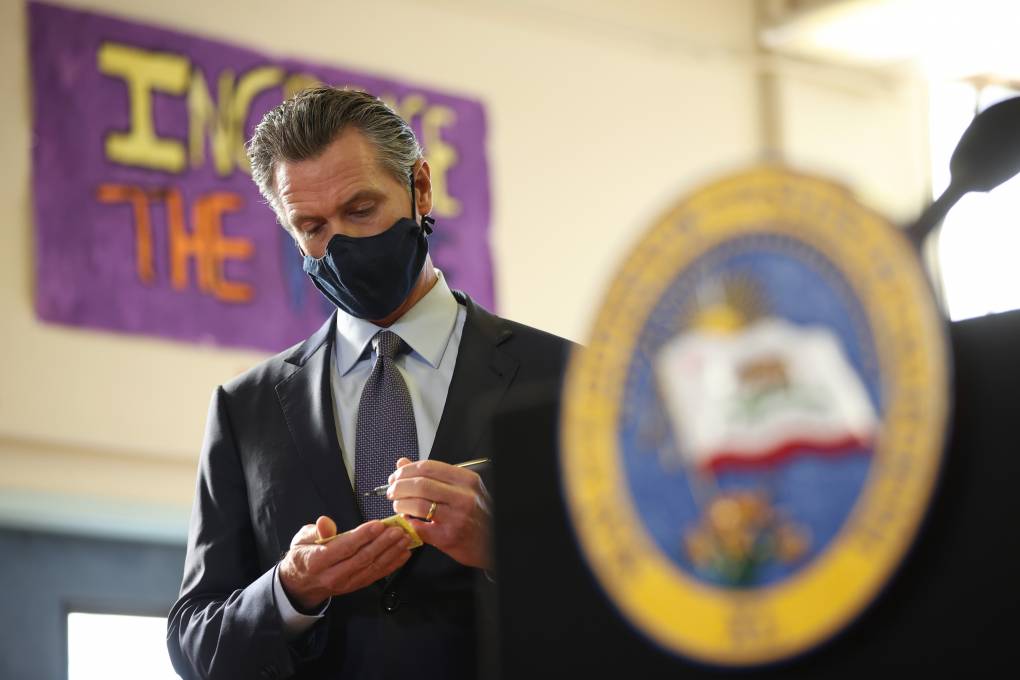
"caption": "Gov. Gavin Newsom takes notes before speaking at a news conference on Oct. 1, 2021, in San Francisco.",
"description": "Gov. Gavin Newsom takes notes before speaking at a news conference after meeting with students at James Denman Middle School on October 01, 2021 in San Francisco.",
"title": "California Governor Newsom Speaks On State's School Safety And Covid Prevention Efforts",
"credit": "Justin Sullivan/Getty Images",
"status": "inherit",
"altTag": "Gavin Newsom, wearing a black mask and standing beyond a podium with the Seal of California, scribbles in a tiny notepad.",
"isLoading": false,
"fetchFailed": false
},
"news_11892011": {
"type": "attachments",
"id": "news_11892011",
"meta": {
"index": "attachments_1716263798",
"site": "news",
"id": "11892011",
"found": true
},
"parent": 11891996,
"imgSizes": {
"twentyfourteen-full-width": {
"file": "https://ww2.kqed.org/app/uploads/sites/10/2021/10/RS51297_063_Meyers_CaldorFire_08312021-qut-1038x576.jpg",
"width": 1038,
"mimeType": "image/jpeg",
"height": 576
},
"thumbnail": {
"file": "https://ww2.kqed.org/app/uploads/sites/10/2021/10/RS51297_063_Meyers_CaldorFire_08312021-qut-160x107.jpg",
"width": 160,
"mimeType": "image/jpeg",
"height": 107
},
"post-thumbnail": {
"file": "https://ww2.kqed.org/app/uploads/sites/10/2021/10/RS51297_063_Meyers_CaldorFire_08312021-qut-672x372.jpg",
"width": 672,
"mimeType": "image/jpeg",
"height": 372
},
"kqedFullSize": {
"file": "https://ww2.kqed.org/app/uploads/sites/10/2021/10/RS51297_063_Meyers_CaldorFire_08312021-qut.jpg",
"width": 1920,
"height": 1280
},
"large": {
"file": "https://ww2.kqed.org/app/uploads/sites/10/2021/10/RS51297_063_Meyers_CaldorFire_08312021-qut-1020x680.jpg",
"width": 1020,
"mimeType": "image/jpeg",
"height": 680
},
"1536x1536": {
"file": "https://ww2.kqed.org/app/uploads/sites/10/2021/10/RS51297_063_Meyers_CaldorFire_08312021-qut-1536x1024.jpg",
"width": 1536,
"mimeType": "image/jpeg",
"height": 1024
},
"medium": {
"file": "https://ww2.kqed.org/app/uploads/sites/10/2021/10/RS51297_063_Meyers_CaldorFire_08312021-qut-800x533.jpg",
"width": 800,
"mimeType": "image/jpeg",
"height": 533
}
},
"publishDate": 1634069464,
"modified": 1634076447,
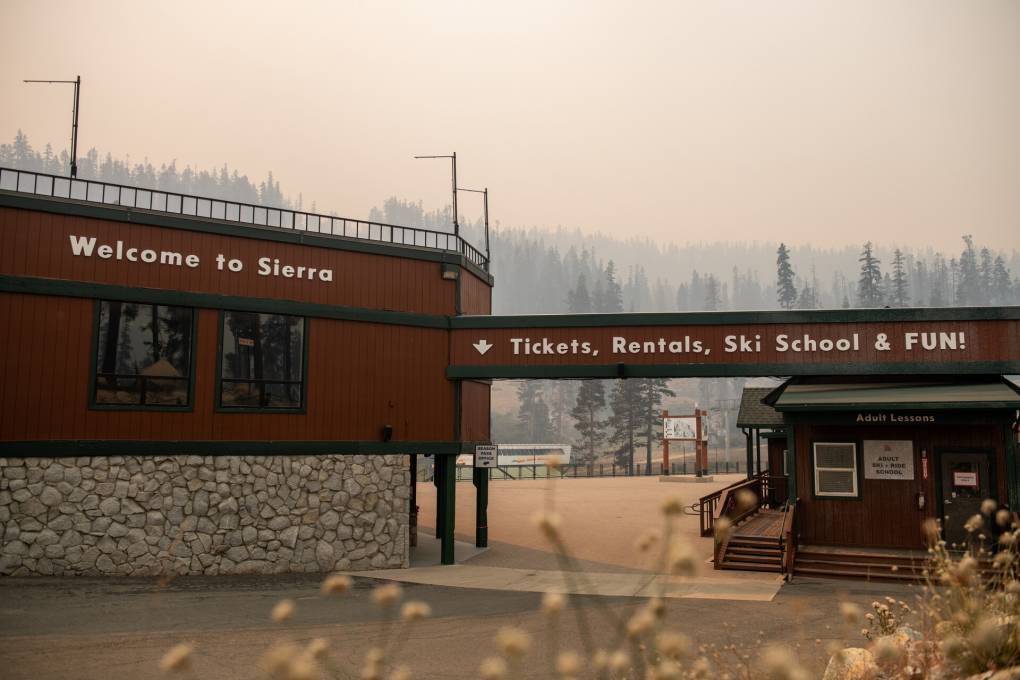
"caption": "The Sierra-at-Tahoe Resort on Aug. 31, 2021, a day after the Caldor Fire spread through the area. Tourism, which is about 63% of the Tahoe basin's economy, plummeted during the fire.",
"description": "The Sierra-at-Tahoe Resort on Tuesday, August 31, 2021, after the Caldor Fire spread through the area the day before.",
"title": "RS51297_063_Meyers_CaldorFire_08312021-qut",
"credit": "Beth LaBerge/KQED",
"status": "inherit",
"altTag": "The front gates of a resort stand in front of a mountainous landscape covered in orange and gray smoke.",
"isLoading": false,
"fetchFailed": false
},
"news_11891035": {
"type": "attachments",
"id": "news_11891035",
"meta": {
"index": "attachments_1716263798",
"site": "news",
"id": "11891035",
"found": true
},
"parent": 11891010,
"imgSizes": {
"twentyfourteen-full-width": {
"file": "https://ww2.kqed.org/app/uploads/sites/10/2021/10/illustration_NewsomMoney_v1-1038x576.jpg",
"width": 1038,
"mimeType": "image/jpeg",
"height": 576
},
"thumbnail": {
"file": "https://ww2.kqed.org/app/uploads/sites/10/2021/10/illustration_NewsomMoney_v1-160x106.jpg",
"width": 160,
"mimeType": "image/jpeg",
"height": 106
},
"post-thumbnail": {
"file": "https://ww2.kqed.org/app/uploads/sites/10/2021/10/illustration_NewsomMoney_v1-672x372.jpg",
"width": 672,
"mimeType": "image/jpeg",
"height": 372
},
"kqedFullSize": {
"file": "https://ww2.kqed.org/app/uploads/sites/10/2021/10/illustration_NewsomMoney_v1.jpg",
"width": 2000,
"height": 1330
},
"large": {
"file": "https://ww2.kqed.org/app/uploads/sites/10/2021/10/illustration_NewsomMoney_v1-1020x678.jpg",
"width": 1020,
"mimeType": "image/jpeg",
"height": 678
},
"1536x1536": {
"file": "https://ww2.kqed.org/app/uploads/sites/10/2021/10/illustration_NewsomMoney_v1-1536x1021.jpg",
"width": 1536,
"mimeType": "image/jpeg",
"height": 1021
},
"full-width": {
"file": "https://ww2.kqed.org/app/uploads/sites/10/2021/10/illustration_NewsomMoney_v1-1920x1277.jpg",
"width": 1920,
"mimeType": "image/jpeg",
"height": 1277
},
"medium": {
"file": "https://ww2.kqed.org/app/uploads/sites/10/2021/10/illustration_NewsomMoney_v1-800x532.jpg",
"width": 800,
"mimeType": "image/jpeg",
"height": 532
}
},
"publishDate": 1633430139,
"modified": 1633469670,
"caption": "Anne Wernikoff, CalMatters/iStock",
"description": null,
"title": "illustration_NewsomMoney_v1",
"credit": null,
"status": "inherit",
"altTag": "An illustration shows a pair of hands opening up a wallet with many 'Vote No on the Recall' signs.",
"isLoading": false,
"fetchFailed": false
},
"news_11889138": {
"type": "attachments",
"id": "news_11889138",
"meta": {
"index": "attachments_1716263798",
"site": "news",
"id": "11889138",
"found": true
},
"parent": 11889113,
"imgSizes": {
"twentyfourteen-full-width": {
"file": "https://ww2.kqed.org/app/uploads/sites/10/2021/09/GettyImages-1321379102-1038x576.jpg",
"width": 1038,
"mimeType": "image/jpeg",
"height": 576
},
"thumbnail": {
"file": "https://ww2.kqed.org/app/uploads/sites/10/2021/09/GettyImages-1321379102-160x109.jpg",
"width": 160,
"mimeType": "image/jpeg",
"height": 109
},
"post-thumbnail": {
"file": "https://ww2.kqed.org/app/uploads/sites/10/2021/09/GettyImages-1321379102-672x372.jpg",
"width": 672,
"mimeType": "image/jpeg",
"height": 372
},
"kqedFullSize": {
"file": "https://ww2.kqed.org/app/uploads/sites/10/2021/09/GettyImages-1321379102-scaled.jpg",
"width": 2560,
"height": 1739
},
"2048x2048": {
"file": "https://ww2.kqed.org/app/uploads/sites/10/2021/09/GettyImages-1321379102-2048x1392.jpg",
"width": 2048,
"mimeType": "image/jpeg",
"height": 1392
},
"large": {
"file": "https://ww2.kqed.org/app/uploads/sites/10/2021/09/GettyImages-1321379102-1020x693.jpg",
"width": 1020,
"mimeType": "image/jpeg",
"height": 693
},
"1536x1536": {
"file": "https://ww2.kqed.org/app/uploads/sites/10/2021/09/GettyImages-1321379102-1536x1044.jpg",
"width": 1536,
"mimeType": "image/jpeg",
"height": 1044
},
"full-width": {
"file": "https://ww2.kqed.org/app/uploads/sites/10/2021/09/GettyImages-1321379102-1920x1305.jpg",
"width": 1920,
"mimeType": "image/jpeg",
"height": 1305
},
"medium": {
"file": "https://ww2.kqed.org/app/uploads/sites/10/2021/09/GettyImages-1321379102-800x544.jpg",
"width": 800,
"mimeType": "image/jpeg",
"height": 544
}
},
"publishDate": 1632165955,
"modified": 1644435895,
"caption": "A \"For Rent\" sign posted on the exterior of an apartment building on June 2, 2021, in San Francisco.",
"description": "A \"For Rent\" sign posted on the exterior of an apartment building on June 2, 2021, in San Francisco.",
"title": "Rents Rebound In San Francisco After Pandemic-Related Decline",
"credit": "Justin Sullivan/Getty Images",
"status": "inherit",
"altTag": "A \"For Rent\" sign posted on the exterior of an apartment building. A white car is parked in front of the building.",
"isLoading": false,
"fetchFailed": false
},
"news_11888528": {
"type": "attachments",
"id": "news_11888528",
"meta": {
"index": "attachments_1716263798",
"site": "news",
"id": "11888528",
"found": true
},
"parent": 11888513,
"imgSizes": {
"twentyfourteen-full-width": {
"file": "https://ww2.kqed.org/app/uploads/sites/10/2021/09/GettyImages-1235242010-1038x576.jpg",
"width": 1038,
"mimeType": "image/jpeg",
"height": 576
},
"thumbnail": {
"file": "https://ww2.kqed.org/app/uploads/sites/10/2021/09/GettyImages-1235242010-160x107.jpg",
"width": 160,
"mimeType": "image/jpeg",
"height": 107
},
"post-thumbnail": {
"file": "https://ww2.kqed.org/app/uploads/sites/10/2021/09/GettyImages-1235242010-672x372.jpg",
"width": 672,
"mimeType": "image/jpeg",
"height": 372
},
"kqedFullSize": {
"file": "https://ww2.kqed.org/app/uploads/sites/10/2021/09/GettyImages-1235242010-scaled.jpg",
"width": 2560,
"height": 1707
},
"2048x2048": {
"file": "https://ww2.kqed.org/app/uploads/sites/10/2021/09/GettyImages-1235242010-2048x1365.jpg",
"width": 2048,
"mimeType": "image/jpeg",
"height": 1365
},
"large": {
"file": "https://ww2.kqed.org/app/uploads/sites/10/2021/09/GettyImages-1235242010-1020x680.jpg",
"width": 1020,
"mimeType": "image/jpeg",
"height": 680
},
"1536x1536": {
"file": "https://ww2.kqed.org/app/uploads/sites/10/2021/09/GettyImages-1235242010-1536x1024.jpg",
"width": 1536,
"mimeType": "image/jpeg",
"height": 1024
},
"full-width": {
"file": "https://ww2.kqed.org/app/uploads/sites/10/2021/09/GettyImages-1235242010-1920x1280.jpg",
"width": 1920,
"mimeType": "image/jpeg",
"height": 1280
},
"medium": {
"file": "https://ww2.kqed.org/app/uploads/sites/10/2021/09/GettyImages-1235242010-800x533.jpg",
"width": 800,
"mimeType": "image/jpeg",
"height": 533
}
},
"publishDate": 1631655230,
"modified": 1631655680,
"caption": "Gov. Gavin Newsom listens while US President Joe Biden speaks during a campaign event at Long Beach City Collage in Long Beach on September 13, 2021. Biden kicked off a visit to scorched western states Monday to hammer home his case on climate change and big public investments, as well as to campaign in California's recall election.",
"description": "California Governor Gavin Newsom listens while US President Joe Biden speaks during a campaign event at Long Beach City Collage in Long Beach, California on September 13, 2021. - US President Joe Biden kicked off a visit to scorched western states Monday to hammer home his case on climate change and big public investments, as well as to campaign in California's recall election.",
"title": "US-POLITICS-BIDEN",
"credit": "Brendan Smialowski/AFP via Getty Images",
"status": "inherit",
"altTag": "Gov. Gavin Newsom sits on a stool and behind him is a crowd at his rally, also visible is a \"Vote No\" sign.",
"isLoading": false,
"fetchFailed": false
},
"news_11888277": {
"type": "attachments",
"id": "news_11888277",
"meta": {
"index": "attachments_1716263798",
"site": "news",
"id": "11888277",
"found": true
},
"parent": 11888267,
"imgSizes": {
"twentyfourteen-full-width": {
"file": "https://ww2.kqed.org/app/uploads/sites/10/2021/09/012921_EvictionVigil_AW_sized_02-1038x576.jpg",
"width": 1038,
"mimeType": "image/jpeg",
"height": 576
},
"thumbnail": {
"file": "https://ww2.kqed.org/app/uploads/sites/10/2021/09/012921_EvictionVigil_AW_sized_02-160x107.jpg",
"width": 160,
"mimeType": "image/jpeg",
"height": 107
},
"post-thumbnail": {
"file": "https://ww2.kqed.org/app/uploads/sites/10/2021/09/012921_EvictionVigil_AW_sized_02-672x372.jpg",
"width": 672,
"mimeType": "image/jpeg",
"height": 372
},
"kqedFullSize": {
"file": "https://ww2.kqed.org/app/uploads/sites/10/2021/09/012921_EvictionVigil_AW_sized_02.jpg",
"width": 1520,
"height": 1013
},
"large": {
"file": "https://ww2.kqed.org/app/uploads/sites/10/2021/09/012921_EvictionVigil_AW_sized_02-1020x680.jpg",
"width": 1020,
"mimeType": "image/jpeg",
"height": 680
},
"medium": {
"file": "https://ww2.kqed.org/app/uploads/sites/10/2021/09/012921_EvictionVigil_AW_sized_02-800x533.jpg",
"width": 800,
"mimeType": "image/jpeg",
"height": 533
}
},
"publishDate": 1631559348,
"modified": 1631578709,
"caption": "Housing organizers and rent strikers participate in a vigil for tenants who they say will not be covered by Gov. Gavin Newsom’s rent relief plan at the Elihu M. Harris office building in Oakland on Jan. 29, 2021.",
"description": "Housing activists and rent strikers participate in a vigil for tenants who they say will not be covered by Gov. Gavin Newsom’s rent relief plan at the Elihu M. Harris, State of California office building in Oakland on Jan. 29, 2021",
"title": "012921_EvictionVigil_AW_sized_02",
"credit": "Anne Wernikoff/CalMatters",
"status": "inherit",
"altTag": "Protesters hold candles in front of a projection that says, \"no evictions on stolen land.\"",
"isLoading": false,
"fetchFailed": false
},
"news_11887140": {
"type": "attachments",
"id": "news_11887140",
"meta": {
"index": "attachments_1716263798",
"site": "news",
"id": "11887140",
"found": true
},
"parent": 11887060,
"imgSizes": {
"twentyfourteen-full-width": {
"file": "https://ww2.kqed.org/app/uploads/sites/10/2021/08/AP_LakeTahoesmoke_082721_01-1038x576.jpg",
"width": 1038,
"mimeType": "image/jpeg",
"height": 576
},
"thumbnail": {
"file": "https://ww2.kqed.org/app/uploads/sites/10/2021/08/AP_LakeTahoesmoke_082721_01-160x106.jpg",
"width": 160,
"mimeType": "image/jpeg",
"height": 106
},
"post-thumbnail": {
"file": "https://ww2.kqed.org/app/uploads/sites/10/2021/08/AP_LakeTahoesmoke_082721_01-672x372.jpg",
"width": 672,
"mimeType": "image/jpeg",
"height": 372
},
"kqedFullSize": {
"file": "https://ww2.kqed.org/app/uploads/sites/10/2021/08/AP_LakeTahoesmoke_082721_01.jpg",
"width": 1536,
"height": 1021
},
"large": {
"file": "https://ww2.kqed.org/app/uploads/sites/10/2021/08/AP_LakeTahoesmoke_082721_01-1020x678.jpg",
"width": 1020,
"mimeType": "image/jpeg",
"height": 678
},
"medium": {
"file": "https://ww2.kqed.org/app/uploads/sites/10/2021/08/AP_LakeTahoesmoke_082721_01-800x532.jpg",
"width": 800,
"mimeType": "image/jpeg",
"height": 532
}
},
"publishDate": 1630456710,
"modified": 1630456939,
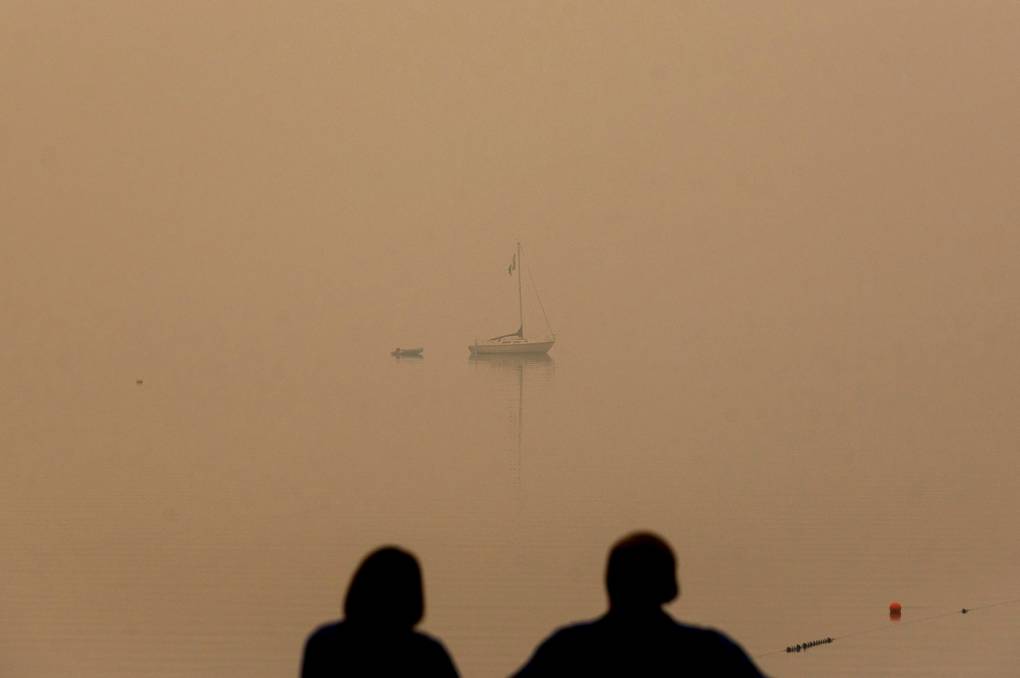
"caption": "Lake Tahoe is blanketed by smoke from the rapidly spreading Caldor Fire on Aug. 27, 2021. Pushed by strong winds, flames on the eastern side of Highway 89 have begun burning into the mountains on the other side of the valley, south of South Lake Tahoe.",
"description": "Lake Tahoe is blanketed by smoke from the rapidly spreading Caldor Fire on Aug. 27, 2021.",
"title": "AP_LakeTahoesmoke_082721_01",
"credit": "Noah Berger/AP Photo",
"status": "inherit",
"altTag": "A couple watches from the shore a distant boat on the lake, which has been completely blanketed by smoke.",
"isLoading": false,
"fetchFailed": false
},
"news_11881745": {
"type": "attachments",
"id": "news_11881745",
"meta": {
"index": "attachments_1716263798",
"site": "news",
"id": "11881745",
"found": true
},
"parent": 11881743,
"imgSizes": {
"twentyfourteen-full-width": {
"file": "https://ww2.kqed.org/app/uploads/sites/10/2021/07/LosAngeles_AW-1038x576.jpg",
"width": 1038,
"mimeType": "image/jpeg",
"height": 576
},
"thumbnail": {
"file": "https://ww2.kqed.org/app/uploads/sites/10/2021/07/LosAngeles_AW-160x107.jpg",
"width": 160,
"mimeType": "image/jpeg",
"height": 107
},
"post-thumbnail": {
"file": "https://ww2.kqed.org/app/uploads/sites/10/2021/07/LosAngeles_AW-672x372.jpg",
"width": 672,
"mimeType": "image/jpeg",
"height": 372
},
"kqedFullSize": {
"file": "https://ww2.kqed.org/app/uploads/sites/10/2021/07/LosAngeles_AW.jpg",
"width": 1200,
"height": 802
},
"large": {
"file": "https://ww2.kqed.org/app/uploads/sites/10/2021/07/LosAngeles_AW-1020x682.jpg",
"width": 1020,
"mimeType": "image/jpeg",
"height": 682
},
"medium": {
"file": "https://ww2.kqed.org/app/uploads/sites/10/2021/07/LosAngeles_AW-800x535.jpg",
"width": 800,
"mimeType": "image/jpeg",
"height": 535
}
},
"publishDate": 1626800845,
"modified": 1626800876,
"caption": "Students sit outside of Royce Hall at UCLA — among the University of California campuses that could experience tuition hikes every year under a pending proposal.",
"description": null,
"title": "LosAngeles_AW",
"credit": "Anne Wernikoff/CalMatters",
"status": "inherit",
"altTag": null,
"isLoading": false,
"fetchFailed": false
},
"news_11881050": {
"type": "attachments",
"id": "news_11881050",
"meta": {
"index": "attachments_1716263798",
"site": "news",
"id": "11881050",
"found": true
},
"parent": 11881047,
"imgSizes": {
"twentyfourteen-full-width": {
"file": "https://ww2.kqed.org/app/uploads/sites/10/2021/07/070821_FamilyLeave_AW_sized_08-1-1038x576.jpg",
"width": 1038,
"mimeType": "image/jpeg",
"height": 576
},
"thumbnail": {
"file": "https://ww2.kqed.org/app/uploads/sites/10/2021/07/070821_FamilyLeave_AW_sized_08-1-160x107.jpg",
"width": 160,
"mimeType": "image/jpeg",
"height": 107
},
"post-thumbnail": {
"file": "https://ww2.kqed.org/app/uploads/sites/10/2021/07/070821_FamilyLeave_AW_sized_08-1-672x372.jpg",
"width": 672,
"mimeType": "image/jpeg",
"height": 372
},
"kqedFullSize": {
"file": "https://ww2.kqed.org/app/uploads/sites/10/2021/07/070821_FamilyLeave_AW_sized_08-1.jpg",
"width": 1410,
"height": 939
},
"large": {
"file": "https://ww2.kqed.org/app/uploads/sites/10/2021/07/070821_FamilyLeave_AW_sized_08-1-1020x679.jpg",
"width": 1020,
"mimeType": "image/jpeg",
"height": 679
},
"medium": {
"file": "https://ww2.kqed.org/app/uploads/sites/10/2021/07/070821_FamilyLeave_AW_sized_08-1-800x533.jpg",
"width": 800,
"mimeType": "image/jpeg",
"height": 533
}
},
"publishDate": 1626205890,
"modified": 1626289655,
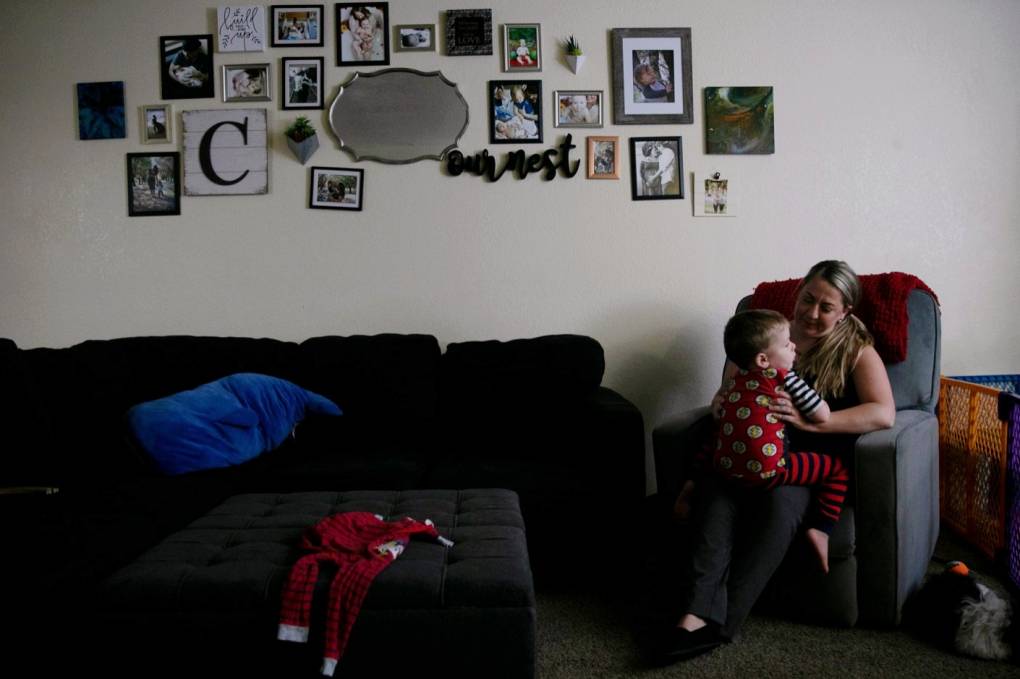
"caption": "Miranda Griswold cuddles her 3-year-old, Rhys, before bedtime at their Merced home on July 8, 2021. 'Six weeks is nothing,' Griswold said of the current family leave allotment. 'It’s barely time to recover [from C-section] and on top of navigating breast feeding.'",
"description": "Miranda Griswold cuddles her three-year-old, Rhys, before bedtime at their Merced home on July 8, 2021. “Six weeks is nothing,” Griswold said of the current family leave allotment. “It’s barely time to recover [from C-section] and on top of navigating breast feeding.”",
"title": "070821_FamilyLeave_AW_sized_08 (1)",
"credit": "Anne Wernikoff/CalMatters",
"status": "inherit",
"altTag": "An adult with blond hair sits on a couch and carries an infant. Both are in a dark living room. There are many photos hung on the wall besides them.",
"isLoading": false,
"fetchFailed": false
},
"news_11880429": {
"type": "attachments",
"id": "news_11880429",
"meta": {
"index": "attachments_1716263798",
"site": "news",
"id": "11880429",
"found": true
},
"parent": 11880422,
"imgSizes": {
"twentyfourteen-full-width": {
"file": "https://ww2.kqed.org/app/uploads/sites/10/2021/07/06302021_Underpass_PU_Sized_03-1038x576.jpg",
"width": 1038,
"mimeType": "image/jpeg",
"height": 576
},
"thumbnail": {
"file": "https://ww2.kqed.org/app/uploads/sites/10/2021/07/06302021_Underpass_PU_Sized_03-160x107.jpg",
"width": 160,
"mimeType": "image/jpeg",
"height": 107
},
"post-thumbnail": {
"file": "https://ww2.kqed.org/app/uploads/sites/10/2021/07/06302021_Underpass_PU_Sized_03-672x372.jpg",
"width": 672,
"mimeType": "image/jpeg",
"height": 372
},
"kqedFullSize": {
"file": "https://ww2.kqed.org/app/uploads/sites/10/2021/07/06302021_Underpass_PU_Sized_03.jpg",
"width": 1275,
"height": 850
},
"large": {
"file": "https://ww2.kqed.org/app/uploads/sites/10/2021/07/06302021_Underpass_PU_Sized_03-1020x680.jpg",
"width": 1020,
"mimeType": "image/jpeg",
"height": 680
},
"medium": {
"file": "https://ww2.kqed.org/app/uploads/sites/10/2021/07/06302021_Underpass_PU_Sized_03-800x533.jpg",
"width": 800,
"mimeType": "image/jpeg",
"height": 533
}
},
"publishDate": 1625603722,
"modified": 1625604477,
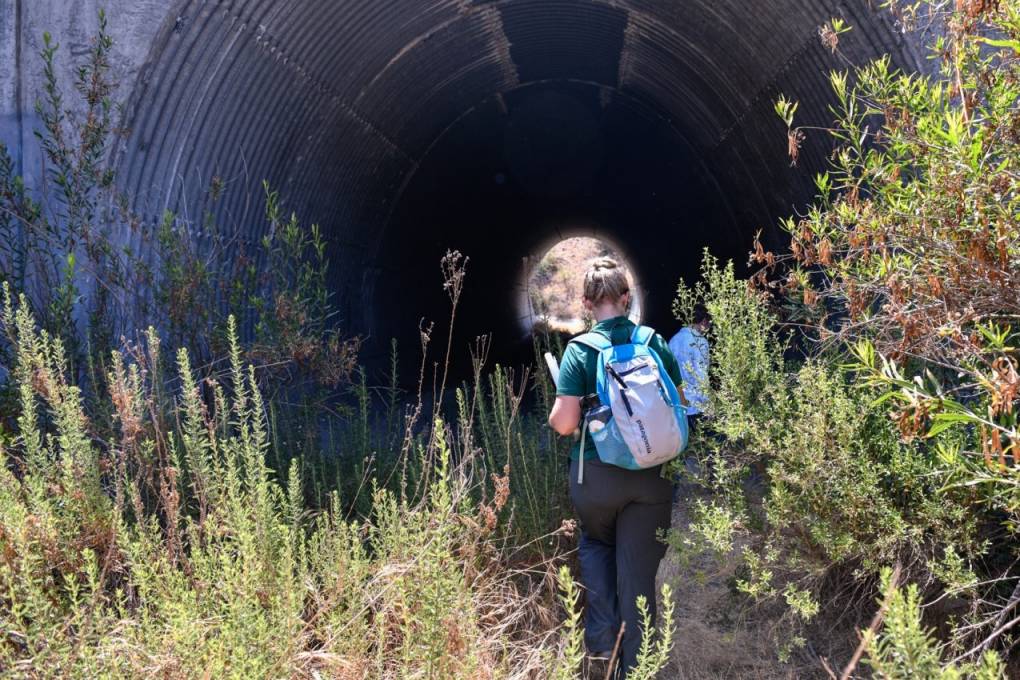
"caption": "Michelle Mariscal, an ecologist for the Puente Hills Habitat Preservation Authority, walks into the Harbor Boulevard Wildlife Underpass in La Habra Heights, on June 30, 2021. \"This is the wildlife's gateway to the open space on either side of this busy road,\" Mariscal said. \"The animals to the underpass are able to live longer lives.\"",
"description": "Michelle Mariscal, an ecologist for the Puente Hills Habitat Preservation Authority, walks into the Harbor Boulevard Wildlife Underpass in La Habra Heights, on June 30, 2021.",
"title": "06302021_Underpass_PU_Sized_03",
"credit": "Pablo Unzueta for CalMatters",
"status": "inherit",
"altTag": "A person walks into a tunnel. Their face is turned away from us.",
"isLoading": false,
"fetchFailed": false
},
"news_11878113": {
"type": "attachments",
"id": "news_11878113",
"meta": {
"index": "attachments_1716263798",
"site": "news",
"id": "11878113",
"found": true
},
"parent": 11878067,
"imgSizes": {
"twentyfourteen-full-width": {
"file": "https://ww2.kqed.org/app/uploads/sites/10/2021/06/0692021_ReopeningJune15_PU_Sized_15-1-1038x576.jpg",
"width": 1038,
"mimeType": "image/jpeg",
"height": 576
},
"thumbnail": {
"file": "https://ww2.kqed.org/app/uploads/sites/10/2021/06/0692021_ReopeningJune15_PU_Sized_15-1-160x107.jpg",
"width": 160,
"mimeType": "image/jpeg",
"height": 107
},
"post-thumbnail": {
"file": "https://ww2.kqed.org/app/uploads/sites/10/2021/06/0692021_ReopeningJune15_PU_Sized_15-1-672x372.jpg",
"width": 672,
"mimeType": "image/jpeg",
"height": 372
},
"kqedFullSize": {
"file": "https://ww2.kqed.org/app/uploads/sites/10/2021/06/0692021_ReopeningJune15_PU_Sized_15-1.jpg",
"width": 1536,
"height": 1024
},
"large": {
"file": "https://ww2.kqed.org/app/uploads/sites/10/2021/06/0692021_ReopeningJune15_PU_Sized_15-1-1020x680.jpg",
"width": 1020,
"mimeType": "image/jpeg",
"height": 680
},
"medium": {
"file": "https://ww2.kqed.org/app/uploads/sites/10/2021/06/0692021_ReopeningJune15_PU_Sized_15-1-800x533.jpg",
"width": 800,
"mimeType": "image/jpeg",
"height": 533
}
},
"publishDate": 1623797059,
"modified": 1623797332,
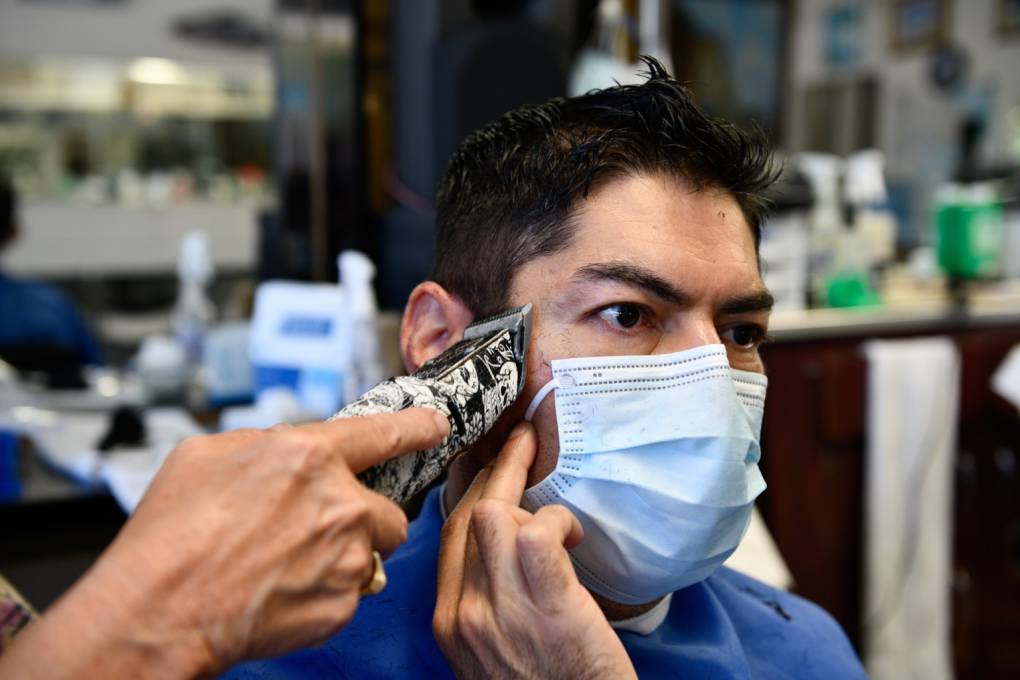
"caption": "Carlos Hernández sostiene su cubrebocas mientras Sarah Cordiey le corta el pelo en Spiros Barber Shop en Long Beach, el 9 de junio de 2021. \"Durante la pandemia, tuve depresión y ansiedad\", dijo Hernández, quien vio a su familia por primera vez en más de un año la semana pasada. \"Pero luego, cuando me vacuné. me sentí mucho mejor\".",
"description": "Carlos Hernández sostiene su cubrebocas mientras Sarah Cordiey le corta el pelo en Spiros Barber Shop en Long Beach, el 9 de junio de 2021.",
"title": "0692021_ReopeningJune15_PU_Sized_15",
"credit": "Pablo Unzueta para CalMatters",
"status": "inherit",
"altTag": "Carlos Hernández sostiene su cubrebocas mientras Sarah Cordiey le corta el pelo en Spiros Barber Shop en Long Beach, el 9 de junio de 2021.",
"isLoading": false,
"fetchFailed": false
},
"news_11877996": {
"type": "attachments",
"id": "news_11877996",
"meta": {
"index": "attachments_1716263798",
"site": "news",
"id": "11877996",
"found": true
},
"parent": 11877992,
"imgSizes": {
"twentyfourteen-full-width": {
"file": "https://ww2.kqed.org/app/uploads/sites/10/2021/06/0692021_ReopeningJune15_PU_Sized_15-1038x576.jpg",
"width": 1038,
"mimeType": "image/jpeg",
"height": 576
},
"thumbnail": {
"file": "https://ww2.kqed.org/app/uploads/sites/10/2021/06/0692021_ReopeningJune15_PU_Sized_15-160x107.jpg",
"width": 160,
"mimeType": "image/jpeg",
"height": 107
},
"post-thumbnail": {
"file": "https://ww2.kqed.org/app/uploads/sites/10/2021/06/0692021_ReopeningJune15_PU_Sized_15-672x372.jpg",
"width": 672,
"mimeType": "image/jpeg",
"height": 372
},
"kqedFullSize": {
"file": "https://ww2.kqed.org/app/uploads/sites/10/2021/06/0692021_ReopeningJune15_PU_Sized_15.jpg",
"width": 1536,
"height": 1024
},
"large": {
"file": "https://ww2.kqed.org/app/uploads/sites/10/2021/06/0692021_ReopeningJune15_PU_Sized_15-1020x680.jpg",
"width": 1020,
"mimeType": "image/jpeg",
"height": 680
},
"medium": {
"file": "https://ww2.kqed.org/app/uploads/sites/10/2021/06/0692021_ReopeningJune15_PU_Sized_15-800x533.jpg",
"width": 800,
"mimeType": "image/jpeg",
"height": 533
}
},
"publishDate": 1623784733,
"modified": 1623784855,
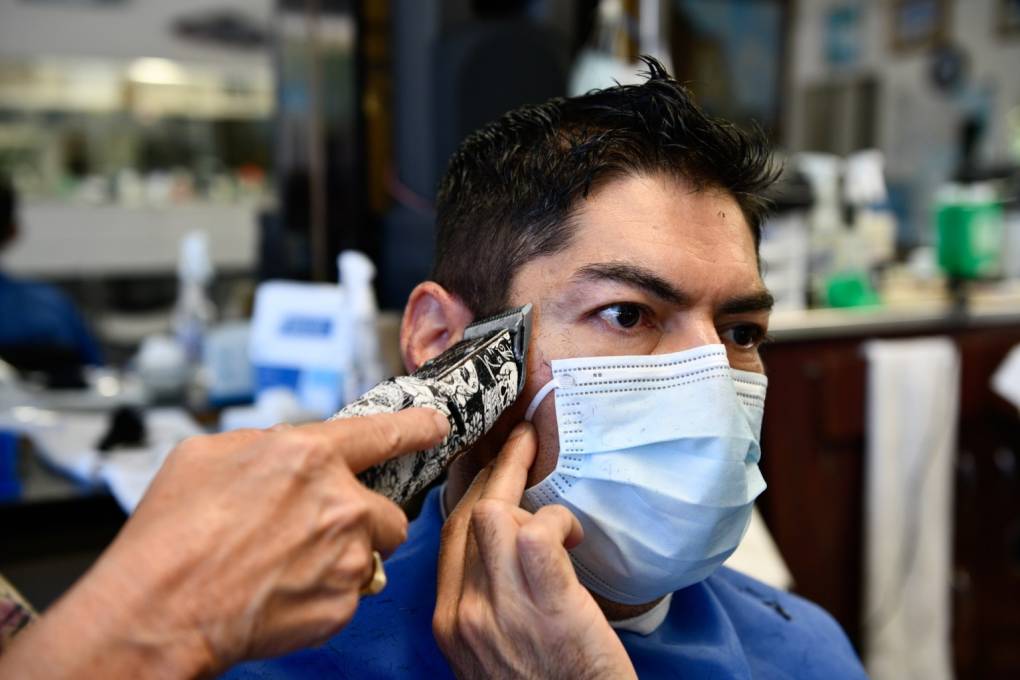
"caption": "Carlos Hernandez holds his mask while getting a haircut by Sarah Cordiey at Spiros Barber Shop in Long Beach, on June 9, 2021. \"During the pandemic, I got depression and anxiety,\" said Hernandez, who saw his family for the first time last week in more than one year. \"But then when I got [fully] vaccinated I felt a lot better.\"",
"description": "Carlos Hernandez holds his mask while getting a haircut by Sarah Cordiey at Spiros Barber Shop in Long Beach, on June 9, 2021.",
"title": "0692021_ReopeningJune15_PU_Sized_15",
"credit": "Pablo Unzueta for CalMatters",
"status": "inherit",
"altTag": "Carlos Hernandez holds his mask whilera getting a haircut. The razor passes by his sideburns.",
"isLoading": false,
"fetchFailed": false
}
},
"audioPlayerReducer": {
"postId": "stream_live",
"isPaused": true,
"isPlaying": false,
"pfsActive": false,
"pledgeModalIsOpen": true,
"playerDrawerIsOpen": false,
"liveAudioPlayStartedAt": 0,
"liveAudioPlayContext": ""
},
"authorsReducer": {
"byline_news_11892112": {
"type": "authors",
"id": "byline_news_11892112",
"meta": {
"override": true
},
"slug": "byline_news_11892112",
"name": "\u003ca href=\"https://calmatters.org/author/laurel-rosenhall/\">Laurel Rosenhall\u003c/a>",
"isLoading": false
},
"byline_news_11891996": {
"type": "authors",
"id": "byline_news_11891996",
"meta": {
"override": true
},
"slug": "byline_news_11891996",
"name": "\u003ca href=\"https://calmatters.org/author/grace-gedye/\">Grace Gedye\u003c/a>",
"isLoading": false
},
"byline_news_11891010": {
"type": "authors",
"id": "byline_news_11891010",
"meta": {
"override": true
},
"slug": "byline_news_11891010",
"name": "\u003ca href=\"https://calmatters.org/author/laurel-rosenhall/\">Laurel Rosenhall\u003c/a>",
"isLoading": false
},
"byline_news_11889113": {
"type": "authors",
"id": "byline_news_11889113",
"meta": {
"override": true
},
"slug": "byline_news_11889113",
"name": "\u003ca href=\"https://calmatters.org/author/manuela-tobias/\">Manuela Tobias\u003c/a>",
"isLoading": false
},
"byline_news_11888513": {
"type": "authors",
"id": "byline_news_11888513",
"meta": {
"override": true
},
"slug": "byline_news_11888513",
"name": "\u003ca href=\"https://calmatters.org/author/laurel-rosenhall/\">Laurel Rosenhall\u003c/a>",
"isLoading": false
},
"byline_news_11888267": {
"type": "authors",
"id": "byline_news_11888267",
"meta": {
"override": true
},
"slug": "byline_news_11888267",
"name": "\u003ca href=\"https://calmatters.org/author/manuela-tobias/\">Manuela Tobias\u003c/a>",
"isLoading": false
},
"byline_news_11887060": {
"type": "authors",
"id": "byline_news_11887060",
"meta": {
"override": true
},
"slug": "byline_news_11887060",
"name": "\u003ca href=\"https://calmatters.org/author/rachel-becker/\">Rachel Becker\u003c/a>",
"isLoading": false
},
"byline_news_11881743": {
"type": "authors",
"id": "byline_news_11881743",
"meta": {
"override": true
},
"slug": "byline_news_11881743",
"name": "\u003ca href=\"https://calmatters.org/author/mikhailzinshteyn/\">Mikhail Zinshteyn\u003c/a>\u003cbr>CalMatters",
"isLoading": false
},
"byline_news_11881047": {
"type": "authors",
"id": "byline_news_11881047",
"meta": {
"override": true
},
"slug": "byline_news_11881047",
"name": "\u003ca href=\"https://calmatters.org/author/sameea-kamal/\">Sameea Kamal\u003c/a>",
"isLoading": false
},
"byline_news_11880422": {
"type": "authors",
"id": "byline_news_11880422",
"meta": {
"override": true
},
"slug": "byline_news_11880422",
"name": "\u003ca href=\"https://calmatters.org/author/marissa-garcia/\">Marissa Garcia\u003c/a>",
"isLoading": false
},
"byline_news_11878067": {
"type": "authors",
"id": "byline_news_11878067",
"meta": {
"override": true
},
"slug": "byline_news_11878067",
"name": "\u003ca href=\"https://calmatters.org/author/ben-christopher/\">Ben Christopher\u003c/a>\u003cbr>\u003ca href=\"https://calmatters.org/\">Calmatters\u003c/a>",
"isLoading": false
},
"byline_news_11877992": {
"type": "authors",
"id": "byline_news_11877992",
"meta": {
"override": true
},
"slug": "byline_news_11877992",
"name": "\u003ca href=\"https://calmatters.org/author/ben-christopher/\">Ben Christopher\u003c/a>",
"isLoading": false
}
},
"pagesReducer": {
"news_affiliate_calmatters": {
"type": "terms",
"id": "news_18481",
"meta": {
"index": "terms_1716263798",
"site": "news",
"id": "18481",
"score": 15.355904
},
"featImg": null,
"name": "CALmatters",
"description": null,
"taxonomy": "affiliate",
"headData": {
"twImgId": null,
"twTitle": null,
"ogTitle": null,
"ogImgId": null,
"twDescription": null,
"description": null,
"title": "CALmatters Archives | KQED Arts",
"ogDescription": null
},
"ttid": 18515,
"slug": "calmatters",
"isLoading": false,
"title": "CALmatters",
"pageMeta": {
"site": "news",
"WpPageTemplate": "page-topic-editorial",
"currentPage": 58
},
"blocks": [
{
"blockName": "kqed/post-list",
"attrs": {
"layout": "cardArticle2",
"query": "posts/news?affiliate=calmatters",
"seeMore": false,
"paginated": true,
"page": 58
}
},
{
"blockName": "kqed/ad"
}
]
}
},
"pfsSessionReducer": {},
"postsReducer": {
"stream_live": {
"type": "live",
"id": "stream_live",
"audioUrl": "https://streams.kqed.org/kqedradio",
"title": "Live Stream",
"excerpt": "Live Stream information currently unavailable.",
"link": "/radio",
"featImg": "",
"label": {
"name": "KQED Live",
"link": "/"
}
},
"stream_kqedNewscast": {
"type": "posts",
"id": "stream_kqedNewscast",
"audioUrl": "https://www.kqed.org/.stream/anon/radio/RDnews/newscast.mp3?_=1",
"title": "KQED Newscast",
"featImg": "",
"label": {
"name": "88.5 FM",
"link": "/"
}
},
"news_11892112": {
"type": "posts",
"id": "news_11892112",
"meta": {
"index": "posts_1716263798",
"site": "news",
"id": "11892112",
"score": null,
"sort": [
1634172720000
]
},
"guestAuthors": [],
"slug": "newsom-signs-plenty-of-bills-but-what-makes-him-kill-one",
"title": "Newsom Signs Plenty of Bills — But What Makes Him Kill One?",
"publishDate": 1634172720,
"format": "standard",
"headTitle": "Newsom Signs Plenty of Bills — But What Makes Him Kill One? | KQED",
"labelTerm": {
"term": 18481,
"site": "news"
},
"content": "\u003cp>Gov. Gavin Newsom has now completed three rounds of the annual ritual of deciding what should become law in California by giving a thumbs-up or thumbs-down to hundreds of bills sent to him by the Legislature.\u003c/p>\n\u003cp>[aside postID=\"news_11891336\" hero=\"https://ww2.kqed.org/app/uploads/sites/10/2021/07/Capitol-1180x787-3-1020x680.jpeg\"]In year one, he used the routine to demonstrate differences from his predecessor, signing dozens of bills that Jerry Brown had vetoed — but also vetoing a greater proportion of bills than Brown typically did.\u003c/p>\n\u003cp>In year two, with the Legislature largely sidelined by the COVID-19 pandemic, Newsom signed fewer new laws than any governor in more than 50 years, instead governing through numerous executive orders.\u003c/p>\n\u003cp>And this year, his third, Newsom used his veto pen at about half the rate he did in his first year as governor, saying “no” to about 8% of the 836 bills that hit his desk.\u003c/p>\n\u003cp>\u003c!-- iframe plugin v.4.3 wordpress.org/plugins/iframe/ -->\u003cbr>\n\u003ciframe loading=\"lazy\" src=\"https://e.infogram.com/_/hxNrlgiB93BuhlMnvrIa?src=embed\" title=\"2021 Vetoes\" width=\"800\" height=\"602\" scrolling=\"no\" frameborder=\"0\" style=\"border:none;\" allowfullscreen=\"allowfullscreen\" class=\"iframe-class\">\u003c/iframe>\u003c/p>\n\u003cp>In doing so, Newsom largely demonstrated a traditional governing philosophy, using his veto power to block bills that cost more than the state budgeted for, clashed with work already underway in his administration or were repeats of ideas he’d already nixed. Essentially, Newsom’s vetoes in 2021 proved more about what he has in common with his predecessors than how he is unique.\u003c/p>\n\u003cp>“He is similar to other governors in that there are some consistent themes or bases for governors to veto legislation,” said Chris Micheli, a lobbyist and attorney who teaches law school courses on the legislative process.\u003c/p>\n\u003cp>“His first year in office was very different.”\u003c/p>\n\u003cp>While Newsom held celebratory public events with legislators to sign their bills, he announced vetoes by listing them at the end of press releases. So, many of them flew under the radar. It required reading his veto messages to get explanations or justifications of why he didn’t believe the proposals should become law in California. On some bills, he cited multiple reasons.\u003c/p>\n\u003cp>Here are some key themes that emerged from Newsom’s 66 vetoes this year:\u003cbr>\n[ad fullwidth]\u003c/p>\n\u003ch3>\u003cstrong>That’s not in the budget\u003c/strong>\u003c/h3>\n\u003cp>Some bills advancing causes that Newsom has championed in the past got his thumbs-down nonetheless. Why? Because, he argued in many veto messages, the proposal would cost money the state had not budgeted for, \u003ca href=\"https://www.kqed.org/news/11862460/as-californias-rich-get-richer-state-expects-10-5-billion-surplus-despite-slow-economy\">despite an unprecedented windfall of state revenue and federal aid\u003c/a>.\u003c/p>\n\u003cp>That’s what Newsom said in nixing a bill to raise the amount of salary that workers can receive while taking paid family leave — even though he signed two expansions of the family leave program in years past.\u003c/p>\n\u003cp>[aside postID=\"news_11891396\" hero=\"https://ww2.kqed.org/app/uploads/sites/10/2021/05/SF-high-school-in-person-class-1020x680.jpg\"]A spokesperson from Newsom’s finance department told CalMatters that the bill would have hiked the cost for both employees and the state, including millions in computer upgrades and public outreach.\u003c/p>\n\u003cp>Newsom also made the cost argument in vetoing a huge expansion of college financial aid. Just months ago, he signed a budget that includes an additional $3.3 billion for colleges and universities, including $1.5 billion in increases for student grants and work study opportunities.\u003c/p>\n\u003cp>“Expanding access to financial aid has been a priority for my Administration,” the Governor wrote in his veto. But, he told lawmakers, massive changes to the system need to be considered as part of the regular budget process.\u003c/p>\n\u003ch3>\u003cstrong>Calling out repeat bills\u003c/strong>\u003c/h3>\n\u003cp>As he’s becoming more seasoned as governor, a new theme is emerging in Newsom’s vetoes: calling out the repeats.\u003c/p>\n\u003cp>“As I stated in a veto message on similar legislation in 2019,” Newsom wrote in nixing a bill that would prohibit paying petition circulators per signature gathered, “I appreciate the intent of this bill to incentivize grassroots support for the initiative, referendum, and recall process.”\u003c/p>\n\u003cp>[aside postID=\"news_11891010\" hero=\"https://ww2.kqed.org/app/uploads/uploads/sites/10/2021/10/illustration_NewsomMoney_v1-1020x678.jpg\"]But, he said, changing the way workers are paid to gather signatures could make the process more costly, giving wealthy interests even more influence over the initiative process.\u003c/p>\n\u003cp>Similarly, he vetoed legislation to let supervisors in state government settle disputes through binding arbitration by saying it could add costs and create conflicts with existing procedures, “the same concerns I had with a previous, nearly-identical bill … which I also vetoed.”\u003c/p>\n\u003cp>Former Gov. Brown — who saw plenty of repeats as California’s longest-serving governor — also had a habit of using his veto messages to highlight the rationale behind his prior vetoes.\u003c/p>\n\u003cp>\u003c!-- iframe plugin v.4.3 wordpress.org/plugins/iframe/ -->\u003cbr>\n\u003ciframe loading=\"lazy\" src=\"https://e.infogram.com/_/g74doLv8ZouV2FRyiUiB?src=embed\" title=\"Newsom vetoes compared to other governors, 2021\" width=\"800\" height=\"712\" scrolling=\"no\" frameborder=\"0\" style=\"border:none;\" allowfullscreen=\"allowfullscreen\" class=\"iframe-class\">\u003c/iframe>\u003c/p>\n\u003ch3>\u003cstrong>Overwhelming support is no guarantee\u003c/strong>\u003c/h3>\n\u003cp>Newsom blocked a number of bills that were not controversial as they moved through the Legislature, making his veto a surprise after proposals advanced for months drama-free.\u003c/p>\n\u003cp>An attempt to crack down on the use of “bots” to scoop up camping reservations at state parks, for example, passed the Legislature with sweeping bipartisan support and had no formal opposition. Newsom, however, said the bill is unnecessary because the state has added security measures on its camping reservation website.\u003c/p>\n\u003cp>[aside postID=\"news_11890615\" hero=\"https://ww2.kqed.org/app/uploads/sites/10/2021/09/GettyImages-1216832918-1020x680.jpg\"]\u003ca href=\"https://leginfo.legislature.ca.gov/faces/billNavClient.xhtml?bill_id=202120220SB494\">SB 494\u003c/a>, a measure requiring police officers to be trained in “interpersonal communication skills and ethical science-based interviewing,” similarly sailed through the Capitol without a single “no” vote.\u003c/p>\n\u003cp>Newsom said he likes the idea but doesn’t want to create a mandatory cost for police departments. In \u003ca href=\"https://www.gov.ca.gov/wp-content/uploads/2021/10/SB-494-Message-Scan.pdf\">vetoing the bill\u003c/a>, he said he’ll direct the commission that trains police to create the training course and leave it up to departments to decide whether their officers take it.\u003c/p>\n\u003cp>Patio umbrellas hardly seem like a controversial subject. Lawmakers overwhelmingly agreed that state law should allow alcohol manufacturers to give away promotional patio umbrellas to venues that sell their liquor.\u003c/p>\n\u003cp>But Newsom — owner of the PlumpJack wine and hospitality business, who often talks about launching a small wine shop as a young entrepreneur — vetoed the legislation, saying it would “increase alcohol signage and advertisements in public areas and disadvantage small alcohol manufacturers that cannot compete with the marketing budgets of multibillion-dollar corporations.”\u003c/p>\n\u003ch3>\u003cstrong>Approaching some new ideas with caution\u003c/strong>\u003c/h3>\n\u003cp>On two bills meant to address the scourge of drug addiction, Newsom just said no.\u003c/p>\n\u003cp>\u003ca href=\"https://leginfo.legislature.ca.gov/faces/billVotesClient.xhtml?bill_id=202120220AB1542\">AB 1542\u003c/a> would have allowed Yolo County to create a rehab program for people with a substance use disorder who commit certain crimes. The bill earned bipartisan support from lawmakers in both houses, but Newsom vetoed it saying it would lead to “forced treatment,” which could hinder “participants’ long-term recovery.”\u003c/p>\n\u003cp>[aside postID=\"news_11891403\" hero=\"https://ww2.kqed.org/app/uploads/sites/10/2021/10/RS51806_048_Oakland_HighlandHospitalBridgeProgram_10062021-qut-1020x680.jpg\"]Many progressive criminal justice reform groups opposed AB 1542, including the Drug Policy Alliance, whose board member George Soros donated $1 million to help Newsom fight last month’s recall.\u003c/p>\n\u003cp>At the same time, Newsom vetoed another bill that the Drug Policy Alliance supported, a measure to allow Medi-Cal to cover money paid to people recovering from drug addiction as an incentive to stay sober.\u003c/p>\n\u003cp>In his veto, Newsom wrote that the state is trying to launch a similar pilot project, the results of which he wants to evaluate before agreeing to any expansion. That bill cleared the Legislature with overwhelming bipartisan support, but was opposed by Newsom’s finance department.\u003c/p>\n\u003cp>Similarly, he blocked two proposals aimed at changing rules of the road for walkers and bicyclists. One would have decriminalized jaywalking and the other would have let bicyclists ride through stop signs.\u003c/p>\n\u003cp>Supporters of the jaywalking bill said people of color are unfairly targeted. Newsom agreed, but pointed out California’s high rate of pedestrian deaths and warned that the bill “will unintentionally reduce pedestrian safety and potentially increase fatalities or serious injuries.”\u003c/p>\n\u003cp>Likewise, Newsom said the bicyclist bill could backfire and increase collisions and deaths, especially among “children, who may not know how to judge vehicle speeds or exercise the necessary caution to yield to traffic when appropriate.”\u003c/p>\n\u003cp>\u003cem>CalMatters reporter Sameea Kamal contributed to this story.\u003c/em>\u003cbr>\n[ad fullwidth]\u003c/p>\n\u003cp>[ad floatright]\u003c/p>\n",
"blocks": [],
"excerpt": "Just this year, Gov. Gavin Newsom has vetoed dozens of bills, some that cost more than the state budgeted for, others that clashed with work already underway in his office or that were repeats of ideas he'd already rejected.",
"status": "publish",
"parent": 0,
"modified": 1726006168,
"stats": {
"hasAudio": false,
"hasVideo": false,
"hasChartOrMap": true,
"iframeSrcs": [
"https://e.infogram.com/_/hxNrlgiB93BuhlMnvrIa",
"https://e.infogram.com/_/g74doLv8ZouV2FRyiUiB"
],
"hasGoogleForm": false,
"hasGallery": false,
"hasHearkenModule": false,
"hasPolis": false,
"paragraphCount": 37,
"wordCount": 1401
},
"headData": {
"title": "Newsom Signs Plenty of Bills — But What Makes Him Kill One? | KQED",
"description": "Just this year, Gov. Gavin Newsom has vetoed dozens of bills, some that cost more than the state budgeted for, others that clashed with work already underway in his office or that were repeats of ideas he'd already rejected.",
"ogTitle": "",
"ogDescription": "",
"ogImgId": "",
"twTitle": "",
"twDescription": "",
"twImgId": "",
"schema": {
"@context": "https://schema.org",
"@type": "NewsArticle",
"headline": "Newsom Signs Plenty of Bills — But What Makes Him Kill One?",
"datePublished": "2021-10-13T17:52:00-07:00",
"dateModified": "2024-09-10T15:09:28-07:00",
"image": "https://cdn.kqed.org/wp-content/uploads/2020/02/KQED-OG-Image@1x.png",
"isAccessibleForFree": "True",
"publisher": {
"@type": "NewsMediaOrganization",
"@id": "https://www.kqed.org/#organization",
"name": "KQED",
"logo": "https://cdn.kqed.org/wp-content/uploads/2020/02/KQED-OG-Image@1x.png",
"url": "https://www.kqed.org",
"sameAs": [
"https://www.facebook.com/KQED",
"https://twitter.com/KQED",
"https://www.instagram.com/kqed/",
"https://www.tiktok.com/@kqedofficial",
"https://www.linkedin.com/company/kqed",
"https://www.youtube.com/channel/UCeC0IOo7i1P_61zVUWbJ4nw"
]
}
}
},
"sticky": false,
"nprByline": "\u003ca href=\"https://calmatters.org/author/laurel-rosenhall/\">Laurel Rosenhall\u003c/a>",
"path": "/news/11892112/newsom-signs-plenty-of-bills-but-what-makes-him-kill-one",
"audioTrackLength": null,
"parsedContent": [
{
"type": "contentString",
"content": "\u003cdiv class=\"post-body\">\u003cp>\u003cp>Gov. Gavin Newsom has now completed three rounds of the annual ritual of deciding what should become law in California by giving a thumbs-up or thumbs-down to hundreds of bills sent to him by the Legislature.\u003c/p>\n\u003cp>\u003c/p>\u003c/div>",
"attributes": {
"named": {},
"numeric": []
}
},
{
"type": "component",
"content": "",
"name": "aside",
"attributes": {
"named": {
"postid": "news_11891336",
"hero": "https://ww2.kqed.org/app/uploads/sites/10/2021/07/Capitol-1180x787-3-1020x680.jpeg",
"label": ""
},
"numeric": []
}
},
{
"type": "contentString",
"content": "\u003cdiv class=\"post-body\">\u003cp>In year one, he used the routine to demonstrate differences from his predecessor, signing dozens of bills that Jerry Brown had vetoed — but also vetoing a greater proportion of bills than Brown typically did.\u003c/p>\n\u003cp>In year two, with the Legislature largely sidelined by the COVID-19 pandemic, Newsom signed fewer new laws than any governor in more than 50 years, instead governing through numerous executive orders.\u003c/p>\n\u003cp>And this year, his third, Newsom used his veto pen at about half the rate he did in his first year as governor, saying “no” to about 8% of the 836 bills that hit his desk.\u003c/p>\n\u003cp>\u003c!-- iframe plugin v.4.3 wordpress.org/plugins/iframe/ -->\u003cbr>\n\u003ciframe loading=\"lazy\" src=\"https://e.infogram.com/_/hxNrlgiB93BuhlMnvrIa?src=embed\" title=\"2021 Vetoes\" width=\"800\" height=\"602\" scrolling=\"no\" frameborder=\"0\" style=\"border:none;\" allowfullscreen=\"allowfullscreen\" class=\"iframe-class\">\u003c/iframe>\u003c/p>\n\u003cp>In doing so, Newsom largely demonstrated a traditional governing philosophy, using his veto power to block bills that cost more than the state budgeted for, clashed with work already underway in his administration or were repeats of ideas he’d already nixed. Essentially, Newsom’s vetoes in 2021 proved more about what he has in common with his predecessors than how he is unique.\u003c/p>\n\u003cp>“He is similar to other governors in that there are some consistent themes or bases for governors to veto legislation,” said Chris Micheli, a lobbyist and attorney who teaches law school courses on the legislative process.\u003c/p>\n\u003cp>“His first year in office was very different.”\u003c/p>\n\u003cp>While Newsom held celebratory public events with legislators to sign their bills, he announced vetoes by listing them at the end of press releases. So, many of them flew under the radar. It required reading his veto messages to get explanations or justifications of why he didn’t believe the proposals should become law in California. On some bills, he cited multiple reasons.\u003c/p>\n\u003cp>Here are some key themes that emerged from Newsom’s 66 vetoes this year:\u003cbr>\n\u003c/p>\u003c/div>",
"attributes": {
"named": {},
"numeric": []
}
},
{
"type": "component",
"content": "",
"name": "ad",
"attributes": {
"named": {
"label": "fullwidth"
},
"numeric": [
"fullwidth"
]
}
},
{
"type": "contentString",
"content": "\u003cdiv class=\"post-body\">\u003cp>\u003c/p>\n\u003ch3>\u003cstrong>That’s not in the budget\u003c/strong>\u003c/h3>\n\u003cp>Some bills advancing causes that Newsom has championed in the past got his thumbs-down nonetheless. Why? Because, he argued in many veto messages, the proposal would cost money the state had not budgeted for, \u003ca href=\"https://www.kqed.org/news/11862460/as-californias-rich-get-richer-state-expects-10-5-billion-surplus-despite-slow-economy\">despite an unprecedented windfall of state revenue and federal aid\u003c/a>.\u003c/p>\n\u003cp>That’s what Newsom said in nixing a bill to raise the amount of salary that workers can receive while taking paid family leave — even though he signed two expansions of the family leave program in years past.\u003c/p>\n\u003cp>\u003c/p>\u003c/div>",
"attributes": {
"named": {},
"numeric": []
}
},
{
"type": "component",
"content": "",
"name": "aside",
"attributes": {
"named": {
"postid": "news_11891396",
"hero": "https://ww2.kqed.org/app/uploads/sites/10/2021/05/SF-high-school-in-person-class-1020x680.jpg",
"label": ""
},
"numeric": []
}
},
{
"type": "contentString",
"content": "\u003cdiv class=\"post-body\">\u003cp>A spokesperson from Newsom’s finance department told CalMatters that the bill would have hiked the cost for both employees and the state, including millions in computer upgrades and public outreach.\u003c/p>\n\u003cp>Newsom also made the cost argument in vetoing a huge expansion of college financial aid. Just months ago, he signed a budget that includes an additional $3.3 billion for colleges and universities, including $1.5 billion in increases for student grants and work study opportunities.\u003c/p>\n\u003cp>“Expanding access to financial aid has been a priority for my Administration,” the Governor wrote in his veto. But, he told lawmakers, massive changes to the system need to be considered as part of the regular budget process.\u003c/p>\n\u003ch3>\u003cstrong>Calling out repeat bills\u003c/strong>\u003c/h3>\n\u003cp>As he’s becoming more seasoned as governor, a new theme is emerging in Newsom’s vetoes: calling out the repeats.\u003c/p>\n\u003cp>“As I stated in a veto message on similar legislation in 2019,” Newsom wrote in nixing a bill that would prohibit paying petition circulators per signature gathered, “I appreciate the intent of this bill to incentivize grassroots support for the initiative, referendum, and recall process.”\u003c/p>\n\u003cp>\u003c/p>\u003c/div>",
"attributes": {
"named": {},
"numeric": []
}
},
{
"type": "component",
"content": "",
"name": "aside",
"attributes": {
"named": {
"postid": "news_11891010",
"hero": "https://ww2.kqed.org/app/uploads/uploads/sites/10/2021/10/illustration_NewsomMoney_v1-1020x678.jpg",
"label": ""
},
"numeric": []
}
},
{
"type": "contentString",
"content": "\u003cdiv class=\"post-body\">\u003cp>But, he said, changing the way workers are paid to gather signatures could make the process more costly, giving wealthy interests even more influence over the initiative process.\u003c/p>\n\u003cp>Similarly, he vetoed legislation to let supervisors in state government settle disputes through binding arbitration by saying it could add costs and create conflicts with existing procedures, “the same concerns I had with a previous, nearly-identical bill … which I also vetoed.”\u003c/p>\n\u003cp>Former Gov. Brown — who saw plenty of repeats as California’s longest-serving governor — also had a habit of using his veto messages to highlight the rationale behind his prior vetoes.\u003c/p>\n\u003cp>\u003c!-- iframe plugin v.4.3 wordpress.org/plugins/iframe/ -->\u003cbr>\n\u003ciframe loading=\"lazy\" src=\"https://e.infogram.com/_/g74doLv8ZouV2FRyiUiB?src=embed\" title=\"Newsom vetoes compared to other governors, 2021\" width=\"800\" height=\"712\" scrolling=\"no\" frameborder=\"0\" style=\"border:none;\" allowfullscreen=\"allowfullscreen\" class=\"iframe-class\">\u003c/iframe>\u003c/p>\n\u003ch3>\u003cstrong>Overwhelming support is no guarantee\u003c/strong>\u003c/h3>\n\u003cp>Newsom blocked a number of bills that were not controversial as they moved through the Legislature, making his veto a surprise after proposals advanced for months drama-free.\u003c/p>\n\u003cp>An attempt to crack down on the use of “bots” to scoop up camping reservations at state parks, for example, passed the Legislature with sweeping bipartisan support and had no formal opposition. Newsom, however, said the bill is unnecessary because the state has added security measures on its camping reservation website.\u003c/p>\n\u003cp>\u003c/p>\u003c/div>",
"attributes": {
"named": {},
"numeric": []
}
},
{
"type": "component",
"content": "",
"name": "aside",
"attributes": {
"named": {
"postid": "news_11890615",
"hero": "https://ww2.kqed.org/app/uploads/sites/10/2021/09/GettyImages-1216832918-1020x680.jpg",
"label": ""
},
"numeric": []
}
},
{
"type": "contentString",
"content": "\u003cdiv class=\"post-body\">\u003cp>\u003ca href=\"https://leginfo.legislature.ca.gov/faces/billNavClient.xhtml?bill_id=202120220SB494\">SB 494\u003c/a>, a measure requiring police officers to be trained in “interpersonal communication skills and ethical science-based interviewing,” similarly sailed through the Capitol without a single “no” vote.\u003c/p>\n\u003cp>Newsom said he likes the idea but doesn’t want to create a mandatory cost for police departments. In \u003ca href=\"https://www.gov.ca.gov/wp-content/uploads/2021/10/SB-494-Message-Scan.pdf\">vetoing the bill\u003c/a>, he said he’ll direct the commission that trains police to create the training course and leave it up to departments to decide whether their officers take it.\u003c/p>\n\u003cp>Patio umbrellas hardly seem like a controversial subject. Lawmakers overwhelmingly agreed that state law should allow alcohol manufacturers to give away promotional patio umbrellas to venues that sell their liquor.\u003c/p>\n\u003cp>But Newsom — owner of the PlumpJack wine and hospitality business, who often talks about launching a small wine shop as a young entrepreneur — vetoed the legislation, saying it would “increase alcohol signage and advertisements in public areas and disadvantage small alcohol manufacturers that cannot compete with the marketing budgets of multibillion-dollar corporations.”\u003c/p>\n\u003ch3>\u003cstrong>Approaching some new ideas with caution\u003c/strong>\u003c/h3>\n\u003cp>On two bills meant to address the scourge of drug addiction, Newsom just said no.\u003c/p>\n\u003cp>\u003ca href=\"https://leginfo.legislature.ca.gov/faces/billVotesClient.xhtml?bill_id=202120220AB1542\">AB 1542\u003c/a> would have allowed Yolo County to create a rehab program for people with a substance use disorder who commit certain crimes. The bill earned bipartisan support from lawmakers in both houses, but Newsom vetoed it saying it would lead to “forced treatment,” which could hinder “participants’ long-term recovery.”\u003c/p>\n\u003cp>\u003c/p>\u003c/div>",
"attributes": {
"named": {},
"numeric": []
}
},
{
"type": "component",
"content": "",
"name": "aside",
"attributes": {
"named": {
"postid": "news_11891403",
"hero": "https://ww2.kqed.org/app/uploads/sites/10/2021/10/RS51806_048_Oakland_HighlandHospitalBridgeProgram_10062021-qut-1020x680.jpg",
"label": ""
},
"numeric": []
}
},
{
"type": "contentString",
"content": "\u003cdiv class=\"post-body\">\u003cp>Many progressive criminal justice reform groups opposed AB 1542, including the Drug Policy Alliance, whose board member George Soros donated $1 million to help Newsom fight last month’s recall.\u003c/p>\n\u003cp>At the same time, Newsom vetoed another bill that the Drug Policy Alliance supported, a measure to allow Medi-Cal to cover money paid to people recovering from drug addiction as an incentive to stay sober.\u003c/p>\n\u003cp>In his veto, Newsom wrote that the state is trying to launch a similar pilot project, the results of which he wants to evaluate before agreeing to any expansion. That bill cleared the Legislature with overwhelming bipartisan support, but was opposed by Newsom’s finance department.\u003c/p>\n\u003cp>Similarly, he blocked two proposals aimed at changing rules of the road for walkers and bicyclists. One would have decriminalized jaywalking and the other would have let bicyclists ride through stop signs.\u003c/p>\n\u003cp>Supporters of the jaywalking bill said people of color are unfairly targeted. Newsom agreed, but pointed out California’s high rate of pedestrian deaths and warned that the bill “will unintentionally reduce pedestrian safety and potentially increase fatalities or serious injuries.”\u003c/p>\n\u003cp>Likewise, Newsom said the bicyclist bill could backfire and increase collisions and deaths, especially among “children, who may not know how to judge vehicle speeds or exercise the necessary caution to yield to traffic when appropriate.”\u003c/p>\n\u003cp>\u003cem>CalMatters reporter Sameea Kamal contributed to this story.\u003c/em>\u003cbr>\n\u003c/p>\u003c/div>",
"attributes": {
"named": {},
"numeric": []
}
},
{
"type": "component",
"content": "",
"name": "ad",
"attributes": {
"named": {
"label": "fullwidth"
},
"numeric": [
"fullwidth"
]
}
},
{
"type": "contentString",
"content": "\u003cdiv class=\"post-body\">\u003cp>\u003c/p>\n\u003cp>\u003c/p>\u003c/div>",
"attributes": {
"named": {},
"numeric": []
}
},
{
"type": "component",
"content": "",
"name": "ad",
"attributes": {
"named": {
"label": "floatright"
},
"numeric": [
"floatright"
]
}
},
{
"type": "contentString",
"content": "\u003cdiv class=\"post-body\">\u003cp>\u003c/p>\n\u003c/div>\u003c/p>",
"attributes": {
"named": {},
"numeric": []
}
}
],
"link": "/news/11892112/newsom-signs-plenty-of-bills-but-what-makes-him-kill-one",
"authors": [
"byline_news_11892112"
],
"categories": [
"news_457",
"news_6188",
"news_8",
"news_13"
],
"tags": [
"news_26542",
"news_16",
"news_18543",
"news_3172",
"news_20081",
"news_17968"
],
"affiliates": [
"news_18481"
],
"featImg": "news_11892157",
"label": "news_18481"
},
"news_11891996": {
"type": "posts",
"id": "news_11891996",
"meta": {
"index": "posts_1716263798",
"site": "news",
"id": "11891996",
"score": null,
"sort": [
1634074320000
]
},
"guestAuthors": [],
"slug": "how-do-you-measure-the-economic-toll-of-wildfires-the-answer-could-help-california-respond-to-emergencies-better",
"title": "How Do You Measure the Economic Toll of Wildfires? The Answer Could Help California Respond to Emergencies Better",
"publishDate": 1634074320,
"format": "standard",
"headTitle": "How Do You Measure the Economic Toll of Wildfires? The Answer Could Help California Respond to Emergencies Better | KQED",
"labelTerm": {
"term": 18481,
"site": "news"
},
"content": "\u003cp>\u003ca href=\"https://calmatters.org/calmatters-en-espanol/2021/10/cual-es-el-impacto-real-de-los-incendios-forestales-en-la-economia-de-california/\">\u003cem>Leer en español.\u003c/em>\u003c/a>\u003c/p>\n\u003cp>Not a single structure burned down \u003ca href=\"https://calfire-forestry.maps.arcgis.com/apps/webappviewer/index.html?id=366d1a3e25ce4a11a4c0846c3a337ce9&extent=-13464888.411%2C4646560.0626%2C-13348704.128%2C4707786.1223%2C102100https://calfire-forestry.maps.arcgis.com/apps/webappviewer/index.html?id=366d1a3e25ce4a11a4c0846c3a337ce9&extent=-13464888.411%2C4646560.0626%2C-13348704.128%2C4707786.1223%2C102100\">in the city of South Lake Tahoe\u003c/a>. And yet, the threat of the fast-approaching Caldor Fire cost surrounding El Dorado County tens of millions of dollars, if not more.\u003c/p>\n\u003cp>In South Lake Tahoe, Domi Chavarria, co-owner of Verde Mexican Rotisserie, felt the devastation of the Caldor Fire even before the city was evacuated in August. Smoke had blanketed the city, and the tourists had mostly left.\u003c/p>\n\u003cp>When authorities ordered \u003ca href=\"https://www.kqed.org/news/11886947/thousands-more-evacuated-as-caldor-fire-moves-closer-to-south-lake-tahoe\">the evacuation of South Lake Tahoe\u003c/a>, Verde was stocked with food, almost all of which went bad during the more than two weeks the restaurant ultimately remained closed. Produce wilted; proteins went bad; prepared sauces couldn’t be used.\u003c/p>\n\u003cp>“All that stuff, none of that’s made to last weeks — it’s all made to last days,” says Chavarria. He estimates the lost inventory was worth between $10,000 and $13,000. None of it was covered by his insurance.\u003c/p>\n\u003cfigure id=\"attachment_11892015\" class=\"wp-caption alignnone\" style=\"max-width: 1200px\">\u003cimg loading=\"lazy\" decoding=\"async\" class=\"wp-image-11892015 size-full\" src=\"https://ww2.kqed.org/app/uploads/sites/10/2021/10/100821-Tahoe-Fire-Economy-SW-51.jpg\" alt=\"A man in a hooded sweatshirt and a baseball hat on backward stands behind a restaurant counter looking evenly at the camera.\" width=\"1200\" height=\"800\" srcset=\"https://cdn.kqed.org/wp-content/uploads/sites/10/2021/10/100821-Tahoe-Fire-Economy-SW-51.jpg 1200w, https://cdn.kqed.org/wp-content/uploads/sites/10/2021/10/100821-Tahoe-Fire-Economy-SW-51-800x533.jpg 800w, https://cdn.kqed.org/wp-content/uploads/sites/10/2021/10/100821-Tahoe-Fire-Economy-SW-51-1020x680.jpg 1020w, https://cdn.kqed.org/wp-content/uploads/sites/10/2021/10/100821-Tahoe-Fire-Economy-SW-51-160x107.jpg 160w\" sizes=\"(max-width: 1200px) 100vw, 1200px\">\u003cfigcaption class=\"wp-caption-text\">Domi Chavarria at his restaurant, Verde Mexican Rotisserie, in South Lake Tahoe on Oct. 6, 2021. \u003ccite>(Salgu Wissmath for CalMatters)\u003c/cite>\u003c/figcaption>\u003c/figure>\n\u003cp>Losses like Chavarria’s add up — to at least $50.3 million in lost economic activity for El Dorado County, according to an initial estimate shared with CalMatters.\u003c/p>\n\u003cp>Knowing the true cost of wildfires could spur more ambitious action from both government and the private sector, experts say. For instance, tracking the costs systematically over several years could help policymakers figure out which fire prevention and mitigation strategies are most cost effective.\u003c/p>\n\u003cp>But right now, California has an incomplete understanding of how much wildfires cost the state each year.\u003c/p>\n\u003cp>The costs of business disruption, the cost of damage to uninsured homes, the cost of ecosystem damage, and the cost of secondary health impacts — such as those caused by wildfire smoke — aren’t being tracked.\u003c/p>\n\u003cp>We don’t have a comprehensive picture of the economic harm wildfires cause each year, explains Teresa Feo, senior science officer at the California Council on Science and Technology and lead author of \u003ca href=\"https://ccst.us/reports/the-costs-of-wildfire-in-california/\">a 2020 report from the council\u003c/a> on the cost of wildfires in California.\u003c/p>\n\u003cp>“There isn’t a statewide systematic tracking effort to figure out these costs,” said Feo. She said it took only about a month of digging into the question to realize: “‘Oh no, you can’t come up with a number. This is actually impossible with the existing data.'”\u003c/p>\n\u003cp>The state does not track or estimate the cost of wildfires in a way that accounts for public health costs or ecological damage on a regular basis, confirmed Heather Williams, communications director for the California Natural Resources Agency.\u003c/p>\n\u003cp>“Those would always be a moving target since health impacts can occur years later,” Williams wrote in an email.\u003c/p>\n\u003cp>“But with more research being funded, this may be more feasible to help the state better understand the economic and ecological impacts so we can continue to make science-based informed policy decisions,” he added.\u003c/p>\n\u003cfigure id=\"attachment_11892013\" class=\"wp-caption alignnone\" style=\"max-width: 2000px\">\u003cimg loading=\"lazy\" decoding=\"async\" class=\"wp-image-11892013 size-full\" src=\"https://ww2.kqed.org/app/uploads/sites/10/2021/10/100821-Tahoe-Fire-Economy-SW-24.jpg\" alt=\"A woman with her hair back and wearing gloves chops tomatoes in a restaurant kitchen.\" width=\"2000\" height=\"1333\" srcset=\"https://cdn.kqed.org/wp-content/uploads/sites/10/2021/10/100821-Tahoe-Fire-Economy-SW-24.jpg 2000w, https://cdn.kqed.org/wp-content/uploads/sites/10/2021/10/100821-Tahoe-Fire-Economy-SW-24-800x533.jpg 800w, https://cdn.kqed.org/wp-content/uploads/sites/10/2021/10/100821-Tahoe-Fire-Economy-SW-24-1020x680.jpg 1020w, https://cdn.kqed.org/wp-content/uploads/sites/10/2021/10/100821-Tahoe-Fire-Economy-SW-24-160x107.jpg 160w, https://cdn.kqed.org/wp-content/uploads/sites/10/2021/10/100821-Tahoe-Fire-Economy-SW-24-1536x1024.jpg 1536w, https://cdn.kqed.org/wp-content/uploads/sites/10/2021/10/100821-Tahoe-Fire-Economy-SW-24-1920x1280.jpg 1920w\" sizes=\"(max-width: 2000px) 100vw, 2000px\">\u003cfigcaption class=\"wp-caption-text\">Martha Garcia preps food in the kitchen at Verde Mexican Rotisserie in South Lake Tahoe on Oct. 6, 2021. Owner Domi Chavarria lost about $10,000 worth of inventory when they shut down for two weeks due to the Caldor Fire evacuation. \u003ccite>(Salgu Wissmath for CalMatters)\u003c/cite>\u003c/figcaption>\u003c/figure>\n\u003ch3>The different costs of wildfires\u003c/h3>\n\u003cp>The initial analysis of the Caldor Fire’s economic impact was prepared by Tom Harris, an economist at the University of Nevada, Reno, for the Tahoe Prosperity Center, an economic development organization for the Lake Tahoe Basin.\u003c/p>\n\u003cfigure id=\"attachment_11892030\" class=\"wp-caption alignright\" style=\"max-width: 1000px\">\u003cimg loading=\"lazy\" decoding=\"async\" class=\"wp-image-11892030 size-full\" src=\"https://ww2.kqed.org/app/uploads/sites/10/2021/10/100821-Tahoe-Fire-Economy-SW-00.jpg\" alt='A bright green garbage dumpster painted with the words \"Food Only\" full of raw chicken.' width=\"1000\" height=\"1334\" srcset=\"https://cdn.kqed.org/wp-content/uploads/sites/10/2021/10/100821-Tahoe-Fire-Economy-SW-00.jpg 1000w, https://cdn.kqed.org/wp-content/uploads/sites/10/2021/10/100821-Tahoe-Fire-Economy-SW-00-800x1067.jpg 800w, https://cdn.kqed.org/wp-content/uploads/sites/10/2021/10/100821-Tahoe-Fire-Economy-SW-00-160x213.jpg 160w\" sizes=\"(max-width: 1000px) 100vw, 1000px\">\u003cfigcaption class=\"wp-caption-text\">Food inventory from the Verde Mexican Rotisserie restaurant had to be discarded after a two-week evacuation order due to the Caldor Fire in South Lake Tahoe. \u003ccite>(Courtesy of Domi Chavarria)\u003c/cite>\u003c/figcaption>\u003c/figure>\n\u003cp>The study estimates the combined losses of El Dorado and Nevada’s Douglas County at $93 million. And, says Harris, that preliminary estimate is low: It doesn’t include the losses in sectors like rental homes or recreation businesses. Nor does it include the lost economic activity caused by residents evacuating, and it doesn’t take into account the health care costs associated with wildfire smoke exposure.\u003c/p>\n\u003cp>Some costs are more immediate — the cost of Chavarria’s rotted food, for instance, and the fact that the fire took place over Labor Day weekend.\u003c/p>\n\u003cp>“That’s not a slow weekend in Tahoe,” said Chavarria. Tourism is about 63% of the Tahoe basin’s economy, \u003ca href=\"https://tahoeprosperity.org/wp-content/uploads/measuring-for-prosperity-community-and-economic-indicators-for-the-lake-tahoe-basin-2018.pdf\">according to a 2018 report from the Tahoe Prosperity Center\u003c/a>.\u003c/p>\n\u003cp>Between the slowdown in business due to smoke and the evacuation, Verde lost several weeks of revenue. Chavarria says that a month of sales for the restaurant is more than $100,000. Verde’s employees also went without paychecks for the two weeks the restaurant was shut down.\u003c/p>\n\u003cp>Nicole Smith, co-founder and taproom manager of South Lake Brewing Company, said her business fared better than many, partially because none of the beer went bad. But between the loss of sales in the company’s own taproom and the beer it sells to other local businesses, the brewery lost somewhere between $30,000 and $50,000 of revenue during the evacuation, estimates Smith.\u003c/p>\n\u003cp>In addition to lost business, some figures are easier to pin down, like the amount Cal Fire spends on fire suppression.\u003c/p>\n\u003cp>But the state, for example, does not systematically track deaths and health conditions linked to wildfire smoke exposure.\u003c/p>\n\u003cp>The costs associated with smoke may be the largest costs we’re missing, says Feo.\u003c/p>\n\u003cp>[aside postID=\"news_11890211\" hero=\"https://ww2.kqed.org/app/uploads/sites/10/2021/09/Leadphoto-800x533.png\"]One study \u003ca href=\"https://journals.plos.org/plosmedicine/article?id=10.1371/journal.pmed.1002601\">produced by public health department researchers and academics\u003c/a> tracked the use of Medi-Cal services during San Diego’s 2007 fall fire season. It found that during the peak fire period, emergency room visits for respiratory conditions increased by 34% and visits for asthma increased by 113%.\u003c/p>\n\u003cp>Especially concerning was a 136% increase in ER visits for children age 4 and younger for asthma. That finding, the authors wrote, “is cause for particular concern because of the potential for long-term harm to children’s lung development.”\u003c/p>\n\u003cp>A systematic effort to track wildfire smoke effects would be especially profound, says Feo, because it reaches so far beyond the location of the fire.\u003c/p>\n\u003cp>In 2018, for example, smoke from the Camp Fire \u003ca href=\"https://www.kqed.org/science/1969409/no-you-didnt-wake-up-to-the-apocalypse-wildfire-smoke-turns-bay-area-sky-orange-and-dark\">clogged San Francisco\u003c/a>, a city more than 100 miles away. If you can put figures on the impact of smoke across the whole state, “who’s impacted by the fire suddenly changes very dramatically, and therefore who benefits from the prevention and mitigation changes,” she said.\u003c/p>\n\u003cfigure id=\"attachment_11892020\" class=\"wp-caption alignnone\" style=\"max-width: 1920px\">\u003cimg loading=\"lazy\" decoding=\"async\" class=\"wp-image-11892020 size-full\" src=\"https://ww2.kqed.org/app/uploads/sites/10/2021/10/RS51289_065_Meyers_CaldorFire_08312021-qut.jpg\" alt=\"A red and white sign on a tall pole along a two-lane road, surrounded by tall fir trees, with smoke haze in the distance.\" width=\"1920\" height=\"1280\" srcset=\"https://cdn.kqed.org/wp-content/uploads/sites/10/2021/10/RS51289_065_Meyers_CaldorFire_08312021-qut.jpg 1920w, https://cdn.kqed.org/wp-content/uploads/sites/10/2021/10/RS51289_065_Meyers_CaldorFire_08312021-qut-800x533.jpg 800w, https://cdn.kqed.org/wp-content/uploads/sites/10/2021/10/RS51289_065_Meyers_CaldorFire_08312021-qut-1020x680.jpg 1020w, https://cdn.kqed.org/wp-content/uploads/sites/10/2021/10/RS51289_065_Meyers_CaldorFire_08312021-qut-160x107.jpg 160w, https://cdn.kqed.org/wp-content/uploads/sites/10/2021/10/RS51289_065_Meyers_CaldorFire_08312021-qut-1536x1024.jpg 1536w\" sizes=\"(max-width: 1920px) 100vw, 1920px\">\u003cfigcaption class=\"wp-caption-text\">A sign for the town of Kyburz says, “Welcome to Kyburz/Happy New Year 2021,” while the Caldor Fire burns nearby on Aug. 31, 2021. The residents of Kyburz were ordered to evacuate for several days during the Caldor Fire. \u003ccite>(Beth LaBerge)\u003c/cite>\u003c/figcaption>\u003c/figure>\n\u003ch3>Different approaches to wildfire data\u003c/h3>\n\u003cp>The current approach to assessing the aftermath of wildfires is a hodgepodge of research looking into different aspects that is not led by any one agency.\u003c/p>\n\u003cp>A smattering of data collection efforts includes:\u003c/p>\n\u003cul>\n\u003cli>The California Air Resources Board funding a study of the health impact of wildfire smoke statewide for 2017, 2018 and 2020, which will be ready in three or four years.\u003c/li>\n\u003cli>The board also funding a study of lost work days due to wildfire smoke, which will be ready in a couple of years.\u003c/li>\n\u003cli>Cal Fire also increasing funding for \u003ca href=\"https://frap.fire.ca.gov/research-monitoring/forest-health-research-program-overview-grant-solicitation/\">research into forest health\u003c/a>\u003cbr>\n(the Department of Insurance tabulates \u003ca href=\"https://calmatters.org/environment/california-wildfires/2020/12/homeowners-insurers-fire-science/\">the damage to insured homes\u003c/a> for some major wildfires, but does not track damage from all wildfires each year).\u003c/li>\n\u003cli>A variety of academic studies.\u003c/li>\n\u003c/ul>\n\u003cp>Academic research on the cost of wildfires tends to come out several years later, and different studies focus on different fires using different methodologies. That makes it difficult to compare the findings, or track the costs over time.\u003c/p>\n\u003cp>These studies also are conducted based on the interests of the particular researcher, says Louise Comfort, a professor at the University of Pittsburgh and a faculty affiliate at UC Berkeley’s Center for Information Technology Research in the Interest of Society Policy Lab.\u003c/p>\n\u003cp>“That doesn’t give us a comprehensive view,” Comfort said. She credits a UC-system-wide effort \u003ca href=\"https://uckeepresearching.org/2021-uc-resilience-symposium-series/\">to study the impacts of wildfires\u003c/a> as a step in the right direction, but says the results are still not arriving in a standardized way.\u003c/p>\n\u003cp>The state may be in the best position to lead the effort on tracking the economic impact of wildfires. “The only thing that would give us a comprehensive view is if the state really said, ‘We want this kind of information,'” said Comfort. But the state agencies shouldn’t go it alone, she says: They should engage experts in the university system.\u003cbr>\n[pullquote size='large' align='right']In 2020, for example, a team of researchers studied the nationwide impact of California’s 2018 wildfire season, and estimated that its economic damage totaled $148.5 billion.[/pullquote]\u003cbr>\nWithout statewide, systematically published numbers, it’s more difficult to compare how different regions are suffering from wildfires, or to assess the cost effectiveness of different wildfire prevention strategies. And it may be more challenging to justify spending on expensive, but nonetheless cost-effective, mitigation or prevention programs.\u003c/p>\n\u003cp>That’s a question that comes up when talking about spending taxpayer dollars, Feo said.\u003c/p>\n\u003cp>While wildfire costs aren’t tracked, there are some academic studies that attempt to estimate those costs and produce mind-boggling figures. In 2020, for example, a team of researchers studied the nationwide impact of California’s 2018 wildfire season, and estimated that its economic damage totaled $148.5 billion.\u003c/p>\n\u003cp>The study, \u003ca href=\"https://www.nature.com/articles/s41893-020-00646-7\">published in Nature Sustainability\u003c/a>, captured direct capital costs, such as buildings burning down; health costs, including those related to air pollution exposure; and indirect losses such as the economic disruption of lost hours of work, as well as disruption to regional and national supply chains.\u003c/p>\n\u003cp>The costs identified in that study exceed that of any disaster in the U.S. between the 9/11 terrorist attacks in 2001 and the ongoing COVID-19 pandemic, other than Hurricane Katrina, says Adam Rose, a research professor at the University of Southern California and an expert in energy and environmental economics.\u003c/p>\n\u003cp>Rose said that a standardized methodology for assessing the total cost of wildfires should be established and applied on a regular basis — and it needs to be one that can be implemented relatively rapidly, as opposed to several years after a fire. That would allow a whole field of researchers to help track these costs, and would make their findings comparable. In addition to helping make the political case for government-led fire-prevention efforts, those numbers might spur private sector action on fire prevention efforts.\u003c/p>\n\u003cp>[aside postID=\"science_1976952\" hero=\"https://ww2.kqed.org/app/uploads/sites/35/2021/09/Grapes-2048x1536.jpg\"]But not all experts said that measuring the costs associated with each wildfire season is important. William Siembieda, a professor emeritus at Cal Poly in San Luis Obispo and senior member of a Cal Poly team that prepared several of the state’s hazard mitigation plans, says he doesn’t know how policymakers would make use of those numbers.\u003c/p>\n\u003cp>What would be useful, Siembieda says, is for cities to model the economic impact of different levels of fire damage. What would be the cost if 5% of the city burned? What if 10% or 20% burned?\u003c/p>\n\u003cp>With those estimates, local officials could decide whether they’re prepared to absorb that loss, insure against the risk or pursue other strategies.\u003cbr>\n[ad fullwidth]\u003c/p>\n\u003ch3>What’s next for survivors?\u003c/h3>\n\u003cp>For a couple weeks now, South Lake Tahoe residents and business owners have been reopening their restaurants, shops and adventure outfits, taking stock of what happened.\u003c/p>\n\u003cp>When Lisa Schafer, co-owner of Wildwood Makers Market, returned to the city and drove to her shop for the first time, she felt waves of different emotions. There was the fear she’d been holding on to — that her hometown, her house and her business would all burn to a crisp. There was the gratitude she felt for the fact that they had all been spared.\u003c/p>\n\u003cp>“I cried the whole drive,” she said.\u003c/p>\n\u003cp>Her shop, which sells jewelry, wall decor, embroidery kits and other gifts, smelled smoky for her first few days back. It wasn’t a pleasant campfire smell. “It smelled like beef jerky,” she said.\u003c/p>\n\u003cp>[aside label ='Related Coverage' tag='wildfires']Business didn’t return to normal immediately; tourists didn’t rush back to the area. All told, Shafer lost about 60% of sales in September. Her insurance won’t cover that loss of business.\u003c/p>\n\u003cp>It’s clear, she says, that these fires are not going away. She said she wishes there were some sort of automatic aid for businesses and individuals affected by the fire.\u003c/p>\n\u003cp>Ultimately, Wildwood Makers Market will bounce back from loss of business, Schafer said. But if something happens in the winter that disrupts the holiday shopping season, that could be “catastrophic,” she says. “One more hit would not be good for us.”\u003cbr>\n[ad fullwidth]\u003c/p>\n\u003cp>[ad floatright]\u003c/p>\n",
"blocks": [],
"excerpt": "A preliminary estimate shows that the Caldor Fire cost tens of millions of dollars in lost economic activity. But right now, California has a mostly incomplete picture of how much fires cost the state each year.",
"status": "publish",
"parent": 0,
"modified": 1722632054,
"stats": {
"hasAudio": false,
"hasVideo": false,
"hasChartOrMap": false,
"iframeSrcs": [],
"hasGoogleForm": false,
"hasGallery": false,
"hasHearkenModule": false,
"hasPolis": false,
"paragraphCount": 49,
"wordCount": 2250
},
"headData": {
"title": "How Do You Measure the Economic Toll of Wildfires? The Answer Could Help California Respond to Emergencies Better | KQED",
"description": "A preliminary estimate shows that the Caldor Fire cost tens of millions of dollars in lost economic activity. But right now, California has a mostly incomplete picture of how much fires cost the state each year.",
"ogTitle": "",
"ogDescription": "",
"ogImgId": "",
"twTitle": "",
"twDescription": "",
"twImgId": "",
"schema": {
"@context": "https://schema.org",
"@type": "NewsArticle",
"headline": "How Do You Measure the Economic Toll of Wildfires? The Answer Could Help California Respond to Emergencies Better",
"datePublished": "2021-10-12T14:32:00-07:00",
"dateModified": "2024-08-02T13:54:14-07:00",
"image": "https://cdn.kqed.org/wp-content/uploads/2020/02/KQED-OG-Image@1x.png",
"isAccessibleForFree": "True",
"publisher": {
"@type": "NewsMediaOrganization",
"@id": "https://www.kqed.org/#organization",
"name": "KQED",
"logo": "https://cdn.kqed.org/wp-content/uploads/2020/02/KQED-OG-Image@1x.png",
"url": "https://www.kqed.org",
"sameAs": [
"https://www.facebook.com/KQED",
"https://twitter.com/KQED",
"https://www.instagram.com/kqed/",
"https://www.tiktok.com/@kqedofficial",
"https://www.linkedin.com/company/kqed",
"https://www.youtube.com/channel/UCeC0IOo7i1P_61zVUWbJ4nw"
]
}
}
},
"sticky": false,
"nprByline": "\u003ca href=\"https://calmatters.org/author/grace-gedye/\">Grace Gedye\u003c/a>",
"path": "/news/11891996/how-do-you-measure-the-economic-toll-of-wildfires-the-answer-could-help-california-respond-to-emergencies-better",
"audioTrackLength": null,
"parsedContent": [
{
"type": "contentString",
"content": "\u003cdiv class=\"post-body\">\u003cp>\u003cp>\u003ca href=\"https://calmatters.org/calmatters-en-espanol/2021/10/cual-es-el-impacto-real-de-los-incendios-forestales-en-la-economia-de-california/\">\u003cem>Leer en español.\u003c/em>\u003c/a>\u003c/p>\n\u003cp>Not a single structure burned down \u003ca href=\"https://calfire-forestry.maps.arcgis.com/apps/webappviewer/index.html?id=366d1a3e25ce4a11a4c0846c3a337ce9&extent=-13464888.411%2C4646560.0626%2C-13348704.128%2C4707786.1223%2C102100https://calfire-forestry.maps.arcgis.com/apps/webappviewer/index.html?id=366d1a3e25ce4a11a4c0846c3a337ce9&extent=-13464888.411%2C4646560.0626%2C-13348704.128%2C4707786.1223%2C102100\">in the city of South Lake Tahoe\u003c/a>. And yet, the threat of the fast-approaching Caldor Fire cost surrounding El Dorado County tens of millions of dollars, if not more.\u003c/p>\n\u003cp>In South Lake Tahoe, Domi Chavarria, co-owner of Verde Mexican Rotisserie, felt the devastation of the Caldor Fire even before the city was evacuated in August. Smoke had blanketed the city, and the tourists had mostly left.\u003c/p>\n\u003cp>When authorities ordered \u003ca href=\"https://www.kqed.org/news/11886947/thousands-more-evacuated-as-caldor-fire-moves-closer-to-south-lake-tahoe\">the evacuation of South Lake Tahoe\u003c/a>, Verde was stocked with food, almost all of which went bad during the more than two weeks the restaurant ultimately remained closed. Produce wilted; proteins went bad; prepared sauces couldn’t be used.\u003c/p>\n\u003cp>“All that stuff, none of that’s made to last weeks — it’s all made to last days,” says Chavarria. He estimates the lost inventory was worth between $10,000 and $13,000. None of it was covered by his insurance.\u003c/p>\n\u003cfigure id=\"attachment_11892015\" class=\"wp-caption alignnone\" style=\"max-width: 1200px\">\u003cimg loading=\"lazy\" decoding=\"async\" class=\"wp-image-11892015 size-full\" src=\"https://ww2.kqed.org/app/uploads/sites/10/2021/10/100821-Tahoe-Fire-Economy-SW-51.jpg\" alt=\"A man in a hooded sweatshirt and a baseball hat on backward stands behind a restaurant counter looking evenly at the camera.\" width=\"1200\" height=\"800\" srcset=\"https://cdn.kqed.org/wp-content/uploads/sites/10/2021/10/100821-Tahoe-Fire-Economy-SW-51.jpg 1200w, https://cdn.kqed.org/wp-content/uploads/sites/10/2021/10/100821-Tahoe-Fire-Economy-SW-51-800x533.jpg 800w, https://cdn.kqed.org/wp-content/uploads/sites/10/2021/10/100821-Tahoe-Fire-Economy-SW-51-1020x680.jpg 1020w, https://cdn.kqed.org/wp-content/uploads/sites/10/2021/10/100821-Tahoe-Fire-Economy-SW-51-160x107.jpg 160w\" sizes=\"(max-width: 1200px) 100vw, 1200px\">\u003cfigcaption class=\"wp-caption-text\">Domi Chavarria at his restaurant, Verde Mexican Rotisserie, in South Lake Tahoe on Oct. 6, 2021. \u003ccite>(Salgu Wissmath for CalMatters)\u003c/cite>\u003c/figcaption>\u003c/figure>\n\u003cp>Losses like Chavarria’s add up — to at least $50.3 million in lost economic activity for El Dorado County, according to an initial estimate shared with CalMatters.\u003c/p>\n\u003cp>Knowing the true cost of wildfires could spur more ambitious action from both government and the private sector, experts say. For instance, tracking the costs systematically over several years could help policymakers figure out which fire prevention and mitigation strategies are most cost effective.\u003c/p>\n\u003cp>But right now, California has an incomplete understanding of how much wildfires cost the state each year.\u003c/p>\n\u003cp>The costs of business disruption, the cost of damage to uninsured homes, the cost of ecosystem damage, and the cost of secondary health impacts — such as those caused by wildfire smoke — aren’t being tracked.\u003c/p>\n\u003cp>We don’t have a comprehensive picture of the economic harm wildfires cause each year, explains Teresa Feo, senior science officer at the California Council on Science and Technology and lead author of \u003ca href=\"https://ccst.us/reports/the-costs-of-wildfire-in-california/\">a 2020 report from the council\u003c/a> on the cost of wildfires in California.\u003c/p>\n\u003cp>“There isn’t a statewide systematic tracking effort to figure out these costs,” said Feo. She said it took only about a month of digging into the question to realize: “‘Oh no, you can’t come up with a number. This is actually impossible with the existing data.'”\u003c/p>\n\u003cp>The state does not track or estimate the cost of wildfires in a way that accounts for public health costs or ecological damage on a regular basis, confirmed Heather Williams, communications director for the California Natural Resources Agency.\u003c/p>\n\u003cp>“Those would always be a moving target since health impacts can occur years later,” Williams wrote in an email.\u003c/p>\n\u003cp>“But with more research being funded, this may be more feasible to help the state better understand the economic and ecological impacts so we can continue to make science-based informed policy decisions,” he added.\u003c/p>\n\u003cfigure id=\"attachment_11892013\" class=\"wp-caption alignnone\" style=\"max-width: 2000px\">\u003cimg loading=\"lazy\" decoding=\"async\" class=\"wp-image-11892013 size-full\" src=\"https://ww2.kqed.org/app/uploads/sites/10/2021/10/100821-Tahoe-Fire-Economy-SW-24.jpg\" alt=\"A woman with her hair back and wearing gloves chops tomatoes in a restaurant kitchen.\" width=\"2000\" height=\"1333\" srcset=\"https://cdn.kqed.org/wp-content/uploads/sites/10/2021/10/100821-Tahoe-Fire-Economy-SW-24.jpg 2000w, https://cdn.kqed.org/wp-content/uploads/sites/10/2021/10/100821-Tahoe-Fire-Economy-SW-24-800x533.jpg 800w, https://cdn.kqed.org/wp-content/uploads/sites/10/2021/10/100821-Tahoe-Fire-Economy-SW-24-1020x680.jpg 1020w, https://cdn.kqed.org/wp-content/uploads/sites/10/2021/10/100821-Tahoe-Fire-Economy-SW-24-160x107.jpg 160w, https://cdn.kqed.org/wp-content/uploads/sites/10/2021/10/100821-Tahoe-Fire-Economy-SW-24-1536x1024.jpg 1536w, https://cdn.kqed.org/wp-content/uploads/sites/10/2021/10/100821-Tahoe-Fire-Economy-SW-24-1920x1280.jpg 1920w\" sizes=\"(max-width: 2000px) 100vw, 2000px\">\u003cfigcaption class=\"wp-caption-text\">Martha Garcia preps food in the kitchen at Verde Mexican Rotisserie in South Lake Tahoe on Oct. 6, 2021. Owner Domi Chavarria lost about $10,000 worth of inventory when they shut down for two weeks due to the Caldor Fire evacuation. \u003ccite>(Salgu Wissmath for CalMatters)\u003c/cite>\u003c/figcaption>\u003c/figure>\n\u003ch3>The different costs of wildfires\u003c/h3>\n\u003cp>The initial analysis of the Caldor Fire’s economic impact was prepared by Tom Harris, an economist at the University of Nevada, Reno, for the Tahoe Prosperity Center, an economic development organization for the Lake Tahoe Basin.\u003c/p>\n\u003cfigure id=\"attachment_11892030\" class=\"wp-caption alignright\" style=\"max-width: 1000px\">\u003cimg loading=\"lazy\" decoding=\"async\" class=\"wp-image-11892030 size-full\" src=\"https://ww2.kqed.org/app/uploads/sites/10/2021/10/100821-Tahoe-Fire-Economy-SW-00.jpg\" alt='A bright green garbage dumpster painted with the words \"Food Only\" full of raw chicken.' width=\"1000\" height=\"1334\" srcset=\"https://cdn.kqed.org/wp-content/uploads/sites/10/2021/10/100821-Tahoe-Fire-Economy-SW-00.jpg 1000w, https://cdn.kqed.org/wp-content/uploads/sites/10/2021/10/100821-Tahoe-Fire-Economy-SW-00-800x1067.jpg 800w, https://cdn.kqed.org/wp-content/uploads/sites/10/2021/10/100821-Tahoe-Fire-Economy-SW-00-160x213.jpg 160w\" sizes=\"(max-width: 1000px) 100vw, 1000px\">\u003cfigcaption class=\"wp-caption-text\">Food inventory from the Verde Mexican Rotisserie restaurant had to be discarded after a two-week evacuation order due to the Caldor Fire in South Lake Tahoe. \u003ccite>(Courtesy of Domi Chavarria)\u003c/cite>\u003c/figcaption>\u003c/figure>\n\u003cp>The study estimates the combined losses of El Dorado and Nevada’s Douglas County at $93 million. And, says Harris, that preliminary estimate is low: It doesn’t include the losses in sectors like rental homes or recreation businesses. Nor does it include the lost economic activity caused by residents evacuating, and it doesn’t take into account the health care costs associated with wildfire smoke exposure.\u003c/p>\n\u003cp>Some costs are more immediate — the cost of Chavarria’s rotted food, for instance, and the fact that the fire took place over Labor Day weekend.\u003c/p>\n\u003cp>“That’s not a slow weekend in Tahoe,” said Chavarria. Tourism is about 63% of the Tahoe basin’s economy, \u003ca href=\"https://tahoeprosperity.org/wp-content/uploads/measuring-for-prosperity-community-and-economic-indicators-for-the-lake-tahoe-basin-2018.pdf\">according to a 2018 report from the Tahoe Prosperity Center\u003c/a>.\u003c/p>\n\u003cp>Between the slowdown in business due to smoke and the evacuation, Verde lost several weeks of revenue. Chavarria says that a month of sales for the restaurant is more than $100,000. Verde’s employees also went without paychecks for the two weeks the restaurant was shut down.\u003c/p>\n\u003cp>Nicole Smith, co-founder and taproom manager of South Lake Brewing Company, said her business fared better than many, partially because none of the beer went bad. But between the loss of sales in the company’s own taproom and the beer it sells to other local businesses, the brewery lost somewhere between $30,000 and $50,000 of revenue during the evacuation, estimates Smith.\u003c/p>\n\u003cp>In addition to lost business, some figures are easier to pin down, like the amount Cal Fire spends on fire suppression.\u003c/p>\n\u003cp>But the state, for example, does not systematically track deaths and health conditions linked to wildfire smoke exposure.\u003c/p>\n\u003cp>The costs associated with smoke may be the largest costs we’re missing, says Feo.\u003c/p>\n\u003cp>\u003c/p>\u003c/div>",
"attributes": {
"named": {},
"numeric": []
}
},
{
"type": "component",
"content": "",
"name": "aside",
"attributes": {
"named": {
"postid": "news_11890211",
"hero": "https://ww2.kqed.org/app/uploads/sites/10/2021/09/Leadphoto-800x533.png",
"label": ""
},
"numeric": []
}
},
{
"type": "contentString",
"content": "\u003cdiv class=\"post-body\">\u003cp>One study \u003ca href=\"https://journals.plos.org/plosmedicine/article?id=10.1371/journal.pmed.1002601\">produced by public health department researchers and academics\u003c/a> tracked the use of Medi-Cal services during San Diego’s 2007 fall fire season. It found that during the peak fire period, emergency room visits for respiratory conditions increased by 34% and visits for asthma increased by 113%.\u003c/p>\n\u003cp>Especially concerning was a 136% increase in ER visits for children age 4 and younger for asthma. That finding, the authors wrote, “is cause for particular concern because of the potential for long-term harm to children’s lung development.”\u003c/p>\n\u003cp>A systematic effort to track wildfire smoke effects would be especially profound, says Feo, because it reaches so far beyond the location of the fire.\u003c/p>\n\u003cp>In 2018, for example, smoke from the Camp Fire \u003ca href=\"https://www.kqed.org/science/1969409/no-you-didnt-wake-up-to-the-apocalypse-wildfire-smoke-turns-bay-area-sky-orange-and-dark\">clogged San Francisco\u003c/a>, a city more than 100 miles away. If you can put figures on the impact of smoke across the whole state, “who’s impacted by the fire suddenly changes very dramatically, and therefore who benefits from the prevention and mitigation changes,” she said.\u003c/p>\n\u003cfigure id=\"attachment_11892020\" class=\"wp-caption alignnone\" style=\"max-width: 1920px\">\u003cimg loading=\"lazy\" decoding=\"async\" class=\"wp-image-11892020 size-full\" src=\"https://ww2.kqed.org/app/uploads/sites/10/2021/10/RS51289_065_Meyers_CaldorFire_08312021-qut.jpg\" alt=\"A red and white sign on a tall pole along a two-lane road, surrounded by tall fir trees, with smoke haze in the distance.\" width=\"1920\" height=\"1280\" srcset=\"https://cdn.kqed.org/wp-content/uploads/sites/10/2021/10/RS51289_065_Meyers_CaldorFire_08312021-qut.jpg 1920w, https://cdn.kqed.org/wp-content/uploads/sites/10/2021/10/RS51289_065_Meyers_CaldorFire_08312021-qut-800x533.jpg 800w, https://cdn.kqed.org/wp-content/uploads/sites/10/2021/10/RS51289_065_Meyers_CaldorFire_08312021-qut-1020x680.jpg 1020w, https://cdn.kqed.org/wp-content/uploads/sites/10/2021/10/RS51289_065_Meyers_CaldorFire_08312021-qut-160x107.jpg 160w, https://cdn.kqed.org/wp-content/uploads/sites/10/2021/10/RS51289_065_Meyers_CaldorFire_08312021-qut-1536x1024.jpg 1536w\" sizes=\"(max-width: 1920px) 100vw, 1920px\">\u003cfigcaption class=\"wp-caption-text\">A sign for the town of Kyburz says, “Welcome to Kyburz/Happy New Year 2021,” while the Caldor Fire burns nearby on Aug. 31, 2021. The residents of Kyburz were ordered to evacuate for several days during the Caldor Fire. \u003ccite>(Beth LaBerge)\u003c/cite>\u003c/figcaption>\u003c/figure>\n\u003ch3>Different approaches to wildfire data\u003c/h3>\n\u003cp>The current approach to assessing the aftermath of wildfires is a hodgepodge of research looking into different aspects that is not led by any one agency.\u003c/p>\n\u003cp>A smattering of data collection efforts includes:\u003c/p>\n\u003cul>\n\u003cli>The California Air Resources Board funding a study of the health impact of wildfire smoke statewide for 2017, 2018 and 2020, which will be ready in three or four years.\u003c/li>\n\u003cli>The board also funding a study of lost work days due to wildfire smoke, which will be ready in a couple of years.\u003c/li>\n\u003cli>Cal Fire also increasing funding for \u003ca href=\"https://frap.fire.ca.gov/research-monitoring/forest-health-research-program-overview-grant-solicitation/\">research into forest health\u003c/a>\u003cbr>\n(the Department of Insurance tabulates \u003ca href=\"https://calmatters.org/environment/california-wildfires/2020/12/homeowners-insurers-fire-science/\">the damage to insured homes\u003c/a> for some major wildfires, but does not track damage from all wildfires each year).\u003c/li>\n\u003cli>A variety of academic studies.\u003c/li>\n\u003c/ul>\n\u003cp>Academic research on the cost of wildfires tends to come out several years later, and different studies focus on different fires using different methodologies. That makes it difficult to compare the findings, or track the costs over time.\u003c/p>\n\u003cp>These studies also are conducted based on the interests of the particular researcher, says Louise Comfort, a professor at the University of Pittsburgh and a faculty affiliate at UC Berkeley’s Center for Information Technology Research in the Interest of Society Policy Lab.\u003c/p>\n\u003cp>“That doesn’t give us a comprehensive view,” Comfort said. She credits a UC-system-wide effort \u003ca href=\"https://uckeepresearching.org/2021-uc-resilience-symposium-series/\">to study the impacts of wildfires\u003c/a> as a step in the right direction, but says the results are still not arriving in a standardized way.\u003c/p>\n\u003cp>The state may be in the best position to lead the effort on tracking the economic impact of wildfires. “The only thing that would give us a comprehensive view is if the state really said, ‘We want this kind of information,'” said Comfort. But the state agencies shouldn’t go it alone, she says: They should engage experts in the university system.\u003cbr>\n\u003c/p>\u003c/div>",
"attributes": {
"named": {},
"numeric": []
}
},
{
"type": "component",
"content": "In 2020, for example, a team of researchers studied the nationwide impact of California’s 2018 wildfire season, and estimated that its economic damage totaled $148.5 billion.",
"name": "pullquote",
"attributes": {
"named": {
"size": "large",
"align": "right",
"label": ""
},
"numeric": []
}
},
{
"type": "contentString",
"content": "\u003cdiv class=\"post-body\">\u003cp>\u003cbr>\nWithout statewide, systematically published numbers, it’s more difficult to compare how different regions are suffering from wildfires, or to assess the cost effectiveness of different wildfire prevention strategies. And it may be more challenging to justify spending on expensive, but nonetheless cost-effective, mitigation or prevention programs.\u003c/p>\n\u003cp>That’s a question that comes up when talking about spending taxpayer dollars, Feo said.\u003c/p>\n\u003cp>While wildfire costs aren’t tracked, there are some academic studies that attempt to estimate those costs and produce mind-boggling figures. In 2020, for example, a team of researchers studied the nationwide impact of California’s 2018 wildfire season, and estimated that its economic damage totaled $148.5 billion.\u003c/p>\n\u003cp>The study, \u003ca href=\"https://www.nature.com/articles/s41893-020-00646-7\">published in Nature Sustainability\u003c/a>, captured direct capital costs, such as buildings burning down; health costs, including those related to air pollution exposure; and indirect losses such as the economic disruption of lost hours of work, as well as disruption to regional and national supply chains.\u003c/p>\n\u003cp>The costs identified in that study exceed that of any disaster in the U.S. between the 9/11 terrorist attacks in 2001 and the ongoing COVID-19 pandemic, other than Hurricane Katrina, says Adam Rose, a research professor at the University of Southern California and an expert in energy and environmental economics.\u003c/p>\n\u003cp>Rose said that a standardized methodology for assessing the total cost of wildfires should be established and applied on a regular basis — and it needs to be one that can be implemented relatively rapidly, as opposed to several years after a fire. That would allow a whole field of researchers to help track these costs, and would make their findings comparable. In addition to helping make the political case for government-led fire-prevention efforts, those numbers might spur private sector action on fire prevention efforts.\u003c/p>\n\u003cp>\u003c/p>\u003c/div>",
"attributes": {
"named": {},
"numeric": []
}
},
{
"type": "component",
"content": "",
"name": "aside",
"attributes": {
"named": {
"postid": "science_1976952",
"hero": "https://ww2.kqed.org/app/uploads/sites/35/2021/09/Grapes-2048x1536.jpg",
"label": ""
},
"numeric": []
}
},
{
"type": "contentString",
"content": "\u003cdiv class=\"post-body\">\u003cp>But not all experts said that measuring the costs associated with each wildfire season is important. William Siembieda, a professor emeritus at Cal Poly in San Luis Obispo and senior member of a Cal Poly team that prepared several of the state’s hazard mitigation plans, says he doesn’t know how policymakers would make use of those numbers.\u003c/p>\n\u003cp>What would be useful, Siembieda says, is for cities to model the economic impact of different levels of fire damage. What would be the cost if 5% of the city burned? What if 10% or 20% burned?\u003c/p>\n\u003cp>With those estimates, local officials could decide whether they’re prepared to absorb that loss, insure against the risk or pursue other strategies.\u003cbr>\n\u003c/p>\u003c/div>",
"attributes": {
"named": {},
"numeric": []
}
},
{
"type": "component",
"content": "",
"name": "ad",
"attributes": {
"named": {
"label": "fullwidth"
},
"numeric": [
"fullwidth"
]
}
},
{
"type": "contentString",
"content": "\u003cdiv class=\"post-body\">\u003cp>\u003c/p>\n\u003ch3>What’s next for survivors?\u003c/h3>\n\u003cp>For a couple weeks now, South Lake Tahoe residents and business owners have been reopening their restaurants, shops and adventure outfits, taking stock of what happened.\u003c/p>\n\u003cp>When Lisa Schafer, co-owner of Wildwood Makers Market, returned to the city and drove to her shop for the first time, she felt waves of different emotions. There was the fear she’d been holding on to — that her hometown, her house and her business would all burn to a crisp. There was the gratitude she felt for the fact that they had all been spared.\u003c/p>\n\u003cp>“I cried the whole drive,” she said.\u003c/p>\n\u003cp>Her shop, which sells jewelry, wall decor, embroidery kits and other gifts, smelled smoky for her first few days back. It wasn’t a pleasant campfire smell. “It smelled like beef jerky,” she said.\u003c/p>\n\u003cp>\u003c/p>\u003c/div>",
"attributes": {
"named": {},
"numeric": []
}
},
{
"type": "component",
"content": "",
"name": "aside",
"attributes": {
"named": {
"label": "Related Coverage ",
"tag": "wildfires"
},
"numeric": []
}
},
{
"type": "contentString",
"content": "\u003cdiv class=\"post-body\">\u003cp>Business didn’t return to normal immediately; tourists didn’t rush back to the area. All told, Shafer lost about 60% of sales in September. Her insurance won’t cover that loss of business.\u003c/p>\n\u003cp>It’s clear, she says, that these fires are not going away. She said she wishes there were some sort of automatic aid for businesses and individuals affected by the fire.\u003c/p>\n\u003cp>Ultimately, Wildwood Makers Market will bounce back from loss of business, Schafer said. But if something happens in the winter that disrupts the holiday shopping season, that could be “catastrophic,” she says. “One more hit would not be good for us.”\u003cbr>\n\u003c/p>\u003c/div>",
"attributes": {
"named": {},
"numeric": []
}
},
{
"type": "component",
"content": "",
"name": "ad",
"attributes": {
"named": {
"label": "fullwidth"
},
"numeric": [
"fullwidth"
]
}
},
{
"type": "contentString",
"content": "\u003cdiv class=\"post-body\">\u003cp>\u003c/p>\n\u003cp>\u003c/p>\u003c/div>",
"attributes": {
"named": {},
"numeric": []
}
},
{
"type": "component",
"content": "",
"name": "ad",
"attributes": {
"named": {
"label": "floatright"
},
"numeric": [
"floatright"
]
}
},
{
"type": "contentString",
"content": "\u003cdiv class=\"post-body\">\u003cp>\u003c/p>\n\u003c/div>\u003c/p>",
"attributes": {
"named": {},
"numeric": []
}
}
],
"link": "/news/11891996/how-do-you-measure-the-economic-toll-of-wildfires-the-answer-could-help-california-respond-to-emergencies-better",
"authors": [
"byline_news_11891996"
],
"categories": [
"news_1758",
"news_19906",
"news_8",
"news_356"
],
"tags": [
"news_29842",
"news_3651",
"news_18545",
"news_1430",
"news_25259",
"news_566",
"news_4463"
],
"affiliates": [
"news_18481"
],
"featImg": "news_11892011",
"label": "news_18481"
},
"news_11891010": {
"type": "posts",
"id": "news_11891010",
"meta": {
"index": "posts_1716263798",
"site": "news",
"id": "11891010",
"score": null,
"sort": [
1633442408000
]
},
"guestAuthors": [],
"slug": "newsom-staved-off-the-recall-now-his-campaign-donors-are-looking-for-results",
"title": "Newsom Staved Off the Recall — Now His Campaign Donors Are Looking for Results",
"publishDate": 1633442408,
"format": "standard",
"headTitle": "Newsom Staved Off the Recall — Now His Campaign Donors Are Looking for Results | KQED",
"labelTerm": {},
"content": "\u003cp>As Gov. Gavin Newsom wraps up a month of high-stakes decisions about what should become law in California, he’s also making calls that affect many of the donors who just spent millions of dollars to help him defeat the historic Sept. 14 recall.\u003c/p>\n\u003cp>[pullquote align=\"right\" size=\"medium\" citation=\"Prof. Jessica Levinson, Loyola Law School\"]‘It is this perfect storm highlighting for us how money works in politics.’[/pullquote]Labor unions, real estate moguls, tech titans — interest groups that lobby at the state Capitol often try to sway elections. That’s nothing new. But the attempt to remove Newsom presented them with an unusually stark opportunity to try to wield influence: \u003ca href=\"https://calmatters.org/politics/2021/05/gavin-newsom-recall-money/\">Donors could give the governor unlimited sums of campaign money\u003c/a> for an election held \u003ca href=\"https://calmatters.org/explainers/california-legislature-bills-passed-2021/\">the same week Newsom began signing and vetoing bills\u003c/a>.\u003c/p>\n\u003cp>“It turbo-charged something that was already supercharged,” said Jessica Levinson, a professor at Loyola Law School and former president of the Los Angeles City Ethics Commission. “It is this perfect storm highlighting for us how money works in politics.”\u003c/p>\n\u003cp>Normally, the job of the most powerful decision-maker in California only comes before voters every four years. Regular elections in November take place after the governor has concluded signing bills for the year — and the law limits how much money donors can give. But those conventions didn’t apply to the recall.\u003c/p>\n\u003cp>“If you start from donation-land and you drive to decision-land, that road used to be a lot longer. But thanks to the recall it’s half a block away,” Levinson said.\u003c/p>\n\u003cp>[aside postID=\"news_11888736\" hero=\"https://ww2.kqed.org/app/uploads/sites/10/2021/09/GettyImages-1340327585-1020x678.jpg\"]For some donors, the unusual election was just another way to give to someone they already supported: About 260 donors who contributed to the anti-recall committee also gave Newsom a total of $1 million this year for his 2022 reelection campaign.\u003c/p>\n\u003cp>Newsom has until October 10 to finish signing the roughly 800 bills lawmakers sent him this year. His spokesperson Erin Mellon said, “The governor’s decisions, always grounded in sound policy and good governance, are made in the best interest of the state of California.”\u003c/p>\n\u003cp>Here are some key donors who contributed to the $71 million campaign war chest that helped Newsom keep his job. Click on any of the options listed below to learn how much each group donated and what bills they’re invested in the outcome of.\u003c/p>\n\u003cul>\n\u003cli>\u003ca href=\"#entertainment\">\u003cstrong>Entertainment industry\u003c/strong>\u003c/a>\u003c/li>\n\u003cli>\u003ca href=\"#tech\">\u003cstrong>Big Tech\u003c/strong>\u003c/a>\u003c/li>\n\u003cli>\u003ca href=\"#tribes\">\u003cstrong>Native American tribes\u003c/strong>\u003c/a>\u003c/li>\n\u003cli>\u003ca href=\"#realtors\">\u003cstrong>Real estate industry\u003c/strong>\u003c/a>\u003c/li>\n\u003cli>\u003ca href=\"#labor\">\u003cstrong>Labor unions\u003c/strong>\u003c/a>\u003c/li>\n\u003c/ul>\n\u003cfigure id=\"attachment_11891028\" class=\"wp-caption alignnone\" style=\"max-width: 2560px\">\u003cimg loading=\"lazy\" decoding=\"async\" class=\"wp-image-11891028 size-full\" src=\"https://ww2.kqed.org/app/uploads/sites/10/2021/10/GettyImages-157554504-scaled.jpg\" alt=\"The stories-high, bright-white letters of the Hollywood sign are seen from the ground directly below, filling the entire frame.\" width=\"2560\" height=\"1703\" srcset=\"https://cdn.kqed.org/wp-content/uploads/sites/10/2021/10/GettyImages-157554504-scaled.jpg 2560w, https://cdn.kqed.org/wp-content/uploads/sites/10/2021/10/GettyImages-157554504-800x532.jpg 800w, https://cdn.kqed.org/wp-content/uploads/sites/10/2021/10/GettyImages-157554504-1020x679.jpg 1020w, https://cdn.kqed.org/wp-content/uploads/sites/10/2021/10/GettyImages-157554504-160x106.jpg 160w, https://cdn.kqed.org/wp-content/uploads/sites/10/2021/10/GettyImages-157554504-1536x1022.jpg 1536w, https://cdn.kqed.org/wp-content/uploads/sites/10/2021/10/GettyImages-157554504-2048x1363.jpg 2048w, https://cdn.kqed.org/wp-content/uploads/sites/10/2021/10/GettyImages-157554504-1920x1278.jpg 1920w\" sizes=\"(max-width: 2560px) 100vw, 2560px\">\u003cfigcaption class=\"wp-caption-text\">The Hollywood sign seen on Dec. 4, 2012, in Southern California. \u003ccite>(Robyn Beck/AFP via Getty Images)\u003c/cite>\u003c/figcaption>\u003c/figure>\n\u003ch3>\u003ca id=\"entertainment\">\u003c/a>Hollywood: $3.9 million\u003c/h3>\n\u003cp>The \u003ca href=\"https://news.bloombergtax.com/daily-tax-report-state/union-backed-california-bill-offers-new-film-and-tv-tax-break\">entertainment industry lobbied for expanded tax credits\u003c/a> last year, but legislation never reached the governor’s desk. This year, show biz executives donated at least $3.9 million to help Newsom fight the recall as their lobbyists scored new industry tax breaks.\u003c/p>\n\u003cp>That generosity included a $3 million check in May from Netflix founder Reed Hastings, making him Newsom’s biggest individual donor.\u003c/p>\n\u003cp>In July, Newsom signed legislation as part of the state budget that gives \u003ca href=\"https://leginfo.legislature.ca.gov/faces/billTextClient.xhtml?bill_id=202120220SB144\">an additional $330 million in tax credits to film and television productions\u003c/a>. The credits have not yet been awarded, but \u003ca href=\"https://variety.com/2021/biz/news/california-netflix-film-tax-credit-1235046051/\">Netflix was the biggest winner\u003c/a> in an earlier round, scoring $43 million for three productions.\u003c/p>\n\u003cp>These tax breaks, \u003ca href=\"https://www.gov.ca.gov/2021/07/21/governor-newsom-signs-legislation-to-bolster-states-film-and-television-industry-creating-good-jobs-and-promoting-a-diverse-workforce/\">Newsom said when he signed them into law\u003c/a>, will “fuel the California Comeback through thousands of good jobs right here in the Golden State.”\u003c/p>\n\u003cp>The next month, Deadline reported, \u003ca href=\"https://deadline.com/2021/08/gavin-newsom-recall-jeffrey-katzenberg-hollywood-1234810924/\">Hollywood bigwigs hosted a virtual fundraiser \u003c/a>to help Newsom fight the recall. Campaign finance records show that in August director Steven Spielberg gave the anti-recall campaign $25,000, Disney Studios executive Alan Horn and his wife gave $50,000, and Jeffrey Katzenberg, the veteran film producer who recently founded a tech company, gave $500,000.\u003c/p>\n\u003cp>Katzenberg, in a recent New York Times podcast, \u003ca href=\"https://www.nytimes.com/2021/09/16/opinion/sway-kara-swisher-jeffrey-katzenberg.html\">called the effort to oust Newsom a “nonsensical, idiotic recall” \u003c/a>and said governors across the country have faced extraordinary challenges in managing the pandemic. Newsom, he said, has “actually done a decent job, given the circumstances.’ ”\u003c/p>\n\u003cfigure id=\"attachment_11789507\" class=\"wp-caption alignnone\" style=\"max-width: 1920px\">\u003cimg loading=\"lazy\" decoding=\"async\" class=\"wp-image-11789507 size-full\" src=\"https://ww2.kqed.org/app/uploads/sites/10/2019/12/cellphone-1920.jpg\" alt=\"A close-up of a mobile phone screen, with app icons for Facebook, Instagram, WhatsApp, Snapchat, Facebook Messenger, and Twitter.\" width=\"1920\" height=\"1281\" srcset=\"https://cdn.kqed.org/wp-content/uploads/sites/10/2019/12/cellphone-1920.jpg 1920w, https://cdn.kqed.org/wp-content/uploads/sites/10/2019/12/cellphone-1920-160x107.jpg 160w, https://cdn.kqed.org/wp-content/uploads/sites/10/2019/12/cellphone-1920-800x534.jpg 800w, https://cdn.kqed.org/wp-content/uploads/sites/10/2019/12/cellphone-1920-1020x681.jpg 1020w, https://cdn.kqed.org/wp-content/uploads/sites/10/2019/12/cellphone-1920-1200x801.jpg 1200w\" sizes=\"(max-width: 1920px) 100vw, 1920px\">\u003cfigcaption class=\"wp-caption-text\">Chandan Khanna/AFP via Getty Images\u003c/figcaption>\u003c/figure>\n\u003ch3>\u003ca id=\"tech\">\u003c/a>Tech: $3.8 million\u003c/h3>\n\u003cp>Relationship status between Newsom and the tech industry? It’s complicated.\u003c/p>\n\u003cp>Tech executives who had a history of supporting Democrats, including Newsom, turned heads when they \u003ca href=\"https://www.vox.com/recode/22245414/gavin-newsom-recall-silicon-valley-money\">started donating to the campaign to throw the governor out of office\u003c/a>, saying they were fed up with his pandemic management. Their money helped gather enough signatures to \u003ca href=\"https://calmatters.org/voting-california-recall-election/\">put the recall on the ballot\u003c/a> and their Silicon Valley fame gave the GOP-led campaign a bipartisan patina.\u003c/p>\n\u003cp>Tech investor David Sacks — who gave Newsom nearly $60,000 in 2018 only to spend more than $100,000 trying to oust him this year — said the recall was worth it even though Newsom won in a landslide.\u003c/p>\n\u003cp>“If you look at when Newsom relaxed the lockdowns, it was at every step of the recall process,” Sacks said recently on \u003ca href=\"https://youtu.be/R76THi_c90o?t=1185\">his “All In” podcast\u003c/a>. “And he got the education unions to stand down on the issue of school reopenings, I think because he was facing this recall. So … the recall was worth it, just for that.”\u003c/p>\n\u003cp>Other tech titans helped defend Newsom — to the tune of at least $3.8 million. That includes $750,000 from Priscilla Chan, wife of Facebook founder Mark Zuckerberg; $400,000 from Laurene Powell Jobs, the widow of Apple founder Steve Jobs; $500,000 from DoorDash executives and their spouses; $100,000 from former Google CEO Eric Schmidt; $100,000 from Airbnb; and $75,000 from Uber and its CEO.\u003c/p>\n\u003cp>Newsom doesn’t have a lot of tech-related legislation to evaluate this year. Most of \u003ca href=\"https://calmatters.org/politics/2021/05/california-social-media-regulations-2021/\">the bills internet companies lobbied against\u003c/a> stalled early in the year and never reached his desk.\u003c/p>\n\u003cp>But lawmakers did \u003ca href=\"https://leginfo.legislature.ca.gov/faces/billAnalysisClient.xhtml?bill_id=202120220AB286\">send him a bill meant to crack down on food delivery apps\u003c/a> such as DoorDash and Uber Eats by prohibiting them from marking up the price of food they deliver and requiring them to reveal any service fees to customers. Tech trade associations oppose it, arguing that fee arrangements between restaurants and delivery services should remain confidential. Newsom has yet to weigh in.\u003c/p>\n\u003cp>He already signed \u003ca href=\"https://calmatters.org/explainers/california-legislature-bills-passed-2021/\">legislation targeting warehouses like Amazon’s\u003c/a>, where workers had complained of skipping bathroom breaks and safety precautions under pressure to meet quick delivery times.\u003c/p>\n\u003cp>And two years ago, Newsom signed sweeping legislation meant to curb the gig economy by limiting the use of independent contractors — a move that put him at odds with donors such as Uber and DoorDash.\u003cbr>\n[ad fullwidth]\u003c/p>\n\u003ch3>\u003ca id=\"tribes\">\u003c/a>Native American tribes: $3.8 million\u003c/h3>\n\u003cp>Several Native American tribes that run casinos donated a combined $3.8 million to help Newsom fight the recall as they pushed to expand gambling in California. Tribes are behind a proposed ballot initiative that \u003ca href=\"https://oag.ca.gov/system/files/initiatives/pdfs/fiscal-impact-estimate-report%2819-0029A1%29.pdf\">would allow sports betting at their casinos\u003c/a> — if voters approve and if the governor sanctions it through compacts with individual tribes. The tribes’ proposal is \u003ca href=\"https://www.politico.com/states/california/story/2021/08/31/sports-gambling-giants-back-new-online-betting-initiative-in-california-1390581\">one of a few different sports betting measures\u003c/a> that could be on the ballot next year.\u003c/p>\n\u003cp>In the Legislature this year, tribes lobbied for bills to expand recognition of Native Americans and change how the state and tribal governments work together on issues related to child welfare, foster children and firefighting.\u003c/p>\n\u003cp>Newsom \u003ca class=\"c-link\" href=\"https://www.gov.ca.gov/2021/09/24/on-native-american-day-governor-newsom-signs-package-of-legislation-to-advance-equity-and-inclusion-support-california-native-communities/\" target=\"_blank\" rel=\"noopener noreferrer\" data-stringify-link=\"https://www.gov.ca.gov/2021/09/24/on-native-american-day-governor-newsom-signs-package-of-legislation-to-advance-equity-and-inclusion-support-california-native-communities/\" data-sk=\"tooltip_parent\" data-remove-tab-index=\"true\">signed the bills on Native American Day\u003c/a> this past September, including legislation to replace the Columbus Day holiday in state courts with Native American Day on Sept. 24; \u003ca class=\"c-link\" href=\"https://apnews.com/article/religion-california-san-francisco-sacramento-gavin-newsom-d6dd0f163797de25cb38ab8419504afb?utm_source=CalMatters+Newsletters&utm_campaign=0cf142936b-WHATMATTERS&utm_medium=email&utm_term=0_faa7be558d-0cf142936b-148328085&mc_cid=0cf142936b&mc_eid=304e5f7b04\" target=\"_blank\" rel=\"noopener noreferrer\" data-stringify-link=\"https://apnews.com/article/religion-california-san-francisco-sacramento-gavin-newsom-d6dd0f163797de25cb38ab8419504afb?utm_source=CalMatters+Newsletters&utm_campaign=0cf142936b-WHATMATTERS&utm_medium=email&utm_term=0_faa7be558d-0cf142936b-148328085&mc_cid=0cf142936b&mc_eid=304e5f7b04\" data-sk=\"tooltip_parent\" data-remove-tab-index=\"true\">to build a memorial to Native Americans at the state Capitol\u003c/a> where a statue of a missionary was toppled amid protests against racism; and to establish recommendations permitting Native American students to wear cultural or spiritual items at high school graduation.\u003c/p>\n\u003cp>Newsom’s relationship with Native American tribes predates the recall. During his first year as governor, \u003ca href=\"https://www.sacbee.com/news/politics-government/capitol-alert/article231693103.html\">Newsom apologized on behalf of the state\u003c/a> for “the many instances of violence, maltreatment and neglect California inflicted on tribes.” And he established a Truth and Healing Council to clarify historical records about the relationship between tribes and the state — \u003ca href=\"https://www.gov.ca.gov/2019/06/18/governor-newsom-issues-apology-to-native-americans-for-states-historical-wrongdoings-establishes-truth-and-healing-council/\">efforts his office described as first in the nation\u003c/a>.\u003c/p>\n\u003cfigure id=\"attachment_11891029\" class=\"wp-caption alignnone\" style=\"max-width: 2560px\">\u003cimg loading=\"lazy\" decoding=\"async\" class=\"wp-image-11891029 size-full\" src=\"https://ww2.kqed.org/app/uploads/sites/10/2021/10/GettyImages-1235482342-scaled.jpg\" alt=\"A wooden facade with scaffolding towers over the older, more residential buildings.\" width=\"2560\" height=\"1703\" srcset=\"https://cdn.kqed.org/wp-content/uploads/sites/10/2021/10/GettyImages-1235482342-scaled.jpg 2560w, https://cdn.kqed.org/wp-content/uploads/sites/10/2021/10/GettyImages-1235482342-800x532.jpg 800w, https://cdn.kqed.org/wp-content/uploads/sites/10/2021/10/GettyImages-1235482342-1020x679.jpg 1020w, https://cdn.kqed.org/wp-content/uploads/sites/10/2021/10/GettyImages-1235482342-160x106.jpg 160w, https://cdn.kqed.org/wp-content/uploads/sites/10/2021/10/GettyImages-1235482342-1536x1022.jpg 1536w, https://cdn.kqed.org/wp-content/uploads/sites/10/2021/10/GettyImages-1235482342-2048x1362.jpg 2048w, https://cdn.kqed.org/wp-content/uploads/sites/10/2021/10/GettyImages-1235482342-1920x1277.jpg 1920w\" sizes=\"(max-width: 2560px) 100vw, 2560px\">\u003cfigcaption class=\"wp-caption-text\">New building construction is seen in the Hollywood neighborhood of Los Angeles Sept. 24, 2021. \u003ccite>(Robyn Beck/AFP via Getty Images)\u003c/cite>\u003c/figcaption>\u003c/figure>\n\u003ch3>\u003ca id=\"realtors\">\u003c/a>Real estate: $5.3 million\u003c/h3>\n\u003cp>Developers, real estate investors and realtors gave at least $5.3 million to help Newsom fight the recall as their industry pushed legislation to make it easier to build more homes in California.\u003c/p>\n\u003cp>“We’re not building enough housing at all income levels in the state of California,” Newsom said last week as he signed more than two dozen bills aimed at boosting development. “We recognize that we’ve got to make up for decades and decades of … that neglect.”\u003c/p>\n\u003cp>It was the second batch of housing bills Newsom has signed since the recall. The first included two controversial measures that will allow duplexes in neighborhoods zoned for single-family houses and let cities approve buildings with up to 10 apartments in areas near public transportation.\u003c/p>\n\u003cp>Critics suing the state over the new law allowing 10-unit apartment buildings dubbed it a “birthday present to developers.” Supporters argue that building more homes will help Californians who struggle to afford rent in the state’s tight housing markets.\u003c/p>\n\u003cp>California’s shortage of affordable homes has been a focus of Newsom’s since he ran for governor in 2018. He campaigned on a goal to build 3.5 million homes by 2025, but so far has not come close. Newsom said the new laws he signed this year should help spur construction of 40,000 new housing units, plus 44,000 units and treatment beds for people experiencing homelessness.\u003c/p>\n\u003cp>Of course, not all developers are on Newsom’s side. Geoff Palmer, who owns a company that has built many Southern California apartment buildings, was one of the biggest donors to the effort to recall Newsom. He gave $200,000 to help qualify the recall for the ballot and more than $1 million to support the candidacy of Republican radio host Larry Elder.\u003c/p>\n\u003cfigure id=\"attachment_11888489\" class=\"wp-caption alignnone\" style=\"max-width: 1350px\">\u003cimg loading=\"lazy\" decoding=\"async\" class=\"size-full wp-image-11888489\" src=\"https://ww2.kqed.org/app/uploads/sites/10/2021/09/depori9ofucejcwer.jpg\" alt='Protesters hold up a sign that reads, \"Medicare for All! Defeat the Recall! Healthy California Now.\"' width=\"1350\" height=\"900\" srcset=\"https://cdn.kqed.org/wp-content/uploads/sites/10/2021/09/depori9ofucejcwer.jpg 1350w, https://cdn.kqed.org/wp-content/uploads/sites/10/2021/09/depori9ofucejcwer-800x533.jpg 800w, https://cdn.kqed.org/wp-content/uploads/sites/10/2021/09/depori9ofucejcwer-1020x680.jpg 1020w, https://cdn.kqed.org/wp-content/uploads/sites/10/2021/09/depori9ofucejcwer-160x107.jpg 160w\" sizes=\"(max-width: 1350px) 100vw, 1350px\">\u003cfigcaption class=\"wp-caption-text\">Activists, including those from the National Union of Healthcare Workers (NUHW), demonstrate in Sacramento on June 15, 2021, to push Gov. Gavin Newsom to enact single-payer health care and defend him from the Republican-driven recall campaign. “I expect him to lead on California accomplishing single-payer and being an example for the rest of the country,” said Sal Rosselli, president of NUHW. \u003ccite>(Angela Hart/California Healthline)\u003c/cite>\u003c/figcaption>\u003c/figure>\n\u003ch3>\u003ca id=\"labor\">\u003c/a>Labor unions: $25.7 million\u003c/h3>\n\u003cp>Labor unions are the elephant in the room when it comes to money Newsom raised to fight the recall. Organized labor donated at least $25.7 million — or more than one-third of the total the governor raised to keep his job. Unions, of course, have deep ties to the Democratic Party and a stake in nearly every aspect of state government.\u003c/p>\n\u003cp>One labor leader cited Newsom’s actions to let child care workers unionize, provide extra sick leave during the pandemic and reverse cuts to in-home caregivers as reasons they put so much money and effort into helping him win.\u003c/p>\n\u003cp>“SEIU members will fight to protect the significant gains for workers and communities that we secured in partnership with our pro-worker Governor,” April Verrett, president of SEIU California, said in a statement after the election.\u003c/p>\n\u003cp>SEIU donated $6.6 million to the anti-recall campaign and deployed thousands of its members to knock on doors and call voters.\u003c/p>\n\u003cp>Now the union, which represents nursing home workers, is waiting to see whether Newsom will sign a package of bills it pushed to strengthen nursing home regulations.\u003c/p>\n\u003cp>Earlier this year, Newsom signed a pay hike for prison guards, whose union donated $1.8 million to fight the recall. And, amid soaring tax revenues, he signed a state budget that gives public schools more money than ever. Teachers gave about $2.4 million to defeat the recall.\u003c/p>\n\u003cp>Construction workers gave nearly $7 million to the anti-recall campaign. Newsom pushed this year for more spending on high-speed rail, which would have been a boon to construction jobs, but was unable to convince lawmakers to agree.\u003c/p>\n\u003cp>[aside label ='More on the 2021 Recall Election' tag='recall']The governor did not do everything labor unions wanted. He vetoed legislation that would have allowed farmworkers more ways to vote in union elections, triggering a protest in which they marched to the French Laundry — the posh wine country restaurant where Newsom infamously dined with lobbyists during last year’s pandemic restrictions.\u003c/p>\n\u003cp>Newsom did not extend extra pandemic sick leave, despite lobbying by unions to do so, nor provide “hero pay” for frontline workers. He vetoed labor-backed legislation to raise the rate of pay that workers get while out on family leave. And despite expanding Medi-Cal health insurance to cover more undocumented immigrants with lower incomes, \u003ca href=\"https://www.kqed.org/news/11888480/if-newsom-survives-the-recall-the-health-care-unions-who-backed-him-expect-a-push-for-single-payer-health-care\">he has not established a “single payer” health care system\u003c/a> — something pushed by nurses unions that backed his 2018 election and gave him $1 million to defeat the recall.\u003c/p>\n\u003cp>\u003cem>CalMatters data reporter Jeremia Kimelman contributed to this story.\u003c/em>\u003cbr>\n[ad fullwidth]\u003c/p>\n\u003cp>[ad floatright]\u003c/p>\n",
"blocks": [],
"excerpt": "The recall election gave interest groups an opportunity to try to wield influence. They donated millions to help Gavin Newsom keep his job. Now he's deciding the fate of their bills.",
"status": "publish",
"parent": 0,
"modified": 1723498229,
"stats": {
"hasAudio": false,
"hasVideo": false,
"hasChartOrMap": false,
"iframeSrcs": [],
"hasGoogleForm": false,
"hasGallery": false,
"hasHearkenModule": false,
"hasPolis": false,
"paragraphCount": 44,
"wordCount": 2260
},
"headData": {
"title": "Newsom Staved Off the Recall — Now His Campaign Donors Are Looking for Results | KQED",
"description": "The recall election gave interest groups an opportunity to try to wield influence. They donated millions to help Gavin Newsom keep his job. Now he's deciding the fate of their bills.",
"ogTitle": "",
"ogDescription": "",
"ogImgId": "",
"twTitle": "",
"twDescription": "",
"twImgId": "",
"schema": {
"@context": "https://schema.org",
"@type": "NewsArticle",
"headline": "Newsom Staved Off the Recall — Now His Campaign Donors Are Looking for Results",
"datePublished": "2021-10-05T07:00:08-07:00",
"dateModified": "2024-08-12T14:30:29-07:00",
"image": "https://cdn.kqed.org/wp-content/uploads/2020/02/KQED-OG-Image@1x.png",
"isAccessibleForFree": "True",
"publisher": {
"@type": "NewsMediaOrganization",
"@id": "https://www.kqed.org/#organization",
"name": "KQED",
"logo": "https://cdn.kqed.org/wp-content/uploads/2020/02/KQED-OG-Image@1x.png",
"url": "https://www.kqed.org",
"sameAs": [
"https://www.facebook.com/KQED",
"https://twitter.com/KQED",
"https://www.instagram.com/kqed/",
"https://www.tiktok.com/@kqedofficial",
"https://www.linkedin.com/company/kqed",
"https://www.youtube.com/channel/UCeC0IOo7i1P_61zVUWbJ4nw"
]
}
}
},
"source": "CalMatters",
"sourceUrl": "https://calmatters.org/",
"sticky": false,
"nprByline": "\u003ca href=\"https://calmatters.org/author/laurel-rosenhall/\">Laurel Rosenhall\u003c/a>",
"path": "/news/11891010/newsom-staved-off-the-recall-now-his-campaign-donors-are-looking-for-results",
"audioTrackLength": null,
"parsedContent": [
{
"type": "contentString",
"content": "\u003cdiv class=\"post-body\">\u003cp>\u003cp>As Gov. Gavin Newsom wraps up a month of high-stakes decisions about what should become law in California, he’s also making calls that affect many of the donors who just spent millions of dollars to help him defeat the historic Sept. 14 recall.\u003c/p>\n\u003cp>\u003c/p>\u003c/div>",
"attributes": {
"named": {},
"numeric": []
}
},
{
"type": "component",
"content": "‘It is this perfect storm highlighting for us how money works in politics.’",
"name": "pullquote",
"attributes": {
"named": {
"align": "right",
"size": "medium",
"citation": "Prof. Jessica Levinson, Loyola Law School",
"label": ""
},
"numeric": []
}
},
{
"type": "contentString",
"content": "\u003cdiv class=\"post-body\">\u003cp>Labor unions, real estate moguls, tech titans — interest groups that lobby at the state Capitol often try to sway elections. That’s nothing new. But the attempt to remove Newsom presented them with an unusually stark opportunity to try to wield influence: \u003ca href=\"https://calmatters.org/politics/2021/05/gavin-newsom-recall-money/\">Donors could give the governor unlimited sums of campaign money\u003c/a> for an election held \u003ca href=\"https://calmatters.org/explainers/california-legislature-bills-passed-2021/\">the same week Newsom began signing and vetoing bills\u003c/a>.\u003c/p>\n\u003cp>“It turbo-charged something that was already supercharged,” said Jessica Levinson, a professor at Loyola Law School and former president of the Los Angeles City Ethics Commission. “It is this perfect storm highlighting for us how money works in politics.”\u003c/p>\n\u003cp>Normally, the job of the most powerful decision-maker in California only comes before voters every four years. Regular elections in November take place after the governor has concluded signing bills for the year — and the law limits how much money donors can give. But those conventions didn’t apply to the recall.\u003c/p>\n\u003cp>“If you start from donation-land and you drive to decision-land, that road used to be a lot longer. But thanks to the recall it’s half a block away,” Levinson said.\u003c/p>\n\u003cp>\u003c/p>\u003c/div>",
"attributes": {
"named": {},
"numeric": []
}
},
{
"type": "component",
"content": "",
"name": "aside",
"attributes": {
"named": {
"postid": "news_11888736",
"hero": "https://ww2.kqed.org/app/uploads/sites/10/2021/09/GettyImages-1340327585-1020x678.jpg",
"label": ""
},
"numeric": []
}
},
{
"type": "contentString",
"content": "\u003cdiv class=\"post-body\">\u003cp>For some donors, the unusual election was just another way to give to someone they already supported: About 260 donors who contributed to the anti-recall committee also gave Newsom a total of $1 million this year for his 2022 reelection campaign.\u003c/p>\n\u003cp>Newsom has until October 10 to finish signing the roughly 800 bills lawmakers sent him this year. His spokesperson Erin Mellon said, “The governor’s decisions, always grounded in sound policy and good governance, are made in the best interest of the state of California.”\u003c/p>\n\u003cp>Here are some key donors who contributed to the $71 million campaign war chest that helped Newsom keep his job. Click on any of the options listed below to learn how much each group donated and what bills they’re invested in the outcome of.\u003c/p>\n\u003cul>\n\u003cli>\u003ca href=\"#entertainment\">\u003cstrong>Entertainment industry\u003c/strong>\u003c/a>\u003c/li>\n\u003cli>\u003ca href=\"#tech\">\u003cstrong>Big Tech\u003c/strong>\u003c/a>\u003c/li>\n\u003cli>\u003ca href=\"#tribes\">\u003cstrong>Native American tribes\u003c/strong>\u003c/a>\u003c/li>\n\u003cli>\u003ca href=\"#realtors\">\u003cstrong>Real estate industry\u003c/strong>\u003c/a>\u003c/li>\n\u003cli>\u003ca href=\"#labor\">\u003cstrong>Labor unions\u003c/strong>\u003c/a>\u003c/li>\n\u003c/ul>\n\u003cfigure id=\"attachment_11891028\" class=\"wp-caption alignnone\" style=\"max-width: 2560px\">\u003cimg loading=\"lazy\" decoding=\"async\" class=\"wp-image-11891028 size-full\" src=\"https://ww2.kqed.org/app/uploads/sites/10/2021/10/GettyImages-157554504-scaled.jpg\" alt=\"The stories-high, bright-white letters of the Hollywood sign are seen from the ground directly below, filling the entire frame.\" width=\"2560\" height=\"1703\" srcset=\"https://cdn.kqed.org/wp-content/uploads/sites/10/2021/10/GettyImages-157554504-scaled.jpg 2560w, https://cdn.kqed.org/wp-content/uploads/sites/10/2021/10/GettyImages-157554504-800x532.jpg 800w, https://cdn.kqed.org/wp-content/uploads/sites/10/2021/10/GettyImages-157554504-1020x679.jpg 1020w, https://cdn.kqed.org/wp-content/uploads/sites/10/2021/10/GettyImages-157554504-160x106.jpg 160w, https://cdn.kqed.org/wp-content/uploads/sites/10/2021/10/GettyImages-157554504-1536x1022.jpg 1536w, https://cdn.kqed.org/wp-content/uploads/sites/10/2021/10/GettyImages-157554504-2048x1363.jpg 2048w, https://cdn.kqed.org/wp-content/uploads/sites/10/2021/10/GettyImages-157554504-1920x1278.jpg 1920w\" sizes=\"(max-width: 2560px) 100vw, 2560px\">\u003cfigcaption class=\"wp-caption-text\">The Hollywood sign seen on Dec. 4, 2012, in Southern California. \u003ccite>(Robyn Beck/AFP via Getty Images)\u003c/cite>\u003c/figcaption>\u003c/figure>\n\u003ch3>\u003ca id=\"entertainment\">\u003c/a>Hollywood: $3.9 million\u003c/h3>\n\u003cp>The \u003ca href=\"https://news.bloombergtax.com/daily-tax-report-state/union-backed-california-bill-offers-new-film-and-tv-tax-break\">entertainment industry lobbied for expanded tax credits\u003c/a> last year, but legislation never reached the governor’s desk. This year, show biz executives donated at least $3.9 million to help Newsom fight the recall as their lobbyists scored new industry tax breaks.\u003c/p>\n\u003cp>That generosity included a $3 million check in May from Netflix founder Reed Hastings, making him Newsom’s biggest individual donor.\u003c/p>\n\u003cp>In July, Newsom signed legislation as part of the state budget that gives \u003ca href=\"https://leginfo.legislature.ca.gov/faces/billTextClient.xhtml?bill_id=202120220SB144\">an additional $330 million in tax credits to film and television productions\u003c/a>. The credits have not yet been awarded, but \u003ca href=\"https://variety.com/2021/biz/news/california-netflix-film-tax-credit-1235046051/\">Netflix was the biggest winner\u003c/a> in an earlier round, scoring $43 million for three productions.\u003c/p>\n\u003cp>These tax breaks, \u003ca href=\"https://www.gov.ca.gov/2021/07/21/governor-newsom-signs-legislation-to-bolster-states-film-and-television-industry-creating-good-jobs-and-promoting-a-diverse-workforce/\">Newsom said when he signed them into law\u003c/a>, will “fuel the California Comeback through thousands of good jobs right here in the Golden State.”\u003c/p>\n\u003cp>The next month, Deadline reported, \u003ca href=\"https://deadline.com/2021/08/gavin-newsom-recall-jeffrey-katzenberg-hollywood-1234810924/\">Hollywood bigwigs hosted a virtual fundraiser \u003c/a>to help Newsom fight the recall. Campaign finance records show that in August director Steven Spielberg gave the anti-recall campaign $25,000, Disney Studios executive Alan Horn and his wife gave $50,000, and Jeffrey Katzenberg, the veteran film producer who recently founded a tech company, gave $500,000.\u003c/p>\n\u003cp>Katzenberg, in a recent New York Times podcast, \u003ca href=\"https://www.nytimes.com/2021/09/16/opinion/sway-kara-swisher-jeffrey-katzenberg.html\">called the effort to oust Newsom a “nonsensical, idiotic recall” \u003c/a>and said governors across the country have faced extraordinary challenges in managing the pandemic. Newsom, he said, has “actually done a decent job, given the circumstances.’ ”\u003c/p>\n\u003cfigure id=\"attachment_11789507\" class=\"wp-caption alignnone\" style=\"max-width: 1920px\">\u003cimg loading=\"lazy\" decoding=\"async\" class=\"wp-image-11789507 size-full\" src=\"https://ww2.kqed.org/app/uploads/sites/10/2019/12/cellphone-1920.jpg\" alt=\"A close-up of a mobile phone screen, with app icons for Facebook, Instagram, WhatsApp, Snapchat, Facebook Messenger, and Twitter.\" width=\"1920\" height=\"1281\" srcset=\"https://cdn.kqed.org/wp-content/uploads/sites/10/2019/12/cellphone-1920.jpg 1920w, https://cdn.kqed.org/wp-content/uploads/sites/10/2019/12/cellphone-1920-160x107.jpg 160w, https://cdn.kqed.org/wp-content/uploads/sites/10/2019/12/cellphone-1920-800x534.jpg 800w, https://cdn.kqed.org/wp-content/uploads/sites/10/2019/12/cellphone-1920-1020x681.jpg 1020w, https://cdn.kqed.org/wp-content/uploads/sites/10/2019/12/cellphone-1920-1200x801.jpg 1200w\" sizes=\"(max-width: 1920px) 100vw, 1920px\">\u003cfigcaption class=\"wp-caption-text\">Chandan Khanna/AFP via Getty Images\u003c/figcaption>\u003c/figure>\n\u003ch3>\u003ca id=\"tech\">\u003c/a>Tech: $3.8 million\u003c/h3>\n\u003cp>Relationship status between Newsom and the tech industry? It’s complicated.\u003c/p>\n\u003cp>Tech executives who had a history of supporting Democrats, including Newsom, turned heads when they \u003ca href=\"https://www.vox.com/recode/22245414/gavin-newsom-recall-silicon-valley-money\">started donating to the campaign to throw the governor out of office\u003c/a>, saying they were fed up with his pandemic management. Their money helped gather enough signatures to \u003ca href=\"https://calmatters.org/voting-california-recall-election/\">put the recall on the ballot\u003c/a> and their Silicon Valley fame gave the GOP-led campaign a bipartisan patina.\u003c/p>\n\u003cp>Tech investor David Sacks — who gave Newsom nearly $60,000 in 2018 only to spend more than $100,000 trying to oust him this year — said the recall was worth it even though Newsom won in a landslide.\u003c/p>\n\u003cp>“If you look at when Newsom relaxed the lockdowns, it was at every step of the recall process,” Sacks said recently on \u003ca href=\"https://youtu.be/R76THi_c90o?t=1185\">his “All In” podcast\u003c/a>. “And he got the education unions to stand down on the issue of school reopenings, I think because he was facing this recall. So … the recall was worth it, just for that.”\u003c/p>\n\u003cp>Other tech titans helped defend Newsom — to the tune of at least $3.8 million. That includes $750,000 from Priscilla Chan, wife of Facebook founder Mark Zuckerberg; $400,000 from Laurene Powell Jobs, the widow of Apple founder Steve Jobs; $500,000 from DoorDash executives and their spouses; $100,000 from former Google CEO Eric Schmidt; $100,000 from Airbnb; and $75,000 from Uber and its CEO.\u003c/p>\n\u003cp>Newsom doesn’t have a lot of tech-related legislation to evaluate this year. Most of \u003ca href=\"https://calmatters.org/politics/2021/05/california-social-media-regulations-2021/\">the bills internet companies lobbied against\u003c/a> stalled early in the year and never reached his desk.\u003c/p>\n\u003cp>But lawmakers did \u003ca href=\"https://leginfo.legislature.ca.gov/faces/billAnalysisClient.xhtml?bill_id=202120220AB286\">send him a bill meant to crack down on food delivery apps\u003c/a> such as DoorDash and Uber Eats by prohibiting them from marking up the price of food they deliver and requiring them to reveal any service fees to customers. Tech trade associations oppose it, arguing that fee arrangements between restaurants and delivery services should remain confidential. Newsom has yet to weigh in.\u003c/p>\n\u003cp>He already signed \u003ca href=\"https://calmatters.org/explainers/california-legislature-bills-passed-2021/\">legislation targeting warehouses like Amazon’s\u003c/a>, where workers had complained of skipping bathroom breaks and safety precautions under pressure to meet quick delivery times.\u003c/p>\n\u003cp>And two years ago, Newsom signed sweeping legislation meant to curb the gig economy by limiting the use of independent contractors — a move that put him at odds with donors such as Uber and DoorDash.\u003cbr>\n\u003c/p>\u003c/div>",
"attributes": {
"named": {},
"numeric": []
}
},
{
"type": "component",
"content": "",
"name": "ad",
"attributes": {
"named": {
"label": "fullwidth"
},
"numeric": [
"fullwidth"
]
}
},
{
"type": "contentString",
"content": "\u003cdiv class=\"post-body\">\u003cp>\u003c/p>\n\u003ch3>\u003ca id=\"tribes\">\u003c/a>Native American tribes: $3.8 million\u003c/h3>\n\u003cp>Several Native American tribes that run casinos donated a combined $3.8 million to help Newsom fight the recall as they pushed to expand gambling in California. Tribes are behind a proposed ballot initiative that \u003ca href=\"https://oag.ca.gov/system/files/initiatives/pdfs/fiscal-impact-estimate-report%2819-0029A1%29.pdf\">would allow sports betting at their casinos\u003c/a> — if voters approve and if the governor sanctions it through compacts with individual tribes. The tribes’ proposal is \u003ca href=\"https://www.politico.com/states/california/story/2021/08/31/sports-gambling-giants-back-new-online-betting-initiative-in-california-1390581\">one of a few different sports betting measures\u003c/a> that could be on the ballot next year.\u003c/p>\n\u003cp>In the Legislature this year, tribes lobbied for bills to expand recognition of Native Americans and change how the state and tribal governments work together on issues related to child welfare, foster children and firefighting.\u003c/p>\n\u003cp>Newsom \u003ca class=\"c-link\" href=\"https://www.gov.ca.gov/2021/09/24/on-native-american-day-governor-newsom-signs-package-of-legislation-to-advance-equity-and-inclusion-support-california-native-communities/\" target=\"_blank\" rel=\"noopener noreferrer\" data-stringify-link=\"https://www.gov.ca.gov/2021/09/24/on-native-american-day-governor-newsom-signs-package-of-legislation-to-advance-equity-and-inclusion-support-california-native-communities/\" data-sk=\"tooltip_parent\" data-remove-tab-index=\"true\">signed the bills on Native American Day\u003c/a> this past September, including legislation to replace the Columbus Day holiday in state courts with Native American Day on Sept. 24; \u003ca class=\"c-link\" href=\"https://apnews.com/article/religion-california-san-francisco-sacramento-gavin-newsom-d6dd0f163797de25cb38ab8419504afb?utm_source=CalMatters+Newsletters&utm_campaign=0cf142936b-WHATMATTERS&utm_medium=email&utm_term=0_faa7be558d-0cf142936b-148328085&mc_cid=0cf142936b&mc_eid=304e5f7b04\" target=\"_blank\" rel=\"noopener noreferrer\" data-stringify-link=\"https://apnews.com/article/religion-california-san-francisco-sacramento-gavin-newsom-d6dd0f163797de25cb38ab8419504afb?utm_source=CalMatters+Newsletters&utm_campaign=0cf142936b-WHATMATTERS&utm_medium=email&utm_term=0_faa7be558d-0cf142936b-148328085&mc_cid=0cf142936b&mc_eid=304e5f7b04\" data-sk=\"tooltip_parent\" data-remove-tab-index=\"true\">to build a memorial to Native Americans at the state Capitol\u003c/a> where a statue of a missionary was toppled amid protests against racism; and to establish recommendations permitting Native American students to wear cultural or spiritual items at high school graduation.\u003c/p>\n\u003cp>Newsom’s relationship with Native American tribes predates the recall. During his first year as governor, \u003ca href=\"https://www.sacbee.com/news/politics-government/capitol-alert/article231693103.html\">Newsom apologized on behalf of the state\u003c/a> for “the many instances of violence, maltreatment and neglect California inflicted on tribes.” And he established a Truth and Healing Council to clarify historical records about the relationship between tribes and the state — \u003ca href=\"https://www.gov.ca.gov/2019/06/18/governor-newsom-issues-apology-to-native-americans-for-states-historical-wrongdoings-establishes-truth-and-healing-council/\">efforts his office described as first in the nation\u003c/a>.\u003c/p>\n\u003cfigure id=\"attachment_11891029\" class=\"wp-caption alignnone\" style=\"max-width: 2560px\">\u003cimg loading=\"lazy\" decoding=\"async\" class=\"wp-image-11891029 size-full\" src=\"https://ww2.kqed.org/app/uploads/sites/10/2021/10/GettyImages-1235482342-scaled.jpg\" alt=\"A wooden facade with scaffolding towers over the older, more residential buildings.\" width=\"2560\" height=\"1703\" srcset=\"https://cdn.kqed.org/wp-content/uploads/sites/10/2021/10/GettyImages-1235482342-scaled.jpg 2560w, https://cdn.kqed.org/wp-content/uploads/sites/10/2021/10/GettyImages-1235482342-800x532.jpg 800w, https://cdn.kqed.org/wp-content/uploads/sites/10/2021/10/GettyImages-1235482342-1020x679.jpg 1020w, https://cdn.kqed.org/wp-content/uploads/sites/10/2021/10/GettyImages-1235482342-160x106.jpg 160w, https://cdn.kqed.org/wp-content/uploads/sites/10/2021/10/GettyImages-1235482342-1536x1022.jpg 1536w, https://cdn.kqed.org/wp-content/uploads/sites/10/2021/10/GettyImages-1235482342-2048x1362.jpg 2048w, https://cdn.kqed.org/wp-content/uploads/sites/10/2021/10/GettyImages-1235482342-1920x1277.jpg 1920w\" sizes=\"(max-width: 2560px) 100vw, 2560px\">\u003cfigcaption class=\"wp-caption-text\">New building construction is seen in the Hollywood neighborhood of Los Angeles Sept. 24, 2021. \u003ccite>(Robyn Beck/AFP via Getty Images)\u003c/cite>\u003c/figcaption>\u003c/figure>\n\u003ch3>\u003ca id=\"realtors\">\u003c/a>Real estate: $5.3 million\u003c/h3>\n\u003cp>Developers, real estate investors and realtors gave at least $5.3 million to help Newsom fight the recall as their industry pushed legislation to make it easier to build more homes in California.\u003c/p>\n\u003cp>“We’re not building enough housing at all income levels in the state of California,” Newsom said last week as he signed more than two dozen bills aimed at boosting development. “We recognize that we’ve got to make up for decades and decades of … that neglect.”\u003c/p>\n\u003cp>It was the second batch of housing bills Newsom has signed since the recall. The first included two controversial measures that will allow duplexes in neighborhoods zoned for single-family houses and let cities approve buildings with up to 10 apartments in areas near public transportation.\u003c/p>\n\u003cp>Critics suing the state over the new law allowing 10-unit apartment buildings dubbed it a “birthday present to developers.” Supporters argue that building more homes will help Californians who struggle to afford rent in the state’s tight housing markets.\u003c/p>\n\u003cp>California’s shortage of affordable homes has been a focus of Newsom’s since he ran for governor in 2018. He campaigned on a goal to build 3.5 million homes by 2025, but so far has not come close. Newsom said the new laws he signed this year should help spur construction of 40,000 new housing units, plus 44,000 units and treatment beds for people experiencing homelessness.\u003c/p>\n\u003cp>Of course, not all developers are on Newsom’s side. Geoff Palmer, who owns a company that has built many Southern California apartment buildings, was one of the biggest donors to the effort to recall Newsom. He gave $200,000 to help qualify the recall for the ballot and more than $1 million to support the candidacy of Republican radio host Larry Elder.\u003c/p>\n\u003cfigure id=\"attachment_11888489\" class=\"wp-caption alignnone\" style=\"max-width: 1350px\">\u003cimg loading=\"lazy\" decoding=\"async\" class=\"size-full wp-image-11888489\" src=\"https://ww2.kqed.org/app/uploads/sites/10/2021/09/depori9ofucejcwer.jpg\" alt='Protesters hold up a sign that reads, \"Medicare for All! Defeat the Recall! Healthy California Now.\"' width=\"1350\" height=\"900\" srcset=\"https://cdn.kqed.org/wp-content/uploads/sites/10/2021/09/depori9ofucejcwer.jpg 1350w, https://cdn.kqed.org/wp-content/uploads/sites/10/2021/09/depori9ofucejcwer-800x533.jpg 800w, https://cdn.kqed.org/wp-content/uploads/sites/10/2021/09/depori9ofucejcwer-1020x680.jpg 1020w, https://cdn.kqed.org/wp-content/uploads/sites/10/2021/09/depori9ofucejcwer-160x107.jpg 160w\" sizes=\"(max-width: 1350px) 100vw, 1350px\">\u003cfigcaption class=\"wp-caption-text\">Activists, including those from the National Union of Healthcare Workers (NUHW), demonstrate in Sacramento on June 15, 2021, to push Gov. Gavin Newsom to enact single-payer health care and defend him from the Republican-driven recall campaign. “I expect him to lead on California accomplishing single-payer and being an example for the rest of the country,” said Sal Rosselli, president of NUHW. \u003ccite>(Angela Hart/California Healthline)\u003c/cite>\u003c/figcaption>\u003c/figure>\n\u003ch3>\u003ca id=\"labor\">\u003c/a>Labor unions: $25.7 million\u003c/h3>\n\u003cp>Labor unions are the elephant in the room when it comes to money Newsom raised to fight the recall. Organized labor donated at least $25.7 million — or more than one-third of the total the governor raised to keep his job. Unions, of course, have deep ties to the Democratic Party and a stake in nearly every aspect of state government.\u003c/p>\n\u003cp>One labor leader cited Newsom’s actions to let child care workers unionize, provide extra sick leave during the pandemic and reverse cuts to in-home caregivers as reasons they put so much money and effort into helping him win.\u003c/p>\n\u003cp>“SEIU members will fight to protect the significant gains for workers and communities that we secured in partnership with our pro-worker Governor,” April Verrett, president of SEIU California, said in a statement after the election.\u003c/p>\n\u003cp>SEIU donated $6.6 million to the anti-recall campaign and deployed thousands of its members to knock on doors and call voters.\u003c/p>\n\u003cp>Now the union, which represents nursing home workers, is waiting to see whether Newsom will sign a package of bills it pushed to strengthen nursing home regulations.\u003c/p>\n\u003cp>Earlier this year, Newsom signed a pay hike for prison guards, whose union donated $1.8 million to fight the recall. And, amid soaring tax revenues, he signed a state budget that gives public schools more money than ever. Teachers gave about $2.4 million to defeat the recall.\u003c/p>\n\u003cp>Construction workers gave nearly $7 million to the anti-recall campaign. Newsom pushed this year for more spending on high-speed rail, which would have been a boon to construction jobs, but was unable to convince lawmakers to agree.\u003c/p>\n\u003cp>\u003c/p>\u003c/div>",
"attributes": {
"named": {},
"numeric": []
}
},
{
"type": "component",
"content": "",
"name": "aside",
"attributes": {
"named": {
"label": "More on the 2021 Recall Election ",
"tag": "recall"
},
"numeric": []
}
},
{
"type": "contentString",
"content": "\u003cdiv class=\"post-body\">\u003cp>The governor did not do everything labor unions wanted. He vetoed legislation that would have allowed farmworkers more ways to vote in union elections, triggering a protest in which they marched to the French Laundry — the posh wine country restaurant where Newsom infamously dined with lobbyists during last year’s pandemic restrictions.\u003c/p>\n\u003cp>Newsom did not extend extra pandemic sick leave, despite lobbying by unions to do so, nor provide “hero pay” for frontline workers. He vetoed labor-backed legislation to raise the rate of pay that workers get while out on family leave. And despite expanding Medi-Cal health insurance to cover more undocumented immigrants with lower incomes, \u003ca href=\"https://www.kqed.org/news/11888480/if-newsom-survives-the-recall-the-health-care-unions-who-backed-him-expect-a-push-for-single-payer-health-care\">he has not established a “single payer” health care system\u003c/a> — something pushed by nurses unions that backed his 2018 election and gave him $1 million to defeat the recall.\u003c/p>\n\u003cp>\u003cem>CalMatters data reporter Jeremia Kimelman contributed to this story.\u003c/em>\u003cbr>\n\u003c/p>\u003c/div>",
"attributes": {
"named": {},
"numeric": []
}
},
{
"type": "component",
"content": "",
"name": "ad",
"attributes": {
"named": {
"label": "fullwidth"
},
"numeric": [
"fullwidth"
]
}
},
{
"type": "contentString",
"content": "\u003cdiv class=\"post-body\">\u003cp>\u003c/p>\n\u003cp>\u003c/p>\u003c/div>",
"attributes": {
"named": {},
"numeric": []
}
},
{
"type": "component",
"content": "",
"name": "ad",
"attributes": {
"named": {
"label": "floatright"
},
"numeric": [
"floatright"
]
}
},
{
"type": "contentString",
"content": "\u003cdiv class=\"post-body\">\u003cp>\u003c/p>\n\u003c/div>\u003c/p>",
"attributes": {
"named": {},
"numeric": []
}
}
],
"link": "/news/11891010/newsom-staved-off-the-recall-now-his-campaign-donors-are-looking-for-results",
"authors": [
"byline_news_11891010"
],
"categories": [
"news_8",
"news_13"
],
"tags": [
"news_29465",
"news_20118",
"news_19905",
"news_26256",
"news_16",
"news_28988",
"news_17968",
"news_21509",
"news_29647"
],
"affiliates": [
"news_18481"
],
"featImg": "news_11891035",
"label": "source_news_11891010"
},
"news_11889113": {
"type": "posts",
"id": "news_11889113",
"meta": {
"index": "posts_1716263798",
"site": "news",
"id": "11889113",
"score": null,
"sort": [
1632171632000
]
},
"guestAuthors": [],
"slug": "in-one-week-newsom-signed-three-major-housing-bills-heres-what-they-mean",
"title": "In One Week, Newsom Signed Three Major Housing Bills. Here's What They Mean",
"publishDate": 1632171632,
"format": "standard",
"headTitle": "In One Week, Newsom Signed Three Major Housing Bills. Here’s What They Mean | KQED",
"labelTerm": {},
"content": "\u003cp>Less than a week has passed since the recall election and Gov. Gavin Newsom already has signed some of the biggest housing bills in years, including a measure that allows more than one house to be built on the single-family lots that comprise the vast majority of California’s developable land.\u003c/p>\n\u003cp>“The housing affordability crisis is undermining the California Dream for families across the state, and threatens our long-term growth and prosperity,” \u003ca href=\"https://www.gov.ca.gov/2021/09/16/governor-newsom-signs-historic-legislation-to-boost-californias-housing-supply-and-fight-the-housing-crisis/\">Newsom said in a bill-signing statement \u003c/a>on Sept. 16 . “Making a meaningful impact on this crisis will take bold investments, strong collaboration across sectors and political courage from our leaders and communities to do the right thing and build housing for all.”\u003c/p>\n\u003cp>[pullquote align=\"right\" size=\"medium\" citation=\"David Garcia, Terner Center for Housing Innovation, UC Berkeley\"]‘Lawmakers are willing to take on the traditional sacred cows of housing and single-family zoning.’[/pullquote]Two days after Californians gave him a vote of confidence by \u003ca href=\"https://calmatters.org/politics/2021/09/california-recall-election-results/\">rejecting the recall\u003c/a>, Newsom chose to return to \u003ca href=\"https://calmatters.org/explainers/housing-costs-high-california/\">the state’s housing crisis as his first significant policy action\u003c/a>, with \u003ca href=\"https://calmatters.org/explainers/california-legislature-bills-passed-2021/\">700-odd bills on his desk\u003c/a> awaiting action.\u003c/p>\n\u003cp>But what do these new laws mean for housing affordability in a state whose \u003ca href=\"https://www.sacbee.com/news/business/real-estate-news/article253695308.html\">median home prices\u003c/a> have already shot past $800,000?\u003c/p>\n\u003cp>Not as much as the governor promoted, according to Dan Dunmoyer, president and CEO of the \u003ca href=\"https://cbia.org/\">California Building Industry Association\u003c/a>.\u003c/p>\n\u003cp>“We’re not going to build, like, 500,000 homes next year. We’re still going to build 100,000, and we need 180,000 just to break even,” he told CalMatters. “So as far as production moving enormously, that’s not going to happen, because there are so many other levers.”\u003c/p>\n\u003cp>It’s going to take a few years to translate the legislation into ramped-up construction, but this is a meaningful start, according to David Garcia, policy director for the \u003ca href=\"https://ternercenter.berkeley.edu/\">Terner Center for Housing Innovation at UC Berkeley\u003c/a>.\u003c/p>\n\u003cp>“It signals that lawmakers are willing to take on the traditional sacred cows of housing and single-family zoning. From a political standpoint, that’s a pretty significant shift in the housing landscape,” he said.\u003c/p>\n\u003cp>The League of California Cities urged Newsom to veto these bills, calling them a “top-down mandate that disregards local voices and decision-making.” After the bill signing was announced, the league said it would “explore all options to ensure local governments have the necessary tools and resources to plan for the types of housing actually needed in their communities.”\u003c/p>\n\u003cp>Opponents calling themselves \u003ca href=\"https://www.communitiesforchoice.org/\">Californians for Community Planning\u003c/a> are already seeking to qualify a \u003ca href=\"https://oag.ca.gov/system/files/initiatives/pdfs/21-0016%20%28Local%20Land%20Use%29.pdf\">proposed constitutional amendment for the November 2022 ballot\u003c/a> to reassert local control over zoning and land-use decisions.\u003c/p>\n\u003cp>More sweeping bills to reduce local control over zoning and \u003ca href=\"https://calmatters.org/california-divide/2021/03/california-affordable-housing-bills/\">create more affordable housing failed in 2018, 2019 and 2020\u003c/a>.\u003cbr>\n[ad fullwidth]\u003c/p>\n\u003ch3>What are the new laws?\u003c/h3>\n\u003cp>\u003ca href=\"https://leginfo.legislature.ca.gov/faces/billNavClient.xhtml?bill_id=202120220SB9\">Senate Bill 9\u003c/a> — introduced by Senate leader Toni Atkins, a San Diego Democrat, as the centerpiece of her affordable housing package — will allow most homeowners to build two homes or a duplex on a plot zoned for a single house and, in some cases, split their lot and build two additional homes, starting on Jan. 1. The total number of units on a single lot is limited to four.\u003c/p>\n\u003cp>[aside postID=\"news_11864513\" hero=\"https://ww2.kqed.org/app/uploads/sites/10/2021/03/pexels-karolina-grabowska-4386433-1536x960.jpg\"]“It shows the governor is walking the walk as it relates to this housing crisis,” said Kendra Noel Lewis, executive director of the Sacramento Housing Alliance, who has been campaigning to \u003ca href=\"https://www.sacbee.com/news/local/article248544635.html\">allow duplexes, triplexes and fourplexes\u003c/a> throughout the city. “This takes a little pressure off at the local level.”\u003c/p>\n\u003cp>The list of criteria for eligible homes is pretty lengthy, and notably excludes those in environmentally sensitive areas and in historic districts, as well as those that are subject to deed restrictions or rent control, or that have been occupied by a tenant in the last three years. To split a lot, neither of the parcels can be smaller than 1,200 square feet, and the homeowner must sign an affidavit that they will remain in the house for the subsequent three years — designed as a guardrail against potential speculation.\u003c/p>\n\u003cp>While a city could deny some projects, specifically those that pose a threat to health or safety, it would have to issue findings that meet a whole host of criteria, too, according to Moira O’Neill, a law professor at UC Berkeley.\u003c/p>\n\u003cp>Given current land and construction costs, the Terner Center estimates the new law could lead to about\u003ca href=\"https://ternercenter.berkeley.edu/wp-content/uploads/2021/07/SB-9-Brief-July-2021-Final.pdf\"> 660,000 new housing units across the state over several years\u003c/a> — a sizable fraction of the 1.8 million to 3.5 million units that experts say California needs to meet its housing shortage.\u003c/p>\n\u003cp>But it would be up to eligible homeowners to decide to turn their houses into duplexes or fourplexes.\u003c/p>\n\u003cp>And despite opponents’ warnings that the law will radically remake the traditional single-family neighborhoods the state is so famous for, the same study estimates less than 5% of the state’s 7.5 million single-family lots will be changed.\u003c/p>\n\u003cp>[pullquote align=\"right\" size=\"medium\" citation=\"Ritu Raj Sharma, DAHLIN Group Architecture Planning\"]‘[SB 9] will give [older homeowners] an opportunity to stay in the same neighborhoods without having to move out, because previously, the option was you would cash out and move to a different neighborhood or a different state.’[/pullquote]Ritu Raj Sharma, a senior planner with Bay Area-based \u003ca href=\"https://www.dahlingroup.com/\">DAHLIN Group Architecture Planning\u003c/a>, predicts that mostly older homeowners will take advantage of the law.\u003c/p>\n\u003cp>“It will give them an opportunity to stay in the same neighborhoods without having to move out, because previously, the option was you would cash out and move to a different neighborhood or a different state,” Sharma said.\u003c/p>\n\u003cp>But the new law doesn’t cap the cost of the new units, leading vocal opponents to argue it will only exacerbate the state’s affordability crisis. The law’s supporters, however, argue that adding a unit affordable to a middle-class family opens up a less expensive unit for a family one step below them on the economic ladder. And \u003ca href=\"https://calmatters.org/housing/2021/08/california-housing-crisis-zoning-bill/\">keeping it illegal to build housing in most areas of the state won’t necessarily block gentrification\u003c/a>, either.\u003c/p>\n\u003ch3>A historic investment\u003c/h3>\n\u003cp>In signing the bill to address the California housing crisis, \u003ca href=\"https://twitter.com/cagovernor/status/1439325049702391809?s=11\">Newsom also promoted the $10.3 billion for housing in his “California Comeback Plan,”\u003c/a> which he said would produce 40,000 housing units. That plan also \u003ca href=\"https://calmatters.org/housing/homeless/2021/05/newsom-end-homelessness-pandemic-lessons/\">includes $12 billion to create more than 44,000 new housing units\u003c/a> and treatment beds for people experiencing homelessness.\u003cbr>\nhttps://twitter.com/GavinNewsom/status/1438683084765888519\u003c/p>\n\u003cp>Newsom also signed \u003ca href=\"https://leginfo.legislature.ca.gov/faces/billNavClient.xhtml?bill_id=202120220SB10\">SB 10\u003c/a>, authored by Sen. Scott Wiener, a Democrat from San Francisco, which allows a city to bypass environmental review to build as many as 10 units on a single-family parcel near a transit hub or urban infill developments.\u003c/p>\n\u003cp>This new law likely will have a considerably smaller impact, Sharma predicts, because the onus to take advantage of it is on the very cities that usually oppose more dense development.\u003c/p>\n\u003cp>“It seems a little counterintuitive that we have this problem created by the same folks, and now we are asking them to make that change,” he said.\u003c/p>\n\u003cp>[aside label ='Related Coverage' tag='housing]“Berkeley wants to zone for fourplexes in single-family neighborhoods, so they may use SB 10 to expedite that. But I bet you have other places that may go all the way up to 10 units in some neighborhoods and we just don’t know where they’re going to decide to do that,” Garcia said.\u003c/p>\n\u003cp>And the \u003ca href=\"https://leginfo.legislature.ca.gov/faces/billNavClient.xhtml?bill_id=202120220SB8\">governor signed SB 8\u003c/a>, which extends through 2030 an existing law that accelerates the approval process for housing projects and limits fee increases on housing applications at the local level.\u003c/p>\n\u003cp>Dunmoyer, from the California Building Industry Association, said he believes this more technical bill might have the biggest impact by making building more predictable, “which encourages investment, which encourages purchase production,” he said.\u003c/p>\n\u003cp>“It doesn’t have any of the gnashing of teeth that SB 9 or SB 10 did, but SB 8 is a positive continuation of a new approach to housing production and approval, and we think it’s starting to have some positive effect,” he added.\u003cbr>\n[ad fullwidth]\u003c/p>\n\u003cp>[ad floatright]\u003c/p>\n",
"blocks": [],
"excerpt": "SB 9 and SB 10 are only two of the many bills Gov. Gavin Newsom signed this month to increase housing supply in California and potentially bring down housing costs and rents.\r\n",
"status": "publish",
"parent": 0,
"modified": 1725928135,
"stats": {
"hasAudio": false,
"hasVideo": false,
"hasChartOrMap": false,
"iframeSrcs": [],
"hasGoogleForm": false,
"hasGallery": false,
"hasHearkenModule": false,
"hasPolis": false,
"paragraphCount": 30,
"wordCount": 1446
},
"headData": {
"title": "In One Week, Newsom Signed Three Major Housing Bills. Here's What They Mean | KQED",
"description": "SB 9 and SB 10 are only two of the many bills Gov. Gavin Newsom signed this month to increase housing supply in California and potentially bring down housing costs and rents.\r\n",
"ogTitle": "",
"ogDescription": "",
"ogImgId": "",
"twTitle": "",
"twDescription": "",
"twImgId": "",
"schema": {
"@context": "https://schema.org",
"@type": "NewsArticle",
"headline": "In One Week, Newsom Signed Three Major Housing Bills. Here's What They Mean",
"datePublished": "2021-09-20T14:00:32-07:00",
"dateModified": "2024-09-09T17:28:55-07:00",
"image": "https://cdn.kqed.org/wp-content/uploads/2020/02/KQED-OG-Image@1x.png",
"isAccessibleForFree": "True",
"publisher": {
"@type": "NewsMediaOrganization",
"@id": "https://www.kqed.org/#organization",
"name": "KQED",
"logo": "https://cdn.kqed.org/wp-content/uploads/2020/02/KQED-OG-Image@1x.png",
"url": "https://www.kqed.org",
"sameAs": [
"https://www.facebook.com/KQED",
"https://twitter.com/KQED",
"https://www.instagram.com/kqed/",
"https://www.tiktok.com/@kqedofficial",
"https://www.linkedin.com/company/kqed",
"https://www.youtube.com/channel/UCeC0IOo7i1P_61zVUWbJ4nw"
]
}
}
},
"source": "CalMatters",
"sourceUrl": "https://calmatters.org/",
"sticky": false,
"nprByline": "\u003ca href=\"https://calmatters.org/author/manuela-tobias/\">Manuela Tobias\u003c/a>",
"path": "/news/11889113/in-one-week-newsom-signed-three-major-housing-bills-heres-what-they-mean",
"audioTrackLength": null,
"parsedContent": [
{
"type": "contentString",
"content": "\u003cdiv class=\"post-body\">\u003cp>\u003cp>Less than a week has passed since the recall election and Gov. Gavin Newsom already has signed some of the biggest housing bills in years, including a measure that allows more than one house to be built on the single-family lots that comprise the vast majority of California’s developable land.\u003c/p>\n\u003cp>“The housing affordability crisis is undermining the California Dream for families across the state, and threatens our long-term growth and prosperity,” \u003ca href=\"https://www.gov.ca.gov/2021/09/16/governor-newsom-signs-historic-legislation-to-boost-californias-housing-supply-and-fight-the-housing-crisis/\">Newsom said in a bill-signing statement \u003c/a>on Sept. 16 . “Making a meaningful impact on this crisis will take bold investments, strong collaboration across sectors and political courage from our leaders and communities to do the right thing and build housing for all.”\u003c/p>\n\u003cp>\u003c/p>\u003c/div>",
"attributes": {
"named": {},
"numeric": []
}
},
{
"type": "component",
"content": "‘Lawmakers are willing to take on the traditional sacred cows of housing and single-family zoning.’",
"name": "pullquote",
"attributes": {
"named": {
"align": "right",
"size": "medium",
"citation": "David Garcia, Terner Center for Housing Innovation, UC Berkeley",
"label": ""
},
"numeric": []
}
},
{
"type": "contentString",
"content": "\u003cdiv class=\"post-body\">\u003cp>Two days after Californians gave him a vote of confidence by \u003ca href=\"https://calmatters.org/politics/2021/09/california-recall-election-results/\">rejecting the recall\u003c/a>, Newsom chose to return to \u003ca href=\"https://calmatters.org/explainers/housing-costs-high-california/\">the state’s housing crisis as his first significant policy action\u003c/a>, with \u003ca href=\"https://calmatters.org/explainers/california-legislature-bills-passed-2021/\">700-odd bills on his desk\u003c/a> awaiting action.\u003c/p>\n\u003cp>But what do these new laws mean for housing affordability in a state whose \u003ca href=\"https://www.sacbee.com/news/business/real-estate-news/article253695308.html\">median home prices\u003c/a> have already shot past $800,000?\u003c/p>\n\u003cp>Not as much as the governor promoted, according to Dan Dunmoyer, president and CEO of the \u003ca href=\"https://cbia.org/\">California Building Industry Association\u003c/a>.\u003c/p>\n\u003cp>“We’re not going to build, like, 500,000 homes next year. We’re still going to build 100,000, and we need 180,000 just to break even,” he told CalMatters. “So as far as production moving enormously, that’s not going to happen, because there are so many other levers.”\u003c/p>\n\u003cp>It’s going to take a few years to translate the legislation into ramped-up construction, but this is a meaningful start, according to David Garcia, policy director for the \u003ca href=\"https://ternercenter.berkeley.edu/\">Terner Center for Housing Innovation at UC Berkeley\u003c/a>.\u003c/p>\n\u003cp>“It signals that lawmakers are willing to take on the traditional sacred cows of housing and single-family zoning. From a political standpoint, that’s a pretty significant shift in the housing landscape,” he said.\u003c/p>\n\u003cp>The League of California Cities urged Newsom to veto these bills, calling them a “top-down mandate that disregards local voices and decision-making.” After the bill signing was announced, the league said it would “explore all options to ensure local governments have the necessary tools and resources to plan for the types of housing actually needed in their communities.”\u003c/p>\n\u003cp>Opponents calling themselves \u003ca href=\"https://www.communitiesforchoice.org/\">Californians for Community Planning\u003c/a> are already seeking to qualify a \u003ca href=\"https://oag.ca.gov/system/files/initiatives/pdfs/21-0016%20%28Local%20Land%20Use%29.pdf\">proposed constitutional amendment for the November 2022 ballot\u003c/a> to reassert local control over zoning and land-use decisions.\u003c/p>\n\u003cp>More sweeping bills to reduce local control over zoning and \u003ca href=\"https://calmatters.org/california-divide/2021/03/california-affordable-housing-bills/\">create more affordable housing failed in 2018, 2019 and 2020\u003c/a>.\u003cbr>\n\u003c/p>\u003c/div>",
"attributes": {
"named": {},
"numeric": []
}
},
{
"type": "component",
"content": "",
"name": "ad",
"attributes": {
"named": {
"label": "fullwidth"
},
"numeric": [
"fullwidth"
]
}
},
{
"type": "contentString",
"content": "\u003cdiv class=\"post-body\">\u003cp>\u003c/p>\n\u003ch3>What are the new laws?\u003c/h3>\n\u003cp>\u003ca href=\"https://leginfo.legislature.ca.gov/faces/billNavClient.xhtml?bill_id=202120220SB9\">Senate Bill 9\u003c/a> — introduced by Senate leader Toni Atkins, a San Diego Democrat, as the centerpiece of her affordable housing package — will allow most homeowners to build two homes or a duplex on a plot zoned for a single house and, in some cases, split their lot and build two additional homes, starting on Jan. 1. The total number of units on a single lot is limited to four.\u003c/p>\n\u003cp>\u003c/p>\u003c/div>",
"attributes": {
"named": {},
"numeric": []
}
},
{
"type": "component",
"content": "",
"name": "aside",
"attributes": {
"named": {
"postid": "news_11864513",
"hero": "https://ww2.kqed.org/app/uploads/sites/10/2021/03/pexels-karolina-grabowska-4386433-1536x960.jpg",
"label": ""
},
"numeric": []
}
},
{
"type": "contentString",
"content": "\u003cdiv class=\"post-body\">\u003cp>“It shows the governor is walking the walk as it relates to this housing crisis,” said Kendra Noel Lewis, executive director of the Sacramento Housing Alliance, who has been campaigning to \u003ca href=\"https://www.sacbee.com/news/local/article248544635.html\">allow duplexes, triplexes and fourplexes\u003c/a> throughout the city. “This takes a little pressure off at the local level.”\u003c/p>\n\u003cp>The list of criteria for eligible homes is pretty lengthy, and notably excludes those in environmentally sensitive areas and in historic districts, as well as those that are subject to deed restrictions or rent control, or that have been occupied by a tenant in the last three years. To split a lot, neither of the parcels can be smaller than 1,200 square feet, and the homeowner must sign an affidavit that they will remain in the house for the subsequent three years — designed as a guardrail against potential speculation.\u003c/p>\n\u003cp>While a city could deny some projects, specifically those that pose a threat to health or safety, it would have to issue findings that meet a whole host of criteria, too, according to Moira O’Neill, a law professor at UC Berkeley.\u003c/p>\n\u003cp>Given current land and construction costs, the Terner Center estimates the new law could lead to about\u003ca href=\"https://ternercenter.berkeley.edu/wp-content/uploads/2021/07/SB-9-Brief-July-2021-Final.pdf\"> 660,000 new housing units across the state over several years\u003c/a> — a sizable fraction of the 1.8 million to 3.5 million units that experts say California needs to meet its housing shortage.\u003c/p>\n\u003cp>But it would be up to eligible homeowners to decide to turn their houses into duplexes or fourplexes.\u003c/p>\n\u003cp>And despite opponents’ warnings that the law will radically remake the traditional single-family neighborhoods the state is so famous for, the same study estimates less than 5% of the state’s 7.5 million single-family lots will be changed.\u003c/p>\n\u003cp>\u003c/p>\u003c/div>",
"attributes": {
"named": {},
"numeric": []
}
},
{
"type": "component",
"content": "‘[SB 9] will give [older homeowners] an opportunity to stay in the same neighborhoods without having to move out, because previously, the option was you would cash out and move to a different neighborhood or a different state.’",
"name": "pullquote",
"attributes": {
"named": {
"align": "right",
"size": "medium",
"citation": "Ritu Raj Sharma, DAHLIN Group Architecture Planning",
"label": ""
},
"numeric": []
}
},
{
"type": "contentString",
"content": "\u003cdiv class=\"post-body\">\u003cp>Ritu Raj Sharma, a senior planner with Bay Area-based \u003ca href=\"https://www.dahlingroup.com/\">DAHLIN Group Architecture Planning\u003c/a>, predicts that mostly older homeowners will take advantage of the law.\u003c/p>\n\u003cp>“It will give them an opportunity to stay in the same neighborhoods without having to move out, because previously, the option was you would cash out and move to a different neighborhood or a different state,” Sharma said.\u003c/p>\n\u003cp>But the new law doesn’t cap the cost of the new units, leading vocal opponents to argue it will only exacerbate the state’s affordability crisis. The law’s supporters, however, argue that adding a unit affordable to a middle-class family opens up a less expensive unit for a family one step below them on the economic ladder. And \u003ca href=\"https://calmatters.org/housing/2021/08/california-housing-crisis-zoning-bill/\">keeping it illegal to build housing in most areas of the state won’t necessarily block gentrification\u003c/a>, either.\u003c/p>\n\u003ch3>A historic investment\u003c/h3>\n\u003cp>In signing the bill to address the California housing crisis, \u003ca href=\"https://twitter.com/cagovernor/status/1439325049702391809?s=11\">Newsom also promoted the $10.3 billion for housing in his “California Comeback Plan,”\u003c/a> which he said would produce 40,000 housing units. That plan also \u003ca href=\"https://calmatters.org/housing/homeless/2021/05/newsom-end-homelessness-pandemic-lessons/\">includes $12 billion to create more than 44,000 new housing units\u003c/a> and treatment beds for people experiencing homelessness.\u003cbr>\u003c/p>\u003c/div>",
"attributes": {
"named": {},
"numeric": []
}
},
{
"type": "component",
"content": "",
"name": "singleTwitterStatus",
"attributes": {
"named": {
"id": "1438683084765888519"
},
"numeric": []
}
},
{
"type": "contentString",
"content": "\u003cdiv class=\"post-body\">\u003cp>\n\u003cp>Newsom also signed \u003ca href=\"https://leginfo.legislature.ca.gov/faces/billNavClient.xhtml?bill_id=202120220SB10\">SB 10\u003c/a>, authored by Sen. Scott Wiener, a Democrat from San Francisco, which allows a city to bypass environmental review to build as many as 10 units on a single-family parcel near a transit hub or urban infill developments.\u003c/p>\n\u003cp>This new law likely will have a considerably smaller impact, Sharma predicts, because the onus to take advantage of it is on the very cities that usually oppose more dense development.\u003c/p>\n\u003cp>“It seems a little counterintuitive that we have this problem created by the same folks, and now we are asking them to make that change,” he said.\u003c/p>\n\u003cp>\u003c/p>\u003c/div>",
"attributes": {
"named": {},
"numeric": []
}
},
{
"type": "component",
"content": "",
"name": "aside",
"attributes": {
"named": {
"label": "Related Coverage tag='housing"
},
"numeric": [
"tag='housing"
]
}
},
{
"type": "contentString",
"content": "\u003cdiv class=\"post-body\">\u003cp>“Berkeley wants to zone for fourplexes in single-family neighborhoods, so they may use SB 10 to expedite that. But I bet you have other places that may go all the way up to 10 units in some neighborhoods and we just don’t know where they’re going to decide to do that,” Garcia said.\u003c/p>\n\u003cp>And the \u003ca href=\"https://leginfo.legislature.ca.gov/faces/billNavClient.xhtml?bill_id=202120220SB8\">governor signed SB 8\u003c/a>, which extends through 2030 an existing law that accelerates the approval process for housing projects and limits fee increases on housing applications at the local level.\u003c/p>\n\u003cp>Dunmoyer, from the California Building Industry Association, said he believes this more technical bill might have the biggest impact by making building more predictable, “which encourages investment, which encourages purchase production,” he said.\u003c/p>\n\u003cp>“It doesn’t have any of the gnashing of teeth that SB 9 or SB 10 did, but SB 8 is a positive continuation of a new approach to housing production and approval, and we think it’s starting to have some positive effect,” he added.\u003cbr>\n\u003c/p>\u003c/div>",
"attributes": {
"named": {},
"numeric": []
}
},
{
"type": "component",
"content": "",
"name": "ad",
"attributes": {
"named": {
"label": "fullwidth"
},
"numeric": [
"fullwidth"
]
}
},
{
"type": "contentString",
"content": "\u003cdiv class=\"post-body\">\u003cp>\u003c/p>\n\u003cp>\u003c/p>\u003c/div>",
"attributes": {
"named": {},
"numeric": []
}
},
{
"type": "component",
"content": "",
"name": "ad",
"attributes": {
"named": {
"label": "floatright"
},
"numeric": [
"floatright"
]
}
},
{
"type": "contentString",
"content": "\u003cdiv class=\"post-body\">\u003cp>\u003c/p>\n\u003c/div>\u003c/p>",
"attributes": {
"named": {},
"numeric": []
}
}
],
"link": "/news/11889113/in-one-week-newsom-signed-three-major-housing-bills-heres-what-they-mean",
"authors": [
"byline_news_11889113"
],
"categories": [
"news_1758",
"news_6266",
"news_8"
],
"tags": [
"news_3921",
"news_24805",
"news_18538",
"news_20472",
"news_27626",
"news_16",
"news_4613",
"news_1775",
"news_27208",
"news_21358"
],
"affiliates": [
"news_18481"
],
"featImg": "news_11889138",
"label": "source_news_11889113"
},
"news_11888513": {
"type": "posts",
"id": "news_11888513",
"meta": {
"index": "posts_1716263798",
"site": "news",
"id": "11888513",
"score": null,
"sort": [
1631664230000
]
},
"guestAuthors": [],
"slug": "heres-three-different-ways-the-recall-election-could-go",
"title": "Here's Three Different Ways the Recall Election Could Go",
"publishDate": 1631664230,
"format": "standard",
"headTitle": "Here’s Three Different Ways the Recall Election Could Go | KQED",
"labelTerm": {},
"content": "\u003cp>\u003cem>Don’t have time to read the whole post? Jump to a specific recall election scenario:\u003c/em>\u003c/p>\n\u003cul>\n\u003cli>\u003cstrong>\u003ca href=\"#wins\">Newsom defeats the election by a lot.\u003c/a>\u003c/strong>\u003c/li>\n\u003cli>\u003cstrong>\u003ca href=\"#little\">Newsom survives — but by a small margin.\u003c/a>\u003c/strong>\u003c/li>\n\u003cli>\u003cstrong>\u003ca href=\"#loses\">Newsom is removed from office.\u003c/a>\u003c/strong>\u003c/li>\n\u003c/ul>\n\u003cp>For nearly 25 years, Gov. Gavin Newsom rose through the ranks of California politics without ever losing an election, buoyed by connections to powerful San Francisco Democrats and a willingness to take risks — like sanctioning marriage equality — that put him at the vanguard of his party.\u003c/p>\n\u003cp>Then came the coronavirus pandemic.\u003c/p>\n\u003cp>The governor’s attention-grabbing style — implementing the nation’s first stay-at-home order in March 2020, then dining at an exclusive wine country restaurant as he told people to stay home to avoid a winter surge — rubbed enough Californians the wrong way that 1.7 million voters launched the second gubernatorial recall in state history.\u003c/p>\n\u003cp>To fight back, the Democratic leader of one of the nation’s bluest states returned to what helped him succeed in the early days: connections to fellow Democrats and well-calculated policy risks — this time, to fight COVID-19.\u003c/p>\n\u003cp>At a campaign rally in Long Beach on Monday night, President Joe Biden heaped praise on Newsom’s management of the pandemic. Newsom this summer made California the first state in the nation to \u003ca href=\"https://calmatters.org/health/2021/07/california-vaccine-requirements-workers/\">require vaccines for health care workers and state employees\u003c/a>.\u003c/p>\n\u003cp>“Gavin Newsom has had the courage to lead, to stand up for science,” Biden said. “He’s been one of the leading governors in the nation protecting people and vaccinating his state.”\u003c/p>\n\u003cp>Echoing Newsom’s campaign message framing the GOP-led recall as an act of “Trumpism,” Biden described the leading Republican candidate — talk radio host \u003ca href=\"https://calmatters.org/projects/newsom-recall-candidates-larry-elder/\">Larry Elder\u003c/a> — as “the clone of Donald Trump.”\u003c/p>\n\u003cp>“Can you imagine him being governor of this state? You can’t let that happen,” said Biden, who beat Trump in California last year \u003ca href=\"https://elections.cdn.sos.ca.gov/sov/2020-general/sov/18-presidential.pdf\">by 30 points\u003c/a>.\u003c/p>\n\u003cfigure id=\"attachment_11888533\" class=\"wp-caption alignnone\" style=\"max-width: 2560px\">\u003cimg loading=\"lazy\" decoding=\"async\" class=\"wp-image-11888533 size-full\" src=\"https://ww2.kqed.org/app/uploads/sites/10/2021/09/GettyImages-1235242589-scaled.jpg\" alt=\"President Joe Biden and Gov. Gavin Newsom, waving, smile as they stand stand before an American flag.\" width=\"2560\" height=\"1708\" srcset=\"https://cdn.kqed.org/wp-content/uploads/sites/10/2021/09/GettyImages-1235242589-scaled.jpg 2560w, https://cdn.kqed.org/wp-content/uploads/sites/10/2021/09/GettyImages-1235242589-800x534.jpg 800w, https://cdn.kqed.org/wp-content/uploads/sites/10/2021/09/GettyImages-1235242589-1020x680.jpg 1020w, https://cdn.kqed.org/wp-content/uploads/sites/10/2021/09/GettyImages-1235242589-160x107.jpg 160w, https://cdn.kqed.org/wp-content/uploads/sites/10/2021/09/GettyImages-1235242589-1536x1025.jpg 1536w, https://cdn.kqed.org/wp-content/uploads/sites/10/2021/09/GettyImages-1235242589-2048x1366.jpg 2048w, https://cdn.kqed.org/wp-content/uploads/sites/10/2021/09/GettyImages-1235242589-1920x1281.jpg 1920w\" sizes=\"(max-width: 2560px) 100vw, 2560px\">\u003cfigcaption class=\"wp-caption-text\">President Joe Biden and Gov. Gavin Newsom wave to the crowd as they campaign to keep the governor in office at Long Beach City College on the eve of the last day of the special election to recall the governor on Sept. 13, 2021, in Long Beach. Forty-six candidates, mostly Republicans, ran to overthrow the governor in the recall election a year ahead of the regularly scheduled gubernatorial vote. \u003ccite>( David McNew/Getty Images)\u003c/cite>\u003c/figcaption>\u003c/figure>\n\u003cp>Hosting the president the day before the election is just one sign of how much the power of incumbency has boosted Newsom in this race. With no legal cap on his fundraising against the recall, Newsom \u003ca href=\"https://calmatters.org/politics/2021/05/gavin-newsom-recall-money/\">raised five times as much as all his opponents combined\u003c/a>.\u003c/p>\n\u003cp>Newsom’s team managed to haul $5.5 million from the Democratic Governors Association, $3 million from Netflix CEO Reed Hastings and more than $7.6 million from public employee unions. He ran ads featuring nationally known Democrats including former President Barack Obama and U.S. Sens. Bernie Sanders and Elizabeth Warren.\u003c/p>\n\u003cp>And the governor used the trappings of his office in unusual, attention-grabbing ways. He blasted critics “promoting partisan political power grabs” \u003ca href=\"https://calmatters.org/politics/2021/03/newsom-pandemic-response-voters/\">during a State of the State speech\u003c/a> on the field of Dodger Stadium that served as an unofficial campaign kickoff. He \u003ca href=\"https://calmatters.org/politics/2021/05/gavin-newsom-spending-spree-california-budget/\">used an enormous $76 billion state budget surplus\u003c/a> to address pandemic-induced hardships, \u003ca href=\"https://calmatters.org/projects/newsom-recall-retirees-stimulus-payments/\">sending $600 stimulus payments to most Californians\u003c/a> — checks that landed just before the election.\u003cbr>\n[ad fullwidth]\u003cbr>\nIn the final days of the campaign, Newsom leaned into COVID even further, contrasting his vaccine and mask requirements with his GOP opponents who say they’ll repeal them — and hammering a message of fear. “What’s at stake in the Sept. 14 recall? It’s a matter of life and death,” \u003ca href=\"https://youtu.be/8DbZC0alxSE\">one Newsom ad says\u003c/a>.\u003c/p>\n\u003cp>[pullquote align=\"right\" size=\"medium\" citation=\"Rob Stutzman, Republican consultant\"]‘One of the ironies of this recall is that COVID got him into trouble and COVID is going to … probably help him defeat this thing in a landslide.’[/pullquote]Having persuaded prominent Democrats to stay out of the race to replace him, Newsom finished the campaign betting that the pandemic that fueled populist angst to take him down will also stimulate the support he needs to keep his job.\u003c/p>\n\u003cp>“One of the ironies of this recall is that COVID got him into trouble and COVID is going to, in the end, probably help him defeat this thing in a landslide,” said GOP consultant Rob Stutzman.\u003c/p>\n\u003cp>Did Newsom’s strategy work? We’ll find out after polls close tonight at 8 p.m. It may take elections officials a few days to determine the results, depending on how close the race is. Here’s a look at the three possible scenarios:\u003c/p>\n\u003cfigure id=\"attachment_11888552\" class=\"wp-caption alignnone\" style=\"max-width: 2560px\">\u003cimg loading=\"lazy\" decoding=\"async\" class=\"wp-image-11888552 size-full\" src=\"https://ww2.kqed.org/app/uploads/sites/10/2021/09/GettyImages-1323741590-scaled.jpg\" alt=\"Gov. Newsom throws a few small lottery balls into the air in front of the Universal Studios globe statue.\" width=\"2560\" height=\"1701\" srcset=\"https://cdn.kqed.org/wp-content/uploads/sites/10/2021/09/GettyImages-1323741590-scaled.jpg 2560w, https://cdn.kqed.org/wp-content/uploads/sites/10/2021/09/GettyImages-1323741590-800x532.jpg 800w, https://cdn.kqed.org/wp-content/uploads/sites/10/2021/09/GettyImages-1323741590-1020x678.jpg 1020w, https://cdn.kqed.org/wp-content/uploads/sites/10/2021/09/GettyImages-1323741590-160x106.jpg 160w, https://cdn.kqed.org/wp-content/uploads/sites/10/2021/09/GettyImages-1323741590-1536x1021.jpg 1536w, https://cdn.kqed.org/wp-content/uploads/sites/10/2021/09/GettyImages-1323741590-2048x1361.jpg 2048w, https://cdn.kqed.org/wp-content/uploads/sites/10/2021/09/GettyImages-1323741590-1920x1276.jpg 1920w\" sizes=\"(max-width: 2560px) 100vw, 2560px\">\u003cfigcaption class=\"wp-caption-text\">Gov. Gavin Newsom attends a press conference marking the official reopening of the state of California at Universal Studios Hollywood on June 15, 2021, in Universal City. At the press conference, Newsom also selected 10 state residents to receive $1.5 million each as part of the final cash prize drawing in the state’s Vax for the Win program. \u003ccite>(Alberto E. Rodriguez/Getty Images)\u003c/cite>\u003c/figcaption>\u003c/figure>\n\u003ch3>\u003ca id=\"wins\">\u003c/a>Newsom defeats the election by a lot\u003c/h3>\n\u003cp>Newsom’s effort to win reelection in 2022 kicks off as soon as the recall votes are tallied. If the governor beats back the recall by a double-digit margin — \u003ca href=\"https://projects.fivethirtyeight.com/california-recall-polls/?cid=rrpromo\">as recent polls indicate is likely\u003c/a> — he could claim an authority that could empower him in at least two ways.\u003c/p>\n\u003cp>First, he could continue governing the final year of this term with the same priorities he’s had all along — for enacting progressive social policy and taking a relatively strict approach to managing the coronavirus pandemic. Second, he could coast toward the 2022 campaign without fear of a credible challenger from his own party.\u003c/p>\n\u003cp>[aside postID=\"news_11888162\" hero=\"https://ww2.kqed.org/app/uploads/sites/10/2021/09/RS51414_005_Oakland_ItzelDiazandFamily_09092021-qut-1020x680.jpg\"]An overwhelming victory also could demonstrate to \u003ca href=\"https://www.theatlantic.com/politics/archive/2021/09/the-california-recall-could-be-a-road-map-for-democrats/620020/\">other Democrats on the ballot\u003c/a> next year that leaning into COVID vaccine mandates — and painting GOP resistance to them as a public health danger — is a successful strategy.\u003c/p>\n\u003cp>“It’s a great thing when good public policy winds up with good politics,” said Ace Smith, Newsom’s longtime political strategist.\u003c/p>\n\u003cp>Stutzman agreed, saying that a big margin for Newsom would show that voters favor his strict approach on vaccines.\u003c/p>\n\u003cp>“His team figured out that once a majority of voters were vaccinated, it becomes a popular idea to put forward policies that are in the best interest of those who are vaccinated,” said Stutzman, who worked on Arnold Schwarzenegger’s successful campaign in the 2003 recall.\u003c/p>\n\u003cp>“They figured it out before the White House did.”\u003c/p>\n\u003cp>President Biden \u003ca href=\"https://apnews.com/article/lifestyle-joe-biden-business-health-travel-a1670ffa08f1f2eab42c675d99f1d9ad\">required federal government employees to get vaccinated\u003c/a> days after Newsom’s first announcement. He then followed it up last week with a \u003ca href=\"https://www.nytimes.com/2021/09/09/us/politics/biden-vaccine-federal-workers.html\">broader mandate for employees at private companies\u003c/a>.\u003c/p>\n\u003cp>But even if Newsom pulls through by a large margin, a show of strength now does not guarantee long-term political success. Any ambitions Newsom may have to run for president will be shaped by a lot more than defeating this recall, said Democratic strategist Paul Maslin.\u003c/p>\n\u003cp>“What he does on a host of issues that are very difficult over the next year — or the next five years if he has a second term — will be much more important to how he is judged,” Maslin said.\u003c/p>\n\u003cp>[pullquote align=\"right\" size=\"medium\" citation=\"Paul Maslin, Democratic strategist\"]‘If [Newsom] does win by a significant margin, it will reinforce [his] status … what it says about the rest of his career is unknowable.’[/pullquote]“Ultimately I don’t know that it will mean that much in the story of Gavin Newsom or California. It will be sort of a diversion that he had to respond to.”\u003c/p>\n\u003cp>Maslin, who worked on campaigns against the 2003 recall of former Gov. Gray Davis and for the failed recall of Republican former Wisconsin Gov. Scott Walker, pointed to the example of Walker, who \u003ca href=\"https://www.npr.org/sections/itsallpolitics/2012/06/05/154384654/live-blog-wisconsin-decides-governors-fate-in-recall-vote\">beat back a recall in 2012\u003c/a>, won reelection in 2014 and was seen as a strong contender for the GOP presidential nomination in 2016.\u003c/p>\n\u003cp>But Walker’s \u003ca href=\"https://www.npr.org/sections/itsallpolitics/2015/09/21/442313437/reports-scott-walker-ending-presidential-campaign\">presidential campaign flopped\u003c/a>. And then in 2018, he ran for reelection as governor — and lost.\u003c/p>\n\u003cp>“Newsom was always going to be the huge favorite for reelection, and if he does win by a significant margin, it will reinforce that status,” Maslin said. “What it says about the rest of his career is unknowable.”\u003c/p>\n\u003cfigure id=\"attachment_11888553\" class=\"wp-caption alignnone\" style=\"max-width: 2560px\">\u003cimg loading=\"lazy\" decoding=\"async\" class=\"wp-image-11888553 size-full\" src=\"https://ww2.kqed.org/app/uploads/sites/10/2021/09/GettyImages-1235242314-scaled.jpg\" alt='Gov. Gavin Newsom stands at a podium with a stern look, a large lighted sign beyond him that says, \"Vote.\"' width=\"2560\" height=\"1707\" srcset=\"https://cdn.kqed.org/wp-content/uploads/sites/10/2021/09/GettyImages-1235242314-scaled.jpg 2560w, https://cdn.kqed.org/wp-content/uploads/sites/10/2021/09/GettyImages-1235242314-800x533.jpg 800w, https://cdn.kqed.org/wp-content/uploads/sites/10/2021/09/GettyImages-1235242314-1020x680.jpg 1020w, https://cdn.kqed.org/wp-content/uploads/sites/10/2021/09/GettyImages-1235242314-160x107.jpg 160w, https://cdn.kqed.org/wp-content/uploads/sites/10/2021/09/GettyImages-1235242314-1536x1024.jpg 1536w, https://cdn.kqed.org/wp-content/uploads/sites/10/2021/09/GettyImages-1235242314-2048x1365.jpg 2048w, https://cdn.kqed.org/wp-content/uploads/sites/10/2021/09/GettyImages-1235242314-1920x1280.jpg 1920w\" sizes=\"(max-width: 2560px) 100vw, 2560px\">\u003cfigcaption class=\"wp-caption-text\">Gov. Gavin Newsom speaks during a campaign event with President Joe Biden at Long Beach City College in Long Beach on Sept. 13, 2021. “If [Newsom] limps out of this, there will be some blood in the water,” said Steve Maviglio, a Democratic political consultant. \u003ccite>(Brendan Smialowski/AFP via Getty Images)\u003c/cite>\u003c/figcaption>\u003c/figure>\n\u003ch3>\u003ca id=\"little\">\u003c/a>Newsom survives by a little\u003c/h3>\n\u003cp>Defeating the recall by a narrow margin — \u003ca href=\"https://elections.cdn.sos.ca.gov/sov/2018-general/sov/21-governor.pdf\">significantly less than his 24-percentage-point\u003c/a> win over Republican \u003ca href=\"https://calmatters.org/projects/newsom-recall-candidates-john-cox/\">John Cox in 2018\u003c/a> — could weaken Newsom as he heads into reelection next year.\u003c/p>\n\u003cp>“If he limps out of this, there will be some blood in the water,” said Steve Maviglio, a Democratic political consultant. “Another Democrat will think they could do better and they can take him on.”\u003c/p>\n\u003cp>[aside postID=\"news_11888182\" hero=\"https://ww2.kqed.org/app/uploads/sites/10/2021/07/Capitol-1180x787-3-1020x680.jpeg\"]Republicans who backed the recall could claim a kind of victory from weakening the governor, even if they failed to throw him out of office. Some of them already are.\u003c/p>\n\u003cp>“He’s spent $80 million, he’s in the fight of his life, he’s called in the president and the vice president,” said Anne Dunsmore, a recall campaign manager.\u003c/p>\n\u003cp>“He’s taking it seriously and he’s using a lot of resources to combat us … We’ve already won. We’ve made our point.”\u003c/p>\n\u003cp>A narrow win would also likely trigger lawsuits over the validity of the election results. Conservative commentators have already begun saying, \u003ca href=\"https://calmatters.org/politics/2021/08/newsom-recall-election-fraud-myths/\">with no evidence\u003c/a>, that voter fraud \u003ca href=\"https://www.nytimes.com/2021/09/12/us/politics/gop-voter-fraud-california-recall.html\">will be to blame if Newsom\u003c/a> remains in office. Former President Donald Trump \u003ca href=\"https://twitter.com/LATSeema/status/1437461490232037380?s=20\">issued a statement\u003c/a> Monday calling the recall “another giant Election Scam.”\u003c/p>\n\u003cp>Elder has said he \u003ca href=\"https://www.cnn.com/2021/09/08/politics/larry-elder-claims-california-recall/index.html\">plans to file lawsuits over election irregularities\u003c/a>. His website \u003ca href=\"https://stopcafraud.com/\">links to another site\u003c/a> that asks voters to sign a petition “demanding a special session of the California legislature to investigate and ameliorate the twisted results of this 2021 Recall Election of Governor Gavin Newsom.”\u003c/p>\n\u003cp>Newsom called Elder’s stance “an extension of the Big Lie” that Trump stoked about his loss last year.\u003c/p>\n\u003cp>“The election hasn’t even happened and now they’re all fanning election fraud,” Newsom said Friday. “I encourage voters to come out in overwhelming numbers … So we can put all this nonsense to rest.”\u003c/p>\n\u003cfigure id=\"attachment_11888537\" class=\"wp-caption alignnone\" style=\"max-width: 2560px\">\u003cimg loading=\"lazy\" decoding=\"async\" class=\"wp-image-11888537 size-full\" src=\"https://ww2.kqed.org/app/uploads/sites/10/2021/09/GettyImages-1235237923-scaled.jpg\" alt='Larry Elder stands near a podium sign that reads, \"Yes on Recall, The People v. Newsom.\"' width=\"2560\" height=\"1494\" srcset=\"https://cdn.kqed.org/wp-content/uploads/sites/10/2021/09/GettyImages-1235237923-scaled.jpg 2560w, https://cdn.kqed.org/wp-content/uploads/sites/10/2021/09/GettyImages-1235237923-800x467.jpg 800w, https://cdn.kqed.org/wp-content/uploads/sites/10/2021/09/GettyImages-1235237923-1020x595.jpg 1020w, https://cdn.kqed.org/wp-content/uploads/sites/10/2021/09/GettyImages-1235237923-160x93.jpg 160w, https://cdn.kqed.org/wp-content/uploads/sites/10/2021/09/GettyImages-1235237923-1536x897.jpg 1536w, https://cdn.kqed.org/wp-content/uploads/sites/10/2021/09/GettyImages-1235237923-2048x1196.jpg 2048w, https://cdn.kqed.org/wp-content/uploads/sites/10/2021/09/GettyImages-1235237923-1920x1121.jpg 1920w\" sizes=\"(max-width: 2560px) 100vw, 2560px\">\u003cfigcaption class=\"wp-caption-text\">Gubernatorial recall candidate Larry Elder looks on as he is introduced at an event in Monterey Park, California, on Sept. 13, 2021, the last day before the Sept. 14 recall election of California Gov. Gavin Newsom. \u003ccite>(Frederic J. BROWN/AFP via Getty Images)\u003c/cite>\u003c/figcaption>\u003c/figure>\n\u003ch3>\u003ca id=\"loses\">\u003c/a>Newsom is removed from office\u003c/h3>\n\u003cp>More recent polls have consistently indicated that it’s unlikely the recall will prevail. If voters do throw Newsom out of office, it will show\u003ca href=\"https://calmatters.org/politics/2021/09/newsom-recall-poll-campaign/\"> how difficult it is for pollsters to predict an unusual election\u003c/a> such as a gubernatorial recall, where it can be hard to measure how many voters will turn out.\u003c/p>\n\u003cp>So far, older and white voters are returning their ballots at a higher rate than other demographic groups, \u003ca href=\"https://www.politicaldata.com/2021-special-election-tracker/\">according to tabulations by Political Data Inc.\u003c/a> If the recall is successful, it may be because \u003ca href=\"https://calmatters.org/projects/newsom-recall-young-voters/\">younger voters\u003c/a> and \u003ca href=\"https://calmatters.org/projects/newsom-recall-latino-voters/\">Latino voters\u003c/a> — key blocs in the Democratic coalition — don’t cast ballots, or vote to recall Newsom.\u003c/p>\n\u003cp>[aside postID=\"news_11886134\" hero=\"https://ww2.kqed.org/app/uploads/sites/10/2021/08/GettyImages-2586310-1020x740.jpg\"]A successful recall would be a huge victory for the California GOP, which has been beleaguered and shrinking for many years. If Newsom is recalled, the new governor — most likely talk radio host Elder — would be sworn in by the end of October.\u003c/p>\n\u003cp>Though a Republican governor \u003ca href=\"https://calmatters.org/politics/2021/08/newsom-recall-republicans-govern/\">would face many hurdles enacting new laws\u003c/a> because of the huge majority Democrats have in the Legislature, he could have the chance to make a significant political appointment, should Democratic U.S. Sen. Dianne Feinstein, who is 88, become unable to finish her term. Elder has said he would appoint a Republican to her seat.\u003c/p>\n\u003cp>That’s why Democrat Christine Pelosi said that if Newsom is recalled, California lawmakers should immediately call a special session and change the rules for how political vacancies are filled in the Senate and state constitutional offices.\u003c/p>\n\u003cp>Right now, there are few limits on whom the governor can appoint to those positions. Pelosi, the daughter of House Speaker Nancy Pelosi and an officer with the California Democratic Party, said the rules could be changed to require replacement by someone from the same party as the outgoing official.\u003c/p>\n\u003cp>“The Legislature can do that,” she said. “And in my view they should.”\u003c/p>\n\u003cp>Every governor since 1960 has faced an attempted recall, but most efforts fell short of the signatures needed to qualify for the ballot. Would liberal activists try to recall a Republican winner of this recall?\u003c/p>\n\u003cp>It’s possible. But it seems unlikely, given the time involved in mounting a recall and the regularly scheduled gubernatorial election next year.\u003c/p>\n\u003cp>“Timing wise, it doesn’t make sense,” Pelosi said.\u003c/p>\n\u003ch3>And no matter what …\u003c/h3>\n\u003cp>Expect California lawmakers to begin working on possible changes to the recall process. Whether there will be bipartisan support for an overhaul is unclear. But Democratic leaders said they intend to start examining the recall rules later this year or early next year.\u003c/p>\n\u003cp>[aside label ='Related Coverage' tag='recall-election']“We’ve heard that people want change, and we in the Legislature will take a look at that,” state Senate leader Toni Atkins told reporters on Friday.\u003c/p>\n\u003cp>Assembly Speaker Anthony Rendon echoed her view, saying the recall system “was set up a century ago. The extent to which it’s still valid in its current form … merits discussion.”\u003c/p>\n\u003cp>Surveys have shown that California voters \u003ca href=\"https://www.igs.berkeley.edu/research/berkeley-igs-poll\">support changing the recall rules\u003c/a>. Potential changes could include a runoff if no replacement candidate receives a majority of the vote, making it harder for recalls to qualify for the ballot and limiting recalls to situations where a public official has broken the law.\u003c/p>\n\u003cp>Such changes would require approval from voters. So any plan that lawmakers come up with would likely go on the ballot next year in the form of a statewide initiative.\u003c/p>\n\u003cp>That’s right: Voting in the recall election ends this Tuesday. But recall rules may be on the ballot next year.\u003c/p>\n\u003cp>\u003cem>CalMatters reporter Mikhail Zinshteyn contributed to this story.\u003c/em>\u003cbr>\n[ad fullwidth]\u003c/p>\n\u003cp>[ad floatright]\u003c/p>\n",
"blocks": [],
"excerpt": "With a few hours left in the California recall election, we look at three different possible scenarios for the outcome.",
"status": "publish",
"parent": 0,
"modified": 1721129235,
"stats": {
"hasAudio": false,
"hasVideo": false,
"hasChartOrMap": false,
"iframeSrcs": [],
"hasGoogleForm": false,
"hasGallery": false,
"hasHearkenModule": false,
"hasPolis": false,
"paragraphCount": 56,
"wordCount": 2583
},
"headData": {
"title": "Here's Three Different Ways the Recall Election Could Go | KQED",
"description": "With a few hours left in the California recall election, we look at three different possible scenarios for the outcome.",
"ogTitle": "",
"ogDescription": "",
"ogImgId": "",
"twTitle": "",
"twDescription": "",
"twImgId": "",
"schema": {
"@context": "https://schema.org",
"@type": "NewsArticle",
"headline": "Here's Three Different Ways the Recall Election Could Go",
"datePublished": "2021-09-14T17:03:50-07:00",
"dateModified": "2024-07-16T04:27:15-07:00",
"image": "https://cdn.kqed.org/wp-content/uploads/2020/02/KQED-OG-Image@1x.png",
"isAccessibleForFree": "True",
"publisher": {
"@type": "NewsMediaOrganization",
"@id": "https://www.kqed.org/#organization",
"name": "KQED",
"logo": "https://cdn.kqed.org/wp-content/uploads/2020/02/KQED-OG-Image@1x.png",
"url": "https://www.kqed.org",
"sameAs": [
"https://www.facebook.com/KQED",
"https://twitter.com/KQED",
"https://www.instagram.com/kqed/",
"https://www.tiktok.com/@kqedofficial",
"https://www.linkedin.com/company/kqed",
"https://www.youtube.com/channel/UCeC0IOo7i1P_61zVUWbJ4nw"
]
}
}
},
"source": "CalMatters",
"sourceUrl": "https://calmatters.org/",
"sticky": false,
"nprByline": "\u003ca href=\"https://calmatters.org/author/laurel-rosenhall/\">Laurel Rosenhall\u003c/a>",
"path": "/news/11888513/heres-three-different-ways-the-recall-election-could-go",
"audioTrackLength": null,
"parsedContent": [
{
"type": "contentString",
"content": "\u003cdiv class=\"post-body\">\u003cp>\u003cp>\u003cem>Don’t have time to read the whole post? Jump to a specific recall election scenario:\u003c/em>\u003c/p>\n\u003cul>\n\u003cli>\u003cstrong>\u003ca href=\"#wins\">Newsom defeats the election by a lot.\u003c/a>\u003c/strong>\u003c/li>\n\u003cli>\u003cstrong>\u003ca href=\"#little\">Newsom survives — but by a small margin.\u003c/a>\u003c/strong>\u003c/li>\n\u003cli>\u003cstrong>\u003ca href=\"#loses\">Newsom is removed from office.\u003c/a>\u003c/strong>\u003c/li>\n\u003c/ul>\n\u003cp>For nearly 25 years, Gov. Gavin Newsom rose through the ranks of California politics without ever losing an election, buoyed by connections to powerful San Francisco Democrats and a willingness to take risks — like sanctioning marriage equality — that put him at the vanguard of his party.\u003c/p>\n\u003cp>Then came the coronavirus pandemic.\u003c/p>\n\u003cp>The governor’s attention-grabbing style — implementing the nation’s first stay-at-home order in March 2020, then dining at an exclusive wine country restaurant as he told people to stay home to avoid a winter surge — rubbed enough Californians the wrong way that 1.7 million voters launched the second gubernatorial recall in state history.\u003c/p>\n\u003cp>To fight back, the Democratic leader of one of the nation’s bluest states returned to what helped him succeed in the early days: connections to fellow Democrats and well-calculated policy risks — this time, to fight COVID-19.\u003c/p>\n\u003cp>At a campaign rally in Long Beach on Monday night, President Joe Biden heaped praise on Newsom’s management of the pandemic. Newsom this summer made California the first state in the nation to \u003ca href=\"https://calmatters.org/health/2021/07/california-vaccine-requirements-workers/\">require vaccines for health care workers and state employees\u003c/a>.\u003c/p>\n\u003cp>“Gavin Newsom has had the courage to lead, to stand up for science,” Biden said. “He’s been one of the leading governors in the nation protecting people and vaccinating his state.”\u003c/p>\n\u003cp>Echoing Newsom’s campaign message framing the GOP-led recall as an act of “Trumpism,” Biden described the leading Republican candidate — talk radio host \u003ca href=\"https://calmatters.org/projects/newsom-recall-candidates-larry-elder/\">Larry Elder\u003c/a> — as “the clone of Donald Trump.”\u003c/p>\n\u003cp>“Can you imagine him being governor of this state? You can’t let that happen,” said Biden, who beat Trump in California last year \u003ca href=\"https://elections.cdn.sos.ca.gov/sov/2020-general/sov/18-presidential.pdf\">by 30 points\u003c/a>.\u003c/p>\n\u003cfigure id=\"attachment_11888533\" class=\"wp-caption alignnone\" style=\"max-width: 2560px\">\u003cimg loading=\"lazy\" decoding=\"async\" class=\"wp-image-11888533 size-full\" src=\"https://ww2.kqed.org/app/uploads/sites/10/2021/09/GettyImages-1235242589-scaled.jpg\" alt=\"President Joe Biden and Gov. Gavin Newsom, waving, smile as they stand stand before an American flag.\" width=\"2560\" height=\"1708\" srcset=\"https://cdn.kqed.org/wp-content/uploads/sites/10/2021/09/GettyImages-1235242589-scaled.jpg 2560w, https://cdn.kqed.org/wp-content/uploads/sites/10/2021/09/GettyImages-1235242589-800x534.jpg 800w, https://cdn.kqed.org/wp-content/uploads/sites/10/2021/09/GettyImages-1235242589-1020x680.jpg 1020w, https://cdn.kqed.org/wp-content/uploads/sites/10/2021/09/GettyImages-1235242589-160x107.jpg 160w, https://cdn.kqed.org/wp-content/uploads/sites/10/2021/09/GettyImages-1235242589-1536x1025.jpg 1536w, https://cdn.kqed.org/wp-content/uploads/sites/10/2021/09/GettyImages-1235242589-2048x1366.jpg 2048w, https://cdn.kqed.org/wp-content/uploads/sites/10/2021/09/GettyImages-1235242589-1920x1281.jpg 1920w\" sizes=\"(max-width: 2560px) 100vw, 2560px\">\u003cfigcaption class=\"wp-caption-text\">President Joe Biden and Gov. Gavin Newsom wave to the crowd as they campaign to keep the governor in office at Long Beach City College on the eve of the last day of the special election to recall the governor on Sept. 13, 2021, in Long Beach. Forty-six candidates, mostly Republicans, ran to overthrow the governor in the recall election a year ahead of the regularly scheduled gubernatorial vote. \u003ccite>( David McNew/Getty Images)\u003c/cite>\u003c/figcaption>\u003c/figure>\n\u003cp>Hosting the president the day before the election is just one sign of how much the power of incumbency has boosted Newsom in this race. With no legal cap on his fundraising against the recall, Newsom \u003ca href=\"https://calmatters.org/politics/2021/05/gavin-newsom-recall-money/\">raised five times as much as all his opponents combined\u003c/a>.\u003c/p>\n\u003cp>Newsom’s team managed to haul $5.5 million from the Democratic Governors Association, $3 million from Netflix CEO Reed Hastings and more than $7.6 million from public employee unions. He ran ads featuring nationally known Democrats including former President Barack Obama and U.S. Sens. Bernie Sanders and Elizabeth Warren.\u003c/p>\n\u003cp>And the governor used the trappings of his office in unusual, attention-grabbing ways. He blasted critics “promoting partisan political power grabs” \u003ca href=\"https://calmatters.org/politics/2021/03/newsom-pandemic-response-voters/\">during a State of the State speech\u003c/a> on the field of Dodger Stadium that served as an unofficial campaign kickoff. He \u003ca href=\"https://calmatters.org/politics/2021/05/gavin-newsom-spending-spree-california-budget/\">used an enormous $76 billion state budget surplus\u003c/a> to address pandemic-induced hardships, \u003ca href=\"https://calmatters.org/projects/newsom-recall-retirees-stimulus-payments/\">sending $600 stimulus payments to most Californians\u003c/a> — checks that landed just before the election.\u003cbr>\n\u003c/p>\u003c/div>",
"attributes": {
"named": {},
"numeric": []
}
},
{
"type": "component",
"content": "",
"name": "ad",
"attributes": {
"named": {
"label": "fullwidth"
},
"numeric": [
"fullwidth"
]
}
},
{
"type": "contentString",
"content": "\u003cdiv class=\"post-body\">\u003cp>\u003cbr>\nIn the final days of the campaign, Newsom leaned into COVID even further, contrasting his vaccine and mask requirements with his GOP opponents who say they’ll repeal them — and hammering a message of fear. “What’s at stake in the Sept. 14 recall? It’s a matter of life and death,” \u003ca href=\"https://youtu.be/8DbZC0alxSE\">one Newsom ad says\u003c/a>.\u003c/p>\n\u003cp>\u003c/p>\u003c/div>",
"attributes": {
"named": {},
"numeric": []
}
},
{
"type": "component",
"content": "‘One of the ironies of this recall is that COVID got him into trouble and COVID is going to … probably help him defeat this thing in a landslide.’",
"name": "pullquote",
"attributes": {
"named": {
"align": "right",
"size": "medium",
"citation": "Rob Stutzman, Republican consultant",
"label": ""
},
"numeric": []
}
},
{
"type": "contentString",
"content": "\u003cdiv class=\"post-body\">\u003cp>Having persuaded prominent Democrats to stay out of the race to replace him, Newsom finished the campaign betting that the pandemic that fueled populist angst to take him down will also stimulate the support he needs to keep his job.\u003c/p>\n\u003cp>“One of the ironies of this recall is that COVID got him into trouble and COVID is going to, in the end, probably help him defeat this thing in a landslide,” said GOP consultant Rob Stutzman.\u003c/p>\n\u003cp>Did Newsom’s strategy work? We’ll find out after polls close tonight at 8 p.m. It may take elections officials a few days to determine the results, depending on how close the race is. Here’s a look at the three possible scenarios:\u003c/p>\n\u003cfigure id=\"attachment_11888552\" class=\"wp-caption alignnone\" style=\"max-width: 2560px\">\u003cimg loading=\"lazy\" decoding=\"async\" class=\"wp-image-11888552 size-full\" src=\"https://ww2.kqed.org/app/uploads/sites/10/2021/09/GettyImages-1323741590-scaled.jpg\" alt=\"Gov. Newsom throws a few small lottery balls into the air in front of the Universal Studios globe statue.\" width=\"2560\" height=\"1701\" srcset=\"https://cdn.kqed.org/wp-content/uploads/sites/10/2021/09/GettyImages-1323741590-scaled.jpg 2560w, https://cdn.kqed.org/wp-content/uploads/sites/10/2021/09/GettyImages-1323741590-800x532.jpg 800w, https://cdn.kqed.org/wp-content/uploads/sites/10/2021/09/GettyImages-1323741590-1020x678.jpg 1020w, https://cdn.kqed.org/wp-content/uploads/sites/10/2021/09/GettyImages-1323741590-160x106.jpg 160w, https://cdn.kqed.org/wp-content/uploads/sites/10/2021/09/GettyImages-1323741590-1536x1021.jpg 1536w, https://cdn.kqed.org/wp-content/uploads/sites/10/2021/09/GettyImages-1323741590-2048x1361.jpg 2048w, https://cdn.kqed.org/wp-content/uploads/sites/10/2021/09/GettyImages-1323741590-1920x1276.jpg 1920w\" sizes=\"(max-width: 2560px) 100vw, 2560px\">\u003cfigcaption class=\"wp-caption-text\">Gov. Gavin Newsom attends a press conference marking the official reopening of the state of California at Universal Studios Hollywood on June 15, 2021, in Universal City. At the press conference, Newsom also selected 10 state residents to receive $1.5 million each as part of the final cash prize drawing in the state’s Vax for the Win program. \u003ccite>(Alberto E. Rodriguez/Getty Images)\u003c/cite>\u003c/figcaption>\u003c/figure>\n\u003ch3>\u003ca id=\"wins\">\u003c/a>Newsom defeats the election by a lot\u003c/h3>\n\u003cp>Newsom’s effort to win reelection in 2022 kicks off as soon as the recall votes are tallied. If the governor beats back the recall by a double-digit margin — \u003ca href=\"https://projects.fivethirtyeight.com/california-recall-polls/?cid=rrpromo\">as recent polls indicate is likely\u003c/a> — he could claim an authority that could empower him in at least two ways.\u003c/p>\n\u003cp>First, he could continue governing the final year of this term with the same priorities he’s had all along — for enacting progressive social policy and taking a relatively strict approach to managing the coronavirus pandemic. Second, he could coast toward the 2022 campaign without fear of a credible challenger from his own party.\u003c/p>\n\u003cp>\u003c/p>\u003c/div>",
"attributes": {
"named": {},
"numeric": []
}
},
{
"type": "component",
"content": "",
"name": "aside",
"attributes": {
"named": {
"postid": "news_11888162",
"hero": "https://ww2.kqed.org/app/uploads/sites/10/2021/09/RS51414_005_Oakland_ItzelDiazandFamily_09092021-qut-1020x680.jpg",
"label": ""
},
"numeric": []
}
},
{
"type": "contentString",
"content": "\u003cdiv class=\"post-body\">\u003cp>An overwhelming victory also could demonstrate to \u003ca href=\"https://www.theatlantic.com/politics/archive/2021/09/the-california-recall-could-be-a-road-map-for-democrats/620020/\">other Democrats on the ballot\u003c/a> next year that leaning into COVID vaccine mandates — and painting GOP resistance to them as a public health danger — is a successful strategy.\u003c/p>\n\u003cp>“It’s a great thing when good public policy winds up with good politics,” said Ace Smith, Newsom’s longtime political strategist.\u003c/p>\n\u003cp>Stutzman agreed, saying that a big margin for Newsom would show that voters favor his strict approach on vaccines.\u003c/p>\n\u003cp>“His team figured out that once a majority of voters were vaccinated, it becomes a popular idea to put forward policies that are in the best interest of those who are vaccinated,” said Stutzman, who worked on Arnold Schwarzenegger’s successful campaign in the 2003 recall.\u003c/p>\n\u003cp>“They figured it out before the White House did.”\u003c/p>\n\u003cp>President Biden \u003ca href=\"https://apnews.com/article/lifestyle-joe-biden-business-health-travel-a1670ffa08f1f2eab42c675d99f1d9ad\">required federal government employees to get vaccinated\u003c/a> days after Newsom’s first announcement. He then followed it up last week with a \u003ca href=\"https://www.nytimes.com/2021/09/09/us/politics/biden-vaccine-federal-workers.html\">broader mandate for employees at private companies\u003c/a>.\u003c/p>\n\u003cp>But even if Newsom pulls through by a large margin, a show of strength now does not guarantee long-term political success. Any ambitions Newsom may have to run for president will be shaped by a lot more than defeating this recall, said Democratic strategist Paul Maslin.\u003c/p>\n\u003cp>“What he does on a host of issues that are very difficult over the next year — or the next five years if he has a second term — will be much more important to how he is judged,” Maslin said.\u003c/p>\n\u003cp>\u003c/p>\u003c/div>",
"attributes": {
"named": {},
"numeric": []
}
},
{
"type": "component",
"content": "‘If [Newsom] does win by a significant margin, it will reinforce [his] status … what it says about the rest of his career is unknowable.’",
"name": "pullquote",
"attributes": {
"named": {
"align": "right",
"size": "medium",
"citation": "Paul Maslin, Democratic strategist",
"label": ""
},
"numeric": []
}
},
{
"type": "contentString",
"content": "\u003cdiv class=\"post-body\">\u003cp>“Ultimately I don’t know that it will mean that much in the story of Gavin Newsom or California. It will be sort of a diversion that he had to respond to.”\u003c/p>\n\u003cp>Maslin, who worked on campaigns against the 2003 recall of former Gov. Gray Davis and for the failed recall of Republican former Wisconsin Gov. Scott Walker, pointed to the example of Walker, who \u003ca href=\"https://www.npr.org/sections/itsallpolitics/2012/06/05/154384654/live-blog-wisconsin-decides-governors-fate-in-recall-vote\">beat back a recall in 2012\u003c/a>, won reelection in 2014 and was seen as a strong contender for the GOP presidential nomination in 2016.\u003c/p>\n\u003cp>But Walker’s \u003ca href=\"https://www.npr.org/sections/itsallpolitics/2015/09/21/442313437/reports-scott-walker-ending-presidential-campaign\">presidential campaign flopped\u003c/a>. And then in 2018, he ran for reelection as governor — and lost.\u003c/p>\n\u003cp>“Newsom was always going to be the huge favorite for reelection, and if he does win by a significant margin, it will reinforce that status,” Maslin said. “What it says about the rest of his career is unknowable.”\u003c/p>\n\u003cfigure id=\"attachment_11888553\" class=\"wp-caption alignnone\" style=\"max-width: 2560px\">\u003cimg loading=\"lazy\" decoding=\"async\" class=\"wp-image-11888553 size-full\" src=\"https://ww2.kqed.org/app/uploads/sites/10/2021/09/GettyImages-1235242314-scaled.jpg\" alt='Gov. Gavin Newsom stands at a podium with a stern look, a large lighted sign beyond him that says, \"Vote.\"' width=\"2560\" height=\"1707\" srcset=\"https://cdn.kqed.org/wp-content/uploads/sites/10/2021/09/GettyImages-1235242314-scaled.jpg 2560w, https://cdn.kqed.org/wp-content/uploads/sites/10/2021/09/GettyImages-1235242314-800x533.jpg 800w, https://cdn.kqed.org/wp-content/uploads/sites/10/2021/09/GettyImages-1235242314-1020x680.jpg 1020w, https://cdn.kqed.org/wp-content/uploads/sites/10/2021/09/GettyImages-1235242314-160x107.jpg 160w, https://cdn.kqed.org/wp-content/uploads/sites/10/2021/09/GettyImages-1235242314-1536x1024.jpg 1536w, https://cdn.kqed.org/wp-content/uploads/sites/10/2021/09/GettyImages-1235242314-2048x1365.jpg 2048w, https://cdn.kqed.org/wp-content/uploads/sites/10/2021/09/GettyImages-1235242314-1920x1280.jpg 1920w\" sizes=\"(max-width: 2560px) 100vw, 2560px\">\u003cfigcaption class=\"wp-caption-text\">Gov. Gavin Newsom speaks during a campaign event with President Joe Biden at Long Beach City College in Long Beach on Sept. 13, 2021. “If [Newsom] limps out of this, there will be some blood in the water,” said Steve Maviglio, a Democratic political consultant. \u003ccite>(Brendan Smialowski/AFP via Getty Images)\u003c/cite>\u003c/figcaption>\u003c/figure>\n\u003ch3>\u003ca id=\"little\">\u003c/a>Newsom survives by a little\u003c/h3>\n\u003cp>Defeating the recall by a narrow margin — \u003ca href=\"https://elections.cdn.sos.ca.gov/sov/2018-general/sov/21-governor.pdf\">significantly less than his 24-percentage-point\u003c/a> win over Republican \u003ca href=\"https://calmatters.org/projects/newsom-recall-candidates-john-cox/\">John Cox in 2018\u003c/a> — could weaken Newsom as he heads into reelection next year.\u003c/p>\n\u003cp>“If he limps out of this, there will be some blood in the water,” said Steve Maviglio, a Democratic political consultant. “Another Democrat will think they could do better and they can take him on.”\u003c/p>\n\u003cp>\u003c/p>\u003c/div>",
"attributes": {
"named": {},
"numeric": []
}
},
{
"type": "component",
"content": "",
"name": "aside",
"attributes": {
"named": {
"postid": "news_11888182",
"hero": "https://ww2.kqed.org/app/uploads/sites/10/2021/07/Capitol-1180x787-3-1020x680.jpeg",
"label": ""
},
"numeric": []
}
},
{
"type": "contentString",
"content": "\u003cdiv class=\"post-body\">\u003cp>Republicans who backed the recall could claim a kind of victory from weakening the governor, even if they failed to throw him out of office. Some of them already are.\u003c/p>\n\u003cp>“He’s spent $80 million, he’s in the fight of his life, he’s called in the president and the vice president,” said Anne Dunsmore, a recall campaign manager.\u003c/p>\n\u003cp>“He’s taking it seriously and he’s using a lot of resources to combat us … We’ve already won. We’ve made our point.”\u003c/p>\n\u003cp>A narrow win would also likely trigger lawsuits over the validity of the election results. Conservative commentators have already begun saying, \u003ca href=\"https://calmatters.org/politics/2021/08/newsom-recall-election-fraud-myths/\">with no evidence\u003c/a>, that voter fraud \u003ca href=\"https://www.nytimes.com/2021/09/12/us/politics/gop-voter-fraud-california-recall.html\">will be to blame if Newsom\u003c/a> remains in office. Former President Donald Trump \u003ca href=\"https://twitter.com/LATSeema/status/1437461490232037380?s=20\">issued a statement\u003c/a> Monday calling the recall “another giant Election Scam.”\u003c/p>\n\u003cp>Elder has said he \u003ca href=\"https://www.cnn.com/2021/09/08/politics/larry-elder-claims-california-recall/index.html\">plans to file lawsuits over election irregularities\u003c/a>. His website \u003ca href=\"https://stopcafraud.com/\">links to another site\u003c/a> that asks voters to sign a petition “demanding a special session of the California legislature to investigate and ameliorate the twisted results of this 2021 Recall Election of Governor Gavin Newsom.”\u003c/p>\n\u003cp>Newsom called Elder’s stance “an extension of the Big Lie” that Trump stoked about his loss last year.\u003c/p>\n\u003cp>“The election hasn’t even happened and now they’re all fanning election fraud,” Newsom said Friday. “I encourage voters to come out in overwhelming numbers … So we can put all this nonsense to rest.”\u003c/p>\n\u003cfigure id=\"attachment_11888537\" class=\"wp-caption alignnone\" style=\"max-width: 2560px\">\u003cimg loading=\"lazy\" decoding=\"async\" class=\"wp-image-11888537 size-full\" src=\"https://ww2.kqed.org/app/uploads/sites/10/2021/09/GettyImages-1235237923-scaled.jpg\" alt='Larry Elder stands near a podium sign that reads, \"Yes on Recall, The People v. Newsom.\"' width=\"2560\" height=\"1494\" srcset=\"https://cdn.kqed.org/wp-content/uploads/sites/10/2021/09/GettyImages-1235237923-scaled.jpg 2560w, https://cdn.kqed.org/wp-content/uploads/sites/10/2021/09/GettyImages-1235237923-800x467.jpg 800w, https://cdn.kqed.org/wp-content/uploads/sites/10/2021/09/GettyImages-1235237923-1020x595.jpg 1020w, https://cdn.kqed.org/wp-content/uploads/sites/10/2021/09/GettyImages-1235237923-160x93.jpg 160w, https://cdn.kqed.org/wp-content/uploads/sites/10/2021/09/GettyImages-1235237923-1536x897.jpg 1536w, https://cdn.kqed.org/wp-content/uploads/sites/10/2021/09/GettyImages-1235237923-2048x1196.jpg 2048w, https://cdn.kqed.org/wp-content/uploads/sites/10/2021/09/GettyImages-1235237923-1920x1121.jpg 1920w\" sizes=\"(max-width: 2560px) 100vw, 2560px\">\u003cfigcaption class=\"wp-caption-text\">Gubernatorial recall candidate Larry Elder looks on as he is introduced at an event in Monterey Park, California, on Sept. 13, 2021, the last day before the Sept. 14 recall election of California Gov. Gavin Newsom. \u003ccite>(Frederic J. BROWN/AFP via Getty Images)\u003c/cite>\u003c/figcaption>\u003c/figure>\n\u003ch3>\u003ca id=\"loses\">\u003c/a>Newsom is removed from office\u003c/h3>\n\u003cp>More recent polls have consistently indicated that it’s unlikely the recall will prevail. If voters do throw Newsom out of office, it will show\u003ca href=\"https://calmatters.org/politics/2021/09/newsom-recall-poll-campaign/\"> how difficult it is for pollsters to predict an unusual election\u003c/a> such as a gubernatorial recall, where it can be hard to measure how many voters will turn out.\u003c/p>\n\u003cp>So far, older and white voters are returning their ballots at a higher rate than other demographic groups, \u003ca href=\"https://www.politicaldata.com/2021-special-election-tracker/\">according to tabulations by Political Data Inc.\u003c/a> If the recall is successful, it may be because \u003ca href=\"https://calmatters.org/projects/newsom-recall-young-voters/\">younger voters\u003c/a> and \u003ca href=\"https://calmatters.org/projects/newsom-recall-latino-voters/\">Latino voters\u003c/a> — key blocs in the Democratic coalition — don’t cast ballots, or vote to recall Newsom.\u003c/p>\n\u003cp>\u003c/p>\u003c/div>",
"attributes": {
"named": {},
"numeric": []
}
},
{
"type": "component",
"content": "",
"name": "aside",
"attributes": {
"named": {
"postid": "news_11886134",
"hero": "https://ww2.kqed.org/app/uploads/sites/10/2021/08/GettyImages-2586310-1020x740.jpg",
"label": ""
},
"numeric": []
}
},
{
"type": "contentString",
"content": "\u003cdiv class=\"post-body\">\u003cp>A successful recall would be a huge victory for the California GOP, which has been beleaguered and shrinking for many years. If Newsom is recalled, the new governor — most likely talk radio host Elder — would be sworn in by the end of October.\u003c/p>\n\u003cp>Though a Republican governor \u003ca href=\"https://calmatters.org/politics/2021/08/newsom-recall-republicans-govern/\">would face many hurdles enacting new laws\u003c/a> because of the huge majority Democrats have in the Legislature, he could have the chance to make a significant political appointment, should Democratic U.S. Sen. Dianne Feinstein, who is 88, become unable to finish her term. Elder has said he would appoint a Republican to her seat.\u003c/p>\n\u003cp>That’s why Democrat Christine Pelosi said that if Newsom is recalled, California lawmakers should immediately call a special session and change the rules for how political vacancies are filled in the Senate and state constitutional offices.\u003c/p>\n\u003cp>Right now, there are few limits on whom the governor can appoint to those positions. Pelosi, the daughter of House Speaker Nancy Pelosi and an officer with the California Democratic Party, said the rules could be changed to require replacement by someone from the same party as the outgoing official.\u003c/p>\n\u003cp>“The Legislature can do that,” she said. “And in my view they should.”\u003c/p>\n\u003cp>Every governor since 1960 has faced an attempted recall, but most efforts fell short of the signatures needed to qualify for the ballot. Would liberal activists try to recall a Republican winner of this recall?\u003c/p>\n\u003cp>It’s possible. But it seems unlikely, given the time involved in mounting a recall and the regularly scheduled gubernatorial election next year.\u003c/p>\n\u003cp>“Timing wise, it doesn’t make sense,” Pelosi said.\u003c/p>\n\u003ch3>And no matter what …\u003c/h3>\n\u003cp>Expect California lawmakers to begin working on possible changes to the recall process. Whether there will be bipartisan support for an overhaul is unclear. But Democratic leaders said they intend to start examining the recall rules later this year or early next year.\u003c/p>\n\u003cp>\u003c/p>\u003c/div>",
"attributes": {
"named": {},
"numeric": []
}
},
{
"type": "component",
"content": "",
"name": "aside",
"attributes": {
"named": {
"label": "Related Coverage ",
"tag": "recall-election"
},
"numeric": []
}
},
{
"type": "contentString",
"content": "\u003cdiv class=\"post-body\">\u003cp>“We’ve heard that people want change, and we in the Legislature will take a look at that,” state Senate leader Toni Atkins told reporters on Friday.\u003c/p>\n\u003cp>Assembly Speaker Anthony Rendon echoed her view, saying the recall system “was set up a century ago. The extent to which it’s still valid in its current form … merits discussion.”\u003c/p>\n\u003cp>Surveys have shown that California voters \u003ca href=\"https://www.igs.berkeley.edu/research/berkeley-igs-poll\">support changing the recall rules\u003c/a>. Potential changes could include a runoff if no replacement candidate receives a majority of the vote, making it harder for recalls to qualify for the ballot and limiting recalls to situations where a public official has broken the law.\u003c/p>\n\u003cp>Such changes would require approval from voters. So any plan that lawmakers come up with would likely go on the ballot next year in the form of a statewide initiative.\u003c/p>\n\u003cp>That’s right: Voting in the recall election ends this Tuesday. But recall rules may be on the ballot next year.\u003c/p>\n\u003cp>\u003cem>CalMatters reporter Mikhail Zinshteyn contributed to this story.\u003c/em>\u003cbr>\n\u003c/p>\u003c/div>",
"attributes": {
"named": {},
"numeric": []
}
},
{
"type": "component",
"content": "",
"name": "ad",
"attributes": {
"named": {
"label": "fullwidth"
},
"numeric": [
"fullwidth"
]
}
},
{
"type": "contentString",
"content": "\u003cdiv class=\"post-body\">\u003cp>\u003c/p>\n\u003cp>\u003c/p>\u003c/div>",
"attributes": {
"named": {},
"numeric": []
}
},
{
"type": "component",
"content": "",
"name": "ad",
"attributes": {
"named": {
"label": "floatright"
},
"numeric": [
"floatright"
]
}
},
{
"type": "contentString",
"content": "\u003cdiv class=\"post-body\">\u003cp>\u003c/p>\n\u003c/div>\u003c/p>",
"attributes": {
"named": {},
"numeric": []
}
}
],
"link": "/news/11888513/heres-three-different-ways-the-recall-election-could-go",
"authors": [
"byline_news_11888513"
],
"categories": [
"news_8",
"news_13"
],
"tags": [
"news_29465",
"news_176",
"news_16",
"news_717",
"news_29678",
"news_17968",
"news_21509",
"news_29647",
"news_386"
],
"affiliates": [
"news_18481"
],
"featImg": "news_11888528",
"label": "source_news_11888513"
},
"news_11888267": {
"type": "posts",
"id": "news_11888267",
"meta": {
"index": "posts_1716263798",
"site": "news",
"id": "11888267",
"score": null,
"sort": [
1631520050000
]
},
"guestAuthors": [],
"slug": "out-of-time-california-legislators-fail-to-extend-eviction-protections",
"title": "Out of Time: California Legislators Fail to Extend Eviction Protections",
"publishDate": 1631520050,
"format": "standard",
"headTitle": "Out of Time: California Legislators Fail to Extend Eviction Protections | KQED",
"labelTerm": {},
"content": "\u003cp>\u003ca href=\"https://calmatters.org/calmatters-en-espanol/2021/09/se-acabo-el-plazo-los-legisladores-de-california-no-extenderan-la-prohibicion-de-desalojos/\">\u003cem>Leer en español.\u003c/em>\u003c/a>\u003c/p>\n\u003cp>California’s eviction protections will almost certainly not be extended once they expire after Sept. 30, the state Assembly Housing chairperson said last Thursday.\u003c/p>\n\u003cp>The legislative session ended last Friday, the last day lawmakers could push off that deadline. But the political appetite just isn’t there to act, according to David Chiu, a San Francisco Democrat who spearheaded the previous efforts to stall the displacement of tenants amid the pandemic.\u003c/p>\n\u003cp>[pullquote align=\"right\" size=\"medium\" citation=\"Brian Augusta, California Rural Legal Assistance Foundation\"]‘The Legislature has kind of set a trap for itself because it won’t be in session when that expires … what we see is what we get.’[/pullquote]“I believed our eviction protections for tenants should be extended beyond September 30. The delta variant and the\u003ca href=\"https://calmatters.org/newsletters/whatmatters/2021/09/california-unemployment-benefits/\"> end of many unemployment benefits\u003c/a> make that even more urgent,” Chiu told CalMatters. “Unfortunately, some of my colleagues feel differently, and there’s not enough consensus for that.”\u003c/p>\n\u003cp>The current round of eviction protections were extended on June 25, just days before they were set to expire. At that point, Assembly Speaker Anthony Rendon said he hoped the economy would be in full swing so that another moratorium would not be necessary. Rendon’s office declined to comment on the absence of another extension.\u003cbr>\n[ad fullwidth]\u003cbr>\n“The Legislature has kind of set a trap for itself because it won’t be in session when that expires,” said Brian Augusta, legislative advocate for the California Rural Legal Assistance Foundation, who has been lobbying for stronger protections throughout the pandemic. “So that means what we see is what we get.”\u003c/p>\n\u003cp>Augusta said the governor could still call a special legislative session to extend protections before the end of the month, or issue an executive order as he did at the beginning of the pandemic to pause court proceedings relating to evictions. But he said that’s unlikely.\u003c/p>\n\u003cp>The governor’s office also declined to comment.\u003c/p>\n\u003cp>The \u003ca href=\"https://cal-rha.org/\">California Rental Housing Association\u003c/a>, which represents more than 20,000 landlords and has sued the state over the last round of protections, was pleased by the decision, but not surprised.\u003c/p>\n\u003cp>“Our lobbyists did not come to us and say, ‘Hey, you know, we’re going to have to compromise somewhere or anything like that,’” said Sid Lakireddy, a board member for CRHA. “So, I think the legislators are starting to get it as well. This can’t go on at infinity.”\u003c/p>\n\u003cp>[aside postID=\"news_11864513\" hero=\"https://ww2.kqed.org/app/uploads/sites/10/2021/03/pexels-karolina-grabowska-4386433-1536x960.jpg\"]The eviction protections in place state that tenants will have a defense in court should their landlord evict them over non-payment of rent through Sept. 30. They still have to \u003ca href=\"https://housing.ca.gov/tenant/forms.html\">submit a declaration saying they are unable to make full rent\u003c/a>, and pay at least 25% of their monthly rent since Sept. 1, 2020, in installments or in bulk, by Sept. 30.\u003c/p>\n\u003cp>The protections are tied to $5.2 billion in federal aid for rent relief. People making less than 80% of their area median income who were financially affected by COVID-19 can still \u003ca href=\"https://housing.ca.gov/\">apply for the full amount of missed rent and stave off eviction\u003c/a>. They can also now apply for three months of forward rent.\u003c/p>\n\u003cp>But distribution of those dollars remains a problem. While the state has received applications for about $1.9 billion in rental aid, it has \u003ca href=\"https://housing.ca.gov/covid_rr/dashboard.html\">distributed only about $491 million\u003c/a>. Still, that’s about a 500% increase since the current moratorium passed at the end of June, according to Russ Heimerich, spokesperson for the state’s Business, Consumer Services and Housing Agency.\u003c/p>\n\u003cp>According to a recent analysis of California’s rental debt by PolicyLink, an Oakland-based research group, \u003ca href=\"https://nationalequityatlas.org/rent-debt\">about 753,000 families are behind on rent\u003c/a>, and owe a cumulative $2.8 billion.\u003c/p>\n\u003cp>“I think everybody’s hope was that more families would have received the funds by now, and that the people who didn’t apply or were denied were a minority, as opposed to an overwhelming majority,” said Francisco Dueñas, executive director of \u003ca href=\"https://www.housingnowca.org/\">Housing Now!\u003c/a>, a tenant advocacy group.\u003c/p>\n\u003cp>[aside label ='More on Housing' tag='housing']Existing law has some stopgaps that, in theory, should prevent \u003ca href=\"https://calmatters.org/california-divide/2021/06/california-eviction-moratorium-ends-june-30-tsunami/\">the tsunami of evictions tenant advocates and researchers have predicted\u003c/a>. Heimerich said tenants will be shielded from an eviction procedure by the courts for 15 more days to apply for their missed rent — a provision that extends through March 2022.\u003c/p>\n\u003cp>To take advantage of those protections, tenants will have to show evidence they applied for the rental assistance program in court, Heimerich said. He said the state agency is working closely with the Judicial Council to inform judges of the procedure.\u003c/p>\n\u003cp>While the stopgap might seem promising on paper, tenant advocates are leery of its application.\u003c/p>\n\u003cp>“The problem with relying on the courts is it requires people to go to court,” Dueñas said. “And a lot of people don’t respond to a court notice. They just move.”\u003cbr>\n[ad fullwidth]\u003c/p>\n\u003cp>\u003c/p>\n",
"blocks": [],
"excerpt": "After the end of this year's legislative session last week, lawmakers have no more time to extend the COVID-19 eviction moratorium in California.",
"status": "publish",
"parent": 0,
"modified": 1738785429,
"stats": {
"hasAudio": false,
"hasVideo": false,
"hasChartOrMap": false,
"iframeSrcs": [],
"hasGoogleForm": false,
"hasGallery": false,
"hasHearkenModule": false,
"hasPolis": false,
"paragraphCount": 19,
"wordCount": 881
},
"headData": {
"title": "Out of Time: California Legislators Fail to Extend Eviction Protections | KQED",
"description": "After the end of this year's legislative session last week, lawmakers have no more time to extend the COVID-19 eviction moratorium in California.",
"ogTitle": "",
"ogDescription": "",
"ogImgId": "",
"twTitle": "",
"twDescription": "",
"twImgId": "",
"schema": {
"@context": "https://schema.org",
"@type": "NewsArticle",
"headline": "Out of Time: California Legislators Fail to Extend Eviction Protections",
"datePublished": "2021-09-13T01:00:50-07:00",
"dateModified": "2025-02-05T11:57:09-08:00",
"image": "https://cdn.kqed.org/wp-content/uploads/2020/02/KQED-OG-Image@1x.png",
"isAccessibleForFree": "True",
"publisher": {
"@type": "NewsMediaOrganization",
"@id": "https://www.kqed.org/#organization",
"name": "KQED",
"logo": "https://cdn.kqed.org/wp-content/uploads/2020/02/KQED-OG-Image@1x.png",
"url": "https://www.kqed.org",
"sameAs": [
"https://www.facebook.com/KQED",
"https://twitter.com/KQED",
"https://www.instagram.com/kqed/",
"https://www.tiktok.com/@kqedofficial",
"https://www.linkedin.com/company/kqed",
"https://www.youtube.com/channel/UCeC0IOo7i1P_61zVUWbJ4nw"
]
}
}
},
"source": "CalMatters",
"sourceUrl": "https://calmatters.org/",
"sticky": false,
"nprByline": "\u003ca href=\"https://calmatters.org/author/manuela-tobias/\">Manuela Tobias\u003c/a>",
"path": "/news/11888267/out-of-time-california-legislators-fail-to-extend-eviction-protections",
"audioTrackLength": null,
"parsedContent": [
{
"type": "contentString",
"content": "\u003cdiv class=\"post-body\">\u003cp>\u003cp>\u003ca href=\"https://calmatters.org/calmatters-en-espanol/2021/09/se-acabo-el-plazo-los-legisladores-de-california-no-extenderan-la-prohibicion-de-desalojos/\">\u003cem>Leer en español.\u003c/em>\u003c/a>\u003c/p>\n\u003cp>California’s eviction protections will almost certainly not be extended once they expire after Sept. 30, the state Assembly Housing chairperson said last Thursday.\u003c/p>\n\u003cp>The legislative session ended last Friday, the last day lawmakers could push off that deadline. But the political appetite just isn’t there to act, according to David Chiu, a San Francisco Democrat who spearheaded the previous efforts to stall the displacement of tenants amid the pandemic.\u003c/p>\n\u003cp>\u003c/p>\u003c/div>",
"attributes": {
"named": {},
"numeric": []
}
},
{
"type": "component",
"content": "‘The Legislature has kind of set a trap for itself because it won’t be in session when that expires … what we see is what we get.’",
"name": "pullquote",
"attributes": {
"named": {
"align": "right",
"size": "medium",
"citation": "Brian Augusta, California Rural Legal Assistance Foundation",
"label": ""
},
"numeric": []
}
},
{
"type": "contentString",
"content": "\u003cdiv class=\"post-body\">\u003cp>“I believed our eviction protections for tenants should be extended beyond September 30. The delta variant and the\u003ca href=\"https://calmatters.org/newsletters/whatmatters/2021/09/california-unemployment-benefits/\"> end of many unemployment benefits\u003c/a> make that even more urgent,” Chiu told CalMatters. “Unfortunately, some of my colleagues feel differently, and there’s not enough consensus for that.”\u003c/p>\n\u003cp>The current round of eviction protections were extended on June 25, just days before they were set to expire. At that point, Assembly Speaker Anthony Rendon said he hoped the economy would be in full swing so that another moratorium would not be necessary. Rendon’s office declined to comment on the absence of another extension.\u003cbr>\n\u003c/p>\u003c/div>",
"attributes": {
"named": {},
"numeric": []
}
},
{
"type": "component",
"content": "",
"name": "ad",
"attributes": {
"named": {
"label": "fullwidth"
},
"numeric": [
"fullwidth"
]
}
},
{
"type": "contentString",
"content": "\u003cdiv class=\"post-body\">\u003cp>\u003cbr>\n“The Legislature has kind of set a trap for itself because it won’t be in session when that expires,” said Brian Augusta, legislative advocate for the California Rural Legal Assistance Foundation, who has been lobbying for stronger protections throughout the pandemic. “So that means what we see is what we get.”\u003c/p>\n\u003cp>Augusta said the governor could still call a special legislative session to extend protections before the end of the month, or issue an executive order as he did at the beginning of the pandemic to pause court proceedings relating to evictions. But he said that’s unlikely.\u003c/p>\n\u003cp>The governor’s office also declined to comment.\u003c/p>\n\u003cp>The \u003ca href=\"https://cal-rha.org/\">California Rental Housing Association\u003c/a>, which represents more than 20,000 landlords and has sued the state over the last round of protections, was pleased by the decision, but not surprised.\u003c/p>\n\u003cp>“Our lobbyists did not come to us and say, ‘Hey, you know, we’re going to have to compromise somewhere or anything like that,’” said Sid Lakireddy, a board member for CRHA. “So, I think the legislators are starting to get it as well. This can’t go on at infinity.”\u003c/p>\n\u003cp>\u003c/p>\u003c/div>",
"attributes": {
"named": {},
"numeric": []
}
},
{
"type": "component",
"content": "",
"name": "aside",
"attributes": {
"named": {
"postid": "news_11864513",
"hero": "https://ww2.kqed.org/app/uploads/sites/10/2021/03/pexels-karolina-grabowska-4386433-1536x960.jpg",
"label": ""
},
"numeric": []
}
},
{
"type": "contentString",
"content": "\u003cdiv class=\"post-body\">\u003cp>The eviction protections in place state that tenants will have a defense in court should their landlord evict them over non-payment of rent through Sept. 30. They still have to \u003ca href=\"https://housing.ca.gov/tenant/forms.html\">submit a declaration saying they are unable to make full rent\u003c/a>, and pay at least 25% of their monthly rent since Sept. 1, 2020, in installments or in bulk, by Sept. 30.\u003c/p>\n\u003cp>The protections are tied to $5.2 billion in federal aid for rent relief. People making less than 80% of their area median income who were financially affected by COVID-19 can still \u003ca href=\"https://housing.ca.gov/\">apply for the full amount of missed rent and stave off eviction\u003c/a>. They can also now apply for three months of forward rent.\u003c/p>\n\u003cp>But distribution of those dollars remains a problem. While the state has received applications for about $1.9 billion in rental aid, it has \u003ca href=\"https://housing.ca.gov/covid_rr/dashboard.html\">distributed only about $491 million\u003c/a>. Still, that’s about a 500% increase since the current moratorium passed at the end of June, according to Russ Heimerich, spokesperson for the state’s Business, Consumer Services and Housing Agency.\u003c/p>\n\u003cp>According to a recent analysis of California’s rental debt by PolicyLink, an Oakland-based research group, \u003ca href=\"https://nationalequityatlas.org/rent-debt\">about 753,000 families are behind on rent\u003c/a>, and owe a cumulative $2.8 billion.\u003c/p>\n\u003cp>“I think everybody’s hope was that more families would have received the funds by now, and that the people who didn’t apply or were denied were a minority, as opposed to an overwhelming majority,” said Francisco Dueñas, executive director of \u003ca href=\"https://www.housingnowca.org/\">Housing Now!\u003c/a>, a tenant advocacy group.\u003c/p>\n\u003cp>\u003c/p>\u003c/div>",
"attributes": {
"named": {},
"numeric": []
}
},
{
"type": "component",
"content": "",
"name": "aside",
"attributes": {
"named": {
"label": "More on Housing ",
"tag": "housing"
},
"numeric": []
}
},
{
"type": "contentString",
"content": "\u003cdiv class=\"post-body\">\u003cp>Existing law has some stopgaps that, in theory, should prevent \u003ca href=\"https://calmatters.org/california-divide/2021/06/california-eviction-moratorium-ends-june-30-tsunami/\">the tsunami of evictions tenant advocates and researchers have predicted\u003c/a>. Heimerich said tenants will be shielded from an eviction procedure by the courts for 15 more days to apply for their missed rent — a provision that extends through March 2022.\u003c/p>\n\u003cp>To take advantage of those protections, tenants will have to show evidence they applied for the rental assistance program in court, Heimerich said. He said the state agency is working closely with the Judicial Council to inform judges of the procedure.\u003c/p>\n\u003cp>While the stopgap might seem promising on paper, tenant advocates are leery of its application.\u003c/p>\n\u003cp>“The problem with relying on the courts is it requires people to go to court,” Dueñas said. “And a lot of people don’t respond to a court notice. They just move.”\u003cbr>\n\u003c/p>\u003c/div>",
"attributes": {
"named": {},
"numeric": []
}
},
{
"type": "component",
"content": "",
"name": "ad",
"attributes": {
"named": {
"label": "fullwidth"
},
"numeric": [
"fullwidth"
]
}
},
{
"type": "contentString",
"content": "\u003cdiv class=\"post-body\">\u003cp>\u003c/p>\n\u003cp>\u003c/p>\n\u003c/div>\u003c/p>",
"attributes": {
"named": {},
"numeric": []
}
}
],
"link": "/news/11888267/out-of-time-california-legislators-fail-to-extend-eviction-protections",
"authors": [
"byline_news_11888267"
],
"categories": [
"news_6266",
"news_8",
"news_13"
],
"tags": [
"news_167",
"news_21883",
"news_27701",
"news_1775",
"news_21358",
"news_20967"
],
"affiliates": [
"news_18481"
],
"featImg": "news_11888277",
"label": "source_news_11888267"
},
"news_11887060": {
"type": "posts",
"id": "news_11887060",
"meta": {
"index": "posts_1716263798",
"site": "news",
"id": "11887060",
"score": null,
"sort": [
1630459796000
]
},
"guestAuthors": [],
"slug": "how-the-caldor-fire-could-pollute-lake-tahoes-iconic-blue-waters",
"title": "How the Caldor Fire Could Pollute Lake Tahoe's Iconic Blue Waters",
"publishDate": 1630459796,
"format": "standard",
"headTitle": "How the Caldor Fire Could Pollute Lake Tahoe’s Iconic Blue Waters | KQED",
"labelTerm": {},
"content": "\u003cp>Smoke and ash from wildfires near Lake Tahoe — one of the deepest lakes in the world — are already clouding the lake’s famously clear water, researchers say.\u003c/p>\n\u003cp>While the long-term effects are unclear, ash and soot are now coating the surface of the High Sierra lake and veiling the sun, which can disrupt the lake’s ecosystem and its clarity. More debris and sediment are likely to wash into the lake from runoff and rain this fall and winter.\u003c/p>\n\u003cp>“It’s not going to turn the lake green or anything like that, in my opinion. But certainly the clarity of the lake, how deep you can see in the lake, could be affected for several years,” said \u003ca href=\"http://dahlgrenlab.lawr.ucdavis.edu/\">Randy Dahlgren\u003c/a>, professor emeritus of soils and biogeochemistry at the University of California, Davis. “It all depends on Mother Nature.”\u003cbr>\n[ad fullwidth]\u003cbr>\nResearchers are now trying to figure out what the residue and flames from the Caldor Fire, which crossed a granite ridge and spread into the Lake Tahoe basin on Monday, could mean for the iconic cobalt-blue lake.\u003c/p>\n\u003cp>[aside postID=\"news_11886903\" hero=\"https://ww2.kqed.org/app/uploads/sites/10/2021/08/RS51240_GettyImages-1337303910-qut-1020x674.jpg\"]“We’ve never had a fire of this extent before … This one is off the charts,” said \u003ca href=\"https://faculty.engineering.ucdavis.edu/gschladow/\">Geoffrey Schladow\u003c/a>, director of the University of California, Davis’s Tahoe Environmental Research Center.\u003c/p>\n\u003cp>The research center’s tests of the lake already show that its clarity declined in recent days, although Schladow said it may be temporary. The changes could be caused by a combination of factors: smoke preventing sunlight from penetrating the lake’s depths, ash muddying its water or more algae growing near its surface.\u003c/p>\n\u003cp>“Normally around this time of year, we would expect to see down maybe 65 feet. Right now we’re seeing down maybe 50 feet,” Schladow said.\u003c/p>\n\u003cp>\u003c!-- iframe plugin v.4.3 wordpress.org/plugins/iframe/ -->\u003cbr>\n\u003ciframe loading=\"lazy\" src=\"https://flo.uri.sh/visualisation/7139900/embed\" title=\"Interactive or visual content\" class=\"flourish-embed-iframe\" frameborder=\"0\" scrolling=\"no\" style=\"width:100%;height:600px;\" sandbox=\"allow-same-origin allow-forms allow-scripts allow-downloads allow-popups allow-popups-to-escape-sandbox allow-top-navigation-by-user-activation\" width=\"100%\" height=\"500\">\u003c/iframe>\u003c/p>\n\u003ch3>The legacy of decades of pollution\u003c/h3>\n\u003cp>Over the past half-century, the alpine lake has lost 40% of its clarity, largely due to runoff \u003ca href=\"https://www.epa.gov/lake-tahoe/about-lake-tahoe\">containing particles and plant-feeding nitrogen and phosphorus\u003c/a>. In recent years, its clarity — a sign of its improving health — \u003ca href=\"https://54a7e7ef-dc62-4dfa-8d5b-4f352ad0804a.filesusr.com/ugd/c115bf_d78a014f264f43778c80e071598dfe2e.pdf\">has begun to stabilize\u003c/a> as state and local officials in California and Nevada took steps to protect the lake.\u003c/p>\n\u003cp>The degree of damage to Lake Tahoe will depend on the degree of devastation to the forest and buildings around it. It also will depend on the months ahead: Severe rain following a fire forces more sediment and nutrients into the runoff and ultimately the lake.\u003c/p>\n\u003cp>[pullquote align=\"right\" size=\"medium\" citation=\"Geoffrey Schladow, Tahoe Environmental Research Center at University of California, Davis\"]‘You could not hear another boat on the lake. That’s sort of unheard of in the middle of the day at Lake Tahoe in August.’[/pullquote]For fine particles, nutrients and toxic chemicals, “most deposition occurs on the land and continues to be washed into the lake many months after the fires have been extinguished when winter returns,” according to \u003ca href=\"https://tahoe.ucdavis.edu/sites/g/files/dgvnsk4286/files/inline-files/2021_SOTL_FINAL_lowres.pdf\">a 2021 report by UC Davis’s Tahoe Environmental Research Center\u003c/a>.\u003c/p>\n\u003cp>Nestled into the elbow between California and Nevada, Lake Tahoe is a hub of outdoor recreation in both summer and winter, drawing in more than $3 billion in tourism dollars yearly, according to the \u003ca href=\"https://tahoeprosperity.org/tahoe-data/\">Tahoe Prosperity Center\u003c/a>.\u003c/p>\n\u003cp>During the fires, Schladow’s team is taking measurements every few days, venturing out on the water to collect water samples and measure UV radiation, water clarity, nutrients and algae.\u003c/p>\n\u003cp>“The eeriest thing is that here we were at the end of August, on Lake Tahoe. And you could not hear another boat on the lake. That’s sort of unheard of in the middle of the day at Lake Tahoe in August,” Schladow said.\u003c/p>\n\u003cfigure id=\"attachment_11887141\" class=\"wp-caption alignnone\" style=\"max-width: 779px\">\u003cimg loading=\"lazy\" decoding=\"async\" class=\"wp-image-11887141 size-full\" src=\"https://ww2.kqed.org/app/uploads/sites/10/2021/08/Courtesy_laketahoefire_082521_01.jpg\" alt=\"A masked man stands on the prow of a boat working with measuring equipment. The sky is completely smoky.\" width=\"779\" height=\"519\" srcset=\"https://cdn.kqed.org/wp-content/uploads/sites/10/2021/08/Courtesy_laketahoefire_082521_01.jpg 779w, https://cdn.kqed.org/wp-content/uploads/sites/10/2021/08/Courtesy_laketahoefire_082521_01-160x107.jpg 160w\" sizes=\"(max-width: 779px) 100vw, 779px\">\u003cfigcaption class=\"wp-caption-text\">As the Caldor Fire fills the air with smoke, researcher Brandon Berry replaces the particle sampler on one of UC Davis’s research buoys on Lake Tahoe on Aug. 25, 2021. \u003ccite>(Brant Allen, UC Davis courtesy of S. Geoffrey Schladow)\u003c/cite>\u003c/figcaption>\u003c/figure>\n\u003cp>Lake Tahoe and its surrounding lands and waters are home to \u003ca href=\"https://www.fs.usda.gov/detail/ltbmu/home/?cid=fsm9_046595\">abundant wildlife\u003c/a>, including Lahontan cutthroat trout, which are a threatened species, as well as mountain whitefish, black bears, beavers, marmots, deer, raptors, rare flowering plants and a \u003ca href=\"https://www.journals.uchicago.edu/doi/abs/10.1086/688485\">wingless stonefly\u003c/a> that lives on the bottom of the deep lake and provides \u003ca href=\"https://tahoe.ucdavis.edu/sites/g/files/dgvnsk4286/files/inline-files/currentfoodweb_v2.pdf\">food for fish\u003c/a>.\u003c/p>\n\u003cp>“I am not as worried about the clarity but the sensitive, endemic [only found in one location] species that are hanging on in the lake … The clarity may be able to rebound, but will we lose these species that are already having a tough time?” said \u003ca href=\"https://www.unr.edu/water-center/water-center-faculty/sudeep-chandra\">Sudeep Chandra\u003c/a>, professor of biology at the University of Nevada, Reno.\u003c/p>\n\u003cp>[pullquote align=\"right\" size=\"medium\" citation=\"Prof. Sudeep Chandra, University of Nevada, Reno\"]‘The clarity may be able to rebound, but will we lose these species that are already having a tough time?’[/pullquote]\u003ca href=\"https://faculty.engineering.ucdavis.edu/forrest/\">Alexander Forrest\u003c/a>, an associate professor of engineering at UC Davis, has launched an autonomous underwater vehicle that seesaws up and down through the water column, crossing the lake once every 15 hours to measure particle sizes and concentrations. His team expects to collect the robot and retrieve its data in a few weeks.\u003c/p>\n\u003cp>“There’s this sort of layer on the surface and then below, you stir it up with your hand, and you can see these particles drifting around in the water,” Forrest said. “What we’re trying to sort of elucidate or try to understand is, what are the implications?”\u003c/p>\n\u003cp>Soot and ash, which can wash into the lake if it falls within its expansive watershed, can have different effects on Lake Tahoe’s algae at different depths. Particles can darken the water and cool the lake — making it less hospitable to some algae. But it also can introduce nutrients, such as nitrogen, that algae and other organisms feed on, potentially fueling algal blooms at the surface.\u003c/p>\n\u003cp>[aside label ='Prepare for a Possible Evacuation' tag='prepare-evacuation']“The whole food web is being turned on its head, I expect,” Schladow said. “The measurements we’re taking [are] to see how true that is and how things are changing.”\u003c/p>\n\u003cp>That’s what happened at Castle Lake in Siskiyou County after smoke choked the region for 55 days in the summer of 2018, a team of researchers from the University of Nevada, Reno \u003ca href=\"https://www.nature.com/articles/s41598-021-89926-6\">recently reported\u003c/a>. Light dimmed in the waters, and temperatures dropped. Algae flourished in shallow waters but dwindled to near zero in the depths. Trout disappeared from the edges of the lake.\u003c/p>\n\u003cp>“As a result, you completely restructure the internal architecture of a lake,” said Chandra, one of the study’s authors. “The question for Lake Tahoe becomes, does the internal architecture restructure for a short period of time and rebound? Or does it restructure more permanently?”\u003c/p>\n\u003ch3>The threat of the Caldor Fire\u003c/h3>\n\u003cp>In recent weeks, the region has been\u003ca href=\"https://www.iqair.com/us/usa/california/south-lake-tahoe\"> choked with smoke from fires\u003c/a> burning throughout Northern California, turning the air hazardous. On Monday, \u003ca href=\"https://twitter.com/CALFIREAEU/status/1432405511014522886?s=20\">mandatory evacuations\u003c/a> from the Caldor Fire \u003ca href=\"https://eldoradocounty.maps.arcgis.com/apps/webappviewer/index.html?id=c995bf3816964e948d7d831d3ba938ff&fbclid=IwAR3PbmH1e0oBhAnwxxRzBJxvTJTXqnjRA1IlyBEnIYNmSnr4SdC3CVslcNI\">spread to South Lake Tahoe\u003c/a>, home to resorts and camps that usually are full in late summer.\u003c/p>\n\u003cp>The Caldor Fire has \u003ca href=\"https://www.fire.ca.gov/incidents/2021/8/14/caldor-fire/\">burned about 300 square miles\u003c/a> of El Dorado County over the past 15 days. The fire spilled \u003ca href=\"https://twitter.com/MichaelWWara/status/1432464197682544641?s=20\">into the Tahoe Basin\u003c/a> on Monday and is lapping at the edges of the \u003ca href=\"https://tahoe.ca.gov/public-meeting-upper-truckee-watershed-synthesis/\">Upper Truckee River watershed\u003c/a>, the \u003ca href=\"https://www.waterboards.ca.gov/lahontan/water_issues/programs/watershed_management/docs/final_02_ut22.pdf\">biggest contributor to the waters\u003c/a> of Lake Tahoe.\u003c/p>\n\u003cp>[aside label ='Preparing An Emergency Bag' tag='emergency-bag']“Conceivably, much of the Upper Truckee River watershed could burn,” said Dahlgren of UC Davis. “That’s the worst-case scenario.”\u003c/p>\n\u003cp>Fires can also \u003ca href=\"https://calmatters.org/environment/2020/10/california-wildfires-unsafe-drinking-water/\">contaminate water used for drinking supplies\u003c/a>.\u003c/p>\n\u003cp>Scientists fear that the extreme wildfire season could be signs of the damage that climate change will inflict on waterways like Lake Tahoe in years to come.\u003c/p>\n\u003cp>“That may be a warning or a harbinger of what the future may have in store for Tahoe and for other lakes,” Schladow said.\u003c/p>\n\u003cp>“If we’re going to have these big fires every summer, and we start getting these temporary effects every year, at what point does that temporary become the norm?”\u003cbr>\n[ad fullwidth]\u003c/p>\n\u003cp>[ad floatright]\u003c/p>\n",
"blocks": [],
"excerpt": "Researchers have already seen drops in Lake Tahoe's clarity during this year's wildfire season, and it could drop even more due to the soot from the Caldor Fire.",
"status": "publish",
"parent": 0,
"modified": 1722631730,
"stats": {
"hasAudio": false,
"hasVideo": false,
"hasChartOrMap": true,
"iframeSrcs": [
"https://flo.uri.sh/visualisation/7139900/embed"
],
"hasGoogleForm": false,
"hasGallery": false,
"hasHearkenModule": false,
"hasPolis": false,
"paragraphCount": 29,
"wordCount": 1409
},
"headData": {
"title": "How the Caldor Fire Could Pollute Lake Tahoe's Iconic Blue Waters | KQED",
"description": "Researchers have already seen drops in Lake Tahoe's clarity during this year's wildfire season, and it could drop even more due to the soot from the Caldor Fire.",
"ogTitle": "",
"ogDescription": "",
"ogImgId": "",
"twTitle": "",
"twDescription": "",
"twImgId": "",
"schema": {
"@context": "https://schema.org",
"@type": "NewsArticle",
"headline": "How the Caldor Fire Could Pollute Lake Tahoe's Iconic Blue Waters",
"datePublished": "2021-08-31T18:29:56-07:00",
"dateModified": "2024-08-02T13:48:50-07:00",
"image": "https://cdn.kqed.org/wp-content/uploads/2020/02/KQED-OG-Image@1x.png",
"isAccessibleForFree": "True",
"publisher": {
"@type": "NewsMediaOrganization",
"@id": "https://www.kqed.org/#organization",
"name": "KQED",
"logo": "https://cdn.kqed.org/wp-content/uploads/2020/02/KQED-OG-Image@1x.png",
"url": "https://www.kqed.org",
"sameAs": [
"https://www.facebook.com/KQED",
"https://twitter.com/KQED",
"https://www.instagram.com/kqed/",
"https://www.tiktok.com/@kqedofficial",
"https://www.linkedin.com/company/kqed",
"https://www.youtube.com/channel/UCeC0IOo7i1P_61zVUWbJ4nw"
]
}
}
},
"source": "CalMatters",
"sourceUrl": "https://calmatters.org/",
"sticky": false,
"nprByline": "\u003ca href=\"https://calmatters.org/author/rachel-becker/\">Rachel Becker\u003c/a>",
"path": "/news/11887060/how-the-caldor-fire-could-pollute-lake-tahoes-iconic-blue-waters",
"audioTrackLength": null,
"parsedContent": [
{
"type": "contentString",
"content": "\u003cdiv class=\"post-body\">\u003cp>\u003cp>Smoke and ash from wildfires near Lake Tahoe — one of the deepest lakes in the world — are already clouding the lake’s famously clear water, researchers say.\u003c/p>\n\u003cp>While the long-term effects are unclear, ash and soot are now coating the surface of the High Sierra lake and veiling the sun, which can disrupt the lake’s ecosystem and its clarity. More debris and sediment are likely to wash into the lake from runoff and rain this fall and winter.\u003c/p>\n\u003cp>“It’s not going to turn the lake green or anything like that, in my opinion. But certainly the clarity of the lake, how deep you can see in the lake, could be affected for several years,” said \u003ca href=\"http://dahlgrenlab.lawr.ucdavis.edu/\">Randy Dahlgren\u003c/a>, professor emeritus of soils and biogeochemistry at the University of California, Davis. “It all depends on Mother Nature.”\u003cbr>\n\u003c/p>\u003c/div>",
"attributes": {
"named": {},
"numeric": []
}
},
{
"type": "component",
"content": "",
"name": "ad",
"attributes": {
"named": {
"label": "fullwidth"
},
"numeric": [
"fullwidth"
]
}
},
{
"type": "contentString",
"content": "\u003cdiv class=\"post-body\">\u003cp>\u003cbr>\nResearchers are now trying to figure out what the residue and flames from the Caldor Fire, which crossed a granite ridge and spread into the Lake Tahoe basin on Monday, could mean for the iconic cobalt-blue lake.\u003c/p>\n\u003cp>\u003c/p>\u003c/div>",
"attributes": {
"named": {},
"numeric": []
}
},
{
"type": "component",
"content": "",
"name": "aside",
"attributes": {
"named": {
"postid": "news_11886903",
"hero": "https://ww2.kqed.org/app/uploads/sites/10/2021/08/RS51240_GettyImages-1337303910-qut-1020x674.jpg",
"label": ""
},
"numeric": []
}
},
{
"type": "contentString",
"content": "\u003cdiv class=\"post-body\">\u003cp>“We’ve never had a fire of this extent before … This one is off the charts,” said \u003ca href=\"https://faculty.engineering.ucdavis.edu/gschladow/\">Geoffrey Schladow\u003c/a>, director of the University of California, Davis’s Tahoe Environmental Research Center.\u003c/p>\n\u003cp>The research center’s tests of the lake already show that its clarity declined in recent days, although Schladow said it may be temporary. The changes could be caused by a combination of factors: smoke preventing sunlight from penetrating the lake’s depths, ash muddying its water or more algae growing near its surface.\u003c/p>\n\u003cp>“Normally around this time of year, we would expect to see down maybe 65 feet. Right now we’re seeing down maybe 50 feet,” Schladow said.\u003c/p>\n\u003cp>\u003c!-- iframe plugin v.4.3 wordpress.org/plugins/iframe/ -->\u003cbr>\n\u003ciframe loading=\"lazy\" src=\"https://flo.uri.sh/visualisation/7139900/embed\" title=\"Interactive or visual content\" class=\"flourish-embed-iframe\" frameborder=\"0\" scrolling=\"no\" style=\"width:100%;height:600px;\" sandbox=\"allow-same-origin allow-forms allow-scripts allow-downloads allow-popups allow-popups-to-escape-sandbox allow-top-navigation-by-user-activation\" width=\"100%\" height=\"500\">\u003c/iframe>\u003c/p>\n\u003ch3>The legacy of decades of pollution\u003c/h3>\n\u003cp>Over the past half-century, the alpine lake has lost 40% of its clarity, largely due to runoff \u003ca href=\"https://www.epa.gov/lake-tahoe/about-lake-tahoe\">containing particles and plant-feeding nitrogen and phosphorus\u003c/a>. In recent years, its clarity — a sign of its improving health — \u003ca href=\"https://54a7e7ef-dc62-4dfa-8d5b-4f352ad0804a.filesusr.com/ugd/c115bf_d78a014f264f43778c80e071598dfe2e.pdf\">has begun to stabilize\u003c/a> as state and local officials in California and Nevada took steps to protect the lake.\u003c/p>\n\u003cp>The degree of damage to Lake Tahoe will depend on the degree of devastation to the forest and buildings around it. It also will depend on the months ahead: Severe rain following a fire forces more sediment and nutrients into the runoff and ultimately the lake.\u003c/p>\n\u003cp>\u003c/p>\u003c/div>",
"attributes": {
"named": {},
"numeric": []
}
},
{
"type": "component",
"content": "‘You could not hear another boat on the lake. That’s sort of unheard of in the middle of the day at Lake Tahoe in August.’",
"name": "pullquote",
"attributes": {
"named": {
"align": "right",
"size": "medium",
"citation": "Geoffrey Schladow, Tahoe Environmental Research Center at University of California, Davis",
"label": ""
},
"numeric": []
}
},
{
"type": "contentString",
"content": "\u003cdiv class=\"post-body\">\u003cp>For fine particles, nutrients and toxic chemicals, “most deposition occurs on the land and continues to be washed into the lake many months after the fires have been extinguished when winter returns,” according to \u003ca href=\"https://tahoe.ucdavis.edu/sites/g/files/dgvnsk4286/files/inline-files/2021_SOTL_FINAL_lowres.pdf\">a 2021 report by UC Davis’s Tahoe Environmental Research Center\u003c/a>.\u003c/p>\n\u003cp>Nestled into the elbow between California and Nevada, Lake Tahoe is a hub of outdoor recreation in both summer and winter, drawing in more than $3 billion in tourism dollars yearly, according to the \u003ca href=\"https://tahoeprosperity.org/tahoe-data/\">Tahoe Prosperity Center\u003c/a>.\u003c/p>\n\u003cp>During the fires, Schladow’s team is taking measurements every few days, venturing out on the water to collect water samples and measure UV radiation, water clarity, nutrients and algae.\u003c/p>\n\u003cp>“The eeriest thing is that here we were at the end of August, on Lake Tahoe. And you could not hear another boat on the lake. That’s sort of unheard of in the middle of the day at Lake Tahoe in August,” Schladow said.\u003c/p>\n\u003cfigure id=\"attachment_11887141\" class=\"wp-caption alignnone\" style=\"max-width: 779px\">\u003cimg loading=\"lazy\" decoding=\"async\" class=\"wp-image-11887141 size-full\" src=\"https://ww2.kqed.org/app/uploads/sites/10/2021/08/Courtesy_laketahoefire_082521_01.jpg\" alt=\"A masked man stands on the prow of a boat working with measuring equipment. The sky is completely smoky.\" width=\"779\" height=\"519\" srcset=\"https://cdn.kqed.org/wp-content/uploads/sites/10/2021/08/Courtesy_laketahoefire_082521_01.jpg 779w, https://cdn.kqed.org/wp-content/uploads/sites/10/2021/08/Courtesy_laketahoefire_082521_01-160x107.jpg 160w\" sizes=\"(max-width: 779px) 100vw, 779px\">\u003cfigcaption class=\"wp-caption-text\">As the Caldor Fire fills the air with smoke, researcher Brandon Berry replaces the particle sampler on one of UC Davis’s research buoys on Lake Tahoe on Aug. 25, 2021. \u003ccite>(Brant Allen, UC Davis courtesy of S. Geoffrey Schladow)\u003c/cite>\u003c/figcaption>\u003c/figure>\n\u003cp>Lake Tahoe and its surrounding lands and waters are home to \u003ca href=\"https://www.fs.usda.gov/detail/ltbmu/home/?cid=fsm9_046595\">abundant wildlife\u003c/a>, including Lahontan cutthroat trout, which are a threatened species, as well as mountain whitefish, black bears, beavers, marmots, deer, raptors, rare flowering plants and a \u003ca href=\"https://www.journals.uchicago.edu/doi/abs/10.1086/688485\">wingless stonefly\u003c/a> that lives on the bottom of the deep lake and provides \u003ca href=\"https://tahoe.ucdavis.edu/sites/g/files/dgvnsk4286/files/inline-files/currentfoodweb_v2.pdf\">food for fish\u003c/a>.\u003c/p>\n\u003cp>“I am not as worried about the clarity but the sensitive, endemic [only found in one location] species that are hanging on in the lake … The clarity may be able to rebound, but will we lose these species that are already having a tough time?” said \u003ca href=\"https://www.unr.edu/water-center/water-center-faculty/sudeep-chandra\">Sudeep Chandra\u003c/a>, professor of biology at the University of Nevada, Reno.\u003c/p>\n\u003cp>\u003c/p>\u003c/div>",
"attributes": {
"named": {},
"numeric": []
}
},
{
"type": "component",
"content": "‘The clarity may be able to rebound, but will we lose these species that are already having a tough time?’",
"name": "pullquote",
"attributes": {
"named": {
"align": "right",
"size": "medium",
"citation": "Prof. Sudeep Chandra, University of Nevada, Reno",
"label": ""
},
"numeric": []
}
},
{
"type": "contentString",
"content": "\u003cdiv class=\"post-body\">\u003cp>\u003ca href=\"https://faculty.engineering.ucdavis.edu/forrest/\">Alexander Forrest\u003c/a>, an associate professor of engineering at UC Davis, has launched an autonomous underwater vehicle that seesaws up and down through the water column, crossing the lake once every 15 hours to measure particle sizes and concentrations. His team expects to collect the robot and retrieve its data in a few weeks.\u003c/p>\n\u003cp>“There’s this sort of layer on the surface and then below, you stir it up with your hand, and you can see these particles drifting around in the water,” Forrest said. “What we’re trying to sort of elucidate or try to understand is, what are the implications?”\u003c/p>\n\u003cp>Soot and ash, which can wash into the lake if it falls within its expansive watershed, can have different effects on Lake Tahoe’s algae at different depths. Particles can darken the water and cool the lake — making it less hospitable to some algae. But it also can introduce nutrients, such as nitrogen, that algae and other organisms feed on, potentially fueling algal blooms at the surface.\u003c/p>\n\u003cp>\u003c/p>\u003c/div>",
"attributes": {
"named": {},
"numeric": []
}
},
{
"type": "component",
"content": "",
"name": "aside",
"attributes": {
"named": {
"label": "Prepare for a Possible Evacuation ",
"tag": "prepare-evacuation"
},
"numeric": []
}
},
{
"type": "contentString",
"content": "\u003cdiv class=\"post-body\">\u003cp>“The whole food web is being turned on its head, I expect,” Schladow said. “The measurements we’re taking [are] to see how true that is and how things are changing.”\u003c/p>\n\u003cp>That’s what happened at Castle Lake in Siskiyou County after smoke choked the region for 55 days in the summer of 2018, a team of researchers from the University of Nevada, Reno \u003ca href=\"https://www.nature.com/articles/s41598-021-89926-6\">recently reported\u003c/a>. Light dimmed in the waters, and temperatures dropped. Algae flourished in shallow waters but dwindled to near zero in the depths. Trout disappeared from the edges of the lake.\u003c/p>\n\u003cp>“As a result, you completely restructure the internal architecture of a lake,” said Chandra, one of the study’s authors. “The question for Lake Tahoe becomes, does the internal architecture restructure for a short period of time and rebound? Or does it restructure more permanently?”\u003c/p>\n\u003ch3>The threat of the Caldor Fire\u003c/h3>\n\u003cp>In recent weeks, the region has been\u003ca href=\"https://www.iqair.com/us/usa/california/south-lake-tahoe\"> choked with smoke from fires\u003c/a> burning throughout Northern California, turning the air hazardous. On Monday, \u003ca href=\"https://twitter.com/CALFIREAEU/status/1432405511014522886?s=20\">mandatory evacuations\u003c/a> from the Caldor Fire \u003ca href=\"https://eldoradocounty.maps.arcgis.com/apps/webappviewer/index.html?id=c995bf3816964e948d7d831d3ba938ff&fbclid=IwAR3PbmH1e0oBhAnwxxRzBJxvTJTXqnjRA1IlyBEnIYNmSnr4SdC3CVslcNI\">spread to South Lake Tahoe\u003c/a>, home to resorts and camps that usually are full in late summer.\u003c/p>\n\u003cp>The Caldor Fire has \u003ca href=\"https://www.fire.ca.gov/incidents/2021/8/14/caldor-fire/\">burned about 300 square miles\u003c/a> of El Dorado County over the past 15 days. The fire spilled \u003ca href=\"https://twitter.com/MichaelWWara/status/1432464197682544641?s=20\">into the Tahoe Basin\u003c/a> on Monday and is lapping at the edges of the \u003ca href=\"https://tahoe.ca.gov/public-meeting-upper-truckee-watershed-synthesis/\">Upper Truckee River watershed\u003c/a>, the \u003ca href=\"https://www.waterboards.ca.gov/lahontan/water_issues/programs/watershed_management/docs/final_02_ut22.pdf\">biggest contributor to the waters\u003c/a> of Lake Tahoe.\u003c/p>\n\u003cp>\u003c/p>\u003c/div>",
"attributes": {
"named": {},
"numeric": []
}
},
{
"type": "component",
"content": "",
"name": "aside",
"attributes": {
"named": {
"label": "Preparing An Emergency Bag ",
"tag": "emergency-bag"
},
"numeric": []
}
},
{
"type": "contentString",
"content": "\u003cdiv class=\"post-body\">\u003cp>“Conceivably, much of the Upper Truckee River watershed could burn,” said Dahlgren of UC Davis. “That’s the worst-case scenario.”\u003c/p>\n\u003cp>Fires can also \u003ca href=\"https://calmatters.org/environment/2020/10/california-wildfires-unsafe-drinking-water/\">contaminate water used for drinking supplies\u003c/a>.\u003c/p>\n\u003cp>Scientists fear that the extreme wildfire season could be signs of the damage that climate change will inflict on waterways like Lake Tahoe in years to come.\u003c/p>\n\u003cp>“That may be a warning or a harbinger of what the future may have in store for Tahoe and for other lakes,” Schladow said.\u003c/p>\n\u003cp>“If we’re going to have these big fires every summer, and we start getting these temporary effects every year, at what point does that temporary become the norm?”\u003cbr>\n\u003c/p>\u003c/div>",
"attributes": {
"named": {},
"numeric": []
}
},
{
"type": "component",
"content": "",
"name": "ad",
"attributes": {
"named": {
"label": "fullwidth"
},
"numeric": [
"fullwidth"
]
}
},
{
"type": "contentString",
"content": "\u003cdiv class=\"post-body\">\u003cp>\u003c/p>\n\u003cp>\u003c/p>\u003c/div>",
"attributes": {
"named": {},
"numeric": []
}
},
{
"type": "component",
"content": "",
"name": "ad",
"attributes": {
"named": {
"label": "floatright"
},
"numeric": [
"floatright"
]
}
},
{
"type": "contentString",
"content": "\u003cdiv class=\"post-body\">\u003cp>\u003c/p>\n\u003c/div>\u003c/p>",
"attributes": {
"named": {},
"numeric": []
}
}
],
"link": "/news/11887060/how-the-caldor-fire-could-pollute-lake-tahoes-iconic-blue-waters",
"authors": [
"byline_news_11887060"
],
"categories": [
"news_19906",
"news_8",
"news_356"
],
"tags": [
"news_29842",
"news_20023",
"news_1430",
"news_2920",
"news_3187",
"news_5891",
"news_4463"
],
"affiliates": [
"news_18481"
],
"featImg": "news_11887140",
"label": "source_news_11887060"
},
"news_11881743": {
"type": "posts",
"id": "news_11881743",
"meta": {
"index": "posts_1716263798",
"site": "news",
"id": "11881743",
"score": null,
"sort": [
1626809199000
]
},
"parent": 0,
"labelTerm": {},
"blocks": [],
"publishDate": 1626809199,
"format": "standard",
"disqusTitle": "UC Tuition Hike: Regents Approve 'Forever' Increase",
"title": "UC Tuition Hike: Regents Approve 'Forever' Increase",
"headTitle": "CALmatters | KQED News",
"content": "\u003cp>\u003cstrong>Update, 5 p.m. Thursday, July 22:\u003c/strong>\u003cbr>\nThe University of California Board of Regents voted to begin increasing tuition in 2022-23. The Board of Regents voted to largely keep the proposal as laid out below, but with some modifications, including that the hike is no longer indefinite and will be voted on again in five years, and that a greater share of revenue from the increase will go to financial aid for in-state students.\u003c/p>\n\u003cp>\u003cstrong>Original story:\u003c/strong>\u003cbr>\nGet ready for whiplash: After receiving \u003ca href=\"https://regents.universityofcalifornia.edu/regmeet/july21/p2.pdf\">$1.3 billion in new money\u003c/a> from lawmakers this year, the University of California now wants to raise tuition on each incoming undergraduate class. Every year. Indefinitely.\u003c/p>\n\u003cp>Once tuition spikes for an incoming class, it would stay flat for six years for that class — allowing students to more reliably calculate the multiyear cost of a degree.\u003c/p>\n\u003cp>The UC Board of Regents will vote Thursday on a tuition-hike plan two years in the works that was initially derailed by the COVID-19 pandemic but has since been resuscitated.\u003c/p>\n\u003cp>UC officials project that in-state tuition and systemwide fees \u003ca href=\"https://regents.universityofcalifornia.edu/regmeet/july21/b1attach4.pdf#page=7\">would grow by $534 in 2022-23\u003c/a> and increase by a slightly lower amount for each subsequent incoming class of undergraduate students.\u003c/p>\n\u003cp>The upshot is that in 2026-27, California undergraduates entering the UC would owe a projected $15,078 in annual tuition and statewide fees — about $2,500 more than what in-state undergraduates pay now.\u003c/p>\n\u003cp>\u003c!-- iframe plugin v.4.3 wordpress.org/plugins/iframe/ -->\u003cbr>\n\u003ciframe src=\"https://e.infogram.com/_/Uj9MnXqdgAi2JUNhVCPX?src=embed\" title=\"Projected tuition increases at the UC\" width=\"800\" height=\"925\" scrolling=\"no\" frameborder=\"0\" style=\"border:none;\" allowfullscreen=\"allowfullscreen\" class=\"iframe-class\">\u003c/iframe>\u003c/p>\n\u003cp>The proposal is a complicated one, stippled with tuition hike estimates pegged to inflation and studded with various exemptions meant to cap what students would ultimately owe. But what’s definite is that this marks a dramatic departure for the UC: After doubling tuition during the great recession in response to deep state cuts, the UC raised tuition just once since 2011.\u003c/p>\n\u003cp>“I do believe (the tuition increase is) likely to pass even though I would not like it to,” said Alexis Atsilvsgi Zaragoza, a UC Berkeley undergraduate and a student voting member of the Board of Regents who’ll be casting her first vote at this week’s meeting. \u003c/p>\n\u003cp>Her dissent has powerful allies. Speaker of the Assembly Anthony Rendon, a Long Beach Democrat, and Senate President Pro Tempore Toni G. Atkins, the two leaders of the Legislature, oppose the tuition increases at this time, they told CalMatters in emails. \u003c/p>\n\u003cp>[ad fullwidth]\u003c/p>\n\u003cp>“Families have been struggling during this pandemic and this year has been difficult enough for so many Californians,” said Atkins, a San Diego Democrat.\u003c/p>\n\u003cp>UC President Michael V. Drake declined to be interviewed for this story. \u003ca href=\"https://www.youtube.com/watch?v=vgiyF6R9NTE&t=12350s\">At the May Regents meeting\u003c/a>, Drake said the tuition plan will “help campuses preserve academic excellence and critical support services.\u003c/p>\n\u003cp>“It’s no secret that UC’s funding has been unstable for years.”\u003c/p>\n\u003cp>His office argues that the UC needs stable revenue from tuition to counter the long trend of state disinvestment. The system four decades ago got about 80% of funding to educate students from state support. Today, that share has shrunk to closer to 40%, nearly identical to how much revenue the system collects from tuition. \u003ca href=\"https://calmatters.org/education/2021/06/california-college-budget/\">This year’s massive infusion of state cash to the UC\u003c/a> does little to reverse that trend.\u003c/p>\n\u003cp>\u003c!-- iframe plugin v.4.3 wordpress.org/plugins/iframe/ -->\u003cbr>\n\u003ciframe src=\"https://e.infogram.com/c4661e74-01b9-4fc0-81a2-1f3a7617df21?src=embed\" title=\"Declining state support for the UC\" width=\"800\" height=\"975\" scrolling=\"no\" frameborder=\"0\" style=\"border:none;\" allowfullscreen=\"allowfullscreen\" class=\"iframe-class\">\u003c/iframe>\u003c/p>\n\u003cp>The UC president’s office projects \u003ca href=\"https://regents.universityofcalifornia.edu/regmeet/july21/b1attach2.pdf\">soaring costs totaling $2.1 billion by 2026-27\u003c/a> on top of current expenses, a shortfall it argues must be plugged with tuition hikes along with more money from the Legislature. The new added revenue \u003ca href=\"https://regents.universityofcalifornia.edu/regmeet/july21/b1attach3.pdf\">would pay for more faculty hires\u003c/a>, salary and benefits increases, plus a slew of student support services and programs aiming to \u003ca href=\"https://www.universityofcalifornia.edu/news/uc-s-ambitious-plan-help-more-students-earn-degree\">boost graduation rates\u003c/a>.\u003c/p>\n\u003cp>And the UC maintains that the proposed tuition model is ultimately better for all students. \u003c/p>\n\u003cp>Low-income students who don’t pay tuition anyway because they qualify for financial aid would get even more money for books, housing and food, because about 36% of the revenues from the tuition hikes would go back to student aid. \u003c/p>\n\u003cp>And with tuition growing only once per graduating class and tied to inflation, the cost of attendance will be predictable and stable for higher-income students who’ll pay full freight.\u003c/p>\n\u003ch3>Specifics of the Proposed Tuition Hike\u003c/h3>\n\u003cp>The \u003ca href=\"https://regents.universityofcalifornia.edu/regmeet/july21/b1attach1.pdf\">proposed plan would increase tuition for each new incoming undergraduate class of students\u003c/a> starting in 2022-23. Every tuition hike would be pegged to inflation. Undergraduate students also would pay a surcharge of 2% or less, which would be phased out within a few years.\u003c/p>\n\u003cp>New and continuing students in state-funded graduate programs would \u003ca href=\"https://regents.universityofcalifornia.edu/regmeet/july21/b1.pdf\">see a different kind of tuition hike\u003c/a>: theirs would be annual, rather than occurring once for every incoming class, and grow with inflation starting in 2022-23.\u003c/p>\n\u003cp>The proposal ties tuition growth to a three-year rolling average of inflation. Doing so keeps tuition from changing drastically if consumer prices soar. \u003c/p>\n\u003cp>The proposed hike would cap tuition growth \u003ca href=\"https://regents.universityofcalifornia.edu/regmeet/july21/b1.pdf\">in any year at 6%\u003c/a>. Another provision would grow tuition by a smaller amount if state lawmakers increase their share of UC’s budget \u003ca href=\"https://regents.universityofcalifornia.edu/regmeet/july21/b1.pdf#page=2\">by more than 5%\u003c/a>. But that kind of increase is rare: UC’s state support has grown by less than 4.6% per year \u003ca href=\"https://www.ucop.edu/operating-budget/_files/rbudget/2020-21-budget-detail.pdf#page=168\">after hitting 5% in 2014-15\u003c/a>.\u003c/p>\n\u003cp>[aside tag=\"university of california,tuition\" label=\"Related Coverage.\"]\u003c/p>\n\u003cp>Zaragoza, the student regent, says a cap of 6% is still too high; she’ll push for a lower threshold. She wants trigger language in the regents’ proposal that would force the UC to pause tuition hikes in extreme cases like, say, a global pandemic. And she’d like the regents to be required to renew the plan regularly — at least once a decade.\u003c/p>\n\u003cp>“We’re using the messaging of a ‘forever hike,’ ” said Josh Lewis, a rising senior at Berkeley and chair of government relations for the UC Student Association. The systemwide student group opposes any tuition increase and is organizing a phalanx of students to protest the proposed hikes at this week’s Board of Regents meeting. The association is also submitting commentary pieces in all UC campus student papers and has met with regents.\u003c/p>\n\u003cp>Lewis said he wants the state to boost its support to the UC in lieu of tuition hikes.\u003c/p>\n\u003cp>And the regents themselves aren’t unified in support. Lt. Gov. Eleni Kounalakis, who serves as a regent, tweeted her opposition while noting how the cost of tuition to UC Berkeley’s Haas School of Business has skyrocketed since she attended in the 1990s.\u003c/p>\n\u003cp>https://twitter.com/EleniForCA/status/1415064500479283203?ref_src=twsrc%5Etfw%7Ctwcamp%5Etweetembed%7Ctwterm%5E1415064500479283203%7Ctwgr%5E%7Ctwcon%5Es1_c10&ref_url=https%3A%2F%2Fcalmatters.org%2Feducation%2Fhigher-education%2F2021%2F07%2Fuc-tuition-hike%2F\u003c/p>\n\u003cp>But at least one influential lawmaker is comfortable with the UC plan. Assemblymember Kevin McCarty, a Sacramento Democrat who chairs the budget subcommittee on education, said \u003ca href=\"https://www.assembly.ca.gov/media/assembly-budget-subcommittee-2-education-finance-20210201/video\">at a February hearing\u003c/a> that “moderate and predictable” tuition increases of the kind the regents are considering do “make sense.”\u003c/p>\n\u003cp>There’s at least one kink in the UC’s revenue-boosting arguments. California law gives the governor’s director of finance the power to reduce the state funds headed to the UC (and California State University) if the university raises tuition. That’s because every increase to tuition means the state budget spends more on the Cal Grant, the state’s main student aid grant — something a third of UC undergraduates get, and which is automatically pegged to what the UC charges for tuition.\u003c/p>\n\u003ch3>Most Students Won’t Actually Pay\u003c/h3>\n\u003cp>Currently, \u003ca href=\"https://admission.universityofcalifornia.edu/tuition-financial-aid/\">56% of California undergraduates at the UC\u003c/a> don’t pay any tuition due to a combination of state, federal and university aid. \u003c/p>\n\u003cp>That’s not changing under the proposed UC tuition model. The UC calculates that students who aren’t in wealthier households will ultimately owe less in overall college costs under this increase than if tuition stayed flat. That paradox is due to the fact that the UC plans to spend \u003ca href=\"https://regents.universityofcalifornia.edu/regmeet/july21/b1.pdf#page=5\">more than a third of the increased tuition revenue\u003c/a> on student financial aid. That money plus state and federal grants translate into \u003ca href=\"https://regents.universityofcalifornia.edu/regmeet/july21/b1.pdf#page=10\">savings of nearly $2,000 a year by 2028-29\u003c/a> for students whose parents earn $120,000 or less.\u003c/p>\n\u003cp>Despite all that financial aid, students in dire need still fall through the cracks. There are \u003ca href=\"https://calmatters.org/education/2018/04/homeless-college-students-california/\">students living out of cars and vans\u003c/a>. A 2020 UC report found that 6% of undergraduates who get federal grant aid \u003ca href=\"https://www.ucop.edu/global-food-initiative/_files/regents-special-committee-basic-needs-report.pdf#page=38\">still experience homelessness\u003c/a>. \u003c/p>\n\u003cp>For families with incomes of $150,000, UC’s tuition increase plan would result in added tuition costs, growing to about $2,000 by 2028-29 for undergraduates. Those costs will grow even more for wealthier families who don’t qualify for the state’s middle-class scholarship.\u003c/p>\n\u003cp>The proposed tuition hike is basically “a progressive tax,” said UC Regent Cecilia Estolano, now the body’s chair, who said she was undecided on the proposal at the May meeting. \u003c/p>\n\u003cp>“You’re going to charge more affluent people a bit more, but you’re going to give them a promise in exchange: Everybody will have the faculty and staff ratio that they expect out of the University of California,” she said.\u003c/p>\n\u003cp>[ad floatright]\u003c/p>\n",
"disqusIdentifier": "11881743 https://ww2.kqed.org/news/?p=11881743",
"disqusUrl": "https://ww2.kqed.org/news/2021/07/20/uc-tuition-hike-regents-to-vote-thursday-on-forever-increase/",
"stats": {
"hasVideo": false,
"hasChartOrMap": true,
"hasAudio": false,
"hasPolis": false,
"wordCount": 1569,
"hasGoogleForm": false,
"hasGallery": false,
"hasHearkenModule": false,
"iframeSrcs": [
"https://e.infogram.com/_/Uj9MnXqdgAi2JUNhVCPX",
"https://e.infogram.com/c4661e74-01b9-4fc0-81a2-1f3a7617df21"
],
"paragraphCount": 38
},
"modified": 1627073906,
"excerpt": "Thursday’s vote could allow UC campuses to raise tuition every year, indefinitely — despite receiving extra state cash. Student groups are outraged and key lawmakers oppose the move, but UC says it needs more money and that financial aid will blunt the hit to students.",
"headData": {
"twImgId": "",
"twTitle": "",
"ogTitle": "",
"ogImgId": "",
"twDescription": "",
"description": "Thursday’s vote could allow UC campuses to raise tuition every year, indefinitely — despite receiving extra state cash. Student groups are outraged and key lawmakers oppose the move, but UC says it needs more money and that financial aid will blunt the hit to students.",
"title": "UC Tuition Hike: Regents Approve 'Forever' Increase | KQED",
"ogDescription": "",
"schema": {
"@context": "https://schema.org",
"@type": "NewsArticle",
"headline": "UC Tuition Hike: Regents Approve 'Forever' Increase",
"datePublished": "2021-07-20T12:26:39-07:00",
"dateModified": "2021-07-23T13:58:26-07:00",
"image": "https://cdn.kqed.org/wp-content/uploads/2020/02/KQED-OG-Image@1x.png",
"isAccessibleForFree": "True",
"publisher": {
"@type": "NewsMediaOrganization",
"@id": "https://www.kqed.org/#organization",
"name": "KQED",
"logo": "https://cdn.kqed.org/wp-content/uploads/2020/02/KQED-OG-Image@1x.png",
"url": "https://www.kqed.org",
"sameAs": [
"https://www.facebook.com/KQED",
"https://twitter.com/KQED",
"https://www.instagram.com/kqed/",
"https://www.tiktok.com/@kqedofficial",
"https://www.linkedin.com/company/kqed",
"https://www.youtube.com/channel/UCeC0IOo7i1P_61zVUWbJ4nw"
]
}
}
},
"guestAuthors": [],
"slug": "uc-tuition-hike-regents-to-vote-thursday-on-forever-increase",
"status": "publish",
"sourceUrl": "https://calmatters.org/",
"nprByline": "\u003ca href=\"https://calmatters.org/author/mikhailzinshteyn/\">Mikhail Zinshteyn\u003c/a>\u003cbr>CalMatters",
"source": "CalMatters",
"path": "/news/11881743/uc-tuition-hike-regents-to-vote-thursday-on-forever-increase",
"audioTrackLength": null,
"parsedContent": [
{
"type": "contentString",
"content": "\u003cdiv class=\"post-body\">\u003cp>\u003cp>\u003cstrong>Update, 5 p.m. Thursday, July 22:\u003c/strong>\u003cbr>\nThe University of California Board of Regents voted to begin increasing tuition in 2022-23. The Board of Regents voted to largely keep the proposal as laid out below, but with some modifications, including that the hike is no longer indefinite and will be voted on again in five years, and that a greater share of revenue from the increase will go to financial aid for in-state students.\u003c/p>\n\u003cp>\u003cstrong>Original story:\u003c/strong>\u003cbr>\nGet ready for whiplash: After receiving \u003ca href=\"https://regents.universityofcalifornia.edu/regmeet/july21/p2.pdf\">$1.3 billion in new money\u003c/a> from lawmakers this year, the University of California now wants to raise tuition on each incoming undergraduate class. Every year. Indefinitely.\u003c/p>\n\u003cp>Once tuition spikes for an incoming class, it would stay flat for six years for that class — allowing students to more reliably calculate the multiyear cost of a degree.\u003c/p>\n\u003cp>The UC Board of Regents will vote Thursday on a tuition-hike plan two years in the works that was initially derailed by the COVID-19 pandemic but has since been resuscitated.\u003c/p>\n\u003cp>UC officials project that in-state tuition and systemwide fees \u003ca href=\"https://regents.universityofcalifornia.edu/regmeet/july21/b1attach4.pdf#page=7\">would grow by $534 in 2022-23\u003c/a> and increase by a slightly lower amount for each subsequent incoming class of undergraduate students.\u003c/p>\n\u003cp>The upshot is that in 2026-27, California undergraduates entering the UC would owe a projected $15,078 in annual tuition and statewide fees — about $2,500 more than what in-state undergraduates pay now.\u003c/p>\n\u003cp>\u003c!-- iframe plugin v.4.3 wordpress.org/plugins/iframe/ -->\u003cbr>\n\u003ciframe src=\"https://e.infogram.com/_/Uj9MnXqdgAi2JUNhVCPX?src=embed\" title=\"Projected tuition increases at the UC\" width=\"800\" height=\"925\" scrolling=\"no\" frameborder=\"0\" style=\"border:none;\" allowfullscreen=\"allowfullscreen\" class=\"iframe-class\">\u003c/iframe>\u003c/p>\n\u003cp>The proposal is a complicated one, stippled with tuition hike estimates pegged to inflation and studded with various exemptions meant to cap what students would ultimately owe. But what’s definite is that this marks a dramatic departure for the UC: After doubling tuition during the great recession in response to deep state cuts, the UC raised tuition just once since 2011.\u003c/p>\n\u003cp>“I do believe (the tuition increase is) likely to pass even though I would not like it to,” said Alexis Atsilvsgi Zaragoza, a UC Berkeley undergraduate and a student voting member of the Board of Regents who’ll be casting her first vote at this week’s meeting. \u003c/p>\n\u003cp>Her dissent has powerful allies. Speaker of the Assembly Anthony Rendon, a Long Beach Democrat, and Senate President Pro Tempore Toni G. Atkins, the two leaders of the Legislature, oppose the tuition increases at this time, they told CalMatters in emails. \u003c/p>\n\u003cp>\u003c/p>\u003c/div>",
"attributes": {
"named": {},
"numeric": []
}
},
{
"type": "component",
"content": "",
"name": "ad",
"attributes": {
"named": {
"label": "fullwidth"
},
"numeric": [
"fullwidth"
]
}
},
{
"type": "contentString",
"content": "\u003cdiv class=\"post-body\">\u003cp>\u003c/p>\n\u003cp>“Families have been struggling during this pandemic and this year has been difficult enough for so many Californians,” said Atkins, a San Diego Democrat.\u003c/p>\n\u003cp>UC President Michael V. Drake declined to be interviewed for this story. \u003ca href=\"https://www.youtube.com/watch?v=vgiyF6R9NTE&t=12350s\">At the May Regents meeting\u003c/a>, Drake said the tuition plan will “help campuses preserve academic excellence and critical support services.\u003c/p>\n\u003cp>“It’s no secret that UC’s funding has been unstable for years.”\u003c/p>\n\u003cp>His office argues that the UC needs stable revenue from tuition to counter the long trend of state disinvestment. The system four decades ago got about 80% of funding to educate students from state support. Today, that share has shrunk to closer to 40%, nearly identical to how much revenue the system collects from tuition. \u003ca href=\"https://calmatters.org/education/2021/06/california-college-budget/\">This year’s massive infusion of state cash to the UC\u003c/a> does little to reverse that trend.\u003c/p>\n\u003cp>\u003c!-- iframe plugin v.4.3 wordpress.org/plugins/iframe/ -->\u003cbr>\n\u003ciframe src=\"https://e.infogram.com/c4661e74-01b9-4fc0-81a2-1f3a7617df21?src=embed\" title=\"Declining state support for the UC\" width=\"800\" height=\"975\" scrolling=\"no\" frameborder=\"0\" style=\"border:none;\" allowfullscreen=\"allowfullscreen\" class=\"iframe-class\">\u003c/iframe>\u003c/p>\n\u003cp>The UC president’s office projects \u003ca href=\"https://regents.universityofcalifornia.edu/regmeet/july21/b1attach2.pdf\">soaring costs totaling $2.1 billion by 2026-27\u003c/a> on top of current expenses, a shortfall it argues must be plugged with tuition hikes along with more money from the Legislature. The new added revenue \u003ca href=\"https://regents.universityofcalifornia.edu/regmeet/july21/b1attach3.pdf\">would pay for more faculty hires\u003c/a>, salary and benefits increases, plus a slew of student support services and programs aiming to \u003ca href=\"https://www.universityofcalifornia.edu/news/uc-s-ambitious-plan-help-more-students-earn-degree\">boost graduation rates\u003c/a>.\u003c/p>\n\u003cp>And the UC maintains that the proposed tuition model is ultimately better for all students. \u003c/p>\n\u003cp>Low-income students who don’t pay tuition anyway because they qualify for financial aid would get even more money for books, housing and food, because about 36% of the revenues from the tuition hikes would go back to student aid. \u003c/p>\n\u003cp>And with tuition growing only once per graduating class and tied to inflation, the cost of attendance will be predictable and stable for higher-income students who’ll pay full freight.\u003c/p>\n\u003ch3>Specifics of the Proposed Tuition Hike\u003c/h3>\n\u003cp>The \u003ca href=\"https://regents.universityofcalifornia.edu/regmeet/july21/b1attach1.pdf\">proposed plan would increase tuition for each new incoming undergraduate class of students\u003c/a> starting in 2022-23. Every tuition hike would be pegged to inflation. Undergraduate students also would pay a surcharge of 2% or less, which would be phased out within a few years.\u003c/p>\n\u003cp>New and continuing students in state-funded graduate programs would \u003ca href=\"https://regents.universityofcalifornia.edu/regmeet/july21/b1.pdf\">see a different kind of tuition hike\u003c/a>: theirs would be annual, rather than occurring once for every incoming class, and grow with inflation starting in 2022-23.\u003c/p>\n\u003cp>The proposal ties tuition growth to a three-year rolling average of inflation. Doing so keeps tuition from changing drastically if consumer prices soar. \u003c/p>\n\u003cp>The proposed hike would cap tuition growth \u003ca href=\"https://regents.universityofcalifornia.edu/regmeet/july21/b1.pdf\">in any year at 6%\u003c/a>. Another provision would grow tuition by a smaller amount if state lawmakers increase their share of UC’s budget \u003ca href=\"https://regents.universityofcalifornia.edu/regmeet/july21/b1.pdf#page=2\">by more than 5%\u003c/a>. But that kind of increase is rare: UC’s state support has grown by less than 4.6% per year \u003ca href=\"https://www.ucop.edu/operating-budget/_files/rbudget/2020-21-budget-detail.pdf#page=168\">after hitting 5% in 2014-15\u003c/a>.\u003c/p>\n\u003cp>\u003c/p>\u003c/div>",
"attributes": {
"named": {},
"numeric": []
}
},
{
"type": "component",
"content": "",
"name": "aside",
"attributes": {
"named": {
"tag": "university of california,tuition",
"label": "Related Coverage. "
},
"numeric": []
}
},
{
"type": "contentString",
"content": "\u003cdiv class=\"post-body\">\u003cp>\u003c/p>\n\u003cp>Zaragoza, the student regent, says a cap of 6% is still too high; she’ll push for a lower threshold. She wants trigger language in the regents’ proposal that would force the UC to pause tuition hikes in extreme cases like, say, a global pandemic. And she’d like the regents to be required to renew the plan regularly — at least once a decade.\u003c/p>\n\u003cp>“We’re using the messaging of a ‘forever hike,’ ” said Josh Lewis, a rising senior at Berkeley and chair of government relations for the UC Student Association. The systemwide student group opposes any tuition increase and is organizing a phalanx of students to protest the proposed hikes at this week’s Board of Regents meeting. The association is also submitting commentary pieces in all UC campus student papers and has met with regents.\u003c/p>\n\u003cp>Lewis said he wants the state to boost its support to the UC in lieu of tuition hikes.\u003c/p>\n\u003cp>And the regents themselves aren’t unified in support. Lt. Gov. Eleni Kounalakis, who serves as a regent, tweeted her opposition while noting how the cost of tuition to UC Berkeley’s Haas School of Business has skyrocketed since she attended in the 1990s.\u003c/p>\u003c/p>\u003c/div>",
"attributes": {
"named": {},
"numeric": []
}
},
{
"type": "component",
"content": "",
"name": "singleTwitterStatus",
"attributes": {
"named": {
"id": "1415064500479283203"
},
"numeric": []
}
},
{
"type": "contentString",
"content": "\u003cdiv class=\"post-body\">\u003cp>\n\u003cp>But at least one influential lawmaker is comfortable with the UC plan. Assemblymember Kevin McCarty, a Sacramento Democrat who chairs the budget subcommittee on education, said \u003ca href=\"https://www.assembly.ca.gov/media/assembly-budget-subcommittee-2-education-finance-20210201/video\">at a February hearing\u003c/a> that “moderate and predictable” tuition increases of the kind the regents are considering do “make sense.”\u003c/p>\n\u003cp>There’s at least one kink in the UC’s revenue-boosting arguments. California law gives the governor’s director of finance the power to reduce the state funds headed to the UC (and California State University) if the university raises tuition. That’s because every increase to tuition means the state budget spends more on the Cal Grant, the state’s main student aid grant — something a third of UC undergraduates get, and which is automatically pegged to what the UC charges for tuition.\u003c/p>\n\u003ch3>Most Students Won’t Actually Pay\u003c/h3>\n\u003cp>Currently, \u003ca href=\"https://admission.universityofcalifornia.edu/tuition-financial-aid/\">56% of California undergraduates at the UC\u003c/a> don’t pay any tuition due to a combination of state, federal and university aid. \u003c/p>\n\u003cp>That’s not changing under the proposed UC tuition model. The UC calculates that students who aren’t in wealthier households will ultimately owe less in overall college costs under this increase than if tuition stayed flat. That paradox is due to the fact that the UC plans to spend \u003ca href=\"https://regents.universityofcalifornia.edu/regmeet/july21/b1.pdf#page=5\">more than a third of the increased tuition revenue\u003c/a> on student financial aid. That money plus state and federal grants translate into \u003ca href=\"https://regents.universityofcalifornia.edu/regmeet/july21/b1.pdf#page=10\">savings of nearly $2,000 a year by 2028-29\u003c/a> for students whose parents earn $120,000 or less.\u003c/p>\n\u003cp>Despite all that financial aid, students in dire need still fall through the cracks. There are \u003ca href=\"https://calmatters.org/education/2018/04/homeless-college-students-california/\">students living out of cars and vans\u003c/a>. A 2020 UC report found that 6% of undergraduates who get federal grant aid \u003ca href=\"https://www.ucop.edu/global-food-initiative/_files/regents-special-committee-basic-needs-report.pdf#page=38\">still experience homelessness\u003c/a>. \u003c/p>\n\u003cp>For families with incomes of $150,000, UC’s tuition increase plan would result in added tuition costs, growing to about $2,000 by 2028-29 for undergraduates. Those costs will grow even more for wealthier families who don’t qualify for the state’s middle-class scholarship.\u003c/p>\n\u003cp>The proposed tuition hike is basically “a progressive tax,” said UC Regent Cecilia Estolano, now the body’s chair, who said she was undecided on the proposal at the May meeting. \u003c/p>\n\u003cp>“You’re going to charge more affluent people a bit more, but you’re going to give them a promise in exchange: Everybody will have the faculty and staff ratio that they expect out of the University of California,” she said.\u003c/p>\n\u003cp>\u003c/p>\u003c/div>",
"attributes": {
"named": {},
"numeric": []
}
},
{
"type": "component",
"content": "",
"name": "ad",
"attributes": {
"named": {
"label": "floatright"
},
"numeric": [
"floatright"
]
}
},
{
"type": "contentString",
"content": "\u003cdiv class=\"post-body\">\u003cp>\u003c/p>\n\u003c/div>\u003c/p>",
"attributes": {
"named": {},
"numeric": []
}
}
],
"link": "/news/11881743/uc-tuition-hike-regents-to-vote-thursday-on-forever-increase",
"authors": [
"byline_news_11881743"
],
"categories": [
"news_18540",
"news_8"
],
"tags": [
"news_18538",
"news_22772",
"news_20013",
"news_27626",
"news_797",
"news_2100",
"news_206"
],
"affiliates": [
"news_18481"
],
"featImg": "news_11881745",
"label": "source_news_11881743"
},
"news_11881047": {
"type": "posts",
"id": "news_11881047",
"meta": {
"index": "posts_1716263798",
"site": "news",
"id": "11881047",
"score": null,
"sort": [
1626222635000
]
},
"parent": 0,
"labelTerm": {},
"blocks": [],
"publishDate": 1626222635,
"format": "standard",
"disqusTitle": "For Some Californians, Family Leave Is 'Unattainable.' This Bill Seeks to Change That",
"title": "For Some Californians, Family Leave Is 'Unattainable.' This Bill Seeks to Change That",
"headTitle": "CALmatters | KQED News",
"content": "\u003cp>Miranda Griswold and her partner were thrilled to grow their family when they had their first child in 2018. The less thrilling part: adding baby costs to their existing expenses — alimony payments, student loans and credit card bills.\u003c/p>\n\u003cp>Griswold had a C-section and her doctor recommended she stay at her Merced home for six weeks of recovery time. Her fiance, who works at a commercial printing press, returned to work after one week of vacation because they couldn’t afford for him to take more time off using family leave, which would replace only 60% of his wages.\u003c/p>\n\u003cp>“There was no way we could make that percentage work,” said Griswold.\u003c/p>\n\u003cp>[pullquote align=\"right\" size=\"medium\" citation=\"Assemblymember Lorena Gonzalez\"]'I think it is cruel that ... we actually deduct the 1.2% from their paycheck and yet we are dangling something that is unattainable if you can’t afford it.'[/pullquote]That’s the case for many workers in California. Assemblymember Lorena Gonzalez, a Democrat from San Diego County, authored a bill this year to increase that percentage — making it more realistic for low-income earners to use the leave that they’re required to fund with 1.2% of every paycheck.\u003c/p>\n\u003cp>Assembly Bill 123, which the Assembly \u003ca href=\"https://leginfo.legislature.ca.gov/faces/billVotesClient.xhtml?bill_id=202120220AB123\">passed on a 65-0 vote\u003c/a> in May and is now in the Senate, would \u003ca href=\"https://leginfo.legislature.ca.gov/faces/billTextClient.xhtml?bill_id=202120220AB123\">increase the wage replacement rate\u003c/a> from at least 60% to 90% of a worker’s highest quarterly earnings in the past 18 months.\u003c/p>\n\u003cp>“I think it is cruel that we actually deduct the 1.2% from their paycheck and yet we are dangling something that is unattainable if you can’t afford it,” Gonzalez said in an interview.\u003cbr>\n[ad fullwidth]\u003cbr>\nUnder current law, California’s paid family leave is often being used by those who can more easily afford going without full pay.\u003c/p>\n\u003cp>Workers making less than $20,000 a year filed nearly 48,000 family leave claims in 2019, only slightly more than the 46,000 filed by those earning $100,000 or more a year, \u003ca href=\"https://www.edd.ca.gov/about_edd/pdf/Impact-of-Increasing-the-State-Disability-Insurance-Wage-Replacement.pdf\">according to the state Employment Development Department\u003c/a> (EDD). And between 2017 and 2019, the \u003ca href=\"https://www.edd.ca.gov/about_edd/pdf/Impact-of-Increasing-the-State-Disability-Insurance-Wage-Replacement.pdf\">number of claims from the lowest-wage workers declined\u003c/a> while claims by workers of every other income group increased, with claims from the highest earners rising most of all, by one-third.\u003c/p>\n\u003cp>\u003c!-- iframe plugin v.4.3 wordpress.org/plugins/iframe/ -->\u003cbr>\n\u003ciframe src=\"https://e.infogram.com/85faf7d8-12f0-4a13-96eb-d87eb3d4c7f7?src=embed\" title=\"Paid family leave claims\" width=\"800\" height=\"750\" scrolling=\"no\" frameborder=\"0\" style=\"border:none;\" allowfullscreen=\"allowfullscreen\" class=\"iframe-class\">\u003c/iframe>\u003c/p>\n\u003cp>In total in 2019, the state paid nearly $1.1 billion in family leave benefits, including $287 million to those making $100,000 or more a year. The maximum benefit is $1,300 a week, for as long as eight weeks. \u003c/p>\n\u003ch3>Expanding Access to Leave\u003c/h3>\n\u003cp>AB 123 is the latest in a series of efforts to make paid family leave a more financially realistic option for more employees.\u003c/p>\n\u003cp>In 2002, California became the first state to adopt a family leave benefit. It was included as an expansion of the state’s disability insurance program, compensating employees who took time off to care for a seriously ill family member or to bond with a new child.\u003c/p>\n\u003cp>[pullquote align=\"right\" size=\"medium\" citation=\"Jill Thompson, Audrey Irmas Project for Women and Girls’ Rights at Public Counsel\"]'I almost feel like low-wage workers are subsidizing the rest of us because they’re paying into the system but not reaping the benefits.'[/pullquote]In 2016, then-Assemblymember Jimmy Gomez of Los Angeles authored a bill to \u003ca href=\"https://leginfo.legislature.ca.gov/faces/billTextClient.xhtml?bill_id=201520160AB908\">increase wage replacements based on income\u003c/a>: 70% for those earning below one-third of the state average, and 60% for those who earn more.\u003c/p>\n\u003cp>In 2019, Gov. Gavin Newsom extended the amount of time employees could take off from six to eight weeks. And last year, he \u003ca href=\"https://leginfo.legislature.ca.gov/faces/billTextClient.xhtml?bill_id=201920200SB1383\">signed a bill\u003c/a> authored by Sen. Hannah-Beth Jackson of Santa Barbara, which expanded the law requiring large employers to \u003ca href=\"https://calmatters.org/politics/2020/09/family-leave-bill-working-moms/\">grant 12 weeks of unpaid leave\u003c/a> to any employer with at least five workers.\u003c/p>\n\u003cp>The wage replacement rates in the 2016 law were due to expire on Jan. 1, 2022. In the budget deal last month between Newsom and the Legislature, the higher rates were extended to Jan. 1, 2023.\u003c/p>\n\u003cp>The wage replacement of at least 90% was also advocated in a December 2020 report from the California Health and Human Services Agency \u003ca href=\"https://cdn-west-prod-chhs-01.dsh.ca.gov/chhs/uploads/2020/12/01104743/Master-Plan-for-Early-Learning-and-Care-Making-California-For-All-Kids-FINAL.pdf\">outlining a revamp of the state’s early learning and child care system\u003c/a>.\u003c/p>\n\u003cp>Jill Thompson, directing attorney of the Audrey Irmas Project for Women and Girls’ Rights at Public Counsel, said she would like to see the higher benefits available for at least the lowest-wage earners.\u003c/p>\n\u003cp>“I almost feel like low-wage workers are subsidizing the rest of us because they’re paying into the system but not reaping the benefits,” she said.\u003c/p>\n\u003cp>Now, full-time workers at small businesses making California’s current minimum wage of $13 an hour get $6.24 a week deducted from their paycheck for family leave. Their pay before taxes is $520 a week, which means a weekly benefit of $364 under current law.\u003c/p>\n\u003cp>“That amount is under the poverty line,” Thompson said. “They’re expected to live under the poverty limit? No wonder people don’t do it. It’s not viable.”\u003c/p>\n\u003cp>\u003c!-- iframe plugin v.4.3 wordpress.org/plugins/iframe/ -->\u003cbr>\n\u003ciframe src=\"https://e.infogram.com/eb949d75-af4b-4094-82b1-12bbcd53b706?src=embed\" title=\"Paid family leave for different employees\" width=\"800\" height=\"843\" scrolling=\"no\" frameborder=\"0\" style=\"border:none;\" allowfullscreen=\"allowfullscreen\" class=\"iframe-class\">\u003c/iframe>\u003c/p>\n\u003ch3>Paid Family Leave in Real Life\u003c/h3>\n\u003cp>For Jerry Sandoval, a 36-year old San Diego resident, the 60% wage replacement was not enough. He made about $1,000 a week in 2014 and took paid family leave after the birth of his daughter. But he went back to work after getting his first reduced paycheck.\u003c/p>\n\u003cp>Sandoval, who now helps advocate for increased wages with the California Work and Family Coalition, recalls his hustle as a new father, working in a hotel by day and a graveyard shift at a casino at night. For a few hours in between, he’d go home to spend time with his baby.\u003c/p>\n\u003cp>“It’s tough. You don’t realize how hard it is until you go through it,” he said. “I do feel like in the future, if I ever have to use paid leave, I want to be able to take full advantage of it.”\u003c/p>\n\u003cp>Even for higher wage-earners, the coronavirus pandemic added new layers of financial difficulty to trying to take California’s paid family leave.\u003c/p>\n\u003cp>Arissa Palmer, 44, of Orange, brought her mother-in-law for a visit from Maryland before the pandemic but she was unable to fly back. She suffers from dementia and needs care 24 hours a day. But with a mortgage to pay and a household to maintain, neither Palmer nor her husband could afford to take leave or hire someone to take care of her.\u003c/p>\n\u003cfigure id=\"attachment_11881098\" class=\"wp-caption alignnone\" style=\"max-width: 1024px\">\u003cimg class=\"size-full wp-image-11881098\" src=\"https://ww2.kqed.org/app/uploads/sites/10/2021/07/070821_FamilyLeave_AW_sized_10.jpg\" alt=\"Two adults are sitting on the couch, looking at a baby, who is resting on the lap of one of the adults. Another young child plays with a dog on the carpet not too far from them.\" width=\"1024\" height=\"682\" srcset=\"https://ww2.kqed.org/app/uploads/sites/10/2021/07/070821_FamilyLeave_AW_sized_10.jpg 1024w, https://ww2.kqed.org/app/uploads/sites/10/2021/07/070821_FamilyLeave_AW_sized_10-800x533.jpg 800w, https://ww2.kqed.org/app/uploads/sites/10/2021/07/070821_FamilyLeave_AW_sized_10-1020x679.jpg 1020w, https://ww2.kqed.org/app/uploads/sites/10/2021/07/070821_FamilyLeave_AW_sized_10-160x107.jpg 160w\" sizes=\"(max-width: 1024px) 100vw, 1024px\">\u003cfigcaption class=\"wp-caption-text\">Miranda Griswold dresses 23-month-old Jax for bed with her fiance, Matt Calhoun, while 3-year-old Rhys plays with the family dog at their Merced home on July 8, 2021. 'What are we doing to our families?' asked Griswold of the current family leave policy, and adds, 'there’s no support.' \u003ccite>(Anne Wernikoff/CalMatters)\u003c/cite>\u003c/figcaption>\u003c/figure>\n\u003cp>“We didn’t even know if it was safe to have someone in the home caring for her — and honestly, couldn’t even afford it,” she said.\u003c/p>\n\u003cp>Palmer switched jobs so she could work from home. She serves as the executive director of BreastfeedLA, which has been advocating for the passage of the bill alongside the Work and Family Coalition.\u003c/p>\n\u003cp>“Allowing that paid time where parents and the babies can learn to get to know each other and learn each other’s cues is so important,” she said.\u003c/p>\n\u003cfigure id=\"attachment_11881099\" class=\"wp-caption alignnone\" style=\"max-width: 1024px\">\u003cimg src=\"https://ww2.kqed.org/app/uploads/sites/10/2021/07/070821_FamilyLeave_AW_sized_04.jpg\" alt=\"The camera views at the arm of a child who plays with a toy train. The toy train is red and made of wood and moves around wooden railroad tracks that are set in a circle.\" width=\"1024\" height=\"682\" class=\"size-full wp-image-11881099\" srcset=\"https://ww2.kqed.org/app/uploads/sites/10/2021/07/070821_FamilyLeave_AW_sized_04.jpg 1024w, https://ww2.kqed.org/app/uploads/sites/10/2021/07/070821_FamilyLeave_AW_sized_04-800x533.jpg 800w, https://ww2.kqed.org/app/uploads/sites/10/2021/07/070821_FamilyLeave_AW_sized_04-1020x679.jpg 1020w, https://ww2.kqed.org/app/uploads/sites/10/2021/07/070821_FamilyLeave_AW_sized_04-160x107.jpg 160w\" sizes=\"(max-width: 1024px) 100vw, 1024px\">\u003cfigcaption class=\"wp-caption-text\">Matt Calhoun, plays with this son Rhys, 3, at their Merced home on July 8, 2021. Calhoun was only able to afford to take one week off from his job at a printing press when Rhys was born in 2018. \u003ccite>(Anne Wernikoff/CalMatters)\u003c/cite>\u003c/figcaption>\u003c/figure>\n\u003ch3>Looking at the Bottom Line\u003c/h3>\n\u003cp>The bill does not increase employer contributions; instead, it increases the amount that employees pay into the state family leave fund from each paycheck.\u003c/p>\n\u003cp>While businesses will adapt and accommodate leaves as needed, the bill may be a bad deal for employees, according to the Central Valley Business Federation.\u003c/p>\n\u003cp>[pullquote align=\"right\" size=\"medium\" citation=\"Clint Olivier, Business Federation of the Central Valley\"]'The state says, well, this is such a small amount of money the worker won’t be able to feel it. But the situation on the ground is much different.'[/pullquote]“In terms of this legislation, it’s a tax increase on everyday Californians, and so many workers in the state of California are having a hard time making ends meet with the cost of things going up,” said Clint Olivier, CEO of the federation, which represents about 70 businesses and associations across five counties, including Chevron and the California Association of Food Banks.\u003c/p>\n\u003cp>The bill would increase worker contributions by 0.1% to 0.2% per year, which Olivier estimates will be about $300 out of workers’ paychecks by 2025.\u003c/p>\n\u003cp>“The state says, well, this is such a small amount of money the worker won’t be able to feel it. But the situation on the ground is much different,” Olivier told CalMatters. “It begs the question: Who is in a better place to determine how that money is spent, the individual or the state? And so I believe it’s the individual.”\u003c/p>\n\u003cp>Miranda Griswold and her partner had their second child in 2019, when they had fewer debts to pay off. Her fiance picked up extra shifts beforehand, so his paychecks would be higher and he could take the full six weeks off.\u003c/p>\n\u003cp>“We still ended up having to save a ton to make up the difference. Rent is still due, bills are still due,” she said. “On the one hand I almost feel grateful that we got what we did. Having two kids, there’s no way I could have done it by myself.”\u003c/p>\n\u003cp>“At least California offers this,” she said. “But for a lot of families, it’s still not enough.”\u003cbr>\n[ad fullwidth]\u003c/p>\n\u003cp>[ad floatright]\u003c/p>\n",
"disqusIdentifier": "11881047 https://ww2.kqed.org/news/?p=11881047",
"disqusUrl": "https://ww2.kqed.org/news/2021/07/13/low-wage-workers-in-california-cant-afford-to-take-family-leave/",
"stats": {
"hasVideo": false,
"hasChartOrMap": true,
"hasAudio": false,
"hasPolis": false,
"wordCount": 1707,
"hasGoogleForm": false,
"hasGallery": false,
"hasHearkenModule": false,
"iframeSrcs": [
"https://e.infogram.com/85faf7d8-12f0-4a13-96eb-d87eb3d4c7f7",
"https://e.infogram.com/eb949d75-af4b-4094-82b1-12bbcd53b706"
],
"paragraphCount": 37
},
"modified": 1626289702,
"excerpt": "AB 123 would increase the wage replacement rate for employees in California who go on family leave. Currently, family leave is deducted from the paychecks of Californians.",
"headData": {
"twImgId": "",
"twTitle": "",
"ogTitle": "",
"ogImgId": "",
"twDescription": "",
"description": "AB 123 would increase the wage replacement rate for employees in California who go on family leave. Currently, family leave is deducted from the paychecks of Californians.",
"title": "For Some Californians, Family Leave Is 'Unattainable.' This Bill Seeks to Change That | KQED",
"ogDescription": "",
"schema": {
"@context": "https://schema.org",
"@type": "NewsArticle",
"headline": "For Some Californians, Family Leave Is 'Unattainable.' This Bill Seeks to Change That",
"datePublished": "2021-07-13T17:30:35-07:00",
"dateModified": "2021-07-14T12:08:22-07:00",
"image": "https://cdn.kqed.org/wp-content/uploads/2020/02/KQED-OG-Image@1x.png",
"isAccessibleForFree": "True",
"publisher": {
"@type": "NewsMediaOrganization",
"@id": "https://www.kqed.org/#organization",
"name": "KQED",
"logo": "https://cdn.kqed.org/wp-content/uploads/2020/02/KQED-OG-Image@1x.png",
"url": "https://www.kqed.org",
"sameAs": [
"https://www.facebook.com/KQED",
"https://twitter.com/KQED",
"https://www.instagram.com/kqed/",
"https://www.tiktok.com/@kqedofficial",
"https://www.linkedin.com/company/kqed",
"https://www.youtube.com/channel/UCeC0IOo7i1P_61zVUWbJ4nw"
]
}
}
},
"guestAuthors": [],
"slug": "low-wage-workers-in-california-cant-afford-to-take-family-leave",
"status": "publish",
"sourceUrl": "https://calmatters.org/",
"nprByline": "\u003ca href=\"https://calmatters.org/author/sameea-kamal/\">Sameea Kamal\u003c/a>",
"source": "CalMatters",
"path": "/news/11881047/low-wage-workers-in-california-cant-afford-to-take-family-leave",
"audioTrackLength": null,
"parsedContent": [
{
"type": "contentString",
"content": "\u003cdiv class=\"post-body\">\u003cp>\u003cp>Miranda Griswold and her partner were thrilled to grow their family when they had their first child in 2018. The less thrilling part: adding baby costs to their existing expenses — alimony payments, student loans and credit card bills.\u003c/p>\n\u003cp>Griswold had a C-section and her doctor recommended she stay at her Merced home for six weeks of recovery time. Her fiance, who works at a commercial printing press, returned to work after one week of vacation because they couldn’t afford for him to take more time off using family leave, which would replace only 60% of his wages.\u003c/p>\n\u003cp>“There was no way we could make that percentage work,” said Griswold.\u003c/p>\n\u003cp>\u003c/p>\u003c/div>",
"attributes": {
"named": {},
"numeric": []
}
},
{
"type": "component",
"content": "'I think it is cruel that ... we actually deduct the 1.2% from their paycheck and yet we are dangling something that is unattainable if you can’t afford it.'",
"name": "pullquote",
"attributes": {
"named": {
"align": "right",
"size": "medium",
"citation": "Assemblymember Lorena Gonzalez",
"label": ""
},
"numeric": []
}
},
{
"type": "contentString",
"content": "\u003cdiv class=\"post-body\">\u003cp>That’s the case for many workers in California. Assemblymember Lorena Gonzalez, a Democrat from San Diego County, authored a bill this year to increase that percentage — making it more realistic for low-income earners to use the leave that they’re required to fund with 1.2% of every paycheck.\u003c/p>\n\u003cp>Assembly Bill 123, which the Assembly \u003ca href=\"https://leginfo.legislature.ca.gov/faces/billVotesClient.xhtml?bill_id=202120220AB123\">passed on a 65-0 vote\u003c/a> in May and is now in the Senate, would \u003ca href=\"https://leginfo.legislature.ca.gov/faces/billTextClient.xhtml?bill_id=202120220AB123\">increase the wage replacement rate\u003c/a> from at least 60% to 90% of a worker’s highest quarterly earnings in the past 18 months.\u003c/p>\n\u003cp>“I think it is cruel that we actually deduct the 1.2% from their paycheck and yet we are dangling something that is unattainable if you can’t afford it,” Gonzalez said in an interview.\u003cbr>\n\u003c/p>\u003c/div>",
"attributes": {
"named": {},
"numeric": []
}
},
{
"type": "component",
"content": "",
"name": "ad",
"attributes": {
"named": {
"label": "fullwidth"
},
"numeric": [
"fullwidth"
]
}
},
{
"type": "contentString",
"content": "\u003cdiv class=\"post-body\">\u003cp>\u003cbr>\nUnder current law, California’s paid family leave is often being used by those who can more easily afford going without full pay.\u003c/p>\n\u003cp>Workers making less than $20,000 a year filed nearly 48,000 family leave claims in 2019, only slightly more than the 46,000 filed by those earning $100,000 or more a year, \u003ca href=\"https://www.edd.ca.gov/about_edd/pdf/Impact-of-Increasing-the-State-Disability-Insurance-Wage-Replacement.pdf\">according to the state Employment Development Department\u003c/a> (EDD). And between 2017 and 2019, the \u003ca href=\"https://www.edd.ca.gov/about_edd/pdf/Impact-of-Increasing-the-State-Disability-Insurance-Wage-Replacement.pdf\">number of claims from the lowest-wage workers declined\u003c/a> while claims by workers of every other income group increased, with claims from the highest earners rising most of all, by one-third.\u003c/p>\n\u003cp>\u003c!-- iframe plugin v.4.3 wordpress.org/plugins/iframe/ -->\u003cbr>\n\u003ciframe src=\"https://e.infogram.com/85faf7d8-12f0-4a13-96eb-d87eb3d4c7f7?src=embed\" title=\"Paid family leave claims\" width=\"800\" height=\"750\" scrolling=\"no\" frameborder=\"0\" style=\"border:none;\" allowfullscreen=\"allowfullscreen\" class=\"iframe-class\">\u003c/iframe>\u003c/p>\n\u003cp>In total in 2019, the state paid nearly $1.1 billion in family leave benefits, including $287 million to those making $100,000 or more a year. The maximum benefit is $1,300 a week, for as long as eight weeks. \u003c/p>\n\u003ch3>Expanding Access to Leave\u003c/h3>\n\u003cp>AB 123 is the latest in a series of efforts to make paid family leave a more financially realistic option for more employees.\u003c/p>\n\u003cp>In 2002, California became the first state to adopt a family leave benefit. It was included as an expansion of the state’s disability insurance program, compensating employees who took time off to care for a seriously ill family member or to bond with a new child.\u003c/p>\n\u003cp>\u003c/p>\u003c/div>",
"attributes": {
"named": {},
"numeric": []
}
},
{
"type": "component",
"content": "'I almost feel like low-wage workers are subsidizing the rest of us because they’re paying into the system but not reaping the benefits.'",
"name": "pullquote",
"attributes": {
"named": {
"align": "right",
"size": "medium",
"citation": "Jill Thompson, Audrey Irmas Project for Women and Girls’ Rights at Public Counsel",
"label": ""
},
"numeric": []
}
},
{
"type": "contentString",
"content": "\u003cdiv class=\"post-body\">\u003cp>In 2016, then-Assemblymember Jimmy Gomez of Los Angeles authored a bill to \u003ca href=\"https://leginfo.legislature.ca.gov/faces/billTextClient.xhtml?bill_id=201520160AB908\">increase wage replacements based on income\u003c/a>: 70% for those earning below one-third of the state average, and 60% for those who earn more.\u003c/p>\n\u003cp>In 2019, Gov. Gavin Newsom extended the amount of time employees could take off from six to eight weeks. And last year, he \u003ca href=\"https://leginfo.legislature.ca.gov/faces/billTextClient.xhtml?bill_id=201920200SB1383\">signed a bill\u003c/a> authored by Sen. Hannah-Beth Jackson of Santa Barbara, which expanded the law requiring large employers to \u003ca href=\"https://calmatters.org/politics/2020/09/family-leave-bill-working-moms/\">grant 12 weeks of unpaid leave\u003c/a> to any employer with at least five workers.\u003c/p>\n\u003cp>The wage replacement rates in the 2016 law were due to expire on Jan. 1, 2022. In the budget deal last month between Newsom and the Legislature, the higher rates were extended to Jan. 1, 2023.\u003c/p>\n\u003cp>The wage replacement of at least 90% was also advocated in a December 2020 report from the California Health and Human Services Agency \u003ca href=\"https://cdn-west-prod-chhs-01.dsh.ca.gov/chhs/uploads/2020/12/01104743/Master-Plan-for-Early-Learning-and-Care-Making-California-For-All-Kids-FINAL.pdf\">outlining a revamp of the state’s early learning and child care system\u003c/a>.\u003c/p>\n\u003cp>Jill Thompson, directing attorney of the Audrey Irmas Project for Women and Girls’ Rights at Public Counsel, said she would like to see the higher benefits available for at least the lowest-wage earners.\u003c/p>\n\u003cp>“I almost feel like low-wage workers are subsidizing the rest of us because they’re paying into the system but not reaping the benefits,” she said.\u003c/p>\n\u003cp>Now, full-time workers at small businesses making California’s current minimum wage of $13 an hour get $6.24 a week deducted from their paycheck for family leave. Their pay before taxes is $520 a week, which means a weekly benefit of $364 under current law.\u003c/p>\n\u003cp>“That amount is under the poverty line,” Thompson said. “They’re expected to live under the poverty limit? No wonder people don’t do it. It’s not viable.”\u003c/p>\n\u003cp>\u003c!-- iframe plugin v.4.3 wordpress.org/plugins/iframe/ -->\u003cbr>\n\u003ciframe src=\"https://e.infogram.com/eb949d75-af4b-4094-82b1-12bbcd53b706?src=embed\" title=\"Paid family leave for different employees\" width=\"800\" height=\"843\" scrolling=\"no\" frameborder=\"0\" style=\"border:none;\" allowfullscreen=\"allowfullscreen\" class=\"iframe-class\">\u003c/iframe>\u003c/p>\n\u003ch3>Paid Family Leave in Real Life\u003c/h3>\n\u003cp>For Jerry Sandoval, a 36-year old San Diego resident, the 60% wage replacement was not enough. He made about $1,000 a week in 2014 and took paid family leave after the birth of his daughter. But he went back to work after getting his first reduced paycheck.\u003c/p>\n\u003cp>Sandoval, who now helps advocate for increased wages with the California Work and Family Coalition, recalls his hustle as a new father, working in a hotel by day and a graveyard shift at a casino at night. For a few hours in between, he’d go home to spend time with his baby.\u003c/p>\n\u003cp>“It’s tough. You don’t realize how hard it is until you go through it,” he said. “I do feel like in the future, if I ever have to use paid leave, I want to be able to take full advantage of it.”\u003c/p>\n\u003cp>Even for higher wage-earners, the coronavirus pandemic added new layers of financial difficulty to trying to take California’s paid family leave.\u003c/p>\n\u003cp>Arissa Palmer, 44, of Orange, brought her mother-in-law for a visit from Maryland before the pandemic but she was unable to fly back. She suffers from dementia and needs care 24 hours a day. But with a mortgage to pay and a household to maintain, neither Palmer nor her husband could afford to take leave or hire someone to take care of her.\u003c/p>\n\u003cfigure id=\"attachment_11881098\" class=\"wp-caption alignnone\" style=\"max-width: 1024px\">\u003cimg class=\"size-full wp-image-11881098\" src=\"https://ww2.kqed.org/app/uploads/sites/10/2021/07/070821_FamilyLeave_AW_sized_10.jpg\" alt=\"Two adults are sitting on the couch, looking at a baby, who is resting on the lap of one of the adults. Another young child plays with a dog on the carpet not too far from them.\" width=\"1024\" height=\"682\" srcset=\"https://ww2.kqed.org/app/uploads/sites/10/2021/07/070821_FamilyLeave_AW_sized_10.jpg 1024w, https://ww2.kqed.org/app/uploads/sites/10/2021/07/070821_FamilyLeave_AW_sized_10-800x533.jpg 800w, https://ww2.kqed.org/app/uploads/sites/10/2021/07/070821_FamilyLeave_AW_sized_10-1020x679.jpg 1020w, https://ww2.kqed.org/app/uploads/sites/10/2021/07/070821_FamilyLeave_AW_sized_10-160x107.jpg 160w\" sizes=\"(max-width: 1024px) 100vw, 1024px\">\u003cfigcaption class=\"wp-caption-text\">Miranda Griswold dresses 23-month-old Jax for bed with her fiance, Matt Calhoun, while 3-year-old Rhys plays with the family dog at their Merced home on July 8, 2021. 'What are we doing to our families?' asked Griswold of the current family leave policy, and adds, 'there’s no support.' \u003ccite>(Anne Wernikoff/CalMatters)\u003c/cite>\u003c/figcaption>\u003c/figure>\n\u003cp>“We didn’t even know if it was safe to have someone in the home caring for her — and honestly, couldn’t even afford it,” she said.\u003c/p>\n\u003cp>Palmer switched jobs so she could work from home. She serves as the executive director of BreastfeedLA, which has been advocating for the passage of the bill alongside the Work and Family Coalition.\u003c/p>\n\u003cp>“Allowing that paid time where parents and the babies can learn to get to know each other and learn each other’s cues is so important,” she said.\u003c/p>\n\u003cfigure id=\"attachment_11881099\" class=\"wp-caption alignnone\" style=\"max-width: 1024px\">\u003cimg src=\"https://ww2.kqed.org/app/uploads/sites/10/2021/07/070821_FamilyLeave_AW_sized_04.jpg\" alt=\"The camera views at the arm of a child who plays with a toy train. The toy train is red and made of wood and moves around wooden railroad tracks that are set in a circle.\" width=\"1024\" height=\"682\" class=\"size-full wp-image-11881099\" srcset=\"https://ww2.kqed.org/app/uploads/sites/10/2021/07/070821_FamilyLeave_AW_sized_04.jpg 1024w, https://ww2.kqed.org/app/uploads/sites/10/2021/07/070821_FamilyLeave_AW_sized_04-800x533.jpg 800w, https://ww2.kqed.org/app/uploads/sites/10/2021/07/070821_FamilyLeave_AW_sized_04-1020x679.jpg 1020w, https://ww2.kqed.org/app/uploads/sites/10/2021/07/070821_FamilyLeave_AW_sized_04-160x107.jpg 160w\" sizes=\"(max-width: 1024px) 100vw, 1024px\">\u003cfigcaption class=\"wp-caption-text\">Matt Calhoun, plays with this son Rhys, 3, at their Merced home on July 8, 2021. Calhoun was only able to afford to take one week off from his job at a printing press when Rhys was born in 2018. \u003ccite>(Anne Wernikoff/CalMatters)\u003c/cite>\u003c/figcaption>\u003c/figure>\n\u003ch3>Looking at the Bottom Line\u003c/h3>\n\u003cp>The bill does not increase employer contributions; instead, it increases the amount that employees pay into the state family leave fund from each paycheck.\u003c/p>\n\u003cp>While businesses will adapt and accommodate leaves as needed, the bill may be a bad deal for employees, according to the Central Valley Business Federation.\u003c/p>\n\u003cp>\u003c/p>\u003c/div>",
"attributes": {
"named": {},
"numeric": []
}
},
{
"type": "component",
"content": "'The state says, well, this is such a small amount of money the worker won’t be able to feel it. But the situation on the ground is much different.'",
"name": "pullquote",
"attributes": {
"named": {
"align": "right",
"size": "medium",
"citation": "Clint Olivier, Business Federation of the Central Valley",
"label": ""
},
"numeric": []
}
},
{
"type": "contentString",
"content": "\u003cdiv class=\"post-body\">\u003cp>“In terms of this legislation, it’s a tax increase on everyday Californians, and so many workers in the state of California are having a hard time making ends meet with the cost of things going up,” said Clint Olivier, CEO of the federation, which represents about 70 businesses and associations across five counties, including Chevron and the California Association of Food Banks.\u003c/p>\n\u003cp>The bill would increase worker contributions by 0.1% to 0.2% per year, which Olivier estimates will be about $300 out of workers’ paychecks by 2025.\u003c/p>\n\u003cp>“The state says, well, this is such a small amount of money the worker won’t be able to feel it. But the situation on the ground is much different,” Olivier told CalMatters. “It begs the question: Who is in a better place to determine how that money is spent, the individual or the state? And so I believe it’s the individual.”\u003c/p>\n\u003cp>Miranda Griswold and her partner had their second child in 2019, when they had fewer debts to pay off. Her fiance picked up extra shifts beforehand, so his paychecks would be higher and he could take the full six weeks off.\u003c/p>\n\u003cp>“We still ended up having to save a ton to make up the difference. Rent is still due, bills are still due,” she said. “On the one hand I almost feel grateful that we got what we did. Having two kids, there’s no way I could have done it by myself.”\u003c/p>\n\u003cp>“At least California offers this,” she said. “But for a lot of families, it’s still not enough.”\u003cbr>\n\u003c/p>\u003c/div>",
"attributes": {
"named": {},
"numeric": []
}
},
{
"type": "component",
"content": "",
"name": "ad",
"attributes": {
"named": {
"label": "fullwidth"
},
"numeric": [
"fullwidth"
]
}
},
{
"type": "contentString",
"content": "\u003cdiv class=\"post-body\">\u003cp>\u003c/p>\n\u003cp>\u003c/p>\u003c/div>",
"attributes": {
"named": {},
"numeric": []
}
},
{
"type": "component",
"content": "",
"name": "ad",
"attributes": {
"named": {
"label": "floatright"
},
"numeric": [
"floatright"
]
}
},
{
"type": "contentString",
"content": "\u003cdiv class=\"post-body\">\u003cp>\u003c/p>\n\u003c/div>\u003c/p>",
"attributes": {
"named": {},
"numeric": []
}
}
],
"link": "/news/11881047/low-wage-workers-in-california-cant-afford-to-take-family-leave",
"authors": [
"byline_news_11881047"
],
"categories": [
"news_457",
"news_8"
],
"tags": [
"news_29671",
"news_18538",
"news_28339",
"news_18143",
"news_18919",
"news_29670",
"news_26062",
"news_25405",
"news_25523"
],
"affiliates": [
"news_18481"
],
"featImg": "news_11881050",
"label": "source_news_11881047"
},
"news_11880422": {
"type": "posts",
"id": "news_11880422",
"meta": {
"index": "posts_1716263798",
"site": "news",
"id": "11880422",
"score": null,
"sort": [
1625611365000
]
},
"parent": 0,
"labelTerm": {},
"blocks": [],
"publishDate": 1625611365,
"format": "standard",
"disqusTitle": "A $61 Million Bet to Keep Wildlife Safe and Off California's Highways",
"title": "A $61 Million Bet to Keep Wildlife Safe and Off California's Highways",
"headTitle": "CALmatters | KQED News",
"content": "\u003cp>It’d be just another normal day, nearly 17 feet above Highway 101 in Agoura Hills.\u003c/p>\n\u003cp>A southern alligator lizard and a western toad hide from the heat in the greenery of restored native vegetation. Mountain lion cubs pounce on rocks and spring into the nearby canyons. The sun glints on the feathers of a golden eagle soaring overhead.\u003c/p>\n\u003cp>This is the scene environmentalists hope will someday become reality on a massive overpass above the 10-lane freeway that cuts through the Santa Monica Mountains near Los Angeles. The project known as the Liberty Canyon Wildlife Crossing is one step closer to happening now that Gov. Gavin Newsom has signed \u003ca href=\"https://leginfo.legislature.ca.gov/faces/billNavClient.xhtml?bill_id=202120220AB128\">a budget that includes $7 million to help build it\u003c/a> — and another $54.5 million for similar projects in other parts of the state.\u003c/p>\n\u003cp>[pullquote align=\"right\" size=\"medium\" citation=\"Fraser Shilling, Road Ecology Center at UC Davis\"]'We’re not an environmental state ... We don’t have environmental-based legislation that is resulting in protection of wildlife.'[/pullquote]It’s part of a larger nationwide push to build \u003ca href=\"https://www.nytimes.com/interactive/2021/05/31/climate/wildlife-crossings-animals.html\">special bridges and tunnels that help animals\u003c/a> safely cross busy roads and freeways. The goal is two-fold: to give species at risk the space they need to find mates, and to reduce the number of car crashes that imperil both wildlife and humans.\u003c/p>\n\u003cp>About 7,000 vehicle crashes a year on California highways involve large wildlife, such as deer, according to 2018 data from the Road Ecology Center at UC Davis. That’s nearly 20 crashes a day, at least. Many are likely unreported.\u003c/p>\n\u003cp>And they aren’t cheap — for the drivers or the government. Between 2015 and 2018, \u003ca href=\"https://roadecology.ucdavis.edu/files/content/projects/2019%20WVC%20Report%20%28for%202018%20data%29.pdf#page=2\">wildlife crashes have cost more than $1 billion\u003c/a>. The expenses include car damage, personal injuries, emergency response, traffic impacts, lost work and the clean up.\u003c/p>\n\u003cp>Highways aren’t just crash sites for the deer caught in the headlights; they’re also a great divide that can threaten the future of an entire species.\u003c/p>\n\u003cp>That’s because highways cut through critical habitat, making it impossible for animals from one side to breed with animals on the other. This leads to inbreeding and deformities that result from dwindling genetic diversity.\u003c/p>\n\u003cp>Wildlife crossings can help.\u003c/p>\n\u003cfigure id=\"attachment_11880433\" class=\"wp-caption alignnone\" style=\"max-width: 1024px\">\u003cimg class=\"size-full wp-image-11880433\" src=\"https://ww2.kqed.org/app/uploads/sites/10/2021/07/courtesy_LibertyCanyonCrossing_NWF_01.jpg\" alt=\"An artist rendering of what a wildlife tunnel could look like. There is a bridge of land and wildlife that goes over a freeway.\" width=\"1024\" height=\"663\" srcset=\"https://ww2.kqed.org/app/uploads/sites/10/2021/07/courtesy_LibertyCanyonCrossing_NWF_01.jpg 1024w, https://ww2.kqed.org/app/uploads/sites/10/2021/07/courtesy_LibertyCanyonCrossing_NWF_01-800x518.jpg 800w, https://ww2.kqed.org/app/uploads/sites/10/2021/07/courtesy_LibertyCanyonCrossing_NWF_01-1020x660.jpg 1020w, https://ww2.kqed.org/app/uploads/sites/10/2021/07/courtesy_LibertyCanyonCrossing_NWF_01-160x104.jpg 160w\" sizes=\"(max-width: 1024px) 100vw, 1024px\">\u003cfigcaption class=\"wp-caption-text\">An artist rendering of the Liberty Canyon Wildlife Crossing, which would help restore connectivity in the Santa Monica Mountain range, buffering mountain lions from extinction. \u003ccite>(Courtesy of National Wildlife Federation/Living Habitats)\u003c/cite>\u003c/figcaption>\u003c/figure>\n\u003cp>Utah saw a \u003ca href=\"https://pubs.er.usgs.gov/publication/70003789\">98.5% reduction in deer mortalities\u003c/a> when it built two animal underpasses on a stretch of highway that blocked traditional migratory routes. In Colorado, wildlife-vehicle \u003ca href=\"https://www.codot.gov/business/process-improvement/larger-process-improvement-efforts/a-safe-crossing-colorado2019s-collaborative-research-project-for-wildlife-vehicle-mitigation\">collisions dropped by 89%\u003c/a> after the state built two bridges to help mule deer and elk safely cross a highway. Arizona, Florida, Montana, Oregon, New Mexico, Washington and Wyoming have also built successful wildlife crossings.\u003c/p>\n\u003cp>But what about California?\u003c/p>\n\u003cp>Despite its environmentally aware reputation, the Golden State lags in building these crossings. The Liberty Canyon overpass would be California’s first bridge on the state highway system designed specifically for fostering wildlife connectivity. And even with the new funding, it’s still years away from completion.\u003c/p>\n\u003cp>“We’re not an environmental state,” said Fraser Shilling, co-director of the \u003ca href=\"https://roadecology.ucdavis.edu/\">Road Ecology Center at UC Davis\u003c/a>. “We don’t have environmental-based legislation that is resulting in protection of wildlife.”\u003c/p>\n\u003cp>This year, however, conservationists are encouraged by action at the state Capitol. A bill making its way through the Legislature would \u003ca href=\"https://leginfo.legislature.ca.gov/faces/billNavClient.xhtml?bill_id=202120220SB790\">encourage the state transportation agency to build more wildlife crossings\u003c/a>.\u003c/p>\n\u003cp>And the budget lawmakers passed last month includes new funding \u003ca href=\"https://leginfo.legislature.ca.gov/faces/billNavClient.xhtml?bill_id=202120220SB129\">to build animal overpasses and underpasses\u003c/a>. In addition to the $7 million for the bridge at Liberty Canyon, it also includes $2 million to build a tunnel for deer and mountain lions to pass under Highway 17 in the Santa Cruz Mountains, plus $52.5 million for other wildlife crossings that have yet to be identified.\u003c/p>\n\u003cfigure id=\"attachment_11880435\" class=\"wp-caption alignnone\" style=\"max-width: 1024px\">\u003cimg class=\"wp-image-11880435 size-full\" src=\"https://ww2.kqed.org/app/uploads/sites/10/2021/07/06302021_Underpass_PU_Sized_10.jpg\" alt=\"A hand holds up a large piece of paper with many footprints of different sizes.\" width=\"1024\" height=\"682\" srcset=\"https://ww2.kqed.org/app/uploads/sites/10/2021/07/06302021_Underpass_PU_Sized_10.jpg 1024w, https://ww2.kqed.org/app/uploads/sites/10/2021/07/06302021_Underpass_PU_Sized_10-800x533.jpg 800w, https://ww2.kqed.org/app/uploads/sites/10/2021/07/06302021_Underpass_PU_Sized_10-1020x679.jpg 1020w, https://ww2.kqed.org/app/uploads/sites/10/2021/07/06302021_Underpass_PU_Sized_10-160x107.jpg 160w\" sizes=\"(max-width: 1024px) 100vw, 1024px\">\u003cfigcaption class=\"wp-caption-text\">Michelle Mariscal, an ecologist for the Puente Hills Habitat Preservation Authority, holds a sheet that assists in identifying wildlife using the Harbor Boulevard Wildlife Underpass in La Habra Heights, on June 30, 2021. \u003ccite>(Pablo Unzueta for CalMatters)\u003c/cite>\u003c/figcaption>\u003c/figure>\n\u003cp>Wildlife crossings have gained support across the political spectrum — both from environmentalists as well as groups that advocate for hunters. Even though he disagrees with California’s ban on hunting mountain lions, Dan Whisenhunt, chief executive officer at the California Deer Association, supports building more overpasses and underpasses.\u003c/p>\n\u003cp>“This is one time that politics is listening to common sense ... because nobody loses in this,” Whisenhunt said. “It could be somebody from Los Angeles or San Francisco or out of state, traveling on Highway 395, and they’re going to have the benefit of that crossing because there’s not going to be the deer running across the road.”\u003c/p>\n\u003cp>Near Lake Tahoe, for instance, three underpasses help mule deer safely wander below Highway 395. In Los Angeles County, the Harbor Boulevard Wildlife Underpass is a metal corrugated tunnel directing coyotes, deer and bobcats under the road. In Orange County, a corridor \u003ca href=\"https://www.latimes.com/california/story/2021-01-29/progress-made-on-crucial-wildlife-corridor-connecting-o-c-coast-with-cleveland-national-forest\">will provide a safe route\u003c/a> for gray foxes, bobcats, coyotes and other creatures to travel between the Santa Ana Mountains and the coast.\u003c/p>\n\u003cp>Underpasses are generally cheaper than overpasses, and some animals, such as deer, prefer them.\u003c/p>\n\u003cp>Mountain lions, however, prefer overpasses. A desire to protect them from extinction has led to the years-long push to build the Liberty Canyon Wildlife Crossing. Expected to be complete in late 2025, this project will be the largest wildlife passage in the world.\u003c/p>\n\u003cp>https://www.youtube.com/watch?v=l6Z4qXratvQ\u003c/p>\n\u003ch3>Preventing an 'Extinction Vortex'\u003c/h3>\n\u003cp>Mountain lions in the Santa Ana and Santa Monica mountains face a 99% chance of extinction within the next 50 years, and genetic isolation is to blame.\u003c/p>\n\u003cp>“They’re inbreeding with each other, and they face this extinction vortex,” said Mari Galloway, the California program manager at Wildlands Network. “It’s shown in this kinked tail.”\u003c/p>\n\u003cp>The kinked tail is a familiar omen. A few decades ago, fewer than 30 mountain lions remained in Florida. Isolated by highways, they were breeding in too small of circles. The proof was in the tail: When on the edge of extinction, the ends of the tails were bent out of shape.\u003c/p>\n\u003cp>[aside postID=\"news_11879719\" hero=\"https://ww2.kqed.org/app/uploads/sites/10/2021/07/received_949030718975633-1020x680.jpeg\"]“What they need is genetic connectivity, and so Liberty Canyon will provide more opportunities for outside mountain lions to come in and really give that gene pool a boost and diversity,” said Tiffany Yap, senior scientist at the Center for Biological Diversity in San Francisco. “Not only is that crossing really key for mountain lions, but it would help an incredible amount of biodiversity in the area.”\u003c/p>\n\u003cp>Connecting one side of the mountain range to the other, the crossing would provide a safe passageway for mountain lions as well as gopher snakes, mule deer and desert cottontail rabbits.\u003c/p>\n\u003cp>The project — expected to cost $87 million — is being funded with public and private dollars, including $250,000 from the Leonardo DiCaprio Foundation and $25 million from the Annenberg Foundation.\u003c/p>\n\u003cp>“We’re not just relying on the state,” said Beth Pratt, regional executive director at the National Wildlife Federation.\u003c/p>\n\u003cp>The investments not only buoy conservation efforts, but also make highways safer and financially self-sustaining. In Placerville, in the Sierra Nevada foothills, a tunnel under Highway 50 cost $1.3 million to build.\u003c/p>\n\u003cp>“The project is pretty close to having paid for itself already by reducing collisions with deer,” said Shilling, the UC Davis ecologist.\u003cbr>\n[ad fullwidth]\u003c/p>\n\u003ch3>Bringing Stakeholders on Board\u003c/h3>\n\u003cp>Money, however, isn’t the only problem. Even if consistent funding went to wildlife crossings, actually building them can get complicated.\u003c/p>\n\u003cp>That’s because California’s transportation planners — under pressure to serve growing communities and alleviate traffic — haven’t had much incentive to build tunnels and bridges for animals. State Sen. Henry Stern wants to change that.\u003c/p>\n\u003cp>“We’ve got all these big statewide goals around biodiversity and protecting natural lands and conserving open space,” the Malibu Democrat said. “But we thought we needed to do something ... that really integrated wildlife connectivity and habitat connectivity into the transportation planning process.”\u003c/p>\n\u003cp>Stern’s Senate Bill 790 \u003ca href=\"https://leginfo.legislature.ca.gov/faces/billNavClient.xhtml?bill_id=202120220SB790\">creates an incentive system\u003c/a> that allows Caltrans, the agency that builds roads and freeways, to get credits from the state if it retrofits highways with new wildlife crossings.\u003c/p>\n\u003cp>In the future, when Caltrans builds transportation projects that may have adverse environmental impacts, the department can draw upon these mitigation credits from building wildlife crossings. The concept is similar to other environmental programs that encourage companies to offset some of their pollution by paying for ecological benefits.\u003c/p>\n\u003cp>The bill passed the Senate with overwhelming bipartisan support and is now being considered in the Assembly.\u003c/p>\n\u003cp>[aside label ='Related Coverage' tag='science']The bill would also grant mitigation credits to Caltrans when its projects protect species listed under the California Endangered Species Act. Since October 2020, some mountain lions in Southern California and the Central Coast \u003ca href=\"https://calmatters.org/commentary/my-turn/2020/04/its-time-to-protect-californias-mountain-lions/\">have been granted temporary legal protection under the act\u003c/a>, while the state Department of Fish and Wildlife reviews whether \u003ca href=\"https://wildlife.ca.gov/Conservation/Mammals/Mountain-Lion\">they should be listed as threatened\u003c/a>.\u003c/p>\n\u003cp>That means if Stern’s bill becomes law, projects such as Liberty Canyon could receive a boost because Caltrans could receive mitigation credits for building a crossing that helps mountain lions.\u003c/p>\n\u003cp>This issue also represents an opportunity for Newsom to advance his family legacy of mountain lion conservation. More than 30 years ago, his father William Newsom championed the ballot measure that banned hunting the species in California. The governor remembers licking envelopes to help promote his father’s hunting ban, he \u003ca href=\"https://www.sacbee.com/news/politics-government/capitol-alert/article240676261.html\">told The Sacramento Bee last year\u003c/a>.\u003c/p>\n\u003cp>Stern talked with Newsom about his connection to mountain lions when they toured the site for the Liberty Canyon Wildlife Crossing almost two years ago.\u003c/p>\n\u003cp>“This is how he and a lot of other people connect to nature,” Stern said. “He was out there with his dad helping get the original mountain lion ballot initiative passed ... and he wanted to run around in the wilderness with me ... and you could tell, it woke up the kid in him.”\u003cbr>\n[ad fullwidth]\u003c/p>\n\u003cp>[ad floatright]\u003c/p>\n",
"disqusIdentifier": "11880422 https://ww2.kqed.org/news/?p=11880422",
"disqusUrl": "https://ww2.kqed.org/news/2021/07/06/a-61-million-bet-to-keep-wildlife-safe-and-off-californias-highways/",
"stats": {
"hasVideo": true,
"hasChartOrMap": false,
"hasAudio": false,
"hasPolis": false,
"wordCount": 1756,
"hasGoogleForm": false,
"hasGallery": false,
"hasHearkenModule": false,
"iframeSrcs": [],
"paragraphCount": 41
},
"modified": 1625613387,
"excerpt": "Large animals cause 20 crashes a day on California highways. Experts say special bridges and tunnels can improve highway safety and protect endangered species.",
"headData": {
"twImgId": "",
"twTitle": "",
"ogTitle": "",
"ogImgId": "",
"twDescription": "",
"description": "Large animals cause 20 crashes a day on California highways. Experts say special bridges and tunnels can improve highway safety and protect endangered species.",
"title": "A $61 Million Bet to Keep Wildlife Safe and Off California's Highways | KQED",
"ogDescription": "",
"schema": {
"@context": "https://schema.org",
"@type": "NewsArticle",
"headline": "A $61 Million Bet to Keep Wildlife Safe and Off California's Highways",
"datePublished": "2021-07-06T15:42:45-07:00",
"dateModified": "2021-07-06T16:16:27-07:00",
"image": "https://cdn.kqed.org/wp-content/uploads/2020/02/KQED-OG-Image@1x.png",
"isAccessibleForFree": "True",
"publisher": {
"@type": "NewsMediaOrganization",
"@id": "https://www.kqed.org/#organization",
"name": "KQED",
"logo": "https://cdn.kqed.org/wp-content/uploads/2020/02/KQED-OG-Image@1x.png",
"url": "https://www.kqed.org",
"sameAs": [
"https://www.facebook.com/KQED",
"https://twitter.com/KQED",
"https://www.instagram.com/kqed/",
"https://www.tiktok.com/@kqedofficial",
"https://www.linkedin.com/company/kqed",
"https://www.youtube.com/channel/UCeC0IOo7i1P_61zVUWbJ4nw"
]
}
}
},
"guestAuthors": [],
"slug": "a-61-million-bet-to-keep-wildlife-safe-and-off-californias-highways",
"status": "publish",
"nprByline": "\u003ca href=\"https://calmatters.org/author/marissa-garcia/\">Marissa Garcia\u003c/a>",
"source": "CalMatters",
"path": "/news/11880422/a-61-million-bet-to-keep-wildlife-safe-and-off-californias-highways",
"audioTrackLength": null,
"parsedContent": [
{
"type": "contentString",
"content": "\u003cdiv class=\"post-body\">\u003cp>\u003cp>It’d be just another normal day, nearly 17 feet above Highway 101 in Agoura Hills.\u003c/p>\n\u003cp>A southern alligator lizard and a western toad hide from the heat in the greenery of restored native vegetation. Mountain lion cubs pounce on rocks and spring into the nearby canyons. The sun glints on the feathers of a golden eagle soaring overhead.\u003c/p>\n\u003cp>This is the scene environmentalists hope will someday become reality on a massive overpass above the 10-lane freeway that cuts through the Santa Monica Mountains near Los Angeles. The project known as the Liberty Canyon Wildlife Crossing is one step closer to happening now that Gov. Gavin Newsom has signed \u003ca href=\"https://leginfo.legislature.ca.gov/faces/billNavClient.xhtml?bill_id=202120220AB128\">a budget that includes $7 million to help build it\u003c/a> — and another $54.5 million for similar projects in other parts of the state.\u003c/p>\n\u003cp>\u003c/p>\u003c/div>",
"attributes": {
"named": {},
"numeric": []
}
},
{
"type": "component",
"content": "'We’re not an environmental state ... We don’t have environmental-based legislation that is resulting in protection of wildlife.'",
"name": "pullquote",
"attributes": {
"named": {
"align": "right",
"size": "medium",
"citation": "Fraser Shilling, Road Ecology Center at UC Davis",
"label": ""
},
"numeric": []
}
},
{
"type": "contentString",
"content": "\u003cdiv class=\"post-body\">\u003cp>It’s part of a larger nationwide push to build \u003ca href=\"https://www.nytimes.com/interactive/2021/05/31/climate/wildlife-crossings-animals.html\">special bridges and tunnels that help animals\u003c/a> safely cross busy roads and freeways. The goal is two-fold: to give species at risk the space they need to find mates, and to reduce the number of car crashes that imperil both wildlife and humans.\u003c/p>\n\u003cp>About 7,000 vehicle crashes a year on California highways involve large wildlife, such as deer, according to 2018 data from the Road Ecology Center at UC Davis. That’s nearly 20 crashes a day, at least. Many are likely unreported.\u003c/p>\n\u003cp>And they aren’t cheap — for the drivers or the government. Between 2015 and 2018, \u003ca href=\"https://roadecology.ucdavis.edu/files/content/projects/2019%20WVC%20Report%20%28for%202018%20data%29.pdf#page=2\">wildlife crashes have cost more than $1 billion\u003c/a>. The expenses include car damage, personal injuries, emergency response, traffic impacts, lost work and the clean up.\u003c/p>\n\u003cp>Highways aren’t just crash sites for the deer caught in the headlights; they’re also a great divide that can threaten the future of an entire species.\u003c/p>\n\u003cp>That’s because highways cut through critical habitat, making it impossible for animals from one side to breed with animals on the other. This leads to inbreeding and deformities that result from dwindling genetic diversity.\u003c/p>\n\u003cp>Wildlife crossings can help.\u003c/p>\n\u003cfigure id=\"attachment_11880433\" class=\"wp-caption alignnone\" style=\"max-width: 1024px\">\u003cimg class=\"size-full wp-image-11880433\" src=\"https://ww2.kqed.org/app/uploads/sites/10/2021/07/courtesy_LibertyCanyonCrossing_NWF_01.jpg\" alt=\"An artist rendering of what a wildlife tunnel could look like. There is a bridge of land and wildlife that goes over a freeway.\" width=\"1024\" height=\"663\" srcset=\"https://ww2.kqed.org/app/uploads/sites/10/2021/07/courtesy_LibertyCanyonCrossing_NWF_01.jpg 1024w, https://ww2.kqed.org/app/uploads/sites/10/2021/07/courtesy_LibertyCanyonCrossing_NWF_01-800x518.jpg 800w, https://ww2.kqed.org/app/uploads/sites/10/2021/07/courtesy_LibertyCanyonCrossing_NWF_01-1020x660.jpg 1020w, https://ww2.kqed.org/app/uploads/sites/10/2021/07/courtesy_LibertyCanyonCrossing_NWF_01-160x104.jpg 160w\" sizes=\"(max-width: 1024px) 100vw, 1024px\">\u003cfigcaption class=\"wp-caption-text\">An artist rendering of the Liberty Canyon Wildlife Crossing, which would help restore connectivity in the Santa Monica Mountain range, buffering mountain lions from extinction. \u003ccite>(Courtesy of National Wildlife Federation/Living Habitats)\u003c/cite>\u003c/figcaption>\u003c/figure>\n\u003cp>Utah saw a \u003ca href=\"https://pubs.er.usgs.gov/publication/70003789\">98.5% reduction in deer mortalities\u003c/a> when it built two animal underpasses on a stretch of highway that blocked traditional migratory routes. In Colorado, wildlife-vehicle \u003ca href=\"https://www.codot.gov/business/process-improvement/larger-process-improvement-efforts/a-safe-crossing-colorado2019s-collaborative-research-project-for-wildlife-vehicle-mitigation\">collisions dropped by 89%\u003c/a> after the state built two bridges to help mule deer and elk safely cross a highway. Arizona, Florida, Montana, Oregon, New Mexico, Washington and Wyoming have also built successful wildlife crossings.\u003c/p>\n\u003cp>But what about California?\u003c/p>\n\u003cp>Despite its environmentally aware reputation, the Golden State lags in building these crossings. The Liberty Canyon overpass would be California’s first bridge on the state highway system designed specifically for fostering wildlife connectivity. And even with the new funding, it’s still years away from completion.\u003c/p>\n\u003cp>“We’re not an environmental state,” said Fraser Shilling, co-director of the \u003ca href=\"https://roadecology.ucdavis.edu/\">Road Ecology Center at UC Davis\u003c/a>. “We don’t have environmental-based legislation that is resulting in protection of wildlife.”\u003c/p>\n\u003cp>This year, however, conservationists are encouraged by action at the state Capitol. A bill making its way through the Legislature would \u003ca href=\"https://leginfo.legislature.ca.gov/faces/billNavClient.xhtml?bill_id=202120220SB790\">encourage the state transportation agency to build more wildlife crossings\u003c/a>.\u003c/p>\n\u003cp>And the budget lawmakers passed last month includes new funding \u003ca href=\"https://leginfo.legislature.ca.gov/faces/billNavClient.xhtml?bill_id=202120220SB129\">to build animal overpasses and underpasses\u003c/a>. In addition to the $7 million for the bridge at Liberty Canyon, it also includes $2 million to build a tunnel for deer and mountain lions to pass under Highway 17 in the Santa Cruz Mountains, plus $52.5 million for other wildlife crossings that have yet to be identified.\u003c/p>\n\u003cfigure id=\"attachment_11880435\" class=\"wp-caption alignnone\" style=\"max-width: 1024px\">\u003cimg class=\"wp-image-11880435 size-full\" src=\"https://ww2.kqed.org/app/uploads/sites/10/2021/07/06302021_Underpass_PU_Sized_10.jpg\" alt=\"A hand holds up a large piece of paper with many footprints of different sizes.\" width=\"1024\" height=\"682\" srcset=\"https://ww2.kqed.org/app/uploads/sites/10/2021/07/06302021_Underpass_PU_Sized_10.jpg 1024w, https://ww2.kqed.org/app/uploads/sites/10/2021/07/06302021_Underpass_PU_Sized_10-800x533.jpg 800w, https://ww2.kqed.org/app/uploads/sites/10/2021/07/06302021_Underpass_PU_Sized_10-1020x679.jpg 1020w, https://ww2.kqed.org/app/uploads/sites/10/2021/07/06302021_Underpass_PU_Sized_10-160x107.jpg 160w\" sizes=\"(max-width: 1024px) 100vw, 1024px\">\u003cfigcaption class=\"wp-caption-text\">Michelle Mariscal, an ecologist for the Puente Hills Habitat Preservation Authority, holds a sheet that assists in identifying wildlife using the Harbor Boulevard Wildlife Underpass in La Habra Heights, on June 30, 2021. \u003ccite>(Pablo Unzueta for CalMatters)\u003c/cite>\u003c/figcaption>\u003c/figure>\n\u003cp>Wildlife crossings have gained support across the political spectrum — both from environmentalists as well as groups that advocate for hunters. Even though he disagrees with California’s ban on hunting mountain lions, Dan Whisenhunt, chief executive officer at the California Deer Association, supports building more overpasses and underpasses.\u003c/p>\n\u003cp>“This is one time that politics is listening to common sense ... because nobody loses in this,” Whisenhunt said. “It could be somebody from Los Angeles or San Francisco or out of state, traveling on Highway 395, and they’re going to have the benefit of that crossing because there’s not going to be the deer running across the road.”\u003c/p>\n\u003cp>Near Lake Tahoe, for instance, three underpasses help mule deer safely wander below Highway 395. In Los Angeles County, the Harbor Boulevard Wildlife Underpass is a metal corrugated tunnel directing coyotes, deer and bobcats under the road. In Orange County, a corridor \u003ca href=\"https://www.latimes.com/california/story/2021-01-29/progress-made-on-crucial-wildlife-corridor-connecting-o-c-coast-with-cleveland-national-forest\">will provide a safe route\u003c/a> for gray foxes, bobcats, coyotes and other creatures to travel between the Santa Ana Mountains and the coast.\u003c/p>\n\u003cp>Underpasses are generally cheaper than overpasses, and some animals, such as deer, prefer them.\u003c/p>\n\u003cp>Mountain lions, however, prefer overpasses. A desire to protect them from extinction has led to the years-long push to build the Liberty Canyon Wildlife Crossing. Expected to be complete in late 2025, this project will be the largest wildlife passage in the world.\u003c/p>\u003c/p>\u003cp>\u003cspan class='utils-parseShortcode-shortcodes-__youtubeShortcode__embedYoutube'>\n \u003cspan class='utils-parseShortcode-shortcodes-__youtubeShortcode__embedYoutubeInside'>\n \u003ciframe\n loading='lazy'\n class='utils-parseShortcode-shortcodes-__youtubeShortcode__youtubePlayer'\n type='text/html'\n src='//www.youtube.com/embed/l6Z4qXratvQ'\n title='//www.youtube.com/embed/l6Z4qXratvQ'\n allowfullscreen='true'\n style='border:0;'>\u003c/iframe>\n \u003c/span>\n \u003c/span>\u003c/p>\u003cp>\u003ch3>Preventing an 'Extinction Vortex'\u003c/h3>\n\u003cp>Mountain lions in the Santa Ana and Santa Monica mountains face a 99% chance of extinction within the next 50 years, and genetic isolation is to blame.\u003c/p>\n\u003cp>“They’re inbreeding with each other, and they face this extinction vortex,” said Mari Galloway, the California program manager at Wildlands Network. “It’s shown in this kinked tail.”\u003c/p>\n\u003cp>The kinked tail is a familiar omen. A few decades ago, fewer than 30 mountain lions remained in Florida. Isolated by highways, they were breeding in too small of circles. The proof was in the tail: When on the edge of extinction, the ends of the tails were bent out of shape.\u003c/p>\n\u003cp>\u003c/p>\u003c/div>",
"attributes": {
"named": {},
"numeric": []
}
},
{
"type": "component",
"content": "",
"name": "aside",
"attributes": {
"named": {
"postid": "news_11879719",
"hero": "https://ww2.kqed.org/app/uploads/sites/10/2021/07/received_949030718975633-1020x680.jpeg",
"label": ""
},
"numeric": []
}
},
{
"type": "contentString",
"content": "\u003cdiv class=\"post-body\">\u003cp>“What they need is genetic connectivity, and so Liberty Canyon will provide more opportunities for outside mountain lions to come in and really give that gene pool a boost and diversity,” said Tiffany Yap, senior scientist at the Center for Biological Diversity in San Francisco. “Not only is that crossing really key for mountain lions, but it would help an incredible amount of biodiversity in the area.”\u003c/p>\n\u003cp>Connecting one side of the mountain range to the other, the crossing would provide a safe passageway for mountain lions as well as gopher snakes, mule deer and desert cottontail rabbits.\u003c/p>\n\u003cp>The project — expected to cost $87 million — is being funded with public and private dollars, including $250,000 from the Leonardo DiCaprio Foundation and $25 million from the Annenberg Foundation.\u003c/p>\n\u003cp>“We’re not just relying on the state,” said Beth Pratt, regional executive director at the National Wildlife Federation.\u003c/p>\n\u003cp>The investments not only buoy conservation efforts, but also make highways safer and financially self-sustaining. In Placerville, in the Sierra Nevada foothills, a tunnel under Highway 50 cost $1.3 million to build.\u003c/p>\n\u003cp>“The project is pretty close to having paid for itself already by reducing collisions with deer,” said Shilling, the UC Davis ecologist.\u003cbr>\n\u003c/p>\u003c/div>",
"attributes": {
"named": {},
"numeric": []
}
},
{
"type": "component",
"content": "",
"name": "ad",
"attributes": {
"named": {
"label": "fullwidth"
},
"numeric": [
"fullwidth"
]
}
},
{
"type": "contentString",
"content": "\u003cdiv class=\"post-body\">\u003cp>\u003c/p>\n\u003ch3>Bringing Stakeholders on Board\u003c/h3>\n\u003cp>Money, however, isn’t the only problem. Even if consistent funding went to wildlife crossings, actually building them can get complicated.\u003c/p>\n\u003cp>That’s because California’s transportation planners — under pressure to serve growing communities and alleviate traffic — haven’t had much incentive to build tunnels and bridges for animals. State Sen. Henry Stern wants to change that.\u003c/p>\n\u003cp>“We’ve got all these big statewide goals around biodiversity and protecting natural lands and conserving open space,” the Malibu Democrat said. “But we thought we needed to do something ... that really integrated wildlife connectivity and habitat connectivity into the transportation planning process.”\u003c/p>\n\u003cp>Stern’s Senate Bill 790 \u003ca href=\"https://leginfo.legislature.ca.gov/faces/billNavClient.xhtml?bill_id=202120220SB790\">creates an incentive system\u003c/a> that allows Caltrans, the agency that builds roads and freeways, to get credits from the state if it retrofits highways with new wildlife crossings.\u003c/p>\n\u003cp>In the future, when Caltrans builds transportation projects that may have adverse environmental impacts, the department can draw upon these mitigation credits from building wildlife crossings. The concept is similar to other environmental programs that encourage companies to offset some of their pollution by paying for ecological benefits.\u003c/p>\n\u003cp>The bill passed the Senate with overwhelming bipartisan support and is now being considered in the Assembly.\u003c/p>\n\u003cp>\u003c/p>\u003c/div>",
"attributes": {
"named": {},
"numeric": []
}
},
{
"type": "component",
"content": "",
"name": "aside",
"attributes": {
"named": {
"label": "Related Coverage ",
"tag": "science"
},
"numeric": []
}
},
{
"type": "contentString",
"content": "\u003cdiv class=\"post-body\">\u003cp>The bill would also grant mitigation credits to Caltrans when its projects protect species listed under the California Endangered Species Act. Since October 2020, some mountain lions in Southern California and the Central Coast \u003ca href=\"https://calmatters.org/commentary/my-turn/2020/04/its-time-to-protect-californias-mountain-lions/\">have been granted temporary legal protection under the act\u003c/a>, while the state Department of Fish and Wildlife reviews whether \u003ca href=\"https://wildlife.ca.gov/Conservation/Mammals/Mountain-Lion\">they should be listed as threatened\u003c/a>.\u003c/p>\n\u003cp>That means if Stern’s bill becomes law, projects such as Liberty Canyon could receive a boost because Caltrans could receive mitigation credits for building a crossing that helps mountain lions.\u003c/p>\n\u003cp>This issue also represents an opportunity for Newsom to advance his family legacy of mountain lion conservation. More than 30 years ago, his father William Newsom championed the ballot measure that banned hunting the species in California. The governor remembers licking envelopes to help promote his father’s hunting ban, he \u003ca href=\"https://www.sacbee.com/news/politics-government/capitol-alert/article240676261.html\">told The Sacramento Bee last year\u003c/a>.\u003c/p>\n\u003cp>Stern talked with Newsom about his connection to mountain lions when they toured the site for the Liberty Canyon Wildlife Crossing almost two years ago.\u003c/p>\n\u003cp>“This is how he and a lot of other people connect to nature,” Stern said. “He was out there with his dad helping get the original mountain lion ballot initiative passed ... and he wanted to run around in the wilderness with me ... and you could tell, it woke up the kid in him.”\u003cbr>\n\u003c/p>\u003c/div>",
"attributes": {
"named": {},
"numeric": []
}
},
{
"type": "component",
"content": "",
"name": "ad",
"attributes": {
"named": {
"label": "fullwidth"
},
"numeric": [
"fullwidth"
]
}
},
{
"type": "contentString",
"content": "\u003cdiv class=\"post-body\">\u003cp>\u003c/p>\n\u003cp>\u003c/p>\u003c/div>",
"attributes": {
"named": {},
"numeric": []
}
},
{
"type": "component",
"content": "",
"name": "ad",
"attributes": {
"named": {
"label": "floatright"
},
"numeric": [
"floatright"
]
}
},
{
"type": "contentString",
"content": "\u003cdiv class=\"post-body\">\u003cp>\u003c/p>\n\u003c/div>\u003c/p>",
"attributes": {
"named": {},
"numeric": []
}
}
],
"link": "/news/11880422/a-61-million-bet-to-keep-wildlife-safe-and-off-californias-highways",
"authors": [
"byline_news_11880422"
],
"categories": [
"news_19906",
"news_8",
"news_356"
],
"tags": [
"news_18132",
"news_18538",
"news_21074",
"news_1421"
],
"affiliates": [
"news_18481"
],
"featImg": "news_11880429",
"label": "source_news_11880422"
},
"news_11878067": {
"type": "posts",
"id": "news_11878067",
"meta": {
"index": "posts_1716263798",
"site": "news",
"id": "11878067",
"score": null,
"sort": [
1623799409000
]
},
"guestAuthors": [],
"slug": "la-gran-reapertura-de-california-que-ha-cambiado-y-que-no-el-15-de-junio",
"title": "La gran reapertura de California: ¿Qué ha cambiado, y qué no, el 15 de junio?",
"publishDate": 1623799409,
"format": "standard",
"headTitle": "La gran reapertura de California: ¿Qué ha cambiado, y qué no, el 15 de junio? | KQED",
"labelTerm": {},
"content": "\u003cp>\u003cem>\u003ca href=\"https://www.kqed.org/news/11877992/whats-actually-changed-in-california-now-the-state-has-reopened\">Read in English\u003c/a>\u003c/em>\u003c/p>\n\u003cp>El gran día de reapertura de California está casi aquí, pero viene con algunas advertencias.\u003c/p>\n\u003cp>Este martes termina nuestra prueba de 15 meses de restricciones de salud pública, mandatos, prohibiciones y niveles codificados por colores para detener la pandemia de COVID-19 finalmente llegará a su fin. Como dijo el gobernador Gavin Newsom en abril y reafirmó en mayo, el 15 de junio es cuando “podemos comenzar a abrir … negocios como de costumbre”.\u003c/p>\n\u003cp>Pese a que ya llegó la fecha indicada, la promesa del gobernador de una reapertura repentina choca con el gradualismo lleno de vacíos legales de la ley laboral de California, el control local y los imperativos de luchar contra un virus que aún no ha sido derrotado y que ya ha matado a más de 62 mil 500 californianos.\u003c/p>\n\u003cp>Algunos mensajes confusos a lo largo del camino se han sumado a la confusión. Entonces, ¿qué sucederá y qué no sucederá realmente a partir de este martes? Repondemos muchas de sus preguntas.\u003cbr>\n[ad fullwidth]\u003c/p>\n\u003ch3>¿Podré sentarme dentro de un bar, hacer ejercicio en un gimnasio o ir al cine?\u003c/h3>\n\u003cp>Probablemente.\u003c/p>\n\u003cp>El californiano promedio puede esperar que las cosas vuelvan a la normalidad en la mayoría de los aspectos importantes.\u003c/p>\n\u003cp>Ir ”más allá del plan“, para usar la marca del estado y, en su lugar, usar la guía de salud federal para lugares públicos significa que la mayoría de las empresas pueden prescindir de los requisitos de distanciamiento social, los límites de capacidad y los cierres forzosos.\u003c/p>\n\u003cp>Pero hay una diferencia entre “puede” y “debe”.\u003c/p>\n\u003cp>Los condados seguirán siendo libres de imponer sus propias restricciones de salud pública si así lo desean, pero solo si son más estrictas de lo que exige el estado. Hasta ahora, ningún condado ha dicho que se separará de las reglas del estado, aunque algunos, como San Francisco, dicen que todavía están reflexionando sobre sus opciones.\u003c/p>\n\u003cp>Aun así, las empresas no se arriesgan. El martes, más de 35 grupos empresariales enviaron una carta a los gobiernos de los condados de todo el estado pidiéndoles que se adhieran a las reglas estatales.\u003c/p>\n\u003cp>Aunque los grupos empresariales, a quienes no les agrada la idea de ser demandados, esperan estándares consistentes, baratos y fáciles de seguir, su restaurante, cine o peluquería favoritos también son libres de imponer sus propias restricciones de salud pública.\u003c/p>\n\u003cp>Eso significa que no debería sorprenderse si todavía ve algunos letreros de “Sin máscara, sin servicio” después del 15 de junio.\u003c/p>\n\u003ch3>¿Puedo ir a un concierto?\u003c/h3>\n\u003cp>Depende. ¿Estamos hablando de micrófono abierto en el bar local o de Beyonce en un estadio?\u003c/p>\n\u003cp>El estado ha dicho que impondrá restricciones adicionales a los “megaeventos”. Eso se define como cualquier cosa que atraiga a más de 5,000 personas adentro o 10,000 afuera. (Lo siento, hombre sin nombre tocando una melódica en un pedal de bucle, no eres un mega evento).\u003c/p>\n\u003cp>De acuerdo con la guía estatal más reciente, los conciertos, convenciones y otros megaeventos en interiores solo estarán abiertos a las personas que puedan demostrar que han sido vacunadas (mostrando una tarjeta de vacunación, una foto de la tarjeta o documentación de un médico) o que dieron negativo para el coronavirus en las últimas 72 horas. Ese tipo de prueba no se requerirá necesariamente en eventos al aire libre como juegos de béisbol, pero el estado recomienda que los estadios impongan tal regla o requieran enmascaramiento.\u003c/p>\n\u003cfigure id=\"attachment_11878121\" class=\"wp-caption alignnone\" style=\"max-width: 2560px\">\u003cimg loading=\"lazy\" decoding=\"async\" class=\"size-full wp-image-11878121\" src=\"https://ww2.kqed.org/app/uploads/sites/10/2021/06/GettyImages-1233049916-1-scaled.jpg\" alt=\"Un grup de personas dentro de un bar, ninguno lleva puesto su cubrebocas.\" width=\"2560\" height=\"1707\" srcset=\"https://cdn.kqed.org/wp-content/uploads/sites/10/2021/06/GettyImages-1233049916-1-scaled.jpg 2560w, https://cdn.kqed.org/wp-content/uploads/sites/10/2021/06/GettyImages-1233049916-1-800x533.jpg 800w, https://cdn.kqed.org/wp-content/uploads/sites/10/2021/06/GettyImages-1233049916-1-1020x680.jpg 1020w, https://cdn.kqed.org/wp-content/uploads/sites/10/2021/06/GettyImages-1233049916-1-160x107.jpg 160w, https://cdn.kqed.org/wp-content/uploads/sites/10/2021/06/GettyImages-1233049916-1-1536x1024.jpg 1536w, https://cdn.kqed.org/wp-content/uploads/sites/10/2021/06/GettyImages-1233049916-1-2048x1365.jpg 2048w, https://cdn.kqed.org/wp-content/uploads/sites/10/2021/06/GettyImages-1233049916-1-1920x1280.jpg 1920w\" sizes=\"(max-width: 2560px) 100vw, 2560px\">\u003cfigcaption class=\"wp-caption-text\">Un grupo de clientes completamente vacunados se reúnen en el bar dentro de Risky Business, un club privado solo para miembros en Los Ángeles, California, el 21 de mayo de 2021. \u003ccite>(Patrick T. Fallon/AFP via Getty Images)\u003c/cite>\u003c/figcaption>\u003c/figure>\n\u003ch3>Una vez que esté dentro del bar, el gimnasio o el cine, ¿puedo finalmente quitarme la máscara?\u003c/h3>\n\u003cp>Sí, si está vacunado.\u003c/p>\n\u003cp>Los funcionarios de salud pública de California confirmaron el miércoles que, junto con un distanciamiento social relajado, el estado también retirará su mandato de máscara el 15 de junio y, en su lugar, adoptará las recomendaciones de los Centros para el Control y la Prevención de Enfermedades federales.\u003c/p>\n\u003cp>[pullquote align=\"right\" size=\"medium\" citation=\"Dr. Mark Ghaly, Secretario de salud y servicios humanos de California\"]‘No estamos exigiendo que las empresas, por ejemplo, tengan a alguien en la puerta para verificar el estado de la vacuna como una forma de cumplir con esto.’[/pullquote]Eso significa que los adultos vacunados deben sentirse libres de ir sin máscara en la mayoría de los espacios públicos. Todavía hay excepciones para lugares donde el potencial para muchas personas vulnerables que se congregan en un lugar confinado es alto: hospitales y otros entornos de atención médica, aulas escolares, prisiones y cárceles, transporte público y hogares de ancianos.\u003c/p>\n\u003cp>Si no está vacunado, aún deberá usar una máscara en interiores en la mayoría de los lugares públicos, aunque no está del todo claro si se hará cumplir o cómo. El miércoles, el Secretario de salud y servicios humanos, Mark Ghaly, dijo que las empresas pueden exigir máscaras a todos los clientes, implementar un sistema de verificación de vacunación o simplemente seguir el sistema de honor.\u003c/p>\n\u003cp>“No estamos exigiendo que las empresas, por ejemplo, tengan a alguien en la puerta para verificar el estado de la vacuna como una forma de cumplir con esto”, dijo.\u003c/p>\n\u003cfigure id=\"attachment_11878124\" class=\"wp-caption alignnone\" style=\"max-width: 1024px\">\u003cimg loading=\"lazy\" decoding=\"async\" class=\"size-full wp-image-11878124\" src=\"https://ww2.kqed.org/app/uploads/sites/10/2021/06/0682021_ReopeningJune15_PU_Sized_08-1.jpg\" alt=\"Dos personas trabajan en una cocina comercial.\" width=\"1024\" height=\"682\" srcset=\"https://cdn.kqed.org/wp-content/uploads/sites/10/2021/06/0682021_ReopeningJune15_PU_Sized_08-1.jpg 1024w, https://cdn.kqed.org/wp-content/uploads/sites/10/2021/06/0682021_ReopeningJune15_PU_Sized_08-1-800x533.jpg 800w, https://cdn.kqed.org/wp-content/uploads/sites/10/2021/06/0682021_ReopeningJune15_PU_Sized_08-1-1020x679.jpg 1020w, https://cdn.kqed.org/wp-content/uploads/sites/10/2021/06/0682021_ReopeningJune15_PU_Sized_08-1-160x107.jpg 160w\" sizes=\"(max-width: 1024px) 100vw, 1024px\">\u003cfigcaption class=\"wp-caption-text\">Alex Armstrong, de 51 años, y su esposa, Paula Armstrong, de 45, preparan los pedidos durante la hora del almuerzo en su restaurante de Long Beach, el 8 de junio de 2021. “Ha sido un gran desafío para nosotros, pero no pudimos dar marcha atrás”, dijo Armstrong sobre la reapertura parcial del año pasado. \u003ccite>(Pablo Unzueta for CalMatters)\u003c/cite>\u003c/figcaption>\u003c/figure>\n\u003ch3>¿Y cuando esté en el trabajo?\u003c/h3>\n\u003cp>Para cualquiera que tenga un trabajo, no trabaje desde casa y pase sus horas de trabajo con otros seres humanos, esta sesión de preguntas y respuestas se volvió mucho más complicada.\u003c/p>\n\u003cp>[pullquote align=\"right\" size=\"medium\" citation=\"Rachel Michelin, Asociación de Minoristas de California\"]‘No podemos ser la policía de las máscaras. Esto contradice totalmente el mensaje que salió de la oficina del gobernador, que decía el 15 de junio, estamos abriendo la economía.’[/pullquote]Desde noviembre pasado, el regulador de seguridad en el lugar de trabajo del estado ha estado requiriendo que la mayoría de los empleados en todo el estado se cubran y mantengan una distancia de seis pies entre sí cuando sea posible. También han exigido que las tiendas, los restaurantes y otros empleadores proporcionen equipo de protección personal a su personal, ofrezcan pruebas cuando sea necesario y, en algunos casos, instalen muebles que bloqueen patógenos, como escudos de plexiglás.\u003c/p>\n\u003cp>Esos requisitos parecen estar desapareciendo, pero no el 15 de junio.\u003c/p>\n\u003cp>El pasado miércoles por la noche, la Junta de Salud y Seguridad Ocupacional (o Cal/OSHA por sus siglas en inglés) acordó tomar en cuenta la nueva guía estatal de máscaras de salud pública y votar sobre las nuevas reglas del lugar de trabajo el 17 de junio. Si se afirman, no entrarían en vigencia hasta el 28 de junio.\u003c/p>\n\u003cp>La junta votó unánimemente para revocar una votación la semana pasada para adoptar nuevas reglas en el lugar de trabajo que permitirían a los trabajadores ir sin máscara, pero solo mientras ellos y todos sus colegas estén vacunados. Los empleadores también deberían proporcionar máscaras N95 al personal.\u003c/p>\n\u003cp>Esa idea no encajó bien con los intereses comerciales del estado. ¿Cómo, preguntaron, se supone que un empleador debe averiguar qué trabajadores no están vacunados? ¿Qué pasa si los empleados vacunados, frotándose las máscaras, comienzan a acosar a sus colegas no vacunados? ¿Qué tan caras van a ser todas estas máscaras?\u003c/p>\n\u003cp>[aside label ='MÁS EN ESPAÑOL' tag='kqedenespanol']“No podemos ser la policía de las máscaras”, dijo Rachel Michelin, presidenta de la Asociación de Minoristas de California. “Esto contradice totalmente el mensaje que salió de la oficina del gobernador, que decía el 15 de junio, estamos abriendo la economía”.\u003c/p>\n\u003cp>Los intereses comerciales de California presionaron directamente al gobernador , pidiéndole que pusiera fin a los reguladores de seguridad en el lugar de trabajo del estado y emitiera una orden ejecutiva para “alinear” las pautas del lugar de trabajo con la orientación del departamento de salud pública estatal y los CDC federales. Renovaron esa solicitud después de la decisión de Cal/OSHA el miércoles por la noche, instando a Newsom a brindar a todos los empleadores con “consistencia y certeza”.\u003c/p>\n\u003cp>Newsom se negó el viernes a decir si actuaría sobre esa solicitud. El miércoles, Ghaly dijo que la administración “de ninguna manera estaba predisponiendo o presionando por un resultado sobre el otro”, pero que por ahora simplemente lo dejaba en manos de la junta de seguridad en el lugar de trabajo.\u003c/p>\n\u003ch3>¿Las agencias estatales acatarán las pautas estatales de salud pública?\u003c/h3>\n\u003cp>Podrías pensar eso. Y ese bien podría ser el caso. Pero nadie parece saberlo todavía, incluidas las propias agencias.\u003c/p>\n\u003cp>Tome el Departamento de Vehículos Motorizados. A los californianos que esperan en fila en el DMV, se les puede exigir o no que usen una máscara, se mantengan a seis pies de distancia entre sí o se les controle la temperatura antes de ingresar.\u003c/p>\n\u003cp>Esas medidas de salud pública están en vigor ahora. ¿Estarán relajados el 15 de junio?\u003c/p>\n\u003cp>Las agencias estatales todavía están esperando saberlo.\u003c/p>\n\u003cp>“Estoy en el mismo barco en el que está el público en general”, dijo el director del DMV, Steve Gordon, cuya agencia está en proceso de mover las renovaciones de licencias y otras solicitudes comunes de servicio al cliente en línea.\u003c/p>\n\u003cp>Un portavoz de la oficina del gobernador dirigió una pregunta sobre los procedimientos de apertura de las agencias estatales al Departamento de Recursos Humanos de California, donde un portavoz de CalHR no respondió ni a los correos electrónicos ni a los mensajes de voz.\u003c/p>\n\u003cfigure id=\"attachment_11878130\" class=\"wp-caption alignnone\" style=\"max-width: 2560px\">\u003cimg loading=\"lazy\" decoding=\"async\" class=\"size-full wp-image-11878130\" src=\"https://ww2.kqed.org/app/uploads/sites/10/2021/06/GettyImages-1233471456-1-scaled.jpg\" alt=\"El gobernador Gavin Newsom da una rueda de prensa, lleva puesto un traje oscuro.\" width=\"2560\" height=\"1707\" srcset=\"https://cdn.kqed.org/wp-content/uploads/sites/10/2021/06/GettyImages-1233471456-1-scaled.jpg 2560w, https://cdn.kqed.org/wp-content/uploads/sites/10/2021/06/GettyImages-1233471456-1-800x533.jpg 800w, https://cdn.kqed.org/wp-content/uploads/sites/10/2021/06/GettyImages-1233471456-1-1020x680.jpg 1020w, https://cdn.kqed.org/wp-content/uploads/sites/10/2021/06/GettyImages-1233471456-1-160x107.jpg 160w, https://cdn.kqed.org/wp-content/uploads/sites/10/2021/06/GettyImages-1233471456-1-1536x1024.jpg 1536w, https://cdn.kqed.org/wp-content/uploads/sites/10/2021/06/GettyImages-1233471456-1-2048x1365.jpg 2048w, https://cdn.kqed.org/wp-content/uploads/sites/10/2021/06/GettyImages-1233471456-1-1920x1280.jpg 1920w\" sizes=\"(max-width: 2560px) 100vw, 2560px\">\u003cfigcaption class=\"wp-caption-text\">El gobernador Gavin Newsom habla en una conferencia de prensa para discutir la reapertura del estado en Universal Studios en Hollywood, California, el 15 de junio de 2021. California permitirá que los trabajadores completamente vacunados laboren sin cubrebocas a partir del 17 de junio, dijo Newsom. \u003ccite>(Patrick T. Fallon/AFP via Getty Images)\u003c/cite>\u003c/figcaption>\u003c/figure>\n\u003ch3>¿Seguirá California en estado de emergencia?\u003c/h3>\n\u003cp>Sí.\u003c/p>\n\u003cp>Entonces, ¿eso significa que el estado no va a reabrir realmente?\u003c/p>\n\u003cp>No.\u003c/p>\n\u003cp>Cuando el viernes se le preguntó al gobernador si, llegado el 15 de junio, también derogaría lanproclamación del estado de emergencia que emitió en los primeros días de la pandemia. en marzo de 2020, Newsom, para sorpresa de muchos y consternación de algunos, dijo que no lo haría.\u003c/p>\n\u003cp>Entonces, ¿cómo es posible que el estado vuelva a abrir para “seguir como de costumbre” cuando se encuentra simultáneamente bajo una emergencia?\u003c/p>\n\u003cp>La respuesta podría ser que la definición de “estado de emergencia” según la ley de California no significa necesariamente “emergencia” en el sentido cotidiano de la palabra “algo está en llamas”.\u003c/p>\n\u003cp>[pullquote align=\"right\" size=\"medium\" citation=\"Brandon Stracener, Centro de Constitución de California en UC Berkeley\"]‘Terminar de manera abrupta la emergencia cancelaría todo eso … un proceso de transición gradual que involucre a la Legislatura es mucho mejor y permite una respuesta rápida a cualquier aumento inesperado de la pandemia.’[/pullquote]Mientras la Ley de Servicios de Emergencia de California otorga al gobernador poderes excepcionalmente amplios para gobernar por mandato judicial durante un período de crisis, en la práctica el gobernador ha evocado ese poder durante la pandemia para administrar varios programas de ayuda económica y de salud pública y para recaudar ayuda federal.\u003c/p>\n\u003cp>“Terminar de manera abrupta la emergencia cancelaría todo eso”, dijo Brandon Stracener, investigador del Centro de Constitución de California en UC Berkeley. “Un proceso de transición gradual que involucre a la Legislatura es mucho mejor y permite una respuesta rápida a cualquier aumento inesperado de la pandemia”.\u003c/p>\n\u003cp>Con órdenes ejecutivas autorizadas por la proclamación, Newsom ha relajado las regulaciones para permitir que más personas administren vacunas , ha prohibido los cortes de agua en hogares con facturas de servicios públicos en mora, ha dado a las ciudades la capacidad de congelar los desalojos comerciales , ha permitido que los gobiernos locales y los tribunales realicen audiencias públicas sobre Zoom y les dio a las empresas en las carreteras estatales la libertad de establecer parklets y otros servicios en la calle.\u003c/p>\n\u003cp>El gobernador espera extender algunos de los programas mucho más allá del 15 de junio, ya sea mientras los efectos de la pandemia atraviesen el estado o hasta que la Legislatura pueda hacerlo permanente por ley.\u003c/p>\n\u003cp>El 2 de junio, por ejemplo, la oficina del gobernador aseguró a los gobiernos locales que aún se les permitiría celebrar reuniones de forma remota. “El Gobernador reconoce”, escribió la secretaria de gabinete Ana Matosantos en una carta abierta, “la importancia de un regreso ordenado a la conducción ordinaria de las reuniones públicas de las agencias y juntas estatales y locales”.\u003c/p>\n\u003cp>Algunos gobiernos locales están decidiendo volver algo a la normalidad; El alcalde de San Francisco, London Breed, presidió cuatro bodas en el Ayuntamiento para marcar su reapertura el lunes.\u003c/p>\n\u003cp>Los republicanos en la Legislatura se han enfurecido durante mucho tiempo por el uso sin precedentes del poder ejecutivo por parte del gobernador durante la pandemia, y ahora lo están atacando antes de una elección revocatoria casi segura este otoño. El lunes, los asambleístas Kevin Kiley de Rocklin y James Gallagher de Yuba City y la senadora estatal Melissa Meléndez del condado de Riverside exigieron que la administración explicara qué justificaba la proclamación continua de la emergencia.\u003c/p>\n\u003cp>Algunas emergencias de incendios forestales recientes y sequías pasadas todavía están activas, señala la oficina de Newsom. La ley estatal le da a la Legislatura el control final sobre los poderes de emergencia del gobernador. Todo lo que necesitan hacer es aprobar una resolución que declare el fin de la emergencia.\u003c/p>\n\u003cp>Pero no lo han hecho. Y dado que los demócratas disfrutan de supermayorías tanto en la Asamblea como en el Senado, no es probable que lo hagan pronto.\u003c/p>\n\u003chr>\n\u003cp>\u003cem>\u003ca href=\"https://calmatters.org/\">CalMatters\u003c/a> es una organización de medios de comunicación sin fines de lucro, no partidista, que explica las políticas públicas y los temas políticos de California.\u003c/em>\u003cbr>\n[ad fullwidth]\u003c/p>\n\u003cp>[ad floatright]\u003c/p>\n",
"blocks": [],
"excerpt": "California reabre el 15 de junio. Tenemos respuestas sobre dónde todavía necesita usar un cubrebocas, cuáles son las restricciones de salud para oficinas y espacios de trabajo, y qué más se permitirá.",
"status": "publish",
"parent": 0,
"modified": 1721127720,
"stats": {
"hasAudio": false,
"hasVideo": false,
"hasChartOrMap": false,
"iframeSrcs": [],
"hasGoogleForm": false,
"hasGallery": false,
"hasHearkenModule": false,
"hasPolis": false,
"paragraphCount": 53,
"wordCount": 2816
},
"headData": {
"title": "La gran reapertura de California: ¿Qué ha cambiado, y qué no, el 15 de junio? | KQED",
"description": "California reabre el 15 de junio. Tenemos respuestas sobre dónde todavía necesita usar un cubrebocas, cuáles son las restricciones de salud para oficinas y espacios de trabajo, y qué más se permitirá.",
"ogTitle": "",
"ogDescription": "",
"ogImgId": "",
"twTitle": "",
"twDescription": "",
"twImgId": "",
"schema": {
"@context": "https://schema.org",
"@type": "NewsArticle",
"headline": "La gran reapertura de California: ¿Qué ha cambiado, y qué no, el 15 de junio?",
"datePublished": "2021-06-15T16:23:29-07:00",
"dateModified": "2024-07-16T04:02:00-07:00",
"image": "https://cdn.kqed.org/wp-content/uploads/2020/02/KQED-OG-Image@1x.png",
"isAccessibleForFree": "True",
"publisher": {
"@type": "NewsMediaOrganization",
"@id": "https://www.kqed.org/#organization",
"name": "KQED",
"logo": "https://cdn.kqed.org/wp-content/uploads/2020/02/KQED-OG-Image@1x.png",
"url": "https://www.kqed.org",
"sameAs": [
"https://www.facebook.com/KQED",
"https://twitter.com/KQED",
"https://www.instagram.com/kqed/",
"https://www.tiktok.com/@kqedofficial",
"https://www.linkedin.com/company/kqed",
"https://www.youtube.com/channel/UCeC0IOo7i1P_61zVUWbJ4nw"
]
}
}
},
"source": "KQED en Español",
"sourceUrl": "https://www.kqed.org/kqedenespanol",
"sticky": false,
"nprByline": "\u003ca href=\"https://calmatters.org/author/ben-christopher/\">Ben Christopher\u003c/a>\u003cbr>\u003ca href=\"https://calmatters.org/\">Calmatters\u003c/a>",
"path": "/news/11878067/la-gran-reapertura-de-california-que-ha-cambiado-y-que-no-el-15-de-junio",
"audioTrackLength": null,
"parsedContent": [
{
"type": "contentString",
"content": "\u003cdiv class=\"post-body\">\u003cp>\u003cp>\u003cem>\u003ca href=\"https://www.kqed.org/news/11877992/whats-actually-changed-in-california-now-the-state-has-reopened\">Read in English\u003c/a>\u003c/em>\u003c/p>\n\u003cp>El gran día de reapertura de California está casi aquí, pero viene con algunas advertencias.\u003c/p>\n\u003cp>Este martes termina nuestra prueba de 15 meses de restricciones de salud pública, mandatos, prohibiciones y niveles codificados por colores para detener la pandemia de COVID-19 finalmente llegará a su fin. Como dijo el gobernador Gavin Newsom en abril y reafirmó en mayo, el 15 de junio es cuando “podemos comenzar a abrir … negocios como de costumbre”.\u003c/p>\n\u003cp>Pese a que ya llegó la fecha indicada, la promesa del gobernador de una reapertura repentina choca con el gradualismo lleno de vacíos legales de la ley laboral de California, el control local y los imperativos de luchar contra un virus que aún no ha sido derrotado y que ya ha matado a más de 62 mil 500 californianos.\u003c/p>\n\u003cp>Algunos mensajes confusos a lo largo del camino se han sumado a la confusión. Entonces, ¿qué sucederá y qué no sucederá realmente a partir de este martes? Repondemos muchas de sus preguntas.\u003cbr>\n\u003c/p>\u003c/div>",
"attributes": {
"named": {},
"numeric": []
}
},
{
"type": "component",
"content": "",
"name": "ad",
"attributes": {
"named": {
"label": "fullwidth"
},
"numeric": [
"fullwidth"
]
}
},
{
"type": "contentString",
"content": "\u003cdiv class=\"post-body\">\u003cp>\u003c/p>\n\u003ch3>¿Podré sentarme dentro de un bar, hacer ejercicio en un gimnasio o ir al cine?\u003c/h3>\n\u003cp>Probablemente.\u003c/p>\n\u003cp>El californiano promedio puede esperar que las cosas vuelvan a la normalidad en la mayoría de los aspectos importantes.\u003c/p>\n\u003cp>Ir ”más allá del plan“, para usar la marca del estado y, en su lugar, usar la guía de salud federal para lugares públicos significa que la mayoría de las empresas pueden prescindir de los requisitos de distanciamiento social, los límites de capacidad y los cierres forzosos.\u003c/p>\n\u003cp>Pero hay una diferencia entre “puede” y “debe”.\u003c/p>\n\u003cp>Los condados seguirán siendo libres de imponer sus propias restricciones de salud pública si así lo desean, pero solo si son más estrictas de lo que exige el estado. Hasta ahora, ningún condado ha dicho que se separará de las reglas del estado, aunque algunos, como San Francisco, dicen que todavía están reflexionando sobre sus opciones.\u003c/p>\n\u003cp>Aun así, las empresas no se arriesgan. El martes, más de 35 grupos empresariales enviaron una carta a los gobiernos de los condados de todo el estado pidiéndoles que se adhieran a las reglas estatales.\u003c/p>\n\u003cp>Aunque los grupos empresariales, a quienes no les agrada la idea de ser demandados, esperan estándares consistentes, baratos y fáciles de seguir, su restaurante, cine o peluquería favoritos también son libres de imponer sus propias restricciones de salud pública.\u003c/p>\n\u003cp>Eso significa que no debería sorprenderse si todavía ve algunos letreros de “Sin máscara, sin servicio” después del 15 de junio.\u003c/p>\n\u003ch3>¿Puedo ir a un concierto?\u003c/h3>\n\u003cp>Depende. ¿Estamos hablando de micrófono abierto en el bar local o de Beyonce en un estadio?\u003c/p>\n\u003cp>El estado ha dicho que impondrá restricciones adicionales a los “megaeventos”. Eso se define como cualquier cosa que atraiga a más de 5,000 personas adentro o 10,000 afuera. (Lo siento, hombre sin nombre tocando una melódica en un pedal de bucle, no eres un mega evento).\u003c/p>\n\u003cp>De acuerdo con la guía estatal más reciente, los conciertos, convenciones y otros megaeventos en interiores solo estarán abiertos a las personas que puedan demostrar que han sido vacunadas (mostrando una tarjeta de vacunación, una foto de la tarjeta o documentación de un médico) o que dieron negativo para el coronavirus en las últimas 72 horas. Ese tipo de prueba no se requerirá necesariamente en eventos al aire libre como juegos de béisbol, pero el estado recomienda que los estadios impongan tal regla o requieran enmascaramiento.\u003c/p>\n\u003cfigure id=\"attachment_11878121\" class=\"wp-caption alignnone\" style=\"max-width: 2560px\">\u003cimg loading=\"lazy\" decoding=\"async\" class=\"size-full wp-image-11878121\" src=\"https://ww2.kqed.org/app/uploads/sites/10/2021/06/GettyImages-1233049916-1-scaled.jpg\" alt=\"Un grup de personas dentro de un bar, ninguno lleva puesto su cubrebocas.\" width=\"2560\" height=\"1707\" srcset=\"https://cdn.kqed.org/wp-content/uploads/sites/10/2021/06/GettyImages-1233049916-1-scaled.jpg 2560w, https://cdn.kqed.org/wp-content/uploads/sites/10/2021/06/GettyImages-1233049916-1-800x533.jpg 800w, https://cdn.kqed.org/wp-content/uploads/sites/10/2021/06/GettyImages-1233049916-1-1020x680.jpg 1020w, https://cdn.kqed.org/wp-content/uploads/sites/10/2021/06/GettyImages-1233049916-1-160x107.jpg 160w, https://cdn.kqed.org/wp-content/uploads/sites/10/2021/06/GettyImages-1233049916-1-1536x1024.jpg 1536w, https://cdn.kqed.org/wp-content/uploads/sites/10/2021/06/GettyImages-1233049916-1-2048x1365.jpg 2048w, https://cdn.kqed.org/wp-content/uploads/sites/10/2021/06/GettyImages-1233049916-1-1920x1280.jpg 1920w\" sizes=\"(max-width: 2560px) 100vw, 2560px\">\u003cfigcaption class=\"wp-caption-text\">Un grupo de clientes completamente vacunados se reúnen en el bar dentro de Risky Business, un club privado solo para miembros en Los Ángeles, California, el 21 de mayo de 2021. \u003ccite>(Patrick T. Fallon/AFP via Getty Images)\u003c/cite>\u003c/figcaption>\u003c/figure>\n\u003ch3>Una vez que esté dentro del bar, el gimnasio o el cine, ¿puedo finalmente quitarme la máscara?\u003c/h3>\n\u003cp>Sí, si está vacunado.\u003c/p>\n\u003cp>Los funcionarios de salud pública de California confirmaron el miércoles que, junto con un distanciamiento social relajado, el estado también retirará su mandato de máscara el 15 de junio y, en su lugar, adoptará las recomendaciones de los Centros para el Control y la Prevención de Enfermedades federales.\u003c/p>\n\u003cp>\u003c/p>\u003c/div>",
"attributes": {
"named": {},
"numeric": []
}
},
{
"type": "component",
"content": "‘No estamos exigiendo que las empresas, por ejemplo, tengan a alguien en la puerta para verificar el estado de la vacuna como una forma de cumplir con esto.’",
"name": "pullquote",
"attributes": {
"named": {
"align": "right",
"size": "medium",
"citation": "Dr. Mark Ghaly, Secretario de salud y servicios humanos de California",
"label": ""
},
"numeric": []
}
},
{
"type": "contentString",
"content": "\u003cdiv class=\"post-body\">\u003cp>Eso significa que los adultos vacunados deben sentirse libres de ir sin máscara en la mayoría de los espacios públicos. Todavía hay excepciones para lugares donde el potencial para muchas personas vulnerables que se congregan en un lugar confinado es alto: hospitales y otros entornos de atención médica, aulas escolares, prisiones y cárceles, transporte público y hogares de ancianos.\u003c/p>\n\u003cp>Si no está vacunado, aún deberá usar una máscara en interiores en la mayoría de los lugares públicos, aunque no está del todo claro si se hará cumplir o cómo. El miércoles, el Secretario de salud y servicios humanos, Mark Ghaly, dijo que las empresas pueden exigir máscaras a todos los clientes, implementar un sistema de verificación de vacunación o simplemente seguir el sistema de honor.\u003c/p>\n\u003cp>“No estamos exigiendo que las empresas, por ejemplo, tengan a alguien en la puerta para verificar el estado de la vacuna como una forma de cumplir con esto”, dijo.\u003c/p>\n\u003cfigure id=\"attachment_11878124\" class=\"wp-caption alignnone\" style=\"max-width: 1024px\">\u003cimg loading=\"lazy\" decoding=\"async\" class=\"size-full wp-image-11878124\" src=\"https://ww2.kqed.org/app/uploads/sites/10/2021/06/0682021_ReopeningJune15_PU_Sized_08-1.jpg\" alt=\"Dos personas trabajan en una cocina comercial.\" width=\"1024\" height=\"682\" srcset=\"https://cdn.kqed.org/wp-content/uploads/sites/10/2021/06/0682021_ReopeningJune15_PU_Sized_08-1.jpg 1024w, https://cdn.kqed.org/wp-content/uploads/sites/10/2021/06/0682021_ReopeningJune15_PU_Sized_08-1-800x533.jpg 800w, https://cdn.kqed.org/wp-content/uploads/sites/10/2021/06/0682021_ReopeningJune15_PU_Sized_08-1-1020x679.jpg 1020w, https://cdn.kqed.org/wp-content/uploads/sites/10/2021/06/0682021_ReopeningJune15_PU_Sized_08-1-160x107.jpg 160w\" sizes=\"(max-width: 1024px) 100vw, 1024px\">\u003cfigcaption class=\"wp-caption-text\">Alex Armstrong, de 51 años, y su esposa, Paula Armstrong, de 45, preparan los pedidos durante la hora del almuerzo en su restaurante de Long Beach, el 8 de junio de 2021. “Ha sido un gran desafío para nosotros, pero no pudimos dar marcha atrás”, dijo Armstrong sobre la reapertura parcial del año pasado. \u003ccite>(Pablo Unzueta for CalMatters)\u003c/cite>\u003c/figcaption>\u003c/figure>\n\u003ch3>¿Y cuando esté en el trabajo?\u003c/h3>\n\u003cp>Para cualquiera que tenga un trabajo, no trabaje desde casa y pase sus horas de trabajo con otros seres humanos, esta sesión de preguntas y respuestas se volvió mucho más complicada.\u003c/p>\n\u003cp>\u003c/p>\u003c/div>",
"attributes": {
"named": {},
"numeric": []
}
},
{
"type": "component",
"content": "‘No podemos ser la policía de las máscaras. Esto contradice totalmente el mensaje que salió de la oficina del gobernador, que decía el 15 de junio, estamos abriendo la economía.’",
"name": "pullquote",
"attributes": {
"named": {
"align": "right",
"size": "medium",
"citation": "Rachel Michelin, Asociación de Minoristas de California",
"label": ""
},
"numeric": []
}
},
{
"type": "contentString",
"content": "\u003cdiv class=\"post-body\">\u003cp>Desde noviembre pasado, el regulador de seguridad en el lugar de trabajo del estado ha estado requiriendo que la mayoría de los empleados en todo el estado se cubran y mantengan una distancia de seis pies entre sí cuando sea posible. También han exigido que las tiendas, los restaurantes y otros empleadores proporcionen equipo de protección personal a su personal, ofrezcan pruebas cuando sea necesario y, en algunos casos, instalen muebles que bloqueen patógenos, como escudos de plexiglás.\u003c/p>\n\u003cp>Esos requisitos parecen estar desapareciendo, pero no el 15 de junio.\u003c/p>\n\u003cp>El pasado miércoles por la noche, la Junta de Salud y Seguridad Ocupacional (o Cal/OSHA por sus siglas en inglés) acordó tomar en cuenta la nueva guía estatal de máscaras de salud pública y votar sobre las nuevas reglas del lugar de trabajo el 17 de junio. Si se afirman, no entrarían en vigencia hasta el 28 de junio.\u003c/p>\n\u003cp>La junta votó unánimemente para revocar una votación la semana pasada para adoptar nuevas reglas en el lugar de trabajo que permitirían a los trabajadores ir sin máscara, pero solo mientras ellos y todos sus colegas estén vacunados. Los empleadores también deberían proporcionar máscaras N95 al personal.\u003c/p>\n\u003cp>Esa idea no encajó bien con los intereses comerciales del estado. ¿Cómo, preguntaron, se supone que un empleador debe averiguar qué trabajadores no están vacunados? ¿Qué pasa si los empleados vacunados, frotándose las máscaras, comienzan a acosar a sus colegas no vacunados? ¿Qué tan caras van a ser todas estas máscaras?\u003c/p>\n\u003cp>\u003c/p>\u003c/div>",
"attributes": {
"named": {},
"numeric": []
}
},
{
"type": "component",
"content": "",
"name": "aside",
"attributes": {
"named": {
"label": "MÁS EN ESPAÑOL ",
"tag": "kqedenespanol"
},
"numeric": []
}
},
{
"type": "contentString",
"content": "\u003cdiv class=\"post-body\">\u003cp>“No podemos ser la policía de las máscaras”, dijo Rachel Michelin, presidenta de la Asociación de Minoristas de California. “Esto contradice totalmente el mensaje que salió de la oficina del gobernador, que decía el 15 de junio, estamos abriendo la economía”.\u003c/p>\n\u003cp>Los intereses comerciales de California presionaron directamente al gobernador , pidiéndole que pusiera fin a los reguladores de seguridad en el lugar de trabajo del estado y emitiera una orden ejecutiva para “alinear” las pautas del lugar de trabajo con la orientación del departamento de salud pública estatal y los CDC federales. Renovaron esa solicitud después de la decisión de Cal/OSHA el miércoles por la noche, instando a Newsom a brindar a todos los empleadores con “consistencia y certeza”.\u003c/p>\n\u003cp>Newsom se negó el viernes a decir si actuaría sobre esa solicitud. El miércoles, Ghaly dijo que la administración “de ninguna manera estaba predisponiendo o presionando por un resultado sobre el otro”, pero que por ahora simplemente lo dejaba en manos de la junta de seguridad en el lugar de trabajo.\u003c/p>\n\u003ch3>¿Las agencias estatales acatarán las pautas estatales de salud pública?\u003c/h3>\n\u003cp>Podrías pensar eso. Y ese bien podría ser el caso. Pero nadie parece saberlo todavía, incluidas las propias agencias.\u003c/p>\n\u003cp>Tome el Departamento de Vehículos Motorizados. A los californianos que esperan en fila en el DMV, se les puede exigir o no que usen una máscara, se mantengan a seis pies de distancia entre sí o se les controle la temperatura antes de ingresar.\u003c/p>\n\u003cp>Esas medidas de salud pública están en vigor ahora. ¿Estarán relajados el 15 de junio?\u003c/p>\n\u003cp>Las agencias estatales todavía están esperando saberlo.\u003c/p>\n\u003cp>“Estoy en el mismo barco en el que está el público en general”, dijo el director del DMV, Steve Gordon, cuya agencia está en proceso de mover las renovaciones de licencias y otras solicitudes comunes de servicio al cliente en línea.\u003c/p>\n\u003cp>Un portavoz de la oficina del gobernador dirigió una pregunta sobre los procedimientos de apertura de las agencias estatales al Departamento de Recursos Humanos de California, donde un portavoz de CalHR no respondió ni a los correos electrónicos ni a los mensajes de voz.\u003c/p>\n\u003cfigure id=\"attachment_11878130\" class=\"wp-caption alignnone\" style=\"max-width: 2560px\">\u003cimg loading=\"lazy\" decoding=\"async\" class=\"size-full wp-image-11878130\" src=\"https://ww2.kqed.org/app/uploads/sites/10/2021/06/GettyImages-1233471456-1-scaled.jpg\" alt=\"El gobernador Gavin Newsom da una rueda de prensa, lleva puesto un traje oscuro.\" width=\"2560\" height=\"1707\" srcset=\"https://cdn.kqed.org/wp-content/uploads/sites/10/2021/06/GettyImages-1233471456-1-scaled.jpg 2560w, https://cdn.kqed.org/wp-content/uploads/sites/10/2021/06/GettyImages-1233471456-1-800x533.jpg 800w, https://cdn.kqed.org/wp-content/uploads/sites/10/2021/06/GettyImages-1233471456-1-1020x680.jpg 1020w, https://cdn.kqed.org/wp-content/uploads/sites/10/2021/06/GettyImages-1233471456-1-160x107.jpg 160w, https://cdn.kqed.org/wp-content/uploads/sites/10/2021/06/GettyImages-1233471456-1-1536x1024.jpg 1536w, https://cdn.kqed.org/wp-content/uploads/sites/10/2021/06/GettyImages-1233471456-1-2048x1365.jpg 2048w, https://cdn.kqed.org/wp-content/uploads/sites/10/2021/06/GettyImages-1233471456-1-1920x1280.jpg 1920w\" sizes=\"(max-width: 2560px) 100vw, 2560px\">\u003cfigcaption class=\"wp-caption-text\">El gobernador Gavin Newsom habla en una conferencia de prensa para discutir la reapertura del estado en Universal Studios en Hollywood, California, el 15 de junio de 2021. California permitirá que los trabajadores completamente vacunados laboren sin cubrebocas a partir del 17 de junio, dijo Newsom. \u003ccite>(Patrick T. Fallon/AFP via Getty Images)\u003c/cite>\u003c/figcaption>\u003c/figure>\n\u003ch3>¿Seguirá California en estado de emergencia?\u003c/h3>\n\u003cp>Sí.\u003c/p>\n\u003cp>Entonces, ¿eso significa que el estado no va a reabrir realmente?\u003c/p>\n\u003cp>No.\u003c/p>\n\u003cp>Cuando el viernes se le preguntó al gobernador si, llegado el 15 de junio, también derogaría lanproclamación del estado de emergencia que emitió en los primeros días de la pandemia. en marzo de 2020, Newsom, para sorpresa de muchos y consternación de algunos, dijo que no lo haría.\u003c/p>\n\u003cp>Entonces, ¿cómo es posible que el estado vuelva a abrir para “seguir como de costumbre” cuando se encuentra simultáneamente bajo una emergencia?\u003c/p>\n\u003cp>La respuesta podría ser que la definición de “estado de emergencia” según la ley de California no significa necesariamente “emergencia” en el sentido cotidiano de la palabra “algo está en llamas”.\u003c/p>\n\u003cp>\u003c/p>\u003c/div>",
"attributes": {
"named": {},
"numeric": []
}
},
{
"type": "component",
"content": "‘Terminar de manera abrupta la emergencia cancelaría todo eso … un proceso de transición gradual que involucre a la Legislatura es mucho mejor y permite una respuesta rápida a cualquier aumento inesperado de la pandemia.’",
"name": "pullquote",
"attributes": {
"named": {
"align": "right",
"size": "medium",
"citation": "Brandon Stracener, Centro de Constitución de California en UC Berkeley",
"label": ""
},
"numeric": []
}
},
{
"type": "contentString",
"content": "\u003cdiv class=\"post-body\">\u003cp>Mientras la Ley de Servicios de Emergencia de California otorga al gobernador poderes excepcionalmente amplios para gobernar por mandato judicial durante un período de crisis, en la práctica el gobernador ha evocado ese poder durante la pandemia para administrar varios programas de ayuda económica y de salud pública y para recaudar ayuda federal.\u003c/p>\n\u003cp>“Terminar de manera abrupta la emergencia cancelaría todo eso”, dijo Brandon Stracener, investigador del Centro de Constitución de California en UC Berkeley. “Un proceso de transición gradual que involucre a la Legislatura es mucho mejor y permite una respuesta rápida a cualquier aumento inesperado de la pandemia”.\u003c/p>\n\u003cp>Con órdenes ejecutivas autorizadas por la proclamación, Newsom ha relajado las regulaciones para permitir que más personas administren vacunas , ha prohibido los cortes de agua en hogares con facturas de servicios públicos en mora, ha dado a las ciudades la capacidad de congelar los desalojos comerciales , ha permitido que los gobiernos locales y los tribunales realicen audiencias públicas sobre Zoom y les dio a las empresas en las carreteras estatales la libertad de establecer parklets y otros servicios en la calle.\u003c/p>\n\u003cp>El gobernador espera extender algunos de los programas mucho más allá del 15 de junio, ya sea mientras los efectos de la pandemia atraviesen el estado o hasta que la Legislatura pueda hacerlo permanente por ley.\u003c/p>\n\u003cp>El 2 de junio, por ejemplo, la oficina del gobernador aseguró a los gobiernos locales que aún se les permitiría celebrar reuniones de forma remota. “El Gobernador reconoce”, escribió la secretaria de gabinete Ana Matosantos en una carta abierta, “la importancia de un regreso ordenado a la conducción ordinaria de las reuniones públicas de las agencias y juntas estatales y locales”.\u003c/p>\n\u003cp>Algunos gobiernos locales están decidiendo volver algo a la normalidad; El alcalde de San Francisco, London Breed, presidió cuatro bodas en el Ayuntamiento para marcar su reapertura el lunes.\u003c/p>\n\u003cp>Los republicanos en la Legislatura se han enfurecido durante mucho tiempo por el uso sin precedentes del poder ejecutivo por parte del gobernador durante la pandemia, y ahora lo están atacando antes de una elección revocatoria casi segura este otoño. El lunes, los asambleístas Kevin Kiley de Rocklin y James Gallagher de Yuba City y la senadora estatal Melissa Meléndez del condado de Riverside exigieron que la administración explicara qué justificaba la proclamación continua de la emergencia.\u003c/p>\n\u003cp>Algunas emergencias de incendios forestales recientes y sequías pasadas todavía están activas, señala la oficina de Newsom. La ley estatal le da a la Legislatura el control final sobre los poderes de emergencia del gobernador. Todo lo que necesitan hacer es aprobar una resolución que declare el fin de la emergencia.\u003c/p>\n\u003cp>Pero no lo han hecho. Y dado que los demócratas disfrutan de supermayorías tanto en la Asamblea como en el Senado, no es probable que lo hagan pronto.\u003c/p>\n\u003chr>\n\u003cp>\u003cem>\u003ca href=\"https://calmatters.org/\">CalMatters\u003c/a> es una organización de medios de comunicación sin fines de lucro, no partidista, que explica las políticas públicas y los temas políticos de California.\u003c/em>\u003cbr>\n\u003c/p>\u003c/div>",
"attributes": {
"named": {},
"numeric": []
}
},
{
"type": "component",
"content": "",
"name": "ad",
"attributes": {
"named": {
"label": "fullwidth"
},
"numeric": [
"fullwidth"
]
}
},
{
"type": "contentString",
"content": "\u003cdiv class=\"post-body\">\u003cp>\u003c/p>\n\u003cp>\u003c/p>\u003c/div>",
"attributes": {
"named": {},
"numeric": []
}
},
{
"type": "component",
"content": "",
"name": "ad",
"attributes": {
"named": {
"label": "floatright"
},
"numeric": [
"floatright"
]
}
},
{
"type": "contentString",
"content": "\u003cdiv class=\"post-body\">\u003cp>\u003c/p>\n\u003c/div>\u003c/p>",
"attributes": {
"named": {},
"numeric": []
}
}
],
"link": "/news/11878067/la-gran-reapertura-de-california-que-ha-cambiado-y-que-no-el-15-de-junio",
"authors": [
"byline_news_11878067"
],
"categories": [
"news_28523"
],
"tags": [
"news_29029",
"news_29028",
"news_27735",
"news_28586",
"news_29517",
"news_27775",
"news_28444"
],
"affiliates": [
"news_18481"
],
"featImg": "news_11878113",
"label": "source_news_11878067"
},
"news_11877992": {
"type": "posts",
"id": "news_11877992",
"meta": {
"index": "posts_1716263798",
"site": "news",
"id": "11877992",
"score": null,
"sort": [
1623795385000
]
},
"guestAuthors": [],
"slug": "whats-actually-changed-in-california-now-the-state-has-reopened",
"title": "What's Actually Changed in California Now That the State Has Reopened?",
"publishDate": 1623795385,
"format": "standard",
"headTitle": "What’s Actually Changed in California Now That the State Has Reopened? | KQED",
"labelTerm": {},
"content": "\u003cp>\u003cem>\u003ca href=\"https://www.kqed.org/news/11878067/la-gran-reapertura-de-california-que-ha-cambiado-y-que-no-el-15-de-junio\">Leer en español\u003c/a>\u003c/em>\u003c/p>\n\u003cp>California’s grand reopening day is finally here, but it comes with a few asterisks.\u003c/p>\n\u003cp>This Tuesday, our 15-month-long ordeal of public health restrictions, mandates, bans and color-coded tiers to stem the COVID-19 pandemic will finally come to an end. As Gov. Gavin Newsom \u003ca href=\"https://www.kqed.org/news/11868240/newsom-announces-plan-to-open-up-business-as-usual-in-california-by-june-15\">said in April\u003c/a> and reaffirmed in May, June 15 is when “we can start to open up…business as usual.”\u003c/p>\n\u003cp>But as that much-touted date approaches, the governor’s promise of a sudden milestone is colliding with the loophole-ridden gradualism of California labor law, local control and the imperatives of fighting a diminishing — but not defeated — virus that has killed 62,500 Californians and counting.\u003c/p>\n\u003cp>Some mixed messages along the way have added to the confusion. So what will — and won’t — actually happen on Tuesday? Many of your questions, answered.\u003c/p>\n\u003ch3>Will I be able to sit inside a bar, work out at a gym or go to the movies?\u003c/h3>\n\u003cp>Probably.\u003c/p>\n\u003cp>The average Californian can expect things to look fairly back-to-normal in most of the ways that matter.\u003c/p>\n\u003cp>Moving “\u003ca href=\"https://www.cdph.ca.gov/Programs/CID/DCDC/Pages/COVID-19/Beyond-Blueprint-Framework.aspx\">beyond the blueprint\u003c/a>,” to use the state’s branding, and instead using federal health guidance for public places means that most businesses can dispense with social distancing requirements, capacity limits and forced closures.\u003c/p>\n\u003cp>But there’s a difference between “can” and “must.”\u003c/p>\n\u003cp>Counties will still be free to impose their own public health restrictions if they choose to — but only if they’re stricter than what the state is requiring. So far, no counties have said that they’ll part ways with the state’s rules, though a few, \u003ca href=\"https://www.nbcbayarea.com/news/coronavirus/what-will-the-bay-area-look-like-when-california-reopens-on-june-15/2561205/\">like San Francisco\u003c/a>, say they’re still mulling over their options.\u003c/p>\n\u003cp>Even so, businesses aren’t taking any chances. On Tuesday, more than 35 business groups sent a letter to county governments across the state begging them to stick to the statewide rules.\u003c/p>\n\u003cp>Though business groups, who don’t relish the idea of getting sued, are hoping for consistent, cheap and easy-to-follow standards, your favorite restaurant, movie theater or hair salon is also free to impose its own public health restrictions.\u003c/p>\n\u003cp>That means you shouldn’t be surprised if you still spot a few “No Mask, No Service” signs after June 15.\u003c/p>\n\u003ch3>Can I go to a concert?\u003c/h3>\n\u003cp>Depends. Are we talking open mic at the local bar or Beyoncé at an arena?\u003c/p>\n\u003cp>The state has said it will \u003ca href=\"https://www.cdph.ca.gov/Programs/CID/DCDC/Pages/COVID-19/Beyond-Blueprint-QA.aspx\">impose additional restrictions on “mega events.”\u003c/a> That’s defined as anything that draws more than 5,000 people indoors or 10,000 outside. (Sorry, nameless dude playing a melodica into a loop pedal, you are not a mega event).\u003c/p>\n\u003cp>According to the most recent state guidance, concerts, conventions and other indoor mega events will only be open to people who can prove that they’ve either been vaccinated (by showing a vaccination card, a photo of the card, or documentation from a doctor) or that they tested negative for the coronavirus in the last 72 hours. That kind of proof won’t necessarily be required at outdoor events such as baseball games, but the state is recommending that stadiums either impose such a rule or require masking.\u003c/p>\n\u003cfigure id=\"attachment_11878044\" class=\"wp-caption alignnone\" style=\"max-width: 2560px\">\u003cimg loading=\"lazy\" decoding=\"async\" class=\"size-full wp-image-11878044\" src=\"https://ww2.kqed.org/app/uploads/sites/10/2021/06/GettyImages-1233049916-scaled.jpg\" alt=\"Three people sitting inside a bar without facemasks.\" width=\"2560\" height=\"1707\" srcset=\"https://cdn.kqed.org/wp-content/uploads/sites/10/2021/06/GettyImages-1233049916-scaled.jpg 2560w, https://cdn.kqed.org/wp-content/uploads/sites/10/2021/06/GettyImages-1233049916-800x533.jpg 800w, https://cdn.kqed.org/wp-content/uploads/sites/10/2021/06/GettyImages-1233049916-1020x680.jpg 1020w, https://cdn.kqed.org/wp-content/uploads/sites/10/2021/06/GettyImages-1233049916-160x107.jpg 160w, https://cdn.kqed.org/wp-content/uploads/sites/10/2021/06/GettyImages-1233049916-1536x1024.jpg 1536w, https://cdn.kqed.org/wp-content/uploads/sites/10/2021/06/GettyImages-1233049916-2048x1365.jpg 2048w, https://cdn.kqed.org/wp-content/uploads/sites/10/2021/06/GettyImages-1233049916-1920x1280.jpg 1920w\" sizes=\"(max-width: 2560px) 100vw, 2560px\">\u003cfigcaption class=\"wp-caption-text\">Fully vaccinated customers gather at the bar inside Risky Business, a private members-only club in the North Hollywood neighborhood of Los Angeles, California on May 21, 2021. \u003ccite>(Patrick T. Fallon/AFP via Getty Images)\u003c/cite>\u003c/figcaption>\u003c/figure>\n\u003ch3>Once I’m inside the bar, gym or movie theater, can I finally take this mask off?\u003c/h3>\n\u003cp>Yes, if you’re vaccinated.\u003c/p>\n\u003cp>California’s public health officials confirmed Wednesday that along with relaxed social distancing, the state will also drop its mask mandate on June 15 and instead adopt the recommendations of the federal Centers for Disease Control and Prevention.\u003c/p>\n\u003cp>[pullquote align=\"right\" size=\"medium\" citation=\"Dr. Mark Ghaly, Health and Human Services Secretary\"]‘We are not requiring businesses to, for example, have somebody at the door checking for vaccine status as a way to comply with this.’[/pullquote]That means vaccinated adults should feel free to go mask-less in most public spaces. There are still exceptions for venues where the potential for many vulnerable people congregating in a confined place is high: hospitals and other health care settings, school classrooms, prisons and jails, public transit and nursing homes.\u003c/p>\n\u003cp>If you’re unvaccinated, you’ll still be required to wear a mask indoors in most public places, though it’s not entirely clear if or how that will be enforced. On Wednesday, Health and Human Services Secretary Mark Ghaly said that businesses can require masks of all customers, implement a vaccination verification system or simply go with the honor system.\u003c/p>\n\u003cp>“We are not requiring businesses to, for example, have somebody at the door checking for vaccine status as a way to comply with this,” he said.\u003c/p>\n\u003cfigure id=\"attachment_11878051\" class=\"wp-caption alignnone\" style=\"max-width: 1024px\">\u003cimg loading=\"lazy\" decoding=\"async\" class=\"size-full wp-image-11878051\" src=\"https://ww2.kqed.org/app/uploads/sites/10/2021/06/0682021_ReopeningJune15_PU_Sized_08.jpg\" alt=\"Two people working at the grill of a restaurant.\" width=\"1024\" height=\"682\" srcset=\"https://cdn.kqed.org/wp-content/uploads/sites/10/2021/06/0682021_ReopeningJune15_PU_Sized_08.jpg 1024w, https://cdn.kqed.org/wp-content/uploads/sites/10/2021/06/0682021_ReopeningJune15_PU_Sized_08-800x533.jpg 800w, https://cdn.kqed.org/wp-content/uploads/sites/10/2021/06/0682021_ReopeningJune15_PU_Sized_08-1020x679.jpg 1020w, https://cdn.kqed.org/wp-content/uploads/sites/10/2021/06/0682021_ReopeningJune15_PU_Sized_08-160x107.jpg 160w\" sizes=\"(max-width: 1024px) 100vw, 1024px\">\u003cfigcaption class=\"wp-caption-text\">Alex Armstrong, 51 and his wife, Paula Armstrong, 45, prepare pick up orders during lunch hour at their Long Beach restaurant, VBurger, on June 8, 2021. ‘It’s been very challenging for us, but we couldn’t back out,’ said Armstrong of opening mid-pandemic last year. \u003ccite>(Pablo Unzueta for CalMatters)\u003c/cite>\u003c/figcaption>\u003c/figure>\n\u003ch3>What about when I’m at work?\u003c/h3>\n\u003cp>For anyone who has a job, doesn’t work from home and spends their work hours with other human beings, this Q&A just got a lot more complicated.\u003c/p>\n\u003cp>Since last November, the state’s workplace safety regulator has been requiring most employees across the state to mask up and maintain 6 feet of distance from one another when possible. They’ve also required stores, restaurants and other employers to provide personal protective equipment to their staff, offer testing when necessary and, in some cases, set up pathogen-blocking furnishings such as plexiglass shields.\u003c/p>\n\u003cp>Those requirements seem to be on the way out, but not on June 15.\u003c/p>\n\u003cp>[pullquote align=\"right\" size=\"medium\" citation=\"Rachel Michelin, president of the California Retailers Association\"]‘We can’t be the mask police. This totally contradicts the messaging that came out of the governor’s office, which was June 15, we’re opening up the economy.’[/pullquote]Wednesday night, the state’s Occupational Safety and Health Board agreed to take the new state public health mask guidance into account and vote on new workplace rules on June 17. If affirmed, those rules wouldn’t ordinarily become official policy until June 28. But on Monday, Newsom vowed to sign an executive order putting the rules into effect immediately.\u003c/p>\n\u003cp>The board unanimously voted to revoke a vote last week to adopt new workplace rules that would let workers go without a mask, but only so long as they and all their colleagues are vaccinated. Employers would have also been required to provide N95 masks to staff.\u003c/p>\n\u003cp>That idea did not go over well with the state’s business interests. How, they asked, is an employer supposed to find out which workers are not vaccinated? What if vaccinated employees, chafing at their masks, begin harassing their unvaccinated colleagues? How expensive are all these masks going to be?\u003c/p>\n\u003cp>[aside label ='Related Coverage' tag='coronavirus']“We can’t be the mask police,” said Rachel Michelin, president of the California Retailers Association. “This totally contradicts the messaging that came out of the governor’s office, which was June 15, we’re opening up the economy.”\u003c/p>\n\u003cp>California’s business interests lobbied the governor directly, asking him to do an end run around the state’s workplace safety regulators and issue an executive order to “align” workplace guidelines with guidance from the state public health department and federal CDC. They renewed that request after the Cal/OSHA decision Wednesday night, urging Newsom to provide all employers with “consistency and certainty.”\u003c/p>\n\u003cp>Newsom declined on Friday to say whether he would act on that request. On Wednesday, Ghaly said the administration was “in no way predisposing or pushing for one outcome over the other” but for now was simply leaving it up to the workplace safety board.\u003c/p>\n\u003ch3>Presumably state agencies will be abiding by the state public health guidelines?\u003c/h3>\n\u003cp>You might think that. And that might very well be the case. But at least for now, it appears to be up to the agencies themselves.\u003c/p>\n\u003cp>On Monday night — just hours before the state’s reopening at midnight — the California Department of Human Resources sent an advisory to department heads across state government. State offices that serve the public directly, like offices and stores across the state, will not be required “to inquire about a member of the public’s vaccine status.”\u003c/p>\n\u003cp>Instead, the advisory read, agencies “should provide notice to all customers, guests and members of the public that face coverings are required for unvaccinated individuals. If an individual without a face covering enters a state building, the department should assume the individual is complying with the requirement.”\u003c/p>\n\u003cp>State employers are also being told to keep their flexible work-from-home policies in place.\u003c/p>\n\u003cfigure id=\"attachment_11878049\" class=\"wp-caption alignnone\" style=\"max-width: 2560px\">\u003cimg loading=\"lazy\" decoding=\"async\" class=\"size-full wp-image-11878049\" src=\"https://ww2.kqed.org/app/uploads/sites/10/2021/06/GettyImages-1233471456-scaled.jpg\" alt=\"\" width=\"2560\" height=\"1707\" srcset=\"https://cdn.kqed.org/wp-content/uploads/sites/10/2021/06/GettyImages-1233471456-scaled.jpg 2560w, https://cdn.kqed.org/wp-content/uploads/sites/10/2021/06/GettyImages-1233471456-800x533.jpg 800w, https://cdn.kqed.org/wp-content/uploads/sites/10/2021/06/GettyImages-1233471456-1020x680.jpg 1020w, https://cdn.kqed.org/wp-content/uploads/sites/10/2021/06/GettyImages-1233471456-160x107.jpg 160w, https://cdn.kqed.org/wp-content/uploads/sites/10/2021/06/GettyImages-1233471456-1536x1024.jpg 1536w, https://cdn.kqed.org/wp-content/uploads/sites/10/2021/06/GettyImages-1233471456-2048x1365.jpg 2048w, https://cdn.kqed.org/wp-content/uploads/sites/10/2021/06/GettyImages-1233471456-1920x1280.jpg 1920w\" sizes=\"(max-width: 2560px) 100vw, 2560px\">\u003cfigcaption class=\"wp-caption-text\">Gov. Gavin Newsom speaks at a press conference to discuss the state reopening at Universal Studios in Hollywood, California on June 15, 2021. California will let fully vaccinated workers go maskless after June 17, Governor Gavin Newsom said on Monday. \u003ccite>(Patrick T. Fallon/AFP via Getty Images)\u003c/cite>\u003c/figcaption>\u003c/figure>\n\u003ch3>Is the state still going to be in a state of emergency?\u003c/h3>\n\u003cp>Yes.\u003c/p>\n\u003cp>Does that mean the state isn’t actually going to reopen?\u003c/p>\n\u003cp>No.\u003c/p>\n\u003cp>When the governor was asked on Friday whether, come June 15, he would also rescind the state of emergency proclamation that he issued in the early days of the pandemic in March 2020, Newsom — to the surprise of many and dismay of some — said that he would not.\u003c/p>\n\u003cp>So how can the state possibly reopen for “business as usual” when it’s simultaneously under an emergency?\u003c/p>\n\u003cp>The answer might be that the definition of “state of emergency” under California law doesn’t necessarily mean “emergency” in the everyday “something is on fire” sense of the word.\u003c/p>\n\u003cp>[pullquote align=\"right\" size=\"medium\" citation=\"Brandon Stracener, California Constitution Center at UC Berkeley\"]‘Abruptly terminating the emergency would cancel all that wholesale … A gradual transition process that involves the Legislature is far better, and permits a rapid response to any unexpected surge in the pandemic.’[/pullquote]While the California Emergency Services Act does give the governor exceptionally broad powers to govern by fiat during a period of crisis, in practice the governor has evoked that power during the pandemic to administer various public health and economic relief programs and to collect federal aid.\u003c/p>\n\u003cp>“Abruptly terminating the emergency would cancel all that wholesale,” said Brandon Stracener, research fellow at the California Constitution Center at UC Berkeley. “A gradual transition process that involves the Legislature is far better, and permits a rapid response to any unexpected surge in the pandemic.”\u003c/p>\n\u003cp>With executive orders empowered by the proclamation, Newsom has loosened regulations to allow more people to administer vaccines, banned water shut-offs on homes with delinquent utility bills, given cities the ability to freeze commercial evictions, allowed local governments and courts to conduct public hearings over Zoom and given businesses on state roads the freedom to set up parklets and other street-side services.\u003c/p>\n\u003cp>The governor is hoping to extend some of the programs long past June 15 — either as long as the effects of the pandemic coursing through the state last, or until the Legislature can make it permanent by statute.\u003c/p>\n\u003cp>On June 2, for example, the governor’s office assured local governments that they would still be allowed to hold meetings remotely. “The Governor recognizes,” Cabinet Secretary Ana Matosantos wrote in an open letter, “the importance of an orderly return to the ordinary conduct of public meetings of state and local agencies and boards.”\u003c/p>\n\u003cp>Some local governments are deciding to return somewhat to normal; San Francisco Mayor London Breed presided over four weddings at City Hall to mark its reopening Monday.\u003c/p>\n\u003cp>Republicans in the Legislature have long bristled at the governor’s unprecedented use of executive power during the pandemic, and are now attacking him leading up to an all-but-certain recall election this fall. On Monday, Assemblymembers Kevin Kiley of Rocklin and James Gallagher of Yuba City and state Sen. Melissa Melendez from Riverside County demanded that the administration explain what justified the continued proclamation of the emergency.\u003c/p>\n\u003cp>Some emergencies from recent wildfires and past droughts are still active, Newsom’s office notes. State law does give the Legislature the ultimate check on the governor’s emergency powers. All they need to do is pass a resolution declaring the emergency to be over. But they haven’t. And with Democrats enjoying supermajorities in both the Assembly and Senate, they aren’t likely to anytime soon.\u003c/p>\n\u003cfigure id=\"attachment_11859270\" class=\"wp-caption alignnone\" style=\"max-width: 1920px\">\u003cimg loading=\"lazy\" decoding=\"async\" class=\"size-full wp-image-11859270\" src=\"https://ww2.kqed.org/app/uploads/sites/10/2021/02/RS46696_011_Sacramento_InaugurationDay_01202021-qut.jpg\" alt=\"State Capitol in Sacramento\" width=\"1920\" height=\"1278\" srcset=\"https://cdn.kqed.org/wp-content/uploads/sites/10/2021/02/RS46696_011_Sacramento_InaugurationDay_01202021-qut.jpg 1920w, https://cdn.kqed.org/wp-content/uploads/sites/10/2021/02/RS46696_011_Sacramento_InaugurationDay_01202021-qut-800x533.jpg 800w, https://cdn.kqed.org/wp-content/uploads/sites/10/2021/02/RS46696_011_Sacramento_InaugurationDay_01202021-qut-1020x679.jpg 1020w, https://cdn.kqed.org/wp-content/uploads/sites/10/2021/02/RS46696_011_Sacramento_InaugurationDay_01202021-qut-160x107.jpg 160w, https://cdn.kqed.org/wp-content/uploads/sites/10/2021/02/RS46696_011_Sacramento_InaugurationDay_01202021-qut-1536x1022.jpg 1536w\" sizes=\"(max-width: 1920px) 100vw, 1920px\">\u003cfigcaption class=\"wp-caption-text\">A fence lines the perimeter of the state Capitol building in Sacramento on Inauguration Day, Jan. 20, 2021. \u003ccite>(Beth LaBerge/KQED)\u003c/cite>\u003c/figcaption>\u003c/figure>\n\u003ch3>What about the state Capitol?\u003c/h3>\n\u003cp>The halls of state government will be reopening on June 15, too. But befitting a deliberative body, it’ll be doing so at a slower pace.\u003c/p>\n\u003cp>Starting on Tuesday, the building will be open to a maximum of 500 members of the public. Masks will still be required and social distancing guidelines will still be in effect. After that, the rules committees in both the Assembly and Senate will “continue to assess increasing capacity to a total of 1,000 members of the public as soon as the week of June 21st,” according to a statement released Friday by legislative leaders.\u003c/p>\n\u003cp>Since the beginning of the pandemic, lobbyists, reporters and the general public have been permitted to enter the Capitol only under very limited and supervised conditions.\u003cbr>\n[ad fullwidth]\u003c/p>\n\u003cp>[ad floatright]\u003c/p>\n",
"blocks": [],
"excerpt": "California reopens on June 15. We have answers on where you still need to wear masks, what are the health restrictions for offices and workspaces, and what else is reopening.",
"status": "publish",
"parent": 0,
"modified": 1726006333,
"stats": {
"hasAudio": false,
"hasVideo": false,
"hasChartOrMap": false,
"iframeSrcs": [],
"hasGoogleForm": false,
"hasGallery": false,
"hasHearkenModule": false,
"hasPolis": false,
"paragraphCount": 52,
"wordCount": 2384
},
"headData": {
"title": "What's Actually Changed in California Now That the State Has Reopened? | KQED",
"description": "California reopens on June 15. We have answers on where you still need to wear masks, what are the health restrictions for offices and workspaces, and what else is reopening.",
"ogTitle": "",
"ogDescription": "",
"ogImgId": "",
"twTitle": "",
"twDescription": "",
"twImgId": "",
"schema": {
"@context": "https://schema.org",
"@type": "NewsArticle",
"headline": "What's Actually Changed in California Now That the State Has Reopened?",
"datePublished": "2021-06-15T15:16:25-07:00",
"dateModified": "2024-09-10T15:12:13-07:00",
"image": "https://cdn.kqed.org/wp-content/uploads/2020/02/KQED-OG-Image@1x.png",
"isAccessibleForFree": "True",
"publisher": {
"@type": "NewsMediaOrganization",
"@id": "https://www.kqed.org/#organization",
"name": "KQED",
"logo": "https://cdn.kqed.org/wp-content/uploads/2020/02/KQED-OG-Image@1x.png",
"url": "https://www.kqed.org",
"sameAs": [
"https://www.facebook.com/KQED",
"https://twitter.com/KQED",
"https://www.instagram.com/kqed/",
"https://www.tiktok.com/@kqedofficial",
"https://www.linkedin.com/company/kqed",
"https://www.youtube.com/channel/UCeC0IOo7i1P_61zVUWbJ4nw"
]
}
}
},
"source": "CalMatters",
"sourceUrl": "https://calmatters.org/",
"sticky": false,
"nprByline": "\u003ca href=\"https://calmatters.org/author/ben-christopher/\">Ben Christopher\u003c/a>",
"path": "/news/11877992/whats-actually-changed-in-california-now-the-state-has-reopened",
"audioTrackLength": null,
"parsedContent": [
{
"type": "contentString",
"content": "\u003cdiv class=\"post-body\">\u003cp>\u003cp>\u003cem>\u003ca href=\"https://www.kqed.org/news/11878067/la-gran-reapertura-de-california-que-ha-cambiado-y-que-no-el-15-de-junio\">Leer en español\u003c/a>\u003c/em>\u003c/p>\n\u003cp>California’s grand reopening day is finally here, but it comes with a few asterisks.\u003c/p>\n\u003cp>This Tuesday, our 15-month-long ordeal of public health restrictions, mandates, bans and color-coded tiers to stem the COVID-19 pandemic will finally come to an end. As Gov. Gavin Newsom \u003ca href=\"https://www.kqed.org/news/11868240/newsom-announces-plan-to-open-up-business-as-usual-in-california-by-june-15\">said in April\u003c/a> and reaffirmed in May, June 15 is when “we can start to open up…business as usual.”\u003c/p>\n\u003cp>But as that much-touted date approaches, the governor’s promise of a sudden milestone is colliding with the loophole-ridden gradualism of California labor law, local control and the imperatives of fighting a diminishing — but not defeated — virus that has killed 62,500 Californians and counting.\u003c/p>\n\u003cp>Some mixed messages along the way have added to the confusion. So what will — and won’t — actually happen on Tuesday? Many of your questions, answered.\u003c/p>\n\u003ch3>Will I be able to sit inside a bar, work out at a gym or go to the movies?\u003c/h3>\n\u003cp>Probably.\u003c/p>\n\u003cp>The average Californian can expect things to look fairly back-to-normal in most of the ways that matter.\u003c/p>\n\u003cp>Moving “\u003ca href=\"https://www.cdph.ca.gov/Programs/CID/DCDC/Pages/COVID-19/Beyond-Blueprint-Framework.aspx\">beyond the blueprint\u003c/a>,” to use the state’s branding, and instead using federal health guidance for public places means that most businesses can dispense with social distancing requirements, capacity limits and forced closures.\u003c/p>\n\u003cp>But there’s a difference between “can” and “must.”\u003c/p>\n\u003cp>Counties will still be free to impose their own public health restrictions if they choose to — but only if they’re stricter than what the state is requiring. So far, no counties have said that they’ll part ways with the state’s rules, though a few, \u003ca href=\"https://www.nbcbayarea.com/news/coronavirus/what-will-the-bay-area-look-like-when-california-reopens-on-june-15/2561205/\">like San Francisco\u003c/a>, say they’re still mulling over their options.\u003c/p>\n\u003cp>Even so, businesses aren’t taking any chances. On Tuesday, more than 35 business groups sent a letter to county governments across the state begging them to stick to the statewide rules.\u003c/p>\n\u003cp>Though business groups, who don’t relish the idea of getting sued, are hoping for consistent, cheap and easy-to-follow standards, your favorite restaurant, movie theater or hair salon is also free to impose its own public health restrictions.\u003c/p>\n\u003cp>That means you shouldn’t be surprised if you still spot a few “No Mask, No Service” signs after June 15.\u003c/p>\n\u003ch3>Can I go to a concert?\u003c/h3>\n\u003cp>Depends. Are we talking open mic at the local bar or Beyoncé at an arena?\u003c/p>\n\u003cp>The state has said it will \u003ca href=\"https://www.cdph.ca.gov/Programs/CID/DCDC/Pages/COVID-19/Beyond-Blueprint-QA.aspx\">impose additional restrictions on “mega events.”\u003c/a> That’s defined as anything that draws more than 5,000 people indoors or 10,000 outside. (Sorry, nameless dude playing a melodica into a loop pedal, you are not a mega event).\u003c/p>\n\u003cp>According to the most recent state guidance, concerts, conventions and other indoor mega events will only be open to people who can prove that they’ve either been vaccinated (by showing a vaccination card, a photo of the card, or documentation from a doctor) or that they tested negative for the coronavirus in the last 72 hours. That kind of proof won’t necessarily be required at outdoor events such as baseball games, but the state is recommending that stadiums either impose such a rule or require masking.\u003c/p>\n\u003cfigure id=\"attachment_11878044\" class=\"wp-caption alignnone\" style=\"max-width: 2560px\">\u003cimg loading=\"lazy\" decoding=\"async\" class=\"size-full wp-image-11878044\" src=\"https://ww2.kqed.org/app/uploads/sites/10/2021/06/GettyImages-1233049916-scaled.jpg\" alt=\"Three people sitting inside a bar without facemasks.\" width=\"2560\" height=\"1707\" srcset=\"https://cdn.kqed.org/wp-content/uploads/sites/10/2021/06/GettyImages-1233049916-scaled.jpg 2560w, https://cdn.kqed.org/wp-content/uploads/sites/10/2021/06/GettyImages-1233049916-800x533.jpg 800w, https://cdn.kqed.org/wp-content/uploads/sites/10/2021/06/GettyImages-1233049916-1020x680.jpg 1020w, https://cdn.kqed.org/wp-content/uploads/sites/10/2021/06/GettyImages-1233049916-160x107.jpg 160w, https://cdn.kqed.org/wp-content/uploads/sites/10/2021/06/GettyImages-1233049916-1536x1024.jpg 1536w, https://cdn.kqed.org/wp-content/uploads/sites/10/2021/06/GettyImages-1233049916-2048x1365.jpg 2048w, https://cdn.kqed.org/wp-content/uploads/sites/10/2021/06/GettyImages-1233049916-1920x1280.jpg 1920w\" sizes=\"(max-width: 2560px) 100vw, 2560px\">\u003cfigcaption class=\"wp-caption-text\">Fully vaccinated customers gather at the bar inside Risky Business, a private members-only club in the North Hollywood neighborhood of Los Angeles, California on May 21, 2021. \u003ccite>(Patrick T. Fallon/AFP via Getty Images)\u003c/cite>\u003c/figcaption>\u003c/figure>\n\u003ch3>Once I’m inside the bar, gym or movie theater, can I finally take this mask off?\u003c/h3>\n\u003cp>Yes, if you’re vaccinated.\u003c/p>\n\u003cp>California’s public health officials confirmed Wednesday that along with relaxed social distancing, the state will also drop its mask mandate on June 15 and instead adopt the recommendations of the federal Centers for Disease Control and Prevention.\u003c/p>\n\u003cp>\u003c/p>\u003c/div>",
"attributes": {
"named": {},
"numeric": []
}
},
{
"type": "component",
"content": "‘We are not requiring businesses to, for example, have somebody at the door checking for vaccine status as a way to comply with this.’",
"name": "pullquote",
"attributes": {
"named": {
"align": "right",
"size": "medium",
"citation": "Dr. Mark Ghaly, Health and Human Services Secretary",
"label": ""
},
"numeric": []
}
},
{
"type": "contentString",
"content": "\u003cdiv class=\"post-body\">\u003cp>That means vaccinated adults should feel free to go mask-less in most public spaces. There are still exceptions for venues where the potential for many vulnerable people congregating in a confined place is high: hospitals and other health care settings, school classrooms, prisons and jails, public transit and nursing homes.\u003c/p>\n\u003cp>If you’re unvaccinated, you’ll still be required to wear a mask indoors in most public places, though it’s not entirely clear if or how that will be enforced. On Wednesday, Health and Human Services Secretary Mark Ghaly said that businesses can require masks of all customers, implement a vaccination verification system or simply go with the honor system.\u003c/p>\n\u003cp>“We are not requiring businesses to, for example, have somebody at the door checking for vaccine status as a way to comply with this,” he said.\u003c/p>\n\u003cfigure id=\"attachment_11878051\" class=\"wp-caption alignnone\" style=\"max-width: 1024px\">\u003cimg loading=\"lazy\" decoding=\"async\" class=\"size-full wp-image-11878051\" src=\"https://ww2.kqed.org/app/uploads/sites/10/2021/06/0682021_ReopeningJune15_PU_Sized_08.jpg\" alt=\"Two people working at the grill of a restaurant.\" width=\"1024\" height=\"682\" srcset=\"https://cdn.kqed.org/wp-content/uploads/sites/10/2021/06/0682021_ReopeningJune15_PU_Sized_08.jpg 1024w, https://cdn.kqed.org/wp-content/uploads/sites/10/2021/06/0682021_ReopeningJune15_PU_Sized_08-800x533.jpg 800w, https://cdn.kqed.org/wp-content/uploads/sites/10/2021/06/0682021_ReopeningJune15_PU_Sized_08-1020x679.jpg 1020w, https://cdn.kqed.org/wp-content/uploads/sites/10/2021/06/0682021_ReopeningJune15_PU_Sized_08-160x107.jpg 160w\" sizes=\"(max-width: 1024px) 100vw, 1024px\">\u003cfigcaption class=\"wp-caption-text\">Alex Armstrong, 51 and his wife, Paula Armstrong, 45, prepare pick up orders during lunch hour at their Long Beach restaurant, VBurger, on June 8, 2021. ‘It’s been very challenging for us, but we couldn’t back out,’ said Armstrong of opening mid-pandemic last year. \u003ccite>(Pablo Unzueta for CalMatters)\u003c/cite>\u003c/figcaption>\u003c/figure>\n\u003ch3>What about when I’m at work?\u003c/h3>\n\u003cp>For anyone who has a job, doesn’t work from home and spends their work hours with other human beings, this Q&A just got a lot more complicated.\u003c/p>\n\u003cp>Since last November, the state’s workplace safety regulator has been requiring most employees across the state to mask up and maintain 6 feet of distance from one another when possible. They’ve also required stores, restaurants and other employers to provide personal protective equipment to their staff, offer testing when necessary and, in some cases, set up pathogen-blocking furnishings such as plexiglass shields.\u003c/p>\n\u003cp>Those requirements seem to be on the way out, but not on June 15.\u003c/p>\n\u003cp>\u003c/p>\u003c/div>",
"attributes": {
"named": {},
"numeric": []
}
},
{
"type": "component",
"content": "‘We can’t be the mask police. This totally contradicts the messaging that came out of the governor’s office, which was June 15, we’re opening up the economy.’",
"name": "pullquote",
"attributes": {
"named": {
"align": "right",
"size": "medium",
"citation": "Rachel Michelin, president of the California Retailers Association",
"label": ""
},
"numeric": []
}
},
{
"type": "contentString",
"content": "\u003cdiv class=\"post-body\">\u003cp>Wednesday night, the state’s Occupational Safety and Health Board agreed to take the new state public health mask guidance into account and vote on new workplace rules on June 17. If affirmed, those rules wouldn’t ordinarily become official policy until June 28. But on Monday, Newsom vowed to sign an executive order putting the rules into effect immediately.\u003c/p>\n\u003cp>The board unanimously voted to revoke a vote last week to adopt new workplace rules that would let workers go without a mask, but only so long as they and all their colleagues are vaccinated. Employers would have also been required to provide N95 masks to staff.\u003c/p>\n\u003cp>That idea did not go over well with the state’s business interests. How, they asked, is an employer supposed to find out which workers are not vaccinated? What if vaccinated employees, chafing at their masks, begin harassing their unvaccinated colleagues? How expensive are all these masks going to be?\u003c/p>\n\u003cp>\u003c/p>\u003c/div>",
"attributes": {
"named": {},
"numeric": []
}
},
{
"type": "component",
"content": "",
"name": "aside",
"attributes": {
"named": {
"label": "Related Coverage ",
"tag": "coronavirus"
},
"numeric": []
}
},
{
"type": "contentString",
"content": "\u003cdiv class=\"post-body\">\u003cp>“We can’t be the mask police,” said Rachel Michelin, president of the California Retailers Association. “This totally contradicts the messaging that came out of the governor’s office, which was June 15, we’re opening up the economy.”\u003c/p>\n\u003cp>California’s business interests lobbied the governor directly, asking him to do an end run around the state’s workplace safety regulators and issue an executive order to “align” workplace guidelines with guidance from the state public health department and federal CDC. They renewed that request after the Cal/OSHA decision Wednesday night, urging Newsom to provide all employers with “consistency and certainty.”\u003c/p>\n\u003cp>Newsom declined on Friday to say whether he would act on that request. On Wednesday, Ghaly said the administration was “in no way predisposing or pushing for one outcome over the other” but for now was simply leaving it up to the workplace safety board.\u003c/p>\n\u003ch3>Presumably state agencies will be abiding by the state public health guidelines?\u003c/h3>\n\u003cp>You might think that. And that might very well be the case. But at least for now, it appears to be up to the agencies themselves.\u003c/p>\n\u003cp>On Monday night — just hours before the state’s reopening at midnight — the California Department of Human Resources sent an advisory to department heads across state government. State offices that serve the public directly, like offices and stores across the state, will not be required “to inquire about a member of the public’s vaccine status.”\u003c/p>\n\u003cp>Instead, the advisory read, agencies “should provide notice to all customers, guests and members of the public that face coverings are required for unvaccinated individuals. If an individual without a face covering enters a state building, the department should assume the individual is complying with the requirement.”\u003c/p>\n\u003cp>State employers are also being told to keep their flexible work-from-home policies in place.\u003c/p>\n\u003cfigure id=\"attachment_11878049\" class=\"wp-caption alignnone\" style=\"max-width: 2560px\">\u003cimg loading=\"lazy\" decoding=\"async\" class=\"size-full wp-image-11878049\" src=\"https://ww2.kqed.org/app/uploads/sites/10/2021/06/GettyImages-1233471456-scaled.jpg\" alt=\"\" width=\"2560\" height=\"1707\" srcset=\"https://cdn.kqed.org/wp-content/uploads/sites/10/2021/06/GettyImages-1233471456-scaled.jpg 2560w, https://cdn.kqed.org/wp-content/uploads/sites/10/2021/06/GettyImages-1233471456-800x533.jpg 800w, https://cdn.kqed.org/wp-content/uploads/sites/10/2021/06/GettyImages-1233471456-1020x680.jpg 1020w, https://cdn.kqed.org/wp-content/uploads/sites/10/2021/06/GettyImages-1233471456-160x107.jpg 160w, https://cdn.kqed.org/wp-content/uploads/sites/10/2021/06/GettyImages-1233471456-1536x1024.jpg 1536w, https://cdn.kqed.org/wp-content/uploads/sites/10/2021/06/GettyImages-1233471456-2048x1365.jpg 2048w, https://cdn.kqed.org/wp-content/uploads/sites/10/2021/06/GettyImages-1233471456-1920x1280.jpg 1920w\" sizes=\"(max-width: 2560px) 100vw, 2560px\">\u003cfigcaption class=\"wp-caption-text\">Gov. Gavin Newsom speaks at a press conference to discuss the state reopening at Universal Studios in Hollywood, California on June 15, 2021. California will let fully vaccinated workers go maskless after June 17, Governor Gavin Newsom said on Monday. \u003ccite>(Patrick T. Fallon/AFP via Getty Images)\u003c/cite>\u003c/figcaption>\u003c/figure>\n\u003ch3>Is the state still going to be in a state of emergency?\u003c/h3>\n\u003cp>Yes.\u003c/p>\n\u003cp>Does that mean the state isn’t actually going to reopen?\u003c/p>\n\u003cp>No.\u003c/p>\n\u003cp>When the governor was asked on Friday whether, come June 15, he would also rescind the state of emergency proclamation that he issued in the early days of the pandemic in March 2020, Newsom — to the surprise of many and dismay of some — said that he would not.\u003c/p>\n\u003cp>So how can the state possibly reopen for “business as usual” when it’s simultaneously under an emergency?\u003c/p>\n\u003cp>The answer might be that the definition of “state of emergency” under California law doesn’t necessarily mean “emergency” in the everyday “something is on fire” sense of the word.\u003c/p>\n\u003cp>\u003c/p>\u003c/div>",
"attributes": {
"named": {},
"numeric": []
}
},
{
"type": "component",
"content": "‘Abruptly terminating the emergency would cancel all that wholesale … A gradual transition process that involves the Legislature is far better, and permits a rapid response to any unexpected surge in the pandemic.’",
"name": "pullquote",
"attributes": {
"named": {
"align": "right",
"size": "medium",
"citation": "Brandon Stracener, California Constitution Center at UC Berkeley",
"label": ""
},
"numeric": []
}
},
{
"type": "contentString",
"content": "\u003cdiv class=\"post-body\">\u003cp>While the California Emergency Services Act does give the governor exceptionally broad powers to govern by fiat during a period of crisis, in practice the governor has evoked that power during the pandemic to administer various public health and economic relief programs and to collect federal aid.\u003c/p>\n\u003cp>“Abruptly terminating the emergency would cancel all that wholesale,” said Brandon Stracener, research fellow at the California Constitution Center at UC Berkeley. “A gradual transition process that involves the Legislature is far better, and permits a rapid response to any unexpected surge in the pandemic.”\u003c/p>\n\u003cp>With executive orders empowered by the proclamation, Newsom has loosened regulations to allow more people to administer vaccines, banned water shut-offs on homes with delinquent utility bills, given cities the ability to freeze commercial evictions, allowed local governments and courts to conduct public hearings over Zoom and given businesses on state roads the freedom to set up parklets and other street-side services.\u003c/p>\n\u003cp>The governor is hoping to extend some of the programs long past June 15 — either as long as the effects of the pandemic coursing through the state last, or until the Legislature can make it permanent by statute.\u003c/p>\n\u003cp>On June 2, for example, the governor’s office assured local governments that they would still be allowed to hold meetings remotely. “The Governor recognizes,” Cabinet Secretary Ana Matosantos wrote in an open letter, “the importance of an orderly return to the ordinary conduct of public meetings of state and local agencies and boards.”\u003c/p>\n\u003cp>Some local governments are deciding to return somewhat to normal; San Francisco Mayor London Breed presided over four weddings at City Hall to mark its reopening Monday.\u003c/p>\n\u003cp>Republicans in the Legislature have long bristled at the governor’s unprecedented use of executive power during the pandemic, and are now attacking him leading up to an all-but-certain recall election this fall. On Monday, Assemblymembers Kevin Kiley of Rocklin and James Gallagher of Yuba City and state Sen. Melissa Melendez from Riverside County demanded that the administration explain what justified the continued proclamation of the emergency.\u003c/p>\n\u003cp>Some emergencies from recent wildfires and past droughts are still active, Newsom’s office notes. State law does give the Legislature the ultimate check on the governor’s emergency powers. All they need to do is pass a resolution declaring the emergency to be over. But they haven’t. And with Democrats enjoying supermajorities in both the Assembly and Senate, they aren’t likely to anytime soon.\u003c/p>\n\u003cfigure id=\"attachment_11859270\" class=\"wp-caption alignnone\" style=\"max-width: 1920px\">\u003cimg loading=\"lazy\" decoding=\"async\" class=\"size-full wp-image-11859270\" src=\"https://ww2.kqed.org/app/uploads/sites/10/2021/02/RS46696_011_Sacramento_InaugurationDay_01202021-qut.jpg\" alt=\"State Capitol in Sacramento\" width=\"1920\" height=\"1278\" srcset=\"https://cdn.kqed.org/wp-content/uploads/sites/10/2021/02/RS46696_011_Sacramento_InaugurationDay_01202021-qut.jpg 1920w, https://cdn.kqed.org/wp-content/uploads/sites/10/2021/02/RS46696_011_Sacramento_InaugurationDay_01202021-qut-800x533.jpg 800w, https://cdn.kqed.org/wp-content/uploads/sites/10/2021/02/RS46696_011_Sacramento_InaugurationDay_01202021-qut-1020x679.jpg 1020w, https://cdn.kqed.org/wp-content/uploads/sites/10/2021/02/RS46696_011_Sacramento_InaugurationDay_01202021-qut-160x107.jpg 160w, https://cdn.kqed.org/wp-content/uploads/sites/10/2021/02/RS46696_011_Sacramento_InaugurationDay_01202021-qut-1536x1022.jpg 1536w\" sizes=\"(max-width: 1920px) 100vw, 1920px\">\u003cfigcaption class=\"wp-caption-text\">A fence lines the perimeter of the state Capitol building in Sacramento on Inauguration Day, Jan. 20, 2021. \u003ccite>(Beth LaBerge/KQED)\u003c/cite>\u003c/figcaption>\u003c/figure>\n\u003ch3>What about the state Capitol?\u003c/h3>\n\u003cp>The halls of state government will be reopening on June 15, too. But befitting a deliberative body, it’ll be doing so at a slower pace.\u003c/p>\n\u003cp>Starting on Tuesday, the building will be open to a maximum of 500 members of the public. Masks will still be required and social distancing guidelines will still be in effect. After that, the rules committees in both the Assembly and Senate will “continue to assess increasing capacity to a total of 1,000 members of the public as soon as the week of June 21st,” according to a statement released Friday by legislative leaders.\u003c/p>\n\u003cp>Since the beginning of the pandemic, lobbyists, reporters and the general public have been permitted to enter the Capitol only under very limited and supervised conditions.\u003cbr>\n\u003c/p>\u003c/div>",
"attributes": {
"named": {},
"numeric": []
}
},
{
"type": "component",
"content": "",
"name": "ad",
"attributes": {
"named": {
"label": "fullwidth"
},
"numeric": [
"fullwidth"
]
}
},
{
"type": "contentString",
"content": "\u003cdiv class=\"post-body\">\u003cp>\u003c/p>\n\u003cp>\u003c/p>\u003c/div>",
"attributes": {
"named": {},
"numeric": []
}
},
{
"type": "component",
"content": "",
"name": "ad",
"attributes": {
"named": {
"label": "floatright"
},
"numeric": [
"floatright"
]
}
},
{
"type": "contentString",
"content": "\u003cdiv class=\"post-body\">\u003cp>\u003c/p>\n\u003c/div>\u003c/p>",
"attributes": {
"named": {},
"numeric": []
}
}
],
"link": "/news/11877992/whats-actually-changed-in-california-now-the-state-has-reopened",
"authors": [
"byline_news_11877992"
],
"categories": [
"news_457",
"news_8"
],
"tags": [
"news_6145",
"news_29495",
"news_5043",
"news_27350",
"news_29029",
"news_29028",
"news_16",
"news_18543",
"news_27881",
"news_38"
],
"affiliates": [
"news_18481"
],
"featImg": "news_11877996",
"label": "source_news_11877992"
}
},
"podcastsReducer": {
"isFetching": false,
"fetchFailed": false,
"hasFetched": false,
"podcasts": {}
},
"radioProgramsReducer": {
"isFetching": false,
"fetchFailed": false,
"hasFetched": false,
"radioPrograms": {}
},
"radioSearchSegmentsReducer": {},
"programsReducer": {
"all-things-considered": {
"id": "all-things-considered",
"title": "All Things Considered",
"info": "Every weekday, \u003cem>All Things Considered\u003c/em> hosts Robert Siegel, Audie Cornish, Ari Shapiro, and Kelly McEvers present the program's trademark mix of news, interviews, commentaries, reviews, and offbeat features. Michel Martin hosts on the weekends.",
"airtime": "MON-FRI 1pm-2pm, 4:30pm-6:30pm\u003cbr />SAT-SUN 5pm-6pm",
"imageSrc": "https://cdn.kqed.org/wp-content/uploads/2024/04/All-Things-Considered-Podcast-Tile-360x360-1.jpg",
"officialWebsiteLink": "https://www.npr.org/programs/all-things-considered/",
"meta": {
"site": "news",
"source": "npr"
},
"link": "/radio/program/all-things-considered"
},
"american-suburb-podcast": {
"id": "american-suburb-podcast",
"title": "American Suburb: The Podcast",
"tagline": "The flip side of gentrification, told through one town",
"info": "Gentrification is changing cities across America, forcing people from neighborhoods they have long called home. Call them the displaced. Now those priced out of the Bay Area are looking for a better life in an unlikely place. American Suburb follows this migration to one California town along the Delta, 45 miles from San Francisco. But is this once sleepy suburb ready for them?",
"imageSrc": "https://cdn.kqed.org/wp-content/uploads/2024/04/American-Suburb-Podcast-Tile-703x703-1.jpg",
"officialWebsiteLink": "/news/series/american-suburb-podcast",
"meta": {
"site": "news",
"source": "kqed",
"order": 19
},
"link": "/news/series/american-suburb-podcast/",
"subscribe": {
"npr": "https://rpb3r.app.goo.gl/RBrW",
"apple": "https://itunes.apple.com/WebObjects/MZStore.woa/wa/viewPodcast?mt=2&id=1287748328",
"tuneIn": "https://tunein.com/radio/American-Suburb-p1086805/",
"rss": "https://ww2.kqed.org/news/series/american-suburb-podcast/feed/podcast",
"google": "https://podcasts.google.com/feed/aHR0cHM6Ly9mZWVkcy5tZWdhcGhvbmUuZm0vS1FJTkMzMDExODgxNjA5"
}
},
"baycurious": {
"id": "baycurious",
"title": "Bay Curious",
"tagline": "Exploring the Bay Area, one question at a time",
"info": "KQED’s new podcast, Bay Curious, gets to the bottom of the mysteries — both profound and peculiar — that give the Bay Area its unique identity. And we’ll do it with your help! You ask the questions. You decide what Bay Curious investigates. And you join us on the journey to find the answers.",
"imageSrc": "https://cdn.kqed.org/wp-content/uploads/2024/04/Bay-Curious-Podcast-Tile-703x703-1.jpg",
"imageAlt": "KQED Bay Curious",
"officialWebsiteLink": "/news/series/baycurious",
"meta": {
"site": "news",
"source": "kqed",
"order": 3
},
"link": "/podcasts/baycurious",
"subscribe": {
"apple": "https://podcasts.apple.com/us/podcast/bay-curious/id1172473406",
"npr": "https://www.npr.org/podcasts/500557090/bay-curious",
"rss": "https://ww2.kqed.org/news/category/bay-curious-podcast/feed/podcast",
"amazon": "https://music.amazon.com/podcasts/9a90d476-aa04-455d-9a4c-0871ed6216d4/bay-curious",
"stitcher": "https://www.stitcher.com/podcast/kqed/bay-curious",
"spotify": "https://open.spotify.com/show/6O76IdmhixfijmhTZLIJ8k"
}
},
"bbc-world-service": {
"id": "bbc-world-service",
"title": "BBC World Service",
"info": "The day's top stories from BBC News compiled twice daily in the week, once at weekends.",
"airtime": "MON-FRI 9pm-10pm, TUE-FRI 1am-2am",
"imageSrc": "https://cdn.kqed.org/wp-content/uploads/2024/04/BBC-World-Service-Podcast-Tile-360x360-1.jpg",
"officialWebsiteLink": "https://www.bbc.co.uk/sounds/play/live:bbc_world_service",
"meta": {
"site": "news",
"source": "BBC World Service"
},
"link": "/radio/program/bbc-world-service",
"subscribe": {
"apple": "https://itunes.apple.com/us/podcast/global-news-podcast/id135067274?mt=2",
"tuneIn": "https://tunein.com/radio/BBC-World-Service-p455581/",
"rss": "https://podcasts.files.bbci.co.uk/p02nq0gn.rss"
}
},
"californiareport": {
"id": "californiareport",
"title": "The California Report",
"tagline": "California, day by day",
"info": "KQED’s statewide radio news program providing daily coverage of issues, trends and public policy decisions.",
"imageSrc": "https://cdn.kqed.org/wp-content/uploads/2024/04/The-California-Report-Podcast-Tile-703x703-1.jpg",
"imageAlt": "KQED The California Report",
"officialWebsiteLink": "/californiareport",
"meta": {
"site": "news",
"source": "kqed",
"order": 8
},
"link": "/californiareport",
"subscribe": {
"apple": "https://podcasts.apple.com/us/podcast/kqeds-the-california-report/id79681292",
"amazon": "https://music.amazon.com/podcasts/26099305-72af-4542-9dde-ac1807fe36d5/kqed-s-the-california-report",
"npr": "https://www.npr.org/podcasts/432285393/the-california-report",
"stitcher": "https://www.stitcher.com/podcast/kqedfm-kqeds-the-california-report-podcast-8838",
"rss": "https://ww2.kqed.org/news/tag/tcram/feed/podcast"
}
},
"californiareportmagazine": {
"id": "californiareportmagazine",
"title": "The California Report Magazine",
"tagline": "Your state, your stories",
"info": "Every week, The California Report Magazine takes you on a road trip for the ears: to visit the places and meet the people who make California unique. The in-depth storytelling podcast from the California Report.",
"airtime": "FRI 4:30pm-5pm, 6:30pm-7pm, 11pm-11:30pm",
"imageSrc": "https://cdn.kqed.org/wp-content/uploads/2024/04/The-California-Report-Magazine-Podcast-Tile-703x703-1.jpg",
"imageAlt": "KQED The California Report Magazine",
"officialWebsiteLink": "/californiareportmagazine",
"meta": {
"site": "news",
"source": "kqed",
"order": 10
},
"link": "/californiareportmagazine",
"subscribe": {
"apple": "https://podcasts.apple.com/us/podcast/the-california-report-magazine/id1314750545",
"google": "https://podcasts.google.com/feed/aHR0cHM6Ly9mZWVkcy5tZWdhcGhvbmUuZm0vS1FJTkM3NjkwNjk1OTAz",
"npr": "https://www.npr.org/podcasts/564733126/the-california-report-magazine",
"stitcher": "https://www.stitcher.com/podcast/kqed/the-california-report-magazine",
"rss": "https://ww2.kqed.org/news/tag/tcrmag/feed/podcast"
}
},
"city-arts": {
"id": "city-arts",
"title": "City Arts & Lectures",
"info": "A one-hour radio program to hear celebrated writers, artists and thinkers address contemporary ideas and values, often discussing the creative process. Please note: tapes or transcripts are not available",
"imageSrc": "https://ww2.kqed.org/radio/wp-content/uploads/sites/50/2018/05/cityartsandlecture-300x300.jpg",
"officialWebsiteLink": "https://www.cityarts.net/",
"airtime": "SUN 1pm-2pm, TUE 10pm, WED 1am",
"meta": {
"site": "news",
"source": "City Arts & Lectures"
},
"link": "https://www.cityarts.net",
"subscribe": {
"tuneIn": "https://tunein.com/radio/City-Arts-and-Lectures-p692/",
"rss": "https://www.cityarts.net/feed/"
}
},
"closealltabs": {
"id": "closealltabs",
"title": "Close All Tabs",
"tagline": "Your irreverent guide to the trends redefining our world",
"info": "Close All Tabs breaks down how digital culture shapes our world through thoughtful insights and irreverent humor.",
"imageSrc": "https://cdn.kqed.org/wp-content/uploads/2025/02/CAT_2_Tile-scaled.jpg",
"imageAlt": "KQED Close All Tabs",
"officialWebsiteLink": "/podcasts/closealltabs",
"meta": {
"site": "news",
"source": "kqed",
"order": 1
},
"link": "/podcasts/closealltabs",
"subscribe": {
"apple": "https://podcasts.apple.com/us/podcast/close-all-tabs/id214663465",
"rss": "https://feeds.megaphone.fm/KQINC6993880386",
"amazon": "https://music.amazon.com/podcasts/92d9d4ac-67a3-4eed-b10a-fb45d45b1ef2/close-all-tabs",
"spotify": "https://open.spotify.com/show/6LAJFHnGK1pYXYzv6SIol6?si=deb0cae19813417c"
}
},
"code-switch-life-kit": {
"id": "code-switch-life-kit",
"title": "Code Switch / Life Kit",
"info": "\u003cem>Code Switch\u003c/em>, which listeners will hear in the first part of the hour, has fearless and much-needed conversations about race. Hosted by journalists of color, the show tackles the subject of race head-on, exploring how it impacts every part of society — from politics and pop culture to history, sports and more.\u003cbr />\u003cbr />\u003cem>Life Kit\u003c/em>, which will be in the second part of the hour, guides you through spaces and feelings no one prepares you for — from finances to mental health, from workplace microaggressions to imposter syndrome, from relationships to parenting. The show features experts with real world experience and shares their knowledge. Because everyone needs a little help being human.\u003cbr />\u003cbr />\u003ca href=\"https://www.npr.org/podcasts/510312/codeswitch\">\u003cem>Code Switch\u003c/em> offical site and podcast\u003c/a>\u003cbr />\u003ca href=\"https://www.npr.org/lifekit\">\u003cem>Life Kit\u003c/em> offical site and podcast\u003c/a>\u003cbr />",
"airtime": "SUN 9pm-10pm",
"imageSrc": "https://cdn.kqed.org/wp-content/uploads/2024/04/Code-Switch-Life-Kit-Podcast-Tile-360x360-1.jpg",
"meta": {
"site": "radio",
"source": "npr"
},
"link": "/radio/program/code-switch-life-kit",
"subscribe": {
"apple": "https://podcasts.apple.com/podcast/1112190608?mt=2&at=11l79Y&ct=nprdirectory",
"google": "https://podcasts.google.com/feed/aHR0cHM6Ly93d3cubnByLm9yZy9yc3MvcG9kY2FzdC5waHA_aWQ9NTEwMzEy",
"spotify": "https://open.spotify.com/show/3bExJ9JQpkwNhoHvaIIuyV",
"rss": "https://feeds.npr.org/510312/podcast.xml"
}
},
"commonwealth-club": {
"id": "commonwealth-club",
"title": "Commonwealth Club of California Podcast",
"info": "The Commonwealth Club of California is the nation's oldest and largest public affairs forum. As a non-partisan forum, The Club brings to the public airwaves diverse viewpoints on important topics. The Club's weekly radio broadcast - the oldest in the U.S., dating back to 1924 - is carried across the nation on public radio stations and is now podcasting. Our website archive features audio of our recent programs, as well as selected speeches from our long and distinguished history. This podcast feed is usually updated twice a week and is always un-edited.",
"airtime": "THU 10pm, FRI 1am",
"imageSrc": "https://cdn.kqed.org/wp-content/uploads/2024/04/Commonwealth-Club-Podcast-Tile-360x360-1.jpg",
"officialWebsiteLink": "https://www.commonwealthclub.org/podcasts",
"meta": {
"site": "news",
"source": "Commonwealth Club of California"
},
"link": "/radio/program/commonwealth-club",
"subscribe": {
"apple": "https://itunes.apple.com/us/podcast/commonwealth-club-of-california-podcast/id976334034?mt=2",
"google": "https://podcasts.google.com/feed/aHR0cDovL3d3dy5jb21tb253ZWFsdGhjbHViLm9yZy9hdWRpby9wb2RjYXN0L3dlZWtseS54bWw",
"tuneIn": "https://tunein.com/radio/Commonwealth-Club-of-California-p1060/"
}
},
"forum": {
"id": "forum",
"title": "Forum",
"tagline": "The conversation starts here",
"info": "KQED’s live call-in program discussing local, state, national and international issues, as well as in-depth interviews.",
"airtime": "MON-FRI 9am-11am, 10pm-11pm",
"imageSrc": "https://cdn.kqed.org/wp-content/uploads/2024/04/Forum-Podcast-Tile-703x703-1.jpg",
"imageAlt": "KQED Forum with Mina Kim and Alexis Madrigal",
"officialWebsiteLink": "/forum",
"meta": {
"site": "news",
"source": "kqed",
"order": 9
},
"link": "/forum",
"subscribe": {
"apple": "https://podcasts.apple.com/us/podcast/kqeds-forum/id73329719",
"google": "https://podcasts.google.com/feed/aHR0cHM6Ly9mZWVkcy5tZWdhcGhvbmUuZm0vS1FJTkM5NTU3MzgxNjMz",
"npr": "https://www.npr.org/podcasts/432307980/forum",
"stitcher": "https://www.stitcher.com/podcast/kqedfm-kqeds-forum-podcast",
"rss": "https://feeds.megaphone.fm/KQINC9557381633"
}
},
"freakonomics-radio": {
"id": "freakonomics-radio",
"title": "Freakonomics Radio",
"info": "Freakonomics Radio is a one-hour award-winning podcast and public-radio project hosted by Stephen Dubner, with co-author Steve Levitt as a regular guest. It is produced in partnership with WNYC.",
"imageSrc": "https://ww2.kqed.org/news/wp-content/uploads/sites/10/2018/05/freakonomicsRadio.png",
"officialWebsiteLink": "http://freakonomics.com/",
"airtime": "SUN 1am-2am, SAT 3pm-4pm",
"meta": {
"site": "radio",
"source": "WNYC"
},
"link": "/radio/program/freakonomics-radio",
"subscribe": {
"npr": "https://rpb3r.app.goo.gl/4s8b",
"apple": "https://itunes.apple.com/us/podcast/freakonomics-radio/id354668519",
"tuneIn": "https://tunein.com/podcasts/WNYC-Podcasts/Freakonomics-Radio-p272293/",
"rss": "https://feeds.feedburner.com/freakonomicsradio"
}
},
"fresh-air": {
"id": "fresh-air",
"title": "Fresh Air",
"info": "Hosted by Terry Gross, \u003cem>Fresh Air from WHYY\u003c/em> is the Peabody Award-winning weekday magazine of contemporary arts and issues. One of public radio's most popular programs, Fresh Air features intimate conversations with today's biggest luminaries.",
"airtime": "MON-FRI 7pm-8pm",
"imageSrc": "https://cdn.kqed.org/wp-content/uploads/2024/04/Fresh-Air-Podcast-Tile-360x360-1.jpg",
"officialWebsiteLink": "https://www.npr.org/programs/fresh-air/",
"meta": {
"site": "radio",
"source": "npr"
},
"link": "/radio/program/fresh-air",
"subscribe": {
"npr": "https://rpb3r.app.goo.gl/4s8b",
"apple": "https://itunes.apple.com/WebObjects/MZStore.woa/wa/viewPodcast?s=143441&mt=2&id=214089682&at=11l79Y&ct=nprdirectory",
"tuneIn": "https://tunein.com/radio/Fresh-Air-p17/",
"rss": "https://feeds.npr.org/381444908/podcast.xml"
}
},
"here-and-now": {
"id": "here-and-now",
"title": "Here & Now",
"info": "A live production of NPR and WBUR Boston, in collaboration with stations across the country, Here & Now reflects the fluid world of news as it's happening in the middle of the day, with timely, in-depth news, interviews and conversation. Hosted by Robin Young, Jeremy Hobson and Tonya Mosley.",
"airtime": "MON-THU 11am-12pm",
"imageSrc": "https://cdn.kqed.org/wp-content/uploads/2024/04/Here-And-Now-Podcast-Tile-360x360-1.jpg",
"officialWebsiteLink": "http://www.wbur.org/hereandnow",
"meta": {
"site": "news",
"source": "npr"
},
"link": "/radio/program/here-and-now",
"subsdcribe": {
"apple": "https://itunes.apple.com/WebObjects/MZStore.woa/wa/viewPodcast?mt=2&id=426698661",
"tuneIn": "https://tunein.com/radio/Here--Now-p211/",
"rss": "https://feeds.npr.org/510051/podcast.xml"
}
},
"hidden-brain": {
"id": "hidden-brain",
"title": "Hidden Brain",
"info": "Shankar Vedantam uses science and storytelling to reveal the unconscious patterns that drive human behavior, shape our choices and direct our relationships.",
"imageSrc": "https://ww2.kqed.org/radio/wp-content/uploads/sites/50/2018/05/hiddenbrain.jpg",
"officialWebsiteLink": "https://www.npr.org/series/423302056/hidden-brain",
"airtime": "SUN 7pm-8pm",
"meta": {
"site": "news",
"source": "NPR"
},
"link": "/radio/program/hidden-brain",
"subscribe": {
"apple": "https://itunes.apple.com/us/podcast/hidden-brain/id1028908750?mt=2",
"tuneIn": "https://tunein.com/podcasts/Science-Podcasts/Hidden-Brain-p787503/",
"rss": "https://feeds.npr.org/510308/podcast.xml"
}
},
"how-i-built-this": {
"id": "how-i-built-this",
"title": "How I Built This with Guy Raz",
"info": "Guy Raz dives into the stories behind some of the world's best known companies. How I Built This weaves a narrative journey about innovators, entrepreneurs and idealists—and the movements they built.",
"imageSrc": "https://ww2.kqed.org/news/wp-content/uploads/sites/10/2018/05/howIBuiltThis.png",
"officialWebsiteLink": "https://www.npr.org/podcasts/510313/how-i-built-this",
"airtime": "SUN 7:30pm-8pm",
"meta": {
"site": "news",
"source": "npr"
},
"link": "/radio/program/how-i-built-this",
"subscribe": {
"npr": "https://rpb3r.app.goo.gl/3zxy",
"apple": "https://itunes.apple.com/us/podcast/how-i-built-this-with-guy-raz/id1150510297?mt=2",
"tuneIn": "https://tunein.com/podcasts/Arts--Culture-Podcasts/How-I-Built-This-p910896/",
"rss": "https://feeds.npr.org/510313/podcast.xml"
}
},
"hyphenacion": {
"id": "hyphenacion",
"title": "Hyphenación",
"tagline": "Where conversation and cultura meet",
"info": "What kind of no sabo word is Hyphenación? For us, it’s about living within a hyphenation. Like being a third-gen Mexican-American from the Texas border now living that Bay Area Chicano life. Like Xorje! Each week we bring together a couple of hyphenated Latinos to talk all about personal life choices: family, careers, relationships, belonging … everything is on the table. ",
"imageSrc": "https://cdn.kqed.org/wp-content/uploads/2025/03/Hyphenacion_FinalAssets_PodcastTile.png",
"imageAlt": "KQED Hyphenación",
"officialWebsiteLink": "/podcasts/hyphenacion",
"meta": {
"site": "news",
"source": "kqed",
"order": 15
},
"link": "/podcasts/hyphenacion",
"subscribe": {
"apple": "https://podcasts.apple.com/us/podcast/hyphenaci%C3%B3n/id1191591838",
"spotify": "https://open.spotify.com/show/2p3Fifq96nw9BPcmFdIq0o?si=39209f7b25774f38",
"youtube": "https://www.youtube.com/c/kqedarts",
"amazon": "https://music.amazon.com/podcasts/6c3dd23c-93fb-4aab-97ba-1725fa6315f1/hyphenaci%C3%B3n",
"rss": "https://feeds.megaphone.fm/KQINC2275451163"
}
},
"jerrybrown": {
"id": "jerrybrown",
"title": "The Political Mind of Jerry Brown",
"tagline": "Lessons from a lifetime in politics",
"info": "The Political Mind of Jerry Brown brings listeners the wisdom of the former Governor, Mayor, and presidential candidate. Scott Shafer interviewed Brown for more than 40 hours, covering the former governor's life and half-century in the political game – and Brown has some lessons he'd like to share. ",
"imageSrc": "https://cdn.kqed.org/wp-content/uploads/2024/04/The-Political-Mind-of-Jerry-Brown-Podcast-Tile-703x703-1.jpg",
"imageAlt": "KQED The Political Mind of Jerry Brown",
"officialWebsiteLink": "/podcasts/jerrybrown",
"meta": {
"site": "news",
"source": "kqed",
"order": 18
},
"link": "/podcasts/jerrybrown",
"subscribe": {
"npr": "https://www.npr.org/podcasts/790253322/the-political-mind-of-jerry-brown",
"apple": "https://itunes.apple.com/us/podcast/id1492194549",
"rss": "https://ww2.kqed.org/news/series/jerrybrown/feed/podcast/",
"tuneIn": "http://tun.in/pjGcK",
"stitcher": "https://www.stitcher.com/podcast/kqed/the-political-mind-of-jerry-brown",
"spotify": "https://open.spotify.com/show/54C1dmuyFyKMFttY6X2j6r?si=K8SgRCoISNK6ZbjpXrX5-w",
"amazon": "https://music.amazon.com/podcasts/44420f75-3b0e-4301-ab3b-16da6b09e543/the-political-mind-of-jerry-brown"
}
},
"latino-usa": {
"id": "latino-usa",
"title": "Latino USA",
"airtime": "MON 1am-2am, SUN 6pm-7pm",
"info": "Latino USA, the radio journal of news and culture, is the only national, English-language radio program produced from a Latino perspective.",
"imageSrc": "https://ww2.kqed.org/radio/wp-content/uploads/sites/50/2018/04/latinoUsa.jpg",
"officialWebsiteLink": "http://latinousa.org/",
"meta": {
"site": "news",
"source": "npr"
},
"link": "/radio/program/latino-usa",
"subscribe": {
"npr": "https://rpb3r.app.goo.gl/xtTd",
"apple": "https://itunes.apple.com/WebObjects/MZStore.woa/wa/viewPodcast?s=143441&mt=2&id=79681317&at=11l79Y&ct=nprdirectory",
"tuneIn": "https://tunein.com/radio/Latino-USA-p621/",
"rss": "https://feeds.npr.org/510016/podcast.xml"
}
},
"marketplace": {
"id": "marketplace",
"title": "Marketplace",
"info": "Our flagship program, helmed by Kai Ryssdal, examines what the day in money delivered, through stories, conversations, newsworthy numbers and more. Updated Monday through Friday at about 3:30 p.m. PT.",
"airtime": "MON-FRI 4pm-4:30pm, MON-WED 6:30pm-7pm",
"imageSrc": "https://cdn.kqed.org/wp-content/uploads/2024/04/Marketplace-Podcast-Tile-360x360-1.jpg",
"officialWebsiteLink": "https://www.marketplace.org/",
"meta": {
"site": "news",
"source": "American Public Media"
},
"link": "/radio/program/marketplace",
"subscribe": {
"apple": "https://itunes.apple.com/WebObjects/MZStore.woa/wa/viewPodcast?s=143441&mt=2&id=201853034&at=11l79Y&ct=nprdirectory",
"tuneIn": "https://tunein.com/radio/APM-Marketplace-p88/",
"rss": "https://feeds.publicradio.org/public_feeds/marketplace-pm/rss/rss"
}
},
"masters-of-scale": {
"id": "masters-of-scale",
"title": "Masters of Scale",
"info": "Masters of Scale is an original podcast in which LinkedIn co-founder and Greylock Partner Reid Hoffman sets out to describe and prove theories that explain how great entrepreneurs take their companies from zero to a gazillion in ingenious fashion.",
"airtime": "Every other Wednesday June 12 through October 16 at 8pm (repeats Thursdays at 2am)",
"imageSrc": "https://cdn.kqed.org/wp-content/uploads/2024/04/Masters-of-Scale-Podcast-Tile-360x360-1.jpg",
"officialWebsiteLink": "https://mastersofscale.com/",
"meta": {
"site": "radio",
"source": "WaitWhat"
},
"link": "/radio/program/masters-of-scale",
"subscribe": {
"apple": "http://mastersofscale.app.link/",
"rss": "https://rss.art19.com/masters-of-scale"
}
},
"mindshift": {
"id": "mindshift",
"title": "MindShift",
"tagline": "A podcast about the future of learning and how we raise our kids",
"info": "The MindShift podcast explores the innovations in education that are shaping how kids learn. Hosts Ki Sung and Katrina Schwartz introduce listeners to educators, researchers, parents and students who are developing effective ways to improve how kids learn. We cover topics like how fed-up administrators are developing surprising tactics to deal with classroom disruptions; how listening to podcasts are helping kids develop reading skills; the consequences of overparenting; and why interdisciplinary learning can engage students on all ends of the traditional achievement spectrum. This podcast is part of the MindShift education site, a division of KQED News. KQED is an NPR/PBS member station based in San Francisco. You can also visit the MindShift website for episodes and supplemental blog posts or tweet us \u003ca href=\"https://twitter.com/MindShiftKQED\">@MindShiftKQED\u003c/a> or visit us at \u003ca href=\"/mindshift\">MindShift.KQED.org\u003c/a>",
"imageSrc": "https://cdn.kqed.org/wp-content/uploads/2024/04/Mindshift-Podcast-Tile-703x703-1.jpg",
"imageAlt": "KQED MindShift: How We Will Learn",
"officialWebsiteLink": "/mindshift/",
"meta": {
"site": "news",
"source": "kqed",
"order": 12
},
"link": "/podcasts/mindshift",
"subscribe": {
"apple": "https://podcasts.apple.com/us/podcast/mindshift-podcast/id1078765985",
"google": "https://podcasts.google.com/feed/aHR0cHM6Ly9mZWVkcy5tZWdhcGhvbmUuZm0vS1FJTkM1NzY0NjAwNDI5",
"npr": "https://www.npr.org/podcasts/464615685/mind-shift-podcast",
"stitcher": "https://www.stitcher.com/podcast/kqed/stories-teachers-share",
"spotify": "https://open.spotify.com/show/0MxSpNYZKNprFLCl7eEtyx"
}
},
"morning-edition": {
"id": "morning-edition",
"title": "Morning Edition",
"info": "\u003cem>Morning Edition\u003c/em> takes listeners around the country and the world with multi-faceted stories and commentaries every weekday. Hosts Steve Inskeep, David Greene and Rachel Martin bring you the latest breaking news and features to prepare you for the day.",
"airtime": "MON-FRI 3am-9am",
"imageSrc": "https://cdn.kqed.org/wp-content/uploads/2024/04/Morning-Edition-Podcast-Tile-360x360-1.jpg",
"officialWebsiteLink": "https://www.npr.org/programs/morning-edition/",
"meta": {
"site": "news",
"source": "npr"
},
"link": "/radio/program/morning-edition"
},
"onourwatch": {
"id": "onourwatch",
"title": "On Our Watch",
"tagline": "Deeply-reported investigative journalism",
"info": "For decades, the process for how police police themselves has been inconsistent – if not opaque. In some states, like California, these proceedings were completely hidden. After a new police transparency law unsealed scores of internal affairs files, our reporters set out to examine these cases and the shadow world of police discipline. On Our Watch brings listeners into the rooms where officers are questioned and witnesses are interrogated to find out who this system is really protecting. Is it the officers, or the public they've sworn to serve?",
"imageSrc": "https://cdn.kqed.org/wp-content/uploads/2024/04/On-Our-Watch-Podcast-Tile-703x703-1.jpg",
"imageAlt": "On Our Watch from NPR and KQED",
"officialWebsiteLink": "/podcasts/onourwatch",
"meta": {
"site": "news",
"source": "kqed",
"order": 11
},
"link": "/podcasts/onourwatch",
"subscribe": {
"apple": "https://podcasts.apple.com/podcast/id1567098962",
"google": "https://podcasts.google.com/feed/aHR0cHM6Ly9mZWVkcy5ucHIub3JnLzUxMDM2MC9wb2RjYXN0LnhtbD9zYz1nb29nbGVwb2RjYXN0cw",
"npr": "https://rpb3r.app.goo.gl/onourwatch",
"spotify": "https://open.spotify.com/show/0OLWoyizopu6tY1XiuX70x",
"tuneIn": "https://tunein.com/radio/On-Our-Watch-p1436229/",
"stitcher": "https://www.stitcher.com/show/on-our-watch",
"rss": "https://feeds.npr.org/510360/podcast.xml"
}
},
"on-the-media": {
"id": "on-the-media",
"title": "On The Media",
"info": "Our weekly podcast explores how the media 'sausage' is made, casts an incisive eye on fluctuations in the marketplace of ideas, and examines threats to the freedom of information and expression in America and abroad. For one hour a week, the show tries to lift the veil from the process of \"making media,\" especially news media, because it's through that lens that we see the world and the world sees us",
"airtime": "SUN 2pm-3pm, MON 12am-1am",
"imageSrc": "https://ww2.kqed.org/radio/wp-content/uploads/sites/50/2018/04/onTheMedia.png",
"officialWebsiteLink": "https://www.wnycstudios.org/shows/otm",
"meta": {
"site": "news",
"source": "wnyc"
},
"link": "/radio/program/on-the-media",
"subscribe": {
"apple": "https://itunes.apple.com/us/podcast/on-the-media/id73330715?mt=2",
"tuneIn": "https://tunein.com/radio/On-the-Media-p69/",
"rss": "http://feeds.wnyc.org/onthemedia"
}
},
"pbs-newshour": {
"id": "pbs-newshour",
"title": "PBS NewsHour",
"info": "Analysis, background reports and updates from the PBS NewsHour putting today's news in context.",
"airtime": "MON-FRI 3pm-4pm",
"imageSrc": "https://cdn.kqed.org/wp-content/uploads/2024/04/PBS-News-Hour-Podcast-Tile-360x360-1.jpg",
"officialWebsiteLink": "https://www.pbs.org/newshour/",
"meta": {
"site": "news",
"source": "pbs"
},
"link": "/radio/program/pbs-newshour",
"subscribe": {
"apple": "https://itunes.apple.com/us/podcast/pbs-newshour-full-show/id394432287?mt=2",
"tuneIn": "https://tunein.com/radio/PBS-NewsHour---Full-Show-p425698/",
"rss": "https://www.pbs.org/newshour/feeds/rss/podcasts/show"
}
},
"perspectives": {
"id": "perspectives",
"title": "Perspectives",
"tagline": "KQED's series of daily listener commentaries since 1991",
"info": "KQED's series of daily listener commentaries since 1991.",
"imageSrc": "https://cdn.kqed.org/wp-content/uploads/2025/01/Perspectives_Tile_Final.jpg",
"imageAlt": "KQED Perspectives",
"officialWebsiteLink": "/perspectives/",
"meta": {
"site": "radio",
"source": "kqed",
"order": 14
},
"link": "/perspectives",
"subscribe": {
"apple": "https://podcasts.apple.com/us/podcast/id73801135",
"npr": "https://www.npr.org/podcasts/432309616/perspectives",
"rss": "https://ww2.kqed.org/perspectives/category/perspectives/feed/",
"google": "https://podcasts.google.com/feed/aHR0cHM6Ly93dzIua3FlZC5vcmcvcGVyc3BlY3RpdmVzL2NhdGVnb3J5L3BlcnNwZWN0aXZlcy9mZWVkLw"
}
},
"planet-money": {
"id": "planet-money",
"title": "Planet Money",
"info": "The economy explained. Imagine you could call up a friend and say, Meet me at the bar and tell me what's going on with the economy. Now imagine that's actually a fun evening.",
"airtime": "SUN 3pm-4pm",
"imageSrc": "https://ww2.kqed.org/radio/wp-content/uploads/sites/50/2018/04/planetmoney.jpg",
"officialWebsiteLink": "https://www.npr.org/sections/money/",
"meta": {
"site": "news",
"source": "npr"
},
"link": "/radio/program/planet-money",
"subscribe": {
"npr": "https://rpb3r.app.goo.gl/M4f5",
"apple": "https://itunes.apple.com/us/podcast/planet-money/id290783428?mt=2",
"tuneIn": "https://tunein.com/podcasts/Business--Economics-Podcasts/Planet-Money-p164680/",
"rss": "https://feeds.npr.org/510289/podcast.xml"
}
},
"politicalbreakdown": {
"id": "politicalbreakdown",
"title": "Political Breakdown",
"tagline": "Politics from a personal perspective",
"info": "Political Breakdown is a new series that explores the political intersection of California and the nation. Each week hosts Scott Shafer and Marisa Lagos are joined with a new special guest to unpack politics -- with personality — and offer an insider’s glimpse at how politics happens.",
"airtime": "THU 6:30pm-7pm",
"imageSrc": "https://cdn.kqed.org/wp-content/uploads/2024/04/Political-Breakdown-2024-Podcast-Tile-703x703-1.jpg",
"imageAlt": "KQED Political Breakdown",
"officialWebsiteLink": "/podcasts/politicalbreakdown",
"meta": {
"site": "radio",
"source": "kqed",
"order": 5
},
"link": "/podcasts/politicalbreakdown",
"subscribe": {
"apple": "https://podcasts.apple.com/us/podcast/political-breakdown/id1327641087",
"amazon": "https://music.amazon.com/podcasts/e0c2d153-ad36-4c8d-901d-f1da6a724824/political-breakdown",
"npr": "https://www.npr.org/podcasts/572155894/political-breakdown",
"stitcher": "https://www.stitcher.com/podcast/kqed/political-breakdown",
"spotify": "https://open.spotify.com/show/07RVyIjIdk2WDuVehvBMoN",
"rss": "https://ww2.kqed.org/news/tag/political-breakdown/feed/podcast"
}
},
"possible": {
"id": "possible",
"title": "Possible",
"info": "Possible is hosted by entrepreneur Reid Hoffman and writer Aria Finger. Together in Possible, Hoffman and Finger lead enlightening discussions about building a brighter collective future. The show features interviews with visionary guests like Trevor Noah, Sam Altman and Janette Sadik-Khan. Possible paints an optimistic portrait of the world we can create through science, policy, business, art and our shared humanity. It asks: What if everything goes right for once? How can we get there? Each episode also includes a short fiction story generated by advanced AI GPT-4, serving as a thought-provoking springboard to speculate how humanity could leverage technology for good.",
"airtime": "SUN 2pm",
"imageSrc": "https://cdn.kqed.org/wp-content/uploads/2024/04/Possible-Podcast-Tile-360x360-1.jpg",
"officialWebsiteLink": "https://www.possible.fm/",
"meta": {
"site": "news",
"source": "Possible"
},
"link": "/radio/program/possible",
"subscribe": {
"apple": "https://podcasts.apple.com/us/podcast/possible/id1677184070",
"spotify": "https://open.spotify.com/show/730YpdUSNlMyPQwNnyjp4k"
}
},
"pri-the-world": {
"id": "pri-the-world",
"title": "PRI's The World: Latest Edition",
"info": "Each weekday, host Marco Werman and his team of producers bring you the world's most interesting stories in an hour of radio that reminds us just how small our planet really is.",
"airtime": "MON-FRI 2pm-3pm",
"imageSrc": "https://cdn.kqed.org/wp-content/uploads/2024/04/The-World-Podcast-Tile-360x360-1.jpg",
"officialWebsiteLink": "https://www.pri.org/programs/the-world",
"meta": {
"site": "news",
"source": "PRI"
},
"link": "/radio/program/pri-the-world",
"subscribe": {
"apple": "https://itunes.apple.com/us/podcast/pris-the-world-latest-edition/id278196007?mt=2",
"tuneIn": "https://tunein.com/podcasts/News--Politics-Podcasts/PRIs-The-World-p24/",
"rss": "http://feeds.feedburner.com/pri/theworld"
}
},
"radiolab": {
"id": "radiolab",
"title": "Radiolab",
"info": "A two-time Peabody Award-winner, Radiolab is an investigation told through sounds and stories, and centered around one big idea. In the Radiolab world, information sounds like music and science and culture collide. Hosted by Jad Abumrad and Robert Krulwich, the show is designed for listeners who demand skepticism, but appreciate wonder. WNYC Studios is the producer of other leading podcasts including Freakonomics Radio, Death, Sex & Money, On the Media and many more.",
"airtime": "SUN 12am-1am, SAT 2pm-3pm",
"imageSrc": "https://ww2.kqed.org/radio/wp-content/uploads/sites/50/2018/04/radiolab1400.png",
"officialWebsiteLink": "https://www.wnycstudios.org/shows/radiolab/",
"meta": {
"site": "science",
"source": "WNYC"
},
"link": "/radio/program/radiolab",
"subscribe": {
"apple": "https://itunes.apple.com/us/podcast/radiolab/id152249110?mt=2",
"tuneIn": "https://tunein.com/radio/RadioLab-p68032/",
"rss": "https://feeds.wnyc.org/radiolab"
}
},
"reveal": {
"id": "reveal",
"title": "Reveal",
"info": "Created by The Center for Investigative Reporting and PRX, Reveal is public radios first one-hour weekly radio show and podcast dedicated to investigative reporting. Credible, fact based and without a partisan agenda, Reveal combines the power and artistry of driveway moment storytelling with data-rich reporting on critically important issues. The result is stories that inform and inspire, arming our listeners with information to right injustices, hold the powerful accountable and improve lives.Reveal is hosted by Al Letson and showcases the award-winning work of CIR and newsrooms large and small across the nation. In a radio and podcast market crowded with choices, Reveal focuses on important and often surprising stories that illuminate the world for our listeners.",
"airtime": "SAT 4pm-5pm",
"imageSrc": "https://ww2.kqed.org/radio/wp-content/uploads/sites/50/2018/04/reveal300px.png",
"officialWebsiteLink": "https://www.revealnews.org/episodes/",
"meta": {
"site": "news",
"source": "npr"
},
"link": "/radio/program/reveal",
"subscribe": {
"apple": "https://itunes.apple.com/us/podcast/reveal/id886009669",
"tuneIn": "https://tunein.com/radio/Reveal-p679597/",
"rss": "http://feeds.revealradio.org/revealpodcast"
}
},
"rightnowish": {
"id": "rightnowish",
"title": "Rightnowish",
"tagline": "Art is where you find it",
"info": "Rightnowish digs into life in the Bay Area right now… ish. Journalist Pendarvis Harshaw takes us to galleries painted on the sides of liquor stores in West Oakland. We'll dance in warehouses in the Bayview, make smoothies with kids in South Berkeley, and listen to classical music in a 1984 Cutlass Supreme in Richmond. Every week, Pen talks to movers and shakers about how the Bay Area shapes what they create, and how they shape the place we call home.",
"imageSrc": "https://cdn.kqed.org/wp-content/uploads/2024/04/Rightnowish-Podcast-Tile-500x500-1.jpg",
"imageAlt": "KQED Rightnowish with Pendarvis Harshaw",
"officialWebsiteLink": "/podcasts/rightnowish",
"meta": {
"site": "arts",
"source": "kqed",
"order": 16
},
"link": "/podcasts/rightnowish",
"subscribe": {
"npr": "https://www.npr.org/podcasts/721590300/rightnowish",
"rss": "https://ww2.kqed.org/arts/programs/rightnowish/feed/podcast",
"apple": "https://podcasts.apple.com/us/podcast/rightnowish/id1482187648",
"stitcher": "https://www.stitcher.com/podcast/kqed/rightnowish",
"google": "https://podcasts.google.com/feed/aHR0cHM6Ly9mZWVkcy5tZWdhcGhvbmUuZm0vS1FJTkMxMjU5MTY3NDc4",
"spotify": "https://open.spotify.com/show/7kEJuafTzTVan7B78ttz1I"
}
},
"science-friday": {
"id": "science-friday",
"title": "Science Friday",
"info": "Science Friday is a weekly science talk show, broadcast live over public radio stations nationwide. Each week, the show focuses on science topics that are in the news and tries to bring an educated, balanced discussion to bear on the scientific issues at hand. Panels of expert guests join host Ira Flatow, a veteran science journalist, to discuss science and to take questions from listeners during the call-in portion of the program.",
"airtime": "FRI 11am-1pm",
"imageSrc": "https://cdn.kqed.org/wp-content/uploads/2024/04/Science-Friday-Podcast-Tile-360x360-1.jpg",
"officialWebsiteLink": "https://www.wnycstudios.org/shows/science-friday",
"meta": {
"site": "news",
"source": "npr"
},
"link": "/radio/program/science-friday",
"subscribe": {
"apple": "https://itunes.apple.com/WebObjects/MZStore.woa/wa/viewPodcast?s=143441&mt=2&id=73329284&at=11l79Y&ct=nprdirectory",
"tuneIn": "https://tunein.com/radio/Science-Friday-p394/",
"rss": "http://feeds.wnyc.org/science-friday"
}
},
"snap-judgment": {
"id": "snap-judgment",
"title": "Snap Judgment",
"tagline": "Real stories with killer beats",
"info": "The Snap Judgment radio show and podcast mixes real stories with killer beats to produce cinematic, dramatic radio. Snap's musical brand of storytelling dares listeners to see the world through the eyes of another. This is storytelling... with a BEAT!! Snap first aired on public radio stations nationwide in July 2010. Today, Snap Judgment airs on over 450 public radio stations and is brought to the airwaves by KQED & PRX.",
"airtime": "SAT 1pm-2pm, 9pm-10pm",
"imageSrc": "https://cdn.kqed.org/wp-content/uploads/2024/05/Snap-Judgment-Podcast-Tile-703x703-1.jpg",
"imageAlt": "KQED Snap Judgment",
"officialWebsiteLink": "https://snapjudgment.org",
"meta": {
"site": "arts",
"source": "kqed",
"order": 4
},
"link": "https://snapjudgment.org",
"subscribe": {
"apple": "https://podcasts.apple.com/us/podcast/snap-judgment/id283657561",
"npr": "https://www.npr.org/podcasts/449018144/snap-judgment",
"stitcher": "https://www.pandora.com/podcast/snap-judgment/PC:241?source=stitcher-sunset",
"spotify": "https://open.spotify.com/show/3Cct7ZWmxHNAtLgBTqjC5v",
"rss": "https://snap.feed.snapjudgment.org/"
}
},
"soldout": {
"id": "soldout",
"title": "SOLD OUT: Rethinking Housing in America",
"tagline": "A new future for housing",
"info": "Sold Out: Rethinking Housing in America",
"imageSrc": "https://cdn.kqed.org/wp-content/uploads/2024/04/Sold-Out-Podcast-Tile-703x703-1.jpg",
"imageAlt": "KQED Sold Out: Rethinking Housing in America",
"officialWebsiteLink": "/podcasts/soldout",
"meta": {
"site": "news",
"source": "kqed",
"order": 13
},
"link": "/podcasts/soldout",
"subscribe": {
"npr": "https://www.npr.org/podcasts/911586047/s-o-l-d-o-u-t-a-new-future-for-housing",
"apple": "https://podcasts.apple.com/us/podcast/introducing-sold-out-rethinking-housing-in-america/id1531354937",
"rss": "https://feeds.megaphone.fm/soldout",
"spotify": "https://open.spotify.com/show/38dTBSk2ISFoPiyYNoKn1X",
"stitcher": "https://www.stitcher.com/podcast/kqed/sold-out-rethinking-housing-in-america",
"tunein": "https://tunein.com/radio/SOLD-OUT-Rethinking-Housing-in-America-p1365871/"
}
},
"spooked": {
"id": "spooked",
"title": "Spooked",
"tagline": "True-life supernatural stories",
"info": "",
"imageSrc": "https://cdn.kqed.org/wp-content/uploads/2024/10/Spooked-Podcast-Tile-703x703-1.jpg",
"imageAlt": "KQED Spooked",
"officialWebsiteLink": "https://spookedpodcast.org/",
"meta": {
"site": "news",
"source": "kqed",
"order": 7
},
"link": "https://spookedpodcast.org/",
"subscribe": {
"apple": "https://podcasts.apple.com/us/podcast/spooked/id1279361017",
"npr": "https://www.npr.org/podcasts/549547848/snap-judgment-presents-spooked",
"spotify": "https://open.spotify.com/show/76571Rfl3m7PLJQZKQIGCT",
"rss": "https://feeds.simplecast.com/TBotaapn"
}
},
"tech-nation": {
"id": "tech-nation",
"title": "Tech Nation Radio Podcast",
"info": "Tech Nation is a weekly public radio program, hosted by Dr. Moira Gunn. Founded in 1993, it has grown from a simple interview show to a multi-faceted production, featuring conversations with noted technology and science leaders, and a weekly science and technology-related commentary.",
"airtime": "FRI 10pm",
"imageSrc": "https://cdn.kqed.org/wp-content/uploads/2024/04/Tech-Nation-Radio-Podcast-Tile-360x360-1.jpg",
"officialWebsiteLink": "http://technation.podomatic.com/",
"meta": {
"site": "science",
"source": "Tech Nation Media"
},
"link": "/radio/program/tech-nation",
"subscribe": {
"rss": "https://technation.podomatic.com/rss2.xml"
}
},
"ted-radio-hour": {
"id": "ted-radio-hour",
"title": "TED Radio Hour",
"info": "The TED Radio Hour is a journey through fascinating ideas, astonishing inventions, fresh approaches to old problems, and new ways to think and create.",
"airtime": "SUN 3pm-4pm, SAT 10pm-11pm",
"imageSrc": "https://ww2.kqed.org/radio/wp-content/uploads/sites/50/2018/04/tedRadioHour.jpg",
"officialWebsiteLink": "https://www.npr.org/programs/ted-radio-hour/?showDate=2018-06-22",
"meta": {
"site": "news",
"source": "npr"
},
"link": "/radio/program/ted-radio-hour",
"subscribe": {
"npr": "https://rpb3r.app.goo.gl/8vsS",
"apple": "https://itunes.apple.com/WebObjects/MZStore.woa/wa/viewPodcast?s=143441&mt=2&id=523121474&at=11l79Y&ct=nprdirectory",
"tuneIn": "https://tunein.com/radio/TED-Radio-Hour-p418021/",
"rss": "https://feeds.npr.org/510298/podcast.xml"
}
},
"thebay": {
"id": "thebay",
"title": "The Bay",
"tagline": "Local news to keep you rooted",
"info": "Host Devin Katayama walks you through the biggest story of the day with reporters and newsmakers.",
"imageSrc": "https://cdn.kqed.org/wp-content/uploads/2024/04/The-Bay-Podcast-Tile-703x703-1.jpg",
"imageAlt": "KQED The Bay",
"officialWebsiteLink": "/podcasts/thebay",
"meta": {
"site": "radio",
"source": "kqed",
"order": 2
},
"link": "/podcasts/thebay",
"subscribe": {
"apple": "https://podcasts.apple.com/us/podcast/the-bay/id1350043452",
"amazon": "https://music.amazon.com/podcasts/d800ea4c-7a2c-42f2-b861-edaf78a5db0b/the-bay",
"npr": "https://www.npr.org/podcasts/586725995/the-bay",
"stitcher": "https://www.stitcher.com/podcast/kqed/the-bay",
"spotify": "https://open.spotify.com/show/4BIKBKIujizLHlIlBNaAqQ",
"rss": "https://feeds.megaphone.fm/KQINC8259786327"
}
},
"thelatest": {
"id": "thelatest",
"title": "The Latest",
"tagline": "Trusted local news in real time",
"info": "",
"imageSrc": "https://cdn.kqed.org/wp-content/uploads/2025/05/The-Latest-2025-Podcast-Tile-703x703-1.jpg",
"imageAlt": "KQED The Latest",
"officialWebsiteLink": "/thelatest",
"meta": {
"site": "news",
"source": "kqed",
"order": 6
},
"link": "/thelatest",
"subscribe": {
"apple": "https://podcasts.apple.com/us/podcast/the-latest-from-kqed/id1197721799",
"npr": "https://www.npr.org/podcasts/1257949365/the-latest-from-k-q-e-d",
"spotify": "https://open.spotify.com/show/5KIIXMgM9GTi5AepwOYvIZ?si=bd3053fec7244dba",
"rss": "https://feeds.megaphone.fm/KQINC9137121918"
}
},
"theleap": {
"id": "theleap",
"title": "The Leap",
"tagline": "What if you closed your eyes, and jumped?",
"info": "Stories about people making dramatic, risky changes, told by award-winning public radio reporter Judy Campbell.",
"imageSrc": "https://cdn.kqed.org/wp-content/uploads/2024/04/The-Leap-Podcast-Tile-703x703-1.jpg",
"imageAlt": "KQED The Leap",
"officialWebsiteLink": "/podcasts/theleap",
"meta": {
"site": "news",
"source": "kqed",
"order": 17
},
"link": "/podcasts/theleap",
"subscribe": {
"apple": "https://podcasts.apple.com/us/podcast/the-leap/id1046668171",
"npr": "https://www.npr.org/podcasts/447248267/the-leap",
"stitcher": "https://www.stitcher.com/podcast/kqed/the-leap",
"spotify": "https://open.spotify.com/show/3sSlVHHzU0ytLwuGs1SD1U",
"rss": "https://ww2.kqed.org/news/programs/the-leap/feed/podcast"
}
},
"the-moth-radio-hour": {
"id": "the-moth-radio-hour",
"title": "The Moth Radio Hour",
"info": "Since its launch in 1997, The Moth has presented thousands of true stories, told live and without notes, to standing-room-only crowds worldwide. Moth storytellers stand alone, under a spotlight, with only a microphone and a roomful of strangers. The storyteller and the audience embark on a high-wire act of shared experience which is both terrifying and exhilarating. Since 2008, The Moth podcast has featured many of our favorite stories told live on Moth stages around the country. For information on all of our programs and live events, visit themoth.org.",
"airtime": "SAT 8pm-9pm and SUN 11am-12pm",
"imageSrc": "https://ww2.kqed.org/radio/wp-content/uploads/sites/50/2018/04/theMoth.jpg",
"officialWebsiteLink": "https://themoth.org/",
"meta": {
"site": "arts",
"source": "prx"
},
"link": "/radio/program/the-moth-radio-hour",
"subscribe": {
"apple": "https://itunes.apple.com/us/podcast/the-moth-podcast/id275699983?mt=2",
"tuneIn": "https://tunein.com/radio/The-Moth-p273888/",
"rss": "http://feeds.themoth.org/themothpodcast"
}
},
"the-new-yorker-radio-hour": {
"id": "the-new-yorker-radio-hour",
"title": "The New Yorker Radio Hour",
"info": "The New Yorker Radio Hour is a weekly program presented by the magazine's editor, David Remnick, and produced by WNYC Studios and The New Yorker. Each episode features a diverse mix of interviews, profiles, storytelling, and an occasional burst of humor inspired by the magazine, and shaped by its writers, artists, and editors. This isn't a radio version of a magazine, but something all its own, reflecting the rich possibilities of audio storytelling and conversation. Theme music for the show was composed and performed by Merrill Garbus of tUnE-YArDs.",
"airtime": "SAT 10am-11am",
"imageSrc": "https://cdn.kqed.org/wp-content/uploads/2024/04/The-New-Yorker-Podcast-Tile-360x360-1.jpg",
"officialWebsiteLink": "https://www.wnycstudios.org/shows/tnyradiohour",
"meta": {
"site": "arts",
"source": "WNYC"
},
"link": "/radio/program/the-new-yorker-radio-hour",
"subscribe": {
"apple": "https://itunes.apple.com/us/podcast/id1050430296",
"tuneIn": "https://tunein.com/podcasts/WNYC-Podcasts/New-Yorker-Radio-Hour-p803804/",
"rss": "https://feeds.feedburner.com/newyorkerradiohour"
}
},
"the-sam-sanders-show": {
"id": "the-sam-sanders-show",
"title": "The Sam Sanders Show",
"info": "One of public radio's most dynamic voices, Sam Sanders helped launch The NPR Politics Podcast and hosted NPR's hit show It's Been A Minute. Now, the award-winning host returns with something brand new, The Sam Sanders Show. Every week, Sam Sanders and friends dig into the culture that shapes our lives: what's driving the biggest trends, how artists really think, and even the memes you can't stop scrolling past. Sam is beloved for his way of unpacking the world and bringing you up close to fresh currents and engaging conversations. The Sam Sanders Show is smart, funny and always a good time.",
"airtime": "FRI 12-1pm AND SAT 11am-12pm",
"imageSrc": "https://cdn.kqed.org/wp-content/uploads/2025/11/The-Sam-Sanders-Show-Podcast-Tile-400x400-1.jpg",
"officialWebsiteLink": "https://www.kcrw.com/shows/the-sam-sanders-show/latest",
"meta": {
"site": "arts",
"source": "KCRW"
},
"link": "https://www.kcrw.com/shows/the-sam-sanders-show/latest",
"subscribe": {
"rss": "https://feed.cdnstream1.com/zjb/feed/download/ac/28/59/ac28594c-e1d0-4231-8728-61865cdc80e8.xml"
}
},
"the-splendid-table": {
"id": "the-splendid-table",
"title": "The Splendid Table",
"info": "\u003cem>The Splendid Table\u003c/em> hosts our nation's conversations about cooking, sustainability and food culture.",
"imageSrc": "https://cdn.kqed.org/wp-content/uploads/2024/04/The-Splendid-Table-Podcast-Tile-360x360-1.jpg",
"officialWebsiteLink": "https://www.splendidtable.org/",
"airtime": "SUN 10-11 pm",
"meta": {
"site": "radio",
"source": "npr"
},
"link": "/radio/program/the-splendid-table"
},
"this-american-life": {
"id": "this-american-life",
"title": "This American Life",
"info": "This American Life is a weekly public radio show, heard by 2.2 million people on more than 500 stations. Another 2.5 million people download the weekly podcast. It is hosted by Ira Glass, produced in collaboration with Chicago Public Media, delivered to stations by PRX The Public Radio Exchange, and has won all of the major broadcasting awards.",
"airtime": "SAT 12pm-1pm, 7pm-8pm",
"imageSrc": "https://ww2.kqed.org/radio/wp-content/uploads/sites/50/2018/04/thisAmericanLife.png",
"officialWebsiteLink": "https://www.thisamericanlife.org/",
"meta": {
"site": "news",
"source": "wbez"
},
"link": "/radio/program/this-american-life",
"subscribe": {
"apple": "https://itunes.apple.com/WebObjects/MZStore.woa/wa/viewPodcast?s=143441&mt=2&id=201671138&at=11l79Y&ct=nprdirectory",
"rss": "https://www.thisamericanlife.org/podcast/rss.xml"
}
},
"tinydeskradio": {
"id": "tinydeskradio",
"title": "Tiny Desk Radio",
"info": "We're bringing the best of Tiny Desk to the airwaves, only on public radio.",
"airtime": "SUN 8pm and SAT 9pm",
"imageSrc": "https://cdn.kqed.org/wp-content/uploads/2025/04/300x300-For-Member-Station-Logo-Tiny-Desk-Radio-@2x.png",
"officialWebsiteLink": "https://www.npr.org/series/g-s1-52030/tiny-desk-radio",
"meta": {
"site": "news",
"source": "npr"
},
"link": "/radio/program/tinydeskradio",
"subscribe": {
"rss": "https://feeds.npr.org/g-s1-52030/rss.xml"
}
},
"wait-wait-dont-tell-me": {
"id": "wait-wait-dont-tell-me",
"title": "Wait Wait... Don't Tell Me!",
"info": "Peter Sagal and Bill Kurtis host the weekly NPR News quiz show alongside some of the best and brightest news and entertainment personalities.",
"airtime": "SUN 10am-11am, SAT 11am-12pm, SAT 6pm-7pm",
"imageSrc": "https://cdn.kqed.org/wp-content/uploads/2024/04/Wait-Wait-Podcast-Tile-300x300-1.jpg",
"officialWebsiteLink": "https://www.npr.org/programs/wait-wait-dont-tell-me/",
"meta": {
"site": "news",
"source": "npr"
},
"link": "/radio/program/wait-wait-dont-tell-me",
"subscribe": {
"npr": "https://rpb3r.app.goo.gl/Xogv",
"apple": "https://itunes.apple.com/WebObjects/MZStore.woa/wa/viewPodcast?s=143441&mt=2&id=121493804&at=11l79Y&ct=nprdirectory",
"tuneIn": "https://tunein.com/radio/Wait-Wait-Dont-Tell-Me-p46/",
"rss": "https://feeds.npr.org/344098539/podcast.xml"
}
},
"weekend-edition-saturday": {
"id": "weekend-edition-saturday",
"title": "Weekend Edition Saturday",
"info": "Weekend Edition Saturday wraps up the week's news and offers a mix of analysis and features on a wide range of topics, including arts, sports, entertainment, and human interest stories. The two-hour program is hosted by NPR's Peabody Award-winning Scott Simon.",
"airtime": "SAT 5am-10am",
"imageSrc": "https://cdn.kqed.org/wp-content/uploads/2024/04/Weekend-Edition-Podcast-Tile-360x360-1.jpg",
"officialWebsiteLink": "https://www.npr.org/programs/weekend-edition-saturday/",
"meta": {
"site": "news",
"source": "npr"
},
"link": "/radio/program/weekend-edition-saturday"
},
"weekend-edition-sunday": {
"id": "weekend-edition-sunday",
"title": "Weekend Edition Sunday",
"info": "Weekend Edition Sunday features interviews with newsmakers, artists, scientists, politicians, musicians, writers, theologians and historians. The program has covered news events from Nelson Mandela's 1990 release from a South African prison to the capture of Saddam Hussein.",
"airtime": "SUN 5am-10am",
"imageSrc": "https://cdn.kqed.org/wp-content/uploads/2024/04/Weekend-Edition-Podcast-Tile-360x360-1.jpg",
"officialWebsiteLink": "https://www.npr.org/programs/weekend-edition-sunday/",
"meta": {
"site": "news",
"source": "npr"
},
"link": "/radio/program/weekend-edition-sunday"
}
},
"racesReducer": {},
"racesGenElectionReducer": {},
"racesGenElection2026Reducer": {},
"racesGenElection2026PresidentialReducer": {},
"radioSchedulesReducer": {},
"listsReducer": {
"posts/news?affiliate=calmatters": {
"isFetching": false,
"latestQuery": {
"from": 684,
"size": 12
},
"vitalsOnly": false,
"totalRequested": 12,
"isLoading": false,
"isLoadingMore": true,
"total": {
"value": 1005,
"relation": "eq"
},
"items": [
"news_11892112",
"news_11891996",
"news_11891010",
"news_11889113",
"news_11888513",
"news_11888267",
"news_11887060",
"news_11881743",
"news_11881047",
"news_11880422",
"news_11878067",
"news_11877992"
],
"complete": true
}
},
"recallGuideReducer": {
"intros": {},
"policy": {},
"candidates": {}
},
"savedArticleReducer": {
"articles": [],
"status": {}
},
"newslettersReducer": {
"isFetching": false,
"fetchFailed": false,
"hasFetched": false,
"newsletters": {},
"isSubscribing": false,
"isUnsubscribing": false,
"subscribedNewsletters": {}
},
"termsReducer": {
"about": {
"name": "About",
"type": "terms",
"id": "about",
"slug": "about",
"link": "/about",
"taxonomy": "site"
},
"arts": {
"name": "Arts & Culture",
"grouping": [
"arts",
"pop",
"trulyca"
],
"description": "KQED Arts provides daily in-depth coverage of the Bay Area's music, art, film, performing arts, literature and arts news, as well as cultural commentary and criticism.",
"type": "terms",
"id": "arts",
"slug": "arts",
"link": "/arts",
"taxonomy": "site"
},
"artschool": {
"name": "Art School",
"parent": "arts",
"type": "terms",
"id": "artschool",
"slug": "artschool",
"link": "/artschool",
"taxonomy": "site"
},
"bayareabites": {
"name": "KQED food",
"grouping": [
"food",
"bayareabites",
"checkplease"
],
"parent": "food",
"type": "terms",
"id": "bayareabites",
"slug": "bayareabites",
"link": "/food",
"taxonomy": "site"
},
"bayareahiphop": {
"name": "Bay Area Hiphop",
"type": "terms",
"id": "bayareahiphop",
"slug": "bayareahiphop",
"link": "/bayareahiphop",
"taxonomy": "site"
},
"campaign21": {
"name": "Campaign 21",
"type": "terms",
"id": "campaign21",
"slug": "campaign21",
"link": "/campaign21",
"taxonomy": "site"
},
"careers": {
"name": "Careers",
"type": "terms",
"id": "careers",
"slug": "careers",
"link": "/careers",
"taxonomy": "site"
},
"checkplease": {
"name": "KQED food",
"grouping": [
"food",
"bayareabites",
"checkplease"
],
"parent": "food",
"type": "terms",
"id": "checkplease",
"slug": "checkplease",
"link": "/food",
"taxonomy": "site"
},
"education": {
"name": "Education",
"grouping": [
"education"
],
"type": "terms",
"id": "education",
"slug": "education",
"link": "/education",
"taxonomy": "site"
},
"elections": {
"name": "Elections",
"type": "terms",
"id": "elections",
"slug": "elections",
"link": "/elections",
"taxonomy": "site"
},
"events": {
"name": "Events",
"type": "terms",
"id": "events",
"slug": "events",
"link": "/events",
"taxonomy": "site"
},
"event": {
"name": "Event",
"alias": "events",
"type": "terms",
"id": "event",
"slug": "event",
"link": "/event",
"taxonomy": "site"
},
"filmschoolshorts": {
"name": "Film School Shorts",
"type": "terms",
"id": "filmschoolshorts",
"slug": "filmschoolshorts",
"link": "/filmschoolshorts",
"taxonomy": "site"
},
"food": {
"name": "KQED food",
"grouping": [
"food",
"bayareabites",
"checkplease"
],
"type": "terms",
"id": "food",
"slug": "food",
"link": "/food",
"taxonomy": "site"
},
"forum": {
"name": "Forum",
"relatedContentQuery": "posts/forum?",
"parent": "news",
"type": "terms",
"id": "forum",
"slug": "forum",
"link": "/forum",
"taxonomy": "site"
},
"futureofyou": {
"name": "Future of You",
"grouping": [
"science",
"futureofyou"
],
"parent": "science",
"type": "terms",
"id": "futureofyou",
"slug": "futureofyou",
"link": "/futureofyou",
"taxonomy": "site"
},
"jpepinheart": {
"name": "KQED food",
"relatedContentQuery": "posts/food,bayareabites,checkplease",
"parent": "food",
"type": "terms",
"id": "jpepinheart",
"slug": "jpepinheart",
"link": "/food",
"taxonomy": "site"
},
"liveblog": {
"name": "Live Blog",
"type": "terms",
"id": "liveblog",
"slug": "liveblog",
"link": "/liveblog",
"taxonomy": "site"
},
"livetv": {
"name": "Live TV",
"parent": "tv",
"type": "terms",
"id": "livetv",
"slug": "livetv",
"link": "/livetv",
"taxonomy": "site"
},
"lowdown": {
"name": "The Lowdown",
"relatedContentQuery": "posts/lowdown?",
"parent": "news",
"type": "terms",
"id": "lowdown",
"slug": "lowdown",
"link": "/lowdown",
"taxonomy": "site"
},
"mindshift": {
"name": "Mindshift",
"parent": "news",
"description": "MindShift explores the future of education by highlighting the innovative – and sometimes counterintuitive – ways educators and parents are helping all children succeed.",
"type": "terms",
"id": "mindshift",
"slug": "mindshift",
"link": "/mindshift",
"taxonomy": "site"
},
"news": {
"name": "News",
"grouping": [
"news",
"forum"
],
"type": "terms",
"id": "news",
"slug": "news",
"link": "/news",
"taxonomy": "site"
},
"newsletters": {
"name": "newsletters",
"type": "terms",
"id": "newsletters",
"slug": "newsletters",
"link": "/newsletters",
"taxonomy": "site"
},
"perspectives": {
"name": "Perspectives",
"parent": "radio",
"type": "terms",
"id": "perspectives",
"slug": "perspectives",
"link": "/perspectives",
"taxonomy": "site"
},
"podcasts": {
"name": "Podcasts",
"type": "terms",
"id": "podcasts",
"slug": "podcasts",
"link": "/podcasts",
"taxonomy": "site"
},
"pop": {
"name": "Pop",
"parent": "arts",
"type": "terms",
"id": "pop",
"slug": "pop",
"link": "/pop",
"taxonomy": "site"
},
"pressroom": {
"name": "Pressroom",
"type": "terms",
"id": "pressroom",
"slug": "pressroom",
"link": "/pressroom",
"taxonomy": "site"
},
"quest": {
"name": "Quest",
"parent": "science",
"type": "terms",
"id": "quest",
"slug": "quest",
"link": "/quest",
"taxonomy": "site"
},
"radio": {
"name": "Radio",
"grouping": [
"forum",
"perspectives"
],
"description": "Listen to KQED Public Radio – home of Forum and The California Report – on 88.5 FM in San Francisco, 89.3 FM in Sacramento, 88.3 FM in Santa Rosa and 88.1 FM in Martinez.",
"type": "terms",
"id": "radio",
"slug": "radio",
"link": "/radio",
"taxonomy": "site"
},
"root": {
"name": "KQED",
"image": "https://ww2.kqed.org/app/uploads/2020/02/KQED-OG-Image@1x.png",
"imageWidth": 1200,
"imageHeight": 630,
"headData": {
"title": "KQED | News, Radio, Podcasts, TV | Public Media for Northern California",
"description": "KQED provides public radio, television, and independent reporting on issues that matter to the Bay Area. We’re the NPR and PBS member station for Northern California."
},
"type": "terms",
"id": "root",
"slug": "root",
"link": "/root",
"taxonomy": "site"
},
"science": {
"name": "Science",
"grouping": [
"science",
"futureofyou"
],
"description": "KQED Science brings you award-winning science and environment coverage from the Bay Area and beyond.",
"type": "terms",
"id": "science",
"slug": "science",
"link": "/science",
"taxonomy": "site"
},
"stateofhealth": {
"name": "State of Health",
"parent": "science",
"type": "terms",
"id": "stateofhealth",
"slug": "stateofhealth",
"link": "/stateofhealth",
"taxonomy": "site"
},
"support": {
"name": "Support",
"type": "terms",
"id": "support",
"slug": "support",
"link": "/support",
"taxonomy": "site"
},
"thedolist": {
"name": "The Do List",
"parent": "arts",
"type": "terms",
"id": "thedolist",
"slug": "thedolist",
"link": "/thedolist",
"taxonomy": "site"
},
"trulyca": {
"name": "Truly CA",
"grouping": [
"arts",
"pop",
"trulyca"
],
"parent": "arts",
"type": "terms",
"id": "trulyca",
"slug": "trulyca",
"link": "/trulyca",
"taxonomy": "site"
},
"tv": {
"name": "TV",
"type": "terms",
"id": "tv",
"slug": "tv",
"link": "/tv",
"taxonomy": "site"
},
"voterguide": {
"name": "Voter Guide",
"parent": "elections",
"alias": "elections",
"type": "terms",
"id": "voterguide",
"slug": "voterguide",
"link": "/voterguide",
"taxonomy": "site"
},
"guiaelectoral": {
"name": "Guia Electoral",
"parent": "elections",
"alias": "elections",
"type": "terms",
"id": "guiaelectoral",
"slug": "guiaelectoral",
"link": "/guiaelectoral",
"taxonomy": "site"
},
"news_affiliate_calmatters": {
"isLoading": true
},
"news_18481": {
"type": "terms",
"id": "news_18481",
"meta": {
"index": "terms_1716263798",
"site": "news",
"id": "18481",
"found": true
},
"relationships": {},
"featImg": null,
"name": "CALmatters",
"description": null,
"taxonomy": "affiliate",
"headData": {
"twImgId": null,
"twTitle": null,
"ogTitle": null,
"ogImgId": null,
"twDescription": null,
"description": null,
"title": "CALmatters Archives | KQED Arts",
"ogDescription": null
},
"ttid": 18515,
"slug": "calmatters",
"isLoading": false,
"link": "/news/affiliate/calmatters"
},
"source_news_11891010": {
"type": "terms",
"id": "source_news_11891010",
"meta": {
"override": true
},
"name": "CalMatters",
"link": "https://calmatters.org/",
"isLoading": false
},
"source_news_11889113": {
"type": "terms",
"id": "source_news_11889113",
"meta": {
"override": true
},
"name": "CalMatters",
"link": "https://calmatters.org/",
"isLoading": false
},
"source_news_11888513": {
"type": "terms",
"id": "source_news_11888513",
"meta": {
"override": true
},
"name": "CalMatters",
"link": "https://calmatters.org/",
"isLoading": false
},
"source_news_11888267": {
"type": "terms",
"id": "source_news_11888267",
"meta": {
"override": true
},
"name": "CalMatters",
"link": "https://calmatters.org/",
"isLoading": false
},
"source_news_11887060": {
"type": "terms",
"id": "source_news_11887060",
"meta": {
"override": true
},
"name": "CalMatters",
"link": "https://calmatters.org/",
"isLoading": false
},
"source_news_11881743": {
"type": "terms",
"id": "source_news_11881743",
"meta": {
"override": true
},
"name": "CalMatters",
"link": "https://calmatters.org/",
"isLoading": false
},
"source_news_11881047": {
"type": "terms",
"id": "source_news_11881047",
"meta": {
"override": true
},
"name": "CalMatters",
"link": "https://calmatters.org/",
"isLoading": false
},
"source_news_11880422": {
"type": "terms",
"id": "source_news_11880422",
"meta": {
"override": true
},
"name": "CalMatters",
"isLoading": false
},
"source_news_11878067": {
"type": "terms",
"id": "source_news_11878067",
"meta": {
"override": true
},
"name": "KQED en Español",
"link": "https://www.kqed.org/kqedenespanol",
"isLoading": false
},
"source_news_11877992": {
"type": "terms",
"id": "source_news_11877992",
"meta": {
"override": true
},
"name": "CalMatters",
"link": "https://calmatters.org/",
"isLoading": false
},
"news_457": {
"type": "terms",
"id": "news_457",
"meta": {
"index": "terms_1716263798",
"site": "news",
"id": "457",
"found": true
},
"relationships": {},
"featImg": null,
"name": "Health",
"description": null,
"taxonomy": "category",
"headData": {
"twImgId": null,
"twTitle": null,
"ogTitle": null,
"ogImgId": null,
"twDescription": null,
"description": null,
"title": "Health Archives | KQED News",
"ogDescription": null
},
"ttid": 16998,
"slug": "health",
"isLoading": false,
"link": "/news/category/health"
},
"news_6188": {
"type": "terms",
"id": "news_6188",
"meta": {
"index": "terms_1716263798",
"site": "news",
"id": "6188",
"found": true
},
"relationships": {},
"featImg": null,
"name": "Law and Justice",
"description": null,
"taxonomy": "category",
"headData": {
"twImgId": null,
"twTitle": null,
"ogTitle": null,
"ogImgId": null,
"twDescription": null,
"description": null,
"title": "Law and Justice Archives | KQED News",
"ogDescription": null
},
"ttid": 6212,
"slug": "law-and-justice",
"isLoading": false,
"link": "/news/category/law-and-justice"
},
"news_8": {
"type": "terms",
"id": "news_8",
"meta": {
"index": "terms_1716263798",
"site": "news",
"id": "8",
"found": true
},
"relationships": {},
"featImg": null,
"name": "News",
"description": null,
"taxonomy": "category",
"headData": {
"twImgId": null,
"twTitle": null,
"ogTitle": null,
"ogImgId": null,
"twDescription": null,
"description": null,
"title": "News Archives | KQED News",
"ogDescription": null
},
"ttid": 8,
"slug": "news",
"isLoading": false,
"link": "/news/category/news"
},
"news_13": {
"type": "terms",
"id": "news_13",
"meta": {
"index": "terms_1716263798",
"site": "news",
"id": "13",
"found": true
},
"relationships": {},
"name": "Politics",
"slug": "politics",
"taxonomy": "category",
"description": null,
"featImg": null,
"headData": {
"title": "Politics | KQED News",
"description": null,
"ogTitle": null,
"ogDescription": null,
"ogImgId": null,
"twTitle": null,
"twDescription": null,
"twImgId": null
},
"ttid": 13,
"isLoading": false,
"link": "/news/category/politics"
},
"news_26542": {
"type": "terms",
"id": "news_26542",
"meta": {
"index": "terms_1716263798",
"site": "news",
"id": "26542",
"found": true
},
"relationships": {},
"featImg": null,
"name": "CA Legislature",
"description": null,
"taxonomy": "tag",
"headData": {
"twImgId": null,
"twTitle": null,
"ogTitle": null,
"ogImgId": null,
"twDescription": null,
"description": null,
"title": "CA Legislature Archives | KQED News",
"ogDescription": null
},
"ttid": 26559,
"slug": "ca-legislature",
"isLoading": false,
"link": "/news/tag/ca-legislature"
},
"news_16": {
"type": "terms",
"id": "news_16",
"meta": {
"index": "terms_1716263798",
"site": "news",
"id": "16",
"found": true
},
"relationships": {},
"featImg": null,
"name": "Gavin Newsom",
"description": null,
"taxonomy": "tag",
"headData": {
"twImgId": null,
"twTitle": null,
"ogTitle": null,
"ogImgId": null,
"twDescription": null,
"description": null,
"title": "Gavin Newsom Archives | KQED News",
"ogDescription": null
},
"ttid": 16,
"slug": "gavin-newsom",
"isLoading": false,
"link": "/news/tag/gavin-newsom"
},
"news_18543": {
"type": "terms",
"id": "news_18543",
"meta": {
"index": "terms_1716263798",
"site": "news",
"id": "18543",
"found": true
},
"relationships": {},
"featImg": null,
"name": "Health",
"description": null,
"taxonomy": "tag",
"headData": {
"twImgId": null,
"twTitle": null,
"ogTitle": null,
"ogImgId": null,
"twDescription": null,
"description": null,
"title": "Health Archives | KQED News",
"ogDescription": null
},
"ttid": 466,
"slug": "health",
"isLoading": false,
"link": "/news/tag/health"
},
"news_3172": {
"type": "terms",
"id": "news_3172",
"meta": {
"index": "terms_1716263798",
"site": "news",
"id": "3172",
"found": true
},
"relationships": {},
"featImg": null,
"name": "lobbying",
"description": null,
"taxonomy": "tag",
"headData": {
"twImgId": null,
"twTitle": null,
"ogTitle": null,
"ogImgId": null,
"twDescription": null,
"description": null,
"title": "lobbying Archives | KQED News",
"ogDescription": null
},
"ttid": 3190,
"slug": "lobbying",
"isLoading": false,
"link": "/news/tag/lobbying"
},
"news_20081": {
"type": "terms",
"id": "news_20081",
"meta": {
"index": "terms_1716263798",
"site": "news",
"id": "20081",
"found": true
},
"relationships": {},
"featImg": null,
"name": "police reform",
"description": null,
"taxonomy": "tag",
"headData": {
"twImgId": null,
"twTitle": null,
"ogTitle": null,
"ogImgId": null,
"twDescription": null,
"description": null,
"title": "police reform Archives | KQED News",
"ogDescription": null
},
"ttid": 20098,
"slug": "police-reform",
"isLoading": false,
"link": "/news/tag/police-reform"
},
"news_17968": {
"type": "terms",
"id": "news_17968",
"meta": {
"index": "terms_1716263798",
"site": "news",
"id": "17968",
"found": true
},
"relationships": {},
"name": "Politics",
"slug": "politics",
"taxonomy": "tag",
"description": null,
"featImg": null,
"headData": {
"title": "Politics | KQED News",
"description": null,
"ogTitle": null,
"ogDescription": null,
"ogImgId": null,
"twTitle": null,
"twDescription": null,
"twImgId": null
},
"ttid": 18002,
"isLoading": false,
"link": "/news/tag/politics"
},
"news_1758": {
"type": "terms",
"id": "news_1758",
"meta": {
"index": "terms_1716263798",
"site": "news",
"id": "1758",
"found": true
},
"relationships": {},
"featImg": null,
"name": "Economy",
"description": null,
"taxonomy": "category",
"headData": {
"twImgId": null,
"twTitle": null,
"ogTitle": null,
"ogImgId": null,
"twDescription": null,
"description": "Full coverage of the economy",
"title": "Economy Archives | KQED News",
"ogDescription": null
},
"ttid": 2648,
"slug": "economy",
"isLoading": false,
"link": "/news/category/economy"
},
"news_19906": {
"type": "terms",
"id": "news_19906",
"meta": {
"index": "terms_1716263798",
"site": "news",
"id": "19906",
"found": true
},
"relationships": {},
"featImg": null,
"name": "Environment",
"description": null,
"taxonomy": "category",
"headData": {
"twImgId": null,
"twTitle": null,
"ogTitle": null,
"ogImgId": null,
"twDescription": null,
"description": null,
"title": "Environment Archives | KQED News",
"ogDescription": null
},
"ttid": 19923,
"slug": "environment",
"isLoading": false,
"link": "/news/category/environment"
},
"news_356": {
"type": "terms",
"id": "news_356",
"meta": {
"index": "terms_1716263798",
"site": "news",
"id": "356",
"found": true
},
"relationships": {},
"featImg": null,
"name": "Science",
"description": null,
"taxonomy": "category",
"headData": {
"twImgId": null,
"twTitle": null,
"ogTitle": null,
"ogImgId": null,
"twDescription": null,
"description": null,
"title": "Science Archives | KQED News",
"ogDescription": null
},
"ttid": 364,
"slug": "science",
"isLoading": false,
"link": "/news/category/science"
},
"news_29842": {
"type": "terms",
"id": "news_29842",
"meta": {
"index": "terms_1716263798",
"site": "news",
"id": "29842",
"found": true
},
"relationships": {},
"featImg": null,
"name": "caldor fire",
"description": null,
"taxonomy": "tag",
"headData": {
"twImgId": null,
"twTitle": null,
"ogTitle": null,
"ogImgId": null,
"twDescription": null,
"description": null,
"title": "caldor fire Archives | KQED News",
"ogDescription": null
},
"ttid": 29859,
"slug": "caldor-fire",
"isLoading": false,
"link": "/news/tag/caldor-fire"
},
"news_3651": {
"type": "terms",
"id": "news_3651",
"meta": {
"index": "terms_1716263798",
"site": "news",
"id": "3651",
"found": true
},
"relationships": {},
"featImg": null,
"name": "California economy",
"description": null,
"taxonomy": "tag",
"headData": {
"twImgId": null,
"twTitle": null,
"ogTitle": null,
"ogImgId": null,
"twDescription": null,
"description": null,
"title": "California economy Archives | KQED News",
"ogDescription": null
},
"ttid": 3669,
"slug": "california-economy",
"isLoading": false,
"link": "/news/tag/california-economy"
},
"news_18545": {
"type": "terms",
"id": "news_18545",
"meta": {
"index": "terms_1716263798",
"site": "news",
"id": "18545",
"found": true
},
"relationships": {},
"featImg": null,
"name": "Economy",
"description": null,
"taxonomy": "tag",
"headData": {
"twImgId": null,
"twTitle": null,
"ogTitle": null,
"ogImgId": null,
"twDescription": null,
"description": null,
"title": "Economy Archives | KQED News",
"ogDescription": null
},
"ttid": 1771,
"slug": "economy",
"isLoading": false,
"link": "/news/tag/economy"
},
"news_1430": {
"type": "terms",
"id": "news_1430",
"meta": {
"index": "terms_1716263798",
"site": "news",
"id": "1430",
"found": true
},
"relationships": {},
"featImg": null,
"name": "Lake Tahoe",
"description": null,
"taxonomy": "tag",
"headData": {
"twImgId": null,
"twTitle": null,
"ogTitle": null,
"ogImgId": null,
"twDescription": null,
"description": null,
"title": "Lake Tahoe Archives | KQED News",
"ogDescription": null
},
"ttid": 1442,
"slug": "lake-tahoe",
"isLoading": false,
"link": "/news/tag/lake-tahoe"
},
"news_25259": {
"type": "terms",
"id": "news_25259",
"meta": {
"index": "terms_1716263798",
"site": "news",
"id": "25259",
"found": true
},
"relationships": {},
"featImg": null,
"name": "South Lake Tahoe",
"description": null,
"taxonomy": "tag",
"headData": {
"twImgId": null,
"twTitle": null,
"ogTitle": null,
"ogImgId": null,
"twDescription": null,
"description": null,
"title": "South Lake Tahoe Archives | KQED News",
"ogDescription": null
},
"ttid": 25276,
"slug": "south-lake-tahoe",
"isLoading": false,
"link": "/news/tag/south-lake-tahoe"
},
"news_566": {
"type": "terms",
"id": "news_566",
"meta": {
"index": "terms_1716263798",
"site": "news",
"id": "566",
"found": true
},
"relationships": {},
"featImg": null,
"name": "Tourism",
"description": null,
"taxonomy": "tag",
"headData": {
"twImgId": null,
"twTitle": null,
"ogTitle": null,
"ogImgId": null,
"twDescription": null,
"description": null,
"title": "Tourism Archives | KQED News",
"ogDescription": null
},
"ttid": 575,
"slug": "tourism",
"isLoading": false,
"link": "/news/tag/tourism"
},
"news_4463": {
"type": "terms",
"id": "news_4463",
"meta": {
"index": "terms_1716263798",
"site": "news",
"id": "4463",
"found": true
},
"relationships": {},
"featImg": null,
"name": "wildfires",
"description": null,
"taxonomy": "tag",
"headData": {
"twImgId": null,
"twTitle": null,
"ogTitle": null,
"ogImgId": null,
"twDescription": null,
"description": null,
"title": "wildfires Archives | KQED News",
"ogDescription": null
},
"ttid": 4482,
"slug": "wildfires",
"isLoading": false,
"link": "/news/tag/wildfires"
},
"news_29465": {
"type": "terms",
"id": "news_29465",
"meta": {
"index": "terms_1716263798",
"site": "news",
"id": "29465",
"found": true
},
"relationships": {},
"featImg": null,
"name": "california recall",
"description": null,
"taxonomy": "tag",
"headData": {
"twImgId": null,
"twTitle": null,
"ogTitle": null,
"ogImgId": null,
"twDescription": null,
"description": null,
"title": "california recall Archives | KQED News",
"ogDescription": null
},
"ttid": 29482,
"slug": "california-recall",
"isLoading": false,
"link": "/news/tag/california-recall"
},
"news_20118": {
"type": "terms",
"id": "news_20118",
"meta": {
"index": "terms_1716263798",
"site": "news",
"id": "20118",
"found": true
},
"relationships": {},
"featImg": null,
"name": "campaign contributions",
"description": null,
"taxonomy": "tag",
"headData": {
"twImgId": null,
"twTitle": null,
"ogTitle": null,
"ogImgId": null,
"twDescription": null,
"description": null,
"title": "campaign contributions Archives | KQED News",
"ogDescription": null
},
"ttid": 20135,
"slug": "campaign-contributions",
"isLoading": false,
"link": "/news/tag/campaign-contributions"
},
"news_19905": {
"type": "terms",
"id": "news_19905",
"meta": {
"index": "terms_1716263798",
"site": "news",
"id": "19905",
"found": true
},
"relationships": {},
"featImg": null,
"name": "campaign finance",
"description": null,
"taxonomy": "tag",
"headData": {
"twImgId": null,
"twTitle": null,
"ogTitle": null,
"ogImgId": null,
"twDescription": null,
"description": null,
"title": "campaign finance Archives | KQED News",
"ogDescription": null
},
"ttid": 19922,
"slug": "campaign-finance",
"isLoading": false,
"link": "/news/tag/campaign-finance"
},
"news_26256": {
"type": "terms",
"id": "news_26256",
"meta": {
"index": "terms_1716263798",
"site": "news",
"id": "26256",
"found": true
},
"relationships": {},
"featImg": null,
"name": "campaign fundraising",
"description": null,
"taxonomy": "tag",
"headData": {
"twImgId": null,
"twTitle": null,
"ogTitle": null,
"ogImgId": null,
"twDescription": null,
"description": null,
"title": "campaign fundraising Archives | KQED News",
"ogDescription": null
},
"ttid": 26273,
"slug": "campaign-fundraising",
"isLoading": false,
"link": "/news/tag/campaign-fundraising"
},
"news_28988": {
"type": "terms",
"id": "news_28988",
"meta": {
"index": "terms_1716263798",
"site": "news",
"id": "28988",
"found": true
},
"relationships": {},
"featImg": null,
"name": "Newsom Recall",
"description": "KQED's coverage of the 2021 recall election.",
"taxonomy": "tag",
"headData": {
"twImgId": null,
"twTitle": null,
"ogTitle": null,
"ogImgId": null,
"twDescription": null,
"description": "KQED's coverage of the 2021 recall election.",
"title": "Newsom Recall Archives | KQED News",
"ogDescription": null
},
"ttid": 29005,
"slug": "newsom-recall",
"isLoading": false,
"link": "/news/tag/newsom-recall"
},
"news_21509": {
"type": "terms",
"id": "news_21509",
"meta": {
"index": "terms_1716263798",
"site": "news",
"id": "21509",
"found": true
},
"relationships": {},
"featImg": null,
"name": "recall",
"description": null,
"taxonomy": "tag",
"headData": {
"twImgId": null,
"twTitle": null,
"ogTitle": null,
"ogImgId": null,
"twDescription": null,
"description": null,
"title": "recall Archives | KQED News",
"ogDescription": null
},
"ttid": 21526,
"slug": "recall",
"isLoading": false,
"link": "/news/tag/recall"
},
"news_29647": {
"type": "terms",
"id": "news_29647",
"meta": {
"index": "terms_1716263798",
"site": "news",
"id": "29647",
"found": true
},
"relationships": {},
"featImg": null,
"name": "Recall election",
"description": null,
"taxonomy": "tag",
"headData": {
"twImgId": null,
"twTitle": null,
"ogTitle": null,
"ogImgId": null,
"twDescription": null,
"description": null,
"title": "Recall election Archives | KQED News",
"ogDescription": null
},
"ttid": 29664,
"slug": "recall-election",
"isLoading": false,
"link": "/news/tag/recall-election"
},
"news_6266": {
"type": "terms",
"id": "news_6266",
"meta": {
"index": "terms_1716263798",
"site": "news",
"id": "6266",
"found": true
},
"relationships": {},
"featImg": null,
"name": "Housing",
"description": null,
"taxonomy": "category",
"headData": {
"twImgId": null,
"twTitle": null,
"ogTitle": null,
"ogImgId": null,
"twDescription": null,
"description": null,
"title": "Housing Archives | KQED News",
"ogDescription": null
},
"ttid": 6290,
"slug": "housing",
"isLoading": false,
"link": "/news/category/housing"
},
"news_3921": {
"type": "terms",
"id": "news_3921",
"meta": {
"index": "terms_1716263798",
"site": "news",
"id": "3921",
"found": true
},
"relationships": {},
"featImg": null,
"name": "affordable housing",
"description": null,
"taxonomy": "tag",
"headData": {
"twImgId": null,
"twTitle": null,
"ogTitle": null,
"ogImgId": null,
"twDescription": null,
"description": null,
"title": "affordable housing Archives | KQED News",
"ogDescription": null
},
"ttid": 3940,
"slug": "affordable-housing",
"isLoading": false,
"link": "/news/tag/affordable-housing"
},
"news_24805": {
"type": "terms",
"id": "news_24805",
"meta": {
"index": "terms_1716263798",
"site": "news",
"id": "24805",
"found": true
},
"relationships": {},
"featImg": null,
"name": "affordable housing crisis",
"description": null,
"taxonomy": "tag",
"headData": {
"twImgId": null,
"twTitle": null,
"ogTitle": null,
"ogImgId": null,
"twDescription": null,
"description": null,
"title": "affordable housing crisis Archives | KQED News",
"ogDescription": null
},
"ttid": 24822,
"slug": "affordable-housing-crisis",
"isLoading": false,
"link": "/news/tag/affordable-housing-crisis"
},
"news_18538": {
"type": "terms",
"id": "news_18538",
"meta": {
"index": "terms_1716263798",
"site": "news",
"id": "18538",
"found": true
},
"relationships": {},
"featImg": null,
"name": "California",
"description": null,
"taxonomy": "tag",
"headData": {
"twImgId": null,
"twTitle": null,
"ogTitle": null,
"ogImgId": null,
"twDescription": null,
"description": null,
"title": "California Archives | KQED News",
"ogDescription": null
},
"ttid": 31,
"slug": "california",
"isLoading": false,
"link": "/news/tag/california"
},
"news_20472": {
"type": "terms",
"id": "news_20472",
"meta": {
"index": "terms_1716263798",
"site": "news",
"id": "20472",
"found": true
},
"relationships": {},
"featImg": null,
"name": "california housing",
"description": null,
"taxonomy": "tag",
"headData": {
"twImgId": null,
"twTitle": null,
"ogTitle": null,
"ogImgId": null,
"twDescription": null,
"description": null,
"title": "california housing Archives | KQED News",
"ogDescription": null
},
"ttid": 20489,
"slug": "california-housing",
"isLoading": false,
"link": "/news/tag/california-housing"
},
"news_27626": {
"type": "terms",
"id": "news_27626",
"meta": {
"index": "terms_1716263798",
"site": "news",
"id": "27626",
"found": true
},
"relationships": {},
"featImg": null,
"name": "featured-news",
"description": null,
"taxonomy": "tag",
"headData": {
"twImgId": null,
"twTitle": null,
"ogTitle": null,
"ogImgId": null,
"twDescription": null,
"description": null,
"title": "featured-news Archives | KQED News",
"ogDescription": null
},
"ttid": 27643,
"slug": "featured-news",
"isLoading": false,
"link": "/news/tag/featured-news"
},
"news_4613": {
"type": "terms",
"id": "news_4613",
"meta": {
"index": "terms_1716263798",
"site": "news",
"id": "4613",
"found": true
},
"relationships": {},
"featImg": null,
"name": "gentrification",
"description": null,
"taxonomy": "tag",
"headData": {
"twImgId": null,
"twTitle": null,
"ogTitle": null,
"ogImgId": null,
"twDescription": null,
"description": null,
"title": "gentrification Archives | KQED News",
"ogDescription": null
},
"ttid": 4632,
"slug": "gentrification",
"isLoading": false,
"link": "/news/tag/gentrification"
},
"news_1775": {
"type": "terms",
"id": "news_1775",
"meta": {
"index": "terms_1716263798",
"site": "news",
"id": "1775",
"found": true
},
"relationships": {},
"featImg": null,
"name": "housing",
"description": null,
"taxonomy": "tag",
"headData": {
"twImgId": null,
"twTitle": null,
"ogTitle": null,
"ogImgId": null,
"twDescription": null,
"description": null,
"title": "housing Archives | KQED News",
"ogDescription": null
},
"ttid": 1790,
"slug": "housing",
"isLoading": false,
"link": "/news/tag/housing"
},
"news_27208": {
"type": "terms",
"id": "news_27208",
"meta": {
"index": "terms_1716263798",
"site": "news",
"id": "27208",
"found": true
},
"relationships": {},
"featImg": null,
"name": "housing affordability",
"description": null,
"taxonomy": "tag",
"headData": {
"twImgId": null,
"twTitle": null,
"ogTitle": null,
"ogImgId": null,
"twDescription": null,
"description": null,
"title": "housing affordability Archives | KQED News",
"ogDescription": null
},
"ttid": 27225,
"slug": "housing-affordability",
"isLoading": false,
"link": "/news/tag/housing-affordability"
},
"news_21358": {
"type": "terms",
"id": "news_21358",
"meta": {
"index": "terms_1716263798",
"site": "news",
"id": "21358",
"found": true
},
"relationships": {},
"featImg": null,
"name": "housing crisis",
"description": null,
"taxonomy": "tag",
"headData": {
"twImgId": null,
"twTitle": null,
"ogTitle": null,
"ogImgId": null,
"twDescription": null,
"description": null,
"title": "housing crisis Archives | KQED News",
"ogDescription": null
},
"ttid": 21375,
"slug": "housing-crisis",
"isLoading": false,
"link": "/news/tag/housing-crisis"
},
"news_176": {
"type": "terms",
"id": "news_176",
"meta": {
"index": "terms_1716263798",
"site": "news",
"id": "176",
"found": true
},
"relationships": {},
"featImg": null,
"name": "Democrats",
"description": null,
"taxonomy": "tag",
"headData": {
"twImgId": null,
"twTitle": null,
"ogTitle": null,
"ogImgId": null,
"twDescription": null,
"description": null,
"title": "Democrats Archives | KQED News",
"ogDescription": null
},
"ttid": 183,
"slug": "democrats",
"isLoading": false,
"link": "/news/tag/democrats"
},
"news_717": {
"type": "terms",
"id": "news_717",
"meta": {
"index": "terms_1716263798",
"site": "news",
"id": "717",
"found": true
},
"relationships": {},
"featImg": null,
"name": "Joe Biden",
"description": null,
"taxonomy": "tag",
"headData": {
"twImgId": null,
"twTitle": null,
"ogTitle": null,
"ogImgId": null,
"twDescription": null,
"description": null,
"title": "Joe Biden Archives | KQED News",
"ogDescription": null
},
"ttid": 726,
"slug": "joe-biden",
"isLoading": false,
"link": "/news/tag/joe-biden"
},
"news_29678": {
"type": "terms",
"id": "news_29678",
"meta": {
"index": "terms_1716263798",
"site": "news",
"id": "29678",
"found": true
},
"relationships": {},
"featImg": null,
"name": "Larry Elder",
"description": null,
"taxonomy": "tag",
"headData": {
"twImgId": null,
"twTitle": null,
"ogTitle": null,
"ogImgId": null,
"twDescription": null,
"description": null,
"title": "Larry Elder Archives | KQED News",
"ogDescription": null
},
"ttid": 29695,
"slug": "larry-elder",
"isLoading": false,
"link": "/news/tag/larry-elder"
},
"news_386": {
"type": "terms",
"id": "news_386",
"meta": {
"index": "terms_1716263798",
"site": "news",
"id": "386",
"found": true
},
"relationships": {},
"featImg": null,
"name": "Republicans",
"description": null,
"taxonomy": "tag",
"headData": {
"twImgId": null,
"twTitle": null,
"ogTitle": null,
"ogImgId": null,
"twDescription": null,
"description": null,
"title": "Republicans Archives | KQED News",
"ogDescription": null
},
"ttid": 394,
"slug": "republicans",
"isLoading": false,
"link": "/news/tag/republicans"
},
"news_167": {
"type": "terms",
"id": "news_167",
"meta": {
"index": "terms_1716263798",
"site": "news",
"id": "167",
"found": true
},
"relationships": {},
"featImg": null,
"name": "David Chiu",
"description": null,
"taxonomy": "tag",
"headData": {
"twImgId": null,
"twTitle": null,
"ogTitle": null,
"ogImgId": null,
"twDescription": null,
"description": null,
"title": "David Chiu Archives | KQED News",
"ogDescription": null
},
"ttid": 174,
"slug": "david-chiu",
"isLoading": false,
"link": "/news/tag/david-chiu"
},
"news_21883": {
"type": "terms",
"id": "news_21883",
"meta": {
"index": "terms_1716263798",
"site": "news",
"id": "21883",
"found": true
},
"relationships": {},
"featImg": null,
"name": "eviction",
"description": null,
"taxonomy": "tag",
"headData": {
"twImgId": null,
"twTitle": null,
"ogTitle": null,
"ogImgId": null,
"twDescription": null,
"description": null,
"title": "eviction Archives | KQED News",
"ogDescription": null
},
"ttid": 21900,
"slug": "eviction",
"isLoading": false,
"link": "/news/tag/eviction"
},
"news_27701": {
"type": "terms",
"id": "news_27701",
"meta": {
"index": "terms_1716263798",
"site": "news",
"id": "27701",
"found": true
},
"relationships": {},
"featImg": null,
"name": "eviction moratorium",
"description": null,
"taxonomy": "tag",
"headData": {
"twImgId": null,
"twTitle": null,
"ogTitle": null,
"ogImgId": null,
"twDescription": null,
"description": null,
"title": "eviction moratorium Archives | KQED News",
"ogDescription": null
},
"ttid": 27718,
"slug": "eviction-moratorium",
"isLoading": false,
"link": "/news/tag/eviction-moratorium"
},
"news_20967": {
"type": "terms",
"id": "news_20967",
"meta": {
"index": "terms_1716263798",
"site": "news",
"id": "20967",
"found": true
},
"relationships": {},
"featImg": null,
"name": "Rent",
"description": null,
"taxonomy": "tag",
"headData": {
"twImgId": null,
"twTitle": null,
"ogTitle": null,
"ogImgId": null,
"twDescription": null,
"description": null,
"title": "Rent Archives | KQED News",
"ogDescription": null
},
"ttid": 20984,
"slug": "rent",
"isLoading": false,
"link": "/news/tag/rent"
},
"news_20023": {
"type": "terms",
"id": "news_20023",
"meta": {
"index": "terms_1716263798",
"site": "news",
"id": "20023",
"found": true
},
"relationships": {},
"featImg": null,
"name": "environment",
"description": null,
"taxonomy": "tag",
"headData": {
"twImgId": null,
"twTitle": null,
"ogTitle": null,
"ogImgId": null,
"twDescription": null,
"description": null,
"title": "environment Archives | KQED News",
"ogDescription": null
},
"ttid": 20040,
"slug": "environment",
"isLoading": false,
"link": "/news/tag/environment"
},
"news_2920": {
"type": "terms",
"id": "news_2920",
"meta": {
"index": "terms_1716263798",
"site": "news",
"id": "2920",
"found": true
},
"relationships": {},
"featImg": null,
"name": "pollution",
"description": null,
"taxonomy": "tag",
"headData": {
"twImgId": null,
"twTitle": null,
"ogTitle": null,
"ogImgId": null,
"twDescription": null,
"description": null,
"title": "pollution Archives | KQED News",
"ogDescription": null
},
"ttid": 2938,
"slug": "pollution",
"isLoading": false,
"link": "/news/tag/pollution"
},
"news_3187": {
"type": "terms",
"id": "news_3187",
"meta": {
"index": "terms_1716263798",
"site": "news",
"id": "3187",
"found": true
},
"relationships": {},
"featImg": null,
"name": "science",
"description": null,
"taxonomy": "tag",
"headData": {
"twImgId": null,
"twTitle": null,
"ogTitle": null,
"ogImgId": null,
"twDescription": null,
"description": null,
"title": "science Archives | KQED News",
"ogDescription": null
},
"ttid": 3205,
"slug": "science-2",
"isLoading": false,
"link": "/news/tag/science-2"
},
"news_5891": {
"type": "terms",
"id": "news_5891",
"meta": {
"index": "terms_1716263798",
"site": "news",
"id": "5891",
"found": true
},
"relationships": {},
"featImg": null,
"name": "water pollution",
"description": null,
"taxonomy": "tag",
"headData": {
"twImgId": null,
"twTitle": null,
"ogTitle": null,
"ogImgId": null,
"twDescription": null,
"description": null,
"title": "water pollution Archives | KQED News",
"ogDescription": null
},
"ttid": 5915,
"slug": "water-pollution",
"isLoading": false,
"link": "/news/tag/water-pollution"
},
"news_18540": {
"type": "terms",
"id": "news_18540",
"meta": {
"index": "terms_1716263798",
"site": "news",
"id": "18540",
"found": true
},
"relationships": {},
"featImg": null,
"name": "Education",
"description": null,
"taxonomy": "category",
"headData": {
"twImgId": null,
"twTitle": null,
"ogTitle": null,
"ogImgId": null,
"twDescription": null,
"description": null,
"title": "Education Archives | KQED News",
"ogDescription": null
},
"ttid": 2595,
"slug": "education",
"isLoading": false,
"link": "/news/category/education"
},
"news_22772": {
"type": "terms",
"id": "news_22772",
"meta": {
"index": "terms_1716263798",
"site": "news",
"id": "22772",
"found": true
},
"relationships": {},
"featImg": null,
"name": "CALmatters",
"description": null,
"taxonomy": "tag",
"headData": {
"twImgId": null,
"twTitle": null,
"ogTitle": null,
"ogImgId": null,
"twDescription": null,
"description": null,
"title": "CALmatters Archives | KQED News",
"ogDescription": null
},
"ttid": 22789,
"slug": "calmatters",
"isLoading": false,
"link": "/news/tag/calmatters"
},
"news_20013": {
"type": "terms",
"id": "news_20013",
"meta": {
"index": "terms_1716263798",
"site": "news",
"id": "20013",
"found": true
},
"relationships": {},
"featImg": null,
"name": "education",
"description": null,
"taxonomy": "tag",
"headData": {
"twImgId": null,
"twTitle": null,
"ogTitle": null,
"ogImgId": null,
"twDescription": null,
"description": null,
"title": "education Archives | KQED News",
"ogDescription": null
},
"ttid": 20030,
"slug": "education",
"isLoading": false,
"link": "/news/tag/education"
},
"news_797": {
"type": "terms",
"id": "news_797",
"meta": {
"index": "terms_1716263798",
"site": "news",
"id": "797",
"found": true
},
"relationships": {},
"featImg": null,
"name": "tuition",
"description": null,
"taxonomy": "tag",
"headData": {
"twImgId": null,
"twTitle": null,
"ogTitle": null,
"ogImgId": null,
"twDescription": null,
"description": null,
"title": "tuition Archives | KQED News",
"ogDescription": null
},
"ttid": 807,
"slug": "tuition",
"isLoading": false,
"link": "/news/tag/tuition"
},
"news_2100": {
"type": "terms",
"id": "news_2100",
"meta": {
"index": "terms_1716263798",
"site": "news",
"id": "2100",
"found": true
},
"relationships": {},
"featImg": null,
"name": "UC regents",
"description": null,
"taxonomy": "tag",
"headData": {
"twImgId": null,
"twTitle": null,
"ogTitle": null,
"ogImgId": null,
"twDescription": null,
"description": null,
"title": "UC regents Archives | KQED News",
"ogDescription": null
},
"ttid": 2115,
"slug": "uc-regents",
"isLoading": false,
"link": "/news/tag/uc-regents"
},
"news_206": {
"type": "terms",
"id": "news_206",
"meta": {
"index": "terms_1716263798",
"site": "news",
"id": "206",
"found": true
},
"relationships": {},
"featImg": null,
"name": "University of California",
"description": null,
"taxonomy": "tag",
"headData": {
"twImgId": null,
"twTitle": null,
"ogTitle": null,
"ogImgId": null,
"twDescription": null,
"description": null,
"title": "University of California Archives | KQED News",
"ogDescription": null
},
"ttid": 214,
"slug": "university-of-california",
"isLoading": false,
"link": "/news/tag/university-of-california"
},
"news_28339": {
"type": "terms",
"id": "news_28339",
"meta": {
"index": "terms_1716263798",
"site": "news",
"id": "28339",
"found": true
},
"relationships": {},
"featImg": null,
"name": "EDD",
"description": null,
"taxonomy": "tag",
"headData": {
"twImgId": null,
"twTitle": null,
"ogTitle": null,
"ogImgId": null,
"twDescription": null,
"description": null,
"title": "EDD Archives | KQED News",
"ogDescription": null
},
"ttid": 28356,
"slug": "edd",
"isLoading": false,
"link": "/news/tag/edd"
},
"news_18143": {
"type": "terms",
"id": "news_18143",
"meta": {
"index": "terms_1716263798",
"site": "news",
"id": "18143",
"found": true
},
"relationships": {},
"featImg": null,
"name": "family",
"description": null,
"taxonomy": "tag",
"headData": {
"twImgId": null,
"twTitle": null,
"ogTitle": null,
"ogImgId": null,
"twDescription": null,
"description": null,
"title": "family Archives | KQED News",
"ogDescription": null
},
"ttid": 18177,
"slug": "family",
"isLoading": false,
"link": "/news/tag/family"
},
"news_18919": {
"type": "terms",
"id": "news_18919",
"meta": {
"index": "terms_1716263798",
"site": "news",
"id": "18919",
"found": true
},
"relationships": {},
"featImg": null,
"name": "family leave",
"description": null,
"taxonomy": "tag",
"headData": {
"twImgId": null,
"twTitle": null,
"ogTitle": null,
"ogImgId": null,
"twDescription": null,
"description": null,
"title": "family leave Archives | KQED News",
"ogDescription": null
},
"ttid": 18936,
"slug": "family-leave",
"isLoading": false,
"link": "/news/tag/family-leave"
},
"news_26062": {
"type": "terms",
"id": "news_26062",
"meta": {
"index": "terms_1716263798",
"site": "news",
"id": "26062",
"found": true
},
"relationships": {},
"featImg": null,
"name": "lorena gonzalez",
"description": null,
"taxonomy": "tag",
"headData": {
"twImgId": null,
"twTitle": null,
"ogTitle": null,
"ogImgId": null,
"twDescription": null,
"description": null,
"title": "lorena gonzalez Archives | KQED News",
"ogDescription": null
},
"ttid": 26079,
"slug": "lorena-gonzalez",
"isLoading": false,
"link": "/news/tag/lorena-gonzalez"
},
"news_25405": {
"type": "terms",
"id": "news_25405",
"meta": {
"index": "terms_1716263798",
"site": "news",
"id": "25405",
"found": true
},
"relationships": {},
"featImg": null,
"name": "Paid Family Leave",
"description": null,
"taxonomy": "tag",
"headData": {
"twImgId": null,
"twTitle": null,
"ogTitle": null,
"ogImgId": null,
"twDescription": null,
"description": null,
"title": "Paid Family Leave Archives | KQED News",
"ogDescription": null
},
"ttid": 25422,
"slug": "paid-family-leave",
"isLoading": false,
"link": "/news/tag/paid-family-leave"
},
"news_25523": {
"type": "terms",
"id": "news_25523",
"meta": {
"index": "terms_1716263798",
"site": "news",
"id": "25523",
"found": true
},
"relationships": {},
"featImg": null,
"name": "student loans",
"description": null,
"taxonomy": "tag",
"headData": {
"twImgId": null,
"twTitle": null,
"ogTitle": null,
"ogImgId": null,
"twDescription": null,
"description": null,
"title": "student loans Archives | KQED News",
"ogDescription": null
},
"ttid": 25540,
"slug": "student-loans",
"isLoading": false,
"link": "/news/tag/student-loans"
},
"news_18132": {
"type": "terms",
"id": "news_18132",
"meta": {
"index": "terms_1716263798",
"site": "news",
"id": "18132",
"found": true
},
"relationships": {},
"featImg": null,
"name": "animals",
"description": null,
"taxonomy": "tag",
"headData": {
"twImgId": null,
"twTitle": null,
"ogTitle": null,
"ogImgId": null,
"twDescription": null,
"description": null,
"title": "animals Archives | KQED News",
"ogDescription": null
},
"ttid": 18166,
"slug": "animals",
"isLoading": false,
"link": "/news/tag/animals"
},
"news_21074": {
"type": "terms",
"id": "news_21074",
"meta": {
"index": "terms_1716263798",
"site": "news",
"id": "21074",
"found": true
},
"relationships": {},
"featImg": null,
"name": "Conservation",
"description": null,
"taxonomy": "tag",
"headData": {
"twImgId": null,
"twTitle": null,
"ogTitle": null,
"ogImgId": null,
"twDescription": null,
"description": null,
"title": "Conservation Archives | KQED News",
"ogDescription": null
},
"ttid": 21091,
"slug": "conservation",
"isLoading": false,
"link": "/news/tag/conservation"
},
"news_1421": {
"type": "terms",
"id": "news_1421",
"meta": {
"index": "terms_1716263798",
"site": "news",
"id": "1421",
"found": true
},
"relationships": {},
"featImg": null,
"name": "wildlife",
"description": null,
"taxonomy": "tag",
"headData": {
"twImgId": null,
"twTitle": null,
"ogTitle": null,
"ogImgId": null,
"twDescription": null,
"description": null,
"title": "wildlife Archives | KQED News",
"ogDescription": null
},
"ttid": 1433,
"slug": "wildlife",
"isLoading": false,
"link": "/news/tag/wildlife"
},
"news_28523": {
"type": "terms",
"id": "news_28523",
"meta": {
"index": "terms_1716263798",
"site": "news",
"id": "28523",
"found": true
},
"relationships": {},
"featImg": null,
"name": "KQED en Español",
"description": null,
"taxonomy": "category",
"headData": {
"twImgId": null,
"twTitle": null,
"ogTitle": null,
"ogImgId": null,
"twDescription": null,
"description": null,
"title": "KQED en Español Archives | KQED News",
"ogDescription": null
},
"ttid": 28540,
"slug": "kqed-en-espanol",
"isLoading": false,
"link": "/news/category/kqed-en-espanol"
},
"news_29029": {
"type": "terms",
"id": "news_29029",
"meta": {
"index": "terms_1716263798",
"site": "news",
"id": "29029",
"found": true
},
"relationships": {},
"featImg": null,
"name": "Coronavirus Resources and Explainers",
"description": null,
"taxonomy": "tag",
"headData": {
"twImgId": null,
"twTitle": null,
"ogTitle": null,
"ogImgId": null,
"twDescription": null,
"description": null,
"title": "Coronavirus Resources and Explainers Archives | KQED News",
"ogDescription": null
},
"ttid": 29046,
"slug": "coronavirus-resources-and-explainers",
"isLoading": false,
"link": "/news/tag/coronavirus-resources-and-explainers"
},
"news_29028": {
"type": "terms",
"id": "news_29028",
"meta": {
"index": "terms_1716263798",
"site": "news",
"id": "29028",
"found": true
},
"relationships": {},
"featImg": null,
"name": "Coronavirus-Explainers-and-Resources",
"description": null,
"taxonomy": "tag",
"headData": {
"twImgId": null,
"twTitle": null,
"ogTitle": null,
"ogImgId": null,
"twDescription": null,
"description": null,
"title": "Coronavirus-Explainers-and-Resources Archives | KQED News",
"ogDescription": null
},
"ttid": 29045,
"slug": "coronavirus-explainers-and-resources",
"isLoading": false,
"link": "/news/tag/coronavirus-explainers-and-resources"
},
"news_27735": {
"type": "terms",
"id": "news_27735",
"meta": {
"index": "terms_1716263798",
"site": "news",
"id": "27735",
"found": true
},
"relationships": {},
"featImg": null,
"name": "elcoronavirus",
"description": null,
"taxonomy": "tag",
"headData": {
"twImgId": null,
"twTitle": null,
"ogTitle": null,
"ogImgId": null,
"twDescription": null,
"description": null,
"title": "elcoronavirus Archives | KQED News",
"ogDescription": null
},
"ttid": 27752,
"slug": "elcoronavirus",
"isLoading": false,
"link": "/news/tag/elcoronavirus"
},
"news_28586": {
"type": "terms",
"id": "news_28586",
"meta": {
"index": "terms_1716263798",
"site": "news",
"id": "28586",
"found": true
},
"relationships": {},
"featImg": null,
"name": "en español",
"description": null,
"taxonomy": "tag",
"headData": {
"twImgId": null,
"twTitle": null,
"ogTitle": null,
"ogImgId": null,
"twDescription": null,
"description": null,
"title": "en español Archives | KQED News",
"ogDescription": null
},
"ttid": 28603,
"slug": "en-espanol",
"isLoading": false,
"link": "/news/tag/en-espanol"
},
"news_29517": {
"type": "terms",
"id": "news_29517",
"meta": {
"index": "terms_1716263798",
"site": "news",
"id": "29517",
"found": true
},
"relationships": {},
"featImg": null,
"name": "guías",
"description": null,
"taxonomy": "tag",
"headData": {
"twImgId": null,
"twTitle": null,
"ogTitle": null,
"ogImgId": null,
"twDescription": null,
"description": null,
"title": "guías Archives | KQED News",
"ogDescription": null
},
"ttid": 29534,
"slug": "guias",
"isLoading": false,
"link": "/news/tag/guias"
},
"news_27775": {
"type": "terms",
"id": "news_27775",
"meta": {
"index": "terms_1716263798",
"site": "news",
"id": "27775",
"found": true
},
"relationships": {},
"featImg": null,
"name": "kqed en español",
"description": null,
"taxonomy": "tag",
"headData": {
"twImgId": null,
"twTitle": null,
"ogTitle": null,
"ogImgId": null,
"twDescription": null,
"description": null,
"title": "kqed en español Archives | KQED News",
"ogDescription": null
},
"ttid": 27792,
"slug": "kqed-en-espanol",
"isLoading": false,
"link": "/news/tag/kqed-en-espanol"
},
"news_28444": {
"type": "terms",
"id": "news_28444",
"meta": {
"index": "terms_1716263798",
"site": "news",
"id": "28444",
"found": true
},
"relationships": {},
"featImg": null,
"name": "kqedenespanol",
"description": null,
"taxonomy": "tag",
"headData": {
"twImgId": null,
"twTitle": null,
"ogTitle": null,
"ogImgId": null,
"twDescription": null,
"description": null,
"title": "kqedenespanol Archives | KQED News",
"ogDescription": null
},
"ttid": 28461,
"slug": "kqedenespanol",
"isLoading": false,
"link": "/news/tag/kqedenespanol"
},
"news_6145": {
"type": "terms",
"id": "news_6145",
"meta": {
"index": "terms_1716263798",
"site": "news",
"id": "6145",
"found": true
},
"relationships": {},
"featImg": null,
"name": "Cal-OSHA",
"description": null,
"taxonomy": "tag",
"headData": {
"twImgId": null,
"twTitle": null,
"ogTitle": null,
"ogImgId": null,
"twDescription": null,
"description": null,
"title": "Cal-OSHA Archives | KQED News",
"ogDescription": null
},
"ttid": 6169,
"slug": "cal-osha",
"isLoading": false,
"link": "/news/tag/cal-osha"
},
"news_29495": {
"type": "terms",
"id": "news_29495",
"meta": {
"index": "terms_1716263798",
"site": "news",
"id": "29495",
"found": true
},
"relationships": {},
"featImg": null,
"name": "california reopening",
"description": null,
"taxonomy": "tag",
"headData": {
"twImgId": null,
"twTitle": null,
"ogTitle": null,
"ogImgId": null,
"twDescription": null,
"description": null,
"title": "california reopening Archives | KQED News",
"ogDescription": null
},
"ttid": 29512,
"slug": "california-reopening",
"isLoading": false,
"link": "/news/tag/california-reopening"
},
"news_5043": {
"type": "terms",
"id": "news_5043",
"meta": {
"index": "terms_1716263798",
"site": "news",
"id": "5043",
"found": true
},
"relationships": {},
"featImg": null,
"name": "CalOSHA",
"description": null,
"taxonomy": "tag",
"headData": {
"twImgId": null,
"twTitle": null,
"ogTitle": null,
"ogImgId": null,
"twDescription": null,
"description": null,
"title": "CalOSHA Archives | KQED News",
"ogDescription": null
},
"ttid": 5063,
"slug": "calosha",
"isLoading": false,
"link": "/news/tag/calosha"
},
"news_27350": {
"type": "terms",
"id": "news_27350",
"meta": {
"index": "terms_1716263798",
"site": "news",
"id": "27350",
"found": true
},
"relationships": {},
"featImg": null,
"name": "coronavirus",
"description": null,
"taxonomy": "tag",
"headData": {
"twImgId": null,
"twTitle": null,
"ogTitle": null,
"ogImgId": null,
"twDescription": null,
"description": null,
"title": "coronavirus Archives | KQED News",
"ogDescription": null
},
"ttid": 27367,
"slug": "coronavirus",
"isLoading": false,
"link": "/news/tag/coronavirus"
},
"news_27881": {
"type": "terms",
"id": "news_27881",
"meta": {
"index": "terms_1716263798",
"site": "news",
"id": "27881",
"found": true
},
"relationships": {},
"featImg": null,
"name": "reopening",
"description": null,
"taxonomy": "tag",
"headData": {
"twImgId": null,
"twTitle": null,
"ogTitle": null,
"ogImgId": null,
"twDescription": null,
"description": null,
"title": "reopening Archives | KQED News",
"ogDescription": null
},
"ttid": 27898,
"slug": "reopening",
"isLoading": false,
"link": "/news/tag/reopening"
},
"news_38": {
"type": "terms",
"id": "news_38",
"meta": {
"index": "terms_1716263798",
"site": "news",
"id": "38",
"found": true
},
"relationships": {},
"featImg": null,
"name": "San Francisco",
"description": null,
"taxonomy": "tag",
"headData": {
"twImgId": null,
"twTitle": null,
"ogTitle": null,
"ogImgId": null,
"twDescription": null,
"description": null,
"title": "San Francisco Archives | KQED News",
"ogDescription": null
},
"ttid": 58,
"slug": "san-francisco",
"isLoading": false,
"link": "/news/tag/san-francisco"
}
},
"userPermissionsReducer": {
"wpLoggedIn": false
},
"eventsReducer": {},
"fssReducer": {},
"tvDailyScheduleReducer": {},
"tvWeeklyScheduleReducer": {},
"tvPrimetimeScheduleReducer": {},
"tvMonthlyScheduleReducer": {},
"userAccountReducer": {
"user": {
"email": null,
"emailStatus": "EMAIL_UNVALIDATED",
"loggedStatus": "LOGGED_OUT",
"loggingChecked": false,
"articles": [],
"firstName": null,
"lastName": null,
"phoneNumber": null,
"fetchingMembership": false,
"membershipError": false,
"memberships": [
{
"id": null,
"startDate": null,
"firstName": null,
"lastName": null,
"familyNumber": null,
"memberNumber": null,
"memberSince": null,
"expirationDate": null,
"pfsEligible": false,
"isSustaining": false,
"membershipLevel": "Prospect",
"membershipStatus": "Non Member",
"lastGiftDate": null,
"renewalDate": null,
"lastDonationAmount": null
}
]
},
"authModal": {
"isOpen": false,
"view": "LANDING_VIEW"
},
"error": null
},
"youthMediaReducer": {},
"checkPleaseReducer": {
"filterData": {
"region": {
"key": "Restaurant Region",
"filters": [
"Any Region"
]
},
"cuisine": {
"key": "Restaurant Cuisine",
"filters": [
"Any Cuisine"
]
}
},
"restaurantDataById": {},
"restaurantIdsSorted": [],
"error": null
},
"userAgentReducer": {
"userAgent": "Mozilla/5.0 AppleWebKit/537.36 (KHTML, like Gecko; compatible; ClaudeBot/1.0; +claudebot@anthropic.com)",
"isBot": true
},
"requestOutcomesReducer": {
"notFound": []
}
}