window.__IS_SSR__=true
window.__INITIAL_STATE__={
"attachmentsReducer": {
"audio_0": {
"type": "attachments",
"id": "audio_0",
"imgSizes": {
"kqedFullSize": {
"file": "https://ww2.kqed.org/news/wp-content/themes/KQED-unified/img/audio_bgs/background0.jpg"
}
}
},
"audio_1": {
"type": "attachments",
"id": "audio_1",
"imgSizes": {
"kqedFullSize": {
"file": "https://ww2.kqed.org/news/wp-content/themes/KQED-unified/img/audio_bgs/background1.jpg"
}
}
},
"audio_2": {
"type": "attachments",
"id": "audio_2",
"imgSizes": {
"kqedFullSize": {
"file": "https://ww2.kqed.org/news/wp-content/themes/KQED-unified/img/audio_bgs/background2.jpg"
}
}
},
"audio_3": {
"type": "attachments",
"id": "audio_3",
"imgSizes": {
"kqedFullSize": {
"file": "https://ww2.kqed.org/news/wp-content/themes/KQED-unified/img/audio_bgs/background3.jpg"
}
}
},
"audio_4": {
"type": "attachments",
"id": "audio_4",
"imgSizes": {
"kqedFullSize": {
"file": "https://ww2.kqed.org/news/wp-content/themes/KQED-unified/img/audio_bgs/background4.jpg"
}
}
},
"placeholder": {
"type": "attachments",
"id": "placeholder",
"imgSizes": {
"thumbnail": {
"file": "https://cdn.kqed.org/wp-content/uploads/2024/12/KQED-Default-Image-816638274-2000x1333-1-160x107.jpg",
"width": 160,
"height": 107,
"mimeType": "image/jpeg"
},
"medium": {
"file": "https://cdn.kqed.org/wp-content/uploads/2024/12/KQED-Default-Image-816638274-2000x1333-1-800x533.jpg",
"width": 800,
"height": 533,
"mimeType": "image/jpeg"
},
"medium_large": {
"file": "https://cdn.kqed.org/wp-content/uploads/2024/12/KQED-Default-Image-816638274-2000x1333-1-768x512.jpg",
"width": 768,
"height": 512,
"mimeType": "image/jpeg"
},
"large": {
"file": "https://cdn.kqed.org/wp-content/uploads/2024/12/KQED-Default-Image-816638274-2000x1333-1-1020x680.jpg",
"width": 1020,
"height": 680,
"mimeType": "image/jpeg"
},
"1536x1536": {
"file": "https://cdn.kqed.org/wp-content/uploads/2024/12/KQED-Default-Image-816638274-2000x1333-1-1536x1024.jpg",
"width": 1536,
"height": 1024,
"mimeType": "image/jpeg"
},
"fd-lrg": {
"file": "https://cdn.kqed.org/wp-content/uploads/2024/12/KQED-Default-Image-816638274-2000x1333-1-1536x1024.jpg",
"width": 1536,
"height": 1024,
"mimeType": "image/jpeg"
},
"fd-med": {
"file": "https://cdn.kqed.org/wp-content/uploads/2024/12/KQED-Default-Image-816638274-2000x1333-1-1020x680.jpg",
"width": 1020,
"height": 680,
"mimeType": "image/jpeg"
},
"fd-sm": {
"file": "https://cdn.kqed.org/wp-content/uploads/2024/12/KQED-Default-Image-816638274-2000x1333-1-800x533.jpg",
"width": 800,
"height": 533,
"mimeType": "image/jpeg"
},
"post-thumbnail": {
"file": "https://cdn.kqed.org/wp-content/uploads/2024/12/KQED-Default-Image-816638274-2000x1333-1-672x372.jpg",
"width": 672,
"height": 372,
"mimeType": "image/jpeg"
},
"twentyfourteen-full-width": {
"file": "https://cdn.kqed.org/wp-content/uploads/2024/12/KQED-Default-Image-816638274-2000x1333-1-1038x576.jpg",
"width": 1038,
"height": 576,
"mimeType": "image/jpeg"
},
"xxsmall": {
"file": "https://cdn.kqed.org/wp-content/uploads/2024/12/KQED-Default-Image-816638274-2000x1333-1-160x107.jpg",
"width": 160,
"height": 107,
"mimeType": "image/jpeg"
},
"xsmall": {
"file": "https://cdn.kqed.org/wp-content/uploads/2024/12/KQED-Default-Image-816638274-2000x1333-1-672x372.jpg",
"width": 672,
"height": 372,
"mimeType": "image/jpeg"
},
"small": {
"file": "https://cdn.kqed.org/wp-content/uploads/2024/12/KQED-Default-Image-816638274-2000x1333-1-672x372.jpg",
"width": 672,
"height": 372,
"mimeType": "image/jpeg"
},
"xlarge": {
"file": "https://cdn.kqed.org/wp-content/uploads/2024/12/KQED-Default-Image-816638274-2000x1333-1-1020x680.jpg",
"width": 1020,
"height": 680,
"mimeType": "image/jpeg"
},
"full-width": {
"file": "https://cdn.kqed.org/wp-content/uploads/2024/12/KQED-Default-Image-816638274-2000x1333-1-1920x1280.jpg",
"width": 1920,
"height": 1280,
"mimeType": "image/jpeg"
},
"guest-author-32": {
"file": "https://cdn.kqed.org/wp-content/uploads/2025/01/KQED-Default-Image-816638274-1333x1333-1-160x160.jpg",
"width": 32,
"height": 32,
"mimeType": "image/jpeg"
},
"guest-author-50": {
"file": "https://cdn.kqed.org/wp-content/uploads/2025/01/KQED-Default-Image-816638274-1333x1333-1-160x160.jpg",
"width": 50,
"height": 50,
"mimeType": "image/jpeg"
},
"guest-author-64": {
"file": "https://cdn.kqed.org/wp-content/uploads/2025/01/KQED-Default-Image-816638274-1333x1333-1-160x160.jpg",
"width": 64,
"height": 64,
"mimeType": "image/jpeg"
},
"guest-author-96": {
"file": "https://cdn.kqed.org/wp-content/uploads/2025/01/KQED-Default-Image-816638274-1333x1333-1-160x160.jpg",
"width": 96,
"height": 96,
"mimeType": "image/jpeg"
},
"guest-author-128": {
"file": "https://cdn.kqed.org/wp-content/uploads/2025/01/KQED-Default-Image-816638274-1333x1333-1-160x160.jpg",
"width": 128,
"height": 128,
"mimeType": "image/jpeg"
},
"detail": {
"file": "https://cdn.kqed.org/wp-content/uploads/2025/01/KQED-Default-Image-816638274-1333x1333-1-160x160.jpg",
"width": 160,
"height": 160,
"mimeType": "image/jpeg"
},
"kqedFullSize": {
"file": "https://cdn.kqed.org/wp-content/uploads/2024/12/KQED-Default-Image-816638274-2000x1333-1.jpg",
"width": 2000,
"height": 1333
}
}
},
"news_11903132": {
"type": "attachments",
"id": "news_11903132",
"meta": {
"index": "attachments_1716263798",
"site": "news",
"id": "11903132",
"found": true
},
"parent": 11902904,
"imgSizes": {
"twentyfourteen-full-width": {
"file": "https://ww2.kqed.org/app/uploads/sites/10/2022/01/01262022-HOMELESS-SERVICES-RN02-1038x576.jpg",
"width": 1038,
"mimeType": "image/jpeg",
"height": 576
},
"thumbnail": {
"file": "https://ww2.kqed.org/app/uploads/sites/10/2022/01/01262022-HOMELESS-SERVICES-RN02-160x109.jpg",
"width": 160,
"mimeType": "image/jpeg",
"height": 109
},
"post-thumbnail": {
"file": "https://ww2.kqed.org/app/uploads/sites/10/2022/01/01262022-HOMELESS-SERVICES-RN02-672x372.jpg",
"width": 672,
"mimeType": "image/jpeg",
"height": 372
},
"kqedFullSize": {
"file": "https://ww2.kqed.org/app/uploads/sites/10/2022/01/01262022-HOMELESS-SERVICES-RN02.jpg",
"width": 1200,
"height": 818
},
"large": {
"file": "https://ww2.kqed.org/app/uploads/sites/10/2022/01/01262022-HOMELESS-SERVICES-RN02-1020x695.jpg",
"width": 1020,
"mimeType": "image/jpeg",
"height": 695
},
"medium": {
"file": "https://ww2.kqed.org/app/uploads/sites/10/2022/01/01262022-HOMELESS-SERVICES-RN02-800x545.jpg",
"width": 800,
"mimeType": "image/jpeg",
"height": 545
}
},
"publishDate": 1643395028,
"modified": 1643652903,
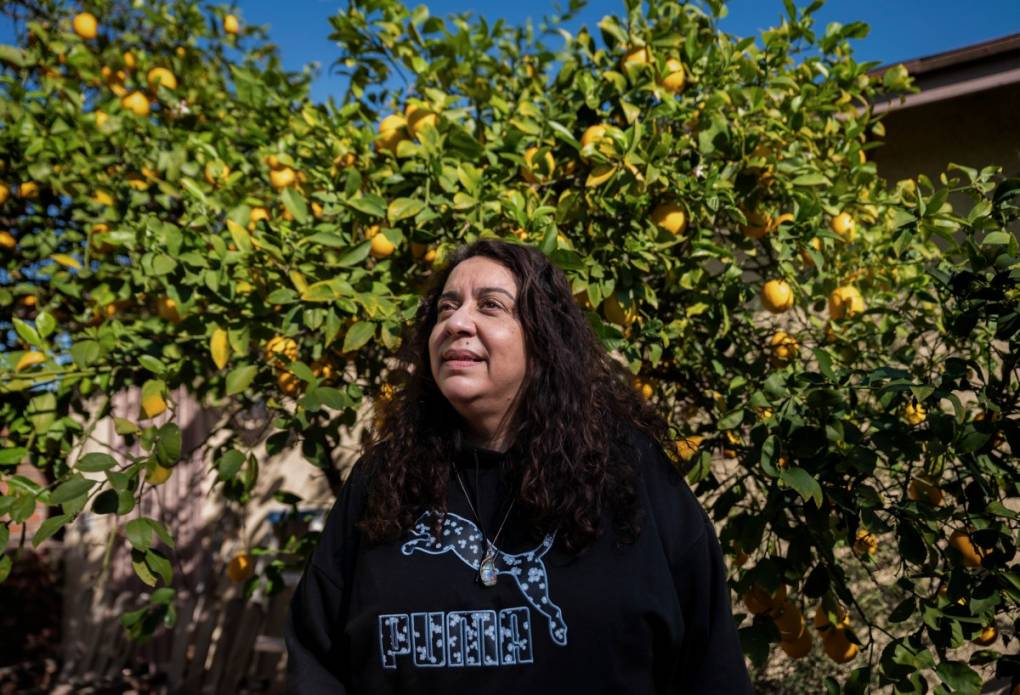
"caption": "Denise Velazquez in front of the lemon tree her grandmother planted in their family garden in Monterey Park. Velazquez left her position as an outreach worker with the Los Angeles Homeless Services Authority as her health worsened.",
"description": "Denise Velazquez in front of the lemon tree her grandmother planted in their family garden in Monterey Park.",
"title": "01262022-HOMELESS-SERVICES-RN02",
"credit": "Raquel Natalicchio/CalMatters",
"status": "inherit",
"altTag": "A person stands outside, in front of a lemon tree. They look away from the camera.",
"isLoading": false,
"fetchFailed": false
},
"news_11902156": {
"type": "attachments",
"id": "news_11902156",
"meta": {
"index": "attachments_1716263798",
"site": "news",
"id": "11902156",
"found": true
},
"parent": 11902140,
"imgSizes": {
"twentyfourteen-full-width": {
"file": "https://ww2.kqed.org/app/uploads/sites/10/2022/01/121521-Calley-Garay-Illustration-MG-CM-01-1038x576.jpeg",
"width": 1038,
"mimeType": "image/jpeg",
"height": 576
},
"thumbnail": {
"file": "https://ww2.kqed.org/app/uploads/sites/10/2022/01/121521-Calley-Garay-Illustration-MG-CM-01-160x107.jpeg",
"width": 160,
"mimeType": "image/jpeg",
"height": 107
},
"post-thumbnail": {
"file": "https://ww2.kqed.org/app/uploads/sites/10/2022/01/121521-Calley-Garay-Illustration-MG-CM-01-672x372.jpeg",
"width": 672,
"mimeType": "image/jpeg",
"height": 372
},
"kqedFullSize": {
"file": "https://ww2.kqed.org/app/uploads/sites/10/2022/01/121521-Calley-Garay-Illustration-MG-CM-01.jpeg",
"width": 2000,
"height": 1333
},
"large": {
"file": "https://ww2.kqed.org/app/uploads/sites/10/2022/01/121521-Calley-Garay-Illustration-MG-CM-01-1020x680.jpeg",
"width": 1020,
"mimeType": "image/jpeg",
"height": 680
},
"1536x1536": {
"file": "https://ww2.kqed.org/app/uploads/sites/10/2022/01/121521-Calley-Garay-Illustration-MG-CM-01-1536x1024.jpeg",
"width": 1536,
"mimeType": "image/jpeg",
"height": 1024
},
"full-width": {
"file": "https://ww2.kqed.org/app/uploads/sites/10/2022/01/121521-Calley-Garay-Illustration-MG-CM-01-1920x1280.jpeg",
"width": 1920,
"mimeType": "image/jpeg",
"height": 1280
},
"medium": {
"file": "https://ww2.kqed.org/app/uploads/sites/10/2022/01/121521-Calley-Garay-Illustration-MG-CM-01-800x533.jpeg",
"width": 800,
"mimeType": "image/jpeg",
"height": 533
}
},
"publishDate": 1642710960,
"modified": 1642814638,
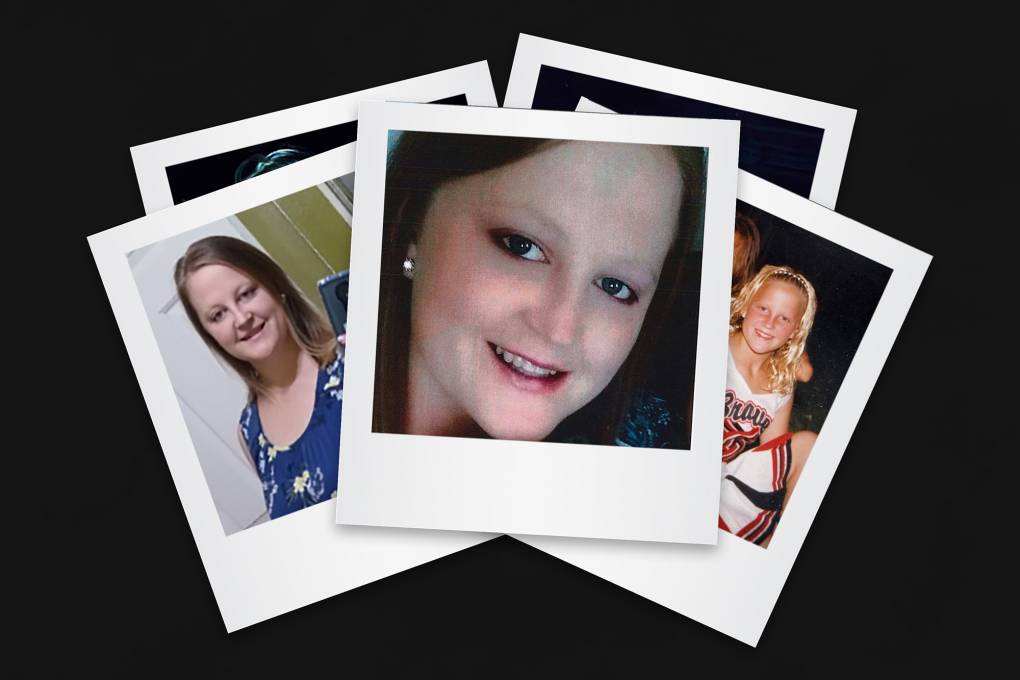
"caption": "A Dec. 15, 2021, photo collage of Calley Garay, who was killed by her husband.",
"description": null,
"title": "121521-Calley-Garay-Illustration-MG-CM-01",
"credit": "CalMatters",
"status": "inherit",
"altTag": "Three photos of a woman.",
"isLoading": false,
"fetchFailed": false
},
"news_11901120": {
"type": "attachments",
"id": "news_11901120",
"meta": {
"index": "attachments_1716263798",
"site": "news",
"id": "11901120",
"found": true
},
"parent": 11901101,
"imgSizes": {
"twentyfourteen-full-width": {
"file": "https://ww2.kqed.org/app/uploads/sites/10/2022/01/RS50699_004_SanFrancisco_COVIDVaccinations_08172021-qut-1038x576.jpg",
"width": 1038,
"mimeType": "image/jpeg",
"height": 576
},
"thumbnail": {
"file": "https://ww2.kqed.org/app/uploads/sites/10/2022/01/RS50699_004_SanFrancisco_COVIDVaccinations_08172021-qut-160x107.jpg",
"width": 160,
"mimeType": "image/jpeg",
"height": 107
},
"post-thumbnail": {
"file": "https://ww2.kqed.org/app/uploads/sites/10/2022/01/RS50699_004_SanFrancisco_COVIDVaccinations_08172021-qut-672x372.jpg",
"width": 672,
"mimeType": "image/jpeg",
"height": 372
},
"kqedFullSize": {
"file": "https://ww2.kqed.org/app/uploads/sites/10/2022/01/RS50699_004_SanFrancisco_COVIDVaccinations_08172021-qut.jpg",
"width": 1920,
"height": 1280
},
"large": {
"file": "https://ww2.kqed.org/app/uploads/sites/10/2022/01/RS50699_004_SanFrancisco_COVIDVaccinations_08172021-qut-1020x680.jpg",
"width": 1020,
"mimeType": "image/jpeg",
"height": 680
},
"1536x1536": {
"file": "https://ww2.kqed.org/app/uploads/sites/10/2022/01/RS50699_004_SanFrancisco_COVIDVaccinations_08172021-qut-1536x1024.jpg",
"width": 1536,
"mimeType": "image/jpeg",
"height": 1024
},
"medium": {
"file": "https://ww2.kqed.org/app/uploads/sites/10/2022/01/RS50699_004_SanFrancisco_COVIDVaccinations_08172021-qut-800x533.jpg",
"width": 800,
"mimeType": "image/jpeg",
"height": 533
}
},
"publishDate": 1641590560,
"modified": 1641601398,
"caption": "A registered nurse administers a COVID-19 vaccine at the Southeast Health Center in San Francisco's Bayview neighborhood on Aug. 17, 2021.",
"description": null,
"title": "RS50699_004_SanFrancisco_COVIDVaccinations_08172021-qut",
"credit": "Beth LaBerge/KQED",
"status": "inherit",
"altTag": "A masked nurse leans over to give a COVID vaccine dose to a man sitting down wearing a mask.",
"isLoading": false,
"fetchFailed": false
},
"news_11899878": {
"type": "attachments",
"id": "news_11899878",
"meta": {
"index": "attachments_1716263798",
"site": "news",
"id": "11899878",
"found": true
},
"parent": 11899871,
"imgSizes": {
"twentyfourteen-full-width": {
"file": "https://ww2.kqed.org/app/uploads/sites/10/2021/12/GettyImages-1235147499-1038x576.jpg",
"width": 1038,
"mimeType": "image/jpeg",
"height": 576
},
"thumbnail": {
"file": "https://ww2.kqed.org/app/uploads/sites/10/2021/12/GettyImages-1235147499-160x107.jpg",
"width": 160,
"mimeType": "image/jpeg",
"height": 107
},
"post-thumbnail": {
"file": "https://ww2.kqed.org/app/uploads/sites/10/2021/12/GettyImages-1235147499-672x372.jpg",
"width": 672,
"mimeType": "image/jpeg",
"height": 372
},
"kqedFullSize": {
"file": "https://ww2.kqed.org/app/uploads/sites/10/2021/12/GettyImages-1235147499-scaled.jpg",
"width": 2560,
"height": 1709
},
"2048x2048": {
"file": "https://ww2.kqed.org/app/uploads/sites/10/2021/12/GettyImages-1235147499-2048x1367.jpg",
"width": 2048,
"mimeType": "image/jpeg",
"height": 1367
},
"large": {
"file": "https://ww2.kqed.org/app/uploads/sites/10/2021/12/GettyImages-1235147499-1020x681.jpg",
"width": 1020,
"mimeType": "image/jpeg",
"height": 681
},
"1536x1536": {
"file": "https://ww2.kqed.org/app/uploads/sites/10/2021/12/GettyImages-1235147499-1536x1025.jpg",
"width": 1536,
"mimeType": "image/jpeg",
"height": 1025
},
"full-width": {
"file": "https://ww2.kqed.org/app/uploads/sites/10/2021/12/GettyImages-1235147499-1920x1281.jpg",
"width": 1920,
"mimeType": "image/jpeg",
"height": 1281
},
"medium": {
"file": "https://ww2.kqed.org/app/uploads/sites/10/2021/12/GettyImages-1235147499-800x534.jpg",
"width": 800,
"mimeType": "image/jpeg",
"height": 534
}
},
"publishDate": 1640046646,
"modified": 1640111774,
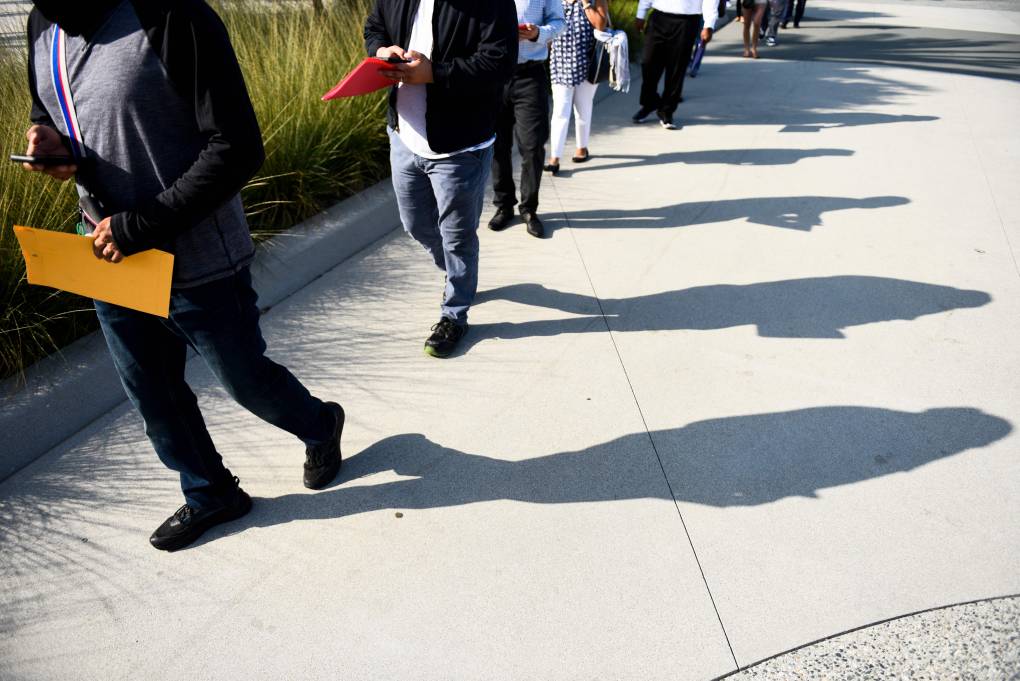
"caption": "People line up to attend a job fair for employment with SoFi Stadium and Los Angeles International Airport employers, at SoFi Stadium on Sept. 9, 2021, in Inglewood.",
"description": "People line up to attend a job fair for employment with SoFi Stadium and Los Angeles International Airport employers, at SoFi Stadium on September 9, 2021, in Inglewood.",
"title": "US-ECONOMY-EMPLOYMENT-FAIR",
"credit": "Patrick T. Fallon/AFP via Getty Images",
"status": "inherit",
"altTag": "A line of individuals who stand outside on the sidewalk. Their faces are outside the frame of the photo.",
"isLoading": false,
"fetchFailed": false
},
"news_11899217": {
"type": "attachments",
"id": "news_11899217",
"meta": {
"index": "attachments_1716263798",
"site": "news",
"id": "11899217",
"found": true
},
"parent": 11899189,
"imgSizes": {
"twentyfourteen-full-width": {
"file": "https://ww2.kqed.org/app/uploads/sites/10/2021/12/120421-Eli-and-Jamie-1038x576.jpg",
"width": 1038,
"mimeType": "image/jpeg",
"height": 576
},
"thumbnail": {
"file": "https://ww2.kqed.org/app/uploads/sites/10/2021/12/120421-Eli-and-Jamie-160x107.jpg",
"width": 160,
"mimeType": "image/jpeg",
"height": 107
},
"post-thumbnail": {
"file": "https://ww2.kqed.org/app/uploads/sites/10/2021/12/120421-Eli-and-Jamie-672x372.jpg",
"width": 672,
"mimeType": "image/jpeg",
"height": 372
},
"kqedFullSize": {
"file": "https://ww2.kqed.org/app/uploads/sites/10/2021/12/120421-Eli-and-Jamie.jpg",
"width": 1920,
"height": 1280
},
"large": {
"file": "https://ww2.kqed.org/app/uploads/sites/10/2021/12/120421-Eli-and-Jamie-1020x680.jpg",
"width": 1020,
"mimeType": "image/jpeg",
"height": 680
},
"1536x1536": {
"file": "https://ww2.kqed.org/app/uploads/sites/10/2021/12/120421-Eli-and-Jamie-1536x1024.jpg",
"width": 1536,
"mimeType": "image/jpeg",
"height": 1024
},
"medium": {
"file": "https://ww2.kqed.org/app/uploads/sites/10/2021/12/120421-Eli-and-Jamie-800x533.jpg",
"width": 800,
"mimeType": "image/jpeg",
"height": 533
}
},
"publishDate": 1639605966,
"modified": 1639606078,
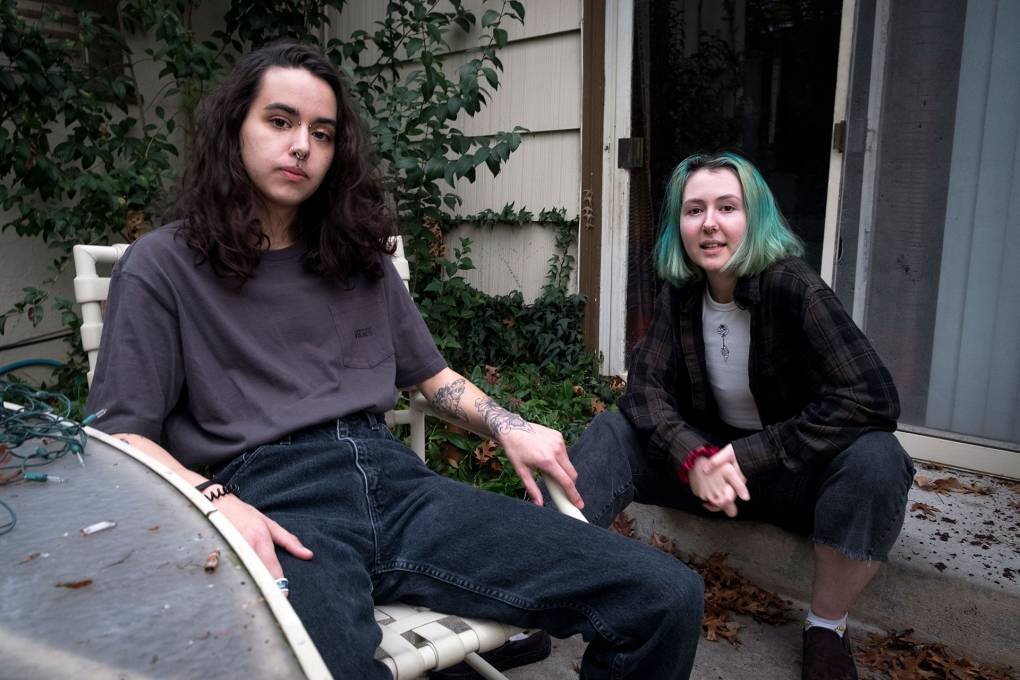
"caption": "Eli Fox and Jamie Marquis at their home in Sacramento on Dec. 4, 2021.",
"description": "Eli Fox and Jamie Marquis at their home in Sacramento on Dec. 4, 2021.",
"title": "120421-Eli-and-Jamie",
"credit": "Karlos Rene Ayala/CalMatters",
"status": "inherit",
"altTag": "two young students, one with long dark hair, the other with short dyed blue hair, look pensively at the camera on their patio",
"isLoading": false,
"fetchFailed": false
},
"news_11897480": {
"type": "attachments",
"id": "news_11897480",
"meta": {
"index": "attachments_1716263798",
"site": "news",
"id": "11897480",
"found": true
},
"parent": 11897470,
"imgSizes": {
"twentyfourteen-full-width": {
"file": "https://ww2.kqed.org/app/uploads/sites/10/2021/11/111621-Gas-Lawn-Ban-CAD-CM-05-1038x576.jpg",
"width": 1038,
"mimeType": "image/jpeg",
"height": 576
},
"thumbnail": {
"file": "https://ww2.kqed.org/app/uploads/sites/10/2021/11/111621-Gas-Lawn-Ban-CAD-CM-05-160x107.jpg",
"width": 160,
"mimeType": "image/jpeg",
"height": 107
},
"post-thumbnail": {
"file": "https://ww2.kqed.org/app/uploads/sites/10/2021/11/111621-Gas-Lawn-Ban-CAD-CM-05-672x372.jpg",
"width": 672,
"mimeType": "image/jpeg",
"height": 372
},
"kqedFullSize": {
"file": "https://ww2.kqed.org/app/uploads/sites/10/2021/11/111621-Gas-Lawn-Ban-CAD-CM-05.jpg",
"width": 1200,
"height": 800
},
"large": {
"file": "https://ww2.kqed.org/app/uploads/sites/10/2021/11/111621-Gas-Lawn-Ban-CAD-CM-05-1020x680.jpg",
"width": 1020,
"mimeType": "image/jpeg",
"height": 680
},
"medium": {
"file": "https://ww2.kqed.org/app/uploads/sites/10/2021/11/111621-Gas-Lawn-Ban-CAD-CM-05-800x533.jpg",
"width": 800,
"mimeType": "image/jpeg",
"height": 533
}
},
"publishDate": 1637970750,
"modified": 1638219341,
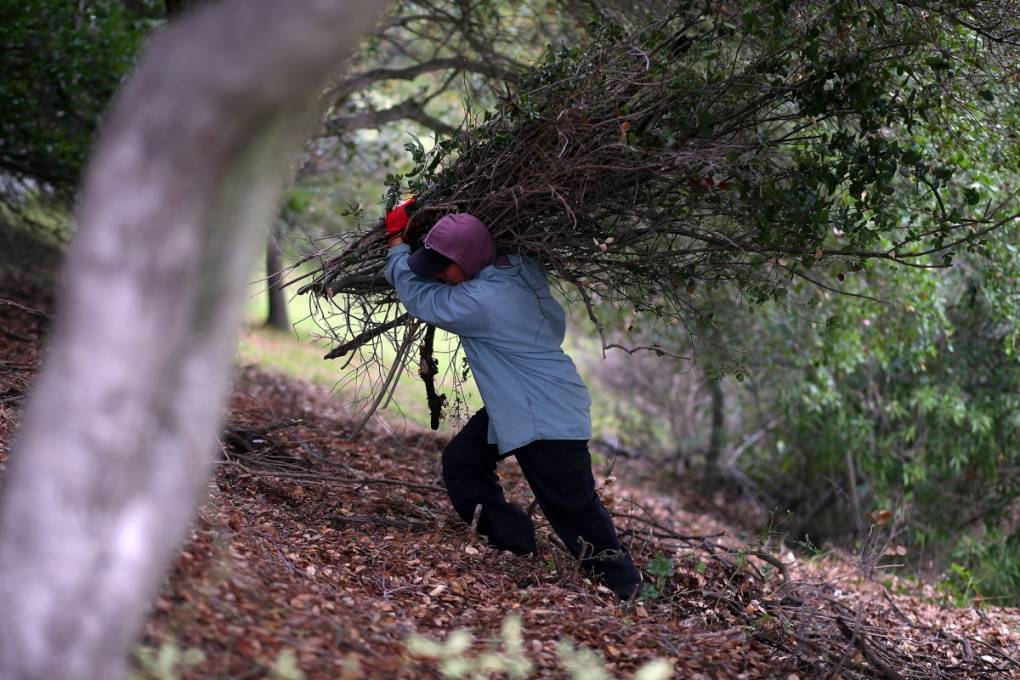
"caption": "An employee with Ken's Rototilling and Landscaping carries cut branches uphill during fire mitigation work at a property along Via Floreado in Orinda on Nov. 16, 2021.",
"description": "An employee with Ken’s Rototilling and Landscaping carries cut branches up hill during fire mitigation work at a property along Via Floreado road on in Orinda on Nov. 16, 2021.",
"title": "111621-Gas-Lawn-Ban-CAD-CM-05",
"credit": "Aric Crabb/Bay Area News Group",
"status": "inherit",
"altTag": "The branches that the worker carries are about two or three times the size of the employee. The hill has dense foliage.",
"isLoading": false,
"fetchFailed": false
},
"news_11897333": {
"type": "attachments",
"id": "news_11897333",
"meta": {
"index": "attachments_1716263798",
"site": "news",
"id": "11897333",
"found": true
},
"parent": 11897294,
"imgSizes": {
"twentyfourteen-full-width": {
"file": "https://ww2.kqed.org/app/uploads/sites/10/2021/11/GettyImages-1234905484-1038x576.jpg",
"width": 1038,
"mimeType": "image/jpeg",
"height": 576
},
"thumbnail": {
"file": "https://ww2.kqed.org/app/uploads/sites/10/2021/11/GettyImages-1234905484-160x107.jpg",
"width": 160,
"mimeType": "image/jpeg",
"height": 107
},
"post-thumbnail": {
"file": "https://ww2.kqed.org/app/uploads/sites/10/2021/11/GettyImages-1234905484-672x372.jpg",
"width": 672,
"mimeType": "image/jpeg",
"height": 372
},
"kqedFullSize": {
"file": "https://ww2.kqed.org/app/uploads/sites/10/2021/11/GettyImages-1234905484-scaled.jpg",
"width": 2560,
"height": 1707
},
"2048x2048": {
"file": "https://ww2.kqed.org/app/uploads/sites/10/2021/11/GettyImages-1234905484-2048x1366.jpg",
"width": 2048,
"mimeType": "image/jpeg",
"height": 1366
},
"large": {
"file": "https://ww2.kqed.org/app/uploads/sites/10/2021/11/GettyImages-1234905484-1020x680.jpg",
"width": 1020,
"mimeType": "image/jpeg",
"height": 680
},
"1536x1536": {
"file": "https://ww2.kqed.org/app/uploads/sites/10/2021/11/GettyImages-1234905484-1536x1024.jpg",
"width": 1536,
"mimeType": "image/jpeg",
"height": 1024
},
"full-width": {
"file": "https://ww2.kqed.org/app/uploads/sites/10/2021/11/GettyImages-1234905484-1920x1280.jpg",
"width": 1920,
"mimeType": "image/jpeg",
"height": 1280
},
"medium": {
"file": "https://ww2.kqed.org/app/uploads/sites/10/2021/11/GettyImages-1234905484-800x533.jpg",
"width": 800,
"mimeType": "image/jpeg",
"height": 533
}
},
"publishDate": 1637792629,
"modified": 1637793121,
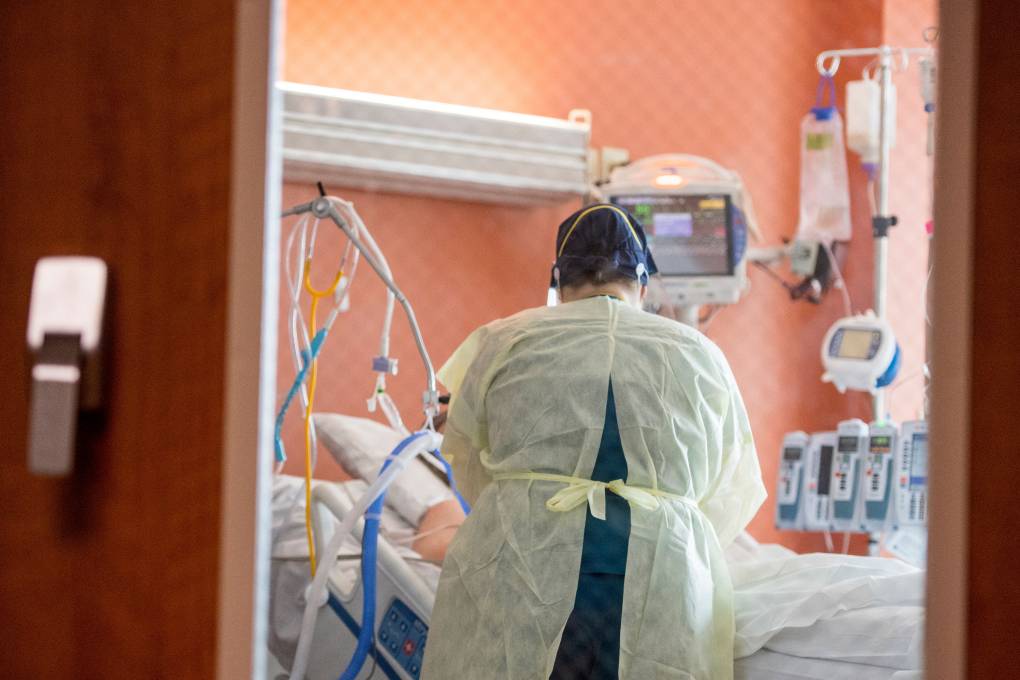
"caption": "A nurse cares for a patient with COVID-19 inside the ICU (intensive care unit) at Adventist Health in Sonora, California on August 27, 2021. Rural counties in California continue to register new COVID-19 hospitalizations and some experts link that to the lower vaccination rates in those areas.",
"description": "A nurse cares for a patient with COVID-19 inside the ICU (intensive care unit) at Adventist Health in Sonora, California on August 27, 2021.",
"title": "US-HEALTH-VIRUS-EPIDEMIC",
"credit": "Nic Coury/AFP via Getty Images",
"status": "inherit",
"altTag": "A room where a patient lies in a bed. However, the patient's face is not visible due to a nurse standing between the patient and the camera. The nurse has their back turned to the camera and wears protective gear.",
"isLoading": false,
"fetchFailed": false
},
"news_11897228": {
"type": "attachments",
"id": "news_11897228",
"meta": {
"index": "attachments_1716263798",
"site": "news",
"id": "11897228",
"found": true
},
"parent": 11897208,
"imgSizes": {
"twentyfourteen-full-width": {
"file": "https://ww2.kqed.org/app/uploads/sites/10/2021/11/GettyImages-1236632395-1-1038x576.jpg",
"width": 1038,
"mimeType": "image/jpeg",
"height": 576
},
"thumbnail": {
"file": "https://ww2.kqed.org/app/uploads/sites/10/2021/11/GettyImages-1236632395-1-160x107.jpg",
"width": 160,
"mimeType": "image/jpeg",
"height": 107
},
"post-thumbnail": {
"file": "https://ww2.kqed.org/app/uploads/sites/10/2021/11/GettyImages-1236632395-1-672x372.jpg",
"width": 672,
"mimeType": "image/jpeg",
"height": 372
},
"kqedFullSize": {
"file": "https://ww2.kqed.org/app/uploads/sites/10/2021/11/GettyImages-1236632395-1.jpg",
"width": 1920,
"height": 1280
},
"large": {
"file": "https://ww2.kqed.org/app/uploads/sites/10/2021/11/GettyImages-1236632395-1-1020x680.jpg",
"width": 1020,
"mimeType": "image/jpeg",
"height": 680
},
"1536x1536": {
"file": "https://ww2.kqed.org/app/uploads/sites/10/2021/11/GettyImages-1236632395-1-1536x1024.jpg",
"width": 1536,
"mimeType": "image/jpeg",
"height": 1024
},
"medium": {
"file": "https://ww2.kqed.org/app/uploads/sites/10/2021/11/GettyImages-1236632395-1-800x533.jpg",
"width": 800,
"mimeType": "image/jpeg",
"height": 533
}
},
"publishDate": 1637707110,
"modified": 1637707162,
"caption": "Shipping containers on the Matson Molokai cargo ship are seen at the Port of Long Beach in Long Beach, California, November 17, 2021. ",
"description": null,
"title": "GettyImages-1236632395 (1)",
"credit": "Apu Gomes/Getty Images",
"status": "inherit",
"altTag": "A cargo ship sits in a dock with shipping containers atop it. Cranes can be seen in the background.",
"isLoading": false,
"fetchFailed": false
},
"news_11896572": {
"type": "attachments",
"id": "news_11896572",
"meta": {
"index": "attachments_1716263798",
"site": "news",
"id": "11896572",
"found": true
},
"parent": 11896516,
"imgSizes": {
"twentyfourteen-full-width": {
"file": "https://ww2.kqed.org/app/uploads/sites/10/2021/11/20211117_125512-1038x576.jpg",
"width": 1038,
"mimeType": "image/jpeg",
"height": 576
},
"thumbnail": {
"file": "https://ww2.kqed.org/app/uploads/sites/10/2021/11/20211117_125512-160x107.jpg",
"width": 160,
"mimeType": "image/jpeg",
"height": 107
},
"post-thumbnail": {
"file": "https://ww2.kqed.org/app/uploads/sites/10/2021/11/20211117_125512-672x372.jpg",
"width": 672,
"mimeType": "image/jpeg",
"height": 372
},
"kqedFullSize": {
"file": "https://ww2.kqed.org/app/uploads/sites/10/2021/11/20211117_125512-scaled.jpg",
"width": 2560,
"height": 1707
},
"2048x2048": {
"file": "https://ww2.kqed.org/app/uploads/sites/10/2021/11/20211117_125512-2048x1365.jpg",
"width": 2048,
"mimeType": "image/jpeg",
"height": 1365
},
"large": {
"file": "https://ww2.kqed.org/app/uploads/sites/10/2021/11/20211117_125512-1020x680.jpg",
"width": 1020,
"mimeType": "image/jpeg",
"height": 680
},
"1536x1536": {
"file": "https://ww2.kqed.org/app/uploads/sites/10/2021/11/20211117_125512-1536x1024.jpg",
"width": 1536,
"mimeType": "image/jpeg",
"height": 1024
},
"full-width": {
"file": "https://ww2.kqed.org/app/uploads/sites/10/2021/11/20211117_125512-1920x1280.jpg",
"width": 1920,
"mimeType": "image/jpeg",
"height": 1280
},
"medium": {
"file": "https://ww2.kqed.org/app/uploads/sites/10/2021/11/20211117_125512-800x533.jpg",
"width": 800,
"mimeType": "image/jpeg",
"height": 533
}
},
"publishDate": 1637186788,
"modified": 1637186980,
"caption": "Clelia Donovan, right, continuing lecturer in Spanish and Portuguese at UC Berkeley, at a rally on campus on Nov. 17, 2021, to celebrate the last-minute contract deal that averted a planned systemwide strike. ‘I’m elated that we got a contract resolution,’ she said.",
"description": "Clelia Donovan, right, continuing lecturer in Spanish and Portuguese at UC Berkeley, at a rally on campus on Nov. 17, 2021, to celebrate the last-minute contract deal that averted a planned systemwide strike.",
"title": "20211117_125512",
"credit": "Alex Emslie/KQED",
"status": "inherit",
"altTag": "Several people are gathered outdoors under the shade of trees, many are wearing the same t-shirt. A pair is holding up a large sign that says, 'Faculty equity equals student success.'",
"isLoading": false,
"fetchFailed": false
},
"news_11896244": {
"type": "attachments",
"id": "news_11896244",
"meta": {
"index": "attachments_1716263798",
"site": "news",
"id": "11896244",
"found": true
},
"parent": 11896237,
"imgSizes": {
"twentyfourteen-full-width": {
"file": "https://ww2.kqed.org/app/uploads/sites/10/2021/11/GettyImages-1353464121-1024x576.jpg",
"width": 1024,
"mimeType": "image/jpeg",
"height": 576
},
"thumbnail": {
"file": "https://ww2.kqed.org/app/uploads/sites/10/2021/11/GettyImages-1353464121-160x107.jpg",
"width": 160,
"mimeType": "image/jpeg",
"height": 107
},
"post-thumbnail": {
"file": "https://ww2.kqed.org/app/uploads/sites/10/2021/11/GettyImages-1353464121-672x372.jpg",
"width": 672,
"mimeType": "image/jpeg",
"height": 372
},
"kqedFullSize": {
"file": "https://ww2.kqed.org/app/uploads/sites/10/2021/11/GettyImages-1353464121.jpg",
"width": 1024,
"height": 685
},
"large": {
"file": "https://ww2.kqed.org/app/uploads/sites/10/2021/11/GettyImages-1353464121-1020x682.jpg",
"width": 1020,
"mimeType": "image/jpeg",
"height": 682
},
"medium": {
"file": "https://ww2.kqed.org/app/uploads/sites/10/2021/11/GettyImages-1353464121-800x535.jpg",
"width": 800,
"mimeType": "image/jpeg",
"height": 535
}
},
"publishDate": 1637016439,
"modified": 1637025062,
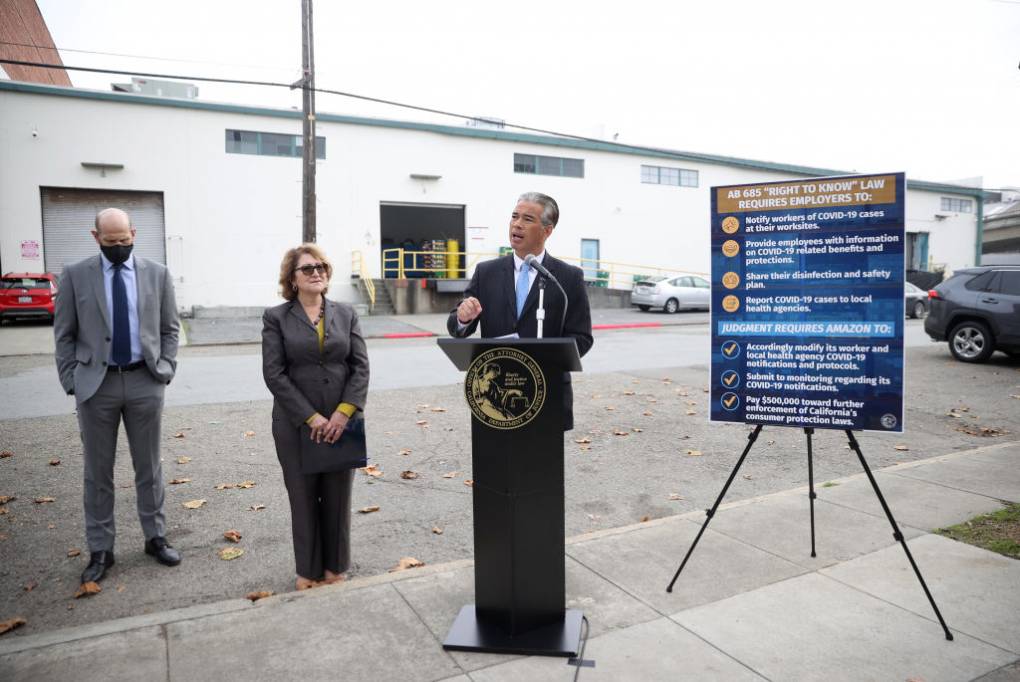
"caption": "California Attorney General Rob Bonta, right, speaks during a news conference outside an Amazon distribution facility on Nov. 15, 2021, in San Francisco. Bonta announced that Amazon will have to pay a $500,000 fine after the company failed to adequately notify workers and officials about coronavirus cases at its facilities.",
"description": null,
"title": "California Attorney General Bob Bonta Announces Action Against Tech Firm",
"credit": "Justin Sullivan/Getty Images",
"status": "inherit",
"altTag": "California Attorney General Rob Bonta stands at a lectern in front of a large warehouse, flanked by two people on his right and a COVID safety sign on his left.",
"isLoading": false,
"fetchFailed": false
},
"news_11895908": {
"type": "attachments",
"id": "news_11895908",
"meta": {
"index": "attachments_1716263798",
"site": "news",
"id": "11895908",
"found": true
},
"parent": 11895797,
"imgSizes": {
"twentyfourteen-full-width": {
"file": "https://ww2.kqed.org/app/uploads/sites/10/2021/11/110521-Redistricting-Election-MG-CM-01-1038x576.jpg",
"width": 1038,
"mimeType": "image/jpeg",
"height": 576
},
"thumbnail": {
"file": "https://ww2.kqed.org/app/uploads/sites/10/2021/11/110521-Redistricting-Election-MG-CM-01-160x120.jpg",
"width": 160,
"mimeType": "image/jpeg",
"height": 120
},
"post-thumbnail": {
"file": "https://ww2.kqed.org/app/uploads/sites/10/2021/11/110521-Redistricting-Election-MG-CM-01-672x372.jpg",
"width": 672,
"mimeType": "image/jpeg",
"height": 372
},
"kqedFullSize": {
"file": "https://ww2.kqed.org/app/uploads/sites/10/2021/11/110521-Redistricting-Election-MG-CM-01.jpg",
"width": 1665,
"height": 1249
},
"large": {
"file": "https://ww2.kqed.org/app/uploads/sites/10/2021/11/110521-Redistricting-Election-MG-CM-01-1020x765.jpg",
"width": 1020,
"mimeType": "image/jpeg",
"height": 765
},
"1536x1536": {
"file": "https://ww2.kqed.org/app/uploads/sites/10/2021/11/110521-Redistricting-Election-MG-CM-01-1536x1152.jpg",
"width": 1536,
"mimeType": "image/jpeg",
"height": 1152
},
"medium": {
"file": "https://ww2.kqed.org/app/uploads/sites/10/2021/11/110521-Redistricting-Election-MG-CM-01-800x600.jpg",
"width": 800,
"mimeType": "image/jpeg",
"height": 600
}
},
"publishDate": 1636589938,
"modified": 1636590116,
"caption": "The main responsibility of the Citizens Redistricting Commission is to ensure every district in the state — 52 for Congress, 80 for state Assembly and 40 for state Senate — has about the same number of people. That’s about 761,000 Californians in each congressional district, about 988,000 in state Senate districts and 494,000 in Assembly districts.",
"description": "The main responsibility of the Citizens Redistricting Commission is to ensure every district in the state — 52 for Congress, 80 for state Assembly and 40 for state Senate — has about the same number of people.",
"title": "110521-Redistricting-Election-MG-CM-01",
"credit": "Illustration by Miguel Gutierrez Jr., CalMatters; iStock",
"status": "inherit",
"altTag": "A drawing of an electoral box next to a geographic map that has had superimposed electoral district lines.",
"isLoading": false,
"fetchFailed": false
},
"news_11895096": {
"type": "attachments",
"id": "news_11895096",
"meta": {
"index": "attachments_1716263798",
"site": "news",
"id": "11895096",
"found": true
},
"parent": 11895075,
"imgSizes": {
"twentyfourteen-full-width": {
"file": "https://ww2.kqed.org/app/uploads/sites/10/2021/11/102521-SJM-REALISTATE-CM-01-1038x576.jpg",
"width": 1038,
"mimeType": "image/jpeg",
"height": 576
},
"thumbnail": {
"file": "https://ww2.kqed.org/app/uploads/sites/10/2021/11/102521-SJM-REALISTATE-CM-01-160x107.jpg",
"width": 160,
"mimeType": "image/jpeg",
"height": 107
},
"post-thumbnail": {
"file": "https://ww2.kqed.org/app/uploads/sites/10/2021/11/102521-SJM-REALISTATE-CM-01-672x372.jpg",
"width": 672,
"mimeType": "image/jpeg",
"height": 372
},
"kqedFullSize": {
"file": "https://ww2.kqed.org/app/uploads/sites/10/2021/11/102521-SJM-REALISTATE-CM-01.jpg",
"width": 1982,
"height": 1321
},
"large": {
"file": "https://ww2.kqed.org/app/uploads/sites/10/2021/11/102521-SJM-REALISTATE-CM-01-1020x680.jpg",
"width": 1020,
"mimeType": "image/jpeg",
"height": 680
},
"1536x1536": {
"file": "https://ww2.kqed.org/app/uploads/sites/10/2021/11/102521-SJM-REALISTATE-CM-01-1536x1024.jpg",
"width": 1536,
"mimeType": "image/jpeg",
"height": 1024
},
"full-width": {
"file": "https://ww2.kqed.org/app/uploads/sites/10/2021/11/102521-SJM-REALISTATE-CM-01-1920x1280.jpg",
"width": 1920,
"mimeType": "image/jpeg",
"height": 1280
},
"medium": {
"file": "https://ww2.kqed.org/app/uploads/sites/10/2021/11/102521-SJM-REALISTATE-CM-01-800x533.jpg",
"width": 800,
"mimeType": "image/jpeg",
"height": 533
}
},
"publishDate": 1635989865,
"modified": 1636068407,
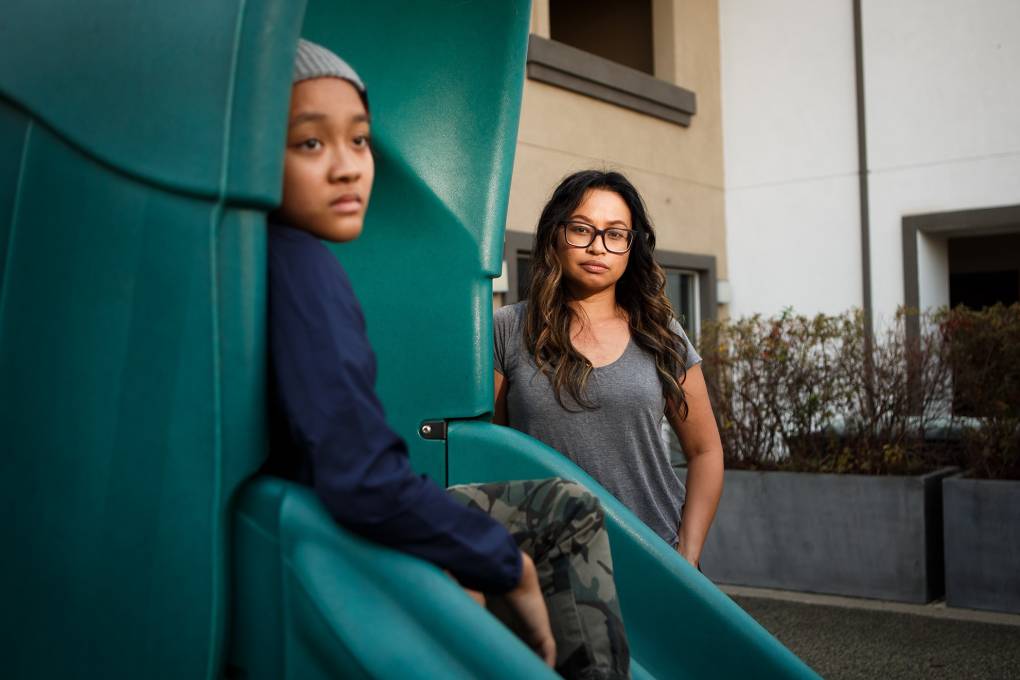
"caption": "Maybelle Manio, right, and her son, Jake Cruz, at their new apartment in San Mateo on Oct. 4, 2021. They moved into the new place in August.",
"description": "Maybelle Manio, right, and her son, Jake Cruz at their new apartment in San Mateo on Oct. 4, 2021.",
"title": "102521-SJM-REALISTATE-CM-01",
"credit": "Dai Sugano/Bay Area News Group",
"status": "inherit",
"altTag": "A preteen wearing a hoodie sits at the top of a green, hard-plastic slide looking into the distance. Beyond him, a woman with long brown hair, glasses, and a gray T-shirt looks at the camera.",
"isLoading": false,
"fetchFailed": false
}
},
"audioPlayerReducer": {
"postId": "stream_live",
"isPaused": true,
"isPlaying": false,
"pfsActive": false,
"pledgeModalIsOpen": true,
"playerDrawerIsOpen": false,
"liveAudioPlayStartedAt": 0,
"liveAudioPlayContext": ""
},
"authorsReducer": {
"byline_news_11902904": {
"type": "authors",
"id": "byline_news_11902904",
"meta": {
"override": true
},
"slug": "byline_news_11902904",
"name": "\u003ca href=\"https://calmatters.org/author/manuela-tobias/\">Manuela Tobias\u003c/a>",
"isLoading": false
},
"byline_news_11902140": {
"type": "authors",
"id": "byline_news_11902140",
"meta": {
"override": true
},
"slug": "byline_news_11902140",
"name": "\u003ca href=\"https://calmatters.org/author/robert-lewis/\">Robert Lewis\u003c/a>\u003cbr>\u003ca href=\"https://calmatters.org/\">CalMatters\u003c/a>",
"isLoading": false
},
"byline_news_11901101": {
"type": "authors",
"id": "byline_news_11901101",
"meta": {
"override": true
},
"slug": "byline_news_11901101",
"name": "\u003ca href=\"https://calmatters.org/author/kristen-hwang/\">Kristen Hwang\u003c/a> and \u003ca href=\"https://calmatters.org/author/anaibarra/\">Ana B. Ibarra\u003c/a>",
"isLoading": false
},
"byline_news_11899871": {
"type": "authors",
"id": "byline_news_11899871",
"meta": {
"override": true
},
"slug": "byline_news_11899871",
"name": "\u003ca href=\"https://calmatters.org/author/jesse-bedayn/\">Jesse Bedayn\u003c/a>",
"isLoading": false
},
"byline_news_11899189": {
"type": "authors",
"id": "byline_news_11899189",
"meta": {
"override": true
},
"slug": "byline_news_11899189",
"name": "\u003ca href=\"https://calmatters.org/author/oden-taylor/\">Oden Taylor\u003c/a>",
"isLoading": false
},
"byline_news_11897470": {
"type": "authors",
"id": "byline_news_11897470",
"meta": {
"override": true
},
"slug": "byline_news_11897470",
"name": "\u003ca href=\"https://calmatters.org/author/jesse-bedayn/\">Jesse Bedayn\u003c/a>",
"isLoading": false
},
"byline_news_11897294": {
"type": "authors",
"id": "byline_news_11897294",
"meta": {
"override": true
},
"slug": "byline_news_11897294",
"name": "\u003ca href=\"https://calmatters.org/author/anaibarra/\">Ana B. Ibarra\u003c/a>, \u003ca href=\"https://calmatters.org/author/hannah-getahun/\">Hannah Getahun\u003c/a>",
"isLoading": false
},
"byline_news_11897208": {
"type": "authors",
"id": "byline_news_11897208",
"meta": {
"override": true
},
"slug": "byline_news_11897208",
"name": "Kristen Hwang",
"isLoading": false
},
"byline_news_11896516": {
"type": "authors",
"id": "byline_news_11896516",
"meta": {
"override": true
},
"slug": "byline_news_11896516",
"name": "\u003ca href=\"https://calmatters.org/author/mikhailzinshteyn/\">Mikhail Zinshteyn\u003c/a>",
"isLoading": false
},
"byline_news_11896237": {
"type": "authors",
"id": "byline_news_11896237",
"meta": {
"override": true
},
"slug": "byline_news_11896237",
"name": "Don Thompson\u003cbr>The Associated Press",
"isLoading": false
},
"byline_news_11895797": {
"type": "authors",
"id": "byline_news_11895797",
"meta": {
"override": true
},
"slug": "byline_news_11895797",
"name": "\u003ca href=\"https://calmatters.org/author/sameea-kamal/\">Sameea Kamal\u003c/a>",
"isLoading": false
},
"byline_news_11895075": {
"type": "authors",
"id": "byline_news_11895075",
"meta": {
"override": true
},
"slug": "byline_news_11895075",
"name": "\u003ca href=\"https://calmatters.org/author/jesse-bedayn/\">Jesse Bedayn\u003c/a>",
"isLoading": false
}
},
"pagesReducer": {
"news_affiliate_calmatters": {
"type": "terms",
"id": "news_18481",
"meta": {
"index": "terms_1716263798",
"site": "news",
"id": "18481",
"score": 15.355862
},
"featImg": null,
"name": "CALmatters",
"description": null,
"taxonomy": "affiliate",
"headData": {
"twImgId": null,
"twTitle": null,
"ogTitle": null,
"ogImgId": null,
"twDescription": null,
"description": null,
"title": "CALmatters Archives | KQED Arts",
"ogDescription": null
},
"ttid": 18515,
"slug": "calmatters",
"isLoading": false,
"title": "CALmatters",
"pageMeta": {
"site": "news",
"WpPageTemplate": "page-topic-editorial",
"currentPage": 57
},
"blocks": [
{
"blockName": "kqed/post-list",
"attrs": {
"layout": "cardArticle2",
"query": "posts/news?affiliate=calmatters",
"seeMore": false,
"paginated": true,
"page": 57
}
},
{
"blockName": "kqed/ad"
}
]
}
},
"pfsSessionReducer": {},
"postsReducer": {
"stream_live": {
"type": "live",
"id": "stream_live",
"audioUrl": "https://streams.kqed.org/kqedradio",
"title": "Live Stream",
"excerpt": "Live Stream information currently unavailable.",
"link": "/radio",
"featImg": "",
"label": {
"name": "KQED Live",
"link": "/"
}
},
"stream_kqedNewscast": {
"type": "posts",
"id": "stream_kqedNewscast",
"audioUrl": "https://www.kqed.org/.stream/anon/radio/RDnews/newscast.mp3?_=1",
"title": "KQED Newscast",
"featImg": "",
"label": {
"name": "88.5 FM",
"link": "/"
}
},
"news_11902904": {
"type": "posts",
"id": "news_11902904",
"meta": {
"index": "posts_1716263798",
"site": "news",
"id": "11902904",
"score": null,
"sort": [
1643464835000
]
},
"guestAuthors": [],
"slug": "underpaid-and-burned-out-many-outreach-workers-for-unhoused-californians-are-leaving-their-jobs",
"title": "Underpaid and Burned Out: Many Outreach Workers for Unhoused Californians Are Leaving Their Jobs",
"publishDate": 1643464835,
"format": "standard",
"headTitle": "Underpaid and Burned Out: Many Outreach Workers for Unhoused Californians Are Leaving Their Jobs | KQED",
"labelTerm": {
"term": 18481,
"site": "news"
},
"content": "\u003cp>\u003ca href=\"https://calmatters.org/calmatters-en-espanol/2022/01/la-escasez-de-trabajadores-sociales-podria-bloquear-la-estrategia-para-indigentes-en-california/\">\u003cem>Leer en español.\u003c/em>\u003c/a>\u003c/p>\n\u003cp>In the middle of March last year,\u003ca href=\"https://www.latimes.com/homeless-housing/story/2021-03-13/echo-park-encampment-exposes-bigger-la-homeless-issues\"> Los Angeles officials were gearing up to clear an encampment of 200 unhoused persons\u003c/a> at Echo Park Lake.\u003c/p>\n\u003cp>For Denise Velazquez, 53, then an outreach worker with the Los Angeles Homeless Services Authority, her task was clear: Get 10 people indoors.\u003c/p>\n\u003cp>She helped her clients — who were cold, tired and desperate to shower — pack their bags and sign intake forms. She gave them hope that warmth was around the corner: hotel rooms under \u003ca href=\"https://calmatters.org/california-divide/2022/01/california-homeless-permanent-supportive-housing/\">Project Roomkey, the state’s program to shelter unhoused people most at risk of catching COVID-19\u003c/a>.\u003c/p>\n\u003cp>But orders changed overnight. Her agency had access to only three beds, and when she told her clients, they yelled, spit and lunged at her partner. Velazquez says she broke their trust — and that broke her heart.\u003c/p>\n\u003cp>“My stomach is feeling so uncomfortable and heart broken,” Velazquez wrote in an email to her supervisor on March 18, 2021.\u003c/p>\n\u003cp>LAHSA spokesperson Ahmad Chapman said various local service providers placed 176 of those at the Echo Park encampment in interim housing programs.\u003c/p>\n\u003cp>In the weeks that followed, Velazquez said her health deteriorated. Her blood pressure spiked, her diabetes worsened, and her anxiety and depression spiraled. Her employer granted her a medical leave of absence, but therapy revealed that the only way to heal, she said, was to quit. Abandoning her clients broke her heart all over again.\u003c/p>\n\u003cfigure id=\"attachment_11903130\" class=\"wp-caption alignnone\" style=\"max-width: 1200px\">\u003cimg loading=\"lazy\" decoding=\"async\" class=\"size-full wp-image-11903130\" src=\"https://ww2.kqed.org/app/uploads/sites/10/2022/01/01262022-HOMELESS-SERVICES-RN03.jpg\" alt=\"Two hands hold up a pair of boots. The boots are very worn out and stained with dirt and water.\" width=\"1200\" height=\"799\" srcset=\"https://cdn.kqed.org/wp-content/uploads/sites/10/2022/01/01262022-HOMELESS-SERVICES-RN03.jpg 1200w, https://cdn.kqed.org/wp-content/uploads/sites/10/2022/01/01262022-HOMELESS-SERVICES-RN03-800x533.jpg 800w, https://cdn.kqed.org/wp-content/uploads/sites/10/2022/01/01262022-HOMELESS-SERVICES-RN03-1020x679.jpg 1020w, https://cdn.kqed.org/wp-content/uploads/sites/10/2022/01/01262022-HOMELESS-SERVICES-RN03-160x107.jpg 160w\" sizes=\"auto, (max-width: 1200px) 100vw, 1200px\">\u003cfigcaption class=\"wp-caption-text\">Denise Velazquez holds the boots she got when she started working in homelessness outreach. \u003ccite>(Raquel Natalicchio/CalMatters)\u003c/cite>\u003c/figcaption>\u003c/figure>\n\u003cp>Turnover has long plagued the homeless services field. COVID-19 has only made the problem worse as \u003ca href=\"https://calmatters.org/series/california-workers-covid/\">the omicron surge causes worker shortages across California’s economy\u003c/a>. And without enough service workers, the state’s ambitious, multibillion-dollar strategy for reducing homelessness is unlikely to work.\u003c/p>\n\u003cp>Most people who enter social work know to expect small paychecks; they’re driven by compassion and a desire for positive change. But caring too much can be crushing when \u003ca href=\"https://calmatters.org/housing/homeless/2021/11/california-homeless-camps-clearing-plan/\">housing is elusive\u003c/a>, \u003ca href=\"https://calmatters.org/projects/mentally-ill-forced-treatment-conservatorship-california-debate/\">mental health services scant\u003c/a>, and communication splintered among the myriad entities who decide the fate of the unhoused.\u003c/p>\n\u003cp>“We’re paying these folks pennies on the dollar to burn themselves out completely,” said Tami McVay, assistant program director at \u003ca href=\"https://www.selfhelpenterprises.org/\">Self-Help Enterprises\u003c/a>, which serves lower-income communities in the San Joaquin Valley.\u003c/p>\n\u003cp>[aside postID=\"news_11901253\" hero=\"https://ww2.kqed.org/app/uploads/sites/10/2021/09/021_SanFrancisco_NewsomRecallEvent_09142021-1020x680.jpg\"]When you bring up staff turnover or vacancies with any provider or advocate, they nod vigorously. The mostly government-contracted private organizations serving people experiencing homelessness have waged an uphill battle to recruit and retain workers into their fast-growing workforce, including some formerly homeless individuals.\u003c/p>\n\u003cp>LA-based \u003ca href=\"https://epath.org/\">People Assisting the Homeless\u003c/a>, or PATH, which serves about a fifth of the state’s unhoused population, has hired seven recruiters to help fill 340 vacancies, out of 1,100 jobs, said CEO Jennifer Hark Dietz. It’s now taking an average of four months to fill any given spot.\u003c/p>\n\u003cp>And that’s before the latest homelessness budget, approved last summer by Gov. Gavin Newsom and the Legislature, \u003ca href=\"https://calmatters.org/explainers/californias-homelessness-crisis-explained/#a5795160-28e3-11ea-963d-8304ae9d247c\">floods providers with $12 billion over the next two years\u003c/a>. The state says the funding will require thousands of new positions in the homeless response system.\u003c/p>\n\u003cp>“We have all this money,” said Farrah McDaid Ting, a senior legislative representative with the California State Association of Counties. “Can we really do this if we don’t have the people? I think there could be a real limitation.”\u003c/p>\n\u003cfigure id=\"attachment_11903126\" class=\"wp-caption alignnone\" style=\"max-width: 1200px\">\u003cimg loading=\"lazy\" decoding=\"async\" class=\"size-full wp-image-11903126\" src=\"https://ww2.kqed.org/app/uploads/sites/10/2022/01/01262022-HOMELESS-SERVICES-RN05.jpg\" alt=\"Mel Tillekeratne stands against one of the walls of a Shower of Hope facility.\" width=\"1200\" height=\"799\" srcset=\"https://cdn.kqed.org/wp-content/uploads/sites/10/2022/01/01262022-HOMELESS-SERVICES-RN05.jpg 1200w, https://cdn.kqed.org/wp-content/uploads/sites/10/2022/01/01262022-HOMELESS-SERVICES-RN05-800x533.jpg 800w, https://cdn.kqed.org/wp-content/uploads/sites/10/2022/01/01262022-HOMELESS-SERVICES-RN05-1020x679.jpg 1020w, https://cdn.kqed.org/wp-content/uploads/sites/10/2022/01/01262022-HOMELESS-SERVICES-RN05-160x107.jpg 160w\" sizes=\"auto, (max-width: 1200px) 100vw, 1200px\">\u003cfigcaption class=\"wp-caption-text\">Mel Tillekeratne, executive director of The Shower of Hope. \u003ccite>(Raquel Natalicchio/CalMatters)\u003c/cite>\u003c/figcaption>\u003c/figure>\n\u003ch3>Good jobs wanted\u003c/h3>\n\u003cp>At the root of the worker shortage — which advocates say is really a shortage of good jobs — is low wages. Most homeless services organizations CalMatters spoke with pay starting frontline workers between $16 and $18 an hour, barely higher than minimum wage. They openly admit it’s far too little for the grueling labor, and often isn’t enough to live in expensive California cities.\u003c/p>\n\u003cp>“In the homeless services sector, it’s like: You didn’t get this paperwork in on time, I lost my housing, or my legs are hurting, I think I might have a blood clot,” said Mel Tillekeratne, executive director of \u003ca href=\"http://theshowerofhope.org/\">The Shower of Hope, which runs 22 mobile shower sites across Los Angeles County\u003c/a>. “It’s an unbelievably high amount of stress. I’ve seen so many outreach workers completely checked out.”\u003c/p>\n\u003cp>According to the U.S. Bureau of Labor Statistics, people employed in emergency and other relief services — including homeless service providers — \u003ca href=\"https://data.bls.gov/PDQWeb/en\">made an average annual salary of $49,616 in 2020\u003c/a>.\u003c/p>\n\u003cp>[pullquote align=\"right\" size=\"medium\" citation=\"Earl Edwards, doctoral candidate at UCLA\"]‘A lot of individuals didn’t see a pathway for them to stay doing this work.’[/pullquote]Why not pay more? Tillekeratne says government contracts usually cap personnel costs. He had to raise money privately, for example, to offer hazard pay at the start of the pandemic. Federal and state grants usually come in bursts and have short timelines, forcing organizations to fill temporary positions before they expire.\u003c/p>\n\u003cp>If they don’t leave homeless services completely, workers will switch jobs for $1 or $2 more an hour. Or, if they get promoted, they often lose direct contact with clients, adding to a sense that frontline work is undervalued, said Earl Edwards, a doctoral candidate at the University of California, Los Angeles \u003ca href=\"https://www.capolicylab.org/wp-content/uploads/2021/10/Inequity-in-the-PSH-System-in-Los-Angeles.pdf\">who interviewed 11 case managers\u003c/a>.\u003c/p>\n\u003cp>“A lot of individuals didn’t see a pathway for them to stay doing this work,” Edwards said.\u003c/p>\n\u003cp>Most organizations that serve unhoused individuals often hire people who are just exiting homelessness themselves: “That also adds an additional level of trauma,” he said. Shelter workers in Fresno constantly reach out about “unstable living arrangements of their own, asking for housing,” said Katie Wilbur, executive director of \u003ca href=\"https://www.rhcommunitybuilders.com/\">RH Community Builders\u003c/a>.\u003c/p>\n\u003cfigure id=\"attachment_11903133\" class=\"wp-caption alignnone\" style=\"max-width: 2000px\">\u003cimg loading=\"lazy\" decoding=\"async\" class=\"size-full wp-image-11903133\" src=\"https://ww2.kqed.org/app/uploads/sites/10/2022/01/012622-Homeless-Services-RN-CM-11.jpg\" alt=\"A person receives a haircut outdoors. The barber touches the hair of the person receiving the haircut.\" width=\"2000\" height=\"1331\" srcset=\"https://cdn.kqed.org/wp-content/uploads/sites/10/2022/01/012622-Homeless-Services-RN-CM-11.jpg 2000w, https://cdn.kqed.org/wp-content/uploads/sites/10/2022/01/012622-Homeless-Services-RN-CM-11-800x532.jpg 800w, https://cdn.kqed.org/wp-content/uploads/sites/10/2022/01/012622-Homeless-Services-RN-CM-11-1020x679.jpg 1020w, https://cdn.kqed.org/wp-content/uploads/sites/10/2022/01/012622-Homeless-Services-RN-CM-11-160x106.jpg 160w, https://cdn.kqed.org/wp-content/uploads/sites/10/2022/01/012622-Homeless-Services-RN-CM-11-1536x1022.jpg 1536w, https://cdn.kqed.org/wp-content/uploads/sites/10/2022/01/012622-Homeless-Services-RN-CM-11-1920x1278.jpg 1920w\" sizes=\"auto, (max-width: 2000px) 100vw, 2000px\">\u003cfigcaption class=\"wp-caption-text\">A volunteer barber cuts an unhoused person’s hair at Trinity Church in Riverside. Those who are unhoused come once a week to the church where they are offered haircuts, clothes, food and a shower. \u003ccite>(Raquel Natalicchio/CalMatters)\u003c/cite>\u003c/figcaption>\u003c/figure>\n\u003cp>The fewer employees with master’s degrees in social work often earn higher salaries, but even those aren’t high enough to keep them from more lucrative jobs, explains \u003ca href=\"https://www.apu.edu/bas/faculty/dgallup/\">Donna Gallup\u003c/a>, an assistant professor at Azusa Pacific’s Department of Social Work, who runs a pilot program to recruit more students into the homeless services field.\u003c/p>\n\u003cp>“If you have an opportunity as a graduate student, with student debt, you may select a school, a hospital or another nonprofit where you are not having to work with a stigmatized population that is very demanding, and the work conditions, especially with COVID,” Gallup said. “It has been a challenge.”\u003c/p>\n\u003cp>[aside postID=\"news_11877585\" hero=\"https://ww2.kqed.org/app/uploads/sites/10/2021/06/RS49286_002_LakeCounty_ProjectHomekey_05142021-qut-1020x680.jpg\"]Newsom’s \u003ca href=\"https://calmatters.org/politics/2022/01/california-budget-newsom/\">proposed 2022 budget, which still has to be negotiated with the Legislature\u003c/a>, includes $1.7 billion over three years to expand the state’s health and human services workforce “with improved diversity, wages and health equity outcomes,” said Rodger Butler, a spokesperson for the \u003ca href=\"https://www.chhs.ca.gov/\">California Health and Human Services Agency\u003c/a>. But even that may not be enough.\u003c/p>\n\u003cp>“Until … funding is commensurate to offer living wages across positions in the sector, it’ll be hard to train our way out of this crisis,” said Mari Castaldi, senior legislative advocate on homelessness at \u003ca href=\"https://www.housingca.org/\">Housing California\u003c/a>.\u003c/p>\n\u003cp>To increase the wages of the lowest-paid workers, the nonprofit is calling for a supplemental appropriation — \u003ca href=\"https://calmatters.org/explainers/californias-homelessness-crisis-explained/#a5795160-28e3-11ea-963d-8304ae9d247c\">on top of $2 billion over two years in flexible spending in last year’s budget\u003c/a> that cities and counties will use to pay nonprofit partners to run most of these homelessness programs.\u003c/p>\n\u003cp>“We don’t think it makes sense to say to service providers, ‘You get to choose between serving the number of clients that you set forth to serve, or increasing wages,’” Castaldi said.\u003c/p>\n\u003cp>\u003cimg loading=\"lazy\" decoding=\"async\" class=\"alignnone size-full wp-image-11903124\" src=\"https://ww2.kqed.org/app/uploads/sites/10/2022/01/01262022-HOMELESS-SERVICES-RN12.jpg\" alt=\"\" width=\"1200\" height=\"799\" srcset=\"https://cdn.kqed.org/wp-content/uploads/sites/10/2022/01/01262022-HOMELESS-SERVICES-RN12.jpg 1200w, https://cdn.kqed.org/wp-content/uploads/sites/10/2022/01/01262022-HOMELESS-SERVICES-RN12-800x533.jpg 800w, https://cdn.kqed.org/wp-content/uploads/sites/10/2022/01/01262022-HOMELESS-SERVICES-RN12-1020x679.jpg 1020w, https://cdn.kqed.org/wp-content/uploads/sites/10/2022/01/01262022-HOMELESS-SERVICES-RN12-160x107.jpg 160w\" sizes=\"auto, (max-width: 1200px) 100vw, 1200px\">\u003c/p>\n\u003ch3>\u003cstrong>Underpaid and burned out\u003c/strong>\u003c/h3>\n\u003cp>But pay is only one part of the problem, says Deborah Son, executive director of the National Association of Social Workers’ California chapter. She represents 9,000 of the state’s roughly 75,000 certified social workers — and says all of them are affected by\u003ca href=\"https://calmatters.org/explainers/housing-costs-high-california/\"> the severe shortage of affordable housing in California\u003c/a>.\u003c/p>\n\u003cp>“We can bulk up the workforce and get people jobs and create jobs,” she said, “but if we don’t create the housing structures that are necessary, and we’re talking about the intricate systems necessary, your efforts become moot.”\u003c/p>\n\u003cp>Following her stint at LAHSA, Velazquez found a new job at homeless services nonprofit \u003ca href=\"https://unionstationhs.org/\">Union Station Homeless Services\u003c/a> as a care coordinator, earning $24 an hour. Half of her 20 clients are in housing, and her job is to keep them there. Her other clients are trying — unsuccessfully since September — \u003ca href=\"https://calmatters.org/california-divide/2019/08/section-8-voucher-discrimination-california-housing-crisis/\">to get into a place using housing vouchers, which cover two-thirds of the rent\u003c/a>.\u003c/p>\n\u003cp>[aside postID=\"news_11870625\" hero=\"https://ww2.kqed.org/app/uploads/sites/10/2021/04/RS43040_011_KQED_SanFrancisco_TentEncampments_05052020-qut-1020x680.jpg\"]“There’s not enough apartments, and landlords don’t want them,” she said. “Legally [landlords] can’t say, ‘No, I’m not going to take a voucher.’ But they can say, ‘Oh, but your client has to have 650 credit score, and no evictions, and no criminal record.’”\u003c/p>\n\u003cp>“This is where the burnout comes,” she added. “It’s like, a case manager can do and do and do and we still feel we’re not doing it.”\u003c/p>\n\u003cp>In her new job, Velazquez said she feels heard when she brings up concerns. She gets a day off every two weeks to unwind, checks in with her supervisor regularly and participates in training and meditation.\u003c/p>\n\u003cp>Her own self-care is essential, too, she explains, holding up an angel aura quartz around her neck, which she uses to steel herself for difficult encounters. “This is like my sanctuary, away from everything,” she said, gesturing around her two-bedroom in Monterey Park. “When I sit in that chair, I feel like I’m getting a hug from my grandpa.”\u003c/p>\n\u003cp>\u003cimg loading=\"lazy\" decoding=\"async\" class=\"alignnone size-full wp-image-11903128\" src=\"https://ww2.kqed.org/app/uploads/sites/10/2022/01/01262022-HOMELESS-SERVICES-RN11.jpg\" alt=\"\" width=\"1200\" height=\"804\" srcset=\"https://cdn.kqed.org/wp-content/uploads/sites/10/2022/01/01262022-HOMELESS-SERVICES-RN11.jpg 1200w, https://cdn.kqed.org/wp-content/uploads/sites/10/2022/01/01262022-HOMELESS-SERVICES-RN11-800x536.jpg 800w, https://cdn.kqed.org/wp-content/uploads/sites/10/2022/01/01262022-HOMELESS-SERVICES-RN11-1020x683.jpg 1020w, https://cdn.kqed.org/wp-content/uploads/sites/10/2022/01/01262022-HOMELESS-SERVICES-RN11-160x107.jpg 160w\" sizes=\"auto, (max-width: 1200px) 100vw, 1200px\">\u003c/p>\n\u003ch3>\u003cstrong>The impact on clients\u003c/strong>\u003c/h3>\n\u003cp>Clients feel the brunt of turnover just as acutely.\u003c/p>\n\u003cp>A recent study found that in the last decade, \u003ca href=\"https://www.capolicylab.org/inequity-in-the-psh-system-in-los-angeles/\">more than a fifth of the 16,026 people in Los Angeles placed in permanent supportive housing\u003c/a> — which pairs rental assistance with case management, substance use programs and mental health treatment — plunged back into homelessness. Black tenants were the most likely to return to the streets or a shelter, and they cited high case-manager turnover as one of several factors.\u003c/p>\n\u003cp>“When you have a case manager who is trying to help you create long-term goals, but they’re only staying for three to six months, it prevents you from actually being able to follow through,” said Edwards of UCLA, a co-author of the study.\u003c/p>\n\u003cp>[aside label ='Related Coverage' tag='housing']Some tenants he spoke with were already on their sixth or seventh case manager while in permanent housing. In turn, some clients didn’t bother to learn their case manager’s names for a couple of months, making their jobs that much harder.\u003c/p>\n\u003cp>“Once you have one you can actually work with, next thing you know, you get a notice on your door, ‘Oh, well, hi, this will be my last week.’ And you’re like, ‘Damn. You just got here,’” said Theresa Winkler, who lives with her husband in permanent supportive housing in downtown LA’s Skid Row neighborhood.\u003c/p>\n\u003cp>Winkler, 58, said she has been living in permanent supportive housing for about a decade and was unhoused for about half her life before that. She said she has been clean from crack, heroin and alcohol for 15 years, and continues to seek help for post-traumatic stress disorder, anxiety and depression. But cycling through caseworker after caseworker — at least three in the last two years — is “straight frustrating.”\u003c/p>\n\u003cfigure id=\"attachment_11903122\" class=\"wp-caption alignnone\" style=\"max-width: 1200px\">\u003cimg loading=\"lazy\" decoding=\"async\" class=\"size-full wp-image-11903122\" src=\"https://ww2.kqed.org/app/uploads/sites/10/2022/01/01262022-HOMELESS-SERVICES-RN09.jpg\" alt=\"A wide shot of a multi-story residential structure.\" width=\"1200\" height=\"799\" srcset=\"https://cdn.kqed.org/wp-content/uploads/sites/10/2022/01/01262022-HOMELESS-SERVICES-RN09.jpg 1200w, https://cdn.kqed.org/wp-content/uploads/sites/10/2022/01/01262022-HOMELESS-SERVICES-RN09-800x533.jpg 800w, https://cdn.kqed.org/wp-content/uploads/sites/10/2022/01/01262022-HOMELESS-SERVICES-RN09-1020x679.jpg 1020w, https://cdn.kqed.org/wp-content/uploads/sites/10/2022/01/01262022-HOMELESS-SERVICES-RN09-160x107.jpg 160w\" sizes=\"auto, (max-width: 1200px) 100vw, 1200px\">\u003cfigcaption class=\"wp-caption-text\">Residences in the Skid Row Housing Trust in Skid Row in Los Angeles. \u003ccite>(Raquel Natalicchio/CalMatters)\u003c/cite>\u003c/figcaption>\u003c/figure>\n\u003cp>“With addiction, a relapse happens weeks before you pick up,” she explained. “If you know yourself and you see it coming, you’re able to go downstairs, talk to your caseworker, and tell her, ‘Hey, look, can I talk to you for a few minutes?’ But if you don’t have anybody you can trust to go in and talk to — because that’s the biggest word right there, trust — then hey, I’m back out there doing what I was doing in the beginning.”\u003c/p>\n\u003cp>Her husband, her doctors and her 12-step recovery program have helped her stay on track and find solace. So has reflecting on her progress.\u003c/p>\n\u003cp>“It’s nice for me to finally say, ‘You know what? I finally found peace,’” she said. “Because it’s hard to find peace. Look at where I’m at. I’m in the pits of hell.”\u003cbr>\n[ad fullwidth]\u003c/p>\n\u003cp>[ad floatright]\u003c/p>\n",
"blocks": [],
"excerpt": "Burnout and COVID are causing service workers for unhoused Californians to leave. Low pay makes it difficult to recruit new workers — but they're essential to the state's plans to reduce homelessness.",
"status": "publish",
"parent": 0,
"modified": 1740530034,
"stats": {
"hasAudio": false,
"hasVideo": false,
"hasChartOrMap": false,
"iframeSrcs": [],
"hasGoogleForm": false,
"hasGallery": false,
"hasHearkenModule": false,
"hasPolis": false,
"paragraphCount": 47,
"wordCount": 2285
},
"headData": {
"title": "Underpaid and Burned Out: Many Outreach Workers for Unhoused Californians Are Leaving Their Jobs | KQED",
"description": "Burnout and COVID are causing service workers for unhoused Californians to leave. Low pay makes it difficult to recruit new workers — but they're essential to the state's plans to reduce homelessness.",
"ogTitle": "",
"ogDescription": "",
"ogImgId": "",
"twTitle": "",
"twDescription": "",
"twImgId": "",
"schema": {
"@context": "https://schema.org",
"@type": "NewsArticle",
"headline": "Underpaid and Burned Out: Many Outreach Workers for Unhoused Californians Are Leaving Their Jobs",
"datePublished": "2022-01-29T06:00:35-08:00",
"dateModified": "2025-02-25T16:33:54-08:00",
"image": "https://cdn.kqed.org/wp-content/uploads/2020/02/KQED-OG-Image@1x.png",
"isAccessibleForFree": "True",
"publisher": {
"@type": "NewsMediaOrganization",
"@id": "https://www.kqed.org/#organization",
"name": "KQED",
"logo": "https://cdn.kqed.org/wp-content/uploads/2020/02/KQED-OG-Image@1x.png",
"url": "https://www.kqed.org",
"sameAs": [
"https://www.facebook.com/KQED",
"https://twitter.com/KQED",
"https://www.instagram.com/kqed/",
"https://www.tiktok.com/@kqedofficial",
"https://www.linkedin.com/company/kqed",
"https://www.youtube.com/channel/UCeC0IOo7i1P_61zVUWbJ4nw"
]
}
}
},
"sticky": false,
"nprByline": "\u003ca href=\"https://calmatters.org/author/manuela-tobias/\">Manuela Tobias\u003c/a>",
"excludeFromSiteSearch": "Include",
"showOnAuthorArchivePages": "No",
"path": "/news/11902904/underpaid-and-burned-out-many-outreach-workers-for-unhoused-californians-are-leaving-their-jobs",
"audioTrackLength": null,
"parsedContent": [
{
"type": "contentString",
"content": "\u003cdiv class=\"post-body\">\u003cp>\u003cp>\u003ca href=\"https://calmatters.org/calmatters-en-espanol/2022/01/la-escasez-de-trabajadores-sociales-podria-bloquear-la-estrategia-para-indigentes-en-california/\">\u003cem>Leer en español.\u003c/em>\u003c/a>\u003c/p>\n\u003cp>In the middle of March last year,\u003ca href=\"https://www.latimes.com/homeless-housing/story/2021-03-13/echo-park-encampment-exposes-bigger-la-homeless-issues\"> Los Angeles officials were gearing up to clear an encampment of 200 unhoused persons\u003c/a> at Echo Park Lake.\u003c/p>\n\u003cp>For Denise Velazquez, 53, then an outreach worker with the Los Angeles Homeless Services Authority, her task was clear: Get 10 people indoors.\u003c/p>\n\u003cp>She helped her clients — who were cold, tired and desperate to shower — pack their bags and sign intake forms. She gave them hope that warmth was around the corner: hotel rooms under \u003ca href=\"https://calmatters.org/california-divide/2022/01/california-homeless-permanent-supportive-housing/\">Project Roomkey, the state’s program to shelter unhoused people most at risk of catching COVID-19\u003c/a>.\u003c/p>\n\u003cp>But orders changed overnight. Her agency had access to only three beds, and when she told her clients, they yelled, spit and lunged at her partner. Velazquez says she broke their trust — and that broke her heart.\u003c/p>\n\u003cp>“My stomach is feeling so uncomfortable and heart broken,” Velazquez wrote in an email to her supervisor on March 18, 2021.\u003c/p>\n\u003cp>LAHSA spokesperson Ahmad Chapman said various local service providers placed 176 of those at the Echo Park encampment in interim housing programs.\u003c/p>\n\u003cp>In the weeks that followed, Velazquez said her health deteriorated. Her blood pressure spiked, her diabetes worsened, and her anxiety and depression spiraled. Her employer granted her a medical leave of absence, but therapy revealed that the only way to heal, she said, was to quit. Abandoning her clients broke her heart all over again.\u003c/p>\n\u003cfigure id=\"attachment_11903130\" class=\"wp-caption alignnone\" style=\"max-width: 1200px\">\u003cimg loading=\"lazy\" decoding=\"async\" class=\"size-full wp-image-11903130\" src=\"https://ww2.kqed.org/app/uploads/sites/10/2022/01/01262022-HOMELESS-SERVICES-RN03.jpg\" alt=\"Two hands hold up a pair of boots. The boots are very worn out and stained with dirt and water.\" width=\"1200\" height=\"799\" srcset=\"https://cdn.kqed.org/wp-content/uploads/sites/10/2022/01/01262022-HOMELESS-SERVICES-RN03.jpg 1200w, https://cdn.kqed.org/wp-content/uploads/sites/10/2022/01/01262022-HOMELESS-SERVICES-RN03-800x533.jpg 800w, https://cdn.kqed.org/wp-content/uploads/sites/10/2022/01/01262022-HOMELESS-SERVICES-RN03-1020x679.jpg 1020w, https://cdn.kqed.org/wp-content/uploads/sites/10/2022/01/01262022-HOMELESS-SERVICES-RN03-160x107.jpg 160w\" sizes=\"auto, (max-width: 1200px) 100vw, 1200px\">\u003cfigcaption class=\"wp-caption-text\">Denise Velazquez holds the boots she got when she started working in homelessness outreach. \u003ccite>(Raquel Natalicchio/CalMatters)\u003c/cite>\u003c/figcaption>\u003c/figure>\n\u003cp>Turnover has long plagued the homeless services field. COVID-19 has only made the problem worse as \u003ca href=\"https://calmatters.org/series/california-workers-covid/\">the omicron surge causes worker shortages across California’s economy\u003c/a>. And without enough service workers, the state’s ambitious, multibillion-dollar strategy for reducing homelessness is unlikely to work.\u003c/p>\n\u003cp>Most people who enter social work know to expect small paychecks; they’re driven by compassion and a desire for positive change. But caring too much can be crushing when \u003ca href=\"https://calmatters.org/housing/homeless/2021/11/california-homeless-camps-clearing-plan/\">housing is elusive\u003c/a>, \u003ca href=\"https://calmatters.org/projects/mentally-ill-forced-treatment-conservatorship-california-debate/\">mental health services scant\u003c/a>, and communication splintered among the myriad entities who decide the fate of the unhoused.\u003c/p>\n\u003cp>“We’re paying these folks pennies on the dollar to burn themselves out completely,” said Tami McVay, assistant program director at \u003ca href=\"https://www.selfhelpenterprises.org/\">Self-Help Enterprises\u003c/a>, which serves lower-income communities in the San Joaquin Valley.\u003c/p>\n\u003cp>\u003c/p>\u003c/div>",
"attributes": {
"named": {},
"numeric": []
}
},
{
"type": "component",
"content": "",
"name": "aside",
"attributes": {
"named": {
"postid": "news_11901253",
"hero": "https://ww2.kqed.org/app/uploads/sites/10/2021/09/021_SanFrancisco_NewsomRecallEvent_09142021-1020x680.jpg",
"label": ""
},
"numeric": []
}
},
{
"type": "contentString",
"content": "\u003cdiv class=\"post-body\">\u003cp>When you bring up staff turnover or vacancies with any provider or advocate, they nod vigorously. The mostly government-contracted private organizations serving people experiencing homelessness have waged an uphill battle to recruit and retain workers into their fast-growing workforce, including some formerly homeless individuals.\u003c/p>\n\u003cp>LA-based \u003ca href=\"https://epath.org/\">People Assisting the Homeless\u003c/a>, or PATH, which serves about a fifth of the state’s unhoused population, has hired seven recruiters to help fill 340 vacancies, out of 1,100 jobs, said CEO Jennifer Hark Dietz. It’s now taking an average of four months to fill any given spot.\u003c/p>\n\u003cp>And that’s before the latest homelessness budget, approved last summer by Gov. Gavin Newsom and the Legislature, \u003ca href=\"https://calmatters.org/explainers/californias-homelessness-crisis-explained/#a5795160-28e3-11ea-963d-8304ae9d247c\">floods providers with $12 billion over the next two years\u003c/a>. The state says the funding will require thousands of new positions in the homeless response system.\u003c/p>\n\u003cp>“We have all this money,” said Farrah McDaid Ting, a senior legislative representative with the California State Association of Counties. “Can we really do this if we don’t have the people? I think there could be a real limitation.”\u003c/p>\n\u003cfigure id=\"attachment_11903126\" class=\"wp-caption alignnone\" style=\"max-width: 1200px\">\u003cimg loading=\"lazy\" decoding=\"async\" class=\"size-full wp-image-11903126\" src=\"https://ww2.kqed.org/app/uploads/sites/10/2022/01/01262022-HOMELESS-SERVICES-RN05.jpg\" alt=\"Mel Tillekeratne stands against one of the walls of a Shower of Hope facility.\" width=\"1200\" height=\"799\" srcset=\"https://cdn.kqed.org/wp-content/uploads/sites/10/2022/01/01262022-HOMELESS-SERVICES-RN05.jpg 1200w, https://cdn.kqed.org/wp-content/uploads/sites/10/2022/01/01262022-HOMELESS-SERVICES-RN05-800x533.jpg 800w, https://cdn.kqed.org/wp-content/uploads/sites/10/2022/01/01262022-HOMELESS-SERVICES-RN05-1020x679.jpg 1020w, https://cdn.kqed.org/wp-content/uploads/sites/10/2022/01/01262022-HOMELESS-SERVICES-RN05-160x107.jpg 160w\" sizes=\"auto, (max-width: 1200px) 100vw, 1200px\">\u003cfigcaption class=\"wp-caption-text\">Mel Tillekeratne, executive director of The Shower of Hope. \u003ccite>(Raquel Natalicchio/CalMatters)\u003c/cite>\u003c/figcaption>\u003c/figure>\n\u003ch3>Good jobs wanted\u003c/h3>\n\u003cp>At the root of the worker shortage — which advocates say is really a shortage of good jobs — is low wages. Most homeless services organizations CalMatters spoke with pay starting frontline workers between $16 and $18 an hour, barely higher than minimum wage. They openly admit it’s far too little for the grueling labor, and often isn’t enough to live in expensive California cities.\u003c/p>\n\u003cp>“In the homeless services sector, it’s like: You didn’t get this paperwork in on time, I lost my housing, or my legs are hurting, I think I might have a blood clot,” said Mel Tillekeratne, executive director of \u003ca href=\"http://theshowerofhope.org/\">The Shower of Hope, which runs 22 mobile shower sites across Los Angeles County\u003c/a>. “It’s an unbelievably high amount of stress. I’ve seen so many outreach workers completely checked out.”\u003c/p>\n\u003cp>According to the U.S. Bureau of Labor Statistics, people employed in emergency and other relief services — including homeless service providers — \u003ca href=\"https://data.bls.gov/PDQWeb/en\">made an average annual salary of $49,616 in 2020\u003c/a>.\u003c/p>\n\u003cp>\u003c/p>\u003c/div>",
"attributes": {
"named": {},
"numeric": []
}
},
{
"type": "component",
"content": "‘A lot of individuals didn’t see a pathway for them to stay doing this work.’",
"name": "pullquote",
"attributes": {
"named": {
"align": "right",
"size": "medium",
"citation": "Earl Edwards, doctoral candidate at UCLA",
"label": ""
},
"numeric": []
}
},
{
"type": "contentString",
"content": "\u003cdiv class=\"post-body\">\u003cp>Why not pay more? Tillekeratne says government contracts usually cap personnel costs. He had to raise money privately, for example, to offer hazard pay at the start of the pandemic. Federal and state grants usually come in bursts and have short timelines, forcing organizations to fill temporary positions before they expire.\u003c/p>\n\u003cp>If they don’t leave homeless services completely, workers will switch jobs for $1 or $2 more an hour. Or, if they get promoted, they often lose direct contact with clients, adding to a sense that frontline work is undervalued, said Earl Edwards, a doctoral candidate at the University of California, Los Angeles \u003ca href=\"https://www.capolicylab.org/wp-content/uploads/2021/10/Inequity-in-the-PSH-System-in-Los-Angeles.pdf\">who interviewed 11 case managers\u003c/a>.\u003c/p>\n\u003cp>“A lot of individuals didn’t see a pathway for them to stay doing this work,” Edwards said.\u003c/p>\n\u003cp>Most organizations that serve unhoused individuals often hire people who are just exiting homelessness themselves: “That also adds an additional level of trauma,” he said. Shelter workers in Fresno constantly reach out about “unstable living arrangements of their own, asking for housing,” said Katie Wilbur, executive director of \u003ca href=\"https://www.rhcommunitybuilders.com/\">RH Community Builders\u003c/a>.\u003c/p>\n\u003cfigure id=\"attachment_11903133\" class=\"wp-caption alignnone\" style=\"max-width: 2000px\">\u003cimg loading=\"lazy\" decoding=\"async\" class=\"size-full wp-image-11903133\" src=\"https://ww2.kqed.org/app/uploads/sites/10/2022/01/012622-Homeless-Services-RN-CM-11.jpg\" alt=\"A person receives a haircut outdoors. The barber touches the hair of the person receiving the haircut.\" width=\"2000\" height=\"1331\" srcset=\"https://cdn.kqed.org/wp-content/uploads/sites/10/2022/01/012622-Homeless-Services-RN-CM-11.jpg 2000w, https://cdn.kqed.org/wp-content/uploads/sites/10/2022/01/012622-Homeless-Services-RN-CM-11-800x532.jpg 800w, https://cdn.kqed.org/wp-content/uploads/sites/10/2022/01/012622-Homeless-Services-RN-CM-11-1020x679.jpg 1020w, https://cdn.kqed.org/wp-content/uploads/sites/10/2022/01/012622-Homeless-Services-RN-CM-11-160x106.jpg 160w, https://cdn.kqed.org/wp-content/uploads/sites/10/2022/01/012622-Homeless-Services-RN-CM-11-1536x1022.jpg 1536w, https://cdn.kqed.org/wp-content/uploads/sites/10/2022/01/012622-Homeless-Services-RN-CM-11-1920x1278.jpg 1920w\" sizes=\"auto, (max-width: 2000px) 100vw, 2000px\">\u003cfigcaption class=\"wp-caption-text\">A volunteer barber cuts an unhoused person’s hair at Trinity Church in Riverside. Those who are unhoused come once a week to the church where they are offered haircuts, clothes, food and a shower. \u003ccite>(Raquel Natalicchio/CalMatters)\u003c/cite>\u003c/figcaption>\u003c/figure>\n\u003cp>The fewer employees with master’s degrees in social work often earn higher salaries, but even those aren’t high enough to keep them from more lucrative jobs, explains \u003ca href=\"https://www.apu.edu/bas/faculty/dgallup/\">Donna Gallup\u003c/a>, an assistant professor at Azusa Pacific’s Department of Social Work, who runs a pilot program to recruit more students into the homeless services field.\u003c/p>\n\u003cp>“If you have an opportunity as a graduate student, with student debt, you may select a school, a hospital or another nonprofit where you are not having to work with a stigmatized population that is very demanding, and the work conditions, especially with COVID,” Gallup said. “It has been a challenge.”\u003c/p>\n\u003cp>\u003c/p>\u003c/div>",
"attributes": {
"named": {},
"numeric": []
}
},
{
"type": "component",
"content": "",
"name": "aside",
"attributes": {
"named": {
"postid": "news_11877585",
"hero": "https://ww2.kqed.org/app/uploads/sites/10/2021/06/RS49286_002_LakeCounty_ProjectHomekey_05142021-qut-1020x680.jpg",
"label": ""
},
"numeric": []
}
},
{
"type": "contentString",
"content": "\u003cdiv class=\"post-body\">\u003cp>Newsom’s \u003ca href=\"https://calmatters.org/politics/2022/01/california-budget-newsom/\">proposed 2022 budget, which still has to be negotiated with the Legislature\u003c/a>, includes $1.7 billion over three years to expand the state’s health and human services workforce “with improved diversity, wages and health equity outcomes,” said Rodger Butler, a spokesperson for the \u003ca href=\"https://www.chhs.ca.gov/\">California Health and Human Services Agency\u003c/a>. But even that may not be enough.\u003c/p>\n\u003cp>“Until … funding is commensurate to offer living wages across positions in the sector, it’ll be hard to train our way out of this crisis,” said Mari Castaldi, senior legislative advocate on homelessness at \u003ca href=\"https://www.housingca.org/\">Housing California\u003c/a>.\u003c/p>\n\u003cp>To increase the wages of the lowest-paid workers, the nonprofit is calling for a supplemental appropriation — \u003ca href=\"https://calmatters.org/explainers/californias-homelessness-crisis-explained/#a5795160-28e3-11ea-963d-8304ae9d247c\">on top of $2 billion over two years in flexible spending in last year’s budget\u003c/a> that cities and counties will use to pay nonprofit partners to run most of these homelessness programs.\u003c/p>\n\u003cp>“We don’t think it makes sense to say to service providers, ‘You get to choose between serving the number of clients that you set forth to serve, or increasing wages,’” Castaldi said.\u003c/p>\n\u003cp>\u003cimg loading=\"lazy\" decoding=\"async\" class=\"alignnone size-full wp-image-11903124\" src=\"https://ww2.kqed.org/app/uploads/sites/10/2022/01/01262022-HOMELESS-SERVICES-RN12.jpg\" alt=\"\" width=\"1200\" height=\"799\" srcset=\"https://cdn.kqed.org/wp-content/uploads/sites/10/2022/01/01262022-HOMELESS-SERVICES-RN12.jpg 1200w, https://cdn.kqed.org/wp-content/uploads/sites/10/2022/01/01262022-HOMELESS-SERVICES-RN12-800x533.jpg 800w, https://cdn.kqed.org/wp-content/uploads/sites/10/2022/01/01262022-HOMELESS-SERVICES-RN12-1020x679.jpg 1020w, https://cdn.kqed.org/wp-content/uploads/sites/10/2022/01/01262022-HOMELESS-SERVICES-RN12-160x107.jpg 160w\" sizes=\"auto, (max-width: 1200px) 100vw, 1200px\">\u003c/p>\n\u003ch3>\u003cstrong>Underpaid and burned out\u003c/strong>\u003c/h3>\n\u003cp>But pay is only one part of the problem, says Deborah Son, executive director of the National Association of Social Workers’ California chapter. She represents 9,000 of the state’s roughly 75,000 certified social workers — and says all of them are affected by\u003ca href=\"https://calmatters.org/explainers/housing-costs-high-california/\"> the severe shortage of affordable housing in California\u003c/a>.\u003c/p>\n\u003cp>“We can bulk up the workforce and get people jobs and create jobs,” she said, “but if we don’t create the housing structures that are necessary, and we’re talking about the intricate systems necessary, your efforts become moot.”\u003c/p>\n\u003cp>Following her stint at LAHSA, Velazquez found a new job at homeless services nonprofit \u003ca href=\"https://unionstationhs.org/\">Union Station Homeless Services\u003c/a> as a care coordinator, earning $24 an hour. Half of her 20 clients are in housing, and her job is to keep them there. Her other clients are trying — unsuccessfully since September — \u003ca href=\"https://calmatters.org/california-divide/2019/08/section-8-voucher-discrimination-california-housing-crisis/\">to get into a place using housing vouchers, which cover two-thirds of the rent\u003c/a>.\u003c/p>\n\u003cp>\u003c/p>\u003c/div>",
"attributes": {
"named": {},
"numeric": []
}
},
{
"type": "component",
"content": "",
"name": "aside",
"attributes": {
"named": {
"postid": "news_11870625",
"hero": "https://ww2.kqed.org/app/uploads/sites/10/2021/04/RS43040_011_KQED_SanFrancisco_TentEncampments_05052020-qut-1020x680.jpg",
"label": ""
},
"numeric": []
}
},
{
"type": "contentString",
"content": "\u003cdiv class=\"post-body\">\u003cp>“There’s not enough apartments, and landlords don’t want them,” she said. “Legally [landlords] can’t say, ‘No, I’m not going to take a voucher.’ But they can say, ‘Oh, but your client has to have 650 credit score, and no evictions, and no criminal record.’”\u003c/p>\n\u003cp>“This is where the burnout comes,” she added. “It’s like, a case manager can do and do and do and we still feel we’re not doing it.”\u003c/p>\n\u003cp>In her new job, Velazquez said she feels heard when she brings up concerns. She gets a day off every two weeks to unwind, checks in with her supervisor regularly and participates in training and meditation.\u003c/p>\n\u003cp>Her own self-care is essential, too, she explains, holding up an angel aura quartz around her neck, which she uses to steel herself for difficult encounters. “This is like my sanctuary, away from everything,” she said, gesturing around her two-bedroom in Monterey Park. “When I sit in that chair, I feel like I’m getting a hug from my grandpa.”\u003c/p>\n\u003cp>\u003cimg loading=\"lazy\" decoding=\"async\" class=\"alignnone size-full wp-image-11903128\" src=\"https://ww2.kqed.org/app/uploads/sites/10/2022/01/01262022-HOMELESS-SERVICES-RN11.jpg\" alt=\"\" width=\"1200\" height=\"804\" srcset=\"https://cdn.kqed.org/wp-content/uploads/sites/10/2022/01/01262022-HOMELESS-SERVICES-RN11.jpg 1200w, https://cdn.kqed.org/wp-content/uploads/sites/10/2022/01/01262022-HOMELESS-SERVICES-RN11-800x536.jpg 800w, https://cdn.kqed.org/wp-content/uploads/sites/10/2022/01/01262022-HOMELESS-SERVICES-RN11-1020x683.jpg 1020w, https://cdn.kqed.org/wp-content/uploads/sites/10/2022/01/01262022-HOMELESS-SERVICES-RN11-160x107.jpg 160w\" sizes=\"auto, (max-width: 1200px) 100vw, 1200px\">\u003c/p>\n\u003ch3>\u003cstrong>The impact on clients\u003c/strong>\u003c/h3>\n\u003cp>Clients feel the brunt of turnover just as acutely.\u003c/p>\n\u003cp>A recent study found that in the last decade, \u003ca href=\"https://www.capolicylab.org/inequity-in-the-psh-system-in-los-angeles/\">more than a fifth of the 16,026 people in Los Angeles placed in permanent supportive housing\u003c/a> — which pairs rental assistance with case management, substance use programs and mental health treatment — plunged back into homelessness. Black tenants were the most likely to return to the streets or a shelter, and they cited high case-manager turnover as one of several factors.\u003c/p>\n\u003cp>“When you have a case manager who is trying to help you create long-term goals, but they’re only staying for three to six months, it prevents you from actually being able to follow through,” said Edwards of UCLA, a co-author of the study.\u003c/p>\n\u003cp>\u003c/p>\u003c/div>",
"attributes": {
"named": {},
"numeric": []
}
},
{
"type": "component",
"content": "",
"name": "aside",
"attributes": {
"named": {
"label": "Related Coverage ",
"tag": "housing"
},
"numeric": []
}
},
{
"type": "contentString",
"content": "\u003cdiv class=\"post-body\">\u003cp>Some tenants he spoke with were already on their sixth or seventh case manager while in permanent housing. In turn, some clients didn’t bother to learn their case manager’s names for a couple of months, making their jobs that much harder.\u003c/p>\n\u003cp>“Once you have one you can actually work with, next thing you know, you get a notice on your door, ‘Oh, well, hi, this will be my last week.’ And you’re like, ‘Damn. You just got here,’” said Theresa Winkler, who lives with her husband in permanent supportive housing in downtown LA’s Skid Row neighborhood.\u003c/p>\n\u003cp>Winkler, 58, said she has been living in permanent supportive housing for about a decade and was unhoused for about half her life before that. She said she has been clean from crack, heroin and alcohol for 15 years, and continues to seek help for post-traumatic stress disorder, anxiety and depression. But cycling through caseworker after caseworker — at least three in the last two years — is “straight frustrating.”\u003c/p>\n\u003cfigure id=\"attachment_11903122\" class=\"wp-caption alignnone\" style=\"max-width: 1200px\">\u003cimg loading=\"lazy\" decoding=\"async\" class=\"size-full wp-image-11903122\" src=\"https://ww2.kqed.org/app/uploads/sites/10/2022/01/01262022-HOMELESS-SERVICES-RN09.jpg\" alt=\"A wide shot of a multi-story residential structure.\" width=\"1200\" height=\"799\" srcset=\"https://cdn.kqed.org/wp-content/uploads/sites/10/2022/01/01262022-HOMELESS-SERVICES-RN09.jpg 1200w, https://cdn.kqed.org/wp-content/uploads/sites/10/2022/01/01262022-HOMELESS-SERVICES-RN09-800x533.jpg 800w, https://cdn.kqed.org/wp-content/uploads/sites/10/2022/01/01262022-HOMELESS-SERVICES-RN09-1020x679.jpg 1020w, https://cdn.kqed.org/wp-content/uploads/sites/10/2022/01/01262022-HOMELESS-SERVICES-RN09-160x107.jpg 160w\" sizes=\"auto, (max-width: 1200px) 100vw, 1200px\">\u003cfigcaption class=\"wp-caption-text\">Residences in the Skid Row Housing Trust in Skid Row in Los Angeles. \u003ccite>(Raquel Natalicchio/CalMatters)\u003c/cite>\u003c/figcaption>\u003c/figure>\n\u003cp>“With addiction, a relapse happens weeks before you pick up,” she explained. “If you know yourself and you see it coming, you’re able to go downstairs, talk to your caseworker, and tell her, ‘Hey, look, can I talk to you for a few minutes?’ But if you don’t have anybody you can trust to go in and talk to — because that’s the biggest word right there, trust — then hey, I’m back out there doing what I was doing in the beginning.”\u003c/p>\n\u003cp>Her husband, her doctors and her 12-step recovery program have helped her stay on track and find solace. So has reflecting on her progress.\u003c/p>\n\u003cp>“It’s nice for me to finally say, ‘You know what? I finally found peace,’” she said. “Because it’s hard to find peace. Look at where I’m at. I’m in the pits of hell.”\u003cbr>\n\u003c/p>\u003c/div>",
"attributes": {
"named": {},
"numeric": []
}
},
{
"type": "component",
"content": "",
"name": "ad",
"attributes": {
"named": {
"label": "fullwidth"
},
"numeric": [
"fullwidth"
]
}
},
{
"type": "contentString",
"content": "\u003cdiv class=\"post-body\">\u003cp>\u003c/p>\n\u003cp>\u003c/p>\u003c/div>",
"attributes": {
"named": {},
"numeric": []
}
},
{
"type": "component",
"content": "",
"name": "ad",
"attributes": {
"named": {
"label": "floatright"
},
"numeric": [
"floatright"
]
}
},
{
"type": "contentString",
"content": "\u003cdiv class=\"post-body\">\u003cp>\u003c/p>\n\u003c/div>\u003c/p>",
"attributes": {
"named": {},
"numeric": []
}
}
],
"link": "/news/11902904/underpaid-and-burned-out-many-outreach-workers-for-unhoused-californians-are-leaving-their-jobs",
"authors": [
"byline_news_11902904"
],
"categories": [
"news_6266",
"news_8"
],
"tags": [
"news_18538",
"news_21214",
"news_4020",
"news_4",
"news_2109",
"news_17954",
"news_29607"
],
"affiliates": [
"news_18481"
],
"featImg": "news_11903132",
"label": "news_18481"
},
"news_11902140": {
"type": "posts",
"id": "news_11902140",
"meta": {
"index": "posts_1716263798",
"site": "news",
"id": "11902140",
"score": null,
"sort": [
1642800444000
]
},
"parent": 0,
"labelTerm": {
"site": "news",
"term": 26731
},
"blocks": [],
"publishDate": 1642800444,
"format": "audio",
"disqusTitle": "'He Will Find Me': The Story of a Woman, Her Killer, and How California Courts Fail to Disarm Abusers",
"title": "'He Will Find Me': The Story of a Woman, Her Killer, and How California Courts Fail to Disarm Abusers",
"headTitle": "The California Report Magazine | KQED News",
"content": "\u003cp>[dropcap]E[/dropcap]ighteen miles south of the Central Valley home that was her prison, down Highway 99 past almond orchards and trucks overloaded with hay bales, sits the Madera County Superior Court. The four-story steel structure with its light granite exterior boasts 10 courtrooms, large flat-screen monitors and a glass-skinned atrium. The \u003ca href=\"https://www.courts.ca.gov/facilities-madera.htm\">courthouse opened in 2015\u003c/a> in this county of 160,000, part of a decades-long effort to shift funding and oversight of local courts to the state and ensure equal access to justice for all Californians.\u003c/p>\n\u003cp>“The Madera Courthouse was designed to demonstrate the transparency and dignity of democracy, providing a place to facilitate the workings of the American ideals of justice,” the \u003ca href=\"https://www.acmartin.com/portfolio/madera-county-courthouse\">architect’s website\u003c/a> says.\u003c/p>\n\u003cp>Calley Garay, a 32-year-old mother of three young boys, came here in June 2020 seeking protection against a husband she said was abusive.\u003c/p>\n\u003cp>Julio Garay warned her that a restraining order was nothing more than a piece of paper and wouldn’t keep him away, court records say.\u003c/p>\n\u003cp>But the beatings were getting worse, the threats more ominous, and local law enforcement was still investigating her allegations. She needed help. So, planning for a new life with her children free from his control, Calley filled out the standard domestic violence restraining order request. Hers was one of \u003ca href=\"https://www.courts.ca.gov/documents/2021-Court-Statistics-Report.pdf\">72,000 such forms\u003c/a> Californians — mostly women — filed statewide that fiscal year, including 211 in Madera County.\u003c/p>\n\u003cp>\u003cem>We are now married or registered domestic partners.\u003c/em> Check.\u003c/p>\n\u003cp>\u003cem>We are the parents together of a child or children under 18.\u003c/em> Check.\u003c/p>\n\u003cp>\u003cem>I believe the person…owns or possesses guns, firearms, or ammunition.\u003c/em> Check.\u003c/p>\n\u003cp>The answer to that last question on Calley’s form told the court her case could be particularly dangerous. Research shows the presence of a firearm increases the likelihood \u003ca href=\"https://jhu.pure.elsevier.com/en/publications/armed-prohibited-and-violent-at-home-implementation-and-enforceme\">domestic violence will turn deadly\u003c/a>. It’s why people who are the subject of a restraining order in California — even a temporary one — aren’t allowed to have guns. \u003ca href=\"https://leginfo.legislature.ca.gov/faces/codes_displaySection.xhtml?lawCode=FAM§ionNum=6389.\">By law\u003c/a>, they are supposed to surrender their weapons to law enforcement or a licensed dealer within 24 hours of being served.\u003c/p>\n\u003cp>And if a simple check box wasn’t enough to grab a judge’s attention, Calley attached to the form more than a dozen pages of horror, including descriptions of assaults and photos of bruises on her leg, back and chest.\u003c/p>\n\u003cp>[pullquote size=\"medium\" align=\"right\" citation=\"Calley Garay, in court documents\"]'He has always told me that a restraining order is not bulletproof and that he will find me.'[/pullquote]Through it all was mention of a gun — a gun in his pocket when he yelled at her outside their son’s school. A gun when he threatened to take her into the orchards and kill her.\u003c/p>\n\u003cp>What happened to Calley Garay — a story that culminated in the Madera courthouse last November — is about more than one woman. It’s about California’s inability to disarm abusers, a longstanding failure that judges, advocates and law enforcement have been warning about for years.\u003c/p>\n\u003cp>CalMatters spent months combing through government reports, reviewing case files in various counties, and interviewing people across the state. The reporting shows that equal access to justice is still elusive. The protections domestic abuse survivors get from the courts vary widely, depending on where they live or the judge handling their case.\u003c/p>\n\u003cp>And California, with arguably the toughest gun control measures in the country, too often struggles to enforce those laws.\u003c/p>\n\u003cp>In July, \u003ca href=\"https://calmatters.org/justice/2021/07/california-gun-law-failing/\">CalMatters reported\u003c/a> on the state Justice Department’s difficulty clearing a backlog of cases in its Armed and Prohibited Persons System, a database of known gun owners who are barred from having firearms because of a conviction or other court order. At the start of last year, 24,000 people were in the system, including nearly 4,600 because of a restraining order. Those are just the people California knows have guns. It doesn’t include the many people — like Julio Garay — whom abuse survivors say possess unregistered firearms.\u003c/p>\n\u003cp>In her request for a restraining order, Calley ended her description of a May 7, 2020, attack — the one that drove her to leave — by telling the court about fear.\u003c/p>\n\u003cp>“He has always told me that a restraining order is not bulletproof and that he will find me,” she wrote.\u003c/p>\n\u003cp>A month later, he did.\u003c/p>\n\u003ch2 style=\"text-align: center;\">I\u003c/h2>\n\u003cp>Calley Jean Garay realized she had to escape in May of 2020. Everything was getting worse.\u003c/p>\n\u003cp>The beatings were frequent and with whatever was at hand: June 2019, a belt. August 2019, a steel-toe boot. November 2019, a screwdriver. February 2020, a fire poker. May 2020, a black metal bar. In one attack, her 6-foot, 260-pound husband hit her so hard with a hair brush that it broke and flew behind her dresser.\u003c/p>\n\u003cp>CalMatters pieced together Calley’s story through interviews, state and federal court filings and sworn testimony. An attorney for Julio Garay said his client wouldn’t talk for this article.\u003c/p>\n\u003cp>Records show that almost anything could set him off. A misplaced receipt, coffee that was too hot, a truck that wouldn’t start. The first time he hit her — punching her glasses off her face while sitting in a Taco Bell drive-thru in December 2012, shortly after they'd started dating — was after arguing on the phone with his prior wife. Another time he beat Calley because some men had cheated him in a car deal and Julio blamed her for not having his back.\u003c/p>\n\u003cp>[aside postID=\"news_11898155,news_11890534,news_11877217\" label=\"Related Stories\"]Calley said he had a signal when he felt she was disobeying him and a beating was coming. He’d start tapping his foot on the ground.\u003c/p>\n\u003cp>If she stayed, there was only one way it was going to end.\u003c/p>\n\u003cp>“She was terrified that she was going to die if she didn’t get out of there and her kids were going to be killed as well,” said Sarah Rodriguez, 37, Calley’s cousin, who grew up with her in Chowchilla, a city of 18,000.\u003c/p>\n\u003cp>Rodriguez’s mother, Terry Bassett, lived near the Garays in the quiet neighborhood of well-kept single-family homes. Bassett’s son was in the front yard in early May of 2020 when Calley — who might have lived a world away for how little she saw of the family by then — made a quick U-turn in front of him and told him to have her aunt come by to talk, Rodriguez said.\u003c/p>\n\u003cp>That conversation kicked off a flurry of calls and activity in Calley’s large family. They were getting their girl back, but she needed help.\u003c/p>\n\u003cp>Rodriguez said she and her mother rented a black Toyota SUV out of town and parked it away from the house. They reached out to a local victim services organization, which helped arrange for a hotel room for Calley and the boys, then ages 1, 4, and nearly 6.\u003c/p>\n\u003cp>The day of the escape would be May 15, 2020, when Julio, a truck driver for Save Mart, was working in Monterey. There would be a window between 3 a.m. and 5 a.m. when he wouldn’t be checking in by phone to make sure she was home.\u003c/p>\n\u003cfigure id=\"attachment_11902155\" class=\"wp-caption aligncenter\" style=\"max-width: 800px\">\u003ca href=\"https://ww2.kqed.org/app/uploads/sites/10/2022/01/111521-Julio-Garay-Mugshot-CM-Background-01-.jpeg\">\u003cimg class=\"size-medium wp-image-11902155\" src=\"https://ww2.kqed.org/app/uploads/sites/10/2022/01/111521-Julio-Garay-Mugshot-CM-Background-01--800x533.jpeg\" alt=\"A mugshot of a man with a black shirt in Madera County Department of Corrections.\" width=\"800\" height=\"533\" srcset=\"https://ww2.kqed.org/app/uploads/sites/10/2022/01/111521-Julio-Garay-Mugshot-CM-Background-01--800x533.jpeg 800w, https://ww2.kqed.org/app/uploads/sites/10/2022/01/111521-Julio-Garay-Mugshot-CM-Background-01--1020x680.jpeg 1020w, https://ww2.kqed.org/app/uploads/sites/10/2022/01/111521-Julio-Garay-Mugshot-CM-Background-01--160x107.jpeg 160w, https://ww2.kqed.org/app/uploads/sites/10/2022/01/111521-Julio-Garay-Mugshot-CM-Background-01--1536x1024.jpeg 1536w, https://ww2.kqed.org/app/uploads/sites/10/2022/01/111521-Julio-Garay-Mugshot-CM-Background-01--2048x1366.jpeg 2048w, https://ww2.kqed.org/app/uploads/sites/10/2022/01/111521-Julio-Garay-Mugshot-CM-Background-01--1920x1280.jpeg 1920w\" sizes=\"(max-width: 800px) 100vw, 800px\">\u003c/a>\u003cfigcaption class=\"wp-caption-text\">Julio Garay’s booking photo from the Madera County Department of Corrections. \u003ccite>(courtesy of the Madera County district attorney’s office)\u003c/cite>\u003c/figcaption>\u003c/figure>\n\u003cp>Bassett stood by the front window in the dark early morning, waiting to see Calley come out of the house. But the time began to tick away: 4 a.m. ... 5 a.m. ... 5:30.\u003c/p>\n\u003cp>Bassett was in constant contact with Rodriguez. They wondered if they should knock on the door. But what if he’d come back?\u003c/p>\n\u003cp>Calley had tried to escape once before in 2015, the year the couple married. She went to the Chowchilla police and had criminal domestic violence charges filed against him. She also sought a restraining order from the family court in Madera, alleging he threatened to shoot her head “clean off.” But she had a 1-year-old son and was pregnant with a second, and gave up on the restraining order, records show. Calley’s family believes he found out where she was hiding and forced her home.\u003c/p>\n\u003cp>Julio took a plea deal in the criminal case. The same day in 2016 that she was in a Fresno hospital giving birth, he was in a Madera courtroom pleading no contest to disturbing the peace “by loud and unreasonable noise.” He got off without jail time.\u003c/p>\n\u003cp>At 6 a.m. on May 15, 2020, Calley finally emerged from the house. It turned out, she had forgotten to pack Julio chips in his lunch and he’d called to yell at her, telling her he was going to put her in the morgue, Rodriguez said.\u003c/p>\n\u003cp>The aunt rushed over, and they loaded the three sleepy boys into the rented SUV and drove straight to the Chowchilla police station.\u003c/p>\n\u003cp>Officer Ernest Escalera took the report. Over the course of an hour, she told him about the assaults and how Julio had warned that a restraining order wasn’t bulletproof, he would later testify.\u003c/p>\n\u003cp>“She was crying and stated that he was going to try and kill her,” Escalera said. They did the interview in the lobby of the station because of COVID and Calley seemed distracted — watching the passing cars and saying she expected to see him. A female sergeant took photos of the bruises over Calley’s body.\u003c/p>\n\u003cp>The family then drove Calley and the children to the hotel.\u003c/p>\n\u003ch2>Threats. Beatings. Escape plans. Secret hotel rooms\u003c/h2>\n\u003cp>This is the reality for domestic violence survivors every day across California. Many, like Calley, connect with a local nonprofit to help navigate the justice system.\u003c/p>\n\u003cp>In Sacramento County, these survivors end up on the third floor of a modern office building, at the \u003ca href=\"https://www.sacramentofjc.org/\">Sacramento Regional Family Justice Center\u003c/a>. Like the victim services organization that helped Calley, this is where police and prosecutors in the capital city often refer abuse survivors for everything from counseling and shelter to filling out court forms and legal advice. The center is conveniently located above the county’s child support services and across the street from family court.\u003c/p>\n\u003cp>Some people end up here on their own. In fact, many women and men experiencing abuse choose not to involve law enforcement for a variety of reasons, experts say, including fear of police, concern about the impact on child support, and the risk of further antagonizing a dangerous partner. Instead, they might seek only protection via a family court-issued domestic violence restraining order. That means a family court judge might be the only official to ask about a gun and try to ensure an abuser is disarmed.\u003c/p>\n\u003cp>On a recent morning at the Sacramento office, a handful of women sat in a waiting room for their turn to speak with a counselor or attorney. Inside, others were in private rooms — named after domestic violence homicide victims — sharing their tales of abuse and getting help filling out a state form called a \u003ca href=\"https://www.courts.ca.gov/documents/dv100.pdf\">DV-100\u003c/a>, the court system’s restraining order request form. A golden Labradoodle named Buddy wandered the office, trained to nuzzle up to those in emotional distress.\u003c/p>\n\u003cp>The office sees as many as three dozen people each day, mostly women. Hanging from the ceiling in one wing of the suite are stuffed sea creatures that a detective brought in, a cheerful addition for the kids who often accompany the abuse survivors and who sometimes must share their own stories in special interview rooms.\u003c/p>\n\u003cfigure id=\"attachment_11902182\" class=\"wp-caption aligncenter\" style=\"max-width: 1200px\">\u003cimg class=\"size-full wp-image-11902182\" src=\"https://ww2.kqed.org/app/uploads/sites/10/2022/01/20211101_CalMatters_FamilyJusticeCenter_A_23-2.jpg\" alt=\"A box filled with papers.\" width=\"1200\" height=\"801\" srcset=\"https://ww2.kqed.org/app/uploads/sites/10/2022/01/20211101_CalMatters_FamilyJusticeCenter_A_23-2.jpg 1200w, https://ww2.kqed.org/app/uploads/sites/10/2022/01/20211101_CalMatters_FamilyJusticeCenter_A_23-2-800x534.jpg 800w, https://ww2.kqed.org/app/uploads/sites/10/2022/01/20211101_CalMatters_FamilyJusticeCenter_A_23-2-1020x681.jpg 1020w, https://ww2.kqed.org/app/uploads/sites/10/2022/01/20211101_CalMatters_FamilyJusticeCenter_A_23-2-160x107.jpg 160w\" sizes=\"(max-width: 1200px) 100vw, 1200px\">\u003cfigcaption class=\"wp-caption-text\">A box of past temporary restraining orders from the court waiting to be picked up by clients at the Sacramento Regional Family Justice Center in Sacramento on Nov. 1, 2021. The center provides support for survivors of domestic violence and elder abuse. \u003ccite>(Salgu Wissmath/CalMatters)\u003c/cite>\u003c/figcaption>\u003c/figure>\n\u003cp>The center’s case managers and attorneys always ask new clients whether their abuser has guns and to make sure to include that information on restraining order request forms, said Faith Whitmore, the center’s chief executive officer.\u003c/p>\n\u003cp>But, she said, judges there don’t seem to follow up — failing to ask detailed questions or use their power to try to force abusers to comply. Among those powers: Family courts are empowered to hold hearings to check on the status of guns, and judges can hold abusers in contempt if a firearm isn’t surrendered.\u003c/p>\n\u003cp>Whitmore acknowledged it can be difficult for courts to know whether an abuser is actually armed. Many guns are unregistered, invisible in a background check. And sometimes victims believe there’s a gun but lack proof.\u003c/p>\n\u003cp>Still, the stakes are so high the courts should be trying harder — asking questions, holding hearings, checking for receipts, she said.\u003c/p>\n\u003cp>“If it is the law — and there’s a reason there is a law and the courts are the ones to enforce that — it seems that throwing up one’s hands should not be the default response,” Whitmore said.\u003c/p>\n\u003cp>[pullquote size=\"medium\" align=\"right\" citation=\"Ayano Wolff, attorney, Legal Aid Foundation of Los Angeles\"]'We haven’t seen any kind of proactive approach from the courts to ensure that the individual has relinquished their guns.'[/pullquote]Social worker Yolanda Torres sat in on two recent cases in which victims alleged their abusers were armed. In one case, the gun was surrendered, Torres said. In the other, the abuser claimed to have sold the gun but “there was no follow-through,” she said — the court simply took the man’s word and moved on.\u003c/p>\n\u003cp>In Southern California, attorneys working with people experiencing domestic violence tell a similar story.\u003c/p>\n\u003cp>“We haven’t seen any kind of proactive approach from the courts to ensure that the individual has relinquished their guns,” said Ayano Wolff, an attorney with the \u003ca href=\"https://lafla.org/\">Legal Aid Foundation of Los Angeles\u003c/a>, or LAFLA.\u003c/p>\n\u003cp>California has no statewide statistics on how often armed abusers violate a restraining order and kill their partner, though it appears to be rare. The state Justice Department identifies about 50 \u003ca href=\"https://data-openjustice.doj.ca.gov/sites/default/files/2021-06/Homicide%20In%20CA%202020.pdf\">domestic violence-related homicides\u003c/a> each year in which the killer used a firearm. That’s compared to nearly 80,000 restraining order requests. More common appears to be the kind of terror CalMatters heard about in January from one of LAFLA’s clients, a 24-year-old woman who was staying at a domestic violence shelter after getting a restraining order against her husband.\u003c/p>\n\u003cp>The woman didn’t want her name used out of fear for her safety. But case filings showed that she told the court her husband had multiple guns and had threatened her with them.\u003c/p>\n\u003cp>“I have never done anything bad in my life,” she said through an interpreter, sobbing. “This man has made my life hell. I want justice.”\u003c/p>\n\u003cp>Nine months after that interview, she still was too fearful to use her name. Nothing in the court records indicates that her abuser, who admitted to having guns, has surrendered them.\u003c/p>\n\u003cp>One of her attorneys, Brenton Inouye, said it’s not surprising: “It’s really spotty as to whether it gets enforced or not.”\u003c/p>\n\u003ch2>Years of warnings about flaws in the system\u003c/h2>\n\u003cp>Judges, law enforcement professionals and advocates have been warning for years about such flaws in the system.\u003c/p>\n\u003cp>A 2005 report from a state attorney general’s task force indicated that California was \u003ca href=\"http://www.ncdsv.org/images/CA-AG_DVKeepingThePromiseVictimSafetyAndBattererAccountability_6-2005.pdf\">failing to disarm abusers\u003c/a>.\u003c/p>\n\u003cp>A state court system task force in 2008 found that people seeking restraining orders “erroneously believe that when the court orders the restrained person to relinquish firearms, either law enforcement or the courts will take steps to ensure that the order is followed.” Instead, the \u003ca href=\"https://www.courts.ca.gov/documents/dvpp_rec_guidelines.pdf\">onus is on gun owners\u003c/a> to comply, the report said.\u003c/p>\n\u003cp>A 2019 report from Sacramento County’s Domestic Violence Death Review Team flagged the issue, saying “proactive enforcement” of firearm relinquishment orders was \u003ca href=\"https://www.sacda.org/wp-content/uploads/2020/07/DVDRT-2019.pdf\">“currently nonexistent.”\u003c/a>\u003c/p>\n\u003cp>And last year, \u003ca href=\"https://lhc.ca.gov/\">California’s independent watchdog commission\u003c/a> said the state could \u003ca href=\"https://lhc.ca.gov/sites/lhc.ca.gov/files/Reports/256/Report256.pdf\">do more to recover guns\u003c/a> from abusers it knows possess registered firearms.\u003c/p>\n\u003cp>The focus has led to some changes, including laws aimed at identifying armed abusers. But experts say it’s not enough. Much of the problem — and potential solution — lies with family courts.\u003c/p>\n\u003cp>State law requires the courts to do\u003ca href=\"https://leginfo.legislature.ca.gov/faces/codes_displaySection.xhtml?lawCode=FAM§ionNum=6306.\"> a background check\u003c/a> on alleged abusers before issuing a restraining order, including a search for legally purchased firearms. \u003ca href=\"https://leginfo.legislature.ca.gov/faces/billNavClient.xhtml?bill_id=201120120SB1433\">The requirement\u003c/a> only applies to courts with the resources to afford such background checks, and the state Judicial Council — the court system’s policy-making body — was legislatively tasked with determining which courts couldn’t comply. But as \u003ca href=\"https://calmatters.org/justice/2021/07/california-gun-law-failing/\">CalMatters reported\u003c/a> in July, that analysis was never done.\u003c/p>\n\u003cp>The council provided a statement to CalMatters, saying, “The council does not have a mandate to track which superior courts are conducting the background checks related to firearms relinquishment nor the authority to ensure enforcement of the relinquishment provisions.\"\u003c/p>\n\u003cp>Only 28 superior courts — fewer than half — have access to the state Justice Department’s web portal that would allow them to see whether an alleged abuser owns a legally purchased weapon, according to the attorney general’s office. While some courts told CalMatters their local sheriff’s office checks firearm registration for them, others acknowledged they don’t regularly get such records.\u003c/p>\n\u003cp>And even when courts do get information that an alleged abuser is armed with a registered — or unregistered — firearm, judges often fail to confirm that the guns are surrendered or to punish individuals who refuse to comply, interviews and case filings show.\u003c/p>\n\u003cp>“We have to come up with a better way of doing this. The honor system is not working,” said Paul Durenberger, a retired Sacramento County prosecutor who was in charge of his office’s family violence bureau.\u003c/p>\n\u003ch2 style=\"text-align: center;\">II\u003c/h2>\n\u003cp>The day after Calley made her report to Chowchilla police in May 2020, Julio Garay was arrested for assault, domestic violence, child abuse and making threats. The district attorney’s office didn’t immediately file charges.\u003c/p>\n\u003cp>Julio bailed out and was placed on the non-complaint calendar. That meant law enforcement would keep investigating and prosecutors could charge him before his scheduled court date of July 13.\u003c/p>\n\u003cp>On June 9, Chowchilla detective Brian Boivie went to the shelter to interview Calley. She told him about more instances of abuse, including some involving a gun, he later testified.\u003c/p>\n\u003cp>She told the detective that in November 2018, Julio returned home from the grocery store angry that their credit card was declined. He began beating her and then loaded her and the kids into the car and drove northwest out of Chowchilla just across the Merced County line.\u003c/p>\n\u003cp>She said Julio pulled into an orchard, angling the car so it would be easy to drive away. He grabbed a handgun and told her to get out.\u003c/p>\n\u003cp>“He then exited the vehicle himself with the firearm in his hand and pulled her out of the … passenger side of the vehicle and began kicking her and hitting her and forcing her down to her knees at the back of the vehicle,” Boivie testified she told him. “He mentioned that he was going to splatter her brains all over the kids, so tell them goodbye.”\u003c/p>\n\u003cp>He put the gun to the side of her head and pulled the trigger.\u003c/p>\n\u003cp>“She knew that the trigger was pulled because she heard the metal-on-metal click,” Boivie said.\u003c/p>\n\u003cp>CalMatters was unable to find evidence that Calley’s story about the orchard increased the urgency with which law enforcement approached the case. The Chowchilla Police Department denied requests for an interview and records because of ongoing court proceedings.\u003c/p>\n\u003cp>The department did not get any search warrants after her domestic violence complaints, law enforcement officials said.\u003c/p>\n\u003cp>The police did get Calley an emergency protective order after her initial May 15 report to police, which is a short-term restraining order that threatens abusers with criminal charges if they don’t stay away from the protected party.\u003c/p>\n\u003cp>On the form, filled out by a police officer, a box is checked stating that firearms were “searched for.”\u003c/p>\n\u003cp>It’s unclear what that means. The Chowchilla police chief declined to say. He called CalMatters’s questions about what his department did to disarm Julio Garay and why the investigation seemed to take so long “offensive.”\u003c/p>\n\u003cp>By mid-June, Calley was still in limbo, living at a shelter and reconnecting with family.\u003c/p>\n\u003cp>The Chowchilla Police Department, a small agency with one detective, was still looking into the abuse allegations — an investigation now in its fourth week — and the emergency protective order was set to expire.\u003c/p>\n\u003cp>A few days after her June 9 interview with Detective Boivie, Calley Garay turned to the family court in the hope a restraining order might protect her from her husband and his gun.\u003c/p>\n\u003ch2>How many weapons are surrendered after restraining orders? There's no data\u003c/h2>\n\u003cp>California has no data on how often alleged abusers surrender their weapons after a restraining order. The state court administration doesn’t track such information.\u003c/p>\n\u003cp>CalMatters asked the Los Angeles Superior Court, which handles a quarter of restraining order requests in the state, for records of domestic violence restraining order cases to attempt to compile such data. The court declined, saying it “does not fulfill individual data requests.”\u003c/p>\n\u003cp>CalMatters was able to review cases in four jurisdictions with more advanced case management systems. In Orange County, for instance, the search identified 219 domestic violence restraining order requests filed the same month that Calley Garay filed her request in Madera County.\u003c/p>\n\u003cp>The Orange County records show that in 25 cases, an allegedly armed abuser was ordered to stay away from someone — either temporarily or for as long as a few years — and turn in any firearms or ammunition they owned while the order was in effect.\u003c/p>\n\u003cp>In only one of those cases did the restrained party file paperwork indicating they had turned in guns. (In several instances, the accused abuser wasn’t formally served and the temporary order expired.)\u003c/p>\n\u003cfigure id=\"attachment_11902184\" class=\"wp-caption aligncenter\" style=\"max-width: 1920px\">\u003cimg class=\"size-full wp-image-11902184\" src=\"https://ww2.kqed.org/app/uploads/sites/10/2022/01/20211101_CalMatters_FamilyJusticeCenter_A_21-2-e1642798644210.jpg\" alt='A box of papers that says \"Confidential.\"' width=\"1920\" height=\"1282\">\u003cfigcaption class=\"wp-caption-text\">A box of past temporary restraining orders from the court waiting to be picked up by clients at the Sacramento Regional Family Justice Center in Sacramento on Nov. 1, 2021. \u003ccite>(Salgu Wissmath/CalMatters)\u003c/cite>\u003c/figcaption>\u003c/figure>\n\u003cp>Among the individuals who didn’t was a 28-year-old Garden Grove man who allegedly texted his ex-girlfriend, threatening to shoot into her house, and later drove by firing into the air, according to her request for a restraining order (CalMatters doesn’t name victims without their consent). The court granted the ex-girlfriend a full restraining order. Court records show the man didn’t attend the hearing, and there’s nothing in the file indicating the court followed up on the gun allegations.\u003c/p>\n\u003cp>A 30-year-old Pasadena man did attend the hearing on his ex-girlfriend’s restraining order request. She accused him of texting “I have my gun, so if you want to involve your brother, I’ll shoot to kill.”\u003c/p>\n\u003cp>“I’m going to execute you today. You’ll be gone forever. The minute you come outside, I’m going to shoot you,” he texted.\u003c/p>\n\u003cp>A transcript of the hearing shows the judge asked the man for his side of the story.\u003c/p>\n\u003cp>“Your Honor, I don’t dispute anything that she said,” the man stated. Despite the admission, the judge didn’t ask a single question about the supposed gun, nor did the judge tell the man he had to surrender his firearms.\u003c/p>\n\u003cp>[pullquote size=\"medium\" align=\"right\" citation=\"Jane Stoever, director, Domestic Violence Clinic at UC Irvine School of Law\"]'For there to be that many cases of known firearms in the home and then that lack of follow-through when there is an opportunity for safety — we're failing.'[/pullquote]A month after that hearing, the man allegedly violated the order by contacting her again. He was charged criminally with violating the restraining order 11 times from late July through August of 2020. The case is still open.\u003c/p>\n\u003cp>CalMatters also reviewed cases from the first two weeks of 2020 to see whether there was a difference pre-pandemic. In nine cases where judges issued a full restraining order after a hearing against someone accused of being armed, none of the files included proof that any guns were surrendered.\u003c/p>\n\u003cp>“It’s devastating to hear this,” said Jane Stoever, a law professor who directs the Domestic Violence Clinic at UC Irvine School of Law. “For there to be that many cases of known firearms in the home and then that lack of follow-through when there is an opportunity for safety — we’re failing.”\u003c/p>\n\u003cp>CalMatters provided the list of cases and questions to the Orange County Superior Court.\u003c/p>\n\u003cp>A spokesperson returned written responses, saying judges are limited in what they can do without evidence and that the court is “not an investigating or prosecuting agency.”\u003c/p>\n\u003cp>“The Court has no enforcement authority. This is a basic fact of the Constitutional separation of powers,” according to the statement. \"Judges may hold [a] review hearing, if it is brought to their attention by law enforcement or one of the parties that a restrained person has a firearm.”\u003c/p>\n\u003cp>A court spokesperson declined to talk about specific cases.\u003c/p>\n\u003ch2 style=\"text-align: center;\">III\u003c/h2>\n\u003cp>When Calley Garay filled out the restraining order request form, she checked the boxes saying Julio had a firearm and that he’d threatened her with it. And she included 11 single-spaced pages of abuse allegations, including the story about him putting a gun to her head in the orchard.\u003c/p>\n\u003cp>The court immediately issued a temporary restraining order, which told Julio he couldn’t have guns or ammunition and told him to surrender them to a licensed dealer or to law enforcement.\u003c/p>\n\u003cp>“The judge will ask you for proof that you did so,” the order stated.\u003c/p>\n\u003cp>Three days later, on June 15, a hearing took place in front of Judge Brian Austin, a former police officer elected to the bench in 2018.\u003c/p>\n\u003cp>A transcript of the proceedings shows there was talk about custody and hearing dates.\u003c/p>\n\u003cfigure id=\"attachment_11902152\" class=\"wp-caption aligncenter\" style=\"max-width: 1920px\">\u003cimg class=\"size-full wp-image-11902152\" src=\"https://ww2.kqed.org/app/uploads/sites/10/2022/01/092821_JulioGaray_LV_sized_01-e1642798946208.jpg\" alt='The outside of a building that says \"Superior Court of California County of Madera.\"' width=\"1920\" height=\"1280\">\u003cfigcaption class=\"wp-caption-text\">Madera County Superior Court. \u003ccite>(Larry Valenzuela/CalMatters)\u003c/cite>\u003c/figcaption>\u003c/figure>\n\u003cp>The judge — who had indicated on the record that he reviewed Calley’s filing — asked just one question about guns.\u003c/p>\n\u003cp>“Sir, there’s no information that you have any guns or firearms or ammunition. Do you think you have any of these items?” the judge asked.\u003c/p>\n\u003cp>“No,” Julio Garay replied.\u003c/p>\n\u003cp>Judge Austin declined to comment for this story, citing ongoing court proceedings.\u003c/p>\n\u003cp>The next hearing was July 6. The judge asked no questions about the gun; the issue of firearms didn’t come up, according to a transcript of the hearing.\u003c/p>\n\u003cp>The judge continued the case to the end of the month and told Julio that he still had to stay away from Calley and the kids. In the courtroom, Julio turned in his seat toward his wife, a witness later testified. He started tapping his foot.\u003c/p>\n\u003cp>There was not a third hearing.\u003c/p>\n\u003ch2>Some courts do better than others\u003c/h2>\n\u003cp>Even the advocates acknowledge that family courts are limited. Judges aren’t law enforcement officers; they don’t go out to search people’s homes. And experts say many don’t have enough resources to do more, given the volume of cases.\u003c/p>\n\u003cp>Still, some courts do have clear protocols to at least attempt to enforce firearm relinquishment orders.\u003c/p>\n\u003cp>Take Mendocino County on California’s North Coast. CalMatters reviewed 19 cases filed in Mendocino County’s Superior Court the same month that Calley filed her request in Madera. The records reveal a clear and consistent process for handling firearm relinquishment in restraining order cases.\u003c/p>\n\u003cp>Cindee Mayfield has been a Mendocino County judge for almost 24 years, including 10 in family court. She praised the state Judicial Council for educating judges about firearm issues and said such training encouraged her to develop her court’s approach.\u003c/p>\n\u003cp>After a temporary restraining order is issued or a hearing set, her court does a background check on an alleged abuser, looking for registered firearms. The search is noted in every case docket. If there is a registered firearm, or the person asking for the order indicates the abuser is armed, the judge will ask about alleged guns at a hearing to make a record of the issue. If alleged abusers deny owning a gun, the court has them sign a statement under penalty of perjury saying they don’t have guns. If there is evidence of a gun and no proof of surrender, the judge holds a special hearing.\u003c/p>\n\u003cp>In the three cases CalMatters found where the court issued a full restraining order against an allegedly armed abuser, two of the men filed proof they surrendered guns. In the third case, Mayfield held a special hearing because the man didn’t file such proof.\u003c/p>\n\u003cp>Mendocino is a rural county where hunting and ranching are a way of life, so the issue comes up often, Mayfield said.\u003c/p>\n\u003cp>“We have a lot of people that do have registered firearms,” she said. “They’re sometimes kind of loath to give them up. And so sometimes we do have to do follow-up hearings with people just to verify the fact they’ve complied with the law.”\u003c/p>\n\u003cp>Mayfield said it’s important to have clear, consistent policies.\u003c/p>\n\u003cp>“I do kind of feel bad sometimes because they want them for wildlife or snakes or what have you on their ranches,” she said. “But it’s like, at this point for the next three years, I’m sorry, you’re just not going to have guns because it’s not safe.”\u003c/p>\n\u003cp>The Legislature has made some efforts to force all courts to act more like Mendocino. A 2019 bill would have required family court judges \u003ca href=\"https://leginfo.legislature.ca.gov/faces/billVersionsCompareClient.xhtml?bill_id=201920200AB465&cversion=20190AB46597AMD\">to hold special hearings\u003c/a> on firearm relinquishment, among other changes. As it stands, such \u003ca href=\"https://www.courts.ca.gov/cms/rules/index.cfm?title=five&linkid=rule5_495\">hearings are optional\u003c/a> in family court. (Criminal court judges can also issue protective orders when an abuser is charged with a crime. Those criminal court judges don’t have the same discretion and \u003ca href=\"https://www.courts.ca.gov/cms/rules/index.cfm?title=four&linkid=rule4_700\">must hold hearings\u003c/a> on firearms if they believe the subject of such a protective order is armed.)\u003c/p>\n\u003cp>The Judicial Council \u003ca href=\"https://leginfo.legislature.ca.gov/faces/billAnalysisClient.xhtml?bill_id=201920200AB465\">opposed the bill\u003c/a>, saying it presented “workload challenges” and that significant procedural changes could affect court operations and lead to delays. The bill was ultimately gutted and replaced with something else.\u003c/p>\n\u003cp>Lawmakers came back at the issue this past year. The Judicial Council worked with the author to resolve “the procedural problems” of the prior legislation, according to the council’s statement. \u003ca href=\"https://leginfo.legislature.ca.gov/faces/billNavClient.xhtml?bill_id=202120220SB320\">That bill\u003c/a> — a more modest effort that still doesn’t require special firearm hearings — passed without council opposition.\u003c/p>\n\u003ch2 style=\"text-align: center;\">IV\u003c/h2>\n\u003cp>Julio’s 2020 date to appear before a criminal court judge was pushed back from mid-July to Sept. 14 because law enforcement needed time to interview the children, according to the district attorney. In texts to her cousin Rodriguez, Calley expressed frustration at the pace, mentioning COVID-related delays and including an angry, swearing emoji.\u003c/p>\n\u003cp>With her husband still out there and armed, Calley and the kids stayed holed up in a secret shelter outside the city, her family said.\u003c/p>\n\u003cp>“They were together,” her mother, Jodie Williams, said in a recent interview. “That’s all that mattered.”\u003c/p>\n\u003cp>Text messages between Calley and Rodriguez show the young mother’s hope for the future.\u003c/p>\n\u003cp>“Today we are celebrating freedom in many ways!!!” Calley wrote on July 4, 2020.\u003c/p>\n\u003cp>In another, she texted: “All the things he wouldn’t let me wear,” along with a photo of earrings, makeup and nail polish.\u003c/p>\n\u003cp>Calley was searching for apartments out of the area, near police stations, in case he ever came looking for her, Rodriguez said. And despite life in hiding, she was taking care of herself. She’d lost weight and scheduled a doctor’s appointment at Camarena Health in Madera for July 14, records show.\u003c/p>\n\u003cp>The day before that appointment, a receptionist at the health center called the number in the clinic’s system to confirm the date and time.\u003c/p>\n\u003cp>A man answered.\u003c/p>\n\u003cp>Julio hung up his cellphone after telling the receptionist that he would take a message for his wife. Calley would be at Camarena Health on East Almond Avenue in Madera at 1:15 p.m. the next day. He started getting his affairs in order. There wasn’t much time.\u003c/p>\n\u003cp>From a friend, he borrowed a white Chevy pickup truck with a pink crown decal in the back window and a dent on the rear passenger side. The morning of July 14, 2020, he arrived at the county clerk’s office right when it opened at 8 a.m. Visitor logs show he was the fifth person in the door.\u003c/p>\n\u003cp>There, he filed paperwork to have the home he was living in transferred to his adult daughter from a prior marriage. Then he went to an auto parts store to buy car window shades, which he’d need for what he did next.\u003c/p>\n\u003cp>Julio drove into the parking lot on East Almond Avenue sometime before 10:45 a.m. That’s when an administrative assistant at a dialysis center, which shares a parking lot with Camarena, went to Starbucks. The worker later testified that he saw a white pickup parked next to his and a man sitting behind the wheel.\u003c/p>\n\u003cp>The truck was backed into a spot and Julio had a clear view of the health center door. The window shades would have obscured his face from passersby but also shielded him from the midday sun. He sat there for hours in the 90-degree heat.\u003c/p>\n\u003cp>Sometime after 1 p.m., he watched the 2007 white Toyota Sienna minivan pull up and let Calley out with their two youngest boys, who were wearing matching jersey-style T-shirts, red with black sleeves. He saw her walk in and watched the minivan pull away to get gas and then return a short time later, parking a few spaces from the front doors of the clinic.\u003c/p>\n\u003cp>His oldest son, then 6, was in the parked minivan, a victim services worker in the driver seat. They talked about the boy’s favorite TV show until he fell asleep.\u003c/p>\n\u003cp>At 2:28 p.m, Calley exited the health center holding her 1-year-old in one arm with the 4-year-old walking next to her. She opened the sliding door on the passenger side so the older boy could get in. She leaned in to put the 1-year-old in his car seat.\u003c/p>\n\u003cp>Calley must have heard something because she whipped her head around. She shouted, “No,” before scrambling into the van, shielding her boys from their father, who was running toward them with a .380 pistol, arm outstretched, firing.\u003c/p>\n\u003cp>Julio Garay fired six times, hitting his wife in the head and chest — at one point placing his hand on the car for support as he leaned into the vehicle. Calley died between the front seat and middle row, her children in their car seats.\u003c/p>\n\u003ch2 style=\"text-align: center;\">Coda\u003c/h2>\n\u003cp>Police tracked Julio’s phone to a motel in Marina, two hours away in Monterey County. The local police there, including a SWAT team, arrested Julio that night. He surrendered peacefully.\u003c/p>\n\u003cp>The Madera police and district attorney’s office threw a team of skilled, veteran investigators at the case. In the end, they recovered an overwhelming amount of evidence. There were fingerprints, enhanced video showing the crown decal on the borrowed truck captured by the health center’s surveillance camera, partial DNA.\u003c/p>\n\u003cp>They searched the home where Calley and Julio lived, finding the broken hair brush behind a dresser — right where Calley had told them it flew during a beating. They got Julio’s adult son from a previous marriage to talk about the time Julio allegedly took that wife into the orchards and threatened to shoot her — just like the threat Calley had reported. And they talked to the girlfriend of another adult son who told them about Julio showing off a .380 pistol — the same caliber as the murder weapon. All of it corroborated what Calley had told them more than a month before.\u003c/p>\n\u003cp>All of it was too late.\u003c/p>\n\u003cp>A top prosecutor in the district attorney’s office, Eric DuTemple, expertly laid out the evidence over the course of three weeks, starting in late September. Julio Garay didn’t testify in his own defense, and family members, who attended the trial, declined to participate in this story. The jury deliberated for a day before finding Julio Garay guilty on all counts and enhancements. He was sentenced to life in prison without the possibility of parole.\u003c/p>\n\u003cfigure id=\"attachment_11902154\" class=\"wp-caption aligncenter\" style=\"max-width: 1920px\">\u003cimg class=\"size-full wp-image-11902154\" src=\"https://ww2.kqed.org/app/uploads/sites/10/2022/01/092821_JulioGaray_LV_sized_11-e1642799754505.jpg\" alt=\"A man wearing a white button down shirt and mask is sitting with his elbows on a desk.\" width=\"1920\" height=\"1280\">\u003cfigcaption class=\"wp-caption-text\">Julio Garay listens to testimonies with his tattoo of his wife’s name, Calley, visible on his hand inside the Madera County Superior Court in Madera, Sept. 29, 2021. \u003ccite>(Larry Valenzuela/CalMatters)\u003c/cite>\u003c/figcaption>\u003c/figure>\n\u003cp>After the verdict, Calley’s mom, Jodie Williams, stood outside the courthouse and talked about her daughter.\u003c/p>\n\u003cp>“She loved to laugh, and she was just a good kid. She’s a really good kid. Really beautiful spirit,” Williams said. “She gave her life for her children.”\u003c/p>\n\u003cp>\u003ca href=\"https://www.fresnobee.com/news/local/article248131480.html\">Calley’s death spurred legislation\u003c/a> aimed at protecting medical, education and other records from abusers. There’s been no discussion, however, about why Julio was armed and how to better disarm abusers.\u003c/p>\n\u003cp>After the conviction, Madera District Attorney Sally Moreno — a former police officer and Army reservist — talked about the case. As in many areas, domestic violence is a big problem in the community, she said.\u003c/p>\n\u003cp>“It’s been a rising issue the last several years. But it’s always an issue,” she said. “And it’s always going on in the background.”\u003c/p>\n\u003cfigure id=\"attachment_11902157\" class=\"wp-caption aligncenter\" style=\"max-width: 1920px\">\u003cimg class=\"size-full wp-image-11902157\" src=\"https://ww2.kqed.org/app/uploads/sites/10/2022/01/Sanchez-32-scaled-e1642799856229.jpg\" alt=\"Three women stand together with one woman in the middle with her arms around the other two.\" width=\"1920\" height=\"1445\">\u003cfigcaption class=\"wp-caption-text\">Jodie Williams, Calley's mother (left), and friends begin to cry as speakers remember Calley in October 2021. \u003ccite>(Zaydee Sanchez/CalMatters)\u003c/cite>\u003c/figcaption>\u003c/figure>\n\u003cp>Moreno spent years working domestic violence cases. Convictions are tough because the abuse often happens in private and witnesses sometimes stop cooperating. Moreno said she and the office did some soul-searching after the killing.\u003c/p>\n\u003cp>“We did look at it and it was painful to tear it apart and to hope that we hadn’t failed her somewhere,” Moreno said, adding that she doesn’t think they could have done anything to prevent the tragedy, given the lengths to which Julio was prepared to go.\u003c/p>\n\u003cp>She said there was no way to keep him in custody and the more serious allegations — which would have gotten him a longer prison sentence — took time to investigate.\u003c/p>\n\u003cp>She also said retrieving guns can be difficult. Law enforcement needs probable cause to get a warrant. And the sad reality is that “there are enough guns on the street and whatnot that if somebody wants to get a gun, they’re going to be able to do it.”\u003c/p>\n\u003cp>“We’d like to be able to confiscate people’s guns, but we have a long history of respecting people’s homes and property,” she said. “And so there’s a lot of hurdles to go over before we do those things, and the law tries to balance that.”\u003c/p>\n\u003cp>Law enforcement never was able to find Julio’s gun, which the prosecutor DuTemple mused during trial “is probably at the bottom of Monterey Bay right now.”\u003c/p>\n\u003cp>Law enforcement did find open boxes of bullets in Julio’s Cadillac Escalade with its vanity plate “GARAY1” when they arrested him in Marina.\u003c/p>\n\u003cp>They also found a manila folder on the floorboard behind the console. Inside was a copy of the domestic violence restraining order signed by a Madera County Superior Court judge — just a piece of paper after all.\u003c/p>\n\u003cfigure id=\"attachment_11902192\" class=\"wp-caption aligncenter\" style=\"max-width: 1100px\">\u003cimg class=\"size-full wp-image-11902192\" src=\"https://ww2.kqed.org/app/uploads/sites/10/2022/01/Sanchez-5-2-e1642799963885.jpg\" alt='A fence with balloons that says \"Calley Jean Strong.\"' width=\"1100\" height=\"733\">\u003cfigcaption class=\"wp-caption-text\">At a domestic violence awareness rally, balloons spell out \"Calley Jean Strong,\" in honor of Calley Garay, on Oct. 23, 2021. \u003ccite>(Zaydee Sanchez/CalMatters)\u003c/cite>\u003c/figcaption>\u003c/figure>\n\u003cp>\u003cem>If you or a loved one is experiencing domestic violence and need help, call the National Domestic Violence Hotline at (800) 799-SAFE (7233) or the California Partnership to End Domestic Violence at (916) 444-7163. You can also find local organizations in California at \u003c/em>\u003ca href=\"https://www.cpedv.org/domestic-violence-organizations-california\">\u003cem>this site\u003c/em>\u003c/a>\u003cem>.\u003c/em>\u003c/p>\n\u003cp>\u003cem>Outgunned, a CalMatters series, is supported by a grant from the Cohn family.\u003c/em>\u003c/p>\n\u003cp>[ad fullwidth]\u003c/p>\n\u003cp>[ad floatright]\u003c/p>\n",
"disqusIdentifier": "11902140 https://ww2.kqed.org/news/?p=11902140",
"disqusUrl": "https://ww2.kqed.org/news/2022/01/21/he-will-find-me-the-story-of-a-woman-her-killer-and-how-california-courts-fail-to-disarm-abusers/",
"stats": {
"hasVideo": false,
"hasChartOrMap": false,
"hasAudio": false,
"hasPolis": false,
"wordCount": 6985,
"hasGoogleForm": false,
"hasGallery": false,
"hasHearkenModule": false,
"iframeSrcs": [],
"paragraphCount": 166
},
"modified": 1643737516,
"excerpt": "When California judges fail to ask detailed questions or use their power to disarm abusers, domestic violence survivors can face potentially deadly consequences.",
"headData": {
"twImgId": "",
"twTitle": "",
"ogTitle": "",
"ogImgId": "",
"twDescription": "",
"description": "When California judges fail to ask detailed questions or use their power to disarm abusers, domestic violence survivors can face potentially deadly consequences.",
"title": "'He Will Find Me': The Story of a Woman, Her Killer, and How California Courts Fail to Disarm Abusers | KQED",
"ogDescription": "",
"schema": {
"@context": "https://schema.org",
"@type": "NewsArticle",
"headline": "'He Will Find Me': The Story of a Woman, Her Killer, and How California Courts Fail to Disarm Abusers",
"datePublished": "2022-01-21T13:27:24-08:00",
"dateModified": "2022-02-01T09:45:16-08:00",
"image": "https://cdn.kqed.org/wp-content/uploads/2020/02/KQED-OG-Image@1x.png",
"isAccessibleForFree": "True",
"publisher": {
"@type": "NewsMediaOrganization",
"@id": "https://www.kqed.org/#organization",
"name": "KQED",
"logo": "https://cdn.kqed.org/wp-content/uploads/2020/02/KQED-OG-Image@1x.png",
"url": "https://www.kqed.org",
"sameAs": [
"https://www.facebook.com/KQED",
"https://twitter.com/KQED",
"https://www.instagram.com/kqed/",
"https://www.tiktok.com/@kqedofficial",
"https://www.linkedin.com/company/kqed",
"https://www.youtube.com/channel/UCeC0IOo7i1P_61zVUWbJ4nw"
]
}
}
},
"guestAuthors": [],
"slug": "he-will-find-me-the-story-of-a-woman-her-killer-and-how-california-courts-fail-to-disarm-abusers",
"status": "publish",
"audioUrl": "https://traffic.omny.fm/d/clips/0af137ef-751e-4b19-a055-aaef00d2d578/ffca7e9f-6831-41c5-bcaf-aaef00f5a073/f2cab76e-aeb1-4c5e-b156-ae24017629ad/audio.mp3",
"nprByline": "\u003ca href=\"https://calmatters.org/author/robert-lewis/\">Robert Lewis\u003c/a>\u003cbr>\u003ca href=\"https://calmatters.org/\">CalMatters\u003c/a>",
"excludeFromSiteSearch": "Include",
"showOnAuthorArchivePages": "No",
"path": "/news/11902140/he-will-find-me-the-story-of-a-woman-her-killer-and-how-california-courts-fail-to-disarm-abusers",
"audioTrackLength": null,
"parsedContent": [
{
"type": "contentString",
"content": "\u003cdiv class=\"post-body\">\u003cp>\u003cp>\u003c/p>\u003cp>\u003cspan class=\"utils-parseShortcode-shortcodes-__dropcapShortcode__dropcap\">E\u003c/span>\u003c/p>\u003cp>ighteen miles south of the Central Valley home that was her prison, down Highway 99 past almond orchards and trucks overloaded with hay bales, sits the Madera County Superior Court. The four-story steel structure with its light granite exterior boasts 10 courtrooms, large flat-screen monitors and a glass-skinned atrium. The \u003ca href=\"https://www.courts.ca.gov/facilities-madera.htm\">courthouse opened in 2015\u003c/a> in this county of 160,000, part of a decades-long effort to shift funding and oversight of local courts to the state and ensure equal access to justice for all Californians.\u003c/p>\n\u003cp>“The Madera Courthouse was designed to demonstrate the transparency and dignity of democracy, providing a place to facilitate the workings of the American ideals of justice,” the \u003ca href=\"https://www.acmartin.com/portfolio/madera-county-courthouse\">architect’s website\u003c/a> says.\u003c/p>\n\u003cp>Calley Garay, a 32-year-old mother of three young boys, came here in June 2020 seeking protection against a husband she said was abusive.\u003c/p>\n\u003cp>Julio Garay warned her that a restraining order was nothing more than a piece of paper and wouldn’t keep him away, court records say.\u003c/p>\n\u003cp>But the beatings were getting worse, the threats more ominous, and local law enforcement was still investigating her allegations. She needed help. So, planning for a new life with her children free from his control, Calley filled out the standard domestic violence restraining order request. Hers was one of \u003ca href=\"https://www.courts.ca.gov/documents/2021-Court-Statistics-Report.pdf\">72,000 such forms\u003c/a> Californians — mostly women — filed statewide that fiscal year, including 211 in Madera County.\u003c/p>\n\u003cp>\u003cem>We are now married or registered domestic partners.\u003c/em> Check.\u003c/p>\n\u003cp>\u003cem>We are the parents together of a child or children under 18.\u003c/em> Check.\u003c/p>\n\u003cp>\u003cem>I believe the person…owns or possesses guns, firearms, or ammunition.\u003c/em> Check.\u003c/p>\n\u003cp>The answer to that last question on Calley’s form told the court her case could be particularly dangerous. Research shows the presence of a firearm increases the likelihood \u003ca href=\"https://jhu.pure.elsevier.com/en/publications/armed-prohibited-and-violent-at-home-implementation-and-enforceme\">domestic violence will turn deadly\u003c/a>. It’s why people who are the subject of a restraining order in California — even a temporary one — aren’t allowed to have guns. \u003ca href=\"https://leginfo.legislature.ca.gov/faces/codes_displaySection.xhtml?lawCode=FAM§ionNum=6389.\">By law\u003c/a>, they are supposed to surrender their weapons to law enforcement or a licensed dealer within 24 hours of being served.\u003c/p>\n\u003cp>And if a simple check box wasn’t enough to grab a judge’s attention, Calley attached to the form more than a dozen pages of horror, including descriptions of assaults and photos of bruises on her leg, back and chest.\u003c/p>\n\u003cp>\u003c/p>\u003c/div>",
"attributes": {
"named": {},
"numeric": []
}
},
{
"type": "component",
"content": "'He has always told me that a restraining order is not bulletproof and that he will find me.'",
"name": "pullquote",
"attributes": {
"named": {
"size": "medium",
"align": "right",
"citation": "Calley Garay, in court documents",
"label": ""
},
"numeric": []
}
},
{
"type": "contentString",
"content": "\u003cdiv class=\"post-body\">\u003cp>Through it all was mention of a gun — a gun in his pocket when he yelled at her outside their son’s school. A gun when he threatened to take her into the orchards and kill her.\u003c/p>\n\u003cp>What happened to Calley Garay — a story that culminated in the Madera courthouse last November — is about more than one woman. It’s about California’s inability to disarm abusers, a longstanding failure that judges, advocates and law enforcement have been warning about for years.\u003c/p>\n\u003cp>CalMatters spent months combing through government reports, reviewing case files in various counties, and interviewing people across the state. The reporting shows that equal access to justice is still elusive. The protections domestic abuse survivors get from the courts vary widely, depending on where they live or the judge handling their case.\u003c/p>\n\u003cp>And California, with arguably the toughest gun control measures in the country, too often struggles to enforce those laws.\u003c/p>\n\u003cp>In July, \u003ca href=\"https://calmatters.org/justice/2021/07/california-gun-law-failing/\">CalMatters reported\u003c/a> on the state Justice Department’s difficulty clearing a backlog of cases in its Armed and Prohibited Persons System, a database of known gun owners who are barred from having firearms because of a conviction or other court order. At the start of last year, 24,000 people were in the system, including nearly 4,600 because of a restraining order. Those are just the people California knows have guns. It doesn’t include the many people — like Julio Garay — whom abuse survivors say possess unregistered firearms.\u003c/p>\n\u003cp>In her request for a restraining order, Calley ended her description of a May 7, 2020, attack — the one that drove her to leave — by telling the court about fear.\u003c/p>\n\u003cp>“He has always told me that a restraining order is not bulletproof and that he will find me,” she wrote.\u003c/p>\n\u003cp>A month later, he did.\u003c/p>\n\u003ch2 style=\"text-align: center;\">I\u003c/h2>\n\u003cp>Calley Jean Garay realized she had to escape in May of 2020. Everything was getting worse.\u003c/p>\n\u003cp>The beatings were frequent and with whatever was at hand: June 2019, a belt. August 2019, a steel-toe boot. November 2019, a screwdriver. February 2020, a fire poker. May 2020, a black metal bar. In one attack, her 6-foot, 260-pound husband hit her so hard with a hair brush that it broke and flew behind her dresser.\u003c/p>\n\u003cp>CalMatters pieced together Calley’s story through interviews, state and federal court filings and sworn testimony. An attorney for Julio Garay said his client wouldn’t talk for this article.\u003c/p>\n\u003cp>Records show that almost anything could set him off. A misplaced receipt, coffee that was too hot, a truck that wouldn’t start. The first time he hit her — punching her glasses off her face while sitting in a Taco Bell drive-thru in December 2012, shortly after they'd started dating — was after arguing on the phone with his prior wife. Another time he beat Calley because some men had cheated him in a car deal and Julio blamed her for not having his back.\u003c/p>\n\u003cp>\u003c/p>\u003c/div>",
"attributes": {
"named": {},
"numeric": []
}
},
{
"type": "component",
"content": "",
"name": "aside",
"attributes": {
"named": {
"postid": "news_11898155,news_11890534,news_11877217",
"label": "Related Stories "
},
"numeric": []
}
},
{
"type": "contentString",
"content": "\u003cdiv class=\"post-body\">\u003cp>Calley said he had a signal when he felt she was disobeying him and a beating was coming. He’d start tapping his foot on the ground.\u003c/p>\n\u003cp>If she stayed, there was only one way it was going to end.\u003c/p>\n\u003cp>“She was terrified that she was going to die if she didn’t get out of there and her kids were going to be killed as well,” said Sarah Rodriguez, 37, Calley’s cousin, who grew up with her in Chowchilla, a city of 18,000.\u003c/p>\n\u003cp>Rodriguez’s mother, Terry Bassett, lived near the Garays in the quiet neighborhood of well-kept single-family homes. Bassett’s son was in the front yard in early May of 2020 when Calley — who might have lived a world away for how little she saw of the family by then — made a quick U-turn in front of him and told him to have her aunt come by to talk, Rodriguez said.\u003c/p>\n\u003cp>That conversation kicked off a flurry of calls and activity in Calley’s large family. They were getting their girl back, but she needed help.\u003c/p>\n\u003cp>Rodriguez said she and her mother rented a black Toyota SUV out of town and parked it away from the house. They reached out to a local victim services organization, which helped arrange for a hotel room for Calley and the boys, then ages 1, 4, and nearly 6.\u003c/p>\n\u003cp>The day of the escape would be May 15, 2020, when Julio, a truck driver for Save Mart, was working in Monterey. There would be a window between 3 a.m. and 5 a.m. when he wouldn’t be checking in by phone to make sure she was home.\u003c/p>\n\u003cfigure id=\"attachment_11902155\" class=\"wp-caption aligncenter\" style=\"max-width: 800px\">\u003ca href=\"https://ww2.kqed.org/app/uploads/sites/10/2022/01/111521-Julio-Garay-Mugshot-CM-Background-01-.jpeg\">\u003cimg class=\"size-medium wp-image-11902155\" src=\"https://ww2.kqed.org/app/uploads/sites/10/2022/01/111521-Julio-Garay-Mugshot-CM-Background-01--800x533.jpeg\" alt=\"A mugshot of a man with a black shirt in Madera County Department of Corrections.\" width=\"800\" height=\"533\" srcset=\"https://ww2.kqed.org/app/uploads/sites/10/2022/01/111521-Julio-Garay-Mugshot-CM-Background-01--800x533.jpeg 800w, https://ww2.kqed.org/app/uploads/sites/10/2022/01/111521-Julio-Garay-Mugshot-CM-Background-01--1020x680.jpeg 1020w, https://ww2.kqed.org/app/uploads/sites/10/2022/01/111521-Julio-Garay-Mugshot-CM-Background-01--160x107.jpeg 160w, https://ww2.kqed.org/app/uploads/sites/10/2022/01/111521-Julio-Garay-Mugshot-CM-Background-01--1536x1024.jpeg 1536w, https://ww2.kqed.org/app/uploads/sites/10/2022/01/111521-Julio-Garay-Mugshot-CM-Background-01--2048x1366.jpeg 2048w, https://ww2.kqed.org/app/uploads/sites/10/2022/01/111521-Julio-Garay-Mugshot-CM-Background-01--1920x1280.jpeg 1920w\" sizes=\"(max-width: 800px) 100vw, 800px\">\u003c/a>\u003cfigcaption class=\"wp-caption-text\">Julio Garay’s booking photo from the Madera County Department of Corrections. \u003ccite>(courtesy of the Madera County district attorney’s office)\u003c/cite>\u003c/figcaption>\u003c/figure>\n\u003cp>Bassett stood by the front window in the dark early morning, waiting to see Calley come out of the house. But the time began to tick away: 4 a.m. ... 5 a.m. ... 5:30.\u003c/p>\n\u003cp>Bassett was in constant contact with Rodriguez. They wondered if they should knock on the door. But what if he’d come back?\u003c/p>\n\u003cp>Calley had tried to escape once before in 2015, the year the couple married. She went to the Chowchilla police and had criminal domestic violence charges filed against him. She also sought a restraining order from the family court in Madera, alleging he threatened to shoot her head “clean off.” But she had a 1-year-old son and was pregnant with a second, and gave up on the restraining order, records show. Calley’s family believes he found out where she was hiding and forced her home.\u003c/p>\n\u003cp>Julio took a plea deal in the criminal case. The same day in 2016 that she was in a Fresno hospital giving birth, he was in a Madera courtroom pleading no contest to disturbing the peace “by loud and unreasonable noise.” He got off without jail time.\u003c/p>\n\u003cp>At 6 a.m. on May 15, 2020, Calley finally emerged from the house. It turned out, she had forgotten to pack Julio chips in his lunch and he’d called to yell at her, telling her he was going to put her in the morgue, Rodriguez said.\u003c/p>\n\u003cp>The aunt rushed over, and they loaded the three sleepy boys into the rented SUV and drove straight to the Chowchilla police station.\u003c/p>\n\u003cp>Officer Ernest Escalera took the report. Over the course of an hour, she told him about the assaults and how Julio had warned that a restraining order wasn’t bulletproof, he would later testify.\u003c/p>\n\u003cp>“She was crying and stated that he was going to try and kill her,” Escalera said. They did the interview in the lobby of the station because of COVID and Calley seemed distracted — watching the passing cars and saying she expected to see him. A female sergeant took photos of the bruises over Calley’s body.\u003c/p>\n\u003cp>The family then drove Calley and the children to the hotel.\u003c/p>\n\u003ch2>Threats. Beatings. Escape plans. Secret hotel rooms\u003c/h2>\n\u003cp>This is the reality for domestic violence survivors every day across California. Many, like Calley, connect with a local nonprofit to help navigate the justice system.\u003c/p>\n\u003cp>In Sacramento County, these survivors end up on the third floor of a modern office building, at the \u003ca href=\"https://www.sacramentofjc.org/\">Sacramento Regional Family Justice Center\u003c/a>. Like the victim services organization that helped Calley, this is where police and prosecutors in the capital city often refer abuse survivors for everything from counseling and shelter to filling out court forms and legal advice. The center is conveniently located above the county’s child support services and across the street from family court.\u003c/p>\n\u003cp>Some people end up here on their own. In fact, many women and men experiencing abuse choose not to involve law enforcement for a variety of reasons, experts say, including fear of police, concern about the impact on child support, and the risk of further antagonizing a dangerous partner. Instead, they might seek only protection via a family court-issued domestic violence restraining order. That means a family court judge might be the only official to ask about a gun and try to ensure an abuser is disarmed.\u003c/p>\n\u003cp>On a recent morning at the Sacramento office, a handful of women sat in a waiting room for their turn to speak with a counselor or attorney. Inside, others were in private rooms — named after domestic violence homicide victims — sharing their tales of abuse and getting help filling out a state form called a \u003ca href=\"https://www.courts.ca.gov/documents/dv100.pdf\">DV-100\u003c/a>, the court system’s restraining order request form. A golden Labradoodle named Buddy wandered the office, trained to nuzzle up to those in emotional distress.\u003c/p>\n\u003cp>The office sees as many as three dozen people each day, mostly women. Hanging from the ceiling in one wing of the suite are stuffed sea creatures that a detective brought in, a cheerful addition for the kids who often accompany the abuse survivors and who sometimes must share their own stories in special interview rooms.\u003c/p>\n\u003cfigure id=\"attachment_11902182\" class=\"wp-caption aligncenter\" style=\"max-width: 1200px\">\u003cimg class=\"size-full wp-image-11902182\" src=\"https://ww2.kqed.org/app/uploads/sites/10/2022/01/20211101_CalMatters_FamilyJusticeCenter_A_23-2.jpg\" alt=\"A box filled with papers.\" width=\"1200\" height=\"801\" srcset=\"https://ww2.kqed.org/app/uploads/sites/10/2022/01/20211101_CalMatters_FamilyJusticeCenter_A_23-2.jpg 1200w, https://ww2.kqed.org/app/uploads/sites/10/2022/01/20211101_CalMatters_FamilyJusticeCenter_A_23-2-800x534.jpg 800w, https://ww2.kqed.org/app/uploads/sites/10/2022/01/20211101_CalMatters_FamilyJusticeCenter_A_23-2-1020x681.jpg 1020w, https://ww2.kqed.org/app/uploads/sites/10/2022/01/20211101_CalMatters_FamilyJusticeCenter_A_23-2-160x107.jpg 160w\" sizes=\"(max-width: 1200px) 100vw, 1200px\">\u003cfigcaption class=\"wp-caption-text\">A box of past temporary restraining orders from the court waiting to be picked up by clients at the Sacramento Regional Family Justice Center in Sacramento on Nov. 1, 2021. The center provides support for survivors of domestic violence and elder abuse. \u003ccite>(Salgu Wissmath/CalMatters)\u003c/cite>\u003c/figcaption>\u003c/figure>\n\u003cp>The center’s case managers and attorneys always ask new clients whether their abuser has guns and to make sure to include that information on restraining order request forms, said Faith Whitmore, the center’s chief executive officer.\u003c/p>\n\u003cp>But, she said, judges there don’t seem to follow up — failing to ask detailed questions or use their power to try to force abusers to comply. Among those powers: Family courts are empowered to hold hearings to check on the status of guns, and judges can hold abusers in contempt if a firearm isn’t surrendered.\u003c/p>\n\u003cp>Whitmore acknowledged it can be difficult for courts to know whether an abuser is actually armed. Many guns are unregistered, invisible in a background check. And sometimes victims believe there’s a gun but lack proof.\u003c/p>\n\u003cp>Still, the stakes are so high the courts should be trying harder — asking questions, holding hearings, checking for receipts, she said.\u003c/p>\n\u003cp>“If it is the law — and there’s a reason there is a law and the courts are the ones to enforce that — it seems that throwing up one’s hands should not be the default response,” Whitmore said.\u003c/p>\n\u003cp>\u003c/p>\u003c/div>",
"attributes": {
"named": {},
"numeric": []
}
},
{
"type": "component",
"content": "'We haven’t seen any kind of proactive approach from the courts to ensure that the individual has relinquished their guns.'",
"name": "pullquote",
"attributes": {
"named": {
"size": "medium",
"align": "right",
"citation": "Ayano Wolff, attorney, Legal Aid Foundation of Los Angeles",
"label": ""
},
"numeric": []
}
},
{
"type": "contentString",
"content": "\u003cdiv class=\"post-body\">\u003cp>Social worker Yolanda Torres sat in on two recent cases in which victims alleged their abusers were armed. In one case, the gun was surrendered, Torres said. In the other, the abuser claimed to have sold the gun but “there was no follow-through,” she said — the court simply took the man’s word and moved on.\u003c/p>\n\u003cp>In Southern California, attorneys working with people experiencing domestic violence tell a similar story.\u003c/p>\n\u003cp>“We haven’t seen any kind of proactive approach from the courts to ensure that the individual has relinquished their guns,” said Ayano Wolff, an attorney with the \u003ca href=\"https://lafla.org/\">Legal Aid Foundation of Los Angeles\u003c/a>, or LAFLA.\u003c/p>\n\u003cp>California has no statewide statistics on how often armed abusers violate a restraining order and kill their partner, though it appears to be rare. The state Justice Department identifies about 50 \u003ca href=\"https://data-openjustice.doj.ca.gov/sites/default/files/2021-06/Homicide%20In%20CA%202020.pdf\">domestic violence-related homicides\u003c/a> each year in which the killer used a firearm. That’s compared to nearly 80,000 restraining order requests. More common appears to be the kind of terror CalMatters heard about in January from one of LAFLA’s clients, a 24-year-old woman who was staying at a domestic violence shelter after getting a restraining order against her husband.\u003c/p>\n\u003cp>The woman didn’t want her name used out of fear for her safety. But case filings showed that she told the court her husband had multiple guns and had threatened her with them.\u003c/p>\n\u003cp>“I have never done anything bad in my life,” she said through an interpreter, sobbing. “This man has made my life hell. I want justice.”\u003c/p>\n\u003cp>Nine months after that interview, she still was too fearful to use her name. Nothing in the court records indicates that her abuser, who admitted to having guns, has surrendered them.\u003c/p>\n\u003cp>One of her attorneys, Brenton Inouye, said it’s not surprising: “It’s really spotty as to whether it gets enforced or not.”\u003c/p>\n\u003ch2>Years of warnings about flaws in the system\u003c/h2>\n\u003cp>Judges, law enforcement professionals and advocates have been warning for years about such flaws in the system.\u003c/p>\n\u003cp>A 2005 report from a state attorney general’s task force indicated that California was \u003ca href=\"http://www.ncdsv.org/images/CA-AG_DVKeepingThePromiseVictimSafetyAndBattererAccountability_6-2005.pdf\">failing to disarm abusers\u003c/a>.\u003c/p>\n\u003cp>A state court system task force in 2008 found that people seeking restraining orders “erroneously believe that when the court orders the restrained person to relinquish firearms, either law enforcement or the courts will take steps to ensure that the order is followed.” Instead, the \u003ca href=\"https://www.courts.ca.gov/documents/dvpp_rec_guidelines.pdf\">onus is on gun owners\u003c/a> to comply, the report said.\u003c/p>\n\u003cp>A 2019 report from Sacramento County’s Domestic Violence Death Review Team flagged the issue, saying “proactive enforcement” of firearm relinquishment orders was \u003ca href=\"https://www.sacda.org/wp-content/uploads/2020/07/DVDRT-2019.pdf\">“currently nonexistent.”\u003c/a>\u003c/p>\n\u003cp>And last year, \u003ca href=\"https://lhc.ca.gov/\">California’s independent watchdog commission\u003c/a> said the state could \u003ca href=\"https://lhc.ca.gov/sites/lhc.ca.gov/files/Reports/256/Report256.pdf\">do more to recover guns\u003c/a> from abusers it knows possess registered firearms.\u003c/p>\n\u003cp>The focus has led to some changes, including laws aimed at identifying armed abusers. But experts say it’s not enough. Much of the problem — and potential solution — lies with family courts.\u003c/p>\n\u003cp>State law requires the courts to do\u003ca href=\"https://leginfo.legislature.ca.gov/faces/codes_displaySection.xhtml?lawCode=FAM§ionNum=6306.\"> a background check\u003c/a> on alleged abusers before issuing a restraining order, including a search for legally purchased firearms. \u003ca href=\"https://leginfo.legislature.ca.gov/faces/billNavClient.xhtml?bill_id=201120120SB1433\">The requirement\u003c/a> only applies to courts with the resources to afford such background checks, and the state Judicial Council — the court system’s policy-making body — was legislatively tasked with determining which courts couldn’t comply. But as \u003ca href=\"https://calmatters.org/justice/2021/07/california-gun-law-failing/\">CalMatters reported\u003c/a> in July, that analysis was never done.\u003c/p>\n\u003cp>The council provided a statement to CalMatters, saying, “The council does not have a mandate to track which superior courts are conducting the background checks related to firearms relinquishment nor the authority to ensure enforcement of the relinquishment provisions.\"\u003c/p>\n\u003cp>Only 28 superior courts — fewer than half — have access to the state Justice Department’s web portal that would allow them to see whether an alleged abuser owns a legally purchased weapon, according to the attorney general’s office. While some courts told CalMatters their local sheriff’s office checks firearm registration for them, others acknowledged they don’t regularly get such records.\u003c/p>\n\u003cp>And even when courts do get information that an alleged abuser is armed with a registered — or unregistered — firearm, judges often fail to confirm that the guns are surrendered or to punish individuals who refuse to comply, interviews and case filings show.\u003c/p>\n\u003cp>“We have to come up with a better way of doing this. The honor system is not working,” said Paul Durenberger, a retired Sacramento County prosecutor who was in charge of his office’s family violence bureau.\u003c/p>\n\u003ch2 style=\"text-align: center;\">II\u003c/h2>\n\u003cp>The day after Calley made her report to Chowchilla police in May 2020, Julio Garay was arrested for assault, domestic violence, child abuse and making threats. The district attorney’s office didn’t immediately file charges.\u003c/p>\n\u003cp>Julio bailed out and was placed on the non-complaint calendar. That meant law enforcement would keep investigating and prosecutors could charge him before his scheduled court date of July 13.\u003c/p>\n\u003cp>On June 9, Chowchilla detective Brian Boivie went to the shelter to interview Calley. She told him about more instances of abuse, including some involving a gun, he later testified.\u003c/p>\n\u003cp>She told the detective that in November 2018, Julio returned home from the grocery store angry that their credit card was declined. He began beating her and then loaded her and the kids into the car and drove northwest out of Chowchilla just across the Merced County line.\u003c/p>\n\u003cp>She said Julio pulled into an orchard, angling the car so it would be easy to drive away. He grabbed a handgun and told her to get out.\u003c/p>\n\u003cp>“He then exited the vehicle himself with the firearm in his hand and pulled her out of the … passenger side of the vehicle and began kicking her and hitting her and forcing her down to her knees at the back of the vehicle,” Boivie testified she told him. “He mentioned that he was going to splatter her brains all over the kids, so tell them goodbye.”\u003c/p>\n\u003cp>He put the gun to the side of her head and pulled the trigger.\u003c/p>\n\u003cp>“She knew that the trigger was pulled because she heard the metal-on-metal click,” Boivie said.\u003c/p>\n\u003cp>CalMatters was unable to find evidence that Calley’s story about the orchard increased the urgency with which law enforcement approached the case. The Chowchilla Police Department denied requests for an interview and records because of ongoing court proceedings.\u003c/p>\n\u003cp>The department did not get any search warrants after her domestic violence complaints, law enforcement officials said.\u003c/p>\n\u003cp>The police did get Calley an emergency protective order after her initial May 15 report to police, which is a short-term restraining order that threatens abusers with criminal charges if they don’t stay away from the protected party.\u003c/p>\n\u003cp>On the form, filled out by a police officer, a box is checked stating that firearms were “searched for.”\u003c/p>\n\u003cp>It’s unclear what that means. The Chowchilla police chief declined to say. He called CalMatters’s questions about what his department did to disarm Julio Garay and why the investigation seemed to take so long “offensive.”\u003c/p>\n\u003cp>By mid-June, Calley was still in limbo, living at a shelter and reconnecting with family.\u003c/p>\n\u003cp>The Chowchilla Police Department, a small agency with one detective, was still looking into the abuse allegations — an investigation now in its fourth week — and the emergency protective order was set to expire.\u003c/p>\n\u003cp>A few days after her June 9 interview with Detective Boivie, Calley Garay turned to the family court in the hope a restraining order might protect her from her husband and his gun.\u003c/p>\n\u003ch2>How many weapons are surrendered after restraining orders? There's no data\u003c/h2>\n\u003cp>California has no data on how often alleged abusers surrender their weapons after a restraining order. The state court administration doesn’t track such information.\u003c/p>\n\u003cp>CalMatters asked the Los Angeles Superior Court, which handles a quarter of restraining order requests in the state, for records of domestic violence restraining order cases to attempt to compile such data. The court declined, saying it “does not fulfill individual data requests.”\u003c/p>\n\u003cp>CalMatters was able to review cases in four jurisdictions with more advanced case management systems. In Orange County, for instance, the search identified 219 domestic violence restraining order requests filed the same month that Calley Garay filed her request in Madera County.\u003c/p>\n\u003cp>The Orange County records show that in 25 cases, an allegedly armed abuser was ordered to stay away from someone — either temporarily or for as long as a few years — and turn in any firearms or ammunition they owned while the order was in effect.\u003c/p>\n\u003cp>In only one of those cases did the restrained party file paperwork indicating they had turned in guns. (In several instances, the accused abuser wasn’t formally served and the temporary order expired.)\u003c/p>\n\u003cfigure id=\"attachment_11902184\" class=\"wp-caption aligncenter\" style=\"max-width: 1920px\">\u003cimg class=\"size-full wp-image-11902184\" src=\"https://ww2.kqed.org/app/uploads/sites/10/2022/01/20211101_CalMatters_FamilyJusticeCenter_A_21-2-e1642798644210.jpg\" alt='A box of papers that says \"Confidential.\"' width=\"1920\" height=\"1282\">\u003cfigcaption class=\"wp-caption-text\">A box of past temporary restraining orders from the court waiting to be picked up by clients at the Sacramento Regional Family Justice Center in Sacramento on Nov. 1, 2021. \u003ccite>(Salgu Wissmath/CalMatters)\u003c/cite>\u003c/figcaption>\u003c/figure>\n\u003cp>Among the individuals who didn’t was a 28-year-old Garden Grove man who allegedly texted his ex-girlfriend, threatening to shoot into her house, and later drove by firing into the air, according to her request for a restraining order (CalMatters doesn’t name victims without their consent). The court granted the ex-girlfriend a full restraining order. Court records show the man didn’t attend the hearing, and there’s nothing in the file indicating the court followed up on the gun allegations.\u003c/p>\n\u003cp>A 30-year-old Pasadena man did attend the hearing on his ex-girlfriend’s restraining order request. She accused him of texting “I have my gun, so if you want to involve your brother, I’ll shoot to kill.”\u003c/p>\n\u003cp>“I’m going to execute you today. You’ll be gone forever. The minute you come outside, I’m going to shoot you,” he texted.\u003c/p>\n\u003cp>A transcript of the hearing shows the judge asked the man for his side of the story.\u003c/p>\n\u003cp>“Your Honor, I don’t dispute anything that she said,” the man stated. Despite the admission, the judge didn’t ask a single question about the supposed gun, nor did the judge tell the man he had to surrender his firearms.\u003c/p>\n\u003cp>\u003c/p>\u003c/div>",
"attributes": {
"named": {},
"numeric": []
}
},
{
"type": "component",
"content": "'For there to be that many cases of known firearms in the home and then that lack of follow-through when there is an opportunity for safety — we're failing.'",
"name": "pullquote",
"attributes": {
"named": {
"size": "medium",
"align": "right",
"citation": "Jane Stoever, director, Domestic Violence Clinic at UC Irvine School of Law",
"label": ""
},
"numeric": []
}
},
{
"type": "contentString",
"content": "\u003cdiv class=\"post-body\">\u003cp>A month after that hearing, the man allegedly violated the order by contacting her again. He was charged criminally with violating the restraining order 11 times from late July through August of 2020. The case is still open.\u003c/p>\n\u003cp>CalMatters also reviewed cases from the first two weeks of 2020 to see whether there was a difference pre-pandemic. In nine cases where judges issued a full restraining order after a hearing against someone accused of being armed, none of the files included proof that any guns were surrendered.\u003c/p>\n\u003cp>“It’s devastating to hear this,” said Jane Stoever, a law professor who directs the Domestic Violence Clinic at UC Irvine School of Law. “For there to be that many cases of known firearms in the home and then that lack of follow-through when there is an opportunity for safety — we’re failing.”\u003c/p>\n\u003cp>CalMatters provided the list of cases and questions to the Orange County Superior Court.\u003c/p>\n\u003cp>A spokesperson returned written responses, saying judges are limited in what they can do without evidence and that the court is “not an investigating or prosecuting agency.”\u003c/p>\n\u003cp>“The Court has no enforcement authority. This is a basic fact of the Constitutional separation of powers,” according to the statement. \"Judges may hold [a] review hearing, if it is brought to their attention by law enforcement or one of the parties that a restrained person has a firearm.”\u003c/p>\n\u003cp>A court spokesperson declined to talk about specific cases.\u003c/p>\n\u003ch2 style=\"text-align: center;\">III\u003c/h2>\n\u003cp>When Calley Garay filled out the restraining order request form, she checked the boxes saying Julio had a firearm and that he’d threatened her with it. And she included 11 single-spaced pages of abuse allegations, including the story about him putting a gun to her head in the orchard.\u003c/p>\n\u003cp>The court immediately issued a temporary restraining order, which told Julio he couldn’t have guns or ammunition and told him to surrender them to a licensed dealer or to law enforcement.\u003c/p>\n\u003cp>“The judge will ask you for proof that you did so,” the order stated.\u003c/p>\n\u003cp>Three days later, on June 15, a hearing took place in front of Judge Brian Austin, a former police officer elected to the bench in 2018.\u003c/p>\n\u003cp>A transcript of the proceedings shows there was talk about custody and hearing dates.\u003c/p>\n\u003cfigure id=\"attachment_11902152\" class=\"wp-caption aligncenter\" style=\"max-width: 1920px\">\u003cimg class=\"size-full wp-image-11902152\" src=\"https://ww2.kqed.org/app/uploads/sites/10/2022/01/092821_JulioGaray_LV_sized_01-e1642798946208.jpg\" alt='The outside of a building that says \"Superior Court of California County of Madera.\"' width=\"1920\" height=\"1280\">\u003cfigcaption class=\"wp-caption-text\">Madera County Superior Court. \u003ccite>(Larry Valenzuela/CalMatters)\u003c/cite>\u003c/figcaption>\u003c/figure>\n\u003cp>The judge — who had indicated on the record that he reviewed Calley’s filing — asked just one question about guns.\u003c/p>\n\u003cp>“Sir, there’s no information that you have any guns or firearms or ammunition. Do you think you have any of these items?” the judge asked.\u003c/p>\n\u003cp>“No,” Julio Garay replied.\u003c/p>\n\u003cp>Judge Austin declined to comment for this story, citing ongoing court proceedings.\u003c/p>\n\u003cp>The next hearing was July 6. The judge asked no questions about the gun; the issue of firearms didn’t come up, according to a transcript of the hearing.\u003c/p>\n\u003cp>The judge continued the case to the end of the month and told Julio that he still had to stay away from Calley and the kids. In the courtroom, Julio turned in his seat toward his wife, a witness later testified. He started tapping his foot.\u003c/p>\n\u003cp>There was not a third hearing.\u003c/p>\n\u003ch2>Some courts do better than others\u003c/h2>\n\u003cp>Even the advocates acknowledge that family courts are limited. Judges aren’t law enforcement officers; they don’t go out to search people’s homes. And experts say many don’t have enough resources to do more, given the volume of cases.\u003c/p>\n\u003cp>Still, some courts do have clear protocols to at least attempt to enforce firearm relinquishment orders.\u003c/p>\n\u003cp>Take Mendocino County on California’s North Coast. CalMatters reviewed 19 cases filed in Mendocino County’s Superior Court the same month that Calley filed her request in Madera. The records reveal a clear and consistent process for handling firearm relinquishment in restraining order cases.\u003c/p>\n\u003cp>Cindee Mayfield has been a Mendocino County judge for almost 24 years, including 10 in family court. She praised the state Judicial Council for educating judges about firearm issues and said such training encouraged her to develop her court’s approach.\u003c/p>\n\u003cp>After a temporary restraining order is issued or a hearing set, her court does a background check on an alleged abuser, looking for registered firearms. The search is noted in every case docket. If there is a registered firearm, or the person asking for the order indicates the abuser is armed, the judge will ask about alleged guns at a hearing to make a record of the issue. If alleged abusers deny owning a gun, the court has them sign a statement under penalty of perjury saying they don’t have guns. If there is evidence of a gun and no proof of surrender, the judge holds a special hearing.\u003c/p>\n\u003cp>In the three cases CalMatters found where the court issued a full restraining order against an allegedly armed abuser, two of the men filed proof they surrendered guns. In the third case, Mayfield held a special hearing because the man didn’t file such proof.\u003c/p>\n\u003cp>Mendocino is a rural county where hunting and ranching are a way of life, so the issue comes up often, Mayfield said.\u003c/p>\n\u003cp>“We have a lot of people that do have registered firearms,” she said. “They’re sometimes kind of loath to give them up. And so sometimes we do have to do follow-up hearings with people just to verify the fact they’ve complied with the law.”\u003c/p>\n\u003cp>Mayfield said it’s important to have clear, consistent policies.\u003c/p>\n\u003cp>“I do kind of feel bad sometimes because they want them for wildlife or snakes or what have you on their ranches,” she said. “But it’s like, at this point for the next three years, I’m sorry, you’re just not going to have guns because it’s not safe.”\u003c/p>\n\u003cp>The Legislature has made some efforts to force all courts to act more like Mendocino. A 2019 bill would have required family court judges \u003ca href=\"https://leginfo.legislature.ca.gov/faces/billVersionsCompareClient.xhtml?bill_id=201920200AB465&cversion=20190AB46597AMD\">to hold special hearings\u003c/a> on firearm relinquishment, among other changes. As it stands, such \u003ca href=\"https://www.courts.ca.gov/cms/rules/index.cfm?title=five&linkid=rule5_495\">hearings are optional\u003c/a> in family court. (Criminal court judges can also issue protective orders when an abuser is charged with a crime. Those criminal court judges don’t have the same discretion and \u003ca href=\"https://www.courts.ca.gov/cms/rules/index.cfm?title=four&linkid=rule4_700\">must hold hearings\u003c/a> on firearms if they believe the subject of such a protective order is armed.)\u003c/p>\n\u003cp>The Judicial Council \u003ca href=\"https://leginfo.legislature.ca.gov/faces/billAnalysisClient.xhtml?bill_id=201920200AB465\">opposed the bill\u003c/a>, saying it presented “workload challenges” and that significant procedural changes could affect court operations and lead to delays. The bill was ultimately gutted and replaced with something else.\u003c/p>\n\u003cp>Lawmakers came back at the issue this past year. The Judicial Council worked with the author to resolve “the procedural problems” of the prior legislation, according to the council’s statement. \u003ca href=\"https://leginfo.legislature.ca.gov/faces/billNavClient.xhtml?bill_id=202120220SB320\">That bill\u003c/a> — a more modest effort that still doesn’t require special firearm hearings — passed without council opposition.\u003c/p>\n\u003ch2 style=\"text-align: center;\">IV\u003c/h2>\n\u003cp>Julio’s 2020 date to appear before a criminal court judge was pushed back from mid-July to Sept. 14 because law enforcement needed time to interview the children, according to the district attorney. In texts to her cousin Rodriguez, Calley expressed frustration at the pace, mentioning COVID-related delays and including an angry, swearing emoji.\u003c/p>\n\u003cp>With her husband still out there and armed, Calley and the kids stayed holed up in a secret shelter outside the city, her family said.\u003c/p>\n\u003cp>“They were together,” her mother, Jodie Williams, said in a recent interview. “That’s all that mattered.”\u003c/p>\n\u003cp>Text messages between Calley and Rodriguez show the young mother’s hope for the future.\u003c/p>\n\u003cp>“Today we are celebrating freedom in many ways!!!” Calley wrote on July 4, 2020.\u003c/p>\n\u003cp>In another, she texted: “All the things he wouldn’t let me wear,” along with a photo of earrings, makeup and nail polish.\u003c/p>\n\u003cp>Calley was searching for apartments out of the area, near police stations, in case he ever came looking for her, Rodriguez said. And despite life in hiding, she was taking care of herself. She’d lost weight and scheduled a doctor’s appointment at Camarena Health in Madera for July 14, records show.\u003c/p>\n\u003cp>The day before that appointment, a receptionist at the health center called the number in the clinic’s system to confirm the date and time.\u003c/p>\n\u003cp>A man answered.\u003c/p>\n\u003cp>Julio hung up his cellphone after telling the receptionist that he would take a message for his wife. Calley would be at Camarena Health on East Almond Avenue in Madera at 1:15 p.m. the next day. He started getting his affairs in order. There wasn’t much time.\u003c/p>\n\u003cp>From a friend, he borrowed a white Chevy pickup truck with a pink crown decal in the back window and a dent on the rear passenger side. The morning of July 14, 2020, he arrived at the county clerk’s office right when it opened at 8 a.m. Visitor logs show he was the fifth person in the door.\u003c/p>\n\u003cp>There, he filed paperwork to have the home he was living in transferred to his adult daughter from a prior marriage. Then he went to an auto parts store to buy car window shades, which he’d need for what he did next.\u003c/p>\n\u003cp>Julio drove into the parking lot on East Almond Avenue sometime before 10:45 a.m. That’s when an administrative assistant at a dialysis center, which shares a parking lot with Camarena, went to Starbucks. The worker later testified that he saw a white pickup parked next to his and a man sitting behind the wheel.\u003c/p>\n\u003cp>The truck was backed into a spot and Julio had a clear view of the health center door. The window shades would have obscured his face from passersby but also shielded him from the midday sun. He sat there for hours in the 90-degree heat.\u003c/p>\n\u003cp>Sometime after 1 p.m., he watched the 2007 white Toyota Sienna minivan pull up and let Calley out with their two youngest boys, who were wearing matching jersey-style T-shirts, red with black sleeves. He saw her walk in and watched the minivan pull away to get gas and then return a short time later, parking a few spaces from the front doors of the clinic.\u003c/p>\n\u003cp>His oldest son, then 6, was in the parked minivan, a victim services worker in the driver seat. They talked about the boy’s favorite TV show until he fell asleep.\u003c/p>\n\u003cp>At 2:28 p.m, Calley exited the health center holding her 1-year-old in one arm with the 4-year-old walking next to her. She opened the sliding door on the passenger side so the older boy could get in. She leaned in to put the 1-year-old in his car seat.\u003c/p>\n\u003cp>Calley must have heard something because she whipped her head around. She shouted, “No,” before scrambling into the van, shielding her boys from their father, who was running toward them with a .380 pistol, arm outstretched, firing.\u003c/p>\n\u003cp>Julio Garay fired six times, hitting his wife in the head and chest — at one point placing his hand on the car for support as he leaned into the vehicle. Calley died between the front seat and middle row, her children in their car seats.\u003c/p>\n\u003ch2 style=\"text-align: center;\">Coda\u003c/h2>\n\u003cp>Police tracked Julio’s phone to a motel in Marina, two hours away in Monterey County. The local police there, including a SWAT team, arrested Julio that night. He surrendered peacefully.\u003c/p>\n\u003cp>The Madera police and district attorney’s office threw a team of skilled, veteran investigators at the case. In the end, they recovered an overwhelming amount of evidence. There were fingerprints, enhanced video showing the crown decal on the borrowed truck captured by the health center’s surveillance camera, partial DNA.\u003c/p>\n\u003cp>They searched the home where Calley and Julio lived, finding the broken hair brush behind a dresser — right where Calley had told them it flew during a beating. They got Julio’s adult son from a previous marriage to talk about the time Julio allegedly took that wife into the orchards and threatened to shoot her — just like the threat Calley had reported. And they talked to the girlfriend of another adult son who told them about Julio showing off a .380 pistol — the same caliber as the murder weapon. All of it corroborated what Calley had told them more than a month before.\u003c/p>\n\u003cp>All of it was too late.\u003c/p>\n\u003cp>A top prosecutor in the district attorney’s office, Eric DuTemple, expertly laid out the evidence over the course of three weeks, starting in late September. Julio Garay didn’t testify in his own defense, and family members, who attended the trial, declined to participate in this story. The jury deliberated for a day before finding Julio Garay guilty on all counts and enhancements. He was sentenced to life in prison without the possibility of parole.\u003c/p>\n\u003cfigure id=\"attachment_11902154\" class=\"wp-caption aligncenter\" style=\"max-width: 1920px\">\u003cimg class=\"size-full wp-image-11902154\" src=\"https://ww2.kqed.org/app/uploads/sites/10/2022/01/092821_JulioGaray_LV_sized_11-e1642799754505.jpg\" alt=\"A man wearing a white button down shirt and mask is sitting with his elbows on a desk.\" width=\"1920\" height=\"1280\">\u003cfigcaption class=\"wp-caption-text\">Julio Garay listens to testimonies with his tattoo of his wife’s name, Calley, visible on his hand inside the Madera County Superior Court in Madera, Sept. 29, 2021. \u003ccite>(Larry Valenzuela/CalMatters)\u003c/cite>\u003c/figcaption>\u003c/figure>\n\u003cp>After the verdict, Calley’s mom, Jodie Williams, stood outside the courthouse and talked about her daughter.\u003c/p>\n\u003cp>“She loved to laugh, and she was just a good kid. She’s a really good kid. Really beautiful spirit,” Williams said. “She gave her life for her children.”\u003c/p>\n\u003cp>\u003ca href=\"https://www.fresnobee.com/news/local/article248131480.html\">Calley’s death spurred legislation\u003c/a> aimed at protecting medical, education and other records from abusers. There’s been no discussion, however, about why Julio was armed and how to better disarm abusers.\u003c/p>\n\u003cp>After the conviction, Madera District Attorney Sally Moreno — a former police officer and Army reservist — talked about the case. As in many areas, domestic violence is a big problem in the community, she said.\u003c/p>\n\u003cp>“It’s been a rising issue the last several years. But it’s always an issue,” she said. “And it’s always going on in the background.”\u003c/p>\n\u003cfigure id=\"attachment_11902157\" class=\"wp-caption aligncenter\" style=\"max-width: 1920px\">\u003cimg class=\"size-full wp-image-11902157\" src=\"https://ww2.kqed.org/app/uploads/sites/10/2022/01/Sanchez-32-scaled-e1642799856229.jpg\" alt=\"Three women stand together with one woman in the middle with her arms around the other two.\" width=\"1920\" height=\"1445\">\u003cfigcaption class=\"wp-caption-text\">Jodie Williams, Calley's mother (left), and friends begin to cry as speakers remember Calley in October 2021. \u003ccite>(Zaydee Sanchez/CalMatters)\u003c/cite>\u003c/figcaption>\u003c/figure>\n\u003cp>Moreno spent years working domestic violence cases. Convictions are tough because the abuse often happens in private and witnesses sometimes stop cooperating. Moreno said she and the office did some soul-searching after the killing.\u003c/p>\n\u003cp>“We did look at it and it was painful to tear it apart and to hope that we hadn’t failed her somewhere,” Moreno said, adding that she doesn’t think they could have done anything to prevent the tragedy, given the lengths to which Julio was prepared to go.\u003c/p>\n\u003cp>She said there was no way to keep him in custody and the more serious allegations — which would have gotten him a longer prison sentence — took time to investigate.\u003c/p>\n\u003cp>She also said retrieving guns can be difficult. Law enforcement needs probable cause to get a warrant. And the sad reality is that “there are enough guns on the street and whatnot that if somebody wants to get a gun, they’re going to be able to do it.”\u003c/p>\n\u003cp>“We’d like to be able to confiscate people’s guns, but we have a long history of respecting people’s homes and property,” she said. “And so there’s a lot of hurdles to go over before we do those things, and the law tries to balance that.”\u003c/p>\n\u003cp>Law enforcement never was able to find Julio’s gun, which the prosecutor DuTemple mused during trial “is probably at the bottom of Monterey Bay right now.”\u003c/p>\n\u003cp>Law enforcement did find open boxes of bullets in Julio’s Cadillac Escalade with its vanity plate “GARAY1” when they arrested him in Marina.\u003c/p>\n\u003cp>They also found a manila folder on the floorboard behind the console. Inside was a copy of the domestic violence restraining order signed by a Madera County Superior Court judge — just a piece of paper after all.\u003c/p>\n\u003cfigure id=\"attachment_11902192\" class=\"wp-caption aligncenter\" style=\"max-width: 1100px\">\u003cimg class=\"size-full wp-image-11902192\" src=\"https://ww2.kqed.org/app/uploads/sites/10/2022/01/Sanchez-5-2-e1642799963885.jpg\" alt='A fence with balloons that says \"Calley Jean Strong.\"' width=\"1100\" height=\"733\">\u003cfigcaption class=\"wp-caption-text\">At a domestic violence awareness rally, balloons spell out \"Calley Jean Strong,\" in honor of Calley Garay, on Oct. 23, 2021. \u003ccite>(Zaydee Sanchez/CalMatters)\u003c/cite>\u003c/figcaption>\u003c/figure>\n\u003cp>\u003cem>If you or a loved one is experiencing domestic violence and need help, call the National Domestic Violence Hotline at (800) 799-SAFE (7233) or the California Partnership to End Domestic Violence at (916) 444-7163. You can also find local organizations in California at \u003c/em>\u003ca href=\"https://www.cpedv.org/domestic-violence-organizations-california\">\u003cem>this site\u003c/em>\u003c/a>\u003cem>.\u003c/em>\u003c/p>\n\u003cp>\u003cem>Outgunned, a CalMatters series, is supported by a grant from the Cohn family.\u003c/em>\u003c/p>\n\u003cp>\u003c/p>\u003c/div>",
"attributes": {
"named": {},
"numeric": []
}
},
{
"type": "component",
"content": "",
"name": "ad",
"attributes": {
"named": {
"label": "fullwidth"
},
"numeric": [
"fullwidth"
]
}
},
{
"type": "contentString",
"content": "\u003cdiv class=\"post-body\">\u003cp>\u003c/p>\n\u003cp>\u003c/p>\u003c/div>",
"attributes": {
"named": {},
"numeric": []
}
},
{
"type": "component",
"content": "",
"name": "ad",
"attributes": {
"named": {
"label": "floatright"
},
"numeric": [
"floatright"
]
}
},
{
"type": "contentString",
"content": "\u003cdiv class=\"post-body\">\u003cp>\u003c/p>\n\u003c/div>\u003c/p>",
"attributes": {
"named": {},
"numeric": []
}
}
],
"link": "/news/11902140/he-will-find-me-the-story-of-a-woman-her-killer-and-how-california-courts-fail-to-disarm-abusers",
"authors": [
"byline_news_11902140"
],
"programs": [
"news_26731"
],
"categories": [
"news_6188",
"news_8"
],
"tags": [
"news_3144",
"news_18538",
"news_30537",
"news_17825",
"news_18283",
"news_17759",
"news_30536",
"news_19903",
"news_3574"
],
"affiliates": [
"news_18481"
],
"featImg": "news_11902156",
"label": "news_26731"
},
"news_11901101": {
"type": "posts",
"id": "news_11901101",
"meta": {
"index": "posts_1716263798",
"site": "news",
"id": "11901101",
"score": null,
"sort": [
1641601768000
]
},
"guestAuthors": [],
"slug": "fewer-than-40-of-californians-have-gotten-a-booster-in-most-counties-and-its-not-about-availability",
"title": "Fewer Than 40% of Californians Have Gotten a Booster in Most Counties — And It's Not About Availability",
"publishDate": 1641601768,
"format": "standard",
"headTitle": "Fewer Than 40% of Californians Have Gotten a Booster in Most Counties — And It’s Not About Availability | KQED",
"labelTerm": {},
"content": "\u003cp>Hospitals are at capacity. COVID-19 infections are at record highs. Testing lines stretch for hours. Yet even as the omicron variant batters the state, only 38% of vaccinated Californians have gotten a booster shot.\u003c/p>\n\u003cp>As with initial vaccinations, acceptance of the booster shot has varied throughout California: Counties in the far north and rural areas continue to see lower numbers, with as few as 23% of vaccinated people getting a booster in Mariposa, Colusa and Merced counties, according to a CalMatters analysis of \u003ca href=\"https://data.ca.gov/dataset/covid-19-vaccine-progress-dashboard-data\">state data\u003c/a>.\u003c/p>\n\u003cp>The Bay Area boasts the highest rate, at 55%, although only three counties have more than half of their vaccinated populations boosted: San Francisco, Marin and San Mateo. In 19 California counties, fewer than a third of eligible residents are boosted.\u003c/p>\n\u003cp>In Imperial County — the border community that \u003ca href=\"https://calmatters.org/health/coronavirus/2021/08/imperial-county-vaccination-rate/\">led the state in vaccination rates\u003c/a> last spring after it was hit hard by the virus — only a quarter of eligible residents have gotten a booster shot. The health officer there blames “pandemic fatigue.”\u003c/p>\n\u003cp>[ad fullwidth]\u003c/p>\n\u003cp>“I do think there’s been some fatigue after nearly two years of this pandemic, not just in Imperial County, but everywhere,” said County Health Officer Dr. Stephen Munday. “People want to get back to their normal lives. They want to go to work, they want to take care of their families. It’s kind of like, well, gosh, I got my two doses, why do I have to get another one?”\u003c/p>\n\u003cp>It’s not just in rural counties where a majority of people haven’t yet gotten the extra shot: Los Angeles, Kern, Santa Barbara and 28 other counties have lower booster rates than the 38% statewide average. Major population centers such as San Diego, San Bernardino and Riverside are lagging behind.\u003c/p>\n\u003cp>[aside postID=news_11890031 hero='https://ww2.kqed.org/app/uploads/sites/10/2021/10/RS52992_GettyImages-1237563534-qut-1038x576.jpg']State and federal recommendations for booster shots have changed several times, making them difficult for the public to follow. Current guidance advises a booster for all adults, while children as young as 12 can only get an additional Pfizer shot. Immunocompromised children as young as 5 also are eligible for another Pfizer dose.\u003c/p>\n\u003cp>Studies show an additional dose can double protection against infection and is highly effective in preventing severe disease and hospitalization even against the omicron variant, said UCSF epidemiologist George Rutherford.\u003c/p>\n\u003cp>“Run, don’t walk, to go get your boosters,” Fresno County Health Officer Dr. Rais Vohra said.\u003c/p>\n\u003cp>Most older adults throughout the state have listened to the advice: Nearly 64% have been boosted. In Marin County, as many as 80% of those 65 and older have been boosted, and only four counties have boosted fewer than half of their older populations.\u003c/p>\n\u003cp>\u003c!-- iframe plugin v.4.3 wordpress.org/plugins/iframe/ -->\u003cbr>\n\u003ciframe loading=\"lazy\" src=\"https://flo.uri.sh/visualisation/8321358/embed#?secret=xq5ApaV3LC\" data-secret=\"xq5ApaV3LC\" frameborder=\"0\" scrolling=\"no\" height=\"575\" width=\"800\" class=\"iframe-class\">\u003c/iframe>\u003c/p>\n\u003cp>But for younger Californians, getting an additional dose is far less common. Only 47% of those age 50-64 have been boosted. Forty-four counties have boosted fewer than half their populations in this age group.\u003c/p>\n\u003cp>“The case spikes are being driven by the unvaccinated, which are 25 to 45 years old, largely,” Rutherford said. “That’s where we’re seeing the majority of cases, and that’s where the majority of unvaccinated or under-vaccinated people are.”\u003c/p>\n\u003cp>Unlike early in the pandemic when vaccines were limited, the slow booster uptake has little to do with availability. “There’s a very robust supply,” said Imperial County Health Officer Munday.\u003c/p>\n\u003cp>According to the state health department, California’s stockpile currently has \u003ca href=\"https://covid19.ca.gov/vaccination-progress-data/\">5.6 million available doses\u003c/a> — a 39-day supply. \u003ca href=\"https://myturn.ca.gov/\">MyTurn\u003c/a>, the state’s vaccination portal, recently added booster appointments for children age 12-15.\u003c/p>\n\u003cp>“Omicron is here. We can’t abandon the tools that have allowed California to be one of the safest states throughout the pandemic. Those are vaccines and boosters,” Health and Human Services Secretary Dr. Mark Ghaly said during an update Wednesday.\u003c/p>\n\u003cp>Total hospitalizations are approaching 51,000 people, a number just shy of the peak capacity reached during last winter’s surge. Approximately \u003ca href=\"https://calmatters.org/health/coronavirus/2020/04/california-coronavirus-covid-patient-hospitalization-data-icu/\">8,000 of those patients represent COVID-19 cases\u003c/a>.\u003c/p>\n\u003cp>“To those who haven’t been vaccinated at all: Get your vaccine as quickly as you can. And those who have been vaccinated but haven’t been boosted, please consider getting boosted,” Ghaly said.\u003c/p>\n\u003cp>[aside postID=news_11900736 hero='https://ww2.kqed.org/app/uploads/sites/10/2022/01/Screen-Shot-2022-01-07-at-12.57.01-PM-1020x777.png']In Fresno, where COVID-19 has prompted deployment of the National Guard, many health care workers are unable to work due to COVID-19 exposure or infection, further straining their hospital system, officials said.\u003c/p>\n\u003cp>Only a third of eligible residents in Fresno County are currently boosted, according to state data.\u003c/p>\n\u003cp>“The boosted vaccination population is fending off the omicron infections really quickly,” Vohra said. “For the unvaccinated folks, they basically are the ones who are super vulnerable, and those are the ones we’re worried about because they’re the ones that land in the hospitals and ICU.”\u003c/p>\n\u003cp>North of Fresno, officials in sparsely populated Mariposa County are relying heavily on the state’s MyTurn portal to distribute booster shots. Fewer than a quarter of eligible residents have been boosted.\u003c/p>\n\u003cp>County Health Officer Dr. Eric Sergienko said mass vaccination clinics have subsided due to decreased demand, fewer resources and privacy concerns in their small community.\u003c/p>\n\u003cp>“Rather than doing clinics with hundreds, we have clinics through MyTurn that are booked out with 30 to 100 people at our scheduled clinics on Tuesdays and Thursday,” Sergienko said.\u003c/p>\n\u003cp>Cases and hospitalizations in Mariposa County have trended younger with a majority of cases occurring among those age 20-40 and a majority of hospitalizations among unvaccinated people age 40-55, department spokesperson Lizz Darcy said.\u003c/p>\n\u003cp>The statewide surge in infections and hospitalizations is expected to peak during the third week of January, experts say. Hospitalizations remain substantially \u003ca href=\"https://calmatters.org/health/coronavirus/2020/04/california-coronavirus-covid-patient-hospitalization-data-icu/\">below pre-vaccine levels.\u003c/a>\u003c/p>\n\u003cp>Community organizations and health centers, which have been at the forefront of vaccine education and distribution, say interest in the booster has increased during this current surge.\u003c/p>\n\u003cp>“It seems our community is much more receptive to receiving the booster than they were originally to get the first dose,” said Bryant Macias, emergency relief supervisor at the United Farm Workers Foundation, which has advocated for priority doses for farmworkers and \u003ca href=\"https://calmatters.org/health/coronavirus/2021/03/california-farmworkers-vaccine-obstacles/\">helped organize clinics\u003c/a>.\u003c/p>\n\u003cp>“The main challenges we have identified are individuals not knowing how long they need to wait before getting the booster shot, whether or not they can get a booster that is different from their initial vaccine, and some folks only wanting the booster if it’s the same kind as their initial dose.”\u003c/p>\n\u003cp>In agricultural counties, like those in the Central Valley, workplace vaccine clinics played an important role in increasing access last spring. Those events for boosters may not be as visible yet because it’s the off season for many crops. But they’re in the plans, said Irene de Barraicua, director of operations with Líderes Campesinas, a nonprofit network of farmworkers based in Oxnard.\u003c/p>\n\u003cp>“We’ve heard from counties and workgroups that are enthusiastic about continuing these efforts,” she said.\u003c/p>\n\u003cp>[ad floatright]\u003c/p>\n",
"blocks": [],
"excerpt": "In 19 California counties, fewer than a third of residents vaccinated against COVID are boosted. In some counties, it's fewer than 25%. One health official blames 'pandemic fatigue.'",
"status": "publish",
"parent": 0,
"modified": 1740614123,
"stats": {
"hasAudio": false,
"hasVideo": false,
"hasChartOrMap": true,
"iframeSrcs": [
"https://flo.uri.sh/visualisation/8321358/embed#"
],
"hasGoogleForm": false,
"hasGallery": false,
"hasHearkenModule": false,
"hasPolis": false,
"paragraphCount": 33,
"wordCount": 1247
},
"headData": {
"title": "Fewer Than 40% of Californians Have Gotten a Booster in Most Counties — And It's Not About Availability | KQED",
"description": "In 19 California counties, fewer than a third of residents vaccinated against COVID are boosted. In some counties, it's fewer than 25%. One health official blames 'pandemic fatigue.'",
"ogTitle": "",
"ogDescription": "",
"ogImgId": "",
"twTitle": "",
"twDescription": "",
"twImgId": "",
"schema": {
"@context": "https://schema.org",
"@type": "NewsArticle",
"headline": "Fewer Than 40% of Californians Have Gotten a Booster in Most Counties — And It's Not About Availability",
"datePublished": "2022-01-07T16:29:28-08:00",
"dateModified": "2025-02-26T15:55:23-08:00",
"image": "https://cdn.kqed.org/wp-content/uploads/2020/02/KQED-OG-Image@1x.png",
"isAccessibleForFree": "True",
"publisher": {
"@type": "NewsMediaOrganization",
"@id": "https://www.kqed.org/#organization",
"name": "KQED",
"logo": "https://cdn.kqed.org/wp-content/uploads/2020/02/KQED-OG-Image@1x.png",
"url": "https://www.kqed.org",
"sameAs": [
"https://www.facebook.com/KQED",
"https://twitter.com/KQED",
"https://www.instagram.com/kqed/",
"https://www.tiktok.com/@kqedofficial",
"https://www.linkedin.com/company/kqed",
"https://www.youtube.com/channel/UCeC0IOo7i1P_61zVUWbJ4nw"
]
}
}
},
"source": "Calmatters",
"sourceUrl": "https://calmatters.org/",
"sticky": false,
"nprByline": "\u003ca href=\"https://calmatters.org/author/kristen-hwang/\">Kristen Hwang\u003c/a> and \u003ca href=\"https://calmatters.org/author/anaibarra/\">Ana B. Ibarra\u003c/a>",
"excludeFromSiteSearch": "Include",
"showOnAuthorArchivePages": "No",
"path": "/news/11901101/fewer-than-40-of-californians-have-gotten-a-booster-in-most-counties-and-its-not-about-availability",
"audioTrackLength": null,
"parsedContent": [
{
"type": "contentString",
"content": "\u003cdiv class=\"post-body\">\u003cp>\u003cp>Hospitals are at capacity. COVID-19 infections are at record highs. Testing lines stretch for hours. Yet even as the omicron variant batters the state, only 38% of vaccinated Californians have gotten a booster shot.\u003c/p>\n\u003cp>As with initial vaccinations, acceptance of the booster shot has varied throughout California: Counties in the far north and rural areas continue to see lower numbers, with as few as 23% of vaccinated people getting a booster in Mariposa, Colusa and Merced counties, according to a CalMatters analysis of \u003ca href=\"https://data.ca.gov/dataset/covid-19-vaccine-progress-dashboard-data\">state data\u003c/a>.\u003c/p>\n\u003cp>The Bay Area boasts the highest rate, at 55%, although only three counties have more than half of their vaccinated populations boosted: San Francisco, Marin and San Mateo. In 19 California counties, fewer than a third of eligible residents are boosted.\u003c/p>\n\u003cp>In Imperial County — the border community that \u003ca href=\"https://calmatters.org/health/coronavirus/2021/08/imperial-county-vaccination-rate/\">led the state in vaccination rates\u003c/a> last spring after it was hit hard by the virus — only a quarter of eligible residents have gotten a booster shot. The health officer there blames “pandemic fatigue.”\u003c/p>\n\u003cp>\u003c/p>\u003c/div>",
"attributes": {
"named": {},
"numeric": []
}
},
{
"type": "component",
"content": "",
"name": "ad",
"attributes": {
"named": {
"label": "fullwidth"
},
"numeric": [
"fullwidth"
]
}
},
{
"type": "contentString",
"content": "\u003cdiv class=\"post-body\">\u003cp>\u003c/p>\n\u003cp>“I do think there’s been some fatigue after nearly two years of this pandemic, not just in Imperial County, but everywhere,” said County Health Officer Dr. Stephen Munday. “People want to get back to their normal lives. They want to go to work, they want to take care of their families. It’s kind of like, well, gosh, I got my two doses, why do I have to get another one?”\u003c/p>\n\u003cp>It’s not just in rural counties where a majority of people haven’t yet gotten the extra shot: Los Angeles, Kern, Santa Barbara and 28 other counties have lower booster rates than the 38% statewide average. Major population centers such as San Diego, San Bernardino and Riverside are lagging behind.\u003c/p>\n\u003cp>\u003c/p>\u003c/div>",
"attributes": {
"named": {},
"numeric": []
}
},
{
"type": "component",
"content": "",
"name": "aside",
"attributes": {
"named": {
"postid": "news_11890031",
"hero": "https://ww2.kqed.org/app/uploads/sites/10/2021/10/RS52992_GettyImages-1237563534-qut-1038x576.jpg",
"label": ""
},
"numeric": []
}
},
{
"type": "contentString",
"content": "\u003cdiv class=\"post-body\">\u003cp>State and federal recommendations for booster shots have changed several times, making them difficult for the public to follow. Current guidance advises a booster for all adults, while children as young as 12 can only get an additional Pfizer shot. Immunocompromised children as young as 5 also are eligible for another Pfizer dose.\u003c/p>\n\u003cp>Studies show an additional dose can double protection against infection and is highly effective in preventing severe disease and hospitalization even against the omicron variant, said UCSF epidemiologist George Rutherford.\u003c/p>\n\u003cp>“Run, don’t walk, to go get your boosters,” Fresno County Health Officer Dr. Rais Vohra said.\u003c/p>\n\u003cp>Most older adults throughout the state have listened to the advice: Nearly 64% have been boosted. In Marin County, as many as 80% of those 65 and older have been boosted, and only four counties have boosted fewer than half of their older populations.\u003c/p>\n\u003cp>\u003c!-- iframe plugin v.4.3 wordpress.org/plugins/iframe/ -->\u003cbr>\n\u003ciframe loading=\"lazy\" src=\"https://flo.uri.sh/visualisation/8321358/embed#?secret=xq5ApaV3LC\" data-secret=\"xq5ApaV3LC\" frameborder=\"0\" scrolling=\"no\" height=\"575\" width=\"800\" class=\"iframe-class\">\u003c/iframe>\u003c/p>\n\u003cp>But for younger Californians, getting an additional dose is far less common. Only 47% of those age 50-64 have been boosted. Forty-four counties have boosted fewer than half their populations in this age group.\u003c/p>\n\u003cp>“The case spikes are being driven by the unvaccinated, which are 25 to 45 years old, largely,” Rutherford said. “That’s where we’re seeing the majority of cases, and that’s where the majority of unvaccinated or under-vaccinated people are.”\u003c/p>\n\u003cp>Unlike early in the pandemic when vaccines were limited, the slow booster uptake has little to do with availability. “There’s a very robust supply,” said Imperial County Health Officer Munday.\u003c/p>\n\u003cp>According to the state health department, California’s stockpile currently has \u003ca href=\"https://covid19.ca.gov/vaccination-progress-data/\">5.6 million available doses\u003c/a> — a 39-day supply. \u003ca href=\"https://myturn.ca.gov/\">MyTurn\u003c/a>, the state’s vaccination portal, recently added booster appointments for children age 12-15.\u003c/p>\n\u003cp>“Omicron is here. We can’t abandon the tools that have allowed California to be one of the safest states throughout the pandemic. Those are vaccines and boosters,” Health and Human Services Secretary Dr. Mark Ghaly said during an update Wednesday.\u003c/p>\n\u003cp>Total hospitalizations are approaching 51,000 people, a number just shy of the peak capacity reached during last winter’s surge. Approximately \u003ca href=\"https://calmatters.org/health/coronavirus/2020/04/california-coronavirus-covid-patient-hospitalization-data-icu/\">8,000 of those patients represent COVID-19 cases\u003c/a>.\u003c/p>\n\u003cp>“To those who haven’t been vaccinated at all: Get your vaccine as quickly as you can. And those who have been vaccinated but haven’t been boosted, please consider getting boosted,” Ghaly said.\u003c/p>\n\u003cp>\u003c/p>\u003c/div>",
"attributes": {
"named": {},
"numeric": []
}
},
{
"type": "component",
"content": "",
"name": "aside",
"attributes": {
"named": {
"postid": "news_11900736",
"hero": "https://ww2.kqed.org/app/uploads/sites/10/2022/01/Screen-Shot-2022-01-07-at-12.57.01-PM-1020x777.png",
"label": ""
},
"numeric": []
}
},
{
"type": "contentString",
"content": "\u003cdiv class=\"post-body\">\u003cp>In Fresno, where COVID-19 has prompted deployment of the National Guard, many health care workers are unable to work due to COVID-19 exposure or infection, further straining their hospital system, officials said.\u003c/p>\n\u003cp>Only a third of eligible residents in Fresno County are currently boosted, according to state data.\u003c/p>\n\u003cp>“The boosted vaccination population is fending off the omicron infections really quickly,” Vohra said. “For the unvaccinated folks, they basically are the ones who are super vulnerable, and those are the ones we’re worried about because they’re the ones that land in the hospitals and ICU.”\u003c/p>\n\u003cp>North of Fresno, officials in sparsely populated Mariposa County are relying heavily on the state’s MyTurn portal to distribute booster shots. Fewer than a quarter of eligible residents have been boosted.\u003c/p>\n\u003cp>County Health Officer Dr. Eric Sergienko said mass vaccination clinics have subsided due to decreased demand, fewer resources and privacy concerns in their small community.\u003c/p>\n\u003cp>“Rather than doing clinics with hundreds, we have clinics through MyTurn that are booked out with 30 to 100 people at our scheduled clinics on Tuesdays and Thursday,” Sergienko said.\u003c/p>\n\u003cp>Cases and hospitalizations in Mariposa County have trended younger with a majority of cases occurring among those age 20-40 and a majority of hospitalizations among unvaccinated people age 40-55, department spokesperson Lizz Darcy said.\u003c/p>\n\u003cp>The statewide surge in infections and hospitalizations is expected to peak during the third week of January, experts say. Hospitalizations remain substantially \u003ca href=\"https://calmatters.org/health/coronavirus/2020/04/california-coronavirus-covid-patient-hospitalization-data-icu/\">below pre-vaccine levels.\u003c/a>\u003c/p>\n\u003cp>Community organizations and health centers, which have been at the forefront of vaccine education and distribution, say interest in the booster has increased during this current surge.\u003c/p>\n\u003cp>“It seems our community is much more receptive to receiving the booster than they were originally to get the first dose,” said Bryant Macias, emergency relief supervisor at the United Farm Workers Foundation, which has advocated for priority doses for farmworkers and \u003ca href=\"https://calmatters.org/health/coronavirus/2021/03/california-farmworkers-vaccine-obstacles/\">helped organize clinics\u003c/a>.\u003c/p>\n\u003cp>“The main challenges we have identified are individuals not knowing how long they need to wait before getting the booster shot, whether or not they can get a booster that is different from their initial vaccine, and some folks only wanting the booster if it’s the same kind as their initial dose.”\u003c/p>\n\u003cp>In agricultural counties, like those in the Central Valley, workplace vaccine clinics played an important role in increasing access last spring. Those events for boosters may not be as visible yet because it’s the off season for many crops. But they’re in the plans, said Irene de Barraicua, director of operations with Líderes Campesinas, a nonprofit network of farmworkers based in Oxnard.\u003c/p>\n\u003cp>“We’ve heard from counties and workgroups that are enthusiastic about continuing these efforts,” she said.\u003c/p>\n\u003cp>\u003c/p>\u003c/div>",
"attributes": {
"named": {},
"numeric": []
}
},
{
"type": "component",
"content": "",
"name": "ad",
"attributes": {
"named": {
"label": "floatright"
},
"numeric": [
"floatright"
]
}
},
{
"type": "contentString",
"content": "\u003cdiv class=\"post-body\">\u003cp>\u003c/p>\n\u003c/div>\u003c/p>",
"attributes": {
"named": {},
"numeric": []
}
}
],
"link": "/news/11901101/fewer-than-40-of-californians-have-gotten-a-booster-in-most-counties-and-its-not-about-availability",
"authors": [
"byline_news_11901101"
],
"categories": [
"news_457",
"news_8"
],
"tags": [
"news_29759",
"news_18538",
"news_27350",
"news_27989",
"news_28801",
"news_18543",
"news_981"
],
"affiliates": [
"news_18481"
],
"featImg": "news_11901120",
"label": "source_news_11901101"
},
"news_11899871": {
"type": "posts",
"id": "news_11899871",
"meta": {
"index": "posts_1716263798",
"site": "news",
"id": "11899871",
"score": null,
"sort": [
1640050222000
]
},
"guestAuthors": [],
"slug": "edd-begins-punitive-approach-by-forcing-some-recipients-to-pay-back-their-unemployment-benefits",
"title": "EDD Begins Punitive Approach by Forcing Some Recipients to Pay Back Their Unemployment Benefits",
"publishDate": 1640050222,
"format": "standard",
"headTitle": "EDD Begins Punitive Approach by Forcing Some Recipients to Pay Back Their Unemployment Benefits | KQED",
"labelTerm": {
"term": 18481,
"site": "news"
},
"content": "\u003cp>A new state policy may require nearly 900,000 Californians to return their unemployment benefits because they may not have been working or looking for work. But some researchers worry the clawback campaign could force people with lower incomes to pay back thousands of dollars they no longer have.\u003c/p>\n\u003cp>The state Economic Development Department began issuing notifications of the proof-of-work requirement last month to one-third of California’s 2.9 million Pandemic Unemployment Assistance recipients. The federal program, which ran from March 2020 and ended in September, was aimed at helping people who don’t usually qualify for unemployment benefits because they are freelancers or small-business owners.\u003c/p>\n\u003cp>The state is asking them to prove, retroactively, that they were working, or planning to work, prior to filing their unemployment claim. If they can’t provide documentation, they would be ineligible and asked to give the benefits back.\u003c/p>\n\u003cp>[aside postID=\"news_11888843\" hero=\"https://ww2.kqed.org/app/uploads/sites/10/2021/09/EDD-UNEMPLOYMENT-1020x680.jpg\"]A full repayment could be over $32,000 if a recipient received full benefits throughout the program. In addition, if a claimant offered false information, the state could impose a 30% penalty. Some experts are now suggesting giving recipients a pass even if they can’t prove their eligibility.\u003c/p>\n\u003cp>“We should be saying, ‘Look, if you got unemployment insurance benefits during that time, you’re fine,’” said Chris Hoene, executive director of the left-leaning California Budget and Policy Center based in Sacramento.\u003c/p>\n\u003cp>“If the concern is fraudulent claims,” he added, “then do the work to fix the administration of the system” instead of requiring recipients to prove they qualified for the benefits.\u003c/p>\n\u003cp>It’s not clear where lawmakers stand. Democratic Assemblymember Tom Daly of Anaheim, chair of the Assembly Insurance Committee, which has oversight of the EDD, did not return a request for comment. Assemblymember Chad Mayes of Yucca Valley, an independent serving as vice chair of the committee, also didn’t respond.\u003c/p>\n\u003cp>The chair and vice chair of the Senate Labor, Public Employment and Retirement Committee — Democrat Dave Cortese of San José and Republican Rosilicie Ochoa Bogh of Yucaipa — also did not respond to requests for comment.\u003cbr>\n[ad fullwidth]\u003cbr>\nThe EDD noted that the repayment policy is a federal requirement, passed by Congress in the Continued Assistance for Unemployment Workers Act in 2020. EDD acknowledges it can waive repayment if the overpayment was not the recipient’s fault or not fraudulent and if repayment would cause extraordinary hardship.\u003c/p>\n\u003cp>The new policy is an attempt to claw back \u003ca href=\"https://apnews.com/article/business-california-5ec16ebe5b5982a9531a7a3d5a45e93c\">an estimated $20 billion lost to fraudulent claims in California\u003c/a>. But McGregor Scott, a former U.S. attorney who has been leading a state investigation into unemployment fraud, \u003ca href=\"https://www.sacbee.com/news/california/article256487486.html\">doesn’t believe EDD’s repayment policy will recover much\u003c/a>.\u003c/p>\n\u003cp>[pullquote align=\"right\" size=\"medium\" citation=\"Chris Hoene, California Budget and Policy Center\"]‘If the concern is fraudulent claims, then do the work to fix the administration of the system.’[/pullquote]The state’s immense loss came after EDD, inundated with unemployment claims early in the pandemic, began expediting the process by waiving a proof-of-work requirement. Investigators have said the rollback allowed organized crime and incarcerated people to siphon money from the state through fraudulent claims.\u003c/p>\n\u003cp>Recipients who receive EDD notices must use \u003ca href=\"https://edd.ca.gov/about_edd/coronavirus-2019/pandemic-unemployment-assistance.htm#SelfEmployment\">pay stubs, tax returns, business licenses or job offer letters\u003c/a> to prove they were employed or planned to be employed in the lead-up to filing their claim.\u003c/p>\n\u003cp>Those who filed on or after Jan. 31 have only 21 days to send documentation. Those who filed before that date, and received a payment after Dec. 27, 2020, have 90 days to comply.\u003c/p>\n\u003cp>“We probably need to implement this with compassion,” said Jesse Rothstein, a professor of public policy and economics at UC Berkeley. “We won’t be able to collect in every case.”\u003c/p>\n\u003cp>[aside label ='Related Coverage' tag='economy']Even before the pandemic, \u003ca href=\"https://www.unitedwaysca.org/realcost\">nearly 1 in 3 Californian households struggled to pay for basic necessities\u003c/a>, according to the United Ways of California. During the pandemic, a report from the Ludwig Institute for Shared Economic Prosperity found that 4.8 million Californians were seeking, but unable to find, full-time work that paid a living wage.\u003c/p>\n\u003cp>A recent report by Tipping Point Community, a nonprofit focused on alleviating poverty in the Bay Area, \u003ca href=\"https://www.mercurynews.com/2021/12/13/covid-didnt-increase-poverty-in-the-bay-area-new-report-says/\">estimated that 200,000 of the region’s residents were kept out of poverty\u003c/a> because of expanded support from government and charitable organizations.\u003c/p>\n\u003cp>“Without further bold action, we risk a ‘return to normal’ in terms of durable poverty and inequality,” said Tipping Point’s chief executive, Sam Cobbs. “We cannot afford to take that step backwards.”\u003cbr>\n[ad fullwidth]\u003c/p>\n\u003cp>\u003c/p>\n",
"blocks": [],
"excerpt": "California is requiring unemployment recipients to retroactively prove their work history, but experts say recipients with lower incomes could be forced to repay money they don't have.",
"status": "publish",
"parent": 0,
"modified": 1721127954,
"stats": {
"hasAudio": false,
"hasVideo": false,
"hasChartOrMap": false,
"iframeSrcs": [],
"hasGoogleForm": false,
"hasGallery": false,
"hasHearkenModule": false,
"hasPolis": false,
"paragraphCount": 17,
"wordCount": 819
},
"headData": {
"title": "EDD Begins Punitive Approach by Forcing Some Recipients to Pay Back Their Unemployment Benefits | KQED",
"description": "California is requiring unemployment recipients to retroactively prove their work history, but experts say recipients with lower incomes could be forced to repay money they don't have.",
"ogTitle": "",
"ogDescription": "",
"ogImgId": "",
"twTitle": "",
"twDescription": "",
"twImgId": "",
"schema": {
"@context": "https://schema.org",
"@type": "NewsArticle",
"headline": "EDD Begins Punitive Approach by Forcing Some Recipients to Pay Back Their Unemployment Benefits",
"datePublished": "2021-12-20T17:30:22-08:00",
"dateModified": "2024-07-16T04:05:54-07:00",
"image": "https://cdn.kqed.org/wp-content/uploads/2020/02/KQED-OG-Image@1x.png",
"isAccessibleForFree": "True",
"publisher": {
"@type": "NewsMediaOrganization",
"@id": "https://www.kqed.org/#organization",
"name": "KQED",
"logo": "https://cdn.kqed.org/wp-content/uploads/2020/02/KQED-OG-Image@1x.png",
"url": "https://www.kqed.org",
"sameAs": [
"https://www.facebook.com/KQED",
"https://twitter.com/KQED",
"https://www.instagram.com/kqed/",
"https://www.tiktok.com/@kqedofficial",
"https://www.linkedin.com/company/kqed",
"https://www.youtube.com/channel/UCeC0IOo7i1P_61zVUWbJ4nw"
]
}
}
},
"sticky": false,
"nprByline": "\u003ca href=\"https://calmatters.org/author/jesse-bedayn/\">Jesse Bedayn\u003c/a>",
"excludeFromSiteSearch": "Include",
"showOnAuthorArchivePages": "No",
"path": "/news/11899871/edd-begins-punitive-approach-by-forcing-some-recipients-to-pay-back-their-unemployment-benefits",
"audioTrackLength": null,
"parsedContent": [
{
"type": "contentString",
"content": "\u003cdiv class=\"post-body\">\u003cp>\u003cp>A new state policy may require nearly 900,000 Californians to return their unemployment benefits because they may not have been working or looking for work. But some researchers worry the clawback campaign could force people with lower incomes to pay back thousands of dollars they no longer have.\u003c/p>\n\u003cp>The state Economic Development Department began issuing notifications of the proof-of-work requirement last month to one-third of California’s 2.9 million Pandemic Unemployment Assistance recipients. The federal program, which ran from March 2020 and ended in September, was aimed at helping people who don’t usually qualify for unemployment benefits because they are freelancers or small-business owners.\u003c/p>\n\u003cp>The state is asking them to prove, retroactively, that they were working, or planning to work, prior to filing their unemployment claim. If they can’t provide documentation, they would be ineligible and asked to give the benefits back.\u003c/p>\n\u003cp>\u003c/p>\u003c/div>",
"attributes": {
"named": {},
"numeric": []
}
},
{
"type": "component",
"content": "",
"name": "aside",
"attributes": {
"named": {
"postid": "news_11888843",
"hero": "https://ww2.kqed.org/app/uploads/sites/10/2021/09/EDD-UNEMPLOYMENT-1020x680.jpg",
"label": ""
},
"numeric": []
}
},
{
"type": "contentString",
"content": "\u003cdiv class=\"post-body\">\u003cp>A full repayment could be over $32,000 if a recipient received full benefits throughout the program. In addition, if a claimant offered false information, the state could impose a 30% penalty. Some experts are now suggesting giving recipients a pass even if they can’t prove their eligibility.\u003c/p>\n\u003cp>“We should be saying, ‘Look, if you got unemployment insurance benefits during that time, you’re fine,’” said Chris Hoene, executive director of the left-leaning California Budget and Policy Center based in Sacramento.\u003c/p>\n\u003cp>“If the concern is fraudulent claims,” he added, “then do the work to fix the administration of the system” instead of requiring recipients to prove they qualified for the benefits.\u003c/p>\n\u003cp>It’s not clear where lawmakers stand. Democratic Assemblymember Tom Daly of Anaheim, chair of the Assembly Insurance Committee, which has oversight of the EDD, did not return a request for comment. Assemblymember Chad Mayes of Yucca Valley, an independent serving as vice chair of the committee, also didn’t respond.\u003c/p>\n\u003cp>The chair and vice chair of the Senate Labor, Public Employment and Retirement Committee — Democrat Dave Cortese of San José and Republican Rosilicie Ochoa Bogh of Yucaipa — also did not respond to requests for comment.\u003cbr>\n\u003c/p>\u003c/div>",
"attributes": {
"named": {},
"numeric": []
}
},
{
"type": "component",
"content": "",
"name": "ad",
"attributes": {
"named": {
"label": "fullwidth"
},
"numeric": [
"fullwidth"
]
}
},
{
"type": "contentString",
"content": "\u003cdiv class=\"post-body\">\u003cp>\u003cbr>\nThe EDD noted that the repayment policy is a federal requirement, passed by Congress in the Continued Assistance for Unemployment Workers Act in 2020. EDD acknowledges it can waive repayment if the overpayment was not the recipient’s fault or not fraudulent and if repayment would cause extraordinary hardship.\u003c/p>\n\u003cp>The new policy is an attempt to claw back \u003ca href=\"https://apnews.com/article/business-california-5ec16ebe5b5982a9531a7a3d5a45e93c\">an estimated $20 billion lost to fraudulent claims in California\u003c/a>. But McGregor Scott, a former U.S. attorney who has been leading a state investigation into unemployment fraud, \u003ca href=\"https://www.sacbee.com/news/california/article256487486.html\">doesn’t believe EDD’s repayment policy will recover much\u003c/a>.\u003c/p>\n\u003cp>\u003c/p>\u003c/div>",
"attributes": {
"named": {},
"numeric": []
}
},
{
"type": "component",
"content": "‘If the concern is fraudulent claims, then do the work to fix the administration of the system.’",
"name": "pullquote",
"attributes": {
"named": {
"align": "right",
"size": "medium",
"citation": "Chris Hoene, California Budget and Policy Center",
"label": ""
},
"numeric": []
}
},
{
"type": "contentString",
"content": "\u003cdiv class=\"post-body\">\u003cp>The state’s immense loss came after EDD, inundated with unemployment claims early in the pandemic, began expediting the process by waiving a proof-of-work requirement. Investigators have said the rollback allowed organized crime and incarcerated people to siphon money from the state through fraudulent claims.\u003c/p>\n\u003cp>Recipients who receive EDD notices must use \u003ca href=\"https://edd.ca.gov/about_edd/coronavirus-2019/pandemic-unemployment-assistance.htm#SelfEmployment\">pay stubs, tax returns, business licenses or job offer letters\u003c/a> to prove they were employed or planned to be employed in the lead-up to filing their claim.\u003c/p>\n\u003cp>Those who filed on or after Jan. 31 have only 21 days to send documentation. Those who filed before that date, and received a payment after Dec. 27, 2020, have 90 days to comply.\u003c/p>\n\u003cp>“We probably need to implement this with compassion,” said Jesse Rothstein, a professor of public policy and economics at UC Berkeley. “We won’t be able to collect in every case.”\u003c/p>\n\u003cp>\u003c/p>\u003c/div>",
"attributes": {
"named": {},
"numeric": []
}
},
{
"type": "component",
"content": "",
"name": "aside",
"attributes": {
"named": {
"label": "Related Coverage ",
"tag": "economy"
},
"numeric": []
}
},
{
"type": "contentString",
"content": "\u003cdiv class=\"post-body\">\u003cp>Even before the pandemic, \u003ca href=\"https://www.unitedwaysca.org/realcost\">nearly 1 in 3 Californian households struggled to pay for basic necessities\u003c/a>, according to the United Ways of California. During the pandemic, a report from the Ludwig Institute for Shared Economic Prosperity found that 4.8 million Californians were seeking, but unable to find, full-time work that paid a living wage.\u003c/p>\n\u003cp>A recent report by Tipping Point Community, a nonprofit focused on alleviating poverty in the Bay Area, \u003ca href=\"https://www.mercurynews.com/2021/12/13/covid-didnt-increase-poverty-in-the-bay-area-new-report-says/\">estimated that 200,000 of the region’s residents were kept out of poverty\u003c/a> because of expanded support from government and charitable organizations.\u003c/p>\n\u003cp>“Without further bold action, we risk a ‘return to normal’ in terms of durable poverty and inequality,” said Tipping Point’s chief executive, Sam Cobbs. “We cannot afford to take that step backwards.”\u003cbr>\n\u003c/p>\u003c/div>",
"attributes": {
"named": {},
"numeric": []
}
},
{
"type": "component",
"content": "",
"name": "ad",
"attributes": {
"named": {
"label": "fullwidth"
},
"numeric": [
"fullwidth"
]
}
},
{
"type": "contentString",
"content": "\u003cdiv class=\"post-body\">\u003cp>\u003c/p>\n\u003cp>\u003c/p>\n\u003c/div>\u003c/p>",
"attributes": {
"named": {},
"numeric": []
}
}
],
"link": "/news/11899871/edd-begins-punitive-approach-by-forcing-some-recipients-to-pay-back-their-unemployment-benefits",
"authors": [
"byline_news_11899871"
],
"categories": [
"news_1758",
"news_8"
],
"tags": [
"news_3651",
"news_18545",
"news_28339",
"news_28340",
"news_21405",
"news_5605",
"news_631",
"news_30130",
"news_29254",
"news_27765"
],
"affiliates": [
"news_18481"
],
"featImg": "news_11899878",
"label": "news_18481"
},
"news_11899189": {
"type": "posts",
"id": "news_11899189",
"meta": {
"index": "posts_1716263798",
"site": "news",
"id": "11899189",
"score": null,
"sort": [
1639609372000
]
},
"guestAuthors": [],
"slug": "californias-trans-students-can-now-get-college-records-updated-to-avoid-deadnaming",
"title": "California's Trans Students Can Now Get College Records Updated to Avoid Deadnaming",
"publishDate": 1639609372,
"format": "standard",
"headTitle": "California’s Trans Students Can Now Get College Records Updated to Avoid Deadnaming | KQED",
"labelTerm": {},
"content": "\u003cp>Jamie Marquis can’t count the number of times they’ve been called the wrong name.\u003c/p>\n\u003cp>A junior psychology major at UC Davis who identifies as nonbinary, they changed their name several years ago. But since then they’ve struggled to get that name even on basic educational records, instead of their name assigned at birth that they do not identify with, commonly known as a deadname.\u003c/p>\n\u003cp>“I wish that there was a way to really explain to cisgender people how being deadnamed feels,” Marquis said. “It’s humiliating. It makes you feel out of place and unwelcome, because of all the things about your identity, even your name is being ignored.”\u003c/p>\n\u003cp>A \u003ca href=\"https://leginfo.legislature.ca.gov/faces/billNavClient.xhtml?bill_id=202120220AB245\">new state law\u003c/a> could make a huge difference for people like them, Marquis said. Not only could it ease anxiety, but it also could provide important protections from discrimination and harm.\u003c/p>\n\u003cp>The new law, which takes effect on Jan. 1, requires the state’s public colleges to update records for students who have legally changed their names. It also allows graduates to request an updated copy of their diploma at no cost to them.\u003c/p>\n\u003cp>[ad fullwidth]\u003c/p>\n\u003cp>Then, starting with the 2023-24 class, it will require institutions to allow students to self-identify their names on diplomas, even without legal documentation of a name change. (The legislation does not specifically require colleges to let students self-identify their names on educational records besides diplomas without legally changing their names. It also does not affect how people are identified on legal documents used for tax, immigration status and other purposes.)\u003c/p>\n\u003cp>California is the \u003ca href=\"https://www.them.us/story/california-first-state-requiring-colleges-use-trans-students-correct-names\">first state to enact such a law\u003c/a>. A previous version failed in the Legislature in 2020.\u003c/p>\n\u003cp>The right to self-identify one’s name on a college diploma helps protect transgender and gender-nonconforming students, advocates say. Research shows that transgender people are at higher risk of discrimination and violence.\u003c/p>\n\u003cp>[pullquote size=\"medium\" align=\"right\" citation=\"Jamie Marquis, junior psychology major at UC Davis\"]‘[Deadnaming is] humiliating. It makes you feel out of place and unwelcome, because of all the things about your identity, even your name is being ignored.’[/pullquote]More than \u003ca href=\"https://transequality.org/issues/anti-violence\">1 in 4 trans people has experienced a “bias-driven assault,”\u003c/a> with rates even higher for trans women and trans people of color, according to the \u003ca href=\"https://transequality.org/\">National Center for Transgender Equality\u003c/a>.\u003c/p>\n\u003cp>Academic records listing a student’s name and gender as assigned at birth could potentially “out” that student’s identity, which can put them at a significant disadvantage when seeking housing and employment, said David Chiu, who authored the bill while representing San Francisco in the state Assembly. Chiu, now the San Francisco city attorney, said he was asked by \u003ca href=\"https://www.eqca.org/\">Equality California\u003c/a> and other transgender activist groups to draft the bill.\u003c/p>\n\u003cp>“A college diploma represents years of hard work and academic achievement,” Chiu said in an interview. “It shouldn’t cause stress or harm by having someone’s deadname on it because of outdated school policies.”\u003c/p>\n\u003ch3>No statewide policy\u003c/h3>\n\u003cp>In California, public colleges have been using a range of policies about what names they record on diplomas and in other records, as no statewide policy existed. In November 2020, the University of California system put in place a policy — the \u003ca href=\"https://www.universityofcalifornia.edu/news/president-drake-announces-new-presidential-policy-gender-recognition-and-lived-name\">Presidential Policy on Gender Recognition and Lived Name\u003c/a> — that ensures that all individuals are identified by their accurate gender identity and name on university-issued documents and in UC’s information systems.\u003c/p>\n\u003cp>At California State University and the California Community Colleges, there have been no system-wide policies, spokespersons said. But the two systems support the new state law, they also said.\u003c/p>\n\u003cfigure id=\"attachment_11899232\" class=\"wp-caption aligncenter\" style=\"max-width: 1920px\">\u003cimg loading=\"lazy\" decoding=\"async\" class=\"size-full wp-image-11899232\" src=\"https://ww2.kqed.org/app/uploads/sites/10/2021/12/Jamie-and-cat.jpg\" alt=\"\" width=\"1920\" height=\"1280\" srcset=\"https://cdn.kqed.org/wp-content/uploads/sites/10/2021/12/Jamie-and-cat.jpg 1920w, https://cdn.kqed.org/wp-content/uploads/sites/10/2021/12/Jamie-and-cat-800x533.jpg 800w, https://cdn.kqed.org/wp-content/uploads/sites/10/2021/12/Jamie-and-cat-1020x680.jpg 1020w, https://cdn.kqed.org/wp-content/uploads/sites/10/2021/12/Jamie-and-cat-160x107.jpg 160w, https://cdn.kqed.org/wp-content/uploads/sites/10/2021/12/Jamie-and-cat-1536x1024.jpg 1536w\" sizes=\"auto, (max-width: 1920px) 100vw, 1920px\">\u003cfigcaption class=\"wp-caption-text\">Jamie Marquis and their cat Cleo in their backyard in Sacramento on Dec 4, 2021. ‘[Deadnaming is] humiliating. It makes you feel out of place and unwelcome, because of all the things about your identity, even your name is being ignored,’ they said. \u003ccite>(Karlos Rene Ayala/CalMatters)\u003c/cite>\u003c/figcaption>\u003c/figure>\n\u003cp>Some campuses have put their own policies in place. American River College in Sacramento County, for example, adopted an affirmed name policy in 2019, which allows students to change their names in campus computer systems and, in early 2020, to self-identify their names on their diplomas. The policy is now in place for all four colleges in the Los Rios Community College District.\u003c/p>\n\u003cp>The change, college officials said, has been powerful and emotional for students. Emilie Mitchell, interim dean of social and behavioral sciences at Cosumnes River College, described her experience helping a former student change their name in the college’s computer system.\u003c/p>\n\u003cp>“This person was just crying when they were talking about going into classes, and professors often read the roster out loud, and it was their deadname,” Mitchell said. She said she could hear the retraumatization they experienced.\u003c/p>\n\u003cp>Within five minutes, Mitchell was able to change the student’s name in the system.\u003c/p>\n\u003cp>“I thought, that’s such a small thing, right?” Mitchell said. “All I did was click a couple of boxes, literally, but this person’s experience, their educational experience, their sense of being validated in their identity, was so profound.”\u003c/p>\n\u003cp>Eli Fox, a junior psychology major at California State University, Monterey Bay, changed their name during their first few months of college but said they had to deal with a lot of stress due to their deadname being on high school documents.\u003c/p>\n\u003cp>“It was really tricky to get everything to line up,” Fox said. “There are a lot of school administrative people who aren’t really educated, and it was really difficult trying to educate them and also advocate for myself.”\u003c/p>\n\u003cp>[pullquote size=\"medium\" align=\"right\" citation=\"Emilie Mitchell, interim dean of social and behavioral sciences, Cosumnes River College\"]‘That’s such a small thing, right? All I did was click a couple of boxes, literally, but this person’s experience, their educational experience, their sense of being validated in their identity, was so profound.’[/pullquote]High school teachers, college professors and administrators have often resisted respecting their name or helping them change their school documents, Fox said. They often asked Fox invasive questions about their transition that made them feel like they were just being nosy.\u003c/p>\n\u003cp>“No one should have to explain their identity or justify the way that they are to anybody,” Fox said.\u003c/p>\n\u003cp>Fox said they are relieved to see the law pass, as it will make the process easier for future students like them. Fox aspires to use their degree in psychology to work in data gathering and research, and wants to continue their education in biopsychology, and incorporate social theory into science.\u003c/p>\n\u003cp>Fox says they have gained so much knowledge just from being queer and being around queer people. They hope to help show LGBTQ+ youth of the future to be proud of who they are.\u003c/p>\n\u003ch3>Reducing anxiety\u003c/h3>\n\u003cp>Michelle Haggerty, a psychology professor who advises the Queer Student Union at College of the Redwoods in Eureka, said the new state law will help to reduce the anxiety of both students and professors and to create a more accepting environment on campus. If students are able to update their names on school records before the semester starts, it will erase any awkward scenarios where the professor may deadname a student by accident, Haggerty said.\u003c/p>\n\u003cp>She also said this new policy will help students after they graduate, lessening how much they may have to explain their name or who they are to future employers. Haggerty has known students who have quit their jobs due to discrimination and invasive questions about their transitions, she said.\u003c/p>\n\u003cp>“Depending on where you are, it makes people feel unsafe,” Haggerty said of being transgender or gender-nonconforming. “Different industries and different communities will look at these things differently … I think it’s hard to make a judgment on, ‘Am I safe or not?’ and ‘Who can I reveal these aspects of myself to?’”\u003c/p>\n\u003cp>The new law could help protect cisgender college students, too.\u003c/p>\n\u003cp>[aside label='Related Coverage' tag='transgender']Linda Johnson — a sophomore at College of the Redwoods who has earned a bachelor’s degree from Pomona College and a master’s degree from Fuller Theological Seminary — said that she was unable to have her maiden name printed on her diploma. At a time when she was going through a divorce from an abusive spouse, she wasn’t able to feel happy or excited when she received her diploma. Instead, she didn’t even want to look at it.\u003c/p>\n\u003cp>“It would have been so much easier if I could have gone and said, ‘This is what I want,’ without having to wait for all of the legalities to catch up,” Johnson said.\u003c/p>\n\u003cp>Marquis, the Davis student — who also is an American River College graduate — remembers the anxiety of a day when they walked up to the counter of the community college’s records and admissions office to update their academic records. Had they forgotten a document? Would they be met with help or hindrance?\u003c/p>\n\u003cp>“It’s so awkward and uncomfortable to have to go up to every teacher, every front desk staff, every doctor and explain the situation,” they said. “And it’s draining to constantly be polite to the people that want to tell you all about how hard it is for them to remember.”\u003c/p>\n\u003cp>When the process went smoothly, they felt a sense of bewildered relief. But their name-change journey still wasn’t over. When they transferred to UC, they had to present records from high school that still used their deadname.\u003c/p>\n\u003cp>Now, Marquis hopes the new law will remove some of these roadblocks — and that that could help them finally just feel at ease.\u003c/p>\n\u003cp>As a beacon of hope, Marquis aspires to take this experience with them as they enter the field of psychology after college and work with mentally ill queer children, letting them know it is OK to be themselves, whoever that may be.\u003c/p>\n\u003cp>[ad floatright]\u003c/p>\n\u003cp>\u003cem>Oden Taylor is a fellow with the \u003c/em>\u003ca href=\"https://calmatters.org/projects/college-journalism-network/\">\u003cem>CalMatters College Journalism Network\u003c/em>\u003c/a>\u003cem>, a collaboration between CalMatters and student journalists from across California. This story and other higher education coverage are supported by the College Futures Foundation.\u003c/em>\u003c/p>\n\n",
"blocks": [],
"excerpt": "A new California law requires public colleges to update diplomas and records for transgender students who have changed their names. Students and advocates say it's affirming and will prevent discrimination.",
"status": "publish",
"parent": 0,
"modified": 1738777600,
"stats": {
"hasAudio": false,
"hasVideo": false,
"hasChartOrMap": false,
"iframeSrcs": [],
"hasGoogleForm": false,
"hasGallery": false,
"hasHearkenModule": false,
"hasPolis": false,
"paragraphCount": 38,
"wordCount": 1768
},
"headData": {
"title": "California's Trans Students Can Now Get College Records Updated to Avoid Deadnaming | KQED",
"description": "A new California law requires public colleges to update diplomas and records for transgender students who have changed their names. Students and advocates say it's affirming and will prevent discrimination.",
"ogTitle": "",
"ogDescription": "",
"ogImgId": "",
"twTitle": "",
"twDescription": "",
"twImgId": "",
"canonicalUrl": "https://calmatters.org/education/higher-education/2021/12/transgender-students-california-deadnaming/",
"schema": {
"@context": "https://schema.org",
"@type": "NewsArticle",
"headline": "California's Trans Students Can Now Get College Records Updated to Avoid Deadnaming",
"datePublished": "2021-12-15T15:02:52-08:00",
"dateModified": "2025-02-05T09:46:40-08:00",
"image": "https://cdn.kqed.org/wp-content/uploads/2020/02/KQED-OG-Image@1x.png",
"isAccessibleForFree": "True",
"publisher": {
"@type": "NewsMediaOrganization",
"@id": "https://www.kqed.org/#organization",
"name": "KQED",
"logo": "https://cdn.kqed.org/wp-content/uploads/2020/02/KQED-OG-Image@1x.png",
"url": "https://www.kqed.org",
"sameAs": [
"https://www.facebook.com/KQED",
"https://twitter.com/KQED",
"https://www.instagram.com/kqed/",
"https://www.tiktok.com/@kqedofficial",
"https://www.linkedin.com/company/kqed",
"https://www.youtube.com/channel/UCeC0IOo7i1P_61zVUWbJ4nw"
]
}
}
},
"source": "Calmatters",
"sourceUrl": "https://calmatters.org/",
"sticky": false,
"nprByline": "\u003ca href=\"https://calmatters.org/author/oden-taylor/\">Oden Taylor\u003c/a>",
"excludeFromSiteSearch": "Include",
"showOnAuthorArchivePages": "No",
"path": "https://calmatters.org/education/higher-education/2021/12/transgender-students-california-deadnaming/",
"redirect": {
"type": "external",
"url": "https://calmatters.org/education/higher-education/2021/12/transgender-students-california-deadnaming/"
},
"audioTrackLength": null,
"parsedContent": [
{
"type": "contentString",
"content": "\u003cdiv class=\"post-body\">\u003cp>\u003cp>Jamie Marquis can’t count the number of times they’ve been called the wrong name.\u003c/p>\n\u003cp>A junior psychology major at UC Davis who identifies as nonbinary, they changed their name several years ago. But since then they’ve struggled to get that name even on basic educational records, instead of their name assigned at birth that they do not identify with, commonly known as a deadname.\u003c/p>\n\u003cp>“I wish that there was a way to really explain to cisgender people how being deadnamed feels,” Marquis said. “It’s humiliating. It makes you feel out of place and unwelcome, because of all the things about your identity, even your name is being ignored.”\u003c/p>\n\u003cp>A \u003ca href=\"https://leginfo.legislature.ca.gov/faces/billNavClient.xhtml?bill_id=202120220AB245\">new state law\u003c/a> could make a huge difference for people like them, Marquis said. Not only could it ease anxiety, but it also could provide important protections from discrimination and harm.\u003c/p>\n\u003cp>The new law, which takes effect on Jan. 1, requires the state’s public colleges to update records for students who have legally changed their names. It also allows graduates to request an updated copy of their diploma at no cost to them.\u003c/p>\n\u003cp>\u003c/p>\u003c/div>",
"attributes": {
"named": {},
"numeric": []
}
},
{
"type": "component",
"content": "",
"name": "ad",
"attributes": {
"named": {
"label": "fullwidth"
},
"numeric": [
"fullwidth"
]
}
},
{
"type": "contentString",
"content": "\u003cdiv class=\"post-body\">\u003cp>\u003c/p>\n\u003cp>Then, starting with the 2023-24 class, it will require institutions to allow students to self-identify their names on diplomas, even without legal documentation of a name change. (The legislation does not specifically require colleges to let students self-identify their names on educational records besides diplomas without legally changing their names. It also does not affect how people are identified on legal documents used for tax, immigration status and other purposes.)\u003c/p>\n\u003cp>California is the \u003ca href=\"https://www.them.us/story/california-first-state-requiring-colleges-use-trans-students-correct-names\">first state to enact such a law\u003c/a>. A previous version failed in the Legislature in 2020.\u003c/p>\n\u003cp>The right to self-identify one’s name on a college diploma helps protect transgender and gender-nonconforming students, advocates say. Research shows that transgender people are at higher risk of discrimination and violence.\u003c/p>\n\u003cp>\u003c/p>\u003c/div>",
"attributes": {
"named": {},
"numeric": []
}
},
{
"type": "component",
"content": "‘[Deadnaming is] humiliating. It makes you feel out of place and unwelcome, because of all the things about your identity, even your name is being ignored.’",
"name": "pullquote",
"attributes": {
"named": {
"size": "medium",
"align": "right",
"citation": "Jamie Marquis, junior psychology major at UC Davis",
"label": ""
},
"numeric": []
}
},
{
"type": "contentString",
"content": "\u003cdiv class=\"post-body\">\u003cp>More than \u003ca href=\"https://transequality.org/issues/anti-violence\">1 in 4 trans people has experienced a “bias-driven assault,”\u003c/a> with rates even higher for trans women and trans people of color, according to the \u003ca href=\"https://transequality.org/\">National Center for Transgender Equality\u003c/a>.\u003c/p>\n\u003cp>Academic records listing a student’s name and gender as assigned at birth could potentially “out” that student’s identity, which can put them at a significant disadvantage when seeking housing and employment, said David Chiu, who authored the bill while representing San Francisco in the state Assembly. Chiu, now the San Francisco city attorney, said he was asked by \u003ca href=\"https://www.eqca.org/\">Equality California\u003c/a> and other transgender activist groups to draft the bill.\u003c/p>\n\u003cp>“A college diploma represents years of hard work and academic achievement,” Chiu said in an interview. “It shouldn’t cause stress or harm by having someone’s deadname on it because of outdated school policies.”\u003c/p>\n\u003ch3>No statewide policy\u003c/h3>\n\u003cp>In California, public colleges have been using a range of policies about what names they record on diplomas and in other records, as no statewide policy existed. In November 2020, the University of California system put in place a policy — the \u003ca href=\"https://www.universityofcalifornia.edu/news/president-drake-announces-new-presidential-policy-gender-recognition-and-lived-name\">Presidential Policy on Gender Recognition and Lived Name\u003c/a> — that ensures that all individuals are identified by their accurate gender identity and name on university-issued documents and in UC’s information systems.\u003c/p>\n\u003cp>At California State University and the California Community Colleges, there have been no system-wide policies, spokespersons said. But the two systems support the new state law, they also said.\u003c/p>\n\u003cfigure id=\"attachment_11899232\" class=\"wp-caption aligncenter\" style=\"max-width: 1920px\">\u003cimg loading=\"lazy\" decoding=\"async\" class=\"size-full wp-image-11899232\" src=\"https://ww2.kqed.org/app/uploads/sites/10/2021/12/Jamie-and-cat.jpg\" alt=\"\" width=\"1920\" height=\"1280\" srcset=\"https://cdn.kqed.org/wp-content/uploads/sites/10/2021/12/Jamie-and-cat.jpg 1920w, https://cdn.kqed.org/wp-content/uploads/sites/10/2021/12/Jamie-and-cat-800x533.jpg 800w, https://cdn.kqed.org/wp-content/uploads/sites/10/2021/12/Jamie-and-cat-1020x680.jpg 1020w, https://cdn.kqed.org/wp-content/uploads/sites/10/2021/12/Jamie-and-cat-160x107.jpg 160w, https://cdn.kqed.org/wp-content/uploads/sites/10/2021/12/Jamie-and-cat-1536x1024.jpg 1536w\" sizes=\"auto, (max-width: 1920px) 100vw, 1920px\">\u003cfigcaption class=\"wp-caption-text\">Jamie Marquis and their cat Cleo in their backyard in Sacramento on Dec 4, 2021. ‘[Deadnaming is] humiliating. It makes you feel out of place and unwelcome, because of all the things about your identity, even your name is being ignored,’ they said. \u003ccite>(Karlos Rene Ayala/CalMatters)\u003c/cite>\u003c/figcaption>\u003c/figure>\n\u003cp>Some campuses have put their own policies in place. American River College in Sacramento County, for example, adopted an affirmed name policy in 2019, which allows students to change their names in campus computer systems and, in early 2020, to self-identify their names on their diplomas. The policy is now in place for all four colleges in the Los Rios Community College District.\u003c/p>\n\u003cp>The change, college officials said, has been powerful and emotional for students. Emilie Mitchell, interim dean of social and behavioral sciences at Cosumnes River College, described her experience helping a former student change their name in the college’s computer system.\u003c/p>\n\u003cp>“This person was just crying when they were talking about going into classes, and professors often read the roster out loud, and it was their deadname,” Mitchell said. She said she could hear the retraumatization they experienced.\u003c/p>\n\u003cp>Within five minutes, Mitchell was able to change the student’s name in the system.\u003c/p>\n\u003cp>“I thought, that’s such a small thing, right?” Mitchell said. “All I did was click a couple of boxes, literally, but this person’s experience, their educational experience, their sense of being validated in their identity, was so profound.”\u003c/p>\n\u003cp>Eli Fox, a junior psychology major at California State University, Monterey Bay, changed their name during their first few months of college but said they had to deal with a lot of stress due to their deadname being on high school documents.\u003c/p>\n\u003cp>“It was really tricky to get everything to line up,” Fox said. “There are a lot of school administrative people who aren’t really educated, and it was really difficult trying to educate them and also advocate for myself.”\u003c/p>\n\u003cp>\u003c/p>\u003c/div>",
"attributes": {
"named": {},
"numeric": []
}
},
{
"type": "component",
"content": "‘That’s such a small thing, right? All I did was click a couple of boxes, literally, but this person’s experience, their educational experience, their sense of being validated in their identity, was so profound.’",
"name": "pullquote",
"attributes": {
"named": {
"size": "medium",
"align": "right",
"citation": "Emilie Mitchell, interim dean of social and behavioral sciences, Cosumnes River College",
"label": ""
},
"numeric": []
}
},
{
"type": "contentString",
"content": "\u003cdiv class=\"post-body\">\u003cp>High school teachers, college professors and administrators have often resisted respecting their name or helping them change their school documents, Fox said. They often asked Fox invasive questions about their transition that made them feel like they were just being nosy.\u003c/p>\n\u003cp>“No one should have to explain their identity or justify the way that they are to anybody,” Fox said.\u003c/p>\n\u003cp>Fox said they are relieved to see the law pass, as it will make the process easier for future students like them. Fox aspires to use their degree in psychology to work in data gathering and research, and wants to continue their education in biopsychology, and incorporate social theory into science.\u003c/p>\n\u003cp>Fox says they have gained so much knowledge just from being queer and being around queer people. They hope to help show LGBTQ+ youth of the future to be proud of who they are.\u003c/p>\n\u003ch3>Reducing anxiety\u003c/h3>\n\u003cp>Michelle Haggerty, a psychology professor who advises the Queer Student Union at College of the Redwoods in Eureka, said the new state law will help to reduce the anxiety of both students and professors and to create a more accepting environment on campus. If students are able to update their names on school records before the semester starts, it will erase any awkward scenarios where the professor may deadname a student by accident, Haggerty said.\u003c/p>\n\u003cp>She also said this new policy will help students after they graduate, lessening how much they may have to explain their name or who they are to future employers. Haggerty has known students who have quit their jobs due to discrimination and invasive questions about their transitions, she said.\u003c/p>\n\u003cp>“Depending on where you are, it makes people feel unsafe,” Haggerty said of being transgender or gender-nonconforming. “Different industries and different communities will look at these things differently … I think it’s hard to make a judgment on, ‘Am I safe or not?’ and ‘Who can I reveal these aspects of myself to?’”\u003c/p>\n\u003cp>The new law could help protect cisgender college students, too.\u003c/p>\n\u003cp>\u003c/p>\u003c/div>",
"attributes": {
"named": {},
"numeric": []
}
},
{
"type": "component",
"content": "",
"name": "aside",
"attributes": {
"named": {
"label": "Related Coverage ",
"tag": "transgender"
},
"numeric": []
}
},
{
"type": "contentString",
"content": "\u003cdiv class=\"post-body\">\u003cp>Linda Johnson — a sophomore at College of the Redwoods who has earned a bachelor’s degree from Pomona College and a master’s degree from Fuller Theological Seminary — said that she was unable to have her maiden name printed on her diploma. At a time when she was going through a divorce from an abusive spouse, she wasn’t able to feel happy or excited when she received her diploma. Instead, she didn’t even want to look at it.\u003c/p>\n\u003cp>“It would have been so much easier if I could have gone and said, ‘This is what I want,’ without having to wait for all of the legalities to catch up,” Johnson said.\u003c/p>\n\u003cp>Marquis, the Davis student — who also is an American River College graduate — remembers the anxiety of a day when they walked up to the counter of the community college’s records and admissions office to update their academic records. Had they forgotten a document? Would they be met with help or hindrance?\u003c/p>\n\u003cp>“It’s so awkward and uncomfortable to have to go up to every teacher, every front desk staff, every doctor and explain the situation,” they said. “And it’s draining to constantly be polite to the people that want to tell you all about how hard it is for them to remember.”\u003c/p>\n\u003cp>When the process went smoothly, they felt a sense of bewildered relief. But their name-change journey still wasn’t over. When they transferred to UC, they had to present records from high school that still used their deadname.\u003c/p>\n\u003cp>Now, Marquis hopes the new law will remove some of these roadblocks — and that that could help them finally just feel at ease.\u003c/p>\n\u003cp>As a beacon of hope, Marquis aspires to take this experience with them as they enter the field of psychology after college and work with mentally ill queer children, letting them know it is OK to be themselves, whoever that may be.\u003c/p>\n\u003cp>\u003c/p>\u003c/div>",
"attributes": {
"named": {},
"numeric": []
}
},
{
"type": "component",
"content": "",
"name": "ad",
"attributes": {
"named": {
"label": "floatright"
},
"numeric": [
"floatright"
]
}
},
{
"type": "contentString",
"content": "\u003cdiv class=\"post-body\">\u003cp>\u003c/p>\n\u003cp>\u003cem>Oden Taylor is a fellow with the \u003c/em>\u003ca href=\"https://calmatters.org/projects/college-journalism-network/\">\u003cem>CalMatters College Journalism Network\u003c/em>\u003c/a>\u003cem>, a collaboration between CalMatters and student journalists from across California. This story and other higher education coverage are supported by the College Futures Foundation.\u003c/em>\u003c/p>\n\n\u003c/div>\u003c/p>",
"attributes": {
"named": {},
"numeric": []
}
}
],
"link": "https://calmatters.org/education/higher-education/2021/12/transgender-students-california-deadnaming/",
"authors": [
"byline_news_11899189"
],
"categories": [
"news_18540",
"news_6188",
"news_8",
"news_13"
],
"tags": [
"news_18538",
"news_2486"
],
"affiliates": [
"news_18481"
],
"featImg": "news_11899217",
"label": "source_news_11899189"
},
"news_11897470": {
"type": "posts",
"id": "news_11897470",
"meta": {
"index": "posts_1716263798",
"site": "news",
"id": "11897470",
"score": null,
"sort": [
1637977508000
]
},
"guestAuthors": [],
"slug": "ahead-of-californias-ban-on-gas-powered-tools-some-landscapers-call-the-states-subsidy-inadequate",
"title": "Ahead of California's Ban on Gas-Powered Tools, Some Landscapers Call the State's Subsidy Inadequate",
"publishDate": 1637977508,
"format": "standard",
"headTitle": "Ahead of California’s Ban on Gas-Powered Tools, Some Landscapers Call the State’s Subsidy Inadequate | KQED",
"labelTerm": {
"term": 18481,
"site": "news"
},
"content": "\u003cp>\u003ca href=\"https://calmatters.org/calmatters-en-espanol/2021/11/un-cupon-del-50-de-descuento-para-una-herramienta-electrica-los-jardineros-dicen-que-el-subsidio-de-california-es-inadecuado/\">\u003cem>Leer en español.\u003c/em>\u003c/a>\u003c/p>\n\u003cp>Though Gov. Gavin Newsom has signed a bill \u003ca href=\"https://www.kqed.org/science/1977168/the-sounds-of-silence-california-bans-new-gas-powered-leaf-blowers\">banning the sale of most new gas-powered tools by 2024\u003c/a>, gardeners and landscapers say a $30 million state subsidy isn’t nearly enough to help small operators make the switch to electric.\u003c/p>\n\u003cp>The state agency responsible for administering the subsidy estimates it has only enough to give each self-employed gardener a 50% coupon for one tool, far from the truckload of leaf blowers, lawn mowers, small chain saws, brush cutters and trimmers most haul around.\u003c/p>\n\u003cp>[aside postID=\"science_1977168\" hero=\"https://ww2.kqed.org/app/uploads/sites/35/2021/10/RS52049_GettyImages-1346603572-qut-1020x695.jpg\"]In fact, local governments have learned they need to offer more. In Southern California, a regional air quality district that has been running a similar incentive program since 2017, saw few takers until it increased rebates to 75% per tool. The district paired that with an outreach program and encouraged landscapers to test electric equipment.\u003c/p>\n\u003cp>The California Air Resources Board is still figuring out who will qualify for the rebate, and Assemblymember Marc Berman, one of the authors of the bill, said he’s open to adding more funding if needed.\u003c/p>\n\u003cp>“Let’s not make the perfect be the enemy of the good,” said the Menlo Park Democrat.\u003c/p>\n\u003cp>Environmentalists hailed the first-in-the-nation law for advancing California’s clean energy goals, noting the state estimates that smog-forming pollution from small gas-powered engines will surpass emissions from passenger cars this year. But electrifying the landscaping industry creates financial and physical burdens for the estimated 60,000 one-person and often unlicensed landscaping operations, \u003ca href=\"https://www.bls.gov/oes/current/oes373011.htm\">an industry that sees an average income under $40,000 a year, according to the Bureau of Labor Statistics\u003c/a>.\u003c/p>\n\u003cfigure id=\"attachment_11897482\" class=\"wp-caption alignnone\" style=\"max-width: 1200px\">\u003cimg loading=\"lazy\" decoding=\"async\" class=\"wp-image-11897482 size-full\" src=\"https://ww2.kqed.org/app/uploads/sites/10/2021/11/111621-Gas-Lawn-Ban-CAD-CM-03.jpg\" alt=\"A chain saw lies on the ground, next to a red gasoline tank.\" width=\"1200\" height=\"800\" srcset=\"https://cdn.kqed.org/wp-content/uploads/sites/10/2021/11/111621-Gas-Lawn-Ban-CAD-CM-03.jpg 1200w, https://cdn.kqed.org/wp-content/uploads/sites/10/2021/11/111621-Gas-Lawn-Ban-CAD-CM-03-800x533.jpg 800w, https://cdn.kqed.org/wp-content/uploads/sites/10/2021/11/111621-Gas-Lawn-Ban-CAD-CM-03-1020x680.jpg 1020w, https://cdn.kqed.org/wp-content/uploads/sites/10/2021/11/111621-Gas-Lawn-Ban-CAD-CM-03-160x107.jpg 160w\" sizes=\"(max-width: 1200px) 100vw, 1200px\">\u003cfigcaption class=\"wp-caption-text\">A chain saw and gas can on the ground during fire mitigation work at a property along Via Floreado in Orinda on Nov. 16, 2021. Ken’s Rototilling and Landscaping owns around 50 gas-powered tools that could be affected by a state ban on new small gas motors. \u003ccite>(Aric Crabb/Bay Area News Group)\u003c/cite>\u003c/figcaption>\u003c/figure>\n\u003cp>There’s an argument for subsidizing the transition. An electric leaf blower and batteries cost nearly twice as much as a comparable gas version. California estimates that \u003ca href=\"https://ww2.arb.ca.gov/sites/default/files/barcu/regact/2021/sore21/isor.pdf#page=22\">a full transition of nearly 3 million tools used by landscaping professionals will cost $1.29 billion\u003c/a>.\u003c/p>\n\u003cp>Bryan, a landscaper who asked to be identified by his first name only because he fears losing business, uses a mix of electric and gas equipment. The electric ones fall short.\u003c/p>\n\u003cp>“I have 10 to 15 houses a day right now, but with electric [tools], I may do seven or five houses a day,” he said. That’s a loss of $1,000 a week.\u003c/p>\n\u003cp>Already, Bryan has told his kid he can’t afford books or a new laptop. The cost of a full conversion by purchasing all electric tools, he said, would require him to raise prices 30%. He fears his residential clients will purchase their own tools and do it themselves, pushing him out of a job.\u003c/p>\n\u003cp>When the bill was signed, Berman and Assemblymember Lorena Gonzalez of San Diego called it a win for both the environment and human health. Electric tools have already been widely adopted by California homeowners, \u003ca href=\"https://ww2.arb.ca.gov/sites/default/files/2021-03/3.24.21%20Workshop%20Staff%20Presentation.pdf\">but only a fraction of commercial landscaping companies have made the switch, according to a 2018 survey by the air resources board\u003c/a>.\u003c/p>\n\u003cp>[aside postID=\"science_1977672\" hero=\"https://ww2.kqed.org/app/uploads/sites/35/2021/11/RS52246_029_SanFrancisco_YouthClimateStrike_10292021-qut-1020x680.jpg\"]At that time, 8 in 10 landscapers said they planned on buying gas-powered equipment with many prioritizing performance, run time and cost. But operating a gas-powered leaf blower for one hour, for example, emits the same amount of pollution as driving a Toyota Camry from Los Angeles to Denver, according to the air board.\u003c/p>\n\u003cp>The lawn equipment conversion will bring the rest of the state in line with cities such as Palo Alto, Los Altos and Menlo Park, which have already banned noisy leaf blowers. The law also directs the air resources board to come up with statewide regulations for other small motor equipment, such as golf carts, small generators and power washers.\u003c/p>\n\u003cp>But the landscaping industry, the main target of the ban, says the transition has already been costly.\u003c/p>\n\u003cp>Steven Wood purchased four batteries for his electric leaf blower after a number of communities in the Bay Area banned gas-powered leaf blowers. Woods, who owns a small landscaping business, immediately noticed the batteries don’t go far enough.\u003c/p>\n\u003cp>“I never spent $200 on something that lasted 45 minutes,” Wood said, “and it doesn’t last for six to eight houses a day.”\u003c/p>\n\u003cp>Once the batteries drain, Wood’s two employees resort to raking, which takes three times as long to complete a job.\u003c/p>\n\u003cp>Tests back him up.\u003c/p>\n\u003cp>Consumer Reports rated gas and electric tools, such as \u003ca href=\"https://www.consumerreports.org/lawn-mowers-and-tractors/ego-electric-mower-vs-honda-gas-mower-face-off-a6853992124/\">lawn mowers\u003c/a>, \u003ca href=\"https://www.consumerreports.org/cro/leaf-blowers/buying-guide/index.htm\">leaf blowers\u003c/a> and \u003ca href=\"https://www.consumerreports.org/cro/leaf-blowers/buying-guide/index.htm\">string trimmers\u003c/a>, side by side. The nonprofit consumer organization found that battery-powered tools, with low maintenance and ease of use, were strong candidates for homeowners with less than an acre of land who could wait to recharge their batteries. But when it came to larger plots, more robust weeds to whack, or long hours of use, gas tools excelled.\u003c/p>\n\u003cp>“As an industry, we want this [battery-powered] equipment to be able to handle what we throw at it,” said Sandra Giarde, executive director of the California Landscape Contractors Association. “But it’s not there yet.”\u003c/p>\n\u003cfigure id=\"attachment_11897483\" class=\"wp-caption alignnone\" style=\"max-width: 2000px\">\u003cimg loading=\"lazy\" decoding=\"async\" class=\"size-full wp-image-11897483\" src=\"https://ww2.kqed.org/app/uploads/sites/10/2021/11/111621-Gas-Lawn-Ban-CAD-CM-01.jpg\" alt=\"A man holds up a chainsaw in the outdoors and looks up at the canopy.\" width=\"2000\" height=\"1333\" srcset=\"https://cdn.kqed.org/wp-content/uploads/sites/10/2021/11/111621-Gas-Lawn-Ban-CAD-CM-01.jpg 2000w, https://cdn.kqed.org/wp-content/uploads/sites/10/2021/11/111621-Gas-Lawn-Ban-CAD-CM-01-800x533.jpg 800w, https://cdn.kqed.org/wp-content/uploads/sites/10/2021/11/111621-Gas-Lawn-Ban-CAD-CM-01-1020x680.jpg 1020w, https://cdn.kqed.org/wp-content/uploads/sites/10/2021/11/111621-Gas-Lawn-Ban-CAD-CM-01-160x107.jpg 160w, https://cdn.kqed.org/wp-content/uploads/sites/10/2021/11/111621-Gas-Lawn-Ban-CAD-CM-01-1536x1024.jpg 1536w, https://cdn.kqed.org/wp-content/uploads/sites/10/2021/11/111621-Gas-Lawn-Ban-CAD-CM-01-1920x1280.jpg 1920w\" sizes=\"(max-width: 2000px) 100vw, 2000px\">\u003cfigcaption class=\"wp-caption-text\">Jorge Mijango of Ken’s Rototilling and Landscaping uses a chain saw to cut trees for fire mitigation at a property along Via Floreado in Orinda on Nov. 16, 2021. The landscaping company owns around 50 gas-powered tools that could be affected by a state ban on new small gas motors. \u003ccite>(Aric Crabb/Bay Area News Group)\u003c/cite>\u003c/figcaption>\u003c/figure>\n\u003cp>The air resources board said the technology is close enough. While electric tools may not have the same power, they offer other benefits, such as longer life span, better torque for some tools and savings on gas and maintenance, said air pollution specialist Christopher Dilbeck.\u003c/p>\n\u003cp>“We recognize that, yes, there will be substantial costs associated with what we are proposing,” said Dilbeck. “That is part of why this funding is available.”\u003c/p>\n\u003cp>[aside label ='Related Coverage' tag='climate']The board, which will allocate the state’s $30 million subsidy, has yet to release how it will hand out incentives other than saying it will target small operators, including those without a business license. In one scenario, California could offer 12,000 small landscapers a 50% discount on all their new tools, or every sole proprietor could receive a 50% discount on one tool.\u003c/p>\n\u003cp>“You are not going to be able to get the jobs done as fast,” said Ken Tamplen, owner of Ken’s Rototilling and Landscaping in Contra Costa County. “You’re not going to be able to make as much money.”\u003c/p>\n\u003cp>[ad fullwidth]\u003c/p>\n\u003cp>[ad floatright]\u003c/p>\n",
"blocks": [],
"excerpt": "California will ban most new gas-powered lawn equipment starting in 2024, but industry officials say the $30 million incentive program for small operators is not enough.",
"status": "publish",
"parent": 0,
"modified": 1727905309,
"stats": {
"hasAudio": false,
"hasVideo": false,
"hasChartOrMap": false,
"iframeSrcs": [],
"hasGoogleForm": false,
"hasGallery": false,
"hasHearkenModule": false,
"hasPolis": false,
"paragraphCount": 27,
"wordCount": 1198
},
"headData": {
"title": "Ahead of California's Ban on Gas-Powered Tools, Some Landscapers Call the State's Subsidy Inadequate | KQED",
"description": "California will ban most new gas-powered lawn equipment starting in 2024, but industry officials say the $30 million incentive program for small operators is not enough.",
"ogTitle": "",
"ogDescription": "",
"ogImgId": "",
"twTitle": "",
"twDescription": "",
"twImgId": "",
"schema": {
"@context": "https://schema.org",
"@type": "NewsArticle",
"headline": "Ahead of California's Ban on Gas-Powered Tools, Some Landscapers Call the State's Subsidy Inadequate",
"datePublished": "2021-11-26T17:45:08-08:00",
"dateModified": "2024-10-02T14:41:49-07:00",
"image": "https://cdn.kqed.org/wp-content/uploads/2020/02/KQED-OG-Image@1x.png",
"isAccessibleForFree": "True",
"publisher": {
"@type": "NewsMediaOrganization",
"@id": "https://www.kqed.org/#organization",
"name": "KQED",
"logo": "https://cdn.kqed.org/wp-content/uploads/2020/02/KQED-OG-Image@1x.png",
"url": "https://www.kqed.org",
"sameAs": [
"https://www.facebook.com/KQED",
"https://twitter.com/KQED",
"https://www.instagram.com/kqed/",
"https://www.tiktok.com/@kqedofficial",
"https://www.linkedin.com/company/kqed",
"https://www.youtube.com/channel/UCeC0IOo7i1P_61zVUWbJ4nw"
]
}
}
},
"sticky": false,
"nprByline": "\u003ca href=\"https://calmatters.org/author/jesse-bedayn/\">Jesse Bedayn\u003c/a>",
"excludeFromSiteSearch": "Include",
"showOnAuthorArchivePages": "No",
"path": "/news/11897470/ahead-of-californias-ban-on-gas-powered-tools-some-landscapers-call-the-states-subsidy-inadequate",
"audioTrackLength": null,
"parsedContent": [
{
"type": "contentString",
"content": "\u003cdiv class=\"post-body\">\u003cp>\u003cp>\u003ca href=\"https://calmatters.org/calmatters-en-espanol/2021/11/un-cupon-del-50-de-descuento-para-una-herramienta-electrica-los-jardineros-dicen-que-el-subsidio-de-california-es-inadecuado/\">\u003cem>Leer en español.\u003c/em>\u003c/a>\u003c/p>\n\u003cp>Though Gov. Gavin Newsom has signed a bill \u003ca href=\"https://www.kqed.org/science/1977168/the-sounds-of-silence-california-bans-new-gas-powered-leaf-blowers\">banning the sale of most new gas-powered tools by 2024\u003c/a>, gardeners and landscapers say a $30 million state subsidy isn’t nearly enough to help small operators make the switch to electric.\u003c/p>\n\u003cp>The state agency responsible for administering the subsidy estimates it has only enough to give each self-employed gardener a 50% coupon for one tool, far from the truckload of leaf blowers, lawn mowers, small chain saws, brush cutters and trimmers most haul around.\u003c/p>\n\u003cp>\u003c/p>\u003c/div>",
"attributes": {
"named": {},
"numeric": []
}
},
{
"type": "component",
"content": "",
"name": "aside",
"attributes": {
"named": {
"postid": "science_1977168",
"hero": "https://ww2.kqed.org/app/uploads/sites/35/2021/10/RS52049_GettyImages-1346603572-qut-1020x695.jpg",
"label": ""
},
"numeric": []
}
},
{
"type": "contentString",
"content": "\u003cdiv class=\"post-body\">\u003cp>In fact, local governments have learned they need to offer more. In Southern California, a regional air quality district that has been running a similar incentive program since 2017, saw few takers until it increased rebates to 75% per tool. The district paired that with an outreach program and encouraged landscapers to test electric equipment.\u003c/p>\n\u003cp>The California Air Resources Board is still figuring out who will qualify for the rebate, and Assemblymember Marc Berman, one of the authors of the bill, said he’s open to adding more funding if needed.\u003c/p>\n\u003cp>“Let’s not make the perfect be the enemy of the good,” said the Menlo Park Democrat.\u003c/p>\n\u003cp>Environmentalists hailed the first-in-the-nation law for advancing California’s clean energy goals, noting the state estimates that smog-forming pollution from small gas-powered engines will surpass emissions from passenger cars this year. But electrifying the landscaping industry creates financial and physical burdens for the estimated 60,000 one-person and often unlicensed landscaping operations, \u003ca href=\"https://www.bls.gov/oes/current/oes373011.htm\">an industry that sees an average income under $40,000 a year, according to the Bureau of Labor Statistics\u003c/a>.\u003c/p>\n\u003cfigure id=\"attachment_11897482\" class=\"wp-caption alignnone\" style=\"max-width: 1200px\">\u003cimg loading=\"lazy\" decoding=\"async\" class=\"wp-image-11897482 size-full\" src=\"https://ww2.kqed.org/app/uploads/sites/10/2021/11/111621-Gas-Lawn-Ban-CAD-CM-03.jpg\" alt=\"A chain saw lies on the ground, next to a red gasoline tank.\" width=\"1200\" height=\"800\" srcset=\"https://cdn.kqed.org/wp-content/uploads/sites/10/2021/11/111621-Gas-Lawn-Ban-CAD-CM-03.jpg 1200w, https://cdn.kqed.org/wp-content/uploads/sites/10/2021/11/111621-Gas-Lawn-Ban-CAD-CM-03-800x533.jpg 800w, https://cdn.kqed.org/wp-content/uploads/sites/10/2021/11/111621-Gas-Lawn-Ban-CAD-CM-03-1020x680.jpg 1020w, https://cdn.kqed.org/wp-content/uploads/sites/10/2021/11/111621-Gas-Lawn-Ban-CAD-CM-03-160x107.jpg 160w\" sizes=\"(max-width: 1200px) 100vw, 1200px\">\u003cfigcaption class=\"wp-caption-text\">A chain saw and gas can on the ground during fire mitigation work at a property along Via Floreado in Orinda on Nov. 16, 2021. Ken’s Rototilling and Landscaping owns around 50 gas-powered tools that could be affected by a state ban on new small gas motors. \u003ccite>(Aric Crabb/Bay Area News Group)\u003c/cite>\u003c/figcaption>\u003c/figure>\n\u003cp>There’s an argument for subsidizing the transition. An electric leaf blower and batteries cost nearly twice as much as a comparable gas version. California estimates that \u003ca href=\"https://ww2.arb.ca.gov/sites/default/files/barcu/regact/2021/sore21/isor.pdf#page=22\">a full transition of nearly 3 million tools used by landscaping professionals will cost $1.29 billion\u003c/a>.\u003c/p>\n\u003cp>Bryan, a landscaper who asked to be identified by his first name only because he fears losing business, uses a mix of electric and gas equipment. The electric ones fall short.\u003c/p>\n\u003cp>“I have 10 to 15 houses a day right now, but with electric [tools], I may do seven or five houses a day,” he said. That’s a loss of $1,000 a week.\u003c/p>\n\u003cp>Already, Bryan has told his kid he can’t afford books or a new laptop. The cost of a full conversion by purchasing all electric tools, he said, would require him to raise prices 30%. He fears his residential clients will purchase their own tools and do it themselves, pushing him out of a job.\u003c/p>\n\u003cp>When the bill was signed, Berman and Assemblymember Lorena Gonzalez of San Diego called it a win for both the environment and human health. Electric tools have already been widely adopted by California homeowners, \u003ca href=\"https://ww2.arb.ca.gov/sites/default/files/2021-03/3.24.21%20Workshop%20Staff%20Presentation.pdf\">but only a fraction of commercial landscaping companies have made the switch, according to a 2018 survey by the air resources board\u003c/a>.\u003c/p>\n\u003cp>\u003c/p>\u003c/div>",
"attributes": {
"named": {},
"numeric": []
}
},
{
"type": "component",
"content": "",
"name": "aside",
"attributes": {
"named": {
"postid": "science_1977672",
"hero": "https://ww2.kqed.org/app/uploads/sites/35/2021/11/RS52246_029_SanFrancisco_YouthClimateStrike_10292021-qut-1020x680.jpg",
"label": ""
},
"numeric": []
}
},
{
"type": "contentString",
"content": "\u003cdiv class=\"post-body\">\u003cp>At that time, 8 in 10 landscapers said they planned on buying gas-powered equipment with many prioritizing performance, run time and cost. But operating a gas-powered leaf blower for one hour, for example, emits the same amount of pollution as driving a Toyota Camry from Los Angeles to Denver, according to the air board.\u003c/p>\n\u003cp>The lawn equipment conversion will bring the rest of the state in line with cities such as Palo Alto, Los Altos and Menlo Park, which have already banned noisy leaf blowers. The law also directs the air resources board to come up with statewide regulations for other small motor equipment, such as golf carts, small generators and power washers.\u003c/p>\n\u003cp>But the landscaping industry, the main target of the ban, says the transition has already been costly.\u003c/p>\n\u003cp>Steven Wood purchased four batteries for his electric leaf blower after a number of communities in the Bay Area banned gas-powered leaf blowers. Woods, who owns a small landscaping business, immediately noticed the batteries don’t go far enough.\u003c/p>\n\u003cp>“I never spent $200 on something that lasted 45 minutes,” Wood said, “and it doesn’t last for six to eight houses a day.”\u003c/p>\n\u003cp>Once the batteries drain, Wood’s two employees resort to raking, which takes three times as long to complete a job.\u003c/p>\n\u003cp>Tests back him up.\u003c/p>\n\u003cp>Consumer Reports rated gas and electric tools, such as \u003ca href=\"https://www.consumerreports.org/lawn-mowers-and-tractors/ego-electric-mower-vs-honda-gas-mower-face-off-a6853992124/\">lawn mowers\u003c/a>, \u003ca href=\"https://www.consumerreports.org/cro/leaf-blowers/buying-guide/index.htm\">leaf blowers\u003c/a> and \u003ca href=\"https://www.consumerreports.org/cro/leaf-blowers/buying-guide/index.htm\">string trimmers\u003c/a>, side by side. The nonprofit consumer organization found that battery-powered tools, with low maintenance and ease of use, were strong candidates for homeowners with less than an acre of land who could wait to recharge their batteries. But when it came to larger plots, more robust weeds to whack, or long hours of use, gas tools excelled.\u003c/p>\n\u003cp>“As an industry, we want this [battery-powered] equipment to be able to handle what we throw at it,” said Sandra Giarde, executive director of the California Landscape Contractors Association. “But it’s not there yet.”\u003c/p>\n\u003cfigure id=\"attachment_11897483\" class=\"wp-caption alignnone\" style=\"max-width: 2000px\">\u003cimg loading=\"lazy\" decoding=\"async\" class=\"size-full wp-image-11897483\" src=\"https://ww2.kqed.org/app/uploads/sites/10/2021/11/111621-Gas-Lawn-Ban-CAD-CM-01.jpg\" alt=\"A man holds up a chainsaw in the outdoors and looks up at the canopy.\" width=\"2000\" height=\"1333\" srcset=\"https://cdn.kqed.org/wp-content/uploads/sites/10/2021/11/111621-Gas-Lawn-Ban-CAD-CM-01.jpg 2000w, https://cdn.kqed.org/wp-content/uploads/sites/10/2021/11/111621-Gas-Lawn-Ban-CAD-CM-01-800x533.jpg 800w, https://cdn.kqed.org/wp-content/uploads/sites/10/2021/11/111621-Gas-Lawn-Ban-CAD-CM-01-1020x680.jpg 1020w, https://cdn.kqed.org/wp-content/uploads/sites/10/2021/11/111621-Gas-Lawn-Ban-CAD-CM-01-160x107.jpg 160w, https://cdn.kqed.org/wp-content/uploads/sites/10/2021/11/111621-Gas-Lawn-Ban-CAD-CM-01-1536x1024.jpg 1536w, https://cdn.kqed.org/wp-content/uploads/sites/10/2021/11/111621-Gas-Lawn-Ban-CAD-CM-01-1920x1280.jpg 1920w\" sizes=\"(max-width: 2000px) 100vw, 2000px\">\u003cfigcaption class=\"wp-caption-text\">Jorge Mijango of Ken’s Rototilling and Landscaping uses a chain saw to cut trees for fire mitigation at a property along Via Floreado in Orinda on Nov. 16, 2021. The landscaping company owns around 50 gas-powered tools that could be affected by a state ban on new small gas motors. \u003ccite>(Aric Crabb/Bay Area News Group)\u003c/cite>\u003c/figcaption>\u003c/figure>\n\u003cp>The air resources board said the technology is close enough. While electric tools may not have the same power, they offer other benefits, such as longer life span, better torque for some tools and savings on gas and maintenance, said air pollution specialist Christopher Dilbeck.\u003c/p>\n\u003cp>“We recognize that, yes, there will be substantial costs associated with what we are proposing,” said Dilbeck. “That is part of why this funding is available.”\u003c/p>\n\u003cp>\u003c/p>\u003c/div>",
"attributes": {
"named": {},
"numeric": []
}
},
{
"type": "component",
"content": "",
"name": "aside",
"attributes": {
"named": {
"label": "Related Coverage ",
"tag": "climate"
},
"numeric": []
}
},
{
"type": "contentString",
"content": "\u003cdiv class=\"post-body\">\u003cp>The board, which will allocate the state’s $30 million subsidy, has yet to release how it will hand out incentives other than saying it will target small operators, including those without a business license. In one scenario, California could offer 12,000 small landscapers a 50% discount on all their new tools, or every sole proprietor could receive a 50% discount on one tool.\u003c/p>\n\u003cp>“You are not going to be able to get the jobs done as fast,” said Ken Tamplen, owner of Ken’s Rototilling and Landscaping in Contra Costa County. “You’re not going to be able to make as much money.”\u003c/p>\n\u003cp>\u003c/p>\u003c/div>",
"attributes": {
"named": {},
"numeric": []
}
},
{
"type": "component",
"content": "",
"name": "ad",
"attributes": {
"named": {
"label": "fullwidth"
},
"numeric": [
"fullwidth"
]
}
},
{
"type": "contentString",
"content": "\u003cdiv class=\"post-body\">\u003cp>\u003c/p>\n\u003cp>\u003c/p>\u003c/div>",
"attributes": {
"named": {},
"numeric": []
}
},
{
"type": "component",
"content": "",
"name": "ad",
"attributes": {
"named": {
"label": "floatright"
},
"numeric": [
"floatright"
]
}
},
{
"type": "contentString",
"content": "\u003cdiv class=\"post-body\">\u003cp>\u003c/p>\n\u003c/div>\u003c/p>",
"attributes": {
"named": {},
"numeric": []
}
}
],
"link": "/news/11897470/ahead-of-californias-ban-on-gas-powered-tools-some-landscapers-call-the-states-subsidy-inadequate",
"authors": [
"byline_news_11897470"
],
"categories": [
"news_34165",
"news_19906",
"news_8",
"news_356"
],
"tags": [
"news_2036",
"news_23716",
"news_19204",
"news_255",
"news_18299",
"news_21405",
"news_6402",
"news_2920"
],
"affiliates": [
"news_18481"
],
"featImg": "news_11897480",
"label": "news_18481"
},
"news_11897294": {
"type": "posts",
"id": "news_11897294",
"meta": {
"index": "posts_1716263798",
"site": "news",
"id": "11897294",
"score": null,
"sort": [
1637795104000
]
},
"guestAuthors": [],
"slug": "is-california-in-a-better-place-than-it-was-during-last-years-pandemic-holidays-depends-where-you-live",
"title": "Is California in a Better Place Than it Was During Last Year’s Pandemic Holidays? Depends Where You Live",
"publishDate": 1637795104,
"format": "standard",
"headTitle": "Is California in a Better Place Than it Was During Last Year’s Pandemic Holidays? Depends Where You Live | KQED",
"labelTerm": {
"term": 18481,
"site": "news"
},
"content": "\u003cp>\u003ca href=\"https://calmatters.org/calmatters-en-espanol/2021/11/otra-temporada-festiva-con-covid-esta-california-en-una-mejor-posicion-este-ano/\">\u003cem>Leer en español\u003c/em>\u003c/a>\u003c/p>\n\u003cp>The holidays are here and people are ready to gather, hug and feast. But is California in a better place this year when it comes to COVID-19?\u003c/p>\n\u003cp>Last year, as Thanksgiving approached, infections were creeping up, culminating in a brutal winter surge, and the governor implemented an emergency curfew to slow the spread of the virus.\u003c/p>\n\u003cp>[aside postID=\"news_11897123\" hero=\"https://ww2.kqed.org/app/uploads/sites/10/2021/11/pexels-cottonbro-5791658-1536x1024.jpg\"]Overall the state as a whole is now doing better than a year ago, before vaccines were available. But a closer look at each county shows that “better” isn’t the case for all: At least 18 counties have more hospitalized COVID-19 patients today than they did this time last year. Another five have just as many.\u003c/p>\n\u003cp>The vast majority of the ones faring worse are in the Central Valley and rural Northern California, which are still recovering from bad summer surges. Humboldt, Madera and Lassen counties have the biggest year-over-year increases. In Madera, the 7-day average stood at 32 hospitalized patients on Sunday, compared to 13 a year ago. Humboldt had 11 hospitalizations on Sunday compared to three on the same date last year.\u003c/p>\n\u003cp>It’s a different — and far better — situation in California’s urban counties. Of the state’s 10 most populous counties, all except Fresno have fewer COVID patients in the hospital today than a year ago.\u003c/p>\n\u003cp>Los Angeles, Alameda and Contra Costa counties are reporting less than half of the COVID-19 hospitalizations of last year. San Diego, Orange, Riverside, Santa Clara, San Bernardino and Sacramento counties have about 30% less.\u003c/p>\n\u003cp>Last year’s winter surge was harsh for most of the state. But for some counties — including Butte, Humboldt, Mendocino, Shasta and Placer — this summer and fall were even worse. Some saw more patients hospitalized in summer and fall than they did last winter.\u003c/p>\n\u003cp>In the Central Valley some local hospitals are still strained. And experts say that’s a dangerous situation going into the holidays when another wave of cases is expected.\u003c/p>\n\u003cp>[pullquote align=\"right\" size=\"medium\" citation=\"Gary Herbst, CEO, Kaweah Health Medical Center\"]‘In June or July, we literally only had four COVID positive patients in the hospital … but that quickly changed in August.’[/pullquote]“We hope this surge, which we’re just trending down from now, is an indication that hopefully we won’t have another surge. But an increase in cases wouldn’t be terribly unlikely,” said Lisa Almaguer, communications director at Butte County Public Health.\u003c/p>\n\u003cp>At Kaweah Health Medical Center in Visalia, the seat of Tulare County, 73 COVID-19 infected patients were being treated as of Nov. 16. Although the number is high, Chief Executive Officer Gary Herbst said it is a welcome relief from the 100-plus infected patients hospitalized there since late summer.\u003c/p>\n\u003cp>“The Delta variant has been much more contagious, a bit more severe, where we are seeing more patients require critical care, require significant oxygen, unfortunately,” Herbst said. “In June or July, we literally only had four COVID positive patients in the hospital and were in a bit of a celebratory mood. But that quickly changed in August as we saw our numbers start increasing exponentially.”\u003c/p>\n\u003cp>[ad fullwidth]\u003c/p>\n\u003ch3>\u003cstrong>Why are some counties still struggling?\u003c/strong>\u003c/h3>\n\u003cp>According to the California Department of Public Health, from Oct. 24 to Oct. 30, unvaccinated people were 11.9 times more likely to be hospitalized with COVID-19 than those fully vaccinated.\u003c/p>\n\u003cp>Experts say the main driving force behind the increased hospitalizations in some counties is their low vaccination rate. Counties with a smaller portion of vaccinated residents are continuing to see higher hospitalization numbers. For example, Shasta and Merced have vaccination rates of about 50% and both have more COVID-infected people in their hospitals today than this time last year.\u003c/p>\n\u003cp>[aside postID=\"news_11859829\" hero=\"https://ww2.kqed.org/app/uploads/sites/10/2021/04/RS48434_GettyImages-1310034178-qut.jpg\"]However, that’s not true for all counties: In Humboldt County, about 76% of the eligible population is at least partially vaccinated — about the same as the state’s average. But Humboldt also had more people in the hospital there this weekend than a year ago.\u003c/p>\n\u003cp>The reopening of businesses and return to normal activities may be fueling the infections in some counties.\u003c/p>\n\u003cp>“We’ve also been more open this year, that may be part of the explanation,” said Andrew Noymer, an epidemiologist at UC Irvine who focuses on mortalities during pandemics. With more activity and less masking, infections and hospital rates are likely to remain significant in those counties that have insufficient vaccination.\u003c/p>\n\u003cp>“In rural counties, population density ought to be a protective factor, but we’ve seen time and time again that rural locations are not spared. They might get hit later, but they can get hit hard,” Noymer said.\u003c/p>\n\u003cp>Noymer, however, is hopeful that most counties have seen the worst of it — either last winter or in the summer. “But we do have some tough sledding ahead, and even if the worst is past us it doesn’t mean this winter won’t be tough.”\u003c/p>\n\u003cp>[pullquote align=\"right\" size=\"medium\" citation=\"Andrew Noymer, Epidemiologist, UC Irvine\"]‘[Rural counties] might get hit later, but they can get hit hard.’[/pullquote]The number of new infections in most counties have been steadily declining since the summer wave.\u003c/p>\n\u003cp>Still, in 27 counties the 7-day daily average of new cases last week exceeded 10 infections per 100,000 people — a rate that once signaled widespread transmission and triggered the “purple zone” restrictions on businesses.\u003c/p>\n\u003cp>Compared to last year, however, infections are down in the vast majority of California. Only four small counties: Inyo, Mariposa, Mono and Sierra had a higher daily case rate on Friday than one year ago.\u003c/p>\n\u003cfigure id=\"attachment_11897335\" class=\"wp-caption alignnone\" style=\"max-width: 2560px\">\u003cimg loading=\"lazy\" decoding=\"async\" class=\"size-full wp-image-11897335\" src=\"https://ww2.kqed.org/app/uploads/sites/10/2021/11/GettyImages-1235025045-scaled.jpg\" alt=\"The nurses stand in a hospital hallway and put their scrubs on and other protective gear.\" width=\"2560\" height=\"1707\" srcset=\"https://cdn.kqed.org/wp-content/uploads/sites/10/2021/11/GettyImages-1235025045-scaled.jpg 2560w, https://cdn.kqed.org/wp-content/uploads/sites/10/2021/11/GettyImages-1235025045-800x533.jpg 800w, https://cdn.kqed.org/wp-content/uploads/sites/10/2021/11/GettyImages-1235025045-1020x680.jpg 1020w, https://cdn.kqed.org/wp-content/uploads/sites/10/2021/11/GettyImages-1235025045-160x107.jpg 160w, https://cdn.kqed.org/wp-content/uploads/sites/10/2021/11/GettyImages-1235025045-1536x1024.jpg 1536w, https://cdn.kqed.org/wp-content/uploads/sites/10/2021/11/GettyImages-1235025045-2048x1365.jpg 2048w, https://cdn.kqed.org/wp-content/uploads/sites/10/2021/11/GettyImages-1235025045-1920x1280.jpg 1920w\" sizes=\"auto, (max-width: 2560px) 100vw, 2560px\">\u003cfigcaption class=\"wp-caption-text\">Two registered nurses prepare to check a patient with Covid-19 at the Cardiovascular Intensive Care Unit at Providence Cedars-Sinai Tarzana Medical Center in Tarzana, near Los Angeles on September 2, 2021. Vaccinated patients at the hospital are typically older, but the COVID-19 effects amongst those vaccinated are much milder compared to the unvaccinated patients that have more severe symptoms. \u003ccite>(Apu Gomes/AFP via Getty Images)\u003c/cite>\u003c/figcaption>\u003c/figure>\n\u003ch3>\u003cstrong>Hospitals still under siege\u003c/strong>\u003c/h3>\n\u003cp>Fresno County health officials said on Friday that they are preparing for another potentially challenging winter. Hospitals there are operating consistently above capacity, and it’s often difficult to transfer patients to hospitals in other regions, said Dr. Rais Vohra, Fresno County’s health officer.\u003c/p>\n\u003cp>“If we need to transfer patients out to keep our hospital operational, we should really be able to do that with one or two phone calls. That’s not the situation right now, and that’s a point of frustration we’re hearing from multiple facilities,” Vohra said.\u003c/p>\n\u003cp>Nurse shortages, also, are an ongoing issue as nurses quit the workforce over labor concerns and burnout. At Kaweah in Visalia, Herbst said that there are 650 open positions at the hospital; 145 of them are for bedside nurses.\u003c/p>\n\u003cp>[pullquote align=\"right\" size=\"medium\" citation=\"Gary Herbst, CEO, Kaweah Health Medical Center\"]‘[Nurses] are exhausted, and that’s our number one worry.’[/pullquote]Nurses are working four or five 12-hour shifts a week and Herbst worries that staff will burn out as a result of the extended summer surge, which leaves little time for recovery between now and the holiday season.\u003c/p>\n\u003cp>“They are exhausted, and that’s our number one worry,” Herbst said.\u003c/p>\n\u003cp>Local health officials are now pushing for boosters as immunity wanes and the holidays approach. While usually milder, breakthrough cases have been a growing concern in hospitals. In Fresno County, the share of those vaccinated who are hospitalized recently went from 5 to 10% of hospitalizations to 15 to 20%, Vohra said.\u003c/p>\n\u003cp>Despite some confusing messaging at the federal level about who “should” and who “may” get boosters, local health officials are encouraging boosters for all adults who completed their first series of shots more than 6 months ago, or 2 months for those who received the Johnson & Johnson vaccine. “I would say for all practical purposes, boosters are not optional,” Vohra said.\u003c/p>\n\u003cp>[aside label ='Related Coverage' tag='coronavirus']One glimpse of hope: an uptick in people who are getting their first dose ahead of the holidays.\u003c/p>\n\u003cp>“Last week we saw 1.4 million people get a vaccine, 58% were for boosters, but that’s encouraging because 42% of folks were getting those first doses as well,” Newsom said during a vaccine event on Monday.\u003c/p>\n\u003cp>Some county officials also are optimistic that the hard summer could mean that natural immunity will offer some community protection — at least enough to evade another devastating winter.\u003c/p>\n\u003cp>“We live on hope here,” Herbst said.\u003cbr>\n[ad fullwidth]\u003c/p>\n\u003cp>[ad floatright]\u003c/p>\n",
"blocks": [],
"excerpt": "A few days before Thanksgiving, eighteen counties, mostly rural ones, have more hospitalized COVID-19 patients today than a year ago. But urban counties are faring better.",
"status": "publish",
"parent": 0,
"modified": 1740614707,
"stats": {
"hasAudio": false,
"hasVideo": false,
"hasChartOrMap": false,
"iframeSrcs": [],
"hasGoogleForm": false,
"hasGallery": false,
"hasHearkenModule": false,
"hasPolis": false,
"paragraphCount": 35,
"wordCount": 1537
},
"headData": {
"title": "Is California in a Better Place Than it Was During Last Year’s Pandemic Holidays? Depends Where You Live | KQED",
"description": "A few days before Thanksgiving, eighteen counties, mostly rural ones, have more hospitalized COVID-19 patients today than a year ago. But urban counties are faring better.",
"ogTitle": "Another Holiday Season in the Pandemic: Is California in a Better Place This Year?",
"ogDescription": "",
"ogImgId": "",
"twTitle": "Another Holiday Season in the Pandemic: Is California in a Better Place This Year?",
"twDescription": "",
"twImgId": "",
"schema": {
"@context": "https://schema.org",
"@type": "NewsArticle",
"headline": "Is California in a Better Place Than it Was During Last Year’s Pandemic Holidays? Depends Where You Live",
"datePublished": "2021-11-24T15:05:04-08:00",
"dateModified": "2025-02-26T16:05:07-08:00",
"image": "https://cdn.kqed.org/wp-content/uploads/2020/02/KQED-OG-Image@1x.png",
"isAccessibleForFree": "True",
"publisher": {
"@type": "NewsMediaOrganization",
"@id": "https://www.kqed.org/#organization",
"name": "KQED",
"logo": "https://cdn.kqed.org/wp-content/uploads/2020/02/KQED-OG-Image@1x.png",
"url": "https://www.kqed.org",
"sameAs": [
"https://www.facebook.com/KQED",
"https://twitter.com/KQED",
"https://www.instagram.com/kqed/",
"https://www.tiktok.com/@kqedofficial",
"https://www.linkedin.com/company/kqed",
"https://www.youtube.com/channel/UCeC0IOo7i1P_61zVUWbJ4nw"
]
}
}
},
"sticky": false,
"nprByline": "\u003ca href=\"https://calmatters.org/author/anaibarra/\">Ana B. Ibarra\u003c/a>, \u003ca href=\"https://calmatters.org/author/hannah-getahun/\">Hannah Getahun\u003c/a>",
"excludeFromSiteSearch": "Include",
"showOnAuthorArchivePages": "No",
"path": "/news/11897294/is-california-in-a-better-place-than-it-was-during-last-years-pandemic-holidays-depends-where-you-live",
"audioTrackLength": null,
"parsedContent": [
{
"type": "contentString",
"content": "\u003cdiv class=\"post-body\">\u003cp>\u003cp>\u003ca href=\"https://calmatters.org/calmatters-en-espanol/2021/11/otra-temporada-festiva-con-covid-esta-california-en-una-mejor-posicion-este-ano/\">\u003cem>Leer en español\u003c/em>\u003c/a>\u003c/p>\n\u003cp>The holidays are here and people are ready to gather, hug and feast. But is California in a better place this year when it comes to COVID-19?\u003c/p>\n\u003cp>Last year, as Thanksgiving approached, infections were creeping up, culminating in a brutal winter surge, and the governor implemented an emergency curfew to slow the spread of the virus.\u003c/p>\n\u003cp>\u003c/p>\u003c/div>",
"attributes": {
"named": {},
"numeric": []
}
},
{
"type": "component",
"content": "",
"name": "aside",
"attributes": {
"named": {
"postid": "news_11897123",
"hero": "https://ww2.kqed.org/app/uploads/sites/10/2021/11/pexels-cottonbro-5791658-1536x1024.jpg",
"label": ""
},
"numeric": []
}
},
{
"type": "contentString",
"content": "\u003cdiv class=\"post-body\">\u003cp>Overall the state as a whole is now doing better than a year ago, before vaccines were available. But a closer look at each county shows that “better” isn’t the case for all: At least 18 counties have more hospitalized COVID-19 patients today than they did this time last year. Another five have just as many.\u003c/p>\n\u003cp>The vast majority of the ones faring worse are in the Central Valley and rural Northern California, which are still recovering from bad summer surges. Humboldt, Madera and Lassen counties have the biggest year-over-year increases. In Madera, the 7-day average stood at 32 hospitalized patients on Sunday, compared to 13 a year ago. Humboldt had 11 hospitalizations on Sunday compared to three on the same date last year.\u003c/p>\n\u003cp>It’s a different — and far better — situation in California’s urban counties. Of the state’s 10 most populous counties, all except Fresno have fewer COVID patients in the hospital today than a year ago.\u003c/p>\n\u003cp>Los Angeles, Alameda and Contra Costa counties are reporting less than half of the COVID-19 hospitalizations of last year. San Diego, Orange, Riverside, Santa Clara, San Bernardino and Sacramento counties have about 30% less.\u003c/p>\n\u003cp>Last year’s winter surge was harsh for most of the state. But for some counties — including Butte, Humboldt, Mendocino, Shasta and Placer — this summer and fall were even worse. Some saw more patients hospitalized in summer and fall than they did last winter.\u003c/p>\n\u003cp>In the Central Valley some local hospitals are still strained. And experts say that’s a dangerous situation going into the holidays when another wave of cases is expected.\u003c/p>\n\u003cp>\u003c/p>\u003c/div>",
"attributes": {
"named": {},
"numeric": []
}
},
{
"type": "component",
"content": "‘In June or July, we literally only had four COVID positive patients in the hospital … but that quickly changed in August.’",
"name": "pullquote",
"attributes": {
"named": {
"align": "right",
"size": "medium",
"citation": "Gary Herbst, CEO, Kaweah Health Medical Center",
"label": ""
},
"numeric": []
}
},
{
"type": "contentString",
"content": "\u003cdiv class=\"post-body\">\u003cp>“We hope this surge, which we’re just trending down from now, is an indication that hopefully we won’t have another surge. But an increase in cases wouldn’t be terribly unlikely,” said Lisa Almaguer, communications director at Butte County Public Health.\u003c/p>\n\u003cp>At Kaweah Health Medical Center in Visalia, the seat of Tulare County, 73 COVID-19 infected patients were being treated as of Nov. 16. Although the number is high, Chief Executive Officer Gary Herbst said it is a welcome relief from the 100-plus infected patients hospitalized there since late summer.\u003c/p>\n\u003cp>“The Delta variant has been much more contagious, a bit more severe, where we are seeing more patients require critical care, require significant oxygen, unfortunately,” Herbst said. “In June or July, we literally only had four COVID positive patients in the hospital and were in a bit of a celebratory mood. But that quickly changed in August as we saw our numbers start increasing exponentially.”\u003c/p>\n\u003cp>\u003c/p>\u003c/div>",
"attributes": {
"named": {},
"numeric": []
}
},
{
"type": "component",
"content": "",
"name": "ad",
"attributes": {
"named": {
"label": "fullwidth"
},
"numeric": [
"fullwidth"
]
}
},
{
"type": "contentString",
"content": "\u003cdiv class=\"post-body\">\u003cp>\u003c/p>\n\u003ch3>\u003cstrong>Why are some counties still struggling?\u003c/strong>\u003c/h3>\n\u003cp>According to the California Department of Public Health, from Oct. 24 to Oct. 30, unvaccinated people were 11.9 times more likely to be hospitalized with COVID-19 than those fully vaccinated.\u003c/p>\n\u003cp>Experts say the main driving force behind the increased hospitalizations in some counties is their low vaccination rate. Counties with a smaller portion of vaccinated residents are continuing to see higher hospitalization numbers. For example, Shasta and Merced have vaccination rates of about 50% and both have more COVID-infected people in their hospitals today than this time last year.\u003c/p>\n\u003cp>\u003c/p>\u003c/div>",
"attributes": {
"named": {},
"numeric": []
}
},
{
"type": "component",
"content": "",
"name": "aside",
"attributes": {
"named": {
"postid": "news_11859829",
"hero": "https://ww2.kqed.org/app/uploads/sites/10/2021/04/RS48434_GettyImages-1310034178-qut.jpg",
"label": ""
},
"numeric": []
}
},
{
"type": "contentString",
"content": "\u003cdiv class=\"post-body\">\u003cp>However, that’s not true for all counties: In Humboldt County, about 76% of the eligible population is at least partially vaccinated — about the same as the state’s average. But Humboldt also had more people in the hospital there this weekend than a year ago.\u003c/p>\n\u003cp>The reopening of businesses and return to normal activities may be fueling the infections in some counties.\u003c/p>\n\u003cp>“We’ve also been more open this year, that may be part of the explanation,” said Andrew Noymer, an epidemiologist at UC Irvine who focuses on mortalities during pandemics. With more activity and less masking, infections and hospital rates are likely to remain significant in those counties that have insufficient vaccination.\u003c/p>\n\u003cp>“In rural counties, population density ought to be a protective factor, but we’ve seen time and time again that rural locations are not spared. They might get hit later, but they can get hit hard,” Noymer said.\u003c/p>\n\u003cp>Noymer, however, is hopeful that most counties have seen the worst of it — either last winter or in the summer. “But we do have some tough sledding ahead, and even if the worst is past us it doesn’t mean this winter won’t be tough.”\u003c/p>\n\u003cp>\u003c/p>\u003c/div>",
"attributes": {
"named": {},
"numeric": []
}
},
{
"type": "component",
"content": "‘[Rural counties] might get hit later, but they can get hit hard.’",
"name": "pullquote",
"attributes": {
"named": {
"align": "right",
"size": "medium",
"citation": "Andrew Noymer, Epidemiologist, UC Irvine",
"label": ""
},
"numeric": []
}
},
{
"type": "contentString",
"content": "\u003cdiv class=\"post-body\">\u003cp>The number of new infections in most counties have been steadily declining since the summer wave.\u003c/p>\n\u003cp>Still, in 27 counties the 7-day daily average of new cases last week exceeded 10 infections per 100,000 people — a rate that once signaled widespread transmission and triggered the “purple zone” restrictions on businesses.\u003c/p>\n\u003cp>Compared to last year, however, infections are down in the vast majority of California. Only four small counties: Inyo, Mariposa, Mono and Sierra had a higher daily case rate on Friday than one year ago.\u003c/p>\n\u003cfigure id=\"attachment_11897335\" class=\"wp-caption alignnone\" style=\"max-width: 2560px\">\u003cimg loading=\"lazy\" decoding=\"async\" class=\"size-full wp-image-11897335\" src=\"https://ww2.kqed.org/app/uploads/sites/10/2021/11/GettyImages-1235025045-scaled.jpg\" alt=\"The nurses stand in a hospital hallway and put their scrubs on and other protective gear.\" width=\"2560\" height=\"1707\" srcset=\"https://cdn.kqed.org/wp-content/uploads/sites/10/2021/11/GettyImages-1235025045-scaled.jpg 2560w, https://cdn.kqed.org/wp-content/uploads/sites/10/2021/11/GettyImages-1235025045-800x533.jpg 800w, https://cdn.kqed.org/wp-content/uploads/sites/10/2021/11/GettyImages-1235025045-1020x680.jpg 1020w, https://cdn.kqed.org/wp-content/uploads/sites/10/2021/11/GettyImages-1235025045-160x107.jpg 160w, https://cdn.kqed.org/wp-content/uploads/sites/10/2021/11/GettyImages-1235025045-1536x1024.jpg 1536w, https://cdn.kqed.org/wp-content/uploads/sites/10/2021/11/GettyImages-1235025045-2048x1365.jpg 2048w, https://cdn.kqed.org/wp-content/uploads/sites/10/2021/11/GettyImages-1235025045-1920x1280.jpg 1920w\" sizes=\"auto, (max-width: 2560px) 100vw, 2560px\">\u003cfigcaption class=\"wp-caption-text\">Two registered nurses prepare to check a patient with Covid-19 at the Cardiovascular Intensive Care Unit at Providence Cedars-Sinai Tarzana Medical Center in Tarzana, near Los Angeles on September 2, 2021. Vaccinated patients at the hospital are typically older, but the COVID-19 effects amongst those vaccinated are much milder compared to the unvaccinated patients that have more severe symptoms. \u003ccite>(Apu Gomes/AFP via Getty Images)\u003c/cite>\u003c/figcaption>\u003c/figure>\n\u003ch3>\u003cstrong>Hospitals still under siege\u003c/strong>\u003c/h3>\n\u003cp>Fresno County health officials said on Friday that they are preparing for another potentially challenging winter. Hospitals there are operating consistently above capacity, and it’s often difficult to transfer patients to hospitals in other regions, said Dr. Rais Vohra, Fresno County’s health officer.\u003c/p>\n\u003cp>“If we need to transfer patients out to keep our hospital operational, we should really be able to do that with one or two phone calls. That’s not the situation right now, and that’s a point of frustration we’re hearing from multiple facilities,” Vohra said.\u003c/p>\n\u003cp>Nurse shortages, also, are an ongoing issue as nurses quit the workforce over labor concerns and burnout. At Kaweah in Visalia, Herbst said that there are 650 open positions at the hospital; 145 of them are for bedside nurses.\u003c/p>\n\u003cp>\u003c/p>\u003c/div>",
"attributes": {
"named": {},
"numeric": []
}
},
{
"type": "component",
"content": "‘[Nurses] are exhausted, and that’s our number one worry.’",
"name": "pullquote",
"attributes": {
"named": {
"align": "right",
"size": "medium",
"citation": "Gary Herbst, CEO, Kaweah Health Medical Center",
"label": ""
},
"numeric": []
}
},
{
"type": "contentString",
"content": "\u003cdiv class=\"post-body\">\u003cp>Nurses are working four or five 12-hour shifts a week and Herbst worries that staff will burn out as a result of the extended summer surge, which leaves little time for recovery between now and the holiday season.\u003c/p>\n\u003cp>“They are exhausted, and that’s our number one worry,” Herbst said.\u003c/p>\n\u003cp>Local health officials are now pushing for boosters as immunity wanes and the holidays approach. While usually milder, breakthrough cases have been a growing concern in hospitals. In Fresno County, the share of those vaccinated who are hospitalized recently went from 5 to 10% of hospitalizations to 15 to 20%, Vohra said.\u003c/p>\n\u003cp>Despite some confusing messaging at the federal level about who “should” and who “may” get boosters, local health officials are encouraging boosters for all adults who completed their first series of shots more than 6 months ago, or 2 months for those who received the Johnson & Johnson vaccine. “I would say for all practical purposes, boosters are not optional,” Vohra said.\u003c/p>\n\u003cp>\u003c/p>\u003c/div>",
"attributes": {
"named": {},
"numeric": []
}
},
{
"type": "component",
"content": "",
"name": "aside",
"attributes": {
"named": {
"label": "Related Coverage ",
"tag": "coronavirus"
},
"numeric": []
}
},
{
"type": "contentString",
"content": "\u003cdiv class=\"post-body\">\u003cp>One glimpse of hope: an uptick in people who are getting their first dose ahead of the holidays.\u003c/p>\n\u003cp>“Last week we saw 1.4 million people get a vaccine, 58% were for boosters, but that’s encouraging because 42% of folks were getting those first doses as well,” Newsom said during a vaccine event on Monday.\u003c/p>\n\u003cp>Some county officials also are optimistic that the hard summer could mean that natural immunity will offer some community protection — at least enough to evade another devastating winter.\u003c/p>\n\u003cp>“We live on hope here,” Herbst said.\u003cbr>\n\u003c/p>\u003c/div>",
"attributes": {
"named": {},
"numeric": []
}
},
{
"type": "component",
"content": "",
"name": "ad",
"attributes": {
"named": {
"label": "fullwidth"
},
"numeric": [
"fullwidth"
]
}
},
{
"type": "contentString",
"content": "\u003cdiv class=\"post-body\">\u003cp>\u003c/p>\n\u003cp>\u003c/p>\u003c/div>",
"attributes": {
"named": {},
"numeric": []
}
},
{
"type": "component",
"content": "",
"name": "ad",
"attributes": {
"named": {
"label": "floatright"
},
"numeric": [
"floatright"
]
}
},
{
"type": "contentString",
"content": "\u003cdiv class=\"post-body\">\u003cp>\u003c/p>\n\u003c/div>\u003c/p>",
"attributes": {
"named": {},
"numeric": []
}
}
],
"link": "/news/11897294/is-california-in-a-better-place-than-it-was-during-last-years-pandemic-holidays-depends-where-you-live",
"authors": [
"byline_news_11897294"
],
"categories": [
"news_457",
"news_8"
],
"tags": [
"news_311",
"news_27350",
"news_27989",
"news_29566",
"news_28801",
"news_18659",
"news_21789",
"news_27660",
"news_29941",
"news_17615"
],
"affiliates": [
"news_18481"
],
"featImg": "news_11897333",
"label": "news_18481"
},
"news_11897208": {
"type": "posts",
"id": "news_11897208",
"meta": {
"index": "posts_1716263798",
"site": "news",
"id": "11897208",
"score": null,
"sort": [
1637708856000
]
},
"guestAuthors": [],
"slug": "supply-chain-woes-trigger-shortages-of-critical-medical-devices-may-drive-up-health-care-costs",
"title": "Supply Chain Woes Trigger Shortages of Critical Medical Devices, May Drive Up Health Care Costs",
"publishDate": 1637708856,
"format": "standard",
"headTitle": "Supply Chain Woes Trigger Shortages of Critical Medical Devices, May Drive Up Health Care Costs | KQED",
"labelTerm": {},
"content": "\u003cp>When Henry Genung was 4 months old, doctors cut a hole in his windpipe and inserted a tube to help him breathe. Born with a rare genetic mutation that blocked his upper airway, Henry, who is now 18 months old, will need the tube for several more years.\u003c/p>\n\u003cp>For three months, Henry hasn’t had a new rubber tracheostomy tube even though doctors recommend that they be replaced weekly to reduce the risk of infection. Instead, Henry’s parents have resorted to soaking his used tubes in hydrogen peroxide and boiling them for five minutes. Their medical supplier and doctor’s office told them they don’t know how soon new supplies will be available.\u003c/p>\n\u003cp>“It’s an ongoing saga of delayed shipments,” said Myah Genung, Henry’s mother, who lives in Los Angeles with her husband Dillon and son.\u003c/p>\n\u003cfigure id=\"attachment_11897227\" class=\"wp-caption alignnone\" style=\"max-width: 1000px\">\u003cimg loading=\"lazy\" decoding=\"async\" class=\"size-full wp-image-11897227\" src=\"https://ww2.kqed.org/app/uploads/sites/10/2021/11/111621-Henry-Genung-CM-02.jpg\" alt=\"A baby sitting on a couch smiling, wearing a T-shirt. \" width=\"1000\" height=\"1250\" srcset=\"https://cdn.kqed.org/wp-content/uploads/sites/10/2021/11/111621-Henry-Genung-CM-02.jpg 1000w, https://cdn.kqed.org/wp-content/uploads/sites/10/2021/11/111621-Henry-Genung-CM-02-800x1000.jpg 800w, https://cdn.kqed.org/wp-content/uploads/sites/10/2021/11/111621-Henry-Genung-CM-02-160x200.jpg 160w\" sizes=\"auto, (max-width: 1000px) 100vw, 1000px\">\u003cfigcaption class=\"wp-caption-text\">Henry Genung was born with CLAPO syndrome, which causes malformations of the lymph nodes and obstructs his breathing. He had a tracheostomy put in at 4 months and the tube is supposed to be replaced weekly, but the Genung family has been unable to get new tracheostomy tubes since September because of the port logjam and supply chain backlogs. \u003ccite>(Photo courtesy of Maya Genung)\u003c/cite>\u003c/figcaption>\u003c/figure>\n\u003cp>With upwards of 80 container ships languishing off the coast of Southern California, patients and medical suppliers are worried that stories like Genung’s will become increasingly common.\u003c/p>\n\u003cp>The \u003ca href=\"https://calmatters.org/economy/2021/11/california-ports/\">logjam at the ports of Los Angeles and Long Beach\u003c/a> — which handle \u003ca href=\"https://www.portoflosangeles.org/business/statistics/facts-and-figures\">40% of all waterbound imports\u003c/a> to the U.S. — has triggered shortages of everything from computer chips to paper products to kitchen appliances, and drawn the \u003ca href=\"https://www.washingtonpost.com/business/2021/10/13/biden-port-los-angeles-supply-chain/\">attention of President Joe Biden\u003c/a>. But, while many people are worrying about delayed Christmas gifts, many Californians are grappling with shortages of lifesaving medical supplies.\u003c/p>\n\u003cp>[ad fullwidth]\u003c/p>\n\u003cp>California hospitals say medical supplies are more difficult to acquire now or are taking much longer to be delivered. Although the Hospital Association of Southern California says no one has reported any acute shortages yet, administrators are concerned about the delayed shipments that are anchored off the coast.\u003c/p>\n\u003cp>Experts say the shortages and inflation will drive health care costs up, increasing insurance premiums. In addition, some medical device suppliers are considering cutting off sales to patients on Medi-Cal, the state’s insurance for low-income people, as they look for ways to reduce costs.\u003c/p>\n\u003ch3 id=\"h-where-are-the-medical-supplies\">Where are the medical supplies?\u003c/h3>\n\u003cp>Port gridlock is the latest chapter in a long saga of medical supply chain disruptions during the pandemic. Demand for personal protective equipment and respirators skyrocketed globally at the same time that overseas manufacturers temporarily closed to reduce the spread of COVID-19 among workers.\u003c/p>\n\u003cp>Last winter, hospitals desperate for bed space were sending less-severe COVID-19 patients home on supplemental oxygen. “We couldn’t keep oxygen concentrators on the wall, couldn’t keep them in inventory,” said Terry Racciato, who owns a durable medical equipment supply company in San Diego. “The shipping backlog prevented them from getting into the country, much less getting to patients that need them.”\u003c/p>\n\u003cp>Now, specialized equipment like walkers, canes, wheelchairs, crutches, syringes, needles, catheters, surgical gloves, feeding tubes and suction canisters are increasingly hard to come by.\u003c/p>\n\u003cfigure id=\"attachment_11852807\" class=\"wp-caption alignnone\" style=\"max-width: 1000px\">\u003cimg loading=\"lazy\" decoding=\"async\" class=\"size-full wp-image-11852807\" src=\"https://ww2.kqed.org/app/uploads/sites/10/2020/12/1000.jpeg\" alt=\"Phlebotomist lab assistant Jennifer Cukati, right, and Registered Nurse Carina Klescewski, left, care for a COVID-19 patient inside the Sutter Roseville Medical Center ICU in Roseville, Calif.\" width=\"1000\" height=\"665\" srcset=\"https://cdn.kqed.org/wp-content/uploads/sites/10/2020/12/1000.jpeg 1000w, https://cdn.kqed.org/wp-content/uploads/sites/10/2020/12/1000-800x532.jpeg 800w, https://cdn.kqed.org/wp-content/uploads/sites/10/2020/12/1000-160x106.jpeg 160w\" sizes=\"auto, (max-width: 1000px) 100vw, 1000px\">\u003cfigcaption class=\"wp-caption-text\">Phlebotomist lab assistant Jennifer Cukati, right, and Registered Nurse Carina Klescewski, left, care for a COVID-19 patient inside the Sutter Roseville Medical Center ICU in Roseville, Calif. \u003ccite>(Renee C. Byer/The Sacramento Bee via AP)\u003c/cite>\u003c/figcaption>\u003c/figure>\n\u003cp>In September, the \u003ca href=\"https://www.fda.gov/medical-devices/coronavirus-covid-19-and-medical-devices/medical-device-shortages-during-covid-19-public-health-emergency#shortage\">FDA announced\u003c/a> nationwide shortages of ventilators. Specimen collection tubes also have been in short supply since the summer.\u003c/p>\n\u003cp>Compounding the issue, hospitals, which are admitting above-average numbers of patients who delayed care during the pandemic, are trying to stay ahead of any potential winter COVID-19 surge.\u003c/p>\n\u003cp>“A key concern for hospital directors right now is that they’re trying to schedule an enormous backlog of patients that weren’t able to get into facilities in the last year due to COVID patients that might have needed a scheduled surgery in 2019 or 2020 or 2021,” said Dr. William Padula, an assistant professor of pharmaceutical & health economics at the USC Leonard D. Schaeffer Center for Health Policy and Economics. “With the backlog of supplies in the medical sector, they might not be able to get the procedure that they were anticipating, or they might not be able to get the materials that they need to follow up from a procedure for rehabilitative care. So it really creates a concern that those who have already delayed or foregone certain procedures now have to wait more so until the supplies catch up.”\u003c/p>\n\u003cp>Prime Healthcare, which operates hospitals throughout the state, has been able to shift supplies as needed between its hospitals, but has joined other health systems and the California Chamber of Commerce in \u003ca href=\"https://calchamberalert.com/2021/11/05/calchamber-practical-steps-to-ease-supply-chain-crisis/\">requesting help\u003c/a> from Gov. Gavin Newsom and the Legislature to speed up the movement of medical goods.\u003c/p>\n\u003cp>“We have a number of hospitals and health care suppliers saying ‘Hey we’ve got products sitting out there.’ So they’re pretty concerned about that issue in particular,” said Leah Silverthorn, policy advocate for CalChamber, which sent the letter to Newsom and the Legislature.\u003c/p>\n\u003cp>Increased purchasing of all consumer goods coupled with labor shortages, outdated port infrastructure\u003cem>, \u003c/em>and prior disruptions to shipping and manufacturing early in the pandemic have culminated in the \u003ca href=\"https://calmatters.org/economy/2021/11/california-ports/\">offshore traffic jam\u003c/a>.\u003c/p>\n\u003cp>While the two ports have \u003ca href=\"https://www.portoflosangeles.org/references/2021-news-releases/news_111521_dwelpostpone\">reduced the backlog of idling containers by 26%\u003c/a> in the past three weeks by threatening steep fines, more than 40,000 containers have sat at the terminals for at least nine days. Before the pandemic, the average wait was less than four days, according to port operations reports in Los Angeles and Long Beach. Some ships have been anchored off the coast for more than 30 days while they await a spot to dock.\u003c/p>\n\u003cp>“There’s some concern about a winter surge of COVID and having access to those containers,” Silverthorn said.\u003c/p>\n\u003cp>CalChamber is working with its nearly 1,000 health care members to track down the container numbers for delayed shipments and identify the ships.\u003c/p>\n\u003cp>“It’s kind of a bottleneck of data right now,” Silverthorn said. “The data lies with each link of the shipping supply chain, and so trying to aggregate it in a convenient way is challenging.”\u003c/p>\n\u003cp>Currently, no one knows how many containers may be carrying medical supplies or the quantity of goods waiting offshore. Experts say the lack of data is a systemic problem in the supply chain that makes it nearly impossible to prioritize critical health care devices. No information system connects the manufacturers, shipping companies, port terminal operators, suppliers and buyers.\u003c/p>\n\u003cp>“This is already 2021, but shipping companies cannot give an accurate hour-by-hour estimation about when goods will arrive or where they are,” said Tinglong Dai, a professor of operations management and business analytics at Johns Hopkins University who specializes in health care operations.\u003c/p>\n\u003cp>Dai has spent the 20 months of the pandemic advocating for supply chain transparency, particularly when it comes to medical supplies.\u003c/p>\n\u003cp>“What they are producing is very important to public health,” he said, “and public health authorities have no idea exactly how much inventory we’re going to have if and when similar crises will arise in the future.”\u003c/p>\n\u003cp>In response to the letter to Newsom and an earlier \u003ca href=\"https://www.gov.ca.gov/2021/10/20/governor-newsom-signs-executive-order-to-help-tackle-supply-chain-issues/\">executive order\u003c/a>, GO-Biz, the governor’s Office of Business and Economic Development, and other state agencies have been working to identify sites that can be used to store empty, abandoned and slow-moving containers that are exacerbating the backlog, said GO-Biz spokesperson Heather Purcell.\u003c/p>\n\u003cfigure id=\"attachment_11892157\" class=\"wp-caption alignnone\" style=\"max-width: 2560px\">\u003cimg loading=\"lazy\" decoding=\"async\" class=\"size-full wp-image-11892157\" src=\"https://ww2.kqed.org/app/uploads/sites/10/2021/10/GettyImages-1344305961-scaled.jpg\" alt=\"Gavin Newsom, wearing a black mask and standing beyond a podium with the Seal of California, scribbles in a tiny notepad.\" width=\"2560\" height=\"1706\" srcset=\"https://cdn.kqed.org/wp-content/uploads/sites/10/2021/10/GettyImages-1344305961-scaled.jpg 2560w, https://cdn.kqed.org/wp-content/uploads/sites/10/2021/10/GettyImages-1344305961-800x533.jpg 800w, https://cdn.kqed.org/wp-content/uploads/sites/10/2021/10/GettyImages-1344305961-1020x680.jpg 1020w, https://cdn.kqed.org/wp-content/uploads/sites/10/2021/10/GettyImages-1344305961-160x107.jpg 160w, https://cdn.kqed.org/wp-content/uploads/sites/10/2021/10/GettyImages-1344305961-1536x1024.jpg 1536w, https://cdn.kqed.org/wp-content/uploads/sites/10/2021/10/GettyImages-1344305961-2048x1365.jpg 2048w, https://cdn.kqed.org/wp-content/uploads/sites/10/2021/10/GettyImages-1344305961-1920x1280.jpg 1920w\" sizes=\"auto, (max-width: 2560px) 100vw, 2560px\">\u003cfigcaption class=\"wp-caption-text\">Gov. Gavin Newsom takes notes before speaking at a news conference on Oct. 1, 2021, in San Francisco. \u003ccite>(Justin Sullivan/Getty Images)\u003c/cite>\u003c/figcaption>\u003c/figure>\n\u003cp>“This will free up crowded dock space to move integral medical supplies. Additionally, GO-Biz is directly in coordination with a terminal operator to speed up the movement of medical supplies,” Purcell said.\u003c/p>\n\u003cp>However, Purcell said the state has no way to identify medical supplies other than consulting with individual buyers. Even then, the contents of specific containers are frequently unknown.\u003c/p>\n\u003ch3 id=\"h-shortages-and-delays\">Shortages and delays\u003c/h3>\n\u003cp>Cedars Sinai in Los Angeles has experienced supply chain problems acquiring catheters, syringes and blood collection tubes, communications director Duke Helfand said. However, the hospital has been able to rely on pre-existing reserves and alternate suppliers to avoid any impact on patients.\u003c/p>\n\u003cp>Similarly, Community Medical Centers in the Central Valley have experienced periodic shortages of computers, suction canisters and masks during the pandemic, according to Lucky Malhi, vice president of supply chain management. His team has worked round-the-clock to secure supplies through alternate distributors.\u003c/p>\n\u003cp>But patients requiring supplies for home use, like the Genungs’ son Henry, typically don’t have the option to find alternate suppliers, so they have felt the scarcity much more sharply.\u003c/p>\n\u003cp>Myah Genung said she has turned to Facebook groups where parents of “trach babies” share extra supplies. She has snagged humidifying filters for Henry’s breathing tube through social media, but more often than not, there are more people seeking supplies than there are extras.\u003c/p>\n\u003cp>“We’re just having to make do the best we can,” she said.\u003c/p>\n\u003cp>More than \u003ca href=\"http://rc.rcjournal.com/content/59/6/895#ref-20\">100,000 tracheostomy\u003c/a> procedures are performed annually across the country. Racchiato, whose supply company, SpecialCare, primarily distributes directly to patients, said replacement tubes are one of the most difficult things to acquire right now.\u003c/p>\n\u003cp>“There are people who are trying to sterilize (the tubes) themselves and reuse them. They’re risking serious infection because new supplies aren’t available,” Racciato said.\u003c/p>\n\u003cp>Most tracheostomy tubes are only supposed to be used once, said Dr. Maggie Kuhn, associate professor of otolaryngology at UC Davis Health. Reusing the tubes can cause serious problems, including increased risk of infection and device malfunctioning.\u003c/p>\n\u003cp>“We have observed complications from this practice which can be life-threatening, including mucous plugging and airway trauma,” Kuhn said.\u003c/p>\n\u003cp>Other devices like oxygen concentrators face months-long delays compared to typical delivery times of one to two weeks.\u003c/p>\n\u003cp>Complicating matters, one of the largest manufacturers of continuous positive airway pressure, or CPAP, machines \u003ca href=\"https://www.nytimes.com/2021/08/17/health/cpap-breathing-devices-recall.html\">recalled millions of devices\u003c/a> in June and is reserving its inventory for patients that need replacement machines. As a result, Racciato said she has at least 1,000 patients diagnosed with sleep apnea who have been on a waiting list without treatment for five months.\u003c/p>\n\u003ch3 id=\"h-prices-increase-while-access-decreases\">Prices increase while access decreases\u003c/h3>\n\u003cp>\u003ca href=\"https://www.newyorker.com/news/our-columnists/inflation-and-the-great-global-logjam\">Inflationary pressure\u003c/a> on the medical supply market also has some suppliers concerned about how long they can stay in business. Scarcity of raw materials and logistical challenges along with the port backlogs have steeply driven up the cost of manufacturing and shipping, creating a volatile market.\u003c/p>\n\u003cp>“(Shipping) containers have gone from $2,000 for rental to anywhere from $15,000 to $20,000 for the same container,” said Steve Yaeger, a Los Angeles-based medical supplier who specializes in respiratory equipment.\u003c/p>\n\u003cp>Since the beginning of the pandemic, Yaeger said his overhead has increased 25%.\u003c/p>\n\u003cp>“When you see the cost of goods go up like that, all of a sudden you’re figuring out, ‘OK are we even going to make any money this year?’”\u003c/p>\n\u003cp>Experts say inflation among medical supplies will result in higher health care costs for patients as hospitals and other providers struggle to maintain adequate profit margins.\u003c/p>\n\u003cp>William Padula, a senior fellow at the USC Schaeffer Center for Health Policy & Economics, said the “supply chain disaster” will result in hospitals negotiating for higher reimbursement rates with insurers and patients paying higher premiums.\u003c/p>\n\u003cp>“The natural consequence on the consumer side is … premiums will go up,” Padula said. [aside tag=\"politics\" label=\"More political coverage\"]\u003c/p>\n\u003cp>Already, the Centers for Medicare and Medicaid Services announced the \u003ca href=\"https://www.cms.gov/newsroom/fact-sheets/2022-medicare-parts-b-premiums-and-deductibles2022-medicare-part-d-income-related-monthly-adjustment\">highest premium increase\u003c/a> in the program’s history for Medicare Part B and higher deductibles for other aspects of the program, in part due to increased utilization in the past year.\u003c/p>\n\u003cp>“In their statement, Medicare blamed the increase of premiums on COVID and the cost of that new drug for Alzheimers, which is expected to take off, but COVID is very broad. It really is about the supply chain,” Padula said.\u003c/p>\n\u003cp>Although it’s too soon to tell how much premiums will increase across the board, historically commercial insurers have followed Medicare’s lead.\u003c/p>\n\u003cp>“That gives a lot of commercial payers a pass to increase by a similar amount at a minimum,” Padula said.\u003c/p>\n\u003cp>The resultant cost hikes have also forced small and mid-sized suppliers to rethink which patients they can afford to serve, potentially leading to decreased access for those with Medi-Cal or Medicare, which have fixed reimbursement rates.\u003c/p>\n\u003cp>California has temporarily increased these reimbursement rates for the duration of the \u003ca href=\"https://calmatters.org/newsletters/whatmatters/2021/11/california-covid-state-of-emergency/\">COVID-19 public health emergency\u003c/a>, which is set to expire at the end of March. Beyond that, providers aren’t sure how long they can hold on.\u003c/p>\n\u003cp>Ron Biasca, a medical supplier based in Eureka, said increased costs are forcing his company to reassess what services it provides to Medicare and Medi-Cal patients.\u003c/p>\n\u003cp>“We are evaluating all entitlements right now to look at what we’re making money on. We are going to have to make some hard decisions and just not accept the insurance payment,” Biasca said.\u003c/p>\n\u003cp>Roughly \u003ca href=\"https://calmatters.org/economy/poverty/2017/08/paying-doctors-now-will-treat-poor-californians/\">one-third of all Californians rely on Medi-Cal\u003c/a> for health care and frequently face long wait times and \u003ca href=\"https://www.chcf.org/publication/measuring-up-access-care-medi-cal-compared-other-types-health-insurance-2018/\">difficulty finding doctors\u003c/a> and other providers who will accept their insurance. And the out-of-pocket costs are inaccessible even for people with private health insurance.\u003c/p>\n\u003cfigure id=\"attachment_11897232\" class=\"wp-caption alignnone\" style=\"max-width: 1000px\">\u003cimg loading=\"lazy\" decoding=\"async\" class=\"size-full wp-image-11897232\" src=\"https://ww2.kqed.org/app/uploads/sites/10/2021/11/111621-Genung-Family-Portrait-CM-01.jpg\" alt=\"The family, mother father and child, are well-dressed. \" width=\"1000\" height=\"1250\" srcset=\"https://cdn.kqed.org/wp-content/uploads/sites/10/2021/11/111621-Genung-Family-Portrait-CM-01.jpg 1000w, https://cdn.kqed.org/wp-content/uploads/sites/10/2021/11/111621-Genung-Family-Portrait-CM-01-800x1000.jpg 800w, https://cdn.kqed.org/wp-content/uploads/sites/10/2021/11/111621-Genung-Family-Portrait-CM-01-160x200.jpg 160w\" sizes=\"auto, (max-width: 1000px) 100vw, 1000px\">\u003cfigcaption class=\"wp-caption-text\">Maya and Dillon Genung hold their son Henry in a family portrait. \u003ccite>( Image courtesy of Maya Genung)\u003c/cite>\u003c/figcaption>\u003c/figure>\n\u003cp>Genung said she has tried to purchase the tracheostomy tubes her son needs online but they cost between $300 to $600 each. “You would be spending thousands and thousands of dollars a month just to purchase it yourself,” she said.\u003c/p>\n\u003cp>Reusing the tubes fills her with worry. Henry’s condition requires him to be immunosuppressed, and reusing tubes increases the risk of infection or breakage as the equipment wears down.\u003c/p>\n\u003cp>“It’s not foolproof because you’re not in a sterile environment. You’re at home, you’re in your kitchen, doing your best to make it work,” Genung said.\u003c/p>\n\u003cp>A week ago, Henry was admitted to Children’s Hospital Los Angeles with pneumonia. Doctors told his parents there’s no way of knowing if the infection was caused by the reuse of tubes.\u003c/p>\n\u003cp>The only small silver lining is that the hospital gave Genung two new tracheostomy tubes, enough to get Henry through another month.\u003c/p>\n\u003cp>[ad floatright]\u003c/p>\n\u003cp>\u003cem>This article was originally published by \u003ca href=\"https://calmatters.org/health/2021/11/medical-supplies-shortage-california/\">CalMatters\u003c/a>. KQED producer Keith Mizuguchi contributed to this report.\u003c/em>\u003c/p>\n\n",
"blocks": [],
"excerpt": "Industry experts say the supply chain issues could drive up the cost of health care for those who need it most. ",
"status": "publish",
"parent": 0,
"modified": 1738185372,
"stats": {
"hasAudio": false,
"hasVideo": false,
"hasChartOrMap": false,
"iframeSrcs": [],
"hasGoogleForm": false,
"hasGallery": false,
"hasHearkenModule": false,
"hasPolis": false,
"paragraphCount": 62,
"wordCount": 2554
},
"headData": {
"title": "Supply Chain Woes Trigger Shortages of Critical Medical Devices, May Drive Up Health Care Costs | KQED",
"description": "Industry experts say the supply chain issues could drive up the cost of health care for those who need it most. ",
"ogTitle": "",
"ogDescription": "",
"ogImgId": "",
"twTitle": "",
"twDescription": "",
"twImgId": "",
"schema": {
"@context": "https://schema.org",
"@type": "NewsArticle",
"headline": "Supply Chain Woes Trigger Shortages of Critical Medical Devices, May Drive Up Health Care Costs",
"datePublished": "2021-11-23T15:07:36-08:00",
"dateModified": "2025-01-29T13:16:12-08:00",
"image": "https://cdn.kqed.org/wp-content/uploads/2020/02/KQED-OG-Image@1x.png",
"isAccessibleForFree": "True",
"publisher": {
"@type": "NewsMediaOrganization",
"@id": "https://www.kqed.org/#organization",
"name": "KQED",
"logo": "https://cdn.kqed.org/wp-content/uploads/2020/02/KQED-OG-Image@1x.png",
"url": "https://www.kqed.org",
"sameAs": [
"https://www.facebook.com/KQED",
"https://twitter.com/KQED",
"https://www.instagram.com/kqed/",
"https://www.tiktok.com/@kqedofficial",
"https://www.linkedin.com/company/kqed",
"https://www.youtube.com/channel/UCeC0IOo7i1P_61zVUWbJ4nw"
]
}
}
},
"source": "CalMatters",
"sourceUrl": "www.calmatters.org",
"sticky": false,
"nprByline": "Kristen Hwang",
"excludeFromSiteSearch": "Include",
"showOnAuthorArchivePages": "No",
"path": "/news/11897208/supply-chain-woes-trigger-shortages-of-critical-medical-devices-may-drive-up-health-care-costs",
"audioTrackLength": null,
"parsedContent": [
{
"type": "contentString",
"content": "\u003cdiv class=\"post-body\">\u003cp>\u003cp>When Henry Genung was 4 months old, doctors cut a hole in his windpipe and inserted a tube to help him breathe. Born with a rare genetic mutation that blocked his upper airway, Henry, who is now 18 months old, will need the tube for several more years.\u003c/p>\n\u003cp>For three months, Henry hasn’t had a new rubber tracheostomy tube even though doctors recommend that they be replaced weekly to reduce the risk of infection. Instead, Henry’s parents have resorted to soaking his used tubes in hydrogen peroxide and boiling them for five minutes. Their medical supplier and doctor’s office told them they don’t know how soon new supplies will be available.\u003c/p>\n\u003cp>“It’s an ongoing saga of delayed shipments,” said Myah Genung, Henry’s mother, who lives in Los Angeles with her husband Dillon and son.\u003c/p>\n\u003cfigure id=\"attachment_11897227\" class=\"wp-caption alignnone\" style=\"max-width: 1000px\">\u003cimg loading=\"lazy\" decoding=\"async\" class=\"size-full wp-image-11897227\" src=\"https://ww2.kqed.org/app/uploads/sites/10/2021/11/111621-Henry-Genung-CM-02.jpg\" alt=\"A baby sitting on a couch smiling, wearing a T-shirt. \" width=\"1000\" height=\"1250\" srcset=\"https://cdn.kqed.org/wp-content/uploads/sites/10/2021/11/111621-Henry-Genung-CM-02.jpg 1000w, https://cdn.kqed.org/wp-content/uploads/sites/10/2021/11/111621-Henry-Genung-CM-02-800x1000.jpg 800w, https://cdn.kqed.org/wp-content/uploads/sites/10/2021/11/111621-Henry-Genung-CM-02-160x200.jpg 160w\" sizes=\"auto, (max-width: 1000px) 100vw, 1000px\">\u003cfigcaption class=\"wp-caption-text\">Henry Genung was born with CLAPO syndrome, which causes malformations of the lymph nodes and obstructs his breathing. He had a tracheostomy put in at 4 months and the tube is supposed to be replaced weekly, but the Genung family has been unable to get new tracheostomy tubes since September because of the port logjam and supply chain backlogs. \u003ccite>(Photo courtesy of Maya Genung)\u003c/cite>\u003c/figcaption>\u003c/figure>\n\u003cp>With upwards of 80 container ships languishing off the coast of Southern California, patients and medical suppliers are worried that stories like Genung’s will become increasingly common.\u003c/p>\n\u003cp>The \u003ca href=\"https://calmatters.org/economy/2021/11/california-ports/\">logjam at the ports of Los Angeles and Long Beach\u003c/a> — which handle \u003ca href=\"https://www.portoflosangeles.org/business/statistics/facts-and-figures\">40% of all waterbound imports\u003c/a> to the U.S. — has triggered shortages of everything from computer chips to paper products to kitchen appliances, and drawn the \u003ca href=\"https://www.washingtonpost.com/business/2021/10/13/biden-port-los-angeles-supply-chain/\">attention of President Joe Biden\u003c/a>. But, while many people are worrying about delayed Christmas gifts, many Californians are grappling with shortages of lifesaving medical supplies.\u003c/p>\n\u003cp>\u003c/p>\u003c/div>",
"attributes": {
"named": {},
"numeric": []
}
},
{
"type": "component",
"content": "",
"name": "ad",
"attributes": {
"named": {
"label": "fullwidth"
},
"numeric": [
"fullwidth"
]
}
},
{
"type": "contentString",
"content": "\u003cdiv class=\"post-body\">\u003cp>\u003c/p>\n\u003cp>California hospitals say medical supplies are more difficult to acquire now or are taking much longer to be delivered. Although the Hospital Association of Southern California says no one has reported any acute shortages yet, administrators are concerned about the delayed shipments that are anchored off the coast.\u003c/p>\n\u003cp>Experts say the shortages and inflation will drive health care costs up, increasing insurance premiums. In addition, some medical device suppliers are considering cutting off sales to patients on Medi-Cal, the state’s insurance for low-income people, as they look for ways to reduce costs.\u003c/p>\n\u003ch3 id=\"h-where-are-the-medical-supplies\">Where are the medical supplies?\u003c/h3>\n\u003cp>Port gridlock is the latest chapter in a long saga of medical supply chain disruptions during the pandemic. Demand for personal protective equipment and respirators skyrocketed globally at the same time that overseas manufacturers temporarily closed to reduce the spread of COVID-19 among workers.\u003c/p>\n\u003cp>Last winter, hospitals desperate for bed space were sending less-severe COVID-19 patients home on supplemental oxygen. “We couldn’t keep oxygen concentrators on the wall, couldn’t keep them in inventory,” said Terry Racciato, who owns a durable medical equipment supply company in San Diego. “The shipping backlog prevented them from getting into the country, much less getting to patients that need them.”\u003c/p>\n\u003cp>Now, specialized equipment like walkers, canes, wheelchairs, crutches, syringes, needles, catheters, surgical gloves, feeding tubes and suction canisters are increasingly hard to come by.\u003c/p>\n\u003cfigure id=\"attachment_11852807\" class=\"wp-caption alignnone\" style=\"max-width: 1000px\">\u003cimg loading=\"lazy\" decoding=\"async\" class=\"size-full wp-image-11852807\" src=\"https://ww2.kqed.org/app/uploads/sites/10/2020/12/1000.jpeg\" alt=\"Phlebotomist lab assistant Jennifer Cukati, right, and Registered Nurse Carina Klescewski, left, care for a COVID-19 patient inside the Sutter Roseville Medical Center ICU in Roseville, Calif.\" width=\"1000\" height=\"665\" srcset=\"https://cdn.kqed.org/wp-content/uploads/sites/10/2020/12/1000.jpeg 1000w, https://cdn.kqed.org/wp-content/uploads/sites/10/2020/12/1000-800x532.jpeg 800w, https://cdn.kqed.org/wp-content/uploads/sites/10/2020/12/1000-160x106.jpeg 160w\" sizes=\"auto, (max-width: 1000px) 100vw, 1000px\">\u003cfigcaption class=\"wp-caption-text\">Phlebotomist lab assistant Jennifer Cukati, right, and Registered Nurse Carina Klescewski, left, care for a COVID-19 patient inside the Sutter Roseville Medical Center ICU in Roseville, Calif. \u003ccite>(Renee C. Byer/The Sacramento Bee via AP)\u003c/cite>\u003c/figcaption>\u003c/figure>\n\u003cp>In September, the \u003ca href=\"https://www.fda.gov/medical-devices/coronavirus-covid-19-and-medical-devices/medical-device-shortages-during-covid-19-public-health-emergency#shortage\">FDA announced\u003c/a> nationwide shortages of ventilators. Specimen collection tubes also have been in short supply since the summer.\u003c/p>\n\u003cp>Compounding the issue, hospitals, which are admitting above-average numbers of patients who delayed care during the pandemic, are trying to stay ahead of any potential winter COVID-19 surge.\u003c/p>\n\u003cp>“A key concern for hospital directors right now is that they’re trying to schedule an enormous backlog of patients that weren’t able to get into facilities in the last year due to COVID patients that might have needed a scheduled surgery in 2019 or 2020 or 2021,” said Dr. William Padula, an assistant professor of pharmaceutical & health economics at the USC Leonard D. Schaeffer Center for Health Policy and Economics. “With the backlog of supplies in the medical sector, they might not be able to get the procedure that they were anticipating, or they might not be able to get the materials that they need to follow up from a procedure for rehabilitative care. So it really creates a concern that those who have already delayed or foregone certain procedures now have to wait more so until the supplies catch up.”\u003c/p>\n\u003cp>Prime Healthcare, which operates hospitals throughout the state, has been able to shift supplies as needed between its hospitals, but has joined other health systems and the California Chamber of Commerce in \u003ca href=\"https://calchamberalert.com/2021/11/05/calchamber-practical-steps-to-ease-supply-chain-crisis/\">requesting help\u003c/a> from Gov. Gavin Newsom and the Legislature to speed up the movement of medical goods.\u003c/p>\n\u003cp>“We have a number of hospitals and health care suppliers saying ‘Hey we’ve got products sitting out there.’ So they’re pretty concerned about that issue in particular,” said Leah Silverthorn, policy advocate for CalChamber, which sent the letter to Newsom and the Legislature.\u003c/p>\n\u003cp>Increased purchasing of all consumer goods coupled with labor shortages, outdated port infrastructure\u003cem>, \u003c/em>and prior disruptions to shipping and manufacturing early in the pandemic have culminated in the \u003ca href=\"https://calmatters.org/economy/2021/11/california-ports/\">offshore traffic jam\u003c/a>.\u003c/p>\n\u003cp>While the two ports have \u003ca href=\"https://www.portoflosangeles.org/references/2021-news-releases/news_111521_dwelpostpone\">reduced the backlog of idling containers by 26%\u003c/a> in the past three weeks by threatening steep fines, more than 40,000 containers have sat at the terminals for at least nine days. Before the pandemic, the average wait was less than four days, according to port operations reports in Los Angeles and Long Beach. Some ships have been anchored off the coast for more than 30 days while they await a spot to dock.\u003c/p>\n\u003cp>“There’s some concern about a winter surge of COVID and having access to those containers,” Silverthorn said.\u003c/p>\n\u003cp>CalChamber is working with its nearly 1,000 health care members to track down the container numbers for delayed shipments and identify the ships.\u003c/p>\n\u003cp>“It’s kind of a bottleneck of data right now,” Silverthorn said. “The data lies with each link of the shipping supply chain, and so trying to aggregate it in a convenient way is challenging.”\u003c/p>\n\u003cp>Currently, no one knows how many containers may be carrying medical supplies or the quantity of goods waiting offshore. Experts say the lack of data is a systemic problem in the supply chain that makes it nearly impossible to prioritize critical health care devices. No information system connects the manufacturers, shipping companies, port terminal operators, suppliers and buyers.\u003c/p>\n\u003cp>“This is already 2021, but shipping companies cannot give an accurate hour-by-hour estimation about when goods will arrive or where they are,” said Tinglong Dai, a professor of operations management and business analytics at Johns Hopkins University who specializes in health care operations.\u003c/p>\n\u003cp>Dai has spent the 20 months of the pandemic advocating for supply chain transparency, particularly when it comes to medical supplies.\u003c/p>\n\u003cp>“What they are producing is very important to public health,” he said, “and public health authorities have no idea exactly how much inventory we’re going to have if and when similar crises will arise in the future.”\u003c/p>\n\u003cp>In response to the letter to Newsom and an earlier \u003ca href=\"https://www.gov.ca.gov/2021/10/20/governor-newsom-signs-executive-order-to-help-tackle-supply-chain-issues/\">executive order\u003c/a>, GO-Biz, the governor’s Office of Business and Economic Development, and other state agencies have been working to identify sites that can be used to store empty, abandoned and slow-moving containers that are exacerbating the backlog, said GO-Biz spokesperson Heather Purcell.\u003c/p>\n\u003cfigure id=\"attachment_11892157\" class=\"wp-caption alignnone\" style=\"max-width: 2560px\">\u003cimg loading=\"lazy\" decoding=\"async\" class=\"size-full wp-image-11892157\" src=\"https://ww2.kqed.org/app/uploads/sites/10/2021/10/GettyImages-1344305961-scaled.jpg\" alt=\"Gavin Newsom, wearing a black mask and standing beyond a podium with the Seal of California, scribbles in a tiny notepad.\" width=\"2560\" height=\"1706\" srcset=\"https://cdn.kqed.org/wp-content/uploads/sites/10/2021/10/GettyImages-1344305961-scaled.jpg 2560w, https://cdn.kqed.org/wp-content/uploads/sites/10/2021/10/GettyImages-1344305961-800x533.jpg 800w, https://cdn.kqed.org/wp-content/uploads/sites/10/2021/10/GettyImages-1344305961-1020x680.jpg 1020w, https://cdn.kqed.org/wp-content/uploads/sites/10/2021/10/GettyImages-1344305961-160x107.jpg 160w, https://cdn.kqed.org/wp-content/uploads/sites/10/2021/10/GettyImages-1344305961-1536x1024.jpg 1536w, https://cdn.kqed.org/wp-content/uploads/sites/10/2021/10/GettyImages-1344305961-2048x1365.jpg 2048w, https://cdn.kqed.org/wp-content/uploads/sites/10/2021/10/GettyImages-1344305961-1920x1280.jpg 1920w\" sizes=\"auto, (max-width: 2560px) 100vw, 2560px\">\u003cfigcaption class=\"wp-caption-text\">Gov. Gavin Newsom takes notes before speaking at a news conference on Oct. 1, 2021, in San Francisco. \u003ccite>(Justin Sullivan/Getty Images)\u003c/cite>\u003c/figcaption>\u003c/figure>\n\u003cp>“This will free up crowded dock space to move integral medical supplies. Additionally, GO-Biz is directly in coordination with a terminal operator to speed up the movement of medical supplies,” Purcell said.\u003c/p>\n\u003cp>However, Purcell said the state has no way to identify medical supplies other than consulting with individual buyers. Even then, the contents of specific containers are frequently unknown.\u003c/p>\n\u003ch3 id=\"h-shortages-and-delays\">Shortages and delays\u003c/h3>\n\u003cp>Cedars Sinai in Los Angeles has experienced supply chain problems acquiring catheters, syringes and blood collection tubes, communications director Duke Helfand said. However, the hospital has been able to rely on pre-existing reserves and alternate suppliers to avoid any impact on patients.\u003c/p>\n\u003cp>Similarly, Community Medical Centers in the Central Valley have experienced periodic shortages of computers, suction canisters and masks during the pandemic, according to Lucky Malhi, vice president of supply chain management. His team has worked round-the-clock to secure supplies through alternate distributors.\u003c/p>\n\u003cp>But patients requiring supplies for home use, like the Genungs’ son Henry, typically don’t have the option to find alternate suppliers, so they have felt the scarcity much more sharply.\u003c/p>\n\u003cp>Myah Genung said she has turned to Facebook groups where parents of “trach babies” share extra supplies. She has snagged humidifying filters for Henry’s breathing tube through social media, but more often than not, there are more people seeking supplies than there are extras.\u003c/p>\n\u003cp>“We’re just having to make do the best we can,” she said.\u003c/p>\n\u003cp>More than \u003ca href=\"http://rc.rcjournal.com/content/59/6/895#ref-20\">100,000 tracheostomy\u003c/a> procedures are performed annually across the country. Racchiato, whose supply company, SpecialCare, primarily distributes directly to patients, said replacement tubes are one of the most difficult things to acquire right now.\u003c/p>\n\u003cp>“There are people who are trying to sterilize (the tubes) themselves and reuse them. They’re risking serious infection because new supplies aren’t available,” Racciato said.\u003c/p>\n\u003cp>Most tracheostomy tubes are only supposed to be used once, said Dr. Maggie Kuhn, associate professor of otolaryngology at UC Davis Health. Reusing the tubes can cause serious problems, including increased risk of infection and device malfunctioning.\u003c/p>\n\u003cp>“We have observed complications from this practice which can be life-threatening, including mucous plugging and airway trauma,” Kuhn said.\u003c/p>\n\u003cp>Other devices like oxygen concentrators face months-long delays compared to typical delivery times of one to two weeks.\u003c/p>\n\u003cp>Complicating matters, one of the largest manufacturers of continuous positive airway pressure, or CPAP, machines \u003ca href=\"https://www.nytimes.com/2021/08/17/health/cpap-breathing-devices-recall.html\">recalled millions of devices\u003c/a> in June and is reserving its inventory for patients that need replacement machines. As a result, Racciato said she has at least 1,000 patients diagnosed with sleep apnea who have been on a waiting list without treatment for five months.\u003c/p>\n\u003ch3 id=\"h-prices-increase-while-access-decreases\">Prices increase while access decreases\u003c/h3>\n\u003cp>\u003ca href=\"https://www.newyorker.com/news/our-columnists/inflation-and-the-great-global-logjam\">Inflationary pressure\u003c/a> on the medical supply market also has some suppliers concerned about how long they can stay in business. Scarcity of raw materials and logistical challenges along with the port backlogs have steeply driven up the cost of manufacturing and shipping, creating a volatile market.\u003c/p>\n\u003cp>“(Shipping) containers have gone from $2,000 for rental to anywhere from $15,000 to $20,000 for the same container,” said Steve Yaeger, a Los Angeles-based medical supplier who specializes in respiratory equipment.\u003c/p>\n\u003cp>Since the beginning of the pandemic, Yaeger said his overhead has increased 25%.\u003c/p>\n\u003cp>“When you see the cost of goods go up like that, all of a sudden you’re figuring out, ‘OK are we even going to make any money this year?’”\u003c/p>\n\u003cp>Experts say inflation among medical supplies will result in higher health care costs for patients as hospitals and other providers struggle to maintain adequate profit margins.\u003c/p>\n\u003cp>William Padula, a senior fellow at the USC Schaeffer Center for Health Policy & Economics, said the “supply chain disaster” will result in hospitals negotiating for higher reimbursement rates with insurers and patients paying higher premiums.\u003c/p>\n\u003cp>“The natural consequence on the consumer side is … premiums will go up,” Padula said. \u003c/p>\u003c/div>",
"attributes": {
"named": {},
"numeric": []
}
},
{
"type": "component",
"content": "",
"name": "aside",
"attributes": {
"named": {
"tag": "politics",
"label": "More political coverage "
},
"numeric": []
}
},
{
"type": "contentString",
"content": "\u003cdiv class=\"post-body\">\u003cp>\u003c/p>\n\u003cp>Already, the Centers for Medicare and Medicaid Services announced the \u003ca href=\"https://www.cms.gov/newsroom/fact-sheets/2022-medicare-parts-b-premiums-and-deductibles2022-medicare-part-d-income-related-monthly-adjustment\">highest premium increase\u003c/a> in the program’s history for Medicare Part B and higher deductibles for other aspects of the program, in part due to increased utilization in the past year.\u003c/p>\n\u003cp>“In their statement, Medicare blamed the increase of premiums on COVID and the cost of that new drug for Alzheimers, which is expected to take off, but COVID is very broad. It really is about the supply chain,” Padula said.\u003c/p>\n\u003cp>Although it’s too soon to tell how much premiums will increase across the board, historically commercial insurers have followed Medicare’s lead.\u003c/p>\n\u003cp>“That gives a lot of commercial payers a pass to increase by a similar amount at a minimum,” Padula said.\u003c/p>\n\u003cp>The resultant cost hikes have also forced small and mid-sized suppliers to rethink which patients they can afford to serve, potentially leading to decreased access for those with Medi-Cal or Medicare, which have fixed reimbursement rates.\u003c/p>\n\u003cp>California has temporarily increased these reimbursement rates for the duration of the \u003ca href=\"https://calmatters.org/newsletters/whatmatters/2021/11/california-covid-state-of-emergency/\">COVID-19 public health emergency\u003c/a>, which is set to expire at the end of March. Beyond that, providers aren’t sure how long they can hold on.\u003c/p>\n\u003cp>Ron Biasca, a medical supplier based in Eureka, said increased costs are forcing his company to reassess what services it provides to Medicare and Medi-Cal patients.\u003c/p>\n\u003cp>“We are evaluating all entitlements right now to look at what we’re making money on. We are going to have to make some hard decisions and just not accept the insurance payment,” Biasca said.\u003c/p>\n\u003cp>Roughly \u003ca href=\"https://calmatters.org/economy/poverty/2017/08/paying-doctors-now-will-treat-poor-californians/\">one-third of all Californians rely on Medi-Cal\u003c/a> for health care and frequently face long wait times and \u003ca href=\"https://www.chcf.org/publication/measuring-up-access-care-medi-cal-compared-other-types-health-insurance-2018/\">difficulty finding doctors\u003c/a> and other providers who will accept their insurance. And the out-of-pocket costs are inaccessible even for people with private health insurance.\u003c/p>\n\u003cfigure id=\"attachment_11897232\" class=\"wp-caption alignnone\" style=\"max-width: 1000px\">\u003cimg loading=\"lazy\" decoding=\"async\" class=\"size-full wp-image-11897232\" src=\"https://ww2.kqed.org/app/uploads/sites/10/2021/11/111621-Genung-Family-Portrait-CM-01.jpg\" alt=\"The family, mother father and child, are well-dressed. \" width=\"1000\" height=\"1250\" srcset=\"https://cdn.kqed.org/wp-content/uploads/sites/10/2021/11/111621-Genung-Family-Portrait-CM-01.jpg 1000w, https://cdn.kqed.org/wp-content/uploads/sites/10/2021/11/111621-Genung-Family-Portrait-CM-01-800x1000.jpg 800w, https://cdn.kqed.org/wp-content/uploads/sites/10/2021/11/111621-Genung-Family-Portrait-CM-01-160x200.jpg 160w\" sizes=\"auto, (max-width: 1000px) 100vw, 1000px\">\u003cfigcaption class=\"wp-caption-text\">Maya and Dillon Genung hold their son Henry in a family portrait. \u003ccite>( Image courtesy of Maya Genung)\u003c/cite>\u003c/figcaption>\u003c/figure>\n\u003cp>Genung said she has tried to purchase the tracheostomy tubes her son needs online but they cost between $300 to $600 each. “You would be spending thousands and thousands of dollars a month just to purchase it yourself,” she said.\u003c/p>\n\u003cp>Reusing the tubes fills her with worry. Henry’s condition requires him to be immunosuppressed, and reusing tubes increases the risk of infection or breakage as the equipment wears down.\u003c/p>\n\u003cp>“It’s not foolproof because you’re not in a sterile environment. You’re at home, you’re in your kitchen, doing your best to make it work,” Genung said.\u003c/p>\n\u003cp>A week ago, Henry was admitted to Children’s Hospital Los Angeles with pneumonia. Doctors told his parents there’s no way of knowing if the infection was caused by the reuse of tubes.\u003c/p>\n\u003cp>The only small silver lining is that the hospital gave Genung two new tracheostomy tubes, enough to get Henry through another month.\u003c/p>\n\u003cp>\u003c/p>\u003c/div>",
"attributes": {
"named": {},
"numeric": []
}
},
{
"type": "component",
"content": "",
"name": "ad",
"attributes": {
"named": {
"label": "floatright"
},
"numeric": [
"floatright"
]
}
},
{
"type": "contentString",
"content": "\u003cdiv class=\"post-body\">\u003cp>\u003c/p>\n\u003cp>\u003cem>This article was originally published by \u003ca href=\"https://calmatters.org/health/2021/11/medical-supplies-shortage-california/\">CalMatters\u003c/a>. KQED producer Keith Mizuguchi contributed to this report.\u003c/em>\u003c/p>\n\n\u003c/div>\u003c/p>",
"attributes": {
"named": {},
"numeric": []
}
}
],
"link": "/news/11897208/supply-chain-woes-trigger-shortages-of-critical-medical-devices-may-drive-up-health-care-costs",
"authors": [
"byline_news_11897208"
],
"categories": [
"news_8"
],
"tags": [
"news_22772",
"news_18545",
"news_18543"
],
"affiliates": [
"news_18481"
],
"featImg": "news_11897228",
"label": "source_news_11897208"
},
"news_11896516": {
"type": "posts",
"id": "news_11896516",
"meta": {
"index": "posts_1716263798",
"site": "news",
"id": "11896516",
"score": null,
"sort": [
1637173259000
]
},
"guestAuthors": [],
"slug": "uc-lecturers-win-raises-other-concessions-in-deal-that-averts-planned-two-day-strike",
"title": "UC Lecturers Win Raises, Other Concessions in Deal That Averts Planned 2-Day Strike",
"publishDate": 1637173259,
"format": "standard",
"headTitle": "UC Lecturers Win Raises, Other Concessions in Deal That Averts Planned 2-Day Strike | KQED",
"labelTerm": {},
"content": "\u003cp>The University of California’s 6,500 lecturers called off their planned strike Wednesday after winning \u003ca href=\"https://www.kqed.org/news/11896422/uc-lecturers-will-strike-wednesday-halting-instruction-for-thousands-of-students\">long-sought concessions from UC management\u003c/a> — including salary increases of about 30% over five years for its members, and job stability promises.\u003c/p>\n\u003cp>The deal, brokered around 4 a.m., followed two days of marathon bargaining sessions and capped off a labor impasse that began nearly three years ago.\u003c/p>\n\u003cp>“What changed is that we were really going to go on strike,” said Mia McIver, president of the University Council-American Federation of Teachers (UC-AFT), the union representing the lecturers. “They understood how angry our members were.”\u003c/p>\n\u003cp>[pullquote align=\"right\" size=\"medium\" citation=\"Mia McIver, University Council-American Federation of Teachers\"]‘What changed is that we were really going to go on strike. They understood how angry our members were.’[/pullquote]The work stoppage would have canceled as much as a third of undergraduate instruction at the nation’s premier public university system.\u003c/p>\n\u003cp>UC officials released a statement Wednesday morning, describing the tentative deal as a positive development that will particularly benefit students.\u003c/p>\n\u003cp>“We believe this contract addresses key issues, and honors the vital role you and your colleagues play in supporting UC’s educational mission and delivering high quality instruction,” Letitia Silas, UC’s executive director of labor relations, said in the statement .\u003c/p>\n\u003cp>Union officials called for the strike over the weekend to mount pressure on UC’s negotiators. Numerous state lawmakers have been urging UC officials to settle the labor dispute, blaming the university for the impasse. Aiding the union was a commitment from more than 800 senior faculty to cancel classes in solidarity with the striking lecturers.\u003c/p>\n\u003cp>https://twitter.com/UCAFT/status/1460952943826329600\u003c/p>\n\u003cp>“I expected today to come here and speak with anger and with disappointment in the way that bargaining had taken so long for us to get a good contract, but I was pleased to show up and have a success under our belt in such a historic contract for contingent faculty here at UC Berkeley,” Annie Danis, a UC Berkeley Anthropology Department lecturer, said at a Wednesday victory rally on campus. “I’ve been a lecturer for a year only, so I’m new to this profession, but I understand having been a graduate student here how overall the University of California has a long way to go in terms of supporting its workers. And this contract really makes me feel like I can make a living teaching the best students in the world.”\u003c/p>\n\u003cp>On Wednesday morning, the union and UC management signed a summary document outlining the details of the new contract. Union members will then vote within the next two weeks on whether to approve it. If ratified, the contract will run through March 2026.\u003c/p>\n\u003cp>Lecturers typically have doctorate degrees but lack the job stability and pay that tenured and tenure-track faculty receive. A CalMatters investigation found that a quarter of lecturers leave their jobs every year, due in large part to their tenuous employment conditions.\u003c/p>\n\u003cp>\u003cspan data-pm-slice='1 1 [\"paragraph-wrapper\",{},\"paragraph\",{\"id\":\"p4-0\"}]'>Josh Brahinsky, UC-AFT’s vice president for organizing,\u003c/span> says the agreement was crucial for lecturers and will have a lasting impact, especially around job security.\u003c/p>\n\u003cp>“We just came to an agreement that changes the fundamental nature of what it’s like to be a lecturer in the UC system,” said \u003cspan data-pm-slice='1 1 [\"paragraph-wrapper\",{},\"paragraph\",{\"id\":\"p4-0\"}]'>Brahinsky.\u003c/span> “Up until now, people in their first six years had no job security. Most of us are part time and our jobs are supremely insecure. Around 75% of us have no job security at all. And that means we tend to work at three to five other institutions so we can have something that’ll stick around for the next little while.”\u003c/p>\n\u003cp>\u003c!-- iframe plugin v.4.3 wordpress.org/plugins/iframe/ -->\u003cbr>\n\u003ciframe loading=\"lazy\" src=\"https://e.infogram.com/dbd28745-c6b9-4c2a-829b-74d7e4789360?src=embed\" title=\"More than a quarter of UC lecturers don't return to their jobs each year\" width=\"800\" height=\"1130\" scrolling=\"no\" frameborder=\"0\" style=\"border:none;\" allowfullscreen=\"allowfullscreen\" class=\"iframe-class\">\u003c/iframe>\u003c/p>\n\u003cp>Lecturers’ short-term contracts often last just a few months and their pay averages around $32,000 a year because of limited work opportunities. There is also no official system of performance reviews to determine when and how a lecturer can be rehired.\u003c/p>\n\u003cp>The deal addresses many of those concerns and includes:\u003c/p>\n\u003cul>\n\u003cli>Annual pay raises of 7%, 3%, 3%, 3%, and 4% for all lecturers plus a higher bump for the lowest-paid lecturers and other increases based on merit;\u003c/li>\n\u003cli>Employment contracts of one, two and then three years;\u003c/li>\n\u003cli>Extensive performance reviews at the end of the two- and three-year contracts and a shorter written review following a one-year appointment;\u003c/li>\n\u003cli>Rehiring rights if work is available for lecturers who passed their reviews;\u003c/li>\n\u003cli>More compensation for lecturers who teach classes with more than 200 students or that have heavy writing components.\u003c/li>\n\u003c/ul>\n\u003cp>Other details of the deal are nonbinding, such as language saying academic departments may assign lecturers additional part-time work if it becomes available.\u003c/p>\n\u003cp>“But the big fight was to create viable, teaching-focused career pathways for people who want them, and I really think we’ve accomplished that,” McIver said.\u003c/p>\n\u003cp>[aside label ='Related Coverage' tag='labor-rights']The threat of the strike was technically over accusations of UC’s unfair labor practices rather than the larger contract terms. That distinction is important: By law the union couldn’t strike over the contract because they were in state-led mediation with UC. Adding to the confusion, UC and lecturers have also been negotiating behind closed doors through a state mediator.\u003c/p>\n\u003cp>The lecturer union and UC settled a key unfair labor practice gripe. Lecturers will now get four weeks of paid family leave at 100% of pay; previously UC was offering paid leave at 70% and only for lecturers who worked more than 1,250 hours in a year, which excluded most of the workforce because so many work part time. The union was asking for eight weeks of paid leave.\u003c/p>\n\u003cp>Lecturers didn’t win everything they wanted. UC still won’t pay into a lecturer’s Social Security if the lecturer works less than 50% of what’s considered full-time. Lecturers in that situation also don’t receive UC retirement contributions. The lecturers didn’t get a promise of a neutral arbitration committee to settle workload disputes nor changes to grievance procedures.\u003c/p>\n\u003cp>“I think this is just a completely extraordinary moment in time,” McIver said. “I feel like we’ve accomplished something real.”\u003c/p>\n\u003cp>\u003c!-- iframe plugin v.4.3 wordpress.org/plugins/iframe/ -->\u003cbr>\n\u003ciframe loading=\"lazy\" src=\"https://e.infogram.com/b34052e0-5e52-48fd-b580-dc706277d01d?src=embed\" title=\"UC professor pay\" width=\"800\" height=\"1051\" scrolling=\"no\" frameborder=\"0\" style=\"border:none;\" allowfullscreen=\"allowfullscreen\" class=\"iframe-class\">\u003c/iframe>\u003c/p>\n\u003cp>\u003ci data-stringify-type=\"italic\">KQED’s Alex Emslie and Rebecca Smith contributed reporting to this post.\u003c/i>\u003c/p>\n\u003cp>[ad fullwidth]\u003c/p>\n\u003cp>[ad floatright]\u003c/p>\n",
"blocks": [],
"excerpt": "After years of negotiating, the University of California and the UC lecturers' union reached a last-minute agreement — one that includes raises and job stability promises — heading off a strike that was widely expected to begin Wednesday.",
"status": "publish",
"parent": 0,
"modified": 1721157937,
"stats": {
"hasAudio": false,
"hasVideo": false,
"hasChartOrMap": true,
"iframeSrcs": [
"https://e.infogram.com/dbd28745-c6b9-4c2a-829b-74d7e4789360",
"https://e.infogram.com/b34052e0-5e52-48fd-b580-dc706277d01d"
],
"hasGoogleForm": false,
"hasGallery": false,
"hasHearkenModule": false,
"hasPolis": false,
"paragraphCount": 25,
"wordCount": 1095
},
"headData": {
"title": "UC Lecturers Win Raises, Other Concessions in Deal That Averts Planned 2-Day Strike | KQED",
"description": "After years of negotiating, the University of California and the UC lecturers' union reached a last-minute agreement — one that includes raises and job stability promises — heading off a strike that was widely expected to begin Wednesday.",
"ogTitle": "",
"ogDescription": "",
"ogImgId": "news_11896572",
"twTitle": "",
"twDescription": "",
"twImgId": "news_11896572",
"schema": {
"@context": "https://schema.org",
"@type": "NewsArticle",
"headline": "UC Lecturers Win Raises, Other Concessions in Deal That Averts Planned 2-Day Strike",
"datePublished": "2021-11-17T10:20:59-08:00",
"dateModified": "2024-07-16T12:25:37-07:00",
"image": "https://cdn.kqed.org/wp-content/uploads/2020/02/KQED-OG-Image@1x.png",
"isAccessibleForFree": "True",
"publisher": {
"@type": "NewsMediaOrganization",
"@id": "https://www.kqed.org/#organization",
"name": "KQED",
"logo": "https://cdn.kqed.org/wp-content/uploads/2020/02/KQED-OG-Image@1x.png",
"url": "https://www.kqed.org",
"sameAs": [
"https://www.facebook.com/KQED",
"https://twitter.com/KQED",
"https://www.instagram.com/kqed/",
"https://www.tiktok.com/@kqedofficial",
"https://www.linkedin.com/company/kqed",
"https://www.youtube.com/channel/UCeC0IOo7i1P_61zVUWbJ4nw"
]
}
}
},
"source": "CalMatters",
"sourceUrl": "https://calmatters.org/",
"sticky": false,
"nprByline": "\u003ca href=\"https://calmatters.org/author/mikhailzinshteyn/\">Mikhail Zinshteyn\u003c/a>",
"excludeFromSiteSearch": "Include",
"path": "/news/11896516/uc-lecturers-win-raises-other-concessions-in-deal-that-averts-planned-two-day-strike",
"audioTrackLength": null,
"parsedContent": [
{
"type": "contentString",
"content": "\u003cdiv class=\"post-body\">\u003cp>\u003cp>The University of California’s 6,500 lecturers called off their planned strike Wednesday after winning \u003ca href=\"https://www.kqed.org/news/11896422/uc-lecturers-will-strike-wednesday-halting-instruction-for-thousands-of-students\">long-sought concessions from UC management\u003c/a> — including salary increases of about 30% over five years for its members, and job stability promises.\u003c/p>\n\u003cp>The deal, brokered around 4 a.m., followed two days of marathon bargaining sessions and capped off a labor impasse that began nearly three years ago.\u003c/p>\n\u003cp>“What changed is that we were really going to go on strike,” said Mia McIver, president of the University Council-American Federation of Teachers (UC-AFT), the union representing the lecturers. “They understood how angry our members were.”\u003c/p>\n\u003cp>\u003c/p>\u003c/div>",
"attributes": {
"named": {},
"numeric": []
}
},
{
"type": "component",
"content": "‘What changed is that we were really going to go on strike. They understood how angry our members were.’",
"name": "pullquote",
"attributes": {
"named": {
"align": "right",
"size": "medium",
"citation": "Mia McIver, University Council-American Federation of Teachers",
"label": ""
},
"numeric": []
}
},
{
"type": "contentString",
"content": "\u003cdiv class=\"post-body\">\u003cp>The work stoppage would have canceled as much as a third of undergraduate instruction at the nation’s premier public university system.\u003c/p>\n\u003cp>UC officials released a statement Wednesday morning, describing the tentative deal as a positive development that will particularly benefit students.\u003c/p>\n\u003cp>“We believe this contract addresses key issues, and honors the vital role you and your colleagues play in supporting UC’s educational mission and delivering high quality instruction,” Letitia Silas, UC’s executive director of labor relations, said in the statement .\u003c/p>\n\u003cp>Union officials called for the strike over the weekend to mount pressure on UC’s negotiators. Numerous state lawmakers have been urging UC officials to settle the labor dispute, blaming the university for the impasse. Aiding the union was a commitment from more than 800 senior faculty to cancel classes in solidarity with the striking lecturers.\u003c/p>\u003c/p>\u003c/div>",
"attributes": {
"named": {},
"numeric": []
}
},
{
"type": "component",
"content": "",
"name": "singleTwitterStatus",
"attributes": {
"named": {
"id": "1460952943826329600"
},
"numeric": []
}
},
{
"type": "contentString",
"content": "\u003cdiv class=\"post-body\">\u003cp>\n\u003cp>“I expected today to come here and speak with anger and with disappointment in the way that bargaining had taken so long for us to get a good contract, but I was pleased to show up and have a success under our belt in such a historic contract for contingent faculty here at UC Berkeley,” Annie Danis, a UC Berkeley Anthropology Department lecturer, said at a Wednesday victory rally on campus. “I’ve been a lecturer for a year only, so I’m new to this profession, but I understand having been a graduate student here how overall the University of California has a long way to go in terms of supporting its workers. And this contract really makes me feel like I can make a living teaching the best students in the world.”\u003c/p>\n\u003cp>On Wednesday morning, the union and UC management signed a summary document outlining the details of the new contract. Union members will then vote within the next two weeks on whether to approve it. If ratified, the contract will run through March 2026.\u003c/p>\n\u003cp>Lecturers typically have doctorate degrees but lack the job stability and pay that tenured and tenure-track faculty receive. A CalMatters investigation found that a quarter of lecturers leave their jobs every year, due in large part to their tenuous employment conditions.\u003c/p>\n\u003cp>\u003cspan data-pm-slice='1 1 [\"paragraph-wrapper\",{},\"paragraph\",{\"id\":\"p4-0\"}]'>Josh Brahinsky, UC-AFT’s vice president for organizing,\u003c/span> says the agreement was crucial for lecturers and will have a lasting impact, especially around job security.\u003c/p>\n\u003cp>“We just came to an agreement that changes the fundamental nature of what it’s like to be a lecturer in the UC system,” said \u003cspan data-pm-slice='1 1 [\"paragraph-wrapper\",{},\"paragraph\",{\"id\":\"p4-0\"}]'>Brahinsky.\u003c/span> “Up until now, people in their first six years had no job security. Most of us are part time and our jobs are supremely insecure. Around 75% of us have no job security at all. And that means we tend to work at three to five other institutions so we can have something that’ll stick around for the next little while.”\u003c/p>\n\u003cp>\u003c!-- iframe plugin v.4.3 wordpress.org/plugins/iframe/ -->\u003cbr>\n\u003ciframe loading=\"lazy\" src=\"https://e.infogram.com/dbd28745-c6b9-4c2a-829b-74d7e4789360?src=embed\" title=\"More than a quarter of UC lecturers don't return to their jobs each year\" width=\"800\" height=\"1130\" scrolling=\"no\" frameborder=\"0\" style=\"border:none;\" allowfullscreen=\"allowfullscreen\" class=\"iframe-class\">\u003c/iframe>\u003c/p>\n\u003cp>Lecturers’ short-term contracts often last just a few months and their pay averages around $32,000 a year because of limited work opportunities. There is also no official system of performance reviews to determine when and how a lecturer can be rehired.\u003c/p>\n\u003cp>The deal addresses many of those concerns and includes:\u003c/p>\n\u003cul>\n\u003cli>Annual pay raises of 7%, 3%, 3%, 3%, and 4% for all lecturers plus a higher bump for the lowest-paid lecturers and other increases based on merit;\u003c/li>\n\u003cli>Employment contracts of one, two and then three years;\u003c/li>\n\u003cli>Extensive performance reviews at the end of the two- and three-year contracts and a shorter written review following a one-year appointment;\u003c/li>\n\u003cli>Rehiring rights if work is available for lecturers who passed their reviews;\u003c/li>\n\u003cli>More compensation for lecturers who teach classes with more than 200 students or that have heavy writing components.\u003c/li>\n\u003c/ul>\n\u003cp>Other details of the deal are nonbinding, such as language saying academic departments may assign lecturers additional part-time work if it becomes available.\u003c/p>\n\u003cp>“But the big fight was to create viable, teaching-focused career pathways for people who want them, and I really think we’ve accomplished that,” McIver said.\u003c/p>\n\u003cp>\u003c/p>\u003c/div>",
"attributes": {
"named": {},
"numeric": []
}
},
{
"type": "component",
"content": "",
"name": "aside",
"attributes": {
"named": {
"label": "Related Coverage ",
"tag": "labor-rights"
},
"numeric": []
}
},
{
"type": "contentString",
"content": "\u003cdiv class=\"post-body\">\u003cp>The threat of the strike was technically over accusations of UC’s unfair labor practices rather than the larger contract terms. That distinction is important: By law the union couldn’t strike over the contract because they were in state-led mediation with UC. Adding to the confusion, UC and lecturers have also been negotiating behind closed doors through a state mediator.\u003c/p>\n\u003cp>The lecturer union and UC settled a key unfair labor practice gripe. Lecturers will now get four weeks of paid family leave at 100% of pay; previously UC was offering paid leave at 70% and only for lecturers who worked more than 1,250 hours in a year, which excluded most of the workforce because so many work part time. The union was asking for eight weeks of paid leave.\u003c/p>\n\u003cp>Lecturers didn’t win everything they wanted. UC still won’t pay into a lecturer’s Social Security if the lecturer works less than 50% of what’s considered full-time. Lecturers in that situation also don’t receive UC retirement contributions. The lecturers didn’t get a promise of a neutral arbitration committee to settle workload disputes nor changes to grievance procedures.\u003c/p>\n\u003cp>“I think this is just a completely extraordinary moment in time,” McIver said. “I feel like we’ve accomplished something real.”\u003c/p>\n\u003cp>\u003c!-- iframe plugin v.4.3 wordpress.org/plugins/iframe/ -->\u003cbr>\n\u003ciframe loading=\"lazy\" src=\"https://e.infogram.com/b34052e0-5e52-48fd-b580-dc706277d01d?src=embed\" title=\"UC professor pay\" width=\"800\" height=\"1051\" scrolling=\"no\" frameborder=\"0\" style=\"border:none;\" allowfullscreen=\"allowfullscreen\" class=\"iframe-class\">\u003c/iframe>\u003c/p>\n\u003cp>\u003ci data-stringify-type=\"italic\">KQED’s Alex Emslie and Rebecca Smith contributed reporting to this post.\u003c/i>\u003c/p>\n\u003cp>\u003c/p>\u003c/div>",
"attributes": {
"named": {},
"numeric": []
}
},
{
"type": "component",
"content": "",
"name": "ad",
"attributes": {
"named": {
"label": "fullwidth"
},
"numeric": [
"fullwidth"
]
}
},
{
"type": "contentString",
"content": "\u003cdiv class=\"post-body\">\u003cp>\u003c/p>\n\u003cp>\u003c/p>\u003c/div>",
"attributes": {
"named": {},
"numeric": []
}
},
{
"type": "component",
"content": "",
"name": "ad",
"attributes": {
"named": {
"label": "floatright"
},
"numeric": [
"floatright"
]
}
},
{
"type": "contentString",
"content": "\u003cdiv class=\"post-body\">\u003cp>\u003c/p>\n\u003c/div>\u003c/p>",
"attributes": {
"named": {},
"numeric": []
}
}
],
"link": "/news/11896516/uc-lecturers-win-raises-other-concessions-in-deal-that-averts-planned-two-day-strike",
"authors": [
"byline_news_11896516"
],
"categories": [
"news_18540",
"news_28250",
"news_8"
],
"tags": [
"news_24863",
"news_29865",
"news_24590",
"news_2759",
"news_2044",
"news_23180",
"news_4606",
"news_206"
],
"affiliates": [
"news_18481"
],
"featImg": "news_11896572",
"label": "source_news_11896516"
},
"news_11896237": {
"type": "posts",
"id": "news_11896237",
"meta": {
"index": "posts_1716263798",
"site": "news",
"id": "11896237",
"score": null,
"sort": [
1637016818000
]
},
"guestAuthors": [],
"slug": "amazon-to-pay-california-500000-for-failing-to-properly-inform-employees-of-workplace-covid-cases",
"title": "Amazon to Pay California $500,000 for Failing to Properly Inform Employees of Workplace COVID Cases",
"publishDate": 1637016818,
"format": "standard",
"headTitle": "Amazon to Pay California $500,000 for Failing to Properly Inform Employees of Workplace COVID Cases | KQED",
"labelTerm": {
"term": 18481,
"site": "news"
},
"content": "\u003cp>Amazon has agreed to pay a half-million-dollar fine and be monitored by California officials to ensure it properly notifies its workers about new coronavirus cases, the state’s attorney general announced Monday.\u003c/p>\n\u003cp>Amazon employs about 150,000 people in California, most of whom work at the company’s 100 “fulfillment centers” — sprawling warehouses throughout the state where orders are packed and shipped. The agreement, which must be approved by a judge, requires the Seattle-based retailer to notify its workers within a day when new coronavirus cases are discovered in their workplaces.\u003c/p>\n\u003cp>Amazon also agreed to notify local health agencies of new virus cases within 48 hours, and to stop issuing notices that Attorney General Rob Bonta says do not adequately inform employees of their rights related to the pandemic, or of steps the company is taking to ensure worker safety.\u003c/p>\n\u003cp>“As the company enjoyed booming and historic sales with its stock price doubling, Amazon failed to adequately notify warehouse workers and local health agencies of COVID-19 case numbers, often leaving them unable to effectively track the spread of the virus,” Bonta told reporters in San Francisco at an event held across the street from an Amazon warehouse.\u003c/p>\n\u003cp>“This left many workers understandably terrified and powerless to make informed decisions to protect themselves and to protect their loved ones,” he added.\u003c/p>\n\u003cp>[ad fullwidth]\u003c/p>\n\u003cp>Amazon spokesperson Barbara Agrait said in a statement that the company was “glad to have this resolved and to see that the AG found no substantive issues with the safety measures in our buildings.”\u003c/p>\n\u003cp>[aside label=\"related coverage\" tag=\"amazon\"]The agreement stems from actions taken last year by then-state Attorney General Xavier Becerra, who now heads the U.S. Health and Human Services Department. Becerra in December asked a judge to order Amazon to comply with subpoenas that his office issued months earlier as part of its investigation into how the company was protecting workers from the virus.\u003c/p>\n\u003cp>The state attorney general’s office first disclosed the investigation in a July 2020 filing in a San Francisco Superior Court case in which an employee accused the company of not doing enough to safeguard staff.\u003c/p>\n\u003cp>It’s unclear how many Amazon employees have been exposed to the virus at work over the course of the pandemic. In October 2020, the company disclosed that nearly 20,000 of its front-line U.S. workers had tested positive or were presumed infected.\u003c/p>\n\u003cp>The judgment, which applies only in California, requires the company to allow the attorney general’s office to monitor its employee virus notifications for a year, and to pay the half-million-dollar settlement, which will go toward enforcement of the state’s consumer protection laws.\u003c/p>\n\u003cp>Bonta said the judgment is the first of its kind in the U.S., and complies with a state \u003ca href=\"https://leginfo.legislature.ca.gov/faces/billNavClient.xhtml?bill_id=201920200AB685\">“right-to-know” law\u003c/a> that took effect last year, requiring employers to notify workers of coronavirus cases at worksites, inform them of pandemic-related protections and safety plans, and report all cases to local health agencies.\u003c/p>\n\u003cp>Both the \u003ca href=\"https://oag.ca.gov/system/files/attachments/press-docs/amazon_complaint.pdf\">complaint\u003c/a> and \u003ca href=\"https://oag.ca.gov/system/files/attachments/press-docs/amazon_stipj.pdf\">stipulation\u003c/a> were filed with the Sacramento County Superior Court on Monday.\u003c/p>\n\u003cp>State Assembly Majority Leader Eloise Gómez Reyes, D-San Bernardino, who introduced the bill, said it was enacted after lawmakers heard stories of workers who were not told that they might have been exposed. Many California companies have since complied, she said, but some “found loopholes and they either failed or chose not to comply with the law.”\u003c/p>\n\u003cp>The agreement comes as Amazon hires a slew of additional temporary workers in preparation for the holiday crush of package deliveries. Bonta said compliance is particularly important as the state prepares for another possible winter surge in cases as more people travel and gather indoors for the holidays.\u003c/p>\n\u003cp>\u003ca href=\"https://leginfo.legislature.ca.gov/faces/billNavClient.xhtml?bill_id=202120220AB701\">California this year also became the first state to prohibit big retailers from firing warehouse workers for missing quotas that interfere with bathroom and rest breaks.\u003c/a>\u003c/p>\n\u003cp>\u003c/p>\n\u003cp>That law prohibits companies like Amazon from disciplining workers for following health and safety laws, and allows employees to sue their employers over unsafe quotas or undue retaliation.\u003c/p>\n\n",
"blocks": [],
"excerpt": "The judgment, which applies only in California, requires Amazon to allow the attorney general's office to monitor its virus notifications for a year, and to pay the half-million-dollar settlement that will go to enforce the state’s consumer protection laws.",
"status": "publish",
"parent": 0,
"modified": 1727137223,
"stats": {
"hasAudio": false,
"hasVideo": false,
"hasChartOrMap": false,
"iframeSrcs": [],
"hasGoogleForm": false,
"hasGallery": false,
"hasHearkenModule": false,
"hasPolis": false,
"paragraphCount": 18,
"wordCount": 707
},
"headData": {
"title": "Amazon to Pay California $500,000 for Failing to Properly Inform Employees of Workplace COVID Cases | KQED",
"description": "The judgment, which applies only in California, requires Amazon to allow the attorney general's office to monitor its virus notifications for a year, and to pay the half-million-dollar settlement that will go to enforce the state’s consumer protection laws.",
"ogTitle": "",
"ogDescription": "",
"ogImgId": "",
"twTitle": "",
"twDescription": "",
"twImgId": "",
"schema": {
"@context": "https://schema.org",
"@type": "NewsArticle",
"headline": "Amazon to Pay California $500,000 for Failing to Properly Inform Employees of Workplace COVID Cases",
"datePublished": "2021-11-15T14:53:38-08:00",
"dateModified": "2024-09-23T17:20:23-07:00",
"image": "https://cdn.kqed.org/wp-content/uploads/2020/02/KQED-OG-Image@1x.png",
"isAccessibleForFree": "True",
"publisher": {
"@type": "NewsMediaOrganization",
"@id": "https://www.kqed.org/#organization",
"name": "KQED",
"logo": "https://cdn.kqed.org/wp-content/uploads/2020/02/KQED-OG-Image@1x.png",
"url": "https://www.kqed.org",
"sameAs": [
"https://www.facebook.com/KQED",
"https://twitter.com/KQED",
"https://www.instagram.com/kqed/",
"https://www.tiktok.com/@kqedofficial",
"https://www.linkedin.com/company/kqed",
"https://www.youtube.com/channel/UCeC0IOo7i1P_61zVUWbJ4nw"
]
}
}
},
"sticky": false,
"nprByline": "Don Thompson\u003cbr>The Associated Press",
"excludeFromSiteSearch": "Include",
"path": "/news/11896237/amazon-to-pay-california-500000-for-failing-to-properly-inform-employees-of-workplace-covid-cases",
"audioTrackLength": null,
"parsedContent": [
{
"type": "contentString",
"content": "\u003cdiv class=\"post-body\">\u003cp>\u003cp>Amazon has agreed to pay a half-million-dollar fine and be monitored by California officials to ensure it properly notifies its workers about new coronavirus cases, the state’s attorney general announced Monday.\u003c/p>\n\u003cp>Amazon employs about 150,000 people in California, most of whom work at the company’s 100 “fulfillment centers” — sprawling warehouses throughout the state where orders are packed and shipped. The agreement, which must be approved by a judge, requires the Seattle-based retailer to notify its workers within a day when new coronavirus cases are discovered in their workplaces.\u003c/p>\n\u003cp>Amazon also agreed to notify local health agencies of new virus cases within 48 hours, and to stop issuing notices that Attorney General Rob Bonta says do not adequately inform employees of their rights related to the pandemic, or of steps the company is taking to ensure worker safety.\u003c/p>\n\u003cp>“As the company enjoyed booming and historic sales with its stock price doubling, Amazon failed to adequately notify warehouse workers and local health agencies of COVID-19 case numbers, often leaving them unable to effectively track the spread of the virus,” Bonta told reporters in San Francisco at an event held across the street from an Amazon warehouse.\u003c/p>\n\u003cp>“This left many workers understandably terrified and powerless to make informed decisions to protect themselves and to protect their loved ones,” he added.\u003c/p>\n\u003cp>\u003c/p>\u003c/div>",
"attributes": {
"named": {},
"numeric": []
}
},
{
"type": "component",
"content": "",
"name": "ad",
"attributes": {
"named": {
"label": "fullwidth"
},
"numeric": [
"fullwidth"
]
}
},
{
"type": "contentString",
"content": "\u003cdiv class=\"post-body\">\u003cp>\u003c/p>\n\u003cp>Amazon spokesperson Barbara Agrait said in a statement that the company was “glad to have this resolved and to see that the AG found no substantive issues with the safety measures in our buildings.”\u003c/p>\n\u003cp>\u003c/p>\u003c/div>",
"attributes": {
"named": {},
"numeric": []
}
},
{
"type": "component",
"content": "",
"name": "aside",
"attributes": {
"named": {
"label": "related coverage ",
"tag": "amazon"
},
"numeric": []
}
},
{
"type": "contentString",
"content": "\u003cdiv class=\"post-body\">\u003cp>The agreement stems from actions taken last year by then-state Attorney General Xavier Becerra, who now heads the U.S. Health and Human Services Department. Becerra in December asked a judge to order Amazon to comply with subpoenas that his office issued months earlier as part of its investigation into how the company was protecting workers from the virus.\u003c/p>\n\u003cp>The state attorney general’s office first disclosed the investigation in a July 2020 filing in a San Francisco Superior Court case in which an employee accused the company of not doing enough to safeguard staff.\u003c/p>\n\u003cp>It’s unclear how many Amazon employees have been exposed to the virus at work over the course of the pandemic. In October 2020, the company disclosed that nearly 20,000 of its front-line U.S. workers had tested positive or were presumed infected.\u003c/p>\n\u003cp>The judgment, which applies only in California, requires the company to allow the attorney general’s office to monitor its employee virus notifications for a year, and to pay the half-million-dollar settlement, which will go toward enforcement of the state’s consumer protection laws.\u003c/p>\n\u003cp>Bonta said the judgment is the first of its kind in the U.S., and complies with a state \u003ca href=\"https://leginfo.legislature.ca.gov/faces/billNavClient.xhtml?bill_id=201920200AB685\">“right-to-know” law\u003c/a> that took effect last year, requiring employers to notify workers of coronavirus cases at worksites, inform them of pandemic-related protections and safety plans, and report all cases to local health agencies.\u003c/p>\n\u003cp>Both the \u003ca href=\"https://oag.ca.gov/system/files/attachments/press-docs/amazon_complaint.pdf\">complaint\u003c/a> and \u003ca href=\"https://oag.ca.gov/system/files/attachments/press-docs/amazon_stipj.pdf\">stipulation\u003c/a> were filed with the Sacramento County Superior Court on Monday.\u003c/p>\n\u003cp>State Assembly Majority Leader Eloise Gómez Reyes, D-San Bernardino, who introduced the bill, said it was enacted after lawmakers heard stories of workers who were not told that they might have been exposed. Many California companies have since complied, she said, but some “found loopholes and they either failed or chose not to comply with the law.”\u003c/p>\n\u003cp>The agreement comes as Amazon hires a slew of additional temporary workers in preparation for the holiday crush of package deliveries. Bonta said compliance is particularly important as the state prepares for another possible winter surge in cases as more people travel and gather indoors for the holidays.\u003c/p>\n\u003cp>\u003ca href=\"https://leginfo.legislature.ca.gov/faces/billNavClient.xhtml?bill_id=202120220AB701\">California this year also became the first state to prohibit big retailers from firing warehouse workers for missing quotas that interfere with bathroom and rest breaks.\u003c/a>\u003c/p>\n\u003cp>\u003c/p>\n\u003cp>That law prohibits companies like Amazon from disciplining workers for following health and safety laws, and allows employees to sue their employers over unsafe quotas or undue retaliation.\u003c/p>\n\n\u003c/div>\u003c/p>",
"attributes": {
"named": {},
"numeric": []
}
}
],
"link": "/news/11896237/amazon-to-pay-california-500000-for-failing-to-properly-inform-employees-of-workplace-covid-cases",
"authors": [
"byline_news_11896237"
],
"categories": [
"news_8"
],
"tags": [
"news_1611",
"news_27504",
"news_17968",
"news_3674",
"news_23063"
],
"affiliates": [
"news_18481"
],
"featImg": "news_11896244",
"label": "news_18481"
},
"news_11895797": {
"type": "posts",
"id": "news_11895797",
"meta": {
"index": "posts_1716263798",
"site": "news",
"id": "11895797",
"score": null,
"sort": [
1636590603000
]
},
"guestAuthors": [],
"slug": "californias-redistricting-commission-performs-a-tricky-balancing-act-in-redrawing-states-political-lines",
"title": "California's Redistricting Commission Performs a Tricky Balancing Act in Redrawing State's Political Lines",
"publishDate": 1636590603,
"format": "standard",
"headTitle": "California’s Redistricting Commission Performs a Tricky Balancing Act in Redrawing State’s Political Lines | KQED",
"labelTerm": {
"term": 18481,
"site": "news"
},
"content": "\u003cp>A congressional map that splits Long Beach into two. The city of Fresno divided into three congressional districts. A state Assembly district in the Central Valley that could reduce the power of Latino voters.\u003c/p>\n\u003cp>These are only a few of the potential flash points as California’s independent redistricting commission slogs through its third week of working on early drafts of new legislative and congressional districts for the 2022 election and beyond — and as it prepares to release its official preliminary maps today.\u003c/p>\n\u003cp>[aside postID=\"news_11894003\" hero=\"https://ww2.kqed.org/app/uploads/sites/10/2021/10/Bay_Area_by_Sentinel-2_2019-03-11_small_version-1020x720.jpeg\"]But redrawing lines in response to public comments, advocacy groups’ pleas and commissioners’ own concerns can require cascading changes elsewhere, or could even mean blowing up entire statewide maps. And the pressure is on because commissioners face a compressed timeline.\u003c/p>\n\u003cp>Their foremost duty is to ensure every district in the state — 52 for Congress, 80 for state Assembly and 40 for state Senate — has about the same number of people. That’s about 761,000 Californians in each congressional district, about 988,000 in state Senate districts and 494,000 in Assembly districts. That can get complicated fast while trying to meet other requirements, such as not diluting any ethnic group’s vote and keeping districts geographically compact.\u003c/p>\n\u003cp>It’s even more complex this year because California is losing a congressional seat for the first time ever — and much of the tension centers on those maps. A series of marathon and at-times confusing meetings isn’t helping matters, either.\u003c/p>\n\u003cp>The commissioners have been discussing rounds of regional “visualizations” — \u003ca href=\"https://www.wedrawthelinesca.org/11_7_9_21\">hypothetical scenarios based on their direction to the line-drawers\u003c/a> — while trying to incorporate some of the public input they’ve been receiving along the way, and in some cases going back to the drawing board.\u003c/p>\n\u003cp>In the first round of visualizations, for example, two longtime Black members of Congress were put in the same district in Los Angeles. That was fixed in the second round, but had ripple effects.\u003c/p>\n\u003cp>The panel is reviewing \u003ca href=\"https://d3n8a8pro7vhmx.cloudfront.net/ccrc/pages/10/attachments/original/1636074960/Agenda_-_Line_Drawing_Meetings_11.7-11.9.21_Final.pdf?1636074960\">the fourth set of these visualizations\u003c/a>, and worked late into Tuesday night. But there were apparently so many issues with \u003ca href=\"https://drive.google.com/file/d/1mQLTaP34jpKCHNLrR1rIcLur0WAB3Tja/view\">the third set of congressional districts\u003c/a> — where the biggest changes from existing districts are expected — that after a closed session Sunday, \u003ca href=\"https://twitter.com/CATargetBook/status/1457470063573749761?s=20\">the commission removed them from its website\u003c/a> until Monday.\u003cbr>\n[pullquote size='large' align='right']Redrawing lines in response to public comments, advocacy groups’ pleas and commissioners’ own concerns can require cascading changes elsewhere.[/pullquote]\u003cbr>\n“Basically what we’re saying is, ‘The map is a hot mess.’ Is that correct?” Commissioner Sara Sadhwani said at Monday’s meeting, referring to congressional districts in San Diego.\u003c/p>\n\u003cp>Nonetheless, the commission still plans to release its \u003ca href=\"https://twitter.com/WeDrawTheLines/status/1458227353285324804?s=20\">official preliminary maps on Wednesday\u003c/a>, ahead of a \u003ca href=\"https://d3n8a8pro7vhmx.cloudfront.net/ccrc/pages/10/attachments/original/1635536062/Agenda_11.15.21_%28DRAFT_-1%29_%281%29.pdf?1635536062\">November 15 deadline\u003c/a>. After that, \u003ca href=\"https://www.wedrawthelinesca.org/meetings\">no changes can be made for two weeks as public comment meetings start November 17\u003c/a>.\u003c/p>\n\u003cp>Then, there could still be significant changes between the preliminary maps and the final maps, which are due to the secretary of state’s office by a court-ordered deadline of December 27.\u003c/p>\n\u003cp>https://twitter.com/WeDrawTheLines/status/1456381250441134089\u003c/p>\n\u003cp>Especially given the condensed timeline, the preliminary maps won’t be perfect, said Fredy Ceja, communications director for the commission. The \u003ca href=\"https://twitter.com/CATargetBook/status/1458206538867175425?s=20\">commission is already acknowledging\u003c/a> that some districts still need a lot of work and that it will be doing \u003ca href=\"https://www.wedrawthelinesca.org/meetings\">a lot of line-drawing next month\u003c/a>.\u003c/p>\n\u003cp>[pullquote align=\"right\" size=\"medium\" citation=\"Fredy Ceja, communications director, California Citizens Redistricting Commission\"]‘You get instances where there’s conflicting public opinion or comment, where members of a community say they want to either go northeast, south or west.’[/pullquote]“The commissioners have been very, very responsive to the community. So if the community has said, ‘Hey, we want to stay lumped together with this community,’ they try to make that a possibility,” he told CalMatters.\u003c/p>\n\u003cp>“And of course, you get instances where there’s conflicting public opinion or comment, where members of a community say they want to either go northeast, south or west. They’re trying to weigh those conflicting opinions. But they’ve done it with a smile on their face nonetheless. I think they’re pretty excited to be at this juncture.”\u003c/p>\n\u003cp>Others aren’t as thrilled — either by the potential districts or \u003ca href=\"https://twitter.com/CATargetBook/status/1457580057010978822?s=20\">the convoluted deliberations so far\u003c/a>.\u003c/p>\n\u003cp>[ad fullwidth]\u003c/p>\n\u003ch3>Partisan jockeying\u003c/h3>\n\u003cp>Despite the mapping being done by an independent commission with a mix of Republicans, Democrats and independent members, the changes in districts still have ramifications for both parties — and \u003ca href=\"https://calmatters.org/politics/2021/09/california-congressional-districts-hidden-partisanship/\">hidden partisanship that continues to creep in\u003c/a>.\u003c/p>\n\u003cp>[aside postID=\"news_11895368\" hero=\"https://ww2.kqed.org/app/uploads/sites/10/2021/11/RS52162_IMG_3608-qut.jpg\"]And with control of Congress up for grabs, a lot of attention in California and across the country is focused on any built-in advantages for Democrats or Republicans in the new U.S. House districts heading into the 2022 election. That focus heightened after Republican wins in the Nov. 2 elections, including Glenn Youngkin flipping the Virginia governor seat.\u003c/p>\n\u003cp>California Democratic Party chair \u003ca href=\"https://twitter.com/rustyhicks/status/1456335589779943438?s=20\">Rusty Hicks warned that Republicans could take the House\u003c/a> by flipping only \u003ca href=\"https://pressgallery.house.gov/member-data/party-breakdown\">five seats nationally\u003c/a>, which they could achieve through gerrymandering, and said \u003ca href=\"https://twitter.com/rustyhicks/status/1457835888197529601?s=20\">some of the most competitive races are in the state\u003c/a>.\u003c/p>\n\u003cp>Rep. Kevin McCarthy — a Bakersfield Republican who hopes to replace Rep. Nancy Pelosi of San Francisco as House speaker — \u003ca href=\"https://www.sacbee.com/news/politics-government/capitol-alert/article255545466.html\">claimed that any Democrat who won in 2020 by 16 percentage points or less would have to fight for their seat next year\u003c/a>. That would include six California House Democrats. But McCarthy, himself, could have a mostly new district, based on the latest draft maps.\u003c/p>\n\u003cp>Currently, \u003ca href=\"https://ballotpedia.org/List_of_United_States_Representatives_from_California\">Republicans hold 11 of California’s 53 U.S. House seats\u003c/a>. The second round of maps suggested nine seats with an advantage for Republicans, according to an analysis by California Target Book, a political data firm.\u003c/p>\n\u003cp>The third set of lines showed nine districts where incumbents — some Republicans including Rep. Devin Nunes, as well as Democrats including Rep. Mike Levin — \u003ca href=\"https://elections.cdn.sos.ca.gov/ror/15day-recall-2021/congressional.pdf\">could face more competitive races, based on voter registration\u003c/a>.\u003c/p>\n\u003cfigure id=\"attachment_11872220\" class=\"wp-caption alignnone\" style=\"max-width: 1920px\">\u003cimg loading=\"lazy\" decoding=\"async\" class=\"size-full wp-image-11872220\" src=\"https://ww2.kqed.org/app/uploads/sites/10/2021/05/RS45480_028_KQED_Oakland_RegistrarofVoters_10272020-qut.jpg\" alt=\"\" width=\"1920\" height=\"1280\" srcset=\"https://cdn.kqed.org/wp-content/uploads/sites/10/2021/05/RS45480_028_KQED_Oakland_RegistrarofVoters_10272020-qut.jpg 1920w, https://cdn.kqed.org/wp-content/uploads/sites/10/2021/05/RS45480_028_KQED_Oakland_RegistrarofVoters_10272020-qut-800x533.jpg 800w, https://cdn.kqed.org/wp-content/uploads/sites/10/2021/05/RS45480_028_KQED_Oakland_RegistrarofVoters_10272020-qut-1020x680.jpg 1020w, https://cdn.kqed.org/wp-content/uploads/sites/10/2021/05/RS45480_028_KQED_Oakland_RegistrarofVoters_10272020-qut-160x107.jpg 160w, https://cdn.kqed.org/wp-content/uploads/sites/10/2021/05/RS45480_028_KQED_Oakland_RegistrarofVoters_10272020-qut-1536x1024.jpg 1536w\" sizes=\"(max-width: 1920px) 100vw, 1920px\">\u003cfigcaption class=\"wp-caption-text\">A voter check-in tent at the Alameda County Registrar of Voters on Oct. 27, 2020. \u003ccite>(Beth LaBerge/KQED)\u003c/cite>\u003c/figcaption>\u003c/figure>\n\u003ch3>Diluting voting power?\u003c/h3>\n\u003cp>Of the many challenges that the census data delay caused, the Voting Rights Act data analysis may have been one of the most consequential.\u003c/p>\n\u003cp>After population numbers, the second highest criteria is that the district lines must comply with the federal Voting Rights Act — specifically, ensuring that people of color have equal access to electing representatives of their choice.\u003c/p>\n\u003cp>In the initial scenarios, observers quickly flagged that longtime Reps. Karen Bass and Maxine Waters — both prominent Black Democrats — ended up in the same Los Angeles district. While that potential conflict was lessened because Bass is already running for Los Angeles mayor, the draft map resulted in only one L.A. district with at least 30% African American voters and likely to elect a Black representative.\u003c/p>\n\u003cp>That criticism was resolved in \u003ca href=\"https://twitter.com/myBlackCounts/status/1455699739651969027?s=20\">the second round of visualizations\u003c/a> released and debated last week, which included two LA districts with at least 30% Black voter registration. The latest maps keep those lines.\u003c/p>\n\u003cp>But James Woodson, policy director for the California Black Census and Redistricting Hub, said concerns remain about congressional districts that split Black communities throughout the Bay Area, particularly in Pittsburg and Antioch.\u003c/p>\n\u003cp>“It’s important that Black communities are kept together in this area,” Woodson said, pointing to the lack of resources for lower-income residents.\u003c/p>\n\u003cp>Woodson said the Hub also remains concerned about the “packing” of Black voters in Los Angeles into fewer Assembly districts and limiting their “political voice.”\u003c/p>\n\u003cp>After releasing draft maps for the Central Valley, the commission was inundated with calls from residents of both Kern and Fresno counties, who were strongly opposed to being grouped together in a congressional district.\u003c/p>\n\u003cp>Kern County residents spoke of concerns about competing water interests, as well as health equity, while residents from Fresno raised issues with the dilution of Latino votes by combining them with Kern County. But in the latest maps, they’re still together.\u003c/p>\n\u003cp>Fresno County residents also called in with their opposition to the city of Fresno being split into three different congressional districts.\u003c/p>\n\u003ch3>Defining community\u003c/h3>\n\u003cp>One of the cascading effects of preserving two Los Angeles congressional districts with sizable Black populations was breaking up Long Beach.\u003c/p>\n\u003cp>Commissioners noted the community input they heard from a broad swath of people in Long Beach, including the \u003ca href=\"https://twitter.com/eqca/status/1457461426159697920?s=20\">LGBTQ+\u003c/a> and \u003ca href=\"https://smallpdf.com/file#s=0c5a5a4e-768b-45d2-91b3-d69c04149535\">Latinx communities\u003c/a>, asking to unite the city in one congressional district. Now, Democrats Alan Lowenthal and Nanette Diaz Barragán represent parts of Long Beach.\u003c/p>\n\u003cp>In this week’s maps, Long Beach was split into two congressional districts. While commissioners acknowledged that wasn’t ideal, they said they wanted to be fair to other cities that were divided, including Irvine and other smaller cities.\u003c/p>\n\u003cp>If commissioners want to preserve the districts in Los Angeles and keep Long Beach together, however, they may need to cross county lines, something they initially tried to avoid.\u003c/p>\n\u003cp>Any changes to Long Beach could have a domino effect on the Vietnamese community in Orange County, which, despite residents’ calls to be grouped together as a community of interest, is primarily in a congressional district that divides Westminster and Garden Grove.\u003c/p>\n\u003cp>Another flash point is San Diego, where commissioners on Monday tried to create more Voting Rights Act districts with at least 50% voting-age populations of people of color, \u003ca href=\"https://www.sandiegouniontribune.com/news/politics/story/2021-11-07/state-redistricting\">including one to preserve a Latino voting bloc in the southern part of the county\u003c/a>.\u003c/p>\n\u003cp>[aside label ='Related Coverage' tag='politics']This week’s discussions did yield wins for some groups. The commission was able to keep the Hmong community in Central California together. Across congressional and legislative maps, most Native American tribes also were kept together.\u003c/p>\n\u003cp>And while the lines could change, \u003ca href=\"https://twitter.com/eqca/status/1457401281274777601?s=20\">Equality California, the largest LGBTQ+ civil rights group, hailed the congressional districts in San Francisco\u003c/a> for keeping the community together.\u003c/p>\n\u003cp>“This is a good draft for reactions,” commission Chair Trena Turner said Monday night after completing the latest round of congressional maps. “We feel better about the reactions.”\u003cbr>\n[ad fullwidth]\u003c/p>\n\u003cp>[ad floatright]\u003c/p>\n",
"blocks": [],
"excerpt": "The Citizens Redistricting Commission, California's independent redistricting commission, walks a fine line in balancing the interests and demands of multiple groups across the state as it drafts new legislative and congressional districts.",
"status": "publish",
"parent": 0,
"modified": 1728425564,
"stats": {
"hasAudio": false,
"hasVideo": false,
"hasChartOrMap": false,
"iframeSrcs": [],
"hasGoogleForm": false,
"hasGallery": false,
"hasHearkenModule": false,
"hasPolis": false,
"paragraphCount": 41,
"wordCount": 1763
},
"headData": {
"title": "California's Redistricting Commission Performs a Tricky Balancing Act in Redrawing State's Political Lines | KQED",
"description": "The Citizens Redistricting Commission, California's independent redistricting commission, walks a fine line in balancing the interests and demands of multiple groups across the state as it drafts new legislative and congressional districts.",
"ogTitle": "",
"ogDescription": "",
"ogImgId": "",
"twTitle": "",
"twDescription": "",
"twImgId": "",
"schema": {
"@context": "https://schema.org",
"@type": "NewsArticle",
"headline": "California's Redistricting Commission Performs a Tricky Balancing Act in Redrawing State's Political Lines",
"datePublished": "2021-11-10T16:30:03-08:00",
"dateModified": "2024-10-08T15:12:44-07:00",
"image": "https://cdn.kqed.org/wp-content/uploads/2020/02/KQED-OG-Image@1x.png",
"isAccessibleForFree": "True",
"publisher": {
"@type": "NewsMediaOrganization",
"@id": "https://www.kqed.org/#organization",
"name": "KQED",
"logo": "https://cdn.kqed.org/wp-content/uploads/2020/02/KQED-OG-Image@1x.png",
"url": "https://www.kqed.org",
"sameAs": [
"https://www.facebook.com/KQED",
"https://twitter.com/KQED",
"https://www.instagram.com/kqed/",
"https://www.tiktok.com/@kqedofficial",
"https://www.linkedin.com/company/kqed",
"https://www.youtube.com/channel/UCeC0IOo7i1P_61zVUWbJ4nw"
]
}
}
},
"sticky": false,
"nprByline": "\u003ca href=\"https://calmatters.org/author/sameea-kamal/\">Sameea Kamal\u003c/a>",
"excludeFromSiteSearch": "Include",
"path": "/news/11895797/californias-redistricting-commission-performs-a-tricky-balancing-act-in-redrawing-states-political-lines",
"audioTrackLength": null,
"parsedContent": [
{
"type": "contentString",
"content": "\u003cdiv class=\"post-body\">\u003cp>\u003cp>A congressional map that splits Long Beach into two. The city of Fresno divided into three congressional districts. A state Assembly district in the Central Valley that could reduce the power of Latino voters.\u003c/p>\n\u003cp>These are only a few of the potential flash points as California’s independent redistricting commission slogs through its third week of working on early drafts of new legislative and congressional districts for the 2022 election and beyond — and as it prepares to release its official preliminary maps today.\u003c/p>\n\u003cp>\u003c/p>\u003c/div>",
"attributes": {
"named": {},
"numeric": []
}
},
{
"type": "component",
"content": "",
"name": "aside",
"attributes": {
"named": {
"postid": "news_11894003",
"hero": "https://ww2.kqed.org/app/uploads/sites/10/2021/10/Bay_Area_by_Sentinel-2_2019-03-11_small_version-1020x720.jpeg",
"label": ""
},
"numeric": []
}
},
{
"type": "contentString",
"content": "\u003cdiv class=\"post-body\">\u003cp>But redrawing lines in response to public comments, advocacy groups’ pleas and commissioners’ own concerns can require cascading changes elsewhere, or could even mean blowing up entire statewide maps. And the pressure is on because commissioners face a compressed timeline.\u003c/p>\n\u003cp>Their foremost duty is to ensure every district in the state — 52 for Congress, 80 for state Assembly and 40 for state Senate — has about the same number of people. That’s about 761,000 Californians in each congressional district, about 988,000 in state Senate districts and 494,000 in Assembly districts. That can get complicated fast while trying to meet other requirements, such as not diluting any ethnic group’s vote and keeping districts geographically compact.\u003c/p>\n\u003cp>It’s even more complex this year because California is losing a congressional seat for the first time ever — and much of the tension centers on those maps. A series of marathon and at-times confusing meetings isn’t helping matters, either.\u003c/p>\n\u003cp>The commissioners have been discussing rounds of regional “visualizations” — \u003ca href=\"https://www.wedrawthelinesca.org/11_7_9_21\">hypothetical scenarios based on their direction to the line-drawers\u003c/a> — while trying to incorporate some of the public input they’ve been receiving along the way, and in some cases going back to the drawing board.\u003c/p>\n\u003cp>In the first round of visualizations, for example, two longtime Black members of Congress were put in the same district in Los Angeles. That was fixed in the second round, but had ripple effects.\u003c/p>\n\u003cp>The panel is reviewing \u003ca href=\"https://d3n8a8pro7vhmx.cloudfront.net/ccrc/pages/10/attachments/original/1636074960/Agenda_-_Line_Drawing_Meetings_11.7-11.9.21_Final.pdf?1636074960\">the fourth set of these visualizations\u003c/a>, and worked late into Tuesday night. But there were apparently so many issues with \u003ca href=\"https://drive.google.com/file/d/1mQLTaP34jpKCHNLrR1rIcLur0WAB3Tja/view\">the third set of congressional districts\u003c/a> — where the biggest changes from existing districts are expected — that after a closed session Sunday, \u003ca href=\"https://twitter.com/CATargetBook/status/1457470063573749761?s=20\">the commission removed them from its website\u003c/a> until Monday.\u003cbr>\n\u003c/p>\u003c/div>",
"attributes": {
"named": {},
"numeric": []
}
},
{
"type": "component",
"content": "Redrawing lines in response to public comments, advocacy groups’ pleas and commissioners’ own concerns can require cascading changes elsewhere.",
"name": "pullquote",
"attributes": {
"named": {
"size": "large",
"align": "right",
"label": ""
},
"numeric": []
}
},
{
"type": "contentString",
"content": "\u003cdiv class=\"post-body\">\u003cp>\u003cbr>\n“Basically what we’re saying is, ‘The map is a hot mess.’ Is that correct?” Commissioner Sara Sadhwani said at Monday’s meeting, referring to congressional districts in San Diego.\u003c/p>\n\u003cp>Nonetheless, the commission still plans to release its \u003ca href=\"https://twitter.com/WeDrawTheLines/status/1458227353285324804?s=20\">official preliminary maps on Wednesday\u003c/a>, ahead of a \u003ca href=\"https://d3n8a8pro7vhmx.cloudfront.net/ccrc/pages/10/attachments/original/1635536062/Agenda_11.15.21_%28DRAFT_-1%29_%281%29.pdf?1635536062\">November 15 deadline\u003c/a>. After that, \u003ca href=\"https://www.wedrawthelinesca.org/meetings\">no changes can be made for two weeks as public comment meetings start November 17\u003c/a>.\u003c/p>\n\u003cp>Then, there could still be significant changes between the preliminary maps and the final maps, which are due to the secretary of state’s office by a court-ordered deadline of December 27.\u003c/p>\u003c/p>\u003c/div>",
"attributes": {
"named": {},
"numeric": []
}
},
{
"type": "component",
"content": "",
"name": "singleTwitterStatus",
"attributes": {
"named": {
"id": "1456381250441134089"
},
"numeric": []
}
},
{
"type": "contentString",
"content": "\u003cdiv class=\"post-body\">\u003cp>\n\u003cp>Especially given the condensed timeline, the preliminary maps won’t be perfect, said Fredy Ceja, communications director for the commission. The \u003ca href=\"https://twitter.com/CATargetBook/status/1458206538867175425?s=20\">commission is already acknowledging\u003c/a> that some districts still need a lot of work and that it will be doing \u003ca href=\"https://www.wedrawthelinesca.org/meetings\">a lot of line-drawing next month\u003c/a>.\u003c/p>\n\u003cp>\u003c/p>\u003c/div>",
"attributes": {
"named": {},
"numeric": []
}
},
{
"type": "component",
"content": "‘You get instances where there’s conflicting public opinion or comment, where members of a community say they want to either go northeast, south or west.’",
"name": "pullquote",
"attributes": {
"named": {
"align": "right",
"size": "medium",
"citation": "Fredy Ceja, communications director, California Citizens Redistricting Commission",
"label": ""
},
"numeric": []
}
},
{
"type": "contentString",
"content": "\u003cdiv class=\"post-body\">\u003cp>“The commissioners have been very, very responsive to the community. So if the community has said, ‘Hey, we want to stay lumped together with this community,’ they try to make that a possibility,” he told CalMatters.\u003c/p>\n\u003cp>“And of course, you get instances where there’s conflicting public opinion or comment, where members of a community say they want to either go northeast, south or west. They’re trying to weigh those conflicting opinions. But they’ve done it with a smile on their face nonetheless. I think they’re pretty excited to be at this juncture.”\u003c/p>\n\u003cp>Others aren’t as thrilled — either by the potential districts or \u003ca href=\"https://twitter.com/CATargetBook/status/1457580057010978822?s=20\">the convoluted deliberations so far\u003c/a>.\u003c/p>\n\u003cp>\u003c/p>\u003c/div>",
"attributes": {
"named": {},
"numeric": []
}
},
{
"type": "component",
"content": "",
"name": "ad",
"attributes": {
"named": {
"label": "fullwidth"
},
"numeric": [
"fullwidth"
]
}
},
{
"type": "contentString",
"content": "\u003cdiv class=\"post-body\">\u003cp>\u003c/p>\n\u003ch3>Partisan jockeying\u003c/h3>\n\u003cp>Despite the mapping being done by an independent commission with a mix of Republicans, Democrats and independent members, the changes in districts still have ramifications for both parties — and \u003ca href=\"https://calmatters.org/politics/2021/09/california-congressional-districts-hidden-partisanship/\">hidden partisanship that continues to creep in\u003c/a>.\u003c/p>\n\u003cp>\u003c/p>\u003c/div>",
"attributes": {
"named": {},
"numeric": []
}
},
{
"type": "component",
"content": "",
"name": "aside",
"attributes": {
"named": {
"postid": "news_11895368",
"hero": "https://ww2.kqed.org/app/uploads/sites/10/2021/11/RS52162_IMG_3608-qut.jpg",
"label": ""
},
"numeric": []
}
},
{
"type": "contentString",
"content": "\u003cdiv class=\"post-body\">\u003cp>And with control of Congress up for grabs, a lot of attention in California and across the country is focused on any built-in advantages for Democrats or Republicans in the new U.S. House districts heading into the 2022 election. That focus heightened after Republican wins in the Nov. 2 elections, including Glenn Youngkin flipping the Virginia governor seat.\u003c/p>\n\u003cp>California Democratic Party chair \u003ca href=\"https://twitter.com/rustyhicks/status/1456335589779943438?s=20\">Rusty Hicks warned that Republicans could take the House\u003c/a> by flipping only \u003ca href=\"https://pressgallery.house.gov/member-data/party-breakdown\">five seats nationally\u003c/a>, which they could achieve through gerrymandering, and said \u003ca href=\"https://twitter.com/rustyhicks/status/1457835888197529601?s=20\">some of the most competitive races are in the state\u003c/a>.\u003c/p>\n\u003cp>Rep. Kevin McCarthy — a Bakersfield Republican who hopes to replace Rep. Nancy Pelosi of San Francisco as House speaker — \u003ca href=\"https://www.sacbee.com/news/politics-government/capitol-alert/article255545466.html\">claimed that any Democrat who won in 2020 by 16 percentage points or less would have to fight for their seat next year\u003c/a>. That would include six California House Democrats. But McCarthy, himself, could have a mostly new district, based on the latest draft maps.\u003c/p>\n\u003cp>Currently, \u003ca href=\"https://ballotpedia.org/List_of_United_States_Representatives_from_California\">Republicans hold 11 of California’s 53 U.S. House seats\u003c/a>. The second round of maps suggested nine seats with an advantage for Republicans, according to an analysis by California Target Book, a political data firm.\u003c/p>\n\u003cp>The third set of lines showed nine districts where incumbents — some Republicans including Rep. Devin Nunes, as well as Democrats including Rep. Mike Levin — \u003ca href=\"https://elections.cdn.sos.ca.gov/ror/15day-recall-2021/congressional.pdf\">could face more competitive races, based on voter registration\u003c/a>.\u003c/p>\n\u003cfigure id=\"attachment_11872220\" class=\"wp-caption alignnone\" style=\"max-width: 1920px\">\u003cimg loading=\"lazy\" decoding=\"async\" class=\"size-full wp-image-11872220\" src=\"https://ww2.kqed.org/app/uploads/sites/10/2021/05/RS45480_028_KQED_Oakland_RegistrarofVoters_10272020-qut.jpg\" alt=\"\" width=\"1920\" height=\"1280\" srcset=\"https://cdn.kqed.org/wp-content/uploads/sites/10/2021/05/RS45480_028_KQED_Oakland_RegistrarofVoters_10272020-qut.jpg 1920w, https://cdn.kqed.org/wp-content/uploads/sites/10/2021/05/RS45480_028_KQED_Oakland_RegistrarofVoters_10272020-qut-800x533.jpg 800w, https://cdn.kqed.org/wp-content/uploads/sites/10/2021/05/RS45480_028_KQED_Oakland_RegistrarofVoters_10272020-qut-1020x680.jpg 1020w, https://cdn.kqed.org/wp-content/uploads/sites/10/2021/05/RS45480_028_KQED_Oakland_RegistrarofVoters_10272020-qut-160x107.jpg 160w, https://cdn.kqed.org/wp-content/uploads/sites/10/2021/05/RS45480_028_KQED_Oakland_RegistrarofVoters_10272020-qut-1536x1024.jpg 1536w\" sizes=\"(max-width: 1920px) 100vw, 1920px\">\u003cfigcaption class=\"wp-caption-text\">A voter check-in tent at the Alameda County Registrar of Voters on Oct. 27, 2020. \u003ccite>(Beth LaBerge/KQED)\u003c/cite>\u003c/figcaption>\u003c/figure>\n\u003ch3>Diluting voting power?\u003c/h3>\n\u003cp>Of the many challenges that the census data delay caused, the Voting Rights Act data analysis may have been one of the most consequential.\u003c/p>\n\u003cp>After population numbers, the second highest criteria is that the district lines must comply with the federal Voting Rights Act — specifically, ensuring that people of color have equal access to electing representatives of their choice.\u003c/p>\n\u003cp>In the initial scenarios, observers quickly flagged that longtime Reps. Karen Bass and Maxine Waters — both prominent Black Democrats — ended up in the same Los Angeles district. While that potential conflict was lessened because Bass is already running for Los Angeles mayor, the draft map resulted in only one L.A. district with at least 30% African American voters and likely to elect a Black representative.\u003c/p>\n\u003cp>That criticism was resolved in \u003ca href=\"https://twitter.com/myBlackCounts/status/1455699739651969027?s=20\">the second round of visualizations\u003c/a> released and debated last week, which included two LA districts with at least 30% Black voter registration. The latest maps keep those lines.\u003c/p>\n\u003cp>But James Woodson, policy director for the California Black Census and Redistricting Hub, said concerns remain about congressional districts that split Black communities throughout the Bay Area, particularly in Pittsburg and Antioch.\u003c/p>\n\u003cp>“It’s important that Black communities are kept together in this area,” Woodson said, pointing to the lack of resources for lower-income residents.\u003c/p>\n\u003cp>Woodson said the Hub also remains concerned about the “packing” of Black voters in Los Angeles into fewer Assembly districts and limiting their “political voice.”\u003c/p>\n\u003cp>After releasing draft maps for the Central Valley, the commission was inundated with calls from residents of both Kern and Fresno counties, who were strongly opposed to being grouped together in a congressional district.\u003c/p>\n\u003cp>Kern County residents spoke of concerns about competing water interests, as well as health equity, while residents from Fresno raised issues with the dilution of Latino votes by combining them with Kern County. But in the latest maps, they’re still together.\u003c/p>\n\u003cp>Fresno County residents also called in with their opposition to the city of Fresno being split into three different congressional districts.\u003c/p>\n\u003ch3>Defining community\u003c/h3>\n\u003cp>One of the cascading effects of preserving two Los Angeles congressional districts with sizable Black populations was breaking up Long Beach.\u003c/p>\n\u003cp>Commissioners noted the community input they heard from a broad swath of people in Long Beach, including the \u003ca href=\"https://twitter.com/eqca/status/1457461426159697920?s=20\">LGBTQ+\u003c/a> and \u003ca href=\"https://smallpdf.com/file#s=0c5a5a4e-768b-45d2-91b3-d69c04149535\">Latinx communities\u003c/a>, asking to unite the city in one congressional district. Now, Democrats Alan Lowenthal and Nanette Diaz Barragán represent parts of Long Beach.\u003c/p>\n\u003cp>In this week’s maps, Long Beach was split into two congressional districts. While commissioners acknowledged that wasn’t ideal, they said they wanted to be fair to other cities that were divided, including Irvine and other smaller cities.\u003c/p>\n\u003cp>If commissioners want to preserve the districts in Los Angeles and keep Long Beach together, however, they may need to cross county lines, something they initially tried to avoid.\u003c/p>\n\u003cp>Any changes to Long Beach could have a domino effect on the Vietnamese community in Orange County, which, despite residents’ calls to be grouped together as a community of interest, is primarily in a congressional district that divides Westminster and Garden Grove.\u003c/p>\n\u003cp>Another flash point is San Diego, where commissioners on Monday tried to create more Voting Rights Act districts with at least 50% voting-age populations of people of color, \u003ca href=\"https://www.sandiegouniontribune.com/news/politics/story/2021-11-07/state-redistricting\">including one to preserve a Latino voting bloc in the southern part of the county\u003c/a>.\u003c/p>\n\u003cp>\u003c/p>\u003c/div>",
"attributes": {
"named": {},
"numeric": []
}
},
{
"type": "component",
"content": "",
"name": "aside",
"attributes": {
"named": {
"label": "Related Coverage ",
"tag": "politics"
},
"numeric": []
}
},
{
"type": "contentString",
"content": "\u003cdiv class=\"post-body\">\u003cp>This week’s discussions did yield wins for some groups. The commission was able to keep the Hmong community in Central California together. Across congressional and legislative maps, most Native American tribes also were kept together.\u003c/p>\n\u003cp>And while the lines could change, \u003ca href=\"https://twitter.com/eqca/status/1457401281274777601?s=20\">Equality California, the largest LGBTQ+ civil rights group, hailed the congressional districts in San Francisco\u003c/a> for keeping the community together.\u003c/p>\n\u003cp>“This is a good draft for reactions,” commission Chair Trena Turner said Monday night after completing the latest round of congressional maps. “We feel better about the reactions.”\u003cbr>\n\u003c/p>\u003c/div>",
"attributes": {
"named": {},
"numeric": []
}
},
{
"type": "component",
"content": "",
"name": "ad",
"attributes": {
"named": {
"label": "fullwidth"
},
"numeric": [
"fullwidth"
]
}
},
{
"type": "contentString",
"content": "\u003cdiv class=\"post-body\">\u003cp>\u003c/p>\n\u003cp>\u003c/p>\u003c/div>",
"attributes": {
"named": {},
"numeric": []
}
},
{
"type": "component",
"content": "",
"name": "ad",
"attributes": {
"named": {
"label": "floatright"
},
"numeric": [
"floatright"
]
}
},
{
"type": "contentString",
"content": "\u003cdiv class=\"post-body\">\u003cp>\u003c/p>\n\u003c/div>\u003c/p>",
"attributes": {
"named": {},
"numeric": []
}
}
],
"link": "/news/11895797/californias-redistricting-commission-performs-a-tricky-balancing-act-in-redrawing-states-political-lines",
"authors": [
"byline_news_11895797"
],
"categories": [
"news_8"
],
"tags": [
"news_26244",
"news_18538",
"news_29954",
"news_332",
"news_21405",
"news_1891",
"news_4",
"news_17968",
"news_282"
],
"affiliates": [
"news_18481"
],
"featImg": "news_11895908",
"label": "news_18481"
},
"news_11895075": {
"type": "posts",
"id": "news_11895075",
"meta": {
"index": "posts_1716263798",
"site": "news",
"id": "11895075",
"score": null,
"sort": [
1636045255000
]
},
"guestAuthors": [],
"slug": "how-the-pandemic-drowned-a-bay-area-working-mom-in-debt-and-what-shes-doing-to-stay-afloat",
"title": "How the Pandemic Drowned a Bay Area Mom in Debt — and What She's Doing to Stay Afloat",
"publishDate": 1636045255,
"format": "standard",
"headTitle": "How the Pandemic Drowned a Bay Area Mom in Debt — and What She’s Doing to Stay Afloat | KQED",
"labelTerm": {
"term": 18481,
"site": "news"
},
"content": "\u003cp>\u003cem>\u003ca href=\"https://calmatters.org/calmatters-en-espanol/2021/11/ya-no-me-reconozco-como-la-pandemia-ahogo-en-deudas-a-una-madre-trabajadora/\">Leer en español.\u003c/a>\u003c/em>\u003c/p>\n\u003cp>As president of a San Mateo County school board, Maybelle Manio had the privilege of delivering some lighthearted remarks at her son Jake Cruz’s eighth grade graduation.\u003c/p>\n\u003cp>“Today is a celebration. Today is an accomplishment,” she said during the ceremony earlier this year. “Today is a good day to ask for some money.”\u003c/p>\n\u003cp>The crowd laughed.\u003c/p>\n\u003cp>When Manio returned home, she found a white piece of paper labeled “Eviction Notice” tacked to her door. She had 15 days to leave her Daly City apartment. Manio, who had recently started a new career in commercial real estate, an industry devastated by the pandemic, recognized the irony of what she had told the audience. Suddenly, she was staring at her own financial abyss.\u003c/p>\n\u003cp>[ad fullwidth]\u003c/p>\n\u003cp>While the economic fallout from the COVID-19 pandemic devastated lower-income families, middle-class households were not immune. Manio was one of many who turned to the government and friends and family for assistance for the first time in their lives, seeking help wherever she could.\u003c/p>\n\u003cp>[aside postID=\"news_11888843\" hero=\"https://ww2.kqed.org/app/uploads/sites/10/2021/09/EDD-UNEMPLOYMENT-1020x680.jpg\"]\u003ca href=\"https://samaritanhousesanmateo.org/\">Samaritan House, a San Mateo charity offering food, rental assistance and counseling services\u003c/a>, saw food distribution lines double, while rental assistance applications jumped fivefold. Manio was among those who got rental assistance.\u003c/p>\n\u003cp>“There were an awful lot of middle-class and lower middle-class folks,” said Bart Charlow, CEO of Samaritan House. Some “apologized as if it was their fault,” he said. Others avoided eye contact. More than a few broke into tears. Many experienced “complete bewilderment and loss of pride in suddenly not being able to be independent.”\u003c/p>\n\u003cp>The pandemic caps 40 years of a middle-class squeeze in California, where \u003ca href=\"https://www.ppic.org/wp-content/uploads/incoming-inequality-and-economic-opportunity-in-california-december-2020.pdf\">the income of the state’s top earners has far outpaced that of the middle class\u003c/a>, according to a 2020 report from the Public Policy Institute of California. The Golden State’s billionaires \u003ca href=\"https://ips-dc.org/a-year-of-billionaire-pandemic-gains/\">added $551.2 billion to their net worth\u003c/a>, while more than 25 million Californians \u003ca href=\"https://edd.ca.gov/Newsroom/facts-and-stats/dashboard.htm#TotalUnemploymentClaims\">filed unemployment claims since March 1, 2020\u003c/a>.\u003c/p>\n\u003cp>When the state shut down last spring, Manio was inundated with phone calls as clients cut and ran. It was Manio’s first year in commercial realty, and she had no clue what to do. She scrambled to retain business by offering to review contracts for companies trying to get out of leases and even delivered groceries and medications for her elderly clients. But by early April, deals froze. “I was running on a track,” Manio said, “and then stepped in molasses.”\u003c/p>\n\u003cp>Like many Californians, Manio’s biggest cost was her $3,225 monthly rent. Manio knew she could move in with her mother in the Central Valley in an emergency. But it was a last resort.\u003c/p>\n\u003cp>[aside postID=\"news_11847203\" hero=\"https://ww2.kqed.org/app/uploads/sites/10/2020/11/1920_GettyImages-1227684396-copy-1020x574.jpg\"]Manio, a first-generation Filipina who had spent the last two years of high school in Los Angeles public housing, had managed a nonprofit assisting marginalized youth in San Francisco, patented environmentally friendly food packaging and had been making $90,000 in hospital finance before 2019. She moved into commercial real estate hoping to earn more and help pay for her son’s eventual college tuition.\u003c/p>\n\u003cp>“I’ve always been independent and self-sufficient,” she said, and going to friends with open hands “was a very hard pill to swallow.”\u003c/p>\n\u003cp>A few thousand dollars in loans from friends helped her pay the rent, her car loan and professional expenses. But with nearly $6,000 a month in expenses, Manio felt like Alice in Wonderland.\u003c/p>\n\u003cp>“I’m falling deep into this financial hole,” she said. “I have no idea how I’m going to get back, and I have no idea where this is going to lead me.”\u003c/p>\n\u003cp>In April 2020, she turned to food stamps, which provided about $200 a month, then unemployment.\u003c/p>\n\u003cp>Manio, who now had drawn over $10,000 in loans from friends, began to dip into a college fund that her father had left for her son. Expecting the pandemic to subside, Manio strained her credit cards to attend extra real estate certifications, trainings and pay her annual licensing fees. But the lockdowns dragged on.\u003c/p>\n\u003cp>Early this year, she applied to Cornell University’s commercial real estate certification program in commercial real estate development. She paid half-off tuition — $6,000 that she put on her credit card in installments — and emptied her child’s college fund. Manio told her son it would help them bounce back, promising to put all of it back and then some.\u003c/p>\n\u003cp>By January, the loans from one friend had reached $30,000, and her credit cards were stuffed with $40,000 in additional debt. Manio was now paying only 25% rent in keeping with the state’s eviction moratorium, but the back rent was growing.\u003c/p>\n\u003cp>Manio put on a stoic face in public meetings in March and April while other board members spoke and shed tears over lost family members due to COVID-19. She couldn’t bring herself to air her problems publicly: What if voters thought she was unable to run a district, city or county, she thought, if she couldn’t get her finances in order?\u003c/p>\n\u003cp>“It was a lot of saving face,” she said, and “having to hide the real me.”\u003c/p>\n\u003cp>[pullquote align=\"right\" size=\"medium\" citation=\"Bart Charlow, CEO of Samaritan House\"]‘That’s part of the great American dream and the great American culture … the idea that we’re fiercely independent.’[/pullquote]At night, when the public comments were over, her homework from Cornell completed, her son fed and the house cleaned, she would lie in bed with her own thoughts and shed tears. The breakdowns spilled into the mornings when she’d stare at herself in the mirror. “I didn’t recognize myself anymore,” she said. Manio’s hair was thinned by stress, with clumps falling out in the shower.\u003c/p>\n\u003cp>With $70,000 in debt, she questioned her capabilities.\u003c/p>\n\u003cp>“That’s part of the great American dream and the great American culture,” Charlow said, “the idea that we’re fiercely independent, we take care of ourselves. In point of fact, throughout our history, it’s the community that’s often needed to take care of many of its members.”\u003c/p>\n\u003cp>On the June day she was served the eviction notice, Manio’s mother had come to help celebrate Jake’s graduation with balloons, flowers and gifts. But the stress of eviction was too much. Manio yelled and didn’t speak to anyone that evening. She later learned her son cried that night.\u003c/p>\n\u003cp>[aside postID=\"news_11889738\" hero=\"https://ww2.kqed.org/app/uploads/sites/10/2021/09/pexels-andrew-neel-4134784-1020x679.jpg\"]The following week, Manio’s mother paid the deposit and co-signed on a new apartment for Manio and Jake. It offered two months of free rent, and Samaritan House provided rental assistance. She also received government relief to help pay her debt to her former landlord. But the move meant she gave up her position as school board president.\u003c/p>\n\u003cp>Clients began to come back, and she closed a deal for a gym, with 20% of her commission going to pay back friends. It’s a slow recovery, she says, and she tries to stay positive.\u003c/p>\n\u003cp>She can’t control the pandemic or commercial real estate market, “but I can control my own spirit,” Manio said. While stuffing clothes into the laundry machine, she dances, singing the chorus of “Break my Stride” by Matthew Wilder.\u003c/p>\n\u003cp>\u003cem>Ain’t nothin’ gonna break my stride\u003c/em>\u003c/p>\n\u003cp>\u003cem>Nobody gonna slow me down\u003c/em>\u003c/p>\n\u003cp>[ad floatright]\u003c/p>\n\u003cp>\u003cem>Oh no, I got to keep on movin’\u003c/em>\u003c/p>\n\n",
"blocks": [],
"excerpt": "Maybelle Manio is one of many middle-class Californians who found themselves financially stranded by the pandemic. The 42-year-old commercial real estate agent turned to public support for the first time in her life.",
"status": "publish",
"parent": 0,
"modified": 1721156216,
"stats": {
"hasAudio": false,
"hasVideo": false,
"hasChartOrMap": false,
"iframeSrcs": [],
"hasGoogleForm": false,
"hasGallery": false,
"hasHearkenModule": false,
"hasPolis": false,
"paragraphCount": 33,
"wordCount": 1365
},
"headData": {
"title": "How the Pandemic Drowned a Bay Area Mom in Debt — and What She's Doing to Stay Afloat | KQED",
"description": "Maybelle Manio is one of many middle-class Californians who found themselves financially stranded by the pandemic. The 42-year-old commercial real estate agent turned to public support for the first time in her life.",
"ogTitle": "",
"ogDescription": "",
"ogImgId": "",
"twTitle": "",
"twDescription": "",
"twImgId": "",
"schema": {
"@context": "https://schema.org",
"@type": "NewsArticle",
"headline": "How the Pandemic Drowned a Bay Area Mom in Debt — and What She's Doing to Stay Afloat",
"datePublished": "2021-11-04T10:00:55-07:00",
"dateModified": "2024-07-16T11:56:56-07:00",
"image": "https://cdn.kqed.org/wp-content/uploads/2020/02/KQED-OG-Image@1x.png",
"isAccessibleForFree": "True",
"publisher": {
"@type": "NewsMediaOrganization",
"@id": "https://www.kqed.org/#organization",
"name": "KQED",
"logo": "https://cdn.kqed.org/wp-content/uploads/2020/02/KQED-OG-Image@1x.png",
"url": "https://www.kqed.org",
"sameAs": [
"https://www.facebook.com/KQED",
"https://twitter.com/KQED",
"https://www.instagram.com/kqed/",
"https://www.tiktok.com/@kqedofficial",
"https://www.linkedin.com/company/kqed",
"https://www.youtube.com/channel/UCeC0IOo7i1P_61zVUWbJ4nw"
]
}
}
},
"sticky": false,
"nprByline": "\u003ca href=\"https://calmatters.org/author/jesse-bedayn/\">Jesse Bedayn\u003c/a>",
"excludeFromSiteSearch": "Include",
"path": "/news/11895075/how-the-pandemic-drowned-a-bay-area-working-mom-in-debt-and-what-shes-doing-to-stay-afloat",
"audioTrackLength": null,
"parsedContent": [
{
"type": "contentString",
"content": "\u003cdiv class=\"post-body\">\u003cp>\u003cp>\u003cem>\u003ca href=\"https://calmatters.org/calmatters-en-espanol/2021/11/ya-no-me-reconozco-como-la-pandemia-ahogo-en-deudas-a-una-madre-trabajadora/\">Leer en español.\u003c/a>\u003c/em>\u003c/p>\n\u003cp>As president of a San Mateo County school board, Maybelle Manio had the privilege of delivering some lighthearted remarks at her son Jake Cruz’s eighth grade graduation.\u003c/p>\n\u003cp>“Today is a celebration. Today is an accomplishment,” she said during the ceremony earlier this year. “Today is a good day to ask for some money.”\u003c/p>\n\u003cp>The crowd laughed.\u003c/p>\n\u003cp>When Manio returned home, she found a white piece of paper labeled “Eviction Notice” tacked to her door. She had 15 days to leave her Daly City apartment. Manio, who had recently started a new career in commercial real estate, an industry devastated by the pandemic, recognized the irony of what she had told the audience. Suddenly, she was staring at her own financial abyss.\u003c/p>\n\u003cp>\u003c/p>\u003c/div>",
"attributes": {
"named": {},
"numeric": []
}
},
{
"type": "component",
"content": "",
"name": "ad",
"attributes": {
"named": {
"label": "fullwidth"
},
"numeric": [
"fullwidth"
]
}
},
{
"type": "contentString",
"content": "\u003cdiv class=\"post-body\">\u003cp>\u003c/p>\n\u003cp>While the economic fallout from the COVID-19 pandemic devastated lower-income families, middle-class households were not immune. Manio was one of many who turned to the government and friends and family for assistance for the first time in their lives, seeking help wherever she could.\u003c/p>\n\u003cp>\u003c/p>\u003c/div>",
"attributes": {
"named": {},
"numeric": []
}
},
{
"type": "component",
"content": "",
"name": "aside",
"attributes": {
"named": {
"postid": "news_11888843",
"hero": "https://ww2.kqed.org/app/uploads/sites/10/2021/09/EDD-UNEMPLOYMENT-1020x680.jpg",
"label": ""
},
"numeric": []
}
},
{
"type": "contentString",
"content": "\u003cdiv class=\"post-body\">\u003cp>\u003ca href=\"https://samaritanhousesanmateo.org/\">Samaritan House, a San Mateo charity offering food, rental assistance and counseling services\u003c/a>, saw food distribution lines double, while rental assistance applications jumped fivefold. Manio was among those who got rental assistance.\u003c/p>\n\u003cp>“There were an awful lot of middle-class and lower middle-class folks,” said Bart Charlow, CEO of Samaritan House. Some “apologized as if it was their fault,” he said. Others avoided eye contact. More than a few broke into tears. Many experienced “complete bewilderment and loss of pride in suddenly not being able to be independent.”\u003c/p>\n\u003cp>The pandemic caps 40 years of a middle-class squeeze in California, where \u003ca href=\"https://www.ppic.org/wp-content/uploads/incoming-inequality-and-economic-opportunity-in-california-december-2020.pdf\">the income of the state’s top earners has far outpaced that of the middle class\u003c/a>, according to a 2020 report from the Public Policy Institute of California. The Golden State’s billionaires \u003ca href=\"https://ips-dc.org/a-year-of-billionaire-pandemic-gains/\">added $551.2 billion to their net worth\u003c/a>, while more than 25 million Californians \u003ca href=\"https://edd.ca.gov/Newsroom/facts-and-stats/dashboard.htm#TotalUnemploymentClaims\">filed unemployment claims since March 1, 2020\u003c/a>.\u003c/p>\n\u003cp>When the state shut down last spring, Manio was inundated with phone calls as clients cut and ran. It was Manio’s first year in commercial realty, and she had no clue what to do. She scrambled to retain business by offering to review contracts for companies trying to get out of leases and even delivered groceries and medications for her elderly clients. But by early April, deals froze. “I was running on a track,” Manio said, “and then stepped in molasses.”\u003c/p>\n\u003cp>Like many Californians, Manio’s biggest cost was her $3,225 monthly rent. Manio knew she could move in with her mother in the Central Valley in an emergency. But it was a last resort.\u003c/p>\n\u003cp>\u003c/p>\u003c/div>",
"attributes": {
"named": {},
"numeric": []
}
},
{
"type": "component",
"content": "",
"name": "aside",
"attributes": {
"named": {
"postid": "news_11847203",
"hero": "https://ww2.kqed.org/app/uploads/sites/10/2020/11/1920_GettyImages-1227684396-copy-1020x574.jpg",
"label": ""
},
"numeric": []
}
},
{
"type": "contentString",
"content": "\u003cdiv class=\"post-body\">\u003cp>Manio, a first-generation Filipina who had spent the last two years of high school in Los Angeles public housing, had managed a nonprofit assisting marginalized youth in San Francisco, patented environmentally friendly food packaging and had been making $90,000 in hospital finance before 2019. She moved into commercial real estate hoping to earn more and help pay for her son’s eventual college tuition.\u003c/p>\n\u003cp>“I’ve always been independent and self-sufficient,” she said, and going to friends with open hands “was a very hard pill to swallow.”\u003c/p>\n\u003cp>A few thousand dollars in loans from friends helped her pay the rent, her car loan and professional expenses. But with nearly $6,000 a month in expenses, Manio felt like Alice in Wonderland.\u003c/p>\n\u003cp>“I’m falling deep into this financial hole,” she said. “I have no idea how I’m going to get back, and I have no idea where this is going to lead me.”\u003c/p>\n\u003cp>In April 2020, she turned to food stamps, which provided about $200 a month, then unemployment.\u003c/p>\n\u003cp>Manio, who now had drawn over $10,000 in loans from friends, began to dip into a college fund that her father had left for her son. Expecting the pandemic to subside, Manio strained her credit cards to attend extra real estate certifications, trainings and pay her annual licensing fees. But the lockdowns dragged on.\u003c/p>\n\u003cp>Early this year, she applied to Cornell University’s commercial real estate certification program in commercial real estate development. She paid half-off tuition — $6,000 that she put on her credit card in installments — and emptied her child’s college fund. Manio told her son it would help them bounce back, promising to put all of it back and then some.\u003c/p>\n\u003cp>By January, the loans from one friend had reached $30,000, and her credit cards were stuffed with $40,000 in additional debt. Manio was now paying only 25% rent in keeping with the state’s eviction moratorium, but the back rent was growing.\u003c/p>\n\u003cp>Manio put on a stoic face in public meetings in March and April while other board members spoke and shed tears over lost family members due to COVID-19. She couldn’t bring herself to air her problems publicly: What if voters thought she was unable to run a district, city or county, she thought, if she couldn’t get her finances in order?\u003c/p>\n\u003cp>“It was a lot of saving face,” she said, and “having to hide the real me.”\u003c/p>\n\u003cp>\u003c/p>\u003c/div>",
"attributes": {
"named": {},
"numeric": []
}
},
{
"type": "component",
"content": "‘That’s part of the great American dream and the great American culture … the idea that we’re fiercely independent.’",
"name": "pullquote",
"attributes": {
"named": {
"align": "right",
"size": "medium",
"citation": "Bart Charlow, CEO of Samaritan House",
"label": ""
},
"numeric": []
}
},
{
"type": "contentString",
"content": "\u003cdiv class=\"post-body\">\u003cp>At night, when the public comments were over, her homework from Cornell completed, her son fed and the house cleaned, she would lie in bed with her own thoughts and shed tears. The breakdowns spilled into the mornings when she’d stare at herself in the mirror. “I didn’t recognize myself anymore,” she said. Manio’s hair was thinned by stress, with clumps falling out in the shower.\u003c/p>\n\u003cp>With $70,000 in debt, she questioned her capabilities.\u003c/p>\n\u003cp>“That’s part of the great American dream and the great American culture,” Charlow said, “the idea that we’re fiercely independent, we take care of ourselves. In point of fact, throughout our history, it’s the community that’s often needed to take care of many of its members.”\u003c/p>\n\u003cp>On the June day she was served the eviction notice, Manio’s mother had come to help celebrate Jake’s graduation with balloons, flowers and gifts. But the stress of eviction was too much. Manio yelled and didn’t speak to anyone that evening. She later learned her son cried that night.\u003c/p>\n\u003cp>\u003c/p>\u003c/div>",
"attributes": {
"named": {},
"numeric": []
}
},
{
"type": "component",
"content": "",
"name": "aside",
"attributes": {
"named": {
"postid": "news_11889738",
"hero": "https://ww2.kqed.org/app/uploads/sites/10/2021/09/pexels-andrew-neel-4134784-1020x679.jpg",
"label": ""
},
"numeric": []
}
},
{
"type": "contentString",
"content": "\u003cdiv class=\"post-body\">\u003cp>The following week, Manio’s mother paid the deposit and co-signed on a new apartment for Manio and Jake. It offered two months of free rent, and Samaritan House provided rental assistance. She also received government relief to help pay her debt to her former landlord. But the move meant she gave up her position as school board president.\u003c/p>\n\u003cp>Clients began to come back, and she closed a deal for a gym, with 20% of her commission going to pay back friends. It’s a slow recovery, she says, and she tries to stay positive.\u003c/p>\n\u003cp>She can’t control the pandemic or commercial real estate market, “but I can control my own spirit,” Manio said. While stuffing clothes into the laundry machine, she dances, singing the chorus of “Break my Stride” by Matthew Wilder.\u003c/p>\n\u003cp>\u003cem>Ain’t nothin’ gonna break my stride\u003c/em>\u003c/p>\n\u003cp>\u003cem>Nobody gonna slow me down\u003c/em>\u003c/p>\n\u003cp>\u003c/p>\u003c/div>",
"attributes": {
"named": {},
"numeric": []
}
},
{
"type": "component",
"content": "",
"name": "ad",
"attributes": {
"named": {
"label": "floatright"
},
"numeric": [
"floatright"
]
}
},
{
"type": "contentString",
"content": "\u003cdiv class=\"post-body\">\u003cp>\u003c/p>\n\u003cp>\u003cem>Oh no, I got to keep on movin’\u003c/em>\u003c/p>\n\n\u003c/div>\u003c/p>",
"attributes": {
"named": {},
"numeric": []
}
}
],
"link": "/news/11895075/how-the-pandemic-drowned-a-bay-area-working-mom-in-debt-and-what-shes-doing-to-stay-afloat",
"authors": [
"byline_news_11895075"
],
"categories": [
"news_1758",
"news_8"
],
"tags": [
"news_2567",
"news_21405",
"news_21883",
"news_18372"
],
"affiliates": [
"news_18481"
],
"featImg": "news_11895096",
"label": "news_18481"
}
},
"podcastsReducer": {
"isFetching": false,
"fetchFailed": false,
"hasFetched": false,
"podcasts": {}
},
"radioProgramsReducer": {
"isFetching": false,
"fetchFailed": false,
"hasFetched": false,
"radioPrograms": {}
},
"radioSearchSegmentsReducer": {},
"programsReducer": {
"all-things-considered": {
"id": "all-things-considered",
"title": "All Things Considered",
"info": "Every weekday, \u003cem>All Things Considered\u003c/em> hosts Robert Siegel, Audie Cornish, Ari Shapiro, and Kelly McEvers present the program's trademark mix of news, interviews, commentaries, reviews, and offbeat features. Michel Martin hosts on the weekends.",
"airtime": "MON-FRI 1pm-2pm, 4:30pm-6:30pm\u003cbr />SAT-SUN 5pm-6pm",
"imageSrc": "https://cdn.kqed.org/wp-content/uploads/2024/04/All-Things-Considered-Podcast-Tile-360x360-1.jpg",
"officialWebsiteLink": "https://www.npr.org/programs/all-things-considered/",
"meta": {
"site": "news",
"source": "npr"
},
"link": "/radio/program/all-things-considered"
},
"american-suburb-podcast": {
"id": "american-suburb-podcast",
"title": "American Suburb: The Podcast",
"tagline": "The flip side of gentrification, told through one town",
"info": "Gentrification is changing cities across America, forcing people from neighborhoods they have long called home. Call them the displaced. Now those priced out of the Bay Area are looking for a better life in an unlikely place. American Suburb follows this migration to one California town along the Delta, 45 miles from San Francisco. But is this once sleepy suburb ready for them?",
"imageSrc": "https://cdn.kqed.org/wp-content/uploads/2024/04/American-Suburb-Podcast-Tile-703x703-1.jpg",
"officialWebsiteLink": "/news/series/american-suburb-podcast",
"meta": {
"site": "news",
"source": "kqed",
"order": 19
},
"link": "/news/series/american-suburb-podcast/",
"subscribe": {
"npr": "https://rpb3r.app.goo.gl/RBrW",
"apple": "https://itunes.apple.com/WebObjects/MZStore.woa/wa/viewPodcast?mt=2&id=1287748328",
"tuneIn": "https://tunein.com/radio/American-Suburb-p1086805/",
"rss": "https://ww2.kqed.org/news/series/american-suburb-podcast/feed/podcast",
"google": "https://podcasts.google.com/feed/aHR0cHM6Ly9mZWVkcy5tZWdhcGhvbmUuZm0vS1FJTkMzMDExODgxNjA5"
}
},
"baycurious": {
"id": "baycurious",
"title": "Bay Curious",
"tagline": "Exploring the Bay Area, one question at a time",
"info": "KQED’s new podcast, Bay Curious, gets to the bottom of the mysteries — both profound and peculiar — that give the Bay Area its unique identity. And we’ll do it with your help! You ask the questions. You decide what Bay Curious investigates. And you join us on the journey to find the answers.",
"imageSrc": "https://cdn.kqed.org/wp-content/uploads/2024/04/Bay-Curious-Podcast-Tile-703x703-1.jpg",
"imageAlt": "KQED Bay Curious",
"officialWebsiteLink": "/news/series/baycurious",
"meta": {
"site": "news",
"source": "kqed",
"order": 3
},
"link": "/podcasts/baycurious",
"subscribe": {
"apple": "https://podcasts.apple.com/us/podcast/bay-curious/id1172473406",
"npr": "https://www.npr.org/podcasts/500557090/bay-curious",
"rss": "https://ww2.kqed.org/news/category/bay-curious-podcast/feed/podcast",
"amazon": "https://music.amazon.com/podcasts/9a90d476-aa04-455d-9a4c-0871ed6216d4/bay-curious",
"stitcher": "https://www.stitcher.com/podcast/kqed/bay-curious",
"spotify": "https://open.spotify.com/show/6O76IdmhixfijmhTZLIJ8k"
}
},
"bbc-world-service": {
"id": "bbc-world-service",
"title": "BBC World Service",
"info": "The day's top stories from BBC News compiled twice daily in the week, once at weekends.",
"airtime": "MON-FRI 9pm-10pm, TUE-FRI 1am-2am",
"imageSrc": "https://cdn.kqed.org/wp-content/uploads/2024/04/BBC-World-Service-Podcast-Tile-360x360-1.jpg",
"officialWebsiteLink": "https://www.bbc.co.uk/sounds/play/live:bbc_world_service",
"meta": {
"site": "news",
"source": "BBC World Service"
},
"link": "/radio/program/bbc-world-service",
"subscribe": {
"apple": "https://itunes.apple.com/us/podcast/global-news-podcast/id135067274?mt=2",
"tuneIn": "https://tunein.com/radio/BBC-World-Service-p455581/",
"rss": "https://podcasts.files.bbci.co.uk/p02nq0gn.rss"
}
},
"californiareport": {
"id": "californiareport",
"title": "The California Report",
"tagline": "California, day by day",
"info": "KQED’s statewide radio news program providing daily coverage of issues, trends and public policy decisions.",
"imageSrc": "https://cdn.kqed.org/wp-content/uploads/2024/04/The-California-Report-Podcast-Tile-703x703-1.jpg",
"imageAlt": "KQED The California Report",
"officialWebsiteLink": "/californiareport",
"meta": {
"site": "news",
"source": "kqed",
"order": 8
},
"link": "/californiareport",
"subscribe": {
"apple": "https://podcasts.apple.com/us/podcast/kqeds-the-california-report/id79681292",
"amazon": "https://music.amazon.com/podcasts/26099305-72af-4542-9dde-ac1807fe36d5/kqed-s-the-california-report",
"npr": "https://www.npr.org/podcasts/432285393/the-california-report",
"stitcher": "https://www.stitcher.com/podcast/kqedfm-kqeds-the-california-report-podcast-8838",
"rss": "https://ww2.kqed.org/news/tag/tcram/feed/podcast"
}
},
"californiareportmagazine": {
"id": "californiareportmagazine",
"title": "The California Report Magazine",
"tagline": "Your state, your stories",
"info": "Every week, The California Report Magazine takes you on a road trip for the ears: to visit the places and meet the people who make California unique. The in-depth storytelling podcast from the California Report.",
"airtime": "FRI 4:30pm-5pm, 6:30pm-7pm, 11pm-11:30pm",
"imageSrc": "https://cdn.kqed.org/wp-content/uploads/2024/04/The-California-Report-Magazine-Podcast-Tile-703x703-1.jpg",
"imageAlt": "KQED The California Report Magazine",
"officialWebsiteLink": "/californiareportmagazine",
"meta": {
"site": "news",
"source": "kqed",
"order": 10
},
"link": "/californiareportmagazine",
"subscribe": {
"apple": "https://podcasts.apple.com/us/podcast/the-california-report-magazine/id1314750545",
"google": "https://podcasts.google.com/feed/aHR0cHM6Ly9mZWVkcy5tZWdhcGhvbmUuZm0vS1FJTkM3NjkwNjk1OTAz",
"npr": "https://www.npr.org/podcasts/564733126/the-california-report-magazine",
"stitcher": "https://www.stitcher.com/podcast/kqed/the-california-report-magazine",
"rss": "https://ww2.kqed.org/news/tag/tcrmag/feed/podcast"
}
},
"city-arts": {
"id": "city-arts",
"title": "City Arts & Lectures",
"info": "A one-hour radio program to hear celebrated writers, artists and thinkers address contemporary ideas and values, often discussing the creative process. Please note: tapes or transcripts are not available",
"imageSrc": "https://ww2.kqed.org/radio/wp-content/uploads/sites/50/2018/05/cityartsandlecture-300x300.jpg",
"officialWebsiteLink": "https://www.cityarts.net/",
"airtime": "SUN 1pm-2pm, TUE 10pm, WED 1am",
"meta": {
"site": "news",
"source": "City Arts & Lectures"
},
"link": "https://www.cityarts.net",
"subscribe": {
"tuneIn": "https://tunein.com/radio/City-Arts-and-Lectures-p692/",
"rss": "https://www.cityarts.net/feed/"
}
},
"closealltabs": {
"id": "closealltabs",
"title": "Close All Tabs",
"tagline": "Your irreverent guide to the trends redefining our world",
"info": "Close All Tabs breaks down how digital culture shapes our world through thoughtful insights and irreverent humor.",
"imageSrc": "https://cdn.kqed.org/wp-content/uploads/2025/02/CAT_2_Tile-scaled.jpg",
"imageAlt": "KQED Close All Tabs",
"officialWebsiteLink": "/podcasts/closealltabs",
"meta": {
"site": "news",
"source": "kqed",
"order": 1
},
"link": "/podcasts/closealltabs",
"subscribe": {
"apple": "https://podcasts.apple.com/us/podcast/close-all-tabs/id214663465",
"rss": "https://feeds.megaphone.fm/KQINC6993880386",
"amazon": "https://music.amazon.com/podcasts/92d9d4ac-67a3-4eed-b10a-fb45d45b1ef2/close-all-tabs",
"spotify": "https://open.spotify.com/show/6LAJFHnGK1pYXYzv6SIol6?si=deb0cae19813417c"
}
},
"code-switch-life-kit": {
"id": "code-switch-life-kit",
"title": "Code Switch / Life Kit",
"info": "\u003cem>Code Switch\u003c/em>, which listeners will hear in the first part of the hour, has fearless and much-needed conversations about race. Hosted by journalists of color, the show tackles the subject of race head-on, exploring how it impacts every part of society — from politics and pop culture to history, sports and more.\u003cbr />\u003cbr />\u003cem>Life Kit\u003c/em>, which will be in the second part of the hour, guides you through spaces and feelings no one prepares you for — from finances to mental health, from workplace microaggressions to imposter syndrome, from relationships to parenting. The show features experts with real world experience and shares their knowledge. Because everyone needs a little help being human.\u003cbr />\u003cbr />\u003ca href=\"https://www.npr.org/podcasts/510312/codeswitch\">\u003cem>Code Switch\u003c/em> offical site and podcast\u003c/a>\u003cbr />\u003ca href=\"https://www.npr.org/lifekit\">\u003cem>Life Kit\u003c/em> offical site and podcast\u003c/a>\u003cbr />",
"airtime": "SUN 9pm-10pm",
"imageSrc": "https://cdn.kqed.org/wp-content/uploads/2024/04/Code-Switch-Life-Kit-Podcast-Tile-360x360-1.jpg",
"meta": {
"site": "radio",
"source": "npr"
},
"link": "/radio/program/code-switch-life-kit",
"subscribe": {
"apple": "https://podcasts.apple.com/podcast/1112190608?mt=2&at=11l79Y&ct=nprdirectory",
"google": "https://podcasts.google.com/feed/aHR0cHM6Ly93d3cubnByLm9yZy9yc3MvcG9kY2FzdC5waHA_aWQ9NTEwMzEy",
"spotify": "https://open.spotify.com/show/3bExJ9JQpkwNhoHvaIIuyV",
"rss": "https://feeds.npr.org/510312/podcast.xml"
}
},
"commonwealth-club": {
"id": "commonwealth-club",
"title": "Commonwealth Club of California Podcast",
"info": "The Commonwealth Club of California is the nation's oldest and largest public affairs forum. As a non-partisan forum, The Club brings to the public airwaves diverse viewpoints on important topics. The Club's weekly radio broadcast - the oldest in the U.S., dating back to 1924 - is carried across the nation on public radio stations and is now podcasting. Our website archive features audio of our recent programs, as well as selected speeches from our long and distinguished history. This podcast feed is usually updated twice a week and is always un-edited.",
"airtime": "THU 10pm, FRI 1am",
"imageSrc": "https://cdn.kqed.org/wp-content/uploads/2024/04/Commonwealth-Club-Podcast-Tile-360x360-1.jpg",
"officialWebsiteLink": "https://www.commonwealthclub.org/podcasts",
"meta": {
"site": "news",
"source": "Commonwealth Club of California"
},
"link": "/radio/program/commonwealth-club",
"subscribe": {
"apple": "https://itunes.apple.com/us/podcast/commonwealth-club-of-california-podcast/id976334034?mt=2",
"google": "https://podcasts.google.com/feed/aHR0cDovL3d3dy5jb21tb253ZWFsdGhjbHViLm9yZy9hdWRpby9wb2RjYXN0L3dlZWtseS54bWw",
"tuneIn": "https://tunein.com/radio/Commonwealth-Club-of-California-p1060/"
}
},
"forum": {
"id": "forum",
"title": "Forum",
"tagline": "The conversation starts here",
"info": "KQED’s live call-in program discussing local, state, national and international issues, as well as in-depth interviews.",
"airtime": "MON-FRI 9am-11am, 10pm-11pm",
"imageSrc": "https://cdn.kqed.org/wp-content/uploads/2024/04/Forum-Podcast-Tile-703x703-1.jpg",
"imageAlt": "KQED Forum with Mina Kim and Alexis Madrigal",
"officialWebsiteLink": "/forum",
"meta": {
"site": "news",
"source": "kqed",
"order": 9
},
"link": "/forum",
"subscribe": {
"apple": "https://podcasts.apple.com/us/podcast/kqeds-forum/id73329719",
"google": "https://podcasts.google.com/feed/aHR0cHM6Ly9mZWVkcy5tZWdhcGhvbmUuZm0vS1FJTkM5NTU3MzgxNjMz",
"npr": "https://www.npr.org/podcasts/432307980/forum",
"stitcher": "https://www.stitcher.com/podcast/kqedfm-kqeds-forum-podcast",
"rss": "https://feeds.megaphone.fm/KQINC9557381633"
}
},
"freakonomics-radio": {
"id": "freakonomics-radio",
"title": "Freakonomics Radio",
"info": "Freakonomics Radio is a one-hour award-winning podcast and public-radio project hosted by Stephen Dubner, with co-author Steve Levitt as a regular guest. It is produced in partnership with WNYC.",
"imageSrc": "https://ww2.kqed.org/news/wp-content/uploads/sites/10/2018/05/freakonomicsRadio.png",
"officialWebsiteLink": "http://freakonomics.com/",
"airtime": "SUN 1am-2am, SAT 3pm-4pm",
"meta": {
"site": "radio",
"source": "WNYC"
},
"link": "/radio/program/freakonomics-radio",
"subscribe": {
"npr": "https://rpb3r.app.goo.gl/4s8b",
"apple": "https://itunes.apple.com/us/podcast/freakonomics-radio/id354668519",
"tuneIn": "https://tunein.com/podcasts/WNYC-Podcasts/Freakonomics-Radio-p272293/",
"rss": "https://feeds.feedburner.com/freakonomicsradio"
}
},
"fresh-air": {
"id": "fresh-air",
"title": "Fresh Air",
"info": "Hosted by Terry Gross, \u003cem>Fresh Air from WHYY\u003c/em> is the Peabody Award-winning weekday magazine of contemporary arts and issues. One of public radio's most popular programs, Fresh Air features intimate conversations with today's biggest luminaries.",
"airtime": "MON-FRI 7pm-8pm",
"imageSrc": "https://cdn.kqed.org/wp-content/uploads/2024/04/Fresh-Air-Podcast-Tile-360x360-1.jpg",
"officialWebsiteLink": "https://www.npr.org/programs/fresh-air/",
"meta": {
"site": "radio",
"source": "npr"
},
"link": "/radio/program/fresh-air",
"subscribe": {
"npr": "https://rpb3r.app.goo.gl/4s8b",
"apple": "https://itunes.apple.com/WebObjects/MZStore.woa/wa/viewPodcast?s=143441&mt=2&id=214089682&at=11l79Y&ct=nprdirectory",
"tuneIn": "https://tunein.com/radio/Fresh-Air-p17/",
"rss": "https://feeds.npr.org/381444908/podcast.xml"
}
},
"here-and-now": {
"id": "here-and-now",
"title": "Here & Now",
"info": "A live production of NPR and WBUR Boston, in collaboration with stations across the country, Here & Now reflects the fluid world of news as it's happening in the middle of the day, with timely, in-depth news, interviews and conversation. Hosted by Robin Young, Jeremy Hobson and Tonya Mosley.",
"airtime": "MON-THU 11am-12pm",
"imageSrc": "https://cdn.kqed.org/wp-content/uploads/2024/04/Here-And-Now-Podcast-Tile-360x360-1.jpg",
"officialWebsiteLink": "http://www.wbur.org/hereandnow",
"meta": {
"site": "news",
"source": "npr"
},
"link": "/radio/program/here-and-now",
"subsdcribe": {
"apple": "https://itunes.apple.com/WebObjects/MZStore.woa/wa/viewPodcast?mt=2&id=426698661",
"tuneIn": "https://tunein.com/radio/Here--Now-p211/",
"rss": "https://feeds.npr.org/510051/podcast.xml"
}
},
"hidden-brain": {
"id": "hidden-brain",
"title": "Hidden Brain",
"info": "Shankar Vedantam uses science and storytelling to reveal the unconscious patterns that drive human behavior, shape our choices and direct our relationships.",
"imageSrc": "https://ww2.kqed.org/radio/wp-content/uploads/sites/50/2018/05/hiddenbrain.jpg",
"officialWebsiteLink": "https://www.npr.org/series/423302056/hidden-brain",
"airtime": "SUN 7pm-8pm",
"meta": {
"site": "news",
"source": "NPR"
},
"link": "/radio/program/hidden-brain",
"subscribe": {
"apple": "https://itunes.apple.com/us/podcast/hidden-brain/id1028908750?mt=2",
"tuneIn": "https://tunein.com/podcasts/Science-Podcasts/Hidden-Brain-p787503/",
"rss": "https://feeds.npr.org/510308/podcast.xml"
}
},
"how-i-built-this": {
"id": "how-i-built-this",
"title": "How I Built This with Guy Raz",
"info": "Guy Raz dives into the stories behind some of the world's best known companies. How I Built This weaves a narrative journey about innovators, entrepreneurs and idealists—and the movements they built.",
"imageSrc": "https://ww2.kqed.org/news/wp-content/uploads/sites/10/2018/05/howIBuiltThis.png",
"officialWebsiteLink": "https://www.npr.org/podcasts/510313/how-i-built-this",
"airtime": "SUN 7:30pm-8pm",
"meta": {
"site": "news",
"source": "npr"
},
"link": "/radio/program/how-i-built-this",
"subscribe": {
"npr": "https://rpb3r.app.goo.gl/3zxy",
"apple": "https://itunes.apple.com/us/podcast/how-i-built-this-with-guy-raz/id1150510297?mt=2",
"tuneIn": "https://tunein.com/podcasts/Arts--Culture-Podcasts/How-I-Built-This-p910896/",
"rss": "https://feeds.npr.org/510313/podcast.xml"
}
},
"hyphenacion": {
"id": "hyphenacion",
"title": "Hyphenación",
"tagline": "Where conversation and cultura meet",
"info": "What kind of no sabo word is Hyphenación? For us, it’s about living within a hyphenation. Like being a third-gen Mexican-American from the Texas border now living that Bay Area Chicano life. Like Xorje! Each week we bring together a couple of hyphenated Latinos to talk all about personal life choices: family, careers, relationships, belonging … everything is on the table. ",
"imageSrc": "https://cdn.kqed.org/wp-content/uploads/2025/03/Hyphenacion_FinalAssets_PodcastTile.png",
"imageAlt": "KQED Hyphenación",
"officialWebsiteLink": "/podcasts/hyphenacion",
"meta": {
"site": "news",
"source": "kqed",
"order": 15
},
"link": "/podcasts/hyphenacion",
"subscribe": {
"apple": "https://podcasts.apple.com/us/podcast/hyphenaci%C3%B3n/id1191591838",
"spotify": "https://open.spotify.com/show/2p3Fifq96nw9BPcmFdIq0o?si=39209f7b25774f38",
"youtube": "https://www.youtube.com/c/kqedarts",
"amazon": "https://music.amazon.com/podcasts/6c3dd23c-93fb-4aab-97ba-1725fa6315f1/hyphenaci%C3%B3n",
"rss": "https://feeds.megaphone.fm/KQINC2275451163"
}
},
"jerrybrown": {
"id": "jerrybrown",
"title": "The Political Mind of Jerry Brown",
"tagline": "Lessons from a lifetime in politics",
"info": "The Political Mind of Jerry Brown brings listeners the wisdom of the former Governor, Mayor, and presidential candidate. Scott Shafer interviewed Brown for more than 40 hours, covering the former governor's life and half-century in the political game – and Brown has some lessons he'd like to share. ",
"imageSrc": "https://cdn.kqed.org/wp-content/uploads/2024/04/The-Political-Mind-of-Jerry-Brown-Podcast-Tile-703x703-1.jpg",
"imageAlt": "KQED The Political Mind of Jerry Brown",
"officialWebsiteLink": "/podcasts/jerrybrown",
"meta": {
"site": "news",
"source": "kqed",
"order": 18
},
"link": "/podcasts/jerrybrown",
"subscribe": {
"npr": "https://www.npr.org/podcasts/790253322/the-political-mind-of-jerry-brown",
"apple": "https://itunes.apple.com/us/podcast/id1492194549",
"rss": "https://ww2.kqed.org/news/series/jerrybrown/feed/podcast/",
"tuneIn": "http://tun.in/pjGcK",
"stitcher": "https://www.stitcher.com/podcast/kqed/the-political-mind-of-jerry-brown",
"spotify": "https://open.spotify.com/show/54C1dmuyFyKMFttY6X2j6r?si=K8SgRCoISNK6ZbjpXrX5-w",
"amazon": "https://music.amazon.com/podcasts/44420f75-3b0e-4301-ab3b-16da6b09e543/the-political-mind-of-jerry-brown"
}
},
"latino-usa": {
"id": "latino-usa",
"title": "Latino USA",
"airtime": "MON 1am-2am, SUN 6pm-7pm",
"info": "Latino USA, the radio journal of news and culture, is the only national, English-language radio program produced from a Latino perspective.",
"imageSrc": "https://ww2.kqed.org/radio/wp-content/uploads/sites/50/2018/04/latinoUsa.jpg",
"officialWebsiteLink": "http://latinousa.org/",
"meta": {
"site": "news",
"source": "npr"
},
"link": "/radio/program/latino-usa",
"subscribe": {
"npr": "https://rpb3r.app.goo.gl/xtTd",
"apple": "https://itunes.apple.com/WebObjects/MZStore.woa/wa/viewPodcast?s=143441&mt=2&id=79681317&at=11l79Y&ct=nprdirectory",
"tuneIn": "https://tunein.com/radio/Latino-USA-p621/",
"rss": "https://feeds.npr.org/510016/podcast.xml"
}
},
"marketplace": {
"id": "marketplace",
"title": "Marketplace",
"info": "Our flagship program, helmed by Kai Ryssdal, examines what the day in money delivered, through stories, conversations, newsworthy numbers and more. Updated Monday through Friday at about 3:30 p.m. PT.",
"airtime": "MON-FRI 4pm-4:30pm, MON-WED 6:30pm-7pm",
"imageSrc": "https://cdn.kqed.org/wp-content/uploads/2024/04/Marketplace-Podcast-Tile-360x360-1.jpg",
"officialWebsiteLink": "https://www.marketplace.org/",
"meta": {
"site": "news",
"source": "American Public Media"
},
"link": "/radio/program/marketplace",
"subscribe": {
"apple": "https://itunes.apple.com/WebObjects/MZStore.woa/wa/viewPodcast?s=143441&mt=2&id=201853034&at=11l79Y&ct=nprdirectory",
"tuneIn": "https://tunein.com/radio/APM-Marketplace-p88/",
"rss": "https://feeds.publicradio.org/public_feeds/marketplace-pm/rss/rss"
}
},
"masters-of-scale": {
"id": "masters-of-scale",
"title": "Masters of Scale",
"info": "Masters of Scale is an original podcast in which LinkedIn co-founder and Greylock Partner Reid Hoffman sets out to describe and prove theories that explain how great entrepreneurs take their companies from zero to a gazillion in ingenious fashion.",
"airtime": "Every other Wednesday June 12 through October 16 at 8pm (repeats Thursdays at 2am)",
"imageSrc": "https://cdn.kqed.org/wp-content/uploads/2024/04/Masters-of-Scale-Podcast-Tile-360x360-1.jpg",
"officialWebsiteLink": "https://mastersofscale.com/",
"meta": {
"site": "radio",
"source": "WaitWhat"
},
"link": "/radio/program/masters-of-scale",
"subscribe": {
"apple": "http://mastersofscale.app.link/",
"rss": "https://rss.art19.com/masters-of-scale"
}
},
"mindshift": {
"id": "mindshift",
"title": "MindShift",
"tagline": "A podcast about the future of learning and how we raise our kids",
"info": "The MindShift podcast explores the innovations in education that are shaping how kids learn. Hosts Ki Sung and Katrina Schwartz introduce listeners to educators, researchers, parents and students who are developing effective ways to improve how kids learn. We cover topics like how fed-up administrators are developing surprising tactics to deal with classroom disruptions; how listening to podcasts are helping kids develop reading skills; the consequences of overparenting; and why interdisciplinary learning can engage students on all ends of the traditional achievement spectrum. This podcast is part of the MindShift education site, a division of KQED News. KQED is an NPR/PBS member station based in San Francisco. You can also visit the MindShift website for episodes and supplemental blog posts or tweet us \u003ca href=\"https://twitter.com/MindShiftKQED\">@MindShiftKQED\u003c/a> or visit us at \u003ca href=\"/mindshift\">MindShift.KQED.org\u003c/a>",
"imageSrc": "https://cdn.kqed.org/wp-content/uploads/2024/04/Mindshift-Podcast-Tile-703x703-1.jpg",
"imageAlt": "KQED MindShift: How We Will Learn",
"officialWebsiteLink": "/mindshift/",
"meta": {
"site": "news",
"source": "kqed",
"order": 12
},
"link": "/podcasts/mindshift",
"subscribe": {
"apple": "https://podcasts.apple.com/us/podcast/mindshift-podcast/id1078765985",
"google": "https://podcasts.google.com/feed/aHR0cHM6Ly9mZWVkcy5tZWdhcGhvbmUuZm0vS1FJTkM1NzY0NjAwNDI5",
"npr": "https://www.npr.org/podcasts/464615685/mind-shift-podcast",
"stitcher": "https://www.stitcher.com/podcast/kqed/stories-teachers-share",
"spotify": "https://open.spotify.com/show/0MxSpNYZKNprFLCl7eEtyx"
}
},
"morning-edition": {
"id": "morning-edition",
"title": "Morning Edition",
"info": "\u003cem>Morning Edition\u003c/em> takes listeners around the country and the world with multi-faceted stories and commentaries every weekday. Hosts Steve Inskeep, David Greene and Rachel Martin bring you the latest breaking news and features to prepare you for the day.",
"airtime": "MON-FRI 3am-9am",
"imageSrc": "https://cdn.kqed.org/wp-content/uploads/2024/04/Morning-Edition-Podcast-Tile-360x360-1.jpg",
"officialWebsiteLink": "https://www.npr.org/programs/morning-edition/",
"meta": {
"site": "news",
"source": "npr"
},
"link": "/radio/program/morning-edition"
},
"onourwatch": {
"id": "onourwatch",
"title": "On Our Watch",
"tagline": "Deeply-reported investigative journalism",
"info": "For decades, the process for how police police themselves has been inconsistent – if not opaque. In some states, like California, these proceedings were completely hidden. After a new police transparency law unsealed scores of internal affairs files, our reporters set out to examine these cases and the shadow world of police discipline. On Our Watch brings listeners into the rooms where officers are questioned and witnesses are interrogated to find out who this system is really protecting. Is it the officers, or the public they've sworn to serve?",
"imageSrc": "https://cdn.kqed.org/wp-content/uploads/2024/04/On-Our-Watch-Podcast-Tile-703x703-1.jpg",
"imageAlt": "On Our Watch from NPR and KQED",
"officialWebsiteLink": "/podcasts/onourwatch",
"meta": {
"site": "news",
"source": "kqed",
"order": 11
},
"link": "/podcasts/onourwatch",
"subscribe": {
"apple": "https://podcasts.apple.com/podcast/id1567098962",
"google": "https://podcasts.google.com/feed/aHR0cHM6Ly9mZWVkcy5ucHIub3JnLzUxMDM2MC9wb2RjYXN0LnhtbD9zYz1nb29nbGVwb2RjYXN0cw",
"npr": "https://rpb3r.app.goo.gl/onourwatch",
"spotify": "https://open.spotify.com/show/0OLWoyizopu6tY1XiuX70x",
"tuneIn": "https://tunein.com/radio/On-Our-Watch-p1436229/",
"stitcher": "https://www.stitcher.com/show/on-our-watch",
"rss": "https://feeds.npr.org/510360/podcast.xml"
}
},
"on-the-media": {
"id": "on-the-media",
"title": "On The Media",
"info": "Our weekly podcast explores how the media 'sausage' is made, casts an incisive eye on fluctuations in the marketplace of ideas, and examines threats to the freedom of information and expression in America and abroad. For one hour a week, the show tries to lift the veil from the process of \"making media,\" especially news media, because it's through that lens that we see the world and the world sees us",
"airtime": "SUN 2pm-3pm, MON 12am-1am",
"imageSrc": "https://ww2.kqed.org/radio/wp-content/uploads/sites/50/2018/04/onTheMedia.png",
"officialWebsiteLink": "https://www.wnycstudios.org/shows/otm",
"meta": {
"site": "news",
"source": "wnyc"
},
"link": "/radio/program/on-the-media",
"subscribe": {
"apple": "https://itunes.apple.com/us/podcast/on-the-media/id73330715?mt=2",
"tuneIn": "https://tunein.com/radio/On-the-Media-p69/",
"rss": "http://feeds.wnyc.org/onthemedia"
}
},
"pbs-newshour": {
"id": "pbs-newshour",
"title": "PBS NewsHour",
"info": "Analysis, background reports and updates from the PBS NewsHour putting today's news in context.",
"airtime": "MON-FRI 3pm-4pm",
"imageSrc": "https://cdn.kqed.org/wp-content/uploads/2024/04/PBS-News-Hour-Podcast-Tile-360x360-1.jpg",
"officialWebsiteLink": "https://www.pbs.org/newshour/",
"meta": {
"site": "news",
"source": "pbs"
},
"link": "/radio/program/pbs-newshour",
"subscribe": {
"apple": "https://itunes.apple.com/us/podcast/pbs-newshour-full-show/id394432287?mt=2",
"tuneIn": "https://tunein.com/radio/PBS-NewsHour---Full-Show-p425698/",
"rss": "https://www.pbs.org/newshour/feeds/rss/podcasts/show"
}
},
"perspectives": {
"id": "perspectives",
"title": "Perspectives",
"tagline": "KQED's series of daily listener commentaries since 1991",
"info": "KQED's series of daily listener commentaries since 1991.",
"imageSrc": "https://cdn.kqed.org/wp-content/uploads/2025/01/Perspectives_Tile_Final.jpg",
"imageAlt": "KQED Perspectives",
"officialWebsiteLink": "/perspectives/",
"meta": {
"site": "radio",
"source": "kqed",
"order": 14
},
"link": "/perspectives",
"subscribe": {
"apple": "https://podcasts.apple.com/us/podcast/id73801135",
"npr": "https://www.npr.org/podcasts/432309616/perspectives",
"rss": "https://ww2.kqed.org/perspectives/category/perspectives/feed/",
"google": "https://podcasts.google.com/feed/aHR0cHM6Ly93dzIua3FlZC5vcmcvcGVyc3BlY3RpdmVzL2NhdGVnb3J5L3BlcnNwZWN0aXZlcy9mZWVkLw"
}
},
"planet-money": {
"id": "planet-money",
"title": "Planet Money",
"info": "The economy explained. Imagine you could call up a friend and say, Meet me at the bar and tell me what's going on with the economy. Now imagine that's actually a fun evening.",
"airtime": "SUN 3pm-4pm",
"imageSrc": "https://ww2.kqed.org/radio/wp-content/uploads/sites/50/2018/04/planetmoney.jpg",
"officialWebsiteLink": "https://www.npr.org/sections/money/",
"meta": {
"site": "news",
"source": "npr"
},
"link": "/radio/program/planet-money",
"subscribe": {
"npr": "https://rpb3r.app.goo.gl/M4f5",
"apple": "https://itunes.apple.com/us/podcast/planet-money/id290783428?mt=2",
"tuneIn": "https://tunein.com/podcasts/Business--Economics-Podcasts/Planet-Money-p164680/",
"rss": "https://feeds.npr.org/510289/podcast.xml"
}
},
"politicalbreakdown": {
"id": "politicalbreakdown",
"title": "Political Breakdown",
"tagline": "Politics from a personal perspective",
"info": "Political Breakdown is a new series that explores the political intersection of California and the nation. Each week hosts Scott Shafer and Marisa Lagos are joined with a new special guest to unpack politics -- with personality — and offer an insider’s glimpse at how politics happens.",
"airtime": "THU 6:30pm-7pm",
"imageSrc": "https://cdn.kqed.org/wp-content/uploads/2024/04/Political-Breakdown-2024-Podcast-Tile-703x703-1.jpg",
"imageAlt": "KQED Political Breakdown",
"officialWebsiteLink": "/podcasts/politicalbreakdown",
"meta": {
"site": "radio",
"source": "kqed",
"order": 5
},
"link": "/podcasts/politicalbreakdown",
"subscribe": {
"apple": "https://podcasts.apple.com/us/podcast/political-breakdown/id1327641087",
"amazon": "https://music.amazon.com/podcasts/e0c2d153-ad36-4c8d-901d-f1da6a724824/political-breakdown",
"npr": "https://www.npr.org/podcasts/572155894/political-breakdown",
"stitcher": "https://www.stitcher.com/podcast/kqed/political-breakdown",
"spotify": "https://open.spotify.com/show/07RVyIjIdk2WDuVehvBMoN",
"rss": "https://ww2.kqed.org/news/tag/political-breakdown/feed/podcast"
}
},
"possible": {
"id": "possible",
"title": "Possible",
"info": "Possible is hosted by entrepreneur Reid Hoffman and writer Aria Finger. Together in Possible, Hoffman and Finger lead enlightening discussions about building a brighter collective future. The show features interviews with visionary guests like Trevor Noah, Sam Altman and Janette Sadik-Khan. Possible paints an optimistic portrait of the world we can create through science, policy, business, art and our shared humanity. It asks: What if everything goes right for once? How can we get there? Each episode also includes a short fiction story generated by advanced AI GPT-4, serving as a thought-provoking springboard to speculate how humanity could leverage technology for good.",
"airtime": "SUN 2pm",
"imageSrc": "https://cdn.kqed.org/wp-content/uploads/2024/04/Possible-Podcast-Tile-360x360-1.jpg",
"officialWebsiteLink": "https://www.possible.fm/",
"meta": {
"site": "news",
"source": "Possible"
},
"link": "/radio/program/possible",
"subscribe": {
"apple": "https://podcasts.apple.com/us/podcast/possible/id1677184070",
"spotify": "https://open.spotify.com/show/730YpdUSNlMyPQwNnyjp4k"
}
},
"pri-the-world": {
"id": "pri-the-world",
"title": "PRI's The World: Latest Edition",
"info": "Each weekday, host Marco Werman and his team of producers bring you the world's most interesting stories in an hour of radio that reminds us just how small our planet really is.",
"airtime": "MON-FRI 2pm-3pm",
"imageSrc": "https://cdn.kqed.org/wp-content/uploads/2024/04/The-World-Podcast-Tile-360x360-1.jpg",
"officialWebsiteLink": "https://www.pri.org/programs/the-world",
"meta": {
"site": "news",
"source": "PRI"
},
"link": "/radio/program/pri-the-world",
"subscribe": {
"apple": "https://itunes.apple.com/us/podcast/pris-the-world-latest-edition/id278196007?mt=2",
"tuneIn": "https://tunein.com/podcasts/News--Politics-Podcasts/PRIs-The-World-p24/",
"rss": "http://feeds.feedburner.com/pri/theworld"
}
},
"radiolab": {
"id": "radiolab",
"title": "Radiolab",
"info": "A two-time Peabody Award-winner, Radiolab is an investigation told through sounds and stories, and centered around one big idea. In the Radiolab world, information sounds like music and science and culture collide. Hosted by Jad Abumrad and Robert Krulwich, the show is designed for listeners who demand skepticism, but appreciate wonder. WNYC Studios is the producer of other leading podcasts including Freakonomics Radio, Death, Sex & Money, On the Media and many more.",
"airtime": "SUN 12am-1am, SAT 2pm-3pm",
"imageSrc": "https://ww2.kqed.org/radio/wp-content/uploads/sites/50/2018/04/radiolab1400.png",
"officialWebsiteLink": "https://www.wnycstudios.org/shows/radiolab/",
"meta": {
"site": "science",
"source": "WNYC"
},
"link": "/radio/program/radiolab",
"subscribe": {
"apple": "https://itunes.apple.com/us/podcast/radiolab/id152249110?mt=2",
"tuneIn": "https://tunein.com/radio/RadioLab-p68032/",
"rss": "https://feeds.wnyc.org/radiolab"
}
},
"reveal": {
"id": "reveal",
"title": "Reveal",
"info": "Created by The Center for Investigative Reporting and PRX, Reveal is public radios first one-hour weekly radio show and podcast dedicated to investigative reporting. Credible, fact based and without a partisan agenda, Reveal combines the power and artistry of driveway moment storytelling with data-rich reporting on critically important issues. The result is stories that inform and inspire, arming our listeners with information to right injustices, hold the powerful accountable and improve lives.Reveal is hosted by Al Letson and showcases the award-winning work of CIR and newsrooms large and small across the nation. In a radio and podcast market crowded with choices, Reveal focuses on important and often surprising stories that illuminate the world for our listeners.",
"airtime": "SAT 4pm-5pm",
"imageSrc": "https://ww2.kqed.org/radio/wp-content/uploads/sites/50/2018/04/reveal300px.png",
"officialWebsiteLink": "https://www.revealnews.org/episodes/",
"meta": {
"site": "news",
"source": "npr"
},
"link": "/radio/program/reveal",
"subscribe": {
"apple": "https://itunes.apple.com/us/podcast/reveal/id886009669",
"tuneIn": "https://tunein.com/radio/Reveal-p679597/",
"rss": "http://feeds.revealradio.org/revealpodcast"
}
},
"rightnowish": {
"id": "rightnowish",
"title": "Rightnowish",
"tagline": "Art is where you find it",
"info": "Rightnowish digs into life in the Bay Area right now… ish. Journalist Pendarvis Harshaw takes us to galleries painted on the sides of liquor stores in West Oakland. We'll dance in warehouses in the Bayview, make smoothies with kids in South Berkeley, and listen to classical music in a 1984 Cutlass Supreme in Richmond. Every week, Pen talks to movers and shakers about how the Bay Area shapes what they create, and how they shape the place we call home.",
"imageSrc": "https://cdn.kqed.org/wp-content/uploads/2024/04/Rightnowish-Podcast-Tile-500x500-1.jpg",
"imageAlt": "KQED Rightnowish with Pendarvis Harshaw",
"officialWebsiteLink": "/podcasts/rightnowish",
"meta": {
"site": "arts",
"source": "kqed",
"order": 16
},
"link": "/podcasts/rightnowish",
"subscribe": {
"npr": "https://www.npr.org/podcasts/721590300/rightnowish",
"rss": "https://ww2.kqed.org/arts/programs/rightnowish/feed/podcast",
"apple": "https://podcasts.apple.com/us/podcast/rightnowish/id1482187648",
"stitcher": "https://www.stitcher.com/podcast/kqed/rightnowish",
"google": "https://podcasts.google.com/feed/aHR0cHM6Ly9mZWVkcy5tZWdhcGhvbmUuZm0vS1FJTkMxMjU5MTY3NDc4",
"spotify": "https://open.spotify.com/show/7kEJuafTzTVan7B78ttz1I"
}
},
"science-friday": {
"id": "science-friday",
"title": "Science Friday",
"info": "Science Friday is a weekly science talk show, broadcast live over public radio stations nationwide. Each week, the show focuses on science topics that are in the news and tries to bring an educated, balanced discussion to bear on the scientific issues at hand. Panels of expert guests join host Ira Flatow, a veteran science journalist, to discuss science and to take questions from listeners during the call-in portion of the program.",
"airtime": "FRI 11am-1pm",
"imageSrc": "https://cdn.kqed.org/wp-content/uploads/2024/04/Science-Friday-Podcast-Tile-360x360-1.jpg",
"officialWebsiteLink": "https://www.wnycstudios.org/shows/science-friday",
"meta": {
"site": "news",
"source": "npr"
},
"link": "/radio/program/science-friday",
"subscribe": {
"apple": "https://itunes.apple.com/WebObjects/MZStore.woa/wa/viewPodcast?s=143441&mt=2&id=73329284&at=11l79Y&ct=nprdirectory",
"tuneIn": "https://tunein.com/radio/Science-Friday-p394/",
"rss": "http://feeds.wnyc.org/science-friday"
}
},
"snap-judgment": {
"id": "snap-judgment",
"title": "Snap Judgment",
"tagline": "Real stories with killer beats",
"info": "The Snap Judgment radio show and podcast mixes real stories with killer beats to produce cinematic, dramatic radio. Snap's musical brand of storytelling dares listeners to see the world through the eyes of another. This is storytelling... with a BEAT!! Snap first aired on public radio stations nationwide in July 2010. Today, Snap Judgment airs on over 450 public radio stations and is brought to the airwaves by KQED & PRX.",
"airtime": "SAT 1pm-2pm, 9pm-10pm",
"imageSrc": "https://cdn.kqed.org/wp-content/uploads/2024/05/Snap-Judgment-Podcast-Tile-703x703-1.jpg",
"imageAlt": "KQED Snap Judgment",
"officialWebsiteLink": "https://snapjudgment.org",
"meta": {
"site": "arts",
"source": "kqed",
"order": 4
},
"link": "https://snapjudgment.org",
"subscribe": {
"apple": "https://podcasts.apple.com/us/podcast/snap-judgment/id283657561",
"npr": "https://www.npr.org/podcasts/449018144/snap-judgment",
"stitcher": "https://www.pandora.com/podcast/snap-judgment/PC:241?source=stitcher-sunset",
"spotify": "https://open.spotify.com/show/3Cct7ZWmxHNAtLgBTqjC5v",
"rss": "https://snap.feed.snapjudgment.org/"
}
},
"soldout": {
"id": "soldout",
"title": "SOLD OUT: Rethinking Housing in America",
"tagline": "A new future for housing",
"info": "Sold Out: Rethinking Housing in America",
"imageSrc": "https://cdn.kqed.org/wp-content/uploads/2024/04/Sold-Out-Podcast-Tile-703x703-1.jpg",
"imageAlt": "KQED Sold Out: Rethinking Housing in America",
"officialWebsiteLink": "/podcasts/soldout",
"meta": {
"site": "news",
"source": "kqed",
"order": 13
},
"link": "/podcasts/soldout",
"subscribe": {
"npr": "https://www.npr.org/podcasts/911586047/s-o-l-d-o-u-t-a-new-future-for-housing",
"apple": "https://podcasts.apple.com/us/podcast/introducing-sold-out-rethinking-housing-in-america/id1531354937",
"rss": "https://feeds.megaphone.fm/soldout",
"spotify": "https://open.spotify.com/show/38dTBSk2ISFoPiyYNoKn1X",
"stitcher": "https://www.stitcher.com/podcast/kqed/sold-out-rethinking-housing-in-america",
"tunein": "https://tunein.com/radio/SOLD-OUT-Rethinking-Housing-in-America-p1365871/"
}
},
"spooked": {
"id": "spooked",
"title": "Spooked",
"tagline": "True-life supernatural stories",
"info": "",
"imageSrc": "https://cdn.kqed.org/wp-content/uploads/2024/10/Spooked-Podcast-Tile-703x703-1.jpg",
"imageAlt": "KQED Spooked",
"officialWebsiteLink": "https://spookedpodcast.org/",
"meta": {
"site": "news",
"source": "kqed",
"order": 7
},
"link": "https://spookedpodcast.org/",
"subscribe": {
"apple": "https://podcasts.apple.com/us/podcast/spooked/id1279361017",
"npr": "https://www.npr.org/podcasts/549547848/snap-judgment-presents-spooked",
"spotify": "https://open.spotify.com/show/76571Rfl3m7PLJQZKQIGCT",
"rss": "https://feeds.simplecast.com/TBotaapn"
}
},
"tech-nation": {
"id": "tech-nation",
"title": "Tech Nation Radio Podcast",
"info": "Tech Nation is a weekly public radio program, hosted by Dr. Moira Gunn. Founded in 1993, it has grown from a simple interview show to a multi-faceted production, featuring conversations with noted technology and science leaders, and a weekly science and technology-related commentary.",
"airtime": "FRI 10pm",
"imageSrc": "https://cdn.kqed.org/wp-content/uploads/2024/04/Tech-Nation-Radio-Podcast-Tile-360x360-1.jpg",
"officialWebsiteLink": "http://technation.podomatic.com/",
"meta": {
"site": "science",
"source": "Tech Nation Media"
},
"link": "/radio/program/tech-nation",
"subscribe": {
"rss": "https://technation.podomatic.com/rss2.xml"
}
},
"ted-radio-hour": {
"id": "ted-radio-hour",
"title": "TED Radio Hour",
"info": "The TED Radio Hour is a journey through fascinating ideas, astonishing inventions, fresh approaches to old problems, and new ways to think and create.",
"airtime": "SUN 3pm-4pm, SAT 10pm-11pm",
"imageSrc": "https://ww2.kqed.org/radio/wp-content/uploads/sites/50/2018/04/tedRadioHour.jpg",
"officialWebsiteLink": "https://www.npr.org/programs/ted-radio-hour/?showDate=2018-06-22",
"meta": {
"site": "news",
"source": "npr"
},
"link": "/radio/program/ted-radio-hour",
"subscribe": {
"npr": "https://rpb3r.app.goo.gl/8vsS",
"apple": "https://itunes.apple.com/WebObjects/MZStore.woa/wa/viewPodcast?s=143441&mt=2&id=523121474&at=11l79Y&ct=nprdirectory",
"tuneIn": "https://tunein.com/radio/TED-Radio-Hour-p418021/",
"rss": "https://feeds.npr.org/510298/podcast.xml"
}
},
"thebay": {
"id": "thebay",
"title": "The Bay",
"tagline": "Local news to keep you rooted",
"info": "Host Devin Katayama walks you through the biggest story of the day with reporters and newsmakers.",
"imageSrc": "https://cdn.kqed.org/wp-content/uploads/2024/04/The-Bay-Podcast-Tile-703x703-1.jpg",
"imageAlt": "KQED The Bay",
"officialWebsiteLink": "/podcasts/thebay",
"meta": {
"site": "radio",
"source": "kqed",
"order": 2
},
"link": "/podcasts/thebay",
"subscribe": {
"apple": "https://podcasts.apple.com/us/podcast/the-bay/id1350043452",
"amazon": "https://music.amazon.com/podcasts/d800ea4c-7a2c-42f2-b861-edaf78a5db0b/the-bay",
"npr": "https://www.npr.org/podcasts/586725995/the-bay",
"stitcher": "https://www.stitcher.com/podcast/kqed/the-bay",
"spotify": "https://open.spotify.com/show/4BIKBKIujizLHlIlBNaAqQ",
"rss": "https://feeds.megaphone.fm/KQINC8259786327"
}
},
"thelatest": {
"id": "thelatest",
"title": "The Latest",
"tagline": "Trusted local news in real time",
"info": "",
"imageSrc": "https://cdn.kqed.org/wp-content/uploads/2025/05/The-Latest-2025-Podcast-Tile-703x703-1.jpg",
"imageAlt": "KQED The Latest",
"officialWebsiteLink": "/thelatest",
"meta": {
"site": "news",
"source": "kqed",
"order": 6
},
"link": "/thelatest",
"subscribe": {
"apple": "https://podcasts.apple.com/us/podcast/the-latest-from-kqed/id1197721799",
"npr": "https://www.npr.org/podcasts/1257949365/the-latest-from-k-q-e-d",
"spotify": "https://open.spotify.com/show/5KIIXMgM9GTi5AepwOYvIZ?si=bd3053fec7244dba",
"rss": "https://feeds.megaphone.fm/KQINC9137121918"
}
},
"theleap": {
"id": "theleap",
"title": "The Leap",
"tagline": "What if you closed your eyes, and jumped?",
"info": "Stories about people making dramatic, risky changes, told by award-winning public radio reporter Judy Campbell.",
"imageSrc": "https://cdn.kqed.org/wp-content/uploads/2024/04/The-Leap-Podcast-Tile-703x703-1.jpg",
"imageAlt": "KQED The Leap",
"officialWebsiteLink": "/podcasts/theleap",
"meta": {
"site": "news",
"source": "kqed",
"order": 17
},
"link": "/podcasts/theleap",
"subscribe": {
"apple": "https://podcasts.apple.com/us/podcast/the-leap/id1046668171",
"npr": "https://www.npr.org/podcasts/447248267/the-leap",
"stitcher": "https://www.stitcher.com/podcast/kqed/the-leap",
"spotify": "https://open.spotify.com/show/3sSlVHHzU0ytLwuGs1SD1U",
"rss": "https://ww2.kqed.org/news/programs/the-leap/feed/podcast"
}
},
"the-moth-radio-hour": {
"id": "the-moth-radio-hour",
"title": "The Moth Radio Hour",
"info": "Since its launch in 1997, The Moth has presented thousands of true stories, told live and without notes, to standing-room-only crowds worldwide. Moth storytellers stand alone, under a spotlight, with only a microphone and a roomful of strangers. The storyteller and the audience embark on a high-wire act of shared experience which is both terrifying and exhilarating. Since 2008, The Moth podcast has featured many of our favorite stories told live on Moth stages around the country. For information on all of our programs and live events, visit themoth.org.",
"airtime": "SAT 8pm-9pm and SUN 11am-12pm",
"imageSrc": "https://ww2.kqed.org/radio/wp-content/uploads/sites/50/2018/04/theMoth.jpg",
"officialWebsiteLink": "https://themoth.org/",
"meta": {
"site": "arts",
"source": "prx"
},
"link": "/radio/program/the-moth-radio-hour",
"subscribe": {
"apple": "https://itunes.apple.com/us/podcast/the-moth-podcast/id275699983?mt=2",
"tuneIn": "https://tunein.com/radio/The-Moth-p273888/",
"rss": "http://feeds.themoth.org/themothpodcast"
}
},
"the-new-yorker-radio-hour": {
"id": "the-new-yorker-radio-hour",
"title": "The New Yorker Radio Hour",
"info": "The New Yorker Radio Hour is a weekly program presented by the magazine's editor, David Remnick, and produced by WNYC Studios and The New Yorker. Each episode features a diverse mix of interviews, profiles, storytelling, and an occasional burst of humor inspired by the magazine, and shaped by its writers, artists, and editors. This isn't a radio version of a magazine, but something all its own, reflecting the rich possibilities of audio storytelling and conversation. Theme music for the show was composed and performed by Merrill Garbus of tUnE-YArDs.",
"airtime": "SAT 10am-11am",
"imageSrc": "https://cdn.kqed.org/wp-content/uploads/2024/04/The-New-Yorker-Podcast-Tile-360x360-1.jpg",
"officialWebsiteLink": "https://www.wnycstudios.org/shows/tnyradiohour",
"meta": {
"site": "arts",
"source": "WNYC"
},
"link": "/radio/program/the-new-yorker-radio-hour",
"subscribe": {
"apple": "https://itunes.apple.com/us/podcast/id1050430296",
"tuneIn": "https://tunein.com/podcasts/WNYC-Podcasts/New-Yorker-Radio-Hour-p803804/",
"rss": "https://feeds.feedburner.com/newyorkerradiohour"
}
},
"the-sam-sanders-show": {
"id": "the-sam-sanders-show",
"title": "The Sam Sanders Show",
"info": "One of public radio's most dynamic voices, Sam Sanders helped launch The NPR Politics Podcast and hosted NPR's hit show It's Been A Minute. Now, the award-winning host returns with something brand new, The Sam Sanders Show. Every week, Sam Sanders and friends dig into the culture that shapes our lives: what's driving the biggest trends, how artists really think, and even the memes you can't stop scrolling past. Sam is beloved for his way of unpacking the world and bringing you up close to fresh currents and engaging conversations. The Sam Sanders Show is smart, funny and always a good time.",
"airtime": "FRI 12-1pm AND SAT 11am-12pm",
"imageSrc": "https://cdn.kqed.org/wp-content/uploads/2025/11/The-Sam-Sanders-Show-Podcast-Tile-400x400-1.jpg",
"officialWebsiteLink": "https://www.kcrw.com/shows/the-sam-sanders-show/latest",
"meta": {
"site": "arts",
"source": "KCRW"
},
"link": "https://www.kcrw.com/shows/the-sam-sanders-show/latest",
"subscribe": {
"rss": "https://feed.cdnstream1.com/zjb/feed/download/ac/28/59/ac28594c-e1d0-4231-8728-61865cdc80e8.xml"
}
},
"the-splendid-table": {
"id": "the-splendid-table",
"title": "The Splendid Table",
"info": "\u003cem>The Splendid Table\u003c/em> hosts our nation's conversations about cooking, sustainability and food culture.",
"imageSrc": "https://cdn.kqed.org/wp-content/uploads/2024/04/The-Splendid-Table-Podcast-Tile-360x360-1.jpg",
"officialWebsiteLink": "https://www.splendidtable.org/",
"airtime": "SUN 10-11 pm",
"meta": {
"site": "radio",
"source": "npr"
},
"link": "/radio/program/the-splendid-table"
},
"this-american-life": {
"id": "this-american-life",
"title": "This American Life",
"info": "This American Life is a weekly public radio show, heard by 2.2 million people on more than 500 stations. Another 2.5 million people download the weekly podcast. It is hosted by Ira Glass, produced in collaboration with Chicago Public Media, delivered to stations by PRX The Public Radio Exchange, and has won all of the major broadcasting awards.",
"airtime": "SAT 12pm-1pm, 7pm-8pm",
"imageSrc": "https://ww2.kqed.org/radio/wp-content/uploads/sites/50/2018/04/thisAmericanLife.png",
"officialWebsiteLink": "https://www.thisamericanlife.org/",
"meta": {
"site": "news",
"source": "wbez"
},
"link": "/radio/program/this-american-life",
"subscribe": {
"apple": "https://itunes.apple.com/WebObjects/MZStore.woa/wa/viewPodcast?s=143441&mt=2&id=201671138&at=11l79Y&ct=nprdirectory",
"rss": "https://www.thisamericanlife.org/podcast/rss.xml"
}
},
"tinydeskradio": {
"id": "tinydeskradio",
"title": "Tiny Desk Radio",
"info": "We're bringing the best of Tiny Desk to the airwaves, only on public radio.",
"airtime": "SUN 8pm and SAT 9pm",
"imageSrc": "https://cdn.kqed.org/wp-content/uploads/2025/04/300x300-For-Member-Station-Logo-Tiny-Desk-Radio-@2x.png",
"officialWebsiteLink": "https://www.npr.org/series/g-s1-52030/tiny-desk-radio",
"meta": {
"site": "news",
"source": "npr"
},
"link": "/radio/program/tinydeskradio",
"subscribe": {
"rss": "https://feeds.npr.org/g-s1-52030/rss.xml"
}
},
"wait-wait-dont-tell-me": {
"id": "wait-wait-dont-tell-me",
"title": "Wait Wait... Don't Tell Me!",
"info": "Peter Sagal and Bill Kurtis host the weekly NPR News quiz show alongside some of the best and brightest news and entertainment personalities.",
"airtime": "SUN 10am-11am, SAT 11am-12pm, SAT 6pm-7pm",
"imageSrc": "https://cdn.kqed.org/wp-content/uploads/2024/04/Wait-Wait-Podcast-Tile-300x300-1.jpg",
"officialWebsiteLink": "https://www.npr.org/programs/wait-wait-dont-tell-me/",
"meta": {
"site": "news",
"source": "npr"
},
"link": "/radio/program/wait-wait-dont-tell-me",
"subscribe": {
"npr": "https://rpb3r.app.goo.gl/Xogv",
"apple": "https://itunes.apple.com/WebObjects/MZStore.woa/wa/viewPodcast?s=143441&mt=2&id=121493804&at=11l79Y&ct=nprdirectory",
"tuneIn": "https://tunein.com/radio/Wait-Wait-Dont-Tell-Me-p46/",
"rss": "https://feeds.npr.org/344098539/podcast.xml"
}
},
"weekend-edition-saturday": {
"id": "weekend-edition-saturday",
"title": "Weekend Edition Saturday",
"info": "Weekend Edition Saturday wraps up the week's news and offers a mix of analysis and features on a wide range of topics, including arts, sports, entertainment, and human interest stories. The two-hour program is hosted by NPR's Peabody Award-winning Scott Simon.",
"airtime": "SAT 5am-10am",
"imageSrc": "https://cdn.kqed.org/wp-content/uploads/2024/04/Weekend-Edition-Podcast-Tile-360x360-1.jpg",
"officialWebsiteLink": "https://www.npr.org/programs/weekend-edition-saturday/",
"meta": {
"site": "news",
"source": "npr"
},
"link": "/radio/program/weekend-edition-saturday"
},
"weekend-edition-sunday": {
"id": "weekend-edition-sunday",
"title": "Weekend Edition Sunday",
"info": "Weekend Edition Sunday features interviews with newsmakers, artists, scientists, politicians, musicians, writers, theologians and historians. The program has covered news events from Nelson Mandela's 1990 release from a South African prison to the capture of Saddam Hussein.",
"airtime": "SUN 5am-10am",
"imageSrc": "https://cdn.kqed.org/wp-content/uploads/2024/04/Weekend-Edition-Podcast-Tile-360x360-1.jpg",
"officialWebsiteLink": "https://www.npr.org/programs/weekend-edition-sunday/",
"meta": {
"site": "news",
"source": "npr"
},
"link": "/radio/program/weekend-edition-sunday"
}
},
"racesReducer": {},
"racesGenElectionReducer": {},
"racesGenElection2026Reducer": {},
"racesGenElection2026PresidentialReducer": {},
"radioSchedulesReducer": {},
"listsReducer": {
"posts/news?affiliate=calmatters": {
"isFetching": false,
"latestQuery": {
"from": 672,
"size": 12
},
"vitalsOnly": false,
"totalRequested": 12,
"isLoading": false,
"isLoadingMore": true,
"total": {
"value": 1005,
"relation": "eq"
},
"items": [
"news_11902904",
"news_11902140",
"news_11901101",
"news_11899871",
"news_11899189",
"news_11897470",
"news_11897294",
"news_11897208",
"news_11896516",
"news_11896237",
"news_11895797",
"news_11895075"
],
"complete": true
}
},
"recallGuideReducer": {
"intros": {},
"policy": {},
"candidates": {}
},
"savedArticleReducer": {
"articles": [],
"status": {}
},
"newslettersReducer": {
"isFetching": false,
"fetchFailed": false,
"hasFetched": false,
"newsletters": {},
"isSubscribing": false,
"isUnsubscribing": false,
"subscribedNewsletters": {}
},
"termsReducer": {
"about": {
"name": "About",
"type": "terms",
"id": "about",
"slug": "about",
"link": "/about",
"taxonomy": "site"
},
"arts": {
"name": "Arts & Culture",
"grouping": [
"arts",
"pop",
"trulyca"
],
"description": "KQED Arts provides daily in-depth coverage of the Bay Area's music, art, film, performing arts, literature and arts news, as well as cultural commentary and criticism.",
"type": "terms",
"id": "arts",
"slug": "arts",
"link": "/arts",
"taxonomy": "site"
},
"artschool": {
"name": "Art School",
"parent": "arts",
"type": "terms",
"id": "artschool",
"slug": "artschool",
"link": "/artschool",
"taxonomy": "site"
},
"bayareabites": {
"name": "KQED food",
"grouping": [
"food",
"bayareabites",
"checkplease"
],
"parent": "food",
"type": "terms",
"id": "bayareabites",
"slug": "bayareabites",
"link": "/food",
"taxonomy": "site"
},
"bayareahiphop": {
"name": "Bay Area Hiphop",
"type": "terms",
"id": "bayareahiphop",
"slug": "bayareahiphop",
"link": "/bayareahiphop",
"taxonomy": "site"
},
"campaign21": {
"name": "Campaign 21",
"type": "terms",
"id": "campaign21",
"slug": "campaign21",
"link": "/campaign21",
"taxonomy": "site"
},
"careers": {
"name": "Careers",
"type": "terms",
"id": "careers",
"slug": "careers",
"link": "/careers",
"taxonomy": "site"
},
"checkplease": {
"name": "KQED food",
"grouping": [
"food",
"bayareabites",
"checkplease"
],
"parent": "food",
"type": "terms",
"id": "checkplease",
"slug": "checkplease",
"link": "/food",
"taxonomy": "site"
},
"education": {
"name": "Education",
"grouping": [
"education"
],
"type": "terms",
"id": "education",
"slug": "education",
"link": "/education",
"taxonomy": "site"
},
"elections": {
"name": "Elections",
"type": "terms",
"id": "elections",
"slug": "elections",
"link": "/elections",
"taxonomy": "site"
},
"events": {
"name": "Events",
"type": "terms",
"id": "events",
"slug": "events",
"link": "/events",
"taxonomy": "site"
},
"event": {
"name": "Event",
"alias": "events",
"type": "terms",
"id": "event",
"slug": "event",
"link": "/event",
"taxonomy": "site"
},
"filmschoolshorts": {
"name": "Film School Shorts",
"type": "terms",
"id": "filmschoolshorts",
"slug": "filmschoolshorts",
"link": "/filmschoolshorts",
"taxonomy": "site"
},
"food": {
"name": "KQED food",
"grouping": [
"food",
"bayareabites",
"checkplease"
],
"type": "terms",
"id": "food",
"slug": "food",
"link": "/food",
"taxonomy": "site"
},
"forum": {
"name": "Forum",
"relatedContentQuery": "posts/forum?",
"parent": "news",
"type": "terms",
"id": "forum",
"slug": "forum",
"link": "/forum",
"taxonomy": "site"
},
"futureofyou": {
"name": "Future of You",
"grouping": [
"science",
"futureofyou"
],
"parent": "science",
"type": "terms",
"id": "futureofyou",
"slug": "futureofyou",
"link": "/futureofyou",
"taxonomy": "site"
},
"jpepinheart": {
"name": "KQED food",
"relatedContentQuery": "posts/food,bayareabites,checkplease",
"parent": "food",
"type": "terms",
"id": "jpepinheart",
"slug": "jpepinheart",
"link": "/food",
"taxonomy": "site"
},
"liveblog": {
"name": "Live Blog",
"type": "terms",
"id": "liveblog",
"slug": "liveblog",
"link": "/liveblog",
"taxonomy": "site"
},
"livetv": {
"name": "Live TV",
"parent": "tv",
"type": "terms",
"id": "livetv",
"slug": "livetv",
"link": "/livetv",
"taxonomy": "site"
},
"lowdown": {
"name": "The Lowdown",
"relatedContentQuery": "posts/lowdown?",
"parent": "news",
"type": "terms",
"id": "lowdown",
"slug": "lowdown",
"link": "/lowdown",
"taxonomy": "site"
},
"mindshift": {
"name": "Mindshift",
"parent": "news",
"description": "MindShift explores the future of education by highlighting the innovative – and sometimes counterintuitive – ways educators and parents are helping all children succeed.",
"type": "terms",
"id": "mindshift",
"slug": "mindshift",
"link": "/mindshift",
"taxonomy": "site"
},
"news": {
"name": "News",
"grouping": [
"news",
"forum"
],
"type": "terms",
"id": "news",
"slug": "news",
"link": "/news",
"taxonomy": "site"
},
"newsletters": {
"name": "newsletters",
"type": "terms",
"id": "newsletters",
"slug": "newsletters",
"link": "/newsletters",
"taxonomy": "site"
},
"perspectives": {
"name": "Perspectives",
"parent": "radio",
"type": "terms",
"id": "perspectives",
"slug": "perspectives",
"link": "/perspectives",
"taxonomy": "site"
},
"podcasts": {
"name": "Podcasts",
"type": "terms",
"id": "podcasts",
"slug": "podcasts",
"link": "/podcasts",
"taxonomy": "site"
},
"pop": {
"name": "Pop",
"parent": "arts",
"type": "terms",
"id": "pop",
"slug": "pop",
"link": "/pop",
"taxonomy": "site"
},
"pressroom": {
"name": "Pressroom",
"type": "terms",
"id": "pressroom",
"slug": "pressroom",
"link": "/pressroom",
"taxonomy": "site"
},
"quest": {
"name": "Quest",
"parent": "science",
"type": "terms",
"id": "quest",
"slug": "quest",
"link": "/quest",
"taxonomy": "site"
},
"radio": {
"name": "Radio",
"grouping": [
"forum",
"perspectives"
],
"description": "Listen to KQED Public Radio – home of Forum and The California Report – on 88.5 FM in San Francisco, 89.3 FM in Sacramento, 88.3 FM in Santa Rosa and 88.1 FM in Martinez.",
"type": "terms",
"id": "radio",
"slug": "radio",
"link": "/radio",
"taxonomy": "site"
},
"root": {
"name": "KQED",
"image": "https://ww2.kqed.org/app/uploads/2020/02/KQED-OG-Image@1x.png",
"imageWidth": 1200,
"imageHeight": 630,
"headData": {
"title": "KQED | News, Radio, Podcasts, TV | Public Media for Northern California",
"description": "KQED provides public radio, television, and independent reporting on issues that matter to the Bay Area. We’re the NPR and PBS member station for Northern California."
},
"type": "terms",
"id": "root",
"slug": "root",
"link": "/root",
"taxonomy": "site"
},
"science": {
"name": "Science",
"grouping": [
"science",
"futureofyou"
],
"description": "KQED Science brings you award-winning science and environment coverage from the Bay Area and beyond.",
"type": "terms",
"id": "science",
"slug": "science",
"link": "/science",
"taxonomy": "site"
},
"stateofhealth": {
"name": "State of Health",
"parent": "science",
"type": "terms",
"id": "stateofhealth",
"slug": "stateofhealth",
"link": "/stateofhealth",
"taxonomy": "site"
},
"support": {
"name": "Support",
"type": "terms",
"id": "support",
"slug": "support",
"link": "/support",
"taxonomy": "site"
},
"thedolist": {
"name": "The Do List",
"parent": "arts",
"type": "terms",
"id": "thedolist",
"slug": "thedolist",
"link": "/thedolist",
"taxonomy": "site"
},
"trulyca": {
"name": "Truly CA",
"grouping": [
"arts",
"pop",
"trulyca"
],
"parent": "arts",
"type": "terms",
"id": "trulyca",
"slug": "trulyca",
"link": "/trulyca",
"taxonomy": "site"
},
"tv": {
"name": "TV",
"type": "terms",
"id": "tv",
"slug": "tv",
"link": "/tv",
"taxonomy": "site"
},
"voterguide": {
"name": "Voter Guide",
"parent": "elections",
"alias": "elections",
"type": "terms",
"id": "voterguide",
"slug": "voterguide",
"link": "/voterguide",
"taxonomy": "site"
},
"guiaelectoral": {
"name": "Guia Electoral",
"parent": "elections",
"alias": "elections",
"type": "terms",
"id": "guiaelectoral",
"slug": "guiaelectoral",
"link": "/guiaelectoral",
"taxonomy": "site"
},
"news_affiliate_calmatters": {
"isLoading": true
},
"news_18481": {
"type": "terms",
"id": "news_18481",
"meta": {
"index": "terms_1716263798",
"site": "news",
"id": "18481",
"found": true
},
"relationships": {},
"featImg": null,
"name": "CALmatters",
"description": null,
"taxonomy": "affiliate",
"headData": {
"twImgId": null,
"twTitle": null,
"ogTitle": null,
"ogImgId": null,
"twDescription": null,
"description": null,
"title": "CALmatters Archives | KQED Arts",
"ogDescription": null
},
"ttid": 18515,
"slug": "calmatters",
"isLoading": false,
"link": "/news/affiliate/calmatters"
},
"source_news_11901101": {
"type": "terms",
"id": "source_news_11901101",
"meta": {
"override": true
},
"name": "Calmatters",
"link": "https://calmatters.org/",
"isLoading": false
},
"source_news_11899189": {
"type": "terms",
"id": "source_news_11899189",
"meta": {
"override": true
},
"name": "Calmatters",
"link": "https://calmatters.org/",
"isLoading": false
},
"source_news_11897208": {
"type": "terms",
"id": "source_news_11897208",
"meta": {
"override": true
},
"name": "CalMatters",
"link": "www.calmatters.org",
"isLoading": false
},
"source_news_11896516": {
"type": "terms",
"id": "source_news_11896516",
"meta": {
"override": true
},
"name": "CalMatters",
"link": "https://calmatters.org/",
"isLoading": false
},
"news_6266": {
"type": "terms",
"id": "news_6266",
"meta": {
"index": "terms_1716263798",
"site": "news",
"id": "6266",
"found": true
},
"relationships": {},
"featImg": null,
"name": "Housing",
"description": null,
"taxonomy": "category",
"headData": {
"twImgId": null,
"twTitle": null,
"ogTitle": null,
"ogImgId": null,
"twDescription": null,
"description": null,
"title": "Housing Archives | KQED News",
"ogDescription": null
},
"ttid": 6290,
"slug": "housing",
"isLoading": false,
"link": "/news/category/housing"
},
"news_8": {
"type": "terms",
"id": "news_8",
"meta": {
"index": "terms_1716263798",
"site": "news",
"id": "8",
"found": true
},
"relationships": {},
"featImg": null,
"name": "News",
"description": null,
"taxonomy": "category",
"headData": {
"twImgId": null,
"twTitle": null,
"ogTitle": null,
"ogImgId": null,
"twDescription": null,
"description": null,
"title": "News Archives | KQED News",
"ogDescription": null
},
"ttid": 8,
"slug": "news",
"isLoading": false,
"link": "/news/category/news"
},
"news_18538": {
"type": "terms",
"id": "news_18538",
"meta": {
"index": "terms_1716263798",
"site": "news",
"id": "18538",
"found": true
},
"relationships": {},
"featImg": null,
"name": "California",
"description": null,
"taxonomy": "tag",
"headData": {
"twImgId": null,
"twTitle": null,
"ogTitle": null,
"ogImgId": null,
"twDescription": null,
"description": null,
"title": "California Archives | KQED News",
"ogDescription": null
},
"ttid": 31,
"slug": "california",
"isLoading": false,
"link": "/news/tag/california"
},
"news_21214": {
"type": "terms",
"id": "news_21214",
"meta": {
"index": "terms_1716263798",
"site": "news",
"id": "21214",
"found": true
},
"relationships": {},
"featImg": null,
"name": "homeless encampments",
"description": null,
"taxonomy": "tag",
"headData": {
"twImgId": null,
"twTitle": null,
"ogTitle": null,
"ogImgId": null,
"twDescription": null,
"description": null,
"title": "homeless encampments Archives | KQED News",
"ogDescription": null
},
"ttid": 21231,
"slug": "homeless-encampments",
"isLoading": false,
"link": "/news/tag/homeless-encampments"
},
"news_4020": {
"type": "terms",
"id": "news_4020",
"meta": {
"index": "terms_1716263798",
"site": "news",
"id": "4020",
"found": true
},
"relationships": {},
"name": "Homelessness",
"slug": "homelessness",
"taxonomy": "tag",
"description": null,
"featImg": null,
"headData": {
"title": "Homelessness | KQED News",
"description": null,
"ogTitle": null,
"ogDescription": null,
"ogImgId": null,
"twTitle": null,
"twDescription": null,
"twImgId": null,
"metaRobotsNoIndex": "index"
},
"ttid": 4039,
"isLoading": false,
"link": "/news/tag/homelessness"
},
"news_4": {
"type": "terms",
"id": "news_4",
"meta": {
"index": "terms_1716263798",
"site": "news",
"id": "4",
"found": true
},
"relationships": {},
"featImg": null,
"name": "los angeles",
"description": null,
"taxonomy": "tag",
"headData": {
"twImgId": null,
"twTitle": null,
"ogTitle": null,
"ogImgId": null,
"twDescription": null,
"description": null,
"title": "los angeles Archives | KQED News",
"ogDescription": null
},
"ttid": 4,
"slug": "los-angeles",
"isLoading": false,
"link": "/news/tag/los-angeles"
},
"news_2109": {
"type": "terms",
"id": "news_2109",
"meta": {
"index": "terms_1716263798",
"site": "news",
"id": "2109",
"found": true
},
"relationships": {},
"featImg": null,
"name": "mental health",
"description": null,
"taxonomy": "tag",
"headData": {
"twImgId": null,
"twTitle": null,
"ogTitle": null,
"ogImgId": null,
"twDescription": null,
"description": null,
"title": "mental health Archives | KQED News",
"ogDescription": null
},
"ttid": 2124,
"slug": "mental-health",
"isLoading": false,
"link": "/news/tag/mental-health"
},
"news_17954": {
"type": "terms",
"id": "news_17954",
"meta": {
"index": "terms_1716263798",
"site": "news",
"id": "17954",
"found": true
},
"relationships": {},
"featImg": null,
"name": "Skid Row",
"description": null,
"taxonomy": "tag",
"headData": {
"twImgId": null,
"twTitle": null,
"ogTitle": null,
"ogImgId": null,
"twDescription": null,
"description": null,
"title": "Skid Row Archives | KQED News",
"ogDescription": null
},
"ttid": 17988,
"slug": "skid-row",
"isLoading": false,
"link": "/news/tag/skid-row"
},
"news_29607": {
"type": "terms",
"id": "news_29607",
"meta": {
"index": "terms_1716263798",
"site": "news",
"id": "29607",
"found": true
},
"relationships": {},
"featImg": null,
"name": "unhoused",
"description": null,
"taxonomy": "tag",
"headData": {
"twImgId": null,
"twTitle": null,
"ogTitle": null,
"ogImgId": null,
"twDescription": null,
"description": null,
"title": "unhoused Archives | KQED News",
"ogDescription": null
},
"ttid": 29624,
"slug": "unhoused",
"isLoading": false,
"link": "/news/tag/unhoused"
},
"news_26731": {
"type": "terms",
"id": "news_26731",
"meta": {
"index": "terms_1716263798",
"site": "news",
"id": "26731",
"found": true
},
"relationships": {},
"featImg": null,
"name": "The California Report Magazine",
"description": null,
"taxonomy": "program",
"headData": {
"twImgId": null,
"twTitle": null,
"ogTitle": null,
"ogImgId": null,
"twDescription": null,
"description": null,
"title": "The California Report Magazine Archives | KQED News",
"ogDescription": null
},
"ttid": 26748,
"slug": "the-california-report-magazine",
"isLoading": false,
"link": "/news/program/the-california-report-magazine"
},
"news_6188": {
"type": "terms",
"id": "news_6188",
"meta": {
"index": "terms_1716263798",
"site": "news",
"id": "6188",
"found": true
},
"relationships": {},
"featImg": null,
"name": "Law and Justice",
"description": null,
"taxonomy": "category",
"headData": {
"twImgId": null,
"twTitle": null,
"ogTitle": null,
"ogImgId": null,
"twDescription": null,
"description": null,
"title": "Law and Justice Archives | KQED News",
"ogDescription": null
},
"ttid": 6212,
"slug": "law-and-justice",
"isLoading": false,
"link": "/news/category/law-and-justice"
},
"news_3144": {
"type": "terms",
"id": "news_3144",
"meta": {
"index": "terms_1716263798",
"site": "news",
"id": "3144",
"found": true
},
"relationships": {},
"name": "abuse",
"slug": "abuse",
"taxonomy": "tag",
"description": null,
"featImg": null,
"headData": {
"title": "abuse | KQED News",
"description": null,
"ogTitle": null,
"ogDescription": null,
"ogImgId": null,
"twTitle": null,
"twDescription": null,
"twImgId": null,
"metaRobotsNoIndex": "noindex"
},
"ttid": 3162,
"isLoading": false,
"link": "/news/tag/abuse"
},
"news_17825": {
"type": "terms",
"id": "news_17825",
"meta": {
"index": "terms_1716263798",
"site": "news",
"id": "17825",
"found": true
},
"relationships": {},
"featImg": null,
"name": "courts",
"description": null,
"taxonomy": "tag",
"headData": {
"twImgId": null,
"twTitle": null,
"ogTitle": null,
"ogImgId": null,
"twDescription": null,
"description": null,
"title": "courts Archives | KQED News",
"ogDescription": null
},
"ttid": 17859,
"slug": "courts",
"isLoading": false,
"link": "/news/tag/courts"
},
"news_18283": {
"type": "terms",
"id": "news_18283",
"meta": {
"index": "terms_1716263798",
"site": "news",
"id": "18283",
"found": true
},
"relationships": {},
"featImg": null,
"name": "domestic abuse",
"description": null,
"taxonomy": "tag",
"headData": {
"twImgId": null,
"twTitle": null,
"ogTitle": null,
"ogImgId": null,
"twDescription": null,
"description": null,
"title": "domestic abuse Archives | KQED News",
"ogDescription": null
},
"ttid": 18317,
"slug": "domestic-abuse",
"isLoading": false,
"link": "/news/tag/domestic-abuse"
},
"news_17759": {
"type": "terms",
"id": "news_17759",
"meta": {
"index": "terms_1716263798",
"site": "news",
"id": "17759",
"found": true
},
"relationships": {},
"featImg": null,
"name": "domestic violence",
"description": null,
"taxonomy": "tag",
"headData": {
"twImgId": null,
"twTitle": null,
"ogTitle": null,
"ogImgId": null,
"twDescription": null,
"description": null,
"title": "domestic violence Archives | KQED News",
"ogDescription": null
},
"ttid": 17793,
"slug": "domestic-violence",
"isLoading": false,
"link": "/news/tag/domestic-violence"
},
"news_19903": {
"type": "terms",
"id": "news_19903",
"meta": {
"index": "terms_1716263798",
"site": "news",
"id": "19903",
"found": true
},
"relationships": {},
"featImg": null,
"name": "law enforcement",
"description": null,
"taxonomy": "tag",
"headData": {
"twImgId": null,
"twTitle": null,
"ogTitle": null,
"ogImgId": null,
"twDescription": null,
"description": null,
"title": "law enforcement Archives | KQED News",
"ogDescription": null
},
"ttid": 19920,
"slug": "law-enforcement",
"isLoading": false,
"link": "/news/tag/law-enforcement"
},
"news_3574": {
"type": "terms",
"id": "news_3574",
"meta": {
"index": "terms_1716263798",
"site": "news",
"id": "3574",
"found": true
},
"relationships": {},
"featImg": null,
"name": "murder",
"description": null,
"taxonomy": "tag",
"headData": {
"twImgId": null,
"twTitle": null,
"ogTitle": null,
"ogImgId": null,
"twDescription": null,
"description": null,
"title": "murder Archives | KQED News",
"ogDescription": null
},
"ttid": 3592,
"slug": "murder",
"isLoading": false,
"link": "/news/tag/murder"
},
"news_457": {
"type": "terms",
"id": "news_457",
"meta": {
"index": "terms_1716263798",
"site": "news",
"id": "457",
"found": true
},
"relationships": {},
"featImg": null,
"name": "Health",
"description": null,
"taxonomy": "category",
"headData": {
"twImgId": null,
"twTitle": null,
"ogTitle": null,
"ogImgId": null,
"twDescription": null,
"description": null,
"title": "Health Archives | KQED News",
"ogDescription": null
},
"ttid": 16998,
"slug": "health",
"isLoading": false,
"link": "/news/category/health"
},
"news_29759": {
"type": "terms",
"id": "news_29759",
"meta": {
"index": "terms_1716263798",
"site": "news",
"id": "29759",
"found": true
},
"relationships": {},
"featImg": null,
"name": "booster shot",
"description": null,
"taxonomy": "tag",
"headData": {
"twImgId": null,
"twTitle": null,
"ogTitle": null,
"ogImgId": null,
"twDescription": null,
"description": null,
"title": "booster shot Archives | KQED News",
"ogDescription": null
},
"ttid": 29776,
"slug": "booster-shot",
"isLoading": false,
"link": "/news/tag/booster-shot"
},
"news_27350": {
"type": "terms",
"id": "news_27350",
"meta": {
"index": "terms_1716263798",
"site": "news",
"id": "27350",
"found": true
},
"relationships": {},
"featImg": null,
"name": "coronavirus",
"description": null,
"taxonomy": "tag",
"headData": {
"twImgId": null,
"twTitle": null,
"ogTitle": null,
"ogImgId": null,
"twDescription": null,
"description": null,
"title": "coronavirus Archives | KQED News",
"ogDescription": null
},
"ttid": 27367,
"slug": "coronavirus",
"isLoading": false,
"link": "/news/tag/coronavirus"
},
"news_27989": {
"type": "terms",
"id": "news_27989",
"meta": {
"index": "terms_1716263798",
"site": "news",
"id": "27989",
"found": true
},
"relationships": {},
"featImg": null,
"name": "covid",
"description": null,
"taxonomy": "tag",
"headData": {
"twImgId": null,
"twTitle": null,
"ogTitle": null,
"ogImgId": null,
"twDescription": null,
"description": null,
"title": "covid Archives | KQED News",
"ogDescription": null
},
"ttid": 28006,
"slug": "covid",
"isLoading": false,
"link": "/news/tag/covid"
},
"news_28801": {
"type": "terms",
"id": "news_28801",
"meta": {
"index": "terms_1716263798",
"site": "news",
"id": "28801",
"found": true
},
"relationships": {},
"name": "COVID vaccines",
"slug": "covid-vaccines",
"taxonomy": "tag",
"description": null,
"featImg": null,
"headData": {
"title": "COVID vaccines | KQED News",
"description": null,
"ogTitle": null,
"ogDescription": null,
"ogImgId": null,
"twTitle": null,
"twDescription": null,
"twImgId": null
},
"ttid": 28818,
"isLoading": false,
"link": "/news/tag/covid-vaccines"
},
"news_18543": {
"type": "terms",
"id": "news_18543",
"meta": {
"index": "terms_1716263798",
"site": "news",
"id": "18543",
"found": true
},
"relationships": {},
"featImg": null,
"name": "Health",
"description": null,
"taxonomy": "tag",
"headData": {
"twImgId": null,
"twTitle": null,
"ogTitle": null,
"ogImgId": null,
"twDescription": null,
"description": null,
"title": "Health Archives | KQED News",
"ogDescription": null
},
"ttid": 466,
"slug": "health",
"isLoading": false,
"link": "/news/tag/health"
},
"news_981": {
"type": "terms",
"id": "news_981",
"meta": {
"index": "terms_1716263798",
"site": "news",
"id": "981",
"found": true
},
"relationships": {},
"name": "Vaccines",
"slug": "vaccines",
"taxonomy": "tag",
"description": null,
"featImg": null,
"headData": {
"title": "Vaccines | KQED News",
"description": null,
"ogTitle": null,
"ogDescription": null,
"ogImgId": null,
"twTitle": null,
"twDescription": null,
"twImgId": null
},
"ttid": 991,
"isLoading": false,
"link": "/news/tag/vaccines"
},
"news_1758": {
"type": "terms",
"id": "news_1758",
"meta": {
"index": "terms_1716263798",
"site": "news",
"id": "1758",
"found": true
},
"relationships": {},
"featImg": null,
"name": "Economy",
"description": null,
"taxonomy": "category",
"headData": {
"twImgId": null,
"twTitle": null,
"ogTitle": null,
"ogImgId": null,
"twDescription": null,
"description": "Full coverage of the economy",
"title": "Economy Archives | KQED News",
"ogDescription": null
},
"ttid": 2648,
"slug": "economy",
"isLoading": false,
"link": "/news/category/economy"
},
"news_3651": {
"type": "terms",
"id": "news_3651",
"meta": {
"index": "terms_1716263798",
"site": "news",
"id": "3651",
"found": true
},
"relationships": {},
"featImg": null,
"name": "California economy",
"description": null,
"taxonomy": "tag",
"headData": {
"twImgId": null,
"twTitle": null,
"ogTitle": null,
"ogImgId": null,
"twDescription": null,
"description": null,
"title": "California economy Archives | KQED News",
"ogDescription": null
},
"ttid": 3669,
"slug": "california-economy",
"isLoading": false,
"link": "/news/tag/california-economy"
},
"news_18545": {
"type": "terms",
"id": "news_18545",
"meta": {
"index": "terms_1716263798",
"site": "news",
"id": "18545",
"found": true
},
"relationships": {},
"featImg": null,
"name": "Economy",
"description": null,
"taxonomy": "tag",
"headData": {
"twImgId": null,
"twTitle": null,
"ogTitle": null,
"ogImgId": null,
"twDescription": null,
"description": null,
"title": "Economy Archives | KQED News",
"ogDescription": null
},
"ttid": 1771,
"slug": "economy",
"isLoading": false,
"link": "/news/tag/economy"
},
"news_28339": {
"type": "terms",
"id": "news_28339",
"meta": {
"index": "terms_1716263798",
"site": "news",
"id": "28339",
"found": true
},
"relationships": {},
"featImg": null,
"name": "EDD",
"description": null,
"taxonomy": "tag",
"headData": {
"twImgId": null,
"twTitle": null,
"ogTitle": null,
"ogImgId": null,
"twDescription": null,
"description": null,
"title": "EDD Archives | KQED News",
"ogDescription": null
},
"ttid": 28356,
"slug": "edd",
"isLoading": false,
"link": "/news/tag/edd"
},
"news_28340": {
"type": "terms",
"id": "news_28340",
"meta": {
"index": "terms_1716263798",
"site": "news",
"id": "28340",
"found": true
},
"relationships": {},
"featImg": null,
"name": "Employment Development Department",
"description": null,
"taxonomy": "tag",
"headData": {
"twImgId": null,
"twTitle": null,
"ogTitle": null,
"ogImgId": null,
"twDescription": null,
"description": null,
"title": "Employment Development Department Archives | KQED News",
"ogDescription": null
},
"ttid": 28357,
"slug": "employment-development-department",
"isLoading": false,
"link": "/news/tag/employment-development-department"
},
"news_21405": {
"type": "terms",
"id": "news_21405",
"meta": {
"index": "terms_1716263798",
"site": "news",
"id": "21405",
"found": true
},
"relationships": {},
"featImg": null,
"name": "equity",
"description": null,
"taxonomy": "tag",
"headData": {
"twImgId": null,
"twTitle": null,
"ogTitle": null,
"ogImgId": null,
"twDescription": null,
"description": null,
"title": "equity Archives | KQED News",
"ogDescription": null
},
"ttid": 21422,
"slug": "equity",
"isLoading": false,
"link": "/news/tag/equity"
},
"news_5605": {
"type": "terms",
"id": "news_5605",
"meta": {
"index": "terms_1716263798",
"site": "news",
"id": "5605",
"found": true
},
"relationships": {},
"featImg": null,
"name": "inequality",
"description": null,
"taxonomy": "tag",
"headData": {
"twImgId": null,
"twTitle": null,
"ogTitle": null,
"ogImgId": null,
"twDescription": null,
"description": null,
"title": "inequality Archives | KQED News",
"ogDescription": null
},
"ttid": 5629,
"slug": "inequality",
"isLoading": false,
"link": "/news/tag/inequality"
},
"news_631": {
"type": "terms",
"id": "news_631",
"meta": {
"index": "terms_1716263798",
"site": "news",
"id": "631",
"found": true
},
"relationships": {},
"featImg": null,
"name": "unemployment",
"description": null,
"taxonomy": "tag",
"headData": {
"twImgId": null,
"twTitle": null,
"ogTitle": null,
"ogImgId": null,
"twDescription": null,
"description": null,
"title": "unemployment Archives | KQED News",
"ogDescription": null
},
"ttid": 640,
"slug": "unemployment",
"isLoading": false,
"link": "/news/tag/unemployment"
},
"news_30130": {
"type": "terms",
"id": "news_30130",
"meta": {
"index": "terms_1716263798",
"site": "news",
"id": "30130",
"found": true
},
"relationships": {},
"featImg": null,
"name": "unemployment benefits",
"description": null,
"taxonomy": "tag",
"headData": {
"twImgId": null,
"twTitle": null,
"ogTitle": null,
"ogImgId": null,
"twDescription": null,
"description": null,
"title": "unemployment benefits Archives | KQED News",
"ogDescription": null
},
"ttid": 30147,
"slug": "unemployment-benefits",
"isLoading": false,
"link": "/news/tag/unemployment-benefits"
},
"news_29254": {
"type": "terms",
"id": "news_29254",
"meta": {
"index": "terms_1716263798",
"site": "news",
"id": "29254",
"found": true
},
"relationships": {},
"featImg": null,
"name": "unemployment fraud",
"description": null,
"taxonomy": "tag",
"headData": {
"twImgId": null,
"twTitle": null,
"ogTitle": null,
"ogImgId": null,
"twDescription": null,
"description": null,
"title": "unemployment fraud Archives | KQED News",
"ogDescription": null
},
"ttid": 29271,
"slug": "unemployment-fraud",
"isLoading": false,
"link": "/news/tag/unemployment-fraud"
},
"news_27765": {
"type": "terms",
"id": "news_27765",
"meta": {
"index": "terms_1716263798",
"site": "news",
"id": "27765",
"found": true
},
"relationships": {},
"featImg": null,
"name": "unemployment insurance",
"description": null,
"taxonomy": "tag",
"headData": {
"twImgId": null,
"twTitle": null,
"ogTitle": null,
"ogImgId": null,
"twDescription": null,
"description": null,
"title": "unemployment insurance Archives | KQED News",
"ogDescription": null
},
"ttid": 27782,
"slug": "unemployment-insurance",
"isLoading": false,
"link": "/news/tag/unemployment-insurance"
},
"news_18540": {
"type": "terms",
"id": "news_18540",
"meta": {
"index": "terms_1716263798",
"site": "news",
"id": "18540",
"found": true
},
"relationships": {},
"featImg": null,
"name": "Education",
"description": null,
"taxonomy": "category",
"headData": {
"twImgId": null,
"twTitle": null,
"ogTitle": null,
"ogImgId": null,
"twDescription": null,
"description": null,
"title": "Education Archives | KQED News",
"ogDescription": null
},
"ttid": 2595,
"slug": "education",
"isLoading": false,
"link": "/news/category/education"
},
"news_13": {
"type": "terms",
"id": "news_13",
"meta": {
"index": "terms_1716263798",
"site": "news",
"id": "13",
"found": true
},
"relationships": {},
"name": "Politics",
"slug": "politics",
"taxonomy": "category",
"description": null,
"featImg": null,
"headData": {
"title": "Politics | KQED News",
"description": null,
"ogTitle": null,
"ogDescription": null,
"ogImgId": null,
"twTitle": null,
"twDescription": null,
"twImgId": null
},
"ttid": 13,
"isLoading": false,
"link": "/news/category/politics"
},
"news_2486": {
"type": "terms",
"id": "news_2486",
"meta": {
"index": "terms_1716263798",
"site": "news",
"id": "2486",
"found": true
},
"relationships": {},
"featImg": null,
"name": "transgender",
"description": null,
"taxonomy": "tag",
"headData": {
"twImgId": null,
"twTitle": null,
"ogTitle": null,
"ogImgId": null,
"twDescription": null,
"description": null,
"title": "transgender Archives | KQED News",
"ogDescription": null
},
"ttid": 2501,
"slug": "transgender",
"isLoading": false,
"link": "/news/tag/transgender"
},
"news_34165": {
"type": "terms",
"id": "news_34165",
"meta": {
"index": "terms_1716263798",
"site": "news",
"id": "34165",
"found": true
},
"relationships": {},
"name": "Climate",
"slug": "climate",
"taxonomy": "category",
"description": null,
"featImg": null,
"headData": {
"title": "Climate Archives | KQED News",
"description": null,
"ogTitle": null,
"ogDescription": null,
"ogImgId": null,
"twTitle": null,
"twDescription": null,
"twImgId": null
},
"ttid": 34182,
"isLoading": false,
"link": "/news/category/climate"
},
"news_19906": {
"type": "terms",
"id": "news_19906",
"meta": {
"index": "terms_1716263798",
"site": "news",
"id": "19906",
"found": true
},
"relationships": {},
"featImg": null,
"name": "Environment",
"description": null,
"taxonomy": "category",
"headData": {
"twImgId": null,
"twTitle": null,
"ogTitle": null,
"ogImgId": null,
"twDescription": null,
"description": null,
"title": "Environment Archives | KQED News",
"ogDescription": null
},
"ttid": 19923,
"slug": "environment",
"isLoading": false,
"link": "/news/category/environment"
},
"news_356": {
"type": "terms",
"id": "news_356",
"meta": {
"index": "terms_1716263798",
"site": "news",
"id": "356",
"found": true
},
"relationships": {},
"featImg": null,
"name": "Science",
"description": null,
"taxonomy": "category",
"headData": {
"twImgId": null,
"twTitle": null,
"ogTitle": null,
"ogImgId": null,
"twDescription": null,
"description": null,
"title": "Science Archives | KQED News",
"ogDescription": null
},
"ttid": 364,
"slug": "science",
"isLoading": false,
"link": "/news/category/science"
},
"news_2036": {
"type": "terms",
"id": "news_2036",
"meta": {
"index": "terms_1716263798",
"site": "news",
"id": "2036",
"found": true
},
"relationships": {},
"featImg": null,
"name": "air pollution",
"description": null,
"taxonomy": "tag",
"headData": {
"twImgId": null,
"twTitle": null,
"ogTitle": null,
"ogImgId": null,
"twDescription": null,
"description": null,
"title": "air pollution Archives | KQED News",
"ogDescription": null
},
"ttid": 2051,
"slug": "air-pollution",
"isLoading": false,
"link": "/news/tag/air-pollution"
},
"news_23716": {
"type": "terms",
"id": "news_23716",
"meta": {
"index": "terms_1716263798",
"site": "news",
"id": "23716",
"found": true
},
"relationships": {},
"featImg": null,
"name": "carbon emissions",
"description": null,
"taxonomy": "tag",
"headData": {
"twImgId": null,
"twTitle": null,
"ogTitle": null,
"ogImgId": null,
"twDescription": null,
"description": null,
"title": "carbon emissions Archives | KQED News",
"ogDescription": null
},
"ttid": 23733,
"slug": "carbon-emissions",
"isLoading": false,
"link": "/news/tag/carbon-emissions"
},
"news_19204": {
"type": "terms",
"id": "news_19204",
"meta": {
"index": "terms_1716263798",
"site": "news",
"id": "19204",
"found": true
},
"relationships": {},
"featImg": null,
"name": "climate",
"description": null,
"taxonomy": "tag",
"headData": {
"twImgId": null,
"twTitle": null,
"ogTitle": null,
"ogImgId": null,
"twDescription": null,
"description": null,
"title": "climate Archives | KQED News",
"ogDescription": null
},
"ttid": 19221,
"slug": "climate",
"isLoading": false,
"link": "/news/tag/climate"
},
"news_255": {
"type": "terms",
"id": "news_255",
"meta": {
"index": "terms_1716263798",
"site": "news",
"id": "255",
"found": true
},
"relationships": {},
"featImg": null,
"name": "climate change",
"description": null,
"taxonomy": "tag",
"headData": {
"twImgId": null,
"twTitle": null,
"ogTitle": null,
"ogImgId": null,
"twDescription": null,
"description": null,
"title": "climate change Archives | KQED News",
"ogDescription": null
},
"ttid": 263,
"slug": "climate-change",
"isLoading": false,
"link": "/news/tag/climate-change"
},
"news_18299": {
"type": "terms",
"id": "news_18299",
"meta": {
"index": "terms_1716263798",
"site": "news",
"id": "18299",
"found": true
},
"relationships": {},
"featImg": null,
"name": "environmental justice",
"description": null,
"taxonomy": "tag",
"headData": {
"twImgId": null,
"twTitle": null,
"ogTitle": null,
"ogImgId": null,
"twDescription": null,
"description": null,
"title": "environmental justice Archives | KQED News",
"ogDescription": null
},
"ttid": 18333,
"slug": "environmental-justice",
"isLoading": false,
"link": "/news/tag/environmental-justice"
},
"news_6402": {
"type": "terms",
"id": "news_6402",
"meta": {
"index": "terms_1716263798",
"site": "news",
"id": "6402",
"found": true
},
"relationships": {},
"featImg": null,
"name": "greenhouse emissions",
"description": null,
"taxonomy": "tag",
"headData": {
"twImgId": null,
"twTitle": null,
"ogTitle": null,
"ogImgId": null,
"twDescription": null,
"description": null,
"title": "greenhouse emissions Archives | KQED News",
"ogDescription": null
},
"ttid": 6426,
"slug": "greenhouse-emissions",
"isLoading": false,
"link": "/news/tag/greenhouse-emissions"
},
"news_2920": {
"type": "terms",
"id": "news_2920",
"meta": {
"index": "terms_1716263798",
"site": "news",
"id": "2920",
"found": true
},
"relationships": {},
"featImg": null,
"name": "pollution",
"description": null,
"taxonomy": "tag",
"headData": {
"twImgId": null,
"twTitle": null,
"ogTitle": null,
"ogImgId": null,
"twDescription": null,
"description": null,
"title": "pollution Archives | KQED News",
"ogDescription": null
},
"ttid": 2938,
"slug": "pollution",
"isLoading": false,
"link": "/news/tag/pollution"
},
"news_311": {
"type": "terms",
"id": "news_311",
"meta": {
"index": "terms_1716263798",
"site": "news",
"id": "311",
"found": true
},
"relationships": {},
"featImg": null,
"name": "Central Valley",
"description": null,
"taxonomy": "tag",
"headData": {
"twImgId": null,
"twTitle": null,
"ogTitle": null,
"ogImgId": null,
"twDescription": null,
"description": null,
"title": "Central Valley Archives | KQED News",
"ogDescription": null
},
"ttid": 319,
"slug": "central-valley",
"isLoading": false,
"link": "/news/tag/central-valley"
},
"news_29566": {
"type": "terms",
"id": "news_29566",
"meta": {
"index": "terms_1716263798",
"site": "news",
"id": "29566",
"found": true
},
"relationships": {},
"featImg": null,
"name": "COVID Deaths",
"description": null,
"taxonomy": "tag",
"headData": {
"twImgId": null,
"twTitle": null,
"ogTitle": null,
"ogImgId": null,
"twDescription": null,
"description": null,
"title": "COVID Deaths Archives | KQED News",
"ogDescription": null
},
"ttid": 29583,
"slug": "covid-deaths",
"isLoading": false,
"link": "/news/tag/covid-deaths"
},
"news_18659": {
"type": "terms",
"id": "news_18659",
"meta": {
"index": "terms_1716263798",
"site": "news",
"id": "18659",
"found": true
},
"relationships": {},
"featImg": null,
"name": "hospitals",
"description": null,
"taxonomy": "tag",
"headData": {
"twImgId": null,
"twTitle": null,
"ogTitle": null,
"ogImgId": null,
"twDescription": null,
"description": null,
"title": "hospitals Archives | KQED News",
"ogDescription": null
},
"ttid": 18676,
"slug": "hospitals",
"isLoading": false,
"link": "/news/tag/hospitals"
},
"news_21789": {
"type": "terms",
"id": "news_21789",
"meta": {
"index": "terms_1716263798",
"site": "news",
"id": "21789",
"found": true
},
"relationships": {},
"featImg": null,
"name": "nurses",
"description": null,
"taxonomy": "tag",
"headData": {
"twImgId": null,
"twTitle": null,
"ogTitle": null,
"ogImgId": null,
"twDescription": null,
"description": null,
"title": "nurses Archives | KQED News",
"ogDescription": null
},
"ttid": 21806,
"slug": "nurses",
"isLoading": false,
"link": "/news/tag/nurses"
},
"news_27660": {
"type": "terms",
"id": "news_27660",
"meta": {
"index": "terms_1716263798",
"site": "news",
"id": "27660",
"found": true
},
"relationships": {},
"featImg": null,
"name": "pandemic",
"description": null,
"taxonomy": "tag",
"headData": {
"twImgId": null,
"twTitle": null,
"ogTitle": null,
"ogImgId": null,
"twDescription": null,
"description": null,
"title": "pandemic Archives | KQED News",
"ogDescription": null
},
"ttid": 27677,
"slug": "pandemic",
"isLoading": false,
"link": "/news/tag/pandemic"
},
"news_29941": {
"type": "terms",
"id": "news_29941",
"meta": {
"index": "terms_1716263798",
"site": "news",
"id": "29941",
"found": true
},
"relationships": {},
"featImg": null,
"name": "Tulare County",
"description": null,
"taxonomy": "tag",
"headData": {
"twImgId": null,
"twTitle": null,
"ogTitle": null,
"ogImgId": null,
"twDescription": null,
"description": null,
"title": "Tulare County Archives | KQED News",
"ogDescription": null
},
"ttid": 29958,
"slug": "tulare-county",
"isLoading": false,
"link": "/news/tag/tulare-county"
},
"news_17615": {
"type": "terms",
"id": "news_17615",
"meta": {
"index": "terms_1716263798",
"site": "news",
"id": "17615",
"found": true
},
"relationships": {},
"featImg": null,
"name": "vaccinations",
"description": null,
"taxonomy": "tag",
"headData": {
"twImgId": null,
"twTitle": null,
"ogTitle": null,
"ogImgId": null,
"twDescription": null,
"description": null,
"title": "vaccinations Archives | KQED News",
"ogDescription": null
},
"ttid": 17649,
"slug": "vaccinations",
"isLoading": false,
"link": "/news/tag/vaccinations"
},
"news_22772": {
"type": "terms",
"id": "news_22772",
"meta": {
"index": "terms_1716263798",
"site": "news",
"id": "22772",
"found": true
},
"relationships": {},
"featImg": null,
"name": "CALmatters",
"description": null,
"taxonomy": "tag",
"headData": {
"twImgId": null,
"twTitle": null,
"ogTitle": null,
"ogImgId": null,
"twDescription": null,
"description": null,
"title": "CALmatters Archives | KQED News",
"ogDescription": null
},
"ttid": 22789,
"slug": "calmatters",
"isLoading": false,
"link": "/news/tag/calmatters"
},
"news_28250": {
"type": "terms",
"id": "news_28250",
"meta": {
"index": "terms_1716263798",
"site": "news",
"id": "28250",
"found": true
},
"relationships": {},
"featImg": null,
"name": "Local",
"description": null,
"taxonomy": "category",
"headData": {
"twImgId": null,
"twTitle": null,
"ogTitle": null,
"ogImgId": null,
"twDescription": null,
"description": null,
"title": "Local Archives | KQED News",
"ogDescription": null
},
"ttid": 28267,
"slug": "local",
"isLoading": false,
"link": "/news/category/local"
},
"news_24863": {
"type": "terms",
"id": "news_24863",
"meta": {
"index": "terms_1716263798",
"site": "news",
"id": "24863",
"found": true
},
"relationships": {},
"featImg": null,
"name": "labor disputes",
"description": null,
"taxonomy": "tag",
"headData": {
"twImgId": null,
"twTitle": null,
"ogTitle": null,
"ogImgId": null,
"twDescription": null,
"description": null,
"title": "labor disputes Archives | KQED News",
"ogDescription": null
},
"ttid": 24880,
"slug": "labor-disputes",
"isLoading": false,
"link": "/news/tag/labor-disputes"
},
"news_29865": {
"type": "terms",
"id": "news_29865",
"meta": {
"index": "terms_1716263798",
"site": "news",
"id": "29865",
"found": true
},
"relationships": {},
"featImg": null,
"name": "labor rights",
"description": null,
"taxonomy": "tag",
"headData": {
"twImgId": null,
"twTitle": null,
"ogTitle": null,
"ogImgId": null,
"twDescription": null,
"description": null,
"title": "labor rights Archives | KQED News",
"ogDescription": null
},
"ttid": 29882,
"slug": "labor-rights",
"isLoading": false,
"link": "/news/tag/labor-rights"
},
"news_24590": {
"type": "terms",
"id": "news_24590",
"meta": {
"index": "terms_1716263798",
"site": "news",
"id": "24590",
"found": true
},
"relationships": {},
"featImg": null,
"name": "labor strikes",
"description": null,
"taxonomy": "tag",
"headData": {
"twImgId": null,
"twTitle": null,
"ogTitle": null,
"ogImgId": null,
"twDescription": null,
"description": null,
"title": "labor strikes Archives | KQED News",
"ogDescription": null
},
"ttid": 24607,
"slug": "labor-strikes",
"isLoading": false,
"link": "/news/tag/labor-strikes"
},
"news_2759": {
"type": "terms",
"id": "news_2759",
"meta": {
"index": "terms_1716263798",
"site": "news",
"id": "2759",
"found": true
},
"relationships": {},
"featImg": null,
"name": "Strike",
"description": null,
"taxonomy": "tag",
"headData": {
"twImgId": null,
"twTitle": null,
"ogTitle": null,
"ogImgId": null,
"twDescription": null,
"description": null,
"title": "Strike Archives | KQED News",
"ogDescription": null
},
"ttid": 2777,
"slug": "strike",
"isLoading": false,
"link": "/news/tag/strike"
},
"news_2044": {
"type": "terms",
"id": "news_2044",
"meta": {
"index": "terms_1716263798",
"site": "news",
"id": "2044",
"found": true
},
"relationships": {},
"featImg": null,
"name": "teachers",
"description": null,
"taxonomy": "tag",
"headData": {
"twImgId": null,
"twTitle": null,
"ogTitle": null,
"ogImgId": null,
"twDescription": null,
"description": null,
"title": "teachers Archives | KQED News",
"ogDescription": null
},
"ttid": 2059,
"slug": "teachers",
"isLoading": false,
"link": "/news/tag/teachers"
},
"news_23180": {
"type": "terms",
"id": "news_23180",
"meta": {
"index": "terms_1716263798",
"site": "news",
"id": "23180",
"found": true
},
"relationships": {},
"featImg": null,
"name": "UC strike",
"description": null,
"taxonomy": "tag",
"headData": {
"twImgId": null,
"twTitle": null,
"ogTitle": null,
"ogImgId": null,
"twDescription": null,
"description": null,
"title": "UC strike Archives | KQED News",
"ogDescription": null
},
"ttid": 23197,
"slug": "uc-strike",
"isLoading": false,
"link": "/news/tag/uc-strike"
},
"news_4606": {
"type": "terms",
"id": "news_4606",
"meta": {
"index": "terms_1716263798",
"site": "news",
"id": "4606",
"found": true
},
"relationships": {},
"featImg": null,
"name": "UC system",
"description": null,
"taxonomy": "tag",
"headData": {
"twImgId": null,
"twTitle": null,
"ogTitle": null,
"ogImgId": null,
"twDescription": null,
"description": null,
"title": "UC system Archives | KQED News",
"ogDescription": null
},
"ttid": 4625,
"slug": "uc-system",
"isLoading": false,
"link": "/news/tag/uc-system"
},
"news_206": {
"type": "terms",
"id": "news_206",
"meta": {
"index": "terms_1716263798",
"site": "news",
"id": "206",
"found": true
},
"relationships": {},
"featImg": null,
"name": "University of California",
"description": null,
"taxonomy": "tag",
"headData": {
"twImgId": null,
"twTitle": null,
"ogTitle": null,
"ogImgId": null,
"twDescription": null,
"description": null,
"title": "University of California Archives | KQED News",
"ogDescription": null
},
"ttid": 214,
"slug": "university-of-california",
"isLoading": false,
"link": "/news/tag/university-of-california"
},
"news_1611": {
"type": "terms",
"id": "news_1611",
"meta": {
"index": "terms_1716263798",
"site": "news",
"id": "1611",
"found": true
},
"relationships": {},
"featImg": null,
"name": "Amazon",
"description": null,
"taxonomy": "tag",
"headData": {
"twImgId": null,
"twTitle": null,
"ogTitle": null,
"ogImgId": null,
"twDescription": null,
"description": null,
"title": "Amazon Archives | KQED News",
"ogDescription": null
},
"ttid": 1623,
"slug": "amazon",
"isLoading": false,
"link": "/news/tag/amazon"
},
"news_27504": {
"type": "terms",
"id": "news_27504",
"meta": {
"index": "terms_1716263798",
"site": "news",
"id": "27504",
"found": true
},
"relationships": {},
"featImg": null,
"name": "covid-19",
"description": null,
"taxonomy": "tag",
"headData": {
"twImgId": null,
"twTitle": null,
"ogTitle": null,
"ogImgId": null,
"twDescription": null,
"description": null,
"title": "covid-19 Archives | KQED News",
"ogDescription": null
},
"ttid": 27521,
"slug": "covid-19",
"isLoading": false,
"link": "/news/tag/covid-19"
},
"news_17968": {
"type": "terms",
"id": "news_17968",
"meta": {
"index": "terms_1716263798",
"site": "news",
"id": "17968",
"found": true
},
"relationships": {},
"name": "Politics",
"slug": "politics",
"taxonomy": "tag",
"description": null,
"featImg": null,
"headData": {
"title": "Politics | KQED News",
"description": null,
"ogTitle": null,
"ogDescription": null,
"ogImgId": null,
"twTitle": null,
"twDescription": null,
"twImgId": null
},
"ttid": 18002,
"isLoading": false,
"link": "/news/tag/politics"
},
"news_3674": {
"type": "terms",
"id": "news_3674",
"meta": {
"index": "terms_1716263798",
"site": "news",
"id": "3674",
"found": true
},
"relationships": {},
"featImg": null,
"name": "Rob Bonta",
"description": null,
"taxonomy": "tag",
"headData": {
"twImgId": null,
"twTitle": null,
"ogTitle": null,
"ogImgId": null,
"twDescription": null,
"description": null,
"title": "Rob Bonta Archives | KQED News",
"ogDescription": null
},
"ttid": 3692,
"slug": "rob-bonta",
"isLoading": false,
"link": "/news/tag/rob-bonta"
},
"news_23063": {
"type": "terms",
"id": "news_23063",
"meta": {
"index": "terms_1716263798",
"site": "news",
"id": "23063",
"found": true
},
"relationships": {},
"featImg": null,
"name": "workplace safety",
"description": null,
"taxonomy": "tag",
"headData": {
"twImgId": null,
"twTitle": null,
"ogTitle": null,
"ogImgId": null,
"twDescription": null,
"description": null,
"title": "workplace safety Archives | KQED News",
"ogDescription": null
},
"ttid": 23080,
"slug": "workplace-safety",
"isLoading": false,
"link": "/news/tag/workplace-safety"
},
"news_26244": {
"type": "terms",
"id": "news_26244",
"meta": {
"index": "terms_1716263798",
"site": "news",
"id": "26244",
"found": true
},
"relationships": {},
"name": "2020 census",
"slug": "2020-census",
"taxonomy": "tag",
"description": null,
"featImg": null,
"headData": {
"title": "2020 census | KQED News",
"description": null,
"ogTitle": null,
"ogDescription": null,
"ogImgId": null,
"twTitle": null,
"twDescription": null,
"twImgId": null,
"metaRobotsNoIndex": "noindex"
},
"ttid": 26261,
"isLoading": false,
"link": "/news/tag/2020-census"
},
"news_29954": {
"type": "terms",
"id": "news_29954",
"meta": {
"index": "terms_1716263798",
"site": "news",
"id": "29954",
"found": true
},
"relationships": {},
"featImg": null,
"name": "California Citizens Redistricting Commission",
"description": null,
"taxonomy": "tag",
"headData": {
"twImgId": null,
"twTitle": null,
"ogTitle": null,
"ogImgId": null,
"twDescription": null,
"description": null,
"title": "California Citizens Redistricting Commission Archives | KQED News",
"ogDescription": null
},
"ttid": 29971,
"slug": "california-citizens-redistricting-commission",
"isLoading": false,
"link": "/news/tag/california-citizens-redistricting-commission"
},
"news_332": {
"type": "terms",
"id": "news_332",
"meta": {
"index": "terms_1716263798",
"site": "news",
"id": "332",
"found": true
},
"relationships": {},
"featImg": null,
"name": "Citizens Redistricting Commission",
"description": null,
"taxonomy": "tag",
"headData": {
"twImgId": null,
"twTitle": null,
"ogTitle": null,
"ogImgId": null,
"twDescription": null,
"description": null,
"title": "Citizens Redistricting Commission Archives | KQED News",
"ogDescription": null
},
"ttid": 340,
"slug": "citizens-redistricting-commission",
"isLoading": false,
"link": "/news/tag/citizens-redistricting-commission"
},
"news_1891": {
"type": "terms",
"id": "news_1891",
"meta": {
"index": "terms_1716263798",
"site": "news",
"id": "1891",
"found": true
},
"relationships": {},
"featImg": null,
"name": "Kevin McCarthy",
"description": null,
"taxonomy": "tag",
"headData": {
"twImgId": null,
"twTitle": null,
"ogTitle": null,
"ogImgId": null,
"twDescription": null,
"description": null,
"title": "Kevin McCarthy Archives | KQED News",
"ogDescription": null
},
"ttid": 1906,
"slug": "kevin-mccarthy",
"isLoading": false,
"link": "/news/tag/kevin-mccarthy"
},
"news_282": {
"type": "terms",
"id": "news_282",
"meta": {
"index": "terms_1716263798",
"site": "news",
"id": "282",
"found": true
},
"relationships": {},
"featImg": null,
"name": "redistricting",
"description": null,
"taxonomy": "tag",
"headData": {
"twImgId": null,
"twTitle": null,
"ogTitle": null,
"ogImgId": null,
"twDescription": null,
"description": null,
"title": "redistricting Archives | KQED News",
"ogDescription": null
},
"ttid": 290,
"slug": "redistricting",
"isLoading": false,
"link": "/news/tag/redistricting"
},
"news_2567": {
"type": "terms",
"id": "news_2567",
"meta": {
"index": "terms_1716263798",
"site": "news",
"id": "2567",
"found": true
},
"relationships": {},
"featImg": null,
"name": "Daly City",
"description": null,
"taxonomy": "tag",
"headData": {
"twImgId": null,
"twTitle": null,
"ogTitle": null,
"ogImgId": null,
"twDescription": null,
"description": null,
"title": "Daly City Archives | KQED News",
"ogDescription": null
},
"ttid": 2582,
"slug": "daly-city",
"isLoading": false,
"link": "/news/tag/daly-city"
},
"news_21883": {
"type": "terms",
"id": "news_21883",
"meta": {
"index": "terms_1716263798",
"site": "news",
"id": "21883",
"found": true
},
"relationships": {},
"featImg": null,
"name": "eviction",
"description": null,
"taxonomy": "tag",
"headData": {
"twImgId": null,
"twTitle": null,
"ogTitle": null,
"ogImgId": null,
"twDescription": null,
"description": null,
"title": "eviction Archives | KQED News",
"ogDescription": null
},
"ttid": 21900,
"slug": "eviction",
"isLoading": false,
"link": "/news/tag/eviction"
},
"news_18372": {
"type": "terms",
"id": "news_18372",
"meta": {
"index": "terms_1716263798",
"site": "news",
"id": "18372",
"found": true
},
"relationships": {},
"featImg": null,
"name": "evictions",
"description": null,
"taxonomy": "tag",
"headData": {
"twImgId": null,
"twTitle": null,
"ogTitle": null,
"ogImgId": null,
"twDescription": null,
"description": null,
"title": "evictions Archives | KQED News",
"ogDescription": null
},
"ttid": 18406,
"slug": "evictions",
"isLoading": false,
"link": "/news/tag/evictions"
}
},
"userPermissionsReducer": {
"wpLoggedIn": false
},
"eventsReducer": {},
"fssReducer": {},
"tvDailyScheduleReducer": {},
"tvWeeklyScheduleReducer": {},
"tvPrimetimeScheduleReducer": {},
"tvMonthlyScheduleReducer": {},
"userAccountReducer": {
"user": {
"email": null,
"emailStatus": "EMAIL_UNVALIDATED",
"loggedStatus": "LOGGED_OUT",
"loggingChecked": false,
"articles": [],
"firstName": null,
"lastName": null,
"phoneNumber": null,
"fetchingMembership": false,
"membershipError": false,
"memberships": [
{
"id": null,
"startDate": null,
"firstName": null,
"lastName": null,
"familyNumber": null,
"memberNumber": null,
"memberSince": null,
"expirationDate": null,
"pfsEligible": false,
"isSustaining": false,
"membershipLevel": "Prospect",
"membershipStatus": "Non Member",
"lastGiftDate": null,
"renewalDate": null,
"lastDonationAmount": null
}
]
},
"authModal": {
"isOpen": false,
"view": "LANDING_VIEW"
},
"error": null
},
"youthMediaReducer": {},
"checkPleaseReducer": {
"filterData": {
"region": {
"key": "Restaurant Region",
"filters": [
"Any Region"
]
},
"cuisine": {
"key": "Restaurant Cuisine",
"filters": [
"Any Cuisine"
]
}
},
"restaurantDataById": {},
"restaurantIdsSorted": [],
"error": null
},
"userAgentReducer": {
"userAgent": "Mozilla/5.0 AppleWebKit/537.36 (KHTML, like Gecko; compatible; ClaudeBot/1.0; +claudebot@anthropic.com)",
"isBot": true
},
"requestOutcomesReducer": {
"notFound": []
}
}