window.__IS_SSR__=true
window.__INITIAL_STATE__={
"attachmentsReducer": {
"audio_0": {
"type": "attachments",
"id": "audio_0",
"imgSizes": {
"kqedFullSize": {
"file": "https://ww2.kqed.org/news/wp-content/themes/KQED-unified/img/audio_bgs/background0.jpg"
}
}
},
"audio_1": {
"type": "attachments",
"id": "audio_1",
"imgSizes": {
"kqedFullSize": {
"file": "https://ww2.kqed.org/news/wp-content/themes/KQED-unified/img/audio_bgs/background1.jpg"
}
}
},
"audio_2": {
"type": "attachments",
"id": "audio_2",
"imgSizes": {
"kqedFullSize": {
"file": "https://ww2.kqed.org/news/wp-content/themes/KQED-unified/img/audio_bgs/background2.jpg"
}
}
},
"audio_3": {
"type": "attachments",
"id": "audio_3",
"imgSizes": {
"kqedFullSize": {
"file": "https://ww2.kqed.org/news/wp-content/themes/KQED-unified/img/audio_bgs/background3.jpg"
}
}
},
"audio_4": {
"type": "attachments",
"id": "audio_4",
"imgSizes": {
"kqedFullSize": {
"file": "https://ww2.kqed.org/news/wp-content/themes/KQED-unified/img/audio_bgs/background4.jpg"
}
}
},
"placeholder": {
"type": "attachments",
"id": "placeholder",
"imgSizes": {
"thumbnail": {
"file": "https://cdn.kqed.org/wp-content/uploads/2024/12/KQED-Default-Image-816638274-2000x1333-1-160x107.jpg",
"width": 160,
"height": 107,
"mimeType": "image/jpeg"
},
"medium": {
"file": "https://cdn.kqed.org/wp-content/uploads/2024/12/KQED-Default-Image-816638274-2000x1333-1-800x533.jpg",
"width": 800,
"height": 533,
"mimeType": "image/jpeg"
},
"medium_large": {
"file": "https://cdn.kqed.org/wp-content/uploads/2024/12/KQED-Default-Image-816638274-2000x1333-1-768x512.jpg",
"width": 768,
"height": 512,
"mimeType": "image/jpeg"
},
"large": {
"file": "https://cdn.kqed.org/wp-content/uploads/2024/12/KQED-Default-Image-816638274-2000x1333-1-1020x680.jpg",
"width": 1020,
"height": 680,
"mimeType": "image/jpeg"
},
"1536x1536": {
"file": "https://cdn.kqed.org/wp-content/uploads/2024/12/KQED-Default-Image-816638274-2000x1333-1-1536x1024.jpg",
"width": 1536,
"height": 1024,
"mimeType": "image/jpeg"
},
"fd-lrg": {
"file": "https://cdn.kqed.org/wp-content/uploads/2024/12/KQED-Default-Image-816638274-2000x1333-1-1536x1024.jpg",
"width": 1536,
"height": 1024,
"mimeType": "image/jpeg"
},
"fd-med": {
"file": "https://cdn.kqed.org/wp-content/uploads/2024/12/KQED-Default-Image-816638274-2000x1333-1-1020x680.jpg",
"width": 1020,
"height": 680,
"mimeType": "image/jpeg"
},
"fd-sm": {
"file": "https://cdn.kqed.org/wp-content/uploads/2024/12/KQED-Default-Image-816638274-2000x1333-1-800x533.jpg",
"width": 800,
"height": 533,
"mimeType": "image/jpeg"
},
"post-thumbnail": {
"file": "https://cdn.kqed.org/wp-content/uploads/2024/12/KQED-Default-Image-816638274-2000x1333-1-672x372.jpg",
"width": 672,
"height": 372,
"mimeType": "image/jpeg"
},
"twentyfourteen-full-width": {
"file": "https://cdn.kqed.org/wp-content/uploads/2024/12/KQED-Default-Image-816638274-2000x1333-1-1038x576.jpg",
"width": 1038,
"height": 576,
"mimeType": "image/jpeg"
},
"xxsmall": {
"file": "https://cdn.kqed.org/wp-content/uploads/2024/12/KQED-Default-Image-816638274-2000x1333-1-160x107.jpg",
"width": 160,
"height": 107,
"mimeType": "image/jpeg"
},
"xsmall": {
"file": "https://cdn.kqed.org/wp-content/uploads/2024/12/KQED-Default-Image-816638274-2000x1333-1-672x372.jpg",
"width": 672,
"height": 372,
"mimeType": "image/jpeg"
},
"small": {
"file": "https://cdn.kqed.org/wp-content/uploads/2024/12/KQED-Default-Image-816638274-2000x1333-1-672x372.jpg",
"width": 672,
"height": 372,
"mimeType": "image/jpeg"
},
"xlarge": {
"file": "https://cdn.kqed.org/wp-content/uploads/2024/12/KQED-Default-Image-816638274-2000x1333-1-1020x680.jpg",
"width": 1020,
"height": 680,
"mimeType": "image/jpeg"
},
"full-width": {
"file": "https://cdn.kqed.org/wp-content/uploads/2024/12/KQED-Default-Image-816638274-2000x1333-1-1920x1280.jpg",
"width": 1920,
"height": 1280,
"mimeType": "image/jpeg"
},
"guest-author-32": {
"file": "https://cdn.kqed.org/wp-content/uploads/2025/01/KQED-Default-Image-816638274-1333x1333-1-160x160.jpg",
"width": 32,
"height": 32,
"mimeType": "image/jpeg"
},
"guest-author-50": {
"file": "https://cdn.kqed.org/wp-content/uploads/2025/01/KQED-Default-Image-816638274-1333x1333-1-160x160.jpg",
"width": 50,
"height": 50,
"mimeType": "image/jpeg"
},
"guest-author-64": {
"file": "https://cdn.kqed.org/wp-content/uploads/2025/01/KQED-Default-Image-816638274-1333x1333-1-160x160.jpg",
"width": 64,
"height": 64,
"mimeType": "image/jpeg"
},
"guest-author-96": {
"file": "https://cdn.kqed.org/wp-content/uploads/2025/01/KQED-Default-Image-816638274-1333x1333-1-160x160.jpg",
"width": 96,
"height": 96,
"mimeType": "image/jpeg"
},
"guest-author-128": {
"file": "https://cdn.kqed.org/wp-content/uploads/2025/01/KQED-Default-Image-816638274-1333x1333-1-160x160.jpg",
"width": 128,
"height": 128,
"mimeType": "image/jpeg"
},
"detail": {
"file": "https://cdn.kqed.org/wp-content/uploads/2025/01/KQED-Default-Image-816638274-1333x1333-1-160x160.jpg",
"width": 160,
"height": 160,
"mimeType": "image/jpeg"
},
"kqedFullSize": {
"file": "https://cdn.kqed.org/wp-content/uploads/2024/12/KQED-Default-Image-816638274-2000x1333-1.jpg",
"width": 2000,
"height": 1333
}
}
},
"news_11914062": {
"type": "attachments",
"id": "news_11914062",
"meta": {
"index": "attachments_1716263798",
"site": "news",
"id": "11914062",
"found": true
},
"parent": 11914051,
"imgSizes": {
"twentyfourteen-full-width": {
"file": "https://ww2.kqed.org/app/uploads/sites/10/2022/05/Screen-Shot-2022-05-13-at-11.48.57-AM-922x576.png",
"width": 922,
"mimeType": "image/png",
"height": 576
},
"thumbnail": {
"file": "https://ww2.kqed.org/app/uploads/sites/10/2022/05/Screen-Shot-2022-05-13-at-11.48.57-AM-160x118.png",
"width": 160,
"mimeType": "image/png",
"height": 118
},
"post-thumbnail": {
"file": "https://ww2.kqed.org/app/uploads/sites/10/2022/05/Screen-Shot-2022-05-13-at-11.48.57-AM-672x372.png",
"width": 672,
"mimeType": "image/png",
"height": 372
},
"kqedFullSize": {
"file": "https://ww2.kqed.org/app/uploads/sites/10/2022/05/Screen-Shot-2022-05-13-at-11.48.57-AM.png",
"width": 922,
"height": 682
},
"medium": {
"file": "https://ww2.kqed.org/app/uploads/sites/10/2022/05/Screen-Shot-2022-05-13-at-11.48.57-AM-800x592.png",
"width": 800,
"mimeType": "image/png",
"height": 592
}
},
"publishDate": 1652467816,
"modified": 1652467953,
"caption": "Gov. Gavin Newsom announcing California's record-breaking budget surplus, on May 13, 2022. ",
"description": null,
"title": "Screen Shot 2022-05-13 at 11.48.57 AM",
"credit": "Courtesy of Youtube",
"status": "inherit",
"altTag": "Gov. Gavin Newsom speaking behind a podium.",
"isLoading": false,
"fetchFailed": false
},
"news_11913702": {
"type": "attachments",
"id": "news_11913702",
"meta": {
"index": "attachments_1716263798",
"site": "news",
"id": "11913702",
"found": true
},
"parent": 11913701,
"imgSizes": {
"twentyfourteen-full-width": {
"file": "https://ww2.kqed.org/app/uploads/sites/10/2022/05/GettyImages-157284610-1038x576.jpg",
"width": 1038,
"mimeType": "image/jpeg",
"height": 576
},
"thumbnail": {
"file": "https://ww2.kqed.org/app/uploads/sites/10/2022/05/GettyImages-157284610-160x107.jpg",
"width": 160,
"mimeType": "image/jpeg",
"height": 107
},
"post-thumbnail": {
"file": "https://ww2.kqed.org/app/uploads/sites/10/2022/05/GettyImages-157284610-672x372.jpg",
"width": 672,
"mimeType": "image/jpeg",
"height": 372
},
"kqedFullSize": {
"file": "https://ww2.kqed.org/app/uploads/sites/10/2022/05/GettyImages-157284610-scaled.jpg",
"width": 2560,
"height": 1707
},
"2048x2048": {
"file": "https://ww2.kqed.org/app/uploads/sites/10/2022/05/GettyImages-157284610-2048x1365.jpg",
"width": 2048,
"mimeType": "image/jpeg",
"height": 1365
},
"large": {
"file": "https://ww2.kqed.org/app/uploads/sites/10/2022/05/GettyImages-157284610-1020x680.jpg",
"width": 1020,
"mimeType": "image/jpeg",
"height": 680
},
"1536x1536": {
"file": "https://ww2.kqed.org/app/uploads/sites/10/2022/05/GettyImages-157284610-1536x1024.jpg",
"width": 1536,
"mimeType": "image/jpeg",
"height": 1024
},
"full-width": {
"file": "https://ww2.kqed.org/app/uploads/sites/10/2022/05/GettyImages-157284610-1920x1280.jpg",
"width": 1920,
"mimeType": "image/jpeg",
"height": 1280
},
"medium": {
"file": "https://ww2.kqed.org/app/uploads/sites/10/2022/05/GettyImages-157284610-800x533.jpg",
"width": 800,
"mimeType": "image/jpeg",
"height": 533
}
},
"publishDate": 1652208625,
"modified": 1652233183,
"caption": "California lawmakers aim to eliminate so-called \"hidden\" court fees, but Gavin Newsom only wants them reduced.",
"description": null,
"title": "GettyImages-157284610",
"credit": "ftwitty via Getty Images",
"status": "inherit",
"altTag": null,
"isLoading": false,
"fetchFailed": false
},
"news_11912166": {
"type": "attachments",
"id": "news_11912166",
"meta": {
"index": "attachments_1716263798",
"site": "news",
"id": "11912166",
"found": true
},
"parent": 11912134,
"imgSizes": {
"twentyfourteen-full-width": {
"file": "https://ww2.kqed.org/app/uploads/sites/10/2022/04/GettyImages-1145542990-1024x576.jpg",
"width": 1024,
"mimeType": "image/jpeg",
"height": 576
},
"thumbnail": {
"file": "https://ww2.kqed.org/app/uploads/sites/10/2022/04/GettyImages-1145542990-160x107.jpg",
"width": 160,
"mimeType": "image/jpeg",
"height": 107
},
"post-thumbnail": {
"file": "https://ww2.kqed.org/app/uploads/sites/10/2022/04/GettyImages-1145542990-672x372.jpg",
"width": 672,
"mimeType": "image/jpeg",
"height": 372
},
"kqedFullSize": {
"file": "https://ww2.kqed.org/app/uploads/sites/10/2022/04/GettyImages-1145542990.jpg",
"width": 1024,
"height": 683
},
"large": {
"file": "https://ww2.kqed.org/app/uploads/sites/10/2022/04/GettyImages-1145542990-1020x680.jpg",
"width": 1020,
"mimeType": "image/jpeg",
"height": 680
},
"medium": {
"file": "https://ww2.kqed.org/app/uploads/sites/10/2022/04/GettyImages-1145542990-800x534.jpg",
"width": 800,
"mimeType": "image/jpeg",
"height": 534
}
},
"publishDate": 1650919840,
"modified": 1651004213,
"caption": "An activist holds a placard during a protest on May 21, 2019. Abortion-rights activists protested against restrictions on abortions after Alabama passed the most restrictive bans in the US.",
"description": null,
"title": "An activist seen holding a placard that says Abortion is",
"credit": "Ronen Tivony/SOPA Images/LightRocket via Getty Images",
"status": "inherit",
"altTag": "A white person with short, brown hair and black-framed glasses, dressed in a blue, patterned collared shirt, stands above a freeway holding out a yellow sheet of paper toward at least 10 lanes of traffic below. The paper says, “ACLU. Abortion is healthcare. Abortion is a right,” in bold, capitalized, red text. There are skyscrapers and palm trees alongside the freeway to the right, and at eye level, above the freeway, are at least two other pedestrian or car bridges.",
"isLoading": false,
"fetchFailed": false
},
"news_11911587": {
"type": "attachments",
"id": "news_11911587",
"meta": {
"index": "attachments_1716263798",
"site": "news",
"id": "11911587",
"found": true
},
"parent": 11911563,
"imgSizes": {
"twentyfourteen-full-width": {
"file": "https://ww2.kqed.org/app/uploads/sites/10/2022/04/RS48252_004_Oakland_SchoolReopening_03302021-qut-1038x576.jpeg",
"width": 1038,
"mimeType": "image/jpeg",
"height": 576
},
"thumbnail": {
"file": "https://ww2.kqed.org/app/uploads/sites/10/2022/04/RS48252_004_Oakland_SchoolReopening_03302021-qut-160x107.jpeg",
"width": 160,
"mimeType": "image/jpeg",
"height": 107
},
"post-thumbnail": {
"file": "https://ww2.kqed.org/app/uploads/sites/10/2022/04/RS48252_004_Oakland_SchoolReopening_03302021-qut-672x372.jpeg",
"width": 672,
"mimeType": "image/jpeg",
"height": 372
},
"kqedFullSize": {
"file": "https://ww2.kqed.org/app/uploads/sites/10/2022/04/RS48252_004_Oakland_SchoolReopening_03302021-qut.jpeg",
"width": 1920,
"height": 1280
},
"large": {
"file": "https://ww2.kqed.org/app/uploads/sites/10/2022/04/RS48252_004_Oakland_SchoolReopening_03302021-qut-1020x680.jpeg",
"width": 1020,
"mimeType": "image/jpeg",
"height": 680
},
"1536x1536": {
"file": "https://ww2.kqed.org/app/uploads/sites/10/2022/04/RS48252_004_Oakland_SchoolReopening_03302021-qut-1536x1024.jpeg",
"width": 1536,
"mimeType": "image/jpeg",
"height": 1024
},
"medium": {
"file": "https://ww2.kqed.org/app/uploads/sites/10/2022/04/RS48252_004_Oakland_SchoolReopening_03302021-qut-800x533.jpeg",
"width": 800,
"mimeType": "image/jpeg",
"height": 533
}
},
"publishDate": 1650409476,
"modified": 1650409610,
"caption": "A man drops off his daughter at Sankofa United Elementary School in North Oakland on March 30, 2021.",
"description": null,
"title": "RS48252_004_Oakland_SchoolReopening_03302021-qut",
"credit": "Beth LaBerge/KQED",
"status": "inherit",
"altTag": "A man walks toward a school with a young girl at his side and another child behind.",
"isLoading": false,
"fetchFailed": false
},
"news_11911301": {
"type": "attachments",
"id": "news_11911301",
"meta": {
"index": "attachments_1716263798",
"site": "news",
"id": "11911301",
"found": true
},
"parent": 11911266,
"imgSizes": {
"twentyfourteen-full-width": {
"file": "https://ww2.kqed.org/app/uploads/sites/10/2022/04/031622_COVID_Kids_Vaccine_Clinic-1038x576.jpg",
"width": 1038,
"mimeType": "image/jpeg",
"height": 576
},
"thumbnail": {
"file": "https://ww2.kqed.org/app/uploads/sites/10/2022/04/031622_COVID_Kids_Vaccine_Clinic-160x107.jpg",
"width": 160,
"mimeType": "image/jpeg",
"height": 107
},
"post-thumbnail": {
"file": "https://ww2.kqed.org/app/uploads/sites/10/2022/04/031622_COVID_Kids_Vaccine_Clinic-672x372.jpg",
"width": 672,
"mimeType": "image/jpeg",
"height": 372
},
"kqedFullSize": {
"file": "https://ww2.kqed.org/app/uploads/sites/10/2022/04/031622_COVID_Kids_Vaccine_Clinic.jpg",
"width": 2000,
"height": 1336
},
"large": {
"file": "https://ww2.kqed.org/app/uploads/sites/10/2022/04/031622_COVID_Kids_Vaccine_Clinic-1020x681.jpg",
"width": 1020,
"mimeType": "image/jpeg",
"height": 681
},
"1536x1536": {
"file": "https://ww2.kqed.org/app/uploads/sites/10/2022/04/031622_COVID_Kids_Vaccine_Clinic-1536x1026.jpg",
"width": 1536,
"mimeType": "image/jpeg",
"height": 1026
},
"full-width": {
"file": "https://ww2.kqed.org/app/uploads/sites/10/2022/04/031622_COVID_Kids_Vaccine_Clinic-1920x1283.jpg",
"width": 1920,
"mimeType": "image/jpeg",
"height": 1283
},
"medium": {
"file": "https://ww2.kqed.org/app/uploads/sites/10/2022/04/031622_COVID_Kids_Vaccine_Clinic-800x534.jpg",
"width": 800,
"mimeType": "image/jpeg",
"height": 534
}
},
"publishDate": 1650047494,
"modified": 1650050884,
"caption": "Amaya Palestino, 6, receives a COVID-19 vaccine at one of St. John's Well Child and Family Center mobile health clinics in Los Angeles on March 16, 2022.",
"description": null,
"title": "031622_COVID_Kids_Vaccine_Clinic",
"credit": "Alisha Jucevic/CalMatters",
"status": "inherit",
"altTag": "A young girl gets her COVID shot.",
"isLoading": false,
"fetchFailed": false
},
"news_11828590": {
"type": "attachments",
"id": "news_11828590",
"meta": {
"index": "attachments_1716263798",
"site": "news",
"id": "11828590",
"found": true
},
"parent": 11828585,
"imgSizes": {
"apple_news_ca_landscape_5_5": {
"file": "https://ww2.kqed.org/app/uploads/sites/10/2020/07/RS43921_GettyImages-1226007165-qut-1044x783.jpg",
"width": 1044,
"mimeType": "image/jpeg",
"height": 783
},
"apple_news_ca_square_4_0": {
"file": "https://ww2.kqed.org/app/uploads/sites/10/2020/07/RS43921_GettyImages-1226007165-qut-470x470.jpg",
"width": 470,
"mimeType": "image/jpeg",
"height": 470
},
"twentyfourteen-full-width": {
"file": "https://ww2.kqed.org/app/uploads/sites/10/2020/07/RS43921_GettyImages-1226007165-qut-1038x576.jpg",
"width": 1038,
"mimeType": "image/jpeg",
"height": 576
},
"thumbnail": {
"file": "https://ww2.kqed.org/app/uploads/sites/10/2020/07/RS43921_GettyImages-1226007165-qut-160x98.jpg",
"width": 160,
"mimeType": "image/jpeg",
"height": 98
},
"post-thumbnail": {
"file": "https://ww2.kqed.org/app/uploads/sites/10/2020/07/RS43921_GettyImages-1226007165-qut-672x372.jpg",
"width": 672,
"mimeType": "image/jpeg",
"height": 372
},
"kqedFullSize": {
"file": "https://ww2.kqed.org/app/uploads/sites/10/2020/07/RS43921_GettyImages-1226007165-qut.jpg",
"width": 1920,
"height": 1171
},
"apple_news_ca_landscape_4_7": {
"file": "https://ww2.kqed.org/app/uploads/sites/10/2020/07/RS43921_GettyImages-1226007165-qut-632x474.jpg",
"width": 632,
"mimeType": "image/jpeg",
"height": 474
},
"large": {
"file": "https://ww2.kqed.org/app/uploads/sites/10/2020/07/RS43921_GettyImages-1226007165-qut-1020x622.jpg",
"width": 1020,
"mimeType": "image/jpeg",
"height": 622
},
"apple_news_ca_landscape_4_0": {
"file": "https://ww2.kqed.org/app/uploads/sites/10/2020/07/RS43921_GettyImages-1226007165-qut-536x402.jpg",
"width": 536,
"mimeType": "image/jpeg",
"height": 402
},
"apple_news_ca_portrait_12_9": {
"file": "https://ww2.kqed.org/app/uploads/sites/10/2020/07/RS43921_GettyImages-1226007165-qut-1122x1171.jpg",
"width": 1122,
"mimeType": "image/jpeg",
"height": 1171
},
"medium": {
"file": "https://ww2.kqed.org/app/uploads/sites/10/2020/07/RS43921_GettyImages-1226007165-qut-800x488.jpg",
"width": 800,
"mimeType": "image/jpeg",
"height": 488
},
"apple_news_ca_portrait_4_0": {
"file": "https://ww2.kqed.org/app/uploads/sites/10/2020/07/RS43921_GettyImages-1226007165-qut-354x472.jpg",
"width": 354,
"mimeType": "image/jpeg",
"height": 472
},
"apple_news_ca_portrait_9_7": {
"file": "https://ww2.kqed.org/app/uploads/sites/10/2020/07/RS43921_GettyImages-1226007165-qut-840x1120.jpg",
"width": 840,
"mimeType": "image/jpeg",
"height": 1120
},
"apple_news_ca_landscape_12_9": {
"file": "https://ww2.kqed.org/app/uploads/sites/10/2020/07/RS43921_GettyImages-1226007165-qut-1832x1171.jpg",
"width": 1832,
"mimeType": "image/jpeg",
"height": 1171
},
"apple_news_ca_square_9_7": {
"file": "https://ww2.kqed.org/app/uploads/sites/10/2020/07/RS43921_GettyImages-1226007165-qut-1104x1104.jpg",
"width": 1104,
"mimeType": "image/jpeg",
"height": 1104
},
"1536x1536": {
"file": "https://ww2.kqed.org/app/uploads/sites/10/2020/07/RS43921_GettyImages-1226007165-qut-1536x937.jpg",
"width": 1536,
"mimeType": "image/jpeg",
"height": 937
},
"apple_news_ca_portrait_4_7": {
"file": "https://ww2.kqed.org/app/uploads/sites/10/2020/07/RS43921_GettyImages-1226007165-qut-414x552.jpg",
"width": 414,
"mimeType": "image/jpeg",
"height": 552
},
"apple_news_ca_square_12_9": {
"file": "https://ww2.kqed.org/app/uploads/sites/10/2020/07/RS43921_GettyImages-1226007165-qut-1472x1171.jpg",
"width": 1472,
"mimeType": "image/jpeg",
"height": 1171
},
"apple_news_ca_portrait_5_5": {
"file": "https://ww2.kqed.org/app/uploads/sites/10/2020/07/RS43921_GettyImages-1226007165-qut-687x916.jpg",
"width": 687,
"mimeType": "image/jpeg",
"height": 916
},
"apple_news_ca_square_4_7": {
"file": "https://ww2.kqed.org/app/uploads/sites/10/2020/07/RS43921_GettyImages-1226007165-qut-550x550.jpg",
"width": 550,
"mimeType": "image/jpeg",
"height": 550
},
"apple_news_ca_landscape_9_7": {
"file": "https://ww2.kqed.org/app/uploads/sites/10/2020/07/RS43921_GettyImages-1226007165-qut-1376x1032.jpg",
"width": 1376,
"mimeType": "image/jpeg",
"height": 1032
},
"apple_news_ca_square_5_5": {
"file": "https://ww2.kqed.org/app/uploads/sites/10/2020/07/RS43921_GettyImages-1226007165-qut-912x912.jpg",
"width": 912,
"mimeType": "image/jpeg",
"height": 912
}
},
"publishDate": 1594436181,
"modified": 1649715943,
"caption": "Children wearing face masks enter an elementary school classroom during summer school sessions at Happy Day School in Monterey Park on July 9, 2020.",
"description": "Children in an elementary school class wearing masks enter the classroom with desks spaced apart as per the coronavirus guidelines during summer school sessions at Happy Day School in Monterey Park, California on July 9, 2020.",
"title": "US-HEALTH-VIRUS-EDUCATION",
"credit": "Frederic J. Brown/AFP via Getty Images",
"status": "inherit",
"altTag": "Children wearing masks enter a classroom",
"isLoading": false,
"fetchFailed": false
},
"news_11910449": {
"type": "attachments",
"id": "news_11910449",
"meta": {
"index": "attachments_1716263798",
"site": "news",
"id": "11910449",
"found": true
},
"parent": 11910447,
"imgSizes": {
"twentyfourteen-full-width": {
"file": "https://ww2.kqed.org/app/uploads/sites/10/2022/04/GettyImages-1320237484-1-1024x576.jpg",
"width": 1024,
"mimeType": "image/jpeg",
"height": 576
},
"thumbnail": {
"file": "https://ww2.kqed.org/app/uploads/sites/10/2022/04/GettyImages-1320237484-1-160x112.jpg",
"width": 160,
"mimeType": "image/jpeg",
"height": 112
},
"post-thumbnail": {
"file": "https://ww2.kqed.org/app/uploads/sites/10/2022/04/GettyImages-1320237484-1-672x372.jpg",
"width": 672,
"mimeType": "image/jpeg",
"height": 372
},
"kqedFullSize": {
"file": "https://ww2.kqed.org/app/uploads/sites/10/2022/04/GettyImages-1320237484-1.jpg",
"width": 1024,
"height": 717
},
"large": {
"file": "https://ww2.kqed.org/app/uploads/sites/10/2022/04/GettyImages-1320237484-1-1020x714.jpg",
"width": 1020,
"mimeType": "image/jpeg",
"height": 714
},
"medium": {
"file": "https://ww2.kqed.org/app/uploads/sites/10/2022/04/GettyImages-1320237484-1-800x560.jpg",
"width": 800,
"mimeType": "image/jpeg",
"height": 560
}
},
"publishDate": 1649282749,
"modified": 1649282865,
"caption": "Oakland police investigate a homicide on 35th Avenue near Suter Street on May 26, 2021.",
"description": null,
"title": "Oakland Homicide Number 56",
"credit": "Jane Tyska/Digital First Media/East Bay Times via Getty Images",
"status": "inherit",
"altTag": "An Oakland police officer stands behind yellow caution tape, with a police car in the background.",
"isLoading": false,
"fetchFailed": false
},
"news_11910130": {
"type": "attachments",
"id": "news_11910130",
"meta": {
"index": "attachments_1716263798",
"site": "news",
"id": "11910130",
"found": true
},
"parent": 11910083,
"imgSizes": {
"twentyfourteen-full-width": {
"file": "https://ww2.kqed.org/app/uploads/sites/10/2022/04/RS54926_025_KQED_CesarChavezDayUFWRally_03312022-qut-1038x576.jpg",
"width": 1038,
"mimeType": "image/jpeg",
"height": 576
},
"thumbnail": {
"file": "https://ww2.kqed.org/app/uploads/sites/10/2022/04/RS54926_025_KQED_CesarChavezDayUFWRally_03312022-qut-160x107.jpg",
"width": 160,
"mimeType": "image/jpeg",
"height": 107
},
"post-thumbnail": {
"file": "https://ww2.kqed.org/app/uploads/sites/10/2022/04/RS54926_025_KQED_CesarChavezDayUFWRally_03312022-qut-672x372.jpg",
"width": 672,
"mimeType": "image/jpeg",
"height": 372
},
"kqedFullSize": {
"file": "https://ww2.kqed.org/app/uploads/sites/10/2022/04/RS54926_025_KQED_CesarChavezDayUFWRally_03312022-qut.jpg",
"width": 1920,
"height": 1280
},
"large": {
"file": "https://ww2.kqed.org/app/uploads/sites/10/2022/04/RS54926_025_KQED_CesarChavezDayUFWRally_03312022-qut-1020x680.jpg",
"width": 1020,
"mimeType": "image/jpeg",
"height": 680
},
"1536x1536": {
"file": "https://ww2.kqed.org/app/uploads/sites/10/2022/04/RS54926_025_KQED_CesarChavezDayUFWRally_03312022-qut-1536x1024.jpg",
"width": 1536,
"mimeType": "image/jpeg",
"height": 1024
},
"medium": {
"file": "https://ww2.kqed.org/app/uploads/sites/10/2022/04/RS54926_025_KQED_CesarChavezDayUFWRally_03312022-qut-800x533.jpg",
"width": 800,
"mimeType": "image/jpeg",
"height": 533
}
},
"publishDate": 1648844091,
"modified": 1648856725,
"caption": "Louie Gutierrez (left) and Roberto Hernandez rally in support of United Farm Workers on César Chávez Street in San Francisco on March 31, 2022, during a César Chávez Day demonstration calling on Gov. Gavin Newsom to sign a bill that would give farmworkers the option to vote by mail in union elections.",
"description": null,
"title": "RS54926_025_KQED_CesarChavezDayUFWRally_03312022-qut",
"credit": "Beth LaBerge/KQED",
"status": "inherit",
"altTag": "Smiling demonstrators, one wearing a straw fedora and colorful beaded necklace and the other a striped, multicolored facemask, hold signs reading 'I'm ready to march for the governor's signature.'",
"isLoading": false,
"fetchFailed": false
},
"news_11909682": {
"type": "attachments",
"id": "news_11909682",
"meta": {
"index": "attachments_1716263798",
"site": "news",
"id": "11909682",
"found": true
},
"parent": 11909652,
"imgSizes": {
"twentyfourteen-full-width": {
"file": "https://ww2.kqed.org/app/uploads/sites/10/2022/03/CalMatters_032922-1038x576.jpg",
"width": 1038,
"mimeType": "image/jpeg",
"height": 576
},
"thumbnail": {
"file": "https://ww2.kqed.org/app/uploads/sites/10/2022/03/CalMatters_032922-160x106.jpg",
"width": 160,
"mimeType": "image/jpeg",
"height": 106
},
"post-thumbnail": {
"file": "https://ww2.kqed.org/app/uploads/sites/10/2022/03/CalMatters_032922-672x372.jpg",
"width": 672,
"mimeType": "image/jpeg",
"height": 372
},
"kqedFullSize": {
"file": "https://ww2.kqed.org/app/uploads/sites/10/2022/03/CalMatters_032922.jpg",
"width": 1313,
"height": 870
},
"large": {
"file": "https://ww2.kqed.org/app/uploads/sites/10/2022/03/CalMatters_032922-1020x676.jpg",
"width": 1020,
"mimeType": "image/jpeg",
"height": 676
},
"medium": {
"file": "https://ww2.kqed.org/app/uploads/sites/10/2022/03/CalMatters_032922-800x530.jpg",
"width": 800,
"mimeType": "image/jpeg",
"height": 530
}
},
"publishDate": 1648588272,
"modified": 1648661594,
"caption": "Sacramento County District Attorney Anne Marie Schubert speaks during a news conference in Sacramento on March 2, 2019. Schubert is running to unseat current Attorney General Rob Bonta. As of March 28, nearly $1 out of every $6 donated by law enforcement groups has gone into the attorney general's race, specifically to Schubert.",
"description": "Sacramento County District Attorney Anne Marie Schubert speaks during a news conference in Sacramento on March 2, 2019.",
"title": "CalMatters_032922",
"credit": "Rich Pedroncelli/AP",
"status": "inherit",
"altTag": "Anne Marie Schubert stands in front of a plasma screen and a California state flag as she gives a presentation.",
"isLoading": false,
"fetchFailed": false
},
"news_11883743": {
"type": "attachments",
"id": "news_11883743",
"meta": {
"index": "attachments_1716263798",
"site": "news",
"id": "11883743",
"found": true
},
"parent": 11883722,
"imgSizes": {
"twentyfourteen-full-width": {
"file": "https://ww2.kqed.org/app/uploads/sites/10/2021/08/GettyImages-1330092212-1020x680-1-1020x576.jpg",
"width": 1020,
"mimeType": "image/jpeg",
"height": 576
},
"thumbnail": {
"file": "https://ww2.kqed.org/app/uploads/sites/10/2021/08/GettyImages-1330092212-1020x680-1-160x107.jpg",
"width": 160,
"mimeType": "image/jpeg",
"height": 107
},
"post-thumbnail": {
"file": "https://ww2.kqed.org/app/uploads/sites/10/2021/08/GettyImages-1330092212-1020x680-1-672x372.jpg",
"width": 672,
"mimeType": "image/jpeg",
"height": 372
},
"kqedFullSize": {
"file": "https://ww2.kqed.org/app/uploads/sites/10/2021/08/GettyImages-1330092212-1020x680-1.jpg",
"width": 1020,
"height": 680
},
"medium": {
"file": "https://ww2.kqed.org/app/uploads/sites/10/2021/08/GettyImages-1330092212-1020x680-1-800x533.jpg",
"width": 800,
"mimeType": "image/jpeg",
"height": 533
}
},
"publishDate": 1628108477,
"modified": 1652276946,
"caption": null,
"description": "A buoy sits on the exposed floor of Lake Oroville on July 22, 2021. Most of California is experiencing an extreme drought, with May and June the warmest and driest on record since 1896.",
"title": "GettyImages-1330092212-1020x680",
"credit": "Justin Sullivan/Getty Images",
"status": "inherit",
"altTag": "A grey-colored buoy sits on the floor of a lake. The buoy sits on wet sand as there is barely any water. Only a puddle is visible behind the buoy.",
"isLoading": false,
"fetchFailed": false
},
"news_11907264": {
"type": "attachments",
"id": "news_11907264",
"meta": {
"index": "attachments_1716263798",
"site": "news",
"id": "11907264",
"found": true
},
"parent": 11907263,
"imgSizes": {
"twentyfourteen-full-width": {
"file": "https://ww2.kqed.org/app/uploads/sites/10/2022/03/020322-UC-Berkeley-TJ-CM-58-1038x576.jpeg",
"width": 1038,
"mimeType": "image/jpeg",
"height": 576
},
"thumbnail": {
"file": "https://ww2.kqed.org/app/uploads/sites/10/2022/03/020322-UC-Berkeley-TJ-CM-58-160x107.jpeg",
"width": 160,
"mimeType": "image/jpeg",
"height": 107
},
"post-thumbnail": {
"file": "https://ww2.kqed.org/app/uploads/sites/10/2022/03/020322-UC-Berkeley-TJ-CM-58-672x372.jpeg",
"width": 672,
"mimeType": "image/jpeg",
"height": 372
},
"kqedFullSize": {
"file": "https://ww2.kqed.org/app/uploads/sites/10/2022/03/020322-UC-Berkeley-TJ-CM-58-e1646437034828.jpeg",
"width": 1920,
"height": 1280
},
"large": {
"file": "https://ww2.kqed.org/app/uploads/sites/10/2022/03/020322-UC-Berkeley-TJ-CM-58-1020x680.jpeg",
"width": 1020,
"mimeType": "image/jpeg",
"height": 680
},
"1536x1536": {
"file": "https://ww2.kqed.org/app/uploads/sites/10/2022/03/020322-UC-Berkeley-TJ-CM-58-1536x1024.jpeg",
"width": 1536,
"mimeType": "image/jpeg",
"height": 1024
},
"full-width": {
"file": "https://ww2.kqed.org/app/uploads/sites/10/2022/03/020322-UC-Berkeley-TJ-CM-58-1920x1280.jpeg",
"width": 1920,
"mimeType": "image/jpeg",
"height": 1280
},
"medium": {
"file": "https://ww2.kqed.org/app/uploads/sites/10/2022/03/020322-UC-Berkeley-TJ-CM-58-800x533.jpeg",
"width": 800,
"mimeType": "image/jpeg",
"height": 533
}
},
"publishDate": 1646437018,
"modified": 1657927991,
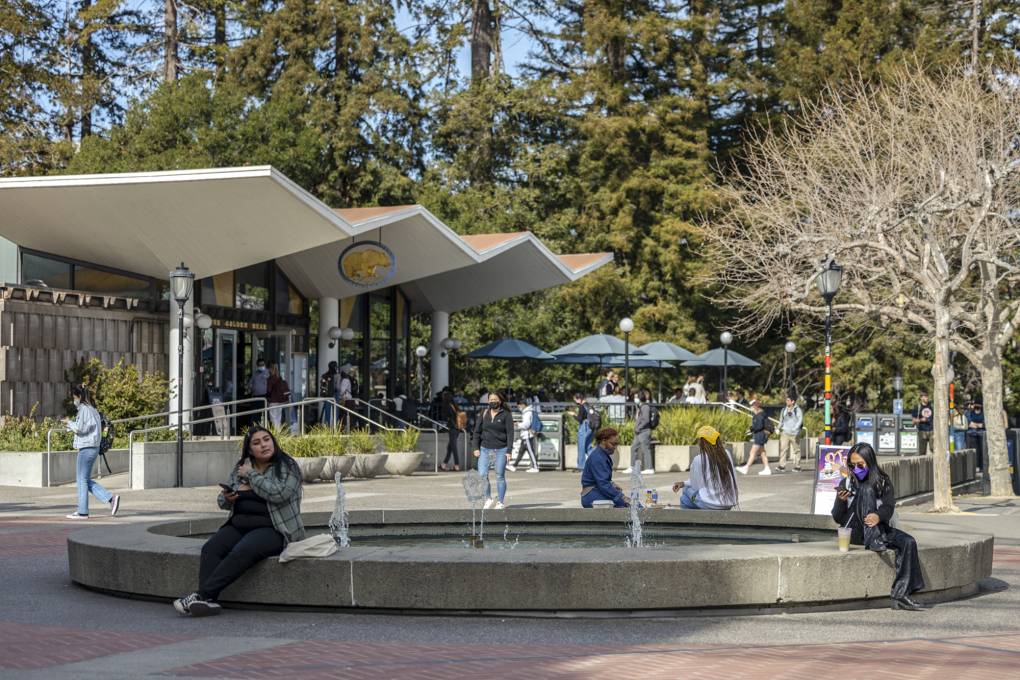
"caption": "Ludwig's Fountain and the Golden Bear Cafe at the University of California, Berkeley, campus on Feb. 3, 2022.",
"description": null,
"title": "020322-UC-Berkeley-TJ-CM-58",
"credit": "Thalia Juarez/CalMatters",
"status": "inherit",
"altTag": "Students seated at Ludwig's Fountain at UC Berkeley",
"isLoading": false,
"fetchFailed": false
},
"news_11905187": {
"type": "attachments",
"id": "news_11905187",
"meta": {
"index": "attachments_1716263798",
"site": "news",
"id": "11905187",
"found": true
},
"parent": 11905181,
"imgSizes": {
"twentyfourteen-full-width": {
"file": "https://ww2.kqed.org/app/uploads/sites/10/2022/02/020922-CALAIM-MHN-16-CM-1024x576.jpg",
"width": 1024,
"mimeType": "image/jpeg",
"height": 576
},
"thumbnail": {
"file": "https://ww2.kqed.org/app/uploads/sites/10/2022/02/020922-CALAIM-MHN-16-CM-160x107.jpg",
"width": 160,
"mimeType": "image/jpeg",
"height": 107
},
"post-thumbnail": {
"file": "https://ww2.kqed.org/app/uploads/sites/10/2022/02/020922-CALAIM-MHN-16-CM-672x372.jpg",
"width": 672,
"mimeType": "image/jpeg",
"height": 372
},
"kqedFullSize": {
"file": "https://ww2.kqed.org/app/uploads/sites/10/2022/02/020922-CALAIM-MHN-16-CM.jpg",
"width": 1024,
"height": 682
},
"large": {
"file": "https://ww2.kqed.org/app/uploads/sites/10/2022/02/020922-CALAIM-MHN-16-CM-1020x679.jpg",
"width": 1020,
"mimeType": "image/jpeg",
"height": 679
},
"medium": {
"file": "https://ww2.kqed.org/app/uploads/sites/10/2022/02/020922-CALAIM-MHN-16-CM-800x533.jpg",
"width": 800,
"mimeType": "image/jpeg",
"height": 533
}
},
"publishDate": 1644894131,
"modified": 1644966301,
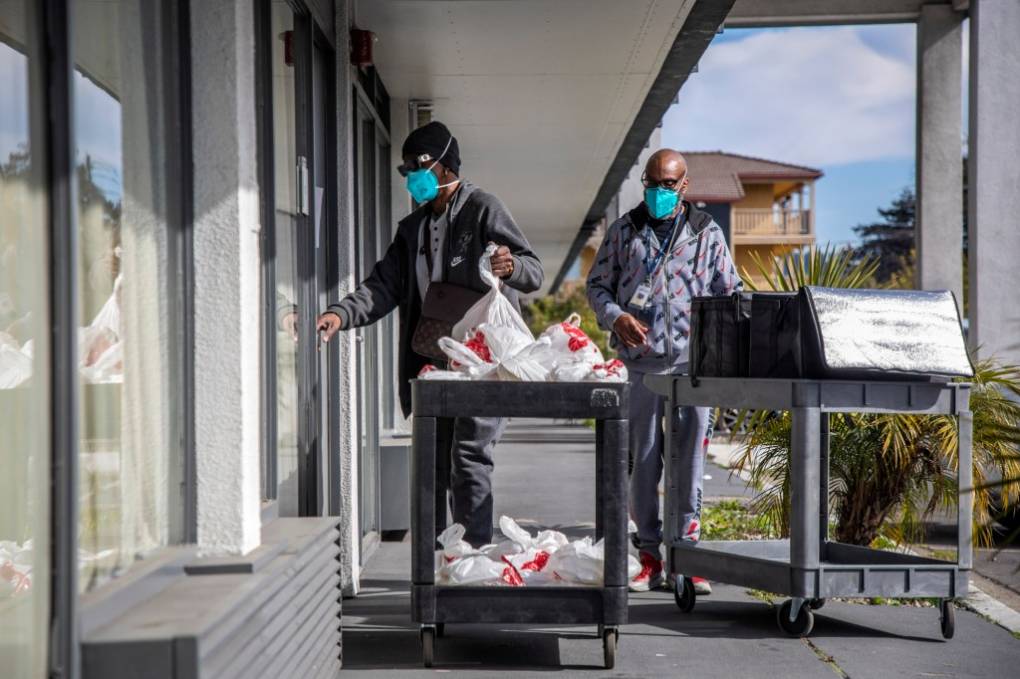
"caption": "Terry Harper (left) and Frank Scott deliver meals to occupants at the Radisson Hotel in Oakland. Edward El has stayed at this hotel as part of a Project Roomkey shelter but will soon be moving into his own apartment after spending much of the past 16 years unhoused.",
"description": "Terry Harper (left) and Frank Scott deliver meals to occupants at the Radisson Hotel in Oakland.",
"title": "020922-CALAIM-MHN-16-CM",
"credit": "Martin do Nascimento/CalMatters",
"status": "inherit",
"altTag": "Two people push carts down a hotel hallway. The carts are full of food and bags and the people pushing the carts are wearing masks.",
"isLoading": false,
"fetchFailed": false
}
},
"audioPlayerReducer": {
"postId": "stream_live",
"isPaused": true,
"isPlaying": false,
"pfsActive": false,
"pledgeModalIsOpen": true,
"playerDrawerIsOpen": false,
"liveAudioPlayStartedAt": 0,
"liveAudioPlayContext": ""
},
"authorsReducer": {
"byline_news_11914051": {
"type": "authors",
"id": "byline_news_11914051",
"meta": {
"override": true
},
"slug": "byline_news_11914051",
"name": "\u003ca href=\"https://calmatters.org/author/ben-christopher/\">Ben Christopher\u003c/a>",
"isLoading": false
},
"byline_news_11913701": {
"type": "authors",
"id": "byline_news_11913701",
"meta": {
"override": true
},
"slug": "byline_news_11913701",
"name": "\u003ca>Jeanne Kuang\u003c/a>",
"isLoading": false
},
"byline_news_11912134": {
"type": "authors",
"id": "byline_news_11912134",
"meta": {
"override": true
},
"slug": "byline_news_11912134",
"name": "\u003ca href=\"https://calmatters.org/author/alexei-koseff/\">Alexei Koseff\u003c/a>",
"isLoading": false
},
"byline_news_11911563": {
"type": "authors",
"id": "byline_news_11911563",
"meta": {
"override": true
},
"slug": "byline_news_11911563",
"name": "\u003ca href=\"https://calmatters.org/author/jeanne-kuang/\">Jeanne Kuang\u003c/a>",
"isLoading": false
},
"byline_news_11911266": {
"type": "authors",
"id": "byline_news_11911266",
"meta": {
"override": true
},
"slug": "byline_news_11911266",
"name": "\u003ca href=\"https://calmatters.org/author/elizabeth-aguilera/\">Elizabeth Aguilera\u003c/a>",
"isLoading": false
},
"byline_news_11910758": {
"type": "authors",
"id": "byline_news_11910758",
"meta": {
"override": true
},
"slug": "byline_news_11910758",
"name": "\u003ca href=\"https://calmatters.org/author/joe-hong/\">Joe Hong\u003c/a>",
"isLoading": false
},
"byline_news_11910447": {
"type": "authors",
"id": "byline_news_11910447",
"meta": {
"override": true
},
"slug": "byline_news_11910447",
"name": "\u003ca href=\"https://calmatters.org/author/nigelduara/\">Nigel Duara\u003c/a>",
"isLoading": false
},
"byline_news_11910083": {
"type": "authors",
"id": "byline_news_11910083",
"meta": {
"override": true
},
"slug": "byline_news_11910083",
"name": "\u003ca href=\"https://calmatters.org/author/melissa-montalvo/\">Melissa Montalvo\u003c/a>",
"isLoading": false
},
"byline_news_11909652": {
"type": "authors",
"id": "byline_news_11909652",
"meta": {
"override": true
},
"slug": "byline_news_11909652",
"name": "\u003ca href=\"https://calmatters.org/author/jeremia-kimelman/\">Jeremia Kimelman\u003c/a>",
"isLoading": false
},
"byline_news_11908387": {
"type": "authors",
"id": "byline_news_11908387",
"meta": {
"override": true
},
"slug": "byline_news_11908387",
"name": "\u003ca href=\"https://calmatters.org/author/rachel-becker/\">Rachel Becker\u003c/a>",
"isLoading": false
},
"byline_news_11907263": {
"type": "authors",
"id": "byline_news_11907263",
"meta": {
"override": true
},
"slug": "byline_news_11907263",
"name": "Mikhail Zinshteyn, \u003ca href=\"https://calmatters.org/education/higher-education/2022/03/uc-berkeley-enrollment-cap/\">CalMatters\u003c/a>",
"isLoading": false
},
"byline_news_11905181": {
"type": "authors",
"id": "byline_news_11905181",
"meta": {
"override": true
},
"slug": "byline_news_11905181",
"name": "\u003ca href=\"https://calmatters.org/author/kristen-hwang/\">Kristen Hwang\u003c/a>",
"isLoading": false
}
},
"pagesReducer": {
"news_affiliate_calmatters": {
"type": "terms",
"id": "news_18481",
"meta": {
"index": "terms_1716263798",
"site": "news",
"id": "18481",
"score": 15.355904
},
"featImg": null,
"name": "CALmatters",
"description": null,
"taxonomy": "affiliate",
"headData": {
"twImgId": null,
"twTitle": null,
"ogTitle": null,
"ogImgId": null,
"twDescription": null,
"description": null,
"title": "CALmatters Archives | KQED Arts",
"ogDescription": null
},
"ttid": 18515,
"slug": "calmatters",
"isLoading": false,
"title": "CALmatters",
"pageMeta": {
"site": "news",
"WpPageTemplate": "page-topic-editorial",
"currentPage": 56
},
"blocks": [
{
"blockName": "kqed/post-list",
"attrs": {
"layout": "cardArticle2",
"query": "posts/news?affiliate=calmatters",
"seeMore": false,
"paginated": true,
"page": 56
}
},
{
"blockName": "kqed/ad"
}
]
}
},
"pfsSessionReducer": {},
"postsReducer": {
"stream_live": {
"type": "live",
"id": "stream_live",
"audioUrl": "https://streams.kqed.org/kqedradio",
"title": "Live Stream",
"excerpt": "Live Stream information currently unavailable.",
"link": "/radio",
"featImg": "",
"label": {
"name": "KQED Live",
"link": "/"
}
},
"stream_kqedNewscast": {
"type": "posts",
"id": "stream_kqedNewscast",
"audioUrl": "https://www.kqed.org/.stream/anon/radio/RDnews/newscast.mp3?_=1",
"title": "KQED Newscast",
"featImg": "",
"label": {
"name": "88.5 FM",
"link": "/"
}
},
"news_11914051": {
"type": "posts",
"id": "news_11914051",
"meta": {
"index": "posts_1716263798",
"site": "news",
"id": "11914051",
"score": null,
"sort": [
1652469056000
]
},
"parent": 0,
"labelTerm": {
"site": "news",
"term": 18481
},
"blocks": [],
"publishDate": 1652469056,
"format": "standard",
"disqusTitle": "Newsom: California Has Record-Smashing $97.5 Billion Budget Surplus",
"title": "Newsom: California Has Record-Smashing $97.5 Billion Budget Surplus",
"headTitle": "CALmatters | KQED News",
"content": "\u003cp>“Simply without precedent.”\u003c/p>\n\u003cp>Gov. Gavin Newsom is \u003ca href=\"https://calmatters.org/politics/2021/03/newsom-jargon-pandemic-economy/\">a man of many superlatives\u003c/a>, but even he seemed to struggle today to adequately describe just how much extra cash the state of California will have to spend in the coming year’s budget: $97.5 billion.\u003c/p>\n\u003cp>In a press conference in Sacramento, Newsom unveiled his \u003ca href=\"https://www.gov.ca.gov/2022/05/13/governor-newsom-presents-300-7-billion-blueprint-paving-the-california-way-forward/\">latest record spending proposal\u003c/a> for the coming fiscal year. Riding a superheating economy and drawing disproportionately from the state’s highest earners, the state is now projected to have a surplus bigger than California — or any state — has ever had, and significantly more than the $76 billion that the governor predicted in January.\u003c/p>\n\u003cp>Roughly half of the surplus is required by law to be spent on education. That leaves “only” roughly $49 billion in discretionary money, and the governor wants to reserve 99% of that for one-time spending: $18.1 billion \u003ca href=\"https://www.gov.ca.gov/2022/05/12/governor-newsom-proposes-18-1-billion-inflation-relief-package/\">to provide financial relief\u003c/a> for Californians buffeted by inflation, plus $37 billion for infrastructure investments, including $5.6 billion for education facility upgrades, and an extra $2.3 billion for the ongoing fight against COVID-19.\u003c/p>\n\u003cp>A \u003ca href=\"https://ebudget.ca.gov/FullBudgetSummary.pdf\">few of the other big numbers\u003c/a> that Newsom mentioned today:\u003c/p>\n\u003cul>\n\u003cli>$128.3 billion in education spending, from transitional kindergarten through high school, a record-breaking sum that works out to $22,850 per student.\u003c/li>\n\u003cli>Another $23 billion will be parked into the state’s rainy day fund, to be drawn upon the next time the economy slows\u003c/li>\n\u003cli>$2.5 billion for housing, including $500 million to fund the conversion of vacant malls and storefronts into homes\u003c/li>\n\u003cli>An extra $3.4 billion to pay down state employee retirement debt\u003c/li>\n\u003c/ul>\n\u003cp>The massive windfall that the state is sitting on, coupled with the state’s progressive tax system is a sign of “the concentration of wealth and success in the hands of a few that are enjoying abundance in historic and unprecedented ways,” Newsom said. “I am proud of California’s progressive tax system…and we’re the beneficiary of that.”\u003c/p>\n\u003cp>[ad fullwidth]\u003c/p>\n\u003cp>Now the ball is in the state Legislature’s court as lawmakers decide where they agree with the governor and which priorities they want to haggle over before the June 15 deadline to pass a final, balanced budget for the fiscal year that starts July 1.\u003c/p>\n\u003cp>Today’s “May revise” rollout is part of the annual call-and-response between the governor’s office and the Legislature over how to spend your tax dollars. Each year, the governor sets the negotiations in motion in January with a \u003ca href=\"https://calmatters.org/politics/2022/01/california-budget-newsom/\">preliminary budget proposal\u003c/a>. This year, Newsom’s proffer included a record surge in K-12 education spending, along with multi-billion dollar proposals to ramp up the state’s wildfire prevention projects, convert more vacant hotels into housing for the homeless and open up Medi-Cal, the state’s health insurance program for the poor, to all undocumented immigrants.\u003c/p>\n\u003cp>What Newsom unveiled today is a retake on that earlier budget blueprint, but freshened up with new estimates of the state’s fiscal future. Tack on the extra surplus money and you end up with a new record-high total: $300.7 billion.\u003c/p>\n\u003cp>\u003c!-- iframe plugin v.4.3 wordpress.org/plugins/iframe/ -->\u003cbr>\n\u003ciframe src=\"https://flo.uri.sh/visualisation/9979834/embed#?secret=2LNgNb0NXP%C2%A0\" width=\"800\" height=\"600\" scrolling=\"yes\" class=\"iframe-class\" frameborder=\"0\">\u003c/iframe>\u003c/p>\n\u003cp>When discussing money on the scale of the California state budget, it’s easy to lose perspective. But to be clear, even by Golden State standards, that is an astounding amount of money.\u003c/p>\n\u003cp>What a difference two years makes. In May 2020, with the state still weathering the first surge of COVID-19, the governor’s Department of Finance projected a \u003ca href=\"https://calmatters.org/economy/2020/05/newsom-economic-forecast-criticism-california-model-recession-budget/\">$54 billion deficit and a year of Great Depression-level unemployment rates\u003c/a>. Neither came to pass, just the opposite: Boosted by rosy \u003ca href=\"https://calmatters.org/california-divide/2021/01/california-budget-depends-on-staggering-wealth-gap/\">economic conditions for the state’s highest earners\u003c/a> and a massive influx of cash from the federal government, \u003ca href=\"https://calmatters.org/politics/2021/01/newsoms-record-breaking-budget-proposal/\">state coffers have been overflowing\u003c/a> for the last two years.\u003c/p>\n\u003cp>For the governor and Democratic leadership in the Assembly and Senate, having to divvy up billions of new dollars during an election year is a good problem to have. But on financial aid to struggling families, the scale of the state’s drought response, \u003ca href=\"https://www.latimes.com/california/newsletter/2022-05-13/california-politics-newsletter-gambling-taxes-will-dominate-november-ballot-ca-politics\">what to do about the sky-high price of gasoline\u003c/a> and other pressing policy conundrums, not everyone is on the same page.\u003c/p>\n\u003cp>[aside label=\"related coverage\" tag=\"california-budget\"]Assembly Speaker Anthony Rendon kept his cards close to his chest in a statement, simply heralding his Democratic “teammates” in the Senate. “We know how to work together to present Governor Gavin Newsom with a budget he can be proud to sign by the constitutional deadline,” he said.\u003c/p>\n\u003cp>The\u003ca href=\"https://cssrc.us/sites/default/files/Caucus%202022%20Wilk%20May%20Revise%20Budget%20Priorities.pdf?utm_source=CalMatters+Newsletters&utm_campaign=ebdd812119-WHATMATTERS&utm_medium=email&utm_term=0_faa7be558d-ebdd812119-150256405&mc_cid=ebdd812119&mc_eid=498adde128\"> Republican minority in the Legislature\u003c/a> is so diminished that Democrats don’t need their support to pass a budget. But that isn’t stopping GOP lawmakers from weighing in, if only to \u003ca href=\"https://www.cagop.org/s/blog/ca-dems-ignore-the-obvious-MCZ2N2HI7YLFCAHEWHK6DQ7YEG3Q\">provide voters with a clear contrast\u003c/a> as Election Day approaches.\u003c/p>\n\u003cp>“Newsom specializes in grand announcements and flashy sounding proposals, but he rarely follows through with effective solutions that actually help California families,” GOP Assembly leader James Gallagher from Chico said in a statement. “As Californians struggle to fill their tank and put food on the table, Democrats fail to provide any real solutions to cut costs.”\u003c/p>\n\u003cp>Here are other highlights from the governor’s latest spending plan:\u003c/p>\n\u003ch3>Cash for Californians\u003c/h3>\n\u003cp>If the average Californian hears anything about today’s announcement it’s probably this: The governor wants to send $400 to most of the state’s car owners.\u003c/p>\n\u003cp>That’s been the governor’s idea to help drivers bear the cost of historically elevated gas prices. In the face of pushback from environmentalists, he also wants to throw in $750 million to entice transit agencies to make bus and rail travel free for three months. And lest he be accused to throwing money at those who don’t need it, the proposal is limited to drivers whose car are worth under an unspecified cap.\u003c/p>\n\u003cp>Despite all that, there’s some distance between this proposal and the Legislature’s, where Democratic leaders \u003ca href=\"https://www.latimes.com/california/story/2022-03-18/california-senate-assembly-weigh-refund-possibilities-amid-rising-gas-costs#:~:text=Gavin%20Newsom's%20proposal%20to%20offer,each%20California%20taxpayer%20and%20dependent.\">want to send cash rebates to Californians\u003c/a> making less than $250,000, car owners or not. And it’s even further still from the GOP plan, which is simply to \u003ca href=\"https://calmatters.org/newsletters/whatmatters/2022/04/california-gas-rebate/\">suspend the state gas tax\u003c/a>.\u003c/p>\n\u003cp>“I have all the confidence in the world we’ll be able to square those modest differences and we’ll come around to a number and a strategy that’s in the best interests of Californians,” Newsom said.\u003c/p>\n\u003cp>Today’s announcement also answered another big question left unaddressed by the January proposal: Will an obscure amendment inserted into the California Constitution in 1979 compel the state to reroute some of the state’s extra cash back to taxpayers?\u003c/p>\n\u003cp>The answer, at least for now, appears to be no.\u003c/p>\n\u003cp>The constitutional provision in question, the \u003ca href=\"https://calmatters.org/politics/2021/05/newsom-tax-rebate/\">Gann Limit\u003c/a>, was approved by voters during the heyday of the state’s conservative “tax revolt” and capped per-person state spending to its 1978 level, after adjusting for inflation. Anything left over has to be sent back to taxpayers and school districts. With the state’s coffers as full as they are, the January budget blueprint projected that the state would breach the cap.\u003c/p>\n\u003cp>But with more spending on exempt types of expenditure, including infrastructure, the current plan is now $2.6 billion below that ceiling.\u003c/p>\n\u003ch3 id=\"h-eat-your-heart-out-texas\">‘Eat your heart out, Texas’\u003c/h3>\n\u003cp>Budgets, as the cliche goes, are statements of values. Newsom clearly values \u003ca href=\"https://calmatters.org/newsletters/whatmatters/2022/02/california-crime-abortion-guns/\">decrying the state of Texas\u003c/a> and its right-wing government.\u003c/p>\n\u003cp>Among the policies-cum-anti-Texas-digs that Newsom rolled out today were a revision of the state’s business relocation tax credit program to provide “additional consideration” for businesses relocating from states with anti-abortion and “anti-LGBTQ+” laws.\u003c/p>\n\u003cp>The context, only barely unspoken, is that Texas has recently passed a law that effectively \u003ca href=\"https://capitol.texas.gov/tlodocs/87R/billtext/pdf/SB00008F.pdf\">bans most abortions\u003c/a> and introduced a policy that treats gender-confirming care for transgender kids \u003ca href=\"https://www.npr.org/2022/05/13/1098779201/texas-supreme-court-transgender-gender-affirming-child-abuse\">as child abuse\u003c/a>.\u003c/p>\n\u003cp>Newsom’s budget plan also include an additional \u003ca href=\"https://www.gov.ca.gov/2022/05/11/governor-newsom-proposes-reproductive-health-package-to-strengthen-protections-expand-access-and-welcome-businesses-from-anti-abortion-states/\">$125 million to expand access to abortions\u003c/a> and fund research into reproductive health.\u003c/p>\n\u003cp>“I do want to make a deep point here: California is a pro-life state,” Newsom said, appropriating a term used by the anti-abortion movement to tout his proposed spending on expanded preschool, health insurance access and gun-violence reduction programs.\u003c/p>\n\u003cp>He also chided Arizona, Florida and Texas for having COVID death rates higher than California’s: “There are a lot of folks out there that are pro- conception to birth but that fall wholly short of being pro-life.”\u003c/p>\n\u003cp>[ad floatright]\u003c/p>\n\u003cp>\u003cem>CalMatters reporter Grace Gedye contributed to this story.\u003c/em>\u003c/p>\n\n",
"disqusIdentifier": "11914051 https://ww2.kqed.org/news/?p=11914051",
"disqusUrl": "https://ww2.kqed.org/news/2022/05/13/newsom-california-has-record-smashing-97-5-billion-budget-surplus/",
"stats": {
"hasVideo": false,
"hasChartOrMap": true,
"hasAudio": false,
"hasPolis": false,
"wordCount": 1489,
"hasGoogleForm": false,
"hasGallery": false,
"hasHearkenModule": false,
"iframeSrcs": [
"https://flo.uri.sh/visualisation/9979834/embed#"
],
"paragraphCount": 34
},
"modified": 1652473252,
"excerpt": "Newsom unveiled a revised budget plan of just over $300 billion for the next fiscal year, the highest in state history, resulting from surging tax revenues through the winter and spring.",
"headData": {
"twImgId": "",
"twTitle": "",
"ogTitle": "",
"ogImgId": "",
"twDescription": "",
"description": "Newsom unveiled a revised budget plan of just over $300 billion for the next fiscal year, the highest in state history, resulting from surging tax revenues through the winter and spring.",
"title": "Newsom: California Has Record-Smashing $97.5 Billion Budget Surplus | KQED",
"ogDescription": "",
"schema": {
"@context": "https://schema.org",
"@type": "NewsArticle",
"headline": "Newsom: California Has Record-Smashing $97.5 Billion Budget Surplus",
"datePublished": "2022-05-13T12:10:56-07:00",
"dateModified": "2022-05-13T13:20:52-07:00",
"image": "https://cdn.kqed.org/wp-content/uploads/2020/02/KQED-OG-Image@1x.png",
"isAccessibleForFree": "True",
"publisher": {
"@type": "NewsMediaOrganization",
"@id": "https://www.kqed.org/#organization",
"name": "KQED",
"logo": "https://cdn.kqed.org/wp-content/uploads/2020/02/KQED-OG-Image@1x.png",
"url": "https://www.kqed.org",
"sameAs": [
"https://www.facebook.com/KQED",
"https://twitter.com/KQED",
"https://www.instagram.com/kqed/",
"https://www.tiktok.com/@kqedofficial",
"https://www.linkedin.com/company/kqed",
"https://www.youtube.com/channel/UCeC0IOo7i1P_61zVUWbJ4nw"
]
}
}
},
"guestAuthors": [],
"slug": "newsom-california-has-record-smashing-97-5-billion-budget-surplus",
"status": "publish",
"nprByline": "\u003ca href=\"https://calmatters.org/author/ben-christopher/\">Ben Christopher\u003c/a>",
"excludeFromSiteSearch": "Include",
"showOnAuthorArchivePages": "No",
"path": "/news/11914051/newsom-california-has-record-smashing-97-5-billion-budget-surplus",
"audioTrackLength": null,
"parsedContent": [
{
"type": "contentString",
"content": "\u003cdiv class=\"post-body\">\u003cp>\u003cp>“Simply without precedent.”\u003c/p>\n\u003cp>Gov. Gavin Newsom is \u003ca href=\"https://calmatters.org/politics/2021/03/newsom-jargon-pandemic-economy/\">a man of many superlatives\u003c/a>, but even he seemed to struggle today to adequately describe just how much extra cash the state of California will have to spend in the coming year’s budget: $97.5 billion.\u003c/p>\n\u003cp>In a press conference in Sacramento, Newsom unveiled his \u003ca href=\"https://www.gov.ca.gov/2022/05/13/governor-newsom-presents-300-7-billion-blueprint-paving-the-california-way-forward/\">latest record spending proposal\u003c/a> for the coming fiscal year. Riding a superheating economy and drawing disproportionately from the state’s highest earners, the state is now projected to have a surplus bigger than California — or any state — has ever had, and significantly more than the $76 billion that the governor predicted in January.\u003c/p>\n\u003cp>Roughly half of the surplus is required by law to be spent on education. That leaves “only” roughly $49 billion in discretionary money, and the governor wants to reserve 99% of that for one-time spending: $18.1 billion \u003ca href=\"https://www.gov.ca.gov/2022/05/12/governor-newsom-proposes-18-1-billion-inflation-relief-package/\">to provide financial relief\u003c/a> for Californians buffeted by inflation, plus $37 billion for infrastructure investments, including $5.6 billion for education facility upgrades, and an extra $2.3 billion for the ongoing fight against COVID-19.\u003c/p>\n\u003cp>A \u003ca href=\"https://ebudget.ca.gov/FullBudgetSummary.pdf\">few of the other big numbers\u003c/a> that Newsom mentioned today:\u003c/p>\n\u003cul>\n\u003cli>$128.3 billion in education spending, from transitional kindergarten through high school, a record-breaking sum that works out to $22,850 per student.\u003c/li>\n\u003cli>Another $23 billion will be parked into the state’s rainy day fund, to be drawn upon the next time the economy slows\u003c/li>\n\u003cli>$2.5 billion for housing, including $500 million to fund the conversion of vacant malls and storefronts into homes\u003c/li>\n\u003cli>An extra $3.4 billion to pay down state employee retirement debt\u003c/li>\n\u003c/ul>\n\u003cp>The massive windfall that the state is sitting on, coupled with the state’s progressive tax system is a sign of “the concentration of wealth and success in the hands of a few that are enjoying abundance in historic and unprecedented ways,” Newsom said. “I am proud of California’s progressive tax system…and we’re the beneficiary of that.”\u003c/p>\n\u003cp>\u003c/p>\u003c/div>",
"attributes": {
"named": {},
"numeric": []
}
},
{
"type": "component",
"content": "",
"name": "ad",
"attributes": {
"named": {
"label": "fullwidth"
},
"numeric": [
"fullwidth"
]
}
},
{
"type": "contentString",
"content": "\u003cdiv class=\"post-body\">\u003cp>\u003c/p>\n\u003cp>Now the ball is in the state Legislature’s court as lawmakers decide where they agree with the governor and which priorities they want to haggle over before the June 15 deadline to pass a final, balanced budget for the fiscal year that starts July 1.\u003c/p>\n\u003cp>Today’s “May revise” rollout is part of the annual call-and-response between the governor’s office and the Legislature over how to spend your tax dollars. Each year, the governor sets the negotiations in motion in January with a \u003ca href=\"https://calmatters.org/politics/2022/01/california-budget-newsom/\">preliminary budget proposal\u003c/a>. This year, Newsom’s proffer included a record surge in K-12 education spending, along with multi-billion dollar proposals to ramp up the state’s wildfire prevention projects, convert more vacant hotels into housing for the homeless and open up Medi-Cal, the state’s health insurance program for the poor, to all undocumented immigrants.\u003c/p>\n\u003cp>What Newsom unveiled today is a retake on that earlier budget blueprint, but freshened up with new estimates of the state’s fiscal future. Tack on the extra surplus money and you end up with a new record-high total: $300.7 billion.\u003c/p>\n\u003cp>\u003c!-- iframe plugin v.4.3 wordpress.org/plugins/iframe/ -->\u003cbr>\n\u003ciframe src=\"https://flo.uri.sh/visualisation/9979834/embed#?secret=2LNgNb0NXP%C2%A0\" width=\"800\" height=\"600\" scrolling=\"yes\" class=\"iframe-class\" frameborder=\"0\">\u003c/iframe>\u003c/p>\n\u003cp>When discussing money on the scale of the California state budget, it’s easy to lose perspective. But to be clear, even by Golden State standards, that is an astounding amount of money.\u003c/p>\n\u003cp>What a difference two years makes. In May 2020, with the state still weathering the first surge of COVID-19, the governor’s Department of Finance projected a \u003ca href=\"https://calmatters.org/economy/2020/05/newsom-economic-forecast-criticism-california-model-recession-budget/\">$54 billion deficit and a year of Great Depression-level unemployment rates\u003c/a>. Neither came to pass, just the opposite: Boosted by rosy \u003ca href=\"https://calmatters.org/california-divide/2021/01/california-budget-depends-on-staggering-wealth-gap/\">economic conditions for the state’s highest earners\u003c/a> and a massive influx of cash from the federal government, \u003ca href=\"https://calmatters.org/politics/2021/01/newsoms-record-breaking-budget-proposal/\">state coffers have been overflowing\u003c/a> for the last two years.\u003c/p>\n\u003cp>For the governor and Democratic leadership in the Assembly and Senate, having to divvy up billions of new dollars during an election year is a good problem to have. But on financial aid to struggling families, the scale of the state’s drought response, \u003ca href=\"https://www.latimes.com/california/newsletter/2022-05-13/california-politics-newsletter-gambling-taxes-will-dominate-november-ballot-ca-politics\">what to do about the sky-high price of gasoline\u003c/a> and other pressing policy conundrums, not everyone is on the same page.\u003c/p>\n\u003cp>\u003c/p>\u003c/div>",
"attributes": {
"named": {},
"numeric": []
}
},
{
"type": "component",
"content": "",
"name": "aside",
"attributes": {
"named": {
"label": "related coverage ",
"tag": "california-budget"
},
"numeric": []
}
},
{
"type": "contentString",
"content": "\u003cdiv class=\"post-body\">\u003cp>Assembly Speaker Anthony Rendon kept his cards close to his chest in a statement, simply heralding his Democratic “teammates” in the Senate. “We know how to work together to present Governor Gavin Newsom with a budget he can be proud to sign by the constitutional deadline,” he said.\u003c/p>\n\u003cp>The\u003ca href=\"https://cssrc.us/sites/default/files/Caucus%202022%20Wilk%20May%20Revise%20Budget%20Priorities.pdf?utm_source=CalMatters+Newsletters&utm_campaign=ebdd812119-WHATMATTERS&utm_medium=email&utm_term=0_faa7be558d-ebdd812119-150256405&mc_cid=ebdd812119&mc_eid=498adde128\"> Republican minority in the Legislature\u003c/a> is so diminished that Democrats don’t need their support to pass a budget. But that isn’t stopping GOP lawmakers from weighing in, if only to \u003ca href=\"https://www.cagop.org/s/blog/ca-dems-ignore-the-obvious-MCZ2N2HI7YLFCAHEWHK6DQ7YEG3Q\">provide voters with a clear contrast\u003c/a> as Election Day approaches.\u003c/p>\n\u003cp>“Newsom specializes in grand announcements and flashy sounding proposals, but he rarely follows through with effective solutions that actually help California families,” GOP Assembly leader James Gallagher from Chico said in a statement. “As Californians struggle to fill their tank and put food on the table, Democrats fail to provide any real solutions to cut costs.”\u003c/p>\n\u003cp>Here are other highlights from the governor’s latest spending plan:\u003c/p>\n\u003ch3>Cash for Californians\u003c/h3>\n\u003cp>If the average Californian hears anything about today’s announcement it’s probably this: The governor wants to send $400 to most of the state’s car owners.\u003c/p>\n\u003cp>That’s been the governor’s idea to help drivers bear the cost of historically elevated gas prices. In the face of pushback from environmentalists, he also wants to throw in $750 million to entice transit agencies to make bus and rail travel free for three months. And lest he be accused to throwing money at those who don’t need it, the proposal is limited to drivers whose car are worth under an unspecified cap.\u003c/p>\n\u003cp>Despite all that, there’s some distance between this proposal and the Legislature’s, where Democratic leaders \u003ca href=\"https://www.latimes.com/california/story/2022-03-18/california-senate-assembly-weigh-refund-possibilities-amid-rising-gas-costs#:~:text=Gavin%20Newsom's%20proposal%20to%20offer,each%20California%20taxpayer%20and%20dependent.\">want to send cash rebates to Californians\u003c/a> making less than $250,000, car owners or not. And it’s even further still from the GOP plan, which is simply to \u003ca href=\"https://calmatters.org/newsletters/whatmatters/2022/04/california-gas-rebate/\">suspend the state gas tax\u003c/a>.\u003c/p>\n\u003cp>“I have all the confidence in the world we’ll be able to square those modest differences and we’ll come around to a number and a strategy that’s in the best interests of Californians,” Newsom said.\u003c/p>\n\u003cp>Today’s announcement also answered another big question left unaddressed by the January proposal: Will an obscure amendment inserted into the California Constitution in 1979 compel the state to reroute some of the state’s extra cash back to taxpayers?\u003c/p>\n\u003cp>The answer, at least for now, appears to be no.\u003c/p>\n\u003cp>The constitutional provision in question, the \u003ca href=\"https://calmatters.org/politics/2021/05/newsom-tax-rebate/\">Gann Limit\u003c/a>, was approved by voters during the heyday of the state’s conservative “tax revolt” and capped per-person state spending to its 1978 level, after adjusting for inflation. Anything left over has to be sent back to taxpayers and school districts. With the state’s coffers as full as they are, the January budget blueprint projected that the state would breach the cap.\u003c/p>\n\u003cp>But with more spending on exempt types of expenditure, including infrastructure, the current plan is now $2.6 billion below that ceiling.\u003c/p>\n\u003ch3 id=\"h-eat-your-heart-out-texas\">‘Eat your heart out, Texas’\u003c/h3>\n\u003cp>Budgets, as the cliche goes, are statements of values. Newsom clearly values \u003ca href=\"https://calmatters.org/newsletters/whatmatters/2022/02/california-crime-abortion-guns/\">decrying the state of Texas\u003c/a> and its right-wing government.\u003c/p>\n\u003cp>Among the policies-cum-anti-Texas-digs that Newsom rolled out today were a revision of the state’s business relocation tax credit program to provide “additional consideration” for businesses relocating from states with anti-abortion and “anti-LGBTQ+” laws.\u003c/p>\n\u003cp>The context, only barely unspoken, is that Texas has recently passed a law that effectively \u003ca href=\"https://capitol.texas.gov/tlodocs/87R/billtext/pdf/SB00008F.pdf\">bans most abortions\u003c/a> and introduced a policy that treats gender-confirming care for transgender kids \u003ca href=\"https://www.npr.org/2022/05/13/1098779201/texas-supreme-court-transgender-gender-affirming-child-abuse\">as child abuse\u003c/a>.\u003c/p>\n\u003cp>Newsom’s budget plan also include an additional \u003ca href=\"https://www.gov.ca.gov/2022/05/11/governor-newsom-proposes-reproductive-health-package-to-strengthen-protections-expand-access-and-welcome-businesses-from-anti-abortion-states/\">$125 million to expand access to abortions\u003c/a> and fund research into reproductive health.\u003c/p>\n\u003cp>“I do want to make a deep point here: California is a pro-life state,” Newsom said, appropriating a term used by the anti-abortion movement to tout his proposed spending on expanded preschool, health insurance access and gun-violence reduction programs.\u003c/p>\n\u003cp>He also chided Arizona, Florida and Texas for having COVID death rates higher than California’s: “There are a lot of folks out there that are pro- conception to birth but that fall wholly short of being pro-life.”\u003c/p>\n\u003cp>\u003c/p>\u003c/div>",
"attributes": {
"named": {},
"numeric": []
}
},
{
"type": "component",
"content": "",
"name": "ad",
"attributes": {
"named": {
"label": "floatright"
},
"numeric": [
"floatright"
]
}
},
{
"type": "contentString",
"content": "\u003cdiv class=\"post-body\">\u003cp>\u003c/p>\n\u003cp>\u003cem>CalMatters reporter Grace Gedye contributed to this story.\u003c/em>\u003c/p>\n\n\u003c/div>\u003c/p>",
"attributes": {
"named": {},
"numeric": []
}
}
],
"link": "/news/11914051/newsom-california-has-record-smashing-97-5-billion-budget-surplus",
"authors": [
"byline_news_11914051"
],
"categories": [
"news_1758",
"news_13"
],
"tags": [
"news_29447",
"news_402",
"news_16"
],
"affiliates": [
"news_18481"
],
"featImg": "news_11914062",
"label": "news_18481"
},
"news_11913701": {
"type": "posts",
"id": "news_11913701",
"meta": {
"index": "posts_1716263798",
"site": "news",
"id": "11913701",
"score": null,
"sort": [
1652214648000
]
},
"guestAuthors": [],
"slug": "california-may-chop-late-fees-that-add-hundreds-of-dollars-to-traffic-tickets",
"title": "California May Chop Late Fees That Add Hundreds of Dollars to Traffic Tickets",
"publishDate": 1652214648,
"format": "standard",
"headTitle": "California May Chop Late Fees That Add Hundreds of Dollars to Traffic Tickets | KQED",
"labelTerm": {},
"content": "\u003cp>California is poised this year to make changes to what some call “hidden” court fees: hundreds of dollars often tacked onto traffic tickets and minor violations that can increase their cost nearly tenfold. But so far, state officials disagree on how far to go.\u003c/p>\n\u003cp>Known as civil assessments, the fees are imposed on hundreds of thousands of Californians as a penalty for failing to pay a ticket by a deadline or failing to appear in court on a charge.\u003c/p>\n\u003cp>The vast majority of the fees are issued in traffic or infraction cases. A fine can be imposed each time a deadline is missed.\u003c/p>\n\u003cp>A $300 maximum fine can be added for violations as minor as jaywalking and on tickets that originally cost as little as $35, according to Debt Free Justice California, a coalition of organizations, policy experts and legal advocates opposing “unfair ways the criminal legal system drains wealth from vulnerable communities.”[aside label=\"More Stories on Traffic Fees\" postID=\"news_11913570,news_11895338\"]California has one of the highest late fees in the nation, the coalition says. The group says the fees trap lower-income Californians in a cycle of ballooning debt to the courts.\u003c/p>\n\u003cp>Money collected from the extra charges bolsters court coffers, leading advocates to accuse the state of paying for its judicial system by charging those who can least afford it.\u003c/p>\n\u003cp>The fees generate nearly $100 million annually, and the courts retain more than half.\u003c/p>\n\u003cp>In Riverside County, the fees that the court system kept made up 14% of its budget, according to a report published by the coalition this year.\u003c/p>\n\u003cp>The report gave as an example a San Lorenzo resident who is a CalWorks recipient and mother who could not afford to pay for traffic violations. She was charged late fees on traffic citations five times since 2009, amounting to more than $1,500 of debt, about double the cost of the original tickets.\u003c/p>\n\u003cp>It made her ineligible for a driver’s license for 13 years, the report said.\u003c/p>\n\u003cp>“They were trying to take all of this money away from us,” she said, “but we didn’t have any in the first place.”\u003c/p>\n\u003cp>Civil assessment fees are disproportionately borne by people of color, who are overrepresented in traffic stops compared to their share of the population, the report said.\u003c/p>\n\u003cp>In January advocates sued San Mateo County Superior Court, challenging its practice of automatically charging the $300 maximum fee in all traffic cases with a missed deadline.\u003c/p>\n\u003cp>Gov. Gavin Newsom in his January budget proposed halving the fees, to a maximum of $150, and spending $50 million to backfill court budgets.\u003c/p>\n\u003cp>The proposal by some lawmakers and the Debt Free Justice coalition to eliminate the fees entirely could cost about twice as much. Senate leaders endorsed that plan in their budget proposals last month, as they announced an unprecedented $68 billion projected budget surplus.\u003c/p>\n\u003cp>[ad fullwidth]\u003c/p>\n\u003ch2>Too poor for tickets\u003c/h2>\n\u003cp>The coalition said it hopes Newsom will back full elimination of fees when he unveils his revised budget proposal this week. H.D. Palmer, a spokesperson for Newsom’s Department of Finance, declined to comment.\u003c/p>\n\u003cp>The Judicial Council, which governs the court system, has supported making changes to civil assessments. In a 2017 report, a commission of court officials recommended limiting the use of civil assessments or letting fines be converted to community service.\u003c/p>\n\u003cp>“We’re grateful for the efforts of both the Governor’s administration and the Legislature to reform the system and provide necessary backfill funding for the judicial branch,” said Martin Hoshino, administrative director of the Judicial Council, in an email. “We support the Governor’s proposal and are committed to working with him and with legislative leaders in the coming weeks as they finalize the state budget.”\u003c/p>\n\u003cp>The proposals come after the state eliminated dozens of court fines and fees over the past two years that advocates said disproportionately affected lower-income criminal defendants. The state repealed charges such as the cost of a public defender, drug testing, and probation and supervision services.\u003c/p>\n\u003cp>Newsom also signed a law last year that limits the state’s use of wage garnishments to claw back those debts and another that expanded a pilot program allowing Californians to ask the courts to reduce ticket fines they can’t afford to pay.\u003c/p>\n\u003cp>Last year a bill to eliminate civil assessments passed the state Senate but was gutted in the Assembly. The Debt Free Justice coalition said at the time it couldn’t get Newsom to agree to a deal to eliminate the fees.\u003c/p>\n\u003cp>Newsom’s administration told lawmakers the fee should be reduced but remain to motivate defendants to come to court.\u003c/p>\n\u003cp>“We feel the 50% reduction strikes a balance of providing immediate fiscal relief for all Californians and also preserving the viability of the civil assessment being used as a tool to keep individuals accountable, to compel individuals to appear in court proceedings,” Mark Jimenez, principal program budget analyst at the Department of Finance, told a Senate budget subcommittee in February.\u003c/p>\n\u003cp>Jimenez said the penalties are an alternative to issuing warrants to demand court attendance.[pullquote size=\"medium\" align=\"right\" citation=\"San José Sen. Dave Cortese\"]‘If they don’t have the money … how is that any incentive to come in?’[/pullquote]But senators were unconvinced that the fees were an effective motivator for those too poor to pay traffic tickets.\u003c/p>\n\u003cp>“If they don’t have the money … how is that any incentive to come in?” said Sen. Dave Cortese, a Democrat representing San José. “You either have it or you don’t.”\u003c/p>\n\u003cp>The coalition surveyed 200 Californians with recent traffic citations for its report; seventy-three percent said they did not know they would be issued a late fee for failing to appear or to pay, and 38% said extra fees would not have helped them make a timely payment.\u003c/p>\n\u003cp>Advocates suggested text messages would be more effective at getting defendants with demanding work schedules to court.\u003c/p>\n\u003cp>\u003cem>This article is part of the California Divide project, a collaboration among newsrooms examining income inequality and economic survival in California.\u003c/em>\u003c/p>\n\u003cp>\u003c/p>\n",
"blocks": [],
"excerpt": "Gov. Gavin Newsom wants to reduce by half a $300 penalty California courts tack onto traffic and minor citations — but lawmakers want it gone completely.",
"status": "publish",
"parent": 0,
"modified": 1721125663,
"stats": {
"hasAudio": false,
"hasVideo": false,
"hasChartOrMap": false,
"iframeSrcs": [],
"hasGoogleForm": false,
"hasGallery": false,
"hasHearkenModule": false,
"hasPolis": false,
"paragraphCount": 29,
"wordCount": 1049
},
"headData": {
"title": "California May Chop Late Fees That Add Hundreds of Dollars to Traffic Tickets | KQED",
"description": "Gov. Gavin Newsom wants to reduce by half a $300 penalty California courts tack onto traffic and minor citations — but lawmakers want it gone completely.",
"ogTitle": "",
"ogDescription": "",
"ogImgId": "",
"twTitle": "",
"twDescription": "",
"twImgId": "",
"schema": {
"@context": "https://schema.org",
"@type": "NewsArticle",
"headline": "California May Chop Late Fees That Add Hundreds of Dollars to Traffic Tickets",
"datePublished": "2022-05-10T13:30:48-07:00",
"dateModified": "2024-07-16T03:27:43-07:00",
"image": "https://cdn.kqed.org/wp-content/uploads/2020/02/KQED-OG-Image@1x.png",
"isAccessibleForFree": "True",
"publisher": {
"@type": "NewsMediaOrganization",
"@id": "https://www.kqed.org/#organization",
"name": "KQED",
"logo": "https://cdn.kqed.org/wp-content/uploads/2020/02/KQED-OG-Image@1x.png",
"url": "https://www.kqed.org",
"sameAs": [
"https://www.facebook.com/KQED",
"https://twitter.com/KQED",
"https://www.instagram.com/kqed/",
"https://www.tiktok.com/@kqedofficial",
"https://www.linkedin.com/company/kqed",
"https://www.youtube.com/channel/UCeC0IOo7i1P_61zVUWbJ4nw"
]
}
}
},
"source": "CALMATTERS",
"sourceUrl": "https://calmatters.org/",
"sticky": false,
"nprByline": "\u003ca>Jeanne Kuang\u003c/a>",
"excludeFromSiteSearch": "Include",
"showOnAuthorArchivePages": "No",
"path": "/news/11913701/california-may-chop-late-fees-that-add-hundreds-of-dollars-to-traffic-tickets",
"audioTrackLength": null,
"parsedContent": [
{
"type": "contentString",
"content": "\u003cdiv class=\"post-body\">\u003cp>\u003cp>California is poised this year to make changes to what some call “hidden” court fees: hundreds of dollars often tacked onto traffic tickets and minor violations that can increase their cost nearly tenfold. But so far, state officials disagree on how far to go.\u003c/p>\n\u003cp>Known as civil assessments, the fees are imposed on hundreds of thousands of Californians as a penalty for failing to pay a ticket by a deadline or failing to appear in court on a charge.\u003c/p>\n\u003cp>The vast majority of the fees are issued in traffic or infraction cases. A fine can be imposed each time a deadline is missed.\u003c/p>\n\u003cp>A $300 maximum fine can be added for violations as minor as jaywalking and on tickets that originally cost as little as $35, according to Debt Free Justice California, a coalition of organizations, policy experts and legal advocates opposing “unfair ways the criminal legal system drains wealth from vulnerable communities.”\u003c/p>\u003c/div>",
"attributes": {
"named": {},
"numeric": []
}
},
{
"type": "component",
"content": "",
"name": "aside",
"attributes": {
"named": {
"label": "More Stories on Traffic Fees ",
"postid": "news_11913570,news_11895338"
},
"numeric": []
}
},
{
"type": "contentString",
"content": "\u003cdiv class=\"post-body\">\u003cp>California has one of the highest late fees in the nation, the coalition says. The group says the fees trap lower-income Californians in a cycle of ballooning debt to the courts.\u003c/p>\n\u003cp>Money collected from the extra charges bolsters court coffers, leading advocates to accuse the state of paying for its judicial system by charging those who can least afford it.\u003c/p>\n\u003cp>The fees generate nearly $100 million annually, and the courts retain more than half.\u003c/p>\n\u003cp>In Riverside County, the fees that the court system kept made up 14% of its budget, according to a report published by the coalition this year.\u003c/p>\n\u003cp>The report gave as an example a San Lorenzo resident who is a CalWorks recipient and mother who could not afford to pay for traffic violations. She was charged late fees on traffic citations five times since 2009, amounting to more than $1,500 of debt, about double the cost of the original tickets.\u003c/p>\n\u003cp>It made her ineligible for a driver’s license for 13 years, the report said.\u003c/p>\n\u003cp>“They were trying to take all of this money away from us,” she said, “but we didn’t have any in the first place.”\u003c/p>\n\u003cp>Civil assessment fees are disproportionately borne by people of color, who are overrepresented in traffic stops compared to their share of the population, the report said.\u003c/p>\n\u003cp>In January advocates sued San Mateo County Superior Court, challenging its practice of automatically charging the $300 maximum fee in all traffic cases with a missed deadline.\u003c/p>\n\u003cp>Gov. Gavin Newsom in his January budget proposed halving the fees, to a maximum of $150, and spending $50 million to backfill court budgets.\u003c/p>\n\u003cp>The proposal by some lawmakers and the Debt Free Justice coalition to eliminate the fees entirely could cost about twice as much. Senate leaders endorsed that plan in their budget proposals last month, as they announced an unprecedented $68 billion projected budget surplus.\u003c/p>\n\u003cp>\u003c/p>\u003c/div>",
"attributes": {
"named": {},
"numeric": []
}
},
{
"type": "component",
"content": "",
"name": "ad",
"attributes": {
"named": {
"label": "fullwidth"
},
"numeric": [
"fullwidth"
]
}
},
{
"type": "contentString",
"content": "\u003cdiv class=\"post-body\">\u003cp>\u003c/p>\n\u003ch2>Too poor for tickets\u003c/h2>\n\u003cp>The coalition said it hopes Newsom will back full elimination of fees when he unveils his revised budget proposal this week. H.D. Palmer, a spokesperson for Newsom’s Department of Finance, declined to comment.\u003c/p>\n\u003cp>The Judicial Council, which governs the court system, has supported making changes to civil assessments. In a 2017 report, a commission of court officials recommended limiting the use of civil assessments or letting fines be converted to community service.\u003c/p>\n\u003cp>“We’re grateful for the efforts of both the Governor’s administration and the Legislature to reform the system and provide necessary backfill funding for the judicial branch,” said Martin Hoshino, administrative director of the Judicial Council, in an email. “We support the Governor’s proposal and are committed to working with him and with legislative leaders in the coming weeks as they finalize the state budget.”\u003c/p>\n\u003cp>The proposals come after the state eliminated dozens of court fines and fees over the past two years that advocates said disproportionately affected lower-income criminal defendants. The state repealed charges such as the cost of a public defender, drug testing, and probation and supervision services.\u003c/p>\n\u003cp>Newsom also signed a law last year that limits the state’s use of wage garnishments to claw back those debts and another that expanded a pilot program allowing Californians to ask the courts to reduce ticket fines they can’t afford to pay.\u003c/p>\n\u003cp>Last year a bill to eliminate civil assessments passed the state Senate but was gutted in the Assembly. The Debt Free Justice coalition said at the time it couldn’t get Newsom to agree to a deal to eliminate the fees.\u003c/p>\n\u003cp>Newsom’s administration told lawmakers the fee should be reduced but remain to motivate defendants to come to court.\u003c/p>\n\u003cp>“We feel the 50% reduction strikes a balance of providing immediate fiscal relief for all Californians and also preserving the viability of the civil assessment being used as a tool to keep individuals accountable, to compel individuals to appear in court proceedings,” Mark Jimenez, principal program budget analyst at the Department of Finance, told a Senate budget subcommittee in February.\u003c/p>\n\u003cp>Jimenez said the penalties are an alternative to issuing warrants to demand court attendance.\u003c/p>\u003c/div>",
"attributes": {
"named": {},
"numeric": []
}
},
{
"type": "component",
"content": "‘If they don’t have the money … how is that any incentive to come in?’",
"name": "pullquote",
"attributes": {
"named": {
"size": "medium",
"align": "right",
"citation": "San José Sen. Dave Cortese",
"label": ""
},
"numeric": []
}
},
{
"type": "contentString",
"content": "\u003cdiv class=\"post-body\">\u003cp>But senators were unconvinced that the fees were an effective motivator for those too poor to pay traffic tickets.\u003c/p>\n\u003cp>“If they don’t have the money … how is that any incentive to come in?” said Sen. Dave Cortese, a Democrat representing San José. “You either have it or you don’t.”\u003c/p>\n\u003cp>The coalition surveyed 200 Californians with recent traffic citations for its report; seventy-three percent said they did not know they would be issued a late fee for failing to appear or to pay, and 38% said extra fees would not have helped them make a timely payment.\u003c/p>\n\u003cp>Advocates suggested text messages would be more effective at getting defendants with demanding work schedules to court.\u003c/p>\n\u003cp>\u003cem>This article is part of the California Divide project, a collaboration among newsrooms examining income inequality and economic survival in California.\u003c/em>\u003c/p>\n\u003cp>\u003c/p>\n\u003c/div>\u003c/p>",
"attributes": {
"named": {},
"numeric": []
}
}
],
"link": "/news/11913701/california-may-chop-late-fees-that-add-hundreds-of-dollars-to-traffic-tickets",
"authors": [
"byline_news_11913701"
],
"categories": [
"news_8"
],
"tags": [
"news_4090",
"news_22772",
"news_6412",
"news_16",
"news_20517"
],
"affiliates": [
"news_18481"
],
"featImg": "news_11913702",
"label": "source_news_11913701"
},
"news_11912134": {
"type": "posts",
"id": "news_11912134",
"meta": {
"index": "posts_1716263798",
"site": "news",
"id": "11912134",
"score": null,
"sort": [
1651605855000
]
},
"guestAuthors": [],
"slug": "we-fill-the-gaps-california-preps-to-be-a-haven-for-abortion-rights",
"title": "'We Fill the Gaps': California Preps to Be a Haven for Abortion Rights",
"publishDate": 1651605855,
"format": "standard",
"headTitle": "‘We Fill the Gaps’: California Preps to Be a Haven for Abortion Rights | KQED",
"labelTerm": {
"term": 18481,
"site": "news"
},
"content": "\u003cp>\u003cem>\u003cstrong>Update Friday, June 24: The decision in Dobbs v. Jackson Women’s Health Organization was announced on June 24, overturning Roe v. Wade and eliminating the constitutional right to an abortion.\u003c/strong>\u003c/em>\u003c/p>\n\u003cp>\u003cem>\u003cstrong>California guarantees the right to abortion in statute and the state constitution. Our state’s abortion laws are the strongest in the United States. Both officials and abortion providers have made it very clear that \u003ca href=\"https://www.kqed.org/news/11917111/even-without-roe-v-wade-abortion-is-still-legal-in-california-heres-what-you-need-to-know\">abortion access in California will not change\u003c/a> because of the U.S. Supreme Court’s decision. \u003ca class=\"c-link\" tabindex=\"-1\" href=\"https://www.kqed.org/news/11917776/supreme-court-overturns-roe-v-wade\" target=\"_blank\" rel=\"noopener noreferrer\" data-stringify-link=\"https://www.kqed.org/news/11917776/supreme-court-overturns-roe-v-wade\" data-sk=\"tooltip_parent\" data-remove-tab-index=\"true\">Read more about the overturning of Roe v. Wade\u003c/a>.\u003c/strong>\u003c/em>\u003c/p>\n\u003cp>\u003cem>Original story continues:\u003c/em>\u003c/p>\n\u003cp>California abortion clinics are building new facilities closer to transit hubs and training more staff. A package of a dozen abortion rights bills moving through the Legislature could expand the number of providers, provide financial assistance to patients traveling to California to terminate their pregnancies, and legally protect the doctors who treat them.[pullquote size=\"medium\" align=\"right\" citation=\"Jodi Hicks, president and CEO, Planned Parenthood Affiliates of California\"]‘People from across the country are already looking to California as a haven state, as a beacon to provide them the care they need.’[/pullquote]\u003c/p>\n\u003cp>As new restrictions rapidly sweep the country in anticipation of a U.S. Supreme Court ruling this summer that may dramatically scale back or even end the constitutional right to abortion, \u003ca href=\"https://calmatters.org/explainers/abortion-in-california-laws/\">California is preparing to step into the void\u003c/a> — and welcome a possible surge of patients losing access in dozens of other states. Politico released a \u003ca href=\"https://www.politico.com/news/2022/05/02/supreme-court-abortion-draft-opinion-00029473\">draft majority opinion\u003c/a> written by Justice Samuel Alito that calls for overturning Roe v. Wade and the constitutional abortion rights that were maintained under the 1992 decision Planned Parenthood v. Casey.\u003c/p>\n\u003cp>In the draft opinion, Alito wrote, “We hold that \u003cem>Roe\u003c/em> and \u003cem>Casey\u003c/em> must be overruled. The Constitution makes no reference to abortion, and no such right is implicitly protected by any constitutional provision, including the one on which the defenders of \u003cem>Roe\u003c/em> and \u003cem>Casey\u003c/em> now chiefly rely – the Due Process Clause of the Fourteenth Amendment.”\u003c/p>\n\u003cp>Historically, justices can change, and have changed, their votes on major decisions where multiple drafts have been created. The Supreme Court’s decision will not be final until it is published, more than likely sometime in the next two months.\u003c/p>\n\u003cp>In response to the leaked draft opinion, Chief Justice John Roberts confirmed its authenticity and directed the Supreme Court marshal to investigate how such a leak occurred.\u003c/p>\n\u003cp>“To the extent this betrayal of the confidences of the court was intended to undermine the integrity of our operations, it will not succeed,” \u003ca href=\"https://www.npr.org/2022/05/03/1096123185/supreme-court-john-roberts-roe-wade\">said Roberts in a statement\u003c/a>. “The work of the Court will not be affected in any way.”\u003c/p>\n\u003cp>“People from across the country are already looking to California as a haven state, as a beacon to provide them the care they need,” Jodi Hicks, president and CEO of Planned Parenthood Affiliates of California, said during a recent online program. “It is our moral imperative that we continue to provide the leadership that people are looking for.”\u003c/p>\n\u003cp>Planned Parenthood, which operates about half of the \u003ca href=\"https://www.ansirh.org/abortion-facility-database\">165 abortion clinics in California\u003c/a>, reports that it has treated at least 80 out-of-state patients per month on average since September, when Texas adopted a law allowing residents to seek civil damages against anyone who aids an abortion after six weeks of pregnancy.\u003c/p>\n\u003cp>That move turbocharged a political and cultural battle that has all but cut off abortion access in the most conservative parts of the country in recent years and sent advocates in liberal states scrambling to build a bulwark for reproductive rights.\u003c/p>\n\u003cp>Unable to secure an injunction against the Texas law while courts consider the legality of the novel attempt to circumvent Roe v. Wade — the landmark 1973 Supreme Court decision that protected the right to an abortion without excessive government restriction — clinics in the state shut down to avoid a deluge of lawsuits. \u003ca href=\"https://spectrumlocalnews.com/tx/south-texas-el-paso/news/2022/03/07/about-1-400-texans-seeking-out-of-state-abortions-per-month--ut-austin-study-says-\">Thousands of patients are now seeking abortions elsewhere\u003c/a>, overwhelming neighboring Oklahoma and New Mexico and pushing some people further afield to more friendly states, including California.[aside postID=\"news_11909017,arts_13911818,forum_2010101888660\" label=\"Related Posts\"]“The need right now of expanding access is pretty clear to all of us,” state Senate President Pro Tem Toni Atkins told reporters last month. The San Diego Democrat is carrying \u003ca href=\"https://leginfo.legislature.ca.gov/faces/billNavClient.xhtml?bill_id=202120220SB1375\">Senate Bill 1375\u003c/a>, which would allow some nurse practitioners to independently perform first-trimester abortions without a doctor’s supervision.\u003c/p>\n\u003ch2>Getting ready for more patients\u003c/h2>\n\u003cp>Sue Dunlap, president and CEO of Planned Parenthood Los Angeles, said she has been preparing for years for the moment when the organization would have to become a haven for patients from all over the country who have nowhere else to turn for an abortion.\u003c/p>\n\u003cp>That has included expanding and reorganizing its network of facilities — so that they are near airports and bus and train stations — and of supportive emergency rooms and medical providers. Dunlap said she worked with UCLA’s law school to establish a \u003ca href=\"https://recruit.apo.ucla.edu/JPF06954\">new center for the study of reproductive health law and policy\u003c/a>. Planned Parenthood Los Angeles also collaborates with medical schools across the country on abortion training, particularly in states where those opportunities might not otherwise exist.\u003c/p>\n\u003cp>Dunlap declined to provide data on how many out-of-state patients the organization serves, arguing that the numbers would not fully reflect the situation because of the secrecy and fear surrounding abortion. But she noted that Los Angeles, as a center of tourism and commerce, has long been a \u003ca href=\"https://online.ucpress.edu/ch/article/99/1/10/120152/Abortion-and-the-Law-in-CaliforniaLessons-for\">destination for people seeking abortions\u003c/a> — even before it was legal, when patients often crossed the border to Mexico for the procedure.\u003c/p>\n\u003cp>“Los Angeles is a place that people identify with ideas of freedoms,” Dunlap said. “Los Angeles is also a place that, when you don’t know where to go, you come here.”\u003c/p>\n\u003cp>The people who do come “are almost always in incredibly desperate situations,” she added, and many have more challenging circumstances and complications than in the past.\u003c/p>\n\u003cp>Dunlap mentioned a pregnant woman from Texas who was diagnosed with breast cancer, necessitating a double mastectomy. Though the woman did not want to terminate her pregnancy, Dunlap said, she had to travel to one of Planned Parenthood Los Angeles’s clinics in recent months because she could not get an abortion in her own state — and could not get the double mastectomy if she were pregnant.\u003c/p>\n\u003cp>Planned Parenthood Mar Monte, which covers Northern and Central California and Northern Nevada, said it treated 66 out-of-state patients at its California clinics between September and March, including 22 patients from Texas. One of them was a college student who was prepared to use her scholarship money to fly to California until it provided her with a voucher, according to an anonymous patient testimony shared by the organization.\u003c/p>\n\u003cp>With Oklahoma and other states on the verge of shutting down abortion access as well, Planned Parenthood Mar Monte President and CEO Stacy Cross said the organization is preparing to take on between 250 and 500 more patients per week in its network of facilities.\u003c/p>\n\u003cp>Medication abortion is now available at all of its sites. Clinics are hiring more staff and making sure any medical providers who are licensed to perform abortions have the necessary training, even if they specialize in one of the other services Planned Parenthood offers, so they can schedule more appointments.\u003c/p>\n\u003cp>Next month, Planned Parenthood Mar Monte plans to break ground on a new, larger facility in Reno that is closer to the airport. Cross wants to add a second site in northern Nevada for what she anticipates will soon be more patients coming from Utah.\u003c/p>\n\u003cp>The work is personal for Cross: Both of her grandmothers died from a lack of access to reproductive care — one from an illegal abortion and the other in childbirth, delivering her ninth child at age 47, she said. She worries that Californians don’t fully understand how quickly and fully abortion access could shut down across the country if the Supreme Court reverses the Roe decision.\u003c/p>\n\u003cp>“Every time I even say those words out loud, it sends a chill down my back. It’s horrific to think about,” Cross said. But California has done an amazing job preparing: “We fill the gaps.”\u003c/p>\n\u003ch2>Divide deepens between red and blue states\u003c/h2>\n\u003cp>Those gaps are almost certain to widen in the months to come. Spurred on by the success of the Texas law, anti-abortion legislators across America are racing to advance new restrictions.\u003c/p>\n\u003cp>In just a one-week stretch this month, Republican Florida Gov. Ron DeSantis signed into law a \u003ca href=\"https://www.cnn.com/2022/04/14/politics/desantis-signs-abortion-ban-florida/index.html\">ban on most abortions after 15 weeks of pregnancy\u003c/a>; GOP Gov. Kevin Stitt of Oklahoma signed a bill making it \u003ca href=\"https://apnews.com/article/abortion-oklahoma-law-87880e9f3c7bde2ae634cb2f02839e6e\">a felony to perform an abortion in the state\u003c/a>, punishable by up to 10 years in prison; and Republican legislators in Kentucky overrode a governor’s veto on a measure to impose \u003ca href=\"https://www.courier-journal.com/story/news/politics/ky-general-assembly/2022/04/15/new-kentucky-abortion-law-ky-only-state-without-abortion-services/7330408001/\">broad new requirements on abortion providers\u003c/a> that they say make it impossible for them to continue operating. A federal judge \u003ca href=\"https://apnews.com/article/abortion-business-health-kentucky-legislature-eda1b6c68c636e753be8032c715bde45?utm_campaign=SocialFlow&utm_source=Twitter&utm_medium=AP\">temporarily blocked the Kentucky law\u003c/a> on Thursday.\u003c/p>\n\u003cp>Though many of the policies are currently unconstitutional, conservative states are laying the groundwork in anticipation that the Supreme Court will soon uphold a \u003ca href=\"https://www.nytimes.com/live/2021/12/01/us/abortion-mississippi-supreme-court\">Mississippi law that bans abortion after 15 weeks of pregnancy\u003c/a>. A decision on that case is expected by June, and some experts believe the justices will take the opportunity to overturn the Roe ruling altogether, which would trigger \u003ca href=\"https://www.guttmacher.org/article/2021/10/26-states-are-certain-or-likely-ban-abortion-without-roe-heres-which-ones-and-why\">near or complete bans on abortion in about half of states\u003c/a>, including Arizona, which neighbors California.\u003c/p>\n\u003cp>Liberal states are responding with their own measures to protect the right to abortion in law, and to increase access to accommodate a potential influx of patients from beyond their borders.\u003c/p>\n\u003cp>In November, Vermont voters will decide whether to \u003ca href=\"https://www.vpr.org/vpr-news/2022-02-08/proposed-constitutional-amendment-protecting-reproductive-liberty-heads-to-vt-voters\">amend the state constitution\u003c/a> to enshrine reproductive autonomy, while Democratic Michigan Gov. Gretchen Whitmer is trying to circumvent her state’s Republican-controlled Legislature by asking the state Supreme Court to \u003ca href=\"https://www.freep.com/story/news/local/michigan/2022/04/07/michigan-abortion-law-ban-gretchen-whitmer-supreme-court/9485031002/\">overturn a pre-Roe abortion ban\u003c/a> that is still on the books.\u003c/p>\n\u003cp>Oregon recently approved a \u003ca href=\"https://www.kgw.com/article/news/local/idaho-abortion-ban-oregon-reproductive-funding/283-4c696054-7b49-48ea-b7e2-a9639d47d47e\">$15 million fund that could provide financial assistance to patients\u003c/a>, including those from outside the state, who need help paying for abortion fees and other costs. Washington adopted \u003ca href=\"https://www.pbs.org/newshour/politics/washington-state-governor-signs-bill-that-prohibits-texas-style-abortion-lawsuits\">legal protections against prosecuting people who aid an abortion or people who experience pregnancy losses\u003c/a>. Democratic legislators in Maryland overrode a veto by the Republican governor to pass \u003ca href=\"https://www.baltimoresun.com/politics/bs-md-pol-sat-hogan-overrides-20220409-pqpje5ocdvaknho7ry62a6nfve-story.html\">a bill that would require health insurance plans to cover abortions\u003c/a> and put $3.5 million toward training providers.\u003c/p>\n\u003cp>Several states have adopted or are pursuing measures to expand who is authorized to perform an abortion to include other advanced medical professionals beyond doctors, such as nurse practitioners and physician assistants, following a move that California made more than a decade ago.\u003c/p>\n\u003cp>“California has been on the forefront for a long time,” said Elizabeth Nash, a state policy analyst for the Guttmacher Institute, which researches and promotes reproductive rights. “It has helped other states see what’s possible.”\u003c/p>\n\u003ch2>Making California an abortion ‘sanctuary’\u003c/h2>\n\u003cp>\u003ca href=\"https://calmatters.org/explainers/abortion-in-california-laws/\">California is pushing further still.\u003c/a> In September, after the Texas law took effect, Gov. Gavin Newsom convened the \u003ca href=\"https://www.cafabcouncil.org/\">Future of Abortion Council\u003c/a>, a coalition of reproductive rights, health and justice groups, to explore how to make the state a “sanctuary” for abortion. More than 40 policy recommendations, released in December, formed the basis for the sweeping legislative package now advancing at the Capitol.\u003c/p>\n\u003cp>If approved by the end of session in August and signed by Newsom, the measures would become law next year, though supporters hope some pieces might be incorporated into the state budget that must be approved by June 15. Those could kick in immediately this summer, when the Supreme Court decision on abortion is expected.\u003c/p>\n\u003cp>“There is definitely an urgency to get some of these things in place and get prepared, because this is happening regardless of whatever timeline our Legislature is on,” said Lisa Matsubara, general counsel and vice president of policy for Planned Parenthood Affiliates of California, which is sponsoring or co-sponsoring most of the bills in the package. “We are doing everything we can to make sure we are as ready as we can be.”\u003c/p>\n\u003cp>The centerpiece is \u003ca href=\"https://leginfo.legislature.ca.gov/faces/billTextClient.xhtml?bill_id=202120220SB1142\">Senate Bill 1142\u003c/a>, by Democratic Sens. Anna Caballero of Salinas and Nancy Skinner of Berkeley, which would create a state-administered fund to assist patients who face financial barriers to obtaining an abortion and support public research into improving access. Advocates are seeking $20 million from the state to launch the fund.\u003c/p>\n\u003cp>There is also\u003cstrong> \u003c/strong>\u003ca href=\"https://leginfo.legislature.ca.gov/faces/billTextClient.xhtml?bill_id=202120220AB2134\">Assembly Bill 2134\u003c/a> by Assemblymember Akilah Weber, a San Diego Democrat, which would set aside money for clinics that provide uncompensated care to lower-income patients whose insurance does not cover abortion and contraceptive services. Supporters argue the funding is crucial to ensure that not only wealthy patients are able to travel to California for abortions.\u003c/p>\n\u003cp>Jessica Pinckney, executive director of Access Reproductive Justice, the only statewide abortion fund in California, says the bill could expand its grants to people who need help paying for their abortion, travel and lodging, lost wages, a doula or other expenses.\u003c/p>\n\u003cp>Last year, the Oakland-based fund supported 551 patients with an average of about $300, Pinckney said, not enough to meet anybody’s full need. She also would like to do more outreach to let people know the fund exists.\u003c/p>\n\u003cp>About 80 people the fund served were from 18 different states, Pinckney added, but most are lower-income or from one of the dozens of mostly rural counties without an abortion provider, who may need to travel hours and stay overnight for a multi-day abortion procedure in their second trimester.\u003c/p>\n\u003cp>“Even in the state of California, there are quite a few barriers,” Pinckney said. “This is an unmet need for Californians already.”\u003c/p>\n\u003cp>In recognition that conservative states may continue to ramp up legal and financial penalties for abortions, another collection of bills aims to protect doctors who travel to other states to perform the procedure or who treat out-of-state patients: \u003ca href=\"https://leginfo.legislature.ca.gov/faces/billNavClient.xhtml?bill_id=202120220AB1666\">AB 1666\u003c/a> by Assemblymember Rebecca Bauer-Kahan, an Orinda Democrat, would nullify civil judgments from other states related to reproductive care. \u003ca href=\"https://leginfo.legislature.ca.gov/faces/billTextClient.xhtml?bill_id=202120220AB2091\">AB 2091\u003c/a> by Assemblymember Mia Bonta, an Alameda Democrat, would prohibit medical providers and health insurers from sharing information in cases that seek to penalize abortion. \u003ca href=\"https://leginfo.legislature.ca.gov/faces/billTextClient.xhtml?bill_id=202120220AB2626\">AB 2626\u003c/a> by Assemblymember Lisa Calderon, a Whittier Democrat, would prevent the state medical board from suspending or revoking the license of a physician who is punished in another state for performing an abortion in accordance with California law.\u003c/p>\n\u003cp>Other major legislative efforts include Atkins’s bill to allow abortions by independent nurse practitioners and \u003ca href=\"https://leginfo.legislature.ca.gov/faces/billNavClient.xhtml?bill_id=202120220AB1918\">AB 1918\u003c/a> by Assemblymember Cottie Petrie-Norris, which would create a “reproductive health service corps” for underserved parts of the state.\u003c/p>\n\u003cp>“It’s about strengthening our foundation, our health care foundation, to expand the pool of health care professionals who can provide abortions,” Atkins said.\u003c/p>\n\u003ch2>Last stand for anti-abortion activists?\u003c/h2>\n\u003cp>The \u003ca href=\"https://calmatters.org/explainers/abortion-in-california-laws/#9f19d20d-aa0d-463f-a93f-1f63820093df\">measures are moving through the legislative process\u003c/a> so far with widespread support from the overwhelmingly Democratic lawmakers, and seem likely to be approved if they reach the governor’s desk. Newsom already signed a law last month that \u003ca href=\"https://www.gov.ca.gov/2022/03/22/governor-newsom-signs-legislation-to-eliminate-out-of-pocket-costs-for-abortion-services/\">prohibits health insurers from charging a co-pay or deductible for abortions\u003c/a>, thus eliminating out-of-pocket costs for covered patients. He pledged that California would continue to “protect and advance reproductive freedom for all.”\u003c/p>\n\u003cp>Yet the bills have not been entirely without controversy. Hundreds of \u003ca href=\"https://calmatters.org/newsletters/whatmatters/2022/04/abortion-rights-covid-protests/\">protesters gathered at the Capitol last week\u003c/a> to oppose \u003ca href=\"https://leginfo.legislature.ca.gov/faces/billTextClient.xhtml?bill_id=202120220AB2223\">AB 2223\u003c/a> by Assemblymember Buffy Wicks, an Oakland Democrat, which would end a requirement that coroners investigate the cause of fetal deaths resulting from suspected self-induced abortions, clarify that people cannot be held criminally or civilly liable for their own pregnancy losses or abortions, and create an ability to sue prosecutors and others who violate that protection.\u003c/p>\n\u003cp>Protesters holding crosses and “Babies’ Lives Matter” signs packed onto the steps of the building to hear from \u003ca href=\"https://www.christianpost.com/news/christians-rally-against-california-abortion-bill.html\">Pastor Jack Hibbs of the Calvary Chapel Chino Hills megachurch\u003c/a>. Nearby, a Christian band and twirling dancers led a crowd in a worship service.\u003c/p>\n\u003cp>Supporters say the measure is necessary to \u003ca href=\"https://calmatters.org/justice/2022/04/coroner-investigation-stillbirths-anti-abortion/\">protect Californians from overzealous law enforcement\u003c/a> and district attorneys who may be hostile to abortion rights. They point to two Kings County women who were charged with murder and imprisoned in the past five years after \u003ca href=\"https://calmatters.org/justice/criminal-justice/2022/02/stillbirth-prison-manslaughter/\">both delivered stillbirths and tested positive for methamphetamine\u003c/a>, in what Attorney General Rob Bonta has called a misapplication of the state criminal code. Advocates argue that fear of prosecution may deter some patients from seeking necessary care.\u003c/p>\n\u003cfigure id=\"attachment_11912172\" class=\"wp-caption aligncenter\" style=\"max-width: 800px\">\u003ca href=\"https://ww2.kqed.org/app/uploads/sites/10/2022/04/Screen-Shot-2022-04-25-at-2.04.46-PM.png\">\u003cimg loading=\"lazy\" decoding=\"async\" class=\"size-medium wp-image-11912172\" src=\"https://ww2.kqed.org/app/uploads/sites/10/2022/04/Screen-Shot-2022-04-25-at-2.04.46-PM-800x534.png\" alt='A crowd marches forward holding signs that read \"Save lives No AB 2223.\"' width=\"800\" height=\"534\" srcset=\"https://cdn.kqed.org/wp-content/uploads/sites/10/2022/04/Screen-Shot-2022-04-25-at-2.04.46-PM-800x534.png 800w, https://cdn.kqed.org/wp-content/uploads/sites/10/2022/04/Screen-Shot-2022-04-25-at-2.04.46-PM-1020x680.png 1020w, https://cdn.kqed.org/wp-content/uploads/sites/10/2022/04/Screen-Shot-2022-04-25-at-2.04.46-PM-160x107.png 160w, https://cdn.kqed.org/wp-content/uploads/sites/10/2022/04/Screen-Shot-2022-04-25-at-2.04.46-PM-1536x1025.png 1536w, https://cdn.kqed.org/wp-content/uploads/sites/10/2022/04/Screen-Shot-2022-04-25-at-2.04.46-PM.png 1550w\" sizes=\"(max-width: 800px) 100vw, 800px\">\u003c/a>\u003cfigcaption class=\"wp-caption-text\">Protestors gather to rally against Assembly Bill 2223 at the state Capitol in Sacramento on April 19, 2022. \u003ccite>(Rahul Lal/CalMatters)\u003c/cite>\u003c/figcaption>\u003c/figure>\n\u003cp>But critics of the Wicks bill highlight a provision that states women cannot be penalized for “perinatal death due to a pregnancy-related cause,” referring to a baby who dies in an undefined period immediately after birth, which they contend is so vague as to legalize infanticide.\u003c/p>\n\u003cp>“It is trying to really tear down one of the few restrictions that California does have when it comes to terminating pregnancies, and that is the actual point of delivery,” Jonathan Keller, president of the religious advocacy group \u003ca href=\"https://www.californiafamily.org/\">California Family Council\u003c/a>, said following the Capitol rally.\u003c/p>\n\u003cp>While Wicks has vehemently denied that’s what the measure would or is intended to do, Keller said, “Intentions don’t matter. It’s actual legislative text that matters.” He added that the outrage has helped his group organize broader and more fervent opposition to the abortion legislation than it has managed in the past.\u003c/p>\n\u003cp>“We do think that many of the bills in this package are actually out of step with the state of California,” Keller said, including the fund to help out-of-state patients travel to California for abortion care. He calls it “abortion tourism.”\u003c/p>\n\u003cp>His claims have been picked up by the Republican National Committee, which issued a statement denouncing Wicks’s bill and calling abortion “murder,” but seem unlikely to gain much traction in the Democrat-dominated Legislature.\u003c/p>\n\u003cp>At the first committee hearing for the bill, following the rally, only one legislator questioned Wicks, who slammed her opponents’ tactics: “These same groups that are trying to ban abortion across this country and imprison people for stillbirths have manufactured a disinformation campaign using disturbing and violent imagery that is not grounded in medical science or the text of the bill,” she said.\u003c/p>\n\u003cp>Despite nearly an hour of testimony from opponents, the bill sailed through on an 11-3 vote.\u003c/p>\n\u003cp>\u003cem>The original version of this story was published on April 25, 2022.\u003c/em>\u003c/p>\n\u003cp>[ad fullwidth]\u003c/p>\n\u003cp>[ad floatright]\u003c/p>\n",
"blocks": [],
"excerpt": "California abortion-rights groups, health care providers and Democratic lawmakers all are getting ready for a potential influx of out-of-state patients after a leaked majority draft opinion calls for the Supreme Court to overturn the landmark Roe v. Wade decision.",
"status": "publish",
"parent": 0,
"modified": 1721133137,
"stats": {
"hasAudio": false,
"hasVideo": false,
"hasChartOrMap": false,
"iframeSrcs": [],
"hasGoogleForm": false,
"hasGallery": false,
"hasHearkenModule": false,
"hasPolis": false,
"paragraphCount": 59,
"wordCount": 3237
},
"headData": {
"title": "'We Fill the Gaps': California Preps to Be a Haven for Abortion Rights | KQED",
"description": "California abortion-rights groups, health care providers and Democratic lawmakers all are getting ready for a potential influx of out-of-state patients after a leaked majority draft opinion calls for the Supreme Court to overturn the landmark Roe v. Wade decision.",
"ogTitle": "",
"ogDescription": "",
"ogImgId": "",
"twTitle": "",
"twDescription": "",
"twImgId": "",
"schema": {
"@context": "https://schema.org",
"@type": "NewsArticle",
"headline": "'We Fill the Gaps': California Preps to Be a Haven for Abortion Rights",
"datePublished": "2022-05-03T12:24:15-07:00",
"dateModified": "2024-07-16T05:32:17-07:00",
"image": "https://cdn.kqed.org/wp-content/uploads/2020/02/KQED-OG-Image@1x.png",
"isAccessibleForFree": "True",
"publisher": {
"@type": "NewsMediaOrganization",
"@id": "https://www.kqed.org/#organization",
"name": "KQED",
"logo": "https://cdn.kqed.org/wp-content/uploads/2020/02/KQED-OG-Image@1x.png",
"url": "https://www.kqed.org",
"sameAs": [
"https://www.facebook.com/KQED",
"https://twitter.com/KQED",
"https://www.instagram.com/kqed/",
"https://www.tiktok.com/@kqedofficial",
"https://www.linkedin.com/company/kqed",
"https://www.youtube.com/channel/UCeC0IOo7i1P_61zVUWbJ4nw"
]
}
}
},
"sticky": false,
"nprByline": "\u003ca href=\"https://calmatters.org/author/alexei-koseff/\">Alexei Koseff\u003c/a>",
"excludeFromSiteSearch": "Include",
"showOnAuthorArchivePages": "No",
"path": "/news/11912134/we-fill-the-gaps-california-preps-to-be-a-haven-for-abortion-rights",
"audioTrackLength": null,
"parsedContent": [
{
"type": "contentString",
"content": "\u003cdiv class=\"post-body\">\u003cp>\u003cp>\u003cem>\u003cstrong>Update Friday, June 24: The decision in Dobbs v. Jackson Women’s Health Organization was announced on June 24, overturning Roe v. Wade and eliminating the constitutional right to an abortion.\u003c/strong>\u003c/em>\u003c/p>\n\u003cp>\u003cem>\u003cstrong>California guarantees the right to abortion in statute and the state constitution. Our state’s abortion laws are the strongest in the United States. Both officials and abortion providers have made it very clear that \u003ca href=\"https://www.kqed.org/news/11917111/even-without-roe-v-wade-abortion-is-still-legal-in-california-heres-what-you-need-to-know\">abortion access in California will not change\u003c/a> because of the U.S. Supreme Court’s decision. \u003ca class=\"c-link\" tabindex=\"-1\" href=\"https://www.kqed.org/news/11917776/supreme-court-overturns-roe-v-wade\" target=\"_blank\" rel=\"noopener noreferrer\" data-stringify-link=\"https://www.kqed.org/news/11917776/supreme-court-overturns-roe-v-wade\" data-sk=\"tooltip_parent\" data-remove-tab-index=\"true\">Read more about the overturning of Roe v. Wade\u003c/a>.\u003c/strong>\u003c/em>\u003c/p>\n\u003cp>\u003cem>Original story continues:\u003c/em>\u003c/p>\n\u003cp>California abortion clinics are building new facilities closer to transit hubs and training more staff. A package of a dozen abortion rights bills moving through the Legislature could expand the number of providers, provide financial assistance to patients traveling to California to terminate their pregnancies, and legally protect the doctors who treat them.\u003c/p>\u003c/div>",
"attributes": {
"named": {},
"numeric": []
}
},
{
"type": "component",
"content": "‘People from across the country are already looking to California as a haven state, as a beacon to provide them the care they need.’",
"name": "pullquote",
"attributes": {
"named": {
"size": "medium",
"align": "right",
"citation": "Jodi Hicks, president and CEO, Planned Parenthood Affiliates of California",
"label": ""
},
"numeric": []
}
},
{
"type": "contentString",
"content": "\u003cdiv class=\"post-body\">\u003cp>\u003c/p>\n\u003cp>As new restrictions rapidly sweep the country in anticipation of a U.S. Supreme Court ruling this summer that may dramatically scale back or even end the constitutional right to abortion, \u003ca href=\"https://calmatters.org/explainers/abortion-in-california-laws/\">California is preparing to step into the void\u003c/a> — and welcome a possible surge of patients losing access in dozens of other states. Politico released a \u003ca href=\"https://www.politico.com/news/2022/05/02/supreme-court-abortion-draft-opinion-00029473\">draft majority opinion\u003c/a> written by Justice Samuel Alito that calls for overturning Roe v. Wade and the constitutional abortion rights that were maintained under the 1992 decision Planned Parenthood v. Casey.\u003c/p>\n\u003cp>In the draft opinion, Alito wrote, “We hold that \u003cem>Roe\u003c/em> and \u003cem>Casey\u003c/em> must be overruled. The Constitution makes no reference to abortion, and no such right is implicitly protected by any constitutional provision, including the one on which the defenders of \u003cem>Roe\u003c/em> and \u003cem>Casey\u003c/em> now chiefly rely – the Due Process Clause of the Fourteenth Amendment.”\u003c/p>\n\u003cp>Historically, justices can change, and have changed, their votes on major decisions where multiple drafts have been created. The Supreme Court’s decision will not be final until it is published, more than likely sometime in the next two months.\u003c/p>\n\u003cp>In response to the leaked draft opinion, Chief Justice John Roberts confirmed its authenticity and directed the Supreme Court marshal to investigate how such a leak occurred.\u003c/p>\n\u003cp>“To the extent this betrayal of the confidences of the court was intended to undermine the integrity of our operations, it will not succeed,” \u003ca href=\"https://www.npr.org/2022/05/03/1096123185/supreme-court-john-roberts-roe-wade\">said Roberts in a statement\u003c/a>. “The work of the Court will not be affected in any way.”\u003c/p>\n\u003cp>“People from across the country are already looking to California as a haven state, as a beacon to provide them the care they need,” Jodi Hicks, president and CEO of Planned Parenthood Affiliates of California, said during a recent online program. “It is our moral imperative that we continue to provide the leadership that people are looking for.”\u003c/p>\n\u003cp>Planned Parenthood, which operates about half of the \u003ca href=\"https://www.ansirh.org/abortion-facility-database\">165 abortion clinics in California\u003c/a>, reports that it has treated at least 80 out-of-state patients per month on average since September, when Texas adopted a law allowing residents to seek civil damages against anyone who aids an abortion after six weeks of pregnancy.\u003c/p>\n\u003cp>That move turbocharged a political and cultural battle that has all but cut off abortion access in the most conservative parts of the country in recent years and sent advocates in liberal states scrambling to build a bulwark for reproductive rights.\u003c/p>\n\u003cp>Unable to secure an injunction against the Texas law while courts consider the legality of the novel attempt to circumvent Roe v. Wade — the landmark 1973 Supreme Court decision that protected the right to an abortion without excessive government restriction — clinics in the state shut down to avoid a deluge of lawsuits. \u003ca href=\"https://spectrumlocalnews.com/tx/south-texas-el-paso/news/2022/03/07/about-1-400-texans-seeking-out-of-state-abortions-per-month--ut-austin-study-says-\">Thousands of patients are now seeking abortions elsewhere\u003c/a>, overwhelming neighboring Oklahoma and New Mexico and pushing some people further afield to more friendly states, including California.\u003c/p>\u003c/div>",
"attributes": {
"named": {},
"numeric": []
}
},
{
"type": "component",
"content": "",
"name": "aside",
"attributes": {
"named": {
"postid": "news_11909017,arts_13911818,forum_2010101888660",
"label": "Related Posts "
},
"numeric": []
}
},
{
"type": "contentString",
"content": "\u003cdiv class=\"post-body\">\u003cp>“The need right now of expanding access is pretty clear to all of us,” state Senate President Pro Tem Toni Atkins told reporters last month. The San Diego Democrat is carrying \u003ca href=\"https://leginfo.legislature.ca.gov/faces/billNavClient.xhtml?bill_id=202120220SB1375\">Senate Bill 1375\u003c/a>, which would allow some nurse practitioners to independently perform first-trimester abortions without a doctor’s supervision.\u003c/p>\n\u003ch2>Getting ready for more patients\u003c/h2>\n\u003cp>Sue Dunlap, president and CEO of Planned Parenthood Los Angeles, said she has been preparing for years for the moment when the organization would have to become a haven for patients from all over the country who have nowhere else to turn for an abortion.\u003c/p>\n\u003cp>That has included expanding and reorganizing its network of facilities — so that they are near airports and bus and train stations — and of supportive emergency rooms and medical providers. Dunlap said she worked with UCLA’s law school to establish a \u003ca href=\"https://recruit.apo.ucla.edu/JPF06954\">new center for the study of reproductive health law and policy\u003c/a>. Planned Parenthood Los Angeles also collaborates with medical schools across the country on abortion training, particularly in states where those opportunities might not otherwise exist.\u003c/p>\n\u003cp>Dunlap declined to provide data on how many out-of-state patients the organization serves, arguing that the numbers would not fully reflect the situation because of the secrecy and fear surrounding abortion. But she noted that Los Angeles, as a center of tourism and commerce, has long been a \u003ca href=\"https://online.ucpress.edu/ch/article/99/1/10/120152/Abortion-and-the-Law-in-CaliforniaLessons-for\">destination for people seeking abortions\u003c/a> — even before it was legal, when patients often crossed the border to Mexico for the procedure.\u003c/p>\n\u003cp>“Los Angeles is a place that people identify with ideas of freedoms,” Dunlap said. “Los Angeles is also a place that, when you don’t know where to go, you come here.”\u003c/p>\n\u003cp>The people who do come “are almost always in incredibly desperate situations,” she added, and many have more challenging circumstances and complications than in the past.\u003c/p>\n\u003cp>Dunlap mentioned a pregnant woman from Texas who was diagnosed with breast cancer, necessitating a double mastectomy. Though the woman did not want to terminate her pregnancy, Dunlap said, she had to travel to one of Planned Parenthood Los Angeles’s clinics in recent months because she could not get an abortion in her own state — and could not get the double mastectomy if she were pregnant.\u003c/p>\n\u003cp>Planned Parenthood Mar Monte, which covers Northern and Central California and Northern Nevada, said it treated 66 out-of-state patients at its California clinics between September and March, including 22 patients from Texas. One of them was a college student who was prepared to use her scholarship money to fly to California until it provided her with a voucher, according to an anonymous patient testimony shared by the organization.\u003c/p>\n\u003cp>With Oklahoma and other states on the verge of shutting down abortion access as well, Planned Parenthood Mar Monte President and CEO Stacy Cross said the organization is preparing to take on between 250 and 500 more patients per week in its network of facilities.\u003c/p>\n\u003cp>Medication abortion is now available at all of its sites. Clinics are hiring more staff and making sure any medical providers who are licensed to perform abortions have the necessary training, even if they specialize in one of the other services Planned Parenthood offers, so they can schedule more appointments.\u003c/p>\n\u003cp>Next month, Planned Parenthood Mar Monte plans to break ground on a new, larger facility in Reno that is closer to the airport. Cross wants to add a second site in northern Nevada for what she anticipates will soon be more patients coming from Utah.\u003c/p>\n\u003cp>The work is personal for Cross: Both of her grandmothers died from a lack of access to reproductive care — one from an illegal abortion and the other in childbirth, delivering her ninth child at age 47, she said. She worries that Californians don’t fully understand how quickly and fully abortion access could shut down across the country if the Supreme Court reverses the Roe decision.\u003c/p>\n\u003cp>“Every time I even say those words out loud, it sends a chill down my back. It’s horrific to think about,” Cross said. But California has done an amazing job preparing: “We fill the gaps.”\u003c/p>\n\u003ch2>Divide deepens between red and blue states\u003c/h2>\n\u003cp>Those gaps are almost certain to widen in the months to come. Spurred on by the success of the Texas law, anti-abortion legislators across America are racing to advance new restrictions.\u003c/p>\n\u003cp>In just a one-week stretch this month, Republican Florida Gov. Ron DeSantis signed into law a \u003ca href=\"https://www.cnn.com/2022/04/14/politics/desantis-signs-abortion-ban-florida/index.html\">ban on most abortions after 15 weeks of pregnancy\u003c/a>; GOP Gov. Kevin Stitt of Oklahoma signed a bill making it \u003ca href=\"https://apnews.com/article/abortion-oklahoma-law-87880e9f3c7bde2ae634cb2f02839e6e\">a felony to perform an abortion in the state\u003c/a>, punishable by up to 10 years in prison; and Republican legislators in Kentucky overrode a governor’s veto on a measure to impose \u003ca href=\"https://www.courier-journal.com/story/news/politics/ky-general-assembly/2022/04/15/new-kentucky-abortion-law-ky-only-state-without-abortion-services/7330408001/\">broad new requirements on abortion providers\u003c/a> that they say make it impossible for them to continue operating. A federal judge \u003ca href=\"https://apnews.com/article/abortion-business-health-kentucky-legislature-eda1b6c68c636e753be8032c715bde45?utm_campaign=SocialFlow&utm_source=Twitter&utm_medium=AP\">temporarily blocked the Kentucky law\u003c/a> on Thursday.\u003c/p>\n\u003cp>Though many of the policies are currently unconstitutional, conservative states are laying the groundwork in anticipation that the Supreme Court will soon uphold a \u003ca href=\"https://www.nytimes.com/live/2021/12/01/us/abortion-mississippi-supreme-court\">Mississippi law that bans abortion after 15 weeks of pregnancy\u003c/a>. A decision on that case is expected by June, and some experts believe the justices will take the opportunity to overturn the Roe ruling altogether, which would trigger \u003ca href=\"https://www.guttmacher.org/article/2021/10/26-states-are-certain-or-likely-ban-abortion-without-roe-heres-which-ones-and-why\">near or complete bans on abortion in about half of states\u003c/a>, including Arizona, which neighbors California.\u003c/p>\n\u003cp>Liberal states are responding with their own measures to protect the right to abortion in law, and to increase access to accommodate a potential influx of patients from beyond their borders.\u003c/p>\n\u003cp>In November, Vermont voters will decide whether to \u003ca href=\"https://www.vpr.org/vpr-news/2022-02-08/proposed-constitutional-amendment-protecting-reproductive-liberty-heads-to-vt-voters\">amend the state constitution\u003c/a> to enshrine reproductive autonomy, while Democratic Michigan Gov. Gretchen Whitmer is trying to circumvent her state’s Republican-controlled Legislature by asking the state Supreme Court to \u003ca href=\"https://www.freep.com/story/news/local/michigan/2022/04/07/michigan-abortion-law-ban-gretchen-whitmer-supreme-court/9485031002/\">overturn a pre-Roe abortion ban\u003c/a> that is still on the books.\u003c/p>\n\u003cp>Oregon recently approved a \u003ca href=\"https://www.kgw.com/article/news/local/idaho-abortion-ban-oregon-reproductive-funding/283-4c696054-7b49-48ea-b7e2-a9639d47d47e\">$15 million fund that could provide financial assistance to patients\u003c/a>, including those from outside the state, who need help paying for abortion fees and other costs. Washington adopted \u003ca href=\"https://www.pbs.org/newshour/politics/washington-state-governor-signs-bill-that-prohibits-texas-style-abortion-lawsuits\">legal protections against prosecuting people who aid an abortion or people who experience pregnancy losses\u003c/a>. Democratic legislators in Maryland overrode a veto by the Republican governor to pass \u003ca href=\"https://www.baltimoresun.com/politics/bs-md-pol-sat-hogan-overrides-20220409-pqpje5ocdvaknho7ry62a6nfve-story.html\">a bill that would require health insurance plans to cover abortions\u003c/a> and put $3.5 million toward training providers.\u003c/p>\n\u003cp>Several states have adopted or are pursuing measures to expand who is authorized to perform an abortion to include other advanced medical professionals beyond doctors, such as nurse practitioners and physician assistants, following a move that California made more than a decade ago.\u003c/p>\n\u003cp>“California has been on the forefront for a long time,” said Elizabeth Nash, a state policy analyst for the Guttmacher Institute, which researches and promotes reproductive rights. “It has helped other states see what’s possible.”\u003c/p>\n\u003ch2>Making California an abortion ‘sanctuary’\u003c/h2>\n\u003cp>\u003ca href=\"https://calmatters.org/explainers/abortion-in-california-laws/\">California is pushing further still.\u003c/a> In September, after the Texas law took effect, Gov. Gavin Newsom convened the \u003ca href=\"https://www.cafabcouncil.org/\">Future of Abortion Council\u003c/a>, a coalition of reproductive rights, health and justice groups, to explore how to make the state a “sanctuary” for abortion. More than 40 policy recommendations, released in December, formed the basis for the sweeping legislative package now advancing at the Capitol.\u003c/p>\n\u003cp>If approved by the end of session in August and signed by Newsom, the measures would become law next year, though supporters hope some pieces might be incorporated into the state budget that must be approved by June 15. Those could kick in immediately this summer, when the Supreme Court decision on abortion is expected.\u003c/p>\n\u003cp>“There is definitely an urgency to get some of these things in place and get prepared, because this is happening regardless of whatever timeline our Legislature is on,” said Lisa Matsubara, general counsel and vice president of policy for Planned Parenthood Affiliates of California, which is sponsoring or co-sponsoring most of the bills in the package. “We are doing everything we can to make sure we are as ready as we can be.”\u003c/p>\n\u003cp>The centerpiece is \u003ca href=\"https://leginfo.legislature.ca.gov/faces/billTextClient.xhtml?bill_id=202120220SB1142\">Senate Bill 1142\u003c/a>, by Democratic Sens. Anna Caballero of Salinas and Nancy Skinner of Berkeley, which would create a state-administered fund to assist patients who face financial barriers to obtaining an abortion and support public research into improving access. Advocates are seeking $20 million from the state to launch the fund.\u003c/p>\n\u003cp>There is also\u003cstrong> \u003c/strong>\u003ca href=\"https://leginfo.legislature.ca.gov/faces/billTextClient.xhtml?bill_id=202120220AB2134\">Assembly Bill 2134\u003c/a> by Assemblymember Akilah Weber, a San Diego Democrat, which would set aside money for clinics that provide uncompensated care to lower-income patients whose insurance does not cover abortion and contraceptive services. Supporters argue the funding is crucial to ensure that not only wealthy patients are able to travel to California for abortions.\u003c/p>\n\u003cp>Jessica Pinckney, executive director of Access Reproductive Justice, the only statewide abortion fund in California, says the bill could expand its grants to people who need help paying for their abortion, travel and lodging, lost wages, a doula or other expenses.\u003c/p>\n\u003cp>Last year, the Oakland-based fund supported 551 patients with an average of about $300, Pinckney said, not enough to meet anybody’s full need. She also would like to do more outreach to let people know the fund exists.\u003c/p>\n\u003cp>About 80 people the fund served were from 18 different states, Pinckney added, but most are lower-income or from one of the dozens of mostly rural counties without an abortion provider, who may need to travel hours and stay overnight for a multi-day abortion procedure in their second trimester.\u003c/p>\n\u003cp>“Even in the state of California, there are quite a few barriers,” Pinckney said. “This is an unmet need for Californians already.”\u003c/p>\n\u003cp>In recognition that conservative states may continue to ramp up legal and financial penalties for abortions, another collection of bills aims to protect doctors who travel to other states to perform the procedure or who treat out-of-state patients: \u003ca href=\"https://leginfo.legislature.ca.gov/faces/billNavClient.xhtml?bill_id=202120220AB1666\">AB 1666\u003c/a> by Assemblymember Rebecca Bauer-Kahan, an Orinda Democrat, would nullify civil judgments from other states related to reproductive care. \u003ca href=\"https://leginfo.legislature.ca.gov/faces/billTextClient.xhtml?bill_id=202120220AB2091\">AB 2091\u003c/a> by Assemblymember Mia Bonta, an Alameda Democrat, would prohibit medical providers and health insurers from sharing information in cases that seek to penalize abortion. \u003ca href=\"https://leginfo.legislature.ca.gov/faces/billTextClient.xhtml?bill_id=202120220AB2626\">AB 2626\u003c/a> by Assemblymember Lisa Calderon, a Whittier Democrat, would prevent the state medical board from suspending or revoking the license of a physician who is punished in another state for performing an abortion in accordance with California law.\u003c/p>\n\u003cp>Other major legislative efforts include Atkins’s bill to allow abortions by independent nurse practitioners and \u003ca href=\"https://leginfo.legislature.ca.gov/faces/billNavClient.xhtml?bill_id=202120220AB1918\">AB 1918\u003c/a> by Assemblymember Cottie Petrie-Norris, which would create a “reproductive health service corps” for underserved parts of the state.\u003c/p>\n\u003cp>“It’s about strengthening our foundation, our health care foundation, to expand the pool of health care professionals who can provide abortions,” Atkins said.\u003c/p>\n\u003ch2>Last stand for anti-abortion activists?\u003c/h2>\n\u003cp>The \u003ca href=\"https://calmatters.org/explainers/abortion-in-california-laws/#9f19d20d-aa0d-463f-a93f-1f63820093df\">measures are moving through the legislative process\u003c/a> so far with widespread support from the overwhelmingly Democratic lawmakers, and seem likely to be approved if they reach the governor’s desk. Newsom already signed a law last month that \u003ca href=\"https://www.gov.ca.gov/2022/03/22/governor-newsom-signs-legislation-to-eliminate-out-of-pocket-costs-for-abortion-services/\">prohibits health insurers from charging a co-pay or deductible for abortions\u003c/a>, thus eliminating out-of-pocket costs for covered patients. He pledged that California would continue to “protect and advance reproductive freedom for all.”\u003c/p>\n\u003cp>Yet the bills have not been entirely without controversy. Hundreds of \u003ca href=\"https://calmatters.org/newsletters/whatmatters/2022/04/abortion-rights-covid-protests/\">protesters gathered at the Capitol last week\u003c/a> to oppose \u003ca href=\"https://leginfo.legislature.ca.gov/faces/billTextClient.xhtml?bill_id=202120220AB2223\">AB 2223\u003c/a> by Assemblymember Buffy Wicks, an Oakland Democrat, which would end a requirement that coroners investigate the cause of fetal deaths resulting from suspected self-induced abortions, clarify that people cannot be held criminally or civilly liable for their own pregnancy losses or abortions, and create an ability to sue prosecutors and others who violate that protection.\u003c/p>\n\u003cp>Protesters holding crosses and “Babies’ Lives Matter” signs packed onto the steps of the building to hear from \u003ca href=\"https://www.christianpost.com/news/christians-rally-against-california-abortion-bill.html\">Pastor Jack Hibbs of the Calvary Chapel Chino Hills megachurch\u003c/a>. Nearby, a Christian band and twirling dancers led a crowd in a worship service.\u003c/p>\n\u003cp>Supporters say the measure is necessary to \u003ca href=\"https://calmatters.org/justice/2022/04/coroner-investigation-stillbirths-anti-abortion/\">protect Californians from overzealous law enforcement\u003c/a> and district attorneys who may be hostile to abortion rights. They point to two Kings County women who were charged with murder and imprisoned in the past five years after \u003ca href=\"https://calmatters.org/justice/criminal-justice/2022/02/stillbirth-prison-manslaughter/\">both delivered stillbirths and tested positive for methamphetamine\u003c/a>, in what Attorney General Rob Bonta has called a misapplication of the state criminal code. Advocates argue that fear of prosecution may deter some patients from seeking necessary care.\u003c/p>\n\u003cfigure id=\"attachment_11912172\" class=\"wp-caption aligncenter\" style=\"max-width: 800px\">\u003ca href=\"https://ww2.kqed.org/app/uploads/sites/10/2022/04/Screen-Shot-2022-04-25-at-2.04.46-PM.png\">\u003cimg loading=\"lazy\" decoding=\"async\" class=\"size-medium wp-image-11912172\" src=\"https://ww2.kqed.org/app/uploads/sites/10/2022/04/Screen-Shot-2022-04-25-at-2.04.46-PM-800x534.png\" alt='A crowd marches forward holding signs that read \"Save lives No AB 2223.\"' width=\"800\" height=\"534\" srcset=\"https://cdn.kqed.org/wp-content/uploads/sites/10/2022/04/Screen-Shot-2022-04-25-at-2.04.46-PM-800x534.png 800w, https://cdn.kqed.org/wp-content/uploads/sites/10/2022/04/Screen-Shot-2022-04-25-at-2.04.46-PM-1020x680.png 1020w, https://cdn.kqed.org/wp-content/uploads/sites/10/2022/04/Screen-Shot-2022-04-25-at-2.04.46-PM-160x107.png 160w, https://cdn.kqed.org/wp-content/uploads/sites/10/2022/04/Screen-Shot-2022-04-25-at-2.04.46-PM-1536x1025.png 1536w, https://cdn.kqed.org/wp-content/uploads/sites/10/2022/04/Screen-Shot-2022-04-25-at-2.04.46-PM.png 1550w\" sizes=\"(max-width: 800px) 100vw, 800px\">\u003c/a>\u003cfigcaption class=\"wp-caption-text\">Protestors gather to rally against Assembly Bill 2223 at the state Capitol in Sacramento on April 19, 2022. \u003ccite>(Rahul Lal/CalMatters)\u003c/cite>\u003c/figcaption>\u003c/figure>\n\u003cp>But critics of the Wicks bill highlight a provision that states women cannot be penalized for “perinatal death due to a pregnancy-related cause,” referring to a baby who dies in an undefined period immediately after birth, which they contend is so vague as to legalize infanticide.\u003c/p>\n\u003cp>“It is trying to really tear down one of the few restrictions that California does have when it comes to terminating pregnancies, and that is the actual point of delivery,” Jonathan Keller, president of the religious advocacy group \u003ca href=\"https://www.californiafamily.org/\">California Family Council\u003c/a>, said following the Capitol rally.\u003c/p>\n\u003cp>While Wicks has vehemently denied that’s what the measure would or is intended to do, Keller said, “Intentions don’t matter. It’s actual legislative text that matters.” He added that the outrage has helped his group organize broader and more fervent opposition to the abortion legislation than it has managed in the past.\u003c/p>\n\u003cp>“We do think that many of the bills in this package are actually out of step with the state of California,” Keller said, including the fund to help out-of-state patients travel to California for abortion care. He calls it “abortion tourism.”\u003c/p>\n\u003cp>His claims have been picked up by the Republican National Committee, which issued a statement denouncing Wicks’s bill and calling abortion “murder,” but seem unlikely to gain much traction in the Democrat-dominated Legislature.\u003c/p>\n\u003cp>At the first committee hearing for the bill, following the rally, only one legislator questioned Wicks, who slammed her opponents’ tactics: “These same groups that are trying to ban abortion across this country and imprison people for stillbirths have manufactured a disinformation campaign using disturbing and violent imagery that is not grounded in medical science or the text of the bill,” she said.\u003c/p>\n\u003cp>Despite nearly an hour of testimony from opponents, the bill sailed through on an 11-3 vote.\u003c/p>\n\u003cp>\u003cem>The original version of this story was published on April 25, 2022.\u003c/em>\u003c/p>\n\u003cp>\u003c/p>\u003c/div>",
"attributes": {
"named": {},
"numeric": []
}
},
{
"type": "component",
"content": "",
"name": "ad",
"attributes": {
"named": {
"label": "fullwidth"
},
"numeric": [
"fullwidth"
]
}
},
{
"type": "contentString",
"content": "\u003cdiv class=\"post-body\">\u003cp>\u003c/p>\n\u003cp>\u003c/p>\u003c/div>",
"attributes": {
"named": {},
"numeric": []
}
},
{
"type": "component",
"content": "",
"name": "ad",
"attributes": {
"named": {
"label": "floatright"
},
"numeric": [
"floatright"
]
}
},
{
"type": "contentString",
"content": "\u003cdiv class=\"post-body\">\u003cp>\u003c/p>\n\u003c/div>\u003c/p>",
"attributes": {
"named": {},
"numeric": []
}
}
],
"link": "/news/11912134/we-fill-the-gaps-california-preps-to-be-a-haven-for-abortion-rights",
"authors": [
"byline_news_11912134"
],
"categories": [
"news_18540",
"news_8"
],
"tags": [
"news_866",
"news_22880",
"news_27626",
"news_20296"
],
"affiliates": [
"news_18481"
],
"featImg": "news_11912166",
"label": "news_18481"
},
"news_11911563": {
"type": "posts",
"id": "news_11911563",
"meta": {
"index": "posts_1716263798",
"site": "news",
"id": "11911563",
"score": null,
"sort": [
1650410180000
]
},
"guestAuthors": [],
"slug": "anti-poverty-advocates-say-california-should-send-2000-per-child-to-states-poorest-families",
"title": "Anti-Poverty Advocates Say California Should Send $2,000 per Child to State's Lowest-Income Families",
"publishDate": 1650410180,
"format": "standard",
"headTitle": "Anti-Poverty Advocates Say California Should Send $2,000 per Child to State’s Lowest-Income Families | KQED",
"labelTerm": {
"term": 18481,
"site": "news"
},
"content": "\u003cp>As Gov. Gavin Newsom and state lawmakers contemplate how to deliver the state’s surplus dollars back to Californians facing high gas prices and other rising costs of living, one group of advocates is pushing for another stimulus-like payment for the state’s lowest-income residents.\u003c/p>\n\u003cp>A coalition of anti-poverty organizations is calling for the state to send a one-time payment of $2,000 per child to families making less than $30,000 a year. More than 1 million families in the state would be eligible.\u003c/p>\n\u003cp>The proposal, sponsored by Assemblymember Miguel Santiago, a Los Angeles Democrat, is intended to partly make up for the expiration of last year’s expanded federal child tax credit payments, which provided as much as $3,000 per child — and $3,600 per child under 6 — to lower- and moderate-income families.\u003c/p>\n\u003cp>Researchers at Columbia University found that \u003ca href=\"https://www.povertycenter.columbia.edu/publication/monthly-poverty-september-2021\">the expanded tax credit reduced child poverty by more than 26%\u003c/a>, with greater reductions among Black and Latino children. \u003ca href=\"https://www.cbpp.org/blog/9-in-10-families-with-low-incomes-are-using-child-tax-credits-to-pay-for-necessities-education\">Nearly 90% of families spent the money on basic costs such as food, clothing or rent\u003c/a>, according to the liberal-leaning Center on Budget and Policy Priorities (CBPP).\u003c/p>\n\u003cp>Santiago said his proposal is a follow-up act on “the largest anti-poverty program we’ve had.”\u003c/p>\n\u003cp>[ad fullwidth]\u003c/p>\n\u003cp>Advocates have raised alarms since the end of the program’s expansion in December, citing CBPP figures showing that 1.7 million California children are now at risk of falling back into poverty.\u003c/p>\n\u003cp>That, along with the Newsom administration’s Golden State Stimulus checks and enhanced unemployment benefits, were among the handful of pandemic relief programs that came to an end last year. \u003ccite>\u003c/cite>\u003c/p>\n\u003cp>“When you’re making $30,000 or less for a family, they need immediate help,” Santiago said.\u003c/p>\n\u003cp>His legislation was heard Monday by the Assembly Revenue and Taxation committee, where it awaits a vote. The measure would cost $3.8 billion.\u003c/p>\n\u003cp>It is the latest of several proposals for how California could spend down the $31 billion budget surplus that the state is projected to have this year, according to the Legislative Analyst’s Office.\u003c/p>\n\u003cp>[aside label=\"related coverage\" tag=\"child-tax-credit\"]Officials already are considering several rebate ideas that could potentially help a wider pool of Californians deal with sky-high inflation and \u003ca href=\"https://calmatters.org/newsletters/whatmatters/2022/03/gas-tax-rebate-california/\">gas costs\u003c/a>.\u003c/p>\n\u003cp>Newsom \u003ca href=\"https://calmatters.org/politics/2022/03/california-gas-tax-newsom-rebate/\">has proposed sending $400 debit cards \u003c/a>to the owners of every registered car in the state, capped at $800 per individual, as well as $750 million to public transportation agencies to offer free rides for three months.\u003c/p>\n\u003cp>A group of Democratic lawmakers wants to give $400 rebates to all state taxpayers, regardless of car ownership. Both plans would cost around $9 billion.\u003c/p>\n\u003cp>But Democratic leaders have balked at giving tax relief to wealthy Californians.\u003c/p>\n\u003cp>Assembly Speaker Anthony Rendon and state Senate President Pro Tem Toni Atkins favor a $7 billion plan that would give at least $200 rebates to families making up to $250,000 a year. In March, Atkins said she was focused on “ensuring that state money is targeted to those who actually need relief.”\u003c/p>\n\u003cp>Advocates of the child tax credit idea say surplus spending should be even more targeted to help those most affected by rising prices.\u003c/p>\n\u003cp>The lowest earners are hit hardest by inflation and \u003ca href=\"https://www.ppic.org/blog/gas-prices-stretch-family-budgets/\">spend the largest share of their incomes on gas\u003c/a>, according to the Public Policy Institute of California.\u003c/p>\n\u003cp>“We’re really pushing for a focus on doing the most and as much as you can for the lowest-income households,” said Teri Olle, California campaign director for Economic Security Project Action, a group advocating for cash-assistance programs. “We know those are the households that are hurting the most.”\u003c/p>\n\u003cp>\u003c/p>\n\u003cp>\u003cem>This article is part of the \u003c/em>\u003ca href=\"https://calmatters.org/projects/california-divide/\">\u003cem>California Divide\u003c/em>\u003c/a>\u003cem> project, a collaboration among newsrooms examining income inequality and economic survival in California.\u003c/em>\u003c/p>\n\n",
"blocks": [],
"excerpt": "A new bill would direct some of the state's projected multibillion-dollar surplus to families making less than $30,000 a year.",
"status": "publish",
"parent": 0,
"modified": 1721133018,
"stats": {
"hasAudio": false,
"hasVideo": false,
"hasChartOrMap": false,
"iframeSrcs": [],
"hasGoogleForm": false,
"hasGallery": false,
"hasHearkenModule": false,
"hasPolis": false,
"paragraphCount": 21,
"wordCount": 656
},
"headData": {
"title": "Anti-Poverty Advocates Say California Should Send $2,000 per Child to State's Lowest-Income Families | KQED",
"description": "A new bill would direct some of the state's projected multibillion-dollar surplus to families making less than $30,000 a year.",
"ogTitle": "",
"ogDescription": "",
"ogImgId": "",
"twTitle": "",
"twDescription": "",
"twImgId": "",
"schema": {
"@context": "https://schema.org",
"@type": "NewsArticle",
"headline": "Anti-Poverty Advocates Say California Should Send $2,000 per Child to State's Lowest-Income Families",
"datePublished": "2022-04-19T16:16:20-07:00",
"dateModified": "2024-07-16T05:30:18-07:00",
"image": "https://cdn.kqed.org/wp-content/uploads/2020/02/KQED-OG-Image@1x.png",
"isAccessibleForFree": "True",
"publisher": {
"@type": "NewsMediaOrganization",
"@id": "https://www.kqed.org/#organization",
"name": "KQED",
"logo": "https://cdn.kqed.org/wp-content/uploads/2020/02/KQED-OG-Image@1x.png",
"url": "https://www.kqed.org",
"sameAs": [
"https://www.facebook.com/KQED",
"https://twitter.com/KQED",
"https://www.instagram.com/kqed/",
"https://www.tiktok.com/@kqedofficial",
"https://www.linkedin.com/company/kqed",
"https://www.youtube.com/channel/UCeC0IOo7i1P_61zVUWbJ4nw"
]
}
}
},
"sticky": false,
"nprByline": "\u003ca href=\"https://calmatters.org/author/jeanne-kuang/\">Jeanne Kuang\u003c/a>",
"excludeFromSiteSearch": "Include",
"showOnAuthorArchivePages": "No",
"path": "/news/11911563/anti-poverty-advocates-say-california-should-send-2000-per-child-to-states-poorest-families",
"audioTrackLength": null,
"parsedContent": [
{
"type": "contentString",
"content": "\u003cdiv class=\"post-body\">\u003cp>\u003cp>As Gov. Gavin Newsom and state lawmakers contemplate how to deliver the state’s surplus dollars back to Californians facing high gas prices and other rising costs of living, one group of advocates is pushing for another stimulus-like payment for the state’s lowest-income residents.\u003c/p>\n\u003cp>A coalition of anti-poverty organizations is calling for the state to send a one-time payment of $2,000 per child to families making less than $30,000 a year. More than 1 million families in the state would be eligible.\u003c/p>\n\u003cp>The proposal, sponsored by Assemblymember Miguel Santiago, a Los Angeles Democrat, is intended to partly make up for the expiration of last year’s expanded federal child tax credit payments, which provided as much as $3,000 per child — and $3,600 per child under 6 — to lower- and moderate-income families.\u003c/p>\n\u003cp>Researchers at Columbia University found that \u003ca href=\"https://www.povertycenter.columbia.edu/publication/monthly-poverty-september-2021\">the expanded tax credit reduced child poverty by more than 26%\u003c/a>, with greater reductions among Black and Latino children. \u003ca href=\"https://www.cbpp.org/blog/9-in-10-families-with-low-incomes-are-using-child-tax-credits-to-pay-for-necessities-education\">Nearly 90% of families spent the money on basic costs such as food, clothing or rent\u003c/a>, according to the liberal-leaning Center on Budget and Policy Priorities (CBPP).\u003c/p>\n\u003cp>Santiago said his proposal is a follow-up act on “the largest anti-poverty program we’ve had.”\u003c/p>\n\u003cp>\u003c/p>\u003c/div>",
"attributes": {
"named": {},
"numeric": []
}
},
{
"type": "component",
"content": "",
"name": "ad",
"attributes": {
"named": {
"label": "fullwidth"
},
"numeric": [
"fullwidth"
]
}
},
{
"type": "contentString",
"content": "\u003cdiv class=\"post-body\">\u003cp>\u003c/p>\n\u003cp>Advocates have raised alarms since the end of the program’s expansion in December, citing CBPP figures showing that 1.7 million California children are now at risk of falling back into poverty.\u003c/p>\n\u003cp>That, along with the Newsom administration’s Golden State Stimulus checks and enhanced unemployment benefits, were among the handful of pandemic relief programs that came to an end last year. \u003ccite>\u003c/cite>\u003c/p>\n\u003cp>“When you’re making $30,000 or less for a family, they need immediate help,” Santiago said.\u003c/p>\n\u003cp>His legislation was heard Monday by the Assembly Revenue and Taxation committee, where it awaits a vote. The measure would cost $3.8 billion.\u003c/p>\n\u003cp>It is the latest of several proposals for how California could spend down the $31 billion budget surplus that the state is projected to have this year, according to the Legislative Analyst’s Office.\u003c/p>\n\u003cp>\u003c/p>\u003c/div>",
"attributes": {
"named": {},
"numeric": []
}
},
{
"type": "component",
"content": "",
"name": "aside",
"attributes": {
"named": {
"label": "related coverage ",
"tag": "child-tax-credit"
},
"numeric": []
}
},
{
"type": "contentString",
"content": "\u003cdiv class=\"post-body\">\u003cp>Officials already are considering several rebate ideas that could potentially help a wider pool of Californians deal with sky-high inflation and \u003ca href=\"https://calmatters.org/newsletters/whatmatters/2022/03/gas-tax-rebate-california/\">gas costs\u003c/a>.\u003c/p>\n\u003cp>Newsom \u003ca href=\"https://calmatters.org/politics/2022/03/california-gas-tax-newsom-rebate/\">has proposed sending $400 debit cards \u003c/a>to the owners of every registered car in the state, capped at $800 per individual, as well as $750 million to public transportation agencies to offer free rides for three months.\u003c/p>\n\u003cp>A group of Democratic lawmakers wants to give $400 rebates to all state taxpayers, regardless of car ownership. Both plans would cost around $9 billion.\u003c/p>\n\u003cp>But Democratic leaders have balked at giving tax relief to wealthy Californians.\u003c/p>\n\u003cp>Assembly Speaker Anthony Rendon and state Senate President Pro Tem Toni Atkins favor a $7 billion plan that would give at least $200 rebates to families making up to $250,000 a year. In March, Atkins said she was focused on “ensuring that state money is targeted to those who actually need relief.”\u003c/p>\n\u003cp>Advocates of the child tax credit idea say surplus spending should be even more targeted to help those most affected by rising prices.\u003c/p>\n\u003cp>The lowest earners are hit hardest by inflation and \u003ca href=\"https://www.ppic.org/blog/gas-prices-stretch-family-budgets/\">spend the largest share of their incomes on gas\u003c/a>, according to the Public Policy Institute of California.\u003c/p>\n\u003cp>“We’re really pushing for a focus on doing the most and as much as you can for the lowest-income households,” said Teri Olle, California campaign director for Economic Security Project Action, a group advocating for cash-assistance programs. “We know those are the households that are hurting the most.”\u003c/p>\n\u003cp>\u003c/p>\n\u003cp>\u003cem>This article is part of the \u003c/em>\u003ca href=\"https://calmatters.org/projects/california-divide/\">\u003cem>California Divide\u003c/em>\u003c/a>\u003cem> project, a collaboration among newsrooms examining income inequality and economic survival in California.\u003c/em>\u003c/p>\n\n\u003c/div>\u003c/p>",
"attributes": {
"named": {},
"numeric": []
}
}
],
"link": "/news/11911563/anti-poverty-advocates-say-california-should-send-2000-per-child-to-states-poorest-families",
"authors": [
"byline_news_11911563"
],
"categories": [
"news_8"
],
"tags": [
"news_29447",
"news_29235",
"news_22569",
"news_20013",
"news_21405"
],
"affiliates": [
"news_18481"
],
"featImg": "news_11911587",
"label": "news_18481"
},
"news_11911266": {
"type": "posts",
"id": "news_11911266",
"meta": {
"index": "posts_1716263798",
"site": "news",
"id": "11911266",
"score": null,
"sort": [
1650047656000
]
},
"guestAuthors": [],
"slug": "california-delays-covid-vaccine-mandates-for-kids-in-school",
"title": "California Delays COVID Vaccine Mandates for Kids in School",
"publishDate": 1650047656,
"format": "standard",
"headTitle": "California Delays COVID Vaccine Mandates for Kids in School | KQED",
"labelTerm": {
"term": 18481,
"site": "news"
},
"content": "\u003cp>Although more than three-quarters of California adults are vaccinated against COVID-19, opinions are more divided when it comes to vaccinating children. That sentiment played out Thursday when first, the author of a bill that would have mandated vaccines for all children pulled the legislation, and then again when state health officials pushed back the date of their student vaccine mandate.\u003c/p>\n\u003cp>It was a striking shift for a state that had been \u003ca href=\"https://www.latimes.com/california/story/2021-10-01/newsom-sets-covid-vaccine-mandate-across-california-schools\">the nation’s first to announce a planned K-12 COVID-19 mandate\u003c/a>.\u003c/p>\n\u003cp>\u003ca href=\"https://leginfo.legislature.ca.gov/faces/billTextClient.xhtml?bill_id=202120220SB871\">Senate Bill 871\u003c/a> by Sen. Richard Pan, a Sacramento Democrat who chairs the Senate Health Committee, would have added COVID-19 vaccines to the list of inoculations California students are required to get in order to attend K-12 schools. The bill would have precluded personal belief exemptions, allowing only students with a rare medical exemption from a doctor to avoid getting the shot.\u003c/p>\n\u003cp>In sidelining his own bill, Pan said the focus needs to be on making sure families can access the vaccine for their children.\u003c/p>\n\u003cp>Within hours, the California Department of Public Health announced it would not begin the process of adding the COVID-19 vaccine to the list of mandated childhood vaccines for K-12 public and private school students because it has not yet been fully approved by the federal Food and Drug Administration. Previously the state \u003ca href=\"https://www.gov.ca.gov/2021/10/01/california-becomes-first-state-in-nation-to-announce-covid-19-vaccine-requirements-for-schools/\">had intended to require it for the upcoming 2022-23 school year\u003c/a>, but now that won’t happen until at least July 1, 2023.\u003c/p>\n\u003cp>[ad fullwidth]\u003c/p>\n\u003cp>The health department said in a statement that even after COVID vaccines for kids receive full approval, it would also consider the recommendations of a Centers for Disease Control and Prevention vaccine advisory committee and the American Academy of Pediatrics and American Academy of Family Physicians before issuing a school vaccine requirement.\u003c/p>\n\u003cp>Support for Pan’s bill has been wavering for several weeks. Last month, another member of the Senate Health Committee, Democratic Sen. Connie Leyva of Chino, told the group Stand Up Ontario, in the Inland Empire, that \u003ca href=\"https://www.instagram.com/tv/CbB869zFrvi/?utm_source=ig_web_button_share_sheet\">she was not going to vote for the bill\u003c/a>.\u003c/p>\n\u003cp>She said she told Pan, “I just don’t think it’s the right time. We are too divided in the community. I think this bill is too divisive.”\u003c/p>\n\u003cp>GOP political consultant Mike Madrid said legislators pull bills for many reasons, including a lack of support or because there is another way to reach the same goal.\u003c/p>\n\u003cp>[aside label=\"related coverage\" tag=\"vaccine-mandates\"]“If a better way to solve it is access without the acrimony of mandate, that is fine,” he said. “The point isn’t to disagree, it’s to get to a point where we have public health protections.”\u003c/p>\n\u003cp>Pan’s bill was one of \u003ca href=\"https://calmatters.org/health/coronavirus/2022/03/california-vaccine-laws/\">eight aggressive COVID-19-related bills\u003c/a> introduced as part of a slate from the Legislature’s vaccine working group, made up of Democratic lawmakers. Among the bills still alive in the Legislature are proposals that would punish doctors who share misinformation, require schools to \u003ca href=\"https://leginfo.legislature.ca.gov/faces/billStatusClient.xhtml?bill_id=202120220SB1479\">continue regular COVID testing\u003c/a>, and change how the state’s vaccination registry works. Also still in play: a bill that would allow 12- to 17-year-olds to get \u003ca href=\"https://leginfo.legislature.ca.gov/faces/billStatusClient.xhtml?bill_id=202120220SB866\">vaccinated without parental consent\u003c/a>.\u003c/p>\n\u003cp>In August, the COVID vaccine received full approval from the FDA for people 16 and older. Children as young as 5 also can receive it, but only under the FDA’s emergency use authorization. \u003ca href=\"https://covid19.ca.gov/vaccination-progress-data/#age-ethnicity\">About two-thirds\u003c/a> of 12- to 17-year-olds in California have been vaccinated, but the numbers are much lower for kids 5 to 11, with only about one-third vaccinated.\u003c/p>\n\u003cp>Citing the low COVID vaccination rate among younger children, Pan said a mandate is not a priority until the state can make the vaccine more accessible. He said that in his experience, as a pediatrician, when parents ask about vaccinations they want to see their child’s doctor. But many doctor’s offices don’t offer the COVID vaccine and have instead been referring families to drug stores or vaccination sites that are often not child-centric.\u003c/p>\n\u003cp>“The challenge is that we are not getting vaccines into essentially the places where people normally get vaccines for their children,” he said, referring to pediatricians’ offices. “We still have a long way to go.”\u003c/p>\n\u003cp>A \u003ca href=\"https://escholarship.org/uc/item/0669t7s7\">Berkeley IGS poll released in late February\u003c/a> found that two-thirds of California voters supported requiring the COVID-19 vaccine for K-12 students. But there is a big split along party lines: Democrats and liberals overwhelmingly support a mandate while only about a quarter of conservatives and Republicans do.\u003c/p>\n\u003cp>Among parents, two-thirds said they felt having their kids vaccinated was essential or important, while 26% percent said it was “either not too or not at all important.” This question did not address the mandate.\u003c/p>\n\u003cp>Pan’s legislation was the second of the working group’s bills to be sidelined by its original author. A proposal to require all people who work, including contractors, to be vaccinated also was pulled.\u003c/p>\n\u003cp>Critics have been pushing back, arguing that the bills are burdensome and infringe on health and privacy rights — and no bill was more controversial than Pan’s. Many parents who opposed it said that parents should get to choose whether to vaccinate their children, especially when the vaccine does not fully prevent transmission and it’s still unclear how long it remains effective against the virus.\u003c/p>\n\u003cp>“We did not feel it was the appropriate policy for children with respect to COVID-19 at this time,” said Christina Hildebrand, head of A Voice for Choice. The group advocates for parental choice and has worked since 2015 to keep personal belief exemptions for various vaccines in place. She points to the low rate of COVID vaccination among 5- to 11-year-olds as a reason to hold off on a mandate.\u003c/p>\n\u003cp>“Those parents have had ample opportunity to get their children vaccinated, but the parents are hesitant,” she said.\u003c/p>\n\u003cp>Pan said it’s difficult to require something that two-thirds of young children have yet to receive. “Mandates are good at getting you to that final bit when we are at 80% and have to get to 90, not when you are below half,” he said. “If you are that far behind, there’s a reason. Some of it is people have questions and want to get them answered, and they want to hear from the person they have been going to for a long time to get vaccinated.”\u003c/p>\n\u003cp>Pan, though, said his bill is certainly not dead. He intends to watch vaccination rates and said it could be something he brings back later.\u003c/p>\n\u003cp>Madrid, the GOP consultant, said the bills signal the possibility of future vaccine mandates as the world becomes more globalized and pandemics happen more frequently.\u003c/p>\n\u003cp>[ad floatright]\u003c/p>\n\u003cp>“There is an appetite to have more protection for public health and not less,” he said. “You give it a year and study how you can make it work if you are going to pass legislation this broad and sweeping. You have to make sure you get it right the first time.”\u003c/p>\n\n",
"blocks": [],
"excerpt": "State health officials said a COVID vaccine mandate for students in older grades — which was expected for the upcoming school year — wouldn't be implemented until at least the fall of 2023. ",
"status": "publish",
"parent": 0,
"modified": 1740699322,
"stats": {
"hasAudio": false,
"hasVideo": false,
"hasChartOrMap": false,
"iframeSrcs": [],
"hasGoogleForm": false,
"hasGallery": false,
"hasHearkenModule": false,
"hasPolis": false,
"paragraphCount": 26,
"wordCount": 1242
},
"headData": {
"title": "California Delays COVID Vaccine Mandates for Kids in School | KQED",
"description": "State health officials said a COVID vaccine mandate for students in older grades — which was expected for the upcoming school year — wouldn't be implemented until at least the fall of 2023. ",
"ogTitle": "",
"ogDescription": "",
"ogImgId": "",
"twTitle": "",
"twDescription": "",
"twImgId": "",
"schema": {
"@context": "https://schema.org",
"@type": "NewsArticle",
"headline": "California Delays COVID Vaccine Mandates for Kids in School",
"datePublished": "2022-04-15T11:34:16-07:00",
"dateModified": "2025-02-27T15:35:22-08:00",
"image": "https://cdn.kqed.org/wp-content/uploads/2020/02/KQED-OG-Image@1x.png",
"isAccessibleForFree": "True",
"publisher": {
"@type": "NewsMediaOrganization",
"@id": "https://www.kqed.org/#organization",
"name": "KQED",
"logo": "https://cdn.kqed.org/wp-content/uploads/2020/02/KQED-OG-Image@1x.png",
"url": "https://www.kqed.org",
"sameAs": [
"https://www.facebook.com/KQED",
"https://twitter.com/KQED",
"https://www.instagram.com/kqed/",
"https://www.tiktok.com/@kqedofficial",
"https://www.linkedin.com/company/kqed",
"https://www.youtube.com/channel/UCeC0IOo7i1P_61zVUWbJ4nw"
]
}
}
},
"sticky": false,
"nprByline": "\u003ca href=\"https://calmatters.org/author/elizabeth-aguilera/\">Elizabeth Aguilera\u003c/a>",
"excludeFromSiteSearch": "Include",
"showOnAuthorArchivePages": "No",
"path": "/news/11911266/california-delays-covid-vaccine-mandates-for-kids-in-school",
"audioTrackLength": null,
"parsedContent": [
{
"type": "contentString",
"content": "\u003cdiv class=\"post-body\">\u003cp>\u003cp>Although more than three-quarters of California adults are vaccinated against COVID-19, opinions are more divided when it comes to vaccinating children. That sentiment played out Thursday when first, the author of a bill that would have mandated vaccines for all children pulled the legislation, and then again when state health officials pushed back the date of their student vaccine mandate.\u003c/p>\n\u003cp>It was a striking shift for a state that had been \u003ca href=\"https://www.latimes.com/california/story/2021-10-01/newsom-sets-covid-vaccine-mandate-across-california-schools\">the nation’s first to announce a planned K-12 COVID-19 mandate\u003c/a>.\u003c/p>\n\u003cp>\u003ca href=\"https://leginfo.legislature.ca.gov/faces/billTextClient.xhtml?bill_id=202120220SB871\">Senate Bill 871\u003c/a> by Sen. Richard Pan, a Sacramento Democrat who chairs the Senate Health Committee, would have added COVID-19 vaccines to the list of inoculations California students are required to get in order to attend K-12 schools. The bill would have precluded personal belief exemptions, allowing only students with a rare medical exemption from a doctor to avoid getting the shot.\u003c/p>\n\u003cp>In sidelining his own bill, Pan said the focus needs to be on making sure families can access the vaccine for their children.\u003c/p>\n\u003cp>Within hours, the California Department of Public Health announced it would not begin the process of adding the COVID-19 vaccine to the list of mandated childhood vaccines for K-12 public and private school students because it has not yet been fully approved by the federal Food and Drug Administration. Previously the state \u003ca href=\"https://www.gov.ca.gov/2021/10/01/california-becomes-first-state-in-nation-to-announce-covid-19-vaccine-requirements-for-schools/\">had intended to require it for the upcoming 2022-23 school year\u003c/a>, but now that won’t happen until at least July 1, 2023.\u003c/p>\n\u003cp>\u003c/p>\u003c/div>",
"attributes": {
"named": {},
"numeric": []
}
},
{
"type": "component",
"content": "",
"name": "ad",
"attributes": {
"named": {
"label": "fullwidth"
},
"numeric": [
"fullwidth"
]
}
},
{
"type": "contentString",
"content": "\u003cdiv class=\"post-body\">\u003cp>\u003c/p>\n\u003cp>The health department said in a statement that even after COVID vaccines for kids receive full approval, it would also consider the recommendations of a Centers for Disease Control and Prevention vaccine advisory committee and the American Academy of Pediatrics and American Academy of Family Physicians before issuing a school vaccine requirement.\u003c/p>\n\u003cp>Support for Pan’s bill has been wavering for several weeks. Last month, another member of the Senate Health Committee, Democratic Sen. Connie Leyva of Chino, told the group Stand Up Ontario, in the Inland Empire, that \u003ca href=\"https://www.instagram.com/tv/CbB869zFrvi/?utm_source=ig_web_button_share_sheet\">she was not going to vote for the bill\u003c/a>.\u003c/p>\n\u003cp>She said she told Pan, “I just don’t think it’s the right time. We are too divided in the community. I think this bill is too divisive.”\u003c/p>\n\u003cp>GOP political consultant Mike Madrid said legislators pull bills for many reasons, including a lack of support or because there is another way to reach the same goal.\u003c/p>\n\u003cp>\u003c/p>\u003c/div>",
"attributes": {
"named": {},
"numeric": []
}
},
{
"type": "component",
"content": "",
"name": "aside",
"attributes": {
"named": {
"label": "related coverage ",
"tag": "vaccine-mandates"
},
"numeric": []
}
},
{
"type": "contentString",
"content": "\u003cdiv class=\"post-body\">\u003cp>“If a better way to solve it is access without the acrimony of mandate, that is fine,” he said. “The point isn’t to disagree, it’s to get to a point where we have public health protections.”\u003c/p>\n\u003cp>Pan’s bill was one of \u003ca href=\"https://calmatters.org/health/coronavirus/2022/03/california-vaccine-laws/\">eight aggressive COVID-19-related bills\u003c/a> introduced as part of a slate from the Legislature’s vaccine working group, made up of Democratic lawmakers. Among the bills still alive in the Legislature are proposals that would punish doctors who share misinformation, require schools to \u003ca href=\"https://leginfo.legislature.ca.gov/faces/billStatusClient.xhtml?bill_id=202120220SB1479\">continue regular COVID testing\u003c/a>, and change how the state’s vaccination registry works. Also still in play: a bill that would allow 12- to 17-year-olds to get \u003ca href=\"https://leginfo.legislature.ca.gov/faces/billStatusClient.xhtml?bill_id=202120220SB866\">vaccinated without parental consent\u003c/a>.\u003c/p>\n\u003cp>In August, the COVID vaccine received full approval from the FDA for people 16 and older. Children as young as 5 also can receive it, but only under the FDA’s emergency use authorization. \u003ca href=\"https://covid19.ca.gov/vaccination-progress-data/#age-ethnicity\">About two-thirds\u003c/a> of 12- to 17-year-olds in California have been vaccinated, but the numbers are much lower for kids 5 to 11, with only about one-third vaccinated.\u003c/p>\n\u003cp>Citing the low COVID vaccination rate among younger children, Pan said a mandate is not a priority until the state can make the vaccine more accessible. He said that in his experience, as a pediatrician, when parents ask about vaccinations they want to see their child’s doctor. But many doctor’s offices don’t offer the COVID vaccine and have instead been referring families to drug stores or vaccination sites that are often not child-centric.\u003c/p>\n\u003cp>“The challenge is that we are not getting vaccines into essentially the places where people normally get vaccines for their children,” he said, referring to pediatricians’ offices. “We still have a long way to go.”\u003c/p>\n\u003cp>A \u003ca href=\"https://escholarship.org/uc/item/0669t7s7\">Berkeley IGS poll released in late February\u003c/a> found that two-thirds of California voters supported requiring the COVID-19 vaccine for K-12 students. But there is a big split along party lines: Democrats and liberals overwhelmingly support a mandate while only about a quarter of conservatives and Republicans do.\u003c/p>\n\u003cp>Among parents, two-thirds said they felt having their kids vaccinated was essential or important, while 26% percent said it was “either not too or not at all important.” This question did not address the mandate.\u003c/p>\n\u003cp>Pan’s legislation was the second of the working group’s bills to be sidelined by its original author. A proposal to require all people who work, including contractors, to be vaccinated also was pulled.\u003c/p>\n\u003cp>Critics have been pushing back, arguing that the bills are burdensome and infringe on health and privacy rights — and no bill was more controversial than Pan’s. Many parents who opposed it said that parents should get to choose whether to vaccinate their children, especially when the vaccine does not fully prevent transmission and it’s still unclear how long it remains effective against the virus.\u003c/p>\n\u003cp>“We did not feel it was the appropriate policy for children with respect to COVID-19 at this time,” said Christina Hildebrand, head of A Voice for Choice. The group advocates for parental choice and has worked since 2015 to keep personal belief exemptions for various vaccines in place. She points to the low rate of COVID vaccination among 5- to 11-year-olds as a reason to hold off on a mandate.\u003c/p>\n\u003cp>“Those parents have had ample opportunity to get their children vaccinated, but the parents are hesitant,” she said.\u003c/p>\n\u003cp>Pan said it’s difficult to require something that two-thirds of young children have yet to receive. “Mandates are good at getting you to that final bit when we are at 80% and have to get to 90, not when you are below half,” he said. “If you are that far behind, there’s a reason. Some of it is people have questions and want to get them answered, and they want to hear from the person they have been going to for a long time to get vaccinated.”\u003c/p>\n\u003cp>Pan, though, said his bill is certainly not dead. He intends to watch vaccination rates and said it could be something he brings back later.\u003c/p>\n\u003cp>Madrid, the GOP consultant, said the bills signal the possibility of future vaccine mandates as the world becomes more globalized and pandemics happen more frequently.\u003c/p>\n\u003cp>\u003c/p>\u003c/div>",
"attributes": {
"named": {},
"numeric": []
}
},
{
"type": "component",
"content": "",
"name": "ad",
"attributes": {
"named": {
"label": "floatright"
},
"numeric": [
"floatright"
]
}
},
{
"type": "contentString",
"content": "\u003cdiv class=\"post-body\">\u003cp>\u003c/p>\n\u003cp>“There is an appetite to have more protection for public health and not less,” he said. “You give it a year and study how you can make it work if you are going to pass legislation this broad and sweeping. You have to make sure you get it right the first time.”\u003c/p>\n\n\u003c/div>\u003c/p>",
"attributes": {
"named": {},
"numeric": []
}
}
],
"link": "/news/11911266/california-delays-covid-vaccine-mandates-for-kids-in-school",
"authors": [
"byline_news_11911266"
],
"categories": [
"news_457",
"news_8"
],
"tags": [
"news_28801",
"news_18543",
"news_5831",
"news_981"
],
"affiliates": [
"news_20286",
"news_18481"
],
"featImg": "news_11911301",
"label": "news_18481"
},
"news_11910758": {
"type": "posts",
"id": "news_11910758",
"meta": {
"index": "posts_1716263798",
"site": "news",
"id": "11910758",
"score": null,
"sort": [
1649714009000
]
},
"parent": 0,
"labelTerm": {
"site": "news",
"term": 18481
},
"blocks": [],
"publishDate": 1649714009,
"format": "standard",
"disqusTitle": "California Public School Enrollment Drops Below 6 Million for First Time in Decades",
"title": "California Public School Enrollment Drops Below 6 Million for First Time in Decades",
"headTitle": "CALmatters | KQED News",
"content": "\u003cp>For the first time in decades, fewer than 6 million students are enrolled in California's K-12 public schools.\u003c/p>\n\u003cp>That's according to new data released Monday by the state Department of Education, showing \u003ca href=\"https://www.cde.ca.gov/nr/ne/yr22/yr22rel20.asp\">a decline in enrollment for the fifth straight year\u003c/a>. That downward trend is \u003ca href=\"https://calmatters.org/education/2022/01/california-schools-budgets/\">stoking fears of additional budget cuts\u003c/a> and long-term financial instability for schools, whose funding is largely determined by total enrollment numbers and daily attendance levels.\u003c/p>\n\u003cp>Among key takeaways from the newly released data:\u003c/p>\n\u003cul>\n\u003cli>Statewide enrollment for the 2021-22 school year — including traditional public \u003cem>and\u003c/em> charter schools — is at 5,892,240, down 1.8%, or about 110,000 students, from the previous year. That dip, however, is less steep than the 2.6% drop during the first year of the pandemic.\u003c/li>\n\u003cli>Compared to the last school year, enrollment this year dropped 3.6% for Black students, 1.9% for Asian Americans, 0.9% for Latinos and 4.9% for white students.\u003c/li>\n\u003cli>Grades one, four, seven and nine had the largest enrollment decreases this year.\u003c/li>\n\u003cli>Kindergarten enrollment increased slightly this school year over the prior year, although enrollment is still nowhere near prepandemic levels. Enrollment in 12th grade also ticked up slightly.\u003c/li>\n\u003c/ul>\n\u003cp>For the better part of a decade, public school enrollment has been in steady decline in California, due largely to a lack of affordable housing, according to education officials. But when the pandemic reached California, early job losses collided with that trend, exacerbating that decline.\u003c/p>\n\u003cp>Richard Barrera, a board trustee at San Diego Unified, the state’s second-largest district, said families already were moving out of the district, especially families in gentrifying areas, resulting in disproportionate losses for schools in those neighborhoods. Then workers started to lose jobs in 2020, and more families had to relocate.\u003c/p>\n\u003cp>[ad fullwidth]\u003c/p>\n\u003cp>“When we opened up the schools last year, those schools had lower in-person attendance,” Barrera said. “It’s just more expensive for people with kids to live in California.”\u003c/p>\n\u003cp>In the years before the pandemic, enrollment in traditional, noncharter public schools fell by about 1% a year. During the first year of the pandemic, however, enrollment dropped by more than 3%, or about 175,000 students.\u003c/p>\n\u003cp>Even charter school enrollment slid, losing 12,600 students this year, a major reversal of historical trends. Since 2015, charter schools had seen only increases of at least 10,000 students.\u003c/p>\n\u003cp>\u003c!-- iframe plugin v.4.3 wordpress.org/plugins/iframe/ -->\u003cbr>\n\u003ciframe src=\"https://flo.uri.sh/visualisation/9333229/embed\" width=\"800\" height=\"800\" scrolling=\"yes\" class=\"iframe-class\" frameborder=\"0\">\u003c/iframe>\u003c/p>\n\u003cp>State education officials did not have a clear explanation for this sudden drop.\u003c/p>\n\u003cp>California Charter Schools Association President Myrna Castrejón said this decline illustrates how charter schools “are facing the same statewide challenges as noncharter public schools.” She called for equitable funding for charters.\u003c/p>\n\u003cp>For noncharter schools, much of the enrollment drop during the first year of the pandemic was due to tens of thousands of parents opting not to enroll their children in kindergarten. Most school campuses were closed at the time and children were learning online.\u003c/p>\n\u003cp>This year, with school buildings open, kindergarten enrollment went up by more than 7,000 students, recovering slightly from last year’s 60,000-student plunge.\u003c/p>\n\u003cp>Enrollment numbers for first graders, however, dropped by 18,000 students this year — one of the steepest drops for a single grade level — suggesting that many students who were of kindergarten age in 2020 did not return to public schools for first grade.\u003c/p>\n\u003cp>State education officials would not comment on where those students went. Some school district officials said they also are looking for answers.\u003c/p>\n\u003cp>[aside label=\"related coverage\" tag=\"education\"]“It’s a problem across all grade levels,” said Barrett Snider of Capitol Advisors, a lobbying firm for school districts. “We just aren’t sure where they’ve gone.”\u003c/p>\n\u003cp>Because most of California’s public schools are funded based on a combination of enrollment and attendance, small school districts are especially feeling the pain. Just a few students leaving can mean large chunks of money gone from their budgets.\u003c/p>\n\u003cp>“We’ve had declining enrollment since the turn of the century,” said Linda Irving, superintendent of Sebastopol Union School District. “As a school gets smaller, it gets more difficult to provide quality programming, like music classes.”\u003c/p>\n\u003cp>Her 788-student district has been using one-time state grants to cover its costs, Irving said, but she needs a more permanent solution.\u003c/p>\n\u003cp>It can be depressing working at a school where the student population is shrinking, Irving said. Administrators have a marketing budget to attract more families, yet they also are being forced to cut staff.\u003c/p>\n\u003cp>“I was driving home from the gym yesterday, and I heard another superintendent on the radio,” Irving said. “We’re competing against each other.”\u003c/p>\n\u003cp>Brett McFadden, superintendent of the Nevada Joint Union High School District, said a large portion of the residents in his rural community work in the service industry and had to seek other jobs when businesses closed during the pandemic. Others left more recently, as the state began enforcing masking rules and issuing vaccine mandates.\u003c/p>\n\u003cp>“It’s tough to do exit interviews, but our takeaway is that people left because of jobs,” McFadden said. “Or they left because private schools weren’t enforcing mask mandates.”\u003c/p>\n\u003cp>According to state data, the enrollment in McFadden's district was stable before the pandemic, at around 2,800 students. Enrollment is currently down to 2,605, and McFadden notes that he lost 197 students since the school year started, which translates to more than $2 million in lost funding.\u003c/p>\n\u003cp>“Declining enrollment cannot be fixed,” he said. “I think we have to recognize that declining enrollment is part of broader demographic trends that are happening in our state.”\u003c/p>\n\u003ch2>Softening the blow\u003c/h2>\n\u003cp>State leaders are floating measures to lessen the pain of declining enrollment.\u003c/p>\n\u003cp>In his proposed budget, Gov. Gavin Newsom said he would allow school districts to use a three-year average attendance rate to calculate next year’s funding. This could be a substantial help, especially because attendance at most schools plummeted during this year’s omicron surge.\u003c/p>\n\u003cp>State Sen. Anthony Portantino, a Democrat from Glendale, authored \u003ca href=\"https://leginfo.legislature.ca.gov/faces/billNavClient.xhtml?bill_id=202120220SB830\" target=\"_blank\" rel=\"noreferrer noopener\">Senate Bill 830\u003c/a>, which would pay districts based on enrollment rather than attendance.\u003c/p>\n\u003cp>While the policy debate over enrollment- versus attendance-based funding has been ongoing for years, Portantino said this is the right time to make the change because of the state’s surplus and the acute crisis schools are facing.\u003c/p>\n\u003cp>“School districts have to budget based on enrollment,” Portantino said. “It makes no sense to penalize them if you have absences throughout the year.”\u003c/p>\n\u003cp>Under his proposal, districts would still be funded based on attendance but could apply for additional money based on enrollment. The bill would require that districts use 30% of the additional funding to address chronic absenteeism.\u003c/p>\n\u003cp>While these proposals might ease the fiscal effects of ebbing enrollments, district leaders still don’t have a clear picture of why \u003ca href=\"https://calmatters.org/education/2020/12/south-los-angeles-school-pandemic/\">so many students are leaving\u003c/a>. And many feel powerless to reverse the trend.\u003c/p>\n\u003cp>[ad floatright]\u003c/p>\n\u003cp>“Schools have been reacting to a public-health crisis and trying to keep their lights on, so when kids disappear there’s not a lot of capacity to chase them down and see what happened,” said Snider, the lobbyist. “But I think that’s going to be a big focus as we climb out of this.”\u003c/p>\n\n",
"disqusIdentifier": "11910758 https://ww2.kqed.org/news/?p=11910758",
"disqusUrl": "https://ww2.kqed.org/news/2022/04/11/california-public-school-enrollment-drops-below-6-million-for-first-time-in-decades/",
"stats": {
"hasVideo": false,
"hasChartOrMap": true,
"hasAudio": false,
"hasPolis": false,
"wordCount": 1265,
"hasGoogleForm": false,
"hasGallery": false,
"hasHearkenModule": false,
"iframeSrcs": [
"https://flo.uri.sh/visualisation/9333229/embed"
],
"paragraphCount": 35
},
"modified": 1649716513,
"excerpt": "Statewide public school enrollment fell for the fifth year in a row, with about 110,000 fewer students in K-12 traditional and charter public schools this academic year, a roughly 1.8% drop from last year. ",
"headData": {
"twImgId": "",
"twTitle": "",
"ogTitle": "",
"ogImgId": "",
"twDescription": "",
"description": "Statewide public school enrollment fell for the fifth year in a row, with about 110,000 fewer students in K-12 traditional and charter public schools this academic year, a roughly 1.8% drop from last year. ",
"title": "California Public School Enrollment Drops Below 6 Million for First Time in Decades | KQED",
"ogDescription": "",
"schema": {
"@context": "https://schema.org",
"@type": "NewsArticle",
"headline": "California Public School Enrollment Drops Below 6 Million for First Time in Decades",
"datePublished": "2022-04-11T14:53:29-07:00",
"dateModified": "2022-04-11T15:35:13-07:00",
"image": "https://cdn.kqed.org/wp-content/uploads/2020/02/KQED-OG-Image@1x.png",
"isAccessibleForFree": "True",
"publisher": {
"@type": "NewsMediaOrganization",
"@id": "https://www.kqed.org/#organization",
"name": "KQED",
"logo": "https://cdn.kqed.org/wp-content/uploads/2020/02/KQED-OG-Image@1x.png",
"url": "https://www.kqed.org",
"sameAs": [
"https://www.facebook.com/KQED",
"https://twitter.com/KQED",
"https://www.instagram.com/kqed/",
"https://www.tiktok.com/@kqedofficial",
"https://www.linkedin.com/company/kqed",
"https://www.youtube.com/channel/UCeC0IOo7i1P_61zVUWbJ4nw"
]
}
}
},
"guestAuthors": [],
"slug": "california-public-school-enrollment-drops-below-6-million-for-first-time-in-decades",
"status": "publish",
"nprByline": "\u003ca href=\"https://calmatters.org/author/joe-hong/\">Joe Hong\u003c/a>",
"excludeFromSiteSearch": "Include",
"showOnAuthorArchivePages": "No",
"path": "/news/11910758/california-public-school-enrollment-drops-below-6-million-for-first-time-in-decades",
"audioTrackLength": null,
"parsedContent": [
{
"type": "contentString",
"content": "\u003cdiv class=\"post-body\">\u003cp>\u003cp>For the first time in decades, fewer than 6 million students are enrolled in California's K-12 public schools.\u003c/p>\n\u003cp>That's according to new data released Monday by the state Department of Education, showing \u003ca href=\"https://www.cde.ca.gov/nr/ne/yr22/yr22rel20.asp\">a decline in enrollment for the fifth straight year\u003c/a>. That downward trend is \u003ca href=\"https://calmatters.org/education/2022/01/california-schools-budgets/\">stoking fears of additional budget cuts\u003c/a> and long-term financial instability for schools, whose funding is largely determined by total enrollment numbers and daily attendance levels.\u003c/p>\n\u003cp>Among key takeaways from the newly released data:\u003c/p>\n\u003cul>\n\u003cli>Statewide enrollment for the 2021-22 school year — including traditional public \u003cem>and\u003c/em> charter schools — is at 5,892,240, down 1.8%, or about 110,000 students, from the previous year. That dip, however, is less steep than the 2.6% drop during the first year of the pandemic.\u003c/li>\n\u003cli>Compared to the last school year, enrollment this year dropped 3.6% for Black students, 1.9% for Asian Americans, 0.9% for Latinos and 4.9% for white students.\u003c/li>\n\u003cli>Grades one, four, seven and nine had the largest enrollment decreases this year.\u003c/li>\n\u003cli>Kindergarten enrollment increased slightly this school year over the prior year, although enrollment is still nowhere near prepandemic levels. Enrollment in 12th grade also ticked up slightly.\u003c/li>\n\u003c/ul>\n\u003cp>For the better part of a decade, public school enrollment has been in steady decline in California, due largely to a lack of affordable housing, according to education officials. But when the pandemic reached California, early job losses collided with that trend, exacerbating that decline.\u003c/p>\n\u003cp>Richard Barrera, a board trustee at San Diego Unified, the state’s second-largest district, said families already were moving out of the district, especially families in gentrifying areas, resulting in disproportionate losses for schools in those neighborhoods. Then workers started to lose jobs in 2020, and more families had to relocate.\u003c/p>\n\u003cp>\u003c/p>\u003c/div>",
"attributes": {
"named": {},
"numeric": []
}
},
{
"type": "component",
"content": "",
"name": "ad",
"attributes": {
"named": {
"label": "fullwidth"
},
"numeric": [
"fullwidth"
]
}
},
{
"type": "contentString",
"content": "\u003cdiv class=\"post-body\">\u003cp>\u003c/p>\n\u003cp>“When we opened up the schools last year, those schools had lower in-person attendance,” Barrera said. “It’s just more expensive for people with kids to live in California.”\u003c/p>\n\u003cp>In the years before the pandemic, enrollment in traditional, noncharter public schools fell by about 1% a year. During the first year of the pandemic, however, enrollment dropped by more than 3%, or about 175,000 students.\u003c/p>\n\u003cp>Even charter school enrollment slid, losing 12,600 students this year, a major reversal of historical trends. Since 2015, charter schools had seen only increases of at least 10,000 students.\u003c/p>\n\u003cp>\u003c!-- iframe plugin v.4.3 wordpress.org/plugins/iframe/ -->\u003cbr>\n\u003ciframe src=\"https://flo.uri.sh/visualisation/9333229/embed\" width=\"800\" height=\"800\" scrolling=\"yes\" class=\"iframe-class\" frameborder=\"0\">\u003c/iframe>\u003c/p>\n\u003cp>State education officials did not have a clear explanation for this sudden drop.\u003c/p>\n\u003cp>California Charter Schools Association President Myrna Castrejón said this decline illustrates how charter schools “are facing the same statewide challenges as noncharter public schools.” She called for equitable funding for charters.\u003c/p>\n\u003cp>For noncharter schools, much of the enrollment drop during the first year of the pandemic was due to tens of thousands of parents opting not to enroll their children in kindergarten. Most school campuses were closed at the time and children were learning online.\u003c/p>\n\u003cp>This year, with school buildings open, kindergarten enrollment went up by more than 7,000 students, recovering slightly from last year’s 60,000-student plunge.\u003c/p>\n\u003cp>Enrollment numbers for first graders, however, dropped by 18,000 students this year — one of the steepest drops for a single grade level — suggesting that many students who were of kindergarten age in 2020 did not return to public schools for first grade.\u003c/p>\n\u003cp>State education officials would not comment on where those students went. Some school district officials said they also are looking for answers.\u003c/p>\n\u003cp>\u003c/p>\u003c/div>",
"attributes": {
"named": {},
"numeric": []
}
},
{
"type": "component",
"content": "",
"name": "aside",
"attributes": {
"named": {
"label": "related coverage ",
"tag": "education"
},
"numeric": []
}
},
{
"type": "contentString",
"content": "\u003cdiv class=\"post-body\">\u003cp>“It’s a problem across all grade levels,” said Barrett Snider of Capitol Advisors, a lobbying firm for school districts. “We just aren’t sure where they’ve gone.”\u003c/p>\n\u003cp>Because most of California’s public schools are funded based on a combination of enrollment and attendance, small school districts are especially feeling the pain. Just a few students leaving can mean large chunks of money gone from their budgets.\u003c/p>\n\u003cp>“We’ve had declining enrollment since the turn of the century,” said Linda Irving, superintendent of Sebastopol Union School District. “As a school gets smaller, it gets more difficult to provide quality programming, like music classes.”\u003c/p>\n\u003cp>Her 788-student district has been using one-time state grants to cover its costs, Irving said, but she needs a more permanent solution.\u003c/p>\n\u003cp>It can be depressing working at a school where the student population is shrinking, Irving said. Administrators have a marketing budget to attract more families, yet they also are being forced to cut staff.\u003c/p>\n\u003cp>“I was driving home from the gym yesterday, and I heard another superintendent on the radio,” Irving said. “We’re competing against each other.”\u003c/p>\n\u003cp>Brett McFadden, superintendent of the Nevada Joint Union High School District, said a large portion of the residents in his rural community work in the service industry and had to seek other jobs when businesses closed during the pandemic. Others left more recently, as the state began enforcing masking rules and issuing vaccine mandates.\u003c/p>\n\u003cp>“It’s tough to do exit interviews, but our takeaway is that people left because of jobs,” McFadden said. “Or they left because private schools weren’t enforcing mask mandates.”\u003c/p>\n\u003cp>According to state data, the enrollment in McFadden's district was stable before the pandemic, at around 2,800 students. Enrollment is currently down to 2,605, and McFadden notes that he lost 197 students since the school year started, which translates to more than $2 million in lost funding.\u003c/p>\n\u003cp>“Declining enrollment cannot be fixed,” he said. “I think we have to recognize that declining enrollment is part of broader demographic trends that are happening in our state.”\u003c/p>\n\u003ch2>Softening the blow\u003c/h2>\n\u003cp>State leaders are floating measures to lessen the pain of declining enrollment.\u003c/p>\n\u003cp>In his proposed budget, Gov. Gavin Newsom said he would allow school districts to use a three-year average attendance rate to calculate next year’s funding. This could be a substantial help, especially because attendance at most schools plummeted during this year’s omicron surge.\u003c/p>\n\u003cp>State Sen. Anthony Portantino, a Democrat from Glendale, authored \u003ca href=\"https://leginfo.legislature.ca.gov/faces/billNavClient.xhtml?bill_id=202120220SB830\" target=\"_blank\" rel=\"noreferrer noopener\">Senate Bill 830\u003c/a>, which would pay districts based on enrollment rather than attendance.\u003c/p>\n\u003cp>While the policy debate over enrollment- versus attendance-based funding has been ongoing for years, Portantino said this is the right time to make the change because of the state’s surplus and the acute crisis schools are facing.\u003c/p>\n\u003cp>“School districts have to budget based on enrollment,” Portantino said. “It makes no sense to penalize them if you have absences throughout the year.”\u003c/p>\n\u003cp>Under his proposal, districts would still be funded based on attendance but could apply for additional money based on enrollment. The bill would require that districts use 30% of the additional funding to address chronic absenteeism.\u003c/p>\n\u003cp>While these proposals might ease the fiscal effects of ebbing enrollments, district leaders still don’t have a clear picture of why \u003ca href=\"https://calmatters.org/education/2020/12/south-los-angeles-school-pandemic/\">so many students are leaving\u003c/a>. And many feel powerless to reverse the trend.\u003c/p>\n\u003cp>\u003c/p>\u003c/div>",
"attributes": {
"named": {},
"numeric": []
}
},
{
"type": "component",
"content": "",
"name": "ad",
"attributes": {
"named": {
"label": "floatright"
},
"numeric": [
"floatright"
]
}
},
{
"type": "contentString",
"content": "\u003cdiv class=\"post-body\">\u003cp>\u003c/p>\n\u003cp>“Schools have been reacting to a public-health crisis and trying to keep their lights on, so when kids disappear there’s not a lot of capacity to chase them down and see what happened,” said Snider, the lobbyist. “But I think that’s going to be a big focus as we climb out of this.”\u003c/p>\n\n\u003c/div>\u003c/p>",
"attributes": {
"named": {},
"numeric": []
}
}
],
"link": "/news/11910758/california-public-school-enrollment-drops-below-6-million-for-first-time-in-decades",
"authors": [
"byline_news_11910758"
],
"categories": [
"news_18540",
"news_8"
],
"tags": [
"news_30911",
"news_20013",
"news_20516",
"news_30912"
],
"affiliates": [
"news_18481"
],
"featImg": "news_11828590",
"label": "news_18481"
},
"news_11910447": {
"type": "posts",
"id": "news_11910447",
"meta": {
"index": "posts_1716263798",
"site": "news",
"id": "11910447",
"score": null,
"sort": [
1649285845000
]
},
"parent": 0,
"labelTerm": {
"site": "news",
"term": 18481
},
"blocks": [],
"publishDate": 1649285845,
"format": "standard",
"disqusTitle": "From Scandal to Scrutiny: How Vigilant Citizen Oversight Helped Reshape Oakland's Police Force",
"title": "From Scandal to Scrutiny: How Vigilant Citizen Oversight Helped Reshape Oakland's Police Force",
"headTitle": "CALmatters | KQED News",
"content": "\u003cp>The man was screaming, but the beating didn’t stop.\u003c/p>\n\u003cp>It was June 27, 2000, and the Oakland Police Department’s vaunted gang task force was at work in West Oakland. The officers worked one of the most dangerous beats in one of the most violent parts of the city. They called themselves the Riders.\u003c/p>\n\u003cp>One member of the task force beat Delphine Allen on the soles of his feet with batons, according to trial testimony. Police pepper-sprayed him and drove him under a freeway overpass, where the beating continued, a rookie officer who witnessed the beating would later testify.\u003c/p>\n\u003cp>Allen called out for his mother, who lived nearby. “I thought they were going to kill me,” he said in court.\u003c/p>\n\u003cp>The rookie police officer who witnessed the assault on Allen filed a complaint in July 2000. The resulting scandal upended the department and touched off a massive overhaul in how the department judges its own officers’ conduct.\u003c/p>\n\u003cp>[ad fullwidth]\u003c/p>\n\u003cp>Today, Oakland has arguably become the state’s most watched police department, under the guise of both a federal monitor and strong civilian oversight. In this city of 435,000, civilians have the power to overrule the police department.\u003c/p>\n\u003cp>[aside label=\"related coverage\" tag=\"opd\"]“The direction that Oakland is taking is the inevitable path for a modern-day progressive police department,” said Oakland Mayor Libby Schaaf. “And so I believe that we’re on the front lines, we’re the vanguard of police reform.”\u003c/p>\n\u003cp>Statewide data helps tell that story. The Oakland Police Department \"sustains\" complaints against its officers at a rate higher than that of any other major law enforcement entity, except the state Department of Corrections and Rehabilitation, according to a CalMatters analysis of California Department of Justice data.\u003c/p>\n\u003cp>Complaints originate with citizens, or from the department’s internal affairs unit. \u003ca href=\"https://infogram.com/sustained-complaints-ratio-1hdw2jpkmelkj2l\">A sustained complaint\u003c/a> indicates the department believed the person who complained, and could discipline those officers involved.\u003c/p>\n\u003cp>Statewide, law enforcement agencies marked as sustained 7.6% of complaints against their officers from 2016 to 2020. In those years, the Oakland Police Department \"sustained\" complaints at an average rate of 11.3%, the data shows.\u003c/p>\n\u003cp>In 2018 and 2020, the department sustained more than 15.2% of complaints, double the state average.\u003c/p>\n\u003cp>“I think we’re doing a much more thorough evaluation,” said Oakland Police Chief LeRonne Armstrong. “I also think when you have a community with very low trust in law enforcement, it means that law enforcement has to make sure that they have legitimate and professional processes so we can build trust.”\u003c/p>\n\u003cp>\u003c!-- iframe plugin v.4.3 wordpress.org/plugins/iframe/ -->\u003cbr>\n\u003ciframe src=\"https://e.infogram.com/9d7a218a-38b0-4d06-b912-8e91e348d2c0?src=embed\" title=\"Oakland Police sustained complaints\" width=\"800\" height=\"837\" scrolling=\"no\" frameborder=\"0\" style=\"border:none;\" allowfullscreen=\"allowfullscreen\" class=\"iframe-class\">\u003c/iframe>\u003c/p>\n\u003cp>The state's DOJ has collected the number of complaints and those sustained since 2016, the result of a bill that ordered agencies to establish a procedure to investigate complaints by the public against officers and publish the results.\u003c/p>\n\u003cp>The Oakland police complaint process is now handled by both its internal affairs division and a civilian panel that oversees the department.\u003c/p>\n\u003cp>And among the rank and file, there has been fallout.\u003c/p>\n\u003cp>Today, officers are leaving the department in higher numbers, from an average of about four per month late last year to 10 or 15 a month since then, according to Armstrong.\u003c/p>\n\u003cp>“We haven’t seen these type of numbers since I’ve been at the department, and that’s been over two decades,” he said. “When you work in a big city that’s under the microscope like Oakland, I’m sure that can be challenging to some officers.”\u003c/p>\n\u003cp>“I’ve been pushing the same message to officers, that you can’t escape the calls for reform,” he added. “No matter where you go, you’re going to see more community involvement, the community paying more attention to the actions of officers.”\u003c/p>\n\u003cp>The website \u003ca href=\"https://oaklandside.org/2022/03/09/police-officers-leaving-oakland-attrition-diversity/\">Oaklandside reported that\u003c/a>, in a sample of 30 exit interviews with Oakland police officers, half were leaving because of dissatisfaction with leadership at the police department or city, and seven cited “heavy discipline.” Others cited family reasons, low morale and better jobs, among other factors.\u003c/p>\n\u003cp>“I’ve been doing some exit interviews with officers that are choosing to go to other departments, and what I tell them is the Oakland way is going to be the American way any minute now,” Schaaf told CalMatters.\u003c/p>\n\u003ch2 id=\"h-the-oakland-riders-legacy\">The Oakland Riders' legacy\u003c/h2>\n\u003cp>Before the Oakland rookie police officer blew the whistle on the Riders, he was told that beating, kidnapping and planting drugs on people was simply how police work was done, he later testified in court.\u003c/p>\n\u003cp>At \u003ca href=\"https://www.sfgate.com/bayarea/article/OAKLAND-Riders-lied-brutalized-man-2629441.php\">trial in 2004\u003c/a>, the former rookie, Keith Batts, testified that he didn’t immediately report what he saw. He was new to the department and feared repercussions for reporting excessive use of force.\u003c/p>\n\u003cp>Three members of the Riders would eventually be fired, but juries would later acquit them of some criminal charges and deadlock on many others. A fourth member, Riders leader Frank Vazquez, fled the city in November 2000, and prosecutors have said they \u003ca href=\"https://www.eastbaytimes.com/2012/12/12/oakland-where-the-riders-are-today/\">believe he’s in hiding in Mexico\u003c/a>.\u003c/p>\n\u003cp>More than 100 people sued the police department in federal court. The cases were combined into a negotiated settlement agreement, in which the police department consented to reforms and accepted a federal monitoring team. The team would oversee dozens of proposed reforms at the department, especially concerning its use-of-force policy and the process by which complaints are treated.[pullquote align=\"right\" size=\"medium\" citation=\"Oakland Mayor Libby Schaaf\"]'The direction that Oakland is taking is the inevitable path for a modern-day progressive police department. And so I believe that we're on the front lines, we're the vanguard of police reform.'[/pullquote]The original monitoring team and its successor, appointed in 2010, have both praised and condemned the Oakland police for their conduct since 2003. But in the ensuing two decades, one fundamental change has made the biggest difference: Oakland residents have garnered a lot more power over their police department.\u003c/p>\n\u003cp>First, in \u003ca href=\"https://www.oaklandca.gov/resources/learn-more-about-measure-ll\">a 2016 ballot measure\u003c/a>, the city’s voters put the whole department under civilian oversight. Then, in 2020, the civilian police commission fired the city’s police chief.\u003c/p>\n\u003cp>In December, the city hired its first inspector general for the police department, a civilian position overseen by the civilian board.\u003c/p>\n\u003cp>Rocky Lucia, an attorney for the Oakland Police Officers’ Association and several other Bay Area police department unions, said the level of oversight in Oakland exceeds what he’s seen anywhere else.\u003c/p>\n\u003cp>“They pay a lot more attention to police conduct in Oakland,” Lucia said. “There’s more eyes on people. There’s policies, software programs, there’s resources committed. It’s more than I’ve ever seen anywhere else in the state.”\u003c/p>\n\u003cp>Lucia wonders if Oakland should be spending the amount of money it does on oversight, given \u003ca href=\"https://www.oaklandca.gov/news/2021/opd-addresses-a-challenging-year-in-crime-with-year-end-data\">rising crime rates\u003c/a> that began during the pandemic and the city’s \u003ca href=\"https://www.oaklandca.gov/news/2020/city-of-oakland-faces-possible-62m-shortfall#:~:text=The%20report%20shows%20that%20the,indicates%20this%20shortfall%20is%20widening.\">always-muddy financial situation\u003c/a>, only 18 months removed from a $62 million budget shortfall. But he also acknowledges that the department is identifying potentially problematic officers.\u003c/p>\n\u003cp>“They’re catching these things early,” Lucia said.\u003c/p>\n\u003ch2 id=\"h-a-tale-of-two-scandals\">A tale of two scandals\u003c/h2>\n\u003cp>Two years before the beating of Delphine Allen, a different and more infamous gang task force controversy erupted 350 miles south: the Los Angeles Police Department’s Rampart scandal.\u003c/p>\n\u003cp>The Community Resources Against Street Hoodlums — or CRASH — unit was to Los Angeles what the Riders were to Oakland: an elite group of cops on a special detail that made big busts in the LAPD’s Rampart Division.\u003c/p>\n\u003cp>CRASH unit officers also were accused of robbing a bank, stealing cocaine from the evidence room and replacing it with Bisquick, and \u003ca href=\"https://www.pbs.org/wgbh/pages/frontline/shows/lapd/scandal/cron.html\">beating a suspect until he vomited blood\u003c/a>.\u003c/p>\n\u003cp>As a result, in 1998 the LAPD instituted a new policy: Any complaints against an officer would trigger an investigation.\u003c/p>\n\u003cp>Complaints against officers piled up, major crimes arrests dropped, and officers started to complain that the system treated them unfairly.\u003c/p>\n\u003cp>“Complaints against officers soared,” wrote University of Chicago economics professor Canice Prendergast in \u003ca href=\"https://bfi.uchicago.edu/insight/research-summary/drive-and-wave-the-response-to-lapd-police-reforms-after-rampart/\">a 2021 paper analyzing the scandal’s fallout\u003c/a>. “These were sustained at high rates, resulting in suspensions, resignations and terminations at levels far higher than before.”\u003c/p>\n\u003cp>Any complaint tied up officers’ promotions and transfers. Prendergast found that the level of sustained complaints was even more damaging to police morale.\u003c/p>\n\u003cp>In response, the officers radically reduced their engagement with the public, according to Prendergast’s paper, “Drive and Wave,” which is named after the practice of nonengagement.\u003c/p>\n\u003cp>Arrests plummeted. The LAPD accepted a federal monitor from the U.S. Department of Justice in 2000 and nearly 90% of LAPD officers interviewed by the monitor in 2001 said a fear of discipline stopped them from “proactively” doing their jobs.\u003c/p>\n\u003cp>Then, the LAPD was handed a big win by, of all things, the federal monitor itself, which encouraged the department to clear up its backlog of complaints.\u003c/p>\n\u003cp>Prendergast found the police department’s solution in long-buried LAPD archives, a decision that was put out among the department’s employees but never publicized: The LAPD gave its commanding officers the power to dismiss complaints against their subordinates.\u003c/p>\n\u003cp>That meant complaints could be dismissed moments after they were filed by an officer’s superior.\u003c/p>\n\u003cp>As a result, sustained complaints fell dramatically, beginning in 2003, and penalties for sustained complaints were much more rare, Prendergast found.\u003c/p>\n\u003cp>From 2016 to 2020, the last year for which statistics are available, the LAPD sustained complaints at a rate of 5.2%, below the statewide average for that period.\u003c/p>\n\u003cp>“Disciplinary measures across the board became less likely,” Prendergast wrote, “even when an investigation ruled against the officer.”\u003c/p>\n\u003ch2 id=\"h-some-officers-just-tired\">Some officers 'just tired'\u003c/h2>\n\u003cp>Under California law, there are four outcomes for \u003ca href=\"https://calmatters.org/explainers/california-crime-numbers/\">a complaint against a police officer\u003c/a>:\u003c/p>\n\u003cp>— Complaints can be sustained, meaning the investigation proved the allegation to be true by a preponderance of evidence.\u003c/p>\n\u003cp>— An officer can be exonerated, meaning the officer did what was described, but that action didn’t violate department law or policy.\u003c/p>\n\u003cp>— Complaints can be ruled “unsustained,” meaning the investigation failed to clearly prove or disprove the allegation.\u003c/p>\n\u003cp>— Complaints can be determined “unfounded,” meaning the investigation clearly showed the allegation was untrue.\u003c/p>\n\u003cp>For much of the Oakland Police Department’s time under a federal monitor, most complaints were relegated to the “unfounded” bin, said John Burris, one of two lead plaintiff attorneys in the settlement agreement between the police department and the city following the Riders scandal.\u003c/p>\n\u003cp>But with increased civilian oversight since 2016, he said far fewer complaints were dismissed as unfounded.\u003c/p>\n\u003cp>Burris said cases dismissed as “unfounded” were the ones that bothered him the most.\u003c/p>\n\u003cp>“[Complainants are] not lying. I may not be able to prove it, but something happened,” Burris said, and noted that unfounded complaints also disappear from officers’ personnel files.\u003c/p>\n\u003cp>Today, when a complaint is filed, the Oakland police and the Civilian Police Review Agency launch parallel investigations. Each draws its own conclusions.\u003c/p>\n\u003cp>When there’s a difference of opinion, the question goes to another set of civilian monitors — the civilian Police Commission — which holds final authority on questions of officer misconduct.\u003c/p>\n\u003cp>Tyfahra Milele, chair of the commission, said she can empathize with officers who feel they are over-policed by their civilian overseers. She said that officers tell her they’re more afraid to engage residents because they’re worried about a complaint, which can tie up their promotions and damage their careers.\u003c/p>\n\u003cp>Since the recent police-related killings of Ahmaud Arbery in Atlanta, Breonna Taylor in Louisville, Kentucky, and George Floyd in Minneapolis, “there’s much more of a vigilance around police and accountability,” Milele said. “Some officers are like, ‘OK, I’m gonna go to work and ride this wave. Some [officers say], this isn’t the role for me, all these other factors are making it difficult.’”\u003c/p>\n\u003cp>And then “we have some officers that are just tired,” she added.\u003c/p>\n\u003cp>Despite what Burris, the attorney, described as widespread opposition among the department’s rank and file to civilian oversight, it has resulted in a higher level of scrutiny of officer behavior, according to lawyers on both sides of the city’s 2003 negotiated settlement agreement.\u003c/p>\n\u003cp>Attorneys representing Allen, who originally brought the lawsuit in Oakland, expect the settlement agreement with the police department to end in 2023 or 2024.\u003c/p>\n\u003cp>A hearing before a U.S. District Court in San Francisco to determine the department’s progress is set for April 27.\u003c/p>\n\u003cp>“It’s taken a long time, but we’re finally getting traction,” said Burris. “Our hope is we’ll fundamentally ingrain things in the culture.”\u003c/p>\n\u003cp>[ad floatright]\u003c/p>\n\u003cp>He added, “It’s my worst nightmare about the case, that it’s all for naught. That it goes back to the way it was.”\u003c/p>\n\n",
"disqusIdentifier": "11910447 https://ww2.kqed.org/news/?p=11910447",
"disqusUrl": "https://ww2.kqed.org/news/2022/04/06/from-scandal-to-scrutiny-how-vigilant-citizen-oversight-helped-reshape-oaklands-police-force/",
"stats": {
"hasVideo": false,
"hasChartOrMap": true,
"hasAudio": false,
"hasPolis": false,
"wordCount": 2240,
"hasGoogleForm": false,
"hasGallery": false,
"hasHearkenModule": false,
"iframeSrcs": [
"https://e.infogram.com/9d7a218a-38b0-4d06-b912-8e91e348d2c0"
],
"paragraphCount": 67
},
"modified": 1649292721,
"excerpt": "A 22-year-old scandal exposing abuses by Oakland police resulted in a higher rate of complaints against officers, many of whom are now leaving the department. ",
"headData": {
"twImgId": "",
"twTitle": "",
"ogTitle": "",
"ogImgId": "",
"twDescription": "",
"description": "A 22-year-old scandal exposing abuses by Oakland police resulted in a higher rate of complaints against officers, many of whom are now leaving the department. ",
"title": "From Scandal to Scrutiny: How Vigilant Citizen Oversight Helped Reshape Oakland's Police Force | KQED",
"ogDescription": "",
"schema": {
"@context": "https://schema.org",
"@type": "NewsArticle",
"headline": "From Scandal to Scrutiny: How Vigilant Citizen Oversight Helped Reshape Oakland's Police Force",
"datePublished": "2022-04-06T15:57:25-07:00",
"dateModified": "2022-04-06T17:52:01-07:00",
"image": "https://cdn.kqed.org/wp-content/uploads/2020/02/KQED-OG-Image@1x.png",
"isAccessibleForFree": "True",
"publisher": {
"@type": "NewsMediaOrganization",
"@id": "https://www.kqed.org/#organization",
"name": "KQED",
"logo": "https://cdn.kqed.org/wp-content/uploads/2020/02/KQED-OG-Image@1x.png",
"url": "https://www.kqed.org",
"sameAs": [
"https://www.facebook.com/KQED",
"https://twitter.com/KQED",
"https://www.instagram.com/kqed/",
"https://www.tiktok.com/@kqedofficial",
"https://www.linkedin.com/company/kqed",
"https://www.youtube.com/channel/UCeC0IOo7i1P_61zVUWbJ4nw"
]
}
}
},
"guestAuthors": [],
"slug": "from-scandal-to-scrutiny-how-vigilant-citizen-oversight-helped-reshape-oaklands-police-force",
"status": "publish",
"nprByline": "\u003ca href=\"https://calmatters.org/author/nigelduara/\">Nigel Duara\u003c/a>",
"excludeFromSiteSearch": "Include",
"showOnAuthorArchivePages": "No",
"path": "/news/11910447/from-scandal-to-scrutiny-how-vigilant-citizen-oversight-helped-reshape-oaklands-police-force",
"audioTrackLength": null,
"parsedContent": [
{
"type": "contentString",
"content": "\u003cdiv class=\"post-body\">\u003cp>\u003cp>The man was screaming, but the beating didn’t stop.\u003c/p>\n\u003cp>It was June 27, 2000, and the Oakland Police Department’s vaunted gang task force was at work in West Oakland. The officers worked one of the most dangerous beats in one of the most violent parts of the city. They called themselves the Riders.\u003c/p>\n\u003cp>One member of the task force beat Delphine Allen on the soles of his feet with batons, according to trial testimony. Police pepper-sprayed him and drove him under a freeway overpass, where the beating continued, a rookie officer who witnessed the beating would later testify.\u003c/p>\n\u003cp>Allen called out for his mother, who lived nearby. “I thought they were going to kill me,” he said in court.\u003c/p>\n\u003cp>The rookie police officer who witnessed the assault on Allen filed a complaint in July 2000. The resulting scandal upended the department and touched off a massive overhaul in how the department judges its own officers’ conduct.\u003c/p>\n\u003cp>\u003c/p>\u003c/div>",
"attributes": {
"named": {},
"numeric": []
}
},
{
"type": "component",
"content": "",
"name": "ad",
"attributes": {
"named": {
"label": "fullwidth"
},
"numeric": [
"fullwidth"
]
}
},
{
"type": "contentString",
"content": "\u003cdiv class=\"post-body\">\u003cp>\u003c/p>\n\u003cp>Today, Oakland has arguably become the state’s most watched police department, under the guise of both a federal monitor and strong civilian oversight. In this city of 435,000, civilians have the power to overrule the police department.\u003c/p>\n\u003cp>\u003c/p>\u003c/div>",
"attributes": {
"named": {},
"numeric": []
}
},
{
"type": "component",
"content": "",
"name": "aside",
"attributes": {
"named": {
"label": "related coverage ",
"tag": "opd"
},
"numeric": []
}
},
{
"type": "contentString",
"content": "\u003cdiv class=\"post-body\">\u003cp>“The direction that Oakland is taking is the inevitable path for a modern-day progressive police department,” said Oakland Mayor Libby Schaaf. “And so I believe that we’re on the front lines, we’re the vanguard of police reform.”\u003c/p>\n\u003cp>Statewide data helps tell that story. The Oakland Police Department \"sustains\" complaints against its officers at a rate higher than that of any other major law enforcement entity, except the state Department of Corrections and Rehabilitation, according to a CalMatters analysis of California Department of Justice data.\u003c/p>\n\u003cp>Complaints originate with citizens, or from the department’s internal affairs unit. \u003ca href=\"https://infogram.com/sustained-complaints-ratio-1hdw2jpkmelkj2l\">A sustained complaint\u003c/a> indicates the department believed the person who complained, and could discipline those officers involved.\u003c/p>\n\u003cp>Statewide, law enforcement agencies marked as sustained 7.6% of complaints against their officers from 2016 to 2020. In those years, the Oakland Police Department \"sustained\" complaints at an average rate of 11.3%, the data shows.\u003c/p>\n\u003cp>In 2018 and 2020, the department sustained more than 15.2% of complaints, double the state average.\u003c/p>\n\u003cp>“I think we’re doing a much more thorough evaluation,” said Oakland Police Chief LeRonne Armstrong. “I also think when you have a community with very low trust in law enforcement, it means that law enforcement has to make sure that they have legitimate and professional processes so we can build trust.”\u003c/p>\n\u003cp>\u003c!-- iframe plugin v.4.3 wordpress.org/plugins/iframe/ -->\u003cbr>\n\u003ciframe src=\"https://e.infogram.com/9d7a218a-38b0-4d06-b912-8e91e348d2c0?src=embed\" title=\"Oakland Police sustained complaints\" width=\"800\" height=\"837\" scrolling=\"no\" frameborder=\"0\" style=\"border:none;\" allowfullscreen=\"allowfullscreen\" class=\"iframe-class\">\u003c/iframe>\u003c/p>\n\u003cp>The state's DOJ has collected the number of complaints and those sustained since 2016, the result of a bill that ordered agencies to establish a procedure to investigate complaints by the public against officers and publish the results.\u003c/p>\n\u003cp>The Oakland police complaint process is now handled by both its internal affairs division and a civilian panel that oversees the department.\u003c/p>\n\u003cp>And among the rank and file, there has been fallout.\u003c/p>\n\u003cp>Today, officers are leaving the department in higher numbers, from an average of about four per month late last year to 10 or 15 a month since then, according to Armstrong.\u003c/p>\n\u003cp>“We haven’t seen these type of numbers since I’ve been at the department, and that’s been over two decades,” he said. “When you work in a big city that’s under the microscope like Oakland, I’m sure that can be challenging to some officers.”\u003c/p>\n\u003cp>“I’ve been pushing the same message to officers, that you can’t escape the calls for reform,” he added. “No matter where you go, you’re going to see more community involvement, the community paying more attention to the actions of officers.”\u003c/p>\n\u003cp>The website \u003ca href=\"https://oaklandside.org/2022/03/09/police-officers-leaving-oakland-attrition-diversity/\">Oaklandside reported that\u003c/a>, in a sample of 30 exit interviews with Oakland police officers, half were leaving because of dissatisfaction with leadership at the police department or city, and seven cited “heavy discipline.” Others cited family reasons, low morale and better jobs, among other factors.\u003c/p>\n\u003cp>“I’ve been doing some exit interviews with officers that are choosing to go to other departments, and what I tell them is the Oakland way is going to be the American way any minute now,” Schaaf told CalMatters.\u003c/p>\n\u003ch2 id=\"h-the-oakland-riders-legacy\">The Oakland Riders' legacy\u003c/h2>\n\u003cp>Before the Oakland rookie police officer blew the whistle on the Riders, he was told that beating, kidnapping and planting drugs on people was simply how police work was done, he later testified in court.\u003c/p>\n\u003cp>At \u003ca href=\"https://www.sfgate.com/bayarea/article/OAKLAND-Riders-lied-brutalized-man-2629441.php\">trial in 2004\u003c/a>, the former rookie, Keith Batts, testified that he didn’t immediately report what he saw. He was new to the department and feared repercussions for reporting excessive use of force.\u003c/p>\n\u003cp>Three members of the Riders would eventually be fired, but juries would later acquit them of some criminal charges and deadlock on many others. A fourth member, Riders leader Frank Vazquez, fled the city in November 2000, and prosecutors have said they \u003ca href=\"https://www.eastbaytimes.com/2012/12/12/oakland-where-the-riders-are-today/\">believe he’s in hiding in Mexico\u003c/a>.\u003c/p>\n\u003cp>More than 100 people sued the police department in federal court. The cases were combined into a negotiated settlement agreement, in which the police department consented to reforms and accepted a federal monitoring team. The team would oversee dozens of proposed reforms at the department, especially concerning its use-of-force policy and the process by which complaints are treated.\u003c/p>\u003c/div>",
"attributes": {
"named": {},
"numeric": []
}
},
{
"type": "component",
"content": "'The direction that Oakland is taking is the inevitable path for a modern-day progressive police department. And so I believe that we're on the front lines, we're the vanguard of police reform.'",
"name": "pullquote",
"attributes": {
"named": {
"align": "right",
"size": "medium",
"citation": "Oakland Mayor Libby Schaaf",
"label": ""
},
"numeric": []
}
},
{
"type": "contentString",
"content": "\u003cdiv class=\"post-body\">\u003cp>The original monitoring team and its successor, appointed in 2010, have both praised and condemned the Oakland police for their conduct since 2003. But in the ensuing two decades, one fundamental change has made the biggest difference: Oakland residents have garnered a lot more power over their police department.\u003c/p>\n\u003cp>First, in \u003ca href=\"https://www.oaklandca.gov/resources/learn-more-about-measure-ll\">a 2016 ballot measure\u003c/a>, the city’s voters put the whole department under civilian oversight. Then, in 2020, the civilian police commission fired the city’s police chief.\u003c/p>\n\u003cp>In December, the city hired its first inspector general for the police department, a civilian position overseen by the civilian board.\u003c/p>\n\u003cp>Rocky Lucia, an attorney for the Oakland Police Officers’ Association and several other Bay Area police department unions, said the level of oversight in Oakland exceeds what he’s seen anywhere else.\u003c/p>\n\u003cp>“They pay a lot more attention to police conduct in Oakland,” Lucia said. “There’s more eyes on people. There’s policies, software programs, there’s resources committed. It’s more than I’ve ever seen anywhere else in the state.”\u003c/p>\n\u003cp>Lucia wonders if Oakland should be spending the amount of money it does on oversight, given \u003ca href=\"https://www.oaklandca.gov/news/2021/opd-addresses-a-challenging-year-in-crime-with-year-end-data\">rising crime rates\u003c/a> that began during the pandemic and the city’s \u003ca href=\"https://www.oaklandca.gov/news/2020/city-of-oakland-faces-possible-62m-shortfall#:~:text=The%20report%20shows%20that%20the,indicates%20this%20shortfall%20is%20widening.\">always-muddy financial situation\u003c/a>, only 18 months removed from a $62 million budget shortfall. But he also acknowledges that the department is identifying potentially problematic officers.\u003c/p>\n\u003cp>“They’re catching these things early,” Lucia said.\u003c/p>\n\u003ch2 id=\"h-a-tale-of-two-scandals\">A tale of two scandals\u003c/h2>\n\u003cp>Two years before the beating of Delphine Allen, a different and more infamous gang task force controversy erupted 350 miles south: the Los Angeles Police Department’s Rampart scandal.\u003c/p>\n\u003cp>The Community Resources Against Street Hoodlums — or CRASH — unit was to Los Angeles what the Riders were to Oakland: an elite group of cops on a special detail that made big busts in the LAPD’s Rampart Division.\u003c/p>\n\u003cp>CRASH unit officers also were accused of robbing a bank, stealing cocaine from the evidence room and replacing it with Bisquick, and \u003ca href=\"https://www.pbs.org/wgbh/pages/frontline/shows/lapd/scandal/cron.html\">beating a suspect until he vomited blood\u003c/a>.\u003c/p>\n\u003cp>As a result, in 1998 the LAPD instituted a new policy: Any complaints against an officer would trigger an investigation.\u003c/p>\n\u003cp>Complaints against officers piled up, major crimes arrests dropped, and officers started to complain that the system treated them unfairly.\u003c/p>\n\u003cp>“Complaints against officers soared,” wrote University of Chicago economics professor Canice Prendergast in \u003ca href=\"https://bfi.uchicago.edu/insight/research-summary/drive-and-wave-the-response-to-lapd-police-reforms-after-rampart/\">a 2021 paper analyzing the scandal’s fallout\u003c/a>. “These were sustained at high rates, resulting in suspensions, resignations and terminations at levels far higher than before.”\u003c/p>\n\u003cp>Any complaint tied up officers’ promotions and transfers. Prendergast found that the level of sustained complaints was even more damaging to police morale.\u003c/p>\n\u003cp>In response, the officers radically reduced their engagement with the public, according to Prendergast’s paper, “Drive and Wave,” which is named after the practice of nonengagement.\u003c/p>\n\u003cp>Arrests plummeted. The LAPD accepted a federal monitor from the U.S. Department of Justice in 2000 and nearly 90% of LAPD officers interviewed by the monitor in 2001 said a fear of discipline stopped them from “proactively” doing their jobs.\u003c/p>\n\u003cp>Then, the LAPD was handed a big win by, of all things, the federal monitor itself, which encouraged the department to clear up its backlog of complaints.\u003c/p>\n\u003cp>Prendergast found the police department’s solution in long-buried LAPD archives, a decision that was put out among the department’s employees but never publicized: The LAPD gave its commanding officers the power to dismiss complaints against their subordinates.\u003c/p>\n\u003cp>That meant complaints could be dismissed moments after they were filed by an officer’s superior.\u003c/p>\n\u003cp>As a result, sustained complaints fell dramatically, beginning in 2003, and penalties for sustained complaints were much more rare, Prendergast found.\u003c/p>\n\u003cp>From 2016 to 2020, the last year for which statistics are available, the LAPD sustained complaints at a rate of 5.2%, below the statewide average for that period.\u003c/p>\n\u003cp>“Disciplinary measures across the board became less likely,” Prendergast wrote, “even when an investigation ruled against the officer.”\u003c/p>\n\u003ch2 id=\"h-some-officers-just-tired\">Some officers 'just tired'\u003c/h2>\n\u003cp>Under California law, there are four outcomes for \u003ca href=\"https://calmatters.org/explainers/california-crime-numbers/\">a complaint against a police officer\u003c/a>:\u003c/p>\n\u003cp>— Complaints can be sustained, meaning the investigation proved the allegation to be true by a preponderance of evidence.\u003c/p>\n\u003cp>— An officer can be exonerated, meaning the officer did what was described, but that action didn’t violate department law or policy.\u003c/p>\n\u003cp>— Complaints can be ruled “unsustained,” meaning the investigation failed to clearly prove or disprove the allegation.\u003c/p>\n\u003cp>— Complaints can be determined “unfounded,” meaning the investigation clearly showed the allegation was untrue.\u003c/p>\n\u003cp>For much of the Oakland Police Department’s time under a federal monitor, most complaints were relegated to the “unfounded” bin, said John Burris, one of two lead plaintiff attorneys in the settlement agreement between the police department and the city following the Riders scandal.\u003c/p>\n\u003cp>But with increased civilian oversight since 2016, he said far fewer complaints were dismissed as unfounded.\u003c/p>\n\u003cp>Burris said cases dismissed as “unfounded” were the ones that bothered him the most.\u003c/p>\n\u003cp>“[Complainants are] not lying. I may not be able to prove it, but something happened,” Burris said, and noted that unfounded complaints also disappear from officers’ personnel files.\u003c/p>\n\u003cp>Today, when a complaint is filed, the Oakland police and the Civilian Police Review Agency launch parallel investigations. Each draws its own conclusions.\u003c/p>\n\u003cp>When there’s a difference of opinion, the question goes to another set of civilian monitors — the civilian Police Commission — which holds final authority on questions of officer misconduct.\u003c/p>\n\u003cp>Tyfahra Milele, chair of the commission, said she can empathize with officers who feel they are over-policed by their civilian overseers. She said that officers tell her they’re more afraid to engage residents because they’re worried about a complaint, which can tie up their promotions and damage their careers.\u003c/p>\n\u003cp>Since the recent police-related killings of Ahmaud Arbery in Atlanta, Breonna Taylor in Louisville, Kentucky, and George Floyd in Minneapolis, “there’s much more of a vigilance around police and accountability,” Milele said. “Some officers are like, ‘OK, I’m gonna go to work and ride this wave. Some [officers say], this isn’t the role for me, all these other factors are making it difficult.’”\u003c/p>\n\u003cp>And then “we have some officers that are just tired,” she added.\u003c/p>\n\u003cp>Despite what Burris, the attorney, described as widespread opposition among the department’s rank and file to civilian oversight, it has resulted in a higher level of scrutiny of officer behavior, according to lawyers on both sides of the city’s 2003 negotiated settlement agreement.\u003c/p>\n\u003cp>Attorneys representing Allen, who originally brought the lawsuit in Oakland, expect the settlement agreement with the police department to end in 2023 or 2024.\u003c/p>\n\u003cp>A hearing before a U.S. District Court in San Francisco to determine the department’s progress is set for April 27.\u003c/p>\n\u003cp>“It’s taken a long time, but we’re finally getting traction,” said Burris. “Our hope is we’ll fundamentally ingrain things in the culture.”\u003c/p>\n\u003cp>\u003c/p>\u003c/div>",
"attributes": {
"named": {},
"numeric": []
}
},
{
"type": "component",
"content": "",
"name": "ad",
"attributes": {
"named": {
"label": "floatright"
},
"numeric": [
"floatright"
]
}
},
{
"type": "contentString",
"content": "\u003cdiv class=\"post-body\">\u003cp>\u003c/p>\n\u003cp>He added, “It’s my worst nightmare about the case, that it’s all for naught. That it goes back to the way it was.”\u003c/p>\n\n\u003c/div>\u003c/p>",
"attributes": {
"named": {},
"numeric": []
}
}
],
"link": "/news/11910447/from-scandal-to-scrutiny-how-vigilant-citizen-oversight-helped-reshape-oaklands-police-force",
"authors": [
"byline_news_11910447"
],
"categories": [
"news_6188",
"news_8"
],
"tags": [
"news_416",
"news_1526",
"news_20081",
"news_20625"
],
"affiliates": [
"news_18481"
],
"featImg": "news_11910449",
"label": "news_18481"
},
"news_11910083": {
"type": "posts",
"id": "news_11910083",
"meta": {
"index": "posts_1716263798",
"site": "news",
"id": "11910083",
"score": null,
"sort": [
1648844999000
]
},
"parent": 0,
"labelTerm": {},
"blocks": [],
"publishDate": 1648844999,
"format": "standard",
"disqusTitle": "'Why Can't We Have the Same Rights?': Farmworkers Ask Newsom to Sign Bill Allowing Union Voting by Mail",
"title": "'Why Can't We Have the Same Rights?': Farmworkers Ask Newsom to Sign Bill Allowing Union Voting by Mail",
"headTitle": "CALmatters | KQED News",
"content": "\u003cp>On Thursday — César Chávez Day — a group of about 50 farmworkers, advocates and community members gathered in Fresno to march in honor of the late labor leader and to once again ask Gov. Gavin Newsom to sign a bill that would make it easier for farmworkers to vote in union elections.\u003c/p>\n\u003cp>“Farmworkers are asking what could be more important than meeting with farmworkers on César Chávez Day,” said Elizabeth Strater, director of strategic campaigns for the United Farm Workers, in a recent interview with The Bee. On Wednesday, Newsom’s office confirmed that he and his family were on vacation in Central and South America.\u003c/p>\n\u003cp>The march was part of a series of events organized by the UFW and its foundation in 13 rural and urban California cities — including San Francisco, San Jose and Berkeley — in which farmworkers gathered to raise awareness about the Agricultural Labor Relations Voting Choice Act, \u003ca href=\"https://leginfo.legislature.ca.gov/faces/billTextClient.xhtml?bill_id=202120220AB2183\">AB 2183\u003c/a>, a bill that would give farmworkers the option to vote by mail in union elections.\u003c/p>\n\u003cp>Among those marching in Fresno on Thursday were San Joaquin Valley elected officials: Santos Garcia, the mayor of Madera; and Jose Sigala, a councilmember from Tulare currently running for state Assembly for the 33rd District.\u003c/p>\n\u003cp>“I’m here to lend support to this legislation,” said Sigala. “Hopefully, the governor sees not only this action but the action across the state.”\u003c/p>\n\u003cfigure id=\"attachment_11910131\" class=\"wp-caption aligncenter\" style=\"max-width: 1920px\">\u003cimg class=\"wp-image-11910131 size-full\" src=\"https://ww2.kqed.org/app/uploads/sites/10/2022/04/RS54924_033_KQED_CesarChavezDayUFWRally_03312022-qut.jpg\" alt=\"A man and a woman in focus amid other demonstrators, slightly blurred, wear red facemasks reading 'Cesar Chavez' in black with the black UFW phoenix symbol, and hold signs black-and-white signs reading 'Support Farm Workers: I'm ready to march for the governor's signature.'\" width=\"1920\" height=\"1280\" srcset=\"https://ww2.kqed.org/app/uploads/sites/10/2022/04/RS54924_033_KQED_CesarChavezDayUFWRally_03312022-qut.jpg 1920w, https://ww2.kqed.org/app/uploads/sites/10/2022/04/RS54924_033_KQED_CesarChavezDayUFWRally_03312022-qut-800x533.jpg 800w, https://ww2.kqed.org/app/uploads/sites/10/2022/04/RS54924_033_KQED_CesarChavezDayUFWRally_03312022-qut-1020x680.jpg 1020w, https://ww2.kqed.org/app/uploads/sites/10/2022/04/RS54924_033_KQED_CesarChavezDayUFWRally_03312022-qut-160x107.jpg 160w, https://ww2.kqed.org/app/uploads/sites/10/2022/04/RS54924_033_KQED_CesarChavezDayUFWRally_03312022-qut-1536x1024.jpg 1536w\" sizes=\"(max-width: 1920px) 100vw, 1920px\">\u003cfigcaption class=\"wp-caption-text\">Augustin and Elvia Ramirez listen to speakers on Cesar Chavez Street in San Francisco on March 31, 2022, during a demonstration in support of a bill to allow farmworkers to vote by mail in union elections. \u003ccite>(Beth LaBerge/KQED)\u003c/cite>\u003c/figcaption>\u003c/figure>\n\u003cp>The coordinated marches took place less than a year after the \u003ca href=\"https://account.sacbee.com/paywall/subscriber-only?resume=254452908&intcid=ab_archive\">UFW organized a march to the French Laundry\u003c/a> — a reference to the pricey meal Newsom had with lobbyists as he asked other Californians to avoid mixed groups and indoor settings during the coronavirus pandemic — after Newsom vetoed an initial version of the bill, AB 616, last September.\u003c/p>\n\u003cp>[pullquote size=\"medium\" align=\"right\" citation=\"Lourdes Cardenas, farmworker and union member from Fresno\"]'[Newsom] asked for votes by mail. That's why he's still in office. Why can't we have the same rights?'[/pullquote]Labor leaders, Assemblymembers and farmworkers say they are hopeful that the governor will sign the legislation into law this year.\u003c/p>\n\u003cp>“I hope it passes,” said Anthony Arano, a Fresno-area resident who came out to support the march. “Latinos need to be heard. We’re part of this country, too.”\u003c/p>\n\u003ch2>Legislators 'hopeful' governor will sign bill\u003c/h2>\n\u003cp>Last year, Assemblymember Mark Stone, a Democrat from Santa Cruz, authored AB 616, \u003ca href=\"https://www.fresnobee.com/news/local/article257348102.html\">a bill that would allow California farmworkers to vote for a union by mail\u003c/a> instead of in-person secret ballot elections conducted on a grower’s property.\u003c/p>\n\u003cp>Farmworker advocates said farmworkers feel intimidated during union elections, which, under the state’s Agricultural Labor Relations Act, currently take place directly on growers’ property.\u003c/p>\n\u003cp>The bill is “pretty straightforward,” said Strater. “It’s to extend to farmworkers a more modernized, flexible choice when it comes to how they vote under union elections.”\u003c/p>\n\u003cp>Currently other nonagricultural unions covered by the National Labor Relations Act — the federal labor law that excludes farmworkers and domestic workers — already have alternative voting options during a union election.\u003c/p>\n\u003cp>[ad fullwidth]\u003c/p>\n\u003cp>Agriculture grower associations opposed the bill, and the California Chamber of Commerce included the legislation on its “job killer” list.\u003c/p>\n\u003cp>Union officials said they had been trying to meet with Newsom for months to discuss the bill prior to his veto and called the veto hypocritical since the governor was able to avoid recall in part due to the vote-by-mail option during the pandemic.\u003c/p>\n\u003cp>“He asked for votes by mail. That’s why he’s still in office,” said Lourdes Cardenas, a farmworker and union member from Fresno during Thursday’s march. “Why can’t we have the same rights?”\u003c/p>\n\u003cp>Legislators are confident that the bill will be signed this time around and have garnered even more support for the proposed legislation.\u003c/p>\n\u003cp>“This is something that the Legislature finds very important. We have a lot of co-authors. We’ve generated a lot of interest among legislators,” said Stone in an interview with The Bee on Tuesday.\u003c/p>\n\u003cfigure id=\"attachment_11910134\" class=\"wp-caption aligncenter\" style=\"max-width: 1920px\">\u003cimg class=\"wp-image-11910134 size-full\" src=\"https://ww2.kqed.org/app/uploads/sites/10/2022/04/RS54928_037_KQED_CesarChavezDayUFWRally_03312022-qut.jpg\" alt=\"Chesa Boudin, a white man with a trim beard and trim haircut with a receding hairline, wears a dark suit, light blue shirt, and blue tie, with a star-shaped lapel pin, and smiles slightly as he holds a sign reading 'Support Farm Workers: I'm ready to march for the governor's signature.' He walks alongside a man wearing a bright orange vest, a ball cap, and sunglasses who is also smiling. Many people around the two are smiling (and others are masked), and a man behind Boudin holds up a cellphone horizontally, as if he might be filming or photographing the DA.\" width=\"1920\" height=\"1280\" srcset=\"https://ww2.kqed.org/app/uploads/sites/10/2022/04/RS54928_037_KQED_CesarChavezDayUFWRally_03312022-qut.jpg 1920w, https://ww2.kqed.org/app/uploads/sites/10/2022/04/RS54928_037_KQED_CesarChavezDayUFWRally_03312022-qut-800x533.jpg 800w, https://ww2.kqed.org/app/uploads/sites/10/2022/04/RS54928_037_KQED_CesarChavezDayUFWRally_03312022-qut-1020x680.jpg 1020w, https://ww2.kqed.org/app/uploads/sites/10/2022/04/RS54928_037_KQED_CesarChavezDayUFWRally_03312022-qut-160x107.jpg 160w, https://ww2.kqed.org/app/uploads/sites/10/2022/04/RS54928_037_KQED_CesarChavezDayUFWRally_03312022-qut-1536x1024.jpg 1536w\" sizes=\"(max-width: 1920px) 100vw, 1920px\">\u003cfigcaption class=\"wp-caption-text\">San Francisco District Attorney Chesa Boudin (wearing tie) joins a demonstration in support of a bill to allow farmworkers to vote by mail in union elections on César Chávez Day on March 31, 2022. \u003ccite>(Beth LaBerge/KQED)\u003c/cite>\u003c/figcaption>\u003c/figure>\n\u003cp>Fifty legislators have co-signed this year’s version of the voting rights bill.\u003c/p>\n\u003cp>“I’m very hopeful that what we put on the governor’s desk this year, he’ll sign,” Stone said.\u003c/p>\n\u003cp>The proposed legislation would allow farmworkers to vote either in an all-mail election or a more traditional polling-place type of election.\u003c/p>\n\u003cp>Stone’s office and the UFW, who are co-sponsors of the bill, say they have been working with Newsom’s office on the suggested changes he detailed in his veto letter.\u003c/p>\n\u003ch2>Will the bill spur renewed UFW organizing?\u003c/h2>\n\u003cp>While Strater said she hopes that the legislation will spur more union election activity, critics of the union aren’t as confident.\u003c/p>\n\u003cp>[aside label='Related Coverage' tag='farmworkers']William Gould, an outspoken critic of the union who has served on state and federal labor relations boards, told The Bee in January that nobody is organizing the farmworkers.\u003c/p>\n\u003cp>“Even if this bill is reintroduced, I doubt that that’s going to change appreciably,” he said.\u003c/p>\n\u003cp>Last year, the Agricultural Labor Relations Board received only one request for union representation, from a cannabis farm in Southern California.\u003c/p>\n\u003cp>But Strater said that “with organizing work, there are no shortcuts.”\u003c/p>\n\u003cp>AB 2183 will “certainly empower” workers to come together, form committees, and organize themselves, said Strater, and it will “level the playing field between the workers and their employers.”\u003c/p>\n\u003cp>If passed, Strater said, the new bill will show farmworkers that the “final hurdle” of a union election vote “is not going to be so impossibly high.”\u003c/p>\n\u003cp>\u003cem>Melissa Montalvo is a reporter with The Fresno Bee and a Report for America corps member. This article is part of \u003ca href=\"https://calmatters.org/projects/the-california-divide/\">The California Divide\u003c/a>, a collaboration among newsrooms examining income inequity and economic survival in California.\u003c/em>\u003c/p>\n\u003cp>[ad floatright]\u003c/p>\n",
"disqusIdentifier": "11910083 https://ww2.kqed.org/news/?p=11910083",
"disqusUrl": "https://ww2.kqed.org/news/2022/04/01/why-cant-we-have-the-same-rights-farmworkers-ask-newsom-to-sign-bill-allowing-union-voting-by-mail/",
"stats": {
"hasVideo": false,
"hasChartOrMap": false,
"hasAudio": false,
"hasPolis": false,
"wordCount": 1110,
"hasGoogleForm": false,
"hasGallery": false,
"hasHearkenModule": false,
"iframeSrcs": [],
"paragraphCount": 31
},
"modified": 1648856727,
"excerpt": "Farmworkers and their supporters marched in 13 California cities Thursday, asking Gov. Gavin Newsom to sign a bill that would make voting easier in union elections.\r\n",
"headData": {
"twImgId": "",
"twTitle": "",
"ogTitle": "",
"ogImgId": "",
"twDescription": "",
"description": "Farmworkers and their supporters marched in 13 California cities Thursday, asking Gov. Gavin Newsom to sign a bill that would make voting easier in union elections.\r\n",
"title": "'Why Can't We Have the Same Rights?': Farmworkers Ask Newsom to Sign Bill Allowing Union Voting by Mail | KQED",
"ogDescription": "",
"schema": {
"@context": "https://schema.org",
"@type": "NewsArticle",
"headline": "'Why Can't We Have the Same Rights?': Farmworkers Ask Newsom to Sign Bill Allowing Union Voting by Mail",
"datePublished": "2022-04-01T13:29:59-07:00",
"dateModified": "2022-04-01T16:45:27-07:00",
"image": "https://cdn.kqed.org/wp-content/uploads/2020/02/KQED-OG-Image@1x.png",
"isAccessibleForFree": "True",
"publisher": {
"@type": "NewsMediaOrganization",
"@id": "https://www.kqed.org/#organization",
"name": "KQED",
"logo": "https://cdn.kqed.org/wp-content/uploads/2020/02/KQED-OG-Image@1x.png",
"url": "https://www.kqed.org",
"sameAs": [
"https://www.facebook.com/KQED",
"https://twitter.com/KQED",
"https://www.instagram.com/kqed/",
"https://www.tiktok.com/@kqedofficial",
"https://www.linkedin.com/company/kqed",
"https://www.youtube.com/channel/UCeC0IOo7i1P_61zVUWbJ4nw"
]
}
}
},
"guestAuthors": [],
"slug": "why-cant-we-have-the-same-rights-farmworkers-ask-newsom-to-sign-bill-allowing-union-voting-by-mail",
"status": "publish",
"sourceUrl": "https://calmatters.org/",
"nprByline": "\u003ca href=\"https://calmatters.org/author/melissa-montalvo/\">Melissa Montalvo\u003c/a>",
"excludeFromSiteSearch": "Include",
"source": "Calmatters",
"showOnAuthorArchivePages": "No",
"path": "/news/11910083/why-cant-we-have-the-same-rights-farmworkers-ask-newsom-to-sign-bill-allowing-union-voting-by-mail",
"audioTrackLength": null,
"parsedContent": [
{
"type": "contentString",
"content": "\u003cdiv class=\"post-body\">\u003cp>\u003cp>On Thursday — César Chávez Day — a group of about 50 farmworkers, advocates and community members gathered in Fresno to march in honor of the late labor leader and to once again ask Gov. Gavin Newsom to sign a bill that would make it easier for farmworkers to vote in union elections.\u003c/p>\n\u003cp>“Farmworkers are asking what could be more important than meeting with farmworkers on César Chávez Day,” said Elizabeth Strater, director of strategic campaigns for the United Farm Workers, in a recent interview with The Bee. On Wednesday, Newsom’s office confirmed that he and his family were on vacation in Central and South America.\u003c/p>\n\u003cp>The march was part of a series of events organized by the UFW and its foundation in 13 rural and urban California cities — including San Francisco, San Jose and Berkeley — in which farmworkers gathered to raise awareness about the Agricultural Labor Relations Voting Choice Act, \u003ca href=\"https://leginfo.legislature.ca.gov/faces/billTextClient.xhtml?bill_id=202120220AB2183\">AB 2183\u003c/a>, a bill that would give farmworkers the option to vote by mail in union elections.\u003c/p>\n\u003cp>Among those marching in Fresno on Thursday were San Joaquin Valley elected officials: Santos Garcia, the mayor of Madera; and Jose Sigala, a councilmember from Tulare currently running for state Assembly for the 33rd District.\u003c/p>\n\u003cp>“I’m here to lend support to this legislation,” said Sigala. “Hopefully, the governor sees not only this action but the action across the state.”\u003c/p>\n\u003cfigure id=\"attachment_11910131\" class=\"wp-caption aligncenter\" style=\"max-width: 1920px\">\u003cimg class=\"wp-image-11910131 size-full\" src=\"https://ww2.kqed.org/app/uploads/sites/10/2022/04/RS54924_033_KQED_CesarChavezDayUFWRally_03312022-qut.jpg\" alt=\"A man and a woman in focus amid other demonstrators, slightly blurred, wear red facemasks reading 'Cesar Chavez' in black with the black UFW phoenix symbol, and hold signs black-and-white signs reading 'Support Farm Workers: I'm ready to march for the governor's signature.'\" width=\"1920\" height=\"1280\" srcset=\"https://ww2.kqed.org/app/uploads/sites/10/2022/04/RS54924_033_KQED_CesarChavezDayUFWRally_03312022-qut.jpg 1920w, https://ww2.kqed.org/app/uploads/sites/10/2022/04/RS54924_033_KQED_CesarChavezDayUFWRally_03312022-qut-800x533.jpg 800w, https://ww2.kqed.org/app/uploads/sites/10/2022/04/RS54924_033_KQED_CesarChavezDayUFWRally_03312022-qut-1020x680.jpg 1020w, https://ww2.kqed.org/app/uploads/sites/10/2022/04/RS54924_033_KQED_CesarChavezDayUFWRally_03312022-qut-160x107.jpg 160w, https://ww2.kqed.org/app/uploads/sites/10/2022/04/RS54924_033_KQED_CesarChavezDayUFWRally_03312022-qut-1536x1024.jpg 1536w\" sizes=\"(max-width: 1920px) 100vw, 1920px\">\u003cfigcaption class=\"wp-caption-text\">Augustin and Elvia Ramirez listen to speakers on Cesar Chavez Street in San Francisco on March 31, 2022, during a demonstration in support of a bill to allow farmworkers to vote by mail in union elections. \u003ccite>(Beth LaBerge/KQED)\u003c/cite>\u003c/figcaption>\u003c/figure>\n\u003cp>The coordinated marches took place less than a year after the \u003ca href=\"https://account.sacbee.com/paywall/subscriber-only?resume=254452908&intcid=ab_archive\">UFW organized a march to the French Laundry\u003c/a> — a reference to the pricey meal Newsom had with lobbyists as he asked other Californians to avoid mixed groups and indoor settings during the coronavirus pandemic — after Newsom vetoed an initial version of the bill, AB 616, last September.\u003c/p>\n\u003cp>\u003c/p>\u003c/div>",
"attributes": {
"named": {},
"numeric": []
}
},
{
"type": "component",
"content": "'[Newsom] asked for votes by mail. That's why he's still in office. Why can't we have the same rights?'",
"name": "pullquote",
"attributes": {
"named": {
"size": "medium",
"align": "right",
"citation": "Lourdes Cardenas, farmworker and union member from Fresno",
"label": ""
},
"numeric": []
}
},
{
"type": "contentString",
"content": "\u003cdiv class=\"post-body\">\u003cp>Labor leaders, Assemblymembers and farmworkers say they are hopeful that the governor will sign the legislation into law this year.\u003c/p>\n\u003cp>“I hope it passes,” said Anthony Arano, a Fresno-area resident who came out to support the march. “Latinos need to be heard. We’re part of this country, too.”\u003c/p>\n\u003ch2>Legislators 'hopeful' governor will sign bill\u003c/h2>\n\u003cp>Last year, Assemblymember Mark Stone, a Democrat from Santa Cruz, authored AB 616, \u003ca href=\"https://www.fresnobee.com/news/local/article257348102.html\">a bill that would allow California farmworkers to vote for a union by mail\u003c/a> instead of in-person secret ballot elections conducted on a grower’s property.\u003c/p>\n\u003cp>Farmworker advocates said farmworkers feel intimidated during union elections, which, under the state’s Agricultural Labor Relations Act, currently take place directly on growers’ property.\u003c/p>\n\u003cp>The bill is “pretty straightforward,” said Strater. “It’s to extend to farmworkers a more modernized, flexible choice when it comes to how they vote under union elections.”\u003c/p>\n\u003cp>Currently other nonagricultural unions covered by the National Labor Relations Act — the federal labor law that excludes farmworkers and domestic workers — already have alternative voting options during a union election.\u003c/p>\n\u003cp>\u003c/p>\u003c/div>",
"attributes": {
"named": {},
"numeric": []
}
},
{
"type": "component",
"content": "",
"name": "ad",
"attributes": {
"named": {
"label": "fullwidth"
},
"numeric": [
"fullwidth"
]
}
},
{
"type": "contentString",
"content": "\u003cdiv class=\"post-body\">\u003cp>\u003c/p>\n\u003cp>Agriculture grower associations opposed the bill, and the California Chamber of Commerce included the legislation on its “job killer” list.\u003c/p>\n\u003cp>Union officials said they had been trying to meet with Newsom for months to discuss the bill prior to his veto and called the veto hypocritical since the governor was able to avoid recall in part due to the vote-by-mail option during the pandemic.\u003c/p>\n\u003cp>“He asked for votes by mail. That’s why he’s still in office,” said Lourdes Cardenas, a farmworker and union member from Fresno during Thursday’s march. “Why can’t we have the same rights?”\u003c/p>\n\u003cp>Legislators are confident that the bill will be signed this time around and have garnered even more support for the proposed legislation.\u003c/p>\n\u003cp>“This is something that the Legislature finds very important. We have a lot of co-authors. We’ve generated a lot of interest among legislators,” said Stone in an interview with The Bee on Tuesday.\u003c/p>\n\u003cfigure id=\"attachment_11910134\" class=\"wp-caption aligncenter\" style=\"max-width: 1920px\">\u003cimg class=\"wp-image-11910134 size-full\" src=\"https://ww2.kqed.org/app/uploads/sites/10/2022/04/RS54928_037_KQED_CesarChavezDayUFWRally_03312022-qut.jpg\" alt=\"Chesa Boudin, a white man with a trim beard and trim haircut with a receding hairline, wears a dark suit, light blue shirt, and blue tie, with a star-shaped lapel pin, and smiles slightly as he holds a sign reading 'Support Farm Workers: I'm ready to march for the governor's signature.' He walks alongside a man wearing a bright orange vest, a ball cap, and sunglasses who is also smiling. Many people around the two are smiling (and others are masked), and a man behind Boudin holds up a cellphone horizontally, as if he might be filming or photographing the DA.\" width=\"1920\" height=\"1280\" srcset=\"https://ww2.kqed.org/app/uploads/sites/10/2022/04/RS54928_037_KQED_CesarChavezDayUFWRally_03312022-qut.jpg 1920w, https://ww2.kqed.org/app/uploads/sites/10/2022/04/RS54928_037_KQED_CesarChavezDayUFWRally_03312022-qut-800x533.jpg 800w, https://ww2.kqed.org/app/uploads/sites/10/2022/04/RS54928_037_KQED_CesarChavezDayUFWRally_03312022-qut-1020x680.jpg 1020w, https://ww2.kqed.org/app/uploads/sites/10/2022/04/RS54928_037_KQED_CesarChavezDayUFWRally_03312022-qut-160x107.jpg 160w, https://ww2.kqed.org/app/uploads/sites/10/2022/04/RS54928_037_KQED_CesarChavezDayUFWRally_03312022-qut-1536x1024.jpg 1536w\" sizes=\"(max-width: 1920px) 100vw, 1920px\">\u003cfigcaption class=\"wp-caption-text\">San Francisco District Attorney Chesa Boudin (wearing tie) joins a demonstration in support of a bill to allow farmworkers to vote by mail in union elections on César Chávez Day on March 31, 2022. \u003ccite>(Beth LaBerge/KQED)\u003c/cite>\u003c/figcaption>\u003c/figure>\n\u003cp>Fifty legislators have co-signed this year’s version of the voting rights bill.\u003c/p>\n\u003cp>“I’m very hopeful that what we put on the governor’s desk this year, he’ll sign,” Stone said.\u003c/p>\n\u003cp>The proposed legislation would allow farmworkers to vote either in an all-mail election or a more traditional polling-place type of election.\u003c/p>\n\u003cp>Stone’s office and the UFW, who are co-sponsors of the bill, say they have been working with Newsom’s office on the suggested changes he detailed in his veto letter.\u003c/p>\n\u003ch2>Will the bill spur renewed UFW organizing?\u003c/h2>\n\u003cp>While Strater said she hopes that the legislation will spur more union election activity, critics of the union aren’t as confident.\u003c/p>\n\u003cp>\u003c/p>\u003c/div>",
"attributes": {
"named": {},
"numeric": []
}
},
{
"type": "component",
"content": "",
"name": "aside",
"attributes": {
"named": {
"label": "Related Coverage ",
"tag": "farmworkers"
},
"numeric": []
}
},
{
"type": "contentString",
"content": "\u003cdiv class=\"post-body\">\u003cp>William Gould, an outspoken critic of the union who has served on state and federal labor relations boards, told The Bee in January that nobody is organizing the farmworkers.\u003c/p>\n\u003cp>“Even if this bill is reintroduced, I doubt that that’s going to change appreciably,” he said.\u003c/p>\n\u003cp>Last year, the Agricultural Labor Relations Board received only one request for union representation, from a cannabis farm in Southern California.\u003c/p>\n\u003cp>But Strater said that “with organizing work, there are no shortcuts.”\u003c/p>\n\u003cp>AB 2183 will “certainly empower” workers to come together, form committees, and organize themselves, said Strater, and it will “level the playing field between the workers and their employers.”\u003c/p>\n\u003cp>If passed, Strater said, the new bill will show farmworkers that the “final hurdle” of a union election vote “is not going to be so impossibly high.”\u003c/p>\n\u003cp>\u003cem>Melissa Montalvo is a reporter with The Fresno Bee and a Report for America corps member. This article is part of \u003ca href=\"https://calmatters.org/projects/the-california-divide/\">The California Divide\u003c/a>, a collaboration among newsrooms examining income inequity and economic survival in California.\u003c/em>\u003c/p>\n\u003cp>\u003c/p>\u003c/div>",
"attributes": {
"named": {},
"numeric": []
}
},
{
"type": "component",
"content": "",
"name": "ad",
"attributes": {
"named": {
"label": "floatright"
},
"numeric": [
"floatright"
]
}
},
{
"type": "contentString",
"content": "\u003cdiv class=\"post-body\">\u003cp>\u003c/p>\n\u003c/div>\u003c/p>",
"attributes": {
"named": {},
"numeric": []
}
}
],
"link": "/news/11910083/why-cant-we-have-the-same-rights-farmworkers-ask-newsom-to-sign-bill-allowing-union-voting-by-mail",
"authors": [
"byline_news_11910083"
],
"categories": [
"news_1758",
"news_1169",
"news_8",
"news_13"
],
"tags": [
"news_18538",
"news_885",
"news_18269",
"news_16",
"news_19904",
"news_17968",
"news_884",
"news_1602"
],
"affiliates": [
"news_18481"
],
"featImg": "news_11910130",
"label": "source_news_11910083"
},
"news_11909652": {
"type": "posts",
"id": "news_11909652",
"meta": {
"index": "posts_1716263798",
"site": "news",
"id": "11909652",
"score": null,
"sort": [
1648593025000
]
},
"guestAuthors": [],
"slug": "police-associations-are-dropping-big-cash-into-state-races-these-are-the-candidates-getting-the-most",
"title": "Police Associations Are Dropping Big Cash Into State Races. These Are the Candidates Getting the Most",
"publishDate": 1648593025,
"format": "standard",
"headTitle": "Police Associations Are Dropping Big Cash Into State Races. These Are the Candidates Getting the Most | KQED",
"labelTerm": {
"term": 18481,
"site": "news"
},
"content": "\u003cp>Amid \u003ca href=\"https://calmatters.org/newsletters/whatmatters/2022/02/california-crime-homelessness/\">rising concerns about crime and recent criminal justice reforms\u003c/a>, California’s law enforcement groups are spending big this year in several high-profile races.\u003c/p>\n\u003cp>So far in the 2022 election cycle, these groups have contributed more than $1 million to campaigns for the state Legislature and several statewide offices, slightly less than the $1.2 million contributed at the same point in 2020 and significantly more than the roughly $305,000 in 2018, according to a CalMatters analysis.\u003c/p>\n\u003cp>As of Monday, nearly $1 out of every $6 donated by law enforcement groups has gone into the attorney general’s race, specifically to Sacramento County District Attorney \u003ca href=\"https://annemarieforag.com/\">Anne Marie Schubert\u003c/a>. The $176,900 in cop cash given to Schubert is about 10% of her total contributions.\u003c/p>\n\u003cp>She is a Republican turned independent who is the preferred pick of these groups looking to unseat Attorney General \u003ca href=\"https://robbonta.com/\">Rob Bonta\u003c/a>, a Democrat who was appointed by Gov. Gavin Newsom in 2021.\u003c/p>\n\u003cp>[aside postID=\"news_11909524\" hero=\"https://ww2.kqed.org/app/uploads/sites/10/2022/03/RS54515_007_KQED_LoriWilson_03172022-qut-1020x680.jpg\"]Schubert is endorsed by one of the largest contributors: the \u003ca href=\"https://porac.org/\">Peace Officers Research Association of California\u003c/a>, an advocacy and lobbying group. The organization has given Schubert $16,200, the maximum allowed for the June 7 primary, while none of her opponents has reported any law enforcement contributions so far — not Bonta, who has raised $6.4 million so far, and not Republican challengers \u003ca href=\"https://www.nathanhochman.com/\">Nathan Hochman\u003c/a> or \u003ca href=\"https://ericearlyforca.com/\">Eric Early\u003c/a>.\u003c/p>\n\u003cp>This is the first time since at least 1999 the organization has not contributed to the coffers of the incumbent in the attorney general’s race, according to secretary of state records. The Peace Officers Research Association sees it differently. Brian Marvel, president of the association, told CalMatters that “PORAC doesn’t consider there to be an incumbent in this race” because Bonta was appointed, not elected.\u003c/p>\n\u003cp>The other major sources of law enforcement cash are unions: the \u003ca href=\"https://www.thecahp.org/\">California Association of Highway Patrolmen\u003c/a> and the \u003ca href=\"https://www.lapd.com/\">Los Angeles Police Protective League\u003c/a>. The CHP union has contributed $112,800 in 38 races so far, with $11,000 going to Schubert’s campaign — its first donation to a candidate for attorney general since 2007. The protective league has donated $146,600 in 25 races so far, but nothing to Schubert.\u003c/p>\n\u003cp>As the attorney general is the state’s top law enforcement officer, agencies can be directly affected by decisions, including investigations of police officers.\u003c/p>\n\u003cp>[ad fullwidth]\u003c/p>\n\u003cp>Bonta and Schubert have different priorities for what they would do in office. Though both their campaigns discuss gun violence and prosecuting polluters, Bonta’s website highlights “fighting hate and protecting civil rights” and Schubert’s promises to “aggressively [prosecute] violent criminals.” Both candidates support the law Bonta wrote while he was a legislator that \u003ca href=\"https://oag.ca.gov/ois-incidents\">directs the attorney general’s office to investigate when law enforcement officers kill unarmed civilians\u003c/a>.\u003c/p>\n\u003cp>The attorney general’s race isn’t the only statewide election where law enforcement groups are giving money. For the primary, \u003ca href=\"https://fppc.ca.gov/learn/campaign-rules/state-contribution-limits.html\">they are limited to giving $16,200 for statewide offices\u003c/a> — other than governor ($32,400) — and $9,700 for legislative races.\u003c/p>\n\u003cp>\u003ca href=\"https://www.fionama.com/\">Fiona Ma\u003c/a>, who is running for reelection as state treasurer, has received the second most so far. Why do law enforcement officers care who’s treasurer? The treasurer can affect their pensions as a board member of the California Public Employees’ Retirement System.\u003c/p>\n\u003cp>[aside postID=\"news_11908113\" hero=\"https://ww2.kqed.org/app/uploads/sites/10/2022/03/campos-haney3-1020x661.jpg\"]Ma’s campaign has taken in $55,200, with $47,100 coming from two of the three big police groups: the Peace Officers Research Association and the Los Angeles Police Protective League. Ma’s relationship with law enforcement unions isn’t new. According to campaign finance watchdog OpenSecrets, \u003ca href=\"https://www.followthemoney.org/entity-details?eid=1403023\">the Peace Officers Research Association is the fifth-largest contributor to Ma over her career\u003c/a>.\u003c/p>\n\u003cp>So far in the 2022 election, law enforcement groups have also placed bets in 42 of the 80 Assembly races and in seven of the 20 state Senate campaigns, \u003ca href=\"https://calmatters.org/politics/2021/12/california-redistricting-final-maps/\">after redistricting dramatically changed many of the legislative districts\u003c/a> and after a rash of resignations and decisions not to seek reelection created open seats.\u003c/p>\n\u003cp>Assemblymember Phillip Chen, a Republican who is running in the 59th district near Los Angeles, has raised the most from law enforcement groups of all legislative candidates, $47,400 so far, even though he’s unopposed.\u003c/p>\n\u003cp>While \u003ca href=\"https://calmatters.org/politics/2022/03/california-democrats-progressives/\">accepting cop cash might be a contentious issue within the California Democratic Party\u003c/a>, some Democratic candidates for Assembly aren’t shy. Assemblymember James Ramos from Rancho Cucamonga has taken $37,200, while his foe in the 45th district, Republican Joe Martinez, has received no cop money.\u003c/p>\n\u003cp>Assemblymember Cottie Petrie-Norris of Laguna Beach has raised $27,100, while her opponent, Republican Assemblymember Steven Choi, hasn’t taken any cop cash as they compete to represent the new 73rd district around Irvine. And Democratic Assemblymember Evan Low of Cupertino has received $26,900, while his opponents in the 26th district, Democrat Long Jiao and Republican Tim Gorsulowsky, haven’t reported any law enforcement contributions.\u003c/p>\n\u003cp>[aside label='More Politics Coverage' tag='gavin-newsom']In the state Senate, the top four recipients of law enforcement money also are Democrats, including three sitting senators: Tom Umberg from Garden Grove, who got $26,200; Bob Archuleta from Pico Rivera, who took $22,700; and Anna Caballero from Salinas, who accepted $16,700.\u003c/p>\n\u003cp>Democrat Angelique Ashby, a Sacramento City Council member, is one of the few top recipients of law enforcement money who isn’t already in the Legislature. She has taken $14,900, while Democrat Dave Jones — her most prominent opponent, a former legislator and state insurance commissioner — hasn’t reported any contributions from law enforcement. The fifth-largest recipient so far is Republican Sen. Brian Jones of El Cajon, who has pulled in $6,000 in his campaign for the 40th district, while his opponents have reported no police donations.\u003c/p>\n\u003cp>Law enforcement unions invested about $2.7 million during the 2019-20 election cycle and more than $2.1 million in 2021 when Newsom faced a recall. With $1 million already contributed more than two months before the June 7 primary, it’s possible law enforcement groups will be even more generous in 2022.\u003c/p>\n\u003cp>[ad fullwidth]\u003c/p>\n\u003cp>\u003c/p>\n",
"blocks": [],
"excerpt": "California law enforcement groups are donating to candidates for attorney general, treasurer and the state Legislature before the June 7 primary.",
"status": "publish",
"parent": 0,
"modified": 1728429979,
"stats": {
"hasAudio": false,
"hasVideo": false,
"hasChartOrMap": false,
"iframeSrcs": [],
"hasGoogleForm": false,
"hasGallery": false,
"hasHearkenModule": false,
"hasPolis": false,
"paragraphCount": 22,
"wordCount": 1083
},
"headData": {
"title": "Police Associations Are Dropping Big Cash Into State Races. These Are the Candidates Getting the Most | KQED",
"description": "California law enforcement groups are donating to candidates for attorney general, treasurer and the state Legislature before the June 7 primary.",
"ogTitle": "",
"ogDescription": "",
"ogImgId": "",
"twTitle": "",
"twDescription": "",
"twImgId": "",
"schema": {
"@context": "https://schema.org",
"@type": "NewsArticle",
"headline": "Police Associations Are Dropping Big Cash Into State Races. These Are the Candidates Getting the Most",
"datePublished": "2022-03-29T15:30:25-07:00",
"dateModified": "2024-10-08T16:26:19-07:00",
"image": "https://cdn.kqed.org/wp-content/uploads/2020/02/KQED-OG-Image@1x.png",
"isAccessibleForFree": "True",
"publisher": {
"@type": "NewsMediaOrganization",
"@id": "https://www.kqed.org/#organization",
"name": "KQED",
"logo": "https://cdn.kqed.org/wp-content/uploads/2020/02/KQED-OG-Image@1x.png",
"url": "https://www.kqed.org",
"sameAs": [
"https://www.facebook.com/KQED",
"https://twitter.com/KQED",
"https://www.instagram.com/kqed/",
"https://www.tiktok.com/@kqedofficial",
"https://www.linkedin.com/company/kqed",
"https://www.youtube.com/channel/UCeC0IOo7i1P_61zVUWbJ4nw"
]
}
}
},
"sticky": false,
"nprByline": "\u003ca href=\"https://calmatters.org/author/jeremia-kimelman/\">Jeremia Kimelman\u003c/a>",
"excludeFromSiteSearch": "Include",
"showOnAuthorArchivePages": "No",
"path": "/news/11909652/police-associations-are-dropping-big-cash-into-state-races-these-are-the-candidates-getting-the-most",
"audioTrackLength": null,
"parsedContent": [
{
"type": "contentString",
"content": "\u003cdiv class=\"post-body\">\u003cp>\u003cp>Amid \u003ca href=\"https://calmatters.org/newsletters/whatmatters/2022/02/california-crime-homelessness/\">rising concerns about crime and recent criminal justice reforms\u003c/a>, California’s law enforcement groups are spending big this year in several high-profile races.\u003c/p>\n\u003cp>So far in the 2022 election cycle, these groups have contributed more than $1 million to campaigns for the state Legislature and several statewide offices, slightly less than the $1.2 million contributed at the same point in 2020 and significantly more than the roughly $305,000 in 2018, according to a CalMatters analysis.\u003c/p>\n\u003cp>As of Monday, nearly $1 out of every $6 donated by law enforcement groups has gone into the attorney general’s race, specifically to Sacramento County District Attorney \u003ca href=\"https://annemarieforag.com/\">Anne Marie Schubert\u003c/a>. The $176,900 in cop cash given to Schubert is about 10% of her total contributions.\u003c/p>\n\u003cp>She is a Republican turned independent who is the preferred pick of these groups looking to unseat Attorney General \u003ca href=\"https://robbonta.com/\">Rob Bonta\u003c/a>, a Democrat who was appointed by Gov. Gavin Newsom in 2021.\u003c/p>\n\u003cp>\u003c/p>\u003c/div>",
"attributes": {
"named": {},
"numeric": []
}
},
{
"type": "component",
"content": "",
"name": "aside",
"attributes": {
"named": {
"postid": "news_11909524",
"hero": "https://ww2.kqed.org/app/uploads/sites/10/2022/03/RS54515_007_KQED_LoriWilson_03172022-qut-1020x680.jpg",
"label": ""
},
"numeric": []
}
},
{
"type": "contentString",
"content": "\u003cdiv class=\"post-body\">\u003cp>Schubert is endorsed by one of the largest contributors: the \u003ca href=\"https://porac.org/\">Peace Officers Research Association of California\u003c/a>, an advocacy and lobbying group. The organization has given Schubert $16,200, the maximum allowed for the June 7 primary, while none of her opponents has reported any law enforcement contributions so far — not Bonta, who has raised $6.4 million so far, and not Republican challengers \u003ca href=\"https://www.nathanhochman.com/\">Nathan Hochman\u003c/a> or \u003ca href=\"https://ericearlyforca.com/\">Eric Early\u003c/a>.\u003c/p>\n\u003cp>This is the first time since at least 1999 the organization has not contributed to the coffers of the incumbent in the attorney general’s race, according to secretary of state records. The Peace Officers Research Association sees it differently. Brian Marvel, president of the association, told CalMatters that “PORAC doesn’t consider there to be an incumbent in this race” because Bonta was appointed, not elected.\u003c/p>\n\u003cp>The other major sources of law enforcement cash are unions: the \u003ca href=\"https://www.thecahp.org/\">California Association of Highway Patrolmen\u003c/a> and the \u003ca href=\"https://www.lapd.com/\">Los Angeles Police Protective League\u003c/a>. The CHP union has contributed $112,800 in 38 races so far, with $11,000 going to Schubert’s campaign — its first donation to a candidate for attorney general since 2007. The protective league has donated $146,600 in 25 races so far, but nothing to Schubert.\u003c/p>\n\u003cp>As the attorney general is the state’s top law enforcement officer, agencies can be directly affected by decisions, including investigations of police officers.\u003c/p>\n\u003cp>\u003c/p>\u003c/div>",
"attributes": {
"named": {},
"numeric": []
}
},
{
"type": "component",
"content": "",
"name": "ad",
"attributes": {
"named": {
"label": "fullwidth"
},
"numeric": [
"fullwidth"
]
}
},
{
"type": "contentString",
"content": "\u003cdiv class=\"post-body\">\u003cp>\u003c/p>\n\u003cp>Bonta and Schubert have different priorities for what they would do in office. Though both their campaigns discuss gun violence and prosecuting polluters, Bonta’s website highlights “fighting hate and protecting civil rights” and Schubert’s promises to “aggressively [prosecute] violent criminals.” Both candidates support the law Bonta wrote while he was a legislator that \u003ca href=\"https://oag.ca.gov/ois-incidents\">directs the attorney general’s office to investigate when law enforcement officers kill unarmed civilians\u003c/a>.\u003c/p>\n\u003cp>The attorney general’s race isn’t the only statewide election where law enforcement groups are giving money. For the primary, \u003ca href=\"https://fppc.ca.gov/learn/campaign-rules/state-contribution-limits.html\">they are limited to giving $16,200 for statewide offices\u003c/a> — other than governor ($32,400) — and $9,700 for legislative races.\u003c/p>\n\u003cp>\u003ca href=\"https://www.fionama.com/\">Fiona Ma\u003c/a>, who is running for reelection as state treasurer, has received the second most so far. Why do law enforcement officers care who’s treasurer? The treasurer can affect their pensions as a board member of the California Public Employees’ Retirement System.\u003c/p>\n\u003cp>\u003c/p>\u003c/div>",
"attributes": {
"named": {},
"numeric": []
}
},
{
"type": "component",
"content": "",
"name": "aside",
"attributes": {
"named": {
"postid": "news_11908113",
"hero": "https://ww2.kqed.org/app/uploads/sites/10/2022/03/campos-haney3-1020x661.jpg",
"label": ""
},
"numeric": []
}
},
{
"type": "contentString",
"content": "\u003cdiv class=\"post-body\">\u003cp>Ma’s campaign has taken in $55,200, with $47,100 coming from two of the three big police groups: the Peace Officers Research Association and the Los Angeles Police Protective League. Ma’s relationship with law enforcement unions isn’t new. According to campaign finance watchdog OpenSecrets, \u003ca href=\"https://www.followthemoney.org/entity-details?eid=1403023\">the Peace Officers Research Association is the fifth-largest contributor to Ma over her career\u003c/a>.\u003c/p>\n\u003cp>So far in the 2022 election, law enforcement groups have also placed bets in 42 of the 80 Assembly races and in seven of the 20 state Senate campaigns, \u003ca href=\"https://calmatters.org/politics/2021/12/california-redistricting-final-maps/\">after redistricting dramatically changed many of the legislative districts\u003c/a> and after a rash of resignations and decisions not to seek reelection created open seats.\u003c/p>\n\u003cp>Assemblymember Phillip Chen, a Republican who is running in the 59th district near Los Angeles, has raised the most from law enforcement groups of all legislative candidates, $47,400 so far, even though he’s unopposed.\u003c/p>\n\u003cp>While \u003ca href=\"https://calmatters.org/politics/2022/03/california-democrats-progressives/\">accepting cop cash might be a contentious issue within the California Democratic Party\u003c/a>, some Democratic candidates for Assembly aren’t shy. Assemblymember James Ramos from Rancho Cucamonga has taken $37,200, while his foe in the 45th district, Republican Joe Martinez, has received no cop money.\u003c/p>\n\u003cp>Assemblymember Cottie Petrie-Norris of Laguna Beach has raised $27,100, while her opponent, Republican Assemblymember Steven Choi, hasn’t taken any cop cash as they compete to represent the new 73rd district around Irvine. And Democratic Assemblymember Evan Low of Cupertino has received $26,900, while his opponents in the 26th district, Democrat Long Jiao and Republican Tim Gorsulowsky, haven’t reported any law enforcement contributions.\u003c/p>\n\u003cp>\u003c/p>\u003c/div>",
"attributes": {
"named": {},
"numeric": []
}
},
{
"type": "component",
"content": "",
"name": "aside",
"attributes": {
"named": {
"label": "More Politics Coverage ",
"tag": "gavin-newsom"
},
"numeric": []
}
},
{
"type": "contentString",
"content": "\u003cdiv class=\"post-body\">\u003cp>In the state Senate, the top four recipients of law enforcement money also are Democrats, including three sitting senators: Tom Umberg from Garden Grove, who got $26,200; Bob Archuleta from Pico Rivera, who took $22,700; and Anna Caballero from Salinas, who accepted $16,700.\u003c/p>\n\u003cp>Democrat Angelique Ashby, a Sacramento City Council member, is one of the few top recipients of law enforcement money who isn’t already in the Legislature. She has taken $14,900, while Democrat Dave Jones — her most prominent opponent, a former legislator and state insurance commissioner — hasn’t reported any contributions from law enforcement. The fifth-largest recipient so far is Republican Sen. Brian Jones of El Cajon, who has pulled in $6,000 in his campaign for the 40th district, while his opponents have reported no police donations.\u003c/p>\n\u003cp>Law enforcement unions invested about $2.7 million during the 2019-20 election cycle and more than $2.1 million in 2021 when Newsom faced a recall. With $1 million already contributed more than two months before the June 7 primary, it’s possible law enforcement groups will be even more generous in 2022.\u003c/p>\n\u003cp>\u003c/p>\u003c/div>",
"attributes": {
"named": {},
"numeric": []
}
},
{
"type": "component",
"content": "",
"name": "ad",
"attributes": {
"named": {
"label": "fullwidth"
},
"numeric": [
"fullwidth"
]
}
},
{
"type": "contentString",
"content": "\u003cdiv class=\"post-body\">\u003cp>\u003c/p>\n\u003cp>\u003c/p>\n\u003c/div>\u003c/p>",
"attributes": {
"named": {},
"numeric": []
}
}
],
"link": "/news/11909652/police-associations-are-dropping-big-cash-into-state-races-these-are-the-candidates-getting-the-most",
"authors": [
"byline_news_11909652"
],
"categories": [
"news_8",
"news_13"
],
"tags": [
"news_24179",
"news_30879",
"news_30881",
"news_17968",
"news_3674"
],
"affiliates": [
"news_18481"
],
"featImg": "news_11909682",
"label": "news_18481"
},
"news_11908387": {
"type": "posts",
"id": "news_11908387",
"meta": {
"index": "posts_1716263798",
"site": "news",
"id": "11908387",
"score": null,
"sort": [
1647472280000
]
},
"guestAuthors": [],
"slug": "amid-ongoing-drought-californians-are-actually-using-more-water-are-mandatory-cutbacks-in-the-pipeline",
"title": "Amid Ongoing Drought, Californians Are Actually Using More Water. Are Mandatory Cutbacks in the Pipeline?",
"publishDate": 1647472280,
"format": "standard",
"headTitle": "Amid Ongoing Drought, Californians Are Actually Using More Water. Are Mandatory Cutbacks in the Pipeline? | KQED",
"labelTerm": {
"term": 18481,
"site": "news"
},
"content": "\u003cp>Californians used 2.6% more water this January than they did two years ago, in January 2020, before the state declared a drought emergency, suggesting urban residents are failing to take the warning seriously.\u003c/p>\n\u003cp>The increased water use in California’s cities and towns came during \u003ca href=\"https://www.noaa.gov/news/us-saw-its-coolest-driest-january-in-8-years\">the second-driest January on record\u003c/a>, as the \u003ca href=\"https://calmatters.org/environment/2022/02/california-water-climate-change-snowpack/\">Sierra Nevada snowpack continues to dwindle\u003c/a> — and another dry summer looms.\u003c/p>\n\u003cp>[pullquote align=\"right\" size=\"medium\" citation=\"Alice Towey, water conservation manager, East Bay Municipal Utility District\"]‘Clearly, it’s becoming difficult [to conserve] this time of year, when nature is normally watering our East Bay gardens.’[/pullquote]The San Francisco Bay Area was one of the only regions that slightly reduced water consumption in January, using 1.4% less than in January two years ago.\u003c/p>\n\u003cp>The new state Department of Water Resources data, which details urban water use statewide, shows that Gov. Gavin Newsom’s repeated pleas since last summer for a \u003ca href=\"https://calmatters.org/environment/2021/07/california-water-use-drought/\">15% voluntary cutback in water use\u003c/a> compared to 2020 levels are failing to reach many residents, particularly in Southern California. Yet, Newsom has so far stopped short of issuing a mandatory order.\u003c/p>\n\u003cp>“With the voluntary call, some areas were doing OK, others not so well,” said \u003ca href=\"https://pacinst.org/meet-our-staff-heather-cooley/\">Heather Cooley,\u003c/a> research director with the Pacific Institute, a global water think tank.\u003c/p>\n\u003cp>[ad fullwidth]\u003c/p>\n\u003cp>Newsom spokesperson Alex Stack declined to answer whether the governor intends to set a mandatory conservation order.\u003c/p>\n\u003cp>In January, the State Water Resources Control Board adopted emergency regulations allowing water providers to \u003ca href=\"https://calmatters.org/environment/2022/01/california-drought-water/\">bar certain wasteful water uses\u003c/a>, such as hosing down sidewalks with tap water.\u003c/p>\n\u003cp>But water use nevertheless ticked up statewide, compared to January two years ago. The biggest increase was in the \u003ca href=\"https://cawaterlibrary.net/hydrological-region/colorado-river/\">desert region\u003c/a> that includes the Palm Springs area and the Imperial Valley, where water use increased 19% over January 2020 levels. The \u003ca href=\"https://cawaterlibrary.net/hydrological-region/south-lahontan/\">South Lahontan region\u003c/a>, spanning the Sierra Nevada mountain communities of Southern California and Death Valley, had the second highest increase, at 9%. Residents of the Los Angeles basin and San Diego County used 1.8% more water, while those in most of the Central Valley used 6% to 7% more.\u003c/p>\n\u003cp>There is, however, some progress to report: Statewide, residents used nearly 6.5% less water between July 2021 and January 2022, as compared to that same period two years earlier. But that reduction still fell far short of Newsom’s requested 15%.\u003c/p>\n\u003cp>\u003c!-- iframe plugin v.4.3 wordpress.org/plugins/iframe/ -->\u003cbr>\n\u003ciframe loading=\"lazy\" src=\"https://datawrapper.dwcdn.net/t9JDM/10/\" width=\"800\" height=\"750\" scrolling=\"yes\" class=\"iframe-class\" frameborder=\"0\">\u003c/iframe>\u003c/p>\n\u003cp>Now, a year after Newsom declared a \u003ca href=\"https://calmatters.org/environment/2021/04/governor-drought-emergency-in-northwestern-counties/\">drought emergency in hard-hit northwest counties\u003c/a>, some experts say a state mandate is critical to keeping enough water in storage to survive a drought that could last for years.\u003c/p>\n\u003cp>“The message gets pretty garbled,” Cooley said, of the state’s voluntary request. “With a mandate, it’s a very clear message about the need.”\u003c/p>\n\u003cp>\u003ca href=\"https://eesa.lbl.gov/profiles/newsha-ajami/\">Newsha Ajami\u003c/a>, a longtime water researcher, said the mandate should have happened months ago, when reservoirs were low and there was no precipitation in sight. “Having a mandatory water restriction is in everyone’s benefit,” said Ajami, who is a chief strategy and development officer for research at Lawrence Berkeley National Laboratory.\u003c/p>\n\u003cp>The new state data only includes water use from urban water districts, not rural irrigation districts that serve farms.\u003c/p>\n\u003cp>At a press conference last week in Sacramento, California’s Natural Resources Secretary \u003ca href=\"https://resources.ca.gov/About-Us/Secretary-Crowfoot\">Wade Crowfoot\u003c/a> thanked residents for their water-reduction efforts but reiterated a plea for voluntary cutbacks.\u003c/p>\n\u003cp>“I’m also here on behalf of Gov. Newsom to ask all of us to do more,” Crowfoot said. “It’s once again time for Sacramentans, residents of this region, Californians to step up and help us navigate through this drought.”\u003c/p>\n\u003cp>Several years\u003cstrong> \u003c/strong>into the last devastating drought, in 2015, Gov. Jerry Brown \u003ca href=\"https://www.ca.gov/archive/gov39/wp-content/uploads/2017/09/4.1.15_Executive_Order.pdf\">authorized state regulators\u003c/a> to order reductions from water suppliers in an effort to conserve 25% more water across the state. Regions were assigned a certain percentage of water depending on \u003ca href=\"https://www.waterboards.ca.gov/water_issues/programs/conservation_portal/docs/factsheet/implementing_25percent.pdf\">their existing use\u003c/a> — and could face escalating consequences\u003ca href=\"https://www.waterboards.ca.gov/water_issues/programs/conservation_portal/docs/factsheet/fs_compliance_actions.pdf\"> and fines \u003c/a>if they exceeded those thresholds.\u003c/p>\n\u003cp>Californians responded: They cut their water use by 23.9% between June 2015 and February 2016, compared to the same months in 2013, according to water board staff. Cities and towns still use less water daily than they did before the last drought began: about 17% less per person.\u003c/p>\n\u003cp>This time, however, many water suppliers have relied \u003ca href=\"https://calmatters.org/environment/2021/06/california-water-shortage/\">on ramping up outreach and rebates\u003c/a> rather than imposing new restrictions or fines.\u003c/p>\n\u003cp>Ordering California’s water suppliers to cut back further would likely prove controversial.\u003c/p>\n\u003cp>[aside label=\"related coverage\" tag=\"drought\"]State Sen. \u003ca href=\"https://sd14.senate.ca.gov/\">Melissa Hurtado\u003c/a>, a Democrat from Hanford, is skeptical that it would work.\u003c/p>\n\u003cp>“We’re still not even over the [COVID-19] vaccine mandate and the testing mandate, and now you’re going to ask people to cut down on water consumption? That you should take less showers and you can’t get a new pool or whatever it may be?” she said. “Yeah, no, that’s going to make people really angry.”\u003c/p>\n\u003cp>Hurtado called for structural and technological changes — like \u003ca href=\"https://calmatters.org/environment/2021/09/california-drought-farmers/\">developing more drought-resistant crops\u003c/a> and fixing canals damaged by subsidence — over behavioral ones. Those, however, take time.\u003c/p>\n\u003cp>Water providers caution against reading too much into the low January conservation numbers: It’s harder for Californians to make a dent in their water use during the winter, when many already cut back on watering their yards.\u003c/p>\n\u003cp>In December, which had record-setting storms, Californians used 15.6% less water compared to the previous year, with the greatest savings in southern parts of the state. It was the first time Californians statewide crossed the 15% water conservation target that Newsom \u003ca href=\"https://calmatters.org/environment/2021/07/california-water-use-drought/\">urged residents to meet last summer\u003c/a>.\u003c/p>\n\u003cp>Since July, the greatest savings came from the hard-hit North Coast and the San Francisco Bay Area, and the least from the inland mountains and deserts of central and southeast California.\u003c/p>\n\u003cp>Water systems on the North Coast “were the canary in the coal mine,” said Marielle Rhodeiro, research data specialist with the water board’s conservation program. “They were the first to start running out of water. I think there’s a little bit more awareness up north, probably because we’re closer to the immediate problem.”\u003c/p>\n\u003ch2 id=\"h-some-water-suppliers-crack-down-others-coax\">Some water suppliers crack down, others coax\u003c/h2>\n\u003cp>For some local water agencies, voluntary calls for conservation have been relatively successful, although reductions have fallen short of the state’s 15% target.\u003c/p>\n\u003cp>The East Bay Municipal Utility District, for instance, \u003ca href=\"https://www.mercurynews.com/2021/06/08/ebmud-to-charge-more-for-water-but-wont-force-customers-to-use-less/\">upped its rates\u003c/a> to fund improvements and asked residents to voluntarily cut water use by 10%.\u003c/p>\n\u003cp>The district ramped up rebates for replacing turf in yards and street medians, and launched an advertising campaign on streaming audio platforms and social media recommending five-minute songs for people to listen to while they showered.\u003c/p>\n\u003cp>It worked, to a certain extent: From July through December, water use decreased by more than 10%, compared to the same period last year, the district reported to the state. But now the savings are slipping; water use increased in February, according to district water conservation manager Alice Towey.\u003c/p>\n\u003cp>“Clearly, it’s becoming difficult [to conserve] this time of year, when nature is normally watering our East Bay gardens,” she said. This February was \u003ca href=\"https://www.ncei.noaa.gov/news/national-climate-202202\">California’s second-driest on record\u003c/a>.\u003c/p>\n\u003cp>Farther south, in San José, insufficient voluntary conservation \u003ca href=\"https://www.sjwater.com/customer-care/mandatory-conservation-plan-2021\">prompted the local water company to institute surcharges\u003c/a> for those who exceeded mandatory limits. In November, the California Public Utilities Commission approved the district’s mandate, which took effect in December.\u003c/p>\n\u003cp>\u003ca href=\"https://www.sjwater.com/drought\">San José residents saved 20% more water\u003c/a> in November compared to 2019 levels. But those savings evaporated in December and January.\u003c/p>\n\u003cp>The area also lost about half of its above-ground water storage capacity due to earthquake retrofits for the region’s largest reservoir.\u003c/p>\n\u003cp>Liann Walborsky, San José Water’s director of corporate communications, said her company supported a statewide mandate. “I think it would just help validate all the work we’ve been doing since June,” she said.\u003c/p>\n\u003ch2 id=\"h-mandates-may-not-be-enough\">Mandates may not be enough\u003c/h2>\n\u003cp>For some water systems, even mandatory calls for conservation haven’t been enough to weather water shortages.\u003c/p>\n\u003cp>By May 2021, in the small North Coast hamlet of Mendocino, residents and businesses were required to use 40% less water than their allocations. Wells still went dry, water trucked from other districts climbed in cost when it was available, and restaurants in a town reliant on tourism were forced to weigh whether staying open was worth the expense of washing the dishes.\u003c/p>\n\u003cp>Ryan Rhoades, supervisor for the Mendocino City Community Services District, said he filled buckets of creek water to keep relatives’ toilets flushing. He said most residents managed to stay below the mandatory target, but estimates that about 5% didn’t.\u003c/p>\n\u003cp>The county and state stepped in to help, subsidizing trucks to haul water 60 miles from Ukiah to a reservoir in nearby Fort Bragg to bolster the coastal towns’ supplies. The conservation mandate was lifted after early winter rains, and was replaced by a call to voluntarily reduce use \u003ca href=\"https://www.mccsd.com/\">by 15% of each well owner’s allotment\u003c/a>. The city, however, is bracing for another dry summer — and hoping to prevent more shortages ahead.[pullquote align=\"right\" size=\"medium\" citation=\"State Sen. Melissa Hurtado, D-Hanford\"]‘We’re still not even over the vaccine mandate and the testing mandate, and now you’re going to ask people to cut down on water consumption? That you should take less showers and you can’t get a new pool or whatever it may be? Yeah, no, that’s going to make people really angry.’[/pullquote]Rhoades said he’s awaiting word from the state on possible funding to tie into the local school district’s water supply, drill more wells and increase storage. The wait, he said, is “frustrating and challenging, because people are aware that we have a problem, and we need help.”\u003c/p>\n\u003cp>The state budget last year \u003ca href=\"https://ebudget.ca.gov/BudgetAddendum.pdf\">included $5.2 billion\u003c/a> for drought response and water resiliency. Since the drought began, the Department of Water Resources has awarded more than $195 million to projects aimed at addressing shortages and bolstering emergency and longer-term supplies, including those supporting \u003ca href=\"https://tableau.cnra.ca.gov/t/DWR_IntegratedDataAnalysisBranch/views/Drought_Projects_20211112/DashboardDroughtFunding?%3Adisplay_count=n&%3Aembed=y&%3AisGuestRedirectFromVizportal=y&%3Aorigin=viz_share_link&%3AshowAppBanner=false&%3AshowVizHome=n\">underserved communities\u003c/a> and tribes with well repairs and other efforts.\u003c/p>\n\u003cp>Legislation \u003ca href=\"https://water.ca.gov/-/media/DWR-Website/Web-Pages/Programs/Water-Use-And-Efficiency/Make-Water-Conservation-A-California-Way-of-Life/Files/PDFs/Final-WCL-Primer.pdf\">enacted after the last drought \u003c/a>called for urban water providers to develop water budgets based on a number of factors, including indoor and outdoor water efficiency standards. Calculating water budgets is expected to take through the end of 2023, but could pave the way for more sophisticated, targeted mandates going forward, said Cooley, from the Pacific Institute.\u003c/p>\n\u003cp>But urban water use is just a small part of California’s water supply problem.\u003c/p>\n\u003cp>Of all the water Californians use, \u003ca href=\"https://www.ppic.org/publication/water-use-in-california/\">about 20% flows through urban taps, hoses and sprinklers\u003c/a>. Almost \u003ca href=\"https://water.ca.gov/Programs/Water-Use-And-Efficiency/Agricultural-Water-Use-Efficiency\">all the rest is for agriculture\u003c/a>, which pumps water from wells and also gets supplies from rivers as well as state and federal aqueducts.\u003c/p>\n\u003cp>During the last drought in 2015, \u003ca href=\"https://www.latimes.com/local/lanow/la-me-ln-gov-brown-agriculture-water-restrictions-20150405-story.html\">Brown was criticized \u003c/a>for not imposing conservation orders on that sector.\u003c/p>\n\u003cp>“We should be doing more conservation in general, and particularly in drought years,” said \u003ca href=\"https://watershed.ucdavis.edu/people/jay-r-lund\">Jay Lund\u003c/a>, a UC Davis professor of civil and environmental engineering. “But the quantities of water that we will save from this conservation will not be enough to take a tremendous amount of pressure off of farmers or off the environment.”\u003c/p>\n\u003cp>[ad floatright]\u003c/p>\n\u003cp>\u003cem>CalMatters environment coverage is supported by the 11th Hour Project and Len and Mary Anne Baker.\u003c/em>\u003c/p>\n\n",
"blocks": [],
"excerpt": "New data from urban areas suggests that people are largely ignoring the governor's pleas for voluntary conservation during the drought, with some water managers calling for new statewide mandates.",
"status": "publish",
"parent": 0,
"modified": 1721132614,
"stats": {
"hasAudio": false,
"hasVideo": false,
"hasChartOrMap": true,
"iframeSrcs": [
"https://datawrapper.dwcdn.net/t9JDM/10/"
],
"hasGoogleForm": false,
"hasGallery": false,
"hasHearkenModule": false,
"hasPolis": false,
"paragraphCount": 49,
"wordCount": 1989
},
"headData": {
"title": "Amid Ongoing Drought, Californians Are Actually Using More Water. Are Mandatory Cutbacks in the Pipeline? | KQED",
"description": "New data from urban areas suggests that people are largely ignoring the governor's pleas for voluntary conservation during the drought, with some water managers calling for new statewide mandates.",
"ogTitle": "",
"ogDescription": "",
"ogImgId": "",
"twTitle": "",
"twDescription": "",
"twImgId": "",
"schema": {
"@context": "https://schema.org",
"@type": "NewsArticle",
"headline": "Amid Ongoing Drought, Californians Are Actually Using More Water. Are Mandatory Cutbacks in the Pipeline?",
"datePublished": "2022-03-16T16:11:20-07:00",
"dateModified": "2024-07-16T05:23:34-07:00",
"image": "https://cdn.kqed.org/wp-content/uploads/2020/02/KQED-OG-Image@1x.png",
"isAccessibleForFree": "True",
"publisher": {
"@type": "NewsMediaOrganization",
"@id": "https://www.kqed.org/#organization",
"name": "KQED",
"logo": "https://cdn.kqed.org/wp-content/uploads/2020/02/KQED-OG-Image@1x.png",
"url": "https://www.kqed.org",
"sameAs": [
"https://www.facebook.com/KQED",
"https://twitter.com/KQED",
"https://www.instagram.com/kqed/",
"https://www.tiktok.com/@kqedofficial",
"https://www.linkedin.com/company/kqed",
"https://www.youtube.com/channel/UCeC0IOo7i1P_61zVUWbJ4nw"
]
}
}
},
"sticky": false,
"nprByline": "\u003ca href=\"https://calmatters.org/author/rachel-becker/\">Rachel Becker\u003c/a>",
"excludeFromSiteSearch": "Include",
"showOnAuthorArchivePages": "No",
"path": "/news/11908387/amid-ongoing-drought-californians-are-actually-using-more-water-are-mandatory-cutbacks-in-the-pipeline",
"audioTrackLength": null,
"parsedContent": [
{
"type": "contentString",
"content": "\u003cdiv class=\"post-body\">\u003cp>\u003cp>Californians used 2.6% more water this January than they did two years ago, in January 2020, before the state declared a drought emergency, suggesting urban residents are failing to take the warning seriously.\u003c/p>\n\u003cp>The increased water use in California’s cities and towns came during \u003ca href=\"https://www.noaa.gov/news/us-saw-its-coolest-driest-january-in-8-years\">the second-driest January on record\u003c/a>, as the \u003ca href=\"https://calmatters.org/environment/2022/02/california-water-climate-change-snowpack/\">Sierra Nevada snowpack continues to dwindle\u003c/a> — and another dry summer looms.\u003c/p>\n\u003cp>\u003c/p>\u003c/div>",
"attributes": {
"named": {},
"numeric": []
}
},
{
"type": "component",
"content": "‘Clearly, it’s becoming difficult [to conserve] this time of year, when nature is normally watering our East Bay gardens.’",
"name": "pullquote",
"attributes": {
"named": {
"align": "right",
"size": "medium",
"citation": "Alice Towey, water conservation manager, East Bay Municipal Utility District",
"label": ""
},
"numeric": []
}
},
{
"type": "contentString",
"content": "\u003cdiv class=\"post-body\">\u003cp>The San Francisco Bay Area was one of the only regions that slightly reduced water consumption in January, using 1.4% less than in January two years ago.\u003c/p>\n\u003cp>The new state Department of Water Resources data, which details urban water use statewide, shows that Gov. Gavin Newsom’s repeated pleas since last summer for a \u003ca href=\"https://calmatters.org/environment/2021/07/california-water-use-drought/\">15% voluntary cutback in water use\u003c/a> compared to 2020 levels are failing to reach many residents, particularly in Southern California. Yet, Newsom has so far stopped short of issuing a mandatory order.\u003c/p>\n\u003cp>“With the voluntary call, some areas were doing OK, others not so well,” said \u003ca href=\"https://pacinst.org/meet-our-staff-heather-cooley/\">Heather Cooley,\u003c/a> research director with the Pacific Institute, a global water think tank.\u003c/p>\n\u003cp>\u003c/p>\u003c/div>",
"attributes": {
"named": {},
"numeric": []
}
},
{
"type": "component",
"content": "",
"name": "ad",
"attributes": {
"named": {
"label": "fullwidth"
},
"numeric": [
"fullwidth"
]
}
},
{
"type": "contentString",
"content": "\u003cdiv class=\"post-body\">\u003cp>\u003c/p>\n\u003cp>Newsom spokesperson Alex Stack declined to answer whether the governor intends to set a mandatory conservation order.\u003c/p>\n\u003cp>In January, the State Water Resources Control Board adopted emergency regulations allowing water providers to \u003ca href=\"https://calmatters.org/environment/2022/01/california-drought-water/\">bar certain wasteful water uses\u003c/a>, such as hosing down sidewalks with tap water.\u003c/p>\n\u003cp>But water use nevertheless ticked up statewide, compared to January two years ago. The biggest increase was in the \u003ca href=\"https://cawaterlibrary.net/hydrological-region/colorado-river/\">desert region\u003c/a> that includes the Palm Springs area and the Imperial Valley, where water use increased 19% over January 2020 levels. The \u003ca href=\"https://cawaterlibrary.net/hydrological-region/south-lahontan/\">South Lahontan region\u003c/a>, spanning the Sierra Nevada mountain communities of Southern California and Death Valley, had the second highest increase, at 9%. Residents of the Los Angeles basin and San Diego County used 1.8% more water, while those in most of the Central Valley used 6% to 7% more.\u003c/p>\n\u003cp>There is, however, some progress to report: Statewide, residents used nearly 6.5% less water between July 2021 and January 2022, as compared to that same period two years earlier. But that reduction still fell far short of Newsom’s requested 15%.\u003c/p>\n\u003cp>\u003c!-- iframe plugin v.4.3 wordpress.org/plugins/iframe/ -->\u003cbr>\n\u003ciframe loading=\"lazy\" src=\"https://datawrapper.dwcdn.net/t9JDM/10/\" width=\"800\" height=\"750\" scrolling=\"yes\" class=\"iframe-class\" frameborder=\"0\">\u003c/iframe>\u003c/p>\n\u003cp>Now, a year after Newsom declared a \u003ca href=\"https://calmatters.org/environment/2021/04/governor-drought-emergency-in-northwestern-counties/\">drought emergency in hard-hit northwest counties\u003c/a>, some experts say a state mandate is critical to keeping enough water in storage to survive a drought that could last for years.\u003c/p>\n\u003cp>“The message gets pretty garbled,” Cooley said, of the state’s voluntary request. “With a mandate, it’s a very clear message about the need.”\u003c/p>\n\u003cp>\u003ca href=\"https://eesa.lbl.gov/profiles/newsha-ajami/\">Newsha Ajami\u003c/a>, a longtime water researcher, said the mandate should have happened months ago, when reservoirs were low and there was no precipitation in sight. “Having a mandatory water restriction is in everyone’s benefit,” said Ajami, who is a chief strategy and development officer for research at Lawrence Berkeley National Laboratory.\u003c/p>\n\u003cp>The new state data only includes water use from urban water districts, not rural irrigation districts that serve farms.\u003c/p>\n\u003cp>At a press conference last week in Sacramento, California’s Natural Resources Secretary \u003ca href=\"https://resources.ca.gov/About-Us/Secretary-Crowfoot\">Wade Crowfoot\u003c/a> thanked residents for their water-reduction efforts but reiterated a plea for voluntary cutbacks.\u003c/p>\n\u003cp>“I’m also here on behalf of Gov. Newsom to ask all of us to do more,” Crowfoot said. “It’s once again time for Sacramentans, residents of this region, Californians to step up and help us navigate through this drought.”\u003c/p>\n\u003cp>Several years\u003cstrong> \u003c/strong>into the last devastating drought, in 2015, Gov. Jerry Brown \u003ca href=\"https://www.ca.gov/archive/gov39/wp-content/uploads/2017/09/4.1.15_Executive_Order.pdf\">authorized state regulators\u003c/a> to order reductions from water suppliers in an effort to conserve 25% more water across the state. Regions were assigned a certain percentage of water depending on \u003ca href=\"https://www.waterboards.ca.gov/water_issues/programs/conservation_portal/docs/factsheet/implementing_25percent.pdf\">their existing use\u003c/a> — and could face escalating consequences\u003ca href=\"https://www.waterboards.ca.gov/water_issues/programs/conservation_portal/docs/factsheet/fs_compliance_actions.pdf\"> and fines \u003c/a>if they exceeded those thresholds.\u003c/p>\n\u003cp>Californians responded: They cut their water use by 23.9% between June 2015 and February 2016, compared to the same months in 2013, according to water board staff. Cities and towns still use less water daily than they did before the last drought began: about 17% less per person.\u003c/p>\n\u003cp>This time, however, many water suppliers have relied \u003ca href=\"https://calmatters.org/environment/2021/06/california-water-shortage/\">on ramping up outreach and rebates\u003c/a> rather than imposing new restrictions or fines.\u003c/p>\n\u003cp>Ordering California’s water suppliers to cut back further would likely prove controversial.\u003c/p>\n\u003cp>\u003c/p>\u003c/div>",
"attributes": {
"named": {},
"numeric": []
}
},
{
"type": "component",
"content": "",
"name": "aside",
"attributes": {
"named": {
"label": "related coverage ",
"tag": "drought"
},
"numeric": []
}
},
{
"type": "contentString",
"content": "\u003cdiv class=\"post-body\">\u003cp>State Sen. \u003ca href=\"https://sd14.senate.ca.gov/\">Melissa Hurtado\u003c/a>, a Democrat from Hanford, is skeptical that it would work.\u003c/p>\n\u003cp>“We’re still not even over the [COVID-19] vaccine mandate and the testing mandate, and now you’re going to ask people to cut down on water consumption? That you should take less showers and you can’t get a new pool or whatever it may be?” she said. “Yeah, no, that’s going to make people really angry.”\u003c/p>\n\u003cp>Hurtado called for structural and technological changes — like \u003ca href=\"https://calmatters.org/environment/2021/09/california-drought-farmers/\">developing more drought-resistant crops\u003c/a> and fixing canals damaged by subsidence — over behavioral ones. Those, however, take time.\u003c/p>\n\u003cp>Water providers caution against reading too much into the low January conservation numbers: It’s harder for Californians to make a dent in their water use during the winter, when many already cut back on watering their yards.\u003c/p>\n\u003cp>In December, which had record-setting storms, Californians used 15.6% less water compared to the previous year, with the greatest savings in southern parts of the state. It was the first time Californians statewide crossed the 15% water conservation target that Newsom \u003ca href=\"https://calmatters.org/environment/2021/07/california-water-use-drought/\">urged residents to meet last summer\u003c/a>.\u003c/p>\n\u003cp>Since July, the greatest savings came from the hard-hit North Coast and the San Francisco Bay Area, and the least from the inland mountains and deserts of central and southeast California.\u003c/p>\n\u003cp>Water systems on the North Coast “were the canary in the coal mine,” said Marielle Rhodeiro, research data specialist with the water board’s conservation program. “They were the first to start running out of water. I think there’s a little bit more awareness up north, probably because we’re closer to the immediate problem.”\u003c/p>\n\u003ch2 id=\"h-some-water-suppliers-crack-down-others-coax\">Some water suppliers crack down, others coax\u003c/h2>\n\u003cp>For some local water agencies, voluntary calls for conservation have been relatively successful, although reductions have fallen short of the state’s 15% target.\u003c/p>\n\u003cp>The East Bay Municipal Utility District, for instance, \u003ca href=\"https://www.mercurynews.com/2021/06/08/ebmud-to-charge-more-for-water-but-wont-force-customers-to-use-less/\">upped its rates\u003c/a> to fund improvements and asked residents to voluntarily cut water use by 10%.\u003c/p>\n\u003cp>The district ramped up rebates for replacing turf in yards and street medians, and launched an advertising campaign on streaming audio platforms and social media recommending five-minute songs for people to listen to while they showered.\u003c/p>\n\u003cp>It worked, to a certain extent: From July through December, water use decreased by more than 10%, compared to the same period last year, the district reported to the state. But now the savings are slipping; water use increased in February, according to district water conservation manager Alice Towey.\u003c/p>\n\u003cp>“Clearly, it’s becoming difficult [to conserve] this time of year, when nature is normally watering our East Bay gardens,” she said. This February was \u003ca href=\"https://www.ncei.noaa.gov/news/national-climate-202202\">California’s second-driest on record\u003c/a>.\u003c/p>\n\u003cp>Farther south, in San José, insufficient voluntary conservation \u003ca href=\"https://www.sjwater.com/customer-care/mandatory-conservation-plan-2021\">prompted the local water company to institute surcharges\u003c/a> for those who exceeded mandatory limits. In November, the California Public Utilities Commission approved the district’s mandate, which took effect in December.\u003c/p>\n\u003cp>\u003ca href=\"https://www.sjwater.com/drought\">San José residents saved 20% more water\u003c/a> in November compared to 2019 levels. But those savings evaporated in December and January.\u003c/p>\n\u003cp>The area also lost about half of its above-ground water storage capacity due to earthquake retrofits for the region’s largest reservoir.\u003c/p>\n\u003cp>Liann Walborsky, San José Water’s director of corporate communications, said her company supported a statewide mandate. “I think it would just help validate all the work we’ve been doing since June,” she said.\u003c/p>\n\u003ch2 id=\"h-mandates-may-not-be-enough\">Mandates may not be enough\u003c/h2>\n\u003cp>For some water systems, even mandatory calls for conservation haven’t been enough to weather water shortages.\u003c/p>\n\u003cp>By May 2021, in the small North Coast hamlet of Mendocino, residents and businesses were required to use 40% less water than their allocations. Wells still went dry, water trucked from other districts climbed in cost when it was available, and restaurants in a town reliant on tourism were forced to weigh whether staying open was worth the expense of washing the dishes.\u003c/p>\n\u003cp>Ryan Rhoades, supervisor for the Mendocino City Community Services District, said he filled buckets of creek water to keep relatives’ toilets flushing. He said most residents managed to stay below the mandatory target, but estimates that about 5% didn’t.\u003c/p>\n\u003cp>The county and state stepped in to help, subsidizing trucks to haul water 60 miles from Ukiah to a reservoir in nearby Fort Bragg to bolster the coastal towns’ supplies. The conservation mandate was lifted after early winter rains, and was replaced by a call to voluntarily reduce use \u003ca href=\"https://www.mccsd.com/\">by 15% of each well owner’s allotment\u003c/a>. The city, however, is bracing for another dry summer — and hoping to prevent more shortages ahead.\u003c/p>\u003c/div>",
"attributes": {
"named": {},
"numeric": []
}
},
{
"type": "component",
"content": "‘We’re still not even over the vaccine mandate and the testing mandate, and now you’re going to ask people to cut down on water consumption? That you should take less showers and you can’t get a new pool or whatever it may be? Yeah, no, that’s going to make people really angry.’",
"name": "pullquote",
"attributes": {
"named": {
"align": "right",
"size": "medium",
"citation": "State Sen. Melissa Hurtado, D-Hanford",
"label": ""
},
"numeric": []
}
},
{
"type": "contentString",
"content": "\u003cdiv class=\"post-body\">\u003cp>Rhoades said he’s awaiting word from the state on possible funding to tie into the local school district’s water supply, drill more wells and increase storage. The wait, he said, is “frustrating and challenging, because people are aware that we have a problem, and we need help.”\u003c/p>\n\u003cp>The state budget last year \u003ca href=\"https://ebudget.ca.gov/BudgetAddendum.pdf\">included $5.2 billion\u003c/a> for drought response and water resiliency. Since the drought began, the Department of Water Resources has awarded more than $195 million to projects aimed at addressing shortages and bolstering emergency and longer-term supplies, including those supporting \u003ca href=\"https://tableau.cnra.ca.gov/t/DWR_IntegratedDataAnalysisBranch/views/Drought_Projects_20211112/DashboardDroughtFunding?%3Adisplay_count=n&%3Aembed=y&%3AisGuestRedirectFromVizportal=y&%3Aorigin=viz_share_link&%3AshowAppBanner=false&%3AshowVizHome=n\">underserved communities\u003c/a> and tribes with well repairs and other efforts.\u003c/p>\n\u003cp>Legislation \u003ca href=\"https://water.ca.gov/-/media/DWR-Website/Web-Pages/Programs/Water-Use-And-Efficiency/Make-Water-Conservation-A-California-Way-of-Life/Files/PDFs/Final-WCL-Primer.pdf\">enacted after the last drought \u003c/a>called for urban water providers to develop water budgets based on a number of factors, including indoor and outdoor water efficiency standards. Calculating water budgets is expected to take through the end of 2023, but could pave the way for more sophisticated, targeted mandates going forward, said Cooley, from the Pacific Institute.\u003c/p>\n\u003cp>But urban water use is just a small part of California’s water supply problem.\u003c/p>\n\u003cp>Of all the water Californians use, \u003ca href=\"https://www.ppic.org/publication/water-use-in-california/\">about 20% flows through urban taps, hoses and sprinklers\u003c/a>. Almost \u003ca href=\"https://water.ca.gov/Programs/Water-Use-And-Efficiency/Agricultural-Water-Use-Efficiency\">all the rest is for agriculture\u003c/a>, which pumps water from wells and also gets supplies from rivers as well as state and federal aqueducts.\u003c/p>\n\u003cp>During the last drought in 2015, \u003ca href=\"https://www.latimes.com/local/lanow/la-me-ln-gov-brown-agriculture-water-restrictions-20150405-story.html\">Brown was criticized \u003c/a>for not imposing conservation orders on that sector.\u003c/p>\n\u003cp>“We should be doing more conservation in general, and particularly in drought years,” said \u003ca href=\"https://watershed.ucdavis.edu/people/jay-r-lund\">Jay Lund\u003c/a>, a UC Davis professor of civil and environmental engineering. “But the quantities of water that we will save from this conservation will not be enough to take a tremendous amount of pressure off of farmers or off the environment.”\u003c/p>\n\u003cp>\u003c/p>\u003c/div>",
"attributes": {
"named": {},
"numeric": []
}
},
{
"type": "component",
"content": "",
"name": "ad",
"attributes": {
"named": {
"label": "floatright"
},
"numeric": [
"floatright"
]
}
},
{
"type": "contentString",
"content": "\u003cdiv class=\"post-body\">\u003cp>\u003c/p>\n\u003cp>\u003cem>CalMatters environment coverage is supported by the 11th Hour Project and Len and Mary Anne Baker.\u003c/em>\u003c/p>\n\n\u003c/div>\u003c/p>",
"attributes": {
"named": {},
"numeric": []
}
}
],
"link": "/news/11908387/amid-ongoing-drought-californians-are-actually-using-more-water-are-mandatory-cutbacks-in-the-pipeline",
"authors": [
"byline_news_11908387"
],
"categories": [
"news_19906",
"news_8",
"news_356"
],
"tags": [
"news_31711",
"news_17601",
"news_20023",
"news_16",
"news_3187"
],
"affiliates": [
"news_18481"
],
"featImg": "news_11883743",
"label": "news_18481"
},
"news_11907263": {
"type": "posts",
"id": "news_11907263",
"meta": {
"index": "posts_1716263798",
"site": "news",
"id": "11907263",
"score": null,
"sort": [
1646438090000
]
},
"guestAuthors": [],
"slug": "uc-berkeley-enrollment-cap-means-deferred-admissions-and-online-classes-for-affected-new-students",
"title": "UC Berkeley Enrollment Capped, but Few Students Turned Away by State Supreme Court Decision",
"publishDate": 1646438090,
"format": "standard",
"headTitle": "UC Berkeley Enrollment Capped, but Few Students Turned Away by State Supreme Court Decision | KQED",
"labelTerm": {
"term": 18481,
"site": "news"
},
"content": "\u003cp>\u003cem>Updated 4:00 p.m. March 6\u003c/em>\u003c/p>\n\u003cp>\u003cem>Earlier versions of this story included outdated enrollment impact estimates, which were supplied by UC Berkeley officials to CalMatters. The story has been updated to reflect revised numbers from UC Berkeley, which indicate a less dire impact on new students than the university’s past statements and projections had suggested. \u003c/em>\u003c/p>\n\u003cp>UC Berkeley will be able to enroll almost all the roughly 9,200 students it planned for this coming academic year, even though the California Supreme Court Thursday refused to strike down a lower court’s order that the university cut its campus enrollment.\u003c/p>\n\u003cp>“All the undergraduates we planned to enroll will be enrolled next year,” said Dan Mogulof, assistant vice chancellor of public affairs at UC Berkeley, during a phone interview with CalMatters Friday.\u003c/p>\n\u003cp>While the lower court said UC Berkeley must whittle down its campus enrollment by about 3,000 students, that still leaves room for new students to attend online in the fall or start their classes next spring, when the campus population declines as other students graduate early.\u003c/p>\n\u003cp>[ad fullwidth]\u003c/p>\n\u003cp>By asking roughly 1,000 new students to take all their classes online in the fall and another 650 to begin their UC Berkeley educations in spring of 2023, the university won’t have to leave any students behind in the 2022-23 academic year.\u003c/p>\n\u003cp>Still, the campus will miss some enrollment targets. Because some of the 125 graduate school programs hadn’t yet sent out their admissions offers, the enrollment cap means 400 fewer new graduate students in engineering, business and law programs will attend the university next year, Mogulof said.\u003c/p>\n\u003cp>That’s a different degree of fallout than campus officials warned could happen. That UC Berkeley has to cut its campus population at all stems from Alameda Superior Court Judge Brad Seligman’s \u003ca href=\"https://calmatters.org/education/higher-education/2022/02/uc-berkeley-admissions-cuts-prioritize-californians/\">order last year to hold UC Berkeley’s enrollment at 2020-21 levels\u003c/a>, after residents in the city of Berkeley sued the university, challenging the impact the school’s enrollment growth would have on city services, scarce local housing and noise.\u003c/p>\n\u003cp>The basis of that suit and court decisions, the 1970 California Environmental Quality Act, centers anew the state’s marquee environmental protection law as either a source of ire for backers of urban density and housing developers or as a chief weapon to preserve communities and the surrounding environments.\u003c/p>\n\u003cp>On Thursday, a statement from UC Berkeley said the state Supreme Court’s decision not to intervene “is devastating news for the thousands of students who have worked so hard for and have earned a seat in our fall 2022 class.”\u003c/p>\n\u003cp>A new press statement from Mogulof on Friday said, “[T]he harm caused by this court decision extends beyond the students who should be offered an in-person seat in our fall 2022 class. It impacts prospective students generally, our campus operations, and the university’s ability to serve students by meeting the enrollment targets set by the state.”\u003c/p>\n\u003cp>The decision wasn’t unanimous. In a dissenting statement, Justice Goodwin Liu wrote that he would have granted UC Berkeley’s request to block the enrollment cap. He urged the sides to try to quickly resolve the case.\u003c/p>\n\u003cp>On Thursday, Phil Bokovoy, president of Save Berkeley’s Neighborhoods, the group that brought the suit against UC Berkeley, said he was “pleased” with the Supreme Court’s decision but that “we’d like to assure deserving California high school students that we are as disappointed as they are that UC has tried to use them as pawns in UC’s attempts to avoid mitigating the impacts from the massive enrollment increases over the past few years.”\u003c/p>\n\u003cp>In response to Liu’s comments, \u003ca href=\"http://saveberkeleysneighborhoods.org/wp-content/uploads/2022/03/Press-release-Save-Berkeleys-Neighborhoods-offers-partial-relief-to-UC-5-March-22.pdf\">Save Berkeley’s Neighborhoods proposed a compromise deal\u003c/a> in a press release on Saturday, March 5. The group’s proposal would allow UC Berkeley to enroll a total of 43,347 students, instead of the 42,347 allowed under the Supreme Court’s ruling, but it would be conditional. The group would require that 90% of new undergraduates be California residents (in 2021, \u003ca href=\"https://pages.github.berkeley.edu/OPA/our-berkeley/100-students.html\" target=\"_blank\" rel=\"noopener noreferrer\">73% \u003c/a>of newly matriculated students were), and UC Berkeley would not be allowed to seek further legal action on this matter in the courts or state Legislature.\u003c/p>\n\u003cp>Mogulof told KQED that UC Berkeley officials take issue with the proposal.\u003c/p>\n\u003cp>“What this small group of litigants is asking for is authority to determine enrollment at the University of California, Berkeley,” Mogulof said. He went on to say, “Enrollment decisions of the universities should not be in the hands of a small group of private citizens who have no accountability and no expertise in this area.”\u003c/p>\n\u003cp>After telling CalMatters that all the undergraduates the university had planned to enroll will be able to attend, Mogulof emailed a short time later to clarify that most of, but not all, the students would be able to attend.\u003c/p>\n\u003cp>“None of this is exact,” he said. “These are all rounded numbers that fluctuate year to year. Yes, we usually hover around 9,500 new undergrads a year. … This year, before the court ruling, we originally planned on on 9,310 … and now we’re looking at 9,144 plus an expanded wait list of 150 that will provide us with more flexibility in potentially enrolling additional students if, for example, there is a legislative fix.”\u003c/p>\n\u003cp>The question becomes where might those students who would have been admitted to Berkeley end up going.\u003c/p>\n\u003cp>Now those fears are largely neutralized because the enrollment cap isn’t reducing the total number of new students the university will be able to enroll this coming academic year. There’s still tumult for students and the university, though. For the 1,650 students who’ll have to start online or in the fall, the start of their academic careers “is going to look nothing like what they wanted and hoped for,” Mogulof said.\u003c/p>\n\u003cp>The campus has some wiggle room with the enrollment cap because the campus population typically goes down marginally in the spring as students graduate early or attend off-campus programs in cities like Sacramento and Washington, D.C.\u003c/p>\n\u003cp>For its new students starting this fall and in person, the university will also prioritize in-state students over students who don’t have residency in California. In the past few years, about a quarter of undergraduates have typically come from out of state. But UC Berkeley will aim to lower that ratio substantially for this year — just 9% of students, or 641, will be nonresidents, and the remaining 6,334 new students will be Californians. Overall, 7,171 of the new 9,144 undergraduates, about 79%, who are expected to enter next year will be Californians.\u003c/p>\n\u003cp>This follows a CalMatters analysis that the campus could find a way to \u003ca href=\"https://calmatters.org/education/higher-education/2022/02/uc-berkeley-admissions-cuts-prioritize-californians/\">enroll more Californians by excluding some out-of-state students\u003c/a>.\u003c/p>\n\u003cp>UC Berkeley said Friday its in-person campus population has to go down by roughly 2,600 students, not the 3,000 it previously estimated.\u003c/p>\n\u003cp>Some lawmakers and legal scholars had previously said that if the state Supreme Court kept Seligman’s order in place, it would open the door for other communities to sue campuses for their enrollment growth.\u003c/p>\n\u003cp>“This is an enormous limit on what any UC school, any Cal State school, any public school system can do,” said Erwin Chemerinsky, dean of UC Berkeley’s law school, in a conversation with CalMatters before the Supreme Court issued its decision Thursday.\u003c/p>\n\u003cp>Still, Thursday’s court decision wasn’t about the full merits of the case but instead was about Seligman’s decision to cap enrollment. A state court of appeals is expected to hear the full case later this year.\u003c/p>\n\u003cp>Lawmakers could try to fast-track a bill to exempt campus enrollment from the state’s environmental quality act, a lawmaker said last month. But UC Berkeley is supposed to inform students by March 24 whether they’re admitted and some were already informed Feb. 11. Meanwhile, May 1 is the deadline for students to put down deposits to attend the campus — and the typical deadline for colleges across the country.\u003c/p>\n\u003cp>Lawmakers “don’t need much time to put that together,” texted Assemblymember Kevin McCarty, a Democrat from Sacramento. “We’re on the case and aware of the deadlines.”\u003c/p>\n\u003cp>Such a law would be a “missed opportunity,” said UC Davis law professor Chris Elmendorf, because it wouldn’t address what he says is the environmental act’s major flaw: It views population growth of any kind as pollution in urban settings.\u003c/p>\n\u003cp>UC Berkeley’s \u003ca href=\"https://docs.google.com/document/d/12KMGguyqRPfNjmRTNEkFK_E0pUNRnEfSnerfTcRN_qE/edit\">student government implored the state Legislature\u003c/a> today to exempt campus enrollment from the environmental act’s restrictions. In the past, Berkeley students were critical of the university’s housing plans because they threatened to displace lower-income city residents. The campus has already \u003ca href=\"https://www.berkeleyside.org/2021/12/16/student-housing-uc-berkeley-walnut-street-demolition\">demolished an eight-unit rent-controlled building\u003c/a> to make room for a new student housing complex. The students fear less revenue from fewer students will make it harder for the campus to meet its student housing goals.\u003c/p>\n\u003cp>But the act’s backers say it \u003ca href=\"https://calmatters.org/commentary/2022/02/ceqa-advances-environmental-justice-so-why-all-the-hate/\">protects communities from pollution\u003c/a> and is unfairly pilloried by public agencies and developers who want to build housing.\u003c/p>\n\u003cp>UC Berkeley argued in court filings that if it could not enroll the 3,000 students previously expected to be excluded this fall, it would lose out on $57 million in annual tuition payments for at least four years. The actual hit to UC’s bottom line will be much less now that it can enroll almost every student it sought for this coming fall. The students starting in the spring and the lower number of graduate students will lead to revenue declines.\u003c/p>\n\u003cp>Though the current lawsuit technically concerns a housing and academic development for the Goldman School of Public Policy, the larger issue is whether UC Berkeley failed to adequately measure the impact its enrollment growth would have on the city.\u003c/p>\n\u003cp>Berkeley said in its 2005 multiyear construction plan that its 2020 enrollment would be around 33,000 students. But the campus actually hit nearly 43,000 students in the fall of 2020. While the campus far exceeded its enrollment caps, UC Berkeley built fewer housing slots for students than it had anticipated. By 2020 the campus said it would have 10,790 beds but to date can house just 9,800 students.\u003c/p>\n\u003cp>The lawsuit brought forth by Save Berkeley’s Neighborhoods argues UC Berkeley never did a proper assessment of how that added enrollment growth affects the surrounding area. And without that analysis, the campus can’t proceed with any other construction plan.\u003c/p>\n\u003cp>Seligman agreed. And the state Supreme Court agreed with him.\u003c/p>\n\u003cp>UC Berkeley contends budget shortfalls caused by the Great Recession and declining state support for much of that period meant less money to invest in student housing. The campus also spent “a significant amount of its housing reserves to seismically retrofit three of our existing residential facilities,” said Mogulof, the UC Berkeley spokesperson. And, he said, while the campus had identified land for as many as \u003ca href=\"https://evcp.berkeley.edu/sites/default/files/housing_master_plan_task_force_final_draft_january_2017.pdf\">5,000 beds in a 2017 report\u003c/a>, those properties already included existing structures like parking lots and academic buildings that would have to be torn down.\u003c/p>\n\u003cp>Lawmakers in the past year have proposed or approved \u003ca href=\"https://calmatters.org/education/2022/01/student-housing-2/\">$7 billion in campus housing loans and grants\u003c/a>.\u003c/p>\n\u003cp>Other legal scholars say enrollment growth isn’t an issue that’s relevant to the case. “The trial court’s ruling was wrong on many levels. The court had no jurisdiction in deciding the Goldman School case to impose limits on Berkeley’s student population; that was simply not at issue,” wrote Chemerinsky in a Sacramento Bee essay.\u003c/p>\n\u003cp>Public officials, most prominently Gov. Gavin Newsom, said students will be locked out of an elite education. Denying enrollment at UC Berkeley “would be irreparably damaging” and “also undermine the State’s broad interest in expanding access to higher education, especially at the State’s flagship undergraduate institutions,” Newsom’s brief to the state Supreme Court said.\u003c/p>\n\u003cp>But public data suggests nearly all UC Berkeley applicants admitted as first-year students end up at a college.\u003c/p>\n\u003cp>In 2019, just 5%, or 656, of \u003ca href=\"https://www.universityofcalifornia.edu/about-us/information-center/admit-destinations\">UC Berkeley’s admitted freshmen didn’t attend a college\u003c/a>, or their college destinations were unknown. Nearly half — 45% — who were admitted ended up attending the university. The remaining half largely made their way to strong institutions, including 16% to other UCs and 24% to selective private universities that typically have strong financial aid packages for students with lower incomes.\u003c/p>\n\u003cp>Still, those stats apply to a normal year, not when a large campus like UC Berkeley is unable to enroll the 3,000 new freshmen and transfer students officials previously feared would lose a spot. Given the popularity of the whole UC system, other campuses within the system would have struggled to accommodate those students, which could have affected enrollment capacity at other public and private colleges.\u003c/p>\n\u003cp>Bokovoy, of Save Berkeley’s Neighborhoods, pointed out during a Zoom press conference following the state Supreme Court’s decision that in the past decade, the percentage of students receiving the federal Pell grant intended for students with lower incomes dropped from 33% to 27% at UC Berkeley. He argued high rents in the community and insufficient student housing have pushed students with lower incomes out.\u003c/p>\n\u003cp>Previously, Bokovoy wrote in an email that the group “would like a legally binding agreement that ties enrollment growth to the production of housing on land UC already owns” — which would mean the campus can’t add more students until it builds more housing. In past conversations, he cited the \u003ca href=\"https://lrdp.ucsc.edu/settlement-agreement.pdf\">2008 legal settlement between UC Santa Cruz and local government\u003c/a> that tied campus enrollment growth to more housing as a model for what UC Berkeley could pursue. But that deal also came with an enrollment cap of 19,500 students for what ended up being 15 years. At the time of the deal, UC Santa Cruz’s enrollment was around 16,000 students.\u003c/p>\n\u003cp>Several times Bokovoy denied a UC Berkeley claim that he is pushing for an enrollment cap.\u003c/p>\n\u003cp>UC Berkeley won’t agree to any enrollment cap, Mogulof said. The campus struck a deal last year with the city of Berkeley that \u003ca href=\"https://www.berkeleyside.org/2021/07/14/uc-berkeley-payment-settlement-agreement\">it will pay the city $4 million a year\u003c/a> regardless of whether the campus reaches its housing production goals. The city was an initial plaintiff in the lawsuit against UC Berkeley but settled with the campus before Seligman issued his enrollment cap. \u003ca href=\"https://www.berkeleyside.org/wp-content/uploads/2022/02/2022-02-18-Amicus-Curiae-Letter-Supreme-Court-Case-No.-S273160.pdf\">The city never sought an enrollment cap\u003c/a>; in fact, its legal team wrote to the state Supreme Court in a request to side with the UC campus and lift the enrollment cap.\u003c/p>\n\u003cp>Another campus, UC Davis, made a promise to tie enrollment growth to more housing but \u003ca href=\"https://ucdavis.app.box.com/s/gq0jfianaphpgtafrzvoqe3hq5fwxlz8\">the penalty for missing its targets is $500 per bed\u003c/a>, according to a legal deal it made with the local government.\u003c/p>\n\u003cp>Bokovoy said UC Berkeley could expand its campus elsewhere in the Bay Area and not in the city of Berkeley, such as in nearby Richmond. \u003ca href=\"https://www.sfgate.com/bayarea/article/UC-Berkeley-suspends-plans-to-build-Global-Campus-9187281.php\">Early plans for a satellite campus\u003c/a> there fell through in 2016.\u003c/p>\n\u003cp>Going forward, if community groups target other campuses for their enrollment growth, those lawsuits may be short-lived if the court of appeals overturns Seligman’s ruling once it hears the full UC Berkeley case later this year.\u003c/p>\n\u003cp>Chemerinsky, the UC Berkeley law school dean, said the UC Berkeley case introduces larger questions about the state’s main environmental law at the center of the lawsuit and the role courts play in university affairs.\u003c/p>\n\u003cp>“There’s a real question of how much do we want the courts in the name of [the environmental law] to be controlling enrollment in the UC system,” he said.\u003c/p>\n\u003cp>[ad floatright]\u003c/p>\n\u003cp>\u003cem>KQED’s Haley Gray contributed to this report.\u003c/em>\u003c/p>\n\n",
"blocks": [],
"excerpt": "The California Supreme Court agreed with a lower court's order that UC Berkeley cap its enrollment. New statements from the university say it will be able to enroll almost all the students it planned for the coming academic year.",
"status": "publish",
"parent": 0,
"modified": 1725927299,
"stats": {
"hasAudio": false,
"hasVideo": false,
"hasChartOrMap": false,
"iframeSrcs": [],
"hasGoogleForm": false,
"hasGallery": false,
"hasHearkenModule": false,
"hasPolis": false,
"paragraphCount": 56,
"wordCount": 2755
},
"headData": {
"title": "UC Berkeley Enrollment Capped, but Few Students Turned Away by State Supreme Court Decision | KQED",
"description": "The California Supreme Court agreed with a lower court's order that UC Berkeley cap its enrollment. New statements from the university say it will be able to enroll almost all the students it planned for the coming academic year.",
"ogTitle": "",
"ogDescription": "",
"ogImgId": "",
"twTitle": "",
"twDescription": "",
"twImgId": "",
"schema": {
"@context": "https://schema.org",
"@type": "NewsArticle",
"headline": "UC Berkeley Enrollment Capped, but Few Students Turned Away by State Supreme Court Decision",
"datePublished": "2022-03-04T15:54:50-08:00",
"dateModified": "2024-09-09T17:14:59-07:00",
"image": "https://cdn.kqed.org/wp-content/uploads/2020/02/KQED-OG-Image@1x.png",
"isAccessibleForFree": "True",
"publisher": {
"@type": "NewsMediaOrganization",
"@id": "https://www.kqed.org/#organization",
"name": "KQED",
"logo": "https://cdn.kqed.org/wp-content/uploads/2020/02/KQED-OG-Image@1x.png",
"url": "https://www.kqed.org",
"sameAs": [
"https://www.facebook.com/KQED",
"https://twitter.com/KQED",
"https://www.instagram.com/kqed/",
"https://www.tiktok.com/@kqedofficial",
"https://www.linkedin.com/company/kqed",
"https://www.youtube.com/channel/UCeC0IOo7i1P_61zVUWbJ4nw"
]
}
}
},
"sticky": false,
"nprByline": "Mikhail Zinshteyn, \u003ca href=\"https://calmatters.org/education/higher-education/2022/03/uc-berkeley-enrollment-cap/\">CalMatters\u003c/a>",
"excludeFromSiteSearch": "Include",
"showOnAuthorArchivePages": "No",
"path": "/news/11907263/uc-berkeley-enrollment-cap-means-deferred-admissions-and-online-classes-for-affected-new-students",
"audioTrackLength": null,
"parsedContent": [
{
"type": "contentString",
"content": "\u003cdiv class=\"post-body\">\u003cp>\u003cp>\u003cem>Updated 4:00 p.m. March 6\u003c/em>\u003c/p>\n\u003cp>\u003cem>Earlier versions of this story included outdated enrollment impact estimates, which were supplied by UC Berkeley officials to CalMatters. The story has been updated to reflect revised numbers from UC Berkeley, which indicate a less dire impact on new students than the university’s past statements and projections had suggested. \u003c/em>\u003c/p>\n\u003cp>UC Berkeley will be able to enroll almost all the roughly 9,200 students it planned for this coming academic year, even though the California Supreme Court Thursday refused to strike down a lower court’s order that the university cut its campus enrollment.\u003c/p>\n\u003cp>“All the undergraduates we planned to enroll will be enrolled next year,” said Dan Mogulof, assistant vice chancellor of public affairs at UC Berkeley, during a phone interview with CalMatters Friday.\u003c/p>\n\u003cp>While the lower court said UC Berkeley must whittle down its campus enrollment by about 3,000 students, that still leaves room for new students to attend online in the fall or start their classes next spring, when the campus population declines as other students graduate early.\u003c/p>\n\u003cp>\u003c/p>\u003c/div>",
"attributes": {
"named": {},
"numeric": []
}
},
{
"type": "component",
"content": "",
"name": "ad",
"attributes": {
"named": {
"label": "fullwidth"
},
"numeric": [
"fullwidth"
]
}
},
{
"type": "contentString",
"content": "\u003cdiv class=\"post-body\">\u003cp>\u003c/p>\n\u003cp>By asking roughly 1,000 new students to take all their classes online in the fall and another 650 to begin their UC Berkeley educations in spring of 2023, the university won’t have to leave any students behind in the 2022-23 academic year.\u003c/p>\n\u003cp>Still, the campus will miss some enrollment targets. Because some of the 125 graduate school programs hadn’t yet sent out their admissions offers, the enrollment cap means 400 fewer new graduate students in engineering, business and law programs will attend the university next year, Mogulof said.\u003c/p>\n\u003cp>That’s a different degree of fallout than campus officials warned could happen. That UC Berkeley has to cut its campus population at all stems from Alameda Superior Court Judge Brad Seligman’s \u003ca href=\"https://calmatters.org/education/higher-education/2022/02/uc-berkeley-admissions-cuts-prioritize-californians/\">order last year to hold UC Berkeley’s enrollment at 2020-21 levels\u003c/a>, after residents in the city of Berkeley sued the university, challenging the impact the school’s enrollment growth would have on city services, scarce local housing and noise.\u003c/p>\n\u003cp>The basis of that suit and court decisions, the 1970 California Environmental Quality Act, centers anew the state’s marquee environmental protection law as either a source of ire for backers of urban density and housing developers or as a chief weapon to preserve communities and the surrounding environments.\u003c/p>\n\u003cp>On Thursday, a statement from UC Berkeley said the state Supreme Court’s decision not to intervene “is devastating news for the thousands of students who have worked so hard for and have earned a seat in our fall 2022 class.”\u003c/p>\n\u003cp>A new press statement from Mogulof on Friday said, “[T]he harm caused by this court decision extends beyond the students who should be offered an in-person seat in our fall 2022 class. It impacts prospective students generally, our campus operations, and the university’s ability to serve students by meeting the enrollment targets set by the state.”\u003c/p>\n\u003cp>The decision wasn’t unanimous. In a dissenting statement, Justice Goodwin Liu wrote that he would have granted UC Berkeley’s request to block the enrollment cap. He urged the sides to try to quickly resolve the case.\u003c/p>\n\u003cp>On Thursday, Phil Bokovoy, president of Save Berkeley’s Neighborhoods, the group that brought the suit against UC Berkeley, said he was “pleased” with the Supreme Court’s decision but that “we’d like to assure deserving California high school students that we are as disappointed as they are that UC has tried to use them as pawns in UC’s attempts to avoid mitigating the impacts from the massive enrollment increases over the past few years.”\u003c/p>\n\u003cp>In response to Liu’s comments, \u003ca href=\"http://saveberkeleysneighborhoods.org/wp-content/uploads/2022/03/Press-release-Save-Berkeleys-Neighborhoods-offers-partial-relief-to-UC-5-March-22.pdf\">Save Berkeley’s Neighborhoods proposed a compromise deal\u003c/a> in a press release on Saturday, March 5. The group’s proposal would allow UC Berkeley to enroll a total of 43,347 students, instead of the 42,347 allowed under the Supreme Court’s ruling, but it would be conditional. The group would require that 90% of new undergraduates be California residents (in 2021, \u003ca href=\"https://pages.github.berkeley.edu/OPA/our-berkeley/100-students.html\" target=\"_blank\" rel=\"noopener noreferrer\">73% \u003c/a>of newly matriculated students were), and UC Berkeley would not be allowed to seek further legal action on this matter in the courts or state Legislature.\u003c/p>\n\u003cp>Mogulof told KQED that UC Berkeley officials take issue with the proposal.\u003c/p>\n\u003cp>“What this small group of litigants is asking for is authority to determine enrollment at the University of California, Berkeley,” Mogulof said. He went on to say, “Enrollment decisions of the universities should not be in the hands of a small group of private citizens who have no accountability and no expertise in this area.”\u003c/p>\n\u003cp>After telling CalMatters that all the undergraduates the university had planned to enroll will be able to attend, Mogulof emailed a short time later to clarify that most of, but not all, the students would be able to attend.\u003c/p>\n\u003cp>“None of this is exact,” he said. “These are all rounded numbers that fluctuate year to year. Yes, we usually hover around 9,500 new undergrads a year. … This year, before the court ruling, we originally planned on on 9,310 … and now we’re looking at 9,144 plus an expanded wait list of 150 that will provide us with more flexibility in potentially enrolling additional students if, for example, there is a legislative fix.”\u003c/p>\n\u003cp>The question becomes where might those students who would have been admitted to Berkeley end up going.\u003c/p>\n\u003cp>Now those fears are largely neutralized because the enrollment cap isn’t reducing the total number of new students the university will be able to enroll this coming academic year. There’s still tumult for students and the university, though. For the 1,650 students who’ll have to start online or in the fall, the start of their academic careers “is going to look nothing like what they wanted and hoped for,” Mogulof said.\u003c/p>\n\u003cp>The campus has some wiggle room with the enrollment cap because the campus population typically goes down marginally in the spring as students graduate early or attend off-campus programs in cities like Sacramento and Washington, D.C.\u003c/p>\n\u003cp>For its new students starting this fall and in person, the university will also prioritize in-state students over students who don’t have residency in California. In the past few years, about a quarter of undergraduates have typically come from out of state. But UC Berkeley will aim to lower that ratio substantially for this year — just 9% of students, or 641, will be nonresidents, and the remaining 6,334 new students will be Californians. Overall, 7,171 of the new 9,144 undergraduates, about 79%, who are expected to enter next year will be Californians.\u003c/p>\n\u003cp>This follows a CalMatters analysis that the campus could find a way to \u003ca href=\"https://calmatters.org/education/higher-education/2022/02/uc-berkeley-admissions-cuts-prioritize-californians/\">enroll more Californians by excluding some out-of-state students\u003c/a>.\u003c/p>\n\u003cp>UC Berkeley said Friday its in-person campus population has to go down by roughly 2,600 students, not the 3,000 it previously estimated.\u003c/p>\n\u003cp>Some lawmakers and legal scholars had previously said that if the state Supreme Court kept Seligman’s order in place, it would open the door for other communities to sue campuses for their enrollment growth.\u003c/p>\n\u003cp>“This is an enormous limit on what any UC school, any Cal State school, any public school system can do,” said Erwin Chemerinsky, dean of UC Berkeley’s law school, in a conversation with CalMatters before the Supreme Court issued its decision Thursday.\u003c/p>\n\u003cp>Still, Thursday’s court decision wasn’t about the full merits of the case but instead was about Seligman’s decision to cap enrollment. A state court of appeals is expected to hear the full case later this year.\u003c/p>\n\u003cp>Lawmakers could try to fast-track a bill to exempt campus enrollment from the state’s environmental quality act, a lawmaker said last month. But UC Berkeley is supposed to inform students by March 24 whether they’re admitted and some were already informed Feb. 11. Meanwhile, May 1 is the deadline for students to put down deposits to attend the campus — and the typical deadline for colleges across the country.\u003c/p>\n\u003cp>Lawmakers “don’t need much time to put that together,” texted Assemblymember Kevin McCarty, a Democrat from Sacramento. “We’re on the case and aware of the deadlines.”\u003c/p>\n\u003cp>Such a law would be a “missed opportunity,” said UC Davis law professor Chris Elmendorf, because it wouldn’t address what he says is the environmental act’s major flaw: It views population growth of any kind as pollution in urban settings.\u003c/p>\n\u003cp>UC Berkeley’s \u003ca href=\"https://docs.google.com/document/d/12KMGguyqRPfNjmRTNEkFK_E0pUNRnEfSnerfTcRN_qE/edit\">student government implored the state Legislature\u003c/a> today to exempt campus enrollment from the environmental act’s restrictions. In the past, Berkeley students were critical of the university’s housing plans because they threatened to displace lower-income city residents. The campus has already \u003ca href=\"https://www.berkeleyside.org/2021/12/16/student-housing-uc-berkeley-walnut-street-demolition\">demolished an eight-unit rent-controlled building\u003c/a> to make room for a new student housing complex. The students fear less revenue from fewer students will make it harder for the campus to meet its student housing goals.\u003c/p>\n\u003cp>But the act’s backers say it \u003ca href=\"https://calmatters.org/commentary/2022/02/ceqa-advances-environmental-justice-so-why-all-the-hate/\">protects communities from pollution\u003c/a> and is unfairly pilloried by public agencies and developers who want to build housing.\u003c/p>\n\u003cp>UC Berkeley argued in court filings that if it could not enroll the 3,000 students previously expected to be excluded this fall, it would lose out on $57 million in annual tuition payments for at least four years. The actual hit to UC’s bottom line will be much less now that it can enroll almost every student it sought for this coming fall. The students starting in the spring and the lower number of graduate students will lead to revenue declines.\u003c/p>\n\u003cp>Though the current lawsuit technically concerns a housing and academic development for the Goldman School of Public Policy, the larger issue is whether UC Berkeley failed to adequately measure the impact its enrollment growth would have on the city.\u003c/p>\n\u003cp>Berkeley said in its 2005 multiyear construction plan that its 2020 enrollment would be around 33,000 students. But the campus actually hit nearly 43,000 students in the fall of 2020. While the campus far exceeded its enrollment caps, UC Berkeley built fewer housing slots for students than it had anticipated. By 2020 the campus said it would have 10,790 beds but to date can house just 9,800 students.\u003c/p>\n\u003cp>The lawsuit brought forth by Save Berkeley’s Neighborhoods argues UC Berkeley never did a proper assessment of how that added enrollment growth affects the surrounding area. And without that analysis, the campus can’t proceed with any other construction plan.\u003c/p>\n\u003cp>Seligman agreed. And the state Supreme Court agreed with him.\u003c/p>\n\u003cp>UC Berkeley contends budget shortfalls caused by the Great Recession and declining state support for much of that period meant less money to invest in student housing. The campus also spent “a significant amount of its housing reserves to seismically retrofit three of our existing residential facilities,” said Mogulof, the UC Berkeley spokesperson. And, he said, while the campus had identified land for as many as \u003ca href=\"https://evcp.berkeley.edu/sites/default/files/housing_master_plan_task_force_final_draft_january_2017.pdf\">5,000 beds in a 2017 report\u003c/a>, those properties already included existing structures like parking lots and academic buildings that would have to be torn down.\u003c/p>\n\u003cp>Lawmakers in the past year have proposed or approved \u003ca href=\"https://calmatters.org/education/2022/01/student-housing-2/\">$7 billion in campus housing loans and grants\u003c/a>.\u003c/p>\n\u003cp>Other legal scholars say enrollment growth isn’t an issue that’s relevant to the case. “The trial court’s ruling was wrong on many levels. The court had no jurisdiction in deciding the Goldman School case to impose limits on Berkeley’s student population; that was simply not at issue,” wrote Chemerinsky in a Sacramento Bee essay.\u003c/p>\n\u003cp>Public officials, most prominently Gov. Gavin Newsom, said students will be locked out of an elite education. Denying enrollment at UC Berkeley “would be irreparably damaging” and “also undermine the State’s broad interest in expanding access to higher education, especially at the State’s flagship undergraduate institutions,” Newsom’s brief to the state Supreme Court said.\u003c/p>\n\u003cp>But public data suggests nearly all UC Berkeley applicants admitted as first-year students end up at a college.\u003c/p>\n\u003cp>In 2019, just 5%, or 656, of \u003ca href=\"https://www.universityofcalifornia.edu/about-us/information-center/admit-destinations\">UC Berkeley’s admitted freshmen didn’t attend a college\u003c/a>, or their college destinations were unknown. Nearly half — 45% — who were admitted ended up attending the university. The remaining half largely made their way to strong institutions, including 16% to other UCs and 24% to selective private universities that typically have strong financial aid packages for students with lower incomes.\u003c/p>\n\u003cp>Still, those stats apply to a normal year, not when a large campus like UC Berkeley is unable to enroll the 3,000 new freshmen and transfer students officials previously feared would lose a spot. Given the popularity of the whole UC system, other campuses within the system would have struggled to accommodate those students, which could have affected enrollment capacity at other public and private colleges.\u003c/p>\n\u003cp>Bokovoy, of Save Berkeley’s Neighborhoods, pointed out during a Zoom press conference following the state Supreme Court’s decision that in the past decade, the percentage of students receiving the federal Pell grant intended for students with lower incomes dropped from 33% to 27% at UC Berkeley. He argued high rents in the community and insufficient student housing have pushed students with lower incomes out.\u003c/p>\n\u003cp>Previously, Bokovoy wrote in an email that the group “would like a legally binding agreement that ties enrollment growth to the production of housing on land UC already owns” — which would mean the campus can’t add more students until it builds more housing. In past conversations, he cited the \u003ca href=\"https://lrdp.ucsc.edu/settlement-agreement.pdf\">2008 legal settlement between UC Santa Cruz and local government\u003c/a> that tied campus enrollment growth to more housing as a model for what UC Berkeley could pursue. But that deal also came with an enrollment cap of 19,500 students for what ended up being 15 years. At the time of the deal, UC Santa Cruz’s enrollment was around 16,000 students.\u003c/p>\n\u003cp>Several times Bokovoy denied a UC Berkeley claim that he is pushing for an enrollment cap.\u003c/p>\n\u003cp>UC Berkeley won’t agree to any enrollment cap, Mogulof said. The campus struck a deal last year with the city of Berkeley that \u003ca href=\"https://www.berkeleyside.org/2021/07/14/uc-berkeley-payment-settlement-agreement\">it will pay the city $4 million a year\u003c/a> regardless of whether the campus reaches its housing production goals. The city was an initial plaintiff in the lawsuit against UC Berkeley but settled with the campus before Seligman issued his enrollment cap. \u003ca href=\"https://www.berkeleyside.org/wp-content/uploads/2022/02/2022-02-18-Amicus-Curiae-Letter-Supreme-Court-Case-No.-S273160.pdf\">The city never sought an enrollment cap\u003c/a>; in fact, its legal team wrote to the state Supreme Court in a request to side with the UC campus and lift the enrollment cap.\u003c/p>\n\u003cp>Another campus, UC Davis, made a promise to tie enrollment growth to more housing but \u003ca href=\"https://ucdavis.app.box.com/s/gq0jfianaphpgtafrzvoqe3hq5fwxlz8\">the penalty for missing its targets is $500 per bed\u003c/a>, according to a legal deal it made with the local government.\u003c/p>\n\u003cp>Bokovoy said UC Berkeley could expand its campus elsewhere in the Bay Area and not in the city of Berkeley, such as in nearby Richmond. \u003ca href=\"https://www.sfgate.com/bayarea/article/UC-Berkeley-suspends-plans-to-build-Global-Campus-9187281.php\">Early plans for a satellite campus\u003c/a> there fell through in 2016.\u003c/p>\n\u003cp>Going forward, if community groups target other campuses for their enrollment growth, those lawsuits may be short-lived if the court of appeals overturns Seligman’s ruling once it hears the full UC Berkeley case later this year.\u003c/p>\n\u003cp>Chemerinsky, the UC Berkeley law school dean, said the UC Berkeley case introduces larger questions about the state’s main environmental law at the center of the lawsuit and the role courts play in university affairs.\u003c/p>\n\u003cp>“There’s a real question of how much do we want the courts in the name of [the environmental law] to be controlling enrollment in the UC system,” he said.\u003c/p>\n\u003cp>\u003c/p>\u003c/div>",
"attributes": {
"named": {},
"numeric": []
}
},
{
"type": "component",
"content": "",
"name": "ad",
"attributes": {
"named": {
"label": "floatright"
},
"numeric": [
"floatright"
]
}
},
{
"type": "contentString",
"content": "\u003cdiv class=\"post-body\">\u003cp>\u003c/p>\n\u003cp>\u003cem>KQED’s Haley Gray contributed to this report.\u003c/em>\u003c/p>\n\n\u003c/div>\u003c/p>",
"attributes": {
"named": {},
"numeric": []
}
}
],
"link": "/news/11907263/uc-berkeley-enrollment-cap-means-deferred-admissions-and-online-classes-for-affected-new-students",
"authors": [
"byline_news_11907263"
],
"categories": [
"news_18540",
"news_6266",
"news_8"
],
"tags": [
"news_3921",
"news_22810",
"news_25160",
"news_17597"
],
"affiliates": [
"news_18481"
],
"featImg": "news_11907264",
"label": "news_18481"
},
"news_11905181": {
"type": "posts",
"id": "news_11905181",
"meta": {
"index": "posts_1716263798",
"site": "news",
"id": "11905181",
"score": null,
"sort": [
1644955258000
]
},
"guestAuthors": [],
"slug": "california-reformed-medi-cal-to-include-whole-person-care-is-it-working",
"title": "California Reformed Medi-Cal to Include 'Whole Person Care' — Is It Working?",
"publishDate": 1644955258,
"format": "standard",
"headTitle": "California Reformed Medi-Cal to Include ‘Whole Person Care’ — Is It Working? | KQED",
"labelTerm": {
"term": 18481,
"site": "news"
},
"content": "\u003cp>At 66, Edward El has a new lease on life — literally. In two weeks, he’ll move into his own apartment in Berkeley after spending the better part of the past 16 years unhoused.\u003c/p>\n\u003cp>Years ago, a back injury and pinched nerves in his legs made standing and walking painful, and he was laid off from his construction job. He ended up in “shelter after shelter after shelter.”\u003c/p>\n\u003cp>But nine months ago, El moved into one of 12 Project Roomkey shelters in Alameda County designed to reduce COVID-19 among the unhoused population. He was connected with a housing navigator, a counselor and medical staff. They helped El apply for affordable housing and rental assistance vouchers, and coordinated with landlords who would give unhoused renters a chance.\u003c/p>\n\u003cfigure id=\"attachment_11905186\" class=\"wp-caption alignnone\" style=\"max-width: 1536px\">\u003cimg loading=\"lazy\" decoding=\"async\" class=\"size-full wp-image-11905186\" src=\"https://ww2.kqed.org/app/uploads/sites/10/2022/02/020922-CALAIM-MHN-14-CM.jpg\" alt=\"A man, wearing a hoodie, beanie and a face mask, sits on a chair in an indoor space. He looks to the side, a bit away from the camera.\" width=\"1536\" height=\"1025\" srcset=\"https://cdn.kqed.org/wp-content/uploads/sites/10/2022/02/020922-CALAIM-MHN-14-CM.jpg 1536w, https://cdn.kqed.org/wp-content/uploads/sites/10/2022/02/020922-CALAIM-MHN-14-CM-800x534.jpg 800w, https://cdn.kqed.org/wp-content/uploads/sites/10/2022/02/020922-CALAIM-MHN-14-CM-1020x681.jpg 1020w, https://cdn.kqed.org/wp-content/uploads/sites/10/2022/02/020922-CALAIM-MHN-14-CM-160x107.jpg 160w\" sizes=\"auto, (max-width: 1536px) 100vw, 1536px\">\u003cfigcaption class=\"wp-caption-text\">As Edward El prepares to move to a permanent home, he has enrolled in Medi-Cal. He said he couldn’t have navigated the array of complex systems if it weren’t for his new case management team. ‘I’m happy. They knew about programs that I didn’t know about that allowed me to get a place,’ he said. \u003ccite>(Martin do Nascimento/CalMatters)\u003c/cite>\u003c/figcaption>\u003c/figure>\n\u003cp>Now El will pay a fraction of the cost to live in an area where one-bedroom apartments often exceed $3,000 per month.\u003c/p>\n\u003cp>The team also made sure that El was enrolled in Medi-Cal and had transportation to his doctor’s appointments. He said he couldn’t have navigated the array of complex systems if it weren’t for his new case management team. “I’m happy. They knew about programs that I didn’t know about that allowed me to get a place,” he said.\u003c/p>\n\u003cp>Intensive case management like this is an example of the ambitious, sweeping changes California made to Medi-Cal beginning in January under an initiative it’s calling CalAIM, or California Advancing and Innovating Medi-Cal.\u003c/p>\n\u003cp>Medi-Cal \u003ca href=\"https://www.chcf.org/publication/2021-edition-medi-cal-facts-figures/\">offers medical insurance to lower-income Californians\u003c/a>, serving as a lifeline for nearly half the state’s children, 1 in 5 adults and 2 million seniors and people with disabilities. But the program is inefficient: More than half of Medi-Cal’s \u003ca href=\"https://calmatters.org/health/coronavirus/2021/07/medi-cal-covid-vaccinations/\">roughly $133 billion annual budget is spent on just 5% of the program’s highest-needs individuals\u003c/a> — people with multiple complex health problems compounded by homelessness, poverty, substance abuse, mental illness or incarceration, \u003ca href=\"https://www.dhcs.ca.gov/CalAIM/Documents/CalAIM-ECM-a11y.pdf\">according the Department of Health Care Services\u003c/a>.\u003c/p>\n\u003cp>[pullquote align=\"right\" size=\"medium\" citation=\"Edward El, CalAIM beneficiary\"]‘I’m happy. They knew about programs that I didn’t know about that allowed me to get a place.’[/pullquote]Over the next five years, CalAIM will seek to address the upstream drivers of deteriorating health — things like food insecurity and housing instability — in an effort to reduce costly emergency department visits, hospitalizations and nursing home stays. The program redesign is based on “whole person care” principles, which help people avoid situations that worsen their physical and mental health.\u003c/p>\n\u003cp>“This was designed at the county level to identify very high-risk populations — oftentimes people who were coming to the emergency room five to 10 times a month.” said Erica Murray, president and CEO of the California Association of Public Hospitals and Health Systems.\u003c/p>\n\u003cp>In his January budget, \u003ca href=\"https://www.ebudget.ca.gov/2022-23/pdf/GovernorsBudget/4000.pdf\">Gov. Gavin Newsom proposed $8 billion over five years to implement the program\u003c/a>, about 6% of Medi-Cal’s total budget. Included are temporary payments to managed care plans to offer enhanced case management and other services.\u003c/p>\n\u003cp>These so-called social determinants of health have not been historically covered by health insurance like Medi-Cal. Yet they have an outsized impact on people who often struggle with economic instability, poor nutrition, discrimination, violence and disproportionate exposure to polluted air and water.\u003c/p>\n\u003cp>“One of my patients calls it social deterrents to health,” said Alameda County Medical Director Dr. Kathleen Clanon.\u003c/p>\n\u003cp>No other state has mounted such a comprehensive program that wraps in so many elements. The scale is unprecedented, too: Medi-Cal provides health insurance for more than 13 million people.\u003c/p>\n\u003cp>[aside postID=\"news_11887815\" hero=\"https://ww2.kqed.org/app/uploads/sites/10/2021/09/GettyImages-1233456190-1020x680.jpg\"]“This is a big deal. Not only is California taking the lead but also setting a precedent for potentially other states to follow it,” said Anthony Wright, executive director of Health Access California, a consumer advocate group.\u003c/p>\n\u003cp>Pilot programs in 25 counties helped get CalAIM off the ground. Roughly \u003ca href=\"https://healthpolicy.ucla.edu/publications/Documents/PDF/2020/wholepersoncare-report-jan2020.pdf\">108,000 Medi-Cal patients were enrolled in county pilots\u003c/a> and \u003ca href=\"https://healthpolicy.ucla.edu/publications/Documents/PDF/2020/First-Interim-Evaluation-CA-HHP-Report-sep2020.pdf\">15,000 in managed care pilots during a two-year period\u003c/a>, according to an early analysis by UCLA researchers. As a result of the success, federal officials granted a waiver allowing CalAIM to move forward for the next five years.\u003c/p>\n\u003cp>In Placer County, David Norris, 67, was one of the patients who benefited from the experimental programs.\u003c/p>\n\u003cp>Norris ended up in a homeless shelter after his mother, for whom he was a long-term caregiver, died. He earns $900 a month in Social Security and retirement, but it’s not enough for rent and living expenses. In April, an infected foot wound spread to the bone and cost Norris his left leg. Another infection resulted in more trips to the ER and subsequent surgeries. Several months later, a fight at the shelter ended in a shove, a fall and a broken right leg.\u003c/p>\n\u003cp>His caseworker, Todd Perbetsky, helped him enroll in Medi-Cal, find a nursing home where he could recuperate and apply for a housing voucher. He’s now helping Norris find permanent housing after leaving the nursing home.\u003c/p>\n\u003cp>“These are definitely people that are falling through the cracks,” Perbetsky said. “They may not meet the criteria of some programs. They may need linkage to services. They can have tons of barriers to even getting their CalFresh turned on or other benefits they qualify for.”\u003c/p>\n\u003cp>Norris called Perbetsky a “hell of a godsend. If you don’t know the ins and outs, you just get spit out. You get absolutely no help at all. That’s where Todd … helps me and people like me navigate the waters and get all squared away.”\u003c/p>\n\u003cp>[ad fullwidth]\u003c/p>\n\u003ch2>\u003cstrong>Creating a one-stop shop\u003c/strong>\u003c/h2>\n\u003cp>Wraparound services aren’t new, but they haven’t always been easy to access, nor have they been directly connected to medical care. Walk through the wrong door and you might not get any help at all.\u003c/p>\n\u003cp>An unhoused patient who suffers from addiction and mental health issues and has diabetes would have to approach three different county departments and a doctor to get all their needs addressed, and even then they’re likely to get lost in the system.\u003c/p>\n\u003cp>“It’s a little bit like if you needed to get ingredients for a meal and instead of just going to the supermarket, you had to go to different stores to get your proteins and your fruits and your grains and your vegetables. And at those stores, you had to pay with different cards and navigate different rules about what you could buy,” said Melora Simon, a senior strategist at the California Health Care Foundation.\u003c/p>\n\u003cp>[aside postID=\"news_11894981\" hero=\"https://ww2.kqed.org/app/uploads/sites/10/2021/11/NPR-fentanyl-1-1020x766.jpg\"]This fragmentation frequently causes barriers to health care and is one of the primary reasons the Department of Health Care Services is focused on reforming Medi-Cal under CalAIM.\u003c/p>\n\u003cp>One such barrier is making sure patients don’t get lost between systems that don’t traditionally talk to one another.\u003c/p>\n\u003cp>Clanon, who also works as a physician in Alameda County, said a few years ago a pregnant, HIV-positive patient needed to begin HIV treatment but had left the usual encampment she stayed in and couldn’t be found. A nurse spent more than an hour calling local emergency departments, homeless shelters and case managers to see whether anyone had seen the patient, with no luck.\u003c/p>\n\u003cp>Had the system been integrated, Clanon’s patient would have been flagged as needing critical medical care any time she entered a homeless shelter, emergency department, substance abuse center or mental health facility.\u003c/p>\n\u003cp>“CalAIM is trying to fix the problem of disparate systems of care both among and between different counties and among and between different parts of the health care system,” said Diana Douglas, a health policy expert with Health Access California.\u003c/p>\n\u003ch2>\u003cstrong>Accountability and missing pieces\u003c/strong>\u003c/h2>\n\u003cp>Since 2016, California has dedicated more than $3 billion in state and federal funds to experiment with doing just that.\u003c/p>\n\u003cp>Four years after launch, the pilots demonstrated “substantial evidence” of improved follow-up after hospitalization for mental illness, increased participation in substance abuse treatment and decreased use of emergency services, among other metrics, \u003ca href=\"https://healthpolicy.ucla.edu/publications/Documents/PDF/2020/First-Interim-Evaluation-CA-HHP-Report-sep2020.pdf\">according to the UCLA analysis\u003c/a>.\u003c/p>\n\u003cp>In Contra Costa County, more than 12,000 patients were enrolled in the pilot annually, and the county health department hired more than 100 public health nurses, mental health specialists, community health workers, homeless service specialists, substance abuse specialists and social workers to provide coordinated case management.\u003c/p>\n\u003cp>“Most of them were types of positions that existed in the county before, but they were very siloed,” said Emily Parmenter, the pilot’s program manager at Contra Costa County Health Services. “So we brought them all together in these multidisciplinary teams where they had a wealth of experience … and were able to provide case consultations across divisions.”\u003c/p>\n\u003cp>Medi-Cal patients who enrolled in the Contra Costa pilot experienced medical emergencies less frequently than nonenrolled patients.\u003c/p>\n\u003cp>“We found that after being involved in the program for a year, our hospital admission rates decreased by 25% … and our [emergency department] rates were 14% lower compared to the control group,” Parmenter said.\u003c/p>\n\u003cp>[pullquote align=\"right\" size=\"medium\" citation=\"Emily Parmenter, Contra Costa Health Services\"]‘We found that after being involved in the program for a year, our hospital admission rates decreased by 25%.’[/pullquote]UCLA researcher Nadereh Pourat, who conducted the pilot evaluation, said her team has just begun to analyze the impact on specific health conditions, such as blood pressure and congestive heart failure, as well as cost-effectiveness.\u003c/p>\n\u003cp>Despite their promise — or perhaps because of it — advocates say the transition from pilot programs to CalAIM will need to be watched carefully.\u003c/p>\n\u003cp>Responsibility has now shifted from county health departments to health care plans, which don’t always meet quality benchmarks. And health care plans in the 33 counties that did not have pilots are starting from scratch.\u003c/p>\n\u003cp>“There are serious concerns about Medi-Cal [health care] plans on the ground being able to implement some of the work necessary for CalAIM to really be effective and live up to its potential,” health policy expert Douglas said.\u003c/p>\n\u003cp>“In some cases, plans struggle to deliver quality care across what we think of as very basic measures: childhood immunizations, are people getting mammograms on time, just very basic preventive care and chronic disease management,” she said.\u003c/p>\n\u003cfigure id=\"attachment_11905185\" class=\"wp-caption alignnone\" style=\"max-width: 1024px\">\u003cimg loading=\"lazy\" decoding=\"async\" class=\"size-full wp-image-11905185\" src=\"https://ww2.kqed.org/app/uploads/sites/10/2022/02/020922-CALAIM-MHN-10-CM_11.jpg\" alt=\"Two people sit at a table, handling paperwork. One person has their backed to the camera, the other one sits across from them.\" width=\"1024\" height=\"682\" srcset=\"https://cdn.kqed.org/wp-content/uploads/sites/10/2022/02/020922-CALAIM-MHN-10-CM_11.jpg 1024w, https://cdn.kqed.org/wp-content/uploads/sites/10/2022/02/020922-CALAIM-MHN-10-CM_11-800x533.jpg 800w, https://cdn.kqed.org/wp-content/uploads/sites/10/2022/02/020922-CALAIM-MHN-10-CM_11-1020x679.jpg 1020w, https://cdn.kqed.org/wp-content/uploads/sites/10/2022/02/020922-CALAIM-MHN-10-CM_11-160x107.jpg 160w\" sizes=\"auto, (max-width: 1024px) 100vw, 1024px\">\u003cfigcaption class=\"wp-caption-text\">Alameda County intake specialist Annie Wyley meets with a Medi-Cal patient in the repurposed dining room at the Radisson Hotel in Oakland. \u003ccite>(Martin do Nascimento/CalMatters)\u003c/cite>\u003c/figcaption>\u003c/figure>\n\u003cp>Accountability is especially important for improving equity among communities of color, advocates say.\u003c/p>\n\u003cp>“Communities of color are disproportionately impacted by these same factors: lack of housing, lack of income, lack of food security,” said Cary Sanders, senior policy director for the California Pan-Ethnic Health Network.\u003c/p>\n\u003cp>Health plans need to provide services that are “linguistically and culturally appropriate,” Sanders said.\u003c/p>\n\u003cp>One critical piece of the pilot programs that was left out of CalAIM is legal aid. In counties that funded legal aid during the pilot programs, lawyers and paralegals were stationed in medical clinics to assist patients who needed help with benefit denials, eviction notices, immigration issues or domestic abuse cases.\u003c/p>\n\u003cp>Frequently patients and even their doctors don’t realize that their issue could use the help of a lawyer, said Daniel Nesbit, managing attorney for medical legal partnerships with California Rural Legal Assistance. Nesbit said that during the pilot program in Monterey County his team helped 700 clients with more than 1,000 cases.\u003c/p>\n\u003cp>“A really good example is someone struggling with some sort of medical condition, and it’s making it hard for them to go to work every day and do their job to the full extent,” Nesbit said. “They might not know, for example, that they have a possible right to a reasonable accommodation under the Americans with Disabilities Act.”\u003c/p>\n\u003cp>Alameda and Contra Costa counties, which contracted with Bay Area Legal Aid to participate in the pilot, hired five additional attorneys dedicated to assisting Medi-Cal patients. The partnership helped reach people who ordinarily wouldn’t be able to access legal aid because their disability prevented them from attending an appointment or they didn’t have a phone number or an address. Case managers were able to link people to the attorneys, accounting for 300 referrals a year.\u003c/p>\n\u003cp>But when the pilot ended in December and state funding dried up, attorneys were reassigned and are no longer able to focus on Medi-Cal patients.\u003c/p>\n\u003cp>[pullquote align=\"right\" size=\"medium\" citation=\"Diana Douglas, Health Access California\"]‘There are serious concerns about Medi-Cal [health care] … being able to implement some of the work necessary for CalAIM to really be effective.’[/pullquote]“I’m still getting emails and phone calls from the case managers I worked with who I think are now kind of scrambling to figure out how to help,” said Abby Khodayari, an attorney who worked in Contra Costa County’s program. “Case managers are hoping to get help analyzing eviction notices and figuring out the validity of them. It’s hard not having dedicated time to be able to spend working on those issues.”\u003c/p>\n\u003cp>While legal services aren’t explicitly named as one of 14 preapproved services under CalAIM, the Department of Health Care Services said health care plans could integrate them as part of supportive housing services, which are covered.\u003c/p>\n\u003cp>But attorneys say it’s unlikely to happen unless plans get specific guarantees that CalAIM will cover the cost. They hope that subsequent phases of CalAIM will include legal aid.\u003c/p>\n\u003cp>“There hasn’t been a health plan here in LA who’s come forward and said we want to offer these legal services,” said Gerson Sorto, a managing attorney with Neighborhood Legal Services of Los Angeles County.\u003c/p>\n\u003cp>Los Angeles County has continued funding their partnership through the summer, but there’s no permanent money in sight. “As of today, there is no funding secured or confirmed beyond June 30,” Sorto said.\u003c/p>\n\u003ch2>\u003cstrong>Life under ‘whole person care’\u003c/strong>\u003c/h2>\n\u003cp>Back at the Radisson Hotel in Oakland, the shelter where El is waiting patiently to move into his new apartment, he watches a home renovation show on the television. He likes to see how the hosts redesign the interior and gets ideas for his own future home.\u003c/p>\n\u003cp>Before losing his job, El lived in an apartment near Lake Merritt but hasn’t had a place to call his own in years. After he enrolled in Alameda County’s pilot program, things started turning around for him.\u003c/p>\n\u003cp>“These people really respect you and help if you ask for it,” El said.\u003c/p>\n\u003cp>Part of the program is connecting Medi-Cal patients to peers with similar backgrounds.\u003c/p>\n\u003cp>[aside label='More Housing Coverage' tag='housing']“You can’t tell them ‘do this and do that.’ You walk alongside someone and support whatever they’ve got going on,” said Michael Webb, a CalAIM peer support navigator who experienced addiction and homelessness. “Most importantly,” he said, “[is] someone to listen. I might not have any answer at all but there’s power in listening.”\u003c/p>\n\u003cp>Down the hall from El’s room, shelter monitors are delivering lunch to residents who can’t make it to the dining room. Lunch is a chicken sandwich, banana, salad and a soda, but those with dietary restrictions or certain medical conditions like diabetes get tailored meals.\u003c/p>\n\u003cp>As part of the CalAIM program, caretakers perform wellness checks on shelter residents with disabilities, helping them clean, bathe and use the restroom.\u003c/p>\n\u003cp>In the lobby, an intake worker asks a new guest about his seizure disorder and works to link him to his CalAIM team of health care providers, case workers and housing navigators. As the program grows, millions more Californians may benefit. On this day alone, the Oakland team expects to sign up eight new people.\u003cbr>\n[ad fullwidth]\u003c/p>\n\u003cp>[ad floatright]\u003c/p>\n",
"blocks": [],
"excerpt": "California's first-of-its-kind Medi-Cal reform aims to help lower-income patients navigate problems like homelessness, poverty and substance abuse that can harm health.",
"status": "publish",
"parent": 0,
"modified": 1740521061,
"stats": {
"hasAudio": false,
"hasVideo": false,
"hasChartOrMap": false,
"iframeSrcs": [],
"hasGoogleForm": false,
"hasGallery": false,
"hasHearkenModule": false,
"hasPolis": false,
"paragraphCount": 62,
"wordCount": 2856
},
"headData": {
"title": "California Reformed Medi-Cal to Include 'Whole Person Care' — Is It Working? | KQED",
"description": "California's first-of-its-kind Medi-Cal reform aims to help lower-income patients navigate problems like homelessness, poverty and substance abuse that can harm health.",
"ogTitle": "",
"ogDescription": "",
"ogImgId": "",
"twTitle": "",
"twDescription": "",
"twImgId": "",
"schema": {
"@context": "https://schema.org",
"@type": "NewsArticle",
"headline": "California Reformed Medi-Cal to Include 'Whole Person Care' — Is It Working?",
"datePublished": "2022-02-15T12:00:58-08:00",
"dateModified": "2025-02-25T14:04:21-08:00",
"image": "https://cdn.kqed.org/wp-content/uploads/2020/02/KQED-OG-Image@1x.png",
"isAccessibleForFree": "True",
"publisher": {
"@type": "NewsMediaOrganization",
"@id": "https://www.kqed.org/#organization",
"name": "KQED",
"logo": "https://cdn.kqed.org/wp-content/uploads/2020/02/KQED-OG-Image@1x.png",
"url": "https://www.kqed.org",
"sameAs": [
"https://www.facebook.com/KQED",
"https://twitter.com/KQED",
"https://www.instagram.com/kqed/",
"https://www.tiktok.com/@kqedofficial",
"https://www.linkedin.com/company/kqed",
"https://www.youtube.com/channel/UCeC0IOo7i1P_61zVUWbJ4nw"
]
}
}
},
"sticky": false,
"nprByline": "\u003ca href=\"https://calmatters.org/author/kristen-hwang/\">Kristen Hwang\u003c/a>",
"excludeFromSiteSearch": "Include",
"showOnAuthorArchivePages": "No",
"path": "/news/11905181/california-reformed-medi-cal-to-include-whole-person-care-is-it-working",
"audioTrackLength": null,
"parsedContent": [
{
"type": "contentString",
"content": "\u003cdiv class=\"post-body\">\u003cp>\u003cp>At 66, Edward El has a new lease on life — literally. In two weeks, he’ll move into his own apartment in Berkeley after spending the better part of the past 16 years unhoused.\u003c/p>\n\u003cp>Years ago, a back injury and pinched nerves in his legs made standing and walking painful, and he was laid off from his construction job. He ended up in “shelter after shelter after shelter.”\u003c/p>\n\u003cp>But nine months ago, El moved into one of 12 Project Roomkey shelters in Alameda County designed to reduce COVID-19 among the unhoused population. He was connected with a housing navigator, a counselor and medical staff. They helped El apply for affordable housing and rental assistance vouchers, and coordinated with landlords who would give unhoused renters a chance.\u003c/p>\n\u003cfigure id=\"attachment_11905186\" class=\"wp-caption alignnone\" style=\"max-width: 1536px\">\u003cimg loading=\"lazy\" decoding=\"async\" class=\"size-full wp-image-11905186\" src=\"https://ww2.kqed.org/app/uploads/sites/10/2022/02/020922-CALAIM-MHN-14-CM.jpg\" alt=\"A man, wearing a hoodie, beanie and a face mask, sits on a chair in an indoor space. He looks to the side, a bit away from the camera.\" width=\"1536\" height=\"1025\" srcset=\"https://cdn.kqed.org/wp-content/uploads/sites/10/2022/02/020922-CALAIM-MHN-14-CM.jpg 1536w, https://cdn.kqed.org/wp-content/uploads/sites/10/2022/02/020922-CALAIM-MHN-14-CM-800x534.jpg 800w, https://cdn.kqed.org/wp-content/uploads/sites/10/2022/02/020922-CALAIM-MHN-14-CM-1020x681.jpg 1020w, https://cdn.kqed.org/wp-content/uploads/sites/10/2022/02/020922-CALAIM-MHN-14-CM-160x107.jpg 160w\" sizes=\"auto, (max-width: 1536px) 100vw, 1536px\">\u003cfigcaption class=\"wp-caption-text\">As Edward El prepares to move to a permanent home, he has enrolled in Medi-Cal. He said he couldn’t have navigated the array of complex systems if it weren’t for his new case management team. ‘I’m happy. They knew about programs that I didn’t know about that allowed me to get a place,’ he said. \u003ccite>(Martin do Nascimento/CalMatters)\u003c/cite>\u003c/figcaption>\u003c/figure>\n\u003cp>Now El will pay a fraction of the cost to live in an area where one-bedroom apartments often exceed $3,000 per month.\u003c/p>\n\u003cp>The team also made sure that El was enrolled in Medi-Cal and had transportation to his doctor’s appointments. He said he couldn’t have navigated the array of complex systems if it weren’t for his new case management team. “I’m happy. They knew about programs that I didn’t know about that allowed me to get a place,” he said.\u003c/p>\n\u003cp>Intensive case management like this is an example of the ambitious, sweeping changes California made to Medi-Cal beginning in January under an initiative it’s calling CalAIM, or California Advancing and Innovating Medi-Cal.\u003c/p>\n\u003cp>Medi-Cal \u003ca href=\"https://www.chcf.org/publication/2021-edition-medi-cal-facts-figures/\">offers medical insurance to lower-income Californians\u003c/a>, serving as a lifeline for nearly half the state’s children, 1 in 5 adults and 2 million seniors and people with disabilities. But the program is inefficient: More than half of Medi-Cal’s \u003ca href=\"https://calmatters.org/health/coronavirus/2021/07/medi-cal-covid-vaccinations/\">roughly $133 billion annual budget is spent on just 5% of the program’s highest-needs individuals\u003c/a> — people with multiple complex health problems compounded by homelessness, poverty, substance abuse, mental illness or incarceration, \u003ca href=\"https://www.dhcs.ca.gov/CalAIM/Documents/CalAIM-ECM-a11y.pdf\">according the Department of Health Care Services\u003c/a>.\u003c/p>\n\u003cp>\u003c/p>\u003c/div>",
"attributes": {
"named": {},
"numeric": []
}
},
{
"type": "component",
"content": "‘I’m happy. They knew about programs that I didn’t know about that allowed me to get a place.’",
"name": "pullquote",
"attributes": {
"named": {
"align": "right",
"size": "medium",
"citation": "Edward El, CalAIM beneficiary",
"label": ""
},
"numeric": []
}
},
{
"type": "contentString",
"content": "\u003cdiv class=\"post-body\">\u003cp>Over the next five years, CalAIM will seek to address the upstream drivers of deteriorating health — things like food insecurity and housing instability — in an effort to reduce costly emergency department visits, hospitalizations and nursing home stays. The program redesign is based on “whole person care” principles, which help people avoid situations that worsen their physical and mental health.\u003c/p>\n\u003cp>“This was designed at the county level to identify very high-risk populations — oftentimes people who were coming to the emergency room five to 10 times a month.” said Erica Murray, president and CEO of the California Association of Public Hospitals and Health Systems.\u003c/p>\n\u003cp>In his January budget, \u003ca href=\"https://www.ebudget.ca.gov/2022-23/pdf/GovernorsBudget/4000.pdf\">Gov. Gavin Newsom proposed $8 billion over five years to implement the program\u003c/a>, about 6% of Medi-Cal’s total budget. Included are temporary payments to managed care plans to offer enhanced case management and other services.\u003c/p>\n\u003cp>These so-called social determinants of health have not been historically covered by health insurance like Medi-Cal. Yet they have an outsized impact on people who often struggle with economic instability, poor nutrition, discrimination, violence and disproportionate exposure to polluted air and water.\u003c/p>\n\u003cp>“One of my patients calls it social deterrents to health,” said Alameda County Medical Director Dr. Kathleen Clanon.\u003c/p>\n\u003cp>No other state has mounted such a comprehensive program that wraps in so many elements. The scale is unprecedented, too: Medi-Cal provides health insurance for more than 13 million people.\u003c/p>\n\u003cp>\u003c/p>\u003c/div>",
"attributes": {
"named": {},
"numeric": []
}
},
{
"type": "component",
"content": "",
"name": "aside",
"attributes": {
"named": {
"postid": "news_11887815",
"hero": "https://ww2.kqed.org/app/uploads/sites/10/2021/09/GettyImages-1233456190-1020x680.jpg",
"label": ""
},
"numeric": []
}
},
{
"type": "contentString",
"content": "\u003cdiv class=\"post-body\">\u003cp>“This is a big deal. Not only is California taking the lead but also setting a precedent for potentially other states to follow it,” said Anthony Wright, executive director of Health Access California, a consumer advocate group.\u003c/p>\n\u003cp>Pilot programs in 25 counties helped get CalAIM off the ground. Roughly \u003ca href=\"https://healthpolicy.ucla.edu/publications/Documents/PDF/2020/wholepersoncare-report-jan2020.pdf\">108,000 Medi-Cal patients were enrolled in county pilots\u003c/a> and \u003ca href=\"https://healthpolicy.ucla.edu/publications/Documents/PDF/2020/First-Interim-Evaluation-CA-HHP-Report-sep2020.pdf\">15,000 in managed care pilots during a two-year period\u003c/a>, according to an early analysis by UCLA researchers. As a result of the success, federal officials granted a waiver allowing CalAIM to move forward for the next five years.\u003c/p>\n\u003cp>In Placer County, David Norris, 67, was one of the patients who benefited from the experimental programs.\u003c/p>\n\u003cp>Norris ended up in a homeless shelter after his mother, for whom he was a long-term caregiver, died. He earns $900 a month in Social Security and retirement, but it’s not enough for rent and living expenses. In April, an infected foot wound spread to the bone and cost Norris his left leg. Another infection resulted in more trips to the ER and subsequent surgeries. Several months later, a fight at the shelter ended in a shove, a fall and a broken right leg.\u003c/p>\n\u003cp>His caseworker, Todd Perbetsky, helped him enroll in Medi-Cal, find a nursing home where he could recuperate and apply for a housing voucher. He’s now helping Norris find permanent housing after leaving the nursing home.\u003c/p>\n\u003cp>“These are definitely people that are falling through the cracks,” Perbetsky said. “They may not meet the criteria of some programs. They may need linkage to services. They can have tons of barriers to even getting their CalFresh turned on or other benefits they qualify for.”\u003c/p>\n\u003cp>Norris called Perbetsky a “hell of a godsend. If you don’t know the ins and outs, you just get spit out. You get absolutely no help at all. That’s where Todd … helps me and people like me navigate the waters and get all squared away.”\u003c/p>\n\u003cp>\u003c/p>\u003c/div>",
"attributes": {
"named": {},
"numeric": []
}
},
{
"type": "component",
"content": "",
"name": "ad",
"attributes": {
"named": {
"label": "fullwidth"
},
"numeric": [
"fullwidth"
]
}
},
{
"type": "contentString",
"content": "\u003cdiv class=\"post-body\">\u003cp>\u003c/p>\n\u003ch2>\u003cstrong>Creating a one-stop shop\u003c/strong>\u003c/h2>\n\u003cp>Wraparound services aren’t new, but they haven’t always been easy to access, nor have they been directly connected to medical care. Walk through the wrong door and you might not get any help at all.\u003c/p>\n\u003cp>An unhoused patient who suffers from addiction and mental health issues and has diabetes would have to approach three different county departments and a doctor to get all their needs addressed, and even then they’re likely to get lost in the system.\u003c/p>\n\u003cp>“It’s a little bit like if you needed to get ingredients for a meal and instead of just going to the supermarket, you had to go to different stores to get your proteins and your fruits and your grains and your vegetables. And at those stores, you had to pay with different cards and navigate different rules about what you could buy,” said Melora Simon, a senior strategist at the California Health Care Foundation.\u003c/p>\n\u003cp>\u003c/p>\u003c/div>",
"attributes": {
"named": {},
"numeric": []
}
},
{
"type": "component",
"content": "",
"name": "aside",
"attributes": {
"named": {
"postid": "news_11894981",
"hero": "https://ww2.kqed.org/app/uploads/sites/10/2021/11/NPR-fentanyl-1-1020x766.jpg",
"label": ""
},
"numeric": []
}
},
{
"type": "contentString",
"content": "\u003cdiv class=\"post-body\">\u003cp>This fragmentation frequently causes barriers to health care and is one of the primary reasons the Department of Health Care Services is focused on reforming Medi-Cal under CalAIM.\u003c/p>\n\u003cp>One such barrier is making sure patients don’t get lost between systems that don’t traditionally talk to one another.\u003c/p>\n\u003cp>Clanon, who also works as a physician in Alameda County, said a few years ago a pregnant, HIV-positive patient needed to begin HIV treatment but had left the usual encampment she stayed in and couldn’t be found. A nurse spent more than an hour calling local emergency departments, homeless shelters and case managers to see whether anyone had seen the patient, with no luck.\u003c/p>\n\u003cp>Had the system been integrated, Clanon’s patient would have been flagged as needing critical medical care any time she entered a homeless shelter, emergency department, substance abuse center or mental health facility.\u003c/p>\n\u003cp>“CalAIM is trying to fix the problem of disparate systems of care both among and between different counties and among and between different parts of the health care system,” said Diana Douglas, a health policy expert with Health Access California.\u003c/p>\n\u003ch2>\u003cstrong>Accountability and missing pieces\u003c/strong>\u003c/h2>\n\u003cp>Since 2016, California has dedicated more than $3 billion in state and federal funds to experiment with doing just that.\u003c/p>\n\u003cp>Four years after launch, the pilots demonstrated “substantial evidence” of improved follow-up after hospitalization for mental illness, increased participation in substance abuse treatment and decreased use of emergency services, among other metrics, \u003ca href=\"https://healthpolicy.ucla.edu/publications/Documents/PDF/2020/First-Interim-Evaluation-CA-HHP-Report-sep2020.pdf\">according to the UCLA analysis\u003c/a>.\u003c/p>\n\u003cp>In Contra Costa County, more than 12,000 patients were enrolled in the pilot annually, and the county health department hired more than 100 public health nurses, mental health specialists, community health workers, homeless service specialists, substance abuse specialists and social workers to provide coordinated case management.\u003c/p>\n\u003cp>“Most of them were types of positions that existed in the county before, but they were very siloed,” said Emily Parmenter, the pilot’s program manager at Contra Costa County Health Services. “So we brought them all together in these multidisciplinary teams where they had a wealth of experience … and were able to provide case consultations across divisions.”\u003c/p>\n\u003cp>Medi-Cal patients who enrolled in the Contra Costa pilot experienced medical emergencies less frequently than nonenrolled patients.\u003c/p>\n\u003cp>“We found that after being involved in the program for a year, our hospital admission rates decreased by 25% … and our [emergency department] rates were 14% lower compared to the control group,” Parmenter said.\u003c/p>\n\u003cp>\u003c/p>\u003c/div>",
"attributes": {
"named": {},
"numeric": []
}
},
{
"type": "component",
"content": "‘We found that after being involved in the program for a year, our hospital admission rates decreased by 25%.’",
"name": "pullquote",
"attributes": {
"named": {
"align": "right",
"size": "medium",
"citation": "Emily Parmenter, Contra Costa Health Services",
"label": ""
},
"numeric": []
}
},
{
"type": "contentString",
"content": "\u003cdiv class=\"post-body\">\u003cp>UCLA researcher Nadereh Pourat, who conducted the pilot evaluation, said her team has just begun to analyze the impact on specific health conditions, such as blood pressure and congestive heart failure, as well as cost-effectiveness.\u003c/p>\n\u003cp>Despite their promise — or perhaps because of it — advocates say the transition from pilot programs to CalAIM will need to be watched carefully.\u003c/p>\n\u003cp>Responsibility has now shifted from county health departments to health care plans, which don’t always meet quality benchmarks. And health care plans in the 33 counties that did not have pilots are starting from scratch.\u003c/p>\n\u003cp>“There are serious concerns about Medi-Cal [health care] plans on the ground being able to implement some of the work necessary for CalAIM to really be effective and live up to its potential,” health policy expert Douglas said.\u003c/p>\n\u003cp>“In some cases, plans struggle to deliver quality care across what we think of as very basic measures: childhood immunizations, are people getting mammograms on time, just very basic preventive care and chronic disease management,” she said.\u003c/p>\n\u003cfigure id=\"attachment_11905185\" class=\"wp-caption alignnone\" style=\"max-width: 1024px\">\u003cimg loading=\"lazy\" decoding=\"async\" class=\"size-full wp-image-11905185\" src=\"https://ww2.kqed.org/app/uploads/sites/10/2022/02/020922-CALAIM-MHN-10-CM_11.jpg\" alt=\"Two people sit at a table, handling paperwork. One person has their backed to the camera, the other one sits across from them.\" width=\"1024\" height=\"682\" srcset=\"https://cdn.kqed.org/wp-content/uploads/sites/10/2022/02/020922-CALAIM-MHN-10-CM_11.jpg 1024w, https://cdn.kqed.org/wp-content/uploads/sites/10/2022/02/020922-CALAIM-MHN-10-CM_11-800x533.jpg 800w, https://cdn.kqed.org/wp-content/uploads/sites/10/2022/02/020922-CALAIM-MHN-10-CM_11-1020x679.jpg 1020w, https://cdn.kqed.org/wp-content/uploads/sites/10/2022/02/020922-CALAIM-MHN-10-CM_11-160x107.jpg 160w\" sizes=\"auto, (max-width: 1024px) 100vw, 1024px\">\u003cfigcaption class=\"wp-caption-text\">Alameda County intake specialist Annie Wyley meets with a Medi-Cal patient in the repurposed dining room at the Radisson Hotel in Oakland. \u003ccite>(Martin do Nascimento/CalMatters)\u003c/cite>\u003c/figcaption>\u003c/figure>\n\u003cp>Accountability is especially important for improving equity among communities of color, advocates say.\u003c/p>\n\u003cp>“Communities of color are disproportionately impacted by these same factors: lack of housing, lack of income, lack of food security,” said Cary Sanders, senior policy director for the California Pan-Ethnic Health Network.\u003c/p>\n\u003cp>Health plans need to provide services that are “linguistically and culturally appropriate,” Sanders said.\u003c/p>\n\u003cp>One critical piece of the pilot programs that was left out of CalAIM is legal aid. In counties that funded legal aid during the pilot programs, lawyers and paralegals were stationed in medical clinics to assist patients who needed help with benefit denials, eviction notices, immigration issues or domestic abuse cases.\u003c/p>\n\u003cp>Frequently patients and even their doctors don’t realize that their issue could use the help of a lawyer, said Daniel Nesbit, managing attorney for medical legal partnerships with California Rural Legal Assistance. Nesbit said that during the pilot program in Monterey County his team helped 700 clients with more than 1,000 cases.\u003c/p>\n\u003cp>“A really good example is someone struggling with some sort of medical condition, and it’s making it hard for them to go to work every day and do their job to the full extent,” Nesbit said. “They might not know, for example, that they have a possible right to a reasonable accommodation under the Americans with Disabilities Act.”\u003c/p>\n\u003cp>Alameda and Contra Costa counties, which contracted with Bay Area Legal Aid to participate in the pilot, hired five additional attorneys dedicated to assisting Medi-Cal patients. The partnership helped reach people who ordinarily wouldn’t be able to access legal aid because their disability prevented them from attending an appointment or they didn’t have a phone number or an address. Case managers were able to link people to the attorneys, accounting for 300 referrals a year.\u003c/p>\n\u003cp>But when the pilot ended in December and state funding dried up, attorneys were reassigned and are no longer able to focus on Medi-Cal patients.\u003c/p>\n\u003cp>\u003c/p>\u003c/div>",
"attributes": {
"named": {},
"numeric": []
}
},
{
"type": "component",
"content": "‘There are serious concerns about Medi-Cal [health care] … being able to implement some of the work necessary for CalAIM to really be effective.’",
"name": "pullquote",
"attributes": {
"named": {
"align": "right",
"size": "medium",
"citation": "Diana Douglas, Health Access California",
"label": ""
},
"numeric": []
}
},
{
"type": "contentString",
"content": "\u003cdiv class=\"post-body\">\u003cp>“I’m still getting emails and phone calls from the case managers I worked with who I think are now kind of scrambling to figure out how to help,” said Abby Khodayari, an attorney who worked in Contra Costa County’s program. “Case managers are hoping to get help analyzing eviction notices and figuring out the validity of them. It’s hard not having dedicated time to be able to spend working on those issues.”\u003c/p>\n\u003cp>While legal services aren’t explicitly named as one of 14 preapproved services under CalAIM, the Department of Health Care Services said health care plans could integrate them as part of supportive housing services, which are covered.\u003c/p>\n\u003cp>But attorneys say it’s unlikely to happen unless plans get specific guarantees that CalAIM will cover the cost. They hope that subsequent phases of CalAIM will include legal aid.\u003c/p>\n\u003cp>“There hasn’t been a health plan here in LA who’s come forward and said we want to offer these legal services,” said Gerson Sorto, a managing attorney with Neighborhood Legal Services of Los Angeles County.\u003c/p>\n\u003cp>Los Angeles County has continued funding their partnership through the summer, but there’s no permanent money in sight. “As of today, there is no funding secured or confirmed beyond June 30,” Sorto said.\u003c/p>\n\u003ch2>\u003cstrong>Life under ‘whole person care’\u003c/strong>\u003c/h2>\n\u003cp>Back at the Radisson Hotel in Oakland, the shelter where El is waiting patiently to move into his new apartment, he watches a home renovation show on the television. He likes to see how the hosts redesign the interior and gets ideas for his own future home.\u003c/p>\n\u003cp>Before losing his job, El lived in an apartment near Lake Merritt but hasn’t had a place to call his own in years. After he enrolled in Alameda County’s pilot program, things started turning around for him.\u003c/p>\n\u003cp>“These people really respect you and help if you ask for it,” El said.\u003c/p>\n\u003cp>Part of the program is connecting Medi-Cal patients to peers with similar backgrounds.\u003c/p>\n\u003cp>\u003c/p>\u003c/div>",
"attributes": {
"named": {},
"numeric": []
}
},
{
"type": "component",
"content": "",
"name": "aside",
"attributes": {
"named": {
"label": "More Housing Coverage ",
"tag": "housing"
},
"numeric": []
}
},
{
"type": "contentString",
"content": "\u003cdiv class=\"post-body\">\u003cp>“You can’t tell them ‘do this and do that.’ You walk alongside someone and support whatever they’ve got going on,” said Michael Webb, a CalAIM peer support navigator who experienced addiction and homelessness. “Most importantly,” he said, “[is] someone to listen. I might not have any answer at all but there’s power in listening.”\u003c/p>\n\u003cp>Down the hall from El’s room, shelter monitors are delivering lunch to residents who can’t make it to the dining room. Lunch is a chicken sandwich, banana, salad and a soda, but those with dietary restrictions or certain medical conditions like diabetes get tailored meals.\u003c/p>\n\u003cp>As part of the CalAIM program, caretakers perform wellness checks on shelter residents with disabilities, helping them clean, bathe and use the restroom.\u003c/p>\n\u003cp>In the lobby, an intake worker asks a new guest about his seizure disorder and works to link him to his CalAIM team of health care providers, case workers and housing navigators. As the program grows, millions more Californians may benefit. On this day alone, the Oakland team expects to sign up eight new people.\u003cbr>\n\u003c/p>\u003c/div>",
"attributes": {
"named": {},
"numeric": []
}
},
{
"type": "component",
"content": "",
"name": "ad",
"attributes": {
"named": {
"label": "fullwidth"
},
"numeric": [
"fullwidth"
]
}
},
{
"type": "contentString",
"content": "\u003cdiv class=\"post-body\">\u003cp>\u003c/p>\n\u003cp>\u003c/p>\u003c/div>",
"attributes": {
"named": {},
"numeric": []
}
},
{
"type": "component",
"content": "",
"name": "ad",
"attributes": {
"named": {
"label": "floatright"
},
"numeric": [
"floatright"
]
}
},
{
"type": "contentString",
"content": "\u003cdiv class=\"post-body\">\u003cp>\u003c/p>\n\u003c/div>\u003c/p>",
"attributes": {
"named": {},
"numeric": []
}
}
],
"link": "/news/11905181/california-reformed-medi-cal-to-include-whole-person-care-is-it-working",
"authors": [
"byline_news_11905181"
],
"categories": [
"news_457",
"news_6266",
"news_8"
],
"tags": [
"news_260",
"news_1467",
"news_16",
"news_18543",
"news_4020",
"news_1775",
"news_2605",
"news_28146"
],
"affiliates": [
"news_18481"
],
"featImg": "news_11905187",
"label": "news_18481"
}
},
"podcastsReducer": {
"isFetching": false,
"fetchFailed": false,
"hasFetched": false,
"podcasts": {}
},
"radioProgramsReducer": {
"isFetching": false,
"fetchFailed": false,
"hasFetched": false,
"radioPrograms": {}
},
"radioSearchSegmentsReducer": {},
"programsReducer": {
"all-things-considered": {
"id": "all-things-considered",
"title": "All Things Considered",
"info": "Every weekday, \u003cem>All Things Considered\u003c/em> hosts Robert Siegel, Audie Cornish, Ari Shapiro, and Kelly McEvers present the program's trademark mix of news, interviews, commentaries, reviews, and offbeat features. Michel Martin hosts on the weekends.",
"airtime": "MON-FRI 1pm-2pm, 4:30pm-6:30pm\u003cbr />SAT-SUN 5pm-6pm",
"imageSrc": "https://cdn.kqed.org/wp-content/uploads/2024/04/All-Things-Considered-Podcast-Tile-360x360-1.jpg",
"officialWebsiteLink": "https://www.npr.org/programs/all-things-considered/",
"meta": {
"site": "news",
"source": "npr"
},
"link": "/radio/program/all-things-considered"
},
"american-suburb-podcast": {
"id": "american-suburb-podcast",
"title": "American Suburb: The Podcast",
"tagline": "The flip side of gentrification, told through one town",
"info": "Gentrification is changing cities across America, forcing people from neighborhoods they have long called home. Call them the displaced. Now those priced out of the Bay Area are looking for a better life in an unlikely place. American Suburb follows this migration to one California town along the Delta, 45 miles from San Francisco. But is this once sleepy suburb ready for them?",
"imageSrc": "https://cdn.kqed.org/wp-content/uploads/2024/04/American-Suburb-Podcast-Tile-703x703-1.jpg",
"officialWebsiteLink": "/news/series/american-suburb-podcast",
"meta": {
"site": "news",
"source": "kqed",
"order": 19
},
"link": "/news/series/american-suburb-podcast/",
"subscribe": {
"npr": "https://rpb3r.app.goo.gl/RBrW",
"apple": "https://itunes.apple.com/WebObjects/MZStore.woa/wa/viewPodcast?mt=2&id=1287748328",
"tuneIn": "https://tunein.com/radio/American-Suburb-p1086805/",
"rss": "https://ww2.kqed.org/news/series/american-suburb-podcast/feed/podcast",
"google": "https://podcasts.google.com/feed/aHR0cHM6Ly9mZWVkcy5tZWdhcGhvbmUuZm0vS1FJTkMzMDExODgxNjA5"
}
},
"baycurious": {
"id": "baycurious",
"title": "Bay Curious",
"tagline": "Exploring the Bay Area, one question at a time",
"info": "KQED’s new podcast, Bay Curious, gets to the bottom of the mysteries — both profound and peculiar — that give the Bay Area its unique identity. And we’ll do it with your help! You ask the questions. You decide what Bay Curious investigates. And you join us on the journey to find the answers.",
"imageSrc": "https://cdn.kqed.org/wp-content/uploads/2024/04/Bay-Curious-Podcast-Tile-703x703-1.jpg",
"imageAlt": "KQED Bay Curious",
"officialWebsiteLink": "/news/series/baycurious",
"meta": {
"site": "news",
"source": "kqed",
"order": 3
},
"link": "/podcasts/baycurious",
"subscribe": {
"apple": "https://podcasts.apple.com/us/podcast/bay-curious/id1172473406",
"npr": "https://www.npr.org/podcasts/500557090/bay-curious",
"rss": "https://ww2.kqed.org/news/category/bay-curious-podcast/feed/podcast",
"amazon": "https://music.amazon.com/podcasts/9a90d476-aa04-455d-9a4c-0871ed6216d4/bay-curious",
"stitcher": "https://www.stitcher.com/podcast/kqed/bay-curious",
"spotify": "https://open.spotify.com/show/6O76IdmhixfijmhTZLIJ8k"
}
},
"bbc-world-service": {
"id": "bbc-world-service",
"title": "BBC World Service",
"info": "The day's top stories from BBC News compiled twice daily in the week, once at weekends.",
"airtime": "MON-FRI 9pm-10pm, TUE-FRI 1am-2am",
"imageSrc": "https://cdn.kqed.org/wp-content/uploads/2024/04/BBC-World-Service-Podcast-Tile-360x360-1.jpg",
"officialWebsiteLink": "https://www.bbc.co.uk/sounds/play/live:bbc_world_service",
"meta": {
"site": "news",
"source": "BBC World Service"
},
"link": "/radio/program/bbc-world-service",
"subscribe": {
"apple": "https://itunes.apple.com/us/podcast/global-news-podcast/id135067274?mt=2",
"tuneIn": "https://tunein.com/radio/BBC-World-Service-p455581/",
"rss": "https://podcasts.files.bbci.co.uk/p02nq0gn.rss"
}
},
"californiareport": {
"id": "californiareport",
"title": "The California Report",
"tagline": "California, day by day",
"info": "KQED’s statewide radio news program providing daily coverage of issues, trends and public policy decisions.",
"imageSrc": "https://cdn.kqed.org/wp-content/uploads/2024/04/The-California-Report-Podcast-Tile-703x703-1.jpg",
"imageAlt": "KQED The California Report",
"officialWebsiteLink": "/californiareport",
"meta": {
"site": "news",
"source": "kqed",
"order": 8
},
"link": "/californiareport",
"subscribe": {
"apple": "https://podcasts.apple.com/us/podcast/kqeds-the-california-report/id79681292",
"amazon": "https://music.amazon.com/podcasts/26099305-72af-4542-9dde-ac1807fe36d5/kqed-s-the-california-report",
"npr": "https://www.npr.org/podcasts/432285393/the-california-report",
"stitcher": "https://www.stitcher.com/podcast/kqedfm-kqeds-the-california-report-podcast-8838",
"rss": "https://ww2.kqed.org/news/tag/tcram/feed/podcast"
}
},
"californiareportmagazine": {
"id": "californiareportmagazine",
"title": "The California Report Magazine",
"tagline": "Your state, your stories",
"info": "Every week, The California Report Magazine takes you on a road trip for the ears: to visit the places and meet the people who make California unique. The in-depth storytelling podcast from the California Report.",
"airtime": "FRI 4:30pm-5pm, 6:30pm-7pm, 11pm-11:30pm",
"imageSrc": "https://cdn.kqed.org/wp-content/uploads/2024/04/The-California-Report-Magazine-Podcast-Tile-703x703-1.jpg",
"imageAlt": "KQED The California Report Magazine",
"officialWebsiteLink": "/californiareportmagazine",
"meta": {
"site": "news",
"source": "kqed",
"order": 10
},
"link": "/californiareportmagazine",
"subscribe": {
"apple": "https://podcasts.apple.com/us/podcast/the-california-report-magazine/id1314750545",
"google": "https://podcasts.google.com/feed/aHR0cHM6Ly9mZWVkcy5tZWdhcGhvbmUuZm0vS1FJTkM3NjkwNjk1OTAz",
"npr": "https://www.npr.org/podcasts/564733126/the-california-report-magazine",
"stitcher": "https://www.stitcher.com/podcast/kqed/the-california-report-magazine",
"rss": "https://ww2.kqed.org/news/tag/tcrmag/feed/podcast"
}
},
"city-arts": {
"id": "city-arts",
"title": "City Arts & Lectures",
"info": "A one-hour radio program to hear celebrated writers, artists and thinkers address contemporary ideas and values, often discussing the creative process. Please note: tapes or transcripts are not available",
"imageSrc": "https://ww2.kqed.org/radio/wp-content/uploads/sites/50/2018/05/cityartsandlecture-300x300.jpg",
"officialWebsiteLink": "https://www.cityarts.net/",
"airtime": "SUN 1pm-2pm, TUE 10pm, WED 1am",
"meta": {
"site": "news",
"source": "City Arts & Lectures"
},
"link": "https://www.cityarts.net",
"subscribe": {
"tuneIn": "https://tunein.com/radio/City-Arts-and-Lectures-p692/",
"rss": "https://www.cityarts.net/feed/"
}
},
"closealltabs": {
"id": "closealltabs",
"title": "Close All Tabs",
"tagline": "Your irreverent guide to the trends redefining our world",
"info": "Close All Tabs breaks down how digital culture shapes our world through thoughtful insights and irreverent humor.",
"imageSrc": "https://cdn.kqed.org/wp-content/uploads/2025/02/CAT_2_Tile-scaled.jpg",
"imageAlt": "KQED Close All Tabs",
"officialWebsiteLink": "/podcasts/closealltabs",
"meta": {
"site": "news",
"source": "kqed",
"order": 1
},
"link": "/podcasts/closealltabs",
"subscribe": {
"apple": "https://podcasts.apple.com/us/podcast/close-all-tabs/id214663465",
"rss": "https://feeds.megaphone.fm/KQINC6993880386",
"amazon": "https://music.amazon.com/podcasts/92d9d4ac-67a3-4eed-b10a-fb45d45b1ef2/close-all-tabs",
"spotify": "https://open.spotify.com/show/6LAJFHnGK1pYXYzv6SIol6?si=deb0cae19813417c"
}
},
"code-switch-life-kit": {
"id": "code-switch-life-kit",
"title": "Code Switch / Life Kit",
"info": "\u003cem>Code Switch\u003c/em>, which listeners will hear in the first part of the hour, has fearless and much-needed conversations about race. Hosted by journalists of color, the show tackles the subject of race head-on, exploring how it impacts every part of society — from politics and pop culture to history, sports and more.\u003cbr />\u003cbr />\u003cem>Life Kit\u003c/em>, which will be in the second part of the hour, guides you through spaces and feelings no one prepares you for — from finances to mental health, from workplace microaggressions to imposter syndrome, from relationships to parenting. The show features experts with real world experience and shares their knowledge. Because everyone needs a little help being human.\u003cbr />\u003cbr />\u003ca href=\"https://www.npr.org/podcasts/510312/codeswitch\">\u003cem>Code Switch\u003c/em> offical site and podcast\u003c/a>\u003cbr />\u003ca href=\"https://www.npr.org/lifekit\">\u003cem>Life Kit\u003c/em> offical site and podcast\u003c/a>\u003cbr />",
"airtime": "SUN 9pm-10pm",
"imageSrc": "https://cdn.kqed.org/wp-content/uploads/2024/04/Code-Switch-Life-Kit-Podcast-Tile-360x360-1.jpg",
"meta": {
"site": "radio",
"source": "npr"
},
"link": "/radio/program/code-switch-life-kit",
"subscribe": {
"apple": "https://podcasts.apple.com/podcast/1112190608?mt=2&at=11l79Y&ct=nprdirectory",
"google": "https://podcasts.google.com/feed/aHR0cHM6Ly93d3cubnByLm9yZy9yc3MvcG9kY2FzdC5waHA_aWQ9NTEwMzEy",
"spotify": "https://open.spotify.com/show/3bExJ9JQpkwNhoHvaIIuyV",
"rss": "https://feeds.npr.org/510312/podcast.xml"
}
},
"commonwealth-club": {
"id": "commonwealth-club",
"title": "Commonwealth Club of California Podcast",
"info": "The Commonwealth Club of California is the nation's oldest and largest public affairs forum. As a non-partisan forum, The Club brings to the public airwaves diverse viewpoints on important topics. The Club's weekly radio broadcast - the oldest in the U.S., dating back to 1924 - is carried across the nation on public radio stations and is now podcasting. Our website archive features audio of our recent programs, as well as selected speeches from our long and distinguished history. This podcast feed is usually updated twice a week and is always un-edited.",
"airtime": "THU 10pm, FRI 1am",
"imageSrc": "https://cdn.kqed.org/wp-content/uploads/2024/04/Commonwealth-Club-Podcast-Tile-360x360-1.jpg",
"officialWebsiteLink": "https://www.commonwealthclub.org/podcasts",
"meta": {
"site": "news",
"source": "Commonwealth Club of California"
},
"link": "/radio/program/commonwealth-club",
"subscribe": {
"apple": "https://itunes.apple.com/us/podcast/commonwealth-club-of-california-podcast/id976334034?mt=2",
"google": "https://podcasts.google.com/feed/aHR0cDovL3d3dy5jb21tb253ZWFsdGhjbHViLm9yZy9hdWRpby9wb2RjYXN0L3dlZWtseS54bWw",
"tuneIn": "https://tunein.com/radio/Commonwealth-Club-of-California-p1060/"
}
},
"forum": {
"id": "forum",
"title": "Forum",
"tagline": "The conversation starts here",
"info": "KQED’s live call-in program discussing local, state, national and international issues, as well as in-depth interviews.",
"airtime": "MON-FRI 9am-11am, 10pm-11pm",
"imageSrc": "https://cdn.kqed.org/wp-content/uploads/2024/04/Forum-Podcast-Tile-703x703-1.jpg",
"imageAlt": "KQED Forum with Mina Kim and Alexis Madrigal",
"officialWebsiteLink": "/forum",
"meta": {
"site": "news",
"source": "kqed",
"order": 9
},
"link": "/forum",
"subscribe": {
"apple": "https://podcasts.apple.com/us/podcast/kqeds-forum/id73329719",
"google": "https://podcasts.google.com/feed/aHR0cHM6Ly9mZWVkcy5tZWdhcGhvbmUuZm0vS1FJTkM5NTU3MzgxNjMz",
"npr": "https://www.npr.org/podcasts/432307980/forum",
"stitcher": "https://www.stitcher.com/podcast/kqedfm-kqeds-forum-podcast",
"rss": "https://feeds.megaphone.fm/KQINC9557381633"
}
},
"freakonomics-radio": {
"id": "freakonomics-radio",
"title": "Freakonomics Radio",
"info": "Freakonomics Radio is a one-hour award-winning podcast and public-radio project hosted by Stephen Dubner, with co-author Steve Levitt as a regular guest. It is produced in partnership with WNYC.",
"imageSrc": "https://ww2.kqed.org/news/wp-content/uploads/sites/10/2018/05/freakonomicsRadio.png",
"officialWebsiteLink": "http://freakonomics.com/",
"airtime": "SUN 1am-2am, SAT 3pm-4pm",
"meta": {
"site": "radio",
"source": "WNYC"
},
"link": "/radio/program/freakonomics-radio",
"subscribe": {
"npr": "https://rpb3r.app.goo.gl/4s8b",
"apple": "https://itunes.apple.com/us/podcast/freakonomics-radio/id354668519",
"tuneIn": "https://tunein.com/podcasts/WNYC-Podcasts/Freakonomics-Radio-p272293/",
"rss": "https://feeds.feedburner.com/freakonomicsradio"
}
},
"fresh-air": {
"id": "fresh-air",
"title": "Fresh Air",
"info": "Hosted by Terry Gross, \u003cem>Fresh Air from WHYY\u003c/em> is the Peabody Award-winning weekday magazine of contemporary arts and issues. One of public radio's most popular programs, Fresh Air features intimate conversations with today's biggest luminaries.",
"airtime": "MON-FRI 7pm-8pm",
"imageSrc": "https://cdn.kqed.org/wp-content/uploads/2024/04/Fresh-Air-Podcast-Tile-360x360-1.jpg",
"officialWebsiteLink": "https://www.npr.org/programs/fresh-air/",
"meta": {
"site": "radio",
"source": "npr"
},
"link": "/radio/program/fresh-air",
"subscribe": {
"npr": "https://rpb3r.app.goo.gl/4s8b",
"apple": "https://itunes.apple.com/WebObjects/MZStore.woa/wa/viewPodcast?s=143441&mt=2&id=214089682&at=11l79Y&ct=nprdirectory",
"tuneIn": "https://tunein.com/radio/Fresh-Air-p17/",
"rss": "https://feeds.npr.org/381444908/podcast.xml"
}
},
"here-and-now": {
"id": "here-and-now",
"title": "Here & Now",
"info": "A live production of NPR and WBUR Boston, in collaboration with stations across the country, Here & Now reflects the fluid world of news as it's happening in the middle of the day, with timely, in-depth news, interviews and conversation. Hosted by Robin Young, Jeremy Hobson and Tonya Mosley.",
"airtime": "MON-THU 11am-12pm",
"imageSrc": "https://cdn.kqed.org/wp-content/uploads/2024/04/Here-And-Now-Podcast-Tile-360x360-1.jpg",
"officialWebsiteLink": "http://www.wbur.org/hereandnow",
"meta": {
"site": "news",
"source": "npr"
},
"link": "/radio/program/here-and-now",
"subsdcribe": {
"apple": "https://itunes.apple.com/WebObjects/MZStore.woa/wa/viewPodcast?mt=2&id=426698661",
"tuneIn": "https://tunein.com/radio/Here--Now-p211/",
"rss": "https://feeds.npr.org/510051/podcast.xml"
}
},
"hidden-brain": {
"id": "hidden-brain",
"title": "Hidden Brain",
"info": "Shankar Vedantam uses science and storytelling to reveal the unconscious patterns that drive human behavior, shape our choices and direct our relationships.",
"imageSrc": "https://ww2.kqed.org/radio/wp-content/uploads/sites/50/2018/05/hiddenbrain.jpg",
"officialWebsiteLink": "https://www.npr.org/series/423302056/hidden-brain",
"airtime": "SUN 7pm-8pm",
"meta": {
"site": "news",
"source": "NPR"
},
"link": "/radio/program/hidden-brain",
"subscribe": {
"apple": "https://itunes.apple.com/us/podcast/hidden-brain/id1028908750?mt=2",
"tuneIn": "https://tunein.com/podcasts/Science-Podcasts/Hidden-Brain-p787503/",
"rss": "https://feeds.npr.org/510308/podcast.xml"
}
},
"how-i-built-this": {
"id": "how-i-built-this",
"title": "How I Built This with Guy Raz",
"info": "Guy Raz dives into the stories behind some of the world's best known companies. How I Built This weaves a narrative journey about innovators, entrepreneurs and idealists—and the movements they built.",
"imageSrc": "https://ww2.kqed.org/news/wp-content/uploads/sites/10/2018/05/howIBuiltThis.png",
"officialWebsiteLink": "https://www.npr.org/podcasts/510313/how-i-built-this",
"airtime": "SUN 7:30pm-8pm",
"meta": {
"site": "news",
"source": "npr"
},
"link": "/radio/program/how-i-built-this",
"subscribe": {
"npr": "https://rpb3r.app.goo.gl/3zxy",
"apple": "https://itunes.apple.com/us/podcast/how-i-built-this-with-guy-raz/id1150510297?mt=2",
"tuneIn": "https://tunein.com/podcasts/Arts--Culture-Podcasts/How-I-Built-This-p910896/",
"rss": "https://feeds.npr.org/510313/podcast.xml"
}
},
"hyphenacion": {
"id": "hyphenacion",
"title": "Hyphenación",
"tagline": "Where conversation and cultura meet",
"info": "What kind of no sabo word is Hyphenación? For us, it’s about living within a hyphenation. Like being a third-gen Mexican-American from the Texas border now living that Bay Area Chicano life. Like Xorje! Each week we bring together a couple of hyphenated Latinos to talk all about personal life choices: family, careers, relationships, belonging … everything is on the table. ",
"imageSrc": "https://cdn.kqed.org/wp-content/uploads/2025/03/Hyphenacion_FinalAssets_PodcastTile.png",
"imageAlt": "KQED Hyphenación",
"officialWebsiteLink": "/podcasts/hyphenacion",
"meta": {
"site": "news",
"source": "kqed",
"order": 15
},
"link": "/podcasts/hyphenacion",
"subscribe": {
"apple": "https://podcasts.apple.com/us/podcast/hyphenaci%C3%B3n/id1191591838",
"spotify": "https://open.spotify.com/show/2p3Fifq96nw9BPcmFdIq0o?si=39209f7b25774f38",
"youtube": "https://www.youtube.com/c/kqedarts",
"amazon": "https://music.amazon.com/podcasts/6c3dd23c-93fb-4aab-97ba-1725fa6315f1/hyphenaci%C3%B3n",
"rss": "https://feeds.megaphone.fm/KQINC2275451163"
}
},
"jerrybrown": {
"id": "jerrybrown",
"title": "The Political Mind of Jerry Brown",
"tagline": "Lessons from a lifetime in politics",
"info": "The Political Mind of Jerry Brown brings listeners the wisdom of the former Governor, Mayor, and presidential candidate. Scott Shafer interviewed Brown for more than 40 hours, covering the former governor's life and half-century in the political game – and Brown has some lessons he'd like to share. ",
"imageSrc": "https://cdn.kqed.org/wp-content/uploads/2024/04/The-Political-Mind-of-Jerry-Brown-Podcast-Tile-703x703-1.jpg",
"imageAlt": "KQED The Political Mind of Jerry Brown",
"officialWebsiteLink": "/podcasts/jerrybrown",
"meta": {
"site": "news",
"source": "kqed",
"order": 18
},
"link": "/podcasts/jerrybrown",
"subscribe": {
"npr": "https://www.npr.org/podcasts/790253322/the-political-mind-of-jerry-brown",
"apple": "https://itunes.apple.com/us/podcast/id1492194549",
"rss": "https://ww2.kqed.org/news/series/jerrybrown/feed/podcast/",
"tuneIn": "http://tun.in/pjGcK",
"stitcher": "https://www.stitcher.com/podcast/kqed/the-political-mind-of-jerry-brown",
"spotify": "https://open.spotify.com/show/54C1dmuyFyKMFttY6X2j6r?si=K8SgRCoISNK6ZbjpXrX5-w",
"amazon": "https://music.amazon.com/podcasts/44420f75-3b0e-4301-ab3b-16da6b09e543/the-political-mind-of-jerry-brown"
}
},
"latino-usa": {
"id": "latino-usa",
"title": "Latino USA",
"airtime": "MON 1am-2am, SUN 6pm-7pm",
"info": "Latino USA, the radio journal of news and culture, is the only national, English-language radio program produced from a Latino perspective.",
"imageSrc": "https://ww2.kqed.org/radio/wp-content/uploads/sites/50/2018/04/latinoUsa.jpg",
"officialWebsiteLink": "http://latinousa.org/",
"meta": {
"site": "news",
"source": "npr"
},
"link": "/radio/program/latino-usa",
"subscribe": {
"npr": "https://rpb3r.app.goo.gl/xtTd",
"apple": "https://itunes.apple.com/WebObjects/MZStore.woa/wa/viewPodcast?s=143441&mt=2&id=79681317&at=11l79Y&ct=nprdirectory",
"tuneIn": "https://tunein.com/radio/Latino-USA-p621/",
"rss": "https://feeds.npr.org/510016/podcast.xml"
}
},
"marketplace": {
"id": "marketplace",
"title": "Marketplace",
"info": "Our flagship program, helmed by Kai Ryssdal, examines what the day in money delivered, through stories, conversations, newsworthy numbers and more. Updated Monday through Friday at about 3:30 p.m. PT.",
"airtime": "MON-FRI 4pm-4:30pm, MON-WED 6:30pm-7pm",
"imageSrc": "https://cdn.kqed.org/wp-content/uploads/2024/04/Marketplace-Podcast-Tile-360x360-1.jpg",
"officialWebsiteLink": "https://www.marketplace.org/",
"meta": {
"site": "news",
"source": "American Public Media"
},
"link": "/radio/program/marketplace",
"subscribe": {
"apple": "https://itunes.apple.com/WebObjects/MZStore.woa/wa/viewPodcast?s=143441&mt=2&id=201853034&at=11l79Y&ct=nprdirectory",
"tuneIn": "https://tunein.com/radio/APM-Marketplace-p88/",
"rss": "https://feeds.publicradio.org/public_feeds/marketplace-pm/rss/rss"
}
},
"masters-of-scale": {
"id": "masters-of-scale",
"title": "Masters of Scale",
"info": "Masters of Scale is an original podcast in which LinkedIn co-founder and Greylock Partner Reid Hoffman sets out to describe and prove theories that explain how great entrepreneurs take their companies from zero to a gazillion in ingenious fashion.",
"airtime": "Every other Wednesday June 12 through October 16 at 8pm (repeats Thursdays at 2am)",
"imageSrc": "https://cdn.kqed.org/wp-content/uploads/2024/04/Masters-of-Scale-Podcast-Tile-360x360-1.jpg",
"officialWebsiteLink": "https://mastersofscale.com/",
"meta": {
"site": "radio",
"source": "WaitWhat"
},
"link": "/radio/program/masters-of-scale",
"subscribe": {
"apple": "http://mastersofscale.app.link/",
"rss": "https://rss.art19.com/masters-of-scale"
}
},
"mindshift": {
"id": "mindshift",
"title": "MindShift",
"tagline": "A podcast about the future of learning and how we raise our kids",
"info": "The MindShift podcast explores the innovations in education that are shaping how kids learn. Hosts Ki Sung and Katrina Schwartz introduce listeners to educators, researchers, parents and students who are developing effective ways to improve how kids learn. We cover topics like how fed-up administrators are developing surprising tactics to deal with classroom disruptions; how listening to podcasts are helping kids develop reading skills; the consequences of overparenting; and why interdisciplinary learning can engage students on all ends of the traditional achievement spectrum. This podcast is part of the MindShift education site, a division of KQED News. KQED is an NPR/PBS member station based in San Francisco. You can also visit the MindShift website for episodes and supplemental blog posts or tweet us \u003ca href=\"https://twitter.com/MindShiftKQED\">@MindShiftKQED\u003c/a> or visit us at \u003ca href=\"/mindshift\">MindShift.KQED.org\u003c/a>",
"imageSrc": "https://cdn.kqed.org/wp-content/uploads/2024/04/Mindshift-Podcast-Tile-703x703-1.jpg",
"imageAlt": "KQED MindShift: How We Will Learn",
"officialWebsiteLink": "/mindshift/",
"meta": {
"site": "news",
"source": "kqed",
"order": 12
},
"link": "/podcasts/mindshift",
"subscribe": {
"apple": "https://podcasts.apple.com/us/podcast/mindshift-podcast/id1078765985",
"google": "https://podcasts.google.com/feed/aHR0cHM6Ly9mZWVkcy5tZWdhcGhvbmUuZm0vS1FJTkM1NzY0NjAwNDI5",
"npr": "https://www.npr.org/podcasts/464615685/mind-shift-podcast",
"stitcher": "https://www.stitcher.com/podcast/kqed/stories-teachers-share",
"spotify": "https://open.spotify.com/show/0MxSpNYZKNprFLCl7eEtyx"
}
},
"morning-edition": {
"id": "morning-edition",
"title": "Morning Edition",
"info": "\u003cem>Morning Edition\u003c/em> takes listeners around the country and the world with multi-faceted stories and commentaries every weekday. Hosts Steve Inskeep, David Greene and Rachel Martin bring you the latest breaking news and features to prepare you for the day.",
"airtime": "MON-FRI 3am-9am",
"imageSrc": "https://cdn.kqed.org/wp-content/uploads/2024/04/Morning-Edition-Podcast-Tile-360x360-1.jpg",
"officialWebsiteLink": "https://www.npr.org/programs/morning-edition/",
"meta": {
"site": "news",
"source": "npr"
},
"link": "/radio/program/morning-edition"
},
"onourwatch": {
"id": "onourwatch",
"title": "On Our Watch",
"tagline": "Deeply-reported investigative journalism",
"info": "For decades, the process for how police police themselves has been inconsistent – if not opaque. In some states, like California, these proceedings were completely hidden. After a new police transparency law unsealed scores of internal affairs files, our reporters set out to examine these cases and the shadow world of police discipline. On Our Watch brings listeners into the rooms where officers are questioned and witnesses are interrogated to find out who this system is really protecting. Is it the officers, or the public they've sworn to serve?",
"imageSrc": "https://cdn.kqed.org/wp-content/uploads/2024/04/On-Our-Watch-Podcast-Tile-703x703-1.jpg",
"imageAlt": "On Our Watch from NPR and KQED",
"officialWebsiteLink": "/podcasts/onourwatch",
"meta": {
"site": "news",
"source": "kqed",
"order": 11
},
"link": "/podcasts/onourwatch",
"subscribe": {
"apple": "https://podcasts.apple.com/podcast/id1567098962",
"google": "https://podcasts.google.com/feed/aHR0cHM6Ly9mZWVkcy5ucHIub3JnLzUxMDM2MC9wb2RjYXN0LnhtbD9zYz1nb29nbGVwb2RjYXN0cw",
"npr": "https://rpb3r.app.goo.gl/onourwatch",
"spotify": "https://open.spotify.com/show/0OLWoyizopu6tY1XiuX70x",
"tuneIn": "https://tunein.com/radio/On-Our-Watch-p1436229/",
"stitcher": "https://www.stitcher.com/show/on-our-watch",
"rss": "https://feeds.npr.org/510360/podcast.xml"
}
},
"on-the-media": {
"id": "on-the-media",
"title": "On The Media",
"info": "Our weekly podcast explores how the media 'sausage' is made, casts an incisive eye on fluctuations in the marketplace of ideas, and examines threats to the freedom of information and expression in America and abroad. For one hour a week, the show tries to lift the veil from the process of \"making media,\" especially news media, because it's through that lens that we see the world and the world sees us",
"airtime": "SUN 2pm-3pm, MON 12am-1am",
"imageSrc": "https://ww2.kqed.org/radio/wp-content/uploads/sites/50/2018/04/onTheMedia.png",
"officialWebsiteLink": "https://www.wnycstudios.org/shows/otm",
"meta": {
"site": "news",
"source": "wnyc"
},
"link": "/radio/program/on-the-media",
"subscribe": {
"apple": "https://itunes.apple.com/us/podcast/on-the-media/id73330715?mt=2",
"tuneIn": "https://tunein.com/radio/On-the-Media-p69/",
"rss": "http://feeds.wnyc.org/onthemedia"
}
},
"pbs-newshour": {
"id": "pbs-newshour",
"title": "PBS NewsHour",
"info": "Analysis, background reports and updates from the PBS NewsHour putting today's news in context.",
"airtime": "MON-FRI 3pm-4pm",
"imageSrc": "https://cdn.kqed.org/wp-content/uploads/2024/04/PBS-News-Hour-Podcast-Tile-360x360-1.jpg",
"officialWebsiteLink": "https://www.pbs.org/newshour/",
"meta": {
"site": "news",
"source": "pbs"
},
"link": "/radio/program/pbs-newshour",
"subscribe": {
"apple": "https://itunes.apple.com/us/podcast/pbs-newshour-full-show/id394432287?mt=2",
"tuneIn": "https://tunein.com/radio/PBS-NewsHour---Full-Show-p425698/",
"rss": "https://www.pbs.org/newshour/feeds/rss/podcasts/show"
}
},
"perspectives": {
"id": "perspectives",
"title": "Perspectives",
"tagline": "KQED's series of daily listener commentaries since 1991",
"info": "KQED's series of daily listener commentaries since 1991.",
"imageSrc": "https://cdn.kqed.org/wp-content/uploads/2025/01/Perspectives_Tile_Final.jpg",
"imageAlt": "KQED Perspectives",
"officialWebsiteLink": "/perspectives/",
"meta": {
"site": "radio",
"source": "kqed",
"order": 14
},
"link": "/perspectives",
"subscribe": {
"apple": "https://podcasts.apple.com/us/podcast/id73801135",
"npr": "https://www.npr.org/podcasts/432309616/perspectives",
"rss": "https://ww2.kqed.org/perspectives/category/perspectives/feed/",
"google": "https://podcasts.google.com/feed/aHR0cHM6Ly93dzIua3FlZC5vcmcvcGVyc3BlY3RpdmVzL2NhdGVnb3J5L3BlcnNwZWN0aXZlcy9mZWVkLw"
}
},
"planet-money": {
"id": "planet-money",
"title": "Planet Money",
"info": "The economy explained. Imagine you could call up a friend and say, Meet me at the bar and tell me what's going on with the economy. Now imagine that's actually a fun evening.",
"airtime": "SUN 3pm-4pm",
"imageSrc": "https://ww2.kqed.org/radio/wp-content/uploads/sites/50/2018/04/planetmoney.jpg",
"officialWebsiteLink": "https://www.npr.org/sections/money/",
"meta": {
"site": "news",
"source": "npr"
},
"link": "/radio/program/planet-money",
"subscribe": {
"npr": "https://rpb3r.app.goo.gl/M4f5",
"apple": "https://itunes.apple.com/us/podcast/planet-money/id290783428?mt=2",
"tuneIn": "https://tunein.com/podcasts/Business--Economics-Podcasts/Planet-Money-p164680/",
"rss": "https://feeds.npr.org/510289/podcast.xml"
}
},
"politicalbreakdown": {
"id": "politicalbreakdown",
"title": "Political Breakdown",
"tagline": "Politics from a personal perspective",
"info": "Political Breakdown is a new series that explores the political intersection of California and the nation. Each week hosts Scott Shafer and Marisa Lagos are joined with a new special guest to unpack politics -- with personality — and offer an insider’s glimpse at how politics happens.",
"airtime": "THU 6:30pm-7pm",
"imageSrc": "https://cdn.kqed.org/wp-content/uploads/2024/04/Political-Breakdown-2024-Podcast-Tile-703x703-1.jpg",
"imageAlt": "KQED Political Breakdown",
"officialWebsiteLink": "/podcasts/politicalbreakdown",
"meta": {
"site": "radio",
"source": "kqed",
"order": 5
},
"link": "/podcasts/politicalbreakdown",
"subscribe": {
"apple": "https://podcasts.apple.com/us/podcast/political-breakdown/id1327641087",
"amazon": "https://music.amazon.com/podcasts/e0c2d153-ad36-4c8d-901d-f1da6a724824/political-breakdown",
"npr": "https://www.npr.org/podcasts/572155894/political-breakdown",
"stitcher": "https://www.stitcher.com/podcast/kqed/political-breakdown",
"spotify": "https://open.spotify.com/show/07RVyIjIdk2WDuVehvBMoN",
"rss": "https://ww2.kqed.org/news/tag/political-breakdown/feed/podcast"
}
},
"possible": {
"id": "possible",
"title": "Possible",
"info": "Possible is hosted by entrepreneur Reid Hoffman and writer Aria Finger. Together in Possible, Hoffman and Finger lead enlightening discussions about building a brighter collective future. The show features interviews with visionary guests like Trevor Noah, Sam Altman and Janette Sadik-Khan. Possible paints an optimistic portrait of the world we can create through science, policy, business, art and our shared humanity. It asks: What if everything goes right for once? How can we get there? Each episode also includes a short fiction story generated by advanced AI GPT-4, serving as a thought-provoking springboard to speculate how humanity could leverage technology for good.",
"airtime": "SUN 2pm",
"imageSrc": "https://cdn.kqed.org/wp-content/uploads/2024/04/Possible-Podcast-Tile-360x360-1.jpg",
"officialWebsiteLink": "https://www.possible.fm/",
"meta": {
"site": "news",
"source": "Possible"
},
"link": "/radio/program/possible",
"subscribe": {
"apple": "https://podcasts.apple.com/us/podcast/possible/id1677184070",
"spotify": "https://open.spotify.com/show/730YpdUSNlMyPQwNnyjp4k"
}
},
"pri-the-world": {
"id": "pri-the-world",
"title": "PRI's The World: Latest Edition",
"info": "Each weekday, host Marco Werman and his team of producers bring you the world's most interesting stories in an hour of radio that reminds us just how small our planet really is.",
"airtime": "MON-FRI 2pm-3pm",
"imageSrc": "https://cdn.kqed.org/wp-content/uploads/2024/04/The-World-Podcast-Tile-360x360-1.jpg",
"officialWebsiteLink": "https://www.pri.org/programs/the-world",
"meta": {
"site": "news",
"source": "PRI"
},
"link": "/radio/program/pri-the-world",
"subscribe": {
"apple": "https://itunes.apple.com/us/podcast/pris-the-world-latest-edition/id278196007?mt=2",
"tuneIn": "https://tunein.com/podcasts/News--Politics-Podcasts/PRIs-The-World-p24/",
"rss": "http://feeds.feedburner.com/pri/theworld"
}
},
"radiolab": {
"id": "radiolab",
"title": "Radiolab",
"info": "A two-time Peabody Award-winner, Radiolab is an investigation told through sounds and stories, and centered around one big idea. In the Radiolab world, information sounds like music and science and culture collide. Hosted by Jad Abumrad and Robert Krulwich, the show is designed for listeners who demand skepticism, but appreciate wonder. WNYC Studios is the producer of other leading podcasts including Freakonomics Radio, Death, Sex & Money, On the Media and many more.",
"airtime": "SUN 12am-1am, SAT 2pm-3pm",
"imageSrc": "https://ww2.kqed.org/radio/wp-content/uploads/sites/50/2018/04/radiolab1400.png",
"officialWebsiteLink": "https://www.wnycstudios.org/shows/radiolab/",
"meta": {
"site": "science",
"source": "WNYC"
},
"link": "/radio/program/radiolab",
"subscribe": {
"apple": "https://itunes.apple.com/us/podcast/radiolab/id152249110?mt=2",
"tuneIn": "https://tunein.com/radio/RadioLab-p68032/",
"rss": "https://feeds.wnyc.org/radiolab"
}
},
"reveal": {
"id": "reveal",
"title": "Reveal",
"info": "Created by The Center for Investigative Reporting and PRX, Reveal is public radios first one-hour weekly radio show and podcast dedicated to investigative reporting. Credible, fact based and without a partisan agenda, Reveal combines the power and artistry of driveway moment storytelling with data-rich reporting on critically important issues. The result is stories that inform and inspire, arming our listeners with information to right injustices, hold the powerful accountable and improve lives.Reveal is hosted by Al Letson and showcases the award-winning work of CIR and newsrooms large and small across the nation. In a radio and podcast market crowded with choices, Reveal focuses on important and often surprising stories that illuminate the world for our listeners.",
"airtime": "SAT 4pm-5pm",
"imageSrc": "https://ww2.kqed.org/radio/wp-content/uploads/sites/50/2018/04/reveal300px.png",
"officialWebsiteLink": "https://www.revealnews.org/episodes/",
"meta": {
"site": "news",
"source": "npr"
},
"link": "/radio/program/reveal",
"subscribe": {
"apple": "https://itunes.apple.com/us/podcast/reveal/id886009669",
"tuneIn": "https://tunein.com/radio/Reveal-p679597/",
"rss": "http://feeds.revealradio.org/revealpodcast"
}
},
"rightnowish": {
"id": "rightnowish",
"title": "Rightnowish",
"tagline": "Art is where you find it",
"info": "Rightnowish digs into life in the Bay Area right now… ish. Journalist Pendarvis Harshaw takes us to galleries painted on the sides of liquor stores in West Oakland. We'll dance in warehouses in the Bayview, make smoothies with kids in South Berkeley, and listen to classical music in a 1984 Cutlass Supreme in Richmond. Every week, Pen talks to movers and shakers about how the Bay Area shapes what they create, and how they shape the place we call home.",
"imageSrc": "https://cdn.kqed.org/wp-content/uploads/2024/04/Rightnowish-Podcast-Tile-500x500-1.jpg",
"imageAlt": "KQED Rightnowish with Pendarvis Harshaw",
"officialWebsiteLink": "/podcasts/rightnowish",
"meta": {
"site": "arts",
"source": "kqed",
"order": 16
},
"link": "/podcasts/rightnowish",
"subscribe": {
"npr": "https://www.npr.org/podcasts/721590300/rightnowish",
"rss": "https://ww2.kqed.org/arts/programs/rightnowish/feed/podcast",
"apple": "https://podcasts.apple.com/us/podcast/rightnowish/id1482187648",
"stitcher": "https://www.stitcher.com/podcast/kqed/rightnowish",
"google": "https://podcasts.google.com/feed/aHR0cHM6Ly9mZWVkcy5tZWdhcGhvbmUuZm0vS1FJTkMxMjU5MTY3NDc4",
"spotify": "https://open.spotify.com/show/7kEJuafTzTVan7B78ttz1I"
}
},
"science-friday": {
"id": "science-friday",
"title": "Science Friday",
"info": "Science Friday is a weekly science talk show, broadcast live over public radio stations nationwide. Each week, the show focuses on science topics that are in the news and tries to bring an educated, balanced discussion to bear on the scientific issues at hand. Panels of expert guests join host Ira Flatow, a veteran science journalist, to discuss science and to take questions from listeners during the call-in portion of the program.",
"airtime": "FRI 11am-1pm",
"imageSrc": "https://cdn.kqed.org/wp-content/uploads/2024/04/Science-Friday-Podcast-Tile-360x360-1.jpg",
"officialWebsiteLink": "https://www.wnycstudios.org/shows/science-friday",
"meta": {
"site": "news",
"source": "npr"
},
"link": "/radio/program/science-friday",
"subscribe": {
"apple": "https://itunes.apple.com/WebObjects/MZStore.woa/wa/viewPodcast?s=143441&mt=2&id=73329284&at=11l79Y&ct=nprdirectory",
"tuneIn": "https://tunein.com/radio/Science-Friday-p394/",
"rss": "http://feeds.wnyc.org/science-friday"
}
},
"snap-judgment": {
"id": "snap-judgment",
"title": "Snap Judgment",
"tagline": "Real stories with killer beats",
"info": "The Snap Judgment radio show and podcast mixes real stories with killer beats to produce cinematic, dramatic radio. Snap's musical brand of storytelling dares listeners to see the world through the eyes of another. This is storytelling... with a BEAT!! Snap first aired on public radio stations nationwide in July 2010. Today, Snap Judgment airs on over 450 public radio stations and is brought to the airwaves by KQED & PRX.",
"airtime": "SAT 1pm-2pm, 9pm-10pm",
"imageSrc": "https://cdn.kqed.org/wp-content/uploads/2024/05/Snap-Judgment-Podcast-Tile-703x703-1.jpg",
"imageAlt": "KQED Snap Judgment",
"officialWebsiteLink": "https://snapjudgment.org",
"meta": {
"site": "arts",
"source": "kqed",
"order": 4
},
"link": "https://snapjudgment.org",
"subscribe": {
"apple": "https://podcasts.apple.com/us/podcast/snap-judgment/id283657561",
"npr": "https://www.npr.org/podcasts/449018144/snap-judgment",
"stitcher": "https://www.pandora.com/podcast/snap-judgment/PC:241?source=stitcher-sunset",
"spotify": "https://open.spotify.com/show/3Cct7ZWmxHNAtLgBTqjC5v",
"rss": "https://snap.feed.snapjudgment.org/"
}
},
"soldout": {
"id": "soldout",
"title": "SOLD OUT: Rethinking Housing in America",
"tagline": "A new future for housing",
"info": "Sold Out: Rethinking Housing in America",
"imageSrc": "https://cdn.kqed.org/wp-content/uploads/2024/04/Sold-Out-Podcast-Tile-703x703-1.jpg",
"imageAlt": "KQED Sold Out: Rethinking Housing in America",
"officialWebsiteLink": "/podcasts/soldout",
"meta": {
"site": "news",
"source": "kqed",
"order": 13
},
"link": "/podcasts/soldout",
"subscribe": {
"npr": "https://www.npr.org/podcasts/911586047/s-o-l-d-o-u-t-a-new-future-for-housing",
"apple": "https://podcasts.apple.com/us/podcast/introducing-sold-out-rethinking-housing-in-america/id1531354937",
"rss": "https://feeds.megaphone.fm/soldout",
"spotify": "https://open.spotify.com/show/38dTBSk2ISFoPiyYNoKn1X",
"stitcher": "https://www.stitcher.com/podcast/kqed/sold-out-rethinking-housing-in-america",
"tunein": "https://tunein.com/radio/SOLD-OUT-Rethinking-Housing-in-America-p1365871/"
}
},
"spooked": {
"id": "spooked",
"title": "Spooked",
"tagline": "True-life supernatural stories",
"info": "",
"imageSrc": "https://cdn.kqed.org/wp-content/uploads/2024/10/Spooked-Podcast-Tile-703x703-1.jpg",
"imageAlt": "KQED Spooked",
"officialWebsiteLink": "https://spookedpodcast.org/",
"meta": {
"site": "news",
"source": "kqed",
"order": 7
},
"link": "https://spookedpodcast.org/",
"subscribe": {
"apple": "https://podcasts.apple.com/us/podcast/spooked/id1279361017",
"npr": "https://www.npr.org/podcasts/549547848/snap-judgment-presents-spooked",
"spotify": "https://open.spotify.com/show/76571Rfl3m7PLJQZKQIGCT",
"rss": "https://feeds.simplecast.com/TBotaapn"
}
},
"tech-nation": {
"id": "tech-nation",
"title": "Tech Nation Radio Podcast",
"info": "Tech Nation is a weekly public radio program, hosted by Dr. Moira Gunn. Founded in 1993, it has grown from a simple interview show to a multi-faceted production, featuring conversations with noted technology and science leaders, and a weekly science and technology-related commentary.",
"airtime": "FRI 10pm",
"imageSrc": "https://cdn.kqed.org/wp-content/uploads/2024/04/Tech-Nation-Radio-Podcast-Tile-360x360-1.jpg",
"officialWebsiteLink": "http://technation.podomatic.com/",
"meta": {
"site": "science",
"source": "Tech Nation Media"
},
"link": "/radio/program/tech-nation",
"subscribe": {
"rss": "https://technation.podomatic.com/rss2.xml"
}
},
"ted-radio-hour": {
"id": "ted-radio-hour",
"title": "TED Radio Hour",
"info": "The TED Radio Hour is a journey through fascinating ideas, astonishing inventions, fresh approaches to old problems, and new ways to think and create.",
"airtime": "SUN 3pm-4pm, SAT 10pm-11pm",
"imageSrc": "https://ww2.kqed.org/radio/wp-content/uploads/sites/50/2018/04/tedRadioHour.jpg",
"officialWebsiteLink": "https://www.npr.org/programs/ted-radio-hour/?showDate=2018-06-22",
"meta": {
"site": "news",
"source": "npr"
},
"link": "/radio/program/ted-radio-hour",
"subscribe": {
"npr": "https://rpb3r.app.goo.gl/8vsS",
"apple": "https://itunes.apple.com/WebObjects/MZStore.woa/wa/viewPodcast?s=143441&mt=2&id=523121474&at=11l79Y&ct=nprdirectory",
"tuneIn": "https://tunein.com/radio/TED-Radio-Hour-p418021/",
"rss": "https://feeds.npr.org/510298/podcast.xml"
}
},
"thebay": {
"id": "thebay",
"title": "The Bay",
"tagline": "Local news to keep you rooted",
"info": "Host Devin Katayama walks you through the biggest story of the day with reporters and newsmakers.",
"imageSrc": "https://cdn.kqed.org/wp-content/uploads/2024/04/The-Bay-Podcast-Tile-703x703-1.jpg",
"imageAlt": "KQED The Bay",
"officialWebsiteLink": "/podcasts/thebay",
"meta": {
"site": "radio",
"source": "kqed",
"order": 2
},
"link": "/podcasts/thebay",
"subscribe": {
"apple": "https://podcasts.apple.com/us/podcast/the-bay/id1350043452",
"amazon": "https://music.amazon.com/podcasts/d800ea4c-7a2c-42f2-b861-edaf78a5db0b/the-bay",
"npr": "https://www.npr.org/podcasts/586725995/the-bay",
"stitcher": "https://www.stitcher.com/podcast/kqed/the-bay",
"spotify": "https://open.spotify.com/show/4BIKBKIujizLHlIlBNaAqQ",
"rss": "https://feeds.megaphone.fm/KQINC8259786327"
}
},
"thelatest": {
"id": "thelatest",
"title": "The Latest",
"tagline": "Trusted local news in real time",
"info": "",
"imageSrc": "https://cdn.kqed.org/wp-content/uploads/2025/05/The-Latest-2025-Podcast-Tile-703x703-1.jpg",
"imageAlt": "KQED The Latest",
"officialWebsiteLink": "/thelatest",
"meta": {
"site": "news",
"source": "kqed",
"order": 6
},
"link": "/thelatest",
"subscribe": {
"apple": "https://podcasts.apple.com/us/podcast/the-latest-from-kqed/id1197721799",
"npr": "https://www.npr.org/podcasts/1257949365/the-latest-from-k-q-e-d",
"spotify": "https://open.spotify.com/show/5KIIXMgM9GTi5AepwOYvIZ?si=bd3053fec7244dba",
"rss": "https://feeds.megaphone.fm/KQINC9137121918"
}
},
"theleap": {
"id": "theleap",
"title": "The Leap",
"tagline": "What if you closed your eyes, and jumped?",
"info": "Stories about people making dramatic, risky changes, told by award-winning public radio reporter Judy Campbell.",
"imageSrc": "https://cdn.kqed.org/wp-content/uploads/2024/04/The-Leap-Podcast-Tile-703x703-1.jpg",
"imageAlt": "KQED The Leap",
"officialWebsiteLink": "/podcasts/theleap",
"meta": {
"site": "news",
"source": "kqed",
"order": 17
},
"link": "/podcasts/theleap",
"subscribe": {
"apple": "https://podcasts.apple.com/us/podcast/the-leap/id1046668171",
"npr": "https://www.npr.org/podcasts/447248267/the-leap",
"stitcher": "https://www.stitcher.com/podcast/kqed/the-leap",
"spotify": "https://open.spotify.com/show/3sSlVHHzU0ytLwuGs1SD1U",
"rss": "https://ww2.kqed.org/news/programs/the-leap/feed/podcast"
}
},
"the-moth-radio-hour": {
"id": "the-moth-radio-hour",
"title": "The Moth Radio Hour",
"info": "Since its launch in 1997, The Moth has presented thousands of true stories, told live and without notes, to standing-room-only crowds worldwide. Moth storytellers stand alone, under a spotlight, with only a microphone and a roomful of strangers. The storyteller and the audience embark on a high-wire act of shared experience which is both terrifying and exhilarating. Since 2008, The Moth podcast has featured many of our favorite stories told live on Moth stages around the country. For information on all of our programs and live events, visit themoth.org.",
"airtime": "SAT 8pm-9pm and SUN 11am-12pm",
"imageSrc": "https://ww2.kqed.org/radio/wp-content/uploads/sites/50/2018/04/theMoth.jpg",
"officialWebsiteLink": "https://themoth.org/",
"meta": {
"site": "arts",
"source": "prx"
},
"link": "/radio/program/the-moth-radio-hour",
"subscribe": {
"apple": "https://itunes.apple.com/us/podcast/the-moth-podcast/id275699983?mt=2",
"tuneIn": "https://tunein.com/radio/The-Moth-p273888/",
"rss": "http://feeds.themoth.org/themothpodcast"
}
},
"the-new-yorker-radio-hour": {
"id": "the-new-yorker-radio-hour",
"title": "The New Yorker Radio Hour",
"info": "The New Yorker Radio Hour is a weekly program presented by the magazine's editor, David Remnick, and produced by WNYC Studios and The New Yorker. Each episode features a diverse mix of interviews, profiles, storytelling, and an occasional burst of humor inspired by the magazine, and shaped by its writers, artists, and editors. This isn't a radio version of a magazine, but something all its own, reflecting the rich possibilities of audio storytelling and conversation. Theme music for the show was composed and performed by Merrill Garbus of tUnE-YArDs.",
"airtime": "SAT 10am-11am",
"imageSrc": "https://cdn.kqed.org/wp-content/uploads/2024/04/The-New-Yorker-Podcast-Tile-360x360-1.jpg",
"officialWebsiteLink": "https://www.wnycstudios.org/shows/tnyradiohour",
"meta": {
"site": "arts",
"source": "WNYC"
},
"link": "/radio/program/the-new-yorker-radio-hour",
"subscribe": {
"apple": "https://itunes.apple.com/us/podcast/id1050430296",
"tuneIn": "https://tunein.com/podcasts/WNYC-Podcasts/New-Yorker-Radio-Hour-p803804/",
"rss": "https://feeds.feedburner.com/newyorkerradiohour"
}
},
"the-sam-sanders-show": {
"id": "the-sam-sanders-show",
"title": "The Sam Sanders Show",
"info": "One of public radio's most dynamic voices, Sam Sanders helped launch The NPR Politics Podcast and hosted NPR's hit show It's Been A Minute. Now, the award-winning host returns with something brand new, The Sam Sanders Show. Every week, Sam Sanders and friends dig into the culture that shapes our lives: what's driving the biggest trends, how artists really think, and even the memes you can't stop scrolling past. Sam is beloved for his way of unpacking the world and bringing you up close to fresh currents and engaging conversations. The Sam Sanders Show is smart, funny and always a good time.",
"airtime": "FRI 12-1pm AND SAT 11am-12pm",
"imageSrc": "https://cdn.kqed.org/wp-content/uploads/2025/11/The-Sam-Sanders-Show-Podcast-Tile-400x400-1.jpg",
"officialWebsiteLink": "https://www.kcrw.com/shows/the-sam-sanders-show/latest",
"meta": {
"site": "arts",
"source": "KCRW"
},
"link": "https://www.kcrw.com/shows/the-sam-sanders-show/latest",
"subscribe": {
"rss": "https://feed.cdnstream1.com/zjb/feed/download/ac/28/59/ac28594c-e1d0-4231-8728-61865cdc80e8.xml"
}
},
"the-splendid-table": {
"id": "the-splendid-table",
"title": "The Splendid Table",
"info": "\u003cem>The Splendid Table\u003c/em> hosts our nation's conversations about cooking, sustainability and food culture.",
"imageSrc": "https://cdn.kqed.org/wp-content/uploads/2024/04/The-Splendid-Table-Podcast-Tile-360x360-1.jpg",
"officialWebsiteLink": "https://www.splendidtable.org/",
"airtime": "SUN 10-11 pm",
"meta": {
"site": "radio",
"source": "npr"
},
"link": "/radio/program/the-splendid-table"
},
"this-american-life": {
"id": "this-american-life",
"title": "This American Life",
"info": "This American Life is a weekly public radio show, heard by 2.2 million people on more than 500 stations. Another 2.5 million people download the weekly podcast. It is hosted by Ira Glass, produced in collaboration with Chicago Public Media, delivered to stations by PRX The Public Radio Exchange, and has won all of the major broadcasting awards.",
"airtime": "SAT 12pm-1pm, 7pm-8pm",
"imageSrc": "https://ww2.kqed.org/radio/wp-content/uploads/sites/50/2018/04/thisAmericanLife.png",
"officialWebsiteLink": "https://www.thisamericanlife.org/",
"meta": {
"site": "news",
"source": "wbez"
},
"link": "/radio/program/this-american-life",
"subscribe": {
"apple": "https://itunes.apple.com/WebObjects/MZStore.woa/wa/viewPodcast?s=143441&mt=2&id=201671138&at=11l79Y&ct=nprdirectory",
"rss": "https://www.thisamericanlife.org/podcast/rss.xml"
}
},
"tinydeskradio": {
"id": "tinydeskradio",
"title": "Tiny Desk Radio",
"info": "We're bringing the best of Tiny Desk to the airwaves, only on public radio.",
"airtime": "SUN 8pm and SAT 9pm",
"imageSrc": "https://cdn.kqed.org/wp-content/uploads/2025/04/300x300-For-Member-Station-Logo-Tiny-Desk-Radio-@2x.png",
"officialWebsiteLink": "https://www.npr.org/series/g-s1-52030/tiny-desk-radio",
"meta": {
"site": "news",
"source": "npr"
},
"link": "/radio/program/tinydeskradio",
"subscribe": {
"rss": "https://feeds.npr.org/g-s1-52030/rss.xml"
}
},
"wait-wait-dont-tell-me": {
"id": "wait-wait-dont-tell-me",
"title": "Wait Wait... Don't Tell Me!",
"info": "Peter Sagal and Bill Kurtis host the weekly NPR News quiz show alongside some of the best and brightest news and entertainment personalities.",
"airtime": "SUN 10am-11am, SAT 11am-12pm, SAT 6pm-7pm",
"imageSrc": "https://cdn.kqed.org/wp-content/uploads/2024/04/Wait-Wait-Podcast-Tile-300x300-1.jpg",
"officialWebsiteLink": "https://www.npr.org/programs/wait-wait-dont-tell-me/",
"meta": {
"site": "news",
"source": "npr"
},
"link": "/radio/program/wait-wait-dont-tell-me",
"subscribe": {
"npr": "https://rpb3r.app.goo.gl/Xogv",
"apple": "https://itunes.apple.com/WebObjects/MZStore.woa/wa/viewPodcast?s=143441&mt=2&id=121493804&at=11l79Y&ct=nprdirectory",
"tuneIn": "https://tunein.com/radio/Wait-Wait-Dont-Tell-Me-p46/",
"rss": "https://feeds.npr.org/344098539/podcast.xml"
}
},
"weekend-edition-saturday": {
"id": "weekend-edition-saturday",
"title": "Weekend Edition Saturday",
"info": "Weekend Edition Saturday wraps up the week's news and offers a mix of analysis and features on a wide range of topics, including arts, sports, entertainment, and human interest stories. The two-hour program is hosted by NPR's Peabody Award-winning Scott Simon.",
"airtime": "SAT 5am-10am",
"imageSrc": "https://cdn.kqed.org/wp-content/uploads/2024/04/Weekend-Edition-Podcast-Tile-360x360-1.jpg",
"officialWebsiteLink": "https://www.npr.org/programs/weekend-edition-saturday/",
"meta": {
"site": "news",
"source": "npr"
},
"link": "/radio/program/weekend-edition-saturday"
},
"weekend-edition-sunday": {
"id": "weekend-edition-sunday",
"title": "Weekend Edition Sunday",
"info": "Weekend Edition Sunday features interviews with newsmakers, artists, scientists, politicians, musicians, writers, theologians and historians. The program has covered news events from Nelson Mandela's 1990 release from a South African prison to the capture of Saddam Hussein.",
"airtime": "SUN 5am-10am",
"imageSrc": "https://cdn.kqed.org/wp-content/uploads/2024/04/Weekend-Edition-Podcast-Tile-360x360-1.jpg",
"officialWebsiteLink": "https://www.npr.org/programs/weekend-edition-sunday/",
"meta": {
"site": "news",
"source": "npr"
},
"link": "/radio/program/weekend-edition-sunday"
}
},
"racesReducer": {},
"racesGenElectionReducer": {},
"racesGenElection2026Reducer": {},
"racesGenElection2026PresidentialReducer": {},
"radioSchedulesReducer": {},
"listsReducer": {
"posts/news?affiliate=calmatters": {
"isFetching": false,
"latestQuery": {
"from": 660,
"size": 12
},
"vitalsOnly": false,
"totalRequested": 12,
"isLoading": false,
"isLoadingMore": true,
"total": {
"value": 1005,
"relation": "eq"
},
"items": [
"news_11914051",
"news_11913701",
"news_11912134",
"news_11911563",
"news_11911266",
"news_11910758",
"news_11910447",
"news_11910083",
"news_11909652",
"news_11908387",
"news_11907263",
"news_11905181"
],
"complete": true
}
},
"recallGuideReducer": {
"intros": {},
"policy": {},
"candidates": {}
},
"savedArticleReducer": {
"articles": [],
"status": {}
},
"newslettersReducer": {
"isFetching": false,
"fetchFailed": false,
"hasFetched": false,
"newsletters": {},
"isSubscribing": false,
"isUnsubscribing": false,
"subscribedNewsletters": {}
},
"termsReducer": {
"about": {
"name": "About",
"type": "terms",
"id": "about",
"slug": "about",
"link": "/about",
"taxonomy": "site"
},
"arts": {
"name": "Arts & Culture",
"grouping": [
"arts",
"pop",
"trulyca"
],
"description": "KQED Arts provides daily in-depth coverage of the Bay Area's music, art, film, performing arts, literature and arts news, as well as cultural commentary and criticism.",
"type": "terms",
"id": "arts",
"slug": "arts",
"link": "/arts",
"taxonomy": "site"
},
"artschool": {
"name": "Art School",
"parent": "arts",
"type": "terms",
"id": "artschool",
"slug": "artschool",
"link": "/artschool",
"taxonomy": "site"
},
"bayareabites": {
"name": "KQED food",
"grouping": [
"food",
"bayareabites",
"checkplease"
],
"parent": "food",
"type": "terms",
"id": "bayareabites",
"slug": "bayareabites",
"link": "/food",
"taxonomy": "site"
},
"bayareahiphop": {
"name": "Bay Area Hiphop",
"type": "terms",
"id": "bayareahiphop",
"slug": "bayareahiphop",
"link": "/bayareahiphop",
"taxonomy": "site"
},
"campaign21": {
"name": "Campaign 21",
"type": "terms",
"id": "campaign21",
"slug": "campaign21",
"link": "/campaign21",
"taxonomy": "site"
},
"careers": {
"name": "Careers",
"type": "terms",
"id": "careers",
"slug": "careers",
"link": "/careers",
"taxonomy": "site"
},
"checkplease": {
"name": "KQED food",
"grouping": [
"food",
"bayareabites",
"checkplease"
],
"parent": "food",
"type": "terms",
"id": "checkplease",
"slug": "checkplease",
"link": "/food",
"taxonomy": "site"
},
"education": {
"name": "Education",
"grouping": [
"education"
],
"type": "terms",
"id": "education",
"slug": "education",
"link": "/education",
"taxonomy": "site"
},
"elections": {
"name": "Elections",
"type": "terms",
"id": "elections",
"slug": "elections",
"link": "/elections",
"taxonomy": "site"
},
"events": {
"name": "Events",
"type": "terms",
"id": "events",
"slug": "events",
"link": "/events",
"taxonomy": "site"
},
"event": {
"name": "Event",
"alias": "events",
"type": "terms",
"id": "event",
"slug": "event",
"link": "/event",
"taxonomy": "site"
},
"filmschoolshorts": {
"name": "Film School Shorts",
"type": "terms",
"id": "filmschoolshorts",
"slug": "filmschoolshorts",
"link": "/filmschoolshorts",
"taxonomy": "site"
},
"food": {
"name": "KQED food",
"grouping": [
"food",
"bayareabites",
"checkplease"
],
"type": "terms",
"id": "food",
"slug": "food",
"link": "/food",
"taxonomy": "site"
},
"forum": {
"name": "Forum",
"relatedContentQuery": "posts/forum?",
"parent": "news",
"type": "terms",
"id": "forum",
"slug": "forum",
"link": "/forum",
"taxonomy": "site"
},
"futureofyou": {
"name": "Future of You",
"grouping": [
"science",
"futureofyou"
],
"parent": "science",
"type": "terms",
"id": "futureofyou",
"slug": "futureofyou",
"link": "/futureofyou",
"taxonomy": "site"
},
"jpepinheart": {
"name": "KQED food",
"relatedContentQuery": "posts/food,bayareabites,checkplease",
"parent": "food",
"type": "terms",
"id": "jpepinheart",
"slug": "jpepinheart",
"link": "/food",
"taxonomy": "site"
},
"liveblog": {
"name": "Live Blog",
"type": "terms",
"id": "liveblog",
"slug": "liveblog",
"link": "/liveblog",
"taxonomy": "site"
},
"livetv": {
"name": "Live TV",
"parent": "tv",
"type": "terms",
"id": "livetv",
"slug": "livetv",
"link": "/livetv",
"taxonomy": "site"
},
"lowdown": {
"name": "The Lowdown",
"relatedContentQuery": "posts/lowdown?",
"parent": "news",
"type": "terms",
"id": "lowdown",
"slug": "lowdown",
"link": "/lowdown",
"taxonomy": "site"
},
"mindshift": {
"name": "Mindshift",
"parent": "news",
"description": "MindShift explores the future of education by highlighting the innovative – and sometimes counterintuitive – ways educators and parents are helping all children succeed.",
"type": "terms",
"id": "mindshift",
"slug": "mindshift",
"link": "/mindshift",
"taxonomy": "site"
},
"news": {
"name": "News",
"grouping": [
"news",
"forum"
],
"type": "terms",
"id": "news",
"slug": "news",
"link": "/news",
"taxonomy": "site"
},
"newsletters": {
"name": "newsletters",
"type": "terms",
"id": "newsletters",
"slug": "newsletters",
"link": "/newsletters",
"taxonomy": "site"
},
"perspectives": {
"name": "Perspectives",
"parent": "radio",
"type": "terms",
"id": "perspectives",
"slug": "perspectives",
"link": "/perspectives",
"taxonomy": "site"
},
"podcasts": {
"name": "Podcasts",
"type": "terms",
"id": "podcasts",
"slug": "podcasts",
"link": "/podcasts",
"taxonomy": "site"
},
"pop": {
"name": "Pop",
"parent": "arts",
"type": "terms",
"id": "pop",
"slug": "pop",
"link": "/pop",
"taxonomy": "site"
},
"pressroom": {
"name": "Pressroom",
"type": "terms",
"id": "pressroom",
"slug": "pressroom",
"link": "/pressroom",
"taxonomy": "site"
},
"quest": {
"name": "Quest",
"parent": "science",
"type": "terms",
"id": "quest",
"slug": "quest",
"link": "/quest",
"taxonomy": "site"
},
"radio": {
"name": "Radio",
"grouping": [
"forum",
"perspectives"
],
"description": "Listen to KQED Public Radio – home of Forum and The California Report – on 88.5 FM in San Francisco, 89.3 FM in Sacramento, 88.3 FM in Santa Rosa and 88.1 FM in Martinez.",
"type": "terms",
"id": "radio",
"slug": "radio",
"link": "/radio",
"taxonomy": "site"
},
"root": {
"name": "KQED",
"image": "https://ww2.kqed.org/app/uploads/2020/02/KQED-OG-Image@1x.png",
"imageWidth": 1200,
"imageHeight": 630,
"headData": {
"title": "KQED | News, Radio, Podcasts, TV | Public Media for Northern California",
"description": "KQED provides public radio, television, and independent reporting on issues that matter to the Bay Area. We’re the NPR and PBS member station for Northern California."
},
"type": "terms",
"id": "root",
"slug": "root",
"link": "/root",
"taxonomy": "site"
},
"science": {
"name": "Science",
"grouping": [
"science",
"futureofyou"
],
"description": "KQED Science brings you award-winning science and environment coverage from the Bay Area and beyond.",
"type": "terms",
"id": "science",
"slug": "science",
"link": "/science",
"taxonomy": "site"
},
"stateofhealth": {
"name": "State of Health",
"parent": "science",
"type": "terms",
"id": "stateofhealth",
"slug": "stateofhealth",
"link": "/stateofhealth",
"taxonomy": "site"
},
"support": {
"name": "Support",
"type": "terms",
"id": "support",
"slug": "support",
"link": "/support",
"taxonomy": "site"
},
"thedolist": {
"name": "The Do List",
"parent": "arts",
"type": "terms",
"id": "thedolist",
"slug": "thedolist",
"link": "/thedolist",
"taxonomy": "site"
},
"trulyca": {
"name": "Truly CA",
"grouping": [
"arts",
"pop",
"trulyca"
],
"parent": "arts",
"type": "terms",
"id": "trulyca",
"slug": "trulyca",
"link": "/trulyca",
"taxonomy": "site"
},
"tv": {
"name": "TV",
"type": "terms",
"id": "tv",
"slug": "tv",
"link": "/tv",
"taxonomy": "site"
},
"voterguide": {
"name": "Voter Guide",
"parent": "elections",
"alias": "elections",
"type": "terms",
"id": "voterguide",
"slug": "voterguide",
"link": "/voterguide",
"taxonomy": "site"
},
"guiaelectoral": {
"name": "Guia Electoral",
"parent": "elections",
"alias": "elections",
"type": "terms",
"id": "guiaelectoral",
"slug": "guiaelectoral",
"link": "/guiaelectoral",
"taxonomy": "site"
},
"news_affiliate_calmatters": {
"isLoading": true
},
"news_18481": {
"type": "terms",
"id": "news_18481",
"meta": {
"index": "terms_1716263798",
"site": "news",
"id": "18481",
"found": true
},
"relationships": {},
"featImg": null,
"name": "CALmatters",
"description": null,
"taxonomy": "affiliate",
"headData": {
"twImgId": null,
"twTitle": null,
"ogTitle": null,
"ogImgId": null,
"twDescription": null,
"description": null,
"title": "CALmatters Archives | KQED Arts",
"ogDescription": null
},
"ttid": 18515,
"slug": "calmatters",
"isLoading": false,
"link": "/news/affiliate/calmatters"
},
"source_news_11913701": {
"type": "terms",
"id": "source_news_11913701",
"meta": {
"override": true
},
"name": "CALMATTERS",
"link": "https://calmatters.org/",
"isLoading": false
},
"source_news_11910083": {
"type": "terms",
"id": "source_news_11910083",
"meta": {
"override": true
},
"name": "Calmatters",
"link": "https://calmatters.org/",
"isLoading": false
},
"news_1758": {
"type": "terms",
"id": "news_1758",
"meta": {
"index": "terms_1716263798",
"site": "news",
"id": "1758",
"found": true
},
"relationships": {},
"featImg": null,
"name": "Economy",
"description": null,
"taxonomy": "category",
"headData": {
"twImgId": null,
"twTitle": null,
"ogTitle": null,
"ogImgId": null,
"twDescription": null,
"description": "Full coverage of the economy",
"title": "Economy Archives | KQED News",
"ogDescription": null
},
"ttid": 2648,
"slug": "economy",
"isLoading": false,
"link": "/news/category/economy"
},
"news_13": {
"type": "terms",
"id": "news_13",
"meta": {
"index": "terms_1716263798",
"site": "news",
"id": "13",
"found": true
},
"relationships": {},
"name": "Politics",
"slug": "politics",
"taxonomy": "category",
"description": null,
"featImg": null,
"headData": {
"title": "Politics | KQED News",
"description": null,
"ogTitle": null,
"ogDescription": null,
"ogImgId": null,
"twTitle": null,
"twDescription": null,
"twImgId": null
},
"ttid": 13,
"isLoading": false,
"link": "/news/category/politics"
},
"news_29447": {
"type": "terms",
"id": "news_29447",
"meta": {
"index": "terms_1716263798",
"site": "news",
"id": "29447",
"found": true
},
"relationships": {},
"featImg": null,
"name": "budget surplus",
"description": null,
"taxonomy": "tag",
"headData": {
"twImgId": null,
"twTitle": null,
"ogTitle": null,
"ogImgId": null,
"twDescription": null,
"description": null,
"title": "budget surplus Archives | KQED News",
"ogDescription": null
},
"ttid": 29464,
"slug": "budget-surplus",
"isLoading": false,
"link": "/news/tag/budget-surplus"
},
"news_402": {
"type": "terms",
"id": "news_402",
"meta": {
"index": "terms_1716263798",
"site": "news",
"id": "402",
"found": true
},
"relationships": {},
"featImg": null,
"name": "California budget",
"description": null,
"taxonomy": "tag",
"headData": {
"twImgId": null,
"twTitle": null,
"ogTitle": null,
"ogImgId": null,
"twDescription": null,
"description": null,
"title": "California budget Archives | KQED News",
"ogDescription": null
},
"ttid": 410,
"slug": "california-budget",
"isLoading": false,
"link": "/news/tag/california-budget"
},
"news_16": {
"type": "terms",
"id": "news_16",
"meta": {
"index": "terms_1716263798",
"site": "news",
"id": "16",
"found": true
},
"relationships": {},
"featImg": null,
"name": "Gavin Newsom",
"description": null,
"taxonomy": "tag",
"headData": {
"twImgId": null,
"twTitle": null,
"ogTitle": null,
"ogImgId": null,
"twDescription": null,
"description": null,
"title": "Gavin Newsom Archives | KQED News",
"ogDescription": null
},
"ttid": 16,
"slug": "gavin-newsom",
"isLoading": false,
"link": "/news/tag/gavin-newsom"
},
"news_8": {
"type": "terms",
"id": "news_8",
"meta": {
"index": "terms_1716263798",
"site": "news",
"id": "8",
"found": true
},
"relationships": {},
"featImg": null,
"name": "News",
"description": null,
"taxonomy": "category",
"headData": {
"twImgId": null,
"twTitle": null,
"ogTitle": null,
"ogImgId": null,
"twDescription": null,
"description": null,
"title": "News Archives | KQED News",
"ogDescription": null
},
"ttid": 8,
"slug": "news",
"isLoading": false,
"link": "/news/category/news"
},
"news_4090": {
"type": "terms",
"id": "news_4090",
"meta": {
"index": "terms_1716263798",
"site": "news",
"id": "4090",
"found": true
},
"relationships": {},
"featImg": null,
"name": "Bay Area Traffic",
"description": null,
"taxonomy": "tag",
"headData": {
"twImgId": null,
"twTitle": null,
"ogTitle": null,
"ogImgId": null,
"twDescription": null,
"description": "KQED's Bay Area Traffic is your go-to source for the latest updates on traffic conditions. We share real-time traffic reports to help commuters stay informed.",
"title": "Bay Area Traffic Archives | KQED News",
"ogDescription": null
},
"ttid": 4109,
"slug": "bay-area-traffic",
"isLoading": false,
"link": "/news/tag/bay-area-traffic"
},
"news_22772": {
"type": "terms",
"id": "news_22772",
"meta": {
"index": "terms_1716263798",
"site": "news",
"id": "22772",
"found": true
},
"relationships": {},
"featImg": null,
"name": "CALmatters",
"description": null,
"taxonomy": "tag",
"headData": {
"twImgId": null,
"twTitle": null,
"ogTitle": null,
"ogImgId": null,
"twDescription": null,
"description": null,
"title": "CALmatters Archives | KQED News",
"ogDescription": null
},
"ttid": 22789,
"slug": "calmatters",
"isLoading": false,
"link": "/news/tag/calmatters"
},
"news_6412": {
"type": "terms",
"id": "news_6412",
"meta": {
"index": "terms_1716263798",
"site": "news",
"id": "6412",
"found": true
},
"relationships": {},
"featImg": null,
"name": "Dave Cortese",
"description": null,
"taxonomy": "tag",
"headData": {
"twImgId": null,
"twTitle": null,
"ogTitle": null,
"ogImgId": null,
"twDescription": null,
"description": null,
"title": "Dave Cortese Archives | KQED News",
"ogDescription": null
},
"ttid": 6436,
"slug": "dave-cortese",
"isLoading": false,
"link": "/news/tag/dave-cortese"
},
"news_20517": {
"type": "terms",
"id": "news_20517",
"meta": {
"index": "terms_1716263798",
"site": "news",
"id": "20517",
"found": true
},
"relationships": {},
"featImg": null,
"name": "transportation",
"description": null,
"taxonomy": "tag",
"headData": {
"twImgId": null,
"twTitle": null,
"ogTitle": null,
"ogImgId": null,
"twDescription": null,
"description": null,
"title": "transportation Archives | KQED News",
"ogDescription": null
},
"ttid": 20534,
"slug": "transportation",
"isLoading": false,
"link": "/news/tag/transportation"
},
"news_18540": {
"type": "terms",
"id": "news_18540",
"meta": {
"index": "terms_1716263798",
"site": "news",
"id": "18540",
"found": true
},
"relationships": {},
"featImg": null,
"name": "Education",
"description": null,
"taxonomy": "category",
"headData": {
"twImgId": null,
"twTitle": null,
"ogTitle": null,
"ogImgId": null,
"twDescription": null,
"description": null,
"title": "Education Archives | KQED News",
"ogDescription": null
},
"ttid": 2595,
"slug": "education",
"isLoading": false,
"link": "/news/category/education"
},
"news_866": {
"type": "terms",
"id": "news_866",
"meta": {
"index": "terms_1716263798",
"site": "news",
"id": "866",
"found": true
},
"relationships": {},
"featImg": null,
"name": "abortion",
"description": null,
"taxonomy": "tag",
"headData": {
"twImgId": null,
"twTitle": null,
"ogTitle": null,
"ogImgId": null,
"twDescription": null,
"description": null,
"title": "abortion Archives | KQED News",
"ogDescription": null
},
"ttid": 876,
"slug": "abortion",
"isLoading": false,
"link": "/news/tag/abortion"
},
"news_22880": {
"type": "terms",
"id": "news_22880",
"meta": {
"index": "terms_1716263798",
"site": "news",
"id": "22880",
"found": true
},
"relationships": {},
"featImg": null,
"name": "abortion rights",
"description": null,
"taxonomy": "tag",
"headData": {
"twImgId": null,
"twTitle": null,
"ogTitle": null,
"ogImgId": null,
"twDescription": null,
"description": null,
"title": "abortion rights Archives | KQED News",
"ogDescription": null
},
"ttid": 22897,
"slug": "abortion-rights",
"isLoading": false,
"link": "/news/tag/abortion-rights"
},
"news_27626": {
"type": "terms",
"id": "news_27626",
"meta": {
"index": "terms_1716263798",
"site": "news",
"id": "27626",
"found": true
},
"relationships": {},
"featImg": null,
"name": "featured-news",
"description": null,
"taxonomy": "tag",
"headData": {
"twImgId": null,
"twTitle": null,
"ogTitle": null,
"ogImgId": null,
"twDescription": null,
"description": null,
"title": "featured-news Archives | KQED News",
"ogDescription": null
},
"ttid": 27643,
"slug": "featured-news",
"isLoading": false,
"link": "/news/tag/featured-news"
},
"news_20296": {
"type": "terms",
"id": "news_20296",
"meta": {
"index": "terms_1716263798",
"site": "news",
"id": "20296",
"found": true
},
"relationships": {},
"featImg": null,
"name": "planned parenthood",
"description": null,
"taxonomy": "tag",
"headData": {
"twImgId": null,
"twTitle": null,
"ogTitle": null,
"ogImgId": null,
"twDescription": null,
"description": null,
"title": "planned parenthood Archives | KQED News",
"ogDescription": null
},
"ttid": 20313,
"slug": "planned-parenthood",
"isLoading": false,
"link": "/news/tag/planned-parenthood"
},
"news_29235": {
"type": "terms",
"id": "news_29235",
"meta": {
"index": "terms_1716263798",
"site": "news",
"id": "29235",
"found": true
},
"relationships": {},
"featImg": null,
"name": "child tax credit",
"description": null,
"taxonomy": "tag",
"headData": {
"twImgId": null,
"twTitle": null,
"ogTitle": null,
"ogImgId": null,
"twDescription": null,
"description": null,
"title": "child tax credit Archives | KQED News",
"ogDescription": null
},
"ttid": 29252,
"slug": "child-tax-credit",
"isLoading": false,
"link": "/news/tag/child-tax-credit"
},
"news_22569": {
"type": "terms",
"id": "news_22569",
"meta": {
"index": "terms_1716263798",
"site": "news",
"id": "22569",
"found": true
},
"relationships": {},
"featImg": null,
"name": "childhood poverty",
"description": null,
"taxonomy": "tag",
"headData": {
"twImgId": null,
"twTitle": null,
"ogTitle": null,
"ogImgId": null,
"twDescription": null,
"description": null,
"title": "childhood poverty Archives | KQED News",
"ogDescription": null
},
"ttid": 22586,
"slug": "childhood-poverty",
"isLoading": false,
"link": "/news/tag/childhood-poverty"
},
"news_20013": {
"type": "terms",
"id": "news_20013",
"meta": {
"index": "terms_1716263798",
"site": "news",
"id": "20013",
"found": true
},
"relationships": {},
"featImg": null,
"name": "education",
"description": null,
"taxonomy": "tag",
"headData": {
"twImgId": null,
"twTitle": null,
"ogTitle": null,
"ogImgId": null,
"twDescription": null,
"description": null,
"title": "education Archives | KQED News",
"ogDescription": null
},
"ttid": 20030,
"slug": "education",
"isLoading": false,
"link": "/news/tag/education"
},
"news_21405": {
"type": "terms",
"id": "news_21405",
"meta": {
"index": "terms_1716263798",
"site": "news",
"id": "21405",
"found": true
},
"relationships": {},
"featImg": null,
"name": "equity",
"description": null,
"taxonomy": "tag",
"headData": {
"twImgId": null,
"twTitle": null,
"ogTitle": null,
"ogImgId": null,
"twDescription": null,
"description": null,
"title": "equity Archives | KQED News",
"ogDescription": null
},
"ttid": 21422,
"slug": "equity",
"isLoading": false,
"link": "/news/tag/equity"
},
"news_457": {
"type": "terms",
"id": "news_457",
"meta": {
"index": "terms_1716263798",
"site": "news",
"id": "457",
"found": true
},
"relationships": {},
"featImg": null,
"name": "Health",
"description": null,
"taxonomy": "category",
"headData": {
"twImgId": null,
"twTitle": null,
"ogTitle": null,
"ogImgId": null,
"twDescription": null,
"description": null,
"title": "Health Archives | KQED News",
"ogDescription": null
},
"ttid": 16998,
"slug": "health",
"isLoading": false,
"link": "/news/category/health"
},
"news_28801": {
"type": "terms",
"id": "news_28801",
"meta": {
"index": "terms_1716263798",
"site": "news",
"id": "28801",
"found": true
},
"relationships": {},
"name": "COVID vaccines",
"slug": "covid-vaccines",
"taxonomy": "tag",
"description": null,
"featImg": null,
"headData": {
"title": "COVID vaccines | KQED News",
"description": null,
"ogTitle": null,
"ogDescription": null,
"ogImgId": null,
"twTitle": null,
"twDescription": null,
"twImgId": null
},
"ttid": 28818,
"isLoading": false,
"link": "/news/tag/covid-vaccines"
},
"news_18543": {
"type": "terms",
"id": "news_18543",
"meta": {
"index": "terms_1716263798",
"site": "news",
"id": "18543",
"found": true
},
"relationships": {},
"featImg": null,
"name": "Health",
"description": null,
"taxonomy": "tag",
"headData": {
"twImgId": null,
"twTitle": null,
"ogTitle": null,
"ogImgId": null,
"twDescription": null,
"description": null,
"title": "Health Archives | KQED News",
"ogDescription": null
},
"ttid": 466,
"slug": "health",
"isLoading": false,
"link": "/news/tag/health"
},
"news_5831": {
"type": "terms",
"id": "news_5831",
"meta": {
"index": "terms_1716263798",
"site": "news",
"id": "5831",
"found": true
},
"relationships": {},
"featImg": null,
"name": "Richard Pan",
"description": null,
"taxonomy": "tag",
"headData": {
"twImgId": null,
"twTitle": null,
"ogTitle": null,
"ogImgId": null,
"twDescription": null,
"description": null,
"title": "Richard Pan Archives | KQED News",
"ogDescription": null
},
"ttid": 5855,
"slug": "richard-pan",
"isLoading": false,
"link": "/news/tag/richard-pan"
},
"news_981": {
"type": "terms",
"id": "news_981",
"meta": {
"index": "terms_1716263798",
"site": "news",
"id": "981",
"found": true
},
"relationships": {},
"name": "Vaccines",
"slug": "vaccines",
"taxonomy": "tag",
"description": null,
"featImg": null,
"headData": {
"title": "Vaccines | KQED News",
"description": null,
"ogTitle": null,
"ogDescription": null,
"ogImgId": null,
"twTitle": null,
"twDescription": null,
"twImgId": null
},
"ttid": 991,
"isLoading": false,
"link": "/news/tag/vaccines"
},
"news_20286": {
"type": "terms",
"id": "news_20286",
"meta": {
"index": "terms_1716263798",
"site": "news",
"id": "20286",
"found": true
},
"relationships": {},
"featImg": null,
"name": "California Healthline",
"description": null,
"taxonomy": "affiliate",
"headData": {
"twImgId": null,
"twTitle": null,
"ogTitle": null,
"ogImgId": null,
"twDescription": null,
"description": null,
"title": "California Healthline Archives | KQED Arts",
"ogDescription": null
},
"ttid": 20303,
"slug": "california-healthline",
"isLoading": false,
"link": "/news/affiliate/california-healthline"
},
"news_30911": {
"type": "terms",
"id": "news_30911",
"meta": {
"index": "terms_1716263798",
"site": "news",
"id": "30911",
"found": true
},
"relationships": {},
"featImg": null,
"name": "california schools",
"description": null,
"taxonomy": "tag",
"headData": {
"twImgId": null,
"twTitle": null,
"ogTitle": null,
"ogImgId": null,
"twDescription": null,
"description": null,
"title": "california schools Archives | KQED News",
"ogDescription": null
},
"ttid": 30928,
"slug": "california-schools",
"isLoading": false,
"link": "/news/tag/california-schools"
},
"news_20516": {
"type": "terms",
"id": "news_20516",
"meta": {
"index": "terms_1716263798",
"site": "news",
"id": "20516",
"found": true
},
"relationships": {},
"featImg": null,
"name": "public schools",
"description": null,
"taxonomy": "tag",
"headData": {
"twImgId": null,
"twTitle": null,
"ogTitle": null,
"ogImgId": null,
"twDescription": null,
"description": null,
"title": "public schools Archives | KQED News",
"ogDescription": null
},
"ttid": 20533,
"slug": "public-schools",
"isLoading": false,
"link": "/news/tag/public-schools"
},
"news_6188": {
"type": "terms",
"id": "news_6188",
"meta": {
"index": "terms_1716263798",
"site": "news",
"id": "6188",
"found": true
},
"relationships": {},
"featImg": null,
"name": "Law and Justice",
"description": null,
"taxonomy": "category",
"headData": {
"twImgId": null,
"twTitle": null,
"ogTitle": null,
"ogImgId": null,
"twDescription": null,
"description": null,
"title": "Law and Justice Archives | KQED News",
"ogDescription": null
},
"ttid": 6212,
"slug": "law-and-justice",
"isLoading": false,
"link": "/news/category/law-and-justice"
},
"news_416": {
"type": "terms",
"id": "news_416",
"meta": {
"index": "terms_1716263798",
"site": "news",
"id": "416",
"found": true
},
"relationships": {},
"featImg": null,
"name": "Oakland Police Department",
"description": null,
"taxonomy": "tag",
"headData": {
"twImgId": null,
"twTitle": null,
"ogTitle": null,
"ogImgId": null,
"twDescription": null,
"description": null,
"title": "Oakland Police Department Archives | KQED News",
"ogDescription": null
},
"ttid": 425,
"slug": "oakland-police-department",
"isLoading": false,
"link": "/news/tag/oakland-police-department"
},
"news_1526": {
"type": "terms",
"id": "news_1526",
"meta": {
"index": "terms_1716263798",
"site": "news",
"id": "1526",
"found": true
},
"relationships": {},
"featImg": null,
"name": "OPD",
"description": null,
"taxonomy": "tag",
"headData": {
"twImgId": null,
"twTitle": null,
"ogTitle": null,
"ogImgId": null,
"twDescription": null,
"description": null,
"title": "OPD Archives | KQED News",
"ogDescription": null
},
"ttid": 1538,
"slug": "opd",
"isLoading": false,
"link": "/news/tag/opd"
},
"news_20081": {
"type": "terms",
"id": "news_20081",
"meta": {
"index": "terms_1716263798",
"site": "news",
"id": "20081",
"found": true
},
"relationships": {},
"featImg": null,
"name": "police reform",
"description": null,
"taxonomy": "tag",
"headData": {
"twImgId": null,
"twTitle": null,
"ogTitle": null,
"ogImgId": null,
"twDescription": null,
"description": null,
"title": "police reform Archives | KQED News",
"ogDescription": null
},
"ttid": 20098,
"slug": "police-reform",
"isLoading": false,
"link": "/news/tag/police-reform"
},
"news_20625": {
"type": "terms",
"id": "news_20625",
"meta": {
"index": "terms_1716263798",
"site": "news",
"id": "20625",
"found": true
},
"relationships": {},
"featImg": null,
"name": "policing",
"description": null,
"taxonomy": "tag",
"headData": {
"twImgId": null,
"twTitle": null,
"ogTitle": null,
"ogImgId": null,
"twDescription": null,
"description": null,
"title": "policing Archives | KQED News",
"ogDescription": null
},
"ttid": 20642,
"slug": "policing",
"isLoading": false,
"link": "/news/tag/policing"
},
"news_1169": {
"type": "terms",
"id": "news_1169",
"meta": {
"index": "terms_1716263798",
"site": "news",
"id": "1169",
"found": true
},
"relationships": {},
"featImg": null,
"name": "Immigration",
"description": null,
"taxonomy": "category",
"headData": {
"twImgId": null,
"twTitle": null,
"ogTitle": null,
"ogImgId": null,
"twDescription": null,
"description": null,
"title": "Immigration Archives | KQED News",
"ogDescription": null
},
"ttid": 1180,
"slug": "immigration",
"isLoading": false,
"link": "/news/category/immigration"
},
"news_18538": {
"type": "terms",
"id": "news_18538",
"meta": {
"index": "terms_1716263798",
"site": "news",
"id": "18538",
"found": true
},
"relationships": {},
"featImg": null,
"name": "California",
"description": null,
"taxonomy": "tag",
"headData": {
"twImgId": null,
"twTitle": null,
"ogTitle": null,
"ogImgId": null,
"twDescription": null,
"description": null,
"title": "California Archives | KQED News",
"ogDescription": null
},
"ttid": 31,
"slug": "california",
"isLoading": false,
"link": "/news/tag/california"
},
"news_885": {
"type": "terms",
"id": "news_885",
"meta": {
"index": "terms_1716263798",
"site": "news",
"id": "885",
"found": true
},
"relationships": {},
"featImg": null,
"name": "Cesar Chavez",
"description": null,
"taxonomy": "tag",
"headData": {
"twImgId": null,
"twTitle": null,
"ogTitle": null,
"ogImgId": null,
"twDescription": null,
"description": null,
"title": "Cesar Chavez Archives | KQED News",
"ogDescription": null
},
"ttid": 895,
"slug": "cesar-chavez",
"isLoading": false,
"link": "/news/tag/cesar-chavez"
},
"news_18269": {
"type": "terms",
"id": "news_18269",
"meta": {
"index": "terms_1716263798",
"site": "news",
"id": "18269",
"found": true
},
"relationships": {},
"featImg": null,
"name": "farmworkers",
"description": null,
"taxonomy": "tag",
"headData": {
"twImgId": null,
"twTitle": null,
"ogTitle": null,
"ogImgId": null,
"twDescription": null,
"description": null,
"title": "farmworkers Archives | KQED News",
"ogDescription": null
},
"ttid": 18303,
"slug": "farmworkers",
"isLoading": false,
"link": "/news/tag/farmworkers"
},
"news_19904": {
"type": "terms",
"id": "news_19904",
"meta": {
"index": "terms_1716263798",
"site": "news",
"id": "19904",
"found": true
},
"relationships": {},
"name": "Labor",
"slug": "labor",
"taxonomy": "tag",
"description": null,
"featImg": null,
"headData": {
"title": "Labor | KQED News",
"description": null,
"ogTitle": null,
"ogDescription": null,
"ogImgId": null,
"twTitle": null,
"twDescription": null,
"twImgId": null
},
"ttid": 19921,
"isLoading": false,
"link": "/news/tag/labor"
},
"news_17968": {
"type": "terms",
"id": "news_17968",
"meta": {
"index": "terms_1716263798",
"site": "news",
"id": "17968",
"found": true
},
"relationships": {},
"name": "Politics",
"slug": "politics",
"taxonomy": "tag",
"description": null,
"featImg": null,
"headData": {
"title": "Politics | KQED News",
"description": null,
"ogTitle": null,
"ogDescription": null,
"ogImgId": null,
"twTitle": null,
"twDescription": null,
"twImgId": null
},
"ttid": 18002,
"isLoading": false,
"link": "/news/tag/politics"
},
"news_884": {
"type": "terms",
"id": "news_884",
"meta": {
"index": "terms_1716263798",
"site": "news",
"id": "884",
"found": true
},
"relationships": {},
"featImg": null,
"name": "UFW",
"description": null,
"taxonomy": "tag",
"headData": {
"twImgId": null,
"twTitle": null,
"ogTitle": null,
"ogImgId": null,
"twDescription": null,
"description": null,
"title": "UFW Archives | KQED News",
"ogDescription": null
},
"ttid": 894,
"slug": "ufw",
"isLoading": false,
"link": "/news/tag/ufw"
},
"news_1602": {
"type": "terms",
"id": "news_1602",
"meta": {
"index": "terms_1716263798",
"site": "news",
"id": "1602",
"found": true
},
"relationships": {},
"featImg": null,
"name": "united farm workers",
"description": null,
"taxonomy": "tag",
"headData": {
"twImgId": null,
"twTitle": null,
"ogTitle": null,
"ogImgId": null,
"twDescription": null,
"description": null,
"title": "united farm workers Archives | KQED News",
"ogDescription": null
},
"ttid": 1614,
"slug": "united-farm-workers",
"isLoading": false,
"link": "/news/tag/united-farm-workers"
},
"news_24179": {
"type": "terms",
"id": "news_24179",
"meta": {
"index": "terms_1716263798",
"site": "news",
"id": "24179",
"found": true
},
"relationships": {},
"featImg": null,
"name": "Anne Marie Schubert",
"description": null,
"taxonomy": "tag",
"headData": {
"twImgId": null,
"twTitle": null,
"ogTitle": null,
"ogImgId": null,
"twDescription": null,
"description": null,
"title": "Anne Marie Schubert Archives | KQED News",
"ogDescription": null
},
"ttid": 24196,
"slug": "anne-marie-schubert",
"isLoading": false,
"link": "/news/tag/anne-marie-schubert"
},
"news_30879": {
"type": "terms",
"id": "news_30879",
"meta": {
"index": "terms_1716263798",
"site": "news",
"id": "30879",
"found": true
},
"relationships": {},
"name": "Election 2022",
"slug": "election-2022",
"taxonomy": "tag",
"description": null,
"featImg": null,
"headData": {
"title": "Election 2022 | KQED News",
"description": null,
"ogTitle": null,
"ogDescription": null,
"ogImgId": null,
"twTitle": null,
"twDescription": null,
"twImgId": null
},
"ttid": 30896,
"isLoading": false,
"link": "/news/tag/election-2022"
},
"news_30881": {
"type": "terms",
"id": "news_30881",
"meta": {
"index": "terms_1716263798",
"site": "news",
"id": "30881",
"found": true
},
"relationships": {},
"name": "James Ramos",
"slug": "james-ramos",
"taxonomy": "tag",
"description": null,
"featImg": null,
"headData": {
"title": "James Ramos | KQED News",
"description": null,
"ogTitle": null,
"ogDescription": null,
"ogImgId": null,
"twTitle": null,
"twDescription": null,
"twImgId": null,
"metaRobotsNoIndex": "noindex"
},
"ttid": 30898,
"isLoading": false,
"link": "/news/tag/james-ramos"
},
"news_3674": {
"type": "terms",
"id": "news_3674",
"meta": {
"index": "terms_1716263798",
"site": "news",
"id": "3674",
"found": true
},
"relationships": {},
"featImg": null,
"name": "Rob Bonta",
"description": null,
"taxonomy": "tag",
"headData": {
"twImgId": null,
"twTitle": null,
"ogTitle": null,
"ogImgId": null,
"twDescription": null,
"description": null,
"title": "Rob Bonta Archives | KQED News",
"ogDescription": null
},
"ttid": 3692,
"slug": "rob-bonta",
"isLoading": false,
"link": "/news/tag/rob-bonta"
},
"news_19906": {
"type": "terms",
"id": "news_19906",
"meta": {
"index": "terms_1716263798",
"site": "news",
"id": "19906",
"found": true
},
"relationships": {},
"featImg": null,
"name": "Environment",
"description": null,
"taxonomy": "category",
"headData": {
"twImgId": null,
"twTitle": null,
"ogTitle": null,
"ogImgId": null,
"twDescription": null,
"description": null,
"title": "Environment Archives | KQED News",
"ogDescription": null
},
"ttid": 19923,
"slug": "environment",
"isLoading": false,
"link": "/news/category/environment"
},
"news_356": {
"type": "terms",
"id": "news_356",
"meta": {
"index": "terms_1716263798",
"site": "news",
"id": "356",
"found": true
},
"relationships": {},
"featImg": null,
"name": "Science",
"description": null,
"taxonomy": "category",
"headData": {
"twImgId": null,
"twTitle": null,
"ogTitle": null,
"ogImgId": null,
"twDescription": null,
"description": null,
"title": "Science Archives | KQED News",
"ogDescription": null
},
"ttid": 364,
"slug": "science",
"isLoading": false,
"link": "/news/category/science"
},
"news_31711": {
"type": "terms",
"id": "news_31711",
"meta": {
"index": "terms_1716263798",
"site": "news",
"id": "31711",
"found": true
},
"relationships": {},
"name": "#water",
"slug": "water",
"taxonomy": "tag",
"description": null,
"featImg": null,
"headData": {
"title": "#water | KQED News",
"description": null,
"ogTitle": null,
"ogDescription": null,
"ogImgId": null,
"twTitle": null,
"twDescription": null,
"twImgId": null
},
"ttid": 31728,
"isLoading": false,
"link": "/news/tag/water"
},
"news_17601": {
"type": "terms",
"id": "news_17601",
"meta": {
"index": "terms_1716263798",
"site": "news",
"id": "17601",
"found": true
},
"relationships": {},
"featImg": null,
"name": "Drought",
"description": null,
"taxonomy": "tag",
"headData": {
"twImgId": null,
"twTitle": null,
"ogTitle": null,
"ogImgId": null,
"twDescription": null,
"description": null,
"title": "Drought Archives | KQED News",
"ogDescription": null
},
"ttid": 17635,
"slug": "drought",
"isLoading": false,
"link": "/news/tag/drought"
},
"news_20023": {
"type": "terms",
"id": "news_20023",
"meta": {
"index": "terms_1716263798",
"site": "news",
"id": "20023",
"found": true
},
"relationships": {},
"featImg": null,
"name": "environment",
"description": null,
"taxonomy": "tag",
"headData": {
"twImgId": null,
"twTitle": null,
"ogTitle": null,
"ogImgId": null,
"twDescription": null,
"description": null,
"title": "environment Archives | KQED News",
"ogDescription": null
},
"ttid": 20040,
"slug": "environment",
"isLoading": false,
"link": "/news/tag/environment"
},
"news_3187": {
"type": "terms",
"id": "news_3187",
"meta": {
"index": "terms_1716263798",
"site": "news",
"id": "3187",
"found": true
},
"relationships": {},
"featImg": null,
"name": "science",
"description": null,
"taxonomy": "tag",
"headData": {
"twImgId": null,
"twTitle": null,
"ogTitle": null,
"ogImgId": null,
"twDescription": null,
"description": null,
"title": "science Archives | KQED News",
"ogDescription": null
},
"ttid": 3205,
"slug": "science-2",
"isLoading": false,
"link": "/news/tag/science-2"
},
"news_6266": {
"type": "terms",
"id": "news_6266",
"meta": {
"index": "terms_1716263798",
"site": "news",
"id": "6266",
"found": true
},
"relationships": {},
"featImg": null,
"name": "Housing",
"description": null,
"taxonomy": "category",
"headData": {
"twImgId": null,
"twTitle": null,
"ogTitle": null,
"ogImgId": null,
"twDescription": null,
"description": null,
"title": "Housing Archives | KQED News",
"ogDescription": null
},
"ttid": 6290,
"slug": "housing",
"isLoading": false,
"link": "/news/category/housing"
},
"news_3921": {
"type": "terms",
"id": "news_3921",
"meta": {
"index": "terms_1716263798",
"site": "news",
"id": "3921",
"found": true
},
"relationships": {},
"featImg": null,
"name": "affordable housing",
"description": null,
"taxonomy": "tag",
"headData": {
"twImgId": null,
"twTitle": null,
"ogTitle": null,
"ogImgId": null,
"twDescription": null,
"description": null,
"title": "affordable housing Archives | KQED News",
"ogDescription": null
},
"ttid": 3940,
"slug": "affordable-housing",
"isLoading": false,
"link": "/news/tag/affordable-housing"
},
"news_22810": {
"type": "terms",
"id": "news_22810",
"meta": {
"index": "terms_1716263798",
"site": "news",
"id": "22810",
"found": true
},
"relationships": {},
"featImg": null,
"name": "college access",
"description": null,
"taxonomy": "tag",
"headData": {
"twImgId": null,
"twTitle": null,
"ogTitle": null,
"ogImgId": null,
"twDescription": null,
"description": null,
"title": "college access Archives | KQED News",
"ogDescription": null
},
"ttid": 22827,
"slug": "college-access",
"isLoading": false,
"link": "/news/tag/college-access"
},
"news_25160": {
"type": "terms",
"id": "news_25160",
"meta": {
"index": "terms_1716263798",
"site": "news",
"id": "25160",
"found": true
},
"relationships": {},
"featImg": null,
"name": "NIMBY",
"description": null,
"taxonomy": "tag",
"headData": {
"twImgId": null,
"twTitle": null,
"ogTitle": null,
"ogImgId": null,
"twDescription": null,
"description": null,
"title": "NIMBY Archives | KQED News",
"ogDescription": null
},
"ttid": 25177,
"slug": "nimby",
"isLoading": false,
"link": "/news/tag/nimby"
},
"news_17597": {
"type": "terms",
"id": "news_17597",
"meta": {
"index": "terms_1716263798",
"site": "news",
"id": "17597",
"found": true
},
"relationships": {},
"featImg": null,
"name": "UC Berkeley",
"description": null,
"taxonomy": "tag",
"headData": {
"twImgId": null,
"twTitle": null,
"ogTitle": null,
"ogImgId": null,
"twDescription": null,
"description": null,
"title": "UC Berkeley Archives | KQED News",
"ogDescription": null
},
"ttid": 17631,
"slug": "uc-berkeley",
"isLoading": false,
"link": "/news/tag/uc-berkeley"
},
"news_260": {
"type": "terms",
"id": "news_260",
"meta": {
"index": "terms_1716263798",
"site": "news",
"id": "260",
"found": true
},
"relationships": {},
"featImg": null,
"name": "Alameda County",
"description": null,
"taxonomy": "tag",
"headData": {
"twImgId": null,
"twTitle": null,
"ogTitle": null,
"ogImgId": null,
"twDescription": null,
"description": null,
"title": "Alameda County Archives | KQED News",
"ogDescription": null
},
"ttid": 268,
"slug": "alameda-county",
"isLoading": false,
"link": "/news/tag/alameda-county"
},
"news_1467": {
"type": "terms",
"id": "news_1467",
"meta": {
"index": "terms_1716263798",
"site": "news",
"id": "1467",
"found": true
},
"relationships": {},
"featImg": null,
"name": "Contra Costa County",
"description": null,
"taxonomy": "tag",
"headData": {
"twImgId": null,
"twTitle": null,
"ogTitle": null,
"ogImgId": null,
"twDescription": null,
"description": null,
"title": "Contra Costa County Archives | KQED News",
"ogDescription": null
},
"ttid": 1479,
"slug": "contra-costa-county",
"isLoading": false,
"link": "/news/tag/contra-costa-county"
},
"news_4020": {
"type": "terms",
"id": "news_4020",
"meta": {
"index": "terms_1716263798",
"site": "news",
"id": "4020",
"found": true
},
"relationships": {},
"name": "Homelessness",
"slug": "homelessness",
"taxonomy": "tag",
"description": null,
"featImg": null,
"headData": {
"title": "Homelessness | KQED News",
"description": null,
"ogTitle": null,
"ogDescription": null,
"ogImgId": null,
"twTitle": null,
"twDescription": null,
"twImgId": null,
"metaRobotsNoIndex": "index"
},
"ttid": 4039,
"isLoading": false,
"link": "/news/tag/homelessness"
},
"news_1775": {
"type": "terms",
"id": "news_1775",
"meta": {
"index": "terms_1716263798",
"site": "news",
"id": "1775",
"found": true
},
"relationships": {},
"featImg": null,
"name": "housing",
"description": null,
"taxonomy": "tag",
"headData": {
"twImgId": null,
"twTitle": null,
"ogTitle": null,
"ogImgId": null,
"twDescription": null,
"description": null,
"title": "housing Archives | KQED News",
"ogDescription": null
},
"ttid": 1790,
"slug": "housing",
"isLoading": false,
"link": "/news/tag/housing"
},
"news_2605": {
"type": "terms",
"id": "news_2605",
"meta": {
"index": "terms_1716263798",
"site": "news",
"id": "2605",
"found": true
},
"relationships": {},
"featImg": null,
"name": "Medi-Cal",
"description": null,
"taxonomy": "tag",
"headData": {
"twImgId": null,
"twTitle": null,
"ogTitle": null,
"ogImgId": null,
"twDescription": null,
"description": null,
"title": "Medi-Cal Archives | KQED News",
"ogDescription": null
},
"ttid": 2621,
"slug": "medi-cal",
"isLoading": false,
"link": "/news/tag/medi-cal"
},
"news_28146": {
"type": "terms",
"id": "news_28146",
"meta": {
"index": "terms_1716263798",
"site": "news",
"id": "28146",
"found": true
},
"relationships": {},
"featImg": null,
"name": "project roomkey",
"description": null,
"taxonomy": "tag",
"headData": {
"twImgId": null,
"twTitle": null,
"ogTitle": null,
"ogImgId": null,
"twDescription": null,
"description": null,
"title": "project roomkey Archives | KQED News",
"ogDescription": null
},
"ttid": 28163,
"slug": "project-roomkey",
"isLoading": false,
"link": "/news/tag/project-roomkey"
}
},
"userPermissionsReducer": {
"wpLoggedIn": false
},
"eventsReducer": {},
"fssReducer": {},
"tvDailyScheduleReducer": {},
"tvWeeklyScheduleReducer": {},
"tvPrimetimeScheduleReducer": {},
"tvMonthlyScheduleReducer": {},
"userAccountReducer": {
"user": {
"email": null,
"emailStatus": "EMAIL_UNVALIDATED",
"loggedStatus": "LOGGED_OUT",
"loggingChecked": false,
"articles": [],
"firstName": null,
"lastName": null,
"phoneNumber": null,
"fetchingMembership": false,
"membershipError": false,
"memberships": [
{
"id": null,
"startDate": null,
"firstName": null,
"lastName": null,
"familyNumber": null,
"memberNumber": null,
"memberSince": null,
"expirationDate": null,
"pfsEligible": false,
"isSustaining": false,
"membershipLevel": "Prospect",
"membershipStatus": "Non Member",
"lastGiftDate": null,
"renewalDate": null,
"lastDonationAmount": null
}
]
},
"authModal": {
"isOpen": false,
"view": "LANDING_VIEW"
},
"error": null
},
"youthMediaReducer": {},
"checkPleaseReducer": {
"filterData": {
"region": {
"key": "Restaurant Region",
"filters": [
"Any Region"
]
},
"cuisine": {
"key": "Restaurant Cuisine",
"filters": [
"Any Cuisine"
]
}
},
"restaurantDataById": {},
"restaurantIdsSorted": [],
"error": null
},
"userAgentReducer": {
"userAgent": "Mozilla/5.0 AppleWebKit/537.36 (KHTML, like Gecko; compatible; ClaudeBot/1.0; +claudebot@anthropic.com)",
"isBot": true
},
"requestOutcomesReducer": {
"notFound": []
}
}