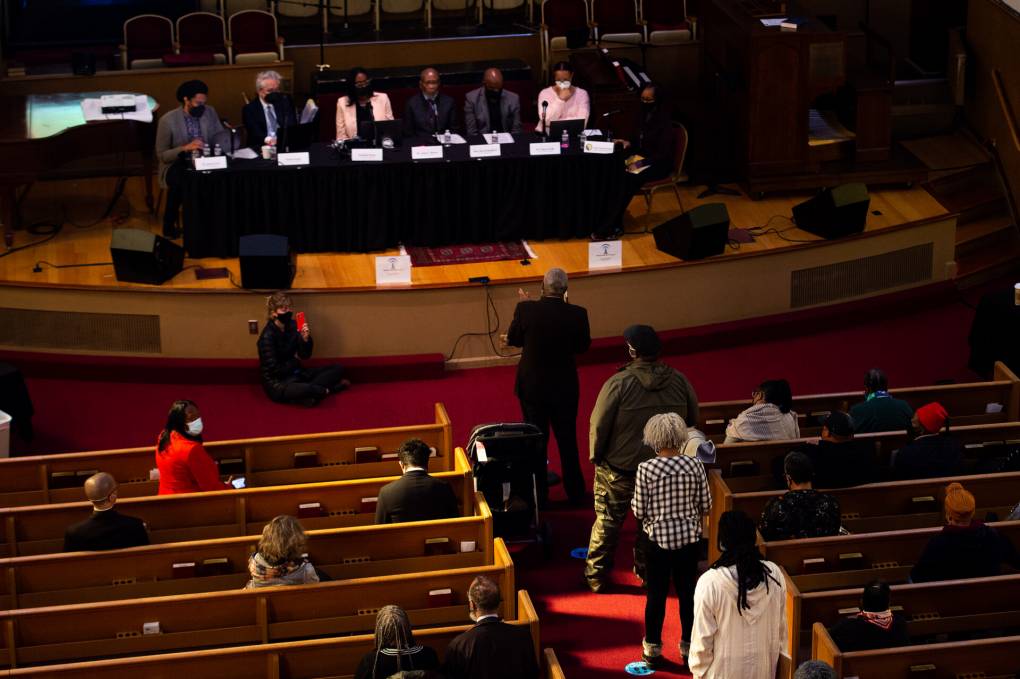
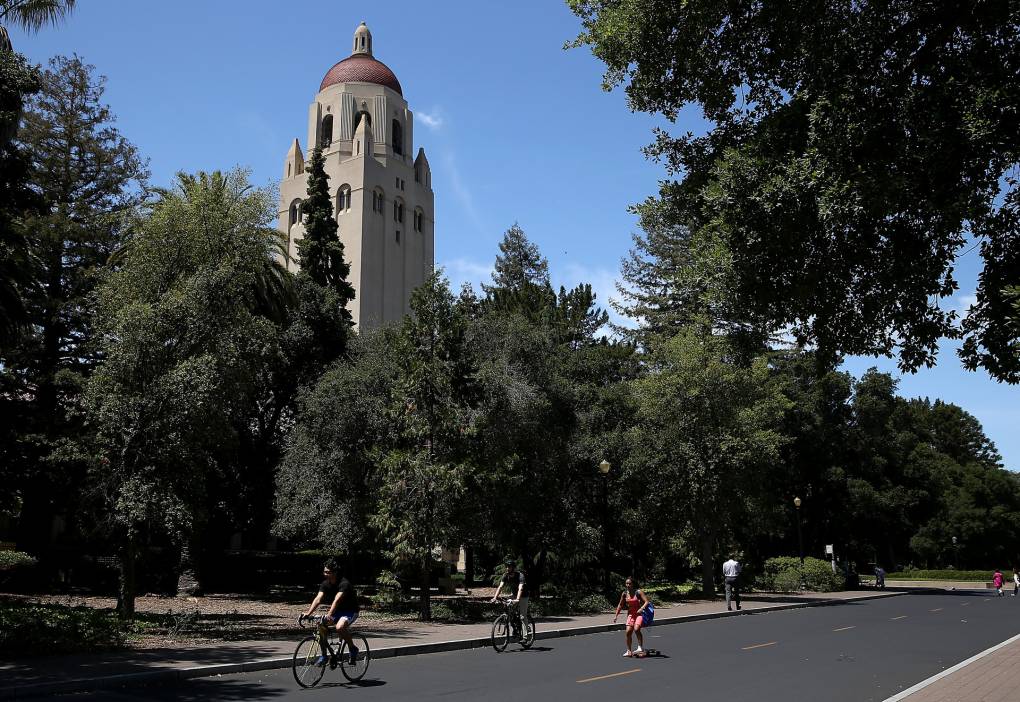
window.__IS_SSR__=true
window.__INITIAL_STATE__={
"attachmentsReducer": {
"audio_0": {
"type": "attachments",
"id": "audio_0",
"imgSizes": {
"kqedFullSize": {
"file": "https://ww2.kqed.org/news/wp-content/themes/KQED-unified/img/audio_bgs/background0.jpg"
}
}
},
"audio_1": {
"type": "attachments",
"id": "audio_1",
"imgSizes": {
"kqedFullSize": {
"file": "https://ww2.kqed.org/news/wp-content/themes/KQED-unified/img/audio_bgs/background1.jpg"
}
}
},
"audio_2": {
"type": "attachments",
"id": "audio_2",
"imgSizes": {
"kqedFullSize": {
"file": "https://ww2.kqed.org/news/wp-content/themes/KQED-unified/img/audio_bgs/background2.jpg"
}
}
},
"audio_3": {
"type": "attachments",
"id": "audio_3",
"imgSizes": {
"kqedFullSize": {
"file": "https://ww2.kqed.org/news/wp-content/themes/KQED-unified/img/audio_bgs/background3.jpg"
}
}
},
"audio_4": {
"type": "attachments",
"id": "audio_4",
"imgSizes": {
"kqedFullSize": {
"file": "https://ww2.kqed.org/news/wp-content/themes/KQED-unified/img/audio_bgs/background4.jpg"
}
}
},
"placeholder": {
"type": "attachments",
"id": "placeholder",
"imgSizes": {
"thumbnail": {
"file": "https://cdn.kqed.org/wp-content/uploads/2024/12/KQED-Default-Image-816638274-2000x1333-1-160x107.jpg",
"width": 160,
"height": 107,
"mimeType": "image/jpeg"
},
"medium": {
"file": "https://cdn.kqed.org/wp-content/uploads/2024/12/KQED-Default-Image-816638274-2000x1333-1-800x533.jpg",
"width": 800,
"height": 533,
"mimeType": "image/jpeg"
},
"medium_large": {
"file": "https://cdn.kqed.org/wp-content/uploads/2024/12/KQED-Default-Image-816638274-2000x1333-1-768x512.jpg",
"width": 768,
"height": 512,
"mimeType": "image/jpeg"
},
"large": {
"file": "https://cdn.kqed.org/wp-content/uploads/2024/12/KQED-Default-Image-816638274-2000x1333-1-1020x680.jpg",
"width": 1020,
"height": 680,
"mimeType": "image/jpeg"
},
"1536x1536": {
"file": "https://cdn.kqed.org/wp-content/uploads/2024/12/KQED-Default-Image-816638274-2000x1333-1-1536x1024.jpg",
"width": 1536,
"height": 1024,
"mimeType": "image/jpeg"
},
"fd-lrg": {
"file": "https://cdn.kqed.org/wp-content/uploads/2024/12/KQED-Default-Image-816638274-2000x1333-1-1536x1024.jpg",
"width": 1536,
"height": 1024,
"mimeType": "image/jpeg"
},
"fd-med": {
"file": "https://cdn.kqed.org/wp-content/uploads/2024/12/KQED-Default-Image-816638274-2000x1333-1-1020x680.jpg",
"width": 1020,
"height": 680,
"mimeType": "image/jpeg"
},
"fd-sm": {
"file": "https://cdn.kqed.org/wp-content/uploads/2024/12/KQED-Default-Image-816638274-2000x1333-1-800x533.jpg",
"width": 800,
"height": 533,
"mimeType": "image/jpeg"
},
"post-thumbnail": {
"file": "https://cdn.kqed.org/wp-content/uploads/2024/12/KQED-Default-Image-816638274-2000x1333-1-672x372.jpg",
"width": 672,
"height": 372,
"mimeType": "image/jpeg"
},
"twentyfourteen-full-width": {
"file": "https://cdn.kqed.org/wp-content/uploads/2024/12/KQED-Default-Image-816638274-2000x1333-1-1038x576.jpg",
"width": 1038,
"height": 576,
"mimeType": "image/jpeg"
},
"xxsmall": {
"file": "https://cdn.kqed.org/wp-content/uploads/2024/12/KQED-Default-Image-816638274-2000x1333-1-160x107.jpg",
"width": 160,
"height": 107,
"mimeType": "image/jpeg"
},
"xsmall": {
"file": "https://cdn.kqed.org/wp-content/uploads/2024/12/KQED-Default-Image-816638274-2000x1333-1-672x372.jpg",
"width": 672,
"height": 372,
"mimeType": "image/jpeg"
},
"small": {
"file": "https://cdn.kqed.org/wp-content/uploads/2024/12/KQED-Default-Image-816638274-2000x1333-1-672x372.jpg",
"width": 672,
"height": 372,
"mimeType": "image/jpeg"
},
"xlarge": {
"file": "https://cdn.kqed.org/wp-content/uploads/2024/12/KQED-Default-Image-816638274-2000x1333-1-1020x680.jpg",
"width": 1020,
"height": 680,
"mimeType": "image/jpeg"
},
"full-width": {
"file": "https://cdn.kqed.org/wp-content/uploads/2024/12/KQED-Default-Image-816638274-2000x1333-1-1920x1280.jpg",
"width": 1920,
"height": 1280,
"mimeType": "image/jpeg"
},
"guest-author-32": {
"file": "https://cdn.kqed.org/wp-content/uploads/2025/01/KQED-Default-Image-816638274-1333x1333-1-160x160.jpg",
"width": 32,
"height": 32,
"mimeType": "image/jpeg"
},
"guest-author-50": {
"file": "https://cdn.kqed.org/wp-content/uploads/2025/01/KQED-Default-Image-816638274-1333x1333-1-160x160.jpg",
"width": 50,
"height": 50,
"mimeType": "image/jpeg"
},
"guest-author-64": {
"file": "https://cdn.kqed.org/wp-content/uploads/2025/01/KQED-Default-Image-816638274-1333x1333-1-160x160.jpg",
"width": 64,
"height": 64,
"mimeType": "image/jpeg"
},
"guest-author-96": {
"file": "https://cdn.kqed.org/wp-content/uploads/2025/01/KQED-Default-Image-816638274-1333x1333-1-160x160.jpg",
"width": 96,
"height": 96,
"mimeType": "image/jpeg"
},
"guest-author-128": {
"file": "https://cdn.kqed.org/wp-content/uploads/2025/01/KQED-Default-Image-816638274-1333x1333-1-160x160.jpg",
"width": 128,
"height": 128,
"mimeType": "image/jpeg"
},
"detail": {
"file": "https://cdn.kqed.org/wp-content/uploads/2025/01/KQED-Default-Image-816638274-1333x1333-1-160x160.jpg",
"width": 160,
"height": 160,
"mimeType": "image/jpeg"
},
"kqedFullSize": {
"file": "https://cdn.kqed.org/wp-content/uploads/2024/12/KQED-Default-Image-816638274-2000x1333-1.jpg",
"width": 2000,
"height": 1333
}
}
},
"news_11922930": {
"type": "attachments",
"id": "news_11922930",
"meta": {
"index": "attachments_1716263798",
"site": "news",
"id": "11922930",
"found": true
},
"parent": 11922927,
"imgSizes": {
"twentyfourteen-full-width": {
"file": "https://ww2.kqed.org/app/uploads/sites/10/2022/08/Screen-Shot-2022-08-18-at-10.23.31-AM-1038x576.png",
"width": 1038,
"mimeType": "image/png",
"height": 576
},
"thumbnail": {
"file": "https://ww2.kqed.org/app/uploads/sites/10/2022/08/Screen-Shot-2022-08-18-at-10.23.31-AM-160x105.png",
"width": 160,
"mimeType": "image/png",
"height": 105
},
"post-thumbnail": {
"file": "https://ww2.kqed.org/app/uploads/sites/10/2022/08/Screen-Shot-2022-08-18-at-10.23.31-AM-672x372.png",
"width": 672,
"mimeType": "image/png",
"height": 372
},
"kqedFullSize": {
"file": "https://ww2.kqed.org/app/uploads/sites/10/2022/08/Screen-Shot-2022-08-18-at-10.23.31-AM.png",
"width": 2374,
"height": 1562
},
"2048x2048": {
"file": "https://ww2.kqed.org/app/uploads/sites/10/2022/08/Screen-Shot-2022-08-18-at-10.23.31-AM-2048x1348.png",
"width": 2048,
"mimeType": "image/png",
"height": 1348
},
"large": {
"file": "https://ww2.kqed.org/app/uploads/sites/10/2022/08/Screen-Shot-2022-08-18-at-10.23.31-AM-1020x671.png",
"width": 1020,
"mimeType": "image/png",
"height": 671
},
"1536x1536": {
"file": "https://ww2.kqed.org/app/uploads/sites/10/2022/08/Screen-Shot-2022-08-18-at-10.23.31-AM-1536x1011.png",
"width": 1536,
"mimeType": "image/png",
"height": 1011
},
"full-width": {
"file": "https://ww2.kqed.org/app/uploads/sites/10/2022/08/Screen-Shot-2022-08-18-at-10.23.31-AM-1920x1263.png",
"width": 1920,
"mimeType": "image/png",
"height": 1263
},
"medium": {
"file": "https://ww2.kqed.org/app/uploads/sites/10/2022/08/Screen-Shot-2022-08-18-at-10.23.31-AM-800x526.png",
"width": 800,
"mimeType": "image/png",
"height": 526
}
},
"publishDate": 1660844212,
"modified": 1661868367,
"caption": null,
"description": "Fast-food workers from across California rallied at the state Capitol in Sacramento on Aug. 16, 2022, urging lawmakers to pass AB 257.",
"title": "Screen Shot 2022-08-18 at 10.23.31 AM",
"credit": "Rahul Lal/CalMatters",
"status": "inherit",
"altTag": "A silhouette of two people holding flags that read \"AB257.\"",
"isLoading": false,
"fetchFailed": false
},
"news_11922448": {
"type": "attachments",
"id": "news_11922448",
"meta": {
"index": "attachments_1716263798",
"site": "news",
"id": "11922448",
"found": true
},
"parent": 11922431,
"imgSizes": {
"twentyfourteen-full-width": {
"file": "https://ww2.kqed.org/app/uploads/sites/10/2022/08/GettyImages-462800426-1038x576.jpg",
"width": 1038,
"mimeType": "image/jpeg",
"height": 576
},
"thumbnail": {
"file": "https://ww2.kqed.org/app/uploads/sites/10/2022/08/GettyImages-462800426-160x107.jpg",
"width": 160,
"mimeType": "image/jpeg",
"height": 107
},
"post-thumbnail": {
"file": "https://ww2.kqed.org/app/uploads/sites/10/2022/08/GettyImages-462800426-672x372.jpg",
"width": 672,
"mimeType": "image/jpeg",
"height": 372
},
"kqedFullSize": {
"file": "https://ww2.kqed.org/app/uploads/sites/10/2022/08/GettyImages-462800426-scaled-e1660348852431.jpg",
"width": 1980,
"height": 1319
},
"2048x2048": {
"file": "https://ww2.kqed.org/app/uploads/sites/10/2022/08/GettyImages-462800426-2048x1365.jpg",
"width": 2048,
"mimeType": "image/jpeg",
"height": 1365
},
"large": {
"file": "https://ww2.kqed.org/app/uploads/sites/10/2022/08/GettyImages-462800426-1020x680.jpg",
"width": 1020,
"mimeType": "image/jpeg",
"height": 680
},
"1536x1536": {
"file": "https://ww2.kqed.org/app/uploads/sites/10/2022/08/GettyImages-462800426-1536x1024.jpg",
"width": 1536,
"mimeType": "image/jpeg",
"height": 1024
},
"full-width": {
"file": "https://ww2.kqed.org/app/uploads/sites/10/2022/08/GettyImages-462800426-1920x1280.jpg",
"width": 1920,
"mimeType": "image/jpeg",
"height": 1280
},
"medium": {
"file": "https://ww2.kqed.org/app/uploads/sites/10/2022/08/GettyImages-462800426-800x533.jpg",
"width": 800,
"mimeType": "image/jpeg",
"height": 533
}
},
"publishDate": 1660348778,
"modified": 1687786837,
"caption": "The dome and exterior of the State Capitol building is viewed on January 27, 2015, in Sacramento. ",
"description": null,
"title": "Exploring California's State Capitol",
"credit": "George Rose/Getty Images",
"status": "inherit",
"altTag": "The dome and exterior of the State Capitol building is viewed on January 27, 2015, in Sacramento, California.",
"isLoading": false,
"fetchFailed": false
},
"news_11922334": {
"type": "attachments",
"id": "news_11922334",
"meta": {
"index": "attachments_1716263798",
"site": "news",
"id": "11922334",
"found": true
},
"parent": 11922301,
"imgSizes": {
"twentyfourteen-full-width": {
"file": "https://ww2.kqed.org/app/uploads/sites/10/2022/08/Needle-1038x576.jpg",
"width": 1038,
"mimeType": "image/jpeg",
"height": 576
},
"thumbnail": {
"file": "https://ww2.kqed.org/app/uploads/sites/10/2022/08/Needle-160x105.jpg",
"width": 160,
"mimeType": "image/jpeg",
"height": 105
},
"post-thumbnail": {
"file": "https://ww2.kqed.org/app/uploads/sites/10/2022/08/Needle-672x372.jpg",
"width": 672,
"mimeType": "image/jpeg",
"height": 372
},
"kqedFullSize": {
"file": "https://ww2.kqed.org/app/uploads/sites/10/2022/08/Needle.jpg",
"width": 1980,
"height": 1301
},
"large": {
"file": "https://ww2.kqed.org/app/uploads/sites/10/2022/08/Needle-1020x670.jpg",
"width": 1020,
"mimeType": "image/jpeg",
"height": 670
},
"1536x1536": {
"file": "https://ww2.kqed.org/app/uploads/sites/10/2022/08/Needle-1536x1009.jpg",
"width": 1536,
"mimeType": "image/jpeg",
"height": 1009
},
"full-width": {
"file": "https://ww2.kqed.org/app/uploads/sites/10/2022/08/Needle-1920x1262.jpg",
"width": 1920,
"mimeType": "image/jpeg",
"height": 1262
},
"medium": {
"file": "https://ww2.kqed.org/app/uploads/sites/10/2022/08/Needle-800x526.jpg",
"width": 800,
"mimeType": "image/jpeg",
"height": 526
}
},
"publishDate": 1660263326,
"modified": 1661200290,
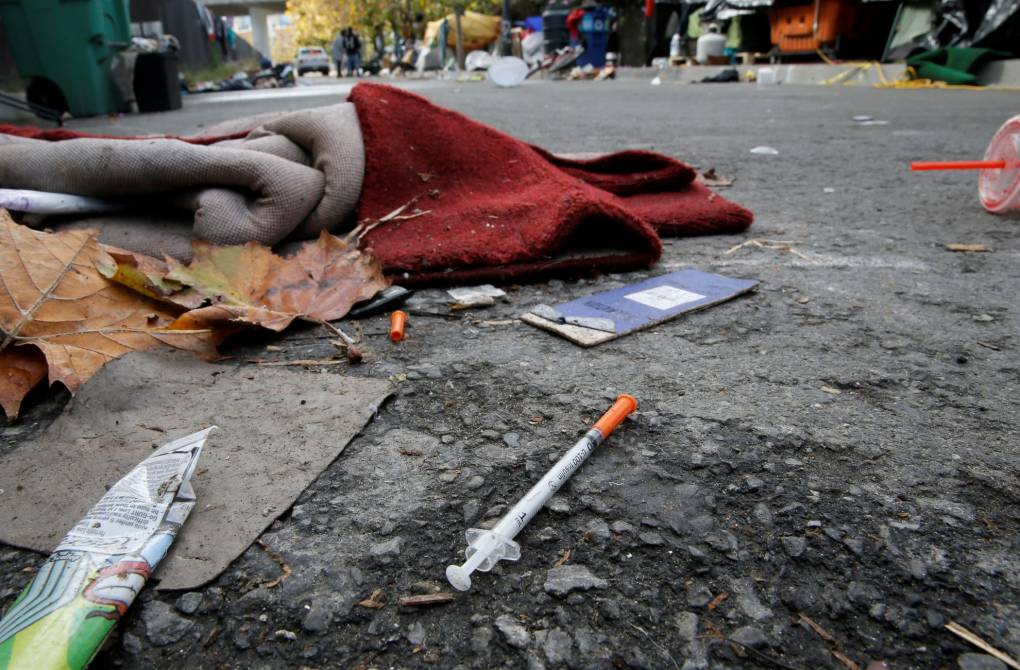
"caption": "A syringe is seen discarded near a homeless encampment along Berry St. south of Market Street in San Francisco on Tuesday November 1, 2016.",
"description": "A syringe is seen discarded near a homeless encampment along Berry St. south of Market Street in San Francisco, California, on Tuesday November 1, 2016.",
"title": "Needle",
"credit": "Michael Macor/San Francisco Chronicle via Getty Images",
"status": "inherit",
"altTag": "A syringe is seen discarded near a homeless encampment along Berry St. south of Market Street in San Francisco, California, on Tuesday November 1, 2016.",
"isLoading": false,
"fetchFailed": false
},
"news_11922073": {
"type": "attachments",
"id": "news_11922073",
"meta": {
"index": "attachments_1716263798",
"site": "news",
"id": "11922073",
"found": true
},
"parent": 11922059,
"imgSizes": {
"twentyfourteen-full-width": {
"file": "https://ww2.kqed.org/app/uploads/sites/10/2022/08/RS42104_006_KQED_EDD_UnemploymentApplication_03162020_8404-qut-1038x576.jpg",
"width": 1038,
"mimeType": "image/jpeg",
"height": 576
},
"thumbnail": {
"file": "https://ww2.kqed.org/app/uploads/sites/10/2022/08/RS42104_006_KQED_EDD_UnemploymentApplication_03162020_8404-qut-160x107.jpg",
"width": 160,
"mimeType": "image/jpeg",
"height": 107
},
"post-thumbnail": {
"file": "https://ww2.kqed.org/app/uploads/sites/10/2022/08/RS42104_006_KQED_EDD_UnemploymentApplication_03162020_8404-qut-672x372.jpg",
"width": 672,
"mimeType": "image/jpeg",
"height": 372
},
"kqedFullSize": {
"file": "https://ww2.kqed.org/app/uploads/sites/10/2022/08/RS42104_006_KQED_EDD_UnemploymentApplication_03162020_8404-qut.jpg",
"width": 1920,
"height": 1280
},
"large": {
"file": "https://ww2.kqed.org/app/uploads/sites/10/2022/08/RS42104_006_KQED_EDD_UnemploymentApplication_03162020_8404-qut-1020x680.jpg",
"width": 1020,
"mimeType": "image/jpeg",
"height": 680
},
"1536x1536": {
"file": "https://ww2.kqed.org/app/uploads/sites/10/2022/08/RS42104_006_KQED_EDD_UnemploymentApplication_03162020_8404-qut-1536x1024.jpg",
"width": 1536,
"mimeType": "image/jpeg",
"height": 1024
},
"medium": {
"file": "https://ww2.kqed.org/app/uploads/sites/10/2022/08/RS42104_006_KQED_EDD_UnemploymentApplication_03162020_8404-qut-800x533.jpg",
"width": 800,
"mimeType": "image/jpeg",
"height": 533
}
},
"publishDate": 1660075787,
"modified": 1660084207,
"caption": "A woman looks at the Employment Development Department (EDD) website, where California residents can file for unemployment, on March 16, 2020.",
"description": "A woman looks at the Employment Development Department (EDD) website, where California residents can file for unemployment on Mar. 16, 2020.",
"title": "RS42104_006_KQED_EDD_UnemploymentApplication_03162020_8404-qut",
"credit": "Beth LaBerge/KQED",
"status": "inherit",
"altTag": "A woman looks at the Employment Development Department (EDD) website, where California residents can file for unemployment on Mar. 16, 2020.",
"isLoading": false,
"fetchFailed": false
},
"news_11922055": {
"type": "attachments",
"id": "news_11922055",
"meta": {
"index": "attachments_1716263798",
"site": "news",
"id": "11922055",
"found": true
},
"parent": 11922045,
"imgSizes": {
"twentyfourteen-full-width": {
"file": "https://ww2.kqed.org/app/uploads/sites/10/2022/08/080822-Bounty-Hunter-Texas-California-CM-02-1038x576.jpg",
"width": 1038,
"mimeType": "image/jpeg",
"height": 576
},
"thumbnail": {
"file": "https://ww2.kqed.org/app/uploads/sites/10/2022/08/080822-Bounty-Hunter-Texas-California-CM-02-160x107.jpg",
"width": 160,
"mimeType": "image/jpeg",
"height": 107
},
"post-thumbnail": {
"file": "https://ww2.kqed.org/app/uploads/sites/10/2022/08/080822-Bounty-Hunter-Texas-California-CM-02-672x372.jpg",
"width": 672,
"mimeType": "image/jpeg",
"height": 372
},
"kqedFullSize": {
"file": "https://ww2.kqed.org/app/uploads/sites/10/2022/08/080822-Bounty-Hunter-Texas-California-CM-02.jpg",
"width": 2000,
"height": 1333
},
"large": {
"file": "https://ww2.kqed.org/app/uploads/sites/10/2022/08/080822-Bounty-Hunter-Texas-California-CM-02-1020x680.jpg",
"width": 1020,
"mimeType": "image/jpeg",
"height": 680
},
"1536x1536": {
"file": "https://ww2.kqed.org/app/uploads/sites/10/2022/08/080822-Bounty-Hunter-Texas-California-CM-02-1536x1024.jpg",
"width": 1536,
"mimeType": "image/jpeg",
"height": 1024
},
"full-width": {
"file": "https://ww2.kqed.org/app/uploads/sites/10/2022/08/080822-Bounty-Hunter-Texas-California-CM-02-1920x1280.jpg",
"width": 1920,
"mimeType": "image/jpeg",
"height": 1280
},
"medium": {
"file": "https://ww2.kqed.org/app/uploads/sites/10/2022/08/080822-Bounty-Hunter-Texas-California-CM-02-800x533.jpg",
"width": 800,
"mimeType": "image/jpeg",
"height": 533
}
},
"publishDate": 1660069895,
"modified": 1660080477,
"caption": "Rival states have enacted recent bounty laws — over abortion in Texas and gun sales in California — but critics worry about where this is headed. ",
"description": null,
"title": "080822-Bounty-Hunter-Texas-California-CM-02",
"credit": "Illustration by Miguel Gutierrez Jr., CalMatters, iStock and Reuters",
"status": "inherit",
"altTag": "a collage showing bounty signs and a protester with a sign demanding gun control",
"isLoading": false,
"fetchFailed": false
},
"news_11921319": {
"type": "attachments",
"id": "news_11921319",
"meta": {
"index": "attachments_1716263798",
"site": "news",
"id": "11921319",
"found": true
},
"parent": 11921266,
"imgSizes": {
"twentyfourteen-full-width": {
"file": "https://ww2.kqed.org/app/uploads/sites/10/2022/08/GettyImages-1286630563-1038x576.jpg",
"width": 1038,
"mimeType": "image/jpeg",
"height": 576
},
"thumbnail": {
"file": "https://ww2.kqed.org/app/uploads/sites/10/2022/08/GettyImages-1286630563-160x107.jpg",
"width": 160,
"mimeType": "image/jpeg",
"height": 107
},
"post-thumbnail": {
"file": "https://ww2.kqed.org/app/uploads/sites/10/2022/08/GettyImages-1286630563-672x372.jpg",
"width": 672,
"mimeType": "image/jpeg",
"height": 372
},
"kqedFullSize": {
"file": "https://ww2.kqed.org/app/uploads/sites/10/2022/08/GettyImages-1286630563-scaled.jpg",
"width": 2560,
"height": 1707
},
"2048x2048": {
"file": "https://ww2.kqed.org/app/uploads/sites/10/2022/08/GettyImages-1286630563-2048x1365.jpg",
"width": 2048,
"mimeType": "image/jpeg",
"height": 1365
},
"large": {
"file": "https://ww2.kqed.org/app/uploads/sites/10/2022/08/GettyImages-1286630563-1020x680.jpg",
"width": 1020,
"mimeType": "image/jpeg",
"height": 680
},
"1536x1536": {
"file": "https://ww2.kqed.org/app/uploads/sites/10/2022/08/GettyImages-1286630563-1536x1024.jpg",
"width": 1536,
"mimeType": "image/jpeg",
"height": 1024
},
"full-width": {
"file": "https://ww2.kqed.org/app/uploads/sites/10/2022/08/GettyImages-1286630563-1920x1280.jpg",
"width": 1920,
"mimeType": "image/jpeg",
"height": 1280
},
"medium": {
"file": "https://ww2.kqed.org/app/uploads/sites/10/2022/08/GettyImages-1286630563-800x533.jpg",
"width": 800,
"mimeType": "image/jpeg",
"height": 533
}
},
"publishDate": 1659474458,
"modified": 1661522244,
"caption": null,
"description": "Maya Katz-Ali charges her electric car at a station along Lakeshore Avenue in Oakland. Katz-Ali bought the car in 2020 with the help of an incentive through the state's Clean Cars for All program, designed to help lower-income Californians purchase zero-emissions vehicles. But experts say the programs have been plagued by such long wait lists — and, in some cases, inadequate funding — that many who want to take advantage of the subsidies cannot.",
"title": "SFChronicleElectricCars",
"credit": "Santiago Mejia/The San Francisco Chronicle via Getty Images",
"status": "inherit",
"altTag": "a person fuels an electric car",
"isLoading": false,
"fetchFailed": false
},
"news_11920415": {
"type": "attachments",
"id": "news_11920415",
"meta": {
"index": "attachments_1716263798",
"site": "news",
"id": "11920415",
"found": true
},
"parent": 11920412,
"imgSizes": {
"twentyfourteen-full-width": {
"file": "https://ww2.kqed.org/app/uploads/sites/10/2022/07/062822_CoalingaPortraits_LV__010-CM-1038x576.jpg",
"width": 1038,
"mimeType": "image/jpeg",
"height": 576
},
"thumbnail": {
"file": "https://ww2.kqed.org/app/uploads/sites/10/2022/07/062822_CoalingaPortraits_LV__010-CM-160x108.jpg",
"width": 160,
"mimeType": "image/jpeg",
"height": 108
},
"post-thumbnail": {
"file": "https://ww2.kqed.org/app/uploads/sites/10/2022/07/062822_CoalingaPortraits_LV__010-CM-672x372.jpg",
"width": 672,
"mimeType": "image/jpeg",
"height": 372
},
"kqedFullSize": {
"file": "https://ww2.kqed.org/app/uploads/sites/10/2022/07/062822_CoalingaPortraits_LV__010-CM.jpg",
"width": 2000,
"height": 1349
},
"large": {
"file": "https://ww2.kqed.org/app/uploads/sites/10/2022/07/062822_CoalingaPortraits_LV__010-CM-1020x688.jpg",
"width": 1020,
"mimeType": "image/jpeg",
"height": 688
},
"1536x1536": {
"file": "https://ww2.kqed.org/app/uploads/sites/10/2022/07/062822_CoalingaPortraits_LV__010-CM-1536x1036.jpg",
"width": 1536,
"mimeType": "image/jpeg",
"height": 1036
},
"full-width": {
"file": "https://ww2.kqed.org/app/uploads/sites/10/2022/07/062822_CoalingaPortraits_LV__010-CM-1920x1295.jpg",
"width": 1920,
"mimeType": "image/jpeg",
"height": 1295
},
"medium": {
"file": "https://ww2.kqed.org/app/uploads/sites/10/2022/07/062822_CoalingaPortraits_LV__010-CM-800x540.jpg",
"width": 800,
"mimeType": "image/jpeg",
"height": 540
}
},
"publishDate": 1658777367,
"modified": 1658792522,
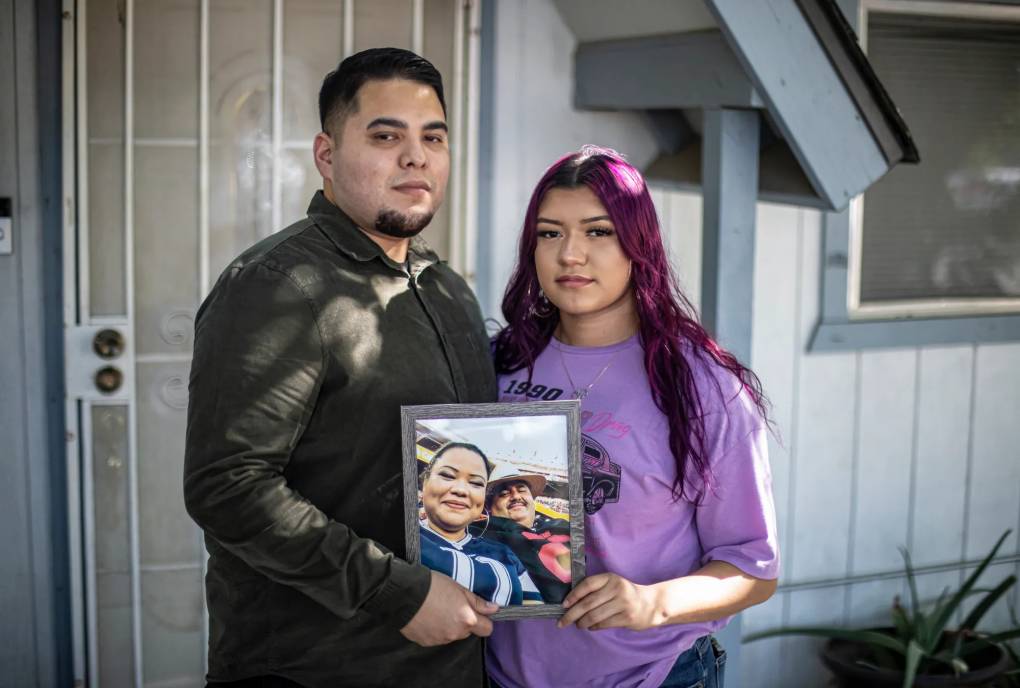
"caption": "Martin (left) and Miranda Basulto, who lost both of their parents to COVID, pose for a photo in front of their home in Coalinga on June 28, 2022. Miranda is eligible for a state bond given to kids who lost a caregiver because of COVID. ",
"description": null,
"title": "062822_CoalingaPortraits_LV__010-CM",
"credit": "Larry Valenzuela/CalMatters/CatchLight Local",
"status": "inherit",
"altTag": "two young adults pose for a portrait while holding a photo of their parents, both of whom died from COVID",
"isLoading": false,
"fetchFailed": false
},
"news_11920162": {
"type": "attachments",
"id": "news_11920162",
"meta": {
"index": "attachments_1716263798",
"site": "news",
"id": "11920162",
"found": true
},
"parent": 11920137,
"imgSizes": {
"twentyfourteen-full-width": {
"file": "https://ww2.kqed.org/app/uploads/sites/10/2022/07/RS57390_GettyImages-1234637846-qut-1038x576.jpg",
"width": 1038,
"mimeType": "image/jpeg",
"height": 576
},
"thumbnail": {
"file": "https://ww2.kqed.org/app/uploads/sites/10/2022/07/RS57390_GettyImages-1234637846-qut-160x106.jpg",
"width": 160,
"mimeType": "image/jpeg",
"height": 106
},
"post-thumbnail": {
"file": "https://ww2.kqed.org/app/uploads/sites/10/2022/07/RS57390_GettyImages-1234637846-qut-672x372.jpg",
"width": 672,
"mimeType": "image/jpeg",
"height": 372
},
"kqedFullSize": {
"file": "https://ww2.kqed.org/app/uploads/sites/10/2022/07/RS57390_GettyImages-1234637846-qut.jpg",
"width": 1920,
"height": 1277
},
"large": {
"file": "https://ww2.kqed.org/app/uploads/sites/10/2022/07/RS57390_GettyImages-1234637846-qut-1020x678.jpg",
"width": 1020,
"mimeType": "image/jpeg",
"height": 678
},
"1536x1536": {
"file": "https://ww2.kqed.org/app/uploads/sites/10/2022/07/RS57390_GettyImages-1234637846-qut-1536x1022.jpg",
"width": 1536,
"mimeType": "image/jpeg",
"height": 1022
},
"medium": {
"file": "https://ww2.kqed.org/app/uploads/sites/10/2022/07/RS57390_GettyImages-1234637846-qut-800x532.jpg",
"width": 800,
"mimeType": "image/jpeg",
"height": 532
}
},
"publishDate": 1658444902,
"modified": 1658445153,
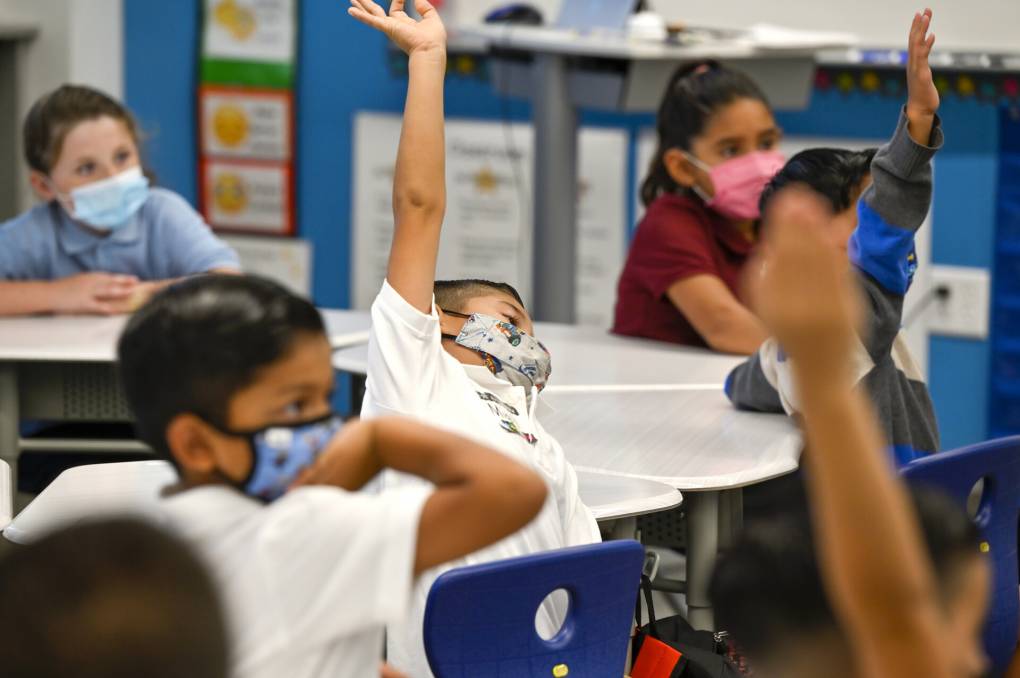
"caption": "First graders raise their hands on the first day of school at a Southern California elementary school in Aug., 2021. A persistent teacher shortage has forced many California school districts to hire teachers who aren’t fully credentialed or are teaching out of their subject areas.",
"description": null,
"title": "First Day of School",
"credit": "Jeff Gritchen/MediaNews Group/Orange County Register via Getty Images",
"status": "inherit",
"altTag": "Five children of various racial backgrounds seated at tables, wearing masks, raising their hands for a teacher who is out of frame",
"isLoading": false,
"fetchFailed": false
},
"news_11907264": {
"type": "attachments",
"id": "news_11907264",
"meta": {
"index": "attachments_1716263798",
"site": "news",
"id": "11907264",
"found": true
},
"parent": 11907263,
"imgSizes": {
"twentyfourteen-full-width": {
"file": "https://ww2.kqed.org/app/uploads/sites/10/2022/03/020322-UC-Berkeley-TJ-CM-58-1038x576.jpeg",
"width": 1038,
"mimeType": "image/jpeg",
"height": 576
},
"thumbnail": {
"file": "https://ww2.kqed.org/app/uploads/sites/10/2022/03/020322-UC-Berkeley-TJ-CM-58-160x107.jpeg",
"width": 160,
"mimeType": "image/jpeg",
"height": 107
},
"post-thumbnail": {
"file": "https://ww2.kqed.org/app/uploads/sites/10/2022/03/020322-UC-Berkeley-TJ-CM-58-672x372.jpeg",
"width": 672,
"mimeType": "image/jpeg",
"height": 372
},
"kqedFullSize": {
"file": "https://ww2.kqed.org/app/uploads/sites/10/2022/03/020322-UC-Berkeley-TJ-CM-58-e1646437034828.jpeg",
"width": 1920,
"height": 1280
},
"large": {
"file": "https://ww2.kqed.org/app/uploads/sites/10/2022/03/020322-UC-Berkeley-TJ-CM-58-1020x680.jpeg",
"width": 1020,
"mimeType": "image/jpeg",
"height": 680
},
"1536x1536": {
"file": "https://ww2.kqed.org/app/uploads/sites/10/2022/03/020322-UC-Berkeley-TJ-CM-58-1536x1024.jpeg",
"width": 1536,
"mimeType": "image/jpeg",
"height": 1024
},
"full-width": {
"file": "https://ww2.kqed.org/app/uploads/sites/10/2022/03/020322-UC-Berkeley-TJ-CM-58-1920x1280.jpeg",
"width": 1920,
"mimeType": "image/jpeg",
"height": 1280
},
"medium": {
"file": "https://ww2.kqed.org/app/uploads/sites/10/2022/03/020322-UC-Berkeley-TJ-CM-58-800x533.jpeg",
"width": 800,
"mimeType": "image/jpeg",
"height": 533
}
},
"publishDate": 1646437018,
"modified": 1657927991,
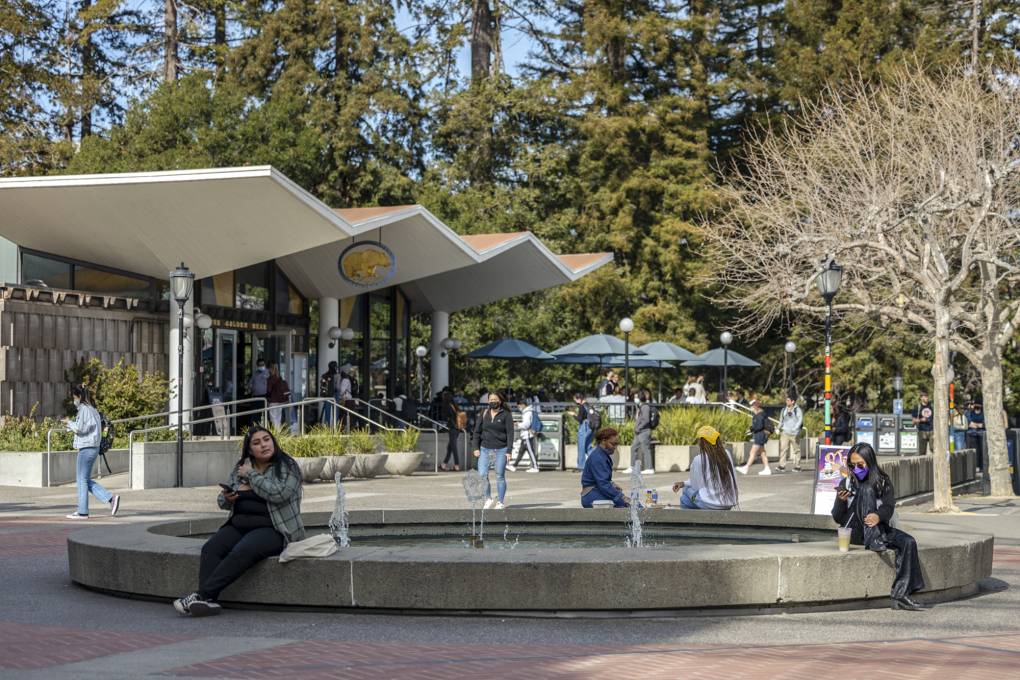
"caption": "Ludwig's Fountain and the Golden Bear Cafe at the University of California, Berkeley, campus on Feb. 3, 2022.",
"description": null,
"title": "020322-UC-Berkeley-TJ-CM-58",
"credit": "Thalia Juarez/CalMatters",
"status": "inherit",
"altTag": "Students seated at Ludwig's Fountain at UC Berkeley",
"isLoading": false,
"fetchFailed": false
},
"news_11916536": {
"type": "attachments",
"id": "news_11916536",
"meta": {
"index": "attachments_1716263798",
"site": "news",
"id": "11916536",
"found": true
},
"parent": 11916527,
"imgSizes": {
"twentyfourteen-full-width": {
"file": "https://ww2.kqed.org/app/uploads/sites/10/2022/06/060322-HASTINGS-NAME-CHANGE-SL-CM-_1_-1038x576.jpg",
"width": 1038,
"mimeType": "image/jpeg",
"height": 576
},
"thumbnail": {
"file": "https://ww2.kqed.org/app/uploads/sites/10/2022/06/060322-HASTINGS-NAME-CHANGE-SL-CM-_1_-160x106.jpg",
"width": 160,
"mimeType": "image/jpeg",
"height": 106
},
"post-thumbnail": {
"file": "https://ww2.kqed.org/app/uploads/sites/10/2022/06/060322-HASTINGS-NAME-CHANGE-SL-CM-_1_-672x372.jpg",
"width": 672,
"mimeType": "image/jpeg",
"height": 372
},
"kqedFullSize": {
"file": "https://ww2.kqed.org/app/uploads/sites/10/2022/06/060322-HASTINGS-NAME-CHANGE-SL-CM-_1_.jpg",
"width": 2000,
"height": 1330
},
"large": {
"file": "https://ww2.kqed.org/app/uploads/sites/10/2022/06/060322-HASTINGS-NAME-CHANGE-SL-CM-_1_-1020x678.jpg",
"width": 1020,
"mimeType": "image/jpeg",
"height": 678
},
"1536x1536": {
"file": "https://ww2.kqed.org/app/uploads/sites/10/2022/06/060322-HASTINGS-NAME-CHANGE-SL-CM-_1_-1536x1021.jpg",
"width": 1536,
"mimeType": "image/jpeg",
"height": 1021
},
"full-width": {
"file": "https://ww2.kqed.org/app/uploads/sites/10/2022/06/060322-HASTINGS-NAME-CHANGE-SL-CM-_1_-1920x1277.jpg",
"width": 1920,
"mimeType": "image/jpeg",
"height": 1277
},
"medium": {
"file": "https://ww2.kqed.org/app/uploads/sites/10/2022/06/060322-HASTINGS-NAME-CHANGE-SL-CM-_1_-800x532.jpg",
"width": 800,
"mimeType": "image/jpeg",
"height": 532
}
},
"publishDate": 1654723624,
"modified": 1654800962,
"caption": "Round Valley Indian Tribes Tribal Council President James Russ (center) participates in a UC Hastings Board of Directors meeting about changing the name of the law school, on Friday, June 3, 2022, in San Francisco.",
"description": null,
"title": "060322-HASTINGS-NAME-CHANGE-SL-CM-_1_",
"credit": "Samantha Laurey/CalMatters",
"status": "inherit",
"altTag": "A group of men sit on chairs in a conference room.",
"isLoading": false,
"fetchFailed": false
},
"news_11915724": {
"type": "attachments",
"id": "news_11915724",
"meta": {
"index": "attachments_1716263798",
"site": "news",
"id": "11915724",
"found": true
},
"parent": 11915718,
"imgSizes": {
"twentyfourteen-full-width": {
"file": "https://ww2.kqed.org/app/uploads/sites/10/2022/06/RS55254_010_KQED_CAReparationsTaskForce_04132022-qut-1038x576.jpg",
"width": 1038,
"mimeType": "image/jpeg",
"height": 576
},
"thumbnail": {
"file": "https://ww2.kqed.org/app/uploads/sites/10/2022/06/RS55254_010_KQED_CAReparationsTaskForce_04132022-qut-160x107.jpg",
"width": 160,
"mimeType": "image/jpeg",
"height": 107
},
"post-thumbnail": {
"file": "https://ww2.kqed.org/app/uploads/sites/10/2022/06/RS55254_010_KQED_CAReparationsTaskForce_04132022-qut-672x372.jpg",
"width": 672,
"mimeType": "image/jpeg",
"height": 372
},
"kqedFullSize": {
"file": "https://ww2.kqed.org/app/uploads/sites/10/2022/06/RS55254_010_KQED_CAReparationsTaskForce_04132022-qut.jpg",
"width": 1920,
"height": 1278
},
"large": {
"file": "https://ww2.kqed.org/app/uploads/sites/10/2022/06/RS55254_010_KQED_CAReparationsTaskForce_04132022-qut-1020x679.jpg",
"width": 1020,
"mimeType": "image/jpeg",
"height": 679
},
"1536x1536": {
"file": "https://ww2.kqed.org/app/uploads/sites/10/2022/06/RS55254_010_KQED_CAReparationsTaskForce_04132022-qut-1536x1022.jpg",
"width": 1536,
"mimeType": "image/jpeg",
"height": 1022
},
"medium": {
"file": "https://ww2.kqed.org/app/uploads/sites/10/2022/06/RS55254_010_KQED_CAReparationsTaskForce_04132022-qut-800x533.jpg",
"width": 800,
"mimeType": "image/jpeg",
"height": 533
}
},
"publishDate": 1654108895,
"modified": 1654109128,
"caption": "Members of the California Reparations Task Force listen to public comment during the first in-person meeting of the task force at the Third Baptist Church in San Francisco's Fillmore District on April 14, 2022.",
"description": null,
"title": "RS55254_010_KQED_CAReparationsTaskForce_04132022-qut",
"credit": "Beth LaBerge/KQED",
"status": "inherit",
"altTag": "People stand in line in a church to speak to a panel.",
"isLoading": false,
"fetchFailed": false
},
"news_11915590": {
"type": "attachments",
"id": "news_11915590",
"meta": {
"index": "attachments_1716263798",
"site": "news",
"id": "11915590",
"found": true
},
"title": "RS19790_GettyImages-493193647-qut",
"publishDate": 1654035304,
"status": "inherit",
"parent": 11915565,
"modified": 1724977959,
"caption": "Students ride bikes past Hoover Tower on the Stanford University campus. The university strongly supports Senate Bill 748, which would change the rules for how police respond to trespassing on private college campuses.",
"credit": "Justin Sullivan/Getty Images",
"altTag": "Students ride bikes on a tree-lined street on the campus of Stanford University.",
"description": null,
"imgSizes": {
"medium": {
"file": "https://cdn.kqed.org/wp-content/uploads/sites/10/2022/05/RS19790_GettyImages-493193647-qut-800x551.jpg",
"width": 800,
"height": 551,
"mimeType": "image/jpeg"
},
"large": {
"file": "https://cdn.kqed.org/wp-content/uploads/sites/10/2022/05/RS19790_GettyImages-493193647-qut-1020x702.jpg",
"width": 1020,
"height": 702,
"mimeType": "image/jpeg"
},
"thumbnail": {
"file": "https://cdn.kqed.org/wp-content/uploads/sites/10/2022/05/RS19790_GettyImages-493193647-qut-160x110.jpg",
"width": 160,
"height": 110,
"mimeType": "image/jpeg"
},
"1536x1536": {
"file": "https://cdn.kqed.org/wp-content/uploads/sites/10/2022/05/RS19790_GettyImages-493193647-qut-1536x1058.jpg",
"width": 1536,
"height": 1058,
"mimeType": "image/jpeg"
},
"post-thumbnail": {
"file": "https://cdn.kqed.org/wp-content/uploads/sites/10/2022/05/RS19790_GettyImages-493193647-qut-672x372.jpg",
"width": 672,
"height": 372,
"mimeType": "image/jpeg"
},
"twentyfourteen-full-width": {
"file": "https://cdn.kqed.org/wp-content/uploads/sites/10/2022/05/RS19790_GettyImages-493193647-qut-1038x576.jpg",
"width": 1038,
"height": 576,
"mimeType": "image/jpeg"
},
"kqedFullSize": {
"file": "https://cdn.kqed.org/wp-content/uploads/sites/10/2022/05/RS19790_GettyImages-493193647-qut.jpg",
"width": 1920,
"height": 1322
}
},
"isLoading": false,
"fetchFailed": false
}
},
"audioPlayerReducer": {
"postId": "stream_live",
"isPaused": true,
"isPlaying": false,
"pfsActive": false,
"pledgeModalIsOpen": true,
"playerDrawerIsOpen": false,
"liveAudioPlayStartedAt": 0,
"liveAudioPlayContext": ""
},
"authorsReducer": {
"byline_news_11922927": {
"type": "authors",
"id": "byline_news_11922927",
"meta": {
"override": true
},
"slug": "byline_news_11922927",
"name": "Jeanne Kuang",
"isLoading": false
},
"byline_news_11922431": {
"type": "authors",
"id": "byline_news_11922431",
"meta": {
"override": true
},
"slug": "byline_news_11922431",
"name": "Ben Christopher",
"isLoading": false
},
"byline_news_11922301": {
"type": "authors",
"id": "byline_news_11922301",
"meta": {
"override": true
},
"slug": "byline_news_11922301",
"name": "Ana B. Ibarra",
"isLoading": false
},
"byline_news_11922059": {
"type": "authors",
"id": "byline_news_11922059",
"meta": {
"override": true
},
"slug": "byline_news_11922059",
"name": "Grace Gedye",
"isLoading": false
},
"byline_news_11922045": {
"type": "authors",
"id": "byline_news_11922045",
"meta": {
"override": true
},
"slug": "byline_news_11922045",
"name": "Nigel Duara",
"isLoading": false
},
"byline_news_11921266": {
"type": "authors",
"id": "byline_news_11921266",
"meta": {
"override": true
},
"slug": "byline_news_11921266",
"name": "Nadia Lopez",
"isLoading": false
},
"byline_news_11920412": {
"type": "authors",
"id": "byline_news_11920412",
"meta": {
"override": true
},
"slug": "byline_news_11920412",
"name": "Elizabeth Aguilera",
"isLoading": false
},
"byline_news_11920137": {
"type": "authors",
"id": "byline_news_11920137",
"meta": {
"override": true
},
"slug": "byline_news_11920137",
"name": "\u003ca href=\"https://calmatters.org/author/joe-hong/\">Joe Hong\u003c/a> and \u003ca href=\"https://calmatters.org/author/ericayee/\">Erica Yee\u003c/a>",
"isLoading": false
},
"byline_news_11919711": {
"type": "authors",
"id": "byline_news_11919711",
"meta": {
"override": true
},
"slug": "byline_news_11919711",
"name": "\u003ca href=\"https://calmatters.org/author/mallika-seshadri/\">Mallika Seshadri\u003c/a>",
"isLoading": false
},
"byline_news_11916527": {
"type": "authors",
"id": "byline_news_11916527",
"meta": {
"override": true
},
"slug": "byline_news_11916527",
"name": "\u003ca href=\"https://calmatters.org/author/sindhu-ananthavel/\">Sindhu Ananthavel\u003c/a>",
"isLoading": false
},
"byline_news_11915718": {
"type": "authors",
"id": "byline_news_11915718",
"meta": {
"override": true
},
"slug": "byline_news_11915718",
"name": "\u003ca href=\"https://calmatters.org/author/lil-kalish/\">Lil Kalish\u003c/a>",
"isLoading": false
},
"byline_news_11915565": {
"type": "authors",
"id": "byline_news_11915565",
"meta": {
"override": true
},
"slug": "byline_news_11915565",
"name": "\u003ca href=\"https://calmatters.org/author/elina-lingappa/\">Elina Lingappa\u003c/a>",
"isLoading": false
}
},
"pagesReducer": {
"news_affiliate_calmatters": {
"type": "terms",
"id": "news_18481",
"meta": {
"index": "terms_1716263798",
"site": "news",
"id": "18481",
"score": 15.355904
},
"featImg": null,
"name": "CALmatters",
"description": null,
"taxonomy": "affiliate",
"headData": {
"twImgId": null,
"twTitle": null,
"ogTitle": null,
"ogImgId": null,
"twDescription": null,
"description": null,
"title": "CALmatters Archives | KQED Arts",
"ogDescription": null
},
"ttid": 18515,
"slug": "calmatters",
"isLoading": false,
"title": "CALmatters",
"pageMeta": {
"site": "news",
"WpPageTemplate": "page-topic-editorial",
"currentPage": 55
},
"blocks": [
{
"blockName": "kqed/post-list",
"attrs": {
"layout": "cardArticle2",
"query": "posts/news?affiliate=calmatters",
"seeMore": false,
"paginated": true,
"page": 55
}
},
{
"blockName": "kqed/ad"
}
]
}
},
"pfsSessionReducer": {},
"postsReducer": {
"stream_live": {
"type": "live",
"id": "stream_live",
"audioUrl": "https://streams.kqed.org/kqedradio",
"title": "Live Stream",
"excerpt": "Live Stream information currently unavailable.",
"link": "/radio",
"featImg": "",
"label": {
"name": "KQED Live",
"link": "/"
}
},
"stream_kqedNewscast": {
"type": "posts",
"id": "stream_kqedNewscast",
"audioUrl": "https://www.kqed.org/.stream/anon/radio/RDnews/newscast.mp3?_=1",
"title": "KQED Newscast",
"featImg": "",
"label": {
"name": "88.5 FM",
"link": "/"
}
},
"news_11922927": {
"type": "posts",
"id": "news_11922927",
"meta": {
"index": "posts_1716263798",
"site": "news",
"id": "11922927",
"score": null,
"sort": [
1660846538000
]
},
"parent": 0,
"labelTerm": {},
"blocks": [],
"publishDate": 1660846538,
"format": "standard",
"disqusTitle": "California's Fast-Food Bill Could Link Chains to Wage Theft and Other Workplace Violations",
"title": "California's Fast-Food Bill Could Link Chains to Wage Theft and Other Workplace Violations",
"headTitle": "CALmatters | KQED News",
"content": "\u003cp data-reader-unique-id=\"7\">California lawmakers this month are considering a fast-food bill that would significantly shift the relationship between restaurant workers and the corporate chains whose products they sell.\u003c/p>\n\u003cp data-reader-unique-id=\"8\">If Assembly Bill 257 passes, California would be the first state to assign labor liability to fast-food corporations and not just their individual franchise owners.\u003c/p>\n\u003cp data-reader-unique-id=\"9\">The bill’s provisions would let workers and the state name fast-food chains as a responsible party when workers claim minimum wage violations or unpaid overtime at a franchise location.\u003c/p>\n\u003cp>[pullquote size=\"medium\" align=\"right\" citation=\"Jeff Hanscom, spokesperson, International Franchise Association\"]'You'd be holding an entity responsible or assigning liability for things they don't have control over.'[/pullquote]\u003c/p>\n\u003cp data-reader-unique-id=\"10\">The bill’s language also would allow a franchisee to sue a restaurant chain if their franchise contracts contain strict terms that leave them no choice but to violate labor law.\u003c/p>\n\u003cp data-reader-unique-id=\"16\">It’s part of a larger \u003ca href=\"https://calmatters.org/california-divide/2022/06/california-fast-food-workers/\">bill pushed by unions\u003c/a> to more strictly regulate fast-food businesses. AB 257 also includes a measure to create a state-run, fast-food sector council to set wage and labor standards across the industry.\u003c/p>\n\u003cp data-reader-unique-id=\"19\">Last week the bill survived the \u003ca href=\"https://calmatters.org/politics/california-legislature/2022/08/california-bills-lawmakers/\">\"suspense file\" process\u003c/a>, where controversial bills often are quietly killed. After clearing the Senate Appropriations Committee, the bill awaits a vote on the floor.\u003c/p>\n\u003cp data-reader-unique-id=\"21\">Gov. Gavin Newsom has not stated a position on the bill, but his \u003ca href=\"https://esd.dof.ca.gov/LegAnalysis/getPdf/066D8BA5-C012-ED11-913B-00505685B5D1\">Department of Finance opposes it\u003c/a>, saying it would create “ongoing costs” and \u003ca href=\"https://calmatters.org/explainers/when-employers-steal-wages-from-workers/\">worsen delays\u003c/a> in the state’s labor enforcement system.\u003c/p>\n\u003cp data-reader-unique-id=\"25\">If it becomes law, proponents said it could deter wage theft and other abuses in the low-wage industry.\u003c/p>\n\u003cp data-reader-unique-id=\"26\">“How you hold the companies at the top of the food chain, who are really setting the terms and conditions of employment, responsible for the lower levels — California has been way ahead on that,” said Janice Fine, professor of labor studies and employment relations at Rutgers University. “What’s happened in California is a real effort to try to figure out the fissured economy.”\u003c/p>\n\u003ch2>California's fast-food bill\u003c/h2>\n\u003cp data-reader-unique-id=\"28\">The fast-food bill is one of the most contentious measures the Legislature is considering during its final weeks in session.\u003c/p>\n\u003cp data-reader-unique-id=\"29\">The California Chamber of Commerce and the state restaurant association have lobbied hard against it, arguing the bill would upend the franchise business model and ultimately raise costs for franchise owners and consumers. On Wednesday, a group of franchisees flooded the Capitol to oppose the bill.[aside postID=\"news_11920425,news_11916303,news_11913643\" label=\"Related Posts\"]The Service Employees International Union and its Fight for $15 campaign led a series of strikes this summer to rally for the bill’s passage\u003cstrong data-reader-unique-id=\"31\">,\u003c/strong> including an overnight rally at the Capitol this week.\u003c/p>\n\u003cp data-reader-unique-id=\"32\">Currently most workers who allege wage theft at, say, a McDonald’s, Burger King or Jack in the Box can only name the owner of their specific franchise location as responsible for paying them back — even as they work under the banner of a multibillion-dollar fast-food corporation.\u003c/p>\n\u003cp data-reader-unique-id=\"38\">In other industries, California already has done some of what AB 257 proposes to do for fast food. In some cases, the state has expanded responsibility for employment conditions beyond the subcontractor or supplier level to the larger companies they do business with, even though they don’t directly employ the workers.\u003c/p>\n\u003cp data-reader-unique-id=\"39\">For instance, in 2014 the Legislature made businesses that use contract workers liable for wage theft committed by those workers’ agencies. Lawmakers later did the same for contractors in the janitorial, gardening, construction and nursing home industries.\u003c/p>\n\u003cp data-reader-unique-id=\"40\">Last year the Legislature passed a measure putting \u003ca href=\"https://calmatters.org/california-divide/2021/08/garment-manufacturers-los-angeles-california-bill-threatens-jobs/\">major fashion brands on the hook for wage theft\u003c/a> by garment manufacturers in their supply chains.\u003c/p>\n\u003ch2>Wage theft in fast food\u003c/h2>\n\u003cp data-reader-unique-id=\"43\">Fast food is the latest industry attracting this type of regulation, and it is one of the largest and most visible.\u003c/p>\n\u003cp data-reader-unique-id=\"44\">Restaurants such as fast-food joints, takeout businesses and cafes employed more than 700,000 workers across the state, according to June federal data. Proponents of the bill estimate 80% of the workers are Black, Latino or Asian and two-thirds are women.\u003c/p>\n\u003cp data-reader-unique-id=\"45\">SEIU and Fight for $15 say the industry is rife with labor violations. The union released a survey of 400 workers this year in which \u003ca href=\"https://fastfoodjusticeahora.com/wp-content/uploads/2022/05/May-2022-Skimmed-and-Scammed-Wage-Theft-in-CA-Fast-Food-.pdf\">85% said they were victims of wage theft\u003c/a>.\u003c/p>\n\u003cp data-reader-unique-id=\"47\">Business groups said the bill targets fast food unnecessarily. The Employment Policies Institute, a national think tank with restaurant ties, published a report this month showing the \u003ca href=\"https://epionline.org/app/uploads/2022/08/220728_EPI_NotSoFAST_Doc.pdf\">percentage of wage claims filed against this segment of business is lower than its share of the California workforce\u003c/a>.\u003c/p>\n\u003cfigure id=\"attachment_11922931\" class=\"wp-caption aligncenter\" style=\"max-width: 800px\">\u003ca href=\"https://ww2.kqed.org/app/uploads/sites/10/2022/08/Screen-Shot-2022-08-18-at-10.23.57-AM.png\">\u003cimg class=\"size-medium wp-image-11922931\" src=\"https://ww2.kqed.org/app/uploads/sites/10/2022/08/Screen-Shot-2022-08-18-at-10.23.57-AM-800x525.png\" alt=\"Camping tents outside with some signs.\" width=\"800\" height=\"525\" srcset=\"https://ww2.kqed.org/app/uploads/sites/10/2022/08/Screen-Shot-2022-08-18-at-10.23.57-AM-800x525.png 800w, https://ww2.kqed.org/app/uploads/sites/10/2022/08/Screen-Shot-2022-08-18-at-10.23.57-AM-1020x669.png 1020w, https://ww2.kqed.org/app/uploads/sites/10/2022/08/Screen-Shot-2022-08-18-at-10.23.57-AM-160x105.png 160w, https://ww2.kqed.org/app/uploads/sites/10/2022/08/Screen-Shot-2022-08-18-at-10.23.57-AM-1536x1008.png 1536w, https://ww2.kqed.org/app/uploads/sites/10/2022/08/Screen-Shot-2022-08-18-at-10.23.57-AM.png 1542w\" sizes=\"(max-width: 800px) 100vw, 800px\">\u003c/a>\u003cfigcaption class=\"wp-caption-text\">AB 257 supporters set up a camp to raise awareness of the legislation at the state Capitol in Sacramento on Aug. 16, 2022. \u003ccite>(Rahul Lal/CalMatters)\u003c/cite>\u003c/figcaption>\u003c/figure>\n\u003cp data-reader-unique-id=\"53\">If approved, the proposed legislation could mark a turning point in American labor law.\u003c/p>\n\u003cp data-reader-unique-id=\"61\">Typically under the franchise model, fast-food corporations strike agreements with franchisees that dictate a variety of standards for selling food under their brand — but leave wages, hours and labor conditions up to the franchisee.\u003c/p>\n\u003cp data-reader-unique-id=\"63\">The model has provided inroads to business ownership for many minority entrepreneurs, supporters point out.\u003c/p>\n\u003cp data-reader-unique-id=\"64\">But critics say companies like McDonald’s and \u003ca href=\"https://www.nytimes.com/2016/05/25/nyregion/new-york-attorney-general-accuses-dominos-of-wage-theft-in-lawsuit.html?searchResultPosition=2\" data-reader-unique-id=\"65\">Domino’s\u003c/a> have been allowed to profit while distancing themselves from any responsibility for how restaurant employees are treated.\u003c/p>\n\u003ch2>Joint employers?\u003c/h2>\n\u003cp data-reader-unique-id=\"67\">The question of franchisors’ relationship to workers remains unsettled at the federal level. Across three presidential administrations, the National Labor Relations Board has gone back and forth on whether to automatically consider franchisors and franchisees “joint employers.” The courts, including the \u003ca href=\"https://caselaw.findlaw.com/ca-court-of-appeal/1604712.html\" data-reader-unique-id=\"68\">California Supreme Court\u003c/a>, have generally rejected that idea under current laws.\u003c/p>\n\u003cp data-reader-unique-id=\"69\">“These franchise models have been an avenue and way for companies to avoid responsibility for being employers,” said Emily Andrews, director of education, labor and worker justice at the Center for Law and Social Policy, a national, left-leaning anti-poverty organization.\u003c/p>\n\u003cp data-reader-unique-id=\"70\">Studies have found franchisors can exert a significant amount of pressure and control over franchise business owners.\u003c/p>\n\u003cfigure data-reader-unique-id=\"71\">\u003c/figure>\n\u003cp data-reader-unique-id=\"75\">In a paper published last year, law professors at the University of Miami and Cornell University examined 44 franchise contracts from 2016 and found that \u003ca href=\"https://papers.ssrn.com/sol3/papers.cfm?abstract_id=3767661\">more than three-quarters gave the chain exclusive power to terminate contracts\u003c/a>, putting a franchisee “in a position of economic dependence.”\u003c/p>\n\u003cp data-reader-unique-id=\"78\">“Franchisees can respond to intensive franchisor monitoring and tight profit margins by unlawfully chiseling wages as the only cost variable that the franchisor does not directly monitor,” the law professors wrote.\u003c/p>\n\u003cp data-reader-unique-id=\"79\">The International Franchise Association disagrees, arguing the business model is defined by franchise owners’ independence in labor decisions. The fast-food bill, they said, would reduce those owners to middle managers, and larger companies would pull back opportunities in California if they’re required to monitor labor law compliance.\u003c/p>\n\u003cp data-reader-unique-id=\"80\">“You’d be holding an entity responsible or assigning liability for things they don’t have control over,” said Jeff Hanscom, spokesperson for the Washington, D.C.-based association, which includes franchisors and franchisees. “You’re taking a franchise and turning it into the corporate entity.”\u003c/p>\n\u003ch2>The Cheesecake Factory case\u003c/h2>\n\u003cp data-reader-unique-id=\"82\">That argument holds some sway with lawmakers in the state Senate.\u003c/p>\n\u003cp data-reader-unique-id=\"83\">During a June hearing for the fast-food bill before the Senate Judiciary Committee, some Democratic lawmakers questioned whether an automatic expansion of liability is necessary. Sen. Bob Wieckowski, a Fremont Democrat, pointed out that under current law a judge can already find a franchisor liable for a labor violation if it’s proven on a case-by-case basis.\u003c/p>\n\u003cp data-reader-unique-id=\"105\">Representatives for some franchisors, including McDonald’s, Jack in the Box and Burger King, did not respond to requests for comment on California’s fast-food bill.\u003c/p>\n\u003cp data-reader-unique-id=\"106\">To worker advocates, extending liability is key to enforcing wage and labor laws.\u003c/p>\n\u003cp data-reader-unique-id=\"107\">Yardenna Aaron is executive director of the Maintenance Cooperation Trust Fund, a janitorial worker center that pushed for joint liability in that industry in 2015.\u003c/p>\n\u003cp data-reader-unique-id=\"108\">Prior to that law’s passage, Aaron said, contractors often closed up shop or declared bankruptcy when faced with allegations of wage theft, only to reopen under another name or business entity later.\u003c/p>\n\u003cp data-reader-unique-id=\"109\">The new law has enabled the state’s labor commissioner to issue citations against larger and more prominent companies in cases of alleged wage theft.\u003c/p>\n\u003cp data-reader-unique-id=\"110\">In a highly publicized 2018 case, the \u003ca href=\"https://www.dir.ca.gov/DIRNews/2018/2018-40.pdf\">California Labor Commissioner named the Cheesecake Factory\u003c/a> jointly responsible with a janitorial services firm, saying they owed nearly $4 million to 559 janitorial workers who cleaned eight of the chain’s Southern California restaurants. It was one of the state’s largest cases of wage theft.\u003c/p>\n\u003cp data-reader-unique-id=\"113\">The state has brought similar cases \u003ca href=\"https://www.janitorialwatch.org/2019/10/24/tesla-and-its-contractors-again-cited-and-fined-for-labor-violations-in-california/\" data-reader-unique-id=\"114\">against electric car manufacturer Tesla\u003c/a> for its contractors allegedly underpaying janitors at its San José factories, and \u003ca href=\"https://www.dir.ca.gov/DIRNews/2021/2021-27.html\" data-reader-unique-id=\"115\">e-commerce giant Amazon\u003c/a> for a contractor allegedly failing to pay overtime to its delivery drivers.\u003c/p>\n\u003ch2 data-reader-unique-id=\"116\">The power of the purse\u003c/h2>\n\u003cp data-reader-unique-id=\"117\">Labor experts said it’s too soon to tell whether joint liability has made it easier for the state to recover unpaid wages. State investigations of wage theft take months. And when the state cites employers, seeking unpaid wages and penalties, employers usually appeal, setting off administrative hearing processes that can take years.\u003c/p>\n\u003cp data-reader-unique-id=\"118\">The Cheesecake Factory case is still awaiting a hearing, four years later. Advocates expect a resolution this year, Aaron said. The Maintenance Cooperation Trust Fund represented the workers interviewed in that case; its director at the time, Lilia Garcia-Brower, is now the California Labor Commissioner.\u003c/p>\n\u003cp data-reader-unique-id=\"119\">Officials in the labor commissioner’s office in 2020 pointed to the growing \u003ca href=\"https://esd.dof.ca.gov/Documents/bcp/2021/FY2021_ORG7350_BCP3767.pdf\" data-reader-unique-id=\"120\">complexity of liability laws\u003c/a> for the long delays in processing the tens of thousands of individual wage claims workers file each year.\u003c/p>\n\u003cp data-reader-unique-id=\"121\">Still, legislative staffers predicted joint liability would “almost certainly” improve labor compliance in fast food by forcing the larger businesses to monitor the behavior of franchisees.\u003c/p>\n\u003cp data-reader-unique-id=\"124\">Aaron said that has been evident in the janitorial industry since the 2015 law change. The worker center meets with client companies that hire janitorial contractors to educate them about labor laws.\u003c/p>\n\u003cp data-reader-unique-id=\"125\">“We find, generally, clients want to avoid the liability that contractors would bring in terms of wage theft cases,” Aaron said. “The power of the purse is real.”\u003c/p>\n\u003cp>[ad fullwidth]\u003c/p>\n\u003cp>[ad floatright]\u003c/p>\n",
"disqusIdentifier": "11922927 https://ww2.kqed.org/news/?p=11922927",
"disqusUrl": "https://ww2.kqed.org/news/2022/08/18/californias-fast-food-bill-could-link-chains-to-wage-theft-and-other-workplace-violations/",
"stats": {
"hasVideo": false,
"hasChartOrMap": false,
"hasAudio": false,
"hasPolis": false,
"wordCount": 1733,
"hasGoogleForm": false,
"hasGallery": false,
"hasHearkenModule": false,
"iframeSrcs": [],
"paragraphCount": 3
},
"modified": 1660856919,
"excerpt": "Proponents say AB 257 could curb wage theft, but restaurateurs say it could raise costs and prices and fundamentally change relationships with fast-food chains.",
"headData": {
"twImgId": "",
"twTitle": "",
"ogTitle": "",
"ogImgId": "",
"twDescription": "",
"description": "Proponents say AB 257 could curb wage theft, but restaurateurs say it could raise costs and prices and fundamentally change relationships with fast-food chains.",
"title": "California's Fast-Food Bill Could Link Chains to Wage Theft and Other Workplace Violations | KQED",
"ogDescription": "",
"schema": {
"@context": "https://schema.org",
"@type": "NewsArticle",
"headline": "California's Fast-Food Bill Could Link Chains to Wage Theft and Other Workplace Violations",
"datePublished": "2022-08-18T11:15:38-07:00",
"dateModified": "2022-08-18T14:08:39-07:00",
"image": "https://cdn.kqed.org/wp-content/uploads/2020/02/KQED-OG-Image@1x.png",
"isAccessibleForFree": "True",
"publisher": {
"@type": "NewsMediaOrganization",
"@id": "https://www.kqed.org/#organization",
"name": "KQED",
"logo": "https://cdn.kqed.org/wp-content/uploads/2020/02/KQED-OG-Image@1x.png",
"url": "https://www.kqed.org",
"sameAs": [
"https://www.facebook.com/KQED",
"https://twitter.com/KQED",
"https://www.instagram.com/kqed/",
"https://www.tiktok.com/@kqedofficial",
"https://www.linkedin.com/company/kqed",
"https://www.youtube.com/channel/UCeC0IOo7i1P_61zVUWbJ4nw"
]
}
}
},
"guestAuthors": [],
"slug": "californias-fast-food-bill-could-link-chains-to-wage-theft-and-other-workplace-violations",
"status": "publish",
"sourceUrl": "https://calmatters.org/",
"nprByline": "Jeanne Kuang",
"excludeFromSiteSearch": "Include",
"source": "CalMatters",
"showOnAuthorArchivePages": "No",
"path": "/news/11922927/californias-fast-food-bill-could-link-chains-to-wage-theft-and-other-workplace-violations",
"audioTrackLength": null,
"parsedContent": [
{
"type": "contentString",
"content": "\u003cdiv class=\"post-body\">\u003cp>\u003cp data-reader-unique-id=\"7\">California lawmakers this month are considering a fast-food bill that would significantly shift the relationship between restaurant workers and the corporate chains whose products they sell.\u003c/p>\n\u003cp data-reader-unique-id=\"8\">If Assembly Bill 257 passes, California would be the first state to assign labor liability to fast-food corporations and not just their individual franchise owners.\u003c/p>\n\u003cp data-reader-unique-id=\"9\">The bill’s provisions would let workers and the state name fast-food chains as a responsible party when workers claim minimum wage violations or unpaid overtime at a franchise location.\u003c/p>\n\u003cp>\u003c/p>\u003c/div>",
"attributes": {
"named": {},
"numeric": []
}
},
{
"type": "component",
"content": "'You'd be holding an entity responsible or assigning liability for things they don't have control over.'",
"name": "pullquote",
"attributes": {
"named": {
"size": "medium",
"align": "right",
"citation": "Jeff Hanscom, spokesperson, International Franchise Association",
"label": ""
},
"numeric": []
}
},
{
"type": "contentString",
"content": "\u003cdiv class=\"post-body\">\u003cp>\u003c/p>\n\u003cp data-reader-unique-id=\"10\">The bill’s language also would allow a franchisee to sue a restaurant chain if their franchise contracts contain strict terms that leave them no choice but to violate labor law.\u003c/p>\n\u003cp data-reader-unique-id=\"16\">It’s part of a larger \u003ca href=\"https://calmatters.org/california-divide/2022/06/california-fast-food-workers/\">bill pushed by unions\u003c/a> to more strictly regulate fast-food businesses. AB 257 also includes a measure to create a state-run, fast-food sector council to set wage and labor standards across the industry.\u003c/p>\n\u003cp data-reader-unique-id=\"19\">Last week the bill survived the \u003ca href=\"https://calmatters.org/politics/california-legislature/2022/08/california-bills-lawmakers/\">\"suspense file\" process\u003c/a>, where controversial bills often are quietly killed. After clearing the Senate Appropriations Committee, the bill awaits a vote on the floor.\u003c/p>\n\u003cp data-reader-unique-id=\"21\">Gov. Gavin Newsom has not stated a position on the bill, but his \u003ca href=\"https://esd.dof.ca.gov/LegAnalysis/getPdf/066D8BA5-C012-ED11-913B-00505685B5D1\">Department of Finance opposes it\u003c/a>, saying it would create “ongoing costs” and \u003ca href=\"https://calmatters.org/explainers/when-employers-steal-wages-from-workers/\">worsen delays\u003c/a> in the state’s labor enforcement system.\u003c/p>\n\u003cp data-reader-unique-id=\"25\">If it becomes law, proponents said it could deter wage theft and other abuses in the low-wage industry.\u003c/p>\n\u003cp data-reader-unique-id=\"26\">“How you hold the companies at the top of the food chain, who are really setting the terms and conditions of employment, responsible for the lower levels — California has been way ahead on that,” said Janice Fine, professor of labor studies and employment relations at Rutgers University. “What’s happened in California is a real effort to try to figure out the fissured economy.”\u003c/p>\n\u003ch2>California's fast-food bill\u003c/h2>\n\u003cp data-reader-unique-id=\"28\">The fast-food bill is one of the most contentious measures the Legislature is considering during its final weeks in session.\u003c/p>\n\u003cp data-reader-unique-id=\"29\">The California Chamber of Commerce and the state restaurant association have lobbied hard against it, arguing the bill would upend the franchise business model and ultimately raise costs for franchise owners and consumers. On Wednesday, a group of franchisees flooded the Capitol to oppose the bill.\u003c/p>\u003c/div>",
"attributes": {
"named": {},
"numeric": []
}
},
{
"type": "component",
"content": "",
"name": "aside",
"attributes": {
"named": {
"postid": "news_11920425,news_11916303,news_11913643",
"label": "Related Posts "
},
"numeric": []
}
},
{
"type": "contentString",
"content": "\u003cdiv class=\"post-body\">\u003cp>The Service Employees International Union and its Fight for $15 campaign led a series of strikes this summer to rally for the bill’s passage\u003cstrong data-reader-unique-id=\"31\">,\u003c/strong> including an overnight rally at the Capitol this week.\u003c/p>\n\u003cp data-reader-unique-id=\"32\">Currently most workers who allege wage theft at, say, a McDonald’s, Burger King or Jack in the Box can only name the owner of their specific franchise location as responsible for paying them back — even as they work under the banner of a multibillion-dollar fast-food corporation.\u003c/p>\n\u003cp data-reader-unique-id=\"38\">In other industries, California already has done some of what AB 257 proposes to do for fast food. In some cases, the state has expanded responsibility for employment conditions beyond the subcontractor or supplier level to the larger companies they do business with, even though they don’t directly employ the workers.\u003c/p>\n\u003cp data-reader-unique-id=\"39\">For instance, in 2014 the Legislature made businesses that use contract workers liable for wage theft committed by those workers’ agencies. Lawmakers later did the same for contractors in the janitorial, gardening, construction and nursing home industries.\u003c/p>\n\u003cp data-reader-unique-id=\"40\">Last year the Legislature passed a measure putting \u003ca href=\"https://calmatters.org/california-divide/2021/08/garment-manufacturers-los-angeles-california-bill-threatens-jobs/\">major fashion brands on the hook for wage theft\u003c/a> by garment manufacturers in their supply chains.\u003c/p>\n\u003ch2>Wage theft in fast food\u003c/h2>\n\u003cp data-reader-unique-id=\"43\">Fast food is the latest industry attracting this type of regulation, and it is one of the largest and most visible.\u003c/p>\n\u003cp data-reader-unique-id=\"44\">Restaurants such as fast-food joints, takeout businesses and cafes employed more than 700,000 workers across the state, according to June federal data. Proponents of the bill estimate 80% of the workers are Black, Latino or Asian and two-thirds are women.\u003c/p>\n\u003cp data-reader-unique-id=\"45\">SEIU and Fight for $15 say the industry is rife with labor violations. The union released a survey of 400 workers this year in which \u003ca href=\"https://fastfoodjusticeahora.com/wp-content/uploads/2022/05/May-2022-Skimmed-and-Scammed-Wage-Theft-in-CA-Fast-Food-.pdf\">85% said they were victims of wage theft\u003c/a>.\u003c/p>\n\u003cp data-reader-unique-id=\"47\">Business groups said the bill targets fast food unnecessarily. The Employment Policies Institute, a national think tank with restaurant ties, published a report this month showing the \u003ca href=\"https://epionline.org/app/uploads/2022/08/220728_EPI_NotSoFAST_Doc.pdf\">percentage of wage claims filed against this segment of business is lower than its share of the California workforce\u003c/a>.\u003c/p>\n\u003cfigure id=\"attachment_11922931\" class=\"wp-caption aligncenter\" style=\"max-width: 800px\">\u003ca href=\"https://ww2.kqed.org/app/uploads/sites/10/2022/08/Screen-Shot-2022-08-18-at-10.23.57-AM.png\">\u003cimg class=\"size-medium wp-image-11922931\" src=\"https://ww2.kqed.org/app/uploads/sites/10/2022/08/Screen-Shot-2022-08-18-at-10.23.57-AM-800x525.png\" alt=\"Camping tents outside with some signs.\" width=\"800\" height=\"525\" srcset=\"https://ww2.kqed.org/app/uploads/sites/10/2022/08/Screen-Shot-2022-08-18-at-10.23.57-AM-800x525.png 800w, https://ww2.kqed.org/app/uploads/sites/10/2022/08/Screen-Shot-2022-08-18-at-10.23.57-AM-1020x669.png 1020w, https://ww2.kqed.org/app/uploads/sites/10/2022/08/Screen-Shot-2022-08-18-at-10.23.57-AM-160x105.png 160w, https://ww2.kqed.org/app/uploads/sites/10/2022/08/Screen-Shot-2022-08-18-at-10.23.57-AM-1536x1008.png 1536w, https://ww2.kqed.org/app/uploads/sites/10/2022/08/Screen-Shot-2022-08-18-at-10.23.57-AM.png 1542w\" sizes=\"(max-width: 800px) 100vw, 800px\">\u003c/a>\u003cfigcaption class=\"wp-caption-text\">AB 257 supporters set up a camp to raise awareness of the legislation at the state Capitol in Sacramento on Aug. 16, 2022. \u003ccite>(Rahul Lal/CalMatters)\u003c/cite>\u003c/figcaption>\u003c/figure>\n\u003cp data-reader-unique-id=\"53\">If approved, the proposed legislation could mark a turning point in American labor law.\u003c/p>\n\u003cp data-reader-unique-id=\"61\">Typically under the franchise model, fast-food corporations strike agreements with franchisees that dictate a variety of standards for selling food under their brand — but leave wages, hours and labor conditions up to the franchisee.\u003c/p>\n\u003cp data-reader-unique-id=\"63\">The model has provided inroads to business ownership for many minority entrepreneurs, supporters point out.\u003c/p>\n\u003cp data-reader-unique-id=\"64\">But critics say companies like McDonald’s and \u003ca href=\"https://www.nytimes.com/2016/05/25/nyregion/new-york-attorney-general-accuses-dominos-of-wage-theft-in-lawsuit.html?searchResultPosition=2\" data-reader-unique-id=\"65\">Domino’s\u003c/a> have been allowed to profit while distancing themselves from any responsibility for how restaurant employees are treated.\u003c/p>\n\u003ch2>Joint employers?\u003c/h2>\n\u003cp data-reader-unique-id=\"67\">The question of franchisors’ relationship to workers remains unsettled at the federal level. Across three presidential administrations, the National Labor Relations Board has gone back and forth on whether to automatically consider franchisors and franchisees “joint employers.” The courts, including the \u003ca href=\"https://caselaw.findlaw.com/ca-court-of-appeal/1604712.html\" data-reader-unique-id=\"68\">California Supreme Court\u003c/a>, have generally rejected that idea under current laws.\u003c/p>\n\u003cp data-reader-unique-id=\"69\">“These franchise models have been an avenue and way for companies to avoid responsibility for being employers,” said Emily Andrews, director of education, labor and worker justice at the Center for Law and Social Policy, a national, left-leaning anti-poverty organization.\u003c/p>\n\u003cp data-reader-unique-id=\"70\">Studies have found franchisors can exert a significant amount of pressure and control over franchise business owners.\u003c/p>\n\u003cfigure data-reader-unique-id=\"71\">\u003c/figure>\n\u003cp data-reader-unique-id=\"75\">In a paper published last year, law professors at the University of Miami and Cornell University examined 44 franchise contracts from 2016 and found that \u003ca href=\"https://papers.ssrn.com/sol3/papers.cfm?abstract_id=3767661\">more than three-quarters gave the chain exclusive power to terminate contracts\u003c/a>, putting a franchisee “in a position of economic dependence.”\u003c/p>\n\u003cp data-reader-unique-id=\"78\">“Franchisees can respond to intensive franchisor monitoring and tight profit margins by unlawfully chiseling wages as the only cost variable that the franchisor does not directly monitor,” the law professors wrote.\u003c/p>\n\u003cp data-reader-unique-id=\"79\">The International Franchise Association disagrees, arguing the business model is defined by franchise owners’ independence in labor decisions. The fast-food bill, they said, would reduce those owners to middle managers, and larger companies would pull back opportunities in California if they’re required to monitor labor law compliance.\u003c/p>\n\u003cp data-reader-unique-id=\"80\">“You’d be holding an entity responsible or assigning liability for things they don’t have control over,” said Jeff Hanscom, spokesperson for the Washington, D.C.-based association, which includes franchisors and franchisees. “You’re taking a franchise and turning it into the corporate entity.”\u003c/p>\n\u003ch2>The Cheesecake Factory case\u003c/h2>\n\u003cp data-reader-unique-id=\"82\">That argument holds some sway with lawmakers in the state Senate.\u003c/p>\n\u003cp data-reader-unique-id=\"83\">During a June hearing for the fast-food bill before the Senate Judiciary Committee, some Democratic lawmakers questioned whether an automatic expansion of liability is necessary. Sen. Bob Wieckowski, a Fremont Democrat, pointed out that under current law a judge can already find a franchisor liable for a labor violation if it’s proven on a case-by-case basis.\u003c/p>\n\u003cp data-reader-unique-id=\"105\">Representatives for some franchisors, including McDonald’s, Jack in the Box and Burger King, did not respond to requests for comment on California’s fast-food bill.\u003c/p>\n\u003cp data-reader-unique-id=\"106\">To worker advocates, extending liability is key to enforcing wage and labor laws.\u003c/p>\n\u003cp data-reader-unique-id=\"107\">Yardenna Aaron is executive director of the Maintenance Cooperation Trust Fund, a janitorial worker center that pushed for joint liability in that industry in 2015.\u003c/p>\n\u003cp data-reader-unique-id=\"108\">Prior to that law’s passage, Aaron said, contractors often closed up shop or declared bankruptcy when faced with allegations of wage theft, only to reopen under another name or business entity later.\u003c/p>\n\u003cp data-reader-unique-id=\"109\">The new law has enabled the state’s labor commissioner to issue citations against larger and more prominent companies in cases of alleged wage theft.\u003c/p>\n\u003cp data-reader-unique-id=\"110\">In a highly publicized 2018 case, the \u003ca href=\"https://www.dir.ca.gov/DIRNews/2018/2018-40.pdf\">California Labor Commissioner named the Cheesecake Factory\u003c/a> jointly responsible with a janitorial services firm, saying they owed nearly $4 million to 559 janitorial workers who cleaned eight of the chain’s Southern California restaurants. It was one of the state’s largest cases of wage theft.\u003c/p>\n\u003cp data-reader-unique-id=\"113\">The state has brought similar cases \u003ca href=\"https://www.janitorialwatch.org/2019/10/24/tesla-and-its-contractors-again-cited-and-fined-for-labor-violations-in-california/\" data-reader-unique-id=\"114\">against electric car manufacturer Tesla\u003c/a> for its contractors allegedly underpaying janitors at its San José factories, and \u003ca href=\"https://www.dir.ca.gov/DIRNews/2021/2021-27.html\" data-reader-unique-id=\"115\">e-commerce giant Amazon\u003c/a> for a contractor allegedly failing to pay overtime to its delivery drivers.\u003c/p>\n\u003ch2 data-reader-unique-id=\"116\">The power of the purse\u003c/h2>\n\u003cp data-reader-unique-id=\"117\">Labor experts said it’s too soon to tell whether joint liability has made it easier for the state to recover unpaid wages. State investigations of wage theft take months. And when the state cites employers, seeking unpaid wages and penalties, employers usually appeal, setting off administrative hearing processes that can take years.\u003c/p>\n\u003cp data-reader-unique-id=\"118\">The Cheesecake Factory case is still awaiting a hearing, four years later. Advocates expect a resolution this year, Aaron said. The Maintenance Cooperation Trust Fund represented the workers interviewed in that case; its director at the time, Lilia Garcia-Brower, is now the California Labor Commissioner.\u003c/p>\n\u003cp data-reader-unique-id=\"119\">Officials in the labor commissioner’s office in 2020 pointed to the growing \u003ca href=\"https://esd.dof.ca.gov/Documents/bcp/2021/FY2021_ORG7350_BCP3767.pdf\" data-reader-unique-id=\"120\">complexity of liability laws\u003c/a> for the long delays in processing the tens of thousands of individual wage claims workers file each year.\u003c/p>\n\u003cp data-reader-unique-id=\"121\">Still, legislative staffers predicted joint liability would “almost certainly” improve labor compliance in fast food by forcing the larger businesses to monitor the behavior of franchisees.\u003c/p>\n\u003cp data-reader-unique-id=\"124\">Aaron said that has been evident in the janitorial industry since the 2015 law change. The worker center meets with client companies that hire janitorial contractors to educate them about labor laws.\u003c/p>\n\u003cp data-reader-unique-id=\"125\">“We find, generally, clients want to avoid the liability that contractors would bring in terms of wage theft cases,” Aaron said. “The power of the purse is real.”\u003c/p>\n\u003cp>\u003c/p>\u003c/div>",
"attributes": {
"named": {},
"numeric": []
}
},
{
"type": "component",
"content": "",
"name": "ad",
"attributes": {
"named": {
"label": "fullwidth"
},
"numeric": [
"fullwidth"
]
}
},
{
"type": "contentString",
"content": "\u003cdiv class=\"post-body\">\u003cp>\u003c/p>\n\u003cp>\u003c/p>\u003c/div>",
"attributes": {
"named": {},
"numeric": []
}
},
{
"type": "component",
"content": "",
"name": "ad",
"attributes": {
"named": {
"label": "floatright"
},
"numeric": [
"floatright"
]
}
},
{
"type": "contentString",
"content": "\u003cdiv class=\"post-body\">\u003cp>\u003c/p>\n\u003c/div>\u003c/p>",
"attributes": {
"named": {},
"numeric": []
}
}
],
"link": "/news/11922927/californias-fast-food-bill-could-link-chains-to-wage-theft-and-other-workplace-violations",
"authors": [
"byline_news_11922927"
],
"categories": [
"news_8"
],
"tags": [
"news_31475",
"news_31476",
"news_31477",
"news_31478",
"news_18208"
],
"affiliates": [
"news_18481"
],
"featImg": "news_11922930",
"label": "source_news_11922927"
},
"news_11922431": {
"type": "posts",
"id": "news_11922431",
"meta": {
"index": "posts_1716263798",
"site": "news",
"id": "11922431",
"score": null,
"sort": [
1660352716000
]
},
"guestAuthors": [],
"slug": "california-lawmakers-killed-hundreds-of-bills-in-an-opaque-process-yesterday",
"title": "California Lawmakers Killed Hundreds of Bills in an Opaque Process Yesterday",
"publishDate": 1660352716,
"format": "standard",
"headTitle": "California Lawmakers Killed Hundreds of Bills in an Opaque Process Yesterday | KQED",
"labelTerm": {
"term": 18481,
"site": "news"
},
"content": "\u003cp>On most days, California lawmakers deliberate, debate and decide bills out in public for every Californian to see.\u003c/p>\n\u003cp>Today is not one of those days.\u003c/p>\n\u003cp>In simultaneous marathon hearings, the appropriations committees in the Assembly and Senate rattled through hundreds of bills in a single discharge of rapid-fire legislating. Many proposals lived to see another day. Among them: Gov. Gavin \u003ca href=\"https://www.kqed.org/news/11919816/county-officials-are-skeptical-over-gov-newsoms-care-court-program\">Newsom’s proposal for new courts to compel more homeless individuals\u003c/a> to seek mental health and substance abuse treatment, and bills to \u003ca href=\"https://www.kqed.org/news/11841120/ice-misusing-solitary-confinement-for-covid-19-quarantine-detainees-say\">strictly limit the use of solitary confinement in California jails and prisons\u003c/a>, allow for the composting of human remains and\u003ca href=\"https://www.kqed.org/news/11918450/workers-wont-get-expanded-paid-family-leave-disability-under-california-budget-agreement\"> increase family leave payments\u003c/a> for lower-wage workers, though it wouldn’t take effect until 2024.\u003c/p>\n\u003cp>But many other closely watched bills came to an unceremonious end, killed in one of Sacramento’s most opaque lawmaking processes. They included a Republican-backed bill that would have capped copays for insulin, a California Medical Association-backed proposal making it easier for doctors to approve procedures and prescriptions without first getting permission from an insurance company, and a bill to allow prosecutors to go after social media companies for knowingly addicting children.\u003c/p>\n\u003cp>It’s called the suspense file. For months, the appropriations committees, tasked with assessing the fiscal impact of any bill outside the annual budget, gather any legislation with more than a negligible price tag and put it to the side. Then twice a year, after legislative leaders decide which bills live and which die behind closed doors, they announce the results in a single hearing. In most cases, no public votes are taken and no debates are held.\u003c/p>\n\u003cp>[ad fullwidth]\u003c/p>\n\u003cp>In theory, this arcane procedure allows lawmakers to quickly run through the hundreds of fiscal bills they need to consider by the end of the legislative session, which arrives at the end of this month. Today, the two committees ran through more than 820 bills.\u003c/p>\n\u003cp>In practice, it’s also a good way for Democratic lawmakers, who hold supermajority power, to kill legislation without having to take a public — and potentially politically difficult — stand. The stakes were especially high today. The legislative session ends this month and many lawmakers will either retire or be replaced before the next one begins, making this the last opportunity for some legislators to leave their mark on state policy. Politically, it’s also a tense time: The November general election is less than three months away.\u003c/p>\n\u003cp>Thus, bills requiring gun owners to buy liability insurance and forcing law enforcement agencies to let the public listen to police radio transmissions were also quietly killed. Who pulled the trigger? The public often has no way to know for sure. We can only count the legislation that succumbed.\u003c/p>\n\u003cp>In this case, more than 200 were killed, while nearly 600 stayed alive.\u003c/p>\n\u003cp>Here are some of the bills that were culled — and the advocacy and interest groups that lobbied on them:\u003c/p>\n\u003ch2>No help for diabetics\u003c/h2>\n\u003cp>Dead for the session: A bill by Sen. Pat Bates, a San Clemente Republican, that would have capped insulin copays at $35 per prescription per month for diabetics. With insulin list prices increasing on average 15% to 17% per year since 2012, some state and federal leaders have been pressing for action with little success. A similar effort for privately insured patients was also recently \u003ca href=\"http://washingtonpost.com/health/2022/08/08/insulin-price-cap-diabetes-senate-republicans/\">abandoned in the U.S. Senate\u003c/a>; Congress is, however, moving forward with a $35-a-month cap for Medicare patients.\u003c/p>\n\u003cp>“The decision by Assembly Democratic leadership to hold the bill blocked meaningful relief for millions of California residents struggling to pay for the rising cost of insulin. This was a missed opportunity for the California State Legislature to accomplish what Washington D.C. failed to do,” Bates said in a statement.\u003c/p>\n\u003cp>Her bill was opposed by the health insurance lobby that has long argued that copay caps do nothing to bring down the actual list price of the drug and would only shift the cost in the form of higher premiums.\u003c/p>\n\u003cp>Supporters said such a bill could have provided more immediate relief to patients. California has plans to \u003ca href=\"https://www.kqed.org/news/11920898/to-make-insulin-affordable-california-aims-to-create-its-own-brand\">manufacture and distribute its own, more affordable insulin\u003c/a>, but that could take years. As of last week, the governor’s office said it has started a “request for information” process with drug manufacturers interested in partnering with the state. In California, 3.2 million people have been diagnosed with diabetes and many of them rely on insulin to survive.\u003c/p>\n\u003cp>— Ana B. Ibarra\u003c/p>\n\u003ch2>A mixed bag for tech regulation\u003c/h2>\n\u003cp>Amid fervent opposition from the tech industry, lawmakers \u003ca href=\"https://leginfo.legislature.ca.gov/faces/billNavClient.xhtml?bill_id=202120220AB2408\">killed a nationally watched bill\u003c/a> co-authored by Republican Assemblymember Jordan Cunningham of San Luis Obispo and Democratic Assemblymember Buffy Wicks of Oakland that would have permitted public prosecutors, such as the state attorney general and county district attorneys, to bring civil lawsuits against social media companies for deploying products or features they \u003ca href=\"https://www.kqed.org/mindshift/59094/does-my-kid-have-a-tech-addiction\">know will addict kids\u003c/a>. The bill had already been amended to remove a clause that would have also allowed parents to file civil lawsuits, but that evidently wasn’t enough to overcome pushback from powerful industry players — some of whom gathered last week with influential lawmakers at a swanky Napa Valley resort.\u003c/p>\n\u003cp>Cunningham, who called the bill the most important of his career, pitched it as a response to a youth mental health crisis exacerbated by social media companies conducting “an unfettered social experiment on children.”\u003c/p>\n\u003cp>Cunningham said he was “extremely disappointed” that Senate Appropriations Committee Chairperson Anthony Portantino, a Glendale Democrat, made “the unilateral decision” to hold the bill and warned that “the bill’s death means that a handful of social media companies will be able to continue their experiment on millions of California kids, causing generational harm.”\u003c/p>\n\u003cp>“I believe that this idea would be overwhelmingly supported if presented directly to the voters, as it would be prohibitively expensive for social media companies to take every California voter on a Tech Caucus junket in Napa,” Cunningham added in a statement.\u003c/p>\n\u003cp>But tech companies countered there were better ways to address kids’ mental health than impinging on online platforms’ First Amendment rights.\u003c/p>\n\u003cp>“As we’ve said from the start, protecting children online is a priority but must be done responsibly and effectively,” Dylan Hoffman, TechNet’s executive director for California and the Southwest, said in a statement. TechNet, an industry group that represents such companies as Meta (the parent of Facebook and Instagram), Apple and Google, lobbied aggressively against the bill. “We’re glad to see that this bill won’t move forward in its current form. If it had, companies would’ve been punished for simply having a platform that kids can access. It would’ve done little to improve child safety.”\u003c/p>\n\u003cp>Also dead: Another \u003ca href=\"https://leginfo.legislature.ca.gov/faces/billNavClient.xhtml?bill_id=202120220AB2781\">Cunningham bill\u003c/a> that would have authorized a study into whether using blockchain technology could help California’s beleaguered unemployment department verify applicant identities and prevent fraud — \u003ca href=\"https://www.kqed.org/news/11922059/why-are-california-unemployment-checks-so-hard-to-get-new-report-has-ideas\">two things it’s struggled to do\u003c/a> amid the pandemic.\u003c/p>\n\u003cp>However, other closely watched bills to regulate the tech industry advanced with amendments. They would expand kids’ privacy rights online, force social media companies to be more transparent about their terms of service, allow people targeted by violent posts online to seek an order requiring social media companies to remove them, and increase oversight of the budding cryptocurrency industry.\u003c/p>\n\u003cp>— Emily Hoeven\u003c/p>\n\u003ch2>Pay transparency, kind of\u003c/h2>\n\u003cp>Lawmakers in the Assembly Appropriations Committee advanced a pay transparency bill intended to root out discrimination and pay disparities — but only after stripping out its most significant provision: to require the state to post for public view businesses’ pay data, broken down by position, race and gender.\u003c/p>\n\u003cp>That proposal by Sen. Monique Limón a Santa Barbara Democrat, landed SB 1162 on the California Chamber of Commerce’s “job killer” list, a designation policy advocate Ashley Hoffman said the Chamber is now prepared to remove.\u003c/p>\n\u003cp>Businesses with 100 or more employees are required to report the data to the state under a 2020 law, but the reports are not available for the public. The bill would have required the reports be published online for businesses with 1,000 employees or more by 2025 and 250 employees or more by 2027. The Chamber and other employer groups pushed back hard against the public reporting provision, arguing the reports are too broad to show discrimination but would be “held out to the public, whether it’s a media headline or a lawsuit … as representing something it’s not.”\u003c/p>\n\u003cp>Other parts of the bill, which proponents say will still help narrow the wage gap, survived. The bill would still require the companies also to report the pay data of their contractors, and require all employers with more than 15 workers to post the pay ranges for open positions and add state enforcement authority for businesses not reporting the data.\u003c/p>\n\u003cp>In a statement, Limón said that she was “deeply disappointed” in the amendments.\u003c/p>\n\u003cp>“One day California will lead on pay equity and our actions will match our aspirations,” she said. “That day is just not today.”\u003c/p>\n\u003cp>— Jeanne Kuang\u003c/p>\n\u003ch2>No leeway for doctors\u003c/h2>\n\u003cp>The doctors’ lobby took an “L” on one of its priority bills for the year. Senate Bill 250 by Sen. Richard Pan, a Sacramento Democrat, sought to ease administrative hurdles for physicians. More specifically, the bill would have required health insurance plans to exempt certain medical providers from prior authorization rules.\u003c/p>\n\u003cp>Prior authorization is seen as a cost-control tool that keeps doctors from providing and charging for unnecessary care. Health insurance plans must deem certain medication and procedures as “medically necessary” before a doctor can prescribe or render services.\u003c/p>\n\u003cp>The California Medical Association argued that reducing red tape would allow doctors to spend more time on patient care and less on paperwork — most importantly, it would help patients access the care and medications they need more quickly. A timely example: One Orange County pediatrician shared on Twitter this morning that one of his premature baby patients can’t access “life-saving medication” because he can’t get a hold of the patient’s insurer.\u003c/p>\n\u003cp>Health insurance plans, in opposition of the bill, argued that SB 250 could instead lead to over-prescribing and inefficient care, ultimately raising costs.\u003c/p>\n\u003cp>— Ana B. Ibarra\u003c/p>\n\u003ch2>Student housing money in limbo\u003c/h2>\n\u003cp>If lawmakers have a plan to spend $1.8 billion in loans for public colleges and universities to build student housing, the public doesn’t know about it. Held on the suspense file today was a bill that would have set the rules for a revolving loan to build student housing. It’s a strange development for a spending plan that lawmakers and the governor already approved in the state budget this year. Basically, the money is there, but the rules for spending the money are not.\u003c/p>\n\u003cp>Among advocacy groups, the lone registered foe of the bill is the all-powerful State Building and Construction Trades Council. The construction union knocked the bill in June for what it said were “watered down” provisions to ensure that workers who build the campus housing are part of an apprenticeship program. But other unions whose workers are key to housing development backed the bill, including the California State Association of Electrical Workers and California State Pipe Trades Council.\u003c/p>\n\u003cp>The bill sought $5 billion for a revolving loan fund to build campus housing for students and staff. The budget deal approved over the summer would commit a smaller amount, $1.8 billion, for that purpose starting in the 2023-24 fiscal year. Either way, the idea is that the state lends campuses money to build housing, and as they pay back the loans over time, the state replenishes its campus housing reserves to lend out additional dollars. The loan fund would add to the several billion dollars in grants lawmakers have already committed to building student housing.\u003c/p>\n\u003cp>The bill’s author, Assemblymember Kevin McCarty, a Democrat from Sacramento, said “we still need some further clarification on how it’s actually implemented in next year’s budget.”\u003c/p>\n\u003cp>What that language will look like is unknown. Portantino’s office and the leadership of the Senate and Assembly didn’t respond to emails from CalMatters seeking comment.\u003c/p>\n\u003cp>— Mikhail Zinshteyn\u003c/p>\n\u003ch2>Police radios can stay silent to the public\u003c/h2>\n\u003cp>If they’re willing to wade through the crackly radio and police patois, reporters assigned to the newsroom scanner will hear about unexplained booms, cats lost, lawn equipment missing, kitchens smoking and shots fired.\u003c/p>\n\u003cp>That is, unless they’re in parts of the Bay Area and Inland Empire, where some police departments and sheriff’s offices encrypt radio communications.\u003c/p>\n\u003cp>Sen. Josh Becker, a San Mateo Democrat, and First Amendment advocates tried to change that this year, but Senate Bill 1000 today failed to clear Assembly Appropriations.\u003c/p>\n\u003cp>At issue: a state Justice Department memo mandating that California police agencies submit a plan to keep identifying information such as people’s driver’s license numbers and criminal histories off police airwaves by December 2020. Some police departments ran with it, encrypting all of their communications. Others, including the California Highway Patrol, relay personal info on special channels while keeping most communications public.\u003c/p>\n\u003cp>The bill, while requiring unencrypted radio traffic, would have created exceptions: Officers would be urged to communicate identifying information through something other than a radio, and tactical or undercover operations communications could be encrypted.\u003c/p>\n\u003cp>Asked why the bill died, Becker said “I think there’s some misinformation on the cost side. This is not a cost issue. This bill would have saved money.”\u003c/p>\n\u003cp>The California State Sheriffs’ Association argued it would force police agencies that have already encrypted their radios to revert to their original, unencrypted transmission “at tremendous expense” — and that alternatives such as cell phones or laptops would not work in places where there’s no signal.\u003c/p>\n\u003cp>“We think it’s really critical for our reporters to cover not only breaking news, but also how police respond to those situations as they occur,” said Brittney Barsotti, general counsel for the California News Publishers Association, which backed the bill. (CalMatters is a member of the association.)\u003c/p>\n\u003cp>— Nigel Duara\u003c/p>\n\u003ch2>A cut for carbon sequestration\u003c/h2>\n\u003cp>Today’s suspense file saw the death of Assemblymember Cristina Garcia’s bill that calls for sequestering at least 60 million metric tons of carbon dioxide and other greenhouse gases in California’s wildlands, parks, forests and farmland by the end of 2030 — and more by the end of 2035.\u003c/p>\n\u003cp>The Democrat from Downey faced steep opposition from agricultural interests, who agreed that farmland can soak up and store carbon but questioned whether the targets were feasible. Critics also questioned whether the bill might alter the state’s forest management strategies to maximize carbon storage.\u003c/p>\n\u003cp>Despite support from environmental groups, the bill failed to clear the suspense file. “This summer is a stern reminder that bold action is needed now, and we must use all the tools available to us, it’s literally a matter of life and death,” Garcia said in a statement.\u003c/p>\n\u003cp>The move could be a setback for Gov. Newsom’s climate agenda for the final days of the legislative session, which called for state policy to “support sequestering carbon through natural carbon sequestration.”\u003c/p>\n\u003cp>Or it could signal that there may be life yet for natural carbon sequestration in another form. There’s less than three weeks left to find out.\u003c/p>\n\u003cp>[ad floatright]\u003c/p>\n\u003cp>— Rachel Becker\u003c/p>\n\n",
"blocks": [],
"excerpt": "The two appropriations committees went through more than 800 bills, and killed over 200 in the process. ",
"status": "publish",
"parent": 0,
"modified": 1740178536,
"stats": {
"hasAudio": false,
"hasVideo": false,
"hasChartOrMap": false,
"iframeSrcs": [],
"hasGoogleForm": false,
"hasGallery": false,
"hasHearkenModule": false,
"hasPolis": false,
"paragraphCount": 59,
"wordCount": 2676
},
"headData": {
"title": "California Lawmakers Killed Hundreds of Bills in an Opaque Process Yesterday | KQED",
"description": "The two appropriations committees went through more than 800 bills, and killed over 200 in the process. ",
"ogTitle": "",
"ogDescription": "",
"ogImgId": "",
"twTitle": "",
"twDescription": "",
"twImgId": "",
"schema": {
"@context": "https://schema.org",
"@type": "NewsArticle",
"headline": "California Lawmakers Killed Hundreds of Bills in an Opaque Process Yesterday",
"datePublished": "2022-08-12T18:05:16-07:00",
"dateModified": "2025-02-21T14:55:36-08:00",
"image": "https://cdn.kqed.org/wp-content/uploads/2020/02/KQED-OG-Image@1x.png",
"isAccessibleForFree": "True",
"publisher": {
"@type": "NewsMediaOrganization",
"@id": "https://www.kqed.org/#organization",
"name": "KQED",
"logo": "https://cdn.kqed.org/wp-content/uploads/2020/02/KQED-OG-Image@1x.png",
"url": "https://www.kqed.org",
"sameAs": [
"https://www.facebook.com/KQED",
"https://twitter.com/KQED",
"https://www.instagram.com/kqed/",
"https://www.tiktok.com/@kqedofficial",
"https://www.linkedin.com/company/kqed",
"https://www.youtube.com/channel/UCeC0IOo7i1P_61zVUWbJ4nw"
]
}
}
},
"sticky": false,
"nprByline": "Ben Christopher",
"excludeFromSiteSearch": "Include",
"showOnAuthorArchivePages": "No",
"path": "/news/11922431/california-lawmakers-killed-hundreds-of-bills-in-an-opaque-process-yesterday",
"audioTrackLength": null,
"parsedContent": [
{
"type": "contentString",
"content": "\u003cdiv class=\"post-body\">\u003cp>\u003cp>On most days, California lawmakers deliberate, debate and decide bills out in public for every Californian to see.\u003c/p>\n\u003cp>Today is not one of those days.\u003c/p>\n\u003cp>In simultaneous marathon hearings, the appropriations committees in the Assembly and Senate rattled through hundreds of bills in a single discharge of rapid-fire legislating. Many proposals lived to see another day. Among them: Gov. Gavin \u003ca href=\"https://www.kqed.org/news/11919816/county-officials-are-skeptical-over-gov-newsoms-care-court-program\">Newsom’s proposal for new courts to compel more homeless individuals\u003c/a> to seek mental health and substance abuse treatment, and bills to \u003ca href=\"https://www.kqed.org/news/11841120/ice-misusing-solitary-confinement-for-covid-19-quarantine-detainees-say\">strictly limit the use of solitary confinement in California jails and prisons\u003c/a>, allow for the composting of human remains and\u003ca href=\"https://www.kqed.org/news/11918450/workers-wont-get-expanded-paid-family-leave-disability-under-california-budget-agreement\"> increase family leave payments\u003c/a> for lower-wage workers, though it wouldn’t take effect until 2024.\u003c/p>\n\u003cp>But many other closely watched bills came to an unceremonious end, killed in one of Sacramento’s most opaque lawmaking processes. They included a Republican-backed bill that would have capped copays for insulin, a California Medical Association-backed proposal making it easier for doctors to approve procedures and prescriptions without first getting permission from an insurance company, and a bill to allow prosecutors to go after social media companies for knowingly addicting children.\u003c/p>\n\u003cp>It’s called the suspense file. For months, the appropriations committees, tasked with assessing the fiscal impact of any bill outside the annual budget, gather any legislation with more than a negligible price tag and put it to the side. Then twice a year, after legislative leaders decide which bills live and which die behind closed doors, they announce the results in a single hearing. In most cases, no public votes are taken and no debates are held.\u003c/p>\n\u003cp>\u003c/p>\u003c/div>",
"attributes": {
"named": {},
"numeric": []
}
},
{
"type": "component",
"content": "",
"name": "ad",
"attributes": {
"named": {
"label": "fullwidth"
},
"numeric": [
"fullwidth"
]
}
},
{
"type": "contentString",
"content": "\u003cdiv class=\"post-body\">\u003cp>\u003c/p>\n\u003cp>In theory, this arcane procedure allows lawmakers to quickly run through the hundreds of fiscal bills they need to consider by the end of the legislative session, which arrives at the end of this month. Today, the two committees ran through more than 820 bills.\u003c/p>\n\u003cp>In practice, it’s also a good way for Democratic lawmakers, who hold supermajority power, to kill legislation without having to take a public — and potentially politically difficult — stand. The stakes were especially high today. The legislative session ends this month and many lawmakers will either retire or be replaced before the next one begins, making this the last opportunity for some legislators to leave their mark on state policy. Politically, it’s also a tense time: The November general election is less than three months away.\u003c/p>\n\u003cp>Thus, bills requiring gun owners to buy liability insurance and forcing law enforcement agencies to let the public listen to police radio transmissions were also quietly killed. Who pulled the trigger? The public often has no way to know for sure. We can only count the legislation that succumbed.\u003c/p>\n\u003cp>In this case, more than 200 were killed, while nearly 600 stayed alive.\u003c/p>\n\u003cp>Here are some of the bills that were culled — and the advocacy and interest groups that lobbied on them:\u003c/p>\n\u003ch2>No help for diabetics\u003c/h2>\n\u003cp>Dead for the session: A bill by Sen. Pat Bates, a San Clemente Republican, that would have capped insulin copays at $35 per prescription per month for diabetics. With insulin list prices increasing on average 15% to 17% per year since 2012, some state and federal leaders have been pressing for action with little success. A similar effort for privately insured patients was also recently \u003ca href=\"http://washingtonpost.com/health/2022/08/08/insulin-price-cap-diabetes-senate-republicans/\">abandoned in the U.S. Senate\u003c/a>; Congress is, however, moving forward with a $35-a-month cap for Medicare patients.\u003c/p>\n\u003cp>“The decision by Assembly Democratic leadership to hold the bill blocked meaningful relief for millions of California residents struggling to pay for the rising cost of insulin. This was a missed opportunity for the California State Legislature to accomplish what Washington D.C. failed to do,” Bates said in a statement.\u003c/p>\n\u003cp>Her bill was opposed by the health insurance lobby that has long argued that copay caps do nothing to bring down the actual list price of the drug and would only shift the cost in the form of higher premiums.\u003c/p>\n\u003cp>Supporters said such a bill could have provided more immediate relief to patients. California has plans to \u003ca href=\"https://www.kqed.org/news/11920898/to-make-insulin-affordable-california-aims-to-create-its-own-brand\">manufacture and distribute its own, more affordable insulin\u003c/a>, but that could take years. As of last week, the governor’s office said it has started a “request for information” process with drug manufacturers interested in partnering with the state. In California, 3.2 million people have been diagnosed with diabetes and many of them rely on insulin to survive.\u003c/p>\n\u003cp>— Ana B. Ibarra\u003c/p>\n\u003ch2>A mixed bag for tech regulation\u003c/h2>\n\u003cp>Amid fervent opposition from the tech industry, lawmakers \u003ca href=\"https://leginfo.legislature.ca.gov/faces/billNavClient.xhtml?bill_id=202120220AB2408\">killed a nationally watched bill\u003c/a> co-authored by Republican Assemblymember Jordan Cunningham of San Luis Obispo and Democratic Assemblymember Buffy Wicks of Oakland that would have permitted public prosecutors, such as the state attorney general and county district attorneys, to bring civil lawsuits against social media companies for deploying products or features they \u003ca href=\"https://www.kqed.org/mindshift/59094/does-my-kid-have-a-tech-addiction\">know will addict kids\u003c/a>. The bill had already been amended to remove a clause that would have also allowed parents to file civil lawsuits, but that evidently wasn’t enough to overcome pushback from powerful industry players — some of whom gathered last week with influential lawmakers at a swanky Napa Valley resort.\u003c/p>\n\u003cp>Cunningham, who called the bill the most important of his career, pitched it as a response to a youth mental health crisis exacerbated by social media companies conducting “an unfettered social experiment on children.”\u003c/p>\n\u003cp>Cunningham said he was “extremely disappointed” that Senate Appropriations Committee Chairperson Anthony Portantino, a Glendale Democrat, made “the unilateral decision” to hold the bill and warned that “the bill’s death means that a handful of social media companies will be able to continue their experiment on millions of California kids, causing generational harm.”\u003c/p>\n\u003cp>“I believe that this idea would be overwhelmingly supported if presented directly to the voters, as it would be prohibitively expensive for social media companies to take every California voter on a Tech Caucus junket in Napa,” Cunningham added in a statement.\u003c/p>\n\u003cp>But tech companies countered there were better ways to address kids’ mental health than impinging on online platforms’ First Amendment rights.\u003c/p>\n\u003cp>“As we’ve said from the start, protecting children online is a priority but must be done responsibly and effectively,” Dylan Hoffman, TechNet’s executive director for California and the Southwest, said in a statement. TechNet, an industry group that represents such companies as Meta (the parent of Facebook and Instagram), Apple and Google, lobbied aggressively against the bill. “We’re glad to see that this bill won’t move forward in its current form. If it had, companies would’ve been punished for simply having a platform that kids can access. It would’ve done little to improve child safety.”\u003c/p>\n\u003cp>Also dead: Another \u003ca href=\"https://leginfo.legislature.ca.gov/faces/billNavClient.xhtml?bill_id=202120220AB2781\">Cunningham bill\u003c/a> that would have authorized a study into whether using blockchain technology could help California’s beleaguered unemployment department verify applicant identities and prevent fraud — \u003ca href=\"https://www.kqed.org/news/11922059/why-are-california-unemployment-checks-so-hard-to-get-new-report-has-ideas\">two things it’s struggled to do\u003c/a> amid the pandemic.\u003c/p>\n\u003cp>However, other closely watched bills to regulate the tech industry advanced with amendments. They would expand kids’ privacy rights online, force social media companies to be more transparent about their terms of service, allow people targeted by violent posts online to seek an order requiring social media companies to remove them, and increase oversight of the budding cryptocurrency industry.\u003c/p>\n\u003cp>— Emily Hoeven\u003c/p>\n\u003ch2>Pay transparency, kind of\u003c/h2>\n\u003cp>Lawmakers in the Assembly Appropriations Committee advanced a pay transparency bill intended to root out discrimination and pay disparities — but only after stripping out its most significant provision: to require the state to post for public view businesses’ pay data, broken down by position, race and gender.\u003c/p>\n\u003cp>That proposal by Sen. Monique Limón a Santa Barbara Democrat, landed SB 1162 on the California Chamber of Commerce’s “job killer” list, a designation policy advocate Ashley Hoffman said the Chamber is now prepared to remove.\u003c/p>\n\u003cp>Businesses with 100 or more employees are required to report the data to the state under a 2020 law, but the reports are not available for the public. The bill would have required the reports be published online for businesses with 1,000 employees or more by 2025 and 250 employees or more by 2027. The Chamber and other employer groups pushed back hard against the public reporting provision, arguing the reports are too broad to show discrimination but would be “held out to the public, whether it’s a media headline or a lawsuit … as representing something it’s not.”\u003c/p>\n\u003cp>Other parts of the bill, which proponents say will still help narrow the wage gap, survived. The bill would still require the companies also to report the pay data of their contractors, and require all employers with more than 15 workers to post the pay ranges for open positions and add state enforcement authority for businesses not reporting the data.\u003c/p>\n\u003cp>In a statement, Limón said that she was “deeply disappointed” in the amendments.\u003c/p>\n\u003cp>“One day California will lead on pay equity and our actions will match our aspirations,” she said. “That day is just not today.”\u003c/p>\n\u003cp>— Jeanne Kuang\u003c/p>\n\u003ch2>No leeway for doctors\u003c/h2>\n\u003cp>The doctors’ lobby took an “L” on one of its priority bills for the year. Senate Bill 250 by Sen. Richard Pan, a Sacramento Democrat, sought to ease administrative hurdles for physicians. More specifically, the bill would have required health insurance plans to exempt certain medical providers from prior authorization rules.\u003c/p>\n\u003cp>Prior authorization is seen as a cost-control tool that keeps doctors from providing and charging for unnecessary care. Health insurance plans must deem certain medication and procedures as “medically necessary” before a doctor can prescribe or render services.\u003c/p>\n\u003cp>The California Medical Association argued that reducing red tape would allow doctors to spend more time on patient care and less on paperwork — most importantly, it would help patients access the care and medications they need more quickly. A timely example: One Orange County pediatrician shared on Twitter this morning that one of his premature baby patients can’t access “life-saving medication” because he can’t get a hold of the patient’s insurer.\u003c/p>\n\u003cp>Health insurance plans, in opposition of the bill, argued that SB 250 could instead lead to over-prescribing and inefficient care, ultimately raising costs.\u003c/p>\n\u003cp>— Ana B. Ibarra\u003c/p>\n\u003ch2>Student housing money in limbo\u003c/h2>\n\u003cp>If lawmakers have a plan to spend $1.8 billion in loans for public colleges and universities to build student housing, the public doesn’t know about it. Held on the suspense file today was a bill that would have set the rules for a revolving loan to build student housing. It’s a strange development for a spending plan that lawmakers and the governor already approved in the state budget this year. Basically, the money is there, but the rules for spending the money are not.\u003c/p>\n\u003cp>Among advocacy groups, the lone registered foe of the bill is the all-powerful State Building and Construction Trades Council. The construction union knocked the bill in June for what it said were “watered down” provisions to ensure that workers who build the campus housing are part of an apprenticeship program. But other unions whose workers are key to housing development backed the bill, including the California State Association of Electrical Workers and California State Pipe Trades Council.\u003c/p>\n\u003cp>The bill sought $5 billion for a revolving loan fund to build campus housing for students and staff. The budget deal approved over the summer would commit a smaller amount, $1.8 billion, for that purpose starting in the 2023-24 fiscal year. Either way, the idea is that the state lends campuses money to build housing, and as they pay back the loans over time, the state replenishes its campus housing reserves to lend out additional dollars. The loan fund would add to the several billion dollars in grants lawmakers have already committed to building student housing.\u003c/p>\n\u003cp>The bill’s author, Assemblymember Kevin McCarty, a Democrat from Sacramento, said “we still need some further clarification on how it’s actually implemented in next year’s budget.”\u003c/p>\n\u003cp>What that language will look like is unknown. Portantino’s office and the leadership of the Senate and Assembly didn’t respond to emails from CalMatters seeking comment.\u003c/p>\n\u003cp>— Mikhail Zinshteyn\u003c/p>\n\u003ch2>Police radios can stay silent to the public\u003c/h2>\n\u003cp>If they’re willing to wade through the crackly radio and police patois, reporters assigned to the newsroom scanner will hear about unexplained booms, cats lost, lawn equipment missing, kitchens smoking and shots fired.\u003c/p>\n\u003cp>That is, unless they’re in parts of the Bay Area and Inland Empire, where some police departments and sheriff’s offices encrypt radio communications.\u003c/p>\n\u003cp>Sen. Josh Becker, a San Mateo Democrat, and First Amendment advocates tried to change that this year, but Senate Bill 1000 today failed to clear Assembly Appropriations.\u003c/p>\n\u003cp>At issue: a state Justice Department memo mandating that California police agencies submit a plan to keep identifying information such as people’s driver’s license numbers and criminal histories off police airwaves by December 2020. Some police departments ran with it, encrypting all of their communications. Others, including the California Highway Patrol, relay personal info on special channels while keeping most communications public.\u003c/p>\n\u003cp>The bill, while requiring unencrypted radio traffic, would have created exceptions: Officers would be urged to communicate identifying information through something other than a radio, and tactical or undercover operations communications could be encrypted.\u003c/p>\n\u003cp>Asked why the bill died, Becker said “I think there’s some misinformation on the cost side. This is not a cost issue. This bill would have saved money.”\u003c/p>\n\u003cp>The California State Sheriffs’ Association argued it would force police agencies that have already encrypted their radios to revert to their original, unencrypted transmission “at tremendous expense” — and that alternatives such as cell phones or laptops would not work in places where there’s no signal.\u003c/p>\n\u003cp>“We think it’s really critical for our reporters to cover not only breaking news, but also how police respond to those situations as they occur,” said Brittney Barsotti, general counsel for the California News Publishers Association, which backed the bill. (CalMatters is a member of the association.)\u003c/p>\n\u003cp>— Nigel Duara\u003c/p>\n\u003ch2>A cut for carbon sequestration\u003c/h2>\n\u003cp>Today’s suspense file saw the death of Assemblymember Cristina Garcia’s bill that calls for sequestering at least 60 million metric tons of carbon dioxide and other greenhouse gases in California’s wildlands, parks, forests and farmland by the end of 2030 — and more by the end of 2035.\u003c/p>\n\u003cp>The Democrat from Downey faced steep opposition from agricultural interests, who agreed that farmland can soak up and store carbon but questioned whether the targets were feasible. Critics also questioned whether the bill might alter the state’s forest management strategies to maximize carbon storage.\u003c/p>\n\u003cp>Despite support from environmental groups, the bill failed to clear the suspense file. “This summer is a stern reminder that bold action is needed now, and we must use all the tools available to us, it’s literally a matter of life and death,” Garcia said in a statement.\u003c/p>\n\u003cp>The move could be a setback for Gov. Newsom’s climate agenda for the final days of the legislative session, which called for state policy to “support sequestering carbon through natural carbon sequestration.”\u003c/p>\n\u003cp>Or it could signal that there may be life yet for natural carbon sequestration in another form. There’s less than three weeks left to find out.\u003c/p>\n\u003cp>\u003c/p>\u003c/div>",
"attributes": {
"named": {},
"numeric": []
}
},
{
"type": "component",
"content": "",
"name": "ad",
"attributes": {
"named": {
"label": "floatright"
},
"numeric": [
"floatright"
]
}
},
{
"type": "contentString",
"content": "\u003cdiv class=\"post-body\">\u003cp>\u003c/p>\n\u003cp>— Rachel Becker\u003c/p>\n\n\u003c/div>\u003c/p>",
"attributes": {
"named": {},
"numeric": []
}
}
],
"link": "/news/11922431/california-lawmakers-killed-hundreds-of-bills-in-an-opaque-process-yesterday",
"authors": [
"byline_news_11922431"
],
"categories": [
"news_8",
"news_13"
],
"tags": [
"news_2704",
"news_24778",
"news_17968",
"news_20252",
"news_3883",
"news_1631"
],
"affiliates": [
"news_18481"
],
"featImg": "news_11922448",
"label": "news_18481"
},
"news_11922301": {
"type": "posts",
"id": "news_11922301",
"meta": {
"index": "posts_1716263798",
"site": "news",
"id": "11922301",
"score": null,
"sort": [
1660263402000
]
},
"guestAuthors": [],
"slug": "newsom-may-soon-approve-supervised-drug-injection-sites-how-will-they-work",
"title": "Newsom May Soon Approve Supervised Drug Injection Sites. How Will They Work?",
"publishDate": 1660263402,
"format": "standard",
"headTitle": "Newsom May Soon Approve Supervised Drug Injection Sites. How Will They Work? | KQED",
"labelTerm": {
"term": 18481,
"site": "news"
},
"content": "\u003cp>Establishing supervised drug injection sites has been a long-standing goal for some progressive California leaders looking to address the burgeoning overdose crisis. Efforts to launch such programs have come close, but never to the finish line.\u003c/p>\n\u003cp>Now, as the latest legislation seeking to sanction these sites heads to the governor’s desk, proponents are gearing up to make these injection sites a reality — and, they hope, a success — in the Golden State.\u003c/p>\n\u003cp>Senate Bill 57 would authorize these overdose prevention pilot programs in Oakland, San Francisco and Los Angeles, which would operate through Jan. 1, 2028.\u003c/p>\n\u003cp>While former \u003ca href=\"https://www.kqed.org/news/11695653/brown-rejects-supervised-injection-site-for-san-francisco\">Gov. Jerry Brown rejected similar legislation in 2018\u003c/a>, supporters are hopeful Gov. Gavin Newsom will sign this one after he said he was open to the idea during his campaign for governor.\u003c/p>\n\u003cp>“We have been engaging with the governor’s office for the past four years on this measure. We haven’t heard that he’s not going to sign it, so we’re hopeful that he’ll stick to his word from 2018,” said Jeannette Zanipatin, California state director of the Drug Policy Alliance, an advocacy group that works to decriminalize drugs and a co-sponsor of the bill.\u003c/p>\n\u003cp>[ad fullwidth]\u003c/p>\n\u003cp>Alex Stack, a spokesperson for the governor’s office, said they don’t comment on pending legislation.\u003c/p>\n\u003cp>But if Newsom does sign it, what exactly would these sites look like? Who would be responsible for staffing them and how will they be funded? The details and logistics will be left to local officials.[pullquote align=\"right\" size=\"medium\" citation=\"State Senator Scott Wiener\"]‘They are asking us to help them address the escalations and crisis of overdose deaths that we’re experiencing in California’[/pullquote]Because San Francisco has been considering this idea for almost a decade, it would likely be the first city ready to launch a program in early 2023, Zanipatin said. Supervised injection sites could cost a couple of million dollars per year to run, and cities and counties that choose to establish these programs will have to find their own source of funding.\u003c/p>\n\u003cp>Last year, New York City became the first to establish supervised injection sites in the U.S. Cities in other countries have operated such centers for years, including \u003ca href=\"http://www.vch.ca/public-health/harm-reduction/supervised-consumption-sites\">Vancouver\u003c/a>, \u003ca href=\"https://www.eluniversal.com.mx/english/mexicali-offers-safe-spot-for-heroin-addicts\">Mexicali\u003c/a> and \u003ca href=\"https://ssir.org/articles/entry/Wary_of_an_Opioid_Epidemic_Europe_Pushes_Safe_Sites_for_Drug_Use#\">Barcelona\u003c/a>. The Vancouver site is often \u003ca href=\"https://www.rti.org/impact/cost-benefit-analysis-opening-safe-consumption-site-san-francisco\">referenced as a model\u003c/a> — with about 1,700 individuals using it each month, the center is credited with \u003ca href=\"https://www.thelancet.com/journals/lancet/article/PIIS0140-6736(10)62353-7/fulltext\">reducing overdose deaths\u003c/a> in its neighborhood and city. Switzerland was the first country to open a supervised injection site in 1986.\u003c/p>\n\u003cp>The goal of these programs, supporters say, is to provide drug users a safe, hygienic space where they can get clean needles and administer their own drugs under the supervision of trained staff. Staff members would monitor users and be ready to administer overdose reversal medications if needed, which could ultimately save lives. Medical groups in support of these programs have pointed out injection sites could also \u003ca href=\"https://www.aafp.org/pubs/afp/issues/2022/0500/p454.html\">help reduce the risk of Hepatitis C and HIV infections\u003c/a> associated with intravenous drug use.\u003c/p>\n\u003cp>Sen. Scott Wiener, author of the bill, said the jurisdictions that would pilot the programs asked to be included in the bill. “They are asking us to help them address the escalations and crisis of overdose deaths that we’re experiencing in California,” Wiener, a San Francisco Democrat, said during an Aug. 1 legislative hearing.\u003c/p>\n\u003cp>Those in opposition to Wiener’s bill, including Republican legislators and law enforcement groups, argue these programs are a type of addiction maintenance that normalize illegal behavior.\u003c/p>\n\u003cp>Before setting up their overdose prevention programs, the cities and counties must provide local health and law enforcement officials the opportunity to weigh in. Once set up, these centers must make referrals to substance-use-disorder treatment programs and other social services if the user wishes to access them. The bill would also protect people from criminal charges for using the sites.\u003c/p>\n\u003cp>The overdose crisis has become one of the most pressing public health issues, with deaths and emergency room visits spiking in recent years, in large part due to the infiltration of the synthetic opioid fentanyl. Overdose deaths from fentanyl jumped from 1,603 in 2019 to 3,946 in 2020, and then to 5,722 in 2021, according to the \u003ca href=\"https://skylab.cdph.ca.gov/ODdash/?tab=Home\">California Opioid Overdose Surveillance Dashboard\u003c/a>.\u003c/p>\n\u003cp>\u003c!-- iframe plugin v.4.3 wordpress.org/plugins/iframe/ -->\u003cbr>\n\u003ciframe loading=\"lazy\" src=\"https://e.infogram.com/d37b51d7-b97d-4947-b813-0653e3bf0ff7?src=embed\" title=\"overdose deaths - all drugs\" width=\"550\" height=\"820\" scrolling=\"no\" frameborder=\"0\" style=\"border:none;\" allowfullscreen=\"allowfullscreen\" class=\"iframe-class\">\u003c/iframe>\u003c/p>\n\u003cp>California’s second swing at this policy comes as the \u003ca href=\"https://www.whitehouse.gov/ondcp/briefing-room/2022/03/28/president-biden-calls-for-increased-funding-to-address-addiction-and-the-overdose-epidemic/\">Biden administration is also embracing “harm reduction” strategies\u003c/a> — which focus on keeping drug users alive and safe rather than punishing them. Needle exchange programs and programs that distribute the overdose reversal drug naloxone are some examples.\u003c/p>\n\u003cp>Among those urging the governor to veto the bill is the Senate Republican Caucus. “Fueling the drug epidemic with drug dens and needle supplies is like pouring gasoline on a forest fire. It merely worsens the problem,” the caucus wrote in an \u003ca href=\"https://cssrc.us/sites/default/files/SB%2057%20%28Wiener%29%20Senate%20Republican%20Caucus%20Veto%20Letter%20FINAL.pdf\">Aug. 1 letter to Newsom\u003c/a>.\u003c/p>\n\u003cp>Law enforcement organizations have stated their opposition to the bill, saying it sends the wrong message to the public and fails to address addiction at its root.\u003c/p>\n\u003cp>Wiener and supporters of the bill say supervised injection sites will not solve the overdose crisis. Rather, the goal is to prevent deaths.\u003c/p>\n\u003cp>Opponents have also raised concerns about the bill not providing a “cognizable strategy for figuring out how to get the addict to the injection site,” John Lovell, a lobbyist with the California Narcotic Officers’ Association, said during last week’s hearing. “What injection sites do is there is a magnet effect so that people come into the area,” but that doesn’t mean they will actually go inside the facility, he said.\u003c/p>\n\u003cp>Laura Thomas, director of HIV and harm reduction policy at the San Francisco AIDS Foundation, another co-sponsor of the bill, said she doesn’t think getting people into these centers will be a challenge. “Overwhelmingly, people would prefer to use in a clean space. No one wants to be using drugs on the sidewalk. If we give people a better option they will use it,” she said.\u003c/p>\n\u003cp>An often-referenced \u003ca href=\"https://www.ncbi.nlm.nih.gov/pmc/articles/PMC2885552/\">survey of 602 injection drug users in San Francisco\u003c/a> showed that 85% would use a supervised injection site. About 75% of them said they would use it at least three days per week.\u003cspan style=\"font-weight: 400\">[aside label=\"Related Stories\" postID=\"news_11909484,news_11910405,news_11922249\" align=\"left\"]\u003c/span>The idea, according to supporters, is to build trust with people who come in, prompting them to spread the word and eventually link people to treatment when they are ready. These centers often look like a clinic, and people usually go through a brief interview when they first walk in.\u003c/p>\n\u003cp>Thomas said that while it would be ideal for such centers to be open 24/7, realistically, hours of operation would be dependent on funding. That same San Francisco study showed that 62% of the drug users surveyed preferred a supervised injection site to be open from 8 a.m. to 4 p.m.\u003c/p>\n\u003cp>Funding could prove to be a challenge in the long term. In New York City, where two safe injection sites opened last fall, \u003ca href=\"https://www.npr.org/2022/06/04/1103114131/supervised-injection-sites-in-nyc-have-saved-lives-but-officials-wont-provide-fu\">the city and state do not pay for them\u003c/a>. The nonprofits running the programs seek private donations, making it difficult for the centers to extend their hours or expand into other neighborhoods.\u003c/p>\n\u003cp>A supervised injection site in San Francisco is \u003ca href=\"https://www.rti.org/impact/cost-benefit-analysis-opening-safe-consumption-site-san-francisco\">estimated to cost about $2.6 million a year\u003c/a>, according to RTI International, a nonprofit research institute.\u003c/p>\n\u003cp>Thomas said California community organizations that already work in the field of substance use disorders would be best-equipped to run the programs, but funding should come from public health departments because they are a public benefit.\u003c/p>\n\u003cp>Some of the cities and counties included in the bill have potential public funding streams. For example, Los Angeles County \u003ca href=\"https://ceo.lacounty.gov/wp-content/uploads/2021/06/Updated_MeasureJ_Report-Revised-06.14.21.pdf\">voters in 2020 passed Measure J\u003c/a>, which allows the county to use at least 10% of its locally generated, unrestricted funding for community investment programs, which could include overdose prevention programs.\u003c/p>\n\u003cp>“We’re also hoping that these pilot projects serve as a catalyst and identify some private-public partnerships,” Zanipatin said.\u003c/p>\n\u003cp>[ad floatright]\u003c/p>\n\u003cp>\u003ca href=\"https://calmatters.org/addiction/2022/08/supervised-injection-sites/\">This story first appeared in CalMatters.\u003c/a>\u003c/p>\n\n",
"blocks": [],
"excerpt": "Local officials will have much discretion in how they run injection sites if Newson signs the legislation",
"status": "publish",
"parent": 0,
"modified": 1726005652,
"stats": {
"hasAudio": false,
"hasVideo": false,
"hasChartOrMap": true,
"iframeSrcs": [
"https://e.infogram.com/d37b51d7-b97d-4947-b813-0653e3bf0ff7"
],
"hasGoogleForm": false,
"hasGallery": false,
"hasHearkenModule": false,
"hasPolis": false,
"paragraphCount": 30,
"wordCount": 1383
},
"headData": {
"title": "Newsom May Soon Approve Supervised Drug Injection Sites. How Will They Work? | KQED",
"description": "Local officials will have much discretion in how they run injection sites if Newson signs the legislation",
"ogTitle": "",
"ogDescription": "",
"ogImgId": "",
"twTitle": "",
"twDescription": "",
"twImgId": "",
"schema": {
"@context": "https://schema.org",
"@type": "NewsArticle",
"headline": "Newsom May Soon Approve Supervised Drug Injection Sites. How Will They Work?",
"datePublished": "2022-08-11T17:16:42-07:00",
"dateModified": "2024-09-10T15:00:52-07:00",
"image": "https://cdn.kqed.org/wp-content/uploads/2020/02/KQED-OG-Image@1x.png",
"isAccessibleForFree": "True",
"publisher": {
"@type": "NewsMediaOrganization",
"@id": "https://www.kqed.org/#organization",
"name": "KQED",
"logo": "https://cdn.kqed.org/wp-content/uploads/2020/02/KQED-OG-Image@1x.png",
"url": "https://www.kqed.org",
"sameAs": [
"https://www.facebook.com/KQED",
"https://twitter.com/KQED",
"https://www.instagram.com/kqed/",
"https://www.tiktok.com/@kqedofficial",
"https://www.linkedin.com/company/kqed",
"https://www.youtube.com/channel/UCeC0IOo7i1P_61zVUWbJ4nw"
]
}
}
},
"sticky": false,
"nprByline": "Ana B. Ibarra",
"excludeFromSiteSearch": "Include",
"showOnAuthorArchivePages": "No",
"path": "/news/11922301/newsom-may-soon-approve-supervised-drug-injection-sites-how-will-they-work",
"audioTrackLength": null,
"parsedContent": [
{
"type": "contentString",
"content": "\u003cdiv class=\"post-body\">\u003cp>\u003cp>Establishing supervised drug injection sites has been a long-standing goal for some progressive California leaders looking to address the burgeoning overdose crisis. Efforts to launch such programs have come close, but never to the finish line.\u003c/p>\n\u003cp>Now, as the latest legislation seeking to sanction these sites heads to the governor’s desk, proponents are gearing up to make these injection sites a reality — and, they hope, a success — in the Golden State.\u003c/p>\n\u003cp>Senate Bill 57 would authorize these overdose prevention pilot programs in Oakland, San Francisco and Los Angeles, which would operate through Jan. 1, 2028.\u003c/p>\n\u003cp>While former \u003ca href=\"https://www.kqed.org/news/11695653/brown-rejects-supervised-injection-site-for-san-francisco\">Gov. Jerry Brown rejected similar legislation in 2018\u003c/a>, supporters are hopeful Gov. Gavin Newsom will sign this one after he said he was open to the idea during his campaign for governor.\u003c/p>\n\u003cp>“We have been engaging with the governor’s office for the past four years on this measure. We haven’t heard that he’s not going to sign it, so we’re hopeful that he’ll stick to his word from 2018,” said Jeannette Zanipatin, California state director of the Drug Policy Alliance, an advocacy group that works to decriminalize drugs and a co-sponsor of the bill.\u003c/p>\n\u003cp>\u003c/p>\u003c/div>",
"attributes": {
"named": {},
"numeric": []
}
},
{
"type": "component",
"content": "",
"name": "ad",
"attributes": {
"named": {
"label": "fullwidth"
},
"numeric": [
"fullwidth"
]
}
},
{
"type": "contentString",
"content": "\u003cdiv class=\"post-body\">\u003cp>\u003c/p>\n\u003cp>Alex Stack, a spokesperson for the governor’s office, said they don’t comment on pending legislation.\u003c/p>\n\u003cp>But if Newsom does sign it, what exactly would these sites look like? Who would be responsible for staffing them and how will they be funded? The details and logistics will be left to local officials.\u003c/p>\u003c/div>",
"attributes": {
"named": {},
"numeric": []
}
},
{
"type": "component",
"content": "‘They are asking us to help them address the escalations and crisis of overdose deaths that we’re experiencing in California’",
"name": "pullquote",
"attributes": {
"named": {
"align": "right",
"size": "medium",
"citation": "State Senator Scott Wiener",
"label": ""
},
"numeric": []
}
},
{
"type": "contentString",
"content": "\u003cdiv class=\"post-body\">\u003cp>Because San Francisco has been considering this idea for almost a decade, it would likely be the first city ready to launch a program in early 2023, Zanipatin said. Supervised injection sites could cost a couple of million dollars per year to run, and cities and counties that choose to establish these programs will have to find their own source of funding.\u003c/p>\n\u003cp>Last year, New York City became the first to establish supervised injection sites in the U.S. Cities in other countries have operated such centers for years, including \u003ca href=\"http://www.vch.ca/public-health/harm-reduction/supervised-consumption-sites\">Vancouver\u003c/a>, \u003ca href=\"https://www.eluniversal.com.mx/english/mexicali-offers-safe-spot-for-heroin-addicts\">Mexicali\u003c/a> and \u003ca href=\"https://ssir.org/articles/entry/Wary_of_an_Opioid_Epidemic_Europe_Pushes_Safe_Sites_for_Drug_Use#\">Barcelona\u003c/a>. The Vancouver site is often \u003ca href=\"https://www.rti.org/impact/cost-benefit-analysis-opening-safe-consumption-site-san-francisco\">referenced as a model\u003c/a> — with about 1,700 individuals using it each month, the center is credited with \u003ca href=\"https://www.thelancet.com/journals/lancet/article/PIIS0140-6736(10)62353-7/fulltext\">reducing overdose deaths\u003c/a> in its neighborhood and city. Switzerland was the first country to open a supervised injection site in 1986.\u003c/p>\n\u003cp>The goal of these programs, supporters say, is to provide drug users a safe, hygienic space where they can get clean needles and administer their own drugs under the supervision of trained staff. Staff members would monitor users and be ready to administer overdose reversal medications if needed, which could ultimately save lives. Medical groups in support of these programs have pointed out injection sites could also \u003ca href=\"https://www.aafp.org/pubs/afp/issues/2022/0500/p454.html\">help reduce the risk of Hepatitis C and HIV infections\u003c/a> associated with intravenous drug use.\u003c/p>\n\u003cp>Sen. Scott Wiener, author of the bill, said the jurisdictions that would pilot the programs asked to be included in the bill. “They are asking us to help them address the escalations and crisis of overdose deaths that we’re experiencing in California,” Wiener, a San Francisco Democrat, said during an Aug. 1 legislative hearing.\u003c/p>\n\u003cp>Those in opposition to Wiener’s bill, including Republican legislators and law enforcement groups, argue these programs are a type of addiction maintenance that normalize illegal behavior.\u003c/p>\n\u003cp>Before setting up their overdose prevention programs, the cities and counties must provide local health and law enforcement officials the opportunity to weigh in. Once set up, these centers must make referrals to substance-use-disorder treatment programs and other social services if the user wishes to access them. The bill would also protect people from criminal charges for using the sites.\u003c/p>\n\u003cp>The overdose crisis has become one of the most pressing public health issues, with deaths and emergency room visits spiking in recent years, in large part due to the infiltration of the synthetic opioid fentanyl. Overdose deaths from fentanyl jumped from 1,603 in 2019 to 3,946 in 2020, and then to 5,722 in 2021, according to the \u003ca href=\"https://skylab.cdph.ca.gov/ODdash/?tab=Home\">California Opioid Overdose Surveillance Dashboard\u003c/a>.\u003c/p>\n\u003cp>\u003c!-- iframe plugin v.4.3 wordpress.org/plugins/iframe/ -->\u003cbr>\n\u003ciframe loading=\"lazy\" src=\"https://e.infogram.com/d37b51d7-b97d-4947-b813-0653e3bf0ff7?src=embed\" title=\"overdose deaths - all drugs\" width=\"550\" height=\"820\" scrolling=\"no\" frameborder=\"0\" style=\"border:none;\" allowfullscreen=\"allowfullscreen\" class=\"iframe-class\">\u003c/iframe>\u003c/p>\n\u003cp>California’s second swing at this policy comes as the \u003ca href=\"https://www.whitehouse.gov/ondcp/briefing-room/2022/03/28/president-biden-calls-for-increased-funding-to-address-addiction-and-the-overdose-epidemic/\">Biden administration is also embracing “harm reduction” strategies\u003c/a> — which focus on keeping drug users alive and safe rather than punishing them. Needle exchange programs and programs that distribute the overdose reversal drug naloxone are some examples.\u003c/p>\n\u003cp>Among those urging the governor to veto the bill is the Senate Republican Caucus. “Fueling the drug epidemic with drug dens and needle supplies is like pouring gasoline on a forest fire. It merely worsens the problem,” the caucus wrote in an \u003ca href=\"https://cssrc.us/sites/default/files/SB%2057%20%28Wiener%29%20Senate%20Republican%20Caucus%20Veto%20Letter%20FINAL.pdf\">Aug. 1 letter to Newsom\u003c/a>.\u003c/p>\n\u003cp>Law enforcement organizations have stated their opposition to the bill, saying it sends the wrong message to the public and fails to address addiction at its root.\u003c/p>\n\u003cp>Wiener and supporters of the bill say supervised injection sites will not solve the overdose crisis. Rather, the goal is to prevent deaths.\u003c/p>\n\u003cp>Opponents have also raised concerns about the bill not providing a “cognizable strategy for figuring out how to get the addict to the injection site,” John Lovell, a lobbyist with the California Narcotic Officers’ Association, said during last week’s hearing. “What injection sites do is there is a magnet effect so that people come into the area,” but that doesn’t mean they will actually go inside the facility, he said.\u003c/p>\n\u003cp>Laura Thomas, director of HIV and harm reduction policy at the San Francisco AIDS Foundation, another co-sponsor of the bill, said she doesn’t think getting people into these centers will be a challenge. “Overwhelmingly, people would prefer to use in a clean space. No one wants to be using drugs on the sidewalk. If we give people a better option they will use it,” she said.\u003c/p>\n\u003cp>An often-referenced \u003ca href=\"https://www.ncbi.nlm.nih.gov/pmc/articles/PMC2885552/\">survey of 602 injection drug users in San Francisco\u003c/a> showed that 85% would use a supervised injection site. About 75% of them said they would use it at least three days per week.\u003cspan style=\"font-weight: 400\">\u003c/p>\u003c/div>",
"attributes": {
"named": {},
"numeric": []
}
},
{
"type": "component",
"content": "",
"name": "aside",
"attributes": {
"named": {
"label": "Related Stories ",
"postid": "news_11909484,news_11910405,news_11922249",
"align": "left"
},
"numeric": []
}
},
{
"type": "contentString",
"content": "\u003cdiv class=\"post-body\">\u003cp>\u003c/span>The idea, according to supporters, is to build trust with people who come in, prompting them to spread the word and eventually link people to treatment when they are ready. These centers often look like a clinic, and people usually go through a brief interview when they first walk in.\u003c/p>\n\u003cp>Thomas said that while it would be ideal for such centers to be open 24/7, realistically, hours of operation would be dependent on funding. That same San Francisco study showed that 62% of the drug users surveyed preferred a supervised injection site to be open from 8 a.m. to 4 p.m.\u003c/p>\n\u003cp>Funding could prove to be a challenge in the long term. In New York City, where two safe injection sites opened last fall, \u003ca href=\"https://www.npr.org/2022/06/04/1103114131/supervised-injection-sites-in-nyc-have-saved-lives-but-officials-wont-provide-fu\">the city and state do not pay for them\u003c/a>. The nonprofits running the programs seek private donations, making it difficult for the centers to extend their hours or expand into other neighborhoods.\u003c/p>\n\u003cp>A supervised injection site in San Francisco is \u003ca href=\"https://www.rti.org/impact/cost-benefit-analysis-opening-safe-consumption-site-san-francisco\">estimated to cost about $2.6 million a year\u003c/a>, according to RTI International, a nonprofit research institute.\u003c/p>\n\u003cp>Thomas said California community organizations that already work in the field of substance use disorders would be best-equipped to run the programs, but funding should come from public health departments because they are a public benefit.\u003c/p>\n\u003cp>Some of the cities and counties included in the bill have potential public funding streams. For example, Los Angeles County \u003ca href=\"https://ceo.lacounty.gov/wp-content/uploads/2021/06/Updated_MeasureJ_Report-Revised-06.14.21.pdf\">voters in 2020 passed Measure J\u003c/a>, which allows the county to use at least 10% of its locally generated, unrestricted funding for community investment programs, which could include overdose prevention programs.\u003c/p>\n\u003cp>“We’re also hoping that these pilot projects serve as a catalyst and identify some private-public partnerships,” Zanipatin said.\u003c/p>\n\u003cp>\u003c/p>\u003c/div>",
"attributes": {
"named": {},
"numeric": []
}
},
{
"type": "component",
"content": "",
"name": "ad",
"attributes": {
"named": {
"label": "floatright"
},
"numeric": [
"floatright"
]
}
},
{
"type": "contentString",
"content": "\u003cdiv class=\"post-body\">\u003cp>\u003c/p>\n\u003cp>\u003ca href=\"https://calmatters.org/addiction/2022/08/supervised-injection-sites/\">This story first appeared in CalMatters.\u003c/a>\u003c/p>\n\n\u003c/div>\u003c/p>",
"attributes": {
"named": {},
"numeric": []
}
}
],
"link": "/news/11922301/newsom-may-soon-approve-supervised-drug-injection-sites-how-will-they-work",
"authors": [
"byline_news_11922301"
],
"categories": [
"news_457",
"news_6188",
"news_8",
"news_13"
],
"tags": [
"news_30249",
"news_23051",
"news_16",
"news_18543",
"news_29747",
"news_24074",
"news_1217"
],
"affiliates": [
"news_18481"
],
"featImg": "news_11922334",
"label": "news_18481"
},
"news_11922059": {
"type": "posts",
"id": "news_11922059",
"meta": {
"index": "posts_1716263798",
"site": "news",
"id": "11922059",
"score": null,
"sort": [
1660088063000
]
},
"guestAuthors": [],
"slug": "why-are-california-unemployment-checks-so-hard-to-get-new-report-has-ideas",
"title": "Why Are California Unemployment Checks So Hard to Get? New Report Has Ideas",
"publishDate": 1660088063,
"format": "standard",
"headTitle": "Why Are California Unemployment Checks So Hard to Get? New Report Has Ideas | KQED",
"labelTerm": {
"term": 18481,
"site": "news"
},
"content": "\u003cp>If you get laid off, there’s a system that’s supposed to help you get by: unemployment benefits. Whenever California stares down a pandemic or a possible recession, the partial wage-replacement program is one of the most important economic safeguards for workers.\u003c/p>\n\u003cp>But the benefits have become more difficult for workers to access, due to the program’s design and decisions made by California’s embattled Employment Development Department. That’s according to an\u003ca href=\"https://lao.ca.gov/reports/2022/4615/Improving-CA-UI-Program-080822.pdf\"> in-depth report released Monday from the Legislative Analyst’s Office\u003c/a>, a nonpartisan agency that provides advice to the Legislature.\u003c/p>\n\u003cp>The report found that the benefits program’s orientation toward businesses — which fund the benefits and have an incentive to keep costs down — led the department to emphasize holding down costs. Pressure from the federal government to avoid errors led the department to try, however successfully, to minimize fraud.\u003c/p>\n\u003cp>The result, according to the report: The department pursued lowering costs and hindering fraud over making it easy for workers to access benefits.\u003c/p>\n\u003cp>“Looked at individually, one of these policies might seem totally reasonable, either to limit fraud or to minimize business costs,” said Chas Alamo, the report’s author and principal fiscal and policy analyst with the Legislative Analyst’s Office. “But when you look at them, and kind of step back and look at the suite of policies that have been made over several decades, it becomes clear that there’s a sort of imbalance in the system.”\u003c/p>\n\u003cp>[ad fullwidth]\u003c/p>\n\u003cp>Gov. Gavin Newsom’s press office directed questions about the report to the Employment Development Department, saying it was best suited to talk about the report.\u003c/p>\n\u003cp>Department spokesperson Gareth Lacy wrote in a statement that EDD “appreciates and will carefully review the LAO’s ideas for further simplifying processes and speeding up the delivery of services to Californians. Many of these ideas, such as limiting improper claim denials and minimizing delays, have been incorporated into \u003ca href=\"https://edd.ca.gov/siteassets/files/pdf/edd-2021-year-in-review_v06.pdf\">EDD actions over the past year.\u003c/a>”\u003c/p>\n\u003cp>Lacy also pointed to a modernization push at the department to improve call centers, simplify forms and notices, including user testing, developing data analysis tools to continue curbing fraud, and upgrading department training to increase the pace of application processing.\u003c/p>\n\u003cp>[aside label=\"Related Stories\" tag=\"unemployment\"]\u003c/p>\n\u003cp>Early in the COVID pandemic as joblessness rates soared, the department \u003ca href=\"https://calmatters.org/explainers/california-unemployment-benefits/\">struggled to keep up with a surge of benefits claims\u003c/a> — leaving some Californians repeatedly calling the department in frustration and waiting weeks or months for the money to arrive.\u003c/p>\n\u003cp>Then came sensational reports that the department had paid out as much as\u003ca href=\"https://calmatters.org/newsletters/whatmatters/2021/10/california-edd-fixes/?utm_source=CalMatters+Newsletters&utm_campaign=785df30e77-WHATMATTERS&utm_medium=email&utm_term=0_faa7be558d-785df30e77-151436580&mc_cid=785df30e77&mc_eid=582122f089\"> $20 billion in fraudulent benefits\u003c/a>.\u003c/p>\n\u003cp>Last December, the department froze 345,000 disability insurance claims due to suspected fraud. As it tried to root out disability benefits fraud, \u003ca href=\"https://calmatters.org/economy/2022/06/edd-disability-calls/?utm_source=CalMatters+Newsletters&utm_campaign=785df30e77-WHATMATTERS&utm_medium=email&utm_term=0_faa7be558d-785df30e77-151436580&mc_cid=785df30e77&mc_eid=582122f089\">calls to the department with questions surged\u003c/a>, and many went unanswered.\u003c/p>\n\u003cp>Despite an increase in fraud during the pandemic, fraud has historically been uncommon in California’s unemployment benefits, likely “representing less than 1 percent of claims,” the report found. The vast majority of fraud that occurred during the pandemic was concentrated in a temporary federal program that has now ended.\u003c/p>\n\u003cp>The report lays out evidence that unemployment benefits have become too difficult for workers to access.\u003c/p>\n\u003cp>When workers are denied benefits, for example, they’re allowed to file appeals. The report found that more than half of denials are overturned on appeal, meaning those workers should have gotten the benefits in the first place. By contrast, “less than one-quarter are overturned in the rest of the country,” the report found.\u003c/p>\n\u003cp>Also slowing the process: extensive, and sometimes confusing, steps to prove eligibility for California unemployment benefits.\u003c/p>\n\u003cp>The department’s actions during the pandemic suggest that getting payments to workers is not its highest priority, the report said. For example, the department disqualified about 1 in 4 unemployment benefits claims during the pandemic for failing to respond to the department’s requests for additional information — or because the department was not able to process the additional information provided in the allotted time frame.\u003c/p>\n\u003cp>Meanwhile, \u003ca href=\"https://www.govops.ca.gov/wp-content/uploads/sites/11/2020/09/Assessment.pdf\">a September 2020 report\u003c/a> written by a strike team assembled by Gov. Gavin Newsom found that during the same period, each department field office “had an estimated 450 pounds of unopened mail and had no system for processing unopened mail. Further, at the state’s call centers, less than 1 percent of callers reached an EDD staff member.”[pullquote size='medium' align='left' citation=\"Jim Patterson, Republican state assemblymember from Fresno\"]‘We’re just seeing the result of a bureaucratic system that wasn’t capable of doing its fundamental mission.’[/pullquote]The Legislative Analyst’s Office report also revealed that the Employment Development Department mischaracterized the number of people seeking jobless benefits that it was disqualifying or denying in reports to the Legislature.\u003c/p>\n\u003cp>From the start of the pandemic to June 30, 2021, the department sent weekly dispatches to the Legislature. During that period, the department reported that it had disqualified or denied 705,000 unemployment benefits claims, according to the Legislative Analyst’s Office’s report. But the LAO found that the department disqualified at least 3.4 million during that period.\u003c/p>\n\u003cp>When asked about this discrepancy, the department said it had interpreted the requirement to report to the Legislature to mean the number of people who were found not to qualify under state and federal eligibility rules, and so it did not report the number of people being disqualified by procedural rules.\u003c/p>\n\u003cp>“People should get fired for this,” said Jim Patterson, a Republican state assemblymember from Fresno, citing how the Legislature was misled.\u003c/p>\n\u003cp>The report corroborated what Patterson already sensed, he said — his office has helped about 3,000 constituents who had problems with the department. Through that process, he added, he saw how confounding the communication from the department to unemployed people sometimes is. “They write to constituents as if they’re creating a treatise for a master’s degree in confusion,” Patterson said.\u003c/p>\n\u003cp>“We’re just seeing the result of a bureaucratic system that wasn’t capable of doing its fundamental mission,” Patterson said.\u003c/p>\n\u003cp>The LAO’s report makes over a dozen suggestions to remedy the issues it identifies, including recommendations for how to limit improper claim denials, minimize delays and simplify benefits applications.\u003c/p>\n\u003cp>The Legislature is investing in modernizing the system and bolstering cybersecurity resilience, Assemblymember Cottie Petrie-Norris, a Democrat from Costa Mesa who chairs the Committee on Accountability and Administrative Review, said in a statement. She added that she hoped that would lead to “major advances in how quickly the department can assess threats and resolve claims.”\u003c/p>\n\u003cp>Making sure unemployment benefits work effectively isn’t just important for workers who have been laid off — it’s important for the whole economy, said Irena Asmundson, a research scholar at the Stanford Institute for Economic Policy Research and former chief economist for California’s Department of Finance.\u003c/p>\n\u003cp>If people who lose their jobs in an economic downturn don’t have unemployment benefits, she said, then they have to pull back on their spending — making a bad situation worse. So unemployment benefits are meant to act as a stabilizer, giving laid-off workers some money to spend and blunting a downward spiral for the whole economy.\u003c/p>\n\u003cp>The report “misunderstands EDD’s recent activities to improve the process, and the deeper problems with [unemployment insurance] that go beyond the issues referenced in the report,” said former department director Michael Bernick, who is now special counsel with Duane Morris, a law firm. Bernick, who has also worked as a volunteer helping people who are trying to get benefits over the past two years, agrees that the process is too complex.\u003c/p>\n\u003cp>Yet many of the anti-fraud measures that the report blames for slowing down payments are required by federal protocols, Bernick wrote in an email.\u003c/p>\n\u003cp>“The truth is that EDD must balance rapid payout and anti-fraud — a process that has become increasingly difficult with the heightened sophistication of identity theft rings, and the amount of money going through the system,” Bernick said. He added that newer measures to combat identity theft, including the addition of online verification tool ID.me, are on the right path.\u003c/p>\n\u003cp>[ad floatright]\u003c/p>\n\u003cp>\u003cem>\u003ca href=\"https://calmatters.org/economy/2022/08/california-unemployment-benefits-3/\">This story originally appeared in CalMatters.\u003c/a>\u003c/em>\u003c/p>\n\n",
"blocks": [],
"excerpt": "A new report says California's unemployment benefits program must make fast distribution a higher priority.",
"status": "publish",
"parent": 0,
"modified": 1721124681,
"stats": {
"hasAudio": false,
"hasVideo": false,
"hasChartOrMap": false,
"iframeSrcs": [],
"hasGoogleForm": false,
"hasGallery": false,
"hasHearkenModule": false,
"hasPolis": false,
"paragraphCount": 33,
"wordCount": 1432
},
"headData": {
"title": "Why Are California Unemployment Checks So Hard to Get? New Report Has Ideas | KQED",
"description": "The result, according to the report: The department pursued lowering costs and hindering fraud over making it easy for workers to access benefits.",
"ogTitle": "",
"ogDescription": "",
"ogImgId": "",
"twTitle": "",
"twDescription": "",
"twImgId": "",
"socialDescription": "The result, according to the report: The department pursued lowering costs and hindering fraud over making it easy for workers to access benefits.",
"schema": {
"@context": "https://schema.org",
"@type": "NewsArticle",
"headline": "Why Are California Unemployment Checks So Hard to Get? New Report Has Ideas",
"datePublished": "2022-08-09T16:34:23-07:00",
"dateModified": "2024-07-16T03:11:21-07:00",
"image": "https://cdn.kqed.org/wp-content/uploads/2020/02/KQED-OG-Image@1x.png",
"isAccessibleForFree": "True",
"publisher": {
"@type": "NewsMediaOrganization",
"@id": "https://www.kqed.org/#organization",
"name": "KQED",
"logo": "https://cdn.kqed.org/wp-content/uploads/2020/02/KQED-OG-Image@1x.png",
"url": "https://www.kqed.org",
"sameAs": [
"https://www.facebook.com/KQED",
"https://twitter.com/KQED",
"https://www.instagram.com/kqed/",
"https://www.tiktok.com/@kqedofficial",
"https://www.linkedin.com/company/kqed",
"https://www.youtube.com/channel/UCeC0IOo7i1P_61zVUWbJ4nw"
]
}
}
},
"sticky": false,
"nprByline": "Grace Gedye",
"excludeFromSiteSearch": "Include",
"showOnAuthorArchivePages": "No",
"path": "/news/11922059/why-are-california-unemployment-checks-so-hard-to-get-new-report-has-ideas",
"audioTrackLength": null,
"parsedContent": [
{
"type": "contentString",
"content": "\u003cdiv class=\"post-body\">\u003cp>\u003cp>If you get laid off, there’s a system that’s supposed to help you get by: unemployment benefits. Whenever California stares down a pandemic or a possible recession, the partial wage-replacement program is one of the most important economic safeguards for workers.\u003c/p>\n\u003cp>But the benefits have become more difficult for workers to access, due to the program’s design and decisions made by California’s embattled Employment Development Department. That’s according to an\u003ca href=\"https://lao.ca.gov/reports/2022/4615/Improving-CA-UI-Program-080822.pdf\"> in-depth report released Monday from the Legislative Analyst’s Office\u003c/a>, a nonpartisan agency that provides advice to the Legislature.\u003c/p>\n\u003cp>The report found that the benefits program’s orientation toward businesses — which fund the benefits and have an incentive to keep costs down — led the department to emphasize holding down costs. Pressure from the federal government to avoid errors led the department to try, however successfully, to minimize fraud.\u003c/p>\n\u003cp>The result, according to the report: The department pursued lowering costs and hindering fraud over making it easy for workers to access benefits.\u003c/p>\n\u003cp>“Looked at individually, one of these policies might seem totally reasonable, either to limit fraud or to minimize business costs,” said Chas Alamo, the report’s author and principal fiscal and policy analyst with the Legislative Analyst’s Office. “But when you look at them, and kind of step back and look at the suite of policies that have been made over several decades, it becomes clear that there’s a sort of imbalance in the system.”\u003c/p>\n\u003cp>\u003c/p>\u003c/div>",
"attributes": {
"named": {},
"numeric": []
}
},
{
"type": "component",
"content": "",
"name": "ad",
"attributes": {
"named": {
"label": "fullwidth"
},
"numeric": [
"fullwidth"
]
}
},
{
"type": "contentString",
"content": "\u003cdiv class=\"post-body\">\u003cp>\u003c/p>\n\u003cp>Gov. Gavin Newsom’s press office directed questions about the report to the Employment Development Department, saying it was best suited to talk about the report.\u003c/p>\n\u003cp>Department spokesperson Gareth Lacy wrote in a statement that EDD “appreciates and will carefully review the LAO’s ideas for further simplifying processes and speeding up the delivery of services to Californians. Many of these ideas, such as limiting improper claim denials and minimizing delays, have been incorporated into \u003ca href=\"https://edd.ca.gov/siteassets/files/pdf/edd-2021-year-in-review_v06.pdf\">EDD actions over the past year.\u003c/a>”\u003c/p>\n\u003cp>Lacy also pointed to a modernization push at the department to improve call centers, simplify forms and notices, including user testing, developing data analysis tools to continue curbing fraud, and upgrading department training to increase the pace of application processing.\u003c/p>\n\u003cp>\u003c/p>\u003c/div>",
"attributes": {
"named": {},
"numeric": []
}
},
{
"type": "component",
"content": "",
"name": "aside",
"attributes": {
"named": {
"label": "Related Stories ",
"tag": "unemployment"
},
"numeric": []
}
},
{
"type": "contentString",
"content": "\u003cdiv class=\"post-body\">\u003cp>\u003c/p>\n\u003cp>Early in the COVID pandemic as joblessness rates soared, the department \u003ca href=\"https://calmatters.org/explainers/california-unemployment-benefits/\">struggled to keep up with a surge of benefits claims\u003c/a> — leaving some Californians repeatedly calling the department in frustration and waiting weeks or months for the money to arrive.\u003c/p>\n\u003cp>Then came sensational reports that the department had paid out as much as\u003ca href=\"https://calmatters.org/newsletters/whatmatters/2021/10/california-edd-fixes/?utm_source=CalMatters+Newsletters&utm_campaign=785df30e77-WHATMATTERS&utm_medium=email&utm_term=0_faa7be558d-785df30e77-151436580&mc_cid=785df30e77&mc_eid=582122f089\"> $20 billion in fraudulent benefits\u003c/a>.\u003c/p>\n\u003cp>Last December, the department froze 345,000 disability insurance claims due to suspected fraud. As it tried to root out disability benefits fraud, \u003ca href=\"https://calmatters.org/economy/2022/06/edd-disability-calls/?utm_source=CalMatters+Newsletters&utm_campaign=785df30e77-WHATMATTERS&utm_medium=email&utm_term=0_faa7be558d-785df30e77-151436580&mc_cid=785df30e77&mc_eid=582122f089\">calls to the department with questions surged\u003c/a>, and many went unanswered.\u003c/p>\n\u003cp>Despite an increase in fraud during the pandemic, fraud has historically been uncommon in California’s unemployment benefits, likely “representing less than 1 percent of claims,” the report found. The vast majority of fraud that occurred during the pandemic was concentrated in a temporary federal program that has now ended.\u003c/p>\n\u003cp>The report lays out evidence that unemployment benefits have become too difficult for workers to access.\u003c/p>\n\u003cp>When workers are denied benefits, for example, they’re allowed to file appeals. The report found that more than half of denials are overturned on appeal, meaning those workers should have gotten the benefits in the first place. By contrast, “less than one-quarter are overturned in the rest of the country,” the report found.\u003c/p>\n\u003cp>Also slowing the process: extensive, and sometimes confusing, steps to prove eligibility for California unemployment benefits.\u003c/p>\n\u003cp>The department’s actions during the pandemic suggest that getting payments to workers is not its highest priority, the report said. For example, the department disqualified about 1 in 4 unemployment benefits claims during the pandemic for failing to respond to the department’s requests for additional information — or because the department was not able to process the additional information provided in the allotted time frame.\u003c/p>\n\u003cp>Meanwhile, \u003ca href=\"https://www.govops.ca.gov/wp-content/uploads/sites/11/2020/09/Assessment.pdf\">a September 2020 report\u003c/a> written by a strike team assembled by Gov. Gavin Newsom found that during the same period, each department field office “had an estimated 450 pounds of unopened mail and had no system for processing unopened mail. Further, at the state’s call centers, less than 1 percent of callers reached an EDD staff member.”\u003c/p>\u003c/div>",
"attributes": {
"named": {},
"numeric": []
}
},
{
"type": "component",
"content": "‘We’re just seeing the result of a bureaucratic system that wasn’t capable of doing its fundamental mission.’",
"name": "pullquote",
"attributes": {
"named": {
"size": "medium",
"align": "left",
"citation": "Jim Patterson, Republican state assemblymember from Fresno",
"label": ""
},
"numeric": []
}
},
{
"type": "contentString",
"content": "\u003cdiv class=\"post-body\">\u003cp>The Legislative Analyst’s Office report also revealed that the Employment Development Department mischaracterized the number of people seeking jobless benefits that it was disqualifying or denying in reports to the Legislature.\u003c/p>\n\u003cp>From the start of the pandemic to June 30, 2021, the department sent weekly dispatches to the Legislature. During that period, the department reported that it had disqualified or denied 705,000 unemployment benefits claims, according to the Legislative Analyst’s Office’s report. But the LAO found that the department disqualified at least 3.4 million during that period.\u003c/p>\n\u003cp>When asked about this discrepancy, the department said it had interpreted the requirement to report to the Legislature to mean the number of people who were found not to qualify under state and federal eligibility rules, and so it did not report the number of people being disqualified by procedural rules.\u003c/p>\n\u003cp>“People should get fired for this,” said Jim Patterson, a Republican state assemblymember from Fresno, citing how the Legislature was misled.\u003c/p>\n\u003cp>The report corroborated what Patterson already sensed, he said — his office has helped about 3,000 constituents who had problems with the department. Through that process, he added, he saw how confounding the communication from the department to unemployed people sometimes is. “They write to constituents as if they’re creating a treatise for a master’s degree in confusion,” Patterson said.\u003c/p>\n\u003cp>“We’re just seeing the result of a bureaucratic system that wasn’t capable of doing its fundamental mission,” Patterson said.\u003c/p>\n\u003cp>The LAO’s report makes over a dozen suggestions to remedy the issues it identifies, including recommendations for how to limit improper claim denials, minimize delays and simplify benefits applications.\u003c/p>\n\u003cp>The Legislature is investing in modernizing the system and bolstering cybersecurity resilience, Assemblymember Cottie Petrie-Norris, a Democrat from Costa Mesa who chairs the Committee on Accountability and Administrative Review, said in a statement. She added that she hoped that would lead to “major advances in how quickly the department can assess threats and resolve claims.”\u003c/p>\n\u003cp>Making sure unemployment benefits work effectively isn’t just important for workers who have been laid off — it’s important for the whole economy, said Irena Asmundson, a research scholar at the Stanford Institute for Economic Policy Research and former chief economist for California’s Department of Finance.\u003c/p>\n\u003cp>If people who lose their jobs in an economic downturn don’t have unemployment benefits, she said, then they have to pull back on their spending — making a bad situation worse. So unemployment benefits are meant to act as a stabilizer, giving laid-off workers some money to spend and blunting a downward spiral for the whole economy.\u003c/p>\n\u003cp>The report “misunderstands EDD’s recent activities to improve the process, and the deeper problems with [unemployment insurance] that go beyond the issues referenced in the report,” said former department director Michael Bernick, who is now special counsel with Duane Morris, a law firm. Bernick, who has also worked as a volunteer helping people who are trying to get benefits over the past two years, agrees that the process is too complex.\u003c/p>\n\u003cp>Yet many of the anti-fraud measures that the report blames for slowing down payments are required by federal protocols, Bernick wrote in an email.\u003c/p>\n\u003cp>“The truth is that EDD must balance rapid payout and anti-fraud — a process that has become increasingly difficult with the heightened sophistication of identity theft rings, and the amount of money going through the system,” Bernick said. He added that newer measures to combat identity theft, including the addition of online verification tool ID.me, are on the right path.\u003c/p>\n\u003cp>\u003c/p>\u003c/div>",
"attributes": {
"named": {},
"numeric": []
}
},
{
"type": "component",
"content": "",
"name": "ad",
"attributes": {
"named": {
"label": "floatright"
},
"numeric": [
"floatright"
]
}
},
{
"type": "contentString",
"content": "\u003cdiv class=\"post-body\">\u003cp>\u003c/p>\n\u003cp>\u003cem>\u003ca href=\"https://calmatters.org/economy/2022/08/california-unemployment-benefits-3/\">This story originally appeared in CalMatters.\u003c/a>\u003c/em>\u003c/p>\n\n\u003c/div>\u003c/p>",
"attributes": {
"named": {},
"numeric": []
}
}
],
"link": "/news/11922059/why-are-california-unemployment-checks-so-hard-to-get-new-report-has-ideas",
"authors": [
"byline_news_11922059"
],
"categories": [
"news_1758",
"news_8"
],
"tags": [
"news_3651",
"news_28339",
"news_28340",
"news_17968",
"news_830",
"news_631",
"news_30130",
"news_29254"
],
"affiliates": [
"news_18481"
],
"featImg": "news_11922073",
"label": "news_18481"
},
"news_11922045": {
"type": "posts",
"id": "news_11922045",
"meta": {
"index": "posts_1716263798",
"site": "news",
"id": "11922045",
"score": null,
"sort": [
1660078629000
]
},
"guestAuthors": [],
"slug": "the-return-of-bounty-law-as-gun-and-abortion-bills-empower-citizens-experts-warn-of-dangerous-precedent",
"title": "The Return of 'Bounty Law': As Gun and Abortion Bills Empower Citizens, Experts Warn of Dangerous Precedent",
"publishDate": 1660078629,
"format": "standard",
"headTitle": "The Return of ‘Bounty Law’: As Gun and Abortion Bills Empower Citizens, Experts Warn of Dangerous Precedent | KQED",
"labelTerm": {},
"content": "\u003cp>In Texas and California, new laws call on the people of each state to watch and report their neighbors — and reap a reward for doing so. Unusual, yes — although it’s a concept that dates back to the earliest days of the American republic.\u003c/p>\n\u003cp>But what do Civil War-era legislators raging about sick mules and wet gunpowder have to do with \u003ca href=\"https://capitol.texas.gov/tlodocs/87R/billtext/pdf/SB00008F.pdf\">Texas Senate Bill 8\u003c/a>, its “heartbeat” abortion law, and \u003ca href=\"https://leginfo.legislature.ca.gov/faces/billNavClient.xhtml?bill_id=202120220SB1327\">California Senate Bill 1327\u003c/a>, its newest gun act?\u003c/p>\n\u003cp>They all \u003ca href=\"https://cite.case.law/cal/106/113/\">set out bounties\u003c/a>, with the state entrusting its citizens to enforce the law and promising remuneration to those who do.\u003c/p>\n\u003cp>The Texas law, passed in 2021, bans abortions if a doctor detects a fetal heartbeat, usually at about six weeks — but it’s not up to the state to enforce it. Instead, people anywhere in the United States can sue anyone who helped a Texan get an abortion. Successful lawsuits offer at least $10,000 per reported abortion, and the defendant, not the state, pays the plaintiff.\u003c/p>\n\u003cp>As U.S. Chief Justice John Roberts noted, the law ran contrary to abortion rights guaranteed under Roe v. Wade, then the law of the land. Instead, he wrote in a \u003ca href=\"https://www.oyez.org/cases/2021/21-463\">concurring opinion\u003c/a>, “Texas has employed an array of stratagems designed to shield its unconstitutional law from judicial review.”\u003c/p>\n\u003cp>Opponents included the firearms industry, which \u003ca href=\"https://www.supremecourt.gov/DocketPDF/21/21-463/197884/20211027164758725_21-463%20tsac%20WWH%20-amicus-FPC-final.pdf\">started getting nervous\u003c/a> about the implications for gun owners.\u003c/p>\n\u003cp>Sure enough, by the time the U.S. Supreme Court later jettisoned Roe’s right to abortion, perhaps making the machinations of Texas unnecessary, California was already fighting fire with fire.\u003c/p>\n\u003cp>Last month, Gov. Gavin Newsom \u003ca href=\"https://www.latimes.com/california/story/2022-07-22/newsom-signs-gun-bill-modeled-after-texas-abortion-ban-setting-up\">signed a bounty law\u003c/a> targeting \u003ca href=\"https://calmatters.org/explainers/california-gun-laws-policy-explained/\">not abortion but guns\u003c/a>. It allows private citizens to sue anyone for $10,000 for selling, distributing or importing ghost guns or \u003ca href=\"https://oag.ca.gov/firearms/regagunfaqs#1\">assault weapons\u003c/a>.\u003c/p>\n\u003cp>A \u003ca href=\"https://www.texastribune.org/2022/04/19/abortion-texas-wendy-davis/\">new legal challenge to the Texas law\u003c/a> was filed in April. Gun rights supporters have promised to challenge California’s law as well.\u003c/p>\n\u003cp>Entrusting the public to enforce the laws and paying them with bounties was once how this country kept the lights on — or, at least, the lanterns lit.\u003c/p>\n\u003cp>“Before you had a really strong central state, and before you had a professional civil service, a lot of government services were provided on a bounty or a fee-for-service basis,” said Stanford Law School professor David Freeman Engstrom.\u003c/p>\n\u003cp>To catch wrongdoing back then, the state had to rely on people watching their neighbors — and maybe hauling them to court.\u003c/p>\n\u003cfigure id=\"attachment_11922056\" class=\"wp-caption aligncenter\" style=\"max-width: 2560px\">\u003ca href=\"https://ww2.kqed.org/app/uploads/sites/10/2022/08/GettyImages-1242055989-scaled.jpg\">\u003cimg loading=\"lazy\" decoding=\"async\" class=\"size-full wp-image-11922056\" src=\"https://ww2.kqed.org/app/uploads/sites/10/2022/08/GettyImages-1242055989-scaled.jpg\" alt=\"\" width=\"2560\" height=\"1707\" srcset=\"https://cdn.kqed.org/wp-content/uploads/sites/10/2022/08/GettyImages-1242055989-scaled.jpg 2560w, https://cdn.kqed.org/wp-content/uploads/sites/10/2022/08/GettyImages-1242055989-800x533.jpg 800w, https://cdn.kqed.org/wp-content/uploads/sites/10/2022/08/GettyImages-1242055989-1020x680.jpg 1020w, https://cdn.kqed.org/wp-content/uploads/sites/10/2022/08/GettyImages-1242055989-160x107.jpg 160w, https://cdn.kqed.org/wp-content/uploads/sites/10/2022/08/GettyImages-1242055989-1536x1024.jpg 1536w, https://cdn.kqed.org/wp-content/uploads/sites/10/2022/08/GettyImages-1242055989-2048x1365.jpg 2048w, https://cdn.kqed.org/wp-content/uploads/sites/10/2022/08/GettyImages-1242055989-1920x1280.jpg 1920w\" sizes=\"(max-width: 2560px) 100vw, 2560px\">\u003c/a>\u003cfigcaption class=\"wp-caption-text\">Gov. Gavin Newsom speaks during a news conference on gun legislation at Santa Monica College, where five people were shot and killed in 2013 by a gunman. In July, Newsom signed a bounty law that allows private citizens to sue anyone for $10,000 for selling, distributing or importing so-called ghost guns. \u003ccite>(Hans Gutknecht/MediaNews Group/Los Angeles Daily News via Getty Images)\u003c/cite>\u003c/figcaption>\u003c/figure>\n\u003cp>Today the U.S. government rewards people who report fraudulent war contracts, \u003ca href=\"https://rewardsforjustice.net/\">terrorism\u003c/a>, violations of federal environmental law and Medicaid fraud. The state of California allows financial rewards for people who sue to enforce its Proposition 65 toxics warning law.\u003c/p>\n\u003cp>And, of course, there’s bail-jumping, for which we still have “professional” bounty hunters, though the subjects of bail bounties \u003ca href=\"https://static.prisonpolicy.org/scans/UCLA_Devil%20_in_the_Details.pdf\">sign a contract surrendering many of their rights\u003c/a>.\u003c/p>\n\u003cp>Not all bounties pay in money, Engstrom said — under federal environmental laws, a nonprofit is only able to recover attorney’s fees, from a successful injunction either against a polluter; against other violations of environmental law; or to protect an endangered species of animals. But the nonprofit is also able to demonstrate to potential donors that they’re “doing important work out in the world,” he said.\u003c/p>\n\u003cp>The Texas and California bounty laws are relatively novel now, said University of Georgia School of Law professor Randy Beck, but he worries about what could come next.\u003c/p>\n\u003cp>“There’s a long history with these things that is not very happy,” Beck said. “There’s a good reason that legislators have stopped using them, and I think I’m worried that a bunch of legislators are repeating history that we don’t want to repeat.”\u003c/p>\n\u003ch2>‘We’ve created a monster’\u003c/h2>\n\u003cp>\u003ca href=\"https://core.ac.uk/download/pdf/151514455.pdf\">One of the first bounty laws in history\u003c/a> was enacted in England in the early 1300s. Local officials were supposed to set uniform prices for wine, but some of them were also wine sellers. That conflict of interest complicated King Edward II’s effort to reassert political control over a fractious kingdom.[aside label=\"Related Stories\" postID=\"news_11920270,news_11918271\"]But he couldn’t be everywhere. So, he deputized every man in England: If they found local officials selling wine, the Crown would seize that wine — and the person who made the complaint would receive one-third of the seizure.\u003c/p>\n\u003cp>Across the pond and 500 years later, Abraham Lincoln was tiring of fraudulent war contractors. The Union Army had been sold lame horses, sick mules, rancid food, guns that wouldn’t fire and artillery shells filled with sawdust. Sometimes they erroneously purchased them twice.\u003c/p>\n\u003cp>U.S. Sen. Jacob Howard of Michigan in 1863 led the charge for what would become the False Claims Act, the gold standard for bounty laws that, in its modern form, triples the damages for fraud and allots the person who reports it one-third of the award. The idea, said Howard: “Setting a rogue to catch a rogue, which is the safest and most expeditious way I have ever discovered of bringing rogues to justice.”\u003c/p>\n\u003cp>For most of its history, the U.S. government operated on bribes and bounties, argued Yale law and history professor Nicholas Parrillo.\u003c/p>\n\u003cp>His book “\u003ca href=\"https://academic.oup.com/yale-scholarship-online/book/29766?login=false\">Against the Profit Motive\u003c/a>” details how until the early 1900s, states often left unpaid tax collections to bounty hunters and rewarded them with a portion of the proceeds. Bounties also went to naval officers who captured enemy ships and took a percentage of their value.\u003c/p>\n\u003cp>People would rush to punish murder and thievery, Parrillo wrote, but getting communities to follow federal laws that the community itself didn’t agree with — or care about — was impossible without incentives.\u003c/p>\n\u003cfigure id=\"attachment_11922061\" class=\"wp-caption alignright\" style=\"max-width: 1349px\">\u003ca href=\"https://ww2.kqed.org/app/uploads/sites/10/2022/08/080822-WANTED-SIGN-OAC-CM-scaled-1.jpg\">\u003cimg loading=\"lazy\" decoding=\"async\" class=\"size-full wp-image-11922061\" src=\"https://ww2.kqed.org/app/uploads/sites/10/2022/08/080822-WANTED-SIGN-OAC-CM-scaled-1.jpg\" alt=\"a wanted sign from 1912 announcing a reward for a wanted man\" width=\"1349\" height=\"2048\" srcset=\"https://cdn.kqed.org/wp-content/uploads/sites/10/2022/08/080822-WANTED-SIGN-OAC-CM-scaled-1.jpg 1349w, https://cdn.kqed.org/wp-content/uploads/sites/10/2022/08/080822-WANTED-SIGN-OAC-CM-scaled-1-800x1215.jpg 800w, https://cdn.kqed.org/wp-content/uploads/sites/10/2022/08/080822-WANTED-SIGN-OAC-CM-scaled-1-1020x1549.jpg 1020w, https://cdn.kqed.org/wp-content/uploads/sites/10/2022/08/080822-WANTED-SIGN-OAC-CM-scaled-1-160x243.jpg 160w, https://cdn.kqed.org/wp-content/uploads/sites/10/2022/08/080822-WANTED-SIGN-OAC-CM-scaled-1-1012x1536.jpg 1012w\" sizes=\"(max-width: 1349px) 100vw, 1349px\">\u003c/a>\u003cfigcaption class=\"wp-caption-text\">A wanted poster issued by the San Francisco chief of police in 1912. \u003ccite>(Image courtesy of UC Berkeley, Bancroft Library via Online Archive of California)\u003c/cite>\u003c/figcaption>\u003c/figure>\n\u003cp>The concept may evoke romantic notions of the California Rangers chasing the \u003ca href=\"https://en.wikipedia.org/wiki/Five_Joaquins_Gang\">Five Joaquins Gang\u003c/a> through the goldfields for a \u003ca href=\"https://digitalcommons.usu.edu/cgi/viewcontent.cgi?article=3058&context=etd\">$6,000 bounty\u003c/a>. But bounties had a darker history in the 1800s. The Fugitive Slave Act offered \u003ca href=\"https://www.npr.org/transcripts/1035741353#:~:text=HERSHIPS%3A%20Back%20in%201850%2C%20the,the%20one%20Texas%20just%20enacted.\">rewards for catching enslaved people who had escaped\u003c/a>, and Mexico once offered bounties for Native American scalps.\u003c/p>\n\u003cp>U.S. lawmakers had created a system that encouraged bounty hunters to maximize their earnings by finding the most crimes, not the most serious crimes. That meant punishing people for the smallest technical violations of the tax code.\u003c/p>\n\u003cp>“When officials live by bounties, it becomes impossible for laypersons to attribute good motives to those people,” \u003ca href=\"https://www.youtube.com/watch?app=desktop&v=6Uim8TRTWvU\">Parrillo explained\u003c/a>.\u003c/p>\n\u003cp>Parrillo read from a lengthy speech by Maine Republican Thomas Brackett Reed, former speaker of the House in the 1890s: “What community ever bestirred itself against frauds on the internal revenue, against moonshine distilleries, against smuggling, against a hundred other things which are crimes against the United States?\u003c/p>\n\u003cp>“You need to have the officials stimulated by a similar self-interest to that which excites and supports and sustains the criminal.”\u003c/p>\n\u003cp>And that, it should be noted, was in a speech in favor of bounties.\u003c/p>\n\u003cp>“American lawmakers recoiled from what they had done,” Parrillo said. “They said, ‘Oh, my God, we’ve created a monster. We need to shut it down right now.'”\u003c/p>\n\u003cp>So out went bounties, and, eventually, in came paid professional IRS agents and beat cops, creating a system of salaried civil service employees. In the late 1800s and early 1900s, Congress and state legislatures gradually removed bounties and replaced bounty hunters with paid police.\u003c/p>\n\u003cp>Lincoln’s False Claims Act remained in effect, though Congress significantly diluted it in 1943, after a successful False Claims Act lawsuit worried military contractors during World War II. Then came the 1980s, when the Department of Defense was charged \u003ca href=\"https://www.grassley.senate.gov/news/news-releases/qanda-whistleblowers-shine-light-on-fraud\">$7,000 for a coffee pot and $640 for a toilet seat\u003c/a>.\u003c/p>\n\u003cp>At a hearing, Rep. Andy Ireland of Florida read from a list of fraudulent sales to the military during the Civil War and harkened back to the False Claims Act. “Here we are \u003ca href=\"https://www.justice.gov/sites/default/files/jmd/legacy/2014/02/09/hear-48-1986.pdf\">120 years later\u003c/a>,” he said, “and we are still confronted with the same problems in military procurement.”\u003c/p>\n\u003cp>[pullquote align=\"right\" size=\"medium\" citation=\"Nicholas Parrillo, Yale law and history professor\"]‘American lawmakers recoiled from what they had done. They said, ‘Oh, my God, we’ve created a monster. We need to shut it down right now.’[/pullquote]The act came roaring back, and today, Engstrom said, it’s the “purest form” of a bounty statute.\u003c/p>\n\u003cp>And California created its own modern version of bounty hunting with voter-approved \u003ca href=\"https://oehha.ca.gov/proposition-65\">Prop. 65\u003c/a>. Since 1986, the state has invited residents to report violations of the environmental law that seeks to warn people about carcinogenic chemicals or those that affect reproduction in the products they consume.\u003c/p>\n\u003cp>The state permits citizens to bring private lawsuits for violations — and reap the rewards if they prevail in court or the company they sued decides to settle.\u003c/p>\n\u003cp>In 2019, the California Chamber of Commerce fought a new \u003ca href=\"https://calmatters.org/health/2019/03/prop-65-toxic-warning-online-wine-coffee/\">proposed Prop. 65 warning\u003c/a> on acrylamide, a chemical created by cooking food, and one that the state couldn’t say definitively caused cancer. \u003ca href=\"https://casetext.com/case/cal-chamber-of-commerce-v-becerra-2\">The chamber won\u003c/a>, and the chamber’s attorneys said the court action halted “hundreds of pending — but not yet filed — private enforcement actions” about that one chemical alone.\u003c/p>\n\u003cp>But the new abortion and gun moves in Texas and California take the resurgence of bounty laws to a new level.\u003c/p>\n\u003cp>Texas State Sen. Bryan Hughes, the author of the state’s new abortion law, wrote last September in \u003ca href=\"https://www.bryanhughes.com/wsj-heartbeat-bill\">a Wall Street Journal op-ed\u003c/a> that though the law is unconventional, legislators were out of options.\u003c/p>\n\u003cp>“The law departs from conventional enforcement channels, obviously,” Hughes wrote. “In almost every case, the person wronged, and therefore the person who brings the claim, is the plaintiff.\u003c/p>\n\u003cp>“In the case of abortion, the wronged party has been extinguished.”\u003c/p>\n\u003cp>For his part, Newsom didn’t discourage accusations that California’s gun law is aimed at merely trolling conservative states, when he took out ads in Florida urging residents to move to California and \u003ca href=\"https://twitter.com/GavinNewsom/status/1550492943441485824?s=20&t=0Sf1Fxbzc2j9_yfZ9Z1QOQ\">tweeted at Texas Gov. Greg Abbott on July 22\u003c/a>.\u003c/p>\n\u003cp>“Texans will wake up this morning to this simple message,” Newsom wrote on Twitter. “If Texas can ban abortion and endanger lives, California can ban deadly weapons of war and save lives. If [Abbott] truly wants to protect the right to life, he should follow California’s lead.”\u003c/p>\n\u003cp>[pullquote align=\"right\" size=\"medium\" citation=\"American Civil Liberties Union\"]‘Replicating the reprehensible Texas model only serves to legitimize and promote it.’[/pullquote]The \u003ca href=\"https://aclucalaction.org/wp-content/uploads/2022/05/SB-1327-5.2.22.pdf\">American Civil Liberties Union isn’t having it\u003c/a> from either side. In opposing California’s law allowing citizens to sue over ghost guns and assault weapons, the ACLU called the law “an attack on the Constitution.” It said that despite California’s aim to force the Supreme Court to choose between states’ rights and gun rights, California was following a dangerous precedent.\u003c/p>\n\u003cp>“Replicating the reprehensible Texas model only serves to legitimize and promote it,” the group wrote in May.\u003c/p>\n\u003cp>Beck, the Georgia law professor, notes in \u003ca href=\"https://papers.ssrn.com/sol3/papers.cfm?abstract_id=4029815\">a forthcoming paper\u003c/a> that red-state \u003ca href=\"https://idahocapitalsun.com/2022/03/23/idaho-governor-signs-bill-effectively-banning-most-abortions/\">Idaho has already adopted\u003c/a> a scaled-down version of the Texas abortion law, and blue-state Illinois is already considering legislation mirroring California’s gun law.\u003c/p>\n\u003cp>Idaho Gov. Brad Little has \u003ca href=\"https://www.courthousenews.com/idaho-governor-signs-texas-styled-abortion-bill-into-law/\">expressed doubts\u003c/a> about the law’s civil enforcement: “While I support the pro-life policy in this legislation, I fear the novel civil enforcement mechanism will, in short order, be proven both unconstitutional and unwise.”\u003c/p>\n\u003cp>“It becomes kind of part of this culture war, one state retaliating against another state,” Beck said. “These things are not good in practice, and in my view, I think they have lots of problems. I’d like to kind of keep them in the corners for very, very infrequent use.”\u003c/p>\n\u003cp>[ad fullwidth]\u003c/p>\n\u003cp>[ad floatright]\u003c/p>\n",
"blocks": [],
"excerpt": "Texas put a bounty on abortion providers and California did the same for illegal gun sales. But bounties have a long and troubled history — and critics say bringing them back is not a good idea.",
"status": "publish",
"parent": 0,
"modified": 1721133972,
"stats": {
"hasAudio": false,
"hasVideo": false,
"hasChartOrMap": false,
"iframeSrcs": [],
"hasGoogleForm": false,
"hasGallery": false,
"hasHearkenModule": false,
"hasPolis": false,
"paragraphCount": 50,
"wordCount": 2130
},
"headData": {
"title": "The Return of 'Bounty Law': As Gun and Abortion Bills Empower Citizens, Experts Warn of Dangerous Precedent | KQED",
"description": "Texas put a bounty on abortion providers and California did the same for illegal gun sales. But bounties have a long and troubled history — and critics say bringing them back is not a good idea.",
"ogTitle": "",
"ogDescription": "",
"ogImgId": "",
"twTitle": "",
"twDescription": "",
"twImgId": "",
"schema": {
"@context": "https://schema.org",
"@type": "NewsArticle",
"headline": "The Return of 'Bounty Law': As Gun and Abortion Bills Empower Citizens, Experts Warn of Dangerous Precedent",
"datePublished": "2022-08-09T13:57:09-07:00",
"dateModified": "2024-07-16T05:46:12-07:00",
"image": "https://cdn.kqed.org/wp-content/uploads/2020/02/KQED-OG-Image@1x.png",
"isAccessibleForFree": "True",
"publisher": {
"@type": "NewsMediaOrganization",
"@id": "https://www.kqed.org/#organization",
"name": "KQED",
"logo": "https://cdn.kqed.org/wp-content/uploads/2020/02/KQED-OG-Image@1x.png",
"url": "https://www.kqed.org",
"sameAs": [
"https://www.facebook.com/KQED",
"https://twitter.com/KQED",
"https://www.instagram.com/kqed/",
"https://www.tiktok.com/@kqedofficial",
"https://www.linkedin.com/company/kqed",
"https://www.youtube.com/channel/UCeC0IOo7i1P_61zVUWbJ4nw"
]
}
}
},
"source": "CalMatters",
"sourceUrl": "https://calmatters.org/",
"sticky": false,
"nprByline": "Nigel Duara",
"excludeFromSiteSearch": "Include",
"showOnAuthorArchivePages": "No",
"path": "/news/11922045/the-return-of-bounty-law-as-gun-and-abortion-bills-empower-citizens-experts-warn-of-dangerous-precedent",
"audioTrackLength": null,
"parsedContent": [
{
"type": "contentString",
"content": "\u003cdiv class=\"post-body\">\u003cp>\u003cp>In Texas and California, new laws call on the people of each state to watch and report their neighbors — and reap a reward for doing so. Unusual, yes — although it’s a concept that dates back to the earliest days of the American republic.\u003c/p>\n\u003cp>But what do Civil War-era legislators raging about sick mules and wet gunpowder have to do with \u003ca href=\"https://capitol.texas.gov/tlodocs/87R/billtext/pdf/SB00008F.pdf\">Texas Senate Bill 8\u003c/a>, its “heartbeat” abortion law, and \u003ca href=\"https://leginfo.legislature.ca.gov/faces/billNavClient.xhtml?bill_id=202120220SB1327\">California Senate Bill 1327\u003c/a>, its newest gun act?\u003c/p>\n\u003cp>They all \u003ca href=\"https://cite.case.law/cal/106/113/\">set out bounties\u003c/a>, with the state entrusting its citizens to enforce the law and promising remuneration to those who do.\u003c/p>\n\u003cp>The Texas law, passed in 2021, bans abortions if a doctor detects a fetal heartbeat, usually at about six weeks — but it’s not up to the state to enforce it. Instead, people anywhere in the United States can sue anyone who helped a Texan get an abortion. Successful lawsuits offer at least $10,000 per reported abortion, and the defendant, not the state, pays the plaintiff.\u003c/p>\n\u003cp>As U.S. Chief Justice John Roberts noted, the law ran contrary to abortion rights guaranteed under Roe v. Wade, then the law of the land. Instead, he wrote in a \u003ca href=\"https://www.oyez.org/cases/2021/21-463\">concurring opinion\u003c/a>, “Texas has employed an array of stratagems designed to shield its unconstitutional law from judicial review.”\u003c/p>\n\u003cp>Opponents included the firearms industry, which \u003ca href=\"https://www.supremecourt.gov/DocketPDF/21/21-463/197884/20211027164758725_21-463%20tsac%20WWH%20-amicus-FPC-final.pdf\">started getting nervous\u003c/a> about the implications for gun owners.\u003c/p>\n\u003cp>Sure enough, by the time the U.S. Supreme Court later jettisoned Roe’s right to abortion, perhaps making the machinations of Texas unnecessary, California was already fighting fire with fire.\u003c/p>\n\u003cp>Last month, Gov. Gavin Newsom \u003ca href=\"https://www.latimes.com/california/story/2022-07-22/newsom-signs-gun-bill-modeled-after-texas-abortion-ban-setting-up\">signed a bounty law\u003c/a> targeting \u003ca href=\"https://calmatters.org/explainers/california-gun-laws-policy-explained/\">not abortion but guns\u003c/a>. It allows private citizens to sue anyone for $10,000 for selling, distributing or importing ghost guns or \u003ca href=\"https://oag.ca.gov/firearms/regagunfaqs#1\">assault weapons\u003c/a>.\u003c/p>\n\u003cp>A \u003ca href=\"https://www.texastribune.org/2022/04/19/abortion-texas-wendy-davis/\">new legal challenge to the Texas law\u003c/a> was filed in April. Gun rights supporters have promised to challenge California’s law as well.\u003c/p>\n\u003cp>Entrusting the public to enforce the laws and paying them with bounties was once how this country kept the lights on — or, at least, the lanterns lit.\u003c/p>\n\u003cp>“Before you had a really strong central state, and before you had a professional civil service, a lot of government services were provided on a bounty or a fee-for-service basis,” said Stanford Law School professor David Freeman Engstrom.\u003c/p>\n\u003cp>To catch wrongdoing back then, the state had to rely on people watching their neighbors — and maybe hauling them to court.\u003c/p>\n\u003cfigure id=\"attachment_11922056\" class=\"wp-caption aligncenter\" style=\"max-width: 2560px\">\u003ca href=\"https://ww2.kqed.org/app/uploads/sites/10/2022/08/GettyImages-1242055989-scaled.jpg\">\u003cimg loading=\"lazy\" decoding=\"async\" class=\"size-full wp-image-11922056\" src=\"https://ww2.kqed.org/app/uploads/sites/10/2022/08/GettyImages-1242055989-scaled.jpg\" alt=\"\" width=\"2560\" height=\"1707\" srcset=\"https://cdn.kqed.org/wp-content/uploads/sites/10/2022/08/GettyImages-1242055989-scaled.jpg 2560w, https://cdn.kqed.org/wp-content/uploads/sites/10/2022/08/GettyImages-1242055989-800x533.jpg 800w, https://cdn.kqed.org/wp-content/uploads/sites/10/2022/08/GettyImages-1242055989-1020x680.jpg 1020w, https://cdn.kqed.org/wp-content/uploads/sites/10/2022/08/GettyImages-1242055989-160x107.jpg 160w, https://cdn.kqed.org/wp-content/uploads/sites/10/2022/08/GettyImages-1242055989-1536x1024.jpg 1536w, https://cdn.kqed.org/wp-content/uploads/sites/10/2022/08/GettyImages-1242055989-2048x1365.jpg 2048w, https://cdn.kqed.org/wp-content/uploads/sites/10/2022/08/GettyImages-1242055989-1920x1280.jpg 1920w\" sizes=\"(max-width: 2560px) 100vw, 2560px\">\u003c/a>\u003cfigcaption class=\"wp-caption-text\">Gov. Gavin Newsom speaks during a news conference on gun legislation at Santa Monica College, where five people were shot and killed in 2013 by a gunman. In July, Newsom signed a bounty law that allows private citizens to sue anyone for $10,000 for selling, distributing or importing so-called ghost guns. \u003ccite>(Hans Gutknecht/MediaNews Group/Los Angeles Daily News via Getty Images)\u003c/cite>\u003c/figcaption>\u003c/figure>\n\u003cp>Today the U.S. government rewards people who report fraudulent war contracts, \u003ca href=\"https://rewardsforjustice.net/\">terrorism\u003c/a>, violations of federal environmental law and Medicaid fraud. The state of California allows financial rewards for people who sue to enforce its Proposition 65 toxics warning law.\u003c/p>\n\u003cp>And, of course, there’s bail-jumping, for which we still have “professional” bounty hunters, though the subjects of bail bounties \u003ca href=\"https://static.prisonpolicy.org/scans/UCLA_Devil%20_in_the_Details.pdf\">sign a contract surrendering many of their rights\u003c/a>.\u003c/p>\n\u003cp>Not all bounties pay in money, Engstrom said — under federal environmental laws, a nonprofit is only able to recover attorney’s fees, from a successful injunction either against a polluter; against other violations of environmental law; or to protect an endangered species of animals. But the nonprofit is also able to demonstrate to potential donors that they’re “doing important work out in the world,” he said.\u003c/p>\n\u003cp>The Texas and California bounty laws are relatively novel now, said University of Georgia School of Law professor Randy Beck, but he worries about what could come next.\u003c/p>\n\u003cp>“There’s a long history with these things that is not very happy,” Beck said. “There’s a good reason that legislators have stopped using them, and I think I’m worried that a bunch of legislators are repeating history that we don’t want to repeat.”\u003c/p>\n\u003ch2>‘We’ve created a monster’\u003c/h2>\n\u003cp>\u003ca href=\"https://core.ac.uk/download/pdf/151514455.pdf\">One of the first bounty laws in history\u003c/a> was enacted in England in the early 1300s. Local officials were supposed to set uniform prices for wine, but some of them were also wine sellers. That conflict of interest complicated King Edward II’s effort to reassert political control over a fractious kingdom.\u003c/p>\u003c/div>",
"attributes": {
"named": {},
"numeric": []
}
},
{
"type": "component",
"content": "",
"name": "aside",
"attributes": {
"named": {
"label": "Related Stories ",
"postid": "news_11920270,news_11918271"
},
"numeric": []
}
},
{
"type": "contentString",
"content": "\u003cdiv class=\"post-body\">\u003cp>But he couldn’t be everywhere. So, he deputized every man in England: If they found local officials selling wine, the Crown would seize that wine — and the person who made the complaint would receive one-third of the seizure.\u003c/p>\n\u003cp>Across the pond and 500 years later, Abraham Lincoln was tiring of fraudulent war contractors. The Union Army had been sold lame horses, sick mules, rancid food, guns that wouldn’t fire and artillery shells filled with sawdust. Sometimes they erroneously purchased them twice.\u003c/p>\n\u003cp>U.S. Sen. Jacob Howard of Michigan in 1863 led the charge for what would become the False Claims Act, the gold standard for bounty laws that, in its modern form, triples the damages for fraud and allots the person who reports it one-third of the award. The idea, said Howard: “Setting a rogue to catch a rogue, which is the safest and most expeditious way I have ever discovered of bringing rogues to justice.”\u003c/p>\n\u003cp>For most of its history, the U.S. government operated on bribes and bounties, argued Yale law and history professor Nicholas Parrillo.\u003c/p>\n\u003cp>His book “\u003ca href=\"https://academic.oup.com/yale-scholarship-online/book/29766?login=false\">Against the Profit Motive\u003c/a>” details how until the early 1900s, states often left unpaid tax collections to bounty hunters and rewarded them with a portion of the proceeds. Bounties also went to naval officers who captured enemy ships and took a percentage of their value.\u003c/p>\n\u003cp>People would rush to punish murder and thievery, Parrillo wrote, but getting communities to follow federal laws that the community itself didn’t agree with — or care about — was impossible without incentives.\u003c/p>\n\u003cfigure id=\"attachment_11922061\" class=\"wp-caption alignright\" style=\"max-width: 1349px\">\u003ca href=\"https://ww2.kqed.org/app/uploads/sites/10/2022/08/080822-WANTED-SIGN-OAC-CM-scaled-1.jpg\">\u003cimg loading=\"lazy\" decoding=\"async\" class=\"size-full wp-image-11922061\" src=\"https://ww2.kqed.org/app/uploads/sites/10/2022/08/080822-WANTED-SIGN-OAC-CM-scaled-1.jpg\" alt=\"a wanted sign from 1912 announcing a reward for a wanted man\" width=\"1349\" height=\"2048\" srcset=\"https://cdn.kqed.org/wp-content/uploads/sites/10/2022/08/080822-WANTED-SIGN-OAC-CM-scaled-1.jpg 1349w, https://cdn.kqed.org/wp-content/uploads/sites/10/2022/08/080822-WANTED-SIGN-OAC-CM-scaled-1-800x1215.jpg 800w, https://cdn.kqed.org/wp-content/uploads/sites/10/2022/08/080822-WANTED-SIGN-OAC-CM-scaled-1-1020x1549.jpg 1020w, https://cdn.kqed.org/wp-content/uploads/sites/10/2022/08/080822-WANTED-SIGN-OAC-CM-scaled-1-160x243.jpg 160w, https://cdn.kqed.org/wp-content/uploads/sites/10/2022/08/080822-WANTED-SIGN-OAC-CM-scaled-1-1012x1536.jpg 1012w\" sizes=\"(max-width: 1349px) 100vw, 1349px\">\u003c/a>\u003cfigcaption class=\"wp-caption-text\">A wanted poster issued by the San Francisco chief of police in 1912. \u003ccite>(Image courtesy of UC Berkeley, Bancroft Library via Online Archive of California)\u003c/cite>\u003c/figcaption>\u003c/figure>\n\u003cp>The concept may evoke romantic notions of the California Rangers chasing the \u003ca href=\"https://en.wikipedia.org/wiki/Five_Joaquins_Gang\">Five Joaquins Gang\u003c/a> through the goldfields for a \u003ca href=\"https://digitalcommons.usu.edu/cgi/viewcontent.cgi?article=3058&context=etd\">$6,000 bounty\u003c/a>. But bounties had a darker history in the 1800s. The Fugitive Slave Act offered \u003ca href=\"https://www.npr.org/transcripts/1035741353#:~:text=HERSHIPS%3A%20Back%20in%201850%2C%20the,the%20one%20Texas%20just%20enacted.\">rewards for catching enslaved people who had escaped\u003c/a>, and Mexico once offered bounties for Native American scalps.\u003c/p>\n\u003cp>U.S. lawmakers had created a system that encouraged bounty hunters to maximize their earnings by finding the most crimes, not the most serious crimes. That meant punishing people for the smallest technical violations of the tax code.\u003c/p>\n\u003cp>“When officials live by bounties, it becomes impossible for laypersons to attribute good motives to those people,” \u003ca href=\"https://www.youtube.com/watch?app=desktop&v=6Uim8TRTWvU\">Parrillo explained\u003c/a>.\u003c/p>\n\u003cp>Parrillo read from a lengthy speech by Maine Republican Thomas Brackett Reed, former speaker of the House in the 1890s: “What community ever bestirred itself against frauds on the internal revenue, against moonshine distilleries, against smuggling, against a hundred other things which are crimes against the United States?\u003c/p>\n\u003cp>“You need to have the officials stimulated by a similar self-interest to that which excites and supports and sustains the criminal.”\u003c/p>\n\u003cp>And that, it should be noted, was in a speech in favor of bounties.\u003c/p>\n\u003cp>“American lawmakers recoiled from what they had done,” Parrillo said. “They said, ‘Oh, my God, we’ve created a monster. We need to shut it down right now.'”\u003c/p>\n\u003cp>So out went bounties, and, eventually, in came paid professional IRS agents and beat cops, creating a system of salaried civil service employees. In the late 1800s and early 1900s, Congress and state legislatures gradually removed bounties and replaced bounty hunters with paid police.\u003c/p>\n\u003cp>Lincoln’s False Claims Act remained in effect, though Congress significantly diluted it in 1943, after a successful False Claims Act lawsuit worried military contractors during World War II. Then came the 1980s, when the Department of Defense was charged \u003ca href=\"https://www.grassley.senate.gov/news/news-releases/qanda-whistleblowers-shine-light-on-fraud\">$7,000 for a coffee pot and $640 for a toilet seat\u003c/a>.\u003c/p>\n\u003cp>At a hearing, Rep. Andy Ireland of Florida read from a list of fraudulent sales to the military during the Civil War and harkened back to the False Claims Act. “Here we are \u003ca href=\"https://www.justice.gov/sites/default/files/jmd/legacy/2014/02/09/hear-48-1986.pdf\">120 years later\u003c/a>,” he said, “and we are still confronted with the same problems in military procurement.”\u003c/p>\n\u003cp>\u003c/p>\u003c/div>",
"attributes": {
"named": {},
"numeric": []
}
},
{
"type": "component",
"content": "‘American lawmakers recoiled from what they had done. They said, ‘Oh, my God, we’ve created a monster. We need to shut it down right now.’",
"name": "pullquote",
"attributes": {
"named": {
"align": "right",
"size": "medium",
"citation": "Nicholas Parrillo, Yale law and history professor",
"label": ""
},
"numeric": []
}
},
{
"type": "contentString",
"content": "\u003cdiv class=\"post-body\">\u003cp>The act came roaring back, and today, Engstrom said, it’s the “purest form” of a bounty statute.\u003c/p>\n\u003cp>And California created its own modern version of bounty hunting with voter-approved \u003ca href=\"https://oehha.ca.gov/proposition-65\">Prop. 65\u003c/a>. Since 1986, the state has invited residents to report violations of the environmental law that seeks to warn people about carcinogenic chemicals or those that affect reproduction in the products they consume.\u003c/p>\n\u003cp>The state permits citizens to bring private lawsuits for violations — and reap the rewards if they prevail in court or the company they sued decides to settle.\u003c/p>\n\u003cp>In 2019, the California Chamber of Commerce fought a new \u003ca href=\"https://calmatters.org/health/2019/03/prop-65-toxic-warning-online-wine-coffee/\">proposed Prop. 65 warning\u003c/a> on acrylamide, a chemical created by cooking food, and one that the state couldn’t say definitively caused cancer. \u003ca href=\"https://casetext.com/case/cal-chamber-of-commerce-v-becerra-2\">The chamber won\u003c/a>, and the chamber’s attorneys said the court action halted “hundreds of pending — but not yet filed — private enforcement actions” about that one chemical alone.\u003c/p>\n\u003cp>But the new abortion and gun moves in Texas and California take the resurgence of bounty laws to a new level.\u003c/p>\n\u003cp>Texas State Sen. Bryan Hughes, the author of the state’s new abortion law, wrote last September in \u003ca href=\"https://www.bryanhughes.com/wsj-heartbeat-bill\">a Wall Street Journal op-ed\u003c/a> that though the law is unconventional, legislators were out of options.\u003c/p>\n\u003cp>“The law departs from conventional enforcement channels, obviously,” Hughes wrote. “In almost every case, the person wronged, and therefore the person who brings the claim, is the plaintiff.\u003c/p>\n\u003cp>“In the case of abortion, the wronged party has been extinguished.”\u003c/p>\n\u003cp>For his part, Newsom didn’t discourage accusations that California’s gun law is aimed at merely trolling conservative states, when he took out ads in Florida urging residents to move to California and \u003ca href=\"https://twitter.com/GavinNewsom/status/1550492943441485824?s=20&t=0Sf1Fxbzc2j9_yfZ9Z1QOQ\">tweeted at Texas Gov. Greg Abbott on July 22\u003c/a>.\u003c/p>\n\u003cp>“Texans will wake up this morning to this simple message,” Newsom wrote on Twitter. “If Texas can ban abortion and endanger lives, California can ban deadly weapons of war and save lives. If [Abbott] truly wants to protect the right to life, he should follow California’s lead.”\u003c/p>\n\u003cp>\u003c/p>\u003c/div>",
"attributes": {
"named": {},
"numeric": []
}
},
{
"type": "component",
"content": "‘Replicating the reprehensible Texas model only serves to legitimize and promote it.’",
"name": "pullquote",
"attributes": {
"named": {
"align": "right",
"size": "medium",
"citation": "American Civil Liberties Union",
"label": ""
},
"numeric": []
}
},
{
"type": "contentString",
"content": "\u003cdiv class=\"post-body\">\u003cp>The \u003ca href=\"https://aclucalaction.org/wp-content/uploads/2022/05/SB-1327-5.2.22.pdf\">American Civil Liberties Union isn’t having it\u003c/a> from either side. In opposing California’s law allowing citizens to sue over ghost guns and assault weapons, the ACLU called the law “an attack on the Constitution.” It said that despite California’s aim to force the Supreme Court to choose between states’ rights and gun rights, California was following a dangerous precedent.\u003c/p>\n\u003cp>“Replicating the reprehensible Texas model only serves to legitimize and promote it,” the group wrote in May.\u003c/p>\n\u003cp>Beck, the Georgia law professor, notes in \u003ca href=\"https://papers.ssrn.com/sol3/papers.cfm?abstract_id=4029815\">a forthcoming paper\u003c/a> that red-state \u003ca href=\"https://idahocapitalsun.com/2022/03/23/idaho-governor-signs-bill-effectively-banning-most-abortions/\">Idaho has already adopted\u003c/a> a scaled-down version of the Texas abortion law, and blue-state Illinois is already considering legislation mirroring California’s gun law.\u003c/p>\n\u003cp>Idaho Gov. Brad Little has \u003ca href=\"https://www.courthousenews.com/idaho-governor-signs-texas-styled-abortion-bill-into-law/\">expressed doubts\u003c/a> about the law’s civil enforcement: “While I support the pro-life policy in this legislation, I fear the novel civil enforcement mechanism will, in short order, be proven both unconstitutional and unwise.”\u003c/p>\n\u003cp>“It becomes kind of part of this culture war, one state retaliating against another state,” Beck said. “These things are not good in practice, and in my view, I think they have lots of problems. I’d like to kind of keep them in the corners for very, very infrequent use.”\u003c/p>\n\u003cp>\u003c/p>\u003c/div>",
"attributes": {
"named": {},
"numeric": []
}
},
{
"type": "component",
"content": "",
"name": "ad",
"attributes": {
"named": {
"label": "fullwidth"
},
"numeric": [
"fullwidth"
]
}
},
{
"type": "contentString",
"content": "\u003cdiv class=\"post-body\">\u003cp>\u003c/p>\n\u003cp>\u003c/p>\u003c/div>",
"attributes": {
"named": {},
"numeric": []
}
},
{
"type": "component",
"content": "",
"name": "ad",
"attributes": {
"named": {
"label": "floatright"
},
"numeric": [
"floatright"
]
}
},
{
"type": "contentString",
"content": "\u003cdiv class=\"post-body\">\u003cp>\u003c/p>\n\u003c/div>\u003c/p>",
"attributes": {
"named": {},
"numeric": []
}
}
],
"link": "/news/11922045/the-return-of-bounty-law-as-gun-and-abortion-bills-empower-citizens-experts-warn-of-dangerous-precedent",
"authors": [
"byline_news_11922045"
],
"categories": [
"news_8"
],
"tags": [
"news_866",
"news_17725",
"news_16",
"news_2795"
],
"affiliates": [
"news_18481"
],
"featImg": "news_11922055",
"label": "source_news_11922045"
},
"news_11921266": {
"type": "posts",
"id": "news_11921266",
"meta": {
"index": "posts_1716263798",
"site": "news",
"id": "11921266",
"score": null,
"sort": [
1659484090000
]
},
"parent": 0,
"labelTerm": {
"site": "news",
"term": 18481
},
"blocks": [],
"publishDate": 1659484090,
"format": "standard",
"disqusTitle": "Electric Cars Remain Out of Reach for Many Lower-Income Californians as State Incentive Programs Run Dry",
"title": "Electric Cars Remain Out of Reach for Many Lower-Income Californians as State Incentive Programs Run Dry",
"headTitle": "CALmatters | KQED News",
"content": "\u003cp>When Tulare resident Quentin Nelms heard California was offering a hefty state subsidy to help lower-income residents buy electric cars, he applied right away.\u003c/p>\n\u003cp>But it wasn’t as easy as he thought it would be.\u003c/p>\n\u003cp>Nelms spent four months on a waitlist before he was accepted into one of the state’s clean-car incentive programs in January. He qualified for $9,500 that he planned to use to buy a 2022 Ford Mustang Mach-E. But after discovering that several dealerships had raised the car’s price by more than $10,000 during the time it took to get the grant, he could no longer afford the roughly $53,000 cost.\u003c/p>\n\u003cp>“We got into this program and it’s not helping like it’s supposed to,” Nelms said. “It’s useless at this time because there’s nothing out there, and the cars that you do find, everything’s gone up in price.”\u003c/p>\n\u003cp>Affordable and efficient electric vehicles are critical to California’s efforts to tackle climate change and clean up its polluted air — by 2035, the state plans to \u003ca href=\"https://calmatters.org/environment/2022/06/electric-car-mandate-california/\">ban all new sales of gas-powered cars\u003c/a>.\u003c/p>\n\u003cp>[ad fullwidth]\u003c/p>\n\u003cp>But the state’s incentives and rebates for lower-income people who purchase electric cars have suffered from inconsistent and inadequate funding.\u003c/p>\n\u003cp>This year’s funding for some of the programs ran out in April — the waitlists have been shut down because of the backlogs. And even for the rebates that are still available, the obstacles are substantial: Program administrators are inundated with requests for the money, resulting in months-long waits — at the same time that prices are surging and electric cars are in short supply.\u003c/p>\n\u003cp>The troubled state subsidy programs raise a crucial question: Can California enact a mandate that requires 100% of all new cars to be zero emissions when a large portion of the population can’t buy them?[aside label=\"Related Stories\" postID=\"science_1947909,science_1919070\"]If most Californians can’t afford to replace their old, higher-polluting gas-powered cars, many of Gov. Gavin Newsom’s climate goals are in jeopardy, along with statewide efforts to clean up the nation’s worst air pollution.\u003c/p>\n\u003cp>New electric cars \u003ca href=\"https://ev.pge.com/vehicles/\">range in price from $25,000 to $180,000\u003c/a>. Many models, including Ford’s popular Mustang and F150 Lightning electric truck, are \u003ca href=\"https://www.ford.com/trucks/f150/f150-lightning-electric-truck/\">sold out\u003c/a>, with long waiting lists.\u003c/p>\n\u003cp>“As California transitions to an electric future, these vehicle markups are definitely pricing our clients out,” said Maria Ruiz, a supervisor at the \u003ca href=\"https://evequity.com/\">EV Equity Program\u003c/a>, which was launched by a Central Valley coalition of clean-air advocacy organizations. “We’ve seen markups as high as $15,000. So that sadly has been a big challenge.”\u003c/p>\n\u003cp>So far, it’s unclear how successful the state’s subsidy programs have been in cutting greenhouse gases because the Air Resources Board has failed to adequately measure it, \u003ca href=\"http://auditor.ca.gov/reports/2020-114/summary.html\">according to an audit\u003c/a> by the state’s Legislative Analyst’s Office.[pullquote align=\"right\" size=\"medium\" citation=\"Maria Ruiz, the EV Equity Program\"]'As California transitions to an electric future, these vehicle markups are definitely pricing our clients out. We’ve seen markups as high as $15,000.'[/pullquote]Since 2010, California has allocated more than $1.84 billion to a hodgepodge of three programs: the \u003ca href=\"http://ww2.arb.ca.gov/sites/default/files/movingca/vehiclescrap.html\">Clean Cars 4 All Program\u003c/a>, the \u003ca href=\"https://cleanvehiclerebate.org/en\">Clean Vehicle Rebate Project\u003c/a> and the \u003ca href=\"https://cleanvehiclegrants.org/\">Clean Vehicle Assistance Program\u003c/a>, according to Air Resources Board data. In exchange, over those 12 years, about half a million Californians have received grants or rebates for buying cleaner cars or replacing older cars.\u003c/p>\n\u003cp>The Clean Vehicle Rebate Project, which receives the bulk of the state’s funding, has distributed 478,364 rebates since its launch in 2010, while the Clean Vehicle Assistance program has assisted buyers in purchasing 4,438 clean vehicles since 2018. Clean Cars 4 All, which only serves residents in the state’s most polluted regions, has taken 12,800 pre-2007 model year cars off the road since its launch in 2015.\u003c/p>\n\u003cp>All of the programs, which award up to $7,000 or $9,500 toward the purchase of an electric car, have income limits. The rebate project is for residents with incomes up to $135,000. Clean Vehicle Assistance and most Clean Cars 4 All programs accept applications from residents with incomes at or below 400% of the federal poverty level — equivalent to $54,360 for an individual. (The U.S. Senate also \u003ca href=\"https://www.democrats.senate.gov/imo/media/doc/inflation_reduction_act_of_2022.pdf\">appears poised to enact\u003c/a> a $7,500 federal tax credit for individuals with incomes less than $150,000.)\u003c/p>\n\u003cp>“Before the pandemic and the rise in prices, we do have evidence that these (state) programs were sort of effective and encouraged people to buy electric vehicles,” said \u003ca href=\"https://economics.ucdavis.edu/people/emuehleg\">Erich Muehlegger\u003c/a>, an associate professor of economics at University of California, Davis. “But the challenge right now is that these programs are facing really, really strong headwinds because of the high prices of electric vehicles.”\u003cbr>\n\u003c!-- iframe plugin v.4.3 wordpress.org/plugins/iframe/ -->\u003cbr>\n\u003ciframe src=\"https://e.infogram.com/d1630aca-7cf7-4bca-9865-963d13435c5e?src=embed\" title=\"Low-income EV programs\" width=\"800\" height=\"680\" scrolling=\"no\" frameborder=\"0\" style=\"border:none;\" allowfullscreen=\"allowfullscreen\" class=\"iframe-class\">\u003c/iframe>\u003cbr>\nMuehlegger said supply chain delays and high demand have triggered a widespread shortage of new and used cars.\u003c/p>\n\u003cp>While pandemic-induced price hikes have hit both gas-powered and electric cars, he said the sticker shock is likely most extreme in the electric vehicle market due to higher demand and shortages of components, like microchips. Fewer electric cars are in supply, straining the market, creating long wait lists for new models and driving up prices for the new and used vehicles that remain on dealers’ lots.\u003c/p>\n\u003cp>“We have to make sure there’s a whole range of vehicles that are zero emission, and we’ve essentially got just a little over a decade to try to get there,” said \u003ca href=\"https://www.law.berkeley.edu/research/clee/about/people/ethan-elkind/\">Ethan Elkind\u003c/a>, an attorney who directs the climate program at the Center for Law, Energy and the Environment at UC Berkeley Law.\u003c/p>\n\u003cp>The lack of inventory and high prices have forced some program participants like Nelms to give up the state money they qualified for. Nelms is no longer planning to buy a car anytime soon; he will keep using his 2016 Honda Civic for now — which means California lost the opportunity to replace a higher-polluting car with a zero-emission one.\u003c/p>\n\u003cfigure id=\"attachment_11921312\" class=\"wp-caption aligncenter\" style=\"max-width: 800px\">\u003ca href=\"https://ww2.kqed.org/app/uploads/sites/10/2022/08/072622_EVPortrait_LV_CM_002-1.jpg\">\u003cimg class=\"size-medium wp-image-11921312\" src=\"https://ww2.kqed.org/app/uploads/sites/10/2022/08/072622_EVPortrait_LV_CM_002-1-800x533.jpg\" alt=\"A young Latino man in a white t-shirt stands for a portrait in front of green trees\" width=\"800\" height=\"533\" srcset=\"https://ww2.kqed.org/app/uploads/sites/10/2022/08/072622_EVPortrait_LV_CM_002-1-800x533.jpg 800w, https://ww2.kqed.org/app/uploads/sites/10/2022/08/072622_EVPortrait_LV_CM_002-1-1020x680.jpg 1020w, https://ww2.kqed.org/app/uploads/sites/10/2022/08/072622_EVPortrait_LV_CM_002-1-160x107.jpg 160w, https://ww2.kqed.org/app/uploads/sites/10/2022/08/072622_EVPortrait_LV_CM_002-1-1536x1024.jpg 1536w, https://ww2.kqed.org/app/uploads/sites/10/2022/08/072622_EVPortrait_LV_CM_002-1-1920x1280.jpg 1920w, https://ww2.kqed.org/app/uploads/sites/10/2022/08/072622_EVPortrait_LV_CM_002-1.jpg 2000w\" sizes=\"(max-width: 800px) 100vw, 800px\">\u003c/a>\u003cfigcaption class=\"wp-caption-text\">Quentin Nelms, who lives in Tulare, qualified for a state subsidy but the electric car's cost rose too fast. \u003ccite>(Larry Valenzuela, CalMatters/CatchLight Local)\u003c/cite>\u003c/figcaption>\u003c/figure>\n\u003cp>“This program is what I was hoping to count on, but once all the prices were going up, that hope just kind of disappeared,” Nelms said. “Right now I’m not able to do anything, so I just had to let the grant go.”\u003c/p>\n\u003cp>In addition to the $9,500 in state money that would have gone to a dealer, Nelms knew he needed to scrape together other funds to afford the roughly $800 in monthly payments for a Mach-E. He was approved for a loan and planned on applying for another federal rebate program. His 20-year-old son also picked up a part-time job to help with the payments.\u003c/p>\n\u003cp>But the dealership markups quickly changed Nelms’ mind. He didn’t want to risk having negative equity — when the amount of money owed on a car is more than the amount that it’s worth.\u003c/p>\n\u003cp>Though he had to forfeit the grant, he said he’d consider applying to the Clean Vehicle Assistance program again when the car market stabilizes.\u003c/p>\n\u003cp>For now, he said, he’ll have to pay high gas prices.\u003c/p>\n\u003cp>“Inflation, it’s never been this bad,” Nelms said. “There’s always things that happen in life that can hold you back, but that’s what growth is, having to work harder and push yourself and get through these tough things.”\u003c/p>\n\u003ch2>Programs run out of funding\u003c/h2>\n\u003cp>Following a 2020 executive order from Newsom, the Air Resources Board has drafted a \u003ca href=\"https://ww2.arb.ca.gov/rulemaking/2022/advanced-clean-cars-ii?utm_medium=email&utm_source=govdelivery\">proposed regulation\u003c/a> that would phase out gas cars, beginning with 35% of 2026 models. The aim is to put 5 million zero-emission cars on California’s roads by 2030 and slash tailpipe emissions, California’s largest source of planet-warming pollutants.\u003c/p>\n\u003cp>But one of the biggest challenges with the transition to electrification is the financial obstacles faced by lower-income households.\u003c/p>\n\u003cp>The state’s programs designed to help them have been plagued with inconsistent and inadequate funding ever since they were launched years ago.\u003c/p>\n\u003cp>Most of the funding — $1.27 billion of the total $1.84 billion over the past decade — has come from the state’s cap-and-trade program, a market for buying and selling greenhouse gas credits that fluctuates in quarterly earnings. The rest is supplied in the state budget, which is approved by the Legislature and governor.\u003c/p>\n\u003cp>Lisa Macumber, an Air Resources Board official who oversees vehicle incentive programs, said insufficient funding has shut down the programs several times throughout the years. Some years, there are so many applicants that there’s barely enough money to keep the programs open for six months, let alone an entire year, she said.\u003c/p>\n\u003cp>While applications for the Clean Vehicle Rebate Project, the biggest of the programs, are still being accepted, the volumes are high and the delays substantial: People must wait on average more than two months to be notified if they’re selected or rejected, and then they must wait longer to receive the money.\u003c/p>\n\u003cp>Last fall and winter, it was even worse because of the pandemic. People were waiting an average of eight months before their requests were processed, Macumber said.\u003c/p>\n\u003cp>Another program, Clean Vehicle Assistance, closed in April because funds ran out; the waitlist is closed to new applicants due to backlogs. The San Joaquin Valley’s and San Diego’s Clean Cars 4 All programs also are shut down due to depleted funds, although those programs in the Los Angeles basin, Bay Area and Sacramento recently reopened for applications.\u003c/p>\n\u003cp>Macumber said more funding from a \u003ca href=\"https://www.gov.ca.gov/2022/01/26/governor-newsom-outlines-historic-10-billion-zero-emission-vehicle-package-to-lead-the-worlds-transition-to-clean-energy-combat-climate-change/\">$10 billion zero-emission vehicle investment\u003c/a> in the state budget is on the way, but it’s unclear when that money will come through.\u003c/p>\n\u003cp>“It’s a very challenging landscape,” Macumber said. “Our programs have to be able to adjust based on the funding we receive each year.” That leads to confusion for residents, she said.\u003c/p>\n\u003cp>Californians who need the funds the most — those with incomes below 225% of the federal poverty level — are not accessing the program as quickly as other income groups. (The \u003ca href=\"https://www.cdph.ca.gov/Programs/CID/DOA/Pages/OA_ADAP_Federal_Poverty_Guideline_Chart.aspx\">federal poverty level\u003c/a> is $13,590 for an individual.)\u003c/p>\n\u003cp>“Higher income groups were able to go through the process and purchase new zero emission vehicles faster, resulting in depleting funds quickly,” Macumber said. “The majority of very low-income consumers need help through the application process and need more time to find proper, mostly used, vehicles. By the time they’re at the point to purchase their vehicles, funds are not available.”\u003c/p>\n\u003ch2>Efforts to streamline subsidies\u003c/h2>\n\u003cp>Some lawmakers worry that these problems are standing in the way of making cars accessible to those who would benefit the most because they live in regions with some of the poorest air quality.\u003c/p>\n\u003cp>State Sen. Monique Limón, a Democrat from Santa Barbara, said a bureaucratic application process is creating obstacles for the state’s neediest residents.\u003c/p>\n\u003cp>This year, Limón introduced a bill, \u003ca href=\"https://leginfo.legislature.ca.gov/faces/billTextClient.xhtml?bill_id=202120220SB1230\">SB 1230\u003c/a>, that would streamline the application process and expand Clean Cars 4 All to residents who don’t live in the participating regional air districts. An online portal would allow people to submit one application for all of the programs.\u003c/p>\n\u003cp>The bill will be heard by the Assembly Appropriations Committee on Aug. 3.\u003c/p>\n\u003cp>“Often people will have an urgent need for a new vehicle and it can take up to several weeks or months to get approved through some of these programs,” Limón said. “We are trying to speed up that application process. Getting more zero emission vehicles on the road will help us equitably reach our climate goals while also correcting systemic problems that have allowed communities of color to bear the brunt of the climate crisis.”\u003c/p>\n\u003cfigure id=\"attachment_11921334\" class=\"wp-caption aligncenter\" style=\"max-width: 2560px\">\u003ca href=\"https://ww2.kqed.org/app/uploads/sites/10/2022/08/GettyImages-1405480814-scaled.jpg\">\u003cimg class=\"size-full wp-image-11921334\" src=\"https://ww2.kqed.org/app/uploads/sites/10/2022/08/GettyImages-1405480814-scaled.jpg\" alt=\"electric cars parked in a parking lot\" width=\"2560\" height=\"1707\" srcset=\"https://ww2.kqed.org/app/uploads/sites/10/2022/08/GettyImages-1405480814-scaled.jpg 2560w, https://ww2.kqed.org/app/uploads/sites/10/2022/08/GettyImages-1405480814-800x533.jpg 800w, https://ww2.kqed.org/app/uploads/sites/10/2022/08/GettyImages-1405480814-1020x680.jpg 1020w, https://ww2.kqed.org/app/uploads/sites/10/2022/08/GettyImages-1405480814-160x107.jpg 160w, https://ww2.kqed.org/app/uploads/sites/10/2022/08/GettyImages-1405480814-1536x1024.jpg 1536w, https://ww2.kqed.org/app/uploads/sites/10/2022/08/GettyImages-1405480814-2048x1365.jpg 2048w, https://ww2.kqed.org/app/uploads/sites/10/2022/08/GettyImages-1405480814-1920x1280.jpg 1920w\" sizes=\"(max-width: 2560px) 100vw, 2560px\">\u003c/a>\u003cfigcaption class=\"wp-caption-text\">Brand new Tesla cars sit in a parking lot at a Tesla showroom in Corte Madera. The average price for a new electric car has surged 22% in the past year. \u003ccite>(Justin Sullivan/Getty Images)\u003c/cite>\u003c/figcaption>\u003c/figure>\n\u003cp>The air board also is working on combining the Clean Vehicle Assistance and Clean Cars 4 All programs and \u003ca href=\"https://ww2.arb.ca.gov/sites/default/files/2022-06/CC4A%20Website%20FAQs-060322%20Final_MAP.pdf\">expanding them statewide\u003c/a> to provide access to 4 million more residents in or near low-income communities outside of the regions that already participate.\u003c/p>\n\u003cp>Eligibility criteria also will change. They currently operate on a first-come, first-served basis for income-eligible residents in ZIP codes considered disadvantaged. The board plans to change to a “needs-based” approach that also prioritizes applicants who qualify for public assistance programs, such as Medicaid, Supplemental Security Income, CalWorks or Section 8 housing.\u003c/p>\n\u003cp>“There are so many low-income consumers that don’t reside in a disadvantaged community,” Macumber said. “If you live in a disadvantaged community, you’re immediately prioritized. It’s also important to ensure that low-income consumers that reside right outside still have opportunities to access these funds.”\u003c/p>\n\u003cp>The statewide program will not replace the regional Clean Cars 4 All programs and instead work in tandem with them, she said.[pullquote align=\"right\" size=\"medium\" citation=\"Jessica James, General Motors\"]'We know now that when you move really fast … there’s a lot of opportunity for people to slip through the cracks or for certain populations to get left behind.'[/pullquote]However, environmentalists and community grassroots organizations worry it could harm their efforts to assist people in disadvantaged areas and create more confusion.\u003c/p>\n\u003cp>“The number one priority for us is making sure that we’re not disrupting and not overriding the community partnerships that are currently in place,” said Chris Chavez, deputy policy director at the Coalition for Clean Air, an environmental advocacy group. “What we want to make sure is, as we’re expanding throughout the state, that we don’t lose sight and don’t lose focus on disadvantaged communities because those are the ones with the greatest burdens, the greatest vulnerabilities and greatest barriers to clean transportation.”\u003c/p>\n\u003cp>Chavez worries that the statewide program could “compete” with regional incentive programs. If that happens, he said the regional programs could potentially lose funding and no longer be able to operate in the areas that they’re currently serving.\u003c/p>\n\u003ch2>Charging is a big obstacle, too\u003c/h2>\n\u003cp>The lack of rebates and long waitlists aren’t the only obstacles in getting Californians to universally buy electric vehicles. For many, a lack of charging infrastructure in their homes and communities is a big hurdle.\u003c/p>\n\u003cp>Most public charging stations are clustered in urban, coastal areas. About 1.2 million chargers will be needed for the 8 million zero-emission cars expected by 2030. State data shows that currently there are only about 80,000 with another 123,000 on the way — falling far short.\u003c/p>\n\u003cp>Elkind, of UC Berkeley Law, said the lack of available charging stations is particularly tough for renters and people in rural areas.\u003c/p>\n\u003cp>“It’s a huge advantage to have an electric vehicle, especially with the rising gas prices,” he said. “It’s just a question of what public charging infrastructure is out there.”\u003c/p>\n\u003cfigure id=\"attachment_11921344\" class=\"wp-caption aligncenter\" style=\"max-width: 2560px\">\u003ca href=\"https://ww2.kqed.org/app/uploads/sites/10/2022/08/GettyImages-1383559844-scaled.jpg\">\u003cimg class=\"size-full wp-image-11921344\" src=\"https://ww2.kqed.org/app/uploads/sites/10/2022/08/GettyImages-1383559844-scaled.jpg\" alt=\"an electric car charges at a charging station \" width=\"2560\" height=\"1707\" srcset=\"https://ww2.kqed.org/app/uploads/sites/10/2022/08/GettyImages-1383559844-scaled.jpg 2560w, https://ww2.kqed.org/app/uploads/sites/10/2022/08/GettyImages-1383559844-800x533.jpg 800w, https://ww2.kqed.org/app/uploads/sites/10/2022/08/GettyImages-1383559844-1020x680.jpg 1020w, https://ww2.kqed.org/app/uploads/sites/10/2022/08/GettyImages-1383559844-160x107.jpg 160w, https://ww2.kqed.org/app/uploads/sites/10/2022/08/GettyImages-1383559844-1536x1024.jpg 1536w, https://ww2.kqed.org/app/uploads/sites/10/2022/08/GettyImages-1383559844-2048x1365.jpg 2048w, https://ww2.kqed.org/app/uploads/sites/10/2022/08/GettyImages-1383559844-1920x1280.jpg 1920w\" sizes=\"(max-width: 2560px) 100vw, 2560px\">\u003c/a>\u003cfigcaption class=\"wp-caption-text\">An electric vehicle recharges its battery at the East Crissy Field charge station in San Francisco. Experts say a lack of public charging infrastructure is making it more challenging for many Californians to switch to electric cars. \u003ccite>(Justin Sullivan/Getty Images)\u003c/cite>\u003c/figcaption>\u003c/figure>\n\u003cp>Many renters don’t have a dedicated place to park their vehicle and plug it in, especially if they’re in an apartment building without a parking garage, Elkind said. He said more chargers at workplaces and more superchargers in communities could be a good alternative for people who lack home chargers.\u003c/p>\n\u003cp>Building more charging infrastructure in rural areas is especially important because residents tend to drive many more miles than people in suburban or urban areas. They need longer-range vehicles with powerful chargers.\u003c/p>\n\u003ch2>Lack of inventory at dealerships\u003c/h2>\n\u003cp>Jessica James, General Motors’ program manager of its climate equity fund, said the automaker has made it a priority to eliminate gas cars in the next decade, but acknowledged that the rapid move towards electrification could leave many vulnerable communities behind. Though General Motors is trying to expand its fleet of new vehicles, supply chain problems are making it difficult.\u003c/p>\n\u003cp>“We know now that when you move really fast — or take an entire industry and kind of rebuild it — that there’s a lot of opportunity for people to slip through the cracks or for certain populations to get left behind,” James said. “We’re doing everything we can to bring new EV products to market as fast as we possibly can, but those product development timelines are a little longer than we all wish they were.”\u003c/p>\n\u003cp>Tom Knox, executive director of Valley Clean Air Now, works with the region’s air district to help low-income and disadvantaged residents like Nelms apply for state rebates. Some nonprofit organizations are negotiating with dealers to lower used car prices for people who qualify for state incentives. But dealerships struggled during the pandemic and their supplies of electric cars are low.\u003c/p>\n\u003cp>[ad floatright]\u003c/p>\n\u003cp>“Solving the inventory problem is the single most valuable thing that could happen within the equity programs,” he said, adding that he’s optimistic that the market will improve in 12 to 18 months. “It’s starting to head in the right direction, but it’s still an enormous challenge for our customers.”\u003c/p>\n\n",
"disqusIdentifier": "11921266 https://ww2.kqed.org/news/?p=11921266",
"disqusUrl": "https://ww2.kqed.org/news/2022/08/02/electric-cars-remain-out-of-reach-for-many-lower-income-californians-as-state-incentive-programs-run-dry/",
"stats": {
"hasVideo": false,
"hasChartOrMap": true,
"hasAudio": false,
"hasPolis": false,
"wordCount": 3053,
"hasGoogleForm": false,
"hasGallery": false,
"hasHearkenModule": false,
"iframeSrcs": [
"https://e.infogram.com/d1630aca-7cf7-4bca-9865-963d13435c5e"
],
"paragraphCount": 58
},
"modified": 1661206721,
"excerpt": "With a zero-emissions mandate on the horizon, state subsidies to make electric cars more affordable been plagued by long wait lists, and some have run out of funding. ",
"headData": {
"twImgId": "",
"twTitle": "",
"ogTitle": "",
"ogImgId": "",
"twDescription": "",
"description": "With a zero-emissions mandate on the horizon, state subsidies to make electric cars more affordable been plagued by long wait lists, and some have run out of funding. ",
"title": "Electric Cars Remain Out of Reach for Many Lower-Income Californians as State Incentive Programs Run Dry | KQED",
"ogDescription": "",
"schema": {
"@context": "https://schema.org",
"@type": "NewsArticle",
"headline": "Electric Cars Remain Out of Reach for Many Lower-Income Californians as State Incentive Programs Run Dry",
"datePublished": "2022-08-02T16:48:10-07:00",
"dateModified": "2022-08-22T15:18:41-07:00",
"image": "https://cdn.kqed.org/wp-content/uploads/2020/02/KQED-OG-Image@1x.png",
"isAccessibleForFree": "True",
"publisher": {
"@type": "NewsMediaOrganization",
"@id": "https://www.kqed.org/#organization",
"name": "KQED",
"logo": "https://cdn.kqed.org/wp-content/uploads/2020/02/KQED-OG-Image@1x.png",
"url": "https://www.kqed.org",
"sameAs": [
"https://www.facebook.com/KQED",
"https://twitter.com/KQED",
"https://www.instagram.com/kqed/",
"https://www.tiktok.com/@kqedofficial",
"https://www.linkedin.com/company/kqed",
"https://www.youtube.com/channel/UCeC0IOo7i1P_61zVUWbJ4nw"
]
}
}
},
"guestAuthors": [],
"slug": "electric-cars-remain-out-of-reach-for-many-lower-income-californians-as-state-incentive-programs-run-dry",
"status": "publish",
"nprByline": "Nadia Lopez",
"excludeFromSiteSearch": "Include",
"showOnAuthorArchivePages": "No",
"path": "/news/11921266/electric-cars-remain-out-of-reach-for-many-lower-income-californians-as-state-incentive-programs-run-dry",
"audioTrackLength": null,
"parsedContent": [
{
"type": "contentString",
"content": "\u003cdiv class=\"post-body\">\u003cp>\u003cp>When Tulare resident Quentin Nelms heard California was offering a hefty state subsidy to help lower-income residents buy electric cars, he applied right away.\u003c/p>\n\u003cp>But it wasn’t as easy as he thought it would be.\u003c/p>\n\u003cp>Nelms spent four months on a waitlist before he was accepted into one of the state’s clean-car incentive programs in January. He qualified for $9,500 that he planned to use to buy a 2022 Ford Mustang Mach-E. But after discovering that several dealerships had raised the car’s price by more than $10,000 during the time it took to get the grant, he could no longer afford the roughly $53,000 cost.\u003c/p>\n\u003cp>“We got into this program and it’s not helping like it’s supposed to,” Nelms said. “It’s useless at this time because there’s nothing out there, and the cars that you do find, everything’s gone up in price.”\u003c/p>\n\u003cp>Affordable and efficient electric vehicles are critical to California’s efforts to tackle climate change and clean up its polluted air — by 2035, the state plans to \u003ca href=\"https://calmatters.org/environment/2022/06/electric-car-mandate-california/\">ban all new sales of gas-powered cars\u003c/a>.\u003c/p>\n\u003cp>\u003c/p>\u003c/div>",
"attributes": {
"named": {},
"numeric": []
}
},
{
"type": "component",
"content": "",
"name": "ad",
"attributes": {
"named": {
"label": "fullwidth"
},
"numeric": [
"fullwidth"
]
}
},
{
"type": "contentString",
"content": "\u003cdiv class=\"post-body\">\u003cp>\u003c/p>\n\u003cp>But the state’s incentives and rebates for lower-income people who purchase electric cars have suffered from inconsistent and inadequate funding.\u003c/p>\n\u003cp>This year’s funding for some of the programs ran out in April — the waitlists have been shut down because of the backlogs. And even for the rebates that are still available, the obstacles are substantial: Program administrators are inundated with requests for the money, resulting in months-long waits — at the same time that prices are surging and electric cars are in short supply.\u003c/p>\n\u003cp>The troubled state subsidy programs raise a crucial question: Can California enact a mandate that requires 100% of all new cars to be zero emissions when a large portion of the population can’t buy them?\u003c/p>\u003c/div>",
"attributes": {
"named": {},
"numeric": []
}
},
{
"type": "component",
"content": "",
"name": "aside",
"attributes": {
"named": {
"label": "Related Stories ",
"postid": "science_1947909,science_1919070"
},
"numeric": []
}
},
{
"type": "contentString",
"content": "\u003cdiv class=\"post-body\">\u003cp>If most Californians can’t afford to replace their old, higher-polluting gas-powered cars, many of Gov. Gavin Newsom’s climate goals are in jeopardy, along with statewide efforts to clean up the nation’s worst air pollution.\u003c/p>\n\u003cp>New electric cars \u003ca href=\"https://ev.pge.com/vehicles/\">range in price from $25,000 to $180,000\u003c/a>. Many models, including Ford’s popular Mustang and F150 Lightning electric truck, are \u003ca href=\"https://www.ford.com/trucks/f150/f150-lightning-electric-truck/\">sold out\u003c/a>, with long waiting lists.\u003c/p>\n\u003cp>“As California transitions to an electric future, these vehicle markups are definitely pricing our clients out,” said Maria Ruiz, a supervisor at the \u003ca href=\"https://evequity.com/\">EV Equity Program\u003c/a>, which was launched by a Central Valley coalition of clean-air advocacy organizations. “We’ve seen markups as high as $15,000. So that sadly has been a big challenge.”\u003c/p>\n\u003cp>So far, it’s unclear how successful the state’s subsidy programs have been in cutting greenhouse gases because the Air Resources Board has failed to adequately measure it, \u003ca href=\"http://auditor.ca.gov/reports/2020-114/summary.html\">according to an audit\u003c/a> by the state’s Legislative Analyst’s Office.\u003c/p>\u003c/div>",
"attributes": {
"named": {},
"numeric": []
}
},
{
"type": "component",
"content": "'As California transitions to an electric future, these vehicle markups are definitely pricing our clients out. We’ve seen markups as high as $15,000.'",
"name": "pullquote",
"attributes": {
"named": {
"align": "right",
"size": "medium",
"citation": "Maria Ruiz, the EV Equity Program",
"label": ""
},
"numeric": []
}
},
{
"type": "contentString",
"content": "\u003cdiv class=\"post-body\">\u003cp>Since 2010, California has allocated more than $1.84 billion to a hodgepodge of three programs: the \u003ca href=\"http://ww2.arb.ca.gov/sites/default/files/movingca/vehiclescrap.html\">Clean Cars 4 All Program\u003c/a>, the \u003ca href=\"https://cleanvehiclerebate.org/en\">Clean Vehicle Rebate Project\u003c/a> and the \u003ca href=\"https://cleanvehiclegrants.org/\">Clean Vehicle Assistance Program\u003c/a>, according to Air Resources Board data. In exchange, over those 12 years, about half a million Californians have received grants or rebates for buying cleaner cars or replacing older cars.\u003c/p>\n\u003cp>The Clean Vehicle Rebate Project, which receives the bulk of the state’s funding, has distributed 478,364 rebates since its launch in 2010, while the Clean Vehicle Assistance program has assisted buyers in purchasing 4,438 clean vehicles since 2018. Clean Cars 4 All, which only serves residents in the state’s most polluted regions, has taken 12,800 pre-2007 model year cars off the road since its launch in 2015.\u003c/p>\n\u003cp>All of the programs, which award up to $7,000 or $9,500 toward the purchase of an electric car, have income limits. The rebate project is for residents with incomes up to $135,000. Clean Vehicle Assistance and most Clean Cars 4 All programs accept applications from residents with incomes at or below 400% of the federal poverty level — equivalent to $54,360 for an individual. (The U.S. Senate also \u003ca href=\"https://www.democrats.senate.gov/imo/media/doc/inflation_reduction_act_of_2022.pdf\">appears poised to enact\u003c/a> a $7,500 federal tax credit for individuals with incomes less than $150,000.)\u003c/p>\n\u003cp>“Before the pandemic and the rise in prices, we do have evidence that these (state) programs were sort of effective and encouraged people to buy electric vehicles,” said \u003ca href=\"https://economics.ucdavis.edu/people/emuehleg\">Erich Muehlegger\u003c/a>, an associate professor of economics at University of California, Davis. “But the challenge right now is that these programs are facing really, really strong headwinds because of the high prices of electric vehicles.”\u003cbr>\n\u003c!-- iframe plugin v.4.3 wordpress.org/plugins/iframe/ -->\u003cbr>\n\u003ciframe src=\"https://e.infogram.com/d1630aca-7cf7-4bca-9865-963d13435c5e?src=embed\" title=\"Low-income EV programs\" width=\"800\" height=\"680\" scrolling=\"no\" frameborder=\"0\" style=\"border:none;\" allowfullscreen=\"allowfullscreen\" class=\"iframe-class\">\u003c/iframe>\u003cbr>\nMuehlegger said supply chain delays and high demand have triggered a widespread shortage of new and used cars.\u003c/p>\n\u003cp>While pandemic-induced price hikes have hit both gas-powered and electric cars, he said the sticker shock is likely most extreme in the electric vehicle market due to higher demand and shortages of components, like microchips. Fewer electric cars are in supply, straining the market, creating long wait lists for new models and driving up prices for the new and used vehicles that remain on dealers’ lots.\u003c/p>\n\u003cp>“We have to make sure there’s a whole range of vehicles that are zero emission, and we’ve essentially got just a little over a decade to try to get there,” said \u003ca href=\"https://www.law.berkeley.edu/research/clee/about/people/ethan-elkind/\">Ethan Elkind\u003c/a>, an attorney who directs the climate program at the Center for Law, Energy and the Environment at UC Berkeley Law.\u003c/p>\n\u003cp>The lack of inventory and high prices have forced some program participants like Nelms to give up the state money they qualified for. Nelms is no longer planning to buy a car anytime soon; he will keep using his 2016 Honda Civic for now — which means California lost the opportunity to replace a higher-polluting car with a zero-emission one.\u003c/p>\n\u003cfigure id=\"attachment_11921312\" class=\"wp-caption aligncenter\" style=\"max-width: 800px\">\u003ca href=\"https://ww2.kqed.org/app/uploads/sites/10/2022/08/072622_EVPortrait_LV_CM_002-1.jpg\">\u003cimg class=\"size-medium wp-image-11921312\" src=\"https://ww2.kqed.org/app/uploads/sites/10/2022/08/072622_EVPortrait_LV_CM_002-1-800x533.jpg\" alt=\"A young Latino man in a white t-shirt stands for a portrait in front of green trees\" width=\"800\" height=\"533\" srcset=\"https://ww2.kqed.org/app/uploads/sites/10/2022/08/072622_EVPortrait_LV_CM_002-1-800x533.jpg 800w, https://ww2.kqed.org/app/uploads/sites/10/2022/08/072622_EVPortrait_LV_CM_002-1-1020x680.jpg 1020w, https://ww2.kqed.org/app/uploads/sites/10/2022/08/072622_EVPortrait_LV_CM_002-1-160x107.jpg 160w, https://ww2.kqed.org/app/uploads/sites/10/2022/08/072622_EVPortrait_LV_CM_002-1-1536x1024.jpg 1536w, https://ww2.kqed.org/app/uploads/sites/10/2022/08/072622_EVPortrait_LV_CM_002-1-1920x1280.jpg 1920w, https://ww2.kqed.org/app/uploads/sites/10/2022/08/072622_EVPortrait_LV_CM_002-1.jpg 2000w\" sizes=\"(max-width: 800px) 100vw, 800px\">\u003c/a>\u003cfigcaption class=\"wp-caption-text\">Quentin Nelms, who lives in Tulare, qualified for a state subsidy but the electric car's cost rose too fast. \u003ccite>(Larry Valenzuela, CalMatters/CatchLight Local)\u003c/cite>\u003c/figcaption>\u003c/figure>\n\u003cp>“This program is what I was hoping to count on, but once all the prices were going up, that hope just kind of disappeared,” Nelms said. “Right now I’m not able to do anything, so I just had to let the grant go.”\u003c/p>\n\u003cp>In addition to the $9,500 in state money that would have gone to a dealer, Nelms knew he needed to scrape together other funds to afford the roughly $800 in monthly payments for a Mach-E. He was approved for a loan and planned on applying for another federal rebate program. His 20-year-old son also picked up a part-time job to help with the payments.\u003c/p>\n\u003cp>But the dealership markups quickly changed Nelms’ mind. He didn’t want to risk having negative equity — when the amount of money owed on a car is more than the amount that it’s worth.\u003c/p>\n\u003cp>Though he had to forfeit the grant, he said he’d consider applying to the Clean Vehicle Assistance program again when the car market stabilizes.\u003c/p>\n\u003cp>For now, he said, he’ll have to pay high gas prices.\u003c/p>\n\u003cp>“Inflation, it’s never been this bad,” Nelms said. “There’s always things that happen in life that can hold you back, but that’s what growth is, having to work harder and push yourself and get through these tough things.”\u003c/p>\n\u003ch2>Programs run out of funding\u003c/h2>\n\u003cp>Following a 2020 executive order from Newsom, the Air Resources Board has drafted a \u003ca href=\"https://ww2.arb.ca.gov/rulemaking/2022/advanced-clean-cars-ii?utm_medium=email&utm_source=govdelivery\">proposed regulation\u003c/a> that would phase out gas cars, beginning with 35% of 2026 models. The aim is to put 5 million zero-emission cars on California’s roads by 2030 and slash tailpipe emissions, California’s largest source of planet-warming pollutants.\u003c/p>\n\u003cp>But one of the biggest challenges with the transition to electrification is the financial obstacles faced by lower-income households.\u003c/p>\n\u003cp>The state’s programs designed to help them have been plagued with inconsistent and inadequate funding ever since they were launched years ago.\u003c/p>\n\u003cp>Most of the funding — $1.27 billion of the total $1.84 billion over the past decade — has come from the state’s cap-and-trade program, a market for buying and selling greenhouse gas credits that fluctuates in quarterly earnings. The rest is supplied in the state budget, which is approved by the Legislature and governor.\u003c/p>\n\u003cp>Lisa Macumber, an Air Resources Board official who oversees vehicle incentive programs, said insufficient funding has shut down the programs several times throughout the years. Some years, there are so many applicants that there’s barely enough money to keep the programs open for six months, let alone an entire year, she said.\u003c/p>\n\u003cp>While applications for the Clean Vehicle Rebate Project, the biggest of the programs, are still being accepted, the volumes are high and the delays substantial: People must wait on average more than two months to be notified if they’re selected or rejected, and then they must wait longer to receive the money.\u003c/p>\n\u003cp>Last fall and winter, it was even worse because of the pandemic. People were waiting an average of eight months before their requests were processed, Macumber said.\u003c/p>\n\u003cp>Another program, Clean Vehicle Assistance, closed in April because funds ran out; the waitlist is closed to new applicants due to backlogs. The San Joaquin Valley’s and San Diego’s Clean Cars 4 All programs also are shut down due to depleted funds, although those programs in the Los Angeles basin, Bay Area and Sacramento recently reopened for applications.\u003c/p>\n\u003cp>Macumber said more funding from a \u003ca href=\"https://www.gov.ca.gov/2022/01/26/governor-newsom-outlines-historic-10-billion-zero-emission-vehicle-package-to-lead-the-worlds-transition-to-clean-energy-combat-climate-change/\">$10 billion zero-emission vehicle investment\u003c/a> in the state budget is on the way, but it’s unclear when that money will come through.\u003c/p>\n\u003cp>“It’s a very challenging landscape,” Macumber said. “Our programs have to be able to adjust based on the funding we receive each year.” That leads to confusion for residents, she said.\u003c/p>\n\u003cp>Californians who need the funds the most — those with incomes below 225% of the federal poverty level — are not accessing the program as quickly as other income groups. (The \u003ca href=\"https://www.cdph.ca.gov/Programs/CID/DOA/Pages/OA_ADAP_Federal_Poverty_Guideline_Chart.aspx\">federal poverty level\u003c/a> is $13,590 for an individual.)\u003c/p>\n\u003cp>“Higher income groups were able to go through the process and purchase new zero emission vehicles faster, resulting in depleting funds quickly,” Macumber said. “The majority of very low-income consumers need help through the application process and need more time to find proper, mostly used, vehicles. By the time they’re at the point to purchase their vehicles, funds are not available.”\u003c/p>\n\u003ch2>Efforts to streamline subsidies\u003c/h2>\n\u003cp>Some lawmakers worry that these problems are standing in the way of making cars accessible to those who would benefit the most because they live in regions with some of the poorest air quality.\u003c/p>\n\u003cp>State Sen. Monique Limón, a Democrat from Santa Barbara, said a bureaucratic application process is creating obstacles for the state’s neediest residents.\u003c/p>\n\u003cp>This year, Limón introduced a bill, \u003ca href=\"https://leginfo.legislature.ca.gov/faces/billTextClient.xhtml?bill_id=202120220SB1230\">SB 1230\u003c/a>, that would streamline the application process and expand Clean Cars 4 All to residents who don’t live in the participating regional air districts. An online portal would allow people to submit one application for all of the programs.\u003c/p>\n\u003cp>The bill will be heard by the Assembly Appropriations Committee on Aug. 3.\u003c/p>\n\u003cp>“Often people will have an urgent need for a new vehicle and it can take up to several weeks or months to get approved through some of these programs,” Limón said. “We are trying to speed up that application process. Getting more zero emission vehicles on the road will help us equitably reach our climate goals while also correcting systemic problems that have allowed communities of color to bear the brunt of the climate crisis.”\u003c/p>\n\u003cfigure id=\"attachment_11921334\" class=\"wp-caption aligncenter\" style=\"max-width: 2560px\">\u003ca href=\"https://ww2.kqed.org/app/uploads/sites/10/2022/08/GettyImages-1405480814-scaled.jpg\">\u003cimg class=\"size-full wp-image-11921334\" src=\"https://ww2.kqed.org/app/uploads/sites/10/2022/08/GettyImages-1405480814-scaled.jpg\" alt=\"electric cars parked in a parking lot\" width=\"2560\" height=\"1707\" srcset=\"https://ww2.kqed.org/app/uploads/sites/10/2022/08/GettyImages-1405480814-scaled.jpg 2560w, https://ww2.kqed.org/app/uploads/sites/10/2022/08/GettyImages-1405480814-800x533.jpg 800w, https://ww2.kqed.org/app/uploads/sites/10/2022/08/GettyImages-1405480814-1020x680.jpg 1020w, https://ww2.kqed.org/app/uploads/sites/10/2022/08/GettyImages-1405480814-160x107.jpg 160w, https://ww2.kqed.org/app/uploads/sites/10/2022/08/GettyImages-1405480814-1536x1024.jpg 1536w, https://ww2.kqed.org/app/uploads/sites/10/2022/08/GettyImages-1405480814-2048x1365.jpg 2048w, https://ww2.kqed.org/app/uploads/sites/10/2022/08/GettyImages-1405480814-1920x1280.jpg 1920w\" sizes=\"(max-width: 2560px) 100vw, 2560px\">\u003c/a>\u003cfigcaption class=\"wp-caption-text\">Brand new Tesla cars sit in a parking lot at a Tesla showroom in Corte Madera. The average price for a new electric car has surged 22% in the past year. \u003ccite>(Justin Sullivan/Getty Images)\u003c/cite>\u003c/figcaption>\u003c/figure>\n\u003cp>The air board also is working on combining the Clean Vehicle Assistance and Clean Cars 4 All programs and \u003ca href=\"https://ww2.arb.ca.gov/sites/default/files/2022-06/CC4A%20Website%20FAQs-060322%20Final_MAP.pdf\">expanding them statewide\u003c/a> to provide access to 4 million more residents in or near low-income communities outside of the regions that already participate.\u003c/p>\n\u003cp>Eligibility criteria also will change. They currently operate on a first-come, first-served basis for income-eligible residents in ZIP codes considered disadvantaged. The board plans to change to a “needs-based” approach that also prioritizes applicants who qualify for public assistance programs, such as Medicaid, Supplemental Security Income, CalWorks or Section 8 housing.\u003c/p>\n\u003cp>“There are so many low-income consumers that don’t reside in a disadvantaged community,” Macumber said. “If you live in a disadvantaged community, you’re immediately prioritized. It’s also important to ensure that low-income consumers that reside right outside still have opportunities to access these funds.”\u003c/p>\n\u003cp>The statewide program will not replace the regional Clean Cars 4 All programs and instead work in tandem with them, she said.\u003c/p>\u003c/div>",
"attributes": {
"named": {},
"numeric": []
}
},
{
"type": "component",
"content": "'We know now that when you move really fast … there’s a lot of opportunity for people to slip through the cracks or for certain populations to get left behind.'",
"name": "pullquote",
"attributes": {
"named": {
"align": "right",
"size": "medium",
"citation": "Jessica James, General Motors",
"label": ""
},
"numeric": []
}
},
{
"type": "contentString",
"content": "\u003cdiv class=\"post-body\">\u003cp>However, environmentalists and community grassroots organizations worry it could harm their efforts to assist people in disadvantaged areas and create more confusion.\u003c/p>\n\u003cp>“The number one priority for us is making sure that we’re not disrupting and not overriding the community partnerships that are currently in place,” said Chris Chavez, deputy policy director at the Coalition for Clean Air, an environmental advocacy group. “What we want to make sure is, as we’re expanding throughout the state, that we don’t lose sight and don’t lose focus on disadvantaged communities because those are the ones with the greatest burdens, the greatest vulnerabilities and greatest barriers to clean transportation.”\u003c/p>\n\u003cp>Chavez worries that the statewide program could “compete” with regional incentive programs. If that happens, he said the regional programs could potentially lose funding and no longer be able to operate in the areas that they’re currently serving.\u003c/p>\n\u003ch2>Charging is a big obstacle, too\u003c/h2>\n\u003cp>The lack of rebates and long waitlists aren’t the only obstacles in getting Californians to universally buy electric vehicles. For many, a lack of charging infrastructure in their homes and communities is a big hurdle.\u003c/p>\n\u003cp>Most public charging stations are clustered in urban, coastal areas. About 1.2 million chargers will be needed for the 8 million zero-emission cars expected by 2030. State data shows that currently there are only about 80,000 with another 123,000 on the way — falling far short.\u003c/p>\n\u003cp>Elkind, of UC Berkeley Law, said the lack of available charging stations is particularly tough for renters and people in rural areas.\u003c/p>\n\u003cp>“It’s a huge advantage to have an electric vehicle, especially with the rising gas prices,” he said. “It’s just a question of what public charging infrastructure is out there.”\u003c/p>\n\u003cfigure id=\"attachment_11921344\" class=\"wp-caption aligncenter\" style=\"max-width: 2560px\">\u003ca href=\"https://ww2.kqed.org/app/uploads/sites/10/2022/08/GettyImages-1383559844-scaled.jpg\">\u003cimg class=\"size-full wp-image-11921344\" src=\"https://ww2.kqed.org/app/uploads/sites/10/2022/08/GettyImages-1383559844-scaled.jpg\" alt=\"an electric car charges at a charging station \" width=\"2560\" height=\"1707\" srcset=\"https://ww2.kqed.org/app/uploads/sites/10/2022/08/GettyImages-1383559844-scaled.jpg 2560w, https://ww2.kqed.org/app/uploads/sites/10/2022/08/GettyImages-1383559844-800x533.jpg 800w, https://ww2.kqed.org/app/uploads/sites/10/2022/08/GettyImages-1383559844-1020x680.jpg 1020w, https://ww2.kqed.org/app/uploads/sites/10/2022/08/GettyImages-1383559844-160x107.jpg 160w, https://ww2.kqed.org/app/uploads/sites/10/2022/08/GettyImages-1383559844-1536x1024.jpg 1536w, https://ww2.kqed.org/app/uploads/sites/10/2022/08/GettyImages-1383559844-2048x1365.jpg 2048w, https://ww2.kqed.org/app/uploads/sites/10/2022/08/GettyImages-1383559844-1920x1280.jpg 1920w\" sizes=\"(max-width: 2560px) 100vw, 2560px\">\u003c/a>\u003cfigcaption class=\"wp-caption-text\">An electric vehicle recharges its battery at the East Crissy Field charge station in San Francisco. Experts say a lack of public charging infrastructure is making it more challenging for many Californians to switch to electric cars. \u003ccite>(Justin Sullivan/Getty Images)\u003c/cite>\u003c/figcaption>\u003c/figure>\n\u003cp>Many renters don’t have a dedicated place to park their vehicle and plug it in, especially if they’re in an apartment building without a parking garage, Elkind said. He said more chargers at workplaces and more superchargers in communities could be a good alternative for people who lack home chargers.\u003c/p>\n\u003cp>Building more charging infrastructure in rural areas is especially important because residents tend to drive many more miles than people in suburban or urban areas. They need longer-range vehicles with powerful chargers.\u003c/p>\n\u003ch2>Lack of inventory at dealerships\u003c/h2>\n\u003cp>Jessica James, General Motors’ program manager of its climate equity fund, said the automaker has made it a priority to eliminate gas cars in the next decade, but acknowledged that the rapid move towards electrification could leave many vulnerable communities behind. Though General Motors is trying to expand its fleet of new vehicles, supply chain problems are making it difficult.\u003c/p>\n\u003cp>“We know now that when you move really fast — or take an entire industry and kind of rebuild it — that there’s a lot of opportunity for people to slip through the cracks or for certain populations to get left behind,” James said. “We’re doing everything we can to bring new EV products to market as fast as we possibly can, but those product development timelines are a little longer than we all wish they were.”\u003c/p>\n\u003cp>Tom Knox, executive director of Valley Clean Air Now, works with the region’s air district to help low-income and disadvantaged residents like Nelms apply for state rebates. Some nonprofit organizations are negotiating with dealers to lower used car prices for people who qualify for state incentives. But dealerships struggled during the pandemic and their supplies of electric cars are low.\u003c/p>\n\u003cp>\u003c/p>\u003c/div>",
"attributes": {
"named": {},
"numeric": []
}
},
{
"type": "component",
"content": "",
"name": "ad",
"attributes": {
"named": {
"label": "floatright"
},
"numeric": [
"floatright"
]
}
},
{
"type": "contentString",
"content": "\u003cdiv class=\"post-body\">\u003cp>\u003c/p>\n\u003cp>“Solving the inventory problem is the single most valuable thing that could happen within the equity programs,” he said, adding that he’s optimistic that the market will improve in 12 to 18 months. “It’s starting to head in the right direction, but it’s still an enormous challenge for our customers.”\u003c/p>\n\n\u003c/div>\u003c/p>",
"attributes": {
"named": {},
"numeric": []
}
}
],
"link": "/news/11921266/electric-cars-remain-out-of-reach-for-many-lower-income-californians-as-state-incentive-programs-run-dry",
"authors": [
"byline_news_11921266"
],
"categories": [
"news_8"
],
"tags": [
"news_18538",
"news_21693",
"news_22457",
"news_21348"
],
"affiliates": [
"news_18481"
],
"featImg": "news_11921319",
"label": "news_18481"
},
"news_11920412": {
"type": "posts",
"id": "news_11920412",
"meta": {
"index": "posts_1716263798",
"site": "news",
"id": "11920412",
"score": null,
"sort": [
1658787627000
]
},
"guestAuthors": [],
"slug": "many-kids-who-lost-parents-to-covid-will-now-get-state-aid",
"title": "Many Kids Who Lost Parents to COVID Will Now Get State Aid",
"publishDate": 1658787627,
"format": "standard",
"headTitle": "Many Kids Who Lost Parents to COVID Will Now Get State Aid | KQED",
"labelTerm": {
"term": 18481,
"site": "news"
},
"content": "\u003cp>In a small town in California’s Central Valley, a trio of siblings lost both their parents to COVID-19 within two weeks of each other in 2021. Overnight, their deaths made the oldest son a pseudo-parent to his teenage siblings, and forced the brothers and sister to figure out a future without their mom and dad.\u003c/p>\n\u003cp>In California, 32,000 children under 18 have experienced the \u003ca href=\"https://imperialcollegelondon.github.io/orphanhood_USA/\" target=\"_blank\" rel=\"noopener noreferrer\">death of a parent or primary caregiver from COVID-19\u003c/a>, according to research by the Global Reference Group for Children Affected by COVID-19. Those children — so-called “COVID orphans” — are likely to face not just financial hardship but a lifetime of mental health, educational, relational and emotional challenges, researchers say.\u003c/p>\n\u003cp>Now, California has become the first state to create a financial safety net for some of these children when they reach adulthood. The state has allocated $100 million in its \u003ca href=\"https://www.ebudget.ca.gov/FullBudgetSummary.pdf\" target=\"_blank\" rel=\"noopener noreferrer\">recently adopted budget\u003c/a> for the Hope, Opportunity, Perseverance, and Empowerment for Children Trust Account Fund, which will seed trust funds for children from lower-income families who lost a parent or primary caregiver to COVID-19. Trust funds will also be created for long-term foster youth.\u003c/p>\n\u003cp>The funds, known as “baby bonds,” would be started with state money and allowed to grow until the child turns 18. At that time, the young person would be able to access the fund for housing, education or other expenses.\u003c/p>\n\u003cp>“It will make it so that people who are in the most need, who’ve lost a parent or caregiver to COVID, will have a little bit of extra help,” said Emily Walton, policy director of COVID Survivors for Change, a national organization advocating for benefits for Americans impacted by COVID-19. “The lack of several thousand dollars could stop a child from jumping on to the next thing and getting an education or getting a job in a place where they know they can be successful.”\u003c/p>\n\u003cp>[ad fullwidth]\u003c/p>\n\u003cp>The details of the plan will be laid out later this summer in one of several trailer bills, which add specifics to the state budget. Advocates say eligibility will most likely be tied to enrollment in Medi-Cal, the state’s health insurance system for lower-income Californians. Amounts deposited are expected to reflect the age of the child and how long before that person turns 18.\u003c/p>\n\u003cp>[pullquote size=\"medium\" align=\"right\" citation=\"Emily Walton, policy director, COVID Survivors for Change\"]‘It will make it so that people who are in the most need, who’ve lost a parent or caregiver to COVID, will have a little bit of extra help.’[/pullquote]\u003c/p>\n\u003cp>In the Central Valley agricultural town of Coalinga, Martin, Angel and Miranda Basulto felt lost after both of their parents died in January of 2021.\u003c/p>\n\u003cp>Their father, Martin Basulto, a truck driver, thought he was exposed to COVID-19 at work. Their mother, Rosa Garcia Cortez, who worked as a front desk receptionist at a local hotel, got sick after taking care of their dad. Basulto, 44, and Garcia Cortez, 46, were taken to a local hospital, and within weeks both died.\u003c/p>\n\u003cp>Martin, now 27, was in charge of his family. He moved back home from Fresno to take over responsibilities like paying the mortgage and making sure his sister Miranda got to high school on time.\u003c/p>\n\u003cp>“In the beginning, I didn’t care about school. I was so angry,” said Miranda, now 17 and about to start her senior year. “We are all going to die someday, so what is the point of trying in life?”\u003c/p>\n\u003cp>But then someone asked her if she wanted to die without living up to her full potential.\u003c/p>\n\u003cp>“That hit me because I know my parents wanted to do a lot of things in their life they couldn’t do,” she said. “So, I want to live my life to the fullest potential.”\u003c/p>\n\u003cp>[aside label=\"Related Stories\" postID=\"news_11866749,news_11919233,news_11901484\"]\u003c/p>\n\u003cp>She’s on the honor roll now and looking forward to college — a dream her father had for her.\u003c/p>\n\u003cp>The baby bonds are critical for their family, Martin said. He remembers their parents would help him with groceries or step in when he could not pay his own phone bill when he first moved away.\u003c/p>\n\u003cp>Now it’s his turn.\u003c/p>\n\u003cp>“The smallest amount can go a long way,” Martin said. “I want her to be prepared for when she goes to college and I’ll help in any way I can, so any other help available is greatly appreciated.”\u003c/p>\n\u003cp>Latino children account for the majority — 66% — of kids orphaned by COVID in California. Many of them are the \u003ca href=\"https://calmatters.org/health/coronavirus/2021/09/covid-california-deaths/\" target=\"_blank\" rel=\"noopener noreferrer\">sons and daughters of essential workers\u003c/a> who were already facing economic uncertainty before the pandemic.\u003c/p>\n\u003cp>Across the country, non-white children lost parents or caregivers at four times the rate of their white peers, according to a report titled “\u003ca href=\"https://www.covidcollaborative.us/assets/uploads/pdf/HIDDEN-PAIN.Report.Final.pdf\" target=\"_blank\" rel=\"noopener noreferrer\">Hidden Pain, Children Who Lost a Parent or Caregiver to COVID-19 and What the Nation Can Do to Help Them\u003c/a>,” released in December by the COVID Collaborative. Nationally, 250,000 kids have been left orphaned by the death of at least one parent or primary caregiver as of March 2022, reports the Global Reference Group on Children Affected by COVID-19.\u003c/p>\n\u003cp>Children who have lost a primary caregiver to COVID-19 have unique needs, said Marlo Cales, executive director of the Mourning Sun Children’s Foundation, an Apple Valley-based support organization for youth and their families who are grieving a death of a loved one or their loss through abandonment, imprisonment or other types of separation. Cales said that for COVID-19 survivors, bereavement was intensified because many could not gather or grieve their loss with others. The ongoing pandemic is prolonging grief, she said.\u003c/p>\n\u003cp>“They are really feeling more alone and isolated,” she said. “Not only have they lost their person, they seem to be struggling with the inability to be able to connect with or find services that are meeting their particular needs of loss and grief because of the pandemic.”\u003c/p>\n\u003cp>California’s new program for this population is in line with a broader effort to provide trust funds for all children from lower-income families who qualify for Medi-Cal, regardless of COVID’s impact on their families, said Shamika Gaskins, president and CEO of Grace and End Child Poverty in California, which advocated for the money.\u003c/p>\n\u003cp>“This is really a part of our longer-term vision to end child poverty in California by closing the racial wealth gap and providing opportunities for our most vulnerable children,” Gaskins said.\u003c/p>\n\u003cp>Delaware, Washington, Connecticut, Washington, D.C., New York and Iowa are considering or have created their own trust fund programs for children from lower-income families. Eligibility for most of the programs or proposals is tied to qualifying for the Medicaid program in each of those states.\u003c/p>\n\u003cp>Connecticut and Washington, D.C., \u003ca href=\"https://www.zerotothree.org/resources/4245-dc-council-passes-the-child-wealth-building-act-and-more\" target=\"_blank\" rel=\"noopener noreferrer\">approved baby bond programs last year\u003c/a>. The Connecticut program \u003ca href=\"https://portal.ct.gov/OTT/Debt-Management/CT-Baby-Bonds\" target=\"_blank\" rel=\"noopener noreferrer\">begins in July 2023\u003c/a> with deposits of up to $3,200 for each child. The D.C. program started with babies born in October 2021, and the funds are seeded with $500 plus annual deposits as long as the family’s income qualifies.\u003c/p>\n\u003cp>But California’s new program is the first in the nation to provide trust funds specifically for children who have lost parents or caregivers to COVID and for long-term foster youth. Walton, of COVID Survivors for Change, said the organization is working with a handful of states to consider scholarships or similar trust funds for children who have lost a parent or caregiver to COVID-19.\u003c/p>\n\u003cp>[pullquote size=\"medium\" align=\"right\" citation=\"Shamika Gaskins, president and CEO, Grace and End Child Poverty in California\"]‘This is really a part of our longer-term vision to end child poverty in California by closing the racial wealth gap and providing opportunities for our most vulnerable children.’[/pullquote]\u003c/p>\n\u003cp>As a teacher in Marin County, Kate McLaughlin doesn’t think her daughter, Éala, would currently qualify for the trust fund, but she is reassured that should her daughter need the support in the future, she could access it. Her husband, Jason McLaughlin, died from the virus last year when their daughter was 3. He was 48.\u003c/p>\n\u003cp>“Our people are not just a number,” she said, of those who died from COVID-19. “I want people to know Jason McLaughlin was a really great guy and an incredible father, and he was on this planet, and his life mattered.”\u003c/p>\n\u003cp>As a kidney transplant survivor, Jason was immunocompromised.\u003c/p>\n\u003cp>The family hunkered down when the pandemic began in 2020. Kate believes Jason was exposed on one of their quick runs to a grocery store or Home Depot. He was sick at home for 10 days before being hospitalized. Kate and Éala both tested positive, too, but only Kate had symptoms.\u003c/p>\n\u003cp>Around Valentine’s Day of 2021, Jason’s working kidney started to fail. He was put on dialysis but died within days.\u003c/p>\n\u003cp>“I was able to be with him in his last moments,” Kate said. “The biggest challenge for us is adjusting to the gigantic loss in our lives.”\u003c/p>\n\u003cp>When Jason’s hometown Boston Celtics recently played the Warriors in the playoffs, Kate felt a wave of heartache. He had looked forward to watching games with his daughter.\u003c/p>\n\u003cp>“He would be loving it. He should be here to watch this game, to watch it with her,” Kate said. “Dealing with those constant reminders that he is gone is terrible.”\u003c/p>\n\u003cp>A study published in the medical journal \u003ca href=\"https://publications.aap.org/pediatrics/article/148/6/e2021053760/183446/COVID-19-Associated-Orphanhood-and-Caregiver-Death?autologincheck=redirected\" target=\"_blank\" rel=\"noopener noreferrer\">Pediatrics\u003c/a> in October found that orphanhood is a secondary tragedy brought on by the pandemic. Researchers say that children’s lives are forever changed by the loss of a parent or caregiver, and addressing it should be a top priority. It is considered an adverse childhood experience, linked to mental health challenges, lower self-esteem, suicide and other problems later in life.\u003c/p>\n\u003cp>California’s trust funds began as a bill introduced by Democratic Sen. Nancy Skinner of Berkeley that was sailing through the Legislature. In May, Skinner pulled the bill because the funds for kids orphaned by COVID were going to be included in the budget proposal.\u003c/p>\n\u003cp>“At a time when California has immense wealth, we can afford to ensure that children who have suffered an inconceivable loss will be comforted knowing they’ll have a little help at a time when they no longer have parents to rely on,” Skinner has said.\u003c/p>\n\u003cfigure id=\"attachment_11920431\" class=\"wp-caption aligncenter\" style=\"max-width: 800px\">\u003ca href=\"https://ww2.kqed.org/app/uploads/sites/10/2022/07/062222_BakersfieldPortait_LV__006-CM.jpg\">\u003cimg loading=\"lazy\" decoding=\"async\" class=\"size-medium wp-image-11920431\" src=\"https://ww2.kqed.org/app/uploads/sites/10/2022/07/062222_BakersfieldPortait_LV__006-CM-800x533.jpg\" alt=\"a young Black woman stands for a portrait in front of greenery while holding a photograph of her father, who died from COVID\" width=\"800\" height=\"533\" srcset=\"https://cdn.kqed.org/wp-content/uploads/sites/10/2022/07/062222_BakersfieldPortait_LV__006-CM-800x533.jpg 800w, https://cdn.kqed.org/wp-content/uploads/sites/10/2022/07/062222_BakersfieldPortait_LV__006-CM-1020x680.jpg 1020w, https://cdn.kqed.org/wp-content/uploads/sites/10/2022/07/062222_BakersfieldPortait_LV__006-CM-160x107.jpg 160w, https://cdn.kqed.org/wp-content/uploads/sites/10/2022/07/062222_BakersfieldPortait_LV__006-CM-1536x1024.jpg 1536w, https://cdn.kqed.org/wp-content/uploads/sites/10/2022/07/062222_BakersfieldPortait_LV__006-CM.jpg 1568w\" sizes=\"(max-width: 800px) 100vw, 800px\">\u003c/a>\u003cfigcaption class=\"wp-caption-text\">MacLemore Porter, whose father died of COVID, poses for a photo in her backyard in Bakersfield on June 22, 2022. \u003ccite>(Larry Valenzuela, CalMatters/CatchLight Local)\u003c/cite>\u003c/figcaption>\u003c/figure>\n\u003cp>In Bakersfield, Hillary Porter is keeping an eye on the progress of the trust fund program. She is one of the surviving parents who advocated for the program.\u003c/p>\n\u003cp>In March of 2020, Hillary; her husband, Lloyd Porter; and their daughter MacLemore were packing up their home in New York City for a move back to California.\u003c/p>\n\u003cp>Then Lloyd, an actor, got sick with COVID-19. Six weeks later he died.\u003c/p>\n\u003cp>“He really fought the good fight. He kind of rallied back,” Hillary said. “I was in the process of planning rehab for him and suddenly he was gone.”\u003c/p>\n\u003cp>Hillary and their daughter moved back to California as the family had planned. Lloyd grew up in Bakersfield and Hillary in Salinas. College sweethearts, the couple met at Fresno State when they were officers of Black student organizations.\u003c/p>\n\u003cp>Lloyd was the kind of guy who took off his sweatshirt and gave it to a young man arriving in San Francisco who didn’t realize how cold it would be, his wife said.\u003c/p>\n\u003cp>“Because my husband passed away in May of 2020, we couldn’t have a funeral, couldn’t gather with friends or family. It was very much that we were in a bubble,” she said. “That adds another layer of trauma or grief.”\u003c/p>\n\u003cp>She is looking to the trust fund to help kids with mental health support, as well as to help pay for college.\u003c/p>\n\u003cp>[ad floatright]\u003c/p>\n\u003cp>“The kids, when they are turning into adults, can now dream a little bigger,” Hilary said. “It could change the trajectory of their goals at 18.”\u003c/p>\n\n",
"blocks": [],
"excerpt": "California has allocated $100 million to seed trust funds for some of the state's 32,000 children who have lost a parent or caregiver to COVID-19.",
"status": "publish",
"parent": 0,
"modified": 1721129766,
"stats": {
"hasAudio": false,
"hasVideo": false,
"hasChartOrMap": false,
"iframeSrcs": [],
"hasGoogleForm": false,
"hasGallery": false,
"hasHearkenModule": false,
"hasPolis": false,
"paragraphCount": 50,
"wordCount": 2118
},
"headData": {
"title": "Many Kids Who Lost Parents to COVID Will Now Get State Aid | KQED",
"description": "California has allocated $100 million to seed trust funds for some of the state's 32,000 children who have lost a parent or caregiver to COVID-19.",
"ogTitle": "",
"ogDescription": "",
"ogImgId": "",
"twTitle": "",
"twDescription": "",
"twImgId": "",
"schema": {
"@context": "https://schema.org",
"@type": "NewsArticle",
"headline": "Many Kids Who Lost Parents to COVID Will Now Get State Aid",
"datePublished": "2022-07-25T15:20:27-07:00",
"dateModified": "2024-07-16T04:36:06-07:00",
"image": "https://cdn.kqed.org/wp-content/uploads/2020/02/KQED-OG-Image@1x.png",
"isAccessibleForFree": "True",
"publisher": {
"@type": "NewsMediaOrganization",
"@id": "https://www.kqed.org/#organization",
"name": "KQED",
"logo": "https://cdn.kqed.org/wp-content/uploads/2020/02/KQED-OG-Image@1x.png",
"url": "https://www.kqed.org",
"sameAs": [
"https://www.facebook.com/KQED",
"https://twitter.com/KQED",
"https://www.instagram.com/kqed/",
"https://www.tiktok.com/@kqedofficial",
"https://www.linkedin.com/company/kqed",
"https://www.youtube.com/channel/UCeC0IOo7i1P_61zVUWbJ4nw"
]
}
}
},
"sticky": false,
"nprByline": "Elizabeth Aguilera",
"excludeFromSiteSearch": "Include",
"showOnAuthorArchivePages": "No",
"path": "/news/11920412/many-kids-who-lost-parents-to-covid-will-now-get-state-aid",
"audioTrackLength": null,
"parsedContent": [
{
"type": "contentString",
"content": "\u003cdiv class=\"post-body\">\u003cp>\u003cp>In a small town in California’s Central Valley, a trio of siblings lost both their parents to COVID-19 within two weeks of each other in 2021. Overnight, their deaths made the oldest son a pseudo-parent to his teenage siblings, and forced the brothers and sister to figure out a future without their mom and dad.\u003c/p>\n\u003cp>In California, 32,000 children under 18 have experienced the \u003ca href=\"https://imperialcollegelondon.github.io/orphanhood_USA/\" target=\"_blank\" rel=\"noopener noreferrer\">death of a parent or primary caregiver from COVID-19\u003c/a>, according to research by the Global Reference Group for Children Affected by COVID-19. Those children — so-called “COVID orphans” — are likely to face not just financial hardship but a lifetime of mental health, educational, relational and emotional challenges, researchers say.\u003c/p>\n\u003cp>Now, California has become the first state to create a financial safety net for some of these children when they reach adulthood. The state has allocated $100 million in its \u003ca href=\"https://www.ebudget.ca.gov/FullBudgetSummary.pdf\" target=\"_blank\" rel=\"noopener noreferrer\">recently adopted budget\u003c/a> for the Hope, Opportunity, Perseverance, and Empowerment for Children Trust Account Fund, which will seed trust funds for children from lower-income families who lost a parent or primary caregiver to COVID-19. Trust funds will also be created for long-term foster youth.\u003c/p>\n\u003cp>The funds, known as “baby bonds,” would be started with state money and allowed to grow until the child turns 18. At that time, the young person would be able to access the fund for housing, education or other expenses.\u003c/p>\n\u003cp>“It will make it so that people who are in the most need, who’ve lost a parent or caregiver to COVID, will have a little bit of extra help,” said Emily Walton, policy director of COVID Survivors for Change, a national organization advocating for benefits for Americans impacted by COVID-19. “The lack of several thousand dollars could stop a child from jumping on to the next thing and getting an education or getting a job in a place where they know they can be successful.”\u003c/p>\n\u003cp>\u003c/p>\u003c/div>",
"attributes": {
"named": {},
"numeric": []
}
},
{
"type": "component",
"content": "",
"name": "ad",
"attributes": {
"named": {
"label": "fullwidth"
},
"numeric": [
"fullwidth"
]
}
},
{
"type": "contentString",
"content": "\u003cdiv class=\"post-body\">\u003cp>\u003c/p>\n\u003cp>The details of the plan will be laid out later this summer in one of several trailer bills, which add specifics to the state budget. Advocates say eligibility will most likely be tied to enrollment in Medi-Cal, the state’s health insurance system for lower-income Californians. Amounts deposited are expected to reflect the age of the child and how long before that person turns 18.\u003c/p>\n\u003cp>\u003c/p>\u003c/div>",
"attributes": {
"named": {},
"numeric": []
}
},
{
"type": "component",
"content": "‘It will make it so that people who are in the most need, who’ve lost a parent or caregiver to COVID, will have a little bit of extra help.’",
"name": "pullquote",
"attributes": {
"named": {
"size": "medium",
"align": "right",
"citation": "Emily Walton, policy director, COVID Survivors for Change",
"label": ""
},
"numeric": []
}
},
{
"type": "contentString",
"content": "\u003cdiv class=\"post-body\">\u003cp>\u003c/p>\n\u003cp>In the Central Valley agricultural town of Coalinga, Martin, Angel and Miranda Basulto felt lost after both of their parents died in January of 2021.\u003c/p>\n\u003cp>Their father, Martin Basulto, a truck driver, thought he was exposed to COVID-19 at work. Their mother, Rosa Garcia Cortez, who worked as a front desk receptionist at a local hotel, got sick after taking care of their dad. Basulto, 44, and Garcia Cortez, 46, were taken to a local hospital, and within weeks both died.\u003c/p>\n\u003cp>Martin, now 27, was in charge of his family. He moved back home from Fresno to take over responsibilities like paying the mortgage and making sure his sister Miranda got to high school on time.\u003c/p>\n\u003cp>“In the beginning, I didn’t care about school. I was so angry,” said Miranda, now 17 and about to start her senior year. “We are all going to die someday, so what is the point of trying in life?”\u003c/p>\n\u003cp>But then someone asked her if she wanted to die without living up to her full potential.\u003c/p>\n\u003cp>“That hit me because I know my parents wanted to do a lot of things in their life they couldn’t do,” she said. “So, I want to live my life to the fullest potential.”\u003c/p>\n\u003cp>\u003c/p>\u003c/div>",
"attributes": {
"named": {},
"numeric": []
}
},
{
"type": "component",
"content": "",
"name": "aside",
"attributes": {
"named": {
"label": "Related Stories ",
"postid": "news_11866749,news_11919233,news_11901484"
},
"numeric": []
}
},
{
"type": "contentString",
"content": "\u003cdiv class=\"post-body\">\u003cp>\u003c/p>\n\u003cp>She’s on the honor roll now and looking forward to college — a dream her father had for her.\u003c/p>\n\u003cp>The baby bonds are critical for their family, Martin said. He remembers their parents would help him with groceries or step in when he could not pay his own phone bill when he first moved away.\u003c/p>\n\u003cp>Now it’s his turn.\u003c/p>\n\u003cp>“The smallest amount can go a long way,” Martin said. “I want her to be prepared for when she goes to college and I’ll help in any way I can, so any other help available is greatly appreciated.”\u003c/p>\n\u003cp>Latino children account for the majority — 66% — of kids orphaned by COVID in California. Many of them are the \u003ca href=\"https://calmatters.org/health/coronavirus/2021/09/covid-california-deaths/\" target=\"_blank\" rel=\"noopener noreferrer\">sons and daughters of essential workers\u003c/a> who were already facing economic uncertainty before the pandemic.\u003c/p>\n\u003cp>Across the country, non-white children lost parents or caregivers at four times the rate of their white peers, according to a report titled “\u003ca href=\"https://www.covidcollaborative.us/assets/uploads/pdf/HIDDEN-PAIN.Report.Final.pdf\" target=\"_blank\" rel=\"noopener noreferrer\">Hidden Pain, Children Who Lost a Parent or Caregiver to COVID-19 and What the Nation Can Do to Help Them\u003c/a>,” released in December by the COVID Collaborative. Nationally, 250,000 kids have been left orphaned by the death of at least one parent or primary caregiver as of March 2022, reports the Global Reference Group on Children Affected by COVID-19.\u003c/p>\n\u003cp>Children who have lost a primary caregiver to COVID-19 have unique needs, said Marlo Cales, executive director of the Mourning Sun Children’s Foundation, an Apple Valley-based support organization for youth and their families who are grieving a death of a loved one or their loss through abandonment, imprisonment or other types of separation. Cales said that for COVID-19 survivors, bereavement was intensified because many could not gather or grieve their loss with others. The ongoing pandemic is prolonging grief, she said.\u003c/p>\n\u003cp>“They are really feeling more alone and isolated,” she said. “Not only have they lost their person, they seem to be struggling with the inability to be able to connect with or find services that are meeting their particular needs of loss and grief because of the pandemic.”\u003c/p>\n\u003cp>California’s new program for this population is in line with a broader effort to provide trust funds for all children from lower-income families who qualify for Medi-Cal, regardless of COVID’s impact on their families, said Shamika Gaskins, president and CEO of Grace and End Child Poverty in California, which advocated for the money.\u003c/p>\n\u003cp>“This is really a part of our longer-term vision to end child poverty in California by closing the racial wealth gap and providing opportunities for our most vulnerable children,” Gaskins said.\u003c/p>\n\u003cp>Delaware, Washington, Connecticut, Washington, D.C., New York and Iowa are considering or have created their own trust fund programs for children from lower-income families. Eligibility for most of the programs or proposals is tied to qualifying for the Medicaid program in each of those states.\u003c/p>\n\u003cp>Connecticut and Washington, D.C., \u003ca href=\"https://www.zerotothree.org/resources/4245-dc-council-passes-the-child-wealth-building-act-and-more\" target=\"_blank\" rel=\"noopener noreferrer\">approved baby bond programs last year\u003c/a>. The Connecticut program \u003ca href=\"https://portal.ct.gov/OTT/Debt-Management/CT-Baby-Bonds\" target=\"_blank\" rel=\"noopener noreferrer\">begins in July 2023\u003c/a> with deposits of up to $3,200 for each child. The D.C. program started with babies born in October 2021, and the funds are seeded with $500 plus annual deposits as long as the family’s income qualifies.\u003c/p>\n\u003cp>But California’s new program is the first in the nation to provide trust funds specifically for children who have lost parents or caregivers to COVID and for long-term foster youth. Walton, of COVID Survivors for Change, said the organization is working with a handful of states to consider scholarships or similar trust funds for children who have lost a parent or caregiver to COVID-19.\u003c/p>\n\u003cp>\u003c/p>\u003c/div>",
"attributes": {
"named": {},
"numeric": []
}
},
{
"type": "component",
"content": "‘This is really a part of our longer-term vision to end child poverty in California by closing the racial wealth gap and providing opportunities for our most vulnerable children.’",
"name": "pullquote",
"attributes": {
"named": {
"size": "medium",
"align": "right",
"citation": "Shamika Gaskins, president and CEO, Grace and End Child Poverty in California",
"label": ""
},
"numeric": []
}
},
{
"type": "contentString",
"content": "\u003cdiv class=\"post-body\">\u003cp>\u003c/p>\n\u003cp>As a teacher in Marin County, Kate McLaughlin doesn’t think her daughter, Éala, would currently qualify for the trust fund, but she is reassured that should her daughter need the support in the future, she could access it. Her husband, Jason McLaughlin, died from the virus last year when their daughter was 3. He was 48.\u003c/p>\n\u003cp>“Our people are not just a number,” she said, of those who died from COVID-19. “I want people to know Jason McLaughlin was a really great guy and an incredible father, and he was on this planet, and his life mattered.”\u003c/p>\n\u003cp>As a kidney transplant survivor, Jason was immunocompromised.\u003c/p>\n\u003cp>The family hunkered down when the pandemic began in 2020. Kate believes Jason was exposed on one of their quick runs to a grocery store or Home Depot. He was sick at home for 10 days before being hospitalized. Kate and Éala both tested positive, too, but only Kate had symptoms.\u003c/p>\n\u003cp>Around Valentine’s Day of 2021, Jason’s working kidney started to fail. He was put on dialysis but died within days.\u003c/p>\n\u003cp>“I was able to be with him in his last moments,” Kate said. “The biggest challenge for us is adjusting to the gigantic loss in our lives.”\u003c/p>\n\u003cp>When Jason’s hometown Boston Celtics recently played the Warriors in the playoffs, Kate felt a wave of heartache. He had looked forward to watching games with his daughter.\u003c/p>\n\u003cp>“He would be loving it. He should be here to watch this game, to watch it with her,” Kate said. “Dealing with those constant reminders that he is gone is terrible.”\u003c/p>\n\u003cp>A study published in the medical journal \u003ca href=\"https://publications.aap.org/pediatrics/article/148/6/e2021053760/183446/COVID-19-Associated-Orphanhood-and-Caregiver-Death?autologincheck=redirected\" target=\"_blank\" rel=\"noopener noreferrer\">Pediatrics\u003c/a> in October found that orphanhood is a secondary tragedy brought on by the pandemic. Researchers say that children’s lives are forever changed by the loss of a parent or caregiver, and addressing it should be a top priority. It is considered an adverse childhood experience, linked to mental health challenges, lower self-esteem, suicide and other problems later in life.\u003c/p>\n\u003cp>California’s trust funds began as a bill introduced by Democratic Sen. Nancy Skinner of Berkeley that was sailing through the Legislature. In May, Skinner pulled the bill because the funds for kids orphaned by COVID were going to be included in the budget proposal.\u003c/p>\n\u003cp>“At a time when California has immense wealth, we can afford to ensure that children who have suffered an inconceivable loss will be comforted knowing they’ll have a little help at a time when they no longer have parents to rely on,” Skinner has said.\u003c/p>\n\u003cfigure id=\"attachment_11920431\" class=\"wp-caption aligncenter\" style=\"max-width: 800px\">\u003ca href=\"https://ww2.kqed.org/app/uploads/sites/10/2022/07/062222_BakersfieldPortait_LV__006-CM.jpg\">\u003cimg loading=\"lazy\" decoding=\"async\" class=\"size-medium wp-image-11920431\" src=\"https://ww2.kqed.org/app/uploads/sites/10/2022/07/062222_BakersfieldPortait_LV__006-CM-800x533.jpg\" alt=\"a young Black woman stands for a portrait in front of greenery while holding a photograph of her father, who died from COVID\" width=\"800\" height=\"533\" srcset=\"https://cdn.kqed.org/wp-content/uploads/sites/10/2022/07/062222_BakersfieldPortait_LV__006-CM-800x533.jpg 800w, https://cdn.kqed.org/wp-content/uploads/sites/10/2022/07/062222_BakersfieldPortait_LV__006-CM-1020x680.jpg 1020w, https://cdn.kqed.org/wp-content/uploads/sites/10/2022/07/062222_BakersfieldPortait_LV__006-CM-160x107.jpg 160w, https://cdn.kqed.org/wp-content/uploads/sites/10/2022/07/062222_BakersfieldPortait_LV__006-CM-1536x1024.jpg 1536w, https://cdn.kqed.org/wp-content/uploads/sites/10/2022/07/062222_BakersfieldPortait_LV__006-CM.jpg 1568w\" sizes=\"(max-width: 800px) 100vw, 800px\">\u003c/a>\u003cfigcaption class=\"wp-caption-text\">MacLemore Porter, whose father died of COVID, poses for a photo in her backyard in Bakersfield on June 22, 2022. \u003ccite>(Larry Valenzuela, CalMatters/CatchLight Local)\u003c/cite>\u003c/figcaption>\u003c/figure>\n\u003cp>In Bakersfield, Hillary Porter is keeping an eye on the progress of the trust fund program. She is one of the surviving parents who advocated for the program.\u003c/p>\n\u003cp>In March of 2020, Hillary; her husband, Lloyd Porter; and their daughter MacLemore were packing up their home in New York City for a move back to California.\u003c/p>\n\u003cp>Then Lloyd, an actor, got sick with COVID-19. Six weeks later he died.\u003c/p>\n\u003cp>“He really fought the good fight. He kind of rallied back,” Hillary said. “I was in the process of planning rehab for him and suddenly he was gone.”\u003c/p>\n\u003cp>Hillary and their daughter moved back to California as the family had planned. Lloyd grew up in Bakersfield and Hillary in Salinas. College sweethearts, the couple met at Fresno State when they were officers of Black student organizations.\u003c/p>\n\u003cp>Lloyd was the kind of guy who took off his sweatshirt and gave it to a young man arriving in San Francisco who didn’t realize how cold it would be, his wife said.\u003c/p>\n\u003cp>“Because my husband passed away in May of 2020, we couldn’t have a funeral, couldn’t gather with friends or family. It was very much that we were in a bubble,” she said. “That adds another layer of trauma or grief.”\u003c/p>\n\u003cp>She is looking to the trust fund to help kids with mental health support, as well as to help pay for college.\u003c/p>\n\u003cp>\u003c/p>\u003c/div>",
"attributes": {
"named": {},
"numeric": []
}
},
{
"type": "component",
"content": "",
"name": "ad",
"attributes": {
"named": {
"label": "floatright"
},
"numeric": [
"floatright"
]
}
},
{
"type": "contentString",
"content": "\u003cdiv class=\"post-body\">\u003cp>\u003c/p>\n\u003cp>“The kids, when they are turning into adults, can now dream a little bigger,” Hilary said. “It could change the trajectory of their goals at 18.”\u003c/p>\n\n\u003c/div>\u003c/p>",
"attributes": {
"named": {},
"numeric": []
}
}
],
"link": "/news/11920412/many-kids-who-lost-parents-to-covid-will-now-get-state-aid",
"authors": [
"byline_news_11920412"
],
"categories": [
"news_8"
],
"tags": [
"news_402",
"news_22772",
"news_27989",
"news_27504",
"news_18142"
],
"affiliates": [
"news_18481"
],
"featImg": "news_11920415",
"label": "news_18481"
},
"news_11920137": {
"type": "posts",
"id": "news_11920137",
"meta": {
"index": "posts_1716263798",
"site": "news",
"id": "11920137",
"score": null,
"sort": [
1658445215000
]
},
"guestAuthors": [],
"slug": "low-income-students-are-more-likely-to-be-in-classrooms-with-underqualified-teachers",
"title": "Low-Income Students Are More Likely to Be in Classrooms With Underqualified Teachers",
"publishDate": 1658445215,
"format": "standard",
"headTitle": "Low-Income Students Are More Likely to Be in Classrooms With Underqualified Teachers | KQED",
"labelTerm": {},
"content": "\u003cp>New California education data helps tell an old story: Schools with higher rates of low-income students have more underqualified teachers.\u003c/p>\n\u003cp>A CalMatters analysis of teacher credentialing data released this month by the California Department of Education found this correlation statewide as well as within districts.\u003c/p>\n\u003cp>The state’s data from the 2020-21 school year details the percentage of classes by school and district that were taught by fully credentialed teachers, intern teachers or teachers without proper subject credentials. The data also shows the percentage of classes taught by “experienced” teachers – those with more than two years of experience.\u003c/p>\n\u003cp>The CalMatters analysis crossed the state’s data with student demographic information for the state’s 10 largest school districts – which collectively serve about a sixth of California’s public school students. It compared the 10 schools with the highest percentages of students qualifying for \u003ca href=\"https://www.cde.ca.gov/ls/nu/rs/scales2021.asp\">free or reduced price meals\u003c/a> to the 10 schools with the lowest percentages of those students at each of the districts.\u003c/p>\n\u003cp>[ad fullwidth]\u003c/p>\n\u003cp>Statewide, 83% of classes were taught by fully credentialed teachers in the 2020-21 school year. But at eight of the 10 largest school districts, classes at schools with the highest percentages of low-income students were more likely to be taught by a teacher without full credentials than at schools with the lowest percentages. Los Angeles Unified had the largest disparity among non-charter schools – the rate of fully credentialed teachers was 22% higher at schools serving more affluent families.\u003c/p>\n\u003cp>\u003c!-- iframe plugin v.4.3 wordpress.org/plugins/iframe/ -->\u003cbr>\n\u003ciframe loading=\"lazy\" src=\"https://flo.uri.sh/visualisation/10603814/embed\" title=\"Interactive or visual content\" class=\"flourish-embed-iframe\" frameborder=\"0\" scrolling=\"no\" style=\"width:100%;height:600px;\" sandbox=\"allow-same-origin allow-forms allow-scripts allow-downloads allow-popups allow-popups-to-escape-sandbox allow-top-navigation-by-user-activation\" width=\"100%\" height=\"500\">\u003c/iframe>\u003c/p>\n\u003cp>The 2020-21 school year was the first full school year under the pandemic, which brought a \u003ca href=\"https://calmatters.org/education/k-12-education/2022/03/california-teacher-shortage/\">pre-existing shortage\u003c/a> of fully credentialed teachers to a \u003ca href=\"https://calmatters.org/education/2022/01/covid-school-closings/\">breaking point\u003c/a>. Educators and experts interviewed by CalMatters said early retirements surged and other teachers left the profession, sometimes in the middle of the school year. School administrators said they rushed to get vacancies filled, often hiring teachers without full credentials. Substitute teachers were also in short supply, \u003ca href=\"https://calmatters.org/education/2022/05/substitute-teacher-shortage-california/\">especially for schools\u003c/a> with high rates of low-income students.\u003c/p>\n\u003cp>Marcus Funches, who oversees human resources at San Bernardino City Unified, said the district has battled a teacher shortage for years. To fill vacancies, the district hired teachers who lacked a full credential as long as they demonstrated a commitment to staying in the district. Earning a full or “clear” credential typically requires a bachelor’s degree, completion of a credentialing program at a university and working as a student teacher. There can be additional testing or coursework requirements, \u003ca href=\"https://www.ctc.ca.gov/credentials/teach\">depending on the grade\u003c/a> you want to teach.\u003c/p>\n\u003cp>“If those teachers are interns, but they have a passion for our students, those are the educators we’re looking for because they’re apt to stay,” he said. “They’re not going to leave when the going gets tough.”\u003c/p>\n\u003cp>But Kai Matthews, a project director at UCLA’s Center for the Transformation of Schools, said low-income students – defined as those qualifying for free or reduced price meals — have always had less access to better-prepared teachers, mostly because their schools were underfunded. And schools serving more affluent families are able to fundraise to pay teacher salaries, allowing them to reduce class sizes.\u003c/p>\n\u003cp>The socioeconomic disparity among schools is often coupled with racial disparities, Matthews said. A preliminary study she’s conducting shows that barriers to the teaching profession result in fewer qualified and experienced teachers of color, while students of color are more likely to be in classrooms taught by underqualified teachers.\u003c/p>\n\u003cp>“What does it mean if we keep sending less-prepared teachers to less-resourced schools?” Matthews said. “There’s no additional pay, just additional heartache and struggle for teachers.”\u003c/p>\n\u003cp>\u003c!-- iframe plugin v.4.3 wordpress.org/plugins/iframe/ -->\u003cbr>\n\u003ciframe loading=\"lazy\" width=\"”800″\" height=\"”900″\" sandbox=\"”allow-scripts\" layout=\"”responsive”\" frameborder=\"”0″\" resizable=\"””\" src=\"%E2%80%9Dhttps://calmatters-teacher-credentials.netlify.app/%E2%80%9D\" class=\"”i-amphtml-layout-responsive\" i-amphtml-layout slot=\"i-amphtml-svc\" scrolling=\"yes\">\u003c/iframe>\u003c/p>\n\u003cp>At Los Angeles Unified, the largest district in the state, the 10 schools with the greatest share of low-income students reported 76.3% of classes were taught by fully credentialed teachers. At the 10 schools with the smallest percentages of low-income students, 98% were taught by fully credentialed teachers. Los Angeles Unified spokesperson Shannon Haber said the district is working to address these disparities for the upcoming school year.\u003c/p>\n\u003cp>The disparities at the state’s largest school districts are the product of historical underfunding of public education as well as a system of teacher preparation that presents barriers to aspiring educators who come from low-income backgrounds, Matthews said. The credentialing process includes being a student teacher, which means working without pay to fulfill the teaching hours required. Additionally, the relatively low teacher salaries compared to those of other college-educated professionals can deter prospective teachers.\u003c/p>\n\u003cp>The state data, released for the first time, isn’t a perfect snapshot of teacher qualifications or experience. Statewide, credentialing data was missing for the teachers who teach about 7% of public school classes.\u003c/p>\n\u003cp>“From my understanding, there could have been a transition from one teacher to another or a mid-year resignation,” said Funches, the human resources director at San Bernardino City Unified. “It’s just a matter of not having all the information.”\u003c/p>\n\u003cp>[pullquote size=\"medium\" align=\"right\" citation=\"Kai Matthews, project director at UCLA’s Center for the Transformation of Schools\"]‘What does it mean if we keep sending less-prepared teachers to less-resourced schools?’[/pullquote]Officials at San Juan Unified in Sacramento County contested the data published by the state. According to the data, 75% of classes in schools with the highest rates of low-income students were taught by teachers with more than two years of experience. At schools with lowest rates of low-income students, 92% of classes were taught by experienced teachers.\u003c/p>\n\u003cp>However, San Juan Unified spokesperson Raj Rai said the district’s own data shows some of the schools actually have higher percentages of experienced teachers. Rai said the district would work with the state to address the discrepancy.\u003c/p>\n\u003cp>In at least one case, the percentage of classes taught by inexperienced teachers doesn’t match the percentage of inexperienced teachers at a district. At Long Beach Unified, the state’s data shows that 80% of the classes at the district’s 10 highest-poverty schools are taught by teachers with more than two years of experience. However, the \u003ca href=\"https://www.lbschools.net/Asset/Files/State-and-Federal-Programs/LCAP-Federal-Addendum-Revision-Feb-2022.pdf#page=20\">district’s own report\u003c/a> shows about 94% of teachers at those schools have more than two years of experience.\u003c/p>\n\u003cp>Despite problems with the data for some districts, experts like Matthews say this data collection will help policymakers allocate funding more equitably.\u003c/p>\n\u003cp>“I think we need to get serious about resources,” she said. “How much longer are we going to ask these schools that serve a majority of students of color to make do?”\u003c/p>\n\u003ch2 id=\"h-an-old-story\">An old story\u003c/h2>\n\u003cp>California’s low-income students have long been less likely to have fully qualified teachers. A \u003ca href=\"https://www.wested.org/wp-content/uploads/2016/11/139958902632022.stp1999full-3.pdf\">1999 study\u003c/a> conducted by The Center for the Future of Teaching and Learning found that “More than 1 in every 10 classrooms in the state are staffed by teachers who have not met the state’s minimum requirements.” The study also found that a student in a school with a large percentage of low-income students was six times as likely to have a teacher without the proper credentials. Twenty-two years later, about 17% of classes in public schools are taught by teachers with less than full credentials, according to the state data from the 2020-21 school year.\u003c/p>\n\u003cp>Many experts arrive at the same explanation for the disparities: an historically uneven distribution of funding. For years, schools serving more low-income families received less money because the property taxes in their communities generated less revenue.\u003c/p>\n\u003cp>Today, California distributes money more equitably to public school districts. Under the state’s Local Control Funding Formula, schools with more English learners, foster children and students qualifying for free or reduced-price meals generate more money for their districts.\u003c/p>\n\u003cp>But experts say this aspirationally equitable method of funding is often offset by other costs at schools serving low-income communities. Schools in these neighborhoods are more likely to be older and require more repairs, said Saroja Warner, director for talent development and diversity at the research nonprofit WestEd. These communities also may be food deserts and tend to have fewer public libraries.\u003c/p>\n\u003cp>“It’s sort of this perfect storm in high-poverty communities,” Warner said. “Teachers are another thing they don’t have access to.”\u003c/p>\n\u003cp>[aside postID=news_11895538 hero='https://ww2.kqed.org/app/uploads/sites/10/2021/11/Oak_Tech_008-1200x750-1-1020x638.jpeg']Kristin Bijur, who oversees human resources at San Francisco Unified, said private fundraising in her district allows schools in affluent communities to fund their own teacher salaries. Those schools can hire more teachers and reduce class sizes. Schools in low-income neighborhoods, on the other hand, struggle to hire and retain qualified and experienced teachers despite getting additional state funding and federal Title I money for low-income students.\u003c/p>\n\u003cp>“The amount of private fundraising in San Francisco is a huge problem,” Bijur said. “That erases the strategy of Title I, which is an attempt to reckon with systemic racism.”\u003c/p>\n\u003cp>Additionally, class sizes are set without considering that students in low-income communities, who tend to struggle more with food and housing insecurities as well as other traumas outside their classrooms, might need more individualized attention.\u003c/p>\n\u003cp>“Right now we’re applying the same staffing ratio to all the schools,” Bijur said. “We haven’t yet changed the conditions of teaching in high-poverty schools, which in the Bay Area tend to be schools with high numbers of Black and brown students.”\u003c/p>\n\u003ch2 id=\"h-students-and-teachers-of-color-lose\">Students and teachers of color lose\u003c/h2>\n\u003cp>Matthews, the UCLA expert, said a preliminary study conducted by her team shows that teachers without full credentials are more likely to be people of color. They are often stuck in the credentialing pipeline because they can’t afford to take an unpaid year to work as a teacher-in-training.\u003c/p>\n\u003cp>“Getting a teaching credential is expensive,” Matthews said. “Not only are students of color receiving less, but the teachers who are getting less than stellar credentials are teachers of color.”\u003c/p>\n\u003cp>In rural districts, Matthews said, the lack of nearby colleges and universities to recruit from results in a labor shortage for schools. And while some districts have the marketing budgets to hold teacher hiring fairs, others are stuck in these “pipeline deserts.”\u003c/p>\n\u003cp>“These are counties where there isn’t a teacher preparation program in a 50-mile radius,” she said. “You don’t even have the pipeline that’s being generated there. It’s almost impossible to get teachers to go to these areas that aren’t their hometowns.”\u003c/p>\n\u003cp>According to the CalMatters analysis, rural and smaller school districts had a disproportionate percentage of teachers with substandard credentials and less experience. While 83% of classes statewide were taught by fully credentialed teachers, that was the case for only 77% of classes at California’s smallest districts. And 90% of classes statewide were taught by teachers with more than two years of experience compared to 82% at small, rural districts.\u003c/p>\n\u003cp>[pullquote size=\"medium\" align=\"right\" citation=\"Saroja Warner, director for talent development and diversity at the research nonprofit WestEd\"]‘It’s sort of this perfect storm in high-poverty communities. Teachers are another thing they don’t have access to.’[/pullquote]Linda Darling-Hammond, the president of California’s State Board of Education and CEO of the education research center the Learning Policy Institute, said research shows that a fully credentialed teacher is the biggest factor contributing to student success. But keeping qualified and experienced teachers at the schools that need them most, she said, means creating working conditions that entice educators. Compensation is the most obvious way to keep teachers, she said.\u003c/p>\n\u003cp>“First, I would make sure teacher salaries were comparable to other professions that have college degrees,” Darling-Hammond said. “Teachers are on average paid 85% of what their college-educated peers make.”\u003c/p>\n\u003cp>Teachers union leaders said beyond compensation, districts need to reduce class sizes and make sure principals and administrators are supporting teachers to retain quality educators.\u003c/p>\n\u003cp>“What is the promise once they get here?” said Cecily Myart-Cruz, president of United Teachers Los Angeles, Los Angeles Unified’s teachers union. “Are we willing to lower class sizes? Are we willing to give them the professional development they need?”\u003c/p>\n\u003cp>But Myart-Cruz said she does not want raises or bonuses for just the teachers who work at schools with high rates of low-income students. She wants an overall increase in teacher pay and smaller class sizes across the district.\u003c/p>\n\u003cp>Ashley Alcalá, the president of the San Bernardino City Unified School District’s teachers union, also said she wants to see pay raises across the district. In San Bernardino, nearly all of the schools have a majority of students who are low-income.\u003c/p>\n\u003cp>“When the majority of schools are high-poverty, it doesn’t really make a difference where you’re teaching,” she said. “We’re going to be competing with surrounding districts if we don’t raise the salaries for everyone.”\u003c/p>\n\u003cp>[aside label='More Education Coverage' tag='education']Alcalá said the state data only tells half the story. She said while more experienced teachers tend to be more effective educators, she said newly credentialed teachers might also bring more enthusiasm and a willingness to try new methods.\u003c/p>\n\u003cp>“It’s frustrating,” Alcalá said. “If you have the right working conditions then people will stay. If you have an administrator who supports their employees and a school that has a culture that has a positive working environment, then people will choose to stay.”\u003c/p>\n\u003cp>Myart-Cruz and Alcalá say you can’t just target high-poverty schools with more money. They say the state needs to fix the entire education system.\u003c/p>\n\u003cp>“When you do surveys, it’s not the money that keeps teachers at a school,” Alcalá said. “It’s the culture, and it’s the administrators that teachers are drawn to.”\u003c/p>\n\u003cp>The state in recent years has funneled billions of dollars into addressing the teacher shortage. The most recent effort has been the Golden State Teacher Grant Program, which gives college students $20,000 in grants if they commit to teaching for four years at a school where at least 55% of students are English learners, foster children or students who qualify for free or reduced-price meals.\u003c/p>\n\u003cp>Darling-Hammond said she’s hopeful about the grant, saying four years is enough time for teachers to get invested and stay in their school communities as long as they receive the compensation and training they need from their school and district leaders.\u003c/p>\n\u003cp>Teachers union leaders agree with experts that compensation and smaller class sizes help attract and retain fully credentialed teachers. But building a healthy and stimulating environment for both students and teachers will make a school a more enjoyable place to work and to learn. This means hiring more mental health counselors as well as more art and drama teachers.\u003c/p>\n\u003cp>“The whole system is broken in its design,” Myart-Cruz said. “I want to see a holistic solution.”\u003c/p>\n\u003cp>[ad floatright]\u003c/p>\n",
"blocks": [],
"excerpt": "A persistent teacher shortage has forced many California school districts to hire teachers who aren’t fully credentialed or are teaching out of their subject areas. More of those teachers are teaching classes at schools with high percentages of low-income students, undermining efforts to achieve academic parity with more affluent schools.",
"status": "publish",
"parent": 0,
"modified": 1721132077,
"stats": {
"hasAudio": false,
"hasVideo": false,
"hasChartOrMap": true,
"iframeSrcs": [
"https://flo.uri.sh/visualisation/10603814/embed",
"%E2%80%9Dhttps://calmatters-teacher-credentials.netlify.app/%E2%80%9D"
],
"hasGoogleForm": false,
"hasGallery": false,
"hasHearkenModule": false,
"hasPolis": false,
"paragraphCount": 53,
"wordCount": 2637
},
"headData": {
"title": "Low-Income Students Are More Likely to Be in Classrooms With Underqualified Teachers | KQED",
"description": "A persistent teacher shortage has forced many California school districts to hire teachers who aren’t fully credentialed or are teaching out of their subject areas. More of those teachers are teaching classes at schools with high percentages of low-income students, undermining efforts to achieve academic parity with more affluent schools.",
"ogTitle": "",
"ogDescription": "",
"ogImgId": "",
"twTitle": "",
"twDescription": "",
"twImgId": "",
"schema": {
"@context": "https://schema.org",
"@type": "NewsArticle",
"headline": "Low-Income Students Are More Likely to Be in Classrooms With Underqualified Teachers",
"datePublished": "2022-07-21T16:13:35-07:00",
"dateModified": "2024-07-16T05:14:37-07:00",
"image": "https://cdn.kqed.org/wp-content/uploads/2020/02/KQED-OG-Image@1x.png",
"isAccessibleForFree": "True",
"publisher": {
"@type": "NewsMediaOrganization",
"@id": "https://www.kqed.org/#organization",
"name": "KQED",
"logo": "https://cdn.kqed.org/wp-content/uploads/2020/02/KQED-OG-Image@1x.png",
"url": "https://www.kqed.org",
"sameAs": [
"https://www.facebook.com/KQED",
"https://twitter.com/KQED",
"https://www.instagram.com/kqed/",
"https://www.tiktok.com/@kqedofficial",
"https://www.linkedin.com/company/kqed",
"https://www.youtube.com/channel/UCeC0IOo7i1P_61zVUWbJ4nw"
]
}
}
},
"source": "CALMATTERS",
"sourceUrl": "https://calmatters.org/",
"sticky": false,
"nprByline": "\u003ca href=\"https://calmatters.org/author/joe-hong/\">Joe Hong\u003c/a> and \u003ca href=\"https://calmatters.org/author/ericayee/\">Erica Yee\u003c/a>",
"excludeFromSiteSearch": "Include",
"showOnAuthorArchivePages": "No",
"path": "/news/11920137/low-income-students-are-more-likely-to-be-in-classrooms-with-underqualified-teachers",
"audioTrackLength": null,
"parsedContent": [
{
"type": "contentString",
"content": "\u003cdiv class=\"post-body\">\u003cp>\u003cp>New California education data helps tell an old story: Schools with higher rates of low-income students have more underqualified teachers.\u003c/p>\n\u003cp>A CalMatters analysis of teacher credentialing data released this month by the California Department of Education found this correlation statewide as well as within districts.\u003c/p>\n\u003cp>The state’s data from the 2020-21 school year details the percentage of classes by school and district that were taught by fully credentialed teachers, intern teachers or teachers without proper subject credentials. The data also shows the percentage of classes taught by “experienced” teachers – those with more than two years of experience.\u003c/p>\n\u003cp>The CalMatters analysis crossed the state’s data with student demographic information for the state’s 10 largest school districts – which collectively serve about a sixth of California’s public school students. It compared the 10 schools with the highest percentages of students qualifying for \u003ca href=\"https://www.cde.ca.gov/ls/nu/rs/scales2021.asp\">free or reduced price meals\u003c/a> to the 10 schools with the lowest percentages of those students at each of the districts.\u003c/p>\n\u003cp>\u003c/p>\u003c/div>",
"attributes": {
"named": {},
"numeric": []
}
},
{
"type": "component",
"content": "",
"name": "ad",
"attributes": {
"named": {
"label": "fullwidth"
},
"numeric": [
"fullwidth"
]
}
},
{
"type": "contentString",
"content": "\u003cdiv class=\"post-body\">\u003cp>\u003c/p>\n\u003cp>Statewide, 83% of classes were taught by fully credentialed teachers in the 2020-21 school year. But at eight of the 10 largest school districts, classes at schools with the highest percentages of low-income students were more likely to be taught by a teacher without full credentials than at schools with the lowest percentages. Los Angeles Unified had the largest disparity among non-charter schools – the rate of fully credentialed teachers was 22% higher at schools serving more affluent families.\u003c/p>\n\u003cp>\u003c!-- iframe plugin v.4.3 wordpress.org/plugins/iframe/ -->\u003cbr>\n\u003ciframe loading=\"lazy\" src=\"https://flo.uri.sh/visualisation/10603814/embed\" title=\"Interactive or visual content\" class=\"flourish-embed-iframe\" frameborder=\"0\" scrolling=\"no\" style=\"width:100%;height:600px;\" sandbox=\"allow-same-origin allow-forms allow-scripts allow-downloads allow-popups allow-popups-to-escape-sandbox allow-top-navigation-by-user-activation\" width=\"100%\" height=\"500\">\u003c/iframe>\u003c/p>\n\u003cp>The 2020-21 school year was the first full school year under the pandemic, which brought a \u003ca href=\"https://calmatters.org/education/k-12-education/2022/03/california-teacher-shortage/\">pre-existing shortage\u003c/a> of fully credentialed teachers to a \u003ca href=\"https://calmatters.org/education/2022/01/covid-school-closings/\">breaking point\u003c/a>. Educators and experts interviewed by CalMatters said early retirements surged and other teachers left the profession, sometimes in the middle of the school year. School administrators said they rushed to get vacancies filled, often hiring teachers without full credentials. Substitute teachers were also in short supply, \u003ca href=\"https://calmatters.org/education/2022/05/substitute-teacher-shortage-california/\">especially for schools\u003c/a> with high rates of low-income students.\u003c/p>\n\u003cp>Marcus Funches, who oversees human resources at San Bernardino City Unified, said the district has battled a teacher shortage for years. To fill vacancies, the district hired teachers who lacked a full credential as long as they demonstrated a commitment to staying in the district. Earning a full or “clear” credential typically requires a bachelor’s degree, completion of a credentialing program at a university and working as a student teacher. There can be additional testing or coursework requirements, \u003ca href=\"https://www.ctc.ca.gov/credentials/teach\">depending on the grade\u003c/a> you want to teach.\u003c/p>\n\u003cp>“If those teachers are interns, but they have a passion for our students, those are the educators we’re looking for because they’re apt to stay,” he said. “They’re not going to leave when the going gets tough.”\u003c/p>\n\u003cp>But Kai Matthews, a project director at UCLA’s Center for the Transformation of Schools, said low-income students – defined as those qualifying for free or reduced price meals — have always had less access to better-prepared teachers, mostly because their schools were underfunded. And schools serving more affluent families are able to fundraise to pay teacher salaries, allowing them to reduce class sizes.\u003c/p>\n\u003cp>The socioeconomic disparity among schools is often coupled with racial disparities, Matthews said. A preliminary study she’s conducting shows that barriers to the teaching profession result in fewer qualified and experienced teachers of color, while students of color are more likely to be in classrooms taught by underqualified teachers.\u003c/p>\n\u003cp>“What does it mean if we keep sending less-prepared teachers to less-resourced schools?” Matthews said. “There’s no additional pay, just additional heartache and struggle for teachers.”\u003c/p>\n\u003cp>\u003c!-- iframe plugin v.4.3 wordpress.org/plugins/iframe/ -->\u003cbr>\n\u003ciframe loading=\"lazy\" width=\"”800″\" height=\"”900″\" sandbox=\"”allow-scripts\" layout=\"”responsive”\" frameborder=\"”0″\" resizable=\"””\" src=\"%E2%80%9Dhttps://calmatters-teacher-credentials.netlify.app/%E2%80%9D\" class=\"”i-amphtml-layout-responsive\" i-amphtml-layout slot=\"i-amphtml-svc\" scrolling=\"yes\">\u003c/iframe>\u003c/p>\n\u003cp>At Los Angeles Unified, the largest district in the state, the 10 schools with the greatest share of low-income students reported 76.3% of classes were taught by fully credentialed teachers. At the 10 schools with the smallest percentages of low-income students, 98% were taught by fully credentialed teachers. Los Angeles Unified spokesperson Shannon Haber said the district is working to address these disparities for the upcoming school year.\u003c/p>\n\u003cp>The disparities at the state’s largest school districts are the product of historical underfunding of public education as well as a system of teacher preparation that presents barriers to aspiring educators who come from low-income backgrounds, Matthews said. The credentialing process includes being a student teacher, which means working without pay to fulfill the teaching hours required. Additionally, the relatively low teacher salaries compared to those of other college-educated professionals can deter prospective teachers.\u003c/p>\n\u003cp>The state data, released for the first time, isn’t a perfect snapshot of teacher qualifications or experience. Statewide, credentialing data was missing for the teachers who teach about 7% of public school classes.\u003c/p>\n\u003cp>“From my understanding, there could have been a transition from one teacher to another or a mid-year resignation,” said Funches, the human resources director at San Bernardino City Unified. “It’s just a matter of not having all the information.”\u003c/p>\n\u003cp>\u003c/p>\u003c/div>",
"attributes": {
"named": {},
"numeric": []
}
},
{
"type": "component",
"content": "‘What does it mean if we keep sending less-prepared teachers to less-resourced schools?’",
"name": "pullquote",
"attributes": {
"named": {
"size": "medium",
"align": "right",
"citation": "Kai Matthews, project director at UCLA’s Center for the Transformation of Schools",
"label": ""
},
"numeric": []
}
},
{
"type": "contentString",
"content": "\u003cdiv class=\"post-body\">\u003cp>Officials at San Juan Unified in Sacramento County contested the data published by the state. According to the data, 75% of classes in schools with the highest rates of low-income students were taught by teachers with more than two years of experience. At schools with lowest rates of low-income students, 92% of classes were taught by experienced teachers.\u003c/p>\n\u003cp>However, San Juan Unified spokesperson Raj Rai said the district’s own data shows some of the schools actually have higher percentages of experienced teachers. Rai said the district would work with the state to address the discrepancy.\u003c/p>\n\u003cp>In at least one case, the percentage of classes taught by inexperienced teachers doesn’t match the percentage of inexperienced teachers at a district. At Long Beach Unified, the state’s data shows that 80% of the classes at the district’s 10 highest-poverty schools are taught by teachers with more than two years of experience. However, the \u003ca href=\"https://www.lbschools.net/Asset/Files/State-and-Federal-Programs/LCAP-Federal-Addendum-Revision-Feb-2022.pdf#page=20\">district’s own report\u003c/a> shows about 94% of teachers at those schools have more than two years of experience.\u003c/p>\n\u003cp>Despite problems with the data for some districts, experts like Matthews say this data collection will help policymakers allocate funding more equitably.\u003c/p>\n\u003cp>“I think we need to get serious about resources,” she said. “How much longer are we going to ask these schools that serve a majority of students of color to make do?”\u003c/p>\n\u003ch2 id=\"h-an-old-story\">An old story\u003c/h2>\n\u003cp>California’s low-income students have long been less likely to have fully qualified teachers. A \u003ca href=\"https://www.wested.org/wp-content/uploads/2016/11/139958902632022.stp1999full-3.pdf\">1999 study\u003c/a> conducted by The Center for the Future of Teaching and Learning found that “More than 1 in every 10 classrooms in the state are staffed by teachers who have not met the state’s minimum requirements.” The study also found that a student in a school with a large percentage of low-income students was six times as likely to have a teacher without the proper credentials. Twenty-two years later, about 17% of classes in public schools are taught by teachers with less than full credentials, according to the state data from the 2020-21 school year.\u003c/p>\n\u003cp>Many experts arrive at the same explanation for the disparities: an historically uneven distribution of funding. For years, schools serving more low-income families received less money because the property taxes in their communities generated less revenue.\u003c/p>\n\u003cp>Today, California distributes money more equitably to public school districts. Under the state’s Local Control Funding Formula, schools with more English learners, foster children and students qualifying for free or reduced-price meals generate more money for their districts.\u003c/p>\n\u003cp>But experts say this aspirationally equitable method of funding is often offset by other costs at schools serving low-income communities. Schools in these neighborhoods are more likely to be older and require more repairs, said Saroja Warner, director for talent development and diversity at the research nonprofit WestEd. These communities also may be food deserts and tend to have fewer public libraries.\u003c/p>\n\u003cp>“It’s sort of this perfect storm in high-poverty communities,” Warner said. “Teachers are another thing they don’t have access to.”\u003c/p>\n\u003cp>\u003c/p>\u003c/div>",
"attributes": {
"named": {},
"numeric": []
}
},
{
"type": "component",
"content": "",
"name": "aside",
"attributes": {
"named": {
"postid": "news_11895538",
"hero": "https://ww2.kqed.org/app/uploads/sites/10/2021/11/Oak_Tech_008-1200x750-1-1020x638.jpeg",
"label": ""
},
"numeric": []
}
},
{
"type": "contentString",
"content": "\u003cdiv class=\"post-body\">\u003cp>Kristin Bijur, who oversees human resources at San Francisco Unified, said private fundraising in her district allows schools in affluent communities to fund their own teacher salaries. Those schools can hire more teachers and reduce class sizes. Schools in low-income neighborhoods, on the other hand, struggle to hire and retain qualified and experienced teachers despite getting additional state funding and federal Title I money for low-income students.\u003c/p>\n\u003cp>“The amount of private fundraising in San Francisco is a huge problem,” Bijur said. “That erases the strategy of Title I, which is an attempt to reckon with systemic racism.”\u003c/p>\n\u003cp>Additionally, class sizes are set without considering that students in low-income communities, who tend to struggle more with food and housing insecurities as well as other traumas outside their classrooms, might need more individualized attention.\u003c/p>\n\u003cp>“Right now we’re applying the same staffing ratio to all the schools,” Bijur said. “We haven’t yet changed the conditions of teaching in high-poverty schools, which in the Bay Area tend to be schools with high numbers of Black and brown students.”\u003c/p>\n\u003ch2 id=\"h-students-and-teachers-of-color-lose\">Students and teachers of color lose\u003c/h2>\n\u003cp>Matthews, the UCLA expert, said a preliminary study conducted by her team shows that teachers without full credentials are more likely to be people of color. They are often stuck in the credentialing pipeline because they can’t afford to take an unpaid year to work as a teacher-in-training.\u003c/p>\n\u003cp>“Getting a teaching credential is expensive,” Matthews said. “Not only are students of color receiving less, but the teachers who are getting less than stellar credentials are teachers of color.”\u003c/p>\n\u003cp>In rural districts, Matthews said, the lack of nearby colleges and universities to recruit from results in a labor shortage for schools. And while some districts have the marketing budgets to hold teacher hiring fairs, others are stuck in these “pipeline deserts.”\u003c/p>\n\u003cp>“These are counties where there isn’t a teacher preparation program in a 50-mile radius,” she said. “You don’t even have the pipeline that’s being generated there. It’s almost impossible to get teachers to go to these areas that aren’t their hometowns.”\u003c/p>\n\u003cp>According to the CalMatters analysis, rural and smaller school districts had a disproportionate percentage of teachers with substandard credentials and less experience. While 83% of classes statewide were taught by fully credentialed teachers, that was the case for only 77% of classes at California’s smallest districts. And 90% of classes statewide were taught by teachers with more than two years of experience compared to 82% at small, rural districts.\u003c/p>\n\u003cp>\u003c/p>\u003c/div>",
"attributes": {
"named": {},
"numeric": []
}
},
{
"type": "component",
"content": "‘It’s sort of this perfect storm in high-poverty communities. Teachers are another thing they don’t have access to.’",
"name": "pullquote",
"attributes": {
"named": {
"size": "medium",
"align": "right",
"citation": "Saroja Warner, director for talent development and diversity at the research nonprofit WestEd",
"label": ""
},
"numeric": []
}
},
{
"type": "contentString",
"content": "\u003cdiv class=\"post-body\">\u003cp>Linda Darling-Hammond, the president of California’s State Board of Education and CEO of the education research center the Learning Policy Institute, said research shows that a fully credentialed teacher is the biggest factor contributing to student success. But keeping qualified and experienced teachers at the schools that need them most, she said, means creating working conditions that entice educators. Compensation is the most obvious way to keep teachers, she said.\u003c/p>\n\u003cp>“First, I would make sure teacher salaries were comparable to other professions that have college degrees,” Darling-Hammond said. “Teachers are on average paid 85% of what their college-educated peers make.”\u003c/p>\n\u003cp>Teachers union leaders said beyond compensation, districts need to reduce class sizes and make sure principals and administrators are supporting teachers to retain quality educators.\u003c/p>\n\u003cp>“What is the promise once they get here?” said Cecily Myart-Cruz, president of United Teachers Los Angeles, Los Angeles Unified’s teachers union. “Are we willing to lower class sizes? Are we willing to give them the professional development they need?”\u003c/p>\n\u003cp>But Myart-Cruz said she does not want raises or bonuses for just the teachers who work at schools with high rates of low-income students. She wants an overall increase in teacher pay and smaller class sizes across the district.\u003c/p>\n\u003cp>Ashley Alcalá, the president of the San Bernardino City Unified School District’s teachers union, also said she wants to see pay raises across the district. In San Bernardino, nearly all of the schools have a majority of students who are low-income.\u003c/p>\n\u003cp>“When the majority of schools are high-poverty, it doesn’t really make a difference where you’re teaching,” she said. “We’re going to be competing with surrounding districts if we don’t raise the salaries for everyone.”\u003c/p>\n\u003cp>\u003c/p>\u003c/div>",
"attributes": {
"named": {},
"numeric": []
}
},
{
"type": "component",
"content": "",
"name": "aside",
"attributes": {
"named": {
"label": "More Education Coverage ",
"tag": "education"
},
"numeric": []
}
},
{
"type": "contentString",
"content": "\u003cdiv class=\"post-body\">\u003cp>Alcalá said the state data only tells half the story. She said while more experienced teachers tend to be more effective educators, she said newly credentialed teachers might also bring more enthusiasm and a willingness to try new methods.\u003c/p>\n\u003cp>“It’s frustrating,” Alcalá said. “If you have the right working conditions then people will stay. If you have an administrator who supports their employees and a school that has a culture that has a positive working environment, then people will choose to stay.”\u003c/p>\n\u003cp>Myart-Cruz and Alcalá say you can’t just target high-poverty schools with more money. They say the state needs to fix the entire education system.\u003c/p>\n\u003cp>“When you do surveys, it’s not the money that keeps teachers at a school,” Alcalá said. “It’s the culture, and it’s the administrators that teachers are drawn to.”\u003c/p>\n\u003cp>The state in recent years has funneled billions of dollars into addressing the teacher shortage. The most recent effort has been the Golden State Teacher Grant Program, which gives college students $20,000 in grants if they commit to teaching for four years at a school where at least 55% of students are English learners, foster children or students who qualify for free or reduced-price meals.\u003c/p>\n\u003cp>Darling-Hammond said she’s hopeful about the grant, saying four years is enough time for teachers to get invested and stay in their school communities as long as they receive the compensation and training they need from their school and district leaders.\u003c/p>\n\u003cp>Teachers union leaders agree with experts that compensation and smaller class sizes help attract and retain fully credentialed teachers. But building a healthy and stimulating environment for both students and teachers will make a school a more enjoyable place to work and to learn. This means hiring more mental health counselors as well as more art and drama teachers.\u003c/p>\n\u003cp>“The whole system is broken in its design,” Myart-Cruz said. “I want to see a holistic solution.”\u003c/p>\n\u003cp>\u003c/p>\u003c/div>",
"attributes": {
"named": {},
"numeric": []
}
},
{
"type": "component",
"content": "",
"name": "ad",
"attributes": {
"named": {
"label": "floatright"
},
"numeric": [
"floatright"
]
}
},
{
"type": "contentString",
"content": "\u003cdiv class=\"post-body\">\u003cp>\u003c/p>\n\u003c/div>\u003c/p>",
"attributes": {
"named": {},
"numeric": []
}
}
],
"link": "/news/11920137/low-income-students-are-more-likely-to-be-in-classrooms-with-underqualified-teachers",
"authors": [
"byline_news_11920137"
],
"categories": [
"news_18540",
"news_8"
],
"tags": [
"news_18538",
"news_20013",
"news_30211",
"news_21405",
"news_18434",
"news_2044"
],
"affiliates": [
"news_18481"
],
"featImg": "news_11920162",
"label": "source_news_11920137"
},
"news_11919711": {
"type": "posts",
"id": "news_11919711",
"meta": {
"index": "posts_1716263798",
"site": "news",
"id": "11919711",
"score": null,
"sort": [
1657927879000
]
},
"parent": 0,
"labelTerm": {
"site": "news",
"term": 18481
},
"blocks": [],
"publishDate": 1657927879,
"format": "standard",
"disqusTitle": "Abortion Pills Will Soon Be Available on All UC and CSU Campuses",
"title": "Abortion Pills Will Soon Be Available on All UC and CSU Campuses",
"headTitle": "CALmatters | KQED News",
"content": "\u003cp>\u003ca href=\"https://calmatters.org/calmatters-en-espanol/2022/07/las-pildoras-abortivas-pronto-estaran-disponibles-en-los-campus-de-california/\">\u003cem>Lea este artículo en español.\u003c/em>\u003c/a>\u003c/p>\n\u003cp>As California’s efforts to enshrine abortion access continue, the University of California and California State University are working to provide medication abortions on all campuses by January 1.\u003c/p>\n\u003cp>So far, none of the Cal State campuses offers medication abortions, and access within the UC system varies from campus to campus. Both university systems, however, say they are on track to implement \u003ca href=\"https://calmatters.org/education/2018/07/california-abortion-pills-public-universities/\">a law passed in 2019 requiring their student health centers to provide access to the pills\u003c/a>.\u003c/p>\n\u003cp>As many as 6,228 students could seek medication abortions on UC and Cal State campuses each year, once they are available, according to \u003ca href=\"https://www.ansirh.org/sites/default/files/publications/files/sb320barriers12-20-17.pdf\">Advancing New Standards in Reproductive Health\u003c/a>, a research program at UCSF.\u003c/p>\n\u003cp>Making medication abortions available on college campuses likely would free up appointments at clinics throughout the state that could then be sought by people living in areas of California where abortion access is limited or who travel here from other states where it is now illegal, multiple reproductive health experts and advocates told CalMatters.\u003c/p>\n\u003cp>[ad fullwidth]\u003c/p>\n\u003cp>“Because there is going to be this increase in people coming to California, all of the clinics are going to have, you know, additional demand and kind of struggle with capacity,” said Cathren Cohen, a reproductive rights expert at the UCLA Center on Reproductive Health, Law and Policy. “While it’s not necessarily going to help all the people coming from out of state, it’s just generally going to increase the number of abortion providers.”\u003c/p>\n\u003cp>State Sen. Connie Leyva, who authored \u003ca href=\"https://leginfo.legislature.ca.gov/faces/billTextClient.xhtml?bill_id=201920200SB24\">Senate Bill 24\u003c/a>, said its significance could not have been anticipated years ago, before\u003cstrong> \u003c/strong>the recent U.S. Supreme Court ruling that \u003ca href=\"https://calmatters.org/abortion-rights/2022/06/california-abortion-roe-ruling/\">overturned Roe v. Wade\u003c/a> and ended the constitutional right to an abortion in the U.S.\u003c/p>\n\u003cp>“Little did we know how important this bill would be and this law would be based on the Supreme Court’s decision,” said Leyva, a Chino Democrat. “I think it’s even more important than it was when we did it.”\u003c/p>\n\u003ch2 id=\"h-securing-abortion-access-on-university-campuses\">Securing abortion access on campus\u003c/h2>\n\u003cp>Each month, between 322 and 519 students on Cal State and UC campuses seek medication abortions, according to a 2018 \u003ca href=\"https://www.jahonline.org/article/S1054-139X(18)30185-X/fulltext\">report\u003c/a> published by UCSF’s Advancing New Standards in Reproductive Health.\u003c/p>\n\u003cp>As many as two-thirds of those students have to travel at least 30 minutes on public transportation to reach the closest non-campus clinic, the report estimated. The average cost of medication at facilities near campus is more than $600, according to the report, and the average wait time is a week.\u003c/p>\n\u003cp>“If one part of the population is able to get pregnant, has to go through hoops and overcome barriers to terminate a pregnancy, and in trying to do that has to miss class, that’s kind of an equity issue,” said UCSF OB-GYN and abortion provider Josie Urbina. “You want everybody to have the same access, to have the same opportunities, to be able to concentrate and focus on their studies and their coursework without having to take time off.”\u003c/p>\n\u003cp>Physical exams and ultrasounds are not necessary to safely end a pregnancy, she added.\u003c/p>\n\u003cp>As campuses start providing medication abortions, many students will spend less time on the road and have fewer out-of-pocket costs. The procedure often involves a couple of appointments — either in person or virtually — in addition to a prescription.\u003c/p>\n\u003cp>The University of California Student Health Insurance Plan, which is required for students, covers the costs of medication abortions.\u003c/p>\n\u003cp>[aside label=\"related coverage\" tag=\"abortion-access\"]However, students in the Cal State system — and those who waive the insurance requirement at UC — will have to pay to receive the medications. California State University, Sacramento expects the cost of medications would be between $60 and $80.\u003c/p>\n\u003cp>“There’s still a lot of areas where abortion access maybe is less than perfect or varies between different campuses and surrounding communities, or for different students within those communities,” said Alex Niles, chair of government relations for the UC Student Association. “Reproductive health care access, in general, has to be central and fully accessible.”\u003c/p>\n\u003cp>To meet the January 1 deadline, Cal State and UC campuses that don't currently provide medication abortion access — including UC San Diego, UC Davis and UC Riverside — will have to train providers and update information on websites so students know the service is available. The COVID-19 pandemic has delayed some of that preparation, said Annie Sumberg, senior director of medication abortion access for Essential Access Health, a reproductive health advocacy and consulting group that is helping campuses gear up and offering Zoom training sessions for campus providers.\u003c/p>\n\u003cp>Several campuses also said they are considering offering telehealth appointments for medication abortion and allowing students to pick up pills at pharmacies closer to their homes.\u003c/p>\n\u003cp>The FDA approved having abortion medications sent by mail in 2021, and demand for telehealth has grown during the pandemic.\u003c/p>\n\u003cp>Cal Poly San Luis Obispo’s assistant vice president for health and wellbeing, Tina Hadaway-Mellis, also raised the possibility of having prescriptions mailed to students. Increased access to telehealth, she said, has been one of “very few silver linings as a result of the pandemic.”\u003c/p>\n\u003cp>“If [students] prefer to be someplace that offers them a sense of privacy, or if they don’t live very close to campus, if they’re only coming to campus one or two days a week, but they live an hour away, a telehealth appointment would be much more approachable and convenient,” Hadaway-Mellis said.\u003c/p>\n\u003cp>UC Berkeley has been offering medication abortions at its Tang Center since the fall of 2020, with students often able to get same-day appointments, according to University Health Services spokesperson Tami Cate, who said 34 medication abortions have so far been provided.\u003c/p>\n\u003cp>Currently, UC Berkeley administers medication abortions only on site, but it might add telehealth options in the future, she said.\u003c/p>\n\u003cp>Directing students toward campus medical centers is particularly important, abortion-rights activists say, because California is expecting a surge of people seeking abortions from states where it is now illegal.\u003c/p>\n\u003cp>UCLA’s \u003ca href=\"https://law.ucla.edu/sites/default/files/PDFs/Center_on_Reproductive_Health/California_Abortion_Estimates.pdf?campaign_id=49&emc=edit_ca_20220627&instance_id=65130&nl=california-today®i_id=161520323&segment_id=96906&te=1&user_id=fa2fb80d2a88c6eb21eaedcb8ce6386f\">Center on Reproductive Health, Law and Policy\u003c/a> expects the influx could be as large as some 16,000 people each year.\u003c/p>\n\u003cp>There also are several regions throughout the state where abortions are already difficult to access. These “abortion deserts” are especially concentrated in California’s Central Valley, said Larissa Mercado-López, Fresno State University chair of Women’s, Gender and Sexuality Studies.\u003c/p>\n\u003cp>“We have large swaths of land without abortion providers or even comprehensive reproductive health clinics,” Mercado-López said.\u003c/p>\n\u003cp>Forty percent of California’s counties do not currently have an abortion provider, accounting for about 3% of the state's child-bearing population. \u003ca href=\"https://www.guttmacher.org/fact-sheet/state-facts-about-abortion-california\">according to the Guttmacher Institute\u003c/a>, a research and advocacy organization. There are several Cal State and UC campuses located in these areas, including those in Bakersfield, Fullerton and Stanislaus, said Cohen, the UCLA reproductive rights expert.\u003c/p>\n\u003ch3 id=\"h-raising-awareness\">Raising awareness\u003c/h3>\n\u003cp>Regardless of how far individual campuses have come in implementing the new law, advocates stress the importance of raising awareness of abortion services at student health centers.\u003c/p>\n\u003cp>“It’s not well advertised,” said Esmeralda Quintero-Cubillan, president of the UC Student Association. “Most students, if you were to ask them, would not know we offered medicated abortions or that you could pursue reproductive health care services.”\u003c/p>\n\u003cp>Many anti-abortion-rights groups, including the California Family Council, opposed the state bill requiring public universities to provide medication abortion, but none of them returned CalMatters’ requests for comment.\u003c/p>\n\u003cp>Abortion-rights activists say they are gearing up to educate campus communities about the availability of medication abortion. URGE, a group that organizes young people to support reproductive rights, is giving presentations on medication abortion to gender studies classes on various campuses and to students pursuing health-related careers.\u003c/p>\n\u003cp>The presentations highlight the safety of medication abortions, introduce audiences to the new law and provide an overview of the reproductive justice movement, said Callie Flores, a student at UC Merced who sits on the group’s student advisory board. The board also conducts anonymous surveys that ask students for input on what their campuses should be doing to support abortion access, and shares the results with campus health centers.\u003c/p>\n\u003cp>“We try to push that, you know, being abortion-positive means that there’s no shame, no stigma and no apologies connected to getting the abortion,” Flores said. “Abortion isn’t a bad word. It’s not a bad decision. It’s a decision that people make for themselves, and it’s totally valid.”\u003c/p>\n\u003cp>After reeling from the Supreme Court’s ruling overturning Roe v. Wade, Flores said activism has given her a sense of purpose and made her feel like she’s making a difference.\u003c/p>\n\u003cp>[ad floatright]\u003c/p>\n\u003cp>“I gotta do something with this anger,” she said.\u003c/p>\n\n",
"disqusIdentifier": "11919711 https://ww2.kqed.org/news/?p=11919711",
"disqusUrl": "https://ww2.kqed.org/news/2022/07/15/abortion-pills-will-soon-be-available-on-all-uc-and-csu-campuses/",
"stats": {
"hasVideo": false,
"hasChartOrMap": false,
"hasAudio": false,
"hasPolis": false,
"wordCount": 1544,
"hasGoogleForm": false,
"hasGallery": false,
"hasHearkenModule": false,
"iframeSrcs": [],
"paragraphCount": 38
},
"modified": 1658443811,
"excerpt": "All student health centers on University of California and Cal State campuses are on track to begin providing access to abortion pills starting on January 1, as mandated by a 2019 state law. ",
"headData": {
"twImgId": "",
"twTitle": "",
"ogTitle": "",
"ogImgId": "",
"twDescription": "",
"description": "All student health centers on University of California and Cal State campuses are on track to begin providing access to abortion pills starting on January 1, as mandated by a 2019 state law. ",
"title": "Abortion Pills Will Soon Be Available on All UC and CSU Campuses | KQED",
"ogDescription": "",
"schema": {
"@context": "https://schema.org",
"@type": "NewsArticle",
"headline": "Abortion Pills Will Soon Be Available on All UC and CSU Campuses",
"datePublished": "2022-07-15T16:31:19-07:00",
"dateModified": "2022-07-21T15:50:11-07:00",
"image": "https://cdn.kqed.org/wp-content/uploads/2020/02/KQED-OG-Image@1x.png",
"isAccessibleForFree": "True",
"publisher": {
"@type": "NewsMediaOrganization",
"@id": "https://www.kqed.org/#organization",
"name": "KQED",
"logo": "https://cdn.kqed.org/wp-content/uploads/2020/02/KQED-OG-Image@1x.png",
"url": "https://www.kqed.org",
"sameAs": [
"https://www.facebook.com/KQED",
"https://twitter.com/KQED",
"https://www.instagram.com/kqed/",
"https://www.tiktok.com/@kqedofficial",
"https://www.linkedin.com/company/kqed",
"https://www.youtube.com/channel/UCeC0IOo7i1P_61zVUWbJ4nw"
]
}
}
},
"guestAuthors": [],
"slug": "abortion-pills-will-soon-be-available-on-all-uc-and-csu-campuses",
"status": "publish",
"nprByline": "\u003ca href=\"https://calmatters.org/author/mallika-seshadri/\">Mallika Seshadri\u003c/a>",
"excludeFromSiteSearch": "Include",
"showOnAuthorArchivePages": "No",
"path": "/news/11919711/abortion-pills-will-soon-be-available-on-all-uc-and-csu-campuses",
"audioTrackLength": null,
"parsedContent": [
{
"type": "contentString",
"content": "\u003cdiv class=\"post-body\">\u003cp>\u003cp>\u003ca href=\"https://calmatters.org/calmatters-en-espanol/2022/07/las-pildoras-abortivas-pronto-estaran-disponibles-en-los-campus-de-california/\">\u003cem>Lea este artículo en español.\u003c/em>\u003c/a>\u003c/p>\n\u003cp>As California’s efforts to enshrine abortion access continue, the University of California and California State University are working to provide medication abortions on all campuses by January 1.\u003c/p>\n\u003cp>So far, none of the Cal State campuses offers medication abortions, and access within the UC system varies from campus to campus. Both university systems, however, say they are on track to implement \u003ca href=\"https://calmatters.org/education/2018/07/california-abortion-pills-public-universities/\">a law passed in 2019 requiring their student health centers to provide access to the pills\u003c/a>.\u003c/p>\n\u003cp>As many as 6,228 students could seek medication abortions on UC and Cal State campuses each year, once they are available, according to \u003ca href=\"https://www.ansirh.org/sites/default/files/publications/files/sb320barriers12-20-17.pdf\">Advancing New Standards in Reproductive Health\u003c/a>, a research program at UCSF.\u003c/p>\n\u003cp>Making medication abortions available on college campuses likely would free up appointments at clinics throughout the state that could then be sought by people living in areas of California where abortion access is limited or who travel here from other states where it is now illegal, multiple reproductive health experts and advocates told CalMatters.\u003c/p>\n\u003cp>\u003c/p>\u003c/div>",
"attributes": {
"named": {},
"numeric": []
}
},
{
"type": "component",
"content": "",
"name": "ad",
"attributes": {
"named": {
"label": "fullwidth"
},
"numeric": [
"fullwidth"
]
}
},
{
"type": "contentString",
"content": "\u003cdiv class=\"post-body\">\u003cp>\u003c/p>\n\u003cp>“Because there is going to be this increase in people coming to California, all of the clinics are going to have, you know, additional demand and kind of struggle with capacity,” said Cathren Cohen, a reproductive rights expert at the UCLA Center on Reproductive Health, Law and Policy. “While it’s not necessarily going to help all the people coming from out of state, it’s just generally going to increase the number of abortion providers.”\u003c/p>\n\u003cp>State Sen. Connie Leyva, who authored \u003ca href=\"https://leginfo.legislature.ca.gov/faces/billTextClient.xhtml?bill_id=201920200SB24\">Senate Bill 24\u003c/a>, said its significance could not have been anticipated years ago, before\u003cstrong> \u003c/strong>the recent U.S. Supreme Court ruling that \u003ca href=\"https://calmatters.org/abortion-rights/2022/06/california-abortion-roe-ruling/\">overturned Roe v. Wade\u003c/a> and ended the constitutional right to an abortion in the U.S.\u003c/p>\n\u003cp>“Little did we know how important this bill would be and this law would be based on the Supreme Court’s decision,” said Leyva, a Chino Democrat. “I think it’s even more important than it was when we did it.”\u003c/p>\n\u003ch2 id=\"h-securing-abortion-access-on-university-campuses\">Securing abortion access on campus\u003c/h2>\n\u003cp>Each month, between 322 and 519 students on Cal State and UC campuses seek medication abortions, according to a 2018 \u003ca href=\"https://www.jahonline.org/article/S1054-139X(18)30185-X/fulltext\">report\u003c/a> published by UCSF’s Advancing New Standards in Reproductive Health.\u003c/p>\n\u003cp>As many as two-thirds of those students have to travel at least 30 minutes on public transportation to reach the closest non-campus clinic, the report estimated. The average cost of medication at facilities near campus is more than $600, according to the report, and the average wait time is a week.\u003c/p>\n\u003cp>“If one part of the population is able to get pregnant, has to go through hoops and overcome barriers to terminate a pregnancy, and in trying to do that has to miss class, that’s kind of an equity issue,” said UCSF OB-GYN and abortion provider Josie Urbina. “You want everybody to have the same access, to have the same opportunities, to be able to concentrate and focus on their studies and their coursework without having to take time off.”\u003c/p>\n\u003cp>Physical exams and ultrasounds are not necessary to safely end a pregnancy, she added.\u003c/p>\n\u003cp>As campuses start providing medication abortions, many students will spend less time on the road and have fewer out-of-pocket costs. The procedure often involves a couple of appointments — either in person or virtually — in addition to a prescription.\u003c/p>\n\u003cp>The University of California Student Health Insurance Plan, which is required for students, covers the costs of medication abortions.\u003c/p>\n\u003cp>\u003c/p>\u003c/div>",
"attributes": {
"named": {},
"numeric": []
}
},
{
"type": "component",
"content": "",
"name": "aside",
"attributes": {
"named": {
"label": "related coverage ",
"tag": "abortion-access"
},
"numeric": []
}
},
{
"type": "contentString",
"content": "\u003cdiv class=\"post-body\">\u003cp>However, students in the Cal State system — and those who waive the insurance requirement at UC — will have to pay to receive the medications. California State University, Sacramento expects the cost of medications would be between $60 and $80.\u003c/p>\n\u003cp>“There’s still a lot of areas where abortion access maybe is less than perfect or varies between different campuses and surrounding communities, or for different students within those communities,” said Alex Niles, chair of government relations for the UC Student Association. “Reproductive health care access, in general, has to be central and fully accessible.”\u003c/p>\n\u003cp>To meet the January 1 deadline, Cal State and UC campuses that don't currently provide medication abortion access — including UC San Diego, UC Davis and UC Riverside — will have to train providers and update information on websites so students know the service is available. The COVID-19 pandemic has delayed some of that preparation, said Annie Sumberg, senior director of medication abortion access for Essential Access Health, a reproductive health advocacy and consulting group that is helping campuses gear up and offering Zoom training sessions for campus providers.\u003c/p>\n\u003cp>Several campuses also said they are considering offering telehealth appointments for medication abortion and allowing students to pick up pills at pharmacies closer to their homes.\u003c/p>\n\u003cp>The FDA approved having abortion medications sent by mail in 2021, and demand for telehealth has grown during the pandemic.\u003c/p>\n\u003cp>Cal Poly San Luis Obispo’s assistant vice president for health and wellbeing, Tina Hadaway-Mellis, also raised the possibility of having prescriptions mailed to students. Increased access to telehealth, she said, has been one of “very few silver linings as a result of the pandemic.”\u003c/p>\n\u003cp>“If [students] prefer to be someplace that offers them a sense of privacy, or if they don’t live very close to campus, if they’re only coming to campus one or two days a week, but they live an hour away, a telehealth appointment would be much more approachable and convenient,” Hadaway-Mellis said.\u003c/p>\n\u003cp>UC Berkeley has been offering medication abortions at its Tang Center since the fall of 2020, with students often able to get same-day appointments, according to University Health Services spokesperson Tami Cate, who said 34 medication abortions have so far been provided.\u003c/p>\n\u003cp>Currently, UC Berkeley administers medication abortions only on site, but it might add telehealth options in the future, she said.\u003c/p>\n\u003cp>Directing students toward campus medical centers is particularly important, abortion-rights activists say, because California is expecting a surge of people seeking abortions from states where it is now illegal.\u003c/p>\n\u003cp>UCLA’s \u003ca href=\"https://law.ucla.edu/sites/default/files/PDFs/Center_on_Reproductive_Health/California_Abortion_Estimates.pdf?campaign_id=49&emc=edit_ca_20220627&instance_id=65130&nl=california-today®i_id=161520323&segment_id=96906&te=1&user_id=fa2fb80d2a88c6eb21eaedcb8ce6386f\">Center on Reproductive Health, Law and Policy\u003c/a> expects the influx could be as large as some 16,000 people each year.\u003c/p>\n\u003cp>There also are several regions throughout the state where abortions are already difficult to access. These “abortion deserts” are especially concentrated in California’s Central Valley, said Larissa Mercado-López, Fresno State University chair of Women’s, Gender and Sexuality Studies.\u003c/p>\n\u003cp>“We have large swaths of land without abortion providers or even comprehensive reproductive health clinics,” Mercado-López said.\u003c/p>\n\u003cp>Forty percent of California’s counties do not currently have an abortion provider, accounting for about 3% of the state's child-bearing population. \u003ca href=\"https://www.guttmacher.org/fact-sheet/state-facts-about-abortion-california\">according to the Guttmacher Institute\u003c/a>, a research and advocacy organization. There are several Cal State and UC campuses located in these areas, including those in Bakersfield, Fullerton and Stanislaus, said Cohen, the UCLA reproductive rights expert.\u003c/p>\n\u003ch3 id=\"h-raising-awareness\">Raising awareness\u003c/h3>\n\u003cp>Regardless of how far individual campuses have come in implementing the new law, advocates stress the importance of raising awareness of abortion services at student health centers.\u003c/p>\n\u003cp>“It’s not well advertised,” said Esmeralda Quintero-Cubillan, president of the UC Student Association. “Most students, if you were to ask them, would not know we offered medicated abortions or that you could pursue reproductive health care services.”\u003c/p>\n\u003cp>Many anti-abortion-rights groups, including the California Family Council, opposed the state bill requiring public universities to provide medication abortion, but none of them returned CalMatters’ requests for comment.\u003c/p>\n\u003cp>Abortion-rights activists say they are gearing up to educate campus communities about the availability of medication abortion. URGE, a group that organizes young people to support reproductive rights, is giving presentations on medication abortion to gender studies classes on various campuses and to students pursuing health-related careers.\u003c/p>\n\u003cp>The presentations highlight the safety of medication abortions, introduce audiences to the new law and provide an overview of the reproductive justice movement, said Callie Flores, a student at UC Merced who sits on the group’s student advisory board. The board also conducts anonymous surveys that ask students for input on what their campuses should be doing to support abortion access, and shares the results with campus health centers.\u003c/p>\n\u003cp>“We try to push that, you know, being abortion-positive means that there’s no shame, no stigma and no apologies connected to getting the abortion,” Flores said. “Abortion isn’t a bad word. It’s not a bad decision. It’s a decision that people make for themselves, and it’s totally valid.”\u003c/p>\n\u003cp>After reeling from the Supreme Court’s ruling overturning Roe v. Wade, Flores said activism has given her a sense of purpose and made her feel like she’s making a difference.\u003c/p>\n\u003cp>\u003c/p>\u003c/div>",
"attributes": {
"named": {},
"numeric": []
}
},
{
"type": "component",
"content": "",
"name": "ad",
"attributes": {
"named": {
"label": "floatright"
},
"numeric": [
"floatright"
]
}
},
{
"type": "contentString",
"content": "\u003cdiv class=\"post-body\">\u003cp>\u003c/p>\n\u003cp>“I gotta do something with this anger,” she said.\u003c/p>\n\n\u003c/div>\u003c/p>",
"attributes": {
"named": {},
"numeric": []
}
}
],
"link": "/news/11919711/abortion-pills-will-soon-be-available-on-all-uc-and-csu-campuses",
"authors": [
"byline_news_11919711"
],
"categories": [
"news_8"
],
"tags": [
"news_866",
"news_30251",
"news_23790",
"news_22880"
],
"affiliates": [
"news_18481"
],
"featImg": "news_11907264",
"label": "news_18481"
},
"news_11916527": {
"type": "posts",
"id": "news_11916527",
"meta": {
"index": "posts_1716263798",
"site": "news",
"id": "11916527",
"score": null,
"sort": [
1654733490000
]
},
"parent": 0,
"labelTerm": {
"site": "news",
"term": 18481
},
"blocks": [],
"publishDate": 1654733490,
"format": "standard",
"disqusTitle": "UC Hastings, Tribal Leaders Continue Talks on Name Change and Possible Reparations",
"title": "UC Hastings, Tribal Leaders Continue Talks on Name Change and Possible Reparations",
"headTitle": "CALmatters | KQED News",
"content": "\u003cp>When the board of University of California Hastings College of the Law sat down last Friday to discuss the next steps in changing the school’s name, California tribal leaders were at the table with them.\u003c/p>\n\u003cp>The meeting of the two groups was the latest development in a years-long process to redress violence perpetrated against Indigenous Californians by the college’s founder, Serranus Clinton Hastings. The law school isn’t just getting a new name: Under a bill now pending in the Legislature, \u003ca href=\"https://leginfo.legislature.ca.gov/faces/billTextClient.xhtml?bill_id=202120220AB1936\">it would also make reparations to tribes affected by Hastings’ actions\u003c/a>.\u003c/p>\n\u003cp>Making sure tribal leaders are part of the conversation about the name change sets the tone for how restorative justice should be carried out, said the bill’s author, Assemblymember James Ramos, a Rancho Cucamonga Democrat and the first member of a California Native American tribe to serve in the state Legislature. Ramos is a member of the Serrano/Cahuilla Tribe.\u003c/p>\n\u003cp>“We’re laying the groundwork and a model for others to be able to follow when we’re dealing with these types of historical trauma that has been inflicted upon California Indian people,” he added.\u003c/p>\n\u003cp>The controversy dates back to 2017, when the university investigated how Hastings, the first chief justice of the California Supreme Court, promoted and funded massacres in the 1850s against the Yuki Tribe and other Indigenous Californians in the Eden Valley and Round Valley areas of what is now Mendocino County. A subsequent New York Times article looked at the university’s findings, sparking more widespread public outcry, and prompting the school’s board last year to sign off on the process of exploring a new name.\u003c/p>\n\u003cp>[ad fullwidth]\u003c/p>\n\u003cp>[aside label=\"Reparations in California\" link1=\"https://www.kqed.org/reparations,Explore why California launched the first-in-the-nation task force to study reparations for Black people\" hero=\"https://ww2.kqed.org/app/uploads/2022/02/RiCLandingPageGraphic-1020x574.png\"]“This has been a long road that has gotten us here, and the road will continue past this moment,” said the law school’s dean, David Faigman.\u003c/p>\n\u003cp>According to the university’s findings, Hastings funded hunting expeditions that led to the deaths of Yuki men, women and children; profited off the seizure of land following the massacres; and funded the college with a $100,000 donation.\u003c/p>\n\u003cp>James Russ, president of the Round Valley Indian Tribes Tribal Council, said the name change isn’t about placing blame.\u003c/p>\n\u003cp>“What we’re saying is this is what happened to our tribes historically, and it needs to be acknowledged,” he said.\u003c/p>\n\u003cp>The name-change process, though, remains contentious, with \u003ca href=\"https://www.nytimes.com/2022/03/17/us/new-name-california-law-school.html\">ongoing disagreement on what the college should be called\u003c/a>. During Friday’s meeting, members of the public urged the board to consider suggestions from tribal leaders.\u003c/p>\n\u003cp>One name proposed was “College of the Law: San Francisco.” Russ said tribal leaders pushed back against the proposal because of its connection to the Catholic mission system, which also perpetuated violence against California Indigenous people.\u003c/p>\n\u003cp>“To us, the name San Francisco means the same kind of death and destruction as the name Hastings, just a different time and place,” said Steve Brown, councilmember of the Yuki Committee. “We don’t feel restorative justice would be accomplished by substituting one name with a horrific history for another with an equally horrific history.”\u003c/p>\n\u003cp>Meanwhile, there’s also hope among some tribal representatives that the college will consider a Yuki name. The area where the massacres occurred was Yuki land, and other tribes were forcibly relocated there. Today, the confederated tribes of the Round Valley Indian Reservation include Yuki, Pit River, Little Lake Pomo, Nomlacki, Concow and Wailacki.\u003c/p>\n\u003cp>Brown urged board members to choose a name that includes two words from the Yuki language: Powe Nom, which means “one people.”\u003c/p>\n\u003cp>If a Yuki name is chosen, “all who attend and speak of this institution will be participating in the restorative justice process whenever the law school is mentioned, by speaking and helping revitalize the Yuki language,” said Yuki Committee Vice Chair Mona Oandasan during an April hearing on the bill.\u003c/p>\n\u003cp>The name change can’t happen without legislation, since the school was founded under the state’s education code. Ramos’ legislation, \u003ca href=\"https://leginfo.legislature.ca.gov/faces/billTextClient.xhtml?bill_id=202120220AB1936\">Assembly Bill 1936\u003c/a>, would authorize changing the college’s name with consultation from the Round Valley Indian Tribes and the Yuki Committee.\u003c/p>\n\u003cp>The bill also lays out restorative justice measures, including the creation of scholarships for Native students, installing memorials and developing ways for the school and its students to provide legal aid to tribes affected by the atrocities.[aside postID=\"news_11912123\" hero=\"https://ww2.kqed.org/app/uploads/sites/10/2022/04/ATN_611-Thumbnails-3-1038x576.png\"] The bill, approved on a 75-0 vote in the Assembly last month, is now before the Senate. At the same time, meetings will continue between the tribes and university leaders to settle on a new name, with the goal of adding it to the bill for lawmakers to vote on before the end of the legislative session in August.\u003c/p>\n\u003cp>UC Hastings is hardly the only university grappling with its history and namesakes.\u003c/p>\n\u003cp>In 2020, \u003ca href=\"https://news.berkeley.edu/2020/01/30/boalt-hall-denamed/#:~:text=Boalt%20and%20'The%20Chinese%20Question'&text=Out%20of%20respect%20for%20Elizabeth,law%20school%20relocated%20in%201951.\">UC Berkeley removed John Henry Boalt’s name from its law school building\u003c/a>, after racist anti-Chinese writings from the attorney were surfaced. And in 2017, \u003ca href=\"https://www.georgetown.edu/news/georgetown-to-rename-building-for-isaac-hawkins-one-of-272-enslaved-in-1838-sale/#:~:text=The%20university%20changed%20the%20name,during%20an%20April%2018%20ceremony.\">Georgetown University changed the names of two buildings\u003c/a> that had commemorated school presidents who oversaw the sale of 272 enslaved people in 1838.\u003c/p>\n\u003cp>Efforts at these universities have also put an emphasis on restorative justice. Along with the renaming, \u003ca href=\"https://abcnews.go.com/Politics/georgetown-university-announces-reparations-fund-benefit-descendants-slaves/story?id=66642286\">Georgetown offered preferred admission\u003c/a> to descendants of the 272 enslaved people. At Harvard University, after \u003ca href=\"https://news.harvard.edu/gazette/story/2022/04/slavery-probe-harvards-ties-inseparable-from-rise/\">research revealed deep links between slavery and past school presidents\u003c/a>, a university report recommended partnerships with community groups and relevant schools — such as historically Black colleges and universities — to benefit the descendants of those affected.\u003c/p>\n\u003cp>Some of the restorative justice efforts at Hastings have already begun. The university created an Indigenous Law Center and \u003ca href=\"https://www.uchastings.edu/2022/05/24/uc-hastings-students-will-give-free-legal-aid-to-indigenous-communities-this-summer/\">has established a fellowship for law students\u003c/a>, providing legal aid to Indigenous communities.\u003c/p>\n\u003cp>The renaming will cost UC Hastings an estimated $3 million, said university spokesperson Elizabeth Moore. A fiscal analysis of the bill states there would be \u003ca href=\"https://leginfo.legislature.ca.gov/faces/billAnalysisClient.xhtml?bill_id=202120220AB1936#\">ongoing costs of about $559,000\u003c/a> for the college’s Indigenous Law Center.\u003c/p>\n\u003cp>Other measures outlined in the bill include the formation of a nonprofit that would provide legal aid to tribal leaders on water and property rights' issues. The university also would create a memorial on its campus for the Yuki and Round Valley Indian tribes and establish scholarships for admitted law students who are tribal members.\u003c/p>\n\u003cp>Brown, of the Yuki Committee, said these initiatives would be a big step.\u003c/p>\n\u003cp>“The tribal council has ongoing issues with water rights and land boundaries,” said Brown. “The tribal members have legal issues with land and timber, so that pro bono legal advice will be helpful. The scholarships will help the tribe to become more educated and successful.”\u003c/p>\n\u003cp>Though a name hasn’t yet been chosen, both the school and tribes agree that the restorative justice measures ought to move forward. To Russ, of the Round Valley Indian Tribes Tribal Council, these conversations are the most critical part of the process.\u003c/p>\n\u003cp>“We want our story to be told. It’s not just about a name change, and we want our story to be told accurately,” he said.\u003c/p>\n\u003cp>[ad floatright]\u003c/p>\n\u003cp>\u003cem>Sindhu Ananthavel is a fellow with the \u003ca href=\"https://calmatters.org/projects/college-journalism-network/\">CalMatters College Journalism Network\u003c/a>, a collaboration between CalMatters and student journalists from across California. Marnette Federis, the network’s UC team leader, contributed to this report. This story and other higher education coverage are supported by the College Futures Foundation.\u003c/em>\u003c/p>\n\n",
"disqusIdentifier": "11916527 https://ww2.kqed.org/news/?p=11916527",
"disqusUrl": "https://ww2.kqed.org/news/2022/06/08/uc-hastings-would-have-to-change-name-offer-reparations-to-tribes-harmed-by-namesake-new-state-bill-says/",
"stats": {
"hasVideo": false,
"hasChartOrMap": false,
"hasAudio": false,
"hasPolis": false,
"wordCount": 1324,
"hasGoogleForm": false,
"hasGallery": false,
"hasHearkenModule": false,
"iframeSrcs": [],
"paragraphCount": 30
},
"modified": 1655316173,
"excerpt": "Debate continues over a new name for the UC Hastings law school, following revelations that its founder participated in massacres of Native Americans — and the California Assembly voted unanimously to support legislation requiring reparations.",
"headData": {
"twImgId": "",
"twTitle": "",
"ogTitle": "",
"ogImgId": "",
"twDescription": "",
"description": "Debate continues over a new name for the UC Hastings law school, following revelations that its founder participated in massacres of Native Americans — and the California Assembly voted unanimously to support legislation requiring reparations.",
"title": "UC Hastings, Tribal Leaders Continue Talks on Name Change and Possible Reparations | KQED",
"ogDescription": "",
"schema": {
"@context": "https://schema.org",
"@type": "NewsArticle",
"headline": "UC Hastings, Tribal Leaders Continue Talks on Name Change and Possible Reparations",
"datePublished": "2022-06-08T17:11:30-07:00",
"dateModified": "2022-06-15T11:02:53-07:00",
"image": "https://cdn.kqed.org/wp-content/uploads/2020/02/KQED-OG-Image@1x.png",
"isAccessibleForFree": "True",
"publisher": {
"@type": "NewsMediaOrganization",
"@id": "https://www.kqed.org/#organization",
"name": "KQED",
"logo": "https://cdn.kqed.org/wp-content/uploads/2020/02/KQED-OG-Image@1x.png",
"url": "https://www.kqed.org",
"sameAs": [
"https://www.facebook.com/KQED",
"https://twitter.com/KQED",
"https://www.instagram.com/kqed/",
"https://www.tiktok.com/@kqedofficial",
"https://www.linkedin.com/company/kqed",
"https://www.youtube.com/channel/UCeC0IOo7i1P_61zVUWbJ4nw"
]
}
}
},
"guestAuthors": [],
"slug": "uc-hastings-would-have-to-change-name-offer-reparations-to-tribes-harmed-by-namesake-new-state-bill-says",
"status": "publish",
"nprByline": "\u003ca href=\"https://calmatters.org/author/sindhu-ananthavel/\">Sindhu Ananthavel\u003c/a>",
"excludeFromSiteSearch": "Include",
"showOnAuthorArchivePages": "No",
"path": "/news/11916527/uc-hastings-would-have-to-change-name-offer-reparations-to-tribes-harmed-by-namesake-new-state-bill-says",
"audioTrackLength": null,
"parsedContent": [
{
"type": "contentString",
"content": "\u003cdiv class=\"post-body\">\u003cp>\u003cp>When the board of University of California Hastings College of the Law sat down last Friday to discuss the next steps in changing the school’s name, California tribal leaders were at the table with them.\u003c/p>\n\u003cp>The meeting of the two groups was the latest development in a years-long process to redress violence perpetrated against Indigenous Californians by the college’s founder, Serranus Clinton Hastings. The law school isn’t just getting a new name: Under a bill now pending in the Legislature, \u003ca href=\"https://leginfo.legislature.ca.gov/faces/billTextClient.xhtml?bill_id=202120220AB1936\">it would also make reparations to tribes affected by Hastings’ actions\u003c/a>.\u003c/p>\n\u003cp>Making sure tribal leaders are part of the conversation about the name change sets the tone for how restorative justice should be carried out, said the bill’s author, Assemblymember James Ramos, a Rancho Cucamonga Democrat and the first member of a California Native American tribe to serve in the state Legislature. Ramos is a member of the Serrano/Cahuilla Tribe.\u003c/p>\n\u003cp>“We’re laying the groundwork and a model for others to be able to follow when we’re dealing with these types of historical trauma that has been inflicted upon California Indian people,” he added.\u003c/p>\n\u003cp>The controversy dates back to 2017, when the university investigated how Hastings, the first chief justice of the California Supreme Court, promoted and funded massacres in the 1850s against the Yuki Tribe and other Indigenous Californians in the Eden Valley and Round Valley areas of what is now Mendocino County. A subsequent New York Times article looked at the university’s findings, sparking more widespread public outcry, and prompting the school’s board last year to sign off on the process of exploring a new name.\u003c/p>\n\u003cp>\u003c/p>\u003c/div>",
"attributes": {
"named": {},
"numeric": []
}
},
{
"type": "component",
"content": "",
"name": "ad",
"attributes": {
"named": {
"label": "fullwidth"
},
"numeric": [
"fullwidth"
]
}
},
{
"type": "contentString",
"content": "\u003cdiv class=\"post-body\">\u003cp>\u003c/p>\n\u003cp>\u003c/p>\u003c/div>",
"attributes": {
"named": {},
"numeric": []
}
},
{
"type": "component",
"content": "",
"name": "aside",
"attributes": {
"named": {
"label": "Reparations in California ",
"link1": "https://www.kqed.org/reparations,Explore why California launched the first-in-the-nation task force to study reparations for Black people",
"hero": "https://ww2.kqed.org/app/uploads/2022/02/RiCLandingPageGraphic-1020x574.png"
},
"numeric": []
}
},
{
"type": "contentString",
"content": "\u003cdiv class=\"post-body\">\u003cp>“This has been a long road that has gotten us here, and the road will continue past this moment,” said the law school’s dean, David Faigman.\u003c/p>\n\u003cp>According to the university’s findings, Hastings funded hunting expeditions that led to the deaths of Yuki men, women and children; profited off the seizure of land following the massacres; and funded the college with a $100,000 donation.\u003c/p>\n\u003cp>James Russ, president of the Round Valley Indian Tribes Tribal Council, said the name change isn’t about placing blame.\u003c/p>\n\u003cp>“What we’re saying is this is what happened to our tribes historically, and it needs to be acknowledged,” he said.\u003c/p>\n\u003cp>The name-change process, though, remains contentious, with \u003ca href=\"https://www.nytimes.com/2022/03/17/us/new-name-california-law-school.html\">ongoing disagreement on what the college should be called\u003c/a>. During Friday’s meeting, members of the public urged the board to consider suggestions from tribal leaders.\u003c/p>\n\u003cp>One name proposed was “College of the Law: San Francisco.” Russ said tribal leaders pushed back against the proposal because of its connection to the Catholic mission system, which also perpetuated violence against California Indigenous people.\u003c/p>\n\u003cp>“To us, the name San Francisco means the same kind of death and destruction as the name Hastings, just a different time and place,” said Steve Brown, councilmember of the Yuki Committee. “We don’t feel restorative justice would be accomplished by substituting one name with a horrific history for another with an equally horrific history.”\u003c/p>\n\u003cp>Meanwhile, there’s also hope among some tribal representatives that the college will consider a Yuki name. The area where the massacres occurred was Yuki land, and other tribes were forcibly relocated there. Today, the confederated tribes of the Round Valley Indian Reservation include Yuki, Pit River, Little Lake Pomo, Nomlacki, Concow and Wailacki.\u003c/p>\n\u003cp>Brown urged board members to choose a name that includes two words from the Yuki language: Powe Nom, which means “one people.”\u003c/p>\n\u003cp>If a Yuki name is chosen, “all who attend and speak of this institution will be participating in the restorative justice process whenever the law school is mentioned, by speaking and helping revitalize the Yuki language,” said Yuki Committee Vice Chair Mona Oandasan during an April hearing on the bill.\u003c/p>\n\u003cp>The name change can’t happen without legislation, since the school was founded under the state’s education code. Ramos’ legislation, \u003ca href=\"https://leginfo.legislature.ca.gov/faces/billTextClient.xhtml?bill_id=202120220AB1936\">Assembly Bill 1936\u003c/a>, would authorize changing the college’s name with consultation from the Round Valley Indian Tribes and the Yuki Committee.\u003c/p>\n\u003cp>The bill also lays out restorative justice measures, including the creation of scholarships for Native students, installing memorials and developing ways for the school and its students to provide legal aid to tribes affected by the atrocities.\u003c/p>\u003c/div>",
"attributes": {
"named": {},
"numeric": []
}
},
{
"type": "component",
"content": "",
"name": "aside",
"attributes": {
"named": {
"postid": "news_11912123",
"hero": "https://ww2.kqed.org/app/uploads/sites/10/2022/04/ATN_611-Thumbnails-3-1038x576.png",
"label": ""
},
"numeric": []
}
},
{
"type": "contentString",
"content": "\u003cdiv class=\"post-body\">\u003cp> The bill, approved on a 75-0 vote in the Assembly last month, is now before the Senate. At the same time, meetings will continue between the tribes and university leaders to settle on a new name, with the goal of adding it to the bill for lawmakers to vote on before the end of the legislative session in August.\u003c/p>\n\u003cp>UC Hastings is hardly the only university grappling with its history and namesakes.\u003c/p>\n\u003cp>In 2020, \u003ca href=\"https://news.berkeley.edu/2020/01/30/boalt-hall-denamed/#:~:text=Boalt%20and%20'The%20Chinese%20Question'&text=Out%20of%20respect%20for%20Elizabeth,law%20school%20relocated%20in%201951.\">UC Berkeley removed John Henry Boalt’s name from its law school building\u003c/a>, after racist anti-Chinese writings from the attorney were surfaced. And in 2017, \u003ca href=\"https://www.georgetown.edu/news/georgetown-to-rename-building-for-isaac-hawkins-one-of-272-enslaved-in-1838-sale/#:~:text=The%20university%20changed%20the%20name,during%20an%20April%2018%20ceremony.\">Georgetown University changed the names of two buildings\u003c/a> that had commemorated school presidents who oversaw the sale of 272 enslaved people in 1838.\u003c/p>\n\u003cp>Efforts at these universities have also put an emphasis on restorative justice. Along with the renaming, \u003ca href=\"https://abcnews.go.com/Politics/georgetown-university-announces-reparations-fund-benefit-descendants-slaves/story?id=66642286\">Georgetown offered preferred admission\u003c/a> to descendants of the 272 enslaved people. At Harvard University, after \u003ca href=\"https://news.harvard.edu/gazette/story/2022/04/slavery-probe-harvards-ties-inseparable-from-rise/\">research revealed deep links between slavery and past school presidents\u003c/a>, a university report recommended partnerships with community groups and relevant schools — such as historically Black colleges and universities — to benefit the descendants of those affected.\u003c/p>\n\u003cp>Some of the restorative justice efforts at Hastings have already begun. The university created an Indigenous Law Center and \u003ca href=\"https://www.uchastings.edu/2022/05/24/uc-hastings-students-will-give-free-legal-aid-to-indigenous-communities-this-summer/\">has established a fellowship for law students\u003c/a>, providing legal aid to Indigenous communities.\u003c/p>\n\u003cp>The renaming will cost UC Hastings an estimated $3 million, said university spokesperson Elizabeth Moore. A fiscal analysis of the bill states there would be \u003ca href=\"https://leginfo.legislature.ca.gov/faces/billAnalysisClient.xhtml?bill_id=202120220AB1936#\">ongoing costs of about $559,000\u003c/a> for the college’s Indigenous Law Center.\u003c/p>\n\u003cp>Other measures outlined in the bill include the formation of a nonprofit that would provide legal aid to tribal leaders on water and property rights' issues. The university also would create a memorial on its campus for the Yuki and Round Valley Indian tribes and establish scholarships for admitted law students who are tribal members.\u003c/p>\n\u003cp>Brown, of the Yuki Committee, said these initiatives would be a big step.\u003c/p>\n\u003cp>“The tribal council has ongoing issues with water rights and land boundaries,” said Brown. “The tribal members have legal issues with land and timber, so that pro bono legal advice will be helpful. The scholarships will help the tribe to become more educated and successful.”\u003c/p>\n\u003cp>Though a name hasn’t yet been chosen, both the school and tribes agree that the restorative justice measures ought to move forward. To Russ, of the Round Valley Indian Tribes Tribal Council, these conversations are the most critical part of the process.\u003c/p>\n\u003cp>“We want our story to be told. It’s not just about a name change, and we want our story to be told accurately,” he said.\u003c/p>\n\u003cp>\u003c/p>\u003c/div>",
"attributes": {
"named": {},
"numeric": []
}
},
{
"type": "component",
"content": "",
"name": "ad",
"attributes": {
"named": {
"label": "floatright"
},
"numeric": [
"floatright"
]
}
},
{
"type": "contentString",
"content": "\u003cdiv class=\"post-body\">\u003cp>\u003c/p>\n\u003cp>\u003cem>Sindhu Ananthavel is a fellow with the \u003ca href=\"https://calmatters.org/projects/college-journalism-network/\">CalMatters College Journalism Network\u003c/a>, a collaboration between CalMatters and student journalists from across California. Marnette Federis, the network’s UC team leader, contributed to this report. This story and other higher education coverage are supported by the College Futures Foundation.\u003c/em>\u003c/p>\n\n\u003c/div>\u003c/p>",
"attributes": {
"named": {},
"numeric": []
}
}
],
"link": "/news/11916527/uc-hastings-would-have-to-change-name-offer-reparations-to-tribes-harmed-by-namesake-new-state-bill-says",
"authors": [
"byline_news_11916527"
],
"categories": [
"news_8"
],
"tags": [
"news_1261",
"news_2923",
"news_21185"
],
"affiliates": [
"news_18481"
],
"featImg": "news_11916536",
"label": "news_18481"
},
"news_11915718": {
"type": "posts",
"id": "news_11915718",
"meta": {
"index": "posts_1716263798",
"site": "news",
"id": "11915718",
"score": null,
"sort": [
1654116199000
]
},
"parent": 0,
"labelTerm": {
"site": "news",
"term": 18481
},
"blocks": [],
"publishDate": 1654116199,
"format": "standard",
"disqusTitle": "Reparations for Black Californians Could Include Tuition and Housing Grants, Task Force Says",
"title": "Reparations for Black Californians Could Include Tuition and Housing Grants, Task Force Says",
"headTitle": "CALmatters | KQED News",
"content": "\u003cp>California’s Reparations Task Force on Wednesday released its first of two reports detailing the state’s history of slavery and racism, while also recommending how lawmakers might begin a process of redress for Black Californians by offering subsidies like housing grants, free tuition and minimum-wage increases.\u003c/p>\n\u003cp>The 500-page study describes decades of state and federal government actions that harmed Black Americans — from slavery to more recent \u003ca href=\"https://www.kqed.org/news/11840548/the-racist-history-of-single-family-home-zoning\">redlining\u003c/a>, mass incarceration, police actions and the widening wealth gap between Black people and white people.\u003c/p>\n\u003cp>After a Minneapolis police officer killed George Floyd two years ago, sparking nationwide protests, Gov. Gavin Newsom in 2020 signed legislation \u003ca href=\"https://www.kqed.org/news/tag/california-reparations\">establishing the task force\u003c/a> to study and develop a plan for reparations in the state. The law gave “special consideration” to Black residents in the state who are the direct descendants of enslaved people.\u003c/p>\n\u003cp>The task force report proposes dozens of recommendations, including that the Legislature “implement a comprehensive reparations scheme.” The final details — including the exact monetary amount of compensation and the number of Black Californians eligible — will be in a second report due to the Legislature by July 2023.\u003c/p>\n\u003cp>The task force recommends establishing 10 new state government offices to oversee administration of reparations, including an Office of African American/Freedmen Affairs to help people file claims for compensation and an Office of Freedmen Genealogy to help people prove their eligibility.\u003c/p>\n\u003ch2 id=\"h-from-slavery-to-the-kkk\">From slavery to the KKK\u003c/h2>\n\u003cp>It’s unclear how many people would qualify for reparations. The task force estimates that, despite California’s antislavery constitution, about 1,500 enslaved Black people were living in the state in 1852.\u003c/p>\n\u003cp>[ad fullwidth]\u003c/p>\n\u003cp>After slavery was formally abolished in the United States, California became a breeding ground for the Ku Klux Klan. The report details how in the 1920s the KKK hosted more events in California than it did in Louisiana or Mississippi. In Los Angeles, the police department teemed with KKK members. In Kern County, klansmen routinely beat and kidnapped Black and Latino residents.\u003c/p>\n\u003cp>[aside label=\"Reparations in California\" link1=\"https://www.kqed.org/reparations,Explore why California launched the first-in-the-nation task force to study reparations for Black people\" hero=\"https://ww2.kqed.org/app/uploads/2022/02/RiCLandingPageGraphic-1020x574.png\"]\u003c/p>\n\u003cp>The report also references numerous instances of segregation and restrictive housing covenants across the state. And it describes the wholesale destruction of several Black neighborhoods and cities.\u003c/p>\n\u003cp>In the 1950s, for instance, San Francisco \u003ca href=\"https://www.kqed.org/news/11825401/how-urban-renewal-decimated-the-fillmore-district-and-took-jazz-with-it\">razed the Fillmore\u003c/a>, a Black business district, destroying 883 businesses and displacing about 20,000 people from nearly 5,000 homes.\u003c/p>\n\u003cp>The task force proposes that people who lost homes to government seizures, urban renewal projects, freeway construction or racist attacks be eligible for housing grants and zero-interest loans.\u003c/p>\n\u003cp>Its recommendations aim to not only address specific instances of violence or prior harm, but also to support future generations of Black Californians.\u003c/p>\n\u003cp>The proposed Office of Freedmen Education and Social Services would offer free tuition to Black students in private K-12 education and those pursuing higher education in the state. It would also ensure that school curricula reflect a more “expansive discussion of the experiences of Black Americans in a way that is accurate and honest,” the report states.\u003c/p>\n\u003cp>The task force also proposes raising the minimum wage, requiring health benefits and paid time off, and other workplace protections for workers in agriculture, hospitality, food and domestic industries where there are large numbers of Black workers but fewer worker protections.\u003c/p>\n\u003cp>Black Californians seeking reparations would be able to file a claim through the Reparations Tribunal/Redress Administration, which would accept or deny requests.\u003c/p>\n\u003ch2 id=\"h-a-national-example\">A national example\u003c/h2>\n\u003cp>“Without a remedy specifically targeted to heal the injuries that colonial and American governments have inflicted on 16 generations of Black Americans and dismantle the foundations of these systems,” the report reads, “the ‘badges and incidents of slavery’ will continue to harm Black Americans in almost all aspects of American life.”\u003c/p>\n\u003cp>Kamilah Moore, chair of the task force, said the report is the first government publication providing remedies to institutional racism against Black people since the \u003ca href=\"https://www.kqed.org/news/11821827/opportunity-lost-the-radical-1968-report-on-white-racism-the-government-chose-to-ignore\">1968 Kerner Commission\u003c/a>, a federal study commissioned by President Lyndon Johnson in the wake of a string of racial uprisings that erupted in cities across the country.\u003c/p>\n\u003cp>“This report is extremely timely and urgent. I hope that people use this not only as an educational tool, but as an organizing tool,” Moore said.\u003c/p>\n\u003cp>“It is not only useful for people living in California, but for community members, constituents and organizers throughout the United States … to champion the causes of the African American community wherever they are.”\u003c/p>\n\u003cp>In March, the task force voted \u003ca href=\"https://www.kqed.org/news/11909471/unpacking-reparations-eligibility-in-california\">to limit reparations eligibility\u003c/a> to African Americans who are either direct descendants of enslaved people, or descendants of freed Black people living in the U.S. before the end of the 19th century.\u003c/p>\n\u003cp>The task force is the only statewide initiative examining reparations. Cities such as Asheville, North Carolina, and Evanston, Illinois, have initiated reparations proposals at the local level, but at the federal level, a bill that would commission a study on reparations — HR 40 — \u003ca href=\"https://www.washingtonpost.com/history/2022/05/05/reparations-slavery-biden-order-coalition/\">remains stalled\u003c/a> in Congress.\u003c/p>\n\u003cp>\u003c/p>\n\u003cp>This summer, partner organizations such as the California Black Power Network and the Black Equity Collective will host public listening sessions throughout the state about the report findings. The task force will reconvene its hearings in Los Angeles in September.\u003c/p>\n\n",
"disqusIdentifier": "11915718 https://ww2.kqed.org/news/?p=11915718",
"disqusUrl": "https://ww2.kqed.org/news/2022/06/01/reparations-for-black-californians-could-include-tuition-and-housing-grants-task-force-says/",
"stats": {
"hasVideo": false,
"hasChartOrMap": false,
"hasAudio": false,
"hasPolis": false,
"wordCount": 917,
"hasGoogleForm": false,
"hasGallery": false,
"hasHearkenModule": false,
"iframeSrcs": [],
"paragraphCount": 24
},
"modified": 1654132289,
"excerpt": "California's first-in-the-nation task force to identify reparations said business loans, housing grants, tuition, and wage and job protections could provide redress for African Americans.",
"headData": {
"twImgId": "",
"twTitle": "",
"ogTitle": "",
"ogImgId": "",
"twDescription": "",
"description": "California's first-in-the-nation task force to identify reparations said business loans, housing grants, tuition, and wage and job protections could provide redress for African Americans.",
"title": "Reparations for Black Californians Could Include Tuition and Housing Grants, Task Force Says | KQED",
"ogDescription": "",
"schema": {
"@context": "https://schema.org",
"@type": "NewsArticle",
"headline": "Reparations for Black Californians Could Include Tuition and Housing Grants, Task Force Says",
"datePublished": "2022-06-01T13:43:19-07:00",
"dateModified": "2022-06-01T18:11:29-07:00",
"image": "https://cdn.kqed.org/wp-content/uploads/2020/02/KQED-OG-Image@1x.png",
"isAccessibleForFree": "True",
"publisher": {
"@type": "NewsMediaOrganization",
"@id": "https://www.kqed.org/#organization",
"name": "KQED",
"logo": "https://cdn.kqed.org/wp-content/uploads/2020/02/KQED-OG-Image@1x.png",
"url": "https://www.kqed.org",
"sameAs": [
"https://www.facebook.com/KQED",
"https://twitter.com/KQED",
"https://www.instagram.com/kqed/",
"https://www.tiktok.com/@kqedofficial",
"https://www.linkedin.com/company/kqed",
"https://www.youtube.com/channel/UCeC0IOo7i1P_61zVUWbJ4nw"
]
}
}
},
"guestAuthors": [],
"slug": "reparations-for-black-californians-could-include-tuition-and-housing-grants-task-force-says",
"status": "publish",
"nprByline": "\u003ca href=\"https://calmatters.org/author/lil-kalish/\">Lil Kalish\u003c/a>",
"excludeFromSiteSearch": "Include",
"showOnAuthorArchivePages": "No",
"path": "/news/11915718/reparations-for-black-californians-could-include-tuition-and-housing-grants-task-force-says",
"audioTrackLength": null,
"parsedContent": [
{
"type": "contentString",
"content": "\u003cdiv class=\"post-body\">\u003cp>\u003cp>California’s Reparations Task Force on Wednesday released its first of two reports detailing the state’s history of slavery and racism, while also recommending how lawmakers might begin a process of redress for Black Californians by offering subsidies like housing grants, free tuition and minimum-wage increases.\u003c/p>\n\u003cp>The 500-page study describes decades of state and federal government actions that harmed Black Americans — from slavery to more recent \u003ca href=\"https://www.kqed.org/news/11840548/the-racist-history-of-single-family-home-zoning\">redlining\u003c/a>, mass incarceration, police actions and the widening wealth gap between Black people and white people.\u003c/p>\n\u003cp>After a Minneapolis police officer killed George Floyd two years ago, sparking nationwide protests, Gov. Gavin Newsom in 2020 signed legislation \u003ca href=\"https://www.kqed.org/news/tag/california-reparations\">establishing the task force\u003c/a> to study and develop a plan for reparations in the state. The law gave “special consideration” to Black residents in the state who are the direct descendants of enslaved people.\u003c/p>\n\u003cp>The task force report proposes dozens of recommendations, including that the Legislature “implement a comprehensive reparations scheme.” The final details — including the exact monetary amount of compensation and the number of Black Californians eligible — will be in a second report due to the Legislature by July 2023.\u003c/p>\n\u003cp>The task force recommends establishing 10 new state government offices to oversee administration of reparations, including an Office of African American/Freedmen Affairs to help people file claims for compensation and an Office of Freedmen Genealogy to help people prove their eligibility.\u003c/p>\n\u003ch2 id=\"h-from-slavery-to-the-kkk\">From slavery to the KKK\u003c/h2>\n\u003cp>It’s unclear how many people would qualify for reparations. The task force estimates that, despite California’s antislavery constitution, about 1,500 enslaved Black people were living in the state in 1852.\u003c/p>\n\u003cp>\u003c/p>\u003c/div>",
"attributes": {
"named": {},
"numeric": []
}
},
{
"type": "component",
"content": "",
"name": "ad",
"attributes": {
"named": {
"label": "fullwidth"
},
"numeric": [
"fullwidth"
]
}
},
{
"type": "contentString",
"content": "\u003cdiv class=\"post-body\">\u003cp>\u003c/p>\n\u003cp>After slavery was formally abolished in the United States, California became a breeding ground for the Ku Klux Klan. The report details how in the 1920s the KKK hosted more events in California than it did in Louisiana or Mississippi. In Los Angeles, the police department teemed with KKK members. In Kern County, klansmen routinely beat and kidnapped Black and Latino residents.\u003c/p>\n\u003cp>\u003c/p>\u003c/div>",
"attributes": {
"named": {},
"numeric": []
}
},
{
"type": "component",
"content": "",
"name": "aside",
"attributes": {
"named": {
"label": "Reparations in California ",
"link1": "https://www.kqed.org/reparations,Explore why California launched the first-in-the-nation task force to study reparations for Black people",
"hero": "https://ww2.kqed.org/app/uploads/2022/02/RiCLandingPageGraphic-1020x574.png"
},
"numeric": []
}
},
{
"type": "contentString",
"content": "\u003cdiv class=\"post-body\">\u003cp>\u003c/p>\n\u003cp>The report also references numerous instances of segregation and restrictive housing covenants across the state. And it describes the wholesale destruction of several Black neighborhoods and cities.\u003c/p>\n\u003cp>In the 1950s, for instance, San Francisco \u003ca href=\"https://www.kqed.org/news/11825401/how-urban-renewal-decimated-the-fillmore-district-and-took-jazz-with-it\">razed the Fillmore\u003c/a>, a Black business district, destroying 883 businesses and displacing about 20,000 people from nearly 5,000 homes.\u003c/p>\n\u003cp>The task force proposes that people who lost homes to government seizures, urban renewal projects, freeway construction or racist attacks be eligible for housing grants and zero-interest loans.\u003c/p>\n\u003cp>Its recommendations aim to not only address specific instances of violence or prior harm, but also to support future generations of Black Californians.\u003c/p>\n\u003cp>The proposed Office of Freedmen Education and Social Services would offer free tuition to Black students in private K-12 education and those pursuing higher education in the state. It would also ensure that school curricula reflect a more “expansive discussion of the experiences of Black Americans in a way that is accurate and honest,” the report states.\u003c/p>\n\u003cp>The task force also proposes raising the minimum wage, requiring health benefits and paid time off, and other workplace protections for workers in agriculture, hospitality, food and domestic industries where there are large numbers of Black workers but fewer worker protections.\u003c/p>\n\u003cp>Black Californians seeking reparations would be able to file a claim through the Reparations Tribunal/Redress Administration, which would accept or deny requests.\u003c/p>\n\u003ch2 id=\"h-a-national-example\">A national example\u003c/h2>\n\u003cp>“Without a remedy specifically targeted to heal the injuries that colonial and American governments have inflicted on 16 generations of Black Americans and dismantle the foundations of these systems,” the report reads, “the ‘badges and incidents of slavery’ will continue to harm Black Americans in almost all aspects of American life.”\u003c/p>\n\u003cp>Kamilah Moore, chair of the task force, said the report is the first government publication providing remedies to institutional racism against Black people since the \u003ca href=\"https://www.kqed.org/news/11821827/opportunity-lost-the-radical-1968-report-on-white-racism-the-government-chose-to-ignore\">1968 Kerner Commission\u003c/a>, a federal study commissioned by President Lyndon Johnson in the wake of a string of racial uprisings that erupted in cities across the country.\u003c/p>\n\u003cp>“This report is extremely timely and urgent. I hope that people use this not only as an educational tool, but as an organizing tool,” Moore said.\u003c/p>\n\u003cp>“It is not only useful for people living in California, but for community members, constituents and organizers throughout the United States … to champion the causes of the African American community wherever they are.”\u003c/p>\n\u003cp>In March, the task force voted \u003ca href=\"https://www.kqed.org/news/11909471/unpacking-reparations-eligibility-in-california\">to limit reparations eligibility\u003c/a> to African Americans who are either direct descendants of enslaved people, or descendants of freed Black people living in the U.S. before the end of the 19th century.\u003c/p>\n\u003cp>The task force is the only statewide initiative examining reparations. Cities such as Asheville, North Carolina, and Evanston, Illinois, have initiated reparations proposals at the local level, but at the federal level, a bill that would commission a study on reparations — HR 40 — \u003ca href=\"https://www.washingtonpost.com/history/2022/05/05/reparations-slavery-biden-order-coalition/\">remains stalled\u003c/a> in Congress.\u003c/p>\n\u003cp>\u003c/p>\n\u003cp>This summer, partner organizations such as the California Black Power Network and the Black Equity Collective will host public listening sessions throughout the state about the report findings. The task force will reconvene its hearings in Los Angeles in September.\u003c/p>\n\n\u003c/div>\u003c/p>",
"attributes": {
"named": {},
"numeric": []
}
}
],
"link": "/news/11915718/reparations-for-black-californians-could-include-tuition-and-housing-grants-task-force-says",
"authors": [
"byline_news_11915718"
],
"categories": [
"news_8",
"news_13"
],
"tags": [
"news_30656",
"news_30345",
"news_30343",
"news_16988"
],
"affiliates": [
"news_18481"
],
"featImg": "news_11915724",
"label": "news_18481"
},
"news_11915565": {
"type": "posts",
"id": "news_11915565",
"meta": {
"index": "posts_1716263798",
"site": "news",
"id": "11915565",
"score": null,
"sort": [
1654039051000
]
},
"guestAuthors": [],
"slug": "private-colleges-want-more-power-to-police-trespassers-heres-what-you-need-to-know",
"title": "Private Colleges Want More Power to Police Trespassers. Here's What You Need to Know",
"publishDate": 1654039051,
"format": "standard",
"headTitle": "Private Colleges Want More Power to Police Trespassers. Here’s What You Need to Know | KQED",
"labelTerm": {
"term": 18481,
"site": "news"
},
"content": "\u003cp>Private colleges in California want more power to rein in trespassing on their campuses, particularly when people repeatedly enter to harass students.\u003c/p>\n\u003cp>Willful trespassing on the campuses of California’s K-12 schools and public universities is considered a misdemeanor, and can result in jail time. But private colleges can only hand out warning letters.[pullquote align=\"right\" size=\"medium\" citation=\"Jessica Ramey Stender, deputy legal director, Equal Rights Advocates\"]‘I think it shows the difficult position that universities are in, in trying to ensure that they keep their students safe.’[/pullquote]The issue is at the center of a bill that is one chamber away from reaching Gov. Gavin Newsom’s desk. Private colleges say that the current situation hampers their ability to protect students — but some students worry that the proposed changes could make campuses feel cut off from surrounding neighborhoods and lead to racial profiling.\u003c/p>\n\u003cp>The no-trespassing letters are ineffective because there isn’t a clear consequence for violating them, say the bill’s supporters, which include policing associations and the 86-member Association of Independent California Colleges and Universities.\u003c/p>\n\u003cp>During the pandemic, the association has heard reports of people entering campuses to make racist comments toward Asian American and Pacific Islander students. Trespassers who sexually harass female students also are an issue, said Alex Graves, the association’s vice president for government relations.\u003c/p>\n\u003cp>Still, the bill highlights a complicated dynamic.\u003c/p>\n\u003cp>[ad fullwidth]\u003c/p>\n\u003cp>Many private college campuses in California are open spaces, including the Claremont Colleges and Santa Clara University, which support the bill. Community members pass through often to walk their dogs or relax on the manicured lawns.\u003c/p>\n\u003cp>The open nature of campuses makes reining in trespassing “a very difficult line to walk,” said Jessica Ramey Stender, deputy legal director of Equal Rights Advocates, a gender-justice nonprofit.\u003c/p>\n\u003cp>“I think it shows the difficult position that universities are in, in trying to ensure that they keep their students safe,” she said.\u003c/p>\n\u003cp>Here’s what you should know about \u003ca href=\"https://leginfo.legislature.ca.gov/faces/billTextClient.xhtml?bill_id=202120220SB748\">Senate Bill 748\u003c/a>.\u003c/p>\n\u003ch2>Which changes would the bill make?\u003c/h2>\n\u003cp>The bill would rework a section of the state’s criminal code that right now applies only to public colleges or universities and public and private K-12 schools.\u003c/p>\n\u003cp>For those schools, the law says that it’s a misdemeanor for a person to “willfully and knowingly” enter a campus after having been banned. A person can be barred for disrupting a campus or facility’s “orderly operation,” according to the law.\u003c/p>\n\u003cp>The bill would expand the provision to include private colleges and universities. Punishment for a violation is either a fine of no more than $500 or imprisonment in county jail for no longer than six months, or both.\u003c/p>\n\u003cp>Authored by Sen. Anthony Portantino, a San Fernando Valley Democrat, the bill passed the state Senate 34-0 in January and is scheduled to be heard by the Assembly Public Safety Committee on June 1.\u003c/p>\n\u003ch2>How do private campuses currently handle trespassing?\u003c/h2>\n\u003cp>Let’s use the University of San Diego as an example.\u003c/p>\n\u003cp>The university supports the bill. It has the kind of idyllic campus that the general public regularly visits: \u003ca href=\"https://www.sandiego.edu/about/fast-facts.php\">180 acres overlooking San Diego, Mission Bay and the Pacific Ocean\u003c/a>.\u003c/p>\n\u003cp>It’s fairly common for the university’s police force to be summoned to disturbances involving people who have entered campus, said James Miyashiro, assistant vice president of safety at USD.\u003c/p>\n\u003cp>Recently, an unhoused man barricaded himself in a campus bathroom, and threatened to return once police told him to leave, said Miyashiro, who watched footage from an officer’s body camera.\u003c/p>\n\u003cp>Altercations with students also occur. People come to campus to play pickup games and sometimes get in fights with students who have the space reserved, or make comments that offend students, who then report them to the police, Miyashiro said.\u003c/p>\n\u003cp>When campus police get such a report, they ask the person to leave campus. If they come back, officers give them a letter barring them from campus.\u003c/p>\n\u003cp>But “that doesn’t have a lot of teeth behind it,” Miyashiro said. And city police are reluctant to respond to trespassing issues on campus, particularly during hours when the buildings are open, he said.\u003c/p>\n\u003cp>Miyashiro contrasted the dynamic with his experience at two public universities where he worked previously: the University of California, Los Angeles and Riverside Community College District. There, campus police could tell a person causing a disturbance that if they returned within seven days, they could be arrested.\u003c/p>\n\u003cp>Several \u003ca href=\"https://acrobat.adobe.com/link/track?uri=urn:aaid:scds:US:86c7c3bd-6880-3f3b-a2c2-8f5178884c18\">city police associations back the bill\u003c/a>, including the Riverside Sheriffs’ Association and the Santa Ana Police Officers Association.\u003c/p>\n\u003cp>Equal Rights Advocates also decided to support the measure, Stender said, based on what it has heard from students who have been victims of sexual assault or harassment. Sometimes, the attacker will return to campus to continue harassing or even assault them again, she said.\u003c/p>\n\u003cp>The consequence of a misdemeanor charge brings clarity, said John Ojeisekhoba, the president-elect of a campus-policing association that supports the bill.\u003c/p>\n\u003cp>“It will give an officer a significant level of deterrence. That will be the difference. Right now, there’s just no such thing, ” he said.\u003c/p>\n\u003ch2>Could this bill lead to racial profiling?\u003c/h2>\n\u003cp>Several students said they are concerned about this outcome.\u003c/p>\n\u003cp>Alessia Milstein, who graduated this spring from Pitzer College, said there should be other options for how people get help instead of defaulting to calling the police. Milstein was involved in the Claremont Colleges’ Prison Abolition Collective, a club that educates students about prison and police abolition.\u003c/p>\n\u003cfigure id=\"attachment_11915577\" class=\"wp-caption aligncenter\" style=\"max-width: 800px\">\u003ca href=\"https://ww2.kqed.org/app/uploads/sites/10/2022/05/052622-Pitzer-College-RN-CJN-CM-04.jpg\">\u003cimg loading=\"lazy\" decoding=\"async\" class=\"size-medium wp-image-11915577\" src=\"https://ww2.kqed.org/app/uploads/sites/10/2022/05/052622-Pitzer-College-RN-CJN-CM-04-800x539.jpg\" alt=\"A young woman who was involved in abolition activism at Pitzer College stands, looking seriously at the camera.\" width=\"800\" height=\"539\" srcset=\"https://cdn.kqed.org/wp-content/uploads/sites/10/2022/05/052622-Pitzer-College-RN-CJN-CM-04-800x539.jpg 800w, https://cdn.kqed.org/wp-content/uploads/sites/10/2022/05/052622-Pitzer-College-RN-CJN-CM-04-1020x687.jpg 1020w, https://cdn.kqed.org/wp-content/uploads/sites/10/2022/05/052622-Pitzer-College-RN-CJN-CM-04-160x108.jpg 160w, https://cdn.kqed.org/wp-content/uploads/sites/10/2022/05/052622-Pitzer-College-RN-CJN-CM-04-1536x1034.jpg 1536w, https://cdn.kqed.org/wp-content/uploads/sites/10/2022/05/052622-Pitzer-College-RN-CJN-CM-04.jpg 1568w\" sizes=\"(max-width: 800px) 100vw, 800px\">\u003c/a>\u003cfigcaption class=\"wp-caption-text\">Alessia Milstein graduated this spring from Pitzer College, in Claremont. She was involved in abolition activism on campus. \u003ccite>(Raquel Natalicchio/CalMatters)\u003c/cite>\u003c/figcaption>\u003c/figure>\n\u003cp>It’s also important to remember that everyone is subject to having racial biases — and relying on police to decide who belongs on campus is “allowing those to run freely,” she said.\u003c/p>\n\u003cp>“I just feel like it’s kind of the epitome, again, of why police don’t work,” Milstein said. “You’re trying to solve every conflict with a catchall that is rooted in colonialism and white supremacy.”\u003c/p>\n\u003cp>There are “more negatives than positives” with the bill, said Tess Gibbs, a rising senior at Scripps College, who is also part of the collective.\u003c/p>\n\u003cp>Specifically, Gibbs said she worries the bill could make campus into a sort of “fortress,” cut off from the surrounding community.\u003c/p>\n\u003cp>“I just question how much this would actually significantly increase safety of students, which seems to be its intention,” Gibbs said.\u003c/p>\n\u003cp>A movement to reduce police presence on California campuses has grown over the last several years, following a nationwide reckoning over the scope of police power.\u003c/p>\n\u003cp>At the University of California and California State University, some students have \u003ca href=\"https://calmatters.org/education/2020/06/students-push-uc-to-abolish-police-departments/\">called for abolishing, or increasing oversight of, campus police departments\u003c/a>, particularly because of concerns over aggressive policing of protests and \u003ca href=\"https://calmatters.org/education/higher-education/college-beat-higher-education/2021/03/uc-cal-state-police-diversity-whiter-than-students/\">racial profiling\u003c/a>.\u003c/p>\n\u003cp>And racism regularly leads to people of color being deemed suspicious. One such incident that garnered national attention: In 2018, \u003ca href=\"https://www.nytimes.com/2018/05/09/nyregion/yale-black-student-nap.html\">a white student at Yale University called campus police after seeing a Black student asleep in the dorm common room\u003c/a>. Several police officers responded to the incident.\u003c/p>\n\u003cp>“We have to make sure it’s applied in a way that makes sense,” Portantino said of the bill.\u003c/p>\n\u003cp>When asked via email about concerns that the bill could lead to racial profiling or harassment of unhoused people, he said that the measure isn’t meant to be used for anything other than “fostering prudent student and campus safety.”\u003c/p>\n\u003ch2>How could campus police avoid over-policing, if the bill becomes law?\u003c/h2>\n\u003cp>Several campus safety officials interviewed said they intended to use the bill’s power just as needed, rather than overdo it. Of course, that’s easier said than done.\u003c/p>\n\u003cp>Ojeisekhoba, of the International Association of Campus Law Enforcement Administrators, acknowledged that mistakes can happen. Still, he said he has seen a shift in how campus police respond to reports of suspicious behavior. As an example, he pointed to the private university where he is chief of police, Biola University in La Mirada.\u003c/p>\n\u003cp>Instead of immediately sending an officer to the scene after getting a call about suspicious behavior, dispatchers are trained to ask more questions in the hopes of figuring out whether there is actually an issue. The approach is meant to “reduce potential mistakes or the appearance of racial profiling,” he said.[pullquote align=\"right\" size=\"medium\" citation=\"Tess Gibbs, Scripps College student\"]‘I just question how much this would actually significantly increase safety of students.’[/pullquote]Stan Skipworth, associate vice president of campus safety at the Claremont Colleges, also said in an email that jail time isn’t necessary in all instances of trespassing — just the most egregious cases.\u003c/p>\n\u003cp>Instead of relying on police, students should learn to count on community members when problems arise, said Alaia Zaki, a rising senior at the University of San Francisco. Zaki is part of the university’s chapter of Alliance for Change, an organization that helps people transition from prison and reenter communities.\u003c/p>\n\u003cp>Zaki highlighted \u003ca href=\"https://batjc.wordpress.com/resources/pods-and-pod-mapping-worksheet/\">pod-mapping\u003c/a> as potential inspiration. The approach has been championed by the Bay Area Transformative Justice Collective, an Oakland-based group.\u003c/p>\n\u003cp>Pods are meant to be a way to deal with \u003ca href=\"https://www.newyorker.com/magazine/2020/05/18/what-mutual-aid-can-do-during-a-pandemic\">small harms\u003c/a> by relying on a group of trusted friends or neighbors. For example, instead of calling the police, a person could reach out to their pod.\u003c/p>\n\u003cp>[ad floatright]\u003c/p>\n\u003cp>“To have a relationship founded on community would be kind of a game-changer because you would have people that you know, and hopefully respect and trust, coming to deescalate your situations,” Zaki said.\u003cbr>\n\u003cem>\u003cbr>\nElina Lingappa is a fellow with the \u003ca href=\"https://calmatters.org/projects/college-journalism-network/\">CalMatters College Journalism Network\u003c/a>, a collaboration between CalMatters and student journalists from across California. This story and other higher education coverage is supported by the College Futures Foundation.\u003c/em>\u003c/p>\n\n",
"blocks": [],
"excerpt": "Senate Bill 748 would change the rules for how police respond to trespassers on campus — but students worry it could lead to racial profiling.",
"status": "publish",
"parent": 0,
"modified": 1721108426,
"stats": {
"hasAudio": false,
"hasVideo": false,
"hasChartOrMap": false,
"iframeSrcs": [],
"hasGoogleForm": false,
"hasGallery": false,
"hasHearkenModule": false,
"hasPolis": false,
"paragraphCount": 46,
"wordCount": 1693
},
"headData": {
"title": "Private Colleges Want More Power to Police Trespassers. Here's What You Need to Know | KQED",
"description": "Senate Bill 748 would change the rules for how police respond to trespassers on campus — but students worry it could lead to racial profiling.",
"ogTitle": "",
"ogDescription": "",
"ogImgId": "",
"twTitle": "",
"twDescription": "",
"twImgId": "",
"schema": {
"@context": "https://schema.org",
"@type": "NewsArticle",
"headline": "Private Colleges Want More Power to Police Trespassers. Here's What You Need to Know",
"datePublished": "2022-05-31T16:17:31-07:00",
"dateModified": "2024-07-15T22:40:26-07:00",
"image": "https://cdn.kqed.org/wp-content/uploads/2020/02/KQED-OG-Image@1x.png",
"isAccessibleForFree": "True",
"publisher": {
"@type": "NewsMediaOrganization",
"@id": "https://www.kqed.org/#organization",
"name": "KQED",
"logo": "https://cdn.kqed.org/wp-content/uploads/2020/02/KQED-OG-Image@1x.png",
"url": "https://www.kqed.org",
"sameAs": [
"https://www.facebook.com/KQED",
"https://twitter.com/KQED",
"https://www.instagram.com/kqed/",
"https://www.tiktok.com/@kqedofficial",
"https://www.linkedin.com/company/kqed",
"https://www.youtube.com/channel/UCeC0IOo7i1P_61zVUWbJ4nw"
]
}
}
},
"sticky": false,
"nprByline": "\u003ca href=\"https://calmatters.org/author/elina-lingappa/\">Elina Lingappa\u003c/a>",
"excludeFromSiteSearch": "Include",
"showOnAuthorArchivePages": "No",
"path": "/news/11915565/private-colleges-want-more-power-to-police-trespassers-heres-what-you-need-to-know",
"audioTrackLength": null,
"parsedContent": [
{
"type": "contentString",
"content": "\u003cdiv class=\"post-body\">\u003cp>\u003cp>Private colleges in California want more power to rein in trespassing on their campuses, particularly when people repeatedly enter to harass students.\u003c/p>\n\u003cp>Willful trespassing on the campuses of California’s K-12 schools and public universities is considered a misdemeanor, and can result in jail time. But private colleges can only hand out warning letters.\u003c/p>\u003c/div>",
"attributes": {
"named": {},
"numeric": []
}
},
{
"type": "component",
"content": "‘I think it shows the difficult position that universities are in, in trying to ensure that they keep their students safe.’",
"name": "pullquote",
"attributes": {
"named": {
"align": "right",
"size": "medium",
"citation": "Jessica Ramey Stender, deputy legal director, Equal Rights Advocates",
"label": ""
},
"numeric": []
}
},
{
"type": "contentString",
"content": "\u003cdiv class=\"post-body\">\u003cp>The issue is at the center of a bill that is one chamber away from reaching Gov. Gavin Newsom’s desk. Private colleges say that the current situation hampers their ability to protect students — but some students worry that the proposed changes could make campuses feel cut off from surrounding neighborhoods and lead to racial profiling.\u003c/p>\n\u003cp>The no-trespassing letters are ineffective because there isn’t a clear consequence for violating them, say the bill’s supporters, which include policing associations and the 86-member Association of Independent California Colleges and Universities.\u003c/p>\n\u003cp>During the pandemic, the association has heard reports of people entering campuses to make racist comments toward Asian American and Pacific Islander students. Trespassers who sexually harass female students also are an issue, said Alex Graves, the association’s vice president for government relations.\u003c/p>\n\u003cp>Still, the bill highlights a complicated dynamic.\u003c/p>\n\u003cp>\u003c/p>\u003c/div>",
"attributes": {
"named": {},
"numeric": []
}
},
{
"type": "component",
"content": "",
"name": "ad",
"attributes": {
"named": {
"label": "fullwidth"
},
"numeric": [
"fullwidth"
]
}
},
{
"type": "contentString",
"content": "\u003cdiv class=\"post-body\">\u003cp>\u003c/p>\n\u003cp>Many private college campuses in California are open spaces, including the Claremont Colleges and Santa Clara University, which support the bill. Community members pass through often to walk their dogs or relax on the manicured lawns.\u003c/p>\n\u003cp>The open nature of campuses makes reining in trespassing “a very difficult line to walk,” said Jessica Ramey Stender, deputy legal director of Equal Rights Advocates, a gender-justice nonprofit.\u003c/p>\n\u003cp>“I think it shows the difficult position that universities are in, in trying to ensure that they keep their students safe,” she said.\u003c/p>\n\u003cp>Here’s what you should know about \u003ca href=\"https://leginfo.legislature.ca.gov/faces/billTextClient.xhtml?bill_id=202120220SB748\">Senate Bill 748\u003c/a>.\u003c/p>\n\u003ch2>Which changes would the bill make?\u003c/h2>\n\u003cp>The bill would rework a section of the state’s criminal code that right now applies only to public colleges or universities and public and private K-12 schools.\u003c/p>\n\u003cp>For those schools, the law says that it’s a misdemeanor for a person to “willfully and knowingly” enter a campus after having been banned. A person can be barred for disrupting a campus or facility’s “orderly operation,” according to the law.\u003c/p>\n\u003cp>The bill would expand the provision to include private colleges and universities. Punishment for a violation is either a fine of no more than $500 or imprisonment in county jail for no longer than six months, or both.\u003c/p>\n\u003cp>Authored by Sen. Anthony Portantino, a San Fernando Valley Democrat, the bill passed the state Senate 34-0 in January and is scheduled to be heard by the Assembly Public Safety Committee on June 1.\u003c/p>\n\u003ch2>How do private campuses currently handle trespassing?\u003c/h2>\n\u003cp>Let’s use the University of San Diego as an example.\u003c/p>\n\u003cp>The university supports the bill. It has the kind of idyllic campus that the general public regularly visits: \u003ca href=\"https://www.sandiego.edu/about/fast-facts.php\">180 acres overlooking San Diego, Mission Bay and the Pacific Ocean\u003c/a>.\u003c/p>\n\u003cp>It’s fairly common for the university’s police force to be summoned to disturbances involving people who have entered campus, said James Miyashiro, assistant vice president of safety at USD.\u003c/p>\n\u003cp>Recently, an unhoused man barricaded himself in a campus bathroom, and threatened to return once police told him to leave, said Miyashiro, who watched footage from an officer’s body camera.\u003c/p>\n\u003cp>Altercations with students also occur. People come to campus to play pickup games and sometimes get in fights with students who have the space reserved, or make comments that offend students, who then report them to the police, Miyashiro said.\u003c/p>\n\u003cp>When campus police get such a report, they ask the person to leave campus. If they come back, officers give them a letter barring them from campus.\u003c/p>\n\u003cp>But “that doesn’t have a lot of teeth behind it,” Miyashiro said. And city police are reluctant to respond to trespassing issues on campus, particularly during hours when the buildings are open, he said.\u003c/p>\n\u003cp>Miyashiro contrasted the dynamic with his experience at two public universities where he worked previously: the University of California, Los Angeles and Riverside Community College District. There, campus police could tell a person causing a disturbance that if they returned within seven days, they could be arrested.\u003c/p>\n\u003cp>Several \u003ca href=\"https://acrobat.adobe.com/link/track?uri=urn:aaid:scds:US:86c7c3bd-6880-3f3b-a2c2-8f5178884c18\">city police associations back the bill\u003c/a>, including the Riverside Sheriffs’ Association and the Santa Ana Police Officers Association.\u003c/p>\n\u003cp>Equal Rights Advocates also decided to support the measure, Stender said, based on what it has heard from students who have been victims of sexual assault or harassment. Sometimes, the attacker will return to campus to continue harassing or even assault them again, she said.\u003c/p>\n\u003cp>The consequence of a misdemeanor charge brings clarity, said John Ojeisekhoba, the president-elect of a campus-policing association that supports the bill.\u003c/p>\n\u003cp>“It will give an officer a significant level of deterrence. That will be the difference. Right now, there’s just no such thing, ” he said.\u003c/p>\n\u003ch2>Could this bill lead to racial profiling?\u003c/h2>\n\u003cp>Several students said they are concerned about this outcome.\u003c/p>\n\u003cp>Alessia Milstein, who graduated this spring from Pitzer College, said there should be other options for how people get help instead of defaulting to calling the police. Milstein was involved in the Claremont Colleges’ Prison Abolition Collective, a club that educates students about prison and police abolition.\u003c/p>\n\u003cfigure id=\"attachment_11915577\" class=\"wp-caption aligncenter\" style=\"max-width: 800px\">\u003ca href=\"https://ww2.kqed.org/app/uploads/sites/10/2022/05/052622-Pitzer-College-RN-CJN-CM-04.jpg\">\u003cimg loading=\"lazy\" decoding=\"async\" class=\"size-medium wp-image-11915577\" src=\"https://ww2.kqed.org/app/uploads/sites/10/2022/05/052622-Pitzer-College-RN-CJN-CM-04-800x539.jpg\" alt=\"A young woman who was involved in abolition activism at Pitzer College stands, looking seriously at the camera.\" width=\"800\" height=\"539\" srcset=\"https://cdn.kqed.org/wp-content/uploads/sites/10/2022/05/052622-Pitzer-College-RN-CJN-CM-04-800x539.jpg 800w, https://cdn.kqed.org/wp-content/uploads/sites/10/2022/05/052622-Pitzer-College-RN-CJN-CM-04-1020x687.jpg 1020w, https://cdn.kqed.org/wp-content/uploads/sites/10/2022/05/052622-Pitzer-College-RN-CJN-CM-04-160x108.jpg 160w, https://cdn.kqed.org/wp-content/uploads/sites/10/2022/05/052622-Pitzer-College-RN-CJN-CM-04-1536x1034.jpg 1536w, https://cdn.kqed.org/wp-content/uploads/sites/10/2022/05/052622-Pitzer-College-RN-CJN-CM-04.jpg 1568w\" sizes=\"(max-width: 800px) 100vw, 800px\">\u003c/a>\u003cfigcaption class=\"wp-caption-text\">Alessia Milstein graduated this spring from Pitzer College, in Claremont. She was involved in abolition activism on campus. \u003ccite>(Raquel Natalicchio/CalMatters)\u003c/cite>\u003c/figcaption>\u003c/figure>\n\u003cp>It’s also important to remember that everyone is subject to having racial biases — and relying on police to decide who belongs on campus is “allowing those to run freely,” she said.\u003c/p>\n\u003cp>“I just feel like it’s kind of the epitome, again, of why police don’t work,” Milstein said. “You’re trying to solve every conflict with a catchall that is rooted in colonialism and white supremacy.”\u003c/p>\n\u003cp>There are “more negatives than positives” with the bill, said Tess Gibbs, a rising senior at Scripps College, who is also part of the collective.\u003c/p>\n\u003cp>Specifically, Gibbs said she worries the bill could make campus into a sort of “fortress,” cut off from the surrounding community.\u003c/p>\n\u003cp>“I just question how much this would actually significantly increase safety of students, which seems to be its intention,” Gibbs said.\u003c/p>\n\u003cp>A movement to reduce police presence on California campuses has grown over the last several years, following a nationwide reckoning over the scope of police power.\u003c/p>\n\u003cp>At the University of California and California State University, some students have \u003ca href=\"https://calmatters.org/education/2020/06/students-push-uc-to-abolish-police-departments/\">called for abolishing, or increasing oversight of, campus police departments\u003c/a>, particularly because of concerns over aggressive policing of protests and \u003ca href=\"https://calmatters.org/education/higher-education/college-beat-higher-education/2021/03/uc-cal-state-police-diversity-whiter-than-students/\">racial profiling\u003c/a>.\u003c/p>\n\u003cp>And racism regularly leads to people of color being deemed suspicious. One such incident that garnered national attention: In 2018, \u003ca href=\"https://www.nytimes.com/2018/05/09/nyregion/yale-black-student-nap.html\">a white student at Yale University called campus police after seeing a Black student asleep in the dorm common room\u003c/a>. Several police officers responded to the incident.\u003c/p>\n\u003cp>“We have to make sure it’s applied in a way that makes sense,” Portantino said of the bill.\u003c/p>\n\u003cp>When asked via email about concerns that the bill could lead to racial profiling or harassment of unhoused people, he said that the measure isn’t meant to be used for anything other than “fostering prudent student and campus safety.”\u003c/p>\n\u003ch2>How could campus police avoid over-policing, if the bill becomes law?\u003c/h2>\n\u003cp>Several campus safety officials interviewed said they intended to use the bill’s power just as needed, rather than overdo it. Of course, that’s easier said than done.\u003c/p>\n\u003cp>Ojeisekhoba, of the International Association of Campus Law Enforcement Administrators, acknowledged that mistakes can happen. Still, he said he has seen a shift in how campus police respond to reports of suspicious behavior. As an example, he pointed to the private university where he is chief of police, Biola University in La Mirada.\u003c/p>\n\u003cp>Instead of immediately sending an officer to the scene after getting a call about suspicious behavior, dispatchers are trained to ask more questions in the hopes of figuring out whether there is actually an issue. The approach is meant to “reduce potential mistakes or the appearance of racial profiling,” he said.\u003c/p>\u003c/div>",
"attributes": {
"named": {},
"numeric": []
}
},
{
"type": "component",
"content": "‘I just question how much this would actually significantly increase safety of students.’",
"name": "pullquote",
"attributes": {
"named": {
"align": "right",
"size": "medium",
"citation": "Tess Gibbs, Scripps College student",
"label": ""
},
"numeric": []
}
},
{
"type": "contentString",
"content": "\u003cdiv class=\"post-body\">\u003cp>Stan Skipworth, associate vice president of campus safety at the Claremont Colleges, also said in an email that jail time isn’t necessary in all instances of trespassing — just the most egregious cases.\u003c/p>\n\u003cp>Instead of relying on police, students should learn to count on community members when problems arise, said Alaia Zaki, a rising senior at the University of San Francisco. Zaki is part of the university’s chapter of Alliance for Change, an organization that helps people transition from prison and reenter communities.\u003c/p>\n\u003cp>Zaki highlighted \u003ca href=\"https://batjc.wordpress.com/resources/pods-and-pod-mapping-worksheet/\">pod-mapping\u003c/a> as potential inspiration. The approach has been championed by the Bay Area Transformative Justice Collective, an Oakland-based group.\u003c/p>\n\u003cp>Pods are meant to be a way to deal with \u003ca href=\"https://www.newyorker.com/magazine/2020/05/18/what-mutual-aid-can-do-during-a-pandemic\">small harms\u003c/a> by relying on a group of trusted friends or neighbors. For example, instead of calling the police, a person could reach out to their pod.\u003c/p>\n\u003cp>\u003c/p>\u003c/div>",
"attributes": {
"named": {},
"numeric": []
}
},
{
"type": "component",
"content": "",
"name": "ad",
"attributes": {
"named": {
"label": "floatright"
},
"numeric": [
"floatright"
]
}
},
{
"type": "contentString",
"content": "\u003cdiv class=\"post-body\">\u003cp>\u003c/p>\n\u003cp>“To have a relationship founded on community would be kind of a game-changer because you would have people that you know, and hopefully respect and trust, coming to deescalate your situations,” Zaki said.\u003cbr>\n\u003cem>\u003cbr>\nElina Lingappa is a fellow with the \u003ca href=\"https://calmatters.org/projects/college-journalism-network/\">CalMatters College Journalism Network\u003c/a>, a collaboration between CalMatters and student journalists from across California. This story and other higher education coverage is supported by the College Futures Foundation.\u003c/em>\u003c/p>\n\n\u003c/div>\u003c/p>",
"attributes": {
"named": {},
"numeric": []
}
}
],
"link": "/news/11915565/private-colleges-want-more-power-to-police-trespassers-heres-what-you-need-to-know",
"authors": [
"byline_news_11915565"
],
"categories": [
"news_18540",
"news_8"
],
"tags": [
"news_18085",
"news_17725",
"news_20013",
"news_21892",
"news_116",
"news_6501",
"news_178"
],
"affiliates": [
"news_18481"
],
"featImg": "news_11915590",
"label": "news_18481"
}
},
"podcastsReducer": {
"isFetching": false,
"fetchFailed": false,
"hasFetched": false,
"podcasts": {}
},
"radioProgramsReducer": {
"isFetching": false,
"fetchFailed": false,
"hasFetched": false,
"radioPrograms": {}
},
"radioSearchSegmentsReducer": {},
"programsReducer": {
"all-things-considered": {
"id": "all-things-considered",
"title": "All Things Considered",
"info": "Every weekday, \u003cem>All Things Considered\u003c/em> hosts Robert Siegel, Audie Cornish, Ari Shapiro, and Kelly McEvers present the program's trademark mix of news, interviews, commentaries, reviews, and offbeat features. Michel Martin hosts on the weekends.",
"airtime": "MON-FRI 1pm-2pm, 4:30pm-6:30pm\u003cbr />SAT-SUN 5pm-6pm",
"imageSrc": "https://cdn.kqed.org/wp-content/uploads/2024/04/All-Things-Considered-Podcast-Tile-360x360-1.jpg",
"officialWebsiteLink": "https://www.npr.org/programs/all-things-considered/",
"meta": {
"site": "news",
"source": "npr"
},
"link": "/radio/program/all-things-considered"
},
"american-suburb-podcast": {
"id": "american-suburb-podcast",
"title": "American Suburb: The Podcast",
"tagline": "The flip side of gentrification, told through one town",
"info": "Gentrification is changing cities across America, forcing people from neighborhoods they have long called home. Call them the displaced. Now those priced out of the Bay Area are looking for a better life in an unlikely place. American Suburb follows this migration to one California town along the Delta, 45 miles from San Francisco. But is this once sleepy suburb ready for them?",
"imageSrc": "https://cdn.kqed.org/wp-content/uploads/2024/04/American-Suburb-Podcast-Tile-703x703-1.jpg",
"officialWebsiteLink": "/news/series/american-suburb-podcast",
"meta": {
"site": "news",
"source": "kqed",
"order": 19
},
"link": "/news/series/american-suburb-podcast/",
"subscribe": {
"npr": "https://rpb3r.app.goo.gl/RBrW",
"apple": "https://itunes.apple.com/WebObjects/MZStore.woa/wa/viewPodcast?mt=2&id=1287748328",
"tuneIn": "https://tunein.com/radio/American-Suburb-p1086805/",
"rss": "https://ww2.kqed.org/news/series/american-suburb-podcast/feed/podcast",
"google": "https://podcasts.google.com/feed/aHR0cHM6Ly9mZWVkcy5tZWdhcGhvbmUuZm0vS1FJTkMzMDExODgxNjA5"
}
},
"baycurious": {
"id": "baycurious",
"title": "Bay Curious",
"tagline": "Exploring the Bay Area, one question at a time",
"info": "KQED’s new podcast, Bay Curious, gets to the bottom of the mysteries — both profound and peculiar — that give the Bay Area its unique identity. And we’ll do it with your help! You ask the questions. You decide what Bay Curious investigates. And you join us on the journey to find the answers.",
"imageSrc": "https://cdn.kqed.org/wp-content/uploads/2024/04/Bay-Curious-Podcast-Tile-703x703-1.jpg",
"imageAlt": "KQED Bay Curious",
"officialWebsiteLink": "/news/series/baycurious",
"meta": {
"site": "news",
"source": "kqed",
"order": 3
},
"link": "/podcasts/baycurious",
"subscribe": {
"apple": "https://podcasts.apple.com/us/podcast/bay-curious/id1172473406",
"npr": "https://www.npr.org/podcasts/500557090/bay-curious",
"rss": "https://ww2.kqed.org/news/category/bay-curious-podcast/feed/podcast",
"amazon": "https://music.amazon.com/podcasts/9a90d476-aa04-455d-9a4c-0871ed6216d4/bay-curious",
"stitcher": "https://www.stitcher.com/podcast/kqed/bay-curious",
"spotify": "https://open.spotify.com/show/6O76IdmhixfijmhTZLIJ8k"
}
},
"bbc-world-service": {
"id": "bbc-world-service",
"title": "BBC World Service",
"info": "The day's top stories from BBC News compiled twice daily in the week, once at weekends.",
"airtime": "MON-FRI 9pm-10pm, TUE-FRI 1am-2am",
"imageSrc": "https://cdn.kqed.org/wp-content/uploads/2024/04/BBC-World-Service-Podcast-Tile-360x360-1.jpg",
"officialWebsiteLink": "https://www.bbc.co.uk/sounds/play/live:bbc_world_service",
"meta": {
"site": "news",
"source": "BBC World Service"
},
"link": "/radio/program/bbc-world-service",
"subscribe": {
"apple": "https://itunes.apple.com/us/podcast/global-news-podcast/id135067274?mt=2",
"tuneIn": "https://tunein.com/radio/BBC-World-Service-p455581/",
"rss": "https://podcasts.files.bbci.co.uk/p02nq0gn.rss"
}
},
"californiareport": {
"id": "californiareport",
"title": "The California Report",
"tagline": "California, day by day",
"info": "KQED’s statewide radio news program providing daily coverage of issues, trends and public policy decisions.",
"imageSrc": "https://cdn.kqed.org/wp-content/uploads/2024/04/The-California-Report-Podcast-Tile-703x703-1.jpg",
"imageAlt": "KQED The California Report",
"officialWebsiteLink": "/californiareport",
"meta": {
"site": "news",
"source": "kqed",
"order": 8
},
"link": "/californiareport",
"subscribe": {
"apple": "https://podcasts.apple.com/us/podcast/kqeds-the-california-report/id79681292",
"amazon": "https://music.amazon.com/podcasts/26099305-72af-4542-9dde-ac1807fe36d5/kqed-s-the-california-report",
"npr": "https://www.npr.org/podcasts/432285393/the-california-report",
"stitcher": "https://www.stitcher.com/podcast/kqedfm-kqeds-the-california-report-podcast-8838",
"rss": "https://ww2.kqed.org/news/tag/tcram/feed/podcast"
}
},
"californiareportmagazine": {
"id": "californiareportmagazine",
"title": "The California Report Magazine",
"tagline": "Your state, your stories",
"info": "Every week, The California Report Magazine takes you on a road trip for the ears: to visit the places and meet the people who make California unique. The in-depth storytelling podcast from the California Report.",
"airtime": "FRI 4:30pm-5pm, 6:30pm-7pm, 11pm-11:30pm",
"imageSrc": "https://cdn.kqed.org/wp-content/uploads/2024/04/The-California-Report-Magazine-Podcast-Tile-703x703-1.jpg",
"imageAlt": "KQED The California Report Magazine",
"officialWebsiteLink": "/californiareportmagazine",
"meta": {
"site": "news",
"source": "kqed",
"order": 10
},
"link": "/californiareportmagazine",
"subscribe": {
"apple": "https://podcasts.apple.com/us/podcast/the-california-report-magazine/id1314750545",
"google": "https://podcasts.google.com/feed/aHR0cHM6Ly9mZWVkcy5tZWdhcGhvbmUuZm0vS1FJTkM3NjkwNjk1OTAz",
"npr": "https://www.npr.org/podcasts/564733126/the-california-report-magazine",
"stitcher": "https://www.stitcher.com/podcast/kqed/the-california-report-magazine",
"rss": "https://ww2.kqed.org/news/tag/tcrmag/feed/podcast"
}
},
"city-arts": {
"id": "city-arts",
"title": "City Arts & Lectures",
"info": "A one-hour radio program to hear celebrated writers, artists and thinkers address contemporary ideas and values, often discussing the creative process. Please note: tapes or transcripts are not available",
"imageSrc": "https://ww2.kqed.org/radio/wp-content/uploads/sites/50/2018/05/cityartsandlecture-300x300.jpg",
"officialWebsiteLink": "https://www.cityarts.net/",
"airtime": "SUN 1pm-2pm, TUE 10pm, WED 1am",
"meta": {
"site": "news",
"source": "City Arts & Lectures"
},
"link": "https://www.cityarts.net",
"subscribe": {
"tuneIn": "https://tunein.com/radio/City-Arts-and-Lectures-p692/",
"rss": "https://www.cityarts.net/feed/"
}
},
"closealltabs": {
"id": "closealltabs",
"title": "Close All Tabs",
"tagline": "Your irreverent guide to the trends redefining our world",
"info": "Close All Tabs breaks down how digital culture shapes our world through thoughtful insights and irreverent humor.",
"imageSrc": "https://cdn.kqed.org/wp-content/uploads/2025/02/CAT_2_Tile-scaled.jpg",
"imageAlt": "KQED Close All Tabs",
"officialWebsiteLink": "/podcasts/closealltabs",
"meta": {
"site": "news",
"source": "kqed",
"order": 1
},
"link": "/podcasts/closealltabs",
"subscribe": {
"apple": "https://podcasts.apple.com/us/podcast/close-all-tabs/id214663465",
"rss": "https://feeds.megaphone.fm/KQINC6993880386",
"amazon": "https://music.amazon.com/podcasts/92d9d4ac-67a3-4eed-b10a-fb45d45b1ef2/close-all-tabs",
"spotify": "https://open.spotify.com/show/6LAJFHnGK1pYXYzv6SIol6?si=deb0cae19813417c"
}
},
"code-switch-life-kit": {
"id": "code-switch-life-kit",
"title": "Code Switch / Life Kit",
"info": "\u003cem>Code Switch\u003c/em>, which listeners will hear in the first part of the hour, has fearless and much-needed conversations about race. Hosted by journalists of color, the show tackles the subject of race head-on, exploring how it impacts every part of society — from politics and pop culture to history, sports and more.\u003cbr />\u003cbr />\u003cem>Life Kit\u003c/em>, which will be in the second part of the hour, guides you through spaces and feelings no one prepares you for — from finances to mental health, from workplace microaggressions to imposter syndrome, from relationships to parenting. The show features experts with real world experience and shares their knowledge. Because everyone needs a little help being human.\u003cbr />\u003cbr />\u003ca href=\"https://www.npr.org/podcasts/510312/codeswitch\">\u003cem>Code Switch\u003c/em> offical site and podcast\u003c/a>\u003cbr />\u003ca href=\"https://www.npr.org/lifekit\">\u003cem>Life Kit\u003c/em> offical site and podcast\u003c/a>\u003cbr />",
"airtime": "SUN 9pm-10pm",
"imageSrc": "https://cdn.kqed.org/wp-content/uploads/2024/04/Code-Switch-Life-Kit-Podcast-Tile-360x360-1.jpg",
"meta": {
"site": "radio",
"source": "npr"
},
"link": "/radio/program/code-switch-life-kit",
"subscribe": {
"apple": "https://podcasts.apple.com/podcast/1112190608?mt=2&at=11l79Y&ct=nprdirectory",
"google": "https://podcasts.google.com/feed/aHR0cHM6Ly93d3cubnByLm9yZy9yc3MvcG9kY2FzdC5waHA_aWQ9NTEwMzEy",
"spotify": "https://open.spotify.com/show/3bExJ9JQpkwNhoHvaIIuyV",
"rss": "https://feeds.npr.org/510312/podcast.xml"
}
},
"commonwealth-club": {
"id": "commonwealth-club",
"title": "Commonwealth Club of California Podcast",
"info": "The Commonwealth Club of California is the nation's oldest and largest public affairs forum. As a non-partisan forum, The Club brings to the public airwaves diverse viewpoints on important topics. The Club's weekly radio broadcast - the oldest in the U.S., dating back to 1924 - is carried across the nation on public radio stations and is now podcasting. Our website archive features audio of our recent programs, as well as selected speeches from our long and distinguished history. This podcast feed is usually updated twice a week and is always un-edited.",
"airtime": "THU 10pm, FRI 1am",
"imageSrc": "https://cdn.kqed.org/wp-content/uploads/2024/04/Commonwealth-Club-Podcast-Tile-360x360-1.jpg",
"officialWebsiteLink": "https://www.commonwealthclub.org/podcasts",
"meta": {
"site": "news",
"source": "Commonwealth Club of California"
},
"link": "/radio/program/commonwealth-club",
"subscribe": {
"apple": "https://itunes.apple.com/us/podcast/commonwealth-club-of-california-podcast/id976334034?mt=2",
"google": "https://podcasts.google.com/feed/aHR0cDovL3d3dy5jb21tb253ZWFsdGhjbHViLm9yZy9hdWRpby9wb2RjYXN0L3dlZWtseS54bWw",
"tuneIn": "https://tunein.com/radio/Commonwealth-Club-of-California-p1060/"
}
},
"forum": {
"id": "forum",
"title": "Forum",
"tagline": "The conversation starts here",
"info": "KQED’s live call-in program discussing local, state, national and international issues, as well as in-depth interviews.",
"airtime": "MON-FRI 9am-11am, 10pm-11pm",
"imageSrc": "https://cdn.kqed.org/wp-content/uploads/2024/04/Forum-Podcast-Tile-703x703-1.jpg",
"imageAlt": "KQED Forum with Mina Kim and Alexis Madrigal",
"officialWebsiteLink": "/forum",
"meta": {
"site": "news",
"source": "kqed",
"order": 9
},
"link": "/forum",
"subscribe": {
"apple": "https://podcasts.apple.com/us/podcast/kqeds-forum/id73329719",
"google": "https://podcasts.google.com/feed/aHR0cHM6Ly9mZWVkcy5tZWdhcGhvbmUuZm0vS1FJTkM5NTU3MzgxNjMz",
"npr": "https://www.npr.org/podcasts/432307980/forum",
"stitcher": "https://www.stitcher.com/podcast/kqedfm-kqeds-forum-podcast",
"rss": "https://feeds.megaphone.fm/KQINC9557381633"
}
},
"freakonomics-radio": {
"id": "freakonomics-radio",
"title": "Freakonomics Radio",
"info": "Freakonomics Radio is a one-hour award-winning podcast and public-radio project hosted by Stephen Dubner, with co-author Steve Levitt as a regular guest. It is produced in partnership with WNYC.",
"imageSrc": "https://ww2.kqed.org/news/wp-content/uploads/sites/10/2018/05/freakonomicsRadio.png",
"officialWebsiteLink": "http://freakonomics.com/",
"airtime": "SUN 1am-2am, SAT 3pm-4pm",
"meta": {
"site": "radio",
"source": "WNYC"
},
"link": "/radio/program/freakonomics-radio",
"subscribe": {
"npr": "https://rpb3r.app.goo.gl/4s8b",
"apple": "https://itunes.apple.com/us/podcast/freakonomics-radio/id354668519",
"tuneIn": "https://tunein.com/podcasts/WNYC-Podcasts/Freakonomics-Radio-p272293/",
"rss": "https://feeds.feedburner.com/freakonomicsradio"
}
},
"fresh-air": {
"id": "fresh-air",
"title": "Fresh Air",
"info": "Hosted by Terry Gross, \u003cem>Fresh Air from WHYY\u003c/em> is the Peabody Award-winning weekday magazine of contemporary arts and issues. One of public radio's most popular programs, Fresh Air features intimate conversations with today's biggest luminaries.",
"airtime": "MON-FRI 7pm-8pm",
"imageSrc": "https://cdn.kqed.org/wp-content/uploads/2024/04/Fresh-Air-Podcast-Tile-360x360-1.jpg",
"officialWebsiteLink": "https://www.npr.org/programs/fresh-air/",
"meta": {
"site": "radio",
"source": "npr"
},
"link": "/radio/program/fresh-air",
"subscribe": {
"npr": "https://rpb3r.app.goo.gl/4s8b",
"apple": "https://itunes.apple.com/WebObjects/MZStore.woa/wa/viewPodcast?s=143441&mt=2&id=214089682&at=11l79Y&ct=nprdirectory",
"tuneIn": "https://tunein.com/radio/Fresh-Air-p17/",
"rss": "https://feeds.npr.org/381444908/podcast.xml"
}
},
"here-and-now": {
"id": "here-and-now",
"title": "Here & Now",
"info": "A live production of NPR and WBUR Boston, in collaboration with stations across the country, Here & Now reflects the fluid world of news as it's happening in the middle of the day, with timely, in-depth news, interviews and conversation. Hosted by Robin Young, Jeremy Hobson and Tonya Mosley.",
"airtime": "MON-THU 11am-12pm",
"imageSrc": "https://cdn.kqed.org/wp-content/uploads/2024/04/Here-And-Now-Podcast-Tile-360x360-1.jpg",
"officialWebsiteLink": "http://www.wbur.org/hereandnow",
"meta": {
"site": "news",
"source": "npr"
},
"link": "/radio/program/here-and-now",
"subsdcribe": {
"apple": "https://itunes.apple.com/WebObjects/MZStore.woa/wa/viewPodcast?mt=2&id=426698661",
"tuneIn": "https://tunein.com/radio/Here--Now-p211/",
"rss": "https://feeds.npr.org/510051/podcast.xml"
}
},
"hidden-brain": {
"id": "hidden-brain",
"title": "Hidden Brain",
"info": "Shankar Vedantam uses science and storytelling to reveal the unconscious patterns that drive human behavior, shape our choices and direct our relationships.",
"imageSrc": "https://ww2.kqed.org/radio/wp-content/uploads/sites/50/2018/05/hiddenbrain.jpg",
"officialWebsiteLink": "https://www.npr.org/series/423302056/hidden-brain",
"airtime": "SUN 7pm-8pm",
"meta": {
"site": "news",
"source": "NPR"
},
"link": "/radio/program/hidden-brain",
"subscribe": {
"apple": "https://itunes.apple.com/us/podcast/hidden-brain/id1028908750?mt=2",
"tuneIn": "https://tunein.com/podcasts/Science-Podcasts/Hidden-Brain-p787503/",
"rss": "https://feeds.npr.org/510308/podcast.xml"
}
},
"how-i-built-this": {
"id": "how-i-built-this",
"title": "How I Built This with Guy Raz",
"info": "Guy Raz dives into the stories behind some of the world's best known companies. How I Built This weaves a narrative journey about innovators, entrepreneurs and idealists—and the movements they built.",
"imageSrc": "https://ww2.kqed.org/news/wp-content/uploads/sites/10/2018/05/howIBuiltThis.png",
"officialWebsiteLink": "https://www.npr.org/podcasts/510313/how-i-built-this",
"airtime": "SUN 7:30pm-8pm",
"meta": {
"site": "news",
"source": "npr"
},
"link": "/radio/program/how-i-built-this",
"subscribe": {
"npr": "https://rpb3r.app.goo.gl/3zxy",
"apple": "https://itunes.apple.com/us/podcast/how-i-built-this-with-guy-raz/id1150510297?mt=2",
"tuneIn": "https://tunein.com/podcasts/Arts--Culture-Podcasts/How-I-Built-This-p910896/",
"rss": "https://feeds.npr.org/510313/podcast.xml"
}
},
"hyphenacion": {
"id": "hyphenacion",
"title": "Hyphenación",
"tagline": "Where conversation and cultura meet",
"info": "What kind of no sabo word is Hyphenación? For us, it’s about living within a hyphenation. Like being a third-gen Mexican-American from the Texas border now living that Bay Area Chicano life. Like Xorje! Each week we bring together a couple of hyphenated Latinos to talk all about personal life choices: family, careers, relationships, belonging … everything is on the table. ",
"imageSrc": "https://cdn.kqed.org/wp-content/uploads/2025/03/Hyphenacion_FinalAssets_PodcastTile.png",
"imageAlt": "KQED Hyphenación",
"officialWebsiteLink": "/podcasts/hyphenacion",
"meta": {
"site": "news",
"source": "kqed",
"order": 15
},
"link": "/podcasts/hyphenacion",
"subscribe": {
"apple": "https://podcasts.apple.com/us/podcast/hyphenaci%C3%B3n/id1191591838",
"spotify": "https://open.spotify.com/show/2p3Fifq96nw9BPcmFdIq0o?si=39209f7b25774f38",
"youtube": "https://www.youtube.com/c/kqedarts",
"amazon": "https://music.amazon.com/podcasts/6c3dd23c-93fb-4aab-97ba-1725fa6315f1/hyphenaci%C3%B3n",
"rss": "https://feeds.megaphone.fm/KQINC2275451163"
}
},
"jerrybrown": {
"id": "jerrybrown",
"title": "The Political Mind of Jerry Brown",
"tagline": "Lessons from a lifetime in politics",
"info": "The Political Mind of Jerry Brown brings listeners the wisdom of the former Governor, Mayor, and presidential candidate. Scott Shafer interviewed Brown for more than 40 hours, covering the former governor's life and half-century in the political game – and Brown has some lessons he'd like to share. ",
"imageSrc": "https://cdn.kqed.org/wp-content/uploads/2024/04/The-Political-Mind-of-Jerry-Brown-Podcast-Tile-703x703-1.jpg",
"imageAlt": "KQED The Political Mind of Jerry Brown",
"officialWebsiteLink": "/podcasts/jerrybrown",
"meta": {
"site": "news",
"source": "kqed",
"order": 18
},
"link": "/podcasts/jerrybrown",
"subscribe": {
"npr": "https://www.npr.org/podcasts/790253322/the-political-mind-of-jerry-brown",
"apple": "https://itunes.apple.com/us/podcast/id1492194549",
"rss": "https://ww2.kqed.org/news/series/jerrybrown/feed/podcast/",
"tuneIn": "http://tun.in/pjGcK",
"stitcher": "https://www.stitcher.com/podcast/kqed/the-political-mind-of-jerry-brown",
"spotify": "https://open.spotify.com/show/54C1dmuyFyKMFttY6X2j6r?si=K8SgRCoISNK6ZbjpXrX5-w",
"amazon": "https://music.amazon.com/podcasts/44420f75-3b0e-4301-ab3b-16da6b09e543/the-political-mind-of-jerry-brown"
}
},
"latino-usa": {
"id": "latino-usa",
"title": "Latino USA",
"airtime": "MON 1am-2am, SUN 6pm-7pm",
"info": "Latino USA, the radio journal of news and culture, is the only national, English-language radio program produced from a Latino perspective.",
"imageSrc": "https://ww2.kqed.org/radio/wp-content/uploads/sites/50/2018/04/latinoUsa.jpg",
"officialWebsiteLink": "http://latinousa.org/",
"meta": {
"site": "news",
"source": "npr"
},
"link": "/radio/program/latino-usa",
"subscribe": {
"npr": "https://rpb3r.app.goo.gl/xtTd",
"apple": "https://itunes.apple.com/WebObjects/MZStore.woa/wa/viewPodcast?s=143441&mt=2&id=79681317&at=11l79Y&ct=nprdirectory",
"tuneIn": "https://tunein.com/radio/Latino-USA-p621/",
"rss": "https://feeds.npr.org/510016/podcast.xml"
}
},
"marketplace": {
"id": "marketplace",
"title": "Marketplace",
"info": "Our flagship program, helmed by Kai Ryssdal, examines what the day in money delivered, through stories, conversations, newsworthy numbers and more. Updated Monday through Friday at about 3:30 p.m. PT.",
"airtime": "MON-FRI 4pm-4:30pm, MON-WED 6:30pm-7pm",
"imageSrc": "https://cdn.kqed.org/wp-content/uploads/2024/04/Marketplace-Podcast-Tile-360x360-1.jpg",
"officialWebsiteLink": "https://www.marketplace.org/",
"meta": {
"site": "news",
"source": "American Public Media"
},
"link": "/radio/program/marketplace",
"subscribe": {
"apple": "https://itunes.apple.com/WebObjects/MZStore.woa/wa/viewPodcast?s=143441&mt=2&id=201853034&at=11l79Y&ct=nprdirectory",
"tuneIn": "https://tunein.com/radio/APM-Marketplace-p88/",
"rss": "https://feeds.publicradio.org/public_feeds/marketplace-pm/rss/rss"
}
},
"masters-of-scale": {
"id": "masters-of-scale",
"title": "Masters of Scale",
"info": "Masters of Scale is an original podcast in which LinkedIn co-founder and Greylock Partner Reid Hoffman sets out to describe and prove theories that explain how great entrepreneurs take their companies from zero to a gazillion in ingenious fashion.",
"airtime": "Every other Wednesday June 12 through October 16 at 8pm (repeats Thursdays at 2am)",
"imageSrc": "https://cdn.kqed.org/wp-content/uploads/2024/04/Masters-of-Scale-Podcast-Tile-360x360-1.jpg",
"officialWebsiteLink": "https://mastersofscale.com/",
"meta": {
"site": "radio",
"source": "WaitWhat"
},
"link": "/radio/program/masters-of-scale",
"subscribe": {
"apple": "http://mastersofscale.app.link/",
"rss": "https://rss.art19.com/masters-of-scale"
}
},
"mindshift": {
"id": "mindshift",
"title": "MindShift",
"tagline": "A podcast about the future of learning and how we raise our kids",
"info": "The MindShift podcast explores the innovations in education that are shaping how kids learn. Hosts Ki Sung and Katrina Schwartz introduce listeners to educators, researchers, parents and students who are developing effective ways to improve how kids learn. We cover topics like how fed-up administrators are developing surprising tactics to deal with classroom disruptions; how listening to podcasts are helping kids develop reading skills; the consequences of overparenting; and why interdisciplinary learning can engage students on all ends of the traditional achievement spectrum. This podcast is part of the MindShift education site, a division of KQED News. KQED is an NPR/PBS member station based in San Francisco. You can also visit the MindShift website for episodes and supplemental blog posts or tweet us \u003ca href=\"https://twitter.com/MindShiftKQED\">@MindShiftKQED\u003c/a> or visit us at \u003ca href=\"/mindshift\">MindShift.KQED.org\u003c/a>",
"imageSrc": "https://cdn.kqed.org/wp-content/uploads/2024/04/Mindshift-Podcast-Tile-703x703-1.jpg",
"imageAlt": "KQED MindShift: How We Will Learn",
"officialWebsiteLink": "/mindshift/",
"meta": {
"site": "news",
"source": "kqed",
"order": 12
},
"link": "/podcasts/mindshift",
"subscribe": {
"apple": "https://podcasts.apple.com/us/podcast/mindshift-podcast/id1078765985",
"google": "https://podcasts.google.com/feed/aHR0cHM6Ly9mZWVkcy5tZWdhcGhvbmUuZm0vS1FJTkM1NzY0NjAwNDI5",
"npr": "https://www.npr.org/podcasts/464615685/mind-shift-podcast",
"stitcher": "https://www.stitcher.com/podcast/kqed/stories-teachers-share",
"spotify": "https://open.spotify.com/show/0MxSpNYZKNprFLCl7eEtyx"
}
},
"morning-edition": {
"id": "morning-edition",
"title": "Morning Edition",
"info": "\u003cem>Morning Edition\u003c/em> takes listeners around the country and the world with multi-faceted stories and commentaries every weekday. Hosts Steve Inskeep, David Greene and Rachel Martin bring you the latest breaking news and features to prepare you for the day.",
"airtime": "MON-FRI 3am-9am",
"imageSrc": "https://cdn.kqed.org/wp-content/uploads/2024/04/Morning-Edition-Podcast-Tile-360x360-1.jpg",
"officialWebsiteLink": "https://www.npr.org/programs/morning-edition/",
"meta": {
"site": "news",
"source": "npr"
},
"link": "/radio/program/morning-edition"
},
"onourwatch": {
"id": "onourwatch",
"title": "On Our Watch",
"tagline": "Deeply-reported investigative journalism",
"info": "For decades, the process for how police police themselves has been inconsistent – if not opaque. In some states, like California, these proceedings were completely hidden. After a new police transparency law unsealed scores of internal affairs files, our reporters set out to examine these cases and the shadow world of police discipline. On Our Watch brings listeners into the rooms where officers are questioned and witnesses are interrogated to find out who this system is really protecting. Is it the officers, or the public they've sworn to serve?",
"imageSrc": "https://cdn.kqed.org/wp-content/uploads/2024/04/On-Our-Watch-Podcast-Tile-703x703-1.jpg",
"imageAlt": "On Our Watch from NPR and KQED",
"officialWebsiteLink": "/podcasts/onourwatch",
"meta": {
"site": "news",
"source": "kqed",
"order": 11
},
"link": "/podcasts/onourwatch",
"subscribe": {
"apple": "https://podcasts.apple.com/podcast/id1567098962",
"google": "https://podcasts.google.com/feed/aHR0cHM6Ly9mZWVkcy5ucHIub3JnLzUxMDM2MC9wb2RjYXN0LnhtbD9zYz1nb29nbGVwb2RjYXN0cw",
"npr": "https://rpb3r.app.goo.gl/onourwatch",
"spotify": "https://open.spotify.com/show/0OLWoyizopu6tY1XiuX70x",
"tuneIn": "https://tunein.com/radio/On-Our-Watch-p1436229/",
"stitcher": "https://www.stitcher.com/show/on-our-watch",
"rss": "https://feeds.npr.org/510360/podcast.xml"
}
},
"on-the-media": {
"id": "on-the-media",
"title": "On The Media",
"info": "Our weekly podcast explores how the media 'sausage' is made, casts an incisive eye on fluctuations in the marketplace of ideas, and examines threats to the freedom of information and expression in America and abroad. For one hour a week, the show tries to lift the veil from the process of \"making media,\" especially news media, because it's through that lens that we see the world and the world sees us",
"airtime": "SUN 2pm-3pm, MON 12am-1am",
"imageSrc": "https://ww2.kqed.org/radio/wp-content/uploads/sites/50/2018/04/onTheMedia.png",
"officialWebsiteLink": "https://www.wnycstudios.org/shows/otm",
"meta": {
"site": "news",
"source": "wnyc"
},
"link": "/radio/program/on-the-media",
"subscribe": {
"apple": "https://itunes.apple.com/us/podcast/on-the-media/id73330715?mt=2",
"tuneIn": "https://tunein.com/radio/On-the-Media-p69/",
"rss": "http://feeds.wnyc.org/onthemedia"
}
},
"pbs-newshour": {
"id": "pbs-newshour",
"title": "PBS NewsHour",
"info": "Analysis, background reports and updates from the PBS NewsHour putting today's news in context.",
"airtime": "MON-FRI 3pm-4pm",
"imageSrc": "https://cdn.kqed.org/wp-content/uploads/2024/04/PBS-News-Hour-Podcast-Tile-360x360-1.jpg",
"officialWebsiteLink": "https://www.pbs.org/newshour/",
"meta": {
"site": "news",
"source": "pbs"
},
"link": "/radio/program/pbs-newshour",
"subscribe": {
"apple": "https://itunes.apple.com/us/podcast/pbs-newshour-full-show/id394432287?mt=2",
"tuneIn": "https://tunein.com/radio/PBS-NewsHour---Full-Show-p425698/",
"rss": "https://www.pbs.org/newshour/feeds/rss/podcasts/show"
}
},
"perspectives": {
"id": "perspectives",
"title": "Perspectives",
"tagline": "KQED's series of daily listener commentaries since 1991",
"info": "KQED's series of daily listener commentaries since 1991.",
"imageSrc": "https://cdn.kqed.org/wp-content/uploads/2025/01/Perspectives_Tile_Final.jpg",
"imageAlt": "KQED Perspectives",
"officialWebsiteLink": "/perspectives/",
"meta": {
"site": "radio",
"source": "kqed",
"order": 14
},
"link": "/perspectives",
"subscribe": {
"apple": "https://podcasts.apple.com/us/podcast/id73801135",
"npr": "https://www.npr.org/podcasts/432309616/perspectives",
"rss": "https://ww2.kqed.org/perspectives/category/perspectives/feed/",
"google": "https://podcasts.google.com/feed/aHR0cHM6Ly93dzIua3FlZC5vcmcvcGVyc3BlY3RpdmVzL2NhdGVnb3J5L3BlcnNwZWN0aXZlcy9mZWVkLw"
}
},
"planet-money": {
"id": "planet-money",
"title": "Planet Money",
"info": "The economy explained. Imagine you could call up a friend and say, Meet me at the bar and tell me what's going on with the economy. Now imagine that's actually a fun evening.",
"airtime": "SUN 3pm-4pm",
"imageSrc": "https://ww2.kqed.org/radio/wp-content/uploads/sites/50/2018/04/planetmoney.jpg",
"officialWebsiteLink": "https://www.npr.org/sections/money/",
"meta": {
"site": "news",
"source": "npr"
},
"link": "/radio/program/planet-money",
"subscribe": {
"npr": "https://rpb3r.app.goo.gl/M4f5",
"apple": "https://itunes.apple.com/us/podcast/planet-money/id290783428?mt=2",
"tuneIn": "https://tunein.com/podcasts/Business--Economics-Podcasts/Planet-Money-p164680/",
"rss": "https://feeds.npr.org/510289/podcast.xml"
}
},
"politicalbreakdown": {
"id": "politicalbreakdown",
"title": "Political Breakdown",
"tagline": "Politics from a personal perspective",
"info": "Political Breakdown is a new series that explores the political intersection of California and the nation. Each week hosts Scott Shafer and Marisa Lagos are joined with a new special guest to unpack politics -- with personality — and offer an insider’s glimpse at how politics happens.",
"airtime": "THU 6:30pm-7pm",
"imageSrc": "https://cdn.kqed.org/wp-content/uploads/2024/04/Political-Breakdown-2024-Podcast-Tile-703x703-1.jpg",
"imageAlt": "KQED Political Breakdown",
"officialWebsiteLink": "/podcasts/politicalbreakdown",
"meta": {
"site": "radio",
"source": "kqed",
"order": 5
},
"link": "/podcasts/politicalbreakdown",
"subscribe": {
"apple": "https://podcasts.apple.com/us/podcast/political-breakdown/id1327641087",
"amazon": "https://music.amazon.com/podcasts/e0c2d153-ad36-4c8d-901d-f1da6a724824/political-breakdown",
"npr": "https://www.npr.org/podcasts/572155894/political-breakdown",
"stitcher": "https://www.stitcher.com/podcast/kqed/political-breakdown",
"spotify": "https://open.spotify.com/show/07RVyIjIdk2WDuVehvBMoN",
"rss": "https://ww2.kqed.org/news/tag/political-breakdown/feed/podcast"
}
},
"possible": {
"id": "possible",
"title": "Possible",
"info": "Possible is hosted by entrepreneur Reid Hoffman and writer Aria Finger. Together in Possible, Hoffman and Finger lead enlightening discussions about building a brighter collective future. The show features interviews with visionary guests like Trevor Noah, Sam Altman and Janette Sadik-Khan. Possible paints an optimistic portrait of the world we can create through science, policy, business, art and our shared humanity. It asks: What if everything goes right for once? How can we get there? Each episode also includes a short fiction story generated by advanced AI GPT-4, serving as a thought-provoking springboard to speculate how humanity could leverage technology for good.",
"airtime": "SUN 2pm",
"imageSrc": "https://cdn.kqed.org/wp-content/uploads/2024/04/Possible-Podcast-Tile-360x360-1.jpg",
"officialWebsiteLink": "https://www.possible.fm/",
"meta": {
"site": "news",
"source": "Possible"
},
"link": "/radio/program/possible",
"subscribe": {
"apple": "https://podcasts.apple.com/us/podcast/possible/id1677184070",
"spotify": "https://open.spotify.com/show/730YpdUSNlMyPQwNnyjp4k"
}
},
"pri-the-world": {
"id": "pri-the-world",
"title": "PRI's The World: Latest Edition",
"info": "Each weekday, host Marco Werman and his team of producers bring you the world's most interesting stories in an hour of radio that reminds us just how small our planet really is.",
"airtime": "MON-FRI 2pm-3pm",
"imageSrc": "https://cdn.kqed.org/wp-content/uploads/2024/04/The-World-Podcast-Tile-360x360-1.jpg",
"officialWebsiteLink": "https://www.pri.org/programs/the-world",
"meta": {
"site": "news",
"source": "PRI"
},
"link": "/radio/program/pri-the-world",
"subscribe": {
"apple": "https://itunes.apple.com/us/podcast/pris-the-world-latest-edition/id278196007?mt=2",
"tuneIn": "https://tunein.com/podcasts/News--Politics-Podcasts/PRIs-The-World-p24/",
"rss": "http://feeds.feedburner.com/pri/theworld"
}
},
"radiolab": {
"id": "radiolab",
"title": "Radiolab",
"info": "A two-time Peabody Award-winner, Radiolab is an investigation told through sounds and stories, and centered around one big idea. In the Radiolab world, information sounds like music and science and culture collide. Hosted by Jad Abumrad and Robert Krulwich, the show is designed for listeners who demand skepticism, but appreciate wonder. WNYC Studios is the producer of other leading podcasts including Freakonomics Radio, Death, Sex & Money, On the Media and many more.",
"airtime": "SUN 12am-1am, SAT 2pm-3pm",
"imageSrc": "https://ww2.kqed.org/radio/wp-content/uploads/sites/50/2018/04/radiolab1400.png",
"officialWebsiteLink": "https://www.wnycstudios.org/shows/radiolab/",
"meta": {
"site": "science",
"source": "WNYC"
},
"link": "/radio/program/radiolab",
"subscribe": {
"apple": "https://itunes.apple.com/us/podcast/radiolab/id152249110?mt=2",
"tuneIn": "https://tunein.com/radio/RadioLab-p68032/",
"rss": "https://feeds.wnyc.org/radiolab"
}
},
"reveal": {
"id": "reveal",
"title": "Reveal",
"info": "Created by The Center for Investigative Reporting and PRX, Reveal is public radios first one-hour weekly radio show and podcast dedicated to investigative reporting. Credible, fact based and without a partisan agenda, Reveal combines the power and artistry of driveway moment storytelling with data-rich reporting on critically important issues. The result is stories that inform and inspire, arming our listeners with information to right injustices, hold the powerful accountable and improve lives.Reveal is hosted by Al Letson and showcases the award-winning work of CIR and newsrooms large and small across the nation. In a radio and podcast market crowded with choices, Reveal focuses on important and often surprising stories that illuminate the world for our listeners.",
"airtime": "SAT 4pm-5pm",
"imageSrc": "https://ww2.kqed.org/radio/wp-content/uploads/sites/50/2018/04/reveal300px.png",
"officialWebsiteLink": "https://www.revealnews.org/episodes/",
"meta": {
"site": "news",
"source": "npr"
},
"link": "/radio/program/reveal",
"subscribe": {
"apple": "https://itunes.apple.com/us/podcast/reveal/id886009669",
"tuneIn": "https://tunein.com/radio/Reveal-p679597/",
"rss": "http://feeds.revealradio.org/revealpodcast"
}
},
"rightnowish": {
"id": "rightnowish",
"title": "Rightnowish",
"tagline": "Art is where you find it",
"info": "Rightnowish digs into life in the Bay Area right now… ish. Journalist Pendarvis Harshaw takes us to galleries painted on the sides of liquor stores in West Oakland. We'll dance in warehouses in the Bayview, make smoothies with kids in South Berkeley, and listen to classical music in a 1984 Cutlass Supreme in Richmond. Every week, Pen talks to movers and shakers about how the Bay Area shapes what they create, and how they shape the place we call home.",
"imageSrc": "https://cdn.kqed.org/wp-content/uploads/2024/04/Rightnowish-Podcast-Tile-500x500-1.jpg",
"imageAlt": "KQED Rightnowish with Pendarvis Harshaw",
"officialWebsiteLink": "/podcasts/rightnowish",
"meta": {
"site": "arts",
"source": "kqed",
"order": 16
},
"link": "/podcasts/rightnowish",
"subscribe": {
"npr": "https://www.npr.org/podcasts/721590300/rightnowish",
"rss": "https://ww2.kqed.org/arts/programs/rightnowish/feed/podcast",
"apple": "https://podcasts.apple.com/us/podcast/rightnowish/id1482187648",
"stitcher": "https://www.stitcher.com/podcast/kqed/rightnowish",
"google": "https://podcasts.google.com/feed/aHR0cHM6Ly9mZWVkcy5tZWdhcGhvbmUuZm0vS1FJTkMxMjU5MTY3NDc4",
"spotify": "https://open.spotify.com/show/7kEJuafTzTVan7B78ttz1I"
}
},
"science-friday": {
"id": "science-friday",
"title": "Science Friday",
"info": "Science Friday is a weekly science talk show, broadcast live over public radio stations nationwide. Each week, the show focuses on science topics that are in the news and tries to bring an educated, balanced discussion to bear on the scientific issues at hand. Panels of expert guests join host Ira Flatow, a veteran science journalist, to discuss science and to take questions from listeners during the call-in portion of the program.",
"airtime": "FRI 11am-1pm",
"imageSrc": "https://cdn.kqed.org/wp-content/uploads/2024/04/Science-Friday-Podcast-Tile-360x360-1.jpg",
"officialWebsiteLink": "https://www.wnycstudios.org/shows/science-friday",
"meta": {
"site": "news",
"source": "npr"
},
"link": "/radio/program/science-friday",
"subscribe": {
"apple": "https://itunes.apple.com/WebObjects/MZStore.woa/wa/viewPodcast?s=143441&mt=2&id=73329284&at=11l79Y&ct=nprdirectory",
"tuneIn": "https://tunein.com/radio/Science-Friday-p394/",
"rss": "http://feeds.wnyc.org/science-friday"
}
},
"snap-judgment": {
"id": "snap-judgment",
"title": "Snap Judgment",
"tagline": "Real stories with killer beats",
"info": "The Snap Judgment radio show and podcast mixes real stories with killer beats to produce cinematic, dramatic radio. Snap's musical brand of storytelling dares listeners to see the world through the eyes of another. This is storytelling... with a BEAT!! Snap first aired on public radio stations nationwide in July 2010. Today, Snap Judgment airs on over 450 public radio stations and is brought to the airwaves by KQED & PRX.",
"airtime": "SAT 1pm-2pm, 9pm-10pm",
"imageSrc": "https://cdn.kqed.org/wp-content/uploads/2024/05/Snap-Judgment-Podcast-Tile-703x703-1.jpg",
"imageAlt": "KQED Snap Judgment",
"officialWebsiteLink": "https://snapjudgment.org",
"meta": {
"site": "arts",
"source": "kqed",
"order": 4
},
"link": "https://snapjudgment.org",
"subscribe": {
"apple": "https://podcasts.apple.com/us/podcast/snap-judgment/id283657561",
"npr": "https://www.npr.org/podcasts/449018144/snap-judgment",
"stitcher": "https://www.pandora.com/podcast/snap-judgment/PC:241?source=stitcher-sunset",
"spotify": "https://open.spotify.com/show/3Cct7ZWmxHNAtLgBTqjC5v",
"rss": "https://snap.feed.snapjudgment.org/"
}
},
"soldout": {
"id": "soldout",
"title": "SOLD OUT: Rethinking Housing in America",
"tagline": "A new future for housing",
"info": "Sold Out: Rethinking Housing in America",
"imageSrc": "https://cdn.kqed.org/wp-content/uploads/2024/04/Sold-Out-Podcast-Tile-703x703-1.jpg",
"imageAlt": "KQED Sold Out: Rethinking Housing in America",
"officialWebsiteLink": "/podcasts/soldout",
"meta": {
"site": "news",
"source": "kqed",
"order": 13
},
"link": "/podcasts/soldout",
"subscribe": {
"npr": "https://www.npr.org/podcasts/911586047/s-o-l-d-o-u-t-a-new-future-for-housing",
"apple": "https://podcasts.apple.com/us/podcast/introducing-sold-out-rethinking-housing-in-america/id1531354937",
"rss": "https://feeds.megaphone.fm/soldout",
"spotify": "https://open.spotify.com/show/38dTBSk2ISFoPiyYNoKn1X",
"stitcher": "https://www.stitcher.com/podcast/kqed/sold-out-rethinking-housing-in-america",
"tunein": "https://tunein.com/radio/SOLD-OUT-Rethinking-Housing-in-America-p1365871/"
}
},
"spooked": {
"id": "spooked",
"title": "Spooked",
"tagline": "True-life supernatural stories",
"info": "",
"imageSrc": "https://cdn.kqed.org/wp-content/uploads/2024/10/Spooked-Podcast-Tile-703x703-1.jpg",
"imageAlt": "KQED Spooked",
"officialWebsiteLink": "https://spookedpodcast.org/",
"meta": {
"site": "news",
"source": "kqed",
"order": 7
},
"link": "https://spookedpodcast.org/",
"subscribe": {
"apple": "https://podcasts.apple.com/us/podcast/spooked/id1279361017",
"npr": "https://www.npr.org/podcasts/549547848/snap-judgment-presents-spooked",
"spotify": "https://open.spotify.com/show/76571Rfl3m7PLJQZKQIGCT",
"rss": "https://feeds.simplecast.com/TBotaapn"
}
},
"tech-nation": {
"id": "tech-nation",
"title": "Tech Nation Radio Podcast",
"info": "Tech Nation is a weekly public radio program, hosted by Dr. Moira Gunn. Founded in 1993, it has grown from a simple interview show to a multi-faceted production, featuring conversations with noted technology and science leaders, and a weekly science and technology-related commentary.",
"airtime": "FRI 10pm",
"imageSrc": "https://cdn.kqed.org/wp-content/uploads/2024/04/Tech-Nation-Radio-Podcast-Tile-360x360-1.jpg",
"officialWebsiteLink": "http://technation.podomatic.com/",
"meta": {
"site": "science",
"source": "Tech Nation Media"
},
"link": "/radio/program/tech-nation",
"subscribe": {
"rss": "https://technation.podomatic.com/rss2.xml"
}
},
"ted-radio-hour": {
"id": "ted-radio-hour",
"title": "TED Radio Hour",
"info": "The TED Radio Hour is a journey through fascinating ideas, astonishing inventions, fresh approaches to old problems, and new ways to think and create.",
"airtime": "SUN 3pm-4pm, SAT 10pm-11pm",
"imageSrc": "https://ww2.kqed.org/radio/wp-content/uploads/sites/50/2018/04/tedRadioHour.jpg",
"officialWebsiteLink": "https://www.npr.org/programs/ted-radio-hour/?showDate=2018-06-22",
"meta": {
"site": "news",
"source": "npr"
},
"link": "/radio/program/ted-radio-hour",
"subscribe": {
"npr": "https://rpb3r.app.goo.gl/8vsS",
"apple": "https://itunes.apple.com/WebObjects/MZStore.woa/wa/viewPodcast?s=143441&mt=2&id=523121474&at=11l79Y&ct=nprdirectory",
"tuneIn": "https://tunein.com/radio/TED-Radio-Hour-p418021/",
"rss": "https://feeds.npr.org/510298/podcast.xml"
}
},
"thebay": {
"id": "thebay",
"title": "The Bay",
"tagline": "Local news to keep you rooted",
"info": "Host Devin Katayama walks you through the biggest story of the day with reporters and newsmakers.",
"imageSrc": "https://cdn.kqed.org/wp-content/uploads/2024/04/The-Bay-Podcast-Tile-703x703-1.jpg",
"imageAlt": "KQED The Bay",
"officialWebsiteLink": "/podcasts/thebay",
"meta": {
"site": "radio",
"source": "kqed",
"order": 2
},
"link": "/podcasts/thebay",
"subscribe": {
"apple": "https://podcasts.apple.com/us/podcast/the-bay/id1350043452",
"amazon": "https://music.amazon.com/podcasts/d800ea4c-7a2c-42f2-b861-edaf78a5db0b/the-bay",
"npr": "https://www.npr.org/podcasts/586725995/the-bay",
"stitcher": "https://www.stitcher.com/podcast/kqed/the-bay",
"spotify": "https://open.spotify.com/show/4BIKBKIujizLHlIlBNaAqQ",
"rss": "https://feeds.megaphone.fm/KQINC8259786327"
}
},
"thelatest": {
"id": "thelatest",
"title": "The Latest",
"tagline": "Trusted local news in real time",
"info": "",
"imageSrc": "https://cdn.kqed.org/wp-content/uploads/2025/05/The-Latest-2025-Podcast-Tile-703x703-1.jpg",
"imageAlt": "KQED The Latest",
"officialWebsiteLink": "/thelatest",
"meta": {
"site": "news",
"source": "kqed",
"order": 6
},
"link": "/thelatest",
"subscribe": {
"apple": "https://podcasts.apple.com/us/podcast/the-latest-from-kqed/id1197721799",
"npr": "https://www.npr.org/podcasts/1257949365/the-latest-from-k-q-e-d",
"spotify": "https://open.spotify.com/show/5KIIXMgM9GTi5AepwOYvIZ?si=bd3053fec7244dba",
"rss": "https://feeds.megaphone.fm/KQINC9137121918"
}
},
"theleap": {
"id": "theleap",
"title": "The Leap",
"tagline": "What if you closed your eyes, and jumped?",
"info": "Stories about people making dramatic, risky changes, told by award-winning public radio reporter Judy Campbell.",
"imageSrc": "https://cdn.kqed.org/wp-content/uploads/2024/04/The-Leap-Podcast-Tile-703x703-1.jpg",
"imageAlt": "KQED The Leap",
"officialWebsiteLink": "/podcasts/theleap",
"meta": {
"site": "news",
"source": "kqed",
"order": 17
},
"link": "/podcasts/theleap",
"subscribe": {
"apple": "https://podcasts.apple.com/us/podcast/the-leap/id1046668171",
"npr": "https://www.npr.org/podcasts/447248267/the-leap",
"stitcher": "https://www.stitcher.com/podcast/kqed/the-leap",
"spotify": "https://open.spotify.com/show/3sSlVHHzU0ytLwuGs1SD1U",
"rss": "https://ww2.kqed.org/news/programs/the-leap/feed/podcast"
}
},
"the-moth-radio-hour": {
"id": "the-moth-radio-hour",
"title": "The Moth Radio Hour",
"info": "Since its launch in 1997, The Moth has presented thousands of true stories, told live and without notes, to standing-room-only crowds worldwide. Moth storytellers stand alone, under a spotlight, with only a microphone and a roomful of strangers. The storyteller and the audience embark on a high-wire act of shared experience which is both terrifying and exhilarating. Since 2008, The Moth podcast has featured many of our favorite stories told live on Moth stages around the country. For information on all of our programs and live events, visit themoth.org.",
"airtime": "SAT 8pm-9pm and SUN 11am-12pm",
"imageSrc": "https://ww2.kqed.org/radio/wp-content/uploads/sites/50/2018/04/theMoth.jpg",
"officialWebsiteLink": "https://themoth.org/",
"meta": {
"site": "arts",
"source": "prx"
},
"link": "/radio/program/the-moth-radio-hour",
"subscribe": {
"apple": "https://itunes.apple.com/us/podcast/the-moth-podcast/id275699983?mt=2",
"tuneIn": "https://tunein.com/radio/The-Moth-p273888/",
"rss": "http://feeds.themoth.org/themothpodcast"
}
},
"the-new-yorker-radio-hour": {
"id": "the-new-yorker-radio-hour",
"title": "The New Yorker Radio Hour",
"info": "The New Yorker Radio Hour is a weekly program presented by the magazine's editor, David Remnick, and produced by WNYC Studios and The New Yorker. Each episode features a diverse mix of interviews, profiles, storytelling, and an occasional burst of humor inspired by the magazine, and shaped by its writers, artists, and editors. This isn't a radio version of a magazine, but something all its own, reflecting the rich possibilities of audio storytelling and conversation. Theme music for the show was composed and performed by Merrill Garbus of tUnE-YArDs.",
"airtime": "SAT 10am-11am",
"imageSrc": "https://cdn.kqed.org/wp-content/uploads/2024/04/The-New-Yorker-Podcast-Tile-360x360-1.jpg",
"officialWebsiteLink": "https://www.wnycstudios.org/shows/tnyradiohour",
"meta": {
"site": "arts",
"source": "WNYC"
},
"link": "/radio/program/the-new-yorker-radio-hour",
"subscribe": {
"apple": "https://itunes.apple.com/us/podcast/id1050430296",
"tuneIn": "https://tunein.com/podcasts/WNYC-Podcasts/New-Yorker-Radio-Hour-p803804/",
"rss": "https://feeds.feedburner.com/newyorkerradiohour"
}
},
"the-sam-sanders-show": {
"id": "the-sam-sanders-show",
"title": "The Sam Sanders Show",
"info": "One of public radio's most dynamic voices, Sam Sanders helped launch The NPR Politics Podcast and hosted NPR's hit show It's Been A Minute. Now, the award-winning host returns with something brand new, The Sam Sanders Show. Every week, Sam Sanders and friends dig into the culture that shapes our lives: what's driving the biggest trends, how artists really think, and even the memes you can't stop scrolling past. Sam is beloved for his way of unpacking the world and bringing you up close to fresh currents and engaging conversations. The Sam Sanders Show is smart, funny and always a good time.",
"airtime": "FRI 12-1pm AND SAT 11am-12pm",
"imageSrc": "https://cdn.kqed.org/wp-content/uploads/2025/11/The-Sam-Sanders-Show-Podcast-Tile-400x400-1.jpg",
"officialWebsiteLink": "https://www.kcrw.com/shows/the-sam-sanders-show/latest",
"meta": {
"site": "arts",
"source": "KCRW"
},
"link": "https://www.kcrw.com/shows/the-sam-sanders-show/latest",
"subscribe": {
"rss": "https://feed.cdnstream1.com/zjb/feed/download/ac/28/59/ac28594c-e1d0-4231-8728-61865cdc80e8.xml"
}
},
"the-splendid-table": {
"id": "the-splendid-table",
"title": "The Splendid Table",
"info": "\u003cem>The Splendid Table\u003c/em> hosts our nation's conversations about cooking, sustainability and food culture.",
"imageSrc": "https://cdn.kqed.org/wp-content/uploads/2024/04/The-Splendid-Table-Podcast-Tile-360x360-1.jpg",
"officialWebsiteLink": "https://www.splendidtable.org/",
"airtime": "SUN 10-11 pm",
"meta": {
"site": "radio",
"source": "npr"
},
"link": "/radio/program/the-splendid-table"
},
"this-american-life": {
"id": "this-american-life",
"title": "This American Life",
"info": "This American Life is a weekly public radio show, heard by 2.2 million people on more than 500 stations. Another 2.5 million people download the weekly podcast. It is hosted by Ira Glass, produced in collaboration with Chicago Public Media, delivered to stations by PRX The Public Radio Exchange, and has won all of the major broadcasting awards.",
"airtime": "SAT 12pm-1pm, 7pm-8pm",
"imageSrc": "https://ww2.kqed.org/radio/wp-content/uploads/sites/50/2018/04/thisAmericanLife.png",
"officialWebsiteLink": "https://www.thisamericanlife.org/",
"meta": {
"site": "news",
"source": "wbez"
},
"link": "/radio/program/this-american-life",
"subscribe": {
"apple": "https://itunes.apple.com/WebObjects/MZStore.woa/wa/viewPodcast?s=143441&mt=2&id=201671138&at=11l79Y&ct=nprdirectory",
"rss": "https://www.thisamericanlife.org/podcast/rss.xml"
}
},
"tinydeskradio": {
"id": "tinydeskradio",
"title": "Tiny Desk Radio",
"info": "We're bringing the best of Tiny Desk to the airwaves, only on public radio.",
"airtime": "SUN 8pm and SAT 9pm",
"imageSrc": "https://cdn.kqed.org/wp-content/uploads/2025/04/300x300-For-Member-Station-Logo-Tiny-Desk-Radio-@2x.png",
"officialWebsiteLink": "https://www.npr.org/series/g-s1-52030/tiny-desk-radio",
"meta": {
"site": "news",
"source": "npr"
},
"link": "/radio/program/tinydeskradio",
"subscribe": {
"rss": "https://feeds.npr.org/g-s1-52030/rss.xml"
}
},
"wait-wait-dont-tell-me": {
"id": "wait-wait-dont-tell-me",
"title": "Wait Wait... Don't Tell Me!",
"info": "Peter Sagal and Bill Kurtis host the weekly NPR News quiz show alongside some of the best and brightest news and entertainment personalities.",
"airtime": "SUN 10am-11am, SAT 11am-12pm, SAT 6pm-7pm",
"imageSrc": "https://cdn.kqed.org/wp-content/uploads/2024/04/Wait-Wait-Podcast-Tile-300x300-1.jpg",
"officialWebsiteLink": "https://www.npr.org/programs/wait-wait-dont-tell-me/",
"meta": {
"site": "news",
"source": "npr"
},
"link": "/radio/program/wait-wait-dont-tell-me",
"subscribe": {
"npr": "https://rpb3r.app.goo.gl/Xogv",
"apple": "https://itunes.apple.com/WebObjects/MZStore.woa/wa/viewPodcast?s=143441&mt=2&id=121493804&at=11l79Y&ct=nprdirectory",
"tuneIn": "https://tunein.com/radio/Wait-Wait-Dont-Tell-Me-p46/",
"rss": "https://feeds.npr.org/344098539/podcast.xml"
}
},
"weekend-edition-saturday": {
"id": "weekend-edition-saturday",
"title": "Weekend Edition Saturday",
"info": "Weekend Edition Saturday wraps up the week's news and offers a mix of analysis and features on a wide range of topics, including arts, sports, entertainment, and human interest stories. The two-hour program is hosted by NPR's Peabody Award-winning Scott Simon.",
"airtime": "SAT 5am-10am",
"imageSrc": "https://cdn.kqed.org/wp-content/uploads/2024/04/Weekend-Edition-Podcast-Tile-360x360-1.jpg",
"officialWebsiteLink": "https://www.npr.org/programs/weekend-edition-saturday/",
"meta": {
"site": "news",
"source": "npr"
},
"link": "/radio/program/weekend-edition-saturday"
},
"weekend-edition-sunday": {
"id": "weekend-edition-sunday",
"title": "Weekend Edition Sunday",
"info": "Weekend Edition Sunday features interviews with newsmakers, artists, scientists, politicians, musicians, writers, theologians and historians. The program has covered news events from Nelson Mandela's 1990 release from a South African prison to the capture of Saddam Hussein.",
"airtime": "SUN 5am-10am",
"imageSrc": "https://cdn.kqed.org/wp-content/uploads/2024/04/Weekend-Edition-Podcast-Tile-360x360-1.jpg",
"officialWebsiteLink": "https://www.npr.org/programs/weekend-edition-sunday/",
"meta": {
"site": "news",
"source": "npr"
},
"link": "/radio/program/weekend-edition-sunday"
}
},
"racesReducer": {},
"racesGenElectionReducer": {},
"racesGenElection2026Reducer": {},
"racesGenElection2026PresidentialReducer": {},
"radioSchedulesReducer": {},
"listsReducer": {
"posts/news?affiliate=calmatters": {
"isFetching": false,
"latestQuery": {
"from": 648,
"size": 12
},
"vitalsOnly": false,
"totalRequested": 12,
"isLoading": false,
"isLoadingMore": true,
"total": {
"value": 1005,
"relation": "eq"
},
"items": [
"news_11922927",
"news_11922431",
"news_11922301",
"news_11922059",
"news_11922045",
"news_11921266",
"news_11920412",
"news_11920137",
"news_11919711",
"news_11916527",
"news_11915718",
"news_11915565"
],
"complete": true
}
},
"recallGuideReducer": {
"intros": {},
"policy": {},
"candidates": {}
},
"savedArticleReducer": {
"articles": [],
"status": {}
},
"newslettersReducer": {
"isFetching": false,
"fetchFailed": false,
"hasFetched": false,
"newsletters": {},
"isSubscribing": false,
"isUnsubscribing": false,
"subscribedNewsletters": {}
},
"termsReducer": {
"about": {
"name": "About",
"type": "terms",
"id": "about",
"slug": "about",
"link": "/about",
"taxonomy": "site"
},
"arts": {
"name": "Arts & Culture",
"grouping": [
"arts",
"pop",
"trulyca"
],
"description": "KQED Arts provides daily in-depth coverage of the Bay Area's music, art, film, performing arts, literature and arts news, as well as cultural commentary and criticism.",
"type": "terms",
"id": "arts",
"slug": "arts",
"link": "/arts",
"taxonomy": "site"
},
"artschool": {
"name": "Art School",
"parent": "arts",
"type": "terms",
"id": "artschool",
"slug": "artschool",
"link": "/artschool",
"taxonomy": "site"
},
"bayareabites": {
"name": "KQED food",
"grouping": [
"food",
"bayareabites",
"checkplease"
],
"parent": "food",
"type": "terms",
"id": "bayareabites",
"slug": "bayareabites",
"link": "/food",
"taxonomy": "site"
},
"bayareahiphop": {
"name": "Bay Area Hiphop",
"type": "terms",
"id": "bayareahiphop",
"slug": "bayareahiphop",
"link": "/bayareahiphop",
"taxonomy": "site"
},
"campaign21": {
"name": "Campaign 21",
"type": "terms",
"id": "campaign21",
"slug": "campaign21",
"link": "/campaign21",
"taxonomy": "site"
},
"careers": {
"name": "Careers",
"type": "terms",
"id": "careers",
"slug": "careers",
"link": "/careers",
"taxonomy": "site"
},
"checkplease": {
"name": "KQED food",
"grouping": [
"food",
"bayareabites",
"checkplease"
],
"parent": "food",
"type": "terms",
"id": "checkplease",
"slug": "checkplease",
"link": "/food",
"taxonomy": "site"
},
"education": {
"name": "Education",
"grouping": [
"education"
],
"type": "terms",
"id": "education",
"slug": "education",
"link": "/education",
"taxonomy": "site"
},
"elections": {
"name": "Elections",
"type": "terms",
"id": "elections",
"slug": "elections",
"link": "/elections",
"taxonomy": "site"
},
"events": {
"name": "Events",
"type": "terms",
"id": "events",
"slug": "events",
"link": "/events",
"taxonomy": "site"
},
"event": {
"name": "Event",
"alias": "events",
"type": "terms",
"id": "event",
"slug": "event",
"link": "/event",
"taxonomy": "site"
},
"filmschoolshorts": {
"name": "Film School Shorts",
"type": "terms",
"id": "filmschoolshorts",
"slug": "filmschoolshorts",
"link": "/filmschoolshorts",
"taxonomy": "site"
},
"food": {
"name": "KQED food",
"grouping": [
"food",
"bayareabites",
"checkplease"
],
"type": "terms",
"id": "food",
"slug": "food",
"link": "/food",
"taxonomy": "site"
},
"forum": {
"name": "Forum",
"relatedContentQuery": "posts/forum?",
"parent": "news",
"type": "terms",
"id": "forum",
"slug": "forum",
"link": "/forum",
"taxonomy": "site"
},
"futureofyou": {
"name": "Future of You",
"grouping": [
"science",
"futureofyou"
],
"parent": "science",
"type": "terms",
"id": "futureofyou",
"slug": "futureofyou",
"link": "/futureofyou",
"taxonomy": "site"
},
"jpepinheart": {
"name": "KQED food",
"relatedContentQuery": "posts/food,bayareabites,checkplease",
"parent": "food",
"type": "terms",
"id": "jpepinheart",
"slug": "jpepinheart",
"link": "/food",
"taxonomy": "site"
},
"liveblog": {
"name": "Live Blog",
"type": "terms",
"id": "liveblog",
"slug": "liveblog",
"link": "/liveblog",
"taxonomy": "site"
},
"livetv": {
"name": "Live TV",
"parent": "tv",
"type": "terms",
"id": "livetv",
"slug": "livetv",
"link": "/livetv",
"taxonomy": "site"
},
"lowdown": {
"name": "The Lowdown",
"relatedContentQuery": "posts/lowdown?",
"parent": "news",
"type": "terms",
"id": "lowdown",
"slug": "lowdown",
"link": "/lowdown",
"taxonomy": "site"
},
"mindshift": {
"name": "Mindshift",
"parent": "news",
"description": "MindShift explores the future of education by highlighting the innovative – and sometimes counterintuitive – ways educators and parents are helping all children succeed.",
"type": "terms",
"id": "mindshift",
"slug": "mindshift",
"link": "/mindshift",
"taxonomy": "site"
},
"news": {
"name": "News",
"grouping": [
"news",
"forum"
],
"type": "terms",
"id": "news",
"slug": "news",
"link": "/news",
"taxonomy": "site"
},
"newsletters": {
"name": "newsletters",
"type": "terms",
"id": "newsletters",
"slug": "newsletters",
"link": "/newsletters",
"taxonomy": "site"
},
"perspectives": {
"name": "Perspectives",
"parent": "radio",
"type": "terms",
"id": "perspectives",
"slug": "perspectives",
"link": "/perspectives",
"taxonomy": "site"
},
"podcasts": {
"name": "Podcasts",
"type": "terms",
"id": "podcasts",
"slug": "podcasts",
"link": "/podcasts",
"taxonomy": "site"
},
"pop": {
"name": "Pop",
"parent": "arts",
"type": "terms",
"id": "pop",
"slug": "pop",
"link": "/pop",
"taxonomy": "site"
},
"pressroom": {
"name": "Pressroom",
"type": "terms",
"id": "pressroom",
"slug": "pressroom",
"link": "/pressroom",
"taxonomy": "site"
},
"quest": {
"name": "Quest",
"parent": "science",
"type": "terms",
"id": "quest",
"slug": "quest",
"link": "/quest",
"taxonomy": "site"
},
"radio": {
"name": "Radio",
"grouping": [
"forum",
"perspectives"
],
"description": "Listen to KQED Public Radio – home of Forum and The California Report – on 88.5 FM in San Francisco, 89.3 FM in Sacramento, 88.3 FM in Santa Rosa and 88.1 FM in Martinez.",
"type": "terms",
"id": "radio",
"slug": "radio",
"link": "/radio",
"taxonomy": "site"
},
"root": {
"name": "KQED",
"image": "https://ww2.kqed.org/app/uploads/2020/02/KQED-OG-Image@1x.png",
"imageWidth": 1200,
"imageHeight": 630,
"headData": {
"title": "KQED | News, Radio, Podcasts, TV | Public Media for Northern California",
"description": "KQED provides public radio, television, and independent reporting on issues that matter to the Bay Area. We’re the NPR and PBS member station for Northern California."
},
"type": "terms",
"id": "root",
"slug": "root",
"link": "/root",
"taxonomy": "site"
},
"science": {
"name": "Science",
"grouping": [
"science",
"futureofyou"
],
"description": "KQED Science brings you award-winning science and environment coverage from the Bay Area and beyond.",
"type": "terms",
"id": "science",
"slug": "science",
"link": "/science",
"taxonomy": "site"
},
"stateofhealth": {
"name": "State of Health",
"parent": "science",
"type": "terms",
"id": "stateofhealth",
"slug": "stateofhealth",
"link": "/stateofhealth",
"taxonomy": "site"
},
"support": {
"name": "Support",
"type": "terms",
"id": "support",
"slug": "support",
"link": "/support",
"taxonomy": "site"
},
"thedolist": {
"name": "The Do List",
"parent": "arts",
"type": "terms",
"id": "thedolist",
"slug": "thedolist",
"link": "/thedolist",
"taxonomy": "site"
},
"trulyca": {
"name": "Truly CA",
"grouping": [
"arts",
"pop",
"trulyca"
],
"parent": "arts",
"type": "terms",
"id": "trulyca",
"slug": "trulyca",
"link": "/trulyca",
"taxonomy": "site"
},
"tv": {
"name": "TV",
"type": "terms",
"id": "tv",
"slug": "tv",
"link": "/tv",
"taxonomy": "site"
},
"voterguide": {
"name": "Voter Guide",
"parent": "elections",
"alias": "elections",
"type": "terms",
"id": "voterguide",
"slug": "voterguide",
"link": "/voterguide",
"taxonomy": "site"
},
"guiaelectoral": {
"name": "Guia Electoral",
"parent": "elections",
"alias": "elections",
"type": "terms",
"id": "guiaelectoral",
"slug": "guiaelectoral",
"link": "/guiaelectoral",
"taxonomy": "site"
},
"news_affiliate_calmatters": {
"isLoading": true
},
"news_18481": {
"type": "terms",
"id": "news_18481",
"meta": {
"index": "terms_1716263798",
"site": "news",
"id": "18481",
"found": true
},
"relationships": {},
"featImg": null,
"name": "CALmatters",
"description": null,
"taxonomy": "affiliate",
"headData": {
"twImgId": null,
"twTitle": null,
"ogTitle": null,
"ogImgId": null,
"twDescription": null,
"description": null,
"title": "CALmatters Archives | KQED Arts",
"ogDescription": null
},
"ttid": 18515,
"slug": "calmatters",
"isLoading": false,
"link": "/news/affiliate/calmatters"
},
"source_news_11922927": {
"type": "terms",
"id": "source_news_11922927",
"meta": {
"override": true
},
"name": "CalMatters",
"link": "https://calmatters.org/",
"isLoading": false
},
"source_news_11922045": {
"type": "terms",
"id": "source_news_11922045",
"meta": {
"override": true
},
"name": "CalMatters",
"link": "https://calmatters.org/",
"isLoading": false
},
"source_news_11920137": {
"type": "terms",
"id": "source_news_11920137",
"meta": {
"override": true
},
"name": "CALMATTERS",
"link": "https://calmatters.org/",
"isLoading": false
},
"news_8": {
"type": "terms",
"id": "news_8",
"meta": {
"index": "terms_1716263798",
"site": "news",
"id": "8",
"found": true
},
"relationships": {},
"featImg": null,
"name": "News",
"description": null,
"taxonomy": "category",
"headData": {
"twImgId": null,
"twTitle": null,
"ogTitle": null,
"ogImgId": null,
"twDescription": null,
"description": null,
"title": "News Archives | KQED News",
"ogDescription": null
},
"ttid": 8,
"slug": "news",
"isLoading": false,
"link": "/news/category/news"
},
"news_31475": {
"type": "terms",
"id": "news_31475",
"meta": {
"index": "terms_1716263798",
"site": "news",
"id": "31475",
"found": true
},
"relationships": {},
"name": "fast food corporations",
"slug": "fast-food-corporations",
"taxonomy": "tag",
"description": null,
"featImg": null,
"headData": {
"title": "fast food corporations | KQED News",
"description": null,
"ogTitle": null,
"ogDescription": null,
"ogImgId": null,
"twTitle": null,
"twDescription": null,
"twImgId": null,
"metaRobotsNoIndex": "noindex"
},
"ttid": 31492,
"isLoading": false,
"link": "/news/tag/fast-food-corporations"
},
"news_18208": {
"type": "terms",
"id": "news_18208",
"meta": {
"index": "terms_1716263798",
"site": "news",
"id": "18208",
"found": true
},
"relationships": {},
"featImg": null,
"name": "wage theft",
"description": null,
"taxonomy": "tag",
"headData": {
"twImgId": null,
"twTitle": null,
"ogTitle": null,
"ogImgId": null,
"twDescription": null,
"description": null,
"title": "wage theft Archives | KQED News",
"ogDescription": null
},
"ttid": 18242,
"slug": "wage-theft",
"isLoading": false,
"link": "/news/tag/wage-theft"
},
"news_13": {
"type": "terms",
"id": "news_13",
"meta": {
"index": "terms_1716263798",
"site": "news",
"id": "13",
"found": true
},
"relationships": {},
"name": "Politics",
"slug": "politics",
"taxonomy": "category",
"description": null,
"featImg": null,
"headData": {
"title": "Politics | KQED News",
"description": null,
"ogTitle": null,
"ogDescription": null,
"ogImgId": null,
"twTitle": null,
"twDescription": null,
"twImgId": null
},
"ttid": 13,
"isLoading": false,
"link": "/news/category/politics"
},
"news_2704": {
"type": "terms",
"id": "news_2704",
"meta": {
"index": "terms_1716263798",
"site": "news",
"id": "2704",
"found": true
},
"relationships": {},
"featImg": null,
"name": "California Legislature",
"description": null,
"taxonomy": "tag",
"headData": {
"twImgId": null,
"twTitle": null,
"ogTitle": null,
"ogImgId": null,
"twDescription": null,
"description": null,
"title": "California Legislature Archives | KQED News",
"ogDescription": null
},
"ttid": 2722,
"slug": "california-legislature",
"isLoading": false,
"link": "/news/tag/california-legislature"
},
"news_24778": {
"type": "terms",
"id": "news_24778",
"meta": {
"index": "terms_1716263798",
"site": "news",
"id": "24778",
"found": true
},
"relationships": {},
"featImg": null,
"name": "police transparency",
"description": null,
"taxonomy": "tag",
"headData": {
"twImgId": null,
"twTitle": null,
"ogTitle": null,
"ogImgId": null,
"twDescription": null,
"description": null,
"title": "police transparency Archives | KQED News",
"ogDescription": null
},
"ttid": 24795,
"slug": "police-transparency",
"isLoading": false,
"link": "/news/tag/police-transparency"
},
"news_17968": {
"type": "terms",
"id": "news_17968",
"meta": {
"index": "terms_1716263798",
"site": "news",
"id": "17968",
"found": true
},
"relationships": {},
"name": "Politics",
"slug": "politics",
"taxonomy": "tag",
"description": null,
"featImg": null,
"headData": {
"title": "Politics | KQED News",
"description": null,
"ogTitle": null,
"ogDescription": null,
"ogImgId": null,
"twTitle": null,
"twDescription": null,
"twImgId": null
},
"ttid": 18002,
"isLoading": false,
"link": "/news/tag/politics"
},
"news_20252": {
"type": "terms",
"id": "news_20252",
"meta": {
"index": "terms_1716263798",
"site": "news",
"id": "20252",
"found": true
},
"relationships": {},
"featImg": null,
"name": "State Assembly",
"description": null,
"taxonomy": "tag",
"headData": {
"twImgId": null,
"twTitle": null,
"ogTitle": null,
"ogImgId": null,
"twDescription": null,
"description": null,
"title": "State Assembly Archives | KQED News",
"ogDescription": null
},
"ttid": 20269,
"slug": "state-assembly",
"isLoading": false,
"link": "/news/tag/state-assembly"
},
"news_3883": {
"type": "terms",
"id": "news_3883",
"meta": {
"index": "terms_1716263798",
"site": "news",
"id": "3883",
"found": true
},
"relationships": {},
"featImg": null,
"name": "State Senate",
"description": null,
"taxonomy": "tag",
"headData": {
"twImgId": null,
"twTitle": null,
"ogTitle": null,
"ogImgId": null,
"twDescription": null,
"description": null,
"title": "State Senate Archives | KQED News",
"ogDescription": null
},
"ttid": 3902,
"slug": "state-senate",
"isLoading": false,
"link": "/news/tag/state-senate"
},
"news_1631": {
"type": "terms",
"id": "news_1631",
"meta": {
"index": "terms_1716263798",
"site": "news",
"id": "1631",
"found": true
},
"relationships": {},
"name": "Technology",
"slug": "technology",
"taxonomy": "tag",
"description": null,
"featImg": null,
"headData": {
"title": "Technology | KQED News",
"description": null,
"ogTitle": null,
"ogDescription": null,
"ogImgId": null,
"twTitle": null,
"twDescription": null,
"twImgId": null
},
"ttid": 1643,
"isLoading": false,
"link": "/news/tag/technology"
},
"news_457": {
"type": "terms",
"id": "news_457",
"meta": {
"index": "terms_1716263798",
"site": "news",
"id": "457",
"found": true
},
"relationships": {},
"featImg": null,
"name": "Health",
"description": null,
"taxonomy": "category",
"headData": {
"twImgId": null,
"twTitle": null,
"ogTitle": null,
"ogImgId": null,
"twDescription": null,
"description": null,
"title": "Health Archives | KQED News",
"ogDescription": null
},
"ttid": 16998,
"slug": "health",
"isLoading": false,
"link": "/news/category/health"
},
"news_6188": {
"type": "terms",
"id": "news_6188",
"meta": {
"index": "terms_1716263798",
"site": "news",
"id": "6188",
"found": true
},
"relationships": {},
"featImg": null,
"name": "Law and Justice",
"description": null,
"taxonomy": "category",
"headData": {
"twImgId": null,
"twTitle": null,
"ogTitle": null,
"ogImgId": null,
"twDescription": null,
"description": null,
"title": "Law and Justice Archives | KQED News",
"ogDescription": null
},
"ttid": 6212,
"slug": "law-and-justice",
"isLoading": false,
"link": "/news/category/law-and-justice"
},
"news_30249": {
"type": "terms",
"id": "news_30249",
"meta": {
"index": "terms_1716263798",
"site": "news",
"id": "30249",
"found": true
},
"relationships": {},
"featImg": null,
"name": "drug overdoses",
"description": null,
"taxonomy": "tag",
"headData": {
"twImgId": null,
"twTitle": null,
"ogTitle": null,
"ogImgId": null,
"twDescription": null,
"description": null,
"title": "drug overdoses Archives | KQED News",
"ogDescription": null
},
"ttid": 30266,
"slug": "drug-overdoses",
"isLoading": false,
"link": "/news/tag/drug-overdoses"
},
"news_23051": {
"type": "terms",
"id": "news_23051",
"meta": {
"index": "terms_1716263798",
"site": "news",
"id": "23051",
"found": true
},
"relationships": {},
"featImg": null,
"name": "fentanyl",
"description": null,
"taxonomy": "tag",
"headData": {
"twImgId": null,
"twTitle": null,
"ogTitle": null,
"ogImgId": null,
"twDescription": null,
"description": null,
"title": "fentanyl Archives | KQED News",
"ogDescription": null
},
"ttid": 23068,
"slug": "fentanyl",
"isLoading": false,
"link": "/news/tag/fentanyl"
},
"news_16": {
"type": "terms",
"id": "news_16",
"meta": {
"index": "terms_1716263798",
"site": "news",
"id": "16",
"found": true
},
"relationships": {},
"featImg": null,
"name": "Gavin Newsom",
"description": null,
"taxonomy": "tag",
"headData": {
"twImgId": null,
"twTitle": null,
"ogTitle": null,
"ogImgId": null,
"twDescription": null,
"description": null,
"title": "Gavin Newsom Archives | KQED News",
"ogDescription": null
},
"ttid": 16,
"slug": "gavin-newsom",
"isLoading": false,
"link": "/news/tag/gavin-newsom"
},
"news_18543": {
"type": "terms",
"id": "news_18543",
"meta": {
"index": "terms_1716263798",
"site": "news",
"id": "18543",
"found": true
},
"relationships": {},
"featImg": null,
"name": "Health",
"description": null,
"taxonomy": "tag",
"headData": {
"twImgId": null,
"twTitle": null,
"ogTitle": null,
"ogImgId": null,
"twDescription": null,
"description": null,
"title": "Health Archives | KQED News",
"ogDescription": null
},
"ttid": 466,
"slug": "health",
"isLoading": false,
"link": "/news/tag/health"
},
"news_29747": {
"type": "terms",
"id": "news_29747",
"meta": {
"index": "terms_1716263798",
"site": "news",
"id": "29747",
"found": true
},
"relationships": {},
"featImg": null,
"name": "overdose deaths",
"description": null,
"taxonomy": "tag",
"headData": {
"twImgId": null,
"twTitle": null,
"ogTitle": null,
"ogImgId": null,
"twDescription": null,
"description": null,
"title": "overdose deaths Archives | KQED News",
"ogDescription": null
},
"ttid": 29764,
"slug": "overdose-deaths",
"isLoading": false,
"link": "/news/tag/overdose-deaths"
},
"news_24074": {
"type": "terms",
"id": "news_24074",
"meta": {
"index": "terms_1716263798",
"site": "news",
"id": "24074",
"found": true
},
"relationships": {},
"featImg": null,
"name": "safe injection sites",
"description": null,
"taxonomy": "tag",
"headData": {
"twImgId": null,
"twTitle": null,
"ogTitle": null,
"ogImgId": null,
"twDescription": null,
"description": null,
"title": "safe injection sites Archives | KQED News",
"ogDescription": null
},
"ttid": 24091,
"slug": "safe-injection-sites",
"isLoading": false,
"link": "/news/tag/safe-injection-sites"
},
"news_1217": {
"type": "terms",
"id": "news_1217",
"meta": {
"index": "terms_1716263798",
"site": "news",
"id": "1217",
"found": true
},
"relationships": {},
"featImg": null,
"name": "Scott Wiener",
"description": null,
"taxonomy": "tag",
"headData": {
"twImgId": null,
"twTitle": null,
"ogTitle": null,
"ogImgId": null,
"twDescription": null,
"description": null,
"title": "Scott Wiener Archives | KQED News",
"ogDescription": null
},
"ttid": 1229,
"slug": "scott-wiener",
"isLoading": false,
"link": "/news/tag/scott-wiener"
},
"news_1758": {
"type": "terms",
"id": "news_1758",
"meta": {
"index": "terms_1716263798",
"site": "news",
"id": "1758",
"found": true
},
"relationships": {},
"featImg": null,
"name": "Economy",
"description": null,
"taxonomy": "category",
"headData": {
"twImgId": null,
"twTitle": null,
"ogTitle": null,
"ogImgId": null,
"twDescription": null,
"description": "Full coverage of the economy",
"title": "Economy Archives | KQED News",
"ogDescription": null
},
"ttid": 2648,
"slug": "economy",
"isLoading": false,
"link": "/news/category/economy"
},
"news_3651": {
"type": "terms",
"id": "news_3651",
"meta": {
"index": "terms_1716263798",
"site": "news",
"id": "3651",
"found": true
},
"relationships": {},
"featImg": null,
"name": "California economy",
"description": null,
"taxonomy": "tag",
"headData": {
"twImgId": null,
"twTitle": null,
"ogTitle": null,
"ogImgId": null,
"twDescription": null,
"description": null,
"title": "California economy Archives | KQED News",
"ogDescription": null
},
"ttid": 3669,
"slug": "california-economy",
"isLoading": false,
"link": "/news/tag/california-economy"
},
"news_28339": {
"type": "terms",
"id": "news_28339",
"meta": {
"index": "terms_1716263798",
"site": "news",
"id": "28339",
"found": true
},
"relationships": {},
"featImg": null,
"name": "EDD",
"description": null,
"taxonomy": "tag",
"headData": {
"twImgId": null,
"twTitle": null,
"ogTitle": null,
"ogImgId": null,
"twDescription": null,
"description": null,
"title": "EDD Archives | KQED News",
"ogDescription": null
},
"ttid": 28356,
"slug": "edd",
"isLoading": false,
"link": "/news/tag/edd"
},
"news_28340": {
"type": "terms",
"id": "news_28340",
"meta": {
"index": "terms_1716263798",
"site": "news",
"id": "28340",
"found": true
},
"relationships": {},
"featImg": null,
"name": "Employment Development Department",
"description": null,
"taxonomy": "tag",
"headData": {
"twImgId": null,
"twTitle": null,
"ogTitle": null,
"ogImgId": null,
"twDescription": null,
"description": null,
"title": "Employment Development Department Archives | KQED News",
"ogDescription": null
},
"ttid": 28357,
"slug": "employment-development-department",
"isLoading": false,
"link": "/news/tag/employment-development-department"
},
"news_830": {
"type": "terms",
"id": "news_830",
"meta": {
"index": "terms_1716263798",
"site": "news",
"id": "830",
"found": true
},
"relationships": {},
"featImg": null,
"name": "report",
"description": null,
"taxonomy": "tag",
"headData": {
"twImgId": null,
"twTitle": null,
"ogTitle": null,
"ogImgId": null,
"twDescription": null,
"description": null,
"title": "report Archives | KQED News",
"ogDescription": null
},
"ttid": 840,
"slug": "report",
"isLoading": false,
"link": "/news/tag/report"
},
"news_631": {
"type": "terms",
"id": "news_631",
"meta": {
"index": "terms_1716263798",
"site": "news",
"id": "631",
"found": true
},
"relationships": {},
"featImg": null,
"name": "unemployment",
"description": null,
"taxonomy": "tag",
"headData": {
"twImgId": null,
"twTitle": null,
"ogTitle": null,
"ogImgId": null,
"twDescription": null,
"description": null,
"title": "unemployment Archives | KQED News",
"ogDescription": null
},
"ttid": 640,
"slug": "unemployment",
"isLoading": false,
"link": "/news/tag/unemployment"
},
"news_30130": {
"type": "terms",
"id": "news_30130",
"meta": {
"index": "terms_1716263798",
"site": "news",
"id": "30130",
"found": true
},
"relationships": {},
"featImg": null,
"name": "unemployment benefits",
"description": null,
"taxonomy": "tag",
"headData": {
"twImgId": null,
"twTitle": null,
"ogTitle": null,
"ogImgId": null,
"twDescription": null,
"description": null,
"title": "unemployment benefits Archives | KQED News",
"ogDescription": null
},
"ttid": 30147,
"slug": "unemployment-benefits",
"isLoading": false,
"link": "/news/tag/unemployment-benefits"
},
"news_29254": {
"type": "terms",
"id": "news_29254",
"meta": {
"index": "terms_1716263798",
"site": "news",
"id": "29254",
"found": true
},
"relationships": {},
"featImg": null,
"name": "unemployment fraud",
"description": null,
"taxonomy": "tag",
"headData": {
"twImgId": null,
"twTitle": null,
"ogTitle": null,
"ogImgId": null,
"twDescription": null,
"description": null,
"title": "unemployment fraud Archives | KQED News",
"ogDescription": null
},
"ttid": 29271,
"slug": "unemployment-fraud",
"isLoading": false,
"link": "/news/tag/unemployment-fraud"
},
"news_866": {
"type": "terms",
"id": "news_866",
"meta": {
"index": "terms_1716263798",
"site": "news",
"id": "866",
"found": true
},
"relationships": {},
"featImg": null,
"name": "abortion",
"description": null,
"taxonomy": "tag",
"headData": {
"twImgId": null,
"twTitle": null,
"ogTitle": null,
"ogImgId": null,
"twDescription": null,
"description": null,
"title": "abortion Archives | KQED News",
"ogDescription": null
},
"ttid": 876,
"slug": "abortion",
"isLoading": false,
"link": "/news/tag/abortion"
},
"news_17725": {
"type": "terms",
"id": "news_17725",
"meta": {
"index": "terms_1716263798",
"site": "news",
"id": "17725",
"found": true
},
"relationships": {},
"featImg": null,
"name": "criminal justice",
"description": null,
"taxonomy": "tag",
"headData": {
"twImgId": null,
"twTitle": null,
"ogTitle": null,
"ogImgId": null,
"twDescription": null,
"description": null,
"title": "criminal justice Archives | KQED News",
"ogDescription": null
},
"ttid": 17759,
"slug": "criminal-justice",
"isLoading": false,
"link": "/news/tag/criminal-justice"
},
"news_2795": {
"type": "terms",
"id": "news_2795",
"meta": {
"index": "terms_1716263798",
"site": "news",
"id": "2795",
"found": true
},
"relationships": {},
"featImg": null,
"name": "gun control",
"description": null,
"taxonomy": "tag",
"headData": {
"twImgId": null,
"twTitle": null,
"ogTitle": null,
"ogImgId": null,
"twDescription": null,
"description": null,
"title": "gun control Archives | KQED News",
"ogDescription": null
},
"ttid": 2813,
"slug": "gun-control",
"isLoading": false,
"link": "/news/tag/gun-control"
},
"news_18538": {
"type": "terms",
"id": "news_18538",
"meta": {
"index": "terms_1716263798",
"site": "news",
"id": "18538",
"found": true
},
"relationships": {},
"featImg": null,
"name": "California",
"description": null,
"taxonomy": "tag",
"headData": {
"twImgId": null,
"twTitle": null,
"ogTitle": null,
"ogImgId": null,
"twDescription": null,
"description": null,
"title": "California Archives | KQED News",
"ogDescription": null
},
"ttid": 31,
"slug": "california",
"isLoading": false,
"link": "/news/tag/california"
},
"news_21693": {
"type": "terms",
"id": "news_21693",
"meta": {
"index": "terms_1716263798",
"site": "news",
"id": "21693",
"found": true
},
"relationships": {},
"featImg": null,
"name": "Car emissions",
"description": null,
"taxonomy": "tag",
"headData": {
"twImgId": null,
"twTitle": null,
"ogTitle": null,
"ogImgId": null,
"twDescription": null,
"description": null,
"title": "Car emissions Archives | KQED News",
"ogDescription": null
},
"ttid": 21710,
"slug": "car-emissions",
"isLoading": false,
"link": "/news/tag/car-emissions"
},
"news_22457": {
"type": "terms",
"id": "news_22457",
"meta": {
"index": "terms_1716263798",
"site": "news",
"id": "22457",
"found": true
},
"relationships": {},
"featImg": null,
"name": "electric cars",
"description": null,
"taxonomy": "tag",
"headData": {
"twImgId": null,
"twTitle": null,
"ogTitle": null,
"ogImgId": null,
"twDescription": null,
"description": null,
"title": "electric cars Archives | KQED News",
"ogDescription": null
},
"ttid": 22474,
"slug": "electric-cars",
"isLoading": false,
"link": "/news/tag/electric-cars"
},
"news_21348": {
"type": "terms",
"id": "news_21348",
"meta": {
"index": "terms_1716263798",
"site": "news",
"id": "21348",
"found": true
},
"relationships": {},
"featImg": null,
"name": "electric vehicles;",
"description": null,
"taxonomy": "tag",
"headData": {
"twImgId": null,
"twTitle": null,
"ogTitle": null,
"ogImgId": null,
"twDescription": null,
"description": null,
"title": "electric vehicles; Archives | KQED News",
"ogDescription": null
},
"ttid": 21365,
"slug": "electric-vehicles",
"isLoading": false,
"link": "/news/tag/electric-vehicles"
},
"news_402": {
"type": "terms",
"id": "news_402",
"meta": {
"index": "terms_1716263798",
"site": "news",
"id": "402",
"found": true
},
"relationships": {},
"featImg": null,
"name": "California budget",
"description": null,
"taxonomy": "tag",
"headData": {
"twImgId": null,
"twTitle": null,
"ogTitle": null,
"ogImgId": null,
"twDescription": null,
"description": null,
"title": "California budget Archives | KQED News",
"ogDescription": null
},
"ttid": 410,
"slug": "california-budget",
"isLoading": false,
"link": "/news/tag/california-budget"
},
"news_22772": {
"type": "terms",
"id": "news_22772",
"meta": {
"index": "terms_1716263798",
"site": "news",
"id": "22772",
"found": true
},
"relationships": {},
"featImg": null,
"name": "CALmatters",
"description": null,
"taxonomy": "tag",
"headData": {
"twImgId": null,
"twTitle": null,
"ogTitle": null,
"ogImgId": null,
"twDescription": null,
"description": null,
"title": "CALmatters Archives | KQED News",
"ogDescription": null
},
"ttid": 22789,
"slug": "calmatters",
"isLoading": false,
"link": "/news/tag/calmatters"
},
"news_27989": {
"type": "terms",
"id": "news_27989",
"meta": {
"index": "terms_1716263798",
"site": "news",
"id": "27989",
"found": true
},
"relationships": {},
"featImg": null,
"name": "covid",
"description": null,
"taxonomy": "tag",
"headData": {
"twImgId": null,
"twTitle": null,
"ogTitle": null,
"ogImgId": null,
"twDescription": null,
"description": null,
"title": "covid Archives | KQED News",
"ogDescription": null
},
"ttid": 28006,
"slug": "covid",
"isLoading": false,
"link": "/news/tag/covid"
},
"news_27504": {
"type": "terms",
"id": "news_27504",
"meta": {
"index": "terms_1716263798",
"site": "news",
"id": "27504",
"found": true
},
"relationships": {},
"featImg": null,
"name": "covid-19",
"description": null,
"taxonomy": "tag",
"headData": {
"twImgId": null,
"twTitle": null,
"ogTitle": null,
"ogImgId": null,
"twDescription": null,
"description": null,
"title": "covid-19 Archives | KQED News",
"ogDescription": null
},
"ttid": 27521,
"slug": "covid-19",
"isLoading": false,
"link": "/news/tag/covid-19"
},
"news_18142": {
"type": "terms",
"id": "news_18142",
"meta": {
"index": "terms_1716263798",
"site": "news",
"id": "18142",
"found": true
},
"relationships": {},
"featImg": null,
"name": "Latinos",
"description": null,
"taxonomy": "tag",
"headData": {
"twImgId": null,
"twTitle": null,
"ogTitle": null,
"ogImgId": null,
"twDescription": null,
"description": null,
"title": "Latinos Archives | KQED News",
"ogDescription": null
},
"ttid": 18176,
"slug": "latinos",
"isLoading": false,
"link": "/news/tag/latinos"
},
"news_18540": {
"type": "terms",
"id": "news_18540",
"meta": {
"index": "terms_1716263798",
"site": "news",
"id": "18540",
"found": true
},
"relationships": {},
"featImg": null,
"name": "Education",
"description": null,
"taxonomy": "category",
"headData": {
"twImgId": null,
"twTitle": null,
"ogTitle": null,
"ogImgId": null,
"twDescription": null,
"description": null,
"title": "Education Archives | KQED News",
"ogDescription": null
},
"ttid": 2595,
"slug": "education",
"isLoading": false,
"link": "/news/category/education"
},
"news_20013": {
"type": "terms",
"id": "news_20013",
"meta": {
"index": "terms_1716263798",
"site": "news",
"id": "20013",
"found": true
},
"relationships": {},
"featImg": null,
"name": "education",
"description": null,
"taxonomy": "tag",
"headData": {
"twImgId": null,
"twTitle": null,
"ogTitle": null,
"ogImgId": null,
"twDescription": null,
"description": null,
"title": "education Archives | KQED News",
"ogDescription": null
},
"ttid": 20030,
"slug": "education",
"isLoading": false,
"link": "/news/tag/education"
},
"news_30211": {
"type": "terms",
"id": "news_30211",
"meta": {
"index": "terms_1716263798",
"site": "news",
"id": "30211",
"found": true
},
"relationships": {},
"featImg": null,
"name": "education equity",
"description": null,
"taxonomy": "tag",
"headData": {
"twImgId": null,
"twTitle": null,
"ogTitle": null,
"ogImgId": null,
"twDescription": null,
"description": null,
"title": "education equity Archives | KQED News",
"ogDescription": null
},
"ttid": 30228,
"slug": "education-equity",
"isLoading": false,
"link": "/news/tag/education-equity"
},
"news_21405": {
"type": "terms",
"id": "news_21405",
"meta": {
"index": "terms_1716263798",
"site": "news",
"id": "21405",
"found": true
},
"relationships": {},
"featImg": null,
"name": "equity",
"description": null,
"taxonomy": "tag",
"headData": {
"twImgId": null,
"twTitle": null,
"ogTitle": null,
"ogImgId": null,
"twDescription": null,
"description": null,
"title": "equity Archives | KQED News",
"ogDescription": null
},
"ttid": 21422,
"slug": "equity",
"isLoading": false,
"link": "/news/tag/equity"
},
"news_18434": {
"type": "terms",
"id": "news_18434",
"meta": {
"index": "terms_1716263798",
"site": "news",
"id": "18434",
"found": true
},
"relationships": {},
"featImg": null,
"name": "teacher shortage",
"description": null,
"taxonomy": "tag",
"headData": {
"twImgId": null,
"twTitle": null,
"ogTitle": null,
"ogImgId": null,
"twDescription": null,
"description": null,
"title": "teacher shortage Archives | KQED News",
"ogDescription": null
},
"ttid": 18468,
"slug": "teacher-shortage",
"isLoading": false,
"link": "/news/tag/teacher-shortage"
},
"news_2044": {
"type": "terms",
"id": "news_2044",
"meta": {
"index": "terms_1716263798",
"site": "news",
"id": "2044",
"found": true
},
"relationships": {},
"featImg": null,
"name": "teachers",
"description": null,
"taxonomy": "tag",
"headData": {
"twImgId": null,
"twTitle": null,
"ogTitle": null,
"ogImgId": null,
"twDescription": null,
"description": null,
"title": "teachers Archives | KQED News",
"ogDescription": null
},
"ttid": 2059,
"slug": "teachers",
"isLoading": false,
"link": "/news/tag/teachers"
},
"news_30251": {
"type": "terms",
"id": "news_30251",
"meta": {
"index": "terms_1716263798",
"site": "news",
"id": "30251",
"found": true
},
"relationships": {},
"featImg": null,
"name": "abortion access",
"description": null,
"taxonomy": "tag",
"headData": {
"twImgId": null,
"twTitle": null,
"ogTitle": null,
"ogImgId": null,
"twDescription": null,
"description": null,
"title": "abortion access Archives | KQED News",
"ogDescription": null
},
"ttid": 30268,
"slug": "abortion-access",
"isLoading": false,
"link": "/news/tag/abortion-access"
},
"news_23790": {
"type": "terms",
"id": "news_23790",
"meta": {
"index": "terms_1716263798",
"site": "news",
"id": "23790",
"found": true
},
"relationships": {},
"name": "abortion pill",
"slug": "abortion-pill",
"taxonomy": "tag",
"description": null,
"featImg": null,
"headData": {
"title": "abortion pill | KQED News",
"description": null,
"ogTitle": null,
"ogDescription": null,
"ogImgId": null,
"twTitle": null,
"twDescription": null,
"twImgId": null,
"metaRobotsNoIndex": "noindex"
},
"ttid": 23807,
"isLoading": false,
"link": "/news/tag/abortion-pill"
},
"news_22880": {
"type": "terms",
"id": "news_22880",
"meta": {
"index": "terms_1716263798",
"site": "news",
"id": "22880",
"found": true
},
"relationships": {},
"featImg": null,
"name": "abortion rights",
"description": null,
"taxonomy": "tag",
"headData": {
"twImgId": null,
"twTitle": null,
"ogTitle": null,
"ogImgId": null,
"twDescription": null,
"description": null,
"title": "abortion rights Archives | KQED News",
"ogDescription": null
},
"ttid": 22897,
"slug": "abortion-rights",
"isLoading": false,
"link": "/news/tag/abortion-rights"
},
"news_1261": {
"type": "terms",
"id": "news_1261",
"meta": {
"index": "terms_1716263798",
"site": "news",
"id": "1261",
"found": true
},
"relationships": {},
"featImg": null,
"name": "Native American Issues",
"description": null,
"taxonomy": "tag",
"headData": {
"twImgId": null,
"twTitle": null,
"ogTitle": null,
"ogImgId": null,
"twDescription": null,
"description": null,
"title": "Native American Issues Archives | KQED News",
"ogDescription": null
},
"ttid": 1273,
"slug": "native-american-issues",
"isLoading": false,
"link": "/news/tag/native-american-issues"
},
"news_2923": {
"type": "terms",
"id": "news_2923",
"meta": {
"index": "terms_1716263798",
"site": "news",
"id": "2923",
"found": true
},
"relationships": {},
"featImg": null,
"name": "reparations",
"description": null,
"taxonomy": "tag",
"headData": {
"twImgId": null,
"twTitle": null,
"ogTitle": null,
"ogImgId": null,
"twDescription": null,
"description": null,
"title": "reparations Archives | KQED News",
"ogDescription": null
},
"ttid": 2941,
"slug": "reparations",
"isLoading": false,
"link": "/news/tag/reparations"
},
"news_21185": {
"type": "terms",
"id": "news_21185",
"meta": {
"index": "terms_1716263798",
"site": "news",
"id": "21185",
"found": true
},
"relationships": {},
"name": "UC Hastings College of the Law",
"slug": "uc-hastings-college-of-the-law",
"taxonomy": "tag",
"description": null,
"featImg": null,
"headData": {
"title": "UC Hastings College of the Law | KQED News",
"description": null,
"ogTitle": null,
"ogDescription": null,
"ogImgId": null,
"twTitle": null,
"twDescription": null,
"twImgId": null,
"metaRobotsNoIndex": "noindex"
},
"ttid": 21202,
"isLoading": false,
"link": "/news/tag/uc-hastings-college-of-the-law"
},
"news_30656": {
"type": "terms",
"id": "news_30656",
"meta": {
"index": "terms_1716263798",
"site": "news",
"id": "30656",
"found": true
},
"relationships": {},
"featImg": null,
"name": "African American reparations",
"description": null,
"taxonomy": "tag",
"headData": {
"twImgId": null,
"twTitle": null,
"ogTitle": null,
"ogImgId": null,
"twDescription": null,
"description": null,
"title": "African American reparations Archives | KQED News",
"ogDescription": null
},
"ttid": 30673,
"slug": "african-american-reparations",
"isLoading": false,
"link": "/news/tag/african-american-reparations"
},
"news_30345": {
"type": "terms",
"id": "news_30345",
"meta": {
"index": "terms_1716263798",
"site": "news",
"id": "30345",
"found": true
},
"relationships": {},
"featImg": null,
"name": "California reparations task force",
"description": null,
"taxonomy": "tag",
"headData": {
"twImgId": null,
"twTitle": null,
"ogTitle": null,
"ogImgId": null,
"twDescription": null,
"description": null,
"title": "California reparations task force Archives | KQED News",
"ogDescription": null
},
"ttid": 30362,
"slug": "california-reparations-task-force",
"isLoading": false,
"link": "/news/tag/california-reparations-task-force"
},
"news_30343": {
"type": "terms",
"id": "news_30343",
"meta": {
"index": "terms_1716263798",
"site": "news",
"id": "30343",
"found": true
},
"relationships": {},
"featImg": null,
"name": "reparations task force",
"description": null,
"taxonomy": "tag",
"headData": {
"twImgId": null,
"twTitle": null,
"ogTitle": null,
"ogImgId": null,
"twDescription": null,
"description": null,
"title": "reparations task force Archives | KQED News",
"ogDescription": null
},
"ttid": 30360,
"slug": "reparations-task-force",
"isLoading": false,
"link": "/news/tag/reparations-task-force"
},
"news_16988": {
"type": "terms",
"id": "news_16988",
"meta": {
"index": "terms_1716263798",
"site": "news",
"id": "16988",
"found": true
},
"relationships": {},
"featImg": null,
"name": "social justice",
"description": null,
"taxonomy": "tag",
"headData": {
"twImgId": null,
"twTitle": null,
"ogTitle": null,
"ogImgId": null,
"twDescription": null,
"description": null,
"title": "social justice Archives | KQED News",
"ogDescription": null
},
"ttid": 17014,
"slug": "social-justice",
"isLoading": false,
"link": "/news/tag/social-justice"
},
"news_18085": {
"type": "terms",
"id": "news_18085",
"meta": {
"index": "terms_1716263798",
"site": "news",
"id": "18085",
"found": true
},
"relationships": {},
"name": "College",
"slug": "college",
"taxonomy": "tag",
"description": null,
"featImg": null,
"headData": {
"title": "College | KQED News",
"description": null,
"ogTitle": null,
"ogDescription": null,
"ogImgId": null,
"twTitle": null,
"twDescription": null,
"twImgId": null
},
"ttid": 18119,
"isLoading": false,
"link": "/news/tag/college"
},
"news_21892": {
"type": "terms",
"id": "news_21892",
"meta": {
"index": "terms_1716263798",
"site": "news",
"id": "21892",
"found": true
},
"relationships": {},
"featImg": null,
"name": "Harassment",
"description": null,
"taxonomy": "tag",
"headData": {
"twImgId": null,
"twTitle": null,
"ogTitle": null,
"ogImgId": null,
"twDescription": null,
"description": null,
"title": "Harassment Archives | KQED News",
"ogDescription": null
},
"ttid": 21909,
"slug": "harassment",
"isLoading": false,
"link": "/news/tag/harassment"
},
"news_116": {
"type": "terms",
"id": "news_116",
"meta": {
"index": "terms_1716263798",
"site": "news",
"id": "116",
"found": true
},
"relationships": {},
"featImg": null,
"name": "police",
"description": null,
"taxonomy": "tag",
"headData": {
"twImgId": null,
"twTitle": null,
"ogTitle": null,
"ogImgId": null,
"twDescription": null,
"description": null,
"title": "police Archives | KQED News",
"ogDescription": null
},
"ttid": 120,
"slug": "police",
"isLoading": false,
"link": "/news/tag/police"
},
"news_6501": {
"type": "terms",
"id": "news_6501",
"meta": {
"index": "terms_1716263798",
"site": "news",
"id": "6501",
"found": true
},
"relationships": {},
"featImg": null,
"name": "racial profiling",
"description": null,
"taxonomy": "tag",
"headData": {
"twImgId": null,
"twTitle": null,
"ogTitle": null,
"ogImgId": null,
"twDescription": null,
"description": null,
"title": "racial profiling Archives | KQED News",
"ogDescription": null
},
"ttid": 6525,
"slug": "racial-profiling",
"isLoading": false,
"link": "/news/tag/racial-profiling"
},
"news_178": {
"type": "terms",
"id": "news_178",
"meta": {
"index": "terms_1716263798",
"site": "news",
"id": "178",
"found": true
},
"relationships": {},
"featImg": null,
"name": "Stanford",
"description": null,
"taxonomy": "tag",
"headData": {
"twImgId": null,
"twTitle": null,
"ogTitle": null,
"ogImgId": null,
"twDescription": null,
"description": null,
"title": "Stanford Archives | KQED News",
"ogDescription": null
},
"ttid": 185,
"slug": "stanford",
"isLoading": false,
"link": "/news/tag/stanford"
}
},
"userPermissionsReducer": {
"wpLoggedIn": false
},
"eventsReducer": {},
"fssReducer": {},
"tvDailyScheduleReducer": {},
"tvWeeklyScheduleReducer": {},
"tvPrimetimeScheduleReducer": {},
"tvMonthlyScheduleReducer": {},
"userAccountReducer": {
"user": {
"email": null,
"emailStatus": "EMAIL_UNVALIDATED",
"loggedStatus": "LOGGED_OUT",
"loggingChecked": false,
"articles": [],
"firstName": null,
"lastName": null,
"phoneNumber": null,
"fetchingMembership": false,
"membershipError": false,
"memberships": [
{
"id": null,
"startDate": null,
"firstName": null,
"lastName": null,
"familyNumber": null,
"memberNumber": null,
"memberSince": null,
"expirationDate": null,
"pfsEligible": false,
"isSustaining": false,
"membershipLevel": "Prospect",
"membershipStatus": "Non Member",
"lastGiftDate": null,
"renewalDate": null,
"lastDonationAmount": null
}
]
},
"authModal": {
"isOpen": false,
"view": "LANDING_VIEW"
},
"error": null
},
"youthMediaReducer": {},
"checkPleaseReducer": {
"filterData": {
"region": {
"key": "Restaurant Region",
"filters": [
"Any Region"
]
},
"cuisine": {
"key": "Restaurant Cuisine",
"filters": [
"Any Cuisine"
]
}
},
"restaurantDataById": {},
"restaurantIdsSorted": [],
"error": null
},
"userAgentReducer": {
"userAgent": "Mozilla/5.0 AppleWebKit/537.36 (KHTML, like Gecko; compatible; ClaudeBot/1.0; +claudebot@anthropic.com)",
"isBot": true
},
"requestOutcomesReducer": {
"notFound": []
}
}