window.__IS_SSR__=true
window.__INITIAL_STATE__={
"attachmentsReducer": {
"audio_0": {
"type": "attachments",
"id": "audio_0",
"imgSizes": {
"kqedFullSize": {
"file": "https://ww2.kqed.org/news/wp-content/themes/KQED-unified/img/audio_bgs/background0.jpg"
}
}
},
"audio_1": {
"type": "attachments",
"id": "audio_1",
"imgSizes": {
"kqedFullSize": {
"file": "https://ww2.kqed.org/news/wp-content/themes/KQED-unified/img/audio_bgs/background1.jpg"
}
}
},
"audio_2": {
"type": "attachments",
"id": "audio_2",
"imgSizes": {
"kqedFullSize": {
"file": "https://ww2.kqed.org/news/wp-content/themes/KQED-unified/img/audio_bgs/background2.jpg"
}
}
},
"audio_3": {
"type": "attachments",
"id": "audio_3",
"imgSizes": {
"kqedFullSize": {
"file": "https://ww2.kqed.org/news/wp-content/themes/KQED-unified/img/audio_bgs/background3.jpg"
}
}
},
"audio_4": {
"type": "attachments",
"id": "audio_4",
"imgSizes": {
"kqedFullSize": {
"file": "https://ww2.kqed.org/news/wp-content/themes/KQED-unified/img/audio_bgs/background4.jpg"
}
}
},
"placeholder": {
"type": "attachments",
"id": "placeholder",
"imgSizes": {
"thumbnail": {
"file": "https://cdn.kqed.org/wp-content/uploads/2024/12/KQED-Default-Image-816638274-2000x1333-1-160x107.jpg",
"width": 160,
"height": 107,
"mimeType": "image/jpeg"
},
"medium": {
"file": "https://cdn.kqed.org/wp-content/uploads/2024/12/KQED-Default-Image-816638274-2000x1333-1-800x533.jpg",
"width": 800,
"height": 533,
"mimeType": "image/jpeg"
},
"medium_large": {
"file": "https://cdn.kqed.org/wp-content/uploads/2024/12/KQED-Default-Image-816638274-2000x1333-1-768x512.jpg",
"width": 768,
"height": 512,
"mimeType": "image/jpeg"
},
"large": {
"file": "https://cdn.kqed.org/wp-content/uploads/2024/12/KQED-Default-Image-816638274-2000x1333-1-1020x680.jpg",
"width": 1020,
"height": 680,
"mimeType": "image/jpeg"
},
"1536x1536": {
"file": "https://cdn.kqed.org/wp-content/uploads/2024/12/KQED-Default-Image-816638274-2000x1333-1-1536x1024.jpg",
"width": 1536,
"height": 1024,
"mimeType": "image/jpeg"
},
"fd-lrg": {
"file": "https://cdn.kqed.org/wp-content/uploads/2024/12/KQED-Default-Image-816638274-2000x1333-1-1536x1024.jpg",
"width": 1536,
"height": 1024,
"mimeType": "image/jpeg"
},
"fd-med": {
"file": "https://cdn.kqed.org/wp-content/uploads/2024/12/KQED-Default-Image-816638274-2000x1333-1-1020x680.jpg",
"width": 1020,
"height": 680,
"mimeType": "image/jpeg"
},
"fd-sm": {
"file": "https://cdn.kqed.org/wp-content/uploads/2024/12/KQED-Default-Image-816638274-2000x1333-1-800x533.jpg",
"width": 800,
"height": 533,
"mimeType": "image/jpeg"
},
"post-thumbnail": {
"file": "https://cdn.kqed.org/wp-content/uploads/2024/12/KQED-Default-Image-816638274-2000x1333-1-672x372.jpg",
"width": 672,
"height": 372,
"mimeType": "image/jpeg"
},
"twentyfourteen-full-width": {
"file": "https://cdn.kqed.org/wp-content/uploads/2024/12/KQED-Default-Image-816638274-2000x1333-1-1038x576.jpg",
"width": 1038,
"height": 576,
"mimeType": "image/jpeg"
},
"xxsmall": {
"file": "https://cdn.kqed.org/wp-content/uploads/2024/12/KQED-Default-Image-816638274-2000x1333-1-160x107.jpg",
"width": 160,
"height": 107,
"mimeType": "image/jpeg"
},
"xsmall": {
"file": "https://cdn.kqed.org/wp-content/uploads/2024/12/KQED-Default-Image-816638274-2000x1333-1-672x372.jpg",
"width": 672,
"height": 372,
"mimeType": "image/jpeg"
},
"small": {
"file": "https://cdn.kqed.org/wp-content/uploads/2024/12/KQED-Default-Image-816638274-2000x1333-1-672x372.jpg",
"width": 672,
"height": 372,
"mimeType": "image/jpeg"
},
"xlarge": {
"file": "https://cdn.kqed.org/wp-content/uploads/2024/12/KQED-Default-Image-816638274-2000x1333-1-1020x680.jpg",
"width": 1020,
"height": 680,
"mimeType": "image/jpeg"
},
"full-width": {
"file": "https://cdn.kqed.org/wp-content/uploads/2024/12/KQED-Default-Image-816638274-2000x1333-1-1920x1280.jpg",
"width": 1920,
"height": 1280,
"mimeType": "image/jpeg"
},
"guest-author-32": {
"file": "https://cdn.kqed.org/wp-content/uploads/2025/01/KQED-Default-Image-816638274-1333x1333-1-160x160.jpg",
"width": 32,
"height": 32,
"mimeType": "image/jpeg"
},
"guest-author-50": {
"file": "https://cdn.kqed.org/wp-content/uploads/2025/01/KQED-Default-Image-816638274-1333x1333-1-160x160.jpg",
"width": 50,
"height": 50,
"mimeType": "image/jpeg"
},
"guest-author-64": {
"file": "https://cdn.kqed.org/wp-content/uploads/2025/01/KQED-Default-Image-816638274-1333x1333-1-160x160.jpg",
"width": 64,
"height": 64,
"mimeType": "image/jpeg"
},
"guest-author-96": {
"file": "https://cdn.kqed.org/wp-content/uploads/2025/01/KQED-Default-Image-816638274-1333x1333-1-160x160.jpg",
"width": 96,
"height": 96,
"mimeType": "image/jpeg"
},
"guest-author-128": {
"file": "https://cdn.kqed.org/wp-content/uploads/2025/01/KQED-Default-Image-816638274-1333x1333-1-160x160.jpg",
"width": 128,
"height": 128,
"mimeType": "image/jpeg"
},
"detail": {
"file": "https://cdn.kqed.org/wp-content/uploads/2025/01/KQED-Default-Image-816638274-1333x1333-1-160x160.jpg",
"width": 160,
"height": 160,
"mimeType": "image/jpeg"
},
"kqedFullSize": {
"file": "https://cdn.kqed.org/wp-content/uploads/2024/12/KQED-Default-Image-816638274-2000x1333-1.jpg",
"width": 2000,
"height": 1333
}
}
},
"news_11921558": {
"type": "attachments",
"id": "news_11921558",
"meta": {
"index": "attachments_1716263798",
"site": "news",
"id": "11921558",
"found": true
},
"parent": 11921415,
"imgSizes": {
"twentyfourteen-full-width": {
"file": "https://ww2.kqed.org/app/uploads/sites/10/2022/08/Peoples-1038x576.jpg",
"width": 1038,
"mimeType": "image/jpeg",
"height": 576
},
"thumbnail": {
"file": "https://ww2.kqed.org/app/uploads/sites/10/2022/08/Peoples-160x106.jpg",
"width": 160,
"mimeType": "image/jpeg",
"height": 106
},
"post-thumbnail": {
"file": "https://ww2.kqed.org/app/uploads/sites/10/2022/08/Peoples-672x372.jpg",
"width": 672,
"mimeType": "image/jpeg",
"height": 372
},
"kqedFullSize": {
"file": "https://ww2.kqed.org/app/uploads/sites/10/2022/08/Peoples.jpg",
"width": 1920,
"height": 1277
},
"large": {
"file": "https://ww2.kqed.org/app/uploads/sites/10/2022/08/Peoples-1020x678.jpg",
"width": 1020,
"mimeType": "image/jpeg",
"height": 678
},
"1536x1536": {
"file": "https://ww2.kqed.org/app/uploads/sites/10/2022/08/Peoples-1536x1022.jpg",
"width": 1536,
"mimeType": "image/jpeg",
"height": 1022
},
"medium": {
"file": "https://ww2.kqed.org/app/uploads/sites/10/2022/08/Peoples-800x532.jpg",
"width": 800,
"mimeType": "image/jpeg",
"height": 532
}
},
"publishDate": 1659591454,
"modified": 1659591481,
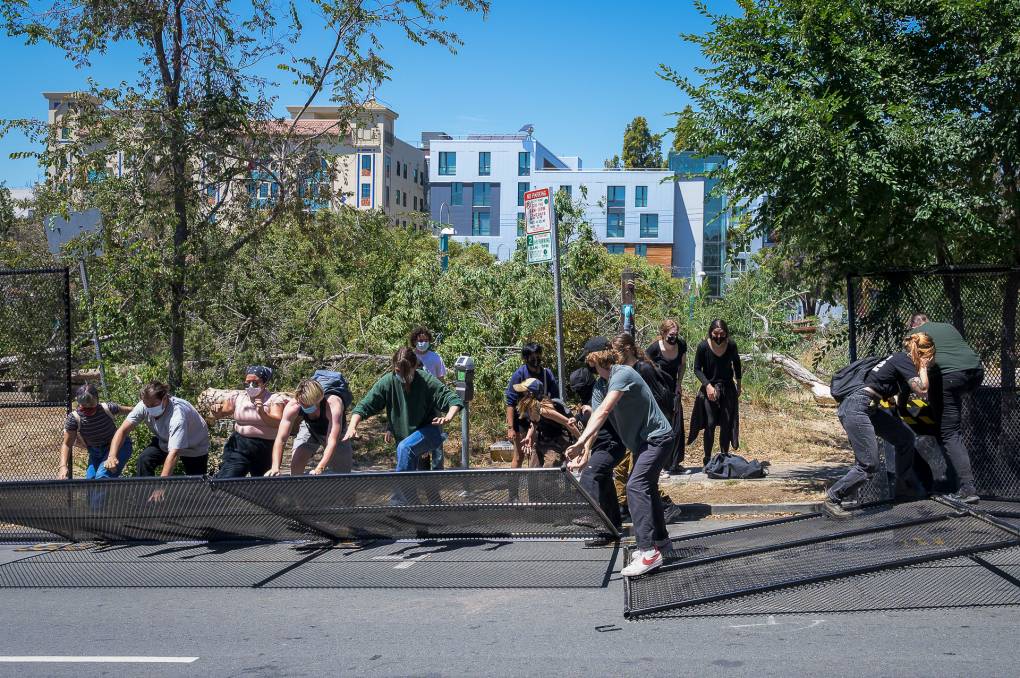
"caption": "Protesters tear down a fence surrounding People's Park in Berkeley on Aug. 3, 2022, in a bid to stop UC Berkeley from building student housing on the site. ",
"description": null,
"title": "Peoples",
"credit": "\u003ca href=\"https://www.jonnyshotit.com/About-me\">Jonathan Hale\u003c/a>",
"status": "inherit",
"altTag": "Protesters push down a large fence in a park.",
"isLoading": false,
"fetchFailed": false
},
"news_11911938": {
"type": "attachments",
"id": "news_11911938",
"meta": {
"index": "attachments_1716263798",
"site": "news",
"id": "11911938",
"found": true
},
"parent": 11911874,
"imgSizes": {
"twentyfourteen-full-width": {
"file": "https://ww2.kqed.org/app/uploads/sites/10/2022/04/campus-1-1038x576.jpg",
"width": 1038,
"mimeType": "image/jpeg",
"height": 576
},
"thumbnail": {
"file": "https://ww2.kqed.org/app/uploads/sites/10/2022/04/campus-1-160x103.jpg",
"width": 160,
"mimeType": "image/jpeg",
"height": 103
},
"post-thumbnail": {
"file": "https://ww2.kqed.org/app/uploads/sites/10/2022/04/campus-1-672x372.jpg",
"width": 672,
"mimeType": "image/jpeg",
"height": 372
},
"kqedFullSize": {
"file": "https://ww2.kqed.org/app/uploads/sites/10/2022/04/campus-1.jpg",
"width": 1442,
"height": 925
},
"large": {
"file": "https://ww2.kqed.org/app/uploads/sites/10/2022/04/campus-1-1020x654.jpg",
"width": 1020,
"mimeType": "image/jpeg",
"height": 654
},
"medium": {
"file": "https://ww2.kqed.org/app/uploads/sites/10/2022/04/campus-1-800x513.jpg",
"width": 800,
"mimeType": "image/jpeg",
"height": 513
}
},
"publishDate": 1650605158,
"modified": 1650674721,
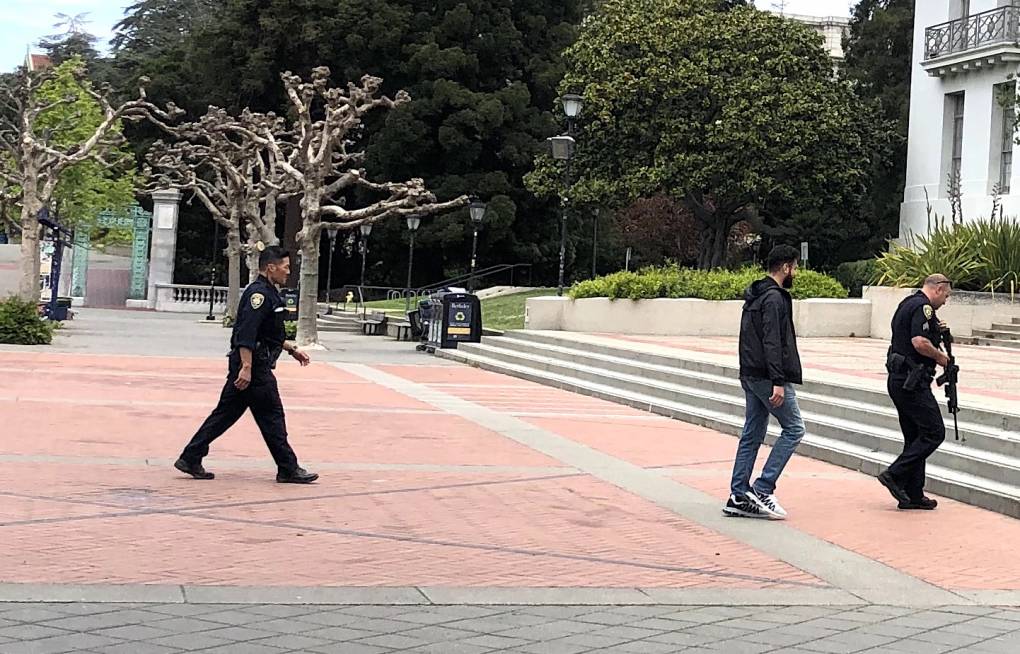
"caption": "UC Berkeley police officers walk across Sproul Plaza, one holding a rifle, on April 21, 2022, during a campus-wide lockdown. ",
"description": null,
"title": "campus",
"credit": "Matthew Green/KQED",
"status": "inherit",
"altTag": "Two police officers (and another man) walk across a campus holding rifles.",
"isLoading": false,
"fetchFailed": false
},
"news_11908650": {
"type": "attachments",
"id": "news_11908650",
"meta": {
"index": "attachments_1716263798",
"site": "news",
"id": "11908650",
"found": true
},
"parent": 11908647,
"imgSizes": {
"thumbnail": {
"file": "https://ww2.kqed.org/app/uploads/sites/10/2022/03/philmarqueeyuh-160x90.jpg",
"width": 160,
"mimeType": "image/jpeg",
"height": 90
},
"post-thumbnail": {
"file": "https://ww2.kqed.org/app/uploads/sites/10/2022/03/philmarqueeyuh-672x372.jpg",
"width": 672,
"mimeType": "image/jpeg",
"height": 372
},
"kqedFullSize": {
"file": "https://ww2.kqed.org/app/uploads/sites/10/2022/03/philmarqueeyuh.jpg",
"width": 898,
"height": 505
},
"medium": {
"file": "https://ww2.kqed.org/app/uploads/sites/10/2022/03/philmarqueeyuh-800x450.jpg",
"width": 800,
"mimeType": "image/jpeg",
"height": 450
}
},
"publishDate": 1647638413,
"modified": 1647638413,
"caption": null,
"description": null,
"title": "philmarqueeyuh",
"credit": null,
"status": "inherit",
"altTag": null,
"isLoading": false,
"fetchFailed": false
},
"news_11908295": {
"type": "attachments",
"id": "news_11908295",
"meta": {
"index": "attachments_1716263798",
"site": "news",
"id": "11908295",
"found": true
},
"parent": 11908289,
"imgSizes": {
"twentyfourteen-full-width": {
"file": "https://ww2.kqed.org/app/uploads/sites/10/2022/03/limby_031522_final-1038x576.png",
"width": 1038,
"mimeType": "image/png",
"height": 576
},
"thumbnail": {
"file": "https://ww2.kqed.org/app/uploads/sites/10/2022/03/limby_031522_final-160x112.png",
"width": 160,
"mimeType": "image/png",
"height": 112
},
"post-thumbnail": {
"file": "https://ww2.kqed.org/app/uploads/sites/10/2022/03/limby_031522_final-672x372.png",
"width": 672,
"mimeType": "image/png",
"height": 372
},
"kqedFullSize": {
"file": "https://ww2.kqed.org/app/uploads/sites/10/2022/03/limby_031522_final.png",
"width": 1920,
"height": 1341
},
"large": {
"file": "https://ww2.kqed.org/app/uploads/sites/10/2022/03/limby_031522_final-1020x712.png",
"width": 1020,
"mimeType": "image/png",
"height": 712
},
"1536x1536": {
"file": "https://ww2.kqed.org/app/uploads/sites/10/2022/03/limby_031522_final-1536x1073.png",
"width": 1536,
"mimeType": "image/png",
"height": 1073
},
"medium": {
"file": "https://ww2.kqed.org/app/uploads/sites/10/2022/03/limby_031522_final-800x559.png",
"width": 800,
"mimeType": "image/png",
"height": 559
}
},
"publishDate": 1647386588,
"modified": 1647386659,
"caption": null,
"description": null,
"title": "limby_031522_final",
"credit": null,
"status": "inherit",
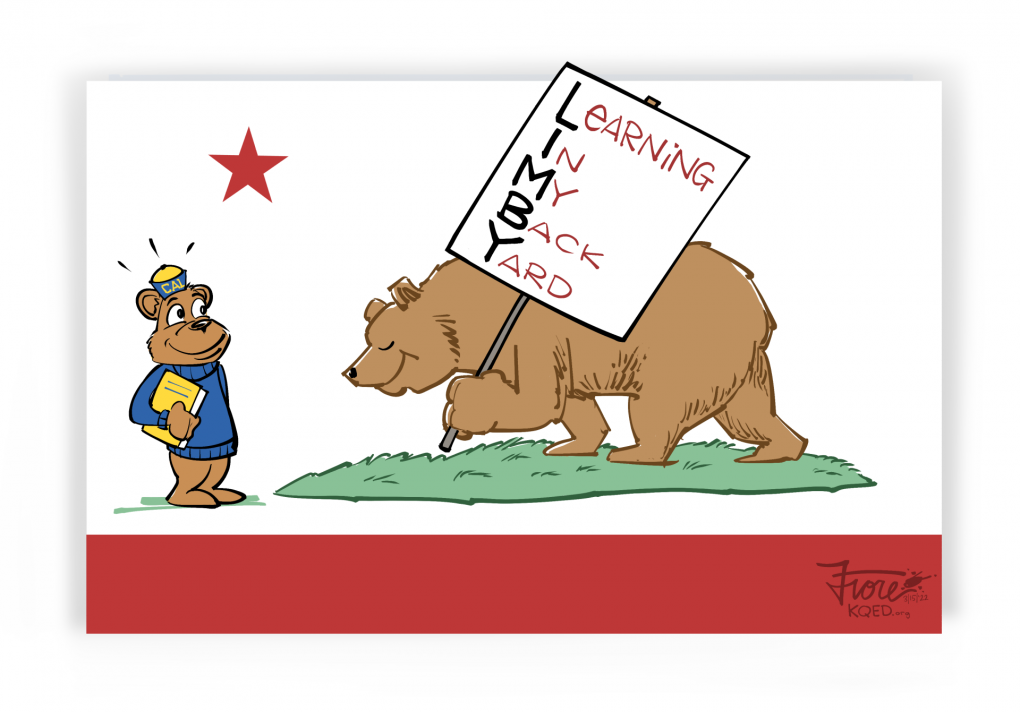
"altTag": "Cartoon: California's bear flag shows the bear holding a \"LIMBY\" sign that reads, \"learning in my backyard\" while the Cal mascot, Oski, smiles.",
"isLoading": false,
"fetchFailed": false
},
"news_11908168": {
"type": "attachments",
"id": "news_11908168",
"meta": {
"index": "attachments_1716263798",
"site": "news",
"id": "11908168",
"found": true
},
"parent": 11908141,
"imgSizes": {
"twentyfourteen-full-width": {
"file": "https://ww2.kqed.org/app/uploads/sites/10/2022/03/RS26539_P1070533-qut-1038x576.jpg",
"width": 1038,
"mimeType": "image/jpeg",
"height": 576
},
"thumbnail": {
"file": "https://ww2.kqed.org/app/uploads/sites/10/2022/03/RS26539_P1070533-qut-160x107.jpg",
"width": 160,
"mimeType": "image/jpeg",
"height": 107
},
"post-thumbnail": {
"file": "https://ww2.kqed.org/app/uploads/sites/10/2022/03/RS26539_P1070533-qut-672x372.jpg",
"width": 672,
"mimeType": "image/jpeg",
"height": 372
},
"kqedFullSize": {
"file": "https://ww2.kqed.org/app/uploads/sites/10/2022/03/RS26539_P1070533-qut.jpg",
"width": 1920,
"height": 1280
},
"large": {
"file": "https://ww2.kqed.org/app/uploads/sites/10/2022/03/RS26539_P1070533-qut-1020x680.jpg",
"width": 1020,
"mimeType": "image/jpeg",
"height": 680
},
"1536x1536": {
"file": "https://ww2.kqed.org/app/uploads/sites/10/2022/03/RS26539_P1070533-qut-1536x1024.jpg",
"width": 1536,
"mimeType": "image/jpeg",
"height": 1024
},
"medium": {
"file": "https://ww2.kqed.org/app/uploads/sites/10/2022/03/RS26539_P1070533-qut-800x533.jpg",
"width": 800,
"mimeType": "image/jpeg",
"height": 533
}
},
"publishDate": 1647299484,
"modified": 1647306695,
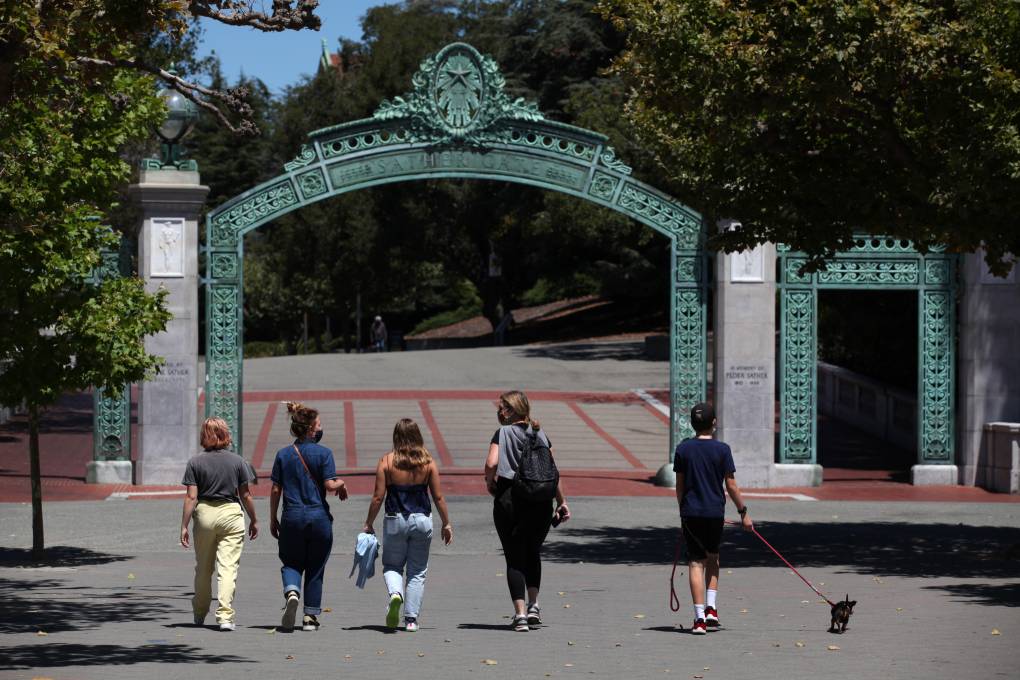
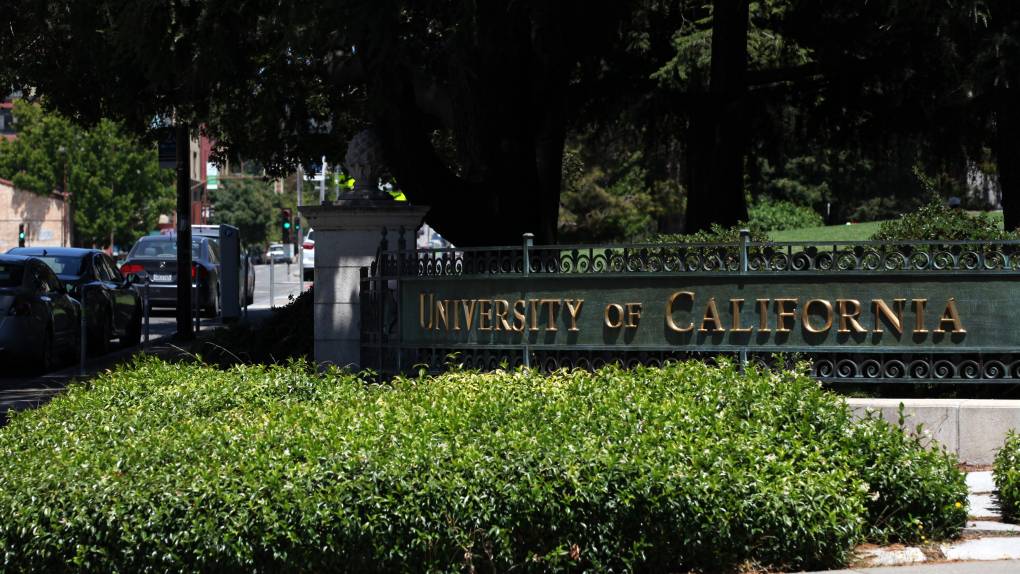
"caption": "The Sather Gate entrance at the UC Berkeley campus, where a security checkpoint was set up to screen attendees of a lecture by conservative author and radio host Ben Shapiro on Sept. 14, 2017.",
"description": null,
"title": "RS26539_P1070533-qut",
"credit": "Sheraz Sadiq/KQED",
"status": "inherit",
"altTag": "People are walking through a gate entrance on a college campus.",
"isLoading": false,
"fetchFailed": false
},
"news_11882247": {
"type": "attachments",
"id": "news_11882247",
"meta": {
"index": "attachments_1716263798",
"site": "news",
"id": "11882247",
"found": true
},
"parent": 11882246,
"imgSizes": {
"twentyfourteen-full-width": {
"file": "https://ww2.kqed.org/app/uploads/sites/10/2021/07/GettyImages-1257653005-1038x576.jpg",
"width": 1038,
"mimeType": "image/jpeg",
"height": 576
},
"thumbnail": {
"file": "https://ww2.kqed.org/app/uploads/sites/10/2021/07/GettyImages-1257653005-160x107.jpg",
"width": 160,
"mimeType": "image/jpeg",
"height": 107
},
"post-thumbnail": {
"file": "https://ww2.kqed.org/app/uploads/sites/10/2021/07/GettyImages-1257653005-672x372.jpg",
"width": 672,
"mimeType": "image/jpeg",
"height": 372
},
"kqedFullSize": {
"file": "https://ww2.kqed.org/app/uploads/sites/10/2021/07/GettyImages-1257653005-scaled.jpg",
"width": 2560,
"height": 1707
},
"2048x2048": {
"file": "https://ww2.kqed.org/app/uploads/sites/10/2021/07/GettyImages-1257653005-2048x1365.jpg",
"width": 2048,
"mimeType": "image/jpeg",
"height": 1365
},
"large": {
"file": "https://ww2.kqed.org/app/uploads/sites/10/2021/07/GettyImages-1257653005-1020x680.jpg",
"width": 1020,
"mimeType": "image/jpeg",
"height": 680
},
"1536x1536": {
"file": "https://ww2.kqed.org/app/uploads/sites/10/2021/07/GettyImages-1257653005-1536x1024.jpg",
"width": 1536,
"mimeType": "image/jpeg",
"height": 1024
},
"full-width": {
"file": "https://ww2.kqed.org/app/uploads/sites/10/2021/07/GettyImages-1257653005-1920x1280.jpg",
"width": 1920,
"mimeType": "image/jpeg",
"height": 1280
},
"medium": {
"file": "https://ww2.kqed.org/app/uploads/sites/10/2021/07/GettyImages-1257653005-800x533.jpg",
"width": 800,
"mimeType": "image/jpeg",
"height": 533
}
},
"publishDate": 1627045019,
"modified": 1647037153,
"caption": "Students walk toward Sather Gate at UC Berkeley on July 22, 2020.",
"description": "BERKELEY, CALIFORNIA - JULY 22: People walk towards Sather Gate on the U.C. Berkeley campus on July 22, 2020 in Berkeley, California. U.C. Berkeley announced plans on Tuesday to move to online education for the start of the school's fall semester due to the coronavirus COVID-19 pandemic. (Photo by Justin Sullivan/Getty Images)",
"title": "UC Berkeley To Begin Fall Semester With Online-Only Courses",
"credit": "Justin Sullivan/Getty Images",
"status": "inherit",
"altTag": "Students walk toward a gate on a college campus.",
"isLoading": false,
"fetchFailed": false
},
"news_11847722": {
"type": "attachments",
"id": "news_11847722",
"meta": {
"index": "attachments_1716263798",
"site": "news",
"id": "11847722",
"found": true
},
"parent": 11847719,
"imgSizes": {
"apple_news_ca_landscape_5_5": {
"file": "https://ww2.kqed.org/app/uploads/sites/10/2020/11/1920_GettyImages-1257652269-copy-1044x783.jpg",
"width": 1044,
"mimeType": "image/jpeg",
"height": 783
},
"apple_news_ca_square_4_0": {
"file": "https://ww2.kqed.org/app/uploads/sites/10/2020/11/1920_GettyImages-1257652269-copy-470x470.jpg",
"width": 470,
"mimeType": "image/jpeg",
"height": 470
},
"twentyfourteen-full-width": {
"file": "https://ww2.kqed.org/app/uploads/sites/10/2020/11/1920_GettyImages-1257652269-copy-1038x576.jpg",
"width": 1038,
"mimeType": "image/jpeg",
"height": 576
},
"thumbnail": {
"file": "https://ww2.kqed.org/app/uploads/sites/10/2020/11/1920_GettyImages-1257652269-copy-160x90.jpg",
"width": 160,
"mimeType": "image/jpeg",
"height": 90
},
"post-thumbnail": {
"file": "https://ww2.kqed.org/app/uploads/sites/10/2020/11/1920_GettyImages-1257652269-copy-672x372.jpg",
"width": 672,
"mimeType": "image/jpeg",
"height": 372
},
"kqedFullSize": {
"file": "https://ww2.kqed.org/app/uploads/sites/10/2020/11/1920_GettyImages-1257652269-copy-scaled.jpg",
"width": 2560,
"height": 1440
},
"2048x2048": {
"file": "https://ww2.kqed.org/app/uploads/sites/10/2020/11/1920_GettyImages-1257652269-copy-2048x1152.jpg",
"width": 2048,
"mimeType": "image/jpeg",
"height": 1152
},
"apple_news_ca_landscape_4_7": {
"file": "https://ww2.kqed.org/app/uploads/sites/10/2020/11/1920_GettyImages-1257652269-copy-632x474.jpg",
"width": 632,
"mimeType": "image/jpeg",
"height": 474
},
"large": {
"file": "https://ww2.kqed.org/app/uploads/sites/10/2020/11/1920_GettyImages-1257652269-copy-1020x574.jpg",
"width": 1020,
"mimeType": "image/jpeg",
"height": 574
},
"apple_news_ca_landscape_4_0": {
"file": "https://ww2.kqed.org/app/uploads/sites/10/2020/11/1920_GettyImages-1257652269-copy-536x402.jpg",
"width": 536,
"mimeType": "image/jpeg",
"height": 402
},
"apple_news_ca_portrait_12_9": {
"file": "https://ww2.kqed.org/app/uploads/sites/10/2020/11/1920_GettyImages-1257652269-copy-1122x1496.jpg",
"width": 1122,
"mimeType": "image/jpeg",
"height": 1496
},
"medium": {
"file": "https://ww2.kqed.org/app/uploads/sites/10/2020/11/1920_GettyImages-1257652269-copy-800x450.jpg",
"width": 800,
"mimeType": "image/jpeg",
"height": 450
},
"apple_news_ca_portrait_4_0": {
"file": "https://ww2.kqed.org/app/uploads/sites/10/2020/11/1920_GettyImages-1257652269-copy-354x472.jpg",
"width": 354,
"mimeType": "image/jpeg",
"height": 472
},
"apple_news_ca_portrait_9_7": {
"file": "https://ww2.kqed.org/app/uploads/sites/10/2020/11/1920_GettyImages-1257652269-copy-840x1120.jpg",
"width": 840,
"mimeType": "image/jpeg",
"height": 1120
},
"apple_news_ca_landscape_12_9": {
"file": "https://ww2.kqed.org/app/uploads/sites/10/2020/11/1920_GettyImages-1257652269-copy-1832x1374.jpg",
"width": 1832,
"mimeType": "image/jpeg",
"height": 1374
},
"apple_news_ca_square_9_7": {
"file": "https://ww2.kqed.org/app/uploads/sites/10/2020/11/1920_GettyImages-1257652269-copy-1104x1104.jpg",
"width": 1104,
"mimeType": "image/jpeg",
"height": 1104
},
"1536x1536": {
"file": "https://ww2.kqed.org/app/uploads/sites/10/2020/11/1920_GettyImages-1257652269-copy-1536x864.jpg",
"width": 1536,
"mimeType": "image/jpeg",
"height": 864
},
"apple_news_ca_portrait_4_7": {
"file": "https://ww2.kqed.org/app/uploads/sites/10/2020/11/1920_GettyImages-1257652269-copy-414x552.jpg",
"width": 414,
"mimeType": "image/jpeg",
"height": 552
},
"apple_news_ca_square_12_9": {
"file": "https://ww2.kqed.org/app/uploads/sites/10/2020/11/1920_GettyImages-1257652269-copy-1472x1472.jpg",
"width": 1472,
"mimeType": "image/jpeg",
"height": 1472
},
"apple_news_ca_portrait_5_5": {
"file": "https://ww2.kqed.org/app/uploads/sites/10/2020/11/1920_GettyImages-1257652269-copy-687x916.jpg",
"width": 687,
"mimeType": "image/jpeg",
"height": 916
},
"full-width": {
"file": "https://ww2.kqed.org/app/uploads/sites/10/2020/11/1920_GettyImages-1257652269-copy-1920x1080.jpg",
"width": 1920,
"mimeType": "image/jpeg",
"height": 1080
},
"apple_news_ca_square_4_7": {
"file": "https://ww2.kqed.org/app/uploads/sites/10/2020/11/1920_GettyImages-1257652269-copy-550x550.jpg",
"width": 550,
"mimeType": "image/jpeg",
"height": 550
},
"apple_news_ca_landscape_9_7": {
"file": "https://ww2.kqed.org/app/uploads/sites/10/2020/11/1920_GettyImages-1257652269-copy-1376x1032.jpg",
"width": 1376,
"mimeType": "image/jpeg",
"height": 1032
},
"apple_news_ca_square_5_5": {
"file": "https://ww2.kqed.org/app/uploads/sites/10/2020/11/1920_GettyImages-1257652269-copy-912x912.jpg",
"width": 912,
"mimeType": "image/jpeg",
"height": 912
}
},
"publishDate": 1605584155,
"modified": 1646802636,
"caption": null,
"description": null,
"title": null,
"credit": "Justin Sullivan/Getty Images",
"status": "inherit",
"altTag": null,
"isLoading": false,
"fetchFailed": false
},
"news_11907264": {
"type": "attachments",
"id": "news_11907264",
"meta": {
"index": "attachments_1716263798",
"site": "news",
"id": "11907264",
"found": true
},
"parent": 11907263,
"imgSizes": {
"twentyfourteen-full-width": {
"file": "https://ww2.kqed.org/app/uploads/sites/10/2022/03/020322-UC-Berkeley-TJ-CM-58-1038x576.jpeg",
"width": 1038,
"mimeType": "image/jpeg",
"height": 576
},
"thumbnail": {
"file": "https://ww2.kqed.org/app/uploads/sites/10/2022/03/020322-UC-Berkeley-TJ-CM-58-160x107.jpeg",
"width": 160,
"mimeType": "image/jpeg",
"height": 107
},
"post-thumbnail": {
"file": "https://ww2.kqed.org/app/uploads/sites/10/2022/03/020322-UC-Berkeley-TJ-CM-58-672x372.jpeg",
"width": 672,
"mimeType": "image/jpeg",
"height": 372
},
"kqedFullSize": {
"file": "https://ww2.kqed.org/app/uploads/sites/10/2022/03/020322-UC-Berkeley-TJ-CM-58-e1646437034828.jpeg",
"width": 1920,
"height": 1280
},
"large": {
"file": "https://ww2.kqed.org/app/uploads/sites/10/2022/03/020322-UC-Berkeley-TJ-CM-58-1020x680.jpeg",
"width": 1020,
"mimeType": "image/jpeg",
"height": 680
},
"1536x1536": {
"file": "https://ww2.kqed.org/app/uploads/sites/10/2022/03/020322-UC-Berkeley-TJ-CM-58-1536x1024.jpeg",
"width": 1536,
"mimeType": "image/jpeg",
"height": 1024
},
"full-width": {
"file": "https://ww2.kqed.org/app/uploads/sites/10/2022/03/020322-UC-Berkeley-TJ-CM-58-1920x1280.jpeg",
"width": 1920,
"mimeType": "image/jpeg",
"height": 1280
},
"medium": {
"file": "https://ww2.kqed.org/app/uploads/sites/10/2022/03/020322-UC-Berkeley-TJ-CM-58-800x533.jpeg",
"width": 800,
"mimeType": "image/jpeg",
"height": 533
}
},
"publishDate": 1646437018,
"modified": 1657927991,
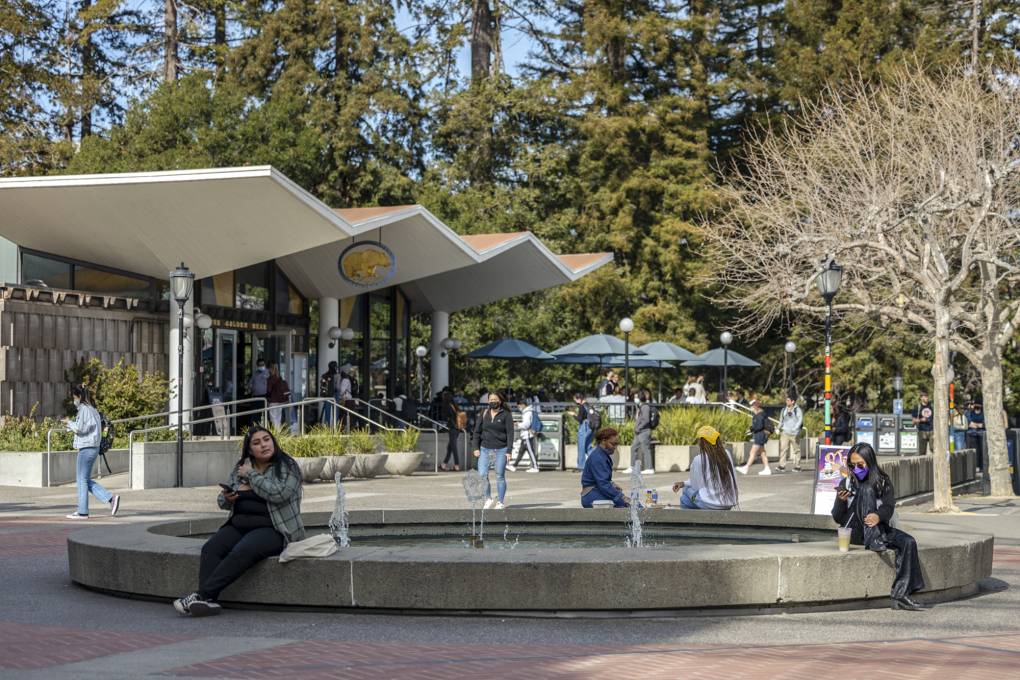
"caption": "Ludwig's Fountain and the Golden Bear Cafe at the University of California, Berkeley, campus on Feb. 3, 2022.",
"description": null,
"title": "020322-UC-Berkeley-TJ-CM-58",
"credit": "Thalia Juarez/CalMatters",
"status": "inherit",
"altTag": "Students seated at Ludwig's Fountain at UC Berkeley",
"isLoading": false,
"fetchFailed": false
},
"news_11897040": {
"type": "attachments",
"id": "news_11897040",
"meta": {
"index": "attachments_1716263798",
"site": "news",
"id": "11897040",
"found": true
},
"parent": 11897034,
"imgSizes": {
"twentyfourteen-full-width": {
"file": "https://ww2.kqed.org/app/uploads/sites/10/2021/11/RS18894_GettyImages-52237594-qut-1038x576.jpg",
"width": 1038,
"mimeType": "image/jpeg",
"height": 576
},
"thumbnail": {
"file": "https://ww2.kqed.org/app/uploads/sites/10/2021/11/RS18894_GettyImages-52237594-qut-160x107.jpg",
"width": 160,
"mimeType": "image/jpeg",
"height": 107
},
"post-thumbnail": {
"file": "https://ww2.kqed.org/app/uploads/sites/10/2021/11/RS18894_GettyImages-52237594-qut-672x372.jpg",
"width": 672,
"mimeType": "image/jpeg",
"height": 372
},
"kqedFullSize": {
"file": "https://ww2.kqed.org/app/uploads/sites/10/2021/11/RS18894_GettyImages-52237594-qut.jpg",
"width": 1920,
"height": 1282
},
"large": {
"file": "https://ww2.kqed.org/app/uploads/sites/10/2021/11/RS18894_GettyImages-52237594-qut-1020x681.jpg",
"width": 1020,
"mimeType": "image/jpeg",
"height": 681
},
"1536x1536": {
"file": "https://ww2.kqed.org/app/uploads/sites/10/2021/11/RS18894_GettyImages-52237594-qut-1536x1026.jpg",
"width": 1536,
"mimeType": "image/jpeg",
"height": 1026
},
"medium": {
"file": "https://ww2.kqed.org/app/uploads/sites/10/2021/11/RS18894_GettyImages-52237594-qut-800x534.jpg",
"width": 800,
"mimeType": "image/jpeg",
"height": 534
}
},
"publishDate": 1637435844,
"modified": 1646337641,
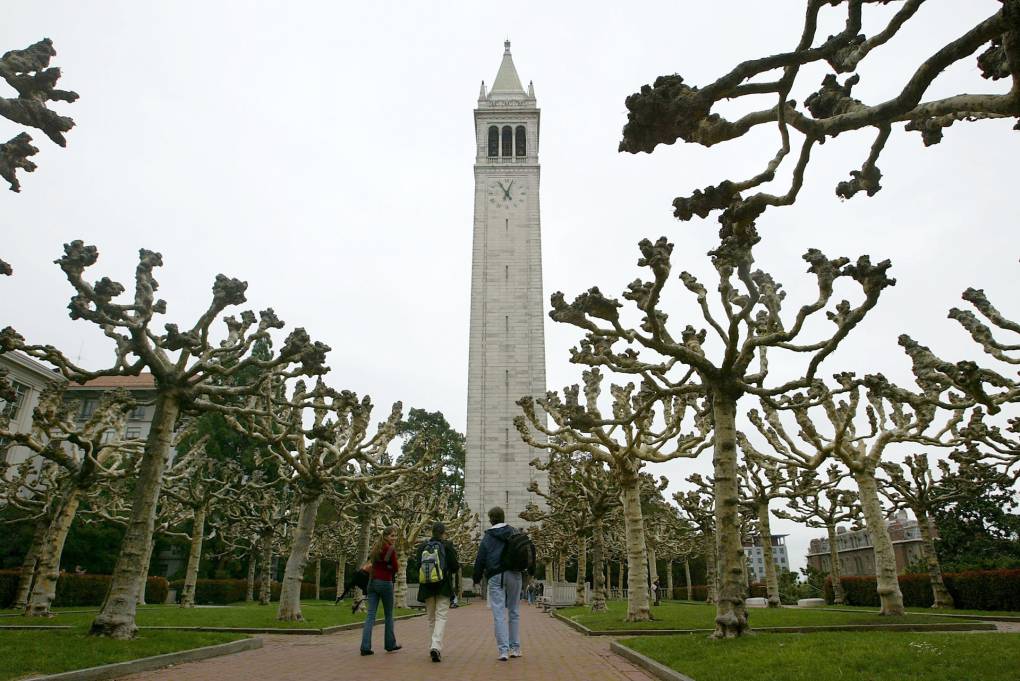
"caption": "Students walking on UC Berkeley's campus.",
"description": null,
"title": "RS18894_GettyImages-52237594-qut",
"credit": "Justin Sullivan/Getty Images",
"status": "inherit",
"altTag": "The UC Berkeley campanile against a white-grey sky with a foreground of funky-looking trees.",
"isLoading": false,
"fetchFailed": false
},
"news_11903775": {
"type": "attachments",
"id": "news_11903775",
"meta": {
"index": "attachments_1716263798",
"site": "news",
"id": "11903775",
"found": true
},
"parent": 11903772,
"imgSizes": {
"twentyfourteen-full-width": {
"file": "https://ww2.kqed.org/app/uploads/sites/10/2022/02/young-waj-e1643843942952-1038x576.jpeg",
"width": 1038,
"mimeType": "image/jpeg",
"height": 576
},
"thumbnail": {
"file": "https://ww2.kqed.org/app/uploads/sites/10/2022/02/young-waj-e1643843942952-160x116.jpeg",
"width": 160,
"mimeType": "image/jpeg",
"height": 116
},
"post-thumbnail": {
"file": "https://ww2.kqed.org/app/uploads/sites/10/2022/02/young-waj-e1643843942952-672x372.jpeg",
"width": 672,
"mimeType": "image/jpeg",
"height": 372
},
"kqedFullSize": {
"file": "https://ww2.kqed.org/app/uploads/sites/10/2022/02/young-waj-e1643843942952.jpeg",
"width": 1418,
"height": 1026
},
"large": {
"file": "https://ww2.kqed.org/app/uploads/sites/10/2022/02/young-waj-e1643843942952-1020x738.jpeg",
"width": 1020,
"mimeType": "image/jpeg",
"height": 738
},
"medium": {
"file": "https://ww2.kqed.org/app/uploads/sites/10/2022/02/young-waj-e1643843942952-800x579.jpeg",
"width": 800,
"mimeType": "image/jpeg",
"height": 579
}
},
"publishDate": 1643842101,
"modified": 1650654309,
"caption": "A young Wajahat Ali at his family's home in Fremont.",
"description": null,
"title": "young waj",
"credit": "Courtesy Wajahat Ali",
"status": "inherit",
"altTag": "family photograph of young boy riding toy horse, tinted yellow, reads like a photo from the early 80s",
"isLoading": false,
"fetchFailed": false
},
"news_11897271": {
"type": "attachments",
"id": "news_11897271",
"meta": {
"index": "attachments_1716263798",
"site": "news",
"id": "11897271",
"found": true
},
"parent": 11897267,
"imgSizes": {
"thumbnail": {
"file": "https://ww2.kqed.org/app/uploads/sites/10/2021/11/GettyImages-1183883177-160x97.jpg",
"width": 160,
"mimeType": "image/jpeg",
"height": 97
},
"post-thumbnail": {
"file": "https://ww2.kqed.org/app/uploads/sites/10/2021/11/GettyImages-1183883177-640x372.jpg",
"width": 640,
"mimeType": "image/jpeg",
"height": 372
},
"kqedFullSize": {
"file": "https://ww2.kqed.org/app/uploads/sites/10/2021/11/GettyImages-1183883177.jpg",
"width": 640,
"height": 389
}
},
"publishDate": 1637765693,
"modified": 1637765735,
"caption": null,
"description": "This image mosaic of asteroid 253 Mathilde releaseed by NASA 30 June is constructed from four images acquired by the NEAR spacecraft on 27 June. The images were taken from a distance of 1,500 miles (2,400 kilometers) with sunlight coming from the upper right. The surface exhibits many large craters, including the deeply shadowed one at the center, which is estimated to be more than 6 miles (10 kilometers) deep. The shadowed, wedge-shaped feature at the lower right is another large crater viewed obliquely. Mathilde's angular shape is believed to result from a violent history of impacts. AFP PHOTO/NASA (Photo by - / NASA / AFP) (Photo by -/NASA/AFP via Getty Images)",
"title": "Asteroid",
"credit": "NASA/AFP/Getty Images",
"status": "inherit",
"altTag": null,
"isLoading": false,
"fetchFailed": false
},
"news_11894840": {
"type": "attachments",
"id": "news_11894840",
"meta": {
"index": "attachments_1716263798",
"site": "news",
"id": "11894840",
"found": true
},
"parent": 11894797,
"imgSizes": {
"thumbnail": {
"file": "https://ww2.kqed.org/app/uploads/sites/10/2021/11/Katrina-and-family-160x128.jpeg",
"width": 160,
"mimeType": "image/jpeg",
"height": 128
},
"post-thumbnail": {
"file": "https://ww2.kqed.org/app/uploads/sites/10/2021/11/Katrina-and-family-512x372.jpeg",
"width": 512,
"mimeType": "image/jpeg",
"height": 372
},
"kqedFullSize": {
"file": "https://ww2.kqed.org/app/uploads/sites/10/2021/11/Katrina-and-family.jpeg",
"width": 512,
"height": 409
}
},
"publishDate": 1635893973,
"modified": 1636150237,
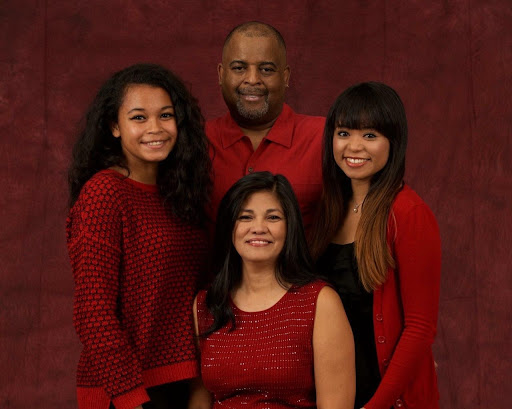
"caption": "Katrina Bullock says growing up with a Black father and Filipina mother in the 2000s was a very different experience from what it is for an older generation of mixed folks. ",
"description": null,
"title": "Katrina and family",
"credit": "Courtesy Katrina Bullock",
"status": "inherit",
"altTag": "A family portrait of two daughters, a mother and a father.",
"isLoading": false,
"fetchFailed": false
}
},
"audioPlayerReducer": {
"postId": "stream_live",
"isPaused": true,
"isPlaying": false,
"pfsActive": false,
"pledgeModalIsOpen": true,
"playerDrawerIsOpen": false,
"liveAudioPlayStartedAt": 0,
"liveAudioPlayContext": ""
},
"authorsReducer": {
"byline_news_11908141": {
"type": "authors",
"id": "byline_news_11908141",
"meta": {
"override": true
},
"slug": "byline_news_11908141",
"name": "Janie Har and Adam Beam\u003cbr>The Associated Press",
"isLoading": false
},
"byline_news_11907925": {
"type": "authors",
"id": "byline_news_11907925",
"meta": {
"override": true
},
"slug": "byline_news_11907925",
"name": "Associated Press",
"isLoading": false
},
"byline_news_11907263": {
"type": "authors",
"id": "byline_news_11907263",
"meta": {
"override": true
},
"slug": "byline_news_11907263",
"name": "Mikhail Zinshteyn, \u003ca href=\"https://calmatters.org/education/higher-education/2022/03/uc-berkeley-enrollment-cap/\">CalMatters\u003c/a>",
"isLoading": false
},
"byline_news_11907093": {
"type": "authors",
"id": "byline_news_11907093",
"meta": {
"override": true
},
"slug": "byline_news_11907093",
"name": "Jocelyn Gecker\u003cbr>Associated Press",
"isLoading": false
},
"kqed": {
"type": "authors",
"id": "236",
"meta": {
"index": "authors_1716337520",
"id": "236",
"found": true
},
"name": "KQED News Staff",
"firstName": "KQED News Staff",
"lastName": null,
"slug": "kqed",
"email": "faq@kqed.org",
"display_author_email": false,
"staff_mastheads": [],
"title": null,
"bio": null,
"avatar": "https://secure.gravatar.com/avatar/ef0e801a68c4c54afa9180db14084167?s=600&d=blank&r=g",
"twitter": null,
"facebook": null,
"instagram": null,
"linkedin": null,
"sites": [
{
"site": "arts",
"roles": [
"contributor"
]
},
{
"site": "news",
"roles": [
"editor"
]
},
{
"site": "futureofyou",
"roles": [
"author"
]
}
],
"headData": {
"title": "KQED News Staff | KQED",
"description": null,
"ogImgSrc": "https://secure.gravatar.com/avatar/ef0e801a68c4c54afa9180db14084167?s=600&d=blank&r=g",
"twImgSrc": "https://secure.gravatar.com/avatar/ef0e801a68c4c54afa9180db14084167?s=600&d=blank&r=g"
},
"isLoading": false,
"link": "/author/kqed"
},
"sasha-khokha": {
"type": "authors",
"id": "254",
"meta": {
"index": "authors_1716337520",
"id": "254",
"found": true
},
"name": "Sasha Khokha",
"firstName": "Sasha",
"lastName": "Khokha",
"slug": "sasha-khokha",
"email": "skhokha@kqed.org",
"display_author_email": true,
"staff_mastheads": [
"news"
],
"title": "Host, The California Report Magazine",
"bio": "Sasha Khokha is the host of \u003cem>The California Report's \u003c/em> weekly magazine program, which takes listeners on sound-rich excursions to meet the people that make the Golden State unique -- through audio documentaries and long-form stories. As \u003cem>The California Report's\u003c/em> Central Valley Bureau Chief based in Fresno for nearly a dozen years, Sasha brought the lives and concerns of rural Californians to listeners around the state. Her reporting helped expose the hidden price immigrant women janitors and farmworkers may pay to keep their jobs: sexual assault at work. It inspired two new California laws to protect them from sexual harassment. She was a key member of the reporting team for the Frontline film \u003cem>Rape on the Night Shift, \u003c/em>which was nominated for two national Emmys. Sasha has also won a national Edward R. Murrow and a national PRNDI award for investigative reporting, as well as multiple prizes from the Society for Professional Journalists. Sasha is a proud alum of the UC Berkeley Graduate School of Journalism and Brown University and a member of the South Asian Journalists Association.",
"avatar": "https://secure.gravatar.com/avatar/e4b5e1541aaeea2aa356aa1fb2a68950?s=600&d=blank&r=g",
"twitter": "KQEDSashaKhokha",
"facebook": null,
"instagram": null,
"linkedin": null,
"sites": [
{
"site": "news",
"roles": [
"editor"
]
},
{
"site": "stateofhealth",
"roles": [
"author"
]
},
{
"site": "science",
"roles": [
"author"
]
},
{
"site": "quest",
"roles": [
"subscriber"
]
}
],
"headData": {
"title": "Sasha Khokha | KQED",
"description": "Host, The California Report Magazine",
"ogImgSrc": "https://secure.gravatar.com/avatar/e4b5e1541aaeea2aa356aa1fb2a68950?s=600&d=blank&r=g",
"twImgSrc": "https://secure.gravatar.com/avatar/e4b5e1541aaeea2aa356aa1fb2a68950?s=600&d=blank&r=g"
},
"isLoading": false,
"link": "/author/sasha-khokha"
},
"tarasiler": {
"type": "authors",
"id": "257",
"meta": {
"index": "authors_1716337520",
"id": "257",
"found": true
},
"name": "Tara Siler",
"firstName": "Tara",
"lastName": "Siler",
"slug": "tarasiler",
"email": "tsiler@kqed.org",
"display_author_email": false,
"staff_mastheads": [
"news"
],
"title": "KQED Contributor",
"bio": "Tara reports and anchors for KQED news. She covers a range of issues from community-police relations to local politics. Tara started out in community radio in the Bay Area, where she was raised. She eventually moved to Washington DC where she covered Congress for eight years for Pacifica and Monitor Radio. Her stories have also been heard on NPR's All Things Considered, Morning Edition and The World.\r\n\r\nTara lives with her husband in Oakland-- where they raised their two sons. She enjoys spending time with her family, gardening and hiking in the Oakland hills... and keeping up with the news.",
"avatar": "https://secure.gravatar.com/avatar/99802f9746fb80b65fd8ec6c57954450?s=600&d=blank&r=g",
"twitter": null,
"facebook": null,
"instagram": null,
"linkedin": null,
"sites": [
{
"site": "news",
"roles": [
"contributor",
"edit_others_posts"
]
},
{
"site": "stateofhealth",
"roles": [
"author"
]
}
],
"headData": {
"title": "Tara Siler | KQED",
"description": "KQED Contributor",
"ogImgSrc": "https://secure.gravatar.com/avatar/99802f9746fb80b65fd8ec6c57954450?s=600&d=blank&r=g",
"twImgSrc": "https://secure.gravatar.com/avatar/99802f9746fb80b65fd8ec6c57954450?s=600&d=blank&r=g"
},
"isLoading": false,
"link": "/author/tarasiler"
},
"matthewgreen": {
"type": "authors",
"id": "1263",
"meta": {
"index": "authors_1716337520",
"id": "1263",
"found": true
},
"name": "Matthew Green",
"firstName": "Matthew",
"lastName": "Green",
"slug": "matthewgreen",
"email": "mgreen@kqed.org",
"display_author_email": false,
"staff_mastheads": [],
"title": "KQED Editor/Reporter",
"bio": "Matthew Green is a digital media producer for KQED News. He previously produced \u003ca href=\"http://www.kqed.org/lowdown\">The Lowdown\u003c/a>, KQED’s multimedia news education blog. Matthew's written for numerous Bay Area publications, including the Oakland Tribune and San Francisco Chronicle. He also taught journalism classes at Fremont High School in East Oakland.\r\n\r\nEmail: mgreen@kqed.org; Twitter: @MGreenKQED",
"avatar": "https://secure.gravatar.com/avatar/3bf498d1267ca02c8494f33d8cfc575e?s=600&d=blank&r=g",
"twitter": "MGreenKQED",
"facebook": null,
"instagram": null,
"linkedin": null,
"sites": [
{
"site": "news",
"roles": []
},
{
"site": "lowdown",
"roles": []
},
{
"site": "science",
"roles": []
},
{
"site": "education",
"roles": []
},
{
"site": "quest",
"roles": []
},
{
"site": "liveblog",
"roles": []
}
],
"headData": {
"title": "Matthew Green | KQED",
"description": "KQED Editor/Reporter",
"ogImgSrc": "https://secure.gravatar.com/avatar/3bf498d1267ca02c8494f33d8cfc575e?s=600&d=blank&r=g",
"twImgSrc": "https://secure.gravatar.com/avatar/3bf498d1267ca02c8494f33d8cfc575e?s=600&d=blank&r=g"
},
"isLoading": false,
"link": "/author/matthewgreen"
},
"markfiore": {
"type": "authors",
"id": "3236",
"meta": {
"index": "authors_1716337520",
"id": "3236",
"found": true
},
"name": "Mark Fiore",
"firstName": "Mark",
"lastName": "Fiore",
"slug": "markfiore",
"email": "mark@markfiore.com",
"display_author_email": false,
"staff_mastheads": [
"news"
],
"title": "KQED News Cartoonist",
"bio": "\u003ca href=\"http://www.MarkFiore.com\">MarkFiore.com\u003c/a> | \u003ca href=\"https://twitter.com/markfiore\">Follow on Twitter\u003c/a> | \u003ca href=\"https://www.facebook.com/pages/Mark-Fiore-Animated-Political-Cartoons/94451707396?ref=bookmarks\">Facebook\u003c/a> | \u003ca href=\"mailto:mark@markfiore.com\">email\u003c/a>\r\n\r\nPulitzer Prize-winner, Mark Fiore, who the Wall Street Journal has called “the undisputed guru of the form,” creates animated political cartoons in San Francisco, where his work has been featured regularly on the San Francisco Chronicle’s web site, SFGate.com. His work has appeared on Newsweek.com, Slate.com, CBSNews.com, MotherJones.com, DailyKos.com and NPR’s web site. Fiore’s political animation has appeared on CNN, Frontline, Bill Moyers Journal, Salon.com and cable and broadcast outlets across the globe.\r\n\r\nBeginning his professional life by drawing traditional political cartoons for newspapers, Fiore’s work appeared in publications ranging from the Washington Post to the Los Angeles Times. In the late 1990s, he began to experiment with animating political cartoons and, after a short stint at the San Jose Mercury News as their staff cartoonist, Fiore devoted all his energies to animation.\r\nGrowing up in California, Fiore also spent a good portion of his life in the backwoods of Idaho. It was this combination that shaped him politically. Mark majored in political science at Colorado College, where, in a perfect send-off for a cartoonist, he received his diploma in 1991 as commencement speaker Dick Cheney smiled approvingly.\r\nMark Fiore was awarded the Pulitzer Prize for political cartooning in 2010, a Robert F. Kennedy Journalism Award in 2004 and has twice received an Online Journalism Award for commentary from the Online News Association (2002, 2008). Fiore has received two awards for his work in new media from the National Cartoonists Society (2001, 2002), and in 2006 received The James Madison Freedom of Information Award from The Society of Professional Journalists.",
"avatar": "https://secure.gravatar.com/avatar/fc4e2a612b15b67bad0c6f0e1db4ca9b?s=600&d=blank&r=g",
"twitter": "MarkFiore",
"facebook": null,
"instagram": "https://www.instagram.com/markfiore/?hl=en",
"linkedin": null,
"sites": [
{
"site": "arts",
"roles": [
"contributor"
]
},
{
"site": "news",
"roles": [
"editor"
]
},
{
"site": "futureofyou",
"roles": [
"editor"
]
},
{
"site": "science",
"roles": [
"editor"
]
}
],
"headData": {
"title": "Mark Fiore | KQED",
"description": "KQED News Cartoonist",
"ogImgSrc": "https://secure.gravatar.com/avatar/fc4e2a612b15b67bad0c6f0e1db4ca9b?s=600&d=blank&r=g",
"twImgSrc": "https://secure.gravatar.com/avatar/fc4e2a612b15b67bad0c6f0e1db4ca9b?s=600&d=blank&r=g"
},
"isLoading": false,
"link": "/author/markfiore"
},
"mlagos": {
"type": "authors",
"id": "3239",
"meta": {
"index": "authors_1716337520",
"id": "3239",
"found": true
},
"name": "Marisa Lagos",
"firstName": "Marisa",
"lastName": "Lagos",
"slug": "mlagos",
"email": "mlagos@kqed.org",
"display_author_email": false,
"staff_mastheads": [
"news"
],
"title": "KQED Contributor",
"bio": "Marisa Lagos is a correspondent for KQED’s California Politics and Government Desk and co-hosts the award-winning show and podcast, Political Breakdown. At KQED, Lagos also conducts reporting, analysis and investigations into state, local and national politics for radio, TV, online and onstage. In 2022, she and co-host, Scott Shafer, moderated the only gubernatorial debate in California. In 2020, the \u003ci>Washington Post\u003c/i> named her one of the top political journalists in California; she was nominated for a Peabody and won several other awards for her work investigating the 2017 California wildfires. She has worked at the \u003ci>San Francisco Chronicle\u003c/i>, \u003ci>San Francisco Examiner\u003c/i> and \u003ci>Los Angeles Times\u003c/i>. A UC Santa Barbara graduate, she lives in San Francisco with her two sons and husband.",
"avatar": "https://secure.gravatar.com/avatar/a261a0d3696fc066871ef96b85b5e7d2?s=600&d=blank&r=g",
"twitter": "@mlagos",
"facebook": null,
"instagram": null,
"linkedin": null,
"sites": [
{
"site": "arts",
"roles": [
"author"
]
},
{
"site": "news",
"roles": [
"editor"
]
},
{
"site": "science",
"roles": [
"editor"
]
},
{
"site": "forum",
"roles": [
"author"
]
},
{
"site": "liveblog",
"roles": [
"author"
]
}
],
"headData": {
"title": "Marisa Lagos | KQED",
"description": "KQED Contributor",
"ogImgSrc": "https://secure.gravatar.com/avatar/a261a0d3696fc066871ef96b85b5e7d2?s=600&d=blank&r=g",
"twImgSrc": "https://secure.gravatar.com/avatar/a261a0d3696fc066871ef96b85b5e7d2?s=600&d=blank&r=g"
},
"isLoading": false,
"link": "/author/mlagos"
},
"afont": {
"type": "authors",
"id": "8637",
"meta": {
"index": "authors_1716337520",
"id": "8637",
"found": true
},
"name": "Amanda Font",
"firstName": "Amanda",
"lastName": "Font",
"slug": "afont",
"email": "afont@kqed.org",
"display_author_email": false,
"staff_mastheads": [],
"title": "KQED Contributor",
"bio": "Amanda Font is a producer on \u003cem>The Latest\u003c/em> podcast, and the host and co-producer of the series \u003cem>Audible Cosmos\u003c/em>. She has previously worked as a producer and reporter on the \u003cem>Bay Curious\u003c/em> podcast, and director of \u003cem>The California Report Magazine\u003c/em>. She grew up in the deserts of Southern California and moved north for the trees. Amanda earned a B.A. from the BECA program at San Francisco State, where she worked in the university's radio station. Amanda Font is represented by SAG-AFTRA.",
"avatar": "https://secure.gravatar.com/avatar/d9e81cf0117d5849b9cfb7ab4b1422f1?s=600&d=blank&r=g",
"twitter": null,
"facebook": null,
"instagram": null,
"linkedin": null,
"sites": [
{
"site": "news",
"roles": [
"add_users",
"create_users"
]
},
{
"site": "science",
"roles": []
},
{
"site": "forum",
"roles": [
"administrator"
]
},
{
"site": "perspectives",
"roles": [
"administrator"
]
},
{
"site": "radio",
"roles": [
"administrator"
]
}
],
"headData": {
"title": "Amanda Font | KQED",
"description": "KQED Contributor",
"ogImgSrc": "https://secure.gravatar.com/avatar/d9e81cf0117d5849b9cfb7ab4b1422f1?s=600&d=blank&r=g",
"twImgSrc": "https://secure.gravatar.com/avatar/d9e81cf0117d5849b9cfb7ab4b1422f1?s=600&d=blank&r=g"
},
"isLoading": false,
"link": "/author/afont"
},
"ecruzguevarra": {
"type": "authors",
"id": "8654",
"meta": {
"index": "authors_1716337520",
"id": "8654",
"found": true
},
"name": "Ericka Cruz Guevarra",
"firstName": "Ericka",
"lastName": "Cruz Guevarra",
"slug": "ecruzguevarra",
"email": "ecruzguevarra@kqed.org",
"display_author_email": true,
"staff_mastheads": [
"news"
],
"title": "Producer, The Bay Podcast",
"bio": "Ericka Cruz Guevarra is host of \u003ca href=\"https://www.kqed.org/podcasts/thebay\">\u003cem>The Bay\u003c/em>\u003c/a> podcast at KQED. Before host, she was the show’s producer. Her work in that capacity includes a three-part reported series on policing in Vallejo, which won a 2020 excellence in journalism award from the Society of Professional Journalists. Ericka has worked as a breaking news reporter at Oregon Public Broadcasting, helped produce the Code Switch podcast, and was KQED’s inaugural Raul Ramirez Diversity Fund intern. She’s also an alumna of NPR’s Next Generation Radio program. Send her an email if you have strong feelings about whether Fairfield and Suisun City are the Bay. Ericka is represented by SAG-AFTRA.",
"avatar": "https://secure.gravatar.com/avatar/accefc1de4bafc7e234b69bcb9b6f6536c130fd84709bc3069ef11a78787e1bb?s=600&d=blank&r=g",
"twitter": "NotoriousECG",
"bluesky": null,
"facebook": null,
"instagram": null,
"linkedin": null,
"sites": [
{
"site": "arts",
"roles": [
"subscriber"
]
},
{
"site": "news",
"roles": [
"editor",
"manage_categories"
]
},
{
"site": "futureofyou",
"roles": [
"subscriber"
]
},
{
"site": "stateofhealth",
"roles": [
"subscriber"
]
},
{
"site": "science",
"roles": [
"editor"
]
},
{
"site": "forum",
"roles": [
"subscriber"
]
}
],
"headData": {
"title": "Ericka Cruz Guevarra | KQED",
"description": "Producer, The Bay Podcast",
"ogImgSrc": "https://secure.gravatar.com/avatar/accefc1de4bafc7e234b69bcb9b6f6536c130fd84709bc3069ef11a78787e1bb?s=600&d=blank&r=g",
"twImgSrc": "https://secure.gravatar.com/avatar/accefc1de4bafc7e234b69bcb9b6f6536c130fd84709bc3069ef11a78787e1bb?s=600&d=blank&r=g"
},
"isLoading": false,
"link": "/author/ecruzguevarra"
},
"amontecillo": {
"type": "authors",
"id": "11649",
"meta": {
"index": "authors_1716337520",
"id": "11649",
"found": true
},
"name": "Alan Montecillo",
"firstName": "Alan",
"lastName": "Montecillo",
"slug": "amontecillo",
"email": "amontecillo@kqed.org",
"display_author_email": false,
"staff_mastheads": [
"news"
],
"title": "KQED Contributor",
"bio": "Alan Montecillo is the senior editor of \u003cem>\u003ca href=\"http://kqed.org/thebay\">The Bay\u003c/a>, \u003c/em> KQED's local news podcast. Before moving to the Bay Area, he worked as a senior talk show producer for WILL in Champaign-Urbana, Illinois and at Oregon Public Broadcasting in Portland, Oregon. He has won journalism awards from the Society of Professional Journalists Northern California, the Public Media Journalists Association, The Signal Awards, and has also received a regional Edward R. Murrow award. Alan is a Filipino American from Hong Kong and a graduate of Reed College.",
"avatar": "https://secure.gravatar.com/avatar/268f53a2066899ea9efdd8a5900218b17c822d9862cbc9326cccec53ef41d349?s=600&d=blank&r=g",
"twitter": "alanmontecillo",
"bluesky": null,
"facebook": null,
"instagram": null,
"linkedin": null,
"sites": [
{
"site": "",
"roles": [
"editor"
]
},
{
"site": "news",
"roles": [
"editor",
"manage_categories"
]
}
],
"headData": {
"title": "Alan Montecillo | KQED",
"description": "KQED Contributor",
"ogImgSrc": "https://secure.gravatar.com/avatar/268f53a2066899ea9efdd8a5900218b17c822d9862cbc9326cccec53ef41d349?s=600&d=blank&r=g",
"twImgSrc": "https://secure.gravatar.com/avatar/268f53a2066899ea9efdd8a5900218b17c822d9862cbc9326cccec53ef41d349?s=600&d=blank&r=g"
},
"isLoading": false,
"link": "/author/amontecillo"
},
"mesquinca": {
"type": "authors",
"id": "11802",
"meta": {
"index": "authors_1716337520",
"id": "11802",
"found": true
},
"name": "Maria Esquinca",
"firstName": "Maria",
"lastName": "Esquinca",
"slug": "mesquinca",
"email": "mesquinca@kqed.org",
"display_author_email": false,
"staff_mastheads": [],
"title": "Producer, The Bay",
"bio": "María Esquinca is a producer of The Bay. Before that, she was a New York Women’s Foundation IGNITE Fellow at Latino USA. She worked at Radio Bilingue where she covered the San Joaquin Valley. Maria has interned at WLRN, News 21, The New York Times Student Journalism Institute and at Crain’s Detroit Business as a Dow Jones News Fund Business Reporting Intern. She is an MFA graduate from the University of Miami. In 2017, she graduated from the Walter Cronkite School of Journalism and Mass Communication with a Master of Mass Communication. A fronteriza, she was born in Ciudad Juárez, Chihuahua, Mexico and grew up in El Paso, Texas.",
"avatar": "https://secure.gravatar.com/avatar/77cedba18aae91da775038ba06dcd8d0?s=600&d=blank&r=g",
"twitter": "@m_esquinca",
"facebook": null,
"instagram": null,
"linkedin": null,
"sites": [
{
"site": "news",
"roles": []
}
],
"headData": {
"title": "Maria Esquinca | KQED",
"description": "Producer, The Bay",
"ogImgSrc": "https://secure.gravatar.com/avatar/77cedba18aae91da775038ba06dcd8d0?s=600&d=blank&r=g",
"twImgSrc": "https://secure.gravatar.com/avatar/77cedba18aae91da775038ba06dcd8d0?s=600&d=blank&r=g"
},
"isLoading": false,
"link": "/author/mesquinca"
}
},
"pagesReducer": {
"news_tag_uc-berkeley": {
"type": "terms",
"id": "news_17597",
"meta": {
"index": "terms_1716263798",
"site": "news",
"id": "17597",
"score": 8.45815
},
"featImg": null,
"name": "UC Berkeley",
"description": null,
"taxonomy": "tag",
"headData": {
"twImgId": null,
"twTitle": null,
"ogTitle": null,
"ogImgId": null,
"twDescription": null,
"description": null,
"title": "UC Berkeley Archives | KQED News",
"ogDescription": null
},
"ttid": 17631,
"slug": "uc-berkeley",
"isLoading": false,
"title": "UC Berkeley",
"pageMeta": {
"site": "news",
"WpPageTemplate": "page-topic-editorial",
"currentPage": 10
},
"blocks": [
{
"blockName": "kqed/post-list",
"attrs": {
"layout": "cardArticle2",
"query": "posts/news?tag=uc-berkeley",
"seeMore": false,
"paginated": true,
"page": 10
}
},
{
"blockName": "kqed/ad"
}
]
}
},
"pfsSessionReducer": {},
"postsReducer": {
"stream_live": {
"type": "live",
"id": "stream_live",
"audioUrl": "https://streams.kqed.org/kqedradio",
"title": "Live Stream",
"excerpt": "Live Stream information currently unavailable.",
"link": "/radio",
"featImg": "",
"label": {
"name": "KQED Live",
"link": "/"
}
},
"stream_kqedNewscast": {
"type": "posts",
"id": "stream_kqedNewscast",
"audioUrl": "https://www.kqed.org/.stream/anon/radio/RDnews/newscast.mp3?_=1",
"title": "KQED Newscast",
"featImg": "",
"label": {
"name": "88.5 FM",
"link": "/"
}
},
"news_11921415": {
"type": "posts",
"id": "news_11921415",
"meta": {
"index": "posts_1716263798",
"site": "news",
"id": "11921415",
"score": null,
"sort": [
1659657613000
]
},
"guestAuthors": [],
"slug": "protesters-block-construction-at-berkeleys-peoples-park-after-standoff-with-police",
"title": "City of Berkeley Reconsiders, Then Sustains Police Tear Gas Ban Following Unrest at People's Park",
"publishDate": 1659657613,
"format": "standard",
"headTitle": "City of Berkeley Reconsiders, Then Sustains Police Tear Gas Ban Following Unrest at People’s Park | KQED",
"labelTerm": {
"site": "news"
},
"content": "\u003cp>\u003cstrong>Update, 12 p.m. Friday\u003c/strong>:\u003c/p>\n\u003cp>A California Court of Appeal judge on Thursday issued a temporary stay, ordering UC Berkeley to stop all construction work at People’s Park in Berkeley. The latest injunction comes in response to an appeal filed by two groups — Make UC A Good Neighbor and the People’s Park Historic District Advocacy Group — challenging the controversial housing project at the historic site. While the order prevents any further clearing of the park, it does allow the university to re-erect a security fence around the site while the case is being reviewed.\u003c/p>\n\u003cp>“We are gratified that the Court of Appeal recognized that UC should not go forward until the court has the opportunity to review our case more fully,” Harvey Smith, president of the People’s Park Historic District Advocacy Group, said in a statement. “UC took advantage of the legal system in order to destroy as much of the park as it could.”\u003c/p>\n\u003cp>In its statement, UC Berkeley noted that the new injunction would further delay and significantly increase the cost of the project, but said it was pleased the court had agreed to an expedited review process and was allowing the school to “close and secure the construction site pending the expedited ruling.”\u003c/p>\n\u003cp>“The campus is now assessing options to get that done in a safe, effective way,” the statement said.\u003c/p>\n\u003cp>[ad fullwidth]\u003c/p>\n\u003cp>\u003cstrong>Update, 2 p.m. Thursday\u003c/strong>: Just hours after the agenda had been posted, Berkeley’s mayor on Thursday morning canceled \u003ca href=\"https://berkeleyca.gov/sites/default/files/documents/2022-08-04%20Special%20Agenda%20-%20Council.pdf\">a special city council meeting\u003c/a> that officials had scheduled for that evening to consider temporarily suspending the city’s ban on police use of tear gas, smoke and pepper spray.\u003c/p>\n\u003cp>“I’m canceling the meeting. Our policy stands,” Mayor Jesse Arreguin \u003ca href=\"https://twitter.com/JesseArreguin/status/1555243449040793605\">wrote on Twitter\u003c/a>.\u003c/p>\n\u003cp>Plans for the meeting — and its abrupt cancellation — came after protesters on Wednesday clashed with police at People’s Park, destroying thousands of dollars of construction equipment and reoccupying the site.\u003c/p>\n\u003cp>Before retreating from the park on Wednesday afternoon, UC police arrested seven demonstrators for charges including battery on a peace officer, trespassing and resisting and obstructing or delaying an officer. Two officers involved were injured, and one of the people arrested was released from custody and taken to a local hospital for minor injuries, officials said.\u003c/p>\n\u003cfigure id=\"attachment_11921793\" class=\"wp-caption aligncenter\" style=\"max-width: 1524px\">\u003ca href=\"https://ww2.kqed.org/app/uploads/sites/10/2022/08/FZRw281VQAAaT1R-1.jpeg\">\u003cimg loading=\"lazy\" decoding=\"async\" class=\"wp-image-11921793 size-full\" src=\"https://ww2.kqed.org/app/uploads/sites/10/2022/08/FZRw281VQAAaT1R-1.jpeg\" alt=\"People on the street watch as a large group of police in riot gear stand in a group.\" width=\"1524\" height=\"1071\" srcset=\"https://cdn.kqed.org/wp-content/uploads/sites/10/2022/08/FZRw281VQAAaT1R-1.jpeg 1524w, https://cdn.kqed.org/wp-content/uploads/sites/10/2022/08/FZRw281VQAAaT1R-1-800x562.jpeg 800w, https://cdn.kqed.org/wp-content/uploads/sites/10/2022/08/FZRw281VQAAaT1R-1-1020x717.jpeg 1020w, https://cdn.kqed.org/wp-content/uploads/sites/10/2022/08/FZRw281VQAAaT1R-1-160x112.jpeg 160w\" sizes=\"(max-width: 1524px) 100vw, 1524px\">\u003c/a>\u003cfigcaption class=\"wp-caption-text\">After a tense standoff with protesters, police in riot gear — from multiple agencies, including UC Berkeley PD and the California Highway Patrol — prepare to leave People’s Park on Aug. 3, 2022. Their departure was an ‘effort to avoid further confrontation,’ UC Berkeley officials later said. \u003ccite>(Christopher Alam/KQED)\u003c/cite>\u003c/figcaption>\u003c/figure>\n\u003cp>In his tweet, Arreguin also criticized the Alameda County Sheriff’s Office, writing, “shame on the Sheriff for threatening to not provide emergency support to Berkeley.” He later clarified that in 2020, after \u003ca href=\"https://records.cityofberkeley.info/PublicAccess/paFiles/cqFiles/index.html\">Berkeley instituted its tear-gas ban\u003c/a> — which applies to any outside agency called to respond to mutual aid in the city — the sheriff’s office said it would no longer respond to the city’s requests for such support.\u003c/p>\n\u003cp>“[In 2020], we were informed by the Alameda County Sheriff’s Department that they will not send their personnel to Berkeley to respond in a crowd-control situation if we prohibit the use of tear gas,” Arreguin said.\u003c/p>\n\u003cp>Because the sheriff’s office coordinates the county’s mutual aid response, he explained, the city was concerned about not having adequate law enforcement support if the situation at the park were to grow further out of control.\u003c/p>\n\u003cp>“And so the staff suggested that the council should reconsider the prohibition, at least temporarily,” Arreguin said. “Having thought a great deal about it over the course of the evening, I came to the conclusion that we need to continue our existing policy. That the reasons why I supported the ban in 2020 are still the same — I don’t think chemical agents should be used in modern policing.”\u003c/p>\n\u003cp>In response, Sgt. Ray Kelly, a spokesperson for the Alameda County Sheriff’s Office, confirmed that deputies were in fact at People’s Park on Wednesday, and that his office, while opposed to the city’s tear gas ban, would never refuse to respond to a major public safety emergency. “We will come to help. I think the city’s understanding of what mutual aid is needed some clarification,” he said and an email.\u003c/p>\n\u003cp>Asked if sheriff’s deputies would abide by Berkeley’s tear gas ban if they came to the city’s aid, Kelly said, “We would not.”\u003c/p>\n\u003cp>\u003cstrong>Original story, 5:30 p.m. Wednesday:\u003c/strong>\u003c/p>\n\u003cp>Chanting “Whose Park? People’s Park,” several dozen protesters halted the start of student housing construction at the historic Berkeley park on Wednesday afternoon, tearing down fencing and destroying equipment after a brief, but tense faceoff with police.\u003c/p>\n\u003cp>UC Berkeley, which owns the park, had cleared the site shortly after midnight and erected a fence around it. But by mid-afternoon, the school, in a statement, announced it was pausing \u003ca href=\"https://peoplesparkhousing.berkeley.edu/\">the controversial project\u003c/a> “due to the destruction of construction materials, unlawful protest activity, and violence on the part of some protesters.”\u003c/p>\n\u003cfigure id=\"attachment_11921498\" class=\"wp-caption aligncenter\" style=\"max-width: 1920px\">\u003ca href=\"https://ww2.kqed.org/app/uploads/sites/10/2022/08/ProtestersOnStreet.jpg\">\u003cimg loading=\"lazy\" decoding=\"async\" class=\"size-full wp-image-11921498\" src=\"https://ww2.kqed.org/app/uploads/sites/10/2022/08/ProtestersOnStreet.jpg\" alt=\"two people sit in the middle of the street as uniformed police in riot gear stand in the background\" width=\"1920\" height=\"1440\" srcset=\"https://cdn.kqed.org/wp-content/uploads/sites/10/2022/08/ProtestersOnStreet.jpg 1920w, https://cdn.kqed.org/wp-content/uploads/sites/10/2022/08/ProtestersOnStreet-800x600.jpg 800w, https://cdn.kqed.org/wp-content/uploads/sites/10/2022/08/ProtestersOnStreet-1020x765.jpg 1020w, https://cdn.kqed.org/wp-content/uploads/sites/10/2022/08/ProtestersOnStreet-160x120.jpg 160w, https://cdn.kqed.org/wp-content/uploads/sites/10/2022/08/ProtestersOnStreet-1536x1152.jpg 1536w\" sizes=\"(max-width: 1920px) 100vw, 1920px\">\u003c/a>\u003cfigcaption class=\"wp-caption-text\">Protesters sit on a street bordering People’s Park on Wednesday. \u003ccite>(Christopher Alam/KQED)\u003c/cite>\u003c/figcaption>\u003c/figure>\n\u003cp>The school said it had instructed all workers to leave the site “out of concern for their safety,” following reports that protesters were throwing rocks and bottles at them. It also said it had withdrawn its police force in an “effort to avoid further confrontation.”\u003c/p>\n\u003cp>“What we’re doing right now is assessing options for how we can move forward in a safe fashion, given the fact that we have certain individuals in our community who’ve shown themselves ready, willing and able to engage in violent, unlawful behavior and vandalism,” UC Berkeley spokesperson Dan Mogulof said. “And we need to find a way to proceed while taking that into account.”\u003c/p>\n\u003cp>https://twitter.com/eli_kamisher/status/1554906790260723712\u003c/p>\n\u003cp>The university has plans to build a complex that would accommodate about 1,100 students as well as supportive housing for about 125 unhoused people. Part of the property will also be set aside to commemorate the site’s \u003ca href=\"https://sfist.com/2019/04/20/a-brief-history-of-berkeleys-peoples-park/\">significance in the Civil Rights Movement\u003c/a>.\u003c/p>\n\u003cp>The housing project is “incredibly important to the university. It’s an important piece of how we plan to address what is an urgent student housing crisis,” Mogulof said. “We very much want this building to be available when students come to campus in the fall of 2024.”\u003c/p>\n\u003cp>Earlier Wednesday morning, about 100 officers representing multiple agencies, including UC Berkeley PD and the California Highway Patrol, stood guard at the fenced-off park as crews began felling trees to the derision of onlookers who were mostly kept outside barricades. At one point, shouting protesters and police, some in riot gear, came face to face before officers were told to stand down.\u003c/p>\n\u003cp>\u003ca href=\"https://ww2.kqed.org/app/uploads/sites/10/2022/08/ProtesterLedAway.jpg\">\u003cimg loading=\"lazy\" decoding=\"async\" class=\"wp-image-11921497 size-full\" src=\"https://ww2.kqed.org/app/uploads/sites/10/2022/08/ProtesterLedAway.jpg\" alt=\"person in leopard print shirt with hands cuffed is led away by a police officer in riot gear\" width=\"1920\" height=\"1440\" srcset=\"https://cdn.kqed.org/wp-content/uploads/sites/10/2022/08/ProtesterLedAway.jpg 1920w, https://cdn.kqed.org/wp-content/uploads/sites/10/2022/08/ProtesterLedAway-800x600.jpg 800w, https://cdn.kqed.org/wp-content/uploads/sites/10/2022/08/ProtesterLedAway-1020x765.jpg 1020w, https://cdn.kqed.org/wp-content/uploads/sites/10/2022/08/ProtesterLedAway-160x120.jpg 160w, https://cdn.kqed.org/wp-content/uploads/sites/10/2022/08/ProtesterLedAway-1536x1152.jpg 1536w\" sizes=\"(max-width: 1920px) 100vw, 1920px\">\u003c/a>\u003c/p>\n\u003cp>An unidentified protester is led away by police after being arrested at People’s Park on Wednesday. But by the afternoon, with little trace of law enforcement remaining at the scene, the mainly young group of demonstrators tore down the rest of the fencing and proceeded to smash the windows and mechanical components of the bulldozers and earthmovers that workers had abandoned.\u003c/p>\n\u003cp>Susanna, a demonstrator who declined to give her last name, said she was here to protect the more-than-50-year-old park and its green space, as well as the large unhoused community of people that have been living here for years in a sprawling encampment.[aside postID=news_11861666 hero='https://ww2.kqed.org/app/uploads/sites/10/2021/02/RS47366_032_Berkeley_PeoplesPark_02192021-qut-1020x680.jpg']“I care for the unhoused community. Like they don’t have the privilege that I have to go home and sleep in a bed,” she said, noting she didn’t trust the university to follow through on its promise to build supportive housing for people in need. “You know, most of these people have mental issues and they don’t have medical care or support from friends or family, and we are kicking them out from the park. This is their last resort, their last hope.”\u003c/p>\n\u003cp>Doug Buchwald, another demonstrator, said preserving open space and trees was critical in the fight against climate change.\u003c/p>\n\u003cp>“Everybody knows that, UC knows that, they teach it in their environmental science classes,” he said. “And yet when it comes to taking control of land that it wants to do something with, they throw all ethics out the window.”\u003c/p>\n\u003cp>“And not to mention, you know, the Grateful Dead played on that stage, right over there,” added protester Alyssa Moore, pointing to a now-empty field. “Any other place and space and time anywhere in America, this would be a protected area.”\u003c/p>\n\u003cp>More than 100 opponents of the project rallied at UC Berkeley’s Sproul Plaza on Wednesday evening, before marching several blocks back to the park, where some activists encouraged demonstrators to stay there around the clock to ward off any additional attempts at resuming construction.\u003c/p>\n\u003cfigure id=\"attachment_11921577\" class=\"wp-caption aligncenter\" style=\"max-width: 1920px\">\u003ca href=\"https://ww2.kqed.org/app/uploads/sites/10/2022/08/RS57544_016_KQED_PeoplesParkRally_08032022-qut.jpg\">\u003cimg loading=\"lazy\" decoding=\"async\" class=\"wp-image-11921577 size-full\" src=\"https://ww2.kqed.org/app/uploads/sites/10/2022/08/RS57544_016_KQED_PeoplesParkRally_08032022-qut.jpg\" alt=\"tree trunks on the ground of a park\" width=\"1920\" height=\"1280\" srcset=\"https://cdn.kqed.org/wp-content/uploads/sites/10/2022/08/RS57544_016_KQED_PeoplesParkRally_08032022-qut.jpg 1920w, https://cdn.kqed.org/wp-content/uploads/sites/10/2022/08/RS57544_016_KQED_PeoplesParkRally_08032022-qut-800x533.jpg 800w, https://cdn.kqed.org/wp-content/uploads/sites/10/2022/08/RS57544_016_KQED_PeoplesParkRally_08032022-qut-1020x680.jpg 1020w, https://cdn.kqed.org/wp-content/uploads/sites/10/2022/08/RS57544_016_KQED_PeoplesParkRally_08032022-qut-160x107.jpg 160w, https://cdn.kqed.org/wp-content/uploads/sites/10/2022/08/RS57544_016_KQED_PeoplesParkRally_08032022-qut-1536x1024.jpg 1536w\" sizes=\"(max-width: 1920px) 100vw, 1920px\">\u003c/a>\u003cfigcaption class=\"wp-caption-text\">Tree trunks that construction crews had cut down early that morning, before being stopped by protesters, lay scattered around People’s Park on Aug. 3, 2022. \u003ccite>(Beth LaBerge/KQED)\u003c/cite>\u003c/figcaption>\u003c/figure>\n\u003cp>UC Berkeley’s unannounced move to begin construction Wednesday followed a ruling from an Alameda County Superior Court judge on Friday allowing the school to move forward with its housing plan, despite community groups suing to stop it.\u003c/p>\n\u003cp>Harvey Smith, with the \u003ca href=\"https://www.peoplesparkhxdist.org/\">People’s Park Historic District Advocacy Group\u003c/a>, said he was disappointed by the university’s early-morning construction attempt, but hardly surprised.\u003c/p>\n\u003cp>“UC was obviously very primed to do this and the judge opened the door and they walked right in,” he said. “We are fully prepared to appeal this and ask for another stay at demolition. And our lawyers are working on that as we speak.”\u003c/p>\n\u003cfigure id=\"attachment_11921576\" class=\"wp-caption aligncenter\" style=\"max-width: 1920px\">\u003ca href=\"https://ww2.kqed.org/app/uploads/sites/10/2022/08/RS57538_012_KQED_PeoplesParkRally_08032022-qut.jpg\">\u003cimg loading=\"lazy\" decoding=\"async\" class=\"size-full wp-image-11921576\" src=\"https://ww2.kqed.org/app/uploads/sites/10/2022/08/RS57538_012_KQED_PeoplesParkRally_08032022-qut.jpg\" alt=\"\" width=\"1920\" height=\"1280\" srcset=\"https://cdn.kqed.org/wp-content/uploads/sites/10/2022/08/RS57538_012_KQED_PeoplesParkRally_08032022-qut.jpg 1920w, https://cdn.kqed.org/wp-content/uploads/sites/10/2022/08/RS57538_012_KQED_PeoplesParkRally_08032022-qut-800x533.jpg 800w, https://cdn.kqed.org/wp-content/uploads/sites/10/2022/08/RS57538_012_KQED_PeoplesParkRally_08032022-qut-1020x680.jpg 1020w, https://cdn.kqed.org/wp-content/uploads/sites/10/2022/08/RS57538_012_KQED_PeoplesParkRally_08032022-qut-160x107.jpg 160w, https://cdn.kqed.org/wp-content/uploads/sites/10/2022/08/RS57538_012_KQED_PeoplesParkRally_08032022-qut-1536x1024.jpg 1536w\" sizes=\"(max-width: 1920px) 100vw, 1920px\">\u003c/a>\u003cfigcaption class=\"wp-caption-text\">Demonstrators march down Telegraph Avenue in Berkeley, from Sproul Hall to People’s Park on Aug. 3, 2022, to protest UC Berkeley’s attempt to start building student housing at the park. \u003ccite>(Beth LaBerge/KQED)\u003c/cite>\u003c/figcaption>\u003c/figure>\n\u003cp>But Doris Moskowitz, who owns the nearby legendary Moe’s Books, said that while she respects the park’s history, she ultimately supports the university’s plans. Many people have avoided the area in recent years, she said, because of real safety concerns.\u003c/p>\n\u003cp>“They’ve come up with what sounds like a good plan for making a space for both green space, low-income housing and student housing,” she said. “So they’re trying to meet the needs of the community – but you know everyone’s sad when there’s green space going away. So we’re having conflicted feelings.”\u003c/p>\n\u003cfigure id=\"attachment_11921525\" class=\"wp-caption aligncenter\" style=\"max-width: 1920px\">\u003ca href=\"https://ww2.kqed.org/app/uploads/sites/10/2022/08/DSC_6619.jpg\">\u003cimg loading=\"lazy\" decoding=\"async\" class=\"size-full wp-image-11921525\" src=\"https://ww2.kqed.org/app/uploads/sites/10/2022/08/DSC_6619.jpg\" alt=\"Windows smashed in a construction vehicle\" width=\"1920\" height=\"1277\" srcset=\"https://cdn.kqed.org/wp-content/uploads/sites/10/2022/08/DSC_6619.jpg 1920w, https://cdn.kqed.org/wp-content/uploads/sites/10/2022/08/DSC_6619-800x532.jpg 800w, https://cdn.kqed.org/wp-content/uploads/sites/10/2022/08/DSC_6619-1020x678.jpg 1020w, https://cdn.kqed.org/wp-content/uploads/sites/10/2022/08/DSC_6619-160x106.jpg 160w, https://cdn.kqed.org/wp-content/uploads/sites/10/2022/08/DSC_6619-1536x1022.jpg 1536w\" sizes=\"(max-width: 1920px) 100vw, 1920px\">\u003c/a>\u003cfigcaption class=\"wp-caption-text\">A damaged construction loader sits at People’s Park in Berkeley after protesters smashed out the windows on Aug. 3, 2022. \u003ccite>(\u003ca href=\"https://www.jonnyshotit.com/About-me\">Jonathan Hale\u003c/a>)\u003c/cite>\u003c/figcaption>\u003c/figure>\n\u003cp>The protests harked back to the spring of 1969, when community organizers banded together to turn a site that the state and university seized under eminent domain and turned into a gathering space they named People’s Park. After the university at the time erected a fence around the park, protesters sought to reclaim it, triggering bloody battles that resulted in police shooting and killing one man and wounding dozens of others. That May 15, 1969 uprising, known as “Bloody Thursday,” triggered even more protests and then-Gov. Ronald Reagan summoned the National Guard to occupy Berkeley.\u003c/p>\n\u003cp>“It certainly does bring memories about the arrogance of the university and its unwillingness to consider the concerns of the community,” said Dan Siegel, now a labor lawyer, who was a student at the law school in 1969. Siegel was arrested on Bloody Thursday after giving a speech at a campus rally in which he implored the crowd to “go down there and take the park.”\u003c/p>\n\u003cfigure id=\"attachment_11921578\" class=\"wp-caption aligncenter\" style=\"max-width: 1920px\">\u003ca href=\"https://ww2.kqed.org/app/uploads/sites/10/2022/08/RS57549_024_KQED_PeoplesParkRally_08032022-qut.jpg\">\u003cimg loading=\"lazy\" decoding=\"async\" class=\"size-full wp-image-11921578\" src=\"https://ww2.kqed.org/app/uploads/sites/10/2022/08/RS57549_024_KQED_PeoplesParkRally_08032022-qut.jpg\" alt=\"an older woman speaks into a microphone at a park\" width=\"1920\" height=\"1280\" srcset=\"https://cdn.kqed.org/wp-content/uploads/sites/10/2022/08/RS57549_024_KQED_PeoplesParkRally_08032022-qut.jpg 1920w, https://cdn.kqed.org/wp-content/uploads/sites/10/2022/08/RS57549_024_KQED_PeoplesParkRally_08032022-qut-800x533.jpg 800w, https://cdn.kqed.org/wp-content/uploads/sites/10/2022/08/RS57549_024_KQED_PeoplesParkRally_08032022-qut-1020x680.jpg 1020w, https://cdn.kqed.org/wp-content/uploads/sites/10/2022/08/RS57549_024_KQED_PeoplesParkRally_08032022-qut-160x107.jpg 160w, https://cdn.kqed.org/wp-content/uploads/sites/10/2022/08/RS57549_024_KQED_PeoplesParkRally_08032022-qut-1536x1024.jpg 1536w\" sizes=\"(max-width: 1920px) 100vw, 1920px\">\u003c/a>\u003cfigcaption class=\"wp-caption-text\">Longtime activist Jane Stillwater, who has fought to preserve People’s Park for decades, speaks to protesters gathered at the park on Wednesday evening. \u003ccite>(Beth LaBerge/KQED)\u003c/cite>\u003c/figcaption>\u003c/figure>\n\u003cp>[ad floatright]\u003c/p>\n\u003cp>\u003cem>This story includes additional reporting from KQED’s Christopher Alam and The Associated Press.\u003c/em>\u003c/p>\n\n",
"blocks": [],
"excerpt": "After protesters clashed with police and halted construction at the park, the city weighed temporarily suspending its ban, amid concerns that outside law enforcement agencies wouldn’t provide backup If needed.",
"status": "publish",
"parent": 0,
"modified": 1725925229,
"stats": {
"hasAudio": false,
"hasVideo": false,
"hasChartOrMap": false,
"iframeSrcs": [],
"hasGoogleForm": false,
"hasGallery": false,
"hasHearkenModule": false,
"hasPolis": false,
"paragraphCount": 40,
"wordCount": 2120
},
"headData": {
"title": "City of Berkeley Reconsiders, Then Sustains Police Tear Gas Ban Following Unrest at People's Park | KQED",
"description": "After protesters clashed with police and halted construction at the park, the city weighed temporarily suspending its ban, amid concerns that outside law enforcement agencies wouldn’t provide backup If needed.",
"ogTitle": "",
"ogDescription": "",
"ogImgId": "",
"twTitle": "",
"twDescription": "",
"twImgId": "",
"schema": {
"@context": "https://schema.org",
"@type": "NewsArticle",
"headline": "City of Berkeley Reconsiders, Then Sustains Police Tear Gas Ban Following Unrest at People's Park",
"datePublished": "2022-08-04T17:00:13-07:00",
"dateModified": "2024-09-09T16:40:29-07:00",
"image": "https://cdn.kqed.org/wp-content/uploads/2020/02/KQED-OG-Image@1x.png",
"isAccessibleForFree": "True",
"publisher": {
"@type": "NewsMediaOrganization",
"@id": "https://www.kqed.org/#organization",
"name": "KQED",
"logo": "https://cdn.kqed.org/wp-content/uploads/2020/02/KQED-OG-Image@1x.png",
"url": "https://www.kqed.org",
"sameAs": [
"https://www.facebook.com/KQED",
"https://twitter.com/KQED",
"https://www.instagram.com/kqed/",
"https://www.tiktok.com/@kqedofficial",
"https://www.linkedin.com/company/kqed",
"https://www.youtube.com/channel/UCeC0IOo7i1P_61zVUWbJ4nw"
]
}
}
},
"sticky": false,
"excludeFromSiteSearch": "Include",
"path": "/news/11921415/protesters-block-construction-at-berkeleys-peoples-park-after-standoff-with-police",
"audioTrackLength": null,
"parsedContent": [
{
"type": "contentString",
"content": "\u003cdiv class=\"post-body\">\u003cp>\u003cp>\u003cstrong>Update, 12 p.m. Friday\u003c/strong>:\u003c/p>\n\u003cp>A California Court of Appeal judge on Thursday issued a temporary stay, ordering UC Berkeley to stop all construction work at People’s Park in Berkeley. The latest injunction comes in response to an appeal filed by two groups — Make UC A Good Neighbor and the People’s Park Historic District Advocacy Group — challenging the controversial housing project at the historic site. While the order prevents any further clearing of the park, it does allow the university to re-erect a security fence around the site while the case is being reviewed.\u003c/p>\n\u003cp>“We are gratified that the Court of Appeal recognized that UC should not go forward until the court has the opportunity to review our case more fully,” Harvey Smith, president of the People’s Park Historic District Advocacy Group, said in a statement. “UC took advantage of the legal system in order to destroy as much of the park as it could.”\u003c/p>\n\u003cp>In its statement, UC Berkeley noted that the new injunction would further delay and significantly increase the cost of the project, but said it was pleased the court had agreed to an expedited review process and was allowing the school to “close and secure the construction site pending the expedited ruling.”\u003c/p>\n\u003cp>“The campus is now assessing options to get that done in a safe, effective way,” the statement said.\u003c/p>\n\u003cp>\u003c/p>\u003c/div>",
"attributes": {
"named": {},
"numeric": []
}
},
{
"type": "component",
"content": "",
"name": "ad",
"attributes": {
"named": {
"label": "fullwidth"
},
"numeric": [
"fullwidth"
]
}
},
{
"type": "contentString",
"content": "\u003cdiv class=\"post-body\">\u003cp>\u003c/p>\n\u003cp>\u003cstrong>Update, 2 p.m. Thursday\u003c/strong>: Just hours after the agenda had been posted, Berkeley’s mayor on Thursday morning canceled \u003ca href=\"https://berkeleyca.gov/sites/default/files/documents/2022-08-04%20Special%20Agenda%20-%20Council.pdf\">a special city council meeting\u003c/a> that officials had scheduled for that evening to consider temporarily suspending the city’s ban on police use of tear gas, smoke and pepper spray.\u003c/p>\n\u003cp>“I’m canceling the meeting. Our policy stands,” Mayor Jesse Arreguin \u003ca href=\"https://twitter.com/JesseArreguin/status/1555243449040793605\">wrote on Twitter\u003c/a>.\u003c/p>\n\u003cp>Plans for the meeting — and its abrupt cancellation — came after protesters on Wednesday clashed with police at People’s Park, destroying thousands of dollars of construction equipment and reoccupying the site.\u003c/p>\n\u003cp>Before retreating from the park on Wednesday afternoon, UC police arrested seven demonstrators for charges including battery on a peace officer, trespassing and resisting and obstructing or delaying an officer. Two officers involved were injured, and one of the people arrested was released from custody and taken to a local hospital for minor injuries, officials said.\u003c/p>\n\u003cfigure id=\"attachment_11921793\" class=\"wp-caption aligncenter\" style=\"max-width: 1524px\">\u003ca href=\"https://ww2.kqed.org/app/uploads/sites/10/2022/08/FZRw281VQAAaT1R-1.jpeg\">\u003cimg loading=\"lazy\" decoding=\"async\" class=\"wp-image-11921793 size-full\" src=\"https://ww2.kqed.org/app/uploads/sites/10/2022/08/FZRw281VQAAaT1R-1.jpeg\" alt=\"People on the street watch as a large group of police in riot gear stand in a group.\" width=\"1524\" height=\"1071\" srcset=\"https://cdn.kqed.org/wp-content/uploads/sites/10/2022/08/FZRw281VQAAaT1R-1.jpeg 1524w, https://cdn.kqed.org/wp-content/uploads/sites/10/2022/08/FZRw281VQAAaT1R-1-800x562.jpeg 800w, https://cdn.kqed.org/wp-content/uploads/sites/10/2022/08/FZRw281VQAAaT1R-1-1020x717.jpeg 1020w, https://cdn.kqed.org/wp-content/uploads/sites/10/2022/08/FZRw281VQAAaT1R-1-160x112.jpeg 160w\" sizes=\"(max-width: 1524px) 100vw, 1524px\">\u003c/a>\u003cfigcaption class=\"wp-caption-text\">After a tense standoff with protesters, police in riot gear — from multiple agencies, including UC Berkeley PD and the California Highway Patrol — prepare to leave People’s Park on Aug. 3, 2022. Their departure was an ‘effort to avoid further confrontation,’ UC Berkeley officials later said. \u003ccite>(Christopher Alam/KQED)\u003c/cite>\u003c/figcaption>\u003c/figure>\n\u003cp>In his tweet, Arreguin also criticized the Alameda County Sheriff’s Office, writing, “shame on the Sheriff for threatening to not provide emergency support to Berkeley.” He later clarified that in 2020, after \u003ca href=\"https://records.cityofberkeley.info/PublicAccess/paFiles/cqFiles/index.html\">Berkeley instituted its tear-gas ban\u003c/a> — which applies to any outside agency called to respond to mutual aid in the city — the sheriff’s office said it would no longer respond to the city’s requests for such support.\u003c/p>\n\u003cp>“[In 2020], we were informed by the Alameda County Sheriff’s Department that they will not send their personnel to Berkeley to respond in a crowd-control situation if we prohibit the use of tear gas,” Arreguin said.\u003c/p>\n\u003cp>Because the sheriff’s office coordinates the county’s mutual aid response, he explained, the city was concerned about not having adequate law enforcement support if the situation at the park were to grow further out of control.\u003c/p>\n\u003cp>“And so the staff suggested that the council should reconsider the prohibition, at least temporarily,” Arreguin said. “Having thought a great deal about it over the course of the evening, I came to the conclusion that we need to continue our existing policy. That the reasons why I supported the ban in 2020 are still the same — I don’t think chemical agents should be used in modern policing.”\u003c/p>\n\u003cp>In response, Sgt. Ray Kelly, a spokesperson for the Alameda County Sheriff’s Office, confirmed that deputies were in fact at People’s Park on Wednesday, and that his office, while opposed to the city’s tear gas ban, would never refuse to respond to a major public safety emergency. “We will come to help. I think the city’s understanding of what mutual aid is needed some clarification,” he said and an email.\u003c/p>\n\u003cp>Asked if sheriff’s deputies would abide by Berkeley’s tear gas ban if they came to the city’s aid, Kelly said, “We would not.”\u003c/p>\n\u003cp>\u003cstrong>Original story, 5:30 p.m. Wednesday:\u003c/strong>\u003c/p>\n\u003cp>Chanting “Whose Park? People’s Park,” several dozen protesters halted the start of student housing construction at the historic Berkeley park on Wednesday afternoon, tearing down fencing and destroying equipment after a brief, but tense faceoff with police.\u003c/p>\n\u003cp>UC Berkeley, which owns the park, had cleared the site shortly after midnight and erected a fence around it. But by mid-afternoon, the school, in a statement, announced it was pausing \u003ca href=\"https://peoplesparkhousing.berkeley.edu/\">the controversial project\u003c/a> “due to the destruction of construction materials, unlawful protest activity, and violence on the part of some protesters.”\u003c/p>\n\u003cfigure id=\"attachment_11921498\" class=\"wp-caption aligncenter\" style=\"max-width: 1920px\">\u003ca href=\"https://ww2.kqed.org/app/uploads/sites/10/2022/08/ProtestersOnStreet.jpg\">\u003cimg loading=\"lazy\" decoding=\"async\" class=\"size-full wp-image-11921498\" src=\"https://ww2.kqed.org/app/uploads/sites/10/2022/08/ProtestersOnStreet.jpg\" alt=\"two people sit in the middle of the street as uniformed police in riot gear stand in the background\" width=\"1920\" height=\"1440\" srcset=\"https://cdn.kqed.org/wp-content/uploads/sites/10/2022/08/ProtestersOnStreet.jpg 1920w, https://cdn.kqed.org/wp-content/uploads/sites/10/2022/08/ProtestersOnStreet-800x600.jpg 800w, https://cdn.kqed.org/wp-content/uploads/sites/10/2022/08/ProtestersOnStreet-1020x765.jpg 1020w, https://cdn.kqed.org/wp-content/uploads/sites/10/2022/08/ProtestersOnStreet-160x120.jpg 160w, https://cdn.kqed.org/wp-content/uploads/sites/10/2022/08/ProtestersOnStreet-1536x1152.jpg 1536w\" sizes=\"(max-width: 1920px) 100vw, 1920px\">\u003c/a>\u003cfigcaption class=\"wp-caption-text\">Protesters sit on a street bordering People’s Park on Wednesday. \u003ccite>(Christopher Alam/KQED)\u003c/cite>\u003c/figcaption>\u003c/figure>\n\u003cp>The school said it had instructed all workers to leave the site “out of concern for their safety,” following reports that protesters were throwing rocks and bottles at them. It also said it had withdrawn its police force in an “effort to avoid further confrontation.”\u003c/p>\n\u003cp>“What we’re doing right now is assessing options for how we can move forward in a safe fashion, given the fact that we have certain individuals in our community who’ve shown themselves ready, willing and able to engage in violent, unlawful behavior and vandalism,” UC Berkeley spokesperson Dan Mogulof said. “And we need to find a way to proceed while taking that into account.”\u003c/p>\u003c/p>\u003c/div>",
"attributes": {
"named": {},
"numeric": []
}
},
{
"type": "component",
"content": "",
"name": "singleTwitterStatus",
"attributes": {
"named": {
"id": "1554906790260723712"
},
"numeric": []
}
},
{
"type": "contentString",
"content": "\u003cdiv class=\"post-body\">\u003cp>\n\u003cp>The university has plans to build a complex that would accommodate about 1,100 students as well as supportive housing for about 125 unhoused people. Part of the property will also be set aside to commemorate the site’s \u003ca href=\"https://sfist.com/2019/04/20/a-brief-history-of-berkeleys-peoples-park/\">significance in the Civil Rights Movement\u003c/a>.\u003c/p>\n\u003cp>The housing project is “incredibly important to the university. It’s an important piece of how we plan to address what is an urgent student housing crisis,” Mogulof said. “We very much want this building to be available when students come to campus in the fall of 2024.”\u003c/p>\n\u003cp>Earlier Wednesday morning, about 100 officers representing multiple agencies, including UC Berkeley PD and the California Highway Patrol, stood guard at the fenced-off park as crews began felling trees to the derision of onlookers who were mostly kept outside barricades. At one point, shouting protesters and police, some in riot gear, came face to face before officers were told to stand down.\u003c/p>\n\u003cp>\u003ca href=\"https://ww2.kqed.org/app/uploads/sites/10/2022/08/ProtesterLedAway.jpg\">\u003cimg loading=\"lazy\" decoding=\"async\" class=\"wp-image-11921497 size-full\" src=\"https://ww2.kqed.org/app/uploads/sites/10/2022/08/ProtesterLedAway.jpg\" alt=\"person in leopard print shirt with hands cuffed is led away by a police officer in riot gear\" width=\"1920\" height=\"1440\" srcset=\"https://cdn.kqed.org/wp-content/uploads/sites/10/2022/08/ProtesterLedAway.jpg 1920w, https://cdn.kqed.org/wp-content/uploads/sites/10/2022/08/ProtesterLedAway-800x600.jpg 800w, https://cdn.kqed.org/wp-content/uploads/sites/10/2022/08/ProtesterLedAway-1020x765.jpg 1020w, https://cdn.kqed.org/wp-content/uploads/sites/10/2022/08/ProtesterLedAway-160x120.jpg 160w, https://cdn.kqed.org/wp-content/uploads/sites/10/2022/08/ProtesterLedAway-1536x1152.jpg 1536w\" sizes=\"(max-width: 1920px) 100vw, 1920px\">\u003c/a>\u003c/p>\n\u003cp>An unidentified protester is led away by police after being arrested at People’s Park on Wednesday. But by the afternoon, with little trace of law enforcement remaining at the scene, the mainly young group of demonstrators tore down the rest of the fencing and proceeded to smash the windows and mechanical components of the bulldozers and earthmovers that workers had abandoned.\u003c/p>\n\u003cp>Susanna, a demonstrator who declined to give her last name, said she was here to protect the more-than-50-year-old park and its green space, as well as the large unhoused community of people that have been living here for years in a sprawling encampment.\u003c/p>\u003c/div>",
"attributes": {
"named": {},
"numeric": []
}
},
{
"type": "component",
"content": "",
"name": "aside",
"attributes": {
"named": {
"postid": "news_11861666",
"hero": "https://ww2.kqed.org/app/uploads/sites/10/2021/02/RS47366_032_Berkeley_PeoplesPark_02192021-qut-1020x680.jpg",
"label": ""
},
"numeric": []
}
},
{
"type": "contentString",
"content": "\u003cdiv class=\"post-body\">\u003cp>“I care for the unhoused community. Like they don’t have the privilege that I have to go home and sleep in a bed,” she said, noting she didn’t trust the university to follow through on its promise to build supportive housing for people in need. “You know, most of these people have mental issues and they don’t have medical care or support from friends or family, and we are kicking them out from the park. This is their last resort, their last hope.”\u003c/p>\n\u003cp>Doug Buchwald, another demonstrator, said preserving open space and trees was critical in the fight against climate change.\u003c/p>\n\u003cp>“Everybody knows that, UC knows that, they teach it in their environmental science classes,” he said. “And yet when it comes to taking control of land that it wants to do something with, they throw all ethics out the window.”\u003c/p>\n\u003cp>“And not to mention, you know, the Grateful Dead played on that stage, right over there,” added protester Alyssa Moore, pointing to a now-empty field. “Any other place and space and time anywhere in America, this would be a protected area.”\u003c/p>\n\u003cp>More than 100 opponents of the project rallied at UC Berkeley’s Sproul Plaza on Wednesday evening, before marching several blocks back to the park, where some activists encouraged demonstrators to stay there around the clock to ward off any additional attempts at resuming construction.\u003c/p>\n\u003cfigure id=\"attachment_11921577\" class=\"wp-caption aligncenter\" style=\"max-width: 1920px\">\u003ca href=\"https://ww2.kqed.org/app/uploads/sites/10/2022/08/RS57544_016_KQED_PeoplesParkRally_08032022-qut.jpg\">\u003cimg loading=\"lazy\" decoding=\"async\" class=\"wp-image-11921577 size-full\" src=\"https://ww2.kqed.org/app/uploads/sites/10/2022/08/RS57544_016_KQED_PeoplesParkRally_08032022-qut.jpg\" alt=\"tree trunks on the ground of a park\" width=\"1920\" height=\"1280\" srcset=\"https://cdn.kqed.org/wp-content/uploads/sites/10/2022/08/RS57544_016_KQED_PeoplesParkRally_08032022-qut.jpg 1920w, https://cdn.kqed.org/wp-content/uploads/sites/10/2022/08/RS57544_016_KQED_PeoplesParkRally_08032022-qut-800x533.jpg 800w, https://cdn.kqed.org/wp-content/uploads/sites/10/2022/08/RS57544_016_KQED_PeoplesParkRally_08032022-qut-1020x680.jpg 1020w, https://cdn.kqed.org/wp-content/uploads/sites/10/2022/08/RS57544_016_KQED_PeoplesParkRally_08032022-qut-160x107.jpg 160w, https://cdn.kqed.org/wp-content/uploads/sites/10/2022/08/RS57544_016_KQED_PeoplesParkRally_08032022-qut-1536x1024.jpg 1536w\" sizes=\"(max-width: 1920px) 100vw, 1920px\">\u003c/a>\u003cfigcaption class=\"wp-caption-text\">Tree trunks that construction crews had cut down early that morning, before being stopped by protesters, lay scattered around People’s Park on Aug. 3, 2022. \u003ccite>(Beth LaBerge/KQED)\u003c/cite>\u003c/figcaption>\u003c/figure>\n\u003cp>UC Berkeley’s unannounced move to begin construction Wednesday followed a ruling from an Alameda County Superior Court judge on Friday allowing the school to move forward with its housing plan, despite community groups suing to stop it.\u003c/p>\n\u003cp>Harvey Smith, with the \u003ca href=\"https://www.peoplesparkhxdist.org/\">People’s Park Historic District Advocacy Group\u003c/a>, said he was disappointed by the university’s early-morning construction attempt, but hardly surprised.\u003c/p>\n\u003cp>“UC was obviously very primed to do this and the judge opened the door and they walked right in,” he said. “We are fully prepared to appeal this and ask for another stay at demolition. And our lawyers are working on that as we speak.”\u003c/p>\n\u003cfigure id=\"attachment_11921576\" class=\"wp-caption aligncenter\" style=\"max-width: 1920px\">\u003ca href=\"https://ww2.kqed.org/app/uploads/sites/10/2022/08/RS57538_012_KQED_PeoplesParkRally_08032022-qut.jpg\">\u003cimg loading=\"lazy\" decoding=\"async\" class=\"size-full wp-image-11921576\" src=\"https://ww2.kqed.org/app/uploads/sites/10/2022/08/RS57538_012_KQED_PeoplesParkRally_08032022-qut.jpg\" alt=\"\" width=\"1920\" height=\"1280\" srcset=\"https://cdn.kqed.org/wp-content/uploads/sites/10/2022/08/RS57538_012_KQED_PeoplesParkRally_08032022-qut.jpg 1920w, https://cdn.kqed.org/wp-content/uploads/sites/10/2022/08/RS57538_012_KQED_PeoplesParkRally_08032022-qut-800x533.jpg 800w, https://cdn.kqed.org/wp-content/uploads/sites/10/2022/08/RS57538_012_KQED_PeoplesParkRally_08032022-qut-1020x680.jpg 1020w, https://cdn.kqed.org/wp-content/uploads/sites/10/2022/08/RS57538_012_KQED_PeoplesParkRally_08032022-qut-160x107.jpg 160w, https://cdn.kqed.org/wp-content/uploads/sites/10/2022/08/RS57538_012_KQED_PeoplesParkRally_08032022-qut-1536x1024.jpg 1536w\" sizes=\"(max-width: 1920px) 100vw, 1920px\">\u003c/a>\u003cfigcaption class=\"wp-caption-text\">Demonstrators march down Telegraph Avenue in Berkeley, from Sproul Hall to People’s Park on Aug. 3, 2022, to protest UC Berkeley’s attempt to start building student housing at the park. \u003ccite>(Beth LaBerge/KQED)\u003c/cite>\u003c/figcaption>\u003c/figure>\n\u003cp>But Doris Moskowitz, who owns the nearby legendary Moe’s Books, said that while she respects the park’s history, she ultimately supports the university’s plans. Many people have avoided the area in recent years, she said, because of real safety concerns.\u003c/p>\n\u003cp>“They’ve come up with what sounds like a good plan for making a space for both green space, low-income housing and student housing,” she said. “So they’re trying to meet the needs of the community – but you know everyone’s sad when there’s green space going away. So we’re having conflicted feelings.”\u003c/p>\n\u003cfigure id=\"attachment_11921525\" class=\"wp-caption aligncenter\" style=\"max-width: 1920px\">\u003ca href=\"https://ww2.kqed.org/app/uploads/sites/10/2022/08/DSC_6619.jpg\">\u003cimg loading=\"lazy\" decoding=\"async\" class=\"size-full wp-image-11921525\" src=\"https://ww2.kqed.org/app/uploads/sites/10/2022/08/DSC_6619.jpg\" alt=\"Windows smashed in a construction vehicle\" width=\"1920\" height=\"1277\" srcset=\"https://cdn.kqed.org/wp-content/uploads/sites/10/2022/08/DSC_6619.jpg 1920w, https://cdn.kqed.org/wp-content/uploads/sites/10/2022/08/DSC_6619-800x532.jpg 800w, https://cdn.kqed.org/wp-content/uploads/sites/10/2022/08/DSC_6619-1020x678.jpg 1020w, https://cdn.kqed.org/wp-content/uploads/sites/10/2022/08/DSC_6619-160x106.jpg 160w, https://cdn.kqed.org/wp-content/uploads/sites/10/2022/08/DSC_6619-1536x1022.jpg 1536w\" sizes=\"(max-width: 1920px) 100vw, 1920px\">\u003c/a>\u003cfigcaption class=\"wp-caption-text\">A damaged construction loader sits at People’s Park in Berkeley after protesters smashed out the windows on Aug. 3, 2022. \u003ccite>(\u003ca href=\"https://www.jonnyshotit.com/About-me\">Jonathan Hale\u003c/a>)\u003c/cite>\u003c/figcaption>\u003c/figure>\n\u003cp>The protests harked back to the spring of 1969, when community organizers banded together to turn a site that the state and university seized under eminent domain and turned into a gathering space they named People’s Park. After the university at the time erected a fence around the park, protesters sought to reclaim it, triggering bloody battles that resulted in police shooting and killing one man and wounding dozens of others. That May 15, 1969 uprising, known as “Bloody Thursday,” triggered even more protests and then-Gov. Ronald Reagan summoned the National Guard to occupy Berkeley.\u003c/p>\n\u003cp>“It certainly does bring memories about the arrogance of the university and its unwillingness to consider the concerns of the community,” said Dan Siegel, now a labor lawyer, who was a student at the law school in 1969. Siegel was arrested on Bloody Thursday after giving a speech at a campus rally in which he implored the crowd to “go down there and take the park.”\u003c/p>\n\u003cfigure id=\"attachment_11921578\" class=\"wp-caption aligncenter\" style=\"max-width: 1920px\">\u003ca href=\"https://ww2.kqed.org/app/uploads/sites/10/2022/08/RS57549_024_KQED_PeoplesParkRally_08032022-qut.jpg\">\u003cimg loading=\"lazy\" decoding=\"async\" class=\"size-full wp-image-11921578\" src=\"https://ww2.kqed.org/app/uploads/sites/10/2022/08/RS57549_024_KQED_PeoplesParkRally_08032022-qut.jpg\" alt=\"an older woman speaks into a microphone at a park\" width=\"1920\" height=\"1280\" srcset=\"https://cdn.kqed.org/wp-content/uploads/sites/10/2022/08/RS57549_024_KQED_PeoplesParkRally_08032022-qut.jpg 1920w, https://cdn.kqed.org/wp-content/uploads/sites/10/2022/08/RS57549_024_KQED_PeoplesParkRally_08032022-qut-800x533.jpg 800w, https://cdn.kqed.org/wp-content/uploads/sites/10/2022/08/RS57549_024_KQED_PeoplesParkRally_08032022-qut-1020x680.jpg 1020w, https://cdn.kqed.org/wp-content/uploads/sites/10/2022/08/RS57549_024_KQED_PeoplesParkRally_08032022-qut-160x107.jpg 160w, https://cdn.kqed.org/wp-content/uploads/sites/10/2022/08/RS57549_024_KQED_PeoplesParkRally_08032022-qut-1536x1024.jpg 1536w\" sizes=\"(max-width: 1920px) 100vw, 1920px\">\u003c/a>\u003cfigcaption class=\"wp-caption-text\">Longtime activist Jane Stillwater, who has fought to preserve People’s Park for decades, speaks to protesters gathered at the park on Wednesday evening. \u003ccite>(Beth LaBerge/KQED)\u003c/cite>\u003c/figcaption>\u003c/figure>\n\u003cp>\u003c/p>\u003c/div>",
"attributes": {
"named": {},
"numeric": []
}
},
{
"type": "component",
"content": "",
"name": "ad",
"attributes": {
"named": {
"label": "floatright"
},
"numeric": [
"floatright"
]
}
},
{
"type": "contentString",
"content": "\u003cdiv class=\"post-body\">\u003cp>\u003c/p>\n\u003cp>\u003cem>This story includes additional reporting from KQED’s Christopher Alam and The Associated Press.\u003c/em>\u003c/p>\n\n\u003c/div>\u003c/p>",
"attributes": {
"named": {},
"numeric": []
}
}
],
"link": "/news/11921415/protesters-block-construction-at-berkeleys-peoples-park-after-standoff-with-police",
"authors": [
"1263",
"257"
],
"categories": [
"news_6266",
"news_8"
],
"tags": [
"news_129",
"news_4020",
"news_29198",
"news_17597"
],
"featImg": "news_11921558",
"label": "news"
},
"news_11911874": {
"type": "posts",
"id": "news_11911874",
"meta": {
"index": "posts_1716263798",
"site": "news",
"id": "11911874",
"score": null,
"sort": [
1650590614000
]
},
"guestAuthors": [],
"slug": "uc-berkeley-lifts-campus-wide-lockdown-after-police-apprehend-suspect-who-made-threats-of-violence",
"title": "Criminal Charges Filed Against UC Berkeley Student Whose Alleged Threats Prompted Campus Lockdown",
"publishDate": 1650590614,
"format": "standard",
"headTitle": "Criminal Charges Filed Against UC Berkeley Student Whose Alleged Threats Prompted Campus Lockdown | KQED",
"labelTerm": {
"site": "news"
},
"content": "\u003cp>\u003cstrong>Update, 10 a.m. Wednesday: \u003c/strong>Alameda County prosecutors on Monday filed criminal charges against a 39-year-old UC Berkeley student for allegedly threatening university staff members last Thursday, an incident that prompted police to lock down the entire campus for more than four hours.\u003c/p>\n\u003cp>Just before 6 a.m. on Thursday, Lamar Bursey of Hayward sent an email to multiple staff members, threatening to shoot two of them, according to a declaration UC Berkeley Police submitted to Alameda County Superior Court.\u003c/p>\n\u003cp>Bursey wrote, in the email, that he had slept “outside” the day before and would be on campus, “in the office,” that day, from 9 a.m. to 4 p.m., the declaration said.\u003c/p>\n\u003cp>“Look, y’all are my resources,” he wrote in the email, according to police. “Stop playing with me. Depending on who I feel was helping or not, 2 people on this email will get shot. Consider this a promisarry [sic] note you bitch you.”\u003c/p>\n\u003cp>Bursey had been placed on academic suspension the previous week for a separate incident, police said, without specifying the reason.\u003c/p>\n\u003cp>[ad fullwidth]\u003c/p>\n\u003cp>“One of the recipients of the email was scared for his life and the life of others,” the declaration said. “The victim felt that there was nothing to stop BURSEY from coming onto campus and causing harm to UC staff. He emailed his supervisor ‘I will not be back on campus as long this person is a threat to my life.’ ”\u003c/p>\n\u003cp>Bursey was a participant in the \u003ca href=\"https://undergroundscholars.berkeley.edu/\">Berkeley Underground Scholars\u003c/a> Ambassador Program for formerly incarcerated people. As of Wednesday morning, the program had taken down its \u003ca href=\"https://undergroundscholars.berkeley.edu/ambassador-program\">webpage with photos and information about participating students\u003c/a>.\u003c/p>\n\u003cp>UC Berkeley police arrested Bursey off-campus, at Alta Bates Summit Medical Center in Oakland, at around 2 p.m., without incident, according to a criminal complaint filed by the Alameda County District Attorney’s Office. The lockdown was lifted shortly thereafter.\u003c/p>\n\u003cp>Prosecutors are charging Bursey with two counts of felony criminal threats.\u003cbr>\n\u003cstrong>\u003cbr>\nOriginal post, 6 p.m. Thursday.\u003cbr>\n\u003c/strong>\u003c/p>\n\u003cp>UC Berkeley issued an “all clear” Thursday afternoon, more than four hours after locking down the school in response to “a credible campus-wide threat.”\u003c/p>\n\u003cp>“ALL CLEAR – the situation has been resolved. Thank you for your patience,” \u003ca href=\"https://twitter.com/UCPD_Cal/status/1517246986466082819\">campus police posted on Twitter\u003c/a> at 2 p.m., soon after lifting the order. University officials subsequently announced that classes and other regular campus operations would resume Friday.\u003c/p>\n\u003cp>Officers located the individual in question at an off-campus location at about 2 p.m., and determined there was no longer an immediate threat, said UC Berkeley spokesperson Dan Mogulof. He noted the investigation is ongoing and said more details may be released when deemed “warranted and appropriate.”\u003c/p>\n\u003cp>Students and faculty were sent multiple emails and text message alerts Thursday morning, and were asked to leave campus quickly, with in-person classes canceled for the remainder of the day. The Berkeley Unified School District also placed seven nearby schools on a “soft lockdown,” keeping all exterior gates and doors secured for much of the day “out of an abundance of caution.”\u003c/p>\n\u003cp>The person who made the threats is an “individual associated with the campus,” said Mogulof, but stopped short of providing any additional details about the suspect’s identity or whether an arrest had been made, citing “unique and complicated privacy concerns.” No injuries were reported.\u003c/p>\n\u003cp>At around 7:30 a.m., he said, campus police received information about “credible threats of violence directed at other individuals, people who teach or work or learn at the university,” and moved quickly to lock down and search the campus, closing all libraries, cafeterias, parking garages and other facilities.\u003c/p>\n\u003cp>“UCPD became aware of the threats through a variety of different sources,” Mogulof said. “But suffice it to say that after a quick initial investigation, those threats were deemed to be legitimate, serious and of grave, grave concern.”\u003c/p>\n\u003cfigure id=\"attachment_11911977\" class=\"wp-caption aligncenter\" style=\"max-width: 1920px\">\u003ca href=\"https://ww2.kqed.org/app/uploads/sites/10/2022/04/sproul-plaza.jpg\">\u003cimg loading=\"lazy\" decoding=\"async\" class=\"size-full wp-image-11911977\" src=\"https://ww2.kqed.org/app/uploads/sites/10/2022/04/sproul-plaza.jpg\" alt=\"A view of UC Berkeley's Sproul Plaza without any people.\" width=\"1920\" height=\"1116\" srcset=\"https://cdn.kqed.org/wp-content/uploads/sites/10/2022/04/sproul-plaza.jpg 1920w, https://cdn.kqed.org/wp-content/uploads/sites/10/2022/04/sproul-plaza-800x465.jpg 800w, https://cdn.kqed.org/wp-content/uploads/sites/10/2022/04/sproul-plaza-1020x593.jpg 1020w, https://cdn.kqed.org/wp-content/uploads/sites/10/2022/04/sproul-plaza-160x93.jpg 160w, https://cdn.kqed.org/wp-content/uploads/sites/10/2022/04/sproul-plaza-1536x893.jpg 1536w\" sizes=\"(max-width: 1920px) 100vw, 1920px\">\u003c/a>\u003cfigcaption class=\"wp-caption-text\">An empty Sproul Plaza at around noon on Thursday, April 21, 2022, during UC Berkeley’s campus-wide lockdown. \u003ccite>(Matthew Green/KQED)\u003c/cite>\u003c/figcaption>\u003c/figure>\n\u003cp>The university didn’t hesitate to “respond quickly and comprehensively,” he added. “We’re not going to take any chances when it comes to the safety of the community, even if in retrospect it may be proved that it wasn’t necessary.”\u003c/p>\n\u003cp>Mogulof said that in his 18 years working here, this was first time the entire campus had been locked down.\u003c/p>\n\u003cp>During the incident, students and faculty on campus were instructed by police to shelter in their classrooms and offices and stay away from doors and windows, despite also being assured there was no active shooter on campus. A number of people who were stuck inside their buildings took to Twitter, expressing frustration that the university wasn’t providing specific details about the incident and was being too vague about the extent of the threat.\u003c/p>\n\u003cp>“Getting a bit frustrated at lack of clear information regarding this situation at Berkeley,” Keanan Joyner, an assistant professor of psychology, said in a tweet. “Sending the same email with no updates every 15 minutes is not helping the situation.”[aside label=\"related coverage\" tag=\"uc-berkeley\"]Mogulof acknowledged that frustration, but stressed that the administration followed the “gold standard of communications” established after the \u003ca href=\"https://www.cnn.com/2013/10/31/us/virginia-tech-shootings-fast-facts/index.html\">2007 Virginia Tech mass shooting\u003c/a>, which is to “put out the barest possible minimum of information.”\u003c/p>\n\u003cp>“Not only are there privacy concerns, but there are certain types of information that people understandably would like to get, but that could actually serve as a source of additional peril and danger,” he said. “Because obviously, anything that we convey to the public as a whole would be conveyed to the source of the threat at the same time.”\u003c/p>\n\u003cp>University officials will hold a postmortem next week to “examine carefully ways that we can improve,” he said.\u003c/p>\n\u003cp>Mogulof said he couldn’t remember the last time the school had updated its active shooter protocols, but confirmed it had not been done “recently.”\u003c/p>\n\u003cp>Throughout late Thursday morning and early afternoon, campus grounds remained open, but were eerily quiet, with only a handful of people milling around the school’s normally vibrant Sproul Plaza. Several campus police officers stood guard outside Martin Luther King Jr. Student Union — where the investigation appeared to be primarily focused — while behind the building’s locked glass doors, students could be seen working quietly on laptops in the lobby lounge area, as officers occasionally walked by with rifles in hand.\u003c/p>\n\u003cp>“Not what I expected,” said James Vickers, a high school junior from Boston who had come to tour the campus with his dad. “But I mean, you know, it is what it is. Hopefully, no one gets hurt.”\u003c/p>\n\u003cp>April, a senior who asked that her last name not be used, said she thought the incident probably involved a student experiencing a mental health issue. Sitting outside the locked-down student center on Thursday morning, she said mental health issues among students are increasingly common.\u003c/p>\n\u003cp>“People get stressed,” April said, noting that final exams were just around the corner. She said on-campus counseling and other mental health resources are too limited and often not easily accessible, which can be particularly detrimental for students facing crises.\u003c/p>\n\u003cp>“They don’t really know how to find help and then their stuff escalates and it’s too late,” she said.\u003c/p>\n\u003cp>In a statement to students and faculty, posted Thursday afternoon, UC Berkeley Chancellor Carol Christ acknowledged “\u003ca href=\"https://news.berkeley.edu/2022/04/21/in-person-classes-campus-operations-will-resume-friday/\">an unsettling day for our community\u003c/a>.”\u003c/p>\n\u003cp>“While we are fortunate that no one was injured in this incident, we recognize the alarm and the anxiety this caused,” she said. “Our sense of safety and security was threatened; our academic and research pursuits were interrupted; and, for some, past experiences with violence may have resurfaced.”\u003c/p>\n\u003cp>Christ said students can schedule same-day counseling visits by calling the university’s \u003ca href=\"https://uhs.berkeley.edu/caps\">Counseling and Psychological Services\u003c/a> at \u003ca class=\"c-link\" href=\"tel:5106429494\" target=\"_blank\" rel=\"noopener noreferrer\" data-stringify-link=\"tel:5106429494\" data-sk=\"tooltip_parent\" data-remove-tab-index=\"true\">(510) 642-9494\u003c/a>; booking through the online portal, known as \u003ca href=\"https://uhs.berkeley.edu/access-etang-portal\">eTang\u003c/a>; or calling the after-hours counseling line at \u003ca class=\"c-link\" href=\"tel:8558175667\" target=\"_blank\" rel=\"noopener noreferrer\" data-stringify-link=\"tel:8558175667\" data-sk=\"tooltip_parent\" data-remove-tab-index=\"true\">(855) 817-5667\u003c/a>.\u003c/p>\n\u003cp>[ad floatright]\u003c/p>\n\u003cp>Free confidential counseling also is available to faculty and staff through the \u003ca href=\"https://uhs.berkeley.edu/bewellatwork/employee-assistance\">Employee Assistance Program\u003c/a>.\u003c/p>\n\n",
"blocks": [],
"excerpt": "Alameda County prosecutors on Monday filed criminal charges against a 39-year-old UC Berkeley student for allegedly threatening university staff members last Thursday, prompting the more than four-hour lockdown.",
"status": "publish",
"parent": 0,
"modified": 1721156512,
"stats": {
"hasAudio": false,
"hasVideo": false,
"hasChartOrMap": false,
"iframeSrcs": [],
"hasGoogleForm": false,
"hasGallery": false,
"hasHearkenModule": false,
"hasPolis": false,
"paragraphCount": 34,
"wordCount": 1436
},
"headData": {
"title": "Criminal Charges Filed Against UC Berkeley Student Whose Alleged Threats Prompted Campus Lockdown | KQED",
"description": "Alameda County prosecutors on Monday filed criminal charges against a 39-year-old UC Berkeley student for allegedly threatening university staff members last Thursday, prompting the more than four-hour lockdown.",
"ogTitle": "",
"ogDescription": "",
"ogImgId": "",
"twTitle": "",
"twDescription": "",
"twImgId": "",
"schema": {
"@context": "https://schema.org",
"@type": "NewsArticle",
"headline": "Criminal Charges Filed Against UC Berkeley Student Whose Alleged Threats Prompted Campus Lockdown",
"datePublished": "2022-04-21T18:23:34-07:00",
"dateModified": "2024-07-16T12:01:52-07:00",
"image": "https://cdn.kqed.org/wp-content/uploads/2020/02/KQED-OG-Image@1x.png",
"isAccessibleForFree": "True",
"publisher": {
"@type": "NewsMediaOrganization",
"@id": "https://www.kqed.org/#organization",
"name": "KQED",
"logo": "https://cdn.kqed.org/wp-content/uploads/2020/02/KQED-OG-Image@1x.png",
"url": "https://www.kqed.org",
"sameAs": [
"https://www.facebook.com/KQED",
"https://twitter.com/KQED",
"https://www.instagram.com/kqed/",
"https://www.tiktok.com/@kqedofficial",
"https://www.linkedin.com/company/kqed",
"https://www.youtube.com/channel/UCeC0IOo7i1P_61zVUWbJ4nw"
]
}
}
},
"sticky": false,
"excludeFromSiteSearch": "Include",
"path": "/news/11911874/uc-berkeley-lifts-campus-wide-lockdown-after-police-apprehend-suspect-who-made-threats-of-violence",
"audioTrackLength": null,
"parsedContent": [
{
"type": "contentString",
"content": "\u003cdiv class=\"post-body\">\u003cp>\u003cp>\u003cstrong>Update, 10 a.m. Wednesday: \u003c/strong>Alameda County prosecutors on Monday filed criminal charges against a 39-year-old UC Berkeley student for allegedly threatening university staff members last Thursday, an incident that prompted police to lock down the entire campus for more than four hours.\u003c/p>\n\u003cp>Just before 6 a.m. on Thursday, Lamar Bursey of Hayward sent an email to multiple staff members, threatening to shoot two of them, according to a declaration UC Berkeley Police submitted to Alameda County Superior Court.\u003c/p>\n\u003cp>Bursey wrote, in the email, that he had slept “outside” the day before and would be on campus, “in the office,” that day, from 9 a.m. to 4 p.m., the declaration said.\u003c/p>\n\u003cp>“Look, y’all are my resources,” he wrote in the email, according to police. “Stop playing with me. Depending on who I feel was helping or not, 2 people on this email will get shot. Consider this a promisarry [sic] note you bitch you.”\u003c/p>\n\u003cp>Bursey had been placed on academic suspension the previous week for a separate incident, police said, without specifying the reason.\u003c/p>\n\u003cp>\u003c/p>\u003c/div>",
"attributes": {
"named": {},
"numeric": []
}
},
{
"type": "component",
"content": "",
"name": "ad",
"attributes": {
"named": {
"label": "fullwidth"
},
"numeric": [
"fullwidth"
]
}
},
{
"type": "contentString",
"content": "\u003cdiv class=\"post-body\">\u003cp>\u003c/p>\n\u003cp>“One of the recipients of the email was scared for his life and the life of others,” the declaration said. “The victim felt that there was nothing to stop BURSEY from coming onto campus and causing harm to UC staff. He emailed his supervisor ‘I will not be back on campus as long this person is a threat to my life.’ ”\u003c/p>\n\u003cp>Bursey was a participant in the \u003ca href=\"https://undergroundscholars.berkeley.edu/\">Berkeley Underground Scholars\u003c/a> Ambassador Program for formerly incarcerated people. As of Wednesday morning, the program had taken down its \u003ca href=\"https://undergroundscholars.berkeley.edu/ambassador-program\">webpage with photos and information about participating students\u003c/a>.\u003c/p>\n\u003cp>UC Berkeley police arrested Bursey off-campus, at Alta Bates Summit Medical Center in Oakland, at around 2 p.m., without incident, according to a criminal complaint filed by the Alameda County District Attorney’s Office. The lockdown was lifted shortly thereafter.\u003c/p>\n\u003cp>Prosecutors are charging Bursey with two counts of felony criminal threats.\u003cbr>\n\u003cstrong>\u003cbr>\nOriginal post, 6 p.m. Thursday.\u003cbr>\n\u003c/strong>\u003c/p>\n\u003cp>UC Berkeley issued an “all clear” Thursday afternoon, more than four hours after locking down the school in response to “a credible campus-wide threat.”\u003c/p>\n\u003cp>“ALL CLEAR – the situation has been resolved. Thank you for your patience,” \u003ca href=\"https://twitter.com/UCPD_Cal/status/1517246986466082819\">campus police posted on Twitter\u003c/a> at 2 p.m., soon after lifting the order. University officials subsequently announced that classes and other regular campus operations would resume Friday.\u003c/p>\n\u003cp>Officers located the individual in question at an off-campus location at about 2 p.m., and determined there was no longer an immediate threat, said UC Berkeley spokesperson Dan Mogulof. He noted the investigation is ongoing and said more details may be released when deemed “warranted and appropriate.”\u003c/p>\n\u003cp>Students and faculty were sent multiple emails and text message alerts Thursday morning, and were asked to leave campus quickly, with in-person classes canceled for the remainder of the day. The Berkeley Unified School District also placed seven nearby schools on a “soft lockdown,” keeping all exterior gates and doors secured for much of the day “out of an abundance of caution.”\u003c/p>\n\u003cp>The person who made the threats is an “individual associated with the campus,” said Mogulof, but stopped short of providing any additional details about the suspect’s identity or whether an arrest had been made, citing “unique and complicated privacy concerns.” No injuries were reported.\u003c/p>\n\u003cp>At around 7:30 a.m., he said, campus police received information about “credible threats of violence directed at other individuals, people who teach or work or learn at the university,” and moved quickly to lock down and search the campus, closing all libraries, cafeterias, parking garages and other facilities.\u003c/p>\n\u003cp>“UCPD became aware of the threats through a variety of different sources,” Mogulof said. “But suffice it to say that after a quick initial investigation, those threats were deemed to be legitimate, serious and of grave, grave concern.”\u003c/p>\n\u003cfigure id=\"attachment_11911977\" class=\"wp-caption aligncenter\" style=\"max-width: 1920px\">\u003ca href=\"https://ww2.kqed.org/app/uploads/sites/10/2022/04/sproul-plaza.jpg\">\u003cimg loading=\"lazy\" decoding=\"async\" class=\"size-full wp-image-11911977\" src=\"https://ww2.kqed.org/app/uploads/sites/10/2022/04/sproul-plaza.jpg\" alt=\"A view of UC Berkeley's Sproul Plaza without any people.\" width=\"1920\" height=\"1116\" srcset=\"https://cdn.kqed.org/wp-content/uploads/sites/10/2022/04/sproul-plaza.jpg 1920w, https://cdn.kqed.org/wp-content/uploads/sites/10/2022/04/sproul-plaza-800x465.jpg 800w, https://cdn.kqed.org/wp-content/uploads/sites/10/2022/04/sproul-plaza-1020x593.jpg 1020w, https://cdn.kqed.org/wp-content/uploads/sites/10/2022/04/sproul-plaza-160x93.jpg 160w, https://cdn.kqed.org/wp-content/uploads/sites/10/2022/04/sproul-plaza-1536x893.jpg 1536w\" sizes=\"(max-width: 1920px) 100vw, 1920px\">\u003c/a>\u003cfigcaption class=\"wp-caption-text\">An empty Sproul Plaza at around noon on Thursday, April 21, 2022, during UC Berkeley’s campus-wide lockdown. \u003ccite>(Matthew Green/KQED)\u003c/cite>\u003c/figcaption>\u003c/figure>\n\u003cp>The university didn’t hesitate to “respond quickly and comprehensively,” he added. “We’re not going to take any chances when it comes to the safety of the community, even if in retrospect it may be proved that it wasn’t necessary.”\u003c/p>\n\u003cp>Mogulof said that in his 18 years working here, this was first time the entire campus had been locked down.\u003c/p>\n\u003cp>During the incident, students and faculty on campus were instructed by police to shelter in their classrooms and offices and stay away from doors and windows, despite also being assured there was no active shooter on campus. A number of people who were stuck inside their buildings took to Twitter, expressing frustration that the university wasn’t providing specific details about the incident and was being too vague about the extent of the threat.\u003c/p>\n\u003cp>“Getting a bit frustrated at lack of clear information regarding this situation at Berkeley,” Keanan Joyner, an assistant professor of psychology, said in a tweet. “Sending the same email with no updates every 15 minutes is not helping the situation.”\u003c/p>\u003c/div>",
"attributes": {
"named": {},
"numeric": []
}
},
{
"type": "component",
"content": "",
"name": "aside",
"attributes": {
"named": {
"label": "related coverage ",
"tag": "uc-berkeley"
},
"numeric": []
}
},
{
"type": "contentString",
"content": "\u003cdiv class=\"post-body\">\u003cp>Mogulof acknowledged that frustration, but stressed that the administration followed the “gold standard of communications” established after the \u003ca href=\"https://www.cnn.com/2013/10/31/us/virginia-tech-shootings-fast-facts/index.html\">2007 Virginia Tech mass shooting\u003c/a>, which is to “put out the barest possible minimum of information.”\u003c/p>\n\u003cp>“Not only are there privacy concerns, but there are certain types of information that people understandably would like to get, but that could actually serve as a source of additional peril and danger,” he said. “Because obviously, anything that we convey to the public as a whole would be conveyed to the source of the threat at the same time.”\u003c/p>\n\u003cp>University officials will hold a postmortem next week to “examine carefully ways that we can improve,” he said.\u003c/p>\n\u003cp>Mogulof said he couldn’t remember the last time the school had updated its active shooter protocols, but confirmed it had not been done “recently.”\u003c/p>\n\u003cp>Throughout late Thursday morning and early afternoon, campus grounds remained open, but were eerily quiet, with only a handful of people milling around the school’s normally vibrant Sproul Plaza. Several campus police officers stood guard outside Martin Luther King Jr. Student Union — where the investigation appeared to be primarily focused — while behind the building’s locked glass doors, students could be seen working quietly on laptops in the lobby lounge area, as officers occasionally walked by with rifles in hand.\u003c/p>\n\u003cp>“Not what I expected,” said James Vickers, a high school junior from Boston who had come to tour the campus with his dad. “But I mean, you know, it is what it is. Hopefully, no one gets hurt.”\u003c/p>\n\u003cp>April, a senior who asked that her last name not be used, said she thought the incident probably involved a student experiencing a mental health issue. Sitting outside the locked-down student center on Thursday morning, she said mental health issues among students are increasingly common.\u003c/p>\n\u003cp>“People get stressed,” April said, noting that final exams were just around the corner. She said on-campus counseling and other mental health resources are too limited and often not easily accessible, which can be particularly detrimental for students facing crises.\u003c/p>\n\u003cp>“They don’t really know how to find help and then their stuff escalates and it’s too late,” she said.\u003c/p>\n\u003cp>In a statement to students and faculty, posted Thursday afternoon, UC Berkeley Chancellor Carol Christ acknowledged “\u003ca href=\"https://news.berkeley.edu/2022/04/21/in-person-classes-campus-operations-will-resume-friday/\">an unsettling day for our community\u003c/a>.”\u003c/p>\n\u003cp>“While we are fortunate that no one was injured in this incident, we recognize the alarm and the anxiety this caused,” she said. “Our sense of safety and security was threatened; our academic and research pursuits were interrupted; and, for some, past experiences with violence may have resurfaced.”\u003c/p>\n\u003cp>Christ said students can schedule same-day counseling visits by calling the university’s \u003ca href=\"https://uhs.berkeley.edu/caps\">Counseling and Psychological Services\u003c/a> at \u003ca class=\"c-link\" href=\"tel:5106429494\" target=\"_blank\" rel=\"noopener noreferrer\" data-stringify-link=\"tel:5106429494\" data-sk=\"tooltip_parent\" data-remove-tab-index=\"true\">(510) 642-9494\u003c/a>; booking through the online portal, known as \u003ca href=\"https://uhs.berkeley.edu/access-etang-portal\">eTang\u003c/a>; or calling the after-hours counseling line at \u003ca class=\"c-link\" href=\"tel:8558175667\" target=\"_blank\" rel=\"noopener noreferrer\" data-stringify-link=\"tel:8558175667\" data-sk=\"tooltip_parent\" data-remove-tab-index=\"true\">(855) 817-5667\u003c/a>.\u003c/p>\n\u003cp>\u003c/p>\u003c/div>",
"attributes": {
"named": {},
"numeric": []
}
},
{
"type": "component",
"content": "",
"name": "ad",
"attributes": {
"named": {
"label": "floatright"
},
"numeric": [
"floatright"
]
}
},
{
"type": "contentString",
"content": "\u003cdiv class=\"post-body\">\u003cp>\u003c/p>\n\u003cp>Free confidential counseling also is available to faculty and staff through the \u003ca href=\"https://uhs.berkeley.edu/bewellatwork/employee-assistance\">Employee Assistance Program\u003c/a>.\u003c/p>\n\n\u003c/div>\u003c/p>",
"attributes": {
"named": {},
"numeric": []
}
}
],
"link": "/news/11911874/uc-berkeley-lifts-campus-wide-lockdown-after-police-apprehend-suspect-who-made-threats-of-violence",
"authors": [
"1263"
],
"categories": [
"news_8"
],
"tags": [
"news_27626",
"news_379",
"news_17597",
"news_206"
],
"featImg": "news_11911938",
"label": "news"
},
"news_11908647": {
"type": "posts",
"id": "news_11908647",
"meta": {
"index": "posts_1716263798",
"site": "news",
"id": "11908647",
"score": null,
"sort": [
1647645899000
]
},
"guestAuthors": [],
"slug": "uc-berkeley-fight-this-week-in-california-news",
"title": "UC Berkeley Fight | This Week in California News",
"publishDate": 1647645899,
"format": "video",
"headTitle": "UC Berkeley Fight | This Week in California News | KQED",
"labelTerm": {
"term": 7052,
"site": "news"
},
"content": "\u003cp>\u003cb>UC Berkeley Admissions Restored Under Senate Bill 118\u003cbr>\n\u003c/b>\u003cspan style=\"font-weight: 400\">California legislators acted with unusual speed this week to protect UC Berkeley from the consequences of a court ruling governing the number of students it could admit. Senate Bill 118, which was signed by Gov. Gavin Newsom on Monday, exempts all state universities and colleges from certain portions of the California Environmental Quality Act (CEQA), which had been invoked by a local group suing UC Berkeley. \u003c/span>\u003c/p>\n\u003cp>\u003cspan style=\"font-weight: 400\">That group, called Save Berkeley’s Neighborhoods, had sued the university for growing its student population by 30% over the past two decades without doing enough to account for the environmental impact of those students. For now, the university can proceed with its planned enrollment for this fall, but broader questions raised by the lawsuit remain unanswered. We talk to one of the authors of the newly enacted law, Assemblymember Phil Ting from San Francisco. \u003c/span>\u003c/p>\n\u003cp>\u003cspan style=\"font-weight: 400\">Guest:\u003c/span>\u003c/p>\n\u003cul>\n\u003cli style=\"font-weight: 400\">\u003cspan style=\"font-weight: 400\">Assemblymember. Phil Ting, D-San Francisco\u003c/span>\u003c/li>\n\u003c/ul>\n\u003cp> \u003c/p>\n\u003cp>\u003cb>This Week in California News and Politics\u003c/b>\u003cspan style=\"font-weight: 400\">\u003cbr>\n\u003c/span>\u003cspan style=\"font-weight: 400\">This week, congressional earmarks — a way for members of Congress to request funding for specific projects in their districts — made their return after a decade of being banned. California is set to get $766 million out of the $1.5 trillion dollar budget that President Joe Biden signed on Tuesday for projects including construction at naval bases and beach replenishment in Southern California. Roughly $100 million is coming to the Bay Area for healthcare, education and transportation projects.\u003c/span>\u003c/p>\n\u003cp>[ad fullwidth]\u003c/p>\n\u003cp>\u003cspan style=\"font-weight: 400\">Guests:\u003c/span>\u003c/p>\n\u003cul>\n\u003cli style=\"font-weight: 400\">\u003cspan style=\"font-weight: 400\">Tal Kopan, San Francisco Chronicle Washington, D.C., correspondent\u003c/span>\u003c/li>\n\u003cli style=\"font-weight: 400\">\u003cspan style=\"font-weight: 400\">Scott Shafer, KQED politics and government senior editor\u003c/span>\u003c/li>\n\u003c/ul>\n\u003cp> \u003c/p>\n\u003cp>\u003c/p>\n\u003cp>\u003cb>Something Beautiful: Pacific Pinball Museum\u003cbr>\n\u003c/b>\u003cspan style=\"font-weight: 400\">Bells ring, lights flash, and balls fly at the Pacific Pinball Museum in Alameda, where machines from throughout the decades are on display in this week’s look at Something Beautiful. \u003c/span>\u003c/p>\n\n",
"blocks": [],
"excerpt": null,
"status": "publish",
"parent": 0,
"modified": 1722644347,
"stats": {
"hasAudio": false,
"hasVideo": false,
"hasChartOrMap": false,
"iframeSrcs": [],
"hasGoogleForm": false,
"hasGallery": false,
"hasHearkenModule": false,
"hasPolis": false,
"paragraphCount": 8,
"wordCount": 304
},
"headData": {
"title": "UC Berkeley Fight | This Week in California News | KQED",
"description": "UC Berkeley Admissions Restored Under Senate Bill 118 California legislators acted with unusual speed this week to protect UC Berkeley from the consequences of a court ruling governing the number of students it could admit. Senate Bill 118, which was signed by Gov. Gavin Newsom on Monday, exempts all state universities and colleges from certain portions of the California Environmental Quality Act (CEQA), which had been invoked by a local group suing UC Berkeley. That group, called Save Berkeley’s Neighborhoods, had sued the university for growing its student population by 30% over the past two decades without doing enough to",
"ogTitle": "",
"ogDescription": "",
"ogImgId": "",
"twTitle": "",
"twDescription": "",
"twImgId": "",
"schema": {
"@context": "https://schema.org",
"@type": "NewsArticle",
"headline": "UC Berkeley Fight | This Week in California News",
"datePublished": "2022-03-18T16:24:59-07:00",
"dateModified": "2024-08-02T17:19:07-07:00",
"image": "https://cdn.kqed.org/wp-content/uploads/2020/02/KQED-OG-Image@1x.png",
"isAccessibleForFree": "True",
"publisher": {
"@type": "NewsMediaOrganization",
"@id": "https://www.kqed.org/#organization",
"name": "KQED",
"logo": "https://cdn.kqed.org/wp-content/uploads/2020/02/KQED-OG-Image@1x.png",
"url": "https://www.kqed.org",
"sameAs": [
"https://www.facebook.com/KQED",
"https://twitter.com/KQED",
"https://www.instagram.com/kqed/",
"https://www.tiktok.com/@kqedofficial",
"https://www.linkedin.com/company/kqed",
"https://www.youtube.com/channel/UCeC0IOo7i1P_61zVUWbJ4nw"
]
}
}
},
"videoEmbed": "https://youtu.be/cu1sszMqEtQ",
"sticky": false,
"excludeFromSiteSearch": "Include",
"path": "/news/11908647/uc-berkeley-fight-this-week-in-california-news",
"audioTrackLength": null,
"parsedContent": [
{
"type": "contentString",
"content": "\u003cdiv class=\"post-body\">\u003cp>\u003cp>\u003cb>UC Berkeley Admissions Restored Under Senate Bill 118\u003cbr>\n\u003c/b>\u003cspan style=\"font-weight: 400\">California legislators acted with unusual speed this week to protect UC Berkeley from the consequences of a court ruling governing the number of students it could admit. Senate Bill 118, which was signed by Gov. Gavin Newsom on Monday, exempts all state universities and colleges from certain portions of the California Environmental Quality Act (CEQA), which had been invoked by a local group suing UC Berkeley. \u003c/span>\u003c/p>\n\u003cp>\u003cspan style=\"font-weight: 400\">That group, called Save Berkeley’s Neighborhoods, had sued the university for growing its student population by 30% over the past two decades without doing enough to account for the environmental impact of those students. For now, the university can proceed with its planned enrollment for this fall, but broader questions raised by the lawsuit remain unanswered. We talk to one of the authors of the newly enacted law, Assemblymember Phil Ting from San Francisco. \u003c/span>\u003c/p>\n\u003cp>\u003cspan style=\"font-weight: 400\">Guest:\u003c/span>\u003c/p>\n\u003cul>\n\u003cli style=\"font-weight: 400\">\u003cspan style=\"font-weight: 400\">Assemblymember. Phil Ting, D-San Francisco\u003c/span>\u003c/li>\n\u003c/ul>\n\u003cp> \u003c/p>\n\u003cp>\u003cb>This Week in California News and Politics\u003c/b>\u003cspan style=\"font-weight: 400\">\u003cbr>\n\u003c/span>\u003cspan style=\"font-weight: 400\">This week, congressional earmarks — a way for members of Congress to request funding for specific projects in their districts — made their return after a decade of being banned. California is set to get $766 million out of the $1.5 trillion dollar budget that President Joe Biden signed on Tuesday for projects including construction at naval bases and beach replenishment in Southern California. Roughly $100 million is coming to the Bay Area for healthcare, education and transportation projects.\u003c/span>\u003c/p>\n\u003cp>\u003c/p>\u003c/div>",
"attributes": {
"named": {},
"numeric": []
}
},
{
"type": "component",
"content": "",
"name": "ad",
"attributes": {
"named": {
"label": "fullwidth"
},
"numeric": [
"fullwidth"
]
}
},
{
"type": "contentString",
"content": "\u003cdiv class=\"post-body\">\u003cp>\u003c/p>\n\u003cp>\u003cspan style=\"font-weight: 400\">Guests:\u003c/span>\u003c/p>\n\u003cul>\n\u003cli style=\"font-weight: 400\">\u003cspan style=\"font-weight: 400\">Tal Kopan, San Francisco Chronicle Washington, D.C., correspondent\u003c/span>\u003c/li>\n\u003cli style=\"font-weight: 400\">\u003cspan style=\"font-weight: 400\">Scott Shafer, KQED politics and government senior editor\u003c/span>\u003c/li>\n\u003c/ul>\n\u003cp> \u003c/p>\n\u003cp>\u003c/p>\n\u003cp>\u003cb>Something Beautiful: Pacific Pinball Museum\u003cbr>\n\u003c/b>\u003cspan style=\"font-weight: 400\">Bells ring, lights flash, and balls fly at the Pacific Pinball Museum in Alameda, where machines from throughout the decades are on display in this week’s look at Something Beautiful. \u003c/span>\u003c/p>\n\n\u003c/div>\u003c/p>",
"attributes": {
"named": {},
"numeric": []
}
}
],
"link": "/news/11908647/uc-berkeley-fight-this-week-in-california-news",
"authors": [
"236"
],
"programs": [
"news_7052"
],
"categories": [
"news_1758",
"news_19906",
"news_457",
"news_6266",
"news_8",
"news_13"
],
"tags": [
"news_18848",
"news_1386",
"news_18538",
"news_4248",
"news_16",
"news_717",
"news_9",
"news_20297",
"news_19177",
"news_30816",
"news_17968",
"news_38",
"news_1258",
"news_163",
"news_30632",
"news_25049",
"news_17597"
],
"featImg": "news_11908650",
"label": "news_7052"
},
"news_11908289": {
"type": "posts",
"id": "news_11908289",
"meta": {
"index": "posts_1716263798",
"site": "news",
"id": "11908289",
"score": null,
"sort": [
1647387926000
]
},
"guestAuthors": [],
"slug": "bears-of-a-feather",
"title": "Bears of a Feather",
"publishDate": 1647387926,
"format": "aside",
"headTitle": "Bears of a Feather | KQED",
"labelTerm": {
"term": 18515,
"site": "news"
},
"content": "\u003cp>\u003ca href=\"https://ww2.kqed.org/app/uploads/sites/10/2022/03/limby_031522_final.png\">\u003cimg loading=\"lazy\" decoding=\"async\" class=\"alignnone size-full wp-image-11908295\" src=\"https://ww2.kqed.org/app/uploads/sites/10/2022/03/limby_031522_final.png\" alt=\"Cartoon: California's bear flag shows the bear holding a "LIMBY" sign that reads, "learning in my backyard" while the Cal mascot, Oski, smiles.\" width=\"1920\" height=\"1341\" srcset=\"https://cdn.kqed.org/wp-content/uploads/sites/10/2022/03/limby_031522_final.png 1920w, https://cdn.kqed.org/wp-content/uploads/sites/10/2022/03/limby_031522_final-800x559.png 800w, https://cdn.kqed.org/wp-content/uploads/sites/10/2022/03/limby_031522_final-1020x712.png 1020w, https://cdn.kqed.org/wp-content/uploads/sites/10/2022/03/limby_031522_final-160x112.png 160w, https://cdn.kqed.org/wp-content/uploads/sites/10/2022/03/limby_031522_final-1536x1073.png 1536w\" sizes=\"(max-width: 1920px) 100vw, 1920px\">\u003c/a>California legislators \u003ca href=\"https://bit.ly/fioreucenrollment\">unanimously passed a bill on Monday that overrides a judge’s ruling that capped enrollment\u003c/a> at UC Berkeley.\u003c/p>\n\u003cp>Neighborhood NIMBY activists had sued to effectively force the university to cut enrollment, using the California Environmental Quality Act to win in court.\u003c/p>\n\u003cp>The legislation that Gov. Gavin Newsom signed Monday tinkers with CEQA so enrollment alone no longer triggers environmental restrictions.\u003c/p>\n\u003cp>Now if only affordable housing could be as unanimous and instantaneous as this bill.\u003c/p>\n\u003cp>[ad fullwidth]\u003c/p>\n\u003cp>\u003c/p>\n",
"blocks": [],
"excerpt": "California legislators unanimously passed a bill on Monday overriding a judge's ruling that capped enrollment at UC Berkeley.",
"status": "publish",
"parent": 0,
"modified": 1721120009,
"stats": {
"hasAudio": false,
"hasVideo": false,
"hasChartOrMap": false,
"iframeSrcs": [],
"hasGoogleForm": false,
"hasGallery": false,
"hasHearkenModule": false,
"hasPolis": false,
"paragraphCount": 6,
"wordCount": 79
},
"headData": {
"title": "Bears of a Feather | KQED",
"description": "California legislators unanimously passed a bill on Monday overriding a judge's ruling that capped enrollment at UC Berkeley.",
"ogTitle": "",
"ogDescription": "",
"ogImgId": "",
"twTitle": "",
"twDescription": "",
"twImgId": "",
"schema": {
"@context": "https://schema.org",
"@type": "NewsArticle",
"headline": "Bears of a Feather",
"datePublished": "2022-03-15T16:45:26-07:00",
"dateModified": "2024-07-16T01:53:29-07:00",
"image": "https://cdn.kqed.org/wp-content/uploads/2020/02/KQED-OG-Image@1x.png",
"isAccessibleForFree": "True",
"publisher": {
"@type": "NewsMediaOrganization",
"@id": "https://www.kqed.org/#organization",
"name": "KQED",
"logo": "https://cdn.kqed.org/wp-content/uploads/2020/02/KQED-OG-Image@1x.png",
"url": "https://www.kqed.org",
"sameAs": [
"https://www.facebook.com/KQED",
"https://twitter.com/KQED",
"https://www.instagram.com/kqed/",
"https://www.tiktok.com/@kqedofficial",
"https://www.linkedin.com/company/kqed",
"https://www.youtube.com/channel/UCeC0IOo7i1P_61zVUWbJ4nw"
]
}
}
},
"sticky": false,
"excludeFromSiteSearch": "Include",
"path": "/news/11908289/bears-of-a-feather",
"audioTrackLength": null,
"parsedContent": [
{
"type": "contentString",
"content": "\u003cdiv class=\"post-body\">\u003cp>\u003cp>\u003ca href=\"https://ww2.kqed.org/app/uploads/sites/10/2022/03/limby_031522_final.png\">\u003cimg loading=\"lazy\" decoding=\"async\" class=\"alignnone size-full wp-image-11908295\" src=\"https://ww2.kqed.org/app/uploads/sites/10/2022/03/limby_031522_final.png\" alt=\"Cartoon: California's bear flag shows the bear holding a "LIMBY" sign that reads, "learning in my backyard" while the Cal mascot, Oski, smiles.\" width=\"1920\" height=\"1341\" srcset=\"https://cdn.kqed.org/wp-content/uploads/sites/10/2022/03/limby_031522_final.png 1920w, https://cdn.kqed.org/wp-content/uploads/sites/10/2022/03/limby_031522_final-800x559.png 800w, https://cdn.kqed.org/wp-content/uploads/sites/10/2022/03/limby_031522_final-1020x712.png 1020w, https://cdn.kqed.org/wp-content/uploads/sites/10/2022/03/limby_031522_final-160x112.png 160w, https://cdn.kqed.org/wp-content/uploads/sites/10/2022/03/limby_031522_final-1536x1073.png 1536w\" sizes=\"(max-width: 1920px) 100vw, 1920px\">\u003c/a>California legislators \u003ca href=\"https://bit.ly/fioreucenrollment\">unanimously passed a bill on Monday that overrides a judge’s ruling that capped enrollment\u003c/a> at UC Berkeley.\u003c/p>\n\u003cp>Neighborhood NIMBY activists had sued to effectively force the university to cut enrollment, using the California Environmental Quality Act to win in court.\u003c/p>\n\u003cp>The legislation that Gov. Gavin Newsom signed Monday tinkers with CEQA so enrollment alone no longer triggers environmental restrictions.\u003c/p>\n\u003cp>Now if only affordable housing could be as unanimous and instantaneous as this bill.\u003c/p>\n\u003cp>\u003c/p>\u003c/div>",
"attributes": {
"named": {},
"numeric": []
}
},
{
"type": "component",
"content": "",
"name": "ad",
"attributes": {
"named": {
"label": "fullwidth"
},
"numeric": [
"fullwidth"
]
}
},
{
"type": "contentString",
"content": "\u003cdiv class=\"post-body\">\u003cp>\u003c/p>\n\u003cp>\u003c/p>\n\u003c/div>\u003c/p>",
"attributes": {
"named": {},
"numeric": []
}
}
],
"link": "/news/11908289/bears-of-a-feather",
"authors": [
"3236"
],
"series": [
"news_18515"
],
"categories": [
"news_18540",
"news_6266",
"news_6188",
"news_13"
],
"tags": [
"news_3921",
"news_129",
"news_1775",
"news_20949",
"news_25160",
"news_17597",
"news_206",
"news_2854"
],
"featImg": "news_11908295",
"label": "news_18515"
},
"news_11908141": {
"type": "posts",
"id": "news_11908141",
"meta": {
"index": "posts_1716263798",
"site": "news",
"id": "11908141",
"score": null,
"sort": [
1647303373000
]
},
"guestAuthors": [],
"slug": "lawmakers-vote-unanimously-to-lift-uc-berkeley-enrollment-freeze",
"title": "New California Law Blocks Enrollment Drop at UC Berkeley",
"publishDate": 1647303373,
"format": "standard",
"headTitle": "New California Law Blocks Enrollment Drop at UC Berkeley | KQED",
"labelTerm": {
"site": "news"
},
"content": "\u003cp>\u003cem>Updated 11 a.m. Tuesday\u003c/em>\u003c/p>\n\u003cp>Under new legislation passed swiftly and unanimously by state lawmakers on Monday, and immediately signed into law by the governor, UC Berkeley will no longer be forced to turn away thousands of students from its incoming freshman class.\u003c/p>\n\u003cp>Less than two weeks ago, the state \u003ca href=\"https://apnews.com/article/college-admissions-california-homelessness-berkeley-university-of-california-1e78be3efe09aee2681ea85e5eb3c95c\">Supreme Court ordered the university to reduce its enrollment\u003c/a>. The court sided with a Berkeley neighborhood group that had sued the school, arguing that university officials did not adequately consider the environmental impacts of its planned enrollment increase, as required by a state law.\u003c/p>\n\u003cp>But the newly approved legislation (\u003ca href=\"https://leginfo.legislature.ca.gov/faces/billNavClient.xhtml?bill_id=202120220SB118\">Senate Bill 118\u003c/a>) gives UC Berkeley and other schools up to 18 months to comply with the law before judges can order them to reduce enrollment. And it is retroactive, effectively reversing the state high court’s ruling.\u003c/p>\n\u003cp>“I’m grateful to the Legislature for moving quickly on this critical issue. It sends a clear signal that California won’t let lawsuits get in the way of the education and dreams of thousands of students, our future leaders and innovators,” Gov. Gavin Newsom said Monday evening, while signing it.\u003c/p>\n\u003cp>The new legislation makes changes to the California Environmental Quality Act (CEQA), a landmark 1970 law that requires state and local agencies to evaluate and disclose significant environmental effects of projects and find ways to lessen those effects.\u003c/p>\n\u003cp>[aside label=\"Related Coverage\" tag=\"uc-berkeley\"]But in the decades since its passage, critics say the environmental law has been used by opponents of development to block affordable housing and public transit projects.\u003c/p>\n\u003cp>In this instance, the group Save Berkeley’s Neighborhoods had sued the university, arguing that adding more students would exacerbate the housing shortage and increase rents for residents in the city and wider region.\u003c/p>\n\u003cp>UC Berkeley, like much of the rest of California, has an affordable housing problem resulting from \u003ca href=\"https://www.sfchronicle.com/eastbay/article/UC-Berkeley-s-housing-crisis-is-50-years-in-the-16996100.php\">decades of lagged development\u003c/a>. On-campus housing at the school is limited, and many students live off campus. Rents are expensive, especially for apartments closer to campus, while residents grumble over the added traffic, noise and housing costs brought by an increased student body.\u003c/p>\n\u003cp>The court agreed with the neighborhood group and ordered the university to stop construction of more housing and classroom space and to keep its enrollment at the same level as the 2020-21 school year. School officials said that meant they would have to reject or offer online-only options to about 2,600 students for the upcoming freshman class whom they had planned to accept on campus.\u003c/p>\n\u003cp>The ruling stunned lawmakers, parents and anxious applicants awaiting to hear whether they would be admitted this fall. University officials and students pleaded with state lawmakers for an emergency fix.\u003c/p>\n\u003cp>Lawmakers in the state Legislature dominated by Democrats responded with unusual speed, writing and passing a bill in just 11 days. Most other bills take up to eight months before they become law.\u003c/p>\n\u003cp>“This would have shut the doors of college education for thousands of Californians,” said Assemblymember Kevin McCarty, a Democrat from Sacramento. “Our economy requires more college graduates. We know that college is the ticket to the middle class.”\u003c/p>\n\u003cp>https://twitter.com/PhilTing/status/1503515581869264896\u003c/p>\n\u003cp>San Francisco Assemblymember Phil Ting, a UC Berkeley alum, who introduced the legislation with state Sen. Nancy Skinner of Berkeley, said the university was partly to blame for failing to properly plan for campus growth.\u003c/p>\n\u003cp>“I don’t think the students should really pay the price for bad bureaucratic decisions and a very poor lawyer,” Ting said on Monday.\u003c/p>\n\u003cp>In a statement, UC Berkeley Chancellor Carol Christ thanked legislators for their quick action and said the school is “committed to continuing our efforts to address a student housing crisis through new construction of below market housing.”\u003c/p>\n\u003cp>Lawmakers hoped the bill would end the controversy. But Phil Bokovoy, president of Save Berkeley’s Neighborhoods, warned that “this poorly drafted bill will result in more litigation.”\u003c/p>\n\u003cp>“UC Berkeley does not have the capacity to handle more students,” said Bokovoy, an alumnus of the school who lives near its bustling campus. “We don’t want new students to have to live in their cars.”\u003c/p>\n\u003cp>Although the law is narrowly tailored to fix the specific problem at UC Berkeley, it applies to all state colleges and universities. It does not, however, include broader reforms called for by legislators from both parties.\u003c/p>\n\u003cp>State Sen. Scott Wiener, a Democrat from San Francisco, said the environmental protection law has been “distorted beyond recognition to empower anyone with enough money to hire a lawyer to delay or block even the most environmentally sustainable project” — including the construction of bike lanes, public transportation and clean energy projects.\u003c/p>\n\u003cp>In a rare moment of alignment, Republicans agreed, with San Joaquin Valley Assemblymember Vince Fong saying there’s growing appetite in both parties for reform.\u003c/p>\n\u003cp>“But the question remains,” he said, “is there the political will to make that happen?”\u003c/p>\n\u003cp>\u003cem>KQED’s Sara Hossaini contributed reporting to this post.\u003c/em>\u003c/p>\n\u003cp>[ad fullwidth]\u003c/p>\n\u003cp>\u003c/p>\n",
"blocks": [],
"excerpt": "The unanimously approved bill gives UC Berkeley and other schools more time to comply with a state environmental regulation before judges can order them to reduce enrollment. The legislation is retroactive, effectively reversing a state court ruling.",
"status": "publish",
"parent": 0,
"modified": 1722644353,
"stats": {
"hasAudio": false,
"hasVideo": false,
"hasChartOrMap": false,
"iframeSrcs": [],
"hasGoogleForm": false,
"hasGallery": false,
"hasHearkenModule": false,
"hasPolis": false,
"paragraphCount": 25,
"wordCount": 861
},
"headData": {
"title": "New California Law Blocks Enrollment Drop at UC Berkeley | KQED",
"description": "The unanimously approved bill gives UC Berkeley and other schools more time to comply with a state environmental regulation before judges can order them to reduce enrollment. The legislation is retroactive, effectively reversing a state court ruling.",
"ogTitle": "",
"ogDescription": "",
"ogImgId": "",
"twTitle": "",
"twDescription": "",
"twImgId": "",
"schema": {
"@context": "https://schema.org",
"@type": "NewsArticle",
"headline": "New California Law Blocks Enrollment Drop at UC Berkeley",
"datePublished": "2022-03-14T17:16:13-07:00",
"dateModified": "2024-08-02T17:19:13-07:00",
"image": "https://cdn.kqed.org/wp-content/uploads/2020/02/KQED-OG-Image@1x.png",
"isAccessibleForFree": "True",
"publisher": {
"@type": "NewsMediaOrganization",
"@id": "https://www.kqed.org/#organization",
"name": "KQED",
"logo": "https://cdn.kqed.org/wp-content/uploads/2020/02/KQED-OG-Image@1x.png",
"url": "https://www.kqed.org",
"sameAs": [
"https://www.facebook.com/KQED",
"https://twitter.com/KQED",
"https://www.instagram.com/kqed/",
"https://www.tiktok.com/@kqedofficial",
"https://www.linkedin.com/company/kqed",
"https://www.youtube.com/channel/UCeC0IOo7i1P_61zVUWbJ4nw"
]
}
}
},
"sticky": false,
"nprByline": "Janie Har and Adam Beam\u003cbr>The Associated Press",
"excludeFromSiteSearch": "Include",
"showOnAuthorArchivePages": "No",
"path": "/news/11908141/lawmakers-vote-unanimously-to-lift-uc-berkeley-enrollment-freeze",
"audioTrackLength": null,
"parsedContent": [
{
"type": "contentString",
"content": "\u003cdiv class=\"post-body\">\u003cp>\u003cp>\u003cem>Updated 11 a.m. Tuesday\u003c/em>\u003c/p>\n\u003cp>Under new legislation passed swiftly and unanimously by state lawmakers on Monday, and immediately signed into law by the governor, UC Berkeley will no longer be forced to turn away thousands of students from its incoming freshman class.\u003c/p>\n\u003cp>Less than two weeks ago, the state \u003ca href=\"https://apnews.com/article/college-admissions-california-homelessness-berkeley-university-of-california-1e78be3efe09aee2681ea85e5eb3c95c\">Supreme Court ordered the university to reduce its enrollment\u003c/a>. The court sided with a Berkeley neighborhood group that had sued the school, arguing that university officials did not adequately consider the environmental impacts of its planned enrollment increase, as required by a state law.\u003c/p>\n\u003cp>But the newly approved legislation (\u003ca href=\"https://leginfo.legislature.ca.gov/faces/billNavClient.xhtml?bill_id=202120220SB118\">Senate Bill 118\u003c/a>) gives UC Berkeley and other schools up to 18 months to comply with the law before judges can order them to reduce enrollment. And it is retroactive, effectively reversing the state high court’s ruling.\u003c/p>\n\u003cp>“I’m grateful to the Legislature for moving quickly on this critical issue. It sends a clear signal that California won’t let lawsuits get in the way of the education and dreams of thousands of students, our future leaders and innovators,” Gov. Gavin Newsom said Monday evening, while signing it.\u003c/p>\n\u003cp>The new legislation makes changes to the California Environmental Quality Act (CEQA), a landmark 1970 law that requires state and local agencies to evaluate and disclose significant environmental effects of projects and find ways to lessen those effects.\u003c/p>\n\u003cp>\u003c/p>\u003c/div>",
"attributes": {
"named": {},
"numeric": []
}
},
{
"type": "component",
"content": "",
"name": "aside",
"attributes": {
"named": {
"label": "Related Coverage ",
"tag": "uc-berkeley"
},
"numeric": []
}
},
{
"type": "contentString",
"content": "\u003cdiv class=\"post-body\">\u003cp>But in the decades since its passage, critics say the environmental law has been used by opponents of development to block affordable housing and public transit projects.\u003c/p>\n\u003cp>In this instance, the group Save Berkeley’s Neighborhoods had sued the university, arguing that adding more students would exacerbate the housing shortage and increase rents for residents in the city and wider region.\u003c/p>\n\u003cp>UC Berkeley, like much of the rest of California, has an affordable housing problem resulting from \u003ca href=\"https://www.sfchronicle.com/eastbay/article/UC-Berkeley-s-housing-crisis-is-50-years-in-the-16996100.php\">decades of lagged development\u003c/a>. On-campus housing at the school is limited, and many students live off campus. Rents are expensive, especially for apartments closer to campus, while residents grumble over the added traffic, noise and housing costs brought by an increased student body.\u003c/p>\n\u003cp>The court agreed with the neighborhood group and ordered the university to stop construction of more housing and classroom space and to keep its enrollment at the same level as the 2020-21 school year. School officials said that meant they would have to reject or offer online-only options to about 2,600 students for the upcoming freshman class whom they had planned to accept on campus.\u003c/p>\n\u003cp>The ruling stunned lawmakers, parents and anxious applicants awaiting to hear whether they would be admitted this fall. University officials and students pleaded with state lawmakers for an emergency fix.\u003c/p>\n\u003cp>Lawmakers in the state Legislature dominated by Democrats responded with unusual speed, writing and passing a bill in just 11 days. Most other bills take up to eight months before they become law.\u003c/p>\n\u003cp>“This would have shut the doors of college education for thousands of Californians,” said Assemblymember Kevin McCarty, a Democrat from Sacramento. “Our economy requires more college graduates. We know that college is the ticket to the middle class.”\u003c/p>\u003c/p>\u003c/div>",
"attributes": {
"named": {},
"numeric": []
}
},
{
"type": "component",
"content": "",
"name": "singleTwitterStatus",
"attributes": {
"named": {
"id": "1503515581869264896"
},
"numeric": []
}
},
{
"type": "contentString",
"content": "\u003cdiv class=\"post-body\">\u003cp>\n\u003cp>San Francisco Assemblymember Phil Ting, a UC Berkeley alum, who introduced the legislation with state Sen. Nancy Skinner of Berkeley, said the university was partly to blame for failing to properly plan for campus growth.\u003c/p>\n\u003cp>“I don’t think the students should really pay the price for bad bureaucratic decisions and a very poor lawyer,” Ting said on Monday.\u003c/p>\n\u003cp>In a statement, UC Berkeley Chancellor Carol Christ thanked legislators for their quick action and said the school is “committed to continuing our efforts to address a student housing crisis through new construction of below market housing.”\u003c/p>\n\u003cp>Lawmakers hoped the bill would end the controversy. But Phil Bokovoy, president of Save Berkeley’s Neighborhoods, warned that “this poorly drafted bill will result in more litigation.”\u003c/p>\n\u003cp>“UC Berkeley does not have the capacity to handle more students,” said Bokovoy, an alumnus of the school who lives near its bustling campus. “We don’t want new students to have to live in their cars.”\u003c/p>\n\u003cp>Although the law is narrowly tailored to fix the specific problem at UC Berkeley, it applies to all state colleges and universities. It does not, however, include broader reforms called for by legislators from both parties.\u003c/p>\n\u003cp>State Sen. Scott Wiener, a Democrat from San Francisco, said the environmental protection law has been “distorted beyond recognition to empower anyone with enough money to hire a lawyer to delay or block even the most environmentally sustainable project” — including the construction of bike lanes, public transportation and clean energy projects.\u003c/p>\n\u003cp>In a rare moment of alignment, Republicans agreed, with San Joaquin Valley Assemblymember Vince Fong saying there’s growing appetite in both parties for reform.\u003c/p>\n\u003cp>“But the question remains,” he said, “is there the political will to make that happen?”\u003c/p>\n\u003cp>\u003cem>KQED’s Sara Hossaini contributed reporting to this post.\u003c/em>\u003c/p>\n\u003cp>\u003c/p>\u003c/div>",
"attributes": {
"named": {},
"numeric": []
}
},
{
"type": "component",
"content": "",
"name": "ad",
"attributes": {
"named": {
"label": "fullwidth"
},
"numeric": [
"fullwidth"
]
}
},
{
"type": "contentString",
"content": "\u003cdiv class=\"post-body\">\u003cp>\u003c/p>\n\u003cp>\u003c/p>\n\u003c/div>\u003c/p>",
"attributes": {
"named": {},
"numeric": []
}
}
],
"link": "/news/11908141/lawmakers-vote-unanimously-to-lift-uc-berkeley-enrollment-freeze",
"authors": [
"byline_news_11908141"
],
"categories": [
"news_18540",
"news_8"
],
"tags": [
"news_16",
"news_30796",
"news_17597"
],
"featImg": "news_11908168",
"label": "news"
},
"news_11907925": {
"type": "posts",
"id": "news_11907925",
"meta": {
"index": "posts_1716263798",
"site": "news",
"id": "11907925",
"score": null,
"sort": [
1647037673000
]
},
"parent": 0,
"labelTerm": {
"site": "news"
},
"blocks": [],
"publishDate": 1647037673,
"format": "standard",
"disqusTitle": "Legislative Fix Could Let UC Berkeley Admit More Students",
"title": "Legislative Fix Could Let UC Berkeley Admit More Students",
"headTitle": "KQED News",
"content": "\u003cp>Democratic lawmakers have agreed to legislation that could let UC Berkeley accept thousands more students this fall, even after a recent ruling forced the school to cap enrollment in a dispute with residents over growth.\u003c/p>\n\u003cp>Senate Bill 118 and Assembly Bill 168, which are identical, were introduced a week after California's high court upheld an earlier ruling that \u003ca href=\"https://www.kqed.org/news/11907093/uc-berkeley-ordered-to-freeze-enrollment-at-2020-levels\">significantly limited freshman enrollment\u003c/a> at one of the nation's most prestigious universities — a move that stunned many state lawmakers, who said it wasn't fair to students who had worked hard to get into the school.\u003c/p>\n\u003cp>The proposal, introduced by Assemblymember Phil Ting, a San Francisco Democrat, would give public universities seeking to increase enrollment more time and flexibility to comply with the California Environmental Quality Act (CEQA) before judges can resort to imposing enrollment caps.\u003c/p>\n\u003cp>It also highlighted how California residents have used a landmark state environmental law to halt the construction of badly needed housing and, in this case, dictate university admissions policies.\u003c/p>\n\u003cp>The proposal would be retroactive and, if approved, make all judgments affecting enrollment unenforceable — allowing UC Berkeley to issue admission letters to thousands of incoming freshman students it had originally planned to take in for the fall 2022 semester, who would otherwise be unable to attend in person.\u003c/p>\n\u003cp>[ad fullwidth]\u003c/p>\n\u003cp>“To be able to get into University of California, Berkeley, is a huge accomplishment for any student,” said Ting, who is an alum.\u003c/p>\n\u003cp>Following the high court's decision last week, university officials said they would need to reduce planned on-campus enrollment by about 2,600 students to maintain overall enrollment at 2020-21 levels, as well as \u003ca href=\"https://www.kqed.org/news/11907263/uc-berkeley-enrollment-cap-means-deferred-admissions-and-online-classes-for-affected-new-students\">increase online enrollment\u003c/a> and ask some students to delay admission to January 2023.\u003c/p>\n\u003cp>University officials had pleaded with lawmakers for an emergency fix, saying the university needs the tuition revenue and that students should be able to have a vibrant on-campus college experience.\u003c/p>\n\u003cp>\"We appreciate the efforts of state leaders to seek a legislative solution that affirms the university's obligations under CEQA while ensuring that current and prospective students aren't harmed because of uncertainty around current policy,\" university officials said in a statement Friday. \"We are continuing to work on our enrollment mitigation plans as currently required, and will be prepared to adjust as best we can if there is a change in the law.\"\u003c/p>\n\u003cp>[aside label=\"Related Coverage\" tag=\"uc-berkeley\"]CEQA requires a government evaluation of significant environmental impacts of new building projects, and to find ways to lessen those effects.\u003c/p>\n\u003cp>The 1970 law is aimed at protecting the environment, but has been weaponized in recent years throughout California to slow or stop much-needed development projects, including new affordable housing and transportation.\u003c/p>\n\u003cp>In its 4-2 ruling, the state Supreme Court declined the university's emergency request to lift an enrollment cap ordered last year by an Alameda County Superior Court judge.\u003c/p>\n\u003cp>The judge in that case sided with a group of Berkeley residents who argued that UC Berkeley had failed to examine the impact its enrollment increase would have on noise, safety and housing, as required under the environmental law.\u003c/p>\n\u003cp>He ordered the university to cap student enrollment at its 2020-21 level, of just over 42,000 students, and to suspend construction of a proposed faculty housing and classroom project.\u003c/p>\n\u003cp>The university is still appealing the entire case, but that process could take months or longer — which is why state lawmakers are stepping in, in an effort to override the decision.\u003c/p>\n\u003cp>California Sen. Scott Wiener, another San Francisco Democrat, also has introduced legislation to \u003ca href=\"https://apnews.com/article/education-california-environment-san-francisco-scott-wiener-f688bce1e7a2fe6cdb5c09c4bfdf4217\">exempt from environmental review\u003c/a> future on-campus housing projects for faculty and students at the state's three public higher education systems.\u003c/p>\n\u003cp>\"The Legislature will act quickly — with immediate effect — to ensure we can educate our young people and not turn them away,\" Wiener said in a statement. \"UC is a critical pathway to the middle class for so many young Californians.\"\u003c/p>\n\u003cp>Democrats control both chambers of the Legislature, and the leaders of the Senate and Assembly issued statements Friday in support of the proposal. A committee hearing is scheduled for Monday.\u003c/p>\n\u003cp>Alex Stack, a spokesperson for Gov. Gavin Newsom's office, said the governor appreciates the agreement protecting access to colleges, “which is essential to California’s higher education vision and critical for our workforce and economy.”\u003c/p>\n\u003cp>\u003c/p>\n\u003cp>Newsom, a Democrat, had urged the state Supreme Court to block the enrollment cap.\u003c/p>\n\n",
"disqusIdentifier": "11907925 https://ww2.kqed.org/news/?p=11907925",
"disqusUrl": "https://ww2.kqed.org/news/2022/03/11/legislative-fix-could-let-uc-berkeley-admit-more-students/",
"stats": {
"hasVideo": false,
"hasChartOrMap": false,
"hasAudio": false,
"hasPolis": false,
"wordCount": 751,
"hasGoogleForm": false,
"hasGallery": false,
"hasHearkenModule": false,
"iframeSrcs": [],
"paragraphCount": 22
},
"modified": 1647042348,
"excerpt": "The new proposal would let UC Berkeley circumvent a recent state Supreme Court ruling, allowing it to admit thousands more on-campus students to its freshman class next fall.\r\n",
"headData": {
"twImgId": "",
"twTitle": "",
"ogTitle": "",
"ogImgId": "",
"twDescription": "",
"description": "The new proposal would let UC Berkeley circumvent a recent state Supreme Court ruling, allowing it to admit thousands more on-campus students to its freshman class next fall.\r\n",
"title": "Legislative Fix Could Let UC Berkeley Admit More Students | KQED",
"ogDescription": "",
"schema": {
"@context": "https://schema.org",
"@type": "NewsArticle",
"headline": "Legislative Fix Could Let UC Berkeley Admit More Students",
"datePublished": "2022-03-11T14:27:53-08:00",
"dateModified": "2022-03-11T15:45:48-08:00",
"image": "https://cdn.kqed.org/wp-content/uploads/2020/02/KQED-OG-Image@1x.png",
"isAccessibleForFree": "True",
"publisher": {
"@type": "NewsMediaOrganization",
"@id": "https://www.kqed.org/#organization",
"name": "KQED",
"logo": "https://cdn.kqed.org/wp-content/uploads/2020/02/KQED-OG-Image@1x.png",
"url": "https://www.kqed.org",
"sameAs": [
"https://www.facebook.com/KQED",
"https://twitter.com/KQED",
"https://www.instagram.com/kqed/",
"https://www.tiktok.com/@kqedofficial",
"https://www.linkedin.com/company/kqed",
"https://www.youtube.com/channel/UCeC0IOo7i1P_61zVUWbJ4nw"
]
}
}
},
"guestAuthors": [],
"slug": "legislative-fix-could-let-uc-berkeley-admit-more-students",
"status": "publish",
"nprByline": "Associated Press",
"excludeFromSiteSearch": "Include",
"showOnAuthorArchivePages": "No",
"path": "/news/11907925/legislative-fix-could-let-uc-berkeley-admit-more-students",
"audioTrackLength": null,
"parsedContent": [
{
"type": "contentString",
"content": "\u003cdiv class=\"post-body\">\u003cp>\u003cp>Democratic lawmakers have agreed to legislation that could let UC Berkeley accept thousands more students this fall, even after a recent ruling forced the school to cap enrollment in a dispute with residents over growth.\u003c/p>\n\u003cp>Senate Bill 118 and Assembly Bill 168, which are identical, were introduced a week after California's high court upheld an earlier ruling that \u003ca href=\"https://www.kqed.org/news/11907093/uc-berkeley-ordered-to-freeze-enrollment-at-2020-levels\">significantly limited freshman enrollment\u003c/a> at one of the nation's most prestigious universities — a move that stunned many state lawmakers, who said it wasn't fair to students who had worked hard to get into the school.\u003c/p>\n\u003cp>The proposal, introduced by Assemblymember Phil Ting, a San Francisco Democrat, would give public universities seeking to increase enrollment more time and flexibility to comply with the California Environmental Quality Act (CEQA) before judges can resort to imposing enrollment caps.\u003c/p>\n\u003cp>It also highlighted how California residents have used a landmark state environmental law to halt the construction of badly needed housing and, in this case, dictate university admissions policies.\u003c/p>\n\u003cp>The proposal would be retroactive and, if approved, make all judgments affecting enrollment unenforceable — allowing UC Berkeley to issue admission letters to thousands of incoming freshman students it had originally planned to take in for the fall 2022 semester, who would otherwise be unable to attend in person.\u003c/p>\n\u003cp>\u003c/p>\u003c/div>",
"attributes": {
"named": {},
"numeric": []
}
},
{
"type": "component",
"content": "",
"name": "ad",
"attributes": {
"named": {
"label": "fullwidth"
},
"numeric": [
"fullwidth"
]
}
},
{
"type": "contentString",
"content": "\u003cdiv class=\"post-body\">\u003cp>\u003c/p>\n\u003cp>“To be able to get into University of California, Berkeley, is a huge accomplishment for any student,” said Ting, who is an alum.\u003c/p>\n\u003cp>Following the high court's decision last week, university officials said they would need to reduce planned on-campus enrollment by about 2,600 students to maintain overall enrollment at 2020-21 levels, as well as \u003ca href=\"https://www.kqed.org/news/11907263/uc-berkeley-enrollment-cap-means-deferred-admissions-and-online-classes-for-affected-new-students\">increase online enrollment\u003c/a> and ask some students to delay admission to January 2023.\u003c/p>\n\u003cp>University officials had pleaded with lawmakers for an emergency fix, saying the university needs the tuition revenue and that students should be able to have a vibrant on-campus college experience.\u003c/p>\n\u003cp>\"We appreciate the efforts of state leaders to seek a legislative solution that affirms the university's obligations under CEQA while ensuring that current and prospective students aren't harmed because of uncertainty around current policy,\" university officials said in a statement Friday. \"We are continuing to work on our enrollment mitigation plans as currently required, and will be prepared to adjust as best we can if there is a change in the law.\"\u003c/p>\n\u003cp>\u003c/p>\u003c/div>",
"attributes": {
"named": {},
"numeric": []
}
},
{
"type": "component",
"content": "",
"name": "aside",
"attributes": {
"named": {
"label": "Related Coverage ",
"tag": "uc-berkeley"
},
"numeric": []
}
},
{
"type": "contentString",
"content": "\u003cdiv class=\"post-body\">\u003cp>CEQA requires a government evaluation of significant environmental impacts of new building projects, and to find ways to lessen those effects.\u003c/p>\n\u003cp>The 1970 law is aimed at protecting the environment, but has been weaponized in recent years throughout California to slow or stop much-needed development projects, including new affordable housing and transportation.\u003c/p>\n\u003cp>In its 4-2 ruling, the state Supreme Court declined the university's emergency request to lift an enrollment cap ordered last year by an Alameda County Superior Court judge.\u003c/p>\n\u003cp>The judge in that case sided with a group of Berkeley residents who argued that UC Berkeley had failed to examine the impact its enrollment increase would have on noise, safety and housing, as required under the environmental law.\u003c/p>\n\u003cp>He ordered the university to cap student enrollment at its 2020-21 level, of just over 42,000 students, and to suspend construction of a proposed faculty housing and classroom project.\u003c/p>\n\u003cp>The university is still appealing the entire case, but that process could take months or longer — which is why state lawmakers are stepping in, in an effort to override the decision.\u003c/p>\n\u003cp>California Sen. Scott Wiener, another San Francisco Democrat, also has introduced legislation to \u003ca href=\"https://apnews.com/article/education-california-environment-san-francisco-scott-wiener-f688bce1e7a2fe6cdb5c09c4bfdf4217\">exempt from environmental review\u003c/a> future on-campus housing projects for faculty and students at the state's three public higher education systems.\u003c/p>\n\u003cp>\"The Legislature will act quickly — with immediate effect — to ensure we can educate our young people and not turn them away,\" Wiener said in a statement. \"UC is a critical pathway to the middle class for so many young Californians.\"\u003c/p>\n\u003cp>Democrats control both chambers of the Legislature, and the leaders of the Senate and Assembly issued statements Friday in support of the proposal. A committee hearing is scheduled for Monday.\u003c/p>\n\u003cp>Alex Stack, a spokesperson for Gov. Gavin Newsom's office, said the governor appreciates the agreement protecting access to colleges, “which is essential to California’s higher education vision and critical for our workforce and economy.”\u003c/p>\n\u003cp>\u003c/p>\n\u003cp>Newsom, a Democrat, had urged the state Supreme Court to block the enrollment cap.\u003c/p>\n\n\u003c/div>\u003c/p>",
"attributes": {
"named": {},
"numeric": []
}
}
],
"link": "/news/11907925/legislative-fix-could-let-uc-berkeley-admit-more-students",
"authors": [
"byline_news_11907925"
],
"categories": [
"news_18540",
"news_8"
],
"tags": [
"news_4248",
"news_20013",
"news_17597"
],
"featImg": "news_11882247",
"label": "news"
},
"news_11907567": {
"type": "posts",
"id": "news_11907567",
"meta": {
"index": "posts_1716263798",
"site": "news",
"id": "11907567",
"score": null,
"sort": [
1646823654000
]
},
"guestAuthors": [],
"slug": "students-growth-and-housing-at-uc-berkeley",
"title": "Students, Growth, and Housing at UC Berkeley",
"publishDate": 1646823654,
"format": "audio",
"headTitle": "Students, Growth, and Housing at UC Berkeley | KQED",
"labelTerm": {},
"content": "\u003cp>A group of homeowners sued over UC Berkeley’s plans to increase enrollment, claiming that the university has not adequately studied the environmental impacts of a higher student population.\u003c/p>\n\u003cp>This legal battle has been going on for years, but in the last few weeks it’s gotten national attention. That’s because the courts recently ruled against the university, which is now required to cap enrollment levels. It’s set off arguments in Berkeley and across the state about growth, housing, and more. And it may even lead to legislative changes as well.\u003c/p>\n\u003cp>\u003cstrong>Guest: \u003c/strong>\u003ca href=\"https://twitter.com/frannydink\" target=\"_blank\" rel=\"noopener noreferrer\">Frances Dinkelspiel\u003c/a>, reporter and co-founder of Berkeleyside and The Oaklandside\u003c/p>\n\u003cp>\u003ca href=\"https://bit.ly/37c7wEd\" target=\"_blank\" rel=\"noopener noreferrer\">\u003cem>Episode Transcript \u003c/em>\u003c/a>\u003c/p>\n\u003cdiv class=\"card card--enclosed grey\">\n\u003cp id=\"embed-code\" class=\"inconsolata\">\n\u003c!-- iframe plugin v.4.3 wordpress.org/plugins/iframe/ -->\u003cbr>\n\u003ciframe loading=\"lazy\" frameborder=\"0\" height=\"200\" scrolling=\"no\" src=\"https://playlist.megaphone.fm?e=KQINC1530878699&light=true\" width=\"100%\" class=\"iframe-class\">\u003c/iframe>\n\u003c/p>\n\u003cp>\u003cstrong>Links:\u003c/strong>\u003c/p>\n\u003cul>\n\u003cli>\u003cstrong>‘\u003c/strong>\u003ca href=\"https://www.kqed.org/news/11840548/the-racist-history-of-single-family-home-zoning\" target=\"_blank\" rel=\"noopener noreferrer\">\u003cstrong>The Racist Roots of Single-Family Zoning\u003c/strong>\u003c/a>\u003cstrong>,\u003c/strong>‘ \u003cem>SOLD OUT: Rethinking Housing in America, \u003c/em>Oct. 5, 2020.\u003c/li>\n\u003cli>‘\u003ca href=\"https://www.kqed.org/news/11864507/a-big-first-step-bay-area-cities-are-rethinking-single-family-zoning\" target=\"_blank\" rel=\"noopener noreferrer\">\u003cstrong>A Big First Step: Bay Area Cities Are Rethinking Single-Family Zoning,’\u003c/strong>\u003c/a> \u003cem>The Bay\u003c/em>, Mar. 15, 2021.\u003c/li>\n\u003cli>‘\u003ca href=\"https://www.berkeleyside.org/2022/03/04/uc-berkeley-enrollment-freeze-impacts-400-applicants-not-5100\" target=\"_blank\" rel=\"noopener noreferrer\">\u003cstrong>UC Berkeley finds a workaround to mandatory enrollment freeze\u003c/strong>\u003c/a>\u003cstrong>,’ \u003c/strong>\u003cem>Berkeleyside\u003c/em>, Mar. 4, 2022.\u003c/li>\n\u003c/ul>\n\u003c/div>\n\u003cp>[ad fullwidth]\u003c/p>\u003cp>\u003c/p>\n",
"blocks": [],
"excerpt": null,
"status": "publish",
"parent": 0,
"modified": 1725922688,
"stats": {
"hasAudio": true,
"hasVideo": false,
"hasChartOrMap": false,
"iframeSrcs": [],
"hasGoogleForm": false,
"hasGallery": false,
"hasHearkenModule": false,
"hasPolis": false,
"paragraphCount": 7,
"wordCount": 167
},
"headData": {
"title": "Students, Growth, and Housing at UC Berkeley | KQED",
"description": "A group of homeowners sued over UC Berkeley's plans to increase enrollment, claiming that the university has not adequately studied the environmental impacts of a higher student population. This legal battle has been going on for years, but in the last few weeks it's gotten national attention. That's because the courts recently ruled against the university, which is now required to cap enrollment levels. It's set off arguments in Berkeley and across the state about growth, housing, and more. And it may even lead to legislative changes as well. Guest: Frances Dinkelspiel, reporter and co-founder of Berkeleyside and The Oaklandside",
"ogTitle": "",
"ogDescription": "",
"ogImgId": "",
"twTitle": "",
"twDescription": "",
"twImgId": "",
"schema": {
"@context": "https://schema.org",
"@type": "NewsArticle",
"headline": "Students, Growth, and Housing at UC Berkeley",
"datePublished": "2022-03-09T03:00:54-08:00",
"dateModified": "2024-09-09T15:58:08-07:00",
"image": "https://cdn.kqed.org/wp-content/uploads/2020/02/KQED-OG-Image@1x.png",
"isAccessibleForFree": "True",
"publisher": {
"@type": "NewsMediaOrganization",
"@id": "https://www.kqed.org/#organization",
"name": "KQED",
"logo": "https://cdn.kqed.org/wp-content/uploads/2020/02/KQED-OG-Image@1x.png",
"url": "https://www.kqed.org",
"sameAs": [
"https://www.facebook.com/KQED",
"https://twitter.com/KQED",
"https://www.instagram.com/kqed/",
"https://www.tiktok.com/@kqedofficial",
"https://www.linkedin.com/company/kqed",
"https://www.youtube.com/channel/UCeC0IOo7i1P_61zVUWbJ4nw"
]
}
}
},
"source": "The Bay",
"sourceUrl": "https://www.kqed.org/podcasts/thebay",
"audioUrl": "https://www.podtrac.com/pts/redirect.mp3/traffic.megaphone.fm/KQINC1530878699.mp3",
"sticky": false,
"excludeFromSiteSearch": "Include",
"path": "/news/11907567/students-growth-and-housing-at-uc-berkeley",
"audioTrackLength": null,
"parsedContent": [
{
"type": "contentString",
"content": "\u003cdiv class=\"post-body\">\u003cp>\u003cp>A group of homeowners sued over UC Berkeley’s plans to increase enrollment, claiming that the university has not adequately studied the environmental impacts of a higher student population.\u003c/p>\n\u003cp>This legal battle has been going on for years, but in the last few weeks it’s gotten national attention. That’s because the courts recently ruled against the university, which is now required to cap enrollment levels. It’s set off arguments in Berkeley and across the state about growth, housing, and more. And it may even lead to legislative changes as well.\u003c/p>\n\u003cp>\u003cstrong>Guest: \u003c/strong>\u003ca href=\"https://twitter.com/frannydink\" target=\"_blank\" rel=\"noopener noreferrer\">Frances Dinkelspiel\u003c/a>, reporter and co-founder of Berkeleyside and The Oaklandside\u003c/p>\n\u003cp>\u003ca href=\"https://bit.ly/37c7wEd\" target=\"_blank\" rel=\"noopener noreferrer\">\u003cem>Episode Transcript \u003c/em>\u003c/a>\u003c/p>\n\u003cdiv class=\"card card--enclosed grey\">\n\u003cp id=\"embed-code\" class=\"inconsolata\">\n\u003c!-- iframe plugin v.4.3 wordpress.org/plugins/iframe/ -->\u003cbr>\n\u003ciframe loading=\"lazy\" frameborder=\"0\" height=\"200\" scrolling=\"no\" src=\"https://playlist.megaphone.fm?e=KQINC1530878699&light=true\" width=\"100%\" class=\"iframe-class\">\u003c/iframe>\n\u003c/p>\n\u003cp>\u003cstrong>Links:\u003c/strong>\u003c/p>\n\u003cul>\n\u003cli>\u003cstrong>‘\u003c/strong>\u003ca href=\"https://www.kqed.org/news/11840548/the-racist-history-of-single-family-home-zoning\" target=\"_blank\" rel=\"noopener noreferrer\">\u003cstrong>The Racist Roots of Single-Family Zoning\u003c/strong>\u003c/a>\u003cstrong>,\u003c/strong>‘ \u003cem>SOLD OUT: Rethinking Housing in America, \u003c/em>Oct. 5, 2020.\u003c/li>\n\u003cli>‘\u003ca href=\"https://www.kqed.org/news/11864507/a-big-first-step-bay-area-cities-are-rethinking-single-family-zoning\" target=\"_blank\" rel=\"noopener noreferrer\">\u003cstrong>A Big First Step: Bay Area Cities Are Rethinking Single-Family Zoning,’\u003c/strong>\u003c/a> \u003cem>The Bay\u003c/em>, Mar. 15, 2021.\u003c/li>\n\u003cli>‘\u003ca href=\"https://www.berkeleyside.org/2022/03/04/uc-berkeley-enrollment-freeze-impacts-400-applicants-not-5100\" target=\"_blank\" rel=\"noopener noreferrer\">\u003cstrong>UC Berkeley finds a workaround to mandatory enrollment freeze\u003c/strong>\u003c/a>\u003cstrong>,’ \u003c/strong>\u003cem>Berkeleyside\u003c/em>, Mar. 4, 2022.\u003c/li>\n\u003c/ul>\n\u003c/div>\n\u003cp>\u003c/p>\u003c/div>",
"attributes": {
"named": {},
"numeric": []
}
},
{
"type": "component",
"content": "",
"name": "ad",
"attributes": {
"named": {
"label": "fullwidth"
},
"numeric": [
"fullwidth"
]
}
},
{
"type": "contentString",
"content": "\u003cdiv class=\"post-body\">\u003cp>\u003c/p>\u003cp>\u003c/p>\n\u003c/div>\u003c/p>",
"attributes": {
"named": {},
"numeric": []
}
}
],
"link": "/news/11907567/students-growth-and-housing-at-uc-berkeley",
"authors": [
"8654",
"11802",
"11649"
],
"programs": [
"news_28779"
],
"categories": [
"news_6266",
"news_8",
"news_33520"
],
"tags": [
"news_1775",
"news_3457",
"news_22598",
"news_17597"
],
"featImg": "news_11847722",
"label": "source_news_11907567"
},
"news_11907263": {
"type": "posts",
"id": "news_11907263",
"meta": {
"index": "posts_1716263798",
"site": "news",
"id": "11907263",
"score": null,
"sort": [
1646438090000
]
},
"guestAuthors": [],
"slug": "uc-berkeley-enrollment-cap-means-deferred-admissions-and-online-classes-for-affected-new-students",
"title": "UC Berkeley Enrollment Capped, but Few Students Turned Away by State Supreme Court Decision",
"publishDate": 1646438090,
"format": "standard",
"headTitle": "UC Berkeley Enrollment Capped, but Few Students Turned Away by State Supreme Court Decision | KQED",
"labelTerm": {
"term": 18481,
"site": "news"
},
"content": "\u003cp>\u003cem>Updated 4:00 p.m. March 6\u003c/em>\u003c/p>\n\u003cp>\u003cem>Earlier versions of this story included outdated enrollment impact estimates, which were supplied by UC Berkeley officials to CalMatters. The story has been updated to reflect revised numbers from UC Berkeley, which indicate a less dire impact on new students than the university’s past statements and projections had suggested. \u003c/em>\u003c/p>\n\u003cp>UC Berkeley will be able to enroll almost all the roughly 9,200 students it planned for this coming academic year, even though the California Supreme Court Thursday refused to strike down a lower court’s order that the university cut its campus enrollment.\u003c/p>\n\u003cp>“All the undergraduates we planned to enroll will be enrolled next year,” said Dan Mogulof, assistant vice chancellor of public affairs at UC Berkeley, during a phone interview with CalMatters Friday.\u003c/p>\n\u003cp>While the lower court said UC Berkeley must whittle down its campus enrollment by about 3,000 students, that still leaves room for new students to attend online in the fall or start their classes next spring, when the campus population declines as other students graduate early.\u003c/p>\n\u003cp>[ad fullwidth]\u003c/p>\n\u003cp>By asking roughly 1,000 new students to take all their classes online in the fall and another 650 to begin their UC Berkeley educations in spring of 2023, the university won’t have to leave any students behind in the 2022-23 academic year.\u003c/p>\n\u003cp>Still, the campus will miss some enrollment targets. Because some of the 125 graduate school programs hadn’t yet sent out their admissions offers, the enrollment cap means 400 fewer new graduate students in engineering, business and law programs will attend the university next year, Mogulof said.\u003c/p>\n\u003cp>That’s a different degree of fallout than campus officials warned could happen. That UC Berkeley has to cut its campus population at all stems from Alameda Superior Court Judge Brad Seligman’s \u003ca href=\"https://calmatters.org/education/higher-education/2022/02/uc-berkeley-admissions-cuts-prioritize-californians/\">order last year to hold UC Berkeley’s enrollment at 2020-21 levels\u003c/a>, after residents in the city of Berkeley sued the university, challenging the impact the school’s enrollment growth would have on city services, scarce local housing and noise.\u003c/p>\n\u003cp>The basis of that suit and court decisions, the 1970 California Environmental Quality Act, centers anew the state’s marquee environmental protection law as either a source of ire for backers of urban density and housing developers or as a chief weapon to preserve communities and the surrounding environments.\u003c/p>\n\u003cp>On Thursday, a statement from UC Berkeley said the state Supreme Court’s decision not to intervene “is devastating news for the thousands of students who have worked so hard for and have earned a seat in our fall 2022 class.”\u003c/p>\n\u003cp>A new press statement from Mogulof on Friday said, “[T]he harm caused by this court decision extends beyond the students who should be offered an in-person seat in our fall 2022 class. It impacts prospective students generally, our campus operations, and the university’s ability to serve students by meeting the enrollment targets set by the state.”\u003c/p>\n\u003cp>The decision wasn’t unanimous. In a dissenting statement, Justice Goodwin Liu wrote that he would have granted UC Berkeley’s request to block the enrollment cap. He urged the sides to try to quickly resolve the case.\u003c/p>\n\u003cp>On Thursday, Phil Bokovoy, president of Save Berkeley’s Neighborhoods, the group that brought the suit against UC Berkeley, said he was “pleased” with the Supreme Court’s decision but that “we’d like to assure deserving California high school students that we are as disappointed as they are that UC has tried to use them as pawns in UC’s attempts to avoid mitigating the impacts from the massive enrollment increases over the past few years.”\u003c/p>\n\u003cp>In response to Liu’s comments, \u003ca href=\"http://saveberkeleysneighborhoods.org/wp-content/uploads/2022/03/Press-release-Save-Berkeleys-Neighborhoods-offers-partial-relief-to-UC-5-March-22.pdf\">Save Berkeley’s Neighborhoods proposed a compromise deal\u003c/a> in a press release on Saturday, March 5. The group’s proposal would allow UC Berkeley to enroll a total of 43,347 students, instead of the 42,347 allowed under the Supreme Court’s ruling, but it would be conditional. The group would require that 90% of new undergraduates be California residents (in 2021, \u003ca href=\"https://pages.github.berkeley.edu/OPA/our-berkeley/100-students.html\" target=\"_blank\" rel=\"noopener noreferrer\">73% \u003c/a>of newly matriculated students were), and UC Berkeley would not be allowed to seek further legal action on this matter in the courts or state Legislature.\u003c/p>\n\u003cp>Mogulof told KQED that UC Berkeley officials take issue with the proposal.\u003c/p>\n\u003cp>“What this small group of litigants is asking for is authority to determine enrollment at the University of California, Berkeley,” Mogulof said. He went on to say, “Enrollment decisions of the universities should not be in the hands of a small group of private citizens who have no accountability and no expertise in this area.”\u003c/p>\n\u003cp>After telling CalMatters that all the undergraduates the university had planned to enroll will be able to attend, Mogulof emailed a short time later to clarify that most of, but not all, the students would be able to attend.\u003c/p>\n\u003cp>“None of this is exact,” he said. “These are all rounded numbers that fluctuate year to year. Yes, we usually hover around 9,500 new undergrads a year. … This year, before the court ruling, we originally planned on on 9,310 … and now we’re looking at 9,144 plus an expanded wait list of 150 that will provide us with more flexibility in potentially enrolling additional students if, for example, there is a legislative fix.”\u003c/p>\n\u003cp>The question becomes where might those students who would have been admitted to Berkeley end up going.\u003c/p>\n\u003cp>Now those fears are largely neutralized because the enrollment cap isn’t reducing the total number of new students the university will be able to enroll this coming academic year. There’s still tumult for students and the university, though. For the 1,650 students who’ll have to start online or in the fall, the start of their academic careers “is going to look nothing like what they wanted and hoped for,” Mogulof said.\u003c/p>\n\u003cp>The campus has some wiggle room with the enrollment cap because the campus population typically goes down marginally in the spring as students graduate early or attend off-campus programs in cities like Sacramento and Washington, D.C.\u003c/p>\n\u003cp>For its new students starting this fall and in person, the university will also prioritize in-state students over students who don’t have residency in California. In the past few years, about a quarter of undergraduates have typically come from out of state. But UC Berkeley will aim to lower that ratio substantially for this year — just 9% of students, or 641, will be nonresidents, and the remaining 6,334 new students will be Californians. Overall, 7,171 of the new 9,144 undergraduates, about 79%, who are expected to enter next year will be Californians.\u003c/p>\n\u003cp>This follows a CalMatters analysis that the campus could find a way to \u003ca href=\"https://calmatters.org/education/higher-education/2022/02/uc-berkeley-admissions-cuts-prioritize-californians/\">enroll more Californians by excluding some out-of-state students\u003c/a>.\u003c/p>\n\u003cp>UC Berkeley said Friday its in-person campus population has to go down by roughly 2,600 students, not the 3,000 it previously estimated.\u003c/p>\n\u003cp>Some lawmakers and legal scholars had previously said that if the state Supreme Court kept Seligman’s order in place, it would open the door for other communities to sue campuses for their enrollment growth.\u003c/p>\n\u003cp>“This is an enormous limit on what any UC school, any Cal State school, any public school system can do,” said Erwin Chemerinsky, dean of UC Berkeley’s law school, in a conversation with CalMatters before the Supreme Court issued its decision Thursday.\u003c/p>\n\u003cp>Still, Thursday’s court decision wasn’t about the full merits of the case but instead was about Seligman’s decision to cap enrollment. A state court of appeals is expected to hear the full case later this year.\u003c/p>\n\u003cp>Lawmakers could try to fast-track a bill to exempt campus enrollment from the state’s environmental quality act, a lawmaker said last month. But UC Berkeley is supposed to inform students by March 24 whether they’re admitted and some were already informed Feb. 11. Meanwhile, May 1 is the deadline for students to put down deposits to attend the campus — and the typical deadline for colleges across the country.\u003c/p>\n\u003cp>Lawmakers “don’t need much time to put that together,” texted Assemblymember Kevin McCarty, a Democrat from Sacramento. “We’re on the case and aware of the deadlines.”\u003c/p>\n\u003cp>Such a law would be a “missed opportunity,” said UC Davis law professor Chris Elmendorf, because it wouldn’t address what he says is the environmental act’s major flaw: It views population growth of any kind as pollution in urban settings.\u003c/p>\n\u003cp>UC Berkeley’s \u003ca href=\"https://docs.google.com/document/d/12KMGguyqRPfNjmRTNEkFK_E0pUNRnEfSnerfTcRN_qE/edit\">student government implored the state Legislature\u003c/a> today to exempt campus enrollment from the environmental act’s restrictions. In the past, Berkeley students were critical of the university’s housing plans because they threatened to displace lower-income city residents. The campus has already \u003ca href=\"https://www.berkeleyside.org/2021/12/16/student-housing-uc-berkeley-walnut-street-demolition\">demolished an eight-unit rent-controlled building\u003c/a> to make room for a new student housing complex. The students fear less revenue from fewer students will make it harder for the campus to meet its student housing goals.\u003c/p>\n\u003cp>But the act’s backers say it \u003ca href=\"https://calmatters.org/commentary/2022/02/ceqa-advances-environmental-justice-so-why-all-the-hate/\">protects communities from pollution\u003c/a> and is unfairly pilloried by public agencies and developers who want to build housing.\u003c/p>\n\u003cp>UC Berkeley argued in court filings that if it could not enroll the 3,000 students previously expected to be excluded this fall, it would lose out on $57 million in annual tuition payments for at least four years. The actual hit to UC’s bottom line will be much less now that it can enroll almost every student it sought for this coming fall. The students starting in the spring and the lower number of graduate students will lead to revenue declines.\u003c/p>\n\u003cp>Though the current lawsuit technically concerns a housing and academic development for the Goldman School of Public Policy, the larger issue is whether UC Berkeley failed to adequately measure the impact its enrollment growth would have on the city.\u003c/p>\n\u003cp>Berkeley said in its 2005 multiyear construction plan that its 2020 enrollment would be around 33,000 students. But the campus actually hit nearly 43,000 students in the fall of 2020. While the campus far exceeded its enrollment caps, UC Berkeley built fewer housing slots for students than it had anticipated. By 2020 the campus said it would have 10,790 beds but to date can house just 9,800 students.\u003c/p>\n\u003cp>The lawsuit brought forth by Save Berkeley’s Neighborhoods argues UC Berkeley never did a proper assessment of how that added enrollment growth affects the surrounding area. And without that analysis, the campus can’t proceed with any other construction plan.\u003c/p>\n\u003cp>Seligman agreed. And the state Supreme Court agreed with him.\u003c/p>\n\u003cp>UC Berkeley contends budget shortfalls caused by the Great Recession and declining state support for much of that period meant less money to invest in student housing. The campus also spent “a significant amount of its housing reserves to seismically retrofit three of our existing residential facilities,” said Mogulof, the UC Berkeley spokesperson. And, he said, while the campus had identified land for as many as \u003ca href=\"https://evcp.berkeley.edu/sites/default/files/housing_master_plan_task_force_final_draft_january_2017.pdf\">5,000 beds in a 2017 report\u003c/a>, those properties already included existing structures like parking lots and academic buildings that would have to be torn down.\u003c/p>\n\u003cp>Lawmakers in the past year have proposed or approved \u003ca href=\"https://calmatters.org/education/2022/01/student-housing-2/\">$7 billion in campus housing loans and grants\u003c/a>.\u003c/p>\n\u003cp>Other legal scholars say enrollment growth isn’t an issue that’s relevant to the case. “The trial court’s ruling was wrong on many levels. The court had no jurisdiction in deciding the Goldman School case to impose limits on Berkeley’s student population; that was simply not at issue,” wrote Chemerinsky in a Sacramento Bee essay.\u003c/p>\n\u003cp>Public officials, most prominently Gov. Gavin Newsom, said students will be locked out of an elite education. Denying enrollment at UC Berkeley “would be irreparably damaging” and “also undermine the State’s broad interest in expanding access to higher education, especially at the State’s flagship undergraduate institutions,” Newsom’s brief to the state Supreme Court said.\u003c/p>\n\u003cp>But public data suggests nearly all UC Berkeley applicants admitted as first-year students end up at a college.\u003c/p>\n\u003cp>In 2019, just 5%, or 656, of \u003ca href=\"https://www.universityofcalifornia.edu/about-us/information-center/admit-destinations\">UC Berkeley’s admitted freshmen didn’t attend a college\u003c/a>, or their college destinations were unknown. Nearly half — 45% — who were admitted ended up attending the university. The remaining half largely made their way to strong institutions, including 16% to other UCs and 24% to selective private universities that typically have strong financial aid packages for students with lower incomes.\u003c/p>\n\u003cp>Still, those stats apply to a normal year, not when a large campus like UC Berkeley is unable to enroll the 3,000 new freshmen and transfer students officials previously feared would lose a spot. Given the popularity of the whole UC system, other campuses within the system would have struggled to accommodate those students, which could have affected enrollment capacity at other public and private colleges.\u003c/p>\n\u003cp>Bokovoy, of Save Berkeley’s Neighborhoods, pointed out during a Zoom press conference following the state Supreme Court’s decision that in the past decade, the percentage of students receiving the federal Pell grant intended for students with lower incomes dropped from 33% to 27% at UC Berkeley. He argued high rents in the community and insufficient student housing have pushed students with lower incomes out.\u003c/p>\n\u003cp>Previously, Bokovoy wrote in an email that the group “would like a legally binding agreement that ties enrollment growth to the production of housing on land UC already owns” — which would mean the campus can’t add more students until it builds more housing. In past conversations, he cited the \u003ca href=\"https://lrdp.ucsc.edu/settlement-agreement.pdf\">2008 legal settlement between UC Santa Cruz and local government\u003c/a> that tied campus enrollment growth to more housing as a model for what UC Berkeley could pursue. But that deal also came with an enrollment cap of 19,500 students for what ended up being 15 years. At the time of the deal, UC Santa Cruz’s enrollment was around 16,000 students.\u003c/p>\n\u003cp>Several times Bokovoy denied a UC Berkeley claim that he is pushing for an enrollment cap.\u003c/p>\n\u003cp>UC Berkeley won’t agree to any enrollment cap, Mogulof said. The campus struck a deal last year with the city of Berkeley that \u003ca href=\"https://www.berkeleyside.org/2021/07/14/uc-berkeley-payment-settlement-agreement\">it will pay the city $4 million a year\u003c/a> regardless of whether the campus reaches its housing production goals. The city was an initial plaintiff in the lawsuit against UC Berkeley but settled with the campus before Seligman issued his enrollment cap. \u003ca href=\"https://www.berkeleyside.org/wp-content/uploads/2022/02/2022-02-18-Amicus-Curiae-Letter-Supreme-Court-Case-No.-S273160.pdf\">The city never sought an enrollment cap\u003c/a>; in fact, its legal team wrote to the state Supreme Court in a request to side with the UC campus and lift the enrollment cap.\u003c/p>\n\u003cp>Another campus, UC Davis, made a promise to tie enrollment growth to more housing but \u003ca href=\"https://ucdavis.app.box.com/s/gq0jfianaphpgtafrzvoqe3hq5fwxlz8\">the penalty for missing its targets is $500 per bed\u003c/a>, according to a legal deal it made with the local government.\u003c/p>\n\u003cp>Bokovoy said UC Berkeley could expand its campus elsewhere in the Bay Area and not in the city of Berkeley, such as in nearby Richmond. \u003ca href=\"https://www.sfgate.com/bayarea/article/UC-Berkeley-suspends-plans-to-build-Global-Campus-9187281.php\">Early plans for a satellite campus\u003c/a> there fell through in 2016.\u003c/p>\n\u003cp>Going forward, if community groups target other campuses for their enrollment growth, those lawsuits may be short-lived if the court of appeals overturns Seligman’s ruling once it hears the full UC Berkeley case later this year.\u003c/p>\n\u003cp>Chemerinsky, the UC Berkeley law school dean, said the UC Berkeley case introduces larger questions about the state’s main environmental law at the center of the lawsuit and the role courts play in university affairs.\u003c/p>\n\u003cp>“There’s a real question of how much do we want the courts in the name of [the environmental law] to be controlling enrollment in the UC system,” he said.\u003c/p>\n\u003cp>[ad floatright]\u003c/p>\n\u003cp>\u003cem>KQED’s Haley Gray contributed to this report.\u003c/em>\u003c/p>\n\n",
"blocks": [],
"excerpt": "The California Supreme Court agreed with a lower court's order that UC Berkeley cap its enrollment. New statements from the university say it will be able to enroll almost all the students it planned for the coming academic year.",
"status": "publish",
"parent": 0,
"modified": 1725927299,
"stats": {
"hasAudio": false,
"hasVideo": false,
"hasChartOrMap": false,
"iframeSrcs": [],
"hasGoogleForm": false,
"hasGallery": false,
"hasHearkenModule": false,
"hasPolis": false,
"paragraphCount": 56,
"wordCount": 2755
},
"headData": {
"title": "UC Berkeley Enrollment Capped, but Few Students Turned Away by State Supreme Court Decision | KQED",
"description": "The California Supreme Court agreed with a lower court's order that UC Berkeley cap its enrollment. New statements from the university say it will be able to enroll almost all the students it planned for the coming academic year.",
"ogTitle": "",
"ogDescription": "",
"ogImgId": "",
"twTitle": "",
"twDescription": "",
"twImgId": "",
"schema": {
"@context": "https://schema.org",
"@type": "NewsArticle",
"headline": "UC Berkeley Enrollment Capped, but Few Students Turned Away by State Supreme Court Decision",
"datePublished": "2022-03-04T15:54:50-08:00",
"dateModified": "2024-09-09T17:14:59-07:00",
"image": "https://cdn.kqed.org/wp-content/uploads/2020/02/KQED-OG-Image@1x.png",
"isAccessibleForFree": "True",
"publisher": {
"@type": "NewsMediaOrganization",
"@id": "https://www.kqed.org/#organization",
"name": "KQED",
"logo": "https://cdn.kqed.org/wp-content/uploads/2020/02/KQED-OG-Image@1x.png",
"url": "https://www.kqed.org",
"sameAs": [
"https://www.facebook.com/KQED",
"https://twitter.com/KQED",
"https://www.instagram.com/kqed/",
"https://www.tiktok.com/@kqedofficial",
"https://www.linkedin.com/company/kqed",
"https://www.youtube.com/channel/UCeC0IOo7i1P_61zVUWbJ4nw"
]
}
}
},
"sticky": false,
"nprByline": "Mikhail Zinshteyn, \u003ca href=\"https://calmatters.org/education/higher-education/2022/03/uc-berkeley-enrollment-cap/\">CalMatters\u003c/a>",
"excludeFromSiteSearch": "Include",
"showOnAuthorArchivePages": "No",
"path": "/news/11907263/uc-berkeley-enrollment-cap-means-deferred-admissions-and-online-classes-for-affected-new-students",
"audioTrackLength": null,
"parsedContent": [
{
"type": "contentString",
"content": "\u003cdiv class=\"post-body\">\u003cp>\u003cp>\u003cem>Updated 4:00 p.m. March 6\u003c/em>\u003c/p>\n\u003cp>\u003cem>Earlier versions of this story included outdated enrollment impact estimates, which were supplied by UC Berkeley officials to CalMatters. The story has been updated to reflect revised numbers from UC Berkeley, which indicate a less dire impact on new students than the university’s past statements and projections had suggested. \u003c/em>\u003c/p>\n\u003cp>UC Berkeley will be able to enroll almost all the roughly 9,200 students it planned for this coming academic year, even though the California Supreme Court Thursday refused to strike down a lower court’s order that the university cut its campus enrollment.\u003c/p>\n\u003cp>“All the undergraduates we planned to enroll will be enrolled next year,” said Dan Mogulof, assistant vice chancellor of public affairs at UC Berkeley, during a phone interview with CalMatters Friday.\u003c/p>\n\u003cp>While the lower court said UC Berkeley must whittle down its campus enrollment by about 3,000 students, that still leaves room for new students to attend online in the fall or start their classes next spring, when the campus population declines as other students graduate early.\u003c/p>\n\u003cp>\u003c/p>\u003c/div>",
"attributes": {
"named": {},
"numeric": []
}
},
{
"type": "component",
"content": "",
"name": "ad",
"attributes": {
"named": {
"label": "fullwidth"
},
"numeric": [
"fullwidth"
]
}
},
{
"type": "contentString",
"content": "\u003cdiv class=\"post-body\">\u003cp>\u003c/p>\n\u003cp>By asking roughly 1,000 new students to take all their classes online in the fall and another 650 to begin their UC Berkeley educations in spring of 2023, the university won’t have to leave any students behind in the 2022-23 academic year.\u003c/p>\n\u003cp>Still, the campus will miss some enrollment targets. Because some of the 125 graduate school programs hadn’t yet sent out their admissions offers, the enrollment cap means 400 fewer new graduate students in engineering, business and law programs will attend the university next year, Mogulof said.\u003c/p>\n\u003cp>That’s a different degree of fallout than campus officials warned could happen. That UC Berkeley has to cut its campus population at all stems from Alameda Superior Court Judge Brad Seligman’s \u003ca href=\"https://calmatters.org/education/higher-education/2022/02/uc-berkeley-admissions-cuts-prioritize-californians/\">order last year to hold UC Berkeley’s enrollment at 2020-21 levels\u003c/a>, after residents in the city of Berkeley sued the university, challenging the impact the school’s enrollment growth would have on city services, scarce local housing and noise.\u003c/p>\n\u003cp>The basis of that suit and court decisions, the 1970 California Environmental Quality Act, centers anew the state’s marquee environmental protection law as either a source of ire for backers of urban density and housing developers or as a chief weapon to preserve communities and the surrounding environments.\u003c/p>\n\u003cp>On Thursday, a statement from UC Berkeley said the state Supreme Court’s decision not to intervene “is devastating news for the thousands of students who have worked so hard for and have earned a seat in our fall 2022 class.”\u003c/p>\n\u003cp>A new press statement from Mogulof on Friday said, “[T]he harm caused by this court decision extends beyond the students who should be offered an in-person seat in our fall 2022 class. It impacts prospective students generally, our campus operations, and the university’s ability to serve students by meeting the enrollment targets set by the state.”\u003c/p>\n\u003cp>The decision wasn’t unanimous. In a dissenting statement, Justice Goodwin Liu wrote that he would have granted UC Berkeley’s request to block the enrollment cap. He urged the sides to try to quickly resolve the case.\u003c/p>\n\u003cp>On Thursday, Phil Bokovoy, president of Save Berkeley’s Neighborhoods, the group that brought the suit against UC Berkeley, said he was “pleased” with the Supreme Court’s decision but that “we’d like to assure deserving California high school students that we are as disappointed as they are that UC has tried to use them as pawns in UC’s attempts to avoid mitigating the impacts from the massive enrollment increases over the past few years.”\u003c/p>\n\u003cp>In response to Liu’s comments, \u003ca href=\"http://saveberkeleysneighborhoods.org/wp-content/uploads/2022/03/Press-release-Save-Berkeleys-Neighborhoods-offers-partial-relief-to-UC-5-March-22.pdf\">Save Berkeley’s Neighborhoods proposed a compromise deal\u003c/a> in a press release on Saturday, March 5. The group’s proposal would allow UC Berkeley to enroll a total of 43,347 students, instead of the 42,347 allowed under the Supreme Court’s ruling, but it would be conditional. The group would require that 90% of new undergraduates be California residents (in 2021, \u003ca href=\"https://pages.github.berkeley.edu/OPA/our-berkeley/100-students.html\" target=\"_blank\" rel=\"noopener noreferrer\">73% \u003c/a>of newly matriculated students were), and UC Berkeley would not be allowed to seek further legal action on this matter in the courts or state Legislature.\u003c/p>\n\u003cp>Mogulof told KQED that UC Berkeley officials take issue with the proposal.\u003c/p>\n\u003cp>“What this small group of litigants is asking for is authority to determine enrollment at the University of California, Berkeley,” Mogulof said. He went on to say, “Enrollment decisions of the universities should not be in the hands of a small group of private citizens who have no accountability and no expertise in this area.”\u003c/p>\n\u003cp>After telling CalMatters that all the undergraduates the university had planned to enroll will be able to attend, Mogulof emailed a short time later to clarify that most of, but not all, the students would be able to attend.\u003c/p>\n\u003cp>“None of this is exact,” he said. “These are all rounded numbers that fluctuate year to year. Yes, we usually hover around 9,500 new undergrads a year. … This year, before the court ruling, we originally planned on on 9,310 … and now we’re looking at 9,144 plus an expanded wait list of 150 that will provide us with more flexibility in potentially enrolling additional students if, for example, there is a legislative fix.”\u003c/p>\n\u003cp>The question becomes where might those students who would have been admitted to Berkeley end up going.\u003c/p>\n\u003cp>Now those fears are largely neutralized because the enrollment cap isn’t reducing the total number of new students the university will be able to enroll this coming academic year. There’s still tumult for students and the university, though. For the 1,650 students who’ll have to start online or in the fall, the start of their academic careers “is going to look nothing like what they wanted and hoped for,” Mogulof said.\u003c/p>\n\u003cp>The campus has some wiggle room with the enrollment cap because the campus population typically goes down marginally in the spring as students graduate early or attend off-campus programs in cities like Sacramento and Washington, D.C.\u003c/p>\n\u003cp>For its new students starting this fall and in person, the university will also prioritize in-state students over students who don’t have residency in California. In the past few years, about a quarter of undergraduates have typically come from out of state. But UC Berkeley will aim to lower that ratio substantially for this year — just 9% of students, or 641, will be nonresidents, and the remaining 6,334 new students will be Californians. Overall, 7,171 of the new 9,144 undergraduates, about 79%, who are expected to enter next year will be Californians.\u003c/p>\n\u003cp>This follows a CalMatters analysis that the campus could find a way to \u003ca href=\"https://calmatters.org/education/higher-education/2022/02/uc-berkeley-admissions-cuts-prioritize-californians/\">enroll more Californians by excluding some out-of-state students\u003c/a>.\u003c/p>\n\u003cp>UC Berkeley said Friday its in-person campus population has to go down by roughly 2,600 students, not the 3,000 it previously estimated.\u003c/p>\n\u003cp>Some lawmakers and legal scholars had previously said that if the state Supreme Court kept Seligman’s order in place, it would open the door for other communities to sue campuses for their enrollment growth.\u003c/p>\n\u003cp>“This is an enormous limit on what any UC school, any Cal State school, any public school system can do,” said Erwin Chemerinsky, dean of UC Berkeley’s law school, in a conversation with CalMatters before the Supreme Court issued its decision Thursday.\u003c/p>\n\u003cp>Still, Thursday’s court decision wasn’t about the full merits of the case but instead was about Seligman’s decision to cap enrollment. A state court of appeals is expected to hear the full case later this year.\u003c/p>\n\u003cp>Lawmakers could try to fast-track a bill to exempt campus enrollment from the state’s environmental quality act, a lawmaker said last month. But UC Berkeley is supposed to inform students by March 24 whether they’re admitted and some were already informed Feb. 11. Meanwhile, May 1 is the deadline for students to put down deposits to attend the campus — and the typical deadline for colleges across the country.\u003c/p>\n\u003cp>Lawmakers “don’t need much time to put that together,” texted Assemblymember Kevin McCarty, a Democrat from Sacramento. “We’re on the case and aware of the deadlines.”\u003c/p>\n\u003cp>Such a law would be a “missed opportunity,” said UC Davis law professor Chris Elmendorf, because it wouldn’t address what he says is the environmental act’s major flaw: It views population growth of any kind as pollution in urban settings.\u003c/p>\n\u003cp>UC Berkeley’s \u003ca href=\"https://docs.google.com/document/d/12KMGguyqRPfNjmRTNEkFK_E0pUNRnEfSnerfTcRN_qE/edit\">student government implored the state Legislature\u003c/a> today to exempt campus enrollment from the environmental act’s restrictions. In the past, Berkeley students were critical of the university’s housing plans because they threatened to displace lower-income city residents. The campus has already \u003ca href=\"https://www.berkeleyside.org/2021/12/16/student-housing-uc-berkeley-walnut-street-demolition\">demolished an eight-unit rent-controlled building\u003c/a> to make room for a new student housing complex. The students fear less revenue from fewer students will make it harder for the campus to meet its student housing goals.\u003c/p>\n\u003cp>But the act’s backers say it \u003ca href=\"https://calmatters.org/commentary/2022/02/ceqa-advances-environmental-justice-so-why-all-the-hate/\">protects communities from pollution\u003c/a> and is unfairly pilloried by public agencies and developers who want to build housing.\u003c/p>\n\u003cp>UC Berkeley argued in court filings that if it could not enroll the 3,000 students previously expected to be excluded this fall, it would lose out on $57 million in annual tuition payments for at least four years. The actual hit to UC’s bottom line will be much less now that it can enroll almost every student it sought for this coming fall. The students starting in the spring and the lower number of graduate students will lead to revenue declines.\u003c/p>\n\u003cp>Though the current lawsuit technically concerns a housing and academic development for the Goldman School of Public Policy, the larger issue is whether UC Berkeley failed to adequately measure the impact its enrollment growth would have on the city.\u003c/p>\n\u003cp>Berkeley said in its 2005 multiyear construction plan that its 2020 enrollment would be around 33,000 students. But the campus actually hit nearly 43,000 students in the fall of 2020. While the campus far exceeded its enrollment caps, UC Berkeley built fewer housing slots for students than it had anticipated. By 2020 the campus said it would have 10,790 beds but to date can house just 9,800 students.\u003c/p>\n\u003cp>The lawsuit brought forth by Save Berkeley’s Neighborhoods argues UC Berkeley never did a proper assessment of how that added enrollment growth affects the surrounding area. And without that analysis, the campus can’t proceed with any other construction plan.\u003c/p>\n\u003cp>Seligman agreed. And the state Supreme Court agreed with him.\u003c/p>\n\u003cp>UC Berkeley contends budget shortfalls caused by the Great Recession and declining state support for much of that period meant less money to invest in student housing. The campus also spent “a significant amount of its housing reserves to seismically retrofit three of our existing residential facilities,” said Mogulof, the UC Berkeley spokesperson. And, he said, while the campus had identified land for as many as \u003ca href=\"https://evcp.berkeley.edu/sites/default/files/housing_master_plan_task_force_final_draft_january_2017.pdf\">5,000 beds in a 2017 report\u003c/a>, those properties already included existing structures like parking lots and academic buildings that would have to be torn down.\u003c/p>\n\u003cp>Lawmakers in the past year have proposed or approved \u003ca href=\"https://calmatters.org/education/2022/01/student-housing-2/\">$7 billion in campus housing loans and grants\u003c/a>.\u003c/p>\n\u003cp>Other legal scholars say enrollment growth isn’t an issue that’s relevant to the case. “The trial court’s ruling was wrong on many levels. The court had no jurisdiction in deciding the Goldman School case to impose limits on Berkeley’s student population; that was simply not at issue,” wrote Chemerinsky in a Sacramento Bee essay.\u003c/p>\n\u003cp>Public officials, most prominently Gov. Gavin Newsom, said students will be locked out of an elite education. Denying enrollment at UC Berkeley “would be irreparably damaging” and “also undermine the State’s broad interest in expanding access to higher education, especially at the State’s flagship undergraduate institutions,” Newsom’s brief to the state Supreme Court said.\u003c/p>\n\u003cp>But public data suggests nearly all UC Berkeley applicants admitted as first-year students end up at a college.\u003c/p>\n\u003cp>In 2019, just 5%, or 656, of \u003ca href=\"https://www.universityofcalifornia.edu/about-us/information-center/admit-destinations\">UC Berkeley’s admitted freshmen didn’t attend a college\u003c/a>, or their college destinations were unknown. Nearly half — 45% — who were admitted ended up attending the university. The remaining half largely made their way to strong institutions, including 16% to other UCs and 24% to selective private universities that typically have strong financial aid packages for students with lower incomes.\u003c/p>\n\u003cp>Still, those stats apply to a normal year, not when a large campus like UC Berkeley is unable to enroll the 3,000 new freshmen and transfer students officials previously feared would lose a spot. Given the popularity of the whole UC system, other campuses within the system would have struggled to accommodate those students, which could have affected enrollment capacity at other public and private colleges.\u003c/p>\n\u003cp>Bokovoy, of Save Berkeley’s Neighborhoods, pointed out during a Zoom press conference following the state Supreme Court’s decision that in the past decade, the percentage of students receiving the federal Pell grant intended for students with lower incomes dropped from 33% to 27% at UC Berkeley. He argued high rents in the community and insufficient student housing have pushed students with lower incomes out.\u003c/p>\n\u003cp>Previously, Bokovoy wrote in an email that the group “would like a legally binding agreement that ties enrollment growth to the production of housing on land UC already owns” — which would mean the campus can’t add more students until it builds more housing. In past conversations, he cited the \u003ca href=\"https://lrdp.ucsc.edu/settlement-agreement.pdf\">2008 legal settlement between UC Santa Cruz and local government\u003c/a> that tied campus enrollment growth to more housing as a model for what UC Berkeley could pursue. But that deal also came with an enrollment cap of 19,500 students for what ended up being 15 years. At the time of the deal, UC Santa Cruz’s enrollment was around 16,000 students.\u003c/p>\n\u003cp>Several times Bokovoy denied a UC Berkeley claim that he is pushing for an enrollment cap.\u003c/p>\n\u003cp>UC Berkeley won’t agree to any enrollment cap, Mogulof said. The campus struck a deal last year with the city of Berkeley that \u003ca href=\"https://www.berkeleyside.org/2021/07/14/uc-berkeley-payment-settlement-agreement\">it will pay the city $4 million a year\u003c/a> regardless of whether the campus reaches its housing production goals. The city was an initial plaintiff in the lawsuit against UC Berkeley but settled with the campus before Seligman issued his enrollment cap. \u003ca href=\"https://www.berkeleyside.org/wp-content/uploads/2022/02/2022-02-18-Amicus-Curiae-Letter-Supreme-Court-Case-No.-S273160.pdf\">The city never sought an enrollment cap\u003c/a>; in fact, its legal team wrote to the state Supreme Court in a request to side with the UC campus and lift the enrollment cap.\u003c/p>\n\u003cp>Another campus, UC Davis, made a promise to tie enrollment growth to more housing but \u003ca href=\"https://ucdavis.app.box.com/s/gq0jfianaphpgtafrzvoqe3hq5fwxlz8\">the penalty for missing its targets is $500 per bed\u003c/a>, according to a legal deal it made with the local government.\u003c/p>\n\u003cp>Bokovoy said UC Berkeley could expand its campus elsewhere in the Bay Area and not in the city of Berkeley, such as in nearby Richmond. \u003ca href=\"https://www.sfgate.com/bayarea/article/UC-Berkeley-suspends-plans-to-build-Global-Campus-9187281.php\">Early plans for a satellite campus\u003c/a> there fell through in 2016.\u003c/p>\n\u003cp>Going forward, if community groups target other campuses for their enrollment growth, those lawsuits may be short-lived if the court of appeals overturns Seligman’s ruling once it hears the full UC Berkeley case later this year.\u003c/p>\n\u003cp>Chemerinsky, the UC Berkeley law school dean, said the UC Berkeley case introduces larger questions about the state’s main environmental law at the center of the lawsuit and the role courts play in university affairs.\u003c/p>\n\u003cp>“There’s a real question of how much do we want the courts in the name of [the environmental law] to be controlling enrollment in the UC system,” he said.\u003c/p>\n\u003cp>\u003c/p>\u003c/div>",
"attributes": {
"named": {},
"numeric": []
}
},
{
"type": "component",
"content": "",
"name": "ad",
"attributes": {
"named": {
"label": "floatright"
},
"numeric": [
"floatright"
]
}
},
{
"type": "contentString",
"content": "\u003cdiv class=\"post-body\">\u003cp>\u003c/p>\n\u003cp>\u003cem>KQED’s Haley Gray contributed to this report.\u003c/em>\u003c/p>\n\n\u003c/div>\u003c/p>",
"attributes": {
"named": {},
"numeric": []
}
}
],
"link": "/news/11907263/uc-berkeley-enrollment-cap-means-deferred-admissions-and-online-classes-for-affected-new-students",
"authors": [
"byline_news_11907263"
],
"categories": [
"news_18540",
"news_6266",
"news_8"
],
"tags": [
"news_3921",
"news_22810",
"news_25160",
"news_17597"
],
"affiliates": [
"news_18481"
],
"featImg": "news_11907264",
"label": "news_18481"
},
"news_11907093": {
"type": "posts",
"id": "news_11907093",
"meta": {
"index": "posts_1716263798",
"site": "news",
"id": "11907093",
"score": null,
"sort": [
1646337686000
]
},
"parent": 0,
"labelTerm": {
"site": "news"
},
"blocks": [],
"publishDate": 1646337686,
"format": "standard",
"disqusTitle": "UC Berkeley Ordered to Freeze Enrollment at 2020 Levels",
"title": "UC Berkeley Ordered to Freeze Enrollment at 2020 Levels",
"headTitle": "KQED News",
"content": "\u003cp>UC Berkeley was ordered by California’s Supreme Court on Thursday to freeze its undergraduate enrollment at 2020-21 levels, meaning it will have to accept at least 3,000 fewer students than planned for the upcoming academic year.\u003c/p>\n\u003cp>The ruling is a victory for some residents of the city of Berkeley, who had sued the university for accepting more and more students without providing enough housing for them, even though their lawsuit blocked construction of planned off-campus faculty housing.\u003c/p>\n\u003cp>But it is a major blow to many applicants to the prestigious public university and means millions of dollars in lost tuition.\u003c/p>\n\u003cp>In a statement, officials from the university said they were \"extremely disheartened\" by the ruling, which leaves intact a lower court's order and rejects the university's request to lift the enrollment cap while it appeals the original lawsuit.\u003c/p>\n\u003cp>\"This is devastating news for the thousands of students who have worked so hard and have earned a seat in our fall 2022 class,\" the university said in the statement. \"Our fight on behalf of every one of these students continues.\"\u003c/p>\n\u003cp>[ad fullwidth]\u003c/p>\n\u003cp>As it continues with an appeal, the university said it will have to adhere to the enrollment freeze for now. But it is scrambling to keep its prospective students and will increase online enrollment and also ask new, incoming students to delay enrollment until January 2023.\u003c/p>\n\u003cp>\"The lower court order leaves us with options that are far from ideal,\" the statement said. \"We believe this effort is preferable to drastically reducing the number of offers of admissions and denying so many students a Berkeley education.\"\u003c/p>\n\u003cp>UC Berkeley spokesperson Dan Mogulof said the university expects to present its case before the California Court of Appeal this summer.\u003c/p>\n\u003cp>Thursday’s decision is the result of a legal battle with a residents group called Save Berkeley Neighborhoods that sued the university for failing to address the effect of increased student enrollment on housing, homelessness, traffic and noise. The lawsuit was filed under the California Environmental Quality Act (CEQA), which is commonly used to stall or halt building projects.\u003c/p>\n\u003cp>[aside label=\"related coverage\" tag=\"uc-berkeley\"]In August, Alameda County Superior Court sided with the Berkeley residents, ordering the university to cap enrollment at its 2020-21 level of just over 42,000, and to suspend construction of a proposed faculty housing and classroom project. The residents argued the project, which would have created 150 faculty apartments, failed to plan for the increased noise, traffic and other quality-of-life problems the new buildings would bring.\u003c/p>\n\u003cp>The group of Berkeley residents also says the university should build more housing on its own property. It contends that a dearth of on-campus housing forces students to find alternatives around the city, in a process that ultimately displace lower-income city residents, fuels homelessness and strains city resources.\u003c/p>\n\u003cp>Phil Bokovoy, the president of the group, says he's pleased with the court's decision but not with the way the university is handling it. \u003c/p>\n\u003cp>\"We’re not happy that deserving California high school students have been used as pawns in UC Berkeley’s attempts to avoid mitigating the impact from those massive enrollment increases,\" he said.\u003c/p>\n\u003cp>Freezing enrollment means that UC Berkeley would not be able to offer an additional 3,050 seats for incoming first-year and transfer students as planned for the fall of 2022, and stands to lose at least $57 million in tuition, officials said. The university typically offers admission to roughly 21,000 first-year and transfer students, about 9,500 of whom enroll.\u003c/p>\n\u003cp>An appeals court last month denied UC Berkeley's request to lift the enrollment freeze as the case continues. The decision prompted Gov. Gavin Newsom to file a friend of the court brief asking the California Supreme Court to block the enrollment cap, saying in a statement that a lawsuit should not “get in the way of the education and dreams of thousands of students who are our future leaders and innovators.”\u003c/p>\n\u003cp>Writing in dissent of Thursday's 4-2 decision, Associate Justice Goodwin Liu lamented that thousands of students could lose the opportunity to attend one of the top universities in the country because of \"an environmental lawsuit.\" He urged the university to renew its request for a stay at the Court of Appeal and urged the two sides to engage in negotiations or mediation to solve the dispute quickly.\u003c/p>\n\u003cp>Following Thursday's decision, an outpouring of support for the university came from lawmakers, including Assemblyman Phil Ting, a San Francisco Democrat and UC Berkeley alum.\u003c/p>\n\u003cp>\"I know personally how life changing it can be to attend UC Berkeley,” Ting said. “I have been in contact with UC leadership, and the Legislature is exploring a variety of options.\"\u003c/p>\n\u003cp>State Sen. Scott Weiner, a Democrat from San Francisco, who has long run up against CEQA in his push to build more affordable housing, called it “tragic that California allows courts and environmental laws” to determine the number of students at a top state school.\u003c/p>\n\u003cp>\"We must never allow this to happen again,\" he said. \"We must change the law. And we will.\"\u003c/p>\n\u003cp>\u003c/p>\n\u003cp>\u003cem>KQED's Tara Siler contributed to this story.\u003c/em>\u003c/p>\n\n",
"disqusIdentifier": "11907093 https://ww2.kqed.org/news/?p=11907093",
"disqusUrl": "https://ww2.kqed.org/news/2022/03/03/uc-berkeley-ordered-to-freeze-enrollment-at-2020-levels/",
"stats": {
"hasVideo": false,
"hasChartOrMap": false,
"hasAudio": false,
"hasPolis": false,
"wordCount": 879,
"hasGoogleForm": false,
"hasGallery": false,
"hasHearkenModule": false,
"iframeSrcs": [],
"paragraphCount": 23
},
"modified": 1646353584,
"excerpt": "Freezing enrollment at the 2020-21 level means the university will not be able to offer an additional 3,050 seats for incoming first-year students and transfer students as planned for the fall of 2022.",
"headData": {
"twImgId": "",
"twTitle": "",
"ogTitle": "",
"ogImgId": "",
"twDescription": "",
"description": "Freezing enrollment at the 2020-21 level means the university will not be able to offer an additional 3,050 seats for incoming first-year students and transfer students as planned for the fall of 2022.",
"title": "UC Berkeley Ordered to Freeze Enrollment at 2020 Levels | KQED",
"ogDescription": "",
"schema": {
"@context": "https://schema.org",
"@type": "NewsArticle",
"headline": "UC Berkeley Ordered to Freeze Enrollment at 2020 Levels",
"datePublished": "2022-03-03T12:01:26-08:00",
"dateModified": "2022-03-03T16:26:24-08:00",
"image": "https://cdn.kqed.org/wp-content/uploads/2020/02/KQED-OG-Image@1x.png",
"isAccessibleForFree": "True",
"publisher": {
"@type": "NewsMediaOrganization",
"@id": "https://www.kqed.org/#organization",
"name": "KQED",
"logo": "https://cdn.kqed.org/wp-content/uploads/2020/02/KQED-OG-Image@1x.png",
"url": "https://www.kqed.org",
"sameAs": [
"https://www.facebook.com/KQED",
"https://twitter.com/KQED",
"https://www.instagram.com/kqed/",
"https://www.tiktok.com/@kqedofficial",
"https://www.linkedin.com/company/kqed",
"https://www.youtube.com/channel/UCeC0IOo7i1P_61zVUWbJ4nw"
]
}
}
},
"guestAuthors": [],
"slug": "uc-berkeley-ordered-to-freeze-enrollment-at-2020-levels",
"status": "publish",
"nprByline": "Jocelyn Gecker\u003cbr>Associated Press",
"excludeFromSiteSearch": "Include",
"showOnAuthorArchivePages": "No",
"path": "/news/11907093/uc-berkeley-ordered-to-freeze-enrollment-at-2020-levels",
"audioTrackLength": null,
"parsedContent": [
{
"type": "contentString",
"content": "\u003cdiv class=\"post-body\">\u003cp>\u003cp>UC Berkeley was ordered by California’s Supreme Court on Thursday to freeze its undergraduate enrollment at 2020-21 levels, meaning it will have to accept at least 3,000 fewer students than planned for the upcoming academic year.\u003c/p>\n\u003cp>The ruling is a victory for some residents of the city of Berkeley, who had sued the university for accepting more and more students without providing enough housing for them, even though their lawsuit blocked construction of planned off-campus faculty housing.\u003c/p>\n\u003cp>But it is a major blow to many applicants to the prestigious public university and means millions of dollars in lost tuition.\u003c/p>\n\u003cp>In a statement, officials from the university said they were \"extremely disheartened\" by the ruling, which leaves intact a lower court's order and rejects the university's request to lift the enrollment cap while it appeals the original lawsuit.\u003c/p>\n\u003cp>\"This is devastating news for the thousands of students who have worked so hard and have earned a seat in our fall 2022 class,\" the university said in the statement. \"Our fight on behalf of every one of these students continues.\"\u003c/p>\n\u003cp>\u003c/p>\u003c/div>",
"attributes": {
"named": {},
"numeric": []
}
},
{
"type": "component",
"content": "",
"name": "ad",
"attributes": {
"named": {
"label": "fullwidth"
},
"numeric": [
"fullwidth"
]
}
},
{
"type": "contentString",
"content": "\u003cdiv class=\"post-body\">\u003cp>\u003c/p>\n\u003cp>As it continues with an appeal, the university said it will have to adhere to the enrollment freeze for now. But it is scrambling to keep its prospective students and will increase online enrollment and also ask new, incoming students to delay enrollment until January 2023.\u003c/p>\n\u003cp>\"The lower court order leaves us with options that are far from ideal,\" the statement said. \"We believe this effort is preferable to drastically reducing the number of offers of admissions and denying so many students a Berkeley education.\"\u003c/p>\n\u003cp>UC Berkeley spokesperson Dan Mogulof said the university expects to present its case before the California Court of Appeal this summer.\u003c/p>\n\u003cp>Thursday’s decision is the result of a legal battle with a residents group called Save Berkeley Neighborhoods that sued the university for failing to address the effect of increased student enrollment on housing, homelessness, traffic and noise. The lawsuit was filed under the California Environmental Quality Act (CEQA), which is commonly used to stall or halt building projects.\u003c/p>\n\u003cp>\u003c/p>\u003c/div>",
"attributes": {
"named": {},
"numeric": []
}
},
{
"type": "component",
"content": "",
"name": "aside",
"attributes": {
"named": {
"label": "related coverage ",
"tag": "uc-berkeley"
},
"numeric": []
}
},
{
"type": "contentString",
"content": "\u003cdiv class=\"post-body\">\u003cp>In August, Alameda County Superior Court sided with the Berkeley residents, ordering the university to cap enrollment at its 2020-21 level of just over 42,000, and to suspend construction of a proposed faculty housing and classroom project. The residents argued the project, which would have created 150 faculty apartments, failed to plan for the increased noise, traffic and other quality-of-life problems the new buildings would bring.\u003c/p>\n\u003cp>The group of Berkeley residents also says the university should build more housing on its own property. It contends that a dearth of on-campus housing forces students to find alternatives around the city, in a process that ultimately displace lower-income city residents, fuels homelessness and strains city resources.\u003c/p>\n\u003cp>Phil Bokovoy, the president of the group, says he's pleased with the court's decision but not with the way the university is handling it. \u003c/p>\n\u003cp>\"We’re not happy that deserving California high school students have been used as pawns in UC Berkeley’s attempts to avoid mitigating the impact from those massive enrollment increases,\" he said.\u003c/p>\n\u003cp>Freezing enrollment means that UC Berkeley would not be able to offer an additional 3,050 seats for incoming first-year and transfer students as planned for the fall of 2022, and stands to lose at least $57 million in tuition, officials said. The university typically offers admission to roughly 21,000 first-year and transfer students, about 9,500 of whom enroll.\u003c/p>\n\u003cp>An appeals court last month denied UC Berkeley's request to lift the enrollment freeze as the case continues. The decision prompted Gov. Gavin Newsom to file a friend of the court brief asking the California Supreme Court to block the enrollment cap, saying in a statement that a lawsuit should not “get in the way of the education and dreams of thousands of students who are our future leaders and innovators.”\u003c/p>\n\u003cp>Writing in dissent of Thursday's 4-2 decision, Associate Justice Goodwin Liu lamented that thousands of students could lose the opportunity to attend one of the top universities in the country because of \"an environmental lawsuit.\" He urged the university to renew its request for a stay at the Court of Appeal and urged the two sides to engage in negotiations or mediation to solve the dispute quickly.\u003c/p>\n\u003cp>Following Thursday's decision, an outpouring of support for the university came from lawmakers, including Assemblyman Phil Ting, a San Francisco Democrat and UC Berkeley alum.\u003c/p>\n\u003cp>\"I know personally how life changing it can be to attend UC Berkeley,” Ting said. “I have been in contact with UC leadership, and the Legislature is exploring a variety of options.\"\u003c/p>\n\u003cp>State Sen. Scott Weiner, a Democrat from San Francisco, who has long run up against CEQA in his push to build more affordable housing, called it “tragic that California allows courts and environmental laws” to determine the number of students at a top state school.\u003c/p>\n\u003cp>\"We must never allow this to happen again,\" he said. \"We must change the law. And we will.\"\u003c/p>\n\u003cp>\u003c/p>\n\u003cp>\u003cem>KQED's Tara Siler contributed to this story.\u003c/em>\u003c/p>\n\n\u003c/div>\u003c/p>",
"attributes": {
"named": {},
"numeric": []
}
}
],
"link": "/news/11907093/uc-berkeley-ordered-to-freeze-enrollment-at-2020-levels",
"authors": [
"byline_news_11907093"
],
"categories": [
"news_18540",
"news_8"
],
"tags": [
"news_129",
"news_548",
"news_20013",
"news_17597",
"news_206"
],
"featImg": "news_11897040",
"label": "news"
},
"news_11903772": {
"type": "posts",
"id": "news_11903772",
"meta": {
"index": "posts_1716263798",
"site": "news",
"id": "11903772",
"score": null,
"sort": [
1644069697000
]
},
"guestAuthors": [],
"slug": "wajahat-ali-on-his-new-memoir-and-the-merits-of-investing-in-joy",
"title": "Wajahat Ali on His New Memoir and the Merits of Investing in Joy",
"publishDate": 1644069697,
"format": "audio",
"headTitle": "Wajahat Ali on His New Memoir and the Merits of Investing in Joy | KQED",
"labelTerm": {
"term": 26731,
"site": "news"
},
"content": "\u003cp>“Go back to where you came from.”\u003c/p>\n\u003cp>It’s an insult that, unfortunately, many of us have heard. For writer, playwright and political commentator Wajahat Ali, \u003ca href=\"https://www.npr.org/2022/01/25/1075283913/wajahat-alis-go-back-to-where-you-came-from-is-biting-and-funny-and-full-of-hear\">it’s also the title of his new book\u003c/a> — a memoir he calls “a love letter to a country that doesn’t love us back.”\u003c/p>\n\u003cp>The book traces Ali’s childhood in Fremont through his activism as a UC Berkeley student after 9/11, and the challenges he’s faced as a son, a father and a writer. It chronicles his near-death from a heart condition, his young daughter getting cancer and his parents going to jail. The book is also, somehow, hysterically funny.\u003c/p>\n\u003cp>Ali shared some of his reflections about Islamophobia, humor and resilience with The California Report Magazine host Sasha Khokha.\u003c/p>\n\u003cp>\u003cem>Interview excerpts have been edited for brevity and clarity.\u003c/em>\u003c/p>\n\u003cp>[ad fullwidth]\u003c/p>\n\u003ch2>On representations of South Asians and Muslims in pop culture\u003c/h2>\n\u003cp>Growing up as a child of the ’80s and ’90s, I inhaled American pop culture. Growing up, you don’t sit there and go, “I am a Muslim Pakistani son of immigrants. I am left-handed and wearing Husky pants.” You’re like, “I’m just a kid and I’m an American.”\u003c/p>\n\u003cp>But you internalize being the other. You see movies where you are either the sidekick, the villain or you’re completely invisible. Like action movies where Chuck Norris used to go to Middle Eastern countries and just blow up swaths of brown people all the time. He was the hero and you’re rooting for him. Or you’re watching that movie “Indiana Jones and the Temple of Doom.” Even then, as a 5-year-old, I’m like, “This is not how my people are. We don’t eat chilled monkey brains or drink eyeball soup.”\u003c/p>\n\u003cp>But then you don’t realize, oh, the joke’s on me. I’m the bad guy. What does that do to your sense of self-worth, your self-esteem, your image of beauty? When you look at yourself in the mirror, do you love yourself or do you hate yourself? Are you taught to hate the color of your skin, the shape of your nose, your ethnic last name? Many people, without ever really thinking about it, internalize these images, for the rest of their lives.\u003c/p>\n\u003cp>\u003cem>An excerpt from “Go Back to Where You Came From”:\u003c/em>\u003c/p>\n\u003cblockquote>\u003cp>I’m about as American as chicken korma, apple pie, and chai, but even after forty years, I’m still told to “go back.”\u003c/p>\n\u003cp>Where, exactly?\u003c/p>\n\u003cp>In America, who (and what) are you when you’re both “us” and “them”? When I’m a native but seen as a foreigner? When I’m a citizen but also seen as a perpetual suspect? When I’m your neighbor but also seen as an invader? When I’m a cultural creator but also seen as an eraser of white identity and European civilization?\u003c/p>\n\u003cp>According to mainstream code, I will never be “ordinary” or “a real American” from the “Rust Belt” (unless you consider California the heartland which, let’s face it, no one does). My parents are seen by some as potential terrorists because they’re from Pakistan, even though they’ve lived in this country for over forty years.\u003c/p>\n\u003cp>Can I be a “real” American when I’m not white no matter how much Fair & Lovely cream I slather on my skin? The answer in 2022 is “Yes, but with conditions.”\u003c/p>\n\u003cp>But I don’t want conditional love. I want more from America and my fellow Americans.\u003c/p>\u003c/blockquote>\n\u003cfigure id=\"attachment_11903778\" class=\"wp-caption aligncenter\" style=\"max-width: 832px\">\u003cimg loading=\"lazy\" decoding=\"async\" class=\"wp-image-11903778 size-full\" src=\"https://ww2.kqed.org/app/uploads/sites/10/2022/02/young-waj-fam-e1643842585110.jpeg\" alt=\"group family photo of 5 people\" width=\"832\" height=\"652\" srcset=\"https://cdn.kqed.org/wp-content/uploads/sites/10/2022/02/young-waj-fam-e1643842585110.jpeg 832w, https://cdn.kqed.org/wp-content/uploads/sites/10/2022/02/young-waj-fam-e1643842585110-800x627.jpeg 800w, https://cdn.kqed.org/wp-content/uploads/sites/10/2022/02/young-waj-fam-e1643842585110-160x125.jpeg 160w\" sizes=\"(max-width: 832px) 100vw, 832px\">\u003cfigcaption class=\"wp-caption-text\">A young Wajahat Ali (far left) with family, including his parents and grandmother. \u003ccite>(Courtesy Wajahat Ali)\u003c/cite>\u003c/figcaption>\u003c/figure>\n\u003ch2>On life as a young Muslim in post-9/11 America\u003c/h2>\n\u003cp>I was liberal in college and was, I guess you could say, an accidental activist. But a lot of it was book learning. Let me be blunt, and some people might not like to hear this, but a lot of those kids are good, well-intentioned kids who haven’t lived those experiences.\u003c/p>\n\u003cp>They read about poverty. They haven’t tasted poverty. They read about oppression. They’ve never been oppressed. They’re like cul-de-sac social justice warriors, right? Their heart is in the right place. Their mind is in the right place. I was like that, but I didn’t really taste it. My [immigrant] parents tasted it. But they protected me. So I was kind of in a suburban, protected shell living the American dream. A kid who was at UC Berkeley and was thinking about going to law school.\u003c/p>\n\u003cp>Then 9/11 happened, and overnight we became citizens and suspects. Overnight, we became terrorists. The American story had a remake, and tag, Muslims were it.\u003c/p>\n\u003cfigure id=\"attachment_11903780\" class=\"wp-caption alignright\" style=\"max-width: 980px\">\u003cimg loading=\"lazy\" decoding=\"async\" class=\"size-full wp-image-11903780\" src=\"https://ww2.kqed.org/app/uploads/sites/10/2022/02/9780393867978.jpg\" alt=\"\" width=\"980\" height=\"1480\" srcset=\"https://cdn.kqed.org/wp-content/uploads/sites/10/2022/02/9780393867978.jpg 980w, https://cdn.kqed.org/wp-content/uploads/sites/10/2022/02/9780393867978-800x1208.jpg 800w, https://cdn.kqed.org/wp-content/uploads/sites/10/2022/02/9780393867978-160x242.jpg 160w\" sizes=\"(max-width: 980px) 100vw, 980px\">\u003cfigcaption class=\"wp-caption-text\">Wajahat Ali’s new memoir transforms a painful phrase into a hilarious exploration of Islamophobia and racism. \u003ccite>(Courtesy W.W. Norton and Co.)\u003c/cite>\u003c/figcaption>\u003c/figure>\n\u003cp>We were the villains. Not just Muslims, but those who look Muslim-y. All of a sudden the entire target was on our back. This country went mad after 9/11. This country went so crazy, we renamed french fries as freedom fries. This country went so nuts that they canceled Susan Sontag. They canceled the Dixie Chicks, who are like the whitest women on Earth.\u003c/p>\n\u003cp>So what do you think they were doing to Muslims? They were surveilling us. They were entrapping us. They went after our organizations. They went after our charities. What is the type of effect that has on Muslims? A chilling effect. Fear. There were hate crimes against Muslim women.\u003c/p>\n\u003cp>All this was happening as I was a student at UC Berkeley. Overnight I became this accidental activist and this representative of this thing called “Islam” and “Muslims.”\u003c/p>\n\u003cp>I learned then that we would have to be something called the “moderate Muslim” in order to be accepted by America. That meant condemning violent acts done by people we’ve never met. Even if we condemned violent acts, and no matter how nice and shiny, we were still seen as suspects. That’s what happened, and we realized, “Oh crap, we’re not white. We’re actually, for a brief moment, living the Black experience in America.”\u003c/p>\n\u003ch2>On ‘actively investing’ in joy and humor\u003c/h2>\n\u003cp>I think humor is important for us to simply have catharsis, to have joy. For people of color to have joy.\u003c/p>\n\u003cp>The two things that have surprised people most about the book is that people didn’t expect it to be so funny, and people didn’t expect it to end on such a hopeful note, and they needed that hope. The hope that I try to give in the book is an earned hope, not a Hollywood Hallmark hope, where they tie on a bow at the end to make you feel better, like cotton candy. It tastes good for the moment, but afterwards you feel really bad and you get angry, right?\u003c/p>\n\u003cfigure id=\"attachment_11903781\" class=\"wp-caption aligncenter\" style=\"max-width: 1920px\">\u003cimg loading=\"lazy\" decoding=\"async\" class=\"size-full wp-image-11903781\" src=\"https://ww2.kqed.org/app/uploads/sites/10/2022/02/Wajahat-Ali-author-photo-scaled-e1644023476196.jpg\" alt=\"profile headshot with bright pink background\" width=\"1920\" height=\"1282\">\u003cfigcaption class=\"wp-caption-text\">Author Wajahat Ali has written for The Atlantic, The Washington Post and The New York Times and appeared as a political commentator on CNN. \u003ccite>(Danin Dahlen/HuffPost)\u003c/cite>\u003c/figcaption>\u003c/figure>\n\u003cp>Earned hope is confronting the demons, acknowledging them. Walking through the [forest] of horrors and then coming out with the scars and the wounds, but still standing. The journey of horrors, which is the life of so many Americans who still haven’t tasted the American dream. They’ve lived the American nightmare. And this pandemic, which has flattened us but flattened us unequally and revealed the wonderful X-ray of this country — all of its goodness and badness — perfectly laid bare.\u003c/p>\n\u003cp>As so many are suffering, I have made the decision in life to actively invest in joy. You have to actively invest in it like exercise. You have to make the intention and then you have to develop the discipline, because for so many of us, we don’t get joy, we don’t get to laugh. Instead, the narrative that we were taught was suffer, but suffer well. Suffer but suffer proud. Suffer, but suffer silently. Smile, even though you’re crying inside.\u003c/p>\n\u003cp>When [our then-2-year-old daughter] Nusayba was diagnosed with cancer, my wife and I could have easily gone to this mental quicksand of, “Why us? Why us? Why, God?” You’ll never receive an answer to that. That whisper eats away and destroys you. But instead, we said, “This is life. Life happens.” There’s good and there’s bad. Bad things happen to good people. Good things happen to bad people. It’s how we choose to confront it.\u003c/p>\n\u003cfigure id=\"attachment_11903779\" class=\"wp-caption aligncenter\" style=\"max-width: 960px\">\u003cimg loading=\"lazy\" decoding=\"async\" class=\"size-full wp-image-11903779\" src=\"https://ww2.kqed.org/app/uploads/sites/10/2022/02/sleeping-dad-2015.jpeg\" alt=\"\" width=\"960\" height=\"956\" srcset=\"https://cdn.kqed.org/wp-content/uploads/sites/10/2022/02/sleeping-dad-2015.jpeg 960w, https://cdn.kqed.org/wp-content/uploads/sites/10/2022/02/sleeping-dad-2015-800x797.jpeg 800w, https://cdn.kqed.org/wp-content/uploads/sites/10/2022/02/sleeping-dad-2015-160x159.jpeg 160w\" sizes=\"(max-width: 960px) 100vw, 960px\">\u003cfigcaption class=\"wp-caption-text\">Wajahat Ali, a tired dad, in 2015. \u003ccite>(Courtesy Wajahat Ali)\u003c/cite>\u003c/figcaption>\u003c/figure>\n\u003cp>I remember I used to sit there at night after my kids went to sleep during my daughter’s stage-four cancer, where we didn’t know if she’d survive. I imagined burying her. I imagined her dying. I imagined [calling her grandparents], saying she died, because I had to prepare myself as the father. But then I made the choice of imagining her alive and healthy, wearing her “Encanto” Isabella dress, full of life. I chose to invest in that story.\u003c/p>\n\u003cp>Even though it feels like you’re on the edge of the cliff and the cliff is falling, you know, you never know, sometimes the page turns and brings with it a plot twist, and it leads to a better story. And [after being diagnosed with a serious heart condition], I should be dead. Literally, I should be dead. But here I am talking to you. Still alive. My daughter is still alive. So how can I not invest in hope?\u003c/p>\n\u003cp>[ad floatright]\u003c/p>\n",
"blocks": [],
"excerpt": "In 'Go Back to Where You Came From,' South Bay author Wajahat Ali chronicles Islamophobia and family tragedy, but also gives a sense of hope he calls 'earned hope, not a Hollywood Hallmark hope.'",
"status": "publish",
"parent": 0,
"modified": 1726005790,
"stats": {
"hasAudio": false,
"hasVideo": false,
"hasChartOrMap": false,
"iframeSrcs": [],
"hasGoogleForm": false,
"hasGallery": false,
"hasHearkenModule": false,
"hasPolis": false,
"paragraphCount": 31,
"wordCount": 1714
},
"headData": {
"title": "Wajahat Ali on His New Memoir and the Merits of Investing in Joy | KQED",
"description": "In 'Go Back to Where You Came From,' South Bay author Wajahat Ali chronicles Islamophobia and family tragedy, but also gives a sense of hope he calls 'earned hope, not a Hollywood Hallmark hope.'",
"ogTitle": "",
"ogDescription": "",
"ogImgId": "",
"twTitle": "",
"twDescription": "",
"twImgId": "",
"schema": {
"@context": "https://schema.org",
"@type": "NewsArticle",
"headline": "Wajahat Ali on His New Memoir and the Merits of Investing in Joy",
"datePublished": "2022-02-05T06:01:37-08:00",
"dateModified": "2024-09-10T15:03:10-07:00",
"image": "https://cdn.kqed.org/wp-content/uploads/2020/02/KQED-OG-Image@1x.png",
"isAccessibleForFree": "True",
"publisher": {
"@type": "NewsMediaOrganization",
"@id": "https://www.kqed.org/#organization",
"name": "KQED",
"logo": "https://cdn.kqed.org/wp-content/uploads/2020/02/KQED-OG-Image@1x.png",
"url": "https://www.kqed.org",
"sameAs": [
"https://www.facebook.com/KQED",
"https://twitter.com/KQED",
"https://www.instagram.com/kqed/",
"https://www.tiktok.com/@kqedofficial",
"https://www.linkedin.com/company/kqed",
"https://www.youtube.com/channel/UCeC0IOo7i1P_61zVUWbJ4nw"
]
}
}
},
"audioUrl": "https://traffic.omny.fm/d/clips/0af137ef-751e-4b19-a055-aaef00d2d578/ffca7e9f-6831-41c5-bcaf-aaef00f5a073/f6a81d8b-84ef-4e26-aa2c-ae32016472f1/audio.mp3",
"sticky": false,
"excludeFromSiteSearch": "Include",
"path": "/news/11903772/wajahat-ali-on-his-new-memoir-and-the-merits-of-investing-in-joy",
"audioTrackLength": null,
"parsedContent": [
{
"type": "contentString",
"content": "\u003cdiv class=\"post-body\">\u003cp>\u003cp>“Go back to where you came from.”\u003c/p>\n\u003cp>It’s an insult that, unfortunately, many of us have heard. For writer, playwright and political commentator Wajahat Ali, \u003ca href=\"https://www.npr.org/2022/01/25/1075283913/wajahat-alis-go-back-to-where-you-came-from-is-biting-and-funny-and-full-of-hear\">it’s also the title of his new book\u003c/a> — a memoir he calls “a love letter to a country that doesn’t love us back.”\u003c/p>\n\u003cp>The book traces Ali’s childhood in Fremont through his activism as a UC Berkeley student after 9/11, and the challenges he’s faced as a son, a father and a writer. It chronicles his near-death from a heart condition, his young daughter getting cancer and his parents going to jail. The book is also, somehow, hysterically funny.\u003c/p>\n\u003cp>Ali shared some of his reflections about Islamophobia, humor and resilience with The California Report Magazine host Sasha Khokha.\u003c/p>\n\u003cp>\u003cem>Interview excerpts have been edited for brevity and clarity.\u003c/em>\u003c/p>\n\u003cp>\u003c/p>\u003c/div>",
"attributes": {
"named": {},
"numeric": []
}
},
{
"type": "component",
"content": "",
"name": "ad",
"attributes": {
"named": {
"label": "fullwidth"
},
"numeric": [
"fullwidth"
]
}
},
{
"type": "contentString",
"content": "\u003cdiv class=\"post-body\">\u003cp>\u003c/p>\n\u003ch2>On representations of South Asians and Muslims in pop culture\u003c/h2>\n\u003cp>Growing up as a child of the ’80s and ’90s, I inhaled American pop culture. Growing up, you don’t sit there and go, “I am a Muslim Pakistani son of immigrants. I am left-handed and wearing Husky pants.” You’re like, “I’m just a kid and I’m an American.”\u003c/p>\n\u003cp>But you internalize being the other. You see movies where you are either the sidekick, the villain or you’re completely invisible. Like action movies where Chuck Norris used to go to Middle Eastern countries and just blow up swaths of brown people all the time. He was the hero and you’re rooting for him. Or you’re watching that movie “Indiana Jones and the Temple of Doom.” Even then, as a 5-year-old, I’m like, “This is not how my people are. We don’t eat chilled monkey brains or drink eyeball soup.”\u003c/p>\n\u003cp>But then you don’t realize, oh, the joke’s on me. I’m the bad guy. What does that do to your sense of self-worth, your self-esteem, your image of beauty? When you look at yourself in the mirror, do you love yourself or do you hate yourself? Are you taught to hate the color of your skin, the shape of your nose, your ethnic last name? Many people, without ever really thinking about it, internalize these images, for the rest of their lives.\u003c/p>\n\u003cp>\u003cem>An excerpt from “Go Back to Where You Came From”:\u003c/em>\u003c/p>\n\u003cblockquote>\u003cp>I’m about as American as chicken korma, apple pie, and chai, but even after forty years, I’m still told to “go back.”\u003c/p>\n\u003cp>Where, exactly?\u003c/p>\n\u003cp>In America, who (and what) are you when you’re both “us” and “them”? When I’m a native but seen as a foreigner? When I’m a citizen but also seen as a perpetual suspect? When I’m your neighbor but also seen as an invader? When I’m a cultural creator but also seen as an eraser of white identity and European civilization?\u003c/p>\n\u003cp>According to mainstream code, I will never be “ordinary” or “a real American” from the “Rust Belt” (unless you consider California the heartland which, let’s face it, no one does). My parents are seen by some as potential terrorists because they’re from Pakistan, even though they’ve lived in this country for over forty years.\u003c/p>\n\u003cp>Can I be a “real” American when I’m not white no matter how much Fair & Lovely cream I slather on my skin? The answer in 2022 is “Yes, but with conditions.”\u003c/p>\n\u003cp>But I don’t want conditional love. I want more from America and my fellow Americans.\u003c/p>\u003c/blockquote>\n\u003cfigure id=\"attachment_11903778\" class=\"wp-caption aligncenter\" style=\"max-width: 832px\">\u003cimg loading=\"lazy\" decoding=\"async\" class=\"wp-image-11903778 size-full\" src=\"https://ww2.kqed.org/app/uploads/sites/10/2022/02/young-waj-fam-e1643842585110.jpeg\" alt=\"group family photo of 5 people\" width=\"832\" height=\"652\" srcset=\"https://cdn.kqed.org/wp-content/uploads/sites/10/2022/02/young-waj-fam-e1643842585110.jpeg 832w, https://cdn.kqed.org/wp-content/uploads/sites/10/2022/02/young-waj-fam-e1643842585110-800x627.jpeg 800w, https://cdn.kqed.org/wp-content/uploads/sites/10/2022/02/young-waj-fam-e1643842585110-160x125.jpeg 160w\" sizes=\"(max-width: 832px) 100vw, 832px\">\u003cfigcaption class=\"wp-caption-text\">A young Wajahat Ali (far left) with family, including his parents and grandmother. \u003ccite>(Courtesy Wajahat Ali)\u003c/cite>\u003c/figcaption>\u003c/figure>\n\u003ch2>On life as a young Muslim in post-9/11 America\u003c/h2>\n\u003cp>I was liberal in college and was, I guess you could say, an accidental activist. But a lot of it was book learning. Let me be blunt, and some people might not like to hear this, but a lot of those kids are good, well-intentioned kids who haven’t lived those experiences.\u003c/p>\n\u003cp>They read about poverty. They haven’t tasted poverty. They read about oppression. They’ve never been oppressed. They’re like cul-de-sac social justice warriors, right? Their heart is in the right place. Their mind is in the right place. I was like that, but I didn’t really taste it. My [immigrant] parents tasted it. But they protected me. So I was kind of in a suburban, protected shell living the American dream. A kid who was at UC Berkeley and was thinking about going to law school.\u003c/p>\n\u003cp>Then 9/11 happened, and overnight we became citizens and suspects. Overnight, we became terrorists. The American story had a remake, and tag, Muslims were it.\u003c/p>\n\u003cfigure id=\"attachment_11903780\" class=\"wp-caption alignright\" style=\"max-width: 980px\">\u003cimg loading=\"lazy\" decoding=\"async\" class=\"size-full wp-image-11903780\" src=\"https://ww2.kqed.org/app/uploads/sites/10/2022/02/9780393867978.jpg\" alt=\"\" width=\"980\" height=\"1480\" srcset=\"https://cdn.kqed.org/wp-content/uploads/sites/10/2022/02/9780393867978.jpg 980w, https://cdn.kqed.org/wp-content/uploads/sites/10/2022/02/9780393867978-800x1208.jpg 800w, https://cdn.kqed.org/wp-content/uploads/sites/10/2022/02/9780393867978-160x242.jpg 160w\" sizes=\"(max-width: 980px) 100vw, 980px\">\u003cfigcaption class=\"wp-caption-text\">Wajahat Ali’s new memoir transforms a painful phrase into a hilarious exploration of Islamophobia and racism. \u003ccite>(Courtesy W.W. Norton and Co.)\u003c/cite>\u003c/figcaption>\u003c/figure>\n\u003cp>We were the villains. Not just Muslims, but those who look Muslim-y. All of a sudden the entire target was on our back. This country went mad after 9/11. This country went so crazy, we renamed french fries as freedom fries. This country went so nuts that they canceled Susan Sontag. They canceled the Dixie Chicks, who are like the whitest women on Earth.\u003c/p>\n\u003cp>So what do you think they were doing to Muslims? They were surveilling us. They were entrapping us. They went after our organizations. They went after our charities. What is the type of effect that has on Muslims? A chilling effect. Fear. There were hate crimes against Muslim women.\u003c/p>\n\u003cp>All this was happening as I was a student at UC Berkeley. Overnight I became this accidental activist and this representative of this thing called “Islam” and “Muslims.”\u003c/p>\n\u003cp>I learned then that we would have to be something called the “moderate Muslim” in order to be accepted by America. That meant condemning violent acts done by people we’ve never met. Even if we condemned violent acts, and no matter how nice and shiny, we were still seen as suspects. That’s what happened, and we realized, “Oh crap, we’re not white. We’re actually, for a brief moment, living the Black experience in America.”\u003c/p>\n\u003ch2>On ‘actively investing’ in joy and humor\u003c/h2>\n\u003cp>I think humor is important for us to simply have catharsis, to have joy. For people of color to have joy.\u003c/p>\n\u003cp>The two things that have surprised people most about the book is that people didn’t expect it to be so funny, and people didn’t expect it to end on such a hopeful note, and they needed that hope. The hope that I try to give in the book is an earned hope, not a Hollywood Hallmark hope, where they tie on a bow at the end to make you feel better, like cotton candy. It tastes good for the moment, but afterwards you feel really bad and you get angry, right?\u003c/p>\n\u003cfigure id=\"attachment_11903781\" class=\"wp-caption aligncenter\" style=\"max-width: 1920px\">\u003cimg loading=\"lazy\" decoding=\"async\" class=\"size-full wp-image-11903781\" src=\"https://ww2.kqed.org/app/uploads/sites/10/2022/02/Wajahat-Ali-author-photo-scaled-e1644023476196.jpg\" alt=\"profile headshot with bright pink background\" width=\"1920\" height=\"1282\">\u003cfigcaption class=\"wp-caption-text\">Author Wajahat Ali has written for The Atlantic, The Washington Post and The New York Times and appeared as a political commentator on CNN. \u003ccite>(Danin Dahlen/HuffPost)\u003c/cite>\u003c/figcaption>\u003c/figure>\n\u003cp>Earned hope is confronting the demons, acknowledging them. Walking through the [forest] of horrors and then coming out with the scars and the wounds, but still standing. The journey of horrors, which is the life of so many Americans who still haven’t tasted the American dream. They’ve lived the American nightmare. And this pandemic, which has flattened us but flattened us unequally and revealed the wonderful X-ray of this country — all of its goodness and badness — perfectly laid bare.\u003c/p>\n\u003cp>As so many are suffering, I have made the decision in life to actively invest in joy. You have to actively invest in it like exercise. You have to make the intention and then you have to develop the discipline, because for so many of us, we don’t get joy, we don’t get to laugh. Instead, the narrative that we were taught was suffer, but suffer well. Suffer but suffer proud. Suffer, but suffer silently. Smile, even though you’re crying inside.\u003c/p>\n\u003cp>When [our then-2-year-old daughter] Nusayba was diagnosed with cancer, my wife and I could have easily gone to this mental quicksand of, “Why us? Why us? Why, God?” You’ll never receive an answer to that. That whisper eats away and destroys you. But instead, we said, “This is life. Life happens.” There’s good and there’s bad. Bad things happen to good people. Good things happen to bad people. It’s how we choose to confront it.\u003c/p>\n\u003cfigure id=\"attachment_11903779\" class=\"wp-caption aligncenter\" style=\"max-width: 960px\">\u003cimg loading=\"lazy\" decoding=\"async\" class=\"size-full wp-image-11903779\" src=\"https://ww2.kqed.org/app/uploads/sites/10/2022/02/sleeping-dad-2015.jpeg\" alt=\"\" width=\"960\" height=\"956\" srcset=\"https://cdn.kqed.org/wp-content/uploads/sites/10/2022/02/sleeping-dad-2015.jpeg 960w, https://cdn.kqed.org/wp-content/uploads/sites/10/2022/02/sleeping-dad-2015-800x797.jpeg 800w, https://cdn.kqed.org/wp-content/uploads/sites/10/2022/02/sleeping-dad-2015-160x159.jpeg 160w\" sizes=\"(max-width: 960px) 100vw, 960px\">\u003cfigcaption class=\"wp-caption-text\">Wajahat Ali, a tired dad, in 2015. \u003ccite>(Courtesy Wajahat Ali)\u003c/cite>\u003c/figcaption>\u003c/figure>\n\u003cp>I remember I used to sit there at night after my kids went to sleep during my daughter’s stage-four cancer, where we didn’t know if she’d survive. I imagined burying her. I imagined her dying. I imagined [calling her grandparents], saying she died, because I had to prepare myself as the father. But then I made the choice of imagining her alive and healthy, wearing her “Encanto” Isabella dress, full of life. I chose to invest in that story.\u003c/p>\n\u003cp>Even though it feels like you’re on the edge of the cliff and the cliff is falling, you know, you never know, sometimes the page turns and brings with it a plot twist, and it leads to a better story. And [after being diagnosed with a serious heart condition], I should be dead. Literally, I should be dead. But here I am talking to you. Still alive. My daughter is still alive. So how can I not invest in hope?\u003c/p>\n\u003cp>\u003c/p>\u003c/div>",
"attributes": {
"named": {},
"numeric": []
}
},
{
"type": "component",
"content": "",
"name": "ad",
"attributes": {
"named": {
"label": "floatright"
},
"numeric": [
"floatright"
]
}
},
{
"type": "contentString",
"content": "\u003cdiv class=\"post-body\">\u003cp>\u003c/p>\n\u003c/div>\u003c/p>",
"attributes": {
"named": {},
"numeric": []
}
}
],
"link": "/news/11903772/wajahat-ali-on-his-new-memoir-and-the-merits-of-investing-in-joy",
"authors": [
"254",
"8637"
],
"programs": [
"news_26731"
],
"categories": [
"news_223",
"news_457",
"news_1169",
"news_8"
],
"tags": [
"news_1849",
"news_17725",
"news_27626",
"news_66",
"news_18543",
"news_205",
"news_17597"
],
"featImg": "news_11903775",
"label": "news_26731"
},
"news_11897267": {
"type": "posts",
"id": "news_11897267",
"meta": {
"index": "posts_1716263798",
"site": "news",
"id": "11897267",
"score": null,
"sort": [
1637767251000
]
},
"guestAuthors": [],
"slug": "nasa-launches-historic-asteroid-deflecting-mission",
"title": "NASA Launches Historic Asteroid-Deflecting Mission",
"publishDate": 1637767251,
"format": "audio",
"headTitle": "NASA Launches Historic Asteroid-Deflecting Mission | KQED",
"labelTerm": {},
"content": "\u003ch2>NASA Mission Aims to Test Earth’s Defense Against Killer Asteroids\u003c/h2>\n\u003cp>NASA has launched a first-of-its-kind mission from California’s Vandenberg Air Force Base called DART, the Double Asteroid Redirection Test.\u003cbr>\n\u003cem>Guest: Jason Davis, Editorial Director, The Planetary Society\u003c/em>\u003c/p>\n\u003ch2>Dark Skies Hover Above Mojave Trails National Monument\u003c/h2>\n\u003cp>A year-long study on a part of the Mojave Desert has found that the night sky there is really, really dark. So much so, it might earn the rare distinction as an International Dark Sky Sanctuary.\u003cbr>\n\u003cem> Reporter: \u003c/em>\u003cem>Caleigh Wells, KCRW\u003c/em>\u003c/p>\n\u003ch2>Warmer Winters Could Mean More Bad News for California\u003c/h2>\n\u003cp>\u003cspan style=\"font-weight: 400\">Winters across the U.S. are getting warmer because of climate change. And in California, an increase of even a few degrees has serious implications for water supplies. \u003c/span>\u003cbr>\n\u003cem>\u003cspan style=\"font-weight: 400\"> Reporter: Laura Klivans, KQED \u003c/span>\u003c/em>\u003c/p>\n\u003ch2>With Thanksgiving Comes Food Waste, and Often Lots of it\u003c/h2>\n\u003cp>\u003cspan style=\"font-weight: 400\">Many of us will soon be preparing our Thanksgiving meals this week. But some of the food that will be cooked and served won’t actually be eaten, it will end up in the garbage. And that kind of food waste is a significant contributor to climate change, so much so the state of California is trying to crack down on it with big changes coming up. \u003c/span>\u003cbr>\n\u003cem>\u003cspan style=\"font-weight: 400\">Guest: Rachel Wagoner, the director of the state’s recycling agency, Cal-Recycle\u003c/span>\u003c/em>\u003c/p>\n\u003ch2>VA COVID-19 Data Doesn’t Tell Whole Story of Impacts of Pandemic\u003c/h2>\n\u003cp>\u003cspan style=\"font-weight: 400\">Last year, Congress passed a law requiring the Department of Veterans Affairs to disclose how many veterans got sick and died of the coronavirus in VA nursing homes. The department has finally released some data, but it’s incomplete. \u003c/span>\u003cbr>\n\u003cspan style=\"font-weight: 400\">\u003cem>Reporter: Jackie Fortier, KPCC\u003c/em> \u003c/span>\u003c/p>\n\u003cp>[ad fullwidth]\u003c/p>\u003cp>\u003c/p>\n",
"blocks": [],
"excerpt": null,
"status": "publish",
"parent": 0,
"modified": 1729027785,
"stats": {
"hasAudio": false,
"hasVideo": false,
"hasChartOrMap": false,
"iframeSrcs": [],
"hasGoogleForm": false,
"hasGallery": false,
"hasHearkenModule": false,
"hasPolis": false,
"paragraphCount": 7,
"wordCount": 294
},
"headData": {
"title": "NASA Launches Historic Asteroid-Deflecting Mission | KQED",
"description": "NASA Mission Aims to Test Earth's Defense Against Killer Asteroids NASA has launched a first-of-its-kind mission from California’s Vandenberg Air Force Base called DART, the Double Asteroid Redirection Test. Guest: Jason Davis, Editorial Director, The Planetary Society Dark Skies Hover Above Mojave Trails National Monument A year-long study on a part of the Mojave Desert has found that the night sky there is really, really dark. So much so, it might earn the rare distinction as an International Dark Sky Sanctuary. Reporter: Caleigh Wells, KCRW Warmer Winters Could Mean More Bad News for California Winters across the U.S. are getting",
"ogTitle": "",
"ogDescription": "",
"ogImgId": "",
"twTitle": "",
"twDescription": "",
"twImgId": "",
"schema": {
"@context": "https://schema.org",
"@type": "NewsArticle",
"headline": "NASA Launches Historic Asteroid-Deflecting Mission",
"datePublished": "2021-11-24T07:20:51-08:00",
"dateModified": "2024-10-15T14:29:45-07:00",
"image": "https://cdn.kqed.org/wp-content/uploads/2020/02/KQED-OG-Image@1x.png",
"isAccessibleForFree": "True",
"publisher": {
"@type": "NewsMediaOrganization",
"@id": "https://www.kqed.org/#organization",
"name": "KQED",
"logo": "https://cdn.kqed.org/wp-content/uploads/2020/02/KQED-OG-Image@1x.png",
"url": "https://www.kqed.org",
"sameAs": [
"https://www.facebook.com/KQED",
"https://twitter.com/KQED",
"https://www.instagram.com/kqed/",
"https://www.tiktok.com/@kqedofficial",
"https://www.linkedin.com/company/kqed",
"https://www.youtube.com/channel/UCeC0IOo7i1P_61zVUWbJ4nw"
]
}
}
},
"source": "Morning Report",
"sourceUrl": "https://www.kqed.org/news/tag/tcrarchive/",
"audioUrl": "https://www.kqed.org/.stream/anon/radio//2021/11/TCRAM20211124Podcast2loudnesscorrected.mp3",
"sticky": false,
"excludeFromSiteSearch": "Include",
"articleAge": "0",
"path": "/news/11897267/nasa-launches-historic-asteroid-deflecting-mission",
"audioTrackLength": null,
"parsedContent": [
{
"type": "contentString",
"content": "\u003cdiv class=\"post-body\">\u003cp>\u003ch2>NASA Mission Aims to Test Earth’s Defense Against Killer Asteroids\u003c/h2>\n\u003cp>NASA has launched a first-of-its-kind mission from California’s Vandenberg Air Force Base called DART, the Double Asteroid Redirection Test.\u003cbr>\n\u003cem>Guest: Jason Davis, Editorial Director, The Planetary Society\u003c/em>\u003c/p>\n\u003ch2>Dark Skies Hover Above Mojave Trails National Monument\u003c/h2>\n\u003cp>A year-long study on a part of the Mojave Desert has found that the night sky there is really, really dark. So much so, it might earn the rare distinction as an International Dark Sky Sanctuary.\u003cbr>\n\u003cem> Reporter: \u003c/em>\u003cem>Caleigh Wells, KCRW\u003c/em>\u003c/p>\n\u003ch2>Warmer Winters Could Mean More Bad News for California\u003c/h2>\n\u003cp>\u003cspan style=\"font-weight: 400\">Winters across the U.S. are getting warmer because of climate change. And in California, an increase of even a few degrees has serious implications for water supplies. \u003c/span>\u003cbr>\n\u003cem>\u003cspan style=\"font-weight: 400\"> Reporter: Laura Klivans, KQED \u003c/span>\u003c/em>\u003c/p>\n\u003ch2>With Thanksgiving Comes Food Waste, and Often Lots of it\u003c/h2>\n\u003cp>\u003cspan style=\"font-weight: 400\">Many of us will soon be preparing our Thanksgiving meals this week. But some of the food that will be cooked and served won’t actually be eaten, it will end up in the garbage. And that kind of food waste is a significant contributor to climate change, so much so the state of California is trying to crack down on it with big changes coming up. \u003c/span>\u003cbr>\n\u003cem>\u003cspan style=\"font-weight: 400\">Guest: Rachel Wagoner, the director of the state’s recycling agency, Cal-Recycle\u003c/span>\u003c/em>\u003c/p>\n\u003ch2>VA COVID-19 Data Doesn’t Tell Whole Story of Impacts of Pandemic\u003c/h2>\n\u003cp>\u003cspan style=\"font-weight: 400\">Last year, Congress passed a law requiring the Department of Veterans Affairs to disclose how many veterans got sick and died of the coronavirus in VA nursing homes. The department has finally released some data, but it’s incomplete. \u003c/span>\u003cbr>\n\u003cspan style=\"font-weight: 400\">\u003cem>Reporter: Jackie Fortier, KPCC\u003c/em> \u003c/span>\u003c/p>\n\u003cp>\u003c/p>\u003c/div>",
"attributes": {
"named": {},
"numeric": []
}
},
{
"type": "component",
"content": "",
"name": "ad",
"attributes": {
"named": {
"label": "fullwidth"
},
"numeric": [
"fullwidth"
]
}
},
{
"type": "contentString",
"content": "\u003cdiv class=\"post-body\">\u003cp>\u003c/p>\u003cp>\u003c/p>\n\u003c/div>\u003c/p>",
"attributes": {
"named": {},
"numeric": []
}
}
],
"link": "/news/11897267/nasa-launches-historic-asteroid-deflecting-mission",
"authors": [
"236"
],
"programs": [
"news_72"
],
"categories": [
"news_33520",
"news_248",
"news_21291"
],
"tags": [
"news_638",
"news_355",
"news_21998",
"news_21268",
"news_1631",
"news_17597"
],
"featImg": "news_11897271",
"label": "source_news_11897267"
},
"news_11894797": {
"type": "posts",
"id": "news_11894797",
"meta": {
"index": "posts_1716263798",
"site": "news",
"id": "11894797",
"score": null,
"sort": [
1636150309000
]
},
"guestAuthors": [],
"slug": "what-does-it-mean-to-be-mixed-a-conversation-between-generations",
"title": "What Does It Mean to Be Mixed? A Conversation Between Generations",
"publishDate": 1636150309,
"format": "standard",
"headTitle": "What Does It Mean to Be Mixed? A Conversation Between Generations | KQED",
"labelTerm": {
"term": 26731,
"site": "news"
},
"content": "\u003cp>\u003ca href=\"https://www.kqed.org/news/tag/mixed-race\">\u003ci>This post is part of a series of stories featured on this week’s episode of The California Report Magazine about the experience of being mixed race.\u003c/i>\u003c/a>\u003c/p>\n\u003chr>\n\u003cp>For some mixed-race people, finding a sense of belonging can feel like a balancing act. One common experience is the feeling of being an outsider. But it can create a type of kinship that’s held together by loneliness.\u003c/p>\n\u003cp>\u003cem>Two California Report Magazine listeners who share a common background — their mothers are Filipina, their fathers are Black — sat down to have a conversation about identity and growing up mixed in different eras and different parts of the Golden State.\u003c/em>\u003c/p>\n\u003cfigure id=\"attachment_11895300\" class=\"wp-caption aligncenter\" style=\"max-width: 1367px\">\u003ca href=\"https://ww2.kqed.org/app/uploads/sites/10/2021/11/mixed2.png\">\u003cimg loading=\"lazy\" decoding=\"async\" class=\"wp-image-11895300 size-full\" src=\"https://ww2.kqed.org/app/uploads/sites/10/2021/11/mixed2.png\" alt=\"Two women side by side.\" width=\"1367\" height=\"609\" srcset=\"https://cdn.kqed.org/wp-content/uploads/sites/10/2021/11/mixed2.png 1367w, https://cdn.kqed.org/wp-content/uploads/sites/10/2021/11/mixed2-800x356.png 800w, https://cdn.kqed.org/wp-content/uploads/sites/10/2021/11/mixed2-1020x454.png 1020w, https://cdn.kqed.org/wp-content/uploads/sites/10/2021/11/mixed2-160x71.png 160w\" sizes=\"(max-width: 1367px) 100vw, 1367px\">\u003c/a>\u003cfigcaption class=\"wp-caption-text\">Camille Seiberling, 48, (left) is a business owner in her hometown of San Francisco, and mother of two sons. Katrina Bullock, 21, is a student at UC Berkeley, where she’s involved with the Mixed at Berkeley club. \u003ccite>(Courtesy of Sieberling and Bullock)\u003c/cite>\u003c/figcaption>\u003c/figure>\n\u003cp>\u003cem>Camille Seiberling, 48, is a business owner in her hometown of San Francisco, where she grew up. She has two sons.\u003c/em>\u003c/p>\n\u003cp>\u003cem>Katrina Bullock, 21, a student at UC Berkeley, grew up in Santa Clarita, just outside Los Angeles. She helps run a program called \u003ca href=\"http://mixedatberkeley.com\">Mixed at Berkeley\u003c/a>, which aims to support mixed-race students who are the first in their families to go to college.\u003c/em>\u003c/p>\n\u003cp>\u003cem>The conversation has been edited for brevity and clarity.\u003c/em>\u003c/p>\n\u003ch3>\u003cstrong>The question all mixed people get: “What are you?”\u003c/strong>\u003c/h3>\n\u003cp>KB: I’m an Aries. I am Black and Filipino. I’m a woman. I identify as a lot of things, [I’m] a multifaceted person. The question is definitely interesting. When I get asked it, I like to kind of give people a little bit more of my personality. I’m like, “Oh, I’m funny” or “I’m cool” or things like that. Just so they have to really explicitly ask, “What is your ethnic or racial background?”\u003c/p>\n\u003cp>CS: I’m 48, and I’ve been asked that same question for a long time. When I was younger, it was awkward. Sometimes it depended on who was asking the question. If it was somebody who was white, I would be a little bit curious about why they’re asking that question. If [it was] someone who is Filipino, too, or African American or mixed themselves, I would get what they’re trying to figure out and it wouldn’t bother me as much.\u003c/p>\n\u003cfigure id=\"attachment_11894920\" class=\"wp-caption alignnone\" style=\"max-width: 512px\">\u003cimg loading=\"lazy\" decoding=\"async\" class=\"size-full wp-image-11894920\" src=\"https://ww2.kqed.org/app/uploads/sites/10/2021/11/Camille-and-family.jpeg\" alt=\"\" width=\"512\" height=\"375\" srcset=\"https://cdn.kqed.org/wp-content/uploads/sites/10/2021/11/Camille-and-family.jpeg 512w, https://cdn.kqed.org/wp-content/uploads/sites/10/2021/11/Camille-and-family-160x117.jpeg 160w\" sizes=\"(max-width: 512px) 100vw, 512px\">\u003cfigcaption class=\"wp-caption-text\">Camille Seiberling and her husband and two kids. \u003ccite>(Courtesy Camille Seiberling)\u003c/cite>\u003c/figcaption>\u003c/figure>\n\u003cp>KB: Yeah, it really depends on who I’m interacting with and like how they construct race by their experiences. In Santa Clarita, which is a predominantly white community, the people there have a very narrow perception of Blackness. So when they see me, it’s very much like I am the tokenized Black person, like I’m the representative of the Black community. Whereas when I interact with people who are in more multicultural spaces, or have a broadened view of the Black community, they will identify that I am mixed and treat me differently.\u003c/p>\n\u003cp>[aside label=\"More From the California Report's 'Mixed' Series\" postID=\"news_11894632,news_11894597\"]CS: I know there are Black and Filipino girls like Katrina, but I didn’t have that growing up. There were mostly Black and white mixed women that I grew up around. I was really unique, and I still am, actually, in my group of friends.\u003c/p>\n\u003cp>KB: I think that we really all find like a collective identity in this feeling of never fitting in or never feeling like you’re fully anything. And then when you find a space with other mixed people who feel the same way, then you kind of take a step back and realize, “Oh, I am a full person. I can be fully Black and fully Filipino. I can just be truly me without having to deal with other people’s opinions on what my racial makeup is and like what that says about me. It’s just truly who I am.”\u003c/p>\n\u003ch3>\u003cstrong>Race is a lot about how you’re perceived\u003c/strong>\u003c/h3>\n\u003cp>CS: Being mixed, I never really felt that people thought I was African American. I was an actress for a while, [and when] I was going out for parts, they always wanted me to be Latina. When I went to Vietnam, they thought I was Vietnamese. When I went to Morocco, they thought I was Moroccan.\u003c/p>\n\u003cp>KB: Racially I think I present as Black. But culturally, I feel like I still hold Filipino traditions and practices. So growing up in a suburban community that’s majority white, a lot of people have these racial assumptions like [from] the get-go. They see one Black person — because there’s not that many Black people in my suburban city — and so they see me and they’re like, “OK, she knows everything. I bet she can rap all the Drake songs.”\u003c/p>\n\u003cfigure id=\"attachment_11894918\" class=\"wp-caption alignnone\" style=\"max-width: 800px\">\u003cimg loading=\"lazy\" decoding=\"async\" class=\"size-medium wp-image-11894918\" src=\"https://ww2.kqed.org/app/uploads/sites/10/2021/11/IMG_4645-e1635961139131-800x600.jpg\" alt=\"\" width=\"800\" height=\"600\" srcset=\"https://cdn.kqed.org/wp-content/uploads/sites/10/2021/11/IMG_4645-e1635961139131-800x600.jpg 800w, https://cdn.kqed.org/wp-content/uploads/sites/10/2021/11/IMG_4645-e1635961139131-1020x765.jpg 1020w, https://cdn.kqed.org/wp-content/uploads/sites/10/2021/11/IMG_4645-e1635961139131-160x120.jpg 160w, https://cdn.kqed.org/wp-content/uploads/sites/10/2021/11/IMG_4645-e1635961139131.jpg 1280w\" sizes=\"(max-width: 800px) 100vw, 800px\">\u003cfigcaption class=\"wp-caption-text\">Katrina Bullock (far left) and her parents and sister. \u003ccite>(Courtesy Katrina Bullock)\u003c/cite>\u003c/figcaption>\u003c/figure>\n\u003ch3>\u003cstrong>Anti-blackness within mixed families\u003c/strong>\u003c/h3>\n\u003cp>KB: One of the first racialized experiences I remember having was in my elementary school. I went to a school where there was a large Filipino population, and I had a classmate who was Filipino and our moms were friends. We were on the playground playing tag, and I tagged him. I’m sure I said something a little bit arrogant, like, “I got you,” and he turned around, and said, “Well, at least I’m not Black.”\u003c/p>\n\u003cp>[Later] [m]y dad [told my mom], “Well, she is Black. That’s just something that she’s going to learn.” That was just my first experience, understanding the aggression that I would face because I’m Black. From that moment forward, I think my dad made it a really strong point in our household for me to know my Black history. We watched a lot of movies and documentaries about Black history.\u003c/p>\n\u003cfigure id=\"attachment_11894919\" class=\"wp-caption aligncenter\" style=\"max-width: 512px\">\u003ca href=\"https://ww2.kqed.org/app/uploads/sites/10/2021/11/Camille-and-family-transamerica-pyramid.jpeg\">\u003cimg loading=\"lazy\" decoding=\"async\" class=\"size-full wp-image-11894919\" src=\"https://ww2.kqed.org/app/uploads/sites/10/2021/11/Camille-and-family-transamerica-pyramid.jpeg\" alt=\"A family photo of eight people in front of the TransAmerica Pyramid building in San Francisco.\" width=\"512\" height=\"322\" srcset=\"https://cdn.kqed.org/wp-content/uploads/sites/10/2021/11/Camille-and-family-transamerica-pyramid.jpeg 512w, https://cdn.kqed.org/wp-content/uploads/sites/10/2021/11/Camille-and-family-transamerica-pyramid-160x101.jpeg 160w\" sizes=\"(max-width: 512px) 100vw, 512px\">\u003c/a>\u003cfigcaption class=\"wp-caption-text\">Camille Seiberling, second from right, and the Filipino side of her family pose in front of San Francisco’s Transamerica Pyramid. \u003ccite>(Courtesy Camille Seiberling)\u003c/cite>\u003c/figcaption>\u003c/figure>\n\u003cp>CS: I didn’t have that, not only because my parents separated, [but] because they didn’t talk about our history or what they felt about it. I think it has a lot to do with coming out of the ’60s and civil rights and my dad struggling. I feel like if he was there more, then I could talk to him about my feelings and get more information about how he was feeling about things. But I just had my mom’s perspective, really. So I had to navigate these things myself.\u003c/p>\n\u003cfigure id=\"attachment_11894921\" class=\"wp-caption alignnone\" style=\"max-width: 502px\">\u003cimg loading=\"lazy\" decoding=\"async\" class=\"size-full wp-image-11894921\" src=\"https://ww2.kqed.org/app/uploads/sites/10/2021/11/Camille-and-her-dad.jpeg\" alt=\"\" width=\"502\" height=\"512\" srcset=\"https://cdn.kqed.org/wp-content/uploads/sites/10/2021/11/Camille-and-her-dad.jpeg 502w, https://cdn.kqed.org/wp-content/uploads/sites/10/2021/11/Camille-and-her-dad-160x163.jpeg 160w\" sizes=\"(max-width: 502px) 100vw, 502px\">\u003cfigcaption class=\"wp-caption-text\">Camille Seiberling, hugging her father in an undated photo. \u003ccite>(Courtesy Camille Seiberling)\u003c/cite>\u003c/figcaption>\u003c/figure>\n\u003cp>When my mom first decided to be with my dad, there were racist comments. I think [for] my grandmother, my dad not always being there [meant] her stereotypes came true and so were reinforced in some way. I remember the store down the street was owned by a Chinese couple. I remember, they used to always kind of be afraid of my dad coming in [to the store], like he was going to do something. I grew up with those things. They felt very familiar to me.\u003c/p>\n\u003ch3>\u003cstrong>The curly hair chronicles\u003c/strong>\u003c/h3>\n\u003cp>KB: Once I hit middle school, I think that’s when my mom gave me control over my hair. I had a lot of white peers who were straightening their hair. And so, I just adopted that and straightened my hair until probably like the middle of high school. Once I got to Berkeley — actually [in] my club \u003ca href=\"https://www.instagram.com/mixedatberkeley/\">Mixed at Berkeley\u003c/a> — they have a program called The Curly Hair Chronicles, where people talk about their curly hair experiences and how to properly deal with curly and textured hair.\u003c/p>\n\u003cfigure id=\"attachment_11894817\" class=\"wp-caption alignnone\" style=\"max-width: 800px\">\u003cimg loading=\"lazy\" decoding=\"async\" class=\"size-medium wp-image-11894817\" src=\"https://ww2.kqed.org/app/uploads/sites/10/2021/11/IMG_4019-800x533.jpg\" alt=\"\" width=\"800\" height=\"533\" srcset=\"https://cdn.kqed.org/wp-content/uploads/sites/10/2021/11/IMG_4019-800x533.jpg 800w, https://cdn.kqed.org/wp-content/uploads/sites/10/2021/11/IMG_4019-1020x680.jpg 1020w, https://cdn.kqed.org/wp-content/uploads/sites/10/2021/11/IMG_4019-160x107.jpg 160w, https://cdn.kqed.org/wp-content/uploads/sites/10/2021/11/IMG_4019-1536x1024.jpg 1536w, https://cdn.kqed.org/wp-content/uploads/sites/10/2021/11/IMG_4019-2048x1365.jpg 2048w, https://cdn.kqed.org/wp-content/uploads/sites/10/2021/11/IMG_4019-1920x1280.jpg 1920w\" sizes=\"(max-width: 800px) 100vw, 800px\">\u003cfigcaption class=\"wp-caption-text\">Katrina Bullock and friends who are part of Mixed at Berkeley, a club for mixed-race students. \u003ccite>(Courtesy Katrina Bullock)\u003c/cite>\u003c/figcaption>\u003c/figure>\n\u003cp>CS: I wish I had that. One thing that’s good is that my mom didn’t chemically straighten [my or] my sister’s hair. I always say how it looks like ‘Chaka Khan hair’ when it’s down. But I always wear it up, back from my face. I think it’s because of the attention I got, not wanting that attention. When I went to private schools, I was objectified. I got a lot of attention for being mixed or not white.\u003c/p>\n\u003cp>[ad fullwidth]\u003c/p>\n\u003cp>KB: Mixed people are obviously fetishized. I believe that’s a tool of like white supremacy to keep us kind of subjugated and not thinking about the racial hierarchy. Why has our idea of beauty been shaped around being ethnically ambiguous?\u003c/p>\n\u003cp>My mom actually doesn’t talk about race as much as my dad did. Just recently, we had a conversation about colorism. I was just telling her [that] in Black communities, I benefit from colorism. But in Filipino communities, I’m more like the victim of colorism.\u003c/p>\n\u003cp>Growing up [in] Filipino communities, it was like, “You need to have whitening lotion,” and “You need to pin your nose together so it doesn’t look so wide.”\u003c/p>\n\u003cp>CS: I think that right now the next generation is looking at this stuff and talking about it more, because there are more of us. When I hear Katrina, I feel that.\u003c/p>\n\u003cp>KB: Camille, thank you so much for sharing your story. I absolutely love talking to people who are of the same mix because I think it just showcases how diverse the mixed community is. We come from the same racial background, her parents are of the same race [as my parents], but we have such different experiences growing up in different parts of the states during a different era.\u003c/p>\n\u003cp>[hearken id=\"7528\" src=\"https://modules.wearehearken.com/kqed/embed/7528.js\"]\u003c/p>\n\u003cp>[ad floatright]\u003c/p>\n",
"blocks": [],
"excerpt": "These two California Report Magazine listeners both have Filipina moms and Black dads, but navigate their mixed identities in different ways. ",
"status": "publish",
"parent": 0,
"modified": 1729712892,
"stats": {
"hasAudio": false,
"hasVideo": false,
"hasChartOrMap": false,
"iframeSrcs": [],
"hasGoogleForm": false,
"hasGallery": false,
"hasHearkenModule": true,
"hasPolis": false,
"paragraphCount": 27,
"wordCount": 1704
},
"headData": {
"title": "What Does It Mean to Be Mixed? A Conversation Between Generations | KQED",
"description": "These two California Report Magazine listeners both have Filipina moms and Black dads, but navigate their mixed identities in different ways. ",
"ogTitle": "",
"ogDescription": "",
"ogImgId": "",
"twTitle": "",
"twDescription": "",
"twImgId": "",
"schema": {
"@context": "https://schema.org",
"@type": "NewsArticle",
"headline": "What Does It Mean to Be Mixed? A Conversation Between Generations",
"datePublished": "2021-11-05T15:11:49-07:00",
"dateModified": "2024-10-23T12:48:12-07:00",
"image": "https://cdn.kqed.org/wp-content/uploads/2020/02/KQED-OG-Image@1x.png",
"isAccessibleForFree": "True",
"publisher": {
"@type": "NewsMediaOrganization",
"@id": "https://www.kqed.org/#organization",
"name": "KQED",
"logo": "https://cdn.kqed.org/wp-content/uploads/2020/02/KQED-OG-Image@1x.png",
"url": "https://www.kqed.org",
"sameAs": [
"https://www.facebook.com/KQED",
"https://twitter.com/KQED",
"https://www.instagram.com/kqed/",
"https://www.tiktok.com/@kqedofficial",
"https://www.linkedin.com/company/kqed",
"https://www.youtube.com/channel/UCeC0IOo7i1P_61zVUWbJ4nw"
]
}
}
},
"audioUrl": "https://traffic.omny.fm/d/clips/0af137ef-751e-4b19-a055-aaef00d2d578/ffca7e9f-6831-41c5-bcaf-aaef00f5a073/d7f7d74b-a2da-4f47-9994-add6017259fe/audio.mp3",
"sticky": false,
"excludeFromSiteSearch": "Include",
"articleAge": "0",
"path": "/news/11894797/what-does-it-mean-to-be-mixed-a-conversation-between-generations",
"audioTrackLength": null,
"parsedContent": [
{
"type": "contentString",
"content": "\u003cdiv class=\"post-body\">\u003cp>\u003cp>\u003ca href=\"https://www.kqed.org/news/tag/mixed-race\">\u003ci>This post is part of a series of stories featured on this week’s episode of The California Report Magazine about the experience of being mixed race.\u003c/i>\u003c/a>\u003c/p>\n\u003chr>\n\u003cp>For some mixed-race people, finding a sense of belonging can feel like a balancing act. One common experience is the feeling of being an outsider. But it can create a type of kinship that’s held together by loneliness.\u003c/p>\n\u003cp>\u003cem>Two California Report Magazine listeners who share a common background — their mothers are Filipina, their fathers are Black — sat down to have a conversation about identity and growing up mixed in different eras and different parts of the Golden State.\u003c/em>\u003c/p>\n\u003cfigure id=\"attachment_11895300\" class=\"wp-caption aligncenter\" style=\"max-width: 1367px\">\u003ca href=\"https://ww2.kqed.org/app/uploads/sites/10/2021/11/mixed2.png\">\u003cimg loading=\"lazy\" decoding=\"async\" class=\"wp-image-11895300 size-full\" src=\"https://ww2.kqed.org/app/uploads/sites/10/2021/11/mixed2.png\" alt=\"Two women side by side.\" width=\"1367\" height=\"609\" srcset=\"https://cdn.kqed.org/wp-content/uploads/sites/10/2021/11/mixed2.png 1367w, https://cdn.kqed.org/wp-content/uploads/sites/10/2021/11/mixed2-800x356.png 800w, https://cdn.kqed.org/wp-content/uploads/sites/10/2021/11/mixed2-1020x454.png 1020w, https://cdn.kqed.org/wp-content/uploads/sites/10/2021/11/mixed2-160x71.png 160w\" sizes=\"(max-width: 1367px) 100vw, 1367px\">\u003c/a>\u003cfigcaption class=\"wp-caption-text\">Camille Seiberling, 48, (left) is a business owner in her hometown of San Francisco, and mother of two sons. Katrina Bullock, 21, is a student at UC Berkeley, where she’s involved with the Mixed at Berkeley club. \u003ccite>(Courtesy of Sieberling and Bullock)\u003c/cite>\u003c/figcaption>\u003c/figure>\n\u003cp>\u003cem>Camille Seiberling, 48, is a business owner in her hometown of San Francisco, where she grew up. She has two sons.\u003c/em>\u003c/p>\n\u003cp>\u003cem>Katrina Bullock, 21, a student at UC Berkeley, grew up in Santa Clarita, just outside Los Angeles. She helps run a program called \u003ca href=\"http://mixedatberkeley.com\">Mixed at Berkeley\u003c/a>, which aims to support mixed-race students who are the first in their families to go to college.\u003c/em>\u003c/p>\n\u003cp>\u003cem>The conversation has been edited for brevity and clarity.\u003c/em>\u003c/p>\n\u003ch3>\u003cstrong>The question all mixed people get: “What are you?”\u003c/strong>\u003c/h3>\n\u003cp>KB: I’m an Aries. I am Black and Filipino. I’m a woman. I identify as a lot of things, [I’m] a multifaceted person. The question is definitely interesting. When I get asked it, I like to kind of give people a little bit more of my personality. I’m like, “Oh, I’m funny” or “I’m cool” or things like that. Just so they have to really explicitly ask, “What is your ethnic or racial background?”\u003c/p>\n\u003cp>CS: I’m 48, and I’ve been asked that same question for a long time. When I was younger, it was awkward. Sometimes it depended on who was asking the question. If it was somebody who was white, I would be a little bit curious about why they’re asking that question. If [it was] someone who is Filipino, too, or African American or mixed themselves, I would get what they’re trying to figure out and it wouldn’t bother me as much.\u003c/p>\n\u003cfigure id=\"attachment_11894920\" class=\"wp-caption alignnone\" style=\"max-width: 512px\">\u003cimg loading=\"lazy\" decoding=\"async\" class=\"size-full wp-image-11894920\" src=\"https://ww2.kqed.org/app/uploads/sites/10/2021/11/Camille-and-family.jpeg\" alt=\"\" width=\"512\" height=\"375\" srcset=\"https://cdn.kqed.org/wp-content/uploads/sites/10/2021/11/Camille-and-family.jpeg 512w, https://cdn.kqed.org/wp-content/uploads/sites/10/2021/11/Camille-and-family-160x117.jpeg 160w\" sizes=\"(max-width: 512px) 100vw, 512px\">\u003cfigcaption class=\"wp-caption-text\">Camille Seiberling and her husband and two kids. \u003ccite>(Courtesy Camille Seiberling)\u003c/cite>\u003c/figcaption>\u003c/figure>\n\u003cp>KB: Yeah, it really depends on who I’m interacting with and like how they construct race by their experiences. In Santa Clarita, which is a predominantly white community, the people there have a very narrow perception of Blackness. So when they see me, it’s very much like I am the tokenized Black person, like I’m the representative of the Black community. Whereas when I interact with people who are in more multicultural spaces, or have a broadened view of the Black community, they will identify that I am mixed and treat me differently.\u003c/p>\n\u003cp>\u003c/p>\u003c/div>",
"attributes": {
"named": {},
"numeric": []
}
},
{
"type": "component",
"content": "",
"name": "aside",
"attributes": {
"named": {
"label": "More From the California Report's 'Mixed' Series ",
"postid": "news_11894632,news_11894597"
},
"numeric": []
}
},
{
"type": "contentString",
"content": "\u003cdiv class=\"post-body\">\u003cp>CS: I know there are Black and Filipino girls like Katrina, but I didn’t have that growing up. There were mostly Black and white mixed women that I grew up around. I was really unique, and I still am, actually, in my group of friends.\u003c/p>\n\u003cp>KB: I think that we really all find like a collective identity in this feeling of never fitting in or never feeling like you’re fully anything. And then when you find a space with other mixed people who feel the same way, then you kind of take a step back and realize, “Oh, I am a full person. I can be fully Black and fully Filipino. I can just be truly me without having to deal with other people’s opinions on what my racial makeup is and like what that says about me. It’s just truly who I am.”\u003c/p>\n\u003ch3>\u003cstrong>Race is a lot about how you’re perceived\u003c/strong>\u003c/h3>\n\u003cp>CS: Being mixed, I never really felt that people thought I was African American. I was an actress for a while, [and when] I was going out for parts, they always wanted me to be Latina. When I went to Vietnam, they thought I was Vietnamese. When I went to Morocco, they thought I was Moroccan.\u003c/p>\n\u003cp>KB: Racially I think I present as Black. But culturally, I feel like I still hold Filipino traditions and practices. So growing up in a suburban community that’s majority white, a lot of people have these racial assumptions like [from] the get-go. They see one Black person — because there’s not that many Black people in my suburban city — and so they see me and they’re like, “OK, she knows everything. I bet she can rap all the Drake songs.”\u003c/p>\n\u003cfigure id=\"attachment_11894918\" class=\"wp-caption alignnone\" style=\"max-width: 800px\">\u003cimg loading=\"lazy\" decoding=\"async\" class=\"size-medium wp-image-11894918\" src=\"https://ww2.kqed.org/app/uploads/sites/10/2021/11/IMG_4645-e1635961139131-800x600.jpg\" alt=\"\" width=\"800\" height=\"600\" srcset=\"https://cdn.kqed.org/wp-content/uploads/sites/10/2021/11/IMG_4645-e1635961139131-800x600.jpg 800w, https://cdn.kqed.org/wp-content/uploads/sites/10/2021/11/IMG_4645-e1635961139131-1020x765.jpg 1020w, https://cdn.kqed.org/wp-content/uploads/sites/10/2021/11/IMG_4645-e1635961139131-160x120.jpg 160w, https://cdn.kqed.org/wp-content/uploads/sites/10/2021/11/IMG_4645-e1635961139131.jpg 1280w\" sizes=\"(max-width: 800px) 100vw, 800px\">\u003cfigcaption class=\"wp-caption-text\">Katrina Bullock (far left) and her parents and sister. \u003ccite>(Courtesy Katrina Bullock)\u003c/cite>\u003c/figcaption>\u003c/figure>\n\u003ch3>\u003cstrong>Anti-blackness within mixed families\u003c/strong>\u003c/h3>\n\u003cp>KB: One of the first racialized experiences I remember having was in my elementary school. I went to a school where there was a large Filipino population, and I had a classmate who was Filipino and our moms were friends. We were on the playground playing tag, and I tagged him. I’m sure I said something a little bit arrogant, like, “I got you,” and he turned around, and said, “Well, at least I’m not Black.”\u003c/p>\n\u003cp>[Later] [m]y dad [told my mom], “Well, she is Black. That’s just something that she’s going to learn.” That was just my first experience, understanding the aggression that I would face because I’m Black. From that moment forward, I think my dad made it a really strong point in our household for me to know my Black history. We watched a lot of movies and documentaries about Black history.\u003c/p>\n\u003cfigure id=\"attachment_11894919\" class=\"wp-caption aligncenter\" style=\"max-width: 512px\">\u003ca href=\"https://ww2.kqed.org/app/uploads/sites/10/2021/11/Camille-and-family-transamerica-pyramid.jpeg\">\u003cimg loading=\"lazy\" decoding=\"async\" class=\"size-full wp-image-11894919\" src=\"https://ww2.kqed.org/app/uploads/sites/10/2021/11/Camille-and-family-transamerica-pyramid.jpeg\" alt=\"A family photo of eight people in front of the TransAmerica Pyramid building in San Francisco.\" width=\"512\" height=\"322\" srcset=\"https://cdn.kqed.org/wp-content/uploads/sites/10/2021/11/Camille-and-family-transamerica-pyramid.jpeg 512w, https://cdn.kqed.org/wp-content/uploads/sites/10/2021/11/Camille-and-family-transamerica-pyramid-160x101.jpeg 160w\" sizes=\"(max-width: 512px) 100vw, 512px\">\u003c/a>\u003cfigcaption class=\"wp-caption-text\">Camille Seiberling, second from right, and the Filipino side of her family pose in front of San Francisco’s Transamerica Pyramid. \u003ccite>(Courtesy Camille Seiberling)\u003c/cite>\u003c/figcaption>\u003c/figure>\n\u003cp>CS: I didn’t have that, not only because my parents separated, [but] because they didn’t talk about our history or what they felt about it. I think it has a lot to do with coming out of the ’60s and civil rights and my dad struggling. I feel like if he was there more, then I could talk to him about my feelings and get more information about how he was feeling about things. But I just had my mom’s perspective, really. So I had to navigate these things myself.\u003c/p>\n\u003cfigure id=\"attachment_11894921\" class=\"wp-caption alignnone\" style=\"max-width: 502px\">\u003cimg loading=\"lazy\" decoding=\"async\" class=\"size-full wp-image-11894921\" src=\"https://ww2.kqed.org/app/uploads/sites/10/2021/11/Camille-and-her-dad.jpeg\" alt=\"\" width=\"502\" height=\"512\" srcset=\"https://cdn.kqed.org/wp-content/uploads/sites/10/2021/11/Camille-and-her-dad.jpeg 502w, https://cdn.kqed.org/wp-content/uploads/sites/10/2021/11/Camille-and-her-dad-160x163.jpeg 160w\" sizes=\"(max-width: 502px) 100vw, 502px\">\u003cfigcaption class=\"wp-caption-text\">Camille Seiberling, hugging her father in an undated photo. \u003ccite>(Courtesy Camille Seiberling)\u003c/cite>\u003c/figcaption>\u003c/figure>\n\u003cp>When my mom first decided to be with my dad, there were racist comments. I think [for] my grandmother, my dad not always being there [meant] her stereotypes came true and so were reinforced in some way. I remember the store down the street was owned by a Chinese couple. I remember, they used to always kind of be afraid of my dad coming in [to the store], like he was going to do something. I grew up with those things. They felt very familiar to me.\u003c/p>\n\u003ch3>\u003cstrong>The curly hair chronicles\u003c/strong>\u003c/h3>\n\u003cp>KB: Once I hit middle school, I think that’s when my mom gave me control over my hair. I had a lot of white peers who were straightening their hair. And so, I just adopted that and straightened my hair until probably like the middle of high school. Once I got to Berkeley — actually [in] my club \u003ca href=\"https://www.instagram.com/mixedatberkeley/\">Mixed at Berkeley\u003c/a> — they have a program called The Curly Hair Chronicles, where people talk about their curly hair experiences and how to properly deal with curly and textured hair.\u003c/p>\n\u003cfigure id=\"attachment_11894817\" class=\"wp-caption alignnone\" style=\"max-width: 800px\">\u003cimg loading=\"lazy\" decoding=\"async\" class=\"size-medium wp-image-11894817\" src=\"https://ww2.kqed.org/app/uploads/sites/10/2021/11/IMG_4019-800x533.jpg\" alt=\"\" width=\"800\" height=\"533\" srcset=\"https://cdn.kqed.org/wp-content/uploads/sites/10/2021/11/IMG_4019-800x533.jpg 800w, https://cdn.kqed.org/wp-content/uploads/sites/10/2021/11/IMG_4019-1020x680.jpg 1020w, https://cdn.kqed.org/wp-content/uploads/sites/10/2021/11/IMG_4019-160x107.jpg 160w, https://cdn.kqed.org/wp-content/uploads/sites/10/2021/11/IMG_4019-1536x1024.jpg 1536w, https://cdn.kqed.org/wp-content/uploads/sites/10/2021/11/IMG_4019-2048x1365.jpg 2048w, https://cdn.kqed.org/wp-content/uploads/sites/10/2021/11/IMG_4019-1920x1280.jpg 1920w\" sizes=\"(max-width: 800px) 100vw, 800px\">\u003cfigcaption class=\"wp-caption-text\">Katrina Bullock and friends who are part of Mixed at Berkeley, a club for mixed-race students. \u003ccite>(Courtesy Katrina Bullock)\u003c/cite>\u003c/figcaption>\u003c/figure>\n\u003cp>CS: I wish I had that. One thing that’s good is that my mom didn’t chemically straighten [my or] my sister’s hair. I always say how it looks like ‘Chaka Khan hair’ when it’s down. But I always wear it up, back from my face. I think it’s because of the attention I got, not wanting that attention. When I went to private schools, I was objectified. I got a lot of attention for being mixed or not white.\u003c/p>\n\u003cp>\u003c/p>\u003c/div>",
"attributes": {
"named": {},
"numeric": []
}
},
{
"type": "component",
"content": "",
"name": "ad",
"attributes": {
"named": {
"label": "fullwidth"
},
"numeric": [
"fullwidth"
]
}
},
{
"type": "contentString",
"content": "\u003cdiv class=\"post-body\">\u003cp>\u003c/p>\n\u003cp>KB: Mixed people are obviously fetishized. I believe that’s a tool of like white supremacy to keep us kind of subjugated and not thinking about the racial hierarchy. Why has our idea of beauty been shaped around being ethnically ambiguous?\u003c/p>\n\u003cp>My mom actually doesn’t talk about race as much as my dad did. Just recently, we had a conversation about colorism. I was just telling her [that] in Black communities, I benefit from colorism. But in Filipino communities, I’m more like the victim of colorism.\u003c/p>\n\u003cp>Growing up [in] Filipino communities, it was like, “You need to have whitening lotion,” and “You need to pin your nose together so it doesn’t look so wide.”\u003c/p>\n\u003cp>CS: I think that right now the next generation is looking at this stuff and talking about it more, because there are more of us. When I hear Katrina, I feel that.\u003c/p>\n\u003cp>KB: Camille, thank you so much for sharing your story. I absolutely love talking to people who are of the same mix because I think it just showcases how diverse the mixed community is. We come from the same racial background, her parents are of the same race [as my parents], but we have such different experiences growing up in different parts of the states during a different era.\u003c/p>\n\u003cp>\u003c/p>\u003c/div>",
"attributes": {
"named": {},
"numeric": []
}
},
{
"type": "component",
"content": "",
"name": "hearken",
"attributes": {
"named": {
"id": "7528",
"src": "https://modules.wearehearken.com/kqed/embed/7528.js",
"label": ""
},
"numeric": []
}
},
{
"type": "contentString",
"content": "\u003cdiv class=\"post-body\">\u003cp>\u003c/p>\n\u003cp>\u003c/p>\u003c/div>",
"attributes": {
"named": {},
"numeric": []
}
},
{
"type": "component",
"content": "",
"name": "ad",
"attributes": {
"named": {
"label": "floatright"
},
"numeric": [
"floatright"
]
}
},
{
"type": "contentString",
"content": "\u003cdiv class=\"post-body\">\u003cp>\u003c/p>\n\u003c/div>\u003c/p>",
"attributes": {
"named": {},
"numeric": []
}
}
],
"link": "/news/11894797/what-does-it-mean-to-be-mixed-a-conversation-between-generations",
"authors": [
"254",
"3239"
],
"programs": [
"news_72",
"news_26731"
],
"categories": [
"news_223",
"news_8",
"news_33520"
],
"tags": [
"news_20855",
"news_5056",
"news_32533",
"news_28093",
"news_20219",
"news_38",
"news_17597"
],
"featImg": "news_11894840",
"label": "news_26731"
}
},
"podcastsReducer": {
"isFetching": false,
"fetchFailed": false,
"hasFetched": false,
"podcasts": {}
},
"radioProgramsReducer": {
"isFetching": false,
"fetchFailed": false,
"hasFetched": false,
"radioPrograms": {}
},
"radioSearchSegmentsReducer": {},
"programsReducer": {
"all-things-considered": {
"id": "all-things-considered",
"title": "All Things Considered",
"info": "Every weekday, \u003cem>All Things Considered\u003c/em> hosts Robert Siegel, Audie Cornish, Ari Shapiro, and Kelly McEvers present the program's trademark mix of news, interviews, commentaries, reviews, and offbeat features. Michel Martin hosts on the weekends.",
"airtime": "MON-FRI 1pm-2pm, 4:30pm-6:30pm\u003cbr />SAT-SUN 5pm-6pm",
"imageSrc": "https://cdn.kqed.org/wp-content/uploads/2024/04/All-Things-Considered-Podcast-Tile-360x360-1.jpg",
"officialWebsiteLink": "https://www.npr.org/programs/all-things-considered/",
"meta": {
"site": "news",
"source": "npr"
},
"link": "/radio/program/all-things-considered"
},
"american-suburb-podcast": {
"id": "american-suburb-podcast",
"title": "American Suburb: The Podcast",
"tagline": "The flip side of gentrification, told through one town",
"info": "Gentrification is changing cities across America, forcing people from neighborhoods they have long called home. Call them the displaced. Now those priced out of the Bay Area are looking for a better life in an unlikely place. American Suburb follows this migration to one California town along the Delta, 45 miles from San Francisco. But is this once sleepy suburb ready for them?",
"imageSrc": "https://cdn.kqed.org/wp-content/uploads/2024/04/American-Suburb-Podcast-Tile-703x703-1.jpg",
"officialWebsiteLink": "/news/series/american-suburb-podcast",
"meta": {
"site": "news",
"source": "kqed",
"order": 19
},
"link": "/news/series/american-suburb-podcast/",
"subscribe": {
"npr": "https://rpb3r.app.goo.gl/RBrW",
"apple": "https://itunes.apple.com/WebObjects/MZStore.woa/wa/viewPodcast?mt=2&id=1287748328",
"tuneIn": "https://tunein.com/radio/American-Suburb-p1086805/",
"rss": "https://ww2.kqed.org/news/series/american-suburb-podcast/feed/podcast",
"google": "https://podcasts.google.com/feed/aHR0cHM6Ly9mZWVkcy5tZWdhcGhvbmUuZm0vS1FJTkMzMDExODgxNjA5"
}
},
"baycurious": {
"id": "baycurious",
"title": "Bay Curious",
"tagline": "Exploring the Bay Area, one question at a time",
"info": "KQED’s new podcast, Bay Curious, gets to the bottom of the mysteries — both profound and peculiar — that give the Bay Area its unique identity. And we’ll do it with your help! You ask the questions. You decide what Bay Curious investigates. And you join us on the journey to find the answers.",
"imageSrc": "https://cdn.kqed.org/wp-content/uploads/2024/04/Bay-Curious-Podcast-Tile-703x703-1.jpg",
"imageAlt": "KQED Bay Curious",
"officialWebsiteLink": "/news/series/baycurious",
"meta": {
"site": "news",
"source": "kqed",
"order": 3
},
"link": "/podcasts/baycurious",
"subscribe": {
"apple": "https://podcasts.apple.com/us/podcast/bay-curious/id1172473406",
"npr": "https://www.npr.org/podcasts/500557090/bay-curious",
"rss": "https://ww2.kqed.org/news/category/bay-curious-podcast/feed/podcast",
"amazon": "https://music.amazon.com/podcasts/9a90d476-aa04-455d-9a4c-0871ed6216d4/bay-curious",
"stitcher": "https://www.stitcher.com/podcast/kqed/bay-curious",
"spotify": "https://open.spotify.com/show/6O76IdmhixfijmhTZLIJ8k"
}
},
"bbc-world-service": {
"id": "bbc-world-service",
"title": "BBC World Service",
"info": "The day's top stories from BBC News compiled twice daily in the week, once at weekends.",
"airtime": "MON-FRI 9pm-10pm, TUE-FRI 1am-2am",
"imageSrc": "https://cdn.kqed.org/wp-content/uploads/2024/04/BBC-World-Service-Podcast-Tile-360x360-1.jpg",
"officialWebsiteLink": "https://www.bbc.co.uk/sounds/play/live:bbc_world_service",
"meta": {
"site": "news",
"source": "BBC World Service"
},
"link": "/radio/program/bbc-world-service",
"subscribe": {
"apple": "https://itunes.apple.com/us/podcast/global-news-podcast/id135067274?mt=2",
"tuneIn": "https://tunein.com/radio/BBC-World-Service-p455581/",
"rss": "https://podcasts.files.bbci.co.uk/p02nq0gn.rss"
}
},
"californiareport": {
"id": "californiareport",
"title": "The California Report",
"tagline": "California, day by day",
"info": "KQED’s statewide radio news program providing daily coverage of issues, trends and public policy decisions.",
"imageSrc": "https://cdn.kqed.org/wp-content/uploads/2024/04/The-California-Report-Podcast-Tile-703x703-1.jpg",
"imageAlt": "KQED The California Report",
"officialWebsiteLink": "/californiareport",
"meta": {
"site": "news",
"source": "kqed",
"order": 8
},
"link": "/californiareport",
"subscribe": {
"apple": "https://podcasts.apple.com/us/podcast/kqeds-the-california-report/id79681292",
"amazon": "https://music.amazon.com/podcasts/26099305-72af-4542-9dde-ac1807fe36d5/kqed-s-the-california-report",
"npr": "https://www.npr.org/podcasts/432285393/the-california-report",
"stitcher": "https://www.stitcher.com/podcast/kqedfm-kqeds-the-california-report-podcast-8838",
"rss": "https://ww2.kqed.org/news/tag/tcram/feed/podcast"
}
},
"californiareportmagazine": {
"id": "californiareportmagazine",
"title": "The California Report Magazine",
"tagline": "Your state, your stories",
"info": "Every week, The California Report Magazine takes you on a road trip for the ears: to visit the places and meet the people who make California unique. The in-depth storytelling podcast from the California Report.",
"airtime": "FRI 4:30pm-5pm, 6:30pm-7pm, 11pm-11:30pm",
"imageSrc": "https://cdn.kqed.org/wp-content/uploads/2024/04/The-California-Report-Magazine-Podcast-Tile-703x703-1.jpg",
"imageAlt": "KQED The California Report Magazine",
"officialWebsiteLink": "/californiareportmagazine",
"meta": {
"site": "news",
"source": "kqed",
"order": 10
},
"link": "/californiareportmagazine",
"subscribe": {
"apple": "https://podcasts.apple.com/us/podcast/the-california-report-magazine/id1314750545",
"google": "https://podcasts.google.com/feed/aHR0cHM6Ly9mZWVkcy5tZWdhcGhvbmUuZm0vS1FJTkM3NjkwNjk1OTAz",
"npr": "https://www.npr.org/podcasts/564733126/the-california-report-magazine",
"stitcher": "https://www.stitcher.com/podcast/kqed/the-california-report-magazine",
"rss": "https://ww2.kqed.org/news/tag/tcrmag/feed/podcast"
}
},
"city-arts": {
"id": "city-arts",
"title": "City Arts & Lectures",
"info": "A one-hour radio program to hear celebrated writers, artists and thinkers address contemporary ideas and values, often discussing the creative process. Please note: tapes or transcripts are not available",
"imageSrc": "https://ww2.kqed.org/radio/wp-content/uploads/sites/50/2018/05/cityartsandlecture-300x300.jpg",
"officialWebsiteLink": "https://www.cityarts.net/",
"airtime": "SUN 1pm-2pm, TUE 10pm, WED 1am",
"meta": {
"site": "news",
"source": "City Arts & Lectures"
},
"link": "https://www.cityarts.net",
"subscribe": {
"tuneIn": "https://tunein.com/radio/City-Arts-and-Lectures-p692/",
"rss": "https://www.cityarts.net/feed/"
}
},
"closealltabs": {
"id": "closealltabs",
"title": "Close All Tabs",
"tagline": "Your irreverent guide to the trends redefining our world",
"info": "Close All Tabs breaks down how digital culture shapes our world through thoughtful insights and irreverent humor.",
"imageSrc": "https://cdn.kqed.org/wp-content/uploads/2025/02/CAT_2_Tile-scaled.jpg",
"imageAlt": "KQED Close All Tabs",
"officialWebsiteLink": "/podcasts/closealltabs",
"meta": {
"site": "news",
"source": "kqed",
"order": 1
},
"link": "/podcasts/closealltabs",
"subscribe": {
"apple": "https://podcasts.apple.com/us/podcast/close-all-tabs/id214663465",
"rss": "https://feeds.megaphone.fm/KQINC6993880386",
"amazon": "https://music.amazon.com/podcasts/92d9d4ac-67a3-4eed-b10a-fb45d45b1ef2/close-all-tabs",
"spotify": "https://open.spotify.com/show/6LAJFHnGK1pYXYzv6SIol6?si=deb0cae19813417c"
}
},
"code-switch-life-kit": {
"id": "code-switch-life-kit",
"title": "Code Switch / Life Kit",
"info": "\u003cem>Code Switch\u003c/em>, which listeners will hear in the first part of the hour, has fearless and much-needed conversations about race. Hosted by journalists of color, the show tackles the subject of race head-on, exploring how it impacts every part of society — from politics and pop culture to history, sports and more.\u003cbr />\u003cbr />\u003cem>Life Kit\u003c/em>, which will be in the second part of the hour, guides you through spaces and feelings no one prepares you for — from finances to mental health, from workplace microaggressions to imposter syndrome, from relationships to parenting. The show features experts with real world experience and shares their knowledge. Because everyone needs a little help being human.\u003cbr />\u003cbr />\u003ca href=\"https://www.npr.org/podcasts/510312/codeswitch\">\u003cem>Code Switch\u003c/em> offical site and podcast\u003c/a>\u003cbr />\u003ca href=\"https://www.npr.org/lifekit\">\u003cem>Life Kit\u003c/em> offical site and podcast\u003c/a>\u003cbr />",
"airtime": "SUN 9pm-10pm",
"imageSrc": "https://cdn.kqed.org/wp-content/uploads/2024/04/Code-Switch-Life-Kit-Podcast-Tile-360x360-1.jpg",
"meta": {
"site": "radio",
"source": "npr"
},
"link": "/radio/program/code-switch-life-kit",
"subscribe": {
"apple": "https://podcasts.apple.com/podcast/1112190608?mt=2&at=11l79Y&ct=nprdirectory",
"google": "https://podcasts.google.com/feed/aHR0cHM6Ly93d3cubnByLm9yZy9yc3MvcG9kY2FzdC5waHA_aWQ9NTEwMzEy",
"spotify": "https://open.spotify.com/show/3bExJ9JQpkwNhoHvaIIuyV",
"rss": "https://feeds.npr.org/510312/podcast.xml"
}
},
"commonwealth-club": {
"id": "commonwealth-club",
"title": "Commonwealth Club of California Podcast",
"info": "The Commonwealth Club of California is the nation's oldest and largest public affairs forum. As a non-partisan forum, The Club brings to the public airwaves diverse viewpoints on important topics. The Club's weekly radio broadcast - the oldest in the U.S., dating back to 1924 - is carried across the nation on public radio stations and is now podcasting. Our website archive features audio of our recent programs, as well as selected speeches from our long and distinguished history. This podcast feed is usually updated twice a week and is always un-edited.",
"airtime": "THU 10pm, FRI 1am",
"imageSrc": "https://cdn.kqed.org/wp-content/uploads/2024/04/Commonwealth-Club-Podcast-Tile-360x360-1.jpg",
"officialWebsiteLink": "https://www.commonwealthclub.org/podcasts",
"meta": {
"site": "news",
"source": "Commonwealth Club of California"
},
"link": "/radio/program/commonwealth-club",
"subscribe": {
"apple": "https://itunes.apple.com/us/podcast/commonwealth-club-of-california-podcast/id976334034?mt=2",
"google": "https://podcasts.google.com/feed/aHR0cDovL3d3dy5jb21tb253ZWFsdGhjbHViLm9yZy9hdWRpby9wb2RjYXN0L3dlZWtseS54bWw",
"tuneIn": "https://tunein.com/radio/Commonwealth-Club-of-California-p1060/"
}
},
"forum": {
"id": "forum",
"title": "Forum",
"tagline": "The conversation starts here",
"info": "KQED’s live call-in program discussing local, state, national and international issues, as well as in-depth interviews.",
"airtime": "MON-FRI 9am-11am, 10pm-11pm",
"imageSrc": "https://cdn.kqed.org/wp-content/uploads/2024/04/Forum-Podcast-Tile-703x703-1.jpg",
"imageAlt": "KQED Forum with Mina Kim and Alexis Madrigal",
"officialWebsiteLink": "/forum",
"meta": {
"site": "news",
"source": "kqed",
"order": 9
},
"link": "/forum",
"subscribe": {
"apple": "https://podcasts.apple.com/us/podcast/kqeds-forum/id73329719",
"google": "https://podcasts.google.com/feed/aHR0cHM6Ly9mZWVkcy5tZWdhcGhvbmUuZm0vS1FJTkM5NTU3MzgxNjMz",
"npr": "https://www.npr.org/podcasts/432307980/forum",
"stitcher": "https://www.stitcher.com/podcast/kqedfm-kqeds-forum-podcast",
"rss": "https://feeds.megaphone.fm/KQINC9557381633"
}
},
"freakonomics-radio": {
"id": "freakonomics-radio",
"title": "Freakonomics Radio",
"info": "Freakonomics Radio is a one-hour award-winning podcast and public-radio project hosted by Stephen Dubner, with co-author Steve Levitt as a regular guest. It is produced in partnership with WNYC.",
"imageSrc": "https://ww2.kqed.org/news/wp-content/uploads/sites/10/2018/05/freakonomicsRadio.png",
"officialWebsiteLink": "http://freakonomics.com/",
"airtime": "SUN 1am-2am, SAT 3pm-4pm",
"meta": {
"site": "radio",
"source": "WNYC"
},
"link": "/radio/program/freakonomics-radio",
"subscribe": {
"npr": "https://rpb3r.app.goo.gl/4s8b",
"apple": "https://itunes.apple.com/us/podcast/freakonomics-radio/id354668519",
"tuneIn": "https://tunein.com/podcasts/WNYC-Podcasts/Freakonomics-Radio-p272293/",
"rss": "https://feeds.feedburner.com/freakonomicsradio"
}
},
"fresh-air": {
"id": "fresh-air",
"title": "Fresh Air",
"info": "Hosted by Terry Gross, \u003cem>Fresh Air from WHYY\u003c/em> is the Peabody Award-winning weekday magazine of contemporary arts and issues. One of public radio's most popular programs, Fresh Air features intimate conversations with today's biggest luminaries.",
"airtime": "MON-FRI 7pm-8pm",
"imageSrc": "https://cdn.kqed.org/wp-content/uploads/2024/04/Fresh-Air-Podcast-Tile-360x360-1.jpg",
"officialWebsiteLink": "https://www.npr.org/programs/fresh-air/",
"meta": {
"site": "radio",
"source": "npr"
},
"link": "/radio/program/fresh-air",
"subscribe": {
"npr": "https://rpb3r.app.goo.gl/4s8b",
"apple": "https://itunes.apple.com/WebObjects/MZStore.woa/wa/viewPodcast?s=143441&mt=2&id=214089682&at=11l79Y&ct=nprdirectory",
"tuneIn": "https://tunein.com/radio/Fresh-Air-p17/",
"rss": "https://feeds.npr.org/381444908/podcast.xml"
}
},
"here-and-now": {
"id": "here-and-now",
"title": "Here & Now",
"info": "A live production of NPR and WBUR Boston, in collaboration with stations across the country, Here & Now reflects the fluid world of news as it's happening in the middle of the day, with timely, in-depth news, interviews and conversation. Hosted by Robin Young, Jeremy Hobson and Tonya Mosley.",
"airtime": "MON-THU 11am-12pm",
"imageSrc": "https://cdn.kqed.org/wp-content/uploads/2024/04/Here-And-Now-Podcast-Tile-360x360-1.jpg",
"officialWebsiteLink": "http://www.wbur.org/hereandnow",
"meta": {
"site": "news",
"source": "npr"
},
"link": "/radio/program/here-and-now",
"subsdcribe": {
"apple": "https://itunes.apple.com/WebObjects/MZStore.woa/wa/viewPodcast?mt=2&id=426698661",
"tuneIn": "https://tunein.com/radio/Here--Now-p211/",
"rss": "https://feeds.npr.org/510051/podcast.xml"
}
},
"hidden-brain": {
"id": "hidden-brain",
"title": "Hidden Brain",
"info": "Shankar Vedantam uses science and storytelling to reveal the unconscious patterns that drive human behavior, shape our choices and direct our relationships.",
"imageSrc": "https://ww2.kqed.org/radio/wp-content/uploads/sites/50/2018/05/hiddenbrain.jpg",
"officialWebsiteLink": "https://www.npr.org/series/423302056/hidden-brain",
"airtime": "SUN 7pm-8pm",
"meta": {
"site": "news",
"source": "NPR"
},
"link": "/radio/program/hidden-brain",
"subscribe": {
"apple": "https://itunes.apple.com/us/podcast/hidden-brain/id1028908750?mt=2",
"tuneIn": "https://tunein.com/podcasts/Science-Podcasts/Hidden-Brain-p787503/",
"rss": "https://feeds.npr.org/510308/podcast.xml"
}
},
"how-i-built-this": {
"id": "how-i-built-this",
"title": "How I Built This with Guy Raz",
"info": "Guy Raz dives into the stories behind some of the world's best known companies. How I Built This weaves a narrative journey about innovators, entrepreneurs and idealists—and the movements they built.",
"imageSrc": "https://ww2.kqed.org/news/wp-content/uploads/sites/10/2018/05/howIBuiltThis.png",
"officialWebsiteLink": "https://www.npr.org/podcasts/510313/how-i-built-this",
"airtime": "SUN 7:30pm-8pm",
"meta": {
"site": "news",
"source": "npr"
},
"link": "/radio/program/how-i-built-this",
"subscribe": {
"npr": "https://rpb3r.app.goo.gl/3zxy",
"apple": "https://itunes.apple.com/us/podcast/how-i-built-this-with-guy-raz/id1150510297?mt=2",
"tuneIn": "https://tunein.com/podcasts/Arts--Culture-Podcasts/How-I-Built-This-p910896/",
"rss": "https://feeds.npr.org/510313/podcast.xml"
}
},
"hyphenacion": {
"id": "hyphenacion",
"title": "Hyphenación",
"tagline": "Where conversation and cultura meet",
"info": "What kind of no sabo word is Hyphenación? For us, it’s about living within a hyphenation. Like being a third-gen Mexican-American from the Texas border now living that Bay Area Chicano life. Like Xorje! Each week we bring together a couple of hyphenated Latinos to talk all about personal life choices: family, careers, relationships, belonging … everything is on the table. ",
"imageSrc": "https://cdn.kqed.org/wp-content/uploads/2025/03/Hyphenacion_FinalAssets_PodcastTile.png",
"imageAlt": "KQED Hyphenación",
"officialWebsiteLink": "/podcasts/hyphenacion",
"meta": {
"site": "news",
"source": "kqed",
"order": 15
},
"link": "/podcasts/hyphenacion",
"subscribe": {
"apple": "https://podcasts.apple.com/us/podcast/hyphenaci%C3%B3n/id1191591838",
"spotify": "https://open.spotify.com/show/2p3Fifq96nw9BPcmFdIq0o?si=39209f7b25774f38",
"youtube": "https://www.youtube.com/c/kqedarts",
"amazon": "https://music.amazon.com/podcasts/6c3dd23c-93fb-4aab-97ba-1725fa6315f1/hyphenaci%C3%B3n",
"rss": "https://feeds.megaphone.fm/KQINC2275451163"
}
},
"jerrybrown": {
"id": "jerrybrown",
"title": "The Political Mind of Jerry Brown",
"tagline": "Lessons from a lifetime in politics",
"info": "The Political Mind of Jerry Brown brings listeners the wisdom of the former Governor, Mayor, and presidential candidate. Scott Shafer interviewed Brown for more than 40 hours, covering the former governor's life and half-century in the political game – and Brown has some lessons he'd like to share. ",
"imageSrc": "https://cdn.kqed.org/wp-content/uploads/2024/04/The-Political-Mind-of-Jerry-Brown-Podcast-Tile-703x703-1.jpg",
"imageAlt": "KQED The Political Mind of Jerry Brown",
"officialWebsiteLink": "/podcasts/jerrybrown",
"meta": {
"site": "news",
"source": "kqed",
"order": 18
},
"link": "/podcasts/jerrybrown",
"subscribe": {
"npr": "https://www.npr.org/podcasts/790253322/the-political-mind-of-jerry-brown",
"apple": "https://itunes.apple.com/us/podcast/id1492194549",
"rss": "https://ww2.kqed.org/news/series/jerrybrown/feed/podcast/",
"tuneIn": "http://tun.in/pjGcK",
"stitcher": "https://www.stitcher.com/podcast/kqed/the-political-mind-of-jerry-brown",
"spotify": "https://open.spotify.com/show/54C1dmuyFyKMFttY6X2j6r?si=K8SgRCoISNK6ZbjpXrX5-w",
"amazon": "https://music.amazon.com/podcasts/44420f75-3b0e-4301-ab3b-16da6b09e543/the-political-mind-of-jerry-brown"
}
},
"latino-usa": {
"id": "latino-usa",
"title": "Latino USA",
"airtime": "MON 1am-2am, SUN 6pm-7pm",
"info": "Latino USA, the radio journal of news and culture, is the only national, English-language radio program produced from a Latino perspective.",
"imageSrc": "https://ww2.kqed.org/radio/wp-content/uploads/sites/50/2018/04/latinoUsa.jpg",
"officialWebsiteLink": "http://latinousa.org/",
"meta": {
"site": "news",
"source": "npr"
},
"link": "/radio/program/latino-usa",
"subscribe": {
"npr": "https://rpb3r.app.goo.gl/xtTd",
"apple": "https://itunes.apple.com/WebObjects/MZStore.woa/wa/viewPodcast?s=143441&mt=2&id=79681317&at=11l79Y&ct=nprdirectory",
"tuneIn": "https://tunein.com/radio/Latino-USA-p621/",
"rss": "https://feeds.npr.org/510016/podcast.xml"
}
},
"marketplace": {
"id": "marketplace",
"title": "Marketplace",
"info": "Our flagship program, helmed by Kai Ryssdal, examines what the day in money delivered, through stories, conversations, newsworthy numbers and more. Updated Monday through Friday at about 3:30 p.m. PT.",
"airtime": "MON-FRI 4pm-4:30pm, MON-WED 6:30pm-7pm",
"imageSrc": "https://cdn.kqed.org/wp-content/uploads/2024/04/Marketplace-Podcast-Tile-360x360-1.jpg",
"officialWebsiteLink": "https://www.marketplace.org/",
"meta": {
"site": "news",
"source": "American Public Media"
},
"link": "/radio/program/marketplace",
"subscribe": {
"apple": "https://itunes.apple.com/WebObjects/MZStore.woa/wa/viewPodcast?s=143441&mt=2&id=201853034&at=11l79Y&ct=nprdirectory",
"tuneIn": "https://tunein.com/radio/APM-Marketplace-p88/",
"rss": "https://feeds.publicradio.org/public_feeds/marketplace-pm/rss/rss"
}
},
"masters-of-scale": {
"id": "masters-of-scale",
"title": "Masters of Scale",
"info": "Masters of Scale is an original podcast in which LinkedIn co-founder and Greylock Partner Reid Hoffman sets out to describe and prove theories that explain how great entrepreneurs take their companies from zero to a gazillion in ingenious fashion.",
"airtime": "Every other Wednesday June 12 through October 16 at 8pm (repeats Thursdays at 2am)",
"imageSrc": "https://cdn.kqed.org/wp-content/uploads/2024/04/Masters-of-Scale-Podcast-Tile-360x360-1.jpg",
"officialWebsiteLink": "https://mastersofscale.com/",
"meta": {
"site": "radio",
"source": "WaitWhat"
},
"link": "/radio/program/masters-of-scale",
"subscribe": {
"apple": "http://mastersofscale.app.link/",
"rss": "https://rss.art19.com/masters-of-scale"
}
},
"mindshift": {
"id": "mindshift",
"title": "MindShift",
"tagline": "A podcast about the future of learning and how we raise our kids",
"info": "The MindShift podcast explores the innovations in education that are shaping how kids learn. Hosts Ki Sung and Katrina Schwartz introduce listeners to educators, researchers, parents and students who are developing effective ways to improve how kids learn. We cover topics like how fed-up administrators are developing surprising tactics to deal with classroom disruptions; how listening to podcasts are helping kids develop reading skills; the consequences of overparenting; and why interdisciplinary learning can engage students on all ends of the traditional achievement spectrum. This podcast is part of the MindShift education site, a division of KQED News. KQED is an NPR/PBS member station based in San Francisco. You can also visit the MindShift website for episodes and supplemental blog posts or tweet us \u003ca href=\"https://twitter.com/MindShiftKQED\">@MindShiftKQED\u003c/a> or visit us at \u003ca href=\"/mindshift\">MindShift.KQED.org\u003c/a>",
"imageSrc": "https://cdn.kqed.org/wp-content/uploads/2024/04/Mindshift-Podcast-Tile-703x703-1.jpg",
"imageAlt": "KQED MindShift: How We Will Learn",
"officialWebsiteLink": "/mindshift/",
"meta": {
"site": "news",
"source": "kqed",
"order": 12
},
"link": "/podcasts/mindshift",
"subscribe": {
"apple": "https://podcasts.apple.com/us/podcast/mindshift-podcast/id1078765985",
"google": "https://podcasts.google.com/feed/aHR0cHM6Ly9mZWVkcy5tZWdhcGhvbmUuZm0vS1FJTkM1NzY0NjAwNDI5",
"npr": "https://www.npr.org/podcasts/464615685/mind-shift-podcast",
"stitcher": "https://www.stitcher.com/podcast/kqed/stories-teachers-share",
"spotify": "https://open.spotify.com/show/0MxSpNYZKNprFLCl7eEtyx"
}
},
"morning-edition": {
"id": "morning-edition",
"title": "Morning Edition",
"info": "\u003cem>Morning Edition\u003c/em> takes listeners around the country and the world with multi-faceted stories and commentaries every weekday. Hosts Steve Inskeep, David Greene and Rachel Martin bring you the latest breaking news and features to prepare you for the day.",
"airtime": "MON-FRI 3am-9am",
"imageSrc": "https://cdn.kqed.org/wp-content/uploads/2024/04/Morning-Edition-Podcast-Tile-360x360-1.jpg",
"officialWebsiteLink": "https://www.npr.org/programs/morning-edition/",
"meta": {
"site": "news",
"source": "npr"
},
"link": "/radio/program/morning-edition"
},
"onourwatch": {
"id": "onourwatch",
"title": "On Our Watch",
"tagline": "Deeply-reported investigative journalism",
"info": "For decades, the process for how police police themselves has been inconsistent – if not opaque. In some states, like California, these proceedings were completely hidden. After a new police transparency law unsealed scores of internal affairs files, our reporters set out to examine these cases and the shadow world of police discipline. On Our Watch brings listeners into the rooms where officers are questioned and witnesses are interrogated to find out who this system is really protecting. Is it the officers, or the public they've sworn to serve?",
"imageSrc": "https://cdn.kqed.org/wp-content/uploads/2024/04/On-Our-Watch-Podcast-Tile-703x703-1.jpg",
"imageAlt": "On Our Watch from NPR and KQED",
"officialWebsiteLink": "/podcasts/onourwatch",
"meta": {
"site": "news",
"source": "kqed",
"order": 11
},
"link": "/podcasts/onourwatch",
"subscribe": {
"apple": "https://podcasts.apple.com/podcast/id1567098962",
"google": "https://podcasts.google.com/feed/aHR0cHM6Ly9mZWVkcy5ucHIub3JnLzUxMDM2MC9wb2RjYXN0LnhtbD9zYz1nb29nbGVwb2RjYXN0cw",
"npr": "https://rpb3r.app.goo.gl/onourwatch",
"spotify": "https://open.spotify.com/show/0OLWoyizopu6tY1XiuX70x",
"tuneIn": "https://tunein.com/radio/On-Our-Watch-p1436229/",
"stitcher": "https://www.stitcher.com/show/on-our-watch",
"rss": "https://feeds.npr.org/510360/podcast.xml"
}
},
"on-the-media": {
"id": "on-the-media",
"title": "On The Media",
"info": "Our weekly podcast explores how the media 'sausage' is made, casts an incisive eye on fluctuations in the marketplace of ideas, and examines threats to the freedom of information and expression in America and abroad. For one hour a week, the show tries to lift the veil from the process of \"making media,\" especially news media, because it's through that lens that we see the world and the world sees us",
"airtime": "SUN 2pm-3pm, MON 12am-1am",
"imageSrc": "https://ww2.kqed.org/radio/wp-content/uploads/sites/50/2018/04/onTheMedia.png",
"officialWebsiteLink": "https://www.wnycstudios.org/shows/otm",
"meta": {
"site": "news",
"source": "wnyc"
},
"link": "/radio/program/on-the-media",
"subscribe": {
"apple": "https://itunes.apple.com/us/podcast/on-the-media/id73330715?mt=2",
"tuneIn": "https://tunein.com/radio/On-the-Media-p69/",
"rss": "http://feeds.wnyc.org/onthemedia"
}
},
"pbs-newshour": {
"id": "pbs-newshour",
"title": "PBS NewsHour",
"info": "Analysis, background reports and updates from the PBS NewsHour putting today's news in context.",
"airtime": "MON-FRI 3pm-4pm",
"imageSrc": "https://cdn.kqed.org/wp-content/uploads/2024/04/PBS-News-Hour-Podcast-Tile-360x360-1.jpg",
"officialWebsiteLink": "https://www.pbs.org/newshour/",
"meta": {
"site": "news",
"source": "pbs"
},
"link": "/radio/program/pbs-newshour",
"subscribe": {
"apple": "https://itunes.apple.com/us/podcast/pbs-newshour-full-show/id394432287?mt=2",
"tuneIn": "https://tunein.com/radio/PBS-NewsHour---Full-Show-p425698/",
"rss": "https://www.pbs.org/newshour/feeds/rss/podcasts/show"
}
},
"perspectives": {
"id": "perspectives",
"title": "Perspectives",
"tagline": "KQED's series of daily listener commentaries since 1991",
"info": "KQED's series of daily listener commentaries since 1991.",
"imageSrc": "https://cdn.kqed.org/wp-content/uploads/2025/01/Perspectives_Tile_Final.jpg",
"imageAlt": "KQED Perspectives",
"officialWebsiteLink": "/perspectives/",
"meta": {
"site": "radio",
"source": "kqed",
"order": 14
},
"link": "/perspectives",
"subscribe": {
"apple": "https://podcasts.apple.com/us/podcast/id73801135",
"npr": "https://www.npr.org/podcasts/432309616/perspectives",
"rss": "https://ww2.kqed.org/perspectives/category/perspectives/feed/",
"google": "https://podcasts.google.com/feed/aHR0cHM6Ly93dzIua3FlZC5vcmcvcGVyc3BlY3RpdmVzL2NhdGVnb3J5L3BlcnNwZWN0aXZlcy9mZWVkLw"
}
},
"planet-money": {
"id": "planet-money",
"title": "Planet Money",
"info": "The economy explained. Imagine you could call up a friend and say, Meet me at the bar and tell me what's going on with the economy. Now imagine that's actually a fun evening.",
"airtime": "SUN 3pm-4pm",
"imageSrc": "https://ww2.kqed.org/radio/wp-content/uploads/sites/50/2018/04/planetmoney.jpg",
"officialWebsiteLink": "https://www.npr.org/sections/money/",
"meta": {
"site": "news",
"source": "npr"
},
"link": "/radio/program/planet-money",
"subscribe": {
"npr": "https://rpb3r.app.goo.gl/M4f5",
"apple": "https://itunes.apple.com/us/podcast/planet-money/id290783428?mt=2",
"tuneIn": "https://tunein.com/podcasts/Business--Economics-Podcasts/Planet-Money-p164680/",
"rss": "https://feeds.npr.org/510289/podcast.xml"
}
},
"politicalbreakdown": {
"id": "politicalbreakdown",
"title": "Political Breakdown",
"tagline": "Politics from a personal perspective",
"info": "Political Breakdown is a new series that explores the political intersection of California and the nation. Each week hosts Scott Shafer and Marisa Lagos are joined with a new special guest to unpack politics -- with personality — and offer an insider’s glimpse at how politics happens.",
"airtime": "THU 6:30pm-7pm",
"imageSrc": "https://cdn.kqed.org/wp-content/uploads/2024/04/Political-Breakdown-2024-Podcast-Tile-703x703-1.jpg",
"imageAlt": "KQED Political Breakdown",
"officialWebsiteLink": "/podcasts/politicalbreakdown",
"meta": {
"site": "radio",
"source": "kqed",
"order": 5
},
"link": "/podcasts/politicalbreakdown",
"subscribe": {
"apple": "https://podcasts.apple.com/us/podcast/political-breakdown/id1327641087",
"amazon": "https://music.amazon.com/podcasts/e0c2d153-ad36-4c8d-901d-f1da6a724824/political-breakdown",
"npr": "https://www.npr.org/podcasts/572155894/political-breakdown",
"stitcher": "https://www.stitcher.com/podcast/kqed/political-breakdown",
"spotify": "https://open.spotify.com/show/07RVyIjIdk2WDuVehvBMoN",
"rss": "https://ww2.kqed.org/news/tag/political-breakdown/feed/podcast"
}
},
"possible": {
"id": "possible",
"title": "Possible",
"info": "Possible is hosted by entrepreneur Reid Hoffman and writer Aria Finger. Together in Possible, Hoffman and Finger lead enlightening discussions about building a brighter collective future. The show features interviews with visionary guests like Trevor Noah, Sam Altman and Janette Sadik-Khan. Possible paints an optimistic portrait of the world we can create through science, policy, business, art and our shared humanity. It asks: What if everything goes right for once? How can we get there? Each episode also includes a short fiction story generated by advanced AI GPT-4, serving as a thought-provoking springboard to speculate how humanity could leverage technology for good.",
"airtime": "SUN 2pm",
"imageSrc": "https://cdn.kqed.org/wp-content/uploads/2024/04/Possible-Podcast-Tile-360x360-1.jpg",
"officialWebsiteLink": "https://www.possible.fm/",
"meta": {
"site": "news",
"source": "Possible"
},
"link": "/radio/program/possible",
"subscribe": {
"apple": "https://podcasts.apple.com/us/podcast/possible/id1677184070",
"spotify": "https://open.spotify.com/show/730YpdUSNlMyPQwNnyjp4k"
}
},
"pri-the-world": {
"id": "pri-the-world",
"title": "PRI's The World: Latest Edition",
"info": "Each weekday, host Marco Werman and his team of producers bring you the world's most interesting stories in an hour of radio that reminds us just how small our planet really is.",
"airtime": "MON-FRI 2pm-3pm",
"imageSrc": "https://cdn.kqed.org/wp-content/uploads/2024/04/The-World-Podcast-Tile-360x360-1.jpg",
"officialWebsiteLink": "https://www.pri.org/programs/the-world",
"meta": {
"site": "news",
"source": "PRI"
},
"link": "/radio/program/pri-the-world",
"subscribe": {
"apple": "https://itunes.apple.com/us/podcast/pris-the-world-latest-edition/id278196007?mt=2",
"tuneIn": "https://tunein.com/podcasts/News--Politics-Podcasts/PRIs-The-World-p24/",
"rss": "http://feeds.feedburner.com/pri/theworld"
}
},
"radiolab": {
"id": "radiolab",
"title": "Radiolab",
"info": "A two-time Peabody Award-winner, Radiolab is an investigation told through sounds and stories, and centered around one big idea. In the Radiolab world, information sounds like music and science and culture collide. Hosted by Jad Abumrad and Robert Krulwich, the show is designed for listeners who demand skepticism, but appreciate wonder. WNYC Studios is the producer of other leading podcasts including Freakonomics Radio, Death, Sex & Money, On the Media and many more.",
"airtime": "SUN 12am-1am, SAT 2pm-3pm",
"imageSrc": "https://ww2.kqed.org/radio/wp-content/uploads/sites/50/2018/04/radiolab1400.png",
"officialWebsiteLink": "https://www.wnycstudios.org/shows/radiolab/",
"meta": {
"site": "science",
"source": "WNYC"
},
"link": "/radio/program/radiolab",
"subscribe": {
"apple": "https://itunes.apple.com/us/podcast/radiolab/id152249110?mt=2",
"tuneIn": "https://tunein.com/radio/RadioLab-p68032/",
"rss": "https://feeds.wnyc.org/radiolab"
}
},
"reveal": {
"id": "reveal",
"title": "Reveal",
"info": "Created by The Center for Investigative Reporting and PRX, Reveal is public radios first one-hour weekly radio show and podcast dedicated to investigative reporting. Credible, fact based and without a partisan agenda, Reveal combines the power and artistry of driveway moment storytelling with data-rich reporting on critically important issues. The result is stories that inform and inspire, arming our listeners with information to right injustices, hold the powerful accountable and improve lives.Reveal is hosted by Al Letson and showcases the award-winning work of CIR and newsrooms large and small across the nation. In a radio and podcast market crowded with choices, Reveal focuses on important and often surprising stories that illuminate the world for our listeners.",
"airtime": "SAT 4pm-5pm",
"imageSrc": "https://ww2.kqed.org/radio/wp-content/uploads/sites/50/2018/04/reveal300px.png",
"officialWebsiteLink": "https://www.revealnews.org/episodes/",
"meta": {
"site": "news",
"source": "npr"
},
"link": "/radio/program/reveal",
"subscribe": {
"apple": "https://itunes.apple.com/us/podcast/reveal/id886009669",
"tuneIn": "https://tunein.com/radio/Reveal-p679597/",
"rss": "http://feeds.revealradio.org/revealpodcast"
}
},
"rightnowish": {
"id": "rightnowish",
"title": "Rightnowish",
"tagline": "Art is where you find it",
"info": "Rightnowish digs into life in the Bay Area right now… ish. Journalist Pendarvis Harshaw takes us to galleries painted on the sides of liquor stores in West Oakland. We'll dance in warehouses in the Bayview, make smoothies with kids in South Berkeley, and listen to classical music in a 1984 Cutlass Supreme in Richmond. Every week, Pen talks to movers and shakers about how the Bay Area shapes what they create, and how they shape the place we call home.",
"imageSrc": "https://cdn.kqed.org/wp-content/uploads/2024/04/Rightnowish-Podcast-Tile-500x500-1.jpg",
"imageAlt": "KQED Rightnowish with Pendarvis Harshaw",
"officialWebsiteLink": "/podcasts/rightnowish",
"meta": {
"site": "arts",
"source": "kqed",
"order": 16
},
"link": "/podcasts/rightnowish",
"subscribe": {
"npr": "https://www.npr.org/podcasts/721590300/rightnowish",
"rss": "https://ww2.kqed.org/arts/programs/rightnowish/feed/podcast",
"apple": "https://podcasts.apple.com/us/podcast/rightnowish/id1482187648",
"stitcher": "https://www.stitcher.com/podcast/kqed/rightnowish",
"google": "https://podcasts.google.com/feed/aHR0cHM6Ly9mZWVkcy5tZWdhcGhvbmUuZm0vS1FJTkMxMjU5MTY3NDc4",
"spotify": "https://open.spotify.com/show/7kEJuafTzTVan7B78ttz1I"
}
},
"science-friday": {
"id": "science-friday",
"title": "Science Friday",
"info": "Science Friday is a weekly science talk show, broadcast live over public radio stations nationwide. Each week, the show focuses on science topics that are in the news and tries to bring an educated, balanced discussion to bear on the scientific issues at hand. Panels of expert guests join host Ira Flatow, a veteran science journalist, to discuss science and to take questions from listeners during the call-in portion of the program.",
"airtime": "FRI 11am-1pm",
"imageSrc": "https://cdn.kqed.org/wp-content/uploads/2024/04/Science-Friday-Podcast-Tile-360x360-1.jpg",
"officialWebsiteLink": "https://www.wnycstudios.org/shows/science-friday",
"meta": {
"site": "news",
"source": "npr"
},
"link": "/radio/program/science-friday",
"subscribe": {
"apple": "https://itunes.apple.com/WebObjects/MZStore.woa/wa/viewPodcast?s=143441&mt=2&id=73329284&at=11l79Y&ct=nprdirectory",
"tuneIn": "https://tunein.com/radio/Science-Friday-p394/",
"rss": "http://feeds.wnyc.org/science-friday"
}
},
"snap-judgment": {
"id": "snap-judgment",
"title": "Snap Judgment",
"tagline": "Real stories with killer beats",
"info": "The Snap Judgment radio show and podcast mixes real stories with killer beats to produce cinematic, dramatic radio. Snap's musical brand of storytelling dares listeners to see the world through the eyes of another. This is storytelling... with a BEAT!! Snap first aired on public radio stations nationwide in July 2010. Today, Snap Judgment airs on over 450 public radio stations and is brought to the airwaves by KQED & PRX.",
"airtime": "SAT 1pm-2pm, 9pm-10pm",
"imageSrc": "https://cdn.kqed.org/wp-content/uploads/2024/05/Snap-Judgment-Podcast-Tile-703x703-1.jpg",
"imageAlt": "KQED Snap Judgment",
"officialWebsiteLink": "https://snapjudgment.org",
"meta": {
"site": "arts",
"source": "kqed",
"order": 4
},
"link": "https://snapjudgment.org",
"subscribe": {
"apple": "https://podcasts.apple.com/us/podcast/snap-judgment/id283657561",
"npr": "https://www.npr.org/podcasts/449018144/snap-judgment",
"stitcher": "https://www.pandora.com/podcast/snap-judgment/PC:241?source=stitcher-sunset",
"spotify": "https://open.spotify.com/show/3Cct7ZWmxHNAtLgBTqjC5v",
"rss": "https://snap.feed.snapjudgment.org/"
}
},
"soldout": {
"id": "soldout",
"title": "SOLD OUT: Rethinking Housing in America",
"tagline": "A new future for housing",
"info": "Sold Out: Rethinking Housing in America",
"imageSrc": "https://cdn.kqed.org/wp-content/uploads/2024/04/Sold-Out-Podcast-Tile-703x703-1.jpg",
"imageAlt": "KQED Sold Out: Rethinking Housing in America",
"officialWebsiteLink": "/podcasts/soldout",
"meta": {
"site": "news",
"source": "kqed",
"order": 13
},
"link": "/podcasts/soldout",
"subscribe": {
"npr": "https://www.npr.org/podcasts/911586047/s-o-l-d-o-u-t-a-new-future-for-housing",
"apple": "https://podcasts.apple.com/us/podcast/introducing-sold-out-rethinking-housing-in-america/id1531354937",
"rss": "https://feeds.megaphone.fm/soldout",
"spotify": "https://open.spotify.com/show/38dTBSk2ISFoPiyYNoKn1X",
"stitcher": "https://www.stitcher.com/podcast/kqed/sold-out-rethinking-housing-in-america",
"tunein": "https://tunein.com/radio/SOLD-OUT-Rethinking-Housing-in-America-p1365871/"
}
},
"spooked": {
"id": "spooked",
"title": "Spooked",
"tagline": "True-life supernatural stories",
"info": "",
"imageSrc": "https://cdn.kqed.org/wp-content/uploads/2024/10/Spooked-Podcast-Tile-703x703-1.jpg",
"imageAlt": "KQED Spooked",
"officialWebsiteLink": "https://spookedpodcast.org/",
"meta": {
"site": "news",
"source": "kqed",
"order": 7
},
"link": "https://spookedpodcast.org/",
"subscribe": {
"apple": "https://podcasts.apple.com/us/podcast/spooked/id1279361017",
"npr": "https://www.npr.org/podcasts/549547848/snap-judgment-presents-spooked",
"spotify": "https://open.spotify.com/show/76571Rfl3m7PLJQZKQIGCT",
"rss": "https://feeds.simplecast.com/TBotaapn"
}
},
"tech-nation": {
"id": "tech-nation",
"title": "Tech Nation Radio Podcast",
"info": "Tech Nation is a weekly public radio program, hosted by Dr. Moira Gunn. Founded in 1993, it has grown from a simple interview show to a multi-faceted production, featuring conversations with noted technology and science leaders, and a weekly science and technology-related commentary.",
"airtime": "FRI 10pm",
"imageSrc": "https://cdn.kqed.org/wp-content/uploads/2024/04/Tech-Nation-Radio-Podcast-Tile-360x360-1.jpg",
"officialWebsiteLink": "http://technation.podomatic.com/",
"meta": {
"site": "science",
"source": "Tech Nation Media"
},
"link": "/radio/program/tech-nation",
"subscribe": {
"rss": "https://technation.podomatic.com/rss2.xml"
}
},
"ted-radio-hour": {
"id": "ted-radio-hour",
"title": "TED Radio Hour",
"info": "The TED Radio Hour is a journey through fascinating ideas, astonishing inventions, fresh approaches to old problems, and new ways to think and create.",
"airtime": "SUN 3pm-4pm, SAT 10pm-11pm",
"imageSrc": "https://ww2.kqed.org/radio/wp-content/uploads/sites/50/2018/04/tedRadioHour.jpg",
"officialWebsiteLink": "https://www.npr.org/programs/ted-radio-hour/?showDate=2018-06-22",
"meta": {
"site": "news",
"source": "npr"
},
"link": "/radio/program/ted-radio-hour",
"subscribe": {
"npr": "https://rpb3r.app.goo.gl/8vsS",
"apple": "https://itunes.apple.com/WebObjects/MZStore.woa/wa/viewPodcast?s=143441&mt=2&id=523121474&at=11l79Y&ct=nprdirectory",
"tuneIn": "https://tunein.com/radio/TED-Radio-Hour-p418021/",
"rss": "https://feeds.npr.org/510298/podcast.xml"
}
},
"thebay": {
"id": "thebay",
"title": "The Bay",
"tagline": "Local news to keep you rooted",
"info": "Host Devin Katayama walks you through the biggest story of the day with reporters and newsmakers.",
"imageSrc": "https://cdn.kqed.org/wp-content/uploads/2024/04/The-Bay-Podcast-Tile-703x703-1.jpg",
"imageAlt": "KQED The Bay",
"officialWebsiteLink": "/podcasts/thebay",
"meta": {
"site": "radio",
"source": "kqed",
"order": 2
},
"link": "/podcasts/thebay",
"subscribe": {
"apple": "https://podcasts.apple.com/us/podcast/the-bay/id1350043452",
"amazon": "https://music.amazon.com/podcasts/d800ea4c-7a2c-42f2-b861-edaf78a5db0b/the-bay",
"npr": "https://www.npr.org/podcasts/586725995/the-bay",
"stitcher": "https://www.stitcher.com/podcast/kqed/the-bay",
"spotify": "https://open.spotify.com/show/4BIKBKIujizLHlIlBNaAqQ",
"rss": "https://feeds.megaphone.fm/KQINC8259786327"
}
},
"thelatest": {
"id": "thelatest",
"title": "The Latest",
"tagline": "Trusted local news in real time",
"info": "",
"imageSrc": "https://cdn.kqed.org/wp-content/uploads/2025/05/The-Latest-2025-Podcast-Tile-703x703-1.jpg",
"imageAlt": "KQED The Latest",
"officialWebsiteLink": "/thelatest",
"meta": {
"site": "news",
"source": "kqed",
"order": 6
},
"link": "/thelatest",
"subscribe": {
"apple": "https://podcasts.apple.com/us/podcast/the-latest-from-kqed/id1197721799",
"npr": "https://www.npr.org/podcasts/1257949365/the-latest-from-k-q-e-d",
"spotify": "https://open.spotify.com/show/5KIIXMgM9GTi5AepwOYvIZ?si=bd3053fec7244dba",
"rss": "https://feeds.megaphone.fm/KQINC9137121918"
}
},
"theleap": {
"id": "theleap",
"title": "The Leap",
"tagline": "What if you closed your eyes, and jumped?",
"info": "Stories about people making dramatic, risky changes, told by award-winning public radio reporter Judy Campbell.",
"imageSrc": "https://cdn.kqed.org/wp-content/uploads/2024/04/The-Leap-Podcast-Tile-703x703-1.jpg",
"imageAlt": "KQED The Leap",
"officialWebsiteLink": "/podcasts/theleap",
"meta": {
"site": "news",
"source": "kqed",
"order": 17
},
"link": "/podcasts/theleap",
"subscribe": {
"apple": "https://podcasts.apple.com/us/podcast/the-leap/id1046668171",
"npr": "https://www.npr.org/podcasts/447248267/the-leap",
"stitcher": "https://www.stitcher.com/podcast/kqed/the-leap",
"spotify": "https://open.spotify.com/show/3sSlVHHzU0ytLwuGs1SD1U",
"rss": "https://ww2.kqed.org/news/programs/the-leap/feed/podcast"
}
},
"the-moth-radio-hour": {
"id": "the-moth-radio-hour",
"title": "The Moth Radio Hour",
"info": "Since its launch in 1997, The Moth has presented thousands of true stories, told live and without notes, to standing-room-only crowds worldwide. Moth storytellers stand alone, under a spotlight, with only a microphone and a roomful of strangers. The storyteller and the audience embark on a high-wire act of shared experience which is both terrifying and exhilarating. Since 2008, The Moth podcast has featured many of our favorite stories told live on Moth stages around the country. For information on all of our programs and live events, visit themoth.org.",
"airtime": "SAT 8pm-9pm and SUN 11am-12pm",
"imageSrc": "https://ww2.kqed.org/radio/wp-content/uploads/sites/50/2018/04/theMoth.jpg",
"officialWebsiteLink": "https://themoth.org/",
"meta": {
"site": "arts",
"source": "prx"
},
"link": "/radio/program/the-moth-radio-hour",
"subscribe": {
"apple": "https://itunes.apple.com/us/podcast/the-moth-podcast/id275699983?mt=2",
"tuneIn": "https://tunein.com/radio/The-Moth-p273888/",
"rss": "http://feeds.themoth.org/themothpodcast"
}
},
"the-new-yorker-radio-hour": {
"id": "the-new-yorker-radio-hour",
"title": "The New Yorker Radio Hour",
"info": "The New Yorker Radio Hour is a weekly program presented by the magazine's editor, David Remnick, and produced by WNYC Studios and The New Yorker. Each episode features a diverse mix of interviews, profiles, storytelling, and an occasional burst of humor inspired by the magazine, and shaped by its writers, artists, and editors. This isn't a radio version of a magazine, but something all its own, reflecting the rich possibilities of audio storytelling and conversation. Theme music for the show was composed and performed by Merrill Garbus of tUnE-YArDs.",
"airtime": "SAT 10am-11am",
"imageSrc": "https://cdn.kqed.org/wp-content/uploads/2024/04/The-New-Yorker-Podcast-Tile-360x360-1.jpg",
"officialWebsiteLink": "https://www.wnycstudios.org/shows/tnyradiohour",
"meta": {
"site": "arts",
"source": "WNYC"
},
"link": "/radio/program/the-new-yorker-radio-hour",
"subscribe": {
"apple": "https://itunes.apple.com/us/podcast/id1050430296",
"tuneIn": "https://tunein.com/podcasts/WNYC-Podcasts/New-Yorker-Radio-Hour-p803804/",
"rss": "https://feeds.feedburner.com/newyorkerradiohour"
}
},
"the-sam-sanders-show": {
"id": "the-sam-sanders-show",
"title": "The Sam Sanders Show",
"info": "One of public radio's most dynamic voices, Sam Sanders helped launch The NPR Politics Podcast and hosted NPR's hit show It's Been A Minute. Now, the award-winning host returns with something brand new, The Sam Sanders Show. Every week, Sam Sanders and friends dig into the culture that shapes our lives: what's driving the biggest trends, how artists really think, and even the memes you can't stop scrolling past. Sam is beloved for his way of unpacking the world and bringing you up close to fresh currents and engaging conversations. The Sam Sanders Show is smart, funny and always a good time.",
"airtime": "FRI 12-1pm AND SAT 11am-12pm",
"imageSrc": "https://cdn.kqed.org/wp-content/uploads/2025/11/The-Sam-Sanders-Show-Podcast-Tile-400x400-1.jpg",
"officialWebsiteLink": "https://www.kcrw.com/shows/the-sam-sanders-show/latest",
"meta": {
"site": "arts",
"source": "KCRW"
},
"link": "https://www.kcrw.com/shows/the-sam-sanders-show/latest",
"subscribe": {
"rss": "https://feed.cdnstream1.com/zjb/feed/download/ac/28/59/ac28594c-e1d0-4231-8728-61865cdc80e8.xml"
}
},
"the-splendid-table": {
"id": "the-splendid-table",
"title": "The Splendid Table",
"info": "\u003cem>The Splendid Table\u003c/em> hosts our nation's conversations about cooking, sustainability and food culture.",
"imageSrc": "https://cdn.kqed.org/wp-content/uploads/2024/04/The-Splendid-Table-Podcast-Tile-360x360-1.jpg",
"officialWebsiteLink": "https://www.splendidtable.org/",
"airtime": "SUN 10-11 pm",
"meta": {
"site": "radio",
"source": "npr"
},
"link": "/radio/program/the-splendid-table"
},
"this-american-life": {
"id": "this-american-life",
"title": "This American Life",
"info": "This American Life is a weekly public radio show, heard by 2.2 million people on more than 500 stations. Another 2.5 million people download the weekly podcast. It is hosted by Ira Glass, produced in collaboration with Chicago Public Media, delivered to stations by PRX The Public Radio Exchange, and has won all of the major broadcasting awards.",
"airtime": "SAT 12pm-1pm, 7pm-8pm",
"imageSrc": "https://ww2.kqed.org/radio/wp-content/uploads/sites/50/2018/04/thisAmericanLife.png",
"officialWebsiteLink": "https://www.thisamericanlife.org/",
"meta": {
"site": "news",
"source": "wbez"
},
"link": "/radio/program/this-american-life",
"subscribe": {
"apple": "https://itunes.apple.com/WebObjects/MZStore.woa/wa/viewPodcast?s=143441&mt=2&id=201671138&at=11l79Y&ct=nprdirectory",
"rss": "https://www.thisamericanlife.org/podcast/rss.xml"
}
},
"tinydeskradio": {
"id": "tinydeskradio",
"title": "Tiny Desk Radio",
"info": "We're bringing the best of Tiny Desk to the airwaves, only on public radio.",
"airtime": "SUN 8pm and SAT 9pm",
"imageSrc": "https://cdn.kqed.org/wp-content/uploads/2025/04/300x300-For-Member-Station-Logo-Tiny-Desk-Radio-@2x.png",
"officialWebsiteLink": "https://www.npr.org/series/g-s1-52030/tiny-desk-radio",
"meta": {
"site": "news",
"source": "npr"
},
"link": "/radio/program/tinydeskradio",
"subscribe": {
"rss": "https://feeds.npr.org/g-s1-52030/rss.xml"
}
},
"wait-wait-dont-tell-me": {
"id": "wait-wait-dont-tell-me",
"title": "Wait Wait... Don't Tell Me!",
"info": "Peter Sagal and Bill Kurtis host the weekly NPR News quiz show alongside some of the best and brightest news and entertainment personalities.",
"airtime": "SUN 10am-11am, SAT 11am-12pm, SAT 6pm-7pm",
"imageSrc": "https://cdn.kqed.org/wp-content/uploads/2024/04/Wait-Wait-Podcast-Tile-300x300-1.jpg",
"officialWebsiteLink": "https://www.npr.org/programs/wait-wait-dont-tell-me/",
"meta": {
"site": "news",
"source": "npr"
},
"link": "/radio/program/wait-wait-dont-tell-me",
"subscribe": {
"npr": "https://rpb3r.app.goo.gl/Xogv",
"apple": "https://itunes.apple.com/WebObjects/MZStore.woa/wa/viewPodcast?s=143441&mt=2&id=121493804&at=11l79Y&ct=nprdirectory",
"tuneIn": "https://tunein.com/radio/Wait-Wait-Dont-Tell-Me-p46/",
"rss": "https://feeds.npr.org/344098539/podcast.xml"
}
},
"weekend-edition-saturday": {
"id": "weekend-edition-saturday",
"title": "Weekend Edition Saturday",
"info": "Weekend Edition Saturday wraps up the week's news and offers a mix of analysis and features on a wide range of topics, including arts, sports, entertainment, and human interest stories. The two-hour program is hosted by NPR's Peabody Award-winning Scott Simon.",
"airtime": "SAT 5am-10am",
"imageSrc": "https://cdn.kqed.org/wp-content/uploads/2024/04/Weekend-Edition-Podcast-Tile-360x360-1.jpg",
"officialWebsiteLink": "https://www.npr.org/programs/weekend-edition-saturday/",
"meta": {
"site": "news",
"source": "npr"
},
"link": "/radio/program/weekend-edition-saturday"
},
"weekend-edition-sunday": {
"id": "weekend-edition-sunday",
"title": "Weekend Edition Sunday",
"info": "Weekend Edition Sunday features interviews with newsmakers, artists, scientists, politicians, musicians, writers, theologians and historians. The program has covered news events from Nelson Mandela's 1990 release from a South African prison to the capture of Saddam Hussein.",
"airtime": "SUN 5am-10am",
"imageSrc": "https://cdn.kqed.org/wp-content/uploads/2024/04/Weekend-Edition-Podcast-Tile-360x360-1.jpg",
"officialWebsiteLink": "https://www.npr.org/programs/weekend-edition-sunday/",
"meta": {
"site": "news",
"source": "npr"
},
"link": "/radio/program/weekend-edition-sunday"
}
},
"racesReducer": {},
"racesGenElectionReducer": {},
"racesGenElection2026Reducer": {},
"radioSchedulesReducer": {},
"listsReducer": {
"posts/news?tag=uc-berkeley": {
"isFetching": false,
"latestQuery": {
"from": 108,
"size": 12
},
"vitalsOnly": false,
"totalRequested": 12,
"isLoading": false,
"isLoadingMore": true,
"total": {
"value": 289,
"relation": "eq"
},
"items": [
"news_11921415",
"news_11911874",
"news_11908647",
"news_11908289",
"news_11908141",
"news_11907925",
"news_11907567",
"news_11907263",
"news_11907093",
"news_11903772",
"news_11897267",
"news_11894797"
],
"complete": true
}
},
"recallGuideReducer": {
"intros": {},
"policy": {},
"candidates": {}
},
"savedArticleReducer": {
"articles": [],
"status": {}
},
"newslettersReducer": {
"isFetching": false,
"fetchFailed": false,
"hasFetched": false,
"newsletters": {},
"isSubscribing": false,
"isUnsubscribing": false,
"subscribedNewsletters": {}
},
"termsReducer": {
"about": {
"name": "About",
"type": "terms",
"id": "about",
"slug": "about",
"link": "/about",
"taxonomy": "site"
},
"arts": {
"name": "Arts & Culture",
"grouping": [
"arts",
"pop",
"trulyca"
],
"description": "KQED Arts provides daily in-depth coverage of the Bay Area's music, art, film, performing arts, literature and arts news, as well as cultural commentary and criticism.",
"type": "terms",
"id": "arts",
"slug": "arts",
"link": "/arts",
"taxonomy": "site"
},
"artschool": {
"name": "Art School",
"parent": "arts",
"type": "terms",
"id": "artschool",
"slug": "artschool",
"link": "/artschool",
"taxonomy": "site"
},
"bayareabites": {
"name": "KQED food",
"grouping": [
"food",
"bayareabites",
"checkplease"
],
"parent": "food",
"type": "terms",
"id": "bayareabites",
"slug": "bayareabites",
"link": "/food",
"taxonomy": "site"
},
"bayareahiphop": {
"name": "Bay Area Hiphop",
"type": "terms",
"id": "bayareahiphop",
"slug": "bayareahiphop",
"link": "/bayareahiphop",
"taxonomy": "site"
},
"campaign21": {
"name": "Campaign 21",
"type": "terms",
"id": "campaign21",
"slug": "campaign21",
"link": "/campaign21",
"taxonomy": "site"
},
"careers": {
"name": "Careers",
"type": "terms",
"id": "careers",
"slug": "careers",
"link": "/careers",
"taxonomy": "site"
},
"checkplease": {
"name": "KQED food",
"grouping": [
"food",
"bayareabites",
"checkplease"
],
"parent": "food",
"type": "terms",
"id": "checkplease",
"slug": "checkplease",
"link": "/food",
"taxonomy": "site"
},
"education": {
"name": "Education",
"grouping": [
"education"
],
"type": "terms",
"id": "education",
"slug": "education",
"link": "/education",
"taxonomy": "site"
},
"elections": {
"name": "Elections",
"type": "terms",
"id": "elections",
"slug": "elections",
"link": "/elections",
"taxonomy": "site"
},
"events": {
"name": "Events",
"type": "terms",
"id": "events",
"slug": "events",
"link": "/events",
"taxonomy": "site"
},
"event": {
"name": "Event",
"alias": "events",
"type": "terms",
"id": "event",
"slug": "event",
"link": "/event",
"taxonomy": "site"
},
"filmschoolshorts": {
"name": "Film School Shorts",
"type": "terms",
"id": "filmschoolshorts",
"slug": "filmschoolshorts",
"link": "/filmschoolshorts",
"taxonomy": "site"
},
"food": {
"name": "KQED food",
"grouping": [
"food",
"bayareabites",
"checkplease"
],
"type": "terms",
"id": "food",
"slug": "food",
"link": "/food",
"taxonomy": "site"
},
"forum": {
"name": "Forum",
"relatedContentQuery": "posts/forum?",
"parent": "news",
"type": "terms",
"id": "forum",
"slug": "forum",
"link": "/forum",
"taxonomy": "site"
},
"futureofyou": {
"name": "Future of You",
"grouping": [
"science",
"futureofyou"
],
"parent": "science",
"type": "terms",
"id": "futureofyou",
"slug": "futureofyou",
"link": "/futureofyou",
"taxonomy": "site"
},
"jpepinheart": {
"name": "KQED food",
"relatedContentQuery": "posts/food,bayareabites,checkplease",
"parent": "food",
"type": "terms",
"id": "jpepinheart",
"slug": "jpepinheart",
"link": "/food",
"taxonomy": "site"
},
"liveblog": {
"name": "Live Blog",
"type": "terms",
"id": "liveblog",
"slug": "liveblog",
"link": "/liveblog",
"taxonomy": "site"
},
"livetv": {
"name": "Live TV",
"parent": "tv",
"type": "terms",
"id": "livetv",
"slug": "livetv",
"link": "/livetv",
"taxonomy": "site"
},
"lowdown": {
"name": "The Lowdown",
"relatedContentQuery": "posts/lowdown?",
"parent": "news",
"type": "terms",
"id": "lowdown",
"slug": "lowdown",
"link": "/lowdown",
"taxonomy": "site"
},
"mindshift": {
"name": "Mindshift",
"parent": "news",
"description": "MindShift explores the future of education by highlighting the innovative – and sometimes counterintuitive – ways educators and parents are helping all children succeed.",
"type": "terms",
"id": "mindshift",
"slug": "mindshift",
"link": "/mindshift",
"taxonomy": "site"
},
"news": {
"name": "News",
"grouping": [
"news",
"forum"
],
"type": "terms",
"id": "news",
"slug": "news",
"link": "/news",
"taxonomy": "site"
},
"newsletters": {
"name": "newsletters",
"type": "terms",
"id": "newsletters",
"slug": "newsletters",
"link": "/newsletters",
"taxonomy": "site"
},
"perspectives": {
"name": "Perspectives",
"parent": "radio",
"type": "terms",
"id": "perspectives",
"slug": "perspectives",
"link": "/perspectives",
"taxonomy": "site"
},
"podcasts": {
"name": "Podcasts",
"type": "terms",
"id": "podcasts",
"slug": "podcasts",
"link": "/podcasts",
"taxonomy": "site"
},
"pop": {
"name": "Pop",
"parent": "arts",
"type": "terms",
"id": "pop",
"slug": "pop",
"link": "/pop",
"taxonomy": "site"
},
"pressroom": {
"name": "Pressroom",
"type": "terms",
"id": "pressroom",
"slug": "pressroom",
"link": "/pressroom",
"taxonomy": "site"
},
"quest": {
"name": "Quest",
"parent": "science",
"type": "terms",
"id": "quest",
"slug": "quest",
"link": "/quest",
"taxonomy": "site"
},
"radio": {
"name": "Radio",
"grouping": [
"forum",
"perspectives"
],
"description": "Listen to KQED Public Radio – home of Forum and The California Report – on 88.5 FM in San Francisco, 89.3 FM in Sacramento, 88.3 FM in Santa Rosa and 88.1 FM in Martinez.",
"type": "terms",
"id": "radio",
"slug": "radio",
"link": "/radio",
"taxonomy": "site"
},
"root": {
"name": "KQED",
"image": "https://ww2.kqed.org/app/uploads/2020/02/KQED-OG-Image@1x.png",
"imageWidth": 1200,
"imageHeight": 630,
"headData": {
"title": "KQED | News, Radio, Podcasts, TV | Public Media for Northern California",
"description": "KQED provides public radio, television, and independent reporting on issues that matter to the Bay Area. We’re the NPR and PBS member station for Northern California."
},
"type": "terms",
"id": "root",
"slug": "root",
"link": "/root",
"taxonomy": "site"
},
"science": {
"name": "Science",
"grouping": [
"science",
"futureofyou"
],
"description": "KQED Science brings you award-winning science and environment coverage from the Bay Area and beyond.",
"type": "terms",
"id": "science",
"slug": "science",
"link": "/science",
"taxonomy": "site"
},
"stateofhealth": {
"name": "State of Health",
"parent": "science",
"type": "terms",
"id": "stateofhealth",
"slug": "stateofhealth",
"link": "/stateofhealth",
"taxonomy": "site"
},
"support": {
"name": "Support",
"type": "terms",
"id": "support",
"slug": "support",
"link": "/support",
"taxonomy": "site"
},
"thedolist": {
"name": "The Do List",
"parent": "arts",
"type": "terms",
"id": "thedolist",
"slug": "thedolist",
"link": "/thedolist",
"taxonomy": "site"
},
"trulyca": {
"name": "Truly CA",
"grouping": [
"arts",
"pop",
"trulyca"
],
"parent": "arts",
"type": "terms",
"id": "trulyca",
"slug": "trulyca",
"link": "/trulyca",
"taxonomy": "site"
},
"tv": {
"name": "TV",
"type": "terms",
"id": "tv",
"slug": "tv",
"link": "/tv",
"taxonomy": "site"
},
"voterguide": {
"name": "Voter Guide",
"parent": "elections",
"alias": "elections",
"type": "terms",
"id": "voterguide",
"slug": "voterguide",
"link": "/voterguide",
"taxonomy": "site"
},
"guiaelectoral": {
"name": "Guia Electoral",
"parent": "elections",
"alias": "elections",
"type": "terms",
"id": "guiaelectoral",
"slug": "guiaelectoral",
"link": "/guiaelectoral",
"taxonomy": "site"
},
"news_tag_uc-berkeley": {
"isLoading": true
},
"news_17597": {
"type": "terms",
"id": "news_17597",
"meta": {
"index": "terms_1716263798",
"site": "news",
"id": "17597",
"found": true
},
"relationships": {},
"featImg": null,
"name": "UC Berkeley",
"description": null,
"taxonomy": "tag",
"headData": {
"twImgId": null,
"twTitle": null,
"ogTitle": null,
"ogImgId": null,
"twDescription": null,
"description": null,
"title": "UC Berkeley Archives | KQED News",
"ogDescription": null
},
"ttid": 17631,
"slug": "uc-berkeley",
"isLoading": false,
"link": "/news/tag/uc-berkeley"
},
"source_news_11907567": {
"type": "terms",
"id": "source_news_11907567",
"meta": {
"override": true
},
"name": "The Bay",
"link": "https://www.kqed.org/podcasts/thebay",
"isLoading": false
},
"source_news_11897267": {
"type": "terms",
"id": "source_news_11897267",
"meta": {
"override": true
},
"name": "Morning Report",
"link": "https://www.kqed.org/news/tag/tcrarchive/",
"isLoading": false
},
"news_6266": {
"type": "terms",
"id": "news_6266",
"meta": {
"index": "terms_1716263798",
"site": "news",
"id": "6266",
"found": true
},
"relationships": {},
"featImg": null,
"name": "Housing",
"description": null,
"taxonomy": "category",
"headData": {
"twImgId": null,
"twTitle": null,
"ogTitle": null,
"ogImgId": null,
"twDescription": null,
"description": null,
"title": "Housing Archives | KQED News",
"ogDescription": null
},
"ttid": 6290,
"slug": "housing",
"isLoading": false,
"link": "/news/category/housing"
},
"news_8": {
"type": "terms",
"id": "news_8",
"meta": {
"index": "terms_1716263798",
"site": "news",
"id": "8",
"found": true
},
"relationships": {},
"featImg": null,
"name": "News",
"description": null,
"taxonomy": "category",
"headData": {
"twImgId": null,
"twTitle": null,
"ogTitle": null,
"ogImgId": null,
"twDescription": null,
"description": null,
"title": "News Archives | KQED News",
"ogDescription": null
},
"ttid": 8,
"slug": "news",
"isLoading": false,
"link": "/news/category/news"
},
"news_129": {
"type": "terms",
"id": "news_129",
"meta": {
"index": "terms_1716263798",
"site": "news",
"id": "129",
"found": true
},
"relationships": {},
"featImg": null,
"name": "Berkeley",
"description": null,
"taxonomy": "tag",
"headData": {
"twImgId": null,
"twTitle": null,
"ogTitle": null,
"ogImgId": null,
"twDescription": null,
"description": null,
"title": "Berkeley Archives | KQED News",
"ogDescription": null
},
"ttid": 133,
"slug": "berkeley",
"isLoading": false,
"link": "/news/tag/berkeley"
},
"news_4020": {
"type": "terms",
"id": "news_4020",
"meta": {
"index": "terms_1716263798",
"site": "news",
"id": "4020",
"found": true
},
"relationships": {},
"name": "Homelessness",
"slug": "homelessness",
"taxonomy": "tag",
"description": null,
"featImg": null,
"headData": {
"title": "Homelessness | KQED News",
"description": null,
"ogTitle": null,
"ogDescription": null,
"ogImgId": null,
"twTitle": null,
"twDescription": null,
"twImgId": null,
"metaRobotsNoIndex": "index"
},
"ttid": 4039,
"isLoading": false,
"link": "/news/tag/homelessness"
},
"news_29198": {
"type": "terms",
"id": "news_29198",
"meta": {
"index": "terms_1716263798",
"site": "news",
"id": "29198",
"found": true
},
"relationships": {},
"featImg": null,
"name": "people's park",
"description": null,
"taxonomy": "tag",
"headData": {
"twImgId": null,
"twTitle": null,
"ogTitle": null,
"ogImgId": null,
"twDescription": null,
"description": null,
"title": "people's park Archives | KQED News",
"ogDescription": null
},
"ttid": 29215,
"slug": "peoples-park",
"isLoading": false,
"link": "/news/tag/peoples-park"
},
"news_27626": {
"type": "terms",
"id": "news_27626",
"meta": {
"index": "terms_1716263798",
"site": "news",
"id": "27626",
"found": true
},
"relationships": {},
"featImg": null,
"name": "featured-news",
"description": null,
"taxonomy": "tag",
"headData": {
"twImgId": null,
"twTitle": null,
"ogTitle": null,
"ogImgId": null,
"twDescription": null,
"description": null,
"title": "featured-news Archives | KQED News",
"ogDescription": null
},
"ttid": 27643,
"slug": "featured-news",
"isLoading": false,
"link": "/news/tag/featured-news"
},
"news_379": {
"type": "terms",
"id": "news_379",
"meta": {
"index": "terms_1716263798",
"site": "news",
"id": "379",
"found": true
},
"relationships": {},
"featImg": null,
"name": "UC",
"description": null,
"taxonomy": "tag",
"headData": {
"twImgId": null,
"twTitle": null,
"ogTitle": null,
"ogImgId": null,
"twDescription": null,
"description": null,
"title": "UC Archives | KQED News",
"ogDescription": null
},
"ttid": 387,
"slug": "uc",
"isLoading": false,
"link": "/news/tag/uc"
},
"news_206": {
"type": "terms",
"id": "news_206",
"meta": {
"index": "terms_1716263798",
"site": "news",
"id": "206",
"found": true
},
"relationships": {},
"featImg": null,
"name": "University of California",
"description": null,
"taxonomy": "tag",
"headData": {
"twImgId": null,
"twTitle": null,
"ogTitle": null,
"ogImgId": null,
"twDescription": null,
"description": null,
"title": "University of California Archives | KQED News",
"ogDescription": null
},
"ttid": 214,
"slug": "university-of-california",
"isLoading": false,
"link": "/news/tag/university-of-california"
},
"news_7052": {
"type": "terms",
"id": "news_7052",
"meta": {
"index": "terms_1716263798",
"site": "news",
"id": "7052",
"found": true
},
"relationships": {
"ogImgId": {
"data": {
"type": "attachments",
"id": "news_117396"
}
}
},
"featImg": "https://ww2.kqed.org/app/uploads/sites/10/2014/10/KQED-Newsroom-Logo-Web-Banners-051.png",
"name": "KQED Newsroom",
"description": null,
"taxonomy": "program",
"headData": {
"twImgId": null,
"twTitle": null,
"ogTitle": "KQED Newsroom",
"ogImgId": "news_117396",
"twDescription": null,
"description": "KQED Newsroom airs every Friday on KQED-9",
"title": "KQED Newsroom | KQED Arts",
"ogDescription": "KQED Newsroom is our weekly show highlighting the issues that matter most to the people of Northern California."
},
"ttid": 7078,
"slug": "kqed-newsroom",
"isLoading": false,
"link": "/news/program/kqed-newsroom"
},
"news_1758": {
"type": "terms",
"id": "news_1758",
"meta": {
"index": "terms_1716263798",
"site": "news",
"id": "1758",
"found": true
},
"relationships": {},
"featImg": null,
"name": "Economy",
"description": null,
"taxonomy": "category",
"headData": {
"twImgId": null,
"twTitle": null,
"ogTitle": null,
"ogImgId": null,
"twDescription": null,
"description": "Full coverage of the economy",
"title": "Economy Archives | KQED News",
"ogDescription": null
},
"ttid": 2648,
"slug": "economy",
"isLoading": false,
"link": "/news/category/economy"
},
"news_19906": {
"type": "terms",
"id": "news_19906",
"meta": {
"index": "terms_1716263798",
"site": "news",
"id": "19906",
"found": true
},
"relationships": {},
"featImg": null,
"name": "Environment",
"description": null,
"taxonomy": "category",
"headData": {
"twImgId": null,
"twTitle": null,
"ogTitle": null,
"ogImgId": null,
"twDescription": null,
"description": null,
"title": "Environment Archives | KQED News",
"ogDescription": null
},
"ttid": 19923,
"slug": "environment",
"isLoading": false,
"link": "/news/category/environment"
},
"news_457": {
"type": "terms",
"id": "news_457",
"meta": {
"index": "terms_1716263798",
"site": "news",
"id": "457",
"found": true
},
"relationships": {},
"featImg": null,
"name": "Health",
"description": null,
"taxonomy": "category",
"headData": {
"twImgId": null,
"twTitle": null,
"ogTitle": null,
"ogImgId": null,
"twDescription": null,
"description": null,
"title": "Health Archives | KQED News",
"ogDescription": null
},
"ttid": 16998,
"slug": "health",
"isLoading": false,
"link": "/news/category/health"
},
"news_13": {
"type": "terms",
"id": "news_13",
"meta": {
"index": "terms_1716263798",
"site": "news",
"id": "13",
"found": true
},
"relationships": {},
"name": "Politics",
"slug": "politics",
"taxonomy": "category",
"description": null,
"featImg": null,
"headData": {
"title": "Politics | KQED News",
"description": null,
"ogTitle": null,
"ogDescription": null,
"ogImgId": null,
"twTitle": null,
"twDescription": null,
"twImgId": null
},
"ttid": 13,
"isLoading": false,
"link": "/news/category/politics"
},
"news_18848": {
"type": "terms",
"id": "news_18848",
"meta": {
"index": "terms_1716263798",
"site": "news",
"id": "18848",
"found": true
},
"relationships": {},
"featImg": null,
"name": "Alameda",
"description": null,
"taxonomy": "tag",
"headData": {
"twImgId": null,
"twTitle": null,
"ogTitle": null,
"ogImgId": null,
"twDescription": null,
"description": null,
"title": "Alameda Archives | KQED News",
"ogDescription": null
},
"ttid": 18865,
"slug": "alameda",
"isLoading": false,
"link": "/news/tag/alameda"
},
"news_1386": {
"type": "terms",
"id": "news_1386",
"meta": {
"index": "terms_1716263798",
"site": "news",
"id": "1386",
"found": true
},
"relationships": {},
"featImg": null,
"name": "Bay Area",
"description": null,
"taxonomy": "tag",
"headData": {
"twImgId": null,
"twTitle": null,
"ogTitle": null,
"ogImgId": null,
"twDescription": null,
"description": null,
"title": "Bay Area Archives | KQED News",
"ogDescription": null
},
"ttid": 1398,
"slug": "bay-area",
"isLoading": false,
"link": "/news/tag/bay-area"
},
"news_18538": {
"type": "terms",
"id": "news_18538",
"meta": {
"index": "terms_1716263798",
"site": "news",
"id": "18538",
"found": true
},
"relationships": {},
"featImg": null,
"name": "California",
"description": null,
"taxonomy": "tag",
"headData": {
"twImgId": null,
"twTitle": null,
"ogTitle": null,
"ogImgId": null,
"twDescription": null,
"description": null,
"title": "California Archives | KQED News",
"ogDescription": null
},
"ttid": 31,
"slug": "california",
"isLoading": false,
"link": "/news/tag/california"
},
"news_4248": {
"type": "terms",
"id": "news_4248",
"meta": {
"index": "terms_1716263798",
"site": "news",
"id": "4248",
"found": true
},
"relationships": {},
"featImg": null,
"name": "ceqa",
"description": null,
"taxonomy": "tag",
"headData": {
"twImgId": null,
"twTitle": null,
"ogTitle": null,
"ogImgId": null,
"twDescription": null,
"description": null,
"title": "ceqa Archives | KQED News",
"ogDescription": null
},
"ttid": 4267,
"slug": "ceqa",
"isLoading": false,
"link": "/news/tag/ceqa"
},
"news_16": {
"type": "terms",
"id": "news_16",
"meta": {
"index": "terms_1716263798",
"site": "news",
"id": "16",
"found": true
},
"relationships": {},
"featImg": null,
"name": "Gavin Newsom",
"description": null,
"taxonomy": "tag",
"headData": {
"twImgId": null,
"twTitle": null,
"ogTitle": null,
"ogImgId": null,
"twDescription": null,
"description": null,
"title": "Gavin Newsom Archives | KQED News",
"ogDescription": null
},
"ttid": 16,
"slug": "gavin-newsom",
"isLoading": false,
"link": "/news/tag/gavin-newsom"
},
"news_717": {
"type": "terms",
"id": "news_717",
"meta": {
"index": "terms_1716263798",
"site": "news",
"id": "717",
"found": true
},
"relationships": {},
"featImg": null,
"name": "Joe Biden",
"description": null,
"taxonomy": "tag",
"headData": {
"twImgId": null,
"twTitle": null,
"ogTitle": null,
"ogImgId": null,
"twDescription": null,
"description": null,
"title": "Joe Biden Archives | KQED News",
"ogDescription": null
},
"ttid": 726,
"slug": "joe-biden",
"isLoading": false,
"link": "/news/tag/joe-biden"
},
"news_9": {
"type": "terms",
"id": "news_9",
"meta": {
"index": "terms_1716263798",
"site": "news",
"id": "9",
"found": true
},
"relationships": {},
"featImg": null,
"name": "KQED",
"description": null,
"taxonomy": "tag",
"headData": {
"twImgId": null,
"twTitle": null,
"ogTitle": null,
"ogImgId": null,
"twDescription": null,
"description": null,
"title": "KQED Archives | KQED News",
"ogDescription": null
},
"ttid": 150,
"slug": "kqed",
"isLoading": false,
"link": "/news/tag/kqed"
},
"news_20297": {
"type": "terms",
"id": "news_20297",
"meta": {
"index": "terms_1716263798",
"site": "news",
"id": "20297",
"found": true
},
"relationships": {},
"featImg": "https://ww2.kqed.org/app/uploads/sites/10/2014/10/KQED-Newsroom-Logo-Web-Banners-051.png",
"name": "KQED Newsroom Full Episodes",
"description": null,
"taxonomy": "tag",
"headData": {
"twImgId": null,
"twTitle": null,
"ogTitle": null,
"ogImgId": null,
"twDescription": null,
"description": null,
"title": "KQED Newsroom Full Episodes Archives | KQED News",
"ogDescription": null
},
"ttid": 20314,
"slug": "kqed-newsroom-episode",
"isLoading": false,
"link": "/news/tag/kqed-newsroom-episode"
},
"news_19177": {
"type": "terms",
"id": "news_19177",
"meta": {
"index": "terms_1716263798",
"site": "news",
"id": "19177",
"found": true
},
"relationships": {},
"featImg": null,
"name": "kqed-newsroom-featured",
"description": null,
"taxonomy": "tag",
"headData": {
"twImgId": null,
"twTitle": null,
"ogTitle": null,
"ogImgId": null,
"twDescription": null,
"description": null,
"title": "kqed-newsroom-featured Archives | KQED News",
"ogDescription": null
},
"ttid": 19194,
"slug": "kqed-newsroom-featured",
"isLoading": false,
"link": "/news/tag/kqed-newsroom-featured"
},
"news_30816": {
"type": "terms",
"id": "news_30816",
"meta": {
"index": "terms_1716263798",
"site": "news",
"id": "30816",
"found": true
},
"relationships": {},
"name": "Pacific Pinball Museum",
"slug": "pacific-pinball-museum",
"taxonomy": "tag",
"description": null,
"featImg": null,
"headData": {
"title": "Pacific Pinball Museum | KQED News",
"description": null,
"ogTitle": null,
"ogDescription": null,
"ogImgId": null,
"twTitle": null,
"twDescription": null,
"twImgId": null,
"metaRobotsNoIndex": "noindex"
},
"ttid": 30833,
"isLoading": false,
"link": "/news/tag/pacific-pinball-museum"
},
"news_17968": {
"type": "terms",
"id": "news_17968",
"meta": {
"index": "terms_1716263798",
"site": "news",
"id": "17968",
"found": true
},
"relationships": {},
"name": "Politics",
"slug": "politics",
"taxonomy": "tag",
"description": null,
"featImg": null,
"headData": {
"title": "Politics | KQED News",
"description": null,
"ogTitle": null,
"ogDescription": null,
"ogImgId": null,
"twTitle": null,
"twDescription": null,
"twImgId": null
},
"ttid": 18002,
"isLoading": false,
"link": "/news/tag/politics"
},
"news_38": {
"type": "terms",
"id": "news_38",
"meta": {
"index": "terms_1716263798",
"site": "news",
"id": "38",
"found": true
},
"relationships": {},
"featImg": null,
"name": "San Francisco",
"description": null,
"taxonomy": "tag",
"headData": {
"twImgId": null,
"twTitle": null,
"ogTitle": null,
"ogImgId": null,
"twDescription": null,
"description": null,
"title": "San Francisco Archives | KQED News",
"ogDescription": null
},
"ttid": 58,
"slug": "san-francisco",
"isLoading": false,
"link": "/news/tag/san-francisco"
},
"news_1258": {
"type": "terms",
"id": "news_1258",
"meta": {
"index": "terms_1716263798",
"site": "news",
"id": "1258",
"found": true
},
"relationships": {},
"featImg": null,
"name": "San Francisco Chronicle",
"description": null,
"taxonomy": "tag",
"headData": {
"twImgId": null,
"twTitle": null,
"ogTitle": null,
"ogImgId": null,
"twDescription": null,
"description": null,
"title": "San Francisco Chronicle Archives | KQED News",
"ogDescription": null
},
"ttid": 1270,
"slug": "san-francisco-chronicle",
"isLoading": false,
"link": "/news/tag/san-francisco-chronicle"
},
"news_163": {
"type": "terms",
"id": "news_163",
"meta": {
"index": "terms_1716263798",
"site": "news",
"id": "163",
"found": true
},
"relationships": {},
"featImg": null,
"name": "Scott Shafer",
"description": null,
"taxonomy": "tag",
"headData": {
"twImgId": null,
"twTitle": null,
"ogTitle": null,
"ogImgId": null,
"twDescription": null,
"description": null,
"title": "Scott Shafer Archives | KQED News",
"ogDescription": null
},
"ttid": 170,
"slug": "scott-shafer",
"isLoading": false,
"link": "/news/tag/scott-shafer"
},
"news_30632": {
"type": "terms",
"id": "news_30632",
"meta": {
"index": "terms_1716263798",
"site": "news",
"id": "30632",
"found": true
},
"relationships": {},
"featImg": null,
"name": "Something Beautiful",
"description": null,
"taxonomy": "tag",
"headData": {
"twImgId": null,
"twTitle": null,
"ogTitle": null,
"ogImgId": null,
"twDescription": null,
"description": null,
"title": "Something Beautiful Archives | KQED News",
"ogDescription": null
},
"ttid": 30649,
"slug": "something-beautiful",
"isLoading": false,
"link": "/news/tag/something-beautiful"
},
"news_25049": {
"type": "terms",
"id": "news_25049",
"meta": {
"index": "terms_1716263798",
"site": "news",
"id": "25049",
"found": true
},
"relationships": {},
"featImg": null,
"name": "tal kopan",
"description": null,
"taxonomy": "tag",
"headData": {
"twImgId": null,
"twTitle": null,
"ogTitle": null,
"ogImgId": null,
"twDescription": null,
"description": null,
"title": "tal kopan Archives | KQED News",
"ogDescription": null
},
"ttid": 25066,
"slug": "tal-kopan",
"isLoading": false,
"link": "/news/tag/tal-kopan"
},
"news_18515": {
"type": "terms",
"id": "news_18515",
"meta": {
"index": "terms_1716263798",
"site": "news",
"id": "18515",
"found": true
},
"relationships": {},
"featImg": "https://ww2.kqed.org/app/uploads/sites/10/2015/09/DrawnBayHeader.jpg",
"name": "Mark Fiore: Drawn to the Bay",
"description": "\"Mark Fiore: Drawn to the Bay\" is a look at the Bay Area through the eyes of a longtime local cartoonist. Sometimes current, sometimes quirky, always interesting and engaging, you can find Drawn to the Bay here and on KQED’s Facebook, Twitter and Instagram feeds Monday through Friday. Mark Fiore is a Pulitzer Prize-winning political animator and cartoonist who hatched in California before the Intertubes were even invented.\r\n",
"taxonomy": "series",
"headData": {
"twImgId": null,
"twTitle": null,
"ogTitle": null,
"ogImgId": null,
"twDescription": null,
"description": "\"Mark Fiore: Drawn to the Bay\" is a look at the Bay Area through the eyes of a longtime local cartoonist. Sometimes current, sometimes quirky, always interesting and engaging, you can find Drawn to the Bay here and on KQED’s Facebook, Twitter and Instagram feeds Monday through Friday. Mark Fiore is a Pulitzer Prize-winning political animator and cartoonist who hatched in California before the Intertubes were even invented.",
"title": "Mark Fiore: Drawn to the Bay Archives | KQED News",
"ogDescription": null
},
"ttid": 18549,
"slug": "mark-fiore-drawn-to-the-bay",
"isLoading": false,
"link": "/news/series/mark-fiore-drawn-to-the-bay"
},
"news_18540": {
"type": "terms",
"id": "news_18540",
"meta": {
"index": "terms_1716263798",
"site": "news",
"id": "18540",
"found": true
},
"relationships": {},
"featImg": null,
"name": "Education",
"description": null,
"taxonomy": "category",
"headData": {
"twImgId": null,
"twTitle": null,
"ogTitle": null,
"ogImgId": null,
"twDescription": null,
"description": null,
"title": "Education Archives | KQED News",
"ogDescription": null
},
"ttid": 2595,
"slug": "education",
"isLoading": false,
"link": "/news/category/education"
},
"news_6188": {
"type": "terms",
"id": "news_6188",
"meta": {
"index": "terms_1716263798",
"site": "news",
"id": "6188",
"found": true
},
"relationships": {},
"featImg": null,
"name": "Law and Justice",
"description": null,
"taxonomy": "category",
"headData": {
"twImgId": null,
"twTitle": null,
"ogTitle": null,
"ogImgId": null,
"twDescription": null,
"description": null,
"title": "Law and Justice Archives | KQED News",
"ogDescription": null
},
"ttid": 6212,
"slug": "law-and-justice",
"isLoading": false,
"link": "/news/category/law-and-justice"
},
"news_3921": {
"type": "terms",
"id": "news_3921",
"meta": {
"index": "terms_1716263798",
"site": "news",
"id": "3921",
"found": true
},
"relationships": {},
"featImg": null,
"name": "affordable housing",
"description": null,
"taxonomy": "tag",
"headData": {
"twImgId": null,
"twTitle": null,
"ogTitle": null,
"ogImgId": null,
"twDescription": null,
"description": null,
"title": "affordable housing Archives | KQED News",
"ogDescription": null
},
"ttid": 3940,
"slug": "affordable-housing",
"isLoading": false,
"link": "/news/tag/affordable-housing"
},
"news_1775": {
"type": "terms",
"id": "news_1775",
"meta": {
"index": "terms_1716263798",
"site": "news",
"id": "1775",
"found": true
},
"relationships": {},
"featImg": null,
"name": "housing",
"description": null,
"taxonomy": "tag",
"headData": {
"twImgId": null,
"twTitle": null,
"ogTitle": null,
"ogImgId": null,
"twDescription": null,
"description": null,
"title": "housing Archives | KQED News",
"ogDescription": null
},
"ttid": 1790,
"slug": "housing",
"isLoading": false,
"link": "/news/tag/housing"
},
"news_20949": {
"type": "terms",
"id": "news_20949",
"meta": {
"index": "terms_1716263798",
"site": "news",
"id": "20949",
"found": true
},
"relationships": {},
"featImg": null,
"name": "mark-fiore-drawn-to-the-bay-featured",
"description": null,
"taxonomy": "tag",
"headData": {
"twImgId": null,
"twTitle": null,
"ogTitle": null,
"ogImgId": null,
"twDescription": null,
"description": null,
"title": "mark-fiore-drawn-to-the-bay-featured Archives | KQED News",
"ogDescription": null
},
"ttid": 20966,
"slug": "mark-fiore-drawn-to-the-bay-featured",
"isLoading": false,
"link": "/news/tag/mark-fiore-drawn-to-the-bay-featured"
},
"news_25160": {
"type": "terms",
"id": "news_25160",
"meta": {
"index": "terms_1716263798",
"site": "news",
"id": "25160",
"found": true
},
"relationships": {},
"featImg": null,
"name": "NIMBY",
"description": null,
"taxonomy": "tag",
"headData": {
"twImgId": null,
"twTitle": null,
"ogTitle": null,
"ogImgId": null,
"twDescription": null,
"description": null,
"title": "NIMBY Archives | KQED News",
"ogDescription": null
},
"ttid": 25177,
"slug": "nimby",
"isLoading": false,
"link": "/news/tag/nimby"
},
"news_2854": {
"type": "terms",
"id": "news_2854",
"meta": {
"index": "terms_1716263798",
"site": "news",
"id": "2854",
"found": true
},
"relationships": {},
"featImg": null,
"name": "University of California Berkeley",
"description": null,
"taxonomy": "tag",
"headData": {
"twImgId": null,
"twTitle": null,
"ogTitle": null,
"ogImgId": null,
"twDescription": null,
"description": null,
"title": "University of California Berkeley Archives | KQED News",
"ogDescription": null
},
"ttid": 2872,
"slug": "university-of-california-berkeley",
"isLoading": false,
"link": "/news/tag/university-of-california-berkeley"
},
"news_30796": {
"type": "terms",
"id": "news_30796",
"meta": {
"index": "terms_1716263798",
"site": "news",
"id": "30796",
"found": true
},
"relationships": {},
"featImg": null,
"name": "housing market",
"description": null,
"taxonomy": "tag",
"headData": {
"twImgId": null,
"twTitle": null,
"ogTitle": null,
"ogImgId": null,
"twDescription": null,
"description": null,
"title": "housing market Archives | KQED News",
"ogDescription": null
},
"ttid": 30813,
"slug": "housing-market",
"isLoading": false,
"link": "/news/tag/housing-market"
},
"news_20013": {
"type": "terms",
"id": "news_20013",
"meta": {
"index": "terms_1716263798",
"site": "news",
"id": "20013",
"found": true
},
"relationships": {},
"featImg": null,
"name": "education",
"description": null,
"taxonomy": "tag",
"headData": {
"twImgId": null,
"twTitle": null,
"ogTitle": null,
"ogImgId": null,
"twDescription": null,
"description": null,
"title": "education Archives | KQED News",
"ogDescription": null
},
"ttid": 20030,
"slug": "education",
"isLoading": false,
"link": "/news/tag/education"
},
"news_28779": {
"type": "terms",
"id": "news_28779",
"meta": {
"index": "terms_1716263798",
"site": "news",
"id": "28779",
"found": true
},
"relationships": {},
"featImg": null,
"name": "The Bay",
"description": null,
"taxonomy": "program",
"headData": {
"twImgId": null,
"twTitle": null,
"ogTitle": null,
"ogImgId": null,
"twDescription": null,
"description": "The Bay is a daily news and culture program from KQED that covers the latest headlines, trends, and stories that matter to the Bay Area.",
"title": "The Bay Area Archives | KQED",
"ogDescription": null
},
"ttid": 28796,
"slug": "the-bay",
"isLoading": false,
"link": "/news/program/the-bay"
},
"news_33520": {
"type": "terms",
"id": "news_33520",
"meta": {
"index": "terms_1716263798",
"site": "news",
"id": "33520",
"found": true
},
"relationships": {},
"featImg": null,
"name": "Podcast",
"description": null,
"taxonomy": "category",
"headData": {
"twImgId": null,
"twTitle": null,
"ogTitle": null,
"ogImgId": null,
"twDescription": null,
"description": null,
"title": "Podcast Archives | KQED News",
"ogDescription": null
},
"ttid": 33537,
"slug": "podcast",
"isLoading": false,
"link": "/news/category/podcast"
},
"news_3457": {
"type": "terms",
"id": "news_3457",
"meta": {
"index": "terms_1716263798",
"site": "news",
"id": "3457",
"found": true
},
"relationships": {},
"name": "Students",
"slug": "students",
"taxonomy": "tag",
"description": null,
"featImg": null,
"headData": {
"title": "Students | KQED News",
"description": null,
"ogTitle": null,
"ogDescription": null,
"ogImgId": null,
"twTitle": null,
"twDescription": null,
"twImgId": null
},
"ttid": 3475,
"isLoading": false,
"link": "/news/tag/students"
},
"news_22598": {
"type": "terms",
"id": "news_22598",
"meta": {
"index": "terms_1716263798",
"site": "news",
"id": "22598",
"found": true
},
"relationships": {},
"featImg": null,
"name": "The Bay",
"description": "\u003cimg class=\"alignnone size-medium wp-image-11638190\" src=\"https://ww2.kqed.org/news/wp-content/uploads/sites/10/2018/02/TheBay_1200x6301.png\" alt=\"\" />\r\n\u003cbr/>\r\n\r\nEvery good story starts local. So that’s where we start. \u003ci>The Bay\u003c/i> is storytelling for daily news. KQED host Devin Katayama talks with reporters to help us make sense of what’s happening in the Bay Area. One story. One conversation. One idea.\r\n\r\n\u003cstrong>Subscribe to The Bay:\u003c/strong>\r\n\r\n\u003ca href=\"https://itunes.apple.com/us/podcast/the-bay/id1350043452?mt=2\">\u003cimg src=\"https://ww2.kqed.org/news/wp-content/uploads/sites/10/2018/01/Listen_on_Apple_Podcasts_sRGB_US-e1515635079510.png\" />\u003c/a>",
"taxonomy": "tag",
"headData": {
"twImgId": null,
"twTitle": null,
"ogTitle": null,
"ogImgId": null,
"twDescription": null,
"description": "Every good story starts local. So that’s where we start. The Bay is storytelling for daily news. KQED host Devin Katayama talks with reporters to help us make sense of what’s happening in the Bay Area. One story. One conversation. One idea. Subscribe to The Bay:",
"title": "The Bay Archives | KQED News",
"ogDescription": null
},
"ttid": 22615,
"slug": "the-bay",
"isLoading": false,
"link": "/news/tag/the-bay"
},
"news_22810": {
"type": "terms",
"id": "news_22810",
"meta": {
"index": "terms_1716263798",
"site": "news",
"id": "22810",
"found": true
},
"relationships": {},
"featImg": null,
"name": "college access",
"description": null,
"taxonomy": "tag",
"headData": {
"twImgId": null,
"twTitle": null,
"ogTitle": null,
"ogImgId": null,
"twDescription": null,
"description": null,
"title": "college access Archives | KQED News",
"ogDescription": null
},
"ttid": 22827,
"slug": "college-access",
"isLoading": false,
"link": "/news/tag/college-access"
},
"news_18481": {
"type": "terms",
"id": "news_18481",
"meta": {
"index": "terms_1716263798",
"site": "news",
"id": "18481",
"found": true
},
"relationships": {},
"featImg": null,
"name": "CALmatters",
"description": null,
"taxonomy": "affiliate",
"headData": {
"twImgId": null,
"twTitle": null,
"ogTitle": null,
"ogImgId": null,
"twDescription": null,
"description": null,
"title": "CALmatters Archives | KQED Arts",
"ogDescription": null
},
"ttid": 18515,
"slug": "calmatters",
"isLoading": false,
"link": "/news/affiliate/calmatters"
},
"news_548": {
"type": "terms",
"id": "news_548",
"meta": {
"index": "terms_1716263798",
"site": "news",
"id": "548",
"found": true
},
"relationships": {},
"featImg": null,
"name": "California Supreme Court",
"description": null,
"taxonomy": "tag",
"headData": {
"twImgId": null,
"twTitle": null,
"ogTitle": null,
"ogImgId": null,
"twDescription": null,
"description": null,
"title": "California Supreme Court Archives | KQED News",
"ogDescription": null
},
"ttid": 557,
"slug": "california-supreme-court",
"isLoading": false,
"link": "/news/tag/california-supreme-court"
},
"news_26731": {
"type": "terms",
"id": "news_26731",
"meta": {
"index": "terms_1716263798",
"site": "news",
"id": "26731",
"found": true
},
"relationships": {},
"featImg": null,
"name": "The California Report Magazine",
"description": null,
"taxonomy": "program",
"headData": {
"twImgId": null,
"twTitle": null,
"ogTitle": null,
"ogImgId": null,
"twDescription": null,
"description": null,
"title": "The California Report Magazine Archives | KQED News",
"ogDescription": null
},
"ttid": 26748,
"slug": "the-california-report-magazine",
"isLoading": false,
"link": "/news/program/the-california-report-magazine"
},
"news_223": {
"type": "terms",
"id": "news_223",
"meta": {
"index": "terms_1716263798",
"site": "news",
"id": "223",
"found": true
},
"relationships": {},
"featImg": null,
"name": "Arts and Culture",
"description": null,
"taxonomy": "category",
"headData": {
"twImgId": null,
"twTitle": null,
"ogTitle": null,
"ogImgId": null,
"twDescription": null,
"description": null,
"title": "Arts and Culture Archives | KQED News",
"ogDescription": null
},
"ttid": 231,
"slug": "arts-and-culture",
"isLoading": false,
"link": "/news/category/arts-and-culture"
},
"news_1169": {
"type": "terms",
"id": "news_1169",
"meta": {
"index": "terms_1716263798",
"site": "news",
"id": "1169",
"found": true
},
"relationships": {},
"featImg": null,
"name": "Immigration",
"description": null,
"taxonomy": "category",
"headData": {
"twImgId": null,
"twTitle": null,
"ogTitle": null,
"ogImgId": null,
"twDescription": null,
"description": null,
"title": "Immigration Archives | KQED News",
"ogDescription": null
},
"ttid": 1180,
"slug": "immigration",
"isLoading": false,
"link": "/news/category/immigration"
},
"news_1849": {
"type": "terms",
"id": "news_1849",
"meta": {
"index": "terms_1716263798",
"site": "news",
"id": "1849",
"found": true
},
"relationships": {},
"featImg": null,
"name": "9/11",
"description": null,
"taxonomy": "tag",
"headData": {
"twImgId": null,
"twTitle": null,
"ogTitle": null,
"ogImgId": null,
"twDescription": null,
"description": null,
"title": "9/11 Archives | KQED News",
"ogDescription": null
},
"ttid": 1864,
"slug": "911",
"isLoading": false,
"link": "/news/tag/911"
},
"news_17725": {
"type": "terms",
"id": "news_17725",
"meta": {
"index": "terms_1716263798",
"site": "news",
"id": "17725",
"found": true
},
"relationships": {},
"featImg": null,
"name": "criminal justice",
"description": null,
"taxonomy": "tag",
"headData": {
"twImgId": null,
"twTitle": null,
"ogTitle": null,
"ogImgId": null,
"twDescription": null,
"description": null,
"title": "criminal justice Archives | KQED News",
"ogDescription": null
},
"ttid": 17759,
"slug": "criminal-justice",
"isLoading": false,
"link": "/news/tag/criminal-justice"
},
"news_66": {
"type": "terms",
"id": "news_66",
"meta": {
"index": "terms_1716263798",
"site": "news",
"id": "66",
"found": true
},
"relationships": {},
"featImg": null,
"name": "Fremont",
"description": null,
"taxonomy": "tag",
"headData": {
"twImgId": null,
"twTitle": null,
"ogTitle": null,
"ogImgId": null,
"twDescription": null,
"description": null,
"title": "Fremont Archives | KQED News",
"ogDescription": null
},
"ttid": 67,
"slug": "fremont",
"isLoading": false,
"link": "/news/tag/fremont"
},
"news_18543": {
"type": "terms",
"id": "news_18543",
"meta": {
"index": "terms_1716263798",
"site": "news",
"id": "18543",
"found": true
},
"relationships": {},
"featImg": null,
"name": "Health",
"description": null,
"taxonomy": "tag",
"headData": {
"twImgId": null,
"twTitle": null,
"ogTitle": null,
"ogImgId": null,
"twDescription": null,
"description": null,
"title": "Health Archives | KQED News",
"ogDescription": null
},
"ttid": 466,
"slug": "health",
"isLoading": false,
"link": "/news/tag/health"
},
"news_205": {
"type": "terms",
"id": "news_205",
"meta": {
"index": "terms_1716263798",
"site": "news",
"id": "205",
"found": true
},
"relationships": {},
"featImg": null,
"name": "Media",
"description": null,
"taxonomy": "tag",
"headData": {
"twImgId": null,
"twTitle": null,
"ogTitle": null,
"ogImgId": null,
"twDescription": null,
"description": null,
"title": "Media Archives | KQED News",
"ogDescription": null
},
"ttid": 213,
"slug": "media",
"isLoading": false,
"link": "/news/tag/media"
},
"news_72": {
"type": "terms",
"id": "news_72",
"meta": {
"index": "terms_1716263798",
"site": "news",
"id": "72",
"found": true
},
"relationships": {},
"featImg": "https://ww2.kqed.org/app/uploads/sites/10/2014/10/TCR-2-Logo-Web-Banners-03.png",
"name": "The California Report",
"description": null,
"taxonomy": "program",
"headData": {
"twImgId": null,
"twTitle": null,
"ogTitle": null,
"ogImgId": null,
"twDescription": null,
"description": null,
"title": "The California Report Archives | KQED News",
"ogDescription": null
},
"ttid": 6969,
"slug": "the-california-report",
"isLoading": false,
"link": "/news/program/the-california-report"
},
"news_248": {
"type": "terms",
"id": "news_248",
"meta": {
"index": "terms_1716263798",
"site": "news",
"id": "248",
"found": true
},
"relationships": {},
"featImg": null,
"name": "Technology",
"description": null,
"taxonomy": "category",
"headData": {
"twImgId": null,
"twTitle": null,
"ogTitle": null,
"ogImgId": null,
"twDescription": null,
"description": null,
"title": "Technology Archives | KQED News",
"ogDescription": null
},
"ttid": 256,
"slug": "technology",
"isLoading": false,
"link": "/news/category/technology"
},
"news_21291": {
"type": "terms",
"id": "news_21291",
"meta": {
"index": "terms_1716263798",
"site": "news",
"id": "21291",
"found": true
},
"relationships": {},
"featImg": null,
"name": "Uncategorized",
"description": null,
"taxonomy": "category",
"headData": {
"twImgId": null,
"twTitle": null,
"ogTitle": null,
"ogImgId": null,
"twDescription": null,
"description": null,
"title": "Uncategorized Archives | KQED News",
"ogDescription": null
},
"ttid": 21308,
"slug": "uncategorized",
"isLoading": false,
"link": "/news/category/uncategorized"
},
"news_638": {
"type": "terms",
"id": "news_638",
"meta": {
"index": "terms_1716263798",
"site": "news",
"id": "638",
"found": true
},
"relationships": {},
"featImg": null,
"name": "Mountain View",
"description": null,
"taxonomy": "tag",
"headData": {
"twImgId": null,
"twTitle": null,
"ogTitle": null,
"ogImgId": null,
"twDescription": null,
"description": null,
"title": "Mountain View Archives | KQED News",
"ogDescription": null
},
"ttid": 647,
"slug": "mountain-view",
"isLoading": false,
"link": "/news/tag/mountain-view"
},
"news_355": {
"type": "terms",
"id": "news_355",
"meta": {
"index": "terms_1716263798",
"site": "news",
"id": "355",
"found": true
},
"relationships": {},
"featImg": null,
"name": "NASA",
"description": null,
"taxonomy": "tag",
"headData": {
"twImgId": null,
"twTitle": null,
"ogTitle": null,
"ogImgId": null,
"twDescription": null,
"description": null,
"title": "NASA Archives | KQED News",
"ogDescription": null
},
"ttid": 363,
"slug": "nasa",
"isLoading": false,
"link": "/news/tag/nasa"
},
"news_21998": {
"type": "terms",
"id": "news_21998",
"meta": {
"index": "terms_1716263798",
"site": "news",
"id": "21998",
"found": true
},
"relationships": {},
"featImg": null,
"name": "TCRAM",
"description": null,
"taxonomy": "tag",
"headData": {
"twImgId": null,
"twTitle": null,
"ogTitle": null,
"ogImgId": null,
"twDescription": null,
"description": null,
"title": "TCRAM Archives | KQED News",
"ogDescription": null
},
"ttid": 22015,
"slug": "tcram",
"isLoading": false,
"link": "/news/tag/tcram"
},
"news_21268": {
"type": "terms",
"id": "news_21268",
"meta": {
"index": "terms_1716263798",
"site": "news",
"id": "21268",
"found": true
},
"relationships": {},
"featImg": null,
"name": "tcrarchive",
"description": null,
"taxonomy": "tag",
"headData": {
"twImgId": null,
"twTitle": null,
"ogTitle": null,
"ogImgId": null,
"twDescription": null,
"description": null,
"title": "tcrarchive Archives | KQED News",
"ogDescription": null
},
"ttid": 21285,
"slug": "tcrarchive",
"isLoading": false,
"link": "/news/tag/tcrarchive"
},
"news_1631": {
"type": "terms",
"id": "news_1631",
"meta": {
"index": "terms_1716263798",
"site": "news",
"id": "1631",
"found": true
},
"relationships": {},
"name": "Technology",
"slug": "technology",
"taxonomy": "tag",
"description": null,
"featImg": null,
"headData": {
"title": "Technology | KQED News",
"description": null,
"ogTitle": null,
"ogDescription": null,
"ogImgId": null,
"twTitle": null,
"twDescription": null,
"twImgId": null
},
"ttid": 1643,
"isLoading": false,
"link": "/news/tag/technology"
},
"news_20855": {
"type": "terms",
"id": "news_20855",
"meta": {
"index": "terms_1716263798",
"site": "news",
"id": "20855",
"found": true
},
"relationships": {},
"featImg": null,
"name": "Filipino",
"description": null,
"taxonomy": "tag",
"headData": {
"twImgId": null,
"twTitle": null,
"ogTitle": null,
"ogImgId": null,
"twDescription": null,
"description": null,
"title": "Filipino Archives | KQED News",
"ogDescription": null
},
"ttid": 20872,
"slug": "filipino",
"isLoading": false,
"link": "/news/tag/filipino"
},
"news_5056": {
"type": "terms",
"id": "news_5056",
"meta": {
"index": "terms_1716263798",
"site": "news",
"id": "5056",
"found": true
},
"relationships": {},
"featImg": null,
"name": "Filipino Americans",
"description": null,
"taxonomy": "tag",
"headData": {
"twImgId": null,
"twTitle": null,
"ogTitle": null,
"ogImgId": null,
"twDescription": null,
"description": null,
"title": "Filipino Americans Archives | KQED News",
"ogDescription": null
},
"ttid": 5077,
"slug": "filipino-americans",
"isLoading": false,
"link": "/news/tag/filipino-americans"
},
"news_32533": {
"type": "terms",
"id": "news_32533",
"meta": {
"index": "terms_1716263798",
"site": "news",
"id": "32533",
"found": true
},
"relationships": {},
"featImg": null,
"name": "Mixed",
"description": null,
"taxonomy": "tag",
"headData": {
"twImgId": null,
"twTitle": null,
"ogTitle": null,
"ogImgId": null,
"twDescription": null,
"description": null,
"title": "Mixed Archives | KQED News",
"ogDescription": null
},
"ttid": 32550,
"slug": "mixed",
"isLoading": false,
"link": "/news/tag/mixed"
},
"news_28093": {
"type": "terms",
"id": "news_28093",
"meta": {
"index": "terms_1716263798",
"site": "news",
"id": "28093",
"found": true
},
"relationships": {},
"featImg": null,
"name": "mixed race",
"description": null,
"taxonomy": "tag",
"headData": {
"twImgId": null,
"twTitle": null,
"ogTitle": null,
"ogImgId": null,
"twDescription": null,
"description": null,
"title": "mixed race Archives | KQED News",
"ogDescription": null
},
"ttid": 28110,
"slug": "mixed-race",
"isLoading": false,
"link": "/news/tag/mixed-race"
},
"news_20219": {
"type": "terms",
"id": "news_20219",
"meta": {
"index": "terms_1716263798",
"site": "news",
"id": "20219",
"found": true
},
"relationships": {},
"featImg": null,
"name": "race",
"description": null,
"taxonomy": "tag",
"headData": {
"twImgId": null,
"twTitle": null,
"ogTitle": null,
"ogImgId": null,
"twDescription": null,
"description": null,
"title": "race Archives | KQED News",
"ogDescription": null
},
"ttid": 20236,
"slug": "race",
"isLoading": false,
"link": "/news/tag/race"
}
},
"userPermissionsReducer": {
"wpLoggedIn": false
},
"eventsReducer": {},
"fssReducer": {},
"tvDailyScheduleReducer": {},
"tvWeeklyScheduleReducer": {},
"tvPrimetimeScheduleReducer": {},
"tvMonthlyScheduleReducer": {},
"userAccountReducer": {
"user": {
"email": null,
"emailStatus": "EMAIL_UNVALIDATED",
"loggedStatus": "LOGGED_OUT",
"loggingChecked": false,
"articles": [],
"firstName": null,
"lastName": null,
"phoneNumber": null,
"fetchingMembership": false,
"membershipError": false,
"memberships": [
{
"id": null,
"startDate": null,
"firstName": null,
"lastName": null,
"familyNumber": null,
"memberNumber": null,
"memberSince": null,
"expirationDate": null,
"pfsEligible": false,
"isSustaining": false,
"membershipLevel": "Prospect",
"membershipStatus": "Non Member",
"lastGiftDate": null,
"renewalDate": null,
"lastDonationAmount": null
}
]
},
"authModal": {
"isOpen": false,
"view": "LANDING_VIEW"
},
"error": null
},
"youthMediaReducer": {},
"checkPleaseReducer": {
"filterData": {
"region": {
"key": "Restaurant Region",
"filters": [
"Any Region"
]
},
"cuisine": {
"key": "Restaurant Cuisine",
"filters": [
"Any Cuisine"
]
}
},
"restaurantDataById": {},
"restaurantIdsSorted": [],
"error": null
},
"userAgentReducer": {
"userAgent": "Mozilla/5.0 AppleWebKit/537.36 (KHTML, like Gecko; compatible; ClaudeBot/1.0; +claudebot@anthropic.com)",
"isBot": true
},
"requestOutcomesReducer": {
"notFound": []
}
}