window.__IS_SSR__=true
window.__INITIAL_STATE__={
"attachmentsReducer": {
"audio_0": {
"type": "attachments",
"id": "audio_0",
"imgSizes": {
"kqedFullSize": {
"file": "https://ww2.kqed.org/news/wp-content/themes/KQED-unified/img/audio_bgs/background0.jpg"
}
}
},
"audio_1": {
"type": "attachments",
"id": "audio_1",
"imgSizes": {
"kqedFullSize": {
"file": "https://ww2.kqed.org/news/wp-content/themes/KQED-unified/img/audio_bgs/background1.jpg"
}
}
},
"audio_2": {
"type": "attachments",
"id": "audio_2",
"imgSizes": {
"kqedFullSize": {
"file": "https://ww2.kqed.org/news/wp-content/themes/KQED-unified/img/audio_bgs/background2.jpg"
}
}
},
"audio_3": {
"type": "attachments",
"id": "audio_3",
"imgSizes": {
"kqedFullSize": {
"file": "https://ww2.kqed.org/news/wp-content/themes/KQED-unified/img/audio_bgs/background3.jpg"
}
}
},
"audio_4": {
"type": "attachments",
"id": "audio_4",
"imgSizes": {
"kqedFullSize": {
"file": "https://ww2.kqed.org/news/wp-content/themes/KQED-unified/img/audio_bgs/background4.jpg"
}
}
},
"placeholder": {
"type": "attachments",
"id": "placeholder",
"imgSizes": {
"thumbnail": {
"file": "https://cdn.kqed.org/wp-content/uploads/2024/12/KQED-Default-Image-816638274-2000x1333-1-160x107.jpg",
"width": 160,
"height": 107,
"mimeType": "image/jpeg"
},
"medium": {
"file": "https://cdn.kqed.org/wp-content/uploads/2024/12/KQED-Default-Image-816638274-2000x1333-1-800x533.jpg",
"width": 800,
"height": 533,
"mimeType": "image/jpeg"
},
"medium_large": {
"file": "https://cdn.kqed.org/wp-content/uploads/2024/12/KQED-Default-Image-816638274-2000x1333-1-768x512.jpg",
"width": 768,
"height": 512,
"mimeType": "image/jpeg"
},
"large": {
"file": "https://cdn.kqed.org/wp-content/uploads/2024/12/KQED-Default-Image-816638274-2000x1333-1-1020x680.jpg",
"width": 1020,
"height": 680,
"mimeType": "image/jpeg"
},
"1536x1536": {
"file": "https://cdn.kqed.org/wp-content/uploads/2024/12/KQED-Default-Image-816638274-2000x1333-1-1536x1024.jpg",
"width": 1536,
"height": 1024,
"mimeType": "image/jpeg"
},
"fd-lrg": {
"file": "https://cdn.kqed.org/wp-content/uploads/2024/12/KQED-Default-Image-816638274-2000x1333-1-1536x1024.jpg",
"width": 1536,
"height": 1024,
"mimeType": "image/jpeg"
},
"fd-med": {
"file": "https://cdn.kqed.org/wp-content/uploads/2024/12/KQED-Default-Image-816638274-2000x1333-1-1020x680.jpg",
"width": 1020,
"height": 680,
"mimeType": "image/jpeg"
},
"fd-sm": {
"file": "https://cdn.kqed.org/wp-content/uploads/2024/12/KQED-Default-Image-816638274-2000x1333-1-800x533.jpg",
"width": 800,
"height": 533,
"mimeType": "image/jpeg"
},
"post-thumbnail": {
"file": "https://cdn.kqed.org/wp-content/uploads/2024/12/KQED-Default-Image-816638274-2000x1333-1-672x372.jpg",
"width": 672,
"height": 372,
"mimeType": "image/jpeg"
},
"twentyfourteen-full-width": {
"file": "https://cdn.kqed.org/wp-content/uploads/2024/12/KQED-Default-Image-816638274-2000x1333-1-1038x576.jpg",
"width": 1038,
"height": 576,
"mimeType": "image/jpeg"
},
"xxsmall": {
"file": "https://cdn.kqed.org/wp-content/uploads/2024/12/KQED-Default-Image-816638274-2000x1333-1-160x107.jpg",
"width": 160,
"height": 107,
"mimeType": "image/jpeg"
},
"xsmall": {
"file": "https://cdn.kqed.org/wp-content/uploads/2024/12/KQED-Default-Image-816638274-2000x1333-1-672x372.jpg",
"width": 672,
"height": 372,
"mimeType": "image/jpeg"
},
"small": {
"file": "https://cdn.kqed.org/wp-content/uploads/2024/12/KQED-Default-Image-816638274-2000x1333-1-672x372.jpg",
"width": 672,
"height": 372,
"mimeType": "image/jpeg"
},
"xlarge": {
"file": "https://cdn.kqed.org/wp-content/uploads/2024/12/KQED-Default-Image-816638274-2000x1333-1-1020x680.jpg",
"width": 1020,
"height": 680,
"mimeType": "image/jpeg"
},
"full-width": {
"file": "https://cdn.kqed.org/wp-content/uploads/2024/12/KQED-Default-Image-816638274-2000x1333-1-1920x1280.jpg",
"width": 1920,
"height": 1280,
"mimeType": "image/jpeg"
},
"guest-author-32": {
"file": "https://cdn.kqed.org/wp-content/uploads/2025/01/KQED-Default-Image-816638274-1333x1333-1-160x160.jpg",
"width": 32,
"height": 32,
"mimeType": "image/jpeg"
},
"guest-author-50": {
"file": "https://cdn.kqed.org/wp-content/uploads/2025/01/KQED-Default-Image-816638274-1333x1333-1-160x160.jpg",
"width": 50,
"height": 50,
"mimeType": "image/jpeg"
},
"guest-author-64": {
"file": "https://cdn.kqed.org/wp-content/uploads/2025/01/KQED-Default-Image-816638274-1333x1333-1-160x160.jpg",
"width": 64,
"height": 64,
"mimeType": "image/jpeg"
},
"guest-author-96": {
"file": "https://cdn.kqed.org/wp-content/uploads/2025/01/KQED-Default-Image-816638274-1333x1333-1-160x160.jpg",
"width": 96,
"height": 96,
"mimeType": "image/jpeg"
},
"guest-author-128": {
"file": "https://cdn.kqed.org/wp-content/uploads/2025/01/KQED-Default-Image-816638274-1333x1333-1-160x160.jpg",
"width": 128,
"height": 128,
"mimeType": "image/jpeg"
},
"detail": {
"file": "https://cdn.kqed.org/wp-content/uploads/2025/01/KQED-Default-Image-816638274-1333x1333-1-160x160.jpg",
"width": 160,
"height": 160,
"mimeType": "image/jpeg"
},
"kqedFullSize": {
"file": "https://cdn.kqed.org/wp-content/uploads/2024/12/KQED-Default-Image-816638274-2000x1333-1.jpg",
"width": 2000,
"height": 1333
}
}
},
"news_11888567": {
"type": "attachments",
"id": "news_11888567",
"meta": {
"index": "attachments_1716263798",
"site": "news",
"id": "11888567",
"found": true
},
"parent": 11888178,
"imgSizes": {
"twentyfourteen-full-width": {
"file": "https://ww2.kqed.org/app/uploads/sites/10/2024/09/RS48248_010_Oakland_MillsCollege_03242021-qut-1-1038x576.jpg",
"width": 1038,
"mimeType": "image/jpeg",
"height": 576
},
"thumbnail": {
"file": "https://ww2.kqed.org/app/uploads/sites/10/2024/09/RS48248_010_Oakland_MillsCollege_03242021-qut-1-160x107.jpg",
"width": 160,
"mimeType": "image/jpeg",
"height": 107
},
"post-thumbnail": {
"file": "https://ww2.kqed.org/app/uploads/sites/10/2024/09/RS48248_010_Oakland_MillsCollege_03242021-qut-1-672x372.jpg",
"width": 672,
"mimeType": "image/jpeg",
"height": 372
},
"kqedFullSize": {
"file": "https://ww2.kqed.org/app/uploads/sites/10/2024/09/RS48248_010_Oakland_MillsCollege_03242021-qut-1.jpg",
"width": 1920,
"height": 1280
},
"large": {
"file": "https://ww2.kqed.org/app/uploads/sites/10/2024/09/RS48248_010_Oakland_MillsCollege_03242021-qut-1-1020x680.jpg",
"width": 1020,
"mimeType": "image/jpeg",
"height": 680
},
"1536x1536": {
"file": "https://ww2.kqed.org/app/uploads/sites/10/2024/09/RS48248_010_Oakland_MillsCollege_03242021-qut-1-1536x1024.jpg",
"width": 1536,
"mimeType": "image/jpeg",
"height": 1024
},
"medium": {
"file": "https://ww2.kqed.org/app/uploads/sites/10/2024/09/RS48248_010_Oakland_MillsCollege_03242021-qut-1-800x533.jpg",
"width": 800,
"mimeType": "image/jpeg",
"height": 533
}
},
"publishDate": 1631661691,
"modified": 1631729747,
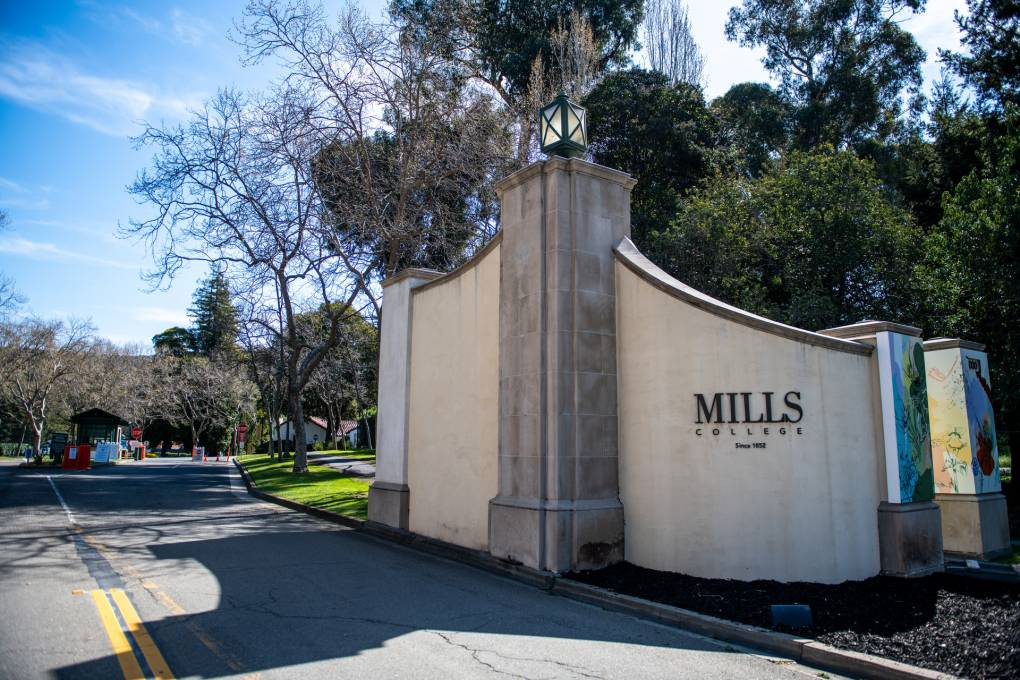
"caption": "The main gate to Mills College in Oakland on March 24, 2021.",
"description": null,
"title": "The main gate to Mills College in Oakland on March 24, 2021.",
"credit": "Beth LaBerge/KQED",
"status": "inherit",
"altTag": "The main entrance to the leafy Mills College campus, a rounded concrete wall with \"Mills\" written on it.",
"isLoading": false,
"fetchFailed": false
},
"news_11880339": {
"type": "attachments",
"id": "news_11880339",
"meta": {
"index": "attachments_1716263798",
"site": "news",
"id": "11880339",
"found": true
},
"parent": 11880147,
"imgSizes": {
"twentyfourteen-full-width": {
"file": "https://ww2.kqed.org/app/uploads/sites/10/2021/07/RS8355_73908800-1-1038x576.jpg",
"width": 1038,
"mimeType": "image/jpeg",
"height": 576
},
"thumbnail": {
"file": "https://ww2.kqed.org/app/uploads/sites/10/2021/07/RS8355_73908800-1-160x108.jpg",
"width": 160,
"mimeType": "image/jpeg",
"height": 108
},
"post-thumbnail": {
"file": "https://ww2.kqed.org/app/uploads/sites/10/2021/07/RS8355_73908800-1-672x372.jpg",
"width": 672,
"mimeType": "image/jpeg",
"height": 372
},
"kqedFullSize": {
"file": "https://ww2.kqed.org/app/uploads/sites/10/2021/07/RS8355_73908800-1.jpg",
"width": 1920,
"height": 1299
},
"large": {
"file": "https://ww2.kqed.org/app/uploads/sites/10/2021/07/RS8355_73908800-1-1020x690.jpg",
"width": 1020,
"mimeType": "image/jpeg",
"height": 690
},
"1536x1536": {
"file": "https://ww2.kqed.org/app/uploads/sites/10/2021/07/RS8355_73908800-1-1536x1039.jpg",
"width": 1536,
"mimeType": "image/jpeg",
"height": 1039
},
"medium": {
"file": "https://ww2.kqed.org/app/uploads/sites/10/2021/07/RS8355_73908800-1-800x541.jpg",
"width": 800,
"mimeType": "image/jpeg",
"height": 541
}
},
"publishDate": 1625262072,
"modified": 1625268091,
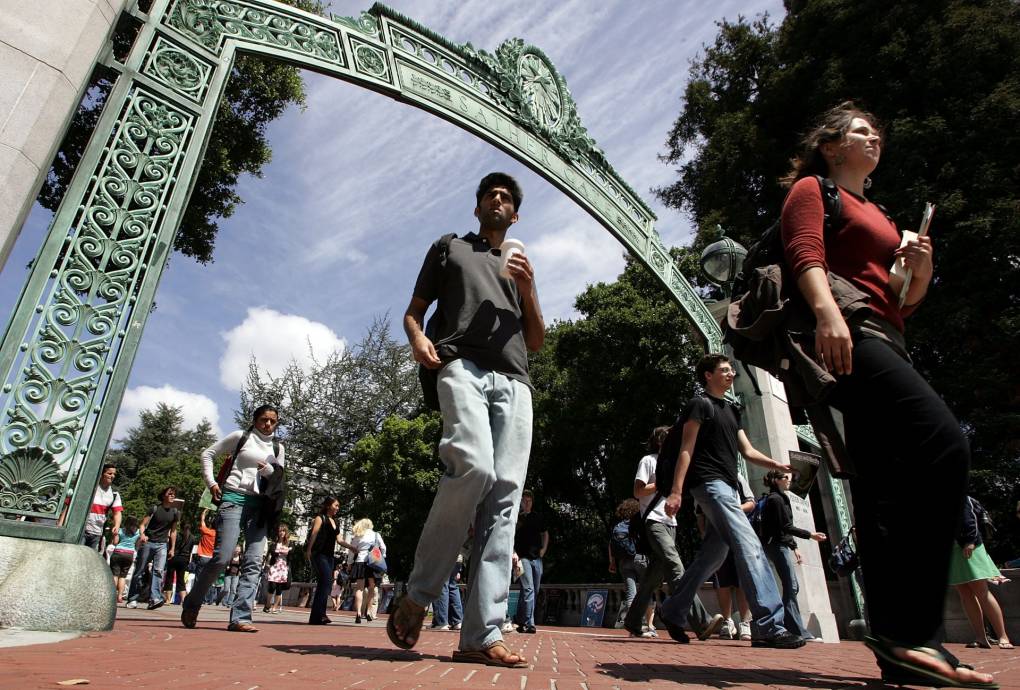
"caption": "UC Berkeley students walk through Sather Gate on UC Berkeley campus on April 17, 2007.",
"description": "UC Berkeley students walk through Sather Gate on the UC Berkeley campus April 17, 2007 in Berkeley, California.",
"title": "RS8355_73908800 (1)",
"credit": "Justin Sullivan/Getty Images",
"status": "inherit",
"altTag": null,
"isLoading": false,
"fetchFailed": false
},
"news_11866190": {
"type": "attachments",
"id": "news_11866190",
"meta": {
"index": "attachments_1716263798",
"site": "news",
"id": "11866190",
"found": true
},
"parent": 11865879,
"imgSizes": {
"twentyfourteen-full-width": {
"file": "https://ww2.kqed.org/app/uploads/sites/10/2021/03/berkeley1920-1920x1280-1-1038x576.jpeg",
"width": 1038,
"mimeType": "image/jpeg",
"height": 576
},
"thumbnail": {
"file": "https://ww2.kqed.org/app/uploads/sites/10/2021/03/berkeley1920-1920x1280-1-160x107.jpeg",
"width": 160,
"mimeType": "image/jpeg",
"height": 107
},
"post-thumbnail": {
"file": "https://ww2.kqed.org/app/uploads/sites/10/2021/03/berkeley1920-1920x1280-1-672x372.jpeg",
"width": 672,
"mimeType": "image/jpeg",
"height": 372
},
"kqedFullSize": {
"file": "https://ww2.kqed.org/app/uploads/sites/10/2021/03/berkeley1920-1920x1280-1.jpeg",
"width": 1920,
"height": 1280
},
"large": {
"file": "https://ww2.kqed.org/app/uploads/sites/10/2021/03/berkeley1920-1920x1280-1-1020x680.jpeg",
"width": 1020,
"mimeType": "image/jpeg",
"height": 680
},
"1536x1536": {
"file": "https://ww2.kqed.org/app/uploads/sites/10/2021/03/berkeley1920-1920x1280-1-1536x1024.jpeg",
"width": 1536,
"mimeType": "image/jpeg",
"height": 1024
},
"medium": {
"file": "https://ww2.kqed.org/app/uploads/sites/10/2021/03/berkeley1920-1920x1280-1-800x533.jpeg",
"width": 800,
"mimeType": "image/jpeg",
"height": 533
}
},
"publishDate": 1616552403,
"modified": 1616552581,
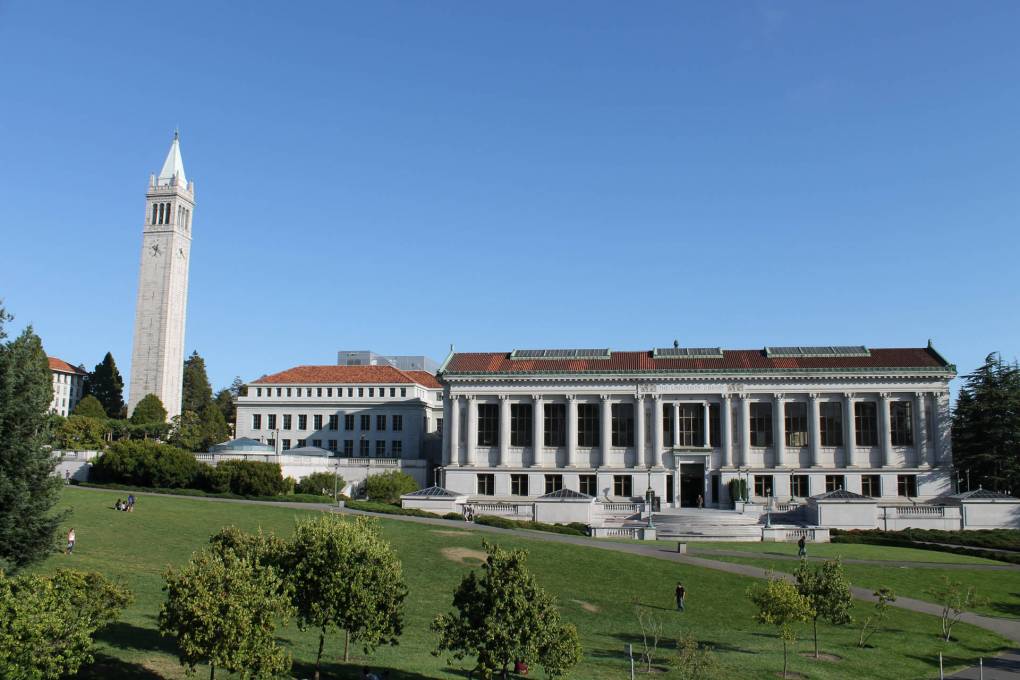
"caption": "UC Berkeley's Doe Library pictured. The university withdrew its proposal to close the South/Southeast Asia Library and integrate it with the larger library collection to create more office space amid mounting pressure from students, faculty, alumni and others.",
"description": "UC Berkeley's Doe Library pictured. The university withdrew its proposal to close the South/Southeast Asia Library and integrate it with the larger library collection to create more office space amid mounting pressure from students, faculty, alumni and others.",
"title": "berkeley1920-1920x1280",
"credit": "K.Oliver/\u003ca href=\"https://www.flickr.com/photos/63544355@N04/6011128252/in/photolist-aabB1h-6VWYDq-8WZBDf-dztwRQ-8KU2Ke-bpvQs1-6xbAR-78nMeh-wGiB8x-5fE57A-nVX4p8-bCqLgx-ccFqJs-bCAnKH-btzyLk-6nk5VZ-6GPXw7-cZ1wxy-4tA9Ez-bCCvAK-QUGBm-6K2nmD-QUvyC-p85B9-aVbEv-8GhUku-r54qc-6GKUvM-8GeJnM-QVZka-8GeK2i-4WonLf-6GPXRh-4dLdJ8-sNMKQ-QUvt1-4tEd1j-kTyGA-frpZkG-8fam9H-QVZcK-4tAa6V-QW5R4-op5aV-QVVhr-QVVXH-sNMEF-QW6nz-QUvPs-QUAhC\">Flickr\u003c/a>",
"status": "inherit",
"altTag": null,
"isLoading": false,
"fetchFailed": false
},
"news_11862371": {
"type": "attachments",
"id": "news_11862371",
"meta": {
"index": "attachments_1716263798",
"site": "news",
"id": "11862371",
"found": true
},
"parent": 11861666,
"imgSizes": {
"apple_news_ca_landscape_5_5": {
"file": "https://ww2.kqed.org/app/uploads/sites/10/2021/02/RS47366_032_Berkeley_PeoplesPark_02192021-qut-1044x783.jpg",
"width": 1044,
"mimeType": "image/jpeg",
"height": 783
},
"apple_news_ca_square_4_0": {
"file": "https://ww2.kqed.org/app/uploads/sites/10/2021/02/RS47366_032_Berkeley_PeoplesPark_02192021-qut-470x470.jpg",
"width": 470,
"mimeType": "image/jpeg",
"height": 470
},
"twentyfourteen-full-width": {
"file": "https://ww2.kqed.org/app/uploads/sites/10/2021/02/RS47366_032_Berkeley_PeoplesPark_02192021-qut-1038x576.jpg",
"width": 1038,
"mimeType": "image/jpeg",
"height": 576
},
"thumbnail": {
"file": "https://ww2.kqed.org/app/uploads/sites/10/2021/02/RS47366_032_Berkeley_PeoplesPark_02192021-qut-160x107.jpg",
"width": 160,
"mimeType": "image/jpeg",
"height": 107
},
"post-thumbnail": {
"file": "https://ww2.kqed.org/app/uploads/sites/10/2021/02/RS47366_032_Berkeley_PeoplesPark_02192021-qut-672x372.jpg",
"width": 672,
"mimeType": "image/jpeg",
"height": 372
},
"kqedFullSize": {
"file": "https://ww2.kqed.org/app/uploads/sites/10/2021/02/RS47366_032_Berkeley_PeoplesPark_02192021-qut.jpg",
"width": 1920,
"height": 1280
},
"apple_news_ca_landscape_4_7": {
"file": "https://ww2.kqed.org/app/uploads/sites/10/2021/02/RS47366_032_Berkeley_PeoplesPark_02192021-qut-632x474.jpg",
"width": 632,
"mimeType": "image/jpeg",
"height": 474
},
"large": {
"file": "https://ww2.kqed.org/app/uploads/sites/10/2021/02/RS47366_032_Berkeley_PeoplesPark_02192021-qut-1020x680.jpg",
"width": 1020,
"mimeType": "image/jpeg",
"height": 680
},
"apple_news_ca_landscape_4_0": {
"file": "https://ww2.kqed.org/app/uploads/sites/10/2021/02/RS47366_032_Berkeley_PeoplesPark_02192021-qut-536x402.jpg",
"width": 536,
"mimeType": "image/jpeg",
"height": 402
},
"apple_news_ca_portrait_12_9": {
"file": "https://ww2.kqed.org/app/uploads/sites/10/2021/02/RS47366_032_Berkeley_PeoplesPark_02192021-qut-1122x1280.jpg",
"width": 1122,
"mimeType": "image/jpeg",
"height": 1280
},
"medium": {
"file": "https://ww2.kqed.org/app/uploads/sites/10/2021/02/RS47366_032_Berkeley_PeoplesPark_02192021-qut-800x533.jpg",
"width": 800,
"mimeType": "image/jpeg",
"height": 533
},
"apple_news_ca_portrait_4_0": {
"file": "https://ww2.kqed.org/app/uploads/sites/10/2021/02/RS47366_032_Berkeley_PeoplesPark_02192021-qut-354x472.jpg",
"width": 354,
"mimeType": "image/jpeg",
"height": 472
},
"apple_news_ca_portrait_9_7": {
"file": "https://ww2.kqed.org/app/uploads/sites/10/2021/02/RS47366_032_Berkeley_PeoplesPark_02192021-qut-840x1120.jpg",
"width": 840,
"mimeType": "image/jpeg",
"height": 1120
},
"apple_news_ca_landscape_12_9": {
"file": "https://ww2.kqed.org/app/uploads/sites/10/2021/02/RS47366_032_Berkeley_PeoplesPark_02192021-qut-1832x1280.jpg",
"width": 1832,
"mimeType": "image/jpeg",
"height": 1280
},
"apple_news_ca_square_9_7": {
"file": "https://ww2.kqed.org/app/uploads/sites/10/2021/02/RS47366_032_Berkeley_PeoplesPark_02192021-qut-1104x1104.jpg",
"width": 1104,
"mimeType": "image/jpeg",
"height": 1104
},
"1536x1536": {
"file": "https://ww2.kqed.org/app/uploads/sites/10/2021/02/RS47366_032_Berkeley_PeoplesPark_02192021-qut-1536x1024.jpg",
"width": 1536,
"mimeType": "image/jpeg",
"height": 1024
},
"apple_news_ca_portrait_4_7": {
"file": "https://ww2.kqed.org/app/uploads/sites/10/2021/02/RS47366_032_Berkeley_PeoplesPark_02192021-qut-414x552.jpg",
"width": 414,
"mimeType": "image/jpeg",
"height": 552
},
"apple_news_ca_square_12_9": {
"file": "https://ww2.kqed.org/app/uploads/sites/10/2021/02/RS47366_032_Berkeley_PeoplesPark_02192021-qut-1472x1280.jpg",
"width": 1472,
"mimeType": "image/jpeg",
"height": 1280
},
"apple_news_ca_portrait_5_5": {
"file": "https://ww2.kqed.org/app/uploads/sites/10/2021/02/RS47366_032_Berkeley_PeoplesPark_02192021-qut-687x916.jpg",
"width": 687,
"mimeType": "image/jpeg",
"height": 916
},
"apple_news_ca_square_4_7": {
"file": "https://ww2.kqed.org/app/uploads/sites/10/2021/02/RS47366_032_Berkeley_PeoplesPark_02192021-qut-550x550.jpg",
"width": 550,
"mimeType": "image/jpeg",
"height": 550
},
"apple_news_ca_landscape_9_7": {
"file": "https://ww2.kqed.org/app/uploads/sites/10/2021/02/RS47366_032_Berkeley_PeoplesPark_02192021-qut-1376x1032.jpg",
"width": 1376,
"mimeType": "image/jpeg",
"height": 1032
},
"apple_news_ca_square_5_5": {
"file": "https://ww2.kqed.org/app/uploads/sites/10/2021/02/RS47366_032_Berkeley_PeoplesPark_02192021-qut-912x912.jpg",
"width": 912,
"mimeType": "image/jpeg",
"height": 912
}
},
"publishDate": 1614384777,
"modified": 1614384821,
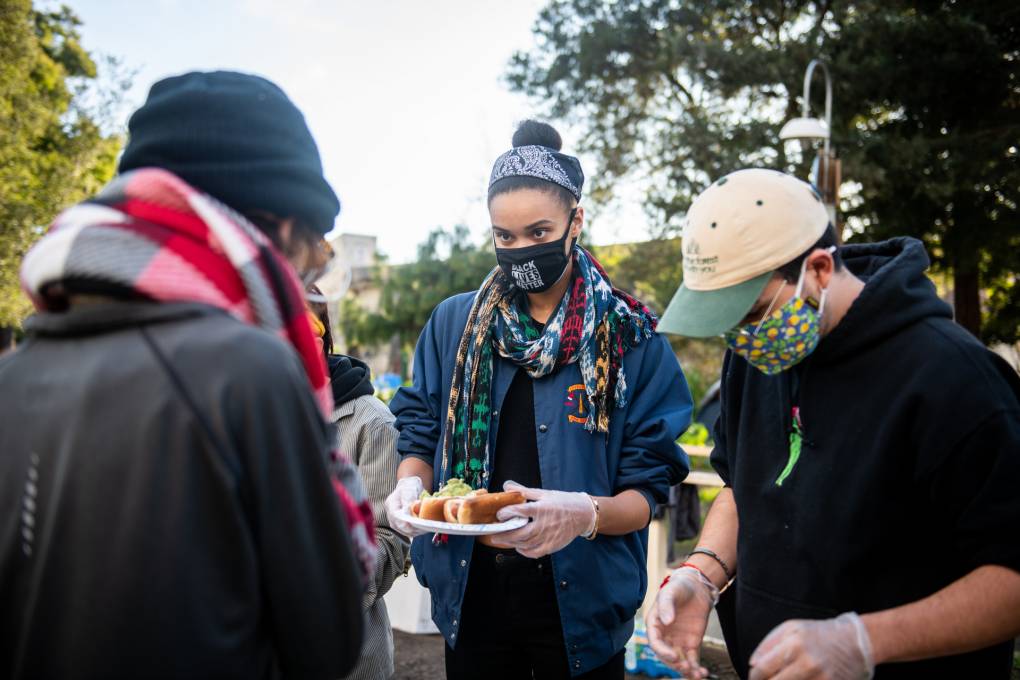
"caption": "Student volunteers Alecia Harger and Brandon Mendoza help serve food at People's Park in Berkeley on Feb. 19, 2021.",
"description": "Student volunteers Alecia Harger and Brandon Mendoza help serve food at People's Park in Berkeley on Feb. 19, 2021.",
"title": "RS47366_032_Berkeley_PeoplesPark_02192021-qut",
"credit": "Beth LaBerge/KQED",
"status": "inherit",
"altTag": null,
"isLoading": false,
"fetchFailed": false
},
"news_11854361": {
"type": "attachments",
"id": "news_11854361",
"meta": {
"index": "attachments_1716263798",
"site": "news",
"id": "11854361",
"found": true
},
"parent": 11854162,
"imgSizes": {
"apple_news_ca_landscape_5_5": {
"file": "https://ww2.kqed.org/app/uploads/sites/10/2021/01/RS46511_abdoul-aziz-qut-1044x783.jpg",
"width": 1044,
"mimeType": "image/jpeg",
"height": 783
},
"apple_news_ca_square_4_0": {
"file": "https://ww2.kqed.org/app/uploads/sites/10/2021/01/RS46511_abdoul-aziz-qut-470x470.jpg",
"width": 470,
"mimeType": "image/jpeg",
"height": 470
},
"twentyfourteen-full-width": {
"file": "https://ww2.kqed.org/app/uploads/sites/10/2021/01/RS46511_abdoul-aziz-qut-1038x576.jpg",
"width": 1038,
"mimeType": "image/jpeg",
"height": 576
},
"thumbnail": {
"file": "https://ww2.kqed.org/app/uploads/sites/10/2021/01/RS46511_abdoul-aziz-qut-160x120.jpg",
"width": 160,
"mimeType": "image/jpeg",
"height": 120
},
"post-thumbnail": {
"file": "https://ww2.kqed.org/app/uploads/sites/10/2021/01/RS46511_abdoul-aziz-qut-672x372.jpg",
"width": 672,
"mimeType": "image/jpeg",
"height": 372
},
"kqedFullSize": {
"file": "https://ww2.kqed.org/app/uploads/sites/10/2021/01/RS46511_abdoul-aziz-qut.jpg",
"width": 1920,
"height": 1440
},
"apple_news_ca_landscape_4_7": {
"file": "https://ww2.kqed.org/app/uploads/sites/10/2021/01/RS46511_abdoul-aziz-qut-632x474.jpg",
"width": 632,
"mimeType": "image/jpeg",
"height": 474
},
"large": {
"file": "https://ww2.kqed.org/app/uploads/sites/10/2021/01/RS46511_abdoul-aziz-qut-1020x765.jpg",
"width": 1020,
"mimeType": "image/jpeg",
"height": 765
},
"apple_news_ca_landscape_4_0": {
"file": "https://ww2.kqed.org/app/uploads/sites/10/2021/01/RS46511_abdoul-aziz-qut-536x402.jpg",
"width": 536,
"mimeType": "image/jpeg",
"height": 402
},
"apple_news_ca_portrait_12_9": {
"file": "https://ww2.kqed.org/app/uploads/sites/10/2021/01/RS46511_abdoul-aziz-qut-1122x1440.jpg",
"width": 1122,
"mimeType": "image/jpeg",
"height": 1440
},
"medium": {
"file": "https://ww2.kqed.org/app/uploads/sites/10/2021/01/RS46511_abdoul-aziz-qut-800x600.jpg",
"width": 800,
"mimeType": "image/jpeg",
"height": 600
},
"apple_news_ca_portrait_4_0": {
"file": "https://ww2.kqed.org/app/uploads/sites/10/2021/01/RS46511_abdoul-aziz-qut-354x472.jpg",
"width": 354,
"mimeType": "image/jpeg",
"height": 472
},
"apple_news_ca_portrait_9_7": {
"file": "https://ww2.kqed.org/app/uploads/sites/10/2021/01/RS46511_abdoul-aziz-qut-840x1120.jpg",
"width": 840,
"mimeType": "image/jpeg",
"height": 1120
},
"apple_news_ca_landscape_12_9": {
"file": "https://ww2.kqed.org/app/uploads/sites/10/2021/01/RS46511_abdoul-aziz-qut-1832x1374.jpg",
"width": 1832,
"mimeType": "image/jpeg",
"height": 1374
},
"apple_news_ca_square_9_7": {
"file": "https://ww2.kqed.org/app/uploads/sites/10/2021/01/RS46511_abdoul-aziz-qut-1104x1104.jpg",
"width": 1104,
"mimeType": "image/jpeg",
"height": 1104
},
"1536x1536": {
"file": "https://ww2.kqed.org/app/uploads/sites/10/2021/01/RS46511_abdoul-aziz-qut-1536x1152.jpg",
"width": 1536,
"mimeType": "image/jpeg",
"height": 1152
},
"apple_news_ca_portrait_4_7": {
"file": "https://ww2.kqed.org/app/uploads/sites/10/2021/01/RS46511_abdoul-aziz-qut-414x552.jpg",
"width": 414,
"mimeType": "image/jpeg",
"height": 552
},
"apple_news_ca_square_12_9": {
"file": "https://ww2.kqed.org/app/uploads/sites/10/2021/01/RS46511_abdoul-aziz-qut-1472x1440.jpg",
"width": 1472,
"mimeType": "image/jpeg",
"height": 1440
},
"apple_news_ca_portrait_5_5": {
"file": "https://ww2.kqed.org/app/uploads/sites/10/2021/01/RS46511_abdoul-aziz-qut-687x916.jpg",
"width": 687,
"mimeType": "image/jpeg",
"height": 916
},
"apple_news_ca_square_4_7": {
"file": "https://ww2.kqed.org/app/uploads/sites/10/2021/01/RS46511_abdoul-aziz-qut-550x550.jpg",
"width": 550,
"mimeType": "image/jpeg",
"height": 550
},
"apple_news_ca_landscape_9_7": {
"file": "https://ww2.kqed.org/app/uploads/sites/10/2021/01/RS46511_abdoul-aziz-qut-1376x1032.jpg",
"width": 1376,
"mimeType": "image/jpeg",
"height": 1032
},
"apple_news_ca_square_5_5": {
"file": "https://ww2.kqed.org/app/uploads/sites/10/2021/01/RS46511_abdoul-aziz-qut-912x912.jpg",
"width": 912,
"mimeType": "image/jpeg",
"height": 912
}
},
"publishDate": 1610069596,
"modified": 1610412572,
"caption": "UC Berkeley graduate student Abdoul Aziz Sandotin Coulibaly.",
"description": "UC Berkeley grad student Abdoul Aziz Sandotin Coulibaly.",
"title": "RS46511_abdoul aziz-qut",
"credit": "Courtesy Abdoul Aziz Sandotin Coulibaly",
"status": "inherit",
"altTag": null,
"isLoading": false,
"fetchFailed": false
},
"news_11813618": {
"type": "attachments",
"id": "news_11813618",
"meta": {
"index": "attachments_1716263798",
"site": "news",
"id": "11813618",
"found": true
},
"parent": 11813616,
"imgSizes": {
"apple_news_ca_landscape_5_5": {
"file": "https://ww2.kqed.org/app/uploads/sites/10/2020/04/KQED-Coronavirus-Updates-1-1044x628.jpg",
"width": 1044,
"mimeType": "image/jpeg",
"height": 628
},
"apple_news_ca_square_4_0": {
"file": "https://ww2.kqed.org/app/uploads/sites/10/2020/04/KQED-Coronavirus-Updates-1-470x470.jpg",
"width": 470,
"mimeType": "image/jpeg",
"height": 470
},
"twentyfourteen-full-width": {
"file": "https://ww2.kqed.org/app/uploads/sites/10/2020/04/KQED-Coronavirus-Updates-1-1038x576.jpg",
"width": 1038,
"mimeType": "image/jpeg",
"height": 576
},
"thumbnail": {
"file": "https://ww2.kqed.org/app/uploads/sites/10/2020/04/KQED-Coronavirus-Updates-1-160x84.jpg",
"width": 160,
"mimeType": "image/jpeg",
"height": 84
},
"post-thumbnail": {
"file": "https://ww2.kqed.org/app/uploads/sites/10/2020/04/KQED-Coronavirus-Updates-1-672x372.jpg",
"width": 672,
"mimeType": "image/jpeg",
"height": 372
},
"kqedFullSize": {
"file": "https://ww2.kqed.org/app/uploads/sites/10/2020/04/KQED-Coronavirus-Updates-1.jpg",
"width": 1200,
"height": 628
},
"apple_news_ca_landscape_4_7": {
"file": "https://ww2.kqed.org/app/uploads/sites/10/2020/04/KQED-Coronavirus-Updates-1-632x474.jpg",
"width": 632,
"mimeType": "image/jpeg",
"height": 474
},
"large": {
"file": "https://ww2.kqed.org/app/uploads/sites/10/2020/04/KQED-Coronavirus-Updates-1-1020x534.jpg",
"width": 1020,
"mimeType": "image/jpeg",
"height": 534
},
"apple_news_ca_landscape_4_0": {
"file": "https://ww2.kqed.org/app/uploads/sites/10/2020/04/KQED-Coronavirus-Updates-1-536x402.jpg",
"width": 536,
"mimeType": "image/jpeg",
"height": 402
},
"apple_news_ca_portrait_12_9": {
"file": "https://ww2.kqed.org/app/uploads/sites/10/2020/04/KQED-Coronavirus-Updates-1-1122x628.jpg",
"width": 1122,
"mimeType": "image/jpeg",
"height": 628
},
"medium": {
"file": "https://ww2.kqed.org/app/uploads/sites/10/2020/04/KQED-Coronavirus-Updates-1-800x419.jpg",
"width": 800,
"mimeType": "image/jpeg",
"height": 419
},
"apple_news_ca_portrait_4_0": {
"file": "https://ww2.kqed.org/app/uploads/sites/10/2020/04/KQED-Coronavirus-Updates-1-354x472.jpg",
"width": 354,
"mimeType": "image/jpeg",
"height": 472
},
"apple_news_ca_portrait_9_7": {
"file": "https://ww2.kqed.org/app/uploads/sites/10/2020/04/KQED-Coronavirus-Updates-1-840x628.jpg",
"width": 840,
"mimeType": "image/jpeg",
"height": 628
},
"apple_news_ca_square_9_7": {
"file": "https://ww2.kqed.org/app/uploads/sites/10/2020/04/KQED-Coronavirus-Updates-1-1104x628.jpg",
"width": 1104,
"mimeType": "image/jpeg",
"height": 628
},
"apple_news_ca_portrait_4_7": {
"file": "https://ww2.kqed.org/app/uploads/sites/10/2020/04/KQED-Coronavirus-Updates-1-414x552.jpg",
"width": 414,
"mimeType": "image/jpeg",
"height": 552
},
"apple_news_ca_portrait_5_5": {
"file": "https://ww2.kqed.org/app/uploads/sites/10/2020/04/KQED-Coronavirus-Updates-1-687x628.jpg",
"width": 687,
"mimeType": "image/jpeg",
"height": 628
},
"apple_news_ca_square_4_7": {
"file": "https://ww2.kqed.org/app/uploads/sites/10/2020/04/KQED-Coronavirus-Updates-1-550x550.jpg",
"width": 550,
"mimeType": "image/jpeg",
"height": 550
},
"apple_news_ca_square_5_5": {
"file": "https://ww2.kqed.org/app/uploads/sites/10/2020/04/KQED-Coronavirus-Updates-1-912x628.jpg",
"width": 912,
"mimeType": "image/jpeg",
"height": 628
}
},
"publishDate": 1587575003,
"modified": 1587575062,
"caption": "Coronavirus Live Updates logo.",
"description": null,
"title": "KQED-Coronavirus-Live-Updates",
"credit": null,
"status": "inherit",
"isLoading": false,
"fetchFailed": false
},
"news_11852571": {
"type": "attachments",
"id": "news_11852571",
"meta": {
"index": "attachments_1716263798",
"site": "news",
"id": "11852571",
"found": true
},
"parent": 11852522,
"imgSizes": {
"apple_news_ca_square_4_0": {
"file": "https://ww2.kqed.org/app/uploads/sites/10/2020/12/RS46477_abdoul-aziz-qut-470x470.jpg",
"width": 470,
"mimeType": "image/jpeg",
"height": 470
},
"thumbnail": {
"file": "https://ww2.kqed.org/app/uploads/sites/10/2020/12/RS46477_abdoul-aziz-qut-160x107.jpg",
"width": 160,
"mimeType": "image/jpeg",
"height": 107
},
"post-thumbnail": {
"file": "https://ww2.kqed.org/app/uploads/sites/10/2020/12/RS46477_abdoul-aziz-qut-672x372.jpg",
"width": 672,
"mimeType": "image/jpeg",
"height": 372
},
"kqedFullSize": {
"file": "https://ww2.kqed.org/app/uploads/sites/10/2020/12/RS46477_abdoul-aziz-qut.jpg",
"width": 800,
"height": 533
},
"apple_news_ca_landscape_4_7": {
"file": "https://ww2.kqed.org/app/uploads/sites/10/2020/12/RS46477_abdoul-aziz-qut-632x474.jpg",
"width": 632,
"mimeType": "image/jpeg",
"height": 474
},
"apple_news_ca_portrait_4_7": {
"file": "https://ww2.kqed.org/app/uploads/sites/10/2020/12/RS46477_abdoul-aziz-qut-414x533.jpg",
"width": 414,
"mimeType": "image/jpeg",
"height": 533
},
"apple_news_ca_portrait_5_5": {
"file": "https://ww2.kqed.org/app/uploads/sites/10/2020/12/RS46477_abdoul-aziz-qut-687x533.jpg",
"width": 687,
"mimeType": "image/jpeg",
"height": 533
},
"apple_news_ca_square_4_7": {
"file": "https://ww2.kqed.org/app/uploads/sites/10/2020/12/RS46477_abdoul-aziz-qut-550x533.jpg",
"width": 550,
"mimeType": "image/jpeg",
"height": 533
},
"apple_news_ca_landscape_4_0": {
"file": "https://ww2.kqed.org/app/uploads/sites/10/2020/12/RS46477_abdoul-aziz-qut-536x402.jpg",
"width": 536,
"mimeType": "image/jpeg",
"height": 402
},
"apple_news_ca_portrait_4_0": {
"file": "https://ww2.kqed.org/app/uploads/sites/10/2020/12/RS46477_abdoul-aziz-qut-354x472.jpg",
"width": 354,
"mimeType": "image/jpeg",
"height": 472
}
},
"publishDate": 1608742668,
"modified": 1609196784,
"caption": "UC Berkeley grad student Abdoul Aziz Sandotin Coulibaly, from the Ivory Coast, is stuck in Berkeley for the holidays.",
"description": "UC Berkeley graduate student Abdoul Aziz Sandotin Coulibaly, from the Ivory Coast, is stuck in Berkeley for the holidays.",
"title": "RS46477_abdoul aziz-qut",
"credit": "Courtesy Abdoul Aziz Sandotin Coulibaly",
"status": "inherit",
"altTag": "\"\"",
"isLoading": false,
"fetchFailed": false
},
"news_11838300": {
"type": "attachments",
"id": "news_11838300",
"meta": {
"index": "attachments_1716263798",
"site": "news",
"id": "11838300",
"found": true
},
"parent": 11838205,
"imgSizes": {
"apple_news_ca_landscape_5_5": {
"file": "https://ww2.kqed.org/app/uploads/sites/10/2020/09/Berkeley-1-1044x783.png",
"width": 1044,
"mimeType": "image/png",
"height": 783
},
"apple_news_ca_square_4_0": {
"file": "https://ww2.kqed.org/app/uploads/sites/10/2020/09/Berkeley-1-470x470.png",
"width": 470,
"mimeType": "image/png",
"height": 470
},
"twentyfourteen-full-width": {
"file": "https://ww2.kqed.org/app/uploads/sites/10/2020/09/Berkeley-1-1038x576.png",
"width": 1038,
"mimeType": "image/png",
"height": 576
},
"thumbnail": {
"file": "https://ww2.kqed.org/app/uploads/sites/10/2020/09/Berkeley-1-160x108.png",
"width": 160,
"mimeType": "image/png",
"height": 108
},
"post-thumbnail": {
"file": "https://ww2.kqed.org/app/uploads/sites/10/2020/09/Berkeley-1-672x372.png",
"width": 672,
"mimeType": "image/png",
"height": 372
},
"kqedFullSize": {
"file": "https://ww2.kqed.org/app/uploads/sites/10/2020/09/Berkeley-1.png",
"width": 1900,
"height": 1280
},
"apple_news_ca_landscape_4_7": {
"file": "https://ww2.kqed.org/app/uploads/sites/10/2020/09/Berkeley-1-632x474.png",
"width": 632,
"mimeType": "image/png",
"height": 474
},
"large": {
"file": "https://ww2.kqed.org/app/uploads/sites/10/2020/09/Berkeley-1-1020x687.png",
"width": 1020,
"mimeType": "image/png",
"height": 687
},
"apple_news_ca_landscape_4_0": {
"file": "https://ww2.kqed.org/app/uploads/sites/10/2020/09/Berkeley-1-536x402.png",
"width": 536,
"mimeType": "image/png",
"height": 402
},
"apple_news_ca_portrait_12_9": {
"file": "https://ww2.kqed.org/app/uploads/sites/10/2020/09/Berkeley-1-1122x1280.png",
"width": 1122,
"mimeType": "image/png",
"height": 1280
},
"medium": {
"file": "https://ww2.kqed.org/app/uploads/sites/10/2020/09/Berkeley-1-800x539.png",
"width": 800,
"mimeType": "image/png",
"height": 539
},
"apple_news_ca_portrait_4_0": {
"file": "https://ww2.kqed.org/app/uploads/sites/10/2020/09/Berkeley-1-354x472.png",
"width": 354,
"mimeType": "image/png",
"height": 472
},
"apple_news_ca_portrait_9_7": {
"file": "https://ww2.kqed.org/app/uploads/sites/10/2020/09/Berkeley-1-840x1120.png",
"width": 840,
"mimeType": "image/png",
"height": 1120
},
"apple_news_ca_landscape_12_9": {
"file": "https://ww2.kqed.org/app/uploads/sites/10/2020/09/Berkeley-1-1832x1280.png",
"width": 1832,
"mimeType": "image/png",
"height": 1280
},
"apple_news_ca_square_9_7": {
"file": "https://ww2.kqed.org/app/uploads/sites/10/2020/09/Berkeley-1-1104x1104.png",
"width": 1104,
"mimeType": "image/png",
"height": 1104
},
"1536x1536": {
"file": "https://ww2.kqed.org/app/uploads/sites/10/2020/09/Berkeley-1-1536x1035.png",
"width": 1536,
"mimeType": "image/png",
"height": 1035
},
"apple_news_ca_portrait_4_7": {
"file": "https://ww2.kqed.org/app/uploads/sites/10/2020/09/Berkeley-1-414x552.png",
"width": 414,
"mimeType": "image/png",
"height": 552
},
"apple_news_ca_square_12_9": {
"file": "https://ww2.kqed.org/app/uploads/sites/10/2020/09/Berkeley-1-1472x1280.png",
"width": 1472,
"mimeType": "image/png",
"height": 1280
},
"apple_news_ca_portrait_5_5": {
"file": "https://ww2.kqed.org/app/uploads/sites/10/2020/09/Berkeley-1-687x916.png",
"width": 687,
"mimeType": "image/png",
"height": 916
},
"apple_news_ca_square_4_7": {
"file": "https://ww2.kqed.org/app/uploads/sites/10/2020/09/Berkeley-1-550x550.png",
"width": 550,
"mimeType": "image/png",
"height": 550
},
"apple_news_ca_landscape_9_7": {
"file": "https://ww2.kqed.org/app/uploads/sites/10/2020/09/Berkeley-1-1376x1032.png",
"width": 1376,
"mimeType": "image/png",
"height": 1032
},
"apple_news_ca_square_5_5": {
"file": "https://ww2.kqed.org/app/uploads/sites/10/2020/09/Berkeley-1-912x912.png",
"width": 912,
"mimeType": "image/png",
"height": 912
}
},
"publishDate": 1600299214,
"modified": 1619183948,
"caption": null,
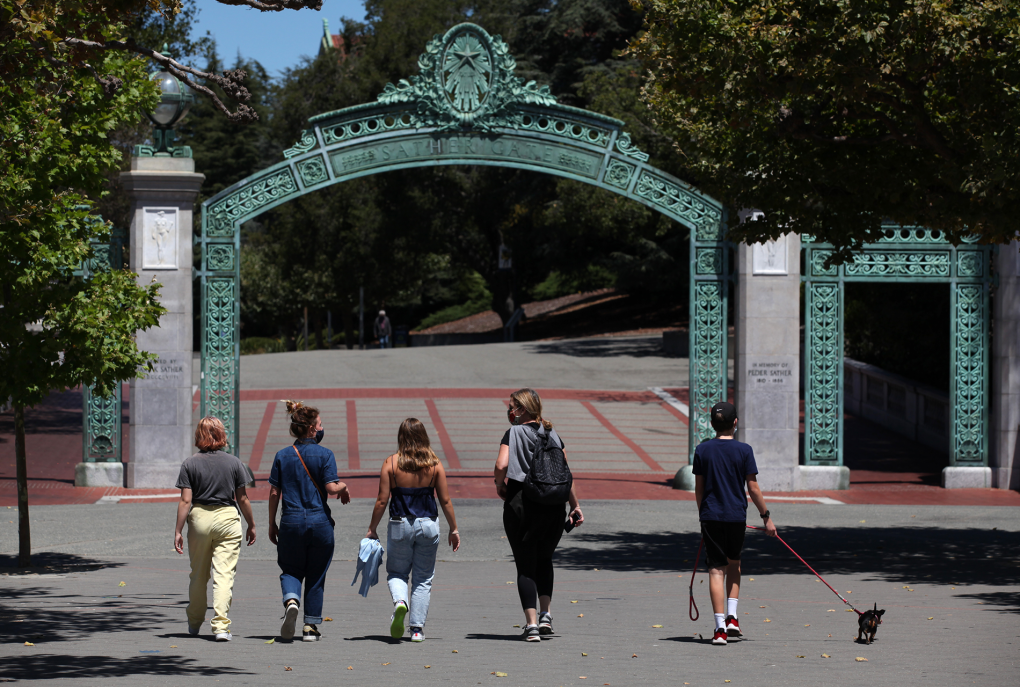
"description": "Students wearing masks at UC Berkeley walk through Sather Gate.",
"title": "Berkeley",
"credit": "Justin Sullivan/Getty Images",
"status": "inherit",
"altTag": "Students wearing masks at UC Berkeley walk through Sather Gate",
"isLoading": false,
"fetchFailed": false
},
"news_11849507": {
"type": "attachments",
"id": "news_11849507",
"meta": {
"index": "attachments_1716263798",
"site": "news",
"id": "11849507",
"found": true
},
"parent": 11849485,
"imgSizes": {
"apple_news_ca_landscape_5_5": {
"file": "https://ww2.kqed.org/app/uploads/sites/10/2020/12/RS46182_IMG_4913-qut-1044x783.jpg",
"width": 1044,
"mimeType": "image/jpeg",
"height": 783
},
"apple_news_ca_square_4_0": {
"file": "https://ww2.kqed.org/app/uploads/sites/10/2020/12/RS46182_IMG_4913-qut-470x470.jpg",
"width": 470,
"mimeType": "image/jpeg",
"height": 470
},
"twentyfourteen-full-width": {
"file": "https://ww2.kqed.org/app/uploads/sites/10/2020/12/RS46182_IMG_4913-qut-1038x576.jpg",
"width": 1038,
"mimeType": "image/jpeg",
"height": 576
},
"thumbnail": {
"file": "https://ww2.kqed.org/app/uploads/sites/10/2020/12/RS46182_IMG_4913-qut-160x120.jpg",
"width": 160,
"mimeType": "image/jpeg",
"height": 120
},
"post-thumbnail": {
"file": "https://ww2.kqed.org/app/uploads/sites/10/2020/12/RS46182_IMG_4913-qut-672x372.jpg",
"width": 672,
"mimeType": "image/jpeg",
"height": 372
},
"kqedFullSize": {
"file": "https://ww2.kqed.org/app/uploads/sites/10/2020/12/RS46182_IMG_4913-qut.jpg",
"width": 1920,
"height": 1440
},
"apple_news_ca_landscape_4_7": {
"file": "https://ww2.kqed.org/app/uploads/sites/10/2020/12/RS46182_IMG_4913-qut-632x474.jpg",
"width": 632,
"mimeType": "image/jpeg",
"height": 474
},
"large": {
"file": "https://ww2.kqed.org/app/uploads/sites/10/2020/12/RS46182_IMG_4913-qut-1020x765.jpg",
"width": 1020,
"mimeType": "image/jpeg",
"height": 765
},
"apple_news_ca_landscape_4_0": {
"file": "https://ww2.kqed.org/app/uploads/sites/10/2020/12/RS46182_IMG_4913-qut-536x402.jpg",
"width": 536,
"mimeType": "image/jpeg",
"height": 402
},
"apple_news_ca_portrait_12_9": {
"file": "https://ww2.kqed.org/app/uploads/sites/10/2020/12/RS46182_IMG_4913-qut-1122x1440.jpg",
"width": 1122,
"mimeType": "image/jpeg",
"height": 1440
},
"medium": {
"file": "https://ww2.kqed.org/app/uploads/sites/10/2020/12/RS46182_IMG_4913-qut-800x600.jpg",
"width": 800,
"mimeType": "image/jpeg",
"height": 600
},
"apple_news_ca_portrait_4_0": {
"file": "https://ww2.kqed.org/app/uploads/sites/10/2020/12/RS46182_IMG_4913-qut-354x472.jpg",
"width": 354,
"mimeType": "image/jpeg",
"height": 472
},
"apple_news_ca_portrait_9_7": {
"file": "https://ww2.kqed.org/app/uploads/sites/10/2020/12/RS46182_IMG_4913-qut-840x1120.jpg",
"width": 840,
"mimeType": "image/jpeg",
"height": 1120
},
"apple_news_ca_landscape_12_9": {
"file": "https://ww2.kqed.org/app/uploads/sites/10/2020/12/RS46182_IMG_4913-qut-1832x1374.jpg",
"width": 1832,
"mimeType": "image/jpeg",
"height": 1374
},
"apple_news_ca_square_9_7": {
"file": "https://ww2.kqed.org/app/uploads/sites/10/2020/12/RS46182_IMG_4913-qut-1104x1104.jpg",
"width": 1104,
"mimeType": "image/jpeg",
"height": 1104
},
"1536x1536": {
"file": "https://ww2.kqed.org/app/uploads/sites/10/2020/12/RS46182_IMG_4913-qut-1536x1152.jpg",
"width": 1536,
"mimeType": "image/jpeg",
"height": 1152
},
"apple_news_ca_portrait_4_7": {
"file": "https://ww2.kqed.org/app/uploads/sites/10/2020/12/RS46182_IMG_4913-qut-414x552.jpg",
"width": 414,
"mimeType": "image/jpeg",
"height": 552
},
"apple_news_ca_square_12_9": {
"file": "https://ww2.kqed.org/app/uploads/sites/10/2020/12/RS46182_IMG_4913-qut-1472x1440.jpg",
"width": 1472,
"mimeType": "image/jpeg",
"height": 1440
},
"apple_news_ca_portrait_5_5": {
"file": "https://ww2.kqed.org/app/uploads/sites/10/2020/12/RS46182_IMG_4913-qut-687x916.jpg",
"width": 687,
"mimeType": "image/jpeg",
"height": 916
},
"apple_news_ca_square_4_7": {
"file": "https://ww2.kqed.org/app/uploads/sites/10/2020/12/RS46182_IMG_4913-qut-550x550.jpg",
"width": 550,
"mimeType": "image/jpeg",
"height": 550
},
"apple_news_ca_landscape_9_7": {
"file": "https://ww2.kqed.org/app/uploads/sites/10/2020/12/RS46182_IMG_4913-qut-1376x1032.jpg",
"width": 1376,
"mimeType": "image/jpeg",
"height": 1032
},
"apple_news_ca_square_5_5": {
"file": "https://ww2.kqed.org/app/uploads/sites/10/2020/12/RS46182_IMG_4913-qut-912x912.jpg",
"width": 912,
"mimeType": "image/jpeg",
"height": 912
}
},
"publishDate": 1607025349,
"modified": 1607032186,
"caption": "UC Berkeley student association president and political science major Victoria Vera pictured outside The Golden Bear Cafe. Students and dining staff have been hit particularly hard by the school's short- and long-term financial woes.",
"description": "UC Berkeley student association president and political science major Victoria Vera pictured outside The Golden Bear Cafe. Students and dining staff have been hit particularly hard by the school's short- and long-term financial woes.",
"title": "RS46182_IMG_4913-qut",
"credit": "Chloe Veltman/KQED",
"status": "inherit",
"altTag": "\"\"",
"isLoading": false,
"fetchFailed": false
},
"news_11847974": {
"type": "attachments",
"id": "news_11847974",
"meta": {
"index": "attachments_1716263798",
"site": "news",
"id": "11847974",
"found": true
},
"parent": 11847924,
"imgSizes": {
"apple_news_ca_landscape_5_5": {
"file": "https://ww2.kqed.org/app/uploads/sites/10/2020/11/LeConte-Hall-UC-Berkeley-1044x783.jpg",
"width": 1044,
"mimeType": "image/jpeg",
"height": 783
},
"apple_news_ca_square_4_0": {
"file": "https://ww2.kqed.org/app/uploads/sites/10/2020/11/LeConte-Hall-UC-Berkeley-470x470.jpg",
"width": 470,
"mimeType": "image/jpeg",
"height": 470
},
"twentyfourteen-full-width": {
"file": "https://ww2.kqed.org/app/uploads/sites/10/2020/11/LeConte-Hall-UC-Berkeley-1038x576.jpg",
"width": 1038,
"mimeType": "image/jpeg",
"height": 576
},
"thumbnail": {
"file": "https://ww2.kqed.org/app/uploads/sites/10/2020/11/LeConte-Hall-UC-Berkeley-160x107.jpg",
"width": 160,
"mimeType": "image/jpeg",
"height": 107
},
"post-thumbnail": {
"file": "https://ww2.kqed.org/app/uploads/sites/10/2020/11/LeConte-Hall-UC-Berkeley-672x372.jpg",
"width": 672,
"mimeType": "image/jpeg",
"height": 372
},
"kqedFullSize": {
"file": "https://ww2.kqed.org/app/uploads/sites/10/2020/11/LeConte-Hall-UC-Berkeley.jpg",
"width": 1920,
"height": 1280
},
"apple_news_ca_landscape_4_7": {
"file": "https://ww2.kqed.org/app/uploads/sites/10/2020/11/LeConte-Hall-UC-Berkeley-632x474.jpg",
"width": 632,
"mimeType": "image/jpeg",
"height": 474
},
"large": {
"file": "https://ww2.kqed.org/app/uploads/sites/10/2020/11/LeConte-Hall-UC-Berkeley-1020x680.jpg",
"width": 1020,
"mimeType": "image/jpeg",
"height": 680
},
"apple_news_ca_landscape_4_0": {
"file": "https://ww2.kqed.org/app/uploads/sites/10/2020/11/LeConte-Hall-UC-Berkeley-536x402.jpg",
"width": 536,
"mimeType": "image/jpeg",
"height": 402
},
"apple_news_ca_portrait_12_9": {
"file": "https://ww2.kqed.org/app/uploads/sites/10/2020/11/LeConte-Hall-UC-Berkeley-1122x1280.jpg",
"width": 1122,
"mimeType": "image/jpeg",
"height": 1280
},
"medium": {
"file": "https://ww2.kqed.org/app/uploads/sites/10/2020/11/LeConte-Hall-UC-Berkeley-800x533.jpg",
"width": 800,
"mimeType": "image/jpeg",
"height": 533
},
"apple_news_ca_portrait_4_0": {
"file": "https://ww2.kqed.org/app/uploads/sites/10/2020/11/LeConte-Hall-UC-Berkeley-354x472.jpg",
"width": 354,
"mimeType": "image/jpeg",
"height": 472
},
"apple_news_ca_portrait_9_7": {
"file": "https://ww2.kqed.org/app/uploads/sites/10/2020/11/LeConte-Hall-UC-Berkeley-840x1120.jpg",
"width": 840,
"mimeType": "image/jpeg",
"height": 1120
},
"apple_news_ca_landscape_12_9": {
"file": "https://ww2.kqed.org/app/uploads/sites/10/2020/11/LeConte-Hall-UC-Berkeley-1832x1280.jpg",
"width": 1832,
"mimeType": "image/jpeg",
"height": 1280
},
"apple_news_ca_square_9_7": {
"file": "https://ww2.kqed.org/app/uploads/sites/10/2020/11/LeConte-Hall-UC-Berkeley-1104x1104.jpg",
"width": 1104,
"mimeType": "image/jpeg",
"height": 1104
},
"1536x1536": {
"file": "https://ww2.kqed.org/app/uploads/sites/10/2020/11/LeConte-Hall-UC-Berkeley-1536x1024.jpg",
"width": 1536,
"mimeType": "image/jpeg",
"height": 1024
},
"apple_news_ca_portrait_4_7": {
"file": "https://ww2.kqed.org/app/uploads/sites/10/2020/11/LeConte-Hall-UC-Berkeley-414x552.jpg",
"width": 414,
"mimeType": "image/jpeg",
"height": 552
},
"apple_news_ca_square_12_9": {
"file": "https://ww2.kqed.org/app/uploads/sites/10/2020/11/LeConte-Hall-UC-Berkeley-1472x1280.jpg",
"width": 1472,
"mimeType": "image/jpeg",
"height": 1280
},
"apple_news_ca_portrait_5_5": {
"file": "https://ww2.kqed.org/app/uploads/sites/10/2020/11/LeConte-Hall-UC-Berkeley-687x916.jpg",
"width": 687,
"mimeType": "image/jpeg",
"height": 916
},
"apple_news_ca_square_4_7": {
"file": "https://ww2.kqed.org/app/uploads/sites/10/2020/11/LeConte-Hall-UC-Berkeley-550x550.jpg",
"width": 550,
"mimeType": "image/jpeg",
"height": 550
},
"apple_news_ca_landscape_9_7": {
"file": "https://ww2.kqed.org/app/uploads/sites/10/2020/11/LeConte-Hall-UC-Berkeley-1376x1032.jpg",
"width": 1376,
"mimeType": "image/jpeg",
"height": 1032
},
"apple_news_ca_square_5_5": {
"file": "https://ww2.kqed.org/app/uploads/sites/10/2020/11/LeConte-Hall-UC-Berkeley-912x912.jpg",
"width": 912,
"mimeType": "image/jpeg",
"height": 912
}
},
"publishDate": 1605737949,
"modified": 1605738095,
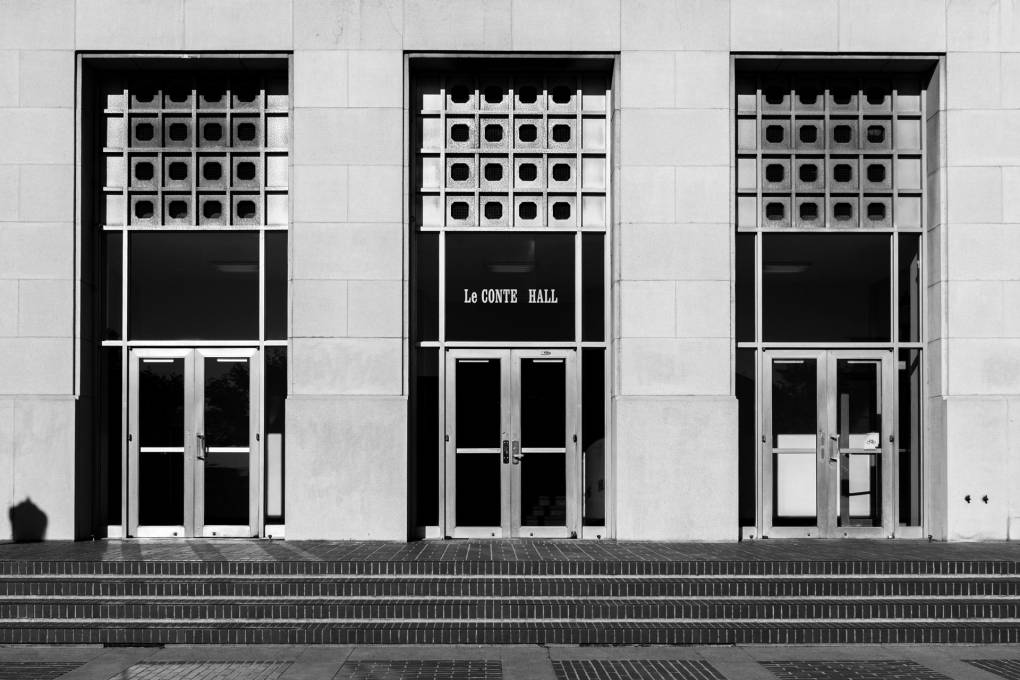
"caption": "LeConte Hall, which houses UC Berkeley's physics department, will be renamed.",
"description": null,
"title": "LeConte-Hall-UC-Berkeley",
"credit": "\u003ca href=\"https://www.flickr.com/photos/alisinan/\">ali sinan köksal\u003c/a>/Flickr",
"status": "inherit",
"isLoading": false,
"fetchFailed": false
},
"news_11842021": {
"type": "attachments",
"id": "news_11842021",
"meta": {
"index": "attachments_1716263798",
"site": "news",
"id": "11842021",
"found": true
},
"parent": 11841946,
"imgSizes": {
"apple_news_ca_landscape_5_5": {
"file": "https://ww2.kqed.org/app/uploads/sites/10/2020/10/RS45301_warriors-qut-1044x783.jpg",
"width": 1044,
"mimeType": "image/jpeg",
"height": 783
},
"apple_news_ca_square_4_0": {
"file": "https://ww2.kqed.org/app/uploads/sites/10/2020/10/RS45301_warriors-qut-470x470.jpg",
"width": 470,
"mimeType": "image/jpeg",
"height": 470
},
"twentyfourteen-full-width": {
"file": "https://ww2.kqed.org/app/uploads/sites/10/2020/10/RS45301_warriors-qut-1038x576.jpg",
"width": 1038,
"mimeType": "image/jpeg",
"height": 576
},
"thumbnail": {
"file": "https://ww2.kqed.org/app/uploads/sites/10/2020/10/RS45301_warriors-qut-160x120.jpg",
"width": 160,
"mimeType": "image/jpeg",
"height": 120
},
"post-thumbnail": {
"file": "https://ww2.kqed.org/app/uploads/sites/10/2020/10/RS45301_warriors-qut-672x372.jpg",
"width": 672,
"mimeType": "image/jpeg",
"height": 372
},
"kqedFullSize": {
"file": "https://ww2.kqed.org/app/uploads/sites/10/2020/10/RS45301_warriors-qut.jpg",
"width": 1920,
"height": 1440
},
"apple_news_ca_landscape_4_7": {
"file": "https://ww2.kqed.org/app/uploads/sites/10/2020/10/RS45301_warriors-qut-632x474.jpg",
"width": 632,
"mimeType": "image/jpeg",
"height": 474
},
"large": {
"file": "https://ww2.kqed.org/app/uploads/sites/10/2020/10/RS45301_warriors-qut-1020x765.jpg",
"width": 1020,
"mimeType": "image/jpeg",
"height": 765
},
"apple_news_ca_landscape_4_0": {
"file": "https://ww2.kqed.org/app/uploads/sites/10/2020/10/RS45301_warriors-qut-536x402.jpg",
"width": 536,
"mimeType": "image/jpeg",
"height": 402
},
"apple_news_ca_portrait_12_9": {
"file": "https://ww2.kqed.org/app/uploads/sites/10/2020/10/RS45301_warriors-qut-1122x1440.jpg",
"width": 1122,
"mimeType": "image/jpeg",
"height": 1440
},
"medium": {
"file": "https://ww2.kqed.org/app/uploads/sites/10/2020/10/RS45301_warriors-qut-800x600.jpg",
"width": 800,
"mimeType": "image/jpeg",
"height": 600
},
"apple_news_ca_portrait_4_0": {
"file": "https://ww2.kqed.org/app/uploads/sites/10/2020/10/RS45301_warriors-qut-354x472.jpg",
"width": 354,
"mimeType": "image/jpeg",
"height": 472
},
"apple_news_ca_portrait_9_7": {
"file": "https://ww2.kqed.org/app/uploads/sites/10/2020/10/RS45301_warriors-qut-840x1120.jpg",
"width": 840,
"mimeType": "image/jpeg",
"height": 1120
},
"apple_news_ca_landscape_12_9": {
"file": "https://ww2.kqed.org/app/uploads/sites/10/2020/10/RS45301_warriors-qut-1832x1374.jpg",
"width": 1832,
"mimeType": "image/jpeg",
"height": 1374
},
"apple_news_ca_square_9_7": {
"file": "https://ww2.kqed.org/app/uploads/sites/10/2020/10/RS45301_warriors-qut-1104x1104.jpg",
"width": 1104,
"mimeType": "image/jpeg",
"height": 1104
},
"1536x1536": {
"file": "https://ww2.kqed.org/app/uploads/sites/10/2020/10/RS45301_warriors-qut-1536x1152.jpg",
"width": 1536,
"mimeType": "image/jpeg",
"height": 1152
},
"apple_news_ca_portrait_4_7": {
"file": "https://ww2.kqed.org/app/uploads/sites/10/2020/10/RS45301_warriors-qut-414x552.jpg",
"width": 414,
"mimeType": "image/jpeg",
"height": 552
},
"apple_news_ca_square_12_9": {
"file": "https://ww2.kqed.org/app/uploads/sites/10/2020/10/RS45301_warriors-qut-1472x1440.jpg",
"width": 1472,
"mimeType": "image/jpeg",
"height": 1440
},
"apple_news_ca_portrait_5_5": {
"file": "https://ww2.kqed.org/app/uploads/sites/10/2020/10/RS45301_warriors-qut-687x916.jpg",
"width": 687,
"mimeType": "image/jpeg",
"height": 916
},
"apple_news_ca_square_4_7": {
"file": "https://ww2.kqed.org/app/uploads/sites/10/2020/10/RS45301_warriors-qut-550x550.jpg",
"width": 550,
"mimeType": "image/jpeg",
"height": 550
},
"apple_news_ca_landscape_9_7": {
"file": "https://ww2.kqed.org/app/uploads/sites/10/2020/10/RS45301_warriors-qut-1376x1032.jpg",
"width": 1376,
"mimeType": "image/jpeg",
"height": 1032
},
"apple_news_ca_square_5_5": {
"file": "https://ww2.kqed.org/app/uploads/sites/10/2020/10/RS45301_warriors-qut-912x912.jpg",
"width": 912,
"mimeType": "image/jpeg",
"height": 912
}
},
"publishDate": 1602547371,
"modified": 1602885309,
"caption": "From left: UC Berkeley student activists Riya Master, Sam Warren, Derek Imai and Nicole Anyanwu\npose under Sather Gate, on Sproul Plaza, a site of many student actions over the years.",
"description": "From left: UC Berkeley student activists Riya Master, Sam Warren, Derek Imai and Nicole Anyanwu\npose under Sather Gate, on Sproul Plaza, a site of many student actions over the years.",
"title": "RS45301_warriors-qut",
"credit": "Chloe Veltman/KQED",
"status": "inherit",
"isLoading": false,
"fetchFailed": false
},
"news_11839311": {
"type": "attachments",
"id": "news_11839311",
"meta": {
"index": "attachments_1716263798",
"site": "news",
"id": "11839311",
"found": true
},
"parent": 11839307,
"imgSizes": {
"apple_news_ca_landscape_5_5": {
"file": "https://ww2.kqed.org/app/uploads/sites/10/2020/09/cashletes_092320_final-1044x783.png",
"width": 1044,
"mimeType": "image/png",
"height": 783
},
"apple_news_ca_square_4_0": {
"file": "https://ww2.kqed.org/app/uploads/sites/10/2020/09/cashletes_092320_final-470x470.png",
"width": 470,
"mimeType": "image/png",
"height": 470
},
"twentyfourteen-full-width": {
"file": "https://ww2.kqed.org/app/uploads/sites/10/2020/09/cashletes_092320_final-1038x576.png",
"width": 1038,
"mimeType": "image/png",
"height": 576
},
"thumbnail": {
"file": "https://ww2.kqed.org/app/uploads/sites/10/2020/09/cashletes_092320_final-160x118.png",
"width": 160,
"mimeType": "image/png",
"height": 118
},
"post-thumbnail": {
"file": "https://ww2.kqed.org/app/uploads/sites/10/2020/09/cashletes_092320_final-672x372.png",
"width": 672,
"mimeType": "image/png",
"height": 372
},
"kqedFullSize": {
"file": "https://ww2.kqed.org/app/uploads/sites/10/2020/09/cashletes_092320_final.png",
"width": 1920,
"height": 1413
},
"apple_news_ca_landscape_4_7": {
"file": "https://ww2.kqed.org/app/uploads/sites/10/2020/09/cashletes_092320_final-632x474.png",
"width": 632,
"mimeType": "image/png",
"height": 474
},
"large": {
"file": "https://ww2.kqed.org/app/uploads/sites/10/2020/09/cashletes_092320_final-1020x751.png",
"width": 1020,
"mimeType": "image/png",
"height": 751
},
"apple_news_ca_landscape_4_0": {
"file": "https://ww2.kqed.org/app/uploads/sites/10/2020/09/cashletes_092320_final-536x402.png",
"width": 536,
"mimeType": "image/png",
"height": 402
},
"apple_news_ca_portrait_12_9": {
"file": "https://ww2.kqed.org/app/uploads/sites/10/2020/09/cashletes_092320_final-1122x1413.png",
"width": 1122,
"mimeType": "image/png",
"height": 1413
},
"medium": {
"file": "https://ww2.kqed.org/app/uploads/sites/10/2020/09/cashletes_092320_final-800x589.png",
"width": 800,
"mimeType": "image/png",
"height": 589
},
"apple_news_ca_portrait_4_0": {
"file": "https://ww2.kqed.org/app/uploads/sites/10/2020/09/cashletes_092320_final-354x472.png",
"width": 354,
"mimeType": "image/png",
"height": 472
},
"apple_news_ca_portrait_9_7": {
"file": "https://ww2.kqed.org/app/uploads/sites/10/2020/09/cashletes_092320_final-840x1120.png",
"width": 840,
"mimeType": "image/png",
"height": 1120
},
"apple_news_ca_landscape_12_9": {
"file": "https://ww2.kqed.org/app/uploads/sites/10/2020/09/cashletes_092320_final-1832x1374.png",
"width": 1832,
"mimeType": "image/png",
"height": 1374
},
"apple_news_ca_square_9_7": {
"file": "https://ww2.kqed.org/app/uploads/sites/10/2020/09/cashletes_092320_final-1104x1104.png",
"width": 1104,
"mimeType": "image/png",
"height": 1104
},
"1536x1536": {
"file": "https://ww2.kqed.org/app/uploads/sites/10/2020/09/cashletes_092320_final-1536x1130.png",
"width": 1536,
"mimeType": "image/png",
"height": 1130
},
"apple_news_ca_portrait_4_7": {
"file": "https://ww2.kqed.org/app/uploads/sites/10/2020/09/cashletes_092320_final-414x552.png",
"width": 414,
"mimeType": "image/png",
"height": 552
},
"apple_news_ca_square_12_9": {
"file": "https://ww2.kqed.org/app/uploads/sites/10/2020/09/cashletes_092320_final-1472x1413.png",
"width": 1472,
"mimeType": "image/png",
"height": 1413
},
"apple_news_ca_portrait_5_5": {
"file": "https://ww2.kqed.org/app/uploads/sites/10/2020/09/cashletes_092320_final-687x916.png",
"width": 687,
"mimeType": "image/png",
"height": 916
},
"apple_news_ca_square_4_7": {
"file": "https://ww2.kqed.org/app/uploads/sites/10/2020/09/cashletes_092320_final-550x550.png",
"width": 550,
"mimeType": "image/png",
"height": 550
},
"apple_news_ca_landscape_9_7": {
"file": "https://ww2.kqed.org/app/uploads/sites/10/2020/09/cashletes_092320_final-1376x1032.png",
"width": 1376,
"mimeType": "image/png",
"height": 1032
},
"apple_news_ca_square_5_5": {
"file": "https://ww2.kqed.org/app/uploads/sites/10/2020/09/cashletes_092320_final-912x912.png",
"width": 912,
"mimeType": "image/png",
"height": 912
}
},
"publishDate": 1600894020,
"modified": 1600894062,
"caption": null,
"description": null,
"title": "cashletes_092320_final",
"credit": null,
"status": "inherit",
"isLoading": false,
"fetchFailed": false
}
},
"audioPlayerReducer": {
"postId": "stream_live",
"isPaused": true,
"isPlaying": false,
"pfsActive": false,
"pledgeModalIsOpen": true,
"playerDrawerIsOpen": false,
"liveAudioPlayStartedAt": 0,
"liveAudioPlayContext": ""
},
"authorsReducer": {
"byline_news_11880147": {
"type": "authors",
"id": "byline_news_11880147",
"meta": {
"override": true
},
"slug": "byline_news_11880147",
"name": "\u003ca href=\"https://calmatters.org/author/mikhailzinshteyn/\">Mikhail Zinshteyn\u003c/a>",
"isLoading": false
},
"jbrooks": {
"type": "authors",
"id": "80",
"meta": {
"index": "authors_1716337520",
"id": "80",
"found": true
},
"name": "Jon Brooks",
"firstName": "Jon",
"lastName": "Brooks",
"slug": "jbrooks",
"email": "jbrooks@kqed.org",
"display_author_email": true,
"staff_mastheads": [
"science"
],
"title": "Digital Editor",
"bio": "Jon Brooks is a former Digital Editor for KQED Science. He is the former editor of KQED’s daily news blog, News Fix. In 2014, he won a California Journalism Award for his coverage of ride services like Uber and Lyft and the taxi industry. A veteran blogger, he previously worked for Yahoo! in various news writing and editing roles. Jon is also a playwright whose work has been produced in San Francisco, New York, Italy, and around the U.S. He has written about film for his own blog and studied film at Boston University.",
"avatar": "https://secure.gravatar.com/avatar/98887f7ed1c876ed414d4c915e969584?s=600&d=blank&r=g",
"twitter": "jbrooksfoy",
"facebook": null,
"instagram": null,
"linkedin": null,
"sites": [
{
"site": "arts",
"roles": [
"Contributor",
"editor"
]
},
{
"site": "news",
"roles": [
"author"
]
},
{
"site": "futureofyou",
"roles": [
"administrator"
]
},
{
"site": "mindshift",
"roles": [
"editor"
]
},
{
"site": "stateofhealth",
"roles": [
"editor"
]
},
{
"site": "science",
"roles": [
"administrator"
]
},
{
"site": "quest",
"roles": [
"editor"
]
}
],
"headData": {
"title": "Jon Brooks | KQED",
"description": "Digital Editor",
"ogImgSrc": "https://secure.gravatar.com/avatar/98887f7ed1c876ed414d4c915e969584?s=600&d=blank&r=g",
"twImgSrc": "https://secure.gravatar.com/avatar/98887f7ed1c876ed414d4c915e969584?s=600&d=blank&r=g"
},
"isLoading": false,
"link": "/author/jbrooks"
},
"markfiore": {
"type": "authors",
"id": "3236",
"meta": {
"index": "authors_1716337520",
"id": "3236",
"found": true
},
"name": "Mark Fiore",
"firstName": "Mark",
"lastName": "Fiore",
"slug": "markfiore",
"email": "mark@markfiore.com",
"display_author_email": false,
"staff_mastheads": [
"news"
],
"title": "KQED News Cartoonist",
"bio": "\u003ca href=\"http://www.MarkFiore.com\">MarkFiore.com\u003c/a> | \u003ca href=\"https://twitter.com/markfiore\">Follow on Twitter\u003c/a> | \u003ca href=\"https://www.facebook.com/pages/Mark-Fiore-Animated-Political-Cartoons/94451707396?ref=bookmarks\">Facebook\u003c/a> | \u003ca href=\"mailto:mark@markfiore.com\">email\u003c/a>\r\n\r\nPulitzer Prize-winner, Mark Fiore, who the Wall Street Journal has called “the undisputed guru of the form,” creates animated political cartoons in San Francisco, where his work has been featured regularly on the San Francisco Chronicle’s web site, SFGate.com. His work has appeared on Newsweek.com, Slate.com, CBSNews.com, MotherJones.com, DailyKos.com and NPR’s web site. Fiore’s political animation has appeared on CNN, Frontline, Bill Moyers Journal, Salon.com and cable and broadcast outlets across the globe.\r\n\r\nBeginning his professional life by drawing traditional political cartoons for newspapers, Fiore’s work appeared in publications ranging from the Washington Post to the Los Angeles Times. In the late 1990s, he began to experiment with animating political cartoons and, after a short stint at the San Jose Mercury News as their staff cartoonist, Fiore devoted all his energies to animation.\r\nGrowing up in California, Fiore also spent a good portion of his life in the backwoods of Idaho. It was this combination that shaped him politically. Mark majored in political science at Colorado College, where, in a perfect send-off for a cartoonist, he received his diploma in 1991 as commencement speaker Dick Cheney smiled approvingly.\r\nMark Fiore was awarded the Pulitzer Prize for political cartooning in 2010, a Robert F. Kennedy Journalism Award in 2004 and has twice received an Online Journalism Award for commentary from the Online News Association (2002, 2008). Fiore has received two awards for his work in new media from the National Cartoonists Society (2001, 2002), and in 2006 received The James Madison Freedom of Information Award from The Society of Professional Journalists.",
"avatar": "https://secure.gravatar.com/avatar/fc4e2a612b15b67bad0c6f0e1db4ca9b?s=600&d=blank&r=g",
"twitter": "MarkFiore",
"facebook": null,
"instagram": "https://www.instagram.com/markfiore/?hl=en",
"linkedin": null,
"sites": [
{
"site": "arts",
"roles": [
"contributor"
]
},
{
"site": "news",
"roles": [
"editor"
]
},
{
"site": "futureofyou",
"roles": [
"editor"
]
},
{
"site": "science",
"roles": [
"editor"
]
}
],
"headData": {
"title": "Mark Fiore | KQED",
"description": "KQED News Cartoonist",
"ogImgSrc": "https://secure.gravatar.com/avatar/fc4e2a612b15b67bad0c6f0e1db4ca9b?s=600&d=blank&r=g",
"twImgSrc": "https://secure.gravatar.com/avatar/fc4e2a612b15b67bad0c6f0e1db4ca9b?s=600&d=blank&r=g"
},
"isLoading": false,
"link": "/author/markfiore"
},
"cveltman": {
"type": "authors",
"id": "8608",
"meta": {
"index": "authors_1716337520",
"id": "8608",
"found": true
},
"name": "Chloe Veltman",
"firstName": "Chloe",
"lastName": "Veltman",
"slug": "cveltman",
"email": "cveltman@kqed.org",
"display_author_email": true,
"staff_mastheads": [],
"title": "Arts and Culture Reporter",
"bio": "Chloe Veltman is a former arts and culture reporter for KQED. Prior to joining the organization, she launched and led the arts bureau at Colorado Public Radio, served as the Bay Area's culture columnist for the New York Times, and was the founder, host and executive producer of VoiceBox, a national award-winning weekly podcast/radio show and live events series all about the human voice. Chloe is the recipient of numerous prizes, grants and fellowships including a Webby Award for her work on interactive storytelling, both the John S Knight Journalism Fellowship and Humanities Center Fellowship at Stanford University, the Sundance Arts Writing Fellowship and a Library of Congress Research Fellowship. She is the author of the book \"On Acting\" and has appeared as a guest lecturer at Yale University and the San Francisco Conservatory of Music among other institutions. She holds a BA in english literature from King's College, Cambridge, and a Masters in Dramaturgy from the Central School of Speech and Drama/Harvard Institute for Advanced Theater Training.\r\n\u003ca href=\"https://www.chloeveltman.com\">www.chloeveltman.com\u003c/a>",
"avatar": "https://secure.gravatar.com/avatar/55403394b00a1ddab683952c2eb2cf85?s=600&d=blank&r=g",
"twitter": "chloeveltman",
"facebook": null,
"instagram": null,
"linkedin": null,
"sites": [
{
"site": "arts",
"roles": []
},
{
"site": "news",
"roles": [
"author"
]
},
{
"site": "pop",
"roles": [
"editor"
]
},
{
"site": "science",
"roles": []
}
],
"headData": {
"title": "Chloe Veltman | KQED",
"description": "Arts and Culture Reporter",
"ogImgSrc": "https://secure.gravatar.com/avatar/55403394b00a1ddab683952c2eb2cf85?s=600&d=blank&r=g",
"twImgSrc": "https://secure.gravatar.com/avatar/55403394b00a1ddab683952c2eb2cf85?s=600&d=blank&r=g"
},
"isLoading": false,
"link": "/author/cveltman"
},
"mwiley": {
"type": "authors",
"id": "11526",
"meta": {
"index": "authors_1716337520",
"id": "11526",
"found": true
},
"name": "Michelle Wiley",
"firstName": "Michelle",
"lastName": "Wiley",
"slug": "mwiley",
"email": "mwiley@KQED.org",
"display_author_email": true,
"staff_mastheads": [],
"title": null,
"bio": "Michelle Wiley was the senior editor of weekends.",
"avatar": "https://secure.gravatar.com/avatar/3b897d82a09e8587e8e73fa69fbcc635?s=600&d=blank&r=g",
"twitter": "michelleewiley",
"facebook": null,
"instagram": null,
"linkedin": null,
"sites": [
{
"site": "",
"roles": [
"editor"
]
},
{
"site": "arts",
"roles": [
"editor"
]
},
{
"site": "news",
"roles": [
"subscriber"
]
},
{
"site": "lowdown",
"roles": [
"editor"
]
},
{
"site": "science",
"roles": [
"editor"
]
},
{
"site": "podcasts",
"roles": [
"editor"
]
}
],
"headData": {
"title": "Michelle Wiley | KQED",
"description": null,
"ogImgSrc": "https://secure.gravatar.com/avatar/3b897d82a09e8587e8e73fa69fbcc635?s=600&d=blank&r=g",
"twImgSrc": "https://secure.gravatar.com/avatar/3b897d82a09e8587e8e73fa69fbcc635?s=600&d=blank&r=g"
},
"isLoading": false,
"link": "/author/mwiley"
},
"jchang": {
"type": "authors",
"id": "11642",
"meta": {
"index": "authors_1716337520",
"id": "11642",
"found": true
},
"name": "Julie Chang",
"firstName": "Julie",
"lastName": "Chang",
"slug": "jchang",
"email": "jchang@kqed.org",
"display_author_email": false,
"staff_mastheads": [
"news"
],
"title": "KQED Contributor",
"bio": "Julie Chang is a reporter and producer (and occasional anchor) with the radio and digital teams at KQED. Before KQED, she worked at WAMU 88.5 in Washington D.C. and 89.3 KPCC in Los Angeles County. Her work has been featured on NPR’s Morning Edition and All Things Considered, Here & Now, the New York Times, and more. Julie graduated from UC Berkeley’s Graduate School of Journalism. She previously taught English at Pasadena City College, Fullerton College and Cal Poly Pomona. Julie earned her M.A. in English from Cal Poly Pomona and her B.A. in English from UCI with a minor in criminology.",
"avatar": "https://secure.gravatar.com/avatar/a7afce94ef127082c5475116b4a3b77d?s=600&d=blank&r=g",
"twitter": "BayAreaJulie",
"facebook": null,
"instagram": null,
"linkedin": "https://www.linkedin.com/in/julieyc/",
"sites": [
{
"site": "",
"roles": [
"editor"
]
},
{
"site": "news",
"roles": [
"author"
]
},
{
"site": "science",
"roles": [
"editor"
]
}
],
"headData": {
"title": "Julie Chang | KQED",
"description": "KQED Contributor",
"ogImgSrc": "https://secure.gravatar.com/avatar/a7afce94ef127082c5475116b4a3b77d?s=600&d=blank&r=g",
"twImgSrc": "https://secure.gravatar.com/avatar/a7afce94ef127082c5475116b4a3b77d?s=600&d=blank&r=g"
},
"isLoading": false,
"link": "/author/jchang"
},
"gfrenes": {
"type": "authors",
"id": "11732",
"meta": {
"index": "authors_1716337520",
"id": "11732",
"found": true
},
"name": "Gabriella Frenes",
"firstName": "Gabriella",
"lastName": "Frenes",
"slug": "gfrenes",
"email": "gfrenes@kqed.org",
"display_author_email": false,
"staff_mastheads": [],
"title": "KQED Contributor",
"bio": null,
"avatar": "https://secure.gravatar.com/avatar/2c29f711ce960d0ec5d504b68e28e419?s=600&d=blank&r=g",
"twitter": null,
"facebook": null,
"instagram": null,
"linkedin": null,
"sites": [
{
"site": "arts",
"roles": [
"author"
]
},
{
"site": "news",
"roles": [
"author"
]
}
],
"headData": {
"title": "Gabriella Frenes | KQED",
"description": "KQED Contributor",
"ogImgSrc": "https://secure.gravatar.com/avatar/2c29f711ce960d0ec5d504b68e28e419?s=600&d=blank&r=g",
"twImgSrc": "https://secure.gravatar.com/avatar/2c29f711ce960d0ec5d504b68e28e419?s=600&d=blank&r=g"
},
"isLoading": false,
"link": "/author/gfrenes"
}
},
"pagesReducer": {
"news_tag_uc-berkeley": {
"type": "terms",
"id": "news_17597",
"meta": {
"index": "terms_1716263798",
"site": "news",
"id": "17597",
"score": 8.45815
},
"featImg": null,
"name": "UC Berkeley",
"description": null,
"taxonomy": "tag",
"headData": {
"twImgId": null,
"twTitle": null,
"ogTitle": null,
"ogImgId": null,
"twDescription": null,
"description": null,
"title": "UC Berkeley Archives | KQED News",
"ogDescription": null
},
"ttid": 17631,
"slug": "uc-berkeley",
"isLoading": false,
"title": "UC Berkeley",
"pageMeta": {
"site": "news",
"WpPageTemplate": "page-topic-editorial",
"currentPage": 11
},
"blocks": [
{
"blockName": "kqed/post-list",
"attrs": {
"layout": "cardArticle2",
"query": "posts/news?tag=uc-berkeley",
"seeMore": false,
"paginated": true,
"page": 11
}
},
{
"blockName": "kqed/ad"
}
]
}
},
"pfsSessionReducer": {},
"postsReducer": {
"stream_live": {
"type": "live",
"id": "stream_live",
"audioUrl": "https://streams.kqed.org/kqedradio",
"title": "Live Stream",
"excerpt": "Live Stream information currently unavailable.",
"link": "/radio",
"featImg": "",
"label": {
"name": "KQED Live",
"link": "/"
}
},
"stream_kqedNewscast": {
"type": "posts",
"id": "stream_kqedNewscast",
"audioUrl": "https://www.kqed.org/.stream/anon/radio/RDnews/newscast.mp3?_=1",
"title": "KQED Newscast",
"featImg": "",
"label": {
"name": "88.5 FM",
"link": "/"
}
},
"news_11888178": {
"type": "posts",
"id": "news_11888178",
"meta": {
"index": "posts_1716263798",
"site": "news",
"id": "11888178",
"score": null,
"sort": [
1631666676000
]
},
"guestAuthors": [],
"slug": "mills-college-to-merge-with-northeastern-university-after-months-long-court-battle",
"title": "Mills College to Merge With Northeastern University, After Months-Long Court Battle",
"publishDate": 1631666676,
"format": "standard",
"headTitle": "Mills College to Merge With Northeastern University, After Months-Long Court Battle | KQED",
"labelTerm": {
"site": "news"
},
"content": "\u003cp>Mills College will merge with Northeastern University, after a vote by the Board of Trustees on Tuesday. The partnership between the schools is expected to take effect on or around July 2022. This comes after months in court with the school’s Alumnae Association of Mills College, which has sued to get more information about the proposed deal.\u003c/p>\n\u003cp>On Monday, the AAMC and Mills went to court over an ex parte application filed by an alumnae member of the board seeking to slow down the deal. The application would have extended a \u003ca href=\"https://www.kqed.org/news/11885304/judge-puts-another-pause-on-mills-college-merger-allows-financial-document-review\">previously granted restraining order\u003c/a> for another 60 days, preventing any vote from taking place. But an Alameda County judge denied that request, allowing the vote to go through.\u003c/p>\n\u003cp>“An alliance with Northeastern empowers Mills to continue doing what it has done since its founding in 1852: offer exceptional educational opportunities to students who want to make a difference,” said Mills President Elizabeth Hillman in a statement Tuesday. “It also means that the Mills campus will remain a vibrant center of learning with deep and meaningful connections with the broader Oakland community.”\u003c/p>\n\u003cp>[pullquote size='medium' align='right' citation=\"Mills President Elizabeth Hillman\"]‘An alliance with Northeastern empowers Mills to continue doing what it has done since its founding in 1852: offer exceptional educational opportunities to students who want to make a difference.’[/pullquote]\u003c/p>\n\u003cp>Since Mills College announced it would no longer be granting degrees last March, ideas have swirled about what the future might hold for the historic women’s college. First, there was a potential partnership with the University of California, Berkeley, then a planned on-campus program between the two schools that would bring UC students to the school.\u003c/p>\n\u003cp>Now, there’s the deal with Northeastern. And on Tuesday, Hillman announced a few details about what the merger would entail. For students, Mills will continue to grant degrees up until the partnership date, at which point degrees will be from “Mills College at Northeastern University.” For faculty, Northeastern says it will “honor and abide by the terms of tenure of Mills faculty who hold a tenured position or a continuous contract and will offer tenure-track faculty and adjunct faculty opportunities for employment.” And staff will become employees of Northeastern in July 2022.\u003c/p>\n\u003cp>But getting to this point has been hard on the entire Mills College community. And some say the many vacillations that have taken place since the college announced its plans to close have had a detrimental impact on students and faculty.\u003c/p>\n\u003ch3>\u003cb data-stringify-type=\"bold\">‘It couldn’t have came at a worse time\u003c/b>‘\u003c/h3>\n\u003cp>Shay Franco-Clausen says she never thought she’d be able to go to college. Growing up in Oakland and San José, her early education was interrupted due to being an incarcerated foster youth, and higher education always felt out of reach financially.\u003c/p>\n\u003cp>Then she found out about Mills College. It had smaller class sizes, which would be perfect for her learning style. And she was attracted to the college’s legacy of teaching progressive leaders, like East Bay Rep. Barbara Lee. Franco-Clausen is currently the vice-chairperson of the Santa Clara Valley Open Space Authority and says she has aspirations for national office, so Mills seemed to be the perfect fit.\u003c/p>\n\u003cp>“I said, ‘I want to go to Mills because I’m an elected official. I’m going to be a future Assemblywoman. I want to learn from some of the best and some of the brightest and be in spaces with women as such,'” she said.\u003c/p>\n\u003cp>[aside label=\"Related Stories\" postID=news_11885304,news_11867137,news_11865408]\u003c/p>\n\u003cp>So Franco-Clausen saved up money and worked out a schedule with her wife to care for their five kids. And when she applied for the school’s accelerated bachelor’s-to-master’s program in public policy, she got in.\u003c/p>\n\u003cp>Then halfway through her program, while she was sitting in class, Mills announced that it would stop granting degrees.\u003c/p>\n\u003cp>“It couldn’t have came at a worse time. [For] students like myself — who work, have families and [are] trying to reach our academic goals — to be hit with an interruption of our journey in our path at Mills … it’s blindsiding,” she said.\u003c/p>\n\u003cp>And those distractions didn’t just affect students.\u003c/p>\n\u003cp>“I don’t think anyone on the faculty or staff, aside from a few select higher-ups, knew anything about it coming down the pipeline,” said Roger Sparks, professor and chair of the economics department.\u003c/p>\n\u003cp>There was more confusion for students and faculty when it looked like another Bay Area giant might swoop in and provide some answers: UC Berkeley.\u003c/p>\n\u003cp>But that deal didn’t materialize.\u003c/p>\n\u003ch3>‘It never got to that point’\u003c/h3>\n\u003cp>Less than a week before Mills announced that it would be forced to close, officials at the Berkeley journalism school sent an email to faculty and lecturers. In it, Associate Dean Jeremy Rue had some exciting news: Berkeley was “exploring the purchase of Mills College campus in Oakland,” and that potential acquisition could present opportunities for the journalism school — including “an entire relocation of the school.”\u003c/p>\n\u003cp>There were plans to form a committee at the school to look into potential options and “explore its implications and desirability.”\u003c/p>\n\u003cp>\u003cimg loading=\"lazy\" decoding=\"async\" class=\"aligncenter size-full wp-image-11888180\" src=\"https://ww2.kqed.org/app/uploads/sites/10/2021/09/Screen-Shot-2021-09-07-at-7.32.14-PM.png\" alt=\"\" width=\"1390\" height=\"270\" srcset=\"https://cdn.kqed.org/wp-content/uploads/sites/10/2021/09/Screen-Shot-2021-09-07-at-7.32.14-PM.png 1390w, https://cdn.kqed.org/wp-content/uploads/sites/10/2021/09/Screen-Shot-2021-09-07-at-7.32.14-PM-800x155.png 800w, https://cdn.kqed.org/wp-content/uploads/sites/10/2021/09/Screen-Shot-2021-09-07-at-7.32.14-PM-1020x198.png 1020w, https://cdn.kqed.org/wp-content/uploads/sites/10/2021/09/Screen-Shot-2021-09-07-at-7.32.14-PM-160x31.png 160w\" sizes=\"(max-width: 1390px) 100vw, 1390px\">\u003c/p>\n\u003cp>But that committee was never formed. Interim Dean Geeta Anand told KQED that relocating to the school was “never seriously considered by me or any of our faculty. It just never got to that point.”\u003c/p>\n\u003cp>The rumored deal to purchase Mills also fell apart, though officials at both schools have declined to comment on why.\u003c/p>\n\u003cp>But according to Dr. Marilyn Schuster, an alumna of Mills and a member of the Board of Trustees who’s in favor of the deal with Northeastern, timeliness seems to have been a factor in the decision-making.\u003c/p>\n\u003cp>“Berkeley is part of the UC system. It’s a very complicated decision structure, and there were just other details that were taking a very long time and just didn’t work out,” she said. “I’m sorry it didn’t, frankly. I am a great admirer of what the university does. But when Northeastern started talking with us, the timing and the kinds of things that we could do in a partnership were quite attractive.”\u003c/p>\n\u003cp>One issue that has caused friction is the lack of communication between the Mills administration and the wider community. But, according to those familiar with higher education mergers of this type, keeping a deal like this under wraps isn’t unheard of.\u003c/p>\n\u003cp>[aside label=\"More Higher Education Stories\" tag=\"higher-education\"]\u003c/p>\n\u003cp>“This is a case where the college announced: We are going to have serious conversations with Northeastern. We have a rough framework for what a deal might look like … and they revealed that they were going to have these conversations,” said Larry Ladd, senior consultant for \u003ca href=\"https://agb.org\">The Association of Governing Boards of Universities and Colleges\u003c/a>. “So I think I consider that transparency.”\u003c/p>\n\u003cp>In fact, Ladd said, in some scenarios, potential partnerships aren’t even made public until a deal has already been worked out, like in 2018 when \u003ca href=\"https://www.bu.edu/wheelock/magazine-article/bu-wheelock-merger-will-create-new-school-of-education/\">Boston University merged with Wheelock College\u003c/a> to create a new school of education.\u003c/p>\n\u003cp>And because of the tenuous nature of the deals, it’s typical for schools to be stingy with the specifics while they’re in the midst of negotiations.\u003c/p>\n\u003cp>“Now [Mills and Northeastern] are going to have negotiations, you don’t have transparency during negotiations … they have to be done quietly and deals are made with each side doing the best to maximize its own interest,” Ladd said. “So you don’t have that public.”\u003c/p>\n\u003cp>Ladd says from what he’s seen from both sides, it appears the two colleges are attempting an “identity-protecting merger.”\u003c/p>\n\u003cp>“Its students would still be able to get a Mills College degree. The college would continue to advocate for its unique mission of representing women and supporting women, representing social justice issues and supporting social justice issues,” he said. “There will be various ways to preserve the stated mission of Mills, but it will not be a separate entity anymore.”\u003c/p>\n\u003cp>As the Mills community is trying to envision what their future with Northeastern might look like, the best insight into its future could lie across the pond. [ad fullwidth]\u003c/p>\n\u003ch3>Northeastern in London\u003c/h3>\n\u003cp>Back in 2019, \u003ca href=\"https://news.northeastern.edu/2019/02/26/northeastern-finalizes-partnership-agreement-with-new-college-of-the-humanities-in-london/\">Northeastern announced that it had finalized a partnership\u003c/a> with the New College of the Humanities in London. The small, privately owned school served about 200 students when it entered into the partnership. The new relationship added the London school’s campus to Northeastern’s network, giving students the opportunity to study across the U.S. and abroad, and allowed the school to confer degrees in the United Kingdom. It also opened up research opportunities for faculty and created new academic programs at NCH.\u003c/p>\n\u003cp>In the announcement, Northeastern officials said that under the partnership terms, “NCH at Northeastern will maintain its own faculty and staff, and will continue to oversee student admission and enrollment to the college. Its one-to-one tutorial model of personalized instruction will not change.”\u003c/p>\n\u003cp>But according to at least one former NCH professor, the school did go through some changes — particularly for faculty.\u003c/p>\n\u003cp>Monojit Chatterji taught economics at the school. He says when Northeastern came into the picture, the work increased dramatically.\u003c/p>\n\u003cp>[pullquote size='medium' align='right' citation=\"Senior Consultant Larry Ladd, Association of Governing Boards of Universities and Colleges \"]‘There will be various ways to preserve the stated mission of Mills, but it will not be a separate entity anymore.’[/pullquote]\u003c/p>\n\u003cp>“During the course of the year they were told, suddenly, to do things which they had never done before, which really added to their workloads,” he said. “Their salary wasn’t cut, that’s true, but their workloads went up.”\u003c/p>\n\u003cp>Chatterji said that’s largely due to the vast increase in class sizes when Northeastern students began attending the small school.\u003c/p>\n\u003cp>Professors saw their class assignments change as well, Chatterji said, as a result of the leadership changes. And he said the contracts offered to faculty contained so many teaching hours that doing research felt nearly impossible.\u003c/p>\n\u003cp>Ultimately, Chatterji decided not to pursue a new contract at the school.\u003c/p>\n\u003cp>“So if faculty at Mills think that they’re going to be in the same working conditions that they were in before, they should think again,” he said.\u003c/p>\n\u003cp>Northeastern did not respond to a request for comment.\u003c/p>\n\u003cp>According to Ladd, changes are to be expected to some degree when mergers of this type take place, particularly for schools in the situation that Mills is currently in.\u003c/p>\n\u003cp>“Unfortunately, the circumstances that Mills has experienced mean change is inevitable,” he said. “Even if the college stayed independent, it does not have the resources to continue to operate the way it has.”\u003c/p>\n\u003cp>But for those who want to keep the college intact as it is, the relationship with Northeastern felt like it was rushed, without much insight into why this option was the only viable one on the table.\u003c/p>\n\u003ch3>What’s the best path forward?\u003c/h3>\n\u003cp>While the Mills administration has moved forward on this deal, some alumnae have questioned whether or not the school could look into other financial options, like fundraising or restructuring the debt to find an outcome that would keep the school intact as-is. They said they even formally proposed some of these ideas to members of the Board of Trustees but felt their ideas were being brushed off.\u003c/p>\n\u003cp>“The Board of Trustees should be ashamed that they’ve brought this historic college to this state. This is their failure,” said Cynthia Mahood Levin, president of the board of Save Mills College Coalition, in a statement regarding the Northeastern deal. “They are selling out Mills College after years of poor financial mismanagement, and then claiming this sale as a ‘success.'”\u003c/p>\n\u003cp>[pullquote size='medium' align='right' citation=\"Cynthia Mahood Levin, Save Mills College Coalition\"]‘They are selling out Mills College after years of poor financial mismanagement, and then claiming this sale as a ‘success.”[/pullquote]\u003c/p>\n\u003cp>From Larry Ladd’s perspective, however, this deal may have been the best thing on the table for long-term sustainability — although, he said, that doesn’t mean the process isn’t painful for current and former students.\u003c/p>\n\u003cp>“Their heart has been broken. … They loved it when they went there. They’ve given money to it. They feel very loyal to it. It’s a part of their own identity. And then it’s going to change in radical ways,” he said. “It’s not going to be the college they remember.”\u003c/p>\n\u003cp>And it’s clear that the uncertainty of Mills’s future has already had an impact on students.\u003c/p>\n\u003cp>All of the turmoil at the college convinced Shay Franco-Clausen to switch out of the accelerated program and just pursue her bachelor’s degree. She’s now on track to finish in May 2022.\u003c/p>\n\u003cp>“I applied because I wanted to be a Mills graduate and because of the space it provided,” she said. “It’s been just a completely disappointing experience.”\u003c/p>\n\u003cp>[ad floatright]\u003c/p>\n",
"blocks": [],
"excerpt": "News of the merger comes after a legal fight between the Oakland college and its alumnae association, which sought to get more information before any deal moved forward.",
"status": "publish",
"parent": 0,
"modified": 1721157643,
"stats": {
"hasAudio": false,
"hasVideo": false,
"hasChartOrMap": false,
"iframeSrcs": [],
"hasGoogleForm": false,
"hasGallery": false,
"hasHearkenModule": false,
"hasPolis": false,
"paragraphCount": 57,
"wordCount": 2307
},
"headData": {
"title": "Mills College to Merge With Northeastern University, After Months-Long Court Battle | KQED",
"description": "News of the merger comes after a legal fight between the Oakland college and its alumnae association, which sought to get more information before any deal moved forward.",
"ogTitle": "",
"ogDescription": "",
"ogImgId": "",
"twTitle": "",
"twDescription": "",
"twImgId": "",
"schema": {
"@context": "https://schema.org",
"@type": "NewsArticle",
"headline": "Mills College to Merge With Northeastern University, After Months-Long Court Battle",
"datePublished": "2021-09-14T17:44:36-07:00",
"dateModified": "2024-07-16T12:20:43-07:00",
"image": "https://cdn.kqed.org/wp-content/uploads/2020/02/KQED-OG-Image@1x.png",
"isAccessibleForFree": "True",
"publisher": {
"@type": "NewsMediaOrganization",
"@id": "https://www.kqed.org/#organization",
"name": "KQED",
"logo": "https://cdn.kqed.org/wp-content/uploads/2020/02/KQED-OG-Image@1x.png",
"url": "https://www.kqed.org",
"sameAs": [
"https://www.facebook.com/KQED",
"https://twitter.com/KQED",
"https://www.instagram.com/kqed/",
"https://www.tiktok.com/@kqedofficial",
"https://www.linkedin.com/company/kqed",
"https://www.youtube.com/channel/UCeC0IOo7i1P_61zVUWbJ4nw"
]
}
}
},
"sticky": false,
"excludeFromSiteSearch": "Include",
"path": "/news/11888178/mills-college-to-merge-with-northeastern-university-after-months-long-court-battle",
"audioTrackLength": null,
"parsedContent": [
{
"type": "contentString",
"content": "\u003cdiv class=\"post-body\">\u003cp>\u003cp>Mills College will merge with Northeastern University, after a vote by the Board of Trustees on Tuesday. The partnership between the schools is expected to take effect on or around July 2022. This comes after months in court with the school’s Alumnae Association of Mills College, which has sued to get more information about the proposed deal.\u003c/p>\n\u003cp>On Monday, the AAMC and Mills went to court over an ex parte application filed by an alumnae member of the board seeking to slow down the deal. The application would have extended a \u003ca href=\"https://www.kqed.org/news/11885304/judge-puts-another-pause-on-mills-college-merger-allows-financial-document-review\">previously granted restraining order\u003c/a> for another 60 days, preventing any vote from taking place. But an Alameda County judge denied that request, allowing the vote to go through.\u003c/p>\n\u003cp>“An alliance with Northeastern empowers Mills to continue doing what it has done since its founding in 1852: offer exceptional educational opportunities to students who want to make a difference,” said Mills President Elizabeth Hillman in a statement Tuesday. “It also means that the Mills campus will remain a vibrant center of learning with deep and meaningful connections with the broader Oakland community.”\u003c/p>\n\u003cp>\u003c/p>\u003c/div>",
"attributes": {
"named": {},
"numeric": []
}
},
{
"type": "component",
"content": "‘An alliance with Northeastern empowers Mills to continue doing what it has done since its founding in 1852: offer exceptional educational opportunities to students who want to make a difference.’",
"name": "pullquote",
"attributes": {
"named": {
"size": "medium",
"align": "right",
"citation": "Mills President Elizabeth Hillman",
"label": ""
},
"numeric": []
}
},
{
"type": "contentString",
"content": "\u003cdiv class=\"post-body\">\u003cp>\u003c/p>\n\u003cp>Since Mills College announced it would no longer be granting degrees last March, ideas have swirled about what the future might hold for the historic women’s college. First, there was a potential partnership with the University of California, Berkeley, then a planned on-campus program between the two schools that would bring UC students to the school.\u003c/p>\n\u003cp>Now, there’s the deal with Northeastern. And on Tuesday, Hillman announced a few details about what the merger would entail. For students, Mills will continue to grant degrees up until the partnership date, at which point degrees will be from “Mills College at Northeastern University.” For faculty, Northeastern says it will “honor and abide by the terms of tenure of Mills faculty who hold a tenured position or a continuous contract and will offer tenure-track faculty and adjunct faculty opportunities for employment.” And staff will become employees of Northeastern in July 2022.\u003c/p>\n\u003cp>But getting to this point has been hard on the entire Mills College community. And some say the many vacillations that have taken place since the college announced its plans to close have had a detrimental impact on students and faculty.\u003c/p>\n\u003ch3>\u003cb data-stringify-type=\"bold\">‘It couldn’t have came at a worse time\u003c/b>‘\u003c/h3>\n\u003cp>Shay Franco-Clausen says she never thought she’d be able to go to college. Growing up in Oakland and San José, her early education was interrupted due to being an incarcerated foster youth, and higher education always felt out of reach financially.\u003c/p>\n\u003cp>Then she found out about Mills College. It had smaller class sizes, which would be perfect for her learning style. And she was attracted to the college’s legacy of teaching progressive leaders, like East Bay Rep. Barbara Lee. Franco-Clausen is currently the vice-chairperson of the Santa Clara Valley Open Space Authority and says she has aspirations for national office, so Mills seemed to be the perfect fit.\u003c/p>\n\u003cp>“I said, ‘I want to go to Mills because I’m an elected official. I’m going to be a future Assemblywoman. I want to learn from some of the best and some of the brightest and be in spaces with women as such,'” she said.\u003c/p>\n\u003cp>\u003c/p>\u003c/div>",
"attributes": {
"named": {},
"numeric": []
}
},
{
"type": "component",
"content": "",
"name": "aside",
"attributes": {
"named": {
"label": "Related Stories ",
"postid": "news_11885304,news_11867137,news_11865408"
},
"numeric": []
}
},
{
"type": "contentString",
"content": "\u003cdiv class=\"post-body\">\u003cp>\u003c/p>\n\u003cp>So Franco-Clausen saved up money and worked out a schedule with her wife to care for their five kids. And when she applied for the school’s accelerated bachelor’s-to-master’s program in public policy, she got in.\u003c/p>\n\u003cp>Then halfway through her program, while she was sitting in class, Mills announced that it would stop granting degrees.\u003c/p>\n\u003cp>“It couldn’t have came at a worse time. [For] students like myself — who work, have families and [are] trying to reach our academic goals — to be hit with an interruption of our journey in our path at Mills … it’s blindsiding,” she said.\u003c/p>\n\u003cp>And those distractions didn’t just affect students.\u003c/p>\n\u003cp>“I don’t think anyone on the faculty or staff, aside from a few select higher-ups, knew anything about it coming down the pipeline,” said Roger Sparks, professor and chair of the economics department.\u003c/p>\n\u003cp>There was more confusion for students and faculty when it looked like another Bay Area giant might swoop in and provide some answers: UC Berkeley.\u003c/p>\n\u003cp>But that deal didn’t materialize.\u003c/p>\n\u003ch3>‘It never got to that point’\u003c/h3>\n\u003cp>Less than a week before Mills announced that it would be forced to close, officials at the Berkeley journalism school sent an email to faculty and lecturers. In it, Associate Dean Jeremy Rue had some exciting news: Berkeley was “exploring the purchase of Mills College campus in Oakland,” and that potential acquisition could present opportunities for the journalism school — including “an entire relocation of the school.”\u003c/p>\n\u003cp>There were plans to form a committee at the school to look into potential options and “explore its implications and desirability.”\u003c/p>\n\u003cp>\u003cimg loading=\"lazy\" decoding=\"async\" class=\"aligncenter size-full wp-image-11888180\" src=\"https://ww2.kqed.org/app/uploads/sites/10/2021/09/Screen-Shot-2021-09-07-at-7.32.14-PM.png\" alt=\"\" width=\"1390\" height=\"270\" srcset=\"https://cdn.kqed.org/wp-content/uploads/sites/10/2021/09/Screen-Shot-2021-09-07-at-7.32.14-PM.png 1390w, https://cdn.kqed.org/wp-content/uploads/sites/10/2021/09/Screen-Shot-2021-09-07-at-7.32.14-PM-800x155.png 800w, https://cdn.kqed.org/wp-content/uploads/sites/10/2021/09/Screen-Shot-2021-09-07-at-7.32.14-PM-1020x198.png 1020w, https://cdn.kqed.org/wp-content/uploads/sites/10/2021/09/Screen-Shot-2021-09-07-at-7.32.14-PM-160x31.png 160w\" sizes=\"(max-width: 1390px) 100vw, 1390px\">\u003c/p>\n\u003cp>But that committee was never formed. Interim Dean Geeta Anand told KQED that relocating to the school was “never seriously considered by me or any of our faculty. It just never got to that point.”\u003c/p>\n\u003cp>The rumored deal to purchase Mills also fell apart, though officials at both schools have declined to comment on why.\u003c/p>\n\u003cp>But according to Dr. Marilyn Schuster, an alumna of Mills and a member of the Board of Trustees who’s in favor of the deal with Northeastern, timeliness seems to have been a factor in the decision-making.\u003c/p>\n\u003cp>“Berkeley is part of the UC system. It’s a very complicated decision structure, and there were just other details that were taking a very long time and just didn’t work out,” she said. “I’m sorry it didn’t, frankly. I am a great admirer of what the university does. But when Northeastern started talking with us, the timing and the kinds of things that we could do in a partnership were quite attractive.”\u003c/p>\n\u003cp>One issue that has caused friction is the lack of communication between the Mills administration and the wider community. But, according to those familiar with higher education mergers of this type, keeping a deal like this under wraps isn’t unheard of.\u003c/p>\n\u003cp>\u003c/p>\u003c/div>",
"attributes": {
"named": {},
"numeric": []
}
},
{
"type": "component",
"content": "",
"name": "aside",
"attributes": {
"named": {
"label": "More Higher Education Stories ",
"tag": "higher-education"
},
"numeric": []
}
},
{
"type": "contentString",
"content": "\u003cdiv class=\"post-body\">\u003cp>\u003c/p>\n\u003cp>“This is a case where the college announced: We are going to have serious conversations with Northeastern. We have a rough framework for what a deal might look like … and they revealed that they were going to have these conversations,” said Larry Ladd, senior consultant for \u003ca href=\"https://agb.org\">The Association of Governing Boards of Universities and Colleges\u003c/a>. “So I think I consider that transparency.”\u003c/p>\n\u003cp>In fact, Ladd said, in some scenarios, potential partnerships aren’t even made public until a deal has already been worked out, like in 2018 when \u003ca href=\"https://www.bu.edu/wheelock/magazine-article/bu-wheelock-merger-will-create-new-school-of-education/\">Boston University merged with Wheelock College\u003c/a> to create a new school of education.\u003c/p>\n\u003cp>And because of the tenuous nature of the deals, it’s typical for schools to be stingy with the specifics while they’re in the midst of negotiations.\u003c/p>\n\u003cp>“Now [Mills and Northeastern] are going to have negotiations, you don’t have transparency during negotiations … they have to be done quietly and deals are made with each side doing the best to maximize its own interest,” Ladd said. “So you don’t have that public.”\u003c/p>\n\u003cp>Ladd says from what he’s seen from both sides, it appears the two colleges are attempting an “identity-protecting merger.”\u003c/p>\n\u003cp>“Its students would still be able to get a Mills College degree. The college would continue to advocate for its unique mission of representing women and supporting women, representing social justice issues and supporting social justice issues,” he said. “There will be various ways to preserve the stated mission of Mills, but it will not be a separate entity anymore.”\u003c/p>\n\u003cp>As the Mills community is trying to envision what their future with Northeastern might look like, the best insight into its future could lie across the pond. \u003c/p>\u003c/div>",
"attributes": {
"named": {},
"numeric": []
}
},
{
"type": "component",
"content": "",
"name": "ad",
"attributes": {
"named": {
"label": "fullwidth"
},
"numeric": [
"fullwidth"
]
}
},
{
"type": "contentString",
"content": "\u003cdiv class=\"post-body\">\u003cp>\u003c/p>\n\u003ch3>Northeastern in London\u003c/h3>\n\u003cp>Back in 2019, \u003ca href=\"https://news.northeastern.edu/2019/02/26/northeastern-finalizes-partnership-agreement-with-new-college-of-the-humanities-in-london/\">Northeastern announced that it had finalized a partnership\u003c/a> with the New College of the Humanities in London. The small, privately owned school served about 200 students when it entered into the partnership. The new relationship added the London school’s campus to Northeastern’s network, giving students the opportunity to study across the U.S. and abroad, and allowed the school to confer degrees in the United Kingdom. It also opened up research opportunities for faculty and created new academic programs at NCH.\u003c/p>\n\u003cp>In the announcement, Northeastern officials said that under the partnership terms, “NCH at Northeastern will maintain its own faculty and staff, and will continue to oversee student admission and enrollment to the college. Its one-to-one tutorial model of personalized instruction will not change.”\u003c/p>\n\u003cp>But according to at least one former NCH professor, the school did go through some changes — particularly for faculty.\u003c/p>\n\u003cp>Monojit Chatterji taught economics at the school. He says when Northeastern came into the picture, the work increased dramatically.\u003c/p>\n\u003cp>\u003c/p>\u003c/div>",
"attributes": {
"named": {},
"numeric": []
}
},
{
"type": "component",
"content": "‘There will be various ways to preserve the stated mission of Mills, but it will not be a separate entity anymore.’",
"name": "pullquote",
"attributes": {
"named": {
"size": "medium",
"align": "right",
"citation": "Senior Consultant Larry Ladd, Association of Governing Boards of Universities and Colleges ",
"label": ""
},
"numeric": []
}
},
{
"type": "contentString",
"content": "\u003cdiv class=\"post-body\">\u003cp>\u003c/p>\n\u003cp>“During the course of the year they were told, suddenly, to do things which they had never done before, which really added to their workloads,” he said. “Their salary wasn’t cut, that’s true, but their workloads went up.”\u003c/p>\n\u003cp>Chatterji said that’s largely due to the vast increase in class sizes when Northeastern students began attending the small school.\u003c/p>\n\u003cp>Professors saw their class assignments change as well, Chatterji said, as a result of the leadership changes. And he said the contracts offered to faculty contained so many teaching hours that doing research felt nearly impossible.\u003c/p>\n\u003cp>Ultimately, Chatterji decided not to pursue a new contract at the school.\u003c/p>\n\u003cp>“So if faculty at Mills think that they’re going to be in the same working conditions that they were in before, they should think again,” he said.\u003c/p>\n\u003cp>Northeastern did not respond to a request for comment.\u003c/p>\n\u003cp>According to Ladd, changes are to be expected to some degree when mergers of this type take place, particularly for schools in the situation that Mills is currently in.\u003c/p>\n\u003cp>“Unfortunately, the circumstances that Mills has experienced mean change is inevitable,” he said. “Even if the college stayed independent, it does not have the resources to continue to operate the way it has.”\u003c/p>\n\u003cp>But for those who want to keep the college intact as it is, the relationship with Northeastern felt like it was rushed, without much insight into why this option was the only viable one on the table.\u003c/p>\n\u003ch3>What’s the best path forward?\u003c/h3>\n\u003cp>While the Mills administration has moved forward on this deal, some alumnae have questioned whether or not the school could look into other financial options, like fundraising or restructuring the debt to find an outcome that would keep the school intact as-is. They said they even formally proposed some of these ideas to members of the Board of Trustees but felt their ideas were being brushed off.\u003c/p>\n\u003cp>“The Board of Trustees should be ashamed that they’ve brought this historic college to this state. This is their failure,” said Cynthia Mahood Levin, president of the board of Save Mills College Coalition, in a statement regarding the Northeastern deal. “They are selling out Mills College after years of poor financial mismanagement, and then claiming this sale as a ‘success.'”\u003c/p>\n\u003cp>\u003c/p>\u003c/div>",
"attributes": {
"named": {},
"numeric": []
}
},
{
"type": "component",
"content": "‘They are selling out Mills College after years of poor financial mismanagement, and then claiming this sale as a ‘success.”",
"name": "pullquote",
"attributes": {
"named": {
"size": "medium",
"align": "right",
"citation": "Cynthia Mahood Levin, Save Mills College Coalition",
"label": ""
},
"numeric": []
}
},
{
"type": "contentString",
"content": "\u003cdiv class=\"post-body\">\u003cp>\u003c/p>\n\u003cp>From Larry Ladd’s perspective, however, this deal may have been the best thing on the table for long-term sustainability — although, he said, that doesn’t mean the process isn’t painful for current and former students.\u003c/p>\n\u003cp>“Their heart has been broken. … They loved it when they went there. They’ve given money to it. They feel very loyal to it. It’s a part of their own identity. And then it’s going to change in radical ways,” he said. “It’s not going to be the college they remember.”\u003c/p>\n\u003cp>And it’s clear that the uncertainty of Mills’s future has already had an impact on students.\u003c/p>\n\u003cp>All of the turmoil at the college convinced Shay Franco-Clausen to switch out of the accelerated program and just pursue her bachelor’s degree. She’s now on track to finish in May 2022.\u003c/p>\n\u003cp>“I applied because I wanted to be a Mills graduate and because of the space it provided,” she said. “It’s been just a completely disappointing experience.”\u003c/p>\n\u003cp>\u003c/p>\u003c/div>",
"attributes": {
"named": {},
"numeric": []
}
},
{
"type": "component",
"content": "",
"name": "ad",
"attributes": {
"named": {
"label": "floatright"
},
"numeric": [
"floatright"
]
}
},
{
"type": "contentString",
"content": "\u003cdiv class=\"post-body\">\u003cp>\u003c/p>\n\u003c/div>\u003c/p>",
"attributes": {
"named": {},
"numeric": []
}
}
],
"link": "/news/11888178/mills-college-to-merge-with-northeastern-university-after-months-long-court-battle",
"authors": [
"11526"
],
"categories": [
"news_18540",
"news_8"
],
"tags": [
"news_4843",
"news_6200",
"news_17597"
],
"featImg": "news_11888567",
"label": "news"
},
"news_11880147": {
"type": "posts",
"id": "news_11880147",
"meta": {
"index": "posts_1716263798",
"site": "news",
"id": "11880147",
"score": null,
"sort": [
1625313626000
]
},
"guestAuthors": [],
"slug": "california-lawmakers-tout-big-college-spending-but-key-items-get-zero-dollars-this-year",
"title": "California Lawmakers Tout Big College Spending, But Key Items Get Zero Dollars This Year",
"publishDate": 1625313626,
"format": "standard",
"headTitle": "California Lawmakers Tout Big College Spending, But Key Items Get Zero Dollars This Year | KQED",
"labelTerm": {},
"content": "\u003cp>Lawmakers are boasting about a massive infusion of funding in the new budget to help more Californians afford college and expand enrollment at public universities, including the most competitive. But all of those are unfunded promises.\u003c/p>\n\u003cp>None of that money will be available unless lawmakers and the governor agree next year to fund them.\u003c/p>\n\u003cp>The $515 million to create a debt-free grant for lower- and middle-income University of California and California State University students? The budget deal for the 2021-22 fiscal year dedicates not one dollar to it but will next year, “subject to an available and sufficient appropriation.”\u003c/p>\n\u003cp>The $149 million to fund 15,000 extra seats in 2022-23 for California residents at the UC and CSU? Not a dollar either.\u003c/p>\n\u003cp>For now, the budget language says the Legislature has “the intent” to provide funds next year, a departure from recent practice when the budget act provided money upfront to grow enrollment later.\u003c/p>\n\u003cp>[ad fullwidth]\u003c/p>\n\u003cp>Legislative staffers explain that their revenue projections show the state will be more cash-rich next year than this year. The move puts pressure on the systems to begin hiring more faculty without money in the bank ahead of an expected mandate to enroll more students.\u003c/p>\n\u003cp>That sounds different than what Assemblymember Phil Ting, a San Francisco Democrat and chair of the Assembly’s budget committee, said yesterday during a hearing on the budget deal: “We also hear people that we need to increase access to higher education. So we are increasing slots for them for 15,000 more students.”\u003c/p>\n\u003ch3>What’s getting money now\u003c/h3>\n\u003cp>The historic budget, the largest ever produced by Sacramento, does inject real money for the fiscal year starting July 1 that will immediately benefit hundreds of thousands of students — but on a smaller scale than what lawmakers’ budget summaries say.\u003c/p>\n\u003cp>It’s a dramatic change from just a year ago, when the state was staring down a $54 billion budget hole and imposed cuts and IOUs of nearly $2.6 billion on California’s public universities and community colleges. All those dollars are being restored and then some in this budget deal, with the UC and CSU getting increases in ongoing funding of 5% — about $173 million and $186 million, respectively.\u003c/p>\n\u003cp>And that excludes other one-time investments, like more than $400 million to revamp Cal State Humboldt as the state’s third polytechnic university with the goal of beefing up California’s capacity to teach the sciences. Or the $2 billion over three years to build affordable student housing and other campus buildings.\u003c/p>\n\u003cp>A lot of that money will fund efforts at the UC and CSU to improve their graduation rates. This has the dual effect of getting students to a degree faster and opening slots for new students — though not as many as the proposed enrollment growth plans.\u003c/p>\n\u003cp>But all the money for the UC still falls short of how much of its core funding for student academics used to flow from state support. Just over a decade ago, 60% came from the state’s general fund. Lately, it’s closer to 40%, meaning the system has relied more on tuition hikes.\u003c/p>\n\u003cp>\u003c!-- iframe plugin v.4.3 wordpress.org/plugins/iframe/ -->\u003cbr>\n\u003ciframe loading=\"lazy\" src=\"https://e.infogram.com/c4661e74-01b9-4fc0-81a2-1f3a7617df21?src=embed\" title=\"Declining state support for the UC\" width=\"625\" height=\"1054\" scrolling=\"no\" frameborder=\"0\" style=\"border:none;\" class=\"iframe-class\">\u003c/iframe>\u003c/p>\n\u003ch3>Cal Grants coming to twice as many community college students\u003c/h3>\n\u003cp>The state’s marquee financial aid program, Cal Grant, will this year expand guaranteed eligibility to at least 133,000 more community college students, doubling how many community college students currently receive it. That number can grow in future years because the award is an entitlement. It’s the most significant update in two decades to arguably the nation’s most generous state financial aid program.\u003c/p>\n\u003cp>That’s because the restrictions on which community college students can get the guaranteed money are waived, including those a year or less from graduating high school and those under a certain age. They will remain for students attending UC, CSU and private schools. Those restrictions blocked most community college students from receiving the aid; while more than a third of UC and CSU students got Cal Grants, the same was true for less than 10% of community college students.\u003c/p>\n\u003cp>[aside postID=\"news_11742017\" label=\"More on student debt\"]\u003c/p>\n\u003cp>By expanding Cal Grant, related programs are getting more money. The budget deal is adding another $83 million to make sure more students with dependent children who get Cal Grants also receive an additional $6,000, a program that first debuted in 2019.\u003c/p>\n\u003cp>Student advocacy made a difference, said Colm Fitzgerald, outgoing student-voting member of the governing board of the community college system. “I watched how that directly impacted the perspectives of legislators in terms of Cal Grants and how Cal Grant was then reformed,” Fitzgerald said.\u003c/p>\n\u003cp>He also credited a law passed in 2019 that led to increases in the advocacy budget for members of the student senate of the community colleges to travel to Sacramento.\u003c/p>\n\u003ch3>Debt-free grant program won’t cover community college students\u003c/h3>\n\u003cp>The budget deal promises to supersize an existing Middle Class Scholarship that covers a portion of a student’s tuition at the UC and CSU by instead becoming a debt-free grant program.\u003c/p>\n\u003cp>Crucially, the plan leaves out virtually all community college students, except for the tiny number who are enrolled in a bachelor’s degree program at a community college.\u003c/p>\n\u003cp>If the debt-free grant debuts next year, it’ll cover the college-going expenses that part-time work, college grants and state and federal grant aid don’t. Students of families earning more than $100,000 annually will receive less. That plan alone is estimated to cost $515 million, part of a down payment of what legislative staffers say will eventually cost at least $1.5 billion if fully funded. More details about the plan are forthcoming in a “trailer” bill that’s expected to appear in print today.\u003c/p>\n\u003cp>Community college students make up almost two-thirds of all college students in California, so the state would have to spend as much as $1.4 billion to cover their housing, food and transportation expenses that existing aid doesn’t cover. That’s based on a 2019 estimate of how much a debt-free grant for community colleges would cost.\u003c/p>\n\u003cp>[ad floatright]\u003c/p>\n\u003cp>This budget deal favors community colleges by funding their Cal Grant expansion now rather than later, said Senate President Pro Tem Toni Atkins. “There is more work to do, but we are particularly proud that our initial investment benefits community college students first.”\u003c/p>\n\n",
"blocks": [],
"excerpt": "For now, the budget language says the Legislature has 'the intent' to provide funds next year, a departure from recent practice when the budget act provided money upfront to grow enrollment later.",
"status": "publish",
"parent": 0,
"modified": 1740612632,
"stats": {
"hasAudio": false,
"hasVideo": false,
"hasChartOrMap": true,
"iframeSrcs": [
"https://e.infogram.com/c4661e74-01b9-4fc0-81a2-1f3a7617df21"
],
"hasGoogleForm": false,
"hasGallery": false,
"hasHearkenModule": false,
"hasPolis": false,
"paragraphCount": 26,
"wordCount": 1113
},
"headData": {
"title": "California Lawmakers Tout Big College Spending, But Key Items Get Zero Dollars This Year | KQED",
"description": "For now, the budget language says the Legislature has 'the intent' to provide funds next year, a departure from recent practice when the budget act provided money upfront to grow enrollment later.",
"ogTitle": "",
"ogDescription": "",
"ogImgId": "",
"twTitle": "",
"twDescription": "",
"twImgId": "",
"schema": {
"@context": "https://schema.org",
"@type": "NewsArticle",
"headline": "California Lawmakers Tout Big College Spending, But Key Items Get Zero Dollars This Year",
"datePublished": "2021-07-03T05:00:26-07:00",
"dateModified": "2025-02-26T15:30:32-08:00",
"image": "https://cdn.kqed.org/wp-content/uploads/2020/02/KQED-OG-Image@1x.png",
"isAccessibleForFree": "True",
"publisher": {
"@type": "NewsMediaOrganization",
"@id": "https://www.kqed.org/#organization",
"name": "KQED",
"logo": "https://cdn.kqed.org/wp-content/uploads/2020/02/KQED-OG-Image@1x.png",
"url": "https://www.kqed.org",
"sameAs": [
"https://www.facebook.com/KQED",
"https://twitter.com/KQED",
"https://www.instagram.com/kqed/",
"https://www.tiktok.com/@kqedofficial",
"https://www.linkedin.com/company/kqed",
"https://www.youtube.com/channel/UCeC0IOo7i1P_61zVUWbJ4nw"
]
}
}
},
"source": "CalMatters",
"sticky": false,
"nprByline": "\u003ca href=\"https://calmatters.org/author/mikhailzinshteyn/\">Mikhail Zinshteyn\u003c/a>",
"path": "/news/11880147/california-lawmakers-tout-big-college-spending-but-key-items-get-zero-dollars-this-year",
"audioTrackLength": null,
"parsedContent": [
{
"type": "contentString",
"content": "\u003cdiv class=\"post-body\">\u003cp>\u003cp>Lawmakers are boasting about a massive infusion of funding in the new budget to help more Californians afford college and expand enrollment at public universities, including the most competitive. But all of those are unfunded promises.\u003c/p>\n\u003cp>None of that money will be available unless lawmakers and the governor agree next year to fund them.\u003c/p>\n\u003cp>The $515 million to create a debt-free grant for lower- and middle-income University of California and California State University students? The budget deal for the 2021-22 fiscal year dedicates not one dollar to it but will next year, “subject to an available and sufficient appropriation.”\u003c/p>\n\u003cp>The $149 million to fund 15,000 extra seats in 2022-23 for California residents at the UC and CSU? Not a dollar either.\u003c/p>\n\u003cp>For now, the budget language says the Legislature has “the intent” to provide funds next year, a departure from recent practice when the budget act provided money upfront to grow enrollment later.\u003c/p>\n\u003cp>\u003c/p>\u003c/div>",
"attributes": {
"named": {},
"numeric": []
}
},
{
"type": "component",
"content": "",
"name": "ad",
"attributes": {
"named": {
"label": "fullwidth"
},
"numeric": [
"fullwidth"
]
}
},
{
"type": "contentString",
"content": "\u003cdiv class=\"post-body\">\u003cp>\u003c/p>\n\u003cp>Legislative staffers explain that their revenue projections show the state will be more cash-rich next year than this year. The move puts pressure on the systems to begin hiring more faculty without money in the bank ahead of an expected mandate to enroll more students.\u003c/p>\n\u003cp>That sounds different than what Assemblymember Phil Ting, a San Francisco Democrat and chair of the Assembly’s budget committee, said yesterday during a hearing on the budget deal: “We also hear people that we need to increase access to higher education. So we are increasing slots for them for 15,000 more students.”\u003c/p>\n\u003ch3>What’s getting money now\u003c/h3>\n\u003cp>The historic budget, the largest ever produced by Sacramento, does inject real money for the fiscal year starting July 1 that will immediately benefit hundreds of thousands of students — but on a smaller scale than what lawmakers’ budget summaries say.\u003c/p>\n\u003cp>It’s a dramatic change from just a year ago, when the state was staring down a $54 billion budget hole and imposed cuts and IOUs of nearly $2.6 billion on California’s public universities and community colleges. All those dollars are being restored and then some in this budget deal, with the UC and CSU getting increases in ongoing funding of 5% — about $173 million and $186 million, respectively.\u003c/p>\n\u003cp>And that excludes other one-time investments, like more than $400 million to revamp Cal State Humboldt as the state’s third polytechnic university with the goal of beefing up California’s capacity to teach the sciences. Or the $2 billion over three years to build affordable student housing and other campus buildings.\u003c/p>\n\u003cp>A lot of that money will fund efforts at the UC and CSU to improve their graduation rates. This has the dual effect of getting students to a degree faster and opening slots for new students — though not as many as the proposed enrollment growth plans.\u003c/p>\n\u003cp>But all the money for the UC still falls short of how much of its core funding for student academics used to flow from state support. Just over a decade ago, 60% came from the state’s general fund. Lately, it’s closer to 40%, meaning the system has relied more on tuition hikes.\u003c/p>\n\u003cp>\u003c!-- iframe plugin v.4.3 wordpress.org/plugins/iframe/ -->\u003cbr>\n\u003ciframe loading=\"lazy\" src=\"https://e.infogram.com/c4661e74-01b9-4fc0-81a2-1f3a7617df21?src=embed\" title=\"Declining state support for the UC\" width=\"625\" height=\"1054\" scrolling=\"no\" frameborder=\"0\" style=\"border:none;\" class=\"iframe-class\">\u003c/iframe>\u003c/p>\n\u003ch3>Cal Grants coming to twice as many community college students\u003c/h3>\n\u003cp>The state’s marquee financial aid program, Cal Grant, will this year expand guaranteed eligibility to at least 133,000 more community college students, doubling how many community college students currently receive it. That number can grow in future years because the award is an entitlement. It’s the most significant update in two decades to arguably the nation’s most generous state financial aid program.\u003c/p>\n\u003cp>That’s because the restrictions on which community college students can get the guaranteed money are waived, including those a year or less from graduating high school and those under a certain age. They will remain for students attending UC, CSU and private schools. Those restrictions blocked most community college students from receiving the aid; while more than a third of UC and CSU students got Cal Grants, the same was true for less than 10% of community college students.\u003c/p>\n\u003cp>\u003c/p>\u003c/div>",
"attributes": {
"named": {},
"numeric": []
}
},
{
"type": "component",
"content": "",
"name": "aside",
"attributes": {
"named": {
"postid": "news_11742017",
"label": "More on student debt "
},
"numeric": []
}
},
{
"type": "contentString",
"content": "\u003cdiv class=\"post-body\">\u003cp>\u003c/p>\n\u003cp>By expanding Cal Grant, related programs are getting more money. The budget deal is adding another $83 million to make sure more students with dependent children who get Cal Grants also receive an additional $6,000, a program that first debuted in 2019.\u003c/p>\n\u003cp>Student advocacy made a difference, said Colm Fitzgerald, outgoing student-voting member of the governing board of the community college system. “I watched how that directly impacted the perspectives of legislators in terms of Cal Grants and how Cal Grant was then reformed,” Fitzgerald said.\u003c/p>\n\u003cp>He also credited a law passed in 2019 that led to increases in the advocacy budget for members of the student senate of the community colleges to travel to Sacramento.\u003c/p>\n\u003ch3>Debt-free grant program won’t cover community college students\u003c/h3>\n\u003cp>The budget deal promises to supersize an existing Middle Class Scholarship that covers a portion of a student’s tuition at the UC and CSU by instead becoming a debt-free grant program.\u003c/p>\n\u003cp>Crucially, the plan leaves out virtually all community college students, except for the tiny number who are enrolled in a bachelor’s degree program at a community college.\u003c/p>\n\u003cp>If the debt-free grant debuts next year, it’ll cover the college-going expenses that part-time work, college grants and state and federal grant aid don’t. Students of families earning more than $100,000 annually will receive less. That plan alone is estimated to cost $515 million, part of a down payment of what legislative staffers say will eventually cost at least $1.5 billion if fully funded. More details about the plan are forthcoming in a “trailer” bill that’s expected to appear in print today.\u003c/p>\n\u003cp>Community college students make up almost two-thirds of all college students in California, so the state would have to spend as much as $1.4 billion to cover their housing, food and transportation expenses that existing aid doesn’t cover. That’s based on a 2019 estimate of how much a debt-free grant for community colleges would cost.\u003c/p>\n\u003cp>\u003c/p>\u003c/div>",
"attributes": {
"named": {},
"numeric": []
}
},
{
"type": "component",
"content": "",
"name": "ad",
"attributes": {
"named": {
"label": "floatright"
},
"numeric": [
"floatright"
]
}
},
{
"type": "contentString",
"content": "\u003cdiv class=\"post-body\">\u003cp>\u003c/p>\n\u003cp>This budget deal favors community colleges by funding their Cal Grant expansion now rather than later, said Senate President Pro Tem Toni Atkins. “There is more work to do, but we are particularly proud that our initial investment benefits community college students first.”\u003c/p>\n\n\u003c/div>\u003c/p>",
"attributes": {
"named": {},
"numeric": []
}
}
],
"link": "/news/11880147/california-lawmakers-tout-big-college-spending-but-key-items-get-zero-dollars-this-year",
"authors": [
"byline_news_11880147"
],
"categories": [
"news_18540",
"news_8"
],
"tags": [
"news_70",
"news_25523",
"news_5986",
"news_17597"
],
"featImg": "news_11880339",
"label": "source_news_11880147"
},
"news_11865879": {
"type": "posts",
"id": "news_11865879",
"meta": {
"index": "posts_1716263798",
"site": "news",
"id": "11865879",
"score": null,
"sort": [
1616615751000
]
},
"parent": 0,
"labelTerm": {
"site": "news"
},
"blocks": [],
"publishDate": 1616615751,
"format": "standard",
"disqusTitle": "South and Southeast Asian Studies Community at UC Berkeley Celebrate, School Won’t Close Library",
"title": "South and Southeast Asian Studies Community at UC Berkeley Celebrate, School Won’t Close Library",
"headTitle": "KQED News",
"content": "\u003cp>After massive uproar from the Berkeley community and beyond, UC Berkeley has withdrawn its plan to shutter its much-beloved 50-year-old South/Southeast Asia Library, or S/SEAL, in order to turn the area into more office space.\u003c/p>\n\u003cp>The university issued a \u003ca href=\"https://update.lib.berkeley.edu/2021/03/08/library-call-for-comment/\" target=\"_blank\" rel=\"noopener noreferrer\">call for comments\u003c/a> on their proposal on March 8 to the university community, with a deadline to submit comments by April 9, but \u003ca href=\"https://news.lib.berkeley.edu/sseal\" target=\"_blank\" rel=\"noopener noreferrer\">called off\u003c/a> the potential closure more than two weeks before the original deadline in the face of mounting pressure.\u003c/p>\n\u003cp>Monday’s announcement has “brought untold relief” said Paula Varsano, chair of the Department of South and Southeast Asian Studies. “The immediate outcry that the proposal provoked, not just on this campus or in our state, but from around the world, was so heartfelt and so powerfully expressed,” adding that “the repercussions of moving forward with the plan would have been much more severe than they [the university and library leadership] had imagined.”\u003c/p>\n\u003cp>Varsano thanked all those who advocated on behalf of preserving the “precious resource.”\u003c/p>\n\u003cp>The S/SEAL is a 2,200-square-foot room on the first floor of the school's Doe Library. Its collection covers 19 countries, represents over 30 languages and is made up of roughly 6,400 reference materials and periodicals, according to the \u003ca href=\"https://www.lib.berkeley.edu/libraries/ssea-library\" target=\"_blank\" rel=\"noopener noreferrer\">school\u003c/a>.\u003c/p>\n\u003cp>[ad fullwidth]\u003c/p>\n\u003cp>Those who use the S/SEAL describe it as a cozy and intimate space — a \u003ca href=\"https://news.lib.berkeley.edu/intellectual-legacy-campus-historian-endures-southsoutheast-asia-library\" target=\"_blank\" rel=\"noopener noreferrer\">space\u003c/a> that's more than just to study or check out books.\u003c/p>\n\u003cp>\"It's a place where they can find a sense of community,\" said Khatharya Um, an associate professor in the Asian American and Asian Diaspora Studies program who also teaches and conducts research at the Center for Southeast Asian Studies at UC Berkeley. \"It's the only dedicated space on this campus for them.\"\u003c/p>\n\u003cp>Under the now-scrapped proposal, the S/SEAL would've made room for more offices, and the small library's collections, services and staffing would've been integrated \"with the rest of Doe Library,\" according to the call for comments \u003ca href=\"https://www.lib.berkeley.edu/sites/default/files/call_for_public_comment_for_south_southeast_asia_library.pdf\" target=\"_blank\" rel=\"noopener noreferrer\">announcement\u003c/a>.\u003c/p>\n\u003cp>In other words, the S/SEAL would've been swallowed up by the larger library system and no longer provide a single dedicated space for South and Southeast Asian works.\u003c/p>\n\u003cp>The announcement prompted a swift and vocal mobilization. The ripples traveled beyond the school's — and even the nation's — borders. Students, staff, faculty and alumni amassed support from thousands.\u003c/p>\n\u003cp>A \u003ca href=\"https://www.change.org/p/uc-berkeley-library-save-the-south-southeast-asia-library-at-uc-berkeley?redirect=false\" target=\"_blank\" rel=\"noopener noreferrer\">petition\u003c/a> to save the S/SEAL has garnered more than 8,500 signatures so far.\u003c/p>\n\u003cp>Um says the growing and highly diverse South Asian and Southeast Asian student population on campus were, among others, at the core of this mobilization.\u003c/p>\n\u003cp>https://twitter.com/psejenks/status/1374202787181981696\u003c/p>\n\u003cp>UC Berkeley declined to speak to KQED on Monday afternoon, and announced it was withdrawing its proposal to close S/SEAL later that evening.\u003c/p>\n\u003cp>University Librarian Jeffrey MacKie-Mason said since opening the public comment period two weeks ago, they \"received substantial input from scholars at Berkeley and beyond, and discussions on this feedback began almost immediately. We spent over a week consulting with decision makers; the decision that resulted from those discussions was announced Monday.\"\u003c/p>\n\u003cp>He said, \"As soon as it became clear that the university had enough information to make a decision on the proposal, there was no reason to prolong the process.\"\u003c/p>\n\u003ch3>A Second Home; A Space for Rediscovery\u003c/h3>\n\u003cp>Kashi Gomez is a Ph.D. candidate in the Department of South and Southeast Asian Studies at UC Berkeley. She's been a Cal student since 2009, when she began her undergraduate studies. And for the past 12 years, the S/SEAL — a room that fits only 40 seats and the university refers to as \"the smallest of our campus libraries\" — was to Gomez a place of solace.\u003c/p>\n\u003cp>As a first-generation college student who opted to live in an apartment in South Berkeley because dorms were too expensive, Gomez spent a considerable amount of time at the S/SEAL. She didn't have the social community one builds when living in a dorm, and it was easier for her to camp out at the library than traverse back and forth between her home and school.\u003c/p>\n\u003cp>To Gomez, the S/SEAL felt like \"a space that's mine. It was a place that I felt really connected to, that made me feel like I was part of a community, and I hadn't found that elsewhere.\"[pullquote size=\"medium\" align=\"right\" citation=\"Paula Varsano, chair of the Department of South and Southeast Asian Studies\"]'There's this terrible irony that while the campus absolutely seems to be behind these values [of diversity, equity and inclusion], that they would actually eliminate one of the rare spaces that serves this community both intellectually and culturally.'[/pullquote]\u003c/p>\n\u003cp>So when the university library announced on March 8 its plan to shutter the S/SEAL, Gomez felt a deep personal sadness.\u003c/p>\n\u003cp>Rose Schweis, an undergraduate student in the Southeast Asian Studies Department who's in her last semester at Cal, moved to the U.S. when she was 5 years old, and says, like \"a typical immigration story,\" there was an expectation for her and her sister to move away from their Thai roots and instead assimilate. \"And usually in America, that means closer proximity to whiteness,\" she said.\u003c/p>\n\u003cp>The S/SEAL gave Schweis access to something she didn't have before: resources to her cultural history. Resources centralized in one location and carefully curated by the staff.\u003c/p>\n\u003cp>As a result, the space holds a special place in her heart and was integral to her \"process of rediscovery.\" And she hoped other Southeast Asian students like herself would have the opportunity to embark upon a similar journey.\u003c/p>\n\u003cp>She, and many others, said the university's reasoning to close the S/SEAL because it \"attracts the lowest foot traffic\" felt like the school was betraying its values to celebrate diversity.\u003c/p>\n\u003cp>Varsano, the department chair, showed deep concern about the message S/SEAL's closure would send to the Asian community during a time when there have been increasing reports anti-Asian racism and violence against the AAPI community.\u003c/p>\n\u003cp>\"There's this terrible irony that while the campus absolutely seems to be behind these values [of diversity, equity and inclusion], that they would actually eliminate one of the rare spaces that serves this community both intellectually and culturally,\" Varsano said.\u003c/p>\n\u003cp>Last Wednesday, UC Berkeley Chancellor Carol Christ released \u003ca href=\"https://news.berkeley.edu/2021/03/17/chancellor-christ-were-united-in-support-of-our-asian-american-community-members/\" target=\"_blank\" rel=\"noopener noreferrer\">a letter\u003c/a> in support of the Asian American community and condemning the shootings in Atlanta, Georgia, that left eight people dead, six of whom were Asian women.\u003c/p>\n\u003cp>Varsano, and many others, wrote letters to administrators, library officials and the Chancellor, asking they reconsider the closure.\u003c/p>\n\u003cp>Dismantling the S/SEAL would be \"reinforcing the logic that's behind a lot of the the violence and discrimination against Asians and Asian Americans in this country\" both in the present and in the past, said Trent Walker, an alum of UC Berkeley, where he earned a Ph.D. in Buddhist studies and now teaches at Stanford University.\u003c/p>\n\u003cp>https://twitter.com/vivientngo/status/1373759384937897987\u003c/p>\n\u003cp>He said the loss of that space would contribute to the \"erasure and marginalization of Asians and Asian Americans in American society\" by devaluing languages and cultures that aren't Western, European and connected with white people.\u003c/p>\n\u003cp>South and Southeast Asia represent more than 19 countries and have about 2.5 billion people. \"A huge proportion of the world. And yet, this is a part of the world that many Americans know very little about,\" and they're the \"homeland of many vibrant diaspora communities, particularly in the Bay Area,\" Walker said.\u003c/p>\n\u003cp>Kathleen Gutierrez, also an alum of UC Berkeley who earned a Ph.D. in South and Southeast Asian Studies and is now teaching at UC Santa Cruz, said while she's pleased by the university's decision to withdraw its proposal and look for space elsewhere, the need for students, faculty, alumni and others to fight for a dedicated learning space is \"an all-too-common experience for marginalized fields of study.\"\u003c/p>\n\u003cp>Um, the associate professor, says the UC Berkeley student community is highly diverse, but South and Southeast Asian students are often lumped in with the larger Asian group, and that \"inherent diversity and complexity of the Asian American student population is often lost to the administration\" and makes many of those students feel \"invisible, marginalized and isolated on this campus.\"\u003c/p>\n\u003cp>[ad floatright]\u003c/p>\n\u003cp>Um says the school's decision to preserve the S/SEAL serves as \"an important statement that they [South and Southeast Asian students] matter.\"\u003c/p>\n\n",
"disqusIdentifier": "11865879 https://ww2.kqed.org/news/?p=11865879",
"disqusUrl": "https://ww2.kqed.org/news/2021/03/24/south-and-southeast-asian-studies-community-at-uc-berkeley-celebrate-school-wont-close-library/",
"stats": {
"hasVideo": false,
"hasChartOrMap": false,
"hasAudio": false,
"hasPolis": false,
"wordCount": 1445,
"hasGoogleForm": false,
"hasGallery": false,
"hasHearkenModule": false,
"iframeSrcs": [],
"paragraphCount": 35
},
"modified": 1616619162,
"excerpt": "The university proposed a plan to turn the dedicated space into more offices, which drew massive criticism, especially at a time when there have been increasing reports of anti-Asian racism and violence.",
"headData": {
"twImgId": "",
"twTitle": "",
"ogTitle": "",
"ogImgId": "",
"twDescription": "",
"description": "The university proposed a plan to turn the dedicated space into more offices, which drew massive criticism, especially at a time when there have been increasing reports of anti-Asian racism and violence.",
"title": "South and Southeast Asian Studies Community at UC Berkeley Celebrate, School Won’t Close Library | KQED",
"ogDescription": "",
"schema": {
"@context": "https://schema.org",
"@type": "NewsArticle",
"headline": "South and Southeast Asian Studies Community at UC Berkeley Celebrate, School Won’t Close Library",
"datePublished": "2021-03-24T12:55:51-07:00",
"dateModified": "2021-03-24T13:52:42-07:00",
"image": "https://cdn.kqed.org/wp-content/uploads/2020/02/KQED-OG-Image@1x.png",
"isAccessibleForFree": "True",
"publisher": {
"@type": "NewsMediaOrganization",
"@id": "https://www.kqed.org/#organization",
"name": "KQED",
"logo": "https://cdn.kqed.org/wp-content/uploads/2020/02/KQED-OG-Image@1x.png",
"url": "https://www.kqed.org",
"sameAs": [
"https://www.facebook.com/KQED",
"https://twitter.com/KQED",
"https://www.instagram.com/kqed/",
"https://www.tiktok.com/@kqedofficial",
"https://www.linkedin.com/company/kqed",
"https://www.youtube.com/channel/UCeC0IOo7i1P_61zVUWbJ4nw"
]
}
}
},
"guestAuthors": [],
"slug": "south-and-southeast-asian-studies-community-at-uc-berkeley-celebrate-school-wont-close-library",
"status": "publish",
"path": "/news/11865879/south-and-southeast-asian-studies-community-at-uc-berkeley-celebrate-school-wont-close-library",
"audioTrackLength": null,
"parsedContent": [
{
"type": "contentString",
"content": "\u003cdiv class=\"post-body\">\u003cp>\u003cp>After massive uproar from the Berkeley community and beyond, UC Berkeley has withdrawn its plan to shutter its much-beloved 50-year-old South/Southeast Asia Library, or S/SEAL, in order to turn the area into more office space.\u003c/p>\n\u003cp>The university issued a \u003ca href=\"https://update.lib.berkeley.edu/2021/03/08/library-call-for-comment/\" target=\"_blank\" rel=\"noopener noreferrer\">call for comments\u003c/a> on their proposal on March 8 to the university community, with a deadline to submit comments by April 9, but \u003ca href=\"https://news.lib.berkeley.edu/sseal\" target=\"_blank\" rel=\"noopener noreferrer\">called off\u003c/a> the potential closure more than two weeks before the original deadline in the face of mounting pressure.\u003c/p>\n\u003cp>Monday’s announcement has “brought untold relief” said Paula Varsano, chair of the Department of South and Southeast Asian Studies. “The immediate outcry that the proposal provoked, not just on this campus or in our state, but from around the world, was so heartfelt and so powerfully expressed,” adding that “the repercussions of moving forward with the plan would have been much more severe than they [the university and library leadership] had imagined.”\u003c/p>\n\u003cp>Varsano thanked all those who advocated on behalf of preserving the “precious resource.”\u003c/p>\n\u003cp>The S/SEAL is a 2,200-square-foot room on the first floor of the school's Doe Library. Its collection covers 19 countries, represents over 30 languages and is made up of roughly 6,400 reference materials and periodicals, according to the \u003ca href=\"https://www.lib.berkeley.edu/libraries/ssea-library\" target=\"_blank\" rel=\"noopener noreferrer\">school\u003c/a>.\u003c/p>\n\u003cp>\u003c/p>\u003c/div>",
"attributes": {
"named": {},
"numeric": []
}
},
{
"type": "component",
"content": "",
"name": "ad",
"attributes": {
"named": {
"label": "fullwidth"
},
"numeric": [
"fullwidth"
]
}
},
{
"type": "contentString",
"content": "\u003cdiv class=\"post-body\">\u003cp>\u003c/p>\n\u003cp>Those who use the S/SEAL describe it as a cozy and intimate space — a \u003ca href=\"https://news.lib.berkeley.edu/intellectual-legacy-campus-historian-endures-southsoutheast-asia-library\" target=\"_blank\" rel=\"noopener noreferrer\">space\u003c/a> that's more than just to study or check out books.\u003c/p>\n\u003cp>\"It's a place where they can find a sense of community,\" said Khatharya Um, an associate professor in the Asian American and Asian Diaspora Studies program who also teaches and conducts research at the Center for Southeast Asian Studies at UC Berkeley. \"It's the only dedicated space on this campus for them.\"\u003c/p>\n\u003cp>Under the now-scrapped proposal, the S/SEAL would've made room for more offices, and the small library's collections, services and staffing would've been integrated \"with the rest of Doe Library,\" according to the call for comments \u003ca href=\"https://www.lib.berkeley.edu/sites/default/files/call_for_public_comment_for_south_southeast_asia_library.pdf\" target=\"_blank\" rel=\"noopener noreferrer\">announcement\u003c/a>.\u003c/p>\n\u003cp>In other words, the S/SEAL would've been swallowed up by the larger library system and no longer provide a single dedicated space for South and Southeast Asian works.\u003c/p>\n\u003cp>The announcement prompted a swift and vocal mobilization. The ripples traveled beyond the school's — and even the nation's — borders. Students, staff, faculty and alumni amassed support from thousands.\u003c/p>\n\u003cp>A \u003ca href=\"https://www.change.org/p/uc-berkeley-library-save-the-south-southeast-asia-library-at-uc-berkeley?redirect=false\" target=\"_blank\" rel=\"noopener noreferrer\">petition\u003c/a> to save the S/SEAL has garnered more than 8,500 signatures so far.\u003c/p>\n\u003cp>Um says the growing and highly diverse South Asian and Southeast Asian student population on campus were, among others, at the core of this mobilization.\u003c/p>\u003c/p>\u003c/div>",
"attributes": {
"named": {},
"numeric": []
}
},
{
"type": "component",
"content": "",
"name": "singleTwitterStatus",
"attributes": {
"named": {
"id": "1374202787181981696"
},
"numeric": []
}
},
{
"type": "contentString",
"content": "\u003cdiv class=\"post-body\">\u003cp>\n\u003cp>UC Berkeley declined to speak to KQED on Monday afternoon, and announced it was withdrawing its proposal to close S/SEAL later that evening.\u003c/p>\n\u003cp>University Librarian Jeffrey MacKie-Mason said since opening the public comment period two weeks ago, they \"received substantial input from scholars at Berkeley and beyond, and discussions on this feedback began almost immediately. We spent over a week consulting with decision makers; the decision that resulted from those discussions was announced Monday.\"\u003c/p>\n\u003cp>He said, \"As soon as it became clear that the university had enough information to make a decision on the proposal, there was no reason to prolong the process.\"\u003c/p>\n\u003ch3>A Second Home; A Space for Rediscovery\u003c/h3>\n\u003cp>Kashi Gomez is a Ph.D. candidate in the Department of South and Southeast Asian Studies at UC Berkeley. She's been a Cal student since 2009, when she began her undergraduate studies. And for the past 12 years, the S/SEAL — a room that fits only 40 seats and the university refers to as \"the smallest of our campus libraries\" — was to Gomez a place of solace.\u003c/p>\n\u003cp>As a first-generation college student who opted to live in an apartment in South Berkeley because dorms were too expensive, Gomez spent a considerable amount of time at the S/SEAL. She didn't have the social community one builds when living in a dorm, and it was easier for her to camp out at the library than traverse back and forth between her home and school.\u003c/p>\n\u003cp>To Gomez, the S/SEAL felt like \"a space that's mine. It was a place that I felt really connected to, that made me feel like I was part of a community, and I hadn't found that elsewhere.\"\u003c/p>\u003c/div>",
"attributes": {
"named": {},
"numeric": []
}
},
{
"type": "component",
"content": "'There's this terrible irony that while the campus absolutely seems to be behind these values [of diversity, equity and inclusion], that they would actually eliminate one of the rare spaces that serves this community both intellectually and culturally.'",
"name": "pullquote",
"attributes": {
"named": {
"size": "medium",
"align": "right",
"citation": "Paula Varsano, chair of the Department of South and Southeast Asian Studies",
"label": ""
},
"numeric": []
}
},
{
"type": "contentString",
"content": "\u003cdiv class=\"post-body\">\u003cp>\u003c/p>\n\u003cp>So when the university library announced on March 8 its plan to shutter the S/SEAL, Gomez felt a deep personal sadness.\u003c/p>\n\u003cp>Rose Schweis, an undergraduate student in the Southeast Asian Studies Department who's in her last semester at Cal, moved to the U.S. when she was 5 years old, and says, like \"a typical immigration story,\" there was an expectation for her and her sister to move away from their Thai roots and instead assimilate. \"And usually in America, that means closer proximity to whiteness,\" she said.\u003c/p>\n\u003cp>The S/SEAL gave Schweis access to something she didn't have before: resources to her cultural history. Resources centralized in one location and carefully curated by the staff.\u003c/p>\n\u003cp>As a result, the space holds a special place in her heart and was integral to her \"process of rediscovery.\" And she hoped other Southeast Asian students like herself would have the opportunity to embark upon a similar journey.\u003c/p>\n\u003cp>She, and many others, said the university's reasoning to close the S/SEAL because it \"attracts the lowest foot traffic\" felt like the school was betraying its values to celebrate diversity.\u003c/p>\n\u003cp>Varsano, the department chair, showed deep concern about the message S/SEAL's closure would send to the Asian community during a time when there have been increasing reports anti-Asian racism and violence against the AAPI community.\u003c/p>\n\u003cp>\"There's this terrible irony that while the campus absolutely seems to be behind these values [of diversity, equity and inclusion], that they would actually eliminate one of the rare spaces that serves this community both intellectually and culturally,\" Varsano said.\u003c/p>\n\u003cp>Last Wednesday, UC Berkeley Chancellor Carol Christ released \u003ca href=\"https://news.berkeley.edu/2021/03/17/chancellor-christ-were-united-in-support-of-our-asian-american-community-members/\" target=\"_blank\" rel=\"noopener noreferrer\">a letter\u003c/a> in support of the Asian American community and condemning the shootings in Atlanta, Georgia, that left eight people dead, six of whom were Asian women.\u003c/p>\n\u003cp>Varsano, and many others, wrote letters to administrators, library officials and the Chancellor, asking they reconsider the closure.\u003c/p>\n\u003cp>Dismantling the S/SEAL would be \"reinforcing the logic that's behind a lot of the the violence and discrimination against Asians and Asian Americans in this country\" both in the present and in the past, said Trent Walker, an alum of UC Berkeley, where he earned a Ph.D. in Buddhist studies and now teaches at Stanford University.\u003c/p>\u003c/p>\u003c/div>",
"attributes": {
"named": {},
"numeric": []
}
},
{
"type": "component",
"content": "",
"name": "singleTwitterStatus",
"attributes": {
"named": {
"id": "1373759384937897987"
},
"numeric": []
}
},
{
"type": "contentString",
"content": "\u003cdiv class=\"post-body\">\u003cp>\n\u003cp>He said the loss of that space would contribute to the \"erasure and marginalization of Asians and Asian Americans in American society\" by devaluing languages and cultures that aren't Western, European and connected with white people.\u003c/p>\n\u003cp>South and Southeast Asia represent more than 19 countries and have about 2.5 billion people. \"A huge proportion of the world. And yet, this is a part of the world that many Americans know very little about,\" and they're the \"homeland of many vibrant diaspora communities, particularly in the Bay Area,\" Walker said.\u003c/p>\n\u003cp>Kathleen Gutierrez, also an alum of UC Berkeley who earned a Ph.D. in South and Southeast Asian Studies and is now teaching at UC Santa Cruz, said while she's pleased by the university's decision to withdraw its proposal and look for space elsewhere, the need for students, faculty, alumni and others to fight for a dedicated learning space is \"an all-too-common experience for marginalized fields of study.\"\u003c/p>\n\u003cp>Um, the associate professor, says the UC Berkeley student community is highly diverse, but South and Southeast Asian students are often lumped in with the larger Asian group, and that \"inherent diversity and complexity of the Asian American student population is often lost to the administration\" and makes many of those students feel \"invisible, marginalized and isolated on this campus.\"\u003c/p>\n\u003cp>\u003c/p>\u003c/div>",
"attributes": {
"named": {},
"numeric": []
}
},
{
"type": "component",
"content": "",
"name": "ad",
"attributes": {
"named": {
"label": "floatright"
},
"numeric": [
"floatright"
]
}
},
{
"type": "contentString",
"content": "\u003cdiv class=\"post-body\">\u003cp>\u003c/p>\n\u003cp>Um says the school's decision to preserve the S/SEAL serves as \"an important statement that they [South and Southeast Asian students] matter.\"\u003c/p>\n\n\u003c/div>\u003c/p>",
"attributes": {
"named": {},
"numeric": []
}
}
],
"link": "/news/11865879/south-and-southeast-asian-studies-community-at-uc-berkeley-celebrate-school-wont-close-library",
"authors": [
"11642"
],
"categories": [
"news_18540",
"news_8"
],
"tags": [
"news_29182",
"news_316",
"news_29277",
"news_17597"
],
"featImg": "news_11866190",
"label": "news"
},
"news_11861666": {
"type": "posts",
"id": "news_11861666",
"meta": {
"index": "posts_1716263798",
"site": "news",
"id": "11861666",
"score": null,
"sort": [
1614434482000
]
},
"parent": 0,
"labelTerm": {
"site": "news"
},
"blocks": [],
"publishDate": 1614434482,
"format": "standard",
"disqusTitle": "'A Precious Area': UC Berkeley Students, Community Unite to Defend People's Park",
"title": "'A Precious Area': UC Berkeley Students, Community Unite to Defend People's Park",
"headTitle": "KQED News",
"content": "\u003cp>In 2009, East Bay resident Lisa Teague lost their home. Eighteen months later – after living with a friend in Albany and moving between different motels in Oakland – they were able to secure housing through a Section 8 lottery. Teague’s new home was located near People’s Park, a few blocks from the UC Berkeley campus. \u003c/p>\n\u003cp>The park quickly became a beacon of comfort and community for them. Teague was able to make connections with the unhoused residents of the park and pick up meals or other donated resources. The park community also helped Teague immensely by welcoming them into a safe space. \u003c/p>\n\u003cp>\"I was really shaky, I had a tough time,\" Teague said. \"The park community and the resources helped more than I can say until I got it together.\" \u003c/p>\n\u003cp>It wasn’t until 2018 – when UC Berkeley announced plans to build a student housing development on the park's location – that Teague decided to join local organizers as a member of the \u003ca href=\"https://www.facebook.com/savepeoplespark/\">People's Park Committee\u003c/a>, a group dedicated to taking care of the park grounds and its residents by distributing meals in partnership with \u003ca href=\"https://eastbayfoodnotbombs.org/about/\">East Bay Food Not Bombs\u003c/a>. Teague said the university has done little to acknowledge the communal significance behind the park. \u003c/p>\n\u003cp>“You would think that if they wanted to have a relationship with the city that they would respect the fact that People’s Park is a Berkeley landmark. It has been since 1984,” Teague said. “It’s a precious area to the city and they don’t seem to see that.”\u003c/p>\n\u003cfigure id=\"attachment_11862379\" class=\"wp-caption aligncenter\" style=\"max-width: 1920px\">\u003cimg src=\"https://ww2.kqed.org/app/uploads/sites/10/2021/02/RS47352_018_Berkeley_PeoplesPark_02192021-qut.jpg\" alt=\"\" width=\"1920\" height=\"1280\" class=\"size-full wp-image-11862379\" srcset=\"https://ww2.kqed.org/app/uploads/sites/10/2021/02/RS47352_018_Berkeley_PeoplesPark_02192021-qut.jpg 1920w, https://ww2.kqed.org/app/uploads/sites/10/2021/02/RS47352_018_Berkeley_PeoplesPark_02192021-qut-800x533.jpg 800w, https://ww2.kqed.org/app/uploads/sites/10/2021/02/RS47352_018_Berkeley_PeoplesPark_02192021-qut-1020x680.jpg 1020w, https://ww2.kqed.org/app/uploads/sites/10/2021/02/RS47352_018_Berkeley_PeoplesPark_02192021-qut-160x107.jpg 160w, https://ww2.kqed.org/app/uploads/sites/10/2021/02/RS47352_018_Berkeley_PeoplesPark_02192021-qut-1536x1024.jpg 1536w\" sizes=\"(max-width: 1920px) 100vw, 1920px\">\u003cfigcaption class=\"wp-caption-text\">Lisa Teague receives a plate of food from the volunteer-run kitchen at People's Park in Berkeley on Feb. 19, 2021. \u003ccite>(Beth LaBerge/KQED)\u003c/cite>\u003c/figcaption>\u003c/figure>\n\u003cp>The history of People’s Park dates back to its creation in 1969 by Berkeley residents after a first attempt by UC Berkeley to build student housing on the site fizzled and the lot, which the university owns, was left deserted. On May 15, 1969 – which would become known as \u003ca href=\"https://www.sfchronicle.com/chronicle_vault/article/People-s-Park-Bloody-Thursday-50-years-later-13845759.php\">Bloody Thursday\u003c/a> – police and sheriff’s deputies moved in, made arrests and sealed off the park's perimeter. Mass protests followed that action as students and members of the Berkeley community clashed with police. Dozens of people were injured, and a \u003ca href=\"https://datebook.sfchronicle.com/books/newfound-photos-mark-50th-anniversary-of-the-day-peoples-park-turned-deadly\">25-year-old bystander died days later after being hit by a police shotgun blast\u003c/a>. Then-Gov. Ronald Reagan called in the National Guard the following day. Students and faculty eventually voted to keep the park.\u003c/p>\n\u003cp>Nearly 52 years later, UC Berkeley is again determined to reclaim the park, pointing to a dire need for student housing. The proposed development is expected to be up to 17 stories high and house over 1,000 students. \u003c/p>\n\u003cp>[pullquote size=\"medium\" align=\"right\" citation=\"Alecia Harger, UC Berkeley student participating in the current People's Park occupation\"]'A lot of people have considered the development of People’s Park to be an unfortunate inevitability. And we are showing that it is not an inevitability and that we have the ability to push back.'[/pullquote]\u003c/p>\n\u003cp>Last month, the university put up fencing, sectioning off areas of the park in order to conduct soil analysis — a process to determine the land’s seismic safety. In a response echoing 1969, students and local residents tore down the fencing, carried it four blocks and dumped it outside Sproul Hall. After the university was quick to resurrect the fencing, an occupation began at the park on Feb. 8, organized by the \u003ca href=\"https://www.instagram.com/peoplesparkberkeley/?igshid=1kis8zt5skpm3\">Save People’s Park Movement\u003c/a>. It continues on as students set up shifts in groups of 20 to 30 people to occupy alongside the park's residents. \u003c/p>\n\u003cp>Alecia Harger, a UC Berkeley undergraduate student participating in the occupation, said the movement has gained more attention as videos and photos from the occupation and park events continue to be shared on Instagram. \u003c/p>\n\u003cp>“I think that within the Berkeley community a lot of people have considered the development of People’s Park to be an unfortunate inevitability,” Harger said. “And we are showing that it is not an inevitability and that we have the ability to push back.”\u003c/p>\n\u003cp>[ad fullwidth]\u003c/p>\n\u003cp>Each week, open meetings are planned and donations are distributed to residents of the park and other unhoused folks by volunteers and members of the People's Park Committee. Gardening events and film screenings are also frequently organized. The rise in student solidarity is also a result of heightened community organizing that reaches beyond the Berkeley campus. \u003c/p>\n\u003cp>“It has been one of the most powerful community-building experiences that I’ve had, certainly since the pandemic started and maybe in my life,” said Romeo Channer, a Mills College student. “Just the bonds formed in that space and the real immediate connections people make through mutual aid.”\u003c/p>\n\u003cfigure id=\"attachment_11862389\" class=\"wp-caption aligncenter\" style=\"max-width: 1920px\">\u003cimg src=\"https://ww2.kqed.org/app/uploads/sites/10/2021/02/RS47370_036_Berkeley_PeoplesPark_02192021-qut.jpg\" alt=\"\" width=\"1920\" height=\"1280\" class=\"size-full wp-image-11862389\" srcset=\"https://ww2.kqed.org/app/uploads/sites/10/2021/02/RS47370_036_Berkeley_PeoplesPark_02192021-qut.jpg 1920w, https://ww2.kqed.org/app/uploads/sites/10/2021/02/RS47370_036_Berkeley_PeoplesPark_02192021-qut-800x533.jpg 800w, https://ww2.kqed.org/app/uploads/sites/10/2021/02/RS47370_036_Berkeley_PeoplesPark_02192021-qut-1020x680.jpg 1020w, https://ww2.kqed.org/app/uploads/sites/10/2021/02/RS47370_036_Berkeley_PeoplesPark_02192021-qut-160x107.jpg 160w, https://ww2.kqed.org/app/uploads/sites/10/2021/02/RS47370_036_Berkeley_PeoplesPark_02192021-qut-1536x1024.jpg 1536w\" sizes=\"(max-width: 1920px) 100vw, 1920px\">\u003cfigcaption class=\"wp-caption-text\">A sign reads, 'Save Peoples Park, No More Buildings' at People's Park in Berkeley on Feb. 19, 2021. \u003ccite>(Beth LaBerge/KQED)\u003c/cite>\u003c/figcaption>\u003c/figure>\n\u003cp>The editorial board of The Daily Californian \u003ca href=\"https://www.dailycal.org/2021/02/16/a-park-by-and-for-the-people/\">published a piece\u003c/a> last week rejecting the current development plans and in support of the movement to preserve People’s Park.\u003c/p>\n\u003cp>\"While the importance of supportive housing in Berkeley cannot be discounted, People’s Park — built for and by Berkeleyans — has never been, and never will be, a place for campus to do its bidding. The park should remain at the will of those who have the most stake in its future,\" said the editorial board of the student-run paper. \u003c/p>\n\u003cp>According to Kyle Gibson, director of communications for capital strategies at UC Berkeley, the development would also include supportive housing for low-income and formerly homeless people.\u003c/p>\n\u003cp>“We are also committed to revitalizing a significant portion of the park as open space that will be inviting, safe and responsive to student and community needs and interests,” said Gibson. \u003c/p>\n\u003cp>But Harger said she isn’t convinced. \u003c/p>\n\u003cp>“The university is claiming to help unhoused people, claiming to help low-income people by building affordable housing, when they are the main driving forces of gentrification in our city,” Harger said. \u003c/p>\n\u003cfigure id=\"attachment_11862394\" class=\"wp-caption aligncenter\" style=\"max-width: 1920px\">\u003cimg src=\"https://ww2.kqed.org/app/uploads/sites/10/2021/02/RS47362_028_Berkeley_PeoplesPark_02192021-qut.jpg\" alt=\"\" width=\"1920\" height=\"1280\" class=\"size-full wp-image-11862394\" srcset=\"https://ww2.kqed.org/app/uploads/sites/10/2021/02/RS47362_028_Berkeley_PeoplesPark_02192021-qut.jpg 1920w, https://ww2.kqed.org/app/uploads/sites/10/2021/02/RS47362_028_Berkeley_PeoplesPark_02192021-qut-800x533.jpg 800w, https://ww2.kqed.org/app/uploads/sites/10/2021/02/RS47362_028_Berkeley_PeoplesPark_02192021-qut-1020x680.jpg 1020w, https://ww2.kqed.org/app/uploads/sites/10/2021/02/RS47362_028_Berkeley_PeoplesPark_02192021-qut-160x107.jpg 160w, https://ww2.kqed.org/app/uploads/sites/10/2021/02/RS47362_028_Berkeley_PeoplesPark_02192021-qut-1536x1024.jpg 1536w\" sizes=\"(max-width: 1920px) 100vw, 1920px\">\u003cfigcaption class=\"wp-caption-text\">Two men play chess at People's Park in Berkeley on Feb. 19, 2021. \u003ccite>(Beth LaBerge/KQED)\u003c/cite>\u003c/figcaption>\u003c/figure>\n\u003cp>Many of the neighborhoods in the vicinity of the university have either been gentrified between 2000-2018 or are vulnerable to gentrification, according to the \u003ca href=\"https://www.urbandisplacement.org/san-francisco/sf-bay-area-gentrification-and-displacement\">Urban Displacement Project\u003c/a>. UC Berkeley currently \u003ca href=\"http://evcp.berkeley.edu/sites/default/files/housing_master_plan_task_force_final_draft_january_2017.pdf\">has the lowest percentage\u003c/a> of beds for its student body in the entire UC system. And in 2019, Berkeley's homeless population \u003ca href=\"https://everyonehome.org/wp-content/uploads/2019/09/2019HIRDReport_Berkeley_2019-Final.pdf\">increased by 14%\u003c/a> within the span of two years.\u003c/p>\n\u003cp>On Monday, UC Berkeley Chancellor Carol Christ sent a campus-wide email with a \u003ca href=\"https://news.berkeley.edu/2021/02/22/an-update-from-chancellor-christ-on-two-uc-berkeley-student-housing-projects/\">student housing update.\u003c/a> Christ claimed that the People's Park housing development would benefit both the greater Berkeley community and the university's needs, and urged students and community members to review the plans on the \u003ca href=\"https://capitalstrategies.berkeley.edu/peoples-park-housing\">project website\u003c/a>.\u003c/p>\n\u003cp>\"I believe that we can and will serve the interests of all,\" Christ wrote. \"We deeply appreciate and share the concern so many of you have for unhoused people in our community, and that concern is at the heart of all that we currently do.\"\u003c/p>\n\u003cp>The People's Park Committee quickly \u003ca href=\"https://drive.google.com/file/d/10NzHFVWR2Q7ILLxlBUm62JceYmbSKAzS/view\">posted a response\u003c/a> defending their movement and counter-arguing each statement made by the chancellor. \u003c/p>\n\u003cp>\"The University’s narrative is predicated upon alleviating the student housing crisis, supporting Berkeley’s homeless community, and reducing crime in Berkeley. For numerous reasons, this is a manipulative facade,\" the People's Park Committee said.\u003c/p>\n\u003cp>Construction is not slated to begin until 2022. The UC Regents will have final say on the housing project later this year.\u003c/p>\n\u003cp>[ad floatright]\u003c/p>\n",
"disqusIdentifier": "11861666 https://ww2.kqed.org/news/?p=11861666",
"disqusUrl": "https://ww2.kqed.org/news/2021/02/27/a-precious-area-uc-berkeley-students-community-unite-to-defend-peoples-park/",
"stats": {
"hasVideo": false,
"hasChartOrMap": false,
"hasAudio": false,
"hasPolis": false,
"wordCount": 1298,
"hasGoogleForm": false,
"hasGallery": false,
"hasHearkenModule": false,
"iframeSrcs": [],
"paragraphCount": 27
},
"modified": 1614625658,
"excerpt": "Nearly 52 years after 'Bloody Thursday,' UC Berkeley is again determined to reclaim People's Park, pointing to a dire need for student housing.",
"headData": {
"twImgId": "",
"twTitle": "",
"ogTitle": "",
"ogImgId": "",
"twDescription": "",
"description": "Nearly 52 years after 'Bloody Thursday,' UC Berkeley is again determined to reclaim People's Park, pointing to a dire need for student housing.",
"title": "'A Precious Area': UC Berkeley Students, Community Unite to Defend People's Park | KQED",
"ogDescription": "",
"schema": {
"@context": "https://schema.org",
"@type": "NewsArticle",
"headline": "'A Precious Area': UC Berkeley Students, Community Unite to Defend People's Park",
"datePublished": "2021-02-27T06:01:22-08:00",
"dateModified": "2021-03-01T11:07:38-08:00",
"image": "https://cdn.kqed.org/wp-content/uploads/2020/02/KQED-OG-Image@1x.png",
"isAccessibleForFree": "True",
"publisher": {
"@type": "NewsMediaOrganization",
"@id": "https://www.kqed.org/#organization",
"name": "KQED",
"logo": "https://cdn.kqed.org/wp-content/uploads/2020/02/KQED-OG-Image@1x.png",
"url": "https://www.kqed.org",
"sameAs": [
"https://www.facebook.com/KQED",
"https://twitter.com/KQED",
"https://www.instagram.com/kqed/",
"https://www.tiktok.com/@kqedofficial",
"https://www.linkedin.com/company/kqed",
"https://www.youtube.com/channel/UCeC0IOo7i1P_61zVUWbJ4nw"
]
}
}
},
"guestAuthors": [],
"slug": "a-precious-area-uc-berkeley-students-community-unite-to-defend-peoples-park",
"status": "publish",
"path": "/news/11861666/a-precious-area-uc-berkeley-students-community-unite-to-defend-peoples-park",
"audioTrackLength": null,
"parsedContent": [
{
"type": "contentString",
"content": "\u003cdiv class=\"post-body\">\u003cp>\u003cp>In 2009, East Bay resident Lisa Teague lost their home. Eighteen months later – after living with a friend in Albany and moving between different motels in Oakland – they were able to secure housing through a Section 8 lottery. Teague’s new home was located near People’s Park, a few blocks from the UC Berkeley campus. \u003c/p>\n\u003cp>The park quickly became a beacon of comfort and community for them. Teague was able to make connections with the unhoused residents of the park and pick up meals or other donated resources. The park community also helped Teague immensely by welcoming them into a safe space. \u003c/p>\n\u003cp>\"I was really shaky, I had a tough time,\" Teague said. \"The park community and the resources helped more than I can say until I got it together.\" \u003c/p>\n\u003cp>It wasn’t until 2018 – when UC Berkeley announced plans to build a student housing development on the park's location – that Teague decided to join local organizers as a member of the \u003ca href=\"https://www.facebook.com/savepeoplespark/\">People's Park Committee\u003c/a>, a group dedicated to taking care of the park grounds and its residents by distributing meals in partnership with \u003ca href=\"https://eastbayfoodnotbombs.org/about/\">East Bay Food Not Bombs\u003c/a>. Teague said the university has done little to acknowledge the communal significance behind the park. \u003c/p>\n\u003cp>“You would think that if they wanted to have a relationship with the city that they would respect the fact that People’s Park is a Berkeley landmark. It has been since 1984,” Teague said. “It’s a precious area to the city and they don’t seem to see that.”\u003c/p>\n\u003cfigure id=\"attachment_11862379\" class=\"wp-caption aligncenter\" style=\"max-width: 1920px\">\u003cimg src=\"https://ww2.kqed.org/app/uploads/sites/10/2021/02/RS47352_018_Berkeley_PeoplesPark_02192021-qut.jpg\" alt=\"\" width=\"1920\" height=\"1280\" class=\"size-full wp-image-11862379\" srcset=\"https://ww2.kqed.org/app/uploads/sites/10/2021/02/RS47352_018_Berkeley_PeoplesPark_02192021-qut.jpg 1920w, https://ww2.kqed.org/app/uploads/sites/10/2021/02/RS47352_018_Berkeley_PeoplesPark_02192021-qut-800x533.jpg 800w, https://ww2.kqed.org/app/uploads/sites/10/2021/02/RS47352_018_Berkeley_PeoplesPark_02192021-qut-1020x680.jpg 1020w, https://ww2.kqed.org/app/uploads/sites/10/2021/02/RS47352_018_Berkeley_PeoplesPark_02192021-qut-160x107.jpg 160w, https://ww2.kqed.org/app/uploads/sites/10/2021/02/RS47352_018_Berkeley_PeoplesPark_02192021-qut-1536x1024.jpg 1536w\" sizes=\"(max-width: 1920px) 100vw, 1920px\">\u003cfigcaption class=\"wp-caption-text\">Lisa Teague receives a plate of food from the volunteer-run kitchen at People's Park in Berkeley on Feb. 19, 2021. \u003ccite>(Beth LaBerge/KQED)\u003c/cite>\u003c/figcaption>\u003c/figure>\n\u003cp>The history of People’s Park dates back to its creation in 1969 by Berkeley residents after a first attempt by UC Berkeley to build student housing on the site fizzled and the lot, which the university owns, was left deserted. On May 15, 1969 – which would become known as \u003ca href=\"https://www.sfchronicle.com/chronicle_vault/article/People-s-Park-Bloody-Thursday-50-years-later-13845759.php\">Bloody Thursday\u003c/a> – police and sheriff’s deputies moved in, made arrests and sealed off the park's perimeter. Mass protests followed that action as students and members of the Berkeley community clashed with police. Dozens of people were injured, and a \u003ca href=\"https://datebook.sfchronicle.com/books/newfound-photos-mark-50th-anniversary-of-the-day-peoples-park-turned-deadly\">25-year-old bystander died days later after being hit by a police shotgun blast\u003c/a>. Then-Gov. Ronald Reagan called in the National Guard the following day. Students and faculty eventually voted to keep the park.\u003c/p>\n\u003cp>Nearly 52 years later, UC Berkeley is again determined to reclaim the park, pointing to a dire need for student housing. The proposed development is expected to be up to 17 stories high and house over 1,000 students. \u003c/p>\n\u003cp>\u003c/p>\u003c/div>",
"attributes": {
"named": {},
"numeric": []
}
},
{
"type": "component",
"content": "'A lot of people have considered the development of People’s Park to be an unfortunate inevitability. And we are showing that it is not an inevitability and that we have the ability to push back.'",
"name": "pullquote",
"attributes": {
"named": {
"size": "medium",
"align": "right",
"citation": "Alecia Harger, UC Berkeley student participating in the current People's Park occupation",
"label": ""
},
"numeric": []
}
},
{
"type": "contentString",
"content": "\u003cdiv class=\"post-body\">\u003cp>\u003c/p>\n\u003cp>Last month, the university put up fencing, sectioning off areas of the park in order to conduct soil analysis — a process to determine the land’s seismic safety. In a response echoing 1969, students and local residents tore down the fencing, carried it four blocks and dumped it outside Sproul Hall. After the university was quick to resurrect the fencing, an occupation began at the park on Feb. 8, organized by the \u003ca href=\"https://www.instagram.com/peoplesparkberkeley/?igshid=1kis8zt5skpm3\">Save People’s Park Movement\u003c/a>. It continues on as students set up shifts in groups of 20 to 30 people to occupy alongside the park's residents. \u003c/p>\n\u003cp>Alecia Harger, a UC Berkeley undergraduate student participating in the occupation, said the movement has gained more attention as videos and photos from the occupation and park events continue to be shared on Instagram. \u003c/p>\n\u003cp>“I think that within the Berkeley community a lot of people have considered the development of People’s Park to be an unfortunate inevitability,” Harger said. “And we are showing that it is not an inevitability and that we have the ability to push back.”\u003c/p>\n\u003cp>\u003c/p>\u003c/div>",
"attributes": {
"named": {},
"numeric": []
}
},
{
"type": "component",
"content": "",
"name": "ad",
"attributes": {
"named": {
"label": "fullwidth"
},
"numeric": [
"fullwidth"
]
}
},
{
"type": "contentString",
"content": "\u003cdiv class=\"post-body\">\u003cp>\u003c/p>\n\u003cp>Each week, open meetings are planned and donations are distributed to residents of the park and other unhoused folks by volunteers and members of the People's Park Committee. Gardening events and film screenings are also frequently organized. The rise in student solidarity is also a result of heightened community organizing that reaches beyond the Berkeley campus. \u003c/p>\n\u003cp>“It has been one of the most powerful community-building experiences that I’ve had, certainly since the pandemic started and maybe in my life,” said Romeo Channer, a Mills College student. “Just the bonds formed in that space and the real immediate connections people make through mutual aid.”\u003c/p>\n\u003cfigure id=\"attachment_11862389\" class=\"wp-caption aligncenter\" style=\"max-width: 1920px\">\u003cimg src=\"https://ww2.kqed.org/app/uploads/sites/10/2021/02/RS47370_036_Berkeley_PeoplesPark_02192021-qut.jpg\" alt=\"\" width=\"1920\" height=\"1280\" class=\"size-full wp-image-11862389\" srcset=\"https://ww2.kqed.org/app/uploads/sites/10/2021/02/RS47370_036_Berkeley_PeoplesPark_02192021-qut.jpg 1920w, https://ww2.kqed.org/app/uploads/sites/10/2021/02/RS47370_036_Berkeley_PeoplesPark_02192021-qut-800x533.jpg 800w, https://ww2.kqed.org/app/uploads/sites/10/2021/02/RS47370_036_Berkeley_PeoplesPark_02192021-qut-1020x680.jpg 1020w, https://ww2.kqed.org/app/uploads/sites/10/2021/02/RS47370_036_Berkeley_PeoplesPark_02192021-qut-160x107.jpg 160w, https://ww2.kqed.org/app/uploads/sites/10/2021/02/RS47370_036_Berkeley_PeoplesPark_02192021-qut-1536x1024.jpg 1536w\" sizes=\"(max-width: 1920px) 100vw, 1920px\">\u003cfigcaption class=\"wp-caption-text\">A sign reads, 'Save Peoples Park, No More Buildings' at People's Park in Berkeley on Feb. 19, 2021. \u003ccite>(Beth LaBerge/KQED)\u003c/cite>\u003c/figcaption>\u003c/figure>\n\u003cp>The editorial board of The Daily Californian \u003ca href=\"https://www.dailycal.org/2021/02/16/a-park-by-and-for-the-people/\">published a piece\u003c/a> last week rejecting the current development plans and in support of the movement to preserve People’s Park.\u003c/p>\n\u003cp>\"While the importance of supportive housing in Berkeley cannot be discounted, People’s Park — built for and by Berkeleyans — has never been, and never will be, a place for campus to do its bidding. The park should remain at the will of those who have the most stake in its future,\" said the editorial board of the student-run paper. \u003c/p>\n\u003cp>According to Kyle Gibson, director of communications for capital strategies at UC Berkeley, the development would also include supportive housing for low-income and formerly homeless people.\u003c/p>\n\u003cp>“We are also committed to revitalizing a significant portion of the park as open space that will be inviting, safe and responsive to student and community needs and interests,” said Gibson. \u003c/p>\n\u003cp>But Harger said she isn’t convinced. \u003c/p>\n\u003cp>“The university is claiming to help unhoused people, claiming to help low-income people by building affordable housing, when they are the main driving forces of gentrification in our city,” Harger said. \u003c/p>\n\u003cfigure id=\"attachment_11862394\" class=\"wp-caption aligncenter\" style=\"max-width: 1920px\">\u003cimg src=\"https://ww2.kqed.org/app/uploads/sites/10/2021/02/RS47362_028_Berkeley_PeoplesPark_02192021-qut.jpg\" alt=\"\" width=\"1920\" height=\"1280\" class=\"size-full wp-image-11862394\" srcset=\"https://ww2.kqed.org/app/uploads/sites/10/2021/02/RS47362_028_Berkeley_PeoplesPark_02192021-qut.jpg 1920w, https://ww2.kqed.org/app/uploads/sites/10/2021/02/RS47362_028_Berkeley_PeoplesPark_02192021-qut-800x533.jpg 800w, https://ww2.kqed.org/app/uploads/sites/10/2021/02/RS47362_028_Berkeley_PeoplesPark_02192021-qut-1020x680.jpg 1020w, https://ww2.kqed.org/app/uploads/sites/10/2021/02/RS47362_028_Berkeley_PeoplesPark_02192021-qut-160x107.jpg 160w, https://ww2.kqed.org/app/uploads/sites/10/2021/02/RS47362_028_Berkeley_PeoplesPark_02192021-qut-1536x1024.jpg 1536w\" sizes=\"(max-width: 1920px) 100vw, 1920px\">\u003cfigcaption class=\"wp-caption-text\">Two men play chess at People's Park in Berkeley on Feb. 19, 2021. \u003ccite>(Beth LaBerge/KQED)\u003c/cite>\u003c/figcaption>\u003c/figure>\n\u003cp>Many of the neighborhoods in the vicinity of the university have either been gentrified between 2000-2018 or are vulnerable to gentrification, according to the \u003ca href=\"https://www.urbandisplacement.org/san-francisco/sf-bay-area-gentrification-and-displacement\">Urban Displacement Project\u003c/a>. UC Berkeley currently \u003ca href=\"http://evcp.berkeley.edu/sites/default/files/housing_master_plan_task_force_final_draft_january_2017.pdf\">has the lowest percentage\u003c/a> of beds for its student body in the entire UC system. And in 2019, Berkeley's homeless population \u003ca href=\"https://everyonehome.org/wp-content/uploads/2019/09/2019HIRDReport_Berkeley_2019-Final.pdf\">increased by 14%\u003c/a> within the span of two years.\u003c/p>\n\u003cp>On Monday, UC Berkeley Chancellor Carol Christ sent a campus-wide email with a \u003ca href=\"https://news.berkeley.edu/2021/02/22/an-update-from-chancellor-christ-on-two-uc-berkeley-student-housing-projects/\">student housing update.\u003c/a> Christ claimed that the People's Park housing development would benefit both the greater Berkeley community and the university's needs, and urged students and community members to review the plans on the \u003ca href=\"https://capitalstrategies.berkeley.edu/peoples-park-housing\">project website\u003c/a>.\u003c/p>\n\u003cp>\"I believe that we can and will serve the interests of all,\" Christ wrote. \"We deeply appreciate and share the concern so many of you have for unhoused people in our community, and that concern is at the heart of all that we currently do.\"\u003c/p>\n\u003cp>The People's Park Committee quickly \u003ca href=\"https://drive.google.com/file/d/10NzHFVWR2Q7ILLxlBUm62JceYmbSKAzS/view\">posted a response\u003c/a> defending their movement and counter-arguing each statement made by the chancellor. \u003c/p>\n\u003cp>\"The University’s narrative is predicated upon alleviating the student housing crisis, supporting Berkeley’s homeless community, and reducing crime in Berkeley. For numerous reasons, this is a manipulative facade,\" the People's Park Committee said.\u003c/p>\n\u003cp>Construction is not slated to begin until 2022. The UC Regents will have final say on the housing project later this year.\u003c/p>\n\u003cp>\u003c/p>\u003c/div>",
"attributes": {
"named": {},
"numeric": []
}
},
{
"type": "component",
"content": "",
"name": "ad",
"attributes": {
"named": {
"label": "floatright"
},
"numeric": [
"floatright"
]
}
},
{
"type": "contentString",
"content": "\u003cdiv class=\"post-body\">\u003cp>\u003c/p>\n\u003c/div>\u003c/p>",
"attributes": {
"named": {},
"numeric": []
}
}
],
"link": "/news/11861666/a-precious-area-uc-berkeley-students-community-unite-to-defend-peoples-park",
"authors": [
"11732"
],
"categories": [
"news_6266",
"news_8"
],
"tags": [
"news_4020",
"news_1775",
"news_29198",
"news_17597"
],
"featImg": "news_11862371",
"label": "news"
},
"news_11854162": {
"type": "posts",
"id": "news_11854162",
"meta": {
"index": "posts_1716263798",
"site": "news",
"id": "11854162",
"score": null,
"sort": [
1610320880000
]
},
"guestAuthors": [],
"slug": "two-uc-berkeley-students-from-africa-grapple-with-covid-19-racial-violence-in-the-us",
"title": "Two UC Berkeley Students From Africa Grapple With COVID-19, Racial Violence in the US",
"publishDate": 1610320880,
"format": "audio",
"headTitle": "Two UC Berkeley Students From Africa Grapple With COVID-19, Racial Violence in the US | KQED",
"labelTerm": {
"term": 26731,
"site": "news"
},
"content": "\u003cp>Abdoul Aziz Sandotin Coulibaly has seen plenty of riots and civil unrest in his native Ivory Coast. But the violent insurrection at the U.S. Capitol this week shocked and saddened the 23-year-old UC Berkeley graduate student.\u003c/p>\n\u003cp>“I am not really sure if there will be any real inclusion or acceptance of diversity or end to racism in this country,” he wrote in an email to KQED. “Despite the constant praise of the U.S. as being a country that upholds democracy, this is a clear statement that the U.S. today is like a developing country – susceptible to coups and such actions.”\u003c/p>\n\u003cp>For international students like Coulibaly, attending school in the U.S. – and especially California – has long been held up as a dream. The state’s universities draw people from all over the world, many of whom arrive on these shores full of notions of inclusivity, openness and opportunity. Grappling with the caustic political climate is one challenge Coulibaly and fellow students from Africa studying at UC Berkeley have faced.\u003c/p>\n\u003cp>Dealing with the COVID-19 pandemic is another.\u003c/p>\n\u003cp>“It has been hell,” said Coulibaly. “I never really thought I would have to go through something like that. And especially alone.”\u003c/p>\n\u003ch3>Sustained by Dreams of California, Met With a Different Reality\u003c/h3>\n\u003cp>Coulibaly was just a little kid when civil war broke out in Ivory Coast in the early 2000s. Coulibaly said his family was forced to flee their home in the western city of Man as a militia swarmed in. It was a terrifying time – but the war subsided and life went on. Coulibaly was a good student, so he was sent to the capital city when he was just 13 years old to get a better education.\u003c/p>\n\u003cp>“Leaving my family, especially my mom, was extremely hard,” he said.\u003c/p>\n\u003cp>He said what kept him going as a teenager in the big city all alone was the far-off dream of going to school in California.\u003c/p>\n\u003cp>“That was what was in my mind – the place where diverse people support each other and come together and flourish,” he said.\u003c/p>\n\u003cp>[ad fullwidth]\u003c/p>\n\u003cp>Coulibaly was thrilled to get a scholarship to UC Berkeley as an undergrad. But he said it didn’t take long for his expectations to part ways with reality. One day at the library, he overheard a couple of fellow students saying they would never date a Black guy.\u003c/p>\n\u003cp>“That day really, really like broke that idea of diversity that I had in my heart,” he said.\u003c/p>\n\u003cp>On top of the racism he’s experienced on campus, Coulibaly said his life experiences don’t necessarily match up with those of the members of the school’s Black student groups.\u003c/p>\n\u003cp>“Even with the people that look like you, you don’t really understand the struggle that they have been through while being in this country,” he said.\u003c/p>\n\u003cp>[pullquote size=\"medium\" align=\"right\" citation=\"Idris Muktar Ibrahim, UC Berkeley grad student studying remotely from Kenya\"]‘I’ve never been made aware of my skin color. I’ve never been made aware of where I’m from, or opportunities, or being privileged or not being privileged.’[/pullquote]\u003c/p>\n\u003cp>When Coulibaly started studying for his doctorate in engineering this past fall, most of the friends he’d made as an undergrad had finished their degrees and moved on.\u003c/p>\n\u003cp>“So starting the grad program, I really felt isolated,” he said.\u003c/p>\n\u003cp>He said he’s reached out to his campus counselor and psychiatrist for help. But he wishes he could get more emotional support from his family. He said there’s a lot of stigma surrounding mental health issues in his home country.\u003c/p>\n\u003cp>“The way mental health is taken back home, just like, ‘you will be fine’ or ‘it’s gonna pass’ and stuff like this,” Coulibaly said. “So I had a lot of breakdowns.”\u003c/p>\n\u003cp>While being an international student in the U.S. can be difficult overall, the situation is particularly acute for African students at Berkeley. There are \u003ca href=\"https://internationaloffice.berkeley.edu/sites/default/files/student-stats2020.pdf\" target=\"_blank\" rel=\"noopener noreferrer\">only around 60 students from Africa\u003c/a> at the school right now — about 1% of the international student population — and half of those are undergraduates. With such a small population, it can be hard to connect with people who have shared life experiences, especially during a pandemic.\u003c/p>\n\u003cfigure id=\"attachment_11852656\" class=\"wp-caption aligncenter\" style=\"max-width: 800px\">\u003cimg loading=\"lazy\" decoding=\"async\" class=\"size-medium wp-image-11852656\" src=\"https://ww2.kqed.org/app/uploads/sites/10/2020/12/RS46482_Screen-Shot-2020-12-22-at-19.15.57-qut-800x509.jpg\" alt=\"\" width=\"800\" height=\"509\" srcset=\"https://cdn.kqed.org/wp-content/uploads/sites/10/2020/12/RS46482_Screen-Shot-2020-12-22-at-19.15.57-qut-800x509.jpg 800w, https://cdn.kqed.org/wp-content/uploads/sites/10/2020/12/RS46482_Screen-Shot-2020-12-22-at-19.15.57-qut-1020x649.jpg 1020w, https://cdn.kqed.org/wp-content/uploads/sites/10/2020/12/RS46482_Screen-Shot-2020-12-22-at-19.15.57-qut-160x102.jpg 160w, https://cdn.kqed.org/wp-content/uploads/sites/10/2020/12/RS46482_Screen-Shot-2020-12-22-at-19.15.57-qut-1536x977.jpg 1536w, https://cdn.kqed.org/wp-content/uploads/sites/10/2020/12/RS46482_Screen-Shot-2020-12-22-at-19.15.57-qut.jpg 1642w\" sizes=\"(max-width: 800px) 100vw, 800px\">\u003cfigcaption class=\"wp-caption-text\">UC Berkeley 2020 international student enrollment by country \u003ccite>(Courtesy Berkeley International Office)\u003c/cite>\u003c/figcaption>\u003c/figure>\n\u003cp>Other than going out for occasional runs and bike rides, Coulibaly spends most of his time indoors. He said he’s just focused on getting through the next few months.\u003c/p>\n\u003ch3>Remote Learning, Thousands of Miles Away\u003c/h3>\n\u003cp>Unlike Coulibaly, many of the international students that chose to enroll this year haven’t even set foot on campus because of the pandemic.\u003c/p>\n\u003cp>Roughly \u003ca href=\"https://opa.berkeley.edu/campus-data/uc-berkeley-quick-facts\" target=\"_blank\" rel=\"noopener noreferrer\">one-sixth\u003c/a> of UC Berkeley’s student population (and \u003ca href=\"https://www.universityofcalifornia.edu/infocenter/fall-enrollment-glance\" target=\"_blank\" rel=\"noopener noreferrer\">one-seventh\u003c/a> of the overall UC system student population) comes from outside the United States. And \u003ca href=\"https://internationaloffice.berkeley.edu/students/current/expenses\" target=\"_blank\" rel=\"noopener noreferrer\">they pay\u003c/a> more than twice as much in tuition fees and living expenses as their \u003ca href=\"https://admissions.berkeley.edu/cost\" target=\"_blank\" rel=\"noopener noreferrer\">in-state counterparts\u003c/a>. International student enrollment was at an all-time high during the last academic year at Berkeley, at nearly 7,000 students. But \u003ca href=\"https://internationaloffice.berkeley.edu/sites/default/files/student-stats2020.pdf\" target=\"_blank\" rel=\"noopener noreferrer\">the numbers plunged\u003c/a> for the fall 2020 semester, down to less than 6,000.\u003c/p>\n\u003cp>And getting a remote education has come with a whole different set of challenges.\u003c/p>\n\u003cfigure id=\"attachment_11852657\" class=\"wp-caption aligncenter\" style=\"max-width: 800px\">\u003cimg loading=\"lazy\" decoding=\"async\" class=\"size-medium wp-image-11852657\" src=\"https://ww2.kqed.org/app/uploads/sites/10/2020/12/RS46483_Screen-Shot-2020-12-22-at-19.24.02-qut-800x533.jpg\" alt=\"\" width=\"800\" height=\"533\" srcset=\"https://cdn.kqed.org/wp-content/uploads/sites/10/2020/12/RS46483_Screen-Shot-2020-12-22-at-19.24.02-qut-800x533.jpg 800w, https://cdn.kqed.org/wp-content/uploads/sites/10/2020/12/RS46483_Screen-Shot-2020-12-22-at-19.24.02-qut-1020x680.jpg 1020w, https://cdn.kqed.org/wp-content/uploads/sites/10/2020/12/RS46483_Screen-Shot-2020-12-22-at-19.24.02-qut-160x107.jpg 160w, https://cdn.kqed.org/wp-content/uploads/sites/10/2020/12/RS46483_Screen-Shot-2020-12-22-at-19.24.02-qut-1536x1023.jpg 1536w, https://cdn.kqed.org/wp-content/uploads/sites/10/2020/12/RS46483_Screen-Shot-2020-12-22-at-19.24.02-qut.jpg 1708w\" sizes=\"(max-width: 800px) 100vw, 800px\">\u003cfigcaption class=\"wp-caption-text\">UC Berkeley international student enrollment over the years \u003ccite>(Courtesy Berkeley International Office)\u003c/cite>\u003c/figcaption>\u003c/figure>\n\u003cp>“It’s just been a roller coaster, basically,” said Idris Muktar Ibrahim, a master’s in journalism student at UC Berkeley who’s been studying remotely from Kenya.\u003c/p>\n\u003cp>And that wild ride began during orientation when he came down with COVID-19.\u003c/p>\n\u003cp>“I thought I was dying,” Ibrahim said.\u003c/p>\n\u003cp>The 28-year-old scholarship student didn’t immediately seek medical help because he said there’s a culture of shame around the virus.\u003c/p>\n\u003cp>“So I kept it to myself,” he said. “I didn’t tell family. I didn’t tell anyone.”\u003c/p>\n\u003cp>Ibrahim eventually regained his health. But he continued to struggle, trying to keep up a day job to help put his siblings through school, at the same time as studying in the face of constant power and internet outages. And that’s to say nothing of the 11-hour time difference between his home in Nairobi and the U.S. west coast.\u003c/p>\n\u003cfigure id=\"attachment_11852658\" class=\"wp-caption alignright\" style=\"max-width: 800px\">\u003cimg loading=\"lazy\" decoding=\"async\" class=\"size-medium wp-image-11852658\" src=\"https://ww2.kqed.org/app/uploads/sites/10/2020/12/RS46481_Idris-Muktar-Ibrahim-qut-800x1067.jpg\" alt=\"\" width=\"800\" height=\"1067\" srcset=\"https://cdn.kqed.org/wp-content/uploads/sites/10/2020/12/RS46481_Idris-Muktar-Ibrahim-qut-800x1067.jpg 800w, https://cdn.kqed.org/wp-content/uploads/sites/10/2020/12/RS46481_Idris-Muktar-Ibrahim-qut-1020x1360.jpg 1020w, https://cdn.kqed.org/wp-content/uploads/sites/10/2020/12/RS46481_Idris-Muktar-Ibrahim-qut-160x213.jpg 160w, https://cdn.kqed.org/wp-content/uploads/sites/10/2020/12/RS46481_Idris-Muktar-Ibrahim-qut-1152x1536.jpg 1152w, https://cdn.kqed.org/wp-content/uploads/sites/10/2020/12/RS46481_Idris-Muktar-Ibrahim-qut-1536x2048.jpg 1536w, https://cdn.kqed.org/wp-content/uploads/sites/10/2020/12/RS46481_Idris-Muktar-Ibrahim-qut-1122x1496.jpg 1122w, https://cdn.kqed.org/wp-content/uploads/sites/10/2020/12/RS46481_Idris-Muktar-Ibrahim-qut-840x1120.jpg 840w, https://cdn.kqed.org/wp-content/uploads/sites/10/2020/12/RS46481_Idris-Muktar-Ibrahim-qut-687x916.jpg 687w, https://cdn.kqed.org/wp-content/uploads/sites/10/2020/12/RS46481_Idris-Muktar-Ibrahim-qut-414x552.jpg 414w, https://cdn.kqed.org/wp-content/uploads/sites/10/2020/12/RS46481_Idris-Muktar-Ibrahim-qut-354x472.jpg 354w, https://cdn.kqed.org/wp-content/uploads/sites/10/2020/12/RS46481_Idris-Muktar-Ibrahim-qut.jpg 1920w\" sizes=\"(max-width: 800px) 100vw, 800px\">\u003cfigcaption class=\"wp-caption-text\">UC Berkeley journalism student Idris Muktar Ibrahim is currently studying from Nairobi. \u003ccite>(Courtesy Idris Muktar Ibrahim)\u003c/cite>\u003c/figcaption>\u003c/figure>\n\u003cp>Ibrahim’s journalism classes on Zoom typically begin at around 7 p.m. his time and run until 2 a.m. or 3 a.m.\u003c/p>\n\u003cp>“I would start the class like, high momentum, high energy,” he said. “But by the time it’s midnight, I’m like out. I’m done. I can’t even concentrate.”\u003c/p>\n\u003cp>He recently decided to quit his day job, working as a reporter for the German international broadcaster \u003ca href=\"https://www.dw.com/en/top-stories/s-9097\" target=\"_blank\" rel=\"noopener noreferrer\">Deutsche Welle\u003c/a>, so he can focus full time on his studies.\u003c/p>\n\u003cp>“It’s a sacrifice,” he said.\u003c/p>\n\u003cp>But Ibrahim is nothing if not a survivor. He grew up in Korogocho, one of Nairobi’s toughest neighborhoods.\u003c/p>\n\u003cp>“I think it made us mature at a very early age,” Ibrahim said. “We were forced to be adults when we were supposed to be kids.”\u003c/p>\n\u003cp>He said crime was an everyday occurrence. Ibrahim was in high school when his father – who had instilled in his son a love of books – was murdered by gang members.\u003c/p>\n\u003cp>“That was like my turning point,” Ibrahim said. “And I started writing.”\u003c/p>\n\u003cp>He started submitting video stories about crime in his neighborhood to local news outlets and eventually started working regularly as a reporter, covering difficult topics like the \u003ca href=\"https://www.dailymotion.com/video/x7xpcz9\" target=\"_blank\" rel=\"noopener noreferrer\">widespread rape of Kenyan women\u003c/a> and \u003ca href=\"https://www.dw.com/en/the-gaping-hole-left-by-ethiopian-airlines-flight-et-302/av-52707218\" target=\"_blank\" rel=\"noopener noreferrer\">plane crashes\u003c/a>.\u003c/p>\n\u003cp>Ibrahim said he’s witnessed a lot of violence in Africa. But he’s worried about what’s in store for him in the United States.\u003c/p>\n\u003cp>“I’ve never been made aware of my skin color,” he said. “I’ve never been made aware of where I’m from, or opportunities, or being privileged or not being privileged.”\u003c/p>\n\u003cp>Ibrahim said systemic racism and the Black Lives Matter movement have been a hot topic of discussion in his UC Berkeley journalism classes. But like fellow African student Coulibaly, he’s found it hard to relate.\u003c/p>\n\u003cp>“I couldn’t actively participate in the discussion because I don’t understand the context,” he said. “I don’t relate the same to the issues.”\u003c/p>\n\u003cp>The idea that he himself might be a target of racial violence frightened Ibrahim for a while.\u003c/p>\n\u003cp>“It’s one of the reasons that got me thinking, like, do I really want to do this? Do I really want to move to America?” he said.\u003c/p>\n\u003cp>Despite his fears, Ibrahim has decided to come to the U.S. anyway. There’s something about what Berkeley, in particular, represents that’s pulling him.\u003c/p>\n\u003cp>COVID-19-related travel restrictions permitting, he just found out he’ll be flying out next week – in time for the start of the spring semester.\u003c/p>\n\u003cp>“Berkeley, I’ve always read, is a liberal university, is a center of democracy and protests,” he said. “So I want to see this for myself.”\u003c/p>\n\u003cp>[ad floatright]\u003c/p>\n",
"blocks": [],
"excerpt": "California has long been held up as a dream place to go to school. It draws people from all over the world, many of whom arrive on these shores full of notions of inclusivity, openness and opportunity. But for some international students starting programs at UC Berkeley during this pandemic, the virus is just one of many challenges they face.",
"status": "publish",
"parent": 0,
"modified": 1721127532,
"stats": {
"hasAudio": false,
"hasVideo": false,
"hasChartOrMap": false,
"iframeSrcs": [],
"hasGoogleForm": false,
"hasGallery": false,
"hasHearkenModule": false,
"hasPolis": false,
"paragraphCount": 49,
"wordCount": 1638
},
"headData": {
"title": "Two UC Berkeley Students From Africa Grapple With COVID-19, Racial Violence in the US | KQED",
"description": "California has long been held up as a dream place to go to school. It draws people from all over the world, many of whom arrive on these shores full of notions of inclusivity, openness and opportunity. But for some international students starting programs at UC Berkeley during this pandemic, the virus is just one of many challenges they face.",
"ogTitle": "",
"ogDescription": "",
"ogImgId": "",
"twTitle": "",
"twDescription": "",
"twImgId": "",
"schema": {
"@context": "https://schema.org",
"@type": "NewsArticle",
"headline": "Two UC Berkeley Students From Africa Grapple With COVID-19, Racial Violence in the US",
"datePublished": "2021-01-10T15:21:20-08:00",
"dateModified": "2024-07-16T03:58:52-07:00",
"image": "https://cdn.kqed.org/wp-content/uploads/2020/02/KQED-OG-Image@1x.png",
"isAccessibleForFree": "True",
"publisher": {
"@type": "NewsMediaOrganization",
"@id": "https://www.kqed.org/#organization",
"name": "KQED",
"logo": "https://cdn.kqed.org/wp-content/uploads/2020/02/KQED-OG-Image@1x.png",
"url": "https://www.kqed.org",
"sameAs": [
"https://www.facebook.com/KQED",
"https://twitter.com/KQED",
"https://www.instagram.com/kqed/",
"https://www.tiktok.com/@kqedofficial",
"https://www.linkedin.com/company/kqed",
"https://www.youtube.com/channel/UCeC0IOo7i1P_61zVUWbJ4nw"
]
}
}
},
"audioUrl": "https://traffic.omny.fm/d/clips/0af137ef-751e-4b19-a055-aaef00d2d578/ffca7e9f-6831-41c5-bcaf-aaef00f5a073/9cdb84e0-db3f-4252-8b94-acab0013d0bd/audio.mp3",
"sticky": false,
"path": "/news/11854162/two-uc-berkeley-students-from-africa-grapple-with-covid-19-racial-violence-in-the-us",
"audioDuration": 426000,
"audioTrackLength": null,
"parsedContent": [
{
"type": "contentString",
"content": "\u003cdiv class=\"post-body\">\u003cp>\u003cp>Abdoul Aziz Sandotin Coulibaly has seen plenty of riots and civil unrest in his native Ivory Coast. But the violent insurrection at the U.S. Capitol this week shocked and saddened the 23-year-old UC Berkeley graduate student.\u003c/p>\n\u003cp>“I am not really sure if there will be any real inclusion or acceptance of diversity or end to racism in this country,” he wrote in an email to KQED. “Despite the constant praise of the U.S. as being a country that upholds democracy, this is a clear statement that the U.S. today is like a developing country – susceptible to coups and such actions.”\u003c/p>\n\u003cp>For international students like Coulibaly, attending school in the U.S. – and especially California – has long been held up as a dream. The state’s universities draw people from all over the world, many of whom arrive on these shores full of notions of inclusivity, openness and opportunity. Grappling with the caustic political climate is one challenge Coulibaly and fellow students from Africa studying at UC Berkeley have faced.\u003c/p>\n\u003cp>Dealing with the COVID-19 pandemic is another.\u003c/p>\n\u003cp>“It has been hell,” said Coulibaly. “I never really thought I would have to go through something like that. And especially alone.”\u003c/p>\n\u003ch3>Sustained by Dreams of California, Met With a Different Reality\u003c/h3>\n\u003cp>Coulibaly was just a little kid when civil war broke out in Ivory Coast in the early 2000s. Coulibaly said his family was forced to flee their home in the western city of Man as a militia swarmed in. It was a terrifying time – but the war subsided and life went on. Coulibaly was a good student, so he was sent to the capital city when he was just 13 years old to get a better education.\u003c/p>\n\u003cp>“Leaving my family, especially my mom, was extremely hard,” he said.\u003c/p>\n\u003cp>He said what kept him going as a teenager in the big city all alone was the far-off dream of going to school in California.\u003c/p>\n\u003cp>“That was what was in my mind – the place where diverse people support each other and come together and flourish,” he said.\u003c/p>\n\u003cp>\u003c/p>\u003c/div>",
"attributes": {
"named": {},
"numeric": []
}
},
{
"type": "component",
"content": "",
"name": "ad",
"attributes": {
"named": {
"label": "fullwidth"
},
"numeric": [
"fullwidth"
]
}
},
{
"type": "contentString",
"content": "\u003cdiv class=\"post-body\">\u003cp>\u003c/p>\n\u003cp>Coulibaly was thrilled to get a scholarship to UC Berkeley as an undergrad. But he said it didn’t take long for his expectations to part ways with reality. One day at the library, he overheard a couple of fellow students saying they would never date a Black guy.\u003c/p>\n\u003cp>“That day really, really like broke that idea of diversity that I had in my heart,” he said.\u003c/p>\n\u003cp>On top of the racism he’s experienced on campus, Coulibaly said his life experiences don’t necessarily match up with those of the members of the school’s Black student groups.\u003c/p>\n\u003cp>“Even with the people that look like you, you don’t really understand the struggle that they have been through while being in this country,” he said.\u003c/p>\n\u003cp>\u003c/p>\u003c/div>",
"attributes": {
"named": {},
"numeric": []
}
},
{
"type": "component",
"content": "‘I’ve never been made aware of my skin color. I’ve never been made aware of where I’m from, or opportunities, or being privileged or not being privileged.’",
"name": "pullquote",
"attributes": {
"named": {
"size": "medium",
"align": "right",
"citation": "Idris Muktar Ibrahim, UC Berkeley grad student studying remotely from Kenya",
"label": ""
},
"numeric": []
}
},
{
"type": "contentString",
"content": "\u003cdiv class=\"post-body\">\u003cp>\u003c/p>\n\u003cp>When Coulibaly started studying for his doctorate in engineering this past fall, most of the friends he’d made as an undergrad had finished their degrees and moved on.\u003c/p>\n\u003cp>“So starting the grad program, I really felt isolated,” he said.\u003c/p>\n\u003cp>He said he’s reached out to his campus counselor and psychiatrist for help. But he wishes he could get more emotional support from his family. He said there’s a lot of stigma surrounding mental health issues in his home country.\u003c/p>\n\u003cp>“The way mental health is taken back home, just like, ‘you will be fine’ or ‘it’s gonna pass’ and stuff like this,” Coulibaly said. “So I had a lot of breakdowns.”\u003c/p>\n\u003cp>While being an international student in the U.S. can be difficult overall, the situation is particularly acute for African students at Berkeley. There are \u003ca href=\"https://internationaloffice.berkeley.edu/sites/default/files/student-stats2020.pdf\" target=\"_blank\" rel=\"noopener noreferrer\">only around 60 students from Africa\u003c/a> at the school right now — about 1% of the international student population — and half of those are undergraduates. With such a small population, it can be hard to connect with people who have shared life experiences, especially during a pandemic.\u003c/p>\n\u003cfigure id=\"attachment_11852656\" class=\"wp-caption aligncenter\" style=\"max-width: 800px\">\u003cimg loading=\"lazy\" decoding=\"async\" class=\"size-medium wp-image-11852656\" src=\"https://ww2.kqed.org/app/uploads/sites/10/2020/12/RS46482_Screen-Shot-2020-12-22-at-19.15.57-qut-800x509.jpg\" alt=\"\" width=\"800\" height=\"509\" srcset=\"https://cdn.kqed.org/wp-content/uploads/sites/10/2020/12/RS46482_Screen-Shot-2020-12-22-at-19.15.57-qut-800x509.jpg 800w, https://cdn.kqed.org/wp-content/uploads/sites/10/2020/12/RS46482_Screen-Shot-2020-12-22-at-19.15.57-qut-1020x649.jpg 1020w, https://cdn.kqed.org/wp-content/uploads/sites/10/2020/12/RS46482_Screen-Shot-2020-12-22-at-19.15.57-qut-160x102.jpg 160w, https://cdn.kqed.org/wp-content/uploads/sites/10/2020/12/RS46482_Screen-Shot-2020-12-22-at-19.15.57-qut-1536x977.jpg 1536w, https://cdn.kqed.org/wp-content/uploads/sites/10/2020/12/RS46482_Screen-Shot-2020-12-22-at-19.15.57-qut.jpg 1642w\" sizes=\"(max-width: 800px) 100vw, 800px\">\u003cfigcaption class=\"wp-caption-text\">UC Berkeley 2020 international student enrollment by country \u003ccite>(Courtesy Berkeley International Office)\u003c/cite>\u003c/figcaption>\u003c/figure>\n\u003cp>Other than going out for occasional runs and bike rides, Coulibaly spends most of his time indoors. He said he’s just focused on getting through the next few months.\u003c/p>\n\u003ch3>Remote Learning, Thousands of Miles Away\u003c/h3>\n\u003cp>Unlike Coulibaly, many of the international students that chose to enroll this year haven’t even set foot on campus because of the pandemic.\u003c/p>\n\u003cp>Roughly \u003ca href=\"https://opa.berkeley.edu/campus-data/uc-berkeley-quick-facts\" target=\"_blank\" rel=\"noopener noreferrer\">one-sixth\u003c/a> of UC Berkeley’s student population (and \u003ca href=\"https://www.universityofcalifornia.edu/infocenter/fall-enrollment-glance\" target=\"_blank\" rel=\"noopener noreferrer\">one-seventh\u003c/a> of the overall UC system student population) comes from outside the United States. And \u003ca href=\"https://internationaloffice.berkeley.edu/students/current/expenses\" target=\"_blank\" rel=\"noopener noreferrer\">they pay\u003c/a> more than twice as much in tuition fees and living expenses as their \u003ca href=\"https://admissions.berkeley.edu/cost\" target=\"_blank\" rel=\"noopener noreferrer\">in-state counterparts\u003c/a>. International student enrollment was at an all-time high during the last academic year at Berkeley, at nearly 7,000 students. But \u003ca href=\"https://internationaloffice.berkeley.edu/sites/default/files/student-stats2020.pdf\" target=\"_blank\" rel=\"noopener noreferrer\">the numbers plunged\u003c/a> for the fall 2020 semester, down to less than 6,000.\u003c/p>\n\u003cp>And getting a remote education has come with a whole different set of challenges.\u003c/p>\n\u003cfigure id=\"attachment_11852657\" class=\"wp-caption aligncenter\" style=\"max-width: 800px\">\u003cimg loading=\"lazy\" decoding=\"async\" class=\"size-medium wp-image-11852657\" src=\"https://ww2.kqed.org/app/uploads/sites/10/2020/12/RS46483_Screen-Shot-2020-12-22-at-19.24.02-qut-800x533.jpg\" alt=\"\" width=\"800\" height=\"533\" srcset=\"https://cdn.kqed.org/wp-content/uploads/sites/10/2020/12/RS46483_Screen-Shot-2020-12-22-at-19.24.02-qut-800x533.jpg 800w, https://cdn.kqed.org/wp-content/uploads/sites/10/2020/12/RS46483_Screen-Shot-2020-12-22-at-19.24.02-qut-1020x680.jpg 1020w, https://cdn.kqed.org/wp-content/uploads/sites/10/2020/12/RS46483_Screen-Shot-2020-12-22-at-19.24.02-qut-160x107.jpg 160w, https://cdn.kqed.org/wp-content/uploads/sites/10/2020/12/RS46483_Screen-Shot-2020-12-22-at-19.24.02-qut-1536x1023.jpg 1536w, https://cdn.kqed.org/wp-content/uploads/sites/10/2020/12/RS46483_Screen-Shot-2020-12-22-at-19.24.02-qut.jpg 1708w\" sizes=\"(max-width: 800px) 100vw, 800px\">\u003cfigcaption class=\"wp-caption-text\">UC Berkeley international student enrollment over the years \u003ccite>(Courtesy Berkeley International Office)\u003c/cite>\u003c/figcaption>\u003c/figure>\n\u003cp>“It’s just been a roller coaster, basically,” said Idris Muktar Ibrahim, a master’s in journalism student at UC Berkeley who’s been studying remotely from Kenya.\u003c/p>\n\u003cp>And that wild ride began during orientation when he came down with COVID-19.\u003c/p>\n\u003cp>“I thought I was dying,” Ibrahim said.\u003c/p>\n\u003cp>The 28-year-old scholarship student didn’t immediately seek medical help because he said there’s a culture of shame around the virus.\u003c/p>\n\u003cp>“So I kept it to myself,” he said. “I didn’t tell family. I didn’t tell anyone.”\u003c/p>\n\u003cp>Ibrahim eventually regained his health. But he continued to struggle, trying to keep up a day job to help put his siblings through school, at the same time as studying in the face of constant power and internet outages. And that’s to say nothing of the 11-hour time difference between his home in Nairobi and the U.S. west coast.\u003c/p>\n\u003cfigure id=\"attachment_11852658\" class=\"wp-caption alignright\" style=\"max-width: 800px\">\u003cimg loading=\"lazy\" decoding=\"async\" class=\"size-medium wp-image-11852658\" src=\"https://ww2.kqed.org/app/uploads/sites/10/2020/12/RS46481_Idris-Muktar-Ibrahim-qut-800x1067.jpg\" alt=\"\" width=\"800\" height=\"1067\" srcset=\"https://cdn.kqed.org/wp-content/uploads/sites/10/2020/12/RS46481_Idris-Muktar-Ibrahim-qut-800x1067.jpg 800w, https://cdn.kqed.org/wp-content/uploads/sites/10/2020/12/RS46481_Idris-Muktar-Ibrahim-qut-1020x1360.jpg 1020w, https://cdn.kqed.org/wp-content/uploads/sites/10/2020/12/RS46481_Idris-Muktar-Ibrahim-qut-160x213.jpg 160w, https://cdn.kqed.org/wp-content/uploads/sites/10/2020/12/RS46481_Idris-Muktar-Ibrahim-qut-1152x1536.jpg 1152w, https://cdn.kqed.org/wp-content/uploads/sites/10/2020/12/RS46481_Idris-Muktar-Ibrahim-qut-1536x2048.jpg 1536w, https://cdn.kqed.org/wp-content/uploads/sites/10/2020/12/RS46481_Idris-Muktar-Ibrahim-qut-1122x1496.jpg 1122w, https://cdn.kqed.org/wp-content/uploads/sites/10/2020/12/RS46481_Idris-Muktar-Ibrahim-qut-840x1120.jpg 840w, https://cdn.kqed.org/wp-content/uploads/sites/10/2020/12/RS46481_Idris-Muktar-Ibrahim-qut-687x916.jpg 687w, https://cdn.kqed.org/wp-content/uploads/sites/10/2020/12/RS46481_Idris-Muktar-Ibrahim-qut-414x552.jpg 414w, https://cdn.kqed.org/wp-content/uploads/sites/10/2020/12/RS46481_Idris-Muktar-Ibrahim-qut-354x472.jpg 354w, https://cdn.kqed.org/wp-content/uploads/sites/10/2020/12/RS46481_Idris-Muktar-Ibrahim-qut.jpg 1920w\" sizes=\"(max-width: 800px) 100vw, 800px\">\u003cfigcaption class=\"wp-caption-text\">UC Berkeley journalism student Idris Muktar Ibrahim is currently studying from Nairobi. \u003ccite>(Courtesy Idris Muktar Ibrahim)\u003c/cite>\u003c/figcaption>\u003c/figure>\n\u003cp>Ibrahim’s journalism classes on Zoom typically begin at around 7 p.m. his time and run until 2 a.m. or 3 a.m.\u003c/p>\n\u003cp>“I would start the class like, high momentum, high energy,” he said. “But by the time it’s midnight, I’m like out. I’m done. I can’t even concentrate.”\u003c/p>\n\u003cp>He recently decided to quit his day job, working as a reporter for the German international broadcaster \u003ca href=\"https://www.dw.com/en/top-stories/s-9097\" target=\"_blank\" rel=\"noopener noreferrer\">Deutsche Welle\u003c/a>, so he can focus full time on his studies.\u003c/p>\n\u003cp>“It’s a sacrifice,” he said.\u003c/p>\n\u003cp>But Ibrahim is nothing if not a survivor. He grew up in Korogocho, one of Nairobi’s toughest neighborhoods.\u003c/p>\n\u003cp>“I think it made us mature at a very early age,” Ibrahim said. “We were forced to be adults when we were supposed to be kids.”\u003c/p>\n\u003cp>He said crime was an everyday occurrence. Ibrahim was in high school when his father – who had instilled in his son a love of books – was murdered by gang members.\u003c/p>\n\u003cp>“That was like my turning point,” Ibrahim said. “And I started writing.”\u003c/p>\n\u003cp>He started submitting video stories about crime in his neighborhood to local news outlets and eventually started working regularly as a reporter, covering difficult topics like the \u003ca href=\"https://www.dailymotion.com/video/x7xpcz9\" target=\"_blank\" rel=\"noopener noreferrer\">widespread rape of Kenyan women\u003c/a> and \u003ca href=\"https://www.dw.com/en/the-gaping-hole-left-by-ethiopian-airlines-flight-et-302/av-52707218\" target=\"_blank\" rel=\"noopener noreferrer\">plane crashes\u003c/a>.\u003c/p>\n\u003cp>Ibrahim said he’s witnessed a lot of violence in Africa. But he’s worried about what’s in store for him in the United States.\u003c/p>\n\u003cp>“I’ve never been made aware of my skin color,” he said. “I’ve never been made aware of where I’m from, or opportunities, or being privileged or not being privileged.”\u003c/p>\n\u003cp>Ibrahim said systemic racism and the Black Lives Matter movement have been a hot topic of discussion in his UC Berkeley journalism classes. But like fellow African student Coulibaly, he’s found it hard to relate.\u003c/p>\n\u003cp>“I couldn’t actively participate in the discussion because I don’t understand the context,” he said. “I don’t relate the same to the issues.”\u003c/p>\n\u003cp>The idea that he himself might be a target of racial violence frightened Ibrahim for a while.\u003c/p>\n\u003cp>“It’s one of the reasons that got me thinking, like, do I really want to do this? Do I really want to move to America?” he said.\u003c/p>\n\u003cp>Despite his fears, Ibrahim has decided to come to the U.S. anyway. There’s something about what Berkeley, in particular, represents that’s pulling him.\u003c/p>\n\u003cp>COVID-19-related travel restrictions permitting, he just found out he’ll be flying out next week – in time for the start of the spring semester.\u003c/p>\n\u003cp>“Berkeley, I’ve always read, is a liberal university, is a center of democracy and protests,” he said. “So I want to see this for myself.”\u003c/p>\n\u003cp>\u003c/p>\u003c/div>",
"attributes": {
"named": {},
"numeric": []
}
},
{
"type": "component",
"content": "",
"name": "ad",
"attributes": {
"named": {
"label": "floatright"
},
"numeric": [
"floatright"
]
}
},
{
"type": "contentString",
"content": "\u003cdiv class=\"post-body\">\u003cp>\u003c/p>\n\u003c/div>\u003c/p>",
"attributes": {
"named": {},
"numeric": []
}
}
],
"link": "/news/11854162/two-uc-berkeley-students-from-africa-grapple-with-covid-19-racial-violence-in-the-us",
"authors": [
"8608"
],
"programs": [
"news_26731"
],
"categories": [
"news_18540",
"news_8"
],
"tags": [
"news_129",
"news_27350",
"news_27504",
"news_20013",
"news_27626",
"news_17597"
],
"featImg": "news_11854361",
"label": "news_26731"
},
"news_11853077": {
"type": "posts",
"id": "news_11853077",
"meta": {
"index": "posts_1716263798",
"site": "news",
"id": "11853077",
"score": null,
"sort": [
1609264098000
]
},
"parent": 0,
"labelTerm": {
"site": "news"
},
"blocks": [],
"publishDate": 1609264098,
"format": "standard",
"disqusTitle": "A Pandemic Winter Break Wears on Two Berkeley Students From Africa",
"title": "A Pandemic Winter Break Wears on Two Berkeley Students From Africa",
"headTitle": "KQED News",
"content": "\u003cp>When the UC Berkeley campus shuts down for the winter break, student Abdoul Aziz Sandotin Coulibaly usually returns home to spend the holidays with his family in the western Ivory Coast city of Man.\u003c/p>\n\u003cp>\"We follow the traditional way,\" Coulibaly said to KQED about his family holiday traditions in Africa. \"Just getting some chicken, and then cook and eat together.\"\u003c/p>\n\u003cp>But not this year.\u003c/p>\n\u003cp>The 23-year-old graduate student studying for a Ph.D. in structural engineering is stuck in Berkeley because of the pandemic.\u003c/p>\n\u003cp>\"It has been hell,\" Coulibaly said. \"I never really thought I would have to go through something like that. And especially alone.\"\u003c/p>\n\u003cp>With cases of the coronavirus increasing around the globe and a no-travel advisory in full force across the Bay Area, many people are making the difficult choice to spend the holidays without family and friends. But for international students like Coulibaly, who infrequently see their families throughout the school year due to distance and cost of travel, it’s an especially bittersweet time.\u003c/p>\n\u003cp>\u003ca href=\"https://www.kqed.org/news/11852522/far-from-campus-or-far-from-home-a-pandemic-winter-break-wears-on-two-berkeley-students-from-africa\" target=\"_blank\" rel=\"noopener noreferrer\">Read the full story\u003c/a>.\u003c/p>\n\u003cp>\u003cem>—\u003ca href=\"https://twitter.com/chloeveltman\" target=\"_blank\" rel=\"noopener noreferrer\">Chloe Veltman\u003c/a>\u003c/em>\u003c/p>\n",
"disqusIdentifier": "11853077 https://ww2.kqed.org/news/?p=11853077",
"disqusUrl": "https://ww2.kqed.org/news/2020/12/29/a-pandemic-winter-break-wears-on-two-berkeley-students-from-africa/",
"stats": {
"hasVideo": false,
"hasChartOrMap": false,
"hasAudio": false,
"hasPolis": false,
"wordCount": 178,
"hasGoogleForm": false,
"hasGallery": false,
"hasHearkenModule": false,
"iframeSrcs": [],
"paragraphCount": 8
},
"modified": 1609896865,
"excerpt": "With cases of the coronavirus increasing and a no-travel advisory in full force across the Bay Area, many people are making the difficult choice to spend the holidays without family and friends. But for international students, it’s an especially bittersweet time.",
"headData": {
"twImgId": "",
"twTitle": "",
"ogTitle": "",
"ogImgId": "",
"twDescription": "",
"description": "With cases of the coronavirus increasing and a no-travel advisory in full force across the Bay Area, many people are making the difficult choice to spend the holidays without family and friends. But for international students, it’s an especially bittersweet time.",
"title": "A Pandemic Winter Break Wears on Two Berkeley Students From Africa | KQED",
"ogDescription": "",
"schema": {
"@context": "https://schema.org",
"@type": "NewsArticle",
"headline": "A Pandemic Winter Break Wears on Two Berkeley Students From Africa",
"datePublished": "2020-12-29T09:48:18-08:00",
"dateModified": "2021-01-05T17:34:25-08:00",
"image": "https://cdn.kqed.org/wp-content/uploads/2020/02/KQED-OG-Image@1x.png",
"isAccessibleForFree": "True",
"publisher": {
"@type": "NewsMediaOrganization",
"@id": "https://www.kqed.org/#organization",
"name": "KQED",
"logo": "https://cdn.kqed.org/wp-content/uploads/2020/02/KQED-OG-Image@1x.png",
"url": "https://www.kqed.org",
"sameAs": [
"https://www.facebook.com/KQED",
"https://twitter.com/KQED",
"https://www.instagram.com/kqed/",
"https://www.tiktok.com/@kqedofficial",
"https://www.linkedin.com/company/kqed",
"https://www.youtube.com/channel/UCeC0IOo7i1P_61zVUWbJ4nw"
]
}
}
},
"guestAuthors": [],
"slug": "a-pandemic-winter-break-wears-on-two-berkeley-students-from-africa",
"status": "publish",
"justInHeadline": "Winter break wears on these UC Berkeley students from Africa",
"path": "/news/11853077/a-pandemic-winter-break-wears-on-two-berkeley-students-from-africa",
"redirect": {
"type": "internal",
"url": "/coronavirusliveupdates/news/11853077/a-pandemic-winter-break-wears-on-two-berkeley-students-from-africa"
},
"audioTrackLength": null,
"parsedContent": [
{
"type": "contentString",
"content": "\u003cdiv class=\"post-body\">\u003cp>\u003cp>When the UC Berkeley campus shuts down for the winter break, student Abdoul Aziz Sandotin Coulibaly usually returns home to spend the holidays with his family in the western Ivory Coast city of Man.\u003c/p>\n\u003cp>\"We follow the traditional way,\" Coulibaly said to KQED about his family holiday traditions in Africa. \"Just getting some chicken, and then cook and eat together.\"\u003c/p>\n\u003cp>But not this year.\u003c/p>\n\u003cp>The 23-year-old graduate student studying for a Ph.D. in structural engineering is stuck in Berkeley because of the pandemic.\u003c/p>\n\u003cp>\"It has been hell,\" Coulibaly said. \"I never really thought I would have to go through something like that. And especially alone.\"\u003c/p>\n\u003cp>With cases of the coronavirus increasing around the globe and a no-travel advisory in full force across the Bay Area, many people are making the difficult choice to spend the holidays without family and friends. But for international students like Coulibaly, who infrequently see their families throughout the school year due to distance and cost of travel, it’s an especially bittersweet time.\u003c/p>\n\u003cp>\u003ca href=\"https://www.kqed.org/news/11852522/far-from-campus-or-far-from-home-a-pandemic-winter-break-wears-on-two-berkeley-students-from-africa\" target=\"_blank\" rel=\"noopener noreferrer\">Read the full story\u003c/a>.\u003c/p>\n\u003cp>\u003cem>—\u003ca href=\"https://twitter.com/chloeveltman\" target=\"_blank\" rel=\"noopener noreferrer\">Chloe Veltman\u003c/a>\u003c/em>\u003c/p>\n\u003c/div>\u003c/p>",
"attributes": {
"named": {},
"numeric": []
}
}
],
"link": "/coronavirusliveupdates/news/11853077/a-pandemic-winter-break-wears-on-two-berkeley-students-from-africa",
"authors": [
"80"
],
"categories": [
"news_18540",
"news_27809"
],
"tags": [
"news_20013",
"news_27741",
"news_17597"
],
"featImg": "news_11813618",
"label": "news"
},
"news_11852522": {
"type": "posts",
"id": "news_11852522",
"meta": {
"index": "posts_1716263798",
"site": "news",
"id": "11852522",
"score": null,
"sort": [
1609250419000
]
},
"guestAuthors": [],
"slug": "far-from-campus-or-far-from-home-a-pandemic-winter-break-wears-on-two-berkeley-students-from-africa",
"title": "Far From Campus or Far From Home: A Pandemic Winter Break Wears on Two Berkeley Students From Africa",
"publishDate": 1609250419,
"format": "audio",
"headTitle": "Far From Campus or Far From Home: A Pandemic Winter Break Wears on Two Berkeley Students From Africa | KQED",
"labelTerm": {
"site": "news"
},
"content": "\u003cp>When the UC Berkeley campus shuts down for the winter break, student Abdoul Aziz Sandotin Coulibaly usually returns home to spend the holidays with his family in the western Ivory Coast city of Man.\u003c/p>\n\u003cp>“We follow the traditional way,” Coulibaly said to KQED about his family holiday traditions in Africa. “Just getting some chicken, and then cook and eat together.”\u003c/p>\n\u003cp>But not this year.\u003c/p>\n\u003cp>The 23-year-old graduate student studying for a Ph.D. in structural engineering is stuck in Berkeley because of the pandemic.\u003c/p>\n\u003cp>“It has been hell,” Coulibaly said. “I never really thought I would have to go through something like that. And especially alone.”\u003c/p>\n\u003cp>[pullquote size='medium' align='right' citation='Abdoul Aziz Sandotin Coulibaly']‘It has been hell … I never really thought I would have to go through something like that. And especially alone.’[/pullquote]\u003c/p>\n\u003cp>With cases of the coronavirus increasing around the globe and a no-travel advisory in full force across the Bay Area, many people are making the difficult choice to spend the holidays without family and friends. But for international students like Coulibaly, who infrequently see their families throughout the school year due to distance and cost of travel, it’s an especially bittersweet time.\u003c/p>\n\u003cp>Coulibaly ultimately made the decision to stay in the Bay Area due to the complicated travel guidance both here and at home, and because of concern about the spread of the virus.\u003c/p>\n\u003cp>Life at UC Berkeley has never been easy. Coulibaly has been at the school for a while. But while he made many friends as an undergrad, they’ve mostly all graduated and moved on, while he stayed behind.\u003c/p>\n\u003cp>“So starting the grad program, I really felt isolated,” he said.\u003c/p>\n\u003cp>And the pandemic has only made those feelings of isolation worse.\u003c/p>\n\u003cp>While being an international student in the U.S. can be difficult overall, the situation is particularly acute for African students at Berkeley. There are \u003ca href=\"https://internationaloffice.berkeley.edu/sites/default/files/student-stats2020.pdf\" target=\"_blank\" rel=\"noopener noreferrer\">only around 60 students from Africa\u003c/a> at the school right now — about 1% of the international student population — and half of those are undergraduates. With such a small population, it can be hard to connect with people who have shared life experiences, especially during a pandemic.\u003c/p>\n\u003cfigure id=\"attachment_11852656\" class=\"wp-caption aligncenter\" style=\"max-width: 800px\">\u003cimg loading=\"lazy\" decoding=\"async\" class=\"size-medium wp-image-11852656\" src=\"https://ww2.kqed.org/app/uploads/sites/10/2020/12/RS46482_Screen-Shot-2020-12-22-at-19.15.57-qut-800x509.jpg\" alt=\"\" width=\"800\" height=\"509\" srcset=\"https://cdn.kqed.org/wp-content/uploads/sites/10/2020/12/RS46482_Screen-Shot-2020-12-22-at-19.15.57-qut-800x509.jpg 800w, https://cdn.kqed.org/wp-content/uploads/sites/10/2020/12/RS46482_Screen-Shot-2020-12-22-at-19.15.57-qut-1020x649.jpg 1020w, https://cdn.kqed.org/wp-content/uploads/sites/10/2020/12/RS46482_Screen-Shot-2020-12-22-at-19.15.57-qut-160x102.jpg 160w, https://cdn.kqed.org/wp-content/uploads/sites/10/2020/12/RS46482_Screen-Shot-2020-12-22-at-19.15.57-qut-1536x977.jpg 1536w, https://cdn.kqed.org/wp-content/uploads/sites/10/2020/12/RS46482_Screen-Shot-2020-12-22-at-19.15.57-qut.jpg 1642w\" sizes=\"(max-width: 800px) 100vw, 800px\">\u003cfigcaption class=\"wp-caption-text\">UC Berkeley 2020 international student enrollment by country \u003ccite>(Courtesy Berkeley International Office)\u003c/cite>\u003c/figcaption>\u003c/figure>\n\u003cp>At the same time, Coulibaly said it’s been tough to fit in with Berkeley’s Black and African American student groups.\u003c/p>\n\u003cp>“Even with the people that look like you, you don’t really understand the struggle that they have been through being in this country,” Coulibaly said.\u003c/p>\n\u003cp>While Coulibaly has a generous scholarship, he’s had to work side jobs on campus to send extra cash back home to his family in the Ivory Coast, though this type of work is currently on hold while the school is closed for winter break.\u003c/p>\n\u003cp>He’s also been navigating issues of racism and discrimination on campus, like the time he overheard a couple of students say they would never date a Black guy.\u003c/p>\n\u003cp>“I never experienced that before coming to the United States,” he said.\u003c/p>\n\u003cp>Coulibaly said he’s reached out to his campus counselor and psychiatrist for help. But he wishes he could get more emotional support from his family. He said there’s a lot of stigma surrounding mental health issues in his home country.\u003c/p>\n\u003cp>“The way mental health is taken back home, just like ‘you will be fine’ or ‘it’s going to pass’ and stuff like this. So I had a lot of breakdowns,” he said.\u003c/p>\n\u003cp>Right now, Coulibaly said, he’s just focused on getting through the holiday.\u003c/p>\n\u003cp>“I’m listening to African music from home and cooking. That’s all I can do,” he said. “And I’m hoping that this situation gets better and be at least able to go home next winter break.” [ad fullwidth]\u003c/p>\n\u003ch3>Remote Learning, Thousands of Miles Away\u003c/h3>\n\u003cp>Unlike Coulibaly, many of the international students that chose to enroll this year haven’t even set foot on campus because of the pandemic.\u003c/p>\n\u003cp>Roughly \u003ca href=\"https://opa.berkeley.edu/campus-data/uc-berkeley-quick-facts\" target=\"_blank\" rel=\"noopener noreferrer\">one-sixth\u003c/a> of UC Berkeley’s student population comes from outside the U.S. And \u003ca href=\"https://internationaloffice.berkeley.edu/students/current/expenses\" target=\"_blank\" rel=\"noopener noreferrer\">they pay\u003c/a> more than twice as much in tuition fees and living expenses as their \u003ca href=\"https://admissions.berkeley.edu/cost\" target=\"_blank\" rel=\"noopener noreferrer\">in-state counterparts\u003c/a>. International student enrollment was at an all-time high during the last academic year, at nearly 7,000 students. But \u003ca href=\"https://internationaloffice.berkeley.edu/sites/default/files/student-stats2020.pdf\" target=\"_blank\" rel=\"noopener noreferrer\">the numbers plunged\u003c/a> for the fall 2020 semester, down to less than 6,000.\u003c/p>\n\u003cp>And getting a remote education has come with a whole different set of challenges.\u003c/p>\n\u003cfigure id=\"attachment_11852657\" class=\"wp-caption aligncenter\" style=\"max-width: 800px\">\u003cimg loading=\"lazy\" decoding=\"async\" class=\"size-medium wp-image-11852657\" src=\"https://ww2.kqed.org/app/uploads/sites/10/2020/12/RS46483_Screen-Shot-2020-12-22-at-19.24.02-qut-800x533.jpg\" alt=\"\" width=\"800\" height=\"533\" srcset=\"https://cdn.kqed.org/wp-content/uploads/sites/10/2020/12/RS46483_Screen-Shot-2020-12-22-at-19.24.02-qut-800x533.jpg 800w, https://cdn.kqed.org/wp-content/uploads/sites/10/2020/12/RS46483_Screen-Shot-2020-12-22-at-19.24.02-qut-1020x680.jpg 1020w, https://cdn.kqed.org/wp-content/uploads/sites/10/2020/12/RS46483_Screen-Shot-2020-12-22-at-19.24.02-qut-160x107.jpg 160w, https://cdn.kqed.org/wp-content/uploads/sites/10/2020/12/RS46483_Screen-Shot-2020-12-22-at-19.24.02-qut-1536x1023.jpg 1536w, https://cdn.kqed.org/wp-content/uploads/sites/10/2020/12/RS46483_Screen-Shot-2020-12-22-at-19.24.02-qut.jpg 1708w\" sizes=\"(max-width: 800px) 100vw, 800px\">\u003cfigcaption class=\"wp-caption-text\">UC Berkeley international student enrollment over the years \u003ccite>(Courtesy Berkeley International Office)\u003c/cite>\u003c/figcaption>\u003c/figure>\n\u003cp>“It’s just been a roller coaster, basically,” said Idris Muktar Ibrahim, a journalism student.\u003c/p>\n\u003cp>Ibrahim said he’d prefer to be on campus. But since UC Berkeley classes have been happening online during the pandemic, it made more sense for him to stay in Nairobi.\u003c/p>\n\u003cp>“I haven’t been to Berkeley. I was really excited, like, when I got the news that I’ve been accepted,” he said. “It’s my dream. I really want to do a graduate program, because of the networking and, of course, enhance my skills.”\u003c/p>\n\u003cp>But going to school remotely means dealing with the 11-hour time difference between his home in Nairobi and the U.S. west coast. Ibrahim’s classes on Zoom typically begin at around 7 p.m. Nairobi time and run till 2 or 3 in the morning.\u003c/p>\n\u003cfigure id=\"attachment_11852658\" class=\"wp-caption alignright\" style=\"max-width: 800px\">\u003cimg loading=\"lazy\" decoding=\"async\" class=\"size-medium wp-image-11852658\" src=\"https://ww2.kqed.org/app/uploads/sites/10/2020/12/RS46481_Idris-Muktar-Ibrahim-qut-800x1067.jpg\" alt=\"\" width=\"800\" height=\"1067\" srcset=\"https://cdn.kqed.org/wp-content/uploads/sites/10/2020/12/RS46481_Idris-Muktar-Ibrahim-qut-800x1067.jpg 800w, https://cdn.kqed.org/wp-content/uploads/sites/10/2020/12/RS46481_Idris-Muktar-Ibrahim-qut-1020x1360.jpg 1020w, https://cdn.kqed.org/wp-content/uploads/sites/10/2020/12/RS46481_Idris-Muktar-Ibrahim-qut-160x213.jpg 160w, https://cdn.kqed.org/wp-content/uploads/sites/10/2020/12/RS46481_Idris-Muktar-Ibrahim-qut-1152x1536.jpg 1152w, https://cdn.kqed.org/wp-content/uploads/sites/10/2020/12/RS46481_Idris-Muktar-Ibrahim-qut-1536x2048.jpg 1536w, https://cdn.kqed.org/wp-content/uploads/sites/10/2020/12/RS46481_Idris-Muktar-Ibrahim-qut-1122x1496.jpg 1122w, https://cdn.kqed.org/wp-content/uploads/sites/10/2020/12/RS46481_Idris-Muktar-Ibrahim-qut-840x1120.jpg 840w, https://cdn.kqed.org/wp-content/uploads/sites/10/2020/12/RS46481_Idris-Muktar-Ibrahim-qut-687x916.jpg 687w, https://cdn.kqed.org/wp-content/uploads/sites/10/2020/12/RS46481_Idris-Muktar-Ibrahim-qut-414x552.jpg 414w, https://cdn.kqed.org/wp-content/uploads/sites/10/2020/12/RS46481_Idris-Muktar-Ibrahim-qut-354x472.jpg 354w, https://cdn.kqed.org/wp-content/uploads/sites/10/2020/12/RS46481_Idris-Muktar-Ibrahim-qut.jpg 1920w\" sizes=\"(max-width: 800px) 100vw, 800px\">\u003cfigcaption class=\"wp-caption-text\">UC Berkeley journalism student Idris Muktar Ibrahim is currently studying from Nairobi. \u003ccite>(Courtesy Idris Muktar Ibrahim)\u003c/cite>\u003c/figcaption>\u003c/figure>\n\u003cp>He said he plans to spend most of this holiday season recovering from the fall semester.\u003c/p>\n\u003cp>“I’m sleeping, first of all,” he said.\u003c/p>\n\u003cp>The 28-year-old scholarship student also said he’s been hammered by intermittent tech outages.\u003c/p>\n\u003cp>“In the middle of class, the power goes off, or there’s no internet,” Ibrahim said. “I miss a lot of the lectures and the discussions. It really frustrates me.”\u003c/p>\n\u003cp>All this after working a full shift at his day job, producing video news stories for the German international broadcaster \u003ca href=\"https://www.dw.com/en/top-stories/s-9097\" target=\"_blank\" rel=\"noopener noreferrer\">Deutsche Welle \u003c/a>— like \u003ca href=\"https://www.dw.com/en/the-gaping-hole-left-by-ethiopian-airlines-flight-et-302/av-52707218\">this one\u003c/a> commemorating the anniversary of an Ethiopian Airlines flight crash.\u003c/p>\n\u003cp>As if things weren’t already hard, Ibrahim came down with COVID-19 at the start of the fall semester.\u003c/p>\n\u003cp>“I thought I was dying, to be honest with you,” Ibrahim said.\u003c/p>\n\u003cp>Since then, he’s made a full recovery, and decided to quit his day job so he can focus full time on his studies.\u003c/p>\n\u003cp>“It’s a sacrifice,” he said — one of many he has to make this holiday season.\u003c/p>\n\u003cp>He hopes to make it to the UC Berkeley campus sometime next year.\u003c/p>\n\u003cp>[ad floatright]\u003c/p>\n",
"blocks": [],
"excerpt": "With the no-travel advisory in full force across the Bay Area, many people are missing family and friends this holiday season more than ever. But for two African students studying at UC Berkeley, it’s especially challenging.",
"status": "publish",
"parent": 0,
"modified": 1721127537,
"stats": {
"hasAudio": false,
"hasVideo": false,
"hasChartOrMap": false,
"iframeSrcs": [],
"hasGoogleForm": false,
"hasGallery": false,
"hasHearkenModule": false,
"hasPolis": false,
"paragraphCount": 39,
"wordCount": 1198
},
"headData": {
"title": "Far From Campus or Far From Home: A Pandemic Winter Break Wears on Two Berkeley Students From Africa | KQED",
"description": "With the no-travel advisory in full force across the Bay Area, many people are missing family and friends this holiday season more than ever. But for two African students studying at UC Berkeley, it’s especially challenging.",
"ogTitle": "",
"ogDescription": "",
"ogImgId": "",
"twTitle": "",
"twDescription": "",
"twImgId": "",
"schema": {
"@context": "https://schema.org",
"@type": "NewsArticle",
"headline": "Far From Campus or Far From Home: A Pandemic Winter Break Wears on Two Berkeley Students From Africa",
"datePublished": "2020-12-29T06:00:19-08:00",
"dateModified": "2024-07-16T03:58:57-07:00",
"image": "https://cdn.kqed.org/wp-content/uploads/2020/02/KQED-OG-Image@1x.png",
"isAccessibleForFree": "True",
"publisher": {
"@type": "NewsMediaOrganization",
"@id": "https://www.kqed.org/#organization",
"name": "KQED",
"logo": "https://cdn.kqed.org/wp-content/uploads/2020/02/KQED-OG-Image@1x.png",
"url": "https://www.kqed.org",
"sameAs": [
"https://www.facebook.com/KQED",
"https://twitter.com/KQED",
"https://www.instagram.com/kqed/",
"https://www.tiktok.com/@kqedofficial",
"https://www.linkedin.com/company/kqed",
"https://www.youtube.com/channel/UCeC0IOo7i1P_61zVUWbJ4nw"
]
}
}
},
"audioUrl": "https://traffic.omny.fm/d/clips/0af137ef-751e-4b19-a055-aaef00d2d578/ffca7e9f-6831-4[…]f-aaef00f5a073/f6d2c79c-d099-447c-83f1-aca00131ce09/audio.mp3",
"sticky": false,
"path": "/news/11852522/far-from-campus-or-far-from-home-a-pandemic-winter-break-wears-on-two-berkeley-students-from-africa",
"audioDuration": null,
"audioTrackLength": null,
"parsedContent": [
{
"type": "contentString",
"content": "\u003cdiv class=\"post-body\">\u003cp>\u003cp>When the UC Berkeley campus shuts down for the winter break, student Abdoul Aziz Sandotin Coulibaly usually returns home to spend the holidays with his family in the western Ivory Coast city of Man.\u003c/p>\n\u003cp>“We follow the traditional way,” Coulibaly said to KQED about his family holiday traditions in Africa. “Just getting some chicken, and then cook and eat together.”\u003c/p>\n\u003cp>But not this year.\u003c/p>\n\u003cp>The 23-year-old graduate student studying for a Ph.D. in structural engineering is stuck in Berkeley because of the pandemic.\u003c/p>\n\u003cp>“It has been hell,” Coulibaly said. “I never really thought I would have to go through something like that. And especially alone.”\u003c/p>\n\u003cp>\u003c/p>\u003c/div>",
"attributes": {
"named": {},
"numeric": []
}
},
{
"type": "component",
"content": "‘It has been hell … I never really thought I would have to go through something like that. And especially alone.’",
"name": "pullquote",
"attributes": {
"named": {
"size": "medium",
"align": "right",
"citation": "Abdoul Aziz Sandotin Coulibaly",
"label": ""
},
"numeric": []
}
},
{
"type": "contentString",
"content": "\u003cdiv class=\"post-body\">\u003cp>\u003c/p>\n\u003cp>With cases of the coronavirus increasing around the globe and a no-travel advisory in full force across the Bay Area, many people are making the difficult choice to spend the holidays without family and friends. But for international students like Coulibaly, who infrequently see their families throughout the school year due to distance and cost of travel, it’s an especially bittersweet time.\u003c/p>\n\u003cp>Coulibaly ultimately made the decision to stay in the Bay Area due to the complicated travel guidance both here and at home, and because of concern about the spread of the virus.\u003c/p>\n\u003cp>Life at UC Berkeley has never been easy. Coulibaly has been at the school for a while. But while he made many friends as an undergrad, they’ve mostly all graduated and moved on, while he stayed behind.\u003c/p>\n\u003cp>“So starting the grad program, I really felt isolated,” he said.\u003c/p>\n\u003cp>And the pandemic has only made those feelings of isolation worse.\u003c/p>\n\u003cp>While being an international student in the U.S. can be difficult overall, the situation is particularly acute for African students at Berkeley. There are \u003ca href=\"https://internationaloffice.berkeley.edu/sites/default/files/student-stats2020.pdf\" target=\"_blank\" rel=\"noopener noreferrer\">only around 60 students from Africa\u003c/a> at the school right now — about 1% of the international student population — and half of those are undergraduates. With such a small population, it can be hard to connect with people who have shared life experiences, especially during a pandemic.\u003c/p>\n\u003cfigure id=\"attachment_11852656\" class=\"wp-caption aligncenter\" style=\"max-width: 800px\">\u003cimg loading=\"lazy\" decoding=\"async\" class=\"size-medium wp-image-11852656\" src=\"https://ww2.kqed.org/app/uploads/sites/10/2020/12/RS46482_Screen-Shot-2020-12-22-at-19.15.57-qut-800x509.jpg\" alt=\"\" width=\"800\" height=\"509\" srcset=\"https://cdn.kqed.org/wp-content/uploads/sites/10/2020/12/RS46482_Screen-Shot-2020-12-22-at-19.15.57-qut-800x509.jpg 800w, https://cdn.kqed.org/wp-content/uploads/sites/10/2020/12/RS46482_Screen-Shot-2020-12-22-at-19.15.57-qut-1020x649.jpg 1020w, https://cdn.kqed.org/wp-content/uploads/sites/10/2020/12/RS46482_Screen-Shot-2020-12-22-at-19.15.57-qut-160x102.jpg 160w, https://cdn.kqed.org/wp-content/uploads/sites/10/2020/12/RS46482_Screen-Shot-2020-12-22-at-19.15.57-qut-1536x977.jpg 1536w, https://cdn.kqed.org/wp-content/uploads/sites/10/2020/12/RS46482_Screen-Shot-2020-12-22-at-19.15.57-qut.jpg 1642w\" sizes=\"(max-width: 800px) 100vw, 800px\">\u003cfigcaption class=\"wp-caption-text\">UC Berkeley 2020 international student enrollment by country \u003ccite>(Courtesy Berkeley International Office)\u003c/cite>\u003c/figcaption>\u003c/figure>\n\u003cp>At the same time, Coulibaly said it’s been tough to fit in with Berkeley’s Black and African American student groups.\u003c/p>\n\u003cp>“Even with the people that look like you, you don’t really understand the struggle that they have been through being in this country,” Coulibaly said.\u003c/p>\n\u003cp>While Coulibaly has a generous scholarship, he’s had to work side jobs on campus to send extra cash back home to his family in the Ivory Coast, though this type of work is currently on hold while the school is closed for winter break.\u003c/p>\n\u003cp>He’s also been navigating issues of racism and discrimination on campus, like the time he overheard a couple of students say they would never date a Black guy.\u003c/p>\n\u003cp>“I never experienced that before coming to the United States,” he said.\u003c/p>\n\u003cp>Coulibaly said he’s reached out to his campus counselor and psychiatrist for help. But he wishes he could get more emotional support from his family. He said there’s a lot of stigma surrounding mental health issues in his home country.\u003c/p>\n\u003cp>“The way mental health is taken back home, just like ‘you will be fine’ or ‘it’s going to pass’ and stuff like this. So I had a lot of breakdowns,” he said.\u003c/p>\n\u003cp>Right now, Coulibaly said, he’s just focused on getting through the holiday.\u003c/p>\n\u003cp>“I’m listening to African music from home and cooking. That’s all I can do,” he said. “And I’m hoping that this situation gets better and be at least able to go home next winter break.” \u003c/p>\u003c/div>",
"attributes": {
"named": {},
"numeric": []
}
},
{
"type": "component",
"content": "",
"name": "ad",
"attributes": {
"named": {
"label": "fullwidth"
},
"numeric": [
"fullwidth"
]
}
},
{
"type": "contentString",
"content": "\u003cdiv class=\"post-body\">\u003cp>\u003c/p>\n\u003ch3>Remote Learning, Thousands of Miles Away\u003c/h3>\n\u003cp>Unlike Coulibaly, many of the international students that chose to enroll this year haven’t even set foot on campus because of the pandemic.\u003c/p>\n\u003cp>Roughly \u003ca href=\"https://opa.berkeley.edu/campus-data/uc-berkeley-quick-facts\" target=\"_blank\" rel=\"noopener noreferrer\">one-sixth\u003c/a> of UC Berkeley’s student population comes from outside the U.S. And \u003ca href=\"https://internationaloffice.berkeley.edu/students/current/expenses\" target=\"_blank\" rel=\"noopener noreferrer\">they pay\u003c/a> more than twice as much in tuition fees and living expenses as their \u003ca href=\"https://admissions.berkeley.edu/cost\" target=\"_blank\" rel=\"noopener noreferrer\">in-state counterparts\u003c/a>. International student enrollment was at an all-time high during the last academic year, at nearly 7,000 students. But \u003ca href=\"https://internationaloffice.berkeley.edu/sites/default/files/student-stats2020.pdf\" target=\"_blank\" rel=\"noopener noreferrer\">the numbers plunged\u003c/a> for the fall 2020 semester, down to less than 6,000.\u003c/p>\n\u003cp>And getting a remote education has come with a whole different set of challenges.\u003c/p>\n\u003cfigure id=\"attachment_11852657\" class=\"wp-caption aligncenter\" style=\"max-width: 800px\">\u003cimg loading=\"lazy\" decoding=\"async\" class=\"size-medium wp-image-11852657\" src=\"https://ww2.kqed.org/app/uploads/sites/10/2020/12/RS46483_Screen-Shot-2020-12-22-at-19.24.02-qut-800x533.jpg\" alt=\"\" width=\"800\" height=\"533\" srcset=\"https://cdn.kqed.org/wp-content/uploads/sites/10/2020/12/RS46483_Screen-Shot-2020-12-22-at-19.24.02-qut-800x533.jpg 800w, https://cdn.kqed.org/wp-content/uploads/sites/10/2020/12/RS46483_Screen-Shot-2020-12-22-at-19.24.02-qut-1020x680.jpg 1020w, https://cdn.kqed.org/wp-content/uploads/sites/10/2020/12/RS46483_Screen-Shot-2020-12-22-at-19.24.02-qut-160x107.jpg 160w, https://cdn.kqed.org/wp-content/uploads/sites/10/2020/12/RS46483_Screen-Shot-2020-12-22-at-19.24.02-qut-1536x1023.jpg 1536w, https://cdn.kqed.org/wp-content/uploads/sites/10/2020/12/RS46483_Screen-Shot-2020-12-22-at-19.24.02-qut.jpg 1708w\" sizes=\"(max-width: 800px) 100vw, 800px\">\u003cfigcaption class=\"wp-caption-text\">UC Berkeley international student enrollment over the years \u003ccite>(Courtesy Berkeley International Office)\u003c/cite>\u003c/figcaption>\u003c/figure>\n\u003cp>“It’s just been a roller coaster, basically,” said Idris Muktar Ibrahim, a journalism student.\u003c/p>\n\u003cp>Ibrahim said he’d prefer to be on campus. But since UC Berkeley classes have been happening online during the pandemic, it made more sense for him to stay in Nairobi.\u003c/p>\n\u003cp>“I haven’t been to Berkeley. I was really excited, like, when I got the news that I’ve been accepted,” he said. “It’s my dream. I really want to do a graduate program, because of the networking and, of course, enhance my skills.”\u003c/p>\n\u003cp>But going to school remotely means dealing with the 11-hour time difference between his home in Nairobi and the U.S. west coast. Ibrahim’s classes on Zoom typically begin at around 7 p.m. Nairobi time and run till 2 or 3 in the morning.\u003c/p>\n\u003cfigure id=\"attachment_11852658\" class=\"wp-caption alignright\" style=\"max-width: 800px\">\u003cimg loading=\"lazy\" decoding=\"async\" class=\"size-medium wp-image-11852658\" src=\"https://ww2.kqed.org/app/uploads/sites/10/2020/12/RS46481_Idris-Muktar-Ibrahim-qut-800x1067.jpg\" alt=\"\" width=\"800\" height=\"1067\" srcset=\"https://cdn.kqed.org/wp-content/uploads/sites/10/2020/12/RS46481_Idris-Muktar-Ibrahim-qut-800x1067.jpg 800w, https://cdn.kqed.org/wp-content/uploads/sites/10/2020/12/RS46481_Idris-Muktar-Ibrahim-qut-1020x1360.jpg 1020w, https://cdn.kqed.org/wp-content/uploads/sites/10/2020/12/RS46481_Idris-Muktar-Ibrahim-qut-160x213.jpg 160w, https://cdn.kqed.org/wp-content/uploads/sites/10/2020/12/RS46481_Idris-Muktar-Ibrahim-qut-1152x1536.jpg 1152w, https://cdn.kqed.org/wp-content/uploads/sites/10/2020/12/RS46481_Idris-Muktar-Ibrahim-qut-1536x2048.jpg 1536w, https://cdn.kqed.org/wp-content/uploads/sites/10/2020/12/RS46481_Idris-Muktar-Ibrahim-qut-1122x1496.jpg 1122w, https://cdn.kqed.org/wp-content/uploads/sites/10/2020/12/RS46481_Idris-Muktar-Ibrahim-qut-840x1120.jpg 840w, https://cdn.kqed.org/wp-content/uploads/sites/10/2020/12/RS46481_Idris-Muktar-Ibrahim-qut-687x916.jpg 687w, https://cdn.kqed.org/wp-content/uploads/sites/10/2020/12/RS46481_Idris-Muktar-Ibrahim-qut-414x552.jpg 414w, https://cdn.kqed.org/wp-content/uploads/sites/10/2020/12/RS46481_Idris-Muktar-Ibrahim-qut-354x472.jpg 354w, https://cdn.kqed.org/wp-content/uploads/sites/10/2020/12/RS46481_Idris-Muktar-Ibrahim-qut.jpg 1920w\" sizes=\"(max-width: 800px) 100vw, 800px\">\u003cfigcaption class=\"wp-caption-text\">UC Berkeley journalism student Idris Muktar Ibrahim is currently studying from Nairobi. \u003ccite>(Courtesy Idris Muktar Ibrahim)\u003c/cite>\u003c/figcaption>\u003c/figure>\n\u003cp>He said he plans to spend most of this holiday season recovering from the fall semester.\u003c/p>\n\u003cp>“I’m sleeping, first of all,” he said.\u003c/p>\n\u003cp>The 28-year-old scholarship student also said he’s been hammered by intermittent tech outages.\u003c/p>\n\u003cp>“In the middle of class, the power goes off, or there’s no internet,” Ibrahim said. “I miss a lot of the lectures and the discussions. It really frustrates me.”\u003c/p>\n\u003cp>All this after working a full shift at his day job, producing video news stories for the German international broadcaster \u003ca href=\"https://www.dw.com/en/top-stories/s-9097\" target=\"_blank\" rel=\"noopener noreferrer\">Deutsche Welle \u003c/a>— like \u003ca href=\"https://www.dw.com/en/the-gaping-hole-left-by-ethiopian-airlines-flight-et-302/av-52707218\">this one\u003c/a> commemorating the anniversary of an Ethiopian Airlines flight crash.\u003c/p>\n\u003cp>As if things weren’t already hard, Ibrahim came down with COVID-19 at the start of the fall semester.\u003c/p>\n\u003cp>“I thought I was dying, to be honest with you,” Ibrahim said.\u003c/p>\n\u003cp>Since then, he’s made a full recovery, and decided to quit his day job so he can focus full time on his studies.\u003c/p>\n\u003cp>“It’s a sacrifice,” he said — one of many he has to make this holiday season.\u003c/p>\n\u003cp>He hopes to make it to the UC Berkeley campus sometime next year.\u003c/p>\n\u003cp>\u003c/p>\u003c/div>",
"attributes": {
"named": {},
"numeric": []
}
},
{
"type": "component",
"content": "",
"name": "ad",
"attributes": {
"named": {
"label": "floatright"
},
"numeric": [
"floatright"
]
}
},
{
"type": "contentString",
"content": "\u003cdiv class=\"post-body\">\u003cp>\u003c/p>\n\u003c/div>\u003c/p>",
"attributes": {
"named": {},
"numeric": []
}
}
],
"link": "/news/11852522/far-from-campus-or-far-from-home-a-pandemic-winter-break-wears-on-two-berkeley-students-from-africa",
"authors": [
"8608"
],
"categories": [
"news_18540",
"news_8"
],
"tags": [
"news_129",
"news_27350",
"news_27504",
"news_20013",
"news_17597"
],
"featImg": "news_11852571",
"label": "news"
},
"news_11850270": {
"type": "posts",
"id": "news_11850270",
"meta": {
"index": "posts_1716263798",
"site": "news",
"id": "11850270",
"score": null,
"sort": [
1607468979000
]
},
"parent": 0,
"labelTerm": {
"site": "news"
},
"blocks": [],
"publishDate": 1607468979,
"format": "standard",
"disqusTitle": "10,000 UC Berkeley Employees Face Pay Cuts in Latest Pandemic-Related Reductions",
"title": "10,000 UC Berkeley Employees Face Pay Cuts in Latest Pandemic-Related Reductions",
"headTitle": "KQED News",
"content": "\u003cp>Some 10,000 UC Berkeley staffers can expect to see reductions in pay beginning in February to \"confront the pandemic’s significant and persistent impacts on our finances,\" according to \u003ca href=\"https://hr.berkeley.edu/campus-salary-and-time-reduction-program\">a statement\u003c/a> issued Tuesday from the university's chancellor.\u003c/p>\n\u003cp>In her message to campus employees, Carol Christ said the university will implement a year-long program of furloughs starting Feb. 1, 2021 for non-unionized staff and faculty. Unionized staff time will also be reduced.\u003c/p>\n\u003cp>Christ said the cuts, which are organized in six tiers according to income levels, are meant to protect the lowest-income workers on campus.\u003c/p>\n\u003cp>\"Consistent with our commitment to equity, employees earning less than $59,000 will be exempted, with progressive, graduated reductions up to a top rate of 3.84% for those earning more than $234,000,\" Christ said in the statement.\u003c/p>\n\u003cp>The cuts are expected to generate roughly $27 million in savings for the school.\u003c/p>\n\u003cp>[aside label=\"related coverage\" tag=\"uc-berkeley\"]The university also recently froze faculty and non-union staff pay, setting aside some $10 million to minimize layoffs, particularly for low-income staff.\u003c/p>\n\u003cp>But Christ said even with those cuts, the university still faces a $200 million shortfall as a result of pandemic-related losses and additional costs. The school, she added, plans to take additional steps to fill that hole by digging further into its reserves and taking out more loans.\u003c/p>\n\u003cp>UC Berkeley's equity-focused approach is in line with a recent message from University of California President Michael Drake urging the system's 10 campuses to prioritize the protection of low-income workers.\u003c/p>\n\u003cp>\"We’re discussing programs that we can use to try to find ways to meet our budgetary gap while doing all we can to protect our lowest-income workers. Those are often the most vulnerable in our population,\" Drake told reporters last month.\u003c/p>\n\u003cp>In her letter, Christ also announced a set of longer-term financial strategies for the university. They include expanding remote learning capacity, finding ways to monetize the intellectual property created by its research efforts, increasing philanthropy and urging state legislators to restore public funding levels. Three decades ago the state provided half of UC Berkeley’s revenue; \u003ca href=\"https://calparents.berkeley.edu/the-funding-conundrum-cals-dwindling-state-support/#:~:text=Since%20UC%20Berkeley%20is%20a,vast%20majority%20of%20Cal's%20budget.&text=Today%2C%20the%20state%20funds%20just,other%20sources%20cover%20the%20rest\" target=\"_blank\" rel=\"noopener noreferrer\">today, it covers roughly one-seventh\u003c/a> of it.\u003c/p>\n\u003cp>\"We are active and engaged in Sacramento,\" Christ said in her letter. \"We are making the case for reliable, consistent levels of state funding that are commensurate with the University’s contributions to the state’s economic, scientific, and cultural vitality.\"\u003c/p>\n\u003cp>[ad fullwidth]\u003c/p>\n\u003cp>Wendy Brown, a UC Berkeley political science professor, said she thinks the cuts should be even more progressive, \"protecting all salaries under $100,000 and cutting more deeply at the upper end, where only privilege, not survival, is at stake.\"\u003c/p>\n\u003cp>Brown also urged the administration to siphon additional funds from certain programs and projects.\u003c/p>\n\u003cp>\"Of course, other things should be on the chopping block, such as the scandalously expensive and exploitative Division I athletics program that is irrelevant to the university’s research and teaching mission,\" she said in an email. \"Or the newly renovated and barely used football stadium, debt service for which sits on the entire university budget like a two-ton boulder.\"\u003c/p>\n\u003cp>\u003c/p>\n",
"disqusIdentifier": "11850270 https://ww2.kqed.org/news/?p=11850270",
"disqusUrl": "https://ww2.kqed.org/news/2020/12/08/10000-uc-berkeley-employees-face-pay-cuts-in-latest-pandemic-related-reductions/",
"stats": {
"hasVideo": false,
"hasChartOrMap": false,
"hasAudio": false,
"hasPolis": false,
"wordCount": 538,
"hasGoogleForm": false,
"hasGallery": false,
"hasHearkenModule": false,
"iframeSrcs": [],
"paragraphCount": 16
},
"modified": 1609897200,
"excerpt": "UC Berkeley Chancellor Carol Christ said the university will implement a year-long program of furloughs starting Feb. 1, 2021 for some 10,000 university employees, including non-unionized staff and faculty.\r\n",
"headData": {
"twImgId": "",
"twTitle": "",
"ogTitle": "",
"ogImgId": "",
"twDescription": "",
"description": "UC Berkeley Chancellor Carol Christ said the university will implement a year-long program of furloughs starting Feb. 1, 2021 for some 10,000 university employees, including non-unionized staff and faculty.\r\n",
"title": "10,000 UC Berkeley Employees Face Pay Cuts in Latest Pandemic-Related Reductions | KQED",
"ogDescription": "",
"schema": {
"@context": "https://schema.org",
"@type": "NewsArticle",
"headline": "10,000 UC Berkeley Employees Face Pay Cuts in Latest Pandemic-Related Reductions",
"datePublished": "2020-12-08T15:09:39-08:00",
"dateModified": "2021-01-05T17:40:00-08:00",
"image": "https://cdn.kqed.org/wp-content/uploads/2020/02/KQED-OG-Image@1x.png",
"isAccessibleForFree": "True",
"publisher": {
"@type": "NewsMediaOrganization",
"@id": "https://www.kqed.org/#organization",
"name": "KQED",
"logo": "https://cdn.kqed.org/wp-content/uploads/2020/02/KQED-OG-Image@1x.png",
"url": "https://www.kqed.org",
"sameAs": [
"https://www.facebook.com/KQED",
"https://twitter.com/KQED",
"https://www.instagram.com/kqed/",
"https://www.tiktok.com/@kqedofficial",
"https://www.linkedin.com/company/kqed",
"https://www.youtube.com/channel/UCeC0IOo7i1P_61zVUWbJ4nw"
]
}
}
},
"guestAuthors": [],
"slug": "10000-uc-berkeley-employees-face-pay-cuts-in-latest-pandemic-related-reductions",
"status": "publish",
"path": "/news/11850270/10000-uc-berkeley-employees-face-pay-cuts-in-latest-pandemic-related-reductions",
"audioTrackLength": null,
"parsedContent": [
{
"type": "contentString",
"content": "\u003cdiv class=\"post-body\">\u003cp>\u003cp>Some 10,000 UC Berkeley staffers can expect to see reductions in pay beginning in February to \"confront the pandemic’s significant and persistent impacts on our finances,\" according to \u003ca href=\"https://hr.berkeley.edu/campus-salary-and-time-reduction-program\">a statement\u003c/a> issued Tuesday from the university's chancellor.\u003c/p>\n\u003cp>In her message to campus employees, Carol Christ said the university will implement a year-long program of furloughs starting Feb. 1, 2021 for non-unionized staff and faculty. Unionized staff time will also be reduced.\u003c/p>\n\u003cp>Christ said the cuts, which are organized in six tiers according to income levels, are meant to protect the lowest-income workers on campus.\u003c/p>\n\u003cp>\"Consistent with our commitment to equity, employees earning less than $59,000 will be exempted, with progressive, graduated reductions up to a top rate of 3.84% for those earning more than $234,000,\" Christ said in the statement.\u003c/p>\n\u003cp>The cuts are expected to generate roughly $27 million in savings for the school.\u003c/p>\n\u003cp>\u003c/p>\u003c/div>",
"attributes": {
"named": {},
"numeric": []
}
},
{
"type": "component",
"content": "",
"name": "aside",
"attributes": {
"named": {
"label": "related coverage ",
"tag": "uc-berkeley"
},
"numeric": []
}
},
{
"type": "contentString",
"content": "\u003cdiv class=\"post-body\">\u003cp>The university also recently froze faculty and non-union staff pay, setting aside some $10 million to minimize layoffs, particularly for low-income staff.\u003c/p>\n\u003cp>But Christ said even with those cuts, the university still faces a $200 million shortfall as a result of pandemic-related losses and additional costs. The school, she added, plans to take additional steps to fill that hole by digging further into its reserves and taking out more loans.\u003c/p>\n\u003cp>UC Berkeley's equity-focused approach is in line with a recent message from University of California President Michael Drake urging the system's 10 campuses to prioritize the protection of low-income workers.\u003c/p>\n\u003cp>\"We’re discussing programs that we can use to try to find ways to meet our budgetary gap while doing all we can to protect our lowest-income workers. Those are often the most vulnerable in our population,\" Drake told reporters last month.\u003c/p>\n\u003cp>In her letter, Christ also announced a set of longer-term financial strategies for the university. They include expanding remote learning capacity, finding ways to monetize the intellectual property created by its research efforts, increasing philanthropy and urging state legislators to restore public funding levels. Three decades ago the state provided half of UC Berkeley’s revenue; \u003ca href=\"https://calparents.berkeley.edu/the-funding-conundrum-cals-dwindling-state-support/#:~:text=Since%20UC%20Berkeley%20is%20a,vast%20majority%20of%20Cal's%20budget.&text=Today%2C%20the%20state%20funds%20just,other%20sources%20cover%20the%20rest\" target=\"_blank\" rel=\"noopener noreferrer\">today, it covers roughly one-seventh\u003c/a> of it.\u003c/p>\n\u003cp>\"We are active and engaged in Sacramento,\" Christ said in her letter. \"We are making the case for reliable, consistent levels of state funding that are commensurate with the University’s contributions to the state’s economic, scientific, and cultural vitality.\"\u003c/p>\n\u003cp>\u003c/p>\u003c/div>",
"attributes": {
"named": {},
"numeric": []
}
},
{
"type": "component",
"content": "",
"name": "ad",
"attributes": {
"named": {
"label": "fullwidth"
},
"numeric": [
"fullwidth"
]
}
},
{
"type": "contentString",
"content": "\u003cdiv class=\"post-body\">\u003cp>\u003c/p>\n\u003cp>Wendy Brown, a UC Berkeley political science professor, said she thinks the cuts should be even more progressive, \"protecting all salaries under $100,000 and cutting more deeply at the upper end, where only privilege, not survival, is at stake.\"\u003c/p>\n\u003cp>Brown also urged the administration to siphon additional funds from certain programs and projects.\u003c/p>\n\u003cp>\"Of course, other things should be on the chopping block, such as the scandalously expensive and exploitative Division I athletics program that is irrelevant to the university’s research and teaching mission,\" she said in an email. \"Or the newly renovated and barely used football stadium, debt service for which sits on the entire university budget like a two-ton boulder.\"\u003c/p>\n\u003cp>\u003c/p>\n\u003c/div>\u003c/p>",
"attributes": {
"named": {},
"numeric": []
}
}
],
"link": "/news/11850270/10000-uc-berkeley-employees-face-pay-cuts-in-latest-pandemic-related-reductions",
"authors": [
"8608"
],
"categories": [
"news_18540",
"news_8"
],
"tags": [
"news_27350",
"news_27504",
"news_20013",
"news_17597",
"news_206"
],
"featImg": "news_11838300",
"label": "news"
},
"news_11849485": {
"type": "posts",
"id": "news_11849485",
"meta": {
"index": "posts_1716263798",
"site": "news",
"id": "11849485",
"score": null,
"sort": [
1607094004000
]
},
"parent": 0,
"labelTerm": {
"site": "news"
},
"blocks": [],
"publishDate": 1607094004,
"format": "audio",
"disqusTitle": "'We're Fragile': UC Berkeley Officials Battle Budget Woes",
"title": "'We're Fragile': UC Berkeley Officials Battle Budget Woes",
"headTitle": "KQED News",
"content": "\u003cp>The Bay Area’s flagship public university, UC Berkeley, is trying to work its way out of an unprecedented \u003ca href=\"https://news.berkeley.edu/2020/07/15/update-on-budget-expense-reduction-measures/\" target=\"_blank\" rel=\"noopener noreferrer\">$340 million deficit\u003c/a> due to the pandemic. And that means some of the hardest-hit departments and individuals on campus are having to fend for themselves.\u003c/p>\n\u003cp>The campus has seen plunging revenue on several fronts, including $35 million gone in tuition fees.\u003c/p>\n\u003cp>\"We had about 800 students that decided not to come back to the fall,\" said Rosemarie Rae, Berkeley's vice chancellor of finance and chief financial officer.\u003c/p>\n\u003cfigure id=\"attachment_11849562\" class=\"wp-caption alignright\" style=\"max-width: 1806px\">\u003cimg class=\"size-full wp-image-11849562\" src=\"https://ww2.kqed.org/app/uploads/sites/10/2020/12/rosemarie-rae-scaled.jpg\" alt='\"\"' width=\"1806\" height=\"2560\" srcset=\"https://ww2.kqed.org/app/uploads/sites/10/2020/12/rosemarie-rae-scaled.jpg 1806w, https://ww2.kqed.org/app/uploads/sites/10/2020/12/rosemarie-rae-800x1134.jpg 800w, https://ww2.kqed.org/app/uploads/sites/10/2020/12/rosemarie-rae-1020x1446.jpg 1020w, https://ww2.kqed.org/app/uploads/sites/10/2020/12/rosemarie-rae-160x227.jpg 160w, https://ww2.kqed.org/app/uploads/sites/10/2020/12/rosemarie-rae-1084x1536.jpg 1084w, https://ww2.kqed.org/app/uploads/sites/10/2020/12/rosemarie-rae-1445x2048.jpg 1445w, https://ww2.kqed.org/app/uploads/sites/10/2020/12/rosemarie-rae-1920x2722.jpg 1920w\" sizes=\"(max-width: 1806px) 100vw, 1806px\">\u003cfigcaption class=\"wp-caption-text\">Rosemarie Rae, Berkeley's vice chancellor of finance and chief financial officer. \u003ccite>(Courtesy of UC Berkeley)\u003c/cite>\u003c/figcaption>\u003c/figure>\n\u003cp>Then there's the $100 million to $140 million anticipated loss in housing and dining income. Plus $33 million in revenue from sports events.\u003c/p>\n\u003cp>On top of all of the losses, Rae pointed to tens of millions of dollars in additional pandemic-related expenses — from COVID-19 testing and sanitization, to upgrading systems to accommodate remote learning and meetings.\u003c/p>\n\u003cp>That’s a lot of pain.\u003c/p>\n\u003cp>It’s been especially tough for Rae herself, who came in seven years ago to oversee the university’s complex $3 billion budget. She spent those years getting the campus out of a $150 million shortfall caused by declining state support, years of frozen tuition and substantial long-term debt.\u003c/p>\n\u003cp>\"We're fragile,\" Rae said. \"We were already running skinny as we came into COVID-19.\"\u003c/p>\n\u003cp>The university isn't reducing tuition costs — a pain-point for many students who decided to go ahead with their studies during the pandemic.\u003c/p>\n\u003cp>\"A lot of students are frustrated with this because we have a lot of fees here at Berkeley, like campus service fees and student service fees,\" said Victoria Vera, political science major and student union president. \"Their argument is, 'If I'm not on campus and I'm not in the area to utilize these services, why should I pay into them?' \"\u003c/p>\n\u003cp>Rae said the school's strategy for getting back on financial track includes digging into reserves, taking out loans and relying on federal support. Berkeley has received approximately $30 million in federal CARES Act funding.\u003c/p>\n\u003cp>But she said revenue-generating areas like athletics, and housing and dining, are supposed to be self-sustaining. So aside from some loans that UC Berkeley is making available to these areas, they’re largely on their own when it comes to navigating financial challenges.\u003c/p>\n\u003cp>[pullquote size='medium' align='right' citation='Victoria Vera, political science major and student union president']'A lot of students are frustrated with this because we have a lot of fees here at Berkeley, like campus service fees and student service fees ... Their argument is, 'If I'm not on campus and I'm not in the area to utilize these services, why should I pay into them?''[/pullquote]\u003c/p>\n\u003cp>\"My goal is to solve as much of our shortfall as we can through our own internal controls, through reductions to our operating budget, controls on compensation,\" said Tom Lowry, UC Berkeley's senior associate athletics director and chief financial officer. \"But depending on the way this football season plays out, we may need more or less of that borrowing authority to remain solvent.\"\u003c/p>\n\u003cp>Just under one third of the athletics department’s revenue comes from televised athletics events — especially football.\u003c/p>\n\u003cp>Berkeley's Nov. 15 game against UCLA, the first of the season, came after months of pandemic-related cancellations, delays and expenses that threw Cal’s athletics department into financial chaos. The original financial projections, based on an entirely canceled season, were harsh.\u003c/p>\n\u003cp>\"You're talking about losing 50% of your revenue just like that,\" Lowry said.\u003c/p>\n\u003cp>Now that some competitive play has started up again, Lowry said the financial picture is looking less grim. But he said the projections could change again with COVID-19 cases now on the upswing.\u003c/p>\n\u003cp>\"Our employees may sustain some unpaid time off in order to deal with this financial crisis,\" he said. [ad fullwidth]\u003c/p>\n\u003cp>Athletics isn’t the only part of campus taking a long, hard look at workforce costs.\u003c/p>\n\u003cp>CFO Rae said, \"65 percent of our budget is related to salaries and benefits. So if we're going to try to contain our costs, it primarily happens there.\"\u003c/p>\n\u003cp>Rae said the entire campus has implemented a hiring freeze. Some top administrators and senior athletics staff took a 10% dip in pay. And there have been well over 100 temporary layoffs, mainly in the realms of Housing & Dining, and Cal Performances, the university's performing arts presenter.\u003c/p>\n\u003cp>Omar Prevost is one of the people the university temporarily let go. He's lead custodian at The Golden Bear Cafe, one of the few eateries currently open on campus.\u003c/p>\n\u003cfigure id=\"attachment_11849510\" class=\"wp-caption aligncenter\" style=\"max-width: 800px\">\u003cimg class=\"size-medium wp-image-11849510\" src=\"https://ww2.kqed.org/app/uploads/sites/10/2020/12/RS46183_IMG_4907-qut-800x600.jpg\" alt=\"\" width=\"800\" height=\"600\" srcset=\"https://ww2.kqed.org/app/uploads/sites/10/2020/12/RS46183_IMG_4907-qut-800x600.jpg 800w, https://ww2.kqed.org/app/uploads/sites/10/2020/12/RS46183_IMG_4907-qut-1020x765.jpg 1020w, https://ww2.kqed.org/app/uploads/sites/10/2020/12/RS46183_IMG_4907-qut-160x120.jpg 160w, https://ww2.kqed.org/app/uploads/sites/10/2020/12/RS46183_IMG_4907-qut-1536x1152.jpg 1536w, https://ww2.kqed.org/app/uploads/sites/10/2020/12/RS46183_IMG_4907-qut-1832x1374.jpg 1832w, https://ww2.kqed.org/app/uploads/sites/10/2020/12/RS46183_IMG_4907-qut-1376x1032.jpg 1376w, https://ww2.kqed.org/app/uploads/sites/10/2020/12/RS46183_IMG_4907-qut-1044x783.jpg 1044w, https://ww2.kqed.org/app/uploads/sites/10/2020/12/RS46183_IMG_4907-qut-632x474.jpg 632w, https://ww2.kqed.org/app/uploads/sites/10/2020/12/RS46183_IMG_4907-qut-536x402.jpg 536w, https://ww2.kqed.org/app/uploads/sites/10/2020/12/RS46183_IMG_4907-qut.jpg 1920w\" sizes=\"(max-width: 800px) 100vw, 800px\">\u003cfigcaption class=\"wp-caption-text\">The Golden Bear Cafe. One of few eateries currently open on Berkeley's campus. The school's housing and dining operations have sustained enormous losses as a result of the pandemic. \u003ccite>(Chloe Veltman/KQED)\u003c/cite>\u003c/figcaption>\u003c/figure>\n\u003cp>\"We're doing simple stuff like coming out every 30 minutes and doing wipe downs on all high contact point areas inside and outside,\" he told KQED while making his rounds one recent lunch time as students chatted and ate around him on the Golden Bear's sunny patio. \"Just trying to stay on pace.\"\u003c/p>\n\u003cp>Prevost said he was out of work for five months while The Golden Bear was closed. According to UC Berkeley's media relations office, just over 100 campus dining services employees were temporarily laid off as a result of the pandemic.\u003c/p>\n\u003cp>\"It was the most challenging time,\" Prevost said. \"I definitely learned something about budgeting.\"\u003c/p>\n\u003cp>Prevost said since he's come back to work, he's been sharing his hard-earned financial know-how with his co-workers.\u003c/p>\n\u003cp>\"Especially with some of the newer people that are working here,\" he said. \"Like, a lot of us don't make a significant amount of money.\"\u003c/p>\n\u003cp>UC Berkeley reports no \u003cem>permanent\u003c/em> layoffs so far. However, that doesn’t take into account the roughly 100 lecturers — non-tenure-track teaching staff, also known as \"adjunct professors\" — who were on payroll last academic year, but not this one. [aside tag=\"higher-education\" label=\"more coverage\"]\u003c/p>\n\u003cp>\"They're usually hired on one-semester or one-year contracts that often aren't renewed,\" said Mia McIver, president of the \u003ca href=\"https://ucaft.org/\" target=\"_blank\" rel=\"noopener noreferrer\">University Council-American Federation of Teachers (UC-AFT)\u003c/a>, the union that advocates for non-tenure-track instructors in the UC system, and a lecturer in the writing program at UCLA.\u003c/p>\n\u003cp>Berkeley has set aside $10 million to minimize COVID-19-related layoffs, especially for low-income staff, funded through faculty and non-union staff pay freezes.\u003c/p>\n\u003cp>Though they praise the administration's handling of COVID-19-related health and safety measures, some of Berkeley's tenure-track professors are not happy with this type of approach to solving the university's short- and long-term financial woes.\u003c/p>\n\u003cp>\"We're concerned that the already uncompetitive salaries that we have — that don't really sustain a reasonable quality of life in the Bay Area for many — are going to be furloughed,\" said history professor and Berkeley Faculty Association co-chair James Vernon.\u003c/p>\n\u003cp>His concerns will not be unfounded if Berkeley moves ahead with further proposed cuts.\u003c/p>\n\u003cp>UC Berkeley's financial challenges mirror what's happening in the UC system overall. Since the onset of COVID-19, the 10 campuses have sustained around $1.4 billion in lost revenue and other costs, according to the UC Office of the President.\u003c/p>\n\u003cp>\"Campuses are using federal CARES Act funding and reserves to mitigate the negative impacts of some of the losses,\" said Office of the President spokesperson Stett Holbrook.\u003c/p>\n\u003cp>Many members of the Berkeley community are saying all of this belt-tightening points to a deeper systemic problem with how we fund higher education.\u003c/p>\n\u003cp>\"We need support as a public institution,\" said student union president Vera. \"We need support from our state government and we need support from our federal government, too.\"\u003c/p>\n\u003cp>[pullquote size='medium' align='right' citation='James Vernon, history professor and Berkeley Faculty Association co-chair']'Our campus leaders haven’t done a good enough job articulating why UC Berkeley education is a public good that should get publicly funded.'[/pullquote]\u003c/p>\n\u003cp>Three decades ago, the state provided half of Berkeley’s revenue. \u003ca href=\"https://calparents.berkeley.edu/the-funding-conundrum-cals-dwindling-state-support/#:~:text=Since%20UC%20Berkeley%20is%20a,vast%20majority%20of%20Cal's%20budget.&text=Today%2C%20the%20state%20funds%20just,other%20sources%20cover%20the%20rest\" target=\"_blank\" rel=\"noopener noreferrer\">Today, it covers roughly one-seventh\u003c/a>. Vernon said instead of focusing on cost-cutting measures and pursuing more commercial income streams, Berkeley should redouble its efforts to make the case for increased public funding.\u003c/p>\n\u003cp>\"Our campus leaders haven’t done a good enough job articulating why UC Berkeley education is a public good that should get publicly funded,\" Vernon said.\u003c/p>\n\u003cp>Rae said the university is continuing to advocate for more state and federal funding.\u003c/p>\n\u003cp>The Budget Act of 2020 included a stipulation that would have enabled campuses to receive up to $169.2 million. According to the UC Office of the President, this would have represented a 5% increase in funding equivalent to the FY20-21 state budget allocation before the pandemic. But Congress did not approve those funds.\u003c/p>\n\u003cp>Rae said Berkeley alone would have received around $40 million from the state if the funding had been approved.\u003c/p>\n\u003cp>Meanwhile, arguably the main reason for Berkeley's existence — its students — are getting hurt as a result of the longstanding drop in state support.\u003c/p>\n\u003cp>\"When we don't get the proper funding we need to maintain our university, that impacts marginalized students in particular,\" Vera said. \"Not having access to tutoring, to retention recruitment programing, to affordable housing, it really impacts what it's like to be a current student, what it's like to live in the Bay Area.\"\u003c/p>\n\u003cp>[ad floatright]\u003c/p>\n",
"disqusIdentifier": "11849485 https://ww2.kqed.org/news/?p=11849485",
"disqusUrl": "https://ww2.kqed.org/news/2020/12/04/were-fragile-uc-berkeley-officials-battle-budget-woes/",
"stats": {
"hasVideo": false,
"hasChartOrMap": false,
"hasAudio": false,
"hasPolis": false,
"wordCount": 1630,
"hasGoogleForm": false,
"hasGallery": false,
"hasHearkenModule": false,
"iframeSrcs": [],
"paragraphCount": 47
},
"modified": 1607121336,
"excerpt": "From lost income from televised football games to temporary layoffs for dining services staff, the unprecedented $340 million deficit is impacting all corners of the Bay Area's flagship public university. ",
"headData": {
"twImgId": "",
"twTitle": "",
"ogTitle": "",
"ogImgId": "",
"twDescription": "",
"description": "From lost income from televised football games to temporary layoffs for dining services staff, the unprecedented $340 million deficit is impacting all corners of the Bay Area's flagship public university. ",
"title": "'We're Fragile': UC Berkeley Officials Battle Budget Woes | KQED",
"ogDescription": "",
"schema": {
"@context": "https://schema.org",
"@type": "NewsArticle",
"headline": "'We're Fragile': UC Berkeley Officials Battle Budget Woes",
"datePublished": "2020-12-04T07:00:04-08:00",
"dateModified": "2020-12-04T14:35:36-08:00",
"image": "https://cdn.kqed.org/wp-content/uploads/2020/02/KQED-OG-Image@1x.png",
"isAccessibleForFree": "True",
"publisher": {
"@type": "NewsMediaOrganization",
"@id": "https://www.kqed.org/#organization",
"name": "KQED",
"logo": "https://cdn.kqed.org/wp-content/uploads/2020/02/KQED-OG-Image@1x.png",
"url": "https://www.kqed.org",
"sameAs": [
"https://www.facebook.com/KQED",
"https://twitter.com/KQED",
"https://www.instagram.com/kqed/",
"https://www.tiktok.com/@kqedofficial",
"https://www.linkedin.com/company/kqed",
"https://www.youtube.com/channel/UCeC0IOo7i1P_61zVUWbJ4nw"
]
}
}
},
"guestAuthors": [],
"slug": "were-fragile-uc-berkeley-officials-battle-budget-woes",
"status": "publish",
"audioUrl": "https://traffic.omny.fm/d/clips/0af137ef-751e-4b19-a055-aaef00d2d578/ffca7e9f-6831-41c5-bcaf-aaef00f5a073/2081a39a-c34f-4ba8-9b9f-ac8701313f01/audio.mp3",
"path": "/news/11849485/were-fragile-uc-berkeley-officials-battle-budget-woes",
"audioDuration": 275000,
"audioTrackLength": null,
"parsedContent": [
{
"type": "contentString",
"content": "\u003cdiv class=\"post-body\">\u003cp>\u003cp>The Bay Area’s flagship public university, UC Berkeley, is trying to work its way out of an unprecedented \u003ca href=\"https://news.berkeley.edu/2020/07/15/update-on-budget-expense-reduction-measures/\" target=\"_blank\" rel=\"noopener noreferrer\">$340 million deficit\u003c/a> due to the pandemic. And that means some of the hardest-hit departments and individuals on campus are having to fend for themselves.\u003c/p>\n\u003cp>The campus has seen plunging revenue on several fronts, including $35 million gone in tuition fees.\u003c/p>\n\u003cp>\"We had about 800 students that decided not to come back to the fall,\" said Rosemarie Rae, Berkeley's vice chancellor of finance and chief financial officer.\u003c/p>\n\u003cfigure id=\"attachment_11849562\" class=\"wp-caption alignright\" style=\"max-width: 1806px\">\u003cimg class=\"size-full wp-image-11849562\" src=\"https://ww2.kqed.org/app/uploads/sites/10/2020/12/rosemarie-rae-scaled.jpg\" alt='\"\"' width=\"1806\" height=\"2560\" srcset=\"https://ww2.kqed.org/app/uploads/sites/10/2020/12/rosemarie-rae-scaled.jpg 1806w, https://ww2.kqed.org/app/uploads/sites/10/2020/12/rosemarie-rae-800x1134.jpg 800w, https://ww2.kqed.org/app/uploads/sites/10/2020/12/rosemarie-rae-1020x1446.jpg 1020w, https://ww2.kqed.org/app/uploads/sites/10/2020/12/rosemarie-rae-160x227.jpg 160w, https://ww2.kqed.org/app/uploads/sites/10/2020/12/rosemarie-rae-1084x1536.jpg 1084w, https://ww2.kqed.org/app/uploads/sites/10/2020/12/rosemarie-rae-1445x2048.jpg 1445w, https://ww2.kqed.org/app/uploads/sites/10/2020/12/rosemarie-rae-1920x2722.jpg 1920w\" sizes=\"(max-width: 1806px) 100vw, 1806px\">\u003cfigcaption class=\"wp-caption-text\">Rosemarie Rae, Berkeley's vice chancellor of finance and chief financial officer. \u003ccite>(Courtesy of UC Berkeley)\u003c/cite>\u003c/figcaption>\u003c/figure>\n\u003cp>Then there's the $100 million to $140 million anticipated loss in housing and dining income. Plus $33 million in revenue from sports events.\u003c/p>\n\u003cp>On top of all of the losses, Rae pointed to tens of millions of dollars in additional pandemic-related expenses — from COVID-19 testing and sanitization, to upgrading systems to accommodate remote learning and meetings.\u003c/p>\n\u003cp>That’s a lot of pain.\u003c/p>\n\u003cp>It’s been especially tough for Rae herself, who came in seven years ago to oversee the university’s complex $3 billion budget. She spent those years getting the campus out of a $150 million shortfall caused by declining state support, years of frozen tuition and substantial long-term debt.\u003c/p>\n\u003cp>\"We're fragile,\" Rae said. \"We were already running skinny as we came into COVID-19.\"\u003c/p>\n\u003cp>The university isn't reducing tuition costs — a pain-point for many students who decided to go ahead with their studies during the pandemic.\u003c/p>\n\u003cp>\"A lot of students are frustrated with this because we have a lot of fees here at Berkeley, like campus service fees and student service fees,\" said Victoria Vera, political science major and student union president. \"Their argument is, 'If I'm not on campus and I'm not in the area to utilize these services, why should I pay into them?' \"\u003c/p>\n\u003cp>Rae said the school's strategy for getting back on financial track includes digging into reserves, taking out loans and relying on federal support. Berkeley has received approximately $30 million in federal CARES Act funding.\u003c/p>\n\u003cp>But she said revenue-generating areas like athletics, and housing and dining, are supposed to be self-sustaining. So aside from some loans that UC Berkeley is making available to these areas, they’re largely on their own when it comes to navigating financial challenges.\u003c/p>\n\u003cp>\u003c/p>\u003c/div>",
"attributes": {
"named": {},
"numeric": []
}
},
{
"type": "component",
"content": "'A lot of students are frustrated with this because we have a lot of fees here at Berkeley, like campus service fees and student service fees ... Their argument is, 'If I'm not on campus and I'm not in the area to utilize these services, why should I pay into them?''",
"name": "pullquote",
"attributes": {
"named": {
"size": "medium",
"align": "right",
"citation": "Victoria Vera, political science major and student union president",
"label": ""
},
"numeric": []
}
},
{
"type": "contentString",
"content": "\u003cdiv class=\"post-body\">\u003cp>\u003c/p>\n\u003cp>\"My goal is to solve as much of our shortfall as we can through our own internal controls, through reductions to our operating budget, controls on compensation,\" said Tom Lowry, UC Berkeley's senior associate athletics director and chief financial officer. \"But depending on the way this football season plays out, we may need more or less of that borrowing authority to remain solvent.\"\u003c/p>\n\u003cp>Just under one third of the athletics department’s revenue comes from televised athletics events — especially football.\u003c/p>\n\u003cp>Berkeley's Nov. 15 game against UCLA, the first of the season, came after months of pandemic-related cancellations, delays and expenses that threw Cal’s athletics department into financial chaos. The original financial projections, based on an entirely canceled season, were harsh.\u003c/p>\n\u003cp>\"You're talking about losing 50% of your revenue just like that,\" Lowry said.\u003c/p>\n\u003cp>Now that some competitive play has started up again, Lowry said the financial picture is looking less grim. But he said the projections could change again with COVID-19 cases now on the upswing.\u003c/p>\n\u003cp>\"Our employees may sustain some unpaid time off in order to deal with this financial crisis,\" he said. \u003c/p>\u003c/div>",
"attributes": {
"named": {},
"numeric": []
}
},
{
"type": "component",
"content": "",
"name": "ad",
"attributes": {
"named": {
"label": "fullwidth"
},
"numeric": [
"fullwidth"
]
}
},
{
"type": "contentString",
"content": "\u003cdiv class=\"post-body\">\u003cp>\u003c/p>\n\u003cp>Athletics isn’t the only part of campus taking a long, hard look at workforce costs.\u003c/p>\n\u003cp>CFO Rae said, \"65 percent of our budget is related to salaries and benefits. So if we're going to try to contain our costs, it primarily happens there.\"\u003c/p>\n\u003cp>Rae said the entire campus has implemented a hiring freeze. Some top administrators and senior athletics staff took a 10% dip in pay. And there have been well over 100 temporary layoffs, mainly in the realms of Housing & Dining, and Cal Performances, the university's performing arts presenter.\u003c/p>\n\u003cp>Omar Prevost is one of the people the university temporarily let go. He's lead custodian at The Golden Bear Cafe, one of the few eateries currently open on campus.\u003c/p>\n\u003cfigure id=\"attachment_11849510\" class=\"wp-caption aligncenter\" style=\"max-width: 800px\">\u003cimg class=\"size-medium wp-image-11849510\" src=\"https://ww2.kqed.org/app/uploads/sites/10/2020/12/RS46183_IMG_4907-qut-800x600.jpg\" alt=\"\" width=\"800\" height=\"600\" srcset=\"https://ww2.kqed.org/app/uploads/sites/10/2020/12/RS46183_IMG_4907-qut-800x600.jpg 800w, https://ww2.kqed.org/app/uploads/sites/10/2020/12/RS46183_IMG_4907-qut-1020x765.jpg 1020w, https://ww2.kqed.org/app/uploads/sites/10/2020/12/RS46183_IMG_4907-qut-160x120.jpg 160w, https://ww2.kqed.org/app/uploads/sites/10/2020/12/RS46183_IMG_4907-qut-1536x1152.jpg 1536w, https://ww2.kqed.org/app/uploads/sites/10/2020/12/RS46183_IMG_4907-qut-1832x1374.jpg 1832w, https://ww2.kqed.org/app/uploads/sites/10/2020/12/RS46183_IMG_4907-qut-1376x1032.jpg 1376w, https://ww2.kqed.org/app/uploads/sites/10/2020/12/RS46183_IMG_4907-qut-1044x783.jpg 1044w, https://ww2.kqed.org/app/uploads/sites/10/2020/12/RS46183_IMG_4907-qut-632x474.jpg 632w, https://ww2.kqed.org/app/uploads/sites/10/2020/12/RS46183_IMG_4907-qut-536x402.jpg 536w, https://ww2.kqed.org/app/uploads/sites/10/2020/12/RS46183_IMG_4907-qut.jpg 1920w\" sizes=\"(max-width: 800px) 100vw, 800px\">\u003cfigcaption class=\"wp-caption-text\">The Golden Bear Cafe. One of few eateries currently open on Berkeley's campus. The school's housing and dining operations have sustained enormous losses as a result of the pandemic. \u003ccite>(Chloe Veltman/KQED)\u003c/cite>\u003c/figcaption>\u003c/figure>\n\u003cp>\"We're doing simple stuff like coming out every 30 minutes and doing wipe downs on all high contact point areas inside and outside,\" he told KQED while making his rounds one recent lunch time as students chatted and ate around him on the Golden Bear's sunny patio. \"Just trying to stay on pace.\"\u003c/p>\n\u003cp>Prevost said he was out of work for five months while The Golden Bear was closed. According to UC Berkeley's media relations office, just over 100 campus dining services employees were temporarily laid off as a result of the pandemic.\u003c/p>\n\u003cp>\"It was the most challenging time,\" Prevost said. \"I definitely learned something about budgeting.\"\u003c/p>\n\u003cp>Prevost said since he's come back to work, he's been sharing his hard-earned financial know-how with his co-workers.\u003c/p>\n\u003cp>\"Especially with some of the newer people that are working here,\" he said. \"Like, a lot of us don't make a significant amount of money.\"\u003c/p>\n\u003cp>UC Berkeley reports no \u003cem>permanent\u003c/em> layoffs so far. However, that doesn’t take into account the roughly 100 lecturers — non-tenure-track teaching staff, also known as \"adjunct professors\" — who were on payroll last academic year, but not this one. \u003c/p>\u003c/div>",
"attributes": {
"named": {},
"numeric": []
}
},
{
"type": "component",
"content": "",
"name": "aside",
"attributes": {
"named": {
"tag": "higher-education",
"label": "more coverage "
},
"numeric": []
}
},
{
"type": "contentString",
"content": "\u003cdiv class=\"post-body\">\u003cp>\u003c/p>\n\u003cp>\"They're usually hired on one-semester or one-year contracts that often aren't renewed,\" said Mia McIver, president of the \u003ca href=\"https://ucaft.org/\" target=\"_blank\" rel=\"noopener noreferrer\">University Council-American Federation of Teachers (UC-AFT)\u003c/a>, the union that advocates for non-tenure-track instructors in the UC system, and a lecturer in the writing program at UCLA.\u003c/p>\n\u003cp>Berkeley has set aside $10 million to minimize COVID-19-related layoffs, especially for low-income staff, funded through faculty and non-union staff pay freezes.\u003c/p>\n\u003cp>Though they praise the administration's handling of COVID-19-related health and safety measures, some of Berkeley's tenure-track professors are not happy with this type of approach to solving the university's short- and long-term financial woes.\u003c/p>\n\u003cp>\"We're concerned that the already uncompetitive salaries that we have — that don't really sustain a reasonable quality of life in the Bay Area for many — are going to be furloughed,\" said history professor and Berkeley Faculty Association co-chair James Vernon.\u003c/p>\n\u003cp>His concerns will not be unfounded if Berkeley moves ahead with further proposed cuts.\u003c/p>\n\u003cp>UC Berkeley's financial challenges mirror what's happening in the UC system overall. Since the onset of COVID-19, the 10 campuses have sustained around $1.4 billion in lost revenue and other costs, according to the UC Office of the President.\u003c/p>\n\u003cp>\"Campuses are using federal CARES Act funding and reserves to mitigate the negative impacts of some of the losses,\" said Office of the President spokesperson Stett Holbrook.\u003c/p>\n\u003cp>Many members of the Berkeley community are saying all of this belt-tightening points to a deeper systemic problem with how we fund higher education.\u003c/p>\n\u003cp>\"We need support as a public institution,\" said student union president Vera. \"We need support from our state government and we need support from our federal government, too.\"\u003c/p>\n\u003cp>\u003c/p>\u003c/div>",
"attributes": {
"named": {},
"numeric": []
}
},
{
"type": "component",
"content": "'Our campus leaders haven’t done a good enough job articulating why UC Berkeley education is a public good that should get publicly funded.'",
"name": "pullquote",
"attributes": {
"named": {
"size": "medium",
"align": "right",
"citation": "James Vernon, history professor and Berkeley Faculty Association co-chair",
"label": ""
},
"numeric": []
}
},
{
"type": "contentString",
"content": "\u003cdiv class=\"post-body\">\u003cp>\u003c/p>\n\u003cp>Three decades ago, the state provided half of Berkeley’s revenue. \u003ca href=\"https://calparents.berkeley.edu/the-funding-conundrum-cals-dwindling-state-support/#:~:text=Since%20UC%20Berkeley%20is%20a,vast%20majority%20of%20Cal's%20budget.&text=Today%2C%20the%20state%20funds%20just,other%20sources%20cover%20the%20rest\" target=\"_blank\" rel=\"noopener noreferrer\">Today, it covers roughly one-seventh\u003c/a>. Vernon said instead of focusing on cost-cutting measures and pursuing more commercial income streams, Berkeley should redouble its efforts to make the case for increased public funding.\u003c/p>\n\u003cp>\"Our campus leaders haven’t done a good enough job articulating why UC Berkeley education is a public good that should get publicly funded,\" Vernon said.\u003c/p>\n\u003cp>Rae said the university is continuing to advocate for more state and federal funding.\u003c/p>\n\u003cp>The Budget Act of 2020 included a stipulation that would have enabled campuses to receive up to $169.2 million. According to the UC Office of the President, this would have represented a 5% increase in funding equivalent to the FY20-21 state budget allocation before the pandemic. But Congress did not approve those funds.\u003c/p>\n\u003cp>Rae said Berkeley alone would have received around $40 million from the state if the funding had been approved.\u003c/p>\n\u003cp>Meanwhile, arguably the main reason for Berkeley's existence — its students — are getting hurt as a result of the longstanding drop in state support.\u003c/p>\n\u003cp>\"When we don't get the proper funding we need to maintain our university, that impacts marginalized students in particular,\" Vera said. \"Not having access to tutoring, to retention recruitment programing, to affordable housing, it really impacts what it's like to be a current student, what it's like to live in the Bay Area.\"\u003c/p>\n\u003cp>\u003c/p>\u003c/div>",
"attributes": {
"named": {},
"numeric": []
}
},
{
"type": "component",
"content": "",
"name": "ad",
"attributes": {
"named": {
"label": "floatright"
},
"numeric": [
"floatright"
]
}
},
{
"type": "contentString",
"content": "\u003cdiv class=\"post-body\">\u003cp>\u003c/p>\n\u003c/div>\u003c/p>",
"attributes": {
"named": {},
"numeric": []
}
}
],
"link": "/news/11849485/were-fragile-uc-berkeley-officials-battle-budget-woes",
"authors": [
"8608"
],
"categories": [
"news_18540",
"news_8"
],
"tags": [
"news_27350",
"news_27504",
"news_20013",
"news_4843",
"news_17597"
],
"featImg": "news_11849507",
"label": "news"
},
"news_11847924": {
"type": "posts",
"id": "news_11847924",
"meta": {
"index": "posts_1716263798",
"site": "news",
"id": "11847924",
"score": null,
"sort": [
1605740209000
]
},
"parent": 0,
"labelTerm": {
"site": "news"
},
"blocks": [],
"publishDate": 1605740209,
"format": "audio",
"disqusTitle": "UC Berkeley Removes Names From 2 More Buildings With Racist Namesakes",
"title": "UC Berkeley Removes Names From 2 More Buildings With Racist Namesakes",
"headTitle": "KQED News",
"content": "\u003cp>After a formal review process lasting four months, officials at UC Berkeley announced the removal of the names on two of its buildings on Wednesday.\u003c/p>\n\u003cp>LeConte Hall, comprised of a north and south wing housing the physics department, and the social sciences-oriented Barrows Hall, which also houses campus radio station KALX, will be renamed because of their namesakes’ racist and white supremacist legacies.\u003c/p>\n\u003cp>Nineteenth-century science professor Joseph LeConte came from a slave-owning confederate family and used scientific language to promote racist ideas. LeConte's brother, John, also taught science at the university and shared similar ideas. Both brothers served the South in the Civil War.\u003c/p>\n\u003cp>\"Despite their service to the university, the brothers’ words and deeds profoundly conflict with our values, and with our commitment to equity, inclusion and a true sense of belonging for every member of our community,\" wrote UC Berkeley Chancellor Carol Christ in a \u003ca href=\"https://news.berkeley.edu/2020/11/18/chancellor-christ-on-the-unnaming-of-leconte-and-barrows-halls/\">statement\u003c/a> on Wednesday.\u003c/p>\n\u003cp>[pullquote size=\"medium\" align=\"right\" citation=\"Melissa Charles, assistant director of African American student development at UC Berkeley\"]'Unnamings are just the tip of the issue. They’re a step in the right direction — a necessary step, but a small step.'[/pullquote]\u003c/p>\n\u003cp>David Prescott Barrows was UC president from 1919 to 1923, and was also a white supremacist. A participant on the front lines of U.S. colonialism in the Philippines, he peppered his writings with dehumanizing statements about people of color.\u003c/p>\n\u003cp>\"Barrows' words and actions were anti-Black, anti-Filipinx, anti-Indigenous, xenophobic and Anglocentric” and “advanced the interests of white supremacy,” the \u003ca href=\"https://chancellor.berkeley.edu/task-forces/building-name-review-committee/building-name-review-barrows-hall\">proposal\u003c/a> to un-name Barrows Hall stated.\u003c/p>\n\u003cp>[ad fullwidth]\u003c/p>\n\u003cp>Until the buildings receive new names, university officials said the two wings of LeConte Hall will be known as \"Physics South\" and \"Physics North.\" Barrows Hall will be called \"The Social Sciences Building.\"\u003c/p>\n\u003cp>\"I think it's a step towards increasing inclusion on our campus and challenging our historic lens of the university,\" student union president and fourth year undergraduate political science major Victoria Vera told KQED earlier this week.\u003c/p>\n\u003cp>Vera said UC Berkeley is forming a task force to consider how to rename the buildings.\u003c/p>\n\u003cp>Earlier this year, the university removed namesake John Henry Boalt from its law school, due to his racist leanings. That building is currently called \"The Law Building.\"\u003c/p>\n\u003cp>[aside postID=news_11798912]In her statement, Chancellor Christ said the removal of legacy namesakes from buildings is part of a larger process.\u003c/p>\n\u003cp>\"I have committed my administration to doing everything in its power to identify and eliminate racism, wherever it may be found on our campus and in our community,\" Christ said.\u003c/p>\n\u003cp>“Unnamings are just the tip of the issue,\" said Melissa Charles, UC Berkeley’s assistant director of African American student development. \"They’re a step in the right direction — a necessary step, but a small step.\"\u003c/p>\n\u003cp>\u003c/p>\n",
"disqusIdentifier": "11847924 https://ww2.kqed.org/news/?p=11847924",
"disqusUrl": "https://ww2.kqed.org/news/2020/11/18/uc-berkeley-removes-names-from-2-more-buildings-with-racist-namesakes/",
"stats": {
"hasVideo": false,
"hasChartOrMap": false,
"hasAudio": false,
"hasPolis": false,
"wordCount": 479,
"hasGoogleForm": false,
"hasGallery": false,
"hasHearkenModule": false,
"iframeSrcs": [],
"paragraphCount": 16
},
"modified": 1605746368,
"excerpt": "LeConte Hall, which houses the physics department, and the social studies-oriented Barrows Hall will be de-named because of their namesakes’ racist and white supremacist legacies.",
"headData": {
"twImgId": "",
"twTitle": "",
"ogTitle": "",
"ogImgId": "",
"twDescription": "",
"description": "LeConte Hall, which houses the physics department, and the social studies-oriented Barrows Hall will be de-named because of their namesakes’ racist and white supremacist legacies.",
"title": "UC Berkeley Removes Names From 2 More Buildings With Racist Namesakes | KQED",
"ogDescription": "",
"schema": {
"@context": "https://schema.org",
"@type": "NewsArticle",
"headline": "UC Berkeley Removes Names From 2 More Buildings With Racist Namesakes",
"datePublished": "2020-11-18T14:56:49-08:00",
"dateModified": "2020-11-18T16:39:28-08:00",
"image": "https://cdn.kqed.org/wp-content/uploads/2020/02/KQED-OG-Image@1x.png",
"isAccessibleForFree": "True",
"publisher": {
"@type": "NewsMediaOrganization",
"@id": "https://www.kqed.org/#organization",
"name": "KQED",
"logo": "https://cdn.kqed.org/wp-content/uploads/2020/02/KQED-OG-Image@1x.png",
"url": "https://www.kqed.org",
"sameAs": [
"https://www.facebook.com/KQED",
"https://twitter.com/KQED",
"https://www.instagram.com/kqed/",
"https://www.tiktok.com/@kqedofficial",
"https://www.linkedin.com/company/kqed",
"https://www.youtube.com/channel/UCeC0IOo7i1P_61zVUWbJ4nw"
]
}
}
},
"guestAuthors": [],
"slug": "uc-berkeley-removes-names-from-2-more-buildings-with-racist-namesakes",
"status": "publish",
"audioUrl": "https://www.kqed.org/.stream/anon/radio/RDnews/2020/11/VeltmanUCBerkeleyNames.mp3",
"path": "/news/11847924/uc-berkeley-removes-names-from-2-more-buildings-with-racist-namesakes",
"audioDuration": 67000,
"audioTrackLength": null,
"parsedContent": [
{
"type": "contentString",
"content": "\u003cdiv class=\"post-body\">\u003cp>\u003cp>After a formal review process lasting four months, officials at UC Berkeley announced the removal of the names on two of its buildings on Wednesday.\u003c/p>\n\u003cp>LeConte Hall, comprised of a north and south wing housing the physics department, and the social sciences-oriented Barrows Hall, which also houses campus radio station KALX, will be renamed because of their namesakes’ racist and white supremacist legacies.\u003c/p>\n\u003cp>Nineteenth-century science professor Joseph LeConte came from a slave-owning confederate family and used scientific language to promote racist ideas. LeConte's brother, John, also taught science at the university and shared similar ideas. Both brothers served the South in the Civil War.\u003c/p>\n\u003cp>\"Despite their service to the university, the brothers’ words and deeds profoundly conflict with our values, and with our commitment to equity, inclusion and a true sense of belonging for every member of our community,\" wrote UC Berkeley Chancellor Carol Christ in a \u003ca href=\"https://news.berkeley.edu/2020/11/18/chancellor-christ-on-the-unnaming-of-leconte-and-barrows-halls/\">statement\u003c/a> on Wednesday.\u003c/p>\n\u003cp>\u003c/p>\u003c/div>",
"attributes": {
"named": {},
"numeric": []
}
},
{
"type": "component",
"content": "'Unnamings are just the tip of the issue. They’re a step in the right direction — a necessary step, but a small step.'",
"name": "pullquote",
"attributes": {
"named": {
"size": "medium",
"align": "right",
"citation": "Melissa Charles, assistant director of African American student development at UC Berkeley",
"label": ""
},
"numeric": []
}
},
{
"type": "contentString",
"content": "\u003cdiv class=\"post-body\">\u003cp>\u003c/p>\n\u003cp>David Prescott Barrows was UC president from 1919 to 1923, and was also a white supremacist. A participant on the front lines of U.S. colonialism in the Philippines, he peppered his writings with dehumanizing statements about people of color.\u003c/p>\n\u003cp>\"Barrows' words and actions were anti-Black, anti-Filipinx, anti-Indigenous, xenophobic and Anglocentric” and “advanced the interests of white supremacy,” the \u003ca href=\"https://chancellor.berkeley.edu/task-forces/building-name-review-committee/building-name-review-barrows-hall\">proposal\u003c/a> to un-name Barrows Hall stated.\u003c/p>\n\u003cp>\u003c/p>\u003c/div>",
"attributes": {
"named": {},
"numeric": []
}
},
{
"type": "component",
"content": "",
"name": "ad",
"attributes": {
"named": {
"label": "fullwidth"
},
"numeric": [
"fullwidth"
]
}
},
{
"type": "contentString",
"content": "\u003cdiv class=\"post-body\">\u003cp>\u003c/p>\n\u003cp>Until the buildings receive new names, university officials said the two wings of LeConte Hall will be known as \"Physics South\" and \"Physics North.\" Barrows Hall will be called \"The Social Sciences Building.\"\u003c/p>\n\u003cp>\"I think it's a step towards increasing inclusion on our campus and challenging our historic lens of the university,\" student union president and fourth year undergraduate political science major Victoria Vera told KQED earlier this week.\u003c/p>\n\u003cp>Vera said UC Berkeley is forming a task force to consider how to rename the buildings.\u003c/p>\n\u003cp>Earlier this year, the university removed namesake John Henry Boalt from its law school, due to his racist leanings. That building is currently called \"The Law Building.\"\u003c/p>\n\u003cp>\u003c/p>\u003c/div>",
"attributes": {
"named": {},
"numeric": []
}
},
{
"type": "component",
"content": "",
"name": "aside",
"attributes": {
"named": {
"postid": "news_11798912",
"label": ""
},
"numeric": []
}
},
{
"type": "contentString",
"content": "\u003cdiv class=\"post-body\">\u003cp>In her statement, Chancellor Christ said the removal of legacy namesakes from buildings is part of a larger process.\u003c/p>\n\u003cp>\"I have committed my administration to doing everything in its power to identify and eliminate racism, wherever it may be found on our campus and in our community,\" Christ said.\u003c/p>\n\u003cp>“Unnamings are just the tip of the issue,\" said Melissa Charles, UC Berkeley’s assistant director of African American student development. \"They’re a step in the right direction — a necessary step, but a small step.\"\u003c/p>\n\u003cp>\u003c/p>\n\u003c/div>\u003c/p>",
"attributes": {
"named": {},
"numeric": []
}
}
],
"link": "/news/11847924/uc-berkeley-removes-names-from-2-more-buildings-with-racist-namesakes",
"authors": [
"8608"
],
"categories": [
"news_18540",
"news_8"
],
"tags": [
"news_18538",
"news_20648",
"news_28820",
"news_28819",
"news_19216",
"news_28818",
"news_17597",
"news_206"
],
"featImg": "news_11847974",
"label": "news"
},
"news_11841946": {
"type": "posts",
"id": "news_11841946",
"meta": {
"index": "posts_1716263798",
"site": "news",
"id": "11841946",
"score": null,
"sort": [
1602856835000
]
},
"parent": 0,
"labelTerm": {
"site": "news"
},
"blocks": [],
"publishDate": 1602856835,
"format": "audio",
"disqusTitle": "Campus Protests Are Out (for Now), But Student Activism at UC Berkeley Is Still Alive and Well",
"title": "Campus Protests Are Out (for Now), But Student Activism at UC Berkeley Is Still Alive and Well",
"headTitle": "KQED News",
"content": "\u003cp>UC Berkeley has long been a national hub for student activism, from the free speech rallies of the 1960s to more recent protests to block far-right figureheads like Anne Coulter and Milo Yiannopoulos from speaking on campus.\u003c/p>\n\u003cp>[pullquote align=\"right\" size=\"medium\" citation=\"Miyako Iwata, a UC Berkeley senior\"]'There is this myth that our vote, especially as California voters, is just a drop in the bucket and that it doesn't make a difference. But the fact of the matter is that actually our vote has a huge potential to make our voices heard.'[/pullquote]\u003c/p>\n\u003cp>Sproul Plaza is usually the bustling heart of those activism efforts, not to mention one of the most trafficked thoroughfares on campus.\u003c/p>\n\u003cp>But these days, with many COVID-19 restrictions still in place, the plaza is pretty sleepy; aside from the sound of maintenance trucks, it's largely empty and quiet.\u003c/p>\n\u003cp>\"Usually there are students handing fliers directly in your face about issues that they're passionate about and organizations that they want you to join,\" said UC Berkeley junior and student activist Sam Warren, describing a typical pre-pandemic scene at the plaza.\u003c/p>\n\u003cp>This year, however, university officials are barring large in-person gatherings on campus because of the pandemic. But that has hardly stopped students from continuing to campaign for causes they care about.\u003c/p>\n\u003cp>“It is an unprecedented semester,\" said Nicole Anyanwu, a senior majoring in molecular biology. \"Students are going to school online, but they don't have access to the same academic resources at all.”\u003c/p>\n\u003cp>A student senator, Anyanwu said many of her peers are facing financial instability.\u003c/p>\n\u003cfigure id=\"attachment_11842004\" class=\"wp-caption aligncenter\" style=\"max-width: 800px\">\u003cimg class=\"size-medium wp-image-11842004\" src=\"https://ww2.kqed.org/app/uploads/sites/10/2020/10/RS45299_sproul-qut-800x600.jpg\" alt=\"\" width=\"800\" height=\"600\" srcset=\"https://ww2.kqed.org/app/uploads/sites/10/2020/10/RS45299_sproul-qut-800x600.jpg 800w, https://ww2.kqed.org/app/uploads/sites/10/2020/10/RS45299_sproul-qut-1020x765.jpg 1020w, https://ww2.kqed.org/app/uploads/sites/10/2020/10/RS45299_sproul-qut-160x120.jpg 160w, https://ww2.kqed.org/app/uploads/sites/10/2020/10/RS45299_sproul-qut-1536x1152.jpg 1536w, https://ww2.kqed.org/app/uploads/sites/10/2020/10/RS45299_sproul-qut-1832x1374.jpg 1832w, https://ww2.kqed.org/app/uploads/sites/10/2020/10/RS45299_sproul-qut-1376x1032.jpg 1376w, https://ww2.kqed.org/app/uploads/sites/10/2020/10/RS45299_sproul-qut-1044x783.jpg 1044w, https://ww2.kqed.org/app/uploads/sites/10/2020/10/RS45299_sproul-qut-632x474.jpg 632w, https://ww2.kqed.org/app/uploads/sites/10/2020/10/RS45299_sproul-qut-536x402.jpg 536w, https://ww2.kqed.org/app/uploads/sites/10/2020/10/RS45299_sproul-qut.jpg 1920w\" sizes=\"(max-width: 800px) 100vw, 800px\">\u003cfigcaption class=\"wp-caption-text\">Sproul Plaza is usually the student activism hub on campus. But these days, it is largely lifeless and empty. \u003ccite>(Chloe Veltman/KQED)\u003c/cite>\u003c/figcaption>\u003c/figure>\n\u003cp>“Many students have lost their homes,” she said. “And then, the general climate of what's going on around the nation — fires, protests, elections, all sorts of chaotic things. How do you rectify all of that?”\u003c/p>\n\u003cp>Like her fellow student activists, Anyanwu has had to find new ways this semester of organizing around social and political issues.\u003c/p>\n\u003cp>“We have been repeatedly conveying the message to our student organizations that all of their activities need to be virtual,” said Sunny Lee, UC Berkeley's assistant vice chancellor and dean of students. “We have a \u003ca href=\"https://coronavirus.berkeley.edu/events/\" target=\"_blank\" rel=\"noopener noreferrer\">COVID-19 temporary provision\u003c/a> to our student code of conduct, due to California’s public health guidance for higher education and local public health orders, that prohibits student organizations from sponsoring or organizing in-person meetings, gatherings, and events for students on or off-campus.”\u003c/p>\n\u003cp>So, like almost everything else, a lot of the organizing has moved online, from protests and petitions, to crowdfunding efforts on behalf of students in need.\u003c/p>\n\u003cp>“Getting through COVID is getting through COVID with the whole village,” said senior Derek Imai, who this year is also the external affairs vice president for the Associated Students of the University of California (ASUC). “And I think really, what I've seen on Facebook, is when friends are financially struggling or going through something, people will fundraise for their friends and communities.”\u003c/p>\n\u003cp>At a recent webinar, Miyako Iwata, a senior, answered students’ questions about the upcoming national election. The session kicked off with a fundamental question to participants: \"\u003cb>\u003c/b>Why is voting important?\"\u003c/p>\n\u003cfigure id=\"attachment_11842003\" class=\"wp-caption aligncenter\" style=\"max-width: 1920px\">\u003ca href=\"https://ww2.kqed.org/app/uploads/sites/10/2020/10/RS45292_derek-and-nicole-2-qut.jpg\">\u003cimg class=\"size-full wp-image-11842003\" src=\"https://ww2.kqed.org/app/uploads/sites/10/2020/10/RS45292_derek-and-nicole-2-qut.jpg\" alt=\"\" width=\"1920\" height=\"1440\" srcset=\"https://ww2.kqed.org/app/uploads/sites/10/2020/10/RS45292_derek-and-nicole-2-qut.jpg 1920w, https://ww2.kqed.org/app/uploads/sites/10/2020/10/RS45292_derek-and-nicole-2-qut-800x600.jpg 800w, https://ww2.kqed.org/app/uploads/sites/10/2020/10/RS45292_derek-and-nicole-2-qut-1020x765.jpg 1020w, https://ww2.kqed.org/app/uploads/sites/10/2020/10/RS45292_derek-and-nicole-2-qut-160x120.jpg 160w, https://ww2.kqed.org/app/uploads/sites/10/2020/10/RS45292_derek-and-nicole-2-qut-1536x1152.jpg 1536w, https://ww2.kqed.org/app/uploads/sites/10/2020/10/RS45292_derek-and-nicole-2-qut-1832x1374.jpg 1832w, https://ww2.kqed.org/app/uploads/sites/10/2020/10/RS45292_derek-and-nicole-2-qut-1376x1032.jpg 1376w, https://ww2.kqed.org/app/uploads/sites/10/2020/10/RS45292_derek-and-nicole-2-qut-1044x783.jpg 1044w, https://ww2.kqed.org/app/uploads/sites/10/2020/10/RS45292_derek-and-nicole-2-qut-632x474.jpg 632w, https://ww2.kqed.org/app/uploads/sites/10/2020/10/RS45292_derek-and-nicole-2-qut-536x402.jpg 536w\" sizes=\"(max-width: 1920px) 100vw, 1920px\">\u003c/a>\u003cfigcaption class=\"wp-caption-text\">UC Berkeley student activists Nicole Anyanwu and Derek Imai pose outside the Free Speech Movement Cafe on campus. \u003ccite>(Chloe Veltman/KQED)\u003c/cite>\u003c/figcaption>\u003c/figure>\n\u003cp>A recent \u003ca href=\"https://knightfoundation.org/reports/college-students-voting-and-the-covid-19-election/\" target=\"_blank\" rel=\"noopener noreferrer\">Knight Foundation poll\u003c/a> found that college students plan to vote in large numbers, but many have major concerns about the validity of their vote and the fairness of the electoral process.\u003c/p>\n\u003cp>“There is this myth that our vote, especially as California voters, is just a drop in the bucket and that it doesn't make a difference,” Iwata told the group of virtually-assembled students. “But the fact of the matter is that actually our vote has a huge potential to make our voices heard.”\u003c/p>\n\u003cp>The latest Tufts University \u003ca href=\"https://idhe.tufts.edu/nslve\" target=\"_blank\" rel=\"noopener noreferrer\">National Study of Learning, Voting and Engagement\u003c/a> found that UC Berkeley students vote at slightly higher rates than the national student average. Still, Iwata, who heads up UC Berkeley's \u003ca href=\"https://www.castudentvote.org\" target=\"_blank\" rel=\"noopener noreferrer\">Vote Coalition, \u003c/a>was disappointed with turnout in 2016, when just over 50% of the school's eligible student voters cast a ballot. She’s passionate about increasing that number this time around.\u003c/p>\n\u003cp>[ad fullwidth]\u003c/p>\n\u003cp>“We're a campus known for our activism,” Iwata said. “But we could certainly be doing a lot better.”\u003c/p>\n\u003cp>She and her team are currently attending a flurry of online meetings held by various groups and clubs around campus to underscore the importance of voting.\u003c/p>\n\u003cp>And their web-based \u003ca href=\"https://docs.google.com/document/d/17Johb9K6E73DloEnjdacQQvspeNfLY0lN9V6YwRrHPk/edit\" target=\"_blank\" rel=\"noopener noreferrer\">petition\u003c/a>, demanding a day off from class so students have the option of voting more easily in person, currently has more than 1,000 signatures.\u003c/p>\n\u003cp>“If we truly want to be a campus that is free of voter suppression and truly committed to the purpose of civic engagement, then we would have an Election Day non-instructional day,” Iwata said.\u003c/p>\n\u003cfigure id=\"attachment_11842024\" class=\"wp-caption alignright\" style=\"max-width: 800px\">\u003cimg class=\"size-medium wp-image-11842024\" src=\"https://ww2.kqed.org/app/uploads/sites/10/2020/10/RS45296_Miyako-Iwata-Headshot-qut-800x800.jpg\" alt=\"\" width=\"800\" height=\"800\" srcset=\"https://ww2.kqed.org/app/uploads/sites/10/2020/10/RS45296_Miyako-Iwata-Headshot-qut-800x800.jpg 800w, https://ww2.kqed.org/app/uploads/sites/10/2020/10/RS45296_Miyako-Iwata-Headshot-qut-1020x1020.jpg 1020w, https://ww2.kqed.org/app/uploads/sites/10/2020/10/RS45296_Miyako-Iwata-Headshot-qut-160x160.jpg 160w, https://ww2.kqed.org/app/uploads/sites/10/2020/10/RS45296_Miyako-Iwata-Headshot-qut-1104x1104.jpg 1104w, https://ww2.kqed.org/app/uploads/sites/10/2020/10/RS45296_Miyako-Iwata-Headshot-qut-912x912.jpg 912w, https://ww2.kqed.org/app/uploads/sites/10/2020/10/RS45296_Miyako-Iwata-Headshot-qut-550x550.jpg 550w, https://ww2.kqed.org/app/uploads/sites/10/2020/10/RS45296_Miyako-Iwata-Headshot-qut-470x470.jpg 470w, https://ww2.kqed.org/app/uploads/sites/10/2020/10/RS45296_Miyako-Iwata-Headshot-qut.jpg 1293w\" sizes=\"(max-width: 800px) 100vw, 800px\">\u003cfigcaption class=\"wp-caption-text\">Miyako Iwata, a senior, heads up UC Berkeley's Vote Coalition. \u003ccite>(Courtesy of Mikako Iwata)\u003c/cite>\u003c/figcaption>\u003c/figure>\n\u003cp>Despite the obvious obstacles, students have found impressive, creative ways to remain politically engaged, said Lee, the dean of students.\u003c/p>\n\u003cp>But she also has concerns.\u003c/p>\n\u003cp>\"Unfortunately, we've had our share of Zoom bombing incidents,\" she said.\u003c/p>\n\u003cp>Lee said both the campus and city police departments, and even the FBI, have been called in to investigate Zoom bombing incidents in recent months.\u003c/p>\n\u003cp>One such incident, involving hate speech, occurred on Sept. 9 at an ASUC public meeting\u003ca href=\"https://www.facebook.com/theASUC/videos/353554912496128\" target=\"_blank\" rel=\"noopener noreferrer\"> on Facebook\u003c/a> — while Black Student Union External Vice President Kyra Abrams delivered an impassioned speech urging students to support Proposition 16, a measure to remove California's affirmative action ban.\u003c/p>\n\u003cp>“We support affirmative action,\" Abrams said. \"If you don't support \u003ca href=\"https://www.kqed.org/news/11840892/prop-16-asks-should-california-allow-affirmative-action-once-again-transcript\" target=\"_blank\" rel=\"noopener noreferrer\">Prop 16\u003c/a>, you cannot say Black Lives Matter ever again.”\u003c/p>\n\u003cp>Suddenly, a group of gatecrashers burst into the meeting, scrawled the n-word across the screen, blasted loud music and jeered.\u003c/p>\n\u003cp>Abrams continued with poise.\u003c/p>\n\u003cp>“If there's any opposition tonight, after that just happened, I see how you guys really feel about Black lives,\" she said.\u003c/p>\n\u003cp>The event's organizers said the meeting was public, and that ASUC members would have to vote on restricting access to future meetings.\u003c/p>\n\u003cp>[aside label=\"related coverage\" tag=\"student-activism\"]Lee said the campus administration is monitoring these types of incidents, though the perpetrators can be hard to track.\u003c/p>\n\u003cp>“We're trying to do everything we can in terms of prevention, education and equipping students with the right tools,” she said.\u003c/p>\n\u003cp>In addition to dealing with \u003ca href=\"https://www.dailycal.org/2020/09/25/uc-berkeley-loses-30m-due-to-limited-housing-dining-amid-covid-19-pandemic/\" target=\"_blank\" rel=\"noopener noreferrer\">major financial crises\u003c/a> resulting from the pandemic, university officials around the country have been scrambling to adopt new rules for student activism, with few protocols in place.\u003c/p>\n\u003cp>And regardless of how well they are prepared to handle activism on campus, administrators can’t stop students — or protect them — if they decide to demonstrate off campus, as many have done throughout the pandemic.\u003c/p>\n\u003cp>Yet the UC Berkeley campus maintains its place in many students' hearts as the center for their activism.\u003c/p>\n\u003cp>Riya Master, a junior, said she misses the energy of on-campus gatherings. She’s been trying to get students to fill out the 2020 U.S. Census, selling it as an important way to bring in much-needed funds for the local community. And it's been a tough process.\u003c/p>\n\u003cp>“We've been doing giveaways. We've been doing census videos,” Master said. “And frankly, we haven't seen that much of an increase in the number of people who are filling it out.”\u003c/p>\n\u003cp>Master said things would be much easier if her team could do in-person outreach right on Sproul Plaza.\u003c/p>\n\u003cfigure id=\"attachment_11842025\" class=\"wp-caption aligncenter\" style=\"max-width: 800px\">\u003cimg class=\"size-medium wp-image-11842025\" src=\"https://ww2.kqed.org/app/uploads/sites/10/2020/10/RS45295_board-with-fliers-qut-800x600.jpg\" alt=\"\" width=\"800\" height=\"600\" srcset=\"https://ww2.kqed.org/app/uploads/sites/10/2020/10/RS45295_board-with-fliers-qut-800x600.jpg 800w, https://ww2.kqed.org/app/uploads/sites/10/2020/10/RS45295_board-with-fliers-qut-1020x765.jpg 1020w, https://ww2.kqed.org/app/uploads/sites/10/2020/10/RS45295_board-with-fliers-qut-160x120.jpg 160w, https://ww2.kqed.org/app/uploads/sites/10/2020/10/RS45295_board-with-fliers-qut-1536x1152.jpg 1536w, https://ww2.kqed.org/app/uploads/sites/10/2020/10/RS45295_board-with-fliers-qut-1832x1374.jpg 1832w, https://ww2.kqed.org/app/uploads/sites/10/2020/10/RS45295_board-with-fliers-qut-1376x1032.jpg 1376w, https://ww2.kqed.org/app/uploads/sites/10/2020/10/RS45295_board-with-fliers-qut-1044x783.jpg 1044w, https://ww2.kqed.org/app/uploads/sites/10/2020/10/RS45295_board-with-fliers-qut-632x474.jpg 632w, https://ww2.kqed.org/app/uploads/sites/10/2020/10/RS45295_board-with-fliers-qut-536x402.jpg 536w, https://ww2.kqed.org/app/uploads/sites/10/2020/10/RS45295_board-with-fliers-qut.jpg 1920w\" sizes=\"(max-width: 800px) 100vw, 800px\">\u003cfigcaption class=\"wp-caption-text\">A message board on Sproul Plaza. In pre-COVID-19 times, it would be covered with fliers for various political and social issues and groups. \u003ccite>(Chloe Veltman/KQED)\u003c/cite>\u003c/figcaption>\u003c/figure>\n\u003cp>“When kids are walking through, we'll literally just pull them aside for three minutes, and be like, ‘Hey! Can you fill this out right here on a computer?’ Super easy access,” she said. “And it just reduces that friction that's required when we're online and saying, ‘Hey, can you go to this link?’ ”\u003c/p>\n\u003cp>While the university can’t \u003cem>officially\u003c/em> sanction in-person activism on campus per\u003ca href=\"https://protect-us.mimecast.com/s/H5B3CZ6W5Nu75kBxUzzDW8?domain=cityofberkeley.info\"> local public health orders\u003c/a>, Lee said, there is some measure of at least unofficial support for gatherings of under 12 people that are held outdoors, with social distancing and mask requirements in place.\u003c/p>\n\u003cp>“We support students exercising their First Amendment rights,” Lee said. “There's nothing that replaces the energy, the spirit, the camaraderie which is gathering in person. In\u003cb>\u003c/b>-person activity will come back.”\u003c/p>\n\u003cp>[ad floatright]\u003c/p>\n",
"disqusIdentifier": "11841946 https://ww2.kqed.org/news/?p=11841946",
"disqusUrl": "https://ww2.kqed.org/news/2020/10/16/at-uc-berkeley-campus-protests-are-out-for-now-but-student-activism-is-still-alive-and-well/",
"stats": {
"hasVideo": false,
"hasChartOrMap": false,
"hasAudio": false,
"hasPolis": false,
"wordCount": 1505,
"hasGoogleForm": false,
"hasGallery": false,
"hasHearkenModule": false,
"iframeSrcs": [],
"paragraphCount": 44
},
"modified": 1603666748,
"excerpt": "The coronavirus pandemic has temporarily halted traditional forms of campus protest. But that’s not stopping UC Berkeley students from continuing to creatively campaign for causes they care about.",
"headData": {
"twImgId": "",
"twTitle": "",
"ogTitle": "",
"ogImgId": "",
"twDescription": "",
"description": "The coronavirus pandemic has temporarily halted traditional forms of campus protest. But that’s not stopping UC Berkeley students from continuing to creatively campaign for causes they care about.",
"title": "Campus Protests Are Out (for Now), But Student Activism at UC Berkeley Is Still Alive and Well | KQED",
"ogDescription": "",
"schema": {
"@context": "https://schema.org",
"@type": "NewsArticle",
"headline": "Campus Protests Are Out (for Now), But Student Activism at UC Berkeley Is Still Alive and Well",
"datePublished": "2020-10-16T07:00:35-07:00",
"dateModified": "2020-10-25T15:59:08-07:00",
"image": "https://cdn.kqed.org/wp-content/uploads/2020/02/KQED-OG-Image@1x.png",
"isAccessibleForFree": "True",
"publisher": {
"@type": "NewsMediaOrganization",
"@id": "https://www.kqed.org/#organization",
"name": "KQED",
"logo": "https://cdn.kqed.org/wp-content/uploads/2020/02/KQED-OG-Image@1x.png",
"url": "https://www.kqed.org",
"sameAs": [
"https://www.facebook.com/KQED",
"https://twitter.com/KQED",
"https://www.instagram.com/kqed/",
"https://www.tiktok.com/@kqedofficial",
"https://www.linkedin.com/company/kqed",
"https://www.youtube.com/channel/UCeC0IOo7i1P_61zVUWbJ4nw"
]
}
}
},
"guestAuthors": [],
"slug": "at-uc-berkeley-campus-protests-are-out-for-now-but-student-activism-is-still-alive-and-well",
"status": "publish",
"audioUrl": "https://traffic.omny.fm/d/clips/0af137ef-751e-4b19-a055-aaef00d2d578/ffca7e9f-6831-41c5-bcaf-aaef00f5a073/dcfcddf1-5412-4260-a012-ac5a012741af/audio.mp3",
"path": "/news/11841946/at-uc-berkeley-campus-protests-are-out-for-now-but-student-activism-is-still-alive-and-well",
"audioDuration": 276000,
"audioTrackLength": null,
"parsedContent": [
{
"type": "contentString",
"content": "\u003cdiv class=\"post-body\">\u003cp>\u003cp>UC Berkeley has long been a national hub for student activism, from the free speech rallies of the 1960s to more recent protests to block far-right figureheads like Anne Coulter and Milo Yiannopoulos from speaking on campus.\u003c/p>\n\u003cp>\u003c/p>\u003c/div>",
"attributes": {
"named": {},
"numeric": []
}
},
{
"type": "component",
"content": "'There is this myth that our vote, especially as California voters, is just a drop in the bucket and that it doesn't make a difference. But the fact of the matter is that actually our vote has a huge potential to make our voices heard.'",
"name": "pullquote",
"attributes": {
"named": {
"align": "right",
"size": "medium",
"citation": "Miyako Iwata, a UC Berkeley senior",
"label": ""
},
"numeric": []
}
},
{
"type": "contentString",
"content": "\u003cdiv class=\"post-body\">\u003cp>\u003c/p>\n\u003cp>Sproul Plaza is usually the bustling heart of those activism efforts, not to mention one of the most trafficked thoroughfares on campus.\u003c/p>\n\u003cp>But these days, with many COVID-19 restrictions still in place, the plaza is pretty sleepy; aside from the sound of maintenance trucks, it's largely empty and quiet.\u003c/p>\n\u003cp>\"Usually there are students handing fliers directly in your face about issues that they're passionate about and organizations that they want you to join,\" said UC Berkeley junior and student activist Sam Warren, describing a typical pre-pandemic scene at the plaza.\u003c/p>\n\u003cp>This year, however, university officials are barring large in-person gatherings on campus because of the pandemic. But that has hardly stopped students from continuing to campaign for causes they care about.\u003c/p>\n\u003cp>“It is an unprecedented semester,\" said Nicole Anyanwu, a senior majoring in molecular biology. \"Students are going to school online, but they don't have access to the same academic resources at all.”\u003c/p>\n\u003cp>A student senator, Anyanwu said many of her peers are facing financial instability.\u003c/p>\n\u003cfigure id=\"attachment_11842004\" class=\"wp-caption aligncenter\" style=\"max-width: 800px\">\u003cimg class=\"size-medium wp-image-11842004\" src=\"https://ww2.kqed.org/app/uploads/sites/10/2020/10/RS45299_sproul-qut-800x600.jpg\" alt=\"\" width=\"800\" height=\"600\" srcset=\"https://ww2.kqed.org/app/uploads/sites/10/2020/10/RS45299_sproul-qut-800x600.jpg 800w, https://ww2.kqed.org/app/uploads/sites/10/2020/10/RS45299_sproul-qut-1020x765.jpg 1020w, https://ww2.kqed.org/app/uploads/sites/10/2020/10/RS45299_sproul-qut-160x120.jpg 160w, https://ww2.kqed.org/app/uploads/sites/10/2020/10/RS45299_sproul-qut-1536x1152.jpg 1536w, https://ww2.kqed.org/app/uploads/sites/10/2020/10/RS45299_sproul-qut-1832x1374.jpg 1832w, https://ww2.kqed.org/app/uploads/sites/10/2020/10/RS45299_sproul-qut-1376x1032.jpg 1376w, https://ww2.kqed.org/app/uploads/sites/10/2020/10/RS45299_sproul-qut-1044x783.jpg 1044w, https://ww2.kqed.org/app/uploads/sites/10/2020/10/RS45299_sproul-qut-632x474.jpg 632w, https://ww2.kqed.org/app/uploads/sites/10/2020/10/RS45299_sproul-qut-536x402.jpg 536w, https://ww2.kqed.org/app/uploads/sites/10/2020/10/RS45299_sproul-qut.jpg 1920w\" sizes=\"(max-width: 800px) 100vw, 800px\">\u003cfigcaption class=\"wp-caption-text\">Sproul Plaza is usually the student activism hub on campus. But these days, it is largely lifeless and empty. \u003ccite>(Chloe Veltman/KQED)\u003c/cite>\u003c/figcaption>\u003c/figure>\n\u003cp>“Many students have lost their homes,” she said. “And then, the general climate of what's going on around the nation — fires, protests, elections, all sorts of chaotic things. How do you rectify all of that?”\u003c/p>\n\u003cp>Like her fellow student activists, Anyanwu has had to find new ways this semester of organizing around social and political issues.\u003c/p>\n\u003cp>“We have been repeatedly conveying the message to our student organizations that all of their activities need to be virtual,” said Sunny Lee, UC Berkeley's assistant vice chancellor and dean of students. “We have a \u003ca href=\"https://coronavirus.berkeley.edu/events/\" target=\"_blank\" rel=\"noopener noreferrer\">COVID-19 temporary provision\u003c/a> to our student code of conduct, due to California’s public health guidance for higher education and local public health orders, that prohibits student organizations from sponsoring or organizing in-person meetings, gatherings, and events for students on or off-campus.”\u003c/p>\n\u003cp>So, like almost everything else, a lot of the organizing has moved online, from protests and petitions, to crowdfunding efforts on behalf of students in need.\u003c/p>\n\u003cp>“Getting through COVID is getting through COVID with the whole village,” said senior Derek Imai, who this year is also the external affairs vice president for the Associated Students of the University of California (ASUC). “And I think really, what I've seen on Facebook, is when friends are financially struggling or going through something, people will fundraise for their friends and communities.”\u003c/p>\n\u003cp>At a recent webinar, Miyako Iwata, a senior, answered students’ questions about the upcoming national election. The session kicked off with a fundamental question to participants: \"\u003cb>\u003c/b>Why is voting important?\"\u003c/p>\n\u003cfigure id=\"attachment_11842003\" class=\"wp-caption aligncenter\" style=\"max-width: 1920px\">\u003ca href=\"https://ww2.kqed.org/app/uploads/sites/10/2020/10/RS45292_derek-and-nicole-2-qut.jpg\">\u003cimg class=\"size-full wp-image-11842003\" src=\"https://ww2.kqed.org/app/uploads/sites/10/2020/10/RS45292_derek-and-nicole-2-qut.jpg\" alt=\"\" width=\"1920\" height=\"1440\" srcset=\"https://ww2.kqed.org/app/uploads/sites/10/2020/10/RS45292_derek-and-nicole-2-qut.jpg 1920w, https://ww2.kqed.org/app/uploads/sites/10/2020/10/RS45292_derek-and-nicole-2-qut-800x600.jpg 800w, https://ww2.kqed.org/app/uploads/sites/10/2020/10/RS45292_derek-and-nicole-2-qut-1020x765.jpg 1020w, https://ww2.kqed.org/app/uploads/sites/10/2020/10/RS45292_derek-and-nicole-2-qut-160x120.jpg 160w, https://ww2.kqed.org/app/uploads/sites/10/2020/10/RS45292_derek-and-nicole-2-qut-1536x1152.jpg 1536w, https://ww2.kqed.org/app/uploads/sites/10/2020/10/RS45292_derek-and-nicole-2-qut-1832x1374.jpg 1832w, https://ww2.kqed.org/app/uploads/sites/10/2020/10/RS45292_derek-and-nicole-2-qut-1376x1032.jpg 1376w, https://ww2.kqed.org/app/uploads/sites/10/2020/10/RS45292_derek-and-nicole-2-qut-1044x783.jpg 1044w, https://ww2.kqed.org/app/uploads/sites/10/2020/10/RS45292_derek-and-nicole-2-qut-632x474.jpg 632w, https://ww2.kqed.org/app/uploads/sites/10/2020/10/RS45292_derek-and-nicole-2-qut-536x402.jpg 536w\" sizes=\"(max-width: 1920px) 100vw, 1920px\">\u003c/a>\u003cfigcaption class=\"wp-caption-text\">UC Berkeley student activists Nicole Anyanwu and Derek Imai pose outside the Free Speech Movement Cafe on campus. \u003ccite>(Chloe Veltman/KQED)\u003c/cite>\u003c/figcaption>\u003c/figure>\n\u003cp>A recent \u003ca href=\"https://knightfoundation.org/reports/college-students-voting-and-the-covid-19-election/\" target=\"_blank\" rel=\"noopener noreferrer\">Knight Foundation poll\u003c/a> found that college students plan to vote in large numbers, but many have major concerns about the validity of their vote and the fairness of the electoral process.\u003c/p>\n\u003cp>“There is this myth that our vote, especially as California voters, is just a drop in the bucket and that it doesn't make a difference,” Iwata told the group of virtually-assembled students. “But the fact of the matter is that actually our vote has a huge potential to make our voices heard.”\u003c/p>\n\u003cp>The latest Tufts University \u003ca href=\"https://idhe.tufts.edu/nslve\" target=\"_blank\" rel=\"noopener noreferrer\">National Study of Learning, Voting and Engagement\u003c/a> found that UC Berkeley students vote at slightly higher rates than the national student average. Still, Iwata, who heads up UC Berkeley's \u003ca href=\"https://www.castudentvote.org\" target=\"_blank\" rel=\"noopener noreferrer\">Vote Coalition, \u003c/a>was disappointed with turnout in 2016, when just over 50% of the school's eligible student voters cast a ballot. She’s passionate about increasing that number this time around.\u003c/p>\n\u003cp>\u003c/p>\u003c/div>",
"attributes": {
"named": {},
"numeric": []
}
},
{
"type": "component",
"content": "",
"name": "ad",
"attributes": {
"named": {
"label": "fullwidth"
},
"numeric": [
"fullwidth"
]
}
},
{
"type": "contentString",
"content": "\u003cdiv class=\"post-body\">\u003cp>\u003c/p>\n\u003cp>“We're a campus known for our activism,” Iwata said. “But we could certainly be doing a lot better.”\u003c/p>\n\u003cp>She and her team are currently attending a flurry of online meetings held by various groups and clubs around campus to underscore the importance of voting.\u003c/p>\n\u003cp>And their web-based \u003ca href=\"https://docs.google.com/document/d/17Johb9K6E73DloEnjdacQQvspeNfLY0lN9V6YwRrHPk/edit\" target=\"_blank\" rel=\"noopener noreferrer\">petition\u003c/a>, demanding a day off from class so students have the option of voting more easily in person, currently has more than 1,000 signatures.\u003c/p>\n\u003cp>“If we truly want to be a campus that is free of voter suppression and truly committed to the purpose of civic engagement, then we would have an Election Day non-instructional day,” Iwata said.\u003c/p>\n\u003cfigure id=\"attachment_11842024\" class=\"wp-caption alignright\" style=\"max-width: 800px\">\u003cimg class=\"size-medium wp-image-11842024\" src=\"https://ww2.kqed.org/app/uploads/sites/10/2020/10/RS45296_Miyako-Iwata-Headshot-qut-800x800.jpg\" alt=\"\" width=\"800\" height=\"800\" srcset=\"https://ww2.kqed.org/app/uploads/sites/10/2020/10/RS45296_Miyako-Iwata-Headshot-qut-800x800.jpg 800w, https://ww2.kqed.org/app/uploads/sites/10/2020/10/RS45296_Miyako-Iwata-Headshot-qut-1020x1020.jpg 1020w, https://ww2.kqed.org/app/uploads/sites/10/2020/10/RS45296_Miyako-Iwata-Headshot-qut-160x160.jpg 160w, https://ww2.kqed.org/app/uploads/sites/10/2020/10/RS45296_Miyako-Iwata-Headshot-qut-1104x1104.jpg 1104w, https://ww2.kqed.org/app/uploads/sites/10/2020/10/RS45296_Miyako-Iwata-Headshot-qut-912x912.jpg 912w, https://ww2.kqed.org/app/uploads/sites/10/2020/10/RS45296_Miyako-Iwata-Headshot-qut-550x550.jpg 550w, https://ww2.kqed.org/app/uploads/sites/10/2020/10/RS45296_Miyako-Iwata-Headshot-qut-470x470.jpg 470w, https://ww2.kqed.org/app/uploads/sites/10/2020/10/RS45296_Miyako-Iwata-Headshot-qut.jpg 1293w\" sizes=\"(max-width: 800px) 100vw, 800px\">\u003cfigcaption class=\"wp-caption-text\">Miyako Iwata, a senior, heads up UC Berkeley's Vote Coalition. \u003ccite>(Courtesy of Mikako Iwata)\u003c/cite>\u003c/figcaption>\u003c/figure>\n\u003cp>Despite the obvious obstacles, students have found impressive, creative ways to remain politically engaged, said Lee, the dean of students.\u003c/p>\n\u003cp>But she also has concerns.\u003c/p>\n\u003cp>\"Unfortunately, we've had our share of Zoom bombing incidents,\" she said.\u003c/p>\n\u003cp>Lee said both the campus and city police departments, and even the FBI, have been called in to investigate Zoom bombing incidents in recent months.\u003c/p>\n\u003cp>One such incident, involving hate speech, occurred on Sept. 9 at an ASUC public meeting\u003ca href=\"https://www.facebook.com/theASUC/videos/353554912496128\" target=\"_blank\" rel=\"noopener noreferrer\"> on Facebook\u003c/a> — while Black Student Union External Vice President Kyra Abrams delivered an impassioned speech urging students to support Proposition 16, a measure to remove California's affirmative action ban.\u003c/p>\n\u003cp>“We support affirmative action,\" Abrams said. \"If you don't support \u003ca href=\"https://www.kqed.org/news/11840892/prop-16-asks-should-california-allow-affirmative-action-once-again-transcript\" target=\"_blank\" rel=\"noopener noreferrer\">Prop 16\u003c/a>, you cannot say Black Lives Matter ever again.”\u003c/p>\n\u003cp>Suddenly, a group of gatecrashers burst into the meeting, scrawled the n-word across the screen, blasted loud music and jeered.\u003c/p>\n\u003cp>Abrams continued with poise.\u003c/p>\n\u003cp>“If there's any opposition tonight, after that just happened, I see how you guys really feel about Black lives,\" she said.\u003c/p>\n\u003cp>The event's organizers said the meeting was public, and that ASUC members would have to vote on restricting access to future meetings.\u003c/p>\n\u003cp>\u003c/p>\u003c/div>",
"attributes": {
"named": {},
"numeric": []
}
},
{
"type": "component",
"content": "",
"name": "aside",
"attributes": {
"named": {
"label": "related coverage ",
"tag": "student-activism"
},
"numeric": []
}
},
{
"type": "contentString",
"content": "\u003cdiv class=\"post-body\">\u003cp>Lee said the campus administration is monitoring these types of incidents, though the perpetrators can be hard to track.\u003c/p>\n\u003cp>“We're trying to do everything we can in terms of prevention, education and equipping students with the right tools,” she said.\u003c/p>\n\u003cp>In addition to dealing with \u003ca href=\"https://www.dailycal.org/2020/09/25/uc-berkeley-loses-30m-due-to-limited-housing-dining-amid-covid-19-pandemic/\" target=\"_blank\" rel=\"noopener noreferrer\">major financial crises\u003c/a> resulting from the pandemic, university officials around the country have been scrambling to adopt new rules for student activism, with few protocols in place.\u003c/p>\n\u003cp>And regardless of how well they are prepared to handle activism on campus, administrators can’t stop students — or protect them — if they decide to demonstrate off campus, as many have done throughout the pandemic.\u003c/p>\n\u003cp>Yet the UC Berkeley campus maintains its place in many students' hearts as the center for their activism.\u003c/p>\n\u003cp>Riya Master, a junior, said she misses the energy of on-campus gatherings. She’s been trying to get students to fill out the 2020 U.S. Census, selling it as an important way to bring in much-needed funds for the local community. And it's been a tough process.\u003c/p>\n\u003cp>“We've been doing giveaways. We've been doing census videos,” Master said. “And frankly, we haven't seen that much of an increase in the number of people who are filling it out.”\u003c/p>\n\u003cp>Master said things would be much easier if her team could do in-person outreach right on Sproul Plaza.\u003c/p>\n\u003cfigure id=\"attachment_11842025\" class=\"wp-caption aligncenter\" style=\"max-width: 800px\">\u003cimg class=\"size-medium wp-image-11842025\" src=\"https://ww2.kqed.org/app/uploads/sites/10/2020/10/RS45295_board-with-fliers-qut-800x600.jpg\" alt=\"\" width=\"800\" height=\"600\" srcset=\"https://ww2.kqed.org/app/uploads/sites/10/2020/10/RS45295_board-with-fliers-qut-800x600.jpg 800w, https://ww2.kqed.org/app/uploads/sites/10/2020/10/RS45295_board-with-fliers-qut-1020x765.jpg 1020w, https://ww2.kqed.org/app/uploads/sites/10/2020/10/RS45295_board-with-fliers-qut-160x120.jpg 160w, https://ww2.kqed.org/app/uploads/sites/10/2020/10/RS45295_board-with-fliers-qut-1536x1152.jpg 1536w, https://ww2.kqed.org/app/uploads/sites/10/2020/10/RS45295_board-with-fliers-qut-1832x1374.jpg 1832w, https://ww2.kqed.org/app/uploads/sites/10/2020/10/RS45295_board-with-fliers-qut-1376x1032.jpg 1376w, https://ww2.kqed.org/app/uploads/sites/10/2020/10/RS45295_board-with-fliers-qut-1044x783.jpg 1044w, https://ww2.kqed.org/app/uploads/sites/10/2020/10/RS45295_board-with-fliers-qut-632x474.jpg 632w, https://ww2.kqed.org/app/uploads/sites/10/2020/10/RS45295_board-with-fliers-qut-536x402.jpg 536w, https://ww2.kqed.org/app/uploads/sites/10/2020/10/RS45295_board-with-fliers-qut.jpg 1920w\" sizes=\"(max-width: 800px) 100vw, 800px\">\u003cfigcaption class=\"wp-caption-text\">A message board on Sproul Plaza. In pre-COVID-19 times, it would be covered with fliers for various political and social issues and groups. \u003ccite>(Chloe Veltman/KQED)\u003c/cite>\u003c/figcaption>\u003c/figure>\n\u003cp>“When kids are walking through, we'll literally just pull them aside for three minutes, and be like, ‘Hey! Can you fill this out right here on a computer?’ Super easy access,” she said. “And it just reduces that friction that's required when we're online and saying, ‘Hey, can you go to this link?’ ”\u003c/p>\n\u003cp>While the university can’t \u003cem>officially\u003c/em> sanction in-person activism on campus per\u003ca href=\"https://protect-us.mimecast.com/s/H5B3CZ6W5Nu75kBxUzzDW8?domain=cityofberkeley.info\"> local public health orders\u003c/a>, Lee said, there is some measure of at least unofficial support for gatherings of under 12 people that are held outdoors, with social distancing and mask requirements in place.\u003c/p>\n\u003cp>“We support students exercising their First Amendment rights,” Lee said. “There's nothing that replaces the energy, the spirit, the camaraderie which is gathering in person. In\u003cb>\u003c/b>-person activity will come back.”\u003c/p>\n\u003cp>\u003c/p>\u003c/div>",
"attributes": {
"named": {},
"numeric": []
}
},
{
"type": "component",
"content": "",
"name": "ad",
"attributes": {
"named": {
"label": "floatright"
},
"numeric": [
"floatright"
]
}
},
{
"type": "contentString",
"content": "\u003cdiv class=\"post-body\">\u003cp>\u003c/p>\n\u003c/div>\u003c/p>",
"attributes": {
"named": {},
"numeric": []
}
}
],
"link": "/news/11841946/at-uc-berkeley-campus-protests-are-out-for-now-but-student-activism-is-still-alive-and-well",
"authors": [
"8608"
],
"categories": [
"news_18540",
"news_8"
],
"tags": [
"news_27350",
"news_27504",
"news_22646",
"news_17597"
],
"featImg": "news_11842021",
"label": "news"
},
"news_11839307": {
"type": "posts",
"id": "news_11839307",
"meta": {
"index": "posts_1716263798",
"site": "news",
"id": "11839307",
"score": null,
"sort": [
1600895335000
]
},
"guestAuthors": [],
"slug": "about-those-student-athletes",
"title": "About Those Student 'Athletes'...",
"publishDate": 1600895335,
"format": "standard",
"headTitle": "About Those Student ‘Athletes’… | KQED",
"labelTerm": {
"term": 18515,
"site": "news"
},
"content": "\u003cp>Wealthy, well-connected students got special treatment according to an audit that highlighted \u003ca href=\"http://bit.ly/fioreucadmissions\">scores of “improperly admitted” students\u003c/a> across the University of California system, including 55 at UC Berkeley.\u003c/p>\n\u003cp>Some of the most egregious examples (and best for cartoon material) were students admitted as student-athletes who “had little or no athletic skills.”\u003c/p>\n\u003cp>It makes me wonder, if you were admitted as a student-athlete because of daddy’s money, how weird do you feel showing up for your first day of soccer practice?\u003c/p>\n\u003cp>[ad fullwidth]\u003c/p>\n\u003cp>\u003c/p>\n",
"blocks": [],
"excerpt": "Wealthy, well-connected students got special treatment according to an audit that highlighted scores of 'improperly admitted' students across the UC system, including 55 at UC Berkeley.",
"status": "publish",
"parent": 0,
"modified": 1721121066,
"stats": {
"hasAudio": false,
"hasVideo": false,
"hasChartOrMap": false,
"iframeSrcs": [],
"hasGoogleForm": false,
"hasGallery": false,
"hasHearkenModule": false,
"hasPolis": false,
"paragraphCount": 5,
"wordCount": 91
},
"headData": {
"title": "About Those Student 'Athletes'... | KQED",
"description": "Wealthy, well-connected students got special treatment according to an audit that highlighted scores of 'improperly admitted' students across the UC system, including 55 at UC Berkeley.",
"ogTitle": "",
"ogDescription": "",
"ogImgId": "",
"twTitle": "",
"twDescription": "",
"twImgId": "",
"schema": {
"@context": "https://schema.org",
"@type": "NewsArticle",
"headline": "About Those Student 'Athletes'...",
"datePublished": "2020-09-23T14:08:55-07:00",
"dateModified": "2024-07-16T02:11:06-07:00",
"image": "https://cdn.kqed.org/wp-content/uploads/2020/02/KQED-OG-Image@1x.png",
"isAccessibleForFree": "True",
"publisher": {
"@type": "NewsMediaOrganization",
"@id": "https://www.kqed.org/#organization",
"name": "KQED",
"logo": "https://cdn.kqed.org/wp-content/uploads/2020/02/KQED-OG-Image@1x.png",
"url": "https://www.kqed.org",
"sameAs": [
"https://www.facebook.com/KQED",
"https://twitter.com/KQED",
"https://www.instagram.com/kqed/",
"https://www.tiktok.com/@kqedofficial",
"https://www.linkedin.com/company/kqed",
"https://www.youtube.com/channel/UCeC0IOo7i1P_61zVUWbJ4nw"
]
}
}
},
"sticky": false,
"path": "/news/11839307/about-those-student-athletes",
"audioTrackLength": null,
"parsedContent": [
{
"type": "contentString",
"content": "\u003cdiv class=\"post-body\">\u003cp>\u003cp>Wealthy, well-connected students got special treatment according to an audit that highlighted \u003ca href=\"http://bit.ly/fioreucadmissions\">scores of “improperly admitted” students\u003c/a> across the University of California system, including 55 at UC Berkeley.\u003c/p>\n\u003cp>Some of the most egregious examples (and best for cartoon material) were students admitted as student-athletes who “had little or no athletic skills.”\u003c/p>\n\u003cp>It makes me wonder, if you were admitted as a student-athlete because of daddy’s money, how weird do you feel showing up for your first day of soccer practice?\u003c/p>\n\u003cp>\u003c/p>\u003c/div>",
"attributes": {
"named": {},
"numeric": []
}
},
{
"type": "component",
"content": "",
"name": "ad",
"attributes": {
"named": {
"label": "fullwidth"
},
"numeric": [
"fullwidth"
]
}
},
{
"type": "contentString",
"content": "\u003cdiv class=\"post-body\">\u003cp>\u003c/p>\n\u003cp>\u003c/p>\n\u003c/div>\u003c/p>",
"attributes": {
"named": {},
"numeric": []
}
}
],
"link": "/news/11839307/about-those-student-athletes",
"authors": [
"3236"
],
"series": [
"news_18515"
],
"categories": [
"news_18540",
"news_10"
],
"tags": [
"news_22809",
"news_25222",
"news_20013",
"news_20949",
"news_17597",
"news_4606",
"news_206"
],
"featImg": "news_11839311",
"label": "news_18515"
}
},
"podcastsReducer": {
"isFetching": false,
"fetchFailed": false,
"hasFetched": false,
"podcasts": {}
},
"radioProgramsReducer": {
"isFetching": false,
"fetchFailed": false,
"hasFetched": false,
"radioPrograms": {}
},
"radioSearchSegmentsReducer": {},
"programsReducer": {
"all-things-considered": {
"id": "all-things-considered",
"title": "All Things Considered",
"info": "Every weekday, \u003cem>All Things Considered\u003c/em> hosts Robert Siegel, Audie Cornish, Ari Shapiro, and Kelly McEvers present the program's trademark mix of news, interviews, commentaries, reviews, and offbeat features. Michel Martin hosts on the weekends.",
"airtime": "MON-FRI 1pm-2pm, 4:30pm-6:30pm\u003cbr />SAT-SUN 5pm-6pm",
"imageSrc": "https://cdn.kqed.org/wp-content/uploads/2024/04/All-Things-Considered-Podcast-Tile-360x360-1.jpg",
"officialWebsiteLink": "https://www.npr.org/programs/all-things-considered/",
"meta": {
"site": "news",
"source": "npr"
},
"link": "/radio/program/all-things-considered"
},
"american-suburb-podcast": {
"id": "american-suburb-podcast",
"title": "American Suburb: The Podcast",
"tagline": "The flip side of gentrification, told through one town",
"info": "Gentrification is changing cities across America, forcing people from neighborhoods they have long called home. Call them the displaced. Now those priced out of the Bay Area are looking for a better life in an unlikely place. American Suburb follows this migration to one California town along the Delta, 45 miles from San Francisco. But is this once sleepy suburb ready for them?",
"imageSrc": "https://cdn.kqed.org/wp-content/uploads/2024/04/American-Suburb-Podcast-Tile-703x703-1.jpg",
"officialWebsiteLink": "/news/series/american-suburb-podcast",
"meta": {
"site": "news",
"source": "kqed",
"order": 19
},
"link": "/news/series/american-suburb-podcast/",
"subscribe": {
"npr": "https://rpb3r.app.goo.gl/RBrW",
"apple": "https://itunes.apple.com/WebObjects/MZStore.woa/wa/viewPodcast?mt=2&id=1287748328",
"tuneIn": "https://tunein.com/radio/American-Suburb-p1086805/",
"rss": "https://ww2.kqed.org/news/series/american-suburb-podcast/feed/podcast",
"google": "https://podcasts.google.com/feed/aHR0cHM6Ly9mZWVkcy5tZWdhcGhvbmUuZm0vS1FJTkMzMDExODgxNjA5"
}
},
"baycurious": {
"id": "baycurious",
"title": "Bay Curious",
"tagline": "Exploring the Bay Area, one question at a time",
"info": "KQED’s new podcast, Bay Curious, gets to the bottom of the mysteries — both profound and peculiar — that give the Bay Area its unique identity. And we’ll do it with your help! You ask the questions. You decide what Bay Curious investigates. And you join us on the journey to find the answers.",
"imageSrc": "https://cdn.kqed.org/wp-content/uploads/2024/04/Bay-Curious-Podcast-Tile-703x703-1.jpg",
"imageAlt": "KQED Bay Curious",
"officialWebsiteLink": "/news/series/baycurious",
"meta": {
"site": "news",
"source": "kqed",
"order": 3
},
"link": "/podcasts/baycurious",
"subscribe": {
"apple": "https://podcasts.apple.com/us/podcast/bay-curious/id1172473406",
"npr": "https://www.npr.org/podcasts/500557090/bay-curious",
"rss": "https://ww2.kqed.org/news/category/bay-curious-podcast/feed/podcast",
"amazon": "https://music.amazon.com/podcasts/9a90d476-aa04-455d-9a4c-0871ed6216d4/bay-curious",
"stitcher": "https://www.stitcher.com/podcast/kqed/bay-curious",
"spotify": "https://open.spotify.com/show/6O76IdmhixfijmhTZLIJ8k"
}
},
"bbc-world-service": {
"id": "bbc-world-service",
"title": "BBC World Service",
"info": "The day's top stories from BBC News compiled twice daily in the week, once at weekends.",
"airtime": "MON-FRI 9pm-10pm, TUE-FRI 1am-2am",
"imageSrc": "https://cdn.kqed.org/wp-content/uploads/2024/04/BBC-World-Service-Podcast-Tile-360x360-1.jpg",
"officialWebsiteLink": "https://www.bbc.co.uk/sounds/play/live:bbc_world_service",
"meta": {
"site": "news",
"source": "BBC World Service"
},
"link": "/radio/program/bbc-world-service",
"subscribe": {
"apple": "https://itunes.apple.com/us/podcast/global-news-podcast/id135067274?mt=2",
"tuneIn": "https://tunein.com/radio/BBC-World-Service-p455581/",
"rss": "https://podcasts.files.bbci.co.uk/p02nq0gn.rss"
}
},
"californiareport": {
"id": "californiareport",
"title": "The California Report",
"tagline": "California, day by day",
"info": "KQED’s statewide radio news program providing daily coverage of issues, trends and public policy decisions.",
"imageSrc": "https://cdn.kqed.org/wp-content/uploads/2024/04/The-California-Report-Podcast-Tile-703x703-1.jpg",
"imageAlt": "KQED The California Report",
"officialWebsiteLink": "/californiareport",
"meta": {
"site": "news",
"source": "kqed",
"order": 8
},
"link": "/californiareport",
"subscribe": {
"apple": "https://podcasts.apple.com/us/podcast/kqeds-the-california-report/id79681292",
"amazon": "https://music.amazon.com/podcasts/26099305-72af-4542-9dde-ac1807fe36d5/kqed-s-the-california-report",
"npr": "https://www.npr.org/podcasts/432285393/the-california-report",
"stitcher": "https://www.stitcher.com/podcast/kqedfm-kqeds-the-california-report-podcast-8838",
"rss": "https://ww2.kqed.org/news/tag/tcram/feed/podcast"
}
},
"californiareportmagazine": {
"id": "californiareportmagazine",
"title": "The California Report Magazine",
"tagline": "Your state, your stories",
"info": "Every week, The California Report Magazine takes you on a road trip for the ears: to visit the places and meet the people who make California unique. The in-depth storytelling podcast from the California Report.",
"airtime": "FRI 4:30pm-5pm, 6:30pm-7pm, 11pm-11:30pm",
"imageSrc": "https://cdn.kqed.org/wp-content/uploads/2024/04/The-California-Report-Magazine-Podcast-Tile-703x703-1.jpg",
"imageAlt": "KQED The California Report Magazine",
"officialWebsiteLink": "/californiareportmagazine",
"meta": {
"site": "news",
"source": "kqed",
"order": 10
},
"link": "/californiareportmagazine",
"subscribe": {
"apple": "https://podcasts.apple.com/us/podcast/the-california-report-magazine/id1314750545",
"google": "https://podcasts.google.com/feed/aHR0cHM6Ly9mZWVkcy5tZWdhcGhvbmUuZm0vS1FJTkM3NjkwNjk1OTAz",
"npr": "https://www.npr.org/podcasts/564733126/the-california-report-magazine",
"stitcher": "https://www.stitcher.com/podcast/kqed/the-california-report-magazine",
"rss": "https://ww2.kqed.org/news/tag/tcrmag/feed/podcast"
}
},
"city-arts": {
"id": "city-arts",
"title": "City Arts & Lectures",
"info": "A one-hour radio program to hear celebrated writers, artists and thinkers address contemporary ideas and values, often discussing the creative process. Please note: tapes or transcripts are not available",
"imageSrc": "https://ww2.kqed.org/radio/wp-content/uploads/sites/50/2018/05/cityartsandlecture-300x300.jpg",
"officialWebsiteLink": "https://www.cityarts.net/",
"airtime": "SUN 1pm-2pm, TUE 10pm, WED 1am",
"meta": {
"site": "news",
"source": "City Arts & Lectures"
},
"link": "https://www.cityarts.net",
"subscribe": {
"tuneIn": "https://tunein.com/radio/City-Arts-and-Lectures-p692/",
"rss": "https://www.cityarts.net/feed/"
}
},
"closealltabs": {
"id": "closealltabs",
"title": "Close All Tabs",
"tagline": "Your irreverent guide to the trends redefining our world",
"info": "Close All Tabs breaks down how digital culture shapes our world through thoughtful insights and irreverent humor.",
"imageSrc": "https://cdn.kqed.org/wp-content/uploads/2025/02/CAT_2_Tile-scaled.jpg",
"imageAlt": "KQED Close All Tabs",
"officialWebsiteLink": "/podcasts/closealltabs",
"meta": {
"site": "news",
"source": "kqed",
"order": 1
},
"link": "/podcasts/closealltabs",
"subscribe": {
"apple": "https://podcasts.apple.com/us/podcast/close-all-tabs/id214663465",
"rss": "https://feeds.megaphone.fm/KQINC6993880386",
"amazon": "https://music.amazon.com/podcasts/92d9d4ac-67a3-4eed-b10a-fb45d45b1ef2/close-all-tabs",
"spotify": "https://open.spotify.com/show/6LAJFHnGK1pYXYzv6SIol6?si=deb0cae19813417c"
}
},
"code-switch-life-kit": {
"id": "code-switch-life-kit",
"title": "Code Switch / Life Kit",
"info": "\u003cem>Code Switch\u003c/em>, which listeners will hear in the first part of the hour, has fearless and much-needed conversations about race. Hosted by journalists of color, the show tackles the subject of race head-on, exploring how it impacts every part of society — from politics and pop culture to history, sports and more.\u003cbr />\u003cbr />\u003cem>Life Kit\u003c/em>, which will be in the second part of the hour, guides you through spaces and feelings no one prepares you for — from finances to mental health, from workplace microaggressions to imposter syndrome, from relationships to parenting. The show features experts with real world experience and shares their knowledge. Because everyone needs a little help being human.\u003cbr />\u003cbr />\u003ca href=\"https://www.npr.org/podcasts/510312/codeswitch\">\u003cem>Code Switch\u003c/em> offical site and podcast\u003c/a>\u003cbr />\u003ca href=\"https://www.npr.org/lifekit\">\u003cem>Life Kit\u003c/em> offical site and podcast\u003c/a>\u003cbr />",
"airtime": "SUN 9pm-10pm",
"imageSrc": "https://cdn.kqed.org/wp-content/uploads/2024/04/Code-Switch-Life-Kit-Podcast-Tile-360x360-1.jpg",
"meta": {
"site": "radio",
"source": "npr"
},
"link": "/radio/program/code-switch-life-kit",
"subscribe": {
"apple": "https://podcasts.apple.com/podcast/1112190608?mt=2&at=11l79Y&ct=nprdirectory",
"google": "https://podcasts.google.com/feed/aHR0cHM6Ly93d3cubnByLm9yZy9yc3MvcG9kY2FzdC5waHA_aWQ9NTEwMzEy",
"spotify": "https://open.spotify.com/show/3bExJ9JQpkwNhoHvaIIuyV",
"rss": "https://feeds.npr.org/510312/podcast.xml"
}
},
"commonwealth-club": {
"id": "commonwealth-club",
"title": "Commonwealth Club of California Podcast",
"info": "The Commonwealth Club of California is the nation's oldest and largest public affairs forum. As a non-partisan forum, The Club brings to the public airwaves diverse viewpoints on important topics. The Club's weekly radio broadcast - the oldest in the U.S., dating back to 1924 - is carried across the nation on public radio stations and is now podcasting. Our website archive features audio of our recent programs, as well as selected speeches from our long and distinguished history. This podcast feed is usually updated twice a week and is always un-edited.",
"airtime": "THU 10pm, FRI 1am",
"imageSrc": "https://cdn.kqed.org/wp-content/uploads/2024/04/Commonwealth-Club-Podcast-Tile-360x360-1.jpg",
"officialWebsiteLink": "https://www.commonwealthclub.org/podcasts",
"meta": {
"site": "news",
"source": "Commonwealth Club of California"
},
"link": "/radio/program/commonwealth-club",
"subscribe": {
"apple": "https://itunes.apple.com/us/podcast/commonwealth-club-of-california-podcast/id976334034?mt=2",
"google": "https://podcasts.google.com/feed/aHR0cDovL3d3dy5jb21tb253ZWFsdGhjbHViLm9yZy9hdWRpby9wb2RjYXN0L3dlZWtseS54bWw",
"tuneIn": "https://tunein.com/radio/Commonwealth-Club-of-California-p1060/"
}
},
"forum": {
"id": "forum",
"title": "Forum",
"tagline": "The conversation starts here",
"info": "KQED’s live call-in program discussing local, state, national and international issues, as well as in-depth interviews.",
"airtime": "MON-FRI 9am-11am, 10pm-11pm",
"imageSrc": "https://cdn.kqed.org/wp-content/uploads/2024/04/Forum-Podcast-Tile-703x703-1.jpg",
"imageAlt": "KQED Forum with Mina Kim and Alexis Madrigal",
"officialWebsiteLink": "/forum",
"meta": {
"site": "news",
"source": "kqed",
"order": 9
},
"link": "/forum",
"subscribe": {
"apple": "https://podcasts.apple.com/us/podcast/kqeds-forum/id73329719",
"google": "https://podcasts.google.com/feed/aHR0cHM6Ly9mZWVkcy5tZWdhcGhvbmUuZm0vS1FJTkM5NTU3MzgxNjMz",
"npr": "https://www.npr.org/podcasts/432307980/forum",
"stitcher": "https://www.stitcher.com/podcast/kqedfm-kqeds-forum-podcast",
"rss": "https://feeds.megaphone.fm/KQINC9557381633"
}
},
"freakonomics-radio": {
"id": "freakonomics-radio",
"title": "Freakonomics Radio",
"info": "Freakonomics Radio is a one-hour award-winning podcast and public-radio project hosted by Stephen Dubner, with co-author Steve Levitt as a regular guest. It is produced in partnership with WNYC.",
"imageSrc": "https://ww2.kqed.org/news/wp-content/uploads/sites/10/2018/05/freakonomicsRadio.png",
"officialWebsiteLink": "http://freakonomics.com/",
"airtime": "SUN 1am-2am, SAT 3pm-4pm",
"meta": {
"site": "radio",
"source": "WNYC"
},
"link": "/radio/program/freakonomics-radio",
"subscribe": {
"npr": "https://rpb3r.app.goo.gl/4s8b",
"apple": "https://itunes.apple.com/us/podcast/freakonomics-radio/id354668519",
"tuneIn": "https://tunein.com/podcasts/WNYC-Podcasts/Freakonomics-Radio-p272293/",
"rss": "https://feeds.feedburner.com/freakonomicsradio"
}
},
"fresh-air": {
"id": "fresh-air",
"title": "Fresh Air",
"info": "Hosted by Terry Gross, \u003cem>Fresh Air from WHYY\u003c/em> is the Peabody Award-winning weekday magazine of contemporary arts and issues. One of public radio's most popular programs, Fresh Air features intimate conversations with today's biggest luminaries.",
"airtime": "MON-FRI 7pm-8pm",
"imageSrc": "https://cdn.kqed.org/wp-content/uploads/2024/04/Fresh-Air-Podcast-Tile-360x360-1.jpg",
"officialWebsiteLink": "https://www.npr.org/programs/fresh-air/",
"meta": {
"site": "radio",
"source": "npr"
},
"link": "/radio/program/fresh-air",
"subscribe": {
"npr": "https://rpb3r.app.goo.gl/4s8b",
"apple": "https://itunes.apple.com/WebObjects/MZStore.woa/wa/viewPodcast?s=143441&mt=2&id=214089682&at=11l79Y&ct=nprdirectory",
"tuneIn": "https://tunein.com/radio/Fresh-Air-p17/",
"rss": "https://feeds.npr.org/381444908/podcast.xml"
}
},
"here-and-now": {
"id": "here-and-now",
"title": "Here & Now",
"info": "A live production of NPR and WBUR Boston, in collaboration with stations across the country, Here & Now reflects the fluid world of news as it's happening in the middle of the day, with timely, in-depth news, interviews and conversation. Hosted by Robin Young, Jeremy Hobson and Tonya Mosley.",
"airtime": "MON-THU 11am-12pm",
"imageSrc": "https://cdn.kqed.org/wp-content/uploads/2024/04/Here-And-Now-Podcast-Tile-360x360-1.jpg",
"officialWebsiteLink": "http://www.wbur.org/hereandnow",
"meta": {
"site": "news",
"source": "npr"
},
"link": "/radio/program/here-and-now",
"subsdcribe": {
"apple": "https://itunes.apple.com/WebObjects/MZStore.woa/wa/viewPodcast?mt=2&id=426698661",
"tuneIn": "https://tunein.com/radio/Here--Now-p211/",
"rss": "https://feeds.npr.org/510051/podcast.xml"
}
},
"hidden-brain": {
"id": "hidden-brain",
"title": "Hidden Brain",
"info": "Shankar Vedantam uses science and storytelling to reveal the unconscious patterns that drive human behavior, shape our choices and direct our relationships.",
"imageSrc": "https://ww2.kqed.org/radio/wp-content/uploads/sites/50/2018/05/hiddenbrain.jpg",
"officialWebsiteLink": "https://www.npr.org/series/423302056/hidden-brain",
"airtime": "SUN 7pm-8pm",
"meta": {
"site": "news",
"source": "NPR"
},
"link": "/radio/program/hidden-brain",
"subscribe": {
"apple": "https://itunes.apple.com/us/podcast/hidden-brain/id1028908750?mt=2",
"tuneIn": "https://tunein.com/podcasts/Science-Podcasts/Hidden-Brain-p787503/",
"rss": "https://feeds.npr.org/510308/podcast.xml"
}
},
"how-i-built-this": {
"id": "how-i-built-this",
"title": "How I Built This with Guy Raz",
"info": "Guy Raz dives into the stories behind some of the world's best known companies. How I Built This weaves a narrative journey about innovators, entrepreneurs and idealists—and the movements they built.",
"imageSrc": "https://ww2.kqed.org/news/wp-content/uploads/sites/10/2018/05/howIBuiltThis.png",
"officialWebsiteLink": "https://www.npr.org/podcasts/510313/how-i-built-this",
"airtime": "SUN 7:30pm-8pm",
"meta": {
"site": "news",
"source": "npr"
},
"link": "/radio/program/how-i-built-this",
"subscribe": {
"npr": "https://rpb3r.app.goo.gl/3zxy",
"apple": "https://itunes.apple.com/us/podcast/how-i-built-this-with-guy-raz/id1150510297?mt=2",
"tuneIn": "https://tunein.com/podcasts/Arts--Culture-Podcasts/How-I-Built-This-p910896/",
"rss": "https://feeds.npr.org/510313/podcast.xml"
}
},
"hyphenacion": {
"id": "hyphenacion",
"title": "Hyphenación",
"tagline": "Where conversation and cultura meet",
"info": "What kind of no sabo word is Hyphenación? For us, it’s about living within a hyphenation. Like being a third-gen Mexican-American from the Texas border now living that Bay Area Chicano life. Like Xorje! Each week we bring together a couple of hyphenated Latinos to talk all about personal life choices: family, careers, relationships, belonging … everything is on the table. ",
"imageSrc": "https://cdn.kqed.org/wp-content/uploads/2025/03/Hyphenacion_FinalAssets_PodcastTile.png",
"imageAlt": "KQED Hyphenación",
"officialWebsiteLink": "/podcasts/hyphenacion",
"meta": {
"site": "news",
"source": "kqed",
"order": 15
},
"link": "/podcasts/hyphenacion",
"subscribe": {
"apple": "https://podcasts.apple.com/us/podcast/hyphenaci%C3%B3n/id1191591838",
"spotify": "https://open.spotify.com/show/2p3Fifq96nw9BPcmFdIq0o?si=39209f7b25774f38",
"youtube": "https://www.youtube.com/c/kqedarts",
"amazon": "https://music.amazon.com/podcasts/6c3dd23c-93fb-4aab-97ba-1725fa6315f1/hyphenaci%C3%B3n",
"rss": "https://feeds.megaphone.fm/KQINC2275451163"
}
},
"jerrybrown": {
"id": "jerrybrown",
"title": "The Political Mind of Jerry Brown",
"tagline": "Lessons from a lifetime in politics",
"info": "The Political Mind of Jerry Brown brings listeners the wisdom of the former Governor, Mayor, and presidential candidate. Scott Shafer interviewed Brown for more than 40 hours, covering the former governor's life and half-century in the political game – and Brown has some lessons he'd like to share. ",
"imageSrc": "https://cdn.kqed.org/wp-content/uploads/2024/04/The-Political-Mind-of-Jerry-Brown-Podcast-Tile-703x703-1.jpg",
"imageAlt": "KQED The Political Mind of Jerry Brown",
"officialWebsiteLink": "/podcasts/jerrybrown",
"meta": {
"site": "news",
"source": "kqed",
"order": 18
},
"link": "/podcasts/jerrybrown",
"subscribe": {
"npr": "https://www.npr.org/podcasts/790253322/the-political-mind-of-jerry-brown",
"apple": "https://itunes.apple.com/us/podcast/id1492194549",
"rss": "https://ww2.kqed.org/news/series/jerrybrown/feed/podcast/",
"tuneIn": "http://tun.in/pjGcK",
"stitcher": "https://www.stitcher.com/podcast/kqed/the-political-mind-of-jerry-brown",
"spotify": "https://open.spotify.com/show/54C1dmuyFyKMFttY6X2j6r?si=K8SgRCoISNK6ZbjpXrX5-w",
"amazon": "https://music.amazon.com/podcasts/44420f75-3b0e-4301-ab3b-16da6b09e543/the-political-mind-of-jerry-brown"
}
},
"latino-usa": {
"id": "latino-usa",
"title": "Latino USA",
"airtime": "MON 1am-2am, SUN 6pm-7pm",
"info": "Latino USA, the radio journal of news and culture, is the only national, English-language radio program produced from a Latino perspective.",
"imageSrc": "https://ww2.kqed.org/radio/wp-content/uploads/sites/50/2018/04/latinoUsa.jpg",
"officialWebsiteLink": "http://latinousa.org/",
"meta": {
"site": "news",
"source": "npr"
},
"link": "/radio/program/latino-usa",
"subscribe": {
"npr": "https://rpb3r.app.goo.gl/xtTd",
"apple": "https://itunes.apple.com/WebObjects/MZStore.woa/wa/viewPodcast?s=143441&mt=2&id=79681317&at=11l79Y&ct=nprdirectory",
"tuneIn": "https://tunein.com/radio/Latino-USA-p621/",
"rss": "https://feeds.npr.org/510016/podcast.xml"
}
},
"marketplace": {
"id": "marketplace",
"title": "Marketplace",
"info": "Our flagship program, helmed by Kai Ryssdal, examines what the day in money delivered, through stories, conversations, newsworthy numbers and more. Updated Monday through Friday at about 3:30 p.m. PT.",
"airtime": "MON-FRI 4pm-4:30pm, MON-WED 6:30pm-7pm",
"imageSrc": "https://cdn.kqed.org/wp-content/uploads/2024/04/Marketplace-Podcast-Tile-360x360-1.jpg",
"officialWebsiteLink": "https://www.marketplace.org/",
"meta": {
"site": "news",
"source": "American Public Media"
},
"link": "/radio/program/marketplace",
"subscribe": {
"apple": "https://itunes.apple.com/WebObjects/MZStore.woa/wa/viewPodcast?s=143441&mt=2&id=201853034&at=11l79Y&ct=nprdirectory",
"tuneIn": "https://tunein.com/radio/APM-Marketplace-p88/",
"rss": "https://feeds.publicradio.org/public_feeds/marketplace-pm/rss/rss"
}
},
"masters-of-scale": {
"id": "masters-of-scale",
"title": "Masters of Scale",
"info": "Masters of Scale is an original podcast in which LinkedIn co-founder and Greylock Partner Reid Hoffman sets out to describe and prove theories that explain how great entrepreneurs take their companies from zero to a gazillion in ingenious fashion.",
"airtime": "Every other Wednesday June 12 through October 16 at 8pm (repeats Thursdays at 2am)",
"imageSrc": "https://cdn.kqed.org/wp-content/uploads/2024/04/Masters-of-Scale-Podcast-Tile-360x360-1.jpg",
"officialWebsiteLink": "https://mastersofscale.com/",
"meta": {
"site": "radio",
"source": "WaitWhat"
},
"link": "/radio/program/masters-of-scale",
"subscribe": {
"apple": "http://mastersofscale.app.link/",
"rss": "https://rss.art19.com/masters-of-scale"
}
},
"mindshift": {
"id": "mindshift",
"title": "MindShift",
"tagline": "A podcast about the future of learning and how we raise our kids",
"info": "The MindShift podcast explores the innovations in education that are shaping how kids learn. Hosts Ki Sung and Katrina Schwartz introduce listeners to educators, researchers, parents and students who are developing effective ways to improve how kids learn. We cover topics like how fed-up administrators are developing surprising tactics to deal with classroom disruptions; how listening to podcasts are helping kids develop reading skills; the consequences of overparenting; and why interdisciplinary learning can engage students on all ends of the traditional achievement spectrum. This podcast is part of the MindShift education site, a division of KQED News. KQED is an NPR/PBS member station based in San Francisco. You can also visit the MindShift website for episodes and supplemental blog posts or tweet us \u003ca href=\"https://twitter.com/MindShiftKQED\">@MindShiftKQED\u003c/a> or visit us at \u003ca href=\"/mindshift\">MindShift.KQED.org\u003c/a>",
"imageSrc": "https://cdn.kqed.org/wp-content/uploads/2024/04/Mindshift-Podcast-Tile-703x703-1.jpg",
"imageAlt": "KQED MindShift: How We Will Learn",
"officialWebsiteLink": "/mindshift/",
"meta": {
"site": "news",
"source": "kqed",
"order": 12
},
"link": "/podcasts/mindshift",
"subscribe": {
"apple": "https://podcasts.apple.com/us/podcast/mindshift-podcast/id1078765985",
"google": "https://podcasts.google.com/feed/aHR0cHM6Ly9mZWVkcy5tZWdhcGhvbmUuZm0vS1FJTkM1NzY0NjAwNDI5",
"npr": "https://www.npr.org/podcasts/464615685/mind-shift-podcast",
"stitcher": "https://www.stitcher.com/podcast/kqed/stories-teachers-share",
"spotify": "https://open.spotify.com/show/0MxSpNYZKNprFLCl7eEtyx"
}
},
"morning-edition": {
"id": "morning-edition",
"title": "Morning Edition",
"info": "\u003cem>Morning Edition\u003c/em> takes listeners around the country and the world with multi-faceted stories and commentaries every weekday. Hosts Steve Inskeep, David Greene and Rachel Martin bring you the latest breaking news and features to prepare you for the day.",
"airtime": "MON-FRI 3am-9am",
"imageSrc": "https://cdn.kqed.org/wp-content/uploads/2024/04/Morning-Edition-Podcast-Tile-360x360-1.jpg",
"officialWebsiteLink": "https://www.npr.org/programs/morning-edition/",
"meta": {
"site": "news",
"source": "npr"
},
"link": "/radio/program/morning-edition"
},
"onourwatch": {
"id": "onourwatch",
"title": "On Our Watch",
"tagline": "Deeply-reported investigative journalism",
"info": "For decades, the process for how police police themselves has been inconsistent – if not opaque. In some states, like California, these proceedings were completely hidden. After a new police transparency law unsealed scores of internal affairs files, our reporters set out to examine these cases and the shadow world of police discipline. On Our Watch brings listeners into the rooms where officers are questioned and witnesses are interrogated to find out who this system is really protecting. Is it the officers, or the public they've sworn to serve?",
"imageSrc": "https://cdn.kqed.org/wp-content/uploads/2024/04/On-Our-Watch-Podcast-Tile-703x703-1.jpg",
"imageAlt": "On Our Watch from NPR and KQED",
"officialWebsiteLink": "/podcasts/onourwatch",
"meta": {
"site": "news",
"source": "kqed",
"order": 11
},
"link": "/podcasts/onourwatch",
"subscribe": {
"apple": "https://podcasts.apple.com/podcast/id1567098962",
"google": "https://podcasts.google.com/feed/aHR0cHM6Ly9mZWVkcy5ucHIub3JnLzUxMDM2MC9wb2RjYXN0LnhtbD9zYz1nb29nbGVwb2RjYXN0cw",
"npr": "https://rpb3r.app.goo.gl/onourwatch",
"spotify": "https://open.spotify.com/show/0OLWoyizopu6tY1XiuX70x",
"tuneIn": "https://tunein.com/radio/On-Our-Watch-p1436229/",
"stitcher": "https://www.stitcher.com/show/on-our-watch",
"rss": "https://feeds.npr.org/510360/podcast.xml"
}
},
"on-the-media": {
"id": "on-the-media",
"title": "On The Media",
"info": "Our weekly podcast explores how the media 'sausage' is made, casts an incisive eye on fluctuations in the marketplace of ideas, and examines threats to the freedom of information and expression in America and abroad. For one hour a week, the show tries to lift the veil from the process of \"making media,\" especially news media, because it's through that lens that we see the world and the world sees us",
"airtime": "SUN 2pm-3pm, MON 12am-1am",
"imageSrc": "https://ww2.kqed.org/radio/wp-content/uploads/sites/50/2018/04/onTheMedia.png",
"officialWebsiteLink": "https://www.wnycstudios.org/shows/otm",
"meta": {
"site": "news",
"source": "wnyc"
},
"link": "/radio/program/on-the-media",
"subscribe": {
"apple": "https://itunes.apple.com/us/podcast/on-the-media/id73330715?mt=2",
"tuneIn": "https://tunein.com/radio/On-the-Media-p69/",
"rss": "http://feeds.wnyc.org/onthemedia"
}
},
"pbs-newshour": {
"id": "pbs-newshour",
"title": "PBS NewsHour",
"info": "Analysis, background reports and updates from the PBS NewsHour putting today's news in context.",
"airtime": "MON-FRI 3pm-4pm",
"imageSrc": "https://cdn.kqed.org/wp-content/uploads/2024/04/PBS-News-Hour-Podcast-Tile-360x360-1.jpg",
"officialWebsiteLink": "https://www.pbs.org/newshour/",
"meta": {
"site": "news",
"source": "pbs"
},
"link": "/radio/program/pbs-newshour",
"subscribe": {
"apple": "https://itunes.apple.com/us/podcast/pbs-newshour-full-show/id394432287?mt=2",
"tuneIn": "https://tunein.com/radio/PBS-NewsHour---Full-Show-p425698/",
"rss": "https://www.pbs.org/newshour/feeds/rss/podcasts/show"
}
},
"perspectives": {
"id": "perspectives",
"title": "Perspectives",
"tagline": "KQED's series of daily listener commentaries since 1991",
"info": "KQED's series of daily listener commentaries since 1991.",
"imageSrc": "https://cdn.kqed.org/wp-content/uploads/2025/01/Perspectives_Tile_Final.jpg",
"imageAlt": "KQED Perspectives",
"officialWebsiteLink": "/perspectives/",
"meta": {
"site": "radio",
"source": "kqed",
"order": 14
},
"link": "/perspectives",
"subscribe": {
"apple": "https://podcasts.apple.com/us/podcast/id73801135",
"npr": "https://www.npr.org/podcasts/432309616/perspectives",
"rss": "https://ww2.kqed.org/perspectives/category/perspectives/feed/",
"google": "https://podcasts.google.com/feed/aHR0cHM6Ly93dzIua3FlZC5vcmcvcGVyc3BlY3RpdmVzL2NhdGVnb3J5L3BlcnNwZWN0aXZlcy9mZWVkLw"
}
},
"planet-money": {
"id": "planet-money",
"title": "Planet Money",
"info": "The economy explained. Imagine you could call up a friend and say, Meet me at the bar and tell me what's going on with the economy. Now imagine that's actually a fun evening.",
"airtime": "SUN 3pm-4pm",
"imageSrc": "https://ww2.kqed.org/radio/wp-content/uploads/sites/50/2018/04/planetmoney.jpg",
"officialWebsiteLink": "https://www.npr.org/sections/money/",
"meta": {
"site": "news",
"source": "npr"
},
"link": "/radio/program/planet-money",
"subscribe": {
"npr": "https://rpb3r.app.goo.gl/M4f5",
"apple": "https://itunes.apple.com/us/podcast/planet-money/id290783428?mt=2",
"tuneIn": "https://tunein.com/podcasts/Business--Economics-Podcasts/Planet-Money-p164680/",
"rss": "https://feeds.npr.org/510289/podcast.xml"
}
},
"politicalbreakdown": {
"id": "politicalbreakdown",
"title": "Political Breakdown",
"tagline": "Politics from a personal perspective",
"info": "Political Breakdown is a new series that explores the political intersection of California and the nation. Each week hosts Scott Shafer and Marisa Lagos are joined with a new special guest to unpack politics -- with personality — and offer an insider’s glimpse at how politics happens.",
"airtime": "THU 6:30pm-7pm",
"imageSrc": "https://cdn.kqed.org/wp-content/uploads/2024/04/Political-Breakdown-2024-Podcast-Tile-703x703-1.jpg",
"imageAlt": "KQED Political Breakdown",
"officialWebsiteLink": "/podcasts/politicalbreakdown",
"meta": {
"site": "radio",
"source": "kqed",
"order": 5
},
"link": "/podcasts/politicalbreakdown",
"subscribe": {
"apple": "https://podcasts.apple.com/us/podcast/political-breakdown/id1327641087",
"amazon": "https://music.amazon.com/podcasts/e0c2d153-ad36-4c8d-901d-f1da6a724824/political-breakdown",
"npr": "https://www.npr.org/podcasts/572155894/political-breakdown",
"stitcher": "https://www.stitcher.com/podcast/kqed/political-breakdown",
"spotify": "https://open.spotify.com/show/07RVyIjIdk2WDuVehvBMoN",
"rss": "https://ww2.kqed.org/news/tag/political-breakdown/feed/podcast"
}
},
"possible": {
"id": "possible",
"title": "Possible",
"info": "Possible is hosted by entrepreneur Reid Hoffman and writer Aria Finger. Together in Possible, Hoffman and Finger lead enlightening discussions about building a brighter collective future. The show features interviews with visionary guests like Trevor Noah, Sam Altman and Janette Sadik-Khan. Possible paints an optimistic portrait of the world we can create through science, policy, business, art and our shared humanity. It asks: What if everything goes right for once? How can we get there? Each episode also includes a short fiction story generated by advanced AI GPT-4, serving as a thought-provoking springboard to speculate how humanity could leverage technology for good.",
"airtime": "SUN 2pm",
"imageSrc": "https://cdn.kqed.org/wp-content/uploads/2024/04/Possible-Podcast-Tile-360x360-1.jpg",
"officialWebsiteLink": "https://www.possible.fm/",
"meta": {
"site": "news",
"source": "Possible"
},
"link": "/radio/program/possible",
"subscribe": {
"apple": "https://podcasts.apple.com/us/podcast/possible/id1677184070",
"spotify": "https://open.spotify.com/show/730YpdUSNlMyPQwNnyjp4k"
}
},
"pri-the-world": {
"id": "pri-the-world",
"title": "PRI's The World: Latest Edition",
"info": "Each weekday, host Marco Werman and his team of producers bring you the world's most interesting stories in an hour of radio that reminds us just how small our planet really is.",
"airtime": "MON-FRI 2pm-3pm",
"imageSrc": "https://cdn.kqed.org/wp-content/uploads/2024/04/The-World-Podcast-Tile-360x360-1.jpg",
"officialWebsiteLink": "https://www.pri.org/programs/the-world",
"meta": {
"site": "news",
"source": "PRI"
},
"link": "/radio/program/pri-the-world",
"subscribe": {
"apple": "https://itunes.apple.com/us/podcast/pris-the-world-latest-edition/id278196007?mt=2",
"tuneIn": "https://tunein.com/podcasts/News--Politics-Podcasts/PRIs-The-World-p24/",
"rss": "http://feeds.feedburner.com/pri/theworld"
}
},
"radiolab": {
"id": "radiolab",
"title": "Radiolab",
"info": "A two-time Peabody Award-winner, Radiolab is an investigation told through sounds and stories, and centered around one big idea. In the Radiolab world, information sounds like music and science and culture collide. Hosted by Jad Abumrad and Robert Krulwich, the show is designed for listeners who demand skepticism, but appreciate wonder. WNYC Studios is the producer of other leading podcasts including Freakonomics Radio, Death, Sex & Money, On the Media and many more.",
"airtime": "SUN 12am-1am, SAT 2pm-3pm",
"imageSrc": "https://ww2.kqed.org/radio/wp-content/uploads/sites/50/2018/04/radiolab1400.png",
"officialWebsiteLink": "https://www.wnycstudios.org/shows/radiolab/",
"meta": {
"site": "science",
"source": "WNYC"
},
"link": "/radio/program/radiolab",
"subscribe": {
"apple": "https://itunes.apple.com/us/podcast/radiolab/id152249110?mt=2",
"tuneIn": "https://tunein.com/radio/RadioLab-p68032/",
"rss": "https://feeds.wnyc.org/radiolab"
}
},
"reveal": {
"id": "reveal",
"title": "Reveal",
"info": "Created by The Center for Investigative Reporting and PRX, Reveal is public radios first one-hour weekly radio show and podcast dedicated to investigative reporting. Credible, fact based and without a partisan agenda, Reveal combines the power and artistry of driveway moment storytelling with data-rich reporting on critically important issues. The result is stories that inform and inspire, arming our listeners with information to right injustices, hold the powerful accountable and improve lives.Reveal is hosted by Al Letson and showcases the award-winning work of CIR and newsrooms large and small across the nation. In a radio and podcast market crowded with choices, Reveal focuses on important and often surprising stories that illuminate the world for our listeners.",
"airtime": "SAT 4pm-5pm",
"imageSrc": "https://ww2.kqed.org/radio/wp-content/uploads/sites/50/2018/04/reveal300px.png",
"officialWebsiteLink": "https://www.revealnews.org/episodes/",
"meta": {
"site": "news",
"source": "npr"
},
"link": "/radio/program/reveal",
"subscribe": {
"apple": "https://itunes.apple.com/us/podcast/reveal/id886009669",
"tuneIn": "https://tunein.com/radio/Reveal-p679597/",
"rss": "http://feeds.revealradio.org/revealpodcast"
}
},
"rightnowish": {
"id": "rightnowish",
"title": "Rightnowish",
"tagline": "Art is where you find it",
"info": "Rightnowish digs into life in the Bay Area right now… ish. Journalist Pendarvis Harshaw takes us to galleries painted on the sides of liquor stores in West Oakland. We'll dance in warehouses in the Bayview, make smoothies with kids in South Berkeley, and listen to classical music in a 1984 Cutlass Supreme in Richmond. Every week, Pen talks to movers and shakers about how the Bay Area shapes what they create, and how they shape the place we call home.",
"imageSrc": "https://cdn.kqed.org/wp-content/uploads/2024/04/Rightnowish-Podcast-Tile-500x500-1.jpg",
"imageAlt": "KQED Rightnowish with Pendarvis Harshaw",
"officialWebsiteLink": "/podcasts/rightnowish",
"meta": {
"site": "arts",
"source": "kqed",
"order": 16
},
"link": "/podcasts/rightnowish",
"subscribe": {
"npr": "https://www.npr.org/podcasts/721590300/rightnowish",
"rss": "https://ww2.kqed.org/arts/programs/rightnowish/feed/podcast",
"apple": "https://podcasts.apple.com/us/podcast/rightnowish/id1482187648",
"stitcher": "https://www.stitcher.com/podcast/kqed/rightnowish",
"google": "https://podcasts.google.com/feed/aHR0cHM6Ly9mZWVkcy5tZWdhcGhvbmUuZm0vS1FJTkMxMjU5MTY3NDc4",
"spotify": "https://open.spotify.com/show/7kEJuafTzTVan7B78ttz1I"
}
},
"science-friday": {
"id": "science-friday",
"title": "Science Friday",
"info": "Science Friday is a weekly science talk show, broadcast live over public radio stations nationwide. Each week, the show focuses on science topics that are in the news and tries to bring an educated, balanced discussion to bear on the scientific issues at hand. Panels of expert guests join host Ira Flatow, a veteran science journalist, to discuss science and to take questions from listeners during the call-in portion of the program.",
"airtime": "FRI 11am-1pm",
"imageSrc": "https://cdn.kqed.org/wp-content/uploads/2024/04/Science-Friday-Podcast-Tile-360x360-1.jpg",
"officialWebsiteLink": "https://www.wnycstudios.org/shows/science-friday",
"meta": {
"site": "news",
"source": "npr"
},
"link": "/radio/program/science-friday",
"subscribe": {
"apple": "https://itunes.apple.com/WebObjects/MZStore.woa/wa/viewPodcast?s=143441&mt=2&id=73329284&at=11l79Y&ct=nprdirectory",
"tuneIn": "https://tunein.com/radio/Science-Friday-p394/",
"rss": "http://feeds.wnyc.org/science-friday"
}
},
"snap-judgment": {
"id": "snap-judgment",
"title": "Snap Judgment",
"tagline": "Real stories with killer beats",
"info": "The Snap Judgment radio show and podcast mixes real stories with killer beats to produce cinematic, dramatic radio. Snap's musical brand of storytelling dares listeners to see the world through the eyes of another. This is storytelling... with a BEAT!! Snap first aired on public radio stations nationwide in July 2010. Today, Snap Judgment airs on over 450 public radio stations and is brought to the airwaves by KQED & PRX.",
"airtime": "SAT 1pm-2pm, 9pm-10pm",
"imageSrc": "https://cdn.kqed.org/wp-content/uploads/2024/05/Snap-Judgment-Podcast-Tile-703x703-1.jpg",
"imageAlt": "KQED Snap Judgment",
"officialWebsiteLink": "https://snapjudgment.org",
"meta": {
"site": "arts",
"source": "kqed",
"order": 4
},
"link": "https://snapjudgment.org",
"subscribe": {
"apple": "https://podcasts.apple.com/us/podcast/snap-judgment/id283657561",
"npr": "https://www.npr.org/podcasts/449018144/snap-judgment",
"stitcher": "https://www.pandora.com/podcast/snap-judgment/PC:241?source=stitcher-sunset",
"spotify": "https://open.spotify.com/show/3Cct7ZWmxHNAtLgBTqjC5v",
"rss": "https://snap.feed.snapjudgment.org/"
}
},
"soldout": {
"id": "soldout",
"title": "SOLD OUT: Rethinking Housing in America",
"tagline": "A new future for housing",
"info": "Sold Out: Rethinking Housing in America",
"imageSrc": "https://cdn.kqed.org/wp-content/uploads/2024/04/Sold-Out-Podcast-Tile-703x703-1.jpg",
"imageAlt": "KQED Sold Out: Rethinking Housing in America",
"officialWebsiteLink": "/podcasts/soldout",
"meta": {
"site": "news",
"source": "kqed",
"order": 13
},
"link": "/podcasts/soldout",
"subscribe": {
"npr": "https://www.npr.org/podcasts/911586047/s-o-l-d-o-u-t-a-new-future-for-housing",
"apple": "https://podcasts.apple.com/us/podcast/introducing-sold-out-rethinking-housing-in-america/id1531354937",
"rss": "https://feeds.megaphone.fm/soldout",
"spotify": "https://open.spotify.com/show/38dTBSk2ISFoPiyYNoKn1X",
"stitcher": "https://www.stitcher.com/podcast/kqed/sold-out-rethinking-housing-in-america",
"tunein": "https://tunein.com/radio/SOLD-OUT-Rethinking-Housing-in-America-p1365871/"
}
},
"spooked": {
"id": "spooked",
"title": "Spooked",
"tagline": "True-life supernatural stories",
"info": "",
"imageSrc": "https://cdn.kqed.org/wp-content/uploads/2024/10/Spooked-Podcast-Tile-703x703-1.jpg",
"imageAlt": "KQED Spooked",
"officialWebsiteLink": "https://spookedpodcast.org/",
"meta": {
"site": "news",
"source": "kqed",
"order": 7
},
"link": "https://spookedpodcast.org/",
"subscribe": {
"apple": "https://podcasts.apple.com/us/podcast/spooked/id1279361017",
"npr": "https://www.npr.org/podcasts/549547848/snap-judgment-presents-spooked",
"spotify": "https://open.spotify.com/show/76571Rfl3m7PLJQZKQIGCT",
"rss": "https://feeds.simplecast.com/TBotaapn"
}
},
"tech-nation": {
"id": "tech-nation",
"title": "Tech Nation Radio Podcast",
"info": "Tech Nation is a weekly public radio program, hosted by Dr. Moira Gunn. Founded in 1993, it has grown from a simple interview show to a multi-faceted production, featuring conversations with noted technology and science leaders, and a weekly science and technology-related commentary.",
"airtime": "FRI 10pm",
"imageSrc": "https://cdn.kqed.org/wp-content/uploads/2024/04/Tech-Nation-Radio-Podcast-Tile-360x360-1.jpg",
"officialWebsiteLink": "http://technation.podomatic.com/",
"meta": {
"site": "science",
"source": "Tech Nation Media"
},
"link": "/radio/program/tech-nation",
"subscribe": {
"rss": "https://technation.podomatic.com/rss2.xml"
}
},
"ted-radio-hour": {
"id": "ted-radio-hour",
"title": "TED Radio Hour",
"info": "The TED Radio Hour is a journey through fascinating ideas, astonishing inventions, fresh approaches to old problems, and new ways to think and create.",
"airtime": "SUN 3pm-4pm, SAT 10pm-11pm",
"imageSrc": "https://ww2.kqed.org/radio/wp-content/uploads/sites/50/2018/04/tedRadioHour.jpg",
"officialWebsiteLink": "https://www.npr.org/programs/ted-radio-hour/?showDate=2018-06-22",
"meta": {
"site": "news",
"source": "npr"
},
"link": "/radio/program/ted-radio-hour",
"subscribe": {
"npr": "https://rpb3r.app.goo.gl/8vsS",
"apple": "https://itunes.apple.com/WebObjects/MZStore.woa/wa/viewPodcast?s=143441&mt=2&id=523121474&at=11l79Y&ct=nprdirectory",
"tuneIn": "https://tunein.com/radio/TED-Radio-Hour-p418021/",
"rss": "https://feeds.npr.org/510298/podcast.xml"
}
},
"thebay": {
"id": "thebay",
"title": "The Bay",
"tagline": "Local news to keep you rooted",
"info": "Host Devin Katayama walks you through the biggest story of the day with reporters and newsmakers.",
"imageSrc": "https://cdn.kqed.org/wp-content/uploads/2024/04/The-Bay-Podcast-Tile-703x703-1.jpg",
"imageAlt": "KQED The Bay",
"officialWebsiteLink": "/podcasts/thebay",
"meta": {
"site": "radio",
"source": "kqed",
"order": 2
},
"link": "/podcasts/thebay",
"subscribe": {
"apple": "https://podcasts.apple.com/us/podcast/the-bay/id1350043452",
"amazon": "https://music.amazon.com/podcasts/d800ea4c-7a2c-42f2-b861-edaf78a5db0b/the-bay",
"npr": "https://www.npr.org/podcasts/586725995/the-bay",
"stitcher": "https://www.stitcher.com/podcast/kqed/the-bay",
"spotify": "https://open.spotify.com/show/4BIKBKIujizLHlIlBNaAqQ",
"rss": "https://feeds.megaphone.fm/KQINC8259786327"
}
},
"thelatest": {
"id": "thelatest",
"title": "The Latest",
"tagline": "Trusted local news in real time",
"info": "",
"imageSrc": "https://cdn.kqed.org/wp-content/uploads/2025/05/The-Latest-2025-Podcast-Tile-703x703-1.jpg",
"imageAlt": "KQED The Latest",
"officialWebsiteLink": "/thelatest",
"meta": {
"site": "news",
"source": "kqed",
"order": 6
},
"link": "/thelatest",
"subscribe": {
"apple": "https://podcasts.apple.com/us/podcast/the-latest-from-kqed/id1197721799",
"npr": "https://www.npr.org/podcasts/1257949365/the-latest-from-k-q-e-d",
"spotify": "https://open.spotify.com/show/5KIIXMgM9GTi5AepwOYvIZ?si=bd3053fec7244dba",
"rss": "https://feeds.megaphone.fm/KQINC9137121918"
}
},
"theleap": {
"id": "theleap",
"title": "The Leap",
"tagline": "What if you closed your eyes, and jumped?",
"info": "Stories about people making dramatic, risky changes, told by award-winning public radio reporter Judy Campbell.",
"imageSrc": "https://cdn.kqed.org/wp-content/uploads/2024/04/The-Leap-Podcast-Tile-703x703-1.jpg",
"imageAlt": "KQED The Leap",
"officialWebsiteLink": "/podcasts/theleap",
"meta": {
"site": "news",
"source": "kqed",
"order": 17
},
"link": "/podcasts/theleap",
"subscribe": {
"apple": "https://podcasts.apple.com/us/podcast/the-leap/id1046668171",
"npr": "https://www.npr.org/podcasts/447248267/the-leap",
"stitcher": "https://www.stitcher.com/podcast/kqed/the-leap",
"spotify": "https://open.spotify.com/show/3sSlVHHzU0ytLwuGs1SD1U",
"rss": "https://ww2.kqed.org/news/programs/the-leap/feed/podcast"
}
},
"the-moth-radio-hour": {
"id": "the-moth-radio-hour",
"title": "The Moth Radio Hour",
"info": "Since its launch in 1997, The Moth has presented thousands of true stories, told live and without notes, to standing-room-only crowds worldwide. Moth storytellers stand alone, under a spotlight, with only a microphone and a roomful of strangers. The storyteller and the audience embark on a high-wire act of shared experience which is both terrifying and exhilarating. Since 2008, The Moth podcast has featured many of our favorite stories told live on Moth stages around the country. For information on all of our programs and live events, visit themoth.org.",
"airtime": "SAT 8pm-9pm and SUN 11am-12pm",
"imageSrc": "https://ww2.kqed.org/radio/wp-content/uploads/sites/50/2018/04/theMoth.jpg",
"officialWebsiteLink": "https://themoth.org/",
"meta": {
"site": "arts",
"source": "prx"
},
"link": "/radio/program/the-moth-radio-hour",
"subscribe": {
"apple": "https://itunes.apple.com/us/podcast/the-moth-podcast/id275699983?mt=2",
"tuneIn": "https://tunein.com/radio/The-Moth-p273888/",
"rss": "http://feeds.themoth.org/themothpodcast"
}
},
"the-new-yorker-radio-hour": {
"id": "the-new-yorker-radio-hour",
"title": "The New Yorker Radio Hour",
"info": "The New Yorker Radio Hour is a weekly program presented by the magazine's editor, David Remnick, and produced by WNYC Studios and The New Yorker. Each episode features a diverse mix of interviews, profiles, storytelling, and an occasional burst of humor inspired by the magazine, and shaped by its writers, artists, and editors. This isn't a radio version of a magazine, but something all its own, reflecting the rich possibilities of audio storytelling and conversation. Theme music for the show was composed and performed by Merrill Garbus of tUnE-YArDs.",
"airtime": "SAT 10am-11am",
"imageSrc": "https://cdn.kqed.org/wp-content/uploads/2024/04/The-New-Yorker-Podcast-Tile-360x360-1.jpg",
"officialWebsiteLink": "https://www.wnycstudios.org/shows/tnyradiohour",
"meta": {
"site": "arts",
"source": "WNYC"
},
"link": "/radio/program/the-new-yorker-radio-hour",
"subscribe": {
"apple": "https://itunes.apple.com/us/podcast/id1050430296",
"tuneIn": "https://tunein.com/podcasts/WNYC-Podcasts/New-Yorker-Radio-Hour-p803804/",
"rss": "https://feeds.feedburner.com/newyorkerradiohour"
}
},
"the-sam-sanders-show": {
"id": "the-sam-sanders-show",
"title": "The Sam Sanders Show",
"info": "One of public radio's most dynamic voices, Sam Sanders helped launch The NPR Politics Podcast and hosted NPR's hit show It's Been A Minute. Now, the award-winning host returns with something brand new, The Sam Sanders Show. Every week, Sam Sanders and friends dig into the culture that shapes our lives: what's driving the biggest trends, how artists really think, and even the memes you can't stop scrolling past. Sam is beloved for his way of unpacking the world and bringing you up close to fresh currents and engaging conversations. The Sam Sanders Show is smart, funny and always a good time.",
"airtime": "FRI 12-1pm AND SAT 11am-12pm",
"imageSrc": "https://cdn.kqed.org/wp-content/uploads/2025/11/The-Sam-Sanders-Show-Podcast-Tile-400x400-1.jpg",
"officialWebsiteLink": "https://www.kcrw.com/shows/the-sam-sanders-show/latest",
"meta": {
"site": "arts",
"source": "KCRW"
},
"link": "https://www.kcrw.com/shows/the-sam-sanders-show/latest",
"subscribe": {
"rss": "https://feed.cdnstream1.com/zjb/feed/download/ac/28/59/ac28594c-e1d0-4231-8728-61865cdc80e8.xml"
}
},
"the-splendid-table": {
"id": "the-splendid-table",
"title": "The Splendid Table",
"info": "\u003cem>The Splendid Table\u003c/em> hosts our nation's conversations about cooking, sustainability and food culture.",
"imageSrc": "https://cdn.kqed.org/wp-content/uploads/2024/04/The-Splendid-Table-Podcast-Tile-360x360-1.jpg",
"officialWebsiteLink": "https://www.splendidtable.org/",
"airtime": "SUN 10-11 pm",
"meta": {
"site": "radio",
"source": "npr"
},
"link": "/radio/program/the-splendid-table"
},
"this-american-life": {
"id": "this-american-life",
"title": "This American Life",
"info": "This American Life is a weekly public radio show, heard by 2.2 million people on more than 500 stations. Another 2.5 million people download the weekly podcast. It is hosted by Ira Glass, produced in collaboration with Chicago Public Media, delivered to stations by PRX The Public Radio Exchange, and has won all of the major broadcasting awards.",
"airtime": "SAT 12pm-1pm, 7pm-8pm",
"imageSrc": "https://ww2.kqed.org/radio/wp-content/uploads/sites/50/2018/04/thisAmericanLife.png",
"officialWebsiteLink": "https://www.thisamericanlife.org/",
"meta": {
"site": "news",
"source": "wbez"
},
"link": "/radio/program/this-american-life",
"subscribe": {
"apple": "https://itunes.apple.com/WebObjects/MZStore.woa/wa/viewPodcast?s=143441&mt=2&id=201671138&at=11l79Y&ct=nprdirectory",
"rss": "https://www.thisamericanlife.org/podcast/rss.xml"
}
},
"tinydeskradio": {
"id": "tinydeskradio",
"title": "Tiny Desk Radio",
"info": "We're bringing the best of Tiny Desk to the airwaves, only on public radio.",
"airtime": "SUN 8pm and SAT 9pm",
"imageSrc": "https://cdn.kqed.org/wp-content/uploads/2025/04/300x300-For-Member-Station-Logo-Tiny-Desk-Radio-@2x.png",
"officialWebsiteLink": "https://www.npr.org/series/g-s1-52030/tiny-desk-radio",
"meta": {
"site": "news",
"source": "npr"
},
"link": "/radio/program/tinydeskradio",
"subscribe": {
"rss": "https://feeds.npr.org/g-s1-52030/rss.xml"
}
},
"wait-wait-dont-tell-me": {
"id": "wait-wait-dont-tell-me",
"title": "Wait Wait... Don't Tell Me!",
"info": "Peter Sagal and Bill Kurtis host the weekly NPR News quiz show alongside some of the best and brightest news and entertainment personalities.",
"airtime": "SUN 10am-11am, SAT 11am-12pm, SAT 6pm-7pm",
"imageSrc": "https://cdn.kqed.org/wp-content/uploads/2024/04/Wait-Wait-Podcast-Tile-300x300-1.jpg",
"officialWebsiteLink": "https://www.npr.org/programs/wait-wait-dont-tell-me/",
"meta": {
"site": "news",
"source": "npr"
},
"link": "/radio/program/wait-wait-dont-tell-me",
"subscribe": {
"npr": "https://rpb3r.app.goo.gl/Xogv",
"apple": "https://itunes.apple.com/WebObjects/MZStore.woa/wa/viewPodcast?s=143441&mt=2&id=121493804&at=11l79Y&ct=nprdirectory",
"tuneIn": "https://tunein.com/radio/Wait-Wait-Dont-Tell-Me-p46/",
"rss": "https://feeds.npr.org/344098539/podcast.xml"
}
},
"weekend-edition-saturday": {
"id": "weekend-edition-saturday",
"title": "Weekend Edition Saturday",
"info": "Weekend Edition Saturday wraps up the week's news and offers a mix of analysis and features on a wide range of topics, including arts, sports, entertainment, and human interest stories. The two-hour program is hosted by NPR's Peabody Award-winning Scott Simon.",
"airtime": "SAT 5am-10am",
"imageSrc": "https://cdn.kqed.org/wp-content/uploads/2024/04/Weekend-Edition-Podcast-Tile-360x360-1.jpg",
"officialWebsiteLink": "https://www.npr.org/programs/weekend-edition-saturday/",
"meta": {
"site": "news",
"source": "npr"
},
"link": "/radio/program/weekend-edition-saturday"
},
"weekend-edition-sunday": {
"id": "weekend-edition-sunday",
"title": "Weekend Edition Sunday",
"info": "Weekend Edition Sunday features interviews with newsmakers, artists, scientists, politicians, musicians, writers, theologians and historians. The program has covered news events from Nelson Mandela's 1990 release from a South African prison to the capture of Saddam Hussein.",
"airtime": "SUN 5am-10am",
"imageSrc": "https://cdn.kqed.org/wp-content/uploads/2024/04/Weekend-Edition-Podcast-Tile-360x360-1.jpg",
"officialWebsiteLink": "https://www.npr.org/programs/weekend-edition-sunday/",
"meta": {
"site": "news",
"source": "npr"
},
"link": "/radio/program/weekend-edition-sunday"
}
},
"racesReducer": {},
"racesGenElectionReducer": {},
"racesGenElection2026Reducer": {},
"radioSchedulesReducer": {},
"listsReducer": {
"posts/news?tag=uc-berkeley": {
"isFetching": false,
"latestQuery": {
"from": 120,
"size": 12
},
"vitalsOnly": false,
"totalRequested": 12,
"isLoading": false,
"isLoadingMore": true,
"total": {
"value": 289,
"relation": "eq"
},
"items": [
"news_11888178",
"news_11880147",
"news_11865879",
"news_11861666",
"news_11854162",
"news_11853077",
"news_11852522",
"news_11850270",
"news_11849485",
"news_11847924",
"news_11841946",
"news_11839307"
],
"complete": true
}
},
"recallGuideReducer": {
"intros": {},
"policy": {},
"candidates": {}
},
"savedArticleReducer": {
"articles": [],
"status": {}
},
"newslettersReducer": {
"isFetching": false,
"fetchFailed": false,
"hasFetched": false,
"newsletters": {},
"isSubscribing": false,
"isUnsubscribing": false,
"subscribedNewsletters": {}
},
"termsReducer": {
"about": {
"name": "About",
"type": "terms",
"id": "about",
"slug": "about",
"link": "/about",
"taxonomy": "site"
},
"arts": {
"name": "Arts & Culture",
"grouping": [
"arts",
"pop",
"trulyca"
],
"description": "KQED Arts provides daily in-depth coverage of the Bay Area's music, art, film, performing arts, literature and arts news, as well as cultural commentary and criticism.",
"type": "terms",
"id": "arts",
"slug": "arts",
"link": "/arts",
"taxonomy": "site"
},
"artschool": {
"name": "Art School",
"parent": "arts",
"type": "terms",
"id": "artschool",
"slug": "artschool",
"link": "/artschool",
"taxonomy": "site"
},
"bayareabites": {
"name": "KQED food",
"grouping": [
"food",
"bayareabites",
"checkplease"
],
"parent": "food",
"type": "terms",
"id": "bayareabites",
"slug": "bayareabites",
"link": "/food",
"taxonomy": "site"
},
"bayareahiphop": {
"name": "Bay Area Hiphop",
"type": "terms",
"id": "bayareahiphop",
"slug": "bayareahiphop",
"link": "/bayareahiphop",
"taxonomy": "site"
},
"campaign21": {
"name": "Campaign 21",
"type": "terms",
"id": "campaign21",
"slug": "campaign21",
"link": "/campaign21",
"taxonomy": "site"
},
"careers": {
"name": "Careers",
"type": "terms",
"id": "careers",
"slug": "careers",
"link": "/careers",
"taxonomy": "site"
},
"checkplease": {
"name": "KQED food",
"grouping": [
"food",
"bayareabites",
"checkplease"
],
"parent": "food",
"type": "terms",
"id": "checkplease",
"slug": "checkplease",
"link": "/food",
"taxonomy": "site"
},
"education": {
"name": "Education",
"grouping": [
"education"
],
"type": "terms",
"id": "education",
"slug": "education",
"link": "/education",
"taxonomy": "site"
},
"elections": {
"name": "Elections",
"type": "terms",
"id": "elections",
"slug": "elections",
"link": "/elections",
"taxonomy": "site"
},
"events": {
"name": "Events",
"type": "terms",
"id": "events",
"slug": "events",
"link": "/events",
"taxonomy": "site"
},
"event": {
"name": "Event",
"alias": "events",
"type": "terms",
"id": "event",
"slug": "event",
"link": "/event",
"taxonomy": "site"
},
"filmschoolshorts": {
"name": "Film School Shorts",
"type": "terms",
"id": "filmschoolshorts",
"slug": "filmschoolshorts",
"link": "/filmschoolshorts",
"taxonomy": "site"
},
"food": {
"name": "KQED food",
"grouping": [
"food",
"bayareabites",
"checkplease"
],
"type": "terms",
"id": "food",
"slug": "food",
"link": "/food",
"taxonomy": "site"
},
"forum": {
"name": "Forum",
"relatedContentQuery": "posts/forum?",
"parent": "news",
"type": "terms",
"id": "forum",
"slug": "forum",
"link": "/forum",
"taxonomy": "site"
},
"futureofyou": {
"name": "Future of You",
"grouping": [
"science",
"futureofyou"
],
"parent": "science",
"type": "terms",
"id": "futureofyou",
"slug": "futureofyou",
"link": "/futureofyou",
"taxonomy": "site"
},
"jpepinheart": {
"name": "KQED food",
"relatedContentQuery": "posts/food,bayareabites,checkplease",
"parent": "food",
"type": "terms",
"id": "jpepinheart",
"slug": "jpepinheart",
"link": "/food",
"taxonomy": "site"
},
"liveblog": {
"name": "Live Blog",
"type": "terms",
"id": "liveblog",
"slug": "liveblog",
"link": "/liveblog",
"taxonomy": "site"
},
"livetv": {
"name": "Live TV",
"parent": "tv",
"type": "terms",
"id": "livetv",
"slug": "livetv",
"link": "/livetv",
"taxonomy": "site"
},
"lowdown": {
"name": "The Lowdown",
"relatedContentQuery": "posts/lowdown?",
"parent": "news",
"type": "terms",
"id": "lowdown",
"slug": "lowdown",
"link": "/lowdown",
"taxonomy": "site"
},
"mindshift": {
"name": "Mindshift",
"parent": "news",
"description": "MindShift explores the future of education by highlighting the innovative – and sometimes counterintuitive – ways educators and parents are helping all children succeed.",
"type": "terms",
"id": "mindshift",
"slug": "mindshift",
"link": "/mindshift",
"taxonomy": "site"
},
"news": {
"name": "News",
"grouping": [
"news",
"forum"
],
"type": "terms",
"id": "news",
"slug": "news",
"link": "/news",
"taxonomy": "site"
},
"newsletters": {
"name": "newsletters",
"type": "terms",
"id": "newsletters",
"slug": "newsletters",
"link": "/newsletters",
"taxonomy": "site"
},
"perspectives": {
"name": "Perspectives",
"parent": "radio",
"type": "terms",
"id": "perspectives",
"slug": "perspectives",
"link": "/perspectives",
"taxonomy": "site"
},
"podcasts": {
"name": "Podcasts",
"type": "terms",
"id": "podcasts",
"slug": "podcasts",
"link": "/podcasts",
"taxonomy": "site"
},
"pop": {
"name": "Pop",
"parent": "arts",
"type": "terms",
"id": "pop",
"slug": "pop",
"link": "/pop",
"taxonomy": "site"
},
"pressroom": {
"name": "Pressroom",
"type": "terms",
"id": "pressroom",
"slug": "pressroom",
"link": "/pressroom",
"taxonomy": "site"
},
"quest": {
"name": "Quest",
"parent": "science",
"type": "terms",
"id": "quest",
"slug": "quest",
"link": "/quest",
"taxonomy": "site"
},
"radio": {
"name": "Radio",
"grouping": [
"forum",
"perspectives"
],
"description": "Listen to KQED Public Radio – home of Forum and The California Report – on 88.5 FM in San Francisco, 89.3 FM in Sacramento, 88.3 FM in Santa Rosa and 88.1 FM in Martinez.",
"type": "terms",
"id": "radio",
"slug": "radio",
"link": "/radio",
"taxonomy": "site"
},
"root": {
"name": "KQED",
"image": "https://ww2.kqed.org/app/uploads/2020/02/KQED-OG-Image@1x.png",
"imageWidth": 1200,
"imageHeight": 630,
"headData": {
"title": "KQED | News, Radio, Podcasts, TV | Public Media for Northern California",
"description": "KQED provides public radio, television, and independent reporting on issues that matter to the Bay Area. We’re the NPR and PBS member station for Northern California."
},
"type": "terms",
"id": "root",
"slug": "root",
"link": "/root",
"taxonomy": "site"
},
"science": {
"name": "Science",
"grouping": [
"science",
"futureofyou"
],
"description": "KQED Science brings you award-winning science and environment coverage from the Bay Area and beyond.",
"type": "terms",
"id": "science",
"slug": "science",
"link": "/science",
"taxonomy": "site"
},
"stateofhealth": {
"name": "State of Health",
"parent": "science",
"type": "terms",
"id": "stateofhealth",
"slug": "stateofhealth",
"link": "/stateofhealth",
"taxonomy": "site"
},
"support": {
"name": "Support",
"type": "terms",
"id": "support",
"slug": "support",
"link": "/support",
"taxonomy": "site"
},
"thedolist": {
"name": "The Do List",
"parent": "arts",
"type": "terms",
"id": "thedolist",
"slug": "thedolist",
"link": "/thedolist",
"taxonomy": "site"
},
"trulyca": {
"name": "Truly CA",
"grouping": [
"arts",
"pop",
"trulyca"
],
"parent": "arts",
"type": "terms",
"id": "trulyca",
"slug": "trulyca",
"link": "/trulyca",
"taxonomy": "site"
},
"tv": {
"name": "TV",
"type": "terms",
"id": "tv",
"slug": "tv",
"link": "/tv",
"taxonomy": "site"
},
"voterguide": {
"name": "Voter Guide",
"parent": "elections",
"alias": "elections",
"type": "terms",
"id": "voterguide",
"slug": "voterguide",
"link": "/voterguide",
"taxonomy": "site"
},
"guiaelectoral": {
"name": "Guia Electoral",
"parent": "elections",
"alias": "elections",
"type": "terms",
"id": "guiaelectoral",
"slug": "guiaelectoral",
"link": "/guiaelectoral",
"taxonomy": "site"
},
"news_tag_uc-berkeley": {
"isLoading": true
},
"news_17597": {
"type": "terms",
"id": "news_17597",
"meta": {
"index": "terms_1716263798",
"site": "news",
"id": "17597",
"found": true
},
"relationships": {},
"featImg": null,
"name": "UC Berkeley",
"description": null,
"taxonomy": "tag",
"headData": {
"twImgId": null,
"twTitle": null,
"ogTitle": null,
"ogImgId": null,
"twDescription": null,
"description": null,
"title": "UC Berkeley Archives | KQED News",
"ogDescription": null
},
"ttid": 17631,
"slug": "uc-berkeley",
"isLoading": false,
"link": "/news/tag/uc-berkeley"
},
"source_news_11880147": {
"type": "terms",
"id": "source_news_11880147",
"meta": {
"override": true
},
"name": "CalMatters",
"isLoading": false
},
"news_18540": {
"type": "terms",
"id": "news_18540",
"meta": {
"index": "terms_1716263798",
"site": "news",
"id": "18540",
"found": true
},
"relationships": {},
"featImg": null,
"name": "Education",
"description": null,
"taxonomy": "category",
"headData": {
"twImgId": null,
"twTitle": null,
"ogTitle": null,
"ogImgId": null,
"twDescription": null,
"description": null,
"title": "Education Archives | KQED News",
"ogDescription": null
},
"ttid": 2595,
"slug": "education",
"isLoading": false,
"link": "/news/category/education"
},
"news_8": {
"type": "terms",
"id": "news_8",
"meta": {
"index": "terms_1716263798",
"site": "news",
"id": "8",
"found": true
},
"relationships": {},
"featImg": null,
"name": "News",
"description": null,
"taxonomy": "category",
"headData": {
"twImgId": null,
"twTitle": null,
"ogTitle": null,
"ogImgId": null,
"twDescription": null,
"description": null,
"title": "News Archives | KQED News",
"ogDescription": null
},
"ttid": 8,
"slug": "news",
"isLoading": false,
"link": "/news/category/news"
},
"news_4843": {
"type": "terms",
"id": "news_4843",
"meta": {
"index": "terms_1716263798",
"site": "news",
"id": "4843",
"found": true
},
"relationships": {},
"featImg": null,
"name": "higher education",
"description": null,
"taxonomy": "tag",
"headData": {
"twImgId": null,
"twTitle": null,
"ogTitle": null,
"ogImgId": null,
"twDescription": null,
"description": null,
"title": "higher education Archives | KQED News",
"ogDescription": null
},
"ttid": 4862,
"slug": "higher-education",
"isLoading": false,
"link": "/news/tag/higher-education"
},
"news_6200": {
"type": "terms",
"id": "news_6200",
"meta": {
"index": "terms_1716263798",
"site": "news",
"id": "6200",
"found": true
},
"relationships": {},
"featImg": null,
"name": "Mills College",
"description": null,
"taxonomy": "tag",
"headData": {
"twImgId": null,
"twTitle": null,
"ogTitle": null,
"ogImgId": null,
"twDescription": null,
"description": null,
"title": "Mills College Archives | KQED News",
"ogDescription": null
},
"ttid": 6224,
"slug": "mills-college",
"isLoading": false,
"link": "/news/tag/mills-college"
},
"news_70": {
"type": "terms",
"id": "news_70",
"meta": {
"index": "terms_1716263798",
"site": "news",
"id": "70",
"found": true
},
"relationships": {},
"featImg": null,
"name": "state budget",
"description": null,
"taxonomy": "tag",
"headData": {
"twImgId": null,
"twTitle": null,
"ogTitle": null,
"ogImgId": null,
"twDescription": null,
"description": null,
"title": "state budget Archives | KQED News",
"ogDescription": null
},
"ttid": 71,
"slug": "state-budget",
"isLoading": false,
"link": "/news/tag/state-budget"
},
"news_25523": {
"type": "terms",
"id": "news_25523",
"meta": {
"index": "terms_1716263798",
"site": "news",
"id": "25523",
"found": true
},
"relationships": {},
"featImg": null,
"name": "student loans",
"description": null,
"taxonomy": "tag",
"headData": {
"twImgId": null,
"twTitle": null,
"ogTitle": null,
"ogImgId": null,
"twDescription": null,
"description": null,
"title": "student loans Archives | KQED News",
"ogDescription": null
},
"ttid": 25540,
"slug": "student-loans",
"isLoading": false,
"link": "/news/tag/student-loans"
},
"news_5986": {
"type": "terms",
"id": "news_5986",
"meta": {
"index": "terms_1716263798",
"site": "news",
"id": "5986",
"found": true
},
"relationships": {},
"featImg": null,
"name": "Toni Atkins",
"description": null,
"taxonomy": "tag",
"headData": {
"twImgId": null,
"twTitle": null,
"ogTitle": null,
"ogImgId": null,
"twDescription": null,
"description": null,
"title": "Toni Atkins Archives | KQED News",
"ogDescription": null
},
"ttid": 6010,
"slug": "toni-atkins",
"isLoading": false,
"link": "/news/tag/toni-atkins"
},
"news_29182": {
"type": "terms",
"id": "news_29182",
"meta": {
"index": "terms_1716263798",
"site": "news",
"id": "29182",
"found": true
},
"relationships": {},
"featImg": null,
"name": "AAPI",
"description": null,
"taxonomy": "tag",
"headData": {
"twImgId": null,
"twTitle": null,
"ogTitle": null,
"ogImgId": null,
"twDescription": null,
"description": null,
"title": "AAPI Archives | KQED News",
"ogDescription": null
},
"ttid": 29199,
"slug": "aapi",
"isLoading": false,
"link": "/news/tag/aapi"
},
"news_316": {
"type": "terms",
"id": "news_316",
"meta": {
"index": "terms_1716263798",
"site": "news",
"id": "316",
"found": true
},
"relationships": {},
"featImg": null,
"name": "Cal",
"description": null,
"taxonomy": "tag",
"headData": {
"twImgId": null,
"twTitle": null,
"ogTitle": null,
"ogImgId": null,
"twDescription": null,
"description": null,
"title": "Cal Archives | KQED News",
"ogDescription": null
},
"ttid": 324,
"slug": "cal",
"isLoading": false,
"link": "/news/tag/cal"
},
"news_6266": {
"type": "terms",
"id": "news_6266",
"meta": {
"index": "terms_1716263798",
"site": "news",
"id": "6266",
"found": true
},
"relationships": {},
"featImg": null,
"name": "Housing",
"description": null,
"taxonomy": "category",
"headData": {
"twImgId": null,
"twTitle": null,
"ogTitle": null,
"ogImgId": null,
"twDescription": null,
"description": null,
"title": "Housing Archives | KQED News",
"ogDescription": null
},
"ttid": 6290,
"slug": "housing",
"isLoading": false,
"link": "/news/category/housing"
},
"news_4020": {
"type": "terms",
"id": "news_4020",
"meta": {
"index": "terms_1716263798",
"site": "news",
"id": "4020",
"found": true
},
"relationships": {},
"name": "Homelessness",
"slug": "homelessness",
"taxonomy": "tag",
"description": null,
"featImg": null,
"headData": {
"title": "Homelessness | KQED News",
"description": null,
"ogTitle": null,
"ogDescription": null,
"ogImgId": null,
"twTitle": null,
"twDescription": null,
"twImgId": null,
"metaRobotsNoIndex": "index"
},
"ttid": 4039,
"isLoading": false,
"link": "/news/tag/homelessness"
},
"news_1775": {
"type": "terms",
"id": "news_1775",
"meta": {
"index": "terms_1716263798",
"site": "news",
"id": "1775",
"found": true
},
"relationships": {},
"featImg": null,
"name": "housing",
"description": null,
"taxonomy": "tag",
"headData": {
"twImgId": null,
"twTitle": null,
"ogTitle": null,
"ogImgId": null,
"twDescription": null,
"description": null,
"title": "housing Archives | KQED News",
"ogDescription": null
},
"ttid": 1790,
"slug": "housing",
"isLoading": false,
"link": "/news/tag/housing"
},
"news_29198": {
"type": "terms",
"id": "news_29198",
"meta": {
"index": "terms_1716263798",
"site": "news",
"id": "29198",
"found": true
},
"relationships": {},
"featImg": null,
"name": "people's park",
"description": null,
"taxonomy": "tag",
"headData": {
"twImgId": null,
"twTitle": null,
"ogTitle": null,
"ogImgId": null,
"twDescription": null,
"description": null,
"title": "people's park Archives | KQED News",
"ogDescription": null
},
"ttid": 29215,
"slug": "peoples-park",
"isLoading": false,
"link": "/news/tag/peoples-park"
},
"news_26731": {
"type": "terms",
"id": "news_26731",
"meta": {
"index": "terms_1716263798",
"site": "news",
"id": "26731",
"found": true
},
"relationships": {},
"featImg": null,
"name": "The California Report Magazine",
"description": null,
"taxonomy": "program",
"headData": {
"twImgId": null,
"twTitle": null,
"ogTitle": null,
"ogImgId": null,
"twDescription": null,
"description": null,
"title": "The California Report Magazine Archives | KQED News",
"ogDescription": null
},
"ttid": 26748,
"slug": "the-california-report-magazine",
"isLoading": false,
"link": "/news/program/the-california-report-magazine"
},
"news_129": {
"type": "terms",
"id": "news_129",
"meta": {
"index": "terms_1716263798",
"site": "news",
"id": "129",
"found": true
},
"relationships": {},
"featImg": null,
"name": "Berkeley",
"description": null,
"taxonomy": "tag",
"headData": {
"twImgId": null,
"twTitle": null,
"ogTitle": null,
"ogImgId": null,
"twDescription": null,
"description": null,
"title": "Berkeley Archives | KQED News",
"ogDescription": null
},
"ttid": 133,
"slug": "berkeley",
"isLoading": false,
"link": "/news/tag/berkeley"
},
"news_27350": {
"type": "terms",
"id": "news_27350",
"meta": {
"index": "terms_1716263798",
"site": "news",
"id": "27350",
"found": true
},
"relationships": {},
"featImg": null,
"name": "coronavirus",
"description": null,
"taxonomy": "tag",
"headData": {
"twImgId": null,
"twTitle": null,
"ogTitle": null,
"ogImgId": null,
"twDescription": null,
"description": null,
"title": "coronavirus Archives | KQED News",
"ogDescription": null
},
"ttid": 27367,
"slug": "coronavirus",
"isLoading": false,
"link": "/news/tag/coronavirus"
},
"news_27504": {
"type": "terms",
"id": "news_27504",
"meta": {
"index": "terms_1716263798",
"site": "news",
"id": "27504",
"found": true
},
"relationships": {},
"featImg": null,
"name": "covid-19",
"description": null,
"taxonomy": "tag",
"headData": {
"twImgId": null,
"twTitle": null,
"ogTitle": null,
"ogImgId": null,
"twDescription": null,
"description": null,
"title": "covid-19 Archives | KQED News",
"ogDescription": null
},
"ttid": 27521,
"slug": "covid-19",
"isLoading": false,
"link": "/news/tag/covid-19"
},
"news_20013": {
"type": "terms",
"id": "news_20013",
"meta": {
"index": "terms_1716263798",
"site": "news",
"id": "20013",
"found": true
},
"relationships": {},
"featImg": null,
"name": "education",
"description": null,
"taxonomy": "tag",
"headData": {
"twImgId": null,
"twTitle": null,
"ogTitle": null,
"ogImgId": null,
"twDescription": null,
"description": null,
"title": "education Archives | KQED News",
"ogDescription": null
},
"ttid": 20030,
"slug": "education",
"isLoading": false,
"link": "/news/tag/education"
},
"news_27626": {
"type": "terms",
"id": "news_27626",
"meta": {
"index": "terms_1716263798",
"site": "news",
"id": "27626",
"found": true
},
"relationships": {},
"featImg": null,
"name": "featured-news",
"description": null,
"taxonomy": "tag",
"headData": {
"twImgId": null,
"twTitle": null,
"ogTitle": null,
"ogImgId": null,
"twDescription": null,
"description": null,
"title": "featured-news Archives | KQED News",
"ogDescription": null
},
"ttid": 27643,
"slug": "featured-news",
"isLoading": false,
"link": "/news/tag/featured-news"
},
"news_27809": {
"type": "terms",
"id": "news_27809",
"meta": {
"index": "terms_1716263798",
"site": "news",
"id": "27809",
"found": true
},
"relationships": {},
"featImg": null,
"name": "Live Updates",
"description": null,
"taxonomy": "category",
"headData": {
"twImgId": null,
"twTitle": null,
"ogTitle": null,
"ogImgId": null,
"twDescription": null,
"description": null,
"title": "Live Updates Archives | KQED News",
"ogDescription": null
},
"ttid": 27826,
"slug": "live-updates",
"isLoading": false,
"link": "/news/category/live-updates"
},
"news_27741": {
"type": "terms",
"id": "news_27741",
"meta": {
"index": "terms_1716263798",
"site": "news",
"id": "27741",
"found": true
},
"relationships": {},
"featImg": null,
"name": "liveupdates",
"description": null,
"taxonomy": "tag",
"headData": {
"twImgId": null,
"twTitle": null,
"ogTitle": null,
"ogImgId": null,
"twDescription": null,
"description": null,
"title": "liveupdates Archives | KQED News",
"ogDescription": null
},
"ttid": 27758,
"slug": "liveupdates",
"isLoading": false,
"link": "/news/tag/liveupdates"
},
"news_206": {
"type": "terms",
"id": "news_206",
"meta": {
"index": "terms_1716263798",
"site": "news",
"id": "206",
"found": true
},
"relationships": {},
"featImg": null,
"name": "University of California",
"description": null,
"taxonomy": "tag",
"headData": {
"twImgId": null,
"twTitle": null,
"ogTitle": null,
"ogImgId": null,
"twDescription": null,
"description": null,
"title": "University of California Archives | KQED News",
"ogDescription": null
},
"ttid": 214,
"slug": "university-of-california",
"isLoading": false,
"link": "/news/tag/university-of-california"
},
"news_18538": {
"type": "terms",
"id": "news_18538",
"meta": {
"index": "terms_1716263798",
"site": "news",
"id": "18538",
"found": true
},
"relationships": {},
"featImg": null,
"name": "California",
"description": null,
"taxonomy": "tag",
"headData": {
"twImgId": null,
"twTitle": null,
"ogTitle": null,
"ogImgId": null,
"twDescription": null,
"description": null,
"title": "California Archives | KQED News",
"ogDescription": null
},
"ttid": 31,
"slug": "california",
"isLoading": false,
"link": "/news/tag/california"
},
"news_20648": {
"type": "terms",
"id": "news_20648",
"meta": {
"index": "terms_1716263798",
"site": "news",
"id": "20648",
"found": true
},
"relationships": {},
"featImg": null,
"name": "Carol Christ",
"description": null,
"taxonomy": "tag",
"headData": {
"twImgId": null,
"twTitle": null,
"ogTitle": null,
"ogImgId": null,
"twDescription": null,
"description": null,
"title": "Carol Christ Archives | KQED News",
"ogDescription": null
},
"ttid": 20665,
"slug": "carol-christ",
"isLoading": false,
"link": "/news/tag/carol-christ"
},
"news_19216": {
"type": "terms",
"id": "news_19216",
"meta": {
"index": "terms_1716263798",
"site": "news",
"id": "19216",
"found": true
},
"relationships": {},
"featImg": null,
"name": "racism",
"description": null,
"taxonomy": "tag",
"headData": {
"twImgId": null,
"twTitle": null,
"ogTitle": null,
"ogImgId": null,
"twDescription": null,
"description": null,
"title": "racism Archives | KQED News",
"ogDescription": null
},
"ttid": 19233,
"slug": "racism",
"isLoading": false,
"link": "/news/tag/racism"
},
"news_28818": {
"type": "terms",
"id": "news_28818",
"meta": {
"index": "terms_1716263798",
"site": "news",
"id": "28818",
"found": true
},
"relationships": {},
"featImg": null,
"name": "renaming",
"description": null,
"taxonomy": "tag",
"headData": {
"twImgId": null,
"twTitle": null,
"ogTitle": null,
"ogImgId": null,
"twDescription": null,
"description": null,
"title": "renaming Archives | KQED News",
"ogDescription": null
},
"ttid": 28835,
"slug": "renaming",
"isLoading": false,
"link": "/news/tag/renaming"
},
"news_22646": {
"type": "terms",
"id": "news_22646",
"meta": {
"index": "terms_1716263798",
"site": "news",
"id": "22646",
"found": true
},
"relationships": {},
"featImg": null,
"name": "student activism",
"description": null,
"taxonomy": "tag",
"headData": {
"twImgId": null,
"twTitle": null,
"ogTitle": null,
"ogImgId": null,
"twDescription": null,
"description": null,
"title": "student activism Archives | KQED News",
"ogDescription": null
},
"ttid": 22663,
"slug": "student-activism",
"isLoading": false,
"link": "/news/tag/student-activism"
},
"news_18515": {
"type": "terms",
"id": "news_18515",
"meta": {
"index": "terms_1716263798",
"site": "news",
"id": "18515",
"found": true
},
"relationships": {},
"featImg": "https://ww2.kqed.org/app/uploads/sites/10/2015/09/DrawnBayHeader.jpg",
"name": "Mark Fiore: Drawn to the Bay",
"description": "\"Mark Fiore: Drawn to the Bay\" is a look at the Bay Area through the eyes of a longtime local cartoonist. Sometimes current, sometimes quirky, always interesting and engaging, you can find Drawn to the Bay here and on KQED’s Facebook, Twitter and Instagram feeds Monday through Friday. Mark Fiore is a Pulitzer Prize-winning political animator and cartoonist who hatched in California before the Intertubes were even invented.\r\n",
"taxonomy": "series",
"headData": {
"twImgId": null,
"twTitle": null,
"ogTitle": null,
"ogImgId": null,
"twDescription": null,
"description": "\"Mark Fiore: Drawn to the Bay\" is a look at the Bay Area through the eyes of a longtime local cartoonist. Sometimes current, sometimes quirky, always interesting and engaging, you can find Drawn to the Bay here and on KQED’s Facebook, Twitter and Instagram feeds Monday through Friday. Mark Fiore is a Pulitzer Prize-winning political animator and cartoonist who hatched in California before the Intertubes were even invented.",
"title": "Mark Fiore: Drawn to the Bay Archives | KQED News",
"ogDescription": null
},
"ttid": 18549,
"slug": "mark-fiore-drawn-to-the-bay",
"isLoading": false,
"link": "/news/series/mark-fiore-drawn-to-the-bay"
},
"news_10": {
"type": "terms",
"id": "news_10",
"meta": {
"index": "terms_1716263798",
"site": "news",
"id": "10",
"found": true
},
"relationships": {},
"featImg": null,
"name": "Sports",
"description": null,
"taxonomy": "category",
"headData": {
"twImgId": null,
"twTitle": null,
"ogTitle": null,
"ogImgId": null,
"twDescription": null,
"description": null,
"title": "Sports Archives | KQED News",
"ogDescription": null
},
"ttid": 10,
"slug": "sports",
"isLoading": false,
"link": "/news/category/sports"
},
"news_22809": {
"type": "terms",
"id": "news_22809",
"meta": {
"index": "terms_1716263798",
"site": "news",
"id": "22809",
"found": true
},
"relationships": {},
"featImg": null,
"name": "college admissions",
"description": null,
"taxonomy": "tag",
"headData": {
"twImgId": null,
"twTitle": null,
"ogTitle": null,
"ogImgId": null,
"twDescription": null,
"description": null,
"title": "college admissions Archives | KQED News",
"ogDescription": null
},
"ttid": 22826,
"slug": "college-admissions",
"isLoading": false,
"link": "/news/tag/college-admissions"
},
"news_25222": {
"type": "terms",
"id": "news_25222",
"meta": {
"index": "terms_1716263798",
"site": "news",
"id": "25222",
"found": true
},
"relationships": {},
"featImg": null,
"name": "college admissions bribery scandal",
"description": null,
"taxonomy": "tag",
"headData": {
"twImgId": null,
"twTitle": null,
"ogTitle": null,
"ogImgId": null,
"twDescription": null,
"description": null,
"title": "college admissions bribery scandal Archives | KQED News",
"ogDescription": null
},
"ttid": 25239,
"slug": "college-admissions-bribery-scandal",
"isLoading": false,
"link": "/news/tag/college-admissions-bribery-scandal"
},
"news_20949": {
"type": "terms",
"id": "news_20949",
"meta": {
"index": "terms_1716263798",
"site": "news",
"id": "20949",
"found": true
},
"relationships": {},
"featImg": null,
"name": "mark-fiore-drawn-to-the-bay-featured",
"description": null,
"taxonomy": "tag",
"headData": {
"twImgId": null,
"twTitle": null,
"ogTitle": null,
"ogImgId": null,
"twDescription": null,
"description": null,
"title": "mark-fiore-drawn-to-the-bay-featured Archives | KQED News",
"ogDescription": null
},
"ttid": 20966,
"slug": "mark-fiore-drawn-to-the-bay-featured",
"isLoading": false,
"link": "/news/tag/mark-fiore-drawn-to-the-bay-featured"
},
"news_4606": {
"type": "terms",
"id": "news_4606",
"meta": {
"index": "terms_1716263798",
"site": "news",
"id": "4606",
"found": true
},
"relationships": {},
"featImg": null,
"name": "UC system",
"description": null,
"taxonomy": "tag",
"headData": {
"twImgId": null,
"twTitle": null,
"ogTitle": null,
"ogImgId": null,
"twDescription": null,
"description": null,
"title": "UC system Archives | KQED News",
"ogDescription": null
},
"ttid": 4625,
"slug": "uc-system",
"isLoading": false,
"link": "/news/tag/uc-system"
}
},
"userPermissionsReducer": {
"wpLoggedIn": false
},
"eventsReducer": {},
"fssReducer": {},
"tvDailyScheduleReducer": {},
"tvWeeklyScheduleReducer": {},
"tvPrimetimeScheduleReducer": {},
"tvMonthlyScheduleReducer": {},
"userAccountReducer": {
"user": {
"email": null,
"emailStatus": "EMAIL_UNVALIDATED",
"loggedStatus": "LOGGED_OUT",
"loggingChecked": false,
"articles": [],
"firstName": null,
"lastName": null,
"phoneNumber": null,
"fetchingMembership": false,
"membershipError": false,
"memberships": [
{
"id": null,
"startDate": null,
"firstName": null,
"lastName": null,
"familyNumber": null,
"memberNumber": null,
"memberSince": null,
"expirationDate": null,
"pfsEligible": false,
"isSustaining": false,
"membershipLevel": "Prospect",
"membershipStatus": "Non Member",
"lastGiftDate": null,
"renewalDate": null,
"lastDonationAmount": null
}
]
},
"authModal": {
"isOpen": false,
"view": "LANDING_VIEW"
},
"error": null
},
"youthMediaReducer": {},
"checkPleaseReducer": {
"filterData": {
"region": {
"key": "Restaurant Region",
"filters": [
"Any Region"
]
},
"cuisine": {
"key": "Restaurant Cuisine",
"filters": [
"Any Cuisine"
]
}
},
"restaurantDataById": {},
"restaurantIdsSorted": [],
"error": null
},
"userAgentReducer": {
"userAgent": "Mozilla/5.0 AppleWebKit/537.36 (KHTML, like Gecko; compatible; ClaudeBot/1.0; +claudebot@anthropic.com)",
"isBot": true
},
"requestOutcomesReducer": {
"notFound": []
}
}