window.__IS_SSR__=true
window.__INITIAL_STATE__={
"attachmentsReducer": {
"audio_0": {
"type": "attachments",
"id": "audio_0",
"imgSizes": {
"kqedFullSize": {
"file": "https://ww2.kqed.org/news/wp-content/themes/KQED-unified/img/audio_bgs/background0.jpg"
}
}
},
"audio_1": {
"type": "attachments",
"id": "audio_1",
"imgSizes": {
"kqedFullSize": {
"file": "https://ww2.kqed.org/news/wp-content/themes/KQED-unified/img/audio_bgs/background1.jpg"
}
}
},
"audio_2": {
"type": "attachments",
"id": "audio_2",
"imgSizes": {
"kqedFullSize": {
"file": "https://ww2.kqed.org/news/wp-content/themes/KQED-unified/img/audio_bgs/background2.jpg"
}
}
},
"audio_3": {
"type": "attachments",
"id": "audio_3",
"imgSizes": {
"kqedFullSize": {
"file": "https://ww2.kqed.org/news/wp-content/themes/KQED-unified/img/audio_bgs/background3.jpg"
}
}
},
"audio_4": {
"type": "attachments",
"id": "audio_4",
"imgSizes": {
"kqedFullSize": {
"file": "https://ww2.kqed.org/news/wp-content/themes/KQED-unified/img/audio_bgs/background4.jpg"
}
}
},
"placeholder": {
"type": "attachments",
"id": "placeholder",
"imgSizes": {
"thumbnail": {
"file": "https://cdn.kqed.org/wp-content/uploads/2024/12/KQED-Default-Image-816638274-2000x1333-1-160x107.jpg",
"width": 160,
"height": 107,
"mimeType": "image/jpeg"
},
"medium": {
"file": "https://cdn.kqed.org/wp-content/uploads/2024/12/KQED-Default-Image-816638274-2000x1333-1-800x533.jpg",
"width": 800,
"height": 533,
"mimeType": "image/jpeg"
},
"medium_large": {
"file": "https://cdn.kqed.org/wp-content/uploads/2024/12/KQED-Default-Image-816638274-2000x1333-1-768x512.jpg",
"width": 768,
"height": 512,
"mimeType": "image/jpeg"
},
"large": {
"file": "https://cdn.kqed.org/wp-content/uploads/2024/12/KQED-Default-Image-816638274-2000x1333-1-1020x680.jpg",
"width": 1020,
"height": 680,
"mimeType": "image/jpeg"
},
"1536x1536": {
"file": "https://cdn.kqed.org/wp-content/uploads/2024/12/KQED-Default-Image-816638274-2000x1333-1-1536x1024.jpg",
"width": 1536,
"height": 1024,
"mimeType": "image/jpeg"
},
"fd-lrg": {
"file": "https://cdn.kqed.org/wp-content/uploads/2024/12/KQED-Default-Image-816638274-2000x1333-1-1536x1024.jpg",
"width": 1536,
"height": 1024,
"mimeType": "image/jpeg"
},
"fd-med": {
"file": "https://cdn.kqed.org/wp-content/uploads/2024/12/KQED-Default-Image-816638274-2000x1333-1-1020x680.jpg",
"width": 1020,
"height": 680,
"mimeType": "image/jpeg"
},
"fd-sm": {
"file": "https://cdn.kqed.org/wp-content/uploads/2024/12/KQED-Default-Image-816638274-2000x1333-1-800x533.jpg",
"width": 800,
"height": 533,
"mimeType": "image/jpeg"
},
"post-thumbnail": {
"file": "https://cdn.kqed.org/wp-content/uploads/2024/12/KQED-Default-Image-816638274-2000x1333-1-672x372.jpg",
"width": 672,
"height": 372,
"mimeType": "image/jpeg"
},
"twentyfourteen-full-width": {
"file": "https://cdn.kqed.org/wp-content/uploads/2024/12/KQED-Default-Image-816638274-2000x1333-1-1038x576.jpg",
"width": 1038,
"height": 576,
"mimeType": "image/jpeg"
},
"xxsmall": {
"file": "https://cdn.kqed.org/wp-content/uploads/2024/12/KQED-Default-Image-816638274-2000x1333-1-160x107.jpg",
"width": 160,
"height": 107,
"mimeType": "image/jpeg"
},
"xsmall": {
"file": "https://cdn.kqed.org/wp-content/uploads/2024/12/KQED-Default-Image-816638274-2000x1333-1-672x372.jpg",
"width": 672,
"height": 372,
"mimeType": "image/jpeg"
},
"small": {
"file": "https://cdn.kqed.org/wp-content/uploads/2024/12/KQED-Default-Image-816638274-2000x1333-1-672x372.jpg",
"width": 672,
"height": 372,
"mimeType": "image/jpeg"
},
"xlarge": {
"file": "https://cdn.kqed.org/wp-content/uploads/2024/12/KQED-Default-Image-816638274-2000x1333-1-1020x680.jpg",
"width": 1020,
"height": 680,
"mimeType": "image/jpeg"
},
"full-width": {
"file": "https://cdn.kqed.org/wp-content/uploads/2024/12/KQED-Default-Image-816638274-2000x1333-1-1920x1280.jpg",
"width": 1920,
"height": 1280,
"mimeType": "image/jpeg"
},
"guest-author-32": {
"file": "https://cdn.kqed.org/wp-content/uploads/2025/01/KQED-Default-Image-816638274-1333x1333-1-160x160.jpg",
"width": 32,
"height": 32,
"mimeType": "image/jpeg"
},
"guest-author-50": {
"file": "https://cdn.kqed.org/wp-content/uploads/2025/01/KQED-Default-Image-816638274-1333x1333-1-160x160.jpg",
"width": 50,
"height": 50,
"mimeType": "image/jpeg"
},
"guest-author-64": {
"file": "https://cdn.kqed.org/wp-content/uploads/2025/01/KQED-Default-Image-816638274-1333x1333-1-160x160.jpg",
"width": 64,
"height": 64,
"mimeType": "image/jpeg"
},
"guest-author-96": {
"file": "https://cdn.kqed.org/wp-content/uploads/2025/01/KQED-Default-Image-816638274-1333x1333-1-160x160.jpg",
"width": 96,
"height": 96,
"mimeType": "image/jpeg"
},
"guest-author-128": {
"file": "https://cdn.kqed.org/wp-content/uploads/2025/01/KQED-Default-Image-816638274-1333x1333-1-160x160.jpg",
"width": 128,
"height": 128,
"mimeType": "image/jpeg"
},
"detail": {
"file": "https://cdn.kqed.org/wp-content/uploads/2025/01/KQED-Default-Image-816638274-1333x1333-1-160x160.jpg",
"width": 160,
"height": 160,
"mimeType": "image/jpeg"
},
"kqedFullSize": {
"file": "https://cdn.kqed.org/wp-content/uploads/2024/12/KQED-Default-Image-816638274-2000x1333-1.jpg",
"width": 2000,
"height": 1333
}
}
},
"news_11944779": {
"type": "attachments",
"id": "news_11944779",
"meta": {
"index": "attachments_1716263798",
"site": "news",
"id": "11944779",
"found": true
},
"parent": 11944773,
"imgSizes": {
"twentyfourteen-full-width": {
"file": "https://ww2.kqed.org/app/uploads/sites/10/2023/03/GettyImages-1045036314-1024x576.jpg",
"width": 1024,
"mimeType": "image/jpeg",
"height": 576
},
"thumbnail": {
"file": "https://ww2.kqed.org/app/uploads/sites/10/2023/03/GettyImages-1045036314-160x100.jpg",
"width": 160,
"mimeType": "image/jpeg",
"height": 100
},
"post-thumbnail": {
"file": "https://ww2.kqed.org/app/uploads/sites/10/2023/03/GettyImages-1045036314-672x372.jpg",
"width": 672,
"mimeType": "image/jpeg",
"height": 372
},
"kqedFullSize": {
"file": "https://ww2.kqed.org/app/uploads/sites/10/2023/03/GettyImages-1045036314.jpg",
"width": 1024,
"height": 639
},
"large": {
"file": "https://ww2.kqed.org/app/uploads/sites/10/2023/03/GettyImages-1045036314-1020x637.jpg",
"width": 1020,
"mimeType": "image/jpeg",
"height": 637
},
"medium": {
"file": "https://ww2.kqed.org/app/uploads/sites/10/2023/03/GettyImages-1045036314-800x499.jpg",
"width": 800,
"mimeType": "image/jpeg",
"height": 499
}
},
"publishDate": 1679695671,
"modified": 1679695757,
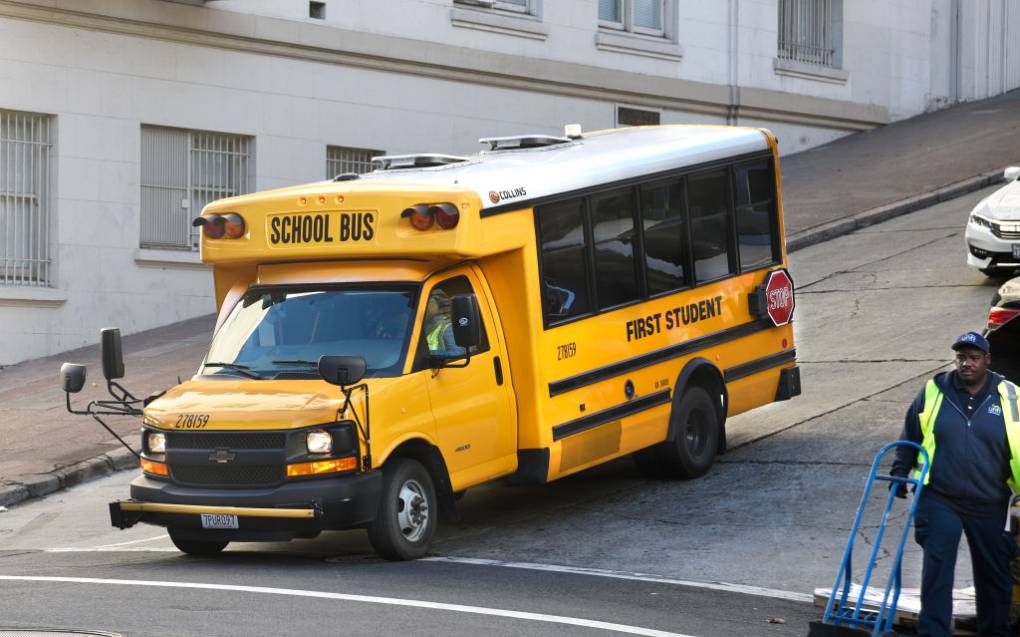
"caption": "A First Student school bus picks up students in San Francisco on Sept. 13, 2018.",
"description": null,
"title": "San Francisco, California scenics",
"credit": "Robert Alexander/Getty Images",
"status": "inherit",
"altTag": "A small yellow school bus drives down a hilly street in San Francisco.",
"isLoading": false,
"fetchFailed": false
},
"news_11942385": {
"type": "attachments",
"id": "news_11942385",
"meta": {
"index": "attachments_1716263798",
"site": "news",
"id": "11942385",
"found": true
},
"title": "010_KQED_SFUSDSchoolBus_03022023",
"publishDate": 1677802386,
"status": "inherit",
"parent": 11942379,
"modified": 1771453781,
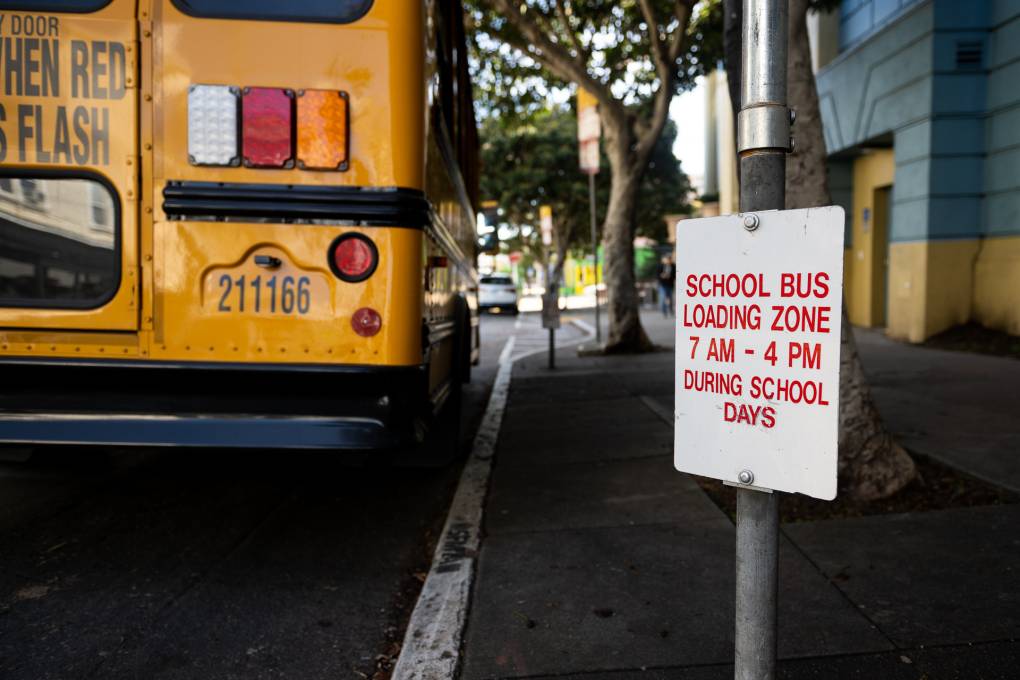
"caption": "A school bus is parked outside Buena Vista Horace Mann K–8, part of the San Francisco Unified School District, in San Francisco on March 2, 2023. ",
"credit": "Beth LaBerge/KQED",
"altTag": "A school bus parked on a street next to a sign that reads \"school bus loading zone.\"",
"description": null,
"imgSizes": {
"medium": {
"file": "https://cdn.kqed.org/wp-content/uploads/sites/10/2023/03/010_KQED_SFUSDSchoolBus_03022023-800x533.jpg",
"width": 800,
"height": 533,
"mimeType": "image/jpeg"
},
"large": {
"file": "https://cdn.kqed.org/wp-content/uploads/sites/10/2023/03/010_KQED_SFUSDSchoolBus_03022023-1020x680.jpg",
"width": 1020,
"height": 680,
"mimeType": "image/jpeg"
},
"thumbnail": {
"file": "https://cdn.kqed.org/wp-content/uploads/sites/10/2023/03/010_KQED_SFUSDSchoolBus_03022023-160x107.jpg",
"width": 160,
"height": 107,
"mimeType": "image/jpeg"
},
"1536x1536": {
"file": "https://cdn.kqed.org/wp-content/uploads/sites/10/2023/03/010_KQED_SFUSDSchoolBus_03022023-1536x1024.jpg",
"width": 1536,
"height": 1024,
"mimeType": "image/jpeg"
},
"post-thumbnail": {
"file": "https://cdn.kqed.org/wp-content/uploads/sites/10/2023/03/010_KQED_SFUSDSchoolBus_03022023-672x372.jpg",
"width": 672,
"height": 372,
"mimeType": "image/jpeg"
},
"twentyfourteen-full-width": {
"file": "https://cdn.kqed.org/wp-content/uploads/sites/10/2023/03/010_KQED_SFUSDSchoolBus_03022023-1038x576.jpg",
"width": 1038,
"height": 576,
"mimeType": "image/jpeg"
},
"kqedFullSize": {
"file": "https://cdn.kqed.org/wp-content/uploads/sites/10/2023/03/010_KQED_SFUSDSchoolBus_03022023.jpg",
"width": 1920,
"height": 1280
}
},
"isLoading": false,
"fetchFailed": false
},
"news_11931650": {
"type": "attachments",
"id": "news_11931650",
"meta": {
"index": "attachments_1716263798",
"site": "news",
"id": "11931650",
"found": true
},
"title": "1AFBACD6-E56E-4A4A-8624-783F1286C3AF",
"publishDate": 1667981119,
"status": "inherit",
"parent": 11932210,
"modified": 1763677534,
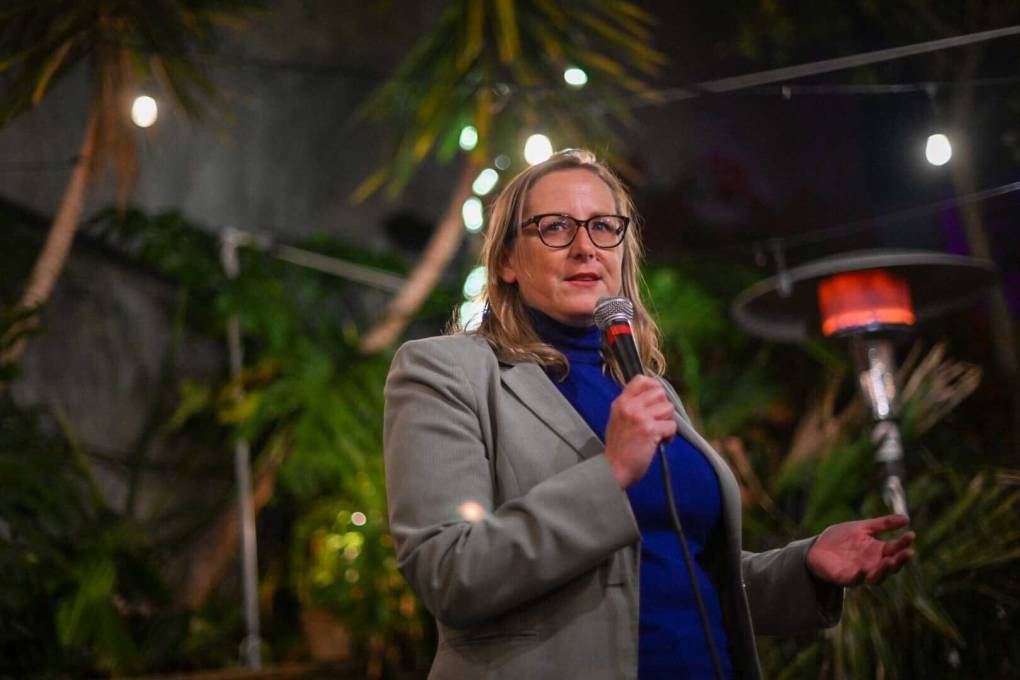
"caption": "Then-San Francisco Unified School District board candidate, Alida Fisher, speaks at an election night event at El Rio in San Francisco on Nov. 8, 2022.",
"credit": "Beth LaBerge/KQED",
"altTag": "A white woman with a grey suit over a blue sweater speaks into a microphone at an event",
"description": null,
"imgSizes": {
"medium": {
"file": "https://cdn.kqed.org/wp-content/uploads/sites/10/2022/11/1AFBACD6-E56E-4A4A-8624-783F1286C3AF-800x533.jpg",
"width": 800,
"height": 533,
"mimeType": "image/jpeg"
},
"large": {
"file": "https://cdn.kqed.org/wp-content/uploads/sites/10/2022/11/1AFBACD6-E56E-4A4A-8624-783F1286C3AF-1020x680.jpg",
"width": 1020,
"height": 680,
"mimeType": "image/jpeg"
},
"thumbnail": {
"file": "https://cdn.kqed.org/wp-content/uploads/sites/10/2022/11/1AFBACD6-E56E-4A4A-8624-783F1286C3AF-160x107.jpg",
"width": 160,
"height": 107,
"mimeType": "image/jpeg"
},
"1536x1536": {
"file": "https://cdn.kqed.org/wp-content/uploads/sites/10/2022/11/1AFBACD6-E56E-4A4A-8624-783F1286C3AF-1536x1024.jpg",
"width": 1536,
"height": 1024,
"mimeType": "image/jpeg"
},
"post-thumbnail": {
"file": "https://cdn.kqed.org/wp-content/uploads/sites/10/2022/11/1AFBACD6-E56E-4A4A-8624-783F1286C3AF-672x372.jpg",
"width": 672,
"height": 372,
"mimeType": "image/jpeg"
},
"twentyfourteen-full-width": {
"file": "https://cdn.kqed.org/wp-content/uploads/sites/10/2022/11/1AFBACD6-E56E-4A4A-8624-783F1286C3AF-1038x576.jpg",
"width": 1038,
"height": 576,
"mimeType": "image/jpeg"
},
"kqedFullSize": {
"file": "https://cdn.kqed.org/wp-content/uploads/sites/10/2022/11/1AFBACD6-E56E-4A4A-8624-783F1286C3AF.jpg",
"width": 1620,
"height": 1080
}
},
"isLoading": false,
"fetchFailed": false
},
"news_11932125": {
"type": "attachments",
"id": "news_11932125",
"meta": {
"index": "attachments_1716263798",
"site": "news",
"id": "11932125",
"found": true
},
"parent": 11932102,
"imgSizes": {
"twentyfourteen-full-width": {
"file": "https://ww2.kqed.org/app/uploads/sites/10/2023/11/GettyImages-1234461404-1024x576.jpg",
"width": 1024,
"mimeType": "image/jpeg",
"height": 576
},
"thumbnail": {
"file": "https://ww2.kqed.org/app/uploads/sites/10/2023/11/GettyImages-1234461404-160x111.jpg",
"width": 160,
"mimeType": "image/jpeg",
"height": 111
},
"post-thumbnail": {
"file": "https://ww2.kqed.org/app/uploads/sites/10/2023/11/GettyImages-1234461404-672x372.jpg",
"width": 672,
"mimeType": "image/jpeg",
"height": 372
},
"kqedFullSize": {
"file": "https://ww2.kqed.org/app/uploads/sites/10/2023/11/GettyImages-1234461404.jpg",
"width": 1024,
"height": 709
},
"large": {
"file": "https://ww2.kqed.org/app/uploads/sites/10/2023/11/GettyImages-1234461404-1020x706.jpg",
"width": 1020,
"mimeType": "image/jpeg",
"height": 706
},
"medium": {
"file": "https://ww2.kqed.org/app/uploads/sites/10/2023/11/GettyImages-1234461404-800x554.jpg",
"width": 800,
"mimeType": "image/jpeg",
"height": 554
}
},
"publishDate": 1668375946,
"modified": 1695761919,
"caption": "State Superintendent of Public Instruction Tony Thurmond speaks to the media at a vaccine clinic at an LA County library in Paramount on Wednesday, Aug. 4, 2021. ",
"description": null,
"title": "State Superintendent of Public Instruction Tony Thurmond visits a vaccine clinic and gives cash incentive.",
"credit": "Brittany Murray/MediaNews Group/Long Beach Press-Telegram via Getty Images",
"status": "inherit",
"altTag": "A man wearing a business suit stands in front of microphones with a man wearing a hat and mask in the background.",
"isLoading": false,
"fetchFailed": false
},
"news_11930240": {
"type": "attachments",
"id": "news_11930240",
"meta": {
"index": "attachments_1716263798",
"site": "news",
"id": "11930240",
"found": true
},
"parent": 11930171,
"imgSizes": {
"twentyfourteen-full-width": {
"file": "https://ww2.kqed.org/app/uploads/sites/10/2022/10/GettyImages-484078301-1038x576.jpg",
"width": 1038,
"mimeType": "image/jpeg",
"height": 576
},
"thumbnail": {
"file": "https://ww2.kqed.org/app/uploads/sites/10/2022/10/GettyImages-484078301-160x106.jpg",
"width": 160,
"mimeType": "image/jpeg",
"height": 106
},
"post-thumbnail": {
"file": "https://ww2.kqed.org/app/uploads/sites/10/2022/10/GettyImages-484078301-672x372.jpg",
"width": 672,
"mimeType": "image/jpeg",
"height": 372
},
"kqedFullSize": {
"file": "https://ww2.kqed.org/app/uploads/sites/10/2022/10/GettyImages-484078301.jpg",
"width": 2124,
"height": 1411
},
"2048x2048": {
"file": "https://ww2.kqed.org/app/uploads/sites/10/2022/10/GettyImages-484078301-2048x1361.jpg",
"width": 2048,
"mimeType": "image/jpeg",
"height": 1361
},
"large": {
"file": "https://ww2.kqed.org/app/uploads/sites/10/2022/10/GettyImages-484078301-1020x678.jpg",
"width": 1020,
"mimeType": "image/jpeg",
"height": 678
},
"1536x1536": {
"file": "https://ww2.kqed.org/app/uploads/sites/10/2022/10/GettyImages-484078301-1536x1020.jpg",
"width": 1536,
"mimeType": "image/jpeg",
"height": 1020
},
"full-width": {
"file": "https://ww2.kqed.org/app/uploads/sites/10/2022/10/GettyImages-484078301-1920x1275.jpg",
"width": 1920,
"mimeType": "image/jpeg",
"height": 1275
},
"medium": {
"file": "https://ww2.kqed.org/app/uploads/sites/10/2022/10/GettyImages-484078301-800x531.jpg",
"width": 800,
"mimeType": "image/jpeg",
"height": 531
}
},
"publishDate": 1666829000,
"modified": 1667066496,
"caption": "Student standardized test scores in California dropped markedly this year, mirroring a nationwide trend.",
"description": null,
"title": "Test with broken Pencil",
"credit": "Michael Quirk via iStock/Getty Images Plus",
"status": "inherit",
"altTag": "A standardized test with a broken yellow pencil.",
"isLoading": false,
"fetchFailed": false
},
"news_11927858": {
"type": "attachments",
"id": "news_11927858",
"meta": {
"index": "attachments_1716263798",
"site": "news",
"id": "11927858",
"found": true
},
"parent": 11927789,
"imgSizes": {
"twentyfourteen-full-width": {
"file": "https://ww2.kqed.org/app/uploads/sites/10/2022/10/RS54319_012_KQED_SFUSDProtest_03142022-qut-1038x576.jpg",
"width": 1038,
"mimeType": "image/jpeg",
"height": 576
},
"thumbnail": {
"file": "https://ww2.kqed.org/app/uploads/sites/10/2022/10/RS54319_012_KQED_SFUSDProtest_03142022-qut-160x107.jpg",
"width": 160,
"mimeType": "image/jpeg",
"height": 107
},
"post-thumbnail": {
"file": "https://ww2.kqed.org/app/uploads/sites/10/2022/10/RS54319_012_KQED_SFUSDProtest_03142022-qut-672x372.jpg",
"width": 672,
"mimeType": "image/jpeg",
"height": 372
},
"kqedFullSize": {
"file": "https://ww2.kqed.org/app/uploads/sites/10/2022/10/RS54319_012_KQED_SFUSDProtest_03142022-qut.jpg",
"width": 1920,
"height": 1280
},
"large": {
"file": "https://ww2.kqed.org/app/uploads/sites/10/2022/10/RS54319_012_KQED_SFUSDProtest_03142022-qut-1020x680.jpg",
"width": 1020,
"mimeType": "image/jpeg",
"height": 680
},
"1536x1536": {
"file": "https://ww2.kqed.org/app/uploads/sites/10/2022/10/RS54319_012_KQED_SFUSDProtest_03142022-qut-1536x1024.jpg",
"width": 1536,
"mimeType": "image/jpeg",
"height": 1024
},
"medium": {
"file": "https://ww2.kqed.org/app/uploads/sites/10/2022/10/RS54319_012_KQED_SFUSDProtest_03142022-qut-800x533.jpg",
"width": 800,
"mimeType": "image/jpeg",
"height": 533
}
},
"publishDate": 1665013989,
"modified": 1665085130,
"caption": "SFUSD staff and supporters gather in front of the district headquarters in San Francisco on March 14, 2022, to protest mismanaged paychecks to district staff. SFUSD Board of Education commissioner candidates are seeking to distance themselves from the controversy and scandals that beset the previous board.",
"description": null,
"title": "RS54319_012_KQED_SFUSDProtest_03142022-qut",
"credit": "Beth LaBerge/KQED",
"status": "inherit",
"altTag": "A woman holds a sign that looks like an invoice written out to SFUSD",
"isLoading": false,
"fetchFailed": false
},
"news_11926393": {
"type": "attachments",
"id": "news_11926393",
"meta": {
"index": "attachments_1716263798",
"site": "news",
"id": "11926393",
"found": true
},
"parent": 11926349,
"imgSizes": {
"twentyfourteen-full-width": {
"file": "https://ww2.kqed.org/app/uploads/sites/10/2022/09/003_KQED_MLKMiddleSchoolTeacherShortage_09202022-1038x576.jpg",
"width": 1038,
"mimeType": "image/jpeg",
"height": 576
},
"thumbnail": {
"file": "https://ww2.kqed.org/app/uploads/sites/10/2022/09/003_KQED_MLKMiddleSchoolTeacherShortage_09202022-160x107.jpg",
"width": 160,
"mimeType": "image/jpeg",
"height": 107
},
"post-thumbnail": {
"file": "https://ww2.kqed.org/app/uploads/sites/10/2022/09/003_KQED_MLKMiddleSchoolTeacherShortage_09202022-672x372.jpg",
"width": 672,
"mimeType": "image/jpeg",
"height": 372
},
"kqedFullSize": {
"file": "https://ww2.kqed.org/app/uploads/sites/10/2022/09/003_KQED_MLKMiddleSchoolTeacherShortage_09202022.jpg",
"width": 1920,
"height": 1280
},
"large": {
"file": "https://ww2.kqed.org/app/uploads/sites/10/2022/09/003_KQED_MLKMiddleSchoolTeacherShortage_09202022-1020x680.jpg",
"width": 1020,
"mimeType": "image/jpeg",
"height": 680
},
"1536x1536": {
"file": "https://ww2.kqed.org/app/uploads/sites/10/2022/09/003_KQED_MLKMiddleSchoolTeacherShortage_09202022-1536x1024.jpg",
"width": 1536,
"mimeType": "image/jpeg",
"height": 1024
},
"medium": {
"file": "https://ww2.kqed.org/app/uploads/sites/10/2022/09/003_KQED_MLKMiddleSchoolTeacherShortage_09202022-800x533.jpg",
"width": 800,
"mimeType": "image/jpeg",
"height": 533
}
},
"publishDate": 1663790302,
"modified": 1663799911,
"caption": "Maritza Tupul and her son Adonis, 8, wait for her older son, Douglass, at Dr. Martin Luther King Jr. Academic Middle School in San Francisco on Sept. 20, 2022. Douglass has been without a science teacher for weeks.",
"description": "A mother and her young son wait for her older son to get out of school. ",
"title": "003_KQED_MLKMiddleSchoolTeacherShortage_09202022",
"credit": "Beth LaBerge/KQED",
"status": "inherit",
"altTag": "A Hispanic woman and her young son are seen from behind as high schoolers exit school.",
"isLoading": false,
"fetchFailed": false
},
"news_11922099": {
"type": "attachments",
"id": "news_11922099",
"meta": {
"index": "attachments_1716263798",
"site": "news",
"id": "11922099",
"found": true
},
"parent": 11922072,
"imgSizes": {
"twentyfourteen-full-width": {
"file": "https://ww2.kqed.org/app/uploads/sites/10/2022/08/RS57584_20220804_123312-qut-e1660089420909-1038x576.jpg",
"width": 1038,
"mimeType": "image/jpeg",
"height": 576
},
"thumbnail": {
"file": "https://ww2.kqed.org/app/uploads/sites/10/2022/08/RS57584_20220804_123312-qut-e1660089420909-160x100.jpg",
"width": 160,
"mimeType": "image/jpeg",
"height": 100
},
"post-thumbnail": {
"file": "https://ww2.kqed.org/app/uploads/sites/10/2022/08/RS57584_20220804_123312-qut-e1660089420909-672x372.jpg",
"width": 672,
"mimeType": "image/jpeg",
"height": 372
},
"kqedFullSize": {
"file": "https://ww2.kqed.org/app/uploads/sites/10/2022/08/RS57584_20220804_123312-qut-e1660089420909.jpg",
"width": 1857,
"height": 1161
},
"large": {
"file": "https://ww2.kqed.org/app/uploads/sites/10/2022/08/RS57584_20220804_123312-qut-e1660089420909-1020x638.jpg",
"width": 1020,
"mimeType": "image/jpeg",
"height": 638
},
"1536x1536": {
"file": "https://ww2.kqed.org/app/uploads/sites/10/2022/08/RS57584_20220804_123312-qut-e1660089420909-1536x960.jpg",
"width": 1536,
"mimeType": "image/jpeg",
"height": 960
},
"medium": {
"file": "https://ww2.kqed.org/app/uploads/sites/10/2022/08/RS57584_20220804_123312-qut-e1660089420909-800x500.jpg",
"width": 800,
"mimeType": "image/jpeg",
"height": 500
}
},
"publishDate": 1660082445,
"modified": 1660510884,
"caption": "SFUSD student Selser Seth in a KQED study for an interview. 'If you're going to work for the kids, you should work for all of them,' she said. \n",
"description": null,
"title": "Ann Hsu",
"credit": "Joe Fitzgerald Rodriguez/KQED",
"status": "inherit",
"altTag": "A young black woman wearing a black parka sits in an audio studio, a microphone pointed toward her mouth and headphones on the table in front of her. She holds two fingers up, pointing them toward her face. A tangerine-flavored La Croix fizzy water is on the desk in front of her.",
"isLoading": false,
"fetchFailed": false
},
"news_11922277": {
"type": "attachments",
"id": "news_11922277",
"meta": {
"index": "attachments_1716263798",
"site": "news",
"id": "11922277",
"found": true
},
"parent": 11922273,
"imgSizes": {
"twentyfourteen-full-width": {
"file": "https://ww2.kqed.org/app/uploads/sites/10/2022/08/PayrollDemands_INLINED02-1038x576.jpg",
"width": 1038,
"mimeType": "image/jpeg",
"height": 576
},
"thumbnail": {
"file": "https://ww2.kqed.org/app/uploads/sites/10/2022/08/PayrollDemands_INLINED02-160x106.jpg",
"width": 160,
"mimeType": "image/jpeg",
"height": 106
},
"post-thumbnail": {
"file": "https://ww2.kqed.org/app/uploads/sites/10/2022/08/PayrollDemands_INLINED02-672x372.jpg",
"width": 672,
"mimeType": "image/jpeg",
"height": 372
},
"kqedFullSize": {
"file": "https://ww2.kqed.org/app/uploads/sites/10/2022/08/PayrollDemands_INLINED02-scaled.jpg",
"width": 2560,
"height": 1703
},
"2048x2048": {
"file": "https://ww2.kqed.org/app/uploads/sites/10/2022/08/PayrollDemands_INLINED02-2048x1363.jpg",
"width": 2048,
"mimeType": "image/jpeg",
"height": 1363
},
"large": {
"file": "https://ww2.kqed.org/app/uploads/sites/10/2022/08/PayrollDemands_INLINED02-1020x679.jpg",
"width": 1020,
"mimeType": "image/jpeg",
"height": 679
},
"1536x1536": {
"file": "https://ww2.kqed.org/app/uploads/sites/10/2022/08/PayrollDemands_INLINED02-1536x1022.jpg",
"width": 1536,
"mimeType": "image/jpeg",
"height": 1022
},
"full-width": {
"file": "https://ww2.kqed.org/app/uploads/sites/10/2022/08/PayrollDemands_INLINED02-1920x1277.jpg",
"width": 1920,
"mimeType": "image/jpeg",
"height": 1277
},
"medium": {
"file": "https://ww2.kqed.org/app/uploads/sites/10/2022/08/PayrollDemands_INLINED02-800x532.jpg",
"width": 800,
"mimeType": "image/jpeg",
"height": 532
}
},
"publishDate": 1660246148,
"modified": 1660246179,
"caption": "Washington High School teacher Carolyn Karlovic holds a protest sign during a SFUSD Board of Education meeting on Tuesday, Aug. 9, 2022, in San Francisco. Educators addressed the board demanding cost of living increases and improvements to the district’s payroll system. | Noah Berger for The Standard",
"description": null,
"title": "PayrollDemands_01",
"credit": "Noah Berger for The Standard",
"status": "inherit",
"altTag": null,
"isLoading": false,
"fetchFailed": false
},
"news_11901815": {
"type": "attachments",
"id": "news_11901815",
"meta": {
"index": "attachments_1716263798",
"site": "news",
"id": "11901815",
"found": true
},
"parent": 11901813,
"imgSizes": {
"twentyfourteen-full-width": {
"file": "https://ww2.kqed.org/app/uploads/sites/10/2022/01/RS53040_001_KQED_BethLaBerge_SchoolBoardRecallPresser_01142022-qut-1-1038x576.jpg",
"width": 1038,
"mimeType": "image/jpeg",
"height": 576
},
"thumbnail": {
"file": "https://ww2.kqed.org/app/uploads/sites/10/2022/01/RS53040_001_KQED_BethLaBerge_SchoolBoardRecallPresser_01142022-qut-1-160x107.jpg",
"width": 160,
"mimeType": "image/jpeg",
"height": 107
},
"post-thumbnail": {
"file": "https://ww2.kqed.org/app/uploads/sites/10/2022/01/RS53040_001_KQED_BethLaBerge_SchoolBoardRecallPresser_01142022-qut-1-672x372.jpg",
"width": 672,
"mimeType": "image/jpeg",
"height": 372
},
"kqedFullSize": {
"file": "https://ww2.kqed.org/app/uploads/sites/10/2022/01/RS53040_001_KQED_BethLaBerge_SchoolBoardRecallPresser_01142022-qut-1.jpg",
"width": 1920,
"height": 1278
},
"large": {
"file": "https://ww2.kqed.org/app/uploads/sites/10/2022/01/RS53040_001_KQED_BethLaBerge_SchoolBoardRecallPresser_01142022-qut-1-1020x679.jpg",
"width": 1020,
"mimeType": "image/jpeg",
"height": 679
},
"1536x1536": {
"file": "https://ww2.kqed.org/app/uploads/sites/10/2022/01/RS53040_001_KQED_BethLaBerge_SchoolBoardRecallPresser_01142022-qut-1-1536x1022.jpg",
"width": 1536,
"mimeType": "image/jpeg",
"height": 1022
},
"medium": {
"file": "https://ww2.kqed.org/app/uploads/sites/10/2022/01/RS53040_001_KQED_BethLaBerge_SchoolBoardRecallPresser_01142022-qut-1-800x533.jpg",
"width": 800,
"mimeType": "image/jpeg",
"height": 533
}
},
"publishDate": 1642210803,
"modified": 1659136405,
"caption": "Ann Hsu speaks during a press conference held by the Chinese/API Voter Outreach Task Force on the steps of the Asian Art Museum in San Francisco on Jan. 14, 2022.",
"description": null,
"title": "RS53040_001_KQED_BethLaBerge_SchoolBoardRecallPresser_01142022-qut (1)",
"credit": "Beth LaBerge/KQED",
"status": "inherit",
"altTag": "A woman speaks at a podium flanked by other people behind her wearing masks.",
"isLoading": false,
"fetchFailed": false
},
"news_11919199": {
"type": "attachments",
"id": "news_11919199",
"meta": {
"index": "attachments_1716263798",
"site": "news",
"id": "11919199",
"found": true
},
"parent": 11919130,
"imgSizes": {
"twentyfourteen-full-width": {
"file": "https://ww2.kqed.org/app/uploads/sites/10/2022/07/aHR0cDovL2hheXdhcmR1c2QtY2Euc2Nob29sbG9vcC5jb20vdWltZy9maWxlLzE0MzE3NTk5Mjg4NTEvNTkxNDA4MjExMjE4MjYxNzQzMi5qcGVnX3ducDEwMDAuanBnPzE2MTMwODMxOTc0NDA-1000x576.jpeg",
"width": 1000,
"mimeType": "image/jpeg",
"height": 576
},
"thumbnail": {
"file": "https://ww2.kqed.org/app/uploads/sites/10/2022/07/aHR0cDovL2hheXdhcmR1c2QtY2Euc2Nob29sbG9vcC5jb20vdWltZy9maWxlLzE0MzE3NTk5Mjg4NTEvNTkxNDA4MjExMjE4MjYxNzQzMi5qcGVnX3ducDEwMDAuanBnPzE2MTMwODMxOTc0NDA-160x131.jpeg",
"width": 160,
"mimeType": "image/jpeg",
"height": 131
},
"post-thumbnail": {
"file": "https://ww2.kqed.org/app/uploads/sites/10/2022/07/aHR0cDovL2hheXdhcmR1c2QtY2Euc2Nob29sbG9vcC5jb20vdWltZy9maWxlLzE0MzE3NTk5Mjg4NTEvNTkxNDA4MjExMjE4MjYxNzQzMi5qcGVnX3ducDEwMDAuanBnPzE2MTMwODMxOTc0NDA-672x372.jpeg",
"width": 672,
"mimeType": "image/jpeg",
"height": 372
},
"kqedFullSize": {
"file": "https://ww2.kqed.org/app/uploads/sites/10/2022/07/aHR0cDovL2hheXdhcmR1c2QtY2Euc2Nob29sbG9vcC5jb20vdWltZy9maWxlLzE0MzE3NTk5Mjg4NTEvNTkxNDA4MjExMjE4MjYxNzQzMi5qcGVnX3ducDEwMDAuanBnPzE2MTMwODMxOTc0NDA.jpeg",
"width": 1000,
"height": 816
},
"medium": {
"file": "https://ww2.kqed.org/app/uploads/sites/10/2022/07/aHR0cDovL2hheXdhcmR1c2QtY2Euc2Nob29sbG9vcC5jb20vdWltZy9maWxlLzE0MzE3NTk5Mjg4NTEvNTkxNDA4MjExMjE4MjYxNzQzMi5qcGVnX3ducDEwMDAuanBnPzE2MTMwODMxOTc0NDA-800x653.jpeg",
"width": 800,
"mimeType": "image/jpeg",
"height": 653
}
},
"publishDate": 1657328338,
"modified": 1657561768,
"caption": "Matt Wayne, the new superintendent of the San Francisco Unified School District, just finished his first week on the job.",
"description": null,
"title": "aHR0cDovL2hheXdhcmR1c2QtY2Euc2Nob29sbG9vcC5jb20vdWltZy9maWxlLzE0MzE3NTk5Mjg4NTEvNTkxNDA4MjExMjE4MjYxNzQzMi5qcGVnX3ducDEwMDAuanBnPzE2MTMwODMxOTc0NDA=",
"credit": "Courtesy of Hayward Unified School District",
"status": "inherit",
"altTag": "A man in a blazer smiles while standing near a school.",
"isLoading": false,
"fetchFailed": false
},
"news_11918625": {
"type": "attachments",
"id": "news_11918625",
"meta": {
"index": "attachments_1716263798",
"site": "news",
"id": "11918625",
"found": true
},
"parent": 11918252,
"imgSizes": {
"twentyfourteen-full-width": {
"file": "https://ww2.kqed.org/app/uploads/sites/10/2022/06/RS56788_006_KQED_NikkiSantiagoLongfellowElem_06232022-qut-1038x576.jpg",
"width": 1038,
"mimeType": "image/jpeg",
"height": 576
},
"thumbnail": {
"file": "https://ww2.kqed.org/app/uploads/sites/10/2022/06/RS56788_006_KQED_NikkiSantiagoLongfellowElem_06232022-qut-160x107.jpg",
"width": 160,
"mimeType": "image/jpeg",
"height": 107
},
"post-thumbnail": {
"file": "https://ww2.kqed.org/app/uploads/sites/10/2022/06/RS56788_006_KQED_NikkiSantiagoLongfellowElem_06232022-qut-672x372.jpg",
"width": 672,
"mimeType": "image/jpeg",
"height": 372
},
"kqedFullSize": {
"file": "https://ww2.kqed.org/app/uploads/sites/10/2022/06/RS56788_006_KQED_NikkiSantiagoLongfellowElem_06232022-qut.jpg",
"width": 1920,
"height": 1280
},
"large": {
"file": "https://ww2.kqed.org/app/uploads/sites/10/2022/06/RS56788_006_KQED_NikkiSantiagoLongfellowElem_06232022-qut-1020x680.jpg",
"width": 1020,
"mimeType": "image/jpeg",
"height": 680
},
"1536x1536": {
"file": "https://ww2.kqed.org/app/uploads/sites/10/2022/06/RS56788_006_KQED_NikkiSantiagoLongfellowElem_06232022-qut-1536x1024.jpg",
"width": 1536,
"mimeType": "image/jpeg",
"height": 1024
},
"medium": {
"file": "https://ww2.kqed.org/app/uploads/sites/10/2022/06/RS56788_006_KQED_NikkiSantiagoLongfellowElem_06232022-qut-800x533.jpg",
"width": 800,
"mimeType": "image/jpeg",
"height": 533
}
},
"publishDate": 1656635505,
"modified": 1656717218,
"caption": "Nikki Santiago sits with her two daughters outside Longfellow Elementary School in San Francisco on June 23, 2022.",
"description": null,
"title": "RS56788_006_KQED_NikkiSantiagoLongfellowElem_06232022-qut",
"credit": "Beth LaBerge/KQED",
"status": "inherit",
"altTag": "A mother with her arms around her two young daughters.",
"isLoading": false,
"fetchFailed": false
}
},
"audioPlayerReducer": {
"postId": "stream_live",
"isPaused": true,
"isPlaying": false,
"pfsActive": false,
"pledgeModalIsOpen": true,
"playerDrawerIsOpen": false,
"liveAudioPlayStartedAt": 0,
"liveAudioPlayContext": ""
},
"authorsReducer": {
"jmcevoy": {
"type": "authors",
"id": "231",
"meta": {
"index": "authors_1716337520",
"id": "231",
"found": true
},
"name": "Julia McEvoy",
"firstName": "Julia",
"lastName": "McEvoy",
"slug": "jmcevoy",
"email": "jmcevoy@KQED.org",
"display_author_email": true,
"staff_mastheads": [
"news"
],
"title": "KQED Senior Editor",
"bio": "Julia McEvoy is KQED's Senior Editor, Education Equity.\r\n\r\nJulia heads KQED’s education coverage examining inequities students face in Bay Area and California schools, and reports on what it will take to educate the next generation.\r\n\r\nJulia's editorial work has received a Peabody Award, a Casey Medal for Coverage of Children and Families, several Edward R. Murrow awards, as well as awards from the Public Radio News Directors Inc. and the Society for Professional Journalists.",
"avatar": "https://secure.gravatar.com/avatar/aec3ce21abe02b302fd33638abd56a22?s=600&d=blank&r=g",
"twitter": "juliamcevoy1",
"facebook": null,
"instagram": null,
"linkedin": null,
"sites": [
{
"site": "news",
"roles": []
},
{
"site": "stateofhealth",
"roles": [
"author"
]
}
],
"headData": {
"title": "Julia McEvoy | KQED",
"description": "KQED Senior Editor",
"ogImgSrc": "https://secure.gravatar.com/avatar/aec3ce21abe02b302fd33638abd56a22?s=600&d=blank&r=g",
"twImgSrc": "https://secure.gravatar.com/avatar/aec3ce21abe02b302fd33638abd56a22?s=600&d=blank&r=g"
},
"isLoading": false,
"link": "/author/jmcevoy"
},
"matthewgreen": {
"type": "authors",
"id": "1263",
"meta": {
"index": "authors_1716337520",
"id": "1263",
"found": true
},
"name": "Matthew Green",
"firstName": "Matthew",
"lastName": "Green",
"slug": "matthewgreen",
"email": "mgreen@kqed.org",
"display_author_email": false,
"staff_mastheads": [],
"title": "KQED Editor/Reporter",
"bio": "Matthew Green is a digital media producer for KQED News. He previously produced \u003ca href=\"http://www.kqed.org/lowdown\">The Lowdown\u003c/a>, KQED’s multimedia news education blog. Matthew's written for numerous Bay Area publications, including the Oakland Tribune and San Francisco Chronicle. He also taught journalism classes at Fremont High School in East Oakland.\r\n\r\nEmail: mgreen@kqed.org; Twitter: @MGreenKQED",
"avatar": "https://secure.gravatar.com/avatar/3bf498d1267ca02c8494f33d8cfc575e?s=600&d=blank&r=g",
"twitter": "MGreenKQED",
"facebook": null,
"instagram": null,
"linkedin": null,
"sites": [
{
"site": "news",
"roles": []
},
{
"site": "lowdown",
"roles": []
},
{
"site": "science",
"roles": []
},
{
"site": "education",
"roles": []
},
{
"site": "quest",
"roles": []
},
{
"site": "liveblog",
"roles": []
}
],
"headData": {
"title": "Matthew Green | KQED",
"description": "KQED Editor/Reporter",
"ogImgSrc": "https://secure.gravatar.com/avatar/3bf498d1267ca02c8494f33d8cfc575e?s=600&d=blank&r=g",
"twImgSrc": "https://secure.gravatar.com/avatar/3bf498d1267ca02c8494f33d8cfc575e?s=600&d=blank&r=g"
},
"isLoading": false,
"link": "/author/matthewgreen"
},
"ecruzguevarra": {
"type": "authors",
"id": "8654",
"meta": {
"index": "authors_1716337520",
"id": "8654",
"found": true
},
"name": "Ericka Cruz Guevarra",
"firstName": "Ericka",
"lastName": "Cruz Guevarra",
"slug": "ecruzguevarra",
"email": "ecruzguevarra@kqed.org",
"display_author_email": true,
"staff_mastheads": [
"news"
],
"title": "Producer, The Bay Podcast",
"bio": "Ericka Cruz Guevarra is host of \u003ca href=\"https://www.kqed.org/podcasts/thebay\">\u003cem>The Bay\u003c/em>\u003c/a> podcast at KQED. Before host, she was the show’s producer. Her work in that capacity includes a three-part reported series on policing in Vallejo, which won a 2020 excellence in journalism award from the Society of Professional Journalists. Ericka has worked as a breaking news reporter at Oregon Public Broadcasting, helped produce the Code Switch podcast, and was KQED’s inaugural Raul Ramirez Diversity Fund intern. She’s also an alumna of NPR’s Next Generation Radio program. Send her an email if you have strong feelings about whether Fairfield and Suisun City are the Bay. Ericka is represented by SAG-AFTRA.",
"avatar": "https://secure.gravatar.com/avatar/accefc1de4bafc7e234b69bcb9b6f6536c130fd84709bc3069ef11a78787e1bb?s=600&d=blank&r=g",
"twitter": "NotoriousECG",
"bluesky": null,
"facebook": null,
"instagram": null,
"linkedin": null,
"sites": [
{
"site": "arts",
"roles": [
"subscriber"
]
},
{
"site": "news",
"roles": [
"editor",
"manage_categories"
]
},
{
"site": "futureofyou",
"roles": [
"subscriber"
]
},
{
"site": "stateofhealth",
"roles": [
"subscriber"
]
},
{
"site": "science",
"roles": [
"editor"
]
},
{
"site": "forum",
"roles": [
"subscriber"
]
}
],
"headData": {
"title": "Ericka Cruz Guevarra | KQED",
"description": "Producer, The Bay Podcast",
"ogImgSrc": "https://secure.gravatar.com/avatar/accefc1de4bafc7e234b69bcb9b6f6536c130fd84709bc3069ef11a78787e1bb?s=600&d=blank&r=g",
"twImgSrc": "https://secure.gravatar.com/avatar/accefc1de4bafc7e234b69bcb9b6f6536c130fd84709bc3069ef11a78787e1bb?s=600&d=blank&r=g"
},
"isLoading": false,
"link": "/author/ecruzguevarra"
},
"amontecillo": {
"type": "authors",
"id": "11649",
"meta": {
"index": "authors_1716337520",
"id": "11649",
"found": true
},
"name": "Alan Montecillo",
"firstName": "Alan",
"lastName": "Montecillo",
"slug": "amontecillo",
"email": "amontecillo@kqed.org",
"display_author_email": false,
"staff_mastheads": [
"news"
],
"title": "KQED Contributor",
"bio": "Alan Montecillo is the senior editor of \u003cem>\u003ca href=\"http://kqed.org/thebay\">The Bay\u003c/a>, \u003c/em> KQED's local news podcast. Before moving to the Bay Area, he worked as a senior talk show producer for WILL in Champaign-Urbana, Illinois and at Oregon Public Broadcasting in Portland, Oregon. He has won journalism awards from the Society of Professional Journalists Northern California, the Public Media Journalists Association, The Signal Awards, and has also received a regional Edward R. Murrow award. Alan is a Filipino American from Hong Kong and a graduate of Reed College.",
"avatar": "https://secure.gravatar.com/avatar/268f53a2066899ea9efdd8a5900218b17c822d9862cbc9326cccec53ef41d349?s=600&d=blank&r=g",
"twitter": "alanmontecillo",
"bluesky": null,
"facebook": null,
"instagram": null,
"linkedin": null,
"sites": [
{
"site": "",
"roles": [
"editor"
]
},
{
"site": "news",
"roles": [
"editor",
"manage_categories"
]
}
],
"headData": {
"title": "Alan Montecillo | KQED",
"description": "KQED Contributor",
"ogImgSrc": "https://secure.gravatar.com/avatar/268f53a2066899ea9efdd8a5900218b17c822d9862cbc9326cccec53ef41d349?s=600&d=blank&r=g",
"twImgSrc": "https://secure.gravatar.com/avatar/268f53a2066899ea9efdd8a5900218b17c822d9862cbc9326cccec53ef41d349?s=600&d=blank&r=g"
},
"isLoading": false,
"link": "/author/amontecillo"
},
"abandlamudi": {
"type": "authors",
"id": "11672",
"meta": {
"index": "authors_1716337520",
"id": "11672",
"found": true
},
"name": "Adhiti Bandlamudi",
"firstName": "Adhiti",
"lastName": "Bandlamudi",
"slug": "abandlamudi",
"email": "abandlamudi@kqed.org",
"display_author_email": false,
"staff_mastheads": [
"news"
],
"title": "KQED Housing Reporter",
"bio": "Adhiti Bandlamudi reports for KQED's Housing desk. She focuses on how housing gets built across the Bay Area. Before joining KQED in 2020, she reported for WUNC in Durham, North Carolina, WABE in Atlanta, Georgia and Capital Public Radio in Sacramento. In 2017, she was awarded a Kroc Fellowship at NPR where she reported on everything from sprinkles to the Golden State Killer's arrest. When she's not reporting, she's baking new recipes in her kitchen or watching movies with friends and family. She's originally from Georgia and has strong opinions about Great British Bake Off.",
"avatar": "https://secure.gravatar.com/avatar/868129c8b257bb99a3500e2c86a65400?s=600&d=mm&r=g",
"twitter": "oddity_adhiti",
"facebook": null,
"instagram": null,
"linkedin": null,
"sites": [
{
"site": "arts",
"roles": [
"author"
]
},
{
"site": "news",
"roles": [
"editor"
]
},
{
"site": "liveblog",
"roles": [
"author"
]
}
],
"headData": {
"title": "Adhiti Bandlamudi | KQED",
"description": "KQED Housing Reporter",
"ogImgSrc": "https://secure.gravatar.com/avatar/868129c8b257bb99a3500e2c86a65400?s=600&d=mm&r=g",
"twImgSrc": "https://secure.gravatar.com/avatar/868129c8b257bb99a3500e2c86a65400?s=600&d=mm&r=g"
},
"isLoading": false,
"link": "/author/abandlamudi"
},
"jrodriguez": {
"type": "authors",
"id": "11690",
"meta": {
"index": "authors_1716337520",
"id": "11690",
"found": true
},
"name": "Joe Fitzgerald Rodriguez",
"firstName": "Joe",
"lastName": "Fitzgerald Rodriguez",
"slug": "jrodriguez",
"email": "jrodriguez@kqed.org",
"display_author_email": true,
"staff_mastheads": [
"news"
],
"title": "Reporter and Producer",
"bio": "Joe Fitzgerald Rodriguez is a reporter and digital producer for KQED covering politics. Joe most recently wrote for the \u003cem>San Francisco Examiner\u003c/em> as a political columnist covering The City. He was raised in San Francisco and has spent his reporting career in his beloved, foggy, city by the bay. Joe was 12-years-old when he conducted his first interview in journalism, grilling former San Francisco Mayor Willie Brown for the Marina Middle School newspaper, \u003cem>The Penguin Press, \u003c/em>and he continues to report on the San Francisco Bay Area to this day.",
"avatar": "https://secure.gravatar.com/avatar/2247beb0564c1e9c62228d5649d2edac?s=600&d=blank&r=g",
"twitter": "FitztheReporter",
"facebook": null,
"instagram": "https://www.instagram.com/fitzthereporter/",
"linkedin": null,
"sites": [
{
"site": "",
"roles": [
"editor"
]
},
{
"site": "arts",
"roles": [
"editor"
]
},
{
"site": "news",
"roles": [
"editor"
]
},
{
"site": "science",
"roles": [
"editor"
]
},
{
"site": "elections",
"roles": [
"editor"
]
},
{
"site": "liveblog",
"roles": [
"editor"
]
}
],
"headData": {
"title": "Joe Fitzgerald Rodriguez | KQED",
"description": "Reporter and Producer",
"ogImgSrc": "https://secure.gravatar.com/avatar/2247beb0564c1e9c62228d5649d2edac?s=600&d=blank&r=g",
"twImgSrc": "https://secure.gravatar.com/avatar/2247beb0564c1e9c62228d5649d2edac?s=600&d=blank&r=g"
},
"isLoading": false,
"link": "/author/jrodriguez"
},
"swhitney": {
"type": "authors",
"id": "11784",
"meta": {
"index": "authors_1716337520",
"id": "11784",
"found": true
},
"name": "Spencer Whitney",
"firstName": "Spencer",
"lastName": "Whitney",
"slug": "swhitney",
"email": "swhitney@kqed.org",
"display_author_email": false,
"staff_mastheads": [],
"title": "KQED Digital Editor",
"bio": "Spencer Whitney is currently a Digital Editor for KQED News. Prior to joining KQED News, Spencer worked as the Multimedia Editor at the Oakland Post and an Assistant Editor in the Editorial department at the San Francisco Chronicle. He attended Howard University as an undergraduate and interned with SiriusXM. He also attended UC Berkeley's Graduate School of Journalism and had the opportunity to write for the hyperlocal news sites Richmond Confidential and Oakland North.",
"avatar": "https://secure.gravatar.com/avatar/e33ff4fd8b8f0d2796f36472fb32607ca8fc46ef5e537dcfdbdee688d8ea5b80?s=600&d=mm&r=g",
"twitter": null,
"bluesky": null,
"facebook": null,
"instagram": null,
"linkedin": null,
"sites": [
{
"site": "arts",
"roles": [
"editor"
]
},
{
"site": "news",
"roles": [
"editor"
]
},
{
"site": "science",
"roles": [
"editor"
]
},
{
"site": "perspectives",
"roles": [
"editor"
]
}
],
"headData": {
"title": "Spencer Whitney | KQED",
"description": "KQED Digital Editor",
"ogImgSrc": "https://secure.gravatar.com/avatar/e33ff4fd8b8f0d2796f36472fb32607ca8fc46ef5e537dcfdbdee688d8ea5b80?s=600&d=mm&r=g",
"twImgSrc": "https://secure.gravatar.com/avatar/e33ff4fd8b8f0d2796f36472fb32607ca8fc46ef5e537dcfdbdee688d8ea5b80?s=600&d=mm&r=g"
},
"isLoading": false,
"link": "/author/swhitney"
},
"mesquinca": {
"type": "authors",
"id": "11802",
"meta": {
"index": "authors_1716337520",
"id": "11802",
"found": true
},
"name": "Maria Esquinca",
"firstName": "Maria",
"lastName": "Esquinca",
"slug": "mesquinca",
"email": "mesquinca@kqed.org",
"display_author_email": false,
"staff_mastheads": [],
"title": "Producer, The Bay",
"bio": "María Esquinca is a producer of The Bay. Before that, she was a New York Women’s Foundation IGNITE Fellow at Latino USA. She worked at Radio Bilingue where she covered the San Joaquin Valley. Maria has interned at WLRN, News 21, The New York Times Student Journalism Institute and at Crain’s Detroit Business as a Dow Jones News Fund Business Reporting Intern. She is an MFA graduate from the University of Miami. In 2017, she graduated from the Walter Cronkite School of Journalism and Mass Communication with a Master of Mass Communication. A fronteriza, she was born in Ciudad Juárez, Chihuahua, Mexico and grew up in El Paso, Texas.",
"avatar": "https://secure.gravatar.com/avatar/77cedba18aae91da775038ba06dcd8d0?s=600&d=blank&r=g",
"twitter": "@m_esquinca",
"facebook": null,
"instagram": null,
"linkedin": null,
"sites": [
{
"site": "news",
"roles": []
}
],
"headData": {
"title": "Maria Esquinca | KQED",
"description": "Producer, The Bay",
"ogImgSrc": "https://secure.gravatar.com/avatar/77cedba18aae91da775038ba06dcd8d0?s=600&d=blank&r=g",
"twImgSrc": "https://secure.gravatar.com/avatar/77cedba18aae91da775038ba06dcd8d0?s=600&d=blank&r=g"
},
"isLoading": false,
"link": "/author/mesquinca"
},
"dyoung": {
"type": "authors",
"id": "11811",
"meta": {
"index": "authors_1716337520",
"id": "11811",
"found": true
},
"name": "Daphne Young",
"firstName": "Daphne",
"lastName": "Young",
"slug": "dyoung",
"email": "dyoung@kqed.org",
"display_author_email": false,
"staff_mastheads": [
"news"
],
"title": "KQED Contributor",
"bio": null,
"avatar": "https://secure.gravatar.com/avatar/21c035b7180f70e980c60055bf25070b?s=600&d=blank&r=g",
"twitter": null,
"facebook": null,
"instagram": null,
"linkedin": null,
"sites": [
{
"site": "news",
"roles": []
}
],
"headData": {
"title": "Daphne Young | KQED",
"description": "KQED Contributor",
"ogImgSrc": "https://secure.gravatar.com/avatar/21c035b7180f70e980c60055bf25070b?s=600&d=blank&r=g",
"twImgSrc": "https://secure.gravatar.com/avatar/21c035b7180f70e980c60055bf25070b?s=600&d=blank&r=g"
},
"isLoading": false,
"link": "/author/dyoung"
},
"sjohnson": {
"type": "authors",
"id": "11840",
"meta": {
"index": "authors_1716337520",
"id": "11840",
"found": true
},
"name": "Sydney Johnson",
"firstName": "Sydney",
"lastName": "Johnson",
"slug": "sjohnson",
"email": "sjohnson@kqed.org",
"display_author_email": false,
"staff_mastheads": [
"news"
],
"title": "KQED Reporter",
"bio": "Sydney Johnson is a general assignment reporter at KQED. She previously reported on public health and city government at the San Francisco Examiner, and before that, she covered statewide education policy for EdSource. Her reporting has won multiple local, state and national awards. Sydney is a graduate of the University of California, Berkeley and lives in San Francisco.",
"avatar": "https://secure.gravatar.com/avatar/97855f2719b72ad6190b7c535fe642c8?s=600&d=blank&r=g",
"twitter": "sydneyfjohnson",
"facebook": null,
"instagram": null,
"linkedin": null,
"sites": [
{
"site": "news",
"roles": [
"editor"
]
}
],
"headData": {
"title": "Sydney Johnson | KQED",
"description": "KQED Reporter",
"ogImgSrc": "https://secure.gravatar.com/avatar/97855f2719b72ad6190b7c535fe642c8?s=600&d=blank&r=g",
"twImgSrc": "https://secure.gravatar.com/avatar/97855f2719b72ad6190b7c535fe642c8?s=600&d=blank&r=g"
},
"isLoading": false,
"link": "/author/sjohnson"
}
},
"pagesReducer": {
"news_tag_sfusd": {
"type": "terms",
"id": "news_1290",
"meta": {
"index": "terms_1716263798",
"site": "news",
"id": "1290",
"score": 9.108458
},
"featImg": null,
"name": "SFUSD",
"description": null,
"taxonomy": "tag",
"headData": {
"twImgId": null,
"twTitle": null,
"ogTitle": null,
"ogImgId": null,
"twDescription": null,
"description": null,
"title": "SFUSD Archives | KQED News",
"ogDescription": null
},
"ttid": 1302,
"slug": "sfusd",
"isLoading": false,
"title": "SFUSD",
"pageMeta": {
"site": "news",
"WpPageTemplate": "page-topic-editorial",
"currentPage": 9
},
"blocks": [
{
"blockName": "kqed/post-list",
"attrs": {
"layout": "cardArticle2",
"query": "posts/news?tag=sfusd",
"seeMore": false,
"paginated": true,
"page": 9
}
},
{
"blockName": "kqed/ad"
}
]
}
},
"pfsSessionReducer": {},
"postsReducer": {
"stream_live": {
"type": "live",
"id": "stream_live",
"audioUrl": "https://hls.kqed.org/hls/kqed_app/playlist.m3u8",
"title": "Live Stream",
"excerpt": "Live Stream information currently unavailable.",
"link": "/radio",
"featImg": "",
"label": {
"name": "KQED Live",
"link": "/"
}
},
"stream_kqedNewscast": {
"type": "posts",
"id": "stream_kqedNewscast",
"audioUrl": "https://www.kqed.org/.stream/anon/radio/RDnews/newscast.mp3?_=1",
"title": "KQED Newscast",
"featImg": "",
"label": {
"name": "88.5 FM",
"link": "/"
}
},
"news_11944773": {
"type": "posts",
"id": "news_11944773",
"meta": {
"index": "posts_1716263798",
"site": "news",
"id": "11944773",
"score": null,
"sort": [
1679704343000
]
},
"guestAuthors": [],
"slug": "sf-unified-resolves-5-4-million-legal-battle-with-school-bus-operator-over-pandemic-fees",
"title": "SF Unified Settles $5.4 Million Legal Battle With School Bus Operator Over Pandemic Fees",
"publishDate": 1679704343,
"format": "standard",
"headTitle": "SF Unified Settles $5.4 Million Legal Battle With School Bus Operator Over Pandemic Fees | KQED",
"labelTerm": {
"site": "news"
},
"content": "\u003cp style=\"text-align: left;\">\u003cstrong>Update, 1 p.m. Tuesday:\u003c/strong> The San Francisco Board of Education on Monday evening approved a settlement between the school district and its former school bus provider over unpaid invoices during the pandemic, when buses were not taking kids to school.\u003c/p>\n\u003cp>Under the agreement, the company, First Student, will pay San Francisco Unified $1 million, school board officials announced.\u003c/p>\n\u003cp>The bus company worked with the school district for about 40 years before San Francisco Unified switched bus providers in 2021. The company last year sued the district for refusing to pay $5.4 million in non-transportation services when in-person classes were canceled. The district, in turn, countersued the company for breach of contract, bad faith and violations of the California False Claims Act.\u003c/p>\n\u003cp>Last Thursday, a jury sided with the district, finding First Student guilty of violating the \u003ca href=\"https://leginfo.legislature.ca.gov/faces/codes_displaySection.xhtml?lawCode=GOV§ionNum=12650.&article=9.&highlight=true&keyword=False%20Claims%20Act\">California False Claims Act\u003c/a>, which bars the use of a false statement or document to obtain money from the state. But the jury also decided that the district did not incur any harm from receiving the company’s invoices, which it never paid.\u003cbr>\nThat mixed decision resulted in what’s known as a “fatal inconsistency” in the verdict, prompting both parties to try to reach a settlement.\u003c/p>\n\u003cp>On Friday, the two parties announced they had reached a settlement agreement.\u003c/p>\n\u003cp>“We are glad the matter is resolved,” said Joe Arellano, spokesperson for First Student.\u003c/p>\n\u003cp>\u003cstrong>Original story, 5 p.m. Friday:\u003c/strong> The San Francisco Unified School District on Friday reached a settlement with its former school bus provider in \u003ca href=\"https://www.kqed.org/news/11942379/san-francisco-unified-faces-5-4-million-legal-battle-over-bus-bills-during-school-closures\">a lawsuit over ongoing payments during the pandemic\u003c/a>, when students were learning from home.\u003c/p>\n\u003cp>The terms of the deal with First Student, the bus operator, have not yet been released and the agreement must now be approved by the city’s Board of Education.\u003c/p>\n\u003cp>“Today First Student and SFUSD reached a mutual settlement with no admission of liability on either side. We are glad the matter is resolved,” said Joe Arellano, spokesperson for First Student. “First Student took great pride in partnering with SFUSD for decades, transporting generations of families. We hope to return to the community in the future if the opportunity arises.”\u003c/p>\n\u003cp>On Thursday afternoon, a jury reached a verdict in the case in San Francisco Superior Court, records show. But a “fatal inconsistency” associated with the verdict caused the trial to continue into Friday, when the two parties ultimately settled.\u003c/p>\n\u003cp>“SFUSD and First Student reached a settlement agreement, which will go to the Board of Education for approval at an upcoming meeting,” said Laura Dudnick, spokesperson for SFUSD.[aside label=\"related coverage\" tag=\"first-student\"]The company, which had provided bus services to public school students in San Francisco for four decades, sued SFUSD last year for refusing to pay $5.4 million in non-transportation services — such as bus maintenance and insurance — billed for the 2020–’21 school year.\u003c/p>\n\u003cp>In disputing the payment, SFUSD argued it did not use any buses during that period, as classes were being held online, and was therefore not obligated to pay for those services. The district, in turn, countersued the company for breach of contract, bad faith and violations of the California False Claims Act.\u003c/p>\n\u003cp>The lawsuit comes at a turbulent time for SFUSD, which has had to navigate a \u003ca href=\"https://www.kqed.org/news/11907979/sf-school-district-apologizes-for-not-paying-underpaying-hundreds-of-teachers-but-the-problem-persists\">months-long payroll fiasco\u003c/a>, rapidly \u003ca href=\"https://www.sfchronicle.com/sf/article/SFUSD-enrollment-plummets-this-year-doubling-17073854.php\">declining enrollment\u003c/a> and other financial hardships coming out of the pandemic.\u003c/p>\n\u003cp>Ohio-based First Student, the largest school bus operator in the nation, contracts with roughly 1,000 districts across the United States and Canada.\u003c/p>\n\u003cp>SFUSD cut ties with the company early in the pandemic, when in-person instruction ground to a halt. In July 2021, just before the resumption of in-person instruction in schools, the district signed a $150 million, five-year contract with Zūm, a Redwood City-based start-up that allows parents and administrators to use an app to monitor pickups, bus locations and route changes.\u003c/p>\n\u003cp>The switch in providers was expected to save the district about $3 million annually, \u003ca href=\"https://techcrunch.com/2021/07/29/zum-wins-150m-from-san-francisco-schools-to-modernize-and-electrify-student-transport/\">TechCrunch\u003c/a> reported at the time of the deal.\u003c/p>\n\u003cp>Following the new contract agreement, First Student filed separate legal challenges against both SFUSD and Zūm, alleging the district’s selection of its new bus provider was irresponsible and that the district failed to investigate First Student’s allegations of misconduct in the bidding process. The court denied the motion against the district 2022.\u003c/p>\n\u003cp>That court case against Zūm is set to begin in August.\u003c/p>\n\u003cp>\u003cem>Correction (March 29): The previous version of this story inaccurately stated that the “fatal inconsistency” in the jury’s verdict against First Student effectively overruled its decision. That was not the case.\u003c/em> [ad fullwidth]\u003c/p>\n\u003cp>\u003c/p>\n",
"blocks": [],
"excerpt": "The agreement ends a protracted legal battle between SFUSD and First Student, the nation's largest school bus operator, which argued the district owed it millions in non-transportation services when in-person classes were canceled during the pandemic.",
"status": "publish",
"parent": 0,
"modified": 1721103913,
"stats": {
"hasAudio": false,
"hasVideo": false,
"hasChartOrMap": false,
"iframeSrcs": [],
"hasGoogleForm": false,
"hasGallery": false,
"hasHearkenModule": false,
"hasPolis": false,
"paragraphCount": 19,
"wordCount": 804
},
"headData": {
"title": "SF Unified Settles $5.4 Million Legal Battle With School Bus Operator Over Pandemic Fees | KQED",
"description": "The agreement ends a protracted legal battle between SFUSD and First Student, the nation's largest school bus operator, which argued the district owed it millions in non-transportation services when in-person classes were canceled during the pandemic.",
"ogTitle": "",
"ogDescription": "",
"ogImgId": "",
"twTitle": "",
"twDescription": "",
"twImgId": "",
"schema": {
"@context": "https://schema.org",
"@type": "NewsArticle",
"headline": "SF Unified Settles $5.4 Million Legal Battle With School Bus Operator Over Pandemic Fees",
"datePublished": "2023-03-24T17:32:23-07:00",
"dateModified": "2024-07-15T21:25:13-07:00",
"image": "https://cdn.kqed.org/wp-content/uploads/2020/02/KQED-OG-Image@1x.png",
"isAccessibleForFree": "True",
"publisher": {
"@type": "NewsMediaOrganization",
"@id": "https://www.kqed.org/#organization",
"name": "KQED",
"logo": "https://cdn.kqed.org/wp-content/uploads/2020/02/KQED-OG-Image@1x.png",
"url": "https://www.kqed.org",
"sameAs": [
"https://www.facebook.com/KQED",
"https://twitter.com/KQED",
"https://www.instagram.com/kqed/",
"https://www.tiktok.com/@kqedofficial",
"https://www.linkedin.com/company/kqed",
"https://www.youtube.com/channel/UCeC0IOo7i1P_61zVUWbJ4nw"
]
}
}
},
"sticky": false,
"excludeFromSiteSearch": "Include",
"articleAge": "0",
"path": "/news/11944773/sf-unified-resolves-5-4-million-legal-battle-with-school-bus-operator-over-pandemic-fees",
"audioTrackLength": null,
"parsedContent": [
{
"type": "contentString",
"content": "\u003cdiv class=\"post-body\">\u003cp>\u003cp style=\"text-align: left;\">\u003cstrong>Update, 1 p.m. Tuesday:\u003c/strong> The San Francisco Board of Education on Monday evening approved a settlement between the school district and its former school bus provider over unpaid invoices during the pandemic, when buses were not taking kids to school.\u003c/p>\n\u003cp>Under the agreement, the company, First Student, will pay San Francisco Unified $1 million, school board officials announced.\u003c/p>\n\u003cp>The bus company worked with the school district for about 40 years before San Francisco Unified switched bus providers in 2021. The company last year sued the district for refusing to pay $5.4 million in non-transportation services when in-person classes were canceled. The district, in turn, countersued the company for breach of contract, bad faith and violations of the California False Claims Act.\u003c/p>\n\u003cp>Last Thursday, a jury sided with the district, finding First Student guilty of violating the \u003ca href=\"https://leginfo.legislature.ca.gov/faces/codes_displaySection.xhtml?lawCode=GOV§ionNum=12650.&article=9.&highlight=true&keyword=False%20Claims%20Act\">California False Claims Act\u003c/a>, which bars the use of a false statement or document to obtain money from the state. But the jury also decided that the district did not incur any harm from receiving the company’s invoices, which it never paid.\u003cbr>\nThat mixed decision resulted in what’s known as a “fatal inconsistency” in the verdict, prompting both parties to try to reach a settlement.\u003c/p>\n\u003cp>On Friday, the two parties announced they had reached a settlement agreement.\u003c/p>\n\u003cp>“We are glad the matter is resolved,” said Joe Arellano, spokesperson for First Student.\u003c/p>\n\u003cp>\u003cstrong>Original story, 5 p.m. Friday:\u003c/strong> The San Francisco Unified School District on Friday reached a settlement with its former school bus provider in \u003ca href=\"https://www.kqed.org/news/11942379/san-francisco-unified-faces-5-4-million-legal-battle-over-bus-bills-during-school-closures\">a lawsuit over ongoing payments during the pandemic\u003c/a>, when students were learning from home.\u003c/p>\n\u003cp>The terms of the deal with First Student, the bus operator, have not yet been released and the agreement must now be approved by the city’s Board of Education.\u003c/p>\n\u003cp>“Today First Student and SFUSD reached a mutual settlement with no admission of liability on either side. We are glad the matter is resolved,” said Joe Arellano, spokesperson for First Student. “First Student took great pride in partnering with SFUSD for decades, transporting generations of families. We hope to return to the community in the future if the opportunity arises.”\u003c/p>\n\u003cp>On Thursday afternoon, a jury reached a verdict in the case in San Francisco Superior Court, records show. But a “fatal inconsistency” associated with the verdict caused the trial to continue into Friday, when the two parties ultimately settled.\u003c/p>\n\u003cp>“SFUSD and First Student reached a settlement agreement, which will go to the Board of Education for approval at an upcoming meeting,” said Laura Dudnick, spokesperson for SFUSD.\u003c/p>\u003c/div>",
"attributes": {
"named": {},
"numeric": []
}
},
{
"type": "component",
"content": "",
"name": "aside",
"attributes": {
"named": {
"label": "related coverage ",
"tag": "first-student"
},
"numeric": []
}
},
{
"type": "contentString",
"content": "\u003cdiv class=\"post-body\">\u003cp>The company, which had provided bus services to public school students in San Francisco for four decades, sued SFUSD last year for refusing to pay $5.4 million in non-transportation services — such as bus maintenance and insurance — billed for the 2020–’21 school year.\u003c/p>\n\u003cp>In disputing the payment, SFUSD argued it did not use any buses during that period, as classes were being held online, and was therefore not obligated to pay for those services. The district, in turn, countersued the company for breach of contract, bad faith and violations of the California False Claims Act.\u003c/p>\n\u003cp>The lawsuit comes at a turbulent time for SFUSD, which has had to navigate a \u003ca href=\"https://www.kqed.org/news/11907979/sf-school-district-apologizes-for-not-paying-underpaying-hundreds-of-teachers-but-the-problem-persists\">months-long payroll fiasco\u003c/a>, rapidly \u003ca href=\"https://www.sfchronicle.com/sf/article/SFUSD-enrollment-plummets-this-year-doubling-17073854.php\">declining enrollment\u003c/a> and other financial hardships coming out of the pandemic.\u003c/p>\n\u003cp>Ohio-based First Student, the largest school bus operator in the nation, contracts with roughly 1,000 districts across the United States and Canada.\u003c/p>\n\u003cp>SFUSD cut ties with the company early in the pandemic, when in-person instruction ground to a halt. In July 2021, just before the resumption of in-person instruction in schools, the district signed a $150 million, five-year contract with Zūm, a Redwood City-based start-up that allows parents and administrators to use an app to monitor pickups, bus locations and route changes.\u003c/p>\n\u003cp>The switch in providers was expected to save the district about $3 million annually, \u003ca href=\"https://techcrunch.com/2021/07/29/zum-wins-150m-from-san-francisco-schools-to-modernize-and-electrify-student-transport/\">TechCrunch\u003c/a> reported at the time of the deal.\u003c/p>\n\u003cp>Following the new contract agreement, First Student filed separate legal challenges against both SFUSD and Zūm, alleging the district’s selection of its new bus provider was irresponsible and that the district failed to investigate First Student’s allegations of misconduct in the bidding process. The court denied the motion against the district 2022.\u003c/p>\n\u003cp>That court case against Zūm is set to begin in August.\u003c/p>\n\u003cp>\u003cem>Correction (March 29): The previous version of this story inaccurately stated that the “fatal inconsistency” in the jury’s verdict against First Student effectively overruled its decision. That was not the case.\u003c/em> \u003c/p>\u003c/div>",
"attributes": {
"named": {},
"numeric": []
}
},
{
"type": "component",
"content": "",
"name": "ad",
"attributes": {
"named": {
"label": "fullwidth"
},
"numeric": [
"fullwidth"
]
}
},
{
"type": "contentString",
"content": "\u003cdiv class=\"post-body\">\u003cp>\u003c/p>\n\u003cp>\u003c/p>\n\u003c/div>\u003c/p>",
"attributes": {
"named": {},
"numeric": []
}
}
],
"link": "/news/11944773/sf-unified-resolves-5-4-million-legal-battle-with-school-bus-operator-over-pandemic-fees",
"authors": [
"11840"
],
"categories": [
"news_8"
],
"tags": [
"news_20013",
"news_32473",
"news_3946",
"news_1290"
],
"featImg": "news_11944779",
"label": "news"
},
"news_11942379": {
"type": "posts",
"id": "news_11942379",
"meta": {
"index": "posts_1716263798",
"site": "news",
"id": "11942379",
"score": null,
"sort": [
1677807424000
]
},
"parent": 0,
"labelTerm": {
"site": "news"
},
"blocks": [],
"publishDate": 1677807424,
"format": "standard",
"title": "San Francisco Unified Faces $5.4 Million Legal Battle Over Bus Bills During School Closures",
"headTitle": "KQED News",
"content": "\u003cp>The San Francisco Unified School District’s former school bus provider is suing the district for $5.4 million for payments it claims the district failed to make during the 2020–21 school year when students were participating in distance learning.\u003c/p>\n\u003cp>The latest dispute, which is not the first between the private transportation company First Student Inc. and SFUSD, comes as both businesses and school districts across the country are scrambling to recover from losses during the pandemic.\u003c/p>\n\u003cp>“This case is a corporate shakedown of our public school district by the largest bus company in the United States,” said Nancy Harris, attorney representing SFUSD, during opening statements for the jury trial. “The terms of the contract provide that the school district agreed to pay First Student only when drivers employed by First Student drove students in buses owned by First Student to and from schools and other points.”\u003c/p>\n\u003cp>Ohio-based First Student is the country’s largest school bus transportation service provider and worked with San Francisco Unified for 40 years before the two organizations cut ties during the pandemic.\u003c/p>\n\u003cp>While there’s no disagreement that buses weren’t running their usual routes during the 2020–21 school year, representatives for First Student allege that the district owes them money for non-transportation services, such as bus maintenance and vehicle insurance. The company invoiced SFUSD for $5.4 million for those additional costs in the fall of 2021.[pullquote align=\"right\" size=\"medium\" citation=\"Nancy Harris, attorney representing SFUSD\"]'This case is a corporate shakedown of our public school district by the largest bus company in the United States.'[/pullquote]In response to First Student's lawsuit, SFUSD filed a cross-complaint for breach of contract, bad faith and violations of the California False Claims Act.\u003c/p>\n\u003cp>The school district maintains that under the 2020–21 school year contract, they were not obligated to pay for services because buses were not transporting students during the city’s shelter-in-place order.\u003c/p>\n\u003cp>In an email sent to KQED, the district also alleged that the company “submitted false invoices claiming that hundreds of buses and drivers were deployed on the road in August and September 2020, at a time when students were learning remotely,” according to Laura Dudnick, spokesperson for SFUSD.\u003c/p>\n\u003cp>“When that did not work, [First Student] demanded that the school district cover its overhead costs. This strategy was part of its nationwide pressure campaign against school districts to increase its revenue, when school districts like SFUSD struggled with budget deficits and were focused on students,” Dudnick wrote.\u003c/p>\n\u003cp>[ad fullwidth]\u003c/p>\n\u003cp>In court testimony Thursday, Paul Osland, who was president of First Student during the pandemic, denied pressuring any district into payments during the pandemic, and suggested his company was simply upholding its end of a contract that started in 2015.\u003c/p>\n\u003cp>Osland asserts that First Student charges for a full program, meaning not only transportation services, but also the operating expenses such as vehicle insurance, bus technology and regular maintenance that is required by California Highway Patrol to keep the buses in operation.\u003c/p>\n\u003cp>COVID “impacted all of us, but it sure as heck impacted our business,” said Osland in court on Thursday. Osland, who is now retired, previously ran transportation services for Chicago Public Schools. “Of course this is not a shakedown. It was an initiative in everyone’s interest.”\u003c/p>\n\u003cp>[pullquote align=\"right\" size=\"medium\" citation=\"Paul Osland, former president, First Student\"]'Of course this is not a shakedown. It was an initiative in everyone's interest.'[/pullquote]\u003c/p>\n\u003cp>Harris, the attorney for SFUSD, underscored a section of the contract that anticipated school closures.\u003c/p>\n\u003cp>“The district shall not be obligated to accept or pay for services, herein to be furnished by the contractor, on those days when by the direction of the Superintendent, the district schools are closed to ensure the health and safety of the pupils or for any other lawful reason. The district agrees to notify the contractor, not later than 5:30 a.m., on days of such school closures,” the contract reads.\u003c/p>\n\u003cp>Osland, however, said he thinks that portion of the contract would only apply to short-term closures like snow days or fire days, not months-long disruptions. No such distinction is made either way in the contract.\u003c/p>\n\u003cp>First Student works with around 1,000 districts across the U.S. and Canada. The company provides yellow school bus transportation to and from schools for general education, students with disabilities and individualized education plans, field trip services and charter bus services.\u003c/p>\n\u003cp>In a statement to KQED, the company said it filed the lawsuit “because of bad faith and broken promises by SFUSD.”\u003c/p>\n\u003cp>“SFUSD made a choice to stop paying for the many services that SFUSD required under the bus contract, including the more than 230 yellow school buses dedicated to SFUSD that First Student kept in position throughout the pandemic,” the statement read.\u003c/p>\n\u003cp>“First Student stood by its business partner, fulfilling its obligations to maintain operational readiness to ensure it was ready to transport students as soon as schools reopened. And when they did, First Student was ready when SFUSD called. Over an eight-month period, First Student submitted discounted invoices, but SFUSD paid nothing. SFUSD had encumbered funds available, and even issued a purchase order, but it made a choice not to pay. That is not just or fair, and for that reason, we expect to prevail in court.”\u003c/p>\n\u003cp>After 40 years of service, SFUSD cut ties with First Student during the pandemic, and the district in July 2021 awarded school transportation to app-based start-up Zūm in a $150 million five-year contract.\u003c/p>\n\u003cp>At the time of the deal, the district estimated the new provider would save the district about $3 million annually, according to \u003ca href=\"https://techcrunch.com/2021/07/29/zum-wins-150m-from-san-francisco-schools-to-modernize-and-electrify-student-transport/\">a report from TechCrunch\u003c/a>.\u003c/p>\n\u003cp>In 2021, First Student sued Zūm, whose consultant had recently left a high position with First Student. First Student alleged the employee downloaded the competing bid from its company while joining Zūm. That case is set to begin trial August 14.\u003c/p>\n\u003cp>First Student also filed an appeal against SFUSD’s process and decision to contract with Zūm. The court denied that appeal from First Student in 2022.\u003c/p>\n\u003cp>\u003cem>Editor's note: This story has been updated to include a statement from First Student. This story also has been corrected, to accurately reflect the status of First Student's lawsuit against Zūm, which is scheduled to begin trial Aug. 14. \u003c/em>\u003c/p>\n\u003cp>[ad floatright]\u003c/p>\n",
"stats": {
"hasVideo": false,
"hasChartOrMap": false,
"hasAudio": false,
"hasPolis": false,
"wordCount": 1112,
"hasGoogleForm": false,
"hasGallery": false,
"hasHearkenModule": false,
"iframeSrcs": [],
"paragraphCount": 26
},
"modified": 1678482360,
"excerpt": "First Student, the country's largest school bus transportation service provider, is looking to recoup $5.4 million from SFUSD, but district officials say the charges are unwarranted.",
"headData": {
"twImgId": "",
"twTitle": "",
"ogTitle": "",
"ogImgId": "",
"twDescription": "",
"description": "First Student, the country's largest school bus transportation service provider, is looking to recoup $5.4 million from SFUSD, but district officials say the charges are unwarranted.",
"title": "San Francisco Unified Faces $5.4 Million Legal Battle Over Bus Bills During School Closures | KQED",
"ogDescription": "",
"schema": {
"@context": "https://schema.org",
"@type": "NewsArticle",
"headline": "San Francisco Unified Faces $5.4 Million Legal Battle Over Bus Bills During School Closures",
"datePublished": "2023-03-02T17:37:04-08:00",
"dateModified": "2023-03-10T13:06:00-08:00",
"image": "https://cdn.kqed.org/wp-content/uploads/2020/02/KQED-OG-Image@1x.png",
"isAccessibleForFree": "True",
"publisher": {
"@type": "NewsMediaOrganization",
"@id": "https://www.kqed.org/#organization",
"name": "KQED",
"logo": "https://cdn.kqed.org/wp-content/uploads/2020/02/KQED-OG-Image@1x.png",
"url": "https://www.kqed.org",
"sameAs": [
"https://www.facebook.com/KQED",
"https://twitter.com/KQED",
"https://www.instagram.com/kqed/",
"https://www.tiktok.com/@kqedofficial",
"https://www.linkedin.com/company/kqed",
"https://www.youtube.com/channel/UCeC0IOo7i1P_61zVUWbJ4nw"
]
}
}
},
"guestAuthors": [],
"slug": "san-francisco-unified-faces-5-4-million-legal-battle-over-bus-bills-during-school-closures",
"status": "publish",
"excludeFromSiteSearch": "Include",
"articleAge": "0",
"path": "/news/11942379/san-francisco-unified-faces-5-4-million-legal-battle-over-bus-bills-during-school-closures",
"audioTrackLength": null,
"parsedContent": [
{
"type": "contentString",
"content": "\u003cdiv class=\"post-body\">\u003cp>\u003cp>The San Francisco Unified School District’s former school bus provider is suing the district for $5.4 million for payments it claims the district failed to make during the 2020–21 school year when students were participating in distance learning.\u003c/p>\n\u003cp>The latest dispute, which is not the first between the private transportation company First Student Inc. and SFUSD, comes as both businesses and school districts across the country are scrambling to recover from losses during the pandemic.\u003c/p>\n\u003cp>“This case is a corporate shakedown of our public school district by the largest bus company in the United States,” said Nancy Harris, attorney representing SFUSD, during opening statements for the jury trial. “The terms of the contract provide that the school district agreed to pay First Student only when drivers employed by First Student drove students in buses owned by First Student to and from schools and other points.”\u003c/p>\n\u003cp>Ohio-based First Student is the country’s largest school bus transportation service provider and worked with San Francisco Unified for 40 years before the two organizations cut ties during the pandemic.\u003c/p>\n\u003cp>While there’s no disagreement that buses weren’t running their usual routes during the 2020–21 school year, representatives for First Student allege that the district owes them money for non-transportation services, such as bus maintenance and vehicle insurance. The company invoiced SFUSD for $5.4 million for those additional costs in the fall of 2021.\u003c/p>\u003c/div>",
"attributes": {
"named": {},
"numeric": []
}
},
{
"type": "component",
"content": "'This case is a corporate shakedown of our public school district by the largest bus company in the United States.'",
"name": "pullquote",
"attributes": {
"named": {
"align": "right",
"size": "medium",
"citation": "Nancy Harris, attorney representing SFUSD",
"label": ""
},
"numeric": []
}
},
{
"type": "contentString",
"content": "\u003cdiv class=\"post-body\">\u003cp>In response to First Student's lawsuit, SFUSD filed a cross-complaint for breach of contract, bad faith and violations of the California False Claims Act.\u003c/p>\n\u003cp>The school district maintains that under the 2020–21 school year contract, they were not obligated to pay for services because buses were not transporting students during the city’s shelter-in-place order.\u003c/p>\n\u003cp>In an email sent to KQED, the district also alleged that the company “submitted false invoices claiming that hundreds of buses and drivers were deployed on the road in August and September 2020, at a time when students were learning remotely,” according to Laura Dudnick, spokesperson for SFUSD.\u003c/p>\n\u003cp>“When that did not work, [First Student] demanded that the school district cover its overhead costs. This strategy was part of its nationwide pressure campaign against school districts to increase its revenue, when school districts like SFUSD struggled with budget deficits and were focused on students,” Dudnick wrote.\u003c/p>\n\u003cp>\u003c/p>\u003c/div>",
"attributes": {
"named": {},
"numeric": []
}
},
{
"type": "component",
"content": "",
"name": "ad",
"attributes": {
"named": {
"label": "fullwidth"
},
"numeric": [
"fullwidth"
]
}
},
{
"type": "contentString",
"content": "\u003cdiv class=\"post-body\">\u003cp>\u003c/p>\n\u003cp>In court testimony Thursday, Paul Osland, who was president of First Student during the pandemic, denied pressuring any district into payments during the pandemic, and suggested his company was simply upholding its end of a contract that started in 2015.\u003c/p>\n\u003cp>Osland asserts that First Student charges for a full program, meaning not only transportation services, but also the operating expenses such as vehicle insurance, bus technology and regular maintenance that is required by California Highway Patrol to keep the buses in operation.\u003c/p>\n\u003cp>COVID “impacted all of us, but it sure as heck impacted our business,” said Osland in court on Thursday. Osland, who is now retired, previously ran transportation services for Chicago Public Schools. “Of course this is not a shakedown. It was an initiative in everyone’s interest.”\u003c/p>\n\u003cp>\u003c/p>\u003c/div>",
"attributes": {
"named": {},
"numeric": []
}
},
{
"type": "component",
"content": "'Of course this is not a shakedown. It was an initiative in everyone's interest.'",
"name": "pullquote",
"attributes": {
"named": {
"align": "right",
"size": "medium",
"citation": "Paul Osland, former president, First Student",
"label": ""
},
"numeric": []
}
},
{
"type": "contentString",
"content": "\u003cdiv class=\"post-body\">\u003cp>\u003c/p>\n\u003cp>Harris, the attorney for SFUSD, underscored a section of the contract that anticipated school closures.\u003c/p>\n\u003cp>“The district shall not be obligated to accept or pay for services, herein to be furnished by the contractor, on those days when by the direction of the Superintendent, the district schools are closed to ensure the health and safety of the pupils or for any other lawful reason. The district agrees to notify the contractor, not later than 5:30 a.m., on days of such school closures,” the contract reads.\u003c/p>\n\u003cp>Osland, however, said he thinks that portion of the contract would only apply to short-term closures like snow days or fire days, not months-long disruptions. No such distinction is made either way in the contract.\u003c/p>\n\u003cp>First Student works with around 1,000 districts across the U.S. and Canada. The company provides yellow school bus transportation to and from schools for general education, students with disabilities and individualized education plans, field trip services and charter bus services.\u003c/p>\n\u003cp>In a statement to KQED, the company said it filed the lawsuit “because of bad faith and broken promises by SFUSD.”\u003c/p>\n\u003cp>“SFUSD made a choice to stop paying for the many services that SFUSD required under the bus contract, including the more than 230 yellow school buses dedicated to SFUSD that First Student kept in position throughout the pandemic,” the statement read.\u003c/p>\n\u003cp>“First Student stood by its business partner, fulfilling its obligations to maintain operational readiness to ensure it was ready to transport students as soon as schools reopened. And when they did, First Student was ready when SFUSD called. Over an eight-month period, First Student submitted discounted invoices, but SFUSD paid nothing. SFUSD had encumbered funds available, and even issued a purchase order, but it made a choice not to pay. That is not just or fair, and for that reason, we expect to prevail in court.”\u003c/p>\n\u003cp>After 40 years of service, SFUSD cut ties with First Student during the pandemic, and the district in July 2021 awarded school transportation to app-based start-up Zūm in a $150 million five-year contract.\u003c/p>\n\u003cp>At the time of the deal, the district estimated the new provider would save the district about $3 million annually, according to \u003ca href=\"https://techcrunch.com/2021/07/29/zum-wins-150m-from-san-francisco-schools-to-modernize-and-electrify-student-transport/\">a report from TechCrunch\u003c/a>.\u003c/p>\n\u003cp>In 2021, First Student sued Zūm, whose consultant had recently left a high position with First Student. First Student alleged the employee downloaded the competing bid from its company while joining Zūm. That case is set to begin trial August 14.\u003c/p>\n\u003cp>First Student also filed an appeal against SFUSD’s process and decision to contract with Zūm. The court denied that appeal from First Student in 2022.\u003c/p>\n\u003cp>\u003cem>Editor's note: This story has been updated to include a statement from First Student. This story also has been corrected, to accurately reflect the status of First Student's lawsuit against Zūm, which is scheduled to begin trial Aug. 14. \u003c/em>\u003c/p>\n\u003cp>\u003c/p>\u003c/div>",
"attributes": {
"named": {},
"numeric": []
}
},
{
"type": "component",
"content": "",
"name": "ad",
"attributes": {
"named": {
"label": "floatright"
},
"numeric": [
"floatright"
]
}
},
{
"type": "contentString",
"content": "\u003cdiv class=\"post-body\">\u003cp>\u003c/p>\n\u003c/div>\u003c/p>",
"attributes": {
"named": {},
"numeric": []
}
}
],
"link": "/news/11942379/san-francisco-unified-faces-5-4-million-legal-battle-over-bus-bills-during-school-closures",
"authors": [
"11840"
],
"categories": [
"news_18540",
"news_8",
"news_1397"
],
"tags": [
"news_20013",
"news_32473",
"news_38",
"news_3946",
"news_32475",
"news_1290",
"news_32474"
],
"featImg": "news_11942385",
"label": "news"
},
"news_11933770": {
"type": "posts",
"id": "news_11933770",
"meta": {
"index": "posts_1716263798",
"site": "news",
"id": "11933770",
"score": null,
"sort": [
1670017908000
]
},
"parent": 0,
"labelTerm": {
"site": "news"
},
"blocks": [],
"publishDate": 1670017908,
"format": "standard",
"title": "Lowell High School's Admissions Policy Is a 'Looming Question,' Says New SF School Board Member",
"headTitle": "KQED News",
"content": "\u003cp>Lowell High School's merit-based admissions policy is not settled and is instead a \"looming question\" for the San Francisco Unified School District.\u003c/p>\n\u003cp>That's according to one of the San Francisco Board of Education's newest members, Alida Fisher, who won her seat on the board in something of an upset this November.\u003c/p>\n\u003cp>\"I think that Lowell is definitely something that we as a board are going to have to address. It is a looming question for sure,\" Fisher told KQED in an interview.\u003c/p>\n\u003cp>The board's previous termination of Lowell's merit-based admissions policy is thought to have activated parents, especially those who are Asian American, who were angry at the board for reverting to the same lottery system as other SFUSD schools.[pullquote align=\"right\" size=\"medium\" citation=\"Alida Fisher, board member, SFUSD\"]'I want to make sure that whatever we do with our high schools, we are bringing all the rest of our high schools up to those same levels of resources as Lowell and not tear Lowell apart.'[/pullquote]As has been previously reported, the school district's legal counsel warned that the merit-based admissions system — though favored strongly by some in the city — is \u003ca href=\"https://missionlocal.org/2022/02/lowells-old-merit-based-admissions-policy-wont-come-back-no-matter-whos-on-the-school-board/\">incompatible with state law\u003c/a> and, if sued to end it, the school would likely lose.\u003c/p>\n\u003cp>And it's especially key as Fisher's win tips the school board's majority to progressive Democrats, who traditionally have been more apt to side with Black students and families who have wanted Lowell High School's admissions process to be lottery-based for the sake of equity.\u003c/p>\n\u003cp>Fisher won the third of three spots by \u003ca href=\"https://www.kqed.org/news/11932210/stunning-reversal-of-fortune-ann-hsu-voted-off-sf-school-board-following-racist-comments\">beating incumbent Ann Hsu\u003c/a>, whom Mayor London Breed appointed and who was part of the moderate-Democrat majority that \u003ca href=\"https://www.sfchronicle.com/sf/article/Big-votes-on-Lowell-and-Washington-mural-before-17259285.php\">voted to restore merit-based admissions at Lowell in June\u003c/a>.\u003c/p>\n\u003cp>Persistence was key to Fisher's win. She has run for the office twice unsuccessfully but, undeterred, finally won this November. She's a frequent voice at Board of Education meetings and is the advocacy chair on the SFUSD Community Advisory Committee for Special Education. Her decade-long advocacy springs from experience, as \u003ca href=\"https://sfstandard.com/education/meet-the-special-ed-advocate-who-ousted-ann-hsu-for-a-spot-on-sfs-school-board/\">one of her four children qualified for special education\u003c/a>, according to the SF Standard.\u003c/p>\n\u003cp>Fisher is a parent volunteer, and her work in the weeds of education policy helped earn her\u003ca href=\"https://uesf.org/wp-content/uploads/2022/10/UESF-112022-Voter-Guide-FINAL-1.pdf\"> the endorsement of the teachers union (PDF)\u003c/a>, the United Educators of San Francisco.\u003c/p>\n\u003cfigure id=\"attachment_10961135\" class=\"wp-caption alignright\" style=\"max-width: 800px\">\u003cimg class=\"wp-image-10961135 size-medium\" src=\"https://ww2.kqed.org/app/uploads/sites/10/2016/05/LowellHighSchoolMainEntranceFromEuclyptausStreet-800x600.jpg\" alt=\"An exterior view of Lowell High School, a gray, boxy building.\" width=\"800\" height=\"600\" srcset=\"https://ww2.kqed.org/app/uploads/sites/10/2016/05/LowellHighSchoolMainEntranceFromEuclyptausStreet-800x600.jpg 800w, https://ww2.kqed.org/app/uploads/sites/10/2016/05/LowellHighSchoolMainEntranceFromEuclyptausStreet-400x300.jpg 400w, https://ww2.kqed.org/app/uploads/sites/10/2016/05/LowellHighSchoolMainEntranceFromEuclyptausStreet-1180x885.jpg 1180w, https://ww2.kqed.org/app/uploads/sites/10/2016/05/LowellHighSchoolMainEntranceFromEuclyptausStreet-960x720.jpg 960w, https://ww2.kqed.org/app/uploads/sites/10/2016/05/LowellHighSchoolMainEntranceFromEuclyptausStreet.jpg 1600w\" sizes=\"(max-width: 800px) 100vw, 800px\">\u003cfigcaption class=\"wp-caption-text\">The main entrance of Lowell High School in San Francisco, on May 19, 2016. \u003ccite>(Wikimedia Commons)\u003c/cite>\u003c/figcaption>\u003c/figure>\n\u003cp>From the start, the debate over Lowell High School's admissions process propelled the San Francisco Board of Education election to the front of the city's conversation. Asian parents, partially galvanized by the loss of a merit-based admissions system at the school, pushed to recall three school board members earlier this year. San Francisco's Asian communities often view Lowell as both a symbolic and very real driver of economic success for their kids, while some in Black communities say its merit-based system is skewed in ways that have historically blocked their children from attendance.\u003c/p>\n\u003cp>For the brief time the school was under a lottery system, \u003ca href=\"https://www.sfchronicle.com/bayarea/article/Lowell-got-rid-of-competitive-admissions-New-16415271.php\">Black student enrollment did increase\u003c/a>.\u003c/p>\n\u003cp>In a wide-ranging interview with KQED, Fisher touched on topics including Lowell’s admissions policy as well as SFUSD’s broken payroll system and her early priorities on the board.\u003c/p>\n\u003cp>\u003cem>The interview below has been edited for brevity and clarity. \u003c/em>\u003c/p>\n\u003cp>\u003cstrong>JOE FITZGERALD RODRIGUEZ: So how does it feel to have done what many said could not be done? \u003c/strong>\u003c/p>\n\u003cp>\u003cstrong>ALIDA FISHER:\u003c/strong> Well, I don't think it's sunk in yet. I'm still in parent mode, I'm still in (SFUSD Community Advisory Committee for Special Education) board member mode where we're still in the middle of planning for a joint CAC-AAPAC (African American Parent Advisory Council) meeting tonight. And so my focus is there, thinking in two hours I've got to pick up the kids. So I don't think the enormity of what's happened has really sunk in yet.\u003c/p>\n\u003cp>\u003cstrong>So what are your first priorities on the board?\u003c/strong>\u003c/p>\n\u003cp>I know I have a lot of work to do to catch up with the governance that the current board is focusing on. I really want to dig in and understand what's going on with EMPowerSF (the school district's staff payment system). I'm grateful that the superintendent has built the command center to actually get the issues fixed so that our teachers and our staff members get paid and benefits are offered, and if there's anything I can do to help keep that a priority.\u003c/p>\n\u003cp>For me, long term, one of my biggest priorities — and an issue that I've been working on for years — is reading. We've got to make sure system-wide, throughout every single school in our district, that we've got the resources, we've got the curriculum, we've got the professional development, we have everything so that our kids are learning to read.\u003c/p>\n\u003cp>The curriculum in our classroom, the methodology that our teachers are using, it's actually teaching our kids the foundational skills they need to be successful later in life. It's one of our biggest gaps right now. Less than half of our kids are proficient readers, and that's — as far as I'm concerned — one of the biggest mandates our school district has: to teach our kids to read.\u003c/p>\n\u003cp>\u003cstrong>There's one thing that folks are wondering openly about Lowell High School's future. Obviously, there's a \u003ca href=\"https://www.npr.org/2022/11/04/1134421129/the-supreme-court-could-end-affirmative-action-what-could-happen-next\">much-anticipated Supreme Court decision that could strike down affirmative action\u003c/a>. And there's a lot of talk about the legality of Lowell's current status now. What's next?\u003c/strong>\u003c/p>\n\u003cp>Well, as far as the law goes, I think right now there are issues that take precedence in our district in front of Lowell. But what I am encouraged to see is this \u003ca href=\"https://www.sfusd.edu/about-sfusd/sfusd-news/current-news-sfusd/sf-board-education-votes-create-task-force-examine-sfusd-high-schools\">high school task force\u003c/a> that has been formed and met.\u003c/p>\n\u003cp>Long term, for me, I think that Lowell is a shining beacon in our system. It has an amazing number of resources. We've got great programs there. We've got a lot of alumni involvement, financially and in other ways. And I want to make sure that whatever we do with our high schools, we are bringing all the rest of our high schools up to those same levels of resources as Lowell and not tear Lowell apart. If every student had the resources at their fingertips that the students at Lowell have, I think we would see a dramatic shift in so many things that happen in our high schools.\u003c/p>\n\u003cp>\u003cstrong>But as far as its legal status goes, I mean, is it not something that's open to challenge?\u003c/strong>\u003c/p>\n\u003cp>Yes, I think it is open to challenge. I think that Lowell is definitely something that we as a board are going to have to address. It is a looming question for sure.\u003c/p>\n\u003cp>And like I said, it's one of many, many big issues that we need to tackle as a district. I am one of seven commissioners in a school district with 50,000 students. One of the things that I value most is authentic family engagement and community partnership. And so I expect that this is not work that I would do as one person in a vacuum. It would be work that is informed by many, including the attorneys who are the ones who actually do interpret the education code, not me.\u003c/p>\n\u003cp>\u003cstrong>Moving back to the teacher pay issue, are you comfortable with how the district is handling it now? Do you get the sense that they're doing their best and that it's best to just get out of the way and let them do it? Or is there some sense of a need to step in and intervene?\u003c/strong>\u003c/p>\n\u003cp>Well, at the beginning of the school year, I was calling for transparency and accountability. And so what I appreciate, and I was not alone in that, is how Superintendent (Matt) Wayne started adding updates about EMPowerSF to every superintendent report at the school board meeting. And then when that wasn't enough and we continued to hear the calls from teachers and we had walkouts at schools, the command center was formed.\u003c/p>\n\u003cp>And so now we have senior leadership that is working alongside HR, all of our contractors, all of our software vendors, everyone in the same room every day. Not just to close the tickets that have been opened by teachers who weren't getting paid, but to actually address the root causes. And that was very encouraging to me, and hopefully to a lot of other folks. But I think that level of transparency needs to continue.\u003c/p>\n\u003cp>This has been going on for almost a year now. This is absolutely unacceptable. And I really appreciate that our leadership team have acknowledged that as well.\u003c/p>\n\u003cp>\u003cstrong>You went to the NAACP local chapter and talked to the folks there. Can you tell me what you felt the message was coming from Black leaders there?\u003c/strong>\u003c/p>\n\u003cp>Well, I was honored to be able to attend the NAACP September meeting and to meet with the community members. The work that is being done and the assets that are being made, the calls to action, there's nothing new. Nothing has changed. The frustration is mounting because the asks are the same year over year.\u003c/p>\n\u003cp>On Tuesday night, for example, our African American Parent Advisory Council gave a report to the Board of Education, and there were no new asks this year in the report. They highlighted the asks that they have been making over the past few years, the calls for restorative practice for culturally humble and culturally responsive teaching practices, for educators to have high expectations for our Black students and to believe in our Black students.\u003c/p>\n\u003cp>None of this is new. And that's what I heard at the NAACP meeting as well and many other opportunities that families have to provide their input: \"Listen to us. Take us seriously. Include us in the decision-making process. Use us as authentic partners.\" That's, I think, universally what we hear.\u003c/p>\n\u003cp>\u003cstrong>One thing that your opponents and Ann Hsu's supporters might say is, they lost the chance for a critical voice for Chinese parents and Chinese families, specifically those with an immigrant background. What lessons can you take from what they prioritized in their messaging and their policies? And what can you take with you to the board when you represent all families?\u003c/strong>\u003c/p>\n\u003cp>I think that there are some things that are universal to all families, whether you're in San Francisco Unified, whether you're in a private school, or whether you're a grandparent or a parent. I think there are some things that just ring true to everybody: We all want our children to achieve the highest level of success that they possibly can. We all want our kids to have more opportunities than we had growing up — I mean, especially anyone who sacrifices anything they had, leaves whatever environment they started in, and makes a conscientious choice to come to California or San Francisco. That sacrifice is nine times out of 10 for the betterment of the next generation.\u003c/p>\n\u003cp>So especially in San Francisco, a city that has such a large immigrant population, I take the responsibility of making sure that all kids have the support and services and resources and everything they need in our public schools to do everything they need to do to make their ancestors proud. I take that responsibility very seriously.\u003c/p>\n\u003cp>[ad fullwidth]\u003c/p>\n\u003cp>[ad floatright]\u003c/p>\n",
"stats": {
"hasVideo": false,
"hasChartOrMap": false,
"hasAudio": false,
"hasPolis": false,
"wordCount": 1965,
"hasGoogleForm": false,
"hasGallery": false,
"hasHearkenModule": false,
"iframeSrcs": [],
"paragraphCount": 37
},
"modified": 1670035918,
"excerpt": "Alida Fisher's win tips the balance on the SF school board to progressive Democrats who take on contentious issues, including the future of Lowell High School.",
"headData": {
"twImgId": "",
"twTitle": "",
"ogTitle": "",
"ogImgId": "",
"twDescription": "",
"description": "Alida Fisher's win tips the balance on the SF school board to progressive Democrats who take on contentious issues, including the future of Lowell High School.",
"title": "Lowell High School's Admissions Policy Is a 'Looming Question,' Says New SF School Board Member | KQED",
"ogDescription": "",
"schema": {
"@context": "https://schema.org",
"@type": "NewsArticle",
"headline": "Lowell High School's Admissions Policy Is a 'Looming Question,' Says New SF School Board Member",
"datePublished": "2022-12-02T13:51:48-08:00",
"dateModified": "2022-12-02T18:51:58-08:00",
"image": "https://cdn.kqed.org/wp-content/uploads/2020/02/KQED-OG-Image@1x.png",
"isAccessibleForFree": "True",
"publisher": {
"@type": "NewsMediaOrganization",
"@id": "https://www.kqed.org/#organization",
"name": "KQED",
"logo": "https://cdn.kqed.org/wp-content/uploads/2020/02/KQED-OG-Image@1x.png",
"url": "https://www.kqed.org",
"sameAs": [
"https://www.facebook.com/KQED",
"https://twitter.com/KQED",
"https://www.instagram.com/kqed/",
"https://www.tiktok.com/@kqedofficial",
"https://www.linkedin.com/company/kqed",
"https://www.youtube.com/channel/UCeC0IOo7i1P_61zVUWbJ4nw"
]
}
}
},
"guestAuthors": [],
"slug": "lowell-high-schools-admissions-policy-is-a-looming-question-says-new-sf-school-board-member",
"status": "publish",
"excludeFromSiteSearch": "Include",
"path": "/news/11933770/lowell-high-schools-admissions-policy-is-a-looming-question-says-new-sf-school-board-member",
"audioTrackLength": null,
"parsedContent": [
{
"type": "contentString",
"content": "\u003cdiv class=\"post-body\">\u003cp>\u003cp>Lowell High School's merit-based admissions policy is not settled and is instead a \"looming question\" for the San Francisco Unified School District.\u003c/p>\n\u003cp>That's according to one of the San Francisco Board of Education's newest members, Alida Fisher, who won her seat on the board in something of an upset this November.\u003c/p>\n\u003cp>\"I think that Lowell is definitely something that we as a board are going to have to address. It is a looming question for sure,\" Fisher told KQED in an interview.\u003c/p>\n\u003cp>The board's previous termination of Lowell's merit-based admissions policy is thought to have activated parents, especially those who are Asian American, who were angry at the board for reverting to the same lottery system as other SFUSD schools.\u003c/p>\u003c/div>",
"attributes": {
"named": {},
"numeric": []
}
},
{
"type": "component",
"content": "'I want to make sure that whatever we do with our high schools, we are bringing all the rest of our high schools up to those same levels of resources as Lowell and not tear Lowell apart.'",
"name": "pullquote",
"attributes": {
"named": {
"align": "right",
"size": "medium",
"citation": "Alida Fisher, board member, SFUSD",
"label": ""
},
"numeric": []
}
},
{
"type": "contentString",
"content": "\u003cdiv class=\"post-body\">\u003cp>As has been previously reported, the school district's legal counsel warned that the merit-based admissions system — though favored strongly by some in the city — is \u003ca href=\"https://missionlocal.org/2022/02/lowells-old-merit-based-admissions-policy-wont-come-back-no-matter-whos-on-the-school-board/\">incompatible with state law\u003c/a> and, if sued to end it, the school would likely lose.\u003c/p>\n\u003cp>And it's especially key as Fisher's win tips the school board's majority to progressive Democrats, who traditionally have been more apt to side with Black students and families who have wanted Lowell High School's admissions process to be lottery-based for the sake of equity.\u003c/p>\n\u003cp>Fisher won the third of three spots by \u003ca href=\"https://www.kqed.org/news/11932210/stunning-reversal-of-fortune-ann-hsu-voted-off-sf-school-board-following-racist-comments\">beating incumbent Ann Hsu\u003c/a>, whom Mayor London Breed appointed and who was part of the moderate-Democrat majority that \u003ca href=\"https://www.sfchronicle.com/sf/article/Big-votes-on-Lowell-and-Washington-mural-before-17259285.php\">voted to restore merit-based admissions at Lowell in June\u003c/a>.\u003c/p>\n\u003cp>Persistence was key to Fisher's win. She has run for the office twice unsuccessfully but, undeterred, finally won this November. She's a frequent voice at Board of Education meetings and is the advocacy chair on the SFUSD Community Advisory Committee for Special Education. Her decade-long advocacy springs from experience, as \u003ca href=\"https://sfstandard.com/education/meet-the-special-ed-advocate-who-ousted-ann-hsu-for-a-spot-on-sfs-school-board/\">one of her four children qualified for special education\u003c/a>, according to the SF Standard.\u003c/p>\n\u003cp>Fisher is a parent volunteer, and her work in the weeds of education policy helped earn her\u003ca href=\"https://uesf.org/wp-content/uploads/2022/10/UESF-112022-Voter-Guide-FINAL-1.pdf\"> the endorsement of the teachers union (PDF)\u003c/a>, the United Educators of San Francisco.\u003c/p>\n\u003cfigure id=\"attachment_10961135\" class=\"wp-caption alignright\" style=\"max-width: 800px\">\u003cimg class=\"wp-image-10961135 size-medium\" src=\"https://ww2.kqed.org/app/uploads/sites/10/2016/05/LowellHighSchoolMainEntranceFromEuclyptausStreet-800x600.jpg\" alt=\"An exterior view of Lowell High School, a gray, boxy building.\" width=\"800\" height=\"600\" srcset=\"https://ww2.kqed.org/app/uploads/sites/10/2016/05/LowellHighSchoolMainEntranceFromEuclyptausStreet-800x600.jpg 800w, https://ww2.kqed.org/app/uploads/sites/10/2016/05/LowellHighSchoolMainEntranceFromEuclyptausStreet-400x300.jpg 400w, https://ww2.kqed.org/app/uploads/sites/10/2016/05/LowellHighSchoolMainEntranceFromEuclyptausStreet-1180x885.jpg 1180w, https://ww2.kqed.org/app/uploads/sites/10/2016/05/LowellHighSchoolMainEntranceFromEuclyptausStreet-960x720.jpg 960w, https://ww2.kqed.org/app/uploads/sites/10/2016/05/LowellHighSchoolMainEntranceFromEuclyptausStreet.jpg 1600w\" sizes=\"(max-width: 800px) 100vw, 800px\">\u003cfigcaption class=\"wp-caption-text\">The main entrance of Lowell High School in San Francisco, on May 19, 2016. \u003ccite>(Wikimedia Commons)\u003c/cite>\u003c/figcaption>\u003c/figure>\n\u003cp>From the start, the debate over Lowell High School's admissions process propelled the San Francisco Board of Education election to the front of the city's conversation. Asian parents, partially galvanized by the loss of a merit-based admissions system at the school, pushed to recall three school board members earlier this year. San Francisco's Asian communities often view Lowell as both a symbolic and very real driver of economic success for their kids, while some in Black communities say its merit-based system is skewed in ways that have historically blocked their children from attendance.\u003c/p>\n\u003cp>For the brief time the school was under a lottery system, \u003ca href=\"https://www.sfchronicle.com/bayarea/article/Lowell-got-rid-of-competitive-admissions-New-16415271.php\">Black student enrollment did increase\u003c/a>.\u003c/p>\n\u003cp>In a wide-ranging interview with KQED, Fisher touched on topics including Lowell’s admissions policy as well as SFUSD’s broken payroll system and her early priorities on the board.\u003c/p>\n\u003cp>\u003cem>The interview below has been edited for brevity and clarity. \u003c/em>\u003c/p>\n\u003cp>\u003cstrong>JOE FITZGERALD RODRIGUEZ: So how does it feel to have done what many said could not be done? \u003c/strong>\u003c/p>\n\u003cp>\u003cstrong>ALIDA FISHER:\u003c/strong> Well, I don't think it's sunk in yet. I'm still in parent mode, I'm still in (SFUSD Community Advisory Committee for Special Education) board member mode where we're still in the middle of planning for a joint CAC-AAPAC (African American Parent Advisory Council) meeting tonight. And so my focus is there, thinking in two hours I've got to pick up the kids. So I don't think the enormity of what's happened has really sunk in yet.\u003c/p>\n\u003cp>\u003cstrong>So what are your first priorities on the board?\u003c/strong>\u003c/p>\n\u003cp>I know I have a lot of work to do to catch up with the governance that the current board is focusing on. I really want to dig in and understand what's going on with EMPowerSF (the school district's staff payment system). I'm grateful that the superintendent has built the command center to actually get the issues fixed so that our teachers and our staff members get paid and benefits are offered, and if there's anything I can do to help keep that a priority.\u003c/p>\n\u003cp>For me, long term, one of my biggest priorities — and an issue that I've been working on for years — is reading. We've got to make sure system-wide, throughout every single school in our district, that we've got the resources, we've got the curriculum, we've got the professional development, we have everything so that our kids are learning to read.\u003c/p>\n\u003cp>The curriculum in our classroom, the methodology that our teachers are using, it's actually teaching our kids the foundational skills they need to be successful later in life. It's one of our biggest gaps right now. Less than half of our kids are proficient readers, and that's — as far as I'm concerned — one of the biggest mandates our school district has: to teach our kids to read.\u003c/p>\n\u003cp>\u003cstrong>There's one thing that folks are wondering openly about Lowell High School's future. Obviously, there's a \u003ca href=\"https://www.npr.org/2022/11/04/1134421129/the-supreme-court-could-end-affirmative-action-what-could-happen-next\">much-anticipated Supreme Court decision that could strike down affirmative action\u003c/a>. And there's a lot of talk about the legality of Lowell's current status now. What's next?\u003c/strong>\u003c/p>\n\u003cp>Well, as far as the law goes, I think right now there are issues that take precedence in our district in front of Lowell. But what I am encouraged to see is this \u003ca href=\"https://www.sfusd.edu/about-sfusd/sfusd-news/current-news-sfusd/sf-board-education-votes-create-task-force-examine-sfusd-high-schools\">high school task force\u003c/a> that has been formed and met.\u003c/p>\n\u003cp>Long term, for me, I think that Lowell is a shining beacon in our system. It has an amazing number of resources. We've got great programs there. We've got a lot of alumni involvement, financially and in other ways. And I want to make sure that whatever we do with our high schools, we are bringing all the rest of our high schools up to those same levels of resources as Lowell and not tear Lowell apart. If every student had the resources at their fingertips that the students at Lowell have, I think we would see a dramatic shift in so many things that happen in our high schools.\u003c/p>\n\u003cp>\u003cstrong>But as far as its legal status goes, I mean, is it not something that's open to challenge?\u003c/strong>\u003c/p>\n\u003cp>Yes, I think it is open to challenge. I think that Lowell is definitely something that we as a board are going to have to address. It is a looming question for sure.\u003c/p>\n\u003cp>And like I said, it's one of many, many big issues that we need to tackle as a district. I am one of seven commissioners in a school district with 50,000 students. One of the things that I value most is authentic family engagement and community partnership. And so I expect that this is not work that I would do as one person in a vacuum. It would be work that is informed by many, including the attorneys who are the ones who actually do interpret the education code, not me.\u003c/p>\n\u003cp>\u003cstrong>Moving back to the teacher pay issue, are you comfortable with how the district is handling it now? Do you get the sense that they're doing their best and that it's best to just get out of the way and let them do it? Or is there some sense of a need to step in and intervene?\u003c/strong>\u003c/p>\n\u003cp>Well, at the beginning of the school year, I was calling for transparency and accountability. And so what I appreciate, and I was not alone in that, is how Superintendent (Matt) Wayne started adding updates about EMPowerSF to every superintendent report at the school board meeting. And then when that wasn't enough and we continued to hear the calls from teachers and we had walkouts at schools, the command center was formed.\u003c/p>\n\u003cp>And so now we have senior leadership that is working alongside HR, all of our contractors, all of our software vendors, everyone in the same room every day. Not just to close the tickets that have been opened by teachers who weren't getting paid, but to actually address the root causes. And that was very encouraging to me, and hopefully to a lot of other folks. But I think that level of transparency needs to continue.\u003c/p>\n\u003cp>This has been going on for almost a year now. This is absolutely unacceptable. And I really appreciate that our leadership team have acknowledged that as well.\u003c/p>\n\u003cp>\u003cstrong>You went to the NAACP local chapter and talked to the folks there. Can you tell me what you felt the message was coming from Black leaders there?\u003c/strong>\u003c/p>\n\u003cp>Well, I was honored to be able to attend the NAACP September meeting and to meet with the community members. The work that is being done and the assets that are being made, the calls to action, there's nothing new. Nothing has changed. The frustration is mounting because the asks are the same year over year.\u003c/p>\n\u003cp>On Tuesday night, for example, our African American Parent Advisory Council gave a report to the Board of Education, and there were no new asks this year in the report. They highlighted the asks that they have been making over the past few years, the calls for restorative practice for culturally humble and culturally responsive teaching practices, for educators to have high expectations for our Black students and to believe in our Black students.\u003c/p>\n\u003cp>None of this is new. And that's what I heard at the NAACP meeting as well and many other opportunities that families have to provide their input: \"Listen to us. Take us seriously. Include us in the decision-making process. Use us as authentic partners.\" That's, I think, universally what we hear.\u003c/p>\n\u003cp>\u003cstrong>One thing that your opponents and Ann Hsu's supporters might say is, they lost the chance for a critical voice for Chinese parents and Chinese families, specifically those with an immigrant background. What lessons can you take from what they prioritized in their messaging and their policies? And what can you take with you to the board when you represent all families?\u003c/strong>\u003c/p>\n\u003cp>I think that there are some things that are universal to all families, whether you're in San Francisco Unified, whether you're in a private school, or whether you're a grandparent or a parent. I think there are some things that just ring true to everybody: We all want our children to achieve the highest level of success that they possibly can. We all want our kids to have more opportunities than we had growing up — I mean, especially anyone who sacrifices anything they had, leaves whatever environment they started in, and makes a conscientious choice to come to California or San Francisco. That sacrifice is nine times out of 10 for the betterment of the next generation.\u003c/p>\n\u003cp>So especially in San Francisco, a city that has such a large immigrant population, I take the responsibility of making sure that all kids have the support and services and resources and everything they need in our public schools to do everything they need to do to make their ancestors proud. I take that responsibility very seriously.\u003c/p>\n\u003cp>\u003c/p>\u003c/div>",
"attributes": {
"named": {},
"numeric": []
}
},
{
"type": "component",
"content": "",
"name": "ad",
"attributes": {
"named": {
"label": "fullwidth"
},
"numeric": [
"fullwidth"
]
}
},
{
"type": "contentString",
"content": "\u003cdiv class=\"post-body\">\u003cp>\u003c/p>\n\u003cp>\u003c/p>\u003c/div>",
"attributes": {
"named": {},
"numeric": []
}
},
{
"type": "component",
"content": "",
"name": "ad",
"attributes": {
"named": {
"label": "floatright"
},
"numeric": [
"floatright"
]
}
},
{
"type": "contentString",
"content": "\u003cdiv class=\"post-body\">\u003cp>\u003c/p>\n\u003c/div>\u003c/p>",
"attributes": {
"named": {},
"numeric": []
}
}
],
"link": "/news/11933770/lowell-high-schools-admissions-policy-is-a-looming-question-says-new-sf-school-board-member",
"authors": [
"11690"
],
"categories": [
"news_8",
"news_13"
],
"tags": [
"news_31992",
"news_31373",
"news_6931",
"news_29127",
"news_17968",
"news_18536",
"news_29330",
"news_1290"
],
"featImg": "news_11931650",
"label": "news"
},
"news_11932102": {
"type": "posts",
"id": "news_11932102",
"meta": {
"index": "posts_1716263798",
"site": "news",
"id": "11932102",
"score": null,
"sort": [
1668378648000
]
},
"parent": 0,
"labelTerm": {
"site": "news"
},
"blocks": [],
"publishDate": 1668378648,
"format": "standard",
"disqusTitle": "California Students and Schools Face Challenging Times, but State Superintendent Thurmond Has a Plan",
"title": "California Students and Schools Face Challenging Times, but State Superintendent Thurmond Has a Plan",
"headTitle": "KQED News",
"content": "\u003cp>Recently, State Superintendent of Public Instruction Tony Thurmond sat down with KQED's Daphne Young to discuss some of the important issues facing California schools. He talked about what San Francisco Unified School District officials need to do to help get teachers paid, among other recommendations for the embattled district.\u003c/p>\n\u003cp>\u003cem>This interview has been edited for clarity and brevity.\u003c/em>\u003c/p>\n\u003cp>\u003cstrong>DAPHNE YOUNG: Superintendent Thurmond, thanks for taking time to talk with us. So, I know we've got a lot that we're struggling with in schools across the state, whether it's Los Angeles, Oakland or even San Francisco, but there's some good news for California students: Your office has dedicated billions of dollars in grants to learning recovery. So, let's talk about that.\u003c/strong>\u003c/p>\n\u003cp>\u003cstrong>TONY THURMOND:\u003c/strong> Absolutely, just this week we started sending out what is essentially every school district’s share of an almost $8 billion grant that California schools can use to promote learning acceleration. These resources are what we had intended schools to use for more tutoring programs, for a longer school day, longer school year and more counseling, all of the things that we know our kids need to be able to heal and to be able to recover from the difficulties of the pandemic, to recover academically. But we also want to move to the future, where they thrive. And so California’s providing more resources than any other state to help our students bounce back from the difficult aspects of the pandemic.[pullquote size=\"medium\" align=\"right\" citation=\"State Superintendent of Public Instruction Tony Thurmond\"]'This is a groundbreaking moment for California, that we're going to have these reading coaches supporting our students.'[/pullquote]\u003c/p>\n\u003cp>\u003cstrong>SFUSD has faced many issues such as a budget crisis that last year almost led to a state takeover. And this year, there's teachers that are still not being paid. What are your recommendations for SFUSD to help fix their budget issues?\u003c/strong>\u003c/p>\n\u003cp>First of all, let me just say that it’s not acceptable that school staff aren’t receiving their pay. That’s an area we have to make sure that everyone gets right. We’ve stepped in to help the SFUSD. They have a brand-new payroll system, but they’re still working out some of the bugs, unfortunately. But they have to get that right, and at the end of the day, people have to be able to count on getting their pay and their benefits. And so we’re working with them.\u003c/p>\n\u003cp>We provided the school district with two financial experts to work with them around the clock to figure out their financial challenges, and we will continue to work with them. They’ve got new leadership, they have a new superintendent who I know is very focused on helping the district and with helping some of the new board members to work through some of their financial challenges. They will receive a very large share of the learning recovery grants.[aside postID=\"news_11929990,news_11925486,news_11922860\" label=\"Related Posts\"]\u003cstrong>What words of advice do you have for the newly elected SFUSD school board members?\u003c/strong>\u003c/p>\n\u003cp>I think the best thing they can do is to get some training on what new school board members do and on what it means to be in a governance position. And because the district has been through so much, they have to get real clear on what their responsibilities are for creating a vision for the district both financially and for the academic trajectory of our students.\u003c/p>\n\u003cp>They need to get out and listen to the people in their communities, especially partnering with parents who are concerned and have a right to be included as partners. So the best thing that board members can do is to train up and to listen to partners, to get some coaching and some mentorship. Because they have to move quickly and they have to make sure they’re making choices that are going to help all the students in the district.\u003c/p>\n\u003cp>\u003cstrong>What are some of the school districts where things are working well?\u003c/strong>\u003c/p>\n\u003cp>There are some great examples. There are examples in Los Angeles where almost all grades, and the whole eighth grade cohort, has made dramatic gains in reading. San Diego has seen great gains for English learners. A number of districts in the Bay Area have seen success in some areas. But overall I would say that students across the nation have seen this decline in math and reading, and that’s something that we need to make sure we work closely with districts.\u003c/p>\n\u003cp>We did have a chance to spotlight Berkeley Unified where they have some great programs to promote learning acceleration. They’re doing more tutoring, they’re making more enrichment available during the summer, and they’ve seen some positive impact as a result of their work. Oakland Unified has seen some tremendous success in the area of career technical education, preparing students for the jobs of tomorrow. So there are bright spots, but we’re not going to stop until we see California students as a whole are doing better and are doing well in terms of preparing for the future.\u003c/p>\n\u003cp>\u003cstrong>Many families have moved out of the state during the pandemic. What can the state do to keep California students in the classroom, especially in public schools?\u003c/strong>\u003c/p>\n\u003cp>I’ve been sponsoring legislation to support programs that I know promote high achievement and that interest our families, like dual-language enrollment schools. When kids learn a second language, they’re more successful academically. For younger kids, it stimulates brain development. And we know that it prepares students for jobs in the future. So we’ll be working to expand our dual-language enrollment programs. And I think seeing high-performing programs like this, like STEM education and others, are going to be the types of programs that help attract families back to California public schools.\u003c/p>\n\u003cp>\u003cstrong>What do we need to work on and what are some of the top issues?\u003c/strong>\u003c/p>\n\u003cp>I think reading is something that we should continue to work on and I’ve declared that we’re going to make sure that all of our students learn how to read by third grade. That means any student who entered kindergarten this year should be able to read by third grade. We’re providing schools with the resources we think they need to make that happen. We’re providing a grant to school districts of up to $250 million and hiring reading coaches and specialists so that they can work with new teachers and other teachers to learn how to teach reading to our students.\u003c/p>\n\u003cp>They say that students who can read by third grade are more likely to graduate. Sadly, we see that those who don’t learn to read by third grade are more likely to drop out of school and could end up in the criminal justice system. This is a groundbreaking moment for California, that we’re going to have these reading coaches supporting our students. I think we have to recognize also that students have had a very difficult time. We’ve seen during the pandemic a spike in depression in many students, and that’s why I’ve been working with our governor and with our Legislature. We’ve just secured funding to help us recruit 10,000 counselors to work in our schools.\u003c/p>\n\u003cp>Filling our employment ranks is going to be an important part of the success of how California schools are going to bounce back. There’s a nationwide shortage of educators, and we’re doing something different to help counter that — we’re offering a $20,000 scholarship in California for anyone who wants to become a teacher or for anyone who wants to become a counselor in our schools.\u003c/p>\n\u003cp>[ad fullwidth]\u003c/p>\n\u003cp>[ad floatright]\u003c/p>\n",
"disqusIdentifier": "11932102 https://ww2.kqed.org/news/?p=11932102",
"disqusUrl": "https://ww2.kqed.org/news/2022/11/13/california-students-and-schools-face-challenging-times-but-state-superintendent-thurmond-has-a-plan/",
"stats": {
"hasVideo": false,
"hasChartOrMap": false,
"hasAudio": false,
"hasPolis": false,
"wordCount": 1342,
"hasGoogleForm": false,
"hasGallery": false,
"hasHearkenModule": false,
"iframeSrcs": [],
"paragraphCount": 20
},
"modified": 1668469735,
"excerpt": "State Superintendent of Public Instruction Tony Thurmond discusses what San Francisco Unified School District officials need to do to help get teachers paid among other recommendations for the embattled district.",
"headData": {
"twImgId": "",
"twTitle": "",
"ogTitle": "",
"ogImgId": "",
"twDescription": "",
"description": "State Superintendent of Public Instruction Tony Thurmond discusses what San Francisco Unified School District officials need to do to help get teachers paid among other recommendations for the embattled district.",
"title": "California Students and Schools Face Challenging Times, but State Superintendent Thurmond Has a Plan | KQED",
"ogDescription": "",
"schema": {
"@context": "https://schema.org",
"@type": "NewsArticle",
"headline": "California Students and Schools Face Challenging Times, but State Superintendent Thurmond Has a Plan",
"datePublished": "2022-11-13T14:30:48-08:00",
"dateModified": "2022-11-14T15:48:55-08:00",
"image": "https://cdn.kqed.org/wp-content/uploads/2020/02/KQED-OG-Image@1x.png",
"isAccessibleForFree": "True",
"publisher": {
"@type": "NewsMediaOrganization",
"@id": "https://www.kqed.org/#organization",
"name": "KQED",
"logo": "https://cdn.kqed.org/wp-content/uploads/2020/02/KQED-OG-Image@1x.png",
"url": "https://www.kqed.org",
"sameAs": [
"https://www.facebook.com/KQED",
"https://twitter.com/KQED",
"https://www.instagram.com/kqed/",
"https://www.tiktok.com/@kqedofficial",
"https://www.linkedin.com/company/kqed",
"https://www.youtube.com/channel/UCeC0IOo7i1P_61zVUWbJ4nw"
]
}
}
},
"guestAuthors": [],
"slug": "california-students-and-schools-face-challenging-times-but-state-superintendent-thurmond-has-a-plan",
"status": "publish",
"excludeFromSiteSearch": "Include",
"path": "/news/11932102/california-students-and-schools-face-challenging-times-but-state-superintendent-thurmond-has-a-plan",
"audioTrackLength": null,
"parsedContent": [
{
"type": "contentString",
"content": "\u003cdiv class=\"post-body\">\u003cp>\u003cp>Recently, State Superintendent of Public Instruction Tony Thurmond sat down with KQED's Daphne Young to discuss some of the important issues facing California schools. He talked about what San Francisco Unified School District officials need to do to help get teachers paid, among other recommendations for the embattled district.\u003c/p>\n\u003cp>\u003cem>This interview has been edited for clarity and brevity.\u003c/em>\u003c/p>\n\u003cp>\u003cstrong>DAPHNE YOUNG: Superintendent Thurmond, thanks for taking time to talk with us. So, I know we've got a lot that we're struggling with in schools across the state, whether it's Los Angeles, Oakland or even San Francisco, but there's some good news for California students: Your office has dedicated billions of dollars in grants to learning recovery. So, let's talk about that.\u003c/strong>\u003c/p>\n\u003cp>\u003cstrong>TONY THURMOND:\u003c/strong> Absolutely, just this week we started sending out what is essentially every school district’s share of an almost $8 billion grant that California schools can use to promote learning acceleration. These resources are what we had intended schools to use for more tutoring programs, for a longer school day, longer school year and more counseling, all of the things that we know our kids need to be able to heal and to be able to recover from the difficulties of the pandemic, to recover academically. But we also want to move to the future, where they thrive. And so California’s providing more resources than any other state to help our students bounce back from the difficult aspects of the pandemic.\u003c/p>\u003c/div>",
"attributes": {
"named": {},
"numeric": []
}
},
{
"type": "component",
"content": "'This is a groundbreaking moment for California, that we're going to have these reading coaches supporting our students.'",
"name": "pullquote",
"attributes": {
"named": {
"size": "medium",
"align": "right",
"citation": "State Superintendent of Public Instruction Tony Thurmond",
"label": ""
},
"numeric": []
}
},
{
"type": "contentString",
"content": "\u003cdiv class=\"post-body\">\u003cp>\u003c/p>\n\u003cp>\u003cstrong>SFUSD has faced many issues such as a budget crisis that last year almost led to a state takeover. And this year, there's teachers that are still not being paid. What are your recommendations for SFUSD to help fix their budget issues?\u003c/strong>\u003c/p>\n\u003cp>First of all, let me just say that it’s not acceptable that school staff aren’t receiving their pay. That’s an area we have to make sure that everyone gets right. We’ve stepped in to help the SFUSD. They have a brand-new payroll system, but they’re still working out some of the bugs, unfortunately. But they have to get that right, and at the end of the day, people have to be able to count on getting their pay and their benefits. And so we’re working with them.\u003c/p>\n\u003cp>We provided the school district with two financial experts to work with them around the clock to figure out their financial challenges, and we will continue to work with them. They’ve got new leadership, they have a new superintendent who I know is very focused on helping the district and with helping some of the new board members to work through some of their financial challenges. They will receive a very large share of the learning recovery grants.\u003c/p>\u003c/div>",
"attributes": {
"named": {},
"numeric": []
}
},
{
"type": "component",
"content": "",
"name": "aside",
"attributes": {
"named": {
"postid": "news_11929990,news_11925486,news_11922860",
"label": "Related Posts "
},
"numeric": []
}
},
{
"type": "contentString",
"content": "\u003cdiv class=\"post-body\">\u003cp>\u003cstrong>What words of advice do you have for the newly elected SFUSD school board members?\u003c/strong>\u003c/p>\n\u003cp>I think the best thing they can do is to get some training on what new school board members do and on what it means to be in a governance position. And because the district has been through so much, they have to get real clear on what their responsibilities are for creating a vision for the district both financially and for the academic trajectory of our students.\u003c/p>\n\u003cp>They need to get out and listen to the people in their communities, especially partnering with parents who are concerned and have a right to be included as partners. So the best thing that board members can do is to train up and to listen to partners, to get some coaching and some mentorship. Because they have to move quickly and they have to make sure they’re making choices that are going to help all the students in the district.\u003c/p>\n\u003cp>\u003cstrong>What are some of the school districts where things are working well?\u003c/strong>\u003c/p>\n\u003cp>There are some great examples. There are examples in Los Angeles where almost all grades, and the whole eighth grade cohort, has made dramatic gains in reading. San Diego has seen great gains for English learners. A number of districts in the Bay Area have seen success in some areas. But overall I would say that students across the nation have seen this decline in math and reading, and that’s something that we need to make sure we work closely with districts.\u003c/p>\n\u003cp>We did have a chance to spotlight Berkeley Unified where they have some great programs to promote learning acceleration. They’re doing more tutoring, they’re making more enrichment available during the summer, and they’ve seen some positive impact as a result of their work. Oakland Unified has seen some tremendous success in the area of career technical education, preparing students for the jobs of tomorrow. So there are bright spots, but we’re not going to stop until we see California students as a whole are doing better and are doing well in terms of preparing for the future.\u003c/p>\n\u003cp>\u003cstrong>Many families have moved out of the state during the pandemic. What can the state do to keep California students in the classroom, especially in public schools?\u003c/strong>\u003c/p>\n\u003cp>I’ve been sponsoring legislation to support programs that I know promote high achievement and that interest our families, like dual-language enrollment schools. When kids learn a second language, they’re more successful academically. For younger kids, it stimulates brain development. And we know that it prepares students for jobs in the future. So we’ll be working to expand our dual-language enrollment programs. And I think seeing high-performing programs like this, like STEM education and others, are going to be the types of programs that help attract families back to California public schools.\u003c/p>\n\u003cp>\u003cstrong>What do we need to work on and what are some of the top issues?\u003c/strong>\u003c/p>\n\u003cp>I think reading is something that we should continue to work on and I’ve declared that we’re going to make sure that all of our students learn how to read by third grade. That means any student who entered kindergarten this year should be able to read by third grade. We’re providing schools with the resources we think they need to make that happen. We’re providing a grant to school districts of up to $250 million and hiring reading coaches and specialists so that they can work with new teachers and other teachers to learn how to teach reading to our students.\u003c/p>\n\u003cp>They say that students who can read by third grade are more likely to graduate. Sadly, we see that those who don’t learn to read by third grade are more likely to drop out of school and could end up in the criminal justice system. This is a groundbreaking moment for California, that we’re going to have these reading coaches supporting our students. I think we have to recognize also that students have had a very difficult time. We’ve seen during the pandemic a spike in depression in many students, and that’s why I’ve been working with our governor and with our Legislature. We’ve just secured funding to help us recruit 10,000 counselors to work in our schools.\u003c/p>\n\u003cp>Filling our employment ranks is going to be an important part of the success of how California schools are going to bounce back. There’s a nationwide shortage of educators, and we’re doing something different to help counter that — we’re offering a $20,000 scholarship in California for anyone who wants to become a teacher or for anyone who wants to become a counselor in our schools.\u003c/p>\n\u003cp>\u003c/p>\u003c/div>",
"attributes": {
"named": {},
"numeric": []
}
},
{
"type": "component",
"content": "",
"name": "ad",
"attributes": {
"named": {
"label": "fullwidth"
},
"numeric": [
"fullwidth"
]
}
},
{
"type": "contentString",
"content": "\u003cdiv class=\"post-body\">\u003cp>\u003c/p>\n\u003cp>\u003c/p>\u003c/div>",
"attributes": {
"named": {},
"numeric": []
}
},
{
"type": "component",
"content": "",
"name": "ad",
"attributes": {
"named": {
"label": "floatright"
},
"numeric": [
"floatright"
]
}
},
{
"type": "contentString",
"content": "\u003cdiv class=\"post-body\">\u003cp>\u003c/p>\n\u003c/div>\u003c/p>",
"attributes": {
"named": {},
"numeric": []
}
}
],
"link": "/news/11932102/california-students-and-schools-face-challenging-times-but-state-superintendent-thurmond-has-a-plan",
"authors": [
"11811"
],
"categories": [
"news_8"
],
"tags": [
"news_31933",
"news_27626",
"news_1290",
"news_2044",
"news_23313"
],
"featImg": "news_11932125",
"label": "news"
},
"news_11930171": {
"type": "posts",
"id": "news_11930171",
"meta": {
"index": "posts_1716263798",
"site": "news",
"id": "11930171",
"score": null,
"sort": [
1667060520000
]
},
"guestAuthors": [],
"slug": "california-student-test-scores-plunged-this-year-2-education-experts-explain-what-that-means",
"title": "California Student Test Scores Plunged This Year. 2 Education Experts Explain What That Means",
"publishDate": 1667060520,
"format": "standard",
"headTitle": "California Student Test Scores Plunged This Year. 2 Education Experts Explain What That Means | KQED",
"labelTerm": {
"site": "news"
},
"content": "\u003cp>California’s Department of Education this week released student standardized test scores, showing \u003ca href=\"https://caaspp-elpac.ets.org/caaspp/DashViewReportSB?ps=true&lstTestYear=2022&lstTestType=B&lstGroup=1&lstSubGroup=1&lstSchoolType=A&lstGrade=13&lstCounty=00&lstDistrict=00000&lstSchool=0000000\">a dramatic statewide decline\u003c/a> that all but wipes out the academic gains many schools had made in the years leading up to the pandemic.\u003c/p>\n\u003cp>Last spring, nearly 3 million students in third through eighth grades and 11th grade took the state assessment tests — known as the Standardized Testing and Reporting program, or STAR — which had not been administered since 2019 because of COVID concerns. The notable declines in scores have been largely attributed to learning loss due to pandemic-related disruptions.\u003c/p>\n\u003cp>On this year’s test, just over 33% of California students met state math standards, falling 7 percentage points. And fewer than half of students — 47% — met English language standards, a drop of 4 percentage points.[pullquote size=\"medium\" align=\"right\" citation=\"Christopher J. Nellum, executive director, The Education Trust–West\"]‘One thing the state can continue to do is to make sure that we continue to invest in K-12 education and to do so in ways that are equitable.’[/pullquote]Mirroring nationwide trends, there was also a significant statewide decline in scores on the \u003ca href=\"https://nces.ed.gov/nationsreportcard/\">National Assessment of Educational Progress\u003c/a>, or NAEP, often called the Nation’s Report Card.\u003c/p>\n\u003cp>To make some sense of these largely mediocre results, KQED education reporter Julia McEvoy spoke this week with two education experts: Christopher J. Nellum, executive director of The Education Trust–West, an Oakland-based educational equity nonprofit, and Alberto Carvalho, superintendent of the Los Angeles Unified School District. In LA schools, Carvalho notes, eighth graders actually made some gains in reading scores, a relative success he attributes to quickly getting computers in the hands of homebound students early on in the pandemic and offering increased opportunities for summer school and tutoring.\u003c/p>\n\u003cp>\u003cem>This interview has been edited for length and clarity.\u003c/em>\u003c/p>\n\u003cp>\u003cstrong>JULIA MCEVOY: What stuck out for you from the results of these two test results, the NAEP and California’s test?\u003c/strong>\u003c/p>\n\u003cp>\u003cstrong>CHRISTOPHER J. NELLUM:\u003c/strong> We saw relative to other states, given what NAEP shared, that our results are relatively stable, though there are still gaps for our students of color across the state that exist, and in some places they widened. One of our big first takeaways is, sure, it’s good news that our results are stable, but we still are concerned that the gaps existed and maybe are wider than they were before.\u003c/p>\n\u003cp>\u003cstrong>While NAEP test scores showed declines, California students’ academic performance fell a bit less than in most other parts of the country. What do you think explains this?\u003c/strong>\u003c/p>\n\u003cp>\u003cstrong>CHRISTOPHER J. NELLUM: \u003c/strong>Certainly for NAEP, I think what we’re starting to see is at least two things. One is the tremendous investments that were made by the federal government and by the state in K-12 education. Perhaps we’re seeing some of those investments at work. It certainly could have been worse. And I think those investments are starting to work, and we should give them time to continue to have that intended impact.\u003c/p>\n\u003cp>The other thing that can help us make sense of this, as we’ve heard all over the state from educators themselves and from communities, is that districts and schools were working really hard. So I think we’re seeing some shielding from the impact of the pandemic for at least those two reasons.\u003c/p>\n\u003cp>\u003cstrong>What explains LAUSD’s improved test scores relative to other districts across the country, which backslid?\u003c/strong>\u003c/p>\n\u003cp>\u003cstrong>ALBERTO CARVALHO: \u003c/strong>So I think that in an otherwise very dark landscape of performance across the country, there are two bright spots. And they’re both in the South, just not your traditional south: Southern California and South Florida. LAUSD distinguishes itself in terms of growth at a time when, across the four tested areas — fourth grade reading and math and eighth grade reading [and] math — the only area where LAUSD lost some ground was in fourth grade math. But even there, it lost less ground than other districts and large cities.\u003c/p>\n\u003cp>In the other areas, we gained anywhere between 2 and 9 points, and that 9-point gain was in eighth grade reading.\u003c/p>\n\u003cp>And the reasons are simple: This is a district that invested early on in devices for students reaching a one-to-one universal connectivity for all students, better rates of attendance as well as engagement for students, aggressive professional development, a standards-aligned curriculum with progress-monitoring tools, three summers of very aggressive enrollment of those students who would need the greatest assistance, and high-dosage tutoring. You put all those elements together in addition to literacy packets that were sent home with the students, and this is what you get. Not only was there no regression as far as the NAEP is concerned but, in some cases, very strong improvement.\u003c/p>\n\u003cp>\u003cstrong>We had an achievement gap before the pandemic and we know many kids living in lower-income and working-class neighborhoods suffered more during the pandemic. What do these test scores tell us about how the pandemic affected the opportunity or achievement gap?\u003c/strong>\u003c/p>\n\u003cp>\u003cstrong>ALBERTO CARVALHO: \u003c/strong>We actually saw two things with the release of the data. No. 1, American large cities did better than the nation as a whole. That’s counterintuitive. Secondly, in the case of Los Angeles, we saw a very nice progression of performance specific to Black and Brown kids, particularly African American students and students with disabilities. So there’s clear evidence, at a time when the rest of the nation is losing ground in a very aggressive way, that there’s an actual reduction of the gap.\u003c/p>\n\u003cp>With that said, performance is still low. We moved the needle aggressively, but performance is still low. We need to redouble our efforts, particularly with differentiated approaches with the most fragile students. And those are students of color, students with disabilities and English language learners.\u003c/p>\n\u003cp>\u003cstrong>CHRISTOPHER J. NELLUM: \u003c/strong>The thing that stands out to us is when you look more deeply at the results, while the declines were single-digit in many cases, we still have only 16% of Black students who are at grade level in math and just 1 in 5 Latino or Latinx students at grade level. So pandemic or not, those results are not good enough and we need to do more.[aside postID=\"news_11929990,news_11930352,news_11929574\" label=\"Related Posts\"]One thing the state can continue to do is to make sure that we continue to invest in K-12 education and to do so in ways that are equitable. And when we say that, we mean making sure that we’re getting resources to the places that have long been underinvested in and have long experienced these sorts of gaps. The other thing is making sure that we are focused on acceleration and not remediation.\u003c/p>\n\u003cp>The evidence tells us that remediation, or holding young folks back, doesn’t work. And so we need to find ways to accelerate, to supplement learning and focus on social-emotional well-being.\u003c/p>\n\u003cp>We know we’ve also seen in the data that more students have requested mental health support than ever. So we have to remember that these young folks are people, too, and if we want them to learn, we have to care for their social and emotional well-being.\u003c/p>\n\u003cp>And we are a highly multilingual state, and so we need to make sure that support is available, in particular, for English learners, and then make sure that kids can see themselves in the curriculum. That means making sure that we have culturally affirming curricula that reflects our deep and rich diversity.\u003c/p>\n\u003cp>And then finally, I don’t think we should let up on our focus on math and continuing to find ways to engage young people in math in ways that reflect not only the traditional ways in which math is taught, but also think about new learnings that have emerged about culturally affirming curriculum in math and teaching, and ways that young people can identify with.\u003c/p>\n\u003cp>So there’s a lot we can do, is the big takeaway. [ad fullwidth]\u003c/p>\n\u003cp>[ad floatright]\u003c/p>\n",
"blocks": [],
"excerpt": "KQED's Julia McEvoy spoke with two California education experts about what the notable drop in standardized test scores means for the state's students.",
"status": "publish",
"parent": 0,
"modified": 1721150666,
"stats": {
"hasAudio": false,
"hasVideo": false,
"hasChartOrMap": false,
"iframeSrcs": [],
"hasGoogleForm": false,
"hasGallery": false,
"hasHearkenModule": false,
"hasPolis": false,
"paragraphCount": 24,
"wordCount": 1377
},
"headData": {
"title": "California Student Test Scores Plunged This Year. 2 Education Experts Explain What That Means | KQED",
"description": "KQED's Julia McEvoy spoke with two California education experts about what the notable drop in standardized test scores means for the state's students.",
"ogTitle": "",
"ogDescription": "",
"ogImgId": "",
"twTitle": "",
"twDescription": "",
"twImgId": "",
"schema": {
"@context": "https://schema.org",
"@type": "NewsArticle",
"headline": "California Student Test Scores Plunged This Year. 2 Education Experts Explain What That Means",
"datePublished": "2022-10-29T09:22:00-07:00",
"dateModified": "2024-07-16T10:24:26-07:00",
"image": "https://cdn.kqed.org/wp-content/uploads/2020/02/KQED-OG-Image@1x.png",
"isAccessibleForFree": "True",
"publisher": {
"@type": "NewsMediaOrganization",
"@id": "https://www.kqed.org/#organization",
"name": "KQED",
"logo": "https://cdn.kqed.org/wp-content/uploads/2020/02/KQED-OG-Image@1x.png",
"url": "https://www.kqed.org",
"sameAs": [
"https://www.facebook.com/KQED",
"https://twitter.com/KQED",
"https://www.instagram.com/kqed/",
"https://www.tiktok.com/@kqedofficial",
"https://www.linkedin.com/company/kqed",
"https://www.youtube.com/channel/UCeC0IOo7i1P_61zVUWbJ4nw"
]
}
}
},
"sticky": false,
"excludeFromSiteSearch": "Include",
"path": "/news/11930171/california-student-test-scores-plunged-this-year-2-education-experts-explain-what-that-means",
"audioTrackLength": null,
"parsedContent": [
{
"type": "contentString",
"content": "\u003cdiv class=\"post-body\">\u003cp>\u003cp>California’s Department of Education this week released student standardized test scores, showing \u003ca href=\"https://caaspp-elpac.ets.org/caaspp/DashViewReportSB?ps=true&lstTestYear=2022&lstTestType=B&lstGroup=1&lstSubGroup=1&lstSchoolType=A&lstGrade=13&lstCounty=00&lstDistrict=00000&lstSchool=0000000\">a dramatic statewide decline\u003c/a> that all but wipes out the academic gains many schools had made in the years leading up to the pandemic.\u003c/p>\n\u003cp>Last spring, nearly 3 million students in third through eighth grades and 11th grade took the state assessment tests — known as the Standardized Testing and Reporting program, or STAR — which had not been administered since 2019 because of COVID concerns. The notable declines in scores have been largely attributed to learning loss due to pandemic-related disruptions.\u003c/p>\n\u003cp>On this year’s test, just over 33% of California students met state math standards, falling 7 percentage points. And fewer than half of students — 47% — met English language standards, a drop of 4 percentage points.\u003c/p>\u003c/div>",
"attributes": {
"named": {},
"numeric": []
}
},
{
"type": "component",
"content": "‘One thing the state can continue to do is to make sure that we continue to invest in K-12 education and to do so in ways that are equitable.’",
"name": "pullquote",
"attributes": {
"named": {
"size": "medium",
"align": "right",
"citation": "Christopher J. Nellum, executive director, The Education Trust–West",
"label": ""
},
"numeric": []
}
},
{
"type": "contentString",
"content": "\u003cdiv class=\"post-body\">\u003cp>Mirroring nationwide trends, there was also a significant statewide decline in scores on the \u003ca href=\"https://nces.ed.gov/nationsreportcard/\">National Assessment of Educational Progress\u003c/a>, or NAEP, often called the Nation’s Report Card.\u003c/p>\n\u003cp>To make some sense of these largely mediocre results, KQED education reporter Julia McEvoy spoke this week with two education experts: Christopher J. Nellum, executive director of The Education Trust–West, an Oakland-based educational equity nonprofit, and Alberto Carvalho, superintendent of the Los Angeles Unified School District. In LA schools, Carvalho notes, eighth graders actually made some gains in reading scores, a relative success he attributes to quickly getting computers in the hands of homebound students early on in the pandemic and offering increased opportunities for summer school and tutoring.\u003c/p>\n\u003cp>\u003cem>This interview has been edited for length and clarity.\u003c/em>\u003c/p>\n\u003cp>\u003cstrong>JULIA MCEVOY: What stuck out for you from the results of these two test results, the NAEP and California’s test?\u003c/strong>\u003c/p>\n\u003cp>\u003cstrong>CHRISTOPHER J. NELLUM:\u003c/strong> We saw relative to other states, given what NAEP shared, that our results are relatively stable, though there are still gaps for our students of color across the state that exist, and in some places they widened. One of our big first takeaways is, sure, it’s good news that our results are stable, but we still are concerned that the gaps existed and maybe are wider than they were before.\u003c/p>\n\u003cp>\u003cstrong>While NAEP test scores showed declines, California students’ academic performance fell a bit less than in most other parts of the country. What do you think explains this?\u003c/strong>\u003c/p>\n\u003cp>\u003cstrong>CHRISTOPHER J. NELLUM: \u003c/strong>Certainly for NAEP, I think what we’re starting to see is at least two things. One is the tremendous investments that were made by the federal government and by the state in K-12 education. Perhaps we’re seeing some of those investments at work. It certainly could have been worse. And I think those investments are starting to work, and we should give them time to continue to have that intended impact.\u003c/p>\n\u003cp>The other thing that can help us make sense of this, as we’ve heard all over the state from educators themselves and from communities, is that districts and schools were working really hard. So I think we’re seeing some shielding from the impact of the pandemic for at least those two reasons.\u003c/p>\n\u003cp>\u003cstrong>What explains LAUSD’s improved test scores relative to other districts across the country, which backslid?\u003c/strong>\u003c/p>\n\u003cp>\u003cstrong>ALBERTO CARVALHO: \u003c/strong>So I think that in an otherwise very dark landscape of performance across the country, there are two bright spots. And they’re both in the South, just not your traditional south: Southern California and South Florida. LAUSD distinguishes itself in terms of growth at a time when, across the four tested areas — fourth grade reading and math and eighth grade reading [and] math — the only area where LAUSD lost some ground was in fourth grade math. But even there, it lost less ground than other districts and large cities.\u003c/p>\n\u003cp>In the other areas, we gained anywhere between 2 and 9 points, and that 9-point gain was in eighth grade reading.\u003c/p>\n\u003cp>And the reasons are simple: This is a district that invested early on in devices for students reaching a one-to-one universal connectivity for all students, better rates of attendance as well as engagement for students, aggressive professional development, a standards-aligned curriculum with progress-monitoring tools, three summers of very aggressive enrollment of those students who would need the greatest assistance, and high-dosage tutoring. You put all those elements together in addition to literacy packets that were sent home with the students, and this is what you get. Not only was there no regression as far as the NAEP is concerned but, in some cases, very strong improvement.\u003c/p>\n\u003cp>\u003cstrong>We had an achievement gap before the pandemic and we know many kids living in lower-income and working-class neighborhoods suffered more during the pandemic. What do these test scores tell us about how the pandemic affected the opportunity or achievement gap?\u003c/strong>\u003c/p>\n\u003cp>\u003cstrong>ALBERTO CARVALHO: \u003c/strong>We actually saw two things with the release of the data. No. 1, American large cities did better than the nation as a whole. That’s counterintuitive. Secondly, in the case of Los Angeles, we saw a very nice progression of performance specific to Black and Brown kids, particularly African American students and students with disabilities. So there’s clear evidence, at a time when the rest of the nation is losing ground in a very aggressive way, that there’s an actual reduction of the gap.\u003c/p>\n\u003cp>With that said, performance is still low. We moved the needle aggressively, but performance is still low. We need to redouble our efforts, particularly with differentiated approaches with the most fragile students. And those are students of color, students with disabilities and English language learners.\u003c/p>\n\u003cp>\u003cstrong>CHRISTOPHER J. NELLUM: \u003c/strong>The thing that stands out to us is when you look more deeply at the results, while the declines were single-digit in many cases, we still have only 16% of Black students who are at grade level in math and just 1 in 5 Latino or Latinx students at grade level. So pandemic or not, those results are not good enough and we need to do more.\u003c/p>\u003c/div>",
"attributes": {
"named": {},
"numeric": []
}
},
{
"type": "component",
"content": "",
"name": "aside",
"attributes": {
"named": {
"postid": "news_11929990,news_11930352,news_11929574",
"label": "Related Posts "
},
"numeric": []
}
},
{
"type": "contentString",
"content": "\u003cdiv class=\"post-body\">\u003cp>One thing the state can continue to do is to make sure that we continue to invest in K-12 education and to do so in ways that are equitable. And when we say that, we mean making sure that we’re getting resources to the places that have long been underinvested in and have long experienced these sorts of gaps. The other thing is making sure that we are focused on acceleration and not remediation.\u003c/p>\n\u003cp>The evidence tells us that remediation, or holding young folks back, doesn’t work. And so we need to find ways to accelerate, to supplement learning and focus on social-emotional well-being.\u003c/p>\n\u003cp>We know we’ve also seen in the data that more students have requested mental health support than ever. So we have to remember that these young folks are people, too, and if we want them to learn, we have to care for their social and emotional well-being.\u003c/p>\n\u003cp>And we are a highly multilingual state, and so we need to make sure that support is available, in particular, for English learners, and then make sure that kids can see themselves in the curriculum. That means making sure that we have culturally affirming curricula that reflects our deep and rich diversity.\u003c/p>\n\u003cp>And then finally, I don’t think we should let up on our focus on math and continuing to find ways to engage young people in math in ways that reflect not only the traditional ways in which math is taught, but also think about new learnings that have emerged about culturally affirming curriculum in math and teaching, and ways that young people can identify with.\u003c/p>\n\u003cp>So there’s a lot we can do, is the big takeaway. \u003c/p>\u003c/div>",
"attributes": {
"named": {},
"numeric": []
}
},
{
"type": "component",
"content": "",
"name": "ad",
"attributes": {
"named": {
"label": "fullwidth"
},
"numeric": [
"fullwidth"
]
}
},
{
"type": "contentString",
"content": "\u003cdiv class=\"post-body\">\u003cp>\u003c/p>\n\u003cp>\u003c/p>\u003c/div>",
"attributes": {
"named": {},
"numeric": []
}
},
{
"type": "component",
"content": "",
"name": "ad",
"attributes": {
"named": {
"label": "floatright"
},
"numeric": [
"floatright"
]
}
},
{
"type": "contentString",
"content": "\u003cdiv class=\"post-body\">\u003cp>\u003c/p>\n\u003c/div>\u003c/p>",
"attributes": {
"named": {},
"numeric": []
}
}
],
"link": "/news/11930171/california-student-test-scores-plunged-this-year-2-education-experts-explain-what-that-means",
"authors": [
"11784",
"231"
],
"categories": [
"news_8"
],
"tags": [
"news_20013",
"news_18969",
"news_3366",
"news_1290",
"news_4844"
],
"featImg": "news_11930240",
"label": "news"
},
"news_11927789": {
"type": "posts",
"id": "news_11927789",
"meta": {
"index": "posts_1716263798",
"site": "news",
"id": "11927789",
"score": null,
"sort": [
1665019106000
]
},
"guestAuthors": [],
"slug": "sf-school-board-candidates-try-to-distance-themselves-from-performative-politics-of-recalled-commissioners",
"title": "SF School Board Candidates Try to Distance Themselves From 'Performative Politics' of Recalled Commissioners",
"publishDate": 1665019106,
"format": "standard",
"headTitle": "SF School Board Candidates Try to Distance Themselves From ‘Performative Politics’ of Recalled Commissioners | KQED",
"labelTerm": {
"site": "news"
},
"content": "\u003cp>\u003cspan style=\"font-weight: 400\">Throughout the pandemic, public acrimony dogged the San Francisco school board: There was acrimony over renaming schools, acrimony over when to let kids back into classrooms,\u003c/span> \u003cspan style=\"font-weight: 400\">and acrimony over admissions practices at one of SFUSD’s most prestigious high schools, Lowell.\u003c/span>\u003c/p>\n\u003cp>\u003cspan style=\"font-weight: 400\">Then, in February, angry, fed-up voters overwhelmingly removed three commissioners at the center of those controversies from the San Francisco Board of Education in a high-profile recall. \u003c/span>\u003c/p>\n\u003cp>\u003cspan style=\"font-weight: 400\">So it stands to reason that most of the six candidates running for those same seats sought to distance themselves from the old school board at a recent forum for parents. \u003c/span>\u003c/p>\n\u003cp>\u003cspan style=\"font-weight: 400\">At the \u003c/span>\u003ca href=\"https://sfpta.org/guiding-principles/\">\u003cspan style=\"font-weight: 400\">Second District Parent Teacher Association\u003c/span>\u003c/a>\u003cspan style=\"font-weight: 400\"> forum last week, the candidates answered detailed\u003c/span> \u003cspan style=\"font-weight: 400\">policy questions posed by parents — many candidates voiced support for allowing students to take algebra classes in an earlier year than usual, for instance — but the message behind the message was as obvious as a blaring school bell. \u003c/span>\u003c/p>\n\u003cp>\u003cspan style=\"font-weight: 400\">Ann Hsu, a tech industry businessperson who was appointed to the board by Mayor London Breed after the recall, plainly laid out those differences.[pullquote size=\"medium\" align=\"right\" citation=\"Lisa Weissman-Ward, commissioner, SFUSD Board of Education\"]‘We want to govern, we want to be focused on process. We want the work of the board to be boring. We do not want to be making headlines for performative politics.’[/pullquote]\u003cspan style=\"font-weight: 400\">The school board is shifting to a new way of operating, “where we do not listen to the loudest, or we do not appease the loudest, voice in the room, but we really focus on student outcomes,” Hsu told parents in the forum over Zoom. \u003c/span>\u003c/span>\u003c/p>\n\u003cp>Hsu has had \u003ca href=\"https://twitter.com/FitzTheReporter/status/1554633591933452288\">her own difficult time with loud voices in the room \u003c/a>\u003cspan style=\"font-weight: 400\">when parents and community members shouted, “Racist!,” at one another during a contentious board vote to admonish Hsu, in August. The successful vote came after she made \u003c/span>\u003ca href=\"https://www.kqed.org/news/11922072/a-slap-in-the-face-sfusd-students-respond-to-ann-hsus-racist-comments\">\u003cspan style=\"font-weight: 400\">racist comments about Black and brown families\u003c/span>\u003c/a>\u003cspan style=\"font-weight: 400\">; Hsu later apologized.\u003c/span>\u003c/p>\n\u003cp>\u003cspan style=\"font-weight: 400\">But Hsu wasn’t alone in delivering the message that the board’s focus needs to change. Lisa Weissman-Ward, an educator at Stanford Law School also appointed to the school board by Breed, took her own jab at the former commissioners.\u003c/span>\u003c/p>\n\u003cp>\u003cspan style=\"font-weight: 400\">“We want to govern, we want to be focused on process. We want the work of the board to be boring. We do not want to be making headlines for performative politics,” she said. “It doesn’t help our students, it doesn’t help our educators, it doesn’t help our caregivers, doesn’t help our community.”\u003c/span>\u003c/p>\n\u003cp>\u003cspan style=\"font-weight: 400\">In short, she said, she wants to make sure the school district’s budget “has a through line” to improved student academic outcomes. \u003c/span>\u003c/p>\n\u003cp>\u003cspan style=\"font-weight: 400\">The way the school board ran the district previously “has not worked,” said candidate and commissioner Lainie Motamedi, another Breed appointee. That’s why the current school board made a commitment to spend at least 50% of school board time on student outcomes and student work, she said. \u003c/span>\u003c/p>\n\u003cp>\u003cspan style=\"font-weight: 400\">“The previous board spent approximately zero time on that,” Motamedi told parents. \u003c/span>\u003c/p>\n\u003cp>\u003cspan style=\"font-weight: 400\">Left unsaid, however, was that many of the so-called “performative” ideas the recalled school board members tackled were pushed heavily by students themselves. The Black Student Union of Lowell High School, for instance, \u003c/span>\u003ca href=\"https://www.kqed.org/news/11859065/black-student-union-aims-to-hold-lowell-high-school-accountable\">\u003cspan style=\"font-weight: 400\">pushed hard for a lottery system\u003c/span>\u003c/a>\u003cspan style=\"font-weight: 400\">, claiming the merit-based admissions policy led the school to educate very few Black students at the prestigious school.\u003c/span>\u003c/p>\n\u003cp>\u003cspan style=\"font-weight: 400\">Despite a public rebuke of the change to Lowell High School’s admissions policy (\u003ca href=\"https://www.sfchronicle.com/sf/article/Big-votes-on-Lowell-and-Washington-mural-before-17259285.php\">which was ultimately changed back\u003c/a>), equity was top of mind for all the candidates. \u003c/span>\u003c/p>\n\u003cp>\u003cspan style=\"font-weight: 400\">Karen Fleshman, a candidate who is a consultant for youth-serving nonprofits in San Francisco, said she wants to be “laser-focused” on equity in schools, helping to create “a sense of belonging” by recruiting teachers from diverse backgrounds to help ground students.\u003c/span>\u003c/p>\n\u003cp>\u003cspan style=\"font-weight: 400\">“We have a big challenge with equity in the district going back from the beginning of the district,” Fleshman said, adding that although San Francisco has many job opportunities, “we’re not doing anything to connect and prepare our young people to that labor market.”\u003c/span>\u003c/p>\n\u003cp>\u003cspan style=\"font-weight: 400\">Fleshman said that’s where individualized learning plans come in, to help individual students connect to their career aspirations. \u003c/span>\u003c/p>\n\u003cp>\u003cspan style=\"font-weight: 400\">Candidate Alida Fisher, a special education advocate, pushed for more recognition around one of the root causes of missing classes: bad transit service. She said that comes directly from parents in a working group aimed at addressing truancy.[aside label='Related Articles' tag='sfusd']\u003c/span>\u003cspan style=\"font-weight: 400\">“What we found was Muni, you know, is a huge barrier for a lot of families. Especially post-pandemic, we still have lines that aren’t running at full capacity,” Fisher said.\u003c/span> \u003cspan style=\"font-weight: 400\">“Many families feel blamed and shamed when the attendance officers are calling home. They’re not saying, ‘How can we help you?’ They’re blaming the families and threatening repercussions.”\u003c/span>\u003c/p>\n\u003cp>\u003cspan style=\"font-weight: 400\">One voice at the school board candidate forum stood out for not directly addressing remarks that called the old school board into question: Gabriela López. She was one of the three commissioners whom voters recalled, and is running to regain her seat. \u003c/span>\u003c/p>\n\u003cp>\u003cspan style=\"font-weight: 400\">When asked by the PTA group how SFUSD builds trust with the community after its recent failures — including a payroll fiasco seeing teachers working without timely paychecks\u003c/span> \u003cspan style=\"font-weight: 400\">—\u003c/span>\u003cspan style=\"font-weight: 400\"> Lopez walked a tightrope, seemingly addressing the critiques made by the new board commissioners, while not engaging in a tête-à-tête.\u003c/span>\u003c/p>\n\u003cp>\u003cspan style=\"font-weight: 400\">“I know that in the last couple of years, there’s also been a lot of pain that has led to more mistrust in our school district. And as a former commissioner, my priority was to be in those communities, to hear from the people who are being harmed in bringing those messages and experiences to the school board,” Lopez said. “I also know that I can build on that by continuing to connect with people after harm is done. That’s where we build trust.”\u003c/span>\u003c/p>\n\u003cp>\u003cspan style=\"font-weight: 400\">And while those payroll issues have garnered many headlines of late, \u003c/span>\u003ca href=\"https://missionlocal.org/2022/09/fixer-hired-for-sfusd-payroll-fiasco-as-teachers-staff-still-feel-the-pain/\">with many condemning district management and warning of teachers suffering deep financial losses\u003c/a>\u003cspan style=\"font-weight: 400\">, at the forum, few of the candidates brought it up at all. \u003c/span>\u003c/p>\n\u003cp>\u003cspan style=\"font-weight: 400\">Unlike other local races, the Board of Education race is not ranked-choice. However, voters can choose up to three candidates for three open seats.\u003c/span>\u003c/p>\n\u003cp>[ad fullwidth]\u003c/p>\n\u003cp>[ad floatright]\u003c/p>\n",
"blocks": [],
"excerpt": "SFUSD Board of Education commissioner candidates are seeking to distance themselves from the political controversies and acrimony that characterized the previous board from which three commissioners were recalled.",
"status": "publish",
"parent": 0,
"modified": 1721128584,
"stats": {
"hasAudio": false,
"hasVideo": false,
"hasChartOrMap": false,
"iframeSrcs": [],
"hasGoogleForm": false,
"hasGallery": false,
"hasHearkenModule": false,
"hasPolis": false,
"paragraphCount": 24,
"wordCount": 1118
},
"headData": {
"title": "SF School Board Candidates Try to Distance Themselves From 'Performative Politics' of Recalled Commissioners | KQED",
"description": "SFUSD Board of Education commissioner candidates are seeking to distance themselves from the political controversies and acrimony that characterized the previous board from which three commissioners were recalled.",
"ogTitle": "",
"ogDescription": "",
"ogImgId": "",
"twTitle": "",
"twDescription": "",
"twImgId": "",
"schema": {
"@context": "https://schema.org",
"@type": "NewsArticle",
"headline": "SF School Board Candidates Try to Distance Themselves From 'Performative Politics' of Recalled Commissioners",
"datePublished": "2022-10-05T18:18:26-07:00",
"dateModified": "2024-07-16T04:16:24-07:00",
"image": "https://cdn.kqed.org/wp-content/uploads/2020/02/KQED-OG-Image@1x.png",
"isAccessibleForFree": "True",
"publisher": {
"@type": "NewsMediaOrganization",
"@id": "https://www.kqed.org/#organization",
"name": "KQED",
"logo": "https://cdn.kqed.org/wp-content/uploads/2020/02/KQED-OG-Image@1x.png",
"url": "https://www.kqed.org",
"sameAs": [
"https://www.facebook.com/KQED",
"https://twitter.com/KQED",
"https://www.instagram.com/kqed/",
"https://www.tiktok.com/@kqedofficial",
"https://www.linkedin.com/company/kqed",
"https://www.youtube.com/channel/UCeC0IOo7i1P_61zVUWbJ4nw"
]
}
}
},
"sticky": false,
"excludeFromSiteSearch": "Include",
"path": "/news/11927789/sf-school-board-candidates-try-to-distance-themselves-from-performative-politics-of-recalled-commissioners",
"audioTrackLength": null,
"parsedContent": [
{
"type": "contentString",
"content": "\u003cdiv class=\"post-body\">\u003cp>\u003cp>\u003cspan style=\"font-weight: 400\">Throughout the pandemic, public acrimony dogged the San Francisco school board: There was acrimony over renaming schools, acrimony over when to let kids back into classrooms,\u003c/span> \u003cspan style=\"font-weight: 400\">and acrimony over admissions practices at one of SFUSD’s most prestigious high schools, Lowell.\u003c/span>\u003c/p>\n\u003cp>\u003cspan style=\"font-weight: 400\">Then, in February, angry, fed-up voters overwhelmingly removed three commissioners at the center of those controversies from the San Francisco Board of Education in a high-profile recall. \u003c/span>\u003c/p>\n\u003cp>\u003cspan style=\"font-weight: 400\">So it stands to reason that most of the six candidates running for those same seats sought to distance themselves from the old school board at a recent forum for parents. \u003c/span>\u003c/p>\n\u003cp>\u003cspan style=\"font-weight: 400\">At the \u003c/span>\u003ca href=\"https://sfpta.org/guiding-principles/\">\u003cspan style=\"font-weight: 400\">Second District Parent Teacher Association\u003c/span>\u003c/a>\u003cspan style=\"font-weight: 400\"> forum last week, the candidates answered detailed\u003c/span> \u003cspan style=\"font-weight: 400\">policy questions posed by parents — many candidates voiced support for allowing students to take algebra classes in an earlier year than usual, for instance — but the message behind the message was as obvious as a blaring school bell. \u003c/span>\u003c/p>\n\u003cp>\u003cspan style=\"font-weight: 400\">Ann Hsu, a tech industry businessperson who was appointed to the board by Mayor London Breed after the recall, plainly laid out those differences.\u003c/p>\u003c/div>",
"attributes": {
"named": {},
"numeric": []
}
},
{
"type": "component",
"content": "‘We want to govern, we want to be focused on process. We want the work of the board to be boring. We do not want to be making headlines for performative politics.’",
"name": "pullquote",
"attributes": {
"named": {
"size": "medium",
"align": "right",
"citation": "Lisa Weissman-Ward, commissioner, SFUSD Board of Education",
"label": ""
},
"numeric": []
}
},
{
"type": "contentString",
"content": "\u003cdiv class=\"post-body\">\u003cp>\u003cspan style=\"font-weight: 400\">The school board is shifting to a new way of operating, “where we do not listen to the loudest, or we do not appease the loudest, voice in the room, but we really focus on student outcomes,” Hsu told parents in the forum over Zoom. \u003c/span>\u003c/span>\u003c/p>\n\u003cp>Hsu has had \u003ca href=\"https://twitter.com/FitzTheReporter/status/1554633591933452288\">her own difficult time with loud voices in the room \u003c/a>\u003cspan style=\"font-weight: 400\">when parents and community members shouted, “Racist!,” at one another during a contentious board vote to admonish Hsu, in August. The successful vote came after she made \u003c/span>\u003ca href=\"https://www.kqed.org/news/11922072/a-slap-in-the-face-sfusd-students-respond-to-ann-hsus-racist-comments\">\u003cspan style=\"font-weight: 400\">racist comments about Black and brown families\u003c/span>\u003c/a>\u003cspan style=\"font-weight: 400\">; Hsu later apologized.\u003c/span>\u003c/p>\n\u003cp>\u003cspan style=\"font-weight: 400\">But Hsu wasn’t alone in delivering the message that the board’s focus needs to change. Lisa Weissman-Ward, an educator at Stanford Law School also appointed to the school board by Breed, took her own jab at the former commissioners.\u003c/span>\u003c/p>\n\u003cp>\u003cspan style=\"font-weight: 400\">“We want to govern, we want to be focused on process. We want the work of the board to be boring. We do not want to be making headlines for performative politics,” she said. “It doesn’t help our students, it doesn’t help our educators, it doesn’t help our caregivers, doesn’t help our community.”\u003c/span>\u003c/p>\n\u003cp>\u003cspan style=\"font-weight: 400\">In short, she said, she wants to make sure the school district’s budget “has a through line” to improved student academic outcomes. \u003c/span>\u003c/p>\n\u003cp>\u003cspan style=\"font-weight: 400\">The way the school board ran the district previously “has not worked,” said candidate and commissioner Lainie Motamedi, another Breed appointee. That’s why the current school board made a commitment to spend at least 50% of school board time on student outcomes and student work, she said. \u003c/span>\u003c/p>\n\u003cp>\u003cspan style=\"font-weight: 400\">“The previous board spent approximately zero time on that,” Motamedi told parents. \u003c/span>\u003c/p>\n\u003cp>\u003cspan style=\"font-weight: 400\">Left unsaid, however, was that many of the so-called “performative” ideas the recalled school board members tackled were pushed heavily by students themselves. The Black Student Union of Lowell High School, for instance, \u003c/span>\u003ca href=\"https://www.kqed.org/news/11859065/black-student-union-aims-to-hold-lowell-high-school-accountable\">\u003cspan style=\"font-weight: 400\">pushed hard for a lottery system\u003c/span>\u003c/a>\u003cspan style=\"font-weight: 400\">, claiming the merit-based admissions policy led the school to educate very few Black students at the prestigious school.\u003c/span>\u003c/p>\n\u003cp>\u003cspan style=\"font-weight: 400\">Despite a public rebuke of the change to Lowell High School’s admissions policy (\u003ca href=\"https://www.sfchronicle.com/sf/article/Big-votes-on-Lowell-and-Washington-mural-before-17259285.php\">which was ultimately changed back\u003c/a>), equity was top of mind for all the candidates. \u003c/span>\u003c/p>\n\u003cp>\u003cspan style=\"font-weight: 400\">Karen Fleshman, a candidate who is a consultant for youth-serving nonprofits in San Francisco, said she wants to be “laser-focused” on equity in schools, helping to create “a sense of belonging” by recruiting teachers from diverse backgrounds to help ground students.\u003c/span>\u003c/p>\n\u003cp>\u003cspan style=\"font-weight: 400\">“We have a big challenge with equity in the district going back from the beginning of the district,” Fleshman said, adding that although San Francisco has many job opportunities, “we’re not doing anything to connect and prepare our young people to that labor market.”\u003c/span>\u003c/p>\n\u003cp>\u003cspan style=\"font-weight: 400\">Fleshman said that’s where individualized learning plans come in, to help individual students connect to their career aspirations. \u003c/span>\u003c/p>\n\u003cp>\u003cspan style=\"font-weight: 400\">Candidate Alida Fisher, a special education advocate, pushed for more recognition around one of the root causes of missing classes: bad transit service. She said that comes directly from parents in a working group aimed at addressing truancy.\u003c/p>\u003c/div>",
"attributes": {
"named": {},
"numeric": []
}
},
{
"type": "component",
"content": "",
"name": "aside",
"attributes": {
"named": {
"label": "Related Articles ",
"tag": "sfusd"
},
"numeric": []
}
},
{
"type": "contentString",
"content": "\u003cdiv class=\"post-body\">\u003cp>\u003c/span>\u003cspan style=\"font-weight: 400\">“What we found was Muni, you know, is a huge barrier for a lot of families. Especially post-pandemic, we still have lines that aren’t running at full capacity,” Fisher said.\u003c/span> \u003cspan style=\"font-weight: 400\">“Many families feel blamed and shamed when the attendance officers are calling home. They’re not saying, ‘How can we help you?’ They’re blaming the families and threatening repercussions.”\u003c/span>\u003c/p>\n\u003cp>\u003cspan style=\"font-weight: 400\">One voice at the school board candidate forum stood out for not directly addressing remarks that called the old school board into question: Gabriela López. She was one of the three commissioners whom voters recalled, and is running to regain her seat. \u003c/span>\u003c/p>\n\u003cp>\u003cspan style=\"font-weight: 400\">When asked by the PTA group how SFUSD builds trust with the community after its recent failures — including a payroll fiasco seeing teachers working without timely paychecks\u003c/span> \u003cspan style=\"font-weight: 400\">—\u003c/span>\u003cspan style=\"font-weight: 400\"> Lopez walked a tightrope, seemingly addressing the critiques made by the new board commissioners, while not engaging in a tête-à-tête.\u003c/span>\u003c/p>\n\u003cp>\u003cspan style=\"font-weight: 400\">“I know that in the last couple of years, there’s also been a lot of pain that has led to more mistrust in our school district. And as a former commissioner, my priority was to be in those communities, to hear from the people who are being harmed in bringing those messages and experiences to the school board,” Lopez said. “I also know that I can build on that by continuing to connect with people after harm is done. That’s where we build trust.”\u003c/span>\u003c/p>\n\u003cp>\u003cspan style=\"font-weight: 400\">And while those payroll issues have garnered many headlines of late, \u003c/span>\u003ca href=\"https://missionlocal.org/2022/09/fixer-hired-for-sfusd-payroll-fiasco-as-teachers-staff-still-feel-the-pain/\">with many condemning district management and warning of teachers suffering deep financial losses\u003c/a>\u003cspan style=\"font-weight: 400\">, at the forum, few of the candidates brought it up at all. \u003c/span>\u003c/p>\n\u003cp>\u003cspan style=\"font-weight: 400\">Unlike other local races, the Board of Education race is not ranked-choice. However, voters can choose up to three candidates for three open seats.\u003c/span>\u003c/p>\n\u003cp>\u003c/p>\u003c/div>",
"attributes": {
"named": {},
"numeric": []
}
},
{
"type": "component",
"content": "",
"name": "ad",
"attributes": {
"named": {
"label": "fullwidth"
},
"numeric": [
"fullwidth"
]
}
},
{
"type": "contentString",
"content": "\u003cdiv class=\"post-body\">\u003cp>\u003c/p>\n\u003cp>\u003c/p>\u003c/div>",
"attributes": {
"named": {},
"numeric": []
}
},
{
"type": "component",
"content": "",
"name": "ad",
"attributes": {
"named": {
"label": "floatright"
},
"numeric": [
"floatright"
]
}
},
{
"type": "contentString",
"content": "\u003cdiv class=\"post-body\">\u003cp>\u003c/p>\n\u003c/div>\u003c/p>",
"attributes": {
"named": {},
"numeric": []
}
}
],
"link": "/news/11927789/sf-school-board-candidates-try-to-distance-themselves-from-performative-politics-of-recalled-commissioners",
"authors": [
"11690"
],
"categories": [
"news_8",
"news_13"
],
"tags": [
"news_31373",
"news_20013",
"news_1290"
],
"featImg": "news_11927858",
"label": "news"
},
"news_11926349": {
"type": "posts",
"id": "news_11926349",
"meta": {
"index": "posts_1716263798",
"site": "news",
"id": "11926349",
"score": null,
"sort": [
1663800596000
]
},
"guestAuthors": [],
"slug": "despite-promises-of-equity-students-at-this-san-francisco-middle-school-still-lack-teachers",
"title": "Despite Promises of Equity, Students at This San Francisco Middle School Still Lack Teachers",
"publishDate": 1663800596,
"format": "standard",
"headTitle": "Despite Promises of Equity, Students at This San Francisco Middle School Still Lack Teachers | KQED",
"labelTerm": {
"site": "news"
},
"content": "\u003cp>\u003cspan style=\"font-weight: 400\">At back-to-school night last week, parents at Dr. Martin Luther King Jr. Academic Middle School in San Francisco’s Portola neighborhood got some bad news. \u003c/span>\u003c/p>\n\u003cp>“We are missing science teachers,” said Ricky Li, whose \u003cspan style=\"font-weight: 400\">son is a sixth grader at the school\u003c/span>. “So all they do now is just give out handouts. They (are) asking for help from parents. They should have had enough staff. I’m not sure why they are missing teachers.”\u003cspan style=\"font-weight: 400\"> \u003c/span>\u003c/p>\n\u003cp>\u003cspan style=\"font-weight: 400\">The teacher shortage at MLK Middle School, and staffing challenges in districts across the state, comes at a time when unprecedented state and federal education dollars have been sent to districts to help students recover from pandemic-related learning loss — something noted by \u003ca href=\"https://www.kqed.org/mindshift/59662/researchers-find-growth-in-number-of-jobs-not-exodus-paints-view-of-teacher-shortages\">researchers studying the phenomenon of teaching-staff shortages nationwide\u003c/a>.\u003c/span>\u003c/p>\n\u003cp>\u003cspan style=\"font-weight: 400\">Whatever the overall reasons, one thing remains clear: \u003ca href=\"https://www.kqed.org/news/11924222/teacher-shortages-felt-most-acutely-in-lower-income-school-districts-survey-reveals\">Teacher shortages tend to be worse at schools that serve kids from economically disadvantaged communities.\u003c/a> \u003c/span>\u003c/p>\n\u003cp>\u003cspan style=\"font-weight: 400\"> MLK Middle School, where a third of the kids speak English as a second language and 10% are considered unhoused, is one of those schools.[aside label='Related Coverage' tag='teachers']\u003cspan style=\"font-weight: 400\">Maritza Tupul’s son Douglass Mejia is in eighth grade. His classroom is missing a full-time science teacher, but Tupul said she didn’t know this until she checked her son’s grades and found he’s getting an F.\u003c/span>\u003c/span>\u003c/p>\n\u003cp>“So I asked him what’s going on,” she said. “And he says, ‘Oh, we don’t have a teacher in the classroom.’ So … how could you have an F (if) you don’t have grades?”\u003c/p>\n\u003cp>Tupul’s son told her they hadn’t had teachers for weeks and that the sixth grade teachers were subbing the class.\u003c/p>\n\u003cp>\u003cspan style=\"font-weight: 400\">The San Francisco Board of Education has vowed to improve struggling elementary and middle schools in an effort to make school quality more equitable, and\u003c/span>\u003cspan style=\"font-weight: 400\"> district officials say they’ve sent three teachers on special assignment to MLK to help staff for now.\u003c/span>\u003c/p>\n\u003cp>\u003cspan style=\"font-weight: 400\">\u003cspan style=\"font-weight: 400\">Eric Lewis, a science content specialist who helped create the district’s curriculum, is one of those teachers. At the start of every year he emails all the district’s science teachers about training opportunities and resources — but a lot of those emails never get read.\u003c/span>\u003c/span>\u003c/p>\n\u003cp>“That’s how I figure out who is not in the district anymore,” Lewis said. “Because I get all these emails bouncing back at me. I mean, this year I had probably 40 emails bouncing back. This was a huge number of teachers that were gone. And it was across the district!”\u003c/p>\n\u003cp>\u003cspan style=\"font-weight: 400\">Lewis says this year’s eighth graders have already had a rough time.\u003c/span>\u003c/p>\n\u003cp>“They have had very inconsistent science education in sixth, seventh and now into eighth grade,” said Lewis. “Their sixth grade was online. Their seventh grade had teachers who left halfway through the year for science.”\u003c/p>\n\u003cfigure id=\"attachment_11926395\" class=\"wp-caption alignnone\" style=\"max-width: 800px\">\u003cimg loading=\"lazy\" decoding=\"async\" class=\"size-medium wp-image-11926395\" src=\"https://ww2.kqed.org/app/uploads/sites/10/2022/09/017_KQED_MLKMiddleSchoolTeacherShortage_09202022-800x533.jpg\" alt=\"A bald white man with a beard and wearing a blue shirt and brown pants sits on steps outside a green building, looking at the camera.\" width=\"800\" height=\"533\" srcset=\"https://cdn.kqed.org/wp-content/uploads/sites/10/2022/09/017_KQED_MLKMiddleSchoolTeacherShortage_09202022-800x533.jpg 800w, https://cdn.kqed.org/wp-content/uploads/sites/10/2022/09/017_KQED_MLKMiddleSchoolTeacherShortage_09202022-1020x680.jpg 1020w, https://cdn.kqed.org/wp-content/uploads/sites/10/2022/09/017_KQED_MLKMiddleSchoolTeacherShortage_09202022-160x107.jpg 160w, https://cdn.kqed.org/wp-content/uploads/sites/10/2022/09/017_KQED_MLKMiddleSchoolTeacherShortage_09202022-1536x1024.jpg 1536w, https://cdn.kqed.org/wp-content/uploads/sites/10/2022/09/017_KQED_MLKMiddleSchoolTeacherShortage_09202022.jpg 1920w\" sizes=\"(max-width: 800px) 100vw, 800px\">\u003cfigcaption class=\"wp-caption-text\">Jackson Whittington, a teacher at Dr. Martin Luther King Jr. Academic Middle School, sits outside the school in San Francisco’s Portola neighborhood on Sept. 20, 2022. In a letter written to SFUSD, Whittington described his school’s current condition as being ‘unsafe, inequitable, and in need of immediate attention.’ \u003ccite>(Beth LaBerge/KQED)\u003c/cite>\u003c/figcaption>\u003c/figure>\n\u003cp>\u003cspan style=\"font-weight: 400\">Lewis is normally tasked with supporting new teachers so they don’t quit and with helping teachers implement the new science curriculum. \u003c/span>\u003cspan style=\"font-weight: 400\">Instead, he’s been assigned to fill in on classroom teaching.\u003c/span>\u003c/p>\n\u003cp>“There was supposed to be another TSA [teacher on special assignment] who came in to teach the other half of the courses,” he explained, “and that teacher didn’t show. They ended up taking a leave from the district.”\u003cspan style=\"font-weight: 400\"> \u003c/span>\u003c/p>\n\u003cp>\u003cspan style=\"font-weight: 400\">Lewis is confident most of his students can rebound. But he also says those with the most needs will have the longest-term impacts, and he predicts they will have major gaps.\u003c/span>\u003c/p>\n\u003cp>\u003cspan style=\"font-weight: 400\">The staffing shortage got worse a week ago after a teacher got COVID and another was injured. \u003c/span>\u003cspan style=\"font-weight: 400\">Jackson Whittington, an art and integrated arts teacher at MLK, says three seventh grade classes were put into the cafeteria.\u003c/span>[pullquote size=\"medium\" align=\"right\" citation=\"Maritza Tupul, parent\"]‘I wish someone could do something. … (If not), I have to do something.’[/pullquote]\u003cspan style=\"font-weight: 400\">“I think you can imagine having three seventh grade classes in a cafeteria is not, like, the best learning space,” said Whittington. “It’s kind of just a management situation.”\u003c/span>\u003c/p>\n\u003cp>Maritza Tupul has asked for her son to be transferred to another classroom.\u003c/p>\n\u003cp>“I wish somebody (could) do something,” she said. “(If not), I have to do something.”\u003c/p>\n\u003cp>\u003cspan style=\"font-weight: 400\">Other parents say they’re taking their kids out of MLK altogether.\u003c/span>\u003c/p>\n\u003cp>In a letter written to the San Francisco Unified School District, Whittington decried the current situation as “\u003cspan style=\"font-weight: 400\">unsafe, inequitable, and in need of immediate attention,” \u003c/span>saying enrollment at MLK Middle School had dropped by almost 100 students;\u003cspan style=\"font-weight: 400\"> that \u003c/span>\u003cspan style=\"font-weight: 400\">multiple teachers are giving up prep time; and that staff — including administrative staff — cover classes on a daily basis because “there are \u003c/span>no subs coming here and no full time TSAs covering open positions.”\u003c/p>\n\u003cp>\u003cspan style=\"font-weight: 400\">SFUSD, meanwhile, is continuing to recruit, with \u003c/span>\u003ca href=\"https://careers.sfusd.edu/go/Current-Openings/8548000/\">\u003cspan style=\"font-weight: 400\">210 certificated teaching positions open\u003c/span>\u003c/a>\u003cspan style=\"font-weight: 400\"> online as of Friday. The district had about \u003c/span>\u003ca href=\"https://nces.ed.gov/ccd/districtsearch/district_detail.asp?ID2=0634410\">\u003cspan style=\"font-weight: 400\">2,500 full-time-equivalent teachers\u003c/span>\u003c/a>\u003cspan style=\"font-weight: 400\"> for the 2021-22 school year.\u003c/span>\u003c/p>\n\u003cp>\u003cspan style=\"font-weight: 400\">Ricky Li has sympathy for the district trying to find more teachers, but doesn’t understand why there still isn’t enough staff.\u003c/span>\u003c/p>\n\u003cp>“H\u003cspan style=\"font-weight: 400\">elp should be here by now,” he said. “\u003c/span>So hopefully, they’ll find somebody soon.”\u003c/p>\n\u003cp>\u003cspan style=\"font-weight: 400\">That’s something everybody can agree on.\u003c/span>\u003c/p>\n\u003cp>\u003cem>KQED’s Alexander Gonzalez and Attila Pelit contributed to this report.\u003c/em>\u003c/p>\n\u003cp>[ad fullwidth]\u003c/p>\n\u003cp>\u003c/p>\n",
"blocks": [],
"excerpt": "The San Francisco school board has vowed to improve struggling elementary and middle schools, in an effort to make school quality more equitable. But at one of the district's middle schools serving mostly high-needs students, kids have started the year without enough full-time teachers.",
"status": "publish",
"parent": 0,
"modified": 1721156753,
"stats": {
"hasAudio": false,
"hasVideo": false,
"hasChartOrMap": false,
"iframeSrcs": [],
"hasGoogleForm": false,
"hasGallery": false,
"hasHearkenModule": false,
"hasPolis": false,
"paragraphCount": 27,
"wordCount": 1002
},
"headData": {
"title": "Despite Promises of Equity, Students at This San Francisco Middle School Still Lack Teachers | KQED",
"description": "The San Francisco school board has vowed to improve struggling elementary and middle schools, in an effort to make school quality more equitable. But at one of the district's middle schools serving mostly high-needs students, kids have started the year without enough full-time teachers.",
"ogTitle": "",
"ogDescription": "",
"ogImgId": "",
"twTitle": "",
"twDescription": "",
"twImgId": "",
"schema": {
"@context": "https://schema.org",
"@type": "NewsArticle",
"headline": "Despite Promises of Equity, Students at This San Francisco Middle School Still Lack Teachers",
"datePublished": "2022-09-21T15:49:56-07:00",
"dateModified": "2024-07-16T12:05:53-07:00",
"image": "https://cdn.kqed.org/wp-content/uploads/2020/02/KQED-OG-Image@1x.png",
"isAccessibleForFree": "True",
"publisher": {
"@type": "NewsMediaOrganization",
"@id": "https://www.kqed.org/#organization",
"name": "KQED",
"logo": "https://cdn.kqed.org/wp-content/uploads/2020/02/KQED-OG-Image@1x.png",
"url": "https://www.kqed.org",
"sameAs": [
"https://www.facebook.com/KQED",
"https://twitter.com/KQED",
"https://www.instagram.com/kqed/",
"https://www.tiktok.com/@kqedofficial",
"https://www.linkedin.com/company/kqed",
"https://www.youtube.com/channel/UCeC0IOo7i1P_61zVUWbJ4nw"
]
}
}
},
"sticky": false,
"excludeFromSiteSearch": "Include",
"showOnAuthorArchivePages": "No",
"path": "/news/11926349/despite-promises-of-equity-students-at-this-san-francisco-middle-school-still-lack-teachers",
"audioTrackLength": null,
"parsedContent": [
{
"type": "contentString",
"content": "\u003cdiv class=\"post-body\">\u003cp>\u003cp>\u003cspan style=\"font-weight: 400\">At back-to-school night last week, parents at Dr. Martin Luther King Jr. Academic Middle School in San Francisco’s Portola neighborhood got some bad news. \u003c/span>\u003c/p>\n\u003cp>“We are missing science teachers,” said Ricky Li, whose \u003cspan style=\"font-weight: 400\">son is a sixth grader at the school\u003c/span>. “So all they do now is just give out handouts. They (are) asking for help from parents. They should have had enough staff. I’m not sure why they are missing teachers.”\u003cspan style=\"font-weight: 400\"> \u003c/span>\u003c/p>\n\u003cp>\u003cspan style=\"font-weight: 400\">The teacher shortage at MLK Middle School, and staffing challenges in districts across the state, comes at a time when unprecedented state and federal education dollars have been sent to districts to help students recover from pandemic-related learning loss — something noted by \u003ca href=\"https://www.kqed.org/mindshift/59662/researchers-find-growth-in-number-of-jobs-not-exodus-paints-view-of-teacher-shortages\">researchers studying the phenomenon of teaching-staff shortages nationwide\u003c/a>.\u003c/span>\u003c/p>\n\u003cp>\u003cspan style=\"font-weight: 400\">Whatever the overall reasons, one thing remains clear: \u003ca href=\"https://www.kqed.org/news/11924222/teacher-shortages-felt-most-acutely-in-lower-income-school-districts-survey-reveals\">Teacher shortages tend to be worse at schools that serve kids from economically disadvantaged communities.\u003c/a> \u003c/span>\u003c/p>\n\u003cp>\u003cspan style=\"font-weight: 400\"> MLK Middle School, where a third of the kids speak English as a second language and 10% are considered unhoused, is one of those schools.\u003c/p>\u003c/div>",
"attributes": {
"named": {},
"numeric": []
}
},
{
"type": "component",
"content": "",
"name": "aside",
"attributes": {
"named": {
"label": "Related Coverage ",
"tag": "teachers"
},
"numeric": []
}
},
{
"type": "contentString",
"content": "\u003cdiv class=\"post-body\">\u003cp>\u003cspan style=\"font-weight: 400\">Maritza Tupul’s son Douglass Mejia is in eighth grade. His classroom is missing a full-time science teacher, but Tupul said she didn’t know this until she checked her son’s grades and found he’s getting an F.\u003c/span>\u003c/span>\u003c/p>\n\u003cp>“So I asked him what’s going on,” she said. “And he says, ‘Oh, we don’t have a teacher in the classroom.’ So … how could you have an F (if) you don’t have grades?”\u003c/p>\n\u003cp>Tupul’s son told her they hadn’t had teachers for weeks and that the sixth grade teachers were subbing the class.\u003c/p>\n\u003cp>\u003cspan style=\"font-weight: 400\">The San Francisco Board of Education has vowed to improve struggling elementary and middle schools in an effort to make school quality more equitable, and\u003c/span>\u003cspan style=\"font-weight: 400\"> district officials say they’ve sent three teachers on special assignment to MLK to help staff for now.\u003c/span>\u003c/p>\n\u003cp>\u003cspan style=\"font-weight: 400\">\u003cspan style=\"font-weight: 400\">Eric Lewis, a science content specialist who helped create the district’s curriculum, is one of those teachers. At the start of every year he emails all the district’s science teachers about training opportunities and resources — but a lot of those emails never get read.\u003c/span>\u003c/span>\u003c/p>\n\u003cp>“That’s how I figure out who is not in the district anymore,” Lewis said. “Because I get all these emails bouncing back at me. I mean, this year I had probably 40 emails bouncing back. This was a huge number of teachers that were gone. And it was across the district!”\u003c/p>\n\u003cp>\u003cspan style=\"font-weight: 400\">Lewis says this year’s eighth graders have already had a rough time.\u003c/span>\u003c/p>\n\u003cp>“They have had very inconsistent science education in sixth, seventh and now into eighth grade,” said Lewis. “Their sixth grade was online. Their seventh grade had teachers who left halfway through the year for science.”\u003c/p>\n\u003cfigure id=\"attachment_11926395\" class=\"wp-caption alignnone\" style=\"max-width: 800px\">\u003cimg loading=\"lazy\" decoding=\"async\" class=\"size-medium wp-image-11926395\" src=\"https://ww2.kqed.org/app/uploads/sites/10/2022/09/017_KQED_MLKMiddleSchoolTeacherShortage_09202022-800x533.jpg\" alt=\"A bald white man with a beard and wearing a blue shirt and brown pants sits on steps outside a green building, looking at the camera.\" width=\"800\" height=\"533\" srcset=\"https://cdn.kqed.org/wp-content/uploads/sites/10/2022/09/017_KQED_MLKMiddleSchoolTeacherShortage_09202022-800x533.jpg 800w, https://cdn.kqed.org/wp-content/uploads/sites/10/2022/09/017_KQED_MLKMiddleSchoolTeacherShortage_09202022-1020x680.jpg 1020w, https://cdn.kqed.org/wp-content/uploads/sites/10/2022/09/017_KQED_MLKMiddleSchoolTeacherShortage_09202022-160x107.jpg 160w, https://cdn.kqed.org/wp-content/uploads/sites/10/2022/09/017_KQED_MLKMiddleSchoolTeacherShortage_09202022-1536x1024.jpg 1536w, https://cdn.kqed.org/wp-content/uploads/sites/10/2022/09/017_KQED_MLKMiddleSchoolTeacherShortage_09202022.jpg 1920w\" sizes=\"(max-width: 800px) 100vw, 800px\">\u003cfigcaption class=\"wp-caption-text\">Jackson Whittington, a teacher at Dr. Martin Luther King Jr. Academic Middle School, sits outside the school in San Francisco’s Portola neighborhood on Sept. 20, 2022. In a letter written to SFUSD, Whittington described his school’s current condition as being ‘unsafe, inequitable, and in need of immediate attention.’ \u003ccite>(Beth LaBerge/KQED)\u003c/cite>\u003c/figcaption>\u003c/figure>\n\u003cp>\u003cspan style=\"font-weight: 400\">Lewis is normally tasked with supporting new teachers so they don’t quit and with helping teachers implement the new science curriculum. \u003c/span>\u003cspan style=\"font-weight: 400\">Instead, he’s been assigned to fill in on classroom teaching.\u003c/span>\u003c/p>\n\u003cp>“There was supposed to be another TSA [teacher on special assignment] who came in to teach the other half of the courses,” he explained, “and that teacher didn’t show. They ended up taking a leave from the district.”\u003cspan style=\"font-weight: 400\"> \u003c/span>\u003c/p>\n\u003cp>\u003cspan style=\"font-weight: 400\">Lewis is confident most of his students can rebound. But he also says those with the most needs will have the longest-term impacts, and he predicts they will have major gaps.\u003c/span>\u003c/p>\n\u003cp>\u003cspan style=\"font-weight: 400\">The staffing shortage got worse a week ago after a teacher got COVID and another was injured. \u003c/span>\u003cspan style=\"font-weight: 400\">Jackson Whittington, an art and integrated arts teacher at MLK, says three seventh grade classes were put into the cafeteria.\u003c/span>\u003c/p>\u003c/div>",
"attributes": {
"named": {},
"numeric": []
}
},
{
"type": "component",
"content": "‘I wish someone could do something. … (If not), I have to do something.’",
"name": "pullquote",
"attributes": {
"named": {
"size": "medium",
"align": "right",
"citation": "Maritza Tupul, parent",
"label": ""
},
"numeric": []
}
},
{
"type": "contentString",
"content": "\u003cdiv class=\"post-body\">\u003cp>\u003cspan style=\"font-weight: 400\">“I think you can imagine having three seventh grade classes in a cafeteria is not, like, the best learning space,” said Whittington. “It’s kind of just a management situation.”\u003c/span>\u003c/p>\n\u003cp>Maritza Tupul has asked for her son to be transferred to another classroom.\u003c/p>\n\u003cp>“I wish somebody (could) do something,” she said. “(If not), I have to do something.”\u003c/p>\n\u003cp>\u003cspan style=\"font-weight: 400\">Other parents say they’re taking their kids out of MLK altogether.\u003c/span>\u003c/p>\n\u003cp>In a letter written to the San Francisco Unified School District, Whittington decried the current situation as “\u003cspan style=\"font-weight: 400\">unsafe, inequitable, and in need of immediate attention,” \u003c/span>saying enrollment at MLK Middle School had dropped by almost 100 students;\u003cspan style=\"font-weight: 400\"> that \u003c/span>\u003cspan style=\"font-weight: 400\">multiple teachers are giving up prep time; and that staff — including administrative staff — cover classes on a daily basis because “there are \u003c/span>no subs coming here and no full time TSAs covering open positions.”\u003c/p>\n\u003cp>\u003cspan style=\"font-weight: 400\">SFUSD, meanwhile, is continuing to recruit, with \u003c/span>\u003ca href=\"https://careers.sfusd.edu/go/Current-Openings/8548000/\">\u003cspan style=\"font-weight: 400\">210 certificated teaching positions open\u003c/span>\u003c/a>\u003cspan style=\"font-weight: 400\"> online as of Friday. The district had about \u003c/span>\u003ca href=\"https://nces.ed.gov/ccd/districtsearch/district_detail.asp?ID2=0634410\">\u003cspan style=\"font-weight: 400\">2,500 full-time-equivalent teachers\u003c/span>\u003c/a>\u003cspan style=\"font-weight: 400\"> for the 2021-22 school year.\u003c/span>\u003c/p>\n\u003cp>\u003cspan style=\"font-weight: 400\">Ricky Li has sympathy for the district trying to find more teachers, but doesn’t understand why there still isn’t enough staff.\u003c/span>\u003c/p>\n\u003cp>“H\u003cspan style=\"font-weight: 400\">elp should be here by now,” he said. “\u003c/span>So hopefully, they’ll find somebody soon.”\u003c/p>\n\u003cp>\u003cspan style=\"font-weight: 400\">That’s something everybody can agree on.\u003c/span>\u003c/p>\n\u003cp>\u003cem>KQED’s Alexander Gonzalez and Attila Pelit contributed to this report.\u003c/em>\u003c/p>\n\u003cp>\u003c/p>\u003c/div>",
"attributes": {
"named": {},
"numeric": []
}
},
{
"type": "component",
"content": "",
"name": "ad",
"attributes": {
"named": {
"label": "fullwidth"
},
"numeric": [
"fullwidth"
]
}
},
{
"type": "contentString",
"content": "\u003cdiv class=\"post-body\">\u003cp>\u003c/p>\n\u003cp>\u003c/p>\n\u003c/div>\u003c/p>",
"attributes": {
"named": {},
"numeric": []
}
}
],
"link": "/news/11926349/despite-promises-of-equity-students-at-this-san-francisco-middle-school-still-lack-teachers",
"authors": [
"231"
],
"categories": [
"news_18540",
"news_28250",
"news_8"
],
"tags": [
"news_27626",
"news_1290",
"news_18434",
"news_264"
],
"featImg": "news_11926393",
"label": "news"
},
"news_11922072": {
"type": "posts",
"id": "news_11922072",
"meta": {
"index": "posts_1716263798",
"site": "news",
"id": "11922072",
"score": null,
"sort": [
1660330843000
]
},
"guestAuthors": [],
"slug": "a-slap-in-the-face-sfusd-students-respond-to-ann-hsus-racist-comments",
"title": "'A Slap in the Face': SFUSD Students Respond to Ann Hsu's Racist Comments",
"publishDate": 1660330843,
"format": "standard",
"headTitle": "‘A Slap in the Face’: SFUSD Students Respond to Ann Hsu’s Racist Comments | KQED",
"labelTerm": {
"site": "news"
},
"content": "\u003cp>Adults, from parents to city officials, have weighed in on San Francisco School Board Commissioner Ann Hsu’s comments disparaging Black and brown families as not valuing their children’s education.\u003c/p>\n\u003cp>But the voice of students has been glaringly missing from the conversation.\u003c/p>\n\u003cp>“If you work for the Board of Education, you shouldn’t be making comments like that,” said Selser Seth, a Black 17-year-old. “And if you’re going to work for the kids, you should work for all of them.”\u003c/p>\n\u003cp>Last week, the San Francisco Board of Education voted unanimously to admonish Hsu for her racist comments. It is also considering an official censure.\u003c/p>\n\u003cp>At the board meeting, parents shouted over one another, prompting commissioner Jenny Lam to call for a recess. Black and brown parents yelled “racists!” while Asian parents yelled “support Ann Hsu!”[pullquote size='medium' citation='Briseis Portillo, 16, Salvadoran American']‘It was kind of like a slap in the face.’[/pullquote]Three teenagers who attend San Francisco Unified School District high schools spoke with KQED to share their reactions to Hsu’s comments. Uniformly, the teenagers felt her characterization of Black and Latinx families was simply untrue – especially when it comes to their own families.\u003c/p>\n\u003ch2>\u003cstrong>What did Hsu say?\u003c/strong>\u003c/h2>\n\u003cp>As part of a school board candidate survey Hsu filled out for a parent advocacy group ahead of the November 2022 election, \u003ca href=\"https://secureservercdn.net/45.40.152.202/o40.3f1.myftpupload.com/wp-content/uploads/2022/07/FORMATTED-Ann-Hsu-English.pdf\">she wrote that Black and brown families do not adequately support their children’s educations\u003c/a>.\u003c/p>\n\u003cp>The statement came in response to a question about how she would improve outcomes among marginalized students in San Francisco. Hsu wrote:\u003c/p>\n\u003cblockquote>\u003cp>“From my very limited exposure in the past four months to the challenges of educating marginalized students especially in the black and brown community, I see one of the biggest challenges as being the lack of family support for those students. Unstable family environments caused by housing and food insecurity along with lack of parental encouragement to focus on learning cause children to not be able to focus on or value learning. That makes teachers’ work harder because they have to take care of emotional and behavioral issues of students before they can teach them. That is not fair to the teachers.”\u003c/p>\u003c/blockquote>\n\u003cp>\u003ca href=\"https://twitter.com/AnnforSFboe/status/1549501661609021445?t=xQr6BKHrTlnKUeDceV_Yog&s=19\">Hsu apologized for her comments on Twitter\u003c/a> as soon as they surfaced publicly. At last week’s board meeting, she apologized in person and even voted alongside her colleagues for her own admonishment. More than a dozen organizations and city officials have called on Hsu to resign from office. A growing number of organizations and officials, including Mayor London Breed, have publicly said Hsu should remain in office and use the opportunity to grow and learn from her mistakes.\u003c/p>\n\u003ch2>\u003cstrong>Students reflect on Hsu’s comments\u003c/strong>\u003c/h2>\n\u003cp>The youth leaders we spoke with work with two organizations: the \u003ca href=\"https://cpasf.org\">Chinese Progressive Association\u003c/a> and \u003ca href=\"https://colemanadvocates.org\">Coleman Advocates for Children & Youth\u003c/a>. Neither organization has taken a position on whether Hsu should resign, though Coleman Advocates has issued statements condemning the remarks. The organizations often take their cues from their youth leaders.\u003c/p>\n\u003cp>Each student expressed concerns that harmful stereotypes would influence Hsu’s decision-making on the San Francisco Board of Education, imperiling their peers through bad policies.\u003c/p>\n\u003cp>Selser Seth wanted to correct the record — Black families absolutely value learning. Her mother cares a lot about education, she says, and always pushes her for high grades.\u003c/p>\n\u003cp>Seth says she enjoys both music and science. She was a DJ spinning tracks for dancers at the Carnaval San Francisco festival in May, and she also shared a story of academic delight — when she recently got to dissect a pregnant shark.\u003c/p>\n\u003cp>“We had a scalpel, and we had a little tray, and just cut the stomach and cut the tissues,” she said. She enjoyed learning about the baby shark in a hands-on way, although, she admits, “it was pretty messy.”\u003c/p>\n\u003cp>Seth felt Hsu’s comments not only failed to describe other Black students, but made her feel she had less representation on the board.\u003c/p>\n\u003cp>Briseis Portillo, a 16-year-old Salvadoran American, felt the Latinx community was unjustly judged.\u003c/p>\n\u003cp>“It was kind of like a slap in the face,” she said.\u003c/p>\n\u003cp>Portillo says Hsu understands she was wrong, but it still caused harm.\u003c/p>\n\u003cp>“I think racism should not be tolerated at all,” she said.\u003c/p>\n\u003cp>Portillo said she met Hsu through Coleman Advocates about a week prior to her racist comments surfacing in the public. After they surfaced, students from Coleman Advocates have said they hope their current proposal to allow SFUSD public school students to vote on Board of Education proposals would counterbalance any policy choices Hsu made that would run afoul of Black and Latinx communities.[aside postID='news_11920452']Last, Yvonne Dong, a 17-year-old Asian American of Chinese and Vietnamese descent, worried Hsu may not be able to understand the needs of various communities of color.\u003c/p>\n\u003cp>“While she is on the Board of Education, she is able to make a lot of powerful decisions. And people on the board are intended to represent all the communities in San Francisco,” Dong said. “It’s really concerning to know that she would write that when she’s supposed to represent all communities.”\u003c/p>\n\u003cp>Dong recently read \u003ca href=\"https://www.youtube.com/watch?v=L3bixwrFEPo\">“Pedagogy of the Oppressed” by Paulo Freire\u003c/a>, and says dealing with racism should always involve restorative justice, which means reflection and action.\u003c/p>\n\u003cp>“The apology is only part of the process,” she said. “I just feel like it’s only part of the reflection. And there hasn’t been any. There hasn’t been enough action yet to really complete the transformation.”\u003c/p>\n\u003cp>The reflection part, she says, means asking oneself why — why would I do something racist? What are the root causes within myself of these comments?\u003c/p>\n\u003cp>“And then action is,” Dong said, “holding yourself accountable to changing your values to help everyone around you and to be more open to other communities.”\u003c/p>\n\u003cdiv class=\"mceTemp\">\u003c/div>\n\u003cfigure id=\"attachment_11922097\" class=\"wp-caption aligncenter\" style=\"max-width: 800px\">\u003ca href=\"https://ww2.kqed.org/app/uploads/sites/10/2022/08/RS53041_003_KQED_BethLaBerge_SchoolBoardRecallPresser_01142022-qut-e1660091672724.jpg\">\u003cimg loading=\"lazy\" decoding=\"async\" class=\"size-medium wp-image-11922097\" src=\"https://ww2.kqed.org/app/uploads/sites/10/2022/08/RS53041_003_KQED_BethLaBerge_SchoolBoardRecallPresser_01142022-qut-e1660091672724-800x502.jpg\" alt=\"An Asian woman with short black hair and holding a microphone wears a red leather jacket, red sunglasses on top of her head, and a red, yellow and purple scarf.\" width=\"800\" height=\"502\" srcset=\"https://cdn.kqed.org/wp-content/uploads/sites/10/2022/08/RS53041_003_KQED_BethLaBerge_SchoolBoardRecallPresser_01142022-qut-e1660091672724-800x502.jpg 800w, https://cdn.kqed.org/wp-content/uploads/sites/10/2022/08/RS53041_003_KQED_BethLaBerge_SchoolBoardRecallPresser_01142022-qut-e1660091672724-1020x640.jpg 1020w, https://cdn.kqed.org/wp-content/uploads/sites/10/2022/08/RS53041_003_KQED_BethLaBerge_SchoolBoardRecallPresser_01142022-qut-e1660091672724-160x100.jpg 160w, https://cdn.kqed.org/wp-content/uploads/sites/10/2022/08/RS53041_003_KQED_BethLaBerge_SchoolBoardRecallPresser_01142022-qut-e1660091672724-1536x963.jpg 1536w, https://cdn.kqed.org/wp-content/uploads/sites/10/2022/08/RS53041_003_KQED_BethLaBerge_SchoolBoardRecallPresser_01142022-qut-e1660091672724.jpg 1920w\" sizes=\"(max-width: 800px) 100vw, 800px\">\u003c/a>\u003cfigcaption class=\"wp-caption-text\">Ann Hsu speaks during a press conference held by the Chinese/API Voter Outreach Taskforce on the steps of the Asian Art Museum in San Francisco on Jan. 14, 2021. \u003ccite>(Beth LaBerge/KQED)\u003c/cite>\u003c/figcaption>\u003c/figure>\n\u003ch2>\u003cstrong>Pushing back on hurtful stereotypes\u003c/strong>\u003c/h2>\n\u003cp>Dong noted her community wasn’t singled out by Hsu’s comments. Nonetheless, the ongoing controversies at the Board of Education do take their toll on her.[aside postID='news_11907806']“As a student, it’s overwhelming to hear. Like there’s always something on in the news about them,” she said. “It’s hard to trust my future and education with this school board because at this point, it’s hard to figure out what’s really happening.”\u003c/p>\n\u003cp>Two of the students — Dong and Portillo — agreed they had seen stereotypes at play in their own schools. And they worried Hsu’s views would exacerbate those divisions.\u003c/p>\n\u003cp>Dong says that, as an Asian person, she has been given some favorable treatment by teachers over her Black and Latinx peers, and often sees racial tensions between ethnic groups in her neighborhood, Visitacion Valley.\u003c/p>\n\u003cp>“I definitely feel like I have more privilege over certain communities,” Dong said.\u003c/p>\n\u003cp>Portillo said she had a favorable experience at schools that were largely Latinx. But when attending other schools with more mixed populations, she felt like she was often under a microscope due to her ethnicity.\u003c/p>\n\u003cp>“It kind of feels like your education isn’t valued because you’re always being targeted or you’re always being pushed out,” she said. “Or there’s something always happening instead of actually you getting your education.”\u003c/p>\n\u003cp>Seth didn’t feel as if she’d seen racial stereotypes in her daily life, like the other students we spoke to. But she knows the sting of hate, having been bullied in middle and elementary school by kids who didn’t approve of her being a girl with romantic interest in other girls.\u003c/p>\n\u003cp>“I think that’s me personally, it didn’t affect me as much as it affects the average person,” Seth said, of Hsu’s comments, partially because she’s a person who tends to “go with the flow.” But even though the comments didn’t affect her personally, she said, that doesn’t mean it didn’t affect her community.\u003c/p>\n\u003cp>“Bottom line,” Seth said, “I just think it’s wrong.”\u003c/p>\n\u003cp>[ad fullwidth]\u003c/p>\n\u003cp>[ad floatright]\u003c/p>\n",
"blocks": [],
"excerpt": "SFUSD students say Ann Hsu's stereotypes were harmful, and now they're apprehensive about the possible impact on their schools and education.",
"status": "publish",
"parent": 0,
"modified": 1721132246,
"stats": {
"hasAudio": false,
"hasVideo": false,
"hasChartOrMap": false,
"iframeSrcs": [],
"hasGoogleForm": false,
"hasGallery": false,
"hasHearkenModule": false,
"hasPolis": false,
"paragraphCount": 36,
"wordCount": 1468
},
"headData": {
"title": "'A Slap in the Face': SFUSD Students Respond to Ann Hsu's Racist Comments | KQED",
"description": "SFUSD students say Ann Hsu's stereotypes were harmful, and now they're apprehensive about the possible impact on their schools and education.",
"ogTitle": "",
"ogDescription": "",
"ogImgId": "",
"twTitle": "",
"twDescription": "",
"twImgId": "",
"schema": {
"@context": "https://schema.org",
"@type": "NewsArticle",
"headline": "'A Slap in the Face': SFUSD Students Respond to Ann Hsu's Racist Comments",
"datePublished": "2022-08-12T12:00:43-07:00",
"dateModified": "2024-07-16T05:17:26-07:00",
"image": "https://cdn.kqed.org/wp-content/uploads/2020/02/KQED-OG-Image@1x.png",
"isAccessibleForFree": "True",
"publisher": {
"@type": "NewsMediaOrganization",
"@id": "https://www.kqed.org/#organization",
"name": "KQED",
"logo": "https://cdn.kqed.org/wp-content/uploads/2020/02/KQED-OG-Image@1x.png",
"url": "https://www.kqed.org",
"sameAs": [
"https://www.facebook.com/KQED",
"https://twitter.com/KQED",
"https://www.instagram.com/kqed/",
"https://www.tiktok.com/@kqedofficial",
"https://www.linkedin.com/company/kqed",
"https://www.youtube.com/channel/UCeC0IOo7i1P_61zVUWbJ4nw"
]
}
}
},
"sticky": false,
"excludeFromSiteSearch": "Include",
"showOnAuthorArchivePages": "No",
"path": "/news/11922072/a-slap-in-the-face-sfusd-students-respond-to-ann-hsus-racist-comments",
"audioTrackLength": null,
"parsedContent": [
{
"type": "contentString",
"content": "\u003cdiv class=\"post-body\">\u003cp>\u003cp>Adults, from parents to city officials, have weighed in on San Francisco School Board Commissioner Ann Hsu’s comments disparaging Black and brown families as not valuing their children’s education.\u003c/p>\n\u003cp>But the voice of students has been glaringly missing from the conversation.\u003c/p>\n\u003cp>“If you work for the Board of Education, you shouldn’t be making comments like that,” said Selser Seth, a Black 17-year-old. “And if you’re going to work for the kids, you should work for all of them.”\u003c/p>\n\u003cp>Last week, the San Francisco Board of Education voted unanimously to admonish Hsu for her racist comments. It is also considering an official censure.\u003c/p>\n\u003cp>At the board meeting, parents shouted over one another, prompting commissioner Jenny Lam to call for a recess. Black and brown parents yelled “racists!” while Asian parents yelled “support Ann Hsu!”\u003c/p>\u003c/div>",
"attributes": {
"named": {},
"numeric": []
}
},
{
"type": "component",
"content": "‘It was kind of like a slap in the face.’",
"name": "pullquote",
"attributes": {
"named": {
"size": "medium",
"citation": "Briseis Portillo, 16, Salvadoran American",
"label": ""
},
"numeric": []
}
},
{
"type": "contentString",
"content": "\u003cdiv class=\"post-body\">\u003cp>Three teenagers who attend San Francisco Unified School District high schools spoke with KQED to share their reactions to Hsu’s comments. Uniformly, the teenagers felt her characterization of Black and Latinx families was simply untrue – especially when it comes to their own families.\u003c/p>\n\u003ch2>\u003cstrong>What did Hsu say?\u003c/strong>\u003c/h2>\n\u003cp>As part of a school board candidate survey Hsu filled out for a parent advocacy group ahead of the November 2022 election, \u003ca href=\"https://secureservercdn.net/45.40.152.202/o40.3f1.myftpupload.com/wp-content/uploads/2022/07/FORMATTED-Ann-Hsu-English.pdf\">she wrote that Black and brown families do not adequately support their children’s educations\u003c/a>.\u003c/p>\n\u003cp>The statement came in response to a question about how she would improve outcomes among marginalized students in San Francisco. Hsu wrote:\u003c/p>\n\u003cblockquote>\u003cp>“From my very limited exposure in the past four months to the challenges of educating marginalized students especially in the black and brown community, I see one of the biggest challenges as being the lack of family support for those students. Unstable family environments caused by housing and food insecurity along with lack of parental encouragement to focus on learning cause children to not be able to focus on or value learning. That makes teachers’ work harder because they have to take care of emotional and behavioral issues of students before they can teach them. That is not fair to the teachers.”\u003c/p>\u003c/blockquote>\n\u003cp>\u003ca href=\"https://twitter.com/AnnforSFboe/status/1549501661609021445?t=xQr6BKHrTlnKUeDceV_Yog&s=19\">Hsu apologized for her comments on Twitter\u003c/a> as soon as they surfaced publicly. At last week’s board meeting, she apologized in person and even voted alongside her colleagues for her own admonishment. More than a dozen organizations and city officials have called on Hsu to resign from office. A growing number of organizations and officials, including Mayor London Breed, have publicly said Hsu should remain in office and use the opportunity to grow and learn from her mistakes.\u003c/p>\n\u003ch2>\u003cstrong>Students reflect on Hsu’s comments\u003c/strong>\u003c/h2>\n\u003cp>The youth leaders we spoke with work with two organizations: the \u003ca href=\"https://cpasf.org\">Chinese Progressive Association\u003c/a> and \u003ca href=\"https://colemanadvocates.org\">Coleman Advocates for Children & Youth\u003c/a>. Neither organization has taken a position on whether Hsu should resign, though Coleman Advocates has issued statements condemning the remarks. The organizations often take their cues from their youth leaders.\u003c/p>\n\u003cp>Each student expressed concerns that harmful stereotypes would influence Hsu’s decision-making on the San Francisco Board of Education, imperiling their peers through bad policies.\u003c/p>\n\u003cp>Selser Seth wanted to correct the record — Black families absolutely value learning. Her mother cares a lot about education, she says, and always pushes her for high grades.\u003c/p>\n\u003cp>Seth says she enjoys both music and science. She was a DJ spinning tracks for dancers at the Carnaval San Francisco festival in May, and she also shared a story of academic delight — when she recently got to dissect a pregnant shark.\u003c/p>\n\u003cp>“We had a scalpel, and we had a little tray, and just cut the stomach and cut the tissues,” she said. She enjoyed learning about the baby shark in a hands-on way, although, she admits, “it was pretty messy.”\u003c/p>\n\u003cp>Seth felt Hsu’s comments not only failed to describe other Black students, but made her feel she had less representation on the board.\u003c/p>\n\u003cp>Briseis Portillo, a 16-year-old Salvadoran American, felt the Latinx community was unjustly judged.\u003c/p>\n\u003cp>“It was kind of like a slap in the face,” she said.\u003c/p>\n\u003cp>Portillo says Hsu understands she was wrong, but it still caused harm.\u003c/p>\n\u003cp>“I think racism should not be tolerated at all,” she said.\u003c/p>\n\u003cp>Portillo said she met Hsu through Coleman Advocates about a week prior to her racist comments surfacing in the public. After they surfaced, students from Coleman Advocates have said they hope their current proposal to allow SFUSD public school students to vote on Board of Education proposals would counterbalance any policy choices Hsu made that would run afoul of Black and Latinx communities.\u003c/p>\u003c/div>",
"attributes": {
"named": {},
"numeric": []
}
},
{
"type": "component",
"content": "",
"name": "aside",
"attributes": {
"named": {
"postid": "news_11920452",
"label": ""
},
"numeric": []
}
},
{
"type": "contentString",
"content": "\u003cdiv class=\"post-body\">\u003cp>Last, Yvonne Dong, a 17-year-old Asian American of Chinese and Vietnamese descent, worried Hsu may not be able to understand the needs of various communities of color.\u003c/p>\n\u003cp>“While she is on the Board of Education, she is able to make a lot of powerful decisions. And people on the board are intended to represent all the communities in San Francisco,” Dong said. “It’s really concerning to know that she would write that when she’s supposed to represent all communities.”\u003c/p>\n\u003cp>Dong recently read \u003ca href=\"https://www.youtube.com/watch?v=L3bixwrFEPo\">“Pedagogy of the Oppressed” by Paulo Freire\u003c/a>, and says dealing with racism should always involve restorative justice, which means reflection and action.\u003c/p>\n\u003cp>“The apology is only part of the process,” she said. “I just feel like it’s only part of the reflection. And there hasn’t been any. There hasn’t been enough action yet to really complete the transformation.”\u003c/p>\n\u003cp>The reflection part, she says, means asking oneself why — why would I do something racist? What are the root causes within myself of these comments?\u003c/p>\n\u003cp>“And then action is,” Dong said, “holding yourself accountable to changing your values to help everyone around you and to be more open to other communities.”\u003c/p>\n\u003cdiv class=\"mceTemp\">\u003c/div>\n\u003cfigure id=\"attachment_11922097\" class=\"wp-caption aligncenter\" style=\"max-width: 800px\">\u003ca href=\"https://ww2.kqed.org/app/uploads/sites/10/2022/08/RS53041_003_KQED_BethLaBerge_SchoolBoardRecallPresser_01142022-qut-e1660091672724.jpg\">\u003cimg loading=\"lazy\" decoding=\"async\" class=\"size-medium wp-image-11922097\" src=\"https://ww2.kqed.org/app/uploads/sites/10/2022/08/RS53041_003_KQED_BethLaBerge_SchoolBoardRecallPresser_01142022-qut-e1660091672724-800x502.jpg\" alt=\"An Asian woman with short black hair and holding a microphone wears a red leather jacket, red sunglasses on top of her head, and a red, yellow and purple scarf.\" width=\"800\" height=\"502\" srcset=\"https://cdn.kqed.org/wp-content/uploads/sites/10/2022/08/RS53041_003_KQED_BethLaBerge_SchoolBoardRecallPresser_01142022-qut-e1660091672724-800x502.jpg 800w, https://cdn.kqed.org/wp-content/uploads/sites/10/2022/08/RS53041_003_KQED_BethLaBerge_SchoolBoardRecallPresser_01142022-qut-e1660091672724-1020x640.jpg 1020w, https://cdn.kqed.org/wp-content/uploads/sites/10/2022/08/RS53041_003_KQED_BethLaBerge_SchoolBoardRecallPresser_01142022-qut-e1660091672724-160x100.jpg 160w, https://cdn.kqed.org/wp-content/uploads/sites/10/2022/08/RS53041_003_KQED_BethLaBerge_SchoolBoardRecallPresser_01142022-qut-e1660091672724-1536x963.jpg 1536w, https://cdn.kqed.org/wp-content/uploads/sites/10/2022/08/RS53041_003_KQED_BethLaBerge_SchoolBoardRecallPresser_01142022-qut-e1660091672724.jpg 1920w\" sizes=\"(max-width: 800px) 100vw, 800px\">\u003c/a>\u003cfigcaption class=\"wp-caption-text\">Ann Hsu speaks during a press conference held by the Chinese/API Voter Outreach Taskforce on the steps of the Asian Art Museum in San Francisco on Jan. 14, 2021. \u003ccite>(Beth LaBerge/KQED)\u003c/cite>\u003c/figcaption>\u003c/figure>\n\u003ch2>\u003cstrong>Pushing back on hurtful stereotypes\u003c/strong>\u003c/h2>\n\u003cp>Dong noted her community wasn’t singled out by Hsu’s comments. Nonetheless, the ongoing controversies at the Board of Education do take their toll on her.\u003c/p>\u003c/div>",
"attributes": {
"named": {},
"numeric": []
}
},
{
"type": "component",
"content": "",
"name": "aside",
"attributes": {
"named": {
"postid": "news_11907806",
"label": ""
},
"numeric": []
}
},
{
"type": "contentString",
"content": "\u003cdiv class=\"post-body\">\u003cp>“As a student, it’s overwhelming to hear. Like there’s always something on in the news about them,” she said. “It’s hard to trust my future and education with this school board because at this point, it’s hard to figure out what’s really happening.”\u003c/p>\n\u003cp>Two of the students — Dong and Portillo — agreed they had seen stereotypes at play in their own schools. And they worried Hsu’s views would exacerbate those divisions.\u003c/p>\n\u003cp>Dong says that, as an Asian person, she has been given some favorable treatment by teachers over her Black and Latinx peers, and often sees racial tensions between ethnic groups in her neighborhood, Visitacion Valley.\u003c/p>\n\u003cp>“I definitely feel like I have more privilege over certain communities,” Dong said.\u003c/p>\n\u003cp>Portillo said she had a favorable experience at schools that were largely Latinx. But when attending other schools with more mixed populations, she felt like she was often under a microscope due to her ethnicity.\u003c/p>\n\u003cp>“It kind of feels like your education isn’t valued because you’re always being targeted or you’re always being pushed out,” she said. “Or there’s something always happening instead of actually you getting your education.”\u003c/p>\n\u003cp>Seth didn’t feel as if she’d seen racial stereotypes in her daily life, like the other students we spoke to. But she knows the sting of hate, having been bullied in middle and elementary school by kids who didn’t approve of her being a girl with romantic interest in other girls.\u003c/p>\n\u003cp>“I think that’s me personally, it didn’t affect me as much as it affects the average person,” Seth said, of Hsu’s comments, partially because she’s a person who tends to “go with the flow.” But even though the comments didn’t affect her personally, she said, that doesn’t mean it didn’t affect her community.\u003c/p>\n\u003cp>“Bottom line,” Seth said, “I just think it’s wrong.”\u003c/p>\n\u003cp>\u003c/p>\u003c/div>",
"attributes": {
"named": {},
"numeric": []
}
},
{
"type": "component",
"content": "",
"name": "ad",
"attributes": {
"named": {
"label": "fullwidth"
},
"numeric": [
"fullwidth"
]
}
},
{
"type": "contentString",
"content": "\u003cdiv class=\"post-body\">\u003cp>\u003c/p>\n\u003cp>\u003c/p>\u003c/div>",
"attributes": {
"named": {},
"numeric": []
}
},
{
"type": "component",
"content": "",
"name": "ad",
"attributes": {
"named": {
"label": "floatright"
},
"numeric": [
"floatright"
]
}
},
{
"type": "contentString",
"content": "\u003cdiv class=\"post-body\">\u003cp>\u003c/p>\n\u003c/div>\u003c/p>",
"attributes": {
"named": {},
"numeric": []
}
}
],
"link": "/news/11922072/a-slap-in-the-face-sfusd-students-respond-to-ann-hsus-racist-comments",
"authors": [
"11690"
],
"categories": [
"news_18540",
"news_8",
"news_13"
],
"tags": [
"news_31373",
"news_20013",
"news_19216",
"news_1290"
],
"featImg": "news_11922099",
"label": "news"
},
"news_11922273": {
"type": "posts",
"id": "news_11922273",
"meta": {
"index": "posts_1716263798",
"site": "news",
"id": "11922273",
"score": null,
"sort": [
1660298423000
]
},
"guestAuthors": [],
"slug": "as-new-school-year-begins-some-s-f-teachers-still-havent-been-paid-what-theyre-owed-sfusd",
"title": "As New School Year Begins, Some S.F. Teachers Still Haven’t Been Paid What They’re Owed",
"publishDate": 1660298423,
"format": "audio",
"headTitle": "As New School Year Begins, Some S.F. Teachers Still Haven’t Been Paid What They’re Owed | KQED",
"labelTerm": {},
"content": "\u003cp>\u003cspan style=\"font-weight: 400\">School starts again at San Francisco Unified next week. But some teachers and staff still haven’t been fully paid what they’re owed for \u003c/span>\u003ci>\u003cspan style=\"font-weight: 400\">last \u003c/span>\u003c/i>\u003cspan style=\"font-weight: 400\">year. \u003c/span>\u003c/p>\n\u003cp>\u003cspan style=\"font-weight: 400\">Since at least January, SFUSD has had problems with its new payroll system, EmpowerSF. These problems still haven’t been fully resolved, and hundreds of teachers and staff say they’re still being shortchanged.\u003c/span>\u003c/p>\n\u003cp>\u003cspan style=\"font-weight: 400\">District leaders, including the new superintendent, say fixing this is a top priority. But this problem has left educators feeling furious, and in some cases demoralized, as another school year begins.\u003c/span>\u003c/p>\n\u003cp>\u003cb>Guest: \u003c/b>\u003ca href=\"https://twitter.com/idamoj\">\u003cspan style=\"font-weight: 400\">Ida Mojadad\u003c/span>\u003c/a>\u003cspan style=\"font-weight: 400\">, education reporter for the San Francisco Standard\u003c/span>\u003c/p>\n\u003cp>\u003ca href=\"https://bit.ly/3QA2XF2\">\u003cem>Read the transcript\u003c/em>\u003c/a>\u003c/p>\n\u003cp>[ad fullwidth]\u003c/p>\n\u003cp>\u003c/p>\n\u003cp>\u003c!-- iframe plugin v.4.3 wordpress.org/plugins/iframe/ -->\u003cbr>\n\u003ciframe loading=\"lazy\" frameborder=\"0\" height=\"200\" scrolling=\"no\" src=\"https://playlist.megaphone.fm?e=KQINC4710058939\" width=\"100%\" class=\"iframe-class\">\u003c/iframe>\u003c/p>\n\n",
"blocks": [],
"excerpt": null,
"status": "publish",
"parent": 0,
"modified": 1721132678,
"stats": {
"hasAudio": true,
"hasVideo": false,
"hasChartOrMap": false,
"iframeSrcs": [],
"hasGoogleForm": false,
"hasGallery": false,
"hasHearkenModule": false,
"hasPolis": false,
"paragraphCount": 8,
"wordCount": 112
},
"headData": {
"title": "As New School Year Begins, Some S.F. Teachers Still Haven’t Been Paid What They’re Owed | KQED",
"description": "School starts again at San Francisco Unified next week. But some teachers and staff still haven’t been fully paid what they’re owed for last year. Since at least January, SFUSD has had problems with its new payroll system, EmpowerSF. These problems still haven’t been fully resolved, and hundreds of teachers and staff say they’re still",
"ogTitle": "",
"ogDescription": "",
"ogImgId": "",
"twTitle": "",
"twDescription": "",
"twImgId": "",
"schema": {
"@context": "https://schema.org",
"@type": "NewsArticle",
"headline": "As New School Year Begins, Some S.F. Teachers Still Haven’t Been Paid What They’re Owed",
"datePublished": "2022-08-12T03:00:23-07:00",
"dateModified": "2024-07-16T05:24:38-07:00",
"image": "https://cdn.kqed.org/wp-content/uploads/2020/02/KQED-OG-Image@1x.png",
"isAccessibleForFree": "True",
"publisher": {
"@type": "NewsMediaOrganization",
"@id": "https://www.kqed.org/#organization",
"name": "KQED",
"logo": "https://cdn.kqed.org/wp-content/uploads/2020/02/KQED-OG-Image@1x.png",
"url": "https://www.kqed.org",
"sameAs": [
"https://www.facebook.com/KQED",
"https://twitter.com/KQED",
"https://www.instagram.com/kqed/",
"https://www.tiktok.com/@kqedofficial",
"https://www.linkedin.com/company/kqed",
"https://www.youtube.com/channel/UCeC0IOo7i1P_61zVUWbJ4nw"
]
}
}
},
"source": "The Bay",
"sourceUrl": "https://www.kqed.org/podcasts/thebay",
"audioUrl": "https://www.podtrac.com/pts/redirect.mp3/traffic.megaphone.fm/KQINC4710058939.mp3?updated=1660260379",
"sticky": false,
"WpOldSlug": "as-new-school-year-begins-some-s-f-teachers-still-havent-been-paid-what-theyre-owed",
"excludeFromSiteSearch": "Include",
"path": "/news/11922273/as-new-school-year-begins-some-s-f-teachers-still-havent-been-paid-what-theyre-owed-sfusd",
"audioTrackLength": null,
"parsedContent": [
{
"type": "contentString",
"content": "\u003cdiv class=\"post-body\">\u003cp>\u003cp>\u003cspan style=\"font-weight: 400\">School starts again at San Francisco Unified next week. But some teachers and staff still haven’t been fully paid what they’re owed for \u003c/span>\u003ci>\u003cspan style=\"font-weight: 400\">last \u003c/span>\u003c/i>\u003cspan style=\"font-weight: 400\">year. \u003c/span>\u003c/p>\n\u003cp>\u003cspan style=\"font-weight: 400\">Since at least January, SFUSD has had problems with its new payroll system, EmpowerSF. These problems still haven’t been fully resolved, and hundreds of teachers and staff say they’re still being shortchanged.\u003c/span>\u003c/p>\n\u003cp>\u003cspan style=\"font-weight: 400\">District leaders, including the new superintendent, say fixing this is a top priority. But this problem has left educators feeling furious, and in some cases demoralized, as another school year begins.\u003c/span>\u003c/p>\n\u003cp>\u003cb>Guest: \u003c/b>\u003ca href=\"https://twitter.com/idamoj\">\u003cspan style=\"font-weight: 400\">Ida Mojadad\u003c/span>\u003c/a>\u003cspan style=\"font-weight: 400\">, education reporter for the San Francisco Standard\u003c/span>\u003c/p>\n\u003cp>\u003ca href=\"https://bit.ly/3QA2XF2\">\u003cem>Read the transcript\u003c/em>\u003c/a>\u003c/p>\n\u003cp>\u003c/p>\u003c/div>",
"attributes": {
"named": {},
"numeric": []
}
},
{
"type": "component",
"content": "",
"name": "ad",
"attributes": {
"named": {
"label": "fullwidth"
},
"numeric": [
"fullwidth"
]
}
},
{
"type": "contentString",
"content": "\u003cdiv class=\"post-body\">\u003cp>\u003c/p>\n\u003cp>\u003c/p>\n\u003cp>\u003c!-- iframe plugin v.4.3 wordpress.org/plugins/iframe/ -->\u003cbr>\n\u003ciframe loading=\"lazy\" frameborder=\"0\" height=\"200\" scrolling=\"no\" src=\"https://playlist.megaphone.fm?e=KQINC4710058939\" width=\"100%\" class=\"iframe-class\">\u003c/iframe>\u003c/p>\n\n\u003c/div>\u003c/p>",
"attributes": {
"named": {},
"numeric": []
}
}
],
"link": "/news/11922273/as-new-school-year-begins-some-s-f-teachers-still-havent-been-paid-what-theyre-owed-sfusd",
"authors": [
"8654",
"11649",
"11802"
],
"programs": [
"news_28779"
],
"categories": [
"news_8",
"news_33520"
],
"tags": [
"news_20013",
"news_1290",
"news_2044",
"news_24807",
"news_22598"
],
"featImg": "news_11922277",
"label": "source_news_11922273"
},
"news_11920452": {
"type": "posts",
"id": "news_11920452",
"meta": {
"index": "posts_1716263798",
"site": "news",
"id": "11920452",
"score": null,
"sort": [
1659130161000
]
},
"guestAuthors": [],
"slug": "ann-hsu-sfusd-saga-after-racist-statement-whos-pushing-for-her-removal-and-whos-supporting-her",
"title": "Ann Hsu SFUSD Saga: After Racist Statement, Who's Pushing for Her Removal? (And Who's Supporting Her?)",
"publishDate": 1659130161,
"format": "standard",
"headTitle": "Ann Hsu SFUSD Saga: After Racist Statement, Who’s Pushing for Her Removal? (And Who’s Supporting Her?) | KQED",
"labelTerm": {
"site": "news"
},
"content": "\u003cp>\u003cem>Updated 11:45 a.m., Wednesday, Aug. 3.\u003c/em>\u003c/p>\n\u003cp>The San Francisco Board of Education voted unanimously Tuesday night to officially admonish commissioner Ann Hsu, saying a racist statement she made on a recent candidate questionnaire was “hurtful and perpetuates harmful stereotypes.”\u003c/p>\n\u003cp>The board wrote that Hsu’s comments, “come at a time when the Board is in the process of reforming its behaviors and processes to produce better outcomes for students.”\u003c/p>\n\u003cp>The emotional meeting prompted an outpouring of comments from many Black, Latinx and Asian families, all of whom expressed hurt and pain over the discussion. At one point during public comment, dueling camps of families shouted “Racist! Racist!” and “Support Ann Hsu!” at each other.\u003c/p>\n\u003cp>Hsu voted for her own admonishment. Speaking to the crowd, she said systemic biases need to be overcome, “but canceling one another is not the way to do it.”\u003c/p>\n\u003cp>The board’s condemnation — which falls short of asking Hsu to step down — comes amid a growing chorus of groups, officials and community leaders calling for her resignation.\u003c/p>\n\u003cp>Since Hsu’s statement came to light last month, the backlash against her has been swift. But that outcry is also being countered by a significant contingent of voices calling for Hsu to hold on to her job.\u003c/p>\n\u003cp>Supporters argue that Hsu, a leading advocate of the recall campaign that ousted three school-board members in February, has already publicly apologized for the comments and should be allowed to learn from her self-acknowledged biases.\u003c/p>\n\u003cp>KQED is keeping track of the fast-growing list of organizations and officials standing behind or against Hsu in yet another incident in a long string of recent school-board controversies that has divided this city.\u003c/p>\n\u003cp>Skip to:\u003c/p>\n\u003cul>\n\u003cli>\u003cstrong>\u003ca href=\"#who-wants-hsu-to-resign\">Who wants Hsu to resign?\u003c/a>\u003c/strong>\u003c/li>\n\u003cli>\u003cstrong>\u003ca href=\"#who-wants-hsu-to-remain\">Who wants her to stay put?\u003c/a>\u003c/strong>\u003c/li>\n\u003c/ul>\n\u003cp>\u003cem>Note: Organizations and officials who weigh in on Hsu will be added to this list as we get wind of them. If you know of a group or person we’re missing, email \u003ca href=\"mailto:jrodriguez@kqed.org\">jrodriguez@kqed.org\u003c/a>.\u003c/em>\u003c/p>\n\u003cp>[ad fullwidth]\u003c/p>\n\u003cp>Hsu came under fire for her recently unearthed written remarks that reinforced racist stereotypes about Black and brown families.\u003c/p>\n\u003cp>As part of a \u003ca href=\"https://secureservercdn.net/45.40.152.202/o40.3f1.myftpupload.com/wp-content/uploads/2022/07/FORMATTED-Ann-Hsu-English.pdf\">school board candidate survey\u003c/a> she filled out for a parent advocacy group, ahead of the November 2022 election, Hsu wrote that Black and brown families do not adequately support their children’s educations.\u003c/p>\n\u003cp>The statement came in response to a question about how she would improve outcomes among marginalized students in San Francisco. Hsu wrote:\u003c/p>\n\u003cblockquote>\u003cp>From my very limited exposure in the past four months to the challenges of educating marginalized students especially in the black and brown community, I see one of the biggest challenges as being the lack of family support for those students. Unstable family environments caused by housing and food insecurity along with lack of parental encouragement to focus on learning cause children to not be able to focus on or value learning. That makes teachers’ work harder because they have to take care of emotional and behavioral issues of students before they can teach them. That is not fair to the teachers.\u003c/p>\u003c/blockquote>\n\u003cp>Hsu \u003ca href=\"https://www.kqed.org/news/11907806/mayor-breed-appoints-3-sfusd-parents-to-fill-school-board-seats-vacated-after-historic-recall\">was one of three new board members appointed \u003c/a>\u003ca href=\"https://www.kqed.org/news/11907806/mayor-breed-appoints-3-sfusd-parents-to-fill-school-board-seats-vacated-after-historic-recall\">by Mayor London Breed\u003c/a>\u003ca href=\"https://www.kqed.org/news/11907806/mayor-breed-appoints-3-sfusd-parents-to-fill-school-board-seats-vacated-after-historic-recall\"> in March\u003c/a> after San Francisco voters overwhelmingly removed Alison Collins, Gabriela López and Faauuga Moliga from the city’s Board of Education.\u003c/p>\n\u003cp>Although Hsu ostensibly still plans to run in November for a full term on the board, that path was called into question Tuesday when her social media accounts appeared to be deleted, and a campaign website for a coalition of candidates she is part of was taken offline. \u003ca href=\"https://missionlocal.org/2022/07/ann-hsu-laine-motamedi-lisa-weissman-ward-all-in-for-sf-kids/\">Reporting by Mission Local\u003c/a> indicates the change was due to the other candidates seeking to distance themselves from her.\u003c/p>\n\u003cp>Hsu apologized for her remarks shortly after they were revealed.\u003c/p>\n\u003cp>“I was trying to understand and address a serious problem and seek solutions, and in doing so I said things that perpetuated biases already in the system,” Hsu wrote on Twitter, adding, “I made a mistake, and I am deeply sorry.”\u003c/p>\n\u003cp>When KQED reached out for an interview, Hsu shared her previously tweeted statement.\u003c/p>\n\u003cp>As public scrutiny of Hsu intensifies, other statements she has made also have recently been questioned as racially insensitive, including one made during a May school board meeting, in which she said her son enjoyed online learning \u003ca href=\"https://twitter.com/BivettB/status/1550894694615306240\">since he didn’t have to deal with “riff-raff.”\u003c/a>\u003c/p>\n\u003cp>For many, though, the question over whether Hsu should stay or go is complicated.\u003c/p>\n\u003cp>Former supervisor and mayoral candidate Jane Kim told KQED that other Asian immigrants may gain an important perspective from seeing Hsu, as a public official, acknowledge her mistake and learn from it.\u003c/p>\n\u003cp>“Certainly, for members of the Chinese community that share her perspective, it would be really helpful for them to watch her go through a public process where she grows from this moment,” Kim said.\u003c/p>\n\u003cp>But on the other hand, Kim acknowledged that Hsu is an appointed representative who sets policy for children, including Black children, and understands why many want her to step down.\u003c/p>\n\u003cp>[aside label=\"related coverage\" tag=\"sf-school-board\"]“Once you’re a representative,” Kim said, “we have to have a good sense of what we tolerate as the beginning point for you to represent us.”\u003c/p>\n\u003cp>A sometime entrepreneur who emigrated from China and worked for 20 years in the tech sector, Hsu now describes herself as a full-time family caregiver who has lived in the Richmond District for more than 30 years. Her twin sons attend Galileo Academy of Science and Technology.\u003c/p>\n\u003cp>It’s an odd twist of fate that it was the successful campaign to recall three school board members that galvanized Hsu’s run for a seat in the first place.\u003c/p>\n\u003cp>Collins, who is Black, faced backlash from Asian communities for a \u003ca href=\"https://www.kqed.org/news/11867599/censured-sf-school-board-member-alison-collins-sues-district-colleagues-for-constitutional-rights-violations\">series of unearthed tweets\u003c/a> she wrote in 2016 — discovered and publicized by a parent activist who opposed her policies — that disparaged Asian Americans.\u003c/p>\n\u003cp>Collins later explained she was trying to broach how people of color can remain divided. But many cited her failure to offer a straightforward apology as a political misstep that contributed to her downfall.\u003c/p>\n\u003cp>Hsu, whose political fortunes rose from the ouster of Collins and two other board members, now faces a similar line of fire.\u003cb> \u003c/b>\u003c/p>\n\u003cp>That comparison has been heavily noted in conversations on social media and in community meetings, as residents question the kind of message it will send if an Asian American school board member who makes disparaging statements against Black and brown people is offered amnesty, even after her Black counterpart was recalled for similarly prejudiced remarks against Asian people.\u003c/p>\n\u003cp>For many elected officials in the city, the decision over whether to support Hsu or call for her resignation is a difficult balancing act. That’s particularly true for members of the Board of Supervisors, and their challengers in Districts 4 and 6 — representing South of Market, downtown and the Sunset District — who are on the November ballot.\u003c/p>\n\u003cp>Notably, the Asian electorate in San Francisco is far larger than the Black one, which some political insiders said may affect the political calculus of certain elected officials.\u003c/p>\n\u003ch2>\u003ca id=\"who-wants-hsu-to-resign\">\u003c/a>Who wants Hsu to resign?\u003c/h2>\n\u003cp>\u003cstrong>The SF NAACP\u003c/strong>\u003c/p>\n\u003cp>On Sunday, members of the group voted 105-0 in favor of Hsu’s resignation. Yulanda Williams, the group’s third vice president, told KQED that Hsu’s statement shook her in a personal way.\u003c/p>\n\u003cp>“For this lady to make these types of comments is insulting. It’s harassment. It’s racist,” she said.\u003c/p>\n\u003cp>The statement, Williams said, also upended the Black-Asian community-building efforts she had been working on.\u003c/p>\n\u003cp>Hsu’s comments “drive a wedge in the entire process that I have been working on with many strong Asian leaders and avid supporters of unity in our community that we all want,” she said.\u003c/p>\n\u003cp>\u003ca href=\"https://twitter.com/FitzTheReporter/status/1551378773513097216\">In a statement sent last week\u003c/a>, shortly after meeting with Hsu, the SF NAACP said, “Her comments indicate a profound disconnect between Hsu and the Black community and blame the \u003cem>effects\u003c/em> of systemic racism on the \u003cem>targets\u003c/em> of that racism.\u003c/p>\n\u003cp>“Hsu’s explanation to us concerning her statements was that she has very limited knowledge of Black people, and that she is a scientist by profession, not a politician. These reasons not only ring hollow but are illogical on their face. Scientists gather empirical evidence to disprove a theory before stating it as fact. Yet she chose to make shockingly false statements about Black students and families while having no meaningful knowledge about them.”\u003c/p>\n\u003cp>\u003cstrong>The SF Latinx Democratic Club\u003c/strong>\u003c/p>\n\u003cp>In a statement on Twitter, the group said: “Ann Hsu ignores the Latino community, doesn’t even attempt to contact us after racist remarks are made. Hsu herself said she is ‘committed to listening, learning and growing as a person.’ Then why did she ignore the Latino community on outreach? Ann Hsu’s silence and lack of reaching out to specifically brown, Latino families clearly demonstrates her continued biases to the Latino community. The SFLDC, our community leaders and organizations have received no communication, both public and private, on setting up time for discussions to apologize and listen to the Latino community.\u003c/p>\n\u003cp>“This unwillingness to even attempt to engage our community demonstrates an even further inability to represent Latino students in SFUSD.”\u003c/p>\n\u003cp>\u003cstrong>The Harvey Milk LGBTQ Democratic Club\u003c/strong>\u003c/p>\n\u003cp>\u003ca href=\"https://twitter.com/FitzTheReporter/status/1551378773513097216\">Also via Twitter\u003c/a>: “Commissioner Ann Hsu’s racist assertion that Black and Brown families do not ‘focus on or value learning’ is inexcusable, and she must resign. We appreciate her service, apology, and acknowledgment of her own bias and ignorance; and that bias and ignorance is disqualifying.\u003c/p>\n\u003cp>“Commissioner Hsu cannot expect the communities she has denigrated to wait for her to unlearn her biases while representing them. She cannot continue to serve a public that has not elected her, and whose trust she has now betrayed. This is yet another damaging distraction for a struggling district. We hope Commissioner Hsu puts students first to do the right thing and resign. If she wishes to serve, she must run and re-earn the trust of the public. She cannot and must not continue in an unelected position.”\u003c/p>\n\u003cp>\u003cstrong>The San Francisco Democratic Party\u003c/strong>\u003c/p>\n\u003cp>The San Francisco Democratic Party board voted late Wednesday night, July 27, to put the party on record asking Hsu to resign. In the \u003ca href=\"https://app.box.com/s/sawt6229gay1fcw961p60x18w9dmp8ji\">resolution it voted to approve\u003c/a>, the board states, “RESOLVED, That the San Francisco Democratic Party stands firmly with the Black community in ensuring that the San Francisco Board of Education is free of racial bias and animus, and urges Board Member Ann Hsu to resign immediately and withdraw her candidacy for San Francisco Board of Education.”\u003c/p>\n\u003cp>\u003cstrong>SF Labor Council\u003c/strong>\u003c/p>\n\u003cp>The council represents 100 affiliate unions, including more than 100,000 working people in the city. \u003ca href=\"https://sflaborcouncil.org/wp-content/uploads/2022/07/07-22-22-KTavaglioneStatement-HsuShouldResign.pdf\">On its website\u003c/a>, the group said: “The San Francisco Labor Council is calling upon School Board Member Ann Hsu to step down from her newly appointed position. Fresh off the recall from earlier this year, San Francisco cannot afford to get tied up in another racist scandal in our School District. Hsu, who was a leader in the recall effort, must abide by the same principles that she used against former school board members.”\u003c/p>\n\u003cp>\u003cstrong>Asian and Pacific Islander Council\u003c/strong>\u003c/p>\n\u003cp>The group, which represents more than 50 Asian and Pacific Islander organizations in the city, has received some blowback from individual members who didn’t agree with its statement, made via \u003ca href=\"https://twitter.com/api_council/status/1550299213505761281\">Twitter\u003c/a>:\u003c/p>\n\u003cp>“The Asian and Pacific Islander Council of San Francisco condemns the careless and racist remarks that have surfaced from (Ann Hsu) … as an organization that stands in solidarity with communities of color, these comments are unacceptable and unbecoming of a leader who is in the position of education and influencing the futures of our diverse student population. We acknowledge that an apology has been issued by Commissioner Hsu, but do not believe that it absolves the Commissioner from the harm that has been caused. We respectfully ask Commissioner Hsu to resign from her position as School Board member.”\u003c/p>\n\u003cp>\u003cstrong>The Alice B. Toklas LGBTQ Democratic Club\u003c/strong>\u003c/p>\n\u003cp>Alice is one of two prominent LGBTQ political clubs in San Francisco and a regularly sought-after endorsement in elections. The club’s statement, via \u003ca href=\"https://twitter.com/AliceLGBTQDems/status/1550220687570116611\">Twitter\u003c/a>: “Racism, Xenophobia, and other discriminatory language and behavior is simply unacceptable. To have this situation come up again from the governing body overseeing the well-being of San Francisco’s children is appalling.\u003c/p>\n\u003cp>We join the community voices in respectfully asking School Board Commissioner Ann Hsu to step down.\u003c/p>\n\u003cp>We don’t need more examples of harmful behavior and language being accepted in this country, and certainly not in San Francisco.\u003c/p>\n\u003cp>Enough is enough.”\u003c/p>\n\u003cp>\u003cstrong>SF Black Wallstreet\u003c/strong>\u003c/p>\n\u003cp>As part of its public response, \u003ca href=\"https://twitter.com/SFBlackWallSt/status/1550292439675445248\">the organization said\u003c/a>: “We believe Hsu’s statements were informed by her inherent racist biases and reflected her true beliefs regarding 36 percent of Black and Brown students attending school in the San Francisco Unified School District.\u003c/p>\n\u003cp>“Beliefs like Hsu’s are how slavery and Jim Crow laws that dehumanized Black people and enforced segregation and inequality were able to prevail for over 400 years in America. In the last 50 years, communities of color have experienced astronomical financial and educational gains as a result of the Civil Rights Movement led by the Black Community seeking better access to quality education and living wages. Hsu’s statements were offensive and erased our community’s history of fighting for quality education for our children.”\u003c/p>\n\u003cp>\u003cstrong>The Black & Asian Alliance Network\u003c/strong>\u003c/p>\n\u003cp>The group, founded by a person of \u003ca href=\"https://thegrio.com/2021/05/28/megan-thomas-and-johnathan-gibbs-on-being-black-asian-in-2021/?jwsource=cl\">mixed Black and Asian background\u003c/a>, issued its statement via \u003ca href=\"https://twitter.com/BAANorg/status/1552068403451543555\">Twitter\u003c/a>: “We recognize the many people who Hsu and her supporters continually erase with conversations that put non-engagement from parents and issues of poverty at the feet of ‘Black and Brown’ students. Operating from a framework that divides ‘Black and Brown’ students from Asian students, many of whom also live in poverty, many of whom also live in environments where there is a lack of parental leadership, is operating directly from the book of the Model Minority Myth and White Supremacy. It is racist, full stop.”\u003c/p>\n\u003cp>\u003cstrong>SF Young Democrats\u003c/strong>\u003c/p>\n\u003cp>Its statement, via \u003ca href=\"https://twitter.com/SFYD/status/1550532522471174145\">Twitter\u003c/a>: “We join @SFBlackWallSt, @SFLatinxDems, @api_council, @harveymilkclub, @AliceLGBTQDems, Coleman Advocates, @UESF, @shamannwalton, @conniechansf, @DeanPreston, & community members across SF in strongly condemning BOE Commissioner Ann Hsu’s racist remarks & urging her to resign.”\u003c/p>\n\u003cp>\u003cstrong>United Educators of San Francisco\u003c/strong>\u003c/p>\n\u003cp>In a statement, UESF President Cassondra Curiel said: “It is sad and stunning that someone who is supposed to represent the interests of all San Francisco public school students responded in a written candidate survey with racist and offensive comments. Ann Hsu has no place in the education of our children and must resign and get out of the school board race.”\u003c/p>\n\u003cp>\u003cstrong>The Rose Pak Democratic Club\u003c/strong>\u003c/p>\n\u003cp>The club advocates for issues in Asian communities and beyond in San Francisco. Via \u003ca href=\"https://twitter.com/RosePakDemClub/status/1552076352823562241?s=20&t=JyasMda9tZA6fJ7ksf8cKA\">Twitter\u003c/a>: “In cases like this, RPDC must listen and center our conversation around the groups harmed–Black and Brown communities. They have spoken clearly … A year ago, we wrote in a statement that, “the Chinese community continues to be painted with a single brush stroke by those who refuse to acknowledge the nuances of our existence.” The same can be said about our Black and Brown families. Hsu has regretfully shown herself to be an active participant in this narrative. The Rose Pak Democratic Club has no choice but to formally call on Commissioner Ann Hsu to resign from the San Francisco Board of Education.”\u003c/p>\n\u003cp>\u003cstrong>African American Parent Advisory Council\u003c/strong>\u003c/p>\n\u003cp>The parent group’s statement, via \u003ca href=\"https://twitter.com/BivettB/status/1550272794616688640?s=20&t=EVF7QwXUPcn4fD_zUErZlQ\">Twitter\u003c/a>: “How can we as Black families trust the Board to revise the district’s values and goals with our children in mind when members so boldly spew hateful and harmful ideas about students and families with no response from the rest of the Board? If the Board allows racism within its own ranks to stand with only a Twitter apology as acknowledgment, what message does that send throughout the entire district?”\u003c/p>\n\u003cp>\u003cstrong>San Francisco Supervisor Shamann Walton\u003c/strong>\u003c/p>\n\u003cp>In a statement issued \u003ca href=\"https://sfbos.org/sites/default/files/2022_07_21_Statement_on_Commissioner_Ann_Hsu%27s_Remarks.pdf\">at the Board of Supervisors\u003c/a>, Walton said Hsu should resign: “This is flat out wrong and racist to perpetuate harmful stereotypes on Black and Brown students and their families who have been disenfranchised by systemic racism for decades. It is disheartening that someone in a position responsible for making decisions for 50,000 children lead with racism and stereotypical characterizations. There’s no learning curve for how to treat people and respect people of different cultures when you’re in a leadership\u003cbr>\nposition as a Commissioner on the Board of Education. Bottom line, these statements are reflective of how a person really feels and it is evident that anyone with these beliefs should not be responsible for making decisions for our children.”\u003c/p>\n\u003cp>\u003cstrong>San Francisco Supervisor Connie Chan\u003c/strong>\u003c/p>\n\u003cp>Chan, who represents the Richmond District, where Hsu lives, wrote \u003ca href=\"https://twitter.com/conniechansf/status/1550152832480776192\">on Twitter\u003c/a>: “I am disappointed and disheartened by Commissioner Ann Hsu’s anti-Black and racist statements made and reported in at least two occasions by the media. Her words perpetuate racist stereotypes and further divide communities of color in a time when we need to stand united against hate. I thank Commissioner Hsu for her service and respectfully ask her to step down from her position on the Board of Education so that we can get back on track to ensure all students and their families can receive the quality, equitable public education they deserve.”\u003c/p>\n\u003cp>\u003cstrong>San Francisco Supervisor Dean Preston\u003c/strong>\u003c/p>\n\u003cp>On \u003ca href=\"https://twitter.com/DeanPreston/status/1550520310419492869\">Twitter, Preston said\u003c/a>: “I join my colleagues and many others in unequivocally condemning appointed school board member Ann Hsu’s racist comments. Her written comments suggesting that Black and brown parents do not value learning show prejudice, ignorance, and a lack of fitness to serve the families and students who rely on our public schools. Her apology was an important step in addressing the harm she has caused for the community. However, if this is how she views Black and brown families, it is hard to see how she can be an effective member of our Board of Education. I join my colleagues @shamannwalton and @conniechansf in urging appointee Ann Hsu to resign from the School Board. I further urge her to drop out of the race for School Board in this election cycle.”\u003c/p>\n\u003cp>\u003cstrong>San Francisco Supervisor Ahsha Safaí\u003c/strong>\u003c/p>\n\u003cp>In \u003ca href=\"https://twitter.com/Ahsha_Safai/status/1550624601780019201\">a statement on Twitter\u003c/a>, Safaí said: “[Ann Hsu] should resign from the SF BOE. Her racist statements about Black and Brown children and their parents perpetuates decades long stereotypes. We need leaders who respect and are willing to learn from all communities. Let us remember – serving on the BOE is a privilege.”\u003c/p>\n\u003cp>\u003cstrong>BART Board Member Bevan Dufty\u003c/strong>\u003c/p>\n\u003cp>Via \u003ca href=\"https://twitter.com/BevanDufty/status/1551333825128562689\">Twitter\u003c/a>: “I believe that [Hsu] should resign in the interest of current and future @SFUSD African American & Latino families. Her answer on a campaign questionnaire was deliberate and revealed a deep ignorance that can’t be glossed over by a select handful of staged appearances.”\u003c/p>\n\u003cp>\u003cstrong>Board of Education candidate Alida Fisher\u003c/strong>\u003c/p>\n\u003cp>This local parent is running for SF Board of Education. Her statement, via her website: “The conversation triggered by Commissioner Hsu’s racist statement is taking us backwards to the toxic divisions that we experienced a year ago. The statement showed a lack of understanding of our communities in San Francisco. Racial and ethnic groups are again being pitted against each other. This needs to stop now for the health and wellbeing of our children and youth.”\u003c/p>\n\u003cp>\u003cstrong>SF Berniecrats\u003c/strong>\u003c/p>\n\u003cp>The local chapter of the national Berniecrats group wrote publicly: “Hsu’s statement perpetuates racist stereotypes of Black and Brown familial situations and values. This reflects a pattern of behavior that Hsu has exhibited, both prior to and during her appointed term on the Board of Education, a deep-seated bias that, we believe in good faith, cannot be unlearned expediently enough to avoid voting on future School Board motions to the detriment of our Black and Brown communities.”\u003c/p>\n\u003ch2>\u003ca id=\"who-wants-hsu-to-remain\">\u003c/a>Who wants Hsu to remain in office?\u003c/h2>\n\u003cp>\u003cb>Chinese Parent Advisory Council\u003c/b>\u003c/p>\n\u003cp>In a \u003ca href=\"https://twitter.com/CPACSF/status/1549971631560224768\">statement on Twitter\u003c/a>, the group said: “CPAC recognizes systemic, social & economic factors that prevent Black & Brown students from achieving education potential. Commissioner Hsu’s wordings were not chosen w care & caused harm. She has shown leadership in her unconditional apology & commitment to repairing that harm. We are confident that she will take this opportunity to leverage her unique perspective & reaffirmed equity focus in fighting for all students in closing the achievement gaps.”\u003c/p>\n\u003cp>\u003cstrong>Mayor London Breed\u003c/strong>\u003c/p>\n\u003cp>In a number of public statements, Breed has defended Hsu and said this should be a teaching moment. The mayor made the point, publicly and repeatedly, that Hsu made a genuine apology, unlike Collins, and that this should serve as a learning opportunity for the rookie politician.\u003c/p>\n\u003cp>In an interview with the \u003ca href=\"https://twitter.com/lihanlihan/status/1550527537997963265\">SF Standard\u003c/a>, Breed said: “It was very disappointing and hurtful to the Latino and African American communities, her comments. But what I appreciated about what she did, she immediately, unlike other people who have been in the position and made comments that were hurtful to communities, she came forward and apologized. And apologized for her comments and how it impacted other communities, and she went further than that and said she wants to use this as an opportunity to have a better understanding. What I am hopeful is that we don’t just dismiss this and say ‘she needs to resign.’ How do we come together and make this a teaching moment? How do we prevent this from becoming politically divisive?”\u003c/p>\n\u003cp>\u003cstrong>In a group petition: The Chinese American Democratic Club, Friends of Lowell Foundation, SFCAUSE, United Peace Collaborative, 300+ individual signatories\u003c/strong>\u003c/p>\n\u003cp>A petition supporting Hsu was signed by more than 300 individuals, including former San Francisco Democratic Party chair Mary Jung, former San Francisco supervisor Tony Hall, former redistricting commissioner Lily Ho, and by numerous Asian San Francisco groups.\u003c/p>\n\u003cp>That petition reads, “We understand that she made a mistake. She is human. But we also know that she did not do so out of any malice. She has apologized and taken responsibility for her words. She has vowed to make amends by listening, improving her own understanding, and taking critical action at the Board of Education to help all students. Ann has vowed to help bridge the communities within San Francisco. We believe, as Mayor Breed has said, that this can be a ‘teaching moment.’ Ann has already begun the work to make it one. We do not believe that Ann should resign. We do not accept that as an appropriate action.”\u003c/p>\n\u003cp>\u003cstrong>SF Guardians\u003c/strong>\u003c/p>\n\u003cp>The group, now under a new name, played a central role in the February San Francisco Board of Education recall election, moving to oust the commissioners in that election. Via \u003ca href=\"https://twitter.com/sfguardians/status/1550644839624019968?s=21&t=NYrrW_-iEavraKjtuhzVqQ\">Twitter\u003c/a>: “We don’t expect our leaders to be perfect but we do expect them to acknowledge, listen & grow when they make mistakes. Ann has demonstrated that.\u003c/p>\n\u003cp>Over 96% of SF Guardians voted to support Ann, Lainie & Lisa for the school board. And we’ll be campaigning to elect them this fall.”\u003c/p>\n\u003cp>\u003cstrong>Supervisor Gordon Mar\u003c/strong>\u003c/p>\n\u003cp>Mar, who represents the heavily Asian Sunset District and other westside neighborhoods, is running for reelection this November, and is therefore walking a fine line on this issue.\u003c/p>\n\u003cp>Mar told KQED, by text message: “I spoke with Commissioner Hsu this weekend and believe that she is sincere in her apology, to learn from her mistakes and to repair the harm her insensitive and racist comments have had on African American and Latinx families. In several months, voters will decide whether she’s qualified to continue serving in this important role, so I’m calling for her to proactively follow through on her commitments to African American and Latinx families rather than for her resignation at this time.”\u003c/p>\n\u003cp>\u003cstrong>Board of Supervisors candidate Leanna Louie\u003c/strong>\u003c/p>\n\u003cp>Louie was a central figure in pushing for last year’s recall of three San Francisco school board members. She also helped drive the recall of former District Attorney Chesa Boudin, arguing he did not make the Asian community safe. Now she’s channeling that political energy to run for District 4 supervisor against incumbent Gordon Mar.\u003c/p>\n\u003cp>Louie told KQED, by text message: “Ann Hsu should not resign. She was speaking based on the statistics of academics reports provided by the SFUSD. There was NO intent to hurt anyone. There is too much spin and not enough understanding from the people who are calling her to resign. Ann is genuinely working hard to find solutions for better education for every student. Let’s work together, not against each other.”\u003c/p>\n\u003cp>When KQED asked Louie if she believed Hsu’s comments were rooted in fact, she replied, “Yes.”\u003c/p>\n\u003cp>\u003cstrong>Board of Supervisors candidate Honey Mahogany\u003c/strong>\u003c/p>\n\u003cp>Mahogany, a former legislative aide to now-Assemblymember Matt Haney, is also running in November’s election to represent San Francisco’s District 6, which includes South of Market, downtown and Treasure Island.\u003c/p>\n\u003cp>Mahogany told KQED, via text message: “While I am hurt and upset by Ann Hsu’s words, I also think we all need time to process this and figure out a way to bring our communities together. Too many times I have seen our divisions exploited and made worse instead of doing the work to bring us together. I think there is a teachable moment here and a restorative justice approach that can be taken. ”\u003c/p>\n\u003cp>\u003cstrong>San Francisco Entertainment Commissioner Cyn Wang\u003c/strong>\u003c/p>\n\u003cp>In a statement on \u003ca href=\"https://twitter.com/cynyurita/status/1549859525649244161\">Twitter\u003c/a>, Wang said: “[Ann Hsu’s] answer to @SFParents questionnaire perpetuated racist stereotypes & deserves scrutiny. I’m encouraged by her apology + acknowledgment of systemic racism & cmmitmt to learning, but she must re-earn trust & demonstrate how she will show up for black & brown families. I also want to acknowledge that [Hsu] and her colleagues have made tremendous progress in centering student outcomes and improving governance over the last few months. I believe she’s earned the opportunity to re-earn that trust.”\u003c/p>\n\u003cp>[ad floatright]\u003c/p>\n",
"blocks": [],
"excerpt": "A growing number of officials and organizations are calling for San Francisco Board of Education Commissioner Ann Hsu to step down, following her statement that Black and brown families don't support their children's education. But others are — delicately — standing behind her.",
"status": "publish",
"parent": 0,
"modified": 1721132250,
"stats": {
"hasAudio": false,
"hasVideo": false,
"hasChartOrMap": false,
"iframeSrcs": [],
"hasGoogleForm": false,
"hasGallery": false,
"hasHearkenModule": false,
"hasPolis": false,
"paragraphCount": 111,
"wordCount": 4496
},
"headData": {
"title": "Ann Hsu SFUSD Saga: After Racist Statement, Who's Pushing for Her Removal? (And Who's Supporting Her?) | KQED",
"description": "A growing number of officials and organizations are calling for San Francisco Board of Education Commissioner Ann Hsu to step down, following her statement that Black and brown families don't support their children's education. But others are — delicately — standing behind her.",
"ogTitle": "",
"ogDescription": "",
"ogImgId": "",
"twTitle": "",
"twDescription": "",
"twImgId": "",
"schema": {
"@context": "https://schema.org",
"@type": "NewsArticle",
"headline": "Ann Hsu SFUSD Saga: After Racist Statement, Who's Pushing for Her Removal? (And Who's Supporting Her?)",
"datePublished": "2022-07-29T14:29:21-07:00",
"dateModified": "2024-07-16T05:17:30-07:00",
"image": "https://cdn.kqed.org/wp-content/uploads/2020/02/KQED-OG-Image@1x.png",
"isAccessibleForFree": "True",
"publisher": {
"@type": "NewsMediaOrganization",
"@id": "https://www.kqed.org/#organization",
"name": "KQED",
"logo": "https://cdn.kqed.org/wp-content/uploads/2020/02/KQED-OG-Image@1x.png",
"url": "https://www.kqed.org",
"sameAs": [
"https://www.facebook.com/KQED",
"https://twitter.com/KQED",
"https://www.instagram.com/kqed/",
"https://www.tiktok.com/@kqedofficial",
"https://www.linkedin.com/company/kqed",
"https://www.youtube.com/channel/UCeC0IOo7i1P_61zVUWbJ4nw"
]
}
}
},
"sticky": false,
"excludeFromSiteSearch": "Include",
"path": "/news/11920452/ann-hsu-sfusd-saga-after-racist-statement-whos-pushing-for-her-removal-and-whos-supporting-her",
"audioTrackLength": null,
"parsedContent": [
{
"type": "contentString",
"content": "\u003cdiv class=\"post-body\">\u003cp>\u003cp>\u003cem>Updated 11:45 a.m., Wednesday, Aug. 3.\u003c/em>\u003c/p>\n\u003cp>The San Francisco Board of Education voted unanimously Tuesday night to officially admonish commissioner Ann Hsu, saying a racist statement she made on a recent candidate questionnaire was “hurtful and perpetuates harmful stereotypes.”\u003c/p>\n\u003cp>The board wrote that Hsu’s comments, “come at a time when the Board is in the process of reforming its behaviors and processes to produce better outcomes for students.”\u003c/p>\n\u003cp>The emotional meeting prompted an outpouring of comments from many Black, Latinx and Asian families, all of whom expressed hurt and pain over the discussion. At one point during public comment, dueling camps of families shouted “Racist! Racist!” and “Support Ann Hsu!” at each other.\u003c/p>\n\u003cp>Hsu voted for her own admonishment. Speaking to the crowd, she said systemic biases need to be overcome, “but canceling one another is not the way to do it.”\u003c/p>\n\u003cp>The board’s condemnation — which falls short of asking Hsu to step down — comes amid a growing chorus of groups, officials and community leaders calling for her resignation.\u003c/p>\n\u003cp>Since Hsu’s statement came to light last month, the backlash against her has been swift. But that outcry is also being countered by a significant contingent of voices calling for Hsu to hold on to her job.\u003c/p>\n\u003cp>Supporters argue that Hsu, a leading advocate of the recall campaign that ousted three school-board members in February, has already publicly apologized for the comments and should be allowed to learn from her self-acknowledged biases.\u003c/p>\n\u003cp>KQED is keeping track of the fast-growing list of organizations and officials standing behind or against Hsu in yet another incident in a long string of recent school-board controversies that has divided this city.\u003c/p>\n\u003cp>Skip to:\u003c/p>\n\u003cul>\n\u003cli>\u003cstrong>\u003ca href=\"#who-wants-hsu-to-resign\">Who wants Hsu to resign?\u003c/a>\u003c/strong>\u003c/li>\n\u003cli>\u003cstrong>\u003ca href=\"#who-wants-hsu-to-remain\">Who wants her to stay put?\u003c/a>\u003c/strong>\u003c/li>\n\u003c/ul>\n\u003cp>\u003cem>Note: Organizations and officials who weigh in on Hsu will be added to this list as we get wind of them. If you know of a group or person we’re missing, email \u003ca href=\"mailto:jrodriguez@kqed.org\">jrodriguez@kqed.org\u003c/a>.\u003c/em>\u003c/p>\n\u003cp>\u003c/p>\u003c/div>",
"attributes": {
"named": {},
"numeric": []
}
},
{
"type": "component",
"content": "",
"name": "ad",
"attributes": {
"named": {
"label": "fullwidth"
},
"numeric": [
"fullwidth"
]
}
},
{
"type": "contentString",
"content": "\u003cdiv class=\"post-body\">\u003cp>\u003c/p>\n\u003cp>Hsu came under fire for her recently unearthed written remarks that reinforced racist stereotypes about Black and brown families.\u003c/p>\n\u003cp>As part of a \u003ca href=\"https://secureservercdn.net/45.40.152.202/o40.3f1.myftpupload.com/wp-content/uploads/2022/07/FORMATTED-Ann-Hsu-English.pdf\">school board candidate survey\u003c/a> she filled out for a parent advocacy group, ahead of the November 2022 election, Hsu wrote that Black and brown families do not adequately support their children’s educations.\u003c/p>\n\u003cp>The statement came in response to a question about how she would improve outcomes among marginalized students in San Francisco. Hsu wrote:\u003c/p>\n\u003cblockquote>\u003cp>From my very limited exposure in the past four months to the challenges of educating marginalized students especially in the black and brown community, I see one of the biggest challenges as being the lack of family support for those students. Unstable family environments caused by housing and food insecurity along with lack of parental encouragement to focus on learning cause children to not be able to focus on or value learning. That makes teachers’ work harder because they have to take care of emotional and behavioral issues of students before they can teach them. That is not fair to the teachers.\u003c/p>\u003c/blockquote>\n\u003cp>Hsu \u003ca href=\"https://www.kqed.org/news/11907806/mayor-breed-appoints-3-sfusd-parents-to-fill-school-board-seats-vacated-after-historic-recall\">was one of three new board members appointed \u003c/a>\u003ca href=\"https://www.kqed.org/news/11907806/mayor-breed-appoints-3-sfusd-parents-to-fill-school-board-seats-vacated-after-historic-recall\">by Mayor London Breed\u003c/a>\u003ca href=\"https://www.kqed.org/news/11907806/mayor-breed-appoints-3-sfusd-parents-to-fill-school-board-seats-vacated-after-historic-recall\"> in March\u003c/a> after San Francisco voters overwhelmingly removed Alison Collins, Gabriela López and Faauuga Moliga from the city’s Board of Education.\u003c/p>\n\u003cp>Although Hsu ostensibly still plans to run in November for a full term on the board, that path was called into question Tuesday when her social media accounts appeared to be deleted, and a campaign website for a coalition of candidates she is part of was taken offline. \u003ca href=\"https://missionlocal.org/2022/07/ann-hsu-laine-motamedi-lisa-weissman-ward-all-in-for-sf-kids/\">Reporting by Mission Local\u003c/a> indicates the change was due to the other candidates seeking to distance themselves from her.\u003c/p>\n\u003cp>Hsu apologized for her remarks shortly after they were revealed.\u003c/p>\n\u003cp>“I was trying to understand and address a serious problem and seek solutions, and in doing so I said things that perpetuated biases already in the system,” Hsu wrote on Twitter, adding, “I made a mistake, and I am deeply sorry.”\u003c/p>\n\u003cp>When KQED reached out for an interview, Hsu shared her previously tweeted statement.\u003c/p>\n\u003cp>As public scrutiny of Hsu intensifies, other statements she has made also have recently been questioned as racially insensitive, including one made during a May school board meeting, in which she said her son enjoyed online learning \u003ca href=\"https://twitter.com/BivettB/status/1550894694615306240\">since he didn’t have to deal with “riff-raff.”\u003c/a>\u003c/p>\n\u003cp>For many, though, the question over whether Hsu should stay or go is complicated.\u003c/p>\n\u003cp>Former supervisor and mayoral candidate Jane Kim told KQED that other Asian immigrants may gain an important perspective from seeing Hsu, as a public official, acknowledge her mistake and learn from it.\u003c/p>\n\u003cp>“Certainly, for members of the Chinese community that share her perspective, it would be really helpful for them to watch her go through a public process where she grows from this moment,” Kim said.\u003c/p>\n\u003cp>But on the other hand, Kim acknowledged that Hsu is an appointed representative who sets policy for children, including Black children, and understands why many want her to step down.\u003c/p>\n\u003cp>\u003c/p>\u003c/div>",
"attributes": {
"named": {},
"numeric": []
}
},
{
"type": "component",
"content": "",
"name": "aside",
"attributes": {
"named": {
"label": "related coverage ",
"tag": "sf-school-board"
},
"numeric": []
}
},
{
"type": "contentString",
"content": "\u003cdiv class=\"post-body\">\u003cp>“Once you’re a representative,” Kim said, “we have to have a good sense of what we tolerate as the beginning point for you to represent us.”\u003c/p>\n\u003cp>A sometime entrepreneur who emigrated from China and worked for 20 years in the tech sector, Hsu now describes herself as a full-time family caregiver who has lived in the Richmond District for more than 30 years. Her twin sons attend Galileo Academy of Science and Technology.\u003c/p>\n\u003cp>It’s an odd twist of fate that it was the successful campaign to recall three school board members that galvanized Hsu’s run for a seat in the first place.\u003c/p>\n\u003cp>Collins, who is Black, faced backlash from Asian communities for a \u003ca href=\"https://www.kqed.org/news/11867599/censured-sf-school-board-member-alison-collins-sues-district-colleagues-for-constitutional-rights-violations\">series of unearthed tweets\u003c/a> she wrote in 2016 — discovered and publicized by a parent activist who opposed her policies — that disparaged Asian Americans.\u003c/p>\n\u003cp>Collins later explained she was trying to broach how people of color can remain divided. But many cited her failure to offer a straightforward apology as a political misstep that contributed to her downfall.\u003c/p>\n\u003cp>Hsu, whose political fortunes rose from the ouster of Collins and two other board members, now faces a similar line of fire.\u003cb> \u003c/b>\u003c/p>\n\u003cp>That comparison has been heavily noted in conversations on social media and in community meetings, as residents question the kind of message it will send if an Asian American school board member who makes disparaging statements against Black and brown people is offered amnesty, even after her Black counterpart was recalled for similarly prejudiced remarks against Asian people.\u003c/p>\n\u003cp>For many elected officials in the city, the decision over whether to support Hsu or call for her resignation is a difficult balancing act. That’s particularly true for members of the Board of Supervisors, and their challengers in Districts 4 and 6 — representing South of Market, downtown and the Sunset District — who are on the November ballot.\u003c/p>\n\u003cp>Notably, the Asian electorate in San Francisco is far larger than the Black one, which some political insiders said may affect the political calculus of certain elected officials.\u003c/p>\n\u003ch2>\u003ca id=\"who-wants-hsu-to-resign\">\u003c/a>Who wants Hsu to resign?\u003c/h2>\n\u003cp>\u003cstrong>The SF NAACP\u003c/strong>\u003c/p>\n\u003cp>On Sunday, members of the group voted 105-0 in favor of Hsu’s resignation. Yulanda Williams, the group’s third vice president, told KQED that Hsu’s statement shook her in a personal way.\u003c/p>\n\u003cp>“For this lady to make these types of comments is insulting. It’s harassment. It’s racist,” she said.\u003c/p>\n\u003cp>The statement, Williams said, also upended the Black-Asian community-building efforts she had been working on.\u003c/p>\n\u003cp>Hsu’s comments “drive a wedge in the entire process that I have been working on with many strong Asian leaders and avid supporters of unity in our community that we all want,” she said.\u003c/p>\n\u003cp>\u003ca href=\"https://twitter.com/FitzTheReporter/status/1551378773513097216\">In a statement sent last week\u003c/a>, shortly after meeting with Hsu, the SF NAACP said, “Her comments indicate a profound disconnect between Hsu and the Black community and blame the \u003cem>effects\u003c/em> of systemic racism on the \u003cem>targets\u003c/em> of that racism.\u003c/p>\n\u003cp>“Hsu’s explanation to us concerning her statements was that she has very limited knowledge of Black people, and that she is a scientist by profession, not a politician. These reasons not only ring hollow but are illogical on their face. Scientists gather empirical evidence to disprove a theory before stating it as fact. Yet she chose to make shockingly false statements about Black students and families while having no meaningful knowledge about them.”\u003c/p>\n\u003cp>\u003cstrong>The SF Latinx Democratic Club\u003c/strong>\u003c/p>\n\u003cp>In a statement on Twitter, the group said: “Ann Hsu ignores the Latino community, doesn’t even attempt to contact us after racist remarks are made. Hsu herself said she is ‘committed to listening, learning and growing as a person.’ Then why did she ignore the Latino community on outreach? Ann Hsu’s silence and lack of reaching out to specifically brown, Latino families clearly demonstrates her continued biases to the Latino community. The SFLDC, our community leaders and organizations have received no communication, both public and private, on setting up time for discussions to apologize and listen to the Latino community.\u003c/p>\n\u003cp>“This unwillingness to even attempt to engage our community demonstrates an even further inability to represent Latino students in SFUSD.”\u003c/p>\n\u003cp>\u003cstrong>The Harvey Milk LGBTQ Democratic Club\u003c/strong>\u003c/p>\n\u003cp>\u003ca href=\"https://twitter.com/FitzTheReporter/status/1551378773513097216\">Also via Twitter\u003c/a>: “Commissioner Ann Hsu’s racist assertion that Black and Brown families do not ‘focus on or value learning’ is inexcusable, and she must resign. We appreciate her service, apology, and acknowledgment of her own bias and ignorance; and that bias and ignorance is disqualifying.\u003c/p>\n\u003cp>“Commissioner Hsu cannot expect the communities she has denigrated to wait for her to unlearn her biases while representing them. She cannot continue to serve a public that has not elected her, and whose trust she has now betrayed. This is yet another damaging distraction for a struggling district. We hope Commissioner Hsu puts students first to do the right thing and resign. If she wishes to serve, she must run and re-earn the trust of the public. She cannot and must not continue in an unelected position.”\u003c/p>\n\u003cp>\u003cstrong>The San Francisco Democratic Party\u003c/strong>\u003c/p>\n\u003cp>The San Francisco Democratic Party board voted late Wednesday night, July 27, to put the party on record asking Hsu to resign. In the \u003ca href=\"https://app.box.com/s/sawt6229gay1fcw961p60x18w9dmp8ji\">resolution it voted to approve\u003c/a>, the board states, “RESOLVED, That the San Francisco Democratic Party stands firmly with the Black community in ensuring that the San Francisco Board of Education is free of racial bias and animus, and urges Board Member Ann Hsu to resign immediately and withdraw her candidacy for San Francisco Board of Education.”\u003c/p>\n\u003cp>\u003cstrong>SF Labor Council\u003c/strong>\u003c/p>\n\u003cp>The council represents 100 affiliate unions, including more than 100,000 working people in the city. \u003ca href=\"https://sflaborcouncil.org/wp-content/uploads/2022/07/07-22-22-KTavaglioneStatement-HsuShouldResign.pdf\">On its website\u003c/a>, the group said: “The San Francisco Labor Council is calling upon School Board Member Ann Hsu to step down from her newly appointed position. Fresh off the recall from earlier this year, San Francisco cannot afford to get tied up in another racist scandal in our School District. Hsu, who was a leader in the recall effort, must abide by the same principles that she used against former school board members.”\u003c/p>\n\u003cp>\u003cstrong>Asian and Pacific Islander Council\u003c/strong>\u003c/p>\n\u003cp>The group, which represents more than 50 Asian and Pacific Islander organizations in the city, has received some blowback from individual members who didn’t agree with its statement, made via \u003ca href=\"https://twitter.com/api_council/status/1550299213505761281\">Twitter\u003c/a>:\u003c/p>\n\u003cp>“The Asian and Pacific Islander Council of San Francisco condemns the careless and racist remarks that have surfaced from (Ann Hsu) … as an organization that stands in solidarity with communities of color, these comments are unacceptable and unbecoming of a leader who is in the position of education and influencing the futures of our diverse student population. We acknowledge that an apology has been issued by Commissioner Hsu, but do not believe that it absolves the Commissioner from the harm that has been caused. We respectfully ask Commissioner Hsu to resign from her position as School Board member.”\u003c/p>\n\u003cp>\u003cstrong>The Alice B. Toklas LGBTQ Democratic Club\u003c/strong>\u003c/p>\n\u003cp>Alice is one of two prominent LGBTQ political clubs in San Francisco and a regularly sought-after endorsement in elections. The club’s statement, via \u003ca href=\"https://twitter.com/AliceLGBTQDems/status/1550220687570116611\">Twitter\u003c/a>: “Racism, Xenophobia, and other discriminatory language and behavior is simply unacceptable. To have this situation come up again from the governing body overseeing the well-being of San Francisco’s children is appalling.\u003c/p>\n\u003cp>We join the community voices in respectfully asking School Board Commissioner Ann Hsu to step down.\u003c/p>\n\u003cp>We don’t need more examples of harmful behavior and language being accepted in this country, and certainly not in San Francisco.\u003c/p>\n\u003cp>Enough is enough.”\u003c/p>\n\u003cp>\u003cstrong>SF Black Wallstreet\u003c/strong>\u003c/p>\n\u003cp>As part of its public response, \u003ca href=\"https://twitter.com/SFBlackWallSt/status/1550292439675445248\">the organization said\u003c/a>: “We believe Hsu’s statements were informed by her inherent racist biases and reflected her true beliefs regarding 36 percent of Black and Brown students attending school in the San Francisco Unified School District.\u003c/p>\n\u003cp>“Beliefs like Hsu’s are how slavery and Jim Crow laws that dehumanized Black people and enforced segregation and inequality were able to prevail for over 400 years in America. In the last 50 years, communities of color have experienced astronomical financial and educational gains as a result of the Civil Rights Movement led by the Black Community seeking better access to quality education and living wages. Hsu’s statements were offensive and erased our community’s history of fighting for quality education for our children.”\u003c/p>\n\u003cp>\u003cstrong>The Black & Asian Alliance Network\u003c/strong>\u003c/p>\n\u003cp>The group, founded by a person of \u003ca href=\"https://thegrio.com/2021/05/28/megan-thomas-and-johnathan-gibbs-on-being-black-asian-in-2021/?jwsource=cl\">mixed Black and Asian background\u003c/a>, issued its statement via \u003ca href=\"https://twitter.com/BAANorg/status/1552068403451543555\">Twitter\u003c/a>: “We recognize the many people who Hsu and her supporters continually erase with conversations that put non-engagement from parents and issues of poverty at the feet of ‘Black and Brown’ students. Operating from a framework that divides ‘Black and Brown’ students from Asian students, many of whom also live in poverty, many of whom also live in environments where there is a lack of parental leadership, is operating directly from the book of the Model Minority Myth and White Supremacy. It is racist, full stop.”\u003c/p>\n\u003cp>\u003cstrong>SF Young Democrats\u003c/strong>\u003c/p>\n\u003cp>Its statement, via \u003ca href=\"https://twitter.com/SFYD/status/1550532522471174145\">Twitter\u003c/a>: “We join @SFBlackWallSt, @SFLatinxDems, @api_council, @harveymilkclub, @AliceLGBTQDems, Coleman Advocates, @UESF, @shamannwalton, @conniechansf, @DeanPreston, & community members across SF in strongly condemning BOE Commissioner Ann Hsu’s racist remarks & urging her to resign.”\u003c/p>\n\u003cp>\u003cstrong>United Educators of San Francisco\u003c/strong>\u003c/p>\n\u003cp>In a statement, UESF President Cassondra Curiel said: “It is sad and stunning that someone who is supposed to represent the interests of all San Francisco public school students responded in a written candidate survey with racist and offensive comments. Ann Hsu has no place in the education of our children and must resign and get out of the school board race.”\u003c/p>\n\u003cp>\u003cstrong>The Rose Pak Democratic Club\u003c/strong>\u003c/p>\n\u003cp>The club advocates for issues in Asian communities and beyond in San Francisco. Via \u003ca href=\"https://twitter.com/RosePakDemClub/status/1552076352823562241?s=20&t=JyasMda9tZA6fJ7ksf8cKA\">Twitter\u003c/a>: “In cases like this, RPDC must listen and center our conversation around the groups harmed–Black and Brown communities. They have spoken clearly … A year ago, we wrote in a statement that, “the Chinese community continues to be painted with a single brush stroke by those who refuse to acknowledge the nuances of our existence.” The same can be said about our Black and Brown families. Hsu has regretfully shown herself to be an active participant in this narrative. The Rose Pak Democratic Club has no choice but to formally call on Commissioner Ann Hsu to resign from the San Francisco Board of Education.”\u003c/p>\n\u003cp>\u003cstrong>African American Parent Advisory Council\u003c/strong>\u003c/p>\n\u003cp>The parent group’s statement, via \u003ca href=\"https://twitter.com/BivettB/status/1550272794616688640?s=20&t=EVF7QwXUPcn4fD_zUErZlQ\">Twitter\u003c/a>: “How can we as Black families trust the Board to revise the district’s values and goals with our children in mind when members so boldly spew hateful and harmful ideas about students and families with no response from the rest of the Board? If the Board allows racism within its own ranks to stand with only a Twitter apology as acknowledgment, what message does that send throughout the entire district?”\u003c/p>\n\u003cp>\u003cstrong>San Francisco Supervisor Shamann Walton\u003c/strong>\u003c/p>\n\u003cp>In a statement issued \u003ca href=\"https://sfbos.org/sites/default/files/2022_07_21_Statement_on_Commissioner_Ann_Hsu%27s_Remarks.pdf\">at the Board of Supervisors\u003c/a>, Walton said Hsu should resign: “This is flat out wrong and racist to perpetuate harmful stereotypes on Black and Brown students and their families who have been disenfranchised by systemic racism for decades. It is disheartening that someone in a position responsible for making decisions for 50,000 children lead with racism and stereotypical characterizations. There’s no learning curve for how to treat people and respect people of different cultures when you’re in a leadership\u003cbr>\nposition as a Commissioner on the Board of Education. Bottom line, these statements are reflective of how a person really feels and it is evident that anyone with these beliefs should not be responsible for making decisions for our children.”\u003c/p>\n\u003cp>\u003cstrong>San Francisco Supervisor Connie Chan\u003c/strong>\u003c/p>\n\u003cp>Chan, who represents the Richmond District, where Hsu lives, wrote \u003ca href=\"https://twitter.com/conniechansf/status/1550152832480776192\">on Twitter\u003c/a>: “I am disappointed and disheartened by Commissioner Ann Hsu’s anti-Black and racist statements made and reported in at least two occasions by the media. Her words perpetuate racist stereotypes and further divide communities of color in a time when we need to stand united against hate. I thank Commissioner Hsu for her service and respectfully ask her to step down from her position on the Board of Education so that we can get back on track to ensure all students and their families can receive the quality, equitable public education they deserve.”\u003c/p>\n\u003cp>\u003cstrong>San Francisco Supervisor Dean Preston\u003c/strong>\u003c/p>\n\u003cp>On \u003ca href=\"https://twitter.com/DeanPreston/status/1550520310419492869\">Twitter, Preston said\u003c/a>: “I join my colleagues and many others in unequivocally condemning appointed school board member Ann Hsu’s racist comments. Her written comments suggesting that Black and brown parents do not value learning show prejudice, ignorance, and a lack of fitness to serve the families and students who rely on our public schools. Her apology was an important step in addressing the harm she has caused for the community. However, if this is how she views Black and brown families, it is hard to see how she can be an effective member of our Board of Education. I join my colleagues @shamannwalton and @conniechansf in urging appointee Ann Hsu to resign from the School Board. I further urge her to drop out of the race for School Board in this election cycle.”\u003c/p>\n\u003cp>\u003cstrong>San Francisco Supervisor Ahsha Safaí\u003c/strong>\u003c/p>\n\u003cp>In \u003ca href=\"https://twitter.com/Ahsha_Safai/status/1550624601780019201\">a statement on Twitter\u003c/a>, Safaí said: “[Ann Hsu] should resign from the SF BOE. Her racist statements about Black and Brown children and their parents perpetuates decades long stereotypes. We need leaders who respect and are willing to learn from all communities. Let us remember – serving on the BOE is a privilege.”\u003c/p>\n\u003cp>\u003cstrong>BART Board Member Bevan Dufty\u003c/strong>\u003c/p>\n\u003cp>Via \u003ca href=\"https://twitter.com/BevanDufty/status/1551333825128562689\">Twitter\u003c/a>: “I believe that [Hsu] should resign in the interest of current and future @SFUSD African American & Latino families. Her answer on a campaign questionnaire was deliberate and revealed a deep ignorance that can’t be glossed over by a select handful of staged appearances.”\u003c/p>\n\u003cp>\u003cstrong>Board of Education candidate Alida Fisher\u003c/strong>\u003c/p>\n\u003cp>This local parent is running for SF Board of Education. Her statement, via her website: “The conversation triggered by Commissioner Hsu’s racist statement is taking us backwards to the toxic divisions that we experienced a year ago. The statement showed a lack of understanding of our communities in San Francisco. Racial and ethnic groups are again being pitted against each other. This needs to stop now for the health and wellbeing of our children and youth.”\u003c/p>\n\u003cp>\u003cstrong>SF Berniecrats\u003c/strong>\u003c/p>\n\u003cp>The local chapter of the national Berniecrats group wrote publicly: “Hsu’s statement perpetuates racist stereotypes of Black and Brown familial situations and values. This reflects a pattern of behavior that Hsu has exhibited, both prior to and during her appointed term on the Board of Education, a deep-seated bias that, we believe in good faith, cannot be unlearned expediently enough to avoid voting on future School Board motions to the detriment of our Black and Brown communities.”\u003c/p>\n\u003ch2>\u003ca id=\"who-wants-hsu-to-remain\">\u003c/a>Who wants Hsu to remain in office?\u003c/h2>\n\u003cp>\u003cb>Chinese Parent Advisory Council\u003c/b>\u003c/p>\n\u003cp>In a \u003ca href=\"https://twitter.com/CPACSF/status/1549971631560224768\">statement on Twitter\u003c/a>, the group said: “CPAC recognizes systemic, social & economic factors that prevent Black & Brown students from achieving education potential. Commissioner Hsu’s wordings were not chosen w care & caused harm. She has shown leadership in her unconditional apology & commitment to repairing that harm. We are confident that she will take this opportunity to leverage her unique perspective & reaffirmed equity focus in fighting for all students in closing the achievement gaps.”\u003c/p>\n\u003cp>\u003cstrong>Mayor London Breed\u003c/strong>\u003c/p>\n\u003cp>In a number of public statements, Breed has defended Hsu and said this should be a teaching moment. The mayor made the point, publicly and repeatedly, that Hsu made a genuine apology, unlike Collins, and that this should serve as a learning opportunity for the rookie politician.\u003c/p>\n\u003cp>In an interview with the \u003ca href=\"https://twitter.com/lihanlihan/status/1550527537997963265\">SF Standard\u003c/a>, Breed said: “It was very disappointing and hurtful to the Latino and African American communities, her comments. But what I appreciated about what she did, she immediately, unlike other people who have been in the position and made comments that were hurtful to communities, she came forward and apologized. And apologized for her comments and how it impacted other communities, and she went further than that and said she wants to use this as an opportunity to have a better understanding. What I am hopeful is that we don’t just dismiss this and say ‘she needs to resign.’ How do we come together and make this a teaching moment? How do we prevent this from becoming politically divisive?”\u003c/p>\n\u003cp>\u003cstrong>In a group petition: The Chinese American Democratic Club, Friends of Lowell Foundation, SFCAUSE, United Peace Collaborative, 300+ individual signatories\u003c/strong>\u003c/p>\n\u003cp>A petition supporting Hsu was signed by more than 300 individuals, including former San Francisco Democratic Party chair Mary Jung, former San Francisco supervisor Tony Hall, former redistricting commissioner Lily Ho, and by numerous Asian San Francisco groups.\u003c/p>\n\u003cp>That petition reads, “We understand that she made a mistake. She is human. But we also know that she did not do so out of any malice. She has apologized and taken responsibility for her words. She has vowed to make amends by listening, improving her own understanding, and taking critical action at the Board of Education to help all students. Ann has vowed to help bridge the communities within San Francisco. We believe, as Mayor Breed has said, that this can be a ‘teaching moment.’ Ann has already begun the work to make it one. We do not believe that Ann should resign. We do not accept that as an appropriate action.”\u003c/p>\n\u003cp>\u003cstrong>SF Guardians\u003c/strong>\u003c/p>\n\u003cp>The group, now under a new name, played a central role in the February San Francisco Board of Education recall election, moving to oust the commissioners in that election. Via \u003ca href=\"https://twitter.com/sfguardians/status/1550644839624019968?s=21&t=NYrrW_-iEavraKjtuhzVqQ\">Twitter\u003c/a>: “We don’t expect our leaders to be perfect but we do expect them to acknowledge, listen & grow when they make mistakes. Ann has demonstrated that.\u003c/p>\n\u003cp>Over 96% of SF Guardians voted to support Ann, Lainie & Lisa for the school board. And we’ll be campaigning to elect them this fall.”\u003c/p>\n\u003cp>\u003cstrong>Supervisor Gordon Mar\u003c/strong>\u003c/p>\n\u003cp>Mar, who represents the heavily Asian Sunset District and other westside neighborhoods, is running for reelection this November, and is therefore walking a fine line on this issue.\u003c/p>\n\u003cp>Mar told KQED, by text message: “I spoke with Commissioner Hsu this weekend and believe that she is sincere in her apology, to learn from her mistakes and to repair the harm her insensitive and racist comments have had on African American and Latinx families. In several months, voters will decide whether she’s qualified to continue serving in this important role, so I’m calling for her to proactively follow through on her commitments to African American and Latinx families rather than for her resignation at this time.”\u003c/p>\n\u003cp>\u003cstrong>Board of Supervisors candidate Leanna Louie\u003c/strong>\u003c/p>\n\u003cp>Louie was a central figure in pushing for last year’s recall of three San Francisco school board members. She also helped drive the recall of former District Attorney Chesa Boudin, arguing he did not make the Asian community safe. Now she’s channeling that political energy to run for District 4 supervisor against incumbent Gordon Mar.\u003c/p>\n\u003cp>Louie told KQED, by text message: “Ann Hsu should not resign. She was speaking based on the statistics of academics reports provided by the SFUSD. There was NO intent to hurt anyone. There is too much spin and not enough understanding from the people who are calling her to resign. Ann is genuinely working hard to find solutions for better education for every student. Let’s work together, not against each other.”\u003c/p>\n\u003cp>When KQED asked Louie if she believed Hsu’s comments were rooted in fact, she replied, “Yes.”\u003c/p>\n\u003cp>\u003cstrong>Board of Supervisors candidate Honey Mahogany\u003c/strong>\u003c/p>\n\u003cp>Mahogany, a former legislative aide to now-Assemblymember Matt Haney, is also running in November’s election to represent San Francisco’s District 6, which includes South of Market, downtown and Treasure Island.\u003c/p>\n\u003cp>Mahogany told KQED, via text message: “While I am hurt and upset by Ann Hsu’s words, I also think we all need time to process this and figure out a way to bring our communities together. Too many times I have seen our divisions exploited and made worse instead of doing the work to bring us together. I think there is a teachable moment here and a restorative justice approach that can be taken. ”\u003c/p>\n\u003cp>\u003cstrong>San Francisco Entertainment Commissioner Cyn Wang\u003c/strong>\u003c/p>\n\u003cp>In a statement on \u003ca href=\"https://twitter.com/cynyurita/status/1549859525649244161\">Twitter\u003c/a>, Wang said: “[Ann Hsu’s] answer to @SFParents questionnaire perpetuated racist stereotypes & deserves scrutiny. I’m encouraged by her apology + acknowledgment of systemic racism & cmmitmt to learning, but she must re-earn trust & demonstrate how she will show up for black & brown families. I also want to acknowledge that [Hsu] and her colleagues have made tremendous progress in centering student outcomes and improving governance over the last few months. I believe she’s earned the opportunity to re-earn that trust.”\u003c/p>\n\u003cp>\u003c/p>\u003c/div>",
"attributes": {
"named": {},
"numeric": []
}
},
{
"type": "component",
"content": "",
"name": "ad",
"attributes": {
"named": {
"label": "floatright"
},
"numeric": [
"floatright"
]
}
},
{
"type": "contentString",
"content": "\u003cdiv class=\"post-body\">\u003cp>\u003c/p>\n\u003c/div>\u003c/p>",
"attributes": {
"named": {},
"numeric": []
}
}
],
"link": "/news/11920452/ann-hsu-sfusd-saga-after-racist-statement-whos-pushing-for-her-removal-and-whos-supporting-her",
"authors": [
"11690"
],
"categories": [
"news_8",
"news_13"
],
"tags": [
"news_31373",
"news_20013",
"news_17762",
"news_6931",
"news_17968",
"news_2998",
"news_1290"
],
"featImg": "news_11901815",
"label": "news"
},
"news_11919130": {
"type": "posts",
"id": "news_11919130",
"meta": {
"index": "posts_1716263798",
"site": "news",
"id": "11919130",
"score": null,
"sort": [
1657378062000
]
},
"parent": 0,
"labelTerm": {
"site": "news"
},
"blocks": [],
"publishDate": 1657378062,
"format": "standard",
"disqusTitle": "'Lot of Challenges, But So Much Opportunity': New San Francisco School Chief on Taking the Reins in a Turbulent Time",
"title": "'Lot of Challenges, But So Much Opportunity': New San Francisco School Chief on Taking the Reins in a Turbulent Time",
"headTitle": "KQED News",
"content": "\u003cp>Matt Wayne just finished his first week on the job as the new superintendent of the San Francisco Unified School District, where he replaces Vincent Matthews, who retired last month.\u003c/p>\n\u003cp>Wayne, who led Hayward schools for the last five years, now heads up one of the largest school districts in the state during a particularly turbulent time. SFUSD faces a slew of challenges, including (but certainly not limited to) a \u003ca href=\"https://www.sfchronicle.com/bayarea/article/S-F-school-board-cuts-school-administrative-16702890.php#:~:text=Hoping%20to%20prevent%20a%20state,support%20services%2C%20operations%20and%20administration.\" target=\"_blank\" rel=\"noopener noreferrer\">$125 million budget deficit\u003c/a>, \u003ca href=\"https://www.sfchronicle.com/sf/article/SFUSD-enrollment-plummets-this-year-doubling-17073854.php\" target=\"_blank\" rel=\"noopener noreferrer\">declining enrollment\u003c/a>, \u003ca href=\"https://www.kqed.org/news/11858202/lowells-black-students-and-alumni-push-elite-sf-school-to-confront-history-of-racism\">racial equity issues\u003c/a>, \u003ca href=\"https://www.kqed.org/news/11908606/sf-teachers-end-4-day-protest-after-union-district-agree-on-quick-fix-to-major-payroll-errors\" target=\"_blank\" rel=\"noopener noreferrer\">ongoing teacher payroll problems\u003c/a> and \u003ca href=\"https://www.kqed.org/news/11858457/as-battle-over-reopening-san-francisco-schools-turns-ugly-equity-emerges-as-fault-line\" target=\"_blank\" rel=\"noopener noreferrer\">lingering frustration\u003c/a> from parents over how long it took the district to reopen its schools during the pandemic.\u003c/p>\n\u003cp>KQED's Adhiti Bandlamudi spoke to Wayne on Friday about how he plans to hit the ground running and address some of those issues head-on.\u003c/p>\n\u003cp>\u003cem>The following interview has been edited for length and clarity.\u003c/em>\u003c/p>\n\u003cp>\u003cstrong>ADHITI BANDLAMUDI: What's the biggest challenge you see as you move into this new position?\u003c/strong>[pullquote align=\"right\" size=\"medium\" citation=\"Matt Wayne, SFUSD superintendent\"]'I think I'm coming in understanding there needs to be some time and space for healing and coming together as a community.'[/pullquote]\u003cstrong>MATT WAYNE:\u003c/strong> I think the biggest challenge is what many districts face in education, and particularly in San Francisco: just the need to reset and recover from two-plus years of a pandemic, and what has been the most challenging time for me in my education career and I think for educators everywhere. And then on top of that, some of the specific challenges San Francisco has faced, I think I'm coming in understanding there needs to be some time and space for healing and coming together as a community.\u003c/p>\n\u003cp>\u003cstrong>When you joined Hayward Unified several years ago, that district was also going through a turbulent time. Your predecessor had been fired for misusing public funds and had a reputation for a bad temper. Do you feel like that experience prepared you in some way for what you're coming into now?\u003c/strong>\u003c/p>\n\u003cp>Definitely. I feel like I understand what it means to lead during these challenging times. And so yes, that was another situation where it was important to come in and listen and learn and help bring the community together. And I definitely felt like I was able to make connections with the city and with the parents and with families. And we were able to focus on what matters, which is student outcomes and serving our students and families.\u003c/p>\n\u003cp>And I know everybody in San Francisco wants the best for our students, wants the best for our district. And again, there needs to be that time and space to come together and say, \"What are we going to focus on then to achieve our goals?\"\u003c/p>\n\u003cp>\u003cstrong>Back in March, the district transitioned to a new employee payroll system that caused massive issues. Some teachers still aren't getting paid or seeing their benefits calculated correctly. What's the solution there?\u003cbr>\n\u003c/strong>\u003cbr>\nAs I said, I'm coming in to listen and learn. But I do know there are issues that need to be addressed right away. So this is my first week and I'll be having my third meeting on EmPower [the payroll system] this week just to really understand the problems and know what we need to do moving forward.[aside postID=news_11900721 hero='https://ww2.kqed.org/app/uploads/sites/10/2022/01/recall1.png']Our team has laid out some critical areas where we need to invest to make sure we're addressing these issues that come up. We need to invest in having the appropriate staffing, reviewing our payroll to make sure we're keeping people whole and then just making sure that the system works for us. And so I'm learning what that will take.\u003c/p>\n\u003cp>And then I'm definitely here to support the team to make sure that we start the school year and that during this school year we're working together to address all those concerns.\u003c/p>\n\u003cp>I mean, what it did is it revealed that we have a system that really for 20 years hadn't had any investment. And we need to now make sure that we're addressing those issues and setting up a system that's going to work for us for the next 20 years.\u003c/p>\n\u003cp>\u003cstrong>San Francisco Unified faces a budget crisis with a projected deficit of over $125 million per year, and its financial management is under scrutiny from the state. How do you plan to bridge that gap?\u003cbr>\n\u003c/strong>\u003cbr>\nWell, fortunately the budget for 2022-23 brings good news for education. It's a record education budget that is definitely going to help us.\u003c/p>\n\u003cp>And then, what I'm excited about in starting my superintendency is the board has committed to a process where we're going to go through to update our vision and values and, most importantly, set goals for student outcomes. Because, yes, we have a budget issue, but a budget is really about — what are our priorities? And so by going through this process, we'll make sure we're identifying our priorities around student outcomes and then can organize our resources around that.\u003c/p>\n\u003cp>The board and the district did a good job of making sure we can meet our fiscal obligations for the 2022-23 school year. And so we have time this year to understand our priorities and then align the budget according to those priorities.\u003c/p>\n\u003cp>\u003cstrong>Some people have raised concerns that the district is top heavy, with too many highly paid employees at the district office level. Would you do an audit and possible reorganization to address those concerns?\u003cbr>\n\u003c/strong>\u003cbr>\nAs I'm coming in, there's a lot of transitions at the district level. I'm definitely going to be looking at everything in the organization. We'll be going through a process to assess how we're organized. There's an opportunity to do an audit and then determine how we can meet the needs of our schools.\u003c/p>\n\u003cp>But if we're going to have district-wide student goals for student outcomes, we need to have a district office that's supporting that. But how can it be organized so it's efficient and effective and where our resources are supporting our students and our schools?\u003c/p>\n\u003cp>\u003cstrong>The district has \u003ca href=\"https://www.sfchronicle.com/sf/article/Big-votes-on-Lowell-and-Washington-mural-before-17259285.php\">restored merit-based admissions at Lowell High School\u003c/a>, but some have suggested that it might be violating state law by doing so. What approach are you planning to take in that debate on the school status as an elite academic institution and racial equity?\u003cbr>\n\u003c/strong>[pullquote align=\"right\" size=\"medium\" citation=\"Matt Wayne, SFUSD superintendent\"]'It's such a vibrant city and vibrant district and vibrant community that it's really neat to come in and know how invested people are in the schools and the school district and wanting this district to thrive and do well.'[/pullquote]What I'm pleased about is that the board, in their resolution, committed to a process of coming together as a community to really reenvision our high school design overall, as well as what we're doing with our selective high schools, such as Lowell and Ruth Asawa School of the Arts. And I think there does need to be that time to talk through what are our values and how do we make sure our schools and the opportunities provided to our high school students reflect those values.\u003c/p>\n\u003cp>I greatly value educational equity and want to make sure that our systems and structures are not replicating inequities. And I also want to make sure that we're providing an excellent education to our students, so that families feel confident when they send their students to high school that they are going to have a rigorous academic experience and be prepared for college or a career when they leave.\u003c/p>\n\u003cp>\u003cstrong>Enrollment has declined about 5% this year. That's about 2,500 students who won't be attending SFUSD schools. This is partially because some parents have turned to private schools. Others have opted to homeschool their kids, and some have just left the city. How do you plan to bring those students back to the district? Will you need to consider closing some schools?\u003cbr>\n\u003c/strong>\u003c/p>\n\u003cp>So again, this is part of the listening and learning to understand the why behind the enrollment drop. You named a few reasons, but I think this really needs to be examined and assessed. Most districts in California are experiencing declining enrollment. And so, the question becomes what's within our control — such as, if families aren't feeling that the programs we're providing are serving them. And then, what's not within our control — like, when we're talking about families not being able to afford to live in the city or to live in the Bay Area and moving to other areas.\u003c/p>\n\u003cp>I think we need to examine this, identify those areas that are within our control and then think through, what do we do to either bring the students back or organize our schools so that they're meeting the community needs?\u003c/p>\n\u003cp>\u003cstrong>What was the most daunting aspect about taking this job? And now that you're a week into it, has that perspective changed at all?\u003c/strong>[aside label=\"More SFUSD coverage\" tag=\"sfusd\"]What is both daunting and exciting about joining SF Unified is that it's such a vibrant city and vibrant district and vibrant community that it's really neat to come in and know how invested people are in the schools and the school district and wanting this district to thrive and do well.\u003c/p>\n\u003cp>I think what's daunting is everybody wants the school district to thrive and do well. And there's so many ideas for how to do that, that how are we going to take those in and, again, focus on a few things that really matter to improve student outcomes?\u003c/p>\n\u003cp>Because that's what we need to be about as a district. We're here to ensure that our students are learning and achieving and leaving prepared for the 21st century.\u003c/p>\n\u003cp>\u003cstrong>Are there other concerns you're thinking about as you enter this new role? Something I didn't ask you that you'd like to talk about?\u003cbr>\n\u003c/strong>\u003cbr>\nI'd just say, of course, I'm coming in with open eyes and that there's a lot of challenges, but there's also so much opportunity. And yes, it's a new district and a larger district, but it's still a district of schools to support students. And I want to make sure that I'm always keeping students at the center.\u003cbr>\n[ad fullwidth]\u003c/p>\n\u003cp>[ad floatright]\u003c/p>\n",
"disqusIdentifier": "11919130 https://ww2.kqed.org/news/?p=11919130",
"disqusUrl": "https://ww2.kqed.org/news/2022/07/09/lot-of-challenges-but-so-much-opportunity-new-san-francisco-school-chief-on-taking-the-reins-in-a-turbulent-time/",
"stats": {
"hasVideo": false,
"hasChartOrMap": false,
"hasAudio": false,
"hasPolis": false,
"wordCount": 1785,
"hasGoogleForm": false,
"hasGallery": false,
"hasHearkenModule": false,
"iframeSrcs": [],
"paragraphCount": 26
},
"modified": 1657564827,
"excerpt": "Matt Wayne assumes leadership of a district that faces a slew of formidable challenges, including multiple lawsuits, a $125 million budget deficit and lingering frustration from parents over its pandemic response.",
"headData": {
"twImgId": "",
"twTitle": "",
"ogTitle": "",
"ogImgId": "",
"twDescription": "",
"description": "Matt Wayne assumes leadership of a district that faces a slew of formidable challenges, including multiple lawsuits, a $125 million budget deficit and lingering frustration from parents over its pandemic response.",
"title": "'Lot of Challenges, But So Much Opportunity': New San Francisco School Chief on Taking the Reins in a Turbulent Time | KQED",
"ogDescription": "",
"schema": {
"@context": "https://schema.org",
"@type": "NewsArticle",
"headline": "'Lot of Challenges, But So Much Opportunity': New San Francisco School Chief on Taking the Reins in a Turbulent Time",
"datePublished": "2022-07-09T07:47:42-07:00",
"dateModified": "2022-07-11T11:40:27-07:00",
"image": "https://cdn.kqed.org/wp-content/uploads/2020/02/KQED-OG-Image@1x.png",
"isAccessibleForFree": "True",
"publisher": {
"@type": "NewsMediaOrganization",
"@id": "https://www.kqed.org/#organization",
"name": "KQED",
"logo": "https://cdn.kqed.org/wp-content/uploads/2020/02/KQED-OG-Image@1x.png",
"url": "https://www.kqed.org",
"sameAs": [
"https://www.facebook.com/KQED",
"https://twitter.com/KQED",
"https://www.instagram.com/kqed/",
"https://www.tiktok.com/@kqedofficial",
"https://www.linkedin.com/company/kqed",
"https://www.youtube.com/channel/UCeC0IOo7i1P_61zVUWbJ4nw"
]
}
}
},
"guestAuthors": [],
"slug": "lot-of-challenges-but-so-much-opportunity-new-san-francisco-school-chief-on-taking-the-reins-in-a-turbulent-time",
"status": "publish",
"audioUrl": "https://traffic.omny.fm/d/clips/0af137ef-751e-4b19-a055-aaef00d2d578/ffca7e9f-6831-41c5-bcaf-aaef00f5a073/0271e0af-934b-4e21-8b33-aecd00096de0/audio.mp3",
"excludeFromSiteSearch": "Include",
"path": "/news/11919130/lot-of-challenges-but-so-much-opportunity-new-san-francisco-school-chief-on-taking-the-reins-in-a-turbulent-time",
"audioTrackLength": null,
"parsedContent": [
{
"type": "contentString",
"content": "\u003cdiv class=\"post-body\">\u003cp>\u003cp>Matt Wayne just finished his first week on the job as the new superintendent of the San Francisco Unified School District, where he replaces Vincent Matthews, who retired last month.\u003c/p>\n\u003cp>Wayne, who led Hayward schools for the last five years, now heads up one of the largest school districts in the state during a particularly turbulent time. SFUSD faces a slew of challenges, including (but certainly not limited to) a \u003ca href=\"https://www.sfchronicle.com/bayarea/article/S-F-school-board-cuts-school-administrative-16702890.php#:~:text=Hoping%20to%20prevent%20a%20state,support%20services%2C%20operations%20and%20administration.\" target=\"_blank\" rel=\"noopener noreferrer\">$125 million budget deficit\u003c/a>, \u003ca href=\"https://www.sfchronicle.com/sf/article/SFUSD-enrollment-plummets-this-year-doubling-17073854.php\" target=\"_blank\" rel=\"noopener noreferrer\">declining enrollment\u003c/a>, \u003ca href=\"https://www.kqed.org/news/11858202/lowells-black-students-and-alumni-push-elite-sf-school-to-confront-history-of-racism\">racial equity issues\u003c/a>, \u003ca href=\"https://www.kqed.org/news/11908606/sf-teachers-end-4-day-protest-after-union-district-agree-on-quick-fix-to-major-payroll-errors\" target=\"_blank\" rel=\"noopener noreferrer\">ongoing teacher payroll problems\u003c/a> and \u003ca href=\"https://www.kqed.org/news/11858457/as-battle-over-reopening-san-francisco-schools-turns-ugly-equity-emerges-as-fault-line\" target=\"_blank\" rel=\"noopener noreferrer\">lingering frustration\u003c/a> from parents over how long it took the district to reopen its schools during the pandemic.\u003c/p>\n\u003cp>KQED's Adhiti Bandlamudi spoke to Wayne on Friday about how he plans to hit the ground running and address some of those issues head-on.\u003c/p>\n\u003cp>\u003cem>The following interview has been edited for length and clarity.\u003c/em>\u003c/p>\n\u003cp>\u003cstrong>ADHITI BANDLAMUDI: What's the biggest challenge you see as you move into this new position?\u003c/strong>\u003c/p>\u003c/div>",
"attributes": {
"named": {},
"numeric": []
}
},
{
"type": "component",
"content": "'I think I'm coming in understanding there needs to be some time and space for healing and coming together as a community.'",
"name": "pullquote",
"attributes": {
"named": {
"align": "right",
"size": "medium",
"citation": "Matt Wayne, SFUSD superintendent",
"label": ""
},
"numeric": []
}
},
{
"type": "contentString",
"content": "\u003cdiv class=\"post-body\">\u003cp>\u003cstrong>MATT WAYNE:\u003c/strong> I think the biggest challenge is what many districts face in education, and particularly in San Francisco: just the need to reset and recover from two-plus years of a pandemic, and what has been the most challenging time for me in my education career and I think for educators everywhere. And then on top of that, some of the specific challenges San Francisco has faced, I think I'm coming in understanding there needs to be some time and space for healing and coming together as a community.\u003c/p>\n\u003cp>\u003cstrong>When you joined Hayward Unified several years ago, that district was also going through a turbulent time. Your predecessor had been fired for misusing public funds and had a reputation for a bad temper. Do you feel like that experience prepared you in some way for what you're coming into now?\u003c/strong>\u003c/p>\n\u003cp>Definitely. I feel like I understand what it means to lead during these challenging times. And so yes, that was another situation where it was important to come in and listen and learn and help bring the community together. And I definitely felt like I was able to make connections with the city and with the parents and with families. And we were able to focus on what matters, which is student outcomes and serving our students and families.\u003c/p>\n\u003cp>And I know everybody in San Francisco wants the best for our students, wants the best for our district. And again, there needs to be that time and space to come together and say, \"What are we going to focus on then to achieve our goals?\"\u003c/p>\n\u003cp>\u003cstrong>Back in March, the district transitioned to a new employee payroll system that caused massive issues. Some teachers still aren't getting paid or seeing their benefits calculated correctly. What's the solution there?\u003cbr>\n\u003c/strong>\u003cbr>\nAs I said, I'm coming in to listen and learn. But I do know there are issues that need to be addressed right away. So this is my first week and I'll be having my third meeting on EmPower [the payroll system] this week just to really understand the problems and know what we need to do moving forward.\u003c/p>\u003c/div>",
"attributes": {
"named": {},
"numeric": []
}
},
{
"type": "component",
"content": "",
"name": "aside",
"attributes": {
"named": {
"postid": "news_11900721",
"hero": "https://ww2.kqed.org/app/uploads/sites/10/2022/01/recall1.png",
"label": ""
},
"numeric": []
}
},
{
"type": "contentString",
"content": "\u003cdiv class=\"post-body\">\u003cp>Our team has laid out some critical areas where we need to invest to make sure we're addressing these issues that come up. We need to invest in having the appropriate staffing, reviewing our payroll to make sure we're keeping people whole and then just making sure that the system works for us. And so I'm learning what that will take.\u003c/p>\n\u003cp>And then I'm definitely here to support the team to make sure that we start the school year and that during this school year we're working together to address all those concerns.\u003c/p>\n\u003cp>I mean, what it did is it revealed that we have a system that really for 20 years hadn't had any investment. And we need to now make sure that we're addressing those issues and setting up a system that's going to work for us for the next 20 years.\u003c/p>\n\u003cp>\u003cstrong>San Francisco Unified faces a budget crisis with a projected deficit of over $125 million per year, and its financial management is under scrutiny from the state. How do you plan to bridge that gap?\u003cbr>\n\u003c/strong>\u003cbr>\nWell, fortunately the budget for 2022-23 brings good news for education. It's a record education budget that is definitely going to help us.\u003c/p>\n\u003cp>And then, what I'm excited about in starting my superintendency is the board has committed to a process where we're going to go through to update our vision and values and, most importantly, set goals for student outcomes. Because, yes, we have a budget issue, but a budget is really about — what are our priorities? And so by going through this process, we'll make sure we're identifying our priorities around student outcomes and then can organize our resources around that.\u003c/p>\n\u003cp>The board and the district did a good job of making sure we can meet our fiscal obligations for the 2022-23 school year. And so we have time this year to understand our priorities and then align the budget according to those priorities.\u003c/p>\n\u003cp>\u003cstrong>Some people have raised concerns that the district is top heavy, with too many highly paid employees at the district office level. Would you do an audit and possible reorganization to address those concerns?\u003cbr>\n\u003c/strong>\u003cbr>\nAs I'm coming in, there's a lot of transitions at the district level. I'm definitely going to be looking at everything in the organization. We'll be going through a process to assess how we're organized. There's an opportunity to do an audit and then determine how we can meet the needs of our schools.\u003c/p>\n\u003cp>But if we're going to have district-wide student goals for student outcomes, we need to have a district office that's supporting that. But how can it be organized so it's efficient and effective and where our resources are supporting our students and our schools?\u003c/p>\n\u003cp>\u003cstrong>The district has \u003ca href=\"https://www.sfchronicle.com/sf/article/Big-votes-on-Lowell-and-Washington-mural-before-17259285.php\">restored merit-based admissions at Lowell High School\u003c/a>, but some have suggested that it might be violating state law by doing so. What approach are you planning to take in that debate on the school status as an elite academic institution and racial equity?\u003cbr>\n\u003c/strong>\u003c/p>\u003c/div>",
"attributes": {
"named": {},
"numeric": []
}
},
{
"type": "component",
"content": "'It's such a vibrant city and vibrant district and vibrant community that it's really neat to come in and know how invested people are in the schools and the school district and wanting this district to thrive and do well.'",
"name": "pullquote",
"attributes": {
"named": {
"align": "right",
"size": "medium",
"citation": "Matt Wayne, SFUSD superintendent",
"label": ""
},
"numeric": []
}
},
{
"type": "contentString",
"content": "\u003cdiv class=\"post-body\">\u003cp>What I'm pleased about is that the board, in their resolution, committed to a process of coming together as a community to really reenvision our high school design overall, as well as what we're doing with our selective high schools, such as Lowell and Ruth Asawa School of the Arts. And I think there does need to be that time to talk through what are our values and how do we make sure our schools and the opportunities provided to our high school students reflect those values.\u003c/p>\n\u003cp>I greatly value educational equity and want to make sure that our systems and structures are not replicating inequities. And I also want to make sure that we're providing an excellent education to our students, so that families feel confident when they send their students to high school that they are going to have a rigorous academic experience and be prepared for college or a career when they leave.\u003c/p>\n\u003cp>\u003cstrong>Enrollment has declined about 5% this year. That's about 2,500 students who won't be attending SFUSD schools. This is partially because some parents have turned to private schools. Others have opted to homeschool their kids, and some have just left the city. How do you plan to bring those students back to the district? Will you need to consider closing some schools?\u003cbr>\n\u003c/strong>\u003c/p>\n\u003cp>So again, this is part of the listening and learning to understand the why behind the enrollment drop. You named a few reasons, but I think this really needs to be examined and assessed. Most districts in California are experiencing declining enrollment. And so, the question becomes what's within our control — such as, if families aren't feeling that the programs we're providing are serving them. And then, what's not within our control — like, when we're talking about families not being able to afford to live in the city or to live in the Bay Area and moving to other areas.\u003c/p>\n\u003cp>I think we need to examine this, identify those areas that are within our control and then think through, what do we do to either bring the students back or organize our schools so that they're meeting the community needs?\u003c/p>\n\u003cp>\u003cstrong>What was the most daunting aspect about taking this job? And now that you're a week into it, has that perspective changed at all?\u003c/strong>\u003c/p>\u003c/div>",
"attributes": {
"named": {},
"numeric": []
}
},
{
"type": "component",
"content": "",
"name": "aside",
"attributes": {
"named": {
"label": "More SFUSD coverage ",
"tag": "sfusd"
},
"numeric": []
}
},
{
"type": "contentString",
"content": "\u003cdiv class=\"post-body\">\u003cp>What is both daunting and exciting about joining SF Unified is that it's such a vibrant city and vibrant district and vibrant community that it's really neat to come in and know how invested people are in the schools and the school district and wanting this district to thrive and do well.\u003c/p>\n\u003cp>I think what's daunting is everybody wants the school district to thrive and do well. And there's so many ideas for how to do that, that how are we going to take those in and, again, focus on a few things that really matter to improve student outcomes?\u003c/p>\n\u003cp>Because that's what we need to be about as a district. We're here to ensure that our students are learning and achieving and leaving prepared for the 21st century.\u003c/p>\n\u003cp>\u003cstrong>Are there other concerns you're thinking about as you enter this new role? Something I didn't ask you that you'd like to talk about?\u003cbr>\n\u003c/strong>\u003cbr>\nI'd just say, of course, I'm coming in with open eyes and that there's a lot of challenges, but there's also so much opportunity. And yes, it's a new district and a larger district, but it's still a district of schools to support students. And I want to make sure that I'm always keeping students at the center.\u003cbr>\n\u003c/p>\u003c/div>",
"attributes": {
"named": {},
"numeric": []
}
},
{
"type": "component",
"content": "",
"name": "ad",
"attributes": {
"named": {
"label": "fullwidth"
},
"numeric": [
"fullwidth"
]
}
},
{
"type": "contentString",
"content": "\u003cdiv class=\"post-body\">\u003cp>\u003c/p>\n\u003cp>\u003c/p>\u003c/div>",
"attributes": {
"named": {},
"numeric": []
}
},
{
"type": "component",
"content": "",
"name": "ad",
"attributes": {
"named": {
"label": "floatright"
},
"numeric": [
"floatright"
]
}
},
{
"type": "contentString",
"content": "\u003cdiv class=\"post-body\">\u003cp>\u003c/p>\n\u003c/div>\u003c/p>",
"attributes": {
"named": {},
"numeric": []
}
}
],
"link": "/news/11919130/lot-of-challenges-but-so-much-opportunity-new-san-francisco-school-chief-on-taking-the-reins-in-a-turbulent-time",
"authors": [
"11672",
"1263"
],
"categories": [
"news_8"
],
"tags": [
"news_20013",
"news_31309",
"news_3946",
"news_2998",
"news_1290"
],
"featImg": "news_11919199",
"label": "news"
},
"news_11918252": {
"type": "posts",
"id": "news_11918252",
"meta": {
"index": "posts_1716263798",
"site": "news",
"id": "11918252",
"score": null,
"sort": [
1656706759000
]
},
"guestAuthors": [],
"slug": "sf-filipino-community-mobilizes-to-preserve-unique-elementary-school-language-program",
"title": "SF Filipino Community Mobilizes to Preserve Unique Elementary School Language Program",
"publishDate": 1656706759,
"format": "standard",
"headTitle": "SF Filipino Community Mobilizes to Preserve Unique Elementary School Language Program | KQED",
"labelTerm": {
"site": "news"
},
"content": "\u003cp>Nikki Santiago paused on the steps of the San Francisco Unified School District headquarters in early June, fumbling for her notes, before taking the microphone. In front of her, a small crowd of parents and young children held colorful handmade signs that read, “Save Filipino Language Program at Longfellow.”\u003c/p>\n\u003cp>“This program has really helped my child blossom into the person that she is,” Santiago told the crowd, referring to her older daughter, who had just graduated from the program.[pullquote align=\"right\" size=\"medium\" citation=\"Nikki Santiago, SFUSD parent and organizer\"]‘This program has really helped my child blossom into the person that she is. She used to be very, very reserved and now she’s not just a proud American, but she’s a proud Filipino.’[/pullquote]“She used to be very, very reserved and now she’s not just a proud American, but she’s a proud Filipino,” Santiago added. “And that is really important for an immigrant like myself — to be able to represent my Filipino-ness outside my country and be proud and stand tall in a city that eats us up in the United States.”\u003c/p>\n\u003cp>A few weeks earlier, the families here had learned the district was planning to significantly downsize the Filipino language program at Longfellow Elementary School by combining its kindergarten and first grade classes, reducing the number of spots available by roughly half.\u003c/p>\n\u003cp>Located in San Francisco’s Excelsior neighborhood, the school hosts a large Filipino student body. Its full-day language program is one of just a handful throughout the county offering an elementary school-level ethnic studies curriculum that focuses on Filipino culture and the Tagalog language.\u003c/p>\n\u003cp>Demonstrators at the rally that day were joined by a representative from their supervisor’s office, along with a school board member and the district superintendent, a show of support underscoring the political sway of their influential community.\u003c/p>\n\u003cfigure id=\"attachment_11918617\" class=\"wp-caption aligncenter\" style=\"max-width: 1920px\">\u003ca href=\"https://ww2.kqed.org/app/uploads/sites/10/2022/06/IMG_8133.jpg\">\u003cimg loading=\"lazy\" decoding=\"async\" class=\"size-full wp-image-11918617\" src=\"https://ww2.kqed.org/app/uploads/sites/10/2022/06/IMG_8133.jpg\" alt=\"Children and adults hold signs at a demonstration to save a Filipino language program.\" width=\"1920\" height=\"1440\" srcset=\"https://cdn.kqed.org/wp-content/uploads/sites/10/2022/06/IMG_8133.jpg 1920w, https://cdn.kqed.org/wp-content/uploads/sites/10/2022/06/IMG_8133-800x600.jpg 800w, https://cdn.kqed.org/wp-content/uploads/sites/10/2022/06/IMG_8133-1020x765.jpg 1020w, https://cdn.kqed.org/wp-content/uploads/sites/10/2022/06/IMG_8133-160x120.jpg 160w, https://cdn.kqed.org/wp-content/uploads/sites/10/2022/06/IMG_8133-1536x1152.jpg 1536w\" sizes=\"(max-width: 1920px) 100vw, 1920px\">\u003c/a>\u003cfigcaption class=\"wp-caption-text\">A group of students and community members demonstrate outside SFUSD headquarters on June 7, 2022, to protest the district’s plan to downsize the Filipino language program at Longfellow Elementary School. \u003ccite>(Julia McEvoy/KQED)\u003c/cite>\u003c/figcaption>\u003c/figure>\n\u003cp>Santiago, like a number of other parents at the rally, had been trying to get her youngest daughter into the program this fall, but at that point had yet to hear back from the district.\u003c/p>\n\u003cp>[ad fullwidth]\u003c/p>\n\u003cp>A professional chef, Santiago recently moved with her children to Fremont, but says she is willing to make the commute. Because there is no equivalent program in Fremont, she was able to apply for an interdistrict transfer to SFUSD so her daughter could attend Longfellow.\u003c/p>\n\u003cp>“To be in limbo now for my younger child and not know whether or not she’ll be afforded the same opportunity?” Santiago told the crowd. “As a parent, you just fight for what’s best for your kids, for what’s right.”\u003c/p>\n\u003cp>Santiago emigrated here from the Philippines when she was 18. She says growing up as a first-generation immigrant without the validation of her culture affected her self-confidence and made it harder for her to succeed.\u003c/p>\n\u003cp>The language program, she says, offers that validation, while also helping to strengthen the bond between children and their Filipino-born parents.\u003c/p>\n\u003cfigure id=\"attachment_11918622\" class=\"wp-caption alignnone\" style=\"max-width: 1920px\">\u003ca href=\"https://ww2.kqed.org/app/uploads/sites/10/2022/06/RS56780_006_KQED_JeffreyLapitanLongfellowElem_06232022-qut-1.jpg\">\u003cimg loading=\"lazy\" decoding=\"async\" class=\"size-full wp-image-11918622\" src=\"https://ww2.kqed.org/app/uploads/sites/10/2022/06/RS56780_006_KQED_JeffreyLapitanLongfellowElem_06232022-qut-1.jpg\" alt=\"A teacher wearing a mask speaks with young students outside. \" width=\"1920\" height=\"1280\" srcset=\"https://cdn.kqed.org/wp-content/uploads/sites/10/2022/06/RS56780_006_KQED_JeffreyLapitanLongfellowElem_06232022-qut-1.jpg 1920w, https://cdn.kqed.org/wp-content/uploads/sites/10/2022/06/RS56780_006_KQED_JeffreyLapitanLongfellowElem_06232022-qut-1-800x533.jpg 800w, https://cdn.kqed.org/wp-content/uploads/sites/10/2022/06/RS56780_006_KQED_JeffreyLapitanLongfellowElem_06232022-qut-1-1020x680.jpg 1020w, https://cdn.kqed.org/wp-content/uploads/sites/10/2022/06/RS56780_006_KQED_JeffreyLapitanLongfellowElem_06232022-qut-1-160x107.jpg 160w, https://cdn.kqed.org/wp-content/uploads/sites/10/2022/06/RS56780_006_KQED_JeffreyLapitanLongfellowElem_06232022-qut-1-1536x1024.jpg 1536w\" sizes=\"(max-width: 1920px) 100vw, 1920px\">\u003c/a>\u003cfigcaption class=\"wp-caption-text\">Longfellow Elementary School teacher Jeffrey Lapitan speaks with students at the school on June 23, 2022. \u003ccite>(Beth LaBerge/KQED)\u003c/cite>\u003c/figcaption>\u003c/figure>\n\u003cp>“You have to be able to also show the kids that you can be proud as an American, but you can also be proud as a Filipino in the United States. Because a lot of my identity crisis came from the fact that I felt very disconnected to my homeland, growing up in the Philippines and coming to the United States,” she told KQED. “And a lot of my logic still stems from the culture, the tradition, the history that I experienced as a Filipino in the Philippines.”[aside label=\"Related Stories\" postID=\"news_10666155,news_11823900,news_11883382\"]It’s one thing for parents to emphasize this at home, says Santiago, but when your kid’s public school honors your heritage, it sends a powerful message that you, too, belong.\u003c/p>\n\u003cp>And it’s not just Filipino students who benefit from the program, says Laurie Hughes, a humanities teacher whose two grandsons attend. “What my grandson has learned in kindergarten, first, second and third grade totally makes sense for ethnic studies and high school. None of his background is Filipino. It doesn’t make any difference. They’re learning this amazing language and culture and history that is part of San Francisco in the district.”\u003c/p>\n\u003cp>Like many other school districts, San Francisco Unified is scrambling to figure out how to deal with \u003ca href=\"https://www.sfchronicle.com/bayarea/article/San-Francisco-lost-about-7-of-its-public-school-17134833.php#:~:text=Enrollment%20at%20San%20Francisco%20public,7%25%20since%20before%20the%20pandemic.\">a significant drop in student enrollment\u003c/a> — one fueled in large part by the pandemic — that ultimately translates to less state funding. The district lost roughly 3,600 students, or 7% of its student body, in the 2019-2020 and 2021-22 school years, according to \u003ca href=\"https://www.cde.ca.gov/ds/ad/enrolldowndata.asp\">state education data\u003c/a>.\u003c/p>\n\u003cp>Outgoing SFUSD Superintendent Vincent Matthews, who attended the rally, told demonstrators the district is going through “huge budget issues.”\u003c/p>\n\u003cp>“One of the pushes from the state has been that we have to align our resources to the number of students,” he said, noting that the district was condensing the Longfellow language program because only about 20 students had signed up for it for next year — roughly half its capacity.\u003c/p>\n\u003cfigure id=\"attachment_11918623\" class=\"wp-caption alignnone\" style=\"max-width: 1920px\">\u003ca href=\"https://ww2.kqed.org/app/uploads/sites/10/2022/06/RS56775_002_KQED_JeffreyLapitanLongfellowElem_06232022-qut-1.jpg\">\u003cimg loading=\"lazy\" decoding=\"async\" class=\"size-full wp-image-11918623\" src=\"https://ww2.kqed.org/app/uploads/sites/10/2022/06/RS56775_002_KQED_JeffreyLapitanLongfellowElem_06232022-qut-1.jpg\" alt=\"A teacher sits on a desk in his classroom\" width=\"1920\" height=\"1280\" srcset=\"https://cdn.kqed.org/wp-content/uploads/sites/10/2022/06/RS56775_002_KQED_JeffreyLapitanLongfellowElem_06232022-qut-1.jpg 1920w, https://cdn.kqed.org/wp-content/uploads/sites/10/2022/06/RS56775_002_KQED_JeffreyLapitanLongfellowElem_06232022-qut-1-800x533.jpg 800w, https://cdn.kqed.org/wp-content/uploads/sites/10/2022/06/RS56775_002_KQED_JeffreyLapitanLongfellowElem_06232022-qut-1-1020x680.jpg 1020w, https://cdn.kqed.org/wp-content/uploads/sites/10/2022/06/RS56775_002_KQED_JeffreyLapitanLongfellowElem_06232022-qut-1-160x107.jpg 160w, https://cdn.kqed.org/wp-content/uploads/sites/10/2022/06/RS56775_002_KQED_JeffreyLapitanLongfellowElem_06232022-qut-1-1536x1024.jpg 1536w\" sizes=\"(max-width: 1920px) 100vw, 1920px\">\u003c/a>\u003cfigcaption class=\"wp-caption-text\">Longfellow Elementary School Filipino-language program teacher Jeffrey Lapitan poses for a portrait at the school on June 23, 2022. \u003ccite>(Beth LaBerge/KQED)\u003c/cite>\u003c/figcaption>\u003c/figure>\n\u003cp>District officials note that under-enrollment is not unique to this program — there were almost 1,700 unfilled elementary school language pathway spaces in the district in 2021-22. The district says it is trying to maintain existing pathway programs by combining classes, with the option of expanding them in the future if and when more students apply.\u003c/p>\n\u003cp>But advocates of the Longfellow program argue it has been consistently at capacity for much of its 10-year existence — up until the pandemic hit — and soon will be so again. They’ve recently reached out to families to encourage more students to enroll, and hundreds of people have signed a petition urging the district to lift the new enrollment cap.\u003c/p>\n\u003cp>“Filipinos have contributed to this community for years and decades. And it’s very personal to me,” said Santiago, who is helping lead the organizing effort. “It’s really, really backwards of the district to do it, kind of like hush-hush. They didn’t even give a warning.”\u003c/p>\n\u003cp>Teachers in the program mobilized first, alerting parents. Jeffrey Lapitan, who teaches kindergarten in the program, says parents activated quickly, using the remote networks they had formed during the pandemic.\u003c/p>\n\u003cp>“They made it a real big point for them to organize themselves through email, through texting. They have their own little text thread group for organizing playdates and things like that,” he said.\u003c/p>\n\u003cfigure id=\"attachment_11918624\" class=\"wp-caption alignnone\" style=\"max-width: 1920px\">\u003ca href=\"https://ww2.kqed.org/app/uploads/sites/10/2022/06/RS56787_007_KQED_NikkiSantiagoLongfellowElem_06232022-qut.jpg\">\u003cimg loading=\"lazy\" decoding=\"async\" class=\"size-full wp-image-11918624\" src=\"https://ww2.kqed.org/app/uploads/sites/10/2022/06/RS56787_007_KQED_NikkiSantiagoLongfellowElem_06232022-qut.jpg\" alt=\"A woman stands in front of an elementary school.\" width=\"1920\" height=\"1280\" srcset=\"https://cdn.kqed.org/wp-content/uploads/sites/10/2022/06/RS56787_007_KQED_NikkiSantiagoLongfellowElem_06232022-qut.jpg 1920w, https://cdn.kqed.org/wp-content/uploads/sites/10/2022/06/RS56787_007_KQED_NikkiSantiagoLongfellowElem_06232022-qut-800x533.jpg 800w, https://cdn.kqed.org/wp-content/uploads/sites/10/2022/06/RS56787_007_KQED_NikkiSantiagoLongfellowElem_06232022-qut-1020x680.jpg 1020w, https://cdn.kqed.org/wp-content/uploads/sites/10/2022/06/RS56787_007_KQED_NikkiSantiagoLongfellowElem_06232022-qut-160x107.jpg 160w, https://cdn.kqed.org/wp-content/uploads/sites/10/2022/06/RS56787_007_KQED_NikkiSantiagoLongfellowElem_06232022-qut-1536x1024.jpg 1536w\" sizes=\"(max-width: 1920px) 100vw, 1920px\">\u003c/a>\u003cfigcaption class=\"wp-caption-text\">Nikki Santiago poses for a portrait outside Longfellow Elementary School in San Francisco on June 23, 2022. \u003ccite>(Beth LaBerge/KQED)\u003c/cite>\u003c/figcaption>\u003c/figure>\n\u003cp>Many of those teachers and students volunteered to make the buttons everyone wore to the rally, Lapitan says. “So really, just using those personal connections.”\u003c/p>\n\u003cp>Parents also contacted \u003ca href=\"http://www.pepsf.org/pep-at-longfellow.html\">Pin@y Educational Partnerships\u003c/a>, part of a larger network of Filipino ethnic studies classes at local colleges and several high schools that was founded by San Francisco State students. And they notified the Filipino Community Center, created out of a Filipino workers rights’ movement in 2005, which had the line to Supervisor Ahsha Safaí, who represents the Excelsior.\u003c/p>\n\u003cp>Santiago says she was a community organizer in college but hadn’t taken to the streets in protest since having children. Now she was coming up with slogans for the signs and joining committees in planning the rally and the social media push.\u003c/p>\n\u003cp>That organizing instinct, she says, is deeply rooted in a long history of Filipino activism in San Francisco and California. It’s a history she can recite easily, from the trailblazing Filipino organizers who helped \u003ca href=\"https://www.kqed.org/news/10666155/50-years-later-the-forgotten-origins-of-the-historic-delano-grape-strike\">lead the fight for farmworkers rights\u003c/a> in the 1960s, to the movement, the next decade, to save the \u003ca href=\"https://www.foundsf.org/index.php?title=The_Battle_for_the_International_Hotel\">International Hotel\u003c/a>, a low-income apartment building in the heart of San Francisco’s Manilatown.\u003c/p>\n\u003cp>“We’re scrappers. We’re used to being in front of the fight,” she said. “So to say that this fight is over, I think that’s neglecting the history of how Filipinos are just relentless.”\u003c/p>\n\u003cp>In late June, Santiago finally learned her daughter had been accepted at Longfellow. But some other families she knows were not as fortunate.\u003c/p>\n\u003cp>[ad floatright]\u003c/p>\n\u003cp>“This is separating our communities,” she said. “And we are going to continue speaking up on this issue until it’s righted.”\u003c/p>\n\n",
"blocks": [],
"excerpt": "Families are organizing to maintain the unique Filipino language and cultural program following the San Francisco school district's decision to downsize it as a cost-saving measure.",
"status": "publish",
"parent": 0,
"modified": 1721157586,
"stats": {
"hasAudio": false,
"hasVideo": false,
"hasChartOrMap": false,
"iframeSrcs": [],
"hasGoogleForm": false,
"hasGallery": false,
"hasHearkenModule": false,
"hasPolis": false,
"paragraphCount": 29,
"wordCount": 1517
},
"headData": {
"title": "SF Filipino Community Mobilizes to Preserve Unique Elementary School Language Program | KQED",
"description": "Families are organizing to maintain the unique Filipino language and cultural program following the San Francisco school district's decision to downsize it as a cost-saving measure.",
"ogTitle": "",
"ogDescription": "",
"ogImgId": "",
"twTitle": "",
"twDescription": "",
"twImgId": "",
"schema": {
"@context": "https://schema.org",
"@type": "NewsArticle",
"headline": "SF Filipino Community Mobilizes to Preserve Unique Elementary School Language Program",
"datePublished": "2022-07-01T13:19:19-07:00",
"dateModified": "2024-07-16T12:19:46-07:00",
"image": "https://cdn.kqed.org/wp-content/uploads/2020/02/KQED-OG-Image@1x.png",
"isAccessibleForFree": "True",
"publisher": {
"@type": "NewsMediaOrganization",
"@id": "https://www.kqed.org/#organization",
"name": "KQED",
"logo": "https://cdn.kqed.org/wp-content/uploads/2020/02/KQED-OG-Image@1x.png",
"url": "https://www.kqed.org",
"sameAs": [
"https://www.facebook.com/KQED",
"https://twitter.com/KQED",
"https://www.instagram.com/kqed/",
"https://www.tiktok.com/@kqedofficial",
"https://www.linkedin.com/company/kqed",
"https://www.youtube.com/channel/UCeC0IOo7i1P_61zVUWbJ4nw"
]
}
}
},
"audioUrl": "https://traffic.omny.fm/d/clips/0af137ef-751e-4b19-a055-aaef00d2d578/ffca7e9f-6831-4[…]f-aaef00f5a073/615a1856-29be-4358-82f1-aebd012891bf/audio.mp3",
"sticky": false,
"excludeFromSiteSearch": "Include",
"path": "/news/11918252/sf-filipino-community-mobilizes-to-preserve-unique-elementary-school-language-program",
"audioTrackLength": null,
"parsedContent": [
{
"type": "contentString",
"content": "\u003cdiv class=\"post-body\">\u003cp>\u003cp>Nikki Santiago paused on the steps of the San Francisco Unified School District headquarters in early June, fumbling for her notes, before taking the microphone. In front of her, a small crowd of parents and young children held colorful handmade signs that read, “Save Filipino Language Program at Longfellow.”\u003c/p>\n\u003cp>“This program has really helped my child blossom into the person that she is,” Santiago told the crowd, referring to her older daughter, who had just graduated from the program.\u003c/p>\u003c/div>",
"attributes": {
"named": {},
"numeric": []
}
},
{
"type": "component",
"content": "‘This program has really helped my child blossom into the person that she is. She used to be very, very reserved and now she’s not just a proud American, but she’s a proud Filipino.’",
"name": "pullquote",
"attributes": {
"named": {
"align": "right",
"size": "medium",
"citation": "Nikki Santiago, SFUSD parent and organizer",
"label": ""
},
"numeric": []
}
},
{
"type": "contentString",
"content": "\u003cdiv class=\"post-body\">\u003cp>“She used to be very, very reserved and now she’s not just a proud American, but she’s a proud Filipino,” Santiago added. “And that is really important for an immigrant like myself — to be able to represent my Filipino-ness outside my country and be proud and stand tall in a city that eats us up in the United States.”\u003c/p>\n\u003cp>A few weeks earlier, the families here had learned the district was planning to significantly downsize the Filipino language program at Longfellow Elementary School by combining its kindergarten and first grade classes, reducing the number of spots available by roughly half.\u003c/p>\n\u003cp>Located in San Francisco’s Excelsior neighborhood, the school hosts a large Filipino student body. Its full-day language program is one of just a handful throughout the county offering an elementary school-level ethnic studies curriculum that focuses on Filipino culture and the Tagalog language.\u003c/p>\n\u003cp>Demonstrators at the rally that day were joined by a representative from their supervisor’s office, along with a school board member and the district superintendent, a show of support underscoring the political sway of their influential community.\u003c/p>\n\u003cfigure id=\"attachment_11918617\" class=\"wp-caption aligncenter\" style=\"max-width: 1920px\">\u003ca href=\"https://ww2.kqed.org/app/uploads/sites/10/2022/06/IMG_8133.jpg\">\u003cimg loading=\"lazy\" decoding=\"async\" class=\"size-full wp-image-11918617\" src=\"https://ww2.kqed.org/app/uploads/sites/10/2022/06/IMG_8133.jpg\" alt=\"Children and adults hold signs at a demonstration to save a Filipino language program.\" width=\"1920\" height=\"1440\" srcset=\"https://cdn.kqed.org/wp-content/uploads/sites/10/2022/06/IMG_8133.jpg 1920w, https://cdn.kqed.org/wp-content/uploads/sites/10/2022/06/IMG_8133-800x600.jpg 800w, https://cdn.kqed.org/wp-content/uploads/sites/10/2022/06/IMG_8133-1020x765.jpg 1020w, https://cdn.kqed.org/wp-content/uploads/sites/10/2022/06/IMG_8133-160x120.jpg 160w, https://cdn.kqed.org/wp-content/uploads/sites/10/2022/06/IMG_8133-1536x1152.jpg 1536w\" sizes=\"(max-width: 1920px) 100vw, 1920px\">\u003c/a>\u003cfigcaption class=\"wp-caption-text\">A group of students and community members demonstrate outside SFUSD headquarters on June 7, 2022, to protest the district’s plan to downsize the Filipino language program at Longfellow Elementary School. \u003ccite>(Julia McEvoy/KQED)\u003c/cite>\u003c/figcaption>\u003c/figure>\n\u003cp>Santiago, like a number of other parents at the rally, had been trying to get her youngest daughter into the program this fall, but at that point had yet to hear back from the district.\u003c/p>\n\u003cp>\u003c/p>\u003c/div>",
"attributes": {
"named": {},
"numeric": []
}
},
{
"type": "component",
"content": "",
"name": "ad",
"attributes": {
"named": {
"label": "fullwidth"
},
"numeric": [
"fullwidth"
]
}
},
{
"type": "contentString",
"content": "\u003cdiv class=\"post-body\">\u003cp>\u003c/p>\n\u003cp>A professional chef, Santiago recently moved with her children to Fremont, but says she is willing to make the commute. Because there is no equivalent program in Fremont, she was able to apply for an interdistrict transfer to SFUSD so her daughter could attend Longfellow.\u003c/p>\n\u003cp>“To be in limbo now for my younger child and not know whether or not she’ll be afforded the same opportunity?” Santiago told the crowd. “As a parent, you just fight for what’s best for your kids, for what’s right.”\u003c/p>\n\u003cp>Santiago emigrated here from the Philippines when she was 18. She says growing up as a first-generation immigrant without the validation of her culture affected her self-confidence and made it harder for her to succeed.\u003c/p>\n\u003cp>The language program, she says, offers that validation, while also helping to strengthen the bond between children and their Filipino-born parents.\u003c/p>\n\u003cfigure id=\"attachment_11918622\" class=\"wp-caption alignnone\" style=\"max-width: 1920px\">\u003ca href=\"https://ww2.kqed.org/app/uploads/sites/10/2022/06/RS56780_006_KQED_JeffreyLapitanLongfellowElem_06232022-qut-1.jpg\">\u003cimg loading=\"lazy\" decoding=\"async\" class=\"size-full wp-image-11918622\" src=\"https://ww2.kqed.org/app/uploads/sites/10/2022/06/RS56780_006_KQED_JeffreyLapitanLongfellowElem_06232022-qut-1.jpg\" alt=\"A teacher wearing a mask speaks with young students outside. \" width=\"1920\" height=\"1280\" srcset=\"https://cdn.kqed.org/wp-content/uploads/sites/10/2022/06/RS56780_006_KQED_JeffreyLapitanLongfellowElem_06232022-qut-1.jpg 1920w, https://cdn.kqed.org/wp-content/uploads/sites/10/2022/06/RS56780_006_KQED_JeffreyLapitanLongfellowElem_06232022-qut-1-800x533.jpg 800w, https://cdn.kqed.org/wp-content/uploads/sites/10/2022/06/RS56780_006_KQED_JeffreyLapitanLongfellowElem_06232022-qut-1-1020x680.jpg 1020w, https://cdn.kqed.org/wp-content/uploads/sites/10/2022/06/RS56780_006_KQED_JeffreyLapitanLongfellowElem_06232022-qut-1-160x107.jpg 160w, https://cdn.kqed.org/wp-content/uploads/sites/10/2022/06/RS56780_006_KQED_JeffreyLapitanLongfellowElem_06232022-qut-1-1536x1024.jpg 1536w\" sizes=\"(max-width: 1920px) 100vw, 1920px\">\u003c/a>\u003cfigcaption class=\"wp-caption-text\">Longfellow Elementary School teacher Jeffrey Lapitan speaks with students at the school on June 23, 2022. \u003ccite>(Beth LaBerge/KQED)\u003c/cite>\u003c/figcaption>\u003c/figure>\n\u003cp>“You have to be able to also show the kids that you can be proud as an American, but you can also be proud as a Filipino in the United States. Because a lot of my identity crisis came from the fact that I felt very disconnected to my homeland, growing up in the Philippines and coming to the United States,” she told KQED. “And a lot of my logic still stems from the culture, the tradition, the history that I experienced as a Filipino in the Philippines.”\u003c/p>\u003c/div>",
"attributes": {
"named": {},
"numeric": []
}
},
{
"type": "component",
"content": "",
"name": "aside",
"attributes": {
"named": {
"label": "Related Stories ",
"postid": "news_10666155,news_11823900,news_11883382"
},
"numeric": []
}
},
{
"type": "contentString",
"content": "\u003cdiv class=\"post-body\">\u003cp>It’s one thing for parents to emphasize this at home, says Santiago, but when your kid’s public school honors your heritage, it sends a powerful message that you, too, belong.\u003c/p>\n\u003cp>And it’s not just Filipino students who benefit from the program, says Laurie Hughes, a humanities teacher whose two grandsons attend. “What my grandson has learned in kindergarten, first, second and third grade totally makes sense for ethnic studies and high school. None of his background is Filipino. It doesn’t make any difference. They’re learning this amazing language and culture and history that is part of San Francisco in the district.”\u003c/p>\n\u003cp>Like many other school districts, San Francisco Unified is scrambling to figure out how to deal with \u003ca href=\"https://www.sfchronicle.com/bayarea/article/San-Francisco-lost-about-7-of-its-public-school-17134833.php#:~:text=Enrollment%20at%20San%20Francisco%20public,7%25%20since%20before%20the%20pandemic.\">a significant drop in student enrollment\u003c/a> — one fueled in large part by the pandemic — that ultimately translates to less state funding. The district lost roughly 3,600 students, or 7% of its student body, in the 2019-2020 and 2021-22 school years, according to \u003ca href=\"https://www.cde.ca.gov/ds/ad/enrolldowndata.asp\">state education data\u003c/a>.\u003c/p>\n\u003cp>Outgoing SFUSD Superintendent Vincent Matthews, who attended the rally, told demonstrators the district is going through “huge budget issues.”\u003c/p>\n\u003cp>“One of the pushes from the state has been that we have to align our resources to the number of students,” he said, noting that the district was condensing the Longfellow language program because only about 20 students had signed up for it for next year — roughly half its capacity.\u003c/p>\n\u003cfigure id=\"attachment_11918623\" class=\"wp-caption alignnone\" style=\"max-width: 1920px\">\u003ca href=\"https://ww2.kqed.org/app/uploads/sites/10/2022/06/RS56775_002_KQED_JeffreyLapitanLongfellowElem_06232022-qut-1.jpg\">\u003cimg loading=\"lazy\" decoding=\"async\" class=\"size-full wp-image-11918623\" src=\"https://ww2.kqed.org/app/uploads/sites/10/2022/06/RS56775_002_KQED_JeffreyLapitanLongfellowElem_06232022-qut-1.jpg\" alt=\"A teacher sits on a desk in his classroom\" width=\"1920\" height=\"1280\" srcset=\"https://cdn.kqed.org/wp-content/uploads/sites/10/2022/06/RS56775_002_KQED_JeffreyLapitanLongfellowElem_06232022-qut-1.jpg 1920w, https://cdn.kqed.org/wp-content/uploads/sites/10/2022/06/RS56775_002_KQED_JeffreyLapitanLongfellowElem_06232022-qut-1-800x533.jpg 800w, https://cdn.kqed.org/wp-content/uploads/sites/10/2022/06/RS56775_002_KQED_JeffreyLapitanLongfellowElem_06232022-qut-1-1020x680.jpg 1020w, https://cdn.kqed.org/wp-content/uploads/sites/10/2022/06/RS56775_002_KQED_JeffreyLapitanLongfellowElem_06232022-qut-1-160x107.jpg 160w, https://cdn.kqed.org/wp-content/uploads/sites/10/2022/06/RS56775_002_KQED_JeffreyLapitanLongfellowElem_06232022-qut-1-1536x1024.jpg 1536w\" sizes=\"(max-width: 1920px) 100vw, 1920px\">\u003c/a>\u003cfigcaption class=\"wp-caption-text\">Longfellow Elementary School Filipino-language program teacher Jeffrey Lapitan poses for a portrait at the school on June 23, 2022. \u003ccite>(Beth LaBerge/KQED)\u003c/cite>\u003c/figcaption>\u003c/figure>\n\u003cp>District officials note that under-enrollment is not unique to this program — there were almost 1,700 unfilled elementary school language pathway spaces in the district in 2021-22. The district says it is trying to maintain existing pathway programs by combining classes, with the option of expanding them in the future if and when more students apply.\u003c/p>\n\u003cp>But advocates of the Longfellow program argue it has been consistently at capacity for much of its 10-year existence — up until the pandemic hit — and soon will be so again. They’ve recently reached out to families to encourage more students to enroll, and hundreds of people have signed a petition urging the district to lift the new enrollment cap.\u003c/p>\n\u003cp>“Filipinos have contributed to this community for years and decades. And it’s very personal to me,” said Santiago, who is helping lead the organizing effort. “It’s really, really backwards of the district to do it, kind of like hush-hush. They didn’t even give a warning.”\u003c/p>\n\u003cp>Teachers in the program mobilized first, alerting parents. Jeffrey Lapitan, who teaches kindergarten in the program, says parents activated quickly, using the remote networks they had formed during the pandemic.\u003c/p>\n\u003cp>“They made it a real big point for them to organize themselves through email, through texting. They have their own little text thread group for organizing playdates and things like that,” he said.\u003c/p>\n\u003cfigure id=\"attachment_11918624\" class=\"wp-caption alignnone\" style=\"max-width: 1920px\">\u003ca href=\"https://ww2.kqed.org/app/uploads/sites/10/2022/06/RS56787_007_KQED_NikkiSantiagoLongfellowElem_06232022-qut.jpg\">\u003cimg loading=\"lazy\" decoding=\"async\" class=\"size-full wp-image-11918624\" src=\"https://ww2.kqed.org/app/uploads/sites/10/2022/06/RS56787_007_KQED_NikkiSantiagoLongfellowElem_06232022-qut.jpg\" alt=\"A woman stands in front of an elementary school.\" width=\"1920\" height=\"1280\" srcset=\"https://cdn.kqed.org/wp-content/uploads/sites/10/2022/06/RS56787_007_KQED_NikkiSantiagoLongfellowElem_06232022-qut.jpg 1920w, https://cdn.kqed.org/wp-content/uploads/sites/10/2022/06/RS56787_007_KQED_NikkiSantiagoLongfellowElem_06232022-qut-800x533.jpg 800w, https://cdn.kqed.org/wp-content/uploads/sites/10/2022/06/RS56787_007_KQED_NikkiSantiagoLongfellowElem_06232022-qut-1020x680.jpg 1020w, https://cdn.kqed.org/wp-content/uploads/sites/10/2022/06/RS56787_007_KQED_NikkiSantiagoLongfellowElem_06232022-qut-160x107.jpg 160w, https://cdn.kqed.org/wp-content/uploads/sites/10/2022/06/RS56787_007_KQED_NikkiSantiagoLongfellowElem_06232022-qut-1536x1024.jpg 1536w\" sizes=\"(max-width: 1920px) 100vw, 1920px\">\u003c/a>\u003cfigcaption class=\"wp-caption-text\">Nikki Santiago poses for a portrait outside Longfellow Elementary School in San Francisco on June 23, 2022. \u003ccite>(Beth LaBerge/KQED)\u003c/cite>\u003c/figcaption>\u003c/figure>\n\u003cp>Many of those teachers and students volunteered to make the buttons everyone wore to the rally, Lapitan says. “So really, just using those personal connections.”\u003c/p>\n\u003cp>Parents also contacted \u003ca href=\"http://www.pepsf.org/pep-at-longfellow.html\">Pin@y Educational Partnerships\u003c/a>, part of a larger network of Filipino ethnic studies classes at local colleges and several high schools that was founded by San Francisco State students. And they notified the Filipino Community Center, created out of a Filipino workers rights’ movement in 2005, which had the line to Supervisor Ahsha Safaí, who represents the Excelsior.\u003c/p>\n\u003cp>Santiago says she was a community organizer in college but hadn’t taken to the streets in protest since having children. Now she was coming up with slogans for the signs and joining committees in planning the rally and the social media push.\u003c/p>\n\u003cp>That organizing instinct, she says, is deeply rooted in a long history of Filipino activism in San Francisco and California. It’s a history she can recite easily, from the trailblazing Filipino organizers who helped \u003ca href=\"https://www.kqed.org/news/10666155/50-years-later-the-forgotten-origins-of-the-historic-delano-grape-strike\">lead the fight for farmworkers rights\u003c/a> in the 1960s, to the movement, the next decade, to save the \u003ca href=\"https://www.foundsf.org/index.php?title=The_Battle_for_the_International_Hotel\">International Hotel\u003c/a>, a low-income apartment building in the heart of San Francisco’s Manilatown.\u003c/p>\n\u003cp>“We’re scrappers. We’re used to being in front of the fight,” she said. “So to say that this fight is over, I think that’s neglecting the history of how Filipinos are just relentless.”\u003c/p>\n\u003cp>In late June, Santiago finally learned her daughter had been accepted at Longfellow. But some other families she knows were not as fortunate.\u003c/p>\n\u003cp>\u003c/p>\u003c/div>",
"attributes": {
"named": {},
"numeric": []
}
},
{
"type": "component",
"content": "",
"name": "ad",
"attributes": {
"named": {
"label": "floatright"
},
"numeric": [
"floatright"
]
}
},
{
"type": "contentString",
"content": "\u003cdiv class=\"post-body\">\u003cp>\u003c/p>\n\u003cp>“This is separating our communities,” she said. “And we are going to continue speaking up on this issue until it’s righted.”\u003c/p>\n\n\u003c/div>\u003c/p>",
"attributes": {
"named": {},
"numeric": []
}
}
],
"link": "/news/11918252/sf-filipino-community-mobilizes-to-preserve-unique-elementary-school-language-program",
"authors": [
"231"
],
"categories": [
"news_8"
],
"tags": [
"news_20013",
"news_19203",
"news_20855",
"news_1290",
"news_6080"
],
"featImg": "news_11918625",
"label": "news"
}
},
"podcastsReducer": {
"isFetching": false,
"fetchFailed": false,
"hasFetched": false,
"podcasts": {}
},
"radioProgramsReducer": {
"isFetching": false,
"fetchFailed": false,
"hasFetched": false,
"radioPrograms": {}
},
"radioSearchSegmentsReducer": {},
"programsReducer": {
"all-things-considered": {
"id": "all-things-considered",
"title": "All Things Considered",
"info": "Every weekday, \u003cem>All Things Considered\u003c/em> hosts Robert Siegel, Audie Cornish, Ari Shapiro, and Kelly McEvers present the program's trademark mix of news, interviews, commentaries, reviews, and offbeat features. Michel Martin hosts on the weekends.",
"airtime": "MON-FRI 1pm-2pm, 4:30pm-6:30pm\u003cbr />SAT-SUN 5pm-6pm",
"imageSrc": "https://cdn.kqed.org/wp-content/uploads/2024/04/All-Things-Considered-Podcast-Tile-360x360-1.jpg",
"officialWebsiteLink": "https://www.npr.org/programs/all-things-considered/",
"meta": {
"site": "news",
"source": "npr"
},
"link": "/radio/program/all-things-considered"
},
"american-suburb-podcast": {
"id": "american-suburb-podcast",
"title": "American Suburb: The Podcast",
"tagline": "The flip side of gentrification, told through one town",
"info": "Gentrification is changing cities across America, forcing people from neighborhoods they have long called home. Call them the displaced. Now those priced out of the Bay Area are looking for a better life in an unlikely place. American Suburb follows this migration to one California town along the Delta, 45 miles from San Francisco. But is this once sleepy suburb ready for them?",
"imageSrc": "https://cdn.kqed.org/wp-content/uploads/2024/04/American-Suburb-Podcast-Tile-703x703-1.jpg",
"officialWebsiteLink": "/news/series/american-suburb-podcast",
"meta": {
"site": "news",
"source": "kqed",
"order": 19
},
"link": "/news/series/american-suburb-podcast/",
"subscribe": {
"npr": "https://rpb3r.app.goo.gl/RBrW",
"apple": "https://itunes.apple.com/WebObjects/MZStore.woa/wa/viewPodcast?mt=2&id=1287748328",
"tuneIn": "https://tunein.com/radio/American-Suburb-p1086805/",
"rss": "https://ww2.kqed.org/news/series/american-suburb-podcast/feed/podcast",
"google": "https://podcasts.google.com/feed/aHR0cHM6Ly9mZWVkcy5tZWdhcGhvbmUuZm0vS1FJTkMzMDExODgxNjA5"
}
},
"baycurious": {
"id": "baycurious",
"title": "Bay Curious",
"tagline": "Exploring the Bay Area, one question at a time",
"info": "KQED’s new podcast, Bay Curious, gets to the bottom of the mysteries — both profound and peculiar — that give the Bay Area its unique identity. And we’ll do it with your help! You ask the questions. You decide what Bay Curious investigates. And you join us on the journey to find the answers.",
"imageSrc": "https://cdn.kqed.org/wp-content/uploads/2024/04/Bay-Curious-Podcast-Tile-703x703-1.jpg",
"imageAlt": "KQED Bay Curious",
"officialWebsiteLink": "/news/series/baycurious",
"meta": {
"site": "news",
"source": "kqed",
"order": 3
},
"link": "/podcasts/baycurious",
"subscribe": {
"apple": "https://podcasts.apple.com/us/podcast/bay-curious/id1172473406",
"npr": "https://www.npr.org/podcasts/500557090/bay-curious",
"rss": "https://ww2.kqed.org/news/category/bay-curious-podcast/feed/podcast",
"amazon": "https://music.amazon.com/podcasts/9a90d476-aa04-455d-9a4c-0871ed6216d4/bay-curious",
"stitcher": "https://www.stitcher.com/podcast/kqed/bay-curious",
"spotify": "https://open.spotify.com/show/6O76IdmhixfijmhTZLIJ8k"
}
},
"bbc-world-service": {
"id": "bbc-world-service",
"title": "BBC World Service",
"info": "The day's top stories from BBC News compiled twice daily in the week, once at weekends.",
"airtime": "MON-FRI 9pm-10pm, TUE-FRI 1am-2am",
"imageSrc": "https://cdn.kqed.org/wp-content/uploads/2024/04/BBC-World-Service-Podcast-Tile-360x360-1.jpg",
"officialWebsiteLink": "https://www.bbc.co.uk/sounds/play/live:bbc_world_service",
"meta": {
"site": "news",
"source": "BBC World Service"
},
"link": "/radio/program/bbc-world-service",
"subscribe": {
"apple": "https://itunes.apple.com/us/podcast/global-news-podcast/id135067274?mt=2",
"tuneIn": "https://tunein.com/radio/BBC-World-Service-p455581/",
"rss": "https://podcasts.files.bbci.co.uk/p02nq0gn.rss"
}
},
"californiareport": {
"id": "californiareport",
"title": "The California Report",
"tagline": "California, day by day",
"info": "KQED’s statewide radio news program providing daily coverage of issues, trends and public policy decisions.",
"imageSrc": "https://cdn.kqed.org/wp-content/uploads/2024/04/The-California-Report-Podcast-Tile-703x703-1.jpg",
"imageAlt": "KQED The California Report",
"officialWebsiteLink": "/californiareport",
"meta": {
"site": "news",
"source": "kqed",
"order": 8
},
"link": "/californiareport",
"subscribe": {
"apple": "https://podcasts.apple.com/us/podcast/kqeds-the-california-report/id79681292",
"amazon": "https://music.amazon.com/podcasts/26099305-72af-4542-9dde-ac1807fe36d5/kqed-s-the-california-report",
"npr": "https://www.npr.org/podcasts/432285393/the-california-report",
"stitcher": "https://www.stitcher.com/podcast/kqedfm-kqeds-the-california-report-podcast-8838",
"rss": "https://ww2.kqed.org/news/tag/tcram/feed/podcast"
}
},
"californiareportmagazine": {
"id": "californiareportmagazine",
"title": "The California Report Magazine",
"tagline": "Your state, your stories",
"info": "Every week, The California Report Magazine takes you on a road trip for the ears: to visit the places and meet the people who make California unique. The in-depth storytelling podcast from the California Report.",
"airtime": "FRI 4:30pm-5pm, 6:30pm-7pm, 11pm-11:30pm",
"imageSrc": "https://cdn.kqed.org/wp-content/uploads/2024/04/The-California-Report-Magazine-Podcast-Tile-703x703-1.jpg",
"imageAlt": "KQED The California Report Magazine",
"officialWebsiteLink": "/californiareportmagazine",
"meta": {
"site": "news",
"source": "kqed",
"order": 10
},
"link": "/californiareportmagazine",
"subscribe": {
"apple": "https://podcasts.apple.com/us/podcast/the-california-report-magazine/id1314750545",
"google": "https://podcasts.google.com/feed/aHR0cHM6Ly9mZWVkcy5tZWdhcGhvbmUuZm0vS1FJTkM3NjkwNjk1OTAz",
"npr": "https://www.npr.org/podcasts/564733126/the-california-report-magazine",
"stitcher": "https://www.stitcher.com/podcast/kqed/the-california-report-magazine",
"rss": "https://ww2.kqed.org/news/tag/tcrmag/feed/podcast"
}
},
"city-arts": {
"id": "city-arts",
"title": "City Arts & Lectures",
"info": "A one-hour radio program to hear celebrated writers, artists and thinkers address contemporary ideas and values, often discussing the creative process. Please note: tapes or transcripts are not available",
"imageSrc": "https://ww2.kqed.org/radio/wp-content/uploads/sites/50/2018/05/cityartsandlecture-300x300.jpg",
"officialWebsiteLink": "https://www.cityarts.net/",
"airtime": "SUN 1pm-2pm, TUE 10pm, WED 1am",
"meta": {
"site": "news",
"source": "City Arts & Lectures"
},
"link": "https://www.cityarts.net",
"subscribe": {
"tuneIn": "https://tunein.com/radio/City-Arts-and-Lectures-p692/",
"rss": "https://www.cityarts.net/feed/"
}
},
"closealltabs": {
"id": "closealltabs",
"title": "Close All Tabs",
"tagline": "Your irreverent guide to the trends redefining our world",
"info": "Close All Tabs breaks down how digital culture shapes our world through thoughtful insights and irreverent humor.",
"imageSrc": "https://cdn.kqed.org/wp-content/uploads/2025/02/CAT_2_Tile-scaled.jpg",
"imageAlt": "KQED Close All Tabs",
"officialWebsiteLink": "/podcasts/closealltabs",
"meta": {
"site": "news",
"source": "kqed",
"order": 1
},
"link": "/podcasts/closealltabs",
"subscribe": {
"apple": "https://podcasts.apple.com/us/podcast/close-all-tabs/id214663465",
"rss": "https://feeds.megaphone.fm/KQINC6993880386",
"amazon": "https://music.amazon.com/podcasts/92d9d4ac-67a3-4eed-b10a-fb45d45b1ef2/close-all-tabs",
"spotify": "https://open.spotify.com/show/6LAJFHnGK1pYXYzv6SIol6?si=deb0cae19813417c"
}
},
"code-switch-life-kit": {
"id": "code-switch-life-kit",
"title": "Code Switch / Life Kit",
"info": "\u003cem>Code Switch\u003c/em>, which listeners will hear in the first part of the hour, has fearless and much-needed conversations about race. Hosted by journalists of color, the show tackles the subject of race head-on, exploring how it impacts every part of society — from politics and pop culture to history, sports and more.\u003cbr />\u003cbr />\u003cem>Life Kit\u003c/em>, which will be in the second part of the hour, guides you through spaces and feelings no one prepares you for — from finances to mental health, from workplace microaggressions to imposter syndrome, from relationships to parenting. The show features experts with real world experience and shares their knowledge. Because everyone needs a little help being human.\u003cbr />\u003cbr />\u003ca href=\"https://www.npr.org/podcasts/510312/codeswitch\">\u003cem>Code Switch\u003c/em> offical site and podcast\u003c/a>\u003cbr />\u003ca href=\"https://www.npr.org/lifekit\">\u003cem>Life Kit\u003c/em> offical site and podcast\u003c/a>\u003cbr />",
"airtime": "SUN 9pm-10pm",
"imageSrc": "https://cdn.kqed.org/wp-content/uploads/2024/04/Code-Switch-Life-Kit-Podcast-Tile-360x360-1.jpg",
"meta": {
"site": "radio",
"source": "npr"
},
"link": "/radio/program/code-switch-life-kit",
"subscribe": {
"apple": "https://podcasts.apple.com/podcast/1112190608?mt=2&at=11l79Y&ct=nprdirectory",
"google": "https://podcasts.google.com/feed/aHR0cHM6Ly93d3cubnByLm9yZy9yc3MvcG9kY2FzdC5waHA_aWQ9NTEwMzEy",
"spotify": "https://open.spotify.com/show/3bExJ9JQpkwNhoHvaIIuyV",
"rss": "https://feeds.npr.org/510312/podcast.xml"
}
},
"commonwealth-club": {
"id": "commonwealth-club",
"title": "Commonwealth Club of California Podcast",
"info": "The Commonwealth Club of California is the nation's oldest and largest public affairs forum. As a non-partisan forum, The Club brings to the public airwaves diverse viewpoints on important topics. The Club's weekly radio broadcast - the oldest in the U.S., dating back to 1924 - is carried across the nation on public radio stations and is now podcasting. Our website archive features audio of our recent programs, as well as selected speeches from our long and distinguished history. This podcast feed is usually updated twice a week and is always un-edited.",
"airtime": "THU 10pm, FRI 1am",
"imageSrc": "https://cdn.kqed.org/wp-content/uploads/2024/04/Commonwealth-Club-Podcast-Tile-360x360-1.jpg",
"officialWebsiteLink": "https://www.commonwealthclub.org/podcasts",
"meta": {
"site": "news",
"source": "Commonwealth Club of California"
},
"link": "/radio/program/commonwealth-club",
"subscribe": {
"apple": "https://itunes.apple.com/us/podcast/commonwealth-club-of-california-podcast/id976334034?mt=2",
"google": "https://podcasts.google.com/feed/aHR0cDovL3d3dy5jb21tb253ZWFsdGhjbHViLm9yZy9hdWRpby9wb2RjYXN0L3dlZWtseS54bWw",
"tuneIn": "https://tunein.com/radio/Commonwealth-Club-of-California-p1060/"
}
},
"forum": {
"id": "forum",
"title": "Forum",
"tagline": "The conversation starts here",
"info": "KQED’s live call-in program discussing local, state, national and international issues, as well as in-depth interviews.",
"airtime": "MON-FRI 9am-11am, 10pm-11pm",
"imageSrc": "https://cdn.kqed.org/wp-content/uploads/2024/04/Forum-Podcast-Tile-703x703-1.jpg",
"imageAlt": "KQED Forum with Mina Kim and Alexis Madrigal",
"officialWebsiteLink": "/forum",
"meta": {
"site": "news",
"source": "kqed",
"order": 9
},
"link": "/forum",
"subscribe": {
"apple": "https://podcasts.apple.com/us/podcast/kqeds-forum/id73329719",
"google": "https://podcasts.google.com/feed/aHR0cHM6Ly9mZWVkcy5tZWdhcGhvbmUuZm0vS1FJTkM5NTU3MzgxNjMz",
"npr": "https://www.npr.org/podcasts/432307980/forum",
"stitcher": "https://www.stitcher.com/podcast/kqedfm-kqeds-forum-podcast",
"rss": "https://feeds.megaphone.fm/KQINC9557381633"
}
},
"freakonomics-radio": {
"id": "freakonomics-radio",
"title": "Freakonomics Radio",
"info": "Freakonomics Radio is a one-hour award-winning podcast and public-radio project hosted by Stephen Dubner, with co-author Steve Levitt as a regular guest. It is produced in partnership with WNYC.",
"imageSrc": "https://ww2.kqed.org/news/wp-content/uploads/sites/10/2018/05/freakonomicsRadio.png",
"officialWebsiteLink": "http://freakonomics.com/",
"airtime": "SUN 1am-2am, SAT 3pm-4pm",
"meta": {
"site": "radio",
"source": "WNYC"
},
"link": "/radio/program/freakonomics-radio",
"subscribe": {
"npr": "https://rpb3r.app.goo.gl/4s8b",
"apple": "https://itunes.apple.com/us/podcast/freakonomics-radio/id354668519",
"tuneIn": "https://tunein.com/podcasts/WNYC-Podcasts/Freakonomics-Radio-p272293/",
"rss": "https://feeds.feedburner.com/freakonomicsradio"
}
},
"fresh-air": {
"id": "fresh-air",
"title": "Fresh Air",
"info": "Hosted by Terry Gross, \u003cem>Fresh Air from WHYY\u003c/em> is the Peabody Award-winning weekday magazine of contemporary arts and issues. One of public radio's most popular programs, Fresh Air features intimate conversations with today's biggest luminaries.",
"airtime": "MON-FRI 7pm-8pm",
"imageSrc": "https://cdn.kqed.org/wp-content/uploads/2024/04/Fresh-Air-Podcast-Tile-360x360-1.jpg",
"officialWebsiteLink": "https://www.npr.org/programs/fresh-air/",
"meta": {
"site": "radio",
"source": "npr"
},
"link": "/radio/program/fresh-air",
"subscribe": {
"npr": "https://rpb3r.app.goo.gl/4s8b",
"apple": "https://itunes.apple.com/WebObjects/MZStore.woa/wa/viewPodcast?s=143441&mt=2&id=214089682&at=11l79Y&ct=nprdirectory",
"tuneIn": "https://tunein.com/radio/Fresh-Air-p17/",
"rss": "https://feeds.npr.org/381444908/podcast.xml"
}
},
"here-and-now": {
"id": "here-and-now",
"title": "Here & Now",
"info": "A live production of NPR and WBUR Boston, in collaboration with stations across the country, Here & Now reflects the fluid world of news as it's happening in the middle of the day, with timely, in-depth news, interviews and conversation. Hosted by Robin Young, Jeremy Hobson and Tonya Mosley.",
"airtime": "MON-THU 11am-12pm",
"imageSrc": "https://cdn.kqed.org/wp-content/uploads/2024/04/Here-And-Now-Podcast-Tile-360x360-1.jpg",
"officialWebsiteLink": "http://www.wbur.org/hereandnow",
"meta": {
"site": "news",
"source": "npr"
},
"link": "/radio/program/here-and-now",
"subsdcribe": {
"apple": "https://itunes.apple.com/WebObjects/MZStore.woa/wa/viewPodcast?mt=2&id=426698661",
"tuneIn": "https://tunein.com/radio/Here--Now-p211/",
"rss": "https://feeds.npr.org/510051/podcast.xml"
}
},
"hidden-brain": {
"id": "hidden-brain",
"title": "Hidden Brain",
"info": "Shankar Vedantam uses science and storytelling to reveal the unconscious patterns that drive human behavior, shape our choices and direct our relationships.",
"imageSrc": "https://ww2.kqed.org/radio/wp-content/uploads/sites/50/2018/05/hiddenbrain.jpg",
"officialWebsiteLink": "https://www.npr.org/series/423302056/hidden-brain",
"airtime": "SUN 7pm-8pm",
"meta": {
"site": "news",
"source": "NPR"
},
"link": "/radio/program/hidden-brain",
"subscribe": {
"apple": "https://itunes.apple.com/us/podcast/hidden-brain/id1028908750?mt=2",
"tuneIn": "https://tunein.com/podcasts/Science-Podcasts/Hidden-Brain-p787503/",
"rss": "https://feeds.npr.org/510308/podcast.xml"
}
},
"how-i-built-this": {
"id": "how-i-built-this",
"title": "How I Built This with Guy Raz",
"info": "Guy Raz dives into the stories behind some of the world's best known companies. How I Built This weaves a narrative journey about innovators, entrepreneurs and idealists—and the movements they built.",
"imageSrc": "https://ww2.kqed.org/news/wp-content/uploads/sites/10/2018/05/howIBuiltThis.png",
"officialWebsiteLink": "https://www.npr.org/podcasts/510313/how-i-built-this",
"airtime": "SUN 7:30pm-8pm",
"meta": {
"site": "news",
"source": "npr"
},
"link": "/radio/program/how-i-built-this",
"subscribe": {
"npr": "https://rpb3r.app.goo.gl/3zxy",
"apple": "https://itunes.apple.com/us/podcast/how-i-built-this-with-guy-raz/id1150510297?mt=2",
"tuneIn": "https://tunein.com/podcasts/Arts--Culture-Podcasts/How-I-Built-This-p910896/",
"rss": "https://feeds.npr.org/510313/podcast.xml"
}
},
"hyphenacion": {
"id": "hyphenacion",
"title": "Hyphenación",
"tagline": "Where conversation and cultura meet",
"info": "What kind of no sabo word is Hyphenación? For us, it’s about living within a hyphenation. Like being a third-gen Mexican-American from the Texas border now living that Bay Area Chicano life. Like Xorje! Each week we bring together a couple of hyphenated Latinos to talk all about personal life choices: family, careers, relationships, belonging … everything is on the table. ",
"imageSrc": "https://cdn.kqed.org/wp-content/uploads/2025/03/Hyphenacion_FinalAssets_PodcastTile.png",
"imageAlt": "KQED Hyphenación",
"officialWebsiteLink": "/podcasts/hyphenacion",
"meta": {
"site": "news",
"source": "kqed",
"order": 15
},
"link": "/podcasts/hyphenacion",
"subscribe": {
"apple": "https://podcasts.apple.com/us/podcast/hyphenaci%C3%B3n/id1191591838",
"spotify": "https://open.spotify.com/show/2p3Fifq96nw9BPcmFdIq0o?si=39209f7b25774f38",
"youtube": "https://www.youtube.com/c/kqedarts",
"amazon": "https://music.amazon.com/podcasts/6c3dd23c-93fb-4aab-97ba-1725fa6315f1/hyphenaci%C3%B3n",
"rss": "https://feeds.megaphone.fm/KQINC2275451163"
}
},
"jerrybrown": {
"id": "jerrybrown",
"title": "The Political Mind of Jerry Brown",
"tagline": "Lessons from a lifetime in politics",
"info": "The Political Mind of Jerry Brown brings listeners the wisdom of the former Governor, Mayor, and presidential candidate. Scott Shafer interviewed Brown for more than 40 hours, covering the former governor's life and half-century in the political game – and Brown has some lessons he'd like to share. ",
"imageSrc": "https://cdn.kqed.org/wp-content/uploads/2024/04/The-Political-Mind-of-Jerry-Brown-Podcast-Tile-703x703-1.jpg",
"imageAlt": "KQED The Political Mind of Jerry Brown",
"officialWebsiteLink": "/podcasts/jerrybrown",
"meta": {
"site": "news",
"source": "kqed",
"order": 18
},
"link": "/podcasts/jerrybrown",
"subscribe": {
"npr": "https://www.npr.org/podcasts/790253322/the-political-mind-of-jerry-brown",
"apple": "https://itunes.apple.com/us/podcast/id1492194549",
"rss": "https://ww2.kqed.org/news/series/jerrybrown/feed/podcast/",
"tuneIn": "http://tun.in/pjGcK",
"stitcher": "https://www.stitcher.com/podcast/kqed/the-political-mind-of-jerry-brown",
"spotify": "https://open.spotify.com/show/54C1dmuyFyKMFttY6X2j6r?si=K8SgRCoISNK6ZbjpXrX5-w",
"amazon": "https://music.amazon.com/podcasts/44420f75-3b0e-4301-ab3b-16da6b09e543/the-political-mind-of-jerry-brown"
}
},
"latino-usa": {
"id": "latino-usa",
"title": "Latino USA",
"airtime": "MON 1am-2am, SUN 6pm-7pm",
"info": "Latino USA, the radio journal of news and culture, is the only national, English-language radio program produced from a Latino perspective.",
"imageSrc": "https://ww2.kqed.org/radio/wp-content/uploads/sites/50/2018/04/latinoUsa.jpg",
"officialWebsiteLink": "http://latinousa.org/",
"meta": {
"site": "news",
"source": "npr"
},
"link": "/radio/program/latino-usa",
"subscribe": {
"npr": "https://rpb3r.app.goo.gl/xtTd",
"apple": "https://itunes.apple.com/WebObjects/MZStore.woa/wa/viewPodcast?s=143441&mt=2&id=79681317&at=11l79Y&ct=nprdirectory",
"tuneIn": "https://tunein.com/radio/Latino-USA-p621/",
"rss": "https://feeds.npr.org/510016/podcast.xml"
}
},
"marketplace": {
"id": "marketplace",
"title": "Marketplace",
"info": "Our flagship program, helmed by Kai Ryssdal, examines what the day in money delivered, through stories, conversations, newsworthy numbers and more. Updated Monday through Friday at about 3:30 p.m. PT.",
"airtime": "MON-FRI 4pm-4:30pm, MON-WED 6:30pm-7pm",
"imageSrc": "https://cdn.kqed.org/wp-content/uploads/2024/04/Marketplace-Podcast-Tile-360x360-1.jpg",
"officialWebsiteLink": "https://www.marketplace.org/",
"meta": {
"site": "news",
"source": "American Public Media"
},
"link": "/radio/program/marketplace",
"subscribe": {
"apple": "https://itunes.apple.com/WebObjects/MZStore.woa/wa/viewPodcast?s=143441&mt=2&id=201853034&at=11l79Y&ct=nprdirectory",
"tuneIn": "https://tunein.com/radio/APM-Marketplace-p88/",
"rss": "https://feeds.publicradio.org/public_feeds/marketplace-pm/rss/rss"
}
},
"masters-of-scale": {
"id": "masters-of-scale",
"title": "Masters of Scale",
"info": "Masters of Scale is an original podcast in which LinkedIn co-founder and Greylock Partner Reid Hoffman sets out to describe and prove theories that explain how great entrepreneurs take their companies from zero to a gazillion in ingenious fashion.",
"airtime": "Every other Wednesday June 12 through October 16 at 8pm (repeats Thursdays at 2am)",
"imageSrc": "https://cdn.kqed.org/wp-content/uploads/2024/04/Masters-of-Scale-Podcast-Tile-360x360-1.jpg",
"officialWebsiteLink": "https://mastersofscale.com/",
"meta": {
"site": "radio",
"source": "WaitWhat"
},
"link": "/radio/program/masters-of-scale",
"subscribe": {
"apple": "http://mastersofscale.app.link/",
"rss": "https://rss.art19.com/masters-of-scale"
}
},
"mindshift": {
"id": "mindshift",
"title": "MindShift",
"tagline": "A podcast about the future of learning and how we raise our kids",
"info": "The MindShift podcast explores the innovations in education that are shaping how kids learn. Hosts Ki Sung and Katrina Schwartz introduce listeners to educators, researchers, parents and students who are developing effective ways to improve how kids learn. We cover topics like how fed-up administrators are developing surprising tactics to deal with classroom disruptions; how listening to podcasts are helping kids develop reading skills; the consequences of overparenting; and why interdisciplinary learning can engage students on all ends of the traditional achievement spectrum. This podcast is part of the MindShift education site, a division of KQED News. KQED is an NPR/PBS member station based in San Francisco. You can also visit the MindShift website for episodes and supplemental blog posts or tweet us \u003ca href=\"https://twitter.com/MindShiftKQED\">@MindShiftKQED\u003c/a> or visit us at \u003ca href=\"/mindshift\">MindShift.KQED.org\u003c/a>",
"imageSrc": "https://cdn.kqed.org/wp-content/uploads/2024/04/Mindshift-Podcast-Tile-703x703-1.jpg",
"imageAlt": "KQED MindShift: How We Will Learn",
"officialWebsiteLink": "/mindshift/",
"meta": {
"site": "news",
"source": "kqed",
"order": 12
},
"link": "/podcasts/mindshift",
"subscribe": {
"apple": "https://podcasts.apple.com/us/podcast/mindshift-podcast/id1078765985",
"google": "https://podcasts.google.com/feed/aHR0cHM6Ly9mZWVkcy5tZWdhcGhvbmUuZm0vS1FJTkM1NzY0NjAwNDI5",
"npr": "https://www.npr.org/podcasts/464615685/mind-shift-podcast",
"stitcher": "https://www.stitcher.com/podcast/kqed/stories-teachers-share",
"spotify": "https://open.spotify.com/show/0MxSpNYZKNprFLCl7eEtyx"
}
},
"morning-edition": {
"id": "morning-edition",
"title": "Morning Edition",
"info": "\u003cem>Morning Edition\u003c/em> takes listeners around the country and the world with multi-faceted stories and commentaries every weekday. Hosts Steve Inskeep, David Greene and Rachel Martin bring you the latest breaking news and features to prepare you for the day.",
"airtime": "MON-FRI 3am-9am",
"imageSrc": "https://cdn.kqed.org/wp-content/uploads/2024/04/Morning-Edition-Podcast-Tile-360x360-1.jpg",
"officialWebsiteLink": "https://www.npr.org/programs/morning-edition/",
"meta": {
"site": "news",
"source": "npr"
},
"link": "/radio/program/morning-edition"
},
"onourwatch": {
"id": "onourwatch",
"title": "On Our Watch",
"tagline": "Deeply-reported investigative journalism",
"info": "For decades, the process for how police police themselves has been inconsistent – if not opaque. In some states, like California, these proceedings were completely hidden. After a new police transparency law unsealed scores of internal affairs files, our reporters set out to examine these cases and the shadow world of police discipline. On Our Watch brings listeners into the rooms where officers are questioned and witnesses are interrogated to find out who this system is really protecting. Is it the officers, or the public they've sworn to serve?",
"imageSrc": "https://cdn.kqed.org/wp-content/uploads/2024/04/On-Our-Watch-Podcast-Tile-703x703-1.jpg",
"imageAlt": "On Our Watch from NPR and KQED",
"officialWebsiteLink": "/podcasts/onourwatch",
"meta": {
"site": "news",
"source": "kqed",
"order": 11
},
"link": "/podcasts/onourwatch",
"subscribe": {
"apple": "https://podcasts.apple.com/podcast/id1567098962",
"google": "https://podcasts.google.com/feed/aHR0cHM6Ly9mZWVkcy5ucHIub3JnLzUxMDM2MC9wb2RjYXN0LnhtbD9zYz1nb29nbGVwb2RjYXN0cw",
"npr": "https://rpb3r.app.goo.gl/onourwatch",
"spotify": "https://open.spotify.com/show/0OLWoyizopu6tY1XiuX70x",
"tuneIn": "https://tunein.com/radio/On-Our-Watch-p1436229/",
"stitcher": "https://www.stitcher.com/show/on-our-watch",
"rss": "https://feeds.npr.org/510360/podcast.xml"
}
},
"on-the-media": {
"id": "on-the-media",
"title": "On The Media",
"info": "Our weekly podcast explores how the media 'sausage' is made, casts an incisive eye on fluctuations in the marketplace of ideas, and examines threats to the freedom of information and expression in America and abroad. For one hour a week, the show tries to lift the veil from the process of \"making media,\" especially news media, because it's through that lens that we see the world and the world sees us",
"airtime": "SUN 2pm-3pm, MON 12am-1am",
"imageSrc": "https://ww2.kqed.org/radio/wp-content/uploads/sites/50/2018/04/onTheMedia.png",
"officialWebsiteLink": "https://www.wnycstudios.org/shows/otm",
"meta": {
"site": "news",
"source": "wnyc"
},
"link": "/radio/program/on-the-media",
"subscribe": {
"apple": "https://itunes.apple.com/us/podcast/on-the-media/id73330715?mt=2",
"tuneIn": "https://tunein.com/radio/On-the-Media-p69/",
"rss": "http://feeds.wnyc.org/onthemedia"
}
},
"pbs-newshour": {
"id": "pbs-newshour",
"title": "PBS NewsHour",
"info": "Analysis, background reports and updates from the PBS NewsHour putting today's news in context.",
"airtime": "MON-FRI 3pm-4pm",
"imageSrc": "https://cdn.kqed.org/wp-content/uploads/2024/04/PBS-News-Hour-Podcast-Tile-360x360-1.jpg",
"officialWebsiteLink": "https://www.pbs.org/newshour/",
"meta": {
"site": "news",
"source": "pbs"
},
"link": "/radio/program/pbs-newshour",
"subscribe": {
"apple": "https://itunes.apple.com/us/podcast/pbs-newshour-full-show/id394432287?mt=2",
"tuneIn": "https://tunein.com/radio/PBS-NewsHour---Full-Show-p425698/",
"rss": "https://www.pbs.org/newshour/feeds/rss/podcasts/show"
}
},
"perspectives": {
"id": "perspectives",
"title": "Perspectives",
"tagline": "KQED's series of daily listener commentaries since 1991",
"info": "KQED's series of daily listener commentaries since 1991.",
"imageSrc": "https://cdn.kqed.org/wp-content/uploads/2025/01/Perspectives_Tile_Final.jpg",
"imageAlt": "KQED Perspectives",
"officialWebsiteLink": "/perspectives/",
"meta": {
"site": "radio",
"source": "kqed",
"order": 14
},
"link": "/perspectives",
"subscribe": {
"apple": "https://podcasts.apple.com/us/podcast/id73801135",
"npr": "https://www.npr.org/podcasts/432309616/perspectives",
"rss": "https://ww2.kqed.org/perspectives/category/perspectives/feed/",
"google": "https://podcasts.google.com/feed/aHR0cHM6Ly93dzIua3FlZC5vcmcvcGVyc3BlY3RpdmVzL2NhdGVnb3J5L3BlcnNwZWN0aXZlcy9mZWVkLw"
}
},
"planet-money": {
"id": "planet-money",
"title": "Planet Money",
"info": "The economy explained. Imagine you could call up a friend and say, Meet me at the bar and tell me what's going on with the economy. Now imagine that's actually a fun evening.",
"airtime": "SUN 3pm-4pm",
"imageSrc": "https://ww2.kqed.org/radio/wp-content/uploads/sites/50/2018/04/planetmoney.jpg",
"officialWebsiteLink": "https://www.npr.org/sections/money/",
"meta": {
"site": "news",
"source": "npr"
},
"link": "/radio/program/planet-money",
"subscribe": {
"npr": "https://rpb3r.app.goo.gl/M4f5",
"apple": "https://itunes.apple.com/us/podcast/planet-money/id290783428?mt=2",
"tuneIn": "https://tunein.com/podcasts/Business--Economics-Podcasts/Planet-Money-p164680/",
"rss": "https://feeds.npr.org/510289/podcast.xml"
}
},
"politicalbreakdown": {
"id": "politicalbreakdown",
"title": "Political Breakdown",
"tagline": "Politics from a personal perspective",
"info": "Political Breakdown is a new series that explores the political intersection of California and the nation. Each week hosts Scott Shafer and Marisa Lagos are joined with a new special guest to unpack politics -- with personality — and offer an insider’s glimpse at how politics happens.",
"airtime": "THU 6:30pm-7pm",
"imageSrc": "https://cdn.kqed.org/wp-content/uploads/2024/04/Political-Breakdown-2024-Podcast-Tile-703x703-1.jpg",
"imageAlt": "KQED Political Breakdown",
"officialWebsiteLink": "/podcasts/politicalbreakdown",
"meta": {
"site": "radio",
"source": "kqed",
"order": 5
},
"link": "/podcasts/politicalbreakdown",
"subscribe": {
"apple": "https://podcasts.apple.com/us/podcast/political-breakdown/id1327641087",
"amazon": "https://music.amazon.com/podcasts/e0c2d153-ad36-4c8d-901d-f1da6a724824/political-breakdown",
"npr": "https://www.npr.org/podcasts/572155894/political-breakdown",
"stitcher": "https://www.stitcher.com/podcast/kqed/political-breakdown",
"spotify": "https://open.spotify.com/show/07RVyIjIdk2WDuVehvBMoN",
"rss": "https://ww2.kqed.org/news/tag/political-breakdown/feed/podcast"
}
},
"possible": {
"id": "possible",
"title": "Possible",
"info": "Possible is hosted by entrepreneur Reid Hoffman and writer Aria Finger. Together in Possible, Hoffman and Finger lead enlightening discussions about building a brighter collective future. The show features interviews with visionary guests like Trevor Noah, Sam Altman and Janette Sadik-Khan. Possible paints an optimistic portrait of the world we can create through science, policy, business, art and our shared humanity. It asks: What if everything goes right for once? How can we get there? Each episode also includes a short fiction story generated by advanced AI GPT-4, serving as a thought-provoking springboard to speculate how humanity could leverage technology for good.",
"airtime": "SUN 2pm",
"imageSrc": "https://cdn.kqed.org/wp-content/uploads/2024/04/Possible-Podcast-Tile-360x360-1.jpg",
"officialWebsiteLink": "https://www.possible.fm/",
"meta": {
"site": "news",
"source": "Possible"
},
"link": "/radio/program/possible",
"subscribe": {
"apple": "https://podcasts.apple.com/us/podcast/possible/id1677184070",
"spotify": "https://open.spotify.com/show/730YpdUSNlMyPQwNnyjp4k"
}
},
"pri-the-world": {
"id": "pri-the-world",
"title": "PRI's The World: Latest Edition",
"info": "Each weekday, host Marco Werman and his team of producers bring you the world's most interesting stories in an hour of radio that reminds us just how small our planet really is.",
"airtime": "MON-FRI 2pm-3pm",
"imageSrc": "https://cdn.kqed.org/wp-content/uploads/2024/04/The-World-Podcast-Tile-360x360-1.jpg",
"officialWebsiteLink": "https://www.pri.org/programs/the-world",
"meta": {
"site": "news",
"source": "PRI"
},
"link": "/radio/program/pri-the-world",
"subscribe": {
"apple": "https://itunes.apple.com/us/podcast/pris-the-world-latest-edition/id278196007?mt=2",
"tuneIn": "https://tunein.com/podcasts/News--Politics-Podcasts/PRIs-The-World-p24/",
"rss": "http://feeds.feedburner.com/pri/theworld"
}
},
"radiolab": {
"id": "radiolab",
"title": "Radiolab",
"info": "A two-time Peabody Award-winner, Radiolab is an investigation told through sounds and stories, and centered around one big idea. In the Radiolab world, information sounds like music and science and culture collide. Hosted by Jad Abumrad and Robert Krulwich, the show is designed for listeners who demand skepticism, but appreciate wonder. WNYC Studios is the producer of other leading podcasts including Freakonomics Radio, Death, Sex & Money, On the Media and many more.",
"airtime": "SUN 12am-1am, SAT 2pm-3pm",
"imageSrc": "https://ww2.kqed.org/radio/wp-content/uploads/sites/50/2018/04/radiolab1400.png",
"officialWebsiteLink": "https://www.wnycstudios.org/shows/radiolab/",
"meta": {
"site": "science",
"source": "WNYC"
},
"link": "/radio/program/radiolab",
"subscribe": {
"apple": "https://itunes.apple.com/us/podcast/radiolab/id152249110?mt=2",
"tuneIn": "https://tunein.com/radio/RadioLab-p68032/",
"rss": "https://feeds.wnyc.org/radiolab"
}
},
"reveal": {
"id": "reveal",
"title": "Reveal",
"info": "Created by The Center for Investigative Reporting and PRX, Reveal is public radios first one-hour weekly radio show and podcast dedicated to investigative reporting. Credible, fact based and without a partisan agenda, Reveal combines the power and artistry of driveway moment storytelling with data-rich reporting on critically important issues. The result is stories that inform and inspire, arming our listeners with information to right injustices, hold the powerful accountable and improve lives.Reveal is hosted by Al Letson and showcases the award-winning work of CIR and newsrooms large and small across the nation. In a radio and podcast market crowded with choices, Reveal focuses on important and often surprising stories that illuminate the world for our listeners.",
"airtime": "SAT 4pm-5pm",
"imageSrc": "https://ww2.kqed.org/radio/wp-content/uploads/sites/50/2018/04/reveal300px.png",
"officialWebsiteLink": "https://www.revealnews.org/episodes/",
"meta": {
"site": "news",
"source": "npr"
},
"link": "/radio/program/reveal",
"subscribe": {
"apple": "https://itunes.apple.com/us/podcast/reveal/id886009669",
"tuneIn": "https://tunein.com/radio/Reveal-p679597/",
"rss": "http://feeds.revealradio.org/revealpodcast"
}
},
"rightnowish": {
"id": "rightnowish",
"title": "Rightnowish",
"tagline": "Art is where you find it",
"info": "Rightnowish digs into life in the Bay Area right now… ish. Journalist Pendarvis Harshaw takes us to galleries painted on the sides of liquor stores in West Oakland. We'll dance in warehouses in the Bayview, make smoothies with kids in South Berkeley, and listen to classical music in a 1984 Cutlass Supreme in Richmond. Every week, Pen talks to movers and shakers about how the Bay Area shapes what they create, and how they shape the place we call home.",
"imageSrc": "https://cdn.kqed.org/wp-content/uploads/2024/04/Rightnowish-Podcast-Tile-500x500-1.jpg",
"imageAlt": "KQED Rightnowish with Pendarvis Harshaw",
"officialWebsiteLink": "/podcasts/rightnowish",
"meta": {
"site": "arts",
"source": "kqed",
"order": 16
},
"link": "/podcasts/rightnowish",
"subscribe": {
"npr": "https://www.npr.org/podcasts/721590300/rightnowish",
"rss": "https://ww2.kqed.org/arts/programs/rightnowish/feed/podcast",
"apple": "https://podcasts.apple.com/us/podcast/rightnowish/id1482187648",
"stitcher": "https://www.stitcher.com/podcast/kqed/rightnowish",
"google": "https://podcasts.google.com/feed/aHR0cHM6Ly9mZWVkcy5tZWdhcGhvbmUuZm0vS1FJTkMxMjU5MTY3NDc4",
"spotify": "https://open.spotify.com/show/7kEJuafTzTVan7B78ttz1I"
}
},
"science-friday": {
"id": "science-friday",
"title": "Science Friday",
"info": "Science Friday is a weekly science talk show, broadcast live over public radio stations nationwide. Each week, the show focuses on science topics that are in the news and tries to bring an educated, balanced discussion to bear on the scientific issues at hand. Panels of expert guests join host Ira Flatow, a veteran science journalist, to discuss science and to take questions from listeners during the call-in portion of the program.",
"airtime": "FRI 11am-1pm",
"imageSrc": "https://cdn.kqed.org/wp-content/uploads/2024/04/Science-Friday-Podcast-Tile-360x360-1.jpg",
"officialWebsiteLink": "https://www.wnycstudios.org/shows/science-friday",
"meta": {
"site": "news",
"source": "npr"
},
"link": "/radio/program/science-friday",
"subscribe": {
"apple": "https://itunes.apple.com/WebObjects/MZStore.woa/wa/viewPodcast?s=143441&mt=2&id=73329284&at=11l79Y&ct=nprdirectory",
"tuneIn": "https://tunein.com/radio/Science-Friday-p394/",
"rss": "http://feeds.wnyc.org/science-friday"
}
},
"snap-judgment": {
"id": "snap-judgment",
"title": "Snap Judgment",
"tagline": "Real stories with killer beats",
"info": "The Snap Judgment radio show and podcast mixes real stories with killer beats to produce cinematic, dramatic radio. Snap's musical brand of storytelling dares listeners to see the world through the eyes of another. This is storytelling... with a BEAT!! Snap first aired on public radio stations nationwide in July 2010. Today, Snap Judgment airs on over 450 public radio stations and is brought to the airwaves by KQED & PRX.",
"airtime": "SAT 1pm-2pm, 9pm-10pm",
"imageSrc": "https://cdn.kqed.org/wp-content/uploads/2024/05/Snap-Judgment-Podcast-Tile-703x703-1.jpg",
"imageAlt": "KQED Snap Judgment",
"officialWebsiteLink": "https://snapjudgment.org",
"meta": {
"site": "arts",
"source": "kqed",
"order": 4
},
"link": "https://snapjudgment.org",
"subscribe": {
"apple": "https://podcasts.apple.com/us/podcast/snap-judgment/id283657561",
"npr": "https://www.npr.org/podcasts/449018144/snap-judgment",
"stitcher": "https://www.pandora.com/podcast/snap-judgment/PC:241?source=stitcher-sunset",
"spotify": "https://open.spotify.com/show/3Cct7ZWmxHNAtLgBTqjC5v",
"rss": "https://snap.feed.snapjudgment.org/"
}
},
"soldout": {
"id": "soldout",
"title": "SOLD OUT: Rethinking Housing in America",
"tagline": "A new future for housing",
"info": "Sold Out: Rethinking Housing in America",
"imageSrc": "https://cdn.kqed.org/wp-content/uploads/2024/04/Sold-Out-Podcast-Tile-703x703-1.jpg",
"imageAlt": "KQED Sold Out: Rethinking Housing in America",
"officialWebsiteLink": "/podcasts/soldout",
"meta": {
"site": "news",
"source": "kqed",
"order": 13
},
"link": "/podcasts/soldout",
"subscribe": {
"npr": "https://www.npr.org/podcasts/911586047/s-o-l-d-o-u-t-a-new-future-for-housing",
"apple": "https://podcasts.apple.com/us/podcast/introducing-sold-out-rethinking-housing-in-america/id1531354937",
"rss": "https://feeds.megaphone.fm/soldout",
"spotify": "https://open.spotify.com/show/38dTBSk2ISFoPiyYNoKn1X",
"stitcher": "https://www.stitcher.com/podcast/kqed/sold-out-rethinking-housing-in-america",
"tunein": "https://tunein.com/radio/SOLD-OUT-Rethinking-Housing-in-America-p1365871/"
}
},
"spooked": {
"id": "spooked",
"title": "Spooked",
"tagline": "True-life supernatural stories",
"info": "",
"imageSrc": "https://cdn.kqed.org/wp-content/uploads/2024/10/Spooked-Podcast-Tile-703x703-1.jpg",
"imageAlt": "KQED Spooked",
"officialWebsiteLink": "https://spookedpodcast.org/",
"meta": {
"site": "news",
"source": "kqed",
"order": 7
},
"link": "https://spookedpodcast.org/",
"subscribe": {
"apple": "https://podcasts.apple.com/us/podcast/spooked/id1279361017",
"npr": "https://www.npr.org/podcasts/549547848/snap-judgment-presents-spooked",
"spotify": "https://open.spotify.com/show/76571Rfl3m7PLJQZKQIGCT",
"rss": "https://feeds.simplecast.com/TBotaapn"
}
},
"tech-nation": {
"id": "tech-nation",
"title": "Tech Nation Radio Podcast",
"info": "Tech Nation is a weekly public radio program, hosted by Dr. Moira Gunn. Founded in 1993, it has grown from a simple interview show to a multi-faceted production, featuring conversations with noted technology and science leaders, and a weekly science and technology-related commentary.",
"airtime": "FRI 10pm",
"imageSrc": "https://cdn.kqed.org/wp-content/uploads/2024/04/Tech-Nation-Radio-Podcast-Tile-360x360-1.jpg",
"officialWebsiteLink": "http://technation.podomatic.com/",
"meta": {
"site": "science",
"source": "Tech Nation Media"
},
"link": "/radio/program/tech-nation",
"subscribe": {
"rss": "https://technation.podomatic.com/rss2.xml"
}
},
"ted-radio-hour": {
"id": "ted-radio-hour",
"title": "TED Radio Hour",
"info": "The TED Radio Hour is a journey through fascinating ideas, astonishing inventions, fresh approaches to old problems, and new ways to think and create.",
"airtime": "SUN 3pm-4pm, SAT 10pm-11pm",
"imageSrc": "https://ww2.kqed.org/radio/wp-content/uploads/sites/50/2018/04/tedRadioHour.jpg",
"officialWebsiteLink": "https://www.npr.org/programs/ted-radio-hour/?showDate=2018-06-22",
"meta": {
"site": "news",
"source": "npr"
},
"link": "/radio/program/ted-radio-hour",
"subscribe": {
"npr": "https://rpb3r.app.goo.gl/8vsS",
"apple": "https://itunes.apple.com/WebObjects/MZStore.woa/wa/viewPodcast?s=143441&mt=2&id=523121474&at=11l79Y&ct=nprdirectory",
"tuneIn": "https://tunein.com/radio/TED-Radio-Hour-p418021/",
"rss": "https://feeds.npr.org/510298/podcast.xml"
}
},
"thebay": {
"id": "thebay",
"title": "The Bay",
"tagline": "Local news to keep you rooted",
"info": "Host Devin Katayama walks you through the biggest story of the day with reporters and newsmakers.",
"imageSrc": "https://cdn.kqed.org/wp-content/uploads/2024/04/The-Bay-Podcast-Tile-703x703-1.jpg",
"imageAlt": "KQED The Bay",
"officialWebsiteLink": "/podcasts/thebay",
"meta": {
"site": "radio",
"source": "kqed",
"order": 2
},
"link": "/podcasts/thebay",
"subscribe": {
"apple": "https://podcasts.apple.com/us/podcast/the-bay/id1350043452",
"amazon": "https://music.amazon.com/podcasts/d800ea4c-7a2c-42f2-b861-edaf78a5db0b/the-bay",
"npr": "https://www.npr.org/podcasts/586725995/the-bay",
"stitcher": "https://www.stitcher.com/podcast/kqed/the-bay",
"spotify": "https://open.spotify.com/show/4BIKBKIujizLHlIlBNaAqQ",
"rss": "https://feeds.megaphone.fm/KQINC8259786327"
}
},
"thelatest": {
"id": "thelatest",
"title": "The Latest",
"tagline": "Trusted local news in real time",
"info": "",
"imageSrc": "https://cdn.kqed.org/wp-content/uploads/2025/05/The-Latest-2025-Podcast-Tile-703x703-1.jpg",
"imageAlt": "KQED The Latest",
"officialWebsiteLink": "/thelatest",
"meta": {
"site": "news",
"source": "kqed",
"order": 6
},
"link": "/thelatest",
"subscribe": {
"apple": "https://podcasts.apple.com/us/podcast/the-latest-from-kqed/id1197721799",
"npr": "https://www.npr.org/podcasts/1257949365/the-latest-from-k-q-e-d",
"spotify": "https://open.spotify.com/show/5KIIXMgM9GTi5AepwOYvIZ?si=bd3053fec7244dba",
"rss": "https://feeds.megaphone.fm/KQINC9137121918"
}
},
"theleap": {
"id": "theleap",
"title": "The Leap",
"tagline": "What if you closed your eyes, and jumped?",
"info": "Stories about people making dramatic, risky changes, told by award-winning public radio reporter Judy Campbell.",
"imageSrc": "https://cdn.kqed.org/wp-content/uploads/2024/04/The-Leap-Podcast-Tile-703x703-1.jpg",
"imageAlt": "KQED The Leap",
"officialWebsiteLink": "/podcasts/theleap",
"meta": {
"site": "news",
"source": "kqed",
"order": 17
},
"link": "/podcasts/theleap",
"subscribe": {
"apple": "https://podcasts.apple.com/us/podcast/the-leap/id1046668171",
"npr": "https://www.npr.org/podcasts/447248267/the-leap",
"stitcher": "https://www.stitcher.com/podcast/kqed/the-leap",
"spotify": "https://open.spotify.com/show/3sSlVHHzU0ytLwuGs1SD1U",
"rss": "https://ww2.kqed.org/news/programs/the-leap/feed/podcast"
}
},
"the-moth-radio-hour": {
"id": "the-moth-radio-hour",
"title": "The Moth Radio Hour",
"info": "Since its launch in 1997, The Moth has presented thousands of true stories, told live and without notes, to standing-room-only crowds worldwide. Moth storytellers stand alone, under a spotlight, with only a microphone and a roomful of strangers. The storyteller and the audience embark on a high-wire act of shared experience which is both terrifying and exhilarating. Since 2008, The Moth podcast has featured many of our favorite stories told live on Moth stages around the country. For information on all of our programs and live events, visit themoth.org.",
"airtime": "SAT 8pm-9pm and SUN 11am-12pm",
"imageSrc": "https://ww2.kqed.org/radio/wp-content/uploads/sites/50/2018/04/theMoth.jpg",
"officialWebsiteLink": "https://themoth.org/",
"meta": {
"site": "arts",
"source": "prx"
},
"link": "/radio/program/the-moth-radio-hour",
"subscribe": {
"apple": "https://itunes.apple.com/us/podcast/the-moth-podcast/id275699983?mt=2",
"tuneIn": "https://tunein.com/radio/The-Moth-p273888/",
"rss": "http://feeds.themoth.org/themothpodcast"
}
},
"the-new-yorker-radio-hour": {
"id": "the-new-yorker-radio-hour",
"title": "The New Yorker Radio Hour",
"info": "The New Yorker Radio Hour is a weekly program presented by the magazine's editor, David Remnick, and produced by WNYC Studios and The New Yorker. Each episode features a diverse mix of interviews, profiles, storytelling, and an occasional burst of humor inspired by the magazine, and shaped by its writers, artists, and editors. This isn't a radio version of a magazine, but something all its own, reflecting the rich possibilities of audio storytelling and conversation. Theme music for the show was composed and performed by Merrill Garbus of tUnE-YArDs.",
"airtime": "SAT 10am-11am",
"imageSrc": "https://cdn.kqed.org/wp-content/uploads/2024/04/The-New-Yorker-Podcast-Tile-360x360-1.jpg",
"officialWebsiteLink": "https://www.wnycstudios.org/shows/tnyradiohour",
"meta": {
"site": "arts",
"source": "WNYC"
},
"link": "/radio/program/the-new-yorker-radio-hour",
"subscribe": {
"apple": "https://itunes.apple.com/us/podcast/id1050430296",
"tuneIn": "https://tunein.com/podcasts/WNYC-Podcasts/New-Yorker-Radio-Hour-p803804/",
"rss": "https://feeds.feedburner.com/newyorkerradiohour"
}
},
"the-sam-sanders-show": {
"id": "the-sam-sanders-show",
"title": "The Sam Sanders Show",
"info": "One of public radio's most dynamic voices, Sam Sanders helped launch The NPR Politics Podcast and hosted NPR's hit show It's Been A Minute. Now, the award-winning host returns with something brand new, The Sam Sanders Show. Every week, Sam Sanders and friends dig into the culture that shapes our lives: what's driving the biggest trends, how artists really think, and even the memes you can't stop scrolling past. Sam is beloved for his way of unpacking the world and bringing you up close to fresh currents and engaging conversations. The Sam Sanders Show is smart, funny and always a good time.",
"airtime": "FRI 12-1pm AND SAT 11am-12pm",
"imageSrc": "https://cdn.kqed.org/wp-content/uploads/2025/11/The-Sam-Sanders-Show-Podcast-Tile-400x400-1.jpg",
"officialWebsiteLink": "https://www.kcrw.com/shows/the-sam-sanders-show/latest",
"meta": {
"site": "arts",
"source": "KCRW"
},
"link": "https://www.kcrw.com/shows/the-sam-sanders-show/latest",
"subscribe": {
"rss": "https://feed.cdnstream1.com/zjb/feed/download/ac/28/59/ac28594c-e1d0-4231-8728-61865cdc80e8.xml"
}
},
"the-splendid-table": {
"id": "the-splendid-table",
"title": "The Splendid Table",
"info": "\u003cem>The Splendid Table\u003c/em> hosts our nation's conversations about cooking, sustainability and food culture.",
"imageSrc": "https://cdn.kqed.org/wp-content/uploads/2024/04/The-Splendid-Table-Podcast-Tile-360x360-1.jpg",
"officialWebsiteLink": "https://www.splendidtable.org/",
"airtime": "SUN 10-11 pm",
"meta": {
"site": "radio",
"source": "npr"
},
"link": "/radio/program/the-splendid-table"
},
"this-american-life": {
"id": "this-american-life",
"title": "This American Life",
"info": "This American Life is a weekly public radio show, heard by 2.2 million people on more than 500 stations. Another 2.5 million people download the weekly podcast. It is hosted by Ira Glass, produced in collaboration with Chicago Public Media, delivered to stations by PRX The Public Radio Exchange, and has won all of the major broadcasting awards.",
"airtime": "SAT 12pm-1pm, 7pm-8pm",
"imageSrc": "https://ww2.kqed.org/radio/wp-content/uploads/sites/50/2018/04/thisAmericanLife.png",
"officialWebsiteLink": "https://www.thisamericanlife.org/",
"meta": {
"site": "news",
"source": "wbez"
},
"link": "/radio/program/this-american-life",
"subscribe": {
"apple": "https://itunes.apple.com/WebObjects/MZStore.woa/wa/viewPodcast?s=143441&mt=2&id=201671138&at=11l79Y&ct=nprdirectory",
"rss": "https://www.thisamericanlife.org/podcast/rss.xml"
}
},
"tinydeskradio": {
"id": "tinydeskradio",
"title": "Tiny Desk Radio",
"info": "We're bringing the best of Tiny Desk to the airwaves, only on public radio.",
"airtime": "SUN 8pm and SAT 9pm",
"imageSrc": "https://cdn.kqed.org/wp-content/uploads/2025/04/300x300-For-Member-Station-Logo-Tiny-Desk-Radio-@2x.png",
"officialWebsiteLink": "https://www.npr.org/series/g-s1-52030/tiny-desk-radio",
"meta": {
"site": "news",
"source": "npr"
},
"link": "/radio/program/tinydeskradio",
"subscribe": {
"rss": "https://feeds.npr.org/g-s1-52030/rss.xml"
}
},
"wait-wait-dont-tell-me": {
"id": "wait-wait-dont-tell-me",
"title": "Wait Wait... Don't Tell Me!",
"info": "Peter Sagal and Bill Kurtis host the weekly NPR News quiz show alongside some of the best and brightest news and entertainment personalities.",
"airtime": "SUN 10am-11am, SAT 11am-12pm, SAT 6pm-7pm",
"imageSrc": "https://cdn.kqed.org/wp-content/uploads/2024/04/Wait-Wait-Podcast-Tile-300x300-1.jpg",
"officialWebsiteLink": "https://www.npr.org/programs/wait-wait-dont-tell-me/",
"meta": {
"site": "news",
"source": "npr"
},
"link": "/radio/program/wait-wait-dont-tell-me",
"subscribe": {
"npr": "https://rpb3r.app.goo.gl/Xogv",
"apple": "https://itunes.apple.com/WebObjects/MZStore.woa/wa/viewPodcast?s=143441&mt=2&id=121493804&at=11l79Y&ct=nprdirectory",
"tuneIn": "https://tunein.com/radio/Wait-Wait-Dont-Tell-Me-p46/",
"rss": "https://feeds.npr.org/344098539/podcast.xml"
}
},
"weekend-edition-saturday": {
"id": "weekend-edition-saturday",
"title": "Weekend Edition Saturday",
"info": "Weekend Edition Saturday wraps up the week's news and offers a mix of analysis and features on a wide range of topics, including arts, sports, entertainment, and human interest stories. The two-hour program is hosted by NPR's Peabody Award-winning Scott Simon.",
"airtime": "SAT 5am-10am",
"imageSrc": "https://cdn.kqed.org/wp-content/uploads/2024/04/Weekend-Edition-Podcast-Tile-360x360-1.jpg",
"officialWebsiteLink": "https://www.npr.org/programs/weekend-edition-saturday/",
"meta": {
"site": "news",
"source": "npr"
},
"link": "/radio/program/weekend-edition-saturday"
},
"weekend-edition-sunday": {
"id": "weekend-edition-sunday",
"title": "Weekend Edition Sunday",
"info": "Weekend Edition Sunday features interviews with newsmakers, artists, scientists, politicians, musicians, writers, theologians and historians. The program has covered news events from Nelson Mandela's 1990 release from a South African prison to the capture of Saddam Hussein.",
"airtime": "SUN 5am-10am",
"imageSrc": "https://cdn.kqed.org/wp-content/uploads/2024/04/Weekend-Edition-Podcast-Tile-360x360-1.jpg",
"officialWebsiteLink": "https://www.npr.org/programs/weekend-edition-sunday/",
"meta": {
"site": "news",
"source": "npr"
},
"link": "/radio/program/weekend-edition-sunday"
}
},
"racesReducer": {},
"racesGenElectionReducer": {},
"racesGenElection2026Reducer": {},
"racesGeneralEl2026Reducer": {},
"radioSchedulesReducer": {},
"listsReducer": {
"posts/news?tag=sfusd": {
"isFetching": false,
"latestQuery": {
"from": 96,
"size": 12
},
"vitalsOnly": false,
"totalRequested": 12,
"isLoading": false,
"isLoadingMore": true,
"total": {
"value": 167,
"relation": "eq"
},
"items": [
"news_11944773",
"news_11942379",
"news_11933770",
"news_11932102",
"news_11930171",
"news_11927789",
"news_11926349",
"news_11922072",
"news_11922273",
"news_11920452",
"news_11919130",
"news_11918252"
],
"complete": true
}
},
"recallGuideReducer": {
"intros": {},
"policy": {},
"candidates": {}
},
"savedArticleReducer": {
"articles": [],
"status": {}
},
"newslettersReducer": {
"isFetching": false,
"fetchFailed": false,
"hasFetched": false,
"newsletters": {},
"isSubscribing": false,
"isUnsubscribing": false,
"subscribedNewsletters": {}
},
"termsReducer": {
"about": {
"name": "About",
"type": "terms",
"id": "about",
"slug": "about",
"link": "/about",
"taxonomy": "site"
},
"arts": {
"name": "Arts & Culture",
"grouping": [
"arts",
"pop",
"trulyca"
],
"description": "KQED Arts provides daily in-depth coverage of the Bay Area's music, art, film, performing arts, literature and arts news, as well as cultural commentary and criticism.",
"type": "terms",
"id": "arts",
"slug": "arts",
"link": "/arts",
"taxonomy": "site"
},
"artschool": {
"name": "Art School",
"parent": "arts",
"type": "terms",
"id": "artschool",
"slug": "artschool",
"link": "/artschool",
"taxonomy": "site"
},
"bayareabites": {
"name": "KQED food",
"grouping": [
"food",
"bayareabites",
"checkplease"
],
"parent": "food",
"type": "terms",
"id": "bayareabites",
"slug": "bayareabites",
"link": "/food",
"taxonomy": "site"
},
"bayareahiphop": {
"name": "Bay Area Hiphop",
"type": "terms",
"id": "bayareahiphop",
"slug": "bayareahiphop",
"link": "/bayareahiphop",
"taxonomy": "site"
},
"campaign21": {
"name": "Campaign 21",
"type": "terms",
"id": "campaign21",
"slug": "campaign21",
"link": "/campaign21",
"taxonomy": "site"
},
"careers": {
"name": "Careers",
"type": "terms",
"id": "careers",
"slug": "careers",
"link": "/careers",
"taxonomy": "site"
},
"checkplease": {
"name": "KQED food",
"grouping": [
"food",
"bayareabites",
"checkplease"
],
"parent": "food",
"type": "terms",
"id": "checkplease",
"slug": "checkplease",
"link": "/food",
"taxonomy": "site"
},
"education": {
"name": "Education",
"grouping": [
"education"
],
"type": "terms",
"id": "education",
"slug": "education",
"link": "/education",
"taxonomy": "site"
},
"elections": {
"name": "Elections",
"type": "terms",
"id": "elections",
"slug": "elections",
"link": "/elections",
"taxonomy": "site"
},
"events": {
"name": "Events",
"type": "terms",
"id": "events",
"slug": "events",
"link": "/events",
"taxonomy": "site"
},
"event": {
"name": "Event",
"alias": "events",
"type": "terms",
"id": "event",
"slug": "event",
"link": "/event",
"taxonomy": "site"
},
"filmschoolshorts": {
"name": "Film School Shorts",
"type": "terms",
"id": "filmschoolshorts",
"slug": "filmschoolshorts",
"link": "/filmschoolshorts",
"taxonomy": "site"
},
"food": {
"name": "KQED food",
"grouping": [
"food",
"bayareabites",
"checkplease"
],
"type": "terms",
"id": "food",
"slug": "food",
"link": "/food",
"taxonomy": "site"
},
"forum": {
"name": "Forum",
"relatedContentQuery": "posts/forum?",
"parent": "news",
"type": "terms",
"id": "forum",
"slug": "forum",
"link": "/forum",
"taxonomy": "site"
},
"futureofyou": {
"name": "Future of You",
"grouping": [
"science",
"futureofyou"
],
"parent": "science",
"type": "terms",
"id": "futureofyou",
"slug": "futureofyou",
"link": "/futureofyou",
"taxonomy": "site"
},
"jpepinheart": {
"name": "KQED food",
"relatedContentQuery": "posts/food,bayareabites,checkplease",
"parent": "food",
"type": "terms",
"id": "jpepinheart",
"slug": "jpepinheart",
"link": "/food",
"taxonomy": "site"
},
"liveblog": {
"name": "Live Blog",
"type": "terms",
"id": "liveblog",
"slug": "liveblog",
"link": "/liveblog",
"taxonomy": "site"
},
"livetv": {
"name": "Live TV",
"parent": "tv",
"type": "terms",
"id": "livetv",
"slug": "livetv",
"link": "/livetv",
"taxonomy": "site"
},
"lowdown": {
"name": "The Lowdown",
"relatedContentQuery": "posts/lowdown?",
"parent": "news",
"type": "terms",
"id": "lowdown",
"slug": "lowdown",
"link": "/lowdown",
"taxonomy": "site"
},
"mindshift": {
"name": "Mindshift",
"parent": "news",
"description": "MindShift explores the future of education by highlighting the innovative – and sometimes counterintuitive – ways educators and parents are helping all children succeed.",
"type": "terms",
"id": "mindshift",
"slug": "mindshift",
"link": "/mindshift",
"taxonomy": "site"
},
"news": {
"name": "News",
"grouping": [
"news",
"forum"
],
"type": "terms",
"id": "news",
"slug": "news",
"link": "/news",
"taxonomy": "site"
},
"newsletters": {
"name": "newsletters",
"type": "terms",
"id": "newsletters",
"slug": "newsletters",
"link": "/newsletters",
"taxonomy": "site"
},
"perspectives": {
"name": "Perspectives",
"parent": "radio",
"type": "terms",
"id": "perspectives",
"slug": "perspectives",
"link": "/perspectives",
"taxonomy": "site"
},
"podcasts": {
"name": "Podcasts",
"type": "terms",
"id": "podcasts",
"slug": "podcasts",
"link": "/podcasts",
"taxonomy": "site"
},
"pop": {
"name": "Pop",
"parent": "arts",
"type": "terms",
"id": "pop",
"slug": "pop",
"link": "/pop",
"taxonomy": "site"
},
"pressroom": {
"name": "Pressroom",
"type": "terms",
"id": "pressroom",
"slug": "pressroom",
"link": "/pressroom",
"taxonomy": "site"
},
"quest": {
"name": "Quest",
"parent": "science",
"type": "terms",
"id": "quest",
"slug": "quest",
"link": "/quest",
"taxonomy": "site"
},
"radio": {
"name": "Radio",
"grouping": [
"forum",
"perspectives"
],
"description": "Listen to KQED Public Radio – home of Forum and The California Report – on 88.5 FM in San Francisco, 89.3 FM in Sacramento, 88.3 FM in Santa Rosa and 88.1 FM in Martinez.",
"type": "terms",
"id": "radio",
"slug": "radio",
"link": "/radio",
"taxonomy": "site"
},
"root": {
"name": "KQED",
"image": "https://ww2.kqed.org/app/uploads/2020/02/KQED-OG-Image@1x.png",
"imageWidth": 1200,
"imageHeight": 630,
"headData": {
"title": "KQED | News, Radio, Podcasts, TV | Public Media for Northern California",
"description": "KQED provides public radio, television, and independent reporting on issues that matter to the Bay Area. We’re the NPR and PBS member station for Northern California."
},
"type": "terms",
"id": "root",
"slug": "root",
"link": "/root",
"taxonomy": "site"
},
"science": {
"name": "Science",
"grouping": [
"science",
"futureofyou"
],
"description": "KQED Science brings you award-winning science and environment coverage from the Bay Area and beyond.",
"type": "terms",
"id": "science",
"slug": "science",
"link": "/science",
"taxonomy": "site"
},
"stateofhealth": {
"name": "State of Health",
"parent": "science",
"type": "terms",
"id": "stateofhealth",
"slug": "stateofhealth",
"link": "/stateofhealth",
"taxonomy": "site"
},
"support": {
"name": "Support",
"type": "terms",
"id": "support",
"slug": "support",
"link": "/support",
"taxonomy": "site"
},
"thedolist": {
"name": "The Do List",
"parent": "arts",
"type": "terms",
"id": "thedolist",
"slug": "thedolist",
"link": "/thedolist",
"taxonomy": "site"
},
"trulyca": {
"name": "Truly CA",
"grouping": [
"arts",
"pop",
"trulyca"
],
"parent": "arts",
"type": "terms",
"id": "trulyca",
"slug": "trulyca",
"link": "/trulyca",
"taxonomy": "site"
},
"tv": {
"name": "TV",
"type": "terms",
"id": "tv",
"slug": "tv",
"link": "/tv",
"taxonomy": "site"
},
"voterguide": {
"name": "Voter Guide",
"parent": "elections",
"alias": "elections",
"type": "terms",
"id": "voterguide",
"slug": "voterguide",
"link": "/voterguide",
"taxonomy": "site"
},
"guiaelectoral": {
"name": "Guia Electoral",
"parent": "elections",
"alias": "elections",
"type": "terms",
"id": "guiaelectoral",
"slug": "guiaelectoral",
"link": "/guiaelectoral",
"taxonomy": "site"
},
"news_tag_sfusd": {
"isLoading": true
},
"news_1290": {
"type": "terms",
"id": "news_1290",
"meta": {
"index": "terms_1716263798",
"site": "news",
"id": "1290",
"found": true
},
"relationships": {},
"featImg": null,
"name": "SFUSD",
"description": null,
"taxonomy": "tag",
"headData": {
"twImgId": null,
"twTitle": null,
"ogTitle": null,
"ogImgId": null,
"twDescription": null,
"description": null,
"title": "SFUSD Archives | KQED News",
"ogDescription": null
},
"ttid": 1302,
"slug": "sfusd",
"isLoading": false,
"link": "/news/tag/sfusd"
},
"source_news_11922273": {
"type": "terms",
"id": "source_news_11922273",
"meta": {
"override": true
},
"name": "The Bay",
"link": "https://www.kqed.org/podcasts/thebay",
"isLoading": false
},
"news_8": {
"type": "terms",
"id": "news_8",
"meta": {
"index": "terms_1716263798",
"site": "news",
"id": "8",
"found": true
},
"relationships": {},
"featImg": null,
"name": "News",
"description": null,
"taxonomy": "category",
"headData": {
"twImgId": null,
"twTitle": null,
"ogTitle": null,
"ogImgId": null,
"twDescription": null,
"description": null,
"title": "News Archives | KQED News",
"ogDescription": null
},
"ttid": 8,
"slug": "news",
"isLoading": false,
"link": "/news/category/news"
},
"news_20013": {
"type": "terms",
"id": "news_20013",
"meta": {
"index": "terms_1716263798",
"site": "news",
"id": "20013",
"found": true
},
"relationships": {},
"featImg": null,
"name": "education",
"description": null,
"taxonomy": "tag",
"headData": {
"twImgId": null,
"twTitle": null,
"ogTitle": null,
"ogImgId": null,
"twDescription": null,
"description": null,
"title": "education Archives | KQED News",
"ogDescription": null
},
"ttid": 20030,
"slug": "education",
"isLoading": false,
"link": "/news/tag/education"
},
"news_32473": {
"type": "terms",
"id": "news_32473",
"meta": {
"index": "terms_1716263798",
"site": "news",
"id": "32473",
"found": true
},
"relationships": {},
"name": "First Student",
"slug": "first-student",
"taxonomy": "tag",
"description": null,
"featImg": null,
"headData": {
"title": "First Student | KQED News",
"description": null,
"ogTitle": null,
"ogDescription": null,
"ogImgId": null,
"twTitle": null,
"twDescription": null,
"twImgId": null,
"metaRobotsNoIndex": "noindex"
},
"ttid": 32490,
"isLoading": false,
"link": "/news/tag/first-student"
},
"news_3946": {
"type": "terms",
"id": "news_3946",
"meta": {
"index": "terms_1716263798",
"site": "news",
"id": "3946",
"found": true
},
"relationships": {},
"featImg": null,
"name": "San Francisco Unified School District",
"description": null,
"taxonomy": "tag",
"headData": {
"twImgId": null,
"twTitle": null,
"ogTitle": null,
"ogImgId": null,
"twDescription": null,
"description": null,
"title": "San Francisco Unified School District Archives | KQED News",
"ogDescription": null
},
"ttid": 3965,
"slug": "san-francisco-unified-school-district",
"isLoading": false,
"link": "/news/tag/san-francisco-unified-school-district"
},
"news_18540": {
"type": "terms",
"id": "news_18540",
"meta": {
"index": "terms_1716263798",
"site": "news",
"id": "18540",
"found": true
},
"relationships": {},
"featImg": null,
"name": "Education",
"description": null,
"taxonomy": "category",
"headData": {
"twImgId": null,
"twTitle": null,
"ogTitle": null,
"ogImgId": null,
"twDescription": null,
"description": null,
"title": "Education Archives | KQED News",
"ogDescription": null
},
"ttid": 2595,
"slug": "education",
"isLoading": false,
"link": "/news/category/education"
},
"news_1397": {
"type": "terms",
"id": "news_1397",
"meta": {
"index": "terms_1716263798",
"site": "news",
"id": "1397",
"found": true
},
"relationships": {},
"featImg": null,
"name": "Transportation",
"description": null,
"taxonomy": "category",
"headData": {
"twImgId": null,
"twTitle": null,
"ogTitle": null,
"ogImgId": null,
"twDescription": null,
"description": null,
"title": "Transportation Archives | KQED News",
"ogDescription": null
},
"ttid": 1409,
"slug": "transportation",
"isLoading": false,
"link": "/news/category/transportation"
},
"news_38": {
"type": "terms",
"id": "news_38",
"meta": {
"index": "terms_1716263798",
"site": "news",
"id": "38",
"found": true
},
"relationships": {},
"featImg": null,
"name": "San Francisco",
"description": null,
"taxonomy": "tag",
"headData": {
"twImgId": null,
"twTitle": null,
"ogTitle": null,
"ogImgId": null,
"twDescription": null,
"description": null,
"title": "San Francisco Archives | KQED News",
"ogDescription": null
},
"ttid": 58,
"slug": "san-francisco",
"isLoading": false,
"link": "/news/tag/san-francisco"
},
"news_13": {
"type": "terms",
"id": "news_13",
"meta": {
"index": "terms_1716263798",
"site": "news",
"id": "13",
"found": true
},
"relationships": {},
"name": "Politics",
"slug": "politics",
"taxonomy": "category",
"description": null,
"featImg": null,
"headData": {
"title": "Politics | KQED News",
"description": null,
"ogTitle": null,
"ogDescription": null,
"ogImgId": null,
"twTitle": null,
"twDescription": null,
"twImgId": null
},
"ttid": 13,
"isLoading": false,
"link": "/news/category/politics"
},
"news_31992": {
"type": "terms",
"id": "news_31992",
"meta": {
"index": "terms_1716263798",
"site": "news",
"id": "31992",
"found": true
},
"relationships": {},
"name": "Alida Fisher",
"slug": "alida-fisher",
"taxonomy": "tag",
"description": null,
"featImg": null,
"headData": {
"title": "Alida Fisher | KQED News",
"description": null,
"ogTitle": null,
"ogDescription": null,
"ogImgId": null,
"twTitle": null,
"twDescription": null,
"twImgId": null,
"metaRobotsNoIndex": "noindex"
},
"ttid": 32009,
"isLoading": false,
"link": "/news/tag/alida-fisher"
},
"news_31373": {
"type": "terms",
"id": "news_31373",
"meta": {
"index": "terms_1716263798",
"site": "news",
"id": "31373",
"found": true
},
"relationships": {},
"name": "Ann Hsu",
"slug": "ann-hsu",
"taxonomy": "tag",
"description": null,
"featImg": null,
"headData": {
"title": "Ann Hsu | KQED News",
"description": null,
"ogTitle": null,
"ogDescription": null,
"ogImgId": null,
"twTitle": null,
"twDescription": null,
"twImgId": null,
"metaRobotsNoIndex": "noindex"
},
"ttid": 31390,
"isLoading": false,
"link": "/news/tag/ann-hsu"
},
"news_6931": {
"type": "terms",
"id": "news_6931",
"meta": {
"index": "terms_1716263798",
"site": "news",
"id": "6931",
"found": true
},
"relationships": {},
"featImg": null,
"name": "London Breed",
"description": null,
"taxonomy": "tag",
"headData": {
"twImgId": null,
"twTitle": null,
"ogTitle": null,
"ogImgId": null,
"twDescription": null,
"description": null,
"title": "London Breed Archives | KQED News",
"ogDescription": null
},
"ttid": 6955,
"slug": "london-breed",
"isLoading": false,
"link": "/news/tag/london-breed"
},
"news_29127": {
"type": "terms",
"id": "news_29127",
"meta": {
"index": "terms_1716263798",
"site": "news",
"id": "29127",
"found": true
},
"relationships": {},
"featImg": null,
"name": "lowell high school",
"description": null,
"taxonomy": "tag",
"headData": {
"twImgId": null,
"twTitle": null,
"ogTitle": null,
"ogImgId": null,
"twDescription": null,
"description": null,
"title": "lowell high school Archives | KQED News",
"ogDescription": null
},
"ttid": 29144,
"slug": "lowell-high-school",
"isLoading": false,
"link": "/news/tag/lowell-high-school"
},
"news_17968": {
"type": "terms",
"id": "news_17968",
"meta": {
"index": "terms_1716263798",
"site": "news",
"id": "17968",
"found": true
},
"relationships": {},
"name": "Politics",
"slug": "politics",
"taxonomy": "tag",
"description": null,
"featImg": null,
"headData": {
"title": "Politics | KQED News",
"description": null,
"ogTitle": null,
"ogDescription": null,
"ogImgId": null,
"twTitle": null,
"twDescription": null,
"twImgId": null
},
"ttid": 18002,
"isLoading": false,
"link": "/news/tag/politics"
},
"news_29330": {
"type": "terms",
"id": "news_29330",
"meta": {
"index": "terms_1716263798",
"site": "news",
"id": "29330",
"found": true
},
"relationships": {},
"featImg": null,
"name": "San Francisco Board of Education",
"description": null,
"taxonomy": "tag",
"headData": {
"twImgId": null,
"twTitle": null,
"ogTitle": null,
"ogImgId": null,
"twDescription": null,
"description": null,
"title": "San Francisco Board of Education Archives | KQED News",
"ogDescription": null
},
"ttid": 29347,
"slug": "san-francisco-board-of-education",
"isLoading": false,
"link": "/news/tag/san-francisco-board-of-education"
},
"news_31933": {
"type": "terms",
"id": "news_31933",
"meta": {
"index": "terms_1716263798",
"site": "news",
"id": "31933",
"found": true
},
"relationships": {},
"featImg": null,
"name": "California education",
"description": null,
"taxonomy": "tag",
"headData": {
"twImgId": null,
"twTitle": null,
"ogTitle": null,
"ogImgId": null,
"twDescription": null,
"description": null,
"title": "California education Archives | KQED News",
"ogDescription": null
},
"ttid": 31950,
"slug": "california-education",
"isLoading": false,
"link": "/news/tag/california-education"
},
"news_27626": {
"type": "terms",
"id": "news_27626",
"meta": {
"index": "terms_1716263798",
"site": "news",
"id": "27626",
"found": true
},
"relationships": {},
"featImg": null,
"name": "featured-news",
"description": null,
"taxonomy": "tag",
"headData": {
"twImgId": null,
"twTitle": null,
"ogTitle": null,
"ogImgId": null,
"twDescription": null,
"description": null,
"title": "featured-news Archives | KQED News",
"ogDescription": null
},
"ttid": 27643,
"slug": "featured-news",
"isLoading": false,
"link": "/news/tag/featured-news"
},
"news_2044": {
"type": "terms",
"id": "news_2044",
"meta": {
"index": "terms_1716263798",
"site": "news",
"id": "2044",
"found": true
},
"relationships": {},
"featImg": null,
"name": "teachers",
"description": null,
"taxonomy": "tag",
"headData": {
"twImgId": null,
"twTitle": null,
"ogTitle": null,
"ogImgId": null,
"twDescription": null,
"description": null,
"title": "teachers Archives | KQED News",
"ogDescription": null
},
"ttid": 2059,
"slug": "teachers",
"isLoading": false,
"link": "/news/tag/teachers"
},
"news_23313": {
"type": "terms",
"id": "news_23313",
"meta": {
"index": "terms_1716263798",
"site": "news",
"id": "23313",
"found": true
},
"relationships": {},
"featImg": null,
"name": "Tony Thurmond",
"description": null,
"taxonomy": "tag",
"headData": {
"twImgId": null,
"twTitle": null,
"ogTitle": null,
"ogImgId": null,
"twDescription": null,
"description": null,
"title": "Tony Thurmond Archives | KQED News",
"ogDescription": null
},
"ttid": 23330,
"slug": "tony-thurmond",
"isLoading": false,
"link": "/news/tag/tony-thurmond"
},
"news_18969": {
"type": "terms",
"id": "news_18969",
"meta": {
"index": "terms_1716263798",
"site": "news",
"id": "18969",
"found": true
},
"relationships": {},
"featImg": null,
"name": "lausd",
"description": null,
"taxonomy": "tag",
"headData": {
"twImgId": null,
"twTitle": null,
"ogTitle": null,
"ogImgId": null,
"twDescription": null,
"description": null,
"title": "lausd Archives | KQED News",
"ogDescription": null
},
"ttid": 18986,
"slug": "lausd",
"isLoading": false,
"link": "/news/tag/lausd"
},
"news_3366": {
"type": "terms",
"id": "news_3366",
"meta": {
"index": "terms_1716263798",
"site": "news",
"id": "3366",
"found": true
},
"relationships": {},
"featImg": null,
"name": "OUSD",
"description": null,
"taxonomy": "tag",
"headData": {
"twImgId": null,
"twTitle": null,
"ogTitle": null,
"ogImgId": null,
"twDescription": null,
"description": null,
"title": "OUSD Archives | KQED News",
"ogDescription": null
},
"ttid": 3384,
"slug": "ousd",
"isLoading": false,
"link": "/news/tag/ousd"
},
"news_4844": {
"type": "terms",
"id": "news_4844",
"meta": {
"index": "terms_1716263798",
"site": "news",
"id": "4844",
"found": true
},
"relationships": {},
"featImg": null,
"name": "standardized testing",
"description": null,
"taxonomy": "tag",
"headData": {
"twImgId": null,
"twTitle": null,
"ogTitle": null,
"ogImgId": null,
"twDescription": null,
"description": null,
"title": "standardized testing Archives | KQED News",
"ogDescription": null
},
"ttid": 4863,
"slug": "standardized-testing",
"isLoading": false,
"link": "/news/tag/standardized-testing"
},
"news_28250": {
"type": "terms",
"id": "news_28250",
"meta": {
"index": "terms_1716263798",
"site": "news",
"id": "28250",
"found": true
},
"relationships": {},
"featImg": null,
"name": "Local",
"description": null,
"taxonomy": "category",
"headData": {
"twImgId": null,
"twTitle": null,
"ogTitle": null,
"ogImgId": null,
"twDescription": null,
"description": null,
"title": "Local Archives | KQED News",
"ogDescription": null
},
"ttid": 28267,
"slug": "local",
"isLoading": false,
"link": "/news/category/local"
},
"news_18434": {
"type": "terms",
"id": "news_18434",
"meta": {
"index": "terms_1716263798",
"site": "news",
"id": "18434",
"found": true
},
"relationships": {},
"featImg": null,
"name": "teacher shortage",
"description": null,
"taxonomy": "tag",
"headData": {
"twImgId": null,
"twTitle": null,
"ogTitle": null,
"ogImgId": null,
"twDescription": null,
"description": null,
"title": "teacher shortage Archives | KQED News",
"ogDescription": null
},
"ttid": 18468,
"slug": "teacher-shortage",
"isLoading": false,
"link": "/news/tag/teacher-shortage"
},
"news_264": {
"type": "terms",
"id": "news_264",
"meta": {
"index": "terms_1716263798",
"site": "news",
"id": "264",
"found": true
},
"relationships": {},
"featImg": null,
"name": "TSA",
"description": null,
"taxonomy": "tag",
"headData": {
"twImgId": null,
"twTitle": null,
"ogTitle": null,
"ogImgId": null,
"twDescription": null,
"description": null,
"title": "TSA Archives | KQED News",
"ogDescription": null
},
"ttid": 272,
"slug": "tsa",
"isLoading": false,
"link": "/news/tag/tsa"
},
"news_19216": {
"type": "terms",
"id": "news_19216",
"meta": {
"index": "terms_1716263798",
"site": "news",
"id": "19216",
"found": true
},
"relationships": {},
"featImg": null,
"name": "racism",
"description": null,
"taxonomy": "tag",
"headData": {
"twImgId": null,
"twTitle": null,
"ogTitle": null,
"ogImgId": null,
"twDescription": null,
"description": null,
"title": "racism Archives | KQED News",
"ogDescription": null
},
"ttid": 19233,
"slug": "racism",
"isLoading": false,
"link": "/news/tag/racism"
},
"news_28779": {
"type": "terms",
"id": "news_28779",
"meta": {
"index": "terms_1716263798",
"site": "news",
"id": "28779",
"found": true
},
"relationships": {},
"featImg": null,
"name": "The Bay",
"description": null,
"taxonomy": "program",
"headData": {
"twImgId": null,
"twTitle": null,
"ogTitle": null,
"ogImgId": null,
"twDescription": null,
"description": "The Bay is a daily news and culture program from KQED that covers the latest headlines, trends, and stories that matter to the Bay Area.",
"title": "The Bay Area Archives | KQED",
"ogDescription": null
},
"ttid": 28796,
"slug": "the-bay",
"isLoading": false,
"link": "/news/program/the-bay"
},
"news_33520": {
"type": "terms",
"id": "news_33520",
"meta": {
"index": "terms_1716263798",
"site": "news",
"id": "33520",
"found": true
},
"relationships": {},
"featImg": null,
"name": "Podcast",
"description": null,
"taxonomy": "category",
"headData": {
"twImgId": null,
"twTitle": null,
"ogTitle": null,
"ogImgId": null,
"twDescription": null,
"description": null,
"title": "Podcast Archives | KQED News",
"ogDescription": null
},
"ttid": 33537,
"slug": "podcast",
"isLoading": false,
"link": "/news/category/podcast"
},
"news_24807": {
"type": "terms",
"id": "news_24807",
"meta": {
"index": "terms_1716263798",
"site": "news",
"id": "24807",
"found": true
},
"relationships": {},
"featImg": null,
"name": "teachers strike",
"description": null,
"taxonomy": "tag",
"headData": {
"twImgId": null,
"twTitle": null,
"ogTitle": null,
"ogImgId": null,
"twDescription": null,
"description": null,
"title": "teachers strike Archives | KQED News",
"ogDescription": null
},
"ttid": 24824,
"slug": "teachers-strike",
"isLoading": false,
"link": "/news/tag/teachers-strike"
},
"news_22598": {
"type": "terms",
"id": "news_22598",
"meta": {
"index": "terms_1716263798",
"site": "news",
"id": "22598",
"found": true
},
"relationships": {},
"featImg": null,
"name": "The Bay",
"description": "\u003cimg class=\"alignnone size-medium wp-image-11638190\" src=\"https://ww2.kqed.org/news/wp-content/uploads/sites/10/2018/02/TheBay_1200x6301.png\" alt=\"\" />\r\n\u003cbr/>\r\n\r\nEvery good story starts local. So that’s where we start. \u003ci>The Bay\u003c/i> is storytelling for daily news. KQED host Devin Katayama talks with reporters to help us make sense of what’s happening in the Bay Area. One story. One conversation. One idea.\r\n\r\n\u003cstrong>Subscribe to The Bay:\u003c/strong>\r\n\r\n\u003ca href=\"https://itunes.apple.com/us/podcast/the-bay/id1350043452?mt=2\">\u003cimg src=\"https://ww2.kqed.org/news/wp-content/uploads/sites/10/2018/01/Listen_on_Apple_Podcasts_sRGB_US-e1515635079510.png\" />\u003c/a>",
"taxonomy": "tag",
"headData": {
"twImgId": null,
"twTitle": null,
"ogTitle": null,
"ogImgId": null,
"twDescription": null,
"description": "Every good story starts local. So that’s where we start. The Bay is storytelling for daily news. KQED host Devin Katayama talks with reporters to help us make sense of what’s happening in the Bay Area. One story. One conversation. One idea. Subscribe to The Bay:",
"title": "The Bay Archives | KQED News",
"ogDescription": null
},
"ttid": 22615,
"slug": "the-bay",
"isLoading": false,
"link": "/news/tag/the-bay"
},
"news_17762": {
"type": "terms",
"id": "news_17762",
"meta": {
"index": "terms_1716263798",
"site": "news",
"id": "17762",
"found": true
},
"relationships": {},
"featImg": null,
"name": "kids",
"description": null,
"taxonomy": "tag",
"headData": {
"twImgId": null,
"twTitle": null,
"ogTitle": null,
"ogImgId": null,
"twDescription": null,
"description": null,
"title": "kids Archives | KQED News",
"ogDescription": null
},
"ttid": 17796,
"slug": "kids",
"isLoading": false,
"link": "/news/tag/kids"
},
"news_2998": {
"type": "terms",
"id": "news_2998",
"meta": {
"index": "terms_1716263798",
"site": "news",
"id": "2998",
"found": true
},
"relationships": {},
"featImg": null,
"name": "schools",
"description": null,
"taxonomy": "tag",
"headData": {
"twImgId": null,
"twTitle": null,
"ogTitle": null,
"ogImgId": null,
"twDescription": null,
"description": null,
"title": "schools Archives | KQED News",
"ogDescription": null
},
"ttid": 3016,
"slug": "schools",
"isLoading": false,
"link": "/news/tag/schools"
},
"news_19203": {
"type": "terms",
"id": "news_19203",
"meta": {
"index": "terms_1716263798",
"site": "news",
"id": "19203",
"found": true
},
"relationships": {},
"featImg": null,
"name": "ethnic studies",
"description": null,
"taxonomy": "tag",
"headData": {
"twImgId": null,
"twTitle": null,
"ogTitle": null,
"ogImgId": null,
"twDescription": null,
"description": null,
"title": "ethnic studies Archives | KQED News",
"ogDescription": null
},
"ttid": 19220,
"slug": "ethnic-studies",
"isLoading": false,
"link": "/news/tag/ethnic-studies"
},
"news_20855": {
"type": "terms",
"id": "news_20855",
"meta": {
"index": "terms_1716263798",
"site": "news",
"id": "20855",
"found": true
},
"relationships": {},
"featImg": null,
"name": "Filipino",
"description": null,
"taxonomy": "tag",
"headData": {
"twImgId": null,
"twTitle": null,
"ogTitle": null,
"ogImgId": null,
"twDescription": null,
"description": null,
"title": "Filipino Archives | KQED News",
"ogDescription": null
},
"ttid": 20872,
"slug": "filipino",
"isLoading": false,
"link": "/news/tag/filipino"
},
"news_6080": {
"type": "terms",
"id": "news_6080",
"meta": {
"index": "terms_1716263798",
"site": "news",
"id": "6080",
"found": true
},
"relationships": {},
"name": "Tagalog",
"slug": "tagalog",
"taxonomy": "tag",
"description": null,
"featImg": null,
"headData": {
"title": "Tagalog | KQED News",
"description": null,
"ogTitle": null,
"ogDescription": null,
"ogImgId": null,
"twTitle": null,
"twDescription": null,
"twImgId": null,
"metaRobotsNoIndex": "noindex"
},
"ttid": 6104,
"isLoading": false,
"link": "/news/tag/tagalog"
}
},
"userPermissionsReducer": {
"wpLoggedIn": false
},
"eventsReducer": {},
"fssReducer": {},
"tvDailyScheduleReducer": {},
"tvWeeklyScheduleReducer": {},
"tvPrimetimeScheduleReducer": {},
"tvMonthlyScheduleReducer": {},
"userAccountReducer": {
"user": {
"email": null,
"emailStatus": "EMAIL_UNVALIDATED",
"loggedStatus": "LOGGED_OUT",
"loggingChecked": false,
"articles": [],
"firstName": null,
"lastName": null,
"phoneNumber": null,
"fetchingMembership": false,
"membershipError": false,
"memberships": [
{
"id": null,
"startDate": null,
"firstName": null,
"lastName": null,
"familyNumber": null,
"memberNumber": null,
"memberSince": null,
"expirationDate": null,
"pfsEligible": false,
"isSustaining": false,
"membershipLevel": "Prospect",
"membershipStatus": "Non Member",
"lastGiftDate": null,
"renewalDate": null,
"lastDonationAmount": null
}
]
},
"authModal": {
"isOpen": false,
"view": "LANDING_VIEW"
},
"error": null
},
"youthMediaReducer": {},
"checkPleaseReducer": {
"filterData": {
"region": {
"key": "Restaurant Region",
"filters": [
"Any Region"
]
},
"cuisine": {
"key": "Restaurant Cuisine",
"filters": [
"Any Cuisine"
]
}
},
"restaurantDataById": {},
"restaurantIdsSorted": [],
"error": null
},
"userAgentReducer": {
"userAgent": "Mozilla/5.0 AppleWebKit/537.36 (KHTML, like Gecko; compatible; ClaudeBot/1.0; +claudebot@anthropic.com)",
"isBot": true
},
"requestOutcomesReducer": {
"notFound": []
},
"navPromosReducer": {
"isFetching": false,
"fetchFailed": false,
"hasFetched": true,
"promos": {
"news": {},
"podcasts-radio": {},
"video-tv": {},
"events": {},
"support": {
"name": "Shop exclusive Bay Area offers",
"link": "https://shop.kqed.org/",
"imageURL": "https://cdn.kqed.org/wp-content/uploads/2026/11/Nav-Support-KQED-Marketplace@2x-e29b8111.png",
"description": "100% of net proceeds go to support KQED’s mission."
}
}
}
}