window.__IS_SSR__=true
window.__INITIAL_STATE__={
"attachmentsReducer": {
"audio_0": {
"type": "attachments",
"id": "audio_0",
"imgSizes": {
"kqedFullSize": {
"file": "https://ww2.kqed.org/news/wp-content/themes/KQED-unified/img/audio_bgs/background0.jpg"
}
}
},
"audio_1": {
"type": "attachments",
"id": "audio_1",
"imgSizes": {
"kqedFullSize": {
"file": "https://ww2.kqed.org/news/wp-content/themes/KQED-unified/img/audio_bgs/background1.jpg"
}
}
},
"audio_2": {
"type": "attachments",
"id": "audio_2",
"imgSizes": {
"kqedFullSize": {
"file": "https://ww2.kqed.org/news/wp-content/themes/KQED-unified/img/audio_bgs/background2.jpg"
}
}
},
"audio_3": {
"type": "attachments",
"id": "audio_3",
"imgSizes": {
"kqedFullSize": {
"file": "https://ww2.kqed.org/news/wp-content/themes/KQED-unified/img/audio_bgs/background3.jpg"
}
}
},
"audio_4": {
"type": "attachments",
"id": "audio_4",
"imgSizes": {
"kqedFullSize": {
"file": "https://ww2.kqed.org/news/wp-content/themes/KQED-unified/img/audio_bgs/background4.jpg"
}
}
},
"placeholder": {
"type": "attachments",
"id": "placeholder",
"imgSizes": {
"thumbnail": {
"file": "https://cdn.kqed.org/wp-content/uploads/2024/12/KQED-Default-Image-816638274-2000x1333-1-160x107.jpg",
"width": 160,
"height": 107,
"mimeType": "image/jpeg"
},
"medium": {
"file": "https://cdn.kqed.org/wp-content/uploads/2024/12/KQED-Default-Image-816638274-2000x1333-1-800x533.jpg",
"width": 800,
"height": 533,
"mimeType": "image/jpeg"
},
"medium_large": {
"file": "https://cdn.kqed.org/wp-content/uploads/2024/12/KQED-Default-Image-816638274-2000x1333-1-768x512.jpg",
"width": 768,
"height": 512,
"mimeType": "image/jpeg"
},
"large": {
"file": "https://cdn.kqed.org/wp-content/uploads/2024/12/KQED-Default-Image-816638274-2000x1333-1-1020x680.jpg",
"width": 1020,
"height": 680,
"mimeType": "image/jpeg"
},
"1536x1536": {
"file": "https://cdn.kqed.org/wp-content/uploads/2024/12/KQED-Default-Image-816638274-2000x1333-1-1536x1024.jpg",
"width": 1536,
"height": 1024,
"mimeType": "image/jpeg"
},
"fd-lrg": {
"file": "https://cdn.kqed.org/wp-content/uploads/2024/12/KQED-Default-Image-816638274-2000x1333-1-1536x1024.jpg",
"width": 1536,
"height": 1024,
"mimeType": "image/jpeg"
},
"fd-med": {
"file": "https://cdn.kqed.org/wp-content/uploads/2024/12/KQED-Default-Image-816638274-2000x1333-1-1020x680.jpg",
"width": 1020,
"height": 680,
"mimeType": "image/jpeg"
},
"fd-sm": {
"file": "https://cdn.kqed.org/wp-content/uploads/2024/12/KQED-Default-Image-816638274-2000x1333-1-800x533.jpg",
"width": 800,
"height": 533,
"mimeType": "image/jpeg"
},
"post-thumbnail": {
"file": "https://cdn.kqed.org/wp-content/uploads/2024/12/KQED-Default-Image-816638274-2000x1333-1-672x372.jpg",
"width": 672,
"height": 372,
"mimeType": "image/jpeg"
},
"twentyfourteen-full-width": {
"file": "https://cdn.kqed.org/wp-content/uploads/2024/12/KQED-Default-Image-816638274-2000x1333-1-1038x576.jpg",
"width": 1038,
"height": 576,
"mimeType": "image/jpeg"
},
"xxsmall": {
"file": "https://cdn.kqed.org/wp-content/uploads/2024/12/KQED-Default-Image-816638274-2000x1333-1-160x107.jpg",
"width": 160,
"height": 107,
"mimeType": "image/jpeg"
},
"xsmall": {
"file": "https://cdn.kqed.org/wp-content/uploads/2024/12/KQED-Default-Image-816638274-2000x1333-1-672x372.jpg",
"width": 672,
"height": 372,
"mimeType": "image/jpeg"
},
"small": {
"file": "https://cdn.kqed.org/wp-content/uploads/2024/12/KQED-Default-Image-816638274-2000x1333-1-672x372.jpg",
"width": 672,
"height": 372,
"mimeType": "image/jpeg"
},
"xlarge": {
"file": "https://cdn.kqed.org/wp-content/uploads/2024/12/KQED-Default-Image-816638274-2000x1333-1-1020x680.jpg",
"width": 1020,
"height": 680,
"mimeType": "image/jpeg"
},
"full-width": {
"file": "https://cdn.kqed.org/wp-content/uploads/2024/12/KQED-Default-Image-816638274-2000x1333-1-1920x1280.jpg",
"width": 1920,
"height": 1280,
"mimeType": "image/jpeg"
},
"guest-author-32": {
"file": "https://cdn.kqed.org/wp-content/uploads/2025/01/KQED-Default-Image-816638274-1333x1333-1-160x160.jpg",
"width": 32,
"height": 32,
"mimeType": "image/jpeg"
},
"guest-author-50": {
"file": "https://cdn.kqed.org/wp-content/uploads/2025/01/KQED-Default-Image-816638274-1333x1333-1-160x160.jpg",
"width": 50,
"height": 50,
"mimeType": "image/jpeg"
},
"guest-author-64": {
"file": "https://cdn.kqed.org/wp-content/uploads/2025/01/KQED-Default-Image-816638274-1333x1333-1-160x160.jpg",
"width": 64,
"height": 64,
"mimeType": "image/jpeg"
},
"guest-author-96": {
"file": "https://cdn.kqed.org/wp-content/uploads/2025/01/KQED-Default-Image-816638274-1333x1333-1-160x160.jpg",
"width": 96,
"height": 96,
"mimeType": "image/jpeg"
},
"guest-author-128": {
"file": "https://cdn.kqed.org/wp-content/uploads/2025/01/KQED-Default-Image-816638274-1333x1333-1-160x160.jpg",
"width": 128,
"height": 128,
"mimeType": "image/jpeg"
},
"detail": {
"file": "https://cdn.kqed.org/wp-content/uploads/2025/01/KQED-Default-Image-816638274-1333x1333-1-160x160.jpg",
"width": 160,
"height": 160,
"mimeType": "image/jpeg"
},
"kqedFullSize": {
"file": "https://cdn.kqed.org/wp-content/uploads/2024/12/KQED-Default-Image-816638274-2000x1333-1.jpg",
"width": 2000,
"height": 1333
}
}
},
"news_11871561": {
"type": "attachments",
"id": "news_11871561",
"meta": {
"index": "attachments_1716263798",
"site": "news",
"id": "11871561",
"found": true
},
"parent": 11871547,
"imgSizes": {
"twentyfourteen-full-width": {
"file": "https://ww2.kqed.org/app/uploads/sites/10/2021/04/1920_GettyImages-1232544831-1038x576.jpg",
"width": 1038,
"mimeType": "image/jpeg",
"height": 576
},
"thumbnail": {
"file": "https://ww2.kqed.org/app/uploads/sites/10/2021/04/1920_GettyImages-1232544831-160x90.jpg",
"width": 160,
"mimeType": "image/jpeg",
"height": 90
},
"post-thumbnail": {
"file": "https://ww2.kqed.org/app/uploads/sites/10/2021/04/1920_GettyImages-1232544831-672x372.jpg",
"width": 672,
"mimeType": "image/jpeg",
"height": 372
},
"kqedFullSize": {
"file": "https://ww2.kqed.org/app/uploads/sites/10/2021/04/1920_GettyImages-1232544831-scaled.jpg",
"width": 2560,
"height": 1440
},
"2048x2048": {
"file": "https://ww2.kqed.org/app/uploads/sites/10/2021/04/1920_GettyImages-1232544831-2048x1152.jpg",
"width": 2048,
"mimeType": "image/jpeg",
"height": 1152
},
"large": {
"file": "https://ww2.kqed.org/app/uploads/sites/10/2021/04/1920_GettyImages-1232544831-1020x574.jpg",
"width": 1020,
"mimeType": "image/jpeg",
"height": 574
},
"1536x1536": {
"file": "https://ww2.kqed.org/app/uploads/sites/10/2021/04/1920_GettyImages-1232544831-1536x864.jpg",
"width": 1536,
"mimeType": "image/jpeg",
"height": 864
},
"full-width": {
"file": "https://ww2.kqed.org/app/uploads/sites/10/2021/04/1920_GettyImages-1232544831-1920x1080.jpg",
"width": 1920,
"mimeType": "image/jpeg",
"height": 1080
},
"medium": {
"file": "https://ww2.kqed.org/app/uploads/sites/10/2021/04/1920_GettyImages-1232544831-800x450.jpg",
"width": 800,
"mimeType": "image/jpeg",
"height": 450
}
},
"publishDate": 1619651732,
"modified": 1619654648,
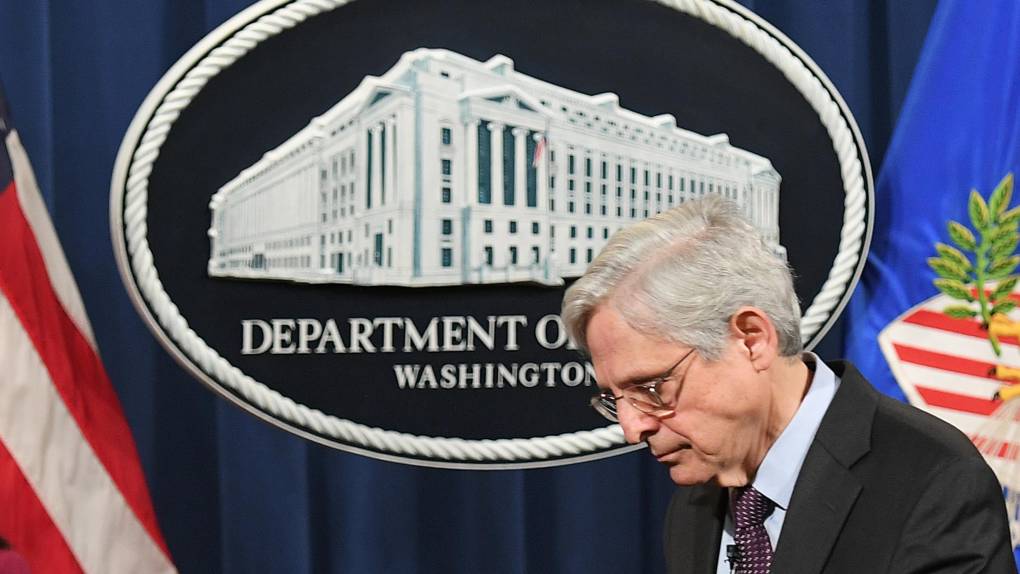
"caption": "In a letter to Attorney General Merrick Garland, some attorneys and advocates requested he use his authority to get rid of five Trump policies, including one by then-Attorney General Jeff Sessions that reversed a 2014 precedent establishing that women fleeing domestic violence could qualify for asylum. File photo of U.S. Attorney General Merrick Garland on April 26, 2021 in Washington, D.C.",
"description": null,
"title": "Attorney General Merrick Garland Announces Justice Department Will Begin Investigation Into The Practices of the Louisville Police Department",
"credit": "Mandel Ngan-Pool/Getty Images",
"status": "inherit",
"altTag": null,
"isLoading": false,
"fetchFailed": false
},
"news_11871316": {
"type": "attachments",
"id": "news_11871316",
"meta": {
"index": "attachments_1716263798",
"site": "news",
"id": "11871316",
"found": true
},
"parent": 11871191,
"imgSizes": {
"thumbnail": {
"file": "https://ww2.kqed.org/app/uploads/sites/10/2021/04/08132019_Herrera-1020x769-qut-1020x769-1-160x112.jpeg",
"width": 160,
"mimeType": "image/jpeg",
"height": 112
},
"post-thumbnail": {
"file": "https://ww2.kqed.org/app/uploads/sites/10/2021/04/08132019_Herrera-1020x769-qut-1020x769-1-672x372.jpeg",
"width": 672,
"mimeType": "image/jpeg",
"height": 372
},
"kqedFullSize": {
"file": "https://ww2.kqed.org/app/uploads/sites/10/2021/04/08132019_Herrera-1020x769-qut-1020x769-1.jpeg",
"width": 823,
"height": 575
},
"medium": {
"file": "https://ww2.kqed.org/app/uploads/sites/10/2021/04/08132019_Herrera-1020x769-qut-1020x769-1-800x559.jpeg",
"width": 800,
"mimeType": "image/jpeg",
"height": 559
}
},
"publishDate": 1619543312,
"modified": 1619543332,
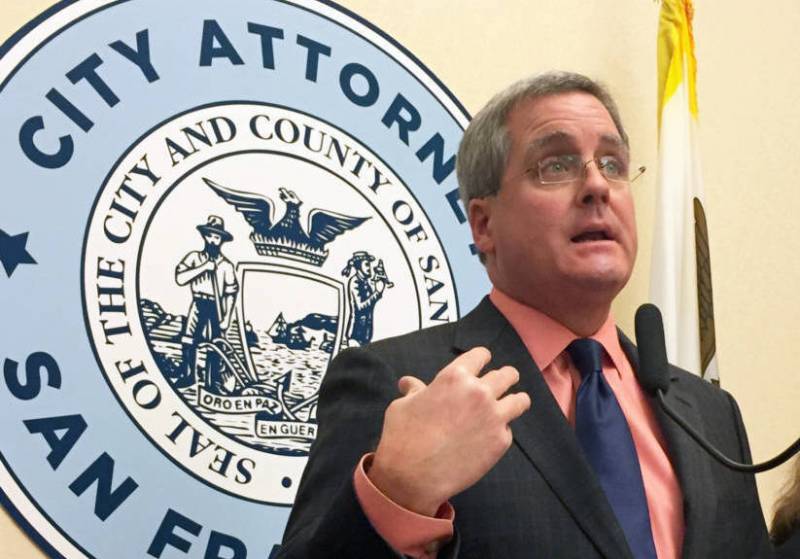
"caption": "San Francisco City Attorney Dennis Herrera in January 2017.",
"description": null,
"title": "08132019_Herrera-1020x769-qut-1020x769",
"credit": "Ryan Levi/KQED",
"status": "inherit",
"altTag": null,
"isLoading": false,
"fetchFailed": false
},
"news_11870374": {
"type": "attachments",
"id": "news_11870374",
"meta": {
"index": "attachments_1716263798",
"site": "news",
"id": "11870374",
"found": true
},
"parent": 11870338,
"imgSizes": {
"twentyfourteen-full-width": {
"file": "https://ww2.kqed.org/app/uploads/sites/10/2021/04/SFPLMain-1038x576.jpg",
"width": 1038,
"mimeType": "image/jpeg",
"height": 576
},
"thumbnail": {
"file": "https://ww2.kqed.org/app/uploads/sites/10/2021/04/SFPLMain-160x107.jpg",
"width": 160,
"mimeType": "image/jpeg",
"height": 107
},
"post-thumbnail": {
"file": "https://ww2.kqed.org/app/uploads/sites/10/2021/04/SFPLMain-672x372.jpg",
"width": 672,
"mimeType": "image/jpeg",
"height": 372
},
"kqedFullSize": {
"file": "https://ww2.kqed.org/app/uploads/sites/10/2021/04/SFPLMain.jpg",
"width": 1920,
"height": 1282
},
"large": {
"file": "https://ww2.kqed.org/app/uploads/sites/10/2021/04/SFPLMain-1020x681.jpg",
"width": 1020,
"mimeType": "image/jpeg",
"height": 681
},
"1536x1536": {
"file": "https://ww2.kqed.org/app/uploads/sites/10/2021/04/SFPLMain-1536x1026.jpg",
"width": 1536,
"mimeType": "image/jpeg",
"height": 1026
},
"medium": {
"file": "https://ww2.kqed.org/app/uploads/sites/10/2021/04/SFPLMain-800x534.jpg",
"width": 800,
"mimeType": "image/jpeg",
"height": 534
}
},
"publishDate": 1618945661,
"modified": 1618945787,
"caption": "A view of the ceiling from the first floor of the San Francisco Public Library's Main Branch.",
"description": null,
"title": "SFPLMain",
"credit": "Wikimedia Commons",
"status": "inherit",
"altTag": "A view of the ceiling from the first floor of the San Francisco Public Library's Main Branch.",
"isLoading": false,
"fetchFailed": false
},
"news_11869875": {
"type": "attachments",
"id": "news_11869875",
"meta": {
"index": "attachments_1716263798",
"site": "news",
"id": "11869875",
"found": true
},
"parent": 11869618,
"imgSizes": {
"twentyfourteen-full-width": {
"file": "https://ww2.kqed.org/app/uploads/sites/10/2021/04/EricAndHankWarner-1038x576.jpg",
"width": 1038,
"mimeType": "image/jpeg",
"height": 576
},
"thumbnail": {
"file": "https://ww2.kqed.org/app/uploads/sites/10/2021/04/EricAndHankWarner-160x118.jpg",
"width": 160,
"mimeType": "image/jpeg",
"height": 118
},
"post-thumbnail": {
"file": "https://ww2.kqed.org/app/uploads/sites/10/2021/04/EricAndHankWarner-672x372.jpg",
"width": 672,
"mimeType": "image/jpeg",
"height": 372
},
"kqedFullSize": {
"file": "https://ww2.kqed.org/app/uploads/sites/10/2021/04/EricAndHankWarner.jpg",
"width": 1146,
"height": 842
},
"large": {
"file": "https://ww2.kqed.org/app/uploads/sites/10/2021/04/EricAndHankWarner-1020x749.jpg",
"width": 1020,
"mimeType": "image/jpeg",
"height": 749
},
"medium": {
"file": "https://ww2.kqed.org/app/uploads/sites/10/2021/04/EricAndHankWarner-800x588.jpg",
"width": 800,
"mimeType": "image/jpeg",
"height": 588
}
},
"publishDate": 1618599758,
"modified": 1618599791,
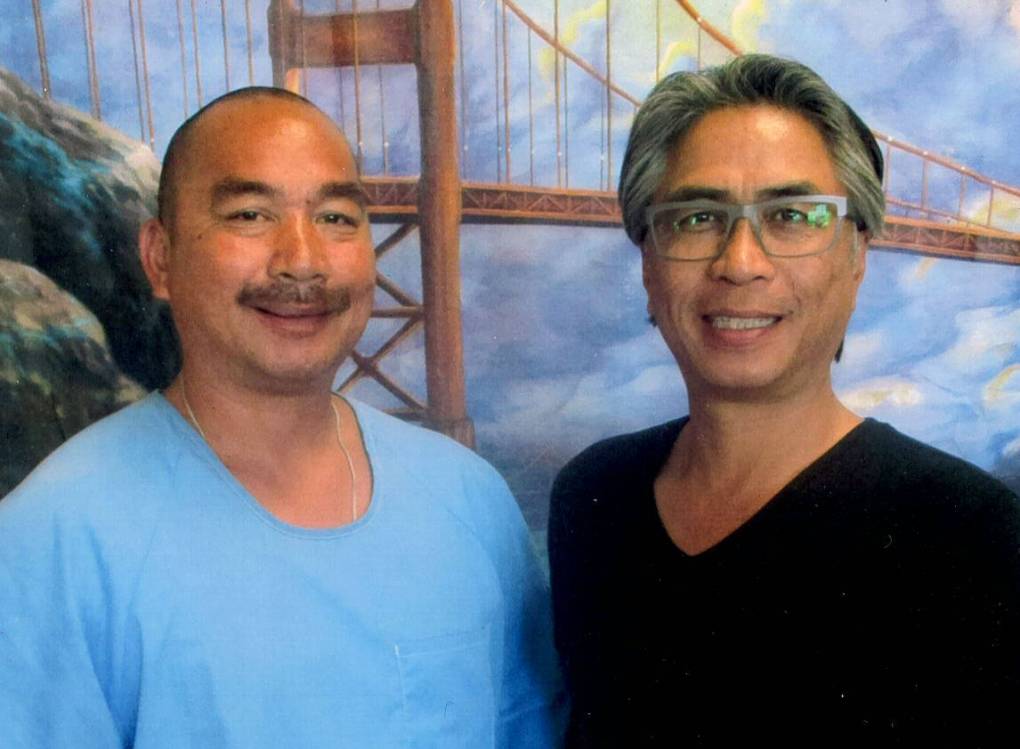
"caption": "Hank Warner, right, visiting his brother Eric at San Quentin State Prison in 2016.",
"description": null,
"title": "EricAndHankWarner",
"credit": "Courtesy Hank Warner",
"status": "inherit",
"altTag": null,
"isLoading": false,
"fetchFailed": false
},
"news_11869279": {
"type": "attachments",
"id": "news_11869279",
"meta": {
"index": "attachments_1716263798",
"site": "news",
"id": "11869279",
"found": true
},
"parent": 11869265,
"imgSizes": {
"twentyfourteen-full-width": {
"file": "https://ww2.kqed.org/app/uploads/sites/10/2021/04/GettyImages-1306576537-1038x576.jpg",
"width": 1038,
"mimeType": "image/jpeg",
"height": 576
},
"thumbnail": {
"file": "https://ww2.kqed.org/app/uploads/sites/10/2021/04/GettyImages-1306576537-160x113.jpg",
"width": 160,
"mimeType": "image/jpeg",
"height": 113
},
"post-thumbnail": {
"file": "https://ww2.kqed.org/app/uploads/sites/10/2021/04/GettyImages-1306576537-672x372.jpg",
"width": 672,
"mimeType": "image/jpeg",
"height": 372
},
"kqedFullSize": {
"file": "https://ww2.kqed.org/app/uploads/sites/10/2021/04/GettyImages-1306576537-scaled.jpg",
"width": 2560,
"height": 1802
},
"2048x2048": {
"file": "https://ww2.kqed.org/app/uploads/sites/10/2021/04/GettyImages-1306576537-2048x1441.jpg",
"width": 2048,
"mimeType": "image/jpeg",
"height": 1441
},
"large": {
"file": "https://ww2.kqed.org/app/uploads/sites/10/2021/04/GettyImages-1306576537-1020x718.jpg",
"width": 1020,
"mimeType": "image/jpeg",
"height": 718
},
"1536x1536": {
"file": "https://ww2.kqed.org/app/uploads/sites/10/2021/04/GettyImages-1306576537-1536x1081.jpg",
"width": 1536,
"mimeType": "image/jpeg",
"height": 1081
},
"full-width": {
"file": "https://ww2.kqed.org/app/uploads/sites/10/2021/04/GettyImages-1306576537-1920x1351.jpg",
"width": 1920,
"mimeType": "image/jpeg",
"height": 1351
},
"medium": {
"file": "https://ww2.kqed.org/app/uploads/sites/10/2021/04/GettyImages-1306576537-800x563.jpg",
"width": 800,
"mimeType": "image/jpeg",
"height": 563
}
},
"publishDate": 1618343086,
"modified": 1618434942,
"caption": "A dose of the new one-shot Johnson & Johnson COVID-19 vaccine is prepared at a vaccination event March 11, 2021 in Los Angeles, California. ",
"description": "A dose of the new one-shot Johnson & Johnson COVID-19 vaccine is prepared at a vaccination event March 11, 2021 in Los Angeles, California.",
"title": "California Health Officials Host Johnson & Johnson Vaccination Event In Los Angeles",
"credit": "Mario Tama/Getty Images",
"status": "inherit",
"altTag": null,
"isLoading": false,
"fetchFailed": false
},
"news_11869186": {
"type": "attachments",
"id": "news_11869186",
"meta": {
"index": "attachments_1716263798",
"site": "news",
"id": "11869186",
"found": true
},
"parent": 11869108,
"imgSizes": {
"twentyfourteen-full-width": {
"file": "https://ww2.kqed.org/app/uploads/sites/10/2021/04/FoodBags-1038x576.jpg",
"width": 1038,
"mimeType": "image/jpeg",
"height": 576
},
"thumbnail": {
"file": "https://ww2.kqed.org/app/uploads/sites/10/2021/04/FoodBags-160x138.jpg",
"width": 160,
"mimeType": "image/jpeg",
"height": 138
},
"post-thumbnail": {
"file": "https://ww2.kqed.org/app/uploads/sites/10/2021/04/FoodBags-672x372.jpg",
"width": 672,
"mimeType": "image/jpeg",
"height": 372
},
"kqedFullSize": {
"file": "https://ww2.kqed.org/app/uploads/sites/10/2021/04/FoodBags.jpg",
"width": 1536,
"height": 1328
},
"large": {
"file": "https://ww2.kqed.org/app/uploads/sites/10/2021/04/FoodBags-1020x882.jpg",
"width": 1020,
"mimeType": "image/jpeg",
"height": 882
},
"medium": {
"file": "https://ww2.kqed.org/app/uploads/sites/10/2021/04/FoodBags-800x692.jpg",
"width": 800,
"mimeType": "image/jpeg",
"height": 692
}
},
"publishDate": 1618273727,
"modified": 1618346318,
"caption": "Pre-prepared grab-and-go meals wait in bags for families at Gordon J. Lau Elementary School in San Francisco's Chinatown. SFUSD is shifting this grab-and-go pick-up location from Chinatown to the Tenderloin neighborhood.",
"description": "Pre-prepared grab and go meals wait in bags for families at Gordon J. Lau Elementary School in San Francisco's Chinatown. SFUSD is shifting this grab and go pickup location from Chinatown to the Tenderloin.",
"title": "FoodBags",
"credit": "Courtesy Donny Aoieong",
"status": "inherit",
"altTag": null,
"isLoading": false,
"fetchFailed": false
},
"news_11868975": {
"type": "attachments",
"id": "news_11868975",
"meta": {
"index": "attachments_1716263798",
"site": "news",
"id": "11868975",
"found": true
},
"parent": 11868969,
"imgSizes": {
"twentyfourteen-full-width": {
"file": "https://ww2.kqed.org/app/uploads/sites/10/2021/04/04_RS48457_028_SanFrancisco_IndiaFarmerProtest_04102021-qut-1038x576.jpg",
"width": 1038,
"mimeType": "image/jpeg",
"height": 576
},
"thumbnail": {
"file": "https://ww2.kqed.org/app/uploads/sites/10/2021/04/04_RS48457_028_SanFrancisco_IndiaFarmerProtest_04102021-qut-160x107.jpg",
"width": 160,
"mimeType": "image/jpeg",
"height": 107
},
"post-thumbnail": {
"file": "https://ww2.kqed.org/app/uploads/sites/10/2021/04/04_RS48457_028_SanFrancisco_IndiaFarmerProtest_04102021-qut-672x372.jpg",
"width": 672,
"mimeType": "image/jpeg",
"height": 372
},
"kqedFullSize": {
"file": "https://ww2.kqed.org/app/uploads/sites/10/2021/04/04_RS48457_028_SanFrancisco_IndiaFarmerProtest_04102021-qut.jpg",
"width": 1920,
"height": 1280
},
"large": {
"file": "https://ww2.kqed.org/app/uploads/sites/10/2021/04/04_RS48457_028_SanFrancisco_IndiaFarmerProtest_04102021-qut-1020x680.jpg",
"width": 1020,
"mimeType": "image/jpeg",
"height": 680
},
"1536x1536": {
"file": "https://ww2.kqed.org/app/uploads/sites/10/2021/04/04_RS48457_028_SanFrancisco_IndiaFarmerProtest_04102021-qut-1536x1024.jpg",
"width": 1536,
"mimeType": "image/jpeg",
"height": 1024
},
"medium": {
"file": "https://ww2.kqed.org/app/uploads/sites/10/2021/04/04_RS48457_028_SanFrancisco_IndiaFarmerProtest_04102021-qut-800x533.jpg",
"width": 800,
"mimeType": "image/jpeg",
"height": 533
}
},
"publishDate": 1618157611,
"modified": 1618244481,
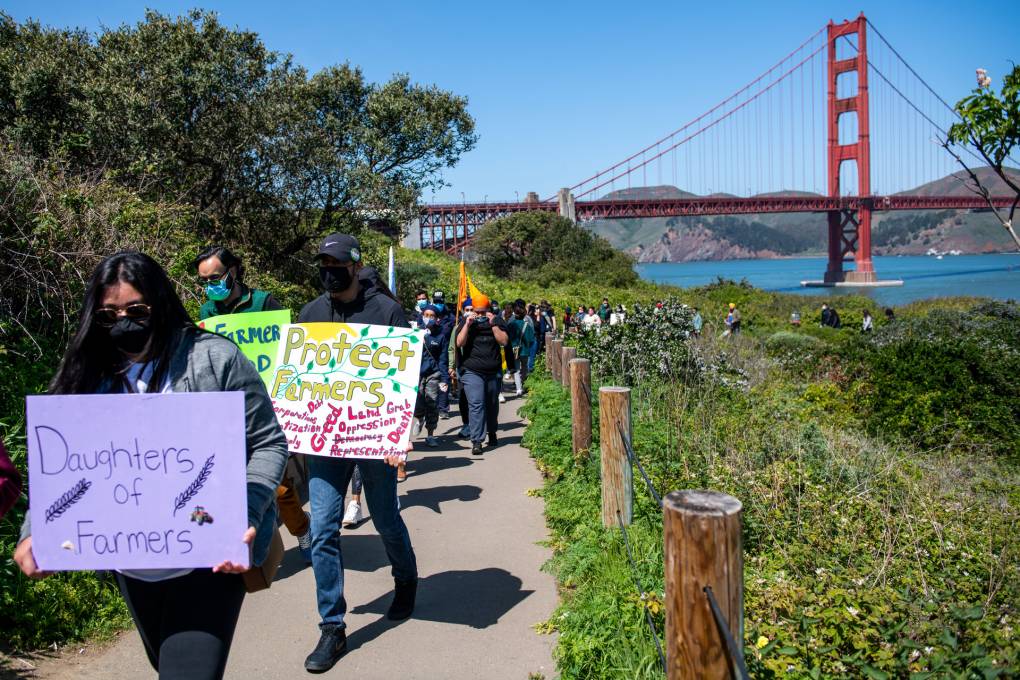
"caption": "Demonstrators march from Crissy Field to the Golden Gate Bridge in solidarity with farmers in India on April 10, 2021.",
"description": "Demonstrators march from Crissy Field to the Golden Gate Bridge in solidarity with farmers in India on April 10, 2021.",
"title": "04_RS48457_028_SanFrancisco_IndiaFarmerProtest_04102021-qut",
"credit": "Beth LaBerge/KQED",
"status": "inherit",
"altTag": null,
"isLoading": false,
"fetchFailed": false
},
"news_11868867": {
"type": "attachments",
"id": "news_11868867",
"meta": {
"index": "attachments_1716263798",
"site": "news",
"id": "11868867",
"found": true
},
"parent": 11868617,
"imgSizes": {
"twentyfourteen-full-width": {
"file": "https://ww2.kqed.org/app/uploads/sites/10/2021/04/RS47911_011_SanFrancisco_StopAAPIHateRally_0320201-qut-1038x576.jpeg",
"width": 1038,
"mimeType": "image/jpeg",
"height": 576
},
"thumbnail": {
"file": "https://ww2.kqed.org/app/uploads/sites/10/2021/04/RS47911_011_SanFrancisco_StopAAPIHateRally_0320201-qut-160x107.jpeg",
"width": 160,
"mimeType": "image/jpeg",
"height": 107
},
"post-thumbnail": {
"file": "https://ww2.kqed.org/app/uploads/sites/10/2021/04/RS47911_011_SanFrancisco_StopAAPIHateRally_0320201-qut-672x372.jpeg",
"width": 672,
"mimeType": "image/jpeg",
"height": 372
},
"kqedFullSize": {
"file": "https://ww2.kqed.org/app/uploads/sites/10/2021/04/RS47911_011_SanFrancisco_StopAAPIHateRally_0320201-qut.jpeg",
"width": 1920,
"height": 1280
},
"large": {
"file": "https://ww2.kqed.org/app/uploads/sites/10/2021/04/RS47911_011_SanFrancisco_StopAAPIHateRally_0320201-qut-1020x680.jpeg",
"width": 1020,
"mimeType": "image/jpeg",
"height": 680
},
"1536x1536": {
"file": "https://ww2.kqed.org/app/uploads/sites/10/2021/04/RS47911_011_SanFrancisco_StopAAPIHateRally_0320201-qut-1536x1024.jpeg",
"width": 1536,
"mimeType": "image/jpeg",
"height": 1024
},
"medium": {
"file": "https://ww2.kqed.org/app/uploads/sites/10/2021/04/RS47911_011_SanFrancisco_StopAAPIHateRally_0320201-qut-800x533.jpeg",
"width": 800,
"mimeType": "image/jpeg",
"height": 533
}
},
"publishDate": 1618005602,
"modified": 1620253831,
"caption": "Hundreds gather at Portsmouth Square in San Francisco’s Chinatown on March 20, 2021 for a Stop AAPI Hate rally, which made space for people to grieve, make art and to honor the lives lost to recent anti-Asian violence.",
"description": "Hundreds gather at Portsmouth Square in San Francisco’s Chinatown on March 20, 2021 for a Stop AAPI Hate rally, which made space for people to grieve, make art and to honor the lives lost to recent anti-Asian violence.",
"title": "RS47911_011_SanFrancisco_StopAAPIHateRally_0320201-qut",
"credit": "Beth LaBerge/KQED",
"status": "inherit",
"altTag": "Hundreds gather at Portsmouth Square in San Francisco’s Chinatown on March 20, 2021, for a Stop AAPI Hate rally which made space for people to grieve, make art and to honor the lives lost to recent anti-Asian violence.",
"isLoading": false,
"fetchFailed": false
},
"news_11868865": {
"type": "attachments",
"id": "news_11868865",
"meta": {
"index": "attachments_1716263798",
"site": "news",
"id": "11868865",
"found": true
},
"parent": 11868843,
"imgSizes": {
"twentyfourteen-full-width": {
"file": "https://ww2.kqed.org/app/uploads/sites/10/2021/04/RS47932_037_SanFrancisco_StopAAPIHateRally_0320201-qut-1038x576.jpeg",
"width": 1038,
"mimeType": "image/jpeg",
"height": 576
},
"thumbnail": {
"file": "https://ww2.kqed.org/app/uploads/sites/10/2021/04/RS47932_037_SanFrancisco_StopAAPIHateRally_0320201-qut-160x107.jpeg",
"width": 160,
"mimeType": "image/jpeg",
"height": 107
},
"post-thumbnail": {
"file": "https://ww2.kqed.org/app/uploads/sites/10/2021/04/RS47932_037_SanFrancisco_StopAAPIHateRally_0320201-qut-672x372.jpeg",
"width": 672,
"mimeType": "image/jpeg",
"height": 372
},
"kqedFullSize": {
"file": "https://ww2.kqed.org/app/uploads/sites/10/2021/04/RS47932_037_SanFrancisco_StopAAPIHateRally_0320201-qut.jpeg",
"width": 1920,
"height": 1278
},
"large": {
"file": "https://ww2.kqed.org/app/uploads/sites/10/2021/04/RS47932_037_SanFrancisco_StopAAPIHateRally_0320201-qut-1020x679.jpeg",
"width": 1020,
"mimeType": "image/jpeg",
"height": 679
},
"1536x1536": {
"file": "https://ww2.kqed.org/app/uploads/sites/10/2021/04/RS47932_037_SanFrancisco_StopAAPIHateRally_0320201-qut-1536x1022.jpeg",
"width": 1536,
"mimeType": "image/jpeg",
"height": 1022
},
"medium": {
"file": "https://ww2.kqed.org/app/uploads/sites/10/2021/04/RS47932_037_SanFrancisco_StopAAPIHateRally_0320201-qut-800x533.jpeg",
"width": 800,
"mimeType": "image/jpeg",
"height": 533
}
},
"publishDate": 1618005286,
"modified": 1618005509,
"caption": "A demonstrator holds a sign reading, 'Protect our Mothers, Fathers, Grandmas, Grandpas' during a vigil and rally in San Francisco on March 20, 2021. New community-based efforts are pooling funds for taxi or app-based rides for Asian Americans and Pacific Islanders who feel unsafe walking or taking public transit.",
"description": "A demonstrator holds a sign reading, 'Protect our Mothers, Fathers, Grandmas, Grandpas' during a vigil and rally in San Francisco on March 20, 2021. New community-based efforts are pooling funds for taxi or app-based rides for Asian Americans and Pacific Islanders who feel unsafe walking or taking public transit.",
"title": "RS47932_037_SanFrancisco_StopAAPIHateRally_0320201-qut",
"credit": "Beth LaBerge/KQED",
"status": "inherit",
"altTag": null,
"isLoading": false,
"fetchFailed": false
},
"news_11868708": {
"type": "attachments",
"id": "news_11868708",
"meta": {
"index": "attachments_1716263798",
"site": "news",
"id": "11868708",
"found": true
},
"parent": 11868661,
"imgSizes": {
"twentyfourteen-full-width": {
"file": "https://ww2.kqed.org/app/uploads/sites/10/2021/04/RS48429_GettyImages-1307808036-qut-1038x576.jpg",
"width": 1038,
"mimeType": "image/jpeg",
"height": 576
},
"thumbnail": {
"file": "https://ww2.kqed.org/app/uploads/sites/10/2021/04/RS48429_GettyImages-1307808036-qut-160x112.jpg",
"width": 160,
"mimeType": "image/jpeg",
"height": 112
},
"post-thumbnail": {
"file": "https://ww2.kqed.org/app/uploads/sites/10/2021/04/RS48429_GettyImages-1307808036-qut-672x372.jpg",
"width": 672,
"mimeType": "image/jpeg",
"height": 372
},
"kqedFullSize": {
"file": "https://ww2.kqed.org/app/uploads/sites/10/2021/04/RS48429_GettyImages-1307808036-qut.jpg",
"width": 1920,
"height": 1346
},
"large": {
"file": "https://ww2.kqed.org/app/uploads/sites/10/2021/04/RS48429_GettyImages-1307808036-qut-1020x715.jpg",
"width": 1020,
"mimeType": "image/jpeg",
"height": 715
},
"1536x1536": {
"file": "https://ww2.kqed.org/app/uploads/sites/10/2021/04/RS48429_GettyImages-1307808036-qut-1536x1077.jpg",
"width": 1536,
"mimeType": "image/jpeg",
"height": 1077
},
"medium": {
"file": "https://ww2.kqed.org/app/uploads/sites/10/2021/04/RS48429_GettyImages-1307808036-qut-800x561.jpg",
"width": 800,
"mimeType": "image/jpeg",
"height": 561
}
},
"publishDate": 1617921294,
"modified": 1617925731,
"caption": "A woman receives a COVID-19 vaccination. LightHouse for the Blind and Visually Impaired is now providing weekly pop-up vaccination clinics at their San Francisco headquarters.",
"description": "A woman receives a COVID vaccination dose. LightHouse for the Blind and Visually Impaired is now providing weekly pop-up vaccination clinics at their San Francisco headquarters.",
"title": "Residents Of L.A.'s Koreatown Get COVID-19 Vaccination",
"credit": "Mario Tama/Getty Images",
"status": "inherit",
"altTag": "woman getting COVID vaccine dose shot in the arm",
"isLoading": false,
"fetchFailed": false
},
"news_11867987": {
"type": "attachments",
"id": "news_11867987",
"meta": {
"index": "attachments_1716263798",
"site": "news",
"id": "11867987",
"found": true
},
"parent": 11866881,
"imgSizes": {
"twentyfourteen-full-width": {
"file": "https://ww2.kqed.org/app/uploads/sites/10/2021/04/RS47945_054_SanFrancisco_StopAAPIHateRally_0320201-qut-1038x576.jpeg",
"width": 1038,
"mimeType": "image/jpeg",
"height": 576
},
"thumbnail": {
"file": "https://ww2.kqed.org/app/uploads/sites/10/2021/04/RS47945_054_SanFrancisco_StopAAPIHateRally_0320201-qut-160x107.jpeg",
"width": 160,
"mimeType": "image/jpeg",
"height": 107
},
"post-thumbnail": {
"file": "https://ww2.kqed.org/app/uploads/sites/10/2021/04/RS47945_054_SanFrancisco_StopAAPIHateRally_0320201-qut-672x372.jpeg",
"width": 672,
"mimeType": "image/jpeg",
"height": 372
},
"kqedFullSize": {
"file": "https://ww2.kqed.org/app/uploads/sites/10/2021/04/RS47945_054_SanFrancisco_StopAAPIHateRally_0320201-qut.jpeg",
"width": 1920,
"height": 1278
},
"large": {
"file": "https://ww2.kqed.org/app/uploads/sites/10/2021/04/RS47945_054_SanFrancisco_StopAAPIHateRally_0320201-qut-1020x679.jpeg",
"width": 1020,
"mimeType": "image/jpeg",
"height": 679
},
"1536x1536": {
"file": "https://ww2.kqed.org/app/uploads/sites/10/2021/04/RS47945_054_SanFrancisco_StopAAPIHateRally_0320201-qut-1536x1022.jpeg",
"width": 1536,
"mimeType": "image/jpeg",
"height": 1022
},
"medium": {
"file": "https://ww2.kqed.org/app/uploads/sites/10/2021/04/RS47945_054_SanFrancisco_StopAAPIHateRally_0320201-qut-800x533.jpeg",
"width": 800,
"mimeType": "image/jpeg",
"height": 533
}
},
"publishDate": 1617485804,
"modified": 1617646187,
"caption": "A 'Hate Is the Virus ' sign. Hundreds gather at Portsmouth Square in San Francisco’s Chinatown on March 20, 2021, for a Stop AAPI Hate rally which made space for people to grieve, make art and to honor the lives lost to recent anti-Asian violence.",
"description": null,
"title": "RS47945_054_SanFrancisco_StopAAPIHateRally_0320201-qut",
"credit": "Beth LaBerge/KQED",
"status": "inherit",
"altTag": "A 'Hate is the Virus ' sign. Hundreds gather at Portsmouth Square in San Francisco’s Chinatown on March 20, 2021, for a Stop AAPI Hate rally which made space for people to grieve, make art and to honor the lives lost to recent anti-Asian violence.",
"isLoading": false,
"fetchFailed": false
},
"news_11867689": {
"type": "attachments",
"id": "news_11867689",
"meta": {
"index": "attachments_1716263798",
"site": "news",
"id": "11867689",
"found": true
},
"parent": 11867110,
"imgSizes": {
"twentyfourteen-full-width": {
"file": "https://ww2.kqed.org/app/uploads/sites/10/2021/04/RS47804_018_SanFrancisco_IntentionalCommunity_03122021-qut-1038x576.jpg",
"width": 1038,
"mimeType": "image/jpeg",
"height": 576
},
"thumbnail": {
"file": "https://ww2.kqed.org/app/uploads/sites/10/2021/04/RS47804_018_SanFrancisco_IntentionalCommunity_03122021-qut-160x107.jpg",
"width": 160,
"mimeType": "image/jpeg",
"height": 107
},
"post-thumbnail": {
"file": "https://ww2.kqed.org/app/uploads/sites/10/2021/04/RS47804_018_SanFrancisco_IntentionalCommunity_03122021-qut-672x372.jpg",
"width": 672,
"mimeType": "image/jpeg",
"height": 372
},
"kqedFullSize": {
"file": "https://ww2.kqed.org/app/uploads/sites/10/2021/04/RS47804_018_SanFrancisco_IntentionalCommunity_03122021-qut.jpg",
"width": 1920,
"height": 1280
},
"large": {
"file": "https://ww2.kqed.org/app/uploads/sites/10/2021/04/RS47804_018_SanFrancisco_IntentionalCommunity_03122021-qut-1020x680.jpg",
"width": 1020,
"mimeType": "image/jpeg",
"height": 680
},
"1536x1536": {
"file": "https://ww2.kqed.org/app/uploads/sites/10/2021/04/RS47804_018_SanFrancisco_IntentionalCommunity_03122021-qut-1536x1024.jpg",
"width": 1536,
"mimeType": "image/jpeg",
"height": 1024
},
"medium": {
"file": "https://ww2.kqed.org/app/uploads/sites/10/2021/04/RS47804_018_SanFrancisco_IntentionalCommunity_03122021-qut-800x533.jpg",
"width": 800,
"mimeType": "image/jpeg",
"height": 533
}
},
"publishDate": 1617316842,
"modified": 1617390450,
"caption": "Joseph Krauter sits on the front porch at Template House on March 12, 2021.",
"description": "Joseph Krauter sits on the front porch at Sigil on March 12, 2021.",
"title": "Joseph Krauter sits on the front porch at Sigil on March 12, 2021.",
"credit": "Beth LaBerge/KQED",
"status": "inherit",
"altTag": null,
"isLoading": false,
"fetchFailed": false
}
},
"audioPlayerReducer": {
"postId": "stream_live",
"isPaused": true,
"isPlaying": false,
"pfsActive": false,
"pledgeModalIsOpen": true,
"playerDrawerIsOpen": false,
"liveAudioPlayStartedAt": 0,
"liveAudioPlayContext": ""
},
"authorsReducer": {
"byline_news_11869618": {
"type": "authors",
"id": "byline_news_11869618",
"meta": {
"override": true
},
"slug": "byline_news_11869618",
"name": "Hank Warner",
"isLoading": false
},
"byline_news_11869265": {
"type": "authors",
"id": "byline_news_11869265",
"meta": {
"override": true
},
"slug": "byline_news_11869265",
"name": "Kathleen Ronayne and Janie Har\u003cbr />Associated Press",
"isLoading": false
},
"byline_news_11868843": {
"type": "authors",
"id": "byline_news_11868843",
"meta": {
"override": true
},
"slug": "byline_news_11868843",
"name": "\u003ca href=\"https://www.npr.org/people/728257568/chloee-weiner\">Chloee Weiner\u003c/a>",
"isLoading": false
},
"carlysevern": {
"type": "authors",
"id": "3243",
"meta": {
"index": "authors_1716337520",
"id": "3243",
"found": true
},
"name": "Carly Severn",
"firstName": "Carly",
"lastName": "Severn",
"slug": "carlysevern",
"email": "csevern@kqed.org",
"display_author_email": false,
"staff_mastheads": [
"news"
],
"title": "Senior Editor, Audience News ",
"bio": "Carly is KQED's Senior Editor of Audience News on the Digital News team, and has reported for the California Report Magazine, Bay Curious and KQED Arts. She's formerly the host of \u003ca href=\"http://ww2.kqed.org/pop/category/the-cooler/\" rel=\"noopener noreferrer\">The Cooler\u003c/a> podcast.",
"avatar": "https://secure.gravatar.com/avatar/54037bf5c128fe678f0ef26cec97a93f2e7f220a22d7285703328f12c42c1b1d?s=600&d=blank&r=g",
"twitter": "teacupinthebay",
"bluesky": null,
"facebook": null,
"instagram": null,
"linkedin": null,
"sites": [
{
"site": "",
"roles": [
"editor"
]
},
{
"site": "arts",
"roles": [
"editor"
]
},
{
"site": "news",
"roles": [
"administrator"
]
},
{
"site": "pop",
"roles": [
"editor"
]
},
{
"site": "futureofyou",
"roles": [
"editor"
]
},
{
"site": "about",
"roles": [
"administrator"
]
},
{
"site": "mindshift",
"roles": [
"editor"
]
},
{
"site": "bayareabites",
"roles": [
"editor"
]
},
{
"site": "stateofhealth",
"roles": [
"editor"
]
},
{
"site": "science",
"roles": [
"editor"
]
},
{
"site": "food",
"roles": [
"contributor"
]
},
{
"site": "forum",
"roles": [
"editor"
]
},
{
"site": "perspectives",
"roles": [
"administrator"
]
},
{
"site": "liveblog",
"roles": [
"editor"
]
}
],
"headData": {
"title": "Carly Severn | KQED",
"description": "Senior Editor, Audience News ",
"ogImgSrc": "https://secure.gravatar.com/avatar/54037bf5c128fe678f0ef26cec97a93f2e7f220a22d7285703328f12c42c1b1d?s=600&d=blank&r=g",
"twImgSrc": "https://secure.gravatar.com/avatar/54037bf5c128fe678f0ef26cec97a93f2e7f220a22d7285703328f12c42c1b1d?s=600&d=blank&r=g"
},
"isLoading": false,
"link": "/author/carlysevern"
},
"cveltman": {
"type": "authors",
"id": "8608",
"meta": {
"index": "authors_1716337520",
"id": "8608",
"found": true
},
"name": "Chloe Veltman",
"firstName": "Chloe",
"lastName": "Veltman",
"slug": "cveltman",
"email": "cveltman@kqed.org",
"display_author_email": true,
"staff_mastheads": [],
"title": "Arts and Culture Reporter",
"bio": "Chloe Veltman is a former arts and culture reporter for KQED. Prior to joining the organization, she launched and led the arts bureau at Colorado Public Radio, served as the Bay Area's culture columnist for the New York Times, and was the founder, host and executive producer of VoiceBox, a national award-winning weekly podcast/radio show and live events series all about the human voice. Chloe is the recipient of numerous prizes, grants and fellowships including a Webby Award for her work on interactive storytelling, both the John S Knight Journalism Fellowship and Humanities Center Fellowship at Stanford University, the Sundance Arts Writing Fellowship and a Library of Congress Research Fellowship. She is the author of the book \"On Acting\" and has appeared as a guest lecturer at Yale University and the San Francisco Conservatory of Music among other institutions. She holds a BA in english literature from King's College, Cambridge, and a Masters in Dramaturgy from the Central School of Speech and Drama/Harvard Institute for Advanced Theater Training.\r\n\u003ca href=\"https://www.chloeveltman.com\">www.chloeveltman.com\u003c/a>",
"avatar": "https://secure.gravatar.com/avatar/55403394b00a1ddab683952c2eb2cf85?s=600&d=blank&r=g",
"twitter": "chloeveltman",
"facebook": null,
"instagram": null,
"linkedin": null,
"sites": [
{
"site": "arts",
"roles": []
},
{
"site": "news",
"roles": [
"author"
]
},
{
"site": "pop",
"roles": [
"editor"
]
},
{
"site": "science",
"roles": []
}
],
"headData": {
"title": "Chloe Veltman | KQED",
"description": "Arts and Culture Reporter",
"ogImgSrc": "https://secure.gravatar.com/avatar/55403394b00a1ddab683952c2eb2cf85?s=600&d=blank&r=g",
"twImgSrc": "https://secure.gravatar.com/avatar/55403394b00a1ddab683952c2eb2cf85?s=600&d=blank&r=g"
},
"isLoading": false,
"link": "/author/cveltman"
},
"fjhabvala": {
"type": "authors",
"id": "8659",
"meta": {
"index": "authors_1716337520",
"id": "8659",
"found": true
},
"name": "Farida Jhabvala Romero",
"firstName": "Farida",
"lastName": "Jhabvala Romero",
"slug": "fjhabvala",
"email": "fjhabvala@kqed.org",
"display_author_email": true,
"staff_mastheads": [
"news"
],
"title": "KQED Contributor",
"bio": "Farida Jhabvala Romero is a Labor Correspondent for KQED. She previously covered immigration. Farida was \u003ca href=\"https://www.ccnma.org/2022-most-influential-latina-journalists\">named\u003c/a> one of the 10 Most Influential Latina Journalists in California in 2022 by the California Chicano News Media Association. Her work has won awards from the Society of Professional Journalists (Northern California), as well as a national and regional Edward M. Murrow Award for the collaborative reporting projects “Dangerous Air” and “Graying California.” Before joining KQED, Farida worked as a producer at Radio Bilingüe, a national public radio network. Farida earned her master’s degree in journalism from Stanford University.",
"avatar": "https://secure.gravatar.com/avatar/f9f022d4e2609741874222a1e9d41f48fea74011aa7c615eef91d9a50c944ebe?s=600&d=blank&r=g",
"twitter": "FaridaJhabvala",
"bluesky": null,
"facebook": null,
"instagram": null,
"linkedin": "https://www.linkedin.com/in/faridajhabvala/",
"sites": [
{
"site": "news",
"roles": [
"editor"
]
},
{
"site": "stateofhealth",
"roles": [
"author"
]
},
{
"site": "liveblog",
"roles": [
"author"
]
}
],
"headData": {
"title": "Farida Jhabvala Romero | KQED",
"description": "KQED Contributor",
"ogImgSrc": "https://secure.gravatar.com/avatar/f9f022d4e2609741874222a1e9d41f48fea74011aa7c615eef91d9a50c944ebe?s=600&d=blank&r=g",
"twImgSrc": "https://secure.gravatar.com/avatar/f9f022d4e2609741874222a1e9d41f48fea74011aa7c615eef91d9a50c944ebe?s=600&d=blank&r=g"
},
"isLoading": false,
"link": "/author/fjhabvala"
},
"katewolffe": {
"type": "authors",
"id": "11523",
"meta": {
"index": "authors_1716337520",
"id": "11523",
"found": true
},
"name": "Kate Wolffe",
"firstName": "Kate",
"lastName": "Wolffe",
"slug": "katewolffe",
"email": "kwolffe@kqed.org",
"display_author_email": true,
"staff_mastheads": [
"news"
],
"title": "KQED Reporter + Weekend Host",
"bio": "Kate Wolffe reports on local Bay Area happenings for KQED, and hosts the news on weekend afternoons. She joined KQED in 2018 as an intern on the Forum team, before moving to cover topics ranging from politics to criminal justice to homelessness. A Bay Area native and UC Berkeley graduate, Kate loves to discover new corners of the region.",
"avatar": "https://secure.gravatar.com/avatar/22455f14db824a03ee252f73052fe939?s=600&d=blank&r=g",
"twitter": "katewolffe",
"facebook": null,
"instagram": null,
"linkedin": null,
"sites": [
{
"site": "arts",
"roles": [
"editor"
]
},
{
"site": "news",
"roles": [
"author",
"edit_others_posts"
]
},
{
"site": "forum",
"roles": [
"editor"
]
}
],
"headData": {
"title": "Kate Wolffe | KQED",
"description": "KQED Reporter + Weekend Host",
"ogImgSrc": "https://secure.gravatar.com/avatar/22455f14db824a03ee252f73052fe939?s=600&d=blank&r=g",
"twImgSrc": "https://secure.gravatar.com/avatar/22455f14db824a03ee252f73052fe939?s=600&d=blank&r=g"
},
"isLoading": false,
"link": "/author/katewolffe"
},
"lsarah": {
"type": "authors",
"id": "11626",
"meta": {
"index": "authors_1716337520",
"id": "11626",
"found": true
},
"name": "Lakshmi Sarah",
"firstName": "Lakshmi",
"lastName": "Sarah",
"slug": "lsarah",
"email": "lsarah@kqed.org",
"display_author_email": false,
"staff_mastheads": [],
"title": "Digital Producer",
"bio": "Lakshmi Sarah is an educator, author and journalist with a focus on innovative storytelling. She has worked with newspapers, radio and magazines from Ahmedabad, India to Los Angeles, California. She has written and produced for Die Zeit, Global Voices, AJ+, KQED, Fusion Media Group and the New York Times.",
"avatar": "https://secure.gravatar.com/avatar/652dcaecd8b28826fc17a8b2d6bb4e93?s=600&d=blank&r=g",
"twitter": "lakitalki",
"facebook": null,
"instagram": "https://www.instagram.com/laki.talki/",
"linkedin": "https://www.linkedin.com/in/lakisarah/",
"sites": [
{
"site": "arts",
"roles": []
},
{
"site": "news",
"roles": []
},
{
"site": "bayareabites",
"roles": []
},
{
"site": "science",
"roles": []
}
],
"headData": {
"title": "Lakshmi Sarah | KQED",
"description": "Digital Producer",
"ogImgSrc": "https://secure.gravatar.com/avatar/652dcaecd8b28826fc17a8b2d6bb4e93?s=600&d=blank&r=g",
"twImgSrc": "https://secure.gravatar.com/avatar/652dcaecd8b28826fc17a8b2d6bb4e93?s=600&d=blank&r=g"
},
"isLoading": false,
"link": "/author/lsarah"
},
"jchang": {
"type": "authors",
"id": "11642",
"meta": {
"index": "authors_1716337520",
"id": "11642",
"found": true
},
"name": "Julie Chang",
"firstName": "Julie",
"lastName": "Chang",
"slug": "jchang",
"email": "jchang@kqed.org",
"display_author_email": false,
"staff_mastheads": [
"news"
],
"title": "KQED Contributor",
"bio": "Julie Chang is a reporter and producer (and occasional anchor) with the radio and digital teams at KQED. Before KQED, she worked at WAMU 88.5 in Washington D.C. and 89.3 KPCC in Los Angeles County. Her work has been featured on NPR’s Morning Edition and All Things Considered, Here & Now, the New York Times, and more. Julie graduated from UC Berkeley’s Graduate School of Journalism. She previously taught English at Pasadena City College, Fullerton College and Cal Poly Pomona. Julie earned her M.A. in English from Cal Poly Pomona and her B.A. in English from UCI with a minor in criminology.",
"avatar": "https://secure.gravatar.com/avatar/a7afce94ef127082c5475116b4a3b77d?s=600&d=blank&r=g",
"twitter": "BayAreaJulie",
"facebook": null,
"instagram": null,
"linkedin": "https://www.linkedin.com/in/julieyc/",
"sites": [
{
"site": "",
"roles": [
"editor"
]
},
{
"site": "news",
"roles": [
"author"
]
},
{
"site": "science",
"roles": [
"editor"
]
}
],
"headData": {
"title": "Julie Chang | KQED",
"description": "KQED Contributor",
"ogImgSrc": "https://secure.gravatar.com/avatar/a7afce94ef127082c5475116b4a3b77d?s=600&d=blank&r=g",
"twImgSrc": "https://secure.gravatar.com/avatar/a7afce94ef127082c5475116b4a3b77d?s=600&d=blank&r=g"
},
"isLoading": false,
"link": "/author/jchang"
},
"blaberge": {
"type": "authors",
"id": "11667",
"meta": {
"index": "authors_1716337520",
"id": "11667",
"found": true
},
"name": "Beth LaBerge",
"firstName": "Beth",
"lastName": "LaBerge",
"slug": "blaberge",
"email": "blaberge@KQED.org",
"display_author_email": true,
"staff_mastheads": [
"news"
],
"title": "Photographer, News",
"bio": "Beth LaBerge is a visual journalist for \u003ca href=\"https://www.kqed.org/news\">KQED News\u003c/a>.",
"avatar": "https://secure.gravatar.com/avatar/ce49ecd7a1306685637b45a1f6f5dedfc4ae9481966eb596fea5160466dd6319?s=600&d=blank&r=g",
"twitter": null,
"bluesky": null,
"facebook": null,
"instagram": "https://www.instagram.com/bethlaberge/",
"linkedin": null,
"sites": [
{
"site": "arts",
"roles": [
"editor",
"manage_categories"
]
},
{
"site": "news",
"roles": [
"editor",
"edit_plugins",
"manage_categories"
]
},
{
"site": "science",
"roles": [
"editor",
"contributor",
"author",
"manage_categories"
]
},
{
"site": "perspectives",
"roles": [
"editor"
]
},
{
"site": "liveblog",
"roles": [
"editor"
]
}
],
"headData": {
"title": "Beth LaBerge | KQED",
"description": "Photographer, News",
"ogImgSrc": "https://secure.gravatar.com/avatar/ce49ecd7a1306685637b45a1f6f5dedfc4ae9481966eb596fea5160466dd6319?s=600&d=blank&r=g",
"twImgSrc": "https://secure.gravatar.com/avatar/ce49ecd7a1306685637b45a1f6f5dedfc4ae9481966eb596fea5160466dd6319?s=600&d=blank&r=g"
},
"isLoading": false,
"link": "/author/blaberge"
},
"jrodriguez": {
"type": "authors",
"id": "11690",
"meta": {
"index": "authors_1716337520",
"id": "11690",
"found": true
},
"name": "Joe Fitzgerald Rodriguez",
"firstName": "Joe",
"lastName": "Fitzgerald Rodriguez",
"slug": "jrodriguez",
"email": "jrodriguez@kqed.org",
"display_author_email": true,
"staff_mastheads": [
"news"
],
"title": "Reporter and Producer",
"bio": "Joe Fitzgerald Rodriguez is a reporter and digital producer for KQED covering politics. Joe most recently wrote for the \u003cem>San Francisco Examiner\u003c/em> as a political columnist covering The City. He was raised in San Francisco and has spent his reporting career in his beloved, foggy, city by the bay. Joe was 12-years-old when he conducted his first interview in journalism, grilling former San Francisco Mayor Willie Brown for the Marina Middle School newspaper, \u003cem>The Penguin Press, \u003c/em>and he continues to report on the San Francisco Bay Area to this day.",
"avatar": "https://secure.gravatar.com/avatar/2247beb0564c1e9c62228d5649d2edac?s=600&d=blank&r=g",
"twitter": "FitztheReporter",
"facebook": null,
"instagram": "https://www.instagram.com/fitzthereporter/",
"linkedin": null,
"sites": [
{
"site": "",
"roles": [
"editor"
]
},
{
"site": "arts",
"roles": [
"editor"
]
},
{
"site": "news",
"roles": [
"editor"
]
},
{
"site": "science",
"roles": [
"editor"
]
},
{
"site": "elections",
"roles": [
"editor"
]
},
{
"site": "liveblog",
"roles": [
"editor"
]
}
],
"headData": {
"title": "Joe Fitzgerald Rodriguez | KQED",
"description": "Reporter and Producer",
"ogImgSrc": "https://secure.gravatar.com/avatar/2247beb0564c1e9c62228d5649d2edac?s=600&d=blank&r=g",
"twImgSrc": "https://secure.gravatar.com/avatar/2247beb0564c1e9c62228d5649d2edac?s=600&d=blank&r=g"
},
"isLoading": false,
"link": "/author/jrodriguez"
}
},
"pagesReducer": {
"news_tag_san-francisco": {
"type": "terms",
"id": "news_38",
"meta": {
"index": "terms_1716263798",
"site": "news",
"id": "38",
"score": 6.723146
},
"featImg": null,
"name": "San Francisco",
"description": null,
"taxonomy": "tag",
"headData": {
"twImgId": null,
"twTitle": null,
"ogTitle": null,
"ogImgId": null,
"twDescription": null,
"description": null,
"title": "San Francisco Archives | KQED News",
"ogDescription": null
},
"ttid": 58,
"slug": "san-francisco",
"isLoading": false,
"title": "San Francisco",
"pageMeta": {
"site": "news",
"WpPageTemplate": "page-topic-editorial",
"currentPage": 129
},
"blocks": [
{
"blockName": "kqed/post-list",
"attrs": {
"layout": "cardArticle2",
"query": "posts/news?tag=san-francisco",
"seeMore": false,
"paginated": true,
"page": 129
}
},
{
"blockName": "kqed/ad"
}
]
}
},
"pfsSessionReducer": {},
"postsReducer": {
"stream_live": {
"type": "live",
"id": "stream_live",
"audioUrl": "https://streams.kqed.org/kqedradio",
"title": "Live Stream",
"excerpt": "Live Stream information currently unavailable.",
"link": "/radio",
"featImg": "",
"label": {
"name": "KQED Live",
"link": "/"
}
},
"stream_kqedNewscast": {
"type": "posts",
"id": "stream_kqedNewscast",
"audioUrl": "https://www.kqed.org/.stream/anon/radio/RDnews/newscast.mp3?_=1",
"title": "KQED Newscast",
"featImg": "",
"label": {
"name": "88.5 FM",
"link": "/"
}
},
"news_11871547": {
"type": "posts",
"id": "news_11871547",
"meta": {
"index": "posts_1716263798",
"site": "news",
"id": "11871547",
"score": null,
"sort": [
1619653386000
]
},
"guestAuthors": [],
"slug": "immigrant-advocates-urge-biden-administration-to-end-trump-bar-on-asylum-for-domestic-violence-victims",
"title": "Immigrant Advocates Urge Biden Administration to End Trump Restrictions on Asylum for Domestic Violence Victims",
"publishDate": 1619653386,
"format": "standard",
"headTitle": "Immigrant Advocates Urge Biden Administration to End Trump Restrictions on Asylum for Domestic Violence Victims | KQED",
"labelTerm": {
"site": "news"
},
"content": "\u003cp>Immigrant advocates and law professors in the Bay Area are urging the Biden administration to immediately revoke Trump-era restrictions on asylum that they say have led the U.S. to send back to danger thousands of immigrant women and families fleeing domestic violence or gang brutality.\u003c/p>\n\u003cp>Within weeks of taking office, President Biden \u003ca href=\"https://www.whitehouse.gov/briefing-room/presidential-actions/2021/02/02/executive-order-creating-a-comprehensive-regional-framework-to-address-the-causes-of-migration-to-manage-migration-throughout-north-and-central-america-and-to-provide-safe-and-orderly-processing/#:~:text=Briefing%20Room-,Executive%20Order%20on%20Creating%20a%20Comprehensive%20Regional%20Framework%20to%20Address,at%20the%20United%20States%20Border\" target=\"_blank\" rel=\"noopener noreferrer\">ordered\u003c/a> the U.S. attorney general and the Homeland Security secretary to take steps to review and restore an asylum system he said was “badly damaged” by policies under the Trump administration. But the agencies are not expected to issue regulations related to victims of domestic and gang violence until late summer or fall.\u003c/p>\n\u003cp>In the meantime, the U.S. attorney general, who oversees immigration courts, should vacate orders by his Trump-era predecessors that dramatically limited who was eligible for asylum protection, said Karen Musalo, director of the Center for Gender and Refugee Studies at UC Hastings in San Francisco. [pullquote size=\"medium\" align=\"right\" citation=\"Blanca, an advocate with Mujeres Unidas y Activas\"]‘The government has the responsibility to protect our lives even when the aggressor is our spouse … To live free of violence is a right we all have as human beings, but we women have been suppressed by both abusers and the government.’[/pullquote]\u003c/p>\n\u003cp>“People’s fates are in the balance,” said Musalo, a law professor. “Every day that these decisions remain in place means that individuals who have deserving claims for protection and whose lives are really at risk are being denied and sent back to the countries they fled.”\u003c/p>\n\u003cp>In a \u003ca href=\"https://cgrs.uchastings.edu/sites/default/files/Request%20for%20Vacatur%20of%20AB%20ACAA%20LEA_2021.04.13.pdf\" target=\"_blank\" rel=\"noopener noreferrer\">letter\u003c/a> this month to Attorney General Merrick Garland, Musalo and attorneys with other litigation and advocacy organizations requested he use his authority to get rid of five Trump policies, including one by then-Attorney General Jeff Sessions that reversed a 2014 precedent establishing that women fleeing domestic violence could qualify for asylum.\u003c/p>\n\u003cp>[ad fullwidth]\u003c/p>\n\u003cp>The Department of Justice did not return KQED’s requests for comment.\u003c/p>\n\u003cp>An immigration judge may grant asylum to people with a well-founded fear of persecution in their home countries because of their race, religion, nationality, political opinion or membership in a particular social group.\u003c/p>\n\u003cp>In 2018, Sessions rejected the claim of a Salvadoran mother of three who had suffered nearly 15 years of physical and sexual violence at the hands of her ex-husband. The woman, known in court documents as A.B., was represented by Musalo.\u003c/p>\n\u003cp>In his Matter of A-B- \u003ca href=\"https://www.justice.gov/eoir/page/file/1070866/download\" target=\"_blank\" rel=\"noopener noreferrer\">decision\u003c/a>, Sessions concluded that domestic violence is a private or personal crime, not a form of persecution deserving of asylum on account of membership in a particular group.\u003c/p>\n\u003cp>But there is overwhelming evidence that domestic violence is rooted in the subordination of women by men and caused by a society’s gender conditioning, said Nancy Lemon, a UC Berkeley law professor who wrote the textbook “Domestic Violence Law.” She called the Matter of A-B- ruling “an affront to women’s rights.” [aside tag=\"domestic-abuse, asylum\" label=\"More Related Stories\"]\u003c/p>\n\u003cp>“Former Attorney General Sessions’ view of domestic violence is not only incredibly antiquated and dangerous, it also absolves government of any role in addressing the problem,” said Lemon during a call with reporters. “This sort of backwards rhetoric is very harmful and has set back many decades of progress in women’s rights at home and abroad.”\u003c/p>\n\u003cp>Applicants often face a very difficult road to win asylum, especially if they lack legal counsel, and the share of denials significantly increased during the Trump administration. Judges nationwide denied nearly 55% of asylum claims in 2016, the last year of the Obama administration, but the rate of denials climbed to 72% in 2020, according to \u003ca href=\"https://trac.syr.edu/immigration/reports/630/\" target=\"_blank\" rel=\"noopener noreferrer\">figures\u003c/a> compiled by researchers at Syracuse University.\u003c/p>\n\u003cp>A Bay Area woman named Blanca, who won asylum in the U.S. and asked for her last name to be withheld, spoke at a press conference Tuesday, calling on the Biden administration to reverse the Matter of A-B- ruling and other asylum restrictions. She said she fled severe beatings and emotional abuse by the father of her three children in Guatemala after the local police and government failed to enforce a restraining order or help protect her and her kids.\u003c/p>\n\u003cp>Now, Blanca has become an advocate with the Bay Area nonprofit Mujeres Unidas y Activas, speaking up for other women and children who, she said, deserve similar protections.\u003c/p>\n\u003cp>\u003c/p>\n\u003cp>“Domestic violence is not a private matter, as Jeff Sessions said in 2018,” said Blanca, in Spanish. “The government has the responsibility to protect our lives even when the aggressor is our spouse … To live free of violence is a right we all have as human beings, but we women have been suppressed by both abusers and the government.”\u003c/p>\n\n",
"blocks": [],
"excerpt": "The Trump-era restrictions on asylum have led the U.S. to send back to danger thousands of immigrant women and families fleeing domestic violence or gang brutality, say law professors and advocates. ",
"status": "publish",
"parent": 0,
"modified": 1721128994,
"stats": {
"hasAudio": false,
"hasVideo": false,
"hasChartOrMap": false,
"iframeSrcs": [],
"hasGoogleForm": false,
"hasGallery": false,
"hasHearkenModule": false,
"hasPolis": false,
"paragraphCount": 17,
"wordCount": 818
},
"headData": {
"title": "Immigrant Advocates Urge Biden Administration to End Trump Restrictions on Asylum for Domestic Violence Victims | KQED",
"description": "The Trump-era restrictions on asylum have led the U.S. to send back to danger thousands of immigrant women and families fleeing domestic violence or gang brutality, say law professors and advocates. ",
"ogTitle": "",
"ogDescription": "",
"ogImgId": "",
"twTitle": "",
"twDescription": "",
"twImgId": "",
"schema": {
"@context": "https://schema.org",
"@type": "NewsArticle",
"headline": "Immigrant Advocates Urge Biden Administration to End Trump Restrictions on Asylum for Domestic Violence Victims",
"datePublished": "2021-04-28T16:43:06-07:00",
"dateModified": "2024-07-16T04:23:14-07:00",
"image": "https://cdn.kqed.org/wp-content/uploads/2020/02/KQED-OG-Image@1x.png",
"isAccessibleForFree": "True",
"publisher": {
"@type": "NewsMediaOrganization",
"@id": "https://www.kqed.org/#organization",
"name": "KQED",
"logo": "https://cdn.kqed.org/wp-content/uploads/2020/02/KQED-OG-Image@1x.png",
"url": "https://www.kqed.org",
"sameAs": [
"https://www.facebook.com/KQED",
"https://twitter.com/KQED",
"https://www.instagram.com/kqed/",
"https://www.tiktok.com/@kqedofficial",
"https://www.linkedin.com/company/kqed",
"https://www.youtube.com/channel/UCeC0IOo7i1P_61zVUWbJ4nw"
]
}
}
},
"audioUrl": "https://traffic.omny.fm/d/clips/0af137ef-751e-4b19-a055-aaef00d2d578/ffca7e9f-6831-4[…]f-aaef00f5a073/7eed7ccb-ecc5-447a-a455-ad180115df54/audio.mp3",
"sticky": false,
"path": "/news/11871547/immigrant-advocates-urge-biden-administration-to-end-trump-bar-on-asylum-for-domestic-violence-victims",
"audioTrackLength": null,
"parsedContent": [
{
"type": "contentString",
"content": "\u003cdiv class=\"post-body\">\u003cp>\u003cp>Immigrant advocates and law professors in the Bay Area are urging the Biden administration to immediately revoke Trump-era restrictions on asylum that they say have led the U.S. to send back to danger thousands of immigrant women and families fleeing domestic violence or gang brutality.\u003c/p>\n\u003cp>Within weeks of taking office, President Biden \u003ca href=\"https://www.whitehouse.gov/briefing-room/presidential-actions/2021/02/02/executive-order-creating-a-comprehensive-regional-framework-to-address-the-causes-of-migration-to-manage-migration-throughout-north-and-central-america-and-to-provide-safe-and-orderly-processing/#:~:text=Briefing%20Room-,Executive%20Order%20on%20Creating%20a%20Comprehensive%20Regional%20Framework%20to%20Address,at%20the%20United%20States%20Border\" target=\"_blank\" rel=\"noopener noreferrer\">ordered\u003c/a> the U.S. attorney general and the Homeland Security secretary to take steps to review and restore an asylum system he said was “badly damaged” by policies under the Trump administration. But the agencies are not expected to issue regulations related to victims of domestic and gang violence until late summer or fall.\u003c/p>\n\u003cp>In the meantime, the U.S. attorney general, who oversees immigration courts, should vacate orders by his Trump-era predecessors that dramatically limited who was eligible for asylum protection, said Karen Musalo, director of the Center for Gender and Refugee Studies at UC Hastings in San Francisco. \u003c/p>\u003c/div>",
"attributes": {
"named": {},
"numeric": []
}
},
{
"type": "component",
"content": "‘The government has the responsibility to protect our lives even when the aggressor is our spouse … To live free of violence is a right we all have as human beings, but we women have been suppressed by both abusers and the government.’",
"name": "pullquote",
"attributes": {
"named": {
"size": "medium",
"align": "right",
"citation": "Blanca, an advocate with Mujeres Unidas y Activas",
"label": ""
},
"numeric": []
}
},
{
"type": "contentString",
"content": "\u003cdiv class=\"post-body\">\u003cp>\u003c/p>\n\u003cp>“People’s fates are in the balance,” said Musalo, a law professor. “Every day that these decisions remain in place means that individuals who have deserving claims for protection and whose lives are really at risk are being denied and sent back to the countries they fled.”\u003c/p>\n\u003cp>In a \u003ca href=\"https://cgrs.uchastings.edu/sites/default/files/Request%20for%20Vacatur%20of%20AB%20ACAA%20LEA_2021.04.13.pdf\" target=\"_blank\" rel=\"noopener noreferrer\">letter\u003c/a> this month to Attorney General Merrick Garland, Musalo and attorneys with other litigation and advocacy organizations requested he use his authority to get rid of five Trump policies, including one by then-Attorney General Jeff Sessions that reversed a 2014 precedent establishing that women fleeing domestic violence could qualify for asylum.\u003c/p>\n\u003cp>\u003c/p>\u003c/div>",
"attributes": {
"named": {},
"numeric": []
}
},
{
"type": "component",
"content": "",
"name": "ad",
"attributes": {
"named": {
"label": "fullwidth"
},
"numeric": [
"fullwidth"
]
}
},
{
"type": "contentString",
"content": "\u003cdiv class=\"post-body\">\u003cp>\u003c/p>\n\u003cp>The Department of Justice did not return KQED’s requests for comment.\u003c/p>\n\u003cp>An immigration judge may grant asylum to people with a well-founded fear of persecution in their home countries because of their race, religion, nationality, political opinion or membership in a particular social group.\u003c/p>\n\u003cp>In 2018, Sessions rejected the claim of a Salvadoran mother of three who had suffered nearly 15 years of physical and sexual violence at the hands of her ex-husband. The woman, known in court documents as A.B., was represented by Musalo.\u003c/p>\n\u003cp>In his Matter of A-B- \u003ca href=\"https://www.justice.gov/eoir/page/file/1070866/download\" target=\"_blank\" rel=\"noopener noreferrer\">decision\u003c/a>, Sessions concluded that domestic violence is a private or personal crime, not a form of persecution deserving of asylum on account of membership in a particular group.\u003c/p>\n\u003cp>But there is overwhelming evidence that domestic violence is rooted in the subordination of women by men and caused by a society’s gender conditioning, said Nancy Lemon, a UC Berkeley law professor who wrote the textbook “Domestic Violence Law.” She called the Matter of A-B- ruling “an affront to women’s rights.” \u003c/p>\u003c/div>",
"attributes": {
"named": {},
"numeric": []
}
},
{
"type": "component",
"content": "",
"name": "aside",
"attributes": {
"named": {
"tag": "domestic-abuse, asylum",
"label": "More Related Stories "
},
"numeric": []
}
},
{
"type": "contentString",
"content": "\u003cdiv class=\"post-body\">\u003cp>\u003c/p>\n\u003cp>“Former Attorney General Sessions’ view of domestic violence is not only incredibly antiquated and dangerous, it also absolves government of any role in addressing the problem,” said Lemon during a call with reporters. “This sort of backwards rhetoric is very harmful and has set back many decades of progress in women’s rights at home and abroad.”\u003c/p>\n\u003cp>Applicants often face a very difficult road to win asylum, especially if they lack legal counsel, and the share of denials significantly increased during the Trump administration. Judges nationwide denied nearly 55% of asylum claims in 2016, the last year of the Obama administration, but the rate of denials climbed to 72% in 2020, according to \u003ca href=\"https://trac.syr.edu/immigration/reports/630/\" target=\"_blank\" rel=\"noopener noreferrer\">figures\u003c/a> compiled by researchers at Syracuse University.\u003c/p>\n\u003cp>A Bay Area woman named Blanca, who won asylum in the U.S. and asked for her last name to be withheld, spoke at a press conference Tuesday, calling on the Biden administration to reverse the Matter of A-B- ruling and other asylum restrictions. She said she fled severe beatings and emotional abuse by the father of her three children in Guatemala after the local police and government failed to enforce a restraining order or help protect her and her kids.\u003c/p>\n\u003cp>Now, Blanca has become an advocate with the Bay Area nonprofit Mujeres Unidas y Activas, speaking up for other women and children who, she said, deserve similar protections.\u003c/p>\n\u003cp>\u003c/p>\n\u003cp>“Domestic violence is not a private matter, as Jeff Sessions said in 2018,” said Blanca, in Spanish. “The government has the responsibility to protect our lives even when the aggressor is our spouse … To live free of violence is a right we all have as human beings, but we women have been suppressed by both abusers and the government.”\u003c/p>\n\n\u003c/div>\u003c/p>",
"attributes": {
"named": {},
"numeric": []
}
}
],
"link": "/news/11871547/immigrant-advocates-urge-biden-administration-to-end-trump-bar-on-asylum-for-domestic-violence-victims",
"authors": [
"8659"
],
"categories": [
"news_1169",
"news_8"
],
"tags": [
"news_23087",
"news_29052",
"news_18283",
"news_17759",
"news_20202",
"news_25296",
"news_38"
],
"featImg": "news_11871561",
"label": "news"
},
"news_11871191": {
"type": "posts",
"id": "news_11871191",
"meta": {
"index": "posts_1716263798",
"site": "news",
"id": "11871191",
"score": null,
"sort": [
1619481538000
]
},
"parent": 0,
"labelTerm": {
"site": "news"
},
"blocks": [],
"publishDate": 1619481538,
"format": "audio",
"disqusTitle": "SF City Attorney Dennis Herrera Tapped to Take Over Scandal-Laden Public Utilities Commission That He Investigated",
"title": "SF City Attorney Dennis Herrera Tapped to Take Over Scandal-Laden Public Utilities Commission That He Investigated",
"headTitle": "KQED News",
"content": "\u003cp>Over the past year, San Francisco City Attorney Dennis Herrera has rooted out wrongdoing in an expansive, still unfolding city corruption scandal.\u003c/p>\n\u003cp>Now, Herrera has been tapped to lead one of the agencies at the center of that scandal — the San Francisco Public Utilities Commission — a move announced Monday by Mayor London Breed.\u003c/p>\n\u003cp>As head of the city's water and power agency, Herrera would be tasked with reducing San Francisco's dependency on PG&E, California's largest utility, which has itself drawn heavy scrutiny in recent years.\u003c/p>\n\u003cp>The move would also leave an empty seat at the helm of the City Attorney's Office, leading to a potential power shuffle in city government. Those rumored to be vying for the seat include two sitting supervisors, the head of the local Democratic Party and a state assemblymember.\u003c/p>\n\u003cp>https://twitter.com/LondonBreed/status/1386728480360988674\u003c/p>\n\u003cp>While some of those rumored to be potential candidates denied a run outright, former city supervisors David Campos and Jane Kim, and current Assemblymember David Chiu, D-San Francisco, both responded to inquiries with statements that left the door open.\u003c/p>\n\u003cp>If recommended by the SFPUC, Herrera would assume the general manager position previously held by Harlan Kelly, \u003ca href=\"https://www.kqed.org/news/11849113/u-s-attorney-charges-san-francisco-department-head-with-fraud-in-connection-to-bribery-scheme\">who stepped down in November after being charged\u003c/a> by the U.S. attorney's office in the city's sprawling corruption scandal. Attorneys alleged Kelly accepted dinners and a lavish trip to China paid for by a city permitting agent — who has since pleaded guilty — in exchange for favorable treatment securing contracts.\u003c/p>\n\u003cp>As head of the agency, Herrera told KQED he'd be ready to clean house.\u003c/p>\n\u003cp>[aside label=\"related coverage\" tag=\"san-francisco-corruption\"]\"There's obviously been a void of leadership at the Public Utilities Commission,\" he said. \"And the mayor and I, in the course of our discussions about the executive leadership of that agency, each came to the conclusion that putting the city's top watchdog in that position would do a great deal to help restore the legacy and the reputation of that agency and at the same time demonstrate our city's commitment to bringing affordable public power to San Francisco.\"\u003c/p>\n\u003cp>In a statement, Breed said she's \"proud\" to nominate Herrera for the role.\u003c/p>\n\u003cp>\"Dennis has been a great champion in San Francisco across a wide range of issues,\" she said.\u003c/p>\n\u003cp>Herrera was initially elected as city attorney in 2001, the first Latino to ever hold that office, and has been subsequently reelected five times. His office played a key role in the U.S. Supreme Court's landmark gay marriage equality case and staunchly defended San Francisco's status as a sanctuary city against relentless attacks by the Trump administration.\u003c/p>\n\u003cp>But it's Herrera's pivotal work investigating City Hall corruption that has some officials concerned about the prospect of him switching roles now.\u003c/p>\n\u003cp>Supervisor Matt Haney, who represents parts of the South of Market and Tenderloin neighborhoods, said he's worried Herrera is leaving the City Attorney's Office as the corruption investigation into Kelly and other city department heads continues.\u003c/p>\n\u003cp>Importantly, Haney noted, Herrera's successor would be appointed by Breed, who had strong political alliances with at least three officials deeply embroiled in the scandal, including Kelly, his wife Naomi Kelly — the former city administrator — and former Public Works Director Mohammed Nuru.\u003c/p>\n\u003cp>\"You're taking somebody who is leading a corruption investigation, moving them, and then having the executive branch, the mayor, which is the body that's under investigation, appointing the replacement,\" Haney said. \"I think that should be of concern to the residents of San Francisco who really want to make sure that we have effective, ethical government with integrity.\"\u003c/p>\n\u003cp>Haney added, \"I respect Dennis Herrera and think he's a strong leader.\" But he called the role change \"highly unusual.\"\u003c/p>\n\u003cp>[ad fullwidth]\u003c/p>\n\u003cp>Supervisors Catherine Stefani and Rafael Mandelman, who represent the Marina and Pacific Heights neighborhoods and the Castro, Noe Valley, and Mission neighborhoods, respectively, are also among the growing group rumored to be eyeing the city attorney job. Neither responded to a request for comment.\u003c/p>\n\u003cp>David Campos, now the chair of the San Francisco Democratic Party, told KQED, \"I haven't decided but I'm seriously considering it.\"\u003c/p>\n\u003cp>As for Jane Kim, she responded by text, \"Last I checked, we still have a city attorney!\" When asked if she would run when he leaves, she said, \"Let's chat then.\"\u003c/p>\n\u003cp>Meanwhile, state Sen. Scott Wiener, D-San Francisco, who once worked in the City Attorney's Office under Herrera, is also rumored to be considering the seat, although he told KQED he was not interested.\u003c/p>\n\u003cp>Assemblymember Chiu, meanwhile called Herrera a \"model of public service\" and an inspired choice to lead the SFPUC.\u003c/p>\n\u003cp>Asked about his interest in replacing Herrera, Chiu said, \"I haven't had time to give today's news the consideration it deserves.\"\u003c/p>\n\u003cp>He added, \"Throughout my career, I've always considered where I can best serve the city I love, and will continue to do that.\"\u003c/p>\n\u003cp>As for the ongoing corruption probe, at least one figure who was prominently involved in it isn't too worried about any future city attorney throwing a wrench in the works. Dave Anderson, the former U.S. attorney who led the federal criminal probe into the scandal (as opposed to Herrera's office, which pursued a civil investigation), said he expected the investigation to continue unimpeded.\u003c/p>\n\u003cp>\"I would expect continuity in the public corruption investigation because there is continuity in the team that's actually driving the investigation forward day to day,\" he said, noting that other leading attorneys in Herrera's office who will remain in place even if he steps down.\u003c/p>\n\u003cp>When asked for his response, Herrera sought to calm any fears.\u003c/p>\n\u003cp>Taking a role at the SFPUC \"should actually alleviate people's concerns, that you have the city's top watchdog also going over to head the PUC,\" he said. \"If there's anybody that's going to send a message that unethical or illegal conduct is not going to be tolerated, and is going to show that they're willing to cooperate with investigations and further them, it's me, since I started this public corruption investigation myself.\"\u003c/p>\n\u003cp>\u003cem>KQED's Alex Emslie contributed to this story.\u003c/em>\u003c/p>\n\u003cp>[ad floatright]\u003c/p>\n",
"disqusIdentifier": "11871191 https://ww2.kqed.org/news/?p=11871191",
"disqusUrl": "https://ww2.kqed.org/news/2021/04/26/sf-city-attorney-dennis-herrera-tapped-to-take-over-scandal-laden-public-utilities-commission-that-he-investigated/",
"stats": {
"hasVideo": false,
"hasChartOrMap": false,
"hasAudio": false,
"hasPolis": false,
"wordCount": 1055,
"hasGoogleForm": false,
"hasGallery": false,
"hasHearkenModule": false,
"iframeSrcs": [],
"paragraphCount": 30
},
"modified": 1619543496,
"excerpt": "As head of the city's utility agency, Herrera would be leading the same agency that his current office investigated as part of its sprawling city corruption probe.",
"headData": {
"twImgId": "",
"twTitle": "",
"ogTitle": "",
"ogImgId": "",
"twDescription": "",
"description": "As head of the city's utility agency, Herrera would be leading the same agency that his current office investigated as part of its sprawling city corruption probe.",
"title": "SF City Attorney Dennis Herrera Tapped to Take Over Scandal-Laden Public Utilities Commission That He Investigated | KQED",
"ogDescription": "",
"schema": {
"@context": "https://schema.org",
"@type": "NewsArticle",
"headline": "SF City Attorney Dennis Herrera Tapped to Take Over Scandal-Laden Public Utilities Commission That He Investigated",
"datePublished": "2021-04-26T16:58:58-07:00",
"dateModified": "2021-04-27T10:11:36-07:00",
"image": "https://cdn.kqed.org/wp-content/uploads/2020/02/KQED-OG-Image@1x.png",
"isAccessibleForFree": "True",
"publisher": {
"@type": "NewsMediaOrganization",
"@id": "https://www.kqed.org/#organization",
"name": "KQED",
"logo": "https://cdn.kqed.org/wp-content/uploads/2020/02/KQED-OG-Image@1x.png",
"url": "https://www.kqed.org",
"sameAs": [
"https://www.facebook.com/KQED",
"https://twitter.com/KQED",
"https://www.instagram.com/kqed/",
"https://www.tiktok.com/@kqedofficial",
"https://www.linkedin.com/company/kqed",
"https://www.youtube.com/channel/UCeC0IOo7i1P_61zVUWbJ4nw"
]
}
}
},
"guestAuthors": [],
"slug": "sf-city-attorney-dennis-herrera-tapped-to-take-over-scandal-laden-public-utilities-commission-that-he-investigated",
"status": "publish",
"audioUrl": "https://ww2.kqed.org/app/uploads/sites/10/2021/04/EmslieSFPUC20210426.mp3",
"path": "/news/11871191/sf-city-attorney-dennis-herrera-tapped-to-take-over-scandal-laden-public-utilities-commission-that-he-investigated",
"audioTrackLength": null,
"parsedContent": [
{
"type": "contentString",
"content": "\u003cdiv class=\"post-body\">\u003cp>\u003cp>Over the past year, San Francisco City Attorney Dennis Herrera has rooted out wrongdoing in an expansive, still unfolding city corruption scandal.\u003c/p>\n\u003cp>Now, Herrera has been tapped to lead one of the agencies at the center of that scandal — the San Francisco Public Utilities Commission — a move announced Monday by Mayor London Breed.\u003c/p>\n\u003cp>As head of the city's water and power agency, Herrera would be tasked with reducing San Francisco's dependency on PG&E, California's largest utility, which has itself drawn heavy scrutiny in recent years.\u003c/p>\n\u003cp>The move would also leave an empty seat at the helm of the City Attorney's Office, leading to a potential power shuffle in city government. Those rumored to be vying for the seat include two sitting supervisors, the head of the local Democratic Party and a state assemblymember.\u003c/p>\u003c/p>\u003c/div>",
"attributes": {
"named": {},
"numeric": []
}
},
{
"type": "component",
"content": "",
"name": "singleTwitterStatus",
"attributes": {
"named": {
"id": "1386728480360988674"
},
"numeric": []
}
},
{
"type": "contentString",
"content": "\u003cdiv class=\"post-body\">\u003cp>\n\u003cp>While some of those rumored to be potential candidates denied a run outright, former city supervisors David Campos and Jane Kim, and current Assemblymember David Chiu, D-San Francisco, both responded to inquiries with statements that left the door open.\u003c/p>\n\u003cp>If recommended by the SFPUC, Herrera would assume the general manager position previously held by Harlan Kelly, \u003ca href=\"https://www.kqed.org/news/11849113/u-s-attorney-charges-san-francisco-department-head-with-fraud-in-connection-to-bribery-scheme\">who stepped down in November after being charged\u003c/a> by the U.S. attorney's office in the city's sprawling corruption scandal. Attorneys alleged Kelly accepted dinners and a lavish trip to China paid for by a city permitting agent — who has since pleaded guilty — in exchange for favorable treatment securing contracts.\u003c/p>\n\u003cp>As head of the agency, Herrera told KQED he'd be ready to clean house.\u003c/p>\n\u003cp>\u003c/p>\u003c/div>",
"attributes": {
"named": {},
"numeric": []
}
},
{
"type": "component",
"content": "",
"name": "aside",
"attributes": {
"named": {
"label": "related coverage ",
"tag": "san-francisco-corruption"
},
"numeric": []
}
},
{
"type": "contentString",
"content": "\u003cdiv class=\"post-body\">\u003cp>\"There's obviously been a void of leadership at the Public Utilities Commission,\" he said. \"And the mayor and I, in the course of our discussions about the executive leadership of that agency, each came to the conclusion that putting the city's top watchdog in that position would do a great deal to help restore the legacy and the reputation of that agency and at the same time demonstrate our city's commitment to bringing affordable public power to San Francisco.\"\u003c/p>\n\u003cp>In a statement, Breed said she's \"proud\" to nominate Herrera for the role.\u003c/p>\n\u003cp>\"Dennis has been a great champion in San Francisco across a wide range of issues,\" she said.\u003c/p>\n\u003cp>Herrera was initially elected as city attorney in 2001, the first Latino to ever hold that office, and has been subsequently reelected five times. His office played a key role in the U.S. Supreme Court's landmark gay marriage equality case and staunchly defended San Francisco's status as a sanctuary city against relentless attacks by the Trump administration.\u003c/p>\n\u003cp>But it's Herrera's pivotal work investigating City Hall corruption that has some officials concerned about the prospect of him switching roles now.\u003c/p>\n\u003cp>Supervisor Matt Haney, who represents parts of the South of Market and Tenderloin neighborhoods, said he's worried Herrera is leaving the City Attorney's Office as the corruption investigation into Kelly and other city department heads continues.\u003c/p>\n\u003cp>Importantly, Haney noted, Herrera's successor would be appointed by Breed, who had strong political alliances with at least three officials deeply embroiled in the scandal, including Kelly, his wife Naomi Kelly — the former city administrator — and former Public Works Director Mohammed Nuru.\u003c/p>\n\u003cp>\"You're taking somebody who is leading a corruption investigation, moving them, and then having the executive branch, the mayor, which is the body that's under investigation, appointing the replacement,\" Haney said. \"I think that should be of concern to the residents of San Francisco who really want to make sure that we have effective, ethical government with integrity.\"\u003c/p>\n\u003cp>Haney added, \"I respect Dennis Herrera and think he's a strong leader.\" But he called the role change \"highly unusual.\"\u003c/p>\n\u003cp>\u003c/p>\u003c/div>",
"attributes": {
"named": {},
"numeric": []
}
},
{
"type": "component",
"content": "",
"name": "ad",
"attributes": {
"named": {
"label": "fullwidth"
},
"numeric": [
"fullwidth"
]
}
},
{
"type": "contentString",
"content": "\u003cdiv class=\"post-body\">\u003cp>\u003c/p>\n\u003cp>Supervisors Catherine Stefani and Rafael Mandelman, who represent the Marina and Pacific Heights neighborhoods and the Castro, Noe Valley, and Mission neighborhoods, respectively, are also among the growing group rumored to be eyeing the city attorney job. Neither responded to a request for comment.\u003c/p>\n\u003cp>David Campos, now the chair of the San Francisco Democratic Party, told KQED, \"I haven't decided but I'm seriously considering it.\"\u003c/p>\n\u003cp>As for Jane Kim, she responded by text, \"Last I checked, we still have a city attorney!\" When asked if she would run when he leaves, she said, \"Let's chat then.\"\u003c/p>\n\u003cp>Meanwhile, state Sen. Scott Wiener, D-San Francisco, who once worked in the City Attorney's Office under Herrera, is also rumored to be considering the seat, although he told KQED he was not interested.\u003c/p>\n\u003cp>Assemblymember Chiu, meanwhile called Herrera a \"model of public service\" and an inspired choice to lead the SFPUC.\u003c/p>\n\u003cp>Asked about his interest in replacing Herrera, Chiu said, \"I haven't had time to give today's news the consideration it deserves.\"\u003c/p>\n\u003cp>He added, \"Throughout my career, I've always considered where I can best serve the city I love, and will continue to do that.\"\u003c/p>\n\u003cp>As for the ongoing corruption probe, at least one figure who was prominently involved in it isn't too worried about any future city attorney throwing a wrench in the works. Dave Anderson, the former U.S. attorney who led the federal criminal probe into the scandal (as opposed to Herrera's office, which pursued a civil investigation), said he expected the investigation to continue unimpeded.\u003c/p>\n\u003cp>\"I would expect continuity in the public corruption investigation because there is continuity in the team that's actually driving the investigation forward day to day,\" he said, noting that other leading attorneys in Herrera's office who will remain in place even if he steps down.\u003c/p>\n\u003cp>When asked for his response, Herrera sought to calm any fears.\u003c/p>\n\u003cp>Taking a role at the SFPUC \"should actually alleviate people's concerns, that you have the city's top watchdog also going over to head the PUC,\" he said. \"If there's anybody that's going to send a message that unethical or illegal conduct is not going to be tolerated, and is going to show that they're willing to cooperate with investigations and further them, it's me, since I started this public corruption investigation myself.\"\u003c/p>\n\u003cp>\u003cem>KQED's Alex Emslie contributed to this story.\u003c/em>\u003c/p>\n\u003cp>\u003c/p>\u003c/div>",
"attributes": {
"named": {},
"numeric": []
}
},
{
"type": "component",
"content": "",
"name": "ad",
"attributes": {
"named": {
"label": "floatright"
},
"numeric": [
"floatright"
]
}
},
{
"type": "contentString",
"content": "\u003cdiv class=\"post-body\">\u003cp>\u003c/p>\n\u003c/div>\u003c/p>",
"attributes": {
"named": {},
"numeric": []
}
}
],
"link": "/news/11871191/sf-city-attorney-dennis-herrera-tapped-to-take-over-scandal-laden-public-utilities-commission-that-he-investigated",
"authors": [
"11690"
],
"categories": [
"news_8",
"news_13"
],
"tags": [
"news_19522",
"news_1692",
"news_1323",
"news_27626",
"news_29220",
"news_6931",
"news_25468",
"news_28865",
"news_17968",
"news_38",
"news_28545"
],
"featImg": "news_11871316",
"label": "news"
},
"news_11870338": {
"type": "posts",
"id": "news_11870338",
"meta": {
"index": "posts_1716263798",
"site": "news",
"id": "11870338",
"score": null,
"sort": [
1618946330000
]
},
"guestAuthors": [],
"slug": "some-san-francisco-libraries-to-begin-reopening-in-may",
"title": "Some San Francisco Libraries to Begin Reopening in May",
"publishDate": 1618946330,
"format": "standard",
"headTitle": "Some San Francisco Libraries to Begin Reopening in May | KQED",
"labelTerm": {
"site": "news"
},
"content": "\u003cp>Some — but far from all — of San Francisco’s public libraries will start reopening for in-person reading in May.\u003c/p>\n\u003cp>The San Francisco Main Library’s first floor will reopen May 3, and the Chinatown/Him Mark Lai and Mission Bay branches will reopen the week of May 17, Mayor London Breed announced Tuesday.\u003c/p>\n\u003cp>But when San Franciscans return to libraries in person, it won’t be for long stretches. The San Francisco Public Library has developed what it calls its “Browse and Bounce” program for folks to browse books with an expectation of brevity.\u003c/p>\n\u003cp>No chairs will be available for sitting to read or to study, Breed’s office said. No studying or meeting in library branch meeting rooms will be allowed.\u003c/p>\n\u003cp>Computers will be available for 50-minute stretches, however, with printers and photocopiers also available. Library staff will also be available to answer questions.\u003c/p>\n\u003cp>“We’ve missed each and every one of our library patrons, just as much as they’ve missed us and we are so proud to start welcoming them back inside,” said City Librarian Michael Lambert in a statement.\u003c/p>\n\u003cp>Other branches will reopen “as staffing permits,” Breed’s office said.\u003c/p>\n\u003cp>So where are the staff now? Many are helping to fill up grocery bags instead of book bags.\u003c/p>\n\u003cp>Since March of last year, hundreds of librarians and other library staff have elected to work with the \u003ca href=\"https://www.sfexaminer.com/news-columnists/hundreds-of-sf-city-workers-take-on-emergency-roles/\">San Francisco-Marin Food Bank\u003c/a> as city “disaster service workers,” a program that reassigns city staffers when needed in emergencies. They’ve also volunteered at shelter-in-place hotels to help people who are housing insecure to quarantine after testing positive for COVID-19, or have been helping kids navigate their online classes at community learning hubs.\u003c/p>\n\u003cp>Still, others are helping patrons borrow books at 15 libraries and four bookmobile locations throughout San Francisco, which will continue to allow folks to borrow books in a San Francisco Public Library To Go front door service program.\u003c/p>\n\u003cp>“I want to thank all of the Library staff, along with all the other City workers, who have been serving San Francisco’s COVID response for more than a year now,” Breed said in a statement. “I know that people have really been missing the library, and though we’ve adapted to provide more to-go options and online resources, there’s nothing quite like getting to browse the shelves and pick out your next book.”\u003c/p>\n\u003cp>— \u003cem>\u003ca href=\"https://www.kqed.org/author/jrodriguez\">Joe Fitzgerald Rodriguez\u003c/a>\u003c/em>\u003c/p>\n",
"blocks": [],
"excerpt": "The San Francisco Main Library's first floor will reopen May 3, and the Chinatown/Him Mark Lai and Mission Bay branches will reopen the week of May 17, Mayor London Breed said Tuesday.",
"status": "publish",
"parent": 0,
"modified": 1721125431,
"stats": {
"hasAudio": false,
"hasVideo": false,
"hasChartOrMap": false,
"iframeSrcs": [],
"hasGoogleForm": false,
"hasGallery": false,
"hasHearkenModule": false,
"hasPolis": false,
"paragraphCount": 12,
"wordCount": 417
},
"headData": {
"title": "Some San Francisco Libraries to Begin Reopening in May | KQED",
"description": "The San Francisco Main Library's first floor will reopen May 3, and the Chinatown/Him Mark Lai and Mission Bay branches will reopen the week of May 17, Mayor London Breed said Tuesday.",
"ogTitle": "",
"ogDescription": "",
"ogImgId": "",
"twTitle": "",
"twDescription": "",
"twImgId": "",
"schema": {
"@context": "https://schema.org",
"@type": "NewsArticle",
"headline": "Some San Francisco Libraries to Begin Reopening in May",
"datePublished": "2021-04-20T12:18:50-07:00",
"dateModified": "2024-07-16T03:23:51-07:00",
"image": "https://cdn.kqed.org/wp-content/uploads/2020/02/KQED-OG-Image@1x.png",
"isAccessibleForFree": "True",
"publisher": {
"@type": "NewsMediaOrganization",
"@id": "https://www.kqed.org/#organization",
"name": "KQED",
"logo": "https://cdn.kqed.org/wp-content/uploads/2020/02/KQED-OG-Image@1x.png",
"url": "https://www.kqed.org",
"sameAs": [
"https://www.facebook.com/KQED",
"https://twitter.com/KQED",
"https://www.instagram.com/kqed/",
"https://www.tiktok.com/@kqedofficial",
"https://www.linkedin.com/company/kqed",
"https://www.youtube.com/channel/UCeC0IOo7i1P_61zVUWbJ4nw"
]
}
}
},
"audioUrl": "https://traffic.omny.fm/d/clips/0af137ef-751e-4b19-a055-aaef00d2d578/ffca7e9f-6831-41c5-bcaf-aaef00f5a073/ce5ac267-cf81-4caa-af52-ad0a01224bc9/audio.mp3",
"sticky": false,
"justInHeadline": "Some SF libraries to reopen in May",
"path": "/news/11870338/some-san-francisco-libraries-to-begin-reopening-in-may",
"redirect": {
"type": "internal",
"url": "/coronavirusliveupdates/news/11870338/some-san-francisco-libraries-to-begin-reopening-in-may"
},
"audioTrackLength": null,
"parsedContent": [
{
"type": "contentString",
"content": "\u003cdiv class=\"post-body\">\u003cp>\u003cp>Some — but far from all — of San Francisco’s public libraries will start reopening for in-person reading in May.\u003c/p>\n\u003cp>The San Francisco Main Library’s first floor will reopen May 3, and the Chinatown/Him Mark Lai and Mission Bay branches will reopen the week of May 17, Mayor London Breed announced Tuesday.\u003c/p>\n\u003cp>But when San Franciscans return to libraries in person, it won’t be for long stretches. The San Francisco Public Library has developed what it calls its “Browse and Bounce” program for folks to browse books with an expectation of brevity.\u003c/p>\n\u003cp>No chairs will be available for sitting to read or to study, Breed’s office said. No studying or meeting in library branch meeting rooms will be allowed.\u003c/p>\n\u003cp>Computers will be available for 50-minute stretches, however, with printers and photocopiers also available. Library staff will also be available to answer questions.\u003c/p>\n\u003cp>“We’ve missed each and every one of our library patrons, just as much as they’ve missed us and we are so proud to start welcoming them back inside,” said City Librarian Michael Lambert in a statement.\u003c/p>\n\u003cp>Other branches will reopen “as staffing permits,” Breed’s office said.\u003c/p>\n\u003cp>So where are the staff now? Many are helping to fill up grocery bags instead of book bags.\u003c/p>\n\u003cp>Since March of last year, hundreds of librarians and other library staff have elected to work with the \u003ca href=\"https://www.sfexaminer.com/news-columnists/hundreds-of-sf-city-workers-take-on-emergency-roles/\">San Francisco-Marin Food Bank\u003c/a> as city “disaster service workers,” a program that reassigns city staffers when needed in emergencies. They’ve also volunteered at shelter-in-place hotels to help people who are housing insecure to quarantine after testing positive for COVID-19, or have been helping kids navigate their online classes at community learning hubs.\u003c/p>\n\u003cp>Still, others are helping patrons borrow books at 15 libraries and four bookmobile locations throughout San Francisco, which will continue to allow folks to borrow books in a San Francisco Public Library To Go front door service program.\u003c/p>\n\u003cp>“I want to thank all of the Library staff, along with all the other City workers, who have been serving San Francisco’s COVID response for more than a year now,” Breed said in a statement. “I know that people have really been missing the library, and though we’ve adapted to provide more to-go options and online resources, there’s nothing quite like getting to browse the shelves and pick out your next book.”\u003c/p>\n\u003cp>— \u003cem>\u003ca href=\"https://www.kqed.org/author/jrodriguez\">Joe Fitzgerald Rodriguez\u003c/a>\u003c/em>\u003c/p>\n\u003c/div>\u003c/p>",
"attributes": {
"named": {},
"numeric": []
}
}
],
"link": "/coronavirusliveupdates/news/11870338/some-san-francisco-libraries-to-begin-reopening-in-may",
"authors": [
"11690"
],
"categories": [
"news_27809"
],
"tags": [
"news_28147",
"news_27741",
"news_38",
"news_23243"
],
"featImg": "news_11870374",
"label": "news"
},
"news_11869618": {
"type": "posts",
"id": "news_11869618",
"meta": {
"index": "posts_1716263798",
"site": "news",
"id": "11869618",
"score": null,
"sort": [
1618611324000
]
},
"guestAuthors": [],
"slug": "he-left-his-legacy-losing-a-brother-to-covid-in-san-quentin",
"title": "'He Left His Legacy': Losing a Brother to COVID in San Quentin",
"publishDate": 1618611324,
"format": "audio",
"headTitle": "‘He Left His Legacy’: Losing a Brother to COVID in San Quentin | KQED",
"labelTerm": {
"term": 26731,
"site": "news"
},
"content": "\u003cp>\u003cem>More than 60,000 Californians have died from COVID-19. This week, \u003ca href=\"https://podcasts.apple.com/us/podcast/the-california-report-magazine/id1314750545?mt=2\">The California Report Magazine\u003c/a> is launching a series to remember some of them. Our first tribute is to Eric Warner, who died of COVID-19 in San Quentin State Prison at age 57. He was born and raised in San Francisco, the son of Filipino immigrants. He was a barber, a boxer and a beloved brother. Eric’s older brother Hank brings us this tribute.\u003c/em>\u003c/p>\n\u003cp>[dropcap]H[/dropcap]aving an only brother incarcerated for life leaves a hole in your heart. You long for sibling companionship. And guard your secret for fear of shame.\u003c/p>\n\u003cp>Growing up, we collected pollywogs after big rains. We adventured new horizons on bikes, imitated major leaguers in the schoolyard. Life was simple. We happily sang along to Don McLean’s “American Pie,” oblivious to the foreshadowing of things to come.\u003c/p>\n\u003cp>By our teenage years, Eric and I drifted in opposite directions. As adults, I only saw him at times of crisis, like when he lost his leg in a tragic car accident, or when I visited him at county jails and hard-to-reach penitentiaries.\u003c/p>\n\u003cfigure id=\"attachment_11869891\" class=\"wp-caption aligncenter\" style=\"max-width: 800px\">\u003cimg loading=\"lazy\" decoding=\"async\" class=\"size-full wp-image-11869891\" src=\"https://ww2.kqed.org/app/uploads/sites/10/2021/04/YoungBrothersAtHome.jpg\" alt=\"\" width=\"800\" height=\"594\" srcset=\"https://cdn.kqed.org/wp-content/uploads/sites/10/2021/04/YoungBrothersAtHome.jpg 800w, https://cdn.kqed.org/wp-content/uploads/sites/10/2021/04/YoungBrothersAtHome-160x119.jpg 160w\" sizes=\"auto, (max-width: 800px) 100vw, 800px\">\u003cfigcaption class=\"wp-caption-text\">Eric and Hank Warner were born just two years apart. Their mom loved to dress them as twins. \u003ccite>(Courtesy Hank Warner)\u003c/cite>\u003c/figcaption>\u003c/figure>\n\u003cp>As he began serving his life sentence, we reconnected through hand-written letters.\u003c/p>\n\u003cp>I committed to helping Eric survive. He needed a life of meaning and purpose. For more than 20 years, we talked about spiritual guidance and emotional fulfillment. Like workout partners, we had a regimen for building his mental and emotional strength.\u003c/p>\n\u003cp>Complete transformation came after he graduated from rehabilitation programs. San Quentin’s intense workshops gave Eric the tools to conquer his demons. He learned how to live a life of redemption.\u003c/p>\n\u003cfigure id=\"attachment_11869808\" class=\"wp-caption alignright\" style=\"max-width: 393px\">\u003cimg loading=\"lazy\" decoding=\"async\" class=\"size-full wp-image-11869808\" src=\"https://ww2.kqed.org/app/uploads/sites/10/2021/04/20-Ages-31-33-Eric-Hank-Brooklyn-Bridge-NYC.jpeg\" alt=\"\" width=\"393\" height=\"555\" srcset=\"https://cdn.kqed.org/wp-content/uploads/sites/10/2021/04/20-Ages-31-33-Eric-Hank-Brooklyn-Bridge-NYC.jpeg 393w, https://cdn.kqed.org/wp-content/uploads/sites/10/2021/04/20-Ages-31-33-Eric-Hank-Brooklyn-Bridge-NYC-160x226.jpeg 160w\" sizes=\"auto, (max-width: 393px) 100vw, 393px\">\u003cfigcaption class=\"wp-caption-text\">Eric and Hank at the Brooklyn Bridge in New York City. \u003ccite>(Courtesy of Hank Warner.)\u003c/cite>\u003c/figcaption>\u003c/figure>\n\u003cp>“E” – as he was known in the pen – studied law in the prison library. He handled his own appeal and successfully reduced his life sentence. But California’s three strikes law, the root problem to over-sentencing and deadly overpopulation in prisons, prevented him from ever seeing freedom.\u003c/p>\n\u003cp>His resolve would not be broken. E used his valuable new skills to help hundreds of incarcerated men fight for their legal rights. He became known as the “Prison Lawyer.”\u003c/p>\n\u003cp>“Now, think about advocacy from prison,” said \u003ca href=\"https://www.kqed.org/news/11829407/were-talking-about-human-beings-released-from-san-quentin-adnan-khan-advocates-for-people-still-inside\">Adnan Khan\u003c/a> in a \u003ca href=\"https://www.facebook.com/akhan1437/videos/305013667279266/?d=n\">tribute video to Eric on Facebook.\u003c/a> Khan was formerly incarcerated himself and now runs a national organization called \u003ca href=\"https://restorecal.org/\">Re:Store Justice.\u003c/a>\u003c/p>\n\u003cp>“From a level-four prison. Doesn’t have a law degree. A dude serving a life sentence, but passionate about helping people,” Khan said. “He helped others. Never charged no one, and said, ‘Just don’t forget me when you get out.’ That’s who Eric was, and is.”\u003c/p>\n\u003cp>In addition to me, Eric had Amanda, his fiancee.\u003c/p>\n\u003cp>They met when a close friend introduced his sister-in-law to Eric over the phone. Love letters and phone calls quickly ensued. They inspired one another to live with dignity. Amanda had late-stage cancer.\u003c/p>\n\u003cfigure id=\"attachment_11869812\" class=\"wp-caption alignnone\" style=\"max-width: 800px\">\u003cimg loading=\"lazy\" decoding=\"async\" class=\"size-medium wp-image-11869812\" src=\"https://ww2.kqed.org/app/uploads/sites/10/2021/04/33-Amandas-Visit-2019-800x558.jpeg\" alt=\"\" width=\"800\" height=\"558\" srcset=\"https://cdn.kqed.org/wp-content/uploads/sites/10/2021/04/33-Amandas-Visit-2019-800x558.jpeg 800w, https://cdn.kqed.org/wp-content/uploads/sites/10/2021/04/33-Amandas-Visit-2019-1020x711.jpeg 1020w, https://cdn.kqed.org/wp-content/uploads/sites/10/2021/04/33-Amandas-Visit-2019-160x112.jpeg 160w, https://cdn.kqed.org/wp-content/uploads/sites/10/2021/04/33-Amandas-Visit-2019-1536x1071.jpeg 1536w, https://cdn.kqed.org/wp-content/uploads/sites/10/2021/04/33-Amandas-Visit-2019.jpeg 1650w\" sizes=\"auto, (max-width: 800px) 100vw, 800px\">\u003cfigcaption class=\"wp-caption-text\">Hank Warner and Eric’s fiancee, Amanda, visiting him in San Quentin in 2019. She died soon after this visit. \u003ccite>(Courtesy of Hank Warner.)\u003c/cite>\u003c/figcaption>\u003c/figure>\n\u003cp>It was the only time they met in person. It was magical. I had never seen my brother this happy. That was back in 2019.\u003c/p>\n\u003cp>Eric talked about their love story, and read a letter to Amanda, in this documentary called “Resilience” — made by Khan and other incarcerated men learning to be filmmakers inside San Quentin:\u003c/p>\n\u003cp>https://www.youtube.com/watch?v=ttDcatgnKKQ\u003c/p>\n\u003cp>Last summer, when I saw on the news that there was a \u003ca href=\"https://www.kqed.org/news/11826469/shocking-heartbreaking-san-quentin-coronavirus-outbreak-alarms-health-officials\">COVID outbreak in San Quentin\u003c/a>, my heart sank. I didn’t hear from Eric for weeks. We normally talked on the phone every Sunday. But there were no phone calls, no letters, no news.\u003c/p>\n\u003cp>On July 18, 2020, I received a call from a nurse. Eric was hospitalized. He made it out of prison, only to end up in a hospital close to where we grew up. He had been in the ICU for over a week.\u003c/p>\n\u003cp>Facetime was the only way we could visit. Eric’s face, dominated by an air mask, filled my iPad screen. The whooshing sound of the breathing machine drowned out his voice. He gasped for life with every breath. Our visits lasted only a few minutes. I was his cheerleader and soother.\u003c/p>\n\u003cp>It was just the two of us for seven days, and then he passed.\u003c/p>\n\u003cfigure id=\"attachment_11869806\" class=\"wp-caption aligncenter\" style=\"max-width: 800px\">\u003cimg loading=\"lazy\" decoding=\"async\" class=\"size-medium wp-image-11869806\" src=\"https://ww2.kqed.org/app/uploads/sites/10/2021/04/12-BMX-was-Erics-favorite-sport-800x921.jpg\" alt=\"\" width=\"800\" height=\"921\" srcset=\"https://cdn.kqed.org/wp-content/uploads/sites/10/2021/04/12-BMX-was-Erics-favorite-sport-800x921.jpg 800w, https://cdn.kqed.org/wp-content/uploads/sites/10/2021/04/12-BMX-was-Erics-favorite-sport-1020x1174.jpg 1020w, https://cdn.kqed.org/wp-content/uploads/sites/10/2021/04/12-BMX-was-Erics-favorite-sport-160x184.jpg 160w, https://cdn.kqed.org/wp-content/uploads/sites/10/2021/04/12-BMX-was-Erics-favorite-sport.jpg 1126w\" sizes=\"auto, (max-width: 800px) 100vw, 800px\">\u003cfigcaption class=\"wp-caption-text\">BMX was Eric’s favorite sport. \u003ccite>(Courtesy of Hank Warner.)\u003c/cite>\u003c/figcaption>\u003c/figure>\n\u003cp>Soon after Eric died, I received an overwhelming number of texts and phone messages. Formerly incarcerated men and prison staffers reached out to express their condolences.\u003c/p>\n\u003cp>All had to let me know how much Eric meant to them.\u003c/p>\n\u003cp>https://twitter.com/akhan1437/status/1341868668733456385?s=20\u003c/p>\n\u003cp>I couldn’t understand what motivated these people to reach out to me. I didn’t think anyone cared.\u003c/p>\n\u003cp>A few weeks later, these same men organized a memorial to honor my brother. More than a dozen friends from San Quentin showed up. Many more couldn’t be there.\u003c/p>\n\u003cp>“Eric will always be remembered by friends and family as a kind and warm hearted person. And he was loved by so many,” said Chanton Bun, his friend and former cellmate.\u003c/p>\n\u003cp>[aside postID=arts_13889012 hero='https://ww2.kqed.org/app/uploads/sites/2/2020/11/eric-warner-1920-x-1080-1020x574.jpg']One by one, each person told me what Eric meant to them; how he helped them survive in prison and prepared them to get out.\u003c/p>\n\u003cp>Then it hit me – my brother helped so many men reach freedom – in every sense. It was like they owed their lives to him. This blew my mind!\u003c/p>\n\u003cp>Now that some time has passed, I am relieved to say that the hole in my heart is mending. I no longer feel ashamed. I admire my brother for shedding past demons and creating a meaningful life by serving others. Eric’s life may have been taken by COVID, but his spirit will live on. He left his legacy.\u003c/p>\n\u003cp>I am proud of my brother Eric William Warner.\u003c/p>\n\u003cp>\u003cem>Hank Warner lives in the Los Angeles area. He shared this tribute to his brother, Eric. \u003c/em>\u003c/p>\n\u003cp>\u003cem>If you’d like to honor a loved one from a vulnerable community who died from COVID, we’d like to give you space to remember them in your own voice. \u003ca href=\"https://www.kqed.org/news/11865034/memorializing-those-lost-to-covid\">Tell us their story\u003c/a>.\u003c/em>\u003c/p>\n\u003cp>[ad fullwidth]\u003c/p>\n\u003cp>[ad floatright]\u003c/p>\n",
"blocks": [],
"excerpt": "Eric Warner died of COVID in San Quentin State Prison at age 57. He was born and raised in San Francisco, the son of Filipino immigrants. His older brother Hank brings us this tribute.",
"status": "publish",
"parent": 0,
"modified": 1738778238,
"stats": {
"hasAudio": false,
"hasVideo": true,
"hasChartOrMap": false,
"iframeSrcs": [],
"hasGoogleForm": false,
"hasGallery": false,
"hasHearkenModule": false,
"hasPolis": false,
"paragraphCount": 32,
"wordCount": 1133
},
"headData": {
"title": "'He Left His Legacy': Losing a Brother to COVID in San Quentin | KQED",
"description": "Eric Warner died of COVID in San Quentin State Prison at age 57. He was born and raised in San Francisco, the son of Filipino immigrants. His older brother Hank brings us this tribute.",
"ogTitle": "",
"ogDescription": "",
"ogImgId": "",
"twTitle": "",
"twDescription": "",
"twImgId": "",
"schema": {
"@context": "https://schema.org",
"@type": "NewsArticle",
"headline": "'He Left His Legacy': Losing a Brother to COVID in San Quentin",
"datePublished": "2021-04-16T15:15:24-07:00",
"dateModified": "2025-02-05T09:57:18-08:00",
"image": "https://cdn.kqed.org/wp-content/uploads/2020/02/KQED-OG-Image@1x.png",
"isAccessibleForFree": "True",
"publisher": {
"@type": "NewsMediaOrganization",
"@id": "https://www.kqed.org/#organization",
"name": "KQED",
"logo": "https://cdn.kqed.org/wp-content/uploads/2020/02/KQED-OG-Image@1x.png",
"url": "https://www.kqed.org",
"sameAs": [
"https://www.facebook.com/KQED",
"https://twitter.com/KQED",
"https://www.instagram.com/kqed/",
"https://www.tiktok.com/@kqedofficial",
"https://www.linkedin.com/company/kqed",
"https://www.youtube.com/channel/UCeC0IOo7i1P_61zVUWbJ4nw"
]
}
}
},
"audioUrl": "https://traffic.omny.fm/d/clips/0af137ef-751e-4b19-a055-aaef00d2d578/ffca7e9f-6831-41c5-bcaf-aaef00f5a073/128ff8d5-5f5d-4edd-bfb7-ad0c0140ff1b/audio.mp3",
"sticky": false,
"nprByline": "Hank Warner",
"excludeFromSiteSearch": "Include",
"showOnAuthorArchivePages": "No",
"path": "/news/11869618/he-left-his-legacy-losing-a-brother-to-covid-in-san-quentin",
"audioTrackLength": null,
"parsedContent": [
{
"type": "contentString",
"content": "\u003cdiv class=\"post-body\">\u003cp>\u003cp>\u003cem>More than 60,000 Californians have died from COVID-19. This week, \u003ca href=\"https://podcasts.apple.com/us/podcast/the-california-report-magazine/id1314750545?mt=2\">The California Report Magazine\u003c/a> is launching a series to remember some of them. Our first tribute is to Eric Warner, who died of COVID-19 in San Quentin State Prison at age 57. He was born and raised in San Francisco, the son of Filipino immigrants. He was a barber, a boxer and a beloved brother. Eric’s older brother Hank brings us this tribute.\u003c/em>\u003c/p>\n\u003cp>\u003c/p>\u003cp>\u003cspan class=\"utils-parseShortcode-shortcodes-__dropcapShortcode__dropcap\">H\u003c/span>\u003c/p>\u003cp>aving an only brother incarcerated for life leaves a hole in your heart. You long for sibling companionship. And guard your secret for fear of shame.\u003c/p>\n\u003cp>Growing up, we collected pollywogs after big rains. We adventured new horizons on bikes, imitated major leaguers in the schoolyard. Life was simple. We happily sang along to Don McLean’s “American Pie,” oblivious to the foreshadowing of things to come.\u003c/p>\n\u003cp>By our teenage years, Eric and I drifted in opposite directions. As adults, I only saw him at times of crisis, like when he lost his leg in a tragic car accident, or when I visited him at county jails and hard-to-reach penitentiaries.\u003c/p>\n\u003cfigure id=\"attachment_11869891\" class=\"wp-caption aligncenter\" style=\"max-width: 800px\">\u003cimg loading=\"lazy\" decoding=\"async\" class=\"size-full wp-image-11869891\" src=\"https://ww2.kqed.org/app/uploads/sites/10/2021/04/YoungBrothersAtHome.jpg\" alt=\"\" width=\"800\" height=\"594\" srcset=\"https://cdn.kqed.org/wp-content/uploads/sites/10/2021/04/YoungBrothersAtHome.jpg 800w, https://cdn.kqed.org/wp-content/uploads/sites/10/2021/04/YoungBrothersAtHome-160x119.jpg 160w\" sizes=\"auto, (max-width: 800px) 100vw, 800px\">\u003cfigcaption class=\"wp-caption-text\">Eric and Hank Warner were born just two years apart. Their mom loved to dress them as twins. \u003ccite>(Courtesy Hank Warner)\u003c/cite>\u003c/figcaption>\u003c/figure>\n\u003cp>As he began serving his life sentence, we reconnected through hand-written letters.\u003c/p>\n\u003cp>I committed to helping Eric survive. He needed a life of meaning and purpose. For more than 20 years, we talked about spiritual guidance and emotional fulfillment. Like workout partners, we had a regimen for building his mental and emotional strength.\u003c/p>\n\u003cp>Complete transformation came after he graduated from rehabilitation programs. San Quentin’s intense workshops gave Eric the tools to conquer his demons. He learned how to live a life of redemption.\u003c/p>\n\u003cfigure id=\"attachment_11869808\" class=\"wp-caption alignright\" style=\"max-width: 393px\">\u003cimg loading=\"lazy\" decoding=\"async\" class=\"size-full wp-image-11869808\" src=\"https://ww2.kqed.org/app/uploads/sites/10/2021/04/20-Ages-31-33-Eric-Hank-Brooklyn-Bridge-NYC.jpeg\" alt=\"\" width=\"393\" height=\"555\" srcset=\"https://cdn.kqed.org/wp-content/uploads/sites/10/2021/04/20-Ages-31-33-Eric-Hank-Brooklyn-Bridge-NYC.jpeg 393w, https://cdn.kqed.org/wp-content/uploads/sites/10/2021/04/20-Ages-31-33-Eric-Hank-Brooklyn-Bridge-NYC-160x226.jpeg 160w\" sizes=\"auto, (max-width: 393px) 100vw, 393px\">\u003cfigcaption class=\"wp-caption-text\">Eric and Hank at the Brooklyn Bridge in New York City. \u003ccite>(Courtesy of Hank Warner.)\u003c/cite>\u003c/figcaption>\u003c/figure>\n\u003cp>“E” – as he was known in the pen – studied law in the prison library. He handled his own appeal and successfully reduced his life sentence. But California’s three strikes law, the root problem to over-sentencing and deadly overpopulation in prisons, prevented him from ever seeing freedom.\u003c/p>\n\u003cp>His resolve would not be broken. E used his valuable new skills to help hundreds of incarcerated men fight for their legal rights. He became known as the “Prison Lawyer.”\u003c/p>\n\u003cp>“Now, think about advocacy from prison,” said \u003ca href=\"https://www.kqed.org/news/11829407/were-talking-about-human-beings-released-from-san-quentin-adnan-khan-advocates-for-people-still-inside\">Adnan Khan\u003c/a> in a \u003ca href=\"https://www.facebook.com/akhan1437/videos/305013667279266/?d=n\">tribute video to Eric on Facebook.\u003c/a> Khan was formerly incarcerated himself and now runs a national organization called \u003ca href=\"https://restorecal.org/\">Re:Store Justice.\u003c/a>\u003c/p>\n\u003cp>“From a level-four prison. Doesn’t have a law degree. A dude serving a life sentence, but passionate about helping people,” Khan said. “He helped others. Never charged no one, and said, ‘Just don’t forget me when you get out.’ That’s who Eric was, and is.”\u003c/p>\n\u003cp>In addition to me, Eric had Amanda, his fiancee.\u003c/p>\n\u003cp>They met when a close friend introduced his sister-in-law to Eric over the phone. Love letters and phone calls quickly ensued. They inspired one another to live with dignity. Amanda had late-stage cancer.\u003c/p>\n\u003cfigure id=\"attachment_11869812\" class=\"wp-caption alignnone\" style=\"max-width: 800px\">\u003cimg loading=\"lazy\" decoding=\"async\" class=\"size-medium wp-image-11869812\" src=\"https://ww2.kqed.org/app/uploads/sites/10/2021/04/33-Amandas-Visit-2019-800x558.jpeg\" alt=\"\" width=\"800\" height=\"558\" srcset=\"https://cdn.kqed.org/wp-content/uploads/sites/10/2021/04/33-Amandas-Visit-2019-800x558.jpeg 800w, https://cdn.kqed.org/wp-content/uploads/sites/10/2021/04/33-Amandas-Visit-2019-1020x711.jpeg 1020w, https://cdn.kqed.org/wp-content/uploads/sites/10/2021/04/33-Amandas-Visit-2019-160x112.jpeg 160w, https://cdn.kqed.org/wp-content/uploads/sites/10/2021/04/33-Amandas-Visit-2019-1536x1071.jpeg 1536w, https://cdn.kqed.org/wp-content/uploads/sites/10/2021/04/33-Amandas-Visit-2019.jpeg 1650w\" sizes=\"auto, (max-width: 800px) 100vw, 800px\">\u003cfigcaption class=\"wp-caption-text\">Hank Warner and Eric’s fiancee, Amanda, visiting him in San Quentin in 2019. She died soon after this visit. \u003ccite>(Courtesy of Hank Warner.)\u003c/cite>\u003c/figcaption>\u003c/figure>\n\u003cp>It was the only time they met in person. It was magical. I had never seen my brother this happy. That was back in 2019.\u003c/p>\n\u003cp>Eric talked about their love story, and read a letter to Amanda, in this documentary called “Resilience” — made by Khan and other incarcerated men learning to be filmmakers inside San Quentin:\u003c/p>\u003c/p>\u003cp>\u003cspan class='utils-parseShortcode-shortcodes-__youtubeShortcode__embedYoutube'>\n \u003cspan class='utils-parseShortcode-shortcodes-__youtubeShortcode__embedYoutubeInside'>\n \u003ciframe\n loading='lazy'\n class='utils-parseShortcode-shortcodes-__youtubeShortcode__youtubePlayer'\n type='text/html'\n src='//www.youtube.com/embed/ttDcatgnKKQ'\n title='//www.youtube.com/embed/ttDcatgnKKQ'\n allowfullscreen='true'\n style='border:0;'>\u003c/iframe>\n \u003c/span>\n \u003c/span>\u003c/p>\u003cp>\u003cp>Last summer, when I saw on the news that there was a \u003ca href=\"https://www.kqed.org/news/11826469/shocking-heartbreaking-san-quentin-coronavirus-outbreak-alarms-health-officials\">COVID outbreak in San Quentin\u003c/a>, my heart sank. I didn’t hear from Eric for weeks. We normally talked on the phone every Sunday. But there were no phone calls, no letters, no news.\u003c/p>\n\u003cp>On July 18, 2020, I received a call from a nurse. Eric was hospitalized. He made it out of prison, only to end up in a hospital close to where we grew up. He had been in the ICU for over a week.\u003c/p>\n\u003cp>Facetime was the only way we could visit. Eric’s face, dominated by an air mask, filled my iPad screen. The whooshing sound of the breathing machine drowned out his voice. He gasped for life with every breath. Our visits lasted only a few minutes. I was his cheerleader and soother.\u003c/p>\n\u003cp>It was just the two of us for seven days, and then he passed.\u003c/p>\n\u003cfigure id=\"attachment_11869806\" class=\"wp-caption aligncenter\" style=\"max-width: 800px\">\u003cimg loading=\"lazy\" decoding=\"async\" class=\"size-medium wp-image-11869806\" src=\"https://ww2.kqed.org/app/uploads/sites/10/2021/04/12-BMX-was-Erics-favorite-sport-800x921.jpg\" alt=\"\" width=\"800\" height=\"921\" srcset=\"https://cdn.kqed.org/wp-content/uploads/sites/10/2021/04/12-BMX-was-Erics-favorite-sport-800x921.jpg 800w, https://cdn.kqed.org/wp-content/uploads/sites/10/2021/04/12-BMX-was-Erics-favorite-sport-1020x1174.jpg 1020w, https://cdn.kqed.org/wp-content/uploads/sites/10/2021/04/12-BMX-was-Erics-favorite-sport-160x184.jpg 160w, https://cdn.kqed.org/wp-content/uploads/sites/10/2021/04/12-BMX-was-Erics-favorite-sport.jpg 1126w\" sizes=\"auto, (max-width: 800px) 100vw, 800px\">\u003cfigcaption class=\"wp-caption-text\">BMX was Eric’s favorite sport. \u003ccite>(Courtesy of Hank Warner.)\u003c/cite>\u003c/figcaption>\u003c/figure>\n\u003cp>Soon after Eric died, I received an overwhelming number of texts and phone messages. Formerly incarcerated men and prison staffers reached out to express their condolences.\u003c/p>\n\u003cp>All had to let me know how much Eric meant to them.\u003c/p>\u003c/p>\u003c/div>",
"attributes": {
"named": {},
"numeric": []
}
},
{
"type": "component",
"content": "",
"name": "singleTwitterStatus",
"attributes": {
"named": {
"id": "1341868668733456385"
},
"numeric": []
}
},
{
"type": "contentString",
"content": "\u003cdiv class=\"post-body\">\u003cp>\n\u003cp>I couldn’t understand what motivated these people to reach out to me. I didn’t think anyone cared.\u003c/p>\n\u003cp>A few weeks later, these same men organized a memorial to honor my brother. More than a dozen friends from San Quentin showed up. Many more couldn’t be there.\u003c/p>\n\u003cp>“Eric will always be remembered by friends and family as a kind and warm hearted person. And he was loved by so many,” said Chanton Bun, his friend and former cellmate.\u003c/p>\n\u003cp>\u003c/p>\u003c/div>",
"attributes": {
"named": {},
"numeric": []
}
},
{
"type": "component",
"content": "",
"name": "aside",
"attributes": {
"named": {
"postid": "arts_13889012",
"hero": "https://ww2.kqed.org/app/uploads/sites/2/2020/11/eric-warner-1920-x-1080-1020x574.jpg",
"label": ""
},
"numeric": []
}
},
{
"type": "contentString",
"content": "\u003cdiv class=\"post-body\">\u003cp>One by one, each person told me what Eric meant to them; how he helped them survive in prison and prepared them to get out.\u003c/p>\n\u003cp>Then it hit me – my brother helped so many men reach freedom – in every sense. It was like they owed their lives to him. This blew my mind!\u003c/p>\n\u003cp>Now that some time has passed, I am relieved to say that the hole in my heart is mending. I no longer feel ashamed. I admire my brother for shedding past demons and creating a meaningful life by serving others. Eric’s life may have been taken by COVID, but his spirit will live on. He left his legacy.\u003c/p>\n\u003cp>I am proud of my brother Eric William Warner.\u003c/p>\n\u003cp>\u003cem>Hank Warner lives in the Los Angeles area. He shared this tribute to his brother, Eric. \u003c/em>\u003c/p>\n\u003cp>\u003cem>If you’d like to honor a loved one from a vulnerable community who died from COVID, we’d like to give you space to remember them in your own voice. \u003ca href=\"https://www.kqed.org/news/11865034/memorializing-those-lost-to-covid\">Tell us their story\u003c/a>.\u003c/em>\u003c/p>\n\u003cp>\u003c/p>\u003c/div>",
"attributes": {
"named": {},
"numeric": []
}
},
{
"type": "component",
"content": "",
"name": "ad",
"attributes": {
"named": {
"label": "fullwidth"
},
"numeric": [
"fullwidth"
]
}
},
{
"type": "contentString",
"content": "\u003cdiv class=\"post-body\">\u003cp>\u003c/p>\n\u003cp>\u003c/p>\u003c/div>",
"attributes": {
"named": {},
"numeric": []
}
},
{
"type": "component",
"content": "",
"name": "ad",
"attributes": {
"named": {
"label": "floatright"
},
"numeric": [
"floatright"
]
}
},
{
"type": "contentString",
"content": "\u003cdiv class=\"post-body\">\u003cp>\u003c/p>\n\u003c/div>\u003c/p>",
"attributes": {
"named": {},
"numeric": []
}
}
],
"link": "/news/11869618/he-left-his-legacy-losing-a-brother-to-covid-in-san-quentin",
"authors": [
"byline_news_11869618"
],
"programs": [
"news_26731"
],
"categories": [
"news_457",
"news_6188",
"news_8"
],
"tags": [
"news_29216",
"news_18538",
"news_27504",
"news_28005",
"news_5056",
"news_6327",
"news_4",
"news_22012",
"news_1773",
"news_1471",
"news_38",
"news_23",
"news_1331"
],
"featImg": "news_11869875",
"label": "news_26731"
},
"news_11869265": {
"type": "posts",
"id": "news_11869265",
"meta": {
"index": "posts_1716263798",
"site": "news",
"id": "11869265",
"score": null,
"sort": [
1618344828000
]
},
"guestAuthors": [],
"slug": "california-bay-area-counties-pause-use-of-johnson-johnson-vaccine-following-federal-recommendation",
"title": "California, Bay Area Counties Pause Use of Johnson & Johnson Vaccine Following Federal Recommendation",
"publishDate": 1618344828,
"format": "standard",
"headTitle": "California, Bay Area Counties Pause Use of Johnson & Johnson Vaccine Following Federal Recommendation | KQED",
"labelTerm": {
"site": "news"
},
"content": "\u003cp>California state officials directed counties and other providers on Tuesday to \u003ca href=\"https://www.kqed.org/news/11869210/u-s-recommends-pausing-use-of-johnson-johnson-vaccine-over-blood-clot-concerns\">pause use of the Johnson & Johnson vaccine\u003c/a> as recommended by the Centers for Disease Control and Prevention and the Food and Drug Administration as agencies examine a possible and rare side effect that can cause blood clots.\u003c/p>\n\u003cp>On a visit to Butte County this morning, Gov. Gavin Newsom said that J&J vaccines represent about 4% of the state’s weekly allocation of vaccines from the federal government.\u003c/p>\n\u003cp>\u003cspan style=\"font-weight: 400\">“We are mindful that with the J&J, our ability to do as much as we had anticipated this week and over the next few weeks is impacted,” he said. “but our medium and long term goals are not.”\u003c/span>\u003c/p>\n\u003cp>The governor’s office also said on social media that the pause will not affect plans to open vaccination to all eligible teens and adults as scheduled on Thursday or its broader plan to reopen California’s economy in mid-June.\u003c/p>\n\u003cblockquote class=\"twitter-tweet\">\n\u003cp dir=\"ltr\" lang=\"en\">CA will follow CDC & FDA recommendations to temporarily pause use of the J&J COVID-19 vaccine, out of an abundance of caution.\u003c/p>\n\u003cp>Our vaccine allocations will not be significantly impacted.\u003c/p>\n\u003cp>Californians 16+ are eligible on April 15 and we remain set to fully reopen on June 15.\u003c/p>\n\u003cp>— Office of the Governor of California (@CAgovernor) \u003ca href=\"https://twitter.com/CAgovernor/status/1382016031275687943?ref_src=twsrc%5Etfw\">April 13, 2021\u003c/a>\u003c/p>\u003c/blockquote>\n\u003cp>Several Bay Area counties have already announced temporary halts to the use of the one-dose J&J vaccine. As of publication, this list includes San Francisco, Santa Clara, Alameda, Contra Costa, San Mateo, Sonoma, Alameda and Solano counties.\u003c/p>\n\u003cp>In Southern California, the city of Los Angeles has also announced its intention to pause the use of this vaccine.\u003c/p>\n\u003cp>The San Francisco COVID Command Center informed through its own statement that out of the 33,000 doses of the J&J vaccine that the city has administered so far, there are no reported cases of blood clotting.\u003c/p>\n\u003cp>“As this adverse event is reported to be extremely rare with just over six reported cases nationwide, we do not believe there is cause for immediate alarm,” city officials said, adding that anyone who has received the J&J vaccine should contact their care provider if they experience severe headache, abdominal pain, leg pain or shortness of breath within three weeks after vaccination.\u003c/p>\n\u003cp>Only 5% of the doses San Francisco received this week are of the J&J vaccine. Similarly, other counties have indicated that this vaccine makes up a very small proportion of their supplies.\u003c/p>\n\u003cp>In Marin County, J&J doses account for less than 3% of the county’s cumulative vaccine allocation, according to health officials. The county expects to use Pfizer and Moderna doses instead in its efforts to vaccinate harder-to-reach groups.\u003c/p>\n\u003cp>Similarly, Santa Clara County said in its own statement that it “anticipates being able to cover all scheduled appointments with the Pfizer or Moderna vaccines.”\u003c/p>\n\u003cp>[pullquote align=\"right\" size=\"medium\" citation=\"San Francisco COVID Command Center\"]‘The Pfizer and Moderna vaccines … are proven to be highly effective at preventing hospitalization or death from COVID-19.’[/pullquote]Contra Costa County, for its part, has made it clear that it does not plan to cancel any vaccination appointments, and residents who have already made an appointment should still show up to their vaccination time. The county also shared that it does not know of any cases of blood clots connected to the COVID-19 vaccines it has already administered.\u003c/p>\n\u003cp>However, the counties were clear in pointing out the safety of the other two vaccines. “The Pfizer and Moderna vaccines … are proven to be highly effective at preventing hospitalization or death from COVID-19,” said the San Francisco COVID Command Center.\u003c/p>\n\u003cp>The pause on J&J vaccines may now make it more difficult for public health officials to promote the use of this type of vaccine. Newsom and other high-profile California officials publicly received shots of the J&J vaccine in an attempt to demonstrate to the public that it was safe.\u003c/p>\n\u003cp>\u003cspan style=\"font-weight: 400\">“We’ve administered some 6.85 million doses of the J&J vaccine but you’ve had 6 recorded incidents of serious conditions,” Newsom said today. \u003c/span>\u003c/p>\n\u003cp>\u003cspan style=\"font-weight: 400\">“Six. That’s one in quite literally a million. I had the J&J vaccine. I had no side effects, whatsoever.”\u003c/span>\u003c/p>\n\u003cp>[aside postID=\"science_1972627\" hero=\"https://ww2.kqed.org/app/uploads/sites/35/2021/02/RS47031_GettyImages-1230936684-qut-1020x668.jpg\"]But production issues have plagued the vaccine. State public health officials last week warned of significant drops in shipments, from 575,000 J&J doses last week to 67,000 doses this week and 22,000 doses next week.\u003c/p>\n\u003cp>As a result, California will receive 2 million doses of all vaccine doses this week and 1.9 million doses next week, in addition to doses provided directly to pharmacies and community health clinics by the federal government.\u003c/p>\n\u003cp>The CDC and the FDA said Tuesday they were investigating clots in six women that emerged in the days after they were vaccinated, in combination with reduced platelet counts. Federal officials recommended pausing use of the vaccine until they know more.\u003c/p>\n\u003cp>More than 6.8 million doses of the J&J vaccine have been administered in the U.S., the vast majority with no or mild side effects.\u003c/p>\n\u003cp>[aside label ='Related Coverage' tag='vaccines,vaccine']A CDC committee will meet Wednesday to discuss the cases, and the FDA has also launched an investigation.\u003c/p>\n\u003cp>State epidemiologist Dr. Erica Pan also said California will convene a regional scientific safety workgroup to review information provided by the federal government. The review group created by California and joined by Nevada, Washington and Oregon, approved the J&J vaccine for use in the states on March 3. California got its first shipment of the shots that week.\u003c/p>\n\u003cp>Newsom, a Democrat, created the group amid fears that former President Donald Trump’s administration would politicize the approval process. The group reviewed the FDA’s approval of the shot and deemed it safe and effective.\u003c/p>\n\u003cp>\u003cem>This post has been updated and\u003c/em>\u003cem> includes reporting from KQED’s \u003ca href=\"https://www.kqed.org/author/katewolffe\">Kate Wolffe\u003c/a>, \u003ca href=\"https://www.kqed.org/author/parcuni\">Peter Arcuni\u003c/a> and \u003ca href=\"https://www.kqed.org/author/tgoldberg\">Ted Goldberg\u003c/a>.\u003c/em>\u003cbr>\n[ad fullwidth]\u003c/p>\n\u003cp>\u003c/p>\n",
"blocks": [],
"excerpt": "Several Bay Area counties have announced that they will pause the use of the Johnson & Johnson vaccine according to federal recommendations. However, counties do not expect this to impact vaccine supply.",
"status": "publish",
"parent": 0,
"modified": 1740699691,
"stats": {
"hasAudio": false,
"hasVideo": false,
"hasChartOrMap": false,
"iframeSrcs": [],
"hasGoogleForm": false,
"hasGallery": false,
"hasHearkenModule": false,
"hasPolis": false,
"paragraphCount": 28,
"wordCount": 1059
},
"headData": {
"title": "California, Bay Area Counties Pause Use of Johnson & Johnson Vaccine Following Federal Recommendation | KQED",
"description": "Several Bay Area counties have announced that they will pause the use of the Johnson & Johnson vaccine according to federal recommendations. However, counties do not expect this to impact vaccine supply.",
"ogTitle": "",
"ogDescription": "",
"ogImgId": "",
"twTitle": "",
"twDescription": "",
"twImgId": "",
"schema": {
"@context": "https://schema.org",
"@type": "NewsArticle",
"headline": "California, Bay Area Counties Pause Use of Johnson & Johnson Vaccine Following Federal Recommendation",
"datePublished": "2021-04-13T13:13:48-07:00",
"dateModified": "2025-02-27T15:41:31-08:00",
"image": "https://cdn.kqed.org/wp-content/uploads/2020/02/KQED-OG-Image@1x.png",
"isAccessibleForFree": "True",
"publisher": {
"@type": "NewsMediaOrganization",
"@id": "https://www.kqed.org/#organization",
"name": "KQED",
"logo": "https://cdn.kqed.org/wp-content/uploads/2020/02/KQED-OG-Image@1x.png",
"url": "https://www.kqed.org",
"sameAs": [
"https://www.facebook.com/KQED",
"https://twitter.com/KQED",
"https://www.instagram.com/kqed/",
"https://www.tiktok.com/@kqedofficial",
"https://www.linkedin.com/company/kqed",
"https://www.youtube.com/channel/UCeC0IOo7i1P_61zVUWbJ4nw"
]
}
}
},
"sticky": false,
"nprByline": "Kathleen Ronayne and Janie Har\u003cbr />Associated Press",
"path": "/news/11869265/california-bay-area-counties-pause-use-of-johnson-johnson-vaccine-following-federal-recommendation",
"audioTrackLength": null,
"parsedContent": [
{
"type": "contentString",
"content": "\u003cdiv class=\"post-body\">\u003cp>\u003cp>California state officials directed counties and other providers on Tuesday to \u003ca href=\"https://www.kqed.org/news/11869210/u-s-recommends-pausing-use-of-johnson-johnson-vaccine-over-blood-clot-concerns\">pause use of the Johnson & Johnson vaccine\u003c/a> as recommended by the Centers for Disease Control and Prevention and the Food and Drug Administration as agencies examine a possible and rare side effect that can cause blood clots.\u003c/p>\n\u003cp>On a visit to Butte County this morning, Gov. Gavin Newsom said that J&J vaccines represent about 4% of the state’s weekly allocation of vaccines from the federal government.\u003c/p>\n\u003cp>\u003cspan style=\"font-weight: 400\">“We are mindful that with the J&J, our ability to do as much as we had anticipated this week and over the next few weeks is impacted,” he said. “but our medium and long term goals are not.”\u003c/span>\u003c/p>\n\u003cp>The governor’s office also said on social media that the pause will not affect plans to open vaccination to all eligible teens and adults as scheduled on Thursday or its broader plan to reopen California’s economy in mid-June.\u003c/p>\n\u003cblockquote class=\"twitter-tweet\">\n\u003cp dir=\"ltr\" lang=\"en\">CA will follow CDC & FDA recommendations to temporarily pause use of the J&J COVID-19 vaccine, out of an abundance of caution.\u003c/p>\n\u003cp>Our vaccine allocations will not be significantly impacted.\u003c/p>\n\u003cp>Californians 16+ are eligible on April 15 and we remain set to fully reopen on June 15.\u003c/p>\n\u003cp>— Office of the Governor of California (@CAgovernor) \u003ca href=\"https://twitter.com/CAgovernor/status/1382016031275687943?ref_src=twsrc%5Etfw\">April 13, 2021\u003c/a>\u003c/p>\u003c/blockquote>\n\u003cp>Several Bay Area counties have already announced temporary halts to the use of the one-dose J&J vaccine. As of publication, this list includes San Francisco, Santa Clara, Alameda, Contra Costa, San Mateo, Sonoma, Alameda and Solano counties.\u003c/p>\n\u003cp>In Southern California, the city of Los Angeles has also announced its intention to pause the use of this vaccine.\u003c/p>\n\u003cp>The San Francisco COVID Command Center informed through its own statement that out of the 33,000 doses of the J&J vaccine that the city has administered so far, there are no reported cases of blood clotting.\u003c/p>\n\u003cp>“As this adverse event is reported to be extremely rare with just over six reported cases nationwide, we do not believe there is cause for immediate alarm,” city officials said, adding that anyone who has received the J&J vaccine should contact their care provider if they experience severe headache, abdominal pain, leg pain or shortness of breath within three weeks after vaccination.\u003c/p>\n\u003cp>Only 5% of the doses San Francisco received this week are of the J&J vaccine. Similarly, other counties have indicated that this vaccine makes up a very small proportion of their supplies.\u003c/p>\n\u003cp>In Marin County, J&J doses account for less than 3% of the county’s cumulative vaccine allocation, according to health officials. The county expects to use Pfizer and Moderna doses instead in its efforts to vaccinate harder-to-reach groups.\u003c/p>\n\u003cp>Similarly, Santa Clara County said in its own statement that it “anticipates being able to cover all scheduled appointments with the Pfizer or Moderna vaccines.”\u003c/p>\n\u003cp>\u003c/p>\u003c/div>",
"attributes": {
"named": {},
"numeric": []
}
},
{
"type": "component",
"content": "‘The Pfizer and Moderna vaccines … are proven to be highly effective at preventing hospitalization or death from COVID-19.’",
"name": "pullquote",
"attributes": {
"named": {
"align": "right",
"size": "medium",
"citation": "San Francisco COVID Command Center",
"label": ""
},
"numeric": []
}
},
{
"type": "contentString",
"content": "\u003cdiv class=\"post-body\">\u003cp>Contra Costa County, for its part, has made it clear that it does not plan to cancel any vaccination appointments, and residents who have already made an appointment should still show up to their vaccination time. The county also shared that it does not know of any cases of blood clots connected to the COVID-19 vaccines it has already administered.\u003c/p>\n\u003cp>However, the counties were clear in pointing out the safety of the other two vaccines. “The Pfizer and Moderna vaccines … are proven to be highly effective at preventing hospitalization or death from COVID-19,” said the San Francisco COVID Command Center.\u003c/p>\n\u003cp>The pause on J&J vaccines may now make it more difficult for public health officials to promote the use of this type of vaccine. Newsom and other high-profile California officials publicly received shots of the J&J vaccine in an attempt to demonstrate to the public that it was safe.\u003c/p>\n\u003cp>\u003cspan style=\"font-weight: 400\">“We’ve administered some 6.85 million doses of the J&J vaccine but you’ve had 6 recorded incidents of serious conditions,” Newsom said today. \u003c/span>\u003c/p>\n\u003cp>\u003cspan style=\"font-weight: 400\">“Six. That’s one in quite literally a million. I had the J&J vaccine. I had no side effects, whatsoever.”\u003c/span>\u003c/p>\n\u003cp>\u003c/p>\u003c/div>",
"attributes": {
"named": {},
"numeric": []
}
},
{
"type": "component",
"content": "",
"name": "aside",
"attributes": {
"named": {
"postid": "science_1972627",
"hero": "https://ww2.kqed.org/app/uploads/sites/35/2021/02/RS47031_GettyImages-1230936684-qut-1020x668.jpg",
"label": ""
},
"numeric": []
}
},
{
"type": "contentString",
"content": "\u003cdiv class=\"post-body\">\u003cp>But production issues have plagued the vaccine. State public health officials last week warned of significant drops in shipments, from 575,000 J&J doses last week to 67,000 doses this week and 22,000 doses next week.\u003c/p>\n\u003cp>As a result, California will receive 2 million doses of all vaccine doses this week and 1.9 million doses next week, in addition to doses provided directly to pharmacies and community health clinics by the federal government.\u003c/p>\n\u003cp>The CDC and the FDA said Tuesday they were investigating clots in six women that emerged in the days after they were vaccinated, in combination with reduced platelet counts. Federal officials recommended pausing use of the vaccine until they know more.\u003c/p>\n\u003cp>More than 6.8 million doses of the J&J vaccine have been administered in the U.S., the vast majority with no or mild side effects.\u003c/p>\n\u003cp>\u003c/p>\u003c/div>",
"attributes": {
"named": {},
"numeric": []
}
},
{
"type": "component",
"content": "",
"name": "aside",
"attributes": {
"named": {
"label": "Related Coverage ",
"tag": "vaccines,vaccine"
},
"numeric": []
}
},
{
"type": "contentString",
"content": "\u003cdiv class=\"post-body\">\u003cp>A CDC committee will meet Wednesday to discuss the cases, and the FDA has also launched an investigation.\u003c/p>\n\u003cp>State epidemiologist Dr. Erica Pan also said California will convene a regional scientific safety workgroup to review information provided by the federal government. The review group created by California and joined by Nevada, Washington and Oregon, approved the J&J vaccine for use in the states on March 3. California got its first shipment of the shots that week.\u003c/p>\n\u003cp>Newsom, a Democrat, created the group amid fears that former President Donald Trump’s administration would politicize the approval process. The group reviewed the FDA’s approval of the shot and deemed it safe and effective.\u003c/p>\n\u003cp>\u003cem>This post has been updated and\u003c/em>\u003cem> includes reporting from KQED’s \u003ca href=\"https://www.kqed.org/author/katewolffe\">Kate Wolffe\u003c/a>, \u003ca href=\"https://www.kqed.org/author/parcuni\">Peter Arcuni\u003c/a> and \u003ca href=\"https://www.kqed.org/author/tgoldberg\">Ted Goldberg\u003c/a>.\u003c/em>\u003cbr>\n\u003c/p>\u003c/div>",
"attributes": {
"named": {},
"numeric": []
}
},
{
"type": "component",
"content": "",
"name": "ad",
"attributes": {
"named": {
"label": "fullwidth"
},
"numeric": [
"fullwidth"
]
}
},
{
"type": "contentString",
"content": "\u003cdiv class=\"post-body\">\u003cp>\u003c/p>\n\u003cp>\u003c/p>\n\u003c/div>\u003c/p>",
"attributes": {
"named": {},
"numeric": []
}
}
],
"link": "/news/11869265/california-bay-area-counties-pause-use-of-johnson-johnson-vaccine-following-federal-recommendation",
"authors": [
"byline_news_11869265"
],
"categories": [
"news_457",
"news_8",
"news_356"
],
"tags": [
"news_18538",
"news_1467",
"news_27350",
"news_28801",
"news_27626",
"news_16",
"news_29348",
"news_3729",
"news_38",
"news_18188",
"news_981"
],
"featImg": "news_11869279",
"label": "news"
},
"news_11869108": {
"type": "posts",
"id": "news_11869108",
"meta": {
"index": "posts_1716263798",
"site": "news",
"id": "11869108",
"score": null,
"sort": [
1618344535000
]
},
"parent": 0,
"labelTerm": {
"site": "news"
},
"blocks": [],
"publishDate": 1618344535,
"format": "standard",
"disqusTitle": "SFUSD Moves Free Meal Service Out of Chinatown, Raising Community Fears",
"title": "SFUSD Moves Free Meal Service Out of Chinatown, Raising Community Fears",
"headTitle": "KQED News",
"content": "\u003cp>At Gordon J. Lau Elementary School, on a hill just above Stockton Street in San Francisco's Chinatown, 1,000 meals are given out freely each week to impoverished families.\u003c/p>\n\u003cp>More than 6 million of these so-called grab-and-go meals have been served up hot by the San Francisco Unified School District during the pandemic \u003ca href=\"https://www.sfusd.edu/services/health-wellness/nutrition-school-meals\">at various sites citywide\u003c/a>. And for many who have lost their jobs, the meals can mean the difference between feeding their kids, or not.\u003c/p>\n\u003cp>But starting Tuesday, April 20, the meals won't be served in Chinatown anymore. As schools reopen across the city this week and next, grab-and-go meals served at school sites across San Francisco will be shifted to new locations.\u003c/p>\n\u003cp>For Chinatown residents, the nearest available SFUSD-provided grab and go meals will shift to the Tenderloin neighborhood at 225 Eddy St. — a Muni bus ride away. Some families and groups that provide services to them say even this seemingly short extension of a journey is dangerous at a time when racist attacks against Asian communities are on the rise.\u003c/p>\n\u003cp>[pullquote size=\"medium\" align=\"right\" citation=\"Jun Chang Tan, Chinatown resident whose family relies on SFUSD meals\"]'I’m worried about getting attacked. This risk is greater. So I feel that it’s not desirable.'[/pullquote]\u003c/p>\n\u003cp>Jun Chang Tan is a custodian who lives with his family in a single room occupancy hotel in Chinatown. His wife lost her job at a salon during the pandemic, and he lost hours at his custodian job. They rely on the grab-and-go meals from Gordon J. Lau Elementary to feed their two children, a 15-year-old son and 8-year-old daughter.\u003c/p>\n\u003cp>Tan said he fears having to go to the Tenderloin to pick up food because of recent attacks.\u003c/p>\n\u003cp>\"When I was looking at the map — one of the locations is in the Tenderloin. That street is basically — I’ve seen it — it’s all homeless people,\" Tan told KQED in Cantonese. \"So my worries include the impact on my health and sanitation. I’m also worried about getting attacked. This risk is greater. So I feel that it’s not desirable.\"\u003c/p>\n\u003cp>Tan described lines for meals at Gordon J. Lau Elementary stretching farther than a block every Tuesday and Thursday. The need in Chinatown, he said, is high. Others in Chinatown echoed Tan's concerns.\u003c/p>\n\u003cp>\"I wouldn't feel safe lining up in the Tenderloin,\" said Donny Aoieong, vice president of Service Employees International Union Local 1021's school district chapter. Aoieong was raised in Chinatown, where he still lives with his wife, Maria Yap, a school nutrition worker. He said he raised the issue with the school board last week.\u003c/p>\n\u003cfigure id=\"attachment_11869176\" class=\"wp-caption aligncenter\" style=\"max-width: 926px\">\u003cimg src=\"https://ww2.kqed.org/app/uploads/sites/10/2021/04/LiningUpForFoodElementary.jpg\" alt=\"\" width=\"926\" height=\"739\" class=\"size-full wp-image-11869176\" srcset=\"https://ww2.kqed.org/app/uploads/sites/10/2021/04/LiningUpForFoodElementary.jpg 926w, https://ww2.kqed.org/app/uploads/sites/10/2021/04/LiningUpForFoodElementary-800x638.jpg 800w, https://ww2.kqed.org/app/uploads/sites/10/2021/04/LiningUpForFoodElementary-160x128.jpg 160w\" sizes=\"(max-width: 926px) 100vw, 926px\">\u003cfigcaption class=\"wp-caption-text\">People line up, often for a block or more, to pick up food for their children at Gordon J. Lau Elementary School in San Francisco's Chinatown. \u003ccite>(Courtesy of the Chinatown Community Development Center)\u003c/cite>\u003c/figcaption>\u003c/figure>\n\u003cp>Free meals will continue to be served to students going to school in person at Gordon J. Lau Elementary, but many families are hesitant to return to in-person learning, SFUSD data shows. Out of the families 741 students, only 18% of respondents said they felt comfortable returning for in-person instruction in a December SFUSD survey. Aoieong said that number hasn't changed much, and that only about 60 families have said they'd return for in-person instruction at the school, a number SFUSD did not confirm in time for publication.\u003c/p>\n\u003cp>Families not returning for in-person instruction still need access to food. But they won't be getting it in Chinatown, at least not from SFUSD.\u003c/p>\n\u003cp>\"Why transfer all these people to a different community when we could have them in our own community?\" Aoieong asked.\u003c/p>\n\u003cp>[ad fullwidth]\u003c/p>\n\u003cp>In an email chain obtained by KQED, SFUSD Commissioner Alison Collins – who \u003ca href=\"https://www.kqed.org/news/11867599/censured-sf-school-board-member-alison-collins-sues-district-colleagues-for-constitutional-rights-violations\">recently drew public condemnation\u003c/a> for tweets about the Asian community she wrote in 2016 – wrote to district staff calling the grab-and-go meals location shift concerning due to hate crimes against Asian families, who are \"fearful of walking long distances to get food.\"\u003c/p>\n\u003cp>Orla O'Keefe, chief of policy and operations at SFUSD, wrote in response to Collins' email that district Student Nutrition Services staff have done an \"incredible job\" serving 6.1 million meals during the pandemic, and that their \"number one priority right now\" is a successful return to in-person learning.\u003c/p>\n\u003cp>While she recognizes the needs of the community, O'Keefe said her team is \"at maximum bandwidth\" and \"near breaking point\" working to launch meals in 80 schools across the city, while keeping 10 grab-and-go sites open, and coordinating some home food deliveries.\u003c/p>\n\u003cp>It's a difficult logistical feat, O'Keefe said, and the reopening has put a strain on the entire district.\u003c/p>\n\u003cp>[aside label='Related Coverage' tag='chinatown']In a statement to KQED, SFUSD spokesperson Laura Dudnick wrote, \"To ensure we have enough staff to support all schools offering in-person learning, Grab and Go sites at elementary schools are closing. Grab and Go will continue at ~ 10 locations across the City,\" adding that district nutrition staff \"are deeply committed to providing as much access to meals as possible with the constraints of all available resources.\"\u003c/p>\n\u003cp>Dudnick said schools may be reevaluated to reopen on-site grab-and-go locations in the future.\u003c/p>\n\u003cp>Supervisor Aaron Peskin's office was also copied on the email thread and was working to coordinate restoring grab-and-go food access to the Chinatown community.\u003c/p>\n\u003cp>A food pantry run by the San Francisco-Marin Food Bank will also soon shift from Gordon J. Lau Elementary to Woh Hei Yuen Park in Chinatown. While access to the pantry will remain in Chinatown, easy access to the pre-prepared grab-and-go meals from SFUSD is especially important for SRO residents who fear using communal kitchens due to COVID risk.\u003c/p>\n\u003cp>Restoring that food access would mean much to Tan and his family, who live in an SRO hotel. Even keeping food in their home is difficult, because their refrigerator has to be small enough to fit in their single room, and it's so broken that the door frequently falls off of its hinges.\u003c/p>\n\u003cp>\"My feeling is they’re saying, 'You don’t need it, and if you need it, you have to go elsewhere,' \" Tan said. \"But every single week, twice a week, the line is about one block long or longer — that’s how many people there are. So if there are so many people who want it, why they don’t support this location is something I really don’t understand.\"\u003c/p>\n\u003cp>\u003cem>KQED's Monica Lam contributed to this story.\u003c/em>\u003c/p>\n\u003cp>[ad floatright]\u003c/p>\n",
"disqusIdentifier": "11869108 https://ww2.kqed.org/news/?p=11869108",
"disqusUrl": "https://ww2.kqed.org/news/2021/04/13/sfusd-moves-free-meal-service-out-of-chinatown-raising-community-fear/",
"stats": {
"hasVideo": false,
"hasChartOrMap": false,
"hasAudio": false,
"hasPolis": false,
"wordCount": 1137,
"hasGoogleForm": false,
"hasGallery": false,
"hasHearkenModule": false,
"iframeSrcs": [],
"paragraphCount": 26
},
"modified": 1618347226,
"excerpt": "Fears over having to travel farther to obtain food come in the wake of violent attacks against Asian communities.",
"headData": {
"twImgId": "",
"twTitle": "",
"ogTitle": "",
"ogImgId": "",
"twDescription": "",
"description": "Fears over having to travel farther to obtain food come in the wake of violent attacks against Asian communities.",
"title": "SFUSD Moves Free Meal Service Out of Chinatown, Raising Community Fears | KQED",
"ogDescription": "",
"schema": {
"@context": "https://schema.org",
"@type": "NewsArticle",
"headline": "SFUSD Moves Free Meal Service Out of Chinatown, Raising Community Fears",
"datePublished": "2021-04-13T13:08:55-07:00",
"dateModified": "2021-04-13T13:53:46-07:00",
"image": "https://cdn.kqed.org/wp-content/uploads/2020/02/KQED-OG-Image@1x.png",
"isAccessibleForFree": "True",
"publisher": {
"@type": "NewsMediaOrganization",
"@id": "https://www.kqed.org/#organization",
"name": "KQED",
"logo": "https://cdn.kqed.org/wp-content/uploads/2020/02/KQED-OG-Image@1x.png",
"url": "https://www.kqed.org",
"sameAs": [
"https://www.facebook.com/KQED",
"https://twitter.com/KQED",
"https://www.instagram.com/kqed/",
"https://www.tiktok.com/@kqedofficial",
"https://www.linkedin.com/company/kqed",
"https://www.youtube.com/channel/UCeC0IOo7i1P_61zVUWbJ4nw"
]
}
}
},
"guestAuthors": [],
"slug": "sfusd-moves-free-meal-service-out-of-chinatown-raising-community-fear",
"status": "publish",
"path": "/news/11869108/sfusd-moves-free-meal-service-out-of-chinatown-raising-community-fear",
"audioTrackLength": null,
"parsedContent": [
{
"type": "contentString",
"content": "\u003cdiv class=\"post-body\">\u003cp>\u003cp>At Gordon J. Lau Elementary School, on a hill just above Stockton Street in San Francisco's Chinatown, 1,000 meals are given out freely each week to impoverished families.\u003c/p>\n\u003cp>More than 6 million of these so-called grab-and-go meals have been served up hot by the San Francisco Unified School District during the pandemic \u003ca href=\"https://www.sfusd.edu/services/health-wellness/nutrition-school-meals\">at various sites citywide\u003c/a>. And for many who have lost their jobs, the meals can mean the difference between feeding their kids, or not.\u003c/p>\n\u003cp>But starting Tuesday, April 20, the meals won't be served in Chinatown anymore. As schools reopen across the city this week and next, grab-and-go meals served at school sites across San Francisco will be shifted to new locations.\u003c/p>\n\u003cp>For Chinatown residents, the nearest available SFUSD-provided grab and go meals will shift to the Tenderloin neighborhood at 225 Eddy St. — a Muni bus ride away. Some families and groups that provide services to them say even this seemingly short extension of a journey is dangerous at a time when racist attacks against Asian communities are on the rise.\u003c/p>\n\u003cp>\u003c/p>\u003c/div>",
"attributes": {
"named": {},
"numeric": []
}
},
{
"type": "component",
"content": "'I’m worried about getting attacked. This risk is greater. So I feel that it’s not desirable.'",
"name": "pullquote",
"attributes": {
"named": {
"size": "medium",
"align": "right",
"citation": "Jun Chang Tan, Chinatown resident whose family relies on SFUSD meals",
"label": ""
},
"numeric": []
}
},
{
"type": "contentString",
"content": "\u003cdiv class=\"post-body\">\u003cp>\u003c/p>\n\u003cp>Jun Chang Tan is a custodian who lives with his family in a single room occupancy hotel in Chinatown. His wife lost her job at a salon during the pandemic, and he lost hours at his custodian job. They rely on the grab-and-go meals from Gordon J. Lau Elementary to feed their two children, a 15-year-old son and 8-year-old daughter.\u003c/p>\n\u003cp>Tan said he fears having to go to the Tenderloin to pick up food because of recent attacks.\u003c/p>\n\u003cp>\"When I was looking at the map — one of the locations is in the Tenderloin. That street is basically — I’ve seen it — it’s all homeless people,\" Tan told KQED in Cantonese. \"So my worries include the impact on my health and sanitation. I’m also worried about getting attacked. This risk is greater. So I feel that it’s not desirable.\"\u003c/p>\n\u003cp>Tan described lines for meals at Gordon J. Lau Elementary stretching farther than a block every Tuesday and Thursday. The need in Chinatown, he said, is high. Others in Chinatown echoed Tan's concerns.\u003c/p>\n\u003cp>\"I wouldn't feel safe lining up in the Tenderloin,\" said Donny Aoieong, vice president of Service Employees International Union Local 1021's school district chapter. Aoieong was raised in Chinatown, where he still lives with his wife, Maria Yap, a school nutrition worker. He said he raised the issue with the school board last week.\u003c/p>\n\u003cfigure id=\"attachment_11869176\" class=\"wp-caption aligncenter\" style=\"max-width: 926px\">\u003cimg src=\"https://ww2.kqed.org/app/uploads/sites/10/2021/04/LiningUpForFoodElementary.jpg\" alt=\"\" width=\"926\" height=\"739\" class=\"size-full wp-image-11869176\" srcset=\"https://ww2.kqed.org/app/uploads/sites/10/2021/04/LiningUpForFoodElementary.jpg 926w, https://ww2.kqed.org/app/uploads/sites/10/2021/04/LiningUpForFoodElementary-800x638.jpg 800w, https://ww2.kqed.org/app/uploads/sites/10/2021/04/LiningUpForFoodElementary-160x128.jpg 160w\" sizes=\"(max-width: 926px) 100vw, 926px\">\u003cfigcaption class=\"wp-caption-text\">People line up, often for a block or more, to pick up food for their children at Gordon J. Lau Elementary School in San Francisco's Chinatown. \u003ccite>(Courtesy of the Chinatown Community Development Center)\u003c/cite>\u003c/figcaption>\u003c/figure>\n\u003cp>Free meals will continue to be served to students going to school in person at Gordon J. Lau Elementary, but many families are hesitant to return to in-person learning, SFUSD data shows. Out of the families 741 students, only 18% of respondents said they felt comfortable returning for in-person instruction in a December SFUSD survey. Aoieong said that number hasn't changed much, and that only about 60 families have said they'd return for in-person instruction at the school, a number SFUSD did not confirm in time for publication.\u003c/p>\n\u003cp>Families not returning for in-person instruction still need access to food. But they won't be getting it in Chinatown, at least not from SFUSD.\u003c/p>\n\u003cp>\"Why transfer all these people to a different community when we could have them in our own community?\" Aoieong asked.\u003c/p>\n\u003cp>\u003c/p>\u003c/div>",
"attributes": {
"named": {},
"numeric": []
}
},
{
"type": "component",
"content": "",
"name": "ad",
"attributes": {
"named": {
"label": "fullwidth"
},
"numeric": [
"fullwidth"
]
}
},
{
"type": "contentString",
"content": "\u003cdiv class=\"post-body\">\u003cp>\u003c/p>\n\u003cp>In an email chain obtained by KQED, SFUSD Commissioner Alison Collins – who \u003ca href=\"https://www.kqed.org/news/11867599/censured-sf-school-board-member-alison-collins-sues-district-colleagues-for-constitutional-rights-violations\">recently drew public condemnation\u003c/a> for tweets about the Asian community she wrote in 2016 – wrote to district staff calling the grab-and-go meals location shift concerning due to hate crimes against Asian families, who are \"fearful of walking long distances to get food.\"\u003c/p>\n\u003cp>Orla O'Keefe, chief of policy and operations at SFUSD, wrote in response to Collins' email that district Student Nutrition Services staff have done an \"incredible job\" serving 6.1 million meals during the pandemic, and that their \"number one priority right now\" is a successful return to in-person learning.\u003c/p>\n\u003cp>While she recognizes the needs of the community, O'Keefe said her team is \"at maximum bandwidth\" and \"near breaking point\" working to launch meals in 80 schools across the city, while keeping 10 grab-and-go sites open, and coordinating some home food deliveries.\u003c/p>\n\u003cp>It's a difficult logistical feat, O'Keefe said, and the reopening has put a strain on the entire district.\u003c/p>\n\u003cp>\u003c/p>\u003c/div>",
"attributes": {
"named": {},
"numeric": []
}
},
{
"type": "component",
"content": "",
"name": "aside",
"attributes": {
"named": {
"label": "Related Coverage ",
"tag": "chinatown"
},
"numeric": []
}
},
{
"type": "contentString",
"content": "\u003cdiv class=\"post-body\">\u003cp>In a statement to KQED, SFUSD spokesperson Laura Dudnick wrote, \"To ensure we have enough staff to support all schools offering in-person learning, Grab and Go sites at elementary schools are closing. Grab and Go will continue at ~ 10 locations across the City,\" adding that district nutrition staff \"are deeply committed to providing as much access to meals as possible with the constraints of all available resources.\"\u003c/p>\n\u003cp>Dudnick said schools may be reevaluated to reopen on-site grab-and-go locations in the future.\u003c/p>\n\u003cp>Supervisor Aaron Peskin's office was also copied on the email thread and was working to coordinate restoring grab-and-go food access to the Chinatown community.\u003c/p>\n\u003cp>A food pantry run by the San Francisco-Marin Food Bank will also soon shift from Gordon J. Lau Elementary to Woh Hei Yuen Park in Chinatown. While access to the pantry will remain in Chinatown, easy access to the pre-prepared grab-and-go meals from SFUSD is especially important for SRO residents who fear using communal kitchens due to COVID risk.\u003c/p>\n\u003cp>Restoring that food access would mean much to Tan and his family, who live in an SRO hotel. Even keeping food in their home is difficult, because their refrigerator has to be small enough to fit in their single room, and it's so broken that the door frequently falls off of its hinges.\u003c/p>\n\u003cp>\"My feeling is they’re saying, 'You don’t need it, and if you need it, you have to go elsewhere,' \" Tan said. \"But every single week, twice a week, the line is about one block long or longer — that’s how many people there are. So if there are so many people who want it, why they don’t support this location is something I really don’t understand.\"\u003c/p>\n\u003cp>\u003cem>KQED's Monica Lam contributed to this story.\u003c/em>\u003c/p>\n\u003cp>\u003c/p>\u003c/div>",
"attributes": {
"named": {},
"numeric": []
}
},
{
"type": "component",
"content": "",
"name": "ad",
"attributes": {
"named": {
"label": "floatright"
},
"numeric": [
"floatright"
]
}
},
{
"type": "contentString",
"content": "\u003cdiv class=\"post-body\">\u003cp>\u003c/p>\n\u003c/div>\u003c/p>",
"attributes": {
"named": {},
"numeric": []
}
}
],
"link": "/news/11869108/sfusd-moves-free-meal-service-out-of-chinatown-raising-community-fear",
"authors": [
"11690"
],
"categories": [
"news_24114",
"news_8"
],
"tags": [
"news_393",
"news_333",
"news_38",
"news_3946",
"news_29229",
"news_1290"
],
"featImg": "news_11869186",
"label": "news"
},
"news_11868969": {
"type": "posts",
"id": "news_11868969",
"meta": {
"index": "posts_1716263798",
"site": "news",
"id": "11868969",
"score": null,
"sort": [
1618172476000
]
},
"guestAuthors": [],
"slug": "the-same-hands-that-feed-us-san-franciscans-rally-in-solidarity-with-indias-farmers-protest",
"title": "'The Same Hands That Feed Us': San Franciscans Rally in Solidarity With India's Farmers Protest",
"publishDate": 1618172476,
"format": "standard",
"headTitle": "‘The Same Hands That Feed Us’: San Franciscans Rally in Solidarity With India’s Farmers Protest | KQED",
"labelTerm": {
"site": "news"
},
"content": "\u003cp>Hundreds of people demonstrated at the Golden Gate Bridge on Saturday to show solidarity with farmers in India.\u003c/p>\n\u003cp>Thousands of farmers have been camped out at the edges of India’s capital of New Delhi for more than four months now — more recently drawing attention from the likes of celebrities such as \u003ca href=\"https://www.bbc.com/news/world-asia-india-55931894\" target=\"_blank\" rel=\"noopener noreferrer\">Rihanna\u003c/a> and more local figures, like San Francisco’s \u003ca href=\"https://twitter.com/meenaharris/status/1357376550803369986\" target=\"_blank\" rel=\"noopener noreferrer\">Meena Harris,\u003c/a> the niece of Vice President Harris.\u003c/p>\n\u003cp>For many protesting in solidarity, the issues are personal. [pullquote size=\"medium\" align=\"right\" citation=\"Mandee Banga, from San Francisco\"]‘Those people out on the borders of New Delhi are actually our grandparents, our grandmothers, our uncles, our aunts, our mothers … We want to show them we’re here for them because those are the same hands that feed us.’[/pullquote]\u003c/p>\n\u003cp>“Those people out on the borders of New Delhi are actually our grandparents, our grandmothers, our uncles, our aunts, our mothers,” said Mandee Banga, who is from San Francisco. “We want to show them we’re here for them because those are the same hands that feed us.”\u003c/p>\n\u003cp>Amar Singh, who is from San Jose, said he also has aunts and uncles protesting in India. The people are protesting on local highways there for miles and miles, he said.\u003c/p>\n\u003cp>[ad fullwidth]\u003c/p>\n\u003cp>“It’s equivalent of 101 from the San Francisco airport to San Jose … full of farmers, that’s what’s been going on for the past four months,” Singh said.\u003c/p>\n\u003cp>These recent protests in India initially began over a set of farm bills that critics say would make it harder for farmers to earn a living wage. As author Mallika Kaur \u003ca href=\"https://www.kqed.org/news/11849926/why-farmers-drove-a-tractor-to-protest-at-the-indian-consulate-in-san-francisco\" target=\"_blank\" rel=\"noopener noreferrer\">told KQED in December\u003c/a>, “The spark might be the new laws, but the pain and outrage is decades old and due to devastating policies that have taken too many lives the [Indian] state considers expendable.”\u003c/p>\n\u003cp>Because many have traveled several miles to reach the protest, Singh said many on the front lines in New Delhi have been returning home to do fieldwork, and are then going back to the protests — rotating to continue protesting and farming. [aside postID=news_11850784,news_11849926]\u003c/p>\n\u003cp>“When I remember what they’re going through, it just really energizes me, gives me that much more motivation,” Singh said. “If they’re being suppressed, I’ll be the voice.” Prime Minister Narendra Modi has been \u003ca href=\"https://www.nytimes.com/2021/02/03/world/asia/india-modi-farmer-protest-censorship.html\" target=\"_blank\" rel=\"noopener noreferrer\">criticized for blocking the internet to quell the protests and for using a heavy hand when it comes to punishing dissent and journalists\u003c/a>.\u003c/p>\n\u003cp>Speaking to the crowd, Harbir K. Bhatia encouraged people to keep the conversation alive. She called on both American leadership and Indian leadership to listen and understand the perspective of those protesting in India. Bhatia reminded the crowd of the importance of the bills passed by India’s Modi government, as well as the more recent history of farmer suicides.\u003c/p>\n\u003cp>“They’re dying because they cannot make ends meet, they cannot pay back their loans,” she said, adding that “more than 65% of India’s population are dealing with farming either as workers or farm owners.”\u003c/p>\n\u003cp>Bhatia also brought it back to something tangible. “If anybody here opens up their cabinet, there is a spice that’s from India,” she said, connecting the global spice trade to the importance of farmers.\u003c/p>\n\u003cp>“If the largest democracy does not follow democratic principles … it will affect this nation [U.S.],” she said.\u003c/p>\n\u003cp>\u003c/p>\n\u003cp>Bhatia finished her speech by asking the audience what they would be doing to support farmers in India. “Are you telling your local officials, are you calling your city council members? … What are you doing to help this movement?”\u003c/p>\n\u003cfigure id=\"attachment_11868972\" class=\"wp-caption alignnone\" style=\"max-width: 800px\">\u003cimg loading=\"lazy\" decoding=\"async\" class=\"size-medium wp-image-11868972\" src=\"https://ww2.kqed.org/app/uploads/sites/10/2021/04/01_RS48444_008_SanFrancisco_IndiaFarmerProtest_04102021-qut-800x533.jpg\" alt=\"\" width=\"800\" height=\"533\" srcset=\"https://cdn.kqed.org/wp-content/uploads/sites/10/2021/04/01_RS48444_008_SanFrancisco_IndiaFarmerProtest_04102021-qut-800x533.jpg 800w, https://cdn.kqed.org/wp-content/uploads/sites/10/2021/04/01_RS48444_008_SanFrancisco_IndiaFarmerProtest_04102021-qut-1020x680.jpg 1020w, https://cdn.kqed.org/wp-content/uploads/sites/10/2021/04/01_RS48444_008_SanFrancisco_IndiaFarmerProtest_04102021-qut-160x107.jpg 160w, https://cdn.kqed.org/wp-content/uploads/sites/10/2021/04/01_RS48444_008_SanFrancisco_IndiaFarmerProtest_04102021-qut-1536x1024.jpg 1536w, https://cdn.kqed.org/wp-content/uploads/sites/10/2021/04/01_RS48444_008_SanFrancisco_IndiaFarmerProtest_04102021-qut.jpg 1920w\" sizes=\"(max-width: 800px) 100vw, 800px\">\u003cfigcaption class=\"wp-caption-text\">Brianna Kaur is a member of the \u003ca href=\"https://www.influencedbysikhi.com/our-story\" target=\"_blank\" rel=\"noopener noreferrer\">Black Sikh Initiative\u003c/a> advocating for inclusivity for Black, Dalit and other marginalized voices. ‘It doesn’t have to directly affect you or your community in order for you to care,’ she said. ‘It’s more important to physically show up. I am Black and Sikh — there’s no where else I’d want to be,’ she said on April 10, 2021. ‘We’re going to continue to show up until the farmers bill is thrown out completely.’ \u003ccite>(Beth LaBerge/KQED)\u003c/cite>\u003c/figcaption>\u003c/figure>\n\u003cfigure id=\"attachment_11868973\" class=\"wp-caption alignnone\" style=\"max-width: 800px\">\u003cimg loading=\"lazy\" decoding=\"async\" class=\"size-medium wp-image-11868973\" src=\"https://ww2.kqed.org/app/uploads/sites/10/2021/04/02_RS48447_011_SanFrancisco_IndiaFarmerProtest_04102021-qut-800x533.jpg\" alt=\"\" width=\"800\" height=\"533\" srcset=\"https://cdn.kqed.org/wp-content/uploads/sites/10/2021/04/02_RS48447_011_SanFrancisco_IndiaFarmerProtest_04102021-qut-800x533.jpg 800w, https://cdn.kqed.org/wp-content/uploads/sites/10/2021/04/02_RS48447_011_SanFrancisco_IndiaFarmerProtest_04102021-qut-1020x679.jpg 1020w, https://cdn.kqed.org/wp-content/uploads/sites/10/2021/04/02_RS48447_011_SanFrancisco_IndiaFarmerProtest_04102021-qut-160x107.jpg 160w, https://cdn.kqed.org/wp-content/uploads/sites/10/2021/04/02_RS48447_011_SanFrancisco_IndiaFarmerProtest_04102021-qut-1536x1022.jpg 1536w, https://cdn.kqed.org/wp-content/uploads/sites/10/2021/04/02_RS48447_011_SanFrancisco_IndiaFarmerProtest_04102021-qut.jpg 1920w\" sizes=\"(max-width: 800px) 100vw, 800px\">\u003cfigcaption class=\"wp-caption-text\">Twin sisters Mehakk Kaur and Meharr Kaur Natt rap about the struggle of farmers in India during a rally near the Gate Bridge in San Francisco on April 10, 2021. \u003ccite>(Beth LaBerge/KQED)\u003c/cite>\u003c/figcaption>\u003c/figure>\n\u003cfigure id=\"attachment_11868974\" class=\"wp-caption alignnone\" style=\"max-width: 800px\">\u003cimg loading=\"lazy\" decoding=\"async\" class=\"size-medium wp-image-11868974\" src=\"https://ww2.kqed.org/app/uploads/sites/10/2021/04/03_RS48453_020_SanFrancisco_IndiaFarmerProtest_04102021-qut-800x533.jpg\" alt=\"\" width=\"800\" height=\"533\" srcset=\"https://cdn.kqed.org/wp-content/uploads/sites/10/2021/04/03_RS48453_020_SanFrancisco_IndiaFarmerProtest_04102021-qut-800x533.jpg 800w, https://cdn.kqed.org/wp-content/uploads/sites/10/2021/04/03_RS48453_020_SanFrancisco_IndiaFarmerProtest_04102021-qut-1020x679.jpg 1020w, https://cdn.kqed.org/wp-content/uploads/sites/10/2021/04/03_RS48453_020_SanFrancisco_IndiaFarmerProtest_04102021-qut-160x107.jpg 160w, https://cdn.kqed.org/wp-content/uploads/sites/10/2021/04/03_RS48453_020_SanFrancisco_IndiaFarmerProtest_04102021-qut-1536x1022.jpg 1536w, https://cdn.kqed.org/wp-content/uploads/sites/10/2021/04/03_RS48453_020_SanFrancisco_IndiaFarmerProtest_04102021-qut.jpg 1920w\" sizes=\"(max-width: 800px) 100vw, 800px\">\u003cfigcaption class=\"wp-caption-text\">A demonstrator holds a sign saying ‘330 deaths, 136 days, repeal the 3 bills Modi’ as protesters march from Crissy Field to the Golden Gate Bridge on April 10, 2021 in solidarity with farmers in India. \u003ccite>(Beth LaBerge/KQED)\u003c/cite>\u003c/figcaption>\u003c/figure>\n\u003cfigure id=\"attachment_11868977\" class=\"wp-caption alignnone\" style=\"max-width: 800px\">\u003cimg loading=\"lazy\" decoding=\"async\" class=\"size-medium wp-image-11868977\" src=\"https://ww2.kqed.org/app/uploads/sites/10/2021/04/06_RS48470_042_SanFrancisco_IndiaFarmerProtest_04102021-qut-800x533.jpg\" alt=\"\" width=\"800\" height=\"533\" srcset=\"https://cdn.kqed.org/wp-content/uploads/sites/10/2021/04/06_RS48470_042_SanFrancisco_IndiaFarmerProtest_04102021-qut-800x533.jpg 800w, https://cdn.kqed.org/wp-content/uploads/sites/10/2021/04/06_RS48470_042_SanFrancisco_IndiaFarmerProtest_04102021-qut-1020x679.jpg 1020w, https://cdn.kqed.org/wp-content/uploads/sites/10/2021/04/06_RS48470_042_SanFrancisco_IndiaFarmerProtest_04102021-qut-160x107.jpg 160w, https://cdn.kqed.org/wp-content/uploads/sites/10/2021/04/06_RS48470_042_SanFrancisco_IndiaFarmerProtest_04102021-qut-1536x1022.jpg 1536w, https://cdn.kqed.org/wp-content/uploads/sites/10/2021/04/06_RS48470_042_SanFrancisco_IndiaFarmerProtest_04102021-qut.jpg 1920w\" sizes=\"(max-width: 800px) 100vw, 800px\">\u003cfigcaption class=\"wp-caption-text\">Demonstrators listen to speakers before marching on the Golden Gate Bridge during a rally on April 10, 2021 in solidarity with farmers in India. \u003ccite>(Beth LaBerge/KQED)\u003c/cite>\u003c/figcaption>\u003c/figure>\n\u003cfigure id=\"attachment_11868978\" class=\"wp-caption alignnone\" style=\"max-width: 800px\">\u003cimg loading=\"lazy\" decoding=\"async\" class=\"size-medium wp-image-11868978\" src=\"https://ww2.kqed.org/app/uploads/sites/10/2021/04/07_RS48474_046_SanFrancisco_IndiaFarmerProtest_04102021-qut-800x533.jpg\" alt=\"\" width=\"800\" height=\"533\" srcset=\"https://cdn.kqed.org/wp-content/uploads/sites/10/2021/04/07_RS48474_046_SanFrancisco_IndiaFarmerProtest_04102021-qut-800x533.jpg 800w, https://cdn.kqed.org/wp-content/uploads/sites/10/2021/04/07_RS48474_046_SanFrancisco_IndiaFarmerProtest_04102021-qut-1020x679.jpg 1020w, https://cdn.kqed.org/wp-content/uploads/sites/10/2021/04/07_RS48474_046_SanFrancisco_IndiaFarmerProtest_04102021-qut-160x107.jpg 160w, https://cdn.kqed.org/wp-content/uploads/sites/10/2021/04/07_RS48474_046_SanFrancisco_IndiaFarmerProtest_04102021-qut-1536x1022.jpg 1536w, https://cdn.kqed.org/wp-content/uploads/sites/10/2021/04/07_RS48474_046_SanFrancisco_IndiaFarmerProtest_04102021-qut.jpg 1920w\" sizes=\"(max-width: 800px) 100vw, 800px\">\u003cfigcaption class=\"wp-caption-text\">Neha Jammu wears a face mask that says, ‘I Stand with Farmers,’ during a rally in solidarity with farmers in India on April 10, 2021 in San Francisco. \u003ccite>(Beth LaBerge/KQED)\u003c/cite>\u003c/figcaption>\u003c/figure>\n\u003cfigure id=\"attachment_11868979\" class=\"wp-caption alignnone\" style=\"max-width: 800px\">\u003cimg loading=\"lazy\" decoding=\"async\" class=\"size-medium wp-image-11868979\" src=\"https://ww2.kqed.org/app/uploads/sites/10/2021/04/08_RS48446_010_SanFrancisco_IndiaFarmerProtest_04102021-qut-800x533.jpg\" alt=\"\" width=\"800\" height=\"533\" srcset=\"https://cdn.kqed.org/wp-content/uploads/sites/10/2021/04/08_RS48446_010_SanFrancisco_IndiaFarmerProtest_04102021-qut-800x533.jpg 800w, https://cdn.kqed.org/wp-content/uploads/sites/10/2021/04/08_RS48446_010_SanFrancisco_IndiaFarmerProtest_04102021-qut-1020x679.jpg 1020w, https://cdn.kqed.org/wp-content/uploads/sites/10/2021/04/08_RS48446_010_SanFrancisco_IndiaFarmerProtest_04102021-qut-160x107.jpg 160w, https://cdn.kqed.org/wp-content/uploads/sites/10/2021/04/08_RS48446_010_SanFrancisco_IndiaFarmerProtest_04102021-qut-1536x1022.jpg 1536w, https://cdn.kqed.org/wp-content/uploads/sites/10/2021/04/08_RS48446_010_SanFrancisco_IndiaFarmerProtest_04102021-qut.jpg 1920w\" sizes=\"(max-width: 800px) 100vw, 800px\">\u003cfigcaption class=\"wp-caption-text\">Demonstrators march from Crissy Field to the Golden Gate Bridge in solidarity with farmers in India on April 10, 2021. \u003ccite>(Beth LaBerge/KQED)\u003c/cite>\u003c/figcaption>\u003c/figure>\n\n",
"blocks": [],
"excerpt": "Hundreds of people demonstrated at the Golden Gate Bridge on Saturday to show solidarity with farmers in India.",
"status": "publish",
"parent": 0,
"modified": 1721157144,
"stats": {
"hasAudio": false,
"hasVideo": false,
"hasChartOrMap": false,
"iframeSrcs": [],
"hasGoogleForm": false,
"hasGallery": false,
"hasHearkenModule": false,
"hasPolis": false,
"paragraphCount": 16,
"wordCount": 901
},
"headData": {
"title": "'The Same Hands That Feed Us': San Franciscans Rally in Solidarity With India's Farmers Protest | KQED",
"description": "Hundreds of people demonstrated at the Golden Gate Bridge on Saturday to show solidarity with farmers in India.",
"ogTitle": "",
"ogDescription": "",
"ogImgId": "",
"twTitle": "",
"twDescription": "",
"twImgId": "",
"schema": {
"@context": "https://schema.org",
"@type": "NewsArticle",
"headline": "'The Same Hands That Feed Us': San Franciscans Rally in Solidarity With India's Farmers Protest",
"datePublished": "2021-04-11T13:21:16-07:00",
"dateModified": "2024-07-16T12:12:24-07:00",
"image": "https://cdn.kqed.org/wp-content/uploads/2020/02/KQED-OG-Image@1x.png",
"isAccessibleForFree": "True",
"publisher": {
"@type": "NewsMediaOrganization",
"@id": "https://www.kqed.org/#organization",
"name": "KQED",
"logo": "https://cdn.kqed.org/wp-content/uploads/2020/02/KQED-OG-Image@1x.png",
"url": "https://www.kqed.org",
"sameAs": [
"https://www.facebook.com/KQED",
"https://twitter.com/KQED",
"https://www.instagram.com/kqed/",
"https://www.tiktok.com/@kqedofficial",
"https://www.linkedin.com/company/kqed",
"https://www.youtube.com/channel/UCeC0IOo7i1P_61zVUWbJ4nw"
]
}
}
},
"sticky": false,
"path": "/news/11868969/the-same-hands-that-feed-us-san-franciscans-rally-in-solidarity-with-indias-farmers-protest",
"audioTrackLength": null,
"parsedContent": [
{
"type": "contentString",
"content": "\u003cdiv class=\"post-body\">\u003cp>\u003cp>Hundreds of people demonstrated at the Golden Gate Bridge on Saturday to show solidarity with farmers in India.\u003c/p>\n\u003cp>Thousands of farmers have been camped out at the edges of India’s capital of New Delhi for more than four months now — more recently drawing attention from the likes of celebrities such as \u003ca href=\"https://www.bbc.com/news/world-asia-india-55931894\" target=\"_blank\" rel=\"noopener noreferrer\">Rihanna\u003c/a> and more local figures, like San Francisco’s \u003ca href=\"https://twitter.com/meenaharris/status/1357376550803369986\" target=\"_blank\" rel=\"noopener noreferrer\">Meena Harris,\u003c/a> the niece of Vice President Harris.\u003c/p>\n\u003cp>For many protesting in solidarity, the issues are personal. \u003c/p>\u003c/div>",
"attributes": {
"named": {},
"numeric": []
}
},
{
"type": "component",
"content": "‘Those people out on the borders of New Delhi are actually our grandparents, our grandmothers, our uncles, our aunts, our mothers … We want to show them we’re here for them because those are the same hands that feed us.’",
"name": "pullquote",
"attributes": {
"named": {
"size": "medium",
"align": "right",
"citation": "Mandee Banga, from San Francisco",
"label": ""
},
"numeric": []
}
},
{
"type": "contentString",
"content": "\u003cdiv class=\"post-body\">\u003cp>\u003c/p>\n\u003cp>“Those people out on the borders of New Delhi are actually our grandparents, our grandmothers, our uncles, our aunts, our mothers,” said Mandee Banga, who is from San Francisco. “We want to show them we’re here for them because those are the same hands that feed us.”\u003c/p>\n\u003cp>Amar Singh, who is from San Jose, said he also has aunts and uncles protesting in India. The people are protesting on local highways there for miles and miles, he said.\u003c/p>\n\u003cp>\u003c/p>\u003c/div>",
"attributes": {
"named": {},
"numeric": []
}
},
{
"type": "component",
"content": "",
"name": "ad",
"attributes": {
"named": {
"label": "fullwidth"
},
"numeric": [
"fullwidth"
]
}
},
{
"type": "contentString",
"content": "\u003cdiv class=\"post-body\">\u003cp>\u003c/p>\n\u003cp>“It’s equivalent of 101 from the San Francisco airport to San Jose … full of farmers, that’s what’s been going on for the past four months,” Singh said.\u003c/p>\n\u003cp>These recent protests in India initially began over a set of farm bills that critics say would make it harder for farmers to earn a living wage. As author Mallika Kaur \u003ca href=\"https://www.kqed.org/news/11849926/why-farmers-drove-a-tractor-to-protest-at-the-indian-consulate-in-san-francisco\" target=\"_blank\" rel=\"noopener noreferrer\">told KQED in December\u003c/a>, “The spark might be the new laws, but the pain and outrage is decades old and due to devastating policies that have taken too many lives the [Indian] state considers expendable.”\u003c/p>\n\u003cp>Because many have traveled several miles to reach the protest, Singh said many on the front lines in New Delhi have been returning home to do fieldwork, and are then going back to the protests — rotating to continue protesting and farming. \u003c/p>\u003c/div>",
"attributes": {
"named": {},
"numeric": []
}
},
{
"type": "component",
"content": "",
"name": "aside",
"attributes": {
"named": {
"postid": "news_11850784,news_11849926",
"label": ""
},
"numeric": []
}
},
{
"type": "contentString",
"content": "\u003cdiv class=\"post-body\">\u003cp>\u003c/p>\n\u003cp>“When I remember what they’re going through, it just really energizes me, gives me that much more motivation,” Singh said. “If they’re being suppressed, I’ll be the voice.” Prime Minister Narendra Modi has been \u003ca href=\"https://www.nytimes.com/2021/02/03/world/asia/india-modi-farmer-protest-censorship.html\" target=\"_blank\" rel=\"noopener noreferrer\">criticized for blocking the internet to quell the protests and for using a heavy hand when it comes to punishing dissent and journalists\u003c/a>.\u003c/p>\n\u003cp>Speaking to the crowd, Harbir K. Bhatia encouraged people to keep the conversation alive. She called on both American leadership and Indian leadership to listen and understand the perspective of those protesting in India. Bhatia reminded the crowd of the importance of the bills passed by India’s Modi government, as well as the more recent history of farmer suicides.\u003c/p>\n\u003cp>“They’re dying because they cannot make ends meet, they cannot pay back their loans,” she said, adding that “more than 65% of India’s population are dealing with farming either as workers or farm owners.”\u003c/p>\n\u003cp>Bhatia also brought it back to something tangible. “If anybody here opens up their cabinet, there is a spice that’s from India,” she said, connecting the global spice trade to the importance of farmers.\u003c/p>\n\u003cp>“If the largest democracy does not follow democratic principles … it will affect this nation [U.S.],” she said.\u003c/p>\n\u003cp>\u003c/p>\n\u003cp>Bhatia finished her speech by asking the audience what they would be doing to support farmers in India. “Are you telling your local officials, are you calling your city council members? … What are you doing to help this movement?”\u003c/p>\n\u003cfigure id=\"attachment_11868972\" class=\"wp-caption alignnone\" style=\"max-width: 800px\">\u003cimg loading=\"lazy\" decoding=\"async\" class=\"size-medium wp-image-11868972\" src=\"https://ww2.kqed.org/app/uploads/sites/10/2021/04/01_RS48444_008_SanFrancisco_IndiaFarmerProtest_04102021-qut-800x533.jpg\" alt=\"\" width=\"800\" height=\"533\" srcset=\"https://cdn.kqed.org/wp-content/uploads/sites/10/2021/04/01_RS48444_008_SanFrancisco_IndiaFarmerProtest_04102021-qut-800x533.jpg 800w, https://cdn.kqed.org/wp-content/uploads/sites/10/2021/04/01_RS48444_008_SanFrancisco_IndiaFarmerProtest_04102021-qut-1020x680.jpg 1020w, https://cdn.kqed.org/wp-content/uploads/sites/10/2021/04/01_RS48444_008_SanFrancisco_IndiaFarmerProtest_04102021-qut-160x107.jpg 160w, https://cdn.kqed.org/wp-content/uploads/sites/10/2021/04/01_RS48444_008_SanFrancisco_IndiaFarmerProtest_04102021-qut-1536x1024.jpg 1536w, https://cdn.kqed.org/wp-content/uploads/sites/10/2021/04/01_RS48444_008_SanFrancisco_IndiaFarmerProtest_04102021-qut.jpg 1920w\" sizes=\"(max-width: 800px) 100vw, 800px\">\u003cfigcaption class=\"wp-caption-text\">Brianna Kaur is a member of the \u003ca href=\"https://www.influencedbysikhi.com/our-story\" target=\"_blank\" rel=\"noopener noreferrer\">Black Sikh Initiative\u003c/a> advocating for inclusivity for Black, Dalit and other marginalized voices. ‘It doesn’t have to directly affect you or your community in order for you to care,’ she said. ‘It’s more important to physically show up. I am Black and Sikh — there’s no where else I’d want to be,’ she said on April 10, 2021. ‘We’re going to continue to show up until the farmers bill is thrown out completely.’ \u003ccite>(Beth LaBerge/KQED)\u003c/cite>\u003c/figcaption>\u003c/figure>\n\u003cfigure id=\"attachment_11868973\" class=\"wp-caption alignnone\" style=\"max-width: 800px\">\u003cimg loading=\"lazy\" decoding=\"async\" class=\"size-medium wp-image-11868973\" src=\"https://ww2.kqed.org/app/uploads/sites/10/2021/04/02_RS48447_011_SanFrancisco_IndiaFarmerProtest_04102021-qut-800x533.jpg\" alt=\"\" width=\"800\" height=\"533\" srcset=\"https://cdn.kqed.org/wp-content/uploads/sites/10/2021/04/02_RS48447_011_SanFrancisco_IndiaFarmerProtest_04102021-qut-800x533.jpg 800w, https://cdn.kqed.org/wp-content/uploads/sites/10/2021/04/02_RS48447_011_SanFrancisco_IndiaFarmerProtest_04102021-qut-1020x679.jpg 1020w, https://cdn.kqed.org/wp-content/uploads/sites/10/2021/04/02_RS48447_011_SanFrancisco_IndiaFarmerProtest_04102021-qut-160x107.jpg 160w, https://cdn.kqed.org/wp-content/uploads/sites/10/2021/04/02_RS48447_011_SanFrancisco_IndiaFarmerProtest_04102021-qut-1536x1022.jpg 1536w, https://cdn.kqed.org/wp-content/uploads/sites/10/2021/04/02_RS48447_011_SanFrancisco_IndiaFarmerProtest_04102021-qut.jpg 1920w\" sizes=\"(max-width: 800px) 100vw, 800px\">\u003cfigcaption class=\"wp-caption-text\">Twin sisters Mehakk Kaur and Meharr Kaur Natt rap about the struggle of farmers in India during a rally near the Gate Bridge in San Francisco on April 10, 2021. \u003ccite>(Beth LaBerge/KQED)\u003c/cite>\u003c/figcaption>\u003c/figure>\n\u003cfigure id=\"attachment_11868974\" class=\"wp-caption alignnone\" style=\"max-width: 800px\">\u003cimg loading=\"lazy\" decoding=\"async\" class=\"size-medium wp-image-11868974\" src=\"https://ww2.kqed.org/app/uploads/sites/10/2021/04/03_RS48453_020_SanFrancisco_IndiaFarmerProtest_04102021-qut-800x533.jpg\" alt=\"\" width=\"800\" height=\"533\" srcset=\"https://cdn.kqed.org/wp-content/uploads/sites/10/2021/04/03_RS48453_020_SanFrancisco_IndiaFarmerProtest_04102021-qut-800x533.jpg 800w, https://cdn.kqed.org/wp-content/uploads/sites/10/2021/04/03_RS48453_020_SanFrancisco_IndiaFarmerProtest_04102021-qut-1020x679.jpg 1020w, https://cdn.kqed.org/wp-content/uploads/sites/10/2021/04/03_RS48453_020_SanFrancisco_IndiaFarmerProtest_04102021-qut-160x107.jpg 160w, https://cdn.kqed.org/wp-content/uploads/sites/10/2021/04/03_RS48453_020_SanFrancisco_IndiaFarmerProtest_04102021-qut-1536x1022.jpg 1536w, https://cdn.kqed.org/wp-content/uploads/sites/10/2021/04/03_RS48453_020_SanFrancisco_IndiaFarmerProtest_04102021-qut.jpg 1920w\" sizes=\"(max-width: 800px) 100vw, 800px\">\u003cfigcaption class=\"wp-caption-text\">A demonstrator holds a sign saying ‘330 deaths, 136 days, repeal the 3 bills Modi’ as protesters march from Crissy Field to the Golden Gate Bridge on April 10, 2021 in solidarity with farmers in India. \u003ccite>(Beth LaBerge/KQED)\u003c/cite>\u003c/figcaption>\u003c/figure>\n\u003cfigure id=\"attachment_11868977\" class=\"wp-caption alignnone\" style=\"max-width: 800px\">\u003cimg loading=\"lazy\" decoding=\"async\" class=\"size-medium wp-image-11868977\" src=\"https://ww2.kqed.org/app/uploads/sites/10/2021/04/06_RS48470_042_SanFrancisco_IndiaFarmerProtest_04102021-qut-800x533.jpg\" alt=\"\" width=\"800\" height=\"533\" srcset=\"https://cdn.kqed.org/wp-content/uploads/sites/10/2021/04/06_RS48470_042_SanFrancisco_IndiaFarmerProtest_04102021-qut-800x533.jpg 800w, https://cdn.kqed.org/wp-content/uploads/sites/10/2021/04/06_RS48470_042_SanFrancisco_IndiaFarmerProtest_04102021-qut-1020x679.jpg 1020w, https://cdn.kqed.org/wp-content/uploads/sites/10/2021/04/06_RS48470_042_SanFrancisco_IndiaFarmerProtest_04102021-qut-160x107.jpg 160w, https://cdn.kqed.org/wp-content/uploads/sites/10/2021/04/06_RS48470_042_SanFrancisco_IndiaFarmerProtest_04102021-qut-1536x1022.jpg 1536w, https://cdn.kqed.org/wp-content/uploads/sites/10/2021/04/06_RS48470_042_SanFrancisco_IndiaFarmerProtest_04102021-qut.jpg 1920w\" sizes=\"(max-width: 800px) 100vw, 800px\">\u003cfigcaption class=\"wp-caption-text\">Demonstrators listen to speakers before marching on the Golden Gate Bridge during a rally on April 10, 2021 in solidarity with farmers in India. \u003ccite>(Beth LaBerge/KQED)\u003c/cite>\u003c/figcaption>\u003c/figure>\n\u003cfigure id=\"attachment_11868978\" class=\"wp-caption alignnone\" style=\"max-width: 800px\">\u003cimg loading=\"lazy\" decoding=\"async\" class=\"size-medium wp-image-11868978\" src=\"https://ww2.kqed.org/app/uploads/sites/10/2021/04/07_RS48474_046_SanFrancisco_IndiaFarmerProtest_04102021-qut-800x533.jpg\" alt=\"\" width=\"800\" height=\"533\" srcset=\"https://cdn.kqed.org/wp-content/uploads/sites/10/2021/04/07_RS48474_046_SanFrancisco_IndiaFarmerProtest_04102021-qut-800x533.jpg 800w, https://cdn.kqed.org/wp-content/uploads/sites/10/2021/04/07_RS48474_046_SanFrancisco_IndiaFarmerProtest_04102021-qut-1020x679.jpg 1020w, https://cdn.kqed.org/wp-content/uploads/sites/10/2021/04/07_RS48474_046_SanFrancisco_IndiaFarmerProtest_04102021-qut-160x107.jpg 160w, https://cdn.kqed.org/wp-content/uploads/sites/10/2021/04/07_RS48474_046_SanFrancisco_IndiaFarmerProtest_04102021-qut-1536x1022.jpg 1536w, https://cdn.kqed.org/wp-content/uploads/sites/10/2021/04/07_RS48474_046_SanFrancisco_IndiaFarmerProtest_04102021-qut.jpg 1920w\" sizes=\"(max-width: 800px) 100vw, 800px\">\u003cfigcaption class=\"wp-caption-text\">Neha Jammu wears a face mask that says, ‘I Stand with Farmers,’ during a rally in solidarity with farmers in India on April 10, 2021 in San Francisco. \u003ccite>(Beth LaBerge/KQED)\u003c/cite>\u003c/figcaption>\u003c/figure>\n\u003cfigure id=\"attachment_11868979\" class=\"wp-caption alignnone\" style=\"max-width: 800px\">\u003cimg loading=\"lazy\" decoding=\"async\" class=\"size-medium wp-image-11868979\" src=\"https://ww2.kqed.org/app/uploads/sites/10/2021/04/08_RS48446_010_SanFrancisco_IndiaFarmerProtest_04102021-qut-800x533.jpg\" alt=\"\" width=\"800\" height=\"533\" srcset=\"https://cdn.kqed.org/wp-content/uploads/sites/10/2021/04/08_RS48446_010_SanFrancisco_IndiaFarmerProtest_04102021-qut-800x533.jpg 800w, https://cdn.kqed.org/wp-content/uploads/sites/10/2021/04/08_RS48446_010_SanFrancisco_IndiaFarmerProtest_04102021-qut-1020x679.jpg 1020w, https://cdn.kqed.org/wp-content/uploads/sites/10/2021/04/08_RS48446_010_SanFrancisco_IndiaFarmerProtest_04102021-qut-160x107.jpg 160w, https://cdn.kqed.org/wp-content/uploads/sites/10/2021/04/08_RS48446_010_SanFrancisco_IndiaFarmerProtest_04102021-qut-1536x1022.jpg 1536w, https://cdn.kqed.org/wp-content/uploads/sites/10/2021/04/08_RS48446_010_SanFrancisco_IndiaFarmerProtest_04102021-qut.jpg 1920w\" sizes=\"(max-width: 800px) 100vw, 800px\">\u003cfigcaption class=\"wp-caption-text\">Demonstrators march from Crissy Field to the Golden Gate Bridge in solidarity with farmers in India on April 10, 2021. \u003ccite>(Beth LaBerge/KQED)\u003c/cite>\u003c/figcaption>\u003c/figure>\n\n\u003c/div>\u003c/p>",
"attributes": {
"named": {},
"numeric": []
}
}
],
"link": "/news/11868969/the-same-hands-that-feed-us-san-franciscans-rally-in-solidarity-with-indias-farmers-protest",
"authors": [
"11642",
"11667",
"11626"
],
"categories": [
"news_28250",
"news_8"
],
"tags": [
"news_18538",
"news_745",
"news_38",
"news_20242"
],
"featImg": "news_11868975",
"label": "news"
},
"news_11868617": {
"type": "posts",
"id": "news_11868617",
"meta": {
"index": "posts_1716263798",
"site": "news",
"id": "11868617",
"score": null,
"sort": [
1618015024000
]
},
"guestAuthors": [],
"slug": "sf-supervisors-pledge-plan-to-fight-hate-crimes-against-asian-americans",
"title": "SF Supervisors Pledge Plan to Fight Hate Crimes Against Asian Americans",
"publishDate": 1618015024,
"format": "audio",
"headTitle": "SF Supervisors Pledge Plan to Fight Hate Crimes Against Asian Americans | KQED",
"labelTerm": {
"site": "news"
},
"content": "\u003cp>The San Francisco Board of Supervisors is working to prioritize public safety for Asian American and Pacific Islander seniors in the city’s upcoming budget, and has resolved to come up with an action plan by the end of May in an effort to prevent anti-Asian crimes, while also working to better coordinate support for victims of hate and violence.\u003c/p>\n\u003cp>At a public meeting Thursday, city agencies shared some of the ways San Francisco is already working to combat anti-Asian attacks. These include a network of neighborhood ambassadors and a new internal data dashboard to track hate crimes, with a focus on AAPI elders.\u003c/p>\n\u003cp>“This was in direct response to community concerns regarding hate-based incidents, which were not being reflected in the reported hate crime statistics,” said Daryl Fong, San Francisco Police Department community engagement division commander.\u003c/p>\n\u003cp>[pullquote size=\"medium\" align=\"right\" citation=\"Nikita Saini, deputy public defender\"]‘Rather than relying on a broken system that has failed us, we must invest in community-based solutions.’[/pullquote]\u003c/p>\n\u003cp>Around 360 incidents – nearly 40% of the Bay Area’s AAPI hate incidents over the past year, have occurred in San Francisco, said a member of the \u003ca href=\"https://www.cycsf.org/program/ccsj/\" target=\"_blank\" rel=\"noopener noreferrer\">Coalition for Community Safety and Justice\u003c/a> during Thursday’s day-long hearing. Community advocates like Deputy Public Defender Nikita Saini said the city could do better.\u003c/p>\n\u003cp>“Rather than relying on a broken system that has failed us, we must invest in community-based solutions,” Saini said during the public comments portion of the hearing.\u003c/p>\n\u003cp>[ad fullwidth]\u003c/p>\n\u003cp>Many speakers called for greater coordination between city agencies and community groups to counteract and prevent crimes targeting AAPI residents, improved cultural and linguistic competency, particularly for first responders, and more cross-racial solidarity.\u003c/p>\n\u003cp>“So often our communities are being pitted against each other,” said Cynthia Choi, co-executive director of Chinese for Affirmative Action and co-founder of Stop AAPI Hate. “We want to understand the divisions, particularly around the Chinese and Black community.”\u003c/p>\n\u003cp>Shakirah Simley, \u003ca href=\"https://www.racialequitysf.org/staff/shakirah-simley\" target=\"_blank\" rel=\"noopener noreferrer\">director of San Francisco’s Office of Racial Equity\u003c/a>, also gave a presentation to the board. Simley said many structural issues and problems existed before COVID-19, but the pandemic has created a more intense “pressure cooker.” She noted the importance of looking at all facets: before, during and after an incident, while also emphasizing the “tremendous” amount of race-based structural violence AAPI residents are facing.\u003c/p>\n\u003cp>“We know that there’s a tremendous amount of race-based structural violence that our AAPI residents face every day from housing conditions or work conditions and access to health care and other services,” she said, adding that expanding preventative education, countering anti-immigrant narratives and white supremacist extremism are also important parts of combating the problem. “And we do need systemic policy change in public services to remedy this.”\u003c/p>\n\u003cp>Adrienne Pon, executive director of the city’s \u003ca href=\"https://sfgov.org/oceia/immigrant-rights-commission\" target=\"_blank\" rel=\"noopener noreferrer\">Office of Civic Engagement and Immigrant Affairs\u003c/a> echoed the importance of an intersectional approach — noting how racial, economic, health and housing equity intersect with other facets, such as criminal justice and access to services.\u003c/p>\n\u003cp>“Addressing the hate and violence has to be about all these things,” she said. “It’s not enough to have a conversation when something bad happens. We need to have ongoing conversations and collaborations about how to solve these problems.”\u003c/p>\n\u003cp>[aside tag=\"anti-asian-attacks, anti-asian-violence\" label=\"Related Stories\"]While the overall discussions will eventually be refined into what may go into a budget, Pon said “it isn’t always about more. It’s about where you put the investment and how you sustain that support for community-based organizations that are doing the hard lifting, and for victims’ rights and services.”\u003c/p>\n\u003cp>Supervisor Catherine Stefani said she wanted the AAPI community to know that she will work to find ways to address that issue, “regardless of budgets,” and that prevention is just one aspect of safety.\u003c/p>\n\u003cp>“It is absolutely critical that every person in our city, every person visiting our city, especially those in our Asian community right now, feel safe at all times — feel that they have someone that they can go to to report crimes and feel that they have someone that can be there for them as cases go through the system,” she said.\u003c/p>\n\u003cp>Supervisor Gordon Mar, who convened Thursday’s hearing, said it was the most comprehensive step the city has taken to date to address the rising crime statistics against AAPI community members. While he acknowledged that community-based organizations have truly stepped up to meet a large gap in rapid victim response, Mar said the onus should not just be on community organizations.\u003c/p>\n\u003cp>“We as a city also need to step up,” he said. “We need to ensure that where prejudice-based [crimes] and hate crimes exist, that barriers are removed, investigations are adequate and there are fair and effective consequences.”\u003c/p>\n\u003cp>Mar said he plans to hold another hearing later this month, and to review the draft action plan at another hearing in June.\u003c/p>\n\u003cp>\u003c/p>\n",
"blocks": [],
"excerpt": "San Francisco Supervisor Gordon Mar said the hearing was the most comprehensive step the city has taken to address the rising crime statistics against AAPI community members.",
"status": "publish",
"parent": 0,
"modified": 1721128998,
"stats": {
"hasAudio": false,
"hasVideo": false,
"hasChartOrMap": false,
"iframeSrcs": [],
"hasGoogleForm": false,
"hasGallery": false,
"hasHearkenModule": false,
"hasPolis": false,
"paragraphCount": 20,
"wordCount": 877
},
"headData": {
"title": "SF Supervisors Pledge Plan to Fight Hate Crimes Against Asian Americans | KQED",
"description": "San Francisco Supervisor Gordon Mar said the hearing was the most comprehensive step the city has taken to address the rising crime statistics against AAPI community members.",
"ogTitle": "",
"ogDescription": "",
"ogImgId": "",
"twTitle": "",
"twDescription": "",
"twImgId": "",
"schema": {
"@context": "https://schema.org",
"@type": "NewsArticle",
"headline": "SF Supervisors Pledge Plan to Fight Hate Crimes Against Asian Americans",
"datePublished": "2021-04-09T17:37:04-07:00",
"dateModified": "2024-07-16T04:23:18-07:00",
"image": "https://cdn.kqed.org/wp-content/uploads/2020/02/KQED-OG-Image@1x.png",
"isAccessibleForFree": "True",
"publisher": {
"@type": "NewsMediaOrganization",
"@id": "https://www.kqed.org/#organization",
"name": "KQED",
"logo": "https://cdn.kqed.org/wp-content/uploads/2020/02/KQED-OG-Image@1x.png",
"url": "https://www.kqed.org",
"sameAs": [
"https://www.facebook.com/KQED",
"https://twitter.com/KQED",
"https://www.instagram.com/kqed/",
"https://www.tiktok.com/@kqedofficial",
"https://www.linkedin.com/company/kqed",
"https://www.youtube.com/channel/UCeC0IOo7i1P_61zVUWbJ4nw"
]
}
}
},
"audioUrl": "https://www.kqed.org/.stream/anon/radio/RDnews/2021/04/VeltmanAAPISF20210409.mp3",
"sticky": false,
"path": "/news/11868617/sf-supervisors-pledge-plan-to-fight-hate-crimes-against-asian-americans",
"audioTrackLength": null,
"parsedContent": [
{
"type": "contentString",
"content": "\u003cdiv class=\"post-body\">\u003cp>\u003cp>The San Francisco Board of Supervisors is working to prioritize public safety for Asian American and Pacific Islander seniors in the city’s upcoming budget, and has resolved to come up with an action plan by the end of May in an effort to prevent anti-Asian crimes, while also working to better coordinate support for victims of hate and violence.\u003c/p>\n\u003cp>At a public meeting Thursday, city agencies shared some of the ways San Francisco is already working to combat anti-Asian attacks. These include a network of neighborhood ambassadors and a new internal data dashboard to track hate crimes, with a focus on AAPI elders.\u003c/p>\n\u003cp>“This was in direct response to community concerns regarding hate-based incidents, which were not being reflected in the reported hate crime statistics,” said Daryl Fong, San Francisco Police Department community engagement division commander.\u003c/p>\n\u003cp>\u003c/p>\u003c/div>",
"attributes": {
"named": {},
"numeric": []
}
},
{
"type": "component",
"content": "‘Rather than relying on a broken system that has failed us, we must invest in community-based solutions.’",
"name": "pullquote",
"attributes": {
"named": {
"size": "medium",
"align": "right",
"citation": "Nikita Saini, deputy public defender",
"label": ""
},
"numeric": []
}
},
{
"type": "contentString",
"content": "\u003cdiv class=\"post-body\">\u003cp>\u003c/p>\n\u003cp>Around 360 incidents – nearly 40% of the Bay Area’s AAPI hate incidents over the past year, have occurred in San Francisco, said a member of the \u003ca href=\"https://www.cycsf.org/program/ccsj/\" target=\"_blank\" rel=\"noopener noreferrer\">Coalition for Community Safety and Justice\u003c/a> during Thursday’s day-long hearing. Community advocates like Deputy Public Defender Nikita Saini said the city could do better.\u003c/p>\n\u003cp>“Rather than relying on a broken system that has failed us, we must invest in community-based solutions,” Saini said during the public comments portion of the hearing.\u003c/p>\n\u003cp>\u003c/p>\u003c/div>",
"attributes": {
"named": {},
"numeric": []
}
},
{
"type": "component",
"content": "",
"name": "ad",
"attributes": {
"named": {
"label": "fullwidth"
},
"numeric": [
"fullwidth"
]
}
},
{
"type": "contentString",
"content": "\u003cdiv class=\"post-body\">\u003cp>\u003c/p>\n\u003cp>Many speakers called for greater coordination between city agencies and community groups to counteract and prevent crimes targeting AAPI residents, improved cultural and linguistic competency, particularly for first responders, and more cross-racial solidarity.\u003c/p>\n\u003cp>“So often our communities are being pitted against each other,” said Cynthia Choi, co-executive director of Chinese for Affirmative Action and co-founder of Stop AAPI Hate. “We want to understand the divisions, particularly around the Chinese and Black community.”\u003c/p>\n\u003cp>Shakirah Simley, \u003ca href=\"https://www.racialequitysf.org/staff/shakirah-simley\" target=\"_blank\" rel=\"noopener noreferrer\">director of San Francisco’s Office of Racial Equity\u003c/a>, also gave a presentation to the board. Simley said many structural issues and problems existed before COVID-19, but the pandemic has created a more intense “pressure cooker.” She noted the importance of looking at all facets: before, during and after an incident, while also emphasizing the “tremendous” amount of race-based structural violence AAPI residents are facing.\u003c/p>\n\u003cp>“We know that there’s a tremendous amount of race-based structural violence that our AAPI residents face every day from housing conditions or work conditions and access to health care and other services,” she said, adding that expanding preventative education, countering anti-immigrant narratives and white supremacist extremism are also important parts of combating the problem. “And we do need systemic policy change in public services to remedy this.”\u003c/p>\n\u003cp>Adrienne Pon, executive director of the city’s \u003ca href=\"https://sfgov.org/oceia/immigrant-rights-commission\" target=\"_blank\" rel=\"noopener noreferrer\">Office of Civic Engagement and Immigrant Affairs\u003c/a> echoed the importance of an intersectional approach — noting how racial, economic, health and housing equity intersect with other facets, such as criminal justice and access to services.\u003c/p>\n\u003cp>“Addressing the hate and violence has to be about all these things,” she said. “It’s not enough to have a conversation when something bad happens. We need to have ongoing conversations and collaborations about how to solve these problems.”\u003c/p>\n\u003cp>\u003c/p>\u003c/div>",
"attributes": {
"named": {},
"numeric": []
}
},
{
"type": "component",
"content": "",
"name": "aside",
"attributes": {
"named": {
"tag": "anti-asian-attacks, anti-asian-violence",
"label": "Related Stories "
},
"numeric": []
}
},
{
"type": "contentString",
"content": "\u003cdiv class=\"post-body\">\u003cp>While the overall discussions will eventually be refined into what may go into a budget, Pon said “it isn’t always about more. It’s about where you put the investment and how you sustain that support for community-based organizations that are doing the hard lifting, and for victims’ rights and services.”\u003c/p>\n\u003cp>Supervisor Catherine Stefani said she wanted the AAPI community to know that she will work to find ways to address that issue, “regardless of budgets,” and that prevention is just one aspect of safety.\u003c/p>\n\u003cp>“It is absolutely critical that every person in our city, every person visiting our city, especially those in our Asian community right now, feel safe at all times — feel that they have someone that they can go to to report crimes and feel that they have someone that can be there for them as cases go through the system,” she said.\u003c/p>\n\u003cp>Supervisor Gordon Mar, who convened Thursday’s hearing, said it was the most comprehensive step the city has taken to date to address the rising crime statistics against AAPI community members. While he acknowledged that community-based organizations have truly stepped up to meet a large gap in rapid victim response, Mar said the onus should not just be on community organizations.\u003c/p>\n\u003cp>“We as a city also need to step up,” he said. “We need to ensure that where prejudice-based [crimes] and hate crimes exist, that barriers are removed, investigations are adequate and there are fair and effective consequences.”\u003c/p>\n\u003cp>Mar said he plans to hold another hearing later this month, and to review the draft action plan at another hearing in June.\u003c/p>\n\u003cp>\u003c/p>\n\u003c/div>\u003c/p>",
"attributes": {
"named": {},
"numeric": []
}
}
],
"link": "/news/11868617/sf-supervisors-pledge-plan-to-fight-hate-crimes-against-asian-americans",
"authors": [
"8608",
"11626"
],
"categories": [
"news_28250",
"news_8",
"news_13"
],
"tags": [
"news_29173",
"news_29272",
"news_24788",
"news_28289",
"news_19216",
"news_38",
"news_29159"
],
"featImg": "news_11868867",
"label": "news"
},
"news_11868843": {
"type": "posts",
"id": "news_11868843",
"meta": {
"index": "posts_1716263798",
"site": "news",
"id": "11868843",
"score": null,
"sort": [
1618006066000
]
},
"parent": 0,
"labelTerm": {},
"blocks": [],
"publishDate": 1618006066,
"format": "standard",
"disqusTitle": "'Feel More Protected': Crowdfunded Cab Rides Aim to Get Asian Americans Home Safe",
"title": "'Feel More Protected': Crowdfunded Cab Rides Aim to Get Asian Americans Home Safe",
"headTitle": "KQED News",
"content": "\u003cp>Lately, Candy has been running to the bus stop on her way home from work. The 26-year-old dance instructor said it's usually dark outside by the time she finishes her shift at a studio in San Francisco — and she's started to dread commuting in the \"pitch black.\"\u003c/p>\n\u003cp>\"I usually call my best friend who lives in New York,\" she said. \"I have him on the phone with me while I run to the bus stop and shiver, nervously waiting for the bus to come.\"\u003c/p>\n\u003cp>Candy, who's Filipina American and asked that NPR not use her full name out of concern she could be targeted, said the recent wave of anti-Asian violence \u003ca href=\"https://www.kqed.org/news/11859965/700-anti-asian-hate-incidents-reported-in-bay-area-during-pandemic-true-figures-might-be-even-worse\">around the Bay Area\u003c/a> and elsewhere has made her fear for her own safety, especially when walking alone in the city.\u003c/p>\n\u003cp>Now, a new effort is helping to get her home safe.\u003c/p>\n\u003cp>[pullquote size=\"medium\" align=\"right\" citation=\"Candy, San Francisco dance instructor\"]'It was a sigh of relief. But it's also very sad to have these thoughts constantly running through your mind when you're just trying to walk.'[/pullquote]In response to recent attacks against Asian Americans, community-based efforts in the Bay Area, New York and Boston are pooling funds for taxi or app-based rides for Asian Americans and Pacific Islanders who feel unsafe walking or taking public transit.\u003c/p>\n\u003cp>Over the last month alone, Asian Americans have been attacked \u003ca href=\"https://www.npr.org/2021/03/31/983273270/san-francisco-man-who-threatened-asian-woman-in-bakery-arrested-for-hate-crime\">at work\u003c/a>, on the way \u003ca href=\"https://www.npr.org/2021/03/30/982745950/attack-on-asian-woman-in-manhattan-as-bystanders-watched-to-be-probed-as-hate-cr\">to church\u003c/a> and while \u003ca href=\"https://www.kqed.org/news/11866439/asian-grandmother-who-smacked-her-attacker-with-a-board-donates-nearly-1-million\">waiting to cross the street\u003c/a>. In a \u003ca href=\"https://secureservercdn.net/104.238.69.231/a1w.90d.myftpupload.com/wp-content/uploads/2021/03/210312-Stop-AAPI-Hate-National-Report-.pdf\">widely cited report\u003c/a>, the organization Stop AAPI Hate said it received close to 3,800 reports of incidents ranging from verbal harassment to physical assault from last March to this February.\u003c/p>\n\u003cp>Candy said her fears worsened last month, after a shooter in Atlanta \u003ca href=\"https://www.npr.org/2021/03/18/978742409/what-we-know-about-the-victims-of-the-atlanta-area-shootings\">killed eight people\u003c/a>, including six Asian women.\u003c/p>\n\u003cp>\"The Atlanta shootings debilitated me,\" she said. \"I called out of work that day and just could not focus at all.\"\u003c/p>\n\u003cp>[ad fullwidth]\u003c/p>\n\u003cp>As anti-Asian violence has come into sharp focus over the course of the pandemic, community members have rallied to provide protection for Asian Americans facing potential harassment, from \u003ca href=\"https://www.npr.org/2021/04/03/983406365/in-response-to-anti-asian-hate-incidents-groups-step-up-trainings-for-bystanders\">bystander intervention training\u003c/a> to volunteer programs \u003ca href=\"https://www.cnn.com/2021/02/15/us/volunteer-group-helps-to-keep-elderly-asian-americans-safe-trnd/index.html\">offering to accompany older Asian Americans\u003c/a> in some major U.S. cities.\u003c/p>\n\u003ch3>A Community Effort That Spread on Instagram \u003c/h3>\n\u003cp>On Monday, Candy had been waiting at the bus stop for longer than usual when she remembered a post she'd seen on Instagram. An account called \u003ca href=\"https://www.instagram.com/calikyecab/\">Cali Kye Cab\u003c/a> was reimbursing rides up to $40 for Asian Americans in the Bay Area for essential travel, particularly for women, seniors and LGBTQ people.\u003c/p>\n\u003cp>She decided to call a Lyft ride home.\u003c/p>\n\u003cp>Once she arrived safely, Candy submitted a Venmo request to the account, along with a screenshot of the ride and a selfie. The next day, she had been fully reimbursed for the trip.\u003c/p>\n\u003cp>\"It was a sigh of relief,\" Candy said. \"But it's also very sad to have these thoughts constantly running through your mind when you're just trying to walk.\"\u003c/p>\n\u003cp>https://www.instagram.com/p/CNYUEelhiPY/?utm_source=ig_embed\u003c/p>\n\u003cp>Cali Kye Cab is one of a handful of Instagram accounts pooling funds for AAPI people who could not otherwise afford to use ride-hailing apps such as Uber and Lyft or call a taxi. The original account, \u003ca href=\"https://www.instagram.com/cafemaddycab/\">Cafe Maddy Cab\u003c/a>, was started last week by 28-year-old Maddy Park, a Korean-American dentist and food blogger who lives in Brooklyn, New York.\u003c/p>\n\u003cp>Park said she had the idea when she was riding the subway and felt \"absolutely terrified\" thinking of headlines she'd read about anti-Asian incidents, including \u003ca href=\"https://apnews.com/article/race-and-ethnicity-new-york-new-york-city-hate-crimes-crime-08dd454f15a3d6c90222c3976f86c138\">attacks on the subway\u003c/a> and in train stations.\u003c/p>\n\u003cp>\"I started thinking about all my student days when I couldn't afford to take cabs and I chose to take the train or walk, even if it was late at night, just to save money,\" Park said. \"I thought, there must be so many people who can't afford these car rides that might be putting themselves at risk.\"\u003c/p>\n\u003cp>Last week, Park posted to \u003ca href=\"https://www.instagram.com/cafemaddy/\">her Instagram account\u003c/a>, which has more than 50,000 followers, offering to cover ride costs for AAPI New Yorkers in need. (Her Instagram following comes in part from TikTok, where she posts popular videos \u003ca href=\"https://www.tiktok.com/@cafemaddy/video/6915470849327844614\">featuring Korean cooking and other recipes\u003c/a>.)\u003c/p>\n\u003cp>Park planned to cover the costs herself, but soon donations started flooding into her Venmo account. Within the first two days, Park said she and a team of four friends had raised more than $100,000 — and requests for ride reimbursements were pouring in.\u003c/p>\n\u003cp>https://www.instagram.com/p/CNU-b1TnjoY/?utm_source=ig_embed\u003c/p>\n\u003cp>By Thursday, Cafe Maddy Cab had reimbursed at least 400 of more than 1,000 requests. Park said many of the requests have come from nurses, medical personnel and other essential workers who often work night shifts. She's also received messages from people escorting older relatives to COVID-19 vaccinations and doctor appointments.\u003c/p>\n\u003cp>\"I've gotten a lot of messages of gratitude from people saying they weren't able to afford the rides and it's a huge financial relief and a safety relief that they have this option,\" Park said.\u003c/p>\n\u003ch3>Reaching Older Asian Americans\u003c/h3>\n\u003cp>Kye Perrot, a 39-year-old business consultant who helped organize a similar program in the Bay Area, said reaching older Asian Americans who might not be on social media is one of her top priorities. With help from a small group of volunteers, Perrot, who's Korean American, plans to pass out flyers around Bay Area bus and train stations advertising ride reimbursements in languages including Korean, Chinese, Vietnamese, Japanese and Tagalog.\u003c/p>\n\u003cp>Her team also hopes younger community members will help coordinate trips for older family members who may be less familiar with ride-hailing apps.\u003c/p>\n\u003cp>\"I just wanted it to be a resource for some people to feel a little bit more protected,\" Perrot said. \"And to not feel so scared and feel like they have a way out.\"\u003c/p>\n\u003cp>[aside label='Related Coverage' tag='anti-asian-attacks']For Perrot and Park, their work on these programs has become like a part-time job, especially since neither were previously familiar with organizing mutual aid.\u003c/p>\n\u003cp>Perrot said she spends at least five to six hours a day going through direct messages, comments and ride requests. Meanwhile, Park said she put a hold on all her other social media accounts while she works on making her reimbursement system more efficient.\u003c/p>\n\u003cp>\"I'm working around the clock,\" Park said. \"If I'm not eating or sleeping or seeing a patient, I'm working on this.\"\u003c/p>\n\u003cp>Park said she is partnering with groups in Los Angeles, Seattle and other cities hoping to get similar ride funds off the ground within the next few weeks. As the network broadens, she hopes to be able to support community members as long as the fear of more anti-Asian attacks persists.\u003c/p>\n\u003cp>\"As long as we need it, I hope we can keep running it,\" Park said. \"But the goal is for this to be unnecessary ASAP.\" \u003c/p>\n\u003cdiv class=\"fullattribution\">Copyright 2021 NPR. To see more, visit \u003ca href=\"https://www.npr.org\">NPR.org\u003c/a>.\u003cimg src=\"https://www.google-analytics.com/__utm.gif?utmac=UA-5828686-4&utmdt=%27A+Sigh+Of+Relief%27%3A+Crowdfunded+Cab+Rides+Aim+To+Get+Asian+Americans+Home+Safe&utme=8(APIKey)9(MDAxOTAwOTE4MDEyMTkxMDAzNjczZDljZA004)\">\u003c/div>\n\u003cp>[ad floatright]\u003c/p>\n",
"disqusIdentifier": "11868843 https://ww2.kqed.org/news/?p=11868843",
"disqusUrl": "https://ww2.kqed.org/news/2021/04/09/feel-more-protected-crowdfunded-cab-rides-aim-to-get-asian-americans-home-safe/",
"stats": {
"hasVideo": false,
"hasChartOrMap": false,
"hasAudio": false,
"hasPolis": false,
"wordCount": 1192,
"hasGoogleForm": false,
"hasGallery": false,
"hasHearkenModule": false,
"iframeSrcs": [],
"paragraphCount": 30
},
"modified": 1618007235,
"excerpt": "In response to attacks against Asian Americans, efforts in cities including San Francisco pool funds for taxi or app-based rides for people who feel unsafe walking or taking public transport.",
"headData": {
"twImgId": "",
"twTitle": "",
"ogTitle": "",
"ogImgId": "",
"twDescription": "",
"description": "In response to attacks against Asian Americans, efforts in cities including San Francisco pool funds for taxi or app-based rides for people who feel unsafe walking or taking public transport.",
"title": "'Feel More Protected': Crowdfunded Cab Rides Aim to Get Asian Americans Home Safe | KQED",
"ogDescription": "",
"schema": {
"@context": "https://schema.org",
"@type": "NewsArticle",
"headline": "'Feel More Protected': Crowdfunded Cab Rides Aim to Get Asian Americans Home Safe",
"datePublished": "2021-04-09T15:07:46-07:00",
"dateModified": "2021-04-09T15:27:15-07:00",
"image": "https://cdn.kqed.org/wp-content/uploads/2020/02/KQED-OG-Image@1x.png",
"isAccessibleForFree": "True",
"publisher": {
"@type": "NewsMediaOrganization",
"@id": "https://www.kqed.org/#organization",
"name": "KQED",
"logo": "https://cdn.kqed.org/wp-content/uploads/2020/02/KQED-OG-Image@1x.png",
"url": "https://www.kqed.org",
"sameAs": [
"https://www.facebook.com/KQED",
"https://twitter.com/KQED",
"https://www.instagram.com/kqed/",
"https://www.tiktok.com/@kqedofficial",
"https://www.linkedin.com/company/kqed",
"https://www.youtube.com/channel/UCeC0IOo7i1P_61zVUWbJ4nw"
]
}
}
},
"guestAuthors": [],
"slug": "feel-more-protected-crowdfunded-cab-rides-aim-to-get-asian-americans-home-safe",
"status": "publish",
"sourceUrl": "https://www.npr.org/",
"nprApiLink": "http://api.npr.org/query?id=985698836&apiKey=MDAxOTAwOTE4MDEyMTkxMDAzNjczZDljZA004",
"nprByline": "\u003ca href=\"https://www.npr.org/people/728257568/chloee-weiner\">Chloee Weiner\u003c/a>",
"nprStoryDate": "Fri, 09 Apr 2021 15:41:34 -0400",
"nprLastModifiedDate": "Fri, 09 Apr 2021 16:03:21 -0400",
"nprHtmlLink": "https://www.npr.org/2021/04/09/985698836/a-sigh-of-relief-crowdfunded-cab-rides-aim-to-get-asian-americans-home-safe?ft=nprml&f=985698836",
"nprImageAgency": "AFP via Getty Images",
"nprImageCredit": "Angela Weiss",
"source": "NPR",
"nprStoryId": "985698836",
"nprRetrievedStory": "1",
"nprPubDate": "Fri, 09 Apr 2021 16:03:00 -0400",
"path": "/news/11868843/feel-more-protected-crowdfunded-cab-rides-aim-to-get-asian-americans-home-safe",
"audioTrackLength": null,
"parsedContent": [
{
"type": "contentString",
"content": "\u003cdiv class=\"post-body\">\u003cp>\u003cp>Lately, Candy has been running to the bus stop on her way home from work. The 26-year-old dance instructor said it's usually dark outside by the time she finishes her shift at a studio in San Francisco — and she's started to dread commuting in the \"pitch black.\"\u003c/p>\n\u003cp>\"I usually call my best friend who lives in New York,\" she said. \"I have him on the phone with me while I run to the bus stop and shiver, nervously waiting for the bus to come.\"\u003c/p>\n\u003cp>Candy, who's Filipina American and asked that NPR not use her full name out of concern she could be targeted, said the recent wave of anti-Asian violence \u003ca href=\"https://www.kqed.org/news/11859965/700-anti-asian-hate-incidents-reported-in-bay-area-during-pandemic-true-figures-might-be-even-worse\">around the Bay Area\u003c/a> and elsewhere has made her fear for her own safety, especially when walking alone in the city.\u003c/p>\n\u003cp>Now, a new effort is helping to get her home safe.\u003c/p>\n\u003cp>\u003c/p>\u003c/div>",
"attributes": {
"named": {},
"numeric": []
}
},
{
"type": "component",
"content": "'It was a sigh of relief. But it's also very sad to have these thoughts constantly running through your mind when you're just trying to walk.'",
"name": "pullquote",
"attributes": {
"named": {
"size": "medium",
"align": "right",
"citation": "Candy, San Francisco dance instructor",
"label": ""
},
"numeric": []
}
},
{
"type": "contentString",
"content": "\u003cdiv class=\"post-body\">\u003cp>In response to recent attacks against Asian Americans, community-based efforts in the Bay Area, New York and Boston are pooling funds for taxi or app-based rides for Asian Americans and Pacific Islanders who feel unsafe walking or taking public transit.\u003c/p>\n\u003cp>Over the last month alone, Asian Americans have been attacked \u003ca href=\"https://www.npr.org/2021/03/31/983273270/san-francisco-man-who-threatened-asian-woman-in-bakery-arrested-for-hate-crime\">at work\u003c/a>, on the way \u003ca href=\"https://www.npr.org/2021/03/30/982745950/attack-on-asian-woman-in-manhattan-as-bystanders-watched-to-be-probed-as-hate-cr\">to church\u003c/a> and while \u003ca href=\"https://www.kqed.org/news/11866439/asian-grandmother-who-smacked-her-attacker-with-a-board-donates-nearly-1-million\">waiting to cross the street\u003c/a>. In a \u003ca href=\"https://secureservercdn.net/104.238.69.231/a1w.90d.myftpupload.com/wp-content/uploads/2021/03/210312-Stop-AAPI-Hate-National-Report-.pdf\">widely cited report\u003c/a>, the organization Stop AAPI Hate said it received close to 3,800 reports of incidents ranging from verbal harassment to physical assault from last March to this February.\u003c/p>\n\u003cp>Candy said her fears worsened last month, after a shooter in Atlanta \u003ca href=\"https://www.npr.org/2021/03/18/978742409/what-we-know-about-the-victims-of-the-atlanta-area-shootings\">killed eight people\u003c/a>, including six Asian women.\u003c/p>\n\u003cp>\"The Atlanta shootings debilitated me,\" she said. \"I called out of work that day and just could not focus at all.\"\u003c/p>\n\u003cp>\u003c/p>\u003c/div>",
"attributes": {
"named": {},
"numeric": []
}
},
{
"type": "component",
"content": "",
"name": "ad",
"attributes": {
"named": {
"label": "fullwidth"
},
"numeric": [
"fullwidth"
]
}
},
{
"type": "contentString",
"content": "\u003cdiv class=\"post-body\">\u003cp>\u003c/p>\n\u003cp>As anti-Asian violence has come into sharp focus over the course of the pandemic, community members have rallied to provide protection for Asian Americans facing potential harassment, from \u003ca href=\"https://www.npr.org/2021/04/03/983406365/in-response-to-anti-asian-hate-incidents-groups-step-up-trainings-for-bystanders\">bystander intervention training\u003c/a> to volunteer programs \u003ca href=\"https://www.cnn.com/2021/02/15/us/volunteer-group-helps-to-keep-elderly-asian-americans-safe-trnd/index.html\">offering to accompany older Asian Americans\u003c/a> in some major U.S. cities.\u003c/p>\n\u003ch3>A Community Effort That Spread on Instagram \u003c/h3>\n\u003cp>On Monday, Candy had been waiting at the bus stop for longer than usual when she remembered a post she'd seen on Instagram. An account called \u003ca href=\"https://www.instagram.com/calikyecab/\">Cali Kye Cab\u003c/a> was reimbursing rides up to $40 for Asian Americans in the Bay Area for essential travel, particularly for women, seniors and LGBTQ people.\u003c/p>\n\u003cp>She decided to call a Lyft ride home.\u003c/p>\n\u003cp>Once she arrived safely, Candy submitted a Venmo request to the account, along with a screenshot of the ride and a selfie. The next day, she had been fully reimbursed for the trip.\u003c/p>\n\u003cp>\"It was a sigh of relief,\" Candy said. \"But it's also very sad to have these thoughts constantly running through your mind when you're just trying to walk.\"\u003c/p>\u003c/p>\u003c/div>",
"attributes": {
"named": {},
"numeric": []
}
},
{
"type": "component",
"content": "",
"name": "instagramLink",
"attributes": {
"named": {
"instagramUrl": "https://www.instagram.com/p/CNYUEelhiPY/?utm_source=ig_embed"
},
"numeric": []
}
},
{
"type": "contentString",
"content": "\u003cdiv class=\"post-body\">\u003cp>\u003cp>Cali Kye Cab is one of a handful of Instagram accounts pooling funds for AAPI people who could not otherwise afford to use ride-hailing apps such as Uber and Lyft or call a taxi. The original account, \u003ca href=\"https://www.instagram.com/cafemaddycab/\">Cafe Maddy Cab\u003c/a>, was started last week by 28-year-old Maddy Park, a Korean-American dentist and food blogger who lives in Brooklyn, New York.\u003c/p>\n\u003cp>Park said she had the idea when she was riding the subway and felt \"absolutely terrified\" thinking of headlines she'd read about anti-Asian incidents, including \u003ca href=\"https://apnews.com/article/race-and-ethnicity-new-york-new-york-city-hate-crimes-crime-08dd454f15a3d6c90222c3976f86c138\">attacks on the subway\u003c/a> and in train stations.\u003c/p>\n\u003cp>\"I started thinking about all my student days when I couldn't afford to take cabs and I chose to take the train or walk, even if it was late at night, just to save money,\" Park said. \"I thought, there must be so many people who can't afford these car rides that might be putting themselves at risk.\"\u003c/p>\n\u003cp>Last week, Park posted to \u003ca href=\"https://www.instagram.com/cafemaddy/\">her Instagram account\u003c/a>, which has more than 50,000 followers, offering to cover ride costs for AAPI New Yorkers in need. (Her Instagram following comes in part from TikTok, where she posts popular videos \u003ca href=\"https://www.tiktok.com/@cafemaddy/video/6915470849327844614\">featuring Korean cooking and other recipes\u003c/a>.)\u003c/p>\n\u003cp>Park planned to cover the costs herself, but soon donations started flooding into her Venmo account. Within the first two days, Park said she and a team of four friends had raised more than $100,000 — and requests for ride reimbursements were pouring in.\u003c/p>\u003c/p>\u003c/div>",
"attributes": {
"named": {},
"numeric": []
}
},
{
"type": "component",
"content": "",
"name": "instagramLink",
"attributes": {
"named": {
"instagramUrl": "https://www.instagram.com/p/CNU-b1TnjoY/?utm_source=ig_embed"
},
"numeric": []
}
},
{
"type": "contentString",
"content": "\u003cdiv class=\"post-body\">\u003cp>\u003cp>By Thursday, Cafe Maddy Cab had reimbursed at least 400 of more than 1,000 requests. Park said many of the requests have come from nurses, medical personnel and other essential workers who often work night shifts. She's also received messages from people escorting older relatives to COVID-19 vaccinations and doctor appointments.\u003c/p>\n\u003cp>\"I've gotten a lot of messages of gratitude from people saying they weren't able to afford the rides and it's a huge financial relief and a safety relief that they have this option,\" Park said.\u003c/p>\n\u003ch3>Reaching Older Asian Americans\u003c/h3>\n\u003cp>Kye Perrot, a 39-year-old business consultant who helped organize a similar program in the Bay Area, said reaching older Asian Americans who might not be on social media is one of her top priorities. With help from a small group of volunteers, Perrot, who's Korean American, plans to pass out flyers around Bay Area bus and train stations advertising ride reimbursements in languages including Korean, Chinese, Vietnamese, Japanese and Tagalog.\u003c/p>\n\u003cp>Her team also hopes younger community members will help coordinate trips for older family members who may be less familiar with ride-hailing apps.\u003c/p>\n\u003cp>\"I just wanted it to be a resource for some people to feel a little bit more protected,\" Perrot said. \"And to not feel so scared and feel like they have a way out.\"\u003c/p>\n\u003cp>\u003c/p>\u003c/div>",
"attributes": {
"named": {},
"numeric": []
}
},
{
"type": "component",
"content": "",
"name": "aside",
"attributes": {
"named": {
"label": "Related Coverage ",
"tag": "anti-asian-attacks"
},
"numeric": []
}
},
{
"type": "contentString",
"content": "\u003cdiv class=\"post-body\">\u003cp>For Perrot and Park, their work on these programs has become like a part-time job, especially since neither were previously familiar with organizing mutual aid.\u003c/p>\n\u003cp>Perrot said she spends at least five to six hours a day going through direct messages, comments and ride requests. Meanwhile, Park said she put a hold on all her other social media accounts while she works on making her reimbursement system more efficient.\u003c/p>\n\u003cp>\"I'm working around the clock,\" Park said. \"If I'm not eating or sleeping or seeing a patient, I'm working on this.\"\u003c/p>\n\u003cp>Park said she is partnering with groups in Los Angeles, Seattle and other cities hoping to get similar ride funds off the ground within the next few weeks. As the network broadens, she hopes to be able to support community members as long as the fear of more anti-Asian attacks persists.\u003c/p>\n\u003cp>\"As long as we need it, I hope we can keep running it,\" Park said. \"But the goal is for this to be unnecessary ASAP.\" \u003c/p>\n\u003cdiv class=\"fullattribution\">Copyright 2021 NPR. To see more, visit \u003ca href=\"https://www.npr.org\">NPR.org\u003c/a>.\u003cimg src=\"https://www.google-analytics.com/__utm.gif?utmac=UA-5828686-4&utmdt=%27A+Sigh+Of+Relief%27%3A+Crowdfunded+Cab+Rides+Aim+To+Get+Asian+Americans+Home+Safe&utme=8(APIKey)9(MDAxOTAwOTE4MDEyMTkxMDAzNjczZDljZA004)\">\u003c/div>\n\u003cp>\u003c/p>\u003c/div>",
"attributes": {
"named": {},
"numeric": []
}
},
{
"type": "component",
"content": "",
"name": "ad",
"attributes": {
"named": {
"label": "floatright"
},
"numeric": [
"floatright"
]
}
},
{
"type": "contentString",
"content": "\u003cdiv class=\"post-body\">\u003cp>\u003c/p>\n\u003c/div>\u003c/p>",
"attributes": {
"named": {},
"numeric": []
}
}
],
"link": "/news/11868843/feel-more-protected-crowdfunded-cab-rides-aim-to-get-asian-americans-home-safe",
"authors": [
"byline_news_11868843"
],
"categories": [
"news_457",
"news_8",
"news_1397"
],
"tags": [
"news_29276",
"news_29182",
"news_29173",
"news_29272",
"news_4273",
"news_28508",
"news_19216",
"news_38"
],
"featImg": "news_11868865",
"label": "source_news_11868843"
},
"news_11868661": {
"type": "posts",
"id": "news_11868661",
"meta": {
"index": "posts_1716263798",
"site": "news",
"id": "11868661",
"score": null,
"sort": [
1617921576000
]
},
"parent": 0,
"labelTerm": {
"site": "news"
},
"blocks": [],
"publishDate": 1617921576,
"format": "audio",
"disqusTitle": "Faced With Inaccessible Systems, SF's LightHouse Launches Vaccine Pop-Up for Disability Community",
"title": "Faced With Inaccessible Systems, SF's LightHouse Launches Vaccine Pop-Up for Disability Community",
"headTitle": "KQED News",
"content": "\u003cp>Finding a COVID-19 vaccine appointment near you in the Bay Area has been a challenging road for months now. And many disabled people are finding that both physical and online inaccessibility is putting up even more roadblocks between them and the vaccine.\u003c/p>\n\u003cp>As part of a community-led effort to connect disabled Californians with vaccine appointments, San Francisco nonprofit \u003ca href=\"https://lighthouse-sf.org/mc-events/lighthouse-hq-covid-19-vaccination-site-4/?mc_id=10396\">LightHouse for the Blind and Visually Impaired is now providing fully accessible pop-up vaccination clinics\u003c/a> at their San Francisco headquarters each Friday until May 7.\u003c/p>\n\u003cp>These weekly clinics offer the COVID-19 vaccine by appointment to all members of the blind, low vision, extended disability community and their caregivers.\u003c/p>\n\u003cp>\"We're super happy that the city of San Francisco worked with us so that our site is available to all people with disabilities in the Bay Area and their assistants,\" LightHouse CEO Bryan Bashin told KQED's Brian Watt this week. Bashin said LightHouse is offering around 200 vaccine doses at each of these Friday pop-up clinics.\u003c/p>\n\u003cp>[aside postID=\"news_11855623\" hero=\"https://ww2.kqed.org/app/uploads/sites/10/2021/02/Vaccination-Prep-1020x680.jpg\"]LightHouse's Friday vaccination clinic at 1155 Market St. in San Francisco is open by appointment only. To make an appointment, call 628-652-2700. You'll speak to a member of San Francisco's city vaccination call center who will ask for some basic personal information and your health care provider details, and give you more accessibility details about the appointment process and what to expect at the pop-up clinic.\u003c/p>\n\u003cp>LightHouse's appointment line is staffed from 8:30 a.m. to 5 p.m. Monday to Friday. If you need to call outside those hours, you can leave a voicemail message to request a callback. This line is available in both Spanish and English, and LightHouse says that interpreters for other languages can be made available when you leave a voicemail requesting a callback. \u003ca href=\"https://lighthouse-sf.org/mc-events/lighthouse-hq-covid-19-vaccination-site-4/?mc_id=10396\">More information about LightHouse's vaccination clinic\u003c/a>.\u003c/p>\n\u003cp>Remember: When it's your time to get vaccinated, your COVID-19 vaccine will be free. You do not need health insurance to be vaccinated. You also will not be asked for proof of citizenship.\u003c/p>\n\u003cp>[ad fullwidth]\u003c/p>\n\u003ch3>'A Moving Target'\u003c/h3>\n\u003cp>The state's vaccination rollout has not offered the full accessibility that many disabled Californians need. CEO Bashin said that LightHouse was spurred to offer these weekly pop-up vaccinations by the challenges many in the disability community were reporting around using the California Department of Public Health's vaccine appointment tool, \u003ca href=\"https://myturn.ca.gov/\">My Turn\u003c/a>.\u003c/p>\n\u003cp>[aside postID=\"science_1972824\"]My Turn, said Bashin, \"has been a moving target\" — due a combination of scarce appointment availability and the inaccessible elements of the state's site itself.\u003c/p>\n\u003cp>On his own experience using My Turn to find a vaccine, Bashin said that he \"personally faced situations where I was notified that there were vaccines, and then watched as I struggled with the app and the website to try to get an appointment — only to find that those appointments disappeared because of the inaccessibility of some of those first websites.\"\u003c/p>\n\u003cp>\"Things like, 'Take a picture of the front and back of your health insurance card,' \" noted Bashin. \"A beautiful exercise to do if you can't see.\"\u003c/p>\n\u003cp>Some of these kinds of elements have been improved, said Bashin, calling My Turn \"now very much better than what it had been.\"\u003c/p>\n\u003cp>Bashin said there's also the issue of physical vaccination sites themselves. \"Frankly, some of the major vaccination sites like the [Oakland] Coliseum or [San Francisco's] Moscone Center are giant million-square-feet behemoths. Great if you can drive in,\" said Bashin.\u003c/p>\n\u003cp>\"But if you're a person who doesn't drive, like the 40,000 blind and visually impaired people in the Bay Area, or people with other disabilities, perhaps we want to offer a more convenient way for people to get in, get out, and get their vaccine accessibly.\"\u003c/p>\n\u003cp>The city of San Francisco is offering a call center for people with disabilities who are unable to easily access the internet or schedule a vaccine appointment through their provider: call them at (628) 652-2700.\u003c/p>\n\u003cp>If you're experiencing issues using My Turn, you can call the California COVID-19 Hotline at 1-833-422-4255 (Monday-Friday, 8 a.m.-8 p.m., Saturday and Sunday 8 a.m.-5 p.m PT) and sign up over the phone. Both English-speaking and Spanish-speaking operators are available. Callers needing information in other languages will be connected to translation service that offers 254 other languages.\u003c/p>\n\u003ch3>A Stop-Start Vaccine Rollout for Disabled People\u003c/h3>\n\u003cp>As of March 15, the state opened COVID-19 vaccination up to people ages 16-64 who have certain disabilities or health conditions that put them at \"the very highest risk\" from the coronavirus. \u003ca href=\"https://www.cdph.ca.gov/Programs/CID/DCDC/Pages/COVID-19/vaccine-high-risk-factsheet.aspx\">See the list of eligible disabilities and conditions\u003c/a>.\u003c/p>\n\u003cp>Some counties and health providers have chosen to expand on the state's list. \u003ca href=\"https://sf.gov/information/other-conditions-eligible-covid-19-vaccine-sf\">San Francisco has a longer list of eligible conditions and disabilities\u003c/a>, and Kaiser Permanente has also included \u003ca href=\"https://mydoctor.kaiserpermanente.org/covid-19/vaccine-availability-eligibility\">more health conditions and disabilities in its own list\u003c/a>.\u003c/p>\n\u003cp>[aside postID=\"news_11866883\"]If you are eligible for vaccination because of your disability or your health condition, the state says that \u003ca href=\"https://www.cdph.ca.gov/Programs/CID/DCDC/Pages/COVID-19/vaccine-high-risk-factsheet.aspx\">you won't be asked to provide any verification documentation\u003c/a> of the diagnosis or type of disability you have, to protect patient confidentiality. Instead, you'll be asked to sign a self-attestation that you meet \u003ca href=\"https://www.cdph.ca.gov/Programs/CID/DCDC/Pages/COVID-19/Provider-Bulletin-2-12-21.aspx\">the criteria laid out by the state\u003c/a>.\u003c/p>\n\u003cp>The extension of vaccine eligibility to disabled people and those with health conditions was a hard-fought battle.\u003c/p>\n\u003cp>In late January, California announced that after vaccinating people in Phase 1A, \u003ca href=\"https://www.kqed.org/coronavirusliveupdates/news/11857077/california-to-shift-to-age-based-vaccine-eligibility-system-eliminating-job-categories\">the state would shift away from the phase-based system it had planned\u003c/a> in favor of a system that would be primarily age based.\u003c/p>\n\u003cp>[aside postID=\"news_11857538\"]Those now-obsolete subsequent phases included people ages 16 to 49 with underlying health conditions or disabilities, as well as many essential workers. The decision swiftly led to an \u003ca href=\"https://www.kqed.org/news/11857538/so-angry-so-sad-so-scared-disability-advocates-say-states-new-vaccine-rollout-plan-leaves-them-behind\">outcry from disability advocates\u003c/a> – among them writer and activist Alice Wong, who sparked the Twitter hashtag \u003ca href=\"https://twitter.com/search?q=%23HighRiskCA&src=typed_query\">#HighRiskCA\u003c/a> and encouraged other disabled people to share their fears about the state's move.\u003c/p>\n\u003cp>\"I don't understand the science and logic behind this decision, and I don't understand why people do not see us and value us,\" Wong said at the time.\u003c/p>\n\u003cp>Wong was one of those advocates who eventually \u003ca href=\"https://www.kqed.org/news/11866883/the-long-fight-against-ableism-and-ageism-throughout-the-covid-19-pandemic\">pushed the state to reverse its decision\u003c/a>, and people ages 16-64 with \u003ca href=\"https://www.kqed.org/news/11855623/where-can-i-get-a-covid-19-vaccine-in-the-bay-area-your-questions-answered#health\">certain disabilities or health conditions were deemed eligible once more for vaccination\u003c/a> as of March 15.\u003c/p>\n\u003cp>[ad floatright]\u003c/p>\n",
"disqusIdentifier": "11868661 https://ww2.kqed.org/news/?p=11868661",
"disqusUrl": "https://ww2.kqed.org/news/2021/04/08/faced-with-inaccessible-systems-sfs-lighthouse-launches-vaccine-pop-up-for-disability-community/",
"stats": {
"hasVideo": false,
"hasChartOrMap": false,
"hasAudio": false,
"hasPolis": false,
"wordCount": 1116,
"hasGoogleForm": false,
"hasGallery": false,
"hasHearkenModule": false,
"iframeSrcs": [],
"paragraphCount": 26
},
"modified": 1617925742,
"excerpt": "LightHouse for the Blind and Visually Impaired is now providing weekly pop-up vaccination clinics at their San Francisco headquarters.",
"headData": {
"twImgId": "",
"twTitle": "",
"ogTitle": "",
"ogImgId": "",
"twDescription": "",
"description": "LightHouse for the Blind and Visually Impaired is now providing weekly pop-up vaccination clinics at their San Francisco headquarters.",
"title": "Faced With Inaccessible Systems, SF's LightHouse Launches Vaccine Pop-Up for Disability Community | KQED",
"ogDescription": "",
"schema": {
"@context": "https://schema.org",
"@type": "NewsArticle",
"headline": "Faced With Inaccessible Systems, SF's LightHouse Launches Vaccine Pop-Up for Disability Community",
"datePublished": "2021-04-08T15:39:36-07:00",
"dateModified": "2021-04-08T16:49:02-07:00",
"image": "https://cdn.kqed.org/wp-content/uploads/2020/02/KQED-OG-Image@1x.png",
"isAccessibleForFree": "True",
"publisher": {
"@type": "NewsMediaOrganization",
"@id": "https://www.kqed.org/#organization",
"name": "KQED",
"logo": "https://cdn.kqed.org/wp-content/uploads/2020/02/KQED-OG-Image@1x.png",
"url": "https://www.kqed.org",
"sameAs": [
"https://www.facebook.com/KQED",
"https://twitter.com/KQED",
"https://www.instagram.com/kqed/",
"https://www.tiktok.com/@kqedofficial",
"https://www.linkedin.com/company/kqed",
"https://www.youtube.com/channel/UCeC0IOo7i1P_61zVUWbJ4nw"
]
}
}
},
"guestAuthors": [],
"slug": "faced-with-inaccessible-systems-sfs-lighthouse-launches-vaccine-pop-up-for-disability-community",
"status": "publish",
"audioUrl": "https://traffic.omny.fm/d/clips/0af137ef-751e-4b19-a055-aaef00d2d578/ffca7e9f-6831-41c5-bcaf-aaef00f5a073/9a0154c1-936b-45ea-804d-ad0401232295/audio.mp3",
"path": "/news/11868661/faced-with-inaccessible-systems-sfs-lighthouse-launches-vaccine-pop-up-for-disability-community",
"audioDuration": 176000,
"audioTrackLength": null,
"parsedContent": [
{
"type": "contentString",
"content": "\u003cdiv class=\"post-body\">\u003cp>\u003cp>Finding a COVID-19 vaccine appointment near you in the Bay Area has been a challenging road for months now. And many disabled people are finding that both physical and online inaccessibility is putting up even more roadblocks between them and the vaccine.\u003c/p>\n\u003cp>As part of a community-led effort to connect disabled Californians with vaccine appointments, San Francisco nonprofit \u003ca href=\"https://lighthouse-sf.org/mc-events/lighthouse-hq-covid-19-vaccination-site-4/?mc_id=10396\">LightHouse for the Blind and Visually Impaired is now providing fully accessible pop-up vaccination clinics\u003c/a> at their San Francisco headquarters each Friday until May 7.\u003c/p>\n\u003cp>These weekly clinics offer the COVID-19 vaccine by appointment to all members of the blind, low vision, extended disability community and their caregivers.\u003c/p>\n\u003cp>\"We're super happy that the city of San Francisco worked with us so that our site is available to all people with disabilities in the Bay Area and their assistants,\" LightHouse CEO Bryan Bashin told KQED's Brian Watt this week. Bashin said LightHouse is offering around 200 vaccine doses at each of these Friday pop-up clinics.\u003c/p>\n\u003cp>\u003c/p>\u003c/div>",
"attributes": {
"named": {},
"numeric": []
}
},
{
"type": "component",
"content": "",
"name": "aside",
"attributes": {
"named": {
"postid": "news_11855623",
"hero": "https://ww2.kqed.org/app/uploads/sites/10/2021/02/Vaccination-Prep-1020x680.jpg",
"label": ""
},
"numeric": []
}
},
{
"type": "contentString",
"content": "\u003cdiv class=\"post-body\">\u003cp>LightHouse's Friday vaccination clinic at 1155 Market St. in San Francisco is open by appointment only. To make an appointment, call 628-652-2700. You'll speak to a member of San Francisco's city vaccination call center who will ask for some basic personal information and your health care provider details, and give you more accessibility details about the appointment process and what to expect at the pop-up clinic.\u003c/p>\n\u003cp>LightHouse's appointment line is staffed from 8:30 a.m. to 5 p.m. Monday to Friday. If you need to call outside those hours, you can leave a voicemail message to request a callback. This line is available in both Spanish and English, and LightHouse says that interpreters for other languages can be made available when you leave a voicemail requesting a callback. \u003ca href=\"https://lighthouse-sf.org/mc-events/lighthouse-hq-covid-19-vaccination-site-4/?mc_id=10396\">More information about LightHouse's vaccination clinic\u003c/a>.\u003c/p>\n\u003cp>Remember: When it's your time to get vaccinated, your COVID-19 vaccine will be free. You do not need health insurance to be vaccinated. You also will not be asked for proof of citizenship.\u003c/p>\n\u003cp>\u003c/p>\u003c/div>",
"attributes": {
"named": {},
"numeric": []
}
},
{
"type": "component",
"content": "",
"name": "ad",
"attributes": {
"named": {
"label": "fullwidth"
},
"numeric": [
"fullwidth"
]
}
},
{
"type": "contentString",
"content": "\u003cdiv class=\"post-body\">\u003cp>\u003c/p>\n\u003ch3>'A Moving Target'\u003c/h3>\n\u003cp>The state's vaccination rollout has not offered the full accessibility that many disabled Californians need. CEO Bashin said that LightHouse was spurred to offer these weekly pop-up vaccinations by the challenges many in the disability community were reporting around using the California Department of Public Health's vaccine appointment tool, \u003ca href=\"https://myturn.ca.gov/\">My Turn\u003c/a>.\u003c/p>\n\u003cp>\u003c/p>\u003c/div>",
"attributes": {
"named": {},
"numeric": []
}
},
{
"type": "component",
"content": "",
"name": "aside",
"attributes": {
"named": {
"postid": "science_1972824",
"label": ""
},
"numeric": []
}
},
{
"type": "contentString",
"content": "\u003cdiv class=\"post-body\">\u003cp>My Turn, said Bashin, \"has been a moving target\" — due a combination of scarce appointment availability and the inaccessible elements of the state's site itself.\u003c/p>\n\u003cp>On his own experience using My Turn to find a vaccine, Bashin said that he \"personally faced situations where I was notified that there were vaccines, and then watched as I struggled with the app and the website to try to get an appointment — only to find that those appointments disappeared because of the inaccessibility of some of those first websites.\"\u003c/p>\n\u003cp>\"Things like, 'Take a picture of the front and back of your health insurance card,' \" noted Bashin. \"A beautiful exercise to do if you can't see.\"\u003c/p>\n\u003cp>Some of these kinds of elements have been improved, said Bashin, calling My Turn \"now very much better than what it had been.\"\u003c/p>\n\u003cp>Bashin said there's also the issue of physical vaccination sites themselves. \"Frankly, some of the major vaccination sites like the [Oakland] Coliseum or [San Francisco's] Moscone Center are giant million-square-feet behemoths. Great if you can drive in,\" said Bashin.\u003c/p>\n\u003cp>\"But if you're a person who doesn't drive, like the 40,000 blind and visually impaired people in the Bay Area, or people with other disabilities, perhaps we want to offer a more convenient way for people to get in, get out, and get their vaccine accessibly.\"\u003c/p>\n\u003cp>The city of San Francisco is offering a call center for people with disabilities who are unable to easily access the internet or schedule a vaccine appointment through their provider: call them at (628) 652-2700.\u003c/p>\n\u003cp>If you're experiencing issues using My Turn, you can call the California COVID-19 Hotline at 1-833-422-4255 (Monday-Friday, 8 a.m.-8 p.m., Saturday and Sunday 8 a.m.-5 p.m PT) and sign up over the phone. Both English-speaking and Spanish-speaking operators are available. Callers needing information in other languages will be connected to translation service that offers 254 other languages.\u003c/p>\n\u003ch3>A Stop-Start Vaccine Rollout for Disabled People\u003c/h3>\n\u003cp>As of March 15, the state opened COVID-19 vaccination up to people ages 16-64 who have certain disabilities or health conditions that put them at \"the very highest risk\" from the coronavirus. \u003ca href=\"https://www.cdph.ca.gov/Programs/CID/DCDC/Pages/COVID-19/vaccine-high-risk-factsheet.aspx\">See the list of eligible disabilities and conditions\u003c/a>.\u003c/p>\n\u003cp>Some counties and health providers have chosen to expand on the state's list. \u003ca href=\"https://sf.gov/information/other-conditions-eligible-covid-19-vaccine-sf\">San Francisco has a longer list of eligible conditions and disabilities\u003c/a>, and Kaiser Permanente has also included \u003ca href=\"https://mydoctor.kaiserpermanente.org/covid-19/vaccine-availability-eligibility\">more health conditions and disabilities in its own list\u003c/a>.\u003c/p>\n\u003cp>\u003c/p>\u003c/div>",
"attributes": {
"named": {},
"numeric": []
}
},
{
"type": "component",
"content": "",
"name": "aside",
"attributes": {
"named": {
"postid": "news_11866883",
"label": ""
},
"numeric": []
}
},
{
"type": "contentString",
"content": "\u003cdiv class=\"post-body\">\u003cp>If you are eligible for vaccination because of your disability or your health condition, the state says that \u003ca href=\"https://www.cdph.ca.gov/Programs/CID/DCDC/Pages/COVID-19/vaccine-high-risk-factsheet.aspx\">you won't be asked to provide any verification documentation\u003c/a> of the diagnosis or type of disability you have, to protect patient confidentiality. Instead, you'll be asked to sign a self-attestation that you meet \u003ca href=\"https://www.cdph.ca.gov/Programs/CID/DCDC/Pages/COVID-19/Provider-Bulletin-2-12-21.aspx\">the criteria laid out by the state\u003c/a>.\u003c/p>\n\u003cp>The extension of vaccine eligibility to disabled people and those with health conditions was a hard-fought battle.\u003c/p>\n\u003cp>In late January, California announced that after vaccinating people in Phase 1A, \u003ca href=\"https://www.kqed.org/coronavirusliveupdates/news/11857077/california-to-shift-to-age-based-vaccine-eligibility-system-eliminating-job-categories\">the state would shift away from the phase-based system it had planned\u003c/a> in favor of a system that would be primarily age based.\u003c/p>\n\u003cp>\u003c/p>\u003c/div>",
"attributes": {
"named": {},
"numeric": []
}
},
{
"type": "component",
"content": "",
"name": "aside",
"attributes": {
"named": {
"postid": "news_11857538",
"label": ""
},
"numeric": []
}
},
{
"type": "contentString",
"content": "\u003cdiv class=\"post-body\">\u003cp>Those now-obsolete subsequent phases included people ages 16 to 49 with underlying health conditions or disabilities, as well as many essential workers. The decision swiftly led to an \u003ca href=\"https://www.kqed.org/news/11857538/so-angry-so-sad-so-scared-disability-advocates-say-states-new-vaccine-rollout-plan-leaves-them-behind\">outcry from disability advocates\u003c/a> – among them writer and activist Alice Wong, who sparked the Twitter hashtag \u003ca href=\"https://twitter.com/search?q=%23HighRiskCA&src=typed_query\">#HighRiskCA\u003c/a> and encouraged other disabled people to share their fears about the state's move.\u003c/p>\n\u003cp>\"I don't understand the science and logic behind this decision, and I don't understand why people do not see us and value us,\" Wong said at the time.\u003c/p>\n\u003cp>Wong was one of those advocates who eventually \u003ca href=\"https://www.kqed.org/news/11866883/the-long-fight-against-ableism-and-ageism-throughout-the-covid-19-pandemic\">pushed the state to reverse its decision\u003c/a>, and people ages 16-64 with \u003ca href=\"https://www.kqed.org/news/11855623/where-can-i-get-a-covid-19-vaccine-in-the-bay-area-your-questions-answered#health\">certain disabilities or health conditions were deemed eligible once more for vaccination\u003c/a> as of March 15.\u003c/p>\n\u003cp>\u003c/p>\u003c/div>",
"attributes": {
"named": {},
"numeric": []
}
},
{
"type": "component",
"content": "",
"name": "ad",
"attributes": {
"named": {
"label": "floatright"
},
"numeric": [
"floatright"
]
}
},
{
"type": "contentString",
"content": "\u003cdiv class=\"post-body\">\u003cp>\u003c/p>\n\u003c/div>\u003c/p>",
"attributes": {
"named": {},
"numeric": []
}
}
],
"link": "/news/11868661/faced-with-inaccessible-systems-sfs-lighthouse-launches-vaccine-pop-up-for-disability-community",
"authors": [
"3243"
],
"categories": [
"news_457",
"news_8"
],
"tags": [
"news_27350",
"news_28801",
"news_27504",
"news_21845",
"news_29228",
"news_20691",
"news_38",
"news_981"
],
"featImg": "news_11868708",
"label": "news"
},
"news_11866881": {
"type": "posts",
"id": "news_11866881",
"meta": {
"index": "posts_1716263798",
"site": "news",
"id": "11866881",
"score": null,
"sort": [
1617572582000
]
},
"guestAuthors": [],
"slug": "how-to-start-educating-yourself-and-others-on-aapi-history",
"title": "How to Start Educating Yourself and Others on AAPI History",
"publishDate": 1617572582,
"format": "standard",
"headTitle": "How to Start Educating Yourself and Others on AAPI History | KQED",
"labelTerm": {
"site": "news"
},
"content": "\u003cp>\u003ca href=\"https://faculty.sfsu.edu/~dariotis/\" target=\"_blank\" rel=\"noopener noreferrer\">Wei Ming Dariotis\u003c/a>, who is now a professor in Asian American Studies at San Francisco State University, still remembers being a graduate student at UC Santa Barbara in 1992 — during the Los Angeles uprisings (what people also call the \u003ca href=\"https://www.npr.org/2017/04/26/524744989/when-la-erupted-in-anger-a-look-back-at-the-rodney-king-riots\" target=\"_blank\" rel=\"noopener noreferrer\">Rodney King Riots\u003c/a>).\u003c/p>\n\u003cp>“Basically all of our Asian students were from L.A. and most of them were losing family businesses — they were on fire, literally,” she said.\u003c/p>\n\u003cp>“There was so much pain and anguish going on,” Dariotis said, for the Black, Latinx and Asian students impacted by the L.A. uprisings, “their communities were on fire.” [pullquote size=\"medium\" align=\"right\" citation=\"Wei Ming Dariotis, Asian American Studies, San Francisco State\"]‘The answer to Asian violence is not more policing … The solution is education, conversation and also creating systems to protect everybody.’[/pullquote]\u003c/p>\n\u003cp>Yet, during this time, Dariotis said the university didn’t do much to support its students or staff. There were no discussions of what was happening in Los Angeles in the classroom and no lessons that brought the history and economics of the current moment back into class discussions — a teachable moment was lost.\u003c/p>\n\u003cp>Dariotis said the university failed to provide any kind of counseling or grief services, and she remembers being one of few Asian people on campus at the time. It’s now nearly 30 years later — she’s now in a position to bridge the gap between what is happening in the world outside the classroom, and bringing history and racial justice into a broader educational framework for what is happening today.\u003c/p>\n\u003cp>[ad fullwidth]\u003c/p>\n\u003cp>Just days after the March 16 Atlanta mass shootings that killed eight, including six Asian women, Dariotis, who is the faculty director of the SFSU Center for Equity and Excellence in Teaching and Learning, channeled her energy into creating teaching \u003ca href=\"https://ceetl.sfsu.edu/aapi-solidarity-statement\" target=\"_blank\" rel=\"noopener noreferrer\">resources\u003c/a> to help illuminate the issues facing AAPI communities. She’s also inviting broader collaboration.\u003c/p>\n\u003cp>“I’ve had several meetings with my private cohort of friends from graduate school who are all in academic leadership positions at schools in the Bay Area. And one of them said, ‘These attacks don’t come from nowhere,’ ” Dariotis said. “They start with images and perspectives … something that we, as educators, can have a huge influence on.” [aside tag=\"asian, aapi, anti-asian\" label=\"More Related Stories\"]\u003c/p>\n\u003cp>It’s now been over two weeks, and what she initially created as a shared Google document is publicly available for anyone to access and serves as a curriculum resource in an effort to ensure a better understanding of the experiences of Asians in the U.S. and of U.S. colonization, more broadly.\u003c/p>\n\u003cp>The recommendations from the Center for Equity and Excellence in Teaching and Learning includes a solidarity statement, resources on intersectional racism — a collection of toolkits on allyship, racial justice and domestic violence, BIPOC solidarity, white allyship as well as a history of anti-Asian racism, in addition to AAPI mental health resources.\u003c/p>\n\u003cp>As an educator and one of the founders of \u003ca href=\"https://criticalmixedracestudies.com/\" target=\"_blank\" rel=\"noopener noreferrer\">Critical Mixed Race Studies\u003c/a>, Dariotis sees a clear need for examining inequities in all fields, even when it come to higher education. On a national scale, in academia, Asian American women make up a small percentage of faculty positions, and on SFSU campus, she said the faculty-to-student ratio for white faculty and students is 1 to 7, but it is 1 to 25 for Asian faculty, and 1 to 90 for Latinx faculty.\u003c/p>\n\u003cp>For Dariotis and many educators, the solution, in part, lies in education. “The answer to Asian violence is not more policing … The solution is education, conversation and also creating systems to protect everybody,” Dariotis said.\u003c/p>\n\u003ch3>Resources\u003c/h3>\n\u003cp>Teaching Resources from SFSU’s \u003ca href=\"https://ceetl.sfsu.edu/aapi-solidarity-statement\" target=\"_blank\" rel=\"noopener noreferrer\">Center for Equity and Excellence in Teaching and Learning\u003c/a>\u003c/p>\n\u003cp>PBS has made the series “\u003ca href=\"https://www.pbs.org/show/asian-americans/\" target=\"_blank\" rel=\"noopener noreferrer\">Asian Americans\u003c/a>” temporarily free to stream.\u003c/p>\n\u003cp>SFSU campus-related racism may be reported to the \u003ca href=\"https://equity.sfsu.edu/content/bias-incident-education-team-sf-state\" target=\"_blank\" rel=\"noopener noreferrer\">Bias Incident Reporting Team\u003c/a>.\u003c/p>\n\u003cp>\u003c/p>\n\u003cp>\u003cem>Lakshmi Sarah teaches a class at SFSU in the journalism department. \u003c/em>\u003c/p>\n\n",
"blocks": [],
"excerpt": "One San Francisco State University professor channeled her energy into creating a collaborative resource for others originally titled 'Teaching in Days After ... Anti-Asian Violence Guide.'",
"status": "publish",
"parent": 0,
"modified": 1730493361,
"stats": {
"hasAudio": false,
"hasVideo": false,
"hasChartOrMap": false,
"iframeSrcs": [],
"hasGoogleForm": false,
"hasGallery": false,
"hasHearkenModule": false,
"hasPolis": false,
"paragraphCount": 17,
"wordCount": 694
},
"headData": {
"title": "How to Start Educating Yourself and Others on AAPI History | KQED",
"description": "One San Francisco State University professor channeled her energy into creating a collaborative resource for others originally titled 'Teaching in Days After ... Anti-Asian Violence Guide.'",
"ogTitle": "",
"ogDescription": "",
"ogImgId": "",
"twTitle": "",
"twDescription": "",
"twImgId": "",
"schema": {
"@context": "https://schema.org",
"@type": "NewsArticle",
"headline": "How to Start Educating Yourself and Others on AAPI History",
"datePublished": "2021-04-04T14:43:02-07:00",
"dateModified": "2024-11-01T13:36:01-07:00",
"image": "https://cdn.kqed.org/wp-content/uploads/2020/02/KQED-OG-Image@1x.png",
"isAccessibleForFree": "True",
"publisher": {
"@type": "NewsMediaOrganization",
"@id": "https://www.kqed.org/#organization",
"name": "KQED",
"logo": "https://cdn.kqed.org/wp-content/uploads/2020/02/KQED-OG-Image@1x.png",
"url": "https://www.kqed.org",
"sameAs": [
"https://www.facebook.com/KQED",
"https://twitter.com/KQED",
"https://www.instagram.com/kqed/",
"https://www.tiktok.com/@kqedofficial",
"https://www.linkedin.com/company/kqed",
"https://www.youtube.com/channel/UCeC0IOo7i1P_61zVUWbJ4nw"
]
}
}
},
"sticky": false,
"path": "/news/11866881/how-to-start-educating-yourself-and-others-on-aapi-history",
"audioTrackLength": null,
"parsedContent": [
{
"type": "contentString",
"content": "\u003cdiv class=\"post-body\">\u003cp>\u003cp>\u003ca href=\"https://faculty.sfsu.edu/~dariotis/\" target=\"_blank\" rel=\"noopener noreferrer\">Wei Ming Dariotis\u003c/a>, who is now a professor in Asian American Studies at San Francisco State University, still remembers being a graduate student at UC Santa Barbara in 1992 — during the Los Angeles uprisings (what people also call the \u003ca href=\"https://www.npr.org/2017/04/26/524744989/when-la-erupted-in-anger-a-look-back-at-the-rodney-king-riots\" target=\"_blank\" rel=\"noopener noreferrer\">Rodney King Riots\u003c/a>).\u003c/p>\n\u003cp>“Basically all of our Asian students were from L.A. and most of them were losing family businesses — they were on fire, literally,” she said.\u003c/p>\n\u003cp>“There was so much pain and anguish going on,” Dariotis said, for the Black, Latinx and Asian students impacted by the L.A. uprisings, “their communities were on fire.” \u003c/p>\u003c/div>",
"attributes": {
"named": {},
"numeric": []
}
},
{
"type": "component",
"content": "‘The answer to Asian violence is not more policing … The solution is education, conversation and also creating systems to protect everybody.’",
"name": "pullquote",
"attributes": {
"named": {
"size": "medium",
"align": "right",
"citation": "Wei Ming Dariotis, Asian American Studies, San Francisco State",
"label": ""
},
"numeric": []
}
},
{
"type": "contentString",
"content": "\u003cdiv class=\"post-body\">\u003cp>\u003c/p>\n\u003cp>Yet, during this time, Dariotis said the university didn’t do much to support its students or staff. There were no discussions of what was happening in Los Angeles in the classroom and no lessons that brought the history and economics of the current moment back into class discussions — a teachable moment was lost.\u003c/p>\n\u003cp>Dariotis said the university failed to provide any kind of counseling or grief services, and she remembers being one of few Asian people on campus at the time. It’s now nearly 30 years later — she’s now in a position to bridge the gap between what is happening in the world outside the classroom, and bringing history and racial justice into a broader educational framework for what is happening today.\u003c/p>\n\u003cp>\u003c/p>\u003c/div>",
"attributes": {
"named": {},
"numeric": []
}
},
{
"type": "component",
"content": "",
"name": "ad",
"attributes": {
"named": {
"label": "fullwidth"
},
"numeric": [
"fullwidth"
]
}
},
{
"type": "contentString",
"content": "\u003cdiv class=\"post-body\">\u003cp>\u003c/p>\n\u003cp>Just days after the March 16 Atlanta mass shootings that killed eight, including six Asian women, Dariotis, who is the faculty director of the SFSU Center for Equity and Excellence in Teaching and Learning, channeled her energy into creating teaching \u003ca href=\"https://ceetl.sfsu.edu/aapi-solidarity-statement\" target=\"_blank\" rel=\"noopener noreferrer\">resources\u003c/a> to help illuminate the issues facing AAPI communities. She’s also inviting broader collaboration.\u003c/p>\n\u003cp>“I’ve had several meetings with my private cohort of friends from graduate school who are all in academic leadership positions at schools in the Bay Area. And one of them said, ‘These attacks don’t come from nowhere,’ ” Dariotis said. “They start with images and perspectives … something that we, as educators, can have a huge influence on.” \u003c/p>\u003c/div>",
"attributes": {
"named": {},
"numeric": []
}
},
{
"type": "component",
"content": "",
"name": "aside",
"attributes": {
"named": {
"tag": "asian, aapi, anti-asian",
"label": "More Related Stories "
},
"numeric": []
}
},
{
"type": "contentString",
"content": "\u003cdiv class=\"post-body\">\u003cp>\u003c/p>\n\u003cp>It’s now been over two weeks, and what she initially created as a shared Google document is publicly available for anyone to access and serves as a curriculum resource in an effort to ensure a better understanding of the experiences of Asians in the U.S. and of U.S. colonization, more broadly.\u003c/p>\n\u003cp>The recommendations from the Center for Equity and Excellence in Teaching and Learning includes a solidarity statement, resources on intersectional racism — a collection of toolkits on allyship, racial justice and domestic violence, BIPOC solidarity, white allyship as well as a history of anti-Asian racism, in addition to AAPI mental health resources.\u003c/p>\n\u003cp>As an educator and one of the founders of \u003ca href=\"https://criticalmixedracestudies.com/\" target=\"_blank\" rel=\"noopener noreferrer\">Critical Mixed Race Studies\u003c/a>, Dariotis sees a clear need for examining inequities in all fields, even when it come to higher education. On a national scale, in academia, Asian American women make up a small percentage of faculty positions, and on SFSU campus, she said the faculty-to-student ratio for white faculty and students is 1 to 7, but it is 1 to 25 for Asian faculty, and 1 to 90 for Latinx faculty.\u003c/p>\n\u003cp>For Dariotis and many educators, the solution, in part, lies in education. “The answer to Asian violence is not more policing … The solution is education, conversation and also creating systems to protect everybody,” Dariotis said.\u003c/p>\n\u003ch3>Resources\u003c/h3>\n\u003cp>Teaching Resources from SFSU’s \u003ca href=\"https://ceetl.sfsu.edu/aapi-solidarity-statement\" target=\"_blank\" rel=\"noopener noreferrer\">Center for Equity and Excellence in Teaching and Learning\u003c/a>\u003c/p>\n\u003cp>PBS has made the series “\u003ca href=\"https://www.pbs.org/show/asian-americans/\" target=\"_blank\" rel=\"noopener noreferrer\">Asian Americans\u003c/a>” temporarily free to stream.\u003c/p>\n\u003cp>SFSU campus-related racism may be reported to the \u003ca href=\"https://equity.sfsu.edu/content/bias-incident-education-team-sf-state\" target=\"_blank\" rel=\"noopener noreferrer\">Bias Incident Reporting Team\u003c/a>.\u003c/p>\n\u003cp>\u003c/p>\n\u003cp>\u003cem>Lakshmi Sarah teaches a class at SFSU in the journalism department. \u003c/em>\u003c/p>\n\n\u003c/div>\u003c/p>",
"attributes": {
"named": {},
"numeric": []
}
}
],
"link": "/news/11866881/how-to-start-educating-yourself-and-others-on-aapi-history",
"authors": [
"11626"
],
"categories": [
"news_8"
],
"tags": [
"news_29276",
"news_29182",
"news_29267",
"news_24788",
"news_4273",
"news_28289",
"news_19216",
"news_38",
"news_2200"
],
"featImg": "news_11867987",
"label": "news"
},
"news_11867110": {
"type": "posts",
"id": "news_11867110",
"meta": {
"index": "posts_1716263798",
"site": "news",
"id": "11867110",
"score": null,
"sort": [
1617372150000
]
},
"guestAuthors": [],
"slug": "for-some-parolees-facing-homelessness-communal-houses-fill-the-gap",
"title": "For Some Parolees Facing Homelessness, Communal Houses Fill the Gap",
"publishDate": 1617372150,
"format": "audio",
"headTitle": "For Some Parolees Facing Homelessness, Communal Houses Fill the Gap | KQED",
"labelTerm": {
"site": "news"
},
"content": "\u003cp>When he was preparing to be released from San Quentin State Prison, Joseph Krauter thought it would be a good idea to get paroled to San Francisco.\u003c/p>\n\u003cp>“It was kind of a lightweight fantasy. Like, I’m going to get out, I’m going to do this program, I’m going to get an apartment, I’m going to have a sweet job, and then everything is going to be great,” he said. “It was not.”\u003c/p>\n\u003cp>Krauter had served 15 years for second-degree murder. The day he got out, he got $450. That included the money he’d made working in the prison library, plus the $200 that the state \u003ca href=\"https://www.themarshallproject.org/2019/09/10/what-gate-money-can-and-cannot-buy\">has given to parolees\u003c/a> since 1973.\u003c/p>\n\u003cp>Krauter had told the parole board that he wanted to go to San Francisco so he could access more services for his autism, and escape some of the demons he’d left back in Bakersfield.\u003c/p>\n\u003cp>He was set up at a halfway house, the Taylor Street Center run by the GEO Group in San Francisco’s Tenderloin neighborhood. However, after six months there and in the midst of the COVID-19 pandemic, “the director told me, ‘we need your bed space, you have to leave.’ ”\u003c/p>\n\u003cp>Krauter had made some money working a contract job, but he knew he didn’t have enough for an apartment. In classes at the transitional center, they’d told him he’d need to make at least $30 an hour to live comfortably in San Francisco, and he knew he wasn’t even close.\u003c/p>\n\u003cp>“I told the job counselor, ‘I’m not ready to leave yet. I’m going to need the extension, at least for a few more months so I can save more money,’ ” he said.\u003c/p>\n\u003cp>Krauter was scared he’d end up in a temporary group shelter, or have to live far away from the few programs and job prospects he’d found in the city. He didn’t know what to do.\u003c/p>\n\u003cfigure id=\"attachment_11867693\" class=\"wp-caption aligncenter\" style=\"max-width: 1920px\">\u003cimg loading=\"lazy\" decoding=\"async\" class=\"size-full wp-image-11867693\" src=\"https://ww2.kqed.org/app/uploads/sites/10/2021/04/RS47795_010_SanFrancisco_IntentionalCommunity_03122021-qut.jpg\" alt=\"\" width=\"1920\" height=\"1280\" srcset=\"https://cdn.kqed.org/wp-content/uploads/sites/10/2021/04/RS47795_010_SanFrancisco_IntentionalCommunity_03122021-qut.jpg 1920w, https://cdn.kqed.org/wp-content/uploads/sites/10/2021/04/RS47795_010_SanFrancisco_IntentionalCommunity_03122021-qut-800x533.jpg 800w, https://cdn.kqed.org/wp-content/uploads/sites/10/2021/04/RS47795_010_SanFrancisco_IntentionalCommunity_03122021-qut-1020x680.jpg 1020w, https://cdn.kqed.org/wp-content/uploads/sites/10/2021/04/RS47795_010_SanFrancisco_IntentionalCommunity_03122021-qut-160x107.jpg 160w, https://cdn.kqed.org/wp-content/uploads/sites/10/2021/04/RS47795_010_SanFrancisco_IntentionalCommunity_03122021-qut-1536x1024.jpg 1536w\" sizes=\"auto, (max-width: 1920px) 100vw, 1920px\">\u003cfigcaption class=\"wp-caption-text\">Zarinah Agnew and Joseph Krauter talk in the backyard at Template House in the Lower Haight of San Francisco on March 12, 2021. \u003ccite>(Beth LaBerge/KQED)\u003c/cite>\u003c/figcaption>\u003c/figure>\n\u003ch3>A Double Whammy\u003c/h3>\n\u003cp>In California, many people getting out of prison have a hard time finding an affordable place to live.\u003c/p>\n\u003cp>“Best-case scenario, somebody has social and material support and so they can go live with parents or significant other or other family members,” said Dallas Augustine, a research associate with AMEND at UCSF, a group that works to improve health in prisons. “But for those who don’t have that type of material support, then they need to find housing.”\u003c/p>\n\u003cp>And the double whammy of a lack of state support and decreasing housing supply has created a housing crisis for formerly incarcerated people.\u003c/p>\n\u003cp>In 2017, the state \u003ca href=\"https://www.cdcr.ca.gov/research/wp-content/uploads/sites/174/2020/01/201812_DataPoints.pdf\">released\u003c/a> about 37,000 people. In 2018, it released about 38,400. The state was \u003ca href=\"https://www.sfchronicle.com/health/article/U-S-ruling-State-must-cut-prison-population-3221869.php\">ordered in 2009 to reduce overcrowding\u003c/a> — an issue it’s still dealing with \u003ca href=\"https://www.cdcr.ca.gov/research/wp-content/uploads/sites/174/2021/03/Tpop1d210324.pdf\">today\u003c/a>, so the number of releases is expected to stay high.\u003c/p>\n\u003cp>On the housing side, it is well known that California \u003ca href=\"https://www.kqed.org/news/11666284/5-reasons-californias-housing-costs-are-so-high\">does not have\u003c/a> enough affordable housing to meet the need, and landlords are often reluctant to rent to people with a criminal record. In addition, parolees often don’t have the option to leave the state to find more affordable housing. For the duration of their parole, most people aren’t allowed to leave the state where they served time. [aside tag=\"prison,incarceration\" label=\"more coverage\"]\u003c/p>\n\u003cp>Many cities and counties are not making it any easier. In the Bay Area, some cities regulate where parolees can live. For example, in 2018, after considering banning parolees entirely, the East Bay city of Clayton banned two or more people on parole living together everywhere \u003ca href=\"https://www.eastbaytimes.com/2018/08/25/clayton-bans-homes-for-released-inmates-everywhere-except-for-two-areas/\">except for two areas in the city\u003c/a>.\u003c/p>\n\u003cp>Because of all these factors, former inmates are almost \u003ca href=\"https://www.prisonpolicy.org/reports/housing.html\">10 times more likely\u003c/a> to be homeless than the general public, according to the Prison Policy Initiative.\u003c/p>\n\u003cp>According to the California Department of Corrections and Rehabilitation, in most cases, parole agents aren’t required to make sure people are housed. However, they may voluntarily refer some people to long-term housing programs.\u003c/p>\n\u003cp>Last August, recognizing the stress that the COVID-19 pandemic was putting on the prison system, the state \u003ca href=\"https://chanzuckerberg.com/newsroom/partnership-launched-support-returning-citizens-california-urgently-reduces-prison-populations-covid-19/\">teamed up\u003c/a> with the Chan Zuckerberg Initiative and other philanthropies to provide $30 million to reentry nonprofits. A spokesperson for CDCR said some of that money went toward providing temporary housing.\u003c/p>\n\u003cp>State lawmakers are looking for a way to address the problem. In January, Bay Area Democratic Assemblymembers David Chiu, Buffy Wicks and Ash Kalra \u003ca href=\"https://a17.asmdc.org/press-releases/20210127-assemblymember-chiu-introduces-bill-shift-state-prison-savings-reentry\">introduced a bill\u003c/a> to fund more reentry housing. They hope that as the state continues to reduce its prison population, those savings could be redirected to expand existing housing programs. The bill is expected to get a hearing this spring.\u003c/p>\n\u003cp>Augustine said in the meantime she’s seen more and more community groups stepping up to get people in stable housing. One is the \u003ca href=\"https://www.theatlantic.com/politics/archive/2019/12/how-homecoming-project-houses-former-prisoners/603373/\">Homecoming Project\u003c/a>, which has been compared to an Airbnb for formerly incarcerated people.\u003c/p>\n\u003cp>More commonly, volunteer reentry groups find housing solutions for community members independently. [ad fullwidth]\u003c/p>\n\u003ch3>A ‘Life and Sanity Saver’\u003c/h3>\n\u003cp>One of those groups is called Second Life, which is based in San Francisco. That’s where Joseph Krauter’s clinician sent him when he told her he was anxious about leaving his transitional center.\u003c/p>\n\u003cp>\u003ca href=\"https://www.secondlifeproject.net/spaces\">The Second Life Project\u003c/a> was started by neuroscientist Zarinah Agnew. A few years ago, Agnew met some people who had recently been released from prison.\u003c/p>\n\u003cfigure id=\"attachment_11867694\" class=\"wp-caption aligncenter\" style=\"max-width: 1920px\">\u003cimg loading=\"lazy\" decoding=\"async\" class=\"size-full wp-image-11867694\" src=\"https://ww2.kqed.org/app/uploads/sites/10/2021/04/RS47811_026_SanFrancisco_IntentionalCommunity_03122021-qut.jpg\" alt=\"\" width=\"1920\" height=\"1280\" srcset=\"https://cdn.kqed.org/wp-content/uploads/sites/10/2021/04/RS47811_026_SanFrancisco_IntentionalCommunity_03122021-qut.jpg 1920w, https://cdn.kqed.org/wp-content/uploads/sites/10/2021/04/RS47811_026_SanFrancisco_IntentionalCommunity_03122021-qut-800x533.jpg 800w, https://cdn.kqed.org/wp-content/uploads/sites/10/2021/04/RS47811_026_SanFrancisco_IntentionalCommunity_03122021-qut-1020x680.jpg 1020w, https://cdn.kqed.org/wp-content/uploads/sites/10/2021/04/RS47811_026_SanFrancisco_IntentionalCommunity_03122021-qut-160x107.jpg 160w, https://cdn.kqed.org/wp-content/uploads/sites/10/2021/04/RS47811_026_SanFrancisco_IntentionalCommunity_03122021-qut-1536x1024.jpg 1536w\" sizes=\"auto, (max-width: 1920px) 100vw, 1920px\">\u003cfigcaption class=\"wp-caption-text\">Zarinah Agnew reads in a room at Template House in the Lower Haight of San Francisco on March 12, 2021. \u003ccite>(Beth LaBerge/KQED)\u003c/cite>\u003c/figcaption>\u003c/figure>\n\u003cp>“I asked them what they needed, and they were like, we just don’t have anywhere to hang out. We don’t have anywhere to be and we want to play [Dungeons and Dragons],” they said. “And so we started to play DnD and we started to have a potluck dinner together and friendships blossomed.”\u003c/p>\n\u003cp>Agnew saw that more than just a place to be, their friends needed a place to live.\u003c/p>\n\u003cp>Agnew had already been working to set up communal living spaces as an executive director of the nonprofit District Commons, and was in a good place to help the group rent and buy two houses in San Francisco. The houses are communal, fit in with conditions for people’s probation and parole, and rent is often cheaper than market rate.\u003c/p>\n\u003cp>Now, Krauter lives in one of the homes, called Sigil, with five other people, some of whom have been to prison and some who haven’t. He cooks lasagna and empanadas for the house, and calls the opportunity a “life and sanity saver.”\u003c/p>\n\u003cfigure id=\"attachment_11867696\" class=\"wp-caption aligncenter\" style=\"max-width: 1920px\">\u003cimg loading=\"lazy\" decoding=\"async\" class=\"size-full wp-image-11867696\" src=\"https://ww2.kqed.org/app/uploads/sites/10/2021/04/RS47786_001_SanFrancisco_IntentionalCommunity_03122021-qut.jpg\" alt=\"\" width=\"1920\" height=\"1280\" srcset=\"https://cdn.kqed.org/wp-content/uploads/sites/10/2021/04/RS47786_001_SanFrancisco_IntentionalCommunity_03122021-qut.jpg 1920w, https://cdn.kqed.org/wp-content/uploads/sites/10/2021/04/RS47786_001_SanFrancisco_IntentionalCommunity_03122021-qut-800x533.jpg 800w, https://cdn.kqed.org/wp-content/uploads/sites/10/2021/04/RS47786_001_SanFrancisco_IntentionalCommunity_03122021-qut-1020x680.jpg 1020w, https://cdn.kqed.org/wp-content/uploads/sites/10/2021/04/RS47786_001_SanFrancisco_IntentionalCommunity_03122021-qut-160x107.jpg 160w, https://cdn.kqed.org/wp-content/uploads/sites/10/2021/04/RS47786_001_SanFrancisco_IntentionalCommunity_03122021-qut-1536x1024.jpg 1536w\" sizes=\"auto, (max-width: 1920px) 100vw, 1920px\">\u003cfigcaption class=\"wp-caption-text\">Zarinah Agnew turns a sign that indicates whether the cat that they share is home at Template House in San Francisco on March 12, 2021. \u003ccite>(Beth LaBerge/KQED)\u003c/cite>\u003c/figcaption>\u003c/figure>\n\u003cp>“I may not get along with the entire community,” he said, “but the people I do get along with, I care about a whole bunch. They are fantastic, intelligent, fun-to-be-around people.”\u003c/p>\n\u003cp>Agnew lives at the other home, called Template House. It’s a colorful Victorian walk-up on Haight Street. Agnew said when people hear they live with formerly incarcerated people, they get uncomfortable.\u003c/p>\n\u003cp>“But when you come here, it’s so cozy and beautiful,” they said. “Dinners are wonderful. Everyone takes care of each other. The wisdoms of this group of people are so extraordinary. I would trust this group of people to raise my child.”\u003c/p>\n\u003cp>Template House is a bit of a fixer-upper, but the residents are up for the project. One of the main helpers is resident Eldridge Cruse. Cruse was one of Template’s first residents. He was exonerated under changes to the felony murder rule in 2019, after almost three decades inside.\u003c/p>\n\u003cfigure id=\"attachment_11867695\" class=\"wp-caption aligncenter\" style=\"max-width: 1920px\">\u003cimg loading=\"lazy\" decoding=\"async\" class=\"size-full wp-image-11867695\" src=\"https://ww2.kqed.org/app/uploads/sites/10/2021/04/RS47792_007_SanFrancisco_IntentionalCommunity_03122021-qut.jpg\" alt=\"\" width=\"1920\" height=\"1280\" srcset=\"https://cdn.kqed.org/wp-content/uploads/sites/10/2021/04/RS47792_007_SanFrancisco_IntentionalCommunity_03122021-qut.jpg 1920w, https://cdn.kqed.org/wp-content/uploads/sites/10/2021/04/RS47792_007_SanFrancisco_IntentionalCommunity_03122021-qut-800x533.jpg 800w, https://cdn.kqed.org/wp-content/uploads/sites/10/2021/04/RS47792_007_SanFrancisco_IntentionalCommunity_03122021-qut-1020x680.jpg 1020w, https://cdn.kqed.org/wp-content/uploads/sites/10/2021/04/RS47792_007_SanFrancisco_IntentionalCommunity_03122021-qut-160x107.jpg 160w, https://cdn.kqed.org/wp-content/uploads/sites/10/2021/04/RS47792_007_SanFrancisco_IntentionalCommunity_03122021-qut-1536x1024.jpg 1536w\" sizes=\"auto, (max-width: 1920px) 100vw, 1920px\">\u003cfigcaption class=\"wp-caption-text\">Bert Perla (L) and Eldridge Cruse (R) talk in the backyard at Template House in San Francisco on March 12, 2021. \u003ccite>(Beth LaBerge/KQED)\u003c/cite>\u003c/figcaption>\u003c/figure>\n\u003cp>Every evening, he tries to do some work in the garden. He envisions that in the next year the backyard will have a jacuzzi, a vegetable patch and a study area. It’ll be somewhere for the house cat, BARK, whose name stands for Bad Ass Revolutionary Kitty, to play.\u003c/p>\n\u003cp>“This is something that I’ve been looking for my whole life,” Cruse said. “We all look for someplace to belong, someplace where we’re wanted, someplace where we’re needed. And this right here, being in this community, this is what I found,”\u003c/p>\n\u003cp>Second Life only has places for a dozen people, but efforts are underway across the Bay Area to create similar communities. Reentry experts say the need is only going to get greater, and there should be a better system in place on a state and county level.\u003c/p>\n\u003cp>“If the state is going to incarcerate our community members, they also should continue to support them following release and to uphold the mission of rehabilitation, rather than pass that piece off and hope that it gets picked up,” Augustine said.\u003c/p>\n\u003cp>\u003cem>This story has been updated.\u003c/em>\u003c/p>\n\u003cp>[ad floatright]\u003c/p>\n",
"blocks": [],
"excerpt": "The double whammy of a lack of state support and decreasing housing supply has created a housing crisis for formerly incarcerated people.",
"status": "publish",
"parent": 0,
"modified": 1738778245,
"stats": {
"hasAudio": false,
"hasVideo": false,
"hasChartOrMap": false,
"iframeSrcs": [],
"hasGoogleForm": false,
"hasGallery": false,
"hasHearkenModule": false,
"hasPolis": false,
"paragraphCount": 36,
"wordCount": 1600
},
"headData": {
"title": "For Some Parolees Facing Homelessness, Communal Houses Fill the Gap | KQED",
"description": "The double whammy of a lack of state support and decreasing housing supply has created a housing crisis for formerly incarcerated people.",
"ogTitle": "",
"ogDescription": "",
"ogImgId": "",
"twTitle": "",
"twDescription": "",
"twImgId": "",
"schema": {
"@context": "https://schema.org",
"@type": "NewsArticle",
"headline": "For Some Parolees Facing Homelessness, Communal Houses Fill the Gap",
"datePublished": "2021-04-02T07:02:30-07:00",
"dateModified": "2025-02-05T09:57:25-08:00",
"image": "https://cdn.kqed.org/wp-content/uploads/2020/02/KQED-OG-Image@1x.png",
"isAccessibleForFree": "True",
"publisher": {
"@type": "NewsMediaOrganization",
"@id": "https://www.kqed.org/#organization",
"name": "KQED",
"logo": "https://cdn.kqed.org/wp-content/uploads/2020/02/KQED-OG-Image@1x.png",
"url": "https://www.kqed.org",
"sameAs": [
"https://www.facebook.com/KQED",
"https://twitter.com/KQED",
"https://www.instagram.com/kqed/",
"https://www.tiktok.com/@kqedofficial",
"https://www.linkedin.com/company/kqed",
"https://www.youtube.com/channel/UCeC0IOo7i1P_61zVUWbJ4nw"
]
}
}
},
"audioUrl": "https://traffic.omny.fm/d/clips/0af137ef-751e-4b19-a055-aaef00d2d578/ffca7e9f-6831-41c5-bcaf-aaef00f5a073/dbdf5a05-fe70-4eb7-bb16-acfe011b08be/audio.mp3",
"sticky": false,
"path": "/news/11867110/for-some-parolees-facing-homelessness-communal-houses-fill-the-gap",
"audioDuration": 287000,
"audioTrackLength": null,
"parsedContent": [
{
"type": "contentString",
"content": "\u003cdiv class=\"post-body\">\u003cp>\u003cp>When he was preparing to be released from San Quentin State Prison, Joseph Krauter thought it would be a good idea to get paroled to San Francisco.\u003c/p>\n\u003cp>“It was kind of a lightweight fantasy. Like, I’m going to get out, I’m going to do this program, I’m going to get an apartment, I’m going to have a sweet job, and then everything is going to be great,” he said. “It was not.”\u003c/p>\n\u003cp>Krauter had served 15 years for second-degree murder. The day he got out, he got $450. That included the money he’d made working in the prison library, plus the $200 that the state \u003ca href=\"https://www.themarshallproject.org/2019/09/10/what-gate-money-can-and-cannot-buy\">has given to parolees\u003c/a> since 1973.\u003c/p>\n\u003cp>Krauter had told the parole board that he wanted to go to San Francisco so he could access more services for his autism, and escape some of the demons he’d left back in Bakersfield.\u003c/p>\n\u003cp>He was set up at a halfway house, the Taylor Street Center run by the GEO Group in San Francisco’s Tenderloin neighborhood. However, after six months there and in the midst of the COVID-19 pandemic, “the director told me, ‘we need your bed space, you have to leave.’ ”\u003c/p>\n\u003cp>Krauter had made some money working a contract job, but he knew he didn’t have enough for an apartment. In classes at the transitional center, they’d told him he’d need to make at least $30 an hour to live comfortably in San Francisco, and he knew he wasn’t even close.\u003c/p>\n\u003cp>“I told the job counselor, ‘I’m not ready to leave yet. I’m going to need the extension, at least for a few more months so I can save more money,’ ” he said.\u003c/p>\n\u003cp>Krauter was scared he’d end up in a temporary group shelter, or have to live far away from the few programs and job prospects he’d found in the city. He didn’t know what to do.\u003c/p>\n\u003cfigure id=\"attachment_11867693\" class=\"wp-caption aligncenter\" style=\"max-width: 1920px\">\u003cimg loading=\"lazy\" decoding=\"async\" class=\"size-full wp-image-11867693\" src=\"https://ww2.kqed.org/app/uploads/sites/10/2021/04/RS47795_010_SanFrancisco_IntentionalCommunity_03122021-qut.jpg\" alt=\"\" width=\"1920\" height=\"1280\" srcset=\"https://cdn.kqed.org/wp-content/uploads/sites/10/2021/04/RS47795_010_SanFrancisco_IntentionalCommunity_03122021-qut.jpg 1920w, https://cdn.kqed.org/wp-content/uploads/sites/10/2021/04/RS47795_010_SanFrancisco_IntentionalCommunity_03122021-qut-800x533.jpg 800w, https://cdn.kqed.org/wp-content/uploads/sites/10/2021/04/RS47795_010_SanFrancisco_IntentionalCommunity_03122021-qut-1020x680.jpg 1020w, https://cdn.kqed.org/wp-content/uploads/sites/10/2021/04/RS47795_010_SanFrancisco_IntentionalCommunity_03122021-qut-160x107.jpg 160w, https://cdn.kqed.org/wp-content/uploads/sites/10/2021/04/RS47795_010_SanFrancisco_IntentionalCommunity_03122021-qut-1536x1024.jpg 1536w\" sizes=\"auto, (max-width: 1920px) 100vw, 1920px\">\u003cfigcaption class=\"wp-caption-text\">Zarinah Agnew and Joseph Krauter talk in the backyard at Template House in the Lower Haight of San Francisco on March 12, 2021. \u003ccite>(Beth LaBerge/KQED)\u003c/cite>\u003c/figcaption>\u003c/figure>\n\u003ch3>A Double Whammy\u003c/h3>\n\u003cp>In California, many people getting out of prison have a hard time finding an affordable place to live.\u003c/p>\n\u003cp>“Best-case scenario, somebody has social and material support and so they can go live with parents or significant other or other family members,” said Dallas Augustine, a research associate with AMEND at UCSF, a group that works to improve health in prisons. “But for those who don’t have that type of material support, then they need to find housing.”\u003c/p>\n\u003cp>And the double whammy of a lack of state support and decreasing housing supply has created a housing crisis for formerly incarcerated people.\u003c/p>\n\u003cp>In 2017, the state \u003ca href=\"https://www.cdcr.ca.gov/research/wp-content/uploads/sites/174/2020/01/201812_DataPoints.pdf\">released\u003c/a> about 37,000 people. In 2018, it released about 38,400. The state was \u003ca href=\"https://www.sfchronicle.com/health/article/U-S-ruling-State-must-cut-prison-population-3221869.php\">ordered in 2009 to reduce overcrowding\u003c/a> — an issue it’s still dealing with \u003ca href=\"https://www.cdcr.ca.gov/research/wp-content/uploads/sites/174/2021/03/Tpop1d210324.pdf\">today\u003c/a>, so the number of releases is expected to stay high.\u003c/p>\n\u003cp>On the housing side, it is well known that California \u003ca href=\"https://www.kqed.org/news/11666284/5-reasons-californias-housing-costs-are-so-high\">does not have\u003c/a> enough affordable housing to meet the need, and landlords are often reluctant to rent to people with a criminal record. In addition, parolees often don’t have the option to leave the state to find more affordable housing. For the duration of their parole, most people aren’t allowed to leave the state where they served time. \u003c/p>\u003c/div>",
"attributes": {
"named": {},
"numeric": []
}
},
{
"type": "component",
"content": "",
"name": "aside",
"attributes": {
"named": {
"tag": "prison,incarceration",
"label": "more coverage "
},
"numeric": []
}
},
{
"type": "contentString",
"content": "\u003cdiv class=\"post-body\">\u003cp>\u003c/p>\n\u003cp>Many cities and counties are not making it any easier. In the Bay Area, some cities regulate where parolees can live. For example, in 2018, after considering banning parolees entirely, the East Bay city of Clayton banned two or more people on parole living together everywhere \u003ca href=\"https://www.eastbaytimes.com/2018/08/25/clayton-bans-homes-for-released-inmates-everywhere-except-for-two-areas/\">except for two areas in the city\u003c/a>.\u003c/p>\n\u003cp>Because of all these factors, former inmates are almost \u003ca href=\"https://www.prisonpolicy.org/reports/housing.html\">10 times more likely\u003c/a> to be homeless than the general public, according to the Prison Policy Initiative.\u003c/p>\n\u003cp>According to the California Department of Corrections and Rehabilitation, in most cases, parole agents aren’t required to make sure people are housed. However, they may voluntarily refer some people to long-term housing programs.\u003c/p>\n\u003cp>Last August, recognizing the stress that the COVID-19 pandemic was putting on the prison system, the state \u003ca href=\"https://chanzuckerberg.com/newsroom/partnership-launched-support-returning-citizens-california-urgently-reduces-prison-populations-covid-19/\">teamed up\u003c/a> with the Chan Zuckerberg Initiative and other philanthropies to provide $30 million to reentry nonprofits. A spokesperson for CDCR said some of that money went toward providing temporary housing.\u003c/p>\n\u003cp>State lawmakers are looking for a way to address the problem. In January, Bay Area Democratic Assemblymembers David Chiu, Buffy Wicks and Ash Kalra \u003ca href=\"https://a17.asmdc.org/press-releases/20210127-assemblymember-chiu-introduces-bill-shift-state-prison-savings-reentry\">introduced a bill\u003c/a> to fund more reentry housing. They hope that as the state continues to reduce its prison population, those savings could be redirected to expand existing housing programs. The bill is expected to get a hearing this spring.\u003c/p>\n\u003cp>Augustine said in the meantime she’s seen more and more community groups stepping up to get people in stable housing. One is the \u003ca href=\"https://www.theatlantic.com/politics/archive/2019/12/how-homecoming-project-houses-former-prisoners/603373/\">Homecoming Project\u003c/a>, which has been compared to an Airbnb for formerly incarcerated people.\u003c/p>\n\u003cp>More commonly, volunteer reentry groups find housing solutions for community members independently. \u003c/p>\u003c/div>",
"attributes": {
"named": {},
"numeric": []
}
},
{
"type": "component",
"content": "",
"name": "ad",
"attributes": {
"named": {
"label": "fullwidth"
},
"numeric": [
"fullwidth"
]
}
},
{
"type": "contentString",
"content": "\u003cdiv class=\"post-body\">\u003cp>\u003c/p>\n\u003ch3>A ‘Life and Sanity Saver’\u003c/h3>\n\u003cp>One of those groups is called Second Life, which is based in San Francisco. That’s where Joseph Krauter’s clinician sent him when he told her he was anxious about leaving his transitional center.\u003c/p>\n\u003cp>\u003ca href=\"https://www.secondlifeproject.net/spaces\">The Second Life Project\u003c/a> was started by neuroscientist Zarinah Agnew. A few years ago, Agnew met some people who had recently been released from prison.\u003c/p>\n\u003cfigure id=\"attachment_11867694\" class=\"wp-caption aligncenter\" style=\"max-width: 1920px\">\u003cimg loading=\"lazy\" decoding=\"async\" class=\"size-full wp-image-11867694\" src=\"https://ww2.kqed.org/app/uploads/sites/10/2021/04/RS47811_026_SanFrancisco_IntentionalCommunity_03122021-qut.jpg\" alt=\"\" width=\"1920\" height=\"1280\" srcset=\"https://cdn.kqed.org/wp-content/uploads/sites/10/2021/04/RS47811_026_SanFrancisco_IntentionalCommunity_03122021-qut.jpg 1920w, https://cdn.kqed.org/wp-content/uploads/sites/10/2021/04/RS47811_026_SanFrancisco_IntentionalCommunity_03122021-qut-800x533.jpg 800w, https://cdn.kqed.org/wp-content/uploads/sites/10/2021/04/RS47811_026_SanFrancisco_IntentionalCommunity_03122021-qut-1020x680.jpg 1020w, https://cdn.kqed.org/wp-content/uploads/sites/10/2021/04/RS47811_026_SanFrancisco_IntentionalCommunity_03122021-qut-160x107.jpg 160w, https://cdn.kqed.org/wp-content/uploads/sites/10/2021/04/RS47811_026_SanFrancisco_IntentionalCommunity_03122021-qut-1536x1024.jpg 1536w\" sizes=\"auto, (max-width: 1920px) 100vw, 1920px\">\u003cfigcaption class=\"wp-caption-text\">Zarinah Agnew reads in a room at Template House in the Lower Haight of San Francisco on March 12, 2021. \u003ccite>(Beth LaBerge/KQED)\u003c/cite>\u003c/figcaption>\u003c/figure>\n\u003cp>“I asked them what they needed, and they were like, we just don’t have anywhere to hang out. We don’t have anywhere to be and we want to play [Dungeons and Dragons],” they said. “And so we started to play DnD and we started to have a potluck dinner together and friendships blossomed.”\u003c/p>\n\u003cp>Agnew saw that more than just a place to be, their friends needed a place to live.\u003c/p>\n\u003cp>Agnew had already been working to set up communal living spaces as an executive director of the nonprofit District Commons, and was in a good place to help the group rent and buy two houses in San Francisco. The houses are communal, fit in with conditions for people’s probation and parole, and rent is often cheaper than market rate.\u003c/p>\n\u003cp>Now, Krauter lives in one of the homes, called Sigil, with five other people, some of whom have been to prison and some who haven’t. He cooks lasagna and empanadas for the house, and calls the opportunity a “life and sanity saver.”\u003c/p>\n\u003cfigure id=\"attachment_11867696\" class=\"wp-caption aligncenter\" style=\"max-width: 1920px\">\u003cimg loading=\"lazy\" decoding=\"async\" class=\"size-full wp-image-11867696\" src=\"https://ww2.kqed.org/app/uploads/sites/10/2021/04/RS47786_001_SanFrancisco_IntentionalCommunity_03122021-qut.jpg\" alt=\"\" width=\"1920\" height=\"1280\" srcset=\"https://cdn.kqed.org/wp-content/uploads/sites/10/2021/04/RS47786_001_SanFrancisco_IntentionalCommunity_03122021-qut.jpg 1920w, https://cdn.kqed.org/wp-content/uploads/sites/10/2021/04/RS47786_001_SanFrancisco_IntentionalCommunity_03122021-qut-800x533.jpg 800w, https://cdn.kqed.org/wp-content/uploads/sites/10/2021/04/RS47786_001_SanFrancisco_IntentionalCommunity_03122021-qut-1020x680.jpg 1020w, https://cdn.kqed.org/wp-content/uploads/sites/10/2021/04/RS47786_001_SanFrancisco_IntentionalCommunity_03122021-qut-160x107.jpg 160w, https://cdn.kqed.org/wp-content/uploads/sites/10/2021/04/RS47786_001_SanFrancisco_IntentionalCommunity_03122021-qut-1536x1024.jpg 1536w\" sizes=\"auto, (max-width: 1920px) 100vw, 1920px\">\u003cfigcaption class=\"wp-caption-text\">Zarinah Agnew turns a sign that indicates whether the cat that they share is home at Template House in San Francisco on March 12, 2021. \u003ccite>(Beth LaBerge/KQED)\u003c/cite>\u003c/figcaption>\u003c/figure>\n\u003cp>“I may not get along with the entire community,” he said, “but the people I do get along with, I care about a whole bunch. They are fantastic, intelligent, fun-to-be-around people.”\u003c/p>\n\u003cp>Agnew lives at the other home, called Template House. It’s a colorful Victorian walk-up on Haight Street. Agnew said when people hear they live with formerly incarcerated people, they get uncomfortable.\u003c/p>\n\u003cp>“But when you come here, it’s so cozy and beautiful,” they said. “Dinners are wonderful. Everyone takes care of each other. The wisdoms of this group of people are so extraordinary. I would trust this group of people to raise my child.”\u003c/p>\n\u003cp>Template House is a bit of a fixer-upper, but the residents are up for the project. One of the main helpers is resident Eldridge Cruse. Cruse was one of Template’s first residents. He was exonerated under changes to the felony murder rule in 2019, after almost three decades inside.\u003c/p>\n\u003cfigure id=\"attachment_11867695\" class=\"wp-caption aligncenter\" style=\"max-width: 1920px\">\u003cimg loading=\"lazy\" decoding=\"async\" class=\"size-full wp-image-11867695\" src=\"https://ww2.kqed.org/app/uploads/sites/10/2021/04/RS47792_007_SanFrancisco_IntentionalCommunity_03122021-qut.jpg\" alt=\"\" width=\"1920\" height=\"1280\" srcset=\"https://cdn.kqed.org/wp-content/uploads/sites/10/2021/04/RS47792_007_SanFrancisco_IntentionalCommunity_03122021-qut.jpg 1920w, https://cdn.kqed.org/wp-content/uploads/sites/10/2021/04/RS47792_007_SanFrancisco_IntentionalCommunity_03122021-qut-800x533.jpg 800w, https://cdn.kqed.org/wp-content/uploads/sites/10/2021/04/RS47792_007_SanFrancisco_IntentionalCommunity_03122021-qut-1020x680.jpg 1020w, https://cdn.kqed.org/wp-content/uploads/sites/10/2021/04/RS47792_007_SanFrancisco_IntentionalCommunity_03122021-qut-160x107.jpg 160w, https://cdn.kqed.org/wp-content/uploads/sites/10/2021/04/RS47792_007_SanFrancisco_IntentionalCommunity_03122021-qut-1536x1024.jpg 1536w\" sizes=\"auto, (max-width: 1920px) 100vw, 1920px\">\u003cfigcaption class=\"wp-caption-text\">Bert Perla (L) and Eldridge Cruse (R) talk in the backyard at Template House in San Francisco on March 12, 2021. \u003ccite>(Beth LaBerge/KQED)\u003c/cite>\u003c/figcaption>\u003c/figure>\n\u003cp>Every evening, he tries to do some work in the garden. He envisions that in the next year the backyard will have a jacuzzi, a vegetable patch and a study area. It’ll be somewhere for the house cat, BARK, whose name stands for Bad Ass Revolutionary Kitty, to play.\u003c/p>\n\u003cp>“This is something that I’ve been looking for my whole life,” Cruse said. “We all look for someplace to belong, someplace where we’re wanted, someplace where we’re needed. And this right here, being in this community, this is what I found,”\u003c/p>\n\u003cp>Second Life only has places for a dozen people, but efforts are underway across the Bay Area to create similar communities. Reentry experts say the need is only going to get greater, and there should be a better system in place on a state and county level.\u003c/p>\n\u003cp>“If the state is going to incarcerate our community members, they also should continue to support them following release and to uphold the mission of rehabilitation, rather than pass that piece off and hope that it gets picked up,” Augustine said.\u003c/p>\n\u003cp>\u003cem>This story has been updated.\u003c/em>\u003c/p>\n\u003cp>\u003c/p>\u003c/div>",
"attributes": {
"named": {},
"numeric": []
}
},
{
"type": "component",
"content": "",
"name": "ad",
"attributes": {
"named": {
"label": "floatright"
},
"numeric": [
"floatright"
]
}
},
{
"type": "contentString",
"content": "\u003cdiv class=\"post-body\">\u003cp>\u003c/p>\n\u003c/div>\u003c/p>",
"attributes": {
"named": {},
"numeric": []
}
}
],
"link": "/news/11867110/for-some-parolees-facing-homelessness-communal-houses-fill-the-gap",
"authors": [
"11523"
],
"categories": [
"news_6266",
"news_6188",
"news_8"
],
"tags": [
"news_1775",
"news_2842",
"news_1471",
"news_38"
],
"featImg": "news_11867689",
"label": "news"
}
},
"podcastsReducer": {
"isFetching": false,
"fetchFailed": false,
"hasFetched": false,
"podcasts": {}
},
"radioProgramsReducer": {
"isFetching": false,
"fetchFailed": false,
"hasFetched": false,
"radioPrograms": {}
},
"radioSearchSegmentsReducer": {},
"programsReducer": {
"all-things-considered": {
"id": "all-things-considered",
"title": "All Things Considered",
"info": "Every weekday, \u003cem>All Things Considered\u003c/em> hosts Robert Siegel, Audie Cornish, Ari Shapiro, and Kelly McEvers present the program's trademark mix of news, interviews, commentaries, reviews, and offbeat features. Michel Martin hosts on the weekends.",
"airtime": "MON-FRI 1pm-2pm, 4:30pm-6:30pm\u003cbr />SAT-SUN 5pm-6pm",
"imageSrc": "https://cdn.kqed.org/wp-content/uploads/2024/04/All-Things-Considered-Podcast-Tile-360x360-1.jpg",
"officialWebsiteLink": "https://www.npr.org/programs/all-things-considered/",
"meta": {
"site": "news",
"source": "npr"
},
"link": "/radio/program/all-things-considered"
},
"american-suburb-podcast": {
"id": "american-suburb-podcast",
"title": "American Suburb: The Podcast",
"tagline": "The flip side of gentrification, told through one town",
"info": "Gentrification is changing cities across America, forcing people from neighborhoods they have long called home. Call them the displaced. Now those priced out of the Bay Area are looking for a better life in an unlikely place. American Suburb follows this migration to one California town along the Delta, 45 miles from San Francisco. But is this once sleepy suburb ready for them?",
"imageSrc": "https://cdn.kqed.org/wp-content/uploads/2024/04/American-Suburb-Podcast-Tile-703x703-1.jpg",
"officialWebsiteLink": "/news/series/american-suburb-podcast",
"meta": {
"site": "news",
"source": "kqed",
"order": 19
},
"link": "/news/series/american-suburb-podcast/",
"subscribe": {
"npr": "https://rpb3r.app.goo.gl/RBrW",
"apple": "https://itunes.apple.com/WebObjects/MZStore.woa/wa/viewPodcast?mt=2&id=1287748328",
"tuneIn": "https://tunein.com/radio/American-Suburb-p1086805/",
"rss": "https://ww2.kqed.org/news/series/american-suburb-podcast/feed/podcast",
"google": "https://podcasts.google.com/feed/aHR0cHM6Ly9mZWVkcy5tZWdhcGhvbmUuZm0vS1FJTkMzMDExODgxNjA5"
}
},
"baycurious": {
"id": "baycurious",
"title": "Bay Curious",
"tagline": "Exploring the Bay Area, one question at a time",
"info": "KQED’s new podcast, Bay Curious, gets to the bottom of the mysteries — both profound and peculiar — that give the Bay Area its unique identity. And we’ll do it with your help! You ask the questions. You decide what Bay Curious investigates. And you join us on the journey to find the answers.",
"imageSrc": "https://cdn.kqed.org/wp-content/uploads/2024/04/Bay-Curious-Podcast-Tile-703x703-1.jpg",
"imageAlt": "KQED Bay Curious",
"officialWebsiteLink": "/news/series/baycurious",
"meta": {
"site": "news",
"source": "kqed",
"order": 3
},
"link": "/podcasts/baycurious",
"subscribe": {
"apple": "https://podcasts.apple.com/us/podcast/bay-curious/id1172473406",
"npr": "https://www.npr.org/podcasts/500557090/bay-curious",
"rss": "https://ww2.kqed.org/news/category/bay-curious-podcast/feed/podcast",
"amazon": "https://music.amazon.com/podcasts/9a90d476-aa04-455d-9a4c-0871ed6216d4/bay-curious",
"stitcher": "https://www.stitcher.com/podcast/kqed/bay-curious",
"spotify": "https://open.spotify.com/show/6O76IdmhixfijmhTZLIJ8k"
}
},
"bbc-world-service": {
"id": "bbc-world-service",
"title": "BBC World Service",
"info": "The day's top stories from BBC News compiled twice daily in the week, once at weekends.",
"airtime": "MON-FRI 9pm-10pm, TUE-FRI 1am-2am",
"imageSrc": "https://cdn.kqed.org/wp-content/uploads/2024/04/BBC-World-Service-Podcast-Tile-360x360-1.jpg",
"officialWebsiteLink": "https://www.bbc.co.uk/sounds/play/live:bbc_world_service",
"meta": {
"site": "news",
"source": "BBC World Service"
},
"link": "/radio/program/bbc-world-service",
"subscribe": {
"apple": "https://itunes.apple.com/us/podcast/global-news-podcast/id135067274?mt=2",
"tuneIn": "https://tunein.com/radio/BBC-World-Service-p455581/",
"rss": "https://podcasts.files.bbci.co.uk/p02nq0gn.rss"
}
},
"californiareport": {
"id": "californiareport",
"title": "The California Report",
"tagline": "California, day by day",
"info": "KQED’s statewide radio news program providing daily coverage of issues, trends and public policy decisions.",
"imageSrc": "https://cdn.kqed.org/wp-content/uploads/2024/04/The-California-Report-Podcast-Tile-703x703-1.jpg",
"imageAlt": "KQED The California Report",
"officialWebsiteLink": "/californiareport",
"meta": {
"site": "news",
"source": "kqed",
"order": 8
},
"link": "/californiareport",
"subscribe": {
"apple": "https://podcasts.apple.com/us/podcast/kqeds-the-california-report/id79681292",
"amazon": "https://music.amazon.com/podcasts/26099305-72af-4542-9dde-ac1807fe36d5/kqed-s-the-california-report",
"npr": "https://www.npr.org/podcasts/432285393/the-california-report",
"stitcher": "https://www.stitcher.com/podcast/kqedfm-kqeds-the-california-report-podcast-8838",
"rss": "https://ww2.kqed.org/news/tag/tcram/feed/podcast"
}
},
"californiareportmagazine": {
"id": "californiareportmagazine",
"title": "The California Report Magazine",
"tagline": "Your state, your stories",
"info": "Every week, The California Report Magazine takes you on a road trip for the ears: to visit the places and meet the people who make California unique. The in-depth storytelling podcast from the California Report.",
"airtime": "FRI 4:30pm-5pm, 6:30pm-7pm, 11pm-11:30pm",
"imageSrc": "https://cdn.kqed.org/wp-content/uploads/2024/04/The-California-Report-Magazine-Podcast-Tile-703x703-1.jpg",
"imageAlt": "KQED The California Report Magazine",
"officialWebsiteLink": "/californiareportmagazine",
"meta": {
"site": "news",
"source": "kqed",
"order": 10
},
"link": "/californiareportmagazine",
"subscribe": {
"apple": "https://podcasts.apple.com/us/podcast/the-california-report-magazine/id1314750545",
"google": "https://podcasts.google.com/feed/aHR0cHM6Ly9mZWVkcy5tZWdhcGhvbmUuZm0vS1FJTkM3NjkwNjk1OTAz",
"npr": "https://www.npr.org/podcasts/564733126/the-california-report-magazine",
"stitcher": "https://www.stitcher.com/podcast/kqed/the-california-report-magazine",
"rss": "https://ww2.kqed.org/news/tag/tcrmag/feed/podcast"
}
},
"city-arts": {
"id": "city-arts",
"title": "City Arts & Lectures",
"info": "A one-hour radio program to hear celebrated writers, artists and thinkers address contemporary ideas and values, often discussing the creative process. Please note: tapes or transcripts are not available",
"imageSrc": "https://ww2.kqed.org/radio/wp-content/uploads/sites/50/2018/05/cityartsandlecture-300x300.jpg",
"officialWebsiteLink": "https://www.cityarts.net/",
"airtime": "SUN 1pm-2pm, TUE 10pm, WED 1am",
"meta": {
"site": "news",
"source": "City Arts & Lectures"
},
"link": "https://www.cityarts.net",
"subscribe": {
"tuneIn": "https://tunein.com/radio/City-Arts-and-Lectures-p692/",
"rss": "https://www.cityarts.net/feed/"
}
},
"closealltabs": {
"id": "closealltabs",
"title": "Close All Tabs",
"tagline": "Your irreverent guide to the trends redefining our world",
"info": "Close All Tabs breaks down how digital culture shapes our world through thoughtful insights and irreverent humor.",
"imageSrc": "https://cdn.kqed.org/wp-content/uploads/2025/02/CAT_2_Tile-scaled.jpg",
"imageAlt": "KQED Close All Tabs",
"officialWebsiteLink": "/podcasts/closealltabs",
"meta": {
"site": "news",
"source": "kqed",
"order": 1
},
"link": "/podcasts/closealltabs",
"subscribe": {
"apple": "https://podcasts.apple.com/us/podcast/close-all-tabs/id214663465",
"rss": "https://feeds.megaphone.fm/KQINC6993880386",
"amazon": "https://music.amazon.com/podcasts/92d9d4ac-67a3-4eed-b10a-fb45d45b1ef2/close-all-tabs",
"spotify": "https://open.spotify.com/show/6LAJFHnGK1pYXYzv6SIol6?si=deb0cae19813417c"
}
},
"code-switch-life-kit": {
"id": "code-switch-life-kit",
"title": "Code Switch / Life Kit",
"info": "\u003cem>Code Switch\u003c/em>, which listeners will hear in the first part of the hour, has fearless and much-needed conversations about race. Hosted by journalists of color, the show tackles the subject of race head-on, exploring how it impacts every part of society — from politics and pop culture to history, sports and more.\u003cbr />\u003cbr />\u003cem>Life Kit\u003c/em>, which will be in the second part of the hour, guides you through spaces and feelings no one prepares you for — from finances to mental health, from workplace microaggressions to imposter syndrome, from relationships to parenting. The show features experts with real world experience and shares their knowledge. Because everyone needs a little help being human.\u003cbr />\u003cbr />\u003ca href=\"https://www.npr.org/podcasts/510312/codeswitch\">\u003cem>Code Switch\u003c/em> offical site and podcast\u003c/a>\u003cbr />\u003ca href=\"https://www.npr.org/lifekit\">\u003cem>Life Kit\u003c/em> offical site and podcast\u003c/a>\u003cbr />",
"airtime": "SUN 9pm-10pm",
"imageSrc": "https://cdn.kqed.org/wp-content/uploads/2024/04/Code-Switch-Life-Kit-Podcast-Tile-360x360-1.jpg",
"meta": {
"site": "radio",
"source": "npr"
},
"link": "/radio/program/code-switch-life-kit",
"subscribe": {
"apple": "https://podcasts.apple.com/podcast/1112190608?mt=2&at=11l79Y&ct=nprdirectory",
"google": "https://podcasts.google.com/feed/aHR0cHM6Ly93d3cubnByLm9yZy9yc3MvcG9kY2FzdC5waHA_aWQ9NTEwMzEy",
"spotify": "https://open.spotify.com/show/3bExJ9JQpkwNhoHvaIIuyV",
"rss": "https://feeds.npr.org/510312/podcast.xml"
}
},
"commonwealth-club": {
"id": "commonwealth-club",
"title": "Commonwealth Club of California Podcast",
"info": "The Commonwealth Club of California is the nation's oldest and largest public affairs forum. As a non-partisan forum, The Club brings to the public airwaves diverse viewpoints on important topics. The Club's weekly radio broadcast - the oldest in the U.S., dating back to 1924 - is carried across the nation on public radio stations and is now podcasting. Our website archive features audio of our recent programs, as well as selected speeches from our long and distinguished history. This podcast feed is usually updated twice a week and is always un-edited.",
"airtime": "THU 10pm, FRI 1am",
"imageSrc": "https://cdn.kqed.org/wp-content/uploads/2024/04/Commonwealth-Club-Podcast-Tile-360x360-1.jpg",
"officialWebsiteLink": "https://www.commonwealthclub.org/podcasts",
"meta": {
"site": "news",
"source": "Commonwealth Club of California"
},
"link": "/radio/program/commonwealth-club",
"subscribe": {
"apple": "https://itunes.apple.com/us/podcast/commonwealth-club-of-california-podcast/id976334034?mt=2",
"google": "https://podcasts.google.com/feed/aHR0cDovL3d3dy5jb21tb253ZWFsdGhjbHViLm9yZy9hdWRpby9wb2RjYXN0L3dlZWtseS54bWw",
"tuneIn": "https://tunein.com/radio/Commonwealth-Club-of-California-p1060/"
}
},
"forum": {
"id": "forum",
"title": "Forum",
"tagline": "The conversation starts here",
"info": "KQED’s live call-in program discussing local, state, national and international issues, as well as in-depth interviews.",
"airtime": "MON-FRI 9am-11am, 10pm-11pm",
"imageSrc": "https://cdn.kqed.org/wp-content/uploads/2024/04/Forum-Podcast-Tile-703x703-1.jpg",
"imageAlt": "KQED Forum with Mina Kim and Alexis Madrigal",
"officialWebsiteLink": "/forum",
"meta": {
"site": "news",
"source": "kqed",
"order": 9
},
"link": "/forum",
"subscribe": {
"apple": "https://podcasts.apple.com/us/podcast/kqeds-forum/id73329719",
"google": "https://podcasts.google.com/feed/aHR0cHM6Ly9mZWVkcy5tZWdhcGhvbmUuZm0vS1FJTkM5NTU3MzgxNjMz",
"npr": "https://www.npr.org/podcasts/432307980/forum",
"stitcher": "https://www.stitcher.com/podcast/kqedfm-kqeds-forum-podcast",
"rss": "https://feeds.megaphone.fm/KQINC9557381633"
}
},
"freakonomics-radio": {
"id": "freakonomics-radio",
"title": "Freakonomics Radio",
"info": "Freakonomics Radio is a one-hour award-winning podcast and public-radio project hosted by Stephen Dubner, with co-author Steve Levitt as a regular guest. It is produced in partnership with WNYC.",
"imageSrc": "https://ww2.kqed.org/news/wp-content/uploads/sites/10/2018/05/freakonomicsRadio.png",
"officialWebsiteLink": "http://freakonomics.com/",
"airtime": "SUN 1am-2am, SAT 3pm-4pm",
"meta": {
"site": "radio",
"source": "WNYC"
},
"link": "/radio/program/freakonomics-radio",
"subscribe": {
"npr": "https://rpb3r.app.goo.gl/4s8b",
"apple": "https://itunes.apple.com/us/podcast/freakonomics-radio/id354668519",
"tuneIn": "https://tunein.com/podcasts/WNYC-Podcasts/Freakonomics-Radio-p272293/",
"rss": "https://feeds.feedburner.com/freakonomicsradio"
}
},
"fresh-air": {
"id": "fresh-air",
"title": "Fresh Air",
"info": "Hosted by Terry Gross, \u003cem>Fresh Air from WHYY\u003c/em> is the Peabody Award-winning weekday magazine of contemporary arts and issues. One of public radio's most popular programs, Fresh Air features intimate conversations with today's biggest luminaries.",
"airtime": "MON-FRI 7pm-8pm",
"imageSrc": "https://cdn.kqed.org/wp-content/uploads/2024/04/Fresh-Air-Podcast-Tile-360x360-1.jpg",
"officialWebsiteLink": "https://www.npr.org/programs/fresh-air/",
"meta": {
"site": "radio",
"source": "npr"
},
"link": "/radio/program/fresh-air",
"subscribe": {
"npr": "https://rpb3r.app.goo.gl/4s8b",
"apple": "https://itunes.apple.com/WebObjects/MZStore.woa/wa/viewPodcast?s=143441&mt=2&id=214089682&at=11l79Y&ct=nprdirectory",
"tuneIn": "https://tunein.com/radio/Fresh-Air-p17/",
"rss": "https://feeds.npr.org/381444908/podcast.xml"
}
},
"here-and-now": {
"id": "here-and-now",
"title": "Here & Now",
"info": "A live production of NPR and WBUR Boston, in collaboration with stations across the country, Here & Now reflects the fluid world of news as it's happening in the middle of the day, with timely, in-depth news, interviews and conversation. Hosted by Robin Young, Jeremy Hobson and Tonya Mosley.",
"airtime": "MON-THU 11am-12pm",
"imageSrc": "https://cdn.kqed.org/wp-content/uploads/2024/04/Here-And-Now-Podcast-Tile-360x360-1.jpg",
"officialWebsiteLink": "http://www.wbur.org/hereandnow",
"meta": {
"site": "news",
"source": "npr"
},
"link": "/radio/program/here-and-now",
"subsdcribe": {
"apple": "https://itunes.apple.com/WebObjects/MZStore.woa/wa/viewPodcast?mt=2&id=426698661",
"tuneIn": "https://tunein.com/radio/Here--Now-p211/",
"rss": "https://feeds.npr.org/510051/podcast.xml"
}
},
"hidden-brain": {
"id": "hidden-brain",
"title": "Hidden Brain",
"info": "Shankar Vedantam uses science and storytelling to reveal the unconscious patterns that drive human behavior, shape our choices and direct our relationships.",
"imageSrc": "https://ww2.kqed.org/radio/wp-content/uploads/sites/50/2018/05/hiddenbrain.jpg",
"officialWebsiteLink": "https://www.npr.org/series/423302056/hidden-brain",
"airtime": "SUN 7pm-8pm",
"meta": {
"site": "news",
"source": "NPR"
},
"link": "/radio/program/hidden-brain",
"subscribe": {
"apple": "https://itunes.apple.com/us/podcast/hidden-brain/id1028908750?mt=2",
"tuneIn": "https://tunein.com/podcasts/Science-Podcasts/Hidden-Brain-p787503/",
"rss": "https://feeds.npr.org/510308/podcast.xml"
}
},
"how-i-built-this": {
"id": "how-i-built-this",
"title": "How I Built This with Guy Raz",
"info": "Guy Raz dives into the stories behind some of the world's best known companies. How I Built This weaves a narrative journey about innovators, entrepreneurs and idealists—and the movements they built.",
"imageSrc": "https://ww2.kqed.org/news/wp-content/uploads/sites/10/2018/05/howIBuiltThis.png",
"officialWebsiteLink": "https://www.npr.org/podcasts/510313/how-i-built-this",
"airtime": "SUN 7:30pm-8pm",
"meta": {
"site": "news",
"source": "npr"
},
"link": "/radio/program/how-i-built-this",
"subscribe": {
"npr": "https://rpb3r.app.goo.gl/3zxy",
"apple": "https://itunes.apple.com/us/podcast/how-i-built-this-with-guy-raz/id1150510297?mt=2",
"tuneIn": "https://tunein.com/podcasts/Arts--Culture-Podcasts/How-I-Built-This-p910896/",
"rss": "https://feeds.npr.org/510313/podcast.xml"
}
},
"hyphenacion": {
"id": "hyphenacion",
"title": "Hyphenación",
"tagline": "Where conversation and cultura meet",
"info": "What kind of no sabo word is Hyphenación? For us, it’s about living within a hyphenation. Like being a third-gen Mexican-American from the Texas border now living that Bay Area Chicano life. Like Xorje! Each week we bring together a couple of hyphenated Latinos to talk all about personal life choices: family, careers, relationships, belonging … everything is on the table. ",
"imageSrc": "https://cdn.kqed.org/wp-content/uploads/2025/03/Hyphenacion_FinalAssets_PodcastTile.png",
"imageAlt": "KQED Hyphenación",
"officialWebsiteLink": "/podcasts/hyphenacion",
"meta": {
"site": "news",
"source": "kqed",
"order": 15
},
"link": "/podcasts/hyphenacion",
"subscribe": {
"apple": "https://podcasts.apple.com/us/podcast/hyphenaci%C3%B3n/id1191591838",
"spotify": "https://open.spotify.com/show/2p3Fifq96nw9BPcmFdIq0o?si=39209f7b25774f38",
"youtube": "https://www.youtube.com/c/kqedarts",
"amazon": "https://music.amazon.com/podcasts/6c3dd23c-93fb-4aab-97ba-1725fa6315f1/hyphenaci%C3%B3n",
"rss": "https://feeds.megaphone.fm/KQINC2275451163"
}
},
"jerrybrown": {
"id": "jerrybrown",
"title": "The Political Mind of Jerry Brown",
"tagline": "Lessons from a lifetime in politics",
"info": "The Political Mind of Jerry Brown brings listeners the wisdom of the former Governor, Mayor, and presidential candidate. Scott Shafer interviewed Brown for more than 40 hours, covering the former governor's life and half-century in the political game – and Brown has some lessons he'd like to share. ",
"imageSrc": "https://cdn.kqed.org/wp-content/uploads/2024/04/The-Political-Mind-of-Jerry-Brown-Podcast-Tile-703x703-1.jpg",
"imageAlt": "KQED The Political Mind of Jerry Brown",
"officialWebsiteLink": "/podcasts/jerrybrown",
"meta": {
"site": "news",
"source": "kqed",
"order": 18
},
"link": "/podcasts/jerrybrown",
"subscribe": {
"npr": "https://www.npr.org/podcasts/790253322/the-political-mind-of-jerry-brown",
"apple": "https://itunes.apple.com/us/podcast/id1492194549",
"rss": "https://ww2.kqed.org/news/series/jerrybrown/feed/podcast/",
"tuneIn": "http://tun.in/pjGcK",
"stitcher": "https://www.stitcher.com/podcast/kqed/the-political-mind-of-jerry-brown",
"spotify": "https://open.spotify.com/show/54C1dmuyFyKMFttY6X2j6r?si=K8SgRCoISNK6ZbjpXrX5-w",
"amazon": "https://music.amazon.com/podcasts/44420f75-3b0e-4301-ab3b-16da6b09e543/the-political-mind-of-jerry-brown"
}
},
"latino-usa": {
"id": "latino-usa",
"title": "Latino USA",
"airtime": "MON 1am-2am, SUN 6pm-7pm",
"info": "Latino USA, the radio journal of news and culture, is the only national, English-language radio program produced from a Latino perspective.",
"imageSrc": "https://ww2.kqed.org/radio/wp-content/uploads/sites/50/2018/04/latinoUsa.jpg",
"officialWebsiteLink": "http://latinousa.org/",
"meta": {
"site": "news",
"source": "npr"
},
"link": "/radio/program/latino-usa",
"subscribe": {
"npr": "https://rpb3r.app.goo.gl/xtTd",
"apple": "https://itunes.apple.com/WebObjects/MZStore.woa/wa/viewPodcast?s=143441&mt=2&id=79681317&at=11l79Y&ct=nprdirectory",
"tuneIn": "https://tunein.com/radio/Latino-USA-p621/",
"rss": "https://feeds.npr.org/510016/podcast.xml"
}
},
"marketplace": {
"id": "marketplace",
"title": "Marketplace",
"info": "Our flagship program, helmed by Kai Ryssdal, examines what the day in money delivered, through stories, conversations, newsworthy numbers and more. Updated Monday through Friday at about 3:30 p.m. PT.",
"airtime": "MON-FRI 4pm-4:30pm, MON-WED 6:30pm-7pm",
"imageSrc": "https://cdn.kqed.org/wp-content/uploads/2024/04/Marketplace-Podcast-Tile-360x360-1.jpg",
"officialWebsiteLink": "https://www.marketplace.org/",
"meta": {
"site": "news",
"source": "American Public Media"
},
"link": "/radio/program/marketplace",
"subscribe": {
"apple": "https://itunes.apple.com/WebObjects/MZStore.woa/wa/viewPodcast?s=143441&mt=2&id=201853034&at=11l79Y&ct=nprdirectory",
"tuneIn": "https://tunein.com/radio/APM-Marketplace-p88/",
"rss": "https://feeds.publicradio.org/public_feeds/marketplace-pm/rss/rss"
}
},
"masters-of-scale": {
"id": "masters-of-scale",
"title": "Masters of Scale",
"info": "Masters of Scale is an original podcast in which LinkedIn co-founder and Greylock Partner Reid Hoffman sets out to describe and prove theories that explain how great entrepreneurs take their companies from zero to a gazillion in ingenious fashion.",
"airtime": "Every other Wednesday June 12 through October 16 at 8pm (repeats Thursdays at 2am)",
"imageSrc": "https://cdn.kqed.org/wp-content/uploads/2024/04/Masters-of-Scale-Podcast-Tile-360x360-1.jpg",
"officialWebsiteLink": "https://mastersofscale.com/",
"meta": {
"site": "radio",
"source": "WaitWhat"
},
"link": "/radio/program/masters-of-scale",
"subscribe": {
"apple": "http://mastersofscale.app.link/",
"rss": "https://rss.art19.com/masters-of-scale"
}
},
"mindshift": {
"id": "mindshift",
"title": "MindShift",
"tagline": "A podcast about the future of learning and how we raise our kids",
"info": "The MindShift podcast explores the innovations in education that are shaping how kids learn. Hosts Ki Sung and Katrina Schwartz introduce listeners to educators, researchers, parents and students who are developing effective ways to improve how kids learn. We cover topics like how fed-up administrators are developing surprising tactics to deal with classroom disruptions; how listening to podcasts are helping kids develop reading skills; the consequences of overparenting; and why interdisciplinary learning can engage students on all ends of the traditional achievement spectrum. This podcast is part of the MindShift education site, a division of KQED News. KQED is an NPR/PBS member station based in San Francisco. You can also visit the MindShift website for episodes and supplemental blog posts or tweet us \u003ca href=\"https://twitter.com/MindShiftKQED\">@MindShiftKQED\u003c/a> or visit us at \u003ca href=\"/mindshift\">MindShift.KQED.org\u003c/a>",
"imageSrc": "https://cdn.kqed.org/wp-content/uploads/2024/04/Mindshift-Podcast-Tile-703x703-1.jpg",
"imageAlt": "KQED MindShift: How We Will Learn",
"officialWebsiteLink": "/mindshift/",
"meta": {
"site": "news",
"source": "kqed",
"order": 12
},
"link": "/podcasts/mindshift",
"subscribe": {
"apple": "https://podcasts.apple.com/us/podcast/mindshift-podcast/id1078765985",
"google": "https://podcasts.google.com/feed/aHR0cHM6Ly9mZWVkcy5tZWdhcGhvbmUuZm0vS1FJTkM1NzY0NjAwNDI5",
"npr": "https://www.npr.org/podcasts/464615685/mind-shift-podcast",
"stitcher": "https://www.stitcher.com/podcast/kqed/stories-teachers-share",
"spotify": "https://open.spotify.com/show/0MxSpNYZKNprFLCl7eEtyx"
}
},
"morning-edition": {
"id": "morning-edition",
"title": "Morning Edition",
"info": "\u003cem>Morning Edition\u003c/em> takes listeners around the country and the world with multi-faceted stories and commentaries every weekday. Hosts Steve Inskeep, David Greene and Rachel Martin bring you the latest breaking news and features to prepare you for the day.",
"airtime": "MON-FRI 3am-9am",
"imageSrc": "https://cdn.kqed.org/wp-content/uploads/2024/04/Morning-Edition-Podcast-Tile-360x360-1.jpg",
"officialWebsiteLink": "https://www.npr.org/programs/morning-edition/",
"meta": {
"site": "news",
"source": "npr"
},
"link": "/radio/program/morning-edition"
},
"onourwatch": {
"id": "onourwatch",
"title": "On Our Watch",
"tagline": "Deeply-reported investigative journalism",
"info": "For decades, the process for how police police themselves has been inconsistent – if not opaque. In some states, like California, these proceedings were completely hidden. After a new police transparency law unsealed scores of internal affairs files, our reporters set out to examine these cases and the shadow world of police discipline. On Our Watch brings listeners into the rooms where officers are questioned and witnesses are interrogated to find out who this system is really protecting. Is it the officers, or the public they've sworn to serve?",
"imageSrc": "https://cdn.kqed.org/wp-content/uploads/2024/04/On-Our-Watch-Podcast-Tile-703x703-1.jpg",
"imageAlt": "On Our Watch from NPR and KQED",
"officialWebsiteLink": "/podcasts/onourwatch",
"meta": {
"site": "news",
"source": "kqed",
"order": 11
},
"link": "/podcasts/onourwatch",
"subscribe": {
"apple": "https://podcasts.apple.com/podcast/id1567098962",
"google": "https://podcasts.google.com/feed/aHR0cHM6Ly9mZWVkcy5ucHIub3JnLzUxMDM2MC9wb2RjYXN0LnhtbD9zYz1nb29nbGVwb2RjYXN0cw",
"npr": "https://rpb3r.app.goo.gl/onourwatch",
"spotify": "https://open.spotify.com/show/0OLWoyizopu6tY1XiuX70x",
"tuneIn": "https://tunein.com/radio/On-Our-Watch-p1436229/",
"stitcher": "https://www.stitcher.com/show/on-our-watch",
"rss": "https://feeds.npr.org/510360/podcast.xml"
}
},
"on-the-media": {
"id": "on-the-media",
"title": "On The Media",
"info": "Our weekly podcast explores how the media 'sausage' is made, casts an incisive eye on fluctuations in the marketplace of ideas, and examines threats to the freedom of information and expression in America and abroad. For one hour a week, the show tries to lift the veil from the process of \"making media,\" especially news media, because it's through that lens that we see the world and the world sees us",
"airtime": "SUN 2pm-3pm, MON 12am-1am",
"imageSrc": "https://ww2.kqed.org/radio/wp-content/uploads/sites/50/2018/04/onTheMedia.png",
"officialWebsiteLink": "https://www.wnycstudios.org/shows/otm",
"meta": {
"site": "news",
"source": "wnyc"
},
"link": "/radio/program/on-the-media",
"subscribe": {
"apple": "https://itunes.apple.com/us/podcast/on-the-media/id73330715?mt=2",
"tuneIn": "https://tunein.com/radio/On-the-Media-p69/",
"rss": "http://feeds.wnyc.org/onthemedia"
}
},
"pbs-newshour": {
"id": "pbs-newshour",
"title": "PBS NewsHour",
"info": "Analysis, background reports and updates from the PBS NewsHour putting today's news in context.",
"airtime": "MON-FRI 3pm-4pm",
"imageSrc": "https://cdn.kqed.org/wp-content/uploads/2024/04/PBS-News-Hour-Podcast-Tile-360x360-1.jpg",
"officialWebsiteLink": "https://www.pbs.org/newshour/",
"meta": {
"site": "news",
"source": "pbs"
},
"link": "/radio/program/pbs-newshour",
"subscribe": {
"apple": "https://itunes.apple.com/us/podcast/pbs-newshour-full-show/id394432287?mt=2",
"tuneIn": "https://tunein.com/radio/PBS-NewsHour---Full-Show-p425698/",
"rss": "https://www.pbs.org/newshour/feeds/rss/podcasts/show"
}
},
"perspectives": {
"id": "perspectives",
"title": "Perspectives",
"tagline": "KQED's series of daily listener commentaries since 1991",
"info": "KQED's series of daily listener commentaries since 1991.",
"imageSrc": "https://cdn.kqed.org/wp-content/uploads/2025/01/Perspectives_Tile_Final.jpg",
"imageAlt": "KQED Perspectives",
"officialWebsiteLink": "/perspectives/",
"meta": {
"site": "radio",
"source": "kqed",
"order": 14
},
"link": "/perspectives",
"subscribe": {
"apple": "https://podcasts.apple.com/us/podcast/id73801135",
"npr": "https://www.npr.org/podcasts/432309616/perspectives",
"rss": "https://ww2.kqed.org/perspectives/category/perspectives/feed/",
"google": "https://podcasts.google.com/feed/aHR0cHM6Ly93dzIua3FlZC5vcmcvcGVyc3BlY3RpdmVzL2NhdGVnb3J5L3BlcnNwZWN0aXZlcy9mZWVkLw"
}
},
"planet-money": {
"id": "planet-money",
"title": "Planet Money",
"info": "The economy explained. Imagine you could call up a friend and say, Meet me at the bar and tell me what's going on with the economy. Now imagine that's actually a fun evening.",
"airtime": "SUN 3pm-4pm",
"imageSrc": "https://ww2.kqed.org/radio/wp-content/uploads/sites/50/2018/04/planetmoney.jpg",
"officialWebsiteLink": "https://www.npr.org/sections/money/",
"meta": {
"site": "news",
"source": "npr"
},
"link": "/radio/program/planet-money",
"subscribe": {
"npr": "https://rpb3r.app.goo.gl/M4f5",
"apple": "https://itunes.apple.com/us/podcast/planet-money/id290783428?mt=2",
"tuneIn": "https://tunein.com/podcasts/Business--Economics-Podcasts/Planet-Money-p164680/",
"rss": "https://feeds.npr.org/510289/podcast.xml"
}
},
"politicalbreakdown": {
"id": "politicalbreakdown",
"title": "Political Breakdown",
"tagline": "Politics from a personal perspective",
"info": "Political Breakdown is a new series that explores the political intersection of California and the nation. Each week hosts Scott Shafer and Marisa Lagos are joined with a new special guest to unpack politics -- with personality — and offer an insider’s glimpse at how politics happens.",
"airtime": "THU 6:30pm-7pm",
"imageSrc": "https://cdn.kqed.org/wp-content/uploads/2024/04/Political-Breakdown-2024-Podcast-Tile-703x703-1.jpg",
"imageAlt": "KQED Political Breakdown",
"officialWebsiteLink": "/podcasts/politicalbreakdown",
"meta": {
"site": "radio",
"source": "kqed",
"order": 5
},
"link": "/podcasts/politicalbreakdown",
"subscribe": {
"apple": "https://podcasts.apple.com/us/podcast/political-breakdown/id1327641087",
"amazon": "https://music.amazon.com/podcasts/e0c2d153-ad36-4c8d-901d-f1da6a724824/political-breakdown",
"npr": "https://www.npr.org/podcasts/572155894/political-breakdown",
"stitcher": "https://www.stitcher.com/podcast/kqed/political-breakdown",
"spotify": "https://open.spotify.com/show/07RVyIjIdk2WDuVehvBMoN",
"rss": "https://ww2.kqed.org/news/tag/political-breakdown/feed/podcast"
}
},
"possible": {
"id": "possible",
"title": "Possible",
"info": "Possible is hosted by entrepreneur Reid Hoffman and writer Aria Finger. Together in Possible, Hoffman and Finger lead enlightening discussions about building a brighter collective future. The show features interviews with visionary guests like Trevor Noah, Sam Altman and Janette Sadik-Khan. Possible paints an optimistic portrait of the world we can create through science, policy, business, art and our shared humanity. It asks: What if everything goes right for once? How can we get there? Each episode also includes a short fiction story generated by advanced AI GPT-4, serving as a thought-provoking springboard to speculate how humanity could leverage technology for good.",
"airtime": "SUN 2pm",
"imageSrc": "https://cdn.kqed.org/wp-content/uploads/2024/04/Possible-Podcast-Tile-360x360-1.jpg",
"officialWebsiteLink": "https://www.possible.fm/",
"meta": {
"site": "news",
"source": "Possible"
},
"link": "/radio/program/possible",
"subscribe": {
"apple": "https://podcasts.apple.com/us/podcast/possible/id1677184070",
"spotify": "https://open.spotify.com/show/730YpdUSNlMyPQwNnyjp4k"
}
},
"pri-the-world": {
"id": "pri-the-world",
"title": "PRI's The World: Latest Edition",
"info": "Each weekday, host Marco Werman and his team of producers bring you the world's most interesting stories in an hour of radio that reminds us just how small our planet really is.",
"airtime": "MON-FRI 2pm-3pm",
"imageSrc": "https://cdn.kqed.org/wp-content/uploads/2024/04/The-World-Podcast-Tile-360x360-1.jpg",
"officialWebsiteLink": "https://www.pri.org/programs/the-world",
"meta": {
"site": "news",
"source": "PRI"
},
"link": "/radio/program/pri-the-world",
"subscribe": {
"apple": "https://itunes.apple.com/us/podcast/pris-the-world-latest-edition/id278196007?mt=2",
"tuneIn": "https://tunein.com/podcasts/News--Politics-Podcasts/PRIs-The-World-p24/",
"rss": "http://feeds.feedburner.com/pri/theworld"
}
},
"radiolab": {
"id": "radiolab",
"title": "Radiolab",
"info": "A two-time Peabody Award-winner, Radiolab is an investigation told through sounds and stories, and centered around one big idea. In the Radiolab world, information sounds like music and science and culture collide. Hosted by Jad Abumrad and Robert Krulwich, the show is designed for listeners who demand skepticism, but appreciate wonder. WNYC Studios is the producer of other leading podcasts including Freakonomics Radio, Death, Sex & Money, On the Media and many more.",
"airtime": "SUN 12am-1am, SAT 2pm-3pm",
"imageSrc": "https://ww2.kqed.org/radio/wp-content/uploads/sites/50/2018/04/radiolab1400.png",
"officialWebsiteLink": "https://www.wnycstudios.org/shows/radiolab/",
"meta": {
"site": "science",
"source": "WNYC"
},
"link": "/radio/program/radiolab",
"subscribe": {
"apple": "https://itunes.apple.com/us/podcast/radiolab/id152249110?mt=2",
"tuneIn": "https://tunein.com/radio/RadioLab-p68032/",
"rss": "https://feeds.wnyc.org/radiolab"
}
},
"reveal": {
"id": "reveal",
"title": "Reveal",
"info": "Created by The Center for Investigative Reporting and PRX, Reveal is public radios first one-hour weekly radio show and podcast dedicated to investigative reporting. Credible, fact based and without a partisan agenda, Reveal combines the power and artistry of driveway moment storytelling with data-rich reporting on critically important issues. The result is stories that inform and inspire, arming our listeners with information to right injustices, hold the powerful accountable and improve lives.Reveal is hosted by Al Letson and showcases the award-winning work of CIR and newsrooms large and small across the nation. In a radio and podcast market crowded with choices, Reveal focuses on important and often surprising stories that illuminate the world for our listeners.",
"airtime": "SAT 4pm-5pm",
"imageSrc": "https://ww2.kqed.org/radio/wp-content/uploads/sites/50/2018/04/reveal300px.png",
"officialWebsiteLink": "https://www.revealnews.org/episodes/",
"meta": {
"site": "news",
"source": "npr"
},
"link": "/radio/program/reveal",
"subscribe": {
"apple": "https://itunes.apple.com/us/podcast/reveal/id886009669",
"tuneIn": "https://tunein.com/radio/Reveal-p679597/",
"rss": "http://feeds.revealradio.org/revealpodcast"
}
},
"rightnowish": {
"id": "rightnowish",
"title": "Rightnowish",
"tagline": "Art is where you find it",
"info": "Rightnowish digs into life in the Bay Area right now… ish. Journalist Pendarvis Harshaw takes us to galleries painted on the sides of liquor stores in West Oakland. We'll dance in warehouses in the Bayview, make smoothies with kids in South Berkeley, and listen to classical music in a 1984 Cutlass Supreme in Richmond. Every week, Pen talks to movers and shakers about how the Bay Area shapes what they create, and how they shape the place we call home.",
"imageSrc": "https://cdn.kqed.org/wp-content/uploads/2024/04/Rightnowish-Podcast-Tile-500x500-1.jpg",
"imageAlt": "KQED Rightnowish with Pendarvis Harshaw",
"officialWebsiteLink": "/podcasts/rightnowish",
"meta": {
"site": "arts",
"source": "kqed",
"order": 16
},
"link": "/podcasts/rightnowish",
"subscribe": {
"npr": "https://www.npr.org/podcasts/721590300/rightnowish",
"rss": "https://ww2.kqed.org/arts/programs/rightnowish/feed/podcast",
"apple": "https://podcasts.apple.com/us/podcast/rightnowish/id1482187648",
"stitcher": "https://www.stitcher.com/podcast/kqed/rightnowish",
"google": "https://podcasts.google.com/feed/aHR0cHM6Ly9mZWVkcy5tZWdhcGhvbmUuZm0vS1FJTkMxMjU5MTY3NDc4",
"spotify": "https://open.spotify.com/show/7kEJuafTzTVan7B78ttz1I"
}
},
"science-friday": {
"id": "science-friday",
"title": "Science Friday",
"info": "Science Friday is a weekly science talk show, broadcast live over public radio stations nationwide. Each week, the show focuses on science topics that are in the news and tries to bring an educated, balanced discussion to bear on the scientific issues at hand. Panels of expert guests join host Ira Flatow, a veteran science journalist, to discuss science and to take questions from listeners during the call-in portion of the program.",
"airtime": "FRI 11am-1pm",
"imageSrc": "https://cdn.kqed.org/wp-content/uploads/2024/04/Science-Friday-Podcast-Tile-360x360-1.jpg",
"officialWebsiteLink": "https://www.wnycstudios.org/shows/science-friday",
"meta": {
"site": "news",
"source": "npr"
},
"link": "/radio/program/science-friday",
"subscribe": {
"apple": "https://itunes.apple.com/WebObjects/MZStore.woa/wa/viewPodcast?s=143441&mt=2&id=73329284&at=11l79Y&ct=nprdirectory",
"tuneIn": "https://tunein.com/radio/Science-Friday-p394/",
"rss": "http://feeds.wnyc.org/science-friday"
}
},
"snap-judgment": {
"id": "snap-judgment",
"title": "Snap Judgment",
"tagline": "Real stories with killer beats",
"info": "The Snap Judgment radio show and podcast mixes real stories with killer beats to produce cinematic, dramatic radio. Snap's musical brand of storytelling dares listeners to see the world through the eyes of another. This is storytelling... with a BEAT!! Snap first aired on public radio stations nationwide in July 2010. Today, Snap Judgment airs on over 450 public radio stations and is brought to the airwaves by KQED & PRX.",
"airtime": "SAT 1pm-2pm, 9pm-10pm",
"imageSrc": "https://cdn.kqed.org/wp-content/uploads/2024/05/Snap-Judgment-Podcast-Tile-703x703-1.jpg",
"imageAlt": "KQED Snap Judgment",
"officialWebsiteLink": "https://snapjudgment.org",
"meta": {
"site": "arts",
"source": "kqed",
"order": 4
},
"link": "https://snapjudgment.org",
"subscribe": {
"apple": "https://podcasts.apple.com/us/podcast/snap-judgment/id283657561",
"npr": "https://www.npr.org/podcasts/449018144/snap-judgment",
"stitcher": "https://www.pandora.com/podcast/snap-judgment/PC:241?source=stitcher-sunset",
"spotify": "https://open.spotify.com/show/3Cct7ZWmxHNAtLgBTqjC5v",
"rss": "https://snap.feed.snapjudgment.org/"
}
},
"soldout": {
"id": "soldout",
"title": "SOLD OUT: Rethinking Housing in America",
"tagline": "A new future for housing",
"info": "Sold Out: Rethinking Housing in America",
"imageSrc": "https://cdn.kqed.org/wp-content/uploads/2024/04/Sold-Out-Podcast-Tile-703x703-1.jpg",
"imageAlt": "KQED Sold Out: Rethinking Housing in America",
"officialWebsiteLink": "/podcasts/soldout",
"meta": {
"site": "news",
"source": "kqed",
"order": 13
},
"link": "/podcasts/soldout",
"subscribe": {
"npr": "https://www.npr.org/podcasts/911586047/s-o-l-d-o-u-t-a-new-future-for-housing",
"apple": "https://podcasts.apple.com/us/podcast/introducing-sold-out-rethinking-housing-in-america/id1531354937",
"rss": "https://feeds.megaphone.fm/soldout",
"spotify": "https://open.spotify.com/show/38dTBSk2ISFoPiyYNoKn1X",
"stitcher": "https://www.stitcher.com/podcast/kqed/sold-out-rethinking-housing-in-america",
"tunein": "https://tunein.com/radio/SOLD-OUT-Rethinking-Housing-in-America-p1365871/"
}
},
"spooked": {
"id": "spooked",
"title": "Spooked",
"tagline": "True-life supernatural stories",
"info": "",
"imageSrc": "https://cdn.kqed.org/wp-content/uploads/2024/10/Spooked-Podcast-Tile-703x703-1.jpg",
"imageAlt": "KQED Spooked",
"officialWebsiteLink": "https://spookedpodcast.org/",
"meta": {
"site": "news",
"source": "kqed",
"order": 7
},
"link": "https://spookedpodcast.org/",
"subscribe": {
"apple": "https://podcasts.apple.com/us/podcast/spooked/id1279361017",
"npr": "https://www.npr.org/podcasts/549547848/snap-judgment-presents-spooked",
"spotify": "https://open.spotify.com/show/76571Rfl3m7PLJQZKQIGCT",
"rss": "https://feeds.simplecast.com/TBotaapn"
}
},
"tech-nation": {
"id": "tech-nation",
"title": "Tech Nation Radio Podcast",
"info": "Tech Nation is a weekly public radio program, hosted by Dr. Moira Gunn. Founded in 1993, it has grown from a simple interview show to a multi-faceted production, featuring conversations with noted technology and science leaders, and a weekly science and technology-related commentary.",
"airtime": "FRI 10pm",
"imageSrc": "https://cdn.kqed.org/wp-content/uploads/2024/04/Tech-Nation-Radio-Podcast-Tile-360x360-1.jpg",
"officialWebsiteLink": "http://technation.podomatic.com/",
"meta": {
"site": "science",
"source": "Tech Nation Media"
},
"link": "/radio/program/tech-nation",
"subscribe": {
"rss": "https://technation.podomatic.com/rss2.xml"
}
},
"ted-radio-hour": {
"id": "ted-radio-hour",
"title": "TED Radio Hour",
"info": "The TED Radio Hour is a journey through fascinating ideas, astonishing inventions, fresh approaches to old problems, and new ways to think and create.",
"airtime": "SUN 3pm-4pm, SAT 10pm-11pm",
"imageSrc": "https://ww2.kqed.org/radio/wp-content/uploads/sites/50/2018/04/tedRadioHour.jpg",
"officialWebsiteLink": "https://www.npr.org/programs/ted-radio-hour/?showDate=2018-06-22",
"meta": {
"site": "news",
"source": "npr"
},
"link": "/radio/program/ted-radio-hour",
"subscribe": {
"npr": "https://rpb3r.app.goo.gl/8vsS",
"apple": "https://itunes.apple.com/WebObjects/MZStore.woa/wa/viewPodcast?s=143441&mt=2&id=523121474&at=11l79Y&ct=nprdirectory",
"tuneIn": "https://tunein.com/radio/TED-Radio-Hour-p418021/",
"rss": "https://feeds.npr.org/510298/podcast.xml"
}
},
"thebay": {
"id": "thebay",
"title": "The Bay",
"tagline": "Local news to keep you rooted",
"info": "Host Devin Katayama walks you through the biggest story of the day with reporters and newsmakers.",
"imageSrc": "https://cdn.kqed.org/wp-content/uploads/2024/04/The-Bay-Podcast-Tile-703x703-1.jpg",
"imageAlt": "KQED The Bay",
"officialWebsiteLink": "/podcasts/thebay",
"meta": {
"site": "radio",
"source": "kqed",
"order": 2
},
"link": "/podcasts/thebay",
"subscribe": {
"apple": "https://podcasts.apple.com/us/podcast/the-bay/id1350043452",
"amazon": "https://music.amazon.com/podcasts/d800ea4c-7a2c-42f2-b861-edaf78a5db0b/the-bay",
"npr": "https://www.npr.org/podcasts/586725995/the-bay",
"stitcher": "https://www.stitcher.com/podcast/kqed/the-bay",
"spotify": "https://open.spotify.com/show/4BIKBKIujizLHlIlBNaAqQ",
"rss": "https://feeds.megaphone.fm/KQINC8259786327"
}
},
"thelatest": {
"id": "thelatest",
"title": "The Latest",
"tagline": "Trusted local news in real time",
"info": "",
"imageSrc": "https://cdn.kqed.org/wp-content/uploads/2025/05/The-Latest-2025-Podcast-Tile-703x703-1.jpg",
"imageAlt": "KQED The Latest",
"officialWebsiteLink": "/thelatest",
"meta": {
"site": "news",
"source": "kqed",
"order": 6
},
"link": "/thelatest",
"subscribe": {
"apple": "https://podcasts.apple.com/us/podcast/the-latest-from-kqed/id1197721799",
"npr": "https://www.npr.org/podcasts/1257949365/the-latest-from-k-q-e-d",
"spotify": "https://open.spotify.com/show/5KIIXMgM9GTi5AepwOYvIZ?si=bd3053fec7244dba",
"rss": "https://feeds.megaphone.fm/KQINC9137121918"
}
},
"theleap": {
"id": "theleap",
"title": "The Leap",
"tagline": "What if you closed your eyes, and jumped?",
"info": "Stories about people making dramatic, risky changes, told by award-winning public radio reporter Judy Campbell.",
"imageSrc": "https://cdn.kqed.org/wp-content/uploads/2024/04/The-Leap-Podcast-Tile-703x703-1.jpg",
"imageAlt": "KQED The Leap",
"officialWebsiteLink": "/podcasts/theleap",
"meta": {
"site": "news",
"source": "kqed",
"order": 17
},
"link": "/podcasts/theleap",
"subscribe": {
"apple": "https://podcasts.apple.com/us/podcast/the-leap/id1046668171",
"npr": "https://www.npr.org/podcasts/447248267/the-leap",
"stitcher": "https://www.stitcher.com/podcast/kqed/the-leap",
"spotify": "https://open.spotify.com/show/3sSlVHHzU0ytLwuGs1SD1U",
"rss": "https://ww2.kqed.org/news/programs/the-leap/feed/podcast"
}
},
"the-moth-radio-hour": {
"id": "the-moth-radio-hour",
"title": "The Moth Radio Hour",
"info": "Since its launch in 1997, The Moth has presented thousands of true stories, told live and without notes, to standing-room-only crowds worldwide. Moth storytellers stand alone, under a spotlight, with only a microphone and a roomful of strangers. The storyteller and the audience embark on a high-wire act of shared experience which is both terrifying and exhilarating. Since 2008, The Moth podcast has featured many of our favorite stories told live on Moth stages around the country. For information on all of our programs and live events, visit themoth.org.",
"airtime": "SAT 8pm-9pm and SUN 11am-12pm",
"imageSrc": "https://ww2.kqed.org/radio/wp-content/uploads/sites/50/2018/04/theMoth.jpg",
"officialWebsiteLink": "https://themoth.org/",
"meta": {
"site": "arts",
"source": "prx"
},
"link": "/radio/program/the-moth-radio-hour",
"subscribe": {
"apple": "https://itunes.apple.com/us/podcast/the-moth-podcast/id275699983?mt=2",
"tuneIn": "https://tunein.com/radio/The-Moth-p273888/",
"rss": "http://feeds.themoth.org/themothpodcast"
}
},
"the-new-yorker-radio-hour": {
"id": "the-new-yorker-radio-hour",
"title": "The New Yorker Radio Hour",
"info": "The New Yorker Radio Hour is a weekly program presented by the magazine's editor, David Remnick, and produced by WNYC Studios and The New Yorker. Each episode features a diverse mix of interviews, profiles, storytelling, and an occasional burst of humor inspired by the magazine, and shaped by its writers, artists, and editors. This isn't a radio version of a magazine, but something all its own, reflecting the rich possibilities of audio storytelling and conversation. Theme music for the show was composed and performed by Merrill Garbus of tUnE-YArDs.",
"airtime": "SAT 10am-11am",
"imageSrc": "https://cdn.kqed.org/wp-content/uploads/2024/04/The-New-Yorker-Podcast-Tile-360x360-1.jpg",
"officialWebsiteLink": "https://www.wnycstudios.org/shows/tnyradiohour",
"meta": {
"site": "arts",
"source": "WNYC"
},
"link": "/radio/program/the-new-yorker-radio-hour",
"subscribe": {
"apple": "https://itunes.apple.com/us/podcast/id1050430296",
"tuneIn": "https://tunein.com/podcasts/WNYC-Podcasts/New-Yorker-Radio-Hour-p803804/",
"rss": "https://feeds.feedburner.com/newyorkerradiohour"
}
},
"the-sam-sanders-show": {
"id": "the-sam-sanders-show",
"title": "The Sam Sanders Show",
"info": "One of public radio's most dynamic voices, Sam Sanders helped launch The NPR Politics Podcast and hosted NPR's hit show It's Been A Minute. Now, the award-winning host returns with something brand new, The Sam Sanders Show. Every week, Sam Sanders and friends dig into the culture that shapes our lives: what's driving the biggest trends, how artists really think, and even the memes you can't stop scrolling past. Sam is beloved for his way of unpacking the world and bringing you up close to fresh currents and engaging conversations. The Sam Sanders Show is smart, funny and always a good time.",
"airtime": "FRI 12-1pm AND SAT 11am-12pm",
"imageSrc": "https://cdn.kqed.org/wp-content/uploads/2025/11/The-Sam-Sanders-Show-Podcast-Tile-400x400-1.jpg",
"officialWebsiteLink": "https://www.kcrw.com/shows/the-sam-sanders-show/latest",
"meta": {
"site": "arts",
"source": "KCRW"
},
"link": "https://www.kcrw.com/shows/the-sam-sanders-show/latest",
"subscribe": {
"rss": "https://feed.cdnstream1.com/zjb/feed/download/ac/28/59/ac28594c-e1d0-4231-8728-61865cdc80e8.xml"
}
},
"the-splendid-table": {
"id": "the-splendid-table",
"title": "The Splendid Table",
"info": "\u003cem>The Splendid Table\u003c/em> hosts our nation's conversations about cooking, sustainability and food culture.",
"imageSrc": "https://cdn.kqed.org/wp-content/uploads/2024/04/The-Splendid-Table-Podcast-Tile-360x360-1.jpg",
"officialWebsiteLink": "https://www.splendidtable.org/",
"airtime": "SUN 10-11 pm",
"meta": {
"site": "radio",
"source": "npr"
},
"link": "/radio/program/the-splendid-table"
},
"this-american-life": {
"id": "this-american-life",
"title": "This American Life",
"info": "This American Life is a weekly public radio show, heard by 2.2 million people on more than 500 stations. Another 2.5 million people download the weekly podcast. It is hosted by Ira Glass, produced in collaboration with Chicago Public Media, delivered to stations by PRX The Public Radio Exchange, and has won all of the major broadcasting awards.",
"airtime": "SAT 12pm-1pm, 7pm-8pm",
"imageSrc": "https://ww2.kqed.org/radio/wp-content/uploads/sites/50/2018/04/thisAmericanLife.png",
"officialWebsiteLink": "https://www.thisamericanlife.org/",
"meta": {
"site": "news",
"source": "wbez"
},
"link": "/radio/program/this-american-life",
"subscribe": {
"apple": "https://itunes.apple.com/WebObjects/MZStore.woa/wa/viewPodcast?s=143441&mt=2&id=201671138&at=11l79Y&ct=nprdirectory",
"rss": "https://www.thisamericanlife.org/podcast/rss.xml"
}
},
"tinydeskradio": {
"id": "tinydeskradio",
"title": "Tiny Desk Radio",
"info": "We're bringing the best of Tiny Desk to the airwaves, only on public radio.",
"airtime": "SUN 8pm and SAT 9pm",
"imageSrc": "https://cdn.kqed.org/wp-content/uploads/2025/04/300x300-For-Member-Station-Logo-Tiny-Desk-Radio-@2x.png",
"officialWebsiteLink": "https://www.npr.org/series/g-s1-52030/tiny-desk-radio",
"meta": {
"site": "news",
"source": "npr"
},
"link": "/radio/program/tinydeskradio",
"subscribe": {
"rss": "https://feeds.npr.org/g-s1-52030/rss.xml"
}
},
"wait-wait-dont-tell-me": {
"id": "wait-wait-dont-tell-me",
"title": "Wait Wait... Don't Tell Me!",
"info": "Peter Sagal and Bill Kurtis host the weekly NPR News quiz show alongside some of the best and brightest news and entertainment personalities.",
"airtime": "SUN 10am-11am, SAT 11am-12pm, SAT 6pm-7pm",
"imageSrc": "https://cdn.kqed.org/wp-content/uploads/2024/04/Wait-Wait-Podcast-Tile-300x300-1.jpg",
"officialWebsiteLink": "https://www.npr.org/programs/wait-wait-dont-tell-me/",
"meta": {
"site": "news",
"source": "npr"
},
"link": "/radio/program/wait-wait-dont-tell-me",
"subscribe": {
"npr": "https://rpb3r.app.goo.gl/Xogv",
"apple": "https://itunes.apple.com/WebObjects/MZStore.woa/wa/viewPodcast?s=143441&mt=2&id=121493804&at=11l79Y&ct=nprdirectory",
"tuneIn": "https://tunein.com/radio/Wait-Wait-Dont-Tell-Me-p46/",
"rss": "https://feeds.npr.org/344098539/podcast.xml"
}
},
"weekend-edition-saturday": {
"id": "weekend-edition-saturday",
"title": "Weekend Edition Saturday",
"info": "Weekend Edition Saturday wraps up the week's news and offers a mix of analysis and features on a wide range of topics, including arts, sports, entertainment, and human interest stories. The two-hour program is hosted by NPR's Peabody Award-winning Scott Simon.",
"airtime": "SAT 5am-10am",
"imageSrc": "https://cdn.kqed.org/wp-content/uploads/2024/04/Weekend-Edition-Podcast-Tile-360x360-1.jpg",
"officialWebsiteLink": "https://www.npr.org/programs/weekend-edition-saturday/",
"meta": {
"site": "news",
"source": "npr"
},
"link": "/radio/program/weekend-edition-saturday"
},
"weekend-edition-sunday": {
"id": "weekend-edition-sunday",
"title": "Weekend Edition Sunday",
"info": "Weekend Edition Sunday features interviews with newsmakers, artists, scientists, politicians, musicians, writers, theologians and historians. The program has covered news events from Nelson Mandela's 1990 release from a South African prison to the capture of Saddam Hussein.",
"airtime": "SUN 5am-10am",
"imageSrc": "https://cdn.kqed.org/wp-content/uploads/2024/04/Weekend-Edition-Podcast-Tile-360x360-1.jpg",
"officialWebsiteLink": "https://www.npr.org/programs/weekend-edition-sunday/",
"meta": {
"site": "news",
"source": "npr"
},
"link": "/radio/program/weekend-edition-sunday"
}
},
"racesReducer": {},
"racesGenElectionReducer": {},
"racesGenElection2026Reducer": {},
"radioSchedulesReducer": {},
"listsReducer": {
"posts/news?tag=san-francisco": {
"isFetching": false,
"latestQuery": {
"from": 1536,
"size": 12
},
"vitalsOnly": false,
"totalRequested": 12,
"isLoading": false,
"isLoadingMore": true,
"total": {
"value": 3225,
"relation": "eq"
},
"items": [
"news_11871547",
"news_11871191",
"news_11870338",
"news_11869618",
"news_11869265",
"news_11869108",
"news_11868969",
"news_11868617",
"news_11868843",
"news_11868661",
"news_11866881",
"news_11867110"
],
"complete": true
}
},
"recallGuideReducer": {
"intros": {},
"policy": {},
"candidates": {}
},
"savedArticleReducer": {
"articles": [],
"status": {}
},
"newslettersReducer": {
"isFetching": false,
"fetchFailed": false,
"hasFetched": false,
"newsletters": {},
"isSubscribing": false,
"isUnsubscribing": false,
"subscribedNewsletters": {}
},
"termsReducer": {
"about": {
"name": "About",
"type": "terms",
"id": "about",
"slug": "about",
"link": "/about",
"taxonomy": "site"
},
"arts": {
"name": "Arts & Culture",
"grouping": [
"arts",
"pop",
"trulyca"
],
"description": "KQED Arts provides daily in-depth coverage of the Bay Area's music, art, film, performing arts, literature and arts news, as well as cultural commentary and criticism.",
"type": "terms",
"id": "arts",
"slug": "arts",
"link": "/arts",
"taxonomy": "site"
},
"artschool": {
"name": "Art School",
"parent": "arts",
"type": "terms",
"id": "artschool",
"slug": "artschool",
"link": "/artschool",
"taxonomy": "site"
},
"bayareabites": {
"name": "KQED food",
"grouping": [
"food",
"bayareabites",
"checkplease"
],
"parent": "food",
"type": "terms",
"id": "bayareabites",
"slug": "bayareabites",
"link": "/food",
"taxonomy": "site"
},
"bayareahiphop": {
"name": "Bay Area Hiphop",
"type": "terms",
"id": "bayareahiphop",
"slug": "bayareahiphop",
"link": "/bayareahiphop",
"taxonomy": "site"
},
"campaign21": {
"name": "Campaign 21",
"type": "terms",
"id": "campaign21",
"slug": "campaign21",
"link": "/campaign21",
"taxonomy": "site"
},
"careers": {
"name": "Careers",
"type": "terms",
"id": "careers",
"slug": "careers",
"link": "/careers",
"taxonomy": "site"
},
"checkplease": {
"name": "KQED food",
"grouping": [
"food",
"bayareabites",
"checkplease"
],
"parent": "food",
"type": "terms",
"id": "checkplease",
"slug": "checkplease",
"link": "/food",
"taxonomy": "site"
},
"education": {
"name": "Education",
"grouping": [
"education"
],
"type": "terms",
"id": "education",
"slug": "education",
"link": "/education",
"taxonomy": "site"
},
"elections": {
"name": "Elections",
"type": "terms",
"id": "elections",
"slug": "elections",
"link": "/elections",
"taxonomy": "site"
},
"events": {
"name": "Events",
"type": "terms",
"id": "events",
"slug": "events",
"link": "/events",
"taxonomy": "site"
},
"event": {
"name": "Event",
"alias": "events",
"type": "terms",
"id": "event",
"slug": "event",
"link": "/event",
"taxonomy": "site"
},
"filmschoolshorts": {
"name": "Film School Shorts",
"type": "terms",
"id": "filmschoolshorts",
"slug": "filmschoolshorts",
"link": "/filmschoolshorts",
"taxonomy": "site"
},
"food": {
"name": "KQED food",
"grouping": [
"food",
"bayareabites",
"checkplease"
],
"type": "terms",
"id": "food",
"slug": "food",
"link": "/food",
"taxonomy": "site"
},
"forum": {
"name": "Forum",
"relatedContentQuery": "posts/forum?",
"parent": "news",
"type": "terms",
"id": "forum",
"slug": "forum",
"link": "/forum",
"taxonomy": "site"
},
"futureofyou": {
"name": "Future of You",
"grouping": [
"science",
"futureofyou"
],
"parent": "science",
"type": "terms",
"id": "futureofyou",
"slug": "futureofyou",
"link": "/futureofyou",
"taxonomy": "site"
},
"jpepinheart": {
"name": "KQED food",
"relatedContentQuery": "posts/food,bayareabites,checkplease",
"parent": "food",
"type": "terms",
"id": "jpepinheart",
"slug": "jpepinheart",
"link": "/food",
"taxonomy": "site"
},
"liveblog": {
"name": "Live Blog",
"type": "terms",
"id": "liveblog",
"slug": "liveblog",
"link": "/liveblog",
"taxonomy": "site"
},
"livetv": {
"name": "Live TV",
"parent": "tv",
"type": "terms",
"id": "livetv",
"slug": "livetv",
"link": "/livetv",
"taxonomy": "site"
},
"lowdown": {
"name": "The Lowdown",
"relatedContentQuery": "posts/lowdown?",
"parent": "news",
"type": "terms",
"id": "lowdown",
"slug": "lowdown",
"link": "/lowdown",
"taxonomy": "site"
},
"mindshift": {
"name": "Mindshift",
"parent": "news",
"description": "MindShift explores the future of education by highlighting the innovative – and sometimes counterintuitive – ways educators and parents are helping all children succeed.",
"type": "terms",
"id": "mindshift",
"slug": "mindshift",
"link": "/mindshift",
"taxonomy": "site"
},
"news": {
"name": "News",
"grouping": [
"news",
"forum"
],
"type": "terms",
"id": "news",
"slug": "news",
"link": "/news",
"taxonomy": "site"
},
"newsletters": {
"name": "newsletters",
"type": "terms",
"id": "newsletters",
"slug": "newsletters",
"link": "/newsletters",
"taxonomy": "site"
},
"perspectives": {
"name": "Perspectives",
"parent": "radio",
"type": "terms",
"id": "perspectives",
"slug": "perspectives",
"link": "/perspectives",
"taxonomy": "site"
},
"podcasts": {
"name": "Podcasts",
"type": "terms",
"id": "podcasts",
"slug": "podcasts",
"link": "/podcasts",
"taxonomy": "site"
},
"pop": {
"name": "Pop",
"parent": "arts",
"type": "terms",
"id": "pop",
"slug": "pop",
"link": "/pop",
"taxonomy": "site"
},
"pressroom": {
"name": "Pressroom",
"type": "terms",
"id": "pressroom",
"slug": "pressroom",
"link": "/pressroom",
"taxonomy": "site"
},
"quest": {
"name": "Quest",
"parent": "science",
"type": "terms",
"id": "quest",
"slug": "quest",
"link": "/quest",
"taxonomy": "site"
},
"radio": {
"name": "Radio",
"grouping": [
"forum",
"perspectives"
],
"description": "Listen to KQED Public Radio – home of Forum and The California Report – on 88.5 FM in San Francisco, 89.3 FM in Sacramento, 88.3 FM in Santa Rosa and 88.1 FM in Martinez.",
"type": "terms",
"id": "radio",
"slug": "radio",
"link": "/radio",
"taxonomy": "site"
},
"root": {
"name": "KQED",
"image": "https://ww2.kqed.org/app/uploads/2020/02/KQED-OG-Image@1x.png",
"imageWidth": 1200,
"imageHeight": 630,
"headData": {
"title": "KQED | News, Radio, Podcasts, TV | Public Media for Northern California",
"description": "KQED provides public radio, television, and independent reporting on issues that matter to the Bay Area. We’re the NPR and PBS member station for Northern California."
},
"type": "terms",
"id": "root",
"slug": "root",
"link": "/root",
"taxonomy": "site"
},
"science": {
"name": "Science",
"grouping": [
"science",
"futureofyou"
],
"description": "KQED Science brings you award-winning science and environment coverage from the Bay Area and beyond.",
"type": "terms",
"id": "science",
"slug": "science",
"link": "/science",
"taxonomy": "site"
},
"stateofhealth": {
"name": "State of Health",
"parent": "science",
"type": "terms",
"id": "stateofhealth",
"slug": "stateofhealth",
"link": "/stateofhealth",
"taxonomy": "site"
},
"support": {
"name": "Support",
"type": "terms",
"id": "support",
"slug": "support",
"link": "/support",
"taxonomy": "site"
},
"thedolist": {
"name": "The Do List",
"parent": "arts",
"type": "terms",
"id": "thedolist",
"slug": "thedolist",
"link": "/thedolist",
"taxonomy": "site"
},
"trulyca": {
"name": "Truly CA",
"grouping": [
"arts",
"pop",
"trulyca"
],
"parent": "arts",
"type": "terms",
"id": "trulyca",
"slug": "trulyca",
"link": "/trulyca",
"taxonomy": "site"
},
"tv": {
"name": "TV",
"type": "terms",
"id": "tv",
"slug": "tv",
"link": "/tv",
"taxonomy": "site"
},
"voterguide": {
"name": "Voter Guide",
"parent": "elections",
"alias": "elections",
"type": "terms",
"id": "voterguide",
"slug": "voterguide",
"link": "/voterguide",
"taxonomy": "site"
},
"guiaelectoral": {
"name": "Guia Electoral",
"parent": "elections",
"alias": "elections",
"type": "terms",
"id": "guiaelectoral",
"slug": "guiaelectoral",
"link": "/guiaelectoral",
"taxonomy": "site"
},
"news_tag_san-francisco": {
"isLoading": true
},
"news_38": {
"type": "terms",
"id": "news_38",
"meta": {
"index": "terms_1716263798",
"site": "news",
"id": "38",
"found": true
},
"relationships": {},
"featImg": null,
"name": "San Francisco",
"description": null,
"taxonomy": "tag",
"headData": {
"twImgId": null,
"twTitle": null,
"ogTitle": null,
"ogImgId": null,
"twDescription": null,
"description": null,
"title": "San Francisco Archives | KQED News",
"ogDescription": null
},
"ttid": 58,
"slug": "san-francisco",
"isLoading": false,
"link": "/news/tag/san-francisco"
},
"source_news_11868843": {
"type": "terms",
"id": "source_news_11868843",
"meta": {
"override": true
},
"name": "NPR",
"link": "https://www.npr.org/",
"isLoading": false
},
"news_1169": {
"type": "terms",
"id": "news_1169",
"meta": {
"index": "terms_1716263798",
"site": "news",
"id": "1169",
"found": true
},
"relationships": {},
"featImg": null,
"name": "Immigration",
"description": null,
"taxonomy": "category",
"headData": {
"twImgId": null,
"twTitle": null,
"ogTitle": null,
"ogImgId": null,
"twDescription": null,
"description": null,
"title": "Immigration Archives | KQED News",
"ogDescription": null
},
"ttid": 1180,
"slug": "immigration",
"isLoading": false,
"link": "/news/category/immigration"
},
"news_8": {
"type": "terms",
"id": "news_8",
"meta": {
"index": "terms_1716263798",
"site": "news",
"id": "8",
"found": true
},
"relationships": {},
"featImg": null,
"name": "News",
"description": null,
"taxonomy": "category",
"headData": {
"twImgId": null,
"twTitle": null,
"ogTitle": null,
"ogImgId": null,
"twDescription": null,
"description": null,
"title": "News Archives | KQED News",
"ogDescription": null
},
"ttid": 8,
"slug": "news",
"isLoading": false,
"link": "/news/category/news"
},
"news_23087": {
"type": "terms",
"id": "news_23087",
"meta": {
"index": "terms_1716263798",
"site": "news",
"id": "23087",
"found": true
},
"relationships": {},
"featImg": null,
"name": "Asylum",
"description": null,
"taxonomy": "tag",
"headData": {
"twImgId": null,
"twTitle": null,
"ogTitle": null,
"ogImgId": null,
"twDescription": null,
"description": null,
"title": "Asylum Archives | KQED News",
"ogDescription": null
},
"ttid": 23104,
"slug": "asylum",
"isLoading": false,
"link": "/news/tag/asylum"
},
"news_29052": {
"type": "terms",
"id": "news_29052",
"meta": {
"index": "terms_1716263798",
"site": "news",
"id": "29052",
"found": true
},
"relationships": {},
"featImg": null,
"name": "biden administration",
"description": null,
"taxonomy": "tag",
"headData": {
"twImgId": null,
"twTitle": null,
"ogTitle": null,
"ogImgId": null,
"twDescription": null,
"description": null,
"title": "biden administration Archives | KQED News",
"ogDescription": null
},
"ttid": 29069,
"slug": "biden-administration",
"isLoading": false,
"link": "/news/tag/biden-administration"
},
"news_18283": {
"type": "terms",
"id": "news_18283",
"meta": {
"index": "terms_1716263798",
"site": "news",
"id": "18283",
"found": true
},
"relationships": {},
"featImg": null,
"name": "domestic abuse",
"description": null,
"taxonomy": "tag",
"headData": {
"twImgId": null,
"twTitle": null,
"ogTitle": null,
"ogImgId": null,
"twDescription": null,
"description": null,
"title": "domestic abuse Archives | KQED News",
"ogDescription": null
},
"ttid": 18317,
"slug": "domestic-abuse",
"isLoading": false,
"link": "/news/tag/domestic-abuse"
},
"news_17759": {
"type": "terms",
"id": "news_17759",
"meta": {
"index": "terms_1716263798",
"site": "news",
"id": "17759",
"found": true
},
"relationships": {},
"featImg": null,
"name": "domestic violence",
"description": null,
"taxonomy": "tag",
"headData": {
"twImgId": null,
"twTitle": null,
"ogTitle": null,
"ogImgId": null,
"twDescription": null,
"description": null,
"title": "domestic violence Archives | KQED News",
"ogDescription": null
},
"ttid": 17793,
"slug": "domestic-violence",
"isLoading": false,
"link": "/news/tag/domestic-violence"
},
"news_20202": {
"type": "terms",
"id": "news_20202",
"meta": {
"index": "terms_1716263798",
"site": "news",
"id": "20202",
"found": true
},
"relationships": {},
"featImg": null,
"name": "immigration",
"description": null,
"taxonomy": "tag",
"headData": {
"twImgId": null,
"twTitle": null,
"ogTitle": null,
"ogImgId": null,
"twDescription": null,
"description": null,
"title": "immigration Archives | KQED News",
"ogDescription": null
},
"ttid": 20219,
"slug": "immigration",
"isLoading": false,
"link": "/news/tag/immigration"
},
"news_25296": {
"type": "terms",
"id": "news_25296",
"meta": {
"index": "terms_1716263798",
"site": "news",
"id": "25296",
"found": true
},
"relationships": {},
"featImg": null,
"name": "migration",
"description": null,
"taxonomy": "tag",
"headData": {
"twImgId": null,
"twTitle": null,
"ogTitle": null,
"ogImgId": null,
"twDescription": null,
"description": null,
"title": "migration Archives | KQED News",
"ogDescription": null
},
"ttid": 25313,
"slug": "migration",
"isLoading": false,
"link": "/news/tag/migration"
},
"news_13": {
"type": "terms",
"id": "news_13",
"meta": {
"index": "terms_1716263798",
"site": "news",
"id": "13",
"found": true
},
"relationships": {},
"name": "Politics",
"slug": "politics",
"taxonomy": "category",
"description": null,
"featImg": null,
"headData": {
"title": "Politics | KQED News",
"description": null,
"ogTitle": null,
"ogDescription": null,
"ogImgId": null,
"twTitle": null,
"twDescription": null,
"twImgId": null
},
"ttid": 13,
"isLoading": false,
"link": "/news/category/politics"
},
"news_19522": {
"type": "terms",
"id": "news_19522",
"meta": {
"index": "terms_1716263798",
"site": "news",
"id": "19522",
"found": true
},
"relationships": {},
"featImg": null,
"name": "corruption",
"description": null,
"taxonomy": "tag",
"headData": {
"twImgId": null,
"twTitle": null,
"ogTitle": null,
"ogImgId": null,
"twDescription": null,
"description": null,
"title": "corruption Archives | KQED News",
"ogDescription": null
},
"ttid": 19539,
"slug": "corruption",
"isLoading": false,
"link": "/news/tag/corruption"
},
"news_1692": {
"type": "terms",
"id": "news_1692",
"meta": {
"index": "terms_1716263798",
"site": "news",
"id": "1692",
"found": true
},
"relationships": {},
"featImg": null,
"name": "Dennis Herrera",
"description": null,
"taxonomy": "tag",
"headData": {
"twImgId": null,
"twTitle": null,
"ogTitle": null,
"ogImgId": null,
"twDescription": null,
"description": null,
"title": "Dennis Herrera Archives | KQED News",
"ogDescription": null
},
"ttid": 1704,
"slug": "dennis-herrera",
"isLoading": false,
"link": "/news/tag/dennis-herrera"
},
"news_1323": {
"type": "terms",
"id": "news_1323",
"meta": {
"index": "terms_1716263798",
"site": "news",
"id": "1323",
"found": true
},
"relationships": {},
"featImg": null,
"name": "Donald Trump",
"description": null,
"taxonomy": "tag",
"headData": {
"twImgId": null,
"twTitle": null,
"ogTitle": null,
"ogImgId": null,
"twDescription": null,
"description": null,
"title": "Donald Trump Archives | KQED News",
"ogDescription": null
},
"ttid": 1335,
"slug": "donald-trump",
"isLoading": false,
"link": "/news/tag/donald-trump"
},
"news_27626": {
"type": "terms",
"id": "news_27626",
"meta": {
"index": "terms_1716263798",
"site": "news",
"id": "27626",
"found": true
},
"relationships": {},
"featImg": null,
"name": "featured-news",
"description": null,
"taxonomy": "tag",
"headData": {
"twImgId": null,
"twTitle": null,
"ogTitle": null,
"ogImgId": null,
"twDescription": null,
"description": null,
"title": "featured-news Archives | KQED News",
"ogDescription": null
},
"ttid": 27643,
"slug": "featured-news",
"isLoading": false,
"link": "/news/tag/featured-news"
},
"news_29220": {
"type": "terms",
"id": "news_29220",
"meta": {
"index": "terms_1716263798",
"site": "news",
"id": "29220",
"found": true
},
"relationships": {},
"featImg": null,
"name": "harlan kelly",
"description": null,
"taxonomy": "tag",
"headData": {
"twImgId": null,
"twTitle": null,
"ogTitle": null,
"ogImgId": null,
"twDescription": null,
"description": null,
"title": "harlan kelly Archives | KQED News",
"ogDescription": null
},
"ttid": 29237,
"slug": "harlan-kelly",
"isLoading": false,
"link": "/news/tag/harlan-kelly"
},
"news_6931": {
"type": "terms",
"id": "news_6931",
"meta": {
"index": "terms_1716263798",
"site": "news",
"id": "6931",
"found": true
},
"relationships": {},
"featImg": null,
"name": "London Breed",
"description": null,
"taxonomy": "tag",
"headData": {
"twImgId": null,
"twTitle": null,
"ogTitle": null,
"ogImgId": null,
"twDescription": null,
"description": null,
"title": "London Breed Archives | KQED News",
"ogDescription": null
},
"ttid": 6955,
"slug": "london-breed",
"isLoading": false,
"link": "/news/tag/london-breed"
},
"news_25468": {
"type": "terms",
"id": "news_25468",
"meta": {
"index": "terms_1716263798",
"site": "news",
"id": "25468",
"found": true
},
"relationships": {},
"featImg": null,
"name": "Matt Haney",
"description": null,
"taxonomy": "tag",
"headData": {
"twImgId": null,
"twTitle": null,
"ogTitle": null,
"ogImgId": null,
"twDescription": null,
"description": null,
"title": "Matt Haney Archives | KQED News",
"ogDescription": null
},
"ttid": 25485,
"slug": "matt-haney",
"isLoading": false,
"link": "/news/tag/matt-haney"
},
"news_28865": {
"type": "terms",
"id": "news_28865",
"meta": {
"index": "terms_1716263798",
"site": "news",
"id": "28865",
"found": true
},
"relationships": {},
"featImg": null,
"name": "Nuru scandal",
"description": null,
"taxonomy": "tag",
"headData": {
"twImgId": null,
"twTitle": null,
"ogTitle": null,
"ogImgId": null,
"twDescription": null,
"description": null,
"title": "Nuru scandal Archives | KQED News",
"ogDescription": null
},
"ttid": 28882,
"slug": "nuru-scandal",
"isLoading": false,
"link": "/news/tag/nuru-scandal"
},
"news_17968": {
"type": "terms",
"id": "news_17968",
"meta": {
"index": "terms_1716263798",
"site": "news",
"id": "17968",
"found": true
},
"relationships": {},
"name": "Politics",
"slug": "politics",
"taxonomy": "tag",
"description": null,
"featImg": null,
"headData": {
"title": "Politics | KQED News",
"description": null,
"ogTitle": null,
"ogDescription": null,
"ogImgId": null,
"twTitle": null,
"twDescription": null,
"twImgId": null
},
"ttid": 18002,
"isLoading": false,
"link": "/news/tag/politics"
},
"news_28545": {
"type": "terms",
"id": "news_28545",
"meta": {
"index": "terms_1716263798",
"site": "news",
"id": "28545",
"found": true
},
"relationships": {},
"featImg": null,
"name": "San Francisco corruption",
"description": null,
"taxonomy": "tag",
"headData": {
"twImgId": null,
"twTitle": null,
"ogTitle": null,
"ogImgId": null,
"twDescription": null,
"description": null,
"title": "San Francisco corruption Archives | KQED News",
"ogDescription": null
},
"ttid": 28562,
"slug": "san-francisco-corruption",
"isLoading": false,
"link": "/news/tag/san-francisco-corruption"
},
"news_27809": {
"type": "terms",
"id": "news_27809",
"meta": {
"index": "terms_1716263798",
"site": "news",
"id": "27809",
"found": true
},
"relationships": {},
"featImg": null,
"name": "Live Updates",
"description": null,
"taxonomy": "category",
"headData": {
"twImgId": null,
"twTitle": null,
"ogTitle": null,
"ogImgId": null,
"twDescription": null,
"description": null,
"title": "Live Updates Archives | KQED News",
"ogDescription": null
},
"ttid": 27826,
"slug": "live-updates",
"isLoading": false,
"link": "/news/category/live-updates"
},
"news_28147": {
"type": "terms",
"id": "news_28147",
"meta": {
"index": "terms_1716263798",
"site": "news",
"id": "28147",
"found": true
},
"relationships": {},
"featImg": null,
"name": "library",
"description": null,
"taxonomy": "tag",
"headData": {
"twImgId": null,
"twTitle": null,
"ogTitle": null,
"ogImgId": null,
"twDescription": null,
"description": null,
"title": "library Archives | KQED News",
"ogDescription": null
},
"ttid": 28164,
"slug": "library",
"isLoading": false,
"link": "/news/tag/library"
},
"news_27741": {
"type": "terms",
"id": "news_27741",
"meta": {
"index": "terms_1716263798",
"site": "news",
"id": "27741",
"found": true
},
"relationships": {},
"featImg": null,
"name": "liveupdates",
"description": null,
"taxonomy": "tag",
"headData": {
"twImgId": null,
"twTitle": null,
"ogTitle": null,
"ogImgId": null,
"twDescription": null,
"description": null,
"title": "liveupdates Archives | KQED News",
"ogDescription": null
},
"ttid": 27758,
"slug": "liveupdates",
"isLoading": false,
"link": "/news/tag/liveupdates"
},
"news_23243": {
"type": "terms",
"id": "news_23243",
"meta": {
"index": "terms_1716263798",
"site": "news",
"id": "23243",
"found": true
},
"relationships": {},
"featImg": null,
"name": "San Francisco Public Library",
"description": null,
"taxonomy": "tag",
"headData": {
"twImgId": null,
"twTitle": null,
"ogTitle": null,
"ogImgId": null,
"twDescription": null,
"description": null,
"title": "San Francisco Public Library Archives | KQED News",
"ogDescription": null
},
"ttid": 23260,
"slug": "san-francisco-public-library",
"isLoading": false,
"link": "/news/tag/san-francisco-public-library"
},
"news_26731": {
"type": "terms",
"id": "news_26731",
"meta": {
"index": "terms_1716263798",
"site": "news",
"id": "26731",
"found": true
},
"relationships": {},
"featImg": null,
"name": "The California Report Magazine",
"description": null,
"taxonomy": "program",
"headData": {
"twImgId": null,
"twTitle": null,
"ogTitle": null,
"ogImgId": null,
"twDescription": null,
"description": null,
"title": "The California Report Magazine Archives | KQED News",
"ogDescription": null
},
"ttid": 26748,
"slug": "the-california-report-magazine",
"isLoading": false,
"link": "/news/program/the-california-report-magazine"
},
"news_457": {
"type": "terms",
"id": "news_457",
"meta": {
"index": "terms_1716263798",
"site": "news",
"id": "457",
"found": true
},
"relationships": {},
"featImg": null,
"name": "Health",
"description": null,
"taxonomy": "category",
"headData": {
"twImgId": null,
"twTitle": null,
"ogTitle": null,
"ogImgId": null,
"twDescription": null,
"description": null,
"title": "Health Archives | KQED News",
"ogDescription": null
},
"ttid": 16998,
"slug": "health",
"isLoading": false,
"link": "/news/category/health"
},
"news_6188": {
"type": "terms",
"id": "news_6188",
"meta": {
"index": "terms_1716263798",
"site": "news",
"id": "6188",
"found": true
},
"relationships": {},
"featImg": null,
"name": "Law and Justice",
"description": null,
"taxonomy": "category",
"headData": {
"twImgId": null,
"twTitle": null,
"ogTitle": null,
"ogImgId": null,
"twDescription": null,
"description": null,
"title": "Law and Justice Archives | KQED News",
"ogDescription": null
},
"ttid": 6212,
"slug": "law-and-justice",
"isLoading": false,
"link": "/news/category/law-and-justice"
},
"news_29216": {
"type": "terms",
"id": "news_29216",
"meta": {
"index": "terms_1716263798",
"site": "news",
"id": "29216",
"found": true
},
"relationships": {},
"name": "A Year of COVID",
"slug": "a-year-of-covid",
"taxonomy": "tag",
"description": null,
"featImg": null,
"headData": {
"title": "A Year of COVID | KQED News",
"description": null,
"ogTitle": null,
"ogDescription": null,
"ogImgId": null,
"twTitle": null,
"twDescription": null,
"twImgId": null,
"metaRobotsNoIndex": "noindex"
},
"ttid": 29233,
"isLoading": false,
"link": "/news/tag/a-year-of-covid"
},
"news_18538": {
"type": "terms",
"id": "news_18538",
"meta": {
"index": "terms_1716263798",
"site": "news",
"id": "18538",
"found": true
},
"relationships": {},
"featImg": null,
"name": "California",
"description": null,
"taxonomy": "tag",
"headData": {
"twImgId": null,
"twTitle": null,
"ogTitle": null,
"ogImgId": null,
"twDescription": null,
"description": null,
"title": "California Archives | KQED News",
"ogDescription": null
},
"ttid": 31,
"slug": "california",
"isLoading": false,
"link": "/news/tag/california"
},
"news_27504": {
"type": "terms",
"id": "news_27504",
"meta": {
"index": "terms_1716263798",
"site": "news",
"id": "27504",
"found": true
},
"relationships": {},
"featImg": null,
"name": "covid-19",
"description": null,
"taxonomy": "tag",
"headData": {
"twImgId": null,
"twTitle": null,
"ogTitle": null,
"ogImgId": null,
"twDescription": null,
"description": null,
"title": "covid-19 Archives | KQED News",
"ogDescription": null
},
"ttid": 27521,
"slug": "covid-19",
"isLoading": false,
"link": "/news/tag/covid-19"
},
"news_28005": {
"type": "terms",
"id": "news_28005",
"meta": {
"index": "terms_1716263798",
"site": "news",
"id": "28005",
"found": true
},
"relationships": {},
"featImg": null,
"name": "covid-19 deaths",
"description": null,
"taxonomy": "tag",
"headData": {
"twImgId": null,
"twTitle": null,
"ogTitle": null,
"ogImgId": null,
"twDescription": null,
"description": null,
"title": "covid-19 deaths Archives | KQED News",
"ogDescription": null
},
"ttid": 28022,
"slug": "covid-19-deaths",
"isLoading": false,
"link": "/news/tag/covid-19-deaths"
},
"news_5056": {
"type": "terms",
"id": "news_5056",
"meta": {
"index": "terms_1716263798",
"site": "news",
"id": "5056",
"found": true
},
"relationships": {},
"featImg": null,
"name": "Filipino Americans",
"description": null,
"taxonomy": "tag",
"headData": {
"twImgId": null,
"twTitle": null,
"ogTitle": null,
"ogImgId": null,
"twDescription": null,
"description": null,
"title": "Filipino Americans Archives | KQED News",
"ogDescription": null
},
"ttid": 5077,
"slug": "filipino-americans",
"isLoading": false,
"link": "/news/tag/filipino-americans"
},
"news_6327": {
"type": "terms",
"id": "news_6327",
"meta": {
"index": "terms_1716263798",
"site": "news",
"id": "6327",
"found": true
},
"relationships": {},
"featImg": null,
"name": "Lifers",
"description": null,
"taxonomy": "tag",
"headData": {
"twImgId": null,
"twTitle": null,
"ogTitle": null,
"ogImgId": null,
"twDescription": null,
"description": null,
"title": "Lifers Archives | KQED News",
"ogDescription": null
},
"ttid": 6351,
"slug": "lifers",
"isLoading": false,
"link": "/news/tag/lifers"
},
"news_4": {
"type": "terms",
"id": "news_4",
"meta": {
"index": "terms_1716263798",
"site": "news",
"id": "4",
"found": true
},
"relationships": {},
"featImg": null,
"name": "los angeles",
"description": null,
"taxonomy": "tag",
"headData": {
"twImgId": null,
"twTitle": null,
"ogTitle": null,
"ogImgId": null,
"twDescription": null,
"description": null,
"title": "los angeles Archives | KQED News",
"ogDescription": null
},
"ttid": 4,
"slug": "los-angeles",
"isLoading": false,
"link": "/news/tag/los-angeles"
},
"news_22012": {
"type": "terms",
"id": "news_22012",
"meta": {
"index": "terms_1716263798",
"site": "news",
"id": "22012",
"found": true
},
"relationships": {},
"featImg": null,
"name": "obituaries",
"description": null,
"taxonomy": "tag",
"headData": {
"twImgId": null,
"twTitle": null,
"ogTitle": null,
"ogImgId": null,
"twDescription": null,
"description": null,
"title": "obituaries Archives | KQED News",
"ogDescription": null
},
"ttid": 22029,
"slug": "obituaries",
"isLoading": false,
"link": "/news/tag/obituaries"
},
"news_1773": {
"type": "terms",
"id": "news_1773",
"meta": {
"index": "terms_1716263798",
"site": "news",
"id": "1773",
"found": true
},
"relationships": {},
"featImg": null,
"name": "obituary",
"description": null,
"taxonomy": "tag",
"headData": {
"twImgId": null,
"twTitle": null,
"ogTitle": null,
"ogImgId": null,
"twDescription": null,
"description": null,
"title": "obituary Archives | KQED News",
"ogDescription": null
},
"ttid": 1788,
"slug": "obituary",
"isLoading": false,
"link": "/news/tag/obituary"
},
"news_1471": {
"type": "terms",
"id": "news_1471",
"meta": {
"index": "terms_1716263798",
"site": "news",
"id": "1471",
"found": true
},
"relationships": {},
"featImg": null,
"name": "prisons",
"description": null,
"taxonomy": "tag",
"headData": {
"twImgId": null,
"twTitle": null,
"ogTitle": null,
"ogImgId": null,
"twDescription": null,
"description": null,
"title": "prisons Archives | KQED News",
"ogDescription": null
},
"ttid": 1483,
"slug": "prisons",
"isLoading": false,
"link": "/news/tag/prisons"
},
"news_23": {
"type": "terms",
"id": "news_23",
"meta": {
"index": "terms_1716263798",
"site": "news",
"id": "23",
"found": true
},
"relationships": {},
"featImg": null,
"name": "San Quentin State Prison",
"description": null,
"taxonomy": "tag",
"headData": {
"twImgId": null,
"twTitle": null,
"ogTitle": null,
"ogImgId": null,
"twDescription": null,
"description": null,
"title": "San Quentin State Prison Archives | KQED News",
"ogDescription": null
},
"ttid": 23,
"slug": "san-quentin-state-prison",
"isLoading": false,
"link": "/news/tag/san-quentin-state-prison"
},
"news_1331": {
"type": "terms",
"id": "news_1331",
"meta": {
"index": "terms_1716263798",
"site": "news",
"id": "1331",
"found": true
},
"relationships": {},
"featImg": null,
"name": "Three Strikes Law",
"description": null,
"taxonomy": "tag",
"headData": {
"twImgId": null,
"twTitle": null,
"ogTitle": null,
"ogImgId": null,
"twDescription": null,
"description": null,
"title": "Three Strikes Law Archives | KQED News",
"ogDescription": null
},
"ttid": 1343,
"slug": "three-strikes-law",
"isLoading": false,
"link": "/news/tag/three-strikes-law"
},
"news_356": {
"type": "terms",
"id": "news_356",
"meta": {
"index": "terms_1716263798",
"site": "news",
"id": "356",
"found": true
},
"relationships": {},
"featImg": null,
"name": "Science",
"description": null,
"taxonomy": "category",
"headData": {
"twImgId": null,
"twTitle": null,
"ogTitle": null,
"ogImgId": null,
"twDescription": null,
"description": null,
"title": "Science Archives | KQED News",
"ogDescription": null
},
"ttid": 364,
"slug": "science",
"isLoading": false,
"link": "/news/category/science"
},
"news_1467": {
"type": "terms",
"id": "news_1467",
"meta": {
"index": "terms_1716263798",
"site": "news",
"id": "1467",
"found": true
},
"relationships": {},
"featImg": null,
"name": "Contra Costa County",
"description": null,
"taxonomy": "tag",
"headData": {
"twImgId": null,
"twTitle": null,
"ogTitle": null,
"ogImgId": null,
"twDescription": null,
"description": null,
"title": "Contra Costa County Archives | KQED News",
"ogDescription": null
},
"ttid": 1479,
"slug": "contra-costa-county",
"isLoading": false,
"link": "/news/tag/contra-costa-county"
},
"news_27350": {
"type": "terms",
"id": "news_27350",
"meta": {
"index": "terms_1716263798",
"site": "news",
"id": "27350",
"found": true
},
"relationships": {},
"featImg": null,
"name": "coronavirus",
"description": null,
"taxonomy": "tag",
"headData": {
"twImgId": null,
"twTitle": null,
"ogTitle": null,
"ogImgId": null,
"twDescription": null,
"description": null,
"title": "coronavirus Archives | KQED News",
"ogDescription": null
},
"ttid": 27367,
"slug": "coronavirus",
"isLoading": false,
"link": "/news/tag/coronavirus"
},
"news_28801": {
"type": "terms",
"id": "news_28801",
"meta": {
"index": "terms_1716263798",
"site": "news",
"id": "28801",
"found": true
},
"relationships": {},
"name": "COVID vaccines",
"slug": "covid-vaccines",
"taxonomy": "tag",
"description": null,
"featImg": null,
"headData": {
"title": "COVID vaccines | KQED News",
"description": null,
"ogTitle": null,
"ogDescription": null,
"ogImgId": null,
"twTitle": null,
"twDescription": null,
"twImgId": null
},
"ttid": 28818,
"isLoading": false,
"link": "/news/tag/covid-vaccines"
},
"news_16": {
"type": "terms",
"id": "news_16",
"meta": {
"index": "terms_1716263798",
"site": "news",
"id": "16",
"found": true
},
"relationships": {},
"featImg": null,
"name": "Gavin Newsom",
"description": null,
"taxonomy": "tag",
"headData": {
"twImgId": null,
"twTitle": null,
"ogTitle": null,
"ogImgId": null,
"twDescription": null,
"description": null,
"title": "Gavin Newsom Archives | KQED News",
"ogDescription": null
},
"ttid": 16,
"slug": "gavin-newsom",
"isLoading": false,
"link": "/news/tag/gavin-newsom"
},
"news_29348": {
"type": "terms",
"id": "news_29348",
"meta": {
"index": "terms_1716263798",
"site": "news",
"id": "29348",
"found": true
},
"relationships": {},
"featImg": null,
"name": "johnson & johnson",
"description": null,
"taxonomy": "tag",
"headData": {
"twImgId": null,
"twTitle": null,
"ogTitle": null,
"ogImgId": null,
"twDescription": null,
"description": null,
"title": "johnson & johnson Archives | KQED News",
"ogDescription": null
},
"ttid": 29365,
"slug": "johnson-johnson",
"isLoading": false,
"link": "/news/tag/johnson-johnson"
},
"news_3729": {
"type": "terms",
"id": "news_3729",
"meta": {
"index": "terms_1716263798",
"site": "news",
"id": "3729",
"found": true
},
"relationships": {},
"featImg": null,
"name": "Marin County",
"description": null,
"taxonomy": "tag",
"headData": {
"twImgId": null,
"twTitle": null,
"ogTitle": null,
"ogImgId": null,
"twDescription": null,
"description": null,
"title": "Marin County Archives | KQED News",
"ogDescription": null
},
"ttid": 3747,
"slug": "marin-county",
"isLoading": false,
"link": "/news/tag/marin-county"
},
"news_18188": {
"type": "terms",
"id": "news_18188",
"meta": {
"index": "terms_1716263798",
"site": "news",
"id": "18188",
"found": true
},
"relationships": {},
"featImg": null,
"name": "Santa Clara County",
"description": null,
"taxonomy": "tag",
"headData": {
"twImgId": null,
"twTitle": null,
"ogTitle": null,
"ogImgId": null,
"twDescription": null,
"description": null,
"title": "Santa Clara County Archives | KQED News",
"ogDescription": null
},
"ttid": 18222,
"slug": "santa-clara-county",
"isLoading": false,
"link": "/news/tag/santa-clara-county"
},
"news_981": {
"type": "terms",
"id": "news_981",
"meta": {
"index": "terms_1716263798",
"site": "news",
"id": "981",
"found": true
},
"relationships": {},
"name": "Vaccines",
"slug": "vaccines",
"taxonomy": "tag",
"description": null,
"featImg": null,
"headData": {
"title": "Vaccines | KQED News",
"description": null,
"ogTitle": null,
"ogDescription": null,
"ogImgId": null,
"twTitle": null,
"twDescription": null,
"twImgId": null
},
"ttid": 991,
"isLoading": false,
"link": "/news/tag/vaccines"
},
"news_24114": {
"type": "terms",
"id": "news_24114",
"meta": {
"index": "terms_1716263798",
"site": "news",
"id": "24114",
"found": true
},
"relationships": {},
"featImg": null,
"name": "Food",
"description": null,
"taxonomy": "category",
"headData": {
"twImgId": null,
"twTitle": null,
"ogTitle": null,
"ogImgId": null,
"twDescription": null,
"description": null,
"title": "Food Archives | KQED News",
"ogDescription": null
},
"ttid": 24131,
"slug": "food",
"isLoading": false,
"link": "/news/category/food"
},
"news_393": {
"type": "terms",
"id": "news_393",
"meta": {
"index": "terms_1716263798",
"site": "news",
"id": "393",
"found": true
},
"relationships": {},
"featImg": null,
"name": "Chinatown",
"description": null,
"taxonomy": "tag",
"headData": {
"twImgId": null,
"twTitle": null,
"ogTitle": null,
"ogImgId": null,
"twDescription": null,
"description": null,
"title": "Chinatown Archives | KQED News",
"ogDescription": null
},
"ttid": 401,
"slug": "chinatown",
"isLoading": false,
"link": "/news/tag/chinatown"
},
"news_333": {
"type": "terms",
"id": "news_333",
"meta": {
"index": "terms_1716263798",
"site": "news",
"id": "333",
"found": true
},
"relationships": {},
"featImg": null,
"name": "Food",
"description": null,
"taxonomy": "tag",
"headData": {
"twImgId": null,
"twTitle": null,
"ogTitle": null,
"ogImgId": null,
"twDescription": null,
"description": null,
"title": "Food Archives | KQED News",
"ogDescription": null
},
"ttid": 341,
"slug": "food",
"isLoading": false,
"link": "/news/tag/food"
},
"news_3946": {
"type": "terms",
"id": "news_3946",
"meta": {
"index": "terms_1716263798",
"site": "news",
"id": "3946",
"found": true
},
"relationships": {},
"featImg": null,
"name": "San Francisco Unified School District",
"description": null,
"taxonomy": "tag",
"headData": {
"twImgId": null,
"twTitle": null,
"ogTitle": null,
"ogImgId": null,
"twDescription": null,
"description": null,
"title": "San Francisco Unified School District Archives | KQED News",
"ogDescription": null
},
"ttid": 3965,
"slug": "san-francisco-unified-school-district",
"isLoading": false,
"link": "/news/tag/san-francisco-unified-school-district"
},
"news_29229": {
"type": "terms",
"id": "news_29229",
"meta": {
"index": "terms_1716263798",
"site": "news",
"id": "29229",
"found": true
},
"relationships": {},
"featImg": null,
"name": "school reopenings",
"description": null,
"taxonomy": "tag",
"headData": {
"twImgId": null,
"twTitle": null,
"ogTitle": null,
"ogImgId": null,
"twDescription": null,
"description": null,
"title": "school reopenings Archives | KQED News",
"ogDescription": null
},
"ttid": 29246,
"slug": "school-reopenings",
"isLoading": false,
"link": "/news/tag/school-reopenings"
},
"news_1290": {
"type": "terms",
"id": "news_1290",
"meta": {
"index": "terms_1716263798",
"site": "news",
"id": "1290",
"found": true
},
"relationships": {},
"featImg": null,
"name": "SFUSD",
"description": null,
"taxonomy": "tag",
"headData": {
"twImgId": null,
"twTitle": null,
"ogTitle": null,
"ogImgId": null,
"twDescription": null,
"description": null,
"title": "SFUSD Archives | KQED News",
"ogDescription": null
},
"ttid": 1302,
"slug": "sfusd",
"isLoading": false,
"link": "/news/tag/sfusd"
},
"news_28250": {
"type": "terms",
"id": "news_28250",
"meta": {
"index": "terms_1716263798",
"site": "news",
"id": "28250",
"found": true
},
"relationships": {},
"featImg": null,
"name": "Local",
"description": null,
"taxonomy": "category",
"headData": {
"twImgId": null,
"twTitle": null,
"ogTitle": null,
"ogImgId": null,
"twDescription": null,
"description": null,
"title": "Local Archives | KQED News",
"ogDescription": null
},
"ttid": 28267,
"slug": "local",
"isLoading": false,
"link": "/news/category/local"
},
"news_745": {
"type": "terms",
"id": "news_745",
"meta": {
"index": "terms_1716263798",
"site": "news",
"id": "745",
"found": true
},
"relationships": {},
"featImg": null,
"name": "protests",
"description": null,
"taxonomy": "tag",
"headData": {
"twImgId": null,
"twTitle": null,
"ogTitle": null,
"ogImgId": null,
"twDescription": null,
"description": null,
"title": "protests Archives | KQED News",
"ogDescription": null
},
"ttid": 754,
"slug": "protests",
"isLoading": false,
"link": "/news/tag/protests"
},
"news_20242": {
"type": "terms",
"id": "news_20242",
"meta": {
"index": "terms_1716263798",
"site": "news",
"id": "20242",
"found": true
},
"relationships": {},
"featImg": null,
"name": "Sikh",
"description": null,
"taxonomy": "tag",
"headData": {
"twImgId": null,
"twTitle": null,
"ogTitle": null,
"ogImgId": null,
"twDescription": null,
"description": null,
"title": "Sikh Archives | KQED News",
"ogDescription": null
},
"ttid": 20259,
"slug": "sikh",
"isLoading": false,
"link": "/news/tag/sikh"
},
"news_29173": {
"type": "terms",
"id": "news_29173",
"meta": {
"index": "terms_1716263798",
"site": "news",
"id": "29173",
"found": true
},
"relationships": {},
"featImg": null,
"name": "anti-Asian attacks",
"description": null,
"taxonomy": "tag",
"headData": {
"twImgId": null,
"twTitle": null,
"ogTitle": null,
"ogImgId": null,
"twDescription": null,
"description": null,
"title": "anti-Asian attacks Archives | KQED News",
"ogDescription": null
},
"ttid": 29190,
"slug": "anti-asian-attacks",
"isLoading": false,
"link": "/news/tag/anti-asian-attacks"
},
"news_29272": {
"type": "terms",
"id": "news_29272",
"meta": {
"index": "terms_1716263798",
"site": "news",
"id": "29272",
"found": true
},
"relationships": {},
"featImg": null,
"name": "anti-asian violence",
"description": null,
"taxonomy": "tag",
"headData": {
"twImgId": null,
"twTitle": null,
"ogTitle": null,
"ogImgId": null,
"twDescription": null,
"description": null,
"title": "anti-asian violence Archives | KQED News",
"ogDescription": null
},
"ttid": 29289,
"slug": "anti-asian-violence",
"isLoading": false,
"link": "/news/tag/anti-asian-violence"
},
"news_24788": {
"type": "terms",
"id": "news_24788",
"meta": {
"index": "terms_1716263798",
"site": "news",
"id": "24788",
"found": true
},
"relationships": {},
"featImg": null,
"name": "Asian American",
"description": null,
"taxonomy": "tag",
"headData": {
"twImgId": null,
"twTitle": null,
"ogTitle": null,
"ogImgId": null,
"twDescription": null,
"description": null,
"title": "Asian American Archives | KQED News",
"ogDescription": null
},
"ttid": 24805,
"slug": "asian-american",
"isLoading": false,
"link": "/news/tag/asian-american"
},
"news_28289": {
"type": "terms",
"id": "news_28289",
"meta": {
"index": "terms_1716263798",
"site": "news",
"id": "28289",
"found": true
},
"relationships": {},
"featImg": null,
"name": "racial reckoning",
"description": null,
"taxonomy": "tag",
"headData": {
"twImgId": null,
"twTitle": null,
"ogTitle": null,
"ogImgId": null,
"twDescription": null,
"description": null,
"title": "racial reckoning Archives | KQED News",
"ogDescription": null
},
"ttid": 28306,
"slug": "racial-reckoning",
"isLoading": false,
"link": "/news/tag/racial-reckoning"
},
"news_19216": {
"type": "terms",
"id": "news_19216",
"meta": {
"index": "terms_1716263798",
"site": "news",
"id": "19216",
"found": true
},
"relationships": {},
"featImg": null,
"name": "racism",
"description": null,
"taxonomy": "tag",
"headData": {
"twImgId": null,
"twTitle": null,
"ogTitle": null,
"ogImgId": null,
"twDescription": null,
"description": null,
"title": "racism Archives | KQED News",
"ogDescription": null
},
"ttid": 19233,
"slug": "racism",
"isLoading": false,
"link": "/news/tag/racism"
},
"news_29159": {
"type": "terms",
"id": "news_29159",
"meta": {
"index": "terms_1716263798",
"site": "news",
"id": "29159",
"found": true
},
"relationships": {},
"featImg": null,
"name": "stop aapi hate",
"description": null,
"taxonomy": "tag",
"headData": {
"twImgId": null,
"twTitle": null,
"ogTitle": null,
"ogImgId": null,
"twDescription": null,
"description": null,
"title": "stop aapi hate Archives | KQED News",
"ogDescription": null
},
"ttid": 29176,
"slug": "stop-aapi-hate",
"isLoading": false,
"link": "/news/tag/stop-aapi-hate"
},
"news_1397": {
"type": "terms",
"id": "news_1397",
"meta": {
"index": "terms_1716263798",
"site": "news",
"id": "1397",
"found": true
},
"relationships": {},
"featImg": null,
"name": "Transportation",
"description": null,
"taxonomy": "category",
"headData": {
"twImgId": null,
"twTitle": null,
"ogTitle": null,
"ogImgId": null,
"twDescription": null,
"description": null,
"title": "Transportation Archives | KQED News",
"ogDescription": null
},
"ttid": 1409,
"slug": "transportation",
"isLoading": false,
"link": "/news/category/transportation"
},
"news_29276": {
"type": "terms",
"id": "news_29276",
"meta": {
"index": "terms_1716263798",
"site": "news",
"id": "29276",
"found": true
},
"relationships": {},
"name": "#stopaapihate",
"slug": "stopaapihate",
"taxonomy": "tag",
"description": null,
"featImg": null,
"headData": {
"title": "#stopaapihate | KQED News",
"description": null,
"ogTitle": null,
"ogDescription": null,
"ogImgId": null,
"twTitle": null,
"twDescription": null,
"twImgId": null,
"metaRobotsNoIndex": "index"
},
"ttid": 29293,
"isLoading": false,
"link": "/news/tag/stopaapihate"
},
"news_29182": {
"type": "terms",
"id": "news_29182",
"meta": {
"index": "terms_1716263798",
"site": "news",
"id": "29182",
"found": true
},
"relationships": {},
"featImg": null,
"name": "AAPI",
"description": null,
"taxonomy": "tag",
"headData": {
"twImgId": null,
"twTitle": null,
"ogTitle": null,
"ogImgId": null,
"twDescription": null,
"description": null,
"title": "AAPI Archives | KQED News",
"ogDescription": null
},
"ttid": 29199,
"slug": "aapi",
"isLoading": false,
"link": "/news/tag/aapi"
},
"news_4273": {
"type": "terms",
"id": "news_4273",
"meta": {
"index": "terms_1716263798",
"site": "news",
"id": "4273",
"found": true
},
"relationships": {},
"featImg": null,
"name": "hate crimes",
"description": null,
"taxonomy": "tag",
"headData": {
"twImgId": null,
"twTitle": null,
"ogTitle": null,
"ogImgId": null,
"twDescription": null,
"description": null,
"title": "hate crimes Archives | KQED News",
"ogDescription": null
},
"ttid": 4292,
"slug": "hate-crimes",
"isLoading": false,
"link": "/news/tag/hate-crimes"
},
"news_28508": {
"type": "terms",
"id": "news_28508",
"meta": {
"index": "terms_1716263798",
"site": "news",
"id": "28508",
"found": true
},
"relationships": {},
"featImg": null,
"name": "mutual aid",
"description": null,
"taxonomy": "tag",
"headData": {
"twImgId": null,
"twTitle": null,
"ogTitle": null,
"ogImgId": null,
"twDescription": null,
"description": null,
"title": "mutual aid Archives | KQED News",
"ogDescription": null
},
"ttid": 28525,
"slug": "mutual-aid",
"isLoading": false,
"link": "/news/tag/mutual-aid"
},
"news_21845": {
"type": "terms",
"id": "news_21845",
"meta": {
"index": "terms_1716263798",
"site": "news",
"id": "21845",
"found": true
},
"relationships": {},
"featImg": null,
"name": "disability",
"description": null,
"taxonomy": "tag",
"headData": {
"twImgId": null,
"twTitle": null,
"ogTitle": null,
"ogImgId": null,
"twDescription": null,
"description": null,
"title": "disability Archives | KQED News",
"ogDescription": null
},
"ttid": 21862,
"slug": "disability",
"isLoading": false,
"link": "/news/tag/disability"
},
"news_29228": {
"type": "terms",
"id": "news_29228",
"meta": {
"index": "terms_1716263798",
"site": "news",
"id": "29228",
"found": true
},
"relationships": {},
"featImg": null,
"name": "disability community",
"description": null,
"taxonomy": "tag",
"headData": {
"twImgId": null,
"twTitle": null,
"ogTitle": null,
"ogImgId": null,
"twDescription": null,
"description": null,
"title": "disability community Archives | KQED News",
"ogDescription": null
},
"ttid": 29245,
"slug": "disability-community",
"isLoading": false,
"link": "/news/tag/disability-community"
},
"news_20691": {
"type": "terms",
"id": "news_20691",
"meta": {
"index": "terms_1716263798",
"site": "news",
"id": "20691",
"found": true
},
"relationships": {},
"featImg": null,
"name": "LightHouse for the Blind and Visually Impaired",
"description": null,
"taxonomy": "tag",
"headData": {
"twImgId": null,
"twTitle": null,
"ogTitle": null,
"ogImgId": null,
"twDescription": null,
"description": null,
"title": "LightHouse for the Blind and Visually Impaired Archives | KQED News",
"ogDescription": null
},
"ttid": 20708,
"slug": "lighthouse-for-the-blind-and-visually-impaired",
"isLoading": false,
"link": "/news/tag/lighthouse-for-the-blind-and-visually-impaired"
},
"news_29267": {
"type": "terms",
"id": "news_29267",
"meta": {
"index": "terms_1716263798",
"site": "news",
"id": "29267",
"found": true
},
"relationships": {},
"featImg": null,
"name": "anti-asian",
"description": null,
"taxonomy": "tag",
"headData": {
"twImgId": null,
"twTitle": null,
"ogTitle": null,
"ogImgId": null,
"twDescription": null,
"description": null,
"title": "anti-asian Archives | KQED News",
"ogDescription": null
},
"ttid": 29284,
"slug": "anti-asian",
"isLoading": false,
"link": "/news/tag/anti-asian"
},
"news_2200": {
"type": "terms",
"id": "news_2200",
"meta": {
"index": "terms_1716263798",
"site": "news",
"id": "2200",
"found": true
},
"relationships": {},
"featImg": null,
"name": "San Francisco State University",
"description": null,
"taxonomy": "tag",
"headData": {
"twImgId": null,
"twTitle": null,
"ogTitle": null,
"ogImgId": null,
"twDescription": null,
"description": null,
"title": "San Francisco State University Archives | KQED News",
"ogDescription": null
},
"ttid": 2215,
"slug": "san-francisco-state-university",
"isLoading": false,
"link": "/news/tag/san-francisco-state-university"
},
"news_6266": {
"type": "terms",
"id": "news_6266",
"meta": {
"index": "terms_1716263798",
"site": "news",
"id": "6266",
"found": true
},
"relationships": {},
"featImg": null,
"name": "Housing",
"description": null,
"taxonomy": "category",
"headData": {
"twImgId": null,
"twTitle": null,
"ogTitle": null,
"ogImgId": null,
"twDescription": null,
"description": null,
"title": "Housing Archives | KQED News",
"ogDescription": null
},
"ttid": 6290,
"slug": "housing",
"isLoading": false,
"link": "/news/category/housing"
},
"news_1775": {
"type": "terms",
"id": "news_1775",
"meta": {
"index": "terms_1716263798",
"site": "news",
"id": "1775",
"found": true
},
"relationships": {},
"featImg": null,
"name": "housing",
"description": null,
"taxonomy": "tag",
"headData": {
"twImgId": null,
"twTitle": null,
"ogTitle": null,
"ogImgId": null,
"twDescription": null,
"description": null,
"title": "housing Archives | KQED News",
"ogDescription": null
},
"ttid": 1790,
"slug": "housing",
"isLoading": false,
"link": "/news/tag/housing"
},
"news_2842": {
"type": "terms",
"id": "news_2842",
"meta": {
"index": "terms_1716263798",
"site": "news",
"id": "2842",
"found": true
},
"relationships": {},
"featImg": null,
"name": "incarceration",
"description": null,
"taxonomy": "tag",
"headData": {
"twImgId": null,
"twTitle": null,
"ogTitle": null,
"ogImgId": null,
"twDescription": null,
"description": null,
"title": "incarceration Archives | KQED News",
"ogDescription": null
},
"ttid": 2860,
"slug": "incarceration",
"isLoading": false,
"link": "/news/tag/incarceration"
}
},
"userPermissionsReducer": {
"wpLoggedIn": false
},
"eventsReducer": {},
"fssReducer": {},
"tvDailyScheduleReducer": {},
"tvWeeklyScheduleReducer": {},
"tvPrimetimeScheduleReducer": {},
"tvMonthlyScheduleReducer": {},
"userAccountReducer": {
"user": {
"email": null,
"emailStatus": "EMAIL_UNVALIDATED",
"loggedStatus": "LOGGED_OUT",
"loggingChecked": false,
"articles": [],
"firstName": null,
"lastName": null,
"phoneNumber": null,
"fetchingMembership": false,
"membershipError": false,
"memberships": [
{
"id": null,
"startDate": null,
"firstName": null,
"lastName": null,
"familyNumber": null,
"memberNumber": null,
"memberSince": null,
"expirationDate": null,
"pfsEligible": false,
"isSustaining": false,
"membershipLevel": "Prospect",
"membershipStatus": "Non Member",
"lastGiftDate": null,
"renewalDate": null,
"lastDonationAmount": null
}
]
},
"authModal": {
"isOpen": false,
"view": "LANDING_VIEW"
},
"error": null
},
"youthMediaReducer": {},
"checkPleaseReducer": {
"filterData": {
"region": {
"key": "Restaurant Region",
"filters": [
"Any Region"
]
},
"cuisine": {
"key": "Restaurant Cuisine",
"filters": [
"Any Cuisine"
]
}
},
"restaurantDataById": {},
"restaurantIdsSorted": [],
"error": null
},
"userAgentReducer": {
"userAgent": "Mozilla/5.0 AppleWebKit/537.36 (KHTML, like Gecko; compatible; ClaudeBot/1.0; +claudebot@anthropic.com)",
"isBot": true
},
"requestOutcomesReducer": {
"notFound": []
}
}