window.__IS_SSR__=true
window.__INITIAL_STATE__={
"attachmentsReducer": {
"audio_0": {
"type": "attachments",
"id": "audio_0",
"imgSizes": {
"kqedFullSize": {
"file": "https://ww2.kqed.org/news/wp-content/themes/KQED-unified/img/audio_bgs/background0.jpg"
}
}
},
"audio_1": {
"type": "attachments",
"id": "audio_1",
"imgSizes": {
"kqedFullSize": {
"file": "https://ww2.kqed.org/news/wp-content/themes/KQED-unified/img/audio_bgs/background1.jpg"
}
}
},
"audio_2": {
"type": "attachments",
"id": "audio_2",
"imgSizes": {
"kqedFullSize": {
"file": "https://ww2.kqed.org/news/wp-content/themes/KQED-unified/img/audio_bgs/background2.jpg"
}
}
},
"audio_3": {
"type": "attachments",
"id": "audio_3",
"imgSizes": {
"kqedFullSize": {
"file": "https://ww2.kqed.org/news/wp-content/themes/KQED-unified/img/audio_bgs/background3.jpg"
}
}
},
"audio_4": {
"type": "attachments",
"id": "audio_4",
"imgSizes": {
"kqedFullSize": {
"file": "https://ww2.kqed.org/news/wp-content/themes/KQED-unified/img/audio_bgs/background4.jpg"
}
}
},
"placeholder": {
"type": "attachments",
"id": "placeholder",
"imgSizes": {
"thumbnail": {
"file": "https://cdn.kqed.org/wp-content/uploads/2024/12/KQED-Default-Image-816638274-2000x1333-1-160x107.jpg",
"width": 160,
"height": 107,
"mimeType": "image/jpeg"
},
"medium": {
"file": "https://cdn.kqed.org/wp-content/uploads/2024/12/KQED-Default-Image-816638274-2000x1333-1-800x533.jpg",
"width": 800,
"height": 533,
"mimeType": "image/jpeg"
},
"medium_large": {
"file": "https://cdn.kqed.org/wp-content/uploads/2024/12/KQED-Default-Image-816638274-2000x1333-1-768x512.jpg",
"width": 768,
"height": 512,
"mimeType": "image/jpeg"
},
"large": {
"file": "https://cdn.kqed.org/wp-content/uploads/2024/12/KQED-Default-Image-816638274-2000x1333-1-1020x680.jpg",
"width": 1020,
"height": 680,
"mimeType": "image/jpeg"
},
"1536x1536": {
"file": "https://cdn.kqed.org/wp-content/uploads/2024/12/KQED-Default-Image-816638274-2000x1333-1-1536x1024.jpg",
"width": 1536,
"height": 1024,
"mimeType": "image/jpeg"
},
"fd-lrg": {
"file": "https://cdn.kqed.org/wp-content/uploads/2024/12/KQED-Default-Image-816638274-2000x1333-1-1536x1024.jpg",
"width": 1536,
"height": 1024,
"mimeType": "image/jpeg"
},
"fd-med": {
"file": "https://cdn.kqed.org/wp-content/uploads/2024/12/KQED-Default-Image-816638274-2000x1333-1-1020x680.jpg",
"width": 1020,
"height": 680,
"mimeType": "image/jpeg"
},
"fd-sm": {
"file": "https://cdn.kqed.org/wp-content/uploads/2024/12/KQED-Default-Image-816638274-2000x1333-1-800x533.jpg",
"width": 800,
"height": 533,
"mimeType": "image/jpeg"
},
"post-thumbnail": {
"file": "https://cdn.kqed.org/wp-content/uploads/2024/12/KQED-Default-Image-816638274-2000x1333-1-672x372.jpg",
"width": 672,
"height": 372,
"mimeType": "image/jpeg"
},
"twentyfourteen-full-width": {
"file": "https://cdn.kqed.org/wp-content/uploads/2024/12/KQED-Default-Image-816638274-2000x1333-1-1038x576.jpg",
"width": 1038,
"height": 576,
"mimeType": "image/jpeg"
},
"xxsmall": {
"file": "https://cdn.kqed.org/wp-content/uploads/2024/12/KQED-Default-Image-816638274-2000x1333-1-160x107.jpg",
"width": 160,
"height": 107,
"mimeType": "image/jpeg"
},
"xsmall": {
"file": "https://cdn.kqed.org/wp-content/uploads/2024/12/KQED-Default-Image-816638274-2000x1333-1-672x372.jpg",
"width": 672,
"height": 372,
"mimeType": "image/jpeg"
},
"small": {
"file": "https://cdn.kqed.org/wp-content/uploads/2024/12/KQED-Default-Image-816638274-2000x1333-1-672x372.jpg",
"width": 672,
"height": 372,
"mimeType": "image/jpeg"
},
"xlarge": {
"file": "https://cdn.kqed.org/wp-content/uploads/2024/12/KQED-Default-Image-816638274-2000x1333-1-1020x680.jpg",
"width": 1020,
"height": 680,
"mimeType": "image/jpeg"
},
"full-width": {
"file": "https://cdn.kqed.org/wp-content/uploads/2024/12/KQED-Default-Image-816638274-2000x1333-1-1920x1280.jpg",
"width": 1920,
"height": 1280,
"mimeType": "image/jpeg"
},
"guest-author-32": {
"file": "https://cdn.kqed.org/wp-content/uploads/2025/01/KQED-Default-Image-816638274-1333x1333-1-160x160.jpg",
"width": 32,
"height": 32,
"mimeType": "image/jpeg"
},
"guest-author-50": {
"file": "https://cdn.kqed.org/wp-content/uploads/2025/01/KQED-Default-Image-816638274-1333x1333-1-160x160.jpg",
"width": 50,
"height": 50,
"mimeType": "image/jpeg"
},
"guest-author-64": {
"file": "https://cdn.kqed.org/wp-content/uploads/2025/01/KQED-Default-Image-816638274-1333x1333-1-160x160.jpg",
"width": 64,
"height": 64,
"mimeType": "image/jpeg"
},
"guest-author-96": {
"file": "https://cdn.kqed.org/wp-content/uploads/2025/01/KQED-Default-Image-816638274-1333x1333-1-160x160.jpg",
"width": 96,
"height": 96,
"mimeType": "image/jpeg"
},
"guest-author-128": {
"file": "https://cdn.kqed.org/wp-content/uploads/2025/01/KQED-Default-Image-816638274-1333x1333-1-160x160.jpg",
"width": 128,
"height": 128,
"mimeType": "image/jpeg"
},
"detail": {
"file": "https://cdn.kqed.org/wp-content/uploads/2025/01/KQED-Default-Image-816638274-1333x1333-1-160x160.jpg",
"width": 160,
"height": 160,
"mimeType": "image/jpeg"
},
"kqedFullSize": {
"file": "https://cdn.kqed.org/wp-content/uploads/2024/12/KQED-Default-Image-816638274-2000x1333-1.jpg",
"width": 2000,
"height": 1333
}
}
},
"news_11866837": {
"type": "attachments",
"id": "news_11866837",
"meta": {
"index": "attachments_1716263798",
"site": "news",
"id": "11866837",
"found": true
},
"parent": 11866831,
"imgSizes": {
"twentyfourteen-full-width": {
"file": "https://ww2.kqed.org/app/uploads/sites/10/2021/03/RS48140_019_SanFrancisco_RiseUpRally_03262021-qut-1038x576.jpg",
"width": 1038,
"mimeType": "image/jpeg",
"height": 576
},
"thumbnail": {
"file": "https://ww2.kqed.org/app/uploads/sites/10/2021/03/RS48140_019_SanFrancisco_RiseUpRally_03262021-qut-160x107.jpg",
"width": 160,
"mimeType": "image/jpeg",
"height": 107
},
"post-thumbnail": {
"file": "https://ww2.kqed.org/app/uploads/sites/10/2021/03/RS48140_019_SanFrancisco_RiseUpRally_03262021-qut-672x372.jpg",
"width": 672,
"mimeType": "image/jpeg",
"height": 372
},
"kqedFullSize": {
"file": "https://ww2.kqed.org/app/uploads/sites/10/2021/03/RS48140_019_SanFrancisco_RiseUpRally_03262021-qut.jpg",
"width": 1920,
"height": 1280
},
"large": {
"file": "https://ww2.kqed.org/app/uploads/sites/10/2021/03/RS48140_019_SanFrancisco_RiseUpRally_03262021-qut-1020x680.jpg",
"width": 1020,
"mimeType": "image/jpeg",
"height": 680
},
"1536x1536": {
"file": "https://ww2.kqed.org/app/uploads/sites/10/2021/03/RS48140_019_SanFrancisco_RiseUpRally_03262021-qut-1536x1024.jpg",
"width": 1536,
"mimeType": "image/jpeg",
"height": 1024
},
"medium": {
"file": "https://ww2.kqed.org/app/uploads/sites/10/2021/03/RS48140_019_SanFrancisco_RiseUpRally_03262021-qut-800x533.jpg",
"width": 800,
"mimeType": "image/jpeg",
"height": 533
}
},
"publishDate": 1616882918,
"modified": 1617655552,
"caption": "The family of Angelo Quinto march from Union Square to the Embarcadero Plaza followed by hundreds of demonstrators during a student-led rally in San Francisco on March 26, 2021, to bring awareness to Quinto's death and to show solidarity with the Asian American community.",
"description": "The family of Angelo Quinto march from Union Square to the Embarcadero Plaza followed by hundreds of demonstrators during a student-led rally in San Francisco on March 26, 2021, to bring awareness to Quinto's death and to show solidarity with the Asian American community.",
"title": "RS48140_019_SanFrancisco_RiseUpRally_03262021-qut",
"credit": "Beth LaBerge/KQED",
"status": "inherit",
"altTag": null,
"isLoading": false,
"fetchFailed": false
},
"news_11866790": {
"type": "attachments",
"id": "news_11866790",
"meta": {
"index": "attachments_1716263798",
"site": "news",
"id": "11866790",
"found": true
},
"parent": 11866770,
"imgSizes": {
"twentyfourteen-full-width": {
"file": "https://ww2.kqed.org/app/uploads/sites/10/2021/03/MARQUEE_822-1038x576.jpg",
"width": 1038,
"mimeType": "image/jpeg",
"height": 576
},
"thumbnail": {
"file": "https://ww2.kqed.org/app/uploads/sites/10/2021/03/MARQUEE_822-160x90.jpg",
"width": 160,
"mimeType": "image/jpeg",
"height": 90
},
"post-thumbnail": {
"file": "https://ww2.kqed.org/app/uploads/sites/10/2021/03/MARQUEE_822-672x372.jpg",
"width": 672,
"mimeType": "image/jpeg",
"height": 372
},
"kqedFullSize": {
"file": "https://ww2.kqed.org/app/uploads/sites/10/2021/03/MARQUEE_822.jpg",
"width": 1920,
"height": 1080
},
"large": {
"file": "https://ww2.kqed.org/app/uploads/sites/10/2021/03/MARQUEE_822-1020x574.jpg",
"width": 1020,
"mimeType": "image/jpeg",
"height": 574
},
"1536x1536": {
"file": "https://ww2.kqed.org/app/uploads/sites/10/2021/03/MARQUEE_822-1536x864.jpg",
"width": 1536,
"mimeType": "image/jpeg",
"height": 864
},
"medium": {
"file": "https://ww2.kqed.org/app/uploads/sites/10/2021/03/MARQUEE_822-800x450.jpg",
"width": 800,
"mimeType": "image/jpeg",
"height": 450
}
},
"publishDate": 1616806208,
"modified": 1616806208,
"caption": null,
"description": null,
"title": "MARQUEE_822",
"credit": null,
"status": "inherit",
"altTag": null,
"isLoading": false,
"fetchFailed": false
},
"news_11862171": {
"type": "attachments",
"id": "news_11862171",
"meta": {
"index": "attachments_1716263798",
"site": "news",
"id": "11862171",
"found": true
},
"parent": 11862094,
"imgSizes": {
"apple_news_ca_landscape_5_5": {
"file": "https://ww2.kqed.org/app/uploads/sites/10/2021/02/London-Breed-1044x783.jpg",
"width": 1044,
"mimeType": "image/jpeg",
"height": 783
},
"apple_news_ca_square_4_0": {
"file": "https://ww2.kqed.org/app/uploads/sites/10/2021/02/London-Breed-470x470.jpg",
"width": 470,
"mimeType": "image/jpeg",
"height": 470
},
"twentyfourteen-full-width": {
"file": "https://ww2.kqed.org/app/uploads/sites/10/2021/02/London-Breed-1038x576.jpg",
"width": 1038,
"mimeType": "image/jpeg",
"height": 576
},
"thumbnail": {
"file": "https://ww2.kqed.org/app/uploads/sites/10/2021/02/London-Breed-160x107.jpg",
"width": 160,
"mimeType": "image/jpeg",
"height": 107
},
"post-thumbnail": {
"file": "https://ww2.kqed.org/app/uploads/sites/10/2021/02/London-Breed-672x372.jpg",
"width": 672,
"mimeType": "image/jpeg",
"height": 372
},
"kqedFullSize": {
"file": "https://ww2.kqed.org/app/uploads/sites/10/2021/02/London-Breed.jpg",
"width": 1920,
"height": 1280
},
"apple_news_ca_landscape_4_7": {
"file": "https://ww2.kqed.org/app/uploads/sites/10/2021/02/London-Breed-632x474.jpg",
"width": 632,
"mimeType": "image/jpeg",
"height": 474
},
"large": {
"file": "https://ww2.kqed.org/app/uploads/sites/10/2021/02/London-Breed-1020x680.jpg",
"width": 1020,
"mimeType": "image/jpeg",
"height": 680
},
"apple_news_ca_landscape_4_0": {
"file": "https://ww2.kqed.org/app/uploads/sites/10/2021/02/London-Breed-536x402.jpg",
"width": 536,
"mimeType": "image/jpeg",
"height": 402
},
"apple_news_ca_portrait_12_9": {
"file": "https://ww2.kqed.org/app/uploads/sites/10/2021/02/London-Breed-1122x1280.jpg",
"width": 1122,
"mimeType": "image/jpeg",
"height": 1280
},
"medium": {
"file": "https://ww2.kqed.org/app/uploads/sites/10/2021/02/London-Breed-800x533.jpg",
"width": 800,
"mimeType": "image/jpeg",
"height": 533
},
"apple_news_ca_portrait_4_0": {
"file": "https://ww2.kqed.org/app/uploads/sites/10/2021/02/London-Breed-354x472.jpg",
"width": 354,
"mimeType": "image/jpeg",
"height": 472
},
"apple_news_ca_portrait_9_7": {
"file": "https://ww2.kqed.org/app/uploads/sites/10/2021/02/London-Breed-840x1120.jpg",
"width": 840,
"mimeType": "image/jpeg",
"height": 1120
},
"apple_news_ca_landscape_12_9": {
"file": "https://ww2.kqed.org/app/uploads/sites/10/2021/02/London-Breed-1832x1280.jpg",
"width": 1832,
"mimeType": "image/jpeg",
"height": 1280
},
"apple_news_ca_square_9_7": {
"file": "https://ww2.kqed.org/app/uploads/sites/10/2021/02/London-Breed-1104x1104.jpg",
"width": 1104,
"mimeType": "image/jpeg",
"height": 1104
},
"1536x1536": {
"file": "https://ww2.kqed.org/app/uploads/sites/10/2021/02/London-Breed-1536x1024.jpg",
"width": 1536,
"mimeType": "image/jpeg",
"height": 1024
},
"apple_news_ca_portrait_4_7": {
"file": "https://ww2.kqed.org/app/uploads/sites/10/2021/02/London-Breed-414x552.jpg",
"width": 414,
"mimeType": "image/jpeg",
"height": 552
},
"apple_news_ca_square_12_9": {
"file": "https://ww2.kqed.org/app/uploads/sites/10/2021/02/London-Breed-1472x1280.jpg",
"width": 1472,
"mimeType": "image/jpeg",
"height": 1280
},
"apple_news_ca_portrait_5_5": {
"file": "https://ww2.kqed.org/app/uploads/sites/10/2021/02/London-Breed-687x916.jpg",
"width": 687,
"mimeType": "image/jpeg",
"height": 916
},
"apple_news_ca_square_4_7": {
"file": "https://ww2.kqed.org/app/uploads/sites/10/2021/02/London-Breed-550x550.jpg",
"width": 550,
"mimeType": "image/jpeg",
"height": 550
},
"apple_news_ca_landscape_9_7": {
"file": "https://ww2.kqed.org/app/uploads/sites/10/2021/02/London-Breed-1376x1032.jpg",
"width": 1376,
"mimeType": "image/jpeg",
"height": 1032
},
"apple_news_ca_square_5_5": {
"file": "https://ww2.kqed.org/app/uploads/sites/10/2021/02/London-Breed-912x912.jpg",
"width": 912,
"mimeType": "image/jpeg",
"height": 912
}
},
"publishDate": 1614295237,
"modified": 1614295294,
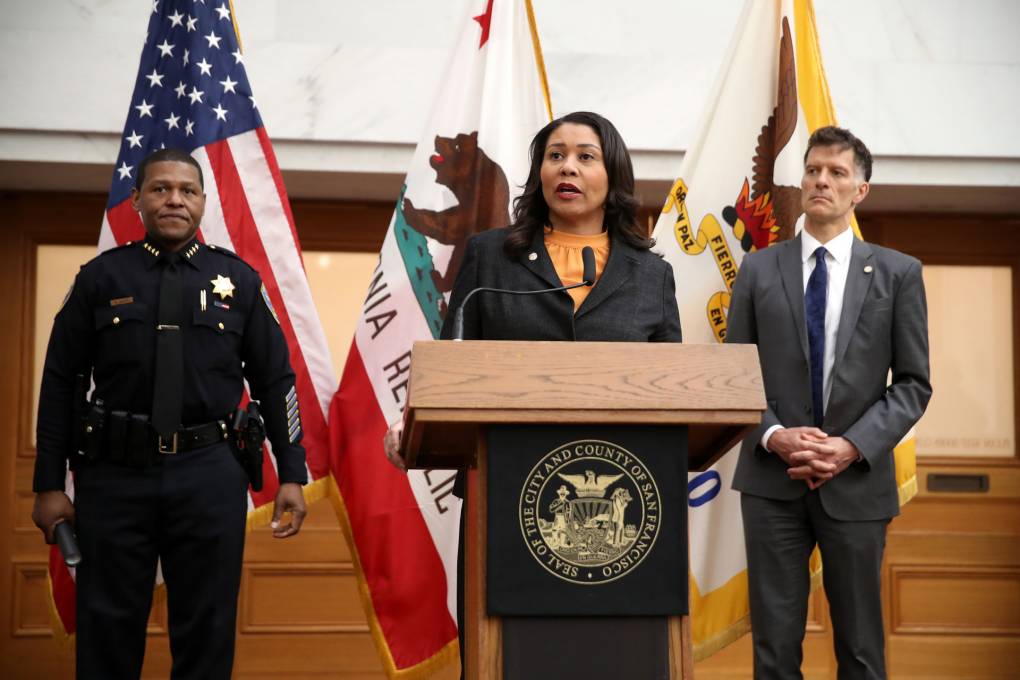
"caption": "San Francisco Mayor London Breed speaks during a press conference on March 16, 2020, at City Hall as San Francisco Police Chief William Scott looks on.",
"description": "San Francisco Mayor London Breed speaks during a press conference on March 16, 2020, at City Hall as San Francisco Police Chief William Scott looks on.",
"title": "London-Breed",
"credit": "Justin Sullivan/Getty Images",
"status": "inherit",
"altTag": null,
"isLoading": false,
"fetchFailed": false
},
"news_11845269": {
"type": "attachments",
"id": "news_11845269",
"meta": {
"index": "attachments_1716263798",
"site": "news",
"id": "11845269",
"found": true
},
"parent": 11844487,
"imgSizes": {
"apple_news_ca_landscape_5_5": {
"file": "https://ww2.kqed.org/app/uploads/sites/10/2021/10/Downtown-Oakland-Police-Vehicle-1044x783.jpg",
"width": 1044,
"mimeType": "image/jpeg",
"height": 783
},
"apple_news_ca_square_4_0": {
"file": "https://ww2.kqed.org/app/uploads/sites/10/2021/10/Downtown-Oakland-Police-Vehicle-470x470.jpg",
"width": 470,
"mimeType": "image/jpeg",
"height": 470
},
"twentyfourteen-full-width": {
"file": "https://ww2.kqed.org/app/uploads/sites/10/2021/10/Downtown-Oakland-Police-Vehicle-1038x576.jpg",
"width": 1038,
"mimeType": "image/jpeg",
"height": 576
},
"thumbnail": {
"file": "https://ww2.kqed.org/app/uploads/sites/10/2021/10/Downtown-Oakland-Police-Vehicle-160x107.jpg",
"width": 160,
"mimeType": "image/jpeg",
"height": 107
},
"post-thumbnail": {
"file": "https://ww2.kqed.org/app/uploads/sites/10/2021/10/Downtown-Oakland-Police-Vehicle-672x372.jpg",
"width": 672,
"mimeType": "image/jpeg",
"height": 372
},
"kqedFullSize": {
"file": "https://ww2.kqed.org/app/uploads/sites/10/2021/10/Downtown-Oakland-Police-Vehicle.jpg",
"width": 1920,
"height": 1280
},
"apple_news_ca_landscape_4_7": {
"file": "https://ww2.kqed.org/app/uploads/sites/10/2021/10/Downtown-Oakland-Police-Vehicle-632x474.jpg",
"width": 632,
"mimeType": "image/jpeg",
"height": 474
},
"large": {
"file": "https://ww2.kqed.org/app/uploads/sites/10/2021/10/Downtown-Oakland-Police-Vehicle-1020x680.jpg",
"width": 1020,
"mimeType": "image/jpeg",
"height": 680
},
"apple_news_ca_landscape_4_0": {
"file": "https://ww2.kqed.org/app/uploads/sites/10/2021/10/Downtown-Oakland-Police-Vehicle-536x402.jpg",
"width": 536,
"mimeType": "image/jpeg",
"height": 402
},
"apple_news_ca_portrait_12_9": {
"file": "https://ww2.kqed.org/app/uploads/sites/10/2021/10/Downtown-Oakland-Police-Vehicle-1122x1280.jpg",
"width": 1122,
"mimeType": "image/jpeg",
"height": 1280
},
"medium": {
"file": "https://ww2.kqed.org/app/uploads/sites/10/2021/10/Downtown-Oakland-Police-Vehicle-800x533.jpg",
"width": 800,
"mimeType": "image/jpeg",
"height": 533
},
"apple_news_ca_portrait_4_0": {
"file": "https://ww2.kqed.org/app/uploads/sites/10/2021/10/Downtown-Oakland-Police-Vehicle-354x472.jpg",
"width": 354,
"mimeType": "image/jpeg",
"height": 472
},
"apple_news_ca_portrait_9_7": {
"file": "https://ww2.kqed.org/app/uploads/sites/10/2021/10/Downtown-Oakland-Police-Vehicle-840x1120.jpg",
"width": 840,
"mimeType": "image/jpeg",
"height": 1120
},
"apple_news_ca_landscape_12_9": {
"file": "https://ww2.kqed.org/app/uploads/sites/10/2021/10/Downtown-Oakland-Police-Vehicle-1832x1280.jpg",
"width": 1832,
"mimeType": "image/jpeg",
"height": 1280
},
"apple_news_ca_square_9_7": {
"file": "https://ww2.kqed.org/app/uploads/sites/10/2021/10/Downtown-Oakland-Police-Vehicle-1104x1104.jpg",
"width": 1104,
"mimeType": "image/jpeg",
"height": 1104
},
"1536x1536": {
"file": "https://ww2.kqed.org/app/uploads/sites/10/2021/10/Downtown-Oakland-Police-Vehicle-1536x1024.jpg",
"width": 1536,
"mimeType": "image/jpeg",
"height": 1024
},
"apple_news_ca_portrait_4_7": {
"file": "https://ww2.kqed.org/app/uploads/sites/10/2021/10/Downtown-Oakland-Police-Vehicle-414x552.jpg",
"width": 414,
"mimeType": "image/jpeg",
"height": 552
},
"apple_news_ca_square_12_9": {
"file": "https://ww2.kqed.org/app/uploads/sites/10/2021/10/Downtown-Oakland-Police-Vehicle-1472x1280.jpg",
"width": 1472,
"mimeType": "image/jpeg",
"height": 1280
},
"apple_news_ca_portrait_5_5": {
"file": "https://ww2.kqed.org/app/uploads/sites/10/2021/10/Downtown-Oakland-Police-Vehicle-687x916.jpg",
"width": 687,
"mimeType": "image/jpeg",
"height": 916
},
"apple_news_ca_square_4_7": {
"file": "https://ww2.kqed.org/app/uploads/sites/10/2021/10/Downtown-Oakland-Police-Vehicle-550x550.jpg",
"width": 550,
"mimeType": "image/jpeg",
"height": 550
},
"apple_news_ca_landscape_9_7": {
"file": "https://ww2.kqed.org/app/uploads/sites/10/2021/10/Downtown-Oakland-Police-Vehicle-1376x1032.jpg",
"width": 1376,
"mimeType": "image/jpeg",
"height": 1032
},
"apple_news_ca_square_5_5": {
"file": "https://ww2.kqed.org/app/uploads/sites/10/2021/10/Downtown-Oakland-Police-Vehicle-912x912.jpg",
"width": 912,
"mimeType": "image/jpeg",
"height": 912
}
},
"publishDate": 1604456400,
"modified": 1604456530,
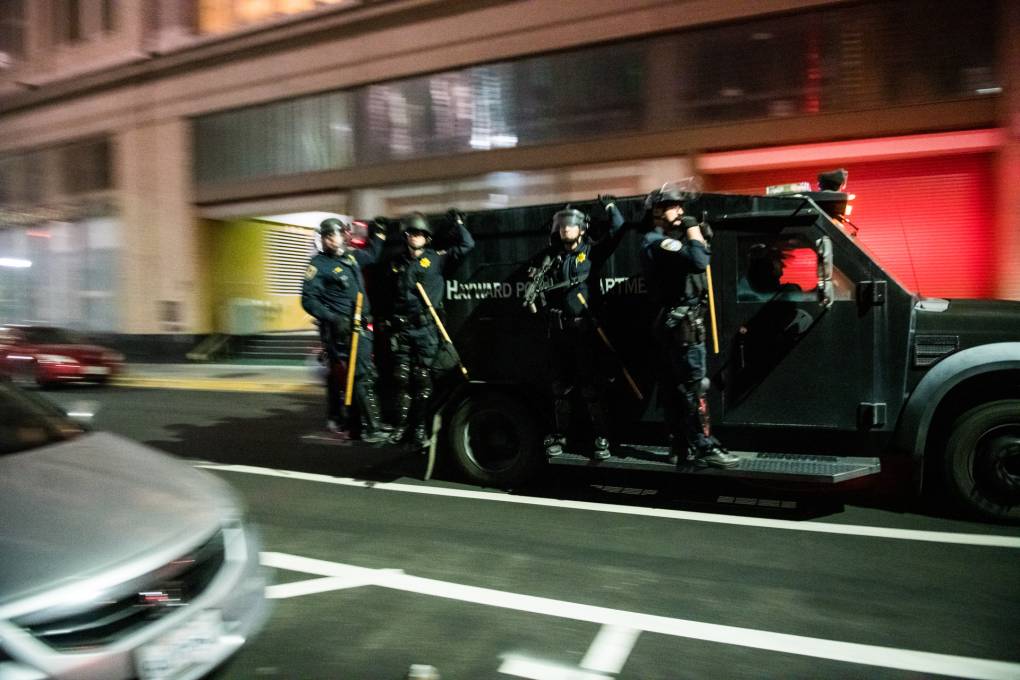
"caption": "Police from Hayward roll through Downtown Oakland on May 29, 2020 during a protest over the killing of George Floyd by Minneapolis police.",
"description": "Police from Hayward roll through Downtown Oakland on May 29, 2020 during a protest over the killing of George Floyd by Minneapolis police.",
"title": "Downtown-Oakland-Police-Vehicle",
"credit": "Beth LaBerge/KQED",
"status": "inherit",
"isLoading": false,
"fetchFailed": false
},
"news_11823006": {
"type": "attachments",
"id": "news_11823006",
"meta": {
"index": "attachments_1716263798",
"site": "news",
"id": "11823006",
"found": true
},
"parent": 11822817,
"imgSizes": {
"apple_news_ca_landscape_5_5": {
"file": "https://ww2.kqed.org/app/uploads/sites/10/2020/06/RS43444_043_KQED_Oakland_GeorgeFloydProtest_05292020-qut-1044x783.jpg",
"width": 1044,
"mimeType": "image/jpeg",
"height": 783
},
"apple_news_ca_square_4_0": {
"file": "https://ww2.kqed.org/app/uploads/sites/10/2020/06/RS43444_043_KQED_Oakland_GeorgeFloydProtest_05292020-qut-470x470.jpg",
"width": 470,
"mimeType": "image/jpeg",
"height": 470
},
"twentyfourteen-full-width": {
"file": "https://ww2.kqed.org/app/uploads/sites/10/2020/06/RS43444_043_KQED_Oakland_GeorgeFloydProtest_05292020-qut-1038x576.jpg",
"width": 1038,
"mimeType": "image/jpeg",
"height": 576
},
"thumbnail": {
"file": "https://ww2.kqed.org/app/uploads/sites/10/2020/06/RS43444_043_KQED_Oakland_GeorgeFloydProtest_05292020-qut-160x107.jpg",
"width": 160,
"mimeType": "image/jpeg",
"height": 107
},
"post-thumbnail": {
"file": "https://ww2.kqed.org/app/uploads/sites/10/2020/06/RS43444_043_KQED_Oakland_GeorgeFloydProtest_05292020-qut-672x372.jpg",
"width": 672,
"mimeType": "image/jpeg",
"height": 372
},
"kqedFullSize": {
"file": "https://ww2.kqed.org/app/uploads/sites/10/2020/06/RS43444_043_KQED_Oakland_GeorgeFloydProtest_05292020-qut.jpg",
"width": 1920,
"height": 1280
},
"apple_news_ca_landscape_4_7": {
"file": "https://ww2.kqed.org/app/uploads/sites/10/2020/06/RS43444_043_KQED_Oakland_GeorgeFloydProtest_05292020-qut-632x474.jpg",
"width": 632,
"mimeType": "image/jpeg",
"height": 474
},
"large": {
"file": "https://ww2.kqed.org/app/uploads/sites/10/2020/06/RS43444_043_KQED_Oakland_GeorgeFloydProtest_05292020-qut-1020x680.jpg",
"width": 1020,
"mimeType": "image/jpeg",
"height": 680
},
"apple_news_ca_landscape_4_0": {
"file": "https://ww2.kqed.org/app/uploads/sites/10/2020/06/RS43444_043_KQED_Oakland_GeorgeFloydProtest_05292020-qut-536x402.jpg",
"width": 536,
"mimeType": "image/jpeg",
"height": 402
},
"apple_news_ca_portrait_12_9": {
"file": "https://ww2.kqed.org/app/uploads/sites/10/2020/06/RS43444_043_KQED_Oakland_GeorgeFloydProtest_05292020-qut-1122x1280.jpg",
"width": 1122,
"mimeType": "image/jpeg",
"height": 1280
},
"medium": {
"file": "https://ww2.kqed.org/app/uploads/sites/10/2020/06/RS43444_043_KQED_Oakland_GeorgeFloydProtest_05292020-qut-800x533.jpg",
"width": 800,
"mimeType": "image/jpeg",
"height": 533
},
"apple_news_ca_portrait_4_0": {
"file": "https://ww2.kqed.org/app/uploads/sites/10/2020/06/RS43444_043_KQED_Oakland_GeorgeFloydProtest_05292020-qut-354x472.jpg",
"width": 354,
"mimeType": "image/jpeg",
"height": 472
},
"apple_news_ca_portrait_9_7": {
"file": "https://ww2.kqed.org/app/uploads/sites/10/2020/06/RS43444_043_KQED_Oakland_GeorgeFloydProtest_05292020-qut-840x1120.jpg",
"width": 840,
"mimeType": "image/jpeg",
"height": 1120
},
"apple_news_ca_landscape_12_9": {
"file": "https://ww2.kqed.org/app/uploads/sites/10/2020/06/RS43444_043_KQED_Oakland_GeorgeFloydProtest_05292020-qut-1832x1280.jpg",
"width": 1832,
"mimeType": "image/jpeg",
"height": 1280
},
"apple_news_ca_square_9_7": {
"file": "https://ww2.kqed.org/app/uploads/sites/10/2020/06/RS43444_043_KQED_Oakland_GeorgeFloydProtest_05292020-qut-1104x1104.jpg",
"width": 1104,
"mimeType": "image/jpeg",
"height": 1104
},
"apple_news_ca_portrait_4_7": {
"file": "https://ww2.kqed.org/app/uploads/sites/10/2020/06/RS43444_043_KQED_Oakland_GeorgeFloydProtest_05292020-qut-414x552.jpg",
"width": 414,
"mimeType": "image/jpeg",
"height": 552
},
"apple_news_ca_square_12_9": {
"file": "https://ww2.kqed.org/app/uploads/sites/10/2020/06/RS43444_043_KQED_Oakland_GeorgeFloydProtest_05292020-qut-1472x1280.jpg",
"width": 1472,
"mimeType": "image/jpeg",
"height": 1280
},
"apple_news_ca_portrait_5_5": {
"file": "https://ww2.kqed.org/app/uploads/sites/10/2020/06/RS43444_043_KQED_Oakland_GeorgeFloydProtest_05292020-qut-687x916.jpg",
"width": 687,
"mimeType": "image/jpeg",
"height": 916
},
"full-width": {
"file": "https://ww2.kqed.org/app/uploads/sites/10/2020/06/RS43444_043_KQED_Oakland_GeorgeFloydProtest_05292020-qut-1920x1280.jpg",
"width": 1920,
"mimeType": "image/jpeg",
"height": 1280
},
"apple_news_ca_square_4_7": {
"file": "https://ww2.kqed.org/app/uploads/sites/10/2020/06/RS43444_043_KQED_Oakland_GeorgeFloydProtest_05292020-qut-550x550.jpg",
"width": 550,
"mimeType": "image/jpeg",
"height": 550
},
"apple_news_ca_landscape_9_7": {
"file": "https://ww2.kqed.org/app/uploads/sites/10/2020/06/RS43444_043_KQED_Oakland_GeorgeFloydProtest_05292020-qut-1376x1032.jpg",
"width": 1376,
"mimeType": "image/jpeg",
"height": 1032
},
"apple_news_ca_square_5_5": {
"file": "https://ww2.kqed.org/app/uploads/sites/10/2020/06/RS43444_043_KQED_Oakland_GeorgeFloydProtest_05292020-qut-912x912.jpg",
"width": 912,
"mimeType": "image/jpeg",
"height": 912
}
},
"publishDate": 1591318054,
"modified": 1591318710,
"caption": "Demonstrators fill Broadway near Oakland Police Department headquarters on May 29, 2020 during a protest over the Minneapolis police killing of George Floyd.",
"description": null,
"title": "RS43444_043_KQED_Oakland_GeorgeFloydProtest_05292020-qut",
"credit": "Beth LaBerge/KQED",
"status": "inherit",
"isLoading": false,
"fetchFailed": false
},
"news_11832181": {
"type": "attachments",
"id": "news_11832181",
"meta": {
"index": "attachments_1716263798",
"site": "news",
"id": "11832181",
"found": true
},
"parent": 11832113,
"imgSizes": {
"apple_news_ca_landscape_5_5": {
"file": "https://ww2.kqed.org/app/uploads/sites/10/2020/08/RS43927_005_KQED_Vallejo_SeanMonterrosa_07112020-qut-1044x783.jpg",
"width": 1044,
"mimeType": "image/jpeg",
"height": 783
},
"apple_news_ca_square_4_0": {
"file": "https://ww2.kqed.org/app/uploads/sites/10/2020/08/RS43927_005_KQED_Vallejo_SeanMonterrosa_07112020-qut-470x470.jpg",
"width": 470,
"mimeType": "image/jpeg",
"height": 470
},
"twentyfourteen-full-width": {
"file": "https://ww2.kqed.org/app/uploads/sites/10/2020/08/RS43927_005_KQED_Vallejo_SeanMonterrosa_07112020-qut-1038x576.jpg",
"width": 1038,
"mimeType": "image/jpeg",
"height": 576
},
"thumbnail": {
"file": "https://ww2.kqed.org/app/uploads/sites/10/2020/08/RS43927_005_KQED_Vallejo_SeanMonterrosa_07112020-qut-160x107.jpg",
"width": 160,
"mimeType": "image/jpeg",
"height": 107
},
"post-thumbnail": {
"file": "https://ww2.kqed.org/app/uploads/sites/10/2020/08/RS43927_005_KQED_Vallejo_SeanMonterrosa_07112020-qut-672x372.jpg",
"width": 672,
"mimeType": "image/jpeg",
"height": 372
},
"kqedFullSize": {
"file": "https://ww2.kqed.org/app/uploads/sites/10/2020/08/RS43927_005_KQED_Vallejo_SeanMonterrosa_07112020-qut.jpg",
"width": 1920,
"height": 1278
},
"apple_news_ca_landscape_4_7": {
"file": "https://ww2.kqed.org/app/uploads/sites/10/2020/08/RS43927_005_KQED_Vallejo_SeanMonterrosa_07112020-qut-632x474.jpg",
"width": 632,
"mimeType": "image/jpeg",
"height": 474
},
"large": {
"file": "https://ww2.kqed.org/app/uploads/sites/10/2020/08/RS43927_005_KQED_Vallejo_SeanMonterrosa_07112020-qut-1020x679.jpg",
"width": 1020,
"mimeType": "image/jpeg",
"height": 679
},
"apple_news_ca_landscape_4_0": {
"file": "https://ww2.kqed.org/app/uploads/sites/10/2020/08/RS43927_005_KQED_Vallejo_SeanMonterrosa_07112020-qut-536x402.jpg",
"width": 536,
"mimeType": "image/jpeg",
"height": 402
},
"apple_news_ca_portrait_12_9": {
"file": "https://ww2.kqed.org/app/uploads/sites/10/2020/08/RS43927_005_KQED_Vallejo_SeanMonterrosa_07112020-qut-1122x1278.jpg",
"width": 1122,
"mimeType": "image/jpeg",
"height": 1278
},
"medium": {
"file": "https://ww2.kqed.org/app/uploads/sites/10/2020/08/RS43927_005_KQED_Vallejo_SeanMonterrosa_07112020-qut-800x533.jpg",
"width": 800,
"mimeType": "image/jpeg",
"height": 533
},
"apple_news_ca_portrait_4_0": {
"file": "https://ww2.kqed.org/app/uploads/sites/10/2020/08/RS43927_005_KQED_Vallejo_SeanMonterrosa_07112020-qut-354x472.jpg",
"width": 354,
"mimeType": "image/jpeg",
"height": 472
},
"apple_news_ca_portrait_9_7": {
"file": "https://ww2.kqed.org/app/uploads/sites/10/2020/08/RS43927_005_KQED_Vallejo_SeanMonterrosa_07112020-qut-840x1120.jpg",
"width": 840,
"mimeType": "image/jpeg",
"height": 1120
},
"apple_news_ca_landscape_12_9": {
"file": "https://ww2.kqed.org/app/uploads/sites/10/2020/08/RS43927_005_KQED_Vallejo_SeanMonterrosa_07112020-qut-1832x1278.jpg",
"width": 1832,
"mimeType": "image/jpeg",
"height": 1278
},
"apple_news_ca_square_9_7": {
"file": "https://ww2.kqed.org/app/uploads/sites/10/2020/08/RS43927_005_KQED_Vallejo_SeanMonterrosa_07112020-qut-1104x1104.jpg",
"width": 1104,
"mimeType": "image/jpeg",
"height": 1104
},
"1536x1536": {
"file": "https://ww2.kqed.org/app/uploads/sites/10/2020/08/RS43927_005_KQED_Vallejo_SeanMonterrosa_07112020-qut-1536x1022.jpg",
"width": 1536,
"mimeType": "image/jpeg",
"height": 1022
},
"apple_news_ca_portrait_4_7": {
"file": "https://ww2.kqed.org/app/uploads/sites/10/2020/08/RS43927_005_KQED_Vallejo_SeanMonterrosa_07112020-qut-414x552.jpg",
"width": 414,
"mimeType": "image/jpeg",
"height": 552
},
"apple_news_ca_square_12_9": {
"file": "https://ww2.kqed.org/app/uploads/sites/10/2020/08/RS43927_005_KQED_Vallejo_SeanMonterrosa_07112020-qut-1472x1278.jpg",
"width": 1472,
"mimeType": "image/jpeg",
"height": 1278
},
"apple_news_ca_portrait_5_5": {
"file": "https://ww2.kqed.org/app/uploads/sites/10/2020/08/RS43927_005_KQED_Vallejo_SeanMonterrosa_07112020-qut-687x916.jpg",
"width": 687,
"mimeType": "image/jpeg",
"height": 916
},
"apple_news_ca_square_4_7": {
"file": "https://ww2.kqed.org/app/uploads/sites/10/2020/08/RS43927_005_KQED_Vallejo_SeanMonterrosa_07112020-qut-550x550.jpg",
"width": 550,
"mimeType": "image/jpeg",
"height": 550
},
"apple_news_ca_landscape_9_7": {
"file": "https://ww2.kqed.org/app/uploads/sites/10/2020/08/RS43927_005_KQED_Vallejo_SeanMonterrosa_07112020-qut-1376x1032.jpg",
"width": 1376,
"mimeType": "image/jpeg",
"height": 1032
},
"apple_news_ca_square_5_5": {
"file": "https://ww2.kqed.org/app/uploads/sites/10/2020/08/RS43927_005_KQED_Vallejo_SeanMonterrosa_07112020-qut-912x912.jpg",
"width": 912,
"mimeType": "image/jpeg",
"height": 912
}
},
"publishDate": 1596742396,
"modified": 1596750139,
"caption": "Ashley and Michelle Monterrosa speak during a July 11, 2020 protest demanding justice for their brother Sean, who was killed by Vallejo police on June 2. ",
"description": "Ashley and Michelle Monterrosa speak during a July 11 protest demanding justice for their brother Sean, who was killed by Vallejo police on June 2. ",
"title": "RS43927_005_KQED_Vallejo_SeanMonterrosa_07112020-qut",
"credit": "Beth LaBerge/KQED",
"status": "inherit",
"isLoading": false,
"fetchFailed": false
},
"news_11838477": {
"type": "attachments",
"id": "news_11838477",
"meta": {
"index": "attachments_1716263798",
"site": "news",
"id": "11838477",
"found": true
},
"parent": 11838409,
"imgSizes": {
"apple_news_ca_landscape_5_5": {
"file": "https://ww2.kqed.org/app/uploads/sites/10/2020/09/ccpoa-bullseye-1044x783.jpeg",
"width": 1044,
"mimeType": "image/jpeg",
"height": 783
},
"apple_news_ca_square_4_0": {
"file": "https://ww2.kqed.org/app/uploads/sites/10/2020/09/ccpoa-bullseye-470x470.jpeg",
"width": 470,
"mimeType": "image/jpeg",
"height": 470
},
"twentyfourteen-full-width": {
"file": "https://ww2.kqed.org/app/uploads/sites/10/2020/09/ccpoa-bullseye-1038x576.jpeg",
"width": 1038,
"mimeType": "image/jpeg",
"height": 576
},
"thumbnail": {
"file": "https://ww2.kqed.org/app/uploads/sites/10/2020/09/ccpoa-bullseye-160x90.jpeg",
"width": 160,
"mimeType": "image/jpeg",
"height": 90
},
"post-thumbnail": {
"file": "https://ww2.kqed.org/app/uploads/sites/10/2020/09/ccpoa-bullseye-672x372.jpeg",
"width": 672,
"mimeType": "image/jpeg",
"height": 372
},
"kqedFullSize": {
"file": "https://ww2.kqed.org/app/uploads/sites/10/2020/09/ccpoa-bullseye.jpeg",
"width": 1920,
"height": 1080
},
"apple_news_ca_landscape_4_7": {
"file": "https://ww2.kqed.org/app/uploads/sites/10/2020/09/ccpoa-bullseye-632x474.jpeg",
"width": 632,
"mimeType": "image/jpeg",
"height": 474
},
"large": {
"file": "https://ww2.kqed.org/app/uploads/sites/10/2020/09/ccpoa-bullseye-1020x574.jpeg",
"width": 1020,
"mimeType": "image/jpeg",
"height": 574
},
"apple_news_ca_landscape_4_0": {
"file": "https://ww2.kqed.org/app/uploads/sites/10/2020/09/ccpoa-bullseye-536x402.jpeg",
"width": 536,
"mimeType": "image/jpeg",
"height": 402
},
"apple_news_ca_portrait_12_9": {
"file": "https://ww2.kqed.org/app/uploads/sites/10/2020/09/ccpoa-bullseye-1122x1080.jpeg",
"width": 1122,
"mimeType": "image/jpeg",
"height": 1080
},
"medium": {
"file": "https://ww2.kqed.org/app/uploads/sites/10/2020/09/ccpoa-bullseye-800x450.jpeg",
"width": 800,
"mimeType": "image/jpeg",
"height": 450
},
"apple_news_ca_portrait_4_0": {
"file": "https://ww2.kqed.org/app/uploads/sites/10/2020/09/ccpoa-bullseye-354x472.jpeg",
"width": 354,
"mimeType": "image/jpeg",
"height": 472
},
"apple_news_ca_portrait_9_7": {
"file": "https://ww2.kqed.org/app/uploads/sites/10/2020/09/ccpoa-bullseye-840x1080.jpeg",
"width": 840,
"mimeType": "image/jpeg",
"height": 1080
},
"apple_news_ca_landscape_12_9": {
"file": "https://ww2.kqed.org/app/uploads/sites/10/2020/09/ccpoa-bullseye-1832x1080.jpeg",
"width": 1832,
"mimeType": "image/jpeg",
"height": 1080
},
"apple_news_ca_square_9_7": {
"file": "https://ww2.kqed.org/app/uploads/sites/10/2020/09/ccpoa-bullseye-1104x1080.jpeg",
"width": 1104,
"mimeType": "image/jpeg",
"height": 1080
},
"1536x1536": {
"file": "https://ww2.kqed.org/app/uploads/sites/10/2020/09/ccpoa-bullseye-1536x864.jpeg",
"width": 1536,
"mimeType": "image/jpeg",
"height": 864
},
"apple_news_ca_portrait_4_7": {
"file": "https://ww2.kqed.org/app/uploads/sites/10/2020/09/ccpoa-bullseye-414x552.jpeg",
"width": 414,
"mimeType": "image/jpeg",
"height": 552
},
"apple_news_ca_square_12_9": {
"file": "https://ww2.kqed.org/app/uploads/sites/10/2020/09/ccpoa-bullseye-1472x1080.jpeg",
"width": 1472,
"mimeType": "image/jpeg",
"height": 1080
},
"apple_news_ca_portrait_5_5": {
"file": "https://ww2.kqed.org/app/uploads/sites/10/2020/09/ccpoa-bullseye-687x916.jpeg",
"width": 687,
"mimeType": "image/jpeg",
"height": 916
},
"apple_news_ca_square_4_7": {
"file": "https://ww2.kqed.org/app/uploads/sites/10/2020/09/ccpoa-bullseye-550x550.jpeg",
"width": 550,
"mimeType": "image/jpeg",
"height": 550
},
"apple_news_ca_landscape_9_7": {
"file": "https://ww2.kqed.org/app/uploads/sites/10/2020/09/ccpoa-bullseye-1376x1032.jpeg",
"width": 1376,
"mimeType": "image/jpeg",
"height": 1032
},
"apple_news_ca_square_5_5": {
"file": "https://ww2.kqed.org/app/uploads/sites/10/2020/09/ccpoa-bullseye-912x912.jpeg",
"width": 912,
"mimeType": "image/jpeg",
"height": 912
}
},
"publishDate": 1600383015,
"modified": 1600383603,
"caption": "A screenshot of a video that was posted briefly on the Facebook page of the president of the California Correctional Peace Officers Association showing a crosshairs taped over a photo of Assemblyman Reggie Jones-Sawyer, D-Los Angeles.",
"description": null,
"title": "ccpoa-bullseye",
"credit": "Facebook",
"status": "inherit",
"isLoading": false,
"fetchFailed": false
},
"news_11836111": {
"type": "attachments",
"id": "news_11836111",
"meta": {
"index": "attachments_1716263798",
"site": "news",
"id": "11836111",
"found": true
},
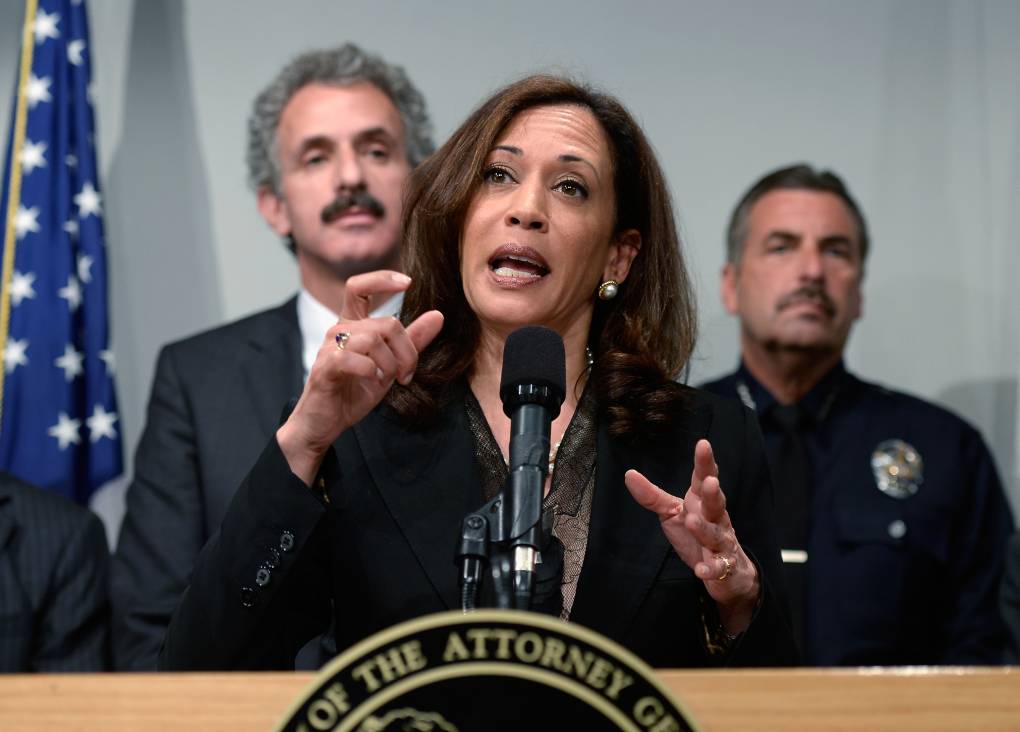
"title": "California AG Kamala Harris Holds News Conference On Gun Violence",
"publishDate": 1598898568,
"status": "inherit",
"parent": 11836106,
"modified": 1721154868,
"caption": "Then-California Attorney General Kamala Harris speaks at a news conference on May 17, 2013 Los Angeles.",
"credit": "Kevork Djansezian/Getty Images",
"altTag": "A woman wearing a business suit gestures with her hands while standing at a podium. Two men are behind her.",
"description": null,
"imgSizes": {
"medium": {
"file": "https://cdn.kqed.org/wp-content/uploads/sites/10/2020/08/GettyImages-168960200-800x574.jpg",
"width": 800,
"height": 574,
"mimeType": "image/jpeg"
},
"large": {
"file": "https://cdn.kqed.org/wp-content/uploads/sites/10/2020/08/GettyImages-168960200-1020x732.jpg",
"width": 1020,
"height": 732,
"mimeType": "image/jpeg"
},
"thumbnail": {
"file": "https://cdn.kqed.org/wp-content/uploads/sites/10/2020/08/GettyImages-168960200-160x115.jpg",
"width": 160,
"height": 115,
"mimeType": "image/jpeg"
},
"1536x1536": {
"file": "https://cdn.kqed.org/wp-content/uploads/sites/10/2020/08/GettyImages-168960200-1536x1102.jpg",
"width": 1536,
"height": 1102,
"mimeType": "image/jpeg"
},
"2048x2048": {
"file": "https://cdn.kqed.org/wp-content/uploads/sites/10/2020/08/GettyImages-168960200-2048x1469.jpg",
"width": 2048,
"height": 1469,
"mimeType": "image/jpeg"
},
"post-thumbnail": {
"file": "https://cdn.kqed.org/wp-content/uploads/sites/10/2020/08/GettyImages-168960200-672x372.jpg",
"width": 672,
"height": 372,
"mimeType": "image/jpeg"
},
"twentyfourteen-full-width": {
"file": "https://cdn.kqed.org/wp-content/uploads/sites/10/2020/08/GettyImages-168960200-1038x576.jpg",
"width": 1038,
"height": 576,
"mimeType": "image/jpeg"
},
"full-width": {
"file": "https://cdn.kqed.org/wp-content/uploads/sites/10/2020/08/GettyImages-168960200-1920x1377.jpg",
"width": 1920,
"height": 1377,
"mimeType": "image/jpeg"
},
"apple_news_ca_landscape_12_9": {
"file": "https://cdn.kqed.org/wp-content/uploads/sites/10/2020/08/GettyImages-168960200-1832x1374.jpg",
"width": 1832,
"height": 1374,
"mimeType": "image/jpeg"
},
"apple_news_ca_landscape_9_7": {
"file": "https://cdn.kqed.org/wp-content/uploads/sites/10/2020/08/GettyImages-168960200-1376x1032.jpg",
"width": 1376,
"height": 1032,
"mimeType": "image/jpeg"
},
"apple_news_ca_landscape_5_5": {
"file": "https://cdn.kqed.org/wp-content/uploads/sites/10/2020/08/GettyImages-168960200-1044x783.jpg",
"width": 1044,
"height": 783,
"mimeType": "image/jpeg"
},
"apple_news_ca_landscape_4_7": {
"file": "https://cdn.kqed.org/wp-content/uploads/sites/10/2020/08/GettyImages-168960200-632x474.jpg",
"width": 632,
"height": 474,
"mimeType": "image/jpeg"
},
"apple_news_ca_landscape_4_0": {
"file": "https://cdn.kqed.org/wp-content/uploads/sites/10/2020/08/GettyImages-168960200-536x402.jpg",
"width": 536,
"height": 402,
"mimeType": "image/jpeg"
},
"apple_news_ca_portrait_12_9": {
"file": "https://cdn.kqed.org/wp-content/uploads/sites/10/2020/08/GettyImages-168960200-1122x1496.jpg",
"width": 1122,
"height": 1496,
"mimeType": "image/jpeg"
},
"apple_news_ca_portrait_9_7": {
"file": "https://cdn.kqed.org/wp-content/uploads/sites/10/2020/08/GettyImages-168960200-840x1120.jpg",
"width": 840,
"height": 1120,
"mimeType": "image/jpeg"
},
"apple_news_ca_portrait_5_5": {
"file": "https://cdn.kqed.org/wp-content/uploads/sites/10/2020/08/GettyImages-168960200-687x916.jpg",
"width": 687,
"height": 916,
"mimeType": "image/jpeg"
},
"apple_news_ca_portrait_4_7": {
"file": "https://cdn.kqed.org/wp-content/uploads/sites/10/2020/08/GettyImages-168960200-414x552.jpg",
"width": 414,
"height": 552,
"mimeType": "image/jpeg"
},
"apple_news_ca_portrait_4_0": {
"file": "https://cdn.kqed.org/wp-content/uploads/sites/10/2020/08/GettyImages-168960200-354x472.jpg",
"width": 354,
"height": 472,
"mimeType": "image/jpeg"
},
"apple_news_ca_square_12_9": {
"file": "https://cdn.kqed.org/wp-content/uploads/sites/10/2020/08/GettyImages-168960200-1472x1472.jpg",
"width": 1472,
"height": 1472,
"mimeType": "image/jpeg"
},
"apple_news_ca_square_9_7": {
"file": "https://cdn.kqed.org/wp-content/uploads/sites/10/2020/08/GettyImages-168960200-1104x1104.jpg",
"width": 1104,
"height": 1104,
"mimeType": "image/jpeg"
},
"apple_news_ca_square_5_5": {
"file": "https://cdn.kqed.org/wp-content/uploads/sites/10/2020/08/GettyImages-168960200-912x912.jpg",
"width": 912,
"height": 912,
"mimeType": "image/jpeg"
},
"apple_news_ca_square_4_7": {
"file": "https://cdn.kqed.org/wp-content/uploads/sites/10/2020/08/GettyImages-168960200-550x550.jpg",
"width": 550,
"height": 550,
"mimeType": "image/jpeg"
},
"apple_news_ca_square_4_0": {
"file": "https://cdn.kqed.org/wp-content/uploads/sites/10/2020/08/GettyImages-168960200-470x470.jpg",
"width": 470,
"height": 470,
"mimeType": "image/jpeg"
},
"kqedFullSize": {
"file": "https://cdn.kqed.org/wp-content/uploads/sites/10/2020/08/GettyImages-168960200-scaled.jpg",
"width": 2560,
"height": 1836
}
},
"isLoading": false,
"fetchFailed": false
},
"news_11831666": {
"type": "attachments",
"id": "news_11831666",
"meta": {
"index": "attachments_1716263798",
"site": "news",
"id": "11831666",
"found": true
},
"parent": 11831665,
"imgSizes": {
"apple_news_ca_landscape_5_5": {
"file": "https://ww2.kqed.org/app/uploads/sites/10/2020/08/ap_20212812994686_wide-8677a0f364ae03d211a45a2b0a872bc75cb883c8-1044x783.jpg",
"width": 1044,
"mimeType": "image/jpeg",
"height": 783
},
"apple_news_ca_square_4_0": {
"file": "https://ww2.kqed.org/app/uploads/sites/10/2020/08/ap_20212812994686_wide-8677a0f364ae03d211a45a2b0a872bc75cb883c8-470x470.jpg",
"width": 470,
"mimeType": "image/jpeg",
"height": 470
},
"twentyfourteen-full-width": {
"file": "https://ww2.kqed.org/app/uploads/sites/10/2020/08/ap_20212812994686_wide-8677a0f364ae03d211a45a2b0a872bc75cb883c8-1038x576.jpg",
"width": 1038,
"mimeType": "image/jpeg",
"height": 576
},
"thumbnail": {
"file": "https://ww2.kqed.org/app/uploads/sites/10/2020/08/ap_20212812994686_wide-8677a0f364ae03d211a45a2b0a872bc75cb883c8-160x90.jpg",
"width": 160,
"mimeType": "image/jpeg",
"height": 90
},
"post-thumbnail": {
"file": "https://ww2.kqed.org/app/uploads/sites/10/2020/08/ap_20212812994686_wide-8677a0f364ae03d211a45a2b0a872bc75cb883c8-672x372.jpg",
"width": 672,
"mimeType": "image/jpeg",
"height": 372
},
"kqedFullSize": {
"file": "https://ww2.kqed.org/app/uploads/sites/10/2020/08/ap_20212812994686_wide-8677a0f364ae03d211a45a2b0a872bc75cb883c8-scaled.jpg",
"width": 2560,
"height": 1440
},
"2048x2048": {
"file": "https://ww2.kqed.org/app/uploads/sites/10/2020/08/ap_20212812994686_wide-8677a0f364ae03d211a45a2b0a872bc75cb883c8-2048x1152.jpg",
"width": 2048,
"mimeType": "image/jpeg",
"height": 1152
},
"apple_news_ca_landscape_4_7": {
"file": "https://ww2.kqed.org/app/uploads/sites/10/2020/08/ap_20212812994686_wide-8677a0f364ae03d211a45a2b0a872bc75cb883c8-632x474.jpg",
"width": 632,
"mimeType": "image/jpeg",
"height": 474
},
"large": {
"file": "https://ww2.kqed.org/app/uploads/sites/10/2020/08/ap_20212812994686_wide-8677a0f364ae03d211a45a2b0a872bc75cb883c8-1020x574.jpg",
"width": 1020,
"mimeType": "image/jpeg",
"height": 574
},
"apple_news_ca_landscape_4_0": {
"file": "https://ww2.kqed.org/app/uploads/sites/10/2020/08/ap_20212812994686_wide-8677a0f364ae03d211a45a2b0a872bc75cb883c8-536x402.jpg",
"width": 536,
"mimeType": "image/jpeg",
"height": 402
},
"apple_news_ca_portrait_12_9": {
"file": "https://ww2.kqed.org/app/uploads/sites/10/2020/08/ap_20212812994686_wide-8677a0f364ae03d211a45a2b0a872bc75cb883c8-1122x1496.jpg",
"width": 1122,
"mimeType": "image/jpeg",
"height": 1496
},
"medium": {
"file": "https://ww2.kqed.org/app/uploads/sites/10/2020/08/ap_20212812994686_wide-8677a0f364ae03d211a45a2b0a872bc75cb883c8-800x450.jpg",
"width": 800,
"mimeType": "image/jpeg",
"height": 450
},
"apple_news_ca_portrait_4_0": {
"file": "https://ww2.kqed.org/app/uploads/sites/10/2020/08/ap_20212812994686_wide-8677a0f364ae03d211a45a2b0a872bc75cb883c8-354x472.jpg",
"width": 354,
"mimeType": "image/jpeg",
"height": 472
},
"apple_news_ca_portrait_9_7": {
"file": "https://ww2.kqed.org/app/uploads/sites/10/2020/08/ap_20212812994686_wide-8677a0f364ae03d211a45a2b0a872bc75cb883c8-840x1120.jpg",
"width": 840,
"mimeType": "image/jpeg",
"height": 1120
},
"apple_news_ca_landscape_12_9": {
"file": "https://ww2.kqed.org/app/uploads/sites/10/2020/08/ap_20212812994686_wide-8677a0f364ae03d211a45a2b0a872bc75cb883c8-1832x1374.jpg",
"width": 1832,
"mimeType": "image/jpeg",
"height": 1374
},
"apple_news_ca_square_9_7": {
"file": "https://ww2.kqed.org/app/uploads/sites/10/2020/08/ap_20212812994686_wide-8677a0f364ae03d211a45a2b0a872bc75cb883c8-1104x1104.jpg",
"width": 1104,
"mimeType": "image/jpeg",
"height": 1104
},
"1536x1536": {
"file": "https://ww2.kqed.org/app/uploads/sites/10/2020/08/ap_20212812994686_wide-8677a0f364ae03d211a45a2b0a872bc75cb883c8-1536x864.jpg",
"width": 1536,
"mimeType": "image/jpeg",
"height": 864
},
"apple_news_ca_portrait_4_7": {
"file": "https://ww2.kqed.org/app/uploads/sites/10/2020/08/ap_20212812994686_wide-8677a0f364ae03d211a45a2b0a872bc75cb883c8-414x552.jpg",
"width": 414,
"mimeType": "image/jpeg",
"height": 552
},
"apple_news_ca_square_12_9": {
"file": "https://ww2.kqed.org/app/uploads/sites/10/2020/08/ap_20212812994686_wide-8677a0f364ae03d211a45a2b0a872bc75cb883c8-1472x1472.jpg",
"width": 1472,
"mimeType": "image/jpeg",
"height": 1472
},
"apple_news_ca_portrait_5_5": {
"file": "https://ww2.kqed.org/app/uploads/sites/10/2020/08/ap_20212812994686_wide-8677a0f364ae03d211a45a2b0a872bc75cb883c8-687x916.jpg",
"width": 687,
"mimeType": "image/jpeg",
"height": 916
},
"full-width": {
"file": "https://ww2.kqed.org/app/uploads/sites/10/2020/08/ap_20212812994686_wide-8677a0f364ae03d211a45a2b0a872bc75cb883c8-1920x1080.jpg",
"width": 1920,
"mimeType": "image/jpeg",
"height": 1080
},
"apple_news_ca_square_4_7": {
"file": "https://ww2.kqed.org/app/uploads/sites/10/2020/08/ap_20212812994686_wide-8677a0f364ae03d211a45a2b0a872bc75cb883c8-550x550.jpg",
"width": 550,
"mimeType": "image/jpeg",
"height": 550
},
"apple_news_ca_landscape_9_7": {
"file": "https://ww2.kqed.org/app/uploads/sites/10/2020/08/ap_20212812994686_wide-8677a0f364ae03d211a45a2b0a872bc75cb883c8-1376x1032.jpg",
"width": 1376,
"mimeType": "image/jpeg",
"height": 1032
},
"apple_news_ca_square_5_5": {
"file": "https://ww2.kqed.org/app/uploads/sites/10/2020/08/ap_20212812994686_wide-8677a0f364ae03d211a45a2b0a872bc75cb883c8-912x912.jpg",
"width": 912,
"mimeType": "image/jpeg",
"height": 912
}
},
"publishDate": 1596478040,
"modified": 1596478278,
"caption": "California Rep. Karen Bass was catapulted onto the national stage leading Democrats on police reform. Now she is a contender to be Joe Biden's running mate.",
"description": "California Rep. Karen Bass was catapulted onto the national stage leading Democrats on police reform. Now she is a contender to be Joe Biden's running mate.",
"title": "California Rep. Karen Bass was catapulted onto the national stage leading Democrats on police reform. Now she is a contender to be Joe Biden's running mate.",
"credit": "Carolyn Kaster/AP",
"status": "inherit",
"isLoading": false,
"fetchFailed": false
},
"news_11807074": {
"type": "attachments",
"id": "news_11807074",
"meta": {
"index": "attachments_1716263798",
"site": "news",
"id": "11807074",
"found": true
},
"parent": 11807053,
"imgSizes": {
"apple_news_ca_landscape_5_5": {
"file": "https://ww2.kqed.org/app/uploads/sites/10/2020/03/RS42108_GettyImages-1212814457-qut-1044x783.jpg",
"width": 1044,
"mimeType": "image/jpeg",
"height": 783
},
"apple_news_ca_square_4_0": {
"file": "https://ww2.kqed.org/app/uploads/sites/10/2020/03/RS42108_GettyImages-1212814457-qut-470x470.jpg",
"width": 470,
"mimeType": "image/jpeg",
"height": 470
},
"twentyfourteen-full-width": {
"file": "https://ww2.kqed.org/app/uploads/sites/10/2020/03/RS42108_GettyImages-1212814457-qut-1038x576.jpg",
"width": 1038,
"mimeType": "image/jpeg",
"height": 576
},
"thumbnail": {
"file": "https://ww2.kqed.org/app/uploads/sites/10/2020/03/RS42108_GettyImages-1212814457-qut-160x107.jpg",
"width": 160,
"mimeType": "image/jpeg",
"height": 107
},
"post-thumbnail": {
"file": "https://ww2.kqed.org/app/uploads/sites/10/2020/03/RS42108_GettyImages-1212814457-qut-672x372.jpg",
"width": 672,
"mimeType": "image/jpeg",
"height": 372
},
"kqedFullSize": {
"file": "https://ww2.kqed.org/app/uploads/sites/10/2020/03/RS42108_GettyImages-1212814457-qut.jpg",
"width": 1920,
"height": 1280
},
"apple_news_ca_landscape_4_7": {
"file": "https://ww2.kqed.org/app/uploads/sites/10/2020/03/RS42108_GettyImages-1212814457-qut-632x474.jpg",
"width": 632,
"mimeType": "image/jpeg",
"height": 474
},
"large": {
"file": "https://ww2.kqed.org/app/uploads/sites/10/2020/03/RS42108_GettyImages-1212814457-qut-1020x680.jpg",
"width": 1020,
"mimeType": "image/jpeg",
"height": 680
},
"apple_news_ca_landscape_4_0": {
"file": "https://ww2.kqed.org/app/uploads/sites/10/2020/03/RS42108_GettyImages-1212814457-qut-536x402.jpg",
"width": 536,
"mimeType": "image/jpeg",
"height": 402
},
"apple_news_ca_portrait_12_9": {
"file": "https://ww2.kqed.org/app/uploads/sites/10/2020/03/RS42108_GettyImages-1212814457-qut-1122x1280.jpg",
"width": 1122,
"mimeType": "image/jpeg",
"height": 1280
},
"medium": {
"file": "https://ww2.kqed.org/app/uploads/sites/10/2020/03/RS42108_GettyImages-1212814457-qut-800x533.jpg",
"width": 800,
"mimeType": "image/jpeg",
"height": 533
},
"apple_news_ca_portrait_4_0": {
"file": "https://ww2.kqed.org/app/uploads/sites/10/2020/03/RS42108_GettyImages-1212814457-qut-354x472.jpg",
"width": 354,
"mimeType": "image/jpeg",
"height": 472
},
"apple_news_ca_portrait_9_7": {
"file": "https://ww2.kqed.org/app/uploads/sites/10/2020/03/RS42108_GettyImages-1212814457-qut-840x1120.jpg",
"width": 840,
"mimeType": "image/jpeg",
"height": 1120
},
"apple_news_ca_landscape_12_9": {
"file": "https://ww2.kqed.org/app/uploads/sites/10/2020/03/RS42108_GettyImages-1212814457-qut-1832x1280.jpg",
"width": 1832,
"mimeType": "image/jpeg",
"height": 1280
},
"apple_news_ca_square_9_7": {
"file": "https://ww2.kqed.org/app/uploads/sites/10/2020/03/RS42108_GettyImages-1212814457-qut-1104x1104.jpg",
"width": 1104,
"mimeType": "image/jpeg",
"height": 1104
},
"apple_news_ca_portrait_4_7": {
"file": "https://ww2.kqed.org/app/uploads/sites/10/2020/03/RS42108_GettyImages-1212814457-qut-414x552.jpg",
"width": 414,
"mimeType": "image/jpeg",
"height": 552
},
"apple_news_ca_square_12_9": {
"file": "https://ww2.kqed.org/app/uploads/sites/10/2020/03/RS42108_GettyImages-1212814457-qut-1472x1280.jpg",
"width": 1472,
"mimeType": "image/jpeg",
"height": 1280
},
"apple_news_ca_portrait_5_5": {
"file": "https://ww2.kqed.org/app/uploads/sites/10/2020/03/RS42108_GettyImages-1212814457-qut-687x916.jpg",
"width": 687,
"mimeType": "image/jpeg",
"height": 916
},
"full-width": {
"file": "https://ww2.kqed.org/app/uploads/sites/10/2020/03/RS42108_GettyImages-1212814457-qut-1920x1280.jpg",
"width": 1920,
"mimeType": "image/jpeg",
"height": 1280
},
"apple_news_ca_square_4_7": {
"file": "https://ww2.kqed.org/app/uploads/sites/10/2020/03/RS42108_GettyImages-1212814457-qut-550x550.jpg",
"width": 550,
"mimeType": "image/jpeg",
"height": 550
},
"apple_news_ca_landscape_9_7": {
"file": "https://ww2.kqed.org/app/uploads/sites/10/2020/03/RS42108_GettyImages-1212814457-qut-1376x1032.jpg",
"width": 1376,
"mimeType": "image/jpeg",
"height": 1032
},
"apple_news_ca_square_5_5": {
"file": "https://ww2.kqed.org/app/uploads/sites/10/2020/03/RS42108_GettyImages-1212814457-qut-912x912.jpg",
"width": 912,
"mimeType": "image/jpeg",
"height": 912
}
},
"publishDate": 1584413125,
"modified": 1614293297,
"caption": "San Francisco Mayor London Breed speaks during a press conference on March 16, 2020, at City Hall as San Francisco Police Chief William Scott looks on.",
"description": null,
"title": "'Shelter In Place' Ordered For Bay Area As Localities Escalate Response To Coronavirus Pandemic",
"credit": "Justin Sullivan/Getty Images",
"status": "inherit",
"altTag": null,
"isLoading": false,
"fetchFailed": false
},
"news_11829137": {
"type": "attachments",
"id": "news_11829137",
"meta": {
"index": "attachments_1716263798",
"site": "news",
"id": "11829137",
"found": true
},
"parent": 11829134,
"imgSizes": {
"apple_news_ca_landscape_5_5": {
"file": "https://ww2.kqed.org/app/uploads/sites/10/2020/07/bpd_071520_final-1044x783.png",
"width": 1044,
"mimeType": "image/png",
"height": 783
},
"apple_news_ca_square_4_0": {
"file": "https://ww2.kqed.org/app/uploads/sites/10/2020/07/bpd_071520_final-470x470.png",
"width": 470,
"mimeType": "image/png",
"height": 470
},
"twentyfourteen-full-width": {
"file": "https://ww2.kqed.org/app/uploads/sites/10/2020/07/bpd_071520_final-1038x576.png",
"width": 1038,
"mimeType": "image/png",
"height": 576
},
"thumbnail": {
"file": "https://ww2.kqed.org/app/uploads/sites/10/2020/07/bpd_071520_final-160x142.png",
"width": 160,
"mimeType": "image/png",
"height": 142
},
"post-thumbnail": {
"file": "https://ww2.kqed.org/app/uploads/sites/10/2020/07/bpd_071520_final-672x372.png",
"width": 672,
"mimeType": "image/png",
"height": 372
},
"kqedFullSize": {
"file": "https://ww2.kqed.org/app/uploads/sites/10/2020/07/bpd_071520_final.png",
"width": 1920,
"height": 1702
},
"apple_news_ca_landscape_4_7": {
"file": "https://ww2.kqed.org/app/uploads/sites/10/2020/07/bpd_071520_final-632x474.png",
"width": 632,
"mimeType": "image/png",
"height": 474
},
"large": {
"file": "https://ww2.kqed.org/app/uploads/sites/10/2020/07/bpd_071520_final-1020x904.png",
"width": 1020,
"mimeType": "image/png",
"height": 904
},
"apple_news_ca_landscape_4_0": {
"file": "https://ww2.kqed.org/app/uploads/sites/10/2020/07/bpd_071520_final-536x402.png",
"width": 536,
"mimeType": "image/png",
"height": 402
},
"apple_news_ca_portrait_12_9": {
"file": "https://ww2.kqed.org/app/uploads/sites/10/2020/07/bpd_071520_final-1122x1496.png",
"width": 1122,
"mimeType": "image/png",
"height": 1496
},
"medium": {
"file": "https://ww2.kqed.org/app/uploads/sites/10/2020/07/bpd_071520_final-800x709.png",
"width": 800,
"mimeType": "image/png",
"height": 709
},
"apple_news_ca_portrait_4_0": {
"file": "https://ww2.kqed.org/app/uploads/sites/10/2020/07/bpd_071520_final-354x472.png",
"width": 354,
"mimeType": "image/png",
"height": 472
},
"apple_news_ca_portrait_9_7": {
"file": "https://ww2.kqed.org/app/uploads/sites/10/2020/07/bpd_071520_final-840x1120.png",
"width": 840,
"mimeType": "image/png",
"height": 1120
},
"apple_news_ca_landscape_12_9": {
"file": "https://ww2.kqed.org/app/uploads/sites/10/2020/07/bpd_071520_final-1832x1374.png",
"width": 1832,
"mimeType": "image/png",
"height": 1374
},
"apple_news_ca_square_9_7": {
"file": "https://ww2.kqed.org/app/uploads/sites/10/2020/07/bpd_071520_final-1104x1104.png",
"width": 1104,
"mimeType": "image/png",
"height": 1104
},
"1536x1536": {
"file": "https://ww2.kqed.org/app/uploads/sites/10/2020/07/bpd_071520_final-1536x1362.png",
"width": 1536,
"mimeType": "image/png",
"height": 1362
},
"apple_news_ca_portrait_4_7": {
"file": "https://ww2.kqed.org/app/uploads/sites/10/2020/07/bpd_071520_final-414x552.png",
"width": 414,
"mimeType": "image/png",
"height": 552
},
"apple_news_ca_square_12_9": {
"file": "https://ww2.kqed.org/app/uploads/sites/10/2020/07/bpd_071520_final-1472x1472.png",
"width": 1472,
"mimeType": "image/png",
"height": 1472
},
"apple_news_ca_portrait_5_5": {
"file": "https://ww2.kqed.org/app/uploads/sites/10/2020/07/bpd_071520_final-687x916.png",
"width": 687,
"mimeType": "image/png",
"height": 916
},
"apple_news_ca_square_4_7": {
"file": "https://ww2.kqed.org/app/uploads/sites/10/2020/07/bpd_071520_final-550x550.png",
"width": 550,
"mimeType": "image/png",
"height": 550
},
"apple_news_ca_landscape_9_7": {
"file": "https://ww2.kqed.org/app/uploads/sites/10/2020/07/bpd_071520_final-1376x1032.png",
"width": 1376,
"mimeType": "image/png",
"height": 1032
},
"apple_news_ca_square_5_5": {
"file": "https://ww2.kqed.org/app/uploads/sites/10/2020/07/bpd_071520_final-912x912.png",
"width": 912,
"mimeType": "image/png",
"height": 912
}
},
"publishDate": 1594846606,
"modified": 1594846646,
"caption": null,
"description": null,
"title": "bpd_071520_final",
"credit": null,
"status": "inherit",
"isLoading": false,
"fetchFailed": false
},
"news_11829106": {
"type": "attachments",
"id": "news_11829106",
"meta": {
"index": "attachments_1716263798",
"site": "news",
"id": "11829106",
"found": true
},
"parent": 11829102,
"imgSizes": {
"apple_news_ca_landscape_5_5": {
"file": "https://ww2.kqed.org/app/uploads/sites/10/2020/07/Bekeley-police-Rosos-1044x783.jpg",
"width": 1044,
"mimeType": "image/jpeg",
"height": 783
},
"apple_news_ca_square_4_0": {
"file": "https://ww2.kqed.org/app/uploads/sites/10/2020/07/Bekeley-police-Rosos-470x470.jpg",
"width": 470,
"mimeType": "image/jpeg",
"height": 470
},
"twentyfourteen-full-width": {
"file": "https://ww2.kqed.org/app/uploads/sites/10/2020/07/Bekeley-police-Rosos-1038x576.jpg",
"width": 1038,
"mimeType": "image/jpeg",
"height": 576
},
"thumbnail": {
"file": "https://ww2.kqed.org/app/uploads/sites/10/2020/07/Bekeley-police-Rosos-160x107.jpg",
"width": 160,
"mimeType": "image/jpeg",
"height": 107
},
"post-thumbnail": {
"file": "https://ww2.kqed.org/app/uploads/sites/10/2020/07/Bekeley-police-Rosos-672x372.jpg",
"width": 672,
"mimeType": "image/jpeg",
"height": 372
},
"kqedFullSize": {
"file": "https://ww2.kqed.org/app/uploads/sites/10/2020/07/Bekeley-police-Rosos.jpg",
"width": 1200,
"height": 800
},
"apple_news_ca_landscape_4_7": {
"file": "https://ww2.kqed.org/app/uploads/sites/10/2020/07/Bekeley-police-Rosos-632x474.jpg",
"width": 632,
"mimeType": "image/jpeg",
"height": 474
},
"large": {
"file": "https://ww2.kqed.org/app/uploads/sites/10/2020/07/Bekeley-police-Rosos-1020x680.jpg",
"width": 1020,
"mimeType": "image/jpeg",
"height": 680
},
"apple_news_ca_landscape_4_0": {
"file": "https://ww2.kqed.org/app/uploads/sites/10/2020/07/Bekeley-police-Rosos-536x402.jpg",
"width": 536,
"mimeType": "image/jpeg",
"height": 402
},
"apple_news_ca_portrait_12_9": {
"file": "https://ww2.kqed.org/app/uploads/sites/10/2020/07/Bekeley-police-Rosos-1122x800.jpg",
"width": 1122,
"mimeType": "image/jpeg",
"height": 800
},
"medium": {
"file": "https://ww2.kqed.org/app/uploads/sites/10/2020/07/Bekeley-police-Rosos-800x533.jpg",
"width": 800,
"mimeType": "image/jpeg",
"height": 533
},
"apple_news_ca_portrait_4_0": {
"file": "https://ww2.kqed.org/app/uploads/sites/10/2020/07/Bekeley-police-Rosos-354x472.jpg",
"width": 354,
"mimeType": "image/jpeg",
"height": 472
},
"apple_news_ca_portrait_9_7": {
"file": "https://ww2.kqed.org/app/uploads/sites/10/2020/07/Bekeley-police-Rosos-840x800.jpg",
"width": 840,
"mimeType": "image/jpeg",
"height": 800
},
"apple_news_ca_square_9_7": {
"file": "https://ww2.kqed.org/app/uploads/sites/10/2020/07/Bekeley-police-Rosos-1104x800.jpg",
"width": 1104,
"mimeType": "image/jpeg",
"height": 800
},
"apple_news_ca_portrait_4_7": {
"file": "https://ww2.kqed.org/app/uploads/sites/10/2020/07/Bekeley-police-Rosos-414x552.jpg",
"width": 414,
"mimeType": "image/jpeg",
"height": 552
},
"apple_news_ca_portrait_5_5": {
"file": "https://ww2.kqed.org/app/uploads/sites/10/2020/07/Bekeley-police-Rosos-687x800.jpg",
"width": 687,
"mimeType": "image/jpeg",
"height": 800
},
"apple_news_ca_square_4_7": {
"file": "https://ww2.kqed.org/app/uploads/sites/10/2020/07/Bekeley-police-Rosos-550x550.jpg",
"width": 550,
"mimeType": "image/jpeg",
"height": 550
},
"apple_news_ca_square_5_5": {
"file": "https://ww2.kqed.org/app/uploads/sites/10/2020/07/Bekeley-police-Rosos-912x800.jpg",
"width": 912,
"mimeType": "image/jpeg",
"height": 800
}
},
"publishDate": 1594832712,
"modified": 1594832744,
"caption": "Berkeley police at the scene of a traffic collision in April 2020.\n",
"description": null,
"title": "Bekeley-police-Rosos",
"credit": "Pete Rosos/Berkeleyside",
"status": "inherit",
"isLoading": false,
"fetchFailed": false
}
},
"audioPlayerReducer": {
"postId": "stream_live",
"isPaused": true,
"isPlaying": false,
"pfsActive": false,
"pledgeModalIsOpen": true,
"playerDrawerIsOpen": false,
"liveAudioPlayStartedAt": 0,
"liveAudioPlayContext": ""
},
"authorsReducer": {
"byline_news_11868075": {
"type": "authors",
"id": "byline_news_11868075",
"meta": {
"override": true
},
"slug": "byline_news_11868075",
"name": "Farnoush Amiri \u003cbr> Associated Press",
"isLoading": false
},
"byline_news_11831665": {
"type": "authors",
"id": "byline_news_11831665",
"meta": {
"override": true
},
"slug": "byline_news_11831665",
"name": "Kelsey Snell",
"isLoading": false
},
"byline_news_11829102": {
"type": "authors",
"id": "byline_news_11829102",
"meta": {
"override": true
},
"slug": "byline_news_11829102",
"name": "\u003ca href=\"https://www.berkeleyside.com/author/emilie\">Emilie Raguso\u003c/a>",
"isLoading": false
},
"kqed": {
"type": "authors",
"id": "236",
"meta": {
"index": "authors_1716337520",
"id": "236",
"found": true
},
"name": "KQED News Staff",
"firstName": "KQED News Staff",
"lastName": null,
"slug": "kqed",
"email": "faq@kqed.org",
"display_author_email": false,
"staff_mastheads": [],
"title": null,
"bio": null,
"avatar": "https://secure.gravatar.com/avatar/ef0e801a68c4c54afa9180db14084167?s=600&d=blank&r=g",
"twitter": null,
"facebook": null,
"instagram": null,
"linkedin": null,
"sites": [
{
"site": "arts",
"roles": [
"contributor"
]
},
{
"site": "news",
"roles": [
"editor"
]
},
{
"site": "futureofyou",
"roles": [
"author"
]
}
],
"headData": {
"title": "KQED News Staff | KQED",
"description": null,
"ogImgSrc": "https://secure.gravatar.com/avatar/ef0e801a68c4c54afa9180db14084167?s=600&d=blank&r=g",
"twImgSrc": "https://secure.gravatar.com/avatar/ef0e801a68c4c54afa9180db14084167?s=600&d=blank&r=g"
},
"isLoading": false,
"link": "/author/kqed"
},
"scottshafer": {
"type": "authors",
"id": "255",
"meta": {
"index": "authors_1716337520",
"id": "255",
"found": true
},
"name": "Scott Shafer",
"firstName": "Scott",
"lastName": "Shafer",
"slug": "scottshafer",
"email": "sshafer@kqed.org",
"display_author_email": false,
"staff_mastheads": [
"news"
],
"title": "KQED Contributor",
"bio": "Scott Shafer is a senior editor with the KQED Politics and Government desk. He is co-host of Political Breakdown, the award-winning radio show and podcast with a personal take on the world of politics. Scott came to KQED in 1998 to host the statewide\u003cem> California Report\u003c/em>. Prior to that he had extended stints in politics and government\u003cem>.\u003c/em> He uses that inside experience at KQED in his, reporting, hosting and analysis for the politics desk. Scott collaborated \u003cem>Political Breakdown a\u003c/em>nd on \u003cem>The Political Mind of Jerry Brown, \u003c/em>an eight-part series about the life and extraordinary political career of the former governor. For fun, he plays water polo with the San Francisco Tsunami.",
"avatar": "https://secure.gravatar.com/avatar/a62ebae45b79d7aed1a39a0e3bf68104?s=600&d=blank&r=g",
"twitter": "scottshafer",
"bluesky": null,
"facebook": null,
"instagram": null,
"linkedin": null,
"sites": [
{
"site": "news",
"roles": [
"editor"
]
},
{
"site": "stateofhealth",
"roles": [
"author"
]
},
{
"site": "science",
"roles": [
"author"
]
},
{
"site": "forum",
"roles": [
"subscriber"
]
},
{
"site": "liveblog",
"roles": [
"author"
]
}
],
"headData": {
"title": "Scott Shafer | KQED",
"description": "KQED Contributor",
"ogImgSrc": "https://secure.gravatar.com/avatar/a62ebae45b79d7aed1a39a0e3bf68104?s=600&d=blank&r=g",
"twImgSrc": "https://secure.gravatar.com/avatar/a62ebae45b79d7aed1a39a0e3bf68104?s=600&d=blank&r=g"
},
"isLoading": false,
"link": "/author/scottshafer"
},
"matthewgreen": {
"type": "authors",
"id": "1263",
"meta": {
"index": "authors_1716337520",
"id": "1263",
"found": true
},
"name": "Matthew Green",
"firstName": "Matthew",
"lastName": "Green",
"slug": "matthewgreen",
"email": "mgreen@kqed.org",
"display_author_email": false,
"staff_mastheads": [],
"title": "KQED Editor/Reporter",
"bio": "Matthew Green is a digital media producer for KQED News. He previously produced \u003ca href=\"http://www.kqed.org/lowdown\">The Lowdown\u003c/a>, KQED’s multimedia news education blog. Matthew's written for numerous Bay Area publications, including the Oakland Tribune and San Francisco Chronicle. He also taught journalism classes at Fremont High School in East Oakland.\r\n\r\nEmail: mgreen@kqed.org; Twitter: @MGreenKQED",
"avatar": "https://secure.gravatar.com/avatar/3bf498d1267ca02c8494f33d8cfc575e?s=600&d=blank&r=g",
"twitter": "MGreenKQED",
"facebook": null,
"instagram": null,
"linkedin": null,
"sites": [
{
"site": "news",
"roles": []
},
{
"site": "lowdown",
"roles": []
},
{
"site": "science",
"roles": []
},
{
"site": "education",
"roles": []
},
{
"site": "quest",
"roles": []
},
{
"site": "liveblog",
"roles": []
}
],
"headData": {
"title": "Matthew Green | KQED",
"description": "KQED Editor/Reporter",
"ogImgSrc": "https://secure.gravatar.com/avatar/3bf498d1267ca02c8494f33d8cfc575e?s=600&d=blank&r=g",
"twImgSrc": "https://secure.gravatar.com/avatar/3bf498d1267ca02c8494f33d8cfc575e?s=600&d=blank&r=g"
},
"isLoading": false,
"link": "/author/matthewgreen"
},
"markfiore": {
"type": "authors",
"id": "3236",
"meta": {
"index": "authors_1716337520",
"id": "3236",
"found": true
},
"name": "Mark Fiore",
"firstName": "Mark",
"lastName": "Fiore",
"slug": "markfiore",
"email": "mark@markfiore.com",
"display_author_email": false,
"staff_mastheads": [
"news"
],
"title": "KQED News Cartoonist",
"bio": "\u003ca href=\"http://www.MarkFiore.com\">MarkFiore.com\u003c/a> | \u003ca href=\"https://twitter.com/markfiore\">Follow on Twitter\u003c/a> | \u003ca href=\"https://www.facebook.com/pages/Mark-Fiore-Animated-Political-Cartoons/94451707396?ref=bookmarks\">Facebook\u003c/a> | \u003ca href=\"mailto:mark@markfiore.com\">email\u003c/a>\r\n\r\nPulitzer Prize-winner, Mark Fiore, who the Wall Street Journal has called “the undisputed guru of the form,” creates animated political cartoons in San Francisco, where his work has been featured regularly on the San Francisco Chronicle’s web site, SFGate.com. His work has appeared on Newsweek.com, Slate.com, CBSNews.com, MotherJones.com, DailyKos.com and NPR’s web site. Fiore’s political animation has appeared on CNN, Frontline, Bill Moyers Journal, Salon.com and cable and broadcast outlets across the globe.\r\n\r\nBeginning his professional life by drawing traditional political cartoons for newspapers, Fiore’s work appeared in publications ranging from the Washington Post to the Los Angeles Times. In the late 1990s, he began to experiment with animating political cartoons and, after a short stint at the San Jose Mercury News as their staff cartoonist, Fiore devoted all his energies to animation.\r\nGrowing up in California, Fiore also spent a good portion of his life in the backwoods of Idaho. It was this combination that shaped him politically. Mark majored in political science at Colorado College, where, in a perfect send-off for a cartoonist, he received his diploma in 1991 as commencement speaker Dick Cheney smiled approvingly.\r\nMark Fiore was awarded the Pulitzer Prize for political cartooning in 2010, a Robert F. Kennedy Journalism Award in 2004 and has twice received an Online Journalism Award for commentary from the Online News Association (2002, 2008). Fiore has received two awards for his work in new media from the National Cartoonists Society (2001, 2002), and in 2006 received The James Madison Freedom of Information Award from The Society of Professional Journalists.",
"avatar": "https://secure.gravatar.com/avatar/fc4e2a612b15b67bad0c6f0e1db4ca9b?s=600&d=blank&r=g",
"twitter": "MarkFiore",
"facebook": null,
"instagram": "https://www.instagram.com/markfiore/?hl=en",
"linkedin": null,
"sites": [
{
"site": "arts",
"roles": [
"contributor"
]
},
{
"site": "news",
"roles": [
"editor"
]
},
{
"site": "futureofyou",
"roles": [
"editor"
]
},
{
"site": "science",
"roles": [
"editor"
]
}
],
"headData": {
"title": "Mark Fiore | KQED",
"description": "KQED News Cartoonist",
"ogImgSrc": "https://secure.gravatar.com/avatar/fc4e2a612b15b67bad0c6f0e1db4ca9b?s=600&d=blank&r=g",
"twImgSrc": "https://secure.gravatar.com/avatar/fc4e2a612b15b67bad0c6f0e1db4ca9b?s=600&d=blank&r=g"
},
"isLoading": false,
"link": "/author/markfiore"
},
"mlagos": {
"type": "authors",
"id": "3239",
"meta": {
"index": "authors_1716337520",
"id": "3239",
"found": true
},
"name": "Marisa Lagos",
"firstName": "Marisa",
"lastName": "Lagos",
"slug": "mlagos",
"email": "mlagos@kqed.org",
"display_author_email": false,
"staff_mastheads": [
"news"
],
"title": "KQED Contributor",
"bio": "Marisa Lagos is a correspondent for KQED’s California Politics and Government Desk and co-hosts the award-winning show and podcast, Political Breakdown. At KQED, Lagos also conducts reporting, analysis and investigations into state, local and national politics for radio, TV, online and onstage. In 2022, she and co-host, Scott Shafer, moderated the only gubernatorial debate in California. In 2020, the \u003ci>Washington Post\u003c/i> named her one of the top political journalists in California; she was nominated for a Peabody and won several other awards for her work investigating the 2017 California wildfires. She has worked at the \u003ci>San Francisco Chronicle\u003c/i>, \u003ci>San Francisco Examiner\u003c/i> and \u003ci>Los Angeles Times\u003c/i>. A UC Santa Barbara graduate, she lives in San Francisco with her two sons and husband.",
"avatar": "https://secure.gravatar.com/avatar/a261a0d3696fc066871ef96b85b5e7d2?s=600&d=blank&r=g",
"twitter": "@mlagos",
"facebook": null,
"instagram": null,
"linkedin": null,
"sites": [
{
"site": "arts",
"roles": [
"author"
]
},
{
"site": "news",
"roles": [
"editor"
]
},
{
"site": "science",
"roles": [
"editor"
]
},
{
"site": "forum",
"roles": [
"author"
]
},
{
"site": "liveblog",
"roles": [
"author"
]
}
],
"headData": {
"title": "Marisa Lagos | KQED",
"description": "KQED Contributor",
"ogImgSrc": "https://secure.gravatar.com/avatar/a261a0d3696fc066871ef96b85b5e7d2?s=600&d=blank&r=g",
"twImgSrc": "https://secure.gravatar.com/avatar/a261a0d3696fc066871ef96b85b5e7d2?s=600&d=blank&r=g"
},
"isLoading": false,
"link": "/author/mlagos"
},
"ecruzguevarra": {
"type": "authors",
"id": "8654",
"meta": {
"index": "authors_1716337520",
"id": "8654",
"found": true
},
"name": "Ericka Cruz Guevarra",
"firstName": "Ericka",
"lastName": "Cruz Guevarra",
"slug": "ecruzguevarra",
"email": "ecruzguevarra@kqed.org",
"display_author_email": true,
"staff_mastheads": [
"news"
],
"title": "Producer, The Bay Podcast",
"bio": "Ericka Cruz Guevarra is host of \u003ca href=\"https://www.kqed.org/podcasts/thebay\">\u003cem>The Bay\u003c/em>\u003c/a> podcast at KQED. Before host, she was the show’s producer. Her work in that capacity includes a three-part reported series on policing in Vallejo, which won a 2020 excellence in journalism award from the Society of Professional Journalists. Ericka has worked as a breaking news reporter at Oregon Public Broadcasting, helped produce the Code Switch podcast, and was KQED’s inaugural Raul Ramirez Diversity Fund intern. She’s also an alumna of NPR’s Next Generation Radio program. Send her an email if you have strong feelings about whether Fairfield and Suisun City are the Bay. Ericka is represented by SAG-AFTRA.",
"avatar": "https://secure.gravatar.com/avatar/accefc1de4bafc7e234b69bcb9b6f6536c130fd84709bc3069ef11a78787e1bb?s=600&d=blank&r=g",
"twitter": "NotoriousECG",
"bluesky": null,
"facebook": null,
"instagram": null,
"linkedin": null,
"sites": [
{
"site": "arts",
"roles": [
"subscriber"
]
},
{
"site": "news",
"roles": [
"editor",
"manage_categories"
]
},
{
"site": "futureofyou",
"roles": [
"subscriber"
]
},
{
"site": "stateofhealth",
"roles": [
"subscriber"
]
},
{
"site": "science",
"roles": [
"editor"
]
},
{
"site": "forum",
"roles": [
"subscriber"
]
}
],
"headData": {
"title": "Ericka Cruz Guevarra | KQED",
"description": "Producer, The Bay Podcast",
"ogImgSrc": "https://secure.gravatar.com/avatar/accefc1de4bafc7e234b69bcb9b6f6536c130fd84709bc3069ef11a78787e1bb?s=600&d=blank&r=g",
"twImgSrc": "https://secure.gravatar.com/avatar/accefc1de4bafc7e234b69bcb9b6f6536c130fd84709bc3069ef11a78787e1bb?s=600&d=blank&r=g"
},
"isLoading": false,
"link": "/author/ecruzguevarra"
}
},
"pagesReducer": {
"news_tag_police-reform": {
"type": "terms",
"id": "news_20081",
"meta": {
"index": "terms_1716263798",
"site": "news",
"id": "20081",
"score": 9.8935375
},
"featImg": null,
"name": "police reform",
"description": null,
"taxonomy": "tag",
"headData": {
"twImgId": null,
"twTitle": null,
"ogTitle": null,
"ogImgId": null,
"twDescription": null,
"description": null,
"title": "police reform Archives | KQED News",
"ogDescription": null
},
"ttid": 20098,
"slug": "police-reform",
"isLoading": false,
"title": "police reform",
"pageMeta": {
"site": "news",
"WpPageTemplate": "page-topic-editorial",
"currentPage": 3
},
"blocks": [
{
"blockName": "kqed/post-list",
"attrs": {
"layout": "cardArticle2",
"query": "posts/news?tag=police-reform",
"seeMore": false,
"paginated": true,
"page": 3
}
},
{
"blockName": "kqed/ad"
}
]
}
},
"pfsSessionReducer": {},
"postsReducer": {
"stream_live": {
"type": "live",
"id": "stream_live",
"audioUrl": "https://streams.kqed.org/kqedradio",
"title": "Live Stream",
"excerpt": "Live Stream information currently unavailable.",
"link": "/radio",
"featImg": "",
"label": {
"name": "KQED Live",
"link": "/"
}
},
"stream_kqedNewscast": {
"type": "posts",
"id": "stream_kqedNewscast",
"audioUrl": "https://www.kqed.org/.stream/anon/radio/RDnews/newscast.mp3?_=1",
"title": "KQED Newscast",
"featImg": "",
"label": {
"name": "88.5 FM",
"link": "/"
}
},
"news_11868075": {
"type": "posts",
"id": "news_11868075",
"meta": {
"index": "posts_1716263798",
"site": "news",
"id": "11868075",
"score": null,
"sort": [
1617659441000
]
},
"parent": 0,
"labelTerm": {
"site": "news"
},
"blocks": [],
"publishDate": 1617659441,
"format": "standard",
"disqusTitle": "After Angelo Quinto's Death, Momentum Builds to Add Mental Health Curriculum in Police Training",
"title": "After Angelo Quinto's Death, Momentum Builds to Add Mental Health Curriculum in Police Training",
"headTitle": "KQED News",
"content": "\u003cp>The officer who Cassandra Quinto-Collins says knelt on her son’s neck for over four minutes assured her it was standard protocol for sedating a person experiencing a mental breakdown.\u003c/p>\n\u003cp>“I was there watching it the whole time,” Quinto-Collins told The Associated Press. “I just trusted that they knew what they were doing.”\u003c/p>\n\u003cp>Angelo Quinto’s sister had called 911 for help calming him down during an episode of paranoia on Dec. 23. His family, who live in Antioch, says Quinto didn’t resist the officers — one who pushed his knee on the back of his neck, and another who restrained his legs — and the only noise he made was when he twice cried out, “Please don’t kill me.”\u003c/p>\n\u003cfigure id=\"attachment_11863516\" class=\"wp-caption alignnone\" style=\"max-width: 1119px\">\u003cimg class=\"size-full wp-image-11863516\" src=\"https://ww2.kqed.org/app/uploads/sites/10/2021/03/quinto-pic.jpg\" alt=\"\" width=\"1119\" height=\"500\" srcset=\"https://ww2.kqed.org/app/uploads/sites/10/2021/03/quinto-pic.jpg 1119w, https://ww2.kqed.org/app/uploads/sites/10/2021/03/quinto-pic-800x357.jpg 800w, https://ww2.kqed.org/app/uploads/sites/10/2021/03/quinto-pic-1020x456.jpg 1020w, https://ww2.kqed.org/app/uploads/sites/10/2021/03/quinto-pic-160x71.jpg 160w\" sizes=\"(max-width: 1119px) 100vw, 1119px\">\u003cfigcaption class=\"wp-caption-text\">The family of Angelo Quinto shared these three photographs with KQED's The Bay team earlier this year. \u003ccite>(Courtesy of the Quinto family)\u003c/cite>\u003c/figcaption>\u003c/figure>\n\u003cp>The officers replied, “We’re not going to kill you,” the family said. Police deny putting pressure on his neck. Three days later, the 30-year-old Navy veteran and Filipino immigrant died at a hospital.\u003c/p>\n\u003cp>[aside label ='Related Coverage' tag='police-reform']It is the latest stark example of the perils of policing people with mental health issues. In response to several high-profile deaths of people with mental health issues in police custody, lawmakers in at least eight states are introducing legislation to change how law enforcement agencies respond to those in crisis.\u003c/p>\n\u003cp>The proposals lean heavily on additional training for officers on how to interact with people with mental health problems. It’s a common response when lawmakers face widespread outcry over police brutality like the U.S. saw last year following the \u003ca href=\"https://www.kqed.org/news/tag/george-floyd\">death of George Floyd\u003c/a> in Minneapolis.\u003c/p>\n\u003cp>But none of the proposals appear to address the root question: Should police be the ones responding when someone is mentally ill?\u003c/p>\n\u003cp>In California, lawmakers introduced legislation on Feb. 11 that, among other things, would require prospective officers to complete college courses that address mental health, social services and psychology, without requiring a degree.\u003c/p>\n\u003cp>In New York, lawmakers in January proposed an effort to require law enforcement to complete a minimum of 32 credit hours of training that would include techniques on de-escalation and interacting with people who have mental health issues.\u003c/p>\n\u003cp>The proposal came nearly a year after Rochester, New York, officers put a spit hood over Daniel Prude’s head and pressed his naked body against the street until he stopped breathing. The victim’s family, like Quinto’s, said they had called 911 for help after Prude, who is Black, began having a mental health episode.\u003c/p>\n\u003cfigure id=\"attachment_11866839\" class=\"wp-caption alignnone\" style=\"max-width: 1920px\">\u003cimg class=\"size-full wp-image-11866839\" src=\"https://ww2.kqed.org/app/uploads/sites/10/2021/03/RS48159_039_SanFrancisco_RiseUpRally_03262021-qut.jpg\" alt=\"\" width=\"1920\" height=\"1278\" srcset=\"https://ww2.kqed.org/app/uploads/sites/10/2021/03/RS48159_039_SanFrancisco_RiseUpRally_03262021-qut.jpg 1920w, https://ww2.kqed.org/app/uploads/sites/10/2021/03/RS48159_039_SanFrancisco_RiseUpRally_03262021-qut-800x533.jpg 800w, https://ww2.kqed.org/app/uploads/sites/10/2021/03/RS48159_039_SanFrancisco_RiseUpRally_03262021-qut-1020x679.jpg 1020w, https://ww2.kqed.org/app/uploads/sites/10/2021/03/RS48159_039_SanFrancisco_RiseUpRally_03262021-qut-160x107.jpg 160w, https://ww2.kqed.org/app/uploads/sites/10/2021/03/RS48159_039_SanFrancisco_RiseUpRally_03262021-qut-1536x1022.jpg 1536w\" sizes=\"(max-width: 1920px) 100vw, 1920px\">\u003cfigcaption class=\"wp-caption-text\">Bella Collins, the sister of Angelo Quinto, speaks about the death of her brother while surrounded by family at the Embarcadero Plaza during a student-led rally to bring awareness to his death and show solidarity with the Asian American community, in San Francisco on March 26, 2021. \u003ccite>(Beth LaBerge/KQED)\u003c/cite>\u003c/figcaption>\u003c/figure>\n\u003cp>Similarly, in Utah, the mother of 13-year-old Linden Cameron called 911 in September because he was having a breakdown and she needed help from a crisis intervention officer. Salt Lake City police ended up shooting him multiple times as he ran away because they believed he made threats involving a weapon.\u003c/p>\n\u003cp>He was hospitalized, and no weapon was found. The officers were not crisis intervention specialists but had some mental health training.\u003c/p>\n\u003cp>Last month, Utah Gov. Spencer Cox signed legislation that will create a council to standardize training for police crisis intervention teams statewide.\u003c/p>\n\u003cp>At least 34 states already require officers to have training or other education on interacting with people who have physical or mental health conditions. But law enforcement experts say updated training is needed and agencies are far behind.\u003c/p>\n\u003cp>[pullquote align=\"right\" size=\"medium\" citation=\"Chuck Wexler, executive director of the Police Executive Research Forum\"]'The last thing a mother wants when they call the police is for an officer to use force. Especially in a situation that didn’t call for it because the officers weren’t trained in how to recognize a crisis.'[/pullquote]“The training that police have received for the past I’d say 25 years has not changed significantly, and it’s out of date, and it doesn’t meet today’s realities,” said Chuck Wexler, executive director of the Police Executive Research Forum, a Washington, D.C.-based think tank. “I mean the last thing a mother wants when they call the police is for an officer to use force. Especially in a situation that didn’t call for it because the officers weren’t trained in how to recognize a crisis.”\u003c/p>\n\u003cp>Some of the new legislation looks to strengthen or improve standards. But because mental health training is a mandate in a majority of states, some advocates and experts believe it may never fully prepare officers on how to respond.\u003c/p>\n\u003cp>The Treatment Advocacy Center, a nonprofit dedicated to getting treatment for the mentally ill, concluded in a 2015 report those with untreated mental illness are 16 times more likely to be killed during a police encounter than others.\u003c/p>\n\u003cp>“The solution that would have the most impact on the problem is to prevent people with mental illness from encountering law enforcement in the first place,” said Elizabeth Sinclair Hancq, co-author of the report.\u003c/p>\n\u003cp>Since that is not always possible, she said, another solution is to create co-responder programs where a social worker or other mental health professional assists officers on such calls.\u003c/p>\n\u003cp>[aside postID=\"news_11840071\" hero=\"https://ww2.kqed.org/app/uploads/sites/10/2020/10/RS43756_035_KQED_Oakland_Juneteenth_06192020-qut-1020x679.jpg\"]That is what Philadelphia introduced in October, weeks before officers fatally shot Walter Wallace Jr., a Black man, within a minute of arriving at his address for the third time in a day while he was having a mental health crisis. Police said Wallace ignored commands to drop a knife.\u003c/p>\n\u003cp>Other cities, including \u003ca href=\"https://www.kqed.org/news/tag/los-angeles\">Los Angeles\u003c/a>, \u003ca href=\"https://www.kqed.org/forum/2010101880391/in-major-police-reform-sfpd-will-no-longer-handle-most-psychiatric-and-behavioral-crisis-calls\">San Francisco\u003c/a> and Portland, Oregon, have similar programs.\u003c/p>\n\u003cp>For families of victims, who now say they regret calling 911 for help, required training and legislative reform are long overdue.\u003c/p>\n\u003cp>“In retrospect, it wasn’t the smartest idea to call the police,” said Isabella Collins, the 18-year-old sister of Quinto, who died in California. “But I just wanted him to be able to calm down, and I thought that they could help with that.”\u003c/p>\n\u003cp>Antioch police didn’t release details of Quinto’s death for more than a month. Antioch Police Chief Tammany Brooks has denied that officers used a knee or anything else to put pressure on Quinto’s head, neck or throat. An investigation and autopsy are underway.\u003c/p>\n\u003cp>The department didn’t respond to a request for comment.\u003c/p>\n\u003cp>Quinto’s family filed a wrongful-death claim against the city in February, claiming he “died as a direct consequence of the unreasonable force used against him.”\u003c/p>\n\u003cp>“I guess it was really naive of me to think that he wouldn’t get hurt,” Collins said.\u003cbr>\n[ad fullwidth]\u003c/p>\n\u003cp>[ad floatright]\u003c/p>\n",
"disqusIdentifier": "11868075 https://ww2.kqed.org/news/?p=11868075",
"disqusUrl": "https://ww2.kqed.org/news/2021/04/05/after-angelo-quintos-death-momentum-builds-to-add-mental-health-curriculum-in-police-training/",
"stats": {
"hasVideo": false,
"hasChartOrMap": false,
"hasAudio": false,
"hasPolis": false,
"wordCount": 1214,
"hasGoogleForm": false,
"hasGallery": false,
"hasHearkenModule": false,
"iframeSrcs": [],
"paragraphCount": 28
},
"modified": 1617663074,
"excerpt": "Legislation to include mental health training in police education programs is expanding across the country, following recent cases where officers killed individuals with mental health conditions.",
"headData": {
"twImgId": "",
"twTitle": "",
"ogTitle": "",
"ogImgId": "",
"twDescription": "",
"description": "Legislation to include mental health training in police education programs is expanding across the country, following recent cases where officers killed individuals with mental health conditions.",
"title": "After Angelo Quinto's Death, Momentum Builds to Add Mental Health Curriculum in Police Training | KQED",
"ogDescription": "",
"schema": {
"@context": "https://schema.org",
"@type": "NewsArticle",
"headline": "After Angelo Quinto's Death, Momentum Builds to Add Mental Health Curriculum in Police Training",
"datePublished": "2021-04-05T14:50:41-07:00",
"dateModified": "2021-04-05T15:51:14-07:00",
"image": "https://cdn.kqed.org/wp-content/uploads/2020/02/KQED-OG-Image@1x.png",
"isAccessibleForFree": "True",
"publisher": {
"@type": "NewsMediaOrganization",
"@id": "https://www.kqed.org/#organization",
"name": "KQED",
"logo": "https://cdn.kqed.org/wp-content/uploads/2020/02/KQED-OG-Image@1x.png",
"url": "https://www.kqed.org",
"sameAs": [
"https://www.facebook.com/KQED",
"https://twitter.com/KQED",
"https://www.instagram.com/kqed/",
"https://www.tiktok.com/@kqedofficial",
"https://www.linkedin.com/company/kqed",
"https://www.youtube.com/channel/UCeC0IOo7i1P_61zVUWbJ4nw"
]
}
}
},
"guestAuthors": [],
"slug": "after-angelo-quintos-death-momentum-builds-to-add-mental-health-curriculum-in-police-training",
"status": "publish",
"nprByline": "Farnoush Amiri \u003cbr> Associated Press",
"path": "/news/11868075/after-angelo-quintos-death-momentum-builds-to-add-mental-health-curriculum-in-police-training",
"audioTrackLength": null,
"parsedContent": [
{
"type": "contentString",
"content": "\u003cdiv class=\"post-body\">\u003cp>\u003cp>The officer who Cassandra Quinto-Collins says knelt on her son’s neck for over four minutes assured her it was standard protocol for sedating a person experiencing a mental breakdown.\u003c/p>\n\u003cp>“I was there watching it the whole time,” Quinto-Collins told The Associated Press. “I just trusted that they knew what they were doing.”\u003c/p>\n\u003cp>Angelo Quinto’s sister had called 911 for help calming him down during an episode of paranoia on Dec. 23. His family, who live in Antioch, says Quinto didn’t resist the officers — one who pushed his knee on the back of his neck, and another who restrained his legs — and the only noise he made was when he twice cried out, “Please don’t kill me.”\u003c/p>\n\u003cfigure id=\"attachment_11863516\" class=\"wp-caption alignnone\" style=\"max-width: 1119px\">\u003cimg class=\"size-full wp-image-11863516\" src=\"https://ww2.kqed.org/app/uploads/sites/10/2021/03/quinto-pic.jpg\" alt=\"\" width=\"1119\" height=\"500\" srcset=\"https://ww2.kqed.org/app/uploads/sites/10/2021/03/quinto-pic.jpg 1119w, https://ww2.kqed.org/app/uploads/sites/10/2021/03/quinto-pic-800x357.jpg 800w, https://ww2.kqed.org/app/uploads/sites/10/2021/03/quinto-pic-1020x456.jpg 1020w, https://ww2.kqed.org/app/uploads/sites/10/2021/03/quinto-pic-160x71.jpg 160w\" sizes=\"(max-width: 1119px) 100vw, 1119px\">\u003cfigcaption class=\"wp-caption-text\">The family of Angelo Quinto shared these three photographs with KQED's The Bay team earlier this year. \u003ccite>(Courtesy of the Quinto family)\u003c/cite>\u003c/figcaption>\u003c/figure>\n\u003cp>The officers replied, “We’re not going to kill you,” the family said. Police deny putting pressure on his neck. Three days later, the 30-year-old Navy veteran and Filipino immigrant died at a hospital.\u003c/p>\n\u003cp>\u003c/p>\u003c/div>",
"attributes": {
"named": {},
"numeric": []
}
},
{
"type": "component",
"content": "",
"name": "aside",
"attributes": {
"named": {
"label": "Related Coverage ",
"tag": "police-reform"
},
"numeric": []
}
},
{
"type": "contentString",
"content": "\u003cdiv class=\"post-body\">\u003cp>It is the latest stark example of the perils of policing people with mental health issues. In response to several high-profile deaths of people with mental health issues in police custody, lawmakers in at least eight states are introducing legislation to change how law enforcement agencies respond to those in crisis.\u003c/p>\n\u003cp>The proposals lean heavily on additional training for officers on how to interact with people with mental health problems. It’s a common response when lawmakers face widespread outcry over police brutality like the U.S. saw last year following the \u003ca href=\"https://www.kqed.org/news/tag/george-floyd\">death of George Floyd\u003c/a> in Minneapolis.\u003c/p>\n\u003cp>But none of the proposals appear to address the root question: Should police be the ones responding when someone is mentally ill?\u003c/p>\n\u003cp>In California, lawmakers introduced legislation on Feb. 11 that, among other things, would require prospective officers to complete college courses that address mental health, social services and psychology, without requiring a degree.\u003c/p>\n\u003cp>In New York, lawmakers in January proposed an effort to require law enforcement to complete a minimum of 32 credit hours of training that would include techniques on de-escalation and interacting with people who have mental health issues.\u003c/p>\n\u003cp>The proposal came nearly a year after Rochester, New York, officers put a spit hood over Daniel Prude’s head and pressed his naked body against the street until he stopped breathing. The victim’s family, like Quinto’s, said they had called 911 for help after Prude, who is Black, began having a mental health episode.\u003c/p>\n\u003cfigure id=\"attachment_11866839\" class=\"wp-caption alignnone\" style=\"max-width: 1920px\">\u003cimg class=\"size-full wp-image-11866839\" src=\"https://ww2.kqed.org/app/uploads/sites/10/2021/03/RS48159_039_SanFrancisco_RiseUpRally_03262021-qut.jpg\" alt=\"\" width=\"1920\" height=\"1278\" srcset=\"https://ww2.kqed.org/app/uploads/sites/10/2021/03/RS48159_039_SanFrancisco_RiseUpRally_03262021-qut.jpg 1920w, https://ww2.kqed.org/app/uploads/sites/10/2021/03/RS48159_039_SanFrancisco_RiseUpRally_03262021-qut-800x533.jpg 800w, https://ww2.kqed.org/app/uploads/sites/10/2021/03/RS48159_039_SanFrancisco_RiseUpRally_03262021-qut-1020x679.jpg 1020w, https://ww2.kqed.org/app/uploads/sites/10/2021/03/RS48159_039_SanFrancisco_RiseUpRally_03262021-qut-160x107.jpg 160w, https://ww2.kqed.org/app/uploads/sites/10/2021/03/RS48159_039_SanFrancisco_RiseUpRally_03262021-qut-1536x1022.jpg 1536w\" sizes=\"(max-width: 1920px) 100vw, 1920px\">\u003cfigcaption class=\"wp-caption-text\">Bella Collins, the sister of Angelo Quinto, speaks about the death of her brother while surrounded by family at the Embarcadero Plaza during a student-led rally to bring awareness to his death and show solidarity with the Asian American community, in San Francisco on March 26, 2021. \u003ccite>(Beth LaBerge/KQED)\u003c/cite>\u003c/figcaption>\u003c/figure>\n\u003cp>Similarly, in Utah, the mother of 13-year-old Linden Cameron called 911 in September because he was having a breakdown and she needed help from a crisis intervention officer. Salt Lake City police ended up shooting him multiple times as he ran away because they believed he made threats involving a weapon.\u003c/p>\n\u003cp>He was hospitalized, and no weapon was found. The officers were not crisis intervention specialists but had some mental health training.\u003c/p>\n\u003cp>Last month, Utah Gov. Spencer Cox signed legislation that will create a council to standardize training for police crisis intervention teams statewide.\u003c/p>\n\u003cp>At least 34 states already require officers to have training or other education on interacting with people who have physical or mental health conditions. But law enforcement experts say updated training is needed and agencies are far behind.\u003c/p>\n\u003cp>\u003c/p>\u003c/div>",
"attributes": {
"named": {},
"numeric": []
}
},
{
"type": "component",
"content": "'The last thing a mother wants when they call the police is for an officer to use force. Especially in a situation that didn’t call for it because the officers weren’t trained in how to recognize a crisis.'",
"name": "pullquote",
"attributes": {
"named": {
"align": "right",
"size": "medium",
"citation": "Chuck Wexler, executive director of the Police Executive Research Forum",
"label": ""
},
"numeric": []
}
},
{
"type": "contentString",
"content": "\u003cdiv class=\"post-body\">\u003cp>“The training that police have received for the past I’d say 25 years has not changed significantly, and it’s out of date, and it doesn’t meet today’s realities,” said Chuck Wexler, executive director of the Police Executive Research Forum, a Washington, D.C.-based think tank. “I mean the last thing a mother wants when they call the police is for an officer to use force. Especially in a situation that didn’t call for it because the officers weren’t trained in how to recognize a crisis.”\u003c/p>\n\u003cp>Some of the new legislation looks to strengthen or improve standards. But because mental health training is a mandate in a majority of states, some advocates and experts believe it may never fully prepare officers on how to respond.\u003c/p>\n\u003cp>The Treatment Advocacy Center, a nonprofit dedicated to getting treatment for the mentally ill, concluded in a 2015 report those with untreated mental illness are 16 times more likely to be killed during a police encounter than others.\u003c/p>\n\u003cp>“The solution that would have the most impact on the problem is to prevent people with mental illness from encountering law enforcement in the first place,” said Elizabeth Sinclair Hancq, co-author of the report.\u003c/p>\n\u003cp>Since that is not always possible, she said, another solution is to create co-responder programs where a social worker or other mental health professional assists officers on such calls.\u003c/p>\n\u003cp>\u003c/p>\u003c/div>",
"attributes": {
"named": {},
"numeric": []
}
},
{
"type": "component",
"content": "",
"name": "aside",
"attributes": {
"named": {
"postid": "news_11840071",
"hero": "https://ww2.kqed.org/app/uploads/sites/10/2020/10/RS43756_035_KQED_Oakland_Juneteenth_06192020-qut-1020x679.jpg",
"label": ""
},
"numeric": []
}
},
{
"type": "contentString",
"content": "\u003cdiv class=\"post-body\">\u003cp>That is what Philadelphia introduced in October, weeks before officers fatally shot Walter Wallace Jr., a Black man, within a minute of arriving at his address for the third time in a day while he was having a mental health crisis. Police said Wallace ignored commands to drop a knife.\u003c/p>\n\u003cp>Other cities, including \u003ca href=\"https://www.kqed.org/news/tag/los-angeles\">Los Angeles\u003c/a>, \u003ca href=\"https://www.kqed.org/forum/2010101880391/in-major-police-reform-sfpd-will-no-longer-handle-most-psychiatric-and-behavioral-crisis-calls\">San Francisco\u003c/a> and Portland, Oregon, have similar programs.\u003c/p>\n\u003cp>For families of victims, who now say they regret calling 911 for help, required training and legislative reform are long overdue.\u003c/p>\n\u003cp>“In retrospect, it wasn’t the smartest idea to call the police,” said Isabella Collins, the 18-year-old sister of Quinto, who died in California. “But I just wanted him to be able to calm down, and I thought that they could help with that.”\u003c/p>\n\u003cp>Antioch police didn’t release details of Quinto’s death for more than a month. Antioch Police Chief Tammany Brooks has denied that officers used a knee or anything else to put pressure on Quinto’s head, neck or throat. An investigation and autopsy are underway.\u003c/p>\n\u003cp>The department didn’t respond to a request for comment.\u003c/p>\n\u003cp>Quinto’s family filed a wrongful-death claim against the city in February, claiming he “died as a direct consequence of the unreasonable force used against him.”\u003c/p>\n\u003cp>“I guess it was really naive of me to think that he wouldn’t get hurt,” Collins said.\u003cbr>\n\u003c/p>\u003c/div>",
"attributes": {
"named": {},
"numeric": []
}
},
{
"type": "component",
"content": "",
"name": "ad",
"attributes": {
"named": {
"label": "fullwidth"
},
"numeric": [
"fullwidth"
]
}
},
{
"type": "contentString",
"content": "\u003cdiv class=\"post-body\">\u003cp>\u003c/p>\n\u003cp>\u003c/p>\u003c/div>",
"attributes": {
"named": {},
"numeric": []
}
},
{
"type": "component",
"content": "",
"name": "ad",
"attributes": {
"named": {
"label": "floatright"
},
"numeric": [
"floatright"
]
}
},
{
"type": "contentString",
"content": "\u003cdiv class=\"post-body\">\u003cp>\u003c/p>\n\u003c/div>\u003c/p>",
"attributes": {
"named": {},
"numeric": []
}
}
],
"link": "/news/11868075/after-angelo-quintos-death-momentum-builds-to-add-mental-health-curriculum-in-police-training",
"authors": [
"byline_news_11868075"
],
"categories": [
"news_8"
],
"tags": [
"news_29221",
"news_19122",
"news_18538",
"news_2109",
"news_116",
"news_28780",
"news_22050",
"news_20081"
],
"featImg": "news_11866837",
"label": "news"
},
"news_11866770": {
"type": "posts",
"id": "news_11866770",
"meta": {
"index": "posts_1716263798",
"site": "news",
"id": "11866770",
"score": null,
"sort": [
1616806387000
]
},
"guestAuthors": [],
"slug": "opd-chief-leronne-armstrong-sfpd-chief-willam-scott",
"title": "OPD Chief LeRonne Armstrong | SFPD Chief Willam Scott",
"publishDate": 1616806387,
"format": "video",
"headTitle": "OPD Chief LeRonne Armstrong | SFPD Chief Willam Scott | KQED",
"labelTerm": {
"term": 7052,
"site": "news"
},
"content": "\u003cp>\u003cb>Bay Area Police Reform\u003cbr>\n\u003c/b>\u003cspan style=\"font-weight: 400\">Safer cities and equal justice for all? We talk to Oakland Police Chief LeRonne Armstrong and San Francisco Police Chief William Scott about their efforts to reform policing in their cities. We also speak with Lisa McNair, a social justice activist whose sister was one of the four girls killed in the Birmingham church bombing of 1963, as she visits San Francisco to contribute her perspective on police reform efforts. \u003c/span>\u003c/p>\n\u003cp>\u003cspan style=\"font-weight: 400\">Guests:\u003c/span>\u003c/p>\n\u003cul>\n\u003cli style=\"font-weight: 400\">\u003cspan style=\"font-weight: 400\">Chief LeRonne Armstrong, Oakland Police Department\u003c/span>\u003c/li>\n\u003cli style=\"font-weight: 400\">\u003cspan style=\"font-weight: 400\">Chief William Scott, San Francisco Police Department\u003c/span>\u003c/li>\n\u003cli style=\"font-weight: 400\">\u003cspan style=\"font-weight: 400\">Lisa McNair, social justice activist\u003c/span>\u003c/li>\n\u003c/ul>\n\u003cp>\u003cb>Something Beautiful: Sea Lions at Pier 39\u003cbr>\n\u003c/b>\u003cspan style=\"font-weight: 400\">After the Loma Prieta earthquake rocked the San Francisco Bay Area in October 1989, sea lions began hanging out at Pier 39’s K-Dock, where they found an abundance of food and safety from predators. Over the years, it’s become an attraction for tourists and locals alike, and it’s this week’s look at Something Beautiful.\u003c/span>\u003c/p>\n\u003cp>[ad fullwidth]\u003c/p>\u003cp>\u003c/p>\n",
"blocks": [],
"excerpt": null,
"status": "publish",
"parent": 0,
"modified": 1721155661,
"stats": {
"hasAudio": false,
"hasVideo": false,
"hasChartOrMap": false,
"iframeSrcs": [],
"hasGoogleForm": false,
"hasGallery": false,
"hasHearkenModule": false,
"hasPolis": false,
"paragraphCount": 5,
"wordCount": 166
},
"headData": {
"title": "OPD Chief LeRonne Armstrong | SFPD Chief Willam Scott | KQED",
"description": "Bay Area Police Reform Safer cities and equal justice for all? We talk to Oakland Police Chief LeRonne Armstrong and San Francisco Police Chief William Scott about their efforts to reform policing in their cities. We also speak with Lisa McNair, a social justice activist whose sister was one of the four girls killed in",
"ogTitle": "",
"ogDescription": "",
"ogImgId": "",
"twTitle": "",
"twDescription": "",
"twImgId": "",
"schema": {
"@context": "https://schema.org",
"@type": "NewsArticle",
"headline": "OPD Chief LeRonne Armstrong | SFPD Chief Willam Scott",
"datePublished": "2021-03-26T17:53:07-07:00",
"dateModified": "2024-07-16T11:47:41-07:00",
"image": "https://cdn.kqed.org/wp-content/uploads/2020/02/KQED-OG-Image@1x.png",
"isAccessibleForFree": "True",
"publisher": {
"@type": "NewsMediaOrganization",
"@id": "https://www.kqed.org/#organization",
"name": "KQED",
"logo": "https://cdn.kqed.org/wp-content/uploads/2020/02/KQED-OG-Image@1x.png",
"url": "https://www.kqed.org",
"sameAs": [
"https://www.facebook.com/KQED",
"https://twitter.com/KQED",
"https://www.instagram.com/kqed/",
"https://www.tiktok.com/@kqedofficial",
"https://www.linkedin.com/company/kqed",
"https://www.youtube.com/channel/UCeC0IOo7i1P_61zVUWbJ4nw"
]
}
}
},
"videoEmbed": "https://youtu.be/pJFlG9rEh0c ",
"sticky": false,
"path": "/news/11866770/opd-chief-leronne-armstrong-sfpd-chief-willam-scott",
"audioTrackLength": null,
"parsedContent": [
{
"type": "contentString",
"content": "\u003cdiv class=\"post-body\">\u003cp>\u003cp>\u003cb>Bay Area Police Reform\u003cbr>\n\u003c/b>\u003cspan style=\"font-weight: 400\">Safer cities and equal justice for all? We talk to Oakland Police Chief LeRonne Armstrong and San Francisco Police Chief William Scott about their efforts to reform policing in their cities. We also speak with Lisa McNair, a social justice activist whose sister was one of the four girls killed in the Birmingham church bombing of 1963, as she visits San Francisco to contribute her perspective on police reform efforts. \u003c/span>\u003c/p>\n\u003cp>\u003cspan style=\"font-weight: 400\">Guests:\u003c/span>\u003c/p>\n\u003cul>\n\u003cli style=\"font-weight: 400\">\u003cspan style=\"font-weight: 400\">Chief LeRonne Armstrong, Oakland Police Department\u003c/span>\u003c/li>\n\u003cli style=\"font-weight: 400\">\u003cspan style=\"font-weight: 400\">Chief William Scott, San Francisco Police Department\u003c/span>\u003c/li>\n\u003cli style=\"font-weight: 400\">\u003cspan style=\"font-weight: 400\">Lisa McNair, social justice activist\u003c/span>\u003c/li>\n\u003c/ul>\n\u003cp>\u003cb>Something Beautiful: Sea Lions at Pier 39\u003cbr>\n\u003c/b>\u003cspan style=\"font-weight: 400\">After the Loma Prieta earthquake rocked the San Francisco Bay Area in October 1989, sea lions began hanging out at Pier 39’s K-Dock, where they found an abundance of food and safety from predators. Over the years, it’s become an attraction for tourists and locals alike, and it’s this week’s look at Something Beautiful.\u003c/span>\u003c/p>\n\u003cp>\u003c/p>\u003c/div>",
"attributes": {
"named": {},
"numeric": []
}
},
{
"type": "component",
"content": "",
"name": "ad",
"attributes": {
"named": {
"label": "fullwidth"
},
"numeric": [
"fullwidth"
]
}
},
{
"type": "contentString",
"content": "\u003cdiv class=\"post-body\">\u003cp>\u003c/p>\u003cp>\u003c/p>\n\u003c/div>\u003c/p>",
"attributes": {
"named": {},
"numeric": []
}
}
],
"link": "/news/11866770/opd-chief-leronne-armstrong-sfpd-chief-willam-scott",
"authors": [
"236"
],
"programs": [
"news_7052"
],
"categories": [
"news_6188",
"news_28250",
"news_8",
"news_13"
],
"tags": [
"news_18132",
"news_17601",
"news_16",
"news_20297",
"news_19177",
"news_1526",
"news_116",
"news_20081",
"news_3674",
"news_20331",
"news_20441"
],
"featImg": "news_11866790",
"label": "news_7052"
},
"news_11862094": {
"type": "posts",
"id": "news_11862094",
"meta": {
"index": "posts_1716263798",
"site": "news",
"id": "11862094",
"score": null,
"sort": [
1614303316000
]
},
"parent": 0,
"labelTerm": {
"site": "news"
},
"blocks": [],
"publishDate": 1614303316,
"format": "standard",
"disqusTitle": "SF Mayor Breed Unveils Plan for Reinvesting $120 Million From Police Into Black Communities",
"title": "SF Mayor Breed Unveils Plan for Reinvesting $120 Million From Police Into Black Communities",
"headTitle": "KQED News",
"content": "\u003cp>San Francisco Mayor London Breed on Thursday announced a plan for how the city will spend $120 million over the next two years, pulled from law enforcement budgets, to reinvest in the city's long-underserved Black communities.\u003c/p>\n\u003cp>\"The Dream Keeper Initiative,\" as it's dubbed, increases investments in workforce development, health campaigns, youth and cultural programs and housing support. The allocations reflect spending priorities conveyed by Black residents during a series of community meetings and public surveys led last year by the city’s Human Rights Commission, Breed said.\u003c/p>\n\u003cp>\"It was important that we took the conversation to the community and we got feedback on what was most important,\" Breed said on \u003ca href=\"https://www.kqed.org/forum/2010101882236/2010101882236\">KQED's Forum\u003c/a> Thursday. \u003c/p>\n\u003cp>\"I want to change the outcome of African Americans in the city who are disproportionately impacted in the criminal justice system, disproportionately impacted by homelessness and a number of other disparities, even in our public school system. And I wanted to make sure that these investments were going to make a difference.\"\u003c/p>\n\u003cp>Of the \u003ca href=\"https://sfmayor.org/article/mayor-london-breed-announces-spending-plan-historic-reinvestment-san-franciscos-african\">$60 million slated to be spent this fiscal year\u003c/a>, through September, nearly $14 million will go toward workforce training and development programs, including small business support and efforts to increase Black employment in city agencies. Another roughly $15 million will be used to support community health and wellness initiatives, and about $10 million will go toward housing security, including a push to increase Black homeownership.\u003c/p>\n\u003cp>[pullquote size=\"medium\" align=\"right\" citation=\"Shamann Walton, SF Board of Supervisors president\"]'We have to ... prioritize communities that have never had a chance to build true wealth and this is a first step towards true reparations for the Black community here in San Francisco.'[/pullquote]\u003c/p>\n\u003cp>Among the other large expenditures: roughly $7 million to fund a guaranteed income program, $6.6 million for community outreach and social work initiatives and nearly $6 million for youth development and arts and culture programs.\u003c/p>\n\u003cp>Specific details on most of the new programs set to be be launched under the initiative are still in the works, said Sarah Owens, a spokeswoman for the mayor's office. \u003c/p>\n\u003cp>\"It's a complex process with a lot of moving pieces. More information will be coming,\" she said.\u003c/p>\n\u003cp>That includes the guaranteed income program, of which no information was yet available. \u003c/p>\n\u003cp>The $120 million in funding, Owens noted, will go to a combination of new and existing programs, mostly based in historically Black communities in the city, including Bayview-Hunters Point, the Western Addition and the Tenderloin. One such program, she said, is intended to connect some 400 Black children and their families to case management services. \u003c/p>\n\u003cp>\"Really, the vision of the Dream Keeper Initiative is helping the full range — from children to their parents to their grandparents — and really providing holistic comprehensive services,\" she said.\u003c/p>\n\u003cp>The impact of the first round of investments will inform how the remaining $60 million will be spent next year, according to the mayor's office.\u003c/p>\n\u003cp>\"So this is what we got from the community and these are the investments that we want to make now into the community,\" Breed said. \"And we want to measure those investments to see if the outcomes of African Americans change as a result of these types of investments.\"\u003c/p>\n\u003cp>[aside label=\"related coverage\" tag=\"defund-the-police\"]Black people make up only about 5% of San Francisco’s population — a proportion that has consistently decreased in the last 50 years — but make up \u003ca href=\"https://www.sfchronicle.com/bayarea/article/San-Francisco-plans-to-redirect-120-million-from-15447811.php\">nearly 40% of its homeless residents\u003c/a>. Black residents have among the city’s highest mortality rates and lowest median household incomes, and are involved in a disproportionately high percentage of police use-of-force incidents.\u003c/p>\n\u003cp>\"I grew up in poverty. I've had to live in poverty over 20 years of my life. And the frustration that came from living like that and then seeing so many of my friends who had been killed or in jail or on drugs — that is my motivation,\" Breed said. \"Because just imagine if we can change the outcome of African Americans in San Francisco. What an incredible thriving city we truly will be.\"\u003c/p>\n\u003cp>The spending plan comes nearly seven months after Breed and Board of Supervisors President Shamann Walton \u003ca href=\"https://www.kqed.org/news/11831527/sf-mayor-breeds-new-budget-would-redirect-120-million-from-police-to-citys-black-community\">floated the idea\u003c/a> as part of the mayor's nearly $14 billion budget proposal for this fiscal year — a version of which \u003ca href=\"https://www.sfexaminer.com/news/supes-approve-13-6b-city-budget-in-a-10-1-vote/\">was passed by supervisors\u003c/a> in September. Breed has billed the city's transfer of funds from law enforcement agencies as a necessary reparation for city policies that she says led to “decades of disinvestment” in Black communities.\u003c/p>\n\u003cp>“This initial investment to improve outcomes for the Black community and overturn years of disinvestment and inequitable resource distribution is just the first step in righting the wrongs of history,” Walton said in \u003ca href=\"https://sfmayor.org/article/mayor-london-breed-announces-spending-plan-historic-reinvestment-san-franciscos-african\">a statement\u003c/a>. “We now have to continue to prioritize communities that have never had a chance to build true wealth and this is a first step towards true reparations for the Black community here in San Francisco.\"\u003c/p>\n\u003cp>[ad fullwidth]\u003c/p>\n\u003cp>Funding for the initiative comes from roughly $80 million in cuts, over two years, from the San Francisco Police Department, reducing its nearly\u003ca href=\"https://sfmayor.org/sites/default/files/CSF_Budget_Book_June_2019_Final_Web_REV2.pdf\"> $700 million annual budget\u003c/a> by almost 6%. The remaining $40 million is from Sheriff's Department cuts.\u003c/p>\n\u003cp>The move is in large part a response to the huge, prolonged demonstrations — in San Francisco and around the world — following the death of George Floyd at the hands of Minneapolis police, and amid growing calls to shift resources away from law enforcement. In June, Breed also directed the Police Department to no longer\u003ca href=\"https://www.kqed.org/news/11824152/san-francisco-police-wont-respond-to-non-criminal-calls\"> respond to noncriminal complaints\u003c/a> and to revise its accountability practices and stop using military-grade equipment.\u003c/p>\n\u003cp>When first announced last summer, the heads of both of law enforcement departments expressed initial, if measured, support for the cuts, most of which would come from not filling vacant positions and reducing overtime expenditures.\u003c/p>\n\u003cp>“We knew there would be pain and sacrifice associated with these budget cuts, but we also know they're necessary to fulfill the promise of Mayor Breed's and Sup. Walton's reinvestment initiative to support racial equality,” San Francisco Police Chief Bill Scott said in a statement in July. “While the cuts are significant, they are cuts we can absorb and that will not diminish our ability to provide essential services.\"\u003c/p>\n\u003cp>[ad floatright]\u003c/p>\n",
"disqusIdentifier": "11862094 https://ww2.kqed.org/news/?p=11862094",
"disqusUrl": "https://ww2.kqed.org/news/2021/02/25/sf-mayor-breed-unveils-plan-for-reinvesting-120-million-from-police-into-black-communities/",
"stats": {
"hasVideo": false,
"hasChartOrMap": false,
"hasAudio": false,
"hasPolis": false,
"wordCount": 1072,
"hasGoogleForm": false,
"hasGallery": false,
"hasHearkenModule": false,
"iframeSrcs": [],
"paragraphCount": 24
},
"modified": 1614379201,
"excerpt": "'The Dream Keeper Initiative' boosts investments in workforce development, health campaigns, youth and cultural programs and housing support in the city's Black communities.",
"headData": {
"twImgId": "",
"twTitle": "",
"ogTitle": "",
"ogImgId": "",
"twDescription": "",
"description": "'The Dream Keeper Initiative' boosts investments in workforce development, health campaigns, youth and cultural programs and housing support in the city's Black communities.",
"title": "SF Mayor Breed Unveils Plan for Reinvesting $120 Million From Police Into Black Communities | KQED",
"ogDescription": "",
"schema": {
"@context": "https://schema.org",
"@type": "NewsArticle",
"headline": "SF Mayor Breed Unveils Plan for Reinvesting $120 Million From Police Into Black Communities",
"datePublished": "2021-02-25T17:35:16-08:00",
"dateModified": "2021-02-26T14:40:01-08:00",
"image": "https://cdn.kqed.org/wp-content/uploads/2020/02/KQED-OG-Image@1x.png",
"isAccessibleForFree": "True",
"publisher": {
"@type": "NewsMediaOrganization",
"@id": "https://www.kqed.org/#organization",
"name": "KQED",
"logo": "https://cdn.kqed.org/wp-content/uploads/2020/02/KQED-OG-Image@1x.png",
"url": "https://www.kqed.org",
"sameAs": [
"https://www.facebook.com/KQED",
"https://twitter.com/KQED",
"https://www.instagram.com/kqed/",
"https://www.tiktok.com/@kqedofficial",
"https://www.linkedin.com/company/kqed",
"https://www.youtube.com/channel/UCeC0IOo7i1P_61zVUWbJ4nw"
]
}
}
},
"guestAuthors": [],
"slug": "sf-mayor-breed-unveils-plan-for-reinvesting-120-million-from-police-into-black-communities",
"status": "publish",
"path": "/news/11862094/sf-mayor-breed-unveils-plan-for-reinvesting-120-million-from-police-into-black-communities",
"audioTrackLength": null,
"parsedContent": [
{
"type": "contentString",
"content": "\u003cdiv class=\"post-body\">\u003cp>\u003cp>San Francisco Mayor London Breed on Thursday announced a plan for how the city will spend $120 million over the next two years, pulled from law enforcement budgets, to reinvest in the city's long-underserved Black communities.\u003c/p>\n\u003cp>\"The Dream Keeper Initiative,\" as it's dubbed, increases investments in workforce development, health campaigns, youth and cultural programs and housing support. The allocations reflect spending priorities conveyed by Black residents during a series of community meetings and public surveys led last year by the city’s Human Rights Commission, Breed said.\u003c/p>\n\u003cp>\"It was important that we took the conversation to the community and we got feedback on what was most important,\" Breed said on \u003ca href=\"https://www.kqed.org/forum/2010101882236/2010101882236\">KQED's Forum\u003c/a> Thursday. \u003c/p>\n\u003cp>\"I want to change the outcome of African Americans in the city who are disproportionately impacted in the criminal justice system, disproportionately impacted by homelessness and a number of other disparities, even in our public school system. And I wanted to make sure that these investments were going to make a difference.\"\u003c/p>\n\u003cp>Of the \u003ca href=\"https://sfmayor.org/article/mayor-london-breed-announces-spending-plan-historic-reinvestment-san-franciscos-african\">$60 million slated to be spent this fiscal year\u003c/a>, through September, nearly $14 million will go toward workforce training and development programs, including small business support and efforts to increase Black employment in city agencies. Another roughly $15 million will be used to support community health and wellness initiatives, and about $10 million will go toward housing security, including a push to increase Black homeownership.\u003c/p>\n\u003cp>\u003c/p>\u003c/div>",
"attributes": {
"named": {},
"numeric": []
}
},
{
"type": "component",
"content": "'We have to ... prioritize communities that have never had a chance to build true wealth and this is a first step towards true reparations for the Black community here in San Francisco.'",
"name": "pullquote",
"attributes": {
"named": {
"size": "medium",
"align": "right",
"citation": "Shamann Walton, SF Board of Supervisors president",
"label": ""
},
"numeric": []
}
},
{
"type": "contentString",
"content": "\u003cdiv class=\"post-body\">\u003cp>\u003c/p>\n\u003cp>Among the other large expenditures: roughly $7 million to fund a guaranteed income program, $6.6 million for community outreach and social work initiatives and nearly $6 million for youth development and arts and culture programs.\u003c/p>\n\u003cp>Specific details on most of the new programs set to be be launched under the initiative are still in the works, said Sarah Owens, a spokeswoman for the mayor's office. \u003c/p>\n\u003cp>\"It's a complex process with a lot of moving pieces. More information will be coming,\" she said.\u003c/p>\n\u003cp>That includes the guaranteed income program, of which no information was yet available. \u003c/p>\n\u003cp>The $120 million in funding, Owens noted, will go to a combination of new and existing programs, mostly based in historically Black communities in the city, including Bayview-Hunters Point, the Western Addition and the Tenderloin. One such program, she said, is intended to connect some 400 Black children and their families to case management services. \u003c/p>\n\u003cp>\"Really, the vision of the Dream Keeper Initiative is helping the full range — from children to their parents to their grandparents — and really providing holistic comprehensive services,\" she said.\u003c/p>\n\u003cp>The impact of the first round of investments will inform how the remaining $60 million will be spent next year, according to the mayor's office.\u003c/p>\n\u003cp>\"So this is what we got from the community and these are the investments that we want to make now into the community,\" Breed said. \"And we want to measure those investments to see if the outcomes of African Americans change as a result of these types of investments.\"\u003c/p>\n\u003cp>\u003c/p>\u003c/div>",
"attributes": {
"named": {},
"numeric": []
}
},
{
"type": "component",
"content": "",
"name": "aside",
"attributes": {
"named": {
"label": "related coverage ",
"tag": "defund-the-police"
},
"numeric": []
}
},
{
"type": "contentString",
"content": "\u003cdiv class=\"post-body\">\u003cp>Black people make up only about 5% of San Francisco’s population — a proportion that has consistently decreased in the last 50 years — but make up \u003ca href=\"https://www.sfchronicle.com/bayarea/article/San-Francisco-plans-to-redirect-120-million-from-15447811.php\">nearly 40% of its homeless residents\u003c/a>. Black residents have among the city’s highest mortality rates and lowest median household incomes, and are involved in a disproportionately high percentage of police use-of-force incidents.\u003c/p>\n\u003cp>\"I grew up in poverty. I've had to live in poverty over 20 years of my life. And the frustration that came from living like that and then seeing so many of my friends who had been killed or in jail or on drugs — that is my motivation,\" Breed said. \"Because just imagine if we can change the outcome of African Americans in San Francisco. What an incredible thriving city we truly will be.\"\u003c/p>\n\u003cp>The spending plan comes nearly seven months after Breed and Board of Supervisors President Shamann Walton \u003ca href=\"https://www.kqed.org/news/11831527/sf-mayor-breeds-new-budget-would-redirect-120-million-from-police-to-citys-black-community\">floated the idea\u003c/a> as part of the mayor's nearly $14 billion budget proposal for this fiscal year — a version of which \u003ca href=\"https://www.sfexaminer.com/news/supes-approve-13-6b-city-budget-in-a-10-1-vote/\">was passed by supervisors\u003c/a> in September. Breed has billed the city's transfer of funds from law enforcement agencies as a necessary reparation for city policies that she says led to “decades of disinvestment” in Black communities.\u003c/p>\n\u003cp>“This initial investment to improve outcomes for the Black community and overturn years of disinvestment and inequitable resource distribution is just the first step in righting the wrongs of history,” Walton said in \u003ca href=\"https://sfmayor.org/article/mayor-london-breed-announces-spending-plan-historic-reinvestment-san-franciscos-african\">a statement\u003c/a>. “We now have to continue to prioritize communities that have never had a chance to build true wealth and this is a first step towards true reparations for the Black community here in San Francisco.\"\u003c/p>\n\u003cp>\u003c/p>\u003c/div>",
"attributes": {
"named": {},
"numeric": []
}
},
{
"type": "component",
"content": "",
"name": "ad",
"attributes": {
"named": {
"label": "fullwidth"
},
"numeric": [
"fullwidth"
]
}
},
{
"type": "contentString",
"content": "\u003cdiv class=\"post-body\">\u003cp>\u003c/p>\n\u003cp>Funding for the initiative comes from roughly $80 million in cuts, over two years, from the San Francisco Police Department, reducing its nearly\u003ca href=\"https://sfmayor.org/sites/default/files/CSF_Budget_Book_June_2019_Final_Web_REV2.pdf\"> $700 million annual budget\u003c/a> by almost 6%. The remaining $40 million is from Sheriff's Department cuts.\u003c/p>\n\u003cp>The move is in large part a response to the huge, prolonged demonstrations — in San Francisco and around the world — following the death of George Floyd at the hands of Minneapolis police, and amid growing calls to shift resources away from law enforcement. In June, Breed also directed the Police Department to no longer\u003ca href=\"https://www.kqed.org/news/11824152/san-francisco-police-wont-respond-to-non-criminal-calls\"> respond to noncriminal complaints\u003c/a> and to revise its accountability practices and stop using military-grade equipment.\u003c/p>\n\u003cp>When first announced last summer, the heads of both of law enforcement departments expressed initial, if measured, support for the cuts, most of which would come from not filling vacant positions and reducing overtime expenditures.\u003c/p>\n\u003cp>“We knew there would be pain and sacrifice associated with these budget cuts, but we also know they're necessary to fulfill the promise of Mayor Breed's and Sup. Walton's reinvestment initiative to support racial equality,” San Francisco Police Chief Bill Scott said in a statement in July. “While the cuts are significant, they are cuts we can absorb and that will not diminish our ability to provide essential services.\"\u003c/p>\n\u003cp>\u003c/p>\u003c/div>",
"attributes": {
"named": {},
"numeric": []
}
},
{
"type": "component",
"content": "",
"name": "ad",
"attributes": {
"named": {
"label": "floatright"
},
"numeric": [
"floatright"
]
}
},
{
"type": "contentString",
"content": "\u003cdiv class=\"post-body\">\u003cp>\u003c/p>\n\u003c/div>\u003c/p>",
"attributes": {
"named": {},
"numeric": []
}
}
],
"link": "/news/11862094/sf-mayor-breed-unveils-plan-for-reinvesting-120-million-from-police-into-black-communities",
"authors": [
"1263"
],
"categories": [
"news_6188",
"news_8",
"news_13"
],
"tags": [
"news_28066",
"news_28105",
"news_6931",
"news_116",
"news_20081",
"news_17968",
"news_38"
],
"featImg": "news_11862171",
"label": "news"
},
"news_11844487": {
"type": "posts",
"id": "news_11844487",
"meta": {
"index": "posts_1716263798",
"site": "news",
"id": "11844487",
"score": null,
"sort": [
1604483410000
]
},
"guestAuthors": [],
"slug": "bay-area-police-accountability-measures-draw-strong-support-across-the-board",
"title": "Bay Area Police Accountability Measures Draw Strong Support Across the Board",
"publishDate": 1604483410,
"format": "standard",
"headTitle": "Bay Area Police Accountability Measures Draw Strong Support Across the Board | KQED",
"labelTerm": {
"site": "news"
},
"content": "\u003cp>Bay Area voters delivered strong support to a half-dozen measures that aim to strengthen independent oversight of local law enforcement, many spurred by a national movement demanding police reform.\u003c/p>\n\u003cp>The local measures come after the California Legislature this summer \u003ca href=\"https://www.kqed.org/forum/2010101879558/major-police-reform-bills-fail-in-california-legislature\">failed to pass\u003c/a> several major statewide police accountability bills — including one to remove police officers who commit serious misconduct — after facing strong opposition from law enforcement groups.\u003c/p>\n\u003cp>Here’s a rundown of each of those measures and how they fared on Tuesday:\u003c/p>\n\u003cul>\n\u003cli>\u003ca href=\"#S1\">Oakland: Measure S1\u003c/a>\u003c/li>\n\u003cli>\u003ca href=\"#D\">San Francisco: Proposition D\u003c/a>\u003c/li>\n\u003cli>\u003ca href=\"#E\">San Francisco: Proposition E\u003c/a>\u003c/li>\n\u003cli>\u003ca href=\"#II\">Berkeley: Measure II\u003c/a>\u003c/li>\n\u003cli>\u003ca href=\"#G\">San Jose: Measure G\u003c/a>\u003c/li>\n\u003cli>\u003ca href=\"#P\">Sonoma County: Measure P\u003c/a>\u003c/li>\n\u003c/ul>\n\u003ch3>\u003ca id=\"S1\">\u003c/a>Oakland: Measure S1\u003c/h3>\n\u003cfigure id=\"attachment_11843542\" class=\"wp-caption aligncenter\" style=\"max-width: 1920px\">\u003cimg loading=\"lazy\" decoding=\"async\" class=\"size-full wp-image-11843542\" src=\"https://ww2.kqed.org/app/uploads/sites/10/2020/10/RS43436_026_KQED_Oakland_GeorgeFloydProtest_05292020-qut.jpg\" alt=\"Demonstators and OPD\" width=\"1920\" height=\"1280\" srcset=\"https://cdn.kqed.org/wp-content/uploads/sites/10/2020/10/RS43436_026_KQED_Oakland_GeorgeFloydProtest_05292020-qut.jpg 1920w, https://cdn.kqed.org/wp-content/uploads/sites/10/2020/10/RS43436_026_KQED_Oakland_GeorgeFloydProtest_05292020-qut-800x533.jpg 800w, https://cdn.kqed.org/wp-content/uploads/sites/10/2020/10/RS43436_026_KQED_Oakland_GeorgeFloydProtest_05292020-qut-1020x680.jpg 1020w, https://cdn.kqed.org/wp-content/uploads/sites/10/2020/10/RS43436_026_KQED_Oakland_GeorgeFloydProtest_05292020-qut-160x107.jpg 160w, https://cdn.kqed.org/wp-content/uploads/sites/10/2020/10/RS43436_026_KQED_Oakland_GeorgeFloydProtest_05292020-qut-1536x1024.jpg 1536w\" sizes=\"(max-width: 1920px) 100vw, 1920px\">\u003cfigcaption class=\"wp-caption-text\">Demonstrators face a police line on May 29, 2020 in Oakland during protests following the police killing of George Floyd in Minneapolis. \u003ccite>(Beth LaBerge/KQED)\u003c/cite>\u003c/figcaption>\u003c/figure>\n\u003cp>More than 80% of Oakland voters approved an effort to boost oversight of the city’s police force as of late Tuesday night. \u003ca href=\"https://cdn.kqed.org/wp-content/uploads/2020/10/24-Measure-S1-City-of-Oakland-Police-Commussion.pdf\">Measure S1\u003c/a> — backed unanimously by the Oakland City Council — creates a new independent Office of the Inspector General and increases the authority of both the Oakland Police Commission and the Community Police Review Agency, which investigates complaints of officer misconduct.\u003c/p>\n\u003cp>The measure allows the commission and CPRA to hire attorneys independently of the city.\u003c/p>\n\u003cp>The measure also requires Oakland’s police chief to respond to the commission’s requests for information and allows the City Council to suspend members of the commission for cause.\u003c/p>\n\u003cp>The independent OIG is tasked with reviewing cases of police misconduct and submitting reports to the Police Commission and the Oakland City Council. It also oversees compliance with a 2003 settlement in a federal civil rights lawsuit — known as the Riders case — when the city and Police Department entered into an agreement to address serious allegations of police misconduct.\u003c/p>\n\u003cp>“This is such an important issue,” City Council President Rebecca Kaplan said late Tuesday night, “that there be a trusted decision maker that isn’t part of the department so that you can build that trust and ensure accountability.”\u003c/p>\n\u003cp>Changes under Measure S1 touch on several sources of recent controversy in the Oakland Police Department. Former Chief Anne Kirkpatrick, fired in February, has targeted the Police Commission and the court-appointed federal monitor in a lawsuit alleging she was retaliated against for reporting malfeasance by commissioners and disagreeing with the monitor.\u003c/p>\n\u003cp>[ad fullwidth]\u003c/p>\n\u003ch3>\u003ca id=\"D\">\u003c/a>San Francisco: Proposition D\u003c/h3>\n\u003cfigure id=\"attachment_11843548\" class=\"wp-caption aligncenter\" style=\"max-width: 1920px\">\u003cimg loading=\"lazy\" decoding=\"async\" class=\"size-full wp-image-11843548\" src=\"https://ww2.kqed.org/app/uploads/sites/10/2020/10/RS21357_20161005_100742-qut.jpg\" alt=\"seal of the SF sheriff's department\" width=\"1920\" height=\"1440\" srcset=\"https://cdn.kqed.org/wp-content/uploads/sites/10/2020/10/RS21357_20161005_100742-qut.jpg 1920w, https://cdn.kqed.org/wp-content/uploads/sites/10/2020/10/RS21357_20161005_100742-qut-800x600.jpg 800w, https://cdn.kqed.org/wp-content/uploads/sites/10/2020/10/RS21357_20161005_100742-qut-1020x765.jpg 1020w, https://cdn.kqed.org/wp-content/uploads/sites/10/2020/10/RS21357_20161005_100742-qut-160x120.jpg 160w, https://cdn.kqed.org/wp-content/uploads/sites/10/2020/10/RS21357_20161005_100742-qut-1536x1152.jpg 1536w, https://cdn.kqed.org/wp-content/uploads/sites/10/2020/10/RS21357_20161005_100742-qut-1832x1374.jpg 1832w, https://cdn.kqed.org/wp-content/uploads/sites/10/2020/10/RS21357_20161005_100742-qut-1376x1032.jpg 1376w, https://cdn.kqed.org/wp-content/uploads/sites/10/2020/10/RS21357_20161005_100742-qut-1044x783.jpg 1044w, https://cdn.kqed.org/wp-content/uploads/sites/10/2020/10/RS21357_20161005_100742-qut-632x474.jpg 632w, https://cdn.kqed.org/wp-content/uploads/sites/10/2020/10/RS21357_20161005_100742-qut-536x402.jpg 536w\" sizes=\"(max-width: 1920px) 100vw, 1920px\">\u003cfigcaption class=\"wp-caption-text\">Proposition D comes in the wake of several high-profile allegations of misconduct in the San Francisco Sheriff’s Department. \u003ccite>(Alex Emslie/KQED)\u003c/cite>\u003c/figcaption>\u003c/figure>\n\u003cp>San Francisco voters showed up with strong support for independent \u003ca href=\"https://voterguide.sfelections.org/en/sheriff-oversight\">oversight of the county Sheriff’s Department\u003c/a>, with more than 67% of ballots counted Tuesday in favor of Proposition D.\u003c/p>\n\u003cp>[aside label=\"related coverage\" tag=\"police-reform\"]The proposition creates two new bodies to bring independent oversight to the San Francisco County Sheriff’s Department. The Office of Inspector General investigates misconduct within the department, and a seven-member oversight board will make policy recommendations regarding department operations, complaints against deputies and in-custody deaths. The sheriff, though, retains authority to determine any discipline against deputies and other staff.\u003c/p>\n\u003cp>The measure, placed on the ballot by a unanimous vote of the Board of Supervisors, comes after major misconduct in the Sheriff’s Department. Deputies were criminally charged in 2016 with \u003ca href=\"https://www.vice.com/en/article/qv5enm/san-francisco-sheriffs-deputies-accused-of-forcing-jailed-inmates-to-participate-in-fight-club\">arranging gladiator-style fights\u003c/a> between inmates in San Francisco County Jail. A subsequent botched internal investigation resulted in those charges being dropped.\u003c/p>\n\u003cp>Last year, the department entered into an agreement allowing the San Francisco Department of Police Accountability to investigate a number existing allegations of misconduct. Proposition D, however, creates an oversight structure for the county that is separate from city Police Department oversight.\u003c/p>\n\u003cp>As elected officials, California sheriffs have typically seen less civilian oversight than local police departments, which are accountable to mayors and city councils. That may be changing. \u003ca href=\"https://calmatters.org/uncategorized/2019/09/sheriff-power/\">Assembly Bill 1185, \u003c/a>which Gov. Gavin Newsom approved last month, codifies every county’s ability to establish a sheriff oversight board and inspector general’s office with subpoena powers.\u003c/p>\n\u003ch3>\u003ca id=\"E\">\u003c/a>San Francisco: Proposition E\u003c/h3>\n\u003cfigure id=\"attachment_11843551\" class=\"wp-caption aligncenter\" style=\"max-width: 1920px\">\u003cimg loading=\"lazy\" decoding=\"async\" class=\"size-full wp-image-11843551\" src=\"https://ww2.kqed.org/app/uploads/sites/10/2020/10/RS40522_IMG_2406-qut.jpg\" alt=\"SFPD chief William Scott\" width=\"1920\" height=\"1280\" srcset=\"https://cdn.kqed.org/wp-content/uploads/sites/10/2020/10/RS40522_IMG_2406-qut.jpg 1920w, https://cdn.kqed.org/wp-content/uploads/sites/10/2020/10/RS40522_IMG_2406-qut-800x533.jpg 800w, https://cdn.kqed.org/wp-content/uploads/sites/10/2020/10/RS40522_IMG_2406-qut-1020x680.jpg 1020w, https://cdn.kqed.org/wp-content/uploads/sites/10/2020/10/RS40522_IMG_2406-qut-160x107.jpg 160w, https://cdn.kqed.org/wp-content/uploads/sites/10/2020/10/RS40522_IMG_2406-qut-1536x1024.jpg 1536w\" sizes=\"(max-width: 1920px) 100vw, 1920px\">\u003cfigcaption class=\"wp-caption-text\">San Francisco Police Chief William Scott listens during a town hall meeting at César Chávez Elementary School in the wake of a December 2019 police shooting in the Mission District. \u003ccite>(Sheraz Sadiq/KQED)\u003c/cite>\u003c/figcaption>\u003c/figure>\n\u003cp>Voters in San Francisco were also approving \u003ca href=\"https://voterguide.sfelections.org/en/police-staffing\">Proposition E\u003c/a> with more than 71% in favor as of Wednesday. The measure amends the city charter to scrap a mandatory minimum of 1,971 full-duty sworn police officers.\u003c/p>\n\u003cp>The proposition requires the department to submit a report and recommendation for police staffing levels every two years to the Police Commission. The commission would then have to consider the report when approving the department’s budget.\u003c/p>\n\u003cp>In the past, San Francisco would have been in violation of its charter if it fell below the minimum staffing level, which the officers’ union charged that it routinely has in opposition to the measure.\u003c/p>\n\u003cp>The passage of Proposition E allows city leaders — including the mayor, supervisors and the Police Commission — to hire fewer full-duty officers, if they choose to.\u003c/p>\n\u003cp>The effort aligns with recent proposals from Mayor London Breed and Police Chief Bill Scott that aim to divert responses to some mental health-related issues and other non-violent complaints away from armed police officers.\u003c/p>\n\u003ch3>\u003ca id=\"II\">\u003c/a>Berkeley: Measure II\u003c/h3>\n\u003cfigure id=\"attachment_11843553\" class=\"wp-caption aligncenter\" style=\"max-width: 1440px\">\u003cimg loading=\"lazy\" decoding=\"async\" class=\"size-full wp-image-11843553\" src=\"https://ww2.kqed.org/app/uploads/sites/10/2020/10/RS13484_460085990-e1418082501731-qut.jpg\" alt=\"Berkeley police line\" width=\"1440\" height=\"960\" srcset=\"https://cdn.kqed.org/wp-content/uploads/sites/10/2020/10/RS13484_460085990-e1418082501731-qut.jpg 1440w, https://cdn.kqed.org/wp-content/uploads/sites/10/2020/10/RS13484_460085990-e1418082501731-qut-800x533.jpg 800w, https://cdn.kqed.org/wp-content/uploads/sites/10/2020/10/RS13484_460085990-e1418082501731-qut-1020x680.jpg 1020w, https://cdn.kqed.org/wp-content/uploads/sites/10/2020/10/RS13484_460085990-e1418082501731-qut-160x107.jpg 160w\" sizes=\"(max-width: 1440px) 100vw, 1440px\">\u003cfigcaption class=\"wp-caption-text\">Berkeley police officers form a line on Telegraph Avenue during protests in December 2014 following a New York jury’s decision not to indict a police officer in the chokehold death of Eric Garner. \u003ccite>(Stephen Lam/Getty Images)\u003c/cite>\u003c/figcaption>\u003c/figure>\n\u003cp>Berkeley voters were in support of \u003ca href=\"https://www.cityofberkeley.info/uploadedFiles/Clerk/Elections/Police%20Charter%20Question%20and%20Text.pdf\">Measure II\u003c/a> by a 5-to-1 margin Tuesday, which gives the city the go-ahead to scrap its existing Police Commission and replace it by early 2022 with a nine-member independent oversight body and director. The new Police Accountability Board will have the authority to access internal police records and seek officer testimony, investigate complaints filed by the public and recommend discipline. The board will also advise on the hiring of future police chiefs.\u003c/p>\n\u003cp>Introduced by a coalition of Berkeley police officials, City Council members and current oversight commissioners, Measure II will also give the public \u003ca href=\"https://www.kalw.org/post/berkeley-measure-ii-police-accountability-board#stream/0\">more time\u003c/a> to file complaints against police officers and lower the burden of proof in the process of investigating those allegations.\u003c/p>\n\u003cp>Berkeley was an early adopter of civilian police oversight. Its current Police Review Commission was established in 1973, long before most other cities had even considered such entities. But some Berkeley residents and city leaders say it now lacks the authority of oversight bodies in cities like San Francisco.\u003c/p>\n\u003ch3>\u003ca id=\"G\">\u003c/a>San Jose: Measure G\u003c/h3>\n\u003cfigure id=\"attachment_11828875\" class=\"wp-caption aligncenter\" style=\"max-width: 1280px\">\u003cimg loading=\"lazy\" decoding=\"async\" class=\"size-full wp-image-11828875\" src=\"https://ww2.kqed.org/app/uploads/sites/10/2020/07/IMG_8296.jpg\" alt=\"\" width=\"1280\" height=\"886\" srcset=\"https://cdn.kqed.org/wp-content/uploads/sites/10/2020/07/IMG_8296.jpg 1280w, https://cdn.kqed.org/wp-content/uploads/sites/10/2020/07/IMG_8296-800x554.jpg 800w, https://cdn.kqed.org/wp-content/uploads/sites/10/2020/07/IMG_8296-1020x706.jpg 1020w, https://cdn.kqed.org/wp-content/uploads/sites/10/2020/07/IMG_8296-160x111.jpg 160w\" sizes=\"(max-width: 1280px) 100vw, 1280px\">\u003cfigcaption class=\"wp-caption-text\">Police officers in riot gear block off a street in downtown San Jose on May 29, 2020, in advance of a large protest against police brutality, spurred by the death of George Floyd at the hands of Minneapolis police. \u003ccite>(Adhiti Bandlamudi/KQED)\u003c/cite>\u003c/figcaption>\u003c/figure>\n\u003cp>San Jose voters were passing \u003ca href=\"https://www.sanjoseca.gov/your-government/appointees/city-clerk/elections/measure-g-charter-amendment\">Measure G\u003c/a> with 78% yes votes as of Wednesday. It institutes a handful of fairly wide-ranging changes in the city — some unrelated to police accountability — including changing the size of the Planning Commission and allowing the council to establish different timelines for redistricting if U.S. census results arrive late.\u003c/p>\n\u003cp>Concerning police oversight, Measure G will expand the review authority of the Independent Police Auditor. The IPA will now be able to review administrative investigations initiated by the Police Department against its officers and gain access to unredacted records related to police shootings and other serious use-of-force incidents.\u003c/p>\n\u003cp>The measure comes as the San Jose Police Department is being sued for its officers’ use of tear gas and projectiles against mostly peaceful demonstrators during the George Floyd protests in the city in late May and early June.\u003c/p>\n\u003cp>A scandal also erupted this summer when a \u003ca href=\"https://www.sanjoseinside.com/news/sjpd-officers-mock-muslims-blm-protesters-on-facebook/\">blogger exposed\u003c/a> that current and former San Jose police officers swapped bigoted messages in a Facebook group, prompting the department to place four officers on leave. The Santa Clara County district attorney has since \u003ca href=\"https://www.latimes.com/california/story/2020-10-22/social-media-scandal-santa-clara-police-charges-dropped\">announced plans to dismiss charges\u003c/a> in 14 criminal cases tainted by those officers’ involvement.\u003c/p>\n\u003ch3>\u003ca id=\"P\">\u003c/a>Sonoma County: Measure P\u003c/h3>\n\u003cfigure id=\"attachment_11818497\" class=\"wp-caption aligncenter\" style=\"max-width: 1920px\">\u003cimg loading=\"lazy\" decoding=\"async\" class=\"size-full wp-image-11818497\" src=\"https://ww2.kqed.org/app/uploads/sites/10/2020/05/Blount-screen-shot-1.jpg\" alt=\"A screen shot from body camera video of the Nov. 27 in-custody of death of David Ward shows former Sonoma County Sheriff's Deputy Charles Blount as he grabs Ward by the head, a few seconds before slamming Ward's face against the car's door frame.\" width=\"1920\" height=\"988\" srcset=\"https://cdn.kqed.org/wp-content/uploads/sites/10/2020/05/Blount-screen-shot-1.jpg 1920w, https://cdn.kqed.org/wp-content/uploads/sites/10/2020/05/Blount-screen-shot-1-160x82.jpg 160w, https://cdn.kqed.org/wp-content/uploads/sites/10/2020/05/Blount-screen-shot-1-800x412.jpg 800w, https://cdn.kqed.org/wp-content/uploads/sites/10/2020/05/Blount-screen-shot-1-1020x525.jpg 1020w\" sizes=\"(max-width: 1920px) 100vw, 1920px\">\u003cfigcaption class=\"wp-caption-text\">A screenshot from body-camera video of the Nov. 27 police killing of David Glen Ward shows former Sonoma County Sheriff’s Deputy Charles Blount as he grabs Ward by the head, a few seconds before slamming Ward’s face against the car’s door frame. \u003ccite>(Via Sonoma County Sheriff)\u003c/cite>\u003c/figcaption>\u003c/figure>\n\u003cp>A Sonoma County \u003ca href=\"http://sonomacounty.ca.gov/CRA/Registrar-of-Voters/Elections/PDFs/Measure-P-IOLERO-November-3-2020/\">measure\u003c/a> seeking to increase power of the county’s independent oversight of its Sheriff’s Office was leading by wide margin Wednesday night. Over two-thirds of votes counted so far are in favor of the measure that drew strong opposition from the sheriff and deputies’ union.\u003c/p>\n\u003cp>“I’m really hopeful that now that we have this outcome, they’ll shift gears and take the hand that’s been held out to them so we can improve these relationships,” said Jerry Threet, former director of Sonoma County’s Independent Office of Law Enforcement Outreach and supporter of Measure P.\u003c/p>\n\u003cp>The measure increases powers and budget of the office, which was created in the years following the 2013 killing of 13-year-old \u003ca href=\"https://www.kqed.org/news/tag/andy-lopez/\">Andy Lopez\u003c/a>. Backers of the measure say the office known as IOLERO was underfunded from the start and has relied on the voluntary cooperation of the sheriff to provide access and allow for any substantive oversight.\u003c/p>\n\u003cp>The measure, which was put on the ballot by a unanimous vote of the Sonoma County Board of Supervisors, requires the sheriff to cooperate with investigations and gives IOLERO authority to obtain evidence, contact witnesses and subpoena records. The office would also be able to publish body camera footage on its website and recommend disciplinary actions for officers under investigation.\u003c/p>\n\u003cp>Measure P also increases funding for the office, requiring that its budget be equal to 1% of the overall sheriff’s budget, and prohibits its directors from being removed unless approved by a four-fifths vote of the Board of Supervisors.\u003c/p>\n\u003cp>The measure comes a year after former Sheriff’s Deputy Charles Blount, who had a history of misusing neck holds, \u003ca href=\"https://www.kqed.org/news/11789667/in-custody-death-sonoma-county-deputy-lied-in-court-about-past-carotid-hold\">was caught on body camera video\u003c/a> slamming a man’s head into a car door frame following a chase after attempting to put him in a headlock through the driver’s side window.\u003c/p>\n\u003cp>The man, David Glen Ward, who had a disability, subsequently died from his injuries according to coroner’s findings, which also found methamphetamine in his system.\u003c/p>\n\u003cp>Sonoma County Sheriff Mark Essick moved to fire Blount, but the deputy was allowed to retire before he was officially disciplined and is now presumably collecting a pension. A criminal investigation into Ward’s death took months to complete and the Sonoma County district attorney has yet to make a charging decision in the case.\u003c/p>\n\u003cp>Measure P was strongly \u003ca href=\"https://www.pressdemocrat.com/article/news/campaign-heats-up-on-sonoma-county-ballot-measure-to-beef-up-law-enforcemen/\">opposed\u003c/a> by the sheriff and the union representing its deputies. Its funding provision is expected to be challenged in court.\u003c/p>\n\u003cp>\u003cem>Alex Emslie and Kate Wolffe of KQED News contributed reporting to this article.\u003c/em>\u003c/p>\n\u003cp>[ad floatright]\u003c/p>\n",
"blocks": [],
"excerpt": "Voters appear headed to pass six different proposals for oversight and accountability of police in the Bay Area.",
"status": "publish",
"parent": 0,
"modified": 1721127390,
"stats": {
"hasAudio": false,
"hasVideo": false,
"hasChartOrMap": false,
"iframeSrcs": [],
"hasGoogleForm": false,
"hasGallery": false,
"hasHearkenModule": false,
"hasPolis": false,
"paragraphCount": 38,
"wordCount": 1882
},
"headData": {
"title": "Bay Area Police Accountability Measures Draw Strong Support Across the Board | KQED",
"description": "Voters appear headed to pass six different proposals for oversight and accountability of police in the Bay Area.",
"ogTitle": "",
"ogDescription": "",
"ogImgId": "",
"twTitle": "",
"twDescription": "",
"twImgId": "",
"schema": {
"@context": "https://schema.org",
"@type": "NewsArticle",
"headline": "Bay Area Police Accountability Measures Draw Strong Support Across the Board",
"datePublished": "2020-11-04T01:50:10-08:00",
"dateModified": "2024-07-16T03:56:30-07:00",
"image": "https://cdn.kqed.org/wp-content/uploads/2020/02/KQED-OG-Image@1x.png",
"isAccessibleForFree": "True",
"publisher": {
"@type": "NewsMediaOrganization",
"@id": "https://www.kqed.org/#organization",
"name": "KQED",
"logo": "https://cdn.kqed.org/wp-content/uploads/2020/02/KQED-OG-Image@1x.png",
"url": "https://www.kqed.org",
"sameAs": [
"https://www.facebook.com/KQED",
"https://twitter.com/KQED",
"https://www.instagram.com/kqed/",
"https://www.tiktok.com/@kqedofficial",
"https://www.linkedin.com/company/kqed",
"https://www.youtube.com/channel/UCeC0IOo7i1P_61zVUWbJ4nw"
]
}
}
},
"audioUrl": "https://www.kqed.org/.stream/anon/radio/forum/2020/10/Forum20201009ab.mp3",
"sticky": false,
"templateType": "standard",
"featuredImageType": "standard",
"path": "/news/11844487/bay-area-police-accountability-measures-draw-strong-support-across-the-board",
"audioTrackLength": null,
"parsedContent": [
{
"type": "contentString",
"content": "\u003cdiv class=\"post-body\">\u003cp>\u003cp>Bay Area voters delivered strong support to a half-dozen measures that aim to strengthen independent oversight of local law enforcement, many spurred by a national movement demanding police reform.\u003c/p>\n\u003cp>The local measures come after the California Legislature this summer \u003ca href=\"https://www.kqed.org/forum/2010101879558/major-police-reform-bills-fail-in-california-legislature\">failed to pass\u003c/a> several major statewide police accountability bills — including one to remove police officers who commit serious misconduct — after facing strong opposition from law enforcement groups.\u003c/p>\n\u003cp>Here’s a rundown of each of those measures and how they fared on Tuesday:\u003c/p>\n\u003cul>\n\u003cli>\u003ca href=\"#S1\">Oakland: Measure S1\u003c/a>\u003c/li>\n\u003cli>\u003ca href=\"#D\">San Francisco: Proposition D\u003c/a>\u003c/li>\n\u003cli>\u003ca href=\"#E\">San Francisco: Proposition E\u003c/a>\u003c/li>\n\u003cli>\u003ca href=\"#II\">Berkeley: Measure II\u003c/a>\u003c/li>\n\u003cli>\u003ca href=\"#G\">San Jose: Measure G\u003c/a>\u003c/li>\n\u003cli>\u003ca href=\"#P\">Sonoma County: Measure P\u003c/a>\u003c/li>\n\u003c/ul>\n\u003ch3>\u003ca id=\"S1\">\u003c/a>Oakland: Measure S1\u003c/h3>\n\u003cfigure id=\"attachment_11843542\" class=\"wp-caption aligncenter\" style=\"max-width: 1920px\">\u003cimg loading=\"lazy\" decoding=\"async\" class=\"size-full wp-image-11843542\" src=\"https://ww2.kqed.org/app/uploads/sites/10/2020/10/RS43436_026_KQED_Oakland_GeorgeFloydProtest_05292020-qut.jpg\" alt=\"Demonstators and OPD\" width=\"1920\" height=\"1280\" srcset=\"https://cdn.kqed.org/wp-content/uploads/sites/10/2020/10/RS43436_026_KQED_Oakland_GeorgeFloydProtest_05292020-qut.jpg 1920w, https://cdn.kqed.org/wp-content/uploads/sites/10/2020/10/RS43436_026_KQED_Oakland_GeorgeFloydProtest_05292020-qut-800x533.jpg 800w, https://cdn.kqed.org/wp-content/uploads/sites/10/2020/10/RS43436_026_KQED_Oakland_GeorgeFloydProtest_05292020-qut-1020x680.jpg 1020w, https://cdn.kqed.org/wp-content/uploads/sites/10/2020/10/RS43436_026_KQED_Oakland_GeorgeFloydProtest_05292020-qut-160x107.jpg 160w, https://cdn.kqed.org/wp-content/uploads/sites/10/2020/10/RS43436_026_KQED_Oakland_GeorgeFloydProtest_05292020-qut-1536x1024.jpg 1536w\" sizes=\"(max-width: 1920px) 100vw, 1920px\">\u003cfigcaption class=\"wp-caption-text\">Demonstrators face a police line on May 29, 2020 in Oakland during protests following the police killing of George Floyd in Minneapolis. \u003ccite>(Beth LaBerge/KQED)\u003c/cite>\u003c/figcaption>\u003c/figure>\n\u003cp>More than 80% of Oakland voters approved an effort to boost oversight of the city’s police force as of late Tuesday night. \u003ca href=\"https://cdn.kqed.org/wp-content/uploads/2020/10/24-Measure-S1-City-of-Oakland-Police-Commussion.pdf\">Measure S1\u003c/a> — backed unanimously by the Oakland City Council — creates a new independent Office of the Inspector General and increases the authority of both the Oakland Police Commission and the Community Police Review Agency, which investigates complaints of officer misconduct.\u003c/p>\n\u003cp>The measure allows the commission and CPRA to hire attorneys independently of the city.\u003c/p>\n\u003cp>The measure also requires Oakland’s police chief to respond to the commission’s requests for information and allows the City Council to suspend members of the commission for cause.\u003c/p>\n\u003cp>The independent OIG is tasked with reviewing cases of police misconduct and submitting reports to the Police Commission and the Oakland City Council. It also oversees compliance with a 2003 settlement in a federal civil rights lawsuit — known as the Riders case — when the city and Police Department entered into an agreement to address serious allegations of police misconduct.\u003c/p>\n\u003cp>“This is such an important issue,” City Council President Rebecca Kaplan said late Tuesday night, “that there be a trusted decision maker that isn’t part of the department so that you can build that trust and ensure accountability.”\u003c/p>\n\u003cp>Changes under Measure S1 touch on several sources of recent controversy in the Oakland Police Department. Former Chief Anne Kirkpatrick, fired in February, has targeted the Police Commission and the court-appointed federal monitor in a lawsuit alleging she was retaliated against for reporting malfeasance by commissioners and disagreeing with the monitor.\u003c/p>\n\u003cp>\u003c/p>\u003c/div>",
"attributes": {
"named": {},
"numeric": []
}
},
{
"type": "component",
"content": "",
"name": "ad",
"attributes": {
"named": {
"label": "fullwidth"
},
"numeric": [
"fullwidth"
]
}
},
{
"type": "contentString",
"content": "\u003cdiv class=\"post-body\">\u003cp>\u003c/p>\n\u003ch3>\u003ca id=\"D\">\u003c/a>San Francisco: Proposition D\u003c/h3>\n\u003cfigure id=\"attachment_11843548\" class=\"wp-caption aligncenter\" style=\"max-width: 1920px\">\u003cimg loading=\"lazy\" decoding=\"async\" class=\"size-full wp-image-11843548\" src=\"https://ww2.kqed.org/app/uploads/sites/10/2020/10/RS21357_20161005_100742-qut.jpg\" alt=\"seal of the SF sheriff's department\" width=\"1920\" height=\"1440\" srcset=\"https://cdn.kqed.org/wp-content/uploads/sites/10/2020/10/RS21357_20161005_100742-qut.jpg 1920w, https://cdn.kqed.org/wp-content/uploads/sites/10/2020/10/RS21357_20161005_100742-qut-800x600.jpg 800w, https://cdn.kqed.org/wp-content/uploads/sites/10/2020/10/RS21357_20161005_100742-qut-1020x765.jpg 1020w, https://cdn.kqed.org/wp-content/uploads/sites/10/2020/10/RS21357_20161005_100742-qut-160x120.jpg 160w, https://cdn.kqed.org/wp-content/uploads/sites/10/2020/10/RS21357_20161005_100742-qut-1536x1152.jpg 1536w, https://cdn.kqed.org/wp-content/uploads/sites/10/2020/10/RS21357_20161005_100742-qut-1832x1374.jpg 1832w, https://cdn.kqed.org/wp-content/uploads/sites/10/2020/10/RS21357_20161005_100742-qut-1376x1032.jpg 1376w, https://cdn.kqed.org/wp-content/uploads/sites/10/2020/10/RS21357_20161005_100742-qut-1044x783.jpg 1044w, https://cdn.kqed.org/wp-content/uploads/sites/10/2020/10/RS21357_20161005_100742-qut-632x474.jpg 632w, https://cdn.kqed.org/wp-content/uploads/sites/10/2020/10/RS21357_20161005_100742-qut-536x402.jpg 536w\" sizes=\"(max-width: 1920px) 100vw, 1920px\">\u003cfigcaption class=\"wp-caption-text\">Proposition D comes in the wake of several high-profile allegations of misconduct in the San Francisco Sheriff’s Department. \u003ccite>(Alex Emslie/KQED)\u003c/cite>\u003c/figcaption>\u003c/figure>\n\u003cp>San Francisco voters showed up with strong support for independent \u003ca href=\"https://voterguide.sfelections.org/en/sheriff-oversight\">oversight of the county Sheriff’s Department\u003c/a>, with more than 67% of ballots counted Tuesday in favor of Proposition D.\u003c/p>\n\u003cp>\u003c/p>\u003c/div>",
"attributes": {
"named": {},
"numeric": []
}
},
{
"type": "component",
"content": "",
"name": "aside",
"attributes": {
"named": {
"label": "related coverage ",
"tag": "police-reform"
},
"numeric": []
}
},
{
"type": "contentString",
"content": "\u003cdiv class=\"post-body\">\u003cp>The proposition creates two new bodies to bring independent oversight to the San Francisco County Sheriff’s Department. The Office of Inspector General investigates misconduct within the department, and a seven-member oversight board will make policy recommendations regarding department operations, complaints against deputies and in-custody deaths. The sheriff, though, retains authority to determine any discipline against deputies and other staff.\u003c/p>\n\u003cp>The measure, placed on the ballot by a unanimous vote of the Board of Supervisors, comes after major misconduct in the Sheriff’s Department. Deputies were criminally charged in 2016 with \u003ca href=\"https://www.vice.com/en/article/qv5enm/san-francisco-sheriffs-deputies-accused-of-forcing-jailed-inmates-to-participate-in-fight-club\">arranging gladiator-style fights\u003c/a> between inmates in San Francisco County Jail. A subsequent botched internal investigation resulted in those charges being dropped.\u003c/p>\n\u003cp>Last year, the department entered into an agreement allowing the San Francisco Department of Police Accountability to investigate a number existing allegations of misconduct. Proposition D, however, creates an oversight structure for the county that is separate from city Police Department oversight.\u003c/p>\n\u003cp>As elected officials, California sheriffs have typically seen less civilian oversight than local police departments, which are accountable to mayors and city councils. That may be changing. \u003ca href=\"https://calmatters.org/uncategorized/2019/09/sheriff-power/\">Assembly Bill 1185, \u003c/a>which Gov. Gavin Newsom approved last month, codifies every county’s ability to establish a sheriff oversight board and inspector general’s office with subpoena powers.\u003c/p>\n\u003ch3>\u003ca id=\"E\">\u003c/a>San Francisco: Proposition E\u003c/h3>\n\u003cfigure id=\"attachment_11843551\" class=\"wp-caption aligncenter\" style=\"max-width: 1920px\">\u003cimg loading=\"lazy\" decoding=\"async\" class=\"size-full wp-image-11843551\" src=\"https://ww2.kqed.org/app/uploads/sites/10/2020/10/RS40522_IMG_2406-qut.jpg\" alt=\"SFPD chief William Scott\" width=\"1920\" height=\"1280\" srcset=\"https://cdn.kqed.org/wp-content/uploads/sites/10/2020/10/RS40522_IMG_2406-qut.jpg 1920w, https://cdn.kqed.org/wp-content/uploads/sites/10/2020/10/RS40522_IMG_2406-qut-800x533.jpg 800w, https://cdn.kqed.org/wp-content/uploads/sites/10/2020/10/RS40522_IMG_2406-qut-1020x680.jpg 1020w, https://cdn.kqed.org/wp-content/uploads/sites/10/2020/10/RS40522_IMG_2406-qut-160x107.jpg 160w, https://cdn.kqed.org/wp-content/uploads/sites/10/2020/10/RS40522_IMG_2406-qut-1536x1024.jpg 1536w\" sizes=\"(max-width: 1920px) 100vw, 1920px\">\u003cfigcaption class=\"wp-caption-text\">San Francisco Police Chief William Scott listens during a town hall meeting at César Chávez Elementary School in the wake of a December 2019 police shooting in the Mission District. \u003ccite>(Sheraz Sadiq/KQED)\u003c/cite>\u003c/figcaption>\u003c/figure>\n\u003cp>Voters in San Francisco were also approving \u003ca href=\"https://voterguide.sfelections.org/en/police-staffing\">Proposition E\u003c/a> with more than 71% in favor as of Wednesday. The measure amends the city charter to scrap a mandatory minimum of 1,971 full-duty sworn police officers.\u003c/p>\n\u003cp>The proposition requires the department to submit a report and recommendation for police staffing levels every two years to the Police Commission. The commission would then have to consider the report when approving the department’s budget.\u003c/p>\n\u003cp>In the past, San Francisco would have been in violation of its charter if it fell below the minimum staffing level, which the officers’ union charged that it routinely has in opposition to the measure.\u003c/p>\n\u003cp>The passage of Proposition E allows city leaders — including the mayor, supervisors and the Police Commission — to hire fewer full-duty officers, if they choose to.\u003c/p>\n\u003cp>The effort aligns with recent proposals from Mayor London Breed and Police Chief Bill Scott that aim to divert responses to some mental health-related issues and other non-violent complaints away from armed police officers.\u003c/p>\n\u003ch3>\u003ca id=\"II\">\u003c/a>Berkeley: Measure II\u003c/h3>\n\u003cfigure id=\"attachment_11843553\" class=\"wp-caption aligncenter\" style=\"max-width: 1440px\">\u003cimg loading=\"lazy\" decoding=\"async\" class=\"size-full wp-image-11843553\" src=\"https://ww2.kqed.org/app/uploads/sites/10/2020/10/RS13484_460085990-e1418082501731-qut.jpg\" alt=\"Berkeley police line\" width=\"1440\" height=\"960\" srcset=\"https://cdn.kqed.org/wp-content/uploads/sites/10/2020/10/RS13484_460085990-e1418082501731-qut.jpg 1440w, https://cdn.kqed.org/wp-content/uploads/sites/10/2020/10/RS13484_460085990-e1418082501731-qut-800x533.jpg 800w, https://cdn.kqed.org/wp-content/uploads/sites/10/2020/10/RS13484_460085990-e1418082501731-qut-1020x680.jpg 1020w, https://cdn.kqed.org/wp-content/uploads/sites/10/2020/10/RS13484_460085990-e1418082501731-qut-160x107.jpg 160w\" sizes=\"(max-width: 1440px) 100vw, 1440px\">\u003cfigcaption class=\"wp-caption-text\">Berkeley police officers form a line on Telegraph Avenue during protests in December 2014 following a New York jury’s decision not to indict a police officer in the chokehold death of Eric Garner. \u003ccite>(Stephen Lam/Getty Images)\u003c/cite>\u003c/figcaption>\u003c/figure>\n\u003cp>Berkeley voters were in support of \u003ca href=\"https://www.cityofberkeley.info/uploadedFiles/Clerk/Elections/Police%20Charter%20Question%20and%20Text.pdf\">Measure II\u003c/a> by a 5-to-1 margin Tuesday, which gives the city the go-ahead to scrap its existing Police Commission and replace it by early 2022 with a nine-member independent oversight body and director. The new Police Accountability Board will have the authority to access internal police records and seek officer testimony, investigate complaints filed by the public and recommend discipline. The board will also advise on the hiring of future police chiefs.\u003c/p>\n\u003cp>Introduced by a coalition of Berkeley police officials, City Council members and current oversight commissioners, Measure II will also give the public \u003ca href=\"https://www.kalw.org/post/berkeley-measure-ii-police-accountability-board#stream/0\">more time\u003c/a> to file complaints against police officers and lower the burden of proof in the process of investigating those allegations.\u003c/p>\n\u003cp>Berkeley was an early adopter of civilian police oversight. Its current Police Review Commission was established in 1973, long before most other cities had even considered such entities. But some Berkeley residents and city leaders say it now lacks the authority of oversight bodies in cities like San Francisco.\u003c/p>\n\u003ch3>\u003ca id=\"G\">\u003c/a>San Jose: Measure G\u003c/h3>\n\u003cfigure id=\"attachment_11828875\" class=\"wp-caption aligncenter\" style=\"max-width: 1280px\">\u003cimg loading=\"lazy\" decoding=\"async\" class=\"size-full wp-image-11828875\" src=\"https://ww2.kqed.org/app/uploads/sites/10/2020/07/IMG_8296.jpg\" alt=\"\" width=\"1280\" height=\"886\" srcset=\"https://cdn.kqed.org/wp-content/uploads/sites/10/2020/07/IMG_8296.jpg 1280w, https://cdn.kqed.org/wp-content/uploads/sites/10/2020/07/IMG_8296-800x554.jpg 800w, https://cdn.kqed.org/wp-content/uploads/sites/10/2020/07/IMG_8296-1020x706.jpg 1020w, https://cdn.kqed.org/wp-content/uploads/sites/10/2020/07/IMG_8296-160x111.jpg 160w\" sizes=\"(max-width: 1280px) 100vw, 1280px\">\u003cfigcaption class=\"wp-caption-text\">Police officers in riot gear block off a street in downtown San Jose on May 29, 2020, in advance of a large protest against police brutality, spurred by the death of George Floyd at the hands of Minneapolis police. \u003ccite>(Adhiti Bandlamudi/KQED)\u003c/cite>\u003c/figcaption>\u003c/figure>\n\u003cp>San Jose voters were passing \u003ca href=\"https://www.sanjoseca.gov/your-government/appointees/city-clerk/elections/measure-g-charter-amendment\">Measure G\u003c/a> with 78% yes votes as of Wednesday. It institutes a handful of fairly wide-ranging changes in the city — some unrelated to police accountability — including changing the size of the Planning Commission and allowing the council to establish different timelines for redistricting if U.S. census results arrive late.\u003c/p>\n\u003cp>Concerning police oversight, Measure G will expand the review authority of the Independent Police Auditor. The IPA will now be able to review administrative investigations initiated by the Police Department against its officers and gain access to unredacted records related to police shootings and other serious use-of-force incidents.\u003c/p>\n\u003cp>The measure comes as the San Jose Police Department is being sued for its officers’ use of tear gas and projectiles against mostly peaceful demonstrators during the George Floyd protests in the city in late May and early June.\u003c/p>\n\u003cp>A scandal also erupted this summer when a \u003ca href=\"https://www.sanjoseinside.com/news/sjpd-officers-mock-muslims-blm-protesters-on-facebook/\">blogger exposed\u003c/a> that current and former San Jose police officers swapped bigoted messages in a Facebook group, prompting the department to place four officers on leave. The Santa Clara County district attorney has since \u003ca href=\"https://www.latimes.com/california/story/2020-10-22/social-media-scandal-santa-clara-police-charges-dropped\">announced plans to dismiss charges\u003c/a> in 14 criminal cases tainted by those officers’ involvement.\u003c/p>\n\u003ch3>\u003ca id=\"P\">\u003c/a>Sonoma County: Measure P\u003c/h3>\n\u003cfigure id=\"attachment_11818497\" class=\"wp-caption aligncenter\" style=\"max-width: 1920px\">\u003cimg loading=\"lazy\" decoding=\"async\" class=\"size-full wp-image-11818497\" src=\"https://ww2.kqed.org/app/uploads/sites/10/2020/05/Blount-screen-shot-1.jpg\" alt=\"A screen shot from body camera video of the Nov. 27 in-custody of death of David Ward shows former Sonoma County Sheriff's Deputy Charles Blount as he grabs Ward by the head, a few seconds before slamming Ward's face against the car's door frame.\" width=\"1920\" height=\"988\" srcset=\"https://cdn.kqed.org/wp-content/uploads/sites/10/2020/05/Blount-screen-shot-1.jpg 1920w, https://cdn.kqed.org/wp-content/uploads/sites/10/2020/05/Blount-screen-shot-1-160x82.jpg 160w, https://cdn.kqed.org/wp-content/uploads/sites/10/2020/05/Blount-screen-shot-1-800x412.jpg 800w, https://cdn.kqed.org/wp-content/uploads/sites/10/2020/05/Blount-screen-shot-1-1020x525.jpg 1020w\" sizes=\"(max-width: 1920px) 100vw, 1920px\">\u003cfigcaption class=\"wp-caption-text\">A screenshot from body-camera video of the Nov. 27 police killing of David Glen Ward shows former Sonoma County Sheriff’s Deputy Charles Blount as he grabs Ward by the head, a few seconds before slamming Ward’s face against the car’s door frame. \u003ccite>(Via Sonoma County Sheriff)\u003c/cite>\u003c/figcaption>\u003c/figure>\n\u003cp>A Sonoma County \u003ca href=\"http://sonomacounty.ca.gov/CRA/Registrar-of-Voters/Elections/PDFs/Measure-P-IOLERO-November-3-2020/\">measure\u003c/a> seeking to increase power of the county’s independent oversight of its Sheriff’s Office was leading by wide margin Wednesday night. Over two-thirds of votes counted so far are in favor of the measure that drew strong opposition from the sheriff and deputies’ union.\u003c/p>\n\u003cp>“I’m really hopeful that now that we have this outcome, they’ll shift gears and take the hand that’s been held out to them so we can improve these relationships,” said Jerry Threet, former director of Sonoma County’s Independent Office of Law Enforcement Outreach and supporter of Measure P.\u003c/p>\n\u003cp>The measure increases powers and budget of the office, which was created in the years following the 2013 killing of 13-year-old \u003ca href=\"https://www.kqed.org/news/tag/andy-lopez/\">Andy Lopez\u003c/a>. Backers of the measure say the office known as IOLERO was underfunded from the start and has relied on the voluntary cooperation of the sheriff to provide access and allow for any substantive oversight.\u003c/p>\n\u003cp>The measure, which was put on the ballot by a unanimous vote of the Sonoma County Board of Supervisors, requires the sheriff to cooperate with investigations and gives IOLERO authority to obtain evidence, contact witnesses and subpoena records. The office would also be able to publish body camera footage on its website and recommend disciplinary actions for officers under investigation.\u003c/p>\n\u003cp>Measure P also increases funding for the office, requiring that its budget be equal to 1% of the overall sheriff’s budget, and prohibits its directors from being removed unless approved by a four-fifths vote of the Board of Supervisors.\u003c/p>\n\u003cp>The measure comes a year after former Sheriff’s Deputy Charles Blount, who had a history of misusing neck holds, \u003ca href=\"https://www.kqed.org/news/11789667/in-custody-death-sonoma-county-deputy-lied-in-court-about-past-carotid-hold\">was caught on body camera video\u003c/a> slamming a man’s head into a car door frame following a chase after attempting to put him in a headlock through the driver’s side window.\u003c/p>\n\u003cp>The man, David Glen Ward, who had a disability, subsequently died from his injuries according to coroner’s findings, which also found methamphetamine in his system.\u003c/p>\n\u003cp>Sonoma County Sheriff Mark Essick moved to fire Blount, but the deputy was allowed to retire before he was officially disciplined and is now presumably collecting a pension. A criminal investigation into Ward’s death took months to complete and the Sonoma County district attorney has yet to make a charging decision in the case.\u003c/p>\n\u003cp>Measure P was strongly \u003ca href=\"https://www.pressdemocrat.com/article/news/campaign-heats-up-on-sonoma-county-ballot-measure-to-beef-up-law-enforcemen/\">opposed\u003c/a> by the sheriff and the union representing its deputies. Its funding provision is expected to be challenged in court.\u003c/p>\n\u003cp>\u003cem>Alex Emslie and Kate Wolffe of KQED News contributed reporting to this article.\u003c/em>\u003c/p>\n\u003cp>\u003c/p>\u003c/div>",
"attributes": {
"named": {},
"numeric": []
}
},
{
"type": "component",
"content": "",
"name": "ad",
"attributes": {
"named": {
"label": "floatright"
},
"numeric": [
"floatright"
]
}
},
{
"type": "contentString",
"content": "\u003cdiv class=\"post-body\">\u003cp>\u003c/p>\n\u003c/div>\u003c/p>",
"attributes": {
"named": {},
"numeric": []
}
}
],
"link": "/news/11844487/bay-area-police-accountability-measures-draw-strong-support-across-the-board",
"authors": [
"1263"
],
"categories": [
"news_6188",
"news_8",
"news_13"
],
"tags": [
"news_18199",
"news_28756",
"news_23394",
"news_23361",
"news_416",
"news_116",
"news_20081",
"news_17968",
"news_23246",
"news_545",
"news_667",
"news_4982"
],
"featImg": "news_11845269",
"label": "news"
},
"news_11841767": {
"type": "posts",
"id": "news_11841767",
"meta": {
"index": "posts_1716263798",
"site": "news",
"id": "11841767",
"score": null,
"sort": [
1603491554000
]
},
"guestAuthors": [],
"slug": "6-bay-area-ballot-measures-that-could-strengthen-civilian-oversight-of-police",
"title": "6 Bay Area Ballot Measures That Could Strengthen Civilian Oversight of Police",
"publishDate": 1603491554,
"format": "standard",
"headTitle": "6 Bay Area Ballot Measures That Could Strengthen Civilian Oversight of Police | KQED",
"labelTerm": {
"site": "news"
},
"content": "\u003cp>The police killings of George Floyd, Breonna Taylor and a multitude of other Black people in America have sparked nationwide — and international — protests this year, with calls for sweeping reforms: from defunding entire police departments to strengthening civilian oversight of them.\u003c/p>\n\u003cp>In the Bay Area alone, at least six measures on local ballots seek to expand the authority of police commissions and strengthen independent investigations.\u003c/p>\n\u003cp>The measures go before voters just two months after the California Legislature \u003ca href=\"https://www.kqed.org/forum/2010101879558/major-police-reform-bills-fail-in-california-legislature\">failed to pass\u003c/a> several major statewide police accountability bills — including one to remove police officers who commit serious misconduct — after facing strong opposition from law enforcement group.\u003c/p>\n\u003cp>Here’s a rundown of the local measures:\u003c/p>\n\u003cul>\n\u003cli>\u003ca href=\"#S1\">Oakland: Measure S1\u003c/a>\u003c/li>\n\u003cli>\u003ca href=\"#D\">San Francisco: Proposition D\u003c/a>\u003c/li>\n\u003cli>\u003ca href=\"#E\">San Francisco: Proposition E\u003c/a>\u003c/li>\n\u003cli>\u003ca href=\"#II\">Berkeley: Measure II\u003c/a>\u003c/li>\n\u003cli>\u003ca href=\"#G\">San Jose: Measure G\u003c/a>\u003c/li>\n\u003cli>\u003ca href=\"#P\">Sonoma County: Measure P\u003c/a>\u003c/li>\n\u003c/ul>\n\u003ch3>\u003ca id=\"S1\">Oakland: Measure S1\u003c/a>\u003c/h3>\n\u003cfigure id=\"attachment_11843542\" class=\"wp-caption aligncenter\" style=\"max-width: 1920px\">\u003cimg loading=\"lazy\" decoding=\"async\" class=\"size-full wp-image-11843542\" src=\"https://ww2.kqed.org/app/uploads/sites/10/2020/10/RS43436_026_KQED_Oakland_GeorgeFloydProtest_05292020-qut.jpg\" alt=\"Demonstators and OPD\" width=\"1920\" height=\"1280\" srcset=\"https://cdn.kqed.org/wp-content/uploads/sites/10/2020/10/RS43436_026_KQED_Oakland_GeorgeFloydProtest_05292020-qut.jpg 1920w, https://cdn.kqed.org/wp-content/uploads/sites/10/2020/10/RS43436_026_KQED_Oakland_GeorgeFloydProtest_05292020-qut-800x533.jpg 800w, https://cdn.kqed.org/wp-content/uploads/sites/10/2020/10/RS43436_026_KQED_Oakland_GeorgeFloydProtest_05292020-qut-1020x680.jpg 1020w, https://cdn.kqed.org/wp-content/uploads/sites/10/2020/10/RS43436_026_KQED_Oakland_GeorgeFloydProtest_05292020-qut-160x107.jpg 160w, https://cdn.kqed.org/wp-content/uploads/sites/10/2020/10/RS43436_026_KQED_Oakland_GeorgeFloydProtest_05292020-qut-1536x1024.jpg 1536w\" sizes=\"(max-width: 1920px) 100vw, 1920px\">\u003cfigcaption class=\"wp-caption-text\">Demonstrators face a police line on May 29, 2020 in Oakland during protests following the police killing of George Floyd in Minneapolis. \u003ccite>(Beth LaBerge/KQED)\u003c/cite>\u003c/figcaption>\u003c/figure>\n\u003cp>\u003ca href=\"https://cdn.kqed.org/wp-content/uploads/2020/10/24-Measure-S1-City-of-Oakland-Police-Commussion.pdf\">Measure S1\u003c/a> would strengthen oversight of Oakland’s police force by creating a new Office of the Inspector General (OIG), independent from the Police Department, and increasing the authority of both the Oakland Police Commission and the Community Police Review Agency (CPRA) — both of which conduct investigations into police misconduct.\u003c/p>\n\u003cp>Under the measure, the commission — which voters approved in 2016 (Measure LL) — would operate independently from the city administration. Both it and the CPRA could hire their own attorneys, be able to more quickly conduct investigations into police misconduct and may more readily release their findings to the public.\u003c/p>\n\u003cp>The measure would also require Oakland’s police chief to respond to the commission’s requests for information.\u003c/p>\n\u003cp>If the measure passes, the new independent OIG would be tasked with reviewing cases of police misconduct and submitting reports to the police commission and the Oakland City Council. It would also oversee compliance with a 2003 settlement in a federal civil rights lawsuit — known as the Riders case — when the city and Police Department entered into an agreement to address serious allegations of police misconduct.\u003c/p>\n\u003cp>[ad fullwidth]\u003c/p>\n\u003cp>\u003ca href=\"https://www.oaklandca.gov/resources/oakland-police-negotiated-settlement-agreement-nsa-reports\">Under the settlement\u003c/a>, which the city has yet to fully comply with, the department was placed under ongoing federal oversight and required to implement a series of reforms, including improved police training and supervision, better systems for identifying inappropriate police behavior and increased public access to the complaint process.\u003c/p>\n\u003cp>The measure is backed unanimously by the Oakland City Council and the California Democratic Party, with no official opponents listed.\u003c/p>\n\u003ch3>\u003ca id=\"D\">San Francisco: Proposition D\u003c/a>\u003c/h3>\n\u003cfigure id=\"attachment_11843548\" class=\"wp-caption aligncenter\" style=\"max-width: 1920px\">\u003cimg loading=\"lazy\" decoding=\"async\" class=\"size-full wp-image-11843548\" src=\"https://ww2.kqed.org/app/uploads/sites/10/2020/10/RS21357_20161005_100742-qut.jpg\" alt=\"seal of the SF sheriff's department\" width=\"1920\" height=\"1440\" srcset=\"https://cdn.kqed.org/wp-content/uploads/sites/10/2020/10/RS21357_20161005_100742-qut.jpg 1920w, https://cdn.kqed.org/wp-content/uploads/sites/10/2020/10/RS21357_20161005_100742-qut-800x600.jpg 800w, https://cdn.kqed.org/wp-content/uploads/sites/10/2020/10/RS21357_20161005_100742-qut-1020x765.jpg 1020w, https://cdn.kqed.org/wp-content/uploads/sites/10/2020/10/RS21357_20161005_100742-qut-160x120.jpg 160w, https://cdn.kqed.org/wp-content/uploads/sites/10/2020/10/RS21357_20161005_100742-qut-1536x1152.jpg 1536w, https://cdn.kqed.org/wp-content/uploads/sites/10/2020/10/RS21357_20161005_100742-qut-1832x1374.jpg 1832w, https://cdn.kqed.org/wp-content/uploads/sites/10/2020/10/RS21357_20161005_100742-qut-1376x1032.jpg 1376w, https://cdn.kqed.org/wp-content/uploads/sites/10/2020/10/RS21357_20161005_100742-qut-1044x783.jpg 1044w, https://cdn.kqed.org/wp-content/uploads/sites/10/2020/10/RS21357_20161005_100742-qut-632x474.jpg 632w, https://cdn.kqed.org/wp-content/uploads/sites/10/2020/10/RS21357_20161005_100742-qut-536x402.jpg 536w\" sizes=\"(max-width: 1920px) 100vw, 1920px\">\u003cfigcaption class=\"wp-caption-text\">Prop. D comes in the wake of several high-profile allegations of misconduct in the San Francisco Sheriff’s Department. \u003ccite>(Alex Emslie/KQED)\u003c/cite>\u003c/figcaption>\u003c/figure>\n\u003cp>\u003ca href=\"https://voterguide.sfelections.org/en/sheriff-oversight\">Proposition D\u003c/a> would create two new oversight bodies for the San Francisco County Sheriff’s Department: the Office of Inspector General (OIG), which would investigate misconduct within the department, and an oversight board. The seven-member board — four of whom would be appointed by the Board of Supervisors and three by the mayor — would make policy recommendations to the sheriff and the Board of Supervisors regarding department operations, complaints against deputies and in-custody deaths. However, the sheriff would retain the authority to determine any disciplinary actions against deputies and other departmental staff.\u003c/p>\n\u003cp>The measure, placed on the ballot by a unanimous vote of the Board of Supervisors, comes in the wake of several high-profile allegations of misconduct in the Sheriff’s Department. Most notably, sheriff’s deputies were accused in 2016 of \u003ca href=\"https://www.vice.com/en/article/qv5enm/san-francisco-sheriffs-deputies-accused-of-forcing-jailed-inmates-to-participate-in-fight-club\">arranging gladiator-style fights\u003c/a> between inmates in San Francisco County Jail. A subsequent botched internal investigation resulted in those charges being dropped. And last year, the department entered into an agreement allowing the San Francisco Department of Police Accountability to investigate a number existing allegations of misconduct.\u003c/p>\n\u003cp>San Francisco Sheriff Paul Miyamoto has come out \u003ca href=\"https://www.sfchronicle.com/crime/article/Election-2020-A-breakdown-of-the-Bay-Area-s-15594960.php\">opposing the investigation portion of the measure\u003c/a>, saying it would create a redundant “wasteful bureaucracy” that overlaps with the independent investigations into his department already in progress.\u003c/p>\n\u003cp>[aside label=\"related coverage\" tag=\"police-reform\"]In California, the county sheriff is an elected position whose role is largely defined in the state Constitution. Sheriff’s departments operate independently of policies that govern local police departments, and are authorized to carry out their own investigations into misconduct. Because county officials don’t have the same authority over them that mayors and city councils have over appointed police chiefs, oversight of sheriff’s departments has traditionally been limited.\u003c/p>\n\u003cp>But in recent years, as more cases of potential misconduct within individual sheriff’s departments have come to light, a small but growing number of counties have established oversight agencies to investigate those allegations. Additionally, \u003ca href=\"https://calmatters.org/uncategorized/2019/09/sheriff-power/\">Assembly Bill 1185, \u003c/a>which Gov. Gavin Newsom approved last month, codifies every county’s ability to establish a sheriff oversight board and inspector general’s office, both with subpoena powers.\u003c/p>\n\u003ch3>\u003ca id=\"E\">San Francisco: Proposition E\u003c/a>\u003c/h3>\n\u003cfigure id=\"attachment_11843551\" class=\"wp-caption aligncenter\" style=\"max-width: 1920px\">\u003cimg loading=\"lazy\" decoding=\"async\" class=\"size-full wp-image-11843551\" src=\"https://ww2.kqed.org/app/uploads/sites/10/2020/10/RS40522_IMG_2406-qut.jpg\" alt=\"SFPD chief William Scott\" width=\"1920\" height=\"1280\" srcset=\"https://cdn.kqed.org/wp-content/uploads/sites/10/2020/10/RS40522_IMG_2406-qut.jpg 1920w, https://cdn.kqed.org/wp-content/uploads/sites/10/2020/10/RS40522_IMG_2406-qut-800x533.jpg 800w, https://cdn.kqed.org/wp-content/uploads/sites/10/2020/10/RS40522_IMG_2406-qut-1020x680.jpg 1020w, https://cdn.kqed.org/wp-content/uploads/sites/10/2020/10/RS40522_IMG_2406-qut-160x107.jpg 160w, https://cdn.kqed.org/wp-content/uploads/sites/10/2020/10/RS40522_IMG_2406-qut-1536x1024.jpg 1536w\" sizes=\"(max-width: 1920px) 100vw, 1920px\">\u003cfigcaption class=\"wp-caption-text\">San Francisco Police Chief William Scott listens during a town hall meeting at Cesar Chavez Elementary in the wake of a Dec., 2019 police shooting in the Mission District. \u003ccite>(Sheraz Sadiq/KQED)\u003c/cite>\u003c/figcaption>\u003c/figure>\n\u003cp>\u003ca href=\"https://voterguide.sfelections.org/en/police-staffing\">Proposition E\u003c/a> would amend the city charter to scrap the mandatory minimum staffing number for full-duty sworn police officers in San Francisco, and require the department to submit a report and recommendation for police staffing levels every two years to the Police Commission. The commission would then have to consider the report when approving the department’s budget.\u003c/p>\n\u003cp>Currently, San Francisco would be in violation of its charter if it fell below the minimum staffing level of 1,971 full-duty officers, a number established several decades ago. Proponents of the new measure say that staffing mandate is arbitrary and antiquated.\u003c/p>\n\u003cp>The measure would ultimately allow city leaders — including the mayor, supervisors and the Police Commission — to hire fewer full-duty officers. The effort aligns with some of the recent reforms pushed by Mayor London Breed and Police Chief Bill Scott to divert responses to some mental health-related issues and other non-violent complaints away from the Police Department.\u003c/p>\n\u003cp>The San Francisco Police Officers Association opposes this measure, arguing that the city has not consistently met the minimum staffing requirements, leaving the department perennially understaffed.\u003c/p>\n\u003ch3>\u003ca id=\"II\">Berkeley: Measure II\u003c/a>\u003c/h3>\n\u003cfigure id=\"attachment_11843553\" class=\"wp-caption aligncenter\" style=\"max-width: 1440px\">\u003cimg loading=\"lazy\" decoding=\"async\" class=\"size-full wp-image-11843553\" src=\"https://ww2.kqed.org/app/uploads/sites/10/2020/10/RS13484_460085990-e1418082501731-qut.jpg\" alt=\"Berkeley police line\" width=\"1440\" height=\"960\" srcset=\"https://cdn.kqed.org/wp-content/uploads/sites/10/2020/10/RS13484_460085990-e1418082501731-qut.jpg 1440w, https://cdn.kqed.org/wp-content/uploads/sites/10/2020/10/RS13484_460085990-e1418082501731-qut-800x533.jpg 800w, https://cdn.kqed.org/wp-content/uploads/sites/10/2020/10/RS13484_460085990-e1418082501731-qut-1020x680.jpg 1020w, https://cdn.kqed.org/wp-content/uploads/sites/10/2020/10/RS13484_460085990-e1418082501731-qut-160x107.jpg 160w\" sizes=\"(max-width: 1440px) 100vw, 1440px\">\u003cfigcaption class=\"wp-caption-text\">Berkeley police officers form a line on Telegraph Ave during protests in Dec., 2014 following a New York jury’s decision not to indict a police officer in the chokehold death of Eric Garner. \u003ccite>(Stephen Lam/Getty Images)\u003c/cite>\u003c/figcaption>\u003c/figure>\n\u003cp>Berkeley was an early adopter of civilian police oversight. Its current Police Review Commission was established in 1973, long before most other cities had even considered such entities. But some Berkeley residents and city leaders say the commission has become antiquated, and lacks the authority of oversight bodies in cities like San Francisco.\u003c/p>\n\u003cp>\u003ca href=\"https://www.cityofberkeley.info/uploadedFiles/Clerk/Elections/Police%20Charter%20Question%20and%20Text.pdf\">Measure II\u003c/a> would replace the existing commission by early 2022 with a nine-member independent body and director called the Police Accountability Board, with increased oversight of the Berkeley Police Department’s policies and practices. The measure would create a new process to investigate and review allegations of police misconduct, giving the board authority to obtain access to police records and officer testimony, investigate complaints filed by members of the public against sworn officers and recommend disciplinary action. The board would also advise on the hiring of future police chiefs.\u003c/p>\n\u003cp>The measure, which was introduced by a coalition of Berkeley police officials, City Council members and current oversight commissioners, would also give the public \u003ca href=\"https://www.kalw.org/post/berkeley-measure-ii-police-accountability-board#stream/0\">more time\u003c/a> to file complaints against police officers and lower the burden of proof in the process investigating those allegations.\u003c/p>\n\u003cp>Measure II is endorsed by local chapters of the NAACP, ACLU and National Institute for Criminal Justice Reform. No one has submitted a formal argument opposing the measure.\u003c/p>\n\u003ch3>\u003ca id=\"G\">San Jose: Measure G\u003c/a>\u003c/h3>\n\u003cfigure id=\"attachment_11828875\" class=\"wp-caption aligncenter\" style=\"max-width: 1280px\">\u003cimg loading=\"lazy\" decoding=\"async\" class=\"size-full wp-image-11828875\" src=\"https://ww2.kqed.org/app/uploads/sites/10/2020/07/IMG_8296.jpg\" alt=\"\" width=\"1280\" height=\"886\" srcset=\"https://cdn.kqed.org/wp-content/uploads/sites/10/2020/07/IMG_8296.jpg 1280w, https://cdn.kqed.org/wp-content/uploads/sites/10/2020/07/IMG_8296-800x554.jpg 800w, https://cdn.kqed.org/wp-content/uploads/sites/10/2020/07/IMG_8296-1020x706.jpg 1020w, https://cdn.kqed.org/wp-content/uploads/sites/10/2020/07/IMG_8296-160x111.jpg 160w\" sizes=\"(max-width: 1280px) 100vw, 1280px\">\u003cfigcaption class=\"wp-caption-text\">Police officers in riot gear block off a street in downtown San Jose on May 29, 2020, in advance of a large protest against police brutality, spurred by the death of George Floyd at the hands of Minneapolis police. \u003ccite>(Adhiti Bandlamudi/KQED)\u003c/cite>\u003c/figcaption>\u003c/figure>\n\u003cp>Placed on the ballot by the City Council, \u003ca href=\"https://www.sanjoseca.gov/your-government/appointees/city-clerk/elections/measure-g-charter-amendment\">Measure G\u003c/a> would amend the city charter to institute a handful of fairly wide-ranging changes — some not directly related to police accountability — which include changing the size of the Planning Commission and allowing the council to establish different timelines for redistricting if U.S. Census results arrive late.\u003c/p>\n\u003cp>Concerning police oversight, Measure G would expand the review authority of the Independent Police Auditor (IPA). Currently, the IPA reviews police department investigations of complaints against police officers and makes recommendations regarding police department policies and procedures, but lacks access to key pieces of evidence in those investigations.\u003c/p>\n\u003cp>Under the measure, the IPA could review administrative investigations initiated by the police department against its officers and would gain access to un-redacted records related to police shootings and other serious use-of-force incidents.\u003c/p>\n\u003cp>The measure comes as the San Jose Police Department is being sued for its officers’ use of tear gas and projectiles against mostly peaceful demonstrators during the George Floyd protests in the city in late May and early June.\u003c/p>\n\u003cp>A scandal also erupted this summer when a \u003ca href=\"https://www.sanjoseinside.com/news/sjpd-officers-mock-muslims-blm-protesters-on-facebook/\">blogger exposed\u003c/a> that current and former San Jose police officers swapped bigoted messages in a Facebook group, prompting the department to place four officers on leave. The Santa Clara County district attorney has since \u003ca href=\"https://www.latimes.com/california/story/2020-10-22/social-media-scandal-santa-clara-police-charges-dropped\">announced plans to dismiss charges\u003c/a> in 14 criminal cases tainted by those officers’ involvement.\u003c/p>\n\u003ch3>\u003ca id=\"P\">Sonoma County: Measure P\u003c/a>\u003c/h3>\n\u003cfigure id=\"attachment_11818497\" class=\"wp-caption aligncenter\" style=\"max-width: 1920px\">\u003cimg loading=\"lazy\" decoding=\"async\" class=\"size-full wp-image-11818497\" src=\"https://ww2.kqed.org/app/uploads/sites/10/2020/05/Blount-screen-shot-1.jpg\" alt=\"A screen shot from body camera video of the Nov. 27 in-custody of death of David Ward shows former Sonoma County Sheriff's Deputy Charles Blount as he grabs Ward by the head, a few seconds before slamming Ward's face against the car's door frame.\" width=\"1920\" height=\"988\" srcset=\"https://cdn.kqed.org/wp-content/uploads/sites/10/2020/05/Blount-screen-shot-1.jpg 1920w, https://cdn.kqed.org/wp-content/uploads/sites/10/2020/05/Blount-screen-shot-1-160x82.jpg 160w, https://cdn.kqed.org/wp-content/uploads/sites/10/2020/05/Blount-screen-shot-1-800x412.jpg 800w, https://cdn.kqed.org/wp-content/uploads/sites/10/2020/05/Blount-screen-shot-1-1020x525.jpg 1020w\" sizes=\"(max-width: 1920px) 100vw, 1920px\">\u003cfigcaption class=\"wp-caption-text\">A screenshot from body-camera video of the Nov. 27 in-custody of death of David Glen Ward shows former Sonoma County Sheriff’s Deputy Charles Blount as he grabs Ward by the head, a few seconds before slamming Ward’s face against the car’s door frame. \u003ccite>(Via Sonoma County Sheriff)\u003c/cite>\u003c/figcaption>\u003c/figure>\n\u003cp>\u003ca href=\"http://sonomacounty.ca.gov/CRA/Registrar-of-Voters/Elections/PDFs/Measure-P-IOLERO-November-3-2020/\">Measure P,\u003c/a> put on the ballot in a unanimous vote by the Sonoma County Board of Supervisors, would increase the powers of the Independent Office of Law Enforcement Review and Outreach (IOLERO). That office was created in the years following the controversial 2013 killing of 13-year-old \u003ca href=\"https://www.kqed.org/news/tag/andy-lopez/\">Andy Lopez\u003c/a>. Proponents of the new measure say the office was underfunded and has relied on the voluntary cooperation of the sheriff to provide access to records and allow for any substantive oversight.\u003c/p>\n\u003cp>The measure would require the sheriff to cooperate with investigations and give the office authority to obtain evidence, contact witnesses and subpoena records, as well as to publish body camera footage on its website and recommend disciplinary actions for officers under investigation. The measure would also guarantee funding for the office, requiring that its budget be equal to 1% of the overall sheriff’s budget, and prohibit its director’s from being removed unless approved by a four-fifths vote of the Board of Supervisors.\u003c/p>\n\u003cp>The measure comes a year after former Sheriff’s Deputy Charles Blount, who had a history of misusing neck holds \u003ca href=\"https://www.kqed.org/news/11789667/in-custody-death-sonoma-county-deputy-lied-in-court-about-past-carotid-hold\">was caught on body camera video\u003c/a> slamming a man’s head into a car door frame following a chase, and attempting to put him in a neck hold through the driver’s side window.\u003c/p>\n\u003cp>The man, David Glen Ward, who had a disability, subsequently died from his injuries according to the coroner’s findings, which also noted finding methamphetamine in his system. The sheriff was required under a recent state law to release body camera video from the incident, and said at the time he was moving to fire Blount. But Blount retired before he was officially disciplined and is now presumably collecting a pension. A criminal investigation into Ward’s death took months to complete and the Sonoma County district attorney has yet to make a charging decision in the case.\u003c/p>\n\u003cp>The sheriff and the union representing its deputies \u003ca href=\"https://www.pressdemocrat.com/article/news/campaign-heats-up-on-sonoma-county-ballot-measure-to-beef-up-law-enforcemen/\">oppose the measure\u003c/a>, comparing it with efforts to defund police departments while contending that county supervisors violated state labor laws by placing it on the November ballot before conferring with the union.\u003c/p>\n\u003cp>However, supporters of the measure dispute that argument, noting that IOLERO is supported by the county’s general fund, and the measure in no way reduces funding to the sheriff’s office.\u003c/p>\n\u003cp>\u003cem>KQED’s Alex Emslie contributed reporting to this article.\u003c/em>\u003c/p>\n\u003cp>[ad floatright]\u003c/p>\n",
"blocks": [],
"excerpt": "A rundown of six Bay Area ballot measures that seek to expand the authority of local police commissions and strengthen independent investigations.",
"status": "publish",
"parent": 0,
"modified": 1721109208,
"stats": {
"hasAudio": false,
"hasVideo": false,
"hasChartOrMap": false,
"iframeSrcs": [],
"hasGoogleForm": false,
"hasGallery": false,
"hasHearkenModule": false,
"hasPolis": false,
"paragraphCount": 37,
"wordCount": 2071
},
"headData": {
"title": "6 Bay Area Ballot Measures That Could Strengthen Civilian Oversight of Police | KQED",
"description": "A rundown of six Bay Area ballot measures that seek to expand the authority of local police commissions and strengthen independent investigations.",
"ogTitle": "",
"ogDescription": "",
"ogImgId": "",
"twTitle": "",
"twDescription": "",
"twImgId": "",
"schema": {
"@context": "https://schema.org",
"@type": "NewsArticle",
"headline": "6 Bay Area Ballot Measures That Could Strengthen Civilian Oversight of Police",
"datePublished": "2020-10-23T15:19:14-07:00",
"dateModified": "2024-07-15T22:53:28-07:00",
"image": "https://cdn.kqed.org/wp-content/uploads/2020/02/KQED-OG-Image@1x.png",
"isAccessibleForFree": "True",
"publisher": {
"@type": "NewsMediaOrganization",
"@id": "https://www.kqed.org/#organization",
"name": "KQED",
"logo": "https://cdn.kqed.org/wp-content/uploads/2020/02/KQED-OG-Image@1x.png",
"url": "https://www.kqed.org",
"sameAs": [
"https://www.facebook.com/KQED",
"https://twitter.com/KQED",
"https://www.instagram.com/kqed/",
"https://www.tiktok.com/@kqedofficial",
"https://www.linkedin.com/company/kqed",
"https://www.youtube.com/channel/UCeC0IOo7i1P_61zVUWbJ4nw"
]
}
}
},
"audioUrl": "https://www.kqed.org/.stream/anon/radio/forum/2020/10/Forum20201009ab.mp3",
"sticky": false,
"path": "/news/11841767/6-bay-area-ballot-measures-that-could-strengthen-civilian-oversight-of-police",
"audioDuration": 1154000,
"audioTrackLength": null,
"parsedContent": [
{
"type": "contentString",
"content": "\u003cdiv class=\"post-body\">\u003cp>\u003cp>The police killings of George Floyd, Breonna Taylor and a multitude of other Black people in America have sparked nationwide — and international — protests this year, with calls for sweeping reforms: from defunding entire police departments to strengthening civilian oversight of them.\u003c/p>\n\u003cp>In the Bay Area alone, at least six measures on local ballots seek to expand the authority of police commissions and strengthen independent investigations.\u003c/p>\n\u003cp>The measures go before voters just two months after the California Legislature \u003ca href=\"https://www.kqed.org/forum/2010101879558/major-police-reform-bills-fail-in-california-legislature\">failed to pass\u003c/a> several major statewide police accountability bills — including one to remove police officers who commit serious misconduct — after facing strong opposition from law enforcement group.\u003c/p>\n\u003cp>Here’s a rundown of the local measures:\u003c/p>\n\u003cul>\n\u003cli>\u003ca href=\"#S1\">Oakland: Measure S1\u003c/a>\u003c/li>\n\u003cli>\u003ca href=\"#D\">San Francisco: Proposition D\u003c/a>\u003c/li>\n\u003cli>\u003ca href=\"#E\">San Francisco: Proposition E\u003c/a>\u003c/li>\n\u003cli>\u003ca href=\"#II\">Berkeley: Measure II\u003c/a>\u003c/li>\n\u003cli>\u003ca href=\"#G\">San Jose: Measure G\u003c/a>\u003c/li>\n\u003cli>\u003ca href=\"#P\">Sonoma County: Measure P\u003c/a>\u003c/li>\n\u003c/ul>\n\u003ch3>\u003ca id=\"S1\">Oakland: Measure S1\u003c/a>\u003c/h3>\n\u003cfigure id=\"attachment_11843542\" class=\"wp-caption aligncenter\" style=\"max-width: 1920px\">\u003cimg loading=\"lazy\" decoding=\"async\" class=\"size-full wp-image-11843542\" src=\"https://ww2.kqed.org/app/uploads/sites/10/2020/10/RS43436_026_KQED_Oakland_GeorgeFloydProtest_05292020-qut.jpg\" alt=\"Demonstators and OPD\" width=\"1920\" height=\"1280\" srcset=\"https://cdn.kqed.org/wp-content/uploads/sites/10/2020/10/RS43436_026_KQED_Oakland_GeorgeFloydProtest_05292020-qut.jpg 1920w, https://cdn.kqed.org/wp-content/uploads/sites/10/2020/10/RS43436_026_KQED_Oakland_GeorgeFloydProtest_05292020-qut-800x533.jpg 800w, https://cdn.kqed.org/wp-content/uploads/sites/10/2020/10/RS43436_026_KQED_Oakland_GeorgeFloydProtest_05292020-qut-1020x680.jpg 1020w, https://cdn.kqed.org/wp-content/uploads/sites/10/2020/10/RS43436_026_KQED_Oakland_GeorgeFloydProtest_05292020-qut-160x107.jpg 160w, https://cdn.kqed.org/wp-content/uploads/sites/10/2020/10/RS43436_026_KQED_Oakland_GeorgeFloydProtest_05292020-qut-1536x1024.jpg 1536w\" sizes=\"(max-width: 1920px) 100vw, 1920px\">\u003cfigcaption class=\"wp-caption-text\">Demonstrators face a police line on May 29, 2020 in Oakland during protests following the police killing of George Floyd in Minneapolis. \u003ccite>(Beth LaBerge/KQED)\u003c/cite>\u003c/figcaption>\u003c/figure>\n\u003cp>\u003ca href=\"https://cdn.kqed.org/wp-content/uploads/2020/10/24-Measure-S1-City-of-Oakland-Police-Commussion.pdf\">Measure S1\u003c/a> would strengthen oversight of Oakland’s police force by creating a new Office of the Inspector General (OIG), independent from the Police Department, and increasing the authority of both the Oakland Police Commission and the Community Police Review Agency (CPRA) — both of which conduct investigations into police misconduct.\u003c/p>\n\u003cp>Under the measure, the commission — which voters approved in 2016 (Measure LL) — would operate independently from the city administration. Both it and the CPRA could hire their own attorneys, be able to more quickly conduct investigations into police misconduct and may more readily release their findings to the public.\u003c/p>\n\u003cp>The measure would also require Oakland’s police chief to respond to the commission’s requests for information.\u003c/p>\n\u003cp>If the measure passes, the new independent OIG would be tasked with reviewing cases of police misconduct and submitting reports to the police commission and the Oakland City Council. It would also oversee compliance with a 2003 settlement in a federal civil rights lawsuit — known as the Riders case — when the city and Police Department entered into an agreement to address serious allegations of police misconduct.\u003c/p>\n\u003cp>\u003c/p>\u003c/div>",
"attributes": {
"named": {},
"numeric": []
}
},
{
"type": "component",
"content": "",
"name": "ad",
"attributes": {
"named": {
"label": "fullwidth"
},
"numeric": [
"fullwidth"
]
}
},
{
"type": "contentString",
"content": "\u003cdiv class=\"post-body\">\u003cp>\u003c/p>\n\u003cp>\u003ca href=\"https://www.oaklandca.gov/resources/oakland-police-negotiated-settlement-agreement-nsa-reports\">Under the settlement\u003c/a>, which the city has yet to fully comply with, the department was placed under ongoing federal oversight and required to implement a series of reforms, including improved police training and supervision, better systems for identifying inappropriate police behavior and increased public access to the complaint process.\u003c/p>\n\u003cp>The measure is backed unanimously by the Oakland City Council and the California Democratic Party, with no official opponents listed.\u003c/p>\n\u003ch3>\u003ca id=\"D\">San Francisco: Proposition D\u003c/a>\u003c/h3>\n\u003cfigure id=\"attachment_11843548\" class=\"wp-caption aligncenter\" style=\"max-width: 1920px\">\u003cimg loading=\"lazy\" decoding=\"async\" class=\"size-full wp-image-11843548\" src=\"https://ww2.kqed.org/app/uploads/sites/10/2020/10/RS21357_20161005_100742-qut.jpg\" alt=\"seal of the SF sheriff's department\" width=\"1920\" height=\"1440\" srcset=\"https://cdn.kqed.org/wp-content/uploads/sites/10/2020/10/RS21357_20161005_100742-qut.jpg 1920w, https://cdn.kqed.org/wp-content/uploads/sites/10/2020/10/RS21357_20161005_100742-qut-800x600.jpg 800w, https://cdn.kqed.org/wp-content/uploads/sites/10/2020/10/RS21357_20161005_100742-qut-1020x765.jpg 1020w, https://cdn.kqed.org/wp-content/uploads/sites/10/2020/10/RS21357_20161005_100742-qut-160x120.jpg 160w, https://cdn.kqed.org/wp-content/uploads/sites/10/2020/10/RS21357_20161005_100742-qut-1536x1152.jpg 1536w, https://cdn.kqed.org/wp-content/uploads/sites/10/2020/10/RS21357_20161005_100742-qut-1832x1374.jpg 1832w, https://cdn.kqed.org/wp-content/uploads/sites/10/2020/10/RS21357_20161005_100742-qut-1376x1032.jpg 1376w, https://cdn.kqed.org/wp-content/uploads/sites/10/2020/10/RS21357_20161005_100742-qut-1044x783.jpg 1044w, https://cdn.kqed.org/wp-content/uploads/sites/10/2020/10/RS21357_20161005_100742-qut-632x474.jpg 632w, https://cdn.kqed.org/wp-content/uploads/sites/10/2020/10/RS21357_20161005_100742-qut-536x402.jpg 536w\" sizes=\"(max-width: 1920px) 100vw, 1920px\">\u003cfigcaption class=\"wp-caption-text\">Prop. D comes in the wake of several high-profile allegations of misconduct in the San Francisco Sheriff’s Department. \u003ccite>(Alex Emslie/KQED)\u003c/cite>\u003c/figcaption>\u003c/figure>\n\u003cp>\u003ca href=\"https://voterguide.sfelections.org/en/sheriff-oversight\">Proposition D\u003c/a> would create two new oversight bodies for the San Francisco County Sheriff’s Department: the Office of Inspector General (OIG), which would investigate misconduct within the department, and an oversight board. The seven-member board — four of whom would be appointed by the Board of Supervisors and three by the mayor — would make policy recommendations to the sheriff and the Board of Supervisors regarding department operations, complaints against deputies and in-custody deaths. However, the sheriff would retain the authority to determine any disciplinary actions against deputies and other departmental staff.\u003c/p>\n\u003cp>The measure, placed on the ballot by a unanimous vote of the Board of Supervisors, comes in the wake of several high-profile allegations of misconduct in the Sheriff’s Department. Most notably, sheriff’s deputies were accused in 2016 of \u003ca href=\"https://www.vice.com/en/article/qv5enm/san-francisco-sheriffs-deputies-accused-of-forcing-jailed-inmates-to-participate-in-fight-club\">arranging gladiator-style fights\u003c/a> between inmates in San Francisco County Jail. A subsequent botched internal investigation resulted in those charges being dropped. And last year, the department entered into an agreement allowing the San Francisco Department of Police Accountability to investigate a number existing allegations of misconduct.\u003c/p>\n\u003cp>San Francisco Sheriff Paul Miyamoto has come out \u003ca href=\"https://www.sfchronicle.com/crime/article/Election-2020-A-breakdown-of-the-Bay-Area-s-15594960.php\">opposing the investigation portion of the measure\u003c/a>, saying it would create a redundant “wasteful bureaucracy” that overlaps with the independent investigations into his department already in progress.\u003c/p>\n\u003cp>\u003c/p>\u003c/div>",
"attributes": {
"named": {},
"numeric": []
}
},
{
"type": "component",
"content": "",
"name": "aside",
"attributes": {
"named": {
"label": "related coverage ",
"tag": "police-reform"
},
"numeric": []
}
},
{
"type": "contentString",
"content": "\u003cdiv class=\"post-body\">\u003cp>In California, the county sheriff is an elected position whose role is largely defined in the state Constitution. Sheriff’s departments operate independently of policies that govern local police departments, and are authorized to carry out their own investigations into misconduct. Because county officials don’t have the same authority over them that mayors and city councils have over appointed police chiefs, oversight of sheriff’s departments has traditionally been limited.\u003c/p>\n\u003cp>But in recent years, as more cases of potential misconduct within individual sheriff’s departments have come to light, a small but growing number of counties have established oversight agencies to investigate those allegations. Additionally, \u003ca href=\"https://calmatters.org/uncategorized/2019/09/sheriff-power/\">Assembly Bill 1185, \u003c/a>which Gov. Gavin Newsom approved last month, codifies every county’s ability to establish a sheriff oversight board and inspector general’s office, both with subpoena powers.\u003c/p>\n\u003ch3>\u003ca id=\"E\">San Francisco: Proposition E\u003c/a>\u003c/h3>\n\u003cfigure id=\"attachment_11843551\" class=\"wp-caption aligncenter\" style=\"max-width: 1920px\">\u003cimg loading=\"lazy\" decoding=\"async\" class=\"size-full wp-image-11843551\" src=\"https://ww2.kqed.org/app/uploads/sites/10/2020/10/RS40522_IMG_2406-qut.jpg\" alt=\"SFPD chief William Scott\" width=\"1920\" height=\"1280\" srcset=\"https://cdn.kqed.org/wp-content/uploads/sites/10/2020/10/RS40522_IMG_2406-qut.jpg 1920w, https://cdn.kqed.org/wp-content/uploads/sites/10/2020/10/RS40522_IMG_2406-qut-800x533.jpg 800w, https://cdn.kqed.org/wp-content/uploads/sites/10/2020/10/RS40522_IMG_2406-qut-1020x680.jpg 1020w, https://cdn.kqed.org/wp-content/uploads/sites/10/2020/10/RS40522_IMG_2406-qut-160x107.jpg 160w, https://cdn.kqed.org/wp-content/uploads/sites/10/2020/10/RS40522_IMG_2406-qut-1536x1024.jpg 1536w\" sizes=\"(max-width: 1920px) 100vw, 1920px\">\u003cfigcaption class=\"wp-caption-text\">San Francisco Police Chief William Scott listens during a town hall meeting at Cesar Chavez Elementary in the wake of a Dec., 2019 police shooting in the Mission District. \u003ccite>(Sheraz Sadiq/KQED)\u003c/cite>\u003c/figcaption>\u003c/figure>\n\u003cp>\u003ca href=\"https://voterguide.sfelections.org/en/police-staffing\">Proposition E\u003c/a> would amend the city charter to scrap the mandatory minimum staffing number for full-duty sworn police officers in San Francisco, and require the department to submit a report and recommendation for police staffing levels every two years to the Police Commission. The commission would then have to consider the report when approving the department’s budget.\u003c/p>\n\u003cp>Currently, San Francisco would be in violation of its charter if it fell below the minimum staffing level of 1,971 full-duty officers, a number established several decades ago. Proponents of the new measure say that staffing mandate is arbitrary and antiquated.\u003c/p>\n\u003cp>The measure would ultimately allow city leaders — including the mayor, supervisors and the Police Commission — to hire fewer full-duty officers. The effort aligns with some of the recent reforms pushed by Mayor London Breed and Police Chief Bill Scott to divert responses to some mental health-related issues and other non-violent complaints away from the Police Department.\u003c/p>\n\u003cp>The San Francisco Police Officers Association opposes this measure, arguing that the city has not consistently met the minimum staffing requirements, leaving the department perennially understaffed.\u003c/p>\n\u003ch3>\u003ca id=\"II\">Berkeley: Measure II\u003c/a>\u003c/h3>\n\u003cfigure id=\"attachment_11843553\" class=\"wp-caption aligncenter\" style=\"max-width: 1440px\">\u003cimg loading=\"lazy\" decoding=\"async\" class=\"size-full wp-image-11843553\" src=\"https://ww2.kqed.org/app/uploads/sites/10/2020/10/RS13484_460085990-e1418082501731-qut.jpg\" alt=\"Berkeley police line\" width=\"1440\" height=\"960\" srcset=\"https://cdn.kqed.org/wp-content/uploads/sites/10/2020/10/RS13484_460085990-e1418082501731-qut.jpg 1440w, https://cdn.kqed.org/wp-content/uploads/sites/10/2020/10/RS13484_460085990-e1418082501731-qut-800x533.jpg 800w, https://cdn.kqed.org/wp-content/uploads/sites/10/2020/10/RS13484_460085990-e1418082501731-qut-1020x680.jpg 1020w, https://cdn.kqed.org/wp-content/uploads/sites/10/2020/10/RS13484_460085990-e1418082501731-qut-160x107.jpg 160w\" sizes=\"(max-width: 1440px) 100vw, 1440px\">\u003cfigcaption class=\"wp-caption-text\">Berkeley police officers form a line on Telegraph Ave during protests in Dec., 2014 following a New York jury’s decision not to indict a police officer in the chokehold death of Eric Garner. \u003ccite>(Stephen Lam/Getty Images)\u003c/cite>\u003c/figcaption>\u003c/figure>\n\u003cp>Berkeley was an early adopter of civilian police oversight. Its current Police Review Commission was established in 1973, long before most other cities had even considered such entities. But some Berkeley residents and city leaders say the commission has become antiquated, and lacks the authority of oversight bodies in cities like San Francisco.\u003c/p>\n\u003cp>\u003ca href=\"https://www.cityofberkeley.info/uploadedFiles/Clerk/Elections/Police%20Charter%20Question%20and%20Text.pdf\">Measure II\u003c/a> would replace the existing commission by early 2022 with a nine-member independent body and director called the Police Accountability Board, with increased oversight of the Berkeley Police Department’s policies and practices. The measure would create a new process to investigate and review allegations of police misconduct, giving the board authority to obtain access to police records and officer testimony, investigate complaints filed by members of the public against sworn officers and recommend disciplinary action. The board would also advise on the hiring of future police chiefs.\u003c/p>\n\u003cp>The measure, which was introduced by a coalition of Berkeley police officials, City Council members and current oversight commissioners, would also give the public \u003ca href=\"https://www.kalw.org/post/berkeley-measure-ii-police-accountability-board#stream/0\">more time\u003c/a> to file complaints against police officers and lower the burden of proof in the process investigating those allegations.\u003c/p>\n\u003cp>Measure II is endorsed by local chapters of the NAACP, ACLU and National Institute for Criminal Justice Reform. No one has submitted a formal argument opposing the measure.\u003c/p>\n\u003ch3>\u003ca id=\"G\">San Jose: Measure G\u003c/a>\u003c/h3>\n\u003cfigure id=\"attachment_11828875\" class=\"wp-caption aligncenter\" style=\"max-width: 1280px\">\u003cimg loading=\"lazy\" decoding=\"async\" class=\"size-full wp-image-11828875\" src=\"https://ww2.kqed.org/app/uploads/sites/10/2020/07/IMG_8296.jpg\" alt=\"\" width=\"1280\" height=\"886\" srcset=\"https://cdn.kqed.org/wp-content/uploads/sites/10/2020/07/IMG_8296.jpg 1280w, https://cdn.kqed.org/wp-content/uploads/sites/10/2020/07/IMG_8296-800x554.jpg 800w, https://cdn.kqed.org/wp-content/uploads/sites/10/2020/07/IMG_8296-1020x706.jpg 1020w, https://cdn.kqed.org/wp-content/uploads/sites/10/2020/07/IMG_8296-160x111.jpg 160w\" sizes=\"(max-width: 1280px) 100vw, 1280px\">\u003cfigcaption class=\"wp-caption-text\">Police officers in riot gear block off a street in downtown San Jose on May 29, 2020, in advance of a large protest against police brutality, spurred by the death of George Floyd at the hands of Minneapolis police. \u003ccite>(Adhiti Bandlamudi/KQED)\u003c/cite>\u003c/figcaption>\u003c/figure>\n\u003cp>Placed on the ballot by the City Council, \u003ca href=\"https://www.sanjoseca.gov/your-government/appointees/city-clerk/elections/measure-g-charter-amendment\">Measure G\u003c/a> would amend the city charter to institute a handful of fairly wide-ranging changes — some not directly related to police accountability — which include changing the size of the Planning Commission and allowing the council to establish different timelines for redistricting if U.S. Census results arrive late.\u003c/p>\n\u003cp>Concerning police oversight, Measure G would expand the review authority of the Independent Police Auditor (IPA). Currently, the IPA reviews police department investigations of complaints against police officers and makes recommendations regarding police department policies and procedures, but lacks access to key pieces of evidence in those investigations.\u003c/p>\n\u003cp>Under the measure, the IPA could review administrative investigations initiated by the police department against its officers and would gain access to un-redacted records related to police shootings and other serious use-of-force incidents.\u003c/p>\n\u003cp>The measure comes as the San Jose Police Department is being sued for its officers’ use of tear gas and projectiles against mostly peaceful demonstrators during the George Floyd protests in the city in late May and early June.\u003c/p>\n\u003cp>A scandal also erupted this summer when a \u003ca href=\"https://www.sanjoseinside.com/news/sjpd-officers-mock-muslims-blm-protesters-on-facebook/\">blogger exposed\u003c/a> that current and former San Jose police officers swapped bigoted messages in a Facebook group, prompting the department to place four officers on leave. The Santa Clara County district attorney has since \u003ca href=\"https://www.latimes.com/california/story/2020-10-22/social-media-scandal-santa-clara-police-charges-dropped\">announced plans to dismiss charges\u003c/a> in 14 criminal cases tainted by those officers’ involvement.\u003c/p>\n\u003ch3>\u003ca id=\"P\">Sonoma County: Measure P\u003c/a>\u003c/h3>\n\u003cfigure id=\"attachment_11818497\" class=\"wp-caption aligncenter\" style=\"max-width: 1920px\">\u003cimg loading=\"lazy\" decoding=\"async\" class=\"size-full wp-image-11818497\" src=\"https://ww2.kqed.org/app/uploads/sites/10/2020/05/Blount-screen-shot-1.jpg\" alt=\"A screen shot from body camera video of the Nov. 27 in-custody of death of David Ward shows former Sonoma County Sheriff's Deputy Charles Blount as he grabs Ward by the head, a few seconds before slamming Ward's face against the car's door frame.\" width=\"1920\" height=\"988\" srcset=\"https://cdn.kqed.org/wp-content/uploads/sites/10/2020/05/Blount-screen-shot-1.jpg 1920w, https://cdn.kqed.org/wp-content/uploads/sites/10/2020/05/Blount-screen-shot-1-160x82.jpg 160w, https://cdn.kqed.org/wp-content/uploads/sites/10/2020/05/Blount-screen-shot-1-800x412.jpg 800w, https://cdn.kqed.org/wp-content/uploads/sites/10/2020/05/Blount-screen-shot-1-1020x525.jpg 1020w\" sizes=\"(max-width: 1920px) 100vw, 1920px\">\u003cfigcaption class=\"wp-caption-text\">A screenshot from body-camera video of the Nov. 27 in-custody of death of David Glen Ward shows former Sonoma County Sheriff’s Deputy Charles Blount as he grabs Ward by the head, a few seconds before slamming Ward’s face against the car’s door frame. \u003ccite>(Via Sonoma County Sheriff)\u003c/cite>\u003c/figcaption>\u003c/figure>\n\u003cp>\u003ca href=\"http://sonomacounty.ca.gov/CRA/Registrar-of-Voters/Elections/PDFs/Measure-P-IOLERO-November-3-2020/\">Measure P,\u003c/a> put on the ballot in a unanimous vote by the Sonoma County Board of Supervisors, would increase the powers of the Independent Office of Law Enforcement Review and Outreach (IOLERO). That office was created in the years following the controversial 2013 killing of 13-year-old \u003ca href=\"https://www.kqed.org/news/tag/andy-lopez/\">Andy Lopez\u003c/a>. Proponents of the new measure say the office was underfunded and has relied on the voluntary cooperation of the sheriff to provide access to records and allow for any substantive oversight.\u003c/p>\n\u003cp>The measure would require the sheriff to cooperate with investigations and give the office authority to obtain evidence, contact witnesses and subpoena records, as well as to publish body camera footage on its website and recommend disciplinary actions for officers under investigation. The measure would also guarantee funding for the office, requiring that its budget be equal to 1% of the overall sheriff’s budget, and prohibit its director’s from being removed unless approved by a four-fifths vote of the Board of Supervisors.\u003c/p>\n\u003cp>The measure comes a year after former Sheriff’s Deputy Charles Blount, who had a history of misusing neck holds \u003ca href=\"https://www.kqed.org/news/11789667/in-custody-death-sonoma-county-deputy-lied-in-court-about-past-carotid-hold\">was caught on body camera video\u003c/a> slamming a man’s head into a car door frame following a chase, and attempting to put him in a neck hold through the driver’s side window.\u003c/p>\n\u003cp>The man, David Glen Ward, who had a disability, subsequently died from his injuries according to the coroner’s findings, which also noted finding methamphetamine in his system. The sheriff was required under a recent state law to release body camera video from the incident, and said at the time he was moving to fire Blount. But Blount retired before he was officially disciplined and is now presumably collecting a pension. A criminal investigation into Ward’s death took months to complete and the Sonoma County district attorney has yet to make a charging decision in the case.\u003c/p>\n\u003cp>The sheriff and the union representing its deputies \u003ca href=\"https://www.pressdemocrat.com/article/news/campaign-heats-up-on-sonoma-county-ballot-measure-to-beef-up-law-enforcemen/\">oppose the measure\u003c/a>, comparing it with efforts to defund police departments while contending that county supervisors violated state labor laws by placing it on the November ballot before conferring with the union.\u003c/p>\n\u003cp>However, supporters of the measure dispute that argument, noting that IOLERO is supported by the county’s general fund, and the measure in no way reduces funding to the sheriff’s office.\u003c/p>\n\u003cp>\u003cem>KQED’s Alex Emslie contributed reporting to this article.\u003c/em>\u003c/p>\n\u003cp>\u003c/p>\u003c/div>",
"attributes": {
"named": {},
"numeric": []
}
},
{
"type": "component",
"content": "",
"name": "ad",
"attributes": {
"named": {
"label": "floatright"
},
"numeric": [
"floatright"
]
}
},
{
"type": "contentString",
"content": "\u003cdiv class=\"post-body\">\u003cp>\u003c/p>\n\u003c/div>\u003c/p>",
"attributes": {
"named": {},
"numeric": []
}
}
],
"link": "/news/11841767/6-bay-area-ballot-measures-that-could-strengthen-civilian-oversight-of-police",
"authors": [
"1263"
],
"categories": [
"news_6188",
"news_8",
"news_13"
],
"tags": [
"news_18199",
"news_28756",
"news_27626",
"news_416",
"news_116",
"news_20081",
"news_545",
"news_667",
"news_4982"
],
"featImg": "news_11823006",
"label": "news"
},
"news_11840943": {
"type": "posts",
"id": "news_11840943",
"meta": {
"index": "posts_1716263798",
"site": "news",
"id": "11840943",
"score": null,
"sort": [
1601758067000
]
},
"parent": 0,
"labelTerm": {
"site": "news"
},
"blocks": [],
"publishDate": 1601758067,
"format": "standard",
"disqusTitle": "Monterrosa Sisters Arrested Protesting Outside Newsom's Home",
"title": "Monterrosa Sisters Arrested Protesting Outside Newsom's Home",
"headTitle": "KQED News",
"content": "\u003cp>The sisters of a young Latino man shot and killed by Vallejo Police earlier this summer were arrested while protesting outside Gov. Gavin Newsom's house Friday afternoon to mark the four-month anniversary of their brother’s death.\u003c/p>\n\u003cp>Ashley and Michelle Monterrosa, the sisters of Sean Monterrosa, were arrested and reportedly scheduled for release at 6 a.m. Saturday morning after being detained in Sacramento County Jail. Sacramento inmate logs \u003ca href=\"https://www.sacsheriff.com/inmate_information/SearchNames.aspx\">say Ashley and Michelle were released Saturday\u003c/a>.\u003c/p>\n\u003cp>Their brother Sean, a 22-year-old from San Francisco, was killed by a Vallejo police officer who fired a semi-automatic rifle through the windshield of an unmarked police vehicle on June 2 as officers responded to reports of a break-in at a Walgreens.\u003c/p>\n\u003cp>Police said the officer fired after mistaking a hammer tucked into Monterrosa's sweatshirt for a gun.\u003c/p>\n\u003cp>https://www.instagram.com/p/CF3Og1QhZDT/\u003c/p>\n\u003cp>[ad fullwidth]\u003c/p>\n\u003cp>About 17 protesters were arrested Friday during a protest staged on the driveway of the governor's home demanding Newsom appoint a special prosecutor to investigate the case.\u003c/p>\n\u003cp>As it stands, no criminal investigation into the Monterrosa shooting is currently underway; Solano County District Attorney Krishna Abrams recused herself from investigating the case, and Attorney General Xavier Becerra has not committed to investigating, either.\u003c/p>\n\u003cp>The Monterrosa sisters were taken to the Capitol Protection Section office in Downtown Sacramento and charged with trespass, unlawful assembly, failure to disperse, failure to disperse at a public disturbance, and conspiring to commit a crime against the governor, according to California Highway Patrol.\u003c/p>\n\u003cp>In a statement, CHP said they met with protest organizers and issued several dispersal orders, \"advising them to leave voluntarily or face arrest.\"\u003c/p>\n\u003cp>“We’re not doing anything,” the sisters could be heard saying in a livestream posted to Instagram before their arrest. “We are unarmed, we are being very civil, and we just want a conversation. We want Gavin Newsom to make a statement, appoint a special prosecutor, fire arrest and charge [Officer] Jarrett Tonn for murdering our brother.”\u003c/p>\n\u003cp>The officer who shot Sean Monterrosa has still not been identified by the city of Vallejo or its Police Department, though local reporters have identified him as Detective Jarrett Tonn.\u003c/p>\n\u003cp>In August, the Monterrosa family\u003ca href=\"https://www.kqed.org/news/11832113/sean-monterrosas-family-sues-trigger-happy-officer-city-of-vallejo-over-police-killing\"> filed a federal civil rights lawsuit\u003c/a> for wrongful death against the city of Vallejo and Tonn.\u003c/p>\n\u003cp>https://twitter.com/terisasiagatonu/status/1312166317055602689\u003c/p>\n\u003cp>\u003ca href=\"https://www.kqed.org/news/11829628/pelosi-murder-of-sean-monterrosa-a-horrible-act-of-brutality\">Monterrosa's death\u003c/a> marked the first fatal police shooting in Vallejo since the death of George Floyd in Minneapolis sparked nationwide protests against police violence, including in Vallejo.\u003c/p>\n\u003cp>Protests and a renewed eruption of anger among Vallejo residents have also been marred by allegations that evidence in the Monterrosa case was destroyed.\u003c/p>\n\u003cp>\u003c/p>\n\u003cp>Chief Williams confirmed the windshield the officer fired through was not preserved as evidence. California Attorney General Xavier Becerra announced in July that his office would investigate the destruction of evidence in the case.\u003c/p>\n\n",
"disqusIdentifier": "11840943 https://ww2.kqed.org/news/?p=11840943",
"disqusUrl": "https://ww2.kqed.org/news/2020/10/03/monterrosa-sisters-arrested-protesting-outside-newsoms-home/",
"stats": {
"hasVideo": false,
"hasChartOrMap": false,
"hasAudio": false,
"hasPolis": false,
"wordCount": 486,
"hasGoogleForm": false,
"hasGallery": false,
"hasHearkenModule": false,
"iframeSrcs": [],
"paragraphCount": 16
},
"modified": 1614715676,
"excerpt": "The sisters of Sean Monterrosa, a young Latino man shot and killed by Vallejo Police earlier this summer, were arrested while protesting outside Gov. Gavin Newsom's house Friday afternoon to mark the four-month anniversary of their brother’s death.",
"headData": {
"twImgId": "",
"twTitle": "",
"ogTitle": "",
"ogImgId": "",
"twDescription": "",
"description": "The sisters of Sean Monterrosa, a young Latino man shot and killed by Vallejo Police earlier this summer, were arrested while protesting outside Gov. Gavin Newsom's house Friday afternoon to mark the four-month anniversary of their brother’s death.",
"title": "Monterrosa Sisters Arrested Protesting Outside Newsom's Home | KQED",
"ogDescription": "",
"schema": {
"@context": "https://schema.org",
"@type": "NewsArticle",
"headline": "Monterrosa Sisters Arrested Protesting Outside Newsom's Home",
"datePublished": "2020-10-03T13:47:47-07:00",
"dateModified": "2021-03-02T12:07:56-08:00",
"image": "https://cdn.kqed.org/wp-content/uploads/2020/02/KQED-OG-Image@1x.png",
"isAccessibleForFree": "True",
"publisher": {
"@type": "NewsMediaOrganization",
"@id": "https://www.kqed.org/#organization",
"name": "KQED",
"logo": "https://cdn.kqed.org/wp-content/uploads/2020/02/KQED-OG-Image@1x.png",
"url": "https://www.kqed.org",
"sameAs": [
"https://www.facebook.com/KQED",
"https://twitter.com/KQED",
"https://www.instagram.com/kqed/",
"https://www.tiktok.com/@kqedofficial",
"https://www.linkedin.com/company/kqed",
"https://www.youtube.com/channel/UCeC0IOo7i1P_61zVUWbJ4nw"
]
}
}
},
"guestAuthors": [],
"slug": "monterrosa-sisters-arrested-protesting-outside-newsoms-home",
"status": "publish",
"path": "/news/11840943/monterrosa-sisters-arrested-protesting-outside-newsoms-home",
"audioTrackLength": null,
"parsedContent": [
{
"type": "contentString",
"content": "\u003cdiv class=\"post-body\">\u003cp>\u003cp>The sisters of a young Latino man shot and killed by Vallejo Police earlier this summer were arrested while protesting outside Gov. Gavin Newsom's house Friday afternoon to mark the four-month anniversary of their brother’s death.\u003c/p>\n\u003cp>Ashley and Michelle Monterrosa, the sisters of Sean Monterrosa, were arrested and reportedly scheduled for release at 6 a.m. Saturday morning after being detained in Sacramento County Jail. Sacramento inmate logs \u003ca href=\"https://www.sacsheriff.com/inmate_information/SearchNames.aspx\">say Ashley and Michelle were released Saturday\u003c/a>.\u003c/p>\n\u003cp>Their brother Sean, a 22-year-old from San Francisco, was killed by a Vallejo police officer who fired a semi-automatic rifle through the windshield of an unmarked police vehicle on June 2 as officers responded to reports of a break-in at a Walgreens.\u003c/p>\n\u003cp>Police said the officer fired after mistaking a hammer tucked into Monterrosa's sweatshirt for a gun.\u003c/p>\u003c/p>\u003c/div>",
"attributes": {
"named": {},
"numeric": []
}
},
{
"type": "component",
"content": "",
"name": "instagramLink",
"attributes": {
"named": {
"instagramUrl": "https://www.instagram.com/p/CF3Og1QhZDT/"
},
"numeric": []
}
},
{
"type": "contentString",
"content": "\u003cdiv class=\"post-body\">\u003cp>\u003cp>\u003c/p>\u003c/div>",
"attributes": {
"named": {},
"numeric": []
}
},
{
"type": "component",
"content": "",
"name": "ad",
"attributes": {
"named": {
"label": "fullwidth"
},
"numeric": [
"fullwidth"
]
}
},
{
"type": "contentString",
"content": "\u003cdiv class=\"post-body\">\u003cp>\u003c/p>\n\u003cp>About 17 protesters were arrested Friday during a protest staged on the driveway of the governor's home demanding Newsom appoint a special prosecutor to investigate the case.\u003c/p>\n\u003cp>As it stands, no criminal investigation into the Monterrosa shooting is currently underway; Solano County District Attorney Krishna Abrams recused herself from investigating the case, and Attorney General Xavier Becerra has not committed to investigating, either.\u003c/p>\n\u003cp>The Monterrosa sisters were taken to the Capitol Protection Section office in Downtown Sacramento and charged with trespass, unlawful assembly, failure to disperse, failure to disperse at a public disturbance, and conspiring to commit a crime against the governor, according to California Highway Patrol.\u003c/p>\n\u003cp>In a statement, CHP said they met with protest organizers and issued several dispersal orders, \"advising them to leave voluntarily or face arrest.\"\u003c/p>\n\u003cp>“We’re not doing anything,” the sisters could be heard saying in a livestream posted to Instagram before their arrest. “We are unarmed, we are being very civil, and we just want a conversation. We want Gavin Newsom to make a statement, appoint a special prosecutor, fire arrest and charge [Officer] Jarrett Tonn for murdering our brother.”\u003c/p>\n\u003cp>The officer who shot Sean Monterrosa has still not been identified by the city of Vallejo or its Police Department, though local reporters have identified him as Detective Jarrett Tonn.\u003c/p>\n\u003cp>In August, the Monterrosa family\u003ca href=\"https://www.kqed.org/news/11832113/sean-monterrosas-family-sues-trigger-happy-officer-city-of-vallejo-over-police-killing\"> filed a federal civil rights lawsuit\u003c/a> for wrongful death against the city of Vallejo and Tonn.\u003c/p>\u003c/p>\u003c/div>",
"attributes": {
"named": {},
"numeric": []
}
},
{
"type": "component",
"content": "",
"name": "singleTwitterStatus",
"attributes": {
"named": {
"id": "1312166317055602689"
},
"numeric": []
}
},
{
"type": "contentString",
"content": "\u003cdiv class=\"post-body\">\u003cp>\n\u003cp>\u003ca href=\"https://www.kqed.org/news/11829628/pelosi-murder-of-sean-monterrosa-a-horrible-act-of-brutality\">Monterrosa's death\u003c/a> marked the first fatal police shooting in Vallejo since the death of George Floyd in Minneapolis sparked nationwide protests against police violence, including in Vallejo.\u003c/p>\n\u003cp>Protests and a renewed eruption of anger among Vallejo residents have also been marred by allegations that evidence in the Monterrosa case was destroyed.\u003c/p>\n\u003cp>\u003c/p>\n\u003cp>Chief Williams confirmed the windshield the officer fired through was not preserved as evidence. California Attorney General Xavier Becerra announced in July that his office would investigate the destruction of evidence in the case.\u003c/p>\n\n\u003c/div>\u003c/p>",
"attributes": {
"named": {},
"numeric": []
}
}
],
"link": "/news/11840943/monterrosa-sisters-arrested-protesting-outside-newsoms-home",
"authors": [
"8654"
],
"categories": [
"news_8"
],
"tags": [
"news_19971",
"news_28066",
"news_28105",
"news_27626",
"news_16",
"news_28031",
"news_20081",
"news_28152",
"news_273",
"news_25344"
],
"featImg": "news_11832181",
"label": "news"
},
"news_11838409": {
"type": "posts",
"id": "news_11838409",
"meta": {
"index": "posts_1716263798",
"site": "news",
"id": "11838409",
"score": null,
"sort": [
1600383503000
]
},
"guestAuthors": [],
"slug": "state-prison-officers-union-under-fire-for-video-showing-crosshairs-on-face-of-black-lawmaker",
"title": "State Prison Officers Union Under Fire for Video Showing Crosshairs on Face of Black Lawmaker",
"publishDate": 1600383503,
"format": "standard",
"headTitle": "State Prison Officers Union Under Fire for Video Showing Crosshairs on Face of Black Lawmaker | KQED",
"labelTerm": {
"site": "news"
},
"content": "\u003cp>The union representing prison correctional officers in California is under fire after briefly posting a video online showing crosshairs taped over a photo of a Black lawmaker who is up for reelection this year and who the union has spent more than $100,000 to defeat.\u003c/p>\n\u003cp>The president of the California Correctional Peace Officers Association (CCPOA), Glen Stailey, posted the 2 1/2-minute video on his Facebook page before quickly taking it down amid criticism that it could incite violence against the targeted lawmaker, Assemblyman Reggie Jones-Sawyer, D-Los Angeles.\u003c/p>\n\u003cp>[pullquote align=\"right\" size=\"medium\" citation=\"Peter Ambler, gun violence prevention activist\"]‘The conflation of politics and violence is a threat not only to the safety of our communities, but to our very democracy.’[/pullquote]\u003c/p>\n\u003cp>Jones-Sawyer is chair of the Assembly Public Safety Committee and has been an \u003ca href=\"https://lasentinel.net/the-honest-truth-about-law-enforcement-and-our-community.htmlhttps://lasentinel.net/the-honest-truth-about-law-enforcement-and-our-community.html\">outspoken advocate for police and criminal justice reform\u003c/a>.\u003c/p>\n\u003cp>The video, which implores supporters of law enforcement to register to vote this year, paints California as unsafe and says that law enforcement has been framed as the “enemy.”\u003c/p>\n\u003cp>“California communities and our professional life have been under duress for some time,” a voiceover in the video states. “Failed public safety policies and eagerness to score cheap political points have put our neighborhoods at risk and created more victims of crime. This is beyond unacceptable. It is beyond time to bring accountability back to the state Capitol and behind prison walls.”\u003c/p>\n\u003cp>The narrator goes on to say that law enforcement needs to come together and speak the “truth about what is happening” in prisons and on the streets.\u003c/p>\n\u003cp>“We’re going to demand that the increased violence and assault on police officers is addressed and that the perpetrators are held accountable to the highest degree,” the voiceover states, as members of CCPOA stand before a wall covered with pictures of lawmakers. One of the men in the video points a finger at the red crosshairs taped over a picture clearly labeled Jones-Sawyer.\u003c/p>\n\u003cp>In a statement this morning, Stailey said the union will take the video down and edit it — but defended the content as simply a campaign video.\u003c/p>\n\u003cp>https://twitter.com/mlagos/status/1306708423371751424\u003c/p>\n\u003cp>“The CCPOA posted a video that showed we are ‘targeting’ several legislative districts,” Stailey stated. “It would require a great stretch of the imagination to believe that we meant anything other than our clear intent, which was to demonstrate that we are mounting political campaigns against certain legislators. However, to put this controversy to rest, we are removing the video from our official channels and editing it. We will not be deterred from our commitment to protect the interests of correctional officers by actively participating in political campaigns.”\u003c/p>\n\u003cp>But gun violence prevention activist Peter Ambler, executive director and co-founder of the Giffords: Courage to Fight Gun Violence group, said the video should be taken seriously.\u003c/p>\n\u003cp>Ambler previously worked for former Democratic Congresswoman Gabby Giffords of Arizona, when she was shot in the head at a constituent event in 2011. She survived the attack, but was badly injured; six other people at the event were killed.\u003c/p>\n\u003cp>[ad fullwidth]\u003c/p>\n\u003cp>“The conflation of politics and violence is a threat not only to the safety of our communities, but to our very democracy,” Ambler said. “The threat against Reggie not only endangers his safety, but is all the more chilling when taken in context of his advocacy for police and prison reform, which CCPOA opposes.”\u003c/p>\n\u003cp>Jones-Sawyer said in an interview that he was surprised by the video, because he has worked well with CCPOA and went on a trip with Stailey to Norway to look at successful prison rehabilitation efforts there.\u003c/p>\n\u003cp>“I didn’t know what to say,” Jones-Sawyer said of seeing the video and realizing that a target had been put on his head. “It was like, what is this about? It absolutely did not make any sense. It’s disturbing because of the safety of my family. But most important, I’d never seen anything like this before.”\u003c/p>\n\u003cp>Jones-Sawyer said he has reached out to the state attorney general’s office to ask them to investigate the video.\u003c/p>\n\u003cp>[aside label=\"related coverage\" tag=\"police-reform\"]He added that he considers his efforts championing police oversight and reform as a way to better protect law enforcement who do their jobs properly by building trust with the community. And, he said, threats like this won’t deter the work of the Legislature.\u003c/p>\n\u003cp>“People are still going to want those reforms, whether I’m here or not,” Jones-Sawyer said. “And so, that’s what makes it so perplexing. I can’t think they think that coming after me will scare the rest of my colleagues from not trying to push for more reforms. In fact, they may push even more so.”\u003c/p>\n\u003cp>CCPOA was an influential political player in the 1990s and early 2000s, as California passed a slew of tough-on-crime sentencing laws, which they supported and, in the case of ballot measures, often bankrolled. Those laws, including California’s three strikes measure, helped drive up the state’s prison population, led to the construction of new prisons and swelled CCPOA’s ranks and political power.\u003c/p>\n\u003cp>The union seemed to recede from the political scene over the past decade and a half, as California worked to comply with a U.S. Supreme Court order to reduce its prison population — and as voters, as well as state leaders, embraced more progressive criminal justice policies.\u003c/p>\n\u003cp>Nevertheless, CCPOA did spend $4 million in independent expenditures to support the 2018 election bids of Gov. Gavin Newsom and State Superintendent of Public Instruction Tony Thurmond. And the video — along with other recent campaign finance contributions — indicates that CCPOA plans to assert itself more.\u003c/p>\n\u003cp>“Today marks the first day of a new direction for our association,” the narrator says as the video opens. He goes on to pledge support to lawmakers “not afraid to stand with law enforcement.”\u003c/p>\n\u003cp>In addition to the $106,000 in independent expenditures made this month on behalf of Jones-Sawyer’s challenger, Efren Martinez, CCPOA also made nearly $150,000 in campaign contributions on a single day in August to a wide range of lawmakers and to both the Democratic and Republican state parties.\u003c/p>\n\u003cp>[ad floatright]\u003c/p>\n",
"blocks": [],
"excerpt": "The president of the California Correctional Peace Officers Association posted the two-and-a-half minute video on his Facebook page before quickly taking it down amid criticism that it could incite violence against the targeted lawmaker, Assemblyman Reggie Jones-Sawyer, D-Los Angeles.",
"status": "publish",
"parent": 0,
"modified": 1721126632,
"stats": {
"hasAudio": false,
"hasVideo": false,
"hasChartOrMap": false,
"iframeSrcs": [],
"hasGoogleForm": false,
"hasGallery": false,
"hasHearkenModule": false,
"hasPolis": false,
"paragraphCount": 25,
"wordCount": 1102
},
"headData": {
"title": "State Prison Officers Union Under Fire for Video Showing Crosshairs on Face of Black Lawmaker | KQED",
"description": "The president of the California Correctional Peace Officers Association posted the two-and-a-half minute video on his Facebook page before quickly taking it down amid criticism that it could incite violence against the targeted lawmaker, Assemblyman Reggie Jones-Sawyer, D-Los Angeles.",
"ogTitle": "",
"ogDescription": "",
"ogImgId": "",
"twTitle": "",
"twDescription": "",
"twImgId": "",
"schema": {
"@context": "https://schema.org",
"@type": "NewsArticle",
"headline": "State Prison Officers Union Under Fire for Video Showing Crosshairs on Face of Black Lawmaker",
"datePublished": "2020-09-17T15:58:23-07:00",
"dateModified": "2024-07-16T03:43:52-07:00",
"image": "https://cdn.kqed.org/wp-content/uploads/2020/02/KQED-OG-Image@1x.png",
"isAccessibleForFree": "True",
"publisher": {
"@type": "NewsMediaOrganization",
"@id": "https://www.kqed.org/#organization",
"name": "KQED",
"logo": "https://cdn.kqed.org/wp-content/uploads/2020/02/KQED-OG-Image@1x.png",
"url": "https://www.kqed.org",
"sameAs": [
"https://www.facebook.com/KQED",
"https://twitter.com/KQED",
"https://www.instagram.com/kqed/",
"https://www.tiktok.com/@kqedofficial",
"https://www.linkedin.com/company/kqed",
"https://www.youtube.com/channel/UCeC0IOo7i1P_61zVUWbJ4nw"
]
}
}
},
"sticky": false,
"path": "/news/11838409/state-prison-officers-union-under-fire-for-video-showing-crosshairs-on-face-of-black-lawmaker",
"audioTrackLength": null,
"parsedContent": [
{
"type": "contentString",
"content": "\u003cdiv class=\"post-body\">\u003cp>\u003cp>The union representing prison correctional officers in California is under fire after briefly posting a video online showing crosshairs taped over a photo of a Black lawmaker who is up for reelection this year and who the union has spent more than $100,000 to defeat.\u003c/p>\n\u003cp>The president of the California Correctional Peace Officers Association (CCPOA), Glen Stailey, posted the 2 1/2-minute video on his Facebook page before quickly taking it down amid criticism that it could incite violence against the targeted lawmaker, Assemblyman Reggie Jones-Sawyer, D-Los Angeles.\u003c/p>\n\u003cp>\u003c/p>\u003c/div>",
"attributes": {
"named": {},
"numeric": []
}
},
{
"type": "component",
"content": "‘The conflation of politics and violence is a threat not only to the safety of our communities, but to our very democracy.’",
"name": "pullquote",
"attributes": {
"named": {
"align": "right",
"size": "medium",
"citation": "Peter Ambler, gun violence prevention activist",
"label": ""
},
"numeric": []
}
},
{
"type": "contentString",
"content": "\u003cdiv class=\"post-body\">\u003cp>\u003c/p>\n\u003cp>Jones-Sawyer is chair of the Assembly Public Safety Committee and has been an \u003ca href=\"https://lasentinel.net/the-honest-truth-about-law-enforcement-and-our-community.htmlhttps://lasentinel.net/the-honest-truth-about-law-enforcement-and-our-community.html\">outspoken advocate for police and criminal justice reform\u003c/a>.\u003c/p>\n\u003cp>The video, which implores supporters of law enforcement to register to vote this year, paints California as unsafe and says that law enforcement has been framed as the “enemy.”\u003c/p>\n\u003cp>“California communities and our professional life have been under duress for some time,” a voiceover in the video states. “Failed public safety policies and eagerness to score cheap political points have put our neighborhoods at risk and created more victims of crime. This is beyond unacceptable. It is beyond time to bring accountability back to the state Capitol and behind prison walls.”\u003c/p>\n\u003cp>The narrator goes on to say that law enforcement needs to come together and speak the “truth about what is happening” in prisons and on the streets.\u003c/p>\n\u003cp>“We’re going to demand that the increased violence and assault on police officers is addressed and that the perpetrators are held accountable to the highest degree,” the voiceover states, as members of CCPOA stand before a wall covered with pictures of lawmakers. One of the men in the video points a finger at the red crosshairs taped over a picture clearly labeled Jones-Sawyer.\u003c/p>\n\u003cp>In a statement this morning, Stailey said the union will take the video down and edit it — but defended the content as simply a campaign video.\u003c/p>\u003c/p>\u003c/div>",
"attributes": {
"named": {},
"numeric": []
}
},
{
"type": "component",
"content": "",
"name": "singleTwitterStatus",
"attributes": {
"named": {
"id": "1306708423371751424"
},
"numeric": []
}
},
{
"type": "contentString",
"content": "\u003cdiv class=\"post-body\">\u003cp>\n\u003cp>“The CCPOA posted a video that showed we are ‘targeting’ several legislative districts,” Stailey stated. “It would require a great stretch of the imagination to believe that we meant anything other than our clear intent, which was to demonstrate that we are mounting political campaigns against certain legislators. However, to put this controversy to rest, we are removing the video from our official channels and editing it. We will not be deterred from our commitment to protect the interests of correctional officers by actively participating in political campaigns.”\u003c/p>\n\u003cp>But gun violence prevention activist Peter Ambler, executive director and co-founder of the Giffords: Courage to Fight Gun Violence group, said the video should be taken seriously.\u003c/p>\n\u003cp>Ambler previously worked for former Democratic Congresswoman Gabby Giffords of Arizona, when she was shot in the head at a constituent event in 2011. She survived the attack, but was badly injured; six other people at the event were killed.\u003c/p>\n\u003cp>\u003c/p>\u003c/div>",
"attributes": {
"named": {},
"numeric": []
}
},
{
"type": "component",
"content": "",
"name": "ad",
"attributes": {
"named": {
"label": "fullwidth"
},
"numeric": [
"fullwidth"
]
}
},
{
"type": "contentString",
"content": "\u003cdiv class=\"post-body\">\u003cp>\u003c/p>\n\u003cp>“The conflation of politics and violence is a threat not only to the safety of our communities, but to our very democracy,” Ambler said. “The threat against Reggie not only endangers his safety, but is all the more chilling when taken in context of his advocacy for police and prison reform, which CCPOA opposes.”\u003c/p>\n\u003cp>Jones-Sawyer said in an interview that he was surprised by the video, because he has worked well with CCPOA and went on a trip with Stailey to Norway to look at successful prison rehabilitation efforts there.\u003c/p>\n\u003cp>“I didn’t know what to say,” Jones-Sawyer said of seeing the video and realizing that a target had been put on his head. “It was like, what is this about? It absolutely did not make any sense. It’s disturbing because of the safety of my family. But most important, I’d never seen anything like this before.”\u003c/p>\n\u003cp>Jones-Sawyer said he has reached out to the state attorney general’s office to ask them to investigate the video.\u003c/p>\n\u003cp>\u003c/p>\u003c/div>",
"attributes": {
"named": {},
"numeric": []
}
},
{
"type": "component",
"content": "",
"name": "aside",
"attributes": {
"named": {
"label": "related coverage ",
"tag": "police-reform"
},
"numeric": []
}
},
{
"type": "contentString",
"content": "\u003cdiv class=\"post-body\">\u003cp>He added that he considers his efforts championing police oversight and reform as a way to better protect law enforcement who do their jobs properly by building trust with the community. And, he said, threats like this won’t deter the work of the Legislature.\u003c/p>\n\u003cp>“People are still going to want those reforms, whether I’m here or not,” Jones-Sawyer said. “And so, that’s what makes it so perplexing. I can’t think they think that coming after me will scare the rest of my colleagues from not trying to push for more reforms. In fact, they may push even more so.”\u003c/p>\n\u003cp>CCPOA was an influential political player in the 1990s and early 2000s, as California passed a slew of tough-on-crime sentencing laws, which they supported and, in the case of ballot measures, often bankrolled. Those laws, including California’s three strikes measure, helped drive up the state’s prison population, led to the construction of new prisons and swelled CCPOA’s ranks and political power.\u003c/p>\n\u003cp>The union seemed to recede from the political scene over the past decade and a half, as California worked to comply with a U.S. Supreme Court order to reduce its prison population — and as voters, as well as state leaders, embraced more progressive criminal justice policies.\u003c/p>\n\u003cp>Nevertheless, CCPOA did spend $4 million in independent expenditures to support the 2018 election bids of Gov. Gavin Newsom and State Superintendent of Public Instruction Tony Thurmond. And the video — along with other recent campaign finance contributions — indicates that CCPOA plans to assert itself more.\u003c/p>\n\u003cp>“Today marks the first day of a new direction for our association,” the narrator says as the video opens. He goes on to pledge support to lawmakers “not afraid to stand with law enforcement.”\u003c/p>\n\u003cp>In addition to the $106,000 in independent expenditures made this month on behalf of Jones-Sawyer’s challenger, Efren Martinez, CCPOA also made nearly $150,000 in campaign contributions on a single day in August to a wide range of lawmakers and to both the Democratic and Republican state parties.\u003c/p>\n\u003cp>\u003c/p>\u003c/div>",
"attributes": {
"named": {},
"numeric": []
}
},
{
"type": "component",
"content": "",
"name": "ad",
"attributes": {
"named": {
"label": "floatright"
},
"numeric": [
"floatright"
]
}
},
{
"type": "contentString",
"content": "\u003cdiv class=\"post-body\">\u003cp>\u003c/p>\n\u003c/div>\u003c/p>",
"attributes": {
"named": {},
"numeric": []
}
}
],
"link": "/news/11838409/state-prison-officers-union-under-fire-for-video-showing-crosshairs-on-face-of-black-lawmaker",
"authors": [
"3239"
],
"categories": [
"news_8"
],
"tags": [
"news_17725",
"news_20081",
"news_28549"
],
"featImg": "news_11838477",
"label": "news"
},
"news_11836106": {
"type": "posts",
"id": "news_11836106",
"meta": {
"index": "posts_1716263798",
"site": "news",
"id": "11836106",
"score": null,
"sort": [
1598943694000
]
},
"guestAuthors": [],
"slug": "kamala-harris-tricky-balancing-act-between-top-cop-and-criminal-justice-reformer",
"title": "Kamala Harris' Tricky Balancing Act Between Top Cop and Criminal Justice Reformer",
"publishDate": 1598943694,
"format": "standard",
"headTitle": "Kamala Harris’ Tricky Balancing Act Between Top Cop and Criminal Justice Reformer | KQED",
"labelTerm": {
"site": "news"
},
"content": "\u003cp>Three months after becoming San Francisco’s district attorney in 2004, Kamala Harris faced a trial by fire.\u003c/p>\n\u003cp>In her first run for office in 2003, Harris knocked off Terence Hallinan, San Francisco’s progressive district attorney, by running slightly to his right, promising to manage a more professional office that would be tougher on violent crime, domestic violence and sex trafficking, and stand up for those who had felt ignored.\u003c/p>\n\u003cp>She had also promised never to charge the death penalty — a pledge that was put to the test just four months into her term when a 29-year-old police officer named Isaac Espinoza was shot and killed by a gang member.\u003c/p>\n\u003cp>Harris ultimately kept her promise, announcing before Espinoza’s funeral that her office would \u003ca href=\"https://www.sfchronicle.com/crime/article/SAN-FRANCISCO-D-A-won-t-pursue-death-in-cop-2767716.php\">seek life without the possibility of parole\u003c/a>.\u003c/p>\n\u003cp>[pullquote align=\"right\" size=\"medium\" citation=\"Jim Stearns, Kamala Harris' first campaign manager\"]‘Kamala has always wanted to have a seat at the table.’[/pullquote]\u003c/p>\n\u003cp>At the time, Harris said she believed that the majority of San Franciscans wanted to see “the most severe crimes be met with the most severe consequences,” and that in this liberal city, life without parole would likely be the most severe consequence a jury would hand down.\u003c/p>\n\u003cp>But former police officers union President Gary Delagnes says the timing of Harris’ announcement \u003ca href=\"https://www.sfchronicle.com/news/article/S-F-police-push-hard-for-death-penalty-D-A-s-2765721.php\">alienated many officers in the San Francisco Police Department.\u003c/a>\u003c/p>\n\u003cp>“By having a press conference before the kid was even in the ground to announce that she was not seeking the death penalty, I mean, it was such a cold political move that I mean, it just showed a complete lack of compassion,” he said.\u003c/p>\n\u003cp>While the timing of her announcement poisoned the young prosecutor’s relationship with the police union, even Delagnes acknowledged she made the right call.\u003c/p>\n\u003cp>“Obviously no San Francisco jury was going to convict a 19-year-old African American man — they’re not going to give the death penalty to somebody in that situation and I said that from the beginning,” Delagnes said.\u003c/p>\n\u003cp>Harris’ office did get the conviction and sent Espinoza’s killer to prison for life, without the chance for parole.\u003c/p>\n\u003ch3>Breaking Boundaries\u003c/h3>\n\u003cp>Throughout her time in politics, California Sen. Kamala Harris has found herself caught between two very different groups, both of whom see themselves in her: law enforcement officials and progressive activists pushing for a more racially just legal system.\u003c/p>\n\u003cp>Harris is\u003ca href=\"https://www.kqed.org/news/11834151/senator-kamala-harris-takes-her-place-in-history-as-vp-nominee\"> now the Democratic nominee for vice president\u003c/a>, and in recent years has been \u003ca href=\"https://www.harris.senate.gov/news/press-releases/harris-on-police-reform-this-movement-will-not-be-deterred\">outspoken about the need for systemic change to policing and criminal justice\u003c/a> in America.\u003c/p>\n\u003cp>But before that, and before she was the second Black and first South Asian woman to serve in the U.S. Senate, Harris was a prosecutor: district attorney of San Francisco, then attorney general of California.\u003c/p>\n\u003cp>Debbie Mesloh, one of Harris’ longtime advisers, said Harris was from the start considered an outsider by many in the world of law enforcement.\u003c/p>\n\u003cp>“I recall many situations where people who had been in leadership within the DA’s office or within the police department seemed to struggle with her leadership,” Mesloh recalled. “That first meeting with the District Attorney’s Association of California, she was the only woman to walk in that room. She was one of, I think, three people of color.”\u003c/p>\n\u003cp>[aside label=\"related coverage\" tag=\"kamala-harris\"]Mesloh said Harris has had to absorb throughout her career “subtle and not so subtle messages that were sent to her of, you know, ‘Who do you think you are? You need to know your place. You know, you may have won an election, but there’s only one of you. We outnumber you.’ ”\u003c/p>\n\u003cp>Mesloh said Harris never let those messages intimidate her.\u003c/p>\n\u003ch3>Wanting a Seat at the Table\u003c/h3>\n\u003cp>Suzy Loftus, who worked under Harris as both a deputy district attorney and assistant attorney general, said the conviction was important to Harris — and consistent with her principles. And, she said, Harris learned from the Espinoza case.\u003c/p>\n\u003cp>“She made the decision quickly, announced it quickly and recognized later that there were so many people who were so deeply impacted in that moment and in grief and in pain. And that loss was exacerbated by an announcement in the middle of it. So I think she endeavored to learn from her mistakes,” Loftus said.\u003c/p>\n\u003cp>But, Loftus insists, it didn’t make Harris a different or more cautious politician.\u003c/p>\n\u003cp>“I think by function of being a prosecutor, you’re more careful,” she said.\u003c/p>\n\u003cp>Jim Stearns, who ran Harris’ first campaign, added that while the Espinoza decision soured some in law enforcement on Harris at the time, it also won over many voters, making her something of a political star in San Francisco.\u003c/p>\n\u003cp>“I think what galvanized the city for her was this was the first time people could remember that a politician made a difficult promise, like, ‘I will never enforce the death penalty,’ and actually did it under the most incredible pressure,” he said.\u003c/p>\n\u003cp>Stearns said there’s been a tension throughout Harris’ career: between what’s expected of her as a member of law enforcement and what’s been asked of her by progressive activists who see her as an ally.\u003c/p>\n\u003cp>“Kamala has always wanted to have a seat at the table,” Stearns said. “So it would be a mistake to see Kamala or to expect from Kamala that she is ever going to stand outside of the system and demand the kind of wholesale changes that people who stand out of the system want.”\u003c/p>\n\u003cp>That tension would play out most dramatically when Harris took on her next job, as attorney general of the state of California.\u003c/p>\n\u003ch3>\u003cstrong>‘Someone Who’s Been So Vilified’\u003c/strong>\u003c/h3>\n\u003cp>In 2010, Harris won the narrowest of victories to become California’s first female and first Black attorney general.\u003c/p>\n\u003cp>It was a tough race. Law enforcement unions had overwhelmingly backed Harris’ opponent, Los Angeles’ Republican district attorney, Steve Cooley, who used those endorsements to paint Harris as anti-police.\u003c/p>\n\u003cp>To build relationships with local prosecutors, sheriffs and police, the first thing Harris did as attorney general was visit all 58 California counties. Loftus, her longtime deputy, planned the tour.\u003c/p>\n\u003cp>“It was incredibly effective because I think there’s nothing like actually getting to talk to someone — especially who’s been so vilified,” Loftus said.\u003c/p>\n\u003cp>[pullquote align=\"right\" size=\"medium\" citation=\"LaDoris Cordell, former San Jose independent police auditor\"]‘There’s this fine line. You’re the top cop, but you’re also a prosecutor, which is representing the people. And oftentimes those two things are not compatible.’[/pullquote]Four years later, when Harris ran for reelection, police groups largely supported her. But she soon found herself at odds with another key constituency: progressive Democrats.\u003c/p>\n\u003cp>Deadly police shootings were in the news, and Democrats in the California state Legislature were pushing a bill to require independent investigations of deadly use of force.\u003c/p>\n\u003cp>Sacramento Democratic Assemblyman Kevin McCarty authored a 2015 bill to require the attorney general to take police shooting investigations away from local district attorneys, who he said have an inherent conflict of interest.\u003c/p>\n\u003cp>“You know, if you’re at a high school baseball game looking out there and seeing the umpire is the uncle of one of the star players, are you going to trust that umpire to call balls and strikes fairly? The answer is ‘No,’ ” McCarty said.\u003c/p>\n\u003cp>Harris \u003ca href=\"https://www.sfgate.com/news/article/Kamala-Harris-sees-safeguards-in-D-A-s-5972586.php\">opposed the bill\u003c/a> and it died. She also declined to support another bill requiring police officers to wear body cameras, even though she was the first to mandate that officers at the state Department of Justice wear them.\u003c/p>\n\u003cp>Still, her opposition to statewide legislation \u003ca href=\"https://www.latimes.com/local/politics/la-me-pol-ca-harris-police-shootings-20160118-story.html\">didn’t sit well with the Black Caucus in the Legislature\u003c/a>, who saw her as standing on the wrong side of the fight.\u003c/p>\n\u003cp>State Sen. Holly Mitchell, a Los Angeles Democrat and member of the Black Caucus, \u003ca href=\"https://www.latimes.com/local/politics/la-me-pol-ca-harris-police-shootings-20160118-story.html\">told the Los Angeles Times\u003c/a> in 2016 that Harris’ “absence is noticeable,” adding that “people are looking to her for guidance and direction.”\u003c/p>\n\u003ch3>\u003cstrong>‘Now a Lawmaker, Not a Law Enforcer’\u003c/strong>\u003c/h3>\n\u003cp>It’s not surprising for an attorney general to face such pressure — especially one who is a Black woman — said LaDoris Cordell, who was an independent police auditor in San Jose.\u003c/p>\n\u003cp>“There’s this fine line. You’re the top cop, but you’re also a prosecutor, which is representing the people. And oftentimes those two things are not compatible,” Cordell said.\u003c/p>\n\u003cp>Investigations of police shootings are in some ways a no-win situation, Cordell contends.\u003c/p>\n\u003cp>“The feeling is that people are passing around this hot potato. When these shootings happen, they’re very controversial. The public is very aware. There are protests and it’s sort of like, you know, people just don’t really want to handle them,” Cordell said.\u003c/p>\n\u003cp>Harris said her opposition to the bill wasn’t based on fear of catching a hot potato, but rather concern about interfering with local prosecutors.\u003c/p>\n\u003cp>She knew firsthand how that felt: In 2004, some San Francisco officials pushed the then-state attorney general to take the Espinoza murder case away from her office, after she declined to seek the death penalty.\u003c/p>\n\u003cp>Loftus, Harris’ longtime deputy, said that experience cut deeply.\u003c/p>\n\u003cp>[ad fullwidth]\u003c/p>\n\u003cp>“I think she fundamentally always believed it’s a local prosecutor’s job to do the right thing and not to punt,” she said.\u003c/p>\n\u003cp>Now that she’s in the Senate and on the presidential campaign trail, Harris has been outspoken on policing issues, introducing legislation to ban chokeholds, racial profiling and no-knock warrants, as well as to make lynching a federal crime. In her speech accepting the Democratic nomination, she called out systemic racism in America, naming two recent victims of police violence: George Floyd and Breonna Taylor.\u003c/p>\n\u003cp>Mesloh, Harris’ longtime adviser, said she’s taking those positions now not because she has changed her mind, but because she’s now a lawmaker, not a law enforcer.\u003c/p>\n\u003cp>“Having worked with her for so long, these were conversations we would always have,” Mesloh said. “She may have not been having them externally, but this is the Kamala that I have known and seen for 20 years.”\u003c/p>\n\u003cp>Mesloh says that because of who Harris is — a Black, South Asian woman, and the daughter of civil rights activists — she has often been expected to align herself with liberals pushing for change from the outside. But for most of her career, she’s been a prosecutor, working to change the system from the inside.\u003c/p>\n\u003cp>[ad floatright]\u003c/p>\n",
"blocks": [],
"excerpt": "The Democratic nominee for vice president has long faced pressure from police and activists who both see themselves in her. ",
"status": "publish",
"parent": 0,
"modified": 1727137035,
"stats": {
"hasAudio": false,
"hasVideo": false,
"hasChartOrMap": false,
"iframeSrcs": [],
"hasGoogleForm": false,
"hasGallery": false,
"hasHearkenModule": false,
"hasPolis": false,
"paragraphCount": 52,
"wordCount": 1859
},
"headData": {
"title": "Kamala Harris' Tricky Balancing Act Between Top Cop and Criminal Justice Reformer | KQED",
"description": "The Democratic nominee for vice president has long faced pressure from police and activists who both see themselves in her. ",
"ogTitle": "",
"ogDescription": "",
"ogImgId": "",
"twTitle": "",
"twDescription": "",
"twImgId": "",
"schema": {
"@context": "https://schema.org",
"@type": "NewsArticle",
"headline": "Kamala Harris' Tricky Balancing Act Between Top Cop and Criminal Justice Reformer",
"datePublished": "2020-09-01T00:01:34-07:00",
"dateModified": "2024-09-23T17:17:15-07:00",
"image": "https://cdn.kqed.org/wp-content/uploads/2020/02/KQED-OG-Image@1x.png",
"isAccessibleForFree": "True",
"publisher": {
"@type": "NewsMediaOrganization",
"@id": "https://www.kqed.org/#organization",
"name": "KQED",
"logo": "https://cdn.kqed.org/wp-content/uploads/2020/02/KQED-OG-Image@1x.png",
"url": "https://www.kqed.org",
"sameAs": [
"https://www.facebook.com/KQED",
"https://twitter.com/KQED",
"https://www.instagram.com/kqed/",
"https://www.tiktok.com/@kqedofficial",
"https://www.linkedin.com/company/kqed",
"https://www.youtube.com/channel/UCeC0IOo7i1P_61zVUWbJ4nw"
]
}
}
},
"sticky": false,
"path": "/news/11836106/kamala-harris-tricky-balancing-act-between-top-cop-and-criminal-justice-reformer",
"audioTrackLength": null,
"parsedContent": [
{
"type": "contentString",
"content": "\u003cdiv class=\"post-body\">\u003cp>\u003cp>Three months after becoming San Francisco’s district attorney in 2004, Kamala Harris faced a trial by fire.\u003c/p>\n\u003cp>In her first run for office in 2003, Harris knocked off Terence Hallinan, San Francisco’s progressive district attorney, by running slightly to his right, promising to manage a more professional office that would be tougher on violent crime, domestic violence and sex trafficking, and stand up for those who had felt ignored.\u003c/p>\n\u003cp>She had also promised never to charge the death penalty — a pledge that was put to the test just four months into her term when a 29-year-old police officer named Isaac Espinoza was shot and killed by a gang member.\u003c/p>\n\u003cp>Harris ultimately kept her promise, announcing before Espinoza’s funeral that her office would \u003ca href=\"https://www.sfchronicle.com/crime/article/SAN-FRANCISCO-D-A-won-t-pursue-death-in-cop-2767716.php\">seek life without the possibility of parole\u003c/a>.\u003c/p>\n\u003cp>\u003c/p>\u003c/div>",
"attributes": {
"named": {},
"numeric": []
}
},
{
"type": "component",
"content": "‘Kamala has always wanted to have a seat at the table.’",
"name": "pullquote",
"attributes": {
"named": {
"align": "right",
"size": "medium",
"citation": "Jim Stearns, Kamala Harris' first campaign manager",
"label": ""
},
"numeric": []
}
},
{
"type": "contentString",
"content": "\u003cdiv class=\"post-body\">\u003cp>\u003c/p>\n\u003cp>At the time, Harris said she believed that the majority of San Franciscans wanted to see “the most severe crimes be met with the most severe consequences,” and that in this liberal city, life without parole would likely be the most severe consequence a jury would hand down.\u003c/p>\n\u003cp>But former police officers union President Gary Delagnes says the timing of Harris’ announcement \u003ca href=\"https://www.sfchronicle.com/news/article/S-F-police-push-hard-for-death-penalty-D-A-s-2765721.php\">alienated many officers in the San Francisco Police Department.\u003c/a>\u003c/p>\n\u003cp>“By having a press conference before the kid was even in the ground to announce that she was not seeking the death penalty, I mean, it was such a cold political move that I mean, it just showed a complete lack of compassion,” he said.\u003c/p>\n\u003cp>While the timing of her announcement poisoned the young prosecutor’s relationship with the police union, even Delagnes acknowledged she made the right call.\u003c/p>\n\u003cp>“Obviously no San Francisco jury was going to convict a 19-year-old African American man — they’re not going to give the death penalty to somebody in that situation and I said that from the beginning,” Delagnes said.\u003c/p>\n\u003cp>Harris’ office did get the conviction and sent Espinoza’s killer to prison for life, without the chance for parole.\u003c/p>\n\u003ch3>Breaking Boundaries\u003c/h3>\n\u003cp>Throughout her time in politics, California Sen. Kamala Harris has found herself caught between two very different groups, both of whom see themselves in her: law enforcement officials and progressive activists pushing for a more racially just legal system.\u003c/p>\n\u003cp>Harris is\u003ca href=\"https://www.kqed.org/news/11834151/senator-kamala-harris-takes-her-place-in-history-as-vp-nominee\"> now the Democratic nominee for vice president\u003c/a>, and in recent years has been \u003ca href=\"https://www.harris.senate.gov/news/press-releases/harris-on-police-reform-this-movement-will-not-be-deterred\">outspoken about the need for systemic change to policing and criminal justice\u003c/a> in America.\u003c/p>\n\u003cp>But before that, and before she was the second Black and first South Asian woman to serve in the U.S. Senate, Harris was a prosecutor: district attorney of San Francisco, then attorney general of California.\u003c/p>\n\u003cp>Debbie Mesloh, one of Harris’ longtime advisers, said Harris was from the start considered an outsider by many in the world of law enforcement.\u003c/p>\n\u003cp>“I recall many situations where people who had been in leadership within the DA’s office or within the police department seemed to struggle with her leadership,” Mesloh recalled. “That first meeting with the District Attorney’s Association of California, she was the only woman to walk in that room. She was one of, I think, three people of color.”\u003c/p>\n\u003cp>\u003c/p>\u003c/div>",
"attributes": {
"named": {},
"numeric": []
}
},
{
"type": "component",
"content": "",
"name": "aside",
"attributes": {
"named": {
"label": "related coverage ",
"tag": "kamala-harris"
},
"numeric": []
}
},
{
"type": "contentString",
"content": "\u003cdiv class=\"post-body\">\u003cp>Mesloh said Harris has had to absorb throughout her career “subtle and not so subtle messages that were sent to her of, you know, ‘Who do you think you are? You need to know your place. You know, you may have won an election, but there’s only one of you. We outnumber you.’ ”\u003c/p>\n\u003cp>Mesloh said Harris never let those messages intimidate her.\u003c/p>\n\u003ch3>Wanting a Seat at the Table\u003c/h3>\n\u003cp>Suzy Loftus, who worked under Harris as both a deputy district attorney and assistant attorney general, said the conviction was important to Harris — and consistent with her principles. And, she said, Harris learned from the Espinoza case.\u003c/p>\n\u003cp>“She made the decision quickly, announced it quickly and recognized later that there were so many people who were so deeply impacted in that moment and in grief and in pain. And that loss was exacerbated by an announcement in the middle of it. So I think she endeavored to learn from her mistakes,” Loftus said.\u003c/p>\n\u003cp>But, Loftus insists, it didn’t make Harris a different or more cautious politician.\u003c/p>\n\u003cp>“I think by function of being a prosecutor, you’re more careful,” she said.\u003c/p>\n\u003cp>Jim Stearns, who ran Harris’ first campaign, added that while the Espinoza decision soured some in law enforcement on Harris at the time, it also won over many voters, making her something of a political star in San Francisco.\u003c/p>\n\u003cp>“I think what galvanized the city for her was this was the first time people could remember that a politician made a difficult promise, like, ‘I will never enforce the death penalty,’ and actually did it under the most incredible pressure,” he said.\u003c/p>\n\u003cp>Stearns said there’s been a tension throughout Harris’ career: between what’s expected of her as a member of law enforcement and what’s been asked of her by progressive activists who see her as an ally.\u003c/p>\n\u003cp>“Kamala has always wanted to have a seat at the table,” Stearns said. “So it would be a mistake to see Kamala or to expect from Kamala that she is ever going to stand outside of the system and demand the kind of wholesale changes that people who stand out of the system want.”\u003c/p>\n\u003cp>That tension would play out most dramatically when Harris took on her next job, as attorney general of the state of California.\u003c/p>\n\u003ch3>\u003cstrong>‘Someone Who’s Been So Vilified’\u003c/strong>\u003c/h3>\n\u003cp>In 2010, Harris won the narrowest of victories to become California’s first female and first Black attorney general.\u003c/p>\n\u003cp>It was a tough race. Law enforcement unions had overwhelmingly backed Harris’ opponent, Los Angeles’ Republican district attorney, Steve Cooley, who used those endorsements to paint Harris as anti-police.\u003c/p>\n\u003cp>To build relationships with local prosecutors, sheriffs and police, the first thing Harris did as attorney general was visit all 58 California counties. Loftus, her longtime deputy, planned the tour.\u003c/p>\n\u003cp>“It was incredibly effective because I think there’s nothing like actually getting to talk to someone — especially who’s been so vilified,” Loftus said.\u003c/p>\n\u003cp>\u003c/p>\u003c/div>",
"attributes": {
"named": {},
"numeric": []
}
},
{
"type": "component",
"content": "‘There’s this fine line. You’re the top cop, but you’re also a prosecutor, which is representing the people. And oftentimes those two things are not compatible.’",
"name": "pullquote",
"attributes": {
"named": {
"align": "right",
"size": "medium",
"citation": "LaDoris Cordell, former San Jose independent police auditor",
"label": ""
},
"numeric": []
}
},
{
"type": "contentString",
"content": "\u003cdiv class=\"post-body\">\u003cp>Four years later, when Harris ran for reelection, police groups largely supported her. But she soon found herself at odds with another key constituency: progressive Democrats.\u003c/p>\n\u003cp>Deadly police shootings were in the news, and Democrats in the California state Legislature were pushing a bill to require independent investigations of deadly use of force.\u003c/p>\n\u003cp>Sacramento Democratic Assemblyman Kevin McCarty authored a 2015 bill to require the attorney general to take police shooting investigations away from local district attorneys, who he said have an inherent conflict of interest.\u003c/p>\n\u003cp>“You know, if you’re at a high school baseball game looking out there and seeing the umpire is the uncle of one of the star players, are you going to trust that umpire to call balls and strikes fairly? The answer is ‘No,’ ” McCarty said.\u003c/p>\n\u003cp>Harris \u003ca href=\"https://www.sfgate.com/news/article/Kamala-Harris-sees-safeguards-in-D-A-s-5972586.php\">opposed the bill\u003c/a> and it died. She also declined to support another bill requiring police officers to wear body cameras, even though she was the first to mandate that officers at the state Department of Justice wear them.\u003c/p>\n\u003cp>Still, her opposition to statewide legislation \u003ca href=\"https://www.latimes.com/local/politics/la-me-pol-ca-harris-police-shootings-20160118-story.html\">didn’t sit well with the Black Caucus in the Legislature\u003c/a>, who saw her as standing on the wrong side of the fight.\u003c/p>\n\u003cp>State Sen. Holly Mitchell, a Los Angeles Democrat and member of the Black Caucus, \u003ca href=\"https://www.latimes.com/local/politics/la-me-pol-ca-harris-police-shootings-20160118-story.html\">told the Los Angeles Times\u003c/a> in 2016 that Harris’ “absence is noticeable,” adding that “people are looking to her for guidance and direction.”\u003c/p>\n\u003ch3>\u003cstrong>‘Now a Lawmaker, Not a Law Enforcer’\u003c/strong>\u003c/h3>\n\u003cp>It’s not surprising for an attorney general to face such pressure — especially one who is a Black woman — said LaDoris Cordell, who was an independent police auditor in San Jose.\u003c/p>\n\u003cp>“There’s this fine line. You’re the top cop, but you’re also a prosecutor, which is representing the people. And oftentimes those two things are not compatible,” Cordell said.\u003c/p>\n\u003cp>Investigations of police shootings are in some ways a no-win situation, Cordell contends.\u003c/p>\n\u003cp>“The feeling is that people are passing around this hot potato. When these shootings happen, they’re very controversial. The public is very aware. There are protests and it’s sort of like, you know, people just don’t really want to handle them,” Cordell said.\u003c/p>\n\u003cp>Harris said her opposition to the bill wasn’t based on fear of catching a hot potato, but rather concern about interfering with local prosecutors.\u003c/p>\n\u003cp>She knew firsthand how that felt: In 2004, some San Francisco officials pushed the then-state attorney general to take the Espinoza murder case away from her office, after she declined to seek the death penalty.\u003c/p>\n\u003cp>Loftus, Harris’ longtime deputy, said that experience cut deeply.\u003c/p>\n\u003cp>\u003c/p>\u003c/div>",
"attributes": {
"named": {},
"numeric": []
}
},
{
"type": "component",
"content": "",
"name": "ad",
"attributes": {
"named": {
"label": "fullwidth"
},
"numeric": [
"fullwidth"
]
}
},
{
"type": "contentString",
"content": "\u003cdiv class=\"post-body\">\u003cp>\u003c/p>\n\u003cp>“I think she fundamentally always believed it’s a local prosecutor’s job to do the right thing and not to punt,” she said.\u003c/p>\n\u003cp>Now that she’s in the Senate and on the presidential campaign trail, Harris has been outspoken on policing issues, introducing legislation to ban chokeholds, racial profiling and no-knock warrants, as well as to make lynching a federal crime. In her speech accepting the Democratic nomination, she called out systemic racism in America, naming two recent victims of police violence: George Floyd and Breonna Taylor.\u003c/p>\n\u003cp>Mesloh, Harris’ longtime adviser, said she’s taking those positions now not because she has changed her mind, but because she’s now a lawmaker, not a law enforcer.\u003c/p>\n\u003cp>“Having worked with her for so long, these were conversations we would always have,” Mesloh said. “She may have not been having them externally, but this is the Kamala that I have known and seen for 20 years.”\u003c/p>\n\u003cp>Mesloh says that because of who Harris is — a Black, South Asian woman, and the daughter of civil rights activists — she has often been expected to align herself with liberals pushing for change from the outside. But for most of her career, she’s been a prosecutor, working to change the system from the inside.\u003c/p>\n\u003cp>\u003c/p>\u003c/div>",
"attributes": {
"named": {},
"numeric": []
}
},
{
"type": "component",
"content": "",
"name": "ad",
"attributes": {
"named": {
"label": "floatright"
},
"numeric": [
"floatright"
]
}
},
{
"type": "contentString",
"content": "\u003cdiv class=\"post-body\">\u003cp>\u003c/p>\n\u003c/div>\u003c/p>",
"attributes": {
"named": {},
"numeric": []
}
}
],
"link": "/news/11836106/kamala-harris-tricky-balancing-act-between-top-cop-and-criminal-justice-reformer",
"authors": [
"3239",
"255"
],
"categories": [
"news_6188",
"news_8",
"news_13"
],
"tags": [
"news_21479",
"news_28756",
"news_61",
"news_20081",
"news_17968",
"news_559"
],
"featImg": "news_11836111",
"label": "news"
},
"news_11831665": {
"type": "posts",
"id": "news_11831665",
"meta": {
"index": "posts_1716263798",
"site": "news",
"id": "11831665",
"score": null,
"sort": [
1596484548000
]
},
"guestAuthors": [],
"slug": "police-reform-debate-elevates-california-rep-karen-bass-profile-as-possible-vp-pick",
"title": "Police Reform Debate Elevates California Rep. Karen Bass' Profile as Possible VP Pick",
"publishDate": 1596484548,
"format": "standard",
"headTitle": "Police Reform Debate Elevates California Rep. Karen Bass’ Profile as Possible VP Pick | KQED",
"labelTerm": {},
"content": "\u003cp>California Congresswoman Karen Bass was a relative unknown on the national stage until just a few months ago. Now she is among the contenders to be Joe Biden’s pick for his vice presidential running mate. \u003c/p>\n\u003cp>A former community organizer and head of the Congressional Black Caucus, Bass led the Democratic effort to write \u003ca href=\"https://www.npr.org/2020/06/08/871625856/in-wake-of-protests-democrats-to-unveil-police-reform-legislation\">sweeping police reform legislation\u003c/a>.\u003c/p>\n\u003cp>\u003cstrong>A ‘Collaborative’ Approach\u003c/strong>\u003c/p>\n\u003cp>She says she evolved into politics after starting out as an activist in Los Angeles in the 1980s. At the time she co-founded the Community Coalition aimed at fighting addiction, crime and poverty in the community.\u003c/p>\n\u003cp>Rep. Barbara Lee, a fellow California Democrat, says she remembers meeting Bass in the ’90s. Lee was in the state Assembly and Bass was lobbying for liquor store regulations to keep kids from buying alcohol. \u003c/p>\n\u003cp>“She was really a community organizer,” Lee said. “But she also knew how to strategically work within the system, within the legislative body to get a bill passed.”\u003c/p>\n\u003cp>Bass describes feeling like she needed to create spaces where she could lead and train people to follow in her footsteps.\u003c/p>\n\u003cp>“I believe in working in a very collaborative, collective work style, which means that it’s team-driven,” Bass said in an interview with NPR. “It’s never personality-driven.”\u003c/p>\n\u003cp>[aside postID=news_11827099 hero='https://ww2.kqed.org/app/uploads/sites/10/2020/07/RS43850_GettyImages-1252407708-qut-1020x680.jpg']Democrats say Bass’ style may not have made her a household name but it has made her well-liked among Democrats on Capitol Hill, particularly after she took charge on the policing bill.\u003c/p>\n\u003cp>Colleagues privately acknowledge that her low profile is a drawback when it comes to being vetted for vice president because Bass isn’t a national figure. They say she hasn’t been publicly tested yet for that kind of job.\u003c/p>\n\u003cp>But her background in activism and social justice makes her a logical fit for Biden’s list as the country grapples with racial inequality in the wake of the killing of George Floyd in police custody in Minneapolis in May.\u003c/p>\n\u003cp>Rep. James Clyburn, D-South Carolina, a former Congressional Black Caucus chair and the third-ranking Democrat in the House, says Bass is known for being in constant contact. He says she keeps members in the loop and they feel like they’re a part of every move the group makes.\u003c/p>\n\u003cp>“She doesn’t mind leading by example,” Clyburn said in an interview. “A lot of people will lead by precepts, but Karen provides examples for people to follow.”\u003c/p>\n\u003cp>[ad fullwidth]\u003c/p>\n\u003cp>Her activism in Los Angeles made her a clear candidate when a California State Assembly seat opened up. From there she became the first Black woman to lead a state assembly as speaker and was elected to Congress in 2011. \u003c/p>\n\u003cp>She rapidly rose in influence among members of the Congressional Black Caucus and was elected to lead the group in 2018. \u003c/p>\n\u003cp>Bass was elevated to the national stage last month when House Speaker Nancy Pelosi tasked her with writing the police reform bill. \u003c/p>\n\u003cp>“We are blessed to be led by the CBC chair, Karen Bass, who brings 47 years advocating for racial justice and an end to police brutality,” Pelosi said at an event unveiling the legislation.\u003c/p>\n\u003cp>Progressives, moderates and leadership allies say her collaborative approach made people feel included and prepared despite a lightning-quick process of drafting the bill.\u003c/p>\n\u003cp>Bass already had a sense of which members had policing legislation ready to go and quickly knit together a bill that banned chokeholds, created a national registry of police misconduct, and ended special legal immunity for police. \u003c/p>\n\u003cp>It is unusual for legislation to come together as rapidly as the George Floyd Justice in Policing bill. Members and staff involved describe a process in which Bass and her staff kept major ideological caucuses within the party apprised from the beginning. \u003c/p>\n\u003cp>“She was very effective in putting this together very quickly because people trusted her,” Lee said. “She organized everything in a way that allowed her to move expeditiously.”\u003c/p>\n\u003cp>The police reform process helped Bass develop new allies on Capitol Hill — relationships that could be important in the vetting process for vice president. \u003c/p>\n\u003cp>[aside label='Police Reform' tag='police-reform']The surge of attention on social and racial justice has created a unique moment for Democrats. At least three Black women in Congress — Sen. Kamala Harris, D-California, Rep. Val Demings, D-Florida, and Bass — are rumored to be on Biden’s list. \u003c/p>\n\u003cp>But Bass says any attempt to frame this as a competition or a cutthroat showdown are unfair and reductive.\u003c/p>\n\u003cp>For his part, Clyburn said it shouldn’t come as a surprise that Black women in Congress make up such a large share of the vice presidential contenders.\u003c/p>\n\u003cp>“The party is supposed to guarantee opportunity,” Clyburn said. “And this party has guaranteed opportunity for women.”\u003c/p>\n\u003cp>\u003cstrong>Castro Comment\u003c/strong>\u003c/p>\n\u003cp>Clyburn, who is personally close with Biden, says the decision now will come down to vetting, polling and focus groups that will parse every statement and comment a contender has made, every group or ally they may have upset or offended. \u003c/p>\n\u003cp>For Bass, the remark already raising eyebrows was a statement she released in 2016 that called former Cuban dictator Fidel Castro “\u003cem>Comandante en jefe\u003c/em>” after his death. That led to a dust-up with Florida Democrats who said she appeared to support the dictator in that statement.\u003c/p>\n\u003cp>Bass has since walked that statement back, but critics say it points to a blind spot in her background and her lack of a deep understanding of foreign policy. \u003c/p>\n\u003cp>“I spoke to my colleagues from the Florida area, and they certainly shared with me the difficulty of how I referenced Castro,” Bass said. “And so I will definitely keep that in mind in the future.”\u003c/p>\n\u003cp>Bass wouldn’t say if she’s campaigning for vice president. Democrats say one benefit of the vice presidential search is that it is elevating female leaders like Bass to the national stage, which could be helpful for her future in the House.\u003c/p>\n\u003cp>“She understands the moment that we’re in,” Lee said. “And that we must seize the time on behalf of, not just our communities, communities of color, but for the entire country.” \u003c/p>\n\u003cdiv class=\"fullattribution\">Copyright 2020 NPR. To see more, visit \u003ca href=\"https://www.npr.org\">NPR.org\u003c/a>.\u003cimg decoding=\"async\" src=\"https://www.google-analytics.com/__utm.gif?utmac=UA-5828686-4&utmdt=Police+Reform+Debate+Elevates+Black+Caucus+Chair+Bass%27+Profile+As+Possible+VP+Pick&utme=8(APIKey)9(MDAxOTAwOTE4MDEyMTkxMDAzNjczZDljZA004)\">\u003c/div>\n\u003cp>[ad floatright]\u003c/p>\n",
"blocks": [],
"excerpt": "California Congresswoman Karen Bass has been a key leader on issues of racial justice. Now some Democrats are boosting her to get the nod for Joe Biden's ticket.",
"status": "publish",
"parent": 0,
"modified": 1722892013,
"stats": {
"hasAudio": false,
"hasVideo": false,
"hasChartOrMap": false,
"iframeSrcs": [],
"hasGoogleForm": false,
"hasGallery": false,
"hasHearkenModule": false,
"hasPolis": false,
"paragraphCount": 35,
"wordCount": 1104
},
"headData": {
"title": "Police Reform Debate Elevates California Rep. Karen Bass' Profile as Possible VP Pick | KQED",
"description": "California Congresswoman Karen Bass has been a key leader on issues of racial justice. Now some Democrats are boosting her to get the nod for Joe Biden's ticket.",
"ogTitle": "",
"ogDescription": "",
"ogImgId": "",
"twTitle": "",
"twDescription": "",
"twImgId": "",
"schema": {
"@context": "https://schema.org",
"@type": "NewsArticle",
"headline": "Police Reform Debate Elevates California Rep. Karen Bass' Profile as Possible VP Pick",
"datePublished": "2020-08-03T12:55:48-07:00",
"dateModified": "2024-08-05T14:06:53-07:00",
"image": "https://cdn.kqed.org/wp-content/uploads/2020/02/KQED-OG-Image@1x.png",
"isAccessibleForFree": "True",
"publisher": {
"@type": "NewsMediaOrganization",
"@id": "https://www.kqed.org/#organization",
"name": "KQED",
"logo": "https://cdn.kqed.org/wp-content/uploads/2020/02/KQED-OG-Image@1x.png",
"url": "https://www.kqed.org",
"sameAs": [
"https://www.facebook.com/KQED",
"https://twitter.com/KQED",
"https://www.instagram.com/kqed/",
"https://www.tiktok.com/@kqedofficial",
"https://www.linkedin.com/company/kqed",
"https://www.youtube.com/channel/UCeC0IOo7i1P_61zVUWbJ4nw"
]
}
}
},
"source": "NPR",
"sourceUrl": "https://www.npr.org/",
"sticky": false,
"nprImageCredit": "Carolyn Kaster",
"nprByline": "Kelsey Snell",
"nprImageAgency": "AP",
"nprStoryId": "897710253",
"nprApiLink": "http://api.npr.org/query?id=897710253&apiKey=MDAxOTAwOTE4MDEyMTkxMDAzNjczZDljZA004",
"nprHtmlLink": "https://www.npr.org/2020/08/03/897710253/police-reform-debate-elevates-black-caucus-chair-bass-profile-as-possible-vp-pic?ft=nprml&f=897710253",
"nprRetrievedStory": "1",
"nprPubDate": "Mon, 03 Aug 2020 11:29:00 -0400",
"nprStoryDate": "Mon, 03 Aug 2020 05:00:28 -0400",
"nprLastModifiedDate": "Mon, 03 Aug 2020 11:29:44 -0400",
"nprAudio": "https://ondemand.npr.org/anon.npr-mp3/npr/atc/2020/07/20200731_atc_joe_bidens_potential_running_mate_who_is_karen_bass.mp3?orgId=1&topicId=139482413&d=218&story=897710253&ft=nprml&f=897710253",
"nprAudioM3u": "http://api.npr.org/m3u/1897921848-a55ac9.m3u?orgId=1&topicId=139482413&d=218&story=897710253&ft=nprml&f=897710253",
"path": "/news/11831665/police-reform-debate-elevates-california-rep-karen-bass-profile-as-possible-vp-pick",
"audioUrl": "https://ondemand.npr.org/anon.npr-mp3/npr/atc/2020/07/20200731_atc_joe_bidens_potential_running_mate_who_is_karen_bass.mp3?orgId=1&topicId=139482413&d=218&story=897710253&ft=nprml&f=897710253",
"audioTrackLength": null,
"parsedContent": [
{
"type": "contentString",
"content": "\u003cdiv class=\"post-body\">\u003cp>\u003cp>California Congresswoman Karen Bass was a relative unknown on the national stage until just a few months ago. Now she is among the contenders to be Joe Biden’s pick for his vice presidential running mate. \u003c/p>\n\u003cp>A former community organizer and head of the Congressional Black Caucus, Bass led the Democratic effort to write \u003ca href=\"https://www.npr.org/2020/06/08/871625856/in-wake-of-protests-democrats-to-unveil-police-reform-legislation\">sweeping police reform legislation\u003c/a>.\u003c/p>\n\u003cp>\u003cstrong>A ‘Collaborative’ Approach\u003c/strong>\u003c/p>\n\u003cp>She says she evolved into politics after starting out as an activist in Los Angeles in the 1980s. At the time she co-founded the Community Coalition aimed at fighting addiction, crime and poverty in the community.\u003c/p>\n\u003cp>Rep. Barbara Lee, a fellow California Democrat, says she remembers meeting Bass in the ’90s. Lee was in the state Assembly and Bass was lobbying for liquor store regulations to keep kids from buying alcohol. \u003c/p>\n\u003cp>“She was really a community organizer,” Lee said. “But she also knew how to strategically work within the system, within the legislative body to get a bill passed.”\u003c/p>\n\u003cp>Bass describes feeling like she needed to create spaces where she could lead and train people to follow in her footsteps.\u003c/p>\n\u003cp>“I believe in working in a very collaborative, collective work style, which means that it’s team-driven,” Bass said in an interview with NPR. “It’s never personality-driven.”\u003c/p>\n\u003cp>\u003c/p>\u003c/div>",
"attributes": {
"named": {},
"numeric": []
}
},
{
"type": "component",
"content": "",
"name": "aside",
"attributes": {
"named": {
"postid": "news_11827099",
"hero": "https://ww2.kqed.org/app/uploads/sites/10/2020/07/RS43850_GettyImages-1252407708-qut-1020x680.jpg",
"label": ""
},
"numeric": []
}
},
{
"type": "contentString",
"content": "\u003cdiv class=\"post-body\">\u003cp>Democrats say Bass’ style may not have made her a household name but it has made her well-liked among Democrats on Capitol Hill, particularly after she took charge on the policing bill.\u003c/p>\n\u003cp>Colleagues privately acknowledge that her low profile is a drawback when it comes to being vetted for vice president because Bass isn’t a national figure. They say she hasn’t been publicly tested yet for that kind of job.\u003c/p>\n\u003cp>But her background in activism and social justice makes her a logical fit for Biden’s list as the country grapples with racial inequality in the wake of the killing of George Floyd in police custody in Minneapolis in May.\u003c/p>\n\u003cp>Rep. James Clyburn, D-South Carolina, a former Congressional Black Caucus chair and the third-ranking Democrat in the House, says Bass is known for being in constant contact. He says she keeps members in the loop and they feel like they’re a part of every move the group makes.\u003c/p>\n\u003cp>“She doesn’t mind leading by example,” Clyburn said in an interview. “A lot of people will lead by precepts, but Karen provides examples for people to follow.”\u003c/p>\n\u003cp>\u003c/p>\u003c/div>",
"attributes": {
"named": {},
"numeric": []
}
},
{
"type": "component",
"content": "",
"name": "ad",
"attributes": {
"named": {
"label": "fullwidth"
},
"numeric": [
"fullwidth"
]
}
},
{
"type": "contentString",
"content": "\u003cdiv class=\"post-body\">\u003cp>\u003c/p>\n\u003cp>Her activism in Los Angeles made her a clear candidate when a California State Assembly seat opened up. From there she became the first Black woman to lead a state assembly as speaker and was elected to Congress in 2011. \u003c/p>\n\u003cp>She rapidly rose in influence among members of the Congressional Black Caucus and was elected to lead the group in 2018. \u003c/p>\n\u003cp>Bass was elevated to the national stage last month when House Speaker Nancy Pelosi tasked her with writing the police reform bill. \u003c/p>\n\u003cp>“We are blessed to be led by the CBC chair, Karen Bass, who brings 47 years advocating for racial justice and an end to police brutality,” Pelosi said at an event unveiling the legislation.\u003c/p>\n\u003cp>Progressives, moderates and leadership allies say her collaborative approach made people feel included and prepared despite a lightning-quick process of drafting the bill.\u003c/p>\n\u003cp>Bass already had a sense of which members had policing legislation ready to go and quickly knit together a bill that banned chokeholds, created a national registry of police misconduct, and ended special legal immunity for police. \u003c/p>\n\u003cp>It is unusual for legislation to come together as rapidly as the George Floyd Justice in Policing bill. Members and staff involved describe a process in which Bass and her staff kept major ideological caucuses within the party apprised from the beginning. \u003c/p>\n\u003cp>“She was very effective in putting this together very quickly because people trusted her,” Lee said. “She organized everything in a way that allowed her to move expeditiously.”\u003c/p>\n\u003cp>The police reform process helped Bass develop new allies on Capitol Hill — relationships that could be important in the vetting process for vice president. \u003c/p>\n\u003cp>\u003c/p>\u003c/div>",
"attributes": {
"named": {},
"numeric": []
}
},
{
"type": "component",
"content": "",
"name": "aside",
"attributes": {
"named": {
"label": "Police Reform ",
"tag": "police-reform"
},
"numeric": []
}
},
{
"type": "contentString",
"content": "\u003cdiv class=\"post-body\">\u003cp>The surge of attention on social and racial justice has created a unique moment for Democrats. At least three Black women in Congress — Sen. Kamala Harris, D-California, Rep. Val Demings, D-Florida, and Bass — are rumored to be on Biden’s list. \u003c/p>\n\u003cp>But Bass says any attempt to frame this as a competition or a cutthroat showdown are unfair and reductive.\u003c/p>\n\u003cp>For his part, Clyburn said it shouldn’t come as a surprise that Black women in Congress make up such a large share of the vice presidential contenders.\u003c/p>\n\u003cp>“The party is supposed to guarantee opportunity,” Clyburn said. “And this party has guaranteed opportunity for women.”\u003c/p>\n\u003cp>\u003cstrong>Castro Comment\u003c/strong>\u003c/p>\n\u003cp>Clyburn, who is personally close with Biden, says the decision now will come down to vetting, polling and focus groups that will parse every statement and comment a contender has made, every group or ally they may have upset or offended. \u003c/p>\n\u003cp>For Bass, the remark already raising eyebrows was a statement she released in 2016 that called former Cuban dictator Fidel Castro “\u003cem>Comandante en jefe\u003c/em>” after his death. That led to a dust-up with Florida Democrats who said she appeared to support the dictator in that statement.\u003c/p>\n\u003cp>Bass has since walked that statement back, but critics say it points to a blind spot in her background and her lack of a deep understanding of foreign policy. \u003c/p>\n\u003cp>“I spoke to my colleagues from the Florida area, and they certainly shared with me the difficulty of how I referenced Castro,” Bass said. “And so I will definitely keep that in mind in the future.”\u003c/p>\n\u003cp>Bass wouldn’t say if she’s campaigning for vice president. Democrats say one benefit of the vice presidential search is that it is elevating female leaders like Bass to the national stage, which could be helpful for her future in the House.\u003c/p>\n\u003cp>“She understands the moment that we’re in,” Lee said. “And that we must seize the time on behalf of, not just our communities, communities of color, but for the entire country.” \u003c/p>\n\u003cdiv class=\"fullattribution\">Copyright 2020 NPR. To see more, visit \u003ca href=\"https://www.npr.org\">NPR.org\u003c/a>.\u003cimg decoding=\"async\" src=\"https://www.google-analytics.com/__utm.gif?utmac=UA-5828686-4&utmdt=Police+Reform+Debate+Elevates+Black+Caucus+Chair+Bass%27+Profile+As+Possible+VP+Pick&utme=8(APIKey)9(MDAxOTAwOTE4MDEyMTkxMDAzNjczZDljZA004)\">\u003c/div>\n\u003cp>\u003c/p>\u003c/div>",
"attributes": {
"named": {},
"numeric": []
}
},
{
"type": "component",
"content": "",
"name": "ad",
"attributes": {
"named": {
"label": "floatright"
},
"numeric": [
"floatright"
]
}
},
{
"type": "contentString",
"content": "\u003cdiv class=\"post-body\">\u003cp>\u003c/p>\n\u003c/div>\u003c/p>",
"attributes": {
"named": {},
"numeric": []
}
}
],
"link": "/news/11831665/police-reform-debate-elevates-california-rep-karen-bass-profile-as-possible-vp-pick",
"authors": [
"byline_news_11831665"
],
"categories": [
"news_6188",
"news_8",
"news_13"
],
"tags": [
"news_18538",
"news_17725",
"news_28066",
"news_28756",
"news_717",
"news_20081",
"news_17968",
"news_28194"
],
"featImg": "news_11831666",
"label": "source_news_11831665"
},
"news_11831527": {
"type": "posts",
"id": "news_11831527",
"meta": {
"index": "posts_1716263798",
"site": "news",
"id": "11831527",
"score": null,
"sort": [
1596245169000
]
},
"parent": 0,
"labelTerm": {
"site": "news"
},
"blocks": [],
"publishDate": 1596245169,
"format": "standard",
"disqusTitle": "SF Mayor Breed's Proposed Budget Redirects $120 Million From Police to City's Black Community",
"title": "SF Mayor Breed's Proposed Budget Redirects $120 Million From Police to City's Black Community",
"headTitle": "KQED News",
"content": "\u003cp>San Francisco Mayor London Breed unveiled a proposed budget Friday that includes pulling $120 million from law enforcement agencies and putting it into programs that support the city’s largely underserved Black community.\u003c/p>\n\u003cp>Although the specific spending details are still unclear, Breed’s proposal would direct 60% of the funds to mental health, wellness and homelessness initiatives in the Black community, while 35% would support education, youth development and economic opportunities. The remaining 5% would go toward developing a plan to replace police officers with social workers as the main responders to noncriminal calls involving the homeless and mentally ill.\u003c/p>\n\u003cp>Those allocations reflect spending priorities conveyed by Black residents during a series of recent community meetings and public surveys led by the city’s Human Rights Commission, Breed said.\u003c/p>\n\u003cp>“It’s important that we listen to Black voices. It's important that we allow Black people to lead this movement,” Breed said at a press conference Friday. “We have to listen to the people in the community. We have to listen to the people who have seen and lived the devastation resulting from decades of disinvestment.”\u003c/p>\n\u003cp>[aside label=\"related coverage\" tag=\"defund-the-police\"]Breed’s defunding plan was devised in collaboration with Supervisor Shamann Walton as a reparation for city policies that led to “decades of disinvestment” in the Black community.\u003c/p>\n\u003cp>Black people make up only about 5% of San Francisco’s population — a proportion that has consistently decreased in the last 50 years — \u003ca href=\"https://www.sfchronicle.com/bayarea/article/San-Francisco-plans-to-redirect-120-million-from-15447811.php\">but comprise nearly 40% of its homeless residents\u003c/a>. African Americans have among the city’s highest mortality rates and lowest median household incomes, and are involved in a disproportionately high percentage of police use-of-force incidents.\u003c/p>\n\u003cp>The plan would cut $40 million annually over the next two years from the San Francisco Police Department, reducing its nearly\u003ca href=\"https://sfmayor.org/sites/default/files/CSF_Budget_Book_June_2019_Final_Web_REV2.pdf\"> $700 million annual budget\u003c/a> by almost 6%. The Sheriff’s Department, meanwhile, would see a total of $20 million in cuts.\u003c/p>\n\u003cp>The heads of both of those departments expressed initial, if measured, support for the proposed cuts, most of which would come from not filling vacant positions and reducing overtime expenditures.\u003c/p>\n\u003cp>“We knew there would be pain and sacrifice associated with these budget cuts, but we also know they're necessary to fulfill the promise of Mayor Breed's and Sup. Walton's reinvestment initiative to support racial equality,” San Francisco Police Chief Bill Scott said in the statement. “While the cuts are significant, they are cuts we can absorb and that will not diminish our ability to provide essential services.”\u003c/p>\n\u003cp>The mayor's defunding plan comes largely in response to huge, prolonged demonstrations — in San Francisco and around the world — following the death of George Floyd at the hands of Minneapolis police, and amid growing calls to shift resources away from law enforcement. In June, Breed also directed the Police Department to no longer\u003ca href=\"https://www.kqed.org/news/11824152/san-francisco-police-wont-respond-to-non-criminal-calls\"> respond to noncriminal complaints\u003c/a>, revise its accountability and anti-bias practices and stop using military-grade equipment.\u003c/p>\n\u003cp>[pullquote size='medium' align='right' citation='— Mayor London Breed']'With this budget, we are listening to the community and prioritizing investments in the African American around housing, mental health and wellness, workforce development, economic justice, education, advocacy and accountability.'[/pullquote]“As a Black woman who grew up in poverty in this city, police brutality was all too common. It was something we expected and our complaints were usually ignored. Two months ago, the murder of George Floyd shook this country to its core, in a way that I have never seen before,” she said.\u003c/p>\n\u003cp>“With this budget, we are listening to the community and prioritizing investments in the African American around housing, mental health and wellness, workforce development, economic justice, education, advocacy and accountability.”\u003c/p>\n\u003cp>The plan is part of Breed’s proposed budget of $13.7 billion for the fiscal year 2020-2021 and $12.6 billion for 2021-2022, which she introduced to the Board of Supervisors on Friday.\u003c/p>\n\u003cp>The proposal aims to close a $1.5 billion deficit with the use of reserves, while preserving jobs and making minimal cuts to city services.\u003c/p>\n\u003cp>The Board of Supervisors has until Oct. 1 to send back their revised version of the budget for Breed to sign.\u003c/p>\n\u003cp>San Francisco has avoided layoffs of city staff since the pandemic began, and Breed said jobs would continue to be protected under her budget, but only if the unions representing those workers agreed to the delay of any planned wage increases over the next two years.\u003c/p>\n\u003cp>”I don't think this is too much to ask,\" she said. \"Our entire city is suffering now and we all need to do our part to share in that sacrifice.”\u003c/p>\n\u003cp>But several unions representing city workers were quick to criticize Breed’s proposal to delay wage increases, noting the sacrifices workers have already made during the pandemic.\u003c/p>\n\u003cp>“Our members have been in the field, uninterrupted by the crisis, maintaining key infrastructure to support our city. We keep the power, water and others systems online and need city leaders to value this important work, especially during a crisis,” said Larry Mazzola Jr., president of the San Francisc Building and Construction Trades Council.\u003c/p>\n\u003cp>[ad fullwidth]\u003c/p>\n\u003cp>Breed's budget also proposes allocating $446 million to the city's COVID-19 response efforts, with a focus on health services, housing and shelter and emergency communications.\u003c/p>\n\u003cp>Of that amount, the budget proposal assumes the city can cover $93 million, while the remaining amount can be covered by U.S. Federal Emergency Management Agency reimbursements and funding from the federal coronavirus relief bill.\u003c/p>\n\u003cp>The budget also addresses mental health and homelessness. However, several of the investments rely on the passage of a city business tax reform measure on the ballot in November, which would provide $66.5 million over the two years.\u003c/p>\n\u003cp>Earlier this week, Breed also announced that the proposed budget \u003ca href=\"https://www.kqed.org/coronavirusliveupdates/news/11831149/sf-mayor-proposes-additional-15-million-for-schools\">includes $15 million\u003c/a> to support San Francisco Unified School District, students and families as the fall semester is set to begin with distance learning.\u003c/p>\n\u003cp>\u003cem>This report contains additional reporting from KQED's Marco Siler-Gonzales and Bay City News.\u003c/em>\u003c/p>\n\u003cp>\u003c/p>\n",
"disqusIdentifier": "11831527 https://ww2.kqed.org/news/?p=11831527",
"disqusUrl": "https://ww2.kqed.org/news/2020/07/31/sf-mayor-breeds-new-budget-would-redirect-120-million-from-police-to-citys-black-community/",
"stats": {
"hasVideo": false,
"hasChartOrMap": false,
"hasAudio": false,
"hasPolis": false,
"wordCount": 1059,
"hasGoogleForm": false,
"hasGallery": false,
"hasHearkenModule": false,
"iframeSrcs": [],
"paragraphCount": 26
},
"modified": 1596497048,
"excerpt": "The plan to reduce law enforcement funding and invest more in the city's underserved Black community is part of Mayor London Breed's two-year budget proposal, which she unveiled Friday.",
"headData": {
"twImgId": "",
"twTitle": "",
"ogTitle": "",
"ogImgId": "",
"twDescription": "",
"description": "The plan to reduce law enforcement funding and invest more in the city's underserved Black community is part of Mayor London Breed's two-year budget proposal, which she unveiled Friday.",
"title": "SF Mayor Breed's Proposed Budget Redirects $120 Million From Police to City's Black Community | KQED",
"ogDescription": "",
"schema": {
"@context": "https://schema.org",
"@type": "NewsArticle",
"headline": "SF Mayor Breed's Proposed Budget Redirects $120 Million From Police to City's Black Community",
"datePublished": "2020-07-31T18:26:09-07:00",
"dateModified": "2020-08-03T16:24:08-07:00",
"image": "https://cdn.kqed.org/wp-content/uploads/2020/02/KQED-OG-Image@1x.png",
"isAccessibleForFree": "True",
"publisher": {
"@type": "NewsMediaOrganization",
"@id": "https://www.kqed.org/#organization",
"name": "KQED",
"logo": "https://cdn.kqed.org/wp-content/uploads/2020/02/KQED-OG-Image@1x.png",
"url": "https://www.kqed.org",
"sameAs": [
"https://www.facebook.com/KQED",
"https://twitter.com/KQED",
"https://www.instagram.com/kqed/",
"https://www.tiktok.com/@kqedofficial",
"https://www.linkedin.com/company/kqed",
"https://www.youtube.com/channel/UCeC0IOo7i1P_61zVUWbJ4nw"
]
}
}
},
"guestAuthors": [],
"slug": "sf-mayor-breeds-new-budget-would-redirect-120-million-from-police-to-citys-black-community",
"status": "publish",
"path": "/news/11831527/sf-mayor-breeds-new-budget-would-redirect-120-million-from-police-to-citys-black-community",
"audioTrackLength": null,
"parsedContent": [
{
"type": "contentString",
"content": "\u003cdiv class=\"post-body\">\u003cp>\u003cp>San Francisco Mayor London Breed unveiled a proposed budget Friday that includes pulling $120 million from law enforcement agencies and putting it into programs that support the city’s largely underserved Black community.\u003c/p>\n\u003cp>Although the specific spending details are still unclear, Breed’s proposal would direct 60% of the funds to mental health, wellness and homelessness initiatives in the Black community, while 35% would support education, youth development and economic opportunities. The remaining 5% would go toward developing a plan to replace police officers with social workers as the main responders to noncriminal calls involving the homeless and mentally ill.\u003c/p>\n\u003cp>Those allocations reflect spending priorities conveyed by Black residents during a series of recent community meetings and public surveys led by the city’s Human Rights Commission, Breed said.\u003c/p>\n\u003cp>“It’s important that we listen to Black voices. It's important that we allow Black people to lead this movement,” Breed said at a press conference Friday. “We have to listen to the people in the community. We have to listen to the people who have seen and lived the devastation resulting from decades of disinvestment.”\u003c/p>\n\u003cp>\u003c/p>\u003c/div>",
"attributes": {
"named": {},
"numeric": []
}
},
{
"type": "component",
"content": "",
"name": "aside",
"attributes": {
"named": {
"label": "related coverage ",
"tag": "defund-the-police"
},
"numeric": []
}
},
{
"type": "contentString",
"content": "\u003cdiv class=\"post-body\">\u003cp>Breed’s defunding plan was devised in collaboration with Supervisor Shamann Walton as a reparation for city policies that led to “decades of disinvestment” in the Black community.\u003c/p>\n\u003cp>Black people make up only about 5% of San Francisco’s population — a proportion that has consistently decreased in the last 50 years — \u003ca href=\"https://www.sfchronicle.com/bayarea/article/San-Francisco-plans-to-redirect-120-million-from-15447811.php\">but comprise nearly 40% of its homeless residents\u003c/a>. African Americans have among the city’s highest mortality rates and lowest median household incomes, and are involved in a disproportionately high percentage of police use-of-force incidents.\u003c/p>\n\u003cp>The plan would cut $40 million annually over the next two years from the San Francisco Police Department, reducing its nearly\u003ca href=\"https://sfmayor.org/sites/default/files/CSF_Budget_Book_June_2019_Final_Web_REV2.pdf\"> $700 million annual budget\u003c/a> by almost 6%. The Sheriff’s Department, meanwhile, would see a total of $20 million in cuts.\u003c/p>\n\u003cp>The heads of both of those departments expressed initial, if measured, support for the proposed cuts, most of which would come from not filling vacant positions and reducing overtime expenditures.\u003c/p>\n\u003cp>“We knew there would be pain and sacrifice associated with these budget cuts, but we also know they're necessary to fulfill the promise of Mayor Breed's and Sup. Walton's reinvestment initiative to support racial equality,” San Francisco Police Chief Bill Scott said in the statement. “While the cuts are significant, they are cuts we can absorb and that will not diminish our ability to provide essential services.”\u003c/p>\n\u003cp>The mayor's defunding plan comes largely in response to huge, prolonged demonstrations — in San Francisco and around the world — following the death of George Floyd at the hands of Minneapolis police, and amid growing calls to shift resources away from law enforcement. In June, Breed also directed the Police Department to no longer\u003ca href=\"https://www.kqed.org/news/11824152/san-francisco-police-wont-respond-to-non-criminal-calls\"> respond to noncriminal complaints\u003c/a>, revise its accountability and anti-bias practices and stop using military-grade equipment.\u003c/p>\n\u003cp>\u003c/p>\u003c/div>",
"attributes": {
"named": {},
"numeric": []
}
},
{
"type": "component",
"content": "'With this budget, we are listening to the community and prioritizing investments in the African American around housing, mental health and wellness, workforce development, economic justice, education, advocacy and accountability.'",
"name": "pullquote",
"attributes": {
"named": {
"size": "medium",
"align": "right",
"citation": "— Mayor London Breed",
"label": ""
},
"numeric": []
}
},
{
"type": "contentString",
"content": "\u003cdiv class=\"post-body\">\u003cp>“As a Black woman who grew up in poverty in this city, police brutality was all too common. It was something we expected and our complaints were usually ignored. Two months ago, the murder of George Floyd shook this country to its core, in a way that I have never seen before,” she said.\u003c/p>\n\u003cp>“With this budget, we are listening to the community and prioritizing investments in the African American around housing, mental health and wellness, workforce development, economic justice, education, advocacy and accountability.”\u003c/p>\n\u003cp>The plan is part of Breed’s proposed budget of $13.7 billion for the fiscal year 2020-2021 and $12.6 billion for 2021-2022, which she introduced to the Board of Supervisors on Friday.\u003c/p>\n\u003cp>The proposal aims to close a $1.5 billion deficit with the use of reserves, while preserving jobs and making minimal cuts to city services.\u003c/p>\n\u003cp>The Board of Supervisors has until Oct. 1 to send back their revised version of the budget for Breed to sign.\u003c/p>\n\u003cp>San Francisco has avoided layoffs of city staff since the pandemic began, and Breed said jobs would continue to be protected under her budget, but only if the unions representing those workers agreed to the delay of any planned wage increases over the next two years.\u003c/p>\n\u003cp>”I don't think this is too much to ask,\" she said. \"Our entire city is suffering now and we all need to do our part to share in that sacrifice.”\u003c/p>\n\u003cp>But several unions representing city workers were quick to criticize Breed’s proposal to delay wage increases, noting the sacrifices workers have already made during the pandemic.\u003c/p>\n\u003cp>“Our members have been in the field, uninterrupted by the crisis, maintaining key infrastructure to support our city. We keep the power, water and others systems online and need city leaders to value this important work, especially during a crisis,” said Larry Mazzola Jr., president of the San Francisc Building and Construction Trades Council.\u003c/p>\n\u003cp>\u003c/p>\u003c/div>",
"attributes": {
"named": {},
"numeric": []
}
},
{
"type": "component",
"content": "",
"name": "ad",
"attributes": {
"named": {
"label": "fullwidth"
},
"numeric": [
"fullwidth"
]
}
},
{
"type": "contentString",
"content": "\u003cdiv class=\"post-body\">\u003cp>\u003c/p>\n\u003cp>Breed's budget also proposes allocating $446 million to the city's COVID-19 response efforts, with a focus on health services, housing and shelter and emergency communications.\u003c/p>\n\u003cp>Of that amount, the budget proposal assumes the city can cover $93 million, while the remaining amount can be covered by U.S. Federal Emergency Management Agency reimbursements and funding from the federal coronavirus relief bill.\u003c/p>\n\u003cp>The budget also addresses mental health and homelessness. However, several of the investments rely on the passage of a city business tax reform measure on the ballot in November, which would provide $66.5 million over the two years.\u003c/p>\n\u003cp>Earlier this week, Breed also announced that the proposed budget \u003ca href=\"https://www.kqed.org/coronavirusliveupdates/news/11831149/sf-mayor-proposes-additional-15-million-for-schools\">includes $15 million\u003c/a> to support San Francisco Unified School District, students and families as the fall semester is set to begin with distance learning.\u003c/p>\n\u003cp>\u003cem>This report contains additional reporting from KQED's Marco Siler-Gonzales and Bay City News.\u003c/em>\u003c/p>\n\u003cp>\u003c/p>\n\u003c/div>\u003c/p>",
"attributes": {
"named": {},
"numeric": []
}
}
],
"link": "/news/11831527/sf-mayor-breeds-new-budget-would-redirect-120-million-from-police-to-citys-black-community",
"authors": [
"1263"
],
"categories": [
"news_8",
"news_13"
],
"tags": [
"news_28066",
"news_28105",
"news_6931",
"news_116",
"news_20081",
"news_38"
],
"featImg": "news_11807074",
"label": "news"
},
"news_11829134": {
"type": "posts",
"id": "news_11829134",
"meta": {
"index": "posts_1716263798",
"site": "news",
"id": "11829134",
"score": null,
"sort": [
1594848457000
]
},
"guestAuthors": [],
"slug": "defunding-the-police-in-berkeley",
"title": "Defunding the Police in Berkeley",
"publishDate": 1594848457,
"format": "standard",
"headTitle": "Defunding the Police in Berkeley | KQED",
"labelTerm": {
"term": 18515,
"site": "news"
},
"content": "\u003cp>Big changes are coming to the Berkeley Police Department after the \u003ca href=\"https://bit.ly/fiorebpdreform\">City Council approved\u003c/a> a sweeping police reform package.\u003c/p>\n\u003cp>With calls to “defund the police” resounding across the country, police in Berkeley will be stripped of certain duties and may lose 50% of their funding.\u003c/p>\n\u003cp>That funding isn’t just disappearing, though, it will be used for crisis response teams and for traffic enforcement that isn’t armed.\u003c/p>\n\u003cp>If you ask me, more mental health support and crisis response teams sure seem to make a lot more sense than responding to nearly every call with an armed police officer.\u003c/p>\n\u003cp>[ad fullwidth]\u003c/p>\n\u003cp>\u003c/p>\n",
"blocks": [],
"excerpt": "Big changes are coming to the Berkeley Police Department after the City Council approved a sweeping police reform package.",
"status": "publish",
"parent": 0,
"modified": 1721125214,
"stats": {
"hasAudio": false,
"hasVideo": false,
"hasChartOrMap": false,
"iframeSrcs": [],
"hasGoogleForm": false,
"hasGallery": false,
"hasHearkenModule": false,
"hasPolis": false,
"paragraphCount": 6,
"wordCount": 105
},
"headData": {
"title": "Defunding the Police in Berkeley | KQED",
"description": "Big changes are coming to the Berkeley Police Department after the City Council approved a sweeping police reform package.",
"ogTitle": "",
"ogDescription": "",
"ogImgId": "",
"twTitle": "",
"twDescription": "",
"twImgId": "",
"schema": {
"@context": "https://schema.org",
"@type": "NewsArticle",
"headline": "Defunding the Police in Berkeley",
"datePublished": "2020-07-15T14:27:37-07:00",
"dateModified": "2024-07-16T03:20:14-07:00",
"image": "https://cdn.kqed.org/wp-content/uploads/2020/02/KQED-OG-Image@1x.png",
"isAccessibleForFree": "True",
"publisher": {
"@type": "NewsMediaOrganization",
"@id": "https://www.kqed.org/#organization",
"name": "KQED",
"logo": "https://cdn.kqed.org/wp-content/uploads/2020/02/KQED-OG-Image@1x.png",
"url": "https://www.kqed.org",
"sameAs": [
"https://www.facebook.com/KQED",
"https://twitter.com/KQED",
"https://www.instagram.com/kqed/",
"https://www.tiktok.com/@kqedofficial",
"https://www.linkedin.com/company/kqed",
"https://www.youtube.com/channel/UCeC0IOo7i1P_61zVUWbJ4nw"
]
}
}
},
"sticky": false,
"path": "/news/11829134/defunding-the-police-in-berkeley",
"audioTrackLength": null,
"parsedContent": [
{
"type": "contentString",
"content": "\u003cdiv class=\"post-body\">\u003cp>\u003cp>Big changes are coming to the Berkeley Police Department after the \u003ca href=\"https://bit.ly/fiorebpdreform\">City Council approved\u003c/a> a sweeping police reform package.\u003c/p>\n\u003cp>With calls to “defund the police” resounding across the country, police in Berkeley will be stripped of certain duties and may lose 50% of their funding.\u003c/p>\n\u003cp>That funding isn’t just disappearing, though, it will be used for crisis response teams and for traffic enforcement that isn’t armed.\u003c/p>\n\u003cp>If you ask me, more mental health support and crisis response teams sure seem to make a lot more sense than responding to nearly every call with an armed police officer.\u003c/p>\n\u003cp>\u003c/p>\u003c/div>",
"attributes": {
"named": {},
"numeric": []
}
},
{
"type": "component",
"content": "",
"name": "ad",
"attributes": {
"named": {
"label": "fullwidth"
},
"numeric": [
"fullwidth"
]
}
},
{
"type": "contentString",
"content": "\u003cdiv class=\"post-body\">\u003cp>\u003c/p>\n\u003cp>\u003c/p>\n\u003c/div>\u003c/p>",
"attributes": {
"named": {},
"numeric": []
}
}
],
"link": "/news/11829134/defunding-the-police-in-berkeley",
"authors": [
"3236"
],
"series": [
"news_18515"
],
"categories": [
"news_6188",
"news_13"
],
"tags": [
"news_129",
"news_673",
"news_18199",
"news_28105",
"news_28031",
"news_20949",
"news_116",
"news_20081"
],
"featImg": "news_11829137",
"label": "news_18515"
},
"news_11829102": {
"type": "posts",
"id": "news_11829102",
"meta": {
"index": "posts_1716263798",
"site": "news",
"id": "11829102",
"score": null,
"sort": [
1594833553000
]
},
"guestAuthors": [],
"slug": "berkeley-council-approves-omnibus-motion-on-police-reform",
"title": "Berkeley City Officials Approve Major Police Reform Actions",
"publishDate": 1594833553,
"format": "standard",
"headTitle": "Berkeley City Officials Approve Major Police Reform Actions | KQED",
"labelTerm": {},
"content": "\u003cp>\u003cem>This article was originally published by \u003ca href=\"https://www.berkeleyside.com/2020/07/15/berkeley-council-approves-omnibus-motion-to-reform-policing\">Berkeleyside\u003c/a>.\u003c/em>\u003c/p>\n\u003cp>After more than four hours of public comment that began late Tuesday night, Berkeley officials voted early Wednesday morning to change what policing looks like in the city in the months and years to come.\u003c/p>\n\u003cp>The 3 a.m. vote in favor of an “omnibus motion” on police reforms from Mayor Jesse Arreguín won support from the entire City Council except for Cheryl Davila, who abstained.\u003c/p>\n\u003cp>“It’s not what the people want,” said Davila, whose district includes parts of West and South Berkeley. About 100 people spoke during public comment for the meeting and the vast majority of them told council to support a Davila proposal to reduce the police budget \u003ca href=\"https://www.berkeleyside.com/wp-content/uploads/2020/07/2020-07-14-Item-18b-Support-Redistribution-of-City.pdf\">by at least 50%\u003c/a>. Davila said officials also got 700 emails in support of her item.\u003c/p>\n\u003cp>The Arreguín item \u003ca href=\"https://www.berkeleyside.com/wp-content/uploads/2020/07/Mayor-Supp-3-Police-Items.pdf\">blended five proposals\u003c/a> from different council members designed to reshape local policing. They ranged from creating a \u003ca href=\"https://www.berkeleyside.com/wp-content/uploads/2020/07/Item-18e-Rev-Robinson.pdf\">new Department of Transportation (“BerkDOT”)\u003c/a>; launching a \u003ca href=\"https://www.berkeleyside.com/wp-content/uploads/2020/07/2020-07-14-Item-18a-Safety-for-All-The-George-Floyd.pdf\">comprehensive audit of police calls\u003c/a>; and creating a \u003ca href=\"https://www.berkeleyside.com/wp-content/uploads/2020/07/2020-07-14-Item-18c-Referral-to-City-Manager.pdf\">robust community process\u003c/a> around a variety of public safety reforms.\u003c/p>\n\u003cp>[pullquote align=\"right\" size=\"medium\" citation=\"Berkeley Councilman Rigel Robinson\"]‘I’m committed to digging into this process until we hit gold or until we hit bedrock.’[/pullquote]\u003c/p>\n\u003cp>Under the mayor’s revised item, the city will now move forward with Councilmember Rigel Robinson’s proposal to create BerkDOT “to ensure a racial justice lens in traffic enforcement” and find ways to eliminate or reduce “pretextual stops based on minor traffic violations.”\u003c/p>\n\u003cp>The city will also now work to develop a pilot program to “re-assign non-criminal police service calls” to a new Specialized Care Unit staffed by a “network of crisis responders.” The city auditor’s office will also take a deep dive into police calls and traffic stops. Those items came from Councilmember Ben Bartlett’s proposal for what he called the George Floyd Community Safety Act.\u003c/p>\n\u003cp>The mayor’s item also sets in motion a “public safety reimagining process” that will feature “transparent community forums to listen, learn and receive people’s ideas about how policing should be re-imagined and transformed so that communities of color can be safer within their neighborhoods, the City of Berkeley, and trust in the Berkeley Police Department can begin to be rebuilt.”\u003c/p>\n\u003ch3>Narrowing the Police Focus\u003c/h3>\n\u003cp>As part of the public process, the city will look at what duties might eventually be shifted away from police so officers can focus on “violent and criminal matters” rather than calls about people in mental health crises or living in homeless camps.\u003c/p>\n\u003cp>That public process will also include, as per Davila’s proposal, consideration of “the goal of reducing the Berkeley Police Department budget by 50%, to be based on the results of requested studies and analysis and achieved through programs such as the Specialized Care Unit.”\u003c/p>\n\u003cp>Also in line with the Davila item, the city will look at ways to reduce the police budget so more money can be spent on youth and restorative justice programs, housing and homeless services, and mental health services, among other community needs.\u003c/p>\n\u003cp>During public comment, many community members said the mayor’s item did not go far enough, fast enough. One described it as a “pathetic attempt to placate the will of the people at the 11th hour.”\u003c/p>\n\u003cp>In his remarks, Bartlett tried to allay some of those concerns, saying he saw the omnibus motion as something that would be both sustainable and groundbreaking while creating a model the rest of the country could follow.\u003c/p>\n\u003cp>[ad fullwidth]\u003c/p>\n\u003cp>“I hate bureaucracy and I hate everything slow,” he said. “These items are meant to go up at the same time as a system.”\u003c/p>\n\u003cp>As far as the new transportation department, Robinson said he hoped it could change the relationship the public has to policing. He said reform must, however, be done in a way that doesn’t put city employees or first responders in danger. Details will be worked out in the upcoming public safety process.\u003c/p>\n\u003cp>“I’m committed to digging into this process until we hit gold or until we hit bedrock,” he said.\u003c/p>\n\u003ch3>Desire for Change\u003c/h3>\n\u003cp>Next to the Davila proposal to defund BPD by 50%, the BerkDOT item saw the most praise from community members during public comment.\u003c/p>\n\u003cp>Traffic enforcement is “a tool of broken policing to just do investigations on disproportionately Black and brown drivers and it endangers everyone,” local resident Darrell Owens told city officials. “The status quo has not kept the public safe: Remove it away from the police into a department focused around equity.”\u003c/p>\n\u003cp>Throughout the night, the vast majority of public commenters said police should be defunded or abolished, that policing is based on white supremacy and protects only the monied interests, and that police do not make the community safer.\u003c/p>\n\u003cp>[aside label=\"related coverage\" tag=\"police-reform\"]“Defund the police 100% immediately and start by firing the police chief,” said a woman with the Zoom name Isis Feral. She said police are “armed thugs in uniform” who criminalize and brutalize Black and brown people and take away their freedom. They are “the boot boys of the ruling class,” she said.\u003c/p>\n\u003cp>But a few people also wrote or called to say they have appreciated the longstanding record of restraint and professionalism from the Berkeley Police Department and its chief. Others noted that bias is present in all aspects of society.\u003c/p>\n\u003cp>“We shouldn’t give up on our police,” said a speaker with the Zoom name Jovi Tseng, “because most of their biases are also our own.” Tseng said that, while “we can definitely have better police… they’re not fundamentally evil.”\u003c/p>\n\u003cp>During public comment, speaker after speaker expressed their gratitude for Councilmember Davila. They said she represented the community’s views and called on her colleagues to support her more.\u003c/p>\n\u003cp>Many said they had been disgusted, earlier in the night, when no other council member supported a late item from Davila to censure the Berkeley Police Chief Andrew Greenwood for \u003ca href=\"https://www.berkeleyside.com/2020/07/14/davila-calls-for-council-vote-against-berkeley-police-chief-tuesday-night\">controversial comments he made \u003c/a>during a June council meeting in response to a question about use of force. As a result, the item could not be considered for Tuesday’s agenda.\u003c/p>\n\u003cp>The mayor explained to the public that Davila’s item had not met the narrow legal standard for late items, which requires the need for immediate action and that the issue “must have come to light only since the agenda was posted.”\u003c/p>\n\u003cp>Davila pledged to bring back her item calling for a no-confidence vote in the police chief through the regular council agenda process. She thanked the many community members who made their voices heard Tuesday night and into the early hours Wednesday.\u003c/p>\n\u003cp>“This is the latest we’ve ever had a council meeting and there’s still 141 people on the line,” Davila said toward the end of the meeting. “Put your fists up high and stand for Black Lives Matter.”\u003c/p>\n\u003cp>\u003cem>Emilie Raguso is Berkeleyside’s senior editor of news. Email: \u003ca href=\"mailto:emilie@berkeleyside.com\">emilie@berkeleyside.com\u003c/a>. Twitter: \u003ca href=\"https://twitter.com/emraguso\">emraguso\u003c/a>. Phone: 510-459-8325.\u003c/em>\u003c/p>\n\u003cp>[ad floatright]\u003c/p>\n",
"blocks": [],
"excerpt": "The city will begin to create a new transportation department with a “racial justice lens” and an additional unit staffed by a “network of crisis responders” to respond to non-criminal calls, among other changes.\r\n\r\n",
"status": "publish",
"parent": 0,
"modified": 1721125673,
"stats": {
"hasAudio": false,
"hasVideo": false,
"hasChartOrMap": false,
"iframeSrcs": [],
"hasGoogleForm": false,
"hasGallery": false,
"hasHearkenModule": false,
"hasPolis": false,
"paragraphCount": 31,
"wordCount": 1265
},
"headData": {
"title": "Berkeley City Officials Approve Major Police Reform Actions | KQED",
"description": "The city will begin to create a new transportation department with a “racial justice lens” and an additional unit staffed by a “network of crisis responders” to respond to non-criminal calls, among other changes.\r\n\r\n",
"ogTitle": "",
"ogDescription": "",
"ogImgId": "",
"twTitle": "",
"twDescription": "",
"twImgId": "",
"canonicalUrl": "https://www.berkeleyside.com/2020/07/15/berkeley-council-approves-omnibus-motion-to-reform-policing",
"schema": {
"@context": "https://schema.org",
"@type": "NewsArticle",
"headline": "Berkeley City Officials Approve Major Police Reform Actions",
"datePublished": "2020-07-15T10:19:13-07:00",
"dateModified": "2024-07-16T03:27:53-07:00",
"image": "https://cdn.kqed.org/wp-content/uploads/2020/02/KQED-OG-Image@1x.png",
"isAccessibleForFree": "True",
"publisher": {
"@type": "NewsMediaOrganization",
"@id": "https://www.kqed.org/#organization",
"name": "KQED",
"logo": "https://cdn.kqed.org/wp-content/uploads/2020/02/KQED-OG-Image@1x.png",
"url": "https://www.kqed.org",
"sameAs": [
"https://www.facebook.com/KQED",
"https://twitter.com/KQED",
"https://www.instagram.com/kqed/",
"https://www.tiktok.com/@kqedofficial",
"https://www.linkedin.com/company/kqed",
"https://www.youtube.com/channel/UCeC0IOo7i1P_61zVUWbJ4nw"
]
}
}
},
"source": "Berkeleyside",
"sourceUrl": "https://www.berkeleyside.com/",
"sticky": false,
"nprByline": "\u003ca href=\"https://www.berkeleyside.com/author/emilie\">Emilie Raguso\u003c/a>",
"path": "https://www.berkeleyside.com/2020/07/15/berkeley-council-approves-omnibus-motion-to-reform-policing",
"redirect": {
"type": "external",
"url": "https://www.berkeleyside.com/2020/07/15/berkeley-council-approves-omnibus-motion-to-reform-policing"
},
"audioTrackLength": null,
"parsedContent": [
{
"type": "contentString",
"content": "\u003cdiv class=\"post-body\">\u003cp>\u003cp>\u003cem>This article was originally published by \u003ca href=\"https://www.berkeleyside.com/2020/07/15/berkeley-council-approves-omnibus-motion-to-reform-policing\">Berkeleyside\u003c/a>.\u003c/em>\u003c/p>\n\u003cp>After more than four hours of public comment that began late Tuesday night, Berkeley officials voted early Wednesday morning to change what policing looks like in the city in the months and years to come.\u003c/p>\n\u003cp>The 3 a.m. vote in favor of an “omnibus motion” on police reforms from Mayor Jesse Arreguín won support from the entire City Council except for Cheryl Davila, who abstained.\u003c/p>\n\u003cp>“It’s not what the people want,” said Davila, whose district includes parts of West and South Berkeley. About 100 people spoke during public comment for the meeting and the vast majority of them told council to support a Davila proposal to reduce the police budget \u003ca href=\"https://www.berkeleyside.com/wp-content/uploads/2020/07/2020-07-14-Item-18b-Support-Redistribution-of-City.pdf\">by at least 50%\u003c/a>. Davila said officials also got 700 emails in support of her item.\u003c/p>\n\u003cp>The Arreguín item \u003ca href=\"https://www.berkeleyside.com/wp-content/uploads/2020/07/Mayor-Supp-3-Police-Items.pdf\">blended five proposals\u003c/a> from different council members designed to reshape local policing. They ranged from creating a \u003ca href=\"https://www.berkeleyside.com/wp-content/uploads/2020/07/Item-18e-Rev-Robinson.pdf\">new Department of Transportation (“BerkDOT”)\u003c/a>; launching a \u003ca href=\"https://www.berkeleyside.com/wp-content/uploads/2020/07/2020-07-14-Item-18a-Safety-for-All-The-George-Floyd.pdf\">comprehensive audit of police calls\u003c/a>; and creating a \u003ca href=\"https://www.berkeleyside.com/wp-content/uploads/2020/07/2020-07-14-Item-18c-Referral-to-City-Manager.pdf\">robust community process\u003c/a> around a variety of public safety reforms.\u003c/p>\n\u003cp>\u003c/p>\u003c/div>",
"attributes": {
"named": {},
"numeric": []
}
},
{
"type": "component",
"content": "‘I’m committed to digging into this process until we hit gold or until we hit bedrock.’",
"name": "pullquote",
"attributes": {
"named": {
"align": "right",
"size": "medium",
"citation": "Berkeley Councilman Rigel Robinson",
"label": ""
},
"numeric": []
}
},
{
"type": "contentString",
"content": "\u003cdiv class=\"post-body\">\u003cp>\u003c/p>\n\u003cp>Under the mayor’s revised item, the city will now move forward with Councilmember Rigel Robinson’s proposal to create BerkDOT “to ensure a racial justice lens in traffic enforcement” and find ways to eliminate or reduce “pretextual stops based on minor traffic violations.”\u003c/p>\n\u003cp>The city will also now work to develop a pilot program to “re-assign non-criminal police service calls” to a new Specialized Care Unit staffed by a “network of crisis responders.” The city auditor’s office will also take a deep dive into police calls and traffic stops. Those items came from Councilmember Ben Bartlett’s proposal for what he called the George Floyd Community Safety Act.\u003c/p>\n\u003cp>The mayor’s item also sets in motion a “public safety reimagining process” that will feature “transparent community forums to listen, learn and receive people’s ideas about how policing should be re-imagined and transformed so that communities of color can be safer within their neighborhoods, the City of Berkeley, and trust in the Berkeley Police Department can begin to be rebuilt.”\u003c/p>\n\u003ch3>Narrowing the Police Focus\u003c/h3>\n\u003cp>As part of the public process, the city will look at what duties might eventually be shifted away from police so officers can focus on “violent and criminal matters” rather than calls about people in mental health crises or living in homeless camps.\u003c/p>\n\u003cp>That public process will also include, as per Davila’s proposal, consideration of “the goal of reducing the Berkeley Police Department budget by 50%, to be based on the results of requested studies and analysis and achieved through programs such as the Specialized Care Unit.”\u003c/p>\n\u003cp>Also in line with the Davila item, the city will look at ways to reduce the police budget so more money can be spent on youth and restorative justice programs, housing and homeless services, and mental health services, among other community needs.\u003c/p>\n\u003cp>During public comment, many community members said the mayor’s item did not go far enough, fast enough. One described it as a “pathetic attempt to placate the will of the people at the 11th hour.”\u003c/p>\n\u003cp>In his remarks, Bartlett tried to allay some of those concerns, saying he saw the omnibus motion as something that would be both sustainable and groundbreaking while creating a model the rest of the country could follow.\u003c/p>\n\u003cp>\u003c/p>\u003c/div>",
"attributes": {
"named": {},
"numeric": []
}
},
{
"type": "component",
"content": "",
"name": "ad",
"attributes": {
"named": {
"label": "fullwidth"
},
"numeric": [
"fullwidth"
]
}
},
{
"type": "contentString",
"content": "\u003cdiv class=\"post-body\">\u003cp>\u003c/p>\n\u003cp>“I hate bureaucracy and I hate everything slow,” he said. “These items are meant to go up at the same time as a system.”\u003c/p>\n\u003cp>As far as the new transportation department, Robinson said he hoped it could change the relationship the public has to policing. He said reform must, however, be done in a way that doesn’t put city employees or first responders in danger. Details will be worked out in the upcoming public safety process.\u003c/p>\n\u003cp>“I’m committed to digging into this process until we hit gold or until we hit bedrock,” he said.\u003c/p>\n\u003ch3>Desire for Change\u003c/h3>\n\u003cp>Next to the Davila proposal to defund BPD by 50%, the BerkDOT item saw the most praise from community members during public comment.\u003c/p>\n\u003cp>Traffic enforcement is “a tool of broken policing to just do investigations on disproportionately Black and brown drivers and it endangers everyone,” local resident Darrell Owens told city officials. “The status quo has not kept the public safe: Remove it away from the police into a department focused around equity.”\u003c/p>\n\u003cp>Throughout the night, the vast majority of public commenters said police should be defunded or abolished, that policing is based on white supremacy and protects only the monied interests, and that police do not make the community safer.\u003c/p>\n\u003cp>\u003c/p>\u003c/div>",
"attributes": {
"named": {},
"numeric": []
}
},
{
"type": "component",
"content": "",
"name": "aside",
"attributes": {
"named": {
"label": "related coverage ",
"tag": "police-reform"
},
"numeric": []
}
},
{
"type": "contentString",
"content": "\u003cdiv class=\"post-body\">\u003cp>“Defund the police 100% immediately and start by firing the police chief,” said a woman with the Zoom name Isis Feral. She said police are “armed thugs in uniform” who criminalize and brutalize Black and brown people and take away their freedom. They are “the boot boys of the ruling class,” she said.\u003c/p>\n\u003cp>But a few people also wrote or called to say they have appreciated the longstanding record of restraint and professionalism from the Berkeley Police Department and its chief. Others noted that bias is present in all aspects of society.\u003c/p>\n\u003cp>“We shouldn’t give up on our police,” said a speaker with the Zoom name Jovi Tseng, “because most of their biases are also our own.” Tseng said that, while “we can definitely have better police… they’re not fundamentally evil.”\u003c/p>\n\u003cp>During public comment, speaker after speaker expressed their gratitude for Councilmember Davila. They said she represented the community’s views and called on her colleagues to support her more.\u003c/p>\n\u003cp>Many said they had been disgusted, earlier in the night, when no other council member supported a late item from Davila to censure the Berkeley Police Chief Andrew Greenwood for \u003ca href=\"https://www.berkeleyside.com/2020/07/14/davila-calls-for-council-vote-against-berkeley-police-chief-tuesday-night\">controversial comments he made \u003c/a>during a June council meeting in response to a question about use of force. As a result, the item could not be considered for Tuesday’s agenda.\u003c/p>\n\u003cp>The mayor explained to the public that Davila’s item had not met the narrow legal standard for late items, which requires the need for immediate action and that the issue “must have come to light only since the agenda was posted.”\u003c/p>\n\u003cp>Davila pledged to bring back her item calling for a no-confidence vote in the police chief through the regular council agenda process. She thanked the many community members who made their voices heard Tuesday night and into the early hours Wednesday.\u003c/p>\n\u003cp>“This is the latest we’ve ever had a council meeting and there’s still 141 people on the line,” Davila said toward the end of the meeting. “Put your fists up high and stand for Black Lives Matter.”\u003c/p>\n\u003cp>\u003cem>Emilie Raguso is Berkeleyside’s senior editor of news. Email: \u003ca href=\"mailto:emilie@berkeleyside.com\">emilie@berkeleyside.com\u003c/a>. Twitter: \u003ca href=\"https://twitter.com/emraguso\">emraguso\u003c/a>. Phone: 510-459-8325.\u003c/em>\u003c/p>\n\u003cp>\u003c/p>\u003c/div>",
"attributes": {
"named": {},
"numeric": []
}
},
{
"type": "component",
"content": "",
"name": "ad",
"attributes": {
"named": {
"label": "floatright"
},
"numeric": [
"floatright"
]
}
},
{
"type": "contentString",
"content": "\u003cdiv class=\"post-body\">\u003cp>\u003c/p>\n\u003c/div>\u003c/p>",
"attributes": {
"named": {},
"numeric": []
}
}
],
"link": "https://www.berkeleyside.com/2020/07/15/berkeley-council-approves-omnibus-motion-to-reform-policing",
"authors": [
"byline_news_11829102"
],
"categories": [
"news_6188",
"news_8",
"news_13"
],
"tags": [
"news_673",
"news_28105",
"news_6243",
"news_20081",
"news_20517"
],
"affiliates": [
"news_5078"
],
"featImg": "news_11829106",
"label": "source_news_11829102"
}
},
"podcastsReducer": {
"isFetching": false,
"fetchFailed": false,
"hasFetched": false,
"podcasts": {}
},
"radioProgramsReducer": {
"isFetching": false,
"fetchFailed": false,
"hasFetched": false,
"radioPrograms": {}
},
"radioSearchSegmentsReducer": {},
"programsReducer": {
"all-things-considered": {
"id": "all-things-considered",
"title": "All Things Considered",
"info": "Every weekday, \u003cem>All Things Considered\u003c/em> hosts Robert Siegel, Audie Cornish, Ari Shapiro, and Kelly McEvers present the program's trademark mix of news, interviews, commentaries, reviews, and offbeat features. Michel Martin hosts on the weekends.",
"airtime": "MON-FRI 1pm-2pm, 4:30pm-6:30pm\u003cbr />SAT-SUN 5pm-6pm",
"imageSrc": "https://cdn.kqed.org/wp-content/uploads/2024/04/All-Things-Considered-Podcast-Tile-360x360-1.jpg",
"officialWebsiteLink": "https://www.npr.org/programs/all-things-considered/",
"meta": {
"site": "news",
"source": "npr"
},
"link": "/radio/program/all-things-considered"
},
"american-suburb-podcast": {
"id": "american-suburb-podcast",
"title": "American Suburb: The Podcast",
"tagline": "The flip side of gentrification, told through one town",
"info": "Gentrification is changing cities across America, forcing people from neighborhoods they have long called home. Call them the displaced. Now those priced out of the Bay Area are looking for a better life in an unlikely place. American Suburb follows this migration to one California town along the Delta, 45 miles from San Francisco. But is this once sleepy suburb ready for them?",
"imageSrc": "https://cdn.kqed.org/wp-content/uploads/2024/04/American-Suburb-Podcast-Tile-703x703-1.jpg",
"officialWebsiteLink": "/news/series/american-suburb-podcast",
"meta": {
"site": "news",
"source": "kqed",
"order": 19
},
"link": "/news/series/american-suburb-podcast/",
"subscribe": {
"npr": "https://rpb3r.app.goo.gl/RBrW",
"apple": "https://itunes.apple.com/WebObjects/MZStore.woa/wa/viewPodcast?mt=2&id=1287748328",
"tuneIn": "https://tunein.com/radio/American-Suburb-p1086805/",
"rss": "https://ww2.kqed.org/news/series/american-suburb-podcast/feed/podcast",
"google": "https://podcasts.google.com/feed/aHR0cHM6Ly9mZWVkcy5tZWdhcGhvbmUuZm0vS1FJTkMzMDExODgxNjA5"
}
},
"baycurious": {
"id": "baycurious",
"title": "Bay Curious",
"tagline": "Exploring the Bay Area, one question at a time",
"info": "KQED’s new podcast, Bay Curious, gets to the bottom of the mysteries — both profound and peculiar — that give the Bay Area its unique identity. And we’ll do it with your help! You ask the questions. You decide what Bay Curious investigates. And you join us on the journey to find the answers.",
"imageSrc": "https://cdn.kqed.org/wp-content/uploads/2024/04/Bay-Curious-Podcast-Tile-703x703-1.jpg",
"imageAlt": "KQED Bay Curious",
"officialWebsiteLink": "/news/series/baycurious",
"meta": {
"site": "news",
"source": "kqed",
"order": 3
},
"link": "/podcasts/baycurious",
"subscribe": {
"apple": "https://podcasts.apple.com/us/podcast/bay-curious/id1172473406",
"npr": "https://www.npr.org/podcasts/500557090/bay-curious",
"rss": "https://ww2.kqed.org/news/category/bay-curious-podcast/feed/podcast",
"amazon": "https://music.amazon.com/podcasts/9a90d476-aa04-455d-9a4c-0871ed6216d4/bay-curious",
"stitcher": "https://www.stitcher.com/podcast/kqed/bay-curious",
"spotify": "https://open.spotify.com/show/6O76IdmhixfijmhTZLIJ8k"
}
},
"bbc-world-service": {
"id": "bbc-world-service",
"title": "BBC World Service",
"info": "The day's top stories from BBC News compiled twice daily in the week, once at weekends.",
"airtime": "MON-FRI 9pm-10pm, TUE-FRI 1am-2am",
"imageSrc": "https://cdn.kqed.org/wp-content/uploads/2024/04/BBC-World-Service-Podcast-Tile-360x360-1.jpg",
"officialWebsiteLink": "https://www.bbc.co.uk/sounds/play/live:bbc_world_service",
"meta": {
"site": "news",
"source": "BBC World Service"
},
"link": "/radio/program/bbc-world-service",
"subscribe": {
"apple": "https://itunes.apple.com/us/podcast/global-news-podcast/id135067274?mt=2",
"tuneIn": "https://tunein.com/radio/BBC-World-Service-p455581/",
"rss": "https://podcasts.files.bbci.co.uk/p02nq0gn.rss"
}
},
"californiareport": {
"id": "californiareport",
"title": "The California Report",
"tagline": "California, day by day",
"info": "KQED’s statewide radio news program providing daily coverage of issues, trends and public policy decisions.",
"imageSrc": "https://cdn.kqed.org/wp-content/uploads/2024/04/The-California-Report-Podcast-Tile-703x703-1.jpg",
"imageAlt": "KQED The California Report",
"officialWebsiteLink": "/californiareport",
"meta": {
"site": "news",
"source": "kqed",
"order": 8
},
"link": "/californiareport",
"subscribe": {
"apple": "https://podcasts.apple.com/us/podcast/kqeds-the-california-report/id79681292",
"amazon": "https://music.amazon.com/podcasts/26099305-72af-4542-9dde-ac1807fe36d5/kqed-s-the-california-report",
"npr": "https://www.npr.org/podcasts/432285393/the-california-report",
"stitcher": "https://www.stitcher.com/podcast/kqedfm-kqeds-the-california-report-podcast-8838",
"rss": "https://ww2.kqed.org/news/tag/tcram/feed/podcast"
}
},
"californiareportmagazine": {
"id": "californiareportmagazine",
"title": "The California Report Magazine",
"tagline": "Your state, your stories",
"info": "Every week, The California Report Magazine takes you on a road trip for the ears: to visit the places and meet the people who make California unique. The in-depth storytelling podcast from the California Report.",
"airtime": "FRI 4:30pm-5pm, 6:30pm-7pm, 11pm-11:30pm",
"imageSrc": "https://cdn.kqed.org/wp-content/uploads/2024/04/The-California-Report-Magazine-Podcast-Tile-703x703-1.jpg",
"imageAlt": "KQED The California Report Magazine",
"officialWebsiteLink": "/californiareportmagazine",
"meta": {
"site": "news",
"source": "kqed",
"order": 10
},
"link": "/californiareportmagazine",
"subscribe": {
"apple": "https://podcasts.apple.com/us/podcast/the-california-report-magazine/id1314750545",
"google": "https://podcasts.google.com/feed/aHR0cHM6Ly9mZWVkcy5tZWdhcGhvbmUuZm0vS1FJTkM3NjkwNjk1OTAz",
"npr": "https://www.npr.org/podcasts/564733126/the-california-report-magazine",
"stitcher": "https://www.stitcher.com/podcast/kqed/the-california-report-magazine",
"rss": "https://ww2.kqed.org/news/tag/tcrmag/feed/podcast"
}
},
"city-arts": {
"id": "city-arts",
"title": "City Arts & Lectures",
"info": "A one-hour radio program to hear celebrated writers, artists and thinkers address contemporary ideas and values, often discussing the creative process. Please note: tapes or transcripts are not available",
"imageSrc": "https://ww2.kqed.org/radio/wp-content/uploads/sites/50/2018/05/cityartsandlecture-300x300.jpg",
"officialWebsiteLink": "https://www.cityarts.net/",
"airtime": "SUN 1pm-2pm, TUE 10pm, WED 1am",
"meta": {
"site": "news",
"source": "City Arts & Lectures"
},
"link": "https://www.cityarts.net",
"subscribe": {
"tuneIn": "https://tunein.com/radio/City-Arts-and-Lectures-p692/",
"rss": "https://www.cityarts.net/feed/"
}
},
"closealltabs": {
"id": "closealltabs",
"title": "Close All Tabs",
"tagline": "Your irreverent guide to the trends redefining our world",
"info": "Close All Tabs breaks down how digital culture shapes our world through thoughtful insights and irreverent humor.",
"imageSrc": "https://cdn.kqed.org/wp-content/uploads/2025/02/CAT_2_Tile-scaled.jpg",
"imageAlt": "KQED Close All Tabs",
"officialWebsiteLink": "/podcasts/closealltabs",
"meta": {
"site": "news",
"source": "kqed",
"order": 1
},
"link": "/podcasts/closealltabs",
"subscribe": {
"apple": "https://podcasts.apple.com/us/podcast/close-all-tabs/id214663465",
"rss": "https://feeds.megaphone.fm/KQINC6993880386",
"amazon": "https://music.amazon.com/podcasts/92d9d4ac-67a3-4eed-b10a-fb45d45b1ef2/close-all-tabs",
"spotify": "https://open.spotify.com/show/6LAJFHnGK1pYXYzv6SIol6?si=deb0cae19813417c"
}
},
"code-switch-life-kit": {
"id": "code-switch-life-kit",
"title": "Code Switch / Life Kit",
"info": "\u003cem>Code Switch\u003c/em>, which listeners will hear in the first part of the hour, has fearless and much-needed conversations about race. Hosted by journalists of color, the show tackles the subject of race head-on, exploring how it impacts every part of society — from politics and pop culture to history, sports and more.\u003cbr />\u003cbr />\u003cem>Life Kit\u003c/em>, which will be in the second part of the hour, guides you through spaces and feelings no one prepares you for — from finances to mental health, from workplace microaggressions to imposter syndrome, from relationships to parenting. The show features experts with real world experience and shares their knowledge. Because everyone needs a little help being human.\u003cbr />\u003cbr />\u003ca href=\"https://www.npr.org/podcasts/510312/codeswitch\">\u003cem>Code Switch\u003c/em> offical site and podcast\u003c/a>\u003cbr />\u003ca href=\"https://www.npr.org/lifekit\">\u003cem>Life Kit\u003c/em> offical site and podcast\u003c/a>\u003cbr />",
"airtime": "SUN 9pm-10pm",
"imageSrc": "https://cdn.kqed.org/wp-content/uploads/2024/04/Code-Switch-Life-Kit-Podcast-Tile-360x360-1.jpg",
"meta": {
"site": "radio",
"source": "npr"
},
"link": "/radio/program/code-switch-life-kit",
"subscribe": {
"apple": "https://podcasts.apple.com/podcast/1112190608?mt=2&at=11l79Y&ct=nprdirectory",
"google": "https://podcasts.google.com/feed/aHR0cHM6Ly93d3cubnByLm9yZy9yc3MvcG9kY2FzdC5waHA_aWQ9NTEwMzEy",
"spotify": "https://open.spotify.com/show/3bExJ9JQpkwNhoHvaIIuyV",
"rss": "https://feeds.npr.org/510312/podcast.xml"
}
},
"commonwealth-club": {
"id": "commonwealth-club",
"title": "Commonwealth Club of California Podcast",
"info": "The Commonwealth Club of California is the nation's oldest and largest public affairs forum. As a non-partisan forum, The Club brings to the public airwaves diverse viewpoints on important topics. The Club's weekly radio broadcast - the oldest in the U.S., dating back to 1924 - is carried across the nation on public radio stations and is now podcasting. Our website archive features audio of our recent programs, as well as selected speeches from our long and distinguished history. This podcast feed is usually updated twice a week and is always un-edited.",
"airtime": "THU 10pm, FRI 1am",
"imageSrc": "https://cdn.kqed.org/wp-content/uploads/2024/04/Commonwealth-Club-Podcast-Tile-360x360-1.jpg",
"officialWebsiteLink": "https://www.commonwealthclub.org/podcasts",
"meta": {
"site": "news",
"source": "Commonwealth Club of California"
},
"link": "/radio/program/commonwealth-club",
"subscribe": {
"apple": "https://itunes.apple.com/us/podcast/commonwealth-club-of-california-podcast/id976334034?mt=2",
"google": "https://podcasts.google.com/feed/aHR0cDovL3d3dy5jb21tb253ZWFsdGhjbHViLm9yZy9hdWRpby9wb2RjYXN0L3dlZWtseS54bWw",
"tuneIn": "https://tunein.com/radio/Commonwealth-Club-of-California-p1060/"
}
},
"forum": {
"id": "forum",
"title": "Forum",
"tagline": "The conversation starts here",
"info": "KQED’s live call-in program discussing local, state, national and international issues, as well as in-depth interviews.",
"airtime": "MON-FRI 9am-11am, 10pm-11pm",
"imageSrc": "https://cdn.kqed.org/wp-content/uploads/2024/04/Forum-Podcast-Tile-703x703-1.jpg",
"imageAlt": "KQED Forum with Mina Kim and Alexis Madrigal",
"officialWebsiteLink": "/forum",
"meta": {
"site": "news",
"source": "kqed",
"order": 9
},
"link": "/forum",
"subscribe": {
"apple": "https://podcasts.apple.com/us/podcast/kqeds-forum/id73329719",
"google": "https://podcasts.google.com/feed/aHR0cHM6Ly9mZWVkcy5tZWdhcGhvbmUuZm0vS1FJTkM5NTU3MzgxNjMz",
"npr": "https://www.npr.org/podcasts/432307980/forum",
"stitcher": "https://www.stitcher.com/podcast/kqedfm-kqeds-forum-podcast",
"rss": "https://feeds.megaphone.fm/KQINC9557381633"
}
},
"freakonomics-radio": {
"id": "freakonomics-radio",
"title": "Freakonomics Radio",
"info": "Freakonomics Radio is a one-hour award-winning podcast and public-radio project hosted by Stephen Dubner, with co-author Steve Levitt as a regular guest. It is produced in partnership with WNYC.",
"imageSrc": "https://ww2.kqed.org/news/wp-content/uploads/sites/10/2018/05/freakonomicsRadio.png",
"officialWebsiteLink": "http://freakonomics.com/",
"airtime": "SUN 1am-2am, SAT 3pm-4pm",
"meta": {
"site": "radio",
"source": "WNYC"
},
"link": "/radio/program/freakonomics-radio",
"subscribe": {
"npr": "https://rpb3r.app.goo.gl/4s8b",
"apple": "https://itunes.apple.com/us/podcast/freakonomics-radio/id354668519",
"tuneIn": "https://tunein.com/podcasts/WNYC-Podcasts/Freakonomics-Radio-p272293/",
"rss": "https://feeds.feedburner.com/freakonomicsradio"
}
},
"fresh-air": {
"id": "fresh-air",
"title": "Fresh Air",
"info": "Hosted by Terry Gross, \u003cem>Fresh Air from WHYY\u003c/em> is the Peabody Award-winning weekday magazine of contemporary arts and issues. One of public radio's most popular programs, Fresh Air features intimate conversations with today's biggest luminaries.",
"airtime": "MON-FRI 7pm-8pm",
"imageSrc": "https://cdn.kqed.org/wp-content/uploads/2024/04/Fresh-Air-Podcast-Tile-360x360-1.jpg",
"officialWebsiteLink": "https://www.npr.org/programs/fresh-air/",
"meta": {
"site": "radio",
"source": "npr"
},
"link": "/radio/program/fresh-air",
"subscribe": {
"npr": "https://rpb3r.app.goo.gl/4s8b",
"apple": "https://itunes.apple.com/WebObjects/MZStore.woa/wa/viewPodcast?s=143441&mt=2&id=214089682&at=11l79Y&ct=nprdirectory",
"tuneIn": "https://tunein.com/radio/Fresh-Air-p17/",
"rss": "https://feeds.npr.org/381444908/podcast.xml"
}
},
"here-and-now": {
"id": "here-and-now",
"title": "Here & Now",
"info": "A live production of NPR and WBUR Boston, in collaboration with stations across the country, Here & Now reflects the fluid world of news as it's happening in the middle of the day, with timely, in-depth news, interviews and conversation. Hosted by Robin Young, Jeremy Hobson and Tonya Mosley.",
"airtime": "MON-THU 11am-12pm",
"imageSrc": "https://cdn.kqed.org/wp-content/uploads/2024/04/Here-And-Now-Podcast-Tile-360x360-1.jpg",
"officialWebsiteLink": "http://www.wbur.org/hereandnow",
"meta": {
"site": "news",
"source": "npr"
},
"link": "/radio/program/here-and-now",
"subsdcribe": {
"apple": "https://itunes.apple.com/WebObjects/MZStore.woa/wa/viewPodcast?mt=2&id=426698661",
"tuneIn": "https://tunein.com/radio/Here--Now-p211/",
"rss": "https://feeds.npr.org/510051/podcast.xml"
}
},
"hidden-brain": {
"id": "hidden-brain",
"title": "Hidden Brain",
"info": "Shankar Vedantam uses science and storytelling to reveal the unconscious patterns that drive human behavior, shape our choices and direct our relationships.",
"imageSrc": "https://ww2.kqed.org/radio/wp-content/uploads/sites/50/2018/05/hiddenbrain.jpg",
"officialWebsiteLink": "https://www.npr.org/series/423302056/hidden-brain",
"airtime": "SUN 7pm-8pm",
"meta": {
"site": "news",
"source": "NPR"
},
"link": "/radio/program/hidden-brain",
"subscribe": {
"apple": "https://itunes.apple.com/us/podcast/hidden-brain/id1028908750?mt=2",
"tuneIn": "https://tunein.com/podcasts/Science-Podcasts/Hidden-Brain-p787503/",
"rss": "https://feeds.npr.org/510308/podcast.xml"
}
},
"how-i-built-this": {
"id": "how-i-built-this",
"title": "How I Built This with Guy Raz",
"info": "Guy Raz dives into the stories behind some of the world's best known companies. How I Built This weaves a narrative journey about innovators, entrepreneurs and idealists—and the movements they built.",
"imageSrc": "https://ww2.kqed.org/news/wp-content/uploads/sites/10/2018/05/howIBuiltThis.png",
"officialWebsiteLink": "https://www.npr.org/podcasts/510313/how-i-built-this",
"airtime": "SUN 7:30pm-8pm",
"meta": {
"site": "news",
"source": "npr"
},
"link": "/radio/program/how-i-built-this",
"subscribe": {
"npr": "https://rpb3r.app.goo.gl/3zxy",
"apple": "https://itunes.apple.com/us/podcast/how-i-built-this-with-guy-raz/id1150510297?mt=2",
"tuneIn": "https://tunein.com/podcasts/Arts--Culture-Podcasts/How-I-Built-This-p910896/",
"rss": "https://feeds.npr.org/510313/podcast.xml"
}
},
"hyphenacion": {
"id": "hyphenacion",
"title": "Hyphenación",
"tagline": "Where conversation and cultura meet",
"info": "What kind of no sabo word is Hyphenación? For us, it’s about living within a hyphenation. Like being a third-gen Mexican-American from the Texas border now living that Bay Area Chicano life. Like Xorje! Each week we bring together a couple of hyphenated Latinos to talk all about personal life choices: family, careers, relationships, belonging … everything is on the table. ",
"imageSrc": "https://cdn.kqed.org/wp-content/uploads/2025/03/Hyphenacion_FinalAssets_PodcastTile.png",
"imageAlt": "KQED Hyphenación",
"officialWebsiteLink": "/podcasts/hyphenacion",
"meta": {
"site": "news",
"source": "kqed",
"order": 15
},
"link": "/podcasts/hyphenacion",
"subscribe": {
"apple": "https://podcasts.apple.com/us/podcast/hyphenaci%C3%B3n/id1191591838",
"spotify": "https://open.spotify.com/show/2p3Fifq96nw9BPcmFdIq0o?si=39209f7b25774f38",
"youtube": "https://www.youtube.com/c/kqedarts",
"amazon": "https://music.amazon.com/podcasts/6c3dd23c-93fb-4aab-97ba-1725fa6315f1/hyphenaci%C3%B3n",
"rss": "https://feeds.megaphone.fm/KQINC2275451163"
}
},
"jerrybrown": {
"id": "jerrybrown",
"title": "The Political Mind of Jerry Brown",
"tagline": "Lessons from a lifetime in politics",
"info": "The Political Mind of Jerry Brown brings listeners the wisdom of the former Governor, Mayor, and presidential candidate. Scott Shafer interviewed Brown for more than 40 hours, covering the former governor's life and half-century in the political game – and Brown has some lessons he'd like to share. ",
"imageSrc": "https://cdn.kqed.org/wp-content/uploads/2024/04/The-Political-Mind-of-Jerry-Brown-Podcast-Tile-703x703-1.jpg",
"imageAlt": "KQED The Political Mind of Jerry Brown",
"officialWebsiteLink": "/podcasts/jerrybrown",
"meta": {
"site": "news",
"source": "kqed",
"order": 18
},
"link": "/podcasts/jerrybrown",
"subscribe": {
"npr": "https://www.npr.org/podcasts/790253322/the-political-mind-of-jerry-brown",
"apple": "https://itunes.apple.com/us/podcast/id1492194549",
"rss": "https://ww2.kqed.org/news/series/jerrybrown/feed/podcast/",
"tuneIn": "http://tun.in/pjGcK",
"stitcher": "https://www.stitcher.com/podcast/kqed/the-political-mind-of-jerry-brown",
"spotify": "https://open.spotify.com/show/54C1dmuyFyKMFttY6X2j6r?si=K8SgRCoISNK6ZbjpXrX5-w",
"amazon": "https://music.amazon.com/podcasts/44420f75-3b0e-4301-ab3b-16da6b09e543/the-political-mind-of-jerry-brown"
}
},
"latino-usa": {
"id": "latino-usa",
"title": "Latino USA",
"airtime": "MON 1am-2am, SUN 6pm-7pm",
"info": "Latino USA, the radio journal of news and culture, is the only national, English-language radio program produced from a Latino perspective.",
"imageSrc": "https://ww2.kqed.org/radio/wp-content/uploads/sites/50/2018/04/latinoUsa.jpg",
"officialWebsiteLink": "http://latinousa.org/",
"meta": {
"site": "news",
"source": "npr"
},
"link": "/radio/program/latino-usa",
"subscribe": {
"npr": "https://rpb3r.app.goo.gl/xtTd",
"apple": "https://itunes.apple.com/WebObjects/MZStore.woa/wa/viewPodcast?s=143441&mt=2&id=79681317&at=11l79Y&ct=nprdirectory",
"tuneIn": "https://tunein.com/radio/Latino-USA-p621/",
"rss": "https://feeds.npr.org/510016/podcast.xml"
}
},
"marketplace": {
"id": "marketplace",
"title": "Marketplace",
"info": "Our flagship program, helmed by Kai Ryssdal, examines what the day in money delivered, through stories, conversations, newsworthy numbers and more. Updated Monday through Friday at about 3:30 p.m. PT.",
"airtime": "MON-FRI 4pm-4:30pm, MON-WED 6:30pm-7pm",
"imageSrc": "https://cdn.kqed.org/wp-content/uploads/2024/04/Marketplace-Podcast-Tile-360x360-1.jpg",
"officialWebsiteLink": "https://www.marketplace.org/",
"meta": {
"site": "news",
"source": "American Public Media"
},
"link": "/radio/program/marketplace",
"subscribe": {
"apple": "https://itunes.apple.com/WebObjects/MZStore.woa/wa/viewPodcast?s=143441&mt=2&id=201853034&at=11l79Y&ct=nprdirectory",
"tuneIn": "https://tunein.com/radio/APM-Marketplace-p88/",
"rss": "https://feeds.publicradio.org/public_feeds/marketplace-pm/rss/rss"
}
},
"masters-of-scale": {
"id": "masters-of-scale",
"title": "Masters of Scale",
"info": "Masters of Scale is an original podcast in which LinkedIn co-founder and Greylock Partner Reid Hoffman sets out to describe and prove theories that explain how great entrepreneurs take their companies from zero to a gazillion in ingenious fashion.",
"airtime": "Every other Wednesday June 12 through October 16 at 8pm (repeats Thursdays at 2am)",
"imageSrc": "https://cdn.kqed.org/wp-content/uploads/2024/04/Masters-of-Scale-Podcast-Tile-360x360-1.jpg",
"officialWebsiteLink": "https://mastersofscale.com/",
"meta": {
"site": "radio",
"source": "WaitWhat"
},
"link": "/radio/program/masters-of-scale",
"subscribe": {
"apple": "http://mastersofscale.app.link/",
"rss": "https://rss.art19.com/masters-of-scale"
}
},
"mindshift": {
"id": "mindshift",
"title": "MindShift",
"tagline": "A podcast about the future of learning and how we raise our kids",
"info": "The MindShift podcast explores the innovations in education that are shaping how kids learn. Hosts Ki Sung and Katrina Schwartz introduce listeners to educators, researchers, parents and students who are developing effective ways to improve how kids learn. We cover topics like how fed-up administrators are developing surprising tactics to deal with classroom disruptions; how listening to podcasts are helping kids develop reading skills; the consequences of overparenting; and why interdisciplinary learning can engage students on all ends of the traditional achievement spectrum. This podcast is part of the MindShift education site, a division of KQED News. KQED is an NPR/PBS member station based in San Francisco. You can also visit the MindShift website for episodes and supplemental blog posts or tweet us \u003ca href=\"https://twitter.com/MindShiftKQED\">@MindShiftKQED\u003c/a> or visit us at \u003ca href=\"/mindshift\">MindShift.KQED.org\u003c/a>",
"imageSrc": "https://cdn.kqed.org/wp-content/uploads/2024/04/Mindshift-Podcast-Tile-703x703-1.jpg",
"imageAlt": "KQED MindShift: How We Will Learn",
"officialWebsiteLink": "/mindshift/",
"meta": {
"site": "news",
"source": "kqed",
"order": 12
},
"link": "/podcasts/mindshift",
"subscribe": {
"apple": "https://podcasts.apple.com/us/podcast/mindshift-podcast/id1078765985",
"google": "https://podcasts.google.com/feed/aHR0cHM6Ly9mZWVkcy5tZWdhcGhvbmUuZm0vS1FJTkM1NzY0NjAwNDI5",
"npr": "https://www.npr.org/podcasts/464615685/mind-shift-podcast",
"stitcher": "https://www.stitcher.com/podcast/kqed/stories-teachers-share",
"spotify": "https://open.spotify.com/show/0MxSpNYZKNprFLCl7eEtyx"
}
},
"morning-edition": {
"id": "morning-edition",
"title": "Morning Edition",
"info": "\u003cem>Morning Edition\u003c/em> takes listeners around the country and the world with multi-faceted stories and commentaries every weekday. Hosts Steve Inskeep, David Greene and Rachel Martin bring you the latest breaking news and features to prepare you for the day.",
"airtime": "MON-FRI 3am-9am",
"imageSrc": "https://cdn.kqed.org/wp-content/uploads/2024/04/Morning-Edition-Podcast-Tile-360x360-1.jpg",
"officialWebsiteLink": "https://www.npr.org/programs/morning-edition/",
"meta": {
"site": "news",
"source": "npr"
},
"link": "/radio/program/morning-edition"
},
"onourwatch": {
"id": "onourwatch",
"title": "On Our Watch",
"tagline": "Deeply-reported investigative journalism",
"info": "For decades, the process for how police police themselves has been inconsistent – if not opaque. In some states, like California, these proceedings were completely hidden. After a new police transparency law unsealed scores of internal affairs files, our reporters set out to examine these cases and the shadow world of police discipline. On Our Watch brings listeners into the rooms where officers are questioned and witnesses are interrogated to find out who this system is really protecting. Is it the officers, or the public they've sworn to serve?",
"imageSrc": "https://cdn.kqed.org/wp-content/uploads/2024/04/On-Our-Watch-Podcast-Tile-703x703-1.jpg",
"imageAlt": "On Our Watch from NPR and KQED",
"officialWebsiteLink": "/podcasts/onourwatch",
"meta": {
"site": "news",
"source": "kqed",
"order": 11
},
"link": "/podcasts/onourwatch",
"subscribe": {
"apple": "https://podcasts.apple.com/podcast/id1567098962",
"google": "https://podcasts.google.com/feed/aHR0cHM6Ly9mZWVkcy5ucHIub3JnLzUxMDM2MC9wb2RjYXN0LnhtbD9zYz1nb29nbGVwb2RjYXN0cw",
"npr": "https://rpb3r.app.goo.gl/onourwatch",
"spotify": "https://open.spotify.com/show/0OLWoyizopu6tY1XiuX70x",
"tuneIn": "https://tunein.com/radio/On-Our-Watch-p1436229/",
"stitcher": "https://www.stitcher.com/show/on-our-watch",
"rss": "https://feeds.npr.org/510360/podcast.xml"
}
},
"on-the-media": {
"id": "on-the-media",
"title": "On The Media",
"info": "Our weekly podcast explores how the media 'sausage' is made, casts an incisive eye on fluctuations in the marketplace of ideas, and examines threats to the freedom of information and expression in America and abroad. For one hour a week, the show tries to lift the veil from the process of \"making media,\" especially news media, because it's through that lens that we see the world and the world sees us",
"airtime": "SUN 2pm-3pm, MON 12am-1am",
"imageSrc": "https://ww2.kqed.org/radio/wp-content/uploads/sites/50/2018/04/onTheMedia.png",
"officialWebsiteLink": "https://www.wnycstudios.org/shows/otm",
"meta": {
"site": "news",
"source": "wnyc"
},
"link": "/radio/program/on-the-media",
"subscribe": {
"apple": "https://itunes.apple.com/us/podcast/on-the-media/id73330715?mt=2",
"tuneIn": "https://tunein.com/radio/On-the-Media-p69/",
"rss": "http://feeds.wnyc.org/onthemedia"
}
},
"pbs-newshour": {
"id": "pbs-newshour",
"title": "PBS NewsHour",
"info": "Analysis, background reports and updates from the PBS NewsHour putting today's news in context.",
"airtime": "MON-FRI 3pm-4pm",
"imageSrc": "https://cdn.kqed.org/wp-content/uploads/2024/04/PBS-News-Hour-Podcast-Tile-360x360-1.jpg",
"officialWebsiteLink": "https://www.pbs.org/newshour/",
"meta": {
"site": "news",
"source": "pbs"
},
"link": "/radio/program/pbs-newshour",
"subscribe": {
"apple": "https://itunes.apple.com/us/podcast/pbs-newshour-full-show/id394432287?mt=2",
"tuneIn": "https://tunein.com/radio/PBS-NewsHour---Full-Show-p425698/",
"rss": "https://www.pbs.org/newshour/feeds/rss/podcasts/show"
}
},
"perspectives": {
"id": "perspectives",
"title": "Perspectives",
"tagline": "KQED's series of daily listener commentaries since 1991",
"info": "KQED's series of daily listener commentaries since 1991.",
"imageSrc": "https://cdn.kqed.org/wp-content/uploads/2025/01/Perspectives_Tile_Final.jpg",
"imageAlt": "KQED Perspectives",
"officialWebsiteLink": "/perspectives/",
"meta": {
"site": "radio",
"source": "kqed",
"order": 14
},
"link": "/perspectives",
"subscribe": {
"apple": "https://podcasts.apple.com/us/podcast/id73801135",
"npr": "https://www.npr.org/podcasts/432309616/perspectives",
"rss": "https://ww2.kqed.org/perspectives/category/perspectives/feed/",
"google": "https://podcasts.google.com/feed/aHR0cHM6Ly93dzIua3FlZC5vcmcvcGVyc3BlY3RpdmVzL2NhdGVnb3J5L3BlcnNwZWN0aXZlcy9mZWVkLw"
}
},
"planet-money": {
"id": "planet-money",
"title": "Planet Money",
"info": "The economy explained. Imagine you could call up a friend and say, Meet me at the bar and tell me what's going on with the economy. Now imagine that's actually a fun evening.",
"airtime": "SUN 3pm-4pm",
"imageSrc": "https://ww2.kqed.org/radio/wp-content/uploads/sites/50/2018/04/planetmoney.jpg",
"officialWebsiteLink": "https://www.npr.org/sections/money/",
"meta": {
"site": "news",
"source": "npr"
},
"link": "/radio/program/planet-money",
"subscribe": {
"npr": "https://rpb3r.app.goo.gl/M4f5",
"apple": "https://itunes.apple.com/us/podcast/planet-money/id290783428?mt=2",
"tuneIn": "https://tunein.com/podcasts/Business--Economics-Podcasts/Planet-Money-p164680/",
"rss": "https://feeds.npr.org/510289/podcast.xml"
}
},
"politicalbreakdown": {
"id": "politicalbreakdown",
"title": "Political Breakdown",
"tagline": "Politics from a personal perspective",
"info": "Political Breakdown is a new series that explores the political intersection of California and the nation. Each week hosts Scott Shafer and Marisa Lagos are joined with a new special guest to unpack politics -- with personality — and offer an insider’s glimpse at how politics happens.",
"airtime": "THU 6:30pm-7pm",
"imageSrc": "https://cdn.kqed.org/wp-content/uploads/2024/04/Political-Breakdown-2024-Podcast-Tile-703x703-1.jpg",
"imageAlt": "KQED Political Breakdown",
"officialWebsiteLink": "/podcasts/politicalbreakdown",
"meta": {
"site": "radio",
"source": "kqed",
"order": 5
},
"link": "/podcasts/politicalbreakdown",
"subscribe": {
"apple": "https://podcasts.apple.com/us/podcast/political-breakdown/id1327641087",
"amazon": "https://music.amazon.com/podcasts/e0c2d153-ad36-4c8d-901d-f1da6a724824/political-breakdown",
"npr": "https://www.npr.org/podcasts/572155894/political-breakdown",
"stitcher": "https://www.stitcher.com/podcast/kqed/political-breakdown",
"spotify": "https://open.spotify.com/show/07RVyIjIdk2WDuVehvBMoN",
"rss": "https://ww2.kqed.org/news/tag/political-breakdown/feed/podcast"
}
},
"possible": {
"id": "possible",
"title": "Possible",
"info": "Possible is hosted by entrepreneur Reid Hoffman and writer Aria Finger. Together in Possible, Hoffman and Finger lead enlightening discussions about building a brighter collective future. The show features interviews with visionary guests like Trevor Noah, Sam Altman and Janette Sadik-Khan. Possible paints an optimistic portrait of the world we can create through science, policy, business, art and our shared humanity. It asks: What if everything goes right for once? How can we get there? Each episode also includes a short fiction story generated by advanced AI GPT-4, serving as a thought-provoking springboard to speculate how humanity could leverage technology for good.",
"airtime": "SUN 2pm",
"imageSrc": "https://cdn.kqed.org/wp-content/uploads/2024/04/Possible-Podcast-Tile-360x360-1.jpg",
"officialWebsiteLink": "https://www.possible.fm/",
"meta": {
"site": "news",
"source": "Possible"
},
"link": "/radio/program/possible",
"subscribe": {
"apple": "https://podcasts.apple.com/us/podcast/possible/id1677184070",
"spotify": "https://open.spotify.com/show/730YpdUSNlMyPQwNnyjp4k"
}
},
"pri-the-world": {
"id": "pri-the-world",
"title": "PRI's The World: Latest Edition",
"info": "Each weekday, host Marco Werman and his team of producers bring you the world's most interesting stories in an hour of radio that reminds us just how small our planet really is.",
"airtime": "MON-FRI 2pm-3pm",
"imageSrc": "https://cdn.kqed.org/wp-content/uploads/2024/04/The-World-Podcast-Tile-360x360-1.jpg",
"officialWebsiteLink": "https://www.pri.org/programs/the-world",
"meta": {
"site": "news",
"source": "PRI"
},
"link": "/radio/program/pri-the-world",
"subscribe": {
"apple": "https://itunes.apple.com/us/podcast/pris-the-world-latest-edition/id278196007?mt=2",
"tuneIn": "https://tunein.com/podcasts/News--Politics-Podcasts/PRIs-The-World-p24/",
"rss": "http://feeds.feedburner.com/pri/theworld"
}
},
"radiolab": {
"id": "radiolab",
"title": "Radiolab",
"info": "A two-time Peabody Award-winner, Radiolab is an investigation told through sounds and stories, and centered around one big idea. In the Radiolab world, information sounds like music and science and culture collide. Hosted by Jad Abumrad and Robert Krulwich, the show is designed for listeners who demand skepticism, but appreciate wonder. WNYC Studios is the producer of other leading podcasts including Freakonomics Radio, Death, Sex & Money, On the Media and many more.",
"airtime": "SUN 12am-1am, SAT 2pm-3pm",
"imageSrc": "https://ww2.kqed.org/radio/wp-content/uploads/sites/50/2018/04/radiolab1400.png",
"officialWebsiteLink": "https://www.wnycstudios.org/shows/radiolab/",
"meta": {
"site": "science",
"source": "WNYC"
},
"link": "/radio/program/radiolab",
"subscribe": {
"apple": "https://itunes.apple.com/us/podcast/radiolab/id152249110?mt=2",
"tuneIn": "https://tunein.com/radio/RadioLab-p68032/",
"rss": "https://feeds.wnyc.org/radiolab"
}
},
"reveal": {
"id": "reveal",
"title": "Reveal",
"info": "Created by The Center for Investigative Reporting and PRX, Reveal is public radios first one-hour weekly radio show and podcast dedicated to investigative reporting. Credible, fact based and without a partisan agenda, Reveal combines the power and artistry of driveway moment storytelling with data-rich reporting on critically important issues. The result is stories that inform and inspire, arming our listeners with information to right injustices, hold the powerful accountable and improve lives.Reveal is hosted by Al Letson and showcases the award-winning work of CIR and newsrooms large and small across the nation. In a radio and podcast market crowded with choices, Reveal focuses on important and often surprising stories that illuminate the world for our listeners.",
"airtime": "SAT 4pm-5pm",
"imageSrc": "https://ww2.kqed.org/radio/wp-content/uploads/sites/50/2018/04/reveal300px.png",
"officialWebsiteLink": "https://www.revealnews.org/episodes/",
"meta": {
"site": "news",
"source": "npr"
},
"link": "/radio/program/reveal",
"subscribe": {
"apple": "https://itunes.apple.com/us/podcast/reveal/id886009669",
"tuneIn": "https://tunein.com/radio/Reveal-p679597/",
"rss": "http://feeds.revealradio.org/revealpodcast"
}
},
"rightnowish": {
"id": "rightnowish",
"title": "Rightnowish",
"tagline": "Art is where you find it",
"info": "Rightnowish digs into life in the Bay Area right now… ish. Journalist Pendarvis Harshaw takes us to galleries painted on the sides of liquor stores in West Oakland. We'll dance in warehouses in the Bayview, make smoothies with kids in South Berkeley, and listen to classical music in a 1984 Cutlass Supreme in Richmond. Every week, Pen talks to movers and shakers about how the Bay Area shapes what they create, and how they shape the place we call home.",
"imageSrc": "https://cdn.kqed.org/wp-content/uploads/2024/04/Rightnowish-Podcast-Tile-500x500-1.jpg",
"imageAlt": "KQED Rightnowish with Pendarvis Harshaw",
"officialWebsiteLink": "/podcasts/rightnowish",
"meta": {
"site": "arts",
"source": "kqed",
"order": 16
},
"link": "/podcasts/rightnowish",
"subscribe": {
"npr": "https://www.npr.org/podcasts/721590300/rightnowish",
"rss": "https://ww2.kqed.org/arts/programs/rightnowish/feed/podcast",
"apple": "https://podcasts.apple.com/us/podcast/rightnowish/id1482187648",
"stitcher": "https://www.stitcher.com/podcast/kqed/rightnowish",
"google": "https://podcasts.google.com/feed/aHR0cHM6Ly9mZWVkcy5tZWdhcGhvbmUuZm0vS1FJTkMxMjU5MTY3NDc4",
"spotify": "https://open.spotify.com/show/7kEJuafTzTVan7B78ttz1I"
}
},
"science-friday": {
"id": "science-friday",
"title": "Science Friday",
"info": "Science Friday is a weekly science talk show, broadcast live over public radio stations nationwide. Each week, the show focuses on science topics that are in the news and tries to bring an educated, balanced discussion to bear on the scientific issues at hand. Panels of expert guests join host Ira Flatow, a veteran science journalist, to discuss science and to take questions from listeners during the call-in portion of the program.",
"airtime": "FRI 11am-1pm",
"imageSrc": "https://cdn.kqed.org/wp-content/uploads/2024/04/Science-Friday-Podcast-Tile-360x360-1.jpg",
"officialWebsiteLink": "https://www.wnycstudios.org/shows/science-friday",
"meta": {
"site": "news",
"source": "npr"
},
"link": "/radio/program/science-friday",
"subscribe": {
"apple": "https://itunes.apple.com/WebObjects/MZStore.woa/wa/viewPodcast?s=143441&mt=2&id=73329284&at=11l79Y&ct=nprdirectory",
"tuneIn": "https://tunein.com/radio/Science-Friday-p394/",
"rss": "http://feeds.wnyc.org/science-friday"
}
},
"snap-judgment": {
"id": "snap-judgment",
"title": "Snap Judgment",
"tagline": "Real stories with killer beats",
"info": "The Snap Judgment radio show and podcast mixes real stories with killer beats to produce cinematic, dramatic radio. Snap's musical brand of storytelling dares listeners to see the world through the eyes of another. This is storytelling... with a BEAT!! Snap first aired on public radio stations nationwide in July 2010. Today, Snap Judgment airs on over 450 public radio stations and is brought to the airwaves by KQED & PRX.",
"airtime": "SAT 1pm-2pm, 9pm-10pm",
"imageSrc": "https://cdn.kqed.org/wp-content/uploads/2024/05/Snap-Judgment-Podcast-Tile-703x703-1.jpg",
"imageAlt": "KQED Snap Judgment",
"officialWebsiteLink": "https://snapjudgment.org",
"meta": {
"site": "arts",
"source": "kqed",
"order": 4
},
"link": "https://snapjudgment.org",
"subscribe": {
"apple": "https://podcasts.apple.com/us/podcast/snap-judgment/id283657561",
"npr": "https://www.npr.org/podcasts/449018144/snap-judgment",
"stitcher": "https://www.pandora.com/podcast/snap-judgment/PC:241?source=stitcher-sunset",
"spotify": "https://open.spotify.com/show/3Cct7ZWmxHNAtLgBTqjC5v",
"rss": "https://snap.feed.snapjudgment.org/"
}
},
"soldout": {
"id": "soldout",
"title": "SOLD OUT: Rethinking Housing in America",
"tagline": "A new future for housing",
"info": "Sold Out: Rethinking Housing in America",
"imageSrc": "https://cdn.kqed.org/wp-content/uploads/2024/04/Sold-Out-Podcast-Tile-703x703-1.jpg",
"imageAlt": "KQED Sold Out: Rethinking Housing in America",
"officialWebsiteLink": "/podcasts/soldout",
"meta": {
"site": "news",
"source": "kqed",
"order": 13
},
"link": "/podcasts/soldout",
"subscribe": {
"npr": "https://www.npr.org/podcasts/911586047/s-o-l-d-o-u-t-a-new-future-for-housing",
"apple": "https://podcasts.apple.com/us/podcast/introducing-sold-out-rethinking-housing-in-america/id1531354937",
"rss": "https://feeds.megaphone.fm/soldout",
"spotify": "https://open.spotify.com/show/38dTBSk2ISFoPiyYNoKn1X",
"stitcher": "https://www.stitcher.com/podcast/kqed/sold-out-rethinking-housing-in-america",
"tunein": "https://tunein.com/radio/SOLD-OUT-Rethinking-Housing-in-America-p1365871/"
}
},
"spooked": {
"id": "spooked",
"title": "Spooked",
"tagline": "True-life supernatural stories",
"info": "",
"imageSrc": "https://cdn.kqed.org/wp-content/uploads/2024/10/Spooked-Podcast-Tile-703x703-1.jpg",
"imageAlt": "KQED Spooked",
"officialWebsiteLink": "https://spookedpodcast.org/",
"meta": {
"site": "news",
"source": "kqed",
"order": 7
},
"link": "https://spookedpodcast.org/",
"subscribe": {
"apple": "https://podcasts.apple.com/us/podcast/spooked/id1279361017",
"npr": "https://www.npr.org/podcasts/549547848/snap-judgment-presents-spooked",
"spotify": "https://open.spotify.com/show/76571Rfl3m7PLJQZKQIGCT",
"rss": "https://feeds.simplecast.com/TBotaapn"
}
},
"tech-nation": {
"id": "tech-nation",
"title": "Tech Nation Radio Podcast",
"info": "Tech Nation is a weekly public radio program, hosted by Dr. Moira Gunn. Founded in 1993, it has grown from a simple interview show to a multi-faceted production, featuring conversations with noted technology and science leaders, and a weekly science and technology-related commentary.",
"airtime": "FRI 10pm",
"imageSrc": "https://cdn.kqed.org/wp-content/uploads/2024/04/Tech-Nation-Radio-Podcast-Tile-360x360-1.jpg",
"officialWebsiteLink": "http://technation.podomatic.com/",
"meta": {
"site": "science",
"source": "Tech Nation Media"
},
"link": "/radio/program/tech-nation",
"subscribe": {
"rss": "https://technation.podomatic.com/rss2.xml"
}
},
"ted-radio-hour": {
"id": "ted-radio-hour",
"title": "TED Radio Hour",
"info": "The TED Radio Hour is a journey through fascinating ideas, astonishing inventions, fresh approaches to old problems, and new ways to think and create.",
"airtime": "SUN 3pm-4pm, SAT 10pm-11pm",
"imageSrc": "https://ww2.kqed.org/radio/wp-content/uploads/sites/50/2018/04/tedRadioHour.jpg",
"officialWebsiteLink": "https://www.npr.org/programs/ted-radio-hour/?showDate=2018-06-22",
"meta": {
"site": "news",
"source": "npr"
},
"link": "/radio/program/ted-radio-hour",
"subscribe": {
"npr": "https://rpb3r.app.goo.gl/8vsS",
"apple": "https://itunes.apple.com/WebObjects/MZStore.woa/wa/viewPodcast?s=143441&mt=2&id=523121474&at=11l79Y&ct=nprdirectory",
"tuneIn": "https://tunein.com/radio/TED-Radio-Hour-p418021/",
"rss": "https://feeds.npr.org/510298/podcast.xml"
}
},
"thebay": {
"id": "thebay",
"title": "The Bay",
"tagline": "Local news to keep you rooted",
"info": "Host Devin Katayama walks you through the biggest story of the day with reporters and newsmakers.",
"imageSrc": "https://cdn.kqed.org/wp-content/uploads/2024/04/The-Bay-Podcast-Tile-703x703-1.jpg",
"imageAlt": "KQED The Bay",
"officialWebsiteLink": "/podcasts/thebay",
"meta": {
"site": "radio",
"source": "kqed",
"order": 2
},
"link": "/podcasts/thebay",
"subscribe": {
"apple": "https://podcasts.apple.com/us/podcast/the-bay/id1350043452",
"amazon": "https://music.amazon.com/podcasts/d800ea4c-7a2c-42f2-b861-edaf78a5db0b/the-bay",
"npr": "https://www.npr.org/podcasts/586725995/the-bay",
"stitcher": "https://www.stitcher.com/podcast/kqed/the-bay",
"spotify": "https://open.spotify.com/show/4BIKBKIujizLHlIlBNaAqQ",
"rss": "https://feeds.megaphone.fm/KQINC8259786327"
}
},
"thelatest": {
"id": "thelatest",
"title": "The Latest",
"tagline": "Trusted local news in real time",
"info": "",
"imageSrc": "https://cdn.kqed.org/wp-content/uploads/2025/05/The-Latest-2025-Podcast-Tile-703x703-1.jpg",
"imageAlt": "KQED The Latest",
"officialWebsiteLink": "/thelatest",
"meta": {
"site": "news",
"source": "kqed",
"order": 6
},
"link": "/thelatest",
"subscribe": {
"apple": "https://podcasts.apple.com/us/podcast/the-latest-from-kqed/id1197721799",
"npr": "https://www.npr.org/podcasts/1257949365/the-latest-from-k-q-e-d",
"spotify": "https://open.spotify.com/show/5KIIXMgM9GTi5AepwOYvIZ?si=bd3053fec7244dba",
"rss": "https://feeds.megaphone.fm/KQINC9137121918"
}
},
"theleap": {
"id": "theleap",
"title": "The Leap",
"tagline": "What if you closed your eyes, and jumped?",
"info": "Stories about people making dramatic, risky changes, told by award-winning public radio reporter Judy Campbell.",
"imageSrc": "https://cdn.kqed.org/wp-content/uploads/2024/04/The-Leap-Podcast-Tile-703x703-1.jpg",
"imageAlt": "KQED The Leap",
"officialWebsiteLink": "/podcasts/theleap",
"meta": {
"site": "news",
"source": "kqed",
"order": 17
},
"link": "/podcasts/theleap",
"subscribe": {
"apple": "https://podcasts.apple.com/us/podcast/the-leap/id1046668171",
"npr": "https://www.npr.org/podcasts/447248267/the-leap",
"stitcher": "https://www.stitcher.com/podcast/kqed/the-leap",
"spotify": "https://open.spotify.com/show/3sSlVHHzU0ytLwuGs1SD1U",
"rss": "https://ww2.kqed.org/news/programs/the-leap/feed/podcast"
}
},
"the-moth-radio-hour": {
"id": "the-moth-radio-hour",
"title": "The Moth Radio Hour",
"info": "Since its launch in 1997, The Moth has presented thousands of true stories, told live and without notes, to standing-room-only crowds worldwide. Moth storytellers stand alone, under a spotlight, with only a microphone and a roomful of strangers. The storyteller and the audience embark on a high-wire act of shared experience which is both terrifying and exhilarating. Since 2008, The Moth podcast has featured many of our favorite stories told live on Moth stages around the country. For information on all of our programs and live events, visit themoth.org.",
"airtime": "SAT 8pm-9pm and SUN 11am-12pm",
"imageSrc": "https://ww2.kqed.org/radio/wp-content/uploads/sites/50/2018/04/theMoth.jpg",
"officialWebsiteLink": "https://themoth.org/",
"meta": {
"site": "arts",
"source": "prx"
},
"link": "/radio/program/the-moth-radio-hour",
"subscribe": {
"apple": "https://itunes.apple.com/us/podcast/the-moth-podcast/id275699983?mt=2",
"tuneIn": "https://tunein.com/radio/The-Moth-p273888/",
"rss": "http://feeds.themoth.org/themothpodcast"
}
},
"the-new-yorker-radio-hour": {
"id": "the-new-yorker-radio-hour",
"title": "The New Yorker Radio Hour",
"info": "The New Yorker Radio Hour is a weekly program presented by the magazine's editor, David Remnick, and produced by WNYC Studios and The New Yorker. Each episode features a diverse mix of interviews, profiles, storytelling, and an occasional burst of humor inspired by the magazine, and shaped by its writers, artists, and editors. This isn't a radio version of a magazine, but something all its own, reflecting the rich possibilities of audio storytelling and conversation. Theme music for the show was composed and performed by Merrill Garbus of tUnE-YArDs.",
"airtime": "SAT 10am-11am",
"imageSrc": "https://cdn.kqed.org/wp-content/uploads/2024/04/The-New-Yorker-Podcast-Tile-360x360-1.jpg",
"officialWebsiteLink": "https://www.wnycstudios.org/shows/tnyradiohour",
"meta": {
"site": "arts",
"source": "WNYC"
},
"link": "/radio/program/the-new-yorker-radio-hour",
"subscribe": {
"apple": "https://itunes.apple.com/us/podcast/id1050430296",
"tuneIn": "https://tunein.com/podcasts/WNYC-Podcasts/New-Yorker-Radio-Hour-p803804/",
"rss": "https://feeds.feedburner.com/newyorkerradiohour"
}
},
"the-sam-sanders-show": {
"id": "the-sam-sanders-show",
"title": "The Sam Sanders Show",
"info": "One of public radio's most dynamic voices, Sam Sanders helped launch The NPR Politics Podcast and hosted NPR's hit show It's Been A Minute. Now, the award-winning host returns with something brand new, The Sam Sanders Show. Every week, Sam Sanders and friends dig into the culture that shapes our lives: what's driving the biggest trends, how artists really think, and even the memes you can't stop scrolling past. Sam is beloved for his way of unpacking the world and bringing you up close to fresh currents and engaging conversations. The Sam Sanders Show is smart, funny and always a good time.",
"airtime": "FRI 12-1pm AND SAT 11am-12pm",
"imageSrc": "https://cdn.kqed.org/wp-content/uploads/2025/11/The-Sam-Sanders-Show-Podcast-Tile-400x400-1.jpg",
"officialWebsiteLink": "https://www.kcrw.com/shows/the-sam-sanders-show/latest",
"meta": {
"site": "arts",
"source": "KCRW"
},
"link": "https://www.kcrw.com/shows/the-sam-sanders-show/latest",
"subscribe": {
"rss": "https://feed.cdnstream1.com/zjb/feed/download/ac/28/59/ac28594c-e1d0-4231-8728-61865cdc80e8.xml"
}
},
"the-splendid-table": {
"id": "the-splendid-table",
"title": "The Splendid Table",
"info": "\u003cem>The Splendid Table\u003c/em> hosts our nation's conversations about cooking, sustainability and food culture.",
"imageSrc": "https://cdn.kqed.org/wp-content/uploads/2024/04/The-Splendid-Table-Podcast-Tile-360x360-1.jpg",
"officialWebsiteLink": "https://www.splendidtable.org/",
"airtime": "SUN 10-11 pm",
"meta": {
"site": "radio",
"source": "npr"
},
"link": "/radio/program/the-splendid-table"
},
"this-american-life": {
"id": "this-american-life",
"title": "This American Life",
"info": "This American Life is a weekly public radio show, heard by 2.2 million people on more than 500 stations. Another 2.5 million people download the weekly podcast. It is hosted by Ira Glass, produced in collaboration with Chicago Public Media, delivered to stations by PRX The Public Radio Exchange, and has won all of the major broadcasting awards.",
"airtime": "SAT 12pm-1pm, 7pm-8pm",
"imageSrc": "https://ww2.kqed.org/radio/wp-content/uploads/sites/50/2018/04/thisAmericanLife.png",
"officialWebsiteLink": "https://www.thisamericanlife.org/",
"meta": {
"site": "news",
"source": "wbez"
},
"link": "/radio/program/this-american-life",
"subscribe": {
"apple": "https://itunes.apple.com/WebObjects/MZStore.woa/wa/viewPodcast?s=143441&mt=2&id=201671138&at=11l79Y&ct=nprdirectory",
"rss": "https://www.thisamericanlife.org/podcast/rss.xml"
}
},
"tinydeskradio": {
"id": "tinydeskradio",
"title": "Tiny Desk Radio",
"info": "We're bringing the best of Tiny Desk to the airwaves, only on public radio.",
"airtime": "SUN 8pm and SAT 9pm",
"imageSrc": "https://cdn.kqed.org/wp-content/uploads/2025/04/300x300-For-Member-Station-Logo-Tiny-Desk-Radio-@2x.png",
"officialWebsiteLink": "https://www.npr.org/series/g-s1-52030/tiny-desk-radio",
"meta": {
"site": "news",
"source": "npr"
},
"link": "/radio/program/tinydeskradio",
"subscribe": {
"rss": "https://feeds.npr.org/g-s1-52030/rss.xml"
}
},
"wait-wait-dont-tell-me": {
"id": "wait-wait-dont-tell-me",
"title": "Wait Wait... Don't Tell Me!",
"info": "Peter Sagal and Bill Kurtis host the weekly NPR News quiz show alongside some of the best and brightest news and entertainment personalities.",
"airtime": "SUN 10am-11am, SAT 11am-12pm, SAT 6pm-7pm",
"imageSrc": "https://cdn.kqed.org/wp-content/uploads/2024/04/Wait-Wait-Podcast-Tile-300x300-1.jpg",
"officialWebsiteLink": "https://www.npr.org/programs/wait-wait-dont-tell-me/",
"meta": {
"site": "news",
"source": "npr"
},
"link": "/radio/program/wait-wait-dont-tell-me",
"subscribe": {
"npr": "https://rpb3r.app.goo.gl/Xogv",
"apple": "https://itunes.apple.com/WebObjects/MZStore.woa/wa/viewPodcast?s=143441&mt=2&id=121493804&at=11l79Y&ct=nprdirectory",
"tuneIn": "https://tunein.com/radio/Wait-Wait-Dont-Tell-Me-p46/",
"rss": "https://feeds.npr.org/344098539/podcast.xml"
}
},
"weekend-edition-saturday": {
"id": "weekend-edition-saturday",
"title": "Weekend Edition Saturday",
"info": "Weekend Edition Saturday wraps up the week's news and offers a mix of analysis and features on a wide range of topics, including arts, sports, entertainment, and human interest stories. The two-hour program is hosted by NPR's Peabody Award-winning Scott Simon.",
"airtime": "SAT 5am-10am",
"imageSrc": "https://cdn.kqed.org/wp-content/uploads/2024/04/Weekend-Edition-Podcast-Tile-360x360-1.jpg",
"officialWebsiteLink": "https://www.npr.org/programs/weekend-edition-saturday/",
"meta": {
"site": "news",
"source": "npr"
},
"link": "/radio/program/weekend-edition-saturday"
},
"weekend-edition-sunday": {
"id": "weekend-edition-sunday",
"title": "Weekend Edition Sunday",
"info": "Weekend Edition Sunday features interviews with newsmakers, artists, scientists, politicians, musicians, writers, theologians and historians. The program has covered news events from Nelson Mandela's 1990 release from a South African prison to the capture of Saddam Hussein.",
"airtime": "SUN 5am-10am",
"imageSrc": "https://cdn.kqed.org/wp-content/uploads/2024/04/Weekend-Edition-Podcast-Tile-360x360-1.jpg",
"officialWebsiteLink": "https://www.npr.org/programs/weekend-edition-sunday/",
"meta": {
"site": "news",
"source": "npr"
},
"link": "/radio/program/weekend-edition-sunday"
}
},
"racesReducer": {},
"racesGenElectionReducer": {},
"racesGenElection2026Reducer": {},
"racesGenElection2026PresidentialReducer": {},
"radioSchedulesReducer": {},
"listsReducer": {
"posts/news?tag=police-reform": {
"isFetching": false,
"latestQuery": {
"from": 24,
"size": 12
},
"vitalsOnly": false,
"totalRequested": 12,
"isLoading": false,
"isLoadingMore": true,
"total": {
"value": 47,
"relation": "eq"
},
"items": [
"news_11868075",
"news_11866770",
"news_11862094",
"news_11844487",
"news_11841767",
"news_11840943",
"news_11838409",
"news_11836106",
"news_11831665",
"news_11831527",
"news_11829134",
"news_11829102"
],
"complete": true
}
},
"recallGuideReducer": {
"intros": {},
"policy": {},
"candidates": {}
},
"savedArticleReducer": {
"articles": [],
"status": {}
},
"newslettersReducer": {
"isFetching": false,
"fetchFailed": false,
"hasFetched": false,
"newsletters": {},
"isSubscribing": false,
"isUnsubscribing": false,
"subscribedNewsletters": {}
},
"termsReducer": {
"about": {
"name": "About",
"type": "terms",
"id": "about",
"slug": "about",
"link": "/about",
"taxonomy": "site"
},
"arts": {
"name": "Arts & Culture",
"grouping": [
"arts",
"pop",
"trulyca"
],
"description": "KQED Arts provides daily in-depth coverage of the Bay Area's music, art, film, performing arts, literature and arts news, as well as cultural commentary and criticism.",
"type": "terms",
"id": "arts",
"slug": "arts",
"link": "/arts",
"taxonomy": "site"
},
"artschool": {
"name": "Art School",
"parent": "arts",
"type": "terms",
"id": "artschool",
"slug": "artschool",
"link": "/artschool",
"taxonomy": "site"
},
"bayareabites": {
"name": "KQED food",
"grouping": [
"food",
"bayareabites",
"checkplease"
],
"parent": "food",
"type": "terms",
"id": "bayareabites",
"slug": "bayareabites",
"link": "/food",
"taxonomy": "site"
},
"bayareahiphop": {
"name": "Bay Area Hiphop",
"type": "terms",
"id": "bayareahiphop",
"slug": "bayareahiphop",
"link": "/bayareahiphop",
"taxonomy": "site"
},
"campaign21": {
"name": "Campaign 21",
"type": "terms",
"id": "campaign21",
"slug": "campaign21",
"link": "/campaign21",
"taxonomy": "site"
},
"careers": {
"name": "Careers",
"type": "terms",
"id": "careers",
"slug": "careers",
"link": "/careers",
"taxonomy": "site"
},
"checkplease": {
"name": "KQED food",
"grouping": [
"food",
"bayareabites",
"checkplease"
],
"parent": "food",
"type": "terms",
"id": "checkplease",
"slug": "checkplease",
"link": "/food",
"taxonomy": "site"
},
"education": {
"name": "Education",
"grouping": [
"education"
],
"type": "terms",
"id": "education",
"slug": "education",
"link": "/education",
"taxonomy": "site"
},
"elections": {
"name": "Elections",
"type": "terms",
"id": "elections",
"slug": "elections",
"link": "/elections",
"taxonomy": "site"
},
"events": {
"name": "Events",
"type": "terms",
"id": "events",
"slug": "events",
"link": "/events",
"taxonomy": "site"
},
"event": {
"name": "Event",
"alias": "events",
"type": "terms",
"id": "event",
"slug": "event",
"link": "/event",
"taxonomy": "site"
},
"filmschoolshorts": {
"name": "Film School Shorts",
"type": "terms",
"id": "filmschoolshorts",
"slug": "filmschoolshorts",
"link": "/filmschoolshorts",
"taxonomy": "site"
},
"food": {
"name": "KQED food",
"grouping": [
"food",
"bayareabites",
"checkplease"
],
"type": "terms",
"id": "food",
"slug": "food",
"link": "/food",
"taxonomy": "site"
},
"forum": {
"name": "Forum",
"relatedContentQuery": "posts/forum?",
"parent": "news",
"type": "terms",
"id": "forum",
"slug": "forum",
"link": "/forum",
"taxonomy": "site"
},
"futureofyou": {
"name": "Future of You",
"grouping": [
"science",
"futureofyou"
],
"parent": "science",
"type": "terms",
"id": "futureofyou",
"slug": "futureofyou",
"link": "/futureofyou",
"taxonomy": "site"
},
"jpepinheart": {
"name": "KQED food",
"relatedContentQuery": "posts/food,bayareabites,checkplease",
"parent": "food",
"type": "terms",
"id": "jpepinheart",
"slug": "jpepinheart",
"link": "/food",
"taxonomy": "site"
},
"liveblog": {
"name": "Live Blog",
"type": "terms",
"id": "liveblog",
"slug": "liveblog",
"link": "/liveblog",
"taxonomy": "site"
},
"livetv": {
"name": "Live TV",
"parent": "tv",
"type": "terms",
"id": "livetv",
"slug": "livetv",
"link": "/livetv",
"taxonomy": "site"
},
"lowdown": {
"name": "The Lowdown",
"relatedContentQuery": "posts/lowdown?",
"parent": "news",
"type": "terms",
"id": "lowdown",
"slug": "lowdown",
"link": "/lowdown",
"taxonomy": "site"
},
"mindshift": {
"name": "Mindshift",
"parent": "news",
"description": "MindShift explores the future of education by highlighting the innovative – and sometimes counterintuitive – ways educators and parents are helping all children succeed.",
"type": "terms",
"id": "mindshift",
"slug": "mindshift",
"link": "/mindshift",
"taxonomy": "site"
},
"news": {
"name": "News",
"grouping": [
"news",
"forum"
],
"type": "terms",
"id": "news",
"slug": "news",
"link": "/news",
"taxonomy": "site"
},
"newsletters": {
"name": "newsletters",
"type": "terms",
"id": "newsletters",
"slug": "newsletters",
"link": "/newsletters",
"taxonomy": "site"
},
"perspectives": {
"name": "Perspectives",
"parent": "radio",
"type": "terms",
"id": "perspectives",
"slug": "perspectives",
"link": "/perspectives",
"taxonomy": "site"
},
"podcasts": {
"name": "Podcasts",
"type": "terms",
"id": "podcasts",
"slug": "podcasts",
"link": "/podcasts",
"taxonomy": "site"
},
"pop": {
"name": "Pop",
"parent": "arts",
"type": "terms",
"id": "pop",
"slug": "pop",
"link": "/pop",
"taxonomy": "site"
},
"pressroom": {
"name": "Pressroom",
"type": "terms",
"id": "pressroom",
"slug": "pressroom",
"link": "/pressroom",
"taxonomy": "site"
},
"quest": {
"name": "Quest",
"parent": "science",
"type": "terms",
"id": "quest",
"slug": "quest",
"link": "/quest",
"taxonomy": "site"
},
"radio": {
"name": "Radio",
"grouping": [
"forum",
"perspectives"
],
"description": "Listen to KQED Public Radio – home of Forum and The California Report – on 88.5 FM in San Francisco, 89.3 FM in Sacramento, 88.3 FM in Santa Rosa and 88.1 FM in Martinez.",
"type": "terms",
"id": "radio",
"slug": "radio",
"link": "/radio",
"taxonomy": "site"
},
"root": {
"name": "KQED",
"image": "https://ww2.kqed.org/app/uploads/2020/02/KQED-OG-Image@1x.png",
"imageWidth": 1200,
"imageHeight": 630,
"headData": {
"title": "KQED | News, Radio, Podcasts, TV | Public Media for Northern California",
"description": "KQED provides public radio, television, and independent reporting on issues that matter to the Bay Area. We’re the NPR and PBS member station for Northern California."
},
"type": "terms",
"id": "root",
"slug": "root",
"link": "/root",
"taxonomy": "site"
},
"science": {
"name": "Science",
"grouping": [
"science",
"futureofyou"
],
"description": "KQED Science brings you award-winning science and environment coverage from the Bay Area and beyond.",
"type": "terms",
"id": "science",
"slug": "science",
"link": "/science",
"taxonomy": "site"
},
"stateofhealth": {
"name": "State of Health",
"parent": "science",
"type": "terms",
"id": "stateofhealth",
"slug": "stateofhealth",
"link": "/stateofhealth",
"taxonomy": "site"
},
"support": {
"name": "Support",
"type": "terms",
"id": "support",
"slug": "support",
"link": "/support",
"taxonomy": "site"
},
"thedolist": {
"name": "The Do List",
"parent": "arts",
"type": "terms",
"id": "thedolist",
"slug": "thedolist",
"link": "/thedolist",
"taxonomy": "site"
},
"trulyca": {
"name": "Truly CA",
"grouping": [
"arts",
"pop",
"trulyca"
],
"parent": "arts",
"type": "terms",
"id": "trulyca",
"slug": "trulyca",
"link": "/trulyca",
"taxonomy": "site"
},
"tv": {
"name": "TV",
"type": "terms",
"id": "tv",
"slug": "tv",
"link": "/tv",
"taxonomy": "site"
},
"voterguide": {
"name": "Voter Guide",
"parent": "elections",
"alias": "elections",
"type": "terms",
"id": "voterguide",
"slug": "voterguide",
"link": "/voterguide",
"taxonomy": "site"
},
"guiaelectoral": {
"name": "Guia Electoral",
"parent": "elections",
"alias": "elections",
"type": "terms",
"id": "guiaelectoral",
"slug": "guiaelectoral",
"link": "/guiaelectoral",
"taxonomy": "site"
},
"news_tag_police-reform": {
"isLoading": true
},
"news_20081": {
"type": "terms",
"id": "news_20081",
"meta": {
"index": "terms_1716263798",
"site": "news",
"id": "20081",
"found": true
},
"relationships": {},
"featImg": null,
"name": "police reform",
"description": null,
"taxonomy": "tag",
"headData": {
"twImgId": null,
"twTitle": null,
"ogTitle": null,
"ogImgId": null,
"twDescription": null,
"description": null,
"title": "police reform Archives | KQED News",
"ogDescription": null
},
"ttid": 20098,
"slug": "police-reform",
"isLoading": false,
"link": "/news/tag/police-reform"
},
"source_news_11831665": {
"type": "terms",
"id": "source_news_11831665",
"meta": {
"override": true
},
"name": "NPR",
"link": "https://www.npr.org/",
"isLoading": false
},
"source_news_11829102": {
"type": "terms",
"id": "source_news_11829102",
"meta": {
"override": true
},
"name": "Berkeleyside",
"link": "https://www.berkeleyside.com/",
"isLoading": false
},
"news_8": {
"type": "terms",
"id": "news_8",
"meta": {
"index": "terms_1716263798",
"site": "news",
"id": "8",
"found": true
},
"relationships": {},
"featImg": null,
"name": "News",
"description": null,
"taxonomy": "category",
"headData": {
"twImgId": null,
"twTitle": null,
"ogTitle": null,
"ogImgId": null,
"twDescription": null,
"description": null,
"title": "News Archives | KQED News",
"ogDescription": null
},
"ttid": 8,
"slug": "news",
"isLoading": false,
"link": "/news/category/news"
},
"news_29221": {
"type": "terms",
"id": "news_29221",
"meta": {
"index": "terms_1716263798",
"site": "news",
"id": "29221",
"found": true
},
"relationships": {},
"featImg": null,
"name": "Angelo Quinto",
"description": null,
"taxonomy": "tag",
"headData": {
"twImgId": null,
"twTitle": null,
"ogTitle": null,
"ogImgId": null,
"twDescription": null,
"description": null,
"title": "Angelo Quinto Archives | KQED News",
"ogDescription": null
},
"ttid": 29238,
"slug": "angelo-quinto",
"isLoading": false,
"link": "/news/tag/angelo-quinto"
},
"news_19122": {
"type": "terms",
"id": "news_19122",
"meta": {
"index": "terms_1716263798",
"site": "news",
"id": "19122",
"found": true
},
"relationships": {},
"featImg": null,
"name": "Antioch",
"description": null,
"taxonomy": "tag",
"headData": {
"twImgId": null,
"twTitle": null,
"ogTitle": null,
"ogImgId": null,
"twDescription": null,
"description": null,
"title": "Antioch Archives | KQED News",
"ogDescription": null
},
"ttid": 19139,
"slug": "antioch",
"isLoading": false,
"link": "/news/tag/antioch"
},
"news_18538": {
"type": "terms",
"id": "news_18538",
"meta": {
"index": "terms_1716263798",
"site": "news",
"id": "18538",
"found": true
},
"relationships": {},
"featImg": null,
"name": "California",
"description": null,
"taxonomy": "tag",
"headData": {
"twImgId": null,
"twTitle": null,
"ogTitle": null,
"ogImgId": null,
"twDescription": null,
"description": null,
"title": "California Archives | KQED News",
"ogDescription": null
},
"ttid": 31,
"slug": "california",
"isLoading": false,
"link": "/news/tag/california"
},
"news_2109": {
"type": "terms",
"id": "news_2109",
"meta": {
"index": "terms_1716263798",
"site": "news",
"id": "2109",
"found": true
},
"relationships": {},
"featImg": null,
"name": "mental health",
"description": null,
"taxonomy": "tag",
"headData": {
"twImgId": null,
"twTitle": null,
"ogTitle": null,
"ogImgId": null,
"twDescription": null,
"description": null,
"title": "mental health Archives | KQED News",
"ogDescription": null
},
"ttid": 2124,
"slug": "mental-health",
"isLoading": false,
"link": "/news/tag/mental-health"
},
"news_116": {
"type": "terms",
"id": "news_116",
"meta": {
"index": "terms_1716263798",
"site": "news",
"id": "116",
"found": true
},
"relationships": {},
"featImg": null,
"name": "police",
"description": null,
"taxonomy": "tag",
"headData": {
"twImgId": null,
"twTitle": null,
"ogTitle": null,
"ogImgId": null,
"twDescription": null,
"description": null,
"title": "police Archives | KQED News",
"ogDescription": null
},
"ttid": 120,
"slug": "police",
"isLoading": false,
"link": "/news/tag/police"
},
"news_28780": {
"type": "terms",
"id": "news_28780",
"meta": {
"index": "terms_1716263798",
"site": "news",
"id": "28780",
"found": true
},
"relationships": {},
"featImg": null,
"name": "police accountability",
"description": null,
"taxonomy": "tag",
"headData": {
"twImgId": null,
"twTitle": null,
"ogTitle": null,
"ogImgId": null,
"twDescription": null,
"description": null,
"title": "police accountability Archives | KQED News",
"ogDescription": null
},
"ttid": 28797,
"slug": "police-accountability",
"isLoading": false,
"link": "/news/tag/police-accountability"
},
"news_22050": {
"type": "terms",
"id": "news_22050",
"meta": {
"index": "terms_1716263798",
"site": "news",
"id": "22050",
"found": true
},
"relationships": {},
"featImg": null,
"name": "police brutality",
"description": null,
"taxonomy": "tag",
"headData": {
"twImgId": null,
"twTitle": null,
"ogTitle": null,
"ogImgId": null,
"twDescription": null,
"description": null,
"title": "police brutality Archives | KQED News",
"ogDescription": null
},
"ttid": 22067,
"slug": "police-brutality",
"isLoading": false,
"link": "/news/tag/police-brutality"
},
"news_7052": {
"type": "terms",
"id": "news_7052",
"meta": {
"index": "terms_1716263798",
"site": "news",
"id": "7052",
"found": true
},
"relationships": {
"ogImgId": {
"data": {
"type": "attachments",
"id": "news_117396"
}
}
},
"featImg": "https://ww2.kqed.org/app/uploads/sites/10/2014/10/KQED-Newsroom-Logo-Web-Banners-051.png",
"name": "KQED Newsroom",
"description": null,
"taxonomy": "program",
"headData": {
"twImgId": null,
"twTitle": null,
"ogTitle": "KQED Newsroom",
"ogImgId": "news_117396",
"twDescription": null,
"description": "KQED Newsroom airs every Friday on KQED-9",
"title": "KQED Newsroom | KQED Arts",
"ogDescription": "KQED Newsroom is our weekly show highlighting the issues that matter most to the people of Northern California."
},
"ttid": 7078,
"slug": "kqed-newsroom",
"isLoading": false,
"link": "/news/program/kqed-newsroom"
},
"news_6188": {
"type": "terms",
"id": "news_6188",
"meta": {
"index": "terms_1716263798",
"site": "news",
"id": "6188",
"found": true
},
"relationships": {},
"featImg": null,
"name": "Law and Justice",
"description": null,
"taxonomy": "category",
"headData": {
"twImgId": null,
"twTitle": null,
"ogTitle": null,
"ogImgId": null,
"twDescription": null,
"description": null,
"title": "Law and Justice Archives | KQED News",
"ogDescription": null
},
"ttid": 6212,
"slug": "law-and-justice",
"isLoading": false,
"link": "/news/category/law-and-justice"
},
"news_28250": {
"type": "terms",
"id": "news_28250",
"meta": {
"index": "terms_1716263798",
"site": "news",
"id": "28250",
"found": true
},
"relationships": {},
"featImg": null,
"name": "Local",
"description": null,
"taxonomy": "category",
"headData": {
"twImgId": null,
"twTitle": null,
"ogTitle": null,
"ogImgId": null,
"twDescription": null,
"description": null,
"title": "Local Archives | KQED News",
"ogDescription": null
},
"ttid": 28267,
"slug": "local",
"isLoading": false,
"link": "/news/category/local"
},
"news_13": {
"type": "terms",
"id": "news_13",
"meta": {
"index": "terms_1716263798",
"site": "news",
"id": "13",
"found": true
},
"relationships": {},
"name": "Politics",
"slug": "politics",
"taxonomy": "category",
"description": null,
"featImg": null,
"headData": {
"title": "Politics | KQED News",
"description": null,
"ogTitle": null,
"ogDescription": null,
"ogImgId": null,
"twTitle": null,
"twDescription": null,
"twImgId": null
},
"ttid": 13,
"isLoading": false,
"link": "/news/category/politics"
},
"news_18132": {
"type": "terms",
"id": "news_18132",
"meta": {
"index": "terms_1716263798",
"site": "news",
"id": "18132",
"found": true
},
"relationships": {},
"featImg": null,
"name": "animals",
"description": null,
"taxonomy": "tag",
"headData": {
"twImgId": null,
"twTitle": null,
"ogTitle": null,
"ogImgId": null,
"twDescription": null,
"description": null,
"title": "animals Archives | KQED News",
"ogDescription": null
},
"ttid": 18166,
"slug": "animals",
"isLoading": false,
"link": "/news/tag/animals"
},
"news_17601": {
"type": "terms",
"id": "news_17601",
"meta": {
"index": "terms_1716263798",
"site": "news",
"id": "17601",
"found": true
},
"relationships": {},
"featImg": null,
"name": "Drought",
"description": null,
"taxonomy": "tag",
"headData": {
"twImgId": null,
"twTitle": null,
"ogTitle": null,
"ogImgId": null,
"twDescription": null,
"description": null,
"title": "Drought Archives | KQED News",
"ogDescription": null
},
"ttid": 17635,
"slug": "drought",
"isLoading": false,
"link": "/news/tag/drought"
},
"news_16": {
"type": "terms",
"id": "news_16",
"meta": {
"index": "terms_1716263798",
"site": "news",
"id": "16",
"found": true
},
"relationships": {},
"featImg": null,
"name": "Gavin Newsom",
"description": null,
"taxonomy": "tag",
"headData": {
"twImgId": null,
"twTitle": null,
"ogTitle": null,
"ogImgId": null,
"twDescription": null,
"description": null,
"title": "Gavin Newsom Archives | KQED News",
"ogDescription": null
},
"ttid": 16,
"slug": "gavin-newsom",
"isLoading": false,
"link": "/news/tag/gavin-newsom"
},
"news_20297": {
"type": "terms",
"id": "news_20297",
"meta": {
"index": "terms_1716263798",
"site": "news",
"id": "20297",
"found": true
},
"relationships": {},
"featImg": "https://ww2.kqed.org/app/uploads/sites/10/2014/10/KQED-Newsroom-Logo-Web-Banners-051.png",
"name": "KQED Newsroom Full Episodes",
"description": null,
"taxonomy": "tag",
"headData": {
"twImgId": null,
"twTitle": null,
"ogTitle": null,
"ogImgId": null,
"twDescription": null,
"description": null,
"title": "KQED Newsroom Full Episodes Archives | KQED News",
"ogDescription": null
},
"ttid": 20314,
"slug": "kqed-newsroom-episode",
"isLoading": false,
"link": "/news/tag/kqed-newsroom-episode"
},
"news_19177": {
"type": "terms",
"id": "news_19177",
"meta": {
"index": "terms_1716263798",
"site": "news",
"id": "19177",
"found": true
},
"relationships": {},
"featImg": null,
"name": "kqed-newsroom-featured",
"description": null,
"taxonomy": "tag",
"headData": {
"twImgId": null,
"twTitle": null,
"ogTitle": null,
"ogImgId": null,
"twDescription": null,
"description": null,
"title": "kqed-newsroom-featured Archives | KQED News",
"ogDescription": null
},
"ttid": 19194,
"slug": "kqed-newsroom-featured",
"isLoading": false,
"link": "/news/tag/kqed-newsroom-featured"
},
"news_1526": {
"type": "terms",
"id": "news_1526",
"meta": {
"index": "terms_1716263798",
"site": "news",
"id": "1526",
"found": true
},
"relationships": {},
"featImg": null,
"name": "OPD",
"description": null,
"taxonomy": "tag",
"headData": {
"twImgId": null,
"twTitle": null,
"ogTitle": null,
"ogImgId": null,
"twDescription": null,
"description": null,
"title": "OPD Archives | KQED News",
"ogDescription": null
},
"ttid": 1538,
"slug": "opd",
"isLoading": false,
"link": "/news/tag/opd"
},
"news_3674": {
"type": "terms",
"id": "news_3674",
"meta": {
"index": "terms_1716263798",
"site": "news",
"id": "3674",
"found": true
},
"relationships": {},
"featImg": null,
"name": "Rob Bonta",
"description": null,
"taxonomy": "tag",
"headData": {
"twImgId": null,
"twTitle": null,
"ogTitle": null,
"ogImgId": null,
"twDescription": null,
"description": null,
"title": "Rob Bonta Archives | KQED News",
"ogDescription": null
},
"ttid": 3692,
"slug": "rob-bonta",
"isLoading": false,
"link": "/news/tag/rob-bonta"
},
"news_20331": {
"type": "terms",
"id": "news_20331",
"meta": {
"index": "terms_1716263798",
"site": "news",
"id": "20331",
"found": true
},
"relationships": {},
"featImg": null,
"name": "SFPD",
"description": null,
"taxonomy": "tag",
"headData": {
"twImgId": null,
"twTitle": null,
"ogTitle": null,
"ogImgId": null,
"twDescription": null,
"description": null,
"title": "SFPD Archives | KQED News",
"ogDescription": null
},
"ttid": 20348,
"slug": "sfpd",
"isLoading": false,
"link": "/news/tag/sfpd"
},
"news_20441": {
"type": "terms",
"id": "news_20441",
"meta": {
"index": "terms_1716263798",
"site": "news",
"id": "20441",
"found": true
},
"relationships": {},
"featImg": null,
"name": "William Scott",
"description": null,
"taxonomy": "tag",
"headData": {
"twImgId": null,
"twTitle": null,
"ogTitle": null,
"ogImgId": null,
"twDescription": null,
"description": null,
"title": "William Scott Archives | KQED News",
"ogDescription": null
},
"ttid": 20458,
"slug": "william-scott",
"isLoading": false,
"link": "/news/tag/william-scott"
},
"news_28066": {
"type": "terms",
"id": "news_28066",
"meta": {
"index": "terms_1716263798",
"site": "news",
"id": "28066",
"found": true
},
"relationships": {},
"featImg": null,
"name": "defund police",
"description": null,
"taxonomy": "tag",
"headData": {
"twImgId": null,
"twTitle": null,
"ogTitle": null,
"ogImgId": null,
"twDescription": null,
"description": null,
"title": "defund police Archives | KQED News",
"ogDescription": null
},
"ttid": 28083,
"slug": "defund-police",
"isLoading": false,
"link": "/news/tag/defund-police"
},
"news_28105": {
"type": "terms",
"id": "news_28105",
"meta": {
"index": "terms_1716263798",
"site": "news",
"id": "28105",
"found": true
},
"relationships": {},
"featImg": null,
"name": "defund the police",
"description": null,
"taxonomy": "tag",
"headData": {
"twImgId": null,
"twTitle": null,
"ogTitle": null,
"ogImgId": null,
"twDescription": null,
"description": null,
"title": "defund the police Archives | KQED News",
"ogDescription": null
},
"ttid": 28122,
"slug": "defund-the-police",
"isLoading": false,
"link": "/news/tag/defund-the-police"
},
"news_6931": {
"type": "terms",
"id": "news_6931",
"meta": {
"index": "terms_1716263798",
"site": "news",
"id": "6931",
"found": true
},
"relationships": {},
"featImg": null,
"name": "London Breed",
"description": null,
"taxonomy": "tag",
"headData": {
"twImgId": null,
"twTitle": null,
"ogTitle": null,
"ogImgId": null,
"twDescription": null,
"description": null,
"title": "London Breed Archives | KQED News",
"ogDescription": null
},
"ttid": 6955,
"slug": "london-breed",
"isLoading": false,
"link": "/news/tag/london-breed"
},
"news_17968": {
"type": "terms",
"id": "news_17968",
"meta": {
"index": "terms_1716263798",
"site": "news",
"id": "17968",
"found": true
},
"relationships": {},
"name": "Politics",
"slug": "politics",
"taxonomy": "tag",
"description": null,
"featImg": null,
"headData": {
"title": "Politics | KQED News",
"description": null,
"ogTitle": null,
"ogDescription": null,
"ogImgId": null,
"twTitle": null,
"twDescription": null,
"twImgId": null
},
"ttid": 18002,
"isLoading": false,
"link": "/news/tag/politics"
},
"news_38": {
"type": "terms",
"id": "news_38",
"meta": {
"index": "terms_1716263798",
"site": "news",
"id": "38",
"found": true
},
"relationships": {},
"featImg": null,
"name": "San Francisco",
"description": null,
"taxonomy": "tag",
"headData": {
"twImgId": null,
"twTitle": null,
"ogTitle": null,
"ogImgId": null,
"twDescription": null,
"description": null,
"title": "San Francisco Archives | KQED News",
"ogDescription": null
},
"ttid": 58,
"slug": "san-francisco",
"isLoading": false,
"link": "/news/tag/san-francisco"
},
"news_18199": {
"type": "terms",
"id": "news_18199",
"meta": {
"index": "terms_1716263798",
"site": "news",
"id": "18199",
"found": true
},
"relationships": {},
"featImg": null,
"name": "Berkeley Police Department",
"description": null,
"taxonomy": "tag",
"headData": {
"twImgId": null,
"twTitle": null,
"ogTitle": null,
"ogImgId": null,
"twDescription": null,
"description": null,
"title": "Berkeley Police Department Archives | KQED News",
"ogDescription": null
},
"ttid": 18233,
"slug": "berkeley-police-department",
"isLoading": false,
"link": "/news/tag/berkeley-police-department"
},
"news_28756": {
"type": "terms",
"id": "news_28756",
"meta": {
"index": "terms_1716263798",
"site": "news",
"id": "28756",
"found": true
},
"relationships": {},
"name": "Election 2020",
"slug": "election-2020",
"taxonomy": "tag",
"description": null,
"featImg": null,
"headData": {
"title": "Election 2020 | KQED News",
"description": null,
"ogTitle": null,
"ogDescription": null,
"ogImgId": null,
"twTitle": null,
"twDescription": null,
"twImgId": null
},
"ttid": 28773,
"isLoading": false,
"link": "/news/tag/election-2020"
},
"news_23394": {
"type": "terms",
"id": "news_23394",
"meta": {
"index": "terms_1716263798",
"site": "news",
"id": "23394",
"found": true
},
"relationships": {},
"featImg": null,
"name": "elections",
"description": null,
"taxonomy": "tag",
"headData": {
"twImgId": null,
"twTitle": null,
"ogTitle": null,
"ogImgId": null,
"twDescription": null,
"description": null,
"title": "elections Archives | KQED News",
"ogDescription": null
},
"ttid": 23411,
"slug": "elections",
"isLoading": false,
"link": "/news/tag/elections"
},
"news_23361": {
"type": "terms",
"id": "news_23361",
"meta": {
"index": "terms_1716263798",
"site": "news",
"id": "23361",
"found": true
},
"relationships": {},
"featImg": null,
"name": "measure p",
"description": null,
"taxonomy": "tag",
"headData": {
"twImgId": null,
"twTitle": null,
"ogTitle": null,
"ogImgId": null,
"twDescription": null,
"description": null,
"title": "measure p Archives | KQED News",
"ogDescription": null
},
"ttid": 23378,
"slug": "measure-p",
"isLoading": false,
"link": "/news/tag/measure-p"
},
"news_416": {
"type": "terms",
"id": "news_416",
"meta": {
"index": "terms_1716263798",
"site": "news",
"id": "416",
"found": true
},
"relationships": {},
"featImg": null,
"name": "Oakland Police Department",
"description": null,
"taxonomy": "tag",
"headData": {
"twImgId": null,
"twTitle": null,
"ogTitle": null,
"ogImgId": null,
"twDescription": null,
"description": null,
"title": "Oakland Police Department Archives | KQED News",
"ogDescription": null
},
"ttid": 425,
"slug": "oakland-police-department",
"isLoading": false,
"link": "/news/tag/oakland-police-department"
},
"news_23246": {
"type": "terms",
"id": "news_23246",
"meta": {
"index": "terms_1716263798",
"site": "news",
"id": "23246",
"found": true
},
"relationships": {},
"featImg": null,
"name": "Proposition E",
"description": null,
"taxonomy": "tag",
"headData": {
"twImgId": null,
"twTitle": null,
"ogTitle": null,
"ogImgId": null,
"twDescription": null,
"description": null,
"title": "Proposition E Archives | KQED News",
"ogDescription": null
},
"ttid": 23263,
"slug": "proposition-e",
"isLoading": false,
"link": "/news/tag/proposition-e"
},
"news_545": {
"type": "terms",
"id": "news_545",
"meta": {
"index": "terms_1716263798",
"site": "news",
"id": "545",
"found": true
},
"relationships": {},
"featImg": null,
"name": "San Francisco Police Department",
"description": null,
"taxonomy": "tag",
"headData": {
"twImgId": null,
"twTitle": null,
"ogTitle": null,
"ogImgId": null,
"twDescription": null,
"description": null,
"title": "San Francisco Police Department Archives | KQED News",
"ogDescription": null
},
"ttid": 554,
"slug": "san-francisco-police-department",
"isLoading": false,
"link": "/news/tag/san-francisco-police-department"
},
"news_667": {
"type": "terms",
"id": "news_667",
"meta": {
"index": "terms_1716263798",
"site": "news",
"id": "667",
"found": true
},
"relationships": {},
"featImg": null,
"name": "San Jose police",
"description": null,
"taxonomy": "tag",
"headData": {
"twImgId": null,
"twTitle": null,
"ogTitle": null,
"ogImgId": null,
"twDescription": null,
"description": null,
"title": "San Jose police Archives | KQED News",
"ogDescription": null
},
"ttid": 676,
"slug": "san-jose-police",
"isLoading": false,
"link": "/news/tag/san-jose-police"
},
"news_4982": {
"type": "terms",
"id": "news_4982",
"meta": {
"index": "terms_1716263798",
"site": "news",
"id": "4982",
"found": true
},
"relationships": {},
"featImg": null,
"name": "Sonoma County Sheriff's Office",
"description": null,
"taxonomy": "tag",
"headData": {
"twImgId": null,
"twTitle": null,
"ogTitle": null,
"ogImgId": null,
"twDescription": null,
"description": null,
"title": "Sonoma County Sheriff's Office Archives | KQED News",
"ogDescription": null
},
"ttid": 5001,
"slug": "sonoma-county-sheriffs-department",
"isLoading": false,
"link": "/news/tag/sonoma-county-sheriffs-department"
},
"news_27626": {
"type": "terms",
"id": "news_27626",
"meta": {
"index": "terms_1716263798",
"site": "news",
"id": "27626",
"found": true
},
"relationships": {},
"featImg": null,
"name": "featured-news",
"description": null,
"taxonomy": "tag",
"headData": {
"twImgId": null,
"twTitle": null,
"ogTitle": null,
"ogImgId": null,
"twDescription": null,
"description": null,
"title": "featured-news Archives | KQED News",
"ogDescription": null
},
"ttid": 27643,
"slug": "featured-news",
"isLoading": false,
"link": "/news/tag/featured-news"
},
"news_19971": {
"type": "terms",
"id": "news_19971",
"meta": {
"index": "terms_1716263798",
"site": "news",
"id": "19971",
"found": true
},
"relationships": {},
"featImg": null,
"name": "black lives matter",
"description": null,
"taxonomy": "tag",
"headData": {
"twImgId": null,
"twTitle": null,
"ogTitle": null,
"ogImgId": null,
"twDescription": null,
"description": null,
"title": "black lives matter Archives | KQED News",
"ogDescription": null
},
"ttid": 19988,
"slug": "black-lives-matter",
"isLoading": false,
"link": "/news/tag/black-lives-matter"
},
"news_28031": {
"type": "terms",
"id": "news_28031",
"meta": {
"index": "terms_1716263798",
"site": "news",
"id": "28031",
"found": true
},
"relationships": {},
"featImg": null,
"name": "George Floyd",
"description": null,
"taxonomy": "tag",
"headData": {
"twImgId": null,
"twTitle": null,
"ogTitle": null,
"ogImgId": null,
"twDescription": null,
"description": null,
"title": "George Floyd Archives | KQED News",
"ogDescription": null
},
"ttid": 28048,
"slug": "george-floyd",
"isLoading": false,
"link": "/news/tag/george-floyd"
},
"news_28152": {
"type": "terms",
"id": "news_28152",
"meta": {
"index": "terms_1716263798",
"site": "news",
"id": "28152",
"found": true
},
"relationships": {},
"featImg": null,
"name": "sean Monterrosa",
"description": null,
"taxonomy": "tag",
"headData": {
"twImgId": null,
"twTitle": null,
"ogTitle": null,
"ogImgId": null,
"twDescription": null,
"description": null,
"title": "sean Monterrosa Archives | KQED News",
"ogDescription": null
},
"ttid": 28169,
"slug": "sean-monterrosa",
"isLoading": false,
"link": "/news/tag/sean-monterrosa"
},
"news_273": {
"type": "terms",
"id": "news_273",
"meta": {
"index": "terms_1716263798",
"site": "news",
"id": "273",
"found": true
},
"relationships": {},
"featImg": null,
"name": "Vallejo",
"description": null,
"taxonomy": "tag",
"headData": {
"twImgId": null,
"twTitle": null,
"ogTitle": null,
"ogImgId": null,
"twDescription": null,
"description": null,
"title": "Vallejo Archives | KQED News",
"ogDescription": null
},
"ttid": 281,
"slug": "vallejo",
"isLoading": false,
"link": "/news/tag/vallejo"
},
"news_25344": {
"type": "terms",
"id": "news_25344",
"meta": {
"index": "terms_1716263798",
"site": "news",
"id": "25344",
"found": true
},
"relationships": {},
"featImg": null,
"name": "Vallejo Police Department",
"description": null,
"taxonomy": "tag",
"headData": {
"twImgId": null,
"twTitle": null,
"ogTitle": null,
"ogImgId": null,
"twDescription": null,
"description": null,
"title": "Vallejo Police Department Archives | KQED News",
"ogDescription": null
},
"ttid": 25361,
"slug": "vallejo-police-department",
"isLoading": false,
"link": "/news/tag/vallejo-police-department"
},
"news_17725": {
"type": "terms",
"id": "news_17725",
"meta": {
"index": "terms_1716263798",
"site": "news",
"id": "17725",
"found": true
},
"relationships": {},
"featImg": null,
"name": "criminal justice",
"description": null,
"taxonomy": "tag",
"headData": {
"twImgId": null,
"twTitle": null,
"ogTitle": null,
"ogImgId": null,
"twDescription": null,
"description": null,
"title": "criminal justice Archives | KQED News",
"ogDescription": null
},
"ttid": 17759,
"slug": "criminal-justice",
"isLoading": false,
"link": "/news/tag/criminal-justice"
},
"news_28549": {
"type": "terms",
"id": "news_28549",
"meta": {
"index": "terms_1716263798",
"site": "news",
"id": "28549",
"found": true
},
"relationships": {},
"name": "Reggie Jones-Sawyer",
"slug": "reggie-jones-sawyer",
"taxonomy": "tag",
"description": null,
"featImg": null,
"headData": {
"title": "Reggie Jones-Sawyer | KQED News",
"description": null,
"ogTitle": null,
"ogDescription": null,
"ogImgId": null,
"twTitle": null,
"twDescription": null,
"twImgId": null,
"metaRobotsNoIndex": "noindex"
},
"ttid": 28566,
"isLoading": false,
"link": "/news/tag/reggie-jones-sawyer"
},
"news_21479": {
"type": "terms",
"id": "news_21479",
"meta": {
"index": "terms_1716263798",
"site": "news",
"id": "21479",
"found": true
},
"relationships": {},
"featImg": null,
"name": "District Attorney",
"description": null,
"taxonomy": "tag",
"headData": {
"twImgId": null,
"twTitle": null,
"ogTitle": null,
"ogImgId": null,
"twDescription": null,
"description": null,
"title": "District Attorney Archives | KQED News",
"ogDescription": null
},
"ttid": 21496,
"slug": "district-attorney",
"isLoading": false,
"link": "/news/tag/district-attorney"
},
"news_61": {
"type": "terms",
"id": "news_61",
"meta": {
"index": "terms_1716263798",
"site": "news",
"id": "61",
"found": true
},
"relationships": {},
"name": "Kamala Harris",
"slug": "kamala-harris",
"taxonomy": "tag",
"description": "Browse all our stories on Vice President Kamala Harris, including archive coverage of her accomplishments — and controversies — during her time in Bay Area and California politics before 2020.\r\n\r\nThe Oakland-born, Berkeley-raised Harris was San Francisco district attorney from 2004–10, California attorney general from 2011–17 and United States senator for California from 2017–21. In 2020, she became the first woman, the first Black woman and the first South Asian woman to be elected to vice president.",
"featImg": null,
"headData": {
"title": "Kamala Harris Archives | KQED News",
"description": "Browse all our stories on Vice President Kamala Harris, including archive coverage of her accomplishments — and controversies — during her time in Bay Area and California politics before 2020. The Oakland-born, Berkeley-raised Harris was San Francisco district attorney from 2004–10, California attorney general from 2011–17 and United States senator for California from 2017–21. In 2020, she became the first woman, the first Black woman and the first South Asian woman to be elected to vice president.",
"ogTitle": null,
"ogDescription": null,
"ogImgId": null,
"twTitle": null,
"twDescription": null,
"twImgId": null
},
"ttid": 62,
"isLoading": false,
"link": "/news/tag/kamala-harris"
},
"news_559": {
"type": "terms",
"id": "news_559",
"meta": {
"index": "terms_1716263798",
"site": "news",
"id": "559",
"found": true
},
"relationships": {},
"featImg": null,
"name": "San Francisco District Attorney",
"description": null,
"taxonomy": "tag",
"headData": {
"twImgId": null,
"twTitle": null,
"ogTitle": null,
"ogImgId": null,
"twDescription": null,
"description": null,
"title": "San Francisco District Attorney Archives | KQED News",
"ogDescription": null
},
"ttid": 568,
"slug": "san-francisco-district-attorney",
"isLoading": false,
"link": "/news/tag/san-francisco-district-attorney"
},
"news_717": {
"type": "terms",
"id": "news_717",
"meta": {
"index": "terms_1716263798",
"site": "news",
"id": "717",
"found": true
},
"relationships": {},
"featImg": null,
"name": "Joe Biden",
"description": null,
"taxonomy": "tag",
"headData": {
"twImgId": null,
"twTitle": null,
"ogTitle": null,
"ogImgId": null,
"twDescription": null,
"description": null,
"title": "Joe Biden Archives | KQED News",
"ogDescription": null
},
"ttid": 726,
"slug": "joe-biden",
"isLoading": false,
"link": "/news/tag/joe-biden"
},
"news_28194": {
"type": "terms",
"id": "news_28194",
"meta": {
"index": "terms_1716263798",
"site": "news",
"id": "28194",
"found": true
},
"relationships": {},
"featImg": null,
"name": "Vice President",
"description": null,
"taxonomy": "tag",
"headData": {
"twImgId": null,
"twTitle": null,
"ogTitle": null,
"ogImgId": null,
"twDescription": null,
"description": null,
"title": "Vice President Archives | KQED News",
"ogDescription": null
},
"ttid": 28211,
"slug": "vice-president",
"isLoading": false,
"link": "/news/tag/vice-president"
},
"news_18515": {
"type": "terms",
"id": "news_18515",
"meta": {
"index": "terms_1716263798",
"site": "news",
"id": "18515",
"found": true
},
"relationships": {},
"featImg": "https://ww2.kqed.org/app/uploads/sites/10/2015/09/DrawnBayHeader.jpg",
"name": "Mark Fiore: Drawn to the Bay",
"description": "\"Mark Fiore: Drawn to the Bay\" is a look at the Bay Area through the eyes of a longtime local cartoonist. Sometimes current, sometimes quirky, always interesting and engaging, you can find Drawn to the Bay here and on KQED’s Facebook, Twitter and Instagram feeds Monday through Friday. Mark Fiore is a Pulitzer Prize-winning political animator and cartoonist who hatched in California before the Intertubes were even invented.\r\n",
"taxonomy": "series",
"headData": {
"twImgId": null,
"twTitle": null,
"ogTitle": null,
"ogImgId": null,
"twDescription": null,
"description": "\"Mark Fiore: Drawn to the Bay\" is a look at the Bay Area through the eyes of a longtime local cartoonist. Sometimes current, sometimes quirky, always interesting and engaging, you can find Drawn to the Bay here and on KQED’s Facebook, Twitter and Instagram feeds Monday through Friday. Mark Fiore is a Pulitzer Prize-winning political animator and cartoonist who hatched in California before the Intertubes were even invented.",
"title": "Mark Fiore: Drawn to the Bay Archives | KQED News",
"ogDescription": null
},
"ttid": 18549,
"slug": "mark-fiore-drawn-to-the-bay",
"isLoading": false,
"link": "/news/series/mark-fiore-drawn-to-the-bay"
},
"news_129": {
"type": "terms",
"id": "news_129",
"meta": {
"index": "terms_1716263798",
"site": "news",
"id": "129",
"found": true
},
"relationships": {},
"featImg": null,
"name": "Berkeley",
"description": null,
"taxonomy": "tag",
"headData": {
"twImgId": null,
"twTitle": null,
"ogTitle": null,
"ogImgId": null,
"twDescription": null,
"description": null,
"title": "Berkeley Archives | KQED News",
"ogDescription": null
},
"ttid": 133,
"slug": "berkeley",
"isLoading": false,
"link": "/news/tag/berkeley"
},
"news_673": {
"type": "terms",
"id": "news_673",
"meta": {
"index": "terms_1716263798",
"site": "news",
"id": "673",
"found": true
},
"relationships": {},
"featImg": null,
"name": "Berkeley City Council",
"description": null,
"taxonomy": "tag",
"headData": {
"twImgId": null,
"twTitle": null,
"ogTitle": null,
"ogImgId": null,
"twDescription": null,
"description": null,
"title": "Berkeley City Council Archives | KQED News",
"ogDescription": null
},
"ttid": 682,
"slug": "berkeley-city-council",
"isLoading": false,
"link": "/news/tag/berkeley-city-council"
},
"news_20949": {
"type": "terms",
"id": "news_20949",
"meta": {
"index": "terms_1716263798",
"site": "news",
"id": "20949",
"found": true
},
"relationships": {},
"featImg": null,
"name": "mark-fiore-drawn-to-the-bay-featured",
"description": null,
"taxonomy": "tag",
"headData": {
"twImgId": null,
"twTitle": null,
"ogTitle": null,
"ogImgId": null,
"twDescription": null,
"description": null,
"title": "mark-fiore-drawn-to-the-bay-featured Archives | KQED News",
"ogDescription": null
},
"ttid": 20966,
"slug": "mark-fiore-drawn-to-the-bay-featured",
"isLoading": false,
"link": "/news/tag/mark-fiore-drawn-to-the-bay-featured"
},
"news_6243": {
"type": "terms",
"id": "news_6243",
"meta": {
"index": "terms_1716263798",
"site": "news",
"id": "6243",
"found": true
},
"relationships": {},
"featImg": null,
"name": "Jesse Arreguin",
"description": null,
"taxonomy": "tag",
"headData": {
"twImgId": null,
"twTitle": null,
"ogTitle": null,
"ogImgId": null,
"twDescription": null,
"description": null,
"title": "Jesse Arreguin Archives | KQED News",
"ogDescription": null
},
"ttid": 6267,
"slug": "jesse-arreguin",
"isLoading": false,
"link": "/news/tag/jesse-arreguin"
},
"news_20517": {
"type": "terms",
"id": "news_20517",
"meta": {
"index": "terms_1716263798",
"site": "news",
"id": "20517",
"found": true
},
"relationships": {},
"featImg": null,
"name": "transportation",
"description": null,
"taxonomy": "tag",
"headData": {
"twImgId": null,
"twTitle": null,
"ogTitle": null,
"ogImgId": null,
"twDescription": null,
"description": null,
"title": "transportation Archives | KQED News",
"ogDescription": null
},
"ttid": 20534,
"slug": "transportation",
"isLoading": false,
"link": "/news/tag/transportation"
},
"news_5078": {
"type": "terms",
"id": "news_5078",
"meta": {
"index": "terms_1716263798",
"site": "news",
"id": "5078",
"found": true
},
"relationships": {},
"featImg": null,
"name": "Berkeleyside",
"description": "Berkeleyside is Berkeley, California’s independently owned local news site. We report on the extraordinary diversity of people, issues, events, food and environment in our city on the Bay.",
"taxonomy": "affiliate",
"headData": {
"twImgId": null,
"twTitle": null,
"ogTitle": null,
"ogImgId": null,
"twDescription": null,
"description": "Berkeleyside is Berkeley, California’s independently owned local news site. We report on the extraordinary diversity of people, issues, events, food and environment in our city on the Bay.",
"title": "Berkeleyside Archives | KQED Arts",
"ogDescription": null
},
"ttid": 5099,
"slug": "berkeleyside-2",
"isLoading": false,
"link": "/news/affiliate/berkeleyside-2"
}
},
"userPermissionsReducer": {
"wpLoggedIn": false
},
"eventsReducer": {},
"fssReducer": {},
"tvDailyScheduleReducer": {},
"tvWeeklyScheduleReducer": {},
"tvPrimetimeScheduleReducer": {},
"tvMonthlyScheduleReducer": {},
"userAccountReducer": {
"user": {
"email": null,
"emailStatus": "EMAIL_UNVALIDATED",
"loggedStatus": "LOGGED_OUT",
"loggingChecked": false,
"articles": [],
"firstName": null,
"lastName": null,
"phoneNumber": null,
"fetchingMembership": false,
"membershipError": false,
"memberships": [
{
"id": null,
"startDate": null,
"firstName": null,
"lastName": null,
"familyNumber": null,
"memberNumber": null,
"memberSince": null,
"expirationDate": null,
"pfsEligible": false,
"isSustaining": false,
"membershipLevel": "Prospect",
"membershipStatus": "Non Member",
"lastGiftDate": null,
"renewalDate": null,
"lastDonationAmount": null
}
]
},
"authModal": {
"isOpen": false,
"view": "LANDING_VIEW"
},
"error": null
},
"youthMediaReducer": {},
"checkPleaseReducer": {
"filterData": {
"region": {
"key": "Restaurant Region",
"filters": [
"Any Region"
]
},
"cuisine": {
"key": "Restaurant Cuisine",
"filters": [
"Any Cuisine"
]
}
},
"restaurantDataById": {},
"restaurantIdsSorted": [],
"error": null
},
"userAgentReducer": {
"userAgent": "Mozilla/5.0 AppleWebKit/537.36 (KHTML, like Gecko; compatible; ClaudeBot/1.0; +claudebot@anthropic.com)",
"isBot": true
},
"requestOutcomesReducer": {
"notFound": []
}
}