window.__IS_SSR__=true
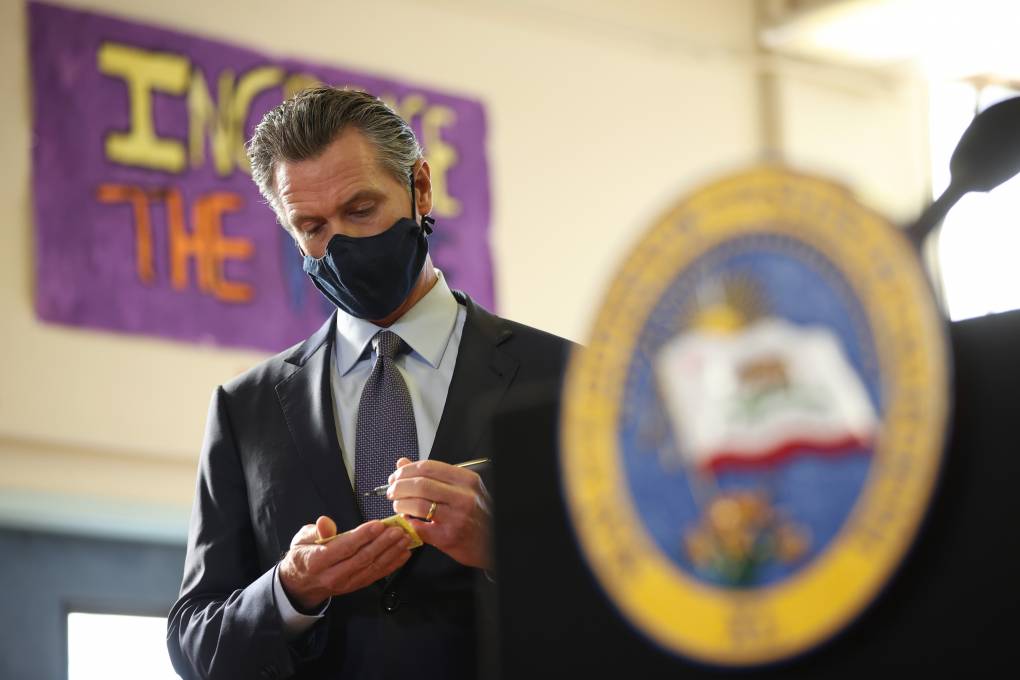
window.__INITIAL_STATE__={
"attachmentsReducer": {
"audio_0": {
"type": "attachments",
"id": "audio_0",
"imgSizes": {
"kqedFullSize": {
"file": "https://ww2.kqed.org/news/wp-content/themes/KQED-unified/img/audio_bgs/background0.jpg"
}
}
},
"audio_1": {
"type": "attachments",
"id": "audio_1",
"imgSizes": {
"kqedFullSize": {
"file": "https://ww2.kqed.org/news/wp-content/themes/KQED-unified/img/audio_bgs/background1.jpg"
}
}
},
"audio_2": {
"type": "attachments",
"id": "audio_2",
"imgSizes": {
"kqedFullSize": {
"file": "https://ww2.kqed.org/news/wp-content/themes/KQED-unified/img/audio_bgs/background2.jpg"
}
}
},
"audio_3": {
"type": "attachments",
"id": "audio_3",
"imgSizes": {
"kqedFullSize": {
"file": "https://ww2.kqed.org/news/wp-content/themes/KQED-unified/img/audio_bgs/background3.jpg"
}
}
},
"audio_4": {
"type": "attachments",
"id": "audio_4",
"imgSizes": {
"kqedFullSize": {
"file": "https://ww2.kqed.org/news/wp-content/themes/KQED-unified/img/audio_bgs/background4.jpg"
}
}
},
"placeholder": {
"type": "attachments",
"id": "placeholder",
"imgSizes": {
"thumbnail": {
"file": "https://cdn.kqed.org/wp-content/uploads/2024/12/KQED-Default-Image-816638274-2000x1333-1-160x107.jpg",
"width": 160,
"height": 107,
"mimeType": "image/jpeg"
},
"medium": {
"file": "https://cdn.kqed.org/wp-content/uploads/2024/12/KQED-Default-Image-816638274-2000x1333-1-800x533.jpg",
"width": 800,
"height": 533,
"mimeType": "image/jpeg"
},
"medium_large": {
"file": "https://cdn.kqed.org/wp-content/uploads/2024/12/KQED-Default-Image-816638274-2000x1333-1-768x512.jpg",
"width": 768,
"height": 512,
"mimeType": "image/jpeg"
},
"large": {
"file": "https://cdn.kqed.org/wp-content/uploads/2024/12/KQED-Default-Image-816638274-2000x1333-1-1020x680.jpg",
"width": 1020,
"height": 680,
"mimeType": "image/jpeg"
},
"1536x1536": {
"file": "https://cdn.kqed.org/wp-content/uploads/2024/12/KQED-Default-Image-816638274-2000x1333-1-1536x1024.jpg",
"width": 1536,
"height": 1024,
"mimeType": "image/jpeg"
},
"fd-lrg": {
"file": "https://cdn.kqed.org/wp-content/uploads/2024/12/KQED-Default-Image-816638274-2000x1333-1-1536x1024.jpg",
"width": 1536,
"height": 1024,
"mimeType": "image/jpeg"
},
"fd-med": {
"file": "https://cdn.kqed.org/wp-content/uploads/2024/12/KQED-Default-Image-816638274-2000x1333-1-1020x680.jpg",
"width": 1020,
"height": 680,
"mimeType": "image/jpeg"
},
"fd-sm": {
"file": "https://cdn.kqed.org/wp-content/uploads/2024/12/KQED-Default-Image-816638274-2000x1333-1-800x533.jpg",
"width": 800,
"height": 533,
"mimeType": "image/jpeg"
},
"post-thumbnail": {
"file": "https://cdn.kqed.org/wp-content/uploads/2024/12/KQED-Default-Image-816638274-2000x1333-1-672x372.jpg",
"width": 672,
"height": 372,
"mimeType": "image/jpeg"
},
"twentyfourteen-full-width": {
"file": "https://cdn.kqed.org/wp-content/uploads/2024/12/KQED-Default-Image-816638274-2000x1333-1-1038x576.jpg",
"width": 1038,
"height": 576,
"mimeType": "image/jpeg"
},
"xxsmall": {
"file": "https://cdn.kqed.org/wp-content/uploads/2024/12/KQED-Default-Image-816638274-2000x1333-1-160x107.jpg",
"width": 160,
"height": 107,
"mimeType": "image/jpeg"
},
"xsmall": {
"file": "https://cdn.kqed.org/wp-content/uploads/2024/12/KQED-Default-Image-816638274-2000x1333-1-672x372.jpg",
"width": 672,
"height": 372,
"mimeType": "image/jpeg"
},
"small": {
"file": "https://cdn.kqed.org/wp-content/uploads/2024/12/KQED-Default-Image-816638274-2000x1333-1-672x372.jpg",
"width": 672,
"height": 372,
"mimeType": "image/jpeg"
},
"xlarge": {
"file": "https://cdn.kqed.org/wp-content/uploads/2024/12/KQED-Default-Image-816638274-2000x1333-1-1020x680.jpg",
"width": 1020,
"height": 680,
"mimeType": "image/jpeg"
},
"full-width": {
"file": "https://cdn.kqed.org/wp-content/uploads/2024/12/KQED-Default-Image-816638274-2000x1333-1-1920x1280.jpg",
"width": 1920,
"height": 1280,
"mimeType": "image/jpeg"
},
"guest-author-32": {
"file": "https://cdn.kqed.org/wp-content/uploads/2025/01/KQED-Default-Image-816638274-1333x1333-1-160x160.jpg",
"width": 32,
"height": 32,
"mimeType": "image/jpeg"
},
"guest-author-50": {
"file": "https://cdn.kqed.org/wp-content/uploads/2025/01/KQED-Default-Image-816638274-1333x1333-1-160x160.jpg",
"width": 50,
"height": 50,
"mimeType": "image/jpeg"
},
"guest-author-64": {
"file": "https://cdn.kqed.org/wp-content/uploads/2025/01/KQED-Default-Image-816638274-1333x1333-1-160x160.jpg",
"width": 64,
"height": 64,
"mimeType": "image/jpeg"
},
"guest-author-96": {
"file": "https://cdn.kqed.org/wp-content/uploads/2025/01/KQED-Default-Image-816638274-1333x1333-1-160x160.jpg",
"width": 96,
"height": 96,
"mimeType": "image/jpeg"
},
"guest-author-128": {
"file": "https://cdn.kqed.org/wp-content/uploads/2025/01/KQED-Default-Image-816638274-1333x1333-1-160x160.jpg",
"width": 128,
"height": 128,
"mimeType": "image/jpeg"
},
"detail": {
"file": "https://cdn.kqed.org/wp-content/uploads/2025/01/KQED-Default-Image-816638274-1333x1333-1-160x160.jpg",
"width": 160,
"height": 160,
"mimeType": "image/jpeg"
},
"kqedFullSize": {
"file": "https://cdn.kqed.org/wp-content/uploads/2024/12/KQED-Default-Image-816638274-2000x1333-1.jpg",
"width": 2000,
"height": 1333
}
}
},
"news_11892157": {
"type": "attachments",
"id": "news_11892157",
"meta": {
"index": "attachments_1716263798",
"site": "news",
"id": "11892157",
"found": true
},
"parent": 11892112,
"imgSizes": {
"twentyfourteen-full-width": {
"file": "https://ww2.kqed.org/app/uploads/sites/10/2021/10/GettyImages-1344305961-1038x576.jpg",
"width": 1038,
"mimeType": "image/jpeg",
"height": 576
},
"thumbnail": {
"file": "https://ww2.kqed.org/app/uploads/sites/10/2021/10/GettyImages-1344305961-160x107.jpg",
"width": 160,
"mimeType": "image/jpeg",
"height": 107
},
"post-thumbnail": {
"file": "https://ww2.kqed.org/app/uploads/sites/10/2021/10/GettyImages-1344305961-672x372.jpg",
"width": 672,
"mimeType": "image/jpeg",
"height": 372
},
"kqedFullSize": {
"file": "https://ww2.kqed.org/app/uploads/sites/10/2021/10/GettyImages-1344305961-scaled.jpg",
"width": 2560,
"height": 1706
},
"2048x2048": {
"file": "https://ww2.kqed.org/app/uploads/sites/10/2021/10/GettyImages-1344305961-2048x1365.jpg",
"width": 2048,
"mimeType": "image/jpeg",
"height": 1365
},
"large": {
"file": "https://ww2.kqed.org/app/uploads/sites/10/2021/10/GettyImages-1344305961-1020x680.jpg",
"width": 1020,
"mimeType": "image/jpeg",
"height": 680
},
"1536x1536": {
"file": "https://ww2.kqed.org/app/uploads/sites/10/2021/10/GettyImages-1344305961-1536x1024.jpg",
"width": 1536,
"mimeType": "image/jpeg",
"height": 1024
},
"full-width": {
"file": "https://ww2.kqed.org/app/uploads/sites/10/2021/10/GettyImages-1344305961-1920x1280.jpg",
"width": 1920,
"mimeType": "image/jpeg",
"height": 1280
},
"medium": {
"file": "https://ww2.kqed.org/app/uploads/sites/10/2021/10/GettyImages-1344305961-800x533.jpg",
"width": 800,
"mimeType": "image/jpeg",
"height": 533
}
},
"publishDate": 1634158971,
"modified": 1637707309,
"caption": "Gov. Gavin Newsom takes notes before speaking at a news conference on Oct. 1, 2021, in San Francisco.",
"description": "Gov. Gavin Newsom takes notes before speaking at a news conference after meeting with students at James Denman Middle School on October 01, 2021 in San Francisco.",
"title": "California Governor Newsom Speaks On State's School Safety And Covid Prevention Efforts",
"credit": "Justin Sullivan/Getty Images",
"status": "inherit",
"altTag": "Gavin Newsom, wearing a black mask and standing beyond a podium with the Seal of California, scribbles in a tiny notepad.",
"isLoading": false,
"fetchFailed": false
},
"news_11881300": {
"type": "attachments",
"id": "news_11881300",
"meta": {
"index": "attachments_1716263798",
"site": "news",
"id": "11881300",
"found": true
},
"parent": 11881292,
"imgSizes": {
"twentyfourteen-full-width": {
"file": "https://ww2.kqed.org/app/uploads/sites/10/2021/07/Capitol-1180x787-3-1038x576.jpeg",
"width": 1038,
"mimeType": "image/jpeg",
"height": 576
},
"thumbnail": {
"file": "https://ww2.kqed.org/app/uploads/sites/10/2021/07/Capitol-1180x787-3-160x107.jpeg",
"width": 160,
"mimeType": "image/jpeg",
"height": 107
},
"post-thumbnail": {
"file": "https://ww2.kqed.org/app/uploads/sites/10/2021/07/Capitol-1180x787-3-672x372.jpeg",
"width": 672,
"mimeType": "image/jpeg",
"height": 372
},
"kqedFullSize": {
"file": "https://ww2.kqed.org/app/uploads/sites/10/2021/07/Capitol-1180x787-3.jpeg",
"width": 1180,
"height": 787
},
"large": {
"file": "https://ww2.kqed.org/app/uploads/sites/10/2021/07/Capitol-1180x787-3-1020x680.jpeg",
"width": 1020,
"mimeType": "image/jpeg",
"height": 680
},
"medium": {
"file": "https://ww2.kqed.org/app/uploads/sites/10/2021/07/Capitol-1180x787-3-800x534.jpeg",
"width": 800,
"mimeType": "image/jpeg",
"height": 534
}
},
"publishDate": 1626379331,
"modified": 1633991932,
"caption": "The California State Capitol.",
"description": null,
"title": "Gov. Schwarzenegger Delivers State Of The State Address",
"credit": "David Paul Morris/Getty Images",
"status": "inherit",
"altTag": "A Greek-style facade with pillars and a dome, with fir branches in the foreground.",
"isLoading": false,
"fetchFailed": false
},
"news_11890987": {
"type": "attachments",
"id": "news_11890987",
"meta": {
"index": "attachments_1716263798",
"site": "news",
"id": "11890987",
"found": true
},
"parent": 11890986,
"imgSizes": {
"twentyfourteen-full-width": {
"file": "https://ww2.kqed.org/app/uploads/sites/10/2021/10/oow_trailer-art-f56825e4e8296bde3e7b91d5e737f03914be7844-1038x576.png",
"width": 1038,
"mimeType": "image/png",
"height": 576
},
"thumbnail": {
"file": "https://ww2.kqed.org/app/uploads/sites/10/2021/10/oow_trailer-art-f56825e4e8296bde3e7b91d5e737f03914be7844-160x120.png",
"width": 160,
"mimeType": "image/png",
"height": 120
},
"post-thumbnail": {
"file": "https://ww2.kqed.org/app/uploads/sites/10/2021/10/oow_trailer-art-f56825e4e8296bde3e7b91d5e737f03914be7844-672x372.png",
"width": 672,
"mimeType": "image/png",
"height": 372
},
"kqedFullSize": {
"file": "https://ww2.kqed.org/app/uploads/sites/10/2021/10/oow_trailer-art-f56825e4e8296bde3e7b91d5e737f03914be7844.png",
"width": 2253,
"height": 1688
},
"2048x2048": {
"file": "https://ww2.kqed.org/app/uploads/sites/10/2021/10/oow_trailer-art-f56825e4e8296bde3e7b91d5e737f03914be7844-2048x1534.png",
"width": 2048,
"mimeType": "image/png",
"height": 1534
},
"large": {
"file": "https://ww2.kqed.org/app/uploads/sites/10/2021/10/oow_trailer-art-f56825e4e8296bde3e7b91d5e737f03914be7844-1020x764.png",
"width": 1020,
"mimeType": "image/png",
"height": 764
},
"1536x1536": {
"file": "https://ww2.kqed.org/app/uploads/sites/10/2021/10/oow_trailer-art-f56825e4e8296bde3e7b91d5e737f03914be7844-1536x1151.png",
"width": 1536,
"mimeType": "image/png",
"height": 1151
},
"full-width": {
"file": "https://ww2.kqed.org/app/uploads/sites/10/2021/10/oow_trailer-art-f56825e4e8296bde3e7b91d5e737f03914be7844-1920x1439.png",
"width": 1920,
"mimeType": "image/png",
"height": 1439
},
"medium": {
"file": "https://ww2.kqed.org/app/uploads/sites/10/2021/10/oow_trailer-art-f56825e4e8296bde3e7b91d5e737f03914be7844-800x599.png",
"width": 800,
"mimeType": "image/png",
"height": 599
}
},
"publishDate": 1633387661,
"modified": 1633474377,
"caption": null,
"description": null,
"title": "Graphic by Luke Medina.",
"credit": null,
"status": "inherit",
"altTag": "A show graphic that says \"On Our Watch. Police secrets, unsealed.\"",
"isLoading": false,
"fetchFailed": false
},
"news_11890669": {
"type": "attachments",
"id": "news_11890669",
"meta": {
"index": "attachments_1716263798",
"site": "news",
"id": "11890669",
"found": true
},
"parent": 11890615,
"imgSizes": {
"twentyfourteen-full-width": {
"file": "https://ww2.kqed.org/app/uploads/sites/10/2021/09/GettyImages-1216832918-1038x576.jpg",
"width": 1038,
"mimeType": "image/jpeg",
"height": 576
},
"thumbnail": {
"file": "https://ww2.kqed.org/app/uploads/sites/10/2021/09/GettyImages-1216832918-160x107.jpg",
"width": 160,
"mimeType": "image/jpeg",
"height": 107
},
"post-thumbnail": {
"file": "https://ww2.kqed.org/app/uploads/sites/10/2021/09/GettyImages-1216832918-672x372.jpg",
"width": 672,
"mimeType": "image/jpeg",
"height": 372
},
"kqedFullSize": {
"file": "https://ww2.kqed.org/app/uploads/sites/10/2021/09/GettyImages-1216832918-scaled-e1633044454892.jpg",
"width": 1920,
"height": 1280
},
"2048x2048": {
"file": "https://ww2.kqed.org/app/uploads/sites/10/2021/09/GettyImages-1216832918-2048x1365.jpg",
"width": 2048,
"mimeType": "image/jpeg",
"height": 1365
},
"large": {
"file": "https://ww2.kqed.org/app/uploads/sites/10/2021/09/GettyImages-1216832918-1020x680.jpg",
"width": 1020,
"mimeType": "image/jpeg",
"height": 680
},
"1536x1536": {
"file": "https://ww2.kqed.org/app/uploads/sites/10/2021/09/GettyImages-1216832918-1536x1024.jpg",
"width": 1536,
"mimeType": "image/jpeg",
"height": 1024
},
"full-width": {
"file": "https://ww2.kqed.org/app/uploads/sites/10/2021/09/GettyImages-1216832918-1920x1280.jpg",
"width": 1920,
"mimeType": "image/jpeg",
"height": 1280
},
"medium": {
"file": "https://ww2.kqed.org/app/uploads/sites/10/2021/09/GettyImages-1216832918-800x533.jpg",
"width": 800,
"mimeType": "image/jpeg",
"height": 533
}
},
"publishDate": 1633044369,
"modified": 1633050169,
"caption": "A demonstrator holds her hands up while she kneels in front of police at the Anaheim City Hall on June 1, 2020, in Anaheim, California, during a peaceful protest over the death of George Floyd.",
"description": "A demonstrator holds her hands up while she kneels in front of police at the Anaheim City Hall on June 1, 2020 in Anaheim, California, during a peaceful protest over the death of George Floyd.",
"title": "US-POLICE-POLITICS-CRIME-RACE-DEMONSTRATION",
"credit": "Apu Gomes/AFP via Getty Images",
"status": "inherit",
"altTag": "Blurred hands raised in the foreground, with police in battle gear in formation standing on the steps of a building.",
"isLoading": false,
"fetchFailed": false
},
"news_11877020": {
"type": "attachments",
"id": "news_11877020",
"meta": {
"index": "attachments_1716263798",
"site": "news",
"id": "11877020",
"found": true
},
"parent": 11876935,
"imgSizes": {
"twentyfourteen-full-width": {
"file": "https://ww2.kqed.org/app/uploads/sites/10/2021/06/RS49667_005_SanFrancisco_SeanMonterrosaRally_06062021-qut-1038x576.jpg",
"width": 1038,
"mimeType": "image/jpeg",
"height": 576
},
"thumbnail": {
"file": "https://ww2.kqed.org/app/uploads/sites/10/2021/06/RS49667_005_SanFrancisco_SeanMonterrosaRally_06062021-qut-160x107.jpg",
"width": 160,
"mimeType": "image/jpeg",
"height": 107
},
"post-thumbnail": {
"file": "https://ww2.kqed.org/app/uploads/sites/10/2021/06/RS49667_005_SanFrancisco_SeanMonterrosaRally_06062021-qut-672x372.jpg",
"width": 672,
"mimeType": "image/jpeg",
"height": 372
},
"kqedFullSize": {
"file": "https://ww2.kqed.org/app/uploads/sites/10/2021/06/RS49667_005_SanFrancisco_SeanMonterrosaRally_06062021-qut.jpg",
"width": 1920,
"height": 1280
},
"large": {
"file": "https://ww2.kqed.org/app/uploads/sites/10/2021/06/RS49667_005_SanFrancisco_SeanMonterrosaRally_06062021-qut-1020x680.jpg",
"width": 1020,
"mimeType": "image/jpeg",
"height": 680
},
"1536x1536": {
"file": "https://ww2.kqed.org/app/uploads/sites/10/2021/06/RS49667_005_SanFrancisco_SeanMonterrosaRally_06062021-qut-1536x1024.jpg",
"width": 1536,
"mimeType": "image/jpeg",
"height": 1024
},
"medium": {
"file": "https://ww2.kqed.org/app/uploads/sites/10/2021/06/RS49667_005_SanFrancisco_SeanMonterrosaRally_06062021-qut-800x533.jpg",
"width": 800,
"mimeType": "image/jpeg",
"height": 533
}
},
"publishDate": 1623095315,
"modified": 1623109592,
"caption": "Two volunteers hang signs in front of City Hall in San Francisco on June 6, 2021, during a rally to demand justice for Sean Monterrosa, who was killed one year ago by a Vallejo police officer.",
"description": null,
"title": "RS49667_005_SanFrancisco_SeanMonterrosaRally_06062021-qut",
"credit": "Beth LaBerge/KQED",
"status": "inherit",
"altTag": null,
"isLoading": false,
"fetchFailed": false
},
"news_11875139": {
"type": "attachments",
"id": "news_11875139",
"meta": {
"index": "attachments_1716263798",
"site": "news",
"id": "11875139",
"found": true
},
"parent": 11875128,
"imgSizes": {
"twentyfourteen-full-width": {
"file": "https://ww2.kqed.org/app/uploads/sites/10/2021/05/RS43926_004_KQED_Vallejo_SeanMonterrosa_07112020-qut-1038x576.jpg",
"width": 1038,
"mimeType": "image/jpeg",
"height": 576
},
"thumbnail": {
"file": "https://ww2.kqed.org/app/uploads/sites/10/2021/05/RS43926_004_KQED_Vallejo_SeanMonterrosa_07112020-qut-160x107.jpg",
"width": 160,
"mimeType": "image/jpeg",
"height": 107
},
"post-thumbnail": {
"file": "https://ww2.kqed.org/app/uploads/sites/10/2021/05/RS43926_004_KQED_Vallejo_SeanMonterrosa_07112020-qut-672x372.jpg",
"width": 672,
"mimeType": "image/jpeg",
"height": 372
},
"kqedFullSize": {
"file": "https://ww2.kqed.org/app/uploads/sites/10/2021/05/RS43926_004_KQED_Vallejo_SeanMonterrosa_07112020-qut.jpg",
"width": 1920,
"height": 1278
},
"large": {
"file": "https://ww2.kqed.org/app/uploads/sites/10/2021/05/RS43926_004_KQED_Vallejo_SeanMonterrosa_07112020-qut-1020x679.jpg",
"width": 1020,
"mimeType": "image/jpeg",
"height": 679
},
"1536x1536": {
"file": "https://ww2.kqed.org/app/uploads/sites/10/2021/05/RS43926_004_KQED_Vallejo_SeanMonterrosa_07112020-qut-1536x1022.jpg",
"width": 1536,
"mimeType": "image/jpeg",
"height": 1022
},
"medium": {
"file": "https://ww2.kqed.org/app/uploads/sites/10/2021/05/RS43926_004_KQED_Vallejo_SeanMonterrosa_07112020-qut-800x533.jpg",
"width": 800,
"mimeType": "image/jpeg",
"height": 533
}
},
"publishDate": 1621895436,
"modified": 1621978020,
"caption": "Michelle (right) and Ashley Monterrosa speak during a protest on July 11, 2020, calling for justice for their brother Sean and others killed by Vallejo police officers.",
"description": null,
"title": "RS43926_004_KQED_Vallejo_SeanMonterrosa_07112020-qut",
"credit": "Beth LaBerge/KQED",
"status": "inherit",
"altTag": null,
"isLoading": false,
"fetchFailed": false
},
"news_11874701": {
"type": "attachments",
"id": "news_11874701",
"meta": {
"index": "attachments_1716263798",
"site": "news",
"id": "11874701",
"found": true
},
"parent": 11874680,
"imgSizes": {
"twentyfourteen-full-width": {
"file": "https://ww2.kqed.org/app/uploads/sites/10/2021/05/iStock_suspensefile_01-1038x576.jpeg",
"width": 1038,
"mimeType": "image/jpeg",
"height": 576
},
"thumbnail": {
"file": "https://ww2.kqed.org/app/uploads/sites/10/2021/05/iStock_suspensefile_01-160x109.jpeg",
"width": 160,
"mimeType": "image/jpeg",
"height": 109
},
"post-thumbnail": {
"file": "https://ww2.kqed.org/app/uploads/sites/10/2021/05/iStock_suspensefile_01-672x372.jpeg",
"width": 672,
"mimeType": "image/jpeg",
"height": 372
},
"kqedFullSize": {
"file": "https://ww2.kqed.org/app/uploads/sites/10/2021/05/iStock_suspensefile_01.jpeg",
"width": 2000,
"height": 1368
},
"large": {
"file": "https://ww2.kqed.org/app/uploads/sites/10/2021/05/iStock_suspensefile_01-1020x698.jpeg",
"width": 1020,
"mimeType": "image/jpeg",
"height": 698
},
"1536x1536": {
"file": "https://ww2.kqed.org/app/uploads/sites/10/2021/05/iStock_suspensefile_01-1536x1051.jpeg",
"width": 1536,
"mimeType": "image/jpeg",
"height": 1051
},
"full-width": {
"file": "https://ww2.kqed.org/app/uploads/sites/10/2021/05/iStock_suspensefile_01-1920x1313.jpeg",
"width": 1920,
"mimeType": "image/jpeg",
"height": 1313
},
"medium": {
"file": "https://ww2.kqed.org/app/uploads/sites/10/2021/05/iStock_suspensefile_01-800x547.jpeg",
"width": 800,
"mimeType": "image/jpeg",
"height": 547
}
},
"publishDate": 1621621912,
"modified": 1621621943,
"caption": null,
"description": null,
"title": "lost",
"credit": "Anne Wernikoff/CalMatters",
"status": "inherit",
"altTag": null,
"isLoading": false,
"fetchFailed": false
},
"news_11823006": {
"type": "attachments",
"id": "news_11823006",
"meta": {
"index": "attachments_1716263798",
"site": "news",
"id": "11823006",
"found": true
},
"parent": 11822817,
"imgSizes": {
"apple_news_ca_landscape_5_5": {
"file": "https://ww2.kqed.org/app/uploads/sites/10/2020/06/RS43444_043_KQED_Oakland_GeorgeFloydProtest_05292020-qut-1044x783.jpg",
"width": 1044,
"mimeType": "image/jpeg",
"height": 783
},
"apple_news_ca_square_4_0": {
"file": "https://ww2.kqed.org/app/uploads/sites/10/2020/06/RS43444_043_KQED_Oakland_GeorgeFloydProtest_05292020-qut-470x470.jpg",
"width": 470,
"mimeType": "image/jpeg",
"height": 470
},
"twentyfourteen-full-width": {
"file": "https://ww2.kqed.org/app/uploads/sites/10/2020/06/RS43444_043_KQED_Oakland_GeorgeFloydProtest_05292020-qut-1038x576.jpg",
"width": 1038,
"mimeType": "image/jpeg",
"height": 576
},
"thumbnail": {
"file": "https://ww2.kqed.org/app/uploads/sites/10/2020/06/RS43444_043_KQED_Oakland_GeorgeFloydProtest_05292020-qut-160x107.jpg",
"width": 160,
"mimeType": "image/jpeg",
"height": 107
},
"post-thumbnail": {
"file": "https://ww2.kqed.org/app/uploads/sites/10/2020/06/RS43444_043_KQED_Oakland_GeorgeFloydProtest_05292020-qut-672x372.jpg",
"width": 672,
"mimeType": "image/jpeg",
"height": 372
},
"kqedFullSize": {
"file": "https://ww2.kqed.org/app/uploads/sites/10/2020/06/RS43444_043_KQED_Oakland_GeorgeFloydProtest_05292020-qut.jpg",
"width": 1920,
"height": 1280
},
"apple_news_ca_landscape_4_7": {
"file": "https://ww2.kqed.org/app/uploads/sites/10/2020/06/RS43444_043_KQED_Oakland_GeorgeFloydProtest_05292020-qut-632x474.jpg",
"width": 632,
"mimeType": "image/jpeg",
"height": 474
},
"large": {
"file": "https://ww2.kqed.org/app/uploads/sites/10/2020/06/RS43444_043_KQED_Oakland_GeorgeFloydProtest_05292020-qut-1020x680.jpg",
"width": 1020,
"mimeType": "image/jpeg",
"height": 680
},
"apple_news_ca_landscape_4_0": {
"file": "https://ww2.kqed.org/app/uploads/sites/10/2020/06/RS43444_043_KQED_Oakland_GeorgeFloydProtest_05292020-qut-536x402.jpg",
"width": 536,
"mimeType": "image/jpeg",
"height": 402
},
"apple_news_ca_portrait_12_9": {
"file": "https://ww2.kqed.org/app/uploads/sites/10/2020/06/RS43444_043_KQED_Oakland_GeorgeFloydProtest_05292020-qut-1122x1280.jpg",
"width": 1122,
"mimeType": "image/jpeg",
"height": 1280
},
"medium": {
"file": "https://ww2.kqed.org/app/uploads/sites/10/2020/06/RS43444_043_KQED_Oakland_GeorgeFloydProtest_05292020-qut-800x533.jpg",
"width": 800,
"mimeType": "image/jpeg",
"height": 533
},
"apple_news_ca_portrait_4_0": {
"file": "https://ww2.kqed.org/app/uploads/sites/10/2020/06/RS43444_043_KQED_Oakland_GeorgeFloydProtest_05292020-qut-354x472.jpg",
"width": 354,
"mimeType": "image/jpeg",
"height": 472
},
"apple_news_ca_portrait_9_7": {
"file": "https://ww2.kqed.org/app/uploads/sites/10/2020/06/RS43444_043_KQED_Oakland_GeorgeFloydProtest_05292020-qut-840x1120.jpg",
"width": 840,
"mimeType": "image/jpeg",
"height": 1120
},
"apple_news_ca_landscape_12_9": {
"file": "https://ww2.kqed.org/app/uploads/sites/10/2020/06/RS43444_043_KQED_Oakland_GeorgeFloydProtest_05292020-qut-1832x1280.jpg",
"width": 1832,
"mimeType": "image/jpeg",
"height": 1280
},
"apple_news_ca_square_9_7": {
"file": "https://ww2.kqed.org/app/uploads/sites/10/2020/06/RS43444_043_KQED_Oakland_GeorgeFloydProtest_05292020-qut-1104x1104.jpg",
"width": 1104,
"mimeType": "image/jpeg",
"height": 1104
},
"apple_news_ca_portrait_4_7": {
"file": "https://ww2.kqed.org/app/uploads/sites/10/2020/06/RS43444_043_KQED_Oakland_GeorgeFloydProtest_05292020-qut-414x552.jpg",
"width": 414,
"mimeType": "image/jpeg",
"height": 552
},
"apple_news_ca_square_12_9": {
"file": "https://ww2.kqed.org/app/uploads/sites/10/2020/06/RS43444_043_KQED_Oakland_GeorgeFloydProtest_05292020-qut-1472x1280.jpg",
"width": 1472,
"mimeType": "image/jpeg",
"height": 1280
},
"apple_news_ca_portrait_5_5": {
"file": "https://ww2.kqed.org/app/uploads/sites/10/2020/06/RS43444_043_KQED_Oakland_GeorgeFloydProtest_05292020-qut-687x916.jpg",
"width": 687,
"mimeType": "image/jpeg",
"height": 916
},
"full-width": {
"file": "https://ww2.kqed.org/app/uploads/sites/10/2020/06/RS43444_043_KQED_Oakland_GeorgeFloydProtest_05292020-qut-1920x1280.jpg",
"width": 1920,
"mimeType": "image/jpeg",
"height": 1280
},
"apple_news_ca_square_4_7": {
"file": "https://ww2.kqed.org/app/uploads/sites/10/2020/06/RS43444_043_KQED_Oakland_GeorgeFloydProtest_05292020-qut-550x550.jpg",
"width": 550,
"mimeType": "image/jpeg",
"height": 550
},
"apple_news_ca_landscape_9_7": {
"file": "https://ww2.kqed.org/app/uploads/sites/10/2020/06/RS43444_043_KQED_Oakland_GeorgeFloydProtest_05292020-qut-1376x1032.jpg",
"width": 1376,
"mimeType": "image/jpeg",
"height": 1032
},
"apple_news_ca_square_5_5": {
"file": "https://ww2.kqed.org/app/uploads/sites/10/2020/06/RS43444_043_KQED_Oakland_GeorgeFloydProtest_05292020-qut-912x912.jpg",
"width": 912,
"mimeType": "image/jpeg",
"height": 912
}
},
"publishDate": 1591318054,
"modified": 1591318710,
"caption": "Demonstrators fill Broadway near Oakland Police Department headquarters on May 29, 2020 during a protest over the Minneapolis police killing of George Floyd.",
"description": null,
"title": "RS43444_043_KQED_Oakland_GeorgeFloydProtest_05292020-qut",
"credit": "Beth LaBerge/KQED",
"status": "inherit",
"isLoading": false,
"fetchFailed": false
},
"news_11871442": {
"type": "attachments",
"id": "news_11871442",
"meta": {
"index": "attachments_1716263798",
"site": "news",
"id": "11871442",
"found": true
},
"parent": 11871345,
"imgSizes": {
"twentyfourteen-full-width": {
"file": "https://ww2.kqed.org/app/uploads/sites/10/2021/04/RS48831_013_Alameda_MarioGonzalezPressConf_04272021-qut-1038x576.jpg",
"width": 1038,
"mimeType": "image/jpeg",
"height": 576
},
"thumbnail": {
"file": "https://ww2.kqed.org/app/uploads/sites/10/2021/04/RS48831_013_Alameda_MarioGonzalezPressConf_04272021-qut-160x107.jpg",
"width": 160,
"mimeType": "image/jpeg",
"height": 107
},
"post-thumbnail": {
"file": "https://ww2.kqed.org/app/uploads/sites/10/2021/04/RS48831_013_Alameda_MarioGonzalezPressConf_04272021-qut-672x372.jpg",
"width": 672,
"mimeType": "image/jpeg",
"height": 372
},
"kqedFullSize": {
"file": "https://ww2.kqed.org/app/uploads/sites/10/2021/04/RS48831_013_Alameda_MarioGonzalezPressConf_04272021-qut.jpg",
"width": 1920,
"height": 1280
},
"large": {
"file": "https://ww2.kqed.org/app/uploads/sites/10/2021/04/RS48831_013_Alameda_MarioGonzalezPressConf_04272021-qut-1020x680.jpg",
"width": 1020,
"mimeType": "image/jpeg",
"height": 680
},
"1536x1536": {
"file": "https://ww2.kqed.org/app/uploads/sites/10/2021/04/RS48831_013_Alameda_MarioGonzalezPressConf_04272021-qut-1536x1024.jpg",
"width": 1536,
"mimeType": "image/jpeg",
"height": 1024
},
"medium": {
"file": "https://ww2.kqed.org/app/uploads/sites/10/2021/04/RS48831_013_Alameda_MarioGonzalezPressConf_04272021-qut-800x533.jpg",
"width": 800,
"mimeType": "image/jpeg",
"height": 533
}
},
"publishDate": 1619584463,
"modified": 1620682778,
"caption": "Friends and family of Mario Gonzalez, and their supporters, gather outside of the Alameda Police Department on April 27, 2021, the day body camera footage of his death was made public.",
"description": null,
"title": "RS48831_013_Alameda_MarioGonzalezPressConf_04272021-qut",
"credit": "Beth LaBerge/KQED",
"status": "inherit",
"altTag": null,
"isLoading": false,
"fetchFailed": false
},
"news_11872820": {
"type": "attachments",
"id": "news_11872820",
"meta": {
"index": "attachments_1716263798",
"site": "news",
"id": "11872820",
"found": true
},
"parent": 11871887,
"imgSizes": {
"twentyfourteen-full-width": {
"file": "https://ww2.kqed.org/app/uploads/sites/10/2021/05/RS48839_022_Alameda_MarioGonzalezPressConf_04272021-qut-1038x576.jpg",
"width": 1038,
"mimeType": "image/jpeg",
"height": 576
},
"thumbnail": {
"file": "https://ww2.kqed.org/app/uploads/sites/10/2021/05/RS48839_022_Alameda_MarioGonzalezPressConf_04272021-qut-160x107.jpg",
"width": 160,
"mimeType": "image/jpeg",
"height": 107
},
"post-thumbnail": {
"file": "https://ww2.kqed.org/app/uploads/sites/10/2021/05/RS48839_022_Alameda_MarioGonzalezPressConf_04272021-qut-672x372.jpg",
"width": 672,
"mimeType": "image/jpeg",
"height": 372
},
"kqedFullSize": {
"file": "https://ww2.kqed.org/app/uploads/sites/10/2021/05/RS48839_022_Alameda_MarioGonzalezPressConf_04272021-qut.jpg",
"width": 1920,
"height": 1278
},
"large": {
"file": "https://ww2.kqed.org/app/uploads/sites/10/2021/05/RS48839_022_Alameda_MarioGonzalezPressConf_04272021-qut-1020x679.jpg",
"width": 1020,
"mimeType": "image/jpeg",
"height": 679
},
"1536x1536": {
"file": "https://ww2.kqed.org/app/uploads/sites/10/2021/05/RS48839_022_Alameda_MarioGonzalezPressConf_04272021-qut-1536x1022.jpg",
"width": 1536,
"mimeType": "image/jpeg",
"height": 1022
},
"medium": {
"file": "https://ww2.kqed.org/app/uploads/sites/10/2021/05/RS48839_022_Alameda_MarioGonzalezPressConf_04272021-qut-800x533.jpg",
"width": 800,
"mimeType": "image/jpeg",
"height": 533
}
},
"publishDate": 1620427268,
"modified": 1649440866,
"caption": "Protesters gathered outside Alameda Police Department headquarters on April 27, 2021, the day police released bodycam footage of Gonzalez's April 19 death.",
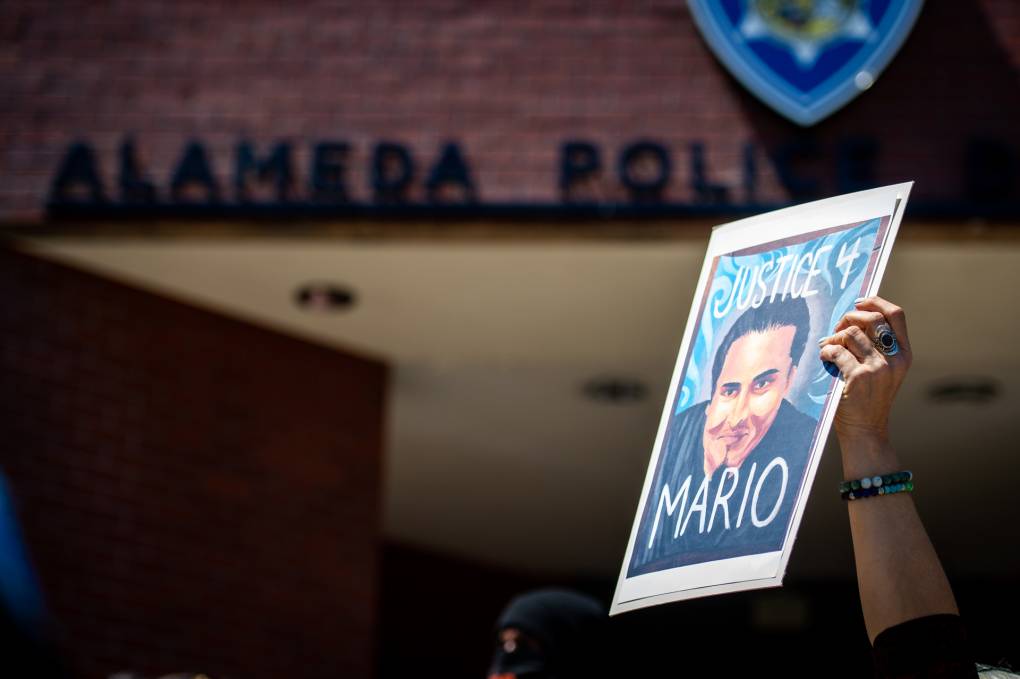
"description": "Friends, family and supporters of Mario Gonzalez gathered outside the Alameda Police Dept. on April 27, 2021 for a press conference on the day police publicly released body cam footage of Gonzalez's death.",
"title": "RS48839_022_Alameda_MarioGonzalezPressConf_04272021-qut",
"credit": "Beth LaBerge/KQED",
"status": "inherit",
"altTag": "Someone holding a sign in front of the Alameda Police station",
"isLoading": false,
"fetchFailed": false
},
"news_11870641": {
"type": "attachments",
"id": "news_11870641",
"meta": {
"index": "attachments_1716263798",
"site": "news",
"id": "11870641",
"found": true
},
"parent": 11870567,
"imgSizes": {
"twentyfourteen-full-width": {
"file": "https://ww2.kqed.org/app/uploads/sites/10/2021/04/StreetCam-1038x576.jpg",
"width": 1038,
"mimeType": "image/jpeg",
"height": 576
},
"thumbnail": {
"file": "https://ww2.kqed.org/app/uploads/sites/10/2021/04/StreetCam-160x96.jpg",
"width": 160,
"mimeType": "image/jpeg",
"height": 96
},
"post-thumbnail": {
"file": "https://ww2.kqed.org/app/uploads/sites/10/2021/04/StreetCam-672x372.jpg",
"width": 672,
"mimeType": "image/jpeg",
"height": 372
},
"kqedFullSize": {
"file": "https://ww2.kqed.org/app/uploads/sites/10/2021/04/StreetCam.jpg",
"width": 1354,
"height": 812
},
"large": {
"file": "https://ww2.kqed.org/app/uploads/sites/10/2021/04/StreetCam-1020x612.jpg",
"width": 1020,
"mimeType": "image/jpeg",
"height": 612
},
"medium": {
"file": "https://ww2.kqed.org/app/uploads/sites/10/2021/04/StreetCam-800x480.jpg",
"width": 800,
"mimeType": "image/jpeg",
"height": 480
}
},
"publishDate": 1619053592,
"modified": 1619057501,
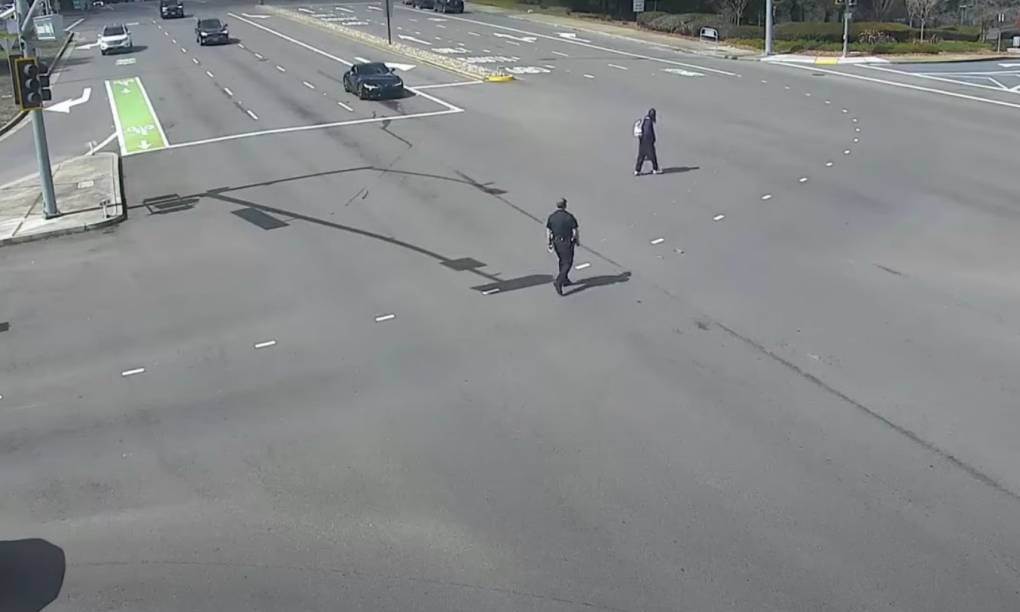
"caption": "Video footage released by the Contra Costa County Sheriff's Office on Wednesday shows Danville police officer Andrew Hall walking towards Tyrell Wilson before shooting and killing him on March 11, 2021. The body camera footage of the killing is graphic, and KQED has therefore chosen not to use screencaps from it.",
"description": "Video footage released by the Contra Costa Sheriff's Office on Wednesday shows Danville police officer Andrew Hall walking towards Tyrell Wilson before shooting and killing him on March 11, 2021. The body camera footage of the killing is graphic, and KQED has therefore chosen not to use screencaps from it.",
"title": "StreetCam",
"credit": "Contra Costa County Sheriff's Office/YouTube",
"status": "inherit",
"altTag": null,
"isLoading": false,
"fetchFailed": false
},
"news_11869759": {
"type": "attachments",
"id": "news_11869759",
"meta": {
"index": "attachments_1716263798",
"site": "news",
"id": "11869759",
"found": true
},
"parent": 11869627,
"imgSizes": {
"twentyfourteen-full-width": {
"file": "https://ww2.kqed.org/app/uploads/sites/10/2021/04/Image-from-iOS-22-1038x576.jpg",
"width": 1038,
"mimeType": "image/jpeg",
"height": 576
},
"thumbnail": {
"file": "https://ww2.kqed.org/app/uploads/sites/10/2021/04/Image-from-iOS-22-160x107.jpg",
"width": 160,
"mimeType": "image/jpeg",
"height": 107
},
"post-thumbnail": {
"file": "https://ww2.kqed.org/app/uploads/sites/10/2021/04/Image-from-iOS-22-672x372.jpg",
"width": 672,
"mimeType": "image/jpeg",
"height": 372
},
"kqedFullSize": {
"file": "https://ww2.kqed.org/app/uploads/sites/10/2021/04/Image-from-iOS-22.jpg",
"width": 1620,
"height": 1080
},
"large": {
"file": "https://ww2.kqed.org/app/uploads/sites/10/2021/04/Image-from-iOS-22-1020x680.jpg",
"width": 1020,
"mimeType": "image/jpeg",
"height": 680
},
"1536x1536": {
"file": "https://ww2.kqed.org/app/uploads/sites/10/2021/04/Image-from-iOS-22-1536x1024.jpg",
"width": 1536,
"mimeType": "image/jpeg",
"height": 1024
},
"medium": {
"file": "https://ww2.kqed.org/app/uploads/sites/10/2021/04/Image-from-iOS-22-800x533.jpg",
"width": 800,
"mimeType": "image/jpeg",
"height": 533
}
},
"publishDate": 1618546268,
"modified": 1618546809,
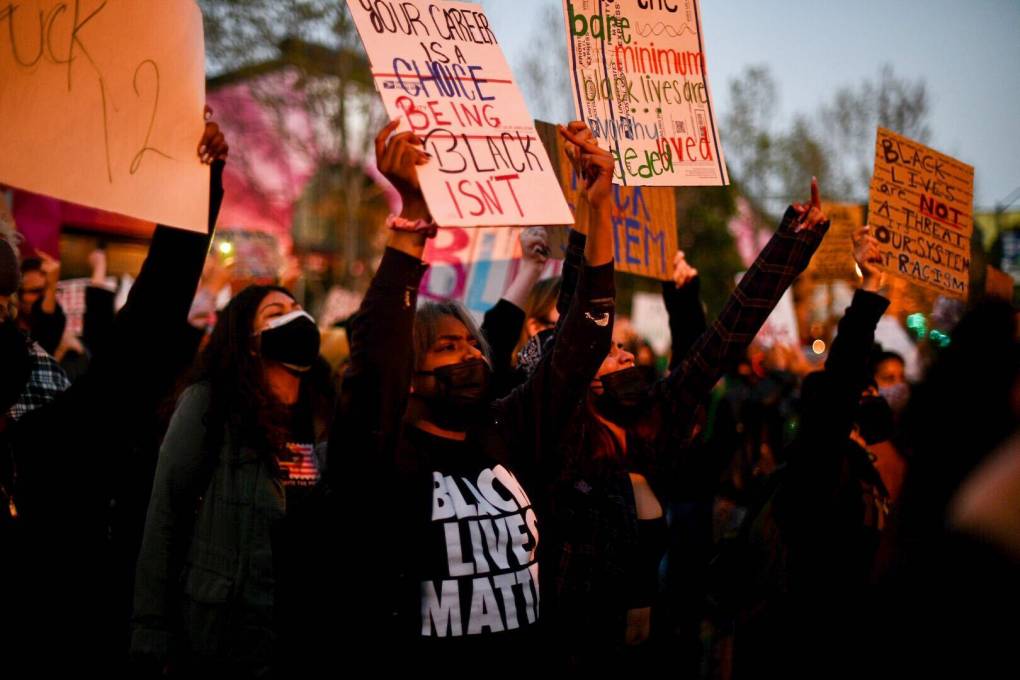
"caption": "Hundreds of demonstrators gather outside of the Mission Police Station on April 15, 2021, after a march in honor of Roger Allen, Daunte Wright and those killed by the police.",
"description": "Hundreds of demonstrators gather outside of the Mission Police Station on April 15, 2021, after a march in honor of Roger Allen, Daunte Wright and those killed by the police.",
"title": "Image from iOS (22)",
"credit": "Beth LaBerge/KQED",
"status": "inherit",
"altTag": null,
"isLoading": false,
"fetchFailed": false
}
},
"audioPlayerReducer": {
"postId": "stream_live",
"isPaused": true,
"isPlaying": false,
"pfsActive": false,
"pledgeModalIsOpen": true,
"playerDrawerIsOpen": false,
"liveAudioPlayStartedAt": 0,
"liveAudioPlayContext": ""
},
"authorsReducer": {
"byline_news_11892112": {
"type": "authors",
"id": "byline_news_11892112",
"meta": {
"override": true
},
"slug": "byline_news_11892112",
"name": "\u003ca href=\"https://calmatters.org/author/laurel-rosenhall/\">Laurel Rosenhall\u003c/a>",
"isLoading": false
},
"byline_news_11874680": {
"type": "authors",
"id": "byline_news_11874680",
"meta": {
"override": true
},
"slug": "byline_news_11874680",
"name": "\u003ca href=\"https://calmatters.org/author/laurel-rosenhall/\">Laurel Rosenhall\u003c/a>",
"isLoading": false
},
"byline_news_11873608": {
"type": "authors",
"id": "byline_news_11873608",
"meta": {
"override": true
},
"slug": "byline_news_11873608",
"name": "Noah Baustin",
"isLoading": false
},
"dclyde": {
"type": "authors",
"id": "104",
"meta": {
"index": "authors_1716337520",
"id": "104",
"found": true
},
"name": "Don Clyde",
"firstName": "Don",
"lastName": "Clyde",
"slug": "dclyde",
"email": "dclyde@kqed.org",
"display_author_email": false,
"staff_mastheads": [],
"title": "KQED Contributor",
"bio": "Don Clyde is an online producer, reporter and copy editor for KQED News. Before venturing into journalism, he worked as a medical device engineer and scientist for nearly a decade after earning a degree in physics from UC Berkeley. He loves travel, reading, living in Oakland, and most importantly, a good walk. Email him at dclyde@kqed.org or follow him @clydedon.",
"avatar": "https://secure.gravatar.com/avatar/decd3e640c3eedbd0a574275aebb2d19?s=600&d=blank&r=g",
"twitter": "clydedon",
"facebook": null,
"instagram": null,
"linkedin": null,
"sites": [
{
"site": "artschool",
"roles": [
"editor"
]
},
{
"site": "news",
"roles": [
"administrator"
]
},
{
"site": "futureofyou",
"roles": [
"editor"
]
},
{
"site": "about",
"roles": [
"editor"
]
},
{
"site": "mindshift",
"roles": [
"contributor"
]
},
{
"site": "bayareabites",
"roles": [
"contributor"
]
},
{
"site": "lowdown",
"roles": [
"editor"
]
},
{
"site": "stateofhealth",
"roles": [
"administrator"
]
},
{
"site": "spark",
"roles": [
"administrator"
]
},
{
"site": "trulyca",
"roles": [
"administrator"
]
},
{
"site": "imagemakers",
"roles": [
"administrator"
]
},
{
"site": "science",
"roles": []
},
{
"site": "education",
"roles": [
"editor"
]
},
{
"site": "quest",
"roles": [
"subscriber"
]
},
{
"site": "checkplease",
"roles": [
"subscriber"
]
},
{
"site": "forum",
"roles": [
"editor"
]
},
{
"site": "perspectives",
"roles": [
"editor"
]
}
],
"headData": {
"title": "Don Clyde | KQED",
"description": "KQED Contributor",
"ogImgSrc": "https://secure.gravatar.com/avatar/decd3e640c3eedbd0a574275aebb2d19?s=600&d=blank&r=g",
"twImgSrc": "https://secure.gravatar.com/avatar/decd3e640c3eedbd0a574275aebb2d19?s=600&d=blank&r=g"
},
"isLoading": false,
"link": "/author/dclyde"
},
"dmarks": {
"type": "authors",
"id": "182",
"meta": {
"index": "authors_1716337520",
"id": "182",
"found": true
},
"name": "David Marks",
"firstName": "David",
"lastName": "Marks",
"slug": "dmarks",
"email": "dmarks@kqed.org",
"display_author_email": false,
"staff_mastheads": [],
"title": "KQED Editor",
"bio": "David Marks is a senior digital editor for KQED News. \u003c/a>Reach him at dmarks@kqed.org.",
"avatar": "https://secure.gravatar.com/avatar/b88bd6227ce6cb96ae33fefaf42b2a29?s=600&d=mm&r=g",
"twitter": "divadskram",
"facebook": null,
"instagram": null,
"linkedin": null,
"sites": [
{
"site": "news",
"roles": []
},
{
"site": "science",
"roles": []
},
{
"site": "perspectives",
"roles": []
},
{
"site": "liveblog",
"roles": []
}
],
"headData": {
"title": "David Marks | KQED",
"description": "KQED Editor",
"ogImgSrc": "https://secure.gravatar.com/avatar/b88bd6227ce6cb96ae33fefaf42b2a29?s=600&d=mm&r=g",
"twImgSrc": "https://secure.gravatar.com/avatar/b88bd6227ce6cb96ae33fefaf42b2a29?s=600&d=mm&r=g"
},
"isLoading": false,
"link": "/author/dmarks"
},
"matthewgreen": {
"type": "authors",
"id": "1263",
"meta": {
"index": "authors_1716337520",
"id": "1263",
"found": true
},
"name": "Matthew Green",
"firstName": "Matthew",
"lastName": "Green",
"slug": "matthewgreen",
"email": "mgreen@kqed.org",
"display_author_email": false,
"staff_mastheads": [],
"title": "KQED Editor/Reporter",
"bio": "Matthew Green is a digital media producer for KQED News. He previously produced \u003ca href=\"http://www.kqed.org/lowdown\">The Lowdown\u003c/a>, KQED’s multimedia news education blog. Matthew's written for numerous Bay Area publications, including the Oakland Tribune and San Francisco Chronicle. He also taught journalism classes at Fremont High School in East Oakland.\r\n\r\nEmail: mgreen@kqed.org; Twitter: @MGreenKQED",
"avatar": "https://secure.gravatar.com/avatar/3bf498d1267ca02c8494f33d8cfc575e?s=600&d=blank&r=g",
"twitter": "MGreenKQED",
"facebook": null,
"instagram": null,
"linkedin": null,
"sites": [
{
"site": "news",
"roles": []
},
{
"site": "lowdown",
"roles": []
},
{
"site": "science",
"roles": []
},
{
"site": "education",
"roles": []
},
{
"site": "quest",
"roles": []
},
{
"site": "liveblog",
"roles": []
}
],
"headData": {
"title": "Matthew Green | KQED",
"description": "KQED Editor/Reporter",
"ogImgSrc": "https://secure.gravatar.com/avatar/3bf498d1267ca02c8494f33d8cfc575e?s=600&d=blank&r=g",
"twImgSrc": "https://secure.gravatar.com/avatar/3bf498d1267ca02c8494f33d8cfc575e?s=600&d=blank&r=g"
},
"isLoading": false,
"link": "/author/matthewgreen"
},
"aemslie": {
"type": "authors",
"id": "3206",
"meta": {
"index": "authors_1716337520",
"id": "3206",
"found": true
},
"name": "Alex Emslie",
"firstName": "Alex",
"lastName": "Emslie",
"slug": "aemslie",
"email": "aemslie@kqed.org",
"display_author_email": true,
"staff_mastheads": [
"news"
],
"title": "KQED Senior Editor",
"bio": "Alex Emslie is senior editor of talent and development at KQED, where he manages dozens of early career journalists and oversees news department internships.\r\n\r\nHe is a former carpenter and proud graduate of City College of San Francisco and San Francisco State University, where he studied journalism and criminal justice before joining KQED in 2013.\r\n\r\nAlex produced investigative journalism focused on \u003ca href=\"https://www.kqed.org/news/11667594/the-trials-of-marvin-mutch-video\">criminal justice\u003c/a> and policing for most of a decade. He has broken major stories about \u003ca href=\"https://www.kqed.org/news/135682/amid-a-series-of-vallejo-police-shootings-one-officers-name-stands-out\">police use of deadly force\u003c/a>, \u003ca href=\"https://www.kqed.org/news/10454955/racist-texts-prompt-sfpd-internal-investigation\">officer misconduct\u003c/a> and \u003ca href=\"https://www.kqed.org/news/11712239/terrorist-or-troll-judge-to-weigh-whether-oakland-man-really-intended-to-attack-bay-area\">other\u003c/a> \u003ca href=\"https://www.kqed.org/news/11221414/hayward-paid-159000-to-husband-of-retired-police-chief-documents-show\">high\u003c/a>-\u003ca href=\"https://www.kqed.org/news/10622762/the-forgotten-tracking-two-homicides-in-san-francisco-public-housing\">profile\u003c/a> \u003ca href=\"https://www.kqed.org/news/11624516/federal-agency-promoted-ranger-just-months-after-his-gun-was-stolen-and-used-in-steinle-killing\">cases\u003c/a>. He co-founded the \u003ca href=\"https://projects.scpr.org/california-reporting-project/\">California Reporting Project\u003c/a> in 2019 to obtain and report on previously confidential police internal investigations. The effort produced well over 100 original stories and changed the course of multiple criminal cases.\r\n\r\nHis work has been recognized with numerous journalism awards, including a national Edward R. Murrow award for several years of \u003ca href=\"https://www.kqed.org/news/11688481/sfpd-officers-in-mario-woods-case-recount-shooting-in-newly-filed-depositions\">reporting\u003c/a> on the San Francisco Police shooting of Mario Woods. His \u003ca href=\"https://www.kqed.org/news/147854/half-of-those-killed-by-san-francisco-police-are-mentally-ill\">reporting\u003c/a> on police killings of people in psychiatric crisis was cited in amicus briefs before the U.S. Supreme Court.\r\n\r\nAlex now enjoys mentoring the next generation of journalists at KQED.",
"avatar": "https://secure.gravatar.com/avatar/e691e65209f20e9da202bd730ead5663?s=600&d=blank&r=g",
"twitter": "SFNewsReporter",
"facebook": null,
"instagram": null,
"linkedin": null,
"sites": [
{
"site": "arts",
"roles": [
"editor"
]
},
{
"site": "news",
"roles": [
"editor"
]
},
{
"site": "mindshift",
"roles": [
"editor"
]
},
{
"site": "stateofhealth",
"roles": [
"editor"
]
},
{
"site": "science",
"roles": [
"administrator"
]
}
],
"headData": {
"title": "Alex Emslie | KQED",
"description": "KQED Senior Editor",
"ogImgSrc": "https://secure.gravatar.com/avatar/e691e65209f20e9da202bd730ead5663?s=600&d=blank&r=g",
"twImgSrc": "https://secure.gravatar.com/avatar/e691e65209f20e9da202bd730ead5663?s=600&d=blank&r=g"
},
"isLoading": false,
"link": "/author/aemslie"
},
"slewis": {
"type": "authors",
"id": "8676",
"meta": {
"index": "authors_1716337520",
"id": "8676",
"found": true
},
"name": "Sukey Lewis",
"firstName": "Sukey",
"lastName": "Lewis",
"slug": "slewis",
"email": "slewis@kqed.org",
"display_author_email": true,
"staff_mastheads": [
"news"
],
"title": "KQED Contributor",
"bio": "Sukey Lewis is a criminal justice reporter and host of \u003cem>On Our Watch\u003c/em>, a new podcast from NPR and KQED about the shadow world of police discipline. In 2018, she co-founded the California Reporting Project, a coalition of newsrooms across the state focused on obtaining previously sealed internal affairs records from law enforcement. In addition to her reporting on police accountability, Sukey has investigated the bail bonds industry, California's wildfires and the high cost of prison phone calls. Sukey earned a master's degree in journalism from the University of California at Berkeley. Send news tips to slewis@kqed.org.",
"avatar": "https://secure.gravatar.com/avatar/03fd6b21024f99d8b0a1966654586de7?s=600&d=blank&r=g",
"twitter": "SukeyLewis",
"facebook": null,
"instagram": null,
"linkedin": null,
"sites": [
{
"site": "news",
"roles": [
"author",
"edit_others_posts"
]
}
],
"headData": {
"title": "Sukey Lewis | KQED",
"description": "KQED Contributor",
"ogImgSrc": "https://secure.gravatar.com/avatar/03fd6b21024f99d8b0a1966654586de7?s=600&d=blank&r=g",
"twImgSrc": "https://secure.gravatar.com/avatar/03fd6b21024f99d8b0a1966654586de7?s=600&d=blank&r=g"
},
"isLoading": false,
"link": "/author/slewis"
},
"mwiley": {
"type": "authors",
"id": "11526",
"meta": {
"index": "authors_1716337520",
"id": "11526",
"found": true
},
"name": "Michelle Wiley",
"firstName": "Michelle",
"lastName": "Wiley",
"slug": "mwiley",
"email": "mwiley@KQED.org",
"display_author_email": true,
"staff_mastheads": [],
"title": null,
"bio": "Michelle Wiley was the senior editor of weekends.",
"avatar": "https://secure.gravatar.com/avatar/3b897d82a09e8587e8e73fa69fbcc635?s=600&d=blank&r=g",
"twitter": "michelleewiley",
"facebook": null,
"instagram": null,
"linkedin": null,
"sites": [
{
"site": "",
"roles": [
"editor"
]
},
{
"site": "arts",
"roles": [
"editor"
]
},
{
"site": "news",
"roles": [
"subscriber"
]
},
{
"site": "lowdown",
"roles": [
"editor"
]
},
{
"site": "science",
"roles": [
"editor"
]
},
{
"site": "podcasts",
"roles": [
"editor"
]
}
],
"headData": {
"title": "Michelle Wiley | KQED",
"description": null,
"ogImgSrc": "https://secure.gravatar.com/avatar/3b897d82a09e8587e8e73fa69fbcc635?s=600&d=blank&r=g",
"twImgSrc": "https://secure.gravatar.com/avatar/3b897d82a09e8587e8e73fa69fbcc635?s=600&d=blank&r=g"
},
"isLoading": false,
"link": "/author/mwiley"
},
"hmcdede": {
"type": "authors",
"id": "11635",
"meta": {
"index": "authors_1716337520",
"id": "11635",
"found": true
},
"name": "Holly McDede",
"firstName": "Holly",
"lastName": "McDede",
"slug": "hmcdede",
"email": "hmcdede@KQED.org",
"display_author_email": false,
"staff_mastheads": [],
"title": "KQED Contributor",
"bio": null,
"avatar": "https://secure.gravatar.com/avatar/35d1a1f5422c9d266f7ace9348d170f2136671a65fffc90a592e4d7fbf8dc3f6?s=600&d=blank&r=g",
"twitter": null,
"bluesky": null,
"facebook": null,
"instagram": null,
"linkedin": null,
"sites": [
{
"site": "arts",
"roles": [
"editor"
]
},
{
"site": "news",
"roles": [
"edit_others_posts",
"editor"
]
},
{
"site": "science",
"roles": [
"editor"
]
},
{
"site": "forum",
"roles": [
"editor"
]
},
{
"site": "perspectives",
"roles": [
"administrator"
]
}
],
"headData": {
"title": "Holly McDede | KQED",
"description": "KQED Contributor",
"ogImgSrc": "https://secure.gravatar.com/avatar/35d1a1f5422c9d266f7ace9348d170f2136671a65fffc90a592e4d7fbf8dc3f6?s=600&d=blank&r=g",
"twImgSrc": "https://secure.gravatar.com/avatar/35d1a1f5422c9d266f7ace9348d170f2136671a65fffc90a592e4d7fbf8dc3f6?s=600&d=blank&r=g"
},
"isLoading": false,
"link": "/author/hmcdede"
},
"jrodriguez": {
"type": "authors",
"id": "11690",
"meta": {
"index": "authors_1716337520",
"id": "11690",
"found": true
},
"name": "Joe Fitzgerald Rodriguez",
"firstName": "Joe",
"lastName": "Fitzgerald Rodriguez",
"slug": "jrodriguez",
"email": "jrodriguez@kqed.org",
"display_author_email": true,
"staff_mastheads": [
"news"
],
"title": "Reporter and Producer",
"bio": "Joe Fitzgerald Rodriguez is a reporter and digital producer for KQED covering politics. Joe most recently wrote for the \u003cem>San Francisco Examiner\u003c/em> as a political columnist covering The City. He was raised in San Francisco and has spent his reporting career in his beloved, foggy, city by the bay. Joe was 12-years-old when he conducted his first interview in journalism, grilling former San Francisco Mayor Willie Brown for the Marina Middle School newspaper, \u003cem>The Penguin Press, \u003c/em>and he continues to report on the San Francisco Bay Area to this day.",
"avatar": "https://secure.gravatar.com/avatar/2247beb0564c1e9c62228d5649d2edac?s=600&d=blank&r=g",
"twitter": "FitztheReporter",
"facebook": null,
"instagram": "https://www.instagram.com/fitzthereporter/",
"linkedin": null,
"sites": [
{
"site": "",
"roles": [
"editor"
]
},
{
"site": "arts",
"roles": [
"editor"
]
},
{
"site": "news",
"roles": [
"editor"
]
},
{
"site": "science",
"roles": [
"editor"
]
},
{
"site": "elections",
"roles": [
"editor"
]
},
{
"site": "liveblog",
"roles": [
"editor"
]
}
],
"headData": {
"title": "Joe Fitzgerald Rodriguez | KQED",
"description": "Reporter and Producer",
"ogImgSrc": "https://secure.gravatar.com/avatar/2247beb0564c1e9c62228d5649d2edac?s=600&d=blank&r=g",
"twImgSrc": "https://secure.gravatar.com/avatar/2247beb0564c1e9c62228d5649d2edac?s=600&d=blank&r=g"
},
"isLoading": false,
"link": "/author/jrodriguez"
},
"mjohnson": {
"type": "authors",
"id": "11729",
"meta": {
"index": "authors_1716337520",
"id": "11729",
"found": true
},
"name": "MJ Johnson",
"firstName": "MJ",
"lastName": "Johnson",
"slug": "mjohnson",
"email": "mjohnson@kqed.org",
"display_author_email": false,
"staff_mastheads": [],
"title": "KQED Contributor",
"bio": " \u003ci>MJ Johnson is a visual journalist and writer who was born and raised in Japan. She received her B.A. in Journalism from San Francisco State University and has worked as a local reporter for the San Francisco Examiner and the Golden Gate Xpress. Her interest in journalism comes from a desire to absorb and understand media through a multicultural lens, leading her to cover stories on race, identity and history. \u003c/i>",
"avatar": "https://secure.gravatar.com/avatar/62308b3d5f2db77681f1d24bbe76b6de?s=600&d=blank&r=g",
"twitter": null,
"facebook": null,
"instagram": null,
"linkedin": null,
"sites": [
{
"site": "news",
"roles": []
}
],
"headData": {
"title": "MJ Johnson | KQED",
"description": "KQED Contributor",
"ogImgSrc": "https://secure.gravatar.com/avatar/62308b3d5f2db77681f1d24bbe76b6de?s=600&d=blank&r=g",
"twImgSrc": "https://secure.gravatar.com/avatar/62308b3d5f2db77681f1d24bbe76b6de?s=600&d=blank&r=g"
},
"isLoading": false,
"link": "/author/mjohnson"
}
},
"pagesReducer": {
"news_tag_police-reform": {
"type": "terms",
"id": "news_20081",
"meta": {
"index": "terms_1716263798",
"site": "news",
"id": "20081",
"score": 9.8935375
},
"featImg": null,
"name": "police reform",
"description": null,
"taxonomy": "tag",
"headData": {
"twImgId": null,
"twTitle": null,
"ogTitle": null,
"ogImgId": null,
"twDescription": null,
"description": null,
"title": "police reform Archives | KQED News",
"ogDescription": null
},
"ttid": 20098,
"slug": "police-reform",
"isLoading": false,
"title": "police reform",
"pageMeta": {
"site": "news",
"WpPageTemplate": "page-topic-editorial",
"currentPage": 2
},
"blocks": [
{
"blockName": "kqed/post-list",
"attrs": {
"layout": "cardArticle2",
"query": "posts/news?tag=police-reform",
"seeMore": false,
"paginated": true,
"page": 2
}
},
{
"blockName": "kqed/ad"
}
]
}
},
"pfsSessionReducer": {},
"postsReducer": {
"stream_live": {
"type": "live",
"id": "stream_live",
"audioUrl": "https://streams.kqed.org/kqedradio",
"title": "Live Stream",
"excerpt": "Live Stream information currently unavailable.",
"link": "/radio",
"featImg": "",
"label": {
"name": "KQED Live",
"link": "/"
}
},
"stream_kqedNewscast": {
"type": "posts",
"id": "stream_kqedNewscast",
"audioUrl": "https://www.kqed.org/.stream/anon/radio/RDnews/newscast.mp3?_=1",
"title": "KQED Newscast",
"featImg": "",
"label": {
"name": "88.5 FM",
"link": "/"
}
},
"news_11892112": {
"type": "posts",
"id": "news_11892112",
"meta": {
"index": "posts_1716263798",
"site": "news",
"id": "11892112",
"score": null,
"sort": [
1634172720000
]
},
"guestAuthors": [],
"slug": "newsom-signs-plenty-of-bills-but-what-makes-him-kill-one",
"title": "Newsom Signs Plenty of Bills — But What Makes Him Kill One?",
"publishDate": 1634172720,
"format": "standard",
"headTitle": "Newsom Signs Plenty of Bills — But What Makes Him Kill One? | KQED",
"labelTerm": {
"term": 18481,
"site": "news"
},
"content": "\u003cp>Gov. Gavin Newsom has now completed three rounds of the annual ritual of deciding what should become law in California by giving a thumbs-up or thumbs-down to hundreds of bills sent to him by the Legislature.\u003c/p>\n\u003cp>[aside postID=\"news_11891336\" hero=\"https://ww2.kqed.org/app/uploads/sites/10/2021/07/Capitol-1180x787-3-1020x680.jpeg\"]In year one, he used the routine to demonstrate differences from his predecessor, signing dozens of bills that Jerry Brown had vetoed — but also vetoing a greater proportion of bills than Brown typically did.\u003c/p>\n\u003cp>In year two, with the Legislature largely sidelined by the COVID-19 pandemic, Newsom signed fewer new laws than any governor in more than 50 years, instead governing through numerous executive orders.\u003c/p>\n\u003cp>And this year, his third, Newsom used his veto pen at about half the rate he did in his first year as governor, saying “no” to about 8% of the 836 bills that hit his desk.\u003c/p>\n\u003cp>\u003c!-- iframe plugin v.4.3 wordpress.org/plugins/iframe/ -->\u003cbr>\n\u003ciframe loading=\"lazy\" src=\"https://e.infogram.com/_/hxNrlgiB93BuhlMnvrIa?src=embed\" title=\"2021 Vetoes\" width=\"800\" height=\"602\" scrolling=\"no\" frameborder=\"0\" style=\"border:none;\" allowfullscreen=\"allowfullscreen\" class=\"iframe-class\">\u003c/iframe>\u003c/p>\n\u003cp>In doing so, Newsom largely demonstrated a traditional governing philosophy, using his veto power to block bills that cost more than the state budgeted for, clashed with work already underway in his administration or were repeats of ideas he’d already nixed. Essentially, Newsom’s vetoes in 2021 proved more about what he has in common with his predecessors than how he is unique.\u003c/p>\n\u003cp>“He is similar to other governors in that there are some consistent themes or bases for governors to veto legislation,” said Chris Micheli, a lobbyist and attorney who teaches law school courses on the legislative process.\u003c/p>\n\u003cp>“His first year in office was very different.”\u003c/p>\n\u003cp>While Newsom held celebratory public events with legislators to sign their bills, he announced vetoes by listing them at the end of press releases. So, many of them flew under the radar. It required reading his veto messages to get explanations or justifications of why he didn’t believe the proposals should become law in California. On some bills, he cited multiple reasons.\u003c/p>\n\u003cp>Here are some key themes that emerged from Newsom’s 66 vetoes this year:\u003cbr>\n[ad fullwidth]\u003c/p>\n\u003ch3>\u003cstrong>That’s not in the budget\u003c/strong>\u003c/h3>\n\u003cp>Some bills advancing causes that Newsom has championed in the past got his thumbs-down nonetheless. Why? Because, he argued in many veto messages, the proposal would cost money the state had not budgeted for, \u003ca href=\"https://www.kqed.org/news/11862460/as-californias-rich-get-richer-state-expects-10-5-billion-surplus-despite-slow-economy\">despite an unprecedented windfall of state revenue and federal aid\u003c/a>.\u003c/p>\n\u003cp>That’s what Newsom said in nixing a bill to raise the amount of salary that workers can receive while taking paid family leave — even though he signed two expansions of the family leave program in years past.\u003c/p>\n\u003cp>[aside postID=\"news_11891396\" hero=\"https://ww2.kqed.org/app/uploads/sites/10/2021/05/SF-high-school-in-person-class-1020x680.jpg\"]A spokesperson from Newsom’s finance department told CalMatters that the bill would have hiked the cost for both employees and the state, including millions in computer upgrades and public outreach.\u003c/p>\n\u003cp>Newsom also made the cost argument in vetoing a huge expansion of college financial aid. Just months ago, he signed a budget that includes an additional $3.3 billion for colleges and universities, including $1.5 billion in increases for student grants and work study opportunities.\u003c/p>\n\u003cp>“Expanding access to financial aid has been a priority for my Administration,” the Governor wrote in his veto. But, he told lawmakers, massive changes to the system need to be considered as part of the regular budget process.\u003c/p>\n\u003ch3>\u003cstrong>Calling out repeat bills\u003c/strong>\u003c/h3>\n\u003cp>As he’s becoming more seasoned as governor, a new theme is emerging in Newsom’s vetoes: calling out the repeats.\u003c/p>\n\u003cp>“As I stated in a veto message on similar legislation in 2019,” Newsom wrote in nixing a bill that would prohibit paying petition circulators per signature gathered, “I appreciate the intent of this bill to incentivize grassroots support for the initiative, referendum, and recall process.”\u003c/p>\n\u003cp>[aside postID=\"news_11891010\" hero=\"https://ww2.kqed.org/app/uploads/uploads/sites/10/2021/10/illustration_NewsomMoney_v1-1020x678.jpg\"]But, he said, changing the way workers are paid to gather signatures could make the process more costly, giving wealthy interests even more influence over the initiative process.\u003c/p>\n\u003cp>Similarly, he vetoed legislation to let supervisors in state government settle disputes through binding arbitration by saying it could add costs and create conflicts with existing procedures, “the same concerns I had with a previous, nearly-identical bill … which I also vetoed.”\u003c/p>\n\u003cp>Former Gov. Brown — who saw plenty of repeats as California’s longest-serving governor — also had a habit of using his veto messages to highlight the rationale behind his prior vetoes.\u003c/p>\n\u003cp>\u003c!-- iframe plugin v.4.3 wordpress.org/plugins/iframe/ -->\u003cbr>\n\u003ciframe loading=\"lazy\" src=\"https://e.infogram.com/_/g74doLv8ZouV2FRyiUiB?src=embed\" title=\"Newsom vetoes compared to other governors, 2021\" width=\"800\" height=\"712\" scrolling=\"no\" frameborder=\"0\" style=\"border:none;\" allowfullscreen=\"allowfullscreen\" class=\"iframe-class\">\u003c/iframe>\u003c/p>\n\u003ch3>\u003cstrong>Overwhelming support is no guarantee\u003c/strong>\u003c/h3>\n\u003cp>Newsom blocked a number of bills that were not controversial as they moved through the Legislature, making his veto a surprise after proposals advanced for months drama-free.\u003c/p>\n\u003cp>An attempt to crack down on the use of “bots” to scoop up camping reservations at state parks, for example, passed the Legislature with sweeping bipartisan support and had no formal opposition. Newsom, however, said the bill is unnecessary because the state has added security measures on its camping reservation website.\u003c/p>\n\u003cp>[aside postID=\"news_11890615\" hero=\"https://ww2.kqed.org/app/uploads/sites/10/2021/09/GettyImages-1216832918-1020x680.jpg\"]\u003ca href=\"https://leginfo.legislature.ca.gov/faces/billNavClient.xhtml?bill_id=202120220SB494\">SB 494\u003c/a>, a measure requiring police officers to be trained in “interpersonal communication skills and ethical science-based interviewing,” similarly sailed through the Capitol without a single “no” vote.\u003c/p>\n\u003cp>Newsom said he likes the idea but doesn’t want to create a mandatory cost for police departments. In \u003ca href=\"https://www.gov.ca.gov/wp-content/uploads/2021/10/SB-494-Message-Scan.pdf\">vetoing the bill\u003c/a>, he said he’ll direct the commission that trains police to create the training course and leave it up to departments to decide whether their officers take it.\u003c/p>\n\u003cp>Patio umbrellas hardly seem like a controversial subject. Lawmakers overwhelmingly agreed that state law should allow alcohol manufacturers to give away promotional patio umbrellas to venues that sell their liquor.\u003c/p>\n\u003cp>But Newsom — owner of the PlumpJack wine and hospitality business, who often talks about launching a small wine shop as a young entrepreneur — vetoed the legislation, saying it would “increase alcohol signage and advertisements in public areas and disadvantage small alcohol manufacturers that cannot compete with the marketing budgets of multibillion-dollar corporations.”\u003c/p>\n\u003ch3>\u003cstrong>Approaching some new ideas with caution\u003c/strong>\u003c/h3>\n\u003cp>On two bills meant to address the scourge of drug addiction, Newsom just said no.\u003c/p>\n\u003cp>\u003ca href=\"https://leginfo.legislature.ca.gov/faces/billVotesClient.xhtml?bill_id=202120220AB1542\">AB 1542\u003c/a> would have allowed Yolo County to create a rehab program for people with a substance use disorder who commit certain crimes. The bill earned bipartisan support from lawmakers in both houses, but Newsom vetoed it saying it would lead to “forced treatment,” which could hinder “participants’ long-term recovery.”\u003c/p>\n\u003cp>[aside postID=\"news_11891403\" hero=\"https://ww2.kqed.org/app/uploads/sites/10/2021/10/RS51806_048_Oakland_HighlandHospitalBridgeProgram_10062021-qut-1020x680.jpg\"]Many progressive criminal justice reform groups opposed AB 1542, including the Drug Policy Alliance, whose board member George Soros donated $1 million to help Newsom fight last month’s recall.\u003c/p>\n\u003cp>At the same time, Newsom vetoed another bill that the Drug Policy Alliance supported, a measure to allow Medi-Cal to cover money paid to people recovering from drug addiction as an incentive to stay sober.\u003c/p>\n\u003cp>In his veto, Newsom wrote that the state is trying to launch a similar pilot project, the results of which he wants to evaluate before agreeing to any expansion. That bill cleared the Legislature with overwhelming bipartisan support, but was opposed by Newsom’s finance department.\u003c/p>\n\u003cp>Similarly, he blocked two proposals aimed at changing rules of the road for walkers and bicyclists. One would have decriminalized jaywalking and the other would have let bicyclists ride through stop signs.\u003c/p>\n\u003cp>Supporters of the jaywalking bill said people of color are unfairly targeted. Newsom agreed, but pointed out California’s high rate of pedestrian deaths and warned that the bill “will unintentionally reduce pedestrian safety and potentially increase fatalities or serious injuries.”\u003c/p>\n\u003cp>Likewise, Newsom said the bicyclist bill could backfire and increase collisions and deaths, especially among “children, who may not know how to judge vehicle speeds or exercise the necessary caution to yield to traffic when appropriate.”\u003c/p>\n\u003cp>\u003cem>CalMatters reporter Sameea Kamal contributed to this story.\u003c/em>\u003cbr>\n[ad fullwidth]\u003c/p>\n\u003cp>[ad floatright]\u003c/p>\n",
"blocks": [],
"excerpt": "Just this year, Gov. Gavin Newsom has vetoed dozens of bills, some that cost more than the state budgeted for, others that clashed with work already underway in his office or that were repeats of ideas he'd already rejected.",
"status": "publish",
"parent": 0,
"modified": 1726006168,
"stats": {
"hasAudio": false,
"hasVideo": false,
"hasChartOrMap": true,
"iframeSrcs": [
"https://e.infogram.com/_/hxNrlgiB93BuhlMnvrIa",
"https://e.infogram.com/_/g74doLv8ZouV2FRyiUiB"
],
"hasGoogleForm": false,
"hasGallery": false,
"hasHearkenModule": false,
"hasPolis": false,
"paragraphCount": 37,
"wordCount": 1401
},
"headData": {
"title": "Newsom Signs Plenty of Bills — But What Makes Him Kill One? | KQED",
"description": "Just this year, Gov. Gavin Newsom has vetoed dozens of bills, some that cost more than the state budgeted for, others that clashed with work already underway in his office or that were repeats of ideas he'd already rejected.",
"ogTitle": "",
"ogDescription": "",
"ogImgId": "",
"twTitle": "",
"twDescription": "",
"twImgId": "",
"schema": {
"@context": "https://schema.org",
"@type": "NewsArticle",
"headline": "Newsom Signs Plenty of Bills — But What Makes Him Kill One?",
"datePublished": "2021-10-13T17:52:00-07:00",
"dateModified": "2024-09-10T15:09:28-07:00",
"image": "https://cdn.kqed.org/wp-content/uploads/2020/02/KQED-OG-Image@1x.png",
"isAccessibleForFree": "True",
"publisher": {
"@type": "NewsMediaOrganization",
"@id": "https://www.kqed.org/#organization",
"name": "KQED",
"logo": "https://cdn.kqed.org/wp-content/uploads/2020/02/KQED-OG-Image@1x.png",
"url": "https://www.kqed.org",
"sameAs": [
"https://www.facebook.com/KQED",
"https://twitter.com/KQED",
"https://www.instagram.com/kqed/",
"https://www.tiktok.com/@kqedofficial",
"https://www.linkedin.com/company/kqed",
"https://www.youtube.com/channel/UCeC0IOo7i1P_61zVUWbJ4nw"
]
}
}
},
"sticky": false,
"nprByline": "\u003ca href=\"https://calmatters.org/author/laurel-rosenhall/\">Laurel Rosenhall\u003c/a>",
"path": "/news/11892112/newsom-signs-plenty-of-bills-but-what-makes-him-kill-one",
"audioTrackLength": null,
"parsedContent": [
{
"type": "contentString",
"content": "\u003cdiv class=\"post-body\">\u003cp>\u003cp>Gov. Gavin Newsom has now completed three rounds of the annual ritual of deciding what should become law in California by giving a thumbs-up or thumbs-down to hundreds of bills sent to him by the Legislature.\u003c/p>\n\u003cp>\u003c/p>\u003c/div>",
"attributes": {
"named": {},
"numeric": []
}
},
{
"type": "component",
"content": "",
"name": "aside",
"attributes": {
"named": {
"postid": "news_11891336",
"hero": "https://ww2.kqed.org/app/uploads/sites/10/2021/07/Capitol-1180x787-3-1020x680.jpeg",
"label": ""
},
"numeric": []
}
},
{
"type": "contentString",
"content": "\u003cdiv class=\"post-body\">\u003cp>In year one, he used the routine to demonstrate differences from his predecessor, signing dozens of bills that Jerry Brown had vetoed — but also vetoing a greater proportion of bills than Brown typically did.\u003c/p>\n\u003cp>In year two, with the Legislature largely sidelined by the COVID-19 pandemic, Newsom signed fewer new laws than any governor in more than 50 years, instead governing through numerous executive orders.\u003c/p>\n\u003cp>And this year, his third, Newsom used his veto pen at about half the rate he did in his first year as governor, saying “no” to about 8% of the 836 bills that hit his desk.\u003c/p>\n\u003cp>\u003c!-- iframe plugin v.4.3 wordpress.org/plugins/iframe/ -->\u003cbr>\n\u003ciframe loading=\"lazy\" src=\"https://e.infogram.com/_/hxNrlgiB93BuhlMnvrIa?src=embed\" title=\"2021 Vetoes\" width=\"800\" height=\"602\" scrolling=\"no\" frameborder=\"0\" style=\"border:none;\" allowfullscreen=\"allowfullscreen\" class=\"iframe-class\">\u003c/iframe>\u003c/p>\n\u003cp>In doing so, Newsom largely demonstrated a traditional governing philosophy, using his veto power to block bills that cost more than the state budgeted for, clashed with work already underway in his administration or were repeats of ideas he’d already nixed. Essentially, Newsom’s vetoes in 2021 proved more about what he has in common with his predecessors than how he is unique.\u003c/p>\n\u003cp>“He is similar to other governors in that there are some consistent themes or bases for governors to veto legislation,” said Chris Micheli, a lobbyist and attorney who teaches law school courses on the legislative process.\u003c/p>\n\u003cp>“His first year in office was very different.”\u003c/p>\n\u003cp>While Newsom held celebratory public events with legislators to sign their bills, he announced vetoes by listing them at the end of press releases. So, many of them flew under the radar. It required reading his veto messages to get explanations or justifications of why he didn’t believe the proposals should become law in California. On some bills, he cited multiple reasons.\u003c/p>\n\u003cp>Here are some key themes that emerged from Newsom’s 66 vetoes this year:\u003cbr>\n\u003c/p>\u003c/div>",
"attributes": {
"named": {},
"numeric": []
}
},
{
"type": "component",
"content": "",
"name": "ad",
"attributes": {
"named": {
"label": "fullwidth"
},
"numeric": [
"fullwidth"
]
}
},
{
"type": "contentString",
"content": "\u003cdiv class=\"post-body\">\u003cp>\u003c/p>\n\u003ch3>\u003cstrong>That’s not in the budget\u003c/strong>\u003c/h3>\n\u003cp>Some bills advancing causes that Newsom has championed in the past got his thumbs-down nonetheless. Why? Because, he argued in many veto messages, the proposal would cost money the state had not budgeted for, \u003ca href=\"https://www.kqed.org/news/11862460/as-californias-rich-get-richer-state-expects-10-5-billion-surplus-despite-slow-economy\">despite an unprecedented windfall of state revenue and federal aid\u003c/a>.\u003c/p>\n\u003cp>That’s what Newsom said in nixing a bill to raise the amount of salary that workers can receive while taking paid family leave — even though he signed two expansions of the family leave program in years past.\u003c/p>\n\u003cp>\u003c/p>\u003c/div>",
"attributes": {
"named": {},
"numeric": []
}
},
{
"type": "component",
"content": "",
"name": "aside",
"attributes": {
"named": {
"postid": "news_11891396",
"hero": "https://ww2.kqed.org/app/uploads/sites/10/2021/05/SF-high-school-in-person-class-1020x680.jpg",
"label": ""
},
"numeric": []
}
},
{
"type": "contentString",
"content": "\u003cdiv class=\"post-body\">\u003cp>A spokesperson from Newsom’s finance department told CalMatters that the bill would have hiked the cost for both employees and the state, including millions in computer upgrades and public outreach.\u003c/p>\n\u003cp>Newsom also made the cost argument in vetoing a huge expansion of college financial aid. Just months ago, he signed a budget that includes an additional $3.3 billion for colleges and universities, including $1.5 billion in increases for student grants and work study opportunities.\u003c/p>\n\u003cp>“Expanding access to financial aid has been a priority for my Administration,” the Governor wrote in his veto. But, he told lawmakers, massive changes to the system need to be considered as part of the regular budget process.\u003c/p>\n\u003ch3>\u003cstrong>Calling out repeat bills\u003c/strong>\u003c/h3>\n\u003cp>As he’s becoming more seasoned as governor, a new theme is emerging in Newsom’s vetoes: calling out the repeats.\u003c/p>\n\u003cp>“As I stated in a veto message on similar legislation in 2019,” Newsom wrote in nixing a bill that would prohibit paying petition circulators per signature gathered, “I appreciate the intent of this bill to incentivize grassroots support for the initiative, referendum, and recall process.”\u003c/p>\n\u003cp>\u003c/p>\u003c/div>",
"attributes": {
"named": {},
"numeric": []
}
},
{
"type": "component",
"content": "",
"name": "aside",
"attributes": {
"named": {
"postid": "news_11891010",
"hero": "https://ww2.kqed.org/app/uploads/uploads/sites/10/2021/10/illustration_NewsomMoney_v1-1020x678.jpg",
"label": ""
},
"numeric": []
}
},
{
"type": "contentString",
"content": "\u003cdiv class=\"post-body\">\u003cp>But, he said, changing the way workers are paid to gather signatures could make the process more costly, giving wealthy interests even more influence over the initiative process.\u003c/p>\n\u003cp>Similarly, he vetoed legislation to let supervisors in state government settle disputes through binding arbitration by saying it could add costs and create conflicts with existing procedures, “the same concerns I had with a previous, nearly-identical bill … which I also vetoed.”\u003c/p>\n\u003cp>Former Gov. Brown — who saw plenty of repeats as California’s longest-serving governor — also had a habit of using his veto messages to highlight the rationale behind his prior vetoes.\u003c/p>\n\u003cp>\u003c!-- iframe plugin v.4.3 wordpress.org/plugins/iframe/ -->\u003cbr>\n\u003ciframe loading=\"lazy\" src=\"https://e.infogram.com/_/g74doLv8ZouV2FRyiUiB?src=embed\" title=\"Newsom vetoes compared to other governors, 2021\" width=\"800\" height=\"712\" scrolling=\"no\" frameborder=\"0\" style=\"border:none;\" allowfullscreen=\"allowfullscreen\" class=\"iframe-class\">\u003c/iframe>\u003c/p>\n\u003ch3>\u003cstrong>Overwhelming support is no guarantee\u003c/strong>\u003c/h3>\n\u003cp>Newsom blocked a number of bills that were not controversial as they moved through the Legislature, making his veto a surprise after proposals advanced for months drama-free.\u003c/p>\n\u003cp>An attempt to crack down on the use of “bots” to scoop up camping reservations at state parks, for example, passed the Legislature with sweeping bipartisan support and had no formal opposition. Newsom, however, said the bill is unnecessary because the state has added security measures on its camping reservation website.\u003c/p>\n\u003cp>\u003c/p>\u003c/div>",
"attributes": {
"named": {},
"numeric": []
}
},
{
"type": "component",
"content": "",
"name": "aside",
"attributes": {
"named": {
"postid": "news_11890615",
"hero": "https://ww2.kqed.org/app/uploads/sites/10/2021/09/GettyImages-1216832918-1020x680.jpg",
"label": ""
},
"numeric": []
}
},
{
"type": "contentString",
"content": "\u003cdiv class=\"post-body\">\u003cp>\u003ca href=\"https://leginfo.legislature.ca.gov/faces/billNavClient.xhtml?bill_id=202120220SB494\">SB 494\u003c/a>, a measure requiring police officers to be trained in “interpersonal communication skills and ethical science-based interviewing,” similarly sailed through the Capitol without a single “no” vote.\u003c/p>\n\u003cp>Newsom said he likes the idea but doesn’t want to create a mandatory cost for police departments. In \u003ca href=\"https://www.gov.ca.gov/wp-content/uploads/2021/10/SB-494-Message-Scan.pdf\">vetoing the bill\u003c/a>, he said he’ll direct the commission that trains police to create the training course and leave it up to departments to decide whether their officers take it.\u003c/p>\n\u003cp>Patio umbrellas hardly seem like a controversial subject. Lawmakers overwhelmingly agreed that state law should allow alcohol manufacturers to give away promotional patio umbrellas to venues that sell their liquor.\u003c/p>\n\u003cp>But Newsom — owner of the PlumpJack wine and hospitality business, who often talks about launching a small wine shop as a young entrepreneur — vetoed the legislation, saying it would “increase alcohol signage and advertisements in public areas and disadvantage small alcohol manufacturers that cannot compete with the marketing budgets of multibillion-dollar corporations.”\u003c/p>\n\u003ch3>\u003cstrong>Approaching some new ideas with caution\u003c/strong>\u003c/h3>\n\u003cp>On two bills meant to address the scourge of drug addiction, Newsom just said no.\u003c/p>\n\u003cp>\u003ca href=\"https://leginfo.legislature.ca.gov/faces/billVotesClient.xhtml?bill_id=202120220AB1542\">AB 1542\u003c/a> would have allowed Yolo County to create a rehab program for people with a substance use disorder who commit certain crimes. The bill earned bipartisan support from lawmakers in both houses, but Newsom vetoed it saying it would lead to “forced treatment,” which could hinder “participants’ long-term recovery.”\u003c/p>\n\u003cp>\u003c/p>\u003c/div>",
"attributes": {
"named": {},
"numeric": []
}
},
{
"type": "component",
"content": "",
"name": "aside",
"attributes": {
"named": {
"postid": "news_11891403",
"hero": "https://ww2.kqed.org/app/uploads/sites/10/2021/10/RS51806_048_Oakland_HighlandHospitalBridgeProgram_10062021-qut-1020x680.jpg",
"label": ""
},
"numeric": []
}
},
{
"type": "contentString",
"content": "\u003cdiv class=\"post-body\">\u003cp>Many progressive criminal justice reform groups opposed AB 1542, including the Drug Policy Alliance, whose board member George Soros donated $1 million to help Newsom fight last month’s recall.\u003c/p>\n\u003cp>At the same time, Newsom vetoed another bill that the Drug Policy Alliance supported, a measure to allow Medi-Cal to cover money paid to people recovering from drug addiction as an incentive to stay sober.\u003c/p>\n\u003cp>In his veto, Newsom wrote that the state is trying to launch a similar pilot project, the results of which he wants to evaluate before agreeing to any expansion. That bill cleared the Legislature with overwhelming bipartisan support, but was opposed by Newsom’s finance department.\u003c/p>\n\u003cp>Similarly, he blocked two proposals aimed at changing rules of the road for walkers and bicyclists. One would have decriminalized jaywalking and the other would have let bicyclists ride through stop signs.\u003c/p>\n\u003cp>Supporters of the jaywalking bill said people of color are unfairly targeted. Newsom agreed, but pointed out California’s high rate of pedestrian deaths and warned that the bill “will unintentionally reduce pedestrian safety and potentially increase fatalities or serious injuries.”\u003c/p>\n\u003cp>Likewise, Newsom said the bicyclist bill could backfire and increase collisions and deaths, especially among “children, who may not know how to judge vehicle speeds or exercise the necessary caution to yield to traffic when appropriate.”\u003c/p>\n\u003cp>\u003cem>CalMatters reporter Sameea Kamal contributed to this story.\u003c/em>\u003cbr>\n\u003c/p>\u003c/div>",
"attributes": {
"named": {},
"numeric": []
}
},
{
"type": "component",
"content": "",
"name": "ad",
"attributes": {
"named": {
"label": "fullwidth"
},
"numeric": [
"fullwidth"
]
}
},
{
"type": "contentString",
"content": "\u003cdiv class=\"post-body\">\u003cp>\u003c/p>\n\u003cp>\u003c/p>\u003c/div>",
"attributes": {
"named": {},
"numeric": []
}
},
{
"type": "component",
"content": "",
"name": "ad",
"attributes": {
"named": {
"label": "floatright"
},
"numeric": [
"floatright"
]
}
},
{
"type": "contentString",
"content": "\u003cdiv class=\"post-body\">\u003cp>\u003c/p>\n\u003c/div>\u003c/p>",
"attributes": {
"named": {},
"numeric": []
}
}
],
"link": "/news/11892112/newsom-signs-plenty-of-bills-but-what-makes-him-kill-one",
"authors": [
"byline_news_11892112"
],
"categories": [
"news_457",
"news_6188",
"news_8",
"news_13"
],
"tags": [
"news_26542",
"news_16",
"news_18543",
"news_3172",
"news_20081",
"news_17968"
],
"affiliates": [
"news_18481"
],
"featImg": "news_11892157",
"label": "news_18481"
},
"news_11891336": {
"type": "posts",
"id": "news_11891336",
"meta": {
"index": "posts_1716263798",
"site": "news",
"id": "11891336",
"score": null,
"sort": [
1633809634000
]
},
"guestAuthors": [],
"slug": "the-big-california-bills-newsom-just-signed-into-law-or-scrapped",
"title": "The Major Bills Newsom Just Signed and Vetoed",
"publishDate": 1633809634,
"format": "standard",
"headTitle": "The Major Bills Newsom Just Signed and Vetoed | KQED",
"labelTerm": {
"site": "news"
},
"content": "\u003cp>Gov. Gavin Newsom approved a slew of new legislation in recent weeks, ahead of Sunday’s deadline. That hefty stack of bills — among the hundreds that crossed his desk — touches nearly every policy area, including housing, health, education and wildfire mitigation. The measures stand to affect millions of California residents.\u003c/p>\n\u003cp>The many noteworthy ones in the pile include \u003ca href=\"https://www.gov.ca.gov/2021/10/05/governor-newsom-signs-legislation-to-strengthen-state-unemployment-insurance-delivery-system/\">legislation to boost identity theft protection\u003c/a> at the state Employment Development Department, which may have paid out \u003ca href=\"https://calmatters.org/explainers/california-edd-unemployment-crisis-explained/\">up to $31 billion in fraudulent unemployment claims\u003c/a> since the beginning of the coronavirus pandemic. The governor also recently inked a bill adopting a universal \u003ca href=\"https://www.kqed.org/news/11890023/california-adopts-vote-by-mail-system-for-all-future-elections\">vote-by-mail\u003c/a> ballot system for all future elections, as well as a \u003ca href=\"https://www.kqed.org/news/11888891/bill-regulating-computer-driven-productivity-quotas-at-california-warehouses-lands-on-gov-newsoms-desk\">first-in-the-nation law aimed at protecting California workers in retail warehouses\u003c/a> like those run by Amazon.\u003c/p>\n\u003cp style=\"text-align: left\">Newsom also has vetoed a number of bills, including one that would have, among other things, \u003ca href=\"https://www.gov.ca.gov/wp-content/uploads/2021/10/AB-990-PDF.pdf\">established visitation as a civil right\u003c/a> to people who are incarcerated. Perhaps the biggest veto shocker so far this year has been \u003ca href=\"https://calmatters.org/politics/2021/07/california-paid-family-leave/\">his recent rejection of a bill that sought to increase pay rates during paid family leave\u003c/a>.\u003c/p>\n\u003cp>[aside label=\"related coverage\" tag=\"california-legislature\"]Below is a rundown of just some of the headline-grabbing legislation Newsom has recently signed.\u003c/p>\n\u003ch3>Education\u003c/h3>\n\u003cp>\u003cstrong>Universal pre-K, dual-immersion language programs, college savings accounts, ethnic studies\u003cbr>\n\u003c/strong>\u003cbr>\nOn Tuesday, Newsom \u003ca href=\"https://www.fresnobee.com/news/local/education-lab/article254772347.html\">signed a trio of bills\u003c/a>, part of a record-setting $124 billion investment in public schools. It includes about $2.7 billion to help create a universal pre-K program for 4-year-olds by 2025 and directs roughly $10 million to expand dual-immersion language programs. The package, a key part of Newsom’s long-touted California Comeback Plan, also includes $1.9 billion to help create college savings accounts of up to $1,500 for some students, as well as $170 million in ongoing funding.\u003c/p>\n\u003cp>\u003cstrong>Transferring to state universities and affordable student housing\u003cbr>\n\u003c/strong>\u003cbr>\nThe following day, the governor also signed a \u003ca href=\"https://edsource.org/2021/newsom-signs-bills-to-ease-college-transfer-and-improve-student-housing/662048\">$47.1 billion higher education package of bills\u003c/a>, including one making it easier for community college students to transfer to the California State University and University of California systems. The legislation also includes $2 billion in funds to increase affordable housing for students.\u003c/p>\n\u003cp>\u003cstrong>Ethnic studies curriculum\u003c/strong>\u003c/p>\n\u003cp>Newsom on Friday signed the aptly numbered \u003ca href=\"https://leginfo.legislature.ca.gov/faces/billTextClient.xhtml?bill_id=202120220AB101\">Assembly Bill 101\u003c/a>, making a one-semester ethnic studies class a graduation requirement for all California public high school students, beginning with the class of 2030. Newsom \u003ca href=\"https://edsource.org/2020/gov-newsom-vetoes-requirement-for-ethnic-studies-course-in-high-school/640877\">unexpectedly vetoed an initial version\u003c/a> of the bill last year, saying the model curriculum needed to be more inclusive. The bill was reintroduced in December after the curriculum had been thoroughly — and painstakingly — revised.\u003c/p>\n\u003ch3>Health\u003c/h3>\n\u003cp>\u003cstrong>Reducing wait times for mental health appointments\u003c/strong>\u003c/p>\n\u003cp>On Friday, Newsom signed \u003ca href=\"https://leginfo.legislature.ca.gov/faces/billNavClient.xhtml?bill_id=202120220SB221\">SB 221\u003c/a>, a bill to require health insurers across the state to reduce wait times for mental health appointments to no more than 10 business days. While current state law requires insurers to provide initial mental health appointments in 10 days, there is no clear regulation around follow-up appointments, resulting in what state Sen. Scott Wiener, D-San Francisco, the bill’s author, called “obscene delays.”\u003c/p>\n\u003cp>Half of Californians say they have to wait too long to see a mental health provider when they need one, \u003ca href=\"https://www.chcf.org/blog/californians-want-action-health-care-costs-mental-health-treatment/\">according to a survey by the California Health Care Foundation\u003c/a>. At Kaiser Permanente specifically, 87% of therapists said weekly appointments were not available to patients who needed them, according to a survey by the \u003ca href=\"https://nuhw.org/\">National Union of Healthcare Workers\u003c/a>, which represents Kaiser’s therapists and was the main sponsor of the bill. The bill passed both houses of the Legislature in a near-unanimous vote.\u003c/p>\n\u003cp>\u003ca href=\"https://www.kqed.org/news/11891049/california-bill-would-reduce-wait-times-for-mental-health-appointments\">Read KQED’s coverage of SB 221.\u003c/a>\u003c/p>\n\u003cp>\u003cstrong>VETOED: Incentives for people to not use drugs\u003cbr>\n\u003c/strong>\u003cbr>\nNewsom on Friday vetoed \u003ca href=\"https://leginfo.legislature.ca.gov/faces/billTextClient.xhtml?bill_id=202120220SB110\">SB 110\u003c/a>, a controversial bill which would have allowed Medi-Cal, the state’s Medicaid program, to provide money or gift cards as incentives for people struggling with drug addiction to stay off drugs — with the goal of encouraging more treatment centers to offer them.\u003c/p>\n\u003cp>“We need to embrace this proven, effective approach to meth addiction, make it clearly legal and start reimbursing for it, so we can address this health epidemic,” said state Sen. Scott Wiener, D-San Francisco, who sponsored the bill.\u003c/p>\n\u003cp style=\"text-align: left\">While suggesting he was open to the bill’s novel drug treatment approach, \u003ca href=\"https://www.gov.ca.gov/wp-content/uploads/2021/10/SB-110-1082021.pdf\">Newsom in his veto message said it was “premature,”\u003c/a> and called for further study.\u003c/p>\n\u003cp style=\"text-align: left\">\u003ca href=\"https://www.kqed.org/news/11854373/state-lawmakers-move-to-expand-effective-but-controversial-treatment-for-meth-addiction\">Read KQED’s coverage of SB 110.\u003c/a>\u003c/p>\n\u003ch3>Housing\u003c/h3>\n\u003cp>\u003cstrong>Streamlining housing approvals\u003c/strong>\u003c/p>\n\u003cp>Newsom approved three major housing bills in September, including \u003ca href=\"https://leginfo.legislature.ca.gov/faces/billNavClient.xhtml?bill_id=202120220SB8\">SB 8\u003c/a>, introduced by state Sen. Nancy Skinner, D-Berkeley, which extends through 2030 an existing law that expedites the approval process for housing projects and reduces fee increases on local housing applications.\u003c/p>\n\u003cp>The governor also signed \u003ca href=\"https://leginfo.legislature.ca.gov/faces/billNavClient.xhtml?bill_id=202120220SB9\">SB 9\u003c/a>, introduced by state Senate President Pro Tempore Toni Atkins, D-San Diego, which allows the development of up to two duplexes without local reviews or hearings, in neighborhoods in most cities that are currently zoned for single-family homes.\u003c/p>\n\u003cp>Lastly, Newsom signed \u003ca href=\"https://leginfo.legislature.ca.gov/faces/billTextClient.xhtml?bill_id=202120220SB10\">SB 10\u003c/a>, introduced by state Sen. Scott Wiener, D-San Francisco, which offers cities the option to rezone certain land for the construction of as many as 10 units while bypassing an initial review under the California Environmental Quality Act.\u003c/p>\n\u003cp>Read more about these three laws from \u003ca href=\"https://www.kqed.org/news/11889113/in-one-week-newsom-signed-three-major-housing-bills-heres-what-they-mean\">CalMatters\u003c/a>.\u003c/p>\n\u003ch3>Police reform\u003c/h3>\n\u003cp>Newsom signed a slate of new police reform bills into law on Sept. 30, including creating higher education standards for officers, requiring officers to intervene if they see a colleague using excessive force, banning certain physical holds that cause asphyxiation and laying out a process that will decertify officers who are found guilty of serious policy or criminal violations. The bills include:\u003c/p>\n\u003cul>\n\u003cli>\u003ca href=\"https://leginfo.legislature.ca.gov/faces/billTextClient.xhtml?bill_id=202120220SB2\">SB 2\u003c/a>, authored by state Sen. Steven Bradford, D-Gardena, which lays out a process that will decertify officers who are found guilty of serious policy or criminal violations, including using excessive force, committing sexual assault, intimidating witnesses, making a false arrest or report or participating in a law enforcement gang. Other grounds include “demonstrating bias” based on race, religion, gender identity, sexual orientation or mental disability, among other criteria.\u003c/li>\n\u003cli>\u003ca href=\"https://leginfo.legislature.ca.gov/faces/billNavClient.xhtml?bill_id=202120220SB16\">SB 16\u003c/a>, which expands state Sen. Nancy Skinner’s 2018 landmark police transparency law, SB 1421, or “The Right to Know Act,” which opened up three narrow categories of police records: investigations into deadly or serious use of force by police, investigations that found officers committed sexual assault on duty or told official lies. SB 16 opens up three more categories of records: investigations into officers who were found to have engaged in bias or discrimination, made unlawful arrests or searches, or used excessive or unreasonable force.\u003c/li>\n\u003cli>\u003ca href=\"https://leginfo.legislature.ca.gov/faces/billNavClient.xhtml?bill_id=202120220AB89\">AB 89\u003c/a>, authored by Assemblymember Reggie Jones-Sawyer, D-Los Angeles, which raises the minimum age of eligibility to become a cop from 18 to 21 and expands education requirements for officers.\u003c/li>\n\u003cli>\u003ca href=\"https://leginfo.legislature.ca.gov/faces/billTextClient.xhtml?bill_id=202120220AB26\">AB 26\u003c/a>, authored by Assemblymember Chris Holden, D-Pasadena, requires officers to intervene if they see a fellow officer using excessive force and protects them from retaliation if they report another officer for violating policy.\u003c/li>\n\u003c/ul>\n\u003cp>\u003ca href=\"https://www.kqed.org/news/11890615/newsom-signs-law-to-strip-badges-from-bad-officers\">Read KQED’s coverage of this slate of police reforms.\u003c/a>\u003c/p>\n\u003ch3>Climate change, drought, wildfires\u003c/h3>\n\u003cp>\u003cstrong>Climate change\u003c/strong>\u003c/p>\n\u003cp>Newsom on Sept. 23 signed a major \u003ca href=\"https://www.gov.ca.gov/wp-content/uploads/2021/09/NATION-LEADING-15B-CLIMATE-PACKAGE.pdf\">$15 billion climate change package\u003c/a>, as part of the state’s record-high budget. It directs $3.9 billion over the next three years to expand use of electric vehicles in the state, in accordance with \u003ca href=\"https://www.cnn.com/2020/10/03/cars/california-2035-zev-mandate/index.html\">Newsom’s mandate that only zero-emission new passenger cars and trucks be sold in California by 2035\u003c/a>. \u003ca href=\"https://www.kqed.org/science/1976869/heres-whats-inside-newsoms-whopping-15-billion-climate-spending-plan\">That pot\u003c/a> includes funding for new consumer rebates, the production of thousands of buses and heavy-duty trucks, and incentives for Californians with lower incomes to trade in their gas cars.\u003c/p>\n\u003cp>California also will spend $3.7 billion to: prepare communities to deal with sea-level rise, fund energy-efficient homes, and invest in lower-income communities and communities of color, with the goal of improving air quality and reducing heat disparities.\u003c/p>\n\u003cp>\u003cstrong>Drought\u003c/strong>\u003c/p>\n\u003cp>The same package allots about $5.2 billion to immediate drought relief and water measures, including money for projects to boost water recycling, reduce flooding risks and clean up contaminated groundwater.\u003c/p>\n\u003cp>\u003cstrong>Wildfires\u003c/strong>\u003c/p>\n\u003cp>The package also \u003ca href=\"https://apnews.com/article/climate-change-science-business-california-gavin-newsom-f867c179fa49f32c0ed7098e98e33aeb\">earmarks about $1 billion\u003c/a> in new spending for fire breaks, tree thinning and other measures meant to prevent fires from burning out of control.\u003c/p>\n\u003cp>And it includes $19 million for the state to work with tribes on prescribed burns — up from just $1 million last year — as well as training for firefighters. The state also plans to invest in micro-lumber mills and other businesses that reuse old wood from overgrown forests.\u003c/p>\n\u003cp>Less than a week later, Newsom signed \u003ca href=\"https://leginfo.legislature.ca.gov/faces/billTextClient.xhtml?bill_id=202120220AB642\">AB 642\u003c/a>, which requires the state to increase the workforce that can perform prescribed burns in an effort to eliminate fuels that have contributed to extremely destructive fires in the state. The bill, introduced by Assemblymember Laura Friedman, D-Glendale, also requires that Cal Fire create a cultural burning liaison position within the agency who will work with tribes and cultural practitioners to ensure the agency is respecting tribal sovereignty and enabling cultural fire traditions and practices to carry on.\u003c/p>\n\u003cp>“This speaks to the importance of communities, private landowners and private citizens in being part of the fire solutions,” said Lenya Quinn-Davidson, a fire adviser with the University of California Cooperative Extension who helped draft the legislation. “And you know that the agencies can’t do it on their own anymore. We have to work together.”\u003c/p>\n\u003cp>\u003ca href=\"https://www.kqed.org/science/1973196/the-karuk-used-fire-to-manage-the-forest-for-centuries-now-they-want-to-do-that-again\">Read KQED’s coverage of Native American fire techniques to manage forests.\u003c/a>\u003c/p>\n\u003cp>\u003cem>Reporting from KQED’s April Dembosky, Emily Hung, Sukey Lewis, Guy Marzorati and Danielle Venton was used in this post. Additional reporting from The Associated Press, CalMatters and NPR also was included.\u003c/em>\u003c/p>\n\u003cp>[ad fullwidth]\u003c/p>\n\u003cp>[ad floatright]\u003c/p>\n",
"blocks": [],
"excerpt": "The bills touch nearly every major policy area, including housing, health, education and wildfire mitigation.",
"status": "publish",
"parent": 0,
"modified": 1726006175,
"stats": {
"hasAudio": false,
"hasVideo": false,
"hasChartOrMap": false,
"iframeSrcs": [],
"hasGoogleForm": false,
"hasGallery": false,
"hasHearkenModule": false,
"hasPolis": false,
"paragraphCount": 34,
"wordCount": 1658
},
"headData": {
"title": "The Major Bills Newsom Just Signed and Vetoed | KQED",
"description": "The bills touch nearly every major policy area, including housing, health, education and wildfire mitigation.",
"ogTitle": "",
"ogDescription": "",
"ogImgId": "",
"twTitle": "",
"twDescription": "",
"twImgId": "",
"schema": {
"@context": "https://schema.org",
"@type": "NewsArticle",
"headline": "The Major Bills Newsom Just Signed and Vetoed",
"datePublished": "2021-10-09T13:00:34-07:00",
"dateModified": "2024-09-10T15:09:35-07:00",
"image": "https://cdn.kqed.org/wp-content/uploads/2020/02/KQED-OG-Image@1x.png",
"isAccessibleForFree": "True",
"publisher": {
"@type": "NewsMediaOrganization",
"@id": "https://www.kqed.org/#organization",
"name": "KQED",
"logo": "https://cdn.kqed.org/wp-content/uploads/2020/02/KQED-OG-Image@1x.png",
"url": "https://www.kqed.org",
"sameAs": [
"https://www.facebook.com/KQED",
"https://twitter.com/KQED",
"https://www.instagram.com/kqed/",
"https://www.tiktok.com/@kqedofficial",
"https://www.linkedin.com/company/kqed",
"https://www.youtube.com/channel/UCeC0IOo7i1P_61zVUWbJ4nw"
]
}
}
},
"sticky": false,
"path": "/news/11891336/the-big-california-bills-newsom-just-signed-into-law-or-scrapped",
"audioTrackLength": null,
"parsedContent": [
{
"type": "contentString",
"content": "\u003cdiv class=\"post-body\">\u003cp>\u003cp>Gov. Gavin Newsom approved a slew of new legislation in recent weeks, ahead of Sunday’s deadline. That hefty stack of bills — among the hundreds that crossed his desk — touches nearly every policy area, including housing, health, education and wildfire mitigation. The measures stand to affect millions of California residents.\u003c/p>\n\u003cp>The many noteworthy ones in the pile include \u003ca href=\"https://www.gov.ca.gov/2021/10/05/governor-newsom-signs-legislation-to-strengthen-state-unemployment-insurance-delivery-system/\">legislation to boost identity theft protection\u003c/a> at the state Employment Development Department, which may have paid out \u003ca href=\"https://calmatters.org/explainers/california-edd-unemployment-crisis-explained/\">up to $31 billion in fraudulent unemployment claims\u003c/a> since the beginning of the coronavirus pandemic. The governor also recently inked a bill adopting a universal \u003ca href=\"https://www.kqed.org/news/11890023/california-adopts-vote-by-mail-system-for-all-future-elections\">vote-by-mail\u003c/a> ballot system for all future elections, as well as a \u003ca href=\"https://www.kqed.org/news/11888891/bill-regulating-computer-driven-productivity-quotas-at-california-warehouses-lands-on-gov-newsoms-desk\">first-in-the-nation law aimed at protecting California workers in retail warehouses\u003c/a> like those run by Amazon.\u003c/p>\n\u003cp style=\"text-align: left\">Newsom also has vetoed a number of bills, including one that would have, among other things, \u003ca href=\"https://www.gov.ca.gov/wp-content/uploads/2021/10/AB-990-PDF.pdf\">established visitation as a civil right\u003c/a> to people who are incarcerated. Perhaps the biggest veto shocker so far this year has been \u003ca href=\"https://calmatters.org/politics/2021/07/california-paid-family-leave/\">his recent rejection of a bill that sought to increase pay rates during paid family leave\u003c/a>.\u003c/p>\n\u003cp>\u003c/p>\u003c/div>",
"attributes": {
"named": {},
"numeric": []
}
},
{
"type": "component",
"content": "",
"name": "aside",
"attributes": {
"named": {
"label": "related coverage ",
"tag": "california-legislature"
},
"numeric": []
}
},
{
"type": "contentString",
"content": "\u003cdiv class=\"post-body\">\u003cp>Below is a rundown of just some of the headline-grabbing legislation Newsom has recently signed.\u003c/p>\n\u003ch3>Education\u003c/h3>\n\u003cp>\u003cstrong>Universal pre-K, dual-immersion language programs, college savings accounts, ethnic studies\u003cbr>\n\u003c/strong>\u003cbr>\nOn Tuesday, Newsom \u003ca href=\"https://www.fresnobee.com/news/local/education-lab/article254772347.html\">signed a trio of bills\u003c/a>, part of a record-setting $124 billion investment in public schools. It includes about $2.7 billion to help create a universal pre-K program for 4-year-olds by 2025 and directs roughly $10 million to expand dual-immersion language programs. The package, a key part of Newsom’s long-touted California Comeback Plan, also includes $1.9 billion to help create college savings accounts of up to $1,500 for some students, as well as $170 million in ongoing funding.\u003c/p>\n\u003cp>\u003cstrong>Transferring to state universities and affordable student housing\u003cbr>\n\u003c/strong>\u003cbr>\nThe following day, the governor also signed a \u003ca href=\"https://edsource.org/2021/newsom-signs-bills-to-ease-college-transfer-and-improve-student-housing/662048\">$47.1 billion higher education package of bills\u003c/a>, including one making it easier for community college students to transfer to the California State University and University of California systems. The legislation also includes $2 billion in funds to increase affordable housing for students.\u003c/p>\n\u003cp>\u003cstrong>Ethnic studies curriculum\u003c/strong>\u003c/p>\n\u003cp>Newsom on Friday signed the aptly numbered \u003ca href=\"https://leginfo.legislature.ca.gov/faces/billTextClient.xhtml?bill_id=202120220AB101\">Assembly Bill 101\u003c/a>, making a one-semester ethnic studies class a graduation requirement for all California public high school students, beginning with the class of 2030. Newsom \u003ca href=\"https://edsource.org/2020/gov-newsom-vetoes-requirement-for-ethnic-studies-course-in-high-school/640877\">unexpectedly vetoed an initial version\u003c/a> of the bill last year, saying the model curriculum needed to be more inclusive. The bill was reintroduced in December after the curriculum had been thoroughly — and painstakingly — revised.\u003c/p>\n\u003ch3>Health\u003c/h3>\n\u003cp>\u003cstrong>Reducing wait times for mental health appointments\u003c/strong>\u003c/p>\n\u003cp>On Friday, Newsom signed \u003ca href=\"https://leginfo.legislature.ca.gov/faces/billNavClient.xhtml?bill_id=202120220SB221\">SB 221\u003c/a>, a bill to require health insurers across the state to reduce wait times for mental health appointments to no more than 10 business days. While current state law requires insurers to provide initial mental health appointments in 10 days, there is no clear regulation around follow-up appointments, resulting in what state Sen. Scott Wiener, D-San Francisco, the bill’s author, called “obscene delays.”\u003c/p>\n\u003cp>Half of Californians say they have to wait too long to see a mental health provider when they need one, \u003ca href=\"https://www.chcf.org/blog/californians-want-action-health-care-costs-mental-health-treatment/\">according to a survey by the California Health Care Foundation\u003c/a>. At Kaiser Permanente specifically, 87% of therapists said weekly appointments were not available to patients who needed them, according to a survey by the \u003ca href=\"https://nuhw.org/\">National Union of Healthcare Workers\u003c/a>, which represents Kaiser’s therapists and was the main sponsor of the bill. The bill passed both houses of the Legislature in a near-unanimous vote.\u003c/p>\n\u003cp>\u003ca href=\"https://www.kqed.org/news/11891049/california-bill-would-reduce-wait-times-for-mental-health-appointments\">Read KQED’s coverage of SB 221.\u003c/a>\u003c/p>\n\u003cp>\u003cstrong>VETOED: Incentives for people to not use drugs\u003cbr>\n\u003c/strong>\u003cbr>\nNewsom on Friday vetoed \u003ca href=\"https://leginfo.legislature.ca.gov/faces/billTextClient.xhtml?bill_id=202120220SB110\">SB 110\u003c/a>, a controversial bill which would have allowed Medi-Cal, the state’s Medicaid program, to provide money or gift cards as incentives for people struggling with drug addiction to stay off drugs — with the goal of encouraging more treatment centers to offer them.\u003c/p>\n\u003cp>“We need to embrace this proven, effective approach to meth addiction, make it clearly legal and start reimbursing for it, so we can address this health epidemic,” said state Sen. Scott Wiener, D-San Francisco, who sponsored the bill.\u003c/p>\n\u003cp style=\"text-align: left\">While suggesting he was open to the bill’s novel drug treatment approach, \u003ca href=\"https://www.gov.ca.gov/wp-content/uploads/2021/10/SB-110-1082021.pdf\">Newsom in his veto message said it was “premature,”\u003c/a> and called for further study.\u003c/p>\n\u003cp style=\"text-align: left\">\u003ca href=\"https://www.kqed.org/news/11854373/state-lawmakers-move-to-expand-effective-but-controversial-treatment-for-meth-addiction\">Read KQED’s coverage of SB 110.\u003c/a>\u003c/p>\n\u003ch3>Housing\u003c/h3>\n\u003cp>\u003cstrong>Streamlining housing approvals\u003c/strong>\u003c/p>\n\u003cp>Newsom approved three major housing bills in September, including \u003ca href=\"https://leginfo.legislature.ca.gov/faces/billNavClient.xhtml?bill_id=202120220SB8\">SB 8\u003c/a>, introduced by state Sen. Nancy Skinner, D-Berkeley, which extends through 2030 an existing law that expedites the approval process for housing projects and reduces fee increases on local housing applications.\u003c/p>\n\u003cp>The governor also signed \u003ca href=\"https://leginfo.legislature.ca.gov/faces/billNavClient.xhtml?bill_id=202120220SB9\">SB 9\u003c/a>, introduced by state Senate President Pro Tempore Toni Atkins, D-San Diego, which allows the development of up to two duplexes without local reviews or hearings, in neighborhoods in most cities that are currently zoned for single-family homes.\u003c/p>\n\u003cp>Lastly, Newsom signed \u003ca href=\"https://leginfo.legislature.ca.gov/faces/billTextClient.xhtml?bill_id=202120220SB10\">SB 10\u003c/a>, introduced by state Sen. Scott Wiener, D-San Francisco, which offers cities the option to rezone certain land for the construction of as many as 10 units while bypassing an initial review under the California Environmental Quality Act.\u003c/p>\n\u003cp>Read more about these three laws from \u003ca href=\"https://www.kqed.org/news/11889113/in-one-week-newsom-signed-three-major-housing-bills-heres-what-they-mean\">CalMatters\u003c/a>.\u003c/p>\n\u003ch3>Police reform\u003c/h3>\n\u003cp>Newsom signed a slate of new police reform bills into law on Sept. 30, including creating higher education standards for officers, requiring officers to intervene if they see a colleague using excessive force, banning certain physical holds that cause asphyxiation and laying out a process that will decertify officers who are found guilty of serious policy or criminal violations. The bills include:\u003c/p>\n\u003cul>\n\u003cli>\u003ca href=\"https://leginfo.legislature.ca.gov/faces/billTextClient.xhtml?bill_id=202120220SB2\">SB 2\u003c/a>, authored by state Sen. Steven Bradford, D-Gardena, which lays out a process that will decertify officers who are found guilty of serious policy or criminal violations, including using excessive force, committing sexual assault, intimidating witnesses, making a false arrest or report or participating in a law enforcement gang. Other grounds include “demonstrating bias” based on race, religion, gender identity, sexual orientation or mental disability, among other criteria.\u003c/li>\n\u003cli>\u003ca href=\"https://leginfo.legislature.ca.gov/faces/billNavClient.xhtml?bill_id=202120220SB16\">SB 16\u003c/a>, which expands state Sen. Nancy Skinner’s 2018 landmark police transparency law, SB 1421, or “The Right to Know Act,” which opened up three narrow categories of police records: investigations into deadly or serious use of force by police, investigations that found officers committed sexual assault on duty or told official lies. SB 16 opens up three more categories of records: investigations into officers who were found to have engaged in bias or discrimination, made unlawful arrests or searches, or used excessive or unreasonable force.\u003c/li>\n\u003cli>\u003ca href=\"https://leginfo.legislature.ca.gov/faces/billNavClient.xhtml?bill_id=202120220AB89\">AB 89\u003c/a>, authored by Assemblymember Reggie Jones-Sawyer, D-Los Angeles, which raises the minimum age of eligibility to become a cop from 18 to 21 and expands education requirements for officers.\u003c/li>\n\u003cli>\u003ca href=\"https://leginfo.legislature.ca.gov/faces/billTextClient.xhtml?bill_id=202120220AB26\">AB 26\u003c/a>, authored by Assemblymember Chris Holden, D-Pasadena, requires officers to intervene if they see a fellow officer using excessive force and protects them from retaliation if they report another officer for violating policy.\u003c/li>\n\u003c/ul>\n\u003cp>\u003ca href=\"https://www.kqed.org/news/11890615/newsom-signs-law-to-strip-badges-from-bad-officers\">Read KQED’s coverage of this slate of police reforms.\u003c/a>\u003c/p>\n\u003ch3>Climate change, drought, wildfires\u003c/h3>\n\u003cp>\u003cstrong>Climate change\u003c/strong>\u003c/p>\n\u003cp>Newsom on Sept. 23 signed a major \u003ca href=\"https://www.gov.ca.gov/wp-content/uploads/2021/09/NATION-LEADING-15B-CLIMATE-PACKAGE.pdf\">$15 billion climate change package\u003c/a>, as part of the state’s record-high budget. It directs $3.9 billion over the next three years to expand use of electric vehicles in the state, in accordance with \u003ca href=\"https://www.cnn.com/2020/10/03/cars/california-2035-zev-mandate/index.html\">Newsom’s mandate that only zero-emission new passenger cars and trucks be sold in California by 2035\u003c/a>. \u003ca href=\"https://www.kqed.org/science/1976869/heres-whats-inside-newsoms-whopping-15-billion-climate-spending-plan\">That pot\u003c/a> includes funding for new consumer rebates, the production of thousands of buses and heavy-duty trucks, and incentives for Californians with lower incomes to trade in their gas cars.\u003c/p>\n\u003cp>California also will spend $3.7 billion to: prepare communities to deal with sea-level rise, fund energy-efficient homes, and invest in lower-income communities and communities of color, with the goal of improving air quality and reducing heat disparities.\u003c/p>\n\u003cp>\u003cstrong>Drought\u003c/strong>\u003c/p>\n\u003cp>The same package allots about $5.2 billion to immediate drought relief and water measures, including money for projects to boost water recycling, reduce flooding risks and clean up contaminated groundwater.\u003c/p>\n\u003cp>\u003cstrong>Wildfires\u003c/strong>\u003c/p>\n\u003cp>The package also \u003ca href=\"https://apnews.com/article/climate-change-science-business-california-gavin-newsom-f867c179fa49f32c0ed7098e98e33aeb\">earmarks about $1 billion\u003c/a> in new spending for fire breaks, tree thinning and other measures meant to prevent fires from burning out of control.\u003c/p>\n\u003cp>And it includes $19 million for the state to work with tribes on prescribed burns — up from just $1 million last year — as well as training for firefighters. The state also plans to invest in micro-lumber mills and other businesses that reuse old wood from overgrown forests.\u003c/p>\n\u003cp>Less than a week later, Newsom signed \u003ca href=\"https://leginfo.legislature.ca.gov/faces/billTextClient.xhtml?bill_id=202120220AB642\">AB 642\u003c/a>, which requires the state to increase the workforce that can perform prescribed burns in an effort to eliminate fuels that have contributed to extremely destructive fires in the state. The bill, introduced by Assemblymember Laura Friedman, D-Glendale, also requires that Cal Fire create a cultural burning liaison position within the agency who will work with tribes and cultural practitioners to ensure the agency is respecting tribal sovereignty and enabling cultural fire traditions and practices to carry on.\u003c/p>\n\u003cp>“This speaks to the importance of communities, private landowners and private citizens in being part of the fire solutions,” said Lenya Quinn-Davidson, a fire adviser with the University of California Cooperative Extension who helped draft the legislation. “And you know that the agencies can’t do it on their own anymore. We have to work together.”\u003c/p>\n\u003cp>\u003ca href=\"https://www.kqed.org/science/1973196/the-karuk-used-fire-to-manage-the-forest-for-centuries-now-they-want-to-do-that-again\">Read KQED’s coverage of Native American fire techniques to manage forests.\u003c/a>\u003c/p>\n\u003cp>\u003cem>Reporting from KQED’s April Dembosky, Emily Hung, Sukey Lewis, Guy Marzorati and Danielle Venton was used in this post. Additional reporting from The Associated Press, CalMatters and NPR also was included.\u003c/em>\u003c/p>\n\u003cp>\u003c/p>\u003c/div>",
"attributes": {
"named": {},
"numeric": []
}
},
{
"type": "component",
"content": "",
"name": "ad",
"attributes": {
"named": {
"label": "fullwidth"
},
"numeric": [
"fullwidth"
]
}
},
{
"type": "contentString",
"content": "\u003cdiv class=\"post-body\">\u003cp>\u003c/p>\n\u003cp>\u003c/p>\u003c/div>",
"attributes": {
"named": {},
"numeric": []
}
},
{
"type": "component",
"content": "",
"name": "ad",
"attributes": {
"named": {
"label": "floatright"
},
"numeric": [
"floatright"
]
}
},
{
"type": "contentString",
"content": "\u003cdiv class=\"post-body\">\u003cp>\u003c/p>\n\u003c/div>\u003c/p>",
"attributes": {
"named": {},
"numeric": []
}
}
],
"link": "/news/11891336/the-big-california-bills-newsom-just-signed-into-law-or-scrapped",
"authors": [
"104"
],
"categories": [
"news_19906",
"news_457",
"news_6266",
"news_6188",
"news_8",
"news_13"
],
"tags": [
"news_2704",
"news_20013",
"news_27626",
"news_16",
"news_18543",
"news_1775",
"news_1852",
"news_20081",
"news_17968",
"news_4463"
],
"featImg": "news_11881300",
"label": "news"
},
"news_11890986": {
"type": "posts",
"id": "news_11890986",
"meta": {
"index": "posts_1716263798",
"site": "news",
"id": "11890986",
"score": null,
"sort": [
1633471258000
]
},
"guestAuthors": [],
"slug": "update-oscar-grant-and-the-attorney-general",
"title": "Update: Oscar Grant and the California Attorney General",
"publishDate": 1633471258,
"format": "standard",
"headTitle": "Update: Oscar Grant and the California Attorney General | KQED",
"labelTerm": {},
"content": "\u003cp>Less than six weeks after On Our Watch published an episode examining the shooting death of Oscar Grant, California’s Attorney General Rob Bonta opened an external investigation into the 12-year-old case. In a wide-ranging interview with On Our Watch’s Sukey Lewis, Bonta talks about California’s systemic policing issues, his efforts at addressing them and his contention that the Oscar Grant case remains unresolved.\u003c/p>\n\u003cp>We also look at \u003ca href=\"https://www.kqed.org/news/11890615/newsom-signs-law-to-strip-badges-from-bad-officers\">new police reforms\u003c/a>, including one that makes it easier to strip badges from police officers who have committed acts of serious misconduct.\u003c/p>\n\u003cp>\u003cem>Follow On Our Watch on \u003ca href=\"https://open.spotify.com/show/0OLWoyizopu6tY1XiuX70x\" target=\"_blank\" rel=\"noopener noreferrer\">Spotify\u003c/a>, \u003ca href=\"https://podcasts.apple.com/podcast/id1567098962\" target=\"_blank\" rel=\"noopener noreferrer\">Apple\u003c/a>, \u003ca href=\"https://one.npr.org/?sharedMediaId=998011488:998413542\" target=\"_blank\" rel=\"noopener noreferrer\">NPR One\u003c/a> or your favorite podcast app. This podcast is produced as part of the\u003c/em>\u003ca href=\"https://projects.scpr.org/california-reporting-project/\">\u003cem> California Reporting Project\u003c/em>\u003c/a>\u003cem>, a coalition of news organizations in California\u003c/em>.\u003c/p>\n\u003cdiv class=\"fullattribution\">Copyright 2021 NPR. To see more, visit npr.org.\u003cimg decoding=\"async\" src=\"https://www.google-analytics.com/__utm.gif?utmac=UA-5828686-4&utmdt=Update%3A+Oscar+Grant+and+the+Attorney+General&utme=8(APIKey)9(MDAxOTAwOTE4MDEyMTkxMDAzNjczZDljZA004)\">\u003c/div>\n\u003cp>[ad fullwidth]\u003c/p>\u003cp>\u003c/p>\n",
"blocks": [],
"excerpt": "Less than six weeks after On Our Watch published an episode examining the shooting death of Oscar Grant, California's Attorney General Rob Bonta opened an external investigation into the 12-year-old case. In a wide-ranging interview with Sukey Lewis, Bonta talks about California's systemic issues in policing and his efforts at addressing them and says the Oscar Grant case remains unresolved. We also look at new police reforms promising that cops who commit serious misconduct can be stripped of their badges.",
"status": "publish",
"parent": 0,
"modified": 1726870754,
"stats": {
"hasAudio": false,
"hasVideo": false,
"hasChartOrMap": false,
"iframeSrcs": [],
"hasGoogleForm": false,
"hasGallery": false,
"hasHearkenModule": false,
"hasPolis": false,
"paragraphCount": 5,
"wordCount": 147
},
"headData": {
"title": "Update: Oscar Grant and the California Attorney General | KQED",
"description": "Less than six weeks after On Our Watch published an episode examining the shooting death of Oscar Grant, California's Attorney General Rob Bonta opened an external investigation into the 12-year-old case. In a wide-ranging interview with Sukey Lewis, Bonta talks about California's systemic issues in policing and his efforts at addressing them and says the Oscar Grant case remains unresolved. We also look at new police reforms promising that cops who commit serious misconduct can be stripped of their badges.",
"ogTitle": "",
"ogDescription": "",
"ogImgId": "",
"twTitle": "",
"twDescription": "",
"twImgId": "",
"schema": {
"@context": "https://schema.org",
"@type": "NewsArticle",
"headline": "Update: Oscar Grant and the California Attorney General",
"datePublished": "2021-10-05T15:00:58-07:00",
"dateModified": "2024-09-20T15:19:14-07:00",
"image": "https://cdn.kqed.org/wp-content/uploads/2020/02/KQED-OG-Image@1x.png",
"isAccessibleForFree": "True",
"publisher": {
"@type": "NewsMediaOrganization",
"@id": "https://www.kqed.org/#organization",
"name": "KQED",
"logo": "https://cdn.kqed.org/wp-content/uploads/2020/02/KQED-OG-Image@1x.png",
"url": "https://www.kqed.org",
"sameAs": [
"https://www.facebook.com/KQED",
"https://twitter.com/KQED",
"https://www.instagram.com/kqed/",
"https://www.tiktok.com/@kqedofficial",
"https://www.linkedin.com/company/kqed",
"https://www.youtube.com/channel/UCeC0IOo7i1P_61zVUWbJ4nw"
]
}
}
},
"source": "On Our Watch Podcast",
"sourceUrl": "https://www.kqed.org/podcasts/onourwatch",
"sticky": false,
"nprImageAgency": "Luke Medina for NPR",
"nprStoryId": "1042430689",
"nprApiLink": "http://api.npr.org/query?id=1042430689&profileTypeId=15&apiKey=MDAxOTAwOTE4MDEyMTkxMDAzNjczZDljZA004",
"nprHtmlLink": "https://www.npr.org/2021/10/01/1042430689/update-oscar-grant-and-the-attorney-general?ft=nprml&f=1042430689",
"nprRetrievedStory": "1",
"nprPubDate": "Fri, 01 Oct 2021 17:48:00 -0400",
"nprStoryDate": "Fri, 01 Oct 2021 17:48:43 -0400",
"nprLastModifiedDate": "Fri, 01 Oct 2021 17:48:40 -0400",
"nprAudio": "https://ondemand.npr.org/anon.npr-mp3/npr/ourwatch/2021/10/20211001_ourwatch_oow-bonus-ep-jy-andy_check-final_2.mp3?orgId=1&topicId=1150&d=871&p=510360&story=1042430689&t=podcast&e=1042430689&ft=nprml&f=1042430689",
"nprAudioM3u": "http://api.npr.org/m3u/11042550192-f5aadf.m3u?orgId=1&topicId=1150&d=871&p=510360&story=1042430689&t=podcast&e=1042430689&ft=nprml&f=1042430689",
"templateType": "standard",
"featuredImageType": "standard",
"excludeFromSiteSearch": "Include",
"articleAge": "0",
"path": "/news/11890986/update-oscar-grant-and-the-attorney-general",
"audioUrl": "https://ondemand.npr.org/anon.npr-mp3/npr/ourwatch/2021/10/20211001_ourwatch_oow-bonus-ep-jy-andy_check-final_2.mp3?orgId=1&topicId=1150&d=871&p=510360&story=1042430689&t=podcast&e=1042430689&ft=nprml&f=1042430689",
"audioTrackLength": null,
"parsedContent": [
{
"type": "contentString",
"content": "\u003cdiv class=\"post-body\">\u003cp>\u003cp>Less than six weeks after On Our Watch published an episode examining the shooting death of Oscar Grant, California’s Attorney General Rob Bonta opened an external investigation into the 12-year-old case. In a wide-ranging interview with On Our Watch’s Sukey Lewis, Bonta talks about California’s systemic policing issues, his efforts at addressing them and his contention that the Oscar Grant case remains unresolved.\u003c/p>\n\u003cp>We also look at \u003ca href=\"https://www.kqed.org/news/11890615/newsom-signs-law-to-strip-badges-from-bad-officers\">new police reforms\u003c/a>, including one that makes it easier to strip badges from police officers who have committed acts of serious misconduct.\u003c/p>\n\u003cp>\u003cem>Follow On Our Watch on \u003ca href=\"https://open.spotify.com/show/0OLWoyizopu6tY1XiuX70x\" target=\"_blank\" rel=\"noopener noreferrer\">Spotify\u003c/a>, \u003ca href=\"https://podcasts.apple.com/podcast/id1567098962\" target=\"_blank\" rel=\"noopener noreferrer\">Apple\u003c/a>, \u003ca href=\"https://one.npr.org/?sharedMediaId=998011488:998413542\" target=\"_blank\" rel=\"noopener noreferrer\">NPR One\u003c/a> or your favorite podcast app. This podcast is produced as part of the\u003c/em>\u003ca href=\"https://projects.scpr.org/california-reporting-project/\">\u003cem> California Reporting Project\u003c/em>\u003c/a>\u003cem>, a coalition of news organizations in California\u003c/em>.\u003c/p>\n\u003cdiv class=\"fullattribution\">Copyright 2021 NPR. To see more, visit npr.org.\u003cimg decoding=\"async\" src=\"https://www.google-analytics.com/__utm.gif?utmac=UA-5828686-4&utmdt=Update%3A+Oscar+Grant+and+the+Attorney+General&utme=8(APIKey)9(MDAxOTAwOTE4MDEyMTkxMDAzNjczZDljZA004)\">\u003c/div>\n\u003cp>\u003c/p>\u003c/div>",
"attributes": {
"named": {},
"numeric": []
}
},
{
"type": "component",
"content": "",
"name": "ad",
"attributes": {
"named": {
"label": "fullwidth"
},
"numeric": [
"fullwidth"
]
}
},
{
"type": "contentString",
"content": "\u003cdiv class=\"post-body\">\u003cp>\u003c/p>\u003cp>\u003c/p>\n\u003c/div>\u003c/p>",
"attributes": {
"named": {},
"numeric": []
}
}
],
"link": "/news/11890986/update-oscar-grant-and-the-attorney-general",
"authors": [
"8676"
],
"programs": [
"news_33521"
],
"categories": [
"news_6188",
"news_8",
"news_33520"
],
"tags": [
"news_18538",
"news_9",
"news_3322",
"news_18542",
"news_29466",
"news_147",
"news_116",
"news_20081",
"news_20625",
"news_3674"
],
"affiliates": [
"news_253"
],
"featImg": "news_11890987",
"label": "source_news_11890986"
},
"news_11890615": {
"type": "posts",
"id": "news_11890615",
"meta": {
"index": "posts_1716263798",
"site": "news",
"id": "11890615",
"score": null,
"sort": [
1633046188000
]
},
"parent": 0,
"labelTerm": {
"site": "news"
},
"blocks": [],
"publishDate": 1633046188,
"format": "standard",
"disqusTitle": "Newsom Signs Bill That Strips Badges From Cops for Serious Misconduct",
"title": "Newsom Signs Bill That Strips Badges From Cops for Serious Misconduct",
"headTitle": "KQED News",
"content": "\u003cp>Gov. Gavin Newsom signed a slate of new police reform bills into law Thursday during a press conference in Gardena, including creating higher education standards for officers, requiring officers to intervene if they see a colleague using excessive force, banning certain holds that cause asphyxiation and laying out a process that will decertify officers who are found guilty of serious policy or criminal violations.\u003c/p>\n\u003cp>“Right here at this park is where Kenneth Ross Jr. lost his life,” said state Sen. Steven Bradford, D-Gardena, in the Rowley Gym next to Rowley Memorial Park during the press conference. “Instead of sending a crisis team, he was shot in the back and killed in broad daylight.”\u003c/p>\n\u003cp>Kenneth Ross Jr., a 25-year-old Black man, was shot and killed by a Gardena police officer in 2018. The officer was cleared of any wrongdoing, despite having a \u003ca href=\"https://calmatters.org/justice/2021/07/decertify-police-california/\">history of use of deadly force\u003c/a>.\u003c/p>\n\u003cp>[pullquote size=\"medium\" align=\"right\" citation=\"State Sen. Steven Bradford, D-Gardena\"]'We don't hate the police. We fear the police. We fear the police due to lack of trust. This will help establish trust.'[/pullquote]\u003c/p>\n\u003cp>Bradford said the incident inspired him to author the \u003ca href=\"https://leginfo.legislature.ca.gov/faces/billTextClient.xhtml?bill_id=202120220SB2\">Kenneth Ross Jr. Police Decertification Act of 2021\u003c/a>, or Senate Bill 2, which establishes a police certification program under California’s Commission on Peace Officer Standards and Training (POST), and establishes a new division within POST that has the power to investigate police officers and revoke certification.\u003c/p>\n\u003cp>“We don't hate the police,” Bradford said. “We fear the police. We fear the police due to lack of trust. This will help establish trust.”\u003c/p>\n\u003cp>Officers can now lose their certification for serious misconduct, including using excessive force, committing sexual assault, intimidating witnesses, making a false arrest or report or participating in a law enforcement gang. Other grounds include “demonstrating bias” based on race, religion, gender identity, sexual orientation or mental disability, among other criteria.\u003c/p>\n\u003cp>Newsom pointed out that until now, California had been one of only four states that didn’t have a decertification process for officers. POST has until Jan. 1, 2023, to hire staff and implement the process.\u003c/p>\n\u003cp>Another new law, \u003ca href=\"https://leginfo.legislature.ca.gov/faces/billTextClient.xhtml?bill_id=202120220SB16\">SB 16\u003c/a>, expands state Sen. Nancy Skinner’s 2018 landmark police transparency law, SB 1421, or “The Right to Know Act,” which opened up three narrow categories of police records — investigations into deadly or serious use of force by police and investigations that found officers committed sexual assault on duty or told official lies.\u003c/p>\n\u003cp>[aside hero=https://cdn.kqed.org/wp-content/uploads/sites/10/2021/05/oow_trailer-art_wide-1782c0839fe2c4e556644473021a4ab0e57f6de6-1020x573.png target=\"_blank\" heroURL=\"https://www.kqed.org/podcasts/onourwatch\" link1=\"https://www.kqed.org/podcasts/onourwatch,Listen to 'On Our Watch,' an investigative podcast from NPR and KQED on what was hidden in police internal affairs files unsealed by change in California law in 2019.\"]\u003c/p>\n\u003cp>Through SB 1421, thousands of previously secret internal police records have been obtained by the \u003ca href=\"https://projects.scpr.org/california-reporting-project/\">California Reporting Project\u003c/a>, a coalition of news organizations co-founded by KQED. Those files exposed gaps in police accountability systems and egregious cases of sexual abuse and dishonesty by officers, including cases where officers were fired for serious misconduct but then hired by neighboring agencies.\u003c/p>\n\u003cp>SB 16 opens up three more categories of records: investigations into officers who were found to have engaged in bias or discrimination, made unlawful arrests or searches, or used excessive or unreasonable force.\u003c/p>\n\u003cp>“Bad behavior goes unchecked when police can operate in secret. We have the right to know if and when a local officer engages in misconduct,” said Skinner, D-Berkeley, in an interview on Sept. 15. “SB 16 sends a clear message that officers who engage in racist or discriminatory behavior are not welcome in our communities.”\u003c/p>\n\u003cp>SB 2 and SB 16 also work together to close a loophole that records released under SB 1421 revealed.\u003c/p>\n\u003cp>“An officer would quit their job as soon as they were accused of misconduct that could have been exposed,” Skinner said. “And then there was no record that followed them.\"\u003c/p>\n\u003cp>SB 2 requires that agencies complete that investigation even if an officer quits, and SB 16 requires that agencies maintain that record.\u003c/p>\n\u003cp>[ad fullwidth]\u003c/p>\n\u003cp>Newsom credited \"the most powerful force on planet Earth\" — mothers — for their leadership on police reform.\u003c/p>\n\u003cp>\"Hopefully this provides a little hopefulness, softens the edges a little bit, that your most precious — your children’s lives were not in vain and that their loss can somehow ennoble all of us to do more and be better,” Newsom said.\u003c/p>\n\u003cp>Fouzia Almarou, Ross’s mother, said she hoped the decertification law would help other families.\u003c/p>\n\u003cp>“I'm his mother,” Almarou said. “I was with him 25 years. He loved me. He loved his siblings. He has a son that he left behind. He didn't deserve this. No family deserves this.”\u003c/p>\n\u003cp>A provision in the law that would have held seats on the decertification board for people impacted by police violence was watered down after opposition from police unions.\u003c/p>\n\u003cp>In a joint statement, Los Angeles, San José and San Francisco police officer unions downplayed the importance and impact of the law.\u003c/p>\n\u003cp>\"Despite the fanfare, Senator Bradford’s attempt to decertify peace officers for traffic tickets, unfounded complaints and unsubstantiated allegations was defeated,” they said in the statement, pointing out that the panel can only recommend decertification to POST. “Now that a decertification process has been established, we urge Senator Bradford and the legislature to focus on reducing the rise in shootings, homicides, and robberies each of our cities are grappling with.\"\u003c/p>\n\u003cp>The Peace Officer Standards Accountability Advisory Board will be made up of nine people appointed by the governor. The law states the governor should give preference to people who have experienced police violence, but does not require it.\u003c/p>\n\u003cp>SB 2 also removes some of the immunity protections that police officers claim, making it easier for people to sue individual officers for their actions.\u003c/p>\n\u003cp>Newsom on Thursday also signed AB 89, or \u003ca href=\"https://leginfo.legislature.ca.gov/faces/billNavClient.xhtml?bill_id=202120220AB89\">The Peace Officers Education and Age Conditions for Employment Act, or PEACE Act\u003c/a>, which raises the minimum age of eligibility to become a cop from 18 to 21 and expands education for officers. He also signed \u003ca href=\"https://leginfo.legislature.ca.gov/faces/billNavClient.xhtml?bill_id=202120220AB26\">AB 26\u003c/a>, which requires officers to intervene if they see a fellow officer using excessive force and protects them from retaliation if they report another officer for violating policy.\u003c/p>\n\u003cp>Newsom also signed a measure, \u003ca href=\"https://leginfo.legislature.ca.gov/faces/billTextClient.xhtml?bill_id=202120220AB48\">AB 48\u003c/a>, setting statewide standards for when officers can use \"kinetic projectiles\" like rubber bullets and chemical agents or tear gas to break up peaceful demonstrations. Police also are prohibited from aiming rubber bullets, beanbags and foam rounds at anyone’s head, neck or other vital areas.\u003c/p>\n\u003cp>During the 2020 racial justice protests, some demonstrators acting peacefully were injured by rubber bullets and other projectiles.\u003c/p>\n\u003cp>The new law also requires training officers to use less-lethal weapons only when someone is at risk of death or serious injury, or “to bring an objectively dangerous and unlawful situation safely and effectively under control.” Officers will have to give verbal warnings and try other deescalation tactics first.\u003c/p>\n\u003cp>The family of Bay Area man \u003ca href=\"https://www.kqed.org/news/11868075/after-angelo-quintos-death-momentum-builds-to-add-mental-health-curriculum-in-police-training\">Angelo Quinto\u003c/a>, a Filipino immigrant who died in the custody of Antioch police in December, attended in support of another new law, \u003ca href=\"https://leginfo.legislature.ca.gov/faces/billNavClient.xhtml?bill_id=202120220AB490\">Assembly Bill 490\u003c/a>, that bans police from using restraints that cause positional asphyxia.\u003c/p>\n\u003cp>Quinto’s sister called police for help when her brother was having a mental health crisis. One officer put his knee into the back of Quinto’s neck while another restrained his legs. His death was ruled an \u003ca href=\"https://www.kqed.org/news/11887516/why-was-angelo-quintos-death-ruled-an-accident\">accident\u003c/a> earlier this month.\u003c/p>\n\u003cp>At the press conference, voices in the gym cried out, \"Say his name.\"\u003c/p>\n\u003cp>“Kenneth Ross,” came the answer. “Angelo Quinto,” came another.\u003c/p>\n\u003cp>\u003cem>Reporting from The Associated Press was used in this post.\u003c/em>\u003c/p>\n\u003cp>[ad floatright]\u003c/p>\n",
"disqusIdentifier": "11890615 https://ww2.kqed.org/news/?p=11890615",
"disqusUrl": "https://ww2.kqed.org/news/2021/09/30/newsom-signs-law-to-strip-badges-from-bad-officers/",
"stats": {
"hasVideo": false,
"hasChartOrMap": false,
"hasAudio": false,
"hasPolis": false,
"wordCount": 1346,
"hasGoogleForm": false,
"hasGallery": false,
"hasHearkenModule": false,
"iframeSrcs": [],
"paragraphCount": 36
},
"modified": 1653684718,
"excerpt": "Newsom also signed bills creating higher education standards for officers, requiring officers to intervene if they see a colleague breaking policy and banning certain holds that cause asphyxiation, among other things.",
"headData": {
"twImgId": "",
"twTitle": "",
"ogTitle": "",
"ogImgId": "",
"twDescription": "",
"description": "Newsom also signed bills creating higher education standards for officers, requiring officers to intervene if they see a colleague breaking policy and banning certain holds that cause asphyxiation, among other things.",
"title": "Newsom Signs Bill That Strips Badges From Cops for Serious Misconduct | KQED",
"ogDescription": "",
"schema": {
"@context": "https://schema.org",
"@type": "NewsArticle",
"headline": "Newsom Signs Bill That Strips Badges From Cops for Serious Misconduct",
"datePublished": "2021-09-30T16:56:28-07:00",
"dateModified": "2022-05-27T13:51:58-07:00",
"image": "https://cdn.kqed.org/wp-content/uploads/2020/02/KQED-OG-Image@1x.png",
"isAccessibleForFree": "True",
"publisher": {
"@type": "NewsMediaOrganization",
"@id": "https://www.kqed.org/#organization",
"name": "KQED",
"logo": "https://cdn.kqed.org/wp-content/uploads/2020/02/KQED-OG-Image@1x.png",
"url": "https://www.kqed.org",
"sameAs": [
"https://www.facebook.com/KQED",
"https://twitter.com/KQED",
"https://www.instagram.com/kqed/",
"https://www.tiktok.com/@kqedofficial",
"https://www.linkedin.com/company/kqed",
"https://www.youtube.com/channel/UCeC0IOo7i1P_61zVUWbJ4nw"
]
}
}
},
"guestAuthors": [],
"slug": "newsom-signs-law-to-strip-badges-from-bad-officers",
"status": "publish",
"excludeFromSiteSearch": "Include",
"path": "/news/11890615/newsom-signs-law-to-strip-badges-from-bad-officers",
"audioTrackLength": null,
"parsedContent": [
{
"type": "contentString",
"content": "\u003cdiv class=\"post-body\">\u003cp>\u003cp>Gov. Gavin Newsom signed a slate of new police reform bills into law Thursday during a press conference in Gardena, including creating higher education standards for officers, requiring officers to intervene if they see a colleague using excessive force, banning certain holds that cause asphyxiation and laying out a process that will decertify officers who are found guilty of serious policy or criminal violations.\u003c/p>\n\u003cp>“Right here at this park is where Kenneth Ross Jr. lost his life,” said state Sen. Steven Bradford, D-Gardena, in the Rowley Gym next to Rowley Memorial Park during the press conference. “Instead of sending a crisis team, he was shot in the back and killed in broad daylight.”\u003c/p>\n\u003cp>Kenneth Ross Jr., a 25-year-old Black man, was shot and killed by a Gardena police officer in 2018. The officer was cleared of any wrongdoing, despite having a \u003ca href=\"https://calmatters.org/justice/2021/07/decertify-police-california/\">history of use of deadly force\u003c/a>.\u003c/p>\n\u003cp>\u003c/p>\u003c/div>",
"attributes": {
"named": {},
"numeric": []
}
},
{
"type": "component",
"content": "'We don't hate the police. We fear the police. We fear the police due to lack of trust. This will help establish trust.'",
"name": "pullquote",
"attributes": {
"named": {
"size": "medium",
"align": "right",
"citation": "State Sen. Steven Bradford, D-Gardena",
"label": ""
},
"numeric": []
}
},
{
"type": "contentString",
"content": "\u003cdiv class=\"post-body\">\u003cp>\u003c/p>\n\u003cp>Bradford said the incident inspired him to author the \u003ca href=\"https://leginfo.legislature.ca.gov/faces/billTextClient.xhtml?bill_id=202120220SB2\">Kenneth Ross Jr. Police Decertification Act of 2021\u003c/a>, or Senate Bill 2, which establishes a police certification program under California’s Commission on Peace Officer Standards and Training (POST), and establishes a new division within POST that has the power to investigate police officers and revoke certification.\u003c/p>\n\u003cp>“We don't hate the police,” Bradford said. “We fear the police. We fear the police due to lack of trust. This will help establish trust.”\u003c/p>\n\u003cp>Officers can now lose their certification for serious misconduct, including using excessive force, committing sexual assault, intimidating witnesses, making a false arrest or report or participating in a law enforcement gang. Other grounds include “demonstrating bias” based on race, religion, gender identity, sexual orientation or mental disability, among other criteria.\u003c/p>\n\u003cp>Newsom pointed out that until now, California had been one of only four states that didn’t have a decertification process for officers. POST has until Jan. 1, 2023, to hire staff and implement the process.\u003c/p>\n\u003cp>Another new law, \u003ca href=\"https://leginfo.legislature.ca.gov/faces/billTextClient.xhtml?bill_id=202120220SB16\">SB 16\u003c/a>, expands state Sen. Nancy Skinner’s 2018 landmark police transparency law, SB 1421, or “The Right to Know Act,” which opened up three narrow categories of police records — investigations into deadly or serious use of force by police and investigations that found officers committed sexual assault on duty or told official lies.\u003c/p>\n\u003cp>\u003c/p>\u003c/div>",
"attributes": {
"named": {},
"numeric": []
}
},
{
"type": "component",
"content": "",
"name": "aside",
"attributes": {
"named": {
"hero": "https://cdn.kqed.org/wp-content/uploads/sites/10/2021/05/oow_trailer-art_wide-1782c0839fe2c4e556644473021a4ab0e57f6de6-1020x573.png",
"target": "_blank",
"herourl": "https://www.kqed.org/podcasts/onourwatch",
"link1": "https://www.kqed.org/podcasts/onourwatch,Listen to 'On Our Watch,' an investigative podcast from NPR and KQED on what was hidden in police internal affairs files unsealed by change in California law in 2019.",
"label": ""
},
"numeric": []
}
},
{
"type": "contentString",
"content": "\u003cdiv class=\"post-body\">\u003cp>\u003c/p>\n\u003cp>Through SB 1421, thousands of previously secret internal police records have been obtained by the \u003ca href=\"https://projects.scpr.org/california-reporting-project/\">California Reporting Project\u003c/a>, a coalition of news organizations co-founded by KQED. Those files exposed gaps in police accountability systems and egregious cases of sexual abuse and dishonesty by officers, including cases where officers were fired for serious misconduct but then hired by neighboring agencies.\u003c/p>\n\u003cp>SB 16 opens up three more categories of records: investigations into officers who were found to have engaged in bias or discrimination, made unlawful arrests or searches, or used excessive or unreasonable force.\u003c/p>\n\u003cp>“Bad behavior goes unchecked when police can operate in secret. We have the right to know if and when a local officer engages in misconduct,” said Skinner, D-Berkeley, in an interview on Sept. 15. “SB 16 sends a clear message that officers who engage in racist or discriminatory behavior are not welcome in our communities.”\u003c/p>\n\u003cp>SB 2 and SB 16 also work together to close a loophole that records released under SB 1421 revealed.\u003c/p>\n\u003cp>“An officer would quit their job as soon as they were accused of misconduct that could have been exposed,” Skinner said. “And then there was no record that followed them.\"\u003c/p>\n\u003cp>SB 2 requires that agencies complete that investigation even if an officer quits, and SB 16 requires that agencies maintain that record.\u003c/p>\n\u003cp>\u003c/p>\u003c/div>",
"attributes": {
"named": {},
"numeric": []
}
},
{
"type": "component",
"content": "",
"name": "ad",
"attributes": {
"named": {
"label": "fullwidth"
},
"numeric": [
"fullwidth"
]
}
},
{
"type": "contentString",
"content": "\u003cdiv class=\"post-body\">\u003cp>\u003c/p>\n\u003cp>Newsom credited \"the most powerful force on planet Earth\" — mothers — for their leadership on police reform.\u003c/p>\n\u003cp>\"Hopefully this provides a little hopefulness, softens the edges a little bit, that your most precious — your children’s lives were not in vain and that their loss can somehow ennoble all of us to do more and be better,” Newsom said.\u003c/p>\n\u003cp>Fouzia Almarou, Ross’s mother, said she hoped the decertification law would help other families.\u003c/p>\n\u003cp>“I'm his mother,” Almarou said. “I was with him 25 years. He loved me. He loved his siblings. He has a son that he left behind. He didn't deserve this. No family deserves this.”\u003c/p>\n\u003cp>A provision in the law that would have held seats on the decertification board for people impacted by police violence was watered down after opposition from police unions.\u003c/p>\n\u003cp>In a joint statement, Los Angeles, San José and San Francisco police officer unions downplayed the importance and impact of the law.\u003c/p>\n\u003cp>\"Despite the fanfare, Senator Bradford’s attempt to decertify peace officers for traffic tickets, unfounded complaints and unsubstantiated allegations was defeated,” they said in the statement, pointing out that the panel can only recommend decertification to POST. “Now that a decertification process has been established, we urge Senator Bradford and the legislature to focus on reducing the rise in shootings, homicides, and robberies each of our cities are grappling with.\"\u003c/p>\n\u003cp>The Peace Officer Standards Accountability Advisory Board will be made up of nine people appointed by the governor. The law states the governor should give preference to people who have experienced police violence, but does not require it.\u003c/p>\n\u003cp>SB 2 also removes some of the immunity protections that police officers claim, making it easier for people to sue individual officers for their actions.\u003c/p>\n\u003cp>Newsom on Thursday also signed AB 89, or \u003ca href=\"https://leginfo.legislature.ca.gov/faces/billNavClient.xhtml?bill_id=202120220AB89\">The Peace Officers Education and Age Conditions for Employment Act, or PEACE Act\u003c/a>, which raises the minimum age of eligibility to become a cop from 18 to 21 and expands education for officers. He also signed \u003ca href=\"https://leginfo.legislature.ca.gov/faces/billNavClient.xhtml?bill_id=202120220AB26\">AB 26\u003c/a>, which requires officers to intervene if they see a fellow officer using excessive force and protects them from retaliation if they report another officer for violating policy.\u003c/p>\n\u003cp>Newsom also signed a measure, \u003ca href=\"https://leginfo.legislature.ca.gov/faces/billTextClient.xhtml?bill_id=202120220AB48\">AB 48\u003c/a>, setting statewide standards for when officers can use \"kinetic projectiles\" like rubber bullets and chemical agents or tear gas to break up peaceful demonstrations. Police also are prohibited from aiming rubber bullets, beanbags and foam rounds at anyone’s head, neck or other vital areas.\u003c/p>\n\u003cp>During the 2020 racial justice protests, some demonstrators acting peacefully were injured by rubber bullets and other projectiles.\u003c/p>\n\u003cp>The new law also requires training officers to use less-lethal weapons only when someone is at risk of death or serious injury, or “to bring an objectively dangerous and unlawful situation safely and effectively under control.” Officers will have to give verbal warnings and try other deescalation tactics first.\u003c/p>\n\u003cp>The family of Bay Area man \u003ca href=\"https://www.kqed.org/news/11868075/after-angelo-quintos-death-momentum-builds-to-add-mental-health-curriculum-in-police-training\">Angelo Quinto\u003c/a>, a Filipino immigrant who died in the custody of Antioch police in December, attended in support of another new law, \u003ca href=\"https://leginfo.legislature.ca.gov/faces/billNavClient.xhtml?bill_id=202120220AB490\">Assembly Bill 490\u003c/a>, that bans police from using restraints that cause positional asphyxia.\u003c/p>\n\u003cp>Quinto’s sister called police for help when her brother was having a mental health crisis. One officer put his knee into the back of Quinto’s neck while another restrained his legs. His death was ruled an \u003ca href=\"https://www.kqed.org/news/11887516/why-was-angelo-quintos-death-ruled-an-accident\">accident\u003c/a> earlier this month.\u003c/p>\n\u003cp>At the press conference, voices in the gym cried out, \"Say his name.\"\u003c/p>\n\u003cp>“Kenneth Ross,” came the answer. “Angelo Quinto,” came another.\u003c/p>\n\u003cp>\u003cem>Reporting from The Associated Press was used in this post.\u003c/em>\u003c/p>\n\u003cp>\u003c/p>\u003c/div>",
"attributes": {
"named": {},
"numeric": []
}
},
{
"type": "component",
"content": "",
"name": "ad",
"attributes": {
"named": {
"label": "floatright"
},
"numeric": [
"floatright"
]
}
},
{
"type": "contentString",
"content": "\u003cdiv class=\"post-body\">\u003cp>\u003c/p>\n\u003c/div>\u003c/p>",
"attributes": {
"named": {},
"numeric": []
}
}
],
"link": "/news/11890615/newsom-signs-law-to-strip-badges-from-bad-officers",
"authors": [
"8676"
],
"categories": [
"news_6188",
"news_8"
],
"tags": [
"news_16",
"news_24958",
"news_20081"
],
"featImg": "news_11890669",
"label": "news"
},
"news_11876935": {
"type": "posts",
"id": "news_11876935",
"meta": {
"index": "posts_1716263798",
"site": "news",
"id": "11876935",
"score": null,
"sort": [
1623109996000
]
},
"parent": 0,
"labelTerm": {
"site": "news"
},
"blocks": [],
"publishDate": 1623109996,
"format": "standard",
"disqusTitle": "'I Know Your Plight': Family and Supporters of Sean Monterrosa Demand Justice One Year After Police Shooting",
"title": "'I Know Your Plight': Family and Supporters of Sean Monterrosa Demand Justice One Year After Police Shooting",
"headTitle": "KQED News",
"content": "\u003cp>Hundreds of supporters gathered in front of San Francisco's City Hall Sunday in an ongoing push for justice for Sean Monterrosa, a 22-year-old from the city who was fatally shot just over a year ago by Vallejo police during a night of protests and unrest in the days after the murder of George Floyd.\u003c/p>\n\u003cp>Michelle Monterrosa, who with her family helped organize the rally and other events over the weekend in memory of her brother, told the crowd he was devoted to his family, and was passionate about racial justice.\u003c/p>\n\u003cp>\"Sean was a loving son, a middle brother, and was dedicated to making a difference in this world,\" she said. \"He was a reader, and an athlete. His very last text message to us was to sign a petition to demand justice for George Floyd.\"\u003c/p>\n\u003cfigure id=\"attachment_11877018\" class=\"wp-caption aligncenter\" style=\"max-width: 1920px\">\u003ca href=\"https://ww2.kqed.org/app/uploads/sites/10/2021/06/RS49692_032_SanFrancisco_SeanMonterrosaRally_06062021-qut.jpg\">\u003cimg class=\"wp-image-11877018 size-full\" src=\"https://ww2.kqed.org/app/uploads/sites/10/2021/06/RS49692_032_SanFrancisco_SeanMonterrosaRally_06062021-qut.jpg\" alt=\"\" width=\"1920\" height=\"1280\" srcset=\"https://ww2.kqed.org/app/uploads/sites/10/2021/06/RS49692_032_SanFrancisco_SeanMonterrosaRally_06062021-qut.jpg 1920w, https://ww2.kqed.org/app/uploads/sites/10/2021/06/RS49692_032_SanFrancisco_SeanMonterrosaRally_06062021-qut-800x533.jpg 800w, https://ww2.kqed.org/app/uploads/sites/10/2021/06/RS49692_032_SanFrancisco_SeanMonterrosaRally_06062021-qut-1020x680.jpg 1020w, https://ww2.kqed.org/app/uploads/sites/10/2021/06/RS49692_032_SanFrancisco_SeanMonterrosaRally_06062021-qut-160x107.jpg 160w, https://ww2.kqed.org/app/uploads/sites/10/2021/06/RS49692_032_SanFrancisco_SeanMonterrosaRally_06062021-qut-1536x1024.jpg 1536w\" sizes=\"(max-width: 1920px) 100vw, 1920px\">\u003c/a>\u003cfigcaption class=\"wp-caption-text\">Michelle, right, and Ashley Monterrosa speak during a rally for their brother held in front of San Francisco City Hall on June 6, 2021 to mark the one-year anniversary of his death. \u003ccite>(Beth LaBerge/KQED)\u003c/cite>\u003c/figcaption>\u003c/figure>\n\u003cp>Michelle and her sister Ashley said they have spent the last year fighting to keep their brother's memory alive and to prevent him from becoming another forgotten victim of police violence.\u003c/p>\n\u003cp>\"Ultimately, we want justice for Sean,\" Ashley Monterrosa said. \"And we want that justice to mean that this can't happen to anyone anywhere else. And best believe we're pushing to be the last family affected by the Vallejo Police Department.\"\u003c/p>\n\u003cp>[ad fullwidth]\u003c/p>\n\u003cp>She also advocated for the passage of \u003ca href=\"https://www.kqed.org/news/11875128/families-of-californians-killed-by-police-push-bill-to-strip-badges-from-bad-officers\">Senate Bill 2\u003c/a>, introduced late last year, which would bar officers convicted of serious misconduct from being rehired by other departments or agencies.\u003c/p>\n\u003cfigure id=\"attachment_11877012\" class=\"wp-caption aligncenter\" style=\"max-width: 1920px\">\u003ca href=\"https://ww2.kqed.org/app/uploads/sites/10/2021/06/RS49663_001_SanFrancisco_SeanMonterrosaRally_06062021-qut.jpg\">\u003cimg class=\"wp-image-11877012 size-full\" src=\"https://ww2.kqed.org/app/uploads/sites/10/2021/06/RS49663_001_SanFrancisco_SeanMonterrosaRally_06062021-qut.jpg\" alt=\"\" width=\"1920\" height=\"1278\" srcset=\"https://ww2.kqed.org/app/uploads/sites/10/2021/06/RS49663_001_SanFrancisco_SeanMonterrosaRally_06062021-qut.jpg 1920w, https://ww2.kqed.org/app/uploads/sites/10/2021/06/RS49663_001_SanFrancisco_SeanMonterrosaRally_06062021-qut-800x533.jpg 800w, https://ww2.kqed.org/app/uploads/sites/10/2021/06/RS49663_001_SanFrancisco_SeanMonterrosaRally_06062021-qut-1020x679.jpg 1020w, https://ww2.kqed.org/app/uploads/sites/10/2021/06/RS49663_001_SanFrancisco_SeanMonterrosaRally_06062021-qut-160x107.jpg 160w, https://ww2.kqed.org/app/uploads/sites/10/2021/06/RS49663_001_SanFrancisco_SeanMonterrosaRally_06062021-qut-1536x1022.jpg 1536w\" sizes=\"(max-width: 1920px) 100vw, 1920px\">\u003c/a>\u003cfigcaption class=\"wp-caption-text\">During Sunday's rally at City Hall in San Francisco, Giulia Pessano Zulberti tapes down photos of people killed by police officers in California. \u003ccite>(Beth LaBerge/KQED)\u003c/cite>\u003c/figcaption>\u003c/figure>\n\u003cp>Monterrosa was kneeling on the ground in a Walgreens parking lot in Vallejo on June 2, 2020, when an officer fired at him through the windshield of an unmarked pickup truck. Police were responding to reports of a break-in at the store, and said they thought Monterossa was armed with a gun. A hammer was later found in his pocket.\u003c/p>\n\u003cp>[aside label=\"related coverage\" tag=\"sean-monterrosa\"]Monterrosa's family afterward found out that Jarrett Tonn, the Vallejo police officer who shot him, had \u003ca href=\"https://www.kqed.org/news/11832113/sean-monterrosas-family-sues-trigger-happy-officer-city-of-vallejo-over-police-killing\">been involved in three other shooting incidents since 2015\u003c/a>.\u003c/p>\n\u003cp>Despite mounting public pressure last year, Solano County District Attorney Krishna Abrams and Xavier Becerra, then California's attorney general, \u003ca href=\"https://www.kqed.org/news/11826054/state-attorney-general-wont-investigate-vallejo-polices-fatal-shooting-of-sean-monterrosa\">both declined\u003c/a> to review the shooting.\u003c/p>\n\u003cp>In May, however, newly appointed Attorney General Rob Bonta announced his office would conduct a review of the incident, a move the Monterrosa sisters called an important first step.\u003c/p>\n\u003cfigure id=\"attachment_11877019\" class=\"wp-caption aligncenter\" style=\"max-width: 1920px\">\u003ca href=\"https://ww2.kqed.org/app/uploads/sites/10/2021/06/RS49671_011_SanFrancisco_SeanMonterrosaRally_06062021-qut.jpg\">\u003cimg class=\"wp-image-11877019 size-full\" src=\"https://ww2.kqed.org/app/uploads/sites/10/2021/06/RS49671_011_SanFrancisco_SeanMonterrosaRally_06062021-qut.jpg\" alt=\"\" width=\"1920\" height=\"1280\" srcset=\"https://ww2.kqed.org/app/uploads/sites/10/2021/06/RS49671_011_SanFrancisco_SeanMonterrosaRally_06062021-qut.jpg 1920w, https://ww2.kqed.org/app/uploads/sites/10/2021/06/RS49671_011_SanFrancisco_SeanMonterrosaRally_06062021-qut-800x533.jpg 800w, https://ww2.kqed.org/app/uploads/sites/10/2021/06/RS49671_011_SanFrancisco_SeanMonterrosaRally_06062021-qut-1020x680.jpg 1020w, https://ww2.kqed.org/app/uploads/sites/10/2021/06/RS49671_011_SanFrancisco_SeanMonterrosaRally_06062021-qut-160x107.jpg 160w, https://ww2.kqed.org/app/uploads/sites/10/2021/06/RS49671_011_SanFrancisco_SeanMonterrosaRally_06062021-qut-1536x1024.jpg 1536w\" sizes=\"(max-width: 1920px) 100vw, 1920px\">\u003c/a>\u003cfigcaption class=\"wp-caption-text\">Addie Kitchen, the grandmother of Steven Taylor, who was killed by police last year at a San Leandro Walmart, raises her fists in solidarity during Sunday's rally. \u003ccite>(Beth LaBerge/KQED)\u003c/cite>\u003c/figcaption>\u003c/figure>\n\u003cp>At Sunday's rally, photographs of hundreds of faces of people who died at the hands of police, many in the Bay Area, were laid in front of the stage. Several family members of those killed in high-profile incidents — including Mario Woods' mother and Oscar Grant's uncle — passionately addressed the crowd, offering Monterrosa's family both support and solidarity.\u003c/p>\n\u003cp>\u003c/p>\n\u003cp>\"I'm here because of the Monterrosa sisters,\" said Addie Kitchen, the grandmother of \u003ca href=\"https://www.kqed.org/news/11840071/mental-health-and-racial-justice-why-advocates-want-to-get-police-out-of-crisis-responses\">Steven Taylor\u003c/a>, who was shot and killed by a police officer in a San Leandro Walmart in 2020. \"Anytime I call them, they show up. And so I am here because they called me. We have to be together. We have to become one, because we are one big family. I might not know you, but I know your plight.\"\u003c/p>\n\n",
"disqusIdentifier": "11876935 https://ww2.kqed.org/news/?p=11876935",
"disqusUrl": "https://ww2.kqed.org/news/2021/06/07/i-know-your-plight-family-and-supporters-of-sean-monterrosa-demand-justice-one-year-after-police-shooting/",
"stats": {
"hasVideo": false,
"hasChartOrMap": false,
"hasAudio": false,
"hasPolis": false,
"wordCount": 627,
"hasGoogleForm": false,
"hasGallery": false,
"hasHearkenModule": false,
"iframeSrcs": [],
"paragraphCount": 14
},
"modified": 1623111103,
"excerpt": "Part of a series of events throughout the weekend organized by his family, the rally was meant to celebrate Monterrosa's life and hold Vallejo police — who shot and killed him one year ago — accountable for his death.",
"headData": {
"twImgId": "",
"twTitle": "",
"ogTitle": "",
"ogImgId": "",
"twDescription": "",
"description": "Part of a series of events throughout the weekend organized by his family, the rally was meant to celebrate Monterrosa's life and hold Vallejo police — who shot and killed him one year ago — accountable for his death.",
"title": "'I Know Your Plight': Family and Supporters of Sean Monterrosa Demand Justice One Year After Police Shooting | KQED",
"ogDescription": "",
"schema": {
"@context": "https://schema.org",
"@type": "NewsArticle",
"headline": "'I Know Your Plight': Family and Supporters of Sean Monterrosa Demand Justice One Year After Police Shooting",
"datePublished": "2021-06-07T16:53:16-07:00",
"dateModified": "2021-06-07T17:11:43-07:00",
"image": "https://cdn.kqed.org/wp-content/uploads/2020/02/KQED-OG-Image@1x.png",
"isAccessibleForFree": "True",
"publisher": {
"@type": "NewsMediaOrganization",
"@id": "https://www.kqed.org/#organization",
"name": "KQED",
"logo": "https://cdn.kqed.org/wp-content/uploads/2020/02/KQED-OG-Image@1x.png",
"url": "https://www.kqed.org",
"sameAs": [
"https://www.facebook.com/KQED",
"https://twitter.com/KQED",
"https://www.instagram.com/kqed/",
"https://www.tiktok.com/@kqedofficial",
"https://www.linkedin.com/company/kqed",
"https://www.youtube.com/channel/UCeC0IOo7i1P_61zVUWbJ4nw"
]
}
}
},
"guestAuthors": [],
"slug": "i-know-your-plight-family-and-supporters-of-sean-monterrosa-demand-justice-one-year-after-police-shooting",
"status": "publish",
"audioUrl": "https://www.kqed.org/.stream/anon/radio/RDnews/2021/06/McDedeMonterrosaRally.mp3",
"path": "/news/11876935/i-know-your-plight-family-and-supporters-of-sean-monterrosa-demand-justice-one-year-after-police-shooting",
"audioTrackLength": null,
"parsedContent": [
{
"type": "contentString",
"content": "\u003cdiv class=\"post-body\">\u003cp>\u003cp>Hundreds of supporters gathered in front of San Francisco's City Hall Sunday in an ongoing push for justice for Sean Monterrosa, a 22-year-old from the city who was fatally shot just over a year ago by Vallejo police during a night of protests and unrest in the days after the murder of George Floyd.\u003c/p>\n\u003cp>Michelle Monterrosa, who with her family helped organize the rally and other events over the weekend in memory of her brother, told the crowd he was devoted to his family, and was passionate about racial justice.\u003c/p>\n\u003cp>\"Sean was a loving son, a middle brother, and was dedicated to making a difference in this world,\" she said. \"He was a reader, and an athlete. His very last text message to us was to sign a petition to demand justice for George Floyd.\"\u003c/p>\n\u003cfigure id=\"attachment_11877018\" class=\"wp-caption aligncenter\" style=\"max-width: 1920px\">\u003ca href=\"https://ww2.kqed.org/app/uploads/sites/10/2021/06/RS49692_032_SanFrancisco_SeanMonterrosaRally_06062021-qut.jpg\">\u003cimg class=\"wp-image-11877018 size-full\" src=\"https://ww2.kqed.org/app/uploads/sites/10/2021/06/RS49692_032_SanFrancisco_SeanMonterrosaRally_06062021-qut.jpg\" alt=\"\" width=\"1920\" height=\"1280\" srcset=\"https://ww2.kqed.org/app/uploads/sites/10/2021/06/RS49692_032_SanFrancisco_SeanMonterrosaRally_06062021-qut.jpg 1920w, https://ww2.kqed.org/app/uploads/sites/10/2021/06/RS49692_032_SanFrancisco_SeanMonterrosaRally_06062021-qut-800x533.jpg 800w, https://ww2.kqed.org/app/uploads/sites/10/2021/06/RS49692_032_SanFrancisco_SeanMonterrosaRally_06062021-qut-1020x680.jpg 1020w, https://ww2.kqed.org/app/uploads/sites/10/2021/06/RS49692_032_SanFrancisco_SeanMonterrosaRally_06062021-qut-160x107.jpg 160w, https://ww2.kqed.org/app/uploads/sites/10/2021/06/RS49692_032_SanFrancisco_SeanMonterrosaRally_06062021-qut-1536x1024.jpg 1536w\" sizes=\"(max-width: 1920px) 100vw, 1920px\">\u003c/a>\u003cfigcaption class=\"wp-caption-text\">Michelle, right, and Ashley Monterrosa speak during a rally for their brother held in front of San Francisco City Hall on June 6, 2021 to mark the one-year anniversary of his death. \u003ccite>(Beth LaBerge/KQED)\u003c/cite>\u003c/figcaption>\u003c/figure>\n\u003cp>Michelle and her sister Ashley said they have spent the last year fighting to keep their brother's memory alive and to prevent him from becoming another forgotten victim of police violence.\u003c/p>\n\u003cp>\"Ultimately, we want justice for Sean,\" Ashley Monterrosa said. \"And we want that justice to mean that this can't happen to anyone anywhere else. And best believe we're pushing to be the last family affected by the Vallejo Police Department.\"\u003c/p>\n\u003cp>\u003c/p>\u003c/div>",
"attributes": {
"named": {},
"numeric": []
}
},
{
"type": "component",
"content": "",
"name": "ad",
"attributes": {
"named": {
"label": "fullwidth"
},
"numeric": [
"fullwidth"
]
}
},
{
"type": "contentString",
"content": "\u003cdiv class=\"post-body\">\u003cp>\u003c/p>\n\u003cp>She also advocated for the passage of \u003ca href=\"https://www.kqed.org/news/11875128/families-of-californians-killed-by-police-push-bill-to-strip-badges-from-bad-officers\">Senate Bill 2\u003c/a>, introduced late last year, which would bar officers convicted of serious misconduct from being rehired by other departments or agencies.\u003c/p>\n\u003cfigure id=\"attachment_11877012\" class=\"wp-caption aligncenter\" style=\"max-width: 1920px\">\u003ca href=\"https://ww2.kqed.org/app/uploads/sites/10/2021/06/RS49663_001_SanFrancisco_SeanMonterrosaRally_06062021-qut.jpg\">\u003cimg class=\"wp-image-11877012 size-full\" src=\"https://ww2.kqed.org/app/uploads/sites/10/2021/06/RS49663_001_SanFrancisco_SeanMonterrosaRally_06062021-qut.jpg\" alt=\"\" width=\"1920\" height=\"1278\" srcset=\"https://ww2.kqed.org/app/uploads/sites/10/2021/06/RS49663_001_SanFrancisco_SeanMonterrosaRally_06062021-qut.jpg 1920w, https://ww2.kqed.org/app/uploads/sites/10/2021/06/RS49663_001_SanFrancisco_SeanMonterrosaRally_06062021-qut-800x533.jpg 800w, https://ww2.kqed.org/app/uploads/sites/10/2021/06/RS49663_001_SanFrancisco_SeanMonterrosaRally_06062021-qut-1020x679.jpg 1020w, https://ww2.kqed.org/app/uploads/sites/10/2021/06/RS49663_001_SanFrancisco_SeanMonterrosaRally_06062021-qut-160x107.jpg 160w, https://ww2.kqed.org/app/uploads/sites/10/2021/06/RS49663_001_SanFrancisco_SeanMonterrosaRally_06062021-qut-1536x1022.jpg 1536w\" sizes=\"(max-width: 1920px) 100vw, 1920px\">\u003c/a>\u003cfigcaption class=\"wp-caption-text\">During Sunday's rally at City Hall in San Francisco, Giulia Pessano Zulberti tapes down photos of people killed by police officers in California. \u003ccite>(Beth LaBerge/KQED)\u003c/cite>\u003c/figcaption>\u003c/figure>\n\u003cp>Monterrosa was kneeling on the ground in a Walgreens parking lot in Vallejo on June 2, 2020, when an officer fired at him through the windshield of an unmarked pickup truck. Police were responding to reports of a break-in at the store, and said they thought Monterossa was armed with a gun. A hammer was later found in his pocket.\u003c/p>\n\u003cp>\u003c/p>\u003c/div>",
"attributes": {
"named": {},
"numeric": []
}
},
{
"type": "component",
"content": "",
"name": "aside",
"attributes": {
"named": {
"label": "related coverage ",
"tag": "sean-monterrosa"
},
"numeric": []
}
},
{
"type": "contentString",
"content": "\u003cdiv class=\"post-body\">\u003cp>Monterrosa's family afterward found out that Jarrett Tonn, the Vallejo police officer who shot him, had \u003ca href=\"https://www.kqed.org/news/11832113/sean-monterrosas-family-sues-trigger-happy-officer-city-of-vallejo-over-police-killing\">been involved in three other shooting incidents since 2015\u003c/a>.\u003c/p>\n\u003cp>Despite mounting public pressure last year, Solano County District Attorney Krishna Abrams and Xavier Becerra, then California's attorney general, \u003ca href=\"https://www.kqed.org/news/11826054/state-attorney-general-wont-investigate-vallejo-polices-fatal-shooting-of-sean-monterrosa\">both declined\u003c/a> to review the shooting.\u003c/p>\n\u003cp>In May, however, newly appointed Attorney General Rob Bonta announced his office would conduct a review of the incident, a move the Monterrosa sisters called an important first step.\u003c/p>\n\u003cfigure id=\"attachment_11877019\" class=\"wp-caption aligncenter\" style=\"max-width: 1920px\">\u003ca href=\"https://ww2.kqed.org/app/uploads/sites/10/2021/06/RS49671_011_SanFrancisco_SeanMonterrosaRally_06062021-qut.jpg\">\u003cimg class=\"wp-image-11877019 size-full\" src=\"https://ww2.kqed.org/app/uploads/sites/10/2021/06/RS49671_011_SanFrancisco_SeanMonterrosaRally_06062021-qut.jpg\" alt=\"\" width=\"1920\" height=\"1280\" srcset=\"https://ww2.kqed.org/app/uploads/sites/10/2021/06/RS49671_011_SanFrancisco_SeanMonterrosaRally_06062021-qut.jpg 1920w, https://ww2.kqed.org/app/uploads/sites/10/2021/06/RS49671_011_SanFrancisco_SeanMonterrosaRally_06062021-qut-800x533.jpg 800w, https://ww2.kqed.org/app/uploads/sites/10/2021/06/RS49671_011_SanFrancisco_SeanMonterrosaRally_06062021-qut-1020x680.jpg 1020w, https://ww2.kqed.org/app/uploads/sites/10/2021/06/RS49671_011_SanFrancisco_SeanMonterrosaRally_06062021-qut-160x107.jpg 160w, https://ww2.kqed.org/app/uploads/sites/10/2021/06/RS49671_011_SanFrancisco_SeanMonterrosaRally_06062021-qut-1536x1024.jpg 1536w\" sizes=\"(max-width: 1920px) 100vw, 1920px\">\u003c/a>\u003cfigcaption class=\"wp-caption-text\">Addie Kitchen, the grandmother of Steven Taylor, who was killed by police last year at a San Leandro Walmart, raises her fists in solidarity during Sunday's rally. \u003ccite>(Beth LaBerge/KQED)\u003c/cite>\u003c/figcaption>\u003c/figure>\n\u003cp>At Sunday's rally, photographs of hundreds of faces of people who died at the hands of police, many in the Bay Area, were laid in front of the stage. Several family members of those killed in high-profile incidents — including Mario Woods' mother and Oscar Grant's uncle — passionately addressed the crowd, offering Monterrosa's family both support and solidarity.\u003c/p>\n\u003cp>\u003c/p>\n\u003cp>\"I'm here because of the Monterrosa sisters,\" said Addie Kitchen, the grandmother of \u003ca href=\"https://www.kqed.org/news/11840071/mental-health-and-racial-justice-why-advocates-want-to-get-police-out-of-crisis-responses\">Steven Taylor\u003c/a>, who was shot and killed by a police officer in a San Leandro Walmart in 2020. \"Anytime I call them, they show up. And so I am here because they called me. We have to be together. We have to become one, because we are one big family. I might not know you, but I know your plight.\"\u003c/p>\n\n\u003c/div>\u003c/p>",
"attributes": {
"named": {},
"numeric": []
}
}
],
"link": "/news/11876935/i-know-your-plight-family-and-supporters-of-sean-monterrosa-demand-justice-one-year-after-police-shooting",
"authors": [
"11635"
],
"categories": [
"news_8"
],
"tags": [
"news_28089",
"news_20081",
"news_4379",
"news_28152",
"news_26464"
],
"featImg": "news_11877020",
"label": "news"
},
"news_11875128": {
"type": "posts",
"id": "news_11875128",
"meta": {
"index": "posts_1716263798",
"site": "news",
"id": "11875128",
"score": null,
"sort": [
1621979132000
]
},
"parent": 0,
"labelTerm": {
"site": "news"
},
"blocks": [],
"publishDate": 1621979132,
"format": "standard",
"disqusTitle": "Families of Californians Killed by Police Push Bill To Strip Badges From Bad Officers",
"title": "Families of Californians Killed by Police Push Bill To Strip Badges From Bad Officers",
"headTitle": "KQED News",
"content": "\u003cp>Growing up in San Francisco, Michelle Monterrosa remembers attending protests against police brutality with her brother, Sean.\u003c/p>\n\u003cp>The names of people like Oscar Grant, Mario Woods and Alex Nieto — all young men of color killed by Bay Area police officers — were burned into her memory.[pullquote align=\"right\" size=\"medium\" citation=\"Michelle Monterrosa, sister of Sean Monterrosa\"]'We need to build a pathway where we can remove dangerous police officers from our communities.'[/pullquote]But years later, she said, “This fight became personal when our brother was murdered.”\u003c/p>\n\u003cp>On June 2, 2020, just days after the murder of George Floyd in Minneapolis, Sean Monterrosa was \u003ca href=\"https://www.kqed.org/news/11826613/vallejo-police-release-video-of-deadly-shooting-of-sean-monterrosa\">fatally shot \u003c/a>by Vallejo Police Officer Jarrett Tonn, who fired at the kneeling 22-year-old through the windshield of an unmarked police pickup truck in a Walgreens parking lot.\u003c/p>\n\u003cp>Monterrosa's family later found out that Tonn had \u003ca href=\"https://www.kqed.org/news/11832113/sean-monterrosas-family-sues-trigger-happy-officer-city-of-vallejo-over-police-killing\">been involved in three other shooting incidents since 2015\u003c/a>. The Solano County District Attorney's Office declined to bring charges against the officer. Recently, however, newly appointed California Attorney General Rob Bonta announced the state’s Department of Justice would \u003ca href=\"https://www.kqed.org/news/11874174/why-californias-attorney-generals-investigation-into-police-killing-of-sean-monterrosa-in-vallejo-is-a-big-deal\">conduct its own investigation\u003c/a> into the shooting.\u003c/p>\n\u003cp>But most criminal investigations move at a snail’s pace, and so families of people who have been killed by police are now pursuing another path toward justice. \u003ca href=\"https://leginfo.legislature.ca.gov/faces/billNavClient.xhtml?bill_id=202120220SB2\">Senate Bill 2, introduced late last year,\u003c/a> would bar police officers convicted of serious misconduct from being rehired by other departments or agencies — essentially stripping badges from bad officers.\u003c/p>\n\u003cp>Advocates argue the bill's premise is hardly outlandish: In California, doctors, lawyers and even barbers can lose their professional licenses for certain major violations. But there’s currently no equivalent recourse for police.\u003c/p>\n\u003cp>“We need to build a pathway where we can remove dangerous police officers from our communities,” said Michelle Monterrosa. “Because at the end of the day, our loved ones are unfortunately just counting down the days until they become the next hashtag. So this bill is long overdue.”\u003c/p>\n\u003cp>State Sen. Steven Bradford, D-Gardena, who introduced SB 2, wrote a similar bill last year that\u003ca href=\"https://sd35.senate.ca.gov/news/2020-09-03-bradford-bill-police-decertification-dies-assembly-floor\"> didn’t make it out of the state Assembly\u003c/a>; it was one of several state police reform bills that died over the summer, even as the nation was rocked by racial justice protests sparked by Floyd's murder.\u003c/p>\n\u003cp>California is one of just four states that does not have any process to decertify police officers, allowing some officers convicted of serious misconduct to leave their departments and be rehired at other law enforcement agencies. Sometimes officers simply resign in the middle of their internal investigations, then apply for another job in a different jurisdiction.\u003c/p>\n\u003cp>[ad fullwidth]\u003c/p>\n\u003cp>Police unions and other law enforcement groups say they support the concept of a decertifying process but strongly object to several details in SB 2.\u003c/p>\n\u003cp>One area in the bill they’ve zeroed in on is the proposed advisory board, which would consist of nine members: seven civilians and two law enforcement representatives. The board would review investigations and make recommendations to a state-run governing body — the existing Commission on Peace Officer Standards Training (POST) — on whether to decertify a police officer.\u003c/p>\n\u003cp>Among the seven civilians on the proposed board, two would be people who have either experienced police misconduct or have family members that have been killed by police, and the other five would come from organizations that deal with police misconduct.\u003c/p>\n\u003cp>Brian Marvel, president of the Peace Officers Research Association of California (PORAC), which represents more than 77,000 law enforcement professionals in the state, said a board with that makeup will not be fair or equitable and cannot offer real due process to the officers under scrutiny.\u003c/p>\n\u003cp>“I can guarantee you that there's probably no license or program in the entire United States where two-thirds of the people that sit on that panel are predisposed to be against the person coming before them,” Marvel said.\u003c/p>\n\u003cp>But supporters of the legislation note that the advisory board would be just one step in a multilayer process.\u003c/p>\n\u003cp>Ultimately POST would define what actions constitute serious misconduct and have the final say on officer decertification. Officers would also have an opportunity to appeal any decision.\u003c/p>\n\u003cp>Lizzie Buchen, a lobbyist advocating for SB 2 on behalf of the American Civil Liberties Union, said civilian oversight is necessary because the public has lost faith in law enforcement's ability to fully police themselves.\u003c/p>\n\u003cp>“We think that with law enforcement really dominating this whole process, it's really important that we have that one layer that is mostly civilians,’’ Buchen said. “To ensure that they have an opportunity to have a say in the process as well.”\u003c/p>\n\u003cp>Law enforcement groups successfully removed another provision of the bill they objected to, which would have made it easier for the public to sue police officers who commit misconduct while on duty. Marvel and others argued the provision would open up not only police officers but also taxpayers to enormous liability.\u003c/p>\n\u003cp>In order to get enough support to move the bill out of the state Senate Appropriations Committee, Bradford agreed last week to drop the provision and keep police officers protected from most civil lawsuits.\u003c/p>\n\u003cp>“While the amendments we negotiated are difficult to accept, compromise requires us to work together and find common ground in pursuit of the best policy for Californians,\" Bradford said in a statement after the changes were made public.\u003c/p>\n\u003cp>The bill will now have to clear the state Senate by June 4, before heading to the Assembly for consideration.\u003c/p>\n\u003cp>[aside label=\"related coverage\" tag=\"police-killings\"]The intense disagreements over the bill’s details show that even in a state known for being politically progressive — and even in the wake of last summer’s uprisings against racism and police brutality — getting lawmakers to embrace wholesale police reform remains politically challenging.\u003c/p>\n\u003cp>Yet, after years of law enforcement groups exercising outsized power in Sacramento, things do seem to be shifting politically, said Buchen, the ACLU lobbyist.\u003c/p>\n\u003cp>“Their grip on the Legislature, which used to be iron-fisted, has really loosened,” she said. “We're seeing, increasingly, members of the Legislature declare that they're not going to accept contributions from law enforcement, their campaign contributions are becoming toxic. People don't want to be seen as being in the pocket of law enforcement unions.”\u003c/p>\n\u003cp>Though advocates consider SB 2 to be the most significant California police reform proposal this year, lawmakers are also considering a host of other bills that would, among other things, require police officers to intervene if they see their colleagues using excessive force; have community-based organizations more frequently respond to certain 911 calls; and a crackdown on officers making false reports.\u003c/p>\n\u003cp>For many family members of those killed by police, it’s a fight worth undertaking, one that activists like Michelle Monterrosa say they’re doing not only for their lost loved ones, but also for other families who have experienced police violence.\u003c/p>\n\u003cp>“If I don't do it, who will?” she said. “SB 2 can have a ripple effect into many new legislations and bills to come after it. And I really hope that here in California, we do see more accountability.”\u003c/p>\n\u003cp>[ad floatright]\u003c/p>\n",
"disqusIdentifier": "11875128 https://ww2.kqed.org/news/?p=11875128",
"disqusUrl": "https://ww2.kqed.org/news/2021/05/25/families-of-californians-killed-by-police-push-bill-to-strip-badges-from-bad-officers/",
"stats": {
"hasVideo": false,
"hasChartOrMap": false,
"hasAudio": false,
"hasPolis": false,
"wordCount": 1241,
"hasGoogleForm": false,
"hasGallery": false,
"hasHearkenModule": false,
"iframeSrcs": [],
"paragraphCount": 30
},
"modified": 1621983243,
"excerpt": "Senate Bill 2 would bar police officers convicted of serious misconduct from being rehired by other departments or agencies, essentially stripping them of their badges.",
"headData": {
"twImgId": "",
"twTitle": "",
"ogTitle": "",
"ogImgId": "",
"twDescription": "",
"description": "Senate Bill 2 would bar police officers convicted of serious misconduct from being rehired by other departments or agencies, essentially stripping them of their badges.",
"title": "Families of Californians Killed by Police Push Bill To Strip Badges From Bad Officers | KQED",
"ogDescription": "",
"schema": {
"@context": "https://schema.org",
"@type": "NewsArticle",
"headline": "Families of Californians Killed by Police Push Bill To Strip Badges From Bad Officers",
"datePublished": "2021-05-25T14:45:32-07:00",
"dateModified": "2021-05-25T15:54:03-07:00",
"image": "https://cdn.kqed.org/wp-content/uploads/2020/02/KQED-OG-Image@1x.png",
"isAccessibleForFree": "True",
"publisher": {
"@type": "NewsMediaOrganization",
"@id": "https://www.kqed.org/#organization",
"name": "KQED",
"logo": "https://cdn.kqed.org/wp-content/uploads/2020/02/KQED-OG-Image@1x.png",
"url": "https://www.kqed.org",
"sameAs": [
"https://www.facebook.com/KQED",
"https://twitter.com/KQED",
"https://www.instagram.com/kqed/",
"https://www.tiktok.com/@kqedofficial",
"https://www.linkedin.com/company/kqed",
"https://www.youtube.com/channel/UCeC0IOo7i1P_61zVUWbJ4nw"
]
}
}
},
"guestAuthors": [],
"slug": "families-of-californians-killed-by-police-push-bill-to-strip-badges-from-bad-officers",
"status": "publish",
"audioUrl": "https://traffic.omny.fm/d/clips/0af137ef-751e-4b19-a055-aaef00d2d578/ffca7e9f-6831-41c5-bcaf-aaef00f5a073/07a52a48-8f1c-4bbd-8c09-ad330122b262/audio.mp3",
"path": "/news/11875128/families-of-californians-killed-by-police-push-bill-to-strip-badges-from-bad-officers",
"audioTrackLength": null,
"parsedContent": [
{
"type": "contentString",
"content": "\u003cdiv class=\"post-body\">\u003cp>\u003cp>Growing up in San Francisco, Michelle Monterrosa remembers attending protests against police brutality with her brother, Sean.\u003c/p>\n\u003cp>The names of people like Oscar Grant, Mario Woods and Alex Nieto — all young men of color killed by Bay Area police officers — were burned into her memory.\u003c/p>\u003c/div>",
"attributes": {
"named": {},
"numeric": []
}
},
{
"type": "component",
"content": "'We need to build a pathway where we can remove dangerous police officers from our communities.'",
"name": "pullquote",
"attributes": {
"named": {
"align": "right",
"size": "medium",
"citation": "Michelle Monterrosa, sister of Sean Monterrosa",
"label": ""
},
"numeric": []
}
},
{
"type": "contentString",
"content": "\u003cdiv class=\"post-body\">\u003cp>But years later, she said, “This fight became personal when our brother was murdered.”\u003c/p>\n\u003cp>On June 2, 2020, just days after the murder of George Floyd in Minneapolis, Sean Monterrosa was \u003ca href=\"https://www.kqed.org/news/11826613/vallejo-police-release-video-of-deadly-shooting-of-sean-monterrosa\">fatally shot \u003c/a>by Vallejo Police Officer Jarrett Tonn, who fired at the kneeling 22-year-old through the windshield of an unmarked police pickup truck in a Walgreens parking lot.\u003c/p>\n\u003cp>Monterrosa's family later found out that Tonn had \u003ca href=\"https://www.kqed.org/news/11832113/sean-monterrosas-family-sues-trigger-happy-officer-city-of-vallejo-over-police-killing\">been involved in three other shooting incidents since 2015\u003c/a>. The Solano County District Attorney's Office declined to bring charges against the officer. Recently, however, newly appointed California Attorney General Rob Bonta announced the state’s Department of Justice would \u003ca href=\"https://www.kqed.org/news/11874174/why-californias-attorney-generals-investigation-into-police-killing-of-sean-monterrosa-in-vallejo-is-a-big-deal\">conduct its own investigation\u003c/a> into the shooting.\u003c/p>\n\u003cp>But most criminal investigations move at a snail’s pace, and so families of people who have been killed by police are now pursuing another path toward justice. \u003ca href=\"https://leginfo.legislature.ca.gov/faces/billNavClient.xhtml?bill_id=202120220SB2\">Senate Bill 2, introduced late last year,\u003c/a> would bar police officers convicted of serious misconduct from being rehired by other departments or agencies — essentially stripping badges from bad officers.\u003c/p>\n\u003cp>Advocates argue the bill's premise is hardly outlandish: In California, doctors, lawyers and even barbers can lose their professional licenses for certain major violations. But there’s currently no equivalent recourse for police.\u003c/p>\n\u003cp>“We need to build a pathway where we can remove dangerous police officers from our communities,” said Michelle Monterrosa. “Because at the end of the day, our loved ones are unfortunately just counting down the days until they become the next hashtag. So this bill is long overdue.”\u003c/p>\n\u003cp>State Sen. Steven Bradford, D-Gardena, who introduced SB 2, wrote a similar bill last year that\u003ca href=\"https://sd35.senate.ca.gov/news/2020-09-03-bradford-bill-police-decertification-dies-assembly-floor\"> didn’t make it out of the state Assembly\u003c/a>; it was one of several state police reform bills that died over the summer, even as the nation was rocked by racial justice protests sparked by Floyd's murder.\u003c/p>\n\u003cp>California is one of just four states that does not have any process to decertify police officers, allowing some officers convicted of serious misconduct to leave their departments and be rehired at other law enforcement agencies. Sometimes officers simply resign in the middle of their internal investigations, then apply for another job in a different jurisdiction.\u003c/p>\n\u003cp>\u003c/p>\u003c/div>",
"attributes": {
"named": {},
"numeric": []
}
},
{
"type": "component",
"content": "",
"name": "ad",
"attributes": {
"named": {
"label": "fullwidth"
},
"numeric": [
"fullwidth"
]
}
},
{
"type": "contentString",
"content": "\u003cdiv class=\"post-body\">\u003cp>\u003c/p>\n\u003cp>Police unions and other law enforcement groups say they support the concept of a decertifying process but strongly object to several details in SB 2.\u003c/p>\n\u003cp>One area in the bill they’ve zeroed in on is the proposed advisory board, which would consist of nine members: seven civilians and two law enforcement representatives. The board would review investigations and make recommendations to a state-run governing body — the existing Commission on Peace Officer Standards Training (POST) — on whether to decertify a police officer.\u003c/p>\n\u003cp>Among the seven civilians on the proposed board, two would be people who have either experienced police misconduct or have family members that have been killed by police, and the other five would come from organizations that deal with police misconduct.\u003c/p>\n\u003cp>Brian Marvel, president of the Peace Officers Research Association of California (PORAC), which represents more than 77,000 law enforcement professionals in the state, said a board with that makeup will not be fair or equitable and cannot offer real due process to the officers under scrutiny.\u003c/p>\n\u003cp>“I can guarantee you that there's probably no license or program in the entire United States where two-thirds of the people that sit on that panel are predisposed to be against the person coming before them,” Marvel said.\u003c/p>\n\u003cp>But supporters of the legislation note that the advisory board would be just one step in a multilayer process.\u003c/p>\n\u003cp>Ultimately POST would define what actions constitute serious misconduct and have the final say on officer decertification. Officers would also have an opportunity to appeal any decision.\u003c/p>\n\u003cp>Lizzie Buchen, a lobbyist advocating for SB 2 on behalf of the American Civil Liberties Union, said civilian oversight is necessary because the public has lost faith in law enforcement's ability to fully police themselves.\u003c/p>\n\u003cp>“We think that with law enforcement really dominating this whole process, it's really important that we have that one layer that is mostly civilians,’’ Buchen said. “To ensure that they have an opportunity to have a say in the process as well.”\u003c/p>\n\u003cp>Law enforcement groups successfully removed another provision of the bill they objected to, which would have made it easier for the public to sue police officers who commit misconduct while on duty. Marvel and others argued the provision would open up not only police officers but also taxpayers to enormous liability.\u003c/p>\n\u003cp>In order to get enough support to move the bill out of the state Senate Appropriations Committee, Bradford agreed last week to drop the provision and keep police officers protected from most civil lawsuits.\u003c/p>\n\u003cp>“While the amendments we negotiated are difficult to accept, compromise requires us to work together and find common ground in pursuit of the best policy for Californians,\" Bradford said in a statement after the changes were made public.\u003c/p>\n\u003cp>The bill will now have to clear the state Senate by June 4, before heading to the Assembly for consideration.\u003c/p>\n\u003cp>\u003c/p>\u003c/div>",
"attributes": {
"named": {},
"numeric": []
}
},
{
"type": "component",
"content": "",
"name": "aside",
"attributes": {
"named": {
"label": "related coverage ",
"tag": "police-killings"
},
"numeric": []
}
},
{
"type": "contentString",
"content": "\u003cdiv class=\"post-body\">\u003cp>The intense disagreements over the bill’s details show that even in a state known for being politically progressive — and even in the wake of last summer’s uprisings against racism and police brutality — getting lawmakers to embrace wholesale police reform remains politically challenging.\u003c/p>\n\u003cp>Yet, after years of law enforcement groups exercising outsized power in Sacramento, things do seem to be shifting politically, said Buchen, the ACLU lobbyist.\u003c/p>\n\u003cp>“Their grip on the Legislature, which used to be iron-fisted, has really loosened,” she said. “We're seeing, increasingly, members of the Legislature declare that they're not going to accept contributions from law enforcement, their campaign contributions are becoming toxic. People don't want to be seen as being in the pocket of law enforcement unions.”\u003c/p>\n\u003cp>Though advocates consider SB 2 to be the most significant California police reform proposal this year, lawmakers are also considering a host of other bills that would, among other things, require police officers to intervene if they see their colleagues using excessive force; have community-based organizations more frequently respond to certain 911 calls; and a crackdown on officers making false reports.\u003c/p>\n\u003cp>For many family members of those killed by police, it’s a fight worth undertaking, one that activists like Michelle Monterrosa say they’re doing not only for their lost loved ones, but also for other families who have experienced police violence.\u003c/p>\n\u003cp>“If I don't do it, who will?” she said. “SB 2 can have a ripple effect into many new legislations and bills to come after it. And I really hope that here in California, we do see more accountability.”\u003c/p>\n\u003cp>\u003c/p>\u003c/div>",
"attributes": {
"named": {},
"numeric": []
}
},
{
"type": "component",
"content": "",
"name": "ad",
"attributes": {
"named": {
"label": "floatright"
},
"numeric": [
"floatright"
]
}
},
{
"type": "contentString",
"content": "\u003cdiv class=\"post-body\">\u003cp>\u003c/p>\n\u003c/div>\u003c/p>",
"attributes": {
"named": {},
"numeric": []
}
}
],
"link": "/news/11875128/families-of-californians-killed-by-police-push-bill-to-strip-badges-from-bad-officers",
"authors": [
"11729"
],
"categories": [
"news_6188",
"news_8",
"news_13"
],
"tags": [
"news_914",
"news_28089",
"news_24958",
"news_20081",
"news_28152"
],
"featImg": "news_11875139",
"label": "news"
},
"news_11874680": {
"type": "posts",
"id": "news_11874680",
"meta": {
"index": "posts_1716263798",
"site": "news",
"id": "11874680",
"score": null,
"sort": [
1621624999000
]
},
"guestAuthors": [],
"slug": "california-lawmakers-just-killed-200-bills-from-police-background-checks-to-rape-kits",
"title": "California Lawmakers Just Killed 200 Bills, From Police Background Checks to Rape Kits",
"publishDate": 1621624999,
"format": "standard",
"headTitle": "California Lawmakers Just Killed 200 Bills, From Police Background Checks to Rape Kits | KQED",
"labelTerm": {},
"content": "\u003cp>Forget about new protections for California kids cruising the internet. There will be no new requirements for crime labs to process old rape kits, or for background checks to explore if law enforcement officers have been affiliated with hate groups. And some households behind on their water bills won’t get more time to pay them back before their pipes get shut off.\u003c/p>\n\u003cp>Those were some of the more than 200 bills California lawmakers killed Thursday in the rapid-fire and often \u003ca href=\"https://calmatters.org/politics/2017/09/capitol-suspense-california-bills-vanish-almost-without-trace/\">mysterious procedure known as the suspense file\u003c/a>.\u003c/p>\n\u003cp>\u003cstrong>\u003ca href=\"#culling\">Skip to: details on the key proposals lawmakers killed this week\u003c/a>\u003c/strong>\u003c/p>\n\u003cp>Officially, the procedure promotes fiscal responsibility, allowing lawmakers to consider costly bills together and weigh their priorities. But it’s well known at the state Capitol that the suspense file is also a political tool that allows the most powerful legislators to keep controversial bills from reaching the Assembly or Senate floor — typically with no explanation, and sometimes without a public vote.\u003c/p>\n\u003cp>“It’s driven by a hundred different factors, some of which we can never explain and maybe the transparency is weak on,” said Assemblymember Lorena Gonzalez, the San Diego Democrat who chairs the appropriations committee.\u003c/p>\n\u003cp>“But I’ve never once had the speaker come to me and say, ‘This isn’t politically feasible,’ ” Gonzalez said.\u003c/p>\n\u003cp>With more than 350 bills on the Senate’s suspense file and more than 500 on the Assembly’s, the lobbying leading up to Thursday was intense: “Everybody but God himself has contacted me on a bill,” Gonzalez said.\u003c/p>\n\u003cp>[ad fullwidth]\u003c/p>\n\u003cp>Though she downplayed the role of politics, one of her predecessors said the job is like being the “speaker’s henchman.” They can use the suspense file to prevent an idea they don’t like from becoming law, exact revenge on a fellow lawmaker or shield their colleagues from having to take a position on a controversial proposal.\u003c/p>\n\u003cp>“You’ve got to be prepared to take really tough decisions for the caucus,” former Assemblymember Mike Gatto said on a \u003ca href=\"https://podcasts.apple.com/us/podcast/interview-with-former-assemblyman-mike-gatto/id1282148486?i=1000520630981\">recent podcast\u003c/a>.\u003c/p>\n\u003cp>[aside label='More Politics' tag='politics']Governors also try to bottle some things up in the suspense file, Gatto said, adding that when he left office in 2016, then-Gov. Jerry Brown thanked him for keeping legislation from reaching his desk.\u003c/p>\n\u003cp>The suspense file, of course, is not the only tool for slaying bills. Lawmakers can also kill them simply by doing nothing. For the last two years, the Assembly has allowed policy committee chairpersons to decide whether to give bills a hearing. That means they can \u003ca href=\"https://calmatters.org/politics/2019/04/california-legislators-killing-bills-committee-democrats/\">silently snuff them just by not taking them up for a vote\u003c/a>.\u003c/p>\n\u003cp>This is how Democrats, who control the Legislature, have killed some of the \u003ca href=\"https://calmatters.org/newsletters/whatmatters/2021/04/alex-lee-progressive-california/\">most progressive bills introduced this year\u003c/a>, including proposals to develop a single-payer health care system, ban fracking and levy a wealth tax. It’s also what doomed an attempt to \u003ca href=\"https://www.sfchronicle.com/local/article/California-soda-tax-bill-dies-in-another-win-for-16113143.php\">repeal a ban on local soda taxes\u003c/a>.\u003c/p>\n\u003cp>Gov. Gavin Newsom has said he will not sign tax increases this year, with the state awash in COVID-19 relief money from the federal government and taxes paid by wealthier residents benefiting from a booming stock market.\u003c/p>\n\u003cp>“When you’re enjoying a $76-plus billion — and growing — operating surplus, I don’t think it’s the time to do tax increases,” Newsom said last week as he \u003ca href=\"https://calmatters.org/politics/2021/05/gavin-newsom-spending-spree-california-budget/\">presented his updated budget\u003c/a>.\u003c/p>\n\u003cp>Still, one major tax increase survived the suspense file Thursday — a proposal to \u003ca href=\"https://leginfo.legislature.ca.gov/faces/billNavClient.xhtml?bill_id=202120220AB71\">increase taxes on international corporations to fund homeless services\u003c/a>.\u003c/p>\n\u003cp> \u003c/p>\n\u003ch3>Key Proposals That Stalled This Week\u003c/h3>\n\u003cfigure id=\"attachment_11835456\" class=\"wp-caption aligncenter\" style=\"max-width: 1418px\">\u003cimg loading=\"lazy\" decoding=\"async\" class=\"size-full wp-image-11835456\" src=\"https://ww2.kqed.org/app/uploads/sites/10/2020/08/Image-from-iOS-7.jpg\" alt=\"\" width=\"1418\" height=\"945\" srcset=\"https://cdn.kqed.org/wp-content/uploads/sites/10/2020/08/Image-from-iOS-7.jpg 1418w, https://cdn.kqed.org/wp-content/uploads/sites/10/2020/08/Image-from-iOS-7-800x533.jpg 800w, https://cdn.kqed.org/wp-content/uploads/sites/10/2020/08/Image-from-iOS-7-1020x680.jpg 1020w, https://cdn.kqed.org/wp-content/uploads/sites/10/2020/08/Image-from-iOS-7-160x107.jpg 160w\" sizes=\"auto, (max-width: 1418px) 100vw, 1418px\">\u003cfigcaption class=\"wp-caption-text\">Demonstrators stop at a police barricade outside of the Oakland Police Department on Broadway in Oakland on Aug. 26, 2020. \u003ccite>(Beth LaBerge/KQED)\u003c/cite>\u003c/figcaption>\u003c/figure>\n\u003cp>\u003cstrong>Criminal Justice\u003c/strong>\u003c/p>\n\u003cp>A year after protests across the country over police accountability and racism, lobbying by law enforcement groups effectively watered down or stopped a handful of bills aimed at policing the police:\u003c/p>\n\u003cul>\n\u003cli>A proposed requirement that background checks explore if law enforcement officers have been affiliated with \u003ca href=\"https://leginfo.legislature.ca.gov/faces/billNavClient.xhtml?bill_id=202120220AB655\">hate groups in the past\u003c/a> stalled amid opposition from the California Correctional Peace Officers Association\u003c/li>\n\u003c/ul>\n\u003cul>\n\u003cli>A bill requiring police departments to pull in different agencies to \u003ca href=\"https://leginfo.legislature.ca.gov/faces/billNavClient.xhtml?bill_id=202120220AB594\">investigate police shootings of armed people\u003c/a> is on hold until next year\u003c/li>\n\u003c/ul>\n\u003cul>\n\u003cli>The biggest police reform bill of the year — which would allow the state to kick bad cops out of the profession for certain types of misconduct and make it easier for people to sue officers and departments for civil rights violations — survived the suspense file, but only after it was watered down. The version that’s moving ahead is more limited in when a person can sue the police — a change the bill’s author, state Sen. Steve Bradford, said was “difficult to accept.” But the Gardena Democrat said in a statement: “Compromise requires us to work together to find common ground.”\u003c/li>\n\u003c/ul>\n\u003cp>For the second year in a row, the appropriations committee killed a bill requiring law enforcement agencies to process their backlogged rape kits. The California Public Defenders Association argued the bill would take away resources to test other types of evidence.\u003c/p>\n\u003cp>\u003cem>—Byrhonda Lyons and Robert Lewis\u003c/em>\u003c/p>\n\u003cfigure id=\"attachment_11829079\" class=\"wp-caption aligncenter\" style=\"max-width: 1920px\">\u003cimg loading=\"lazy\" decoding=\"async\" class=\"size-full wp-image-11829079\" src=\"https://ww2.kqed.org/app/uploads/sites/10/2020/07/RS41773_007_KQED_HousingSanFrancisco_02102020_2898-qut.jpg\" alt=\"\" width=\"1920\" height=\"1280\" srcset=\"https://cdn.kqed.org/wp-content/uploads/sites/10/2020/07/RS41773_007_KQED_HousingSanFrancisco_02102020_2898-qut.jpg 1920w, https://cdn.kqed.org/wp-content/uploads/sites/10/2020/07/RS41773_007_KQED_HousingSanFrancisco_02102020_2898-qut-800x533.jpg 800w, https://cdn.kqed.org/wp-content/uploads/sites/10/2020/07/RS41773_007_KQED_HousingSanFrancisco_02102020_2898-qut-1020x680.jpg 1020w, https://cdn.kqed.org/wp-content/uploads/sites/10/2020/07/RS41773_007_KQED_HousingSanFrancisco_02102020_2898-qut-160x107.jpg 160w, https://cdn.kqed.org/wp-content/uploads/sites/10/2020/07/RS41773_007_KQED_HousingSanFrancisco_02102020_2898-qut-1536x1024.jpg 1536w\" sizes=\"auto, (max-width: 1920px) 100vw, 1920px\">\u003cfigcaption class=\"wp-caption-text\">San Francisco on Feb. 10, 2020. \u003ccite>(Beth LaBerge/KQED)\u003c/cite>\u003c/figcaption>\u003c/figure>\n\u003cp>\u003cstrong>Housing\u003c/strong>\u003c/p>\n\u003cp>An effort to \u003ca href=\"https://leginfo.legislature.ca.gov/faces/billNavClient.xhtml?bill_id=202120220AB1135\">streamline affordable housing funding\u003c/a> by creating one place for developers to apply for tax credits, bonds and subsidies is on hold until next year. \u003ca href=\"https://ternercenter.berkeley.edu/wp-content/uploads/pdfs/LIHTC_Construction_Costs_March_2020.pdf\">UC Berkeley’s Terner Center\u003c/a> and the \u003ca href=\"https://www.auditor.ca.gov/pdfs/reports/2020-108.pdf\">state auditor\u003c/a> argued this approach would cut the cost and time it takes to build affordable housing, but state Treasurer Fiona Ma, whose office would have given up some power, called the overhaul “risky.”\u003c/p>\n\u003cp>Assemblymember Buffy Wicks’ \u003ca href=\"https://leginfo.legislature.ca.gov/faces/billNavClient.xhtml?bill_id=202120220AB1188\">third attempt to create a registry\u003c/a> making it easier to determine who owns rental housing died amid opposition from the California Association of Realtors, which argued the registry would burden property owners. The California Association of Realtors — a political powerhouse in Sacramento — spent \u003ca href=\"https://cal-access.sos.ca.gov/PDFGen/pdfgen.prg?filingid=2579564&amendid=0\">nearly $350,000 on lobbying\u003c/a> between January and March and also opposed a measure to curb evictions and another to help first-time homebuyers by ending a mortgage interest deduction on second homes, which \u003ca href=\"https://calmatters.org/housing/2021/05/california-homeownership-black/\">died before they even got to the Assembly appropriations committee\u003c/a>.\u003c/p>\n\u003cp>\u003cem>—Manuela Tobias\u003c/em>\u003c/p>\n\u003cp>\u003cimg loading=\"lazy\" decoding=\"async\" class=\"aligncenter size-full wp-image-11874743\" src=\"https://ww2.kqed.org/app/uploads/sites/10/2021/05/iStock-1198252594.jpg\" alt=\"\" width=\"2309\" height=\"1299\" srcset=\"https://cdn.kqed.org/wp-content/uploads/sites/10/2021/05/iStock-1198252594.jpg 2309w, https://cdn.kqed.org/wp-content/uploads/sites/10/2021/05/iStock-1198252594-800x450.jpg 800w, https://cdn.kqed.org/wp-content/uploads/sites/10/2021/05/iStock-1198252594-1020x574.jpg 1020w, https://cdn.kqed.org/wp-content/uploads/sites/10/2021/05/iStock-1198252594-160x90.jpg 160w, https://cdn.kqed.org/wp-content/uploads/sites/10/2021/05/iStock-1198252594-1536x864.jpg 1536w, https://cdn.kqed.org/wp-content/uploads/sites/10/2021/05/iStock-1198252594-2048x1152.jpg 2048w, https://cdn.kqed.org/wp-content/uploads/sites/10/2021/05/iStock-1198252594-1920x1080.jpg 1920w\" sizes=\"auto, (max-width: 2309px) 100vw, 2309px\">\u003cbr>\n\u003cstrong>Poverty and Inequality\u003c/strong>\u003c/p>\n\u003cp>A \u003ca href=\"https://leginfo.legislature.ca.gov/faces/billNavClient.xhtml?bill_id=202120220SB223\">proposal\u003c/a> to shield more \u003ca href=\"https://calmatters.org/california-divide/2021/01/water-debt-california-households-face-water-shutoffs/\">Californians who are late on water bills\u003c/a> from having their water shut off stalled in the face of opposition from municipal water agencies. But hope is not lost for those late on water bills. Newsom wants to spend $1 billion to bail out consumers and providers crushed by water debt. And \u003ca href=\"https://leginfo.legislature.ca.gov/faces/billNavClient.xhtml?bill_id=202120220SB222\">another bill\u003c/a> to create a water assistance program survived Thursday’s bloodbath.\u003c/p>\n\u003cp>A number of proposals aimed at using the tax system to help low-income consumers also died, including a \u003ca href=\"https://leginfo.legislature.ca.gov/faces/billNavClient.xhtml?bill_id=202120220SB691\">bill\u003c/a> to make parents without income eligible for California’s tax credit for young children of as much as $1,000, a \u003ca href=\"https://leginfo.legislature.ca.gov/faces/billNavClient.xhtml?bill_id=202120220SB276\">proposal\u003c/a> to help low-income workers maximize their tax refund by choosing from the last three years of income and a \u003ca href=\"https://leginfo.legislature.ca.gov/faces/billNavClient.xhtml?bill_id=202120220SB553\">plan\u003c/a> to create a state tax credit for employers who hire people who are disabled veterans, on public assistance or formerly incarcerated. For each, legislative analysts questioned whether the benefits outweigh the cost to the state.\u003c/p>\n\u003cp>\u003cem>—Jackie Botts\u003c/em>\u003c/p>\n\u003cp>\u003cimg loading=\"lazy\" decoding=\"async\" class=\"aligncenter size-full wp-image-11806716\" src=\"https://ww2.kqed.org/app/uploads/sites/10/2020/03/Nursing-Home-Hall.jpg\" alt=\"Even among nursing homes crowned with the maximum government rating of five stars for overall quality, nearly half have been cited for an infection-control lapse.\" width=\"1920\" height=\"1314\" srcset=\"https://cdn.kqed.org/wp-content/uploads/sites/10/2020/03/Nursing-Home-Hall.jpg 1920w, https://cdn.kqed.org/wp-content/uploads/sites/10/2020/03/Nursing-Home-Hall-160x110.jpg 160w, https://cdn.kqed.org/wp-content/uploads/sites/10/2020/03/Nursing-Home-Hall-800x548.jpg 800w, https://cdn.kqed.org/wp-content/uploads/sites/10/2020/03/Nursing-Home-Hall-1020x698.jpg 1020w\" sizes=\"auto, (max-width: 1920px) 100vw, 1920px\">\u003c/p>\n\u003cp>\u003cstrong>Health Care\u003c/strong>\u003c/p>\n\u003cp>Insurance companies prevailed in killing a bill that would have allowed the state to require health plans to issue “emergency payments” to struggling health providers in public health crises. \u003ca href=\"https://leginfo.legislature.ca.gov/faces/billTextClient.xhtml?bill_id=202120220AB454\">The legislation\u003c/a> was backed by doctors and dentists who said the pandemic left many medical and dental practices \u003ca href=\"https://calmatters.org/health/2020/04/coronavirus-private-practice-doctors/\">cash-strapped \u003c/a>because of fewer patient visits.\u003c/p>\n\u003cp>A\u003ca href=\"https://leginfo.legislature.ca.gov/faces/billAnalysisClient.xhtml?bill_id=202120220AB285\"> bill\u003c/a> to hire a chief school nurse at the state level also failed, even though — as \u003ca href=\"https://calmatters.org/health/2020/10/california-without-school-nurse-pandemic/\">CalMatters reported\u003c/a> last year — California is one of only 10 states without someone in that position.\u003c/p>\n\u003cp>\u003cem>—Ana B. Ibarra and Barbara Feder Ostrov\u003c/em>\u003c/p>\n\u003cfigure id=\"attachment_10485439\" class=\"wp-caption aligncenter\" style=\"max-width: 1920px\">\u003cimg loading=\"lazy\" decoding=\"async\" class=\"size-full wp-image-10485439\" src=\"https://ww2.kqed.org/app/uploads/sites/10/2015/04/SolarPanel-e1428694379439.jpg\" alt=\"Residential solar panel.\" width=\"1920\" height=\"1440\">\u003cfigcaption class=\"wp-caption-text\">A residential solar panel. \u003ccite>(Craig Miller/KQED)\u003c/cite>\u003c/figcaption>\u003c/figure>\n\u003cp>\u003cstrong>Environment \u003c/strong>\u003c/p>\n\u003cp>An attempt to streamline permitting for residential solar systems died amid opposition from unions representing electrical workers. Environmental groups supported the\u003ca href=\"https://leginfo.legislature.ca.gov/faces/billNavClient.xhtml?bill_id=202120220SB617\"> bill\u003c/a> that would have required cities and counties to establish online permitting and automated approvals for residential solar systems — a response to the often sluggish permitting process and the associated costs that has caused consumers to cool toward adopting solar systems.\u003c/p>\n\u003cp>Environmentalists also lost out with the stalling of a bill to require companies doing business in California with more than $1 billion in annual revenues to publicly \u003ca href=\"https://leginfo.legislature.ca.gov/faces/billTextClient.xhtml?bill_id=202120220SB260\">report their greenhouse gas emissions\u003c/a> from both direct sources, such as manufacturing, and indirect, such as from their supply chain. The bill’s delay until next year “shows just how much control corporate polluters still have in California,” the head of the California League of Conservation Voters said in a statement.\u003c/p>\n\u003cp>\u003cem>—Julie Cart\u003c/em>\u003c/p>\n\u003cfigure id=\"attachment_11796288\" class=\"wp-caption aligncenter\" style=\"max-width: 1920px\">\u003cimg loading=\"lazy\" decoding=\"async\" class=\"size-full wp-image-11796288\" src=\"https://ww2.kqed.org/app/uploads/sites/10/2020/01/Sather-Tower-UCBerkeley.jpg\" alt=\"Students walk near Sather Tower on the UC Berkeley campus.\" width=\"1920\" height=\"1282\" srcset=\"https://cdn.kqed.org/wp-content/uploads/sites/10/2020/01/Sather-Tower-UCBerkeley.jpg 1920w, https://cdn.kqed.org/wp-content/uploads/sites/10/2020/01/Sather-Tower-UCBerkeley-160x107.jpg 160w, https://cdn.kqed.org/wp-content/uploads/sites/10/2020/01/Sather-Tower-UCBerkeley-800x534.jpg 800w, https://cdn.kqed.org/wp-content/uploads/sites/10/2020/01/Sather-Tower-UCBerkeley-1020x681.jpg 1020w, https://cdn.kqed.org/wp-content/uploads/sites/10/2020/01/Sather-Tower-UCBerkeley-1200x801.jpg 1200w\" sizes=\"auto, (max-width: 1920px) 100vw, 1920px\">\u003cfigcaption class=\"wp-caption-text\">Students walk near Sather Tower on the UC Berkeley campus. \u003ccite>(Justin Sullivan/Getty Images)\u003c/cite>\u003c/figcaption>\u003c/figure>\n\u003cp>\u003cstrong>Higher Education\u003c/strong>\u003c/p>\n\u003cp>\u003ca href=\"https://leginfo.legislature.ca.gov/faces/billNavClient.xhtml?bill_id=202120220AB288\">Legislation aimed at preventing\u003c/a> universities from reducing students’ financial aid when they receive private scholarships is on hold until at least next year. A bill that \u003ca href=\"https://leginfo.legislature.ca.gov/faces/billTextClient.xhtml?bill_id=202120220AB940\">would have dedicated $20 million\u003c/a> to expand mental health services to students attending the state’s public colleges and universities also stalled, but Assemblymember Kevin McCarty said he’ll try to fund it through the state budget. \u003ca href=\"https://leginfo.legislature.ca.gov/faces/billTextClient.xhtml?bill_id=202120220SB566\">Legislation\u003c/a> to ensure support staff at California State University campuses get 5% merit raises failed amid opposition from university leaders.\u003c/p>\n\u003cp>Another measure that stalled \u003ca href=\"https://leginfo.legislature.ca.gov/faces/billTextClient.xhtml?bill_id=202120220SB379\">would have barred\u003c/a> the University of California from entering into contracts with health providers that forbid UC medical staff from providing reproductive health care and gender-affirming care for transgender patients. It was pulled to give the UC until next year to establish its own policies, said a spokesperson for the bill’s author, state Sen. Scott Wiener of San Francisco. The proposal was also \u003ca href=\"https://thealliance.net/sites/default/files/sb_379_oppose_senhealth_041421.pdf\">opposed\u003c/a> by Catholic hospitals, which have partnerships with UC hospitals.\u003c/p>\n\u003cp>Left to live another day is arguably the most consequential higher education bill — \u003ca href=\"https://calmatters.org/education/higher-education/2021/04/cal-grant-expansion-older-students/\">a massive expansion of state financial aid\u003c/a>.\u003c/p>\n\u003cp>\u003cem>—Felicia Mello and Mikhail Zinshteyn\u003c/em>\u003c/p>\n\u003cp>\u003cimg loading=\"lazy\" decoding=\"async\" class=\"aligncenter size-full wp-image-10897055\" src=\"https://ww2.kqed.org/app/uploads/sites/10/2016/03/RS11152_131990247-e1477087351446.jpg\" alt=\"Democratic lawmakers in California are moving to stop a private equity firm from buying the internet registry for .org domain names, which are commonly used by non-profits and advocacy groups.\" width=\"1920\" height=\"1280\">\u003cbr>\n\u003cstrong>Broadband Access and Internet Safety\u003c/strong>\u003c/p>\n\u003cp>The pandemic-induced shift to remote work and distance learning prompted a \u003ca href=\"https://calmatters.org/projects/california-digital-divide-broadband/\">slate of proposals aimed at closing the digital divide\u003c/a>. Two of them died Thursday:\u003c/p>\n\u003cul>\n\u003cli>One proposed \u003ca href=\"https://leginfo.legislature.ca.gov/faces/billNavClient.xhtml?bill_id=202120220AB1176\">a statewide broadband subsidy\u003c/a> for low-income people. While it aimed to improve \u003ca href=\"https://calmatters.org/projects/california-broadband-student-access/\">broadband affordability — a barrier to access that has been laid bare by the pandemic\u003c/a> — anti-poverty groups and advocates for lower taxes on businesses opposed its plan to charge telecom companies 23 cents per month per user. Plus, the federal government just created its own \u003ca href=\"https://www.fcc.gov/broadbandbenefit\">$50 per month pandemic broadband benefit\u003c/a> for low-income consumers, though it’s temporary\u003c/li>\n\u003cli>A \u003ca href=\"https://leginfo.legislature.ca.gov/faces/billTextClient.xhtml?bill_id=202120220AB34\">bill\u003c/a> to put a $10 billion bond on the 2022 ballot to fund a public-sector-run broadband network was scrapped after the governor \u003ca href=\"https://calmatters.org/projects/newsom-broadband-expansion/\">earmarked $7 billion\u003c/a> for internet deployment in his budget proposal\u003c/li>\n\u003c/ul>\n\u003cp>Concern that kids can too easily drift into violent or inappropriate content online prompted \u003ca href=\"https://leginfo.legislature.ca.gov/faces/billNavClient.xhtml?bill_id=202120220AB1545\">a bill\u003c/a> that would have prohibited features such as auto-play videos and in-app purchases, unless parents opt-in for their children. But it died for a second year in a row, even after being narrowed to address the tech industry’s opposition to an earlier version.\u003c/p>\n\u003cp>\u003cem>—Jackie Botts, Ben Christopher and Zayna Syed\u003c/em>\u003c/p>\n\u003cp>\u003cem>CalMatters reporters Rachel Becker, Nigel Duara and Jocelyn Wiener contributed to this story.\u003c/em>\u003c/p>\n\u003cp>\u003cem>Editor’s note: An earlier version of this story incorrectly reported that bills to increase transparency and accountability on nursing home ownership and to shorten the waiting period for end-of-life decisions had been killed. Also, the story has been changed to say that a bill to require reporting of greenhouse gas emissions has been delayed a year.\u003c/em>\u003c/p>\n\u003cp>\u003cem>This article was originally published by \u003ca href=\"https://calmatters.org/politics/2021/05/california-bills-legislators-kill/\">CalMatters\u003c/a>.\u003c/em>\u003c/p>\n\u003cp>\u003cem>This \u003ca href=\"https://calmatters.network/2021/05/20/suspense-file-day-which-controversial-bills-did-california-legislators-kill/\" target=\"_blank\" rel=\"noopener noreferrer\">article\u003c/a> first appeared on \u003ca href=\"https://calmatters.network\" target=\"_blank\" rel=\"noopener noreferrer\">CalMatters Network\u003c/a> and is republished here under a Creative Commons license.\u003cimg decoding=\"async\" style=\"width: 1em; height: 1em; margin-left: 10px;\" src=\"https://calmatters.network/wp-content/uploads/2021/01/cropped-cropped-calmatters-favicon-32x32-1.png\">\u003cimg decoding=\"async\" id=\"republication-tracker-tool-source\" style=\"width: 1px; height: 1px;\" src=\"https://calmatters.network/?republication-pixel=true&post=64435&ga=UA-59722930-8\">\u003c/em>\u003c/p>\n\u003cp>[ad floatright]\u003c/p>\n",
"blocks": [],
"excerpt": "Lawmakers shelved dozens of significant bills this week, many opposed by special interests. They include proposals on police reform, housing, health care and more.",
"status": "publish",
"parent": 0,
"modified": 1738186541,
"stats": {
"hasAudio": false,
"hasVideo": false,
"hasChartOrMap": false,
"iframeSrcs": [],
"hasGoogleForm": false,
"hasGallery": false,
"hasHearkenModule": false,
"hasPolis": false,
"paragraphCount": 51,
"wordCount": 2020
},
"headData": {
"title": "California Lawmakers Just Killed 200 Bills, From Police Background Checks to Rape Kits | KQED",
"description": "Lawmakers shelved dozens of significant bills this week, many opposed by special interests. They include proposals on police reform, housing, health care and more.",
"ogTitle": "",
"ogDescription": "",
"ogImgId": "",
"twTitle": "",
"twDescription": "",
"twImgId": "",
"schema": {
"@context": "https://schema.org",
"@type": "NewsArticle",
"headline": "California Lawmakers Just Killed 200 Bills, From Police Background Checks to Rape Kits",
"datePublished": "2021-05-21T12:23:19-07:00",
"dateModified": "2025-01-29T13:35:41-08:00",
"image": "https://cdn.kqed.org/wp-content/uploads/2020/02/KQED-OG-Image@1x.png",
"isAccessibleForFree": "True",
"publisher": {
"@type": "NewsMediaOrganization",
"@id": "https://www.kqed.org/#organization",
"name": "KQED",
"logo": "https://cdn.kqed.org/wp-content/uploads/2020/02/KQED-OG-Image@1x.png",
"url": "https://www.kqed.org",
"sameAs": [
"https://www.facebook.com/KQED",
"https://twitter.com/KQED",
"https://www.instagram.com/kqed/",
"https://www.tiktok.com/@kqedofficial",
"https://www.linkedin.com/company/kqed",
"https://www.youtube.com/channel/UCeC0IOo7i1P_61zVUWbJ4nw"
]
}
}
},
"source": "Calmatters",
"sourceUrl": "https://calmatters.org/",
"sticky": false,
"nprByline": "\u003ca href=\"https://calmatters.org/author/laurel-rosenhall/\">Laurel Rosenhall\u003c/a>",
"path": "/news/11874680/california-lawmakers-just-killed-200-bills-from-police-background-checks-to-rape-kits",
"audioTrackLength": null,
"parsedContent": [
{
"type": "contentString",
"content": "\u003cdiv class=\"post-body\">\u003cp>\u003cp>Forget about new protections for California kids cruising the internet. There will be no new requirements for crime labs to process old rape kits, or for background checks to explore if law enforcement officers have been affiliated with hate groups. And some households behind on their water bills won’t get more time to pay them back before their pipes get shut off.\u003c/p>\n\u003cp>Those were some of the more than 200 bills California lawmakers killed Thursday in the rapid-fire and often \u003ca href=\"https://calmatters.org/politics/2017/09/capitol-suspense-california-bills-vanish-almost-without-trace/\">mysterious procedure known as the suspense file\u003c/a>.\u003c/p>\n\u003cp>\u003cstrong>\u003ca href=\"#culling\">Skip to: details on the key proposals lawmakers killed this week\u003c/a>\u003c/strong>\u003c/p>\n\u003cp>Officially, the procedure promotes fiscal responsibility, allowing lawmakers to consider costly bills together and weigh their priorities. But it’s well known at the state Capitol that the suspense file is also a political tool that allows the most powerful legislators to keep controversial bills from reaching the Assembly or Senate floor — typically with no explanation, and sometimes without a public vote.\u003c/p>\n\u003cp>“It’s driven by a hundred different factors, some of which we can never explain and maybe the transparency is weak on,” said Assemblymember Lorena Gonzalez, the San Diego Democrat who chairs the appropriations committee.\u003c/p>\n\u003cp>“But I’ve never once had the speaker come to me and say, ‘This isn’t politically feasible,’ ” Gonzalez said.\u003c/p>\n\u003cp>With more than 350 bills on the Senate’s suspense file and more than 500 on the Assembly’s, the lobbying leading up to Thursday was intense: “Everybody but God himself has contacted me on a bill,” Gonzalez said.\u003c/p>\n\u003cp>\u003c/p>\u003c/div>",
"attributes": {
"named": {},
"numeric": []
}
},
{
"type": "component",
"content": "",
"name": "ad",
"attributes": {
"named": {
"label": "fullwidth"
},
"numeric": [
"fullwidth"
]
}
},
{
"type": "contentString",
"content": "\u003cdiv class=\"post-body\">\u003cp>\u003c/p>\n\u003cp>Though she downplayed the role of politics, one of her predecessors said the job is like being the “speaker’s henchman.” They can use the suspense file to prevent an idea they don’t like from becoming law, exact revenge on a fellow lawmaker or shield their colleagues from having to take a position on a controversial proposal.\u003c/p>\n\u003cp>“You’ve got to be prepared to take really tough decisions for the caucus,” former Assemblymember Mike Gatto said on a \u003ca href=\"https://podcasts.apple.com/us/podcast/interview-with-former-assemblyman-mike-gatto/id1282148486?i=1000520630981\">recent podcast\u003c/a>.\u003c/p>\n\u003cp>\u003c/p>\u003c/div>",
"attributes": {
"named": {},
"numeric": []
}
},
{
"type": "component",
"content": "",
"name": "aside",
"attributes": {
"named": {
"label": "More Politics ",
"tag": "politics"
},
"numeric": []
}
},
{
"type": "contentString",
"content": "\u003cdiv class=\"post-body\">\u003cp>Governors also try to bottle some things up in the suspense file, Gatto said, adding that when he left office in 2016, then-Gov. Jerry Brown thanked him for keeping legislation from reaching his desk.\u003c/p>\n\u003cp>The suspense file, of course, is not the only tool for slaying bills. Lawmakers can also kill them simply by doing nothing. For the last two years, the Assembly has allowed policy committee chairpersons to decide whether to give bills a hearing. That means they can \u003ca href=\"https://calmatters.org/politics/2019/04/california-legislators-killing-bills-committee-democrats/\">silently snuff them just by not taking them up for a vote\u003c/a>.\u003c/p>\n\u003cp>This is how Democrats, who control the Legislature, have killed some of the \u003ca href=\"https://calmatters.org/newsletters/whatmatters/2021/04/alex-lee-progressive-california/\">most progressive bills introduced this year\u003c/a>, including proposals to develop a single-payer health care system, ban fracking and levy a wealth tax. It’s also what doomed an attempt to \u003ca href=\"https://www.sfchronicle.com/local/article/California-soda-tax-bill-dies-in-another-win-for-16113143.php\">repeal a ban on local soda taxes\u003c/a>.\u003c/p>\n\u003cp>Gov. Gavin Newsom has said he will not sign tax increases this year, with the state awash in COVID-19 relief money from the federal government and taxes paid by wealthier residents benefiting from a booming stock market.\u003c/p>\n\u003cp>“When you’re enjoying a $76-plus billion — and growing — operating surplus, I don’t think it’s the time to do tax increases,” Newsom said last week as he \u003ca href=\"https://calmatters.org/politics/2021/05/gavin-newsom-spending-spree-california-budget/\">presented his updated budget\u003c/a>.\u003c/p>\n\u003cp>Still, one major tax increase survived the suspense file Thursday — a proposal to \u003ca href=\"https://leginfo.legislature.ca.gov/faces/billNavClient.xhtml?bill_id=202120220AB71\">increase taxes on international corporations to fund homeless services\u003c/a>.\u003c/p>\n\u003cp> \u003c/p>\n\u003ch3>Key Proposals That Stalled This Week\u003c/h3>\n\u003cfigure id=\"attachment_11835456\" class=\"wp-caption aligncenter\" style=\"max-width: 1418px\">\u003cimg loading=\"lazy\" decoding=\"async\" class=\"size-full wp-image-11835456\" src=\"https://ww2.kqed.org/app/uploads/sites/10/2020/08/Image-from-iOS-7.jpg\" alt=\"\" width=\"1418\" height=\"945\" srcset=\"https://cdn.kqed.org/wp-content/uploads/sites/10/2020/08/Image-from-iOS-7.jpg 1418w, https://cdn.kqed.org/wp-content/uploads/sites/10/2020/08/Image-from-iOS-7-800x533.jpg 800w, https://cdn.kqed.org/wp-content/uploads/sites/10/2020/08/Image-from-iOS-7-1020x680.jpg 1020w, https://cdn.kqed.org/wp-content/uploads/sites/10/2020/08/Image-from-iOS-7-160x107.jpg 160w\" sizes=\"auto, (max-width: 1418px) 100vw, 1418px\">\u003cfigcaption class=\"wp-caption-text\">Demonstrators stop at a police barricade outside of the Oakland Police Department on Broadway in Oakland on Aug. 26, 2020. \u003ccite>(Beth LaBerge/KQED)\u003c/cite>\u003c/figcaption>\u003c/figure>\n\u003cp>\u003cstrong>Criminal Justice\u003c/strong>\u003c/p>\n\u003cp>A year after protests across the country over police accountability and racism, lobbying by law enforcement groups effectively watered down or stopped a handful of bills aimed at policing the police:\u003c/p>\n\u003cul>\n\u003cli>A proposed requirement that background checks explore if law enforcement officers have been affiliated with \u003ca href=\"https://leginfo.legislature.ca.gov/faces/billNavClient.xhtml?bill_id=202120220AB655\">hate groups in the past\u003c/a> stalled amid opposition from the California Correctional Peace Officers Association\u003c/li>\n\u003c/ul>\n\u003cul>\n\u003cli>A bill requiring police departments to pull in different agencies to \u003ca href=\"https://leginfo.legislature.ca.gov/faces/billNavClient.xhtml?bill_id=202120220AB594\">investigate police shootings of armed people\u003c/a> is on hold until next year\u003c/li>\n\u003c/ul>\n\u003cul>\n\u003cli>The biggest police reform bill of the year — which would allow the state to kick bad cops out of the profession for certain types of misconduct and make it easier for people to sue officers and departments for civil rights violations — survived the suspense file, but only after it was watered down. The version that’s moving ahead is more limited in when a person can sue the police — a change the bill’s author, state Sen. Steve Bradford, said was “difficult to accept.” But the Gardena Democrat said in a statement: “Compromise requires us to work together to find common ground.”\u003c/li>\n\u003c/ul>\n\u003cp>For the second year in a row, the appropriations committee killed a bill requiring law enforcement agencies to process their backlogged rape kits. The California Public Defenders Association argued the bill would take away resources to test other types of evidence.\u003c/p>\n\u003cp>\u003cem>—Byrhonda Lyons and Robert Lewis\u003c/em>\u003c/p>\n\u003cfigure id=\"attachment_11829079\" class=\"wp-caption aligncenter\" style=\"max-width: 1920px\">\u003cimg loading=\"lazy\" decoding=\"async\" class=\"size-full wp-image-11829079\" src=\"https://ww2.kqed.org/app/uploads/sites/10/2020/07/RS41773_007_KQED_HousingSanFrancisco_02102020_2898-qut.jpg\" alt=\"\" width=\"1920\" height=\"1280\" srcset=\"https://cdn.kqed.org/wp-content/uploads/sites/10/2020/07/RS41773_007_KQED_HousingSanFrancisco_02102020_2898-qut.jpg 1920w, https://cdn.kqed.org/wp-content/uploads/sites/10/2020/07/RS41773_007_KQED_HousingSanFrancisco_02102020_2898-qut-800x533.jpg 800w, https://cdn.kqed.org/wp-content/uploads/sites/10/2020/07/RS41773_007_KQED_HousingSanFrancisco_02102020_2898-qut-1020x680.jpg 1020w, https://cdn.kqed.org/wp-content/uploads/sites/10/2020/07/RS41773_007_KQED_HousingSanFrancisco_02102020_2898-qut-160x107.jpg 160w, https://cdn.kqed.org/wp-content/uploads/sites/10/2020/07/RS41773_007_KQED_HousingSanFrancisco_02102020_2898-qut-1536x1024.jpg 1536w\" sizes=\"auto, (max-width: 1920px) 100vw, 1920px\">\u003cfigcaption class=\"wp-caption-text\">San Francisco on Feb. 10, 2020. \u003ccite>(Beth LaBerge/KQED)\u003c/cite>\u003c/figcaption>\u003c/figure>\n\u003cp>\u003cstrong>Housing\u003c/strong>\u003c/p>\n\u003cp>An effort to \u003ca href=\"https://leginfo.legislature.ca.gov/faces/billNavClient.xhtml?bill_id=202120220AB1135\">streamline affordable housing funding\u003c/a> by creating one place for developers to apply for tax credits, bonds and subsidies is on hold until next year. \u003ca href=\"https://ternercenter.berkeley.edu/wp-content/uploads/pdfs/LIHTC_Construction_Costs_March_2020.pdf\">UC Berkeley’s Terner Center\u003c/a> and the \u003ca href=\"https://www.auditor.ca.gov/pdfs/reports/2020-108.pdf\">state auditor\u003c/a> argued this approach would cut the cost and time it takes to build affordable housing, but state Treasurer Fiona Ma, whose office would have given up some power, called the overhaul “risky.”\u003c/p>\n\u003cp>Assemblymember Buffy Wicks’ \u003ca href=\"https://leginfo.legislature.ca.gov/faces/billNavClient.xhtml?bill_id=202120220AB1188\">third attempt to create a registry\u003c/a> making it easier to determine who owns rental housing died amid opposition from the California Association of Realtors, which argued the registry would burden property owners. The California Association of Realtors — a political powerhouse in Sacramento — spent \u003ca href=\"https://cal-access.sos.ca.gov/PDFGen/pdfgen.prg?filingid=2579564&amendid=0\">nearly $350,000 on lobbying\u003c/a> between January and March and also opposed a measure to curb evictions and another to help first-time homebuyers by ending a mortgage interest deduction on second homes, which \u003ca href=\"https://calmatters.org/housing/2021/05/california-homeownership-black/\">died before they even got to the Assembly appropriations committee\u003c/a>.\u003c/p>\n\u003cp>\u003cem>—Manuela Tobias\u003c/em>\u003c/p>\n\u003cp>\u003cimg loading=\"lazy\" decoding=\"async\" class=\"aligncenter size-full wp-image-11874743\" src=\"https://ww2.kqed.org/app/uploads/sites/10/2021/05/iStock-1198252594.jpg\" alt=\"\" width=\"2309\" height=\"1299\" srcset=\"https://cdn.kqed.org/wp-content/uploads/sites/10/2021/05/iStock-1198252594.jpg 2309w, https://cdn.kqed.org/wp-content/uploads/sites/10/2021/05/iStock-1198252594-800x450.jpg 800w, https://cdn.kqed.org/wp-content/uploads/sites/10/2021/05/iStock-1198252594-1020x574.jpg 1020w, https://cdn.kqed.org/wp-content/uploads/sites/10/2021/05/iStock-1198252594-160x90.jpg 160w, https://cdn.kqed.org/wp-content/uploads/sites/10/2021/05/iStock-1198252594-1536x864.jpg 1536w, https://cdn.kqed.org/wp-content/uploads/sites/10/2021/05/iStock-1198252594-2048x1152.jpg 2048w, https://cdn.kqed.org/wp-content/uploads/sites/10/2021/05/iStock-1198252594-1920x1080.jpg 1920w\" sizes=\"auto, (max-width: 2309px) 100vw, 2309px\">\u003cbr>\n\u003cstrong>Poverty and Inequality\u003c/strong>\u003c/p>\n\u003cp>A \u003ca href=\"https://leginfo.legislature.ca.gov/faces/billNavClient.xhtml?bill_id=202120220SB223\">proposal\u003c/a> to shield more \u003ca href=\"https://calmatters.org/california-divide/2021/01/water-debt-california-households-face-water-shutoffs/\">Californians who are late on water bills\u003c/a> from having their water shut off stalled in the face of opposition from municipal water agencies. But hope is not lost for those late on water bills. Newsom wants to spend $1 billion to bail out consumers and providers crushed by water debt. And \u003ca href=\"https://leginfo.legislature.ca.gov/faces/billNavClient.xhtml?bill_id=202120220SB222\">another bill\u003c/a> to create a water assistance program survived Thursday’s bloodbath.\u003c/p>\n\u003cp>A number of proposals aimed at using the tax system to help low-income consumers also died, including a \u003ca href=\"https://leginfo.legislature.ca.gov/faces/billNavClient.xhtml?bill_id=202120220SB691\">bill\u003c/a> to make parents without income eligible for California’s tax credit for young children of as much as $1,000, a \u003ca href=\"https://leginfo.legislature.ca.gov/faces/billNavClient.xhtml?bill_id=202120220SB276\">proposal\u003c/a> to help low-income workers maximize their tax refund by choosing from the last three years of income and a \u003ca href=\"https://leginfo.legislature.ca.gov/faces/billNavClient.xhtml?bill_id=202120220SB553\">plan\u003c/a> to create a state tax credit for employers who hire people who are disabled veterans, on public assistance or formerly incarcerated. For each, legislative analysts questioned whether the benefits outweigh the cost to the state.\u003c/p>\n\u003cp>\u003cem>—Jackie Botts\u003c/em>\u003c/p>\n\u003cp>\u003cimg loading=\"lazy\" decoding=\"async\" class=\"aligncenter size-full wp-image-11806716\" src=\"https://ww2.kqed.org/app/uploads/sites/10/2020/03/Nursing-Home-Hall.jpg\" alt=\"Even among nursing homes crowned with the maximum government rating of five stars for overall quality, nearly half have been cited for an infection-control lapse.\" width=\"1920\" height=\"1314\" srcset=\"https://cdn.kqed.org/wp-content/uploads/sites/10/2020/03/Nursing-Home-Hall.jpg 1920w, https://cdn.kqed.org/wp-content/uploads/sites/10/2020/03/Nursing-Home-Hall-160x110.jpg 160w, https://cdn.kqed.org/wp-content/uploads/sites/10/2020/03/Nursing-Home-Hall-800x548.jpg 800w, https://cdn.kqed.org/wp-content/uploads/sites/10/2020/03/Nursing-Home-Hall-1020x698.jpg 1020w\" sizes=\"auto, (max-width: 1920px) 100vw, 1920px\">\u003c/p>\n\u003cp>\u003cstrong>Health Care\u003c/strong>\u003c/p>\n\u003cp>Insurance companies prevailed in killing a bill that would have allowed the state to require health plans to issue “emergency payments” to struggling health providers in public health crises. \u003ca href=\"https://leginfo.legislature.ca.gov/faces/billTextClient.xhtml?bill_id=202120220AB454\">The legislation\u003c/a> was backed by doctors and dentists who said the pandemic left many medical and dental practices \u003ca href=\"https://calmatters.org/health/2020/04/coronavirus-private-practice-doctors/\">cash-strapped \u003c/a>because of fewer patient visits.\u003c/p>\n\u003cp>A\u003ca href=\"https://leginfo.legislature.ca.gov/faces/billAnalysisClient.xhtml?bill_id=202120220AB285\"> bill\u003c/a> to hire a chief school nurse at the state level also failed, even though — as \u003ca href=\"https://calmatters.org/health/2020/10/california-without-school-nurse-pandemic/\">CalMatters reported\u003c/a> last year — California is one of only 10 states without someone in that position.\u003c/p>\n\u003cp>\u003cem>—Ana B. Ibarra and Barbara Feder Ostrov\u003c/em>\u003c/p>\n\u003cfigure id=\"attachment_10485439\" class=\"wp-caption aligncenter\" style=\"max-width: 1920px\">\u003cimg loading=\"lazy\" decoding=\"async\" class=\"size-full wp-image-10485439\" src=\"https://ww2.kqed.org/app/uploads/sites/10/2015/04/SolarPanel-e1428694379439.jpg\" alt=\"Residential solar panel.\" width=\"1920\" height=\"1440\">\u003cfigcaption class=\"wp-caption-text\">A residential solar panel. \u003ccite>(Craig Miller/KQED)\u003c/cite>\u003c/figcaption>\u003c/figure>\n\u003cp>\u003cstrong>Environment \u003c/strong>\u003c/p>\n\u003cp>An attempt to streamline permitting for residential solar systems died amid opposition from unions representing electrical workers. Environmental groups supported the\u003ca href=\"https://leginfo.legislature.ca.gov/faces/billNavClient.xhtml?bill_id=202120220SB617\"> bill\u003c/a> that would have required cities and counties to establish online permitting and automated approvals for residential solar systems — a response to the often sluggish permitting process and the associated costs that has caused consumers to cool toward adopting solar systems.\u003c/p>\n\u003cp>Environmentalists also lost out with the stalling of a bill to require companies doing business in California with more than $1 billion in annual revenues to publicly \u003ca href=\"https://leginfo.legislature.ca.gov/faces/billTextClient.xhtml?bill_id=202120220SB260\">report their greenhouse gas emissions\u003c/a> from both direct sources, such as manufacturing, and indirect, such as from their supply chain. The bill’s delay until next year “shows just how much control corporate polluters still have in California,” the head of the California League of Conservation Voters said in a statement.\u003c/p>\n\u003cp>\u003cem>—Julie Cart\u003c/em>\u003c/p>\n\u003cfigure id=\"attachment_11796288\" class=\"wp-caption aligncenter\" style=\"max-width: 1920px\">\u003cimg loading=\"lazy\" decoding=\"async\" class=\"size-full wp-image-11796288\" src=\"https://ww2.kqed.org/app/uploads/sites/10/2020/01/Sather-Tower-UCBerkeley.jpg\" alt=\"Students walk near Sather Tower on the UC Berkeley campus.\" width=\"1920\" height=\"1282\" srcset=\"https://cdn.kqed.org/wp-content/uploads/sites/10/2020/01/Sather-Tower-UCBerkeley.jpg 1920w, https://cdn.kqed.org/wp-content/uploads/sites/10/2020/01/Sather-Tower-UCBerkeley-160x107.jpg 160w, https://cdn.kqed.org/wp-content/uploads/sites/10/2020/01/Sather-Tower-UCBerkeley-800x534.jpg 800w, https://cdn.kqed.org/wp-content/uploads/sites/10/2020/01/Sather-Tower-UCBerkeley-1020x681.jpg 1020w, https://cdn.kqed.org/wp-content/uploads/sites/10/2020/01/Sather-Tower-UCBerkeley-1200x801.jpg 1200w\" sizes=\"auto, (max-width: 1920px) 100vw, 1920px\">\u003cfigcaption class=\"wp-caption-text\">Students walk near Sather Tower on the UC Berkeley campus. \u003ccite>(Justin Sullivan/Getty Images)\u003c/cite>\u003c/figcaption>\u003c/figure>\n\u003cp>\u003cstrong>Higher Education\u003c/strong>\u003c/p>\n\u003cp>\u003ca href=\"https://leginfo.legislature.ca.gov/faces/billNavClient.xhtml?bill_id=202120220AB288\">Legislation aimed at preventing\u003c/a> universities from reducing students’ financial aid when they receive private scholarships is on hold until at least next year. A bill that \u003ca href=\"https://leginfo.legislature.ca.gov/faces/billTextClient.xhtml?bill_id=202120220AB940\">would have dedicated $20 million\u003c/a> to expand mental health services to students attending the state’s public colleges and universities also stalled, but Assemblymember Kevin McCarty said he’ll try to fund it through the state budget. \u003ca href=\"https://leginfo.legislature.ca.gov/faces/billTextClient.xhtml?bill_id=202120220SB566\">Legislation\u003c/a> to ensure support staff at California State University campuses get 5% merit raises failed amid opposition from university leaders.\u003c/p>\n\u003cp>Another measure that stalled \u003ca href=\"https://leginfo.legislature.ca.gov/faces/billTextClient.xhtml?bill_id=202120220SB379\">would have barred\u003c/a> the University of California from entering into contracts with health providers that forbid UC medical staff from providing reproductive health care and gender-affirming care for transgender patients. It was pulled to give the UC until next year to establish its own policies, said a spokesperson for the bill’s author, state Sen. Scott Wiener of San Francisco. The proposal was also \u003ca href=\"https://thealliance.net/sites/default/files/sb_379_oppose_senhealth_041421.pdf\">opposed\u003c/a> by Catholic hospitals, which have partnerships with UC hospitals.\u003c/p>\n\u003cp>Left to live another day is arguably the most consequential higher education bill — \u003ca href=\"https://calmatters.org/education/higher-education/2021/04/cal-grant-expansion-older-students/\">a massive expansion of state financial aid\u003c/a>.\u003c/p>\n\u003cp>\u003cem>—Felicia Mello and Mikhail Zinshteyn\u003c/em>\u003c/p>\n\u003cp>\u003cimg loading=\"lazy\" decoding=\"async\" class=\"aligncenter size-full wp-image-10897055\" src=\"https://ww2.kqed.org/app/uploads/sites/10/2016/03/RS11152_131990247-e1477087351446.jpg\" alt=\"Democratic lawmakers in California are moving to stop a private equity firm from buying the internet registry for .org domain names, which are commonly used by non-profits and advocacy groups.\" width=\"1920\" height=\"1280\">\u003cbr>\n\u003cstrong>Broadband Access and Internet Safety\u003c/strong>\u003c/p>\n\u003cp>The pandemic-induced shift to remote work and distance learning prompted a \u003ca href=\"https://calmatters.org/projects/california-digital-divide-broadband/\">slate of proposals aimed at closing the digital divide\u003c/a>. Two of them died Thursday:\u003c/p>\n\u003cul>\n\u003cli>One proposed \u003ca href=\"https://leginfo.legislature.ca.gov/faces/billNavClient.xhtml?bill_id=202120220AB1176\">a statewide broadband subsidy\u003c/a> for low-income people. While it aimed to improve \u003ca href=\"https://calmatters.org/projects/california-broadband-student-access/\">broadband affordability — a barrier to access that has been laid bare by the pandemic\u003c/a> — anti-poverty groups and advocates for lower taxes on businesses opposed its plan to charge telecom companies 23 cents per month per user. Plus, the federal government just created its own \u003ca href=\"https://www.fcc.gov/broadbandbenefit\">$50 per month pandemic broadband benefit\u003c/a> for low-income consumers, though it’s temporary\u003c/li>\n\u003cli>A \u003ca href=\"https://leginfo.legislature.ca.gov/faces/billTextClient.xhtml?bill_id=202120220AB34\">bill\u003c/a> to put a $10 billion bond on the 2022 ballot to fund a public-sector-run broadband network was scrapped after the governor \u003ca href=\"https://calmatters.org/projects/newsom-broadband-expansion/\">earmarked $7 billion\u003c/a> for internet deployment in his budget proposal\u003c/li>\n\u003c/ul>\n\u003cp>Concern that kids can too easily drift into violent or inappropriate content online prompted \u003ca href=\"https://leginfo.legislature.ca.gov/faces/billNavClient.xhtml?bill_id=202120220AB1545\">a bill\u003c/a> that would have prohibited features such as auto-play videos and in-app purchases, unless parents opt-in for their children. But it died for a second year in a row, even after being narrowed to address the tech industry’s opposition to an earlier version.\u003c/p>\n\u003cp>\u003cem>—Jackie Botts, Ben Christopher and Zayna Syed\u003c/em>\u003c/p>\n\u003cp>\u003cem>CalMatters reporters Rachel Becker, Nigel Duara and Jocelyn Wiener contributed to this story.\u003c/em>\u003c/p>\n\u003cp>\u003cem>Editor’s note: An earlier version of this story incorrectly reported that bills to increase transparency and accountability on nursing home ownership and to shorten the waiting period for end-of-life decisions had been killed. Also, the story has been changed to say that a bill to require reporting of greenhouse gas emissions has been delayed a year.\u003c/em>\u003c/p>\n\u003cp>\u003cem>This article was originally published by \u003ca href=\"https://calmatters.org/politics/2021/05/california-bills-legislators-kill/\">CalMatters\u003c/a>.\u003c/em>\u003c/p>\n\u003cp>\u003cem>This \u003ca href=\"https://calmatters.network/2021/05/20/suspense-file-day-which-controversial-bills-did-california-legislators-kill/\" target=\"_blank\" rel=\"noopener noreferrer\">article\u003c/a> first appeared on \u003ca href=\"https://calmatters.network\" target=\"_blank\" rel=\"noopener noreferrer\">CalMatters Network\u003c/a> and is republished here under a Creative Commons license.\u003cimg decoding=\"async\" style=\"width: 1em; height: 1em; margin-left: 10px;\" src=\"https://calmatters.network/wp-content/uploads/2021/01/cropped-cropped-calmatters-favicon-32x32-1.png\">\u003cimg decoding=\"async\" id=\"republication-tracker-tool-source\" style=\"width: 1px; height: 1px;\" src=\"https://calmatters.network/?republication-pixel=true&post=64435&ga=UA-59722930-8\">\u003c/em>\u003c/p>\n\u003cp>\u003c/p>\u003c/div>",
"attributes": {
"named": {},
"numeric": []
}
},
{
"type": "component",
"content": "",
"name": "ad",
"attributes": {
"named": {
"label": "floatright"
},
"numeric": [
"floatright"
]
}
},
{
"type": "contentString",
"content": "\u003cdiv class=\"post-body\">\u003cp>\u003c/p>\n\u003c/div>\u003c/p>",
"attributes": {
"named": {},
"numeric": []
}
}
],
"link": "/news/11874680/california-lawmakers-just-killed-200-bills-from-police-background-checks-to-rape-kits",
"authors": [
"byline_news_11874680"
],
"categories": [
"news_1758",
"news_18540",
"news_457",
"news_6266",
"news_6188",
"news_8",
"news_13"
],
"tags": [
"news_18538",
"news_2704",
"news_18543",
"news_20081",
"news_20625",
"news_17968"
],
"featImg": "news_11874701",
"label": "source_news_11874680"
},
"news_11873608": {
"type": "posts",
"id": "news_11873608",
"meta": {
"index": "posts_1716263798",
"site": "news",
"id": "11873608",
"score": null,
"sort": [
1621429200000
]
},
"parent": 0,
"labelTerm": {},
"blocks": [],
"publishDate": 1621429200,
"format": "standard",
"disqusTitle": "Dozens of Oakland Police Officers Collect 6-Figure Overtime Payments, Straining City's Budget",
"title": "Dozens of Oakland Police Officers Collect 6-Figure Overtime Payments, Straining City's Budget",
"headTitle": "KQED News",
"content": "\u003cp>Oakland Mayor Libby Schaaf’s\u003ca href=\"https://stories.opengov.com/oaklandca/published/lTrMIWK3R\"> proposed budget\u003c/a> for the coming fiscal year would nearly double the amount of money for police overtime, increasing the city’s law enforcement spending by almost 8% — even as city leaders last summer pledged to slash the department’s budget amid widespread racial justice protests.\u003c/p>\n\u003cp>Schaaf's proposed budget for the 2021-23 budget cycle, which\u003ca href=\"https://www.eastbaytimes.com/2021/05/11/oakland-mayors-proposed-budget-increases-police-spending/\"> she presented last Monday\u003c/a> to the Oakland City Council, includes about $61 million over the next two years for police overtime — up from roughly $32 million in the last two-year budget cycle.\u003c/p>\n\u003cp>[pullquote align=\"right\" size=\"medium\" citation=\"Ed Reiskin, Oakland city administrator\"]'If people are working so much that they can’t be effective and work safely, that’s my concern.'[/pullquote]That would increase total police spending from about $317 million this fiscal year to $341 million starting in July — or roughly 41% of the city's general fund — and then up to nearly $352 million the year after.\u003c/p>\n\u003cp>Schaaf's proposal, which she says “aligns with historical spending,” comes after a year of already hefty police overtime expenditures. In the 2020 calendar year, the city spent more than $35 million on police overtime, enabling more than 100 officers to more than double their base salaries, which raised total police personnel costs well above $250 million.\u003c/p>\n\u003ch3>Overtime Windfall\u003c/h3>\n\u003cp>That year, 73 officers and 63 sergeants earned more than Schaaf herself, whose own compensation package, including pay and benefits, was $337,140, according to city salary data obtained through a public records request.\u003c/p>\n\u003cp>Topping that list was Officer Timothy S. Dolan, who was the highest compensated employee in the department and the second-highest in all of city government. On top of his reported 2020 base salary of $134,080, Dolan earned more than $301,000 in overtime pay. That put his total compensation package, including health care and payments the city made into his pension fund, at $589,809.\u003c/p>\n\u003cp>The city has investigated the possibility that some of the highest-earning Oakland Police Department employees were taking advantage of the overtime system, said Oakland City Administrator Ed Reiskin. But he said no abuse has been found, as far as he is aware. Rather, he pointed to short staffing as the primary driver of overtime spending.\u003c/p>\n\u003cp>“My concern isn’t one officer making a lot of money. That’s not inherently problematic,” Reiskin said. “If people are working so much that they can’t be effective and work safely, that’s my concern.”\u003c/p>\n\u003cp>Last year, 64 OPD employees made over $100,000 in overtime alone.\u003c/p>\n\u003cp>Records show that many OPD employees brought in significant portions of their income through overtime work, in addition to lump-sum payments and other types of compensation. The data show that 107 OPD employees were paid more than double their base salary in 2020, including 17 who were paid more than triple, and five who were paid about quadruple.\u003c/p>\n\u003cp>That includes Officer Malcolm E. Miller, who brought home $362,000 last year (not including benefits), though his base salary was only $82,925.\u003c/p>\n\u003cp>Miller, Dolan and all other police personnel named in this story did not respond to emails requesting comment. OPD also would not comment and declined our requests to interview the officers.\u003c/p>\n\u003ch3>‘You’re Making a Choice’\u003c/h3>\n\u003cp>Sgt. Barry Donelan, president of the Oakland Police Officers' Association, said logging this many overtime hours suggests that these top earners volunteered for many additional assignments. The department regularly sends out emails to staff looking for officers willing to work overtime on special details or at public events, like Oakland A’s games, he noted.\u003c/p>\n\u003cp>[aside label=\"related coverage\" tag=\"opd\"]“When you get to those kinds of numbers, you’re making a choice,” Donelan said.\u003c/p>\n\u003cp>The city has policies intended to prevent officers from working too often. For example, OPD’s overtime policy states that department members who are ordered to work beyond their regular shifts are entitled to eight hours of rest before their next assignment begins. Members who work voluntary overtime are also supposed to have at least eight hours of rest between work periods, unless otherwise authorized by a commander. They are also supposed to take one day off each week, but a commander can override that.\u003c/p>\n\u003cp>The overtime policy places the burden of tracking rest periods on the officers, who are supposed to notify their managers.\u003c/p>\n\u003cp>Donelan said that OPD management waives overtime restrictions to meet demands for services, especially during periods of frequent mass demonstrations, like the Black Lives Matter protests last summer after the murder of George Floyd by a Minneapolis police officer.\u003c/p>\n\u003cp>Those same protests led to mounting pressure to scale back police funding. In response, city leaders formed a task force to rethink the department's operations and make recommendations for cutting its annual budget by $150 million — or roughly half.\u003c/p>\n\u003ch3>History of Spending Over Budget\u003c/h3>\n\u003cp>A 2019 city auditor’s\u003ca href=\"https://www.oaklandauditor.com/wp-content/uploads/2019/06/20190610_Performance-Audit_OPD-Overtime_Report.pdf\"> investigation\u003c/a> into OPD’s overtime use found that many officers worked a staggering number of off-duty hours. The report noted that police officers in San Francisco were not allowed to work more than 520 overtime hours each year. But in Oakland, 30% of officers exceeded that limit in the 2017-2018 fiscal year, when 24 sworn officers worked more than 1,249 overtime hours, and one member logged at least 2,600 hours.\u003c/p>\n\u003cp>The auditor recommended OPD establish an annual limit on how many overtime hours employees can work in one year. But the Schaaf administration disagreed, and when OPD implemented its new overtime policy in December, it did not include an annual limit.\u003c/p>\n\u003cp>For over a decade, OPD has consistently spent millions more than the amount allotted by the city, mostly driven by overtime hours and other personnel spending. For example, in the 2019-2020 fiscal year, OPD spent a total of nearly $338 million, according to the city’s comprehensive annual financial \u003ca href=\"https://cao-94612.s3.amazonaws.com/documents/CAFR-2020.pdf\">analysis\u003c/a>. And in a report to the City Council \u003ca href=\"https://cao-94612.s3.amazonaws.com/documents/FY-2019-20-Q4-Rev-Exp-Agenda-Report-FINAL120720-002.pdf\">last October, \u003c/a>Oakland Director of Finance Margaret O’Brien wrote that OPD exceeded its general-purpose fund budget by more than $32 million.\u003c/p>\n\u003cp>And in recent years, the department has regularly paid out more than twice as much for overtime as the council has budgeted.\u003c/p>\n\u003cfigure id=\"attachment_11874450\" class=\"wp-caption aligncenter\" style=\"max-width: 1640px\">\u003ca href=\"https://ww2.kqed.org/app/uploads/sites/10/2021/05/opd2.png\">\u003cimg class=\"size-full wp-image-11874450\" src=\"https://ww2.kqed.org/app/uploads/sites/10/2021/05/opd2.png\" alt=\"\" width=\"1640\" height=\"873\" srcset=\"https://ww2.kqed.org/app/uploads/sites/10/2021/05/opd2.png 1640w, https://ww2.kqed.org/app/uploads/sites/10/2021/05/opd2-800x426.png 800w, https://ww2.kqed.org/app/uploads/sites/10/2021/05/opd2-1020x543.png 1020w, https://ww2.kqed.org/app/uploads/sites/10/2021/05/opd2-160x85.png 160w, https://ww2.kqed.org/app/uploads/sites/10/2021/05/opd2-1536x818.png 1536w\" sizes=\"(max-width: 1640px) 100vw, 1640px\">\u003c/a>\u003cfigcaption class=\"wp-caption-text\">Source: Data from a March 2021 memo sent by Oakland Police Chief LeRonne Armstrong showing the difference between how much overtime the Oakland City Council approved in its budget versus how much OPD actually spent on overtime pay. The FY 2020-21 actual amount is a projection because the fiscal year has not ended. \u003ccite>(Matthew Green/KQED)\u003c/cite>\u003c/figcaption>\u003c/figure>\n\u003cp>As OPD continued to exceed its overtime budget in 2020, the city’s revenue plummeted due to the COVID-19 pandemic, prompting O’Brien to write \u003ca href=\"https://cao-94612.s3.amazonaws.com/documents/FY-2020-21-Q2-RE-Report.pdf\">in a February memo\u003c/a> that the city was “experiencing a financial crisis.”\u003c/p>\n\u003cp>If the city continued to spend at the rate it did in 2020, she cautioned, it would drain its emergency reserves. “This situation puts the City in jeopardy of being unable to pay for its daily operations,” O’Brien wrote.\u003c/p>\n\u003cp>She added that “personnel costs in the Police Department (OPD) is the primary area of overspending in the City’s budget.”\u003c/p>\n\u003cp>In 2020, the city spent over $257 million on police department employee compensation, including base salaries, overtime, benefits, and other pay. That made up over 35% of citywide personnel spending that year.\u003c/p>\n\u003cp>Oakland Councilmember At Large Rebecca Kaplan said that last year’s OPD spending is the latest example of how Schaaf and Reiskin disregard spending restrictions laid out in the city’s budget and adopted by the council. They have given some city departments more than they were budgeted, and others less than they were budgeted, skirting the public budget process, she added.\u003c/p>\n\u003cp>“Not only are they spending money that wasn’t authorized, and not only is this a violation of democracy, but the extra things that the administrator has been giving [OPD] without council approval are largely things that have nothing to do with public safety,” Kaplan said.\u003c/p>\n\u003cp>She pointed out that OPD’s overtime spending was particularly egregious in 2020, blaming the department's heavy-handed response to Black Lives Matter protests in June.\u003c/p>\n\u003cp>In a December 2020 memo, then-interim Police Chief Susan Manheimer, who has since been replaced by LeRonne Armstrong, wrote that the department spent nearly $2.5 million on protest activity “associated with Minneapolis Solidarity” by the end of June, and another $1.28 million on protest activity throughout the rest of the summer.\u003c/p>\n\u003ch3>\u003cstrong>The Steep Costs of Backfilling \u003c/strong>\u003c/h3>\n\u003cp>Demonstrations, however, weren’t the biggest reason for overtime spending last year. Manheimer’s December memo shows that backfill and shift extensions, which are largely used to maintain minimum patrol staffing of 35 officers per shift, had a much larger price tag. Those two categories cost the city $12.8 million in fiscal year 2019-20 and another $9.8 million so far in 2020-21.\u003c/p>\n\u003cp>Reiskin, the city administrator, said that OPD’s reliance on overtime to maintain minimum staffing levels speaks to a core problem: The department is too understaffed to fulfill all the services the city is demanding of its police. The city is budgeted to have 786 sworn police personnel, which he noted is significantly lower than in other cities of comparable population and level of violent crime. And that, he said, forces OPD to fill in the gaps by assigning overtime.\u003c/p>\n\u003cp>Further compounding the problem, the department last year had 47 sworn vacancies and 62 professional staff vacancies, Manheimer wrote in her memo.\u003c/p>\n\u003cp>Additionally, an uptick in homicides this year prompted Armstrong, the police chief, to recently create a\u003ca href=\"https://oaklandnorth.net/2021/04/05/oakland-police-create-new-division-to-address-murder-spike/\"> special division on violent crime\u003c/a>, which he filled by reassigning 60 officers.\u003c/p>\n\u003cp>[ad fullwidth]In a March memo to the Oakland City Council, Armstrong wrote that as the department struggles to maintain its minimum patrol staff at 35 officers per shift, there is little capacity to assign officers to special assignments on their regular shift time. For that reason, he said, the department has “become almost entirely reliant on overtime” to address many specialized police details. That includes response teams focused on sideshows, areas with high levels of violent crime, homicide operations, Lake Merritt patrols, and traffic investigations, he said.\u003c/p>\n\u003cp>Many overtime assignments come from superiors as orders, Donelan, the union president, said. “The gripe I get more than anything is the guy who \u003cem>doesn’t \u003c/em>want to work overtime,” he said.\u003c/p>\n\u003cp>Donelan explained that overtime orders can come in different forms. A watch commander might hold an officer on the clock after realizing that not enough officers are coming in for the next shift. Or the chief might order a “one call” phone notification, in which an officer is reached at home and ordered to report to work.\u003c/p>\n\u003ch3>Comp Time\u003c/h3>\n\u003cp>The 2019 city audit identified another big reason for OPD's glut in overtime: Officers can choose to receive compensatory time off (comp time) instead of money as reimbursement for working overtime. Since overtime work is compensated at time and a half, an officer working 10 hours of overtime can elect to receive 15 hours of comp time. When an officer takes that paid time off, another officer has to fill in, most likely using more overtime.\u003c/p>\n\u003cfigure id=\"attachment_11873804\" class=\"wp-caption aligncenter\" style=\"max-width: 1007px\">\u003ca href=\"https://ww2.kqed.org/app/uploads/sites/10/2021/05/comp.time_.png\">\u003cimg class=\"size-full wp-image-11873804\" src=\"https://ww2.kqed.org/app/uploads/sites/10/2021/05/comp.time_.png\" alt=\"\" width=\"1007\" height=\"445\" srcset=\"https://ww2.kqed.org/app/uploads/sites/10/2021/05/comp.time_.png 1007w, https://ww2.kqed.org/app/uploads/sites/10/2021/05/comp.time_-800x354.png 800w, https://ww2.kqed.org/app/uploads/sites/10/2021/05/comp.time_-160x71.png 160w\" sizes=\"(max-width: 1007px) 100vw, 1007px\">\u003c/a>\u003cfigcaption class=\"wp-caption-text\">This figure, published in a 2019 report by the Oakland city auditor, shows how reimbursing overtime work with comp time can make overtime hours, and costs, soar. \u003ccite>(Courtesy Oakland City Auditor)\u003c/cite>\u003c/figcaption>\u003c/figure>\n\u003cp>The 2019 audit reported that OPD officers are capped at 300 hours of comp time, the highest limit of any major city in California. Despite previous warnings from the city auditor about the comp time issue, the city did not address OPD’s high comp time accrual limit during its \u003ca href=\"https://www.oaklandca.gov/documents/union-contracts\">most recent negotiation\u003c/a> with the police officers union, which went into effect in December 2018. Since comp time accrual is part of the city’s agreement with the union, this system is set in stone until the next contract negotiation in 2024.\u003c/p>\n\u003cp>The audit noted that one specific officer was mostly responsible for determining the number of officers needed to staff events. It didn’t name the officer, but said he regularly assigned himself to work special events, and that he was the department’s second-highest overtime earner for five years in a row.\u003c/p>\n\u003cp>In December, the Schaaf administration implemented service cuts across departments to get a handle on the city’s overspending. Many of those cuts were to OPD overtime work, including sideshow enforcement, as well as some homicide and ceasefire operations, with personnel re-assigned to supplement understaffed patrol squads.\u003c/p>\n\u003cp>Those cuts also included a reduction of police patrols in Oakland's Chinatown shortly before a streak of attacks against the Asian community in Oakland and other cities across the country.\u003c/p>\n\u003cp>[pullquote align=\"right\" size=\"medium\" citation=\"Sgt. Barry Donelan, president of the Oakland Police Officers' Association\"]'The challenge within the police department is that everything every day is the highest community priority. Our service load is continuing to rise.'[/pullquote]On April 12, the City Council passed a resolution to use federal relief funding to reverse some of the service cuts. After a four-month hiatus, the city said it would restore funding for OPD community safety ambassadors in Chinatown and other neighborhoods, foot-patrol officers and ceasefire operations. This came amid a wave of violence that hit the city in the first quarter of 2021, resulting in 34 homicides, triple the number recorded in the first quarter of 2020.\u003c/p>\n\u003cp>“The challenge within the police department is that everything every day is the highest community priority,” Donelan said. “Our service load is continuing to rise.”\u003c/p>\n\u003cp>That could change if the Oakland City Council adopts the recommendations of the \u003ca href=\"https://www.oaklandca.gov/topics/reimagining-public-safety\">Reimagining Public Safety Taskforce\u003c/a> that it created after last summer's protests. Among the task force’s proposals are shifting staffing from police to civilian workers for a range of services, including responses to mental health calls and internal affairs investigations.\u003c/p>\n\u003ch3>An Uncertain Future\u003c/h3>\n\u003cp>Schaaf’s proposed $341 million police budget for next year is a far cry from the Oakland City Council’s pledge last summer to cut OPD funding in half.\u003c/p>\n\u003cp>The proposed budget would fund six police recruiting academies in the next two years, bringing additional officers onto the force — a move Chief Armstrong argues will reduce overtime expenses by increasing the department’s capacity to cover assignments on regularly assigned time. It would also transfer OPD’s vehicle enforcement unit to the city’s transportation department, as recommended by the task force, and add $2.6 million in funding over two years to launch a program to dispatch community responders, instead of police, to non-violent emergency calls.\u003c/p>\n\u003cp>However, the proposed budget does not incorporate other key recommendations of the task force, including staffing the 911 call center with employees from other departments.\u003c/p>\n\u003cp>Over the next six weeks, the Oakland City Council will decide what changes to make to Schaaf’s proposal before adopting the final two-year city budget.\u003c/p>\n\u003cp>“I fully agree with the Reimagining Public Safety Taskforce recommendation that we need to cap OPD overtime,” said Councilmember Loren Taylor, who co-chairs the task force, at the May 10 council meeting.\u003c/p>\n\u003cp>\"What I want to do is roll up sleeves and figure out what is a realistic overtime to hold ourselves to,” Taylor added. “That's something we have never been able to do because we have never been honest about what past overtime expenditures were and therefore, we were setting ourselves up for failure the entire time.\"\u003c/p>\n\u003cp>\u003cem>This story comes to KQED through a partnership with the\u003c/em>\u003ca href=\"https://journalism.berkeley.edu/programs/mj/investigative-reporting/\"> \u003cem>Investigative Reporting Program\u003c/em>\u003c/a>\u003cem> at the UC Berkeley Graduate School of Journalism. A version of the story first appeared in the publication\u003c/em>\u003ca href=\"https://oaklandnorth.net/2021/04/28/oakland-police-overtime-payments/\"> \u003cem>Oakland North\u003c/em>\u003c/a>\u003cem> on April 28, 2021.\u003c/em>\u003c/p>\n\u003cp>[ad floatright]\u003c/p>\n",
"disqusIdentifier": "11873608 https://ww2.kqed.org/news/?p=11873608",
"disqusUrl": "https://ww2.kqed.org/news/2021/05/19/dozens-of-oakland-police-officers-collect-6-figure-overtime-payments-straining-citys-budget/",
"stats": {
"hasVideo": false,
"hasChartOrMap": false,
"hasAudio": false,
"hasPolis": false,
"wordCount": 2709,
"hasGoogleForm": false,
"hasGallery": false,
"hasHearkenModule": false,
"iframeSrcs": [],
"paragraphCount": 53
},
"modified": 1621539985,
"excerpt": "The Oakland Police Department has for years spent far more than its allotted budget, a factor largely due to its heavy use of overtime amid perennial understaffing.",
"headData": {
"twImgId": "",
"twTitle": "",
"ogTitle": "",
"ogImgId": "",
"twDescription": "",
"description": "The Oakland Police Department has for years spent far more than its allotted budget, a factor largely due to its heavy use of overtime amid perennial understaffing.",
"title": "Dozens of Oakland Police Officers Collect 6-Figure Overtime Payments, Straining City's Budget | KQED",
"ogDescription": "",
"schema": {
"@context": "https://schema.org",
"@type": "NewsArticle",
"headline": "Dozens of Oakland Police Officers Collect 6-Figure Overtime Payments, Straining City's Budget",
"datePublished": "2021-05-19T06:00:00-07:00",
"dateModified": "2021-05-20T12:46:25-07:00",
"image": "https://cdn.kqed.org/wp-content/uploads/2020/02/KQED-OG-Image@1x.png",
"isAccessibleForFree": "True",
"publisher": {
"@type": "NewsMediaOrganization",
"@id": "https://www.kqed.org/#organization",
"name": "KQED",
"logo": "https://cdn.kqed.org/wp-content/uploads/2020/02/KQED-OG-Image@1x.png",
"url": "https://www.kqed.org",
"sameAs": [
"https://www.facebook.com/KQED",
"https://twitter.com/KQED",
"https://www.instagram.com/kqed/",
"https://www.tiktok.com/@kqedofficial",
"https://www.linkedin.com/company/kqed",
"https://www.youtube.com/channel/UCeC0IOo7i1P_61zVUWbJ4nw"
]
}
}
},
"guestAuthors": [],
"slug": "dozens-of-oakland-police-officers-collect-6-figure-overtime-payments-straining-citys-budget",
"status": "publish",
"sourceUrl": "https://journalism.berkeley.edu/programs/mj/investigative-reporting/",
"nprByline": "Noah Baustin",
"source": "UC Berkeley Investigative Reporting Program",
"path": "/news/11873608/dozens-of-oakland-police-officers-collect-6-figure-overtime-payments-straining-citys-budget",
"audioTrackLength": null,
"parsedContent": [
{
"type": "contentString",
"content": "\u003cdiv class=\"post-body\">\u003cp>\u003cp>Oakland Mayor Libby Schaaf’s\u003ca href=\"https://stories.opengov.com/oaklandca/published/lTrMIWK3R\"> proposed budget\u003c/a> for the coming fiscal year would nearly double the amount of money for police overtime, increasing the city’s law enforcement spending by almost 8% — even as city leaders last summer pledged to slash the department’s budget amid widespread racial justice protests.\u003c/p>\n\u003cp>Schaaf's proposed budget for the 2021-23 budget cycle, which\u003ca href=\"https://www.eastbaytimes.com/2021/05/11/oakland-mayors-proposed-budget-increases-police-spending/\"> she presented last Monday\u003c/a> to the Oakland City Council, includes about $61 million over the next two years for police overtime — up from roughly $32 million in the last two-year budget cycle.\u003c/p>\n\u003cp>\u003c/p>\u003c/div>",
"attributes": {
"named": {},
"numeric": []
}
},
{
"type": "component",
"content": "'If people are working so much that they can’t be effective and work safely, that’s my concern.'",
"name": "pullquote",
"attributes": {
"named": {
"align": "right",
"size": "medium",
"citation": "Ed Reiskin, Oakland city administrator",
"label": ""
},
"numeric": []
}
},
{
"type": "contentString",
"content": "\u003cdiv class=\"post-body\">\u003cp>That would increase total police spending from about $317 million this fiscal year to $341 million starting in July — or roughly 41% of the city's general fund — and then up to nearly $352 million the year after.\u003c/p>\n\u003cp>Schaaf's proposal, which she says “aligns with historical spending,” comes after a year of already hefty police overtime expenditures. In the 2020 calendar year, the city spent more than $35 million on police overtime, enabling more than 100 officers to more than double their base salaries, which raised total police personnel costs well above $250 million.\u003c/p>\n\u003ch3>Overtime Windfall\u003c/h3>\n\u003cp>That year, 73 officers and 63 sergeants earned more than Schaaf herself, whose own compensation package, including pay and benefits, was $337,140, according to city salary data obtained through a public records request.\u003c/p>\n\u003cp>Topping that list was Officer Timothy S. Dolan, who was the highest compensated employee in the department and the second-highest in all of city government. On top of his reported 2020 base salary of $134,080, Dolan earned more than $301,000 in overtime pay. That put his total compensation package, including health care and payments the city made into his pension fund, at $589,809.\u003c/p>\n\u003cp>The city has investigated the possibility that some of the highest-earning Oakland Police Department employees were taking advantage of the overtime system, said Oakland City Administrator Ed Reiskin. But he said no abuse has been found, as far as he is aware. Rather, he pointed to short staffing as the primary driver of overtime spending.\u003c/p>\n\u003cp>“My concern isn’t one officer making a lot of money. That’s not inherently problematic,” Reiskin said. “If people are working so much that they can’t be effective and work safely, that’s my concern.”\u003c/p>\n\u003cp>Last year, 64 OPD employees made over $100,000 in overtime alone.\u003c/p>\n\u003cp>Records show that many OPD employees brought in significant portions of their income through overtime work, in addition to lump-sum payments and other types of compensation. The data show that 107 OPD employees were paid more than double their base salary in 2020, including 17 who were paid more than triple, and five who were paid about quadruple.\u003c/p>\n\u003cp>That includes Officer Malcolm E. Miller, who brought home $362,000 last year (not including benefits), though his base salary was only $82,925.\u003c/p>\n\u003cp>Miller, Dolan and all other police personnel named in this story did not respond to emails requesting comment. OPD also would not comment and declined our requests to interview the officers.\u003c/p>\n\u003ch3>‘You’re Making a Choice’\u003c/h3>\n\u003cp>Sgt. Barry Donelan, president of the Oakland Police Officers' Association, said logging this many overtime hours suggests that these top earners volunteered for many additional assignments. The department regularly sends out emails to staff looking for officers willing to work overtime on special details or at public events, like Oakland A’s games, he noted.\u003c/p>\n\u003cp>\u003c/p>\u003c/div>",
"attributes": {
"named": {},
"numeric": []
}
},
{
"type": "component",
"content": "",
"name": "aside",
"attributes": {
"named": {
"label": "related coverage ",
"tag": "opd"
},
"numeric": []
}
},
{
"type": "contentString",
"content": "\u003cdiv class=\"post-body\">\u003cp>“When you get to those kinds of numbers, you’re making a choice,” Donelan said.\u003c/p>\n\u003cp>The city has policies intended to prevent officers from working too often. For example, OPD’s overtime policy states that department members who are ordered to work beyond their regular shifts are entitled to eight hours of rest before their next assignment begins. Members who work voluntary overtime are also supposed to have at least eight hours of rest between work periods, unless otherwise authorized by a commander. They are also supposed to take one day off each week, but a commander can override that.\u003c/p>\n\u003cp>The overtime policy places the burden of tracking rest periods on the officers, who are supposed to notify their managers.\u003c/p>\n\u003cp>Donelan said that OPD management waives overtime restrictions to meet demands for services, especially during periods of frequent mass demonstrations, like the Black Lives Matter protests last summer after the murder of George Floyd by a Minneapolis police officer.\u003c/p>\n\u003cp>Those same protests led to mounting pressure to scale back police funding. In response, city leaders formed a task force to rethink the department's operations and make recommendations for cutting its annual budget by $150 million — or roughly half.\u003c/p>\n\u003ch3>History of Spending Over Budget\u003c/h3>\n\u003cp>A 2019 city auditor’s\u003ca href=\"https://www.oaklandauditor.com/wp-content/uploads/2019/06/20190610_Performance-Audit_OPD-Overtime_Report.pdf\"> investigation\u003c/a> into OPD’s overtime use found that many officers worked a staggering number of off-duty hours. The report noted that police officers in San Francisco were not allowed to work more than 520 overtime hours each year. But in Oakland, 30% of officers exceeded that limit in the 2017-2018 fiscal year, when 24 sworn officers worked more than 1,249 overtime hours, and one member logged at least 2,600 hours.\u003c/p>\n\u003cp>The auditor recommended OPD establish an annual limit on how many overtime hours employees can work in one year. But the Schaaf administration disagreed, and when OPD implemented its new overtime policy in December, it did not include an annual limit.\u003c/p>\n\u003cp>For over a decade, OPD has consistently spent millions more than the amount allotted by the city, mostly driven by overtime hours and other personnel spending. For example, in the 2019-2020 fiscal year, OPD spent a total of nearly $338 million, according to the city’s comprehensive annual financial \u003ca href=\"https://cao-94612.s3.amazonaws.com/documents/CAFR-2020.pdf\">analysis\u003c/a>. And in a report to the City Council \u003ca href=\"https://cao-94612.s3.amazonaws.com/documents/FY-2019-20-Q4-Rev-Exp-Agenda-Report-FINAL120720-002.pdf\">last October, \u003c/a>Oakland Director of Finance Margaret O’Brien wrote that OPD exceeded its general-purpose fund budget by more than $32 million.\u003c/p>\n\u003cp>And in recent years, the department has regularly paid out more than twice as much for overtime as the council has budgeted.\u003c/p>\n\u003cfigure id=\"attachment_11874450\" class=\"wp-caption aligncenter\" style=\"max-width: 1640px\">\u003ca href=\"https://ww2.kqed.org/app/uploads/sites/10/2021/05/opd2.png\">\u003cimg class=\"size-full wp-image-11874450\" src=\"https://ww2.kqed.org/app/uploads/sites/10/2021/05/opd2.png\" alt=\"\" width=\"1640\" height=\"873\" srcset=\"https://ww2.kqed.org/app/uploads/sites/10/2021/05/opd2.png 1640w, https://ww2.kqed.org/app/uploads/sites/10/2021/05/opd2-800x426.png 800w, https://ww2.kqed.org/app/uploads/sites/10/2021/05/opd2-1020x543.png 1020w, https://ww2.kqed.org/app/uploads/sites/10/2021/05/opd2-160x85.png 160w, https://ww2.kqed.org/app/uploads/sites/10/2021/05/opd2-1536x818.png 1536w\" sizes=\"(max-width: 1640px) 100vw, 1640px\">\u003c/a>\u003cfigcaption class=\"wp-caption-text\">Source: Data from a March 2021 memo sent by Oakland Police Chief LeRonne Armstrong showing the difference between how much overtime the Oakland City Council approved in its budget versus how much OPD actually spent on overtime pay. The FY 2020-21 actual amount is a projection because the fiscal year has not ended. \u003ccite>(Matthew Green/KQED)\u003c/cite>\u003c/figcaption>\u003c/figure>\n\u003cp>As OPD continued to exceed its overtime budget in 2020, the city’s revenue plummeted due to the COVID-19 pandemic, prompting O’Brien to write \u003ca href=\"https://cao-94612.s3.amazonaws.com/documents/FY-2020-21-Q2-RE-Report.pdf\">in a February memo\u003c/a> that the city was “experiencing a financial crisis.”\u003c/p>\n\u003cp>If the city continued to spend at the rate it did in 2020, she cautioned, it would drain its emergency reserves. “This situation puts the City in jeopardy of being unable to pay for its daily operations,” O’Brien wrote.\u003c/p>\n\u003cp>She added that “personnel costs in the Police Department (OPD) is the primary area of overspending in the City’s budget.”\u003c/p>\n\u003cp>In 2020, the city spent over $257 million on police department employee compensation, including base salaries, overtime, benefits, and other pay. That made up over 35% of citywide personnel spending that year.\u003c/p>\n\u003cp>Oakland Councilmember At Large Rebecca Kaplan said that last year’s OPD spending is the latest example of how Schaaf and Reiskin disregard spending restrictions laid out in the city’s budget and adopted by the council. They have given some city departments more than they were budgeted, and others less than they were budgeted, skirting the public budget process, she added.\u003c/p>\n\u003cp>“Not only are they spending money that wasn’t authorized, and not only is this a violation of democracy, but the extra things that the administrator has been giving [OPD] without council approval are largely things that have nothing to do with public safety,” Kaplan said.\u003c/p>\n\u003cp>She pointed out that OPD’s overtime spending was particularly egregious in 2020, blaming the department's heavy-handed response to Black Lives Matter protests in June.\u003c/p>\n\u003cp>In a December 2020 memo, then-interim Police Chief Susan Manheimer, who has since been replaced by LeRonne Armstrong, wrote that the department spent nearly $2.5 million on protest activity “associated with Minneapolis Solidarity” by the end of June, and another $1.28 million on protest activity throughout the rest of the summer.\u003c/p>\n\u003ch3>\u003cstrong>The Steep Costs of Backfilling \u003c/strong>\u003c/h3>\n\u003cp>Demonstrations, however, weren’t the biggest reason for overtime spending last year. Manheimer’s December memo shows that backfill and shift extensions, which are largely used to maintain minimum patrol staffing of 35 officers per shift, had a much larger price tag. Those two categories cost the city $12.8 million in fiscal year 2019-20 and another $9.8 million so far in 2020-21.\u003c/p>\n\u003cp>Reiskin, the city administrator, said that OPD’s reliance on overtime to maintain minimum staffing levels speaks to a core problem: The department is too understaffed to fulfill all the services the city is demanding of its police. The city is budgeted to have 786 sworn police personnel, which he noted is significantly lower than in other cities of comparable population and level of violent crime. And that, he said, forces OPD to fill in the gaps by assigning overtime.\u003c/p>\n\u003cp>Further compounding the problem, the department last year had 47 sworn vacancies and 62 professional staff vacancies, Manheimer wrote in her memo.\u003c/p>\n\u003cp>Additionally, an uptick in homicides this year prompted Armstrong, the police chief, to recently create a\u003ca href=\"https://oaklandnorth.net/2021/04/05/oakland-police-create-new-division-to-address-murder-spike/\"> special division on violent crime\u003c/a>, which he filled by reassigning 60 officers.\u003c/p>\n\u003cp>\u003c/p>\u003c/div>",
"attributes": {
"named": {},
"numeric": []
}
},
{
"type": "component",
"content": "",
"name": "ad",
"attributes": {
"named": {
"label": "fullwidth"
},
"numeric": [
"fullwidth"
]
}
},
{
"type": "contentString",
"content": "\u003cdiv class=\"post-body\">\u003cp>In a March memo to the Oakland City Council, Armstrong wrote that as the department struggles to maintain its minimum patrol staff at 35 officers per shift, there is little capacity to assign officers to special assignments on their regular shift time. For that reason, he said, the department has “become almost entirely reliant on overtime” to address many specialized police details. That includes response teams focused on sideshows, areas with high levels of violent crime, homicide operations, Lake Merritt patrols, and traffic investigations, he said.\u003c/p>\n\u003cp>Many overtime assignments come from superiors as orders, Donelan, the union president, said. “The gripe I get more than anything is the guy who \u003cem>doesn’t \u003c/em>want to work overtime,” he said.\u003c/p>\n\u003cp>Donelan explained that overtime orders can come in different forms. A watch commander might hold an officer on the clock after realizing that not enough officers are coming in for the next shift. Or the chief might order a “one call” phone notification, in which an officer is reached at home and ordered to report to work.\u003c/p>\n\u003ch3>Comp Time\u003c/h3>\n\u003cp>The 2019 city audit identified another big reason for OPD's glut in overtime: Officers can choose to receive compensatory time off (comp time) instead of money as reimbursement for working overtime. Since overtime work is compensated at time and a half, an officer working 10 hours of overtime can elect to receive 15 hours of comp time. When an officer takes that paid time off, another officer has to fill in, most likely using more overtime.\u003c/p>\n\u003cfigure id=\"attachment_11873804\" class=\"wp-caption aligncenter\" style=\"max-width: 1007px\">\u003ca href=\"https://ww2.kqed.org/app/uploads/sites/10/2021/05/comp.time_.png\">\u003cimg class=\"size-full wp-image-11873804\" src=\"https://ww2.kqed.org/app/uploads/sites/10/2021/05/comp.time_.png\" alt=\"\" width=\"1007\" height=\"445\" srcset=\"https://ww2.kqed.org/app/uploads/sites/10/2021/05/comp.time_.png 1007w, https://ww2.kqed.org/app/uploads/sites/10/2021/05/comp.time_-800x354.png 800w, https://ww2.kqed.org/app/uploads/sites/10/2021/05/comp.time_-160x71.png 160w\" sizes=\"(max-width: 1007px) 100vw, 1007px\">\u003c/a>\u003cfigcaption class=\"wp-caption-text\">This figure, published in a 2019 report by the Oakland city auditor, shows how reimbursing overtime work with comp time can make overtime hours, and costs, soar. \u003ccite>(Courtesy Oakland City Auditor)\u003c/cite>\u003c/figcaption>\u003c/figure>\n\u003cp>The 2019 audit reported that OPD officers are capped at 300 hours of comp time, the highest limit of any major city in California. Despite previous warnings from the city auditor about the comp time issue, the city did not address OPD’s high comp time accrual limit during its \u003ca href=\"https://www.oaklandca.gov/documents/union-contracts\">most recent negotiation\u003c/a> with the police officers union, which went into effect in December 2018. Since comp time accrual is part of the city’s agreement with the union, this system is set in stone until the next contract negotiation in 2024.\u003c/p>\n\u003cp>The audit noted that one specific officer was mostly responsible for determining the number of officers needed to staff events. It didn’t name the officer, but said he regularly assigned himself to work special events, and that he was the department’s second-highest overtime earner for five years in a row.\u003c/p>\n\u003cp>In December, the Schaaf administration implemented service cuts across departments to get a handle on the city’s overspending. Many of those cuts were to OPD overtime work, including sideshow enforcement, as well as some homicide and ceasefire operations, with personnel re-assigned to supplement understaffed patrol squads.\u003c/p>\n\u003cp>Those cuts also included a reduction of police patrols in Oakland's Chinatown shortly before a streak of attacks against the Asian community in Oakland and other cities across the country.\u003c/p>\n\u003cp>\u003c/p>\u003c/div>",
"attributes": {
"named": {},
"numeric": []
}
},
{
"type": "component",
"content": "'The challenge within the police department is that everything every day is the highest community priority. Our service load is continuing to rise.'",
"name": "pullquote",
"attributes": {
"named": {
"align": "right",
"size": "medium",
"citation": "Sgt. Barry Donelan, president of the Oakland Police Officers' Association",
"label": ""
},
"numeric": []
}
},
{
"type": "contentString",
"content": "\u003cdiv class=\"post-body\">\u003cp>On April 12, the City Council passed a resolution to use federal relief funding to reverse some of the service cuts. After a four-month hiatus, the city said it would restore funding for OPD community safety ambassadors in Chinatown and other neighborhoods, foot-patrol officers and ceasefire operations. This came amid a wave of violence that hit the city in the first quarter of 2021, resulting in 34 homicides, triple the number recorded in the first quarter of 2020.\u003c/p>\n\u003cp>“The challenge within the police department is that everything every day is the highest community priority,” Donelan said. “Our service load is continuing to rise.”\u003c/p>\n\u003cp>That could change if the Oakland City Council adopts the recommendations of the \u003ca href=\"https://www.oaklandca.gov/topics/reimagining-public-safety\">Reimagining Public Safety Taskforce\u003c/a> that it created after last summer's protests. Among the task force’s proposals are shifting staffing from police to civilian workers for a range of services, including responses to mental health calls and internal affairs investigations.\u003c/p>\n\u003ch3>An Uncertain Future\u003c/h3>\n\u003cp>Schaaf’s proposed $341 million police budget for next year is a far cry from the Oakland City Council’s pledge last summer to cut OPD funding in half.\u003c/p>\n\u003cp>The proposed budget would fund six police recruiting academies in the next two years, bringing additional officers onto the force — a move Chief Armstrong argues will reduce overtime expenses by increasing the department’s capacity to cover assignments on regularly assigned time. It would also transfer OPD’s vehicle enforcement unit to the city’s transportation department, as recommended by the task force, and add $2.6 million in funding over two years to launch a program to dispatch community responders, instead of police, to non-violent emergency calls.\u003c/p>\n\u003cp>However, the proposed budget does not incorporate other key recommendations of the task force, including staffing the 911 call center with employees from other departments.\u003c/p>\n\u003cp>Over the next six weeks, the Oakland City Council will decide what changes to make to Schaaf’s proposal before adopting the final two-year city budget.\u003c/p>\n\u003cp>“I fully agree with the Reimagining Public Safety Taskforce recommendation that we need to cap OPD overtime,” said Councilmember Loren Taylor, who co-chairs the task force, at the May 10 council meeting.\u003c/p>\n\u003cp>\"What I want to do is roll up sleeves and figure out what is a realistic overtime to hold ourselves to,” Taylor added. “That's something we have never been able to do because we have never been honest about what past overtime expenditures were and therefore, we were setting ourselves up for failure the entire time.\"\u003c/p>\n\u003cp>\u003cem>This story comes to KQED through a partnership with the\u003c/em>\u003ca href=\"https://journalism.berkeley.edu/programs/mj/investigative-reporting/\"> \u003cem>Investigative Reporting Program\u003c/em>\u003c/a>\u003cem> at the UC Berkeley Graduate School of Journalism. A version of the story first appeared in the publication\u003c/em>\u003ca href=\"https://oaklandnorth.net/2021/04/28/oakland-police-overtime-payments/\"> \u003cem>Oakland North\u003c/em>\u003c/a>\u003cem> on April 28, 2021.\u003c/em>\u003c/p>\n\u003cp>\u003c/p>\u003c/div>",
"attributes": {
"named": {},
"numeric": []
}
},
{
"type": "component",
"content": "",
"name": "ad",
"attributes": {
"named": {
"label": "floatright"
},
"numeric": [
"floatright"
]
}
},
{
"type": "contentString",
"content": "\u003cdiv class=\"post-body\">\u003cp>\u003c/p>\n\u003c/div>\u003c/p>",
"attributes": {
"named": {},
"numeric": []
}
}
],
"link": "/news/11873608/dozens-of-oakland-police-officers-collect-6-figure-overtime-payments-straining-citys-budget",
"authors": [
"byline_news_11873608"
],
"categories": [
"news_6188",
"news_8"
],
"tags": [
"news_28066",
"news_27626",
"news_6905",
"news_18",
"news_416",
"news_1526",
"news_20081",
"news_20625",
"news_17968"
],
"featImg": "news_11823006",
"label": "source_news_11873608"
},
"news_11872893": {
"type": "posts",
"id": "news_11872893",
"meta": {
"index": "posts_1716263798",
"site": "news",
"id": "11872893",
"score": null,
"sort": [
1620687604000
]
},
"guestAuthors": [],
"slug": "alameda-city-leaders-approve-police-reforms-spurred-by-death-of-mario-gonzalez",
"title": "Alameda City Leaders Approve Police Reforms Spurred by Death of Mario Gonzalez",
"publishDate": 1620687604,
"format": "standard",
"headTitle": "Alameda City Leaders Approve Police Reforms Spurred by Death of Mario Gonzalez | KQED",
"labelTerm": {
"site": "news"
},
"content": "\u003cp>In a rare weekend session, the Alameda City Council approved several police reform measures aimed at diverting some mental health crisis and minor quality-of-life calls away from law enforcement, increasing police accountability and revising the department’s use-of-force policies.\u003c/p>\n\u003cp>The move comes nearly three weeks after the death of Mario Gonzalez, an unarmed 26-year-old man who stopped breathing as he was pinned face down to the ground by Alameda police officers in a city park on April 19.\u003c/p>\n\u003cp>The city \u003ca href=\"https://www.kqed.org/news/11871345/city-of-alameda-releases-police-body-cam-footage-of-mario-gonzalez-death\">released police body camera footage\u003c/a> of the incident the following week, sparking fierce outcry and demands for major policing reforms.\u003c/p>\n\u003cp>The council, in separate votes, approved all three proposals on the agenda, including one that directs city staff to immediately begin considering changes to the city’s 911 dispatch protocol by exploring a pilot program that would reroute certain mental health and other non-violent calls to the Fire Department or to community health teams.\u003c/p>\n\u003cp>Additionally, the council directed the city to begin \u003ca href=\"https://www.kqed.org/news/11871887/alameda-leaders-weigh-police-reforms-after-death-of-mario-gonzalez\">reviewing the Police Department’s \u003c/a>body camera footage and its use-of-force policies, and to develop a more comprehensive list of mental health resources available. The council also approved the creation of a new civilian police auditor role, and moved to begin the process of drafting a local ballot initiative to establish a civilian police oversight board.\u003c/p>\n\u003cp>[ad fullwidth]\u003c/p>\n\u003cp>Many of the reforms the council approved Saturday were policy changes the city has long considered, including several detailed in a \u003ca href=\"https://www.alamedaca.gov/RESIDENTS/Police-Reform-and-Racial-Equity\">report\u003c/a> it released just over a month before Gonzalez’s death.\u003c/p>\n\u003cp>During the nearly four-hour meeting, Alameda Mayor Marilyn Ezzy Ashcraft said it was imperative the city act swiftly on the reforms.\u003c/p>\n\u003cp>“This is a very important topic. I think it is a topic that defines our community,” she said. “And I think we all have that sense of urgency and commitment and dedication. And so it’s now time to translate our words into action.”\u003c/p>\n\u003cp>[aside label=\"related coverage\" tag=\"mario-gonzalez\"]Councilmember John Knox White joined his colleagues in offering condolences to Gonzalez’s family, but also pressed the council to take swift action.\u003c/p>\n\u003cp>“I want to acknowledge the loss of Mario Gonzalez to his family,” Knox White said. “Even though I know we’re speaking broader than that tonight, I’m very aware, and holding close, the call for true justice. Condolences, etc., are not enough.”\u003c/p>\n\u003cp>But Assistant City Manager Gerry Beaudin asked the community to remain patient, stressing that some of the proposals will take time to implement “to make sure that we do it in a way that we’re setting ourselves up for success.”\u003c/p>\n\u003cp>The only consistent dissent on all three proposals came from Councilmember Trish Herrera Spencer, who argued that the city was already considering many of the reforms on the table.\u003c/p>\n\u003cp>“I do think that under the purview of the city manager’s current job description that he is able to do some of this stuff without additional direction from us,” she said.\u003c/p>\n\u003cp>During the meeting, Alameda residents and other supporters of police reform contributed a bevy of public comment and emails, mostly lambasting the actions of the officers involved in Gonzalez’s death and underscoring the need for policy changes.\u003c/p>\n\u003cp>In one email, Alameda residents Brett Webb and Amanda Cooper said the city failed to reform its Police Department after a notorious incident last year, caught on camera, in which officers violently pinned down Mali Watkins, a Black resident, after they found him dancing on the street near his house.\u003c/p>\n\u003cp>After that incident, “people spoke at City Council, urging decisive action to make sure something worse didn’t happen. And yet here we are,” they wrote. “Our community failed to act and now we have failed to protect Mario Gonzalez. I hope we all feel some personal responsibility for this situation. As Alameda voters and residents, we all could and should have done more.”\u003c/p>\n\u003cp>In another email, Alameda resident Kim Ondreck Carim said the current system of policing is contrary to “equity and goodness” in the community.\u003c/p>\n\u003cp>\u003c/p>\n\u003cp>“The policing system in our community needs to be replaced with systems that center nonviolent non-law enforcement response in situations like Mario Gonzalez’s and that do not discriminate between white and non-white citizens,” Ondreck Carim wrote. “Mario Gonzalez should be alive.”\u003c/p>\n\n",
"blocks": [],
"excerpt": "In a special session, the council approved all three proposals on the agenda, including exploration of new 911 response protocols. The move comes nearly three weeks after the death of an unarmed 26-year-old man who stopped breathing as he was pinned face down to the ground by Alameda police officers. ",
"status": "publish",
"parent": 0,
"modified": 1721129456,
"stats": {
"hasAudio": false,
"hasVideo": false,
"hasChartOrMap": false,
"iframeSrcs": [],
"hasGoogleForm": false,
"hasGallery": false,
"hasHearkenModule": false,
"hasPolis": false,
"paragraphCount": 20,
"wordCount": 756
},
"headData": {
"title": "Alameda City Leaders Approve Police Reforms Spurred by Death of Mario Gonzalez | KQED",
"description": "In a special session, the council approved all three proposals on the agenda, including exploration of new 911 response protocols. The move comes nearly three weeks after the death of an unarmed 26-year-old man who stopped breathing as he was pinned face down to the ground by Alameda police officers. ",
"ogTitle": "",
"ogDescription": "",
"ogImgId": "",
"twTitle": "",
"twDescription": "",
"twImgId": "",
"schema": {
"@context": "https://schema.org",
"@type": "NewsArticle",
"headline": "Alameda City Leaders Approve Police Reforms Spurred by Death of Mario Gonzalez",
"datePublished": "2021-05-10T16:00:04-07:00",
"dateModified": "2024-07-16T04:30:56-07:00",
"image": "https://cdn.kqed.org/wp-content/uploads/2020/02/KQED-OG-Image@1x.png",
"isAccessibleForFree": "True",
"publisher": {
"@type": "NewsMediaOrganization",
"@id": "https://www.kqed.org/#organization",
"name": "KQED",
"logo": "https://cdn.kqed.org/wp-content/uploads/2020/02/KQED-OG-Image@1x.png",
"url": "https://www.kqed.org",
"sameAs": [
"https://www.facebook.com/KQED",
"https://twitter.com/KQED",
"https://www.instagram.com/kqed/",
"https://www.tiktok.com/@kqedofficial",
"https://www.linkedin.com/company/kqed",
"https://www.youtube.com/channel/UCeC0IOo7i1P_61zVUWbJ4nw"
]
}
}
},
"sticky": false,
"path": "/news/11872893/alameda-city-leaders-approve-police-reforms-spurred-by-death-of-mario-gonzalez",
"audioTrackLength": null,
"parsedContent": [
{
"type": "contentString",
"content": "\u003cdiv class=\"post-body\">\u003cp>\u003cp>In a rare weekend session, the Alameda City Council approved several police reform measures aimed at diverting some mental health crisis and minor quality-of-life calls away from law enforcement, increasing police accountability and revising the department’s use-of-force policies.\u003c/p>\n\u003cp>The move comes nearly three weeks after the death of Mario Gonzalez, an unarmed 26-year-old man who stopped breathing as he was pinned face down to the ground by Alameda police officers in a city park on April 19.\u003c/p>\n\u003cp>The city \u003ca href=\"https://www.kqed.org/news/11871345/city-of-alameda-releases-police-body-cam-footage-of-mario-gonzalez-death\">released police body camera footage\u003c/a> of the incident the following week, sparking fierce outcry and demands for major policing reforms.\u003c/p>\n\u003cp>The council, in separate votes, approved all three proposals on the agenda, including one that directs city staff to immediately begin considering changes to the city’s 911 dispatch protocol by exploring a pilot program that would reroute certain mental health and other non-violent calls to the Fire Department or to community health teams.\u003c/p>\n\u003cp>Additionally, the council directed the city to begin \u003ca href=\"https://www.kqed.org/news/11871887/alameda-leaders-weigh-police-reforms-after-death-of-mario-gonzalez\">reviewing the Police Department’s \u003c/a>body camera footage and its use-of-force policies, and to develop a more comprehensive list of mental health resources available. The council also approved the creation of a new civilian police auditor role, and moved to begin the process of drafting a local ballot initiative to establish a civilian police oversight board.\u003c/p>\n\u003cp>\u003c/p>\u003c/div>",
"attributes": {
"named": {},
"numeric": []
}
},
{
"type": "component",
"content": "",
"name": "ad",
"attributes": {
"named": {
"label": "fullwidth"
},
"numeric": [
"fullwidth"
]
}
},
{
"type": "contentString",
"content": "\u003cdiv class=\"post-body\">\u003cp>\u003c/p>\n\u003cp>Many of the reforms the council approved Saturday were policy changes the city has long considered, including several detailed in a \u003ca href=\"https://www.alamedaca.gov/RESIDENTS/Police-Reform-and-Racial-Equity\">report\u003c/a> it released just over a month before Gonzalez’s death.\u003c/p>\n\u003cp>During the nearly four-hour meeting, Alameda Mayor Marilyn Ezzy Ashcraft said it was imperative the city act swiftly on the reforms.\u003c/p>\n\u003cp>“This is a very important topic. I think it is a topic that defines our community,” she said. “And I think we all have that sense of urgency and commitment and dedication. And so it’s now time to translate our words into action.”\u003c/p>\n\u003cp>\u003c/p>\u003c/div>",
"attributes": {
"named": {},
"numeric": []
}
},
{
"type": "component",
"content": "",
"name": "aside",
"attributes": {
"named": {
"label": "related coverage ",
"tag": "mario-gonzalez"
},
"numeric": []
}
},
{
"type": "contentString",
"content": "\u003cdiv class=\"post-body\">\u003cp>Councilmember John Knox White joined his colleagues in offering condolences to Gonzalez’s family, but also pressed the council to take swift action.\u003c/p>\n\u003cp>“I want to acknowledge the loss of Mario Gonzalez to his family,” Knox White said. “Even though I know we’re speaking broader than that tonight, I’m very aware, and holding close, the call for true justice. Condolences, etc., are not enough.”\u003c/p>\n\u003cp>But Assistant City Manager Gerry Beaudin asked the community to remain patient, stressing that some of the proposals will take time to implement “to make sure that we do it in a way that we’re setting ourselves up for success.”\u003c/p>\n\u003cp>The only consistent dissent on all three proposals came from Councilmember Trish Herrera Spencer, who argued that the city was already considering many of the reforms on the table.\u003c/p>\n\u003cp>“I do think that under the purview of the city manager’s current job description that he is able to do some of this stuff without additional direction from us,” she said.\u003c/p>\n\u003cp>During the meeting, Alameda residents and other supporters of police reform contributed a bevy of public comment and emails, mostly lambasting the actions of the officers involved in Gonzalez’s death and underscoring the need for policy changes.\u003c/p>\n\u003cp>In one email, Alameda residents Brett Webb and Amanda Cooper said the city failed to reform its Police Department after a notorious incident last year, caught on camera, in which officers violently pinned down Mali Watkins, a Black resident, after they found him dancing on the street near his house.\u003c/p>\n\u003cp>After that incident, “people spoke at City Council, urging decisive action to make sure something worse didn’t happen. And yet here we are,” they wrote. “Our community failed to act and now we have failed to protect Mario Gonzalez. I hope we all feel some personal responsibility for this situation. As Alameda voters and residents, we all could and should have done more.”\u003c/p>\n\u003cp>In another email, Alameda resident Kim Ondreck Carim said the current system of policing is contrary to “equity and goodness” in the community.\u003c/p>\n\u003cp>\u003c/p>\n\u003cp>“The policing system in our community needs to be replaced with systems that center nonviolent non-law enforcement response in situations like Mario Gonzalez’s and that do not discriminate between white and non-white citizens,” Ondreck Carim wrote. “Mario Gonzalez should be alive.”\u003c/p>\n\n\u003c/div>\u003c/p>",
"attributes": {
"named": {},
"numeric": []
}
}
],
"link": "/news/11872893/alameda-city-leaders-approve-police-reforms-spurred-by-death-of-mario-gonzalez",
"authors": [
"11690"
],
"categories": [
"news_8"
],
"tags": [
"news_29381",
"news_116",
"news_20081",
"news_27858"
],
"featImg": "news_11871442",
"label": "news"
},
"news_11871887": {
"type": "posts",
"id": "news_11871887",
"meta": {
"index": "posts_1716263798",
"site": "news",
"id": "11871887",
"score": null,
"sort": [
1620475503000
]
},
"parent": 0,
"labelTerm": {
"site": "news"
},
"blocks": [],
"publishDate": 1620475503,
"format": "standard",
"disqusTitle": "Alameda Leaders Weigh Police Reforms After Death of Mario Gonzalez",
"title": "Alameda Leaders Weigh Police Reforms After Death of Mario Gonzalez",
"headTitle": "KQED News",
"content": "\u003cp>The Alameda City Council plans to meet for a \u003ca href=\"https://legistar1.granicus.com/alameda/meetings/2021/5/5435_A_City_Council_21-05-08_Meeting_Agenda.pdf\">special session\u003c/a> on Saturday to consider immediate policing reforms following the \u003ca href=\"https://www.kqed.org/news/11871345/city-of-alameda-releases-police-body-cam-footage-of-mario-gonzalez-death\">death of Mario Gonzalez\u003c/a> last month. Gonzalez, a 26-year-old Oakland man, stopped breathing after several Alameda police officers held him face-down on the ground for roughly five minutes.\u003c/p>\n\u003cp>The proposed reforms include creating a civilian police oversight board, revising the department's use-of-force policies and requiring a \"non-police response\" to certain types of 911 calls.\u003c/p>\n\u003cp>\"An immediate step that can be taken is a process for civilian oversight of police actions that involve physical contact, and random checks of body camera video, just to make sure we have some eyes, a second set of review,\" said Councilmember John Knox White, who is also pushing for the city to pilot a mental health response unit.\u003c/p>\n\u003cp>[pullquote align=\"right\" size=\"medium\" citation=\"David Thomas, former police tactical trainer and professor of forensic studies\"]'I don't understand why they felt compelled to engage [Gonzalez] to the point where they had to handcuff him and control. Because it makes no sense'[/pullquote]Alameda police have been under intense national scrutiny since \u003ca href=\"https://www.kqed.org/news/11871345/city-of-alameda-releases-police-body-cam-footage-of-mario-gonzalez-death\">body camera footage\u003c/a> was released last week showing two officers confronting Gonzalez in a small city park on April 19. They were responding to 911 calls from neighbors who said he was acting disoriented and appeared to be breaking security tags off alcohol bottles.\u003c/p>\n\u003cp>\"He seems like he’s tweaking. But he’s not doing anything wrong, he’s just scaring my wife,\" one of the callers said.\u003c/p>\n\u003cp>The incident begins calmly, but after the officers' make repeated, unsuccessful attempts to obtain Gonzalez's full name or ID, they grab him, never telling him he's under arrest. When Gonzalez resists being handcuffed, two officers take him to the ground, pinning him on his stomach, with at least one pressing an elbow and knee into his back and shoulder. They handcuff Gonzalez, holding him down for roughly five minutes, as he continues to struggle, at which point he appears to lose consciousness and stops breathing.\u003c/p>\n\u003cp>Many social justice activists and policing experts alike have lambasted the officers, accusing them of unnecessarily escalating a situation that did not necessitate the use of force.\u003c/p>\n\u003cp>Gonzalez's family and their supporters are now pushing for the officers to be charged with murder, drawing comparisons to the death of George Floyd, who was \u003ca href=\"https://www.kqed.org/news/11870396/court-says-jury-has-reached-verdict-in-derek-chauvins-murder-trial\">murdered\u003c/a> last May by Minneapolis police officer Derek Chauvin, who knelt on his neck for more than 9 minutes.\u003c/p>\n\u003cp>[ad fullwidth]\u003c/p>\n\u003cp>In the weeks since Gonzalez's death, multiple separate investigations into the incident have been initiated, including criminal investigations by the Alameda County Sheriff’s Department and Alameda County District Attorney’s Office, and an outside investigation by a private law firm hired by the city.\u003c/p>\n\u003cp>\"I don't understand why they felt compelled to engage [Gonzalez] to the point where they had to handcuff him and control. Because it makes no sense,\" said David Thomas, a professor of forensic studies at Florida Gulf Coast University and former police tactical trainer.\u003c/p>\n\u003cp>\"I think they were determined that they were going to detain him in order to get to that point, to find out who he was,\" he said. \"I don't see that as being a requirement if the person's not a threat to anybody. And if you just need him to move along, why don't you have that conversation and ask?\"\u003c/p>\n\u003cp>[aside postID=news_11871345 hero='https://ww2.kqed.org/app/uploads/sites/10/2021/04/RS48857_044_Alameda_MarioGonzalezPressConf_04272021-qut-1020x679.jpg']Thomas also noted that the officers erred in failing to tell Gonzalez why they were detaining him.\u003c/p>\n\u003cp>\"You need to clarify,\" he said. \"What is your purpose? And that was never stated.\"\u003c/p>\n\u003cp>Regardless, Thomas said, after the officers forced Gonzalez to the ground, they should have immediately tried to move him into a sitting position to ensure he was able to properly breathe.\u003c/p>\n\u003cp>An attorney for the officers said they did nothing wrong.\u003c/p>\n\u003cp>“These officers used the lowest degree of force possible given the intensity of Mr. Gonzalez's efforts to evade their grasp,\" Alison Berry Wilkinson told \u003ca href=\"https://twitter.com/henrykleeKTVU/status/1387540533497634820\">KTVU\u003c/a> last week.\u003c/p>\n\u003cp>The officers had to act to ensure the safety of Gonzalez because he appeared intoxicated and disoriented and they were concerned he would fall if left there, Wilkinson said.\u003c/p>\n\u003cp>“There was never a point in time where any officer's knee was on Mr. Gonzalez's neck. Nor was there a time when they were pressing down hard enough on his body to cause him not to breathe,\" she said.\u003c/p>\n\u003cp>The Alameda Police Department has been no stranger to controversy. It came under fire last May for use of heavy-handed tactics following the release of a video \u003ca href=\"https://www.sfchronicle.com/crime/article/Alameda-Police-release-body-cam-footage-of-black-15322278.php\">showing officers pinning a 44-year-old Black man\u003c/a> to the ground and handcuffing him, after he had been seen dancing in the street near his house. The police chief \u003ca href=\"https://www.sfchronicle.com/crime/article/Alameda-police-chief-retires-after-28-years-on-15427045.php\">announced his retirement\u003c/a> the following month.\u003c/p>\n\u003cp>And in 2018, a \u003ca href=\"https://www.sfchronicle.com/crime/article/Video-exclusive-Navy-vet-who-died-8-days-after-15364030.php\">40-year-old navy veteran died\u003c/a> eight days after Alameda police arrested him, pinning him to the ground on his stomach and tasing him multiple times.\u003c/p>\n\u003cp>Gonzalez's death has drawn renewed attention to a California bill that would bar police from applying pressure or body weight to a restrained person’s neck, torso or back, or laying them face up or face down without proper monitoring.\u003c/p>\n\u003cfigure id=\"attachment_11872840\" class=\"wp-caption aligncenter\" style=\"max-width: 1920px\">\u003cimg src=\"https://ww2.kqed.org/app/uploads/sites/10/2021/05/RS48847_033_Alameda_MarioGonzalezPressConf_04272021-qut.jpg\" alt=\"\" width=\"1920\" height=\"1278\" class=\"size-full wp-image-11872840\" srcset=\"https://ww2.kqed.org/app/uploads/sites/10/2021/05/RS48847_033_Alameda_MarioGonzalezPressConf_04272021-qut.jpg 1920w, https://ww2.kqed.org/app/uploads/sites/10/2021/05/RS48847_033_Alameda_MarioGonzalezPressConf_04272021-qut-800x533.jpg 800w, https://ww2.kqed.org/app/uploads/sites/10/2021/05/RS48847_033_Alameda_MarioGonzalezPressConf_04272021-qut-1020x679.jpg 1020w, https://ww2.kqed.org/app/uploads/sites/10/2021/05/RS48847_033_Alameda_MarioGonzalezPressConf_04272021-qut-160x107.jpg 160w, https://ww2.kqed.org/app/uploads/sites/10/2021/05/RS48847_033_Alameda_MarioGonzalezPressConf_04272021-qut-1536x1022.jpg 1536w\" sizes=\"(max-width: 1920px) 100vw, 1920px\">\u003cfigcaption class=\"wp-caption-text\">Mario Gonzalez's mother, Edith Arenales, puts her head together with her son Geraldo Gonzalez before speaking at a news conference outside the Alameda Police Department on April 27, 2021. \u003ccite>(Beth LaBerge/KQED)\u003c/cite>\u003c/figcaption>\u003c/figure>\n\u003cp>\u003ca href=\"https://leginfo.legislature.ca.gov/faces/billTextClient.xhtml?bill_id=202120220AB490\">Assembly Bill 490\u003c/a>, authored by Democratic Assemblyman Mike Gipson, D-Carson, a former police officer, would outlaw techniques that create a substantial risk of what's known as \"positional asphyxia\" — detaining someone in a way that compresses their airways and reduces the ability to breathe normally. The legislation follows California's \u003ca href=\"https://leginfo.legislature.ca.gov/faces/billNavClient.xhtml?bill_id=201920200AB1196\">recent ban\u003c/a> on police use of carotid restraints or choke holds, a measure also introduced by Gipson.\u003c/p>\n\u003cp>\"This does not mean that a police officer can no longer restrain anyone when they need to for public safety, but it would mean that they cannot keep anyone from breathing/losing oxygen when restraining them,\" Gipson said in a statement.\u003c/p>\n\u003cp>The California State Sheriffs’ Association has called the language in the new bill overly broad, arguing that violations would be too difficult to judge and that an all-out ban would leave officers fewer options for handling violent suspects, making them more likely to use batons or stun guns.\u003c/p>\n\u003cp>Timothy T. Williams Jr., a police tactics expert who spent nearly 30 years with the Los Angeles Police Department, said that while most departments already have policies on this, those guidelines need to be much clearer.\u003c/p>\n\u003cp>Case in point: the Alameda Police Department's \u003ca href=\"https://www.alamedaca.gov/files/assets/public/departments/alameda/police/alameda-police-department-policy-manual-11022020.pdf\">policy manual\u003c/a> states that a suspect \"shall not be placed on his/her stomach for an extended period, as this could reduce the person’s ability to breathe.\"\u003c/p>\n\u003cp>“The policy needs to be more specific and directed,\" Williams said. \"Once he or she is handcuffed, they are to be immediately removed from the prone position, put on their side and if possible sat up.\" Otherwise, he said, “You leave everything to subjective interpretation: What may be short to you may be long to me.\"\u003c/p>\n\u003cp>[aside label=\"related coverage\" tag=\"mario-gonzalez\"]From a medical standpoint, any restriction of oxygen or blood flow is too long, said UCSF neurologist Nicole Rosendale.\u003c/p>\n\u003cp>\"There are no kind of safe, defined ways to have someone in a position like this and reduce oxygen,\" she said. \"There’s no way to predict who might be at higher risk or lower risk of complications from this positioning.\"\u003c/p>\n\u003cp>Gonzalez's death also rekindles the longstanding national debate – amplified in the wake of George Floyd's murder — over which kinds of responders are best suited to handle various types of non-emergency situations, and when police officers should not be involved. These are among the heated questions the Alameda City Council intends to take up this weekend.\u003c/p>\n\u003cp>\"This was a tragic and avoidable incident that once again demonstrates the danger of involving law enforcement and interactions with people experiencing mental health crises and substance-use issues,\" said Jennifer Stark, an attorney with Disability Rights California, one of the many groups that support reallocating resources to community service agencies and enlisting them to respond to certain non-violent calls. \u003c/p>\n\u003cp>\"This is not a violent person. There were no safety issues raised. There were some concerns potentially about mental health issues. And this is one of those cases where it would have been perfectly appropriate to involve mental health professionals to come in to speak with Mario and to de-escalate the situation.\"\u003c/p>\n\u003cp>\"There was no crisis,\" she added, \"until the law enforcement got involved.\"\u003c/p>\n\u003cp>Randy Fenn, Alameda's interim police chief, said he agrees on the need to reexamine this dynamic.\u003c/p>\n\u003cp>\"I think that's going to be a really important question going forward,\" Fenn said. \"Who are the appropriate responders?\"\u003c/p>\n\u003cp>But that can get complicated fast, he added, noting that in this case, Gonzalez seemed to be acting erratically and could have become potentially dangerous.\u003c/p>\n\u003cp>\"Now, would properly trained, non-sworn people be the best to respond to this? Possibly,\" he said. \"Would they be in some level of danger? Again, possibly. So do you have a mix of a social worker with a police officer?\"\u003c/p>\n\u003cp>He added, \"And I think each community is trying right now to figure out what that looks like and what's the best model for Alameda.\"\u003c/p>\n\u003cp>\u003cem>This article includes reporting from KQED's Alex Emslie and Holly McDede, and The Associated Press.\u003c/em>\u003c/p>\n\u003cp>[ad floatright]\u003c/p>\n",
"disqusIdentifier": "11871887 https://ww2.kqed.org/news/?p=11871887",
"disqusUrl": "https://ww2.kqed.org/news/2021/05/08/alameda-leaders-weigh-police-reforms-after-death-of-mario-gonzalez/",
"stats": {
"hasVideo": false,
"hasChartOrMap": false,
"hasAudio": false,
"hasPolis": false,
"wordCount": 1640,
"hasGoogleForm": false,
"hasGallery": false,
"hasHearkenModule": false,
"iframeSrcs": [],
"paragraphCount": 41
},
"modified": 1620432525,
"excerpt": "The proposed reforms include creating a civilian police oversight board, revising the department's use-of-force policies and requiring a non-police response to certain types of 911 calls.",
"headData": {
"twImgId": "",
"twTitle": "",
"ogTitle": "",
"ogImgId": "",
"twDescription": "",
"description": "The proposed reforms include creating a civilian police oversight board, revising the department's use-of-force policies and requiring a non-police response to certain types of 911 calls.",
"title": "Alameda Leaders Weigh Police Reforms After Death of Mario Gonzalez | KQED",
"ogDescription": "",
"schema": {
"@context": "https://schema.org",
"@type": "NewsArticle",
"headline": "Alameda Leaders Weigh Police Reforms After Death of Mario Gonzalez",
"datePublished": "2021-05-08T05:05:03-07:00",
"dateModified": "2021-05-07T17:08:45-07:00",
"image": "https://cdn.kqed.org/wp-content/uploads/2020/02/KQED-OG-Image@1x.png",
"isAccessibleForFree": "True",
"publisher": {
"@type": "NewsMediaOrganization",
"@id": "https://www.kqed.org/#organization",
"name": "KQED",
"logo": "https://cdn.kqed.org/wp-content/uploads/2020/02/KQED-OG-Image@1x.png",
"url": "https://www.kqed.org",
"sameAs": [
"https://www.facebook.com/KQED",
"https://twitter.com/KQED",
"https://www.instagram.com/kqed/",
"https://www.tiktok.com/@kqedofficial",
"https://www.linkedin.com/company/kqed",
"https://www.youtube.com/channel/UCeC0IOo7i1P_61zVUWbJ4nw"
]
}
}
},
"guestAuthors": [],
"slug": "alameda-leaders-weigh-police-reforms-after-death-of-mario-gonzalez",
"status": "publish",
"path": "/news/11871887/alameda-leaders-weigh-police-reforms-after-death-of-mario-gonzalez",
"audioTrackLength": null,
"parsedContent": [
{
"type": "contentString",
"content": "\u003cdiv class=\"post-body\">\u003cp>\u003cp>The Alameda City Council plans to meet for a \u003ca href=\"https://legistar1.granicus.com/alameda/meetings/2021/5/5435_A_City_Council_21-05-08_Meeting_Agenda.pdf\">special session\u003c/a> on Saturday to consider immediate policing reforms following the \u003ca href=\"https://www.kqed.org/news/11871345/city-of-alameda-releases-police-body-cam-footage-of-mario-gonzalez-death\">death of Mario Gonzalez\u003c/a> last month. Gonzalez, a 26-year-old Oakland man, stopped breathing after several Alameda police officers held him face-down on the ground for roughly five minutes.\u003c/p>\n\u003cp>The proposed reforms include creating a civilian police oversight board, revising the department's use-of-force policies and requiring a \"non-police response\" to certain types of 911 calls.\u003c/p>\n\u003cp>\"An immediate step that can be taken is a process for civilian oversight of police actions that involve physical contact, and random checks of body camera video, just to make sure we have some eyes, a second set of review,\" said Councilmember John Knox White, who is also pushing for the city to pilot a mental health response unit.\u003c/p>\n\u003cp>\u003c/p>\u003c/div>",
"attributes": {
"named": {},
"numeric": []
}
},
{
"type": "component",
"content": "'I don't understand why they felt compelled to engage [Gonzalez] to the point where they had to handcuff him and control. Because it makes no sense'",
"name": "pullquote",
"attributes": {
"named": {
"align": "right",
"size": "medium",
"citation": "David Thomas, former police tactical trainer and professor of forensic studies",
"label": ""
},
"numeric": []
}
},
{
"type": "contentString",
"content": "\u003cdiv class=\"post-body\">\u003cp>Alameda police have been under intense national scrutiny since \u003ca href=\"https://www.kqed.org/news/11871345/city-of-alameda-releases-police-body-cam-footage-of-mario-gonzalez-death\">body camera footage\u003c/a> was released last week showing two officers confronting Gonzalez in a small city park on April 19. They were responding to 911 calls from neighbors who said he was acting disoriented and appeared to be breaking security tags off alcohol bottles.\u003c/p>\n\u003cp>\"He seems like he’s tweaking. But he’s not doing anything wrong, he’s just scaring my wife,\" one of the callers said.\u003c/p>\n\u003cp>The incident begins calmly, but after the officers' make repeated, unsuccessful attempts to obtain Gonzalez's full name or ID, they grab him, never telling him he's under arrest. When Gonzalez resists being handcuffed, two officers take him to the ground, pinning him on his stomach, with at least one pressing an elbow and knee into his back and shoulder. They handcuff Gonzalez, holding him down for roughly five minutes, as he continues to struggle, at which point he appears to lose consciousness and stops breathing.\u003c/p>\n\u003cp>Many social justice activists and policing experts alike have lambasted the officers, accusing them of unnecessarily escalating a situation that did not necessitate the use of force.\u003c/p>\n\u003cp>Gonzalez's family and their supporters are now pushing for the officers to be charged with murder, drawing comparisons to the death of George Floyd, who was \u003ca href=\"https://www.kqed.org/news/11870396/court-says-jury-has-reached-verdict-in-derek-chauvins-murder-trial\">murdered\u003c/a> last May by Minneapolis police officer Derek Chauvin, who knelt on his neck for more than 9 minutes.\u003c/p>\n\u003cp>\u003c/p>\u003c/div>",
"attributes": {
"named": {},
"numeric": []
}
},
{
"type": "component",
"content": "",
"name": "ad",
"attributes": {
"named": {
"label": "fullwidth"
},
"numeric": [
"fullwidth"
]
}
},
{
"type": "contentString",
"content": "\u003cdiv class=\"post-body\">\u003cp>\u003c/p>\n\u003cp>In the weeks since Gonzalez's death, multiple separate investigations into the incident have been initiated, including criminal investigations by the Alameda County Sheriff’s Department and Alameda County District Attorney’s Office, and an outside investigation by a private law firm hired by the city.\u003c/p>\n\u003cp>\"I don't understand why they felt compelled to engage [Gonzalez] to the point where they had to handcuff him and control. Because it makes no sense,\" said David Thomas, a professor of forensic studies at Florida Gulf Coast University and former police tactical trainer.\u003c/p>\n\u003cp>\"I think they were determined that they were going to detain him in order to get to that point, to find out who he was,\" he said. \"I don't see that as being a requirement if the person's not a threat to anybody. And if you just need him to move along, why don't you have that conversation and ask?\"\u003c/p>\n\u003cp>\u003c/p>\u003c/div>",
"attributes": {
"named": {},
"numeric": []
}
},
{
"type": "component",
"content": "",
"name": "aside",
"attributes": {
"named": {
"postid": "news_11871345",
"hero": "https://ww2.kqed.org/app/uploads/sites/10/2021/04/RS48857_044_Alameda_MarioGonzalezPressConf_04272021-qut-1020x679.jpg",
"label": ""
},
"numeric": []
}
},
{
"type": "contentString",
"content": "\u003cdiv class=\"post-body\">\u003cp>Thomas also noted that the officers erred in failing to tell Gonzalez why they were detaining him.\u003c/p>\n\u003cp>\"You need to clarify,\" he said. \"What is your purpose? And that was never stated.\"\u003c/p>\n\u003cp>Regardless, Thomas said, after the officers forced Gonzalez to the ground, they should have immediately tried to move him into a sitting position to ensure he was able to properly breathe.\u003c/p>\n\u003cp>An attorney for the officers said they did nothing wrong.\u003c/p>\n\u003cp>“These officers used the lowest degree of force possible given the intensity of Mr. Gonzalez's efforts to evade their grasp,\" Alison Berry Wilkinson told \u003ca href=\"https://twitter.com/henrykleeKTVU/status/1387540533497634820\">KTVU\u003c/a> last week.\u003c/p>\n\u003cp>The officers had to act to ensure the safety of Gonzalez because he appeared intoxicated and disoriented and they were concerned he would fall if left there, Wilkinson said.\u003c/p>\n\u003cp>“There was never a point in time where any officer's knee was on Mr. Gonzalez's neck. Nor was there a time when they were pressing down hard enough on his body to cause him not to breathe,\" she said.\u003c/p>\n\u003cp>The Alameda Police Department has been no stranger to controversy. It came under fire last May for use of heavy-handed tactics following the release of a video \u003ca href=\"https://www.sfchronicle.com/crime/article/Alameda-Police-release-body-cam-footage-of-black-15322278.php\">showing officers pinning a 44-year-old Black man\u003c/a> to the ground and handcuffing him, after he had been seen dancing in the street near his house. The police chief \u003ca href=\"https://www.sfchronicle.com/crime/article/Alameda-police-chief-retires-after-28-years-on-15427045.php\">announced his retirement\u003c/a> the following month.\u003c/p>\n\u003cp>And in 2018, a \u003ca href=\"https://www.sfchronicle.com/crime/article/Video-exclusive-Navy-vet-who-died-8-days-after-15364030.php\">40-year-old navy veteran died\u003c/a> eight days after Alameda police arrested him, pinning him to the ground on his stomach and tasing him multiple times.\u003c/p>\n\u003cp>Gonzalez's death has drawn renewed attention to a California bill that would bar police from applying pressure or body weight to a restrained person’s neck, torso or back, or laying them face up or face down without proper monitoring.\u003c/p>\n\u003cfigure id=\"attachment_11872840\" class=\"wp-caption aligncenter\" style=\"max-width: 1920px\">\u003cimg src=\"https://ww2.kqed.org/app/uploads/sites/10/2021/05/RS48847_033_Alameda_MarioGonzalezPressConf_04272021-qut.jpg\" alt=\"\" width=\"1920\" height=\"1278\" class=\"size-full wp-image-11872840\" srcset=\"https://ww2.kqed.org/app/uploads/sites/10/2021/05/RS48847_033_Alameda_MarioGonzalezPressConf_04272021-qut.jpg 1920w, https://ww2.kqed.org/app/uploads/sites/10/2021/05/RS48847_033_Alameda_MarioGonzalezPressConf_04272021-qut-800x533.jpg 800w, https://ww2.kqed.org/app/uploads/sites/10/2021/05/RS48847_033_Alameda_MarioGonzalezPressConf_04272021-qut-1020x679.jpg 1020w, https://ww2.kqed.org/app/uploads/sites/10/2021/05/RS48847_033_Alameda_MarioGonzalezPressConf_04272021-qut-160x107.jpg 160w, https://ww2.kqed.org/app/uploads/sites/10/2021/05/RS48847_033_Alameda_MarioGonzalezPressConf_04272021-qut-1536x1022.jpg 1536w\" sizes=\"(max-width: 1920px) 100vw, 1920px\">\u003cfigcaption class=\"wp-caption-text\">Mario Gonzalez's mother, Edith Arenales, puts her head together with her son Geraldo Gonzalez before speaking at a news conference outside the Alameda Police Department on April 27, 2021. \u003ccite>(Beth LaBerge/KQED)\u003c/cite>\u003c/figcaption>\u003c/figure>\n\u003cp>\u003ca href=\"https://leginfo.legislature.ca.gov/faces/billTextClient.xhtml?bill_id=202120220AB490\">Assembly Bill 490\u003c/a>, authored by Democratic Assemblyman Mike Gipson, D-Carson, a former police officer, would outlaw techniques that create a substantial risk of what's known as \"positional asphyxia\" — detaining someone in a way that compresses their airways and reduces the ability to breathe normally. The legislation follows California's \u003ca href=\"https://leginfo.legislature.ca.gov/faces/billNavClient.xhtml?bill_id=201920200AB1196\">recent ban\u003c/a> on police use of carotid restraints or choke holds, a measure also introduced by Gipson.\u003c/p>\n\u003cp>\"This does not mean that a police officer can no longer restrain anyone when they need to for public safety, but it would mean that they cannot keep anyone from breathing/losing oxygen when restraining them,\" Gipson said in a statement.\u003c/p>\n\u003cp>The California State Sheriffs’ Association has called the language in the new bill overly broad, arguing that violations would be too difficult to judge and that an all-out ban would leave officers fewer options for handling violent suspects, making them more likely to use batons or stun guns.\u003c/p>\n\u003cp>Timothy T. Williams Jr., a police tactics expert who spent nearly 30 years with the Los Angeles Police Department, said that while most departments already have policies on this, those guidelines need to be much clearer.\u003c/p>\n\u003cp>Case in point: the Alameda Police Department's \u003ca href=\"https://www.alamedaca.gov/files/assets/public/departments/alameda/police/alameda-police-department-policy-manual-11022020.pdf\">policy manual\u003c/a> states that a suspect \"shall not be placed on his/her stomach for an extended period, as this could reduce the person’s ability to breathe.\"\u003c/p>\n\u003cp>“The policy needs to be more specific and directed,\" Williams said. \"Once he or she is handcuffed, they are to be immediately removed from the prone position, put on their side and if possible sat up.\" Otherwise, he said, “You leave everything to subjective interpretation: What may be short to you may be long to me.\"\u003c/p>\n\u003cp>\u003c/p>\u003c/div>",
"attributes": {
"named": {},
"numeric": []
}
},
{
"type": "component",
"content": "",
"name": "aside",
"attributes": {
"named": {
"label": "related coverage ",
"tag": "mario-gonzalez"
},
"numeric": []
}
},
{
"type": "contentString",
"content": "\u003cdiv class=\"post-body\">\u003cp>From a medical standpoint, any restriction of oxygen or blood flow is too long, said UCSF neurologist Nicole Rosendale.\u003c/p>\n\u003cp>\"There are no kind of safe, defined ways to have someone in a position like this and reduce oxygen,\" she said. \"There’s no way to predict who might be at higher risk or lower risk of complications from this positioning.\"\u003c/p>\n\u003cp>Gonzalez's death also rekindles the longstanding national debate – amplified in the wake of George Floyd's murder — over which kinds of responders are best suited to handle various types of non-emergency situations, and when police officers should not be involved. These are among the heated questions the Alameda City Council intends to take up this weekend.\u003c/p>\n\u003cp>\"This was a tragic and avoidable incident that once again demonstrates the danger of involving law enforcement and interactions with people experiencing mental health crises and substance-use issues,\" said Jennifer Stark, an attorney with Disability Rights California, one of the many groups that support reallocating resources to community service agencies and enlisting them to respond to certain non-violent calls. \u003c/p>\n\u003cp>\"This is not a violent person. There were no safety issues raised. There were some concerns potentially about mental health issues. And this is one of those cases where it would have been perfectly appropriate to involve mental health professionals to come in to speak with Mario and to de-escalate the situation.\"\u003c/p>\n\u003cp>\"There was no crisis,\" she added, \"until the law enforcement got involved.\"\u003c/p>\n\u003cp>Randy Fenn, Alameda's interim police chief, said he agrees on the need to reexamine this dynamic.\u003c/p>\n\u003cp>\"I think that's going to be a really important question going forward,\" Fenn said. \"Who are the appropriate responders?\"\u003c/p>\n\u003cp>But that can get complicated fast, he added, noting that in this case, Gonzalez seemed to be acting erratically and could have become potentially dangerous.\u003c/p>\n\u003cp>\"Now, would properly trained, non-sworn people be the best to respond to this? Possibly,\" he said. \"Would they be in some level of danger? Again, possibly. So do you have a mix of a social worker with a police officer?\"\u003c/p>\n\u003cp>He added, \"And I think each community is trying right now to figure out what that looks like and what's the best model for Alameda.\"\u003c/p>\n\u003cp>\u003cem>This article includes reporting from KQED's Alex Emslie and Holly McDede, and The Associated Press.\u003c/em>\u003c/p>\n\u003cp>\u003c/p>\u003c/div>",
"attributes": {
"named": {},
"numeric": []
}
},
{
"type": "component",
"content": "",
"name": "ad",
"attributes": {
"named": {
"label": "floatright"
},
"numeric": [
"floatright"
]
}
},
{
"type": "contentString",
"content": "\u003cdiv class=\"post-body\">\u003cp>\u003c/p>\n\u003c/div>\u003c/p>",
"attributes": {
"named": {},
"numeric": []
}
}
],
"link": "/news/11871887/alameda-leaders-weigh-police-reforms-after-death-of-mario-gonzalez",
"authors": [
"1263"
],
"categories": [
"news_6188",
"news_8",
"news_13"
],
"tags": [
"news_18848",
"news_27626",
"news_28031",
"news_29381",
"news_28089",
"news_20081",
"news_27858",
"news_20625"
],
"featImg": "news_11872820",
"label": "news"
},
"news_11870567": {
"type": "posts",
"id": "news_11870567",
"meta": {
"index": "posts_1716263798",
"site": "news",
"id": "11870567",
"score": null,
"sort": [
1619057748000
]
},
"guestAuthors": [],
"slug": "video-footage-of-tyrell-wilson-killing-released-as-same-danville-officer-charged-in-another-death",
"title": "Video Footage of Tyrell Wilson Killing Released — as Same Danville Officer Charged in Another Death",
"publishDate": 1619057748,
"format": "audio",
"headTitle": "Video Footage of Tyrell Wilson Killing Released — as Same Danville Officer Charged in Another Death | KQED",
"labelTerm": {
"site": "news"
},
"content": "\u003cp>Only a day after former Minneapolis police officer Derek Chauvin was \u003ca href=\"https://www.kqed.org/news/11870396/court-says-jury-has-reached-verdict-in-derek-chauvins-murder-trial\">convicted of murdering George Floyd\u003c/a>, the East Bay town of Danville is facing its own reckoning over two police killings.\u003c/p>\n\u003cp>Andrew Hall, a police officer in Danville, which contracts law enforcement services from the Contra Costa County Sheriff, has been charged with felony voluntary manslaughter and felony assault with a semi-automatic firearm in the \u003ca href=\"https://www.kqed.org/news/11789945/video-of-fatal-danville-police-shooting-shows-officer-firing-at-slow-moving-vehicle\">2018 killing of Laudemer Arboleda\u003c/a>, the Contra Costa District Attorney’s Office announced Wednesday.\u003c/p>\n\u003cp>Hall’s shooting of Arboleda was “without lawful excuse or justification,” the District Attorney’s Office said in a \u003ca href=\"https://www.contracosta.ca.gov/CivicAlerts.aspx?AID=2603&fbclid=IwAR3hMB8Hvl57Zq_INP1FnHzqLaW9-4EEV0y5zs1wVXS-Q1da7RmirIjde9I\">statement\u003c/a>. If found guilty, Hall faces a possible 22-year prison sentence and would be barred from being a peace officer.\u003c/p>\n\u003cp>“Ultimately, I’m confident a jury of officer Hall’s peers will review this case … and ultimately hold officer Hall accountable,” District Attorney Diana Becton said at a press conference Wednesday. “The unnecessary death of Mister Arboleda underscores the need for law enforcement personnel to better understand those who are suffering from mental illness.”\u003c/p>\n\u003cp>[aside postID=news_11789945 hero='https://ww2.kqed.org/app/uploads/sites/10/2019/12/Arboleda-1-shot-1020x679.jpg']An attorney for Arboleda’s mother, prominent civil rights attorney John Burris, supported the charges – but he said serious harm may have come from waiting more than two years to make them.\u003c/p>\n\u003cp>“In this instance, the delay in prosecuting Hall is particularly hurtful because Hall recently shot and killed a homeless man, Tyrell Wilson, under very questionable circumstances,” Burris said. “Wilson could be alive if Hall were prosecuted earlier.”\u003c/p>\n\u003cp>Just hours before the DA’s charging announcement, the Contra Costa County Sheriff’s Office released grisly, graphic video footage of the incident Burris was referring to: Hall shooting 32-year-old Tyrell Wilson, a homeless man whose family says suffered from schizophrenia, on March 11 of this year.\u003c/p>\n\u003cp>The newly released video — compiled from footage taken by Hall’s body camera, citizen dash cam footage and stationary city-operated cameras — shows Hall exiting his police vehicle and making contact with Wilson before pursuing him on foot across the broad, busy intersection of Sycamore Valley Road and Camino Ramon, adjacent to the I-680 interchange in Danville, then shooting and killing him in the middle of the intersection, all in under one minute.\u003c/p>\n\u003cp>\u003cem>Due to its extremely graphic nature, and out of consideration for our communities, KQED has decided not to embed the video of Tyrell Wilson’s killing. For those who wish to watch it in full, it is available \u003ca href=\"https://www.youtube.com/watch?v=J32OpuhBCFM\">here\u003c/a>.\u003c/em>\u003c/p>\n\u003cp>[ad fullwidth]\u003c/p>\n\u003cp>The video begins with Hall’s body cam footage, which was activated as he approached the intersection in response to 911 calls about someone throwing rocks off the Sycamore Valley Road overpass onto the I-680 freeway below.\u003c/p>\n\u003cp>Hall gets out of his vehicle and calls out to Wilson, who is walking into the intersection, saying, “Hey buddy, come here real quick! Come here!”\u003c/p>\n\u003cp>Wilson refuses and continues walking away from Hall across the intersection, saying, “Who are you?”\u003c/p>\n\u003cp>Hall says, “You’re jaywalking now … We’re not playing this game dude.”\u003c/p>\n\u003cp>After continuing to pursue Wilson on foot into the intersection, Hall identifies himself as “Officer Andrew Hall of Danville Police,” to which Wilson responds, “From where? Authority of what?”\u003c/p>\n\u003cp>Hall closes the distance between them as Wilson stands still for a moment, before Wilson begins walking backward, away from Hall, holding a paper bag in one hand and what appears to be a small knife in the other.\u003c/p>\n\u003cp>“Don’t fucking touch me,” Wilson says as he begins to walk backward. “Touch me and see what’s up.”\u003c/p>\n\u003cp>Hall yells, “Drop the knife” as Wilson stops in the street and says, “No … Kill me,” while tapping his chest.\u003c/p>\n\u003cp>Wilson then takes a couple slow, halting steps forward. Hall yells, “Drop the knife” twice more, and shoots Wilson once. Wilson immediately collapses. Responding emergency personnel work to save his life, repeating, “Stay with us, stay with us,” as they roll him onto his side. Wilson died a week later.\u003c/p>\n\u003cp>The Contra Costa Sheriff’s Office framed the footage as exonerating Hall.\u003c/p>\n\u003cp>“Any loss of life is tragic, but the community can now see the truth,” said Contra Costa County Sheriff David Livingston in a statement. “Tyrell Wilson did in fact threaten the lives of passing motorists by throwing objects, possibly rocks, from the overpass down onto Highway 680. He was found with numerous rocks in his jacket pocket. He did pull a knife on Officer Hall. He did threaten Officer Hall. And he did start advancing toward Officer Hall in the middle of a major intersection. Officers are forced to make split second decisions to protect themselves and the public and that’s what happened here.”\u003c/p>\n\u003cp>Officers are generally trained to see a suspect with a knife in close quarters as a deadly threat. But a newly enacted California use-of-force standard under Assembly Bill 392 says officers should only use deadly force when other options aren’t feasible.\u003c/p>\n\u003cp>Alternatives to deadly force could include what the bill calls “tactical repositioning” to create time and distance between an officer and a person representing a threat.\u003c/p>\n\u003cp>[aside label='Related Coverage' tag='police-killings']Hall began working for the Contra Costa County Sheriff’s Office in 2013. Just a year later, he was accused of excessive force by a person incarcerated at the Martinez Detention Facility, who alleged Hall “brutally attacked” him, and was subsequently beaten by other deputies. The Contra Costa Sheriff’s investigation exonerated Hall of any wrongdoing, and the investigation notes that injuries sustained by the prisoner may have been pre-existing, though reinjured in the fight with deputies.\u003c/p>\n\u003cp>In 2018, Hall, who became a contract officer for the town of Danville, responded to a call of a “strange individual lurking around” property near Cottage Lane and Laurel Drive in Danville. Officers tried to pull over Arboleda, who stopped twice but then took off again when officers got out of their cars, according to previous statements on the shooting released by the Sheriff’s Office.\u003c/p>\n\u003cp>Video of Arboleda’s death \u003ca href=\"https://www.kqed.org/news/11789945/video-of-fatal-danville-police-shooting-shows-officer-firing-at-slow-moving-vehicle\">was obtained in 2019\u003c/a> by the California Reporting Project, a coalition of news organizations (including KQED) seeking records from law enforcement agencies under a new state transparency law.\u003c/p>\n\u003cp>The footage showed Hall shot and killed Laudemer Arboleda as Arboleda attempted to drive through a gap between two police cars.\u003c/p>\n\u003cp>State policing standards generally advise officers against shooting into moving vehicles, warning that doing so carries a great potential risk of death not only for the vehicle occupants, but police and bystanders. In particular, state policing standards warn against officers placing themselves in the direct path of a moving vehicle, as Hall appeared to do when he shot into Arboleda’s vehicle.\u003c/p>\n\u003cp>Hall was placed on administrative leave after the Wilson shooting.\u003c/p>\n\u003cp>\u003cem>KQED’s Tara Siler and Alex Emslie contributed to this report.\u003c/em>\u003c/p>\n\u003cp>[ad floatright]\u003c/p>\n",
"blocks": [],
"excerpt": "Danville police officer Andrew Hall has shot and killed two people in the last three years.",
"status": "publish",
"parent": 0,
"modified": 1721129137,
"stats": {
"hasAudio": false,
"hasVideo": false,
"hasChartOrMap": false,
"iframeSrcs": [],
"hasGoogleForm": false,
"hasGallery": false,
"hasHearkenModule": false,
"hasPolis": false,
"paragraphCount": 31,
"wordCount": 1226
},
"headData": {
"title": "Video Footage of Tyrell Wilson Killing Released — as Same Danville Officer Charged in Another Death | KQED",
"description": "Danville police officer Andrew Hall has shot and killed two people in the last three years.",
"ogTitle": "",
"ogDescription": "",
"ogImgId": "",
"twTitle": "",
"twDescription": "",
"twImgId": "",
"schema": {
"@context": "https://schema.org",
"@type": "NewsArticle",
"headline": "Video Footage of Tyrell Wilson Killing Released — as Same Danville Officer Charged in Another Death",
"datePublished": "2021-04-21T19:15:48-07:00",
"dateModified": "2024-07-16T04:25:37-07:00",
"image": "https://cdn.kqed.org/wp-content/uploads/2020/02/KQED-OG-Image@1x.png",
"isAccessibleForFree": "True",
"publisher": {
"@type": "NewsMediaOrganization",
"@id": "https://www.kqed.org/#organization",
"name": "KQED",
"logo": "https://cdn.kqed.org/wp-content/uploads/2020/02/KQED-OG-Image@1x.png",
"url": "https://www.kqed.org",
"sameAs": [
"https://www.facebook.com/KQED",
"https://twitter.com/KQED",
"https://www.instagram.com/kqed/",
"https://www.tiktok.com/@kqedofficial",
"https://www.linkedin.com/company/kqed",
"https://www.youtube.com/channel/UCeC0IOo7i1P_61zVUWbJ4nw"
]
}
}
},
"audioUrl": "https://www.kqed.org/.stream/anon/radio/RDnews/2021/04/EmslieSilerDanvilleOfficerCharges.mp3",
"sticky": false,
"excludeFromSiteSearch": "Include",
"path": "/news/11870567/video-footage-of-tyrell-wilson-killing-released-as-same-danville-officer-charged-in-another-death",
"audioDuration": 228000,
"audioTrackLength": null,
"parsedContent": [
{
"type": "contentString",
"content": "\u003cdiv class=\"post-body\">\u003cp>\u003cp>Only a day after former Minneapolis police officer Derek Chauvin was \u003ca href=\"https://www.kqed.org/news/11870396/court-says-jury-has-reached-verdict-in-derek-chauvins-murder-trial\">convicted of murdering George Floyd\u003c/a>, the East Bay town of Danville is facing its own reckoning over two police killings.\u003c/p>\n\u003cp>Andrew Hall, a police officer in Danville, which contracts law enforcement services from the Contra Costa County Sheriff, has been charged with felony voluntary manslaughter and felony assault with a semi-automatic firearm in the \u003ca href=\"https://www.kqed.org/news/11789945/video-of-fatal-danville-police-shooting-shows-officer-firing-at-slow-moving-vehicle\">2018 killing of Laudemer Arboleda\u003c/a>, the Contra Costa District Attorney’s Office announced Wednesday.\u003c/p>\n\u003cp>Hall’s shooting of Arboleda was “without lawful excuse or justification,” the District Attorney’s Office said in a \u003ca href=\"https://www.contracosta.ca.gov/CivicAlerts.aspx?AID=2603&fbclid=IwAR3hMB8Hvl57Zq_INP1FnHzqLaW9-4EEV0y5zs1wVXS-Q1da7RmirIjde9I\">statement\u003c/a>. If found guilty, Hall faces a possible 22-year prison sentence and would be barred from being a peace officer.\u003c/p>\n\u003cp>“Ultimately, I’m confident a jury of officer Hall’s peers will review this case … and ultimately hold officer Hall accountable,” District Attorney Diana Becton said at a press conference Wednesday. “The unnecessary death of Mister Arboleda underscores the need for law enforcement personnel to better understand those who are suffering from mental illness.”\u003c/p>\n\u003cp>\u003c/p>\u003c/div>",
"attributes": {
"named": {},
"numeric": []
}
},
{
"type": "component",
"content": "",
"name": "aside",
"attributes": {
"named": {
"postid": "news_11789945",
"hero": "https://ww2.kqed.org/app/uploads/sites/10/2019/12/Arboleda-1-shot-1020x679.jpg",
"label": ""
},
"numeric": []
}
},
{
"type": "contentString",
"content": "\u003cdiv class=\"post-body\">\u003cp>An attorney for Arboleda’s mother, prominent civil rights attorney John Burris, supported the charges – but he said serious harm may have come from waiting more than two years to make them.\u003c/p>\n\u003cp>“In this instance, the delay in prosecuting Hall is particularly hurtful because Hall recently shot and killed a homeless man, Tyrell Wilson, under very questionable circumstances,” Burris said. “Wilson could be alive if Hall were prosecuted earlier.”\u003c/p>\n\u003cp>Just hours before the DA’s charging announcement, the Contra Costa County Sheriff’s Office released grisly, graphic video footage of the incident Burris was referring to: Hall shooting 32-year-old Tyrell Wilson, a homeless man whose family says suffered from schizophrenia, on March 11 of this year.\u003c/p>\n\u003cp>The newly released video — compiled from footage taken by Hall’s body camera, citizen dash cam footage and stationary city-operated cameras — shows Hall exiting his police vehicle and making contact with Wilson before pursuing him on foot across the broad, busy intersection of Sycamore Valley Road and Camino Ramon, adjacent to the I-680 interchange in Danville, then shooting and killing him in the middle of the intersection, all in under one minute.\u003c/p>\n\u003cp>\u003cem>Due to its extremely graphic nature, and out of consideration for our communities, KQED has decided not to embed the video of Tyrell Wilson’s killing. For those who wish to watch it in full, it is available \u003ca href=\"https://www.youtube.com/watch?v=J32OpuhBCFM\">here\u003c/a>.\u003c/em>\u003c/p>\n\u003cp>\u003c/p>\u003c/div>",
"attributes": {
"named": {},
"numeric": []
}
},
{
"type": "component",
"content": "",
"name": "ad",
"attributes": {
"named": {
"label": "fullwidth"
},
"numeric": [
"fullwidth"
]
}
},
{
"type": "contentString",
"content": "\u003cdiv class=\"post-body\">\u003cp>\u003c/p>\n\u003cp>The video begins with Hall’s body cam footage, which was activated as he approached the intersection in response to 911 calls about someone throwing rocks off the Sycamore Valley Road overpass onto the I-680 freeway below.\u003c/p>\n\u003cp>Hall gets out of his vehicle and calls out to Wilson, who is walking into the intersection, saying, “Hey buddy, come here real quick! Come here!”\u003c/p>\n\u003cp>Wilson refuses and continues walking away from Hall across the intersection, saying, “Who are you?”\u003c/p>\n\u003cp>Hall says, “You’re jaywalking now … We’re not playing this game dude.”\u003c/p>\n\u003cp>After continuing to pursue Wilson on foot into the intersection, Hall identifies himself as “Officer Andrew Hall of Danville Police,” to which Wilson responds, “From where? Authority of what?”\u003c/p>\n\u003cp>Hall closes the distance between them as Wilson stands still for a moment, before Wilson begins walking backward, away from Hall, holding a paper bag in one hand and what appears to be a small knife in the other.\u003c/p>\n\u003cp>“Don’t fucking touch me,” Wilson says as he begins to walk backward. “Touch me and see what’s up.”\u003c/p>\n\u003cp>Hall yells, “Drop the knife” as Wilson stops in the street and says, “No … Kill me,” while tapping his chest.\u003c/p>\n\u003cp>Wilson then takes a couple slow, halting steps forward. Hall yells, “Drop the knife” twice more, and shoots Wilson once. Wilson immediately collapses. Responding emergency personnel work to save his life, repeating, “Stay with us, stay with us,” as they roll him onto his side. Wilson died a week later.\u003c/p>\n\u003cp>The Contra Costa Sheriff’s Office framed the footage as exonerating Hall.\u003c/p>\n\u003cp>“Any loss of life is tragic, but the community can now see the truth,” said Contra Costa County Sheriff David Livingston in a statement. “Tyrell Wilson did in fact threaten the lives of passing motorists by throwing objects, possibly rocks, from the overpass down onto Highway 680. He was found with numerous rocks in his jacket pocket. He did pull a knife on Officer Hall. He did threaten Officer Hall. And he did start advancing toward Officer Hall in the middle of a major intersection. Officers are forced to make split second decisions to protect themselves and the public and that’s what happened here.”\u003c/p>\n\u003cp>Officers are generally trained to see a suspect with a knife in close quarters as a deadly threat. But a newly enacted California use-of-force standard under Assembly Bill 392 says officers should only use deadly force when other options aren’t feasible.\u003c/p>\n\u003cp>Alternatives to deadly force could include what the bill calls “tactical repositioning” to create time and distance between an officer and a person representing a threat.\u003c/p>\n\u003cp>\u003c/p>\u003c/div>",
"attributes": {
"named": {},
"numeric": []
}
},
{
"type": "component",
"content": "",
"name": "aside",
"attributes": {
"named": {
"label": "Related Coverage ",
"tag": "police-killings"
},
"numeric": []
}
},
{
"type": "contentString",
"content": "\u003cdiv class=\"post-body\">\u003cp>Hall began working for the Contra Costa County Sheriff’s Office in 2013. Just a year later, he was accused of excessive force by a person incarcerated at the Martinez Detention Facility, who alleged Hall “brutally attacked” him, and was subsequently beaten by other deputies. The Contra Costa Sheriff’s investigation exonerated Hall of any wrongdoing, and the investigation notes that injuries sustained by the prisoner may have been pre-existing, though reinjured in the fight with deputies.\u003c/p>\n\u003cp>In 2018, Hall, who became a contract officer for the town of Danville, responded to a call of a “strange individual lurking around” property near Cottage Lane and Laurel Drive in Danville. Officers tried to pull over Arboleda, who stopped twice but then took off again when officers got out of their cars, according to previous statements on the shooting released by the Sheriff’s Office.\u003c/p>\n\u003cp>Video of Arboleda’s death \u003ca href=\"https://www.kqed.org/news/11789945/video-of-fatal-danville-police-shooting-shows-officer-firing-at-slow-moving-vehicle\">was obtained in 2019\u003c/a> by the California Reporting Project, a coalition of news organizations (including KQED) seeking records from law enforcement agencies under a new state transparency law.\u003c/p>\n\u003cp>The footage showed Hall shot and killed Laudemer Arboleda as Arboleda attempted to drive through a gap between two police cars.\u003c/p>\n\u003cp>State policing standards generally advise officers against shooting into moving vehicles, warning that doing so carries a great potential risk of death not only for the vehicle occupants, but police and bystanders. In particular, state policing standards warn against officers placing themselves in the direct path of a moving vehicle, as Hall appeared to do when he shot into Arboleda’s vehicle.\u003c/p>\n\u003cp>Hall was placed on administrative leave after the Wilson shooting.\u003c/p>\n\u003cp>\u003cem>KQED’s Tara Siler and Alex Emslie contributed to this report.\u003c/em>\u003c/p>\n\u003cp>\u003c/p>\u003c/div>",
"attributes": {
"named": {},
"numeric": []
}
},
{
"type": "component",
"content": "",
"name": "ad",
"attributes": {
"named": {
"label": "floatright"
},
"numeric": [
"floatright"
]
}
},
{
"type": "contentString",
"content": "\u003cdiv class=\"post-body\">\u003cp>\u003c/p>\n\u003c/div>\u003c/p>",
"attributes": {
"named": {},
"numeric": []
}
}
],
"link": "/news/11870567/video-footage-of-tyrell-wilson-killing-released-as-same-danville-officer-charged-in-another-death",
"authors": [
"11690",
"182"
],
"categories": [
"news_6188",
"news_8"
],
"tags": [
"news_29378",
"news_24531",
"news_28031",
"news_29377",
"news_116",
"news_28089",
"news_20081",
"news_22850",
"news_4379"
],
"featImg": "news_11870641",
"label": "news"
},
"news_11869627": {
"type": "posts",
"id": "news_11869627",
"meta": {
"index": "posts_1716263798",
"site": "news",
"id": "11869627",
"score": null,
"sort": [
1618542720000
]
},
"guestAuthors": [],
"slug": "hundreds-rally-in-san-francisco-reviving-demands-to-defund-police",
"title": "Hundreds Rally in San Francisco, Reviving Demands to Defund Police",
"publishDate": 1618542720,
"format": "standard",
"headTitle": "Hundreds Rally in San Francisco, Reviving Demands to Defund Police | KQED",
"labelTerm": {
"site": "news"
},
"content": "\u003cp>Chanting “say his name” and holding signs that read “abolish the police,” hundreds of demonstrators converged in front of San Francisco’s Mission High School on Thursday evening, demanding a fundamental overhaul of policing in America.\u003c/p>\n\u003cp>Organized by the activist group Defund SFPD Now, the rally is part of a renewed national focus on police violence, sparked by several recent high-profile police shootings of Black men, and amid the \u003ca href=\"https://www.npr.org/sections/trial-over-killing-of-george-floyd/2021/04/15/987599305/watch-live-chauvin-defense-testimony-continues-in-murder-trial\">ongoing high-stakes trial of Derek Chauvin\u003c/a>, the former Minneapolis police officer charged with killing George Floyd last spring.\u003c/p>\n\u003cp>“Police will never be held accountable because the system doesn’t want them to be,” said Aditi Joshi of Defund SFPD Now at the demonstration Thursday.\u003c/p>\n\u003cfigure id=\"attachment_11869757\" class=\"wp-caption aligncenter\" style=\"max-width: 1394px\">\u003cimg loading=\"lazy\" decoding=\"async\" class=\"wp-image-11869757 size-full\" src=\"https://ww2.kqed.org/app/uploads/sites/10/2021/04/Image-from-iOS-20.jpg\" alt=\"\" width=\"1394\" height=\"929\" srcset=\"https://cdn.kqed.org/wp-content/uploads/sites/10/2021/04/Image-from-iOS-20.jpg 1394w, https://cdn.kqed.org/wp-content/uploads/sites/10/2021/04/Image-from-iOS-20-800x533.jpg 800w, https://cdn.kqed.org/wp-content/uploads/sites/10/2021/04/Image-from-iOS-20-1020x680.jpg 1020w, https://cdn.kqed.org/wp-content/uploads/sites/10/2021/04/Image-from-iOS-20-160x107.jpg 160w\" sizes=\"(max-width: 1394px) 100vw, 1394px\">\u003cfigcaption class=\"wp-caption-text\">A memorial in honor of Roger Allen and people killed by the police fills the steps of Mission High School on April 15, 2021. \u003ccite>(Beth LaBerge/KQED)\u003c/cite>\u003c/figcaption>\u003c/figure>\n\u003cp>Outside of Mission High School, demonstrators spoke, chanted and placed flowers on a memorial for 20-year-old Daunte Wright, who was \u003ca href=\"https://www.npr.org/2021/04/15/987795222/officer-who-killed-daunte-wright-makes-first-court-appearance-in-manslaughter-ca\">shot and killed by a police officer\u003c/a> in the Minneapolis suburb of Brooklyn Center, and Roger Allen, a 44-year-old San Francisco resident who was \u003ca href=\"https://www.sfexaminer.com/news/supporters-march-for-sf-man-killed-by-daly-city-police/\">shot and killed by a Daly City police officer\u003c/a> on April 7 after a reported struggle over a fake gun.\u003c/p>\n\u003cp>https://twitter.com/SFNewsReporter/status/1382873323739045890?s=20\u003c/p>\n\u003cp>The group then marched to the San Francisco Police Department’s Mission Station on Valencia Street. While gesturing at police officers outside the building, Talika Fletcher, who said she’s Allen’s sister, said “they didn’t do it, but Daly City did.”\u003c/p>\n\u003cp>“They should not be allowed to carry any guns. If we can’t have none, why should they have some?” Fletcher said.\u003c/p>\n\u003cfigure id=\"attachment_11869760\" class=\"wp-caption aligncenter\" style=\"max-width: 1620px\">\u003cimg loading=\"lazy\" decoding=\"async\" class=\"wp-image-11869760 size-full\" src=\"https://ww2.kqed.org/app/uploads/sites/10/2021/04/Image-from-iOS-23.jpg\" alt=\"\" width=\"1620\" height=\"1080\" srcset=\"https://cdn.kqed.org/wp-content/uploads/sites/10/2021/04/Image-from-iOS-23.jpg 1620w, https://cdn.kqed.org/wp-content/uploads/sites/10/2021/04/Image-from-iOS-23-800x533.jpg 800w, https://cdn.kqed.org/wp-content/uploads/sites/10/2021/04/Image-from-iOS-23-1020x680.jpg 1020w, https://cdn.kqed.org/wp-content/uploads/sites/10/2021/04/Image-from-iOS-23-160x107.jpg 160w, https://cdn.kqed.org/wp-content/uploads/sites/10/2021/04/Image-from-iOS-23-1536x1024.jpg 1536w\" sizes=\"(max-width: 1620px) 100vw, 1620px\">\u003cfigcaption class=\"wp-caption-text\">Talika Fletcher, who said she’s Roger Allen’s sister, takes a moment during speaking outside of the Mission Police Station on April 15, 2021, during a rally in her brother’s honor and those killed by the police. \u003ccite>(Beth LaBerge/KQED)\u003c/cite>\u003c/figcaption>\u003c/figure>\n\u003cp>Wright was killed during what began as a routine traffic stop for expired vehicle tags, just miles from the courthouse where Chauvin is being tried. The officer involved, a 26-year veteran of the department, claims she mistook her handgun for a Taser, firing it at Wright after he resisted arrest for an outstanding warrant. She is being charged with second-degree manslaughter and faces a maximum of 10 years in prison, which Wright’s family has decried as far too lenient.\u003c/p>\n\u003cp>At least 135 unarmed Black men and women have been shot and killed by police in the last five years, according to \u003ca href=\"https://www.npr.org/2021/01/25/956177021/fatal-police-shootings-of-unarmed-black-people-reveal-troubling-patterns\">an NPR investigation\u003c/a> in January.\u003c/p>\n\u003cp>“What happened to Daunte Wright and Roger Allen proves that the criminal legal system can never bring us justice,” Joshi, of Defund SFPD Now, said in a statement prior to Thursday’s rally. “They will always kill because the system of policing is NOT broken. It is functioning as intended. The time for waiting is long over. We must defund, disband, and abolish the police.”\u003c/p>\n\u003cp>https://twitter.com/SFNewsReporter/status/1382873323739045890?s=20\u003c/p>\n\u003cp>Just hours before the start of Thursday’s rally, yet another fatal police incident drew national attention after officials in Chicago released body camera footage of a police officer shooting a \u003ca href=\"https://www.npr.org/2021/04/15/987718420/chicago-releases-video-showing-fatal-police-shooting-of-13-year-old-adam-toledo\">13-year-old boy named Adam Toledo\u003c/a> during a foot chase in that city several weeks ago.\u003c/p>\n\u003cp>Over the summer, protests erupted across the region, the country and much of the world, in response to the death of George Floyd, a 46-year-old Black man. A visceral video of his death in late May shows Floyd — who was arrested on suspicion of using a counterfeit $20 bill — handcuffed and pinned to the ground as Chauvin kneels on his neck for more than nine minutes.\u003c/p>\n\u003cp>The incident and its aftermath launched what some consider a racial reckoning in the U.S., galvanizing scores of companies and institutions to reexamine their positions on racial equity and justice, and prompting multiple state legislatures — including in California — to adopt modest policing reforms. It also spurred activists in cities across the country to demand major local policing reforms — including \u003ca href=\"https://www.kqed.org/news/11823958/defund-the-police-what-it-means-and-how-bay-area-cities-are-responding\">a push to defund\u003c/a> or flat-out abolish police departments, and reallocate much of those budgets to social service and educational agencies.\u003c/p>\n\u003cp>Multiple cities across the Bay Area, including San Francisco and Oakland, have since proposed or adopted plans to cut their police budgets by large chunks and reinvest those funds in community service agencies that advocates say are far better equipped to handle many of the non-violent incidents that often escalate when police are called in.\u003c/p>\n\u003cfigure id=\"attachment_11869761\" class=\"wp-caption aligncenter\" style=\"max-width: 1209px\">\u003cimg loading=\"lazy\" decoding=\"async\" class=\"size-full wp-image-11869761\" src=\"https://ww2.kqed.org/app/uploads/sites/10/2021/04/Image-from-iOS-25.jpg\" alt=\"\" width=\"1209\" height=\"806\" srcset=\"https://cdn.kqed.org/wp-content/uploads/sites/10/2021/04/Image-from-iOS-25.jpg 1209w, https://cdn.kqed.org/wp-content/uploads/sites/10/2021/04/Image-from-iOS-25-800x533.jpg 800w, https://cdn.kqed.org/wp-content/uploads/sites/10/2021/04/Image-from-iOS-25-1020x680.jpg 1020w, https://cdn.kqed.org/wp-content/uploads/sites/10/2021/04/Image-from-iOS-25-160x107.jpg 160w\" sizes=\"(max-width: 1209px) 100vw, 1209px\">\u003cfigcaption class=\"wp-caption-text\">Alexis Rodriguez, a sophomore at Summit Shasta High School in Daly City, holds a sign that says ‘A badge is not a license to kill’ during a vigil and rally outside of Mission High School in San Francisco on April 15, 2021. \u003ccite>(Beth LaBerge/KQED)\u003c/cite>\u003c/figcaption>\u003c/figure>\n\u003cp>In September, San Francisco supervisors \u003ca href=\"https://www.kqed.org/news/11862094/sf-mayor-breed-unveils-plan-for-reinvesting-120-million-from-police-into-black-communities\">approved Mayor London Breed’s proposal\u003c/a>, as part of this year’s budget, to strip $120 million from the city’s law enforcement agencies over two years and redirect those funds to support the city’s largely underserved Black community. Breed — who has for years supported increasing SFPD’s budget — also last summer directed the police department to no longer\u003ca href=\"https://www.kqed.org/news/11824152/san-francisco-police-wont-respond-to-non-criminal-calls\"> respond to non-criminal complaints\u003c/a>, revise its accountability and anti-bias practices, and stop using military-grade equipment.\u003c/p>\n\u003cp>However, some activists have said that while these actions mark progress, they don’t go far enough, and that only a complete overhaul of law enforcement systems can make any real dent in reversing the ongoing epidemic of police violence against communities of color.\u003c/p>\n\u003cp>\u003cem>This post has been updated.\u003c/em>\u003c/p>\n\u003cp>[ad fullwidth]\u003c/p>\n\u003cp>\u003c/p>\n",
"blocks": [],
"excerpt": "Amid the ongoing trial of former Minneapolis police officer Derek Chauvin, and following the recent shooting deaths of two Black men at the hands of police, protesters demonstrate in San Francisco, resurfacing demands to defund or flat-out abolish police departments.",
"status": "publish",
"parent": 0,
"modified": 1721157159,
"stats": {
"hasAudio": false,
"hasVideo": false,
"hasChartOrMap": false,
"iframeSrcs": [],
"hasGoogleForm": false,
"hasGallery": false,
"hasHearkenModule": false,
"hasPolis": false,
"paragraphCount": 18,
"wordCount": 990
},
"headData": {
"title": "Hundreds Rally in San Francisco, Reviving Demands to Defund Police | KQED",
"description": "Amid the ongoing trial of former Minneapolis police officer Derek Chauvin, and following the recent shooting deaths of two Black men at the hands of police, protesters demonstrate in San Francisco, resurfacing demands to defund or flat-out abolish police departments.",
"ogTitle": "",
"ogDescription": "",
"ogImgId": "",
"twTitle": "",
"twDescription": "",
"twImgId": "",
"schema": {
"@context": "https://schema.org",
"@type": "NewsArticle",
"headline": "Hundreds Rally in San Francisco, Reviving Demands to Defund Police",
"datePublished": "2021-04-15T20:12:00-07:00",
"dateModified": "2024-07-16T12:12:39-07:00",
"image": "https://cdn.kqed.org/wp-content/uploads/2020/02/KQED-OG-Image@1x.png",
"isAccessibleForFree": "True",
"publisher": {
"@type": "NewsMediaOrganization",
"@id": "https://www.kqed.org/#organization",
"name": "KQED",
"logo": "https://cdn.kqed.org/wp-content/uploads/2020/02/KQED-OG-Image@1x.png",
"url": "https://www.kqed.org",
"sameAs": [
"https://www.facebook.com/KQED",
"https://twitter.com/KQED",
"https://www.instagram.com/kqed/",
"https://www.tiktok.com/@kqedofficial",
"https://www.linkedin.com/company/kqed",
"https://www.youtube.com/channel/UCeC0IOo7i1P_61zVUWbJ4nw"
]
}
}
},
"sticky": false,
"path": "/news/11869627/hundreds-rally-in-san-francisco-reviving-demands-to-defund-police",
"audioTrackLength": null,
"parsedContent": [
{
"type": "contentString",
"content": "\u003cdiv class=\"post-body\">\u003cp>\u003cp>Chanting “say his name” and holding signs that read “abolish the police,” hundreds of demonstrators converged in front of San Francisco’s Mission High School on Thursday evening, demanding a fundamental overhaul of policing in America.\u003c/p>\n\u003cp>Organized by the activist group Defund SFPD Now, the rally is part of a renewed national focus on police violence, sparked by several recent high-profile police shootings of Black men, and amid the \u003ca href=\"https://www.npr.org/sections/trial-over-killing-of-george-floyd/2021/04/15/987599305/watch-live-chauvin-defense-testimony-continues-in-murder-trial\">ongoing high-stakes trial of Derek Chauvin\u003c/a>, the former Minneapolis police officer charged with killing George Floyd last spring.\u003c/p>\n\u003cp>“Police will never be held accountable because the system doesn’t want them to be,” said Aditi Joshi of Defund SFPD Now at the demonstration Thursday.\u003c/p>\n\u003cfigure id=\"attachment_11869757\" class=\"wp-caption aligncenter\" style=\"max-width: 1394px\">\u003cimg loading=\"lazy\" decoding=\"async\" class=\"wp-image-11869757 size-full\" src=\"https://ww2.kqed.org/app/uploads/sites/10/2021/04/Image-from-iOS-20.jpg\" alt=\"\" width=\"1394\" height=\"929\" srcset=\"https://cdn.kqed.org/wp-content/uploads/sites/10/2021/04/Image-from-iOS-20.jpg 1394w, https://cdn.kqed.org/wp-content/uploads/sites/10/2021/04/Image-from-iOS-20-800x533.jpg 800w, https://cdn.kqed.org/wp-content/uploads/sites/10/2021/04/Image-from-iOS-20-1020x680.jpg 1020w, https://cdn.kqed.org/wp-content/uploads/sites/10/2021/04/Image-from-iOS-20-160x107.jpg 160w\" sizes=\"(max-width: 1394px) 100vw, 1394px\">\u003cfigcaption class=\"wp-caption-text\">A memorial in honor of Roger Allen and people killed by the police fills the steps of Mission High School on April 15, 2021. \u003ccite>(Beth LaBerge/KQED)\u003c/cite>\u003c/figcaption>\u003c/figure>\n\u003cp>Outside of Mission High School, demonstrators spoke, chanted and placed flowers on a memorial for 20-year-old Daunte Wright, who was \u003ca href=\"https://www.npr.org/2021/04/15/987795222/officer-who-killed-daunte-wright-makes-first-court-appearance-in-manslaughter-ca\">shot and killed by a police officer\u003c/a> in the Minneapolis suburb of Brooklyn Center, and Roger Allen, a 44-year-old San Francisco resident who was \u003ca href=\"https://www.sfexaminer.com/news/supporters-march-for-sf-man-killed-by-daly-city-police/\">shot and killed by a Daly City police officer\u003c/a> on April 7 after a reported struggle over a fake gun.\u003c/p>\u003c/p>\u003c/div>",
"attributes": {
"named": {},
"numeric": []
}
},
{
"type": "component",
"content": "",
"name": "singleTwitterStatus",
"attributes": {
"named": {
"id": "1382873323739045890"
},
"numeric": []
}
},
{
"type": "contentString",
"content": "\u003cdiv class=\"post-body\">\u003cp>\n\u003cp>The group then marched to the San Francisco Police Department’s Mission Station on Valencia Street. While gesturing at police officers outside the building, Talika Fletcher, who said she’s Allen’s sister, said “they didn’t do it, but Daly City did.”\u003c/p>\n\u003cp>“They should not be allowed to carry any guns. If we can’t have none, why should they have some?” Fletcher said.\u003c/p>\n\u003cfigure id=\"attachment_11869760\" class=\"wp-caption aligncenter\" style=\"max-width: 1620px\">\u003cimg loading=\"lazy\" decoding=\"async\" class=\"wp-image-11869760 size-full\" src=\"https://ww2.kqed.org/app/uploads/sites/10/2021/04/Image-from-iOS-23.jpg\" alt=\"\" width=\"1620\" height=\"1080\" srcset=\"https://cdn.kqed.org/wp-content/uploads/sites/10/2021/04/Image-from-iOS-23.jpg 1620w, https://cdn.kqed.org/wp-content/uploads/sites/10/2021/04/Image-from-iOS-23-800x533.jpg 800w, https://cdn.kqed.org/wp-content/uploads/sites/10/2021/04/Image-from-iOS-23-1020x680.jpg 1020w, https://cdn.kqed.org/wp-content/uploads/sites/10/2021/04/Image-from-iOS-23-160x107.jpg 160w, https://cdn.kqed.org/wp-content/uploads/sites/10/2021/04/Image-from-iOS-23-1536x1024.jpg 1536w\" sizes=\"(max-width: 1620px) 100vw, 1620px\">\u003cfigcaption class=\"wp-caption-text\">Talika Fletcher, who said she’s Roger Allen’s sister, takes a moment during speaking outside of the Mission Police Station on April 15, 2021, during a rally in her brother’s honor and those killed by the police. \u003ccite>(Beth LaBerge/KQED)\u003c/cite>\u003c/figcaption>\u003c/figure>\n\u003cp>Wright was killed during what began as a routine traffic stop for expired vehicle tags, just miles from the courthouse where Chauvin is being tried. The officer involved, a 26-year veteran of the department, claims she mistook her handgun for a Taser, firing it at Wright after he resisted arrest for an outstanding warrant. She is being charged with second-degree manslaughter and faces a maximum of 10 years in prison, which Wright’s family has decried as far too lenient.\u003c/p>\n\u003cp>At least 135 unarmed Black men and women have been shot and killed by police in the last five years, according to \u003ca href=\"https://www.npr.org/2021/01/25/956177021/fatal-police-shootings-of-unarmed-black-people-reveal-troubling-patterns\">an NPR investigation\u003c/a> in January.\u003c/p>\n\u003cp>“What happened to Daunte Wright and Roger Allen proves that the criminal legal system can never bring us justice,” Joshi, of Defund SFPD Now, said in a statement prior to Thursday’s rally. “They will always kill because the system of policing is NOT broken. It is functioning as intended. The time for waiting is long over. We must defund, disband, and abolish the police.”\u003c/p>\u003c/p>\u003c/div>",
"attributes": {
"named": {},
"numeric": []
}
},
{
"type": "component",
"content": "",
"name": "singleTwitterStatus",
"attributes": {
"named": {
"id": "1382873323739045890"
},
"numeric": []
}
},
{
"type": "contentString",
"content": "\u003cdiv class=\"post-body\">\u003cp>\n\u003cp>Just hours before the start of Thursday’s rally, yet another fatal police incident drew national attention after officials in Chicago released body camera footage of a police officer shooting a \u003ca href=\"https://www.npr.org/2021/04/15/987718420/chicago-releases-video-showing-fatal-police-shooting-of-13-year-old-adam-toledo\">13-year-old boy named Adam Toledo\u003c/a> during a foot chase in that city several weeks ago.\u003c/p>\n\u003cp>Over the summer, protests erupted across the region, the country and much of the world, in response to the death of George Floyd, a 46-year-old Black man. A visceral video of his death in late May shows Floyd — who was arrested on suspicion of using a counterfeit $20 bill — handcuffed and pinned to the ground as Chauvin kneels on his neck for more than nine minutes.\u003c/p>\n\u003cp>The incident and its aftermath launched what some consider a racial reckoning in the U.S., galvanizing scores of companies and institutions to reexamine their positions on racial equity and justice, and prompting multiple state legislatures — including in California — to adopt modest policing reforms. It also spurred activists in cities across the country to demand major local policing reforms — including \u003ca href=\"https://www.kqed.org/news/11823958/defund-the-police-what-it-means-and-how-bay-area-cities-are-responding\">a push to defund\u003c/a> or flat-out abolish police departments, and reallocate much of those budgets to social service and educational agencies.\u003c/p>\n\u003cp>Multiple cities across the Bay Area, including San Francisco and Oakland, have since proposed or adopted plans to cut their police budgets by large chunks and reinvest those funds in community service agencies that advocates say are far better equipped to handle many of the non-violent incidents that often escalate when police are called in.\u003c/p>\n\u003cfigure id=\"attachment_11869761\" class=\"wp-caption aligncenter\" style=\"max-width: 1209px\">\u003cimg loading=\"lazy\" decoding=\"async\" class=\"size-full wp-image-11869761\" src=\"https://ww2.kqed.org/app/uploads/sites/10/2021/04/Image-from-iOS-25.jpg\" alt=\"\" width=\"1209\" height=\"806\" srcset=\"https://cdn.kqed.org/wp-content/uploads/sites/10/2021/04/Image-from-iOS-25.jpg 1209w, https://cdn.kqed.org/wp-content/uploads/sites/10/2021/04/Image-from-iOS-25-800x533.jpg 800w, https://cdn.kqed.org/wp-content/uploads/sites/10/2021/04/Image-from-iOS-25-1020x680.jpg 1020w, https://cdn.kqed.org/wp-content/uploads/sites/10/2021/04/Image-from-iOS-25-160x107.jpg 160w\" sizes=\"(max-width: 1209px) 100vw, 1209px\">\u003cfigcaption class=\"wp-caption-text\">Alexis Rodriguez, a sophomore at Summit Shasta High School in Daly City, holds a sign that says ‘A badge is not a license to kill’ during a vigil and rally outside of Mission High School in San Francisco on April 15, 2021. \u003ccite>(Beth LaBerge/KQED)\u003c/cite>\u003c/figcaption>\u003c/figure>\n\u003cp>In September, San Francisco supervisors \u003ca href=\"https://www.kqed.org/news/11862094/sf-mayor-breed-unveils-plan-for-reinvesting-120-million-from-police-into-black-communities\">approved Mayor London Breed’s proposal\u003c/a>, as part of this year’s budget, to strip $120 million from the city’s law enforcement agencies over two years and redirect those funds to support the city’s largely underserved Black community. Breed — who has for years supported increasing SFPD’s budget — also last summer directed the police department to no longer\u003ca href=\"https://www.kqed.org/news/11824152/san-francisco-police-wont-respond-to-non-criminal-calls\"> respond to non-criminal complaints\u003c/a>, revise its accountability and anti-bias practices, and stop using military-grade equipment.\u003c/p>\n\u003cp>However, some activists have said that while these actions mark progress, they don’t go far enough, and that only a complete overhaul of law enforcement systems can make any real dent in reversing the ongoing epidemic of police violence against communities of color.\u003c/p>\n\u003cp>\u003cem>This post has been updated.\u003c/em>\u003c/p>\n\u003cp>\u003c/p>\u003c/div>",
"attributes": {
"named": {},
"numeric": []
}
},
{
"type": "component",
"content": "",
"name": "ad",
"attributes": {
"named": {
"label": "fullwidth"
},
"numeric": [
"fullwidth"
]
}
},
{
"type": "contentString",
"content": "\u003cdiv class=\"post-body\">\u003cp>\u003c/p>\n\u003cp>\u003c/p>\n\u003c/div>\u003c/p>",
"attributes": {
"named": {},
"numeric": []
}
}
],
"link": "/news/11869627/hundreds-rally-in-san-francisco-reviving-demands-to-defund-police",
"authors": [
"1263",
"11526",
"3206"
],
"categories": [
"news_6188",
"news_8"
],
"tags": [
"news_28066",
"news_27626",
"news_28031",
"news_28248",
"news_20081",
"news_20625",
"news_20331"
],
"featImg": "news_11869759",
"label": "news"
}
},
"podcastsReducer": {
"isFetching": false,
"fetchFailed": false,
"hasFetched": false,
"podcasts": {}
},
"radioProgramsReducer": {
"isFetching": false,
"fetchFailed": false,
"hasFetched": false,
"radioPrograms": {}
},
"radioSearchSegmentsReducer": {},
"programsReducer": {
"all-things-considered": {
"id": "all-things-considered",
"title": "All Things Considered",
"info": "Every weekday, \u003cem>All Things Considered\u003c/em> hosts Robert Siegel, Audie Cornish, Ari Shapiro, and Kelly McEvers present the program's trademark mix of news, interviews, commentaries, reviews, and offbeat features. Michel Martin hosts on the weekends.",
"airtime": "MON-FRI 1pm-2pm, 4:30pm-6:30pm\u003cbr />SAT-SUN 5pm-6pm",
"imageSrc": "https://cdn.kqed.org/wp-content/uploads/2024/04/All-Things-Considered-Podcast-Tile-360x360-1.jpg",
"officialWebsiteLink": "https://www.npr.org/programs/all-things-considered/",
"meta": {
"site": "news",
"source": "npr"
},
"link": "/radio/program/all-things-considered"
},
"american-suburb-podcast": {
"id": "american-suburb-podcast",
"title": "American Suburb: The Podcast",
"tagline": "The flip side of gentrification, told through one town",
"info": "Gentrification is changing cities across America, forcing people from neighborhoods they have long called home. Call them the displaced. Now those priced out of the Bay Area are looking for a better life in an unlikely place. American Suburb follows this migration to one California town along the Delta, 45 miles from San Francisco. But is this once sleepy suburb ready for them?",
"imageSrc": "https://cdn.kqed.org/wp-content/uploads/2024/04/American-Suburb-Podcast-Tile-703x703-1.jpg",
"officialWebsiteLink": "/news/series/american-suburb-podcast",
"meta": {
"site": "news",
"source": "kqed",
"order": 19
},
"link": "/news/series/american-suburb-podcast/",
"subscribe": {
"npr": "https://rpb3r.app.goo.gl/RBrW",
"apple": "https://itunes.apple.com/WebObjects/MZStore.woa/wa/viewPodcast?mt=2&id=1287748328",
"tuneIn": "https://tunein.com/radio/American-Suburb-p1086805/",
"rss": "https://ww2.kqed.org/news/series/american-suburb-podcast/feed/podcast",
"google": "https://podcasts.google.com/feed/aHR0cHM6Ly9mZWVkcy5tZWdhcGhvbmUuZm0vS1FJTkMzMDExODgxNjA5"
}
},
"baycurious": {
"id": "baycurious",
"title": "Bay Curious",
"tagline": "Exploring the Bay Area, one question at a time",
"info": "KQED’s new podcast, Bay Curious, gets to the bottom of the mysteries — both profound and peculiar — that give the Bay Area its unique identity. And we’ll do it with your help! You ask the questions. You decide what Bay Curious investigates. And you join us on the journey to find the answers.",
"imageSrc": "https://cdn.kqed.org/wp-content/uploads/2024/04/Bay-Curious-Podcast-Tile-703x703-1.jpg",
"imageAlt": "KQED Bay Curious",
"officialWebsiteLink": "/news/series/baycurious",
"meta": {
"site": "news",
"source": "kqed",
"order": 3
},
"link": "/podcasts/baycurious",
"subscribe": {
"apple": "https://podcasts.apple.com/us/podcast/bay-curious/id1172473406",
"npr": "https://www.npr.org/podcasts/500557090/bay-curious",
"rss": "https://ww2.kqed.org/news/category/bay-curious-podcast/feed/podcast",
"amazon": "https://music.amazon.com/podcasts/9a90d476-aa04-455d-9a4c-0871ed6216d4/bay-curious",
"stitcher": "https://www.stitcher.com/podcast/kqed/bay-curious",
"spotify": "https://open.spotify.com/show/6O76IdmhixfijmhTZLIJ8k"
}
},
"bbc-world-service": {
"id": "bbc-world-service",
"title": "BBC World Service",
"info": "The day's top stories from BBC News compiled twice daily in the week, once at weekends.",
"airtime": "MON-FRI 9pm-10pm, TUE-FRI 1am-2am",
"imageSrc": "https://cdn.kqed.org/wp-content/uploads/2024/04/BBC-World-Service-Podcast-Tile-360x360-1.jpg",
"officialWebsiteLink": "https://www.bbc.co.uk/sounds/play/live:bbc_world_service",
"meta": {
"site": "news",
"source": "BBC World Service"
},
"link": "/radio/program/bbc-world-service",
"subscribe": {
"apple": "https://itunes.apple.com/us/podcast/global-news-podcast/id135067274?mt=2",
"tuneIn": "https://tunein.com/radio/BBC-World-Service-p455581/",
"rss": "https://podcasts.files.bbci.co.uk/p02nq0gn.rss"
}
},
"californiareport": {
"id": "californiareport",
"title": "The California Report",
"tagline": "California, day by day",
"info": "KQED’s statewide radio news program providing daily coverage of issues, trends and public policy decisions.",
"imageSrc": "https://cdn.kqed.org/wp-content/uploads/2024/04/The-California-Report-Podcast-Tile-703x703-1.jpg",
"imageAlt": "KQED The California Report",
"officialWebsiteLink": "/californiareport",
"meta": {
"site": "news",
"source": "kqed",
"order": 8
},
"link": "/californiareport",
"subscribe": {
"apple": "https://podcasts.apple.com/us/podcast/kqeds-the-california-report/id79681292",
"amazon": "https://music.amazon.com/podcasts/26099305-72af-4542-9dde-ac1807fe36d5/kqed-s-the-california-report",
"npr": "https://www.npr.org/podcasts/432285393/the-california-report",
"stitcher": "https://www.stitcher.com/podcast/kqedfm-kqeds-the-california-report-podcast-8838",
"rss": "https://ww2.kqed.org/news/tag/tcram/feed/podcast"
}
},
"californiareportmagazine": {
"id": "californiareportmagazine",
"title": "The California Report Magazine",
"tagline": "Your state, your stories",
"info": "Every week, The California Report Magazine takes you on a road trip for the ears: to visit the places and meet the people who make California unique. The in-depth storytelling podcast from the California Report.",
"airtime": "FRI 4:30pm-5pm, 6:30pm-7pm, 11pm-11:30pm",
"imageSrc": "https://cdn.kqed.org/wp-content/uploads/2024/04/The-California-Report-Magazine-Podcast-Tile-703x703-1.jpg",
"imageAlt": "KQED The California Report Magazine",
"officialWebsiteLink": "/californiareportmagazine",
"meta": {
"site": "news",
"source": "kqed",
"order": 10
},
"link": "/californiareportmagazine",
"subscribe": {
"apple": "https://podcasts.apple.com/us/podcast/the-california-report-magazine/id1314750545",
"google": "https://podcasts.google.com/feed/aHR0cHM6Ly9mZWVkcy5tZWdhcGhvbmUuZm0vS1FJTkM3NjkwNjk1OTAz",
"npr": "https://www.npr.org/podcasts/564733126/the-california-report-magazine",
"stitcher": "https://www.stitcher.com/podcast/kqed/the-california-report-magazine",
"rss": "https://ww2.kqed.org/news/tag/tcrmag/feed/podcast"
}
},
"city-arts": {
"id": "city-arts",
"title": "City Arts & Lectures",
"info": "A one-hour radio program to hear celebrated writers, artists and thinkers address contemporary ideas and values, often discussing the creative process. Please note: tapes or transcripts are not available",
"imageSrc": "https://ww2.kqed.org/radio/wp-content/uploads/sites/50/2018/05/cityartsandlecture-300x300.jpg",
"officialWebsiteLink": "https://www.cityarts.net/",
"airtime": "SUN 1pm-2pm, TUE 10pm, WED 1am",
"meta": {
"site": "news",
"source": "City Arts & Lectures"
},
"link": "https://www.cityarts.net",
"subscribe": {
"tuneIn": "https://tunein.com/radio/City-Arts-and-Lectures-p692/",
"rss": "https://www.cityarts.net/feed/"
}
},
"closealltabs": {
"id": "closealltabs",
"title": "Close All Tabs",
"tagline": "Your irreverent guide to the trends redefining our world",
"info": "Close All Tabs breaks down how digital culture shapes our world through thoughtful insights and irreverent humor.",
"imageSrc": "https://cdn.kqed.org/wp-content/uploads/2025/02/CAT_2_Tile-scaled.jpg",
"imageAlt": "KQED Close All Tabs",
"officialWebsiteLink": "/podcasts/closealltabs",
"meta": {
"site": "news",
"source": "kqed",
"order": 1
},
"link": "/podcasts/closealltabs",
"subscribe": {
"apple": "https://podcasts.apple.com/us/podcast/close-all-tabs/id214663465",
"rss": "https://feeds.megaphone.fm/KQINC6993880386",
"amazon": "https://music.amazon.com/podcasts/92d9d4ac-67a3-4eed-b10a-fb45d45b1ef2/close-all-tabs",
"spotify": "https://open.spotify.com/show/6LAJFHnGK1pYXYzv6SIol6?si=deb0cae19813417c"
}
},
"code-switch-life-kit": {
"id": "code-switch-life-kit",
"title": "Code Switch / Life Kit",
"info": "\u003cem>Code Switch\u003c/em>, which listeners will hear in the first part of the hour, has fearless and much-needed conversations about race. Hosted by journalists of color, the show tackles the subject of race head-on, exploring how it impacts every part of society — from politics and pop culture to history, sports and more.\u003cbr />\u003cbr />\u003cem>Life Kit\u003c/em>, which will be in the second part of the hour, guides you through spaces and feelings no one prepares you for — from finances to mental health, from workplace microaggressions to imposter syndrome, from relationships to parenting. The show features experts with real world experience and shares their knowledge. Because everyone needs a little help being human.\u003cbr />\u003cbr />\u003ca href=\"https://www.npr.org/podcasts/510312/codeswitch\">\u003cem>Code Switch\u003c/em> offical site and podcast\u003c/a>\u003cbr />\u003ca href=\"https://www.npr.org/lifekit\">\u003cem>Life Kit\u003c/em> offical site and podcast\u003c/a>\u003cbr />",
"airtime": "SUN 9pm-10pm",
"imageSrc": "https://cdn.kqed.org/wp-content/uploads/2024/04/Code-Switch-Life-Kit-Podcast-Tile-360x360-1.jpg",
"meta": {
"site": "radio",
"source": "npr"
},
"link": "/radio/program/code-switch-life-kit",
"subscribe": {
"apple": "https://podcasts.apple.com/podcast/1112190608?mt=2&at=11l79Y&ct=nprdirectory",
"google": "https://podcasts.google.com/feed/aHR0cHM6Ly93d3cubnByLm9yZy9yc3MvcG9kY2FzdC5waHA_aWQ9NTEwMzEy",
"spotify": "https://open.spotify.com/show/3bExJ9JQpkwNhoHvaIIuyV",
"rss": "https://feeds.npr.org/510312/podcast.xml"
}
},
"commonwealth-club": {
"id": "commonwealth-club",
"title": "Commonwealth Club of California Podcast",
"info": "The Commonwealth Club of California is the nation's oldest and largest public affairs forum. As a non-partisan forum, The Club brings to the public airwaves diverse viewpoints on important topics. The Club's weekly radio broadcast - the oldest in the U.S., dating back to 1924 - is carried across the nation on public radio stations and is now podcasting. Our website archive features audio of our recent programs, as well as selected speeches from our long and distinguished history. This podcast feed is usually updated twice a week and is always un-edited.",
"airtime": "THU 10pm, FRI 1am",
"imageSrc": "https://cdn.kqed.org/wp-content/uploads/2024/04/Commonwealth-Club-Podcast-Tile-360x360-1.jpg",
"officialWebsiteLink": "https://www.commonwealthclub.org/podcasts",
"meta": {
"site": "news",
"source": "Commonwealth Club of California"
},
"link": "/radio/program/commonwealth-club",
"subscribe": {
"apple": "https://itunes.apple.com/us/podcast/commonwealth-club-of-california-podcast/id976334034?mt=2",
"google": "https://podcasts.google.com/feed/aHR0cDovL3d3dy5jb21tb253ZWFsdGhjbHViLm9yZy9hdWRpby9wb2RjYXN0L3dlZWtseS54bWw",
"tuneIn": "https://tunein.com/radio/Commonwealth-Club-of-California-p1060/"
}
},
"forum": {
"id": "forum",
"title": "Forum",
"tagline": "The conversation starts here",
"info": "KQED’s live call-in program discussing local, state, national and international issues, as well as in-depth interviews.",
"airtime": "MON-FRI 9am-11am, 10pm-11pm",
"imageSrc": "https://cdn.kqed.org/wp-content/uploads/2024/04/Forum-Podcast-Tile-703x703-1.jpg",
"imageAlt": "KQED Forum with Mina Kim and Alexis Madrigal",
"officialWebsiteLink": "/forum",
"meta": {
"site": "news",
"source": "kqed",
"order": 9
},
"link": "/forum",
"subscribe": {
"apple": "https://podcasts.apple.com/us/podcast/kqeds-forum/id73329719",
"google": "https://podcasts.google.com/feed/aHR0cHM6Ly9mZWVkcy5tZWdhcGhvbmUuZm0vS1FJTkM5NTU3MzgxNjMz",
"npr": "https://www.npr.org/podcasts/432307980/forum",
"stitcher": "https://www.stitcher.com/podcast/kqedfm-kqeds-forum-podcast",
"rss": "https://feeds.megaphone.fm/KQINC9557381633"
}
},
"freakonomics-radio": {
"id": "freakonomics-radio",
"title": "Freakonomics Radio",
"info": "Freakonomics Radio is a one-hour award-winning podcast and public-radio project hosted by Stephen Dubner, with co-author Steve Levitt as a regular guest. It is produced in partnership with WNYC.",
"imageSrc": "https://ww2.kqed.org/news/wp-content/uploads/sites/10/2018/05/freakonomicsRadio.png",
"officialWebsiteLink": "http://freakonomics.com/",
"airtime": "SUN 1am-2am, SAT 3pm-4pm",
"meta": {
"site": "radio",
"source": "WNYC"
},
"link": "/radio/program/freakonomics-radio",
"subscribe": {
"npr": "https://rpb3r.app.goo.gl/4s8b",
"apple": "https://itunes.apple.com/us/podcast/freakonomics-radio/id354668519",
"tuneIn": "https://tunein.com/podcasts/WNYC-Podcasts/Freakonomics-Radio-p272293/",
"rss": "https://feeds.feedburner.com/freakonomicsradio"
}
},
"fresh-air": {
"id": "fresh-air",
"title": "Fresh Air",
"info": "Hosted by Terry Gross, \u003cem>Fresh Air from WHYY\u003c/em> is the Peabody Award-winning weekday magazine of contemporary arts and issues. One of public radio's most popular programs, Fresh Air features intimate conversations with today's biggest luminaries.",
"airtime": "MON-FRI 7pm-8pm",
"imageSrc": "https://cdn.kqed.org/wp-content/uploads/2024/04/Fresh-Air-Podcast-Tile-360x360-1.jpg",
"officialWebsiteLink": "https://www.npr.org/programs/fresh-air/",
"meta": {
"site": "radio",
"source": "npr"
},
"link": "/radio/program/fresh-air",
"subscribe": {
"npr": "https://rpb3r.app.goo.gl/4s8b",
"apple": "https://itunes.apple.com/WebObjects/MZStore.woa/wa/viewPodcast?s=143441&mt=2&id=214089682&at=11l79Y&ct=nprdirectory",
"tuneIn": "https://tunein.com/radio/Fresh-Air-p17/",
"rss": "https://feeds.npr.org/381444908/podcast.xml"
}
},
"here-and-now": {
"id": "here-and-now",
"title": "Here & Now",
"info": "A live production of NPR and WBUR Boston, in collaboration with stations across the country, Here & Now reflects the fluid world of news as it's happening in the middle of the day, with timely, in-depth news, interviews and conversation. Hosted by Robin Young, Jeremy Hobson and Tonya Mosley.",
"airtime": "MON-THU 11am-12pm",
"imageSrc": "https://cdn.kqed.org/wp-content/uploads/2024/04/Here-And-Now-Podcast-Tile-360x360-1.jpg",
"officialWebsiteLink": "http://www.wbur.org/hereandnow",
"meta": {
"site": "news",
"source": "npr"
},
"link": "/radio/program/here-and-now",
"subsdcribe": {
"apple": "https://itunes.apple.com/WebObjects/MZStore.woa/wa/viewPodcast?mt=2&id=426698661",
"tuneIn": "https://tunein.com/radio/Here--Now-p211/",
"rss": "https://feeds.npr.org/510051/podcast.xml"
}
},
"hidden-brain": {
"id": "hidden-brain",
"title": "Hidden Brain",
"info": "Shankar Vedantam uses science and storytelling to reveal the unconscious patterns that drive human behavior, shape our choices and direct our relationships.",
"imageSrc": "https://ww2.kqed.org/radio/wp-content/uploads/sites/50/2018/05/hiddenbrain.jpg",
"officialWebsiteLink": "https://www.npr.org/series/423302056/hidden-brain",
"airtime": "SUN 7pm-8pm",
"meta": {
"site": "news",
"source": "NPR"
},
"link": "/radio/program/hidden-brain",
"subscribe": {
"apple": "https://itunes.apple.com/us/podcast/hidden-brain/id1028908750?mt=2",
"tuneIn": "https://tunein.com/podcasts/Science-Podcasts/Hidden-Brain-p787503/",
"rss": "https://feeds.npr.org/510308/podcast.xml"
}
},
"how-i-built-this": {
"id": "how-i-built-this",
"title": "How I Built This with Guy Raz",
"info": "Guy Raz dives into the stories behind some of the world's best known companies. How I Built This weaves a narrative journey about innovators, entrepreneurs and idealists—and the movements they built.",
"imageSrc": "https://ww2.kqed.org/news/wp-content/uploads/sites/10/2018/05/howIBuiltThis.png",
"officialWebsiteLink": "https://www.npr.org/podcasts/510313/how-i-built-this",
"airtime": "SUN 7:30pm-8pm",
"meta": {
"site": "news",
"source": "npr"
},
"link": "/radio/program/how-i-built-this",
"subscribe": {
"npr": "https://rpb3r.app.goo.gl/3zxy",
"apple": "https://itunes.apple.com/us/podcast/how-i-built-this-with-guy-raz/id1150510297?mt=2",
"tuneIn": "https://tunein.com/podcasts/Arts--Culture-Podcasts/How-I-Built-This-p910896/",
"rss": "https://feeds.npr.org/510313/podcast.xml"
}
},
"hyphenacion": {
"id": "hyphenacion",
"title": "Hyphenación",
"tagline": "Where conversation and cultura meet",
"info": "What kind of no sabo word is Hyphenación? For us, it’s about living within a hyphenation. Like being a third-gen Mexican-American from the Texas border now living that Bay Area Chicano life. Like Xorje! Each week we bring together a couple of hyphenated Latinos to talk all about personal life choices: family, careers, relationships, belonging … everything is on the table. ",
"imageSrc": "https://cdn.kqed.org/wp-content/uploads/2025/03/Hyphenacion_FinalAssets_PodcastTile.png",
"imageAlt": "KQED Hyphenación",
"officialWebsiteLink": "/podcasts/hyphenacion",
"meta": {
"site": "news",
"source": "kqed",
"order": 15
},
"link": "/podcasts/hyphenacion",
"subscribe": {
"apple": "https://podcasts.apple.com/us/podcast/hyphenaci%C3%B3n/id1191591838",
"spotify": "https://open.spotify.com/show/2p3Fifq96nw9BPcmFdIq0o?si=39209f7b25774f38",
"youtube": "https://www.youtube.com/c/kqedarts",
"amazon": "https://music.amazon.com/podcasts/6c3dd23c-93fb-4aab-97ba-1725fa6315f1/hyphenaci%C3%B3n",
"rss": "https://feeds.megaphone.fm/KQINC2275451163"
}
},
"jerrybrown": {
"id": "jerrybrown",
"title": "The Political Mind of Jerry Brown",
"tagline": "Lessons from a lifetime in politics",
"info": "The Political Mind of Jerry Brown brings listeners the wisdom of the former Governor, Mayor, and presidential candidate. Scott Shafer interviewed Brown for more than 40 hours, covering the former governor's life and half-century in the political game – and Brown has some lessons he'd like to share. ",
"imageSrc": "https://cdn.kqed.org/wp-content/uploads/2024/04/The-Political-Mind-of-Jerry-Brown-Podcast-Tile-703x703-1.jpg",
"imageAlt": "KQED The Political Mind of Jerry Brown",
"officialWebsiteLink": "/podcasts/jerrybrown",
"meta": {
"site": "news",
"source": "kqed",
"order": 18
},
"link": "/podcasts/jerrybrown",
"subscribe": {
"npr": "https://www.npr.org/podcasts/790253322/the-political-mind-of-jerry-brown",
"apple": "https://itunes.apple.com/us/podcast/id1492194549",
"rss": "https://ww2.kqed.org/news/series/jerrybrown/feed/podcast/",
"tuneIn": "http://tun.in/pjGcK",
"stitcher": "https://www.stitcher.com/podcast/kqed/the-political-mind-of-jerry-brown",
"spotify": "https://open.spotify.com/show/54C1dmuyFyKMFttY6X2j6r?si=K8SgRCoISNK6ZbjpXrX5-w",
"amazon": "https://music.amazon.com/podcasts/44420f75-3b0e-4301-ab3b-16da6b09e543/the-political-mind-of-jerry-brown"
}
},
"latino-usa": {
"id": "latino-usa",
"title": "Latino USA",
"airtime": "MON 1am-2am, SUN 6pm-7pm",
"info": "Latino USA, the radio journal of news and culture, is the only national, English-language radio program produced from a Latino perspective.",
"imageSrc": "https://ww2.kqed.org/radio/wp-content/uploads/sites/50/2018/04/latinoUsa.jpg",
"officialWebsiteLink": "http://latinousa.org/",
"meta": {
"site": "news",
"source": "npr"
},
"link": "/radio/program/latino-usa",
"subscribe": {
"npr": "https://rpb3r.app.goo.gl/xtTd",
"apple": "https://itunes.apple.com/WebObjects/MZStore.woa/wa/viewPodcast?s=143441&mt=2&id=79681317&at=11l79Y&ct=nprdirectory",
"tuneIn": "https://tunein.com/radio/Latino-USA-p621/",
"rss": "https://feeds.npr.org/510016/podcast.xml"
}
},
"marketplace": {
"id": "marketplace",
"title": "Marketplace",
"info": "Our flagship program, helmed by Kai Ryssdal, examines what the day in money delivered, through stories, conversations, newsworthy numbers and more. Updated Monday through Friday at about 3:30 p.m. PT.",
"airtime": "MON-FRI 4pm-4:30pm, MON-WED 6:30pm-7pm",
"imageSrc": "https://cdn.kqed.org/wp-content/uploads/2024/04/Marketplace-Podcast-Tile-360x360-1.jpg",
"officialWebsiteLink": "https://www.marketplace.org/",
"meta": {
"site": "news",
"source": "American Public Media"
},
"link": "/radio/program/marketplace",
"subscribe": {
"apple": "https://itunes.apple.com/WebObjects/MZStore.woa/wa/viewPodcast?s=143441&mt=2&id=201853034&at=11l79Y&ct=nprdirectory",
"tuneIn": "https://tunein.com/radio/APM-Marketplace-p88/",
"rss": "https://feeds.publicradio.org/public_feeds/marketplace-pm/rss/rss"
}
},
"masters-of-scale": {
"id": "masters-of-scale",
"title": "Masters of Scale",
"info": "Masters of Scale is an original podcast in which LinkedIn co-founder and Greylock Partner Reid Hoffman sets out to describe and prove theories that explain how great entrepreneurs take their companies from zero to a gazillion in ingenious fashion.",
"airtime": "Every other Wednesday June 12 through October 16 at 8pm (repeats Thursdays at 2am)",
"imageSrc": "https://cdn.kqed.org/wp-content/uploads/2024/04/Masters-of-Scale-Podcast-Tile-360x360-1.jpg",
"officialWebsiteLink": "https://mastersofscale.com/",
"meta": {
"site": "radio",
"source": "WaitWhat"
},
"link": "/radio/program/masters-of-scale",
"subscribe": {
"apple": "http://mastersofscale.app.link/",
"rss": "https://rss.art19.com/masters-of-scale"
}
},
"mindshift": {
"id": "mindshift",
"title": "MindShift",
"tagline": "A podcast about the future of learning and how we raise our kids",
"info": "The MindShift podcast explores the innovations in education that are shaping how kids learn. Hosts Ki Sung and Katrina Schwartz introduce listeners to educators, researchers, parents and students who are developing effective ways to improve how kids learn. We cover topics like how fed-up administrators are developing surprising tactics to deal with classroom disruptions; how listening to podcasts are helping kids develop reading skills; the consequences of overparenting; and why interdisciplinary learning can engage students on all ends of the traditional achievement spectrum. This podcast is part of the MindShift education site, a division of KQED News. KQED is an NPR/PBS member station based in San Francisco. You can also visit the MindShift website for episodes and supplemental blog posts or tweet us \u003ca href=\"https://twitter.com/MindShiftKQED\">@MindShiftKQED\u003c/a> or visit us at \u003ca href=\"/mindshift\">MindShift.KQED.org\u003c/a>",
"imageSrc": "https://cdn.kqed.org/wp-content/uploads/2024/04/Mindshift-Podcast-Tile-703x703-1.jpg",
"imageAlt": "KQED MindShift: How We Will Learn",
"officialWebsiteLink": "/mindshift/",
"meta": {
"site": "news",
"source": "kqed",
"order": 12
},
"link": "/podcasts/mindshift",
"subscribe": {
"apple": "https://podcasts.apple.com/us/podcast/mindshift-podcast/id1078765985",
"google": "https://podcasts.google.com/feed/aHR0cHM6Ly9mZWVkcy5tZWdhcGhvbmUuZm0vS1FJTkM1NzY0NjAwNDI5",
"npr": "https://www.npr.org/podcasts/464615685/mind-shift-podcast",
"stitcher": "https://www.stitcher.com/podcast/kqed/stories-teachers-share",
"spotify": "https://open.spotify.com/show/0MxSpNYZKNprFLCl7eEtyx"
}
},
"morning-edition": {
"id": "morning-edition",
"title": "Morning Edition",
"info": "\u003cem>Morning Edition\u003c/em> takes listeners around the country and the world with multi-faceted stories and commentaries every weekday. Hosts Steve Inskeep, David Greene and Rachel Martin bring you the latest breaking news and features to prepare you for the day.",
"airtime": "MON-FRI 3am-9am",
"imageSrc": "https://cdn.kqed.org/wp-content/uploads/2024/04/Morning-Edition-Podcast-Tile-360x360-1.jpg",
"officialWebsiteLink": "https://www.npr.org/programs/morning-edition/",
"meta": {
"site": "news",
"source": "npr"
},
"link": "/radio/program/morning-edition"
},
"onourwatch": {
"id": "onourwatch",
"title": "On Our Watch",
"tagline": "Deeply-reported investigative journalism",
"info": "For decades, the process for how police police themselves has been inconsistent – if not opaque. In some states, like California, these proceedings were completely hidden. After a new police transparency law unsealed scores of internal affairs files, our reporters set out to examine these cases and the shadow world of police discipline. On Our Watch brings listeners into the rooms where officers are questioned and witnesses are interrogated to find out who this system is really protecting. Is it the officers, or the public they've sworn to serve?",
"imageSrc": "https://cdn.kqed.org/wp-content/uploads/2024/04/On-Our-Watch-Podcast-Tile-703x703-1.jpg",
"imageAlt": "On Our Watch from NPR and KQED",
"officialWebsiteLink": "/podcasts/onourwatch",
"meta": {
"site": "news",
"source": "kqed",
"order": 11
},
"link": "/podcasts/onourwatch",
"subscribe": {
"apple": "https://podcasts.apple.com/podcast/id1567098962",
"google": "https://podcasts.google.com/feed/aHR0cHM6Ly9mZWVkcy5ucHIub3JnLzUxMDM2MC9wb2RjYXN0LnhtbD9zYz1nb29nbGVwb2RjYXN0cw",
"npr": "https://rpb3r.app.goo.gl/onourwatch",
"spotify": "https://open.spotify.com/show/0OLWoyizopu6tY1XiuX70x",
"tuneIn": "https://tunein.com/radio/On-Our-Watch-p1436229/",
"stitcher": "https://www.stitcher.com/show/on-our-watch",
"rss": "https://feeds.npr.org/510360/podcast.xml"
}
},
"on-the-media": {
"id": "on-the-media",
"title": "On The Media",
"info": "Our weekly podcast explores how the media 'sausage' is made, casts an incisive eye on fluctuations in the marketplace of ideas, and examines threats to the freedom of information and expression in America and abroad. For one hour a week, the show tries to lift the veil from the process of \"making media,\" especially news media, because it's through that lens that we see the world and the world sees us",
"airtime": "SUN 2pm-3pm, MON 12am-1am",
"imageSrc": "https://ww2.kqed.org/radio/wp-content/uploads/sites/50/2018/04/onTheMedia.png",
"officialWebsiteLink": "https://www.wnycstudios.org/shows/otm",
"meta": {
"site": "news",
"source": "wnyc"
},
"link": "/radio/program/on-the-media",
"subscribe": {
"apple": "https://itunes.apple.com/us/podcast/on-the-media/id73330715?mt=2",
"tuneIn": "https://tunein.com/radio/On-the-Media-p69/",
"rss": "http://feeds.wnyc.org/onthemedia"
}
},
"pbs-newshour": {
"id": "pbs-newshour",
"title": "PBS NewsHour",
"info": "Analysis, background reports and updates from the PBS NewsHour putting today's news in context.",
"airtime": "MON-FRI 3pm-4pm",
"imageSrc": "https://cdn.kqed.org/wp-content/uploads/2024/04/PBS-News-Hour-Podcast-Tile-360x360-1.jpg",
"officialWebsiteLink": "https://www.pbs.org/newshour/",
"meta": {
"site": "news",
"source": "pbs"
},
"link": "/radio/program/pbs-newshour",
"subscribe": {
"apple": "https://itunes.apple.com/us/podcast/pbs-newshour-full-show/id394432287?mt=2",
"tuneIn": "https://tunein.com/radio/PBS-NewsHour---Full-Show-p425698/",
"rss": "https://www.pbs.org/newshour/feeds/rss/podcasts/show"
}
},
"perspectives": {
"id": "perspectives",
"title": "Perspectives",
"tagline": "KQED's series of daily listener commentaries since 1991",
"info": "KQED's series of daily listener commentaries since 1991.",
"imageSrc": "https://cdn.kqed.org/wp-content/uploads/2025/01/Perspectives_Tile_Final.jpg",
"imageAlt": "KQED Perspectives",
"officialWebsiteLink": "/perspectives/",
"meta": {
"site": "radio",
"source": "kqed",
"order": 14
},
"link": "/perspectives",
"subscribe": {
"apple": "https://podcasts.apple.com/us/podcast/id73801135",
"npr": "https://www.npr.org/podcasts/432309616/perspectives",
"rss": "https://ww2.kqed.org/perspectives/category/perspectives/feed/",
"google": "https://podcasts.google.com/feed/aHR0cHM6Ly93dzIua3FlZC5vcmcvcGVyc3BlY3RpdmVzL2NhdGVnb3J5L3BlcnNwZWN0aXZlcy9mZWVkLw"
}
},
"planet-money": {
"id": "planet-money",
"title": "Planet Money",
"info": "The economy explained. Imagine you could call up a friend and say, Meet me at the bar and tell me what's going on with the economy. Now imagine that's actually a fun evening.",
"airtime": "SUN 3pm-4pm",
"imageSrc": "https://ww2.kqed.org/radio/wp-content/uploads/sites/50/2018/04/planetmoney.jpg",
"officialWebsiteLink": "https://www.npr.org/sections/money/",
"meta": {
"site": "news",
"source": "npr"
},
"link": "/radio/program/planet-money",
"subscribe": {
"npr": "https://rpb3r.app.goo.gl/M4f5",
"apple": "https://itunes.apple.com/us/podcast/planet-money/id290783428?mt=2",
"tuneIn": "https://tunein.com/podcasts/Business--Economics-Podcasts/Planet-Money-p164680/",
"rss": "https://feeds.npr.org/510289/podcast.xml"
}
},
"politicalbreakdown": {
"id": "politicalbreakdown",
"title": "Political Breakdown",
"tagline": "Politics from a personal perspective",
"info": "Political Breakdown is a new series that explores the political intersection of California and the nation. Each week hosts Scott Shafer and Marisa Lagos are joined with a new special guest to unpack politics -- with personality — and offer an insider’s glimpse at how politics happens.",
"airtime": "THU 6:30pm-7pm",
"imageSrc": "https://cdn.kqed.org/wp-content/uploads/2024/04/Political-Breakdown-2024-Podcast-Tile-703x703-1.jpg",
"imageAlt": "KQED Political Breakdown",
"officialWebsiteLink": "/podcasts/politicalbreakdown",
"meta": {
"site": "radio",
"source": "kqed",
"order": 5
},
"link": "/podcasts/politicalbreakdown",
"subscribe": {
"apple": "https://podcasts.apple.com/us/podcast/political-breakdown/id1327641087",
"amazon": "https://music.amazon.com/podcasts/e0c2d153-ad36-4c8d-901d-f1da6a724824/political-breakdown",
"npr": "https://www.npr.org/podcasts/572155894/political-breakdown",
"stitcher": "https://www.stitcher.com/podcast/kqed/political-breakdown",
"spotify": "https://open.spotify.com/show/07RVyIjIdk2WDuVehvBMoN",
"rss": "https://ww2.kqed.org/news/tag/political-breakdown/feed/podcast"
}
},
"possible": {
"id": "possible",
"title": "Possible",
"info": "Possible is hosted by entrepreneur Reid Hoffman and writer Aria Finger. Together in Possible, Hoffman and Finger lead enlightening discussions about building a brighter collective future. The show features interviews with visionary guests like Trevor Noah, Sam Altman and Janette Sadik-Khan. Possible paints an optimistic portrait of the world we can create through science, policy, business, art and our shared humanity. It asks: What if everything goes right for once? How can we get there? Each episode also includes a short fiction story generated by advanced AI GPT-4, serving as a thought-provoking springboard to speculate how humanity could leverage technology for good.",
"airtime": "SUN 2pm",
"imageSrc": "https://cdn.kqed.org/wp-content/uploads/2024/04/Possible-Podcast-Tile-360x360-1.jpg",
"officialWebsiteLink": "https://www.possible.fm/",
"meta": {
"site": "news",
"source": "Possible"
},
"link": "/radio/program/possible",
"subscribe": {
"apple": "https://podcasts.apple.com/us/podcast/possible/id1677184070",
"spotify": "https://open.spotify.com/show/730YpdUSNlMyPQwNnyjp4k"
}
},
"pri-the-world": {
"id": "pri-the-world",
"title": "PRI's The World: Latest Edition",
"info": "Each weekday, host Marco Werman and his team of producers bring you the world's most interesting stories in an hour of radio that reminds us just how small our planet really is.",
"airtime": "MON-FRI 2pm-3pm",
"imageSrc": "https://cdn.kqed.org/wp-content/uploads/2024/04/The-World-Podcast-Tile-360x360-1.jpg",
"officialWebsiteLink": "https://www.pri.org/programs/the-world",
"meta": {
"site": "news",
"source": "PRI"
},
"link": "/radio/program/pri-the-world",
"subscribe": {
"apple": "https://itunes.apple.com/us/podcast/pris-the-world-latest-edition/id278196007?mt=2",
"tuneIn": "https://tunein.com/podcasts/News--Politics-Podcasts/PRIs-The-World-p24/",
"rss": "http://feeds.feedburner.com/pri/theworld"
}
},
"radiolab": {
"id": "radiolab",
"title": "Radiolab",
"info": "A two-time Peabody Award-winner, Radiolab is an investigation told through sounds and stories, and centered around one big idea. In the Radiolab world, information sounds like music and science and culture collide. Hosted by Jad Abumrad and Robert Krulwich, the show is designed for listeners who demand skepticism, but appreciate wonder. WNYC Studios is the producer of other leading podcasts including Freakonomics Radio, Death, Sex & Money, On the Media and many more.",
"airtime": "SUN 12am-1am, SAT 2pm-3pm",
"imageSrc": "https://ww2.kqed.org/radio/wp-content/uploads/sites/50/2018/04/radiolab1400.png",
"officialWebsiteLink": "https://www.wnycstudios.org/shows/radiolab/",
"meta": {
"site": "science",
"source": "WNYC"
},
"link": "/radio/program/radiolab",
"subscribe": {
"apple": "https://itunes.apple.com/us/podcast/radiolab/id152249110?mt=2",
"tuneIn": "https://tunein.com/radio/RadioLab-p68032/",
"rss": "https://feeds.wnyc.org/radiolab"
}
},
"reveal": {
"id": "reveal",
"title": "Reveal",
"info": "Created by The Center for Investigative Reporting and PRX, Reveal is public radios first one-hour weekly radio show and podcast dedicated to investigative reporting. Credible, fact based and without a partisan agenda, Reveal combines the power and artistry of driveway moment storytelling with data-rich reporting on critically important issues. The result is stories that inform and inspire, arming our listeners with information to right injustices, hold the powerful accountable and improve lives.Reveal is hosted by Al Letson and showcases the award-winning work of CIR and newsrooms large and small across the nation. In a radio and podcast market crowded with choices, Reveal focuses on important and often surprising stories that illuminate the world for our listeners.",
"airtime": "SAT 4pm-5pm",
"imageSrc": "https://ww2.kqed.org/radio/wp-content/uploads/sites/50/2018/04/reveal300px.png",
"officialWebsiteLink": "https://www.revealnews.org/episodes/",
"meta": {
"site": "news",
"source": "npr"
},
"link": "/radio/program/reveal",
"subscribe": {
"apple": "https://itunes.apple.com/us/podcast/reveal/id886009669",
"tuneIn": "https://tunein.com/radio/Reveal-p679597/",
"rss": "http://feeds.revealradio.org/revealpodcast"
}
},
"rightnowish": {
"id": "rightnowish",
"title": "Rightnowish",
"tagline": "Art is where you find it",
"info": "Rightnowish digs into life in the Bay Area right now… ish. Journalist Pendarvis Harshaw takes us to galleries painted on the sides of liquor stores in West Oakland. We'll dance in warehouses in the Bayview, make smoothies with kids in South Berkeley, and listen to classical music in a 1984 Cutlass Supreme in Richmond. Every week, Pen talks to movers and shakers about how the Bay Area shapes what they create, and how they shape the place we call home.",
"imageSrc": "https://cdn.kqed.org/wp-content/uploads/2024/04/Rightnowish-Podcast-Tile-500x500-1.jpg",
"imageAlt": "KQED Rightnowish with Pendarvis Harshaw",
"officialWebsiteLink": "/podcasts/rightnowish",
"meta": {
"site": "arts",
"source": "kqed",
"order": 16
},
"link": "/podcasts/rightnowish",
"subscribe": {
"npr": "https://www.npr.org/podcasts/721590300/rightnowish",
"rss": "https://ww2.kqed.org/arts/programs/rightnowish/feed/podcast",
"apple": "https://podcasts.apple.com/us/podcast/rightnowish/id1482187648",
"stitcher": "https://www.stitcher.com/podcast/kqed/rightnowish",
"google": "https://podcasts.google.com/feed/aHR0cHM6Ly9mZWVkcy5tZWdhcGhvbmUuZm0vS1FJTkMxMjU5MTY3NDc4",
"spotify": "https://open.spotify.com/show/7kEJuafTzTVan7B78ttz1I"
}
},
"science-friday": {
"id": "science-friday",
"title": "Science Friday",
"info": "Science Friday is a weekly science talk show, broadcast live over public radio stations nationwide. Each week, the show focuses on science topics that are in the news and tries to bring an educated, balanced discussion to bear on the scientific issues at hand. Panels of expert guests join host Ira Flatow, a veteran science journalist, to discuss science and to take questions from listeners during the call-in portion of the program.",
"airtime": "FRI 11am-1pm",
"imageSrc": "https://cdn.kqed.org/wp-content/uploads/2024/04/Science-Friday-Podcast-Tile-360x360-1.jpg",
"officialWebsiteLink": "https://www.wnycstudios.org/shows/science-friday",
"meta": {
"site": "news",
"source": "npr"
},
"link": "/radio/program/science-friday",
"subscribe": {
"apple": "https://itunes.apple.com/WebObjects/MZStore.woa/wa/viewPodcast?s=143441&mt=2&id=73329284&at=11l79Y&ct=nprdirectory",
"tuneIn": "https://tunein.com/radio/Science-Friday-p394/",
"rss": "http://feeds.wnyc.org/science-friday"
}
},
"snap-judgment": {
"id": "snap-judgment",
"title": "Snap Judgment",
"tagline": "Real stories with killer beats",
"info": "The Snap Judgment radio show and podcast mixes real stories with killer beats to produce cinematic, dramatic radio. Snap's musical brand of storytelling dares listeners to see the world through the eyes of another. This is storytelling... with a BEAT!! Snap first aired on public radio stations nationwide in July 2010. Today, Snap Judgment airs on over 450 public radio stations and is brought to the airwaves by KQED & PRX.",
"airtime": "SAT 1pm-2pm, 9pm-10pm",
"imageSrc": "https://cdn.kqed.org/wp-content/uploads/2024/05/Snap-Judgment-Podcast-Tile-703x703-1.jpg",
"imageAlt": "KQED Snap Judgment",
"officialWebsiteLink": "https://snapjudgment.org",
"meta": {
"site": "arts",
"source": "kqed",
"order": 4
},
"link": "https://snapjudgment.org",
"subscribe": {
"apple": "https://podcasts.apple.com/us/podcast/snap-judgment/id283657561",
"npr": "https://www.npr.org/podcasts/449018144/snap-judgment",
"stitcher": "https://www.pandora.com/podcast/snap-judgment/PC:241?source=stitcher-sunset",
"spotify": "https://open.spotify.com/show/3Cct7ZWmxHNAtLgBTqjC5v",
"rss": "https://snap.feed.snapjudgment.org/"
}
},
"soldout": {
"id": "soldout",
"title": "SOLD OUT: Rethinking Housing in America",
"tagline": "A new future for housing",
"info": "Sold Out: Rethinking Housing in America",
"imageSrc": "https://cdn.kqed.org/wp-content/uploads/2024/04/Sold-Out-Podcast-Tile-703x703-1.jpg",
"imageAlt": "KQED Sold Out: Rethinking Housing in America",
"officialWebsiteLink": "/podcasts/soldout",
"meta": {
"site": "news",
"source": "kqed",
"order": 13
},
"link": "/podcasts/soldout",
"subscribe": {
"npr": "https://www.npr.org/podcasts/911586047/s-o-l-d-o-u-t-a-new-future-for-housing",
"apple": "https://podcasts.apple.com/us/podcast/introducing-sold-out-rethinking-housing-in-america/id1531354937",
"rss": "https://feeds.megaphone.fm/soldout",
"spotify": "https://open.spotify.com/show/38dTBSk2ISFoPiyYNoKn1X",
"stitcher": "https://www.stitcher.com/podcast/kqed/sold-out-rethinking-housing-in-america",
"tunein": "https://tunein.com/radio/SOLD-OUT-Rethinking-Housing-in-America-p1365871/"
}
},
"spooked": {
"id": "spooked",
"title": "Spooked",
"tagline": "True-life supernatural stories",
"info": "",
"imageSrc": "https://cdn.kqed.org/wp-content/uploads/2024/10/Spooked-Podcast-Tile-703x703-1.jpg",
"imageAlt": "KQED Spooked",
"officialWebsiteLink": "https://spookedpodcast.org/",
"meta": {
"site": "news",
"source": "kqed",
"order": 7
},
"link": "https://spookedpodcast.org/",
"subscribe": {
"apple": "https://podcasts.apple.com/us/podcast/spooked/id1279361017",
"npr": "https://www.npr.org/podcasts/549547848/snap-judgment-presents-spooked",
"spotify": "https://open.spotify.com/show/76571Rfl3m7PLJQZKQIGCT",
"rss": "https://feeds.simplecast.com/TBotaapn"
}
},
"tech-nation": {
"id": "tech-nation",
"title": "Tech Nation Radio Podcast",
"info": "Tech Nation is a weekly public radio program, hosted by Dr. Moira Gunn. Founded in 1993, it has grown from a simple interview show to a multi-faceted production, featuring conversations with noted technology and science leaders, and a weekly science and technology-related commentary.",
"airtime": "FRI 10pm",
"imageSrc": "https://cdn.kqed.org/wp-content/uploads/2024/04/Tech-Nation-Radio-Podcast-Tile-360x360-1.jpg",
"officialWebsiteLink": "http://technation.podomatic.com/",
"meta": {
"site": "science",
"source": "Tech Nation Media"
},
"link": "/radio/program/tech-nation",
"subscribe": {
"rss": "https://technation.podomatic.com/rss2.xml"
}
},
"ted-radio-hour": {
"id": "ted-radio-hour",
"title": "TED Radio Hour",
"info": "The TED Radio Hour is a journey through fascinating ideas, astonishing inventions, fresh approaches to old problems, and new ways to think and create.",
"airtime": "SUN 3pm-4pm, SAT 10pm-11pm",
"imageSrc": "https://ww2.kqed.org/radio/wp-content/uploads/sites/50/2018/04/tedRadioHour.jpg",
"officialWebsiteLink": "https://www.npr.org/programs/ted-radio-hour/?showDate=2018-06-22",
"meta": {
"site": "news",
"source": "npr"
},
"link": "/radio/program/ted-radio-hour",
"subscribe": {
"npr": "https://rpb3r.app.goo.gl/8vsS",
"apple": "https://itunes.apple.com/WebObjects/MZStore.woa/wa/viewPodcast?s=143441&mt=2&id=523121474&at=11l79Y&ct=nprdirectory",
"tuneIn": "https://tunein.com/radio/TED-Radio-Hour-p418021/",
"rss": "https://feeds.npr.org/510298/podcast.xml"
}
},
"thebay": {
"id": "thebay",
"title": "The Bay",
"tagline": "Local news to keep you rooted",
"info": "Host Devin Katayama walks you through the biggest story of the day with reporters and newsmakers.",
"imageSrc": "https://cdn.kqed.org/wp-content/uploads/2024/04/The-Bay-Podcast-Tile-703x703-1.jpg",
"imageAlt": "KQED The Bay",
"officialWebsiteLink": "/podcasts/thebay",
"meta": {
"site": "radio",
"source": "kqed",
"order": 2
},
"link": "/podcasts/thebay",
"subscribe": {
"apple": "https://podcasts.apple.com/us/podcast/the-bay/id1350043452",
"amazon": "https://music.amazon.com/podcasts/d800ea4c-7a2c-42f2-b861-edaf78a5db0b/the-bay",
"npr": "https://www.npr.org/podcasts/586725995/the-bay",
"stitcher": "https://www.stitcher.com/podcast/kqed/the-bay",
"spotify": "https://open.spotify.com/show/4BIKBKIujizLHlIlBNaAqQ",
"rss": "https://feeds.megaphone.fm/KQINC8259786327"
}
},
"thelatest": {
"id": "thelatest",
"title": "The Latest",
"tagline": "Trusted local news in real time",
"info": "",
"imageSrc": "https://cdn.kqed.org/wp-content/uploads/2025/05/The-Latest-2025-Podcast-Tile-703x703-1.jpg",
"imageAlt": "KQED The Latest",
"officialWebsiteLink": "/thelatest",
"meta": {
"site": "news",
"source": "kqed",
"order": 6
},
"link": "/thelatest",
"subscribe": {
"apple": "https://podcasts.apple.com/us/podcast/the-latest-from-kqed/id1197721799",
"npr": "https://www.npr.org/podcasts/1257949365/the-latest-from-k-q-e-d",
"spotify": "https://open.spotify.com/show/5KIIXMgM9GTi5AepwOYvIZ?si=bd3053fec7244dba",
"rss": "https://feeds.megaphone.fm/KQINC9137121918"
}
},
"theleap": {
"id": "theleap",
"title": "The Leap",
"tagline": "What if you closed your eyes, and jumped?",
"info": "Stories about people making dramatic, risky changes, told by award-winning public radio reporter Judy Campbell.",
"imageSrc": "https://cdn.kqed.org/wp-content/uploads/2024/04/The-Leap-Podcast-Tile-703x703-1.jpg",
"imageAlt": "KQED The Leap",
"officialWebsiteLink": "/podcasts/theleap",
"meta": {
"site": "news",
"source": "kqed",
"order": 17
},
"link": "/podcasts/theleap",
"subscribe": {
"apple": "https://podcasts.apple.com/us/podcast/the-leap/id1046668171",
"npr": "https://www.npr.org/podcasts/447248267/the-leap",
"stitcher": "https://www.stitcher.com/podcast/kqed/the-leap",
"spotify": "https://open.spotify.com/show/3sSlVHHzU0ytLwuGs1SD1U",
"rss": "https://ww2.kqed.org/news/programs/the-leap/feed/podcast"
}
},
"the-moth-radio-hour": {
"id": "the-moth-radio-hour",
"title": "The Moth Radio Hour",
"info": "Since its launch in 1997, The Moth has presented thousands of true stories, told live and without notes, to standing-room-only crowds worldwide. Moth storytellers stand alone, under a spotlight, with only a microphone and a roomful of strangers. The storyteller and the audience embark on a high-wire act of shared experience which is both terrifying and exhilarating. Since 2008, The Moth podcast has featured many of our favorite stories told live on Moth stages around the country. For information on all of our programs and live events, visit themoth.org.",
"airtime": "SAT 8pm-9pm and SUN 11am-12pm",
"imageSrc": "https://ww2.kqed.org/radio/wp-content/uploads/sites/50/2018/04/theMoth.jpg",
"officialWebsiteLink": "https://themoth.org/",
"meta": {
"site": "arts",
"source": "prx"
},
"link": "/radio/program/the-moth-radio-hour",
"subscribe": {
"apple": "https://itunes.apple.com/us/podcast/the-moth-podcast/id275699983?mt=2",
"tuneIn": "https://tunein.com/radio/The-Moth-p273888/",
"rss": "http://feeds.themoth.org/themothpodcast"
}
},
"the-new-yorker-radio-hour": {
"id": "the-new-yorker-radio-hour",
"title": "The New Yorker Radio Hour",
"info": "The New Yorker Radio Hour is a weekly program presented by the magazine's editor, David Remnick, and produced by WNYC Studios and The New Yorker. Each episode features a diverse mix of interviews, profiles, storytelling, and an occasional burst of humor inspired by the magazine, and shaped by its writers, artists, and editors. This isn't a radio version of a magazine, but something all its own, reflecting the rich possibilities of audio storytelling and conversation. Theme music for the show was composed and performed by Merrill Garbus of tUnE-YArDs.",
"airtime": "SAT 10am-11am",
"imageSrc": "https://cdn.kqed.org/wp-content/uploads/2024/04/The-New-Yorker-Podcast-Tile-360x360-1.jpg",
"officialWebsiteLink": "https://www.wnycstudios.org/shows/tnyradiohour",
"meta": {
"site": "arts",
"source": "WNYC"
},
"link": "/radio/program/the-new-yorker-radio-hour",
"subscribe": {
"apple": "https://itunes.apple.com/us/podcast/id1050430296",
"tuneIn": "https://tunein.com/podcasts/WNYC-Podcasts/New-Yorker-Radio-Hour-p803804/",
"rss": "https://feeds.feedburner.com/newyorkerradiohour"
}
},
"the-sam-sanders-show": {
"id": "the-sam-sanders-show",
"title": "The Sam Sanders Show",
"info": "One of public radio's most dynamic voices, Sam Sanders helped launch The NPR Politics Podcast and hosted NPR's hit show It's Been A Minute. Now, the award-winning host returns with something brand new, The Sam Sanders Show. Every week, Sam Sanders and friends dig into the culture that shapes our lives: what's driving the biggest trends, how artists really think, and even the memes you can't stop scrolling past. Sam is beloved for his way of unpacking the world and bringing you up close to fresh currents and engaging conversations. The Sam Sanders Show is smart, funny and always a good time.",
"airtime": "FRI 12-1pm AND SAT 11am-12pm",
"imageSrc": "https://cdn.kqed.org/wp-content/uploads/2025/11/The-Sam-Sanders-Show-Podcast-Tile-400x400-1.jpg",
"officialWebsiteLink": "https://www.kcrw.com/shows/the-sam-sanders-show/latest",
"meta": {
"site": "arts",
"source": "KCRW"
},
"link": "https://www.kcrw.com/shows/the-sam-sanders-show/latest",
"subscribe": {
"rss": "https://feed.cdnstream1.com/zjb/feed/download/ac/28/59/ac28594c-e1d0-4231-8728-61865cdc80e8.xml"
}
},
"the-splendid-table": {
"id": "the-splendid-table",
"title": "The Splendid Table",
"info": "\u003cem>The Splendid Table\u003c/em> hosts our nation's conversations about cooking, sustainability and food culture.",
"imageSrc": "https://cdn.kqed.org/wp-content/uploads/2024/04/The-Splendid-Table-Podcast-Tile-360x360-1.jpg",
"officialWebsiteLink": "https://www.splendidtable.org/",
"airtime": "SUN 10-11 pm",
"meta": {
"site": "radio",
"source": "npr"
},
"link": "/radio/program/the-splendid-table"
},
"this-american-life": {
"id": "this-american-life",
"title": "This American Life",
"info": "This American Life is a weekly public radio show, heard by 2.2 million people on more than 500 stations. Another 2.5 million people download the weekly podcast. It is hosted by Ira Glass, produced in collaboration with Chicago Public Media, delivered to stations by PRX The Public Radio Exchange, and has won all of the major broadcasting awards.",
"airtime": "SAT 12pm-1pm, 7pm-8pm",
"imageSrc": "https://ww2.kqed.org/radio/wp-content/uploads/sites/50/2018/04/thisAmericanLife.png",
"officialWebsiteLink": "https://www.thisamericanlife.org/",
"meta": {
"site": "news",
"source": "wbez"
},
"link": "/radio/program/this-american-life",
"subscribe": {
"apple": "https://itunes.apple.com/WebObjects/MZStore.woa/wa/viewPodcast?s=143441&mt=2&id=201671138&at=11l79Y&ct=nprdirectory",
"rss": "https://www.thisamericanlife.org/podcast/rss.xml"
}
},
"tinydeskradio": {
"id": "tinydeskradio",
"title": "Tiny Desk Radio",
"info": "We're bringing the best of Tiny Desk to the airwaves, only on public radio.",
"airtime": "SUN 8pm and SAT 9pm",
"imageSrc": "https://cdn.kqed.org/wp-content/uploads/2025/04/300x300-For-Member-Station-Logo-Tiny-Desk-Radio-@2x.png",
"officialWebsiteLink": "https://www.npr.org/series/g-s1-52030/tiny-desk-radio",
"meta": {
"site": "news",
"source": "npr"
},
"link": "/radio/program/tinydeskradio",
"subscribe": {
"rss": "https://feeds.npr.org/g-s1-52030/rss.xml"
}
},
"wait-wait-dont-tell-me": {
"id": "wait-wait-dont-tell-me",
"title": "Wait Wait... Don't Tell Me!",
"info": "Peter Sagal and Bill Kurtis host the weekly NPR News quiz show alongside some of the best and brightest news and entertainment personalities.",
"airtime": "SUN 10am-11am, SAT 11am-12pm, SAT 6pm-7pm",
"imageSrc": "https://cdn.kqed.org/wp-content/uploads/2024/04/Wait-Wait-Podcast-Tile-300x300-1.jpg",
"officialWebsiteLink": "https://www.npr.org/programs/wait-wait-dont-tell-me/",
"meta": {
"site": "news",
"source": "npr"
},
"link": "/radio/program/wait-wait-dont-tell-me",
"subscribe": {
"npr": "https://rpb3r.app.goo.gl/Xogv",
"apple": "https://itunes.apple.com/WebObjects/MZStore.woa/wa/viewPodcast?s=143441&mt=2&id=121493804&at=11l79Y&ct=nprdirectory",
"tuneIn": "https://tunein.com/radio/Wait-Wait-Dont-Tell-Me-p46/",
"rss": "https://feeds.npr.org/344098539/podcast.xml"
}
},
"weekend-edition-saturday": {
"id": "weekend-edition-saturday",
"title": "Weekend Edition Saturday",
"info": "Weekend Edition Saturday wraps up the week's news and offers a mix of analysis and features on a wide range of topics, including arts, sports, entertainment, and human interest stories. The two-hour program is hosted by NPR's Peabody Award-winning Scott Simon.",
"airtime": "SAT 5am-10am",
"imageSrc": "https://cdn.kqed.org/wp-content/uploads/2024/04/Weekend-Edition-Podcast-Tile-360x360-1.jpg",
"officialWebsiteLink": "https://www.npr.org/programs/weekend-edition-saturday/",
"meta": {
"site": "news",
"source": "npr"
},
"link": "/radio/program/weekend-edition-saturday"
},
"weekend-edition-sunday": {
"id": "weekend-edition-sunday",
"title": "Weekend Edition Sunday",
"info": "Weekend Edition Sunday features interviews with newsmakers, artists, scientists, politicians, musicians, writers, theologians and historians. The program has covered news events from Nelson Mandela's 1990 release from a South African prison to the capture of Saddam Hussein.",
"airtime": "SUN 5am-10am",
"imageSrc": "https://cdn.kqed.org/wp-content/uploads/2024/04/Weekend-Edition-Podcast-Tile-360x360-1.jpg",
"officialWebsiteLink": "https://www.npr.org/programs/weekend-edition-sunday/",
"meta": {
"site": "news",
"source": "npr"
},
"link": "/radio/program/weekend-edition-sunday"
}
},
"racesReducer": {},
"racesGenElectionReducer": {},
"racesGenElection2026Reducer": {},
"racesGenElection2026PresidentialReducer": {},
"radioSchedulesReducer": {},
"listsReducer": {
"posts/news?tag=police-reform": {
"isFetching": false,
"latestQuery": {
"from": 12,
"size": 12
},
"vitalsOnly": false,
"totalRequested": 12,
"isLoading": false,
"isLoadingMore": true,
"total": {
"value": 47,
"relation": "eq"
},
"items": [
"news_11892112",
"news_11891336",
"news_11890986",
"news_11890615",
"news_11876935",
"news_11875128",
"news_11874680",
"news_11873608",
"news_11872893",
"news_11871887",
"news_11870567",
"news_11869627"
],
"complete": true
}
},
"recallGuideReducer": {
"intros": {},
"policy": {},
"candidates": {}
},
"savedArticleReducer": {
"articles": [],
"status": {}
},
"newslettersReducer": {
"isFetching": false,
"fetchFailed": false,
"hasFetched": false,
"newsletters": {},
"isSubscribing": false,
"isUnsubscribing": false,
"subscribedNewsletters": {}
},
"termsReducer": {
"about": {
"name": "About",
"type": "terms",
"id": "about",
"slug": "about",
"link": "/about",
"taxonomy": "site"
},
"arts": {
"name": "Arts & Culture",
"grouping": [
"arts",
"pop",
"trulyca"
],
"description": "KQED Arts provides daily in-depth coverage of the Bay Area's music, art, film, performing arts, literature and arts news, as well as cultural commentary and criticism.",
"type": "terms",
"id": "arts",
"slug": "arts",
"link": "/arts",
"taxonomy": "site"
},
"artschool": {
"name": "Art School",
"parent": "arts",
"type": "terms",
"id": "artschool",
"slug": "artschool",
"link": "/artschool",
"taxonomy": "site"
},
"bayareabites": {
"name": "KQED food",
"grouping": [
"food",
"bayareabites",
"checkplease"
],
"parent": "food",
"type": "terms",
"id": "bayareabites",
"slug": "bayareabites",
"link": "/food",
"taxonomy": "site"
},
"bayareahiphop": {
"name": "Bay Area Hiphop",
"type": "terms",
"id": "bayareahiphop",
"slug": "bayareahiphop",
"link": "/bayareahiphop",
"taxonomy": "site"
},
"campaign21": {
"name": "Campaign 21",
"type": "terms",
"id": "campaign21",
"slug": "campaign21",
"link": "/campaign21",
"taxonomy": "site"
},
"careers": {
"name": "Careers",
"type": "terms",
"id": "careers",
"slug": "careers",
"link": "/careers",
"taxonomy": "site"
},
"checkplease": {
"name": "KQED food",
"grouping": [
"food",
"bayareabites",
"checkplease"
],
"parent": "food",
"type": "terms",
"id": "checkplease",
"slug": "checkplease",
"link": "/food",
"taxonomy": "site"
},
"education": {
"name": "Education",
"grouping": [
"education"
],
"type": "terms",
"id": "education",
"slug": "education",
"link": "/education",
"taxonomy": "site"
},
"elections": {
"name": "Elections",
"type": "terms",
"id": "elections",
"slug": "elections",
"link": "/elections",
"taxonomy": "site"
},
"events": {
"name": "Events",
"type": "terms",
"id": "events",
"slug": "events",
"link": "/events",
"taxonomy": "site"
},
"event": {
"name": "Event",
"alias": "events",
"type": "terms",
"id": "event",
"slug": "event",
"link": "/event",
"taxonomy": "site"
},
"filmschoolshorts": {
"name": "Film School Shorts",
"type": "terms",
"id": "filmschoolshorts",
"slug": "filmschoolshorts",
"link": "/filmschoolshorts",
"taxonomy": "site"
},
"food": {
"name": "KQED food",
"grouping": [
"food",
"bayareabites",
"checkplease"
],
"type": "terms",
"id": "food",
"slug": "food",
"link": "/food",
"taxonomy": "site"
},
"forum": {
"name": "Forum",
"relatedContentQuery": "posts/forum?",
"parent": "news",
"type": "terms",
"id": "forum",
"slug": "forum",
"link": "/forum",
"taxonomy": "site"
},
"futureofyou": {
"name": "Future of You",
"grouping": [
"science",
"futureofyou"
],
"parent": "science",
"type": "terms",
"id": "futureofyou",
"slug": "futureofyou",
"link": "/futureofyou",
"taxonomy": "site"
},
"jpepinheart": {
"name": "KQED food",
"relatedContentQuery": "posts/food,bayareabites,checkplease",
"parent": "food",
"type": "terms",
"id": "jpepinheart",
"slug": "jpepinheart",
"link": "/food",
"taxonomy": "site"
},
"liveblog": {
"name": "Live Blog",
"type": "terms",
"id": "liveblog",
"slug": "liveblog",
"link": "/liveblog",
"taxonomy": "site"
},
"livetv": {
"name": "Live TV",
"parent": "tv",
"type": "terms",
"id": "livetv",
"slug": "livetv",
"link": "/livetv",
"taxonomy": "site"
},
"lowdown": {
"name": "The Lowdown",
"relatedContentQuery": "posts/lowdown?",
"parent": "news",
"type": "terms",
"id": "lowdown",
"slug": "lowdown",
"link": "/lowdown",
"taxonomy": "site"
},
"mindshift": {
"name": "Mindshift",
"parent": "news",
"description": "MindShift explores the future of education by highlighting the innovative – and sometimes counterintuitive – ways educators and parents are helping all children succeed.",
"type": "terms",
"id": "mindshift",
"slug": "mindshift",
"link": "/mindshift",
"taxonomy": "site"
},
"news": {
"name": "News",
"grouping": [
"news",
"forum"
],
"type": "terms",
"id": "news",
"slug": "news",
"link": "/news",
"taxonomy": "site"
},
"newsletters": {
"name": "newsletters",
"type": "terms",
"id": "newsletters",
"slug": "newsletters",
"link": "/newsletters",
"taxonomy": "site"
},
"perspectives": {
"name": "Perspectives",
"parent": "radio",
"type": "terms",
"id": "perspectives",
"slug": "perspectives",
"link": "/perspectives",
"taxonomy": "site"
},
"podcasts": {
"name": "Podcasts",
"type": "terms",
"id": "podcasts",
"slug": "podcasts",
"link": "/podcasts",
"taxonomy": "site"
},
"pop": {
"name": "Pop",
"parent": "arts",
"type": "terms",
"id": "pop",
"slug": "pop",
"link": "/pop",
"taxonomy": "site"
},
"pressroom": {
"name": "Pressroom",
"type": "terms",
"id": "pressroom",
"slug": "pressroom",
"link": "/pressroom",
"taxonomy": "site"
},
"quest": {
"name": "Quest",
"parent": "science",
"type": "terms",
"id": "quest",
"slug": "quest",
"link": "/quest",
"taxonomy": "site"
},
"radio": {
"name": "Radio",
"grouping": [
"forum",
"perspectives"
],
"description": "Listen to KQED Public Radio – home of Forum and The California Report – on 88.5 FM in San Francisco, 89.3 FM in Sacramento, 88.3 FM in Santa Rosa and 88.1 FM in Martinez.",
"type": "terms",
"id": "radio",
"slug": "radio",
"link": "/radio",
"taxonomy": "site"
},
"root": {
"name": "KQED",
"image": "https://ww2.kqed.org/app/uploads/2020/02/KQED-OG-Image@1x.png",
"imageWidth": 1200,
"imageHeight": 630,
"headData": {
"title": "KQED | News, Radio, Podcasts, TV | Public Media for Northern California",
"description": "KQED provides public radio, television, and independent reporting on issues that matter to the Bay Area. We’re the NPR and PBS member station for Northern California."
},
"type": "terms",
"id": "root",
"slug": "root",
"link": "/root",
"taxonomy": "site"
},
"science": {
"name": "Science",
"grouping": [
"science",
"futureofyou"
],
"description": "KQED Science brings you award-winning science and environment coverage from the Bay Area and beyond.",
"type": "terms",
"id": "science",
"slug": "science",
"link": "/science",
"taxonomy": "site"
},
"stateofhealth": {
"name": "State of Health",
"parent": "science",
"type": "terms",
"id": "stateofhealth",
"slug": "stateofhealth",
"link": "/stateofhealth",
"taxonomy": "site"
},
"support": {
"name": "Support",
"type": "terms",
"id": "support",
"slug": "support",
"link": "/support",
"taxonomy": "site"
},
"thedolist": {
"name": "The Do List",
"parent": "arts",
"type": "terms",
"id": "thedolist",
"slug": "thedolist",
"link": "/thedolist",
"taxonomy": "site"
},
"trulyca": {
"name": "Truly CA",
"grouping": [
"arts",
"pop",
"trulyca"
],
"parent": "arts",
"type": "terms",
"id": "trulyca",
"slug": "trulyca",
"link": "/trulyca",
"taxonomy": "site"
},
"tv": {
"name": "TV",
"type": "terms",
"id": "tv",
"slug": "tv",
"link": "/tv",
"taxonomy": "site"
},
"voterguide": {
"name": "Voter Guide",
"parent": "elections",
"alias": "elections",
"type": "terms",
"id": "voterguide",
"slug": "voterguide",
"link": "/voterguide",
"taxonomy": "site"
},
"guiaelectoral": {
"name": "Guia Electoral",
"parent": "elections",
"alias": "elections",
"type": "terms",
"id": "guiaelectoral",
"slug": "guiaelectoral",
"link": "/guiaelectoral",
"taxonomy": "site"
},
"news_tag_police-reform": {
"isLoading": true
},
"news_20081": {
"type": "terms",
"id": "news_20081",
"meta": {
"index": "terms_1716263798",
"site": "news",
"id": "20081",
"found": true
},
"relationships": {},
"featImg": null,
"name": "police reform",
"description": null,
"taxonomy": "tag",
"headData": {
"twImgId": null,
"twTitle": null,
"ogTitle": null,
"ogImgId": null,
"twDescription": null,
"description": null,
"title": "police reform Archives | KQED News",
"ogDescription": null
},
"ttid": 20098,
"slug": "police-reform",
"isLoading": false,
"link": "/news/tag/police-reform"
},
"source_news_11890986": {
"type": "terms",
"id": "source_news_11890986",
"meta": {
"override": true
},
"name": "On Our Watch Podcast",
"link": "https://www.kqed.org/podcasts/onourwatch",
"isLoading": false
},
"source_news_11874680": {
"type": "terms",
"id": "source_news_11874680",
"meta": {
"override": true
},
"name": "Calmatters",
"link": "https://calmatters.org/",
"isLoading": false
},
"source_news_11873608": {
"type": "terms",
"id": "source_news_11873608",
"meta": {
"override": true
},
"name": "UC Berkeley Investigative Reporting Program",
"link": "https://journalism.berkeley.edu/programs/mj/investigative-reporting/",
"isLoading": false
},
"news_457": {
"type": "terms",
"id": "news_457",
"meta": {
"index": "terms_1716263798",
"site": "news",
"id": "457",
"found": true
},
"relationships": {},
"featImg": null,
"name": "Health",
"description": null,
"taxonomy": "category",
"headData": {
"twImgId": null,
"twTitle": null,
"ogTitle": null,
"ogImgId": null,
"twDescription": null,
"description": null,
"title": "Health Archives | KQED News",
"ogDescription": null
},
"ttid": 16998,
"slug": "health",
"isLoading": false,
"link": "/news/category/health"
},
"news_6188": {
"type": "terms",
"id": "news_6188",
"meta": {
"index": "terms_1716263798",
"site": "news",
"id": "6188",
"found": true
},
"relationships": {},
"featImg": null,
"name": "Law and Justice",
"description": null,
"taxonomy": "category",
"headData": {
"twImgId": null,
"twTitle": null,
"ogTitle": null,
"ogImgId": null,
"twDescription": null,
"description": null,
"title": "Law and Justice Archives | KQED News",
"ogDescription": null
},
"ttid": 6212,
"slug": "law-and-justice",
"isLoading": false,
"link": "/news/category/law-and-justice"
},
"news_8": {
"type": "terms",
"id": "news_8",
"meta": {
"index": "terms_1716263798",
"site": "news",
"id": "8",
"found": true
},
"relationships": {},
"featImg": null,
"name": "News",
"description": null,
"taxonomy": "category",
"headData": {
"twImgId": null,
"twTitle": null,
"ogTitle": null,
"ogImgId": null,
"twDescription": null,
"description": null,
"title": "News Archives | KQED News",
"ogDescription": null
},
"ttid": 8,
"slug": "news",
"isLoading": false,
"link": "/news/category/news"
},
"news_13": {
"type": "terms",
"id": "news_13",
"meta": {
"index": "terms_1716263798",
"site": "news",
"id": "13",
"found": true
},
"relationships": {},
"name": "Politics",
"slug": "politics",
"taxonomy": "category",
"description": null,
"featImg": null,
"headData": {
"title": "Politics | KQED News",
"description": null,
"ogTitle": null,
"ogDescription": null,
"ogImgId": null,
"twTitle": null,
"twDescription": null,
"twImgId": null
},
"ttid": 13,
"isLoading": false,
"link": "/news/category/politics"
},
"news_26542": {
"type": "terms",
"id": "news_26542",
"meta": {
"index": "terms_1716263798",
"site": "news",
"id": "26542",
"found": true
},
"relationships": {},
"featImg": null,
"name": "CA Legislature",
"description": null,
"taxonomy": "tag",
"headData": {
"twImgId": null,
"twTitle": null,
"ogTitle": null,
"ogImgId": null,
"twDescription": null,
"description": null,
"title": "CA Legislature Archives | KQED News",
"ogDescription": null
},
"ttid": 26559,
"slug": "ca-legislature",
"isLoading": false,
"link": "/news/tag/ca-legislature"
},
"news_16": {
"type": "terms",
"id": "news_16",
"meta": {
"index": "terms_1716263798",
"site": "news",
"id": "16",
"found": true
},
"relationships": {},
"featImg": null,
"name": "Gavin Newsom",
"description": null,
"taxonomy": "tag",
"headData": {
"twImgId": null,
"twTitle": null,
"ogTitle": null,
"ogImgId": null,
"twDescription": null,
"description": null,
"title": "Gavin Newsom Archives | KQED News",
"ogDescription": null
},
"ttid": 16,
"slug": "gavin-newsom",
"isLoading": false,
"link": "/news/tag/gavin-newsom"
},
"news_18543": {
"type": "terms",
"id": "news_18543",
"meta": {
"index": "terms_1716263798",
"site": "news",
"id": "18543",
"found": true
},
"relationships": {},
"featImg": null,
"name": "Health",
"description": null,
"taxonomy": "tag",
"headData": {
"twImgId": null,
"twTitle": null,
"ogTitle": null,
"ogImgId": null,
"twDescription": null,
"description": null,
"title": "Health Archives | KQED News",
"ogDescription": null
},
"ttid": 466,
"slug": "health",
"isLoading": false,
"link": "/news/tag/health"
},
"news_3172": {
"type": "terms",
"id": "news_3172",
"meta": {
"index": "terms_1716263798",
"site": "news",
"id": "3172",
"found": true
},
"relationships": {},
"featImg": null,
"name": "lobbying",
"description": null,
"taxonomy": "tag",
"headData": {
"twImgId": null,
"twTitle": null,
"ogTitle": null,
"ogImgId": null,
"twDescription": null,
"description": null,
"title": "lobbying Archives | KQED News",
"ogDescription": null
},
"ttid": 3190,
"slug": "lobbying",
"isLoading": false,
"link": "/news/tag/lobbying"
},
"news_17968": {
"type": "terms",
"id": "news_17968",
"meta": {
"index": "terms_1716263798",
"site": "news",
"id": "17968",
"found": true
},
"relationships": {},
"name": "Politics",
"slug": "politics",
"taxonomy": "tag",
"description": null,
"featImg": null,
"headData": {
"title": "Politics | KQED News",
"description": null,
"ogTitle": null,
"ogDescription": null,
"ogImgId": null,
"twTitle": null,
"twDescription": null,
"twImgId": null
},
"ttid": 18002,
"isLoading": false,
"link": "/news/tag/politics"
},
"news_18481": {
"type": "terms",
"id": "news_18481",
"meta": {
"index": "terms_1716263798",
"site": "news",
"id": "18481",
"found": true
},
"relationships": {},
"featImg": null,
"name": "CALmatters",
"description": null,
"taxonomy": "affiliate",
"headData": {
"twImgId": null,
"twTitle": null,
"ogTitle": null,
"ogImgId": null,
"twDescription": null,
"description": null,
"title": "CALmatters Archives | KQED Arts",
"ogDescription": null
},
"ttid": 18515,
"slug": "calmatters",
"isLoading": false,
"link": "/news/affiliate/calmatters"
},
"news_19906": {
"type": "terms",
"id": "news_19906",
"meta": {
"index": "terms_1716263798",
"site": "news",
"id": "19906",
"found": true
},
"relationships": {},
"featImg": null,
"name": "Environment",
"description": null,
"taxonomy": "category",
"headData": {
"twImgId": null,
"twTitle": null,
"ogTitle": null,
"ogImgId": null,
"twDescription": null,
"description": null,
"title": "Environment Archives | KQED News",
"ogDescription": null
},
"ttid": 19923,
"slug": "environment",
"isLoading": false,
"link": "/news/category/environment"
},
"news_6266": {
"type": "terms",
"id": "news_6266",
"meta": {
"index": "terms_1716263798",
"site": "news",
"id": "6266",
"found": true
},
"relationships": {},
"featImg": null,
"name": "Housing",
"description": null,
"taxonomy": "category",
"headData": {
"twImgId": null,
"twTitle": null,
"ogTitle": null,
"ogImgId": null,
"twDescription": null,
"description": null,
"title": "Housing Archives | KQED News",
"ogDescription": null
},
"ttid": 6290,
"slug": "housing",
"isLoading": false,
"link": "/news/category/housing"
},
"news_2704": {
"type": "terms",
"id": "news_2704",
"meta": {
"index": "terms_1716263798",
"site": "news",
"id": "2704",
"found": true
},
"relationships": {},
"featImg": null,
"name": "California Legislature",
"description": null,
"taxonomy": "tag",
"headData": {
"twImgId": null,
"twTitle": null,
"ogTitle": null,
"ogImgId": null,
"twDescription": null,
"description": null,
"title": "California Legislature Archives | KQED News",
"ogDescription": null
},
"ttid": 2722,
"slug": "california-legislature",
"isLoading": false,
"link": "/news/tag/california-legislature"
},
"news_20013": {
"type": "terms",
"id": "news_20013",
"meta": {
"index": "terms_1716263798",
"site": "news",
"id": "20013",
"found": true
},
"relationships": {},
"featImg": null,
"name": "education",
"description": null,
"taxonomy": "tag",
"headData": {
"twImgId": null,
"twTitle": null,
"ogTitle": null,
"ogImgId": null,
"twDescription": null,
"description": null,
"title": "education Archives | KQED News",
"ogDescription": null
},
"ttid": 20030,
"slug": "education",
"isLoading": false,
"link": "/news/tag/education"
},
"news_27626": {
"type": "terms",
"id": "news_27626",
"meta": {
"index": "terms_1716263798",
"site": "news",
"id": "27626",
"found": true
},
"relationships": {},
"featImg": null,
"name": "featured-news",
"description": null,
"taxonomy": "tag",
"headData": {
"twImgId": null,
"twTitle": null,
"ogTitle": null,
"ogImgId": null,
"twDescription": null,
"description": null,
"title": "featured-news Archives | KQED News",
"ogDescription": null
},
"ttid": 27643,
"slug": "featured-news",
"isLoading": false,
"link": "/news/tag/featured-news"
},
"news_1775": {
"type": "terms",
"id": "news_1775",
"meta": {
"index": "terms_1716263798",
"site": "news",
"id": "1775",
"found": true
},
"relationships": {},
"featImg": null,
"name": "housing",
"description": null,
"taxonomy": "tag",
"headData": {
"twImgId": null,
"twTitle": null,
"ogTitle": null,
"ogImgId": null,
"twDescription": null,
"description": null,
"title": "housing Archives | KQED News",
"ogDescription": null
},
"ttid": 1790,
"slug": "housing",
"isLoading": false,
"link": "/news/tag/housing"
},
"news_1852": {
"type": "terms",
"id": "news_1852",
"meta": {
"index": "terms_1716263798",
"site": "news",
"id": "1852",
"found": true
},
"relationships": {},
"featImg": null,
"name": "legislature",
"description": null,
"taxonomy": "tag",
"headData": {
"twImgId": null,
"twTitle": null,
"ogTitle": null,
"ogImgId": null,
"twDescription": null,
"description": null,
"title": "legislature Archives | KQED News",
"ogDescription": null
},
"ttid": 1867,
"slug": "legislature",
"isLoading": false,
"link": "/news/tag/legislature"
},
"news_4463": {
"type": "terms",
"id": "news_4463",
"meta": {
"index": "terms_1716263798",
"site": "news",
"id": "4463",
"found": true
},
"relationships": {},
"featImg": null,
"name": "wildfires",
"description": null,
"taxonomy": "tag",
"headData": {
"twImgId": null,
"twTitle": null,
"ogTitle": null,
"ogImgId": null,
"twDescription": null,
"description": null,
"title": "wildfires Archives | KQED News",
"ogDescription": null
},
"ttid": 4482,
"slug": "wildfires",
"isLoading": false,
"link": "/news/tag/wildfires"
},
"news_33521": {
"type": "terms",
"id": "news_33521",
"meta": {
"index": "terms_1716263798",
"site": "news",
"id": "33521",
"found": true
},
"relationships": {},
"featImg": null,
"name": "On Our Watch",
"description": null,
"taxonomy": "program",
"headData": {
"twImgId": null,
"twTitle": null,
"ogTitle": null,
"ogImgId": null,
"twDescription": null,
"description": null,
"title": "On Our Watch Archives | KQED News",
"ogDescription": null
},
"ttid": 33538,
"slug": "on-our-watch",
"isLoading": false,
"link": "/news/program/on-our-watch"
},
"news_33520": {
"type": "terms",
"id": "news_33520",
"meta": {
"index": "terms_1716263798",
"site": "news",
"id": "33520",
"found": true
},
"relationships": {},
"featImg": null,
"name": "Podcast",
"description": null,
"taxonomy": "category",
"headData": {
"twImgId": null,
"twTitle": null,
"ogTitle": null,
"ogImgId": null,
"twDescription": null,
"description": null,
"title": "Podcast Archives | KQED News",
"ogDescription": null
},
"ttid": 33537,
"slug": "podcast",
"isLoading": false,
"link": "/news/category/podcast"
},
"news_18538": {
"type": "terms",
"id": "news_18538",
"meta": {
"index": "terms_1716263798",
"site": "news",
"id": "18538",
"found": true
},
"relationships": {},
"featImg": null,
"name": "California",
"description": null,
"taxonomy": "tag",
"headData": {
"twImgId": null,
"twTitle": null,
"ogTitle": null,
"ogImgId": null,
"twDescription": null,
"description": null,
"title": "California Archives | KQED News",
"ogDescription": null
},
"ttid": 31,
"slug": "california",
"isLoading": false,
"link": "/news/tag/california"
},
"news_9": {
"type": "terms",
"id": "news_9",
"meta": {
"index": "terms_1716263798",
"site": "news",
"id": "9",
"found": true
},
"relationships": {},
"featImg": null,
"name": "KQED",
"description": null,
"taxonomy": "tag",
"headData": {
"twImgId": null,
"twTitle": null,
"ogTitle": null,
"ogImgId": null,
"twDescription": null,
"description": null,
"title": "KQED Archives | KQED News",
"ogDescription": null
},
"ttid": 150,
"slug": "kqed",
"isLoading": false,
"link": "/news/tag/kqed"
},
"news_3322": {
"type": "terms",
"id": "news_3322",
"meta": {
"index": "terms_1716263798",
"site": "news",
"id": "3322",
"found": true
},
"relationships": {},
"featImg": null,
"name": "misconduct",
"description": null,
"taxonomy": "tag",
"headData": {
"twImgId": null,
"twTitle": null,
"ogTitle": null,
"ogImgId": null,
"twDescription": null,
"description": null,
"title": "misconduct Archives | KQED News",
"ogDescription": null
},
"ttid": 3340,
"slug": "misconduct",
"isLoading": false,
"link": "/news/tag/misconduct"
},
"news_18542": {
"type": "terms",
"id": "news_18542",
"meta": {
"index": "terms_1716263798",
"site": "news",
"id": "18542",
"found": true
},
"relationships": {},
"featImg": null,
"name": "NPR",
"description": null,
"taxonomy": "tag",
"headData": {
"twImgId": null,
"twTitle": null,
"ogTitle": null,
"ogImgId": null,
"twDescription": null,
"description": null,
"title": "NPR Archives | KQED News",
"ogDescription": null
},
"ttid": 261,
"slug": "npr",
"isLoading": false,
"link": "/news/tag/npr"
},
"news_29466": {
"type": "terms",
"id": "news_29466",
"meta": {
"index": "terms_1716263798",
"site": "news",
"id": "29466",
"found": true
},
"relationships": {},
"featImg": null,
"name": "onourwatch",
"description": null,
"taxonomy": "tag",
"headData": {
"twImgId": null,
"twTitle": null,
"ogTitle": null,
"ogImgId": null,
"twDescription": null,
"description": null,
"title": "onourwatch Archives | KQED News",
"ogDescription": null
},
"ttid": 29483,
"slug": "onourwatch",
"isLoading": false,
"link": "/news/tag/onourwatch"
},
"news_147": {
"type": "terms",
"id": "news_147",
"meta": {
"index": "terms_1716263798",
"site": "news",
"id": "147",
"found": true
},
"relationships": {},
"featImg": null,
"name": "Oscar Grant",
"description": null,
"taxonomy": "tag",
"headData": {
"twImgId": null,
"twTitle": null,
"ogTitle": null,
"ogImgId": null,
"twDescription": null,
"description": null,
"title": "Oscar Grant Archives | KQED News",
"ogDescription": null
},
"ttid": 153,
"slug": "oscar-grant",
"isLoading": false,
"link": "/news/tag/oscar-grant"
},
"news_116": {
"type": "terms",
"id": "news_116",
"meta": {
"index": "terms_1716263798",
"site": "news",
"id": "116",
"found": true
},
"relationships": {},
"featImg": null,
"name": "police",
"description": null,
"taxonomy": "tag",
"headData": {
"twImgId": null,
"twTitle": null,
"ogTitle": null,
"ogImgId": null,
"twDescription": null,
"description": null,
"title": "police Archives | KQED News",
"ogDescription": null
},
"ttid": 120,
"slug": "police",
"isLoading": false,
"link": "/news/tag/police"
},
"news_20625": {
"type": "terms",
"id": "news_20625",
"meta": {
"index": "terms_1716263798",
"site": "news",
"id": "20625",
"found": true
},
"relationships": {},
"featImg": null,
"name": "policing",
"description": null,
"taxonomy": "tag",
"headData": {
"twImgId": null,
"twTitle": null,
"ogTitle": null,
"ogImgId": null,
"twDescription": null,
"description": null,
"title": "policing Archives | KQED News",
"ogDescription": null
},
"ttid": 20642,
"slug": "policing",
"isLoading": false,
"link": "/news/tag/policing"
},
"news_3674": {
"type": "terms",
"id": "news_3674",
"meta": {
"index": "terms_1716263798",
"site": "news",
"id": "3674",
"found": true
},
"relationships": {},
"featImg": null,
"name": "Rob Bonta",
"description": null,
"taxonomy": "tag",
"headData": {
"twImgId": null,
"twTitle": null,
"ogTitle": null,
"ogImgId": null,
"twDescription": null,
"description": null,
"title": "Rob Bonta Archives | KQED News",
"ogDescription": null
},
"ttid": 3692,
"slug": "rob-bonta",
"isLoading": false,
"link": "/news/tag/rob-bonta"
},
"news_253": {
"type": "terms",
"id": "news_253",
"meta": {
"index": "terms_1716263798",
"site": "news",
"id": "253",
"found": true
},
"relationships": {},
"featImg": null,
"name": "NPR",
"description": null,
"taxonomy": "affiliate",
"headData": {
"twImgId": null,
"twTitle": null,
"ogTitle": null,
"ogImgId": null,
"twDescription": null,
"description": "KQED is the NPR station for the Bay Area, providing award-winning news, programming, and community engagement.",
"title": "NPR Archives - Get the Latest News and Reports from California | KQED",
"ogDescription": null
},
"ttid": 7083,
"slug": "npr",
"isLoading": false,
"link": "/news/affiliate/npr"
},
"news_24958": {
"type": "terms",
"id": "news_24958",
"meta": {
"index": "terms_1716263798",
"site": "news",
"id": "24958",
"found": true
},
"relationships": {},
"featImg": null,
"name": "police misconduct",
"description": null,
"taxonomy": "tag",
"headData": {
"twImgId": null,
"twTitle": null,
"ogTitle": null,
"ogImgId": null,
"twDescription": null,
"description": null,
"title": "police misconduct Archives | KQED News",
"ogDescription": null
},
"ttid": 24975,
"slug": "police-misconduct",
"isLoading": false,
"link": "/news/tag/police-misconduct"
},
"news_28089": {
"type": "terms",
"id": "news_28089",
"meta": {
"index": "terms_1716263798",
"site": "news",
"id": "28089",
"found": true
},
"relationships": {},
"featImg": null,
"name": "police killings",
"description": null,
"taxonomy": "tag",
"headData": {
"twImgId": null,
"twTitle": null,
"ogTitle": null,
"ogImgId": null,
"twDescription": null,
"description": null,
"title": "police killings Archives | KQED News",
"ogDescription": null
},
"ttid": 28106,
"slug": "police-killings",
"isLoading": false,
"link": "/news/tag/police-killings"
},
"news_4379": {
"type": "terms",
"id": "news_4379",
"meta": {
"index": "terms_1716263798",
"site": "news",
"id": "4379",
"found": true
},
"relationships": {},
"featImg": null,
"name": "police shootings",
"description": null,
"taxonomy": "tag",
"headData": {
"twImgId": null,
"twTitle": null,
"ogTitle": null,
"ogImgId": null,
"twDescription": null,
"description": null,
"title": "police shootings Archives | KQED News",
"ogDescription": null
},
"ttid": 4398,
"slug": "police-shootings",
"isLoading": false,
"link": "/news/tag/police-shootings"
},
"news_28152": {
"type": "terms",
"id": "news_28152",
"meta": {
"index": "terms_1716263798",
"site": "news",
"id": "28152",
"found": true
},
"relationships": {},
"featImg": null,
"name": "sean Monterrosa",
"description": null,
"taxonomy": "tag",
"headData": {
"twImgId": null,
"twTitle": null,
"ogTitle": null,
"ogImgId": null,
"twDescription": null,
"description": null,
"title": "sean Monterrosa Archives | KQED News",
"ogDescription": null
},
"ttid": 28169,
"slug": "sean-monterrosa",
"isLoading": false,
"link": "/news/tag/sean-monterrosa"
},
"news_26464": {
"type": "terms",
"id": "news_26464",
"meta": {
"index": "terms_1716263798",
"site": "news",
"id": "26464",
"found": true
},
"relationships": {},
"featImg": null,
"name": "Vallejo Police Shootings",
"description": null,
"taxonomy": "tag",
"headData": {
"twImgId": null,
"twTitle": null,
"ogTitle": null,
"ogImgId": null,
"twDescription": null,
"description": null,
"title": "Vallejo Police Shootings Archives | KQED News",
"ogDescription": null
},
"ttid": 26481,
"slug": "vallejo-police-shootings",
"isLoading": false,
"link": "/news/tag/vallejo-police-shootings"
},
"news_914": {
"type": "terms",
"id": "news_914",
"meta": {
"index": "terms_1716263798",
"site": "news",
"id": "914",
"found": true
},
"relationships": {},
"featImg": null,
"name": "California Senate",
"description": null,
"taxonomy": "tag",
"headData": {
"twImgId": null,
"twTitle": null,
"ogTitle": null,
"ogImgId": null,
"twDescription": null,
"description": null,
"title": "California Senate Archives | KQED News",
"ogDescription": null
},
"ttid": 924,
"slug": "california-senate",
"isLoading": false,
"link": "/news/tag/california-senate"
},
"news_1758": {
"type": "terms",
"id": "news_1758",
"meta": {
"index": "terms_1716263798",
"site": "news",
"id": "1758",
"found": true
},
"relationships": {},
"featImg": null,
"name": "Economy",
"description": null,
"taxonomy": "category",
"headData": {
"twImgId": null,
"twTitle": null,
"ogTitle": null,
"ogImgId": null,
"twDescription": null,
"description": "Full coverage of the economy",
"title": "Economy Archives | KQED News",
"ogDescription": null
},
"ttid": 2648,
"slug": "economy",
"isLoading": false,
"link": "/news/category/economy"
},
"news_18540": {
"type": "terms",
"id": "news_18540",
"meta": {
"index": "terms_1716263798",
"site": "news",
"id": "18540",
"found": true
},
"relationships": {},
"featImg": null,
"name": "Education",
"description": null,
"taxonomy": "category",
"headData": {
"twImgId": null,
"twTitle": null,
"ogTitle": null,
"ogImgId": null,
"twDescription": null,
"description": null,
"title": "Education Archives | KQED News",
"ogDescription": null
},
"ttid": 2595,
"slug": "education",
"isLoading": false,
"link": "/news/category/education"
},
"news_28066": {
"type": "terms",
"id": "news_28066",
"meta": {
"index": "terms_1716263798",
"site": "news",
"id": "28066",
"found": true
},
"relationships": {},
"featImg": null,
"name": "defund police",
"description": null,
"taxonomy": "tag",
"headData": {
"twImgId": null,
"twTitle": null,
"ogTitle": null,
"ogImgId": null,
"twDescription": null,
"description": null,
"title": "defund police Archives | KQED News",
"ogDescription": null
},
"ttid": 28083,
"slug": "defund-police",
"isLoading": false,
"link": "/news/tag/defund-police"
},
"news_6905": {
"type": "terms",
"id": "news_6905",
"meta": {
"index": "terms_1716263798",
"site": "news",
"id": "6905",
"found": true
},
"relationships": {},
"featImg": null,
"name": "Libby Schaaf",
"description": null,
"taxonomy": "tag",
"headData": {
"twImgId": null,
"twTitle": null,
"ogTitle": null,
"ogImgId": null,
"twDescription": null,
"description": null,
"title": "Libby Schaaf Archives | KQED News",
"ogDescription": null
},
"ttid": 6929,
"slug": "libby-schaaf",
"isLoading": false,
"link": "/news/tag/libby-schaaf"
},
"news_416": {
"type": "terms",
"id": "news_416",
"meta": {
"index": "terms_1716263798",
"site": "news",
"id": "416",
"found": true
},
"relationships": {},
"featImg": null,
"name": "Oakland Police Department",
"description": null,
"taxonomy": "tag",
"headData": {
"twImgId": null,
"twTitle": null,
"ogTitle": null,
"ogImgId": null,
"twDescription": null,
"description": null,
"title": "Oakland Police Department Archives | KQED News",
"ogDescription": null
},
"ttid": 425,
"slug": "oakland-police-department",
"isLoading": false,
"link": "/news/tag/oakland-police-department"
},
"news_1526": {
"type": "terms",
"id": "news_1526",
"meta": {
"index": "terms_1716263798",
"site": "news",
"id": "1526",
"found": true
},
"relationships": {},
"featImg": null,
"name": "OPD",
"description": null,
"taxonomy": "tag",
"headData": {
"twImgId": null,
"twTitle": null,
"ogTitle": null,
"ogImgId": null,
"twDescription": null,
"description": null,
"title": "OPD Archives | KQED News",
"ogDescription": null
},
"ttid": 1538,
"slug": "opd",
"isLoading": false,
"link": "/news/tag/opd"
},
"news_29381": {
"type": "terms",
"id": "news_29381",
"meta": {
"index": "terms_1716263798",
"site": "news",
"id": "29381",
"found": true
},
"relationships": {},
"featImg": null,
"name": "Mario Gonzalez",
"description": null,
"taxonomy": "tag",
"headData": {
"twImgId": null,
"twTitle": null,
"ogTitle": null,
"ogImgId": null,
"twDescription": null,
"description": null,
"title": "Mario Gonzalez Archives | KQED News",
"ogDescription": null
},
"ttid": 29398,
"slug": "mario-gonzalez",
"isLoading": false,
"link": "/news/tag/mario-gonzalez"
},
"news_27858": {
"type": "terms",
"id": "news_27858",
"meta": {
"index": "terms_1716263798",
"site": "news",
"id": "27858",
"found": true
},
"relationships": {},
"featImg": null,
"name": "police use of force",
"description": null,
"taxonomy": "tag",
"headData": {
"twImgId": null,
"twTitle": null,
"ogTitle": null,
"ogImgId": null,
"twDescription": null,
"description": null,
"title": "police use of force Archives | KQED News",
"ogDescription": null
},
"ttid": 27875,
"slug": "police-use-of-force",
"isLoading": false,
"link": "/news/tag/police-use-of-force"
},
"news_18848": {
"type": "terms",
"id": "news_18848",
"meta": {
"index": "terms_1716263798",
"site": "news",
"id": "18848",
"found": true
},
"relationships": {},
"featImg": null,
"name": "Alameda",
"description": null,
"taxonomy": "tag",
"headData": {
"twImgId": null,
"twTitle": null,
"ogTitle": null,
"ogImgId": null,
"twDescription": null,
"description": null,
"title": "Alameda Archives | KQED News",
"ogDescription": null
},
"ttid": 18865,
"slug": "alameda",
"isLoading": false,
"link": "/news/tag/alameda"
},
"news_28031": {
"type": "terms",
"id": "news_28031",
"meta": {
"index": "terms_1716263798",
"site": "news",
"id": "28031",
"found": true
},
"relationships": {},
"featImg": null,
"name": "George Floyd",
"description": null,
"taxonomy": "tag",
"headData": {
"twImgId": null,
"twTitle": null,
"ogTitle": null,
"ogImgId": null,
"twDescription": null,
"description": null,
"title": "George Floyd Archives | KQED News",
"ogDescription": null
},
"ttid": 28048,
"slug": "george-floyd",
"isLoading": false,
"link": "/news/tag/george-floyd"
},
"news_29378": {
"type": "terms",
"id": "news_29378",
"meta": {
"index": "terms_1716263798",
"site": "news",
"id": "29378",
"found": true
},
"relationships": {},
"featImg": null,
"name": "andrew hall",
"description": null,
"taxonomy": "tag",
"headData": {
"twImgId": null,
"twTitle": null,
"ogTitle": null,
"ogImgId": null,
"twDescription": null,
"description": null,
"title": "andrew hall Archives | KQED News",
"ogDescription": null
},
"ttid": 29395,
"slug": "andrew-hall",
"isLoading": false,
"link": "/news/tag/andrew-hall"
},
"news_24531": {
"type": "terms",
"id": "news_24531",
"meta": {
"index": "terms_1716263798",
"site": "news",
"id": "24531",
"found": true
},
"relationships": {},
"featImg": null,
"name": "Danville",
"description": null,
"taxonomy": "tag",
"headData": {
"twImgId": null,
"twTitle": null,
"ogTitle": null,
"ogImgId": null,
"twDescription": null,
"description": null,
"title": "Danville Archives | KQED News",
"ogDescription": null
},
"ttid": 24548,
"slug": "danville",
"isLoading": false,
"link": "/news/tag/danville"
},
"news_29377": {
"type": "terms",
"id": "news_29377",
"meta": {
"index": "terms_1716263798",
"site": "news",
"id": "29377",
"found": true
},
"relationships": {},
"name": "Laudemer Arboleda",
"slug": "laudemer-arboleda",
"taxonomy": "tag",
"description": null,
"featImg": null,
"headData": {
"title": "Laudemer Arboleda | KQED News",
"description": null,
"ogTitle": null,
"ogDescription": null,
"ogImgId": null,
"twTitle": null,
"twDescription": null,
"twImgId": null,
"metaRobotsNoIndex": "noindex"
},
"ttid": 29394,
"isLoading": false,
"link": "/news/tag/laudemer-arboleda"
},
"news_22850": {
"type": "terms",
"id": "news_22850",
"meta": {
"index": "terms_1716263798",
"site": "news",
"id": "22850",
"found": true
},
"relationships": {},
"featImg": null,
"name": "Police shooting",
"description": null,
"taxonomy": "tag",
"headData": {
"twImgId": null,
"twTitle": null,
"ogTitle": null,
"ogImgId": null,
"twDescription": null,
"description": null,
"title": "Police shooting Archives | KQED News",
"ogDescription": null
},
"ttid": 22867,
"slug": "police-shooting",
"isLoading": false,
"link": "/news/tag/police-shooting"
},
"news_28248": {
"type": "terms",
"id": "news_28248",
"meta": {
"index": "terms_1716263798",
"site": "news",
"id": "28248",
"found": true
},
"relationships": {},
"featImg": null,
"name": "George Floyd Protests",
"description": null,
"taxonomy": "tag",
"headData": {
"twImgId": null,
"twTitle": null,
"ogTitle": null,
"ogImgId": null,
"twDescription": null,
"description": null,
"title": "George Floyd Protests Archives | KQED News",
"ogDescription": null
},
"ttid": 28265,
"slug": "george-floyd-protests",
"isLoading": false,
"link": "/news/tag/george-floyd-protests"
},
"news_20331": {
"type": "terms",
"id": "news_20331",
"meta": {
"index": "terms_1716263798",
"site": "news",
"id": "20331",
"found": true
},
"relationships": {},
"featImg": null,
"name": "SFPD",
"description": null,
"taxonomy": "tag",
"headData": {
"twImgId": null,
"twTitle": null,
"ogTitle": null,
"ogImgId": null,
"twDescription": null,
"description": null,
"title": "SFPD Archives | KQED News",
"ogDescription": null
},
"ttid": 20348,
"slug": "sfpd",
"isLoading": false,
"link": "/news/tag/sfpd"
}
},
"userPermissionsReducer": {
"wpLoggedIn": false
},
"eventsReducer": {},
"fssReducer": {},
"tvDailyScheduleReducer": {},
"tvWeeklyScheduleReducer": {},
"tvPrimetimeScheduleReducer": {},
"tvMonthlyScheduleReducer": {},
"userAccountReducer": {
"user": {
"email": null,
"emailStatus": "EMAIL_UNVALIDATED",
"loggedStatus": "LOGGED_OUT",
"loggingChecked": false,
"articles": [],
"firstName": null,
"lastName": null,
"phoneNumber": null,
"fetchingMembership": false,
"membershipError": false,
"memberships": [
{
"id": null,
"startDate": null,
"firstName": null,
"lastName": null,
"familyNumber": null,
"memberNumber": null,
"memberSince": null,
"expirationDate": null,
"pfsEligible": false,
"isSustaining": false,
"membershipLevel": "Prospect",
"membershipStatus": "Non Member",
"lastGiftDate": null,
"renewalDate": null,
"lastDonationAmount": null
}
]
},
"authModal": {
"isOpen": false,
"view": "LANDING_VIEW"
},
"error": null
},
"youthMediaReducer": {},
"checkPleaseReducer": {
"filterData": {
"region": {
"key": "Restaurant Region",
"filters": [
"Any Region"
]
},
"cuisine": {
"key": "Restaurant Cuisine",
"filters": [
"Any Cuisine"
]
}
},
"restaurantDataById": {},
"restaurantIdsSorted": [],
"error": null
},
"userAgentReducer": {
"userAgent": "Mozilla/5.0 AppleWebKit/537.36 (KHTML, like Gecko; compatible; ClaudeBot/1.0; +claudebot@anthropic.com)",
"isBot": true
},
"requestOutcomesReducer": {
"notFound": []
}
}