window.__IS_SSR__=true
window.__INITIAL_STATE__={
"attachmentsReducer": {
"audio_0": {
"type": "attachments",
"id": "audio_0",
"imgSizes": {
"kqedFullSize": {
"file": "https://ww2.kqed.org/news/wp-content/themes/KQED-unified/img/audio_bgs/background0.jpg"
}
}
},
"audio_1": {
"type": "attachments",
"id": "audio_1",
"imgSizes": {
"kqedFullSize": {
"file": "https://ww2.kqed.org/news/wp-content/themes/KQED-unified/img/audio_bgs/background1.jpg"
}
}
},
"audio_2": {
"type": "attachments",
"id": "audio_2",
"imgSizes": {
"kqedFullSize": {
"file": "https://ww2.kqed.org/news/wp-content/themes/KQED-unified/img/audio_bgs/background2.jpg"
}
}
},
"audio_3": {
"type": "attachments",
"id": "audio_3",
"imgSizes": {
"kqedFullSize": {
"file": "https://ww2.kqed.org/news/wp-content/themes/KQED-unified/img/audio_bgs/background3.jpg"
}
}
},
"audio_4": {
"type": "attachments",
"id": "audio_4",
"imgSizes": {
"kqedFullSize": {
"file": "https://ww2.kqed.org/news/wp-content/themes/KQED-unified/img/audio_bgs/background4.jpg"
}
}
},
"placeholder": {
"type": "attachments",
"id": "placeholder",
"imgSizes": {
"thumbnail": {
"file": "https://cdn.kqed.org/wp-content/uploads/2024/12/KQED-Default-Image-816638274-2000x1333-1-160x107.jpg",
"width": 160,
"height": 107,
"mimeType": "image/jpeg"
},
"medium": {
"file": "https://cdn.kqed.org/wp-content/uploads/2024/12/KQED-Default-Image-816638274-2000x1333-1-800x533.jpg",
"width": 800,
"height": 533,
"mimeType": "image/jpeg"
},
"medium_large": {
"file": "https://cdn.kqed.org/wp-content/uploads/2024/12/KQED-Default-Image-816638274-2000x1333-1-768x512.jpg",
"width": 768,
"height": 512,
"mimeType": "image/jpeg"
},
"large": {
"file": "https://cdn.kqed.org/wp-content/uploads/2024/12/KQED-Default-Image-816638274-2000x1333-1-1020x680.jpg",
"width": 1020,
"height": 680,
"mimeType": "image/jpeg"
},
"1536x1536": {
"file": "https://cdn.kqed.org/wp-content/uploads/2024/12/KQED-Default-Image-816638274-2000x1333-1-1536x1024.jpg",
"width": 1536,
"height": 1024,
"mimeType": "image/jpeg"
},
"fd-lrg": {
"file": "https://cdn.kqed.org/wp-content/uploads/2024/12/KQED-Default-Image-816638274-2000x1333-1-1536x1024.jpg",
"width": 1536,
"height": 1024,
"mimeType": "image/jpeg"
},
"fd-med": {
"file": "https://cdn.kqed.org/wp-content/uploads/2024/12/KQED-Default-Image-816638274-2000x1333-1-1020x680.jpg",
"width": 1020,
"height": 680,
"mimeType": "image/jpeg"
},
"fd-sm": {
"file": "https://cdn.kqed.org/wp-content/uploads/2024/12/KQED-Default-Image-816638274-2000x1333-1-800x533.jpg",
"width": 800,
"height": 533,
"mimeType": "image/jpeg"
},
"post-thumbnail": {
"file": "https://cdn.kqed.org/wp-content/uploads/2024/12/KQED-Default-Image-816638274-2000x1333-1-672x372.jpg",
"width": 672,
"height": 372,
"mimeType": "image/jpeg"
},
"twentyfourteen-full-width": {
"file": "https://cdn.kqed.org/wp-content/uploads/2024/12/KQED-Default-Image-816638274-2000x1333-1-1038x576.jpg",
"width": 1038,
"height": 576,
"mimeType": "image/jpeg"
},
"xxsmall": {
"file": "https://cdn.kqed.org/wp-content/uploads/2024/12/KQED-Default-Image-816638274-2000x1333-1-160x107.jpg",
"width": 160,
"height": 107,
"mimeType": "image/jpeg"
},
"xsmall": {
"file": "https://cdn.kqed.org/wp-content/uploads/2024/12/KQED-Default-Image-816638274-2000x1333-1-672x372.jpg",
"width": 672,
"height": 372,
"mimeType": "image/jpeg"
},
"small": {
"file": "https://cdn.kqed.org/wp-content/uploads/2024/12/KQED-Default-Image-816638274-2000x1333-1-672x372.jpg",
"width": 672,
"height": 372,
"mimeType": "image/jpeg"
},
"xlarge": {
"file": "https://cdn.kqed.org/wp-content/uploads/2024/12/KQED-Default-Image-816638274-2000x1333-1-1020x680.jpg",
"width": 1020,
"height": 680,
"mimeType": "image/jpeg"
},
"full-width": {
"file": "https://cdn.kqed.org/wp-content/uploads/2024/12/KQED-Default-Image-816638274-2000x1333-1-1920x1280.jpg",
"width": 1920,
"height": 1280,
"mimeType": "image/jpeg"
},
"guest-author-32": {
"file": "https://cdn.kqed.org/wp-content/uploads/2025/01/KQED-Default-Image-816638274-1333x1333-1-160x160.jpg",
"width": 32,
"height": 32,
"mimeType": "image/jpeg"
},
"guest-author-50": {
"file": "https://cdn.kqed.org/wp-content/uploads/2025/01/KQED-Default-Image-816638274-1333x1333-1-160x160.jpg",
"width": 50,
"height": 50,
"mimeType": "image/jpeg"
},
"guest-author-64": {
"file": "https://cdn.kqed.org/wp-content/uploads/2025/01/KQED-Default-Image-816638274-1333x1333-1-160x160.jpg",
"width": 64,
"height": 64,
"mimeType": "image/jpeg"
},
"guest-author-96": {
"file": "https://cdn.kqed.org/wp-content/uploads/2025/01/KQED-Default-Image-816638274-1333x1333-1-160x160.jpg",
"width": 96,
"height": 96,
"mimeType": "image/jpeg"
},
"guest-author-128": {
"file": "https://cdn.kqed.org/wp-content/uploads/2025/01/KQED-Default-Image-816638274-1333x1333-1-160x160.jpg",
"width": 128,
"height": 128,
"mimeType": "image/jpeg"
},
"detail": {
"file": "https://cdn.kqed.org/wp-content/uploads/2025/01/KQED-Default-Image-816638274-1333x1333-1-160x160.jpg",
"width": 160,
"height": 160,
"mimeType": "image/jpeg"
},
"kqedFullSize": {
"file": "https://cdn.kqed.org/wp-content/uploads/2024/12/KQED-Default-Image-816638274-2000x1333-1.jpg",
"width": 2000,
"height": 1333
}
}
},
"news_11897080": {
"type": "attachments",
"id": "news_11897080",
"meta": {
"index": "attachments_1716263798",
"site": "news",
"id": "11897080",
"found": true
},
"parent": 11897075,
"imgSizes": {
"twentyfourteen-full-width": {
"file": "https://ww2.kqed.org/app/uploads/sites/10/2021/11/GettyImages-1354252135-1-1038x576.jpg",
"width": 1038,
"mimeType": "image/jpeg",
"height": 576
},
"thumbnail": {
"file": "https://ww2.kqed.org/app/uploads/sites/10/2021/11/GettyImages-1354252135-1-160x107.jpg",
"width": 160,
"mimeType": "image/jpeg",
"height": 107
},
"post-thumbnail": {
"file": "https://ww2.kqed.org/app/uploads/sites/10/2021/11/GettyImages-1354252135-1-672x372.jpg",
"width": 672,
"mimeType": "image/jpeg",
"height": 372
},
"kqedFullSize": {
"file": "https://ww2.kqed.org/app/uploads/sites/10/2021/11/GettyImages-1354252135-1.jpg",
"width": 1920,
"height": 1280
},
"large": {
"file": "https://ww2.kqed.org/app/uploads/sites/10/2021/11/GettyImages-1354252135-1-1020x680.jpg",
"width": 1020,
"mimeType": "image/jpeg",
"height": 680
},
"1536x1536": {
"file": "https://ww2.kqed.org/app/uploads/sites/10/2021/11/GettyImages-1354252135-1-1536x1024.jpg",
"width": 1536,
"mimeType": "image/jpeg",
"height": 1024
},
"medium": {
"file": "https://ww2.kqed.org/app/uploads/sites/10/2021/11/GettyImages-1354252135-1-800x533.jpg",
"width": 800,
"mimeType": "image/jpeg",
"height": 533
}
},
"publishDate": 1637529652,
"modified": 1637529705,
"caption": "Speaker of the House Nancy Pelosi (D-CA) cheers with House Democrats after the passage of the Build Back Better Act at the U.S. Capitol on November 19, 2021 in Washington, DC. ",
"description": null,
"title": "GettyImages-1354252135 (1)",
"credit": "Anna Moneymaker/Getty Images",
"status": "inherit",
"altTag": "Nancy Pelosi stands, in a white jacket, amid a crowd of lawmakers.",
"isLoading": false,
"fetchFailed": false
},
"news_10392151": {
"type": "attachments",
"id": "news_10392151",
"meta": {
"index": "attachments_1716263798",
"site": "news",
"id": "10392151",
"found": true
},
"parent": 10392127,
"imgSizes": {
"twentyfourteen-full-width": {
"file": "https://ww2.kqed.org/app/uploads/sites/10/2014/12/bay-bridge-concerns-1038x576.jpg",
"width": 1038,
"mimeType": "image/jpeg",
"height": 576
},
"thumbnail": {
"file": "https://ww2.kqed.org/app/uploads/sites/10/2014/12/bay-bridge-concerns-400x252.jpg",
"width": 400,
"mimeType": "image/jpeg",
"height": 252
},
"post-thumbnail": {
"file": "https://ww2.kqed.org/app/uploads/sites/10/2014/12/bay-bridge-concerns-672x372.jpg",
"width": 672,
"mimeType": "image/jpeg",
"height": 372
},
"kqedFullSize": {
"file": "https://ww2.kqed.org/app/uploads/sites/10/2014/12/bay-bridge-concerns.jpg",
"width": 1440,
"height": 909
},
"guest-author-96": {
"file": "https://ww2.kqed.org/app/uploads/sites/10/2014/12/bay-bridge-concerns-96x96.jpg",
"width": 96,
"mimeType": "image/jpeg",
"height": 96
},
"medium": {
"file": "https://ww2.kqed.org/app/uploads/sites/10/2014/12/bay-bridge-concerns-800x505.jpg",
"width": 800,
"mimeType": "image/jpeg",
"height": 505
},
"guest-author-64": {
"file": "https://ww2.kqed.org/app/uploads/sites/10/2014/12/bay-bridge-concerns-64x64.jpg",
"width": 64,
"mimeType": "image/jpeg",
"height": 64
},
"detail": {
"file": "https://ww2.kqed.org/app/uploads/sites/10/2014/12/bay-bridge-concerns-75x75.jpg",
"width": 75,
"mimeType": "image/jpeg",
"height": 75
},
"guest-author-32": {
"file": "https://ww2.kqed.org/app/uploads/sites/10/2014/12/bay-bridge-concerns-32x32.jpg",
"width": 32,
"mimeType": "image/jpeg",
"height": 32
},
"guest-author-128": {
"file": "https://ww2.kqed.org/app/uploads/sites/10/2014/12/bay-bridge-concerns-128x128.jpg",
"width": 128,
"mimeType": "image/jpeg",
"height": 128
}
},
"publishDate": 1419880200,
"modified": 1636657073,
"caption": "A worker walks on the bike path on the Bay Bridge's eastern span on Aug. 26, 2013.",
"description": "SAN FRANCISCO, CA - AUGUST 26: A worker walks on the bike path next to the new Bay Bridge Self-Anchored Suspension (SAS) tower on August 26, 2013 in San Francisco, California. After nearly 12 years of construction and an estimated price tag of $6.4 billion, the new eastern span of the Bay Bridge is set to open on September 3. The bridge will be the world's tallest Self-Anchored Suspension (SAS) tower once completed. (Photo by Justin Sullivan/Getty Images)",
"title": "Construction Continues On Bay Bridge Ahead Of Opening Of Eastern Span",
"credit": "Justin Sullivan/Getty Images",
"status": "inherit",
"altTag": "A worker in a flourescent yellow safety vest stands on the Eastern Bay Bridge span bike path, with a towering white spire and support cables in front of him.",
"isLoading": false,
"fetchFailed": false
},
"news_11894814": {
"type": "attachments",
"id": "news_11894814",
"meta": {
"index": "attachments_1716263798",
"site": "news",
"id": "11894814",
"found": true
},
"parent": 11894805,
"imgSizes": {
"twentyfourteen-full-width": {
"file": "https://ww2.kqed.org/app/uploads/sites/10/2021/11/monday_110221_final-1038x576.png",
"width": 1038,
"mimeType": "image/png",
"height": 576
},
"thumbnail": {
"file": "https://ww2.kqed.org/app/uploads/sites/10/2021/11/monday_110221_final-160x114.png",
"width": 160,
"mimeType": "image/png",
"height": 114
},
"post-thumbnail": {
"file": "https://ww2.kqed.org/app/uploads/sites/10/2021/11/monday_110221_final-672x372.png",
"width": 672,
"mimeType": "image/png",
"height": 372
},
"kqedFullSize": {
"file": "https://ww2.kqed.org/app/uploads/sites/10/2021/11/monday_110221_final.png",
"width": 1920,
"height": 1371
},
"large": {
"file": "https://ww2.kqed.org/app/uploads/sites/10/2021/11/monday_110221_final-1020x728.png",
"width": 1020,
"mimeType": "image/png",
"height": 728
},
"1536x1536": {
"file": "https://ww2.kqed.org/app/uploads/sites/10/2021/11/monday_110221_final-1536x1097.png",
"width": 1536,
"mimeType": "image/png",
"height": 1097
},
"medium": {
"file": "https://ww2.kqed.org/app/uploads/sites/10/2021/11/monday_110221_final-800x571.png",
"width": 800,
"mimeType": "image/png",
"height": 571
}
},
"publishDate": 1635889668,
"modified": 1635889749,
"caption": null,
"description": null,
"title": "monday_110221_final",
"credit": null,
"status": "inherit",
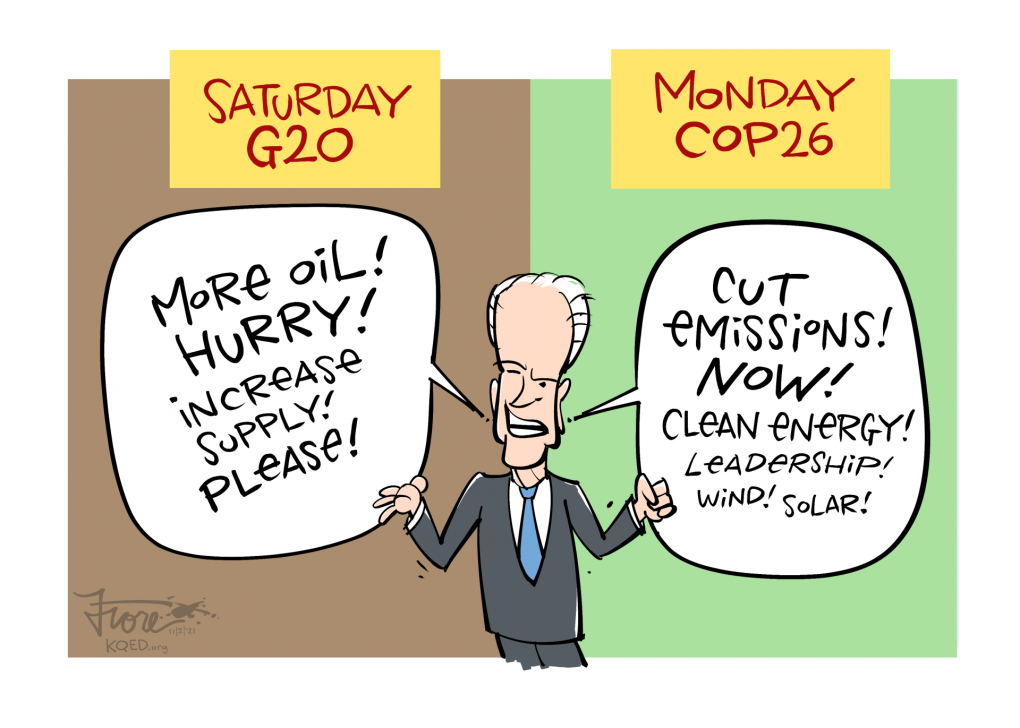
"altTag": "Cartoon: President Biden, at the G20 on Saturday, says, \"more oil! Hurry! Increase supply! Please!\" and at COP26 on Monday says, \"cut emissions now! Clean energy! Leadership!\"",
"isLoading": false,
"fetchFailed": false
},
"news_11894760": {
"type": "attachments",
"id": "news_11894760",
"meta": {
"index": "attachments_1716263798",
"site": "news",
"id": "11894760",
"found": true
},
"parent": 11894759,
"imgSizes": {
"twentyfourteen-full-width": {
"file": "https://ww2.kqed.org/app/uploads/sites/10/2021/11/ap21118034576950-00fbee95f2cc30a233a9d3f5752c90b9a3ff1a7c-1038x576.jpg",
"width": 1038,
"mimeType": "image/jpeg",
"height": 576
},
"thumbnail": {
"file": "https://ww2.kqed.org/app/uploads/sites/10/2021/11/ap21118034576950-00fbee95f2cc30a233a9d3f5752c90b9a3ff1a7c-160x120.jpg",
"width": 160,
"mimeType": "image/jpeg",
"height": 120
},
"post-thumbnail": {
"file": "https://ww2.kqed.org/app/uploads/sites/10/2021/11/ap21118034576950-00fbee95f2cc30a233a9d3f5752c90b9a3ff1a7c-672x372.jpg",
"width": 672,
"mimeType": "image/jpeg",
"height": 372
},
"kqedFullSize": {
"file": "https://ww2.kqed.org/app/uploads/sites/10/2021/11/ap21118034576950-00fbee95f2cc30a233a9d3f5752c90b9a3ff1a7c.jpg",
"width": 1044,
"height": 783
},
"large": {
"file": "https://ww2.kqed.org/app/uploads/sites/10/2021/11/ap21118034576950-00fbee95f2cc30a233a9d3f5752c90b9a3ff1a7c-1020x765.jpg",
"width": 1020,
"mimeType": "image/jpeg",
"height": 765
},
"medium": {
"file": "https://ww2.kqed.org/app/uploads/sites/10/2021/11/ap21118034576950-00fbee95f2cc30a233a9d3f5752c90b9a3ff1a7c-800x600.jpg",
"width": 800,
"mimeType": "image/jpeg",
"height": 600
}
},
"publishDate": 1635880835,
"modified": 1635891417,
"caption": "The Trans-Alaska Pipeline and pump station north of Fairbanks, Alaska. Congressional Democrats are moving to reinstate regulations designed to limit potent greenhouse gas emissions from oil and gas fields. It's part of a broader effort by the Biden administration to combat climate change.",
"description": "The Trans-Alaska pipeline and pump station north of Fairbanks, Alaska. Congressional Democrats are moving to reinstate regulations designed to limit potent greenhouse gas emissions from oil and gas fields. It's part of a broader effort by the Biden administration to combat climate change.",
"title": "The Biden administration is announcing new and proposed regulations to limit climate-warming methane emissions from oil and gas operations and pipelines. This undated file photo shows the Trans-Alaska pipeline and pump station north of Fairbanks.",
"credit": "Al Grillo/AP",
"status": "inherit",
"altTag": "A long metal pipeline stretching across a grassy field with an industrial plant in the background.",
"isLoading": false,
"fetchFailed": false
},
"news_11894560": {
"type": "attachments",
"id": "news_11894560",
"meta": {
"index": "attachments_1716263798",
"site": "news",
"id": "11894560",
"found": true
},
"parent": 11894538,
"imgSizes": {
"twentyfourteen-full-width": {
"file": "https://ww2.kqed.org/app/uploads/sites/10/2021/11/GettyImages-1236276766-1038x576.jpg",
"width": 1038,
"mimeType": "image/jpeg",
"height": 576
},
"thumbnail": {
"file": "https://ww2.kqed.org/app/uploads/sites/10/2021/11/GettyImages-1236276766-160x107.jpg",
"width": 160,
"mimeType": "image/jpeg",
"height": 107
},
"post-thumbnail": {
"file": "https://ww2.kqed.org/app/uploads/sites/10/2021/11/GettyImages-1236276766-672x372.jpg",
"width": 672,
"mimeType": "image/jpeg",
"height": 372
},
"kqedFullSize": {
"file": "https://ww2.kqed.org/app/uploads/sites/10/2021/11/GettyImages-1236276766.jpg",
"width": 1920,
"height": 1278
},
"large": {
"file": "https://ww2.kqed.org/app/uploads/sites/10/2021/11/GettyImages-1236276766-1020x679.jpg",
"width": 1020,
"mimeType": "image/jpeg",
"height": 679
},
"1536x1536": {
"file": "https://ww2.kqed.org/app/uploads/sites/10/2021/11/GettyImages-1236276766-1536x1022.jpg",
"width": 1536,
"mimeType": "image/jpeg",
"height": 1022
},
"medium": {
"file": "https://ww2.kqed.org/app/uploads/sites/10/2021/11/GettyImages-1236276766-800x533.jpg",
"width": 800,
"mimeType": "image/jpeg",
"height": 533
}
},
"publishDate": 1635796738,
"modified": 1635812574,
"caption": "U.S. President Joe Biden presents his national statement during day two of COP26 on Nov. 1, 2021, in Glasgow, United Kingdom. 2021 sees the 26th United Nations Climate Change Conference.",
"description": null,
"title": "COP26 Summit - Day Two",
"credit": "Andy Buchanan/Pool/Getty Images",
"status": "inherit",
"altTag": "U.S. President Joe Biden, wearing a suit, stands behind a lectern before a blue, wall-size projection saying in white letters, \"United Nations Climate Change.\"",
"isLoading": false,
"fetchFailed": false
},
"news_11891955": {
"type": "attachments",
"id": "news_11891955",
"meta": {
"index": "attachments_1716263798",
"site": "news",
"id": "11891955",
"found": true
},
"parent": 11891751,
"imgSizes": {
"twentyfourteen-full-width": {
"file": "https://ww2.kqed.org/app/uploads/sites/10/2021/10/Indigenous_ppl_day01-1038x576.jpg",
"width": 1038,
"mimeType": "image/jpeg",
"height": 576
},
"thumbnail": {
"file": "https://ww2.kqed.org/app/uploads/sites/10/2021/10/Indigenous_ppl_day01-160x107.jpg",
"width": 160,
"mimeType": "image/jpeg",
"height": 107
},
"post-thumbnail": {
"file": "https://ww2.kqed.org/app/uploads/sites/10/2021/10/Indigenous_ppl_day01-672x372.jpg",
"width": 672,
"mimeType": "image/jpeg",
"height": 372
},
"kqedFullSize": {
"file": "https://ww2.kqed.org/app/uploads/sites/10/2021/10/Indigenous_ppl_day01.jpg",
"width": 1920,
"height": 1278
},
"large": {
"file": "https://ww2.kqed.org/app/uploads/sites/10/2021/10/Indigenous_ppl_day01-1020x679.jpg",
"width": 1020,
"mimeType": "image/jpeg",
"height": 679
},
"1536x1536": {
"file": "https://ww2.kqed.org/app/uploads/sites/10/2021/10/Indigenous_ppl_day01-1536x1022.jpg",
"width": 1536,
"mimeType": "image/jpeg",
"height": 1022
},
"medium": {
"file": "https://ww2.kqed.org/app/uploads/sites/10/2021/10/Indigenous_ppl_day01-800x533.jpg",
"width": 800,
"mimeType": "image/jpeg",
"height": 533
}
},
"publishDate": 1633999073,
"modified": 1634063048,
"caption": "The Teokalli Aztec Dancers perform during the 3rd annual Indigenous Peoples Day commemoration at Yerba Buena Gardens in San Francisco on Oct. 11, 2021.",
"description": null,
"title": "Indigenous_ppl_day01",
"credit": "Beth LaBerge/KQED",
"status": "inherit",
"altTag": "A close-up of hands holding a tubular wooden instrument and a drumstick, with an elaborate headdress in the background.",
"isLoading": false,
"fetchFailed": false
},
"news_11891757": {
"type": "attachments",
"id": "news_11891757",
"meta": {
"index": "attachments_1716263798",
"site": "news",
"id": "11891757",
"found": true
},
"title": "Decision To Mark Columbus Day In L.A. County As Indigenous Peoples Day Starting In 2019 Is Celebrated By Native American Activists",
"publishDate": 1633893058,
"status": "inherit",
"parent": 11891751,
"modified": 1745610756,
"caption": "Dancers from Anahuacalmecac International University Preparatory of North America prepare to dance on Hollywood Boulevard during an event celebrating Indigenous Peoples Day, Oct. 8, 2017, in the Hollywood section of Los Angeles, California. ",
"credit": "David McNew/Getty Images",
"altTag": "A person wearing a T-shirt saying \"You Are on Indian Land\" and wearing two long braids with white ribbons stands amid a crowd.",
"description": null,
"imgSizes": {
"medium": {
"file": "https://cdn.kqed.org/wp-content/uploads/sites/10/2021/10/1920_GettyImages-859129098-800x450.jpg",
"width": 800,
"height": 450,
"mimeType": "image/jpeg"
},
"large": {
"file": "https://cdn.kqed.org/wp-content/uploads/sites/10/2021/10/1920_GettyImages-859129098-1020x574.jpg",
"width": 1020,
"height": 574,
"mimeType": "image/jpeg"
},
"thumbnail": {
"file": "https://cdn.kqed.org/wp-content/uploads/sites/10/2021/10/1920_GettyImages-859129098-160x90.jpg",
"width": 160,
"height": 90,
"mimeType": "image/jpeg"
},
"1536x1536": {
"file": "https://cdn.kqed.org/wp-content/uploads/sites/10/2021/10/1920_GettyImages-859129098-1536x864.jpg",
"width": 1536,
"height": 864,
"mimeType": "image/jpeg"
},
"2048x2048": {
"file": "https://cdn.kqed.org/wp-content/uploads/sites/10/2021/10/1920_GettyImages-859129098-2048x1152.jpg",
"width": 2048,
"height": 1152,
"mimeType": "image/jpeg"
},
"post-thumbnail": {
"file": "https://cdn.kqed.org/wp-content/uploads/sites/10/2021/10/1920_GettyImages-859129098-672x372.jpg",
"width": 672,
"height": 372,
"mimeType": "image/jpeg"
},
"twentyfourteen-full-width": {
"file": "https://cdn.kqed.org/wp-content/uploads/sites/10/2021/10/1920_GettyImages-859129098-1038x576.jpg",
"width": 1038,
"height": 576,
"mimeType": "image/jpeg"
},
"full-width": {
"file": "https://cdn.kqed.org/wp-content/uploads/sites/10/2021/10/1920_GettyImages-859129098-1920x1080.jpg",
"width": 1920,
"height": 1080,
"mimeType": "image/jpeg"
},
"kqedFullSize": {
"file": "https://cdn.kqed.org/wp-content/uploads/sites/10/2021/10/1920_GettyImages-859129098-scaled-e1745610765619.jpg",
"width": 2000,
"height": 1125
}
},
"isLoading": false,
"fetchFailed": false
},
"news_11890810": {
"type": "attachments",
"id": "news_11890810",
"meta": {
"index": "attachments_1716263798",
"site": "news",
"id": "11890810",
"found": true
},
"parent": 11890687,
"imgSizes": {
"twentyfourteen-full-width": {
"file": "https://ww2.kqed.org/app/uploads/sites/10/2021/10/GettyImages-1209110423-2-1038x576.jpg",
"width": 1038,
"mimeType": "image/jpeg",
"height": 576
},
"thumbnail": {
"file": "https://ww2.kqed.org/app/uploads/sites/10/2021/10/GettyImages-1209110423-2-160x107.jpg",
"width": 160,
"mimeType": "image/jpeg",
"height": 107
},
"post-thumbnail": {
"file": "https://ww2.kqed.org/app/uploads/sites/10/2021/10/GettyImages-1209110423-2-672x372.jpg",
"width": 672,
"mimeType": "image/jpeg",
"height": 372
},
"kqedFullSize": {
"file": "https://ww2.kqed.org/app/uploads/sites/10/2021/10/GettyImages-1209110423-2.jpg",
"width": 1920,
"height": 1281
},
"large": {
"file": "https://ww2.kqed.org/app/uploads/sites/10/2021/10/GettyImages-1209110423-2-1020x681.jpg",
"width": 1020,
"mimeType": "image/jpeg",
"height": 681
},
"1536x1536": {
"file": "https://ww2.kqed.org/app/uploads/sites/10/2021/10/GettyImages-1209110423-2-1536x1025.jpg",
"width": 1536,
"mimeType": "image/jpeg",
"height": 1025
},
"medium": {
"file": "https://ww2.kqed.org/app/uploads/sites/10/2021/10/GettyImages-1209110423-2-800x534.jpg",
"width": 800,
"mimeType": "image/jpeg",
"height": 534
}
},
"publishDate": 1633128647,
"modified": 1633134032,
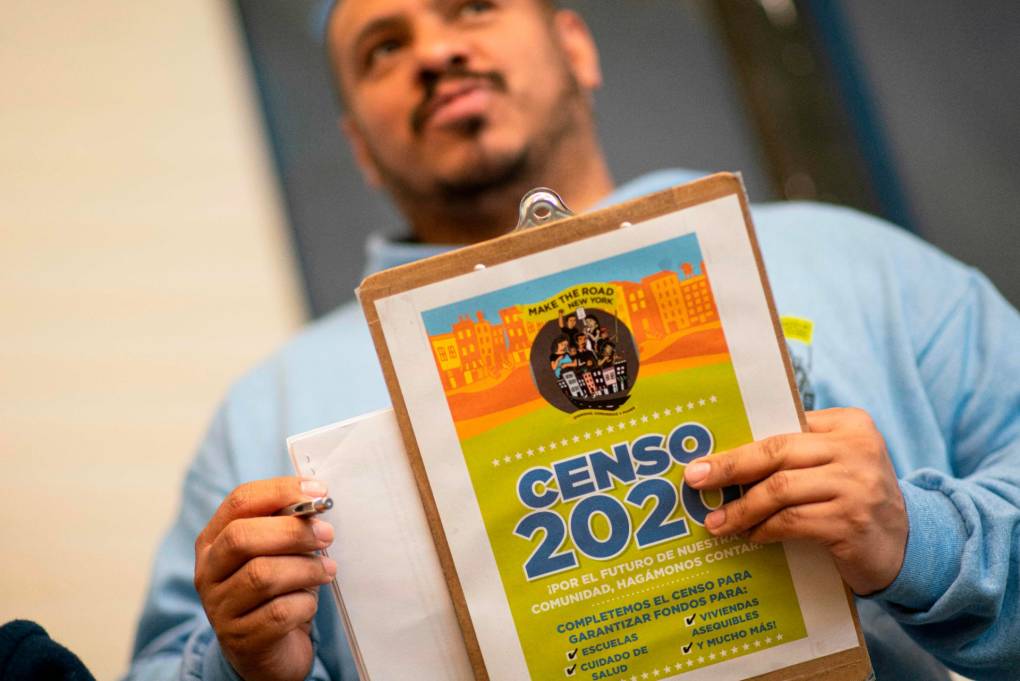
"caption": "Douglas Carrasquell of the organization Make the Road New York holds documents as he attends a training meeting about the national census on March 13, 2020, in Queens, New York City. ",
"description": "Douglas Carrasquell of the organization Make the Road New York holds documents as he attends a training meeting about National Census in Queens on March 13, 2020 in New York City. ",
"title": "GettyImages-1209110423 (2)",
"credit": "Photo by Kena Betancur/AFP via Getty Images",
"status": "inherit",
"altTag": "A man in a light blue hoodie holds a clipboard with U.S. census information in Spanish on it.",
"isLoading": false,
"fetchFailed": false
},
"news_11890060": {
"type": "attachments",
"id": "news_11890060",
"meta": {
"index": "attachments_1716263798",
"site": "news",
"id": "11890060",
"found": true
},
"title": "US-POLITICS-IMMIGRATION-COURT",
"publishDate": 1632779004,
"status": "inherit",
"parent": 11890039,
"modified": 1779125894,
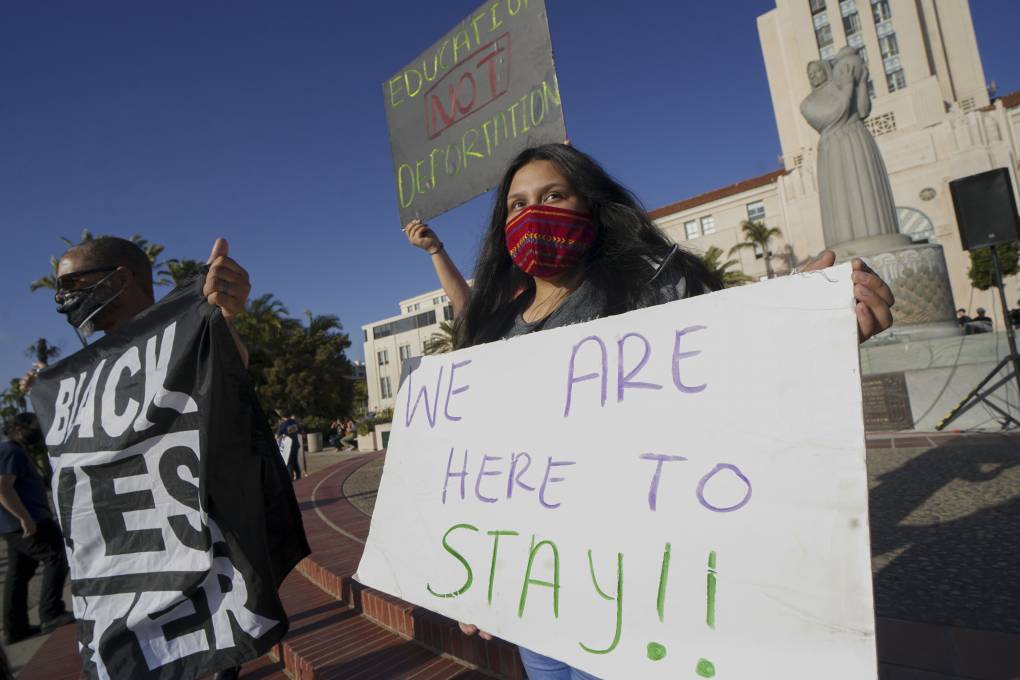
"caption": "People hold signs during a rally in support of the Supreme Court's ruling in favor of the Deferred Action for Childhood Arrivals (DACA) program in San Diego, California, June 18, 2020.",
"credit": "Sandy Huffaker/AFP via Getty Images",
"altTag": "Protesters hold signs saying, \"We are here to stay!\" \"Black Lives Matter\" and \"Education, Not Deportation.\"",
"description": "People hold signs during a rally in support of the Supreme Court's ruling in favor of the Deferred Action for Childhood Arrivals (DACA) program, in San Diego, California June 18, 2020.",
"imgSizes": {
"medium": {
"file": "https://cdn.kqed.org/wp-content/uploads/sites/10/2021/09/GettyImages-1221069312-800x534.jpg",
"width": 800,
"height": 534,
"mimeType": "image/jpeg"
},
"large": {
"file": "https://cdn.kqed.org/wp-content/uploads/sites/10/2021/09/GettyImages-1221069312-1020x680.jpg",
"width": 1020,
"height": 680,
"mimeType": "image/jpeg"
},
"thumbnail": {
"file": "https://cdn.kqed.org/wp-content/uploads/sites/10/2021/09/GettyImages-1221069312-160x107.jpg",
"width": 160,
"height": 107,
"mimeType": "image/jpeg"
},
"1536x1536": {
"file": "https://cdn.kqed.org/wp-content/uploads/sites/10/2021/09/GettyImages-1221069312-1536x1025.jpg",
"width": 1536,
"height": 1025,
"mimeType": "image/jpeg"
},
"2048x2048": {
"file": "https://cdn.kqed.org/wp-content/uploads/sites/10/2021/09/GettyImages-1221069312-2048x1366.jpg",
"width": 2048,
"height": 1366,
"mimeType": "image/jpeg"
},
"post-thumbnail": {
"file": "https://cdn.kqed.org/wp-content/uploads/sites/10/2021/09/GettyImages-1221069312-672x372.jpg",
"width": 672,
"height": 372,
"mimeType": "image/jpeg"
},
"twentyfourteen-full-width": {
"file": "https://cdn.kqed.org/wp-content/uploads/sites/10/2021/09/GettyImages-1221069312-1038x576.jpg",
"width": 1038,
"height": 576,
"mimeType": "image/jpeg"
},
"full-width": {
"file": "https://cdn.kqed.org/wp-content/uploads/sites/10/2021/09/GettyImages-1221069312-1920x1281.jpg",
"width": 1920,
"height": 1281,
"mimeType": "image/jpeg"
},
"kqedFullSize": {
"file": "https://cdn.kqed.org/wp-content/uploads/sites/10/2021/09/GettyImages-1221069312-scaled-e1740595603543.jpg",
"width": 2000,
"height": 1334
}
},
"isLoading": false,
"fetchFailed": false
},
"news_11889338": {
"type": "attachments",
"id": "news_11889338",
"meta": {
"index": "attachments_1716263798",
"site": "news",
"id": "11889338",
"found": true
},
"parent": 11889336,
"imgSizes": {
"twentyfourteen-full-width": {
"file": "https://ww2.kqed.org/app/uploads/sites/10/2021/09/RS50579_002_SanFrancisco_HeatWaveImpacts_08062021-qut-1-1038x576.jpg",
"width": 1038,
"mimeType": "image/jpeg",
"height": 576
},
"thumbnail": {
"file": "https://ww2.kqed.org/app/uploads/sites/10/2021/09/RS50579_002_SanFrancisco_HeatWaveImpacts_08062021-qut-1-160x107.jpg",
"width": 160,
"mimeType": "image/jpeg",
"height": 107
},
"post-thumbnail": {
"file": "https://ww2.kqed.org/app/uploads/sites/10/2021/09/RS50579_002_SanFrancisco_HeatWaveImpacts_08062021-qut-1-672x372.jpg",
"width": 672,
"mimeType": "image/jpeg",
"height": 372
},
"kqedFullSize": {
"file": "https://ww2.kqed.org/app/uploads/sites/10/2021/09/RS50579_002_SanFrancisco_HeatWaveImpacts_08062021-qut-1.jpg",
"width": 1920,
"height": 1280
},
"large": {
"file": "https://ww2.kqed.org/app/uploads/sites/10/2021/09/RS50579_002_SanFrancisco_HeatWaveImpacts_08062021-qut-1-1020x680.jpg",
"width": 1020,
"mimeType": "image/jpeg",
"height": 680
},
"1536x1536": {
"file": "https://ww2.kqed.org/app/uploads/sites/10/2021/09/RS50579_002_SanFrancisco_HeatWaveImpacts_08062021-qut-1-1536x1024.jpg",
"width": 1536,
"mimeType": "image/jpeg",
"height": 1024
},
"medium": {
"file": "https://ww2.kqed.org/app/uploads/sites/10/2021/09/RS50579_002_SanFrancisco_HeatWaveImpacts_08062021-qut-1-800x533.jpg",
"width": 800,
"mimeType": "image/jpeg",
"height": 533
}
},
"publishDate": 1632270705,
"modified": 1632334684,
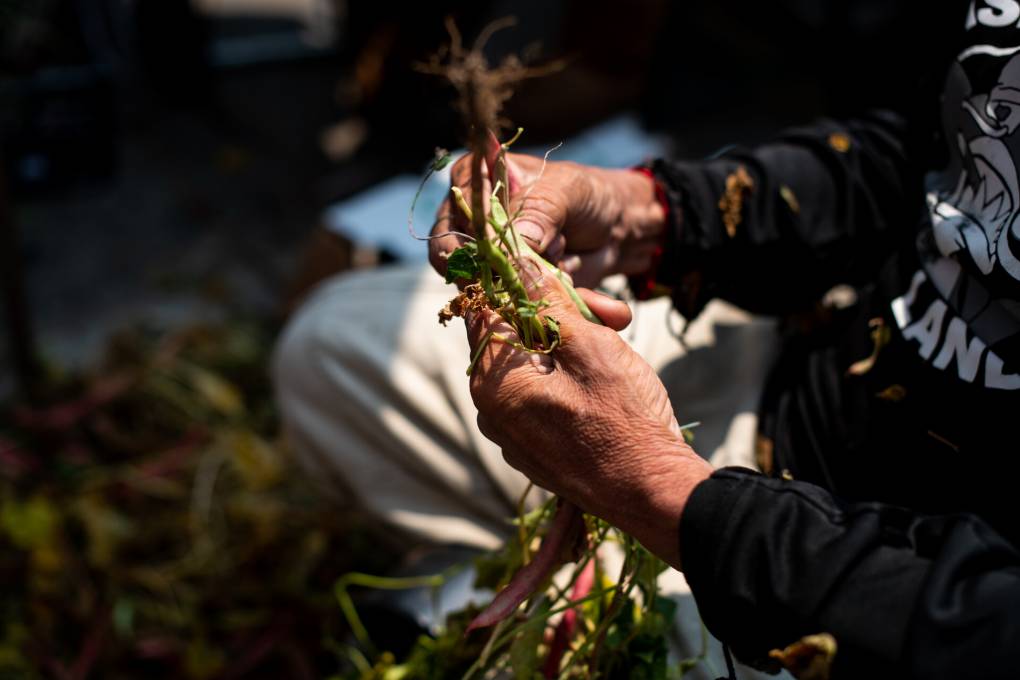
"caption": "A vendor removes beans from their pod while sitting under a tarp to protect them from the sun in San Francisco's Mission District on Aug. 6, 2021.",
"description": "A vendor removes beans from their pod while sitting under a tarp to protect from the sun in San Francisco's Mission District on August 6, 2021.",
"title": "RS50579_002_SanFrancisco_HeatWaveImpacts_08062021-qut (1)",
"credit": "Beth LaBerge/KQED",
"status": "inherit",
"altTag": "A close-up of a pair of hands shelling a bean.",
"isLoading": false,
"fetchFailed": false
},
"news_11889242": {
"type": "attachments",
"id": "news_11889242",
"meta": {
"index": "attachments_1716263798",
"site": "news",
"id": "11889242",
"found": true
},
"parent": 11889227,
"imgSizes": {
"twentyfourteen-full-width": {
"file": "https://ww2.kqed.org/app/uploads/sites/10/2021/09/GettyImages-1234488722-1038x576.jpg",
"width": 1038,
"mimeType": "image/jpeg",
"height": 576
},
"thumbnail": {
"file": "https://ww2.kqed.org/app/uploads/sites/10/2021/09/GettyImages-1234488722-160x107.jpg",
"width": 160,
"mimeType": "image/jpeg",
"height": 107
},
"post-thumbnail": {
"file": "https://ww2.kqed.org/app/uploads/sites/10/2021/09/GettyImages-1234488722-672x372.jpg",
"width": 672,
"mimeType": "image/jpeg",
"height": 372
},
"kqedFullSize": {
"file": "https://ww2.kqed.org/app/uploads/sites/10/2021/09/GettyImages-1234488722-scaled.jpg",
"width": 2560,
"height": 1707
},
"2048x2048": {
"file": "https://ww2.kqed.org/app/uploads/sites/10/2021/09/GettyImages-1234488722-2048x1365.jpg",
"width": 2048,
"mimeType": "image/jpeg",
"height": 1365
},
"large": {
"file": "https://ww2.kqed.org/app/uploads/sites/10/2021/09/GettyImages-1234488722-1020x680.jpg",
"width": 1020,
"mimeType": "image/jpeg",
"height": 680
},
"1536x1536": {
"file": "https://ww2.kqed.org/app/uploads/sites/10/2021/09/GettyImages-1234488722-1536x1024.jpg",
"width": 1536,
"mimeType": "image/jpeg",
"height": 1024
},
"full-width": {
"file": "https://ww2.kqed.org/app/uploads/sites/10/2021/09/GettyImages-1234488722-1920x1280.jpg",
"width": 1920,
"mimeType": "image/jpeg",
"height": 1280
},
"medium": {
"file": "https://ww2.kqed.org/app/uploads/sites/10/2021/09/GettyImages-1234488722-800x533.jpg",
"width": 800,
"mimeType": "image/jpeg",
"height": 533
}
},
"publishDate": 1632246656,
"modified": 1632264213,
"caption": "A fire department paramedic administers a dose of the Johnson & Johnson COVID-19 vaccine at a vaccination clinic on Aug. 5, 2021, in Culver City, California.",
"description": "A Culver City Fire Department paramedic administers a dose of the Johnson and Johnson Janssen Covid-19 vaccine at a vaccination clinic on August 5, 2021, in Culver City, California.",
"title": "US-HEALTH-VIRUS-VACCINES",
"credit": "Patrick T. Fallon/AFP via Getty Images",
"status": "inherit",
"altTag": "A paramedic wearing a purple glove administers the vaccine to the left arm of a seated person.",
"isLoading": false,
"fetchFailed": false
},
"news_11888834": {
"type": "attachments",
"id": "news_11888834",
"meta": {
"index": "attachments_1716263798",
"site": "news",
"id": "11888834",
"found": true
},
"parent": 11888827,
"imgSizes": {
"twentyfourteen-full-width": {
"file": "https://ww2.kqed.org/app/uploads/sites/10/2021/09/Ed-Source-Video-Call-2-1000x576.jpg",
"width": 1000,
"mimeType": "image/jpeg",
"height": 576
},
"thumbnail": {
"file": "https://ww2.kqed.org/app/uploads/sites/10/2021/09/Ed-Source-Video-Call-2-160x107.jpg",
"width": 160,
"mimeType": "image/jpeg",
"height": 107
},
"post-thumbnail": {
"file": "https://ww2.kqed.org/app/uploads/sites/10/2021/09/Ed-Source-Video-Call-2-672x372.jpg",
"width": 672,
"mimeType": "image/jpeg",
"height": 372
},
"kqedFullSize": {
"file": "https://ww2.kqed.org/app/uploads/sites/10/2021/09/Ed-Source-Video-Call-2.jpg",
"width": 1000,
"height": 667
},
"medium": {
"file": "https://ww2.kqed.org/app/uploads/sites/10/2021/09/Ed-Source-Video-Call-2-800x534.jpg",
"width": 800,
"mimeType": "image/jpeg",
"height": 534
}
},
"publishDate": 1631813848,
"modified": 1631915656,
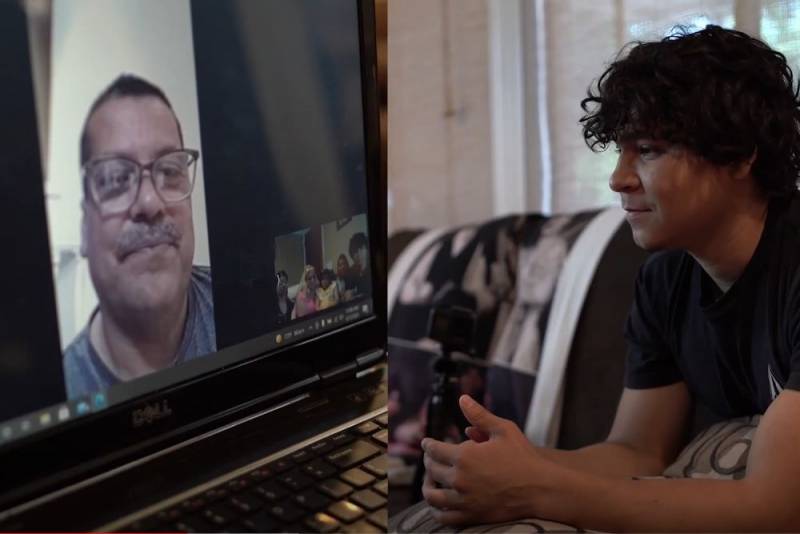
"caption": "José Luis Ruiz Arévalos videocalls his family in Los Banos from Hermosillo, Sonora. In May 2019, Ruiz Arévalos travelled to Mexico for what he thought would be the final step to apply for his green card: an interview at the U.S. Consulate. But he was unexpectedly refused a green card when U.S. Consulate officials decided that under Trump administration guidance he was likely to become a “public charge,” dependent on government services. Unable to return to the U.S., he remains in Hermosillo, Sonora, a thousand miles from his family, while he tries to appeal the decision.",
"description": "José Luis Ruiz Arévalos videocalls his family in Los Banos from Hermosillo, Sonora. In May 2019, Ruiz Arévalos travelled to Mexico for what he thought would be the final step to apply for his green card: an interview at the U.S. Consulate. But he was unexpectedly refused a green card when U.S. Consulate officials decided that under Trump administration guidance he was likely to become a “public charge,” dependent on government services. Unable to return to the U.S., he remains in Hermosillo, Sonora, a thousand miles from his family, while he tries to appeal the decision.",
"title": "Ed Source Video Call-2",
"credit": "Jennifer Molina/EdSource",
"status": "inherit",
"altTag": "A teenage boy with floppy hair videocalls his father on a flat-screen TV in a living room.",
"isLoading": false,
"fetchFailed": false
},
"news_11888806": {
"type": "attachments",
"id": "news_11888806",
"meta": {
"index": "attachments_1716263798",
"site": "news",
"id": "11888806",
"found": true
},
"title": "Father And Son From Honduras Seeking Asylum In The U.S. Await The Court's Decision On Their Status",
"publishDate": 1631785462,
"status": "inherit",
"parent": 11888754,
"modified": 1749678492,
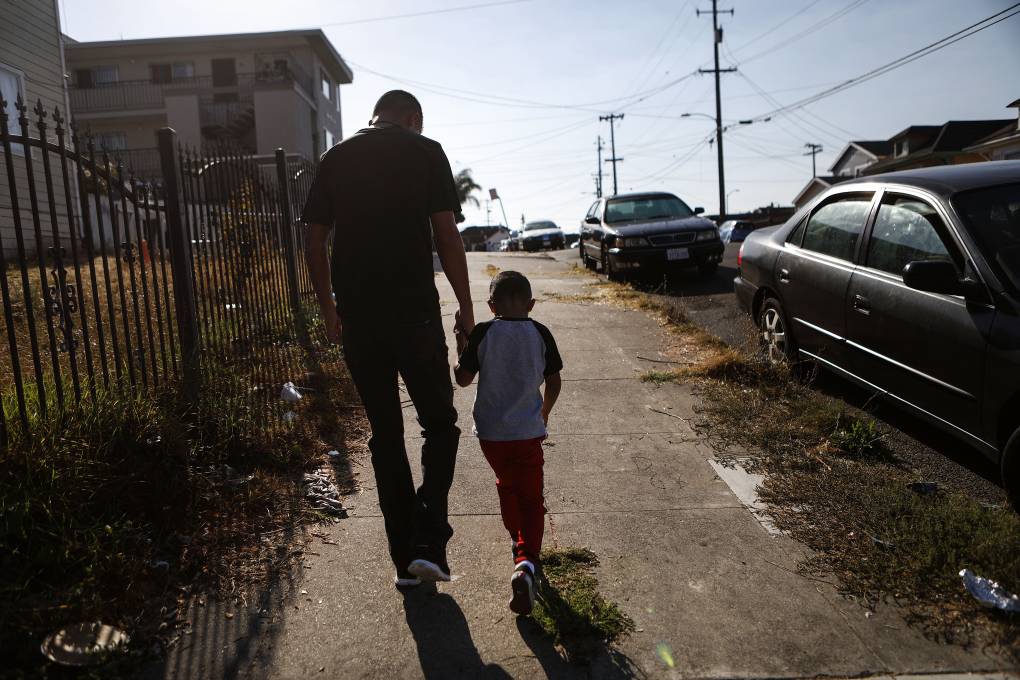
"caption": "A Honduran father and his 6-year-old son walk to Sunday Mass on Sept. 9, 2018, in Oakland, California. They were one of almost 2,600 families separated due to the Trump administration's \"zero tolerance\" immigration policy. ",
"credit": "Mario Tama/Getty Images",
"altTag": "A man and young boy hold hands as they walk in silhouette on an urban sidewalk in early morning sun.",
"description": "Honduran father Juan and his six-year-old son Anthony walk on their way to attend Sunday Mass on September 9, 2018 in Oakland, California. They fled their country, leaving many family members behind, and crossed the U.S. border in April at a lawful port of entry in Brownsville, Texas seeking asylum. They were soon separated and spent the next 85 days apart in detention. Juan was sent to Tulsa, Oklahoma, while his son was sent to a detention shelter New York. They were one of almost 2,600 families separated due to the Trump administration's \"zero tolerance\" immigration policy. Juan said it took six weeks from the time of separation until he was able to make a phone call to his son. They were finally reunited in July 2018.",
"imgSizes": {
"medium": {
"file": "https://cdn.kqed.org/wp-content/uploads/sites/10/2021/09/GettyImages-1031228044-800x533.jpg",
"width": 800,
"height": 533,
"mimeType": "image/jpeg"
},
"large": {
"file": "https://cdn.kqed.org/wp-content/uploads/sites/10/2021/09/GettyImages-1031228044-1020x680.jpg",
"width": 1020,
"height": 680,
"mimeType": "image/jpeg"
},
"thumbnail": {
"file": "https://cdn.kqed.org/wp-content/uploads/sites/10/2021/09/GettyImages-1031228044-160x107.jpg",
"width": 160,
"height": 107,
"mimeType": "image/jpeg"
},
"1536x1536": {
"file": "https://cdn.kqed.org/wp-content/uploads/sites/10/2021/09/GettyImages-1031228044-1536x1024.jpg",
"width": 1536,
"height": 1024,
"mimeType": "image/jpeg"
},
"2048x2048": {
"file": "https://cdn.kqed.org/wp-content/uploads/sites/10/2021/09/GettyImages-1031228044-2048x1365.jpg",
"width": 2048,
"height": 1365,
"mimeType": "image/jpeg"
},
"post-thumbnail": {
"file": "https://cdn.kqed.org/wp-content/uploads/sites/10/2021/09/GettyImages-1031228044-672x372.jpg",
"width": 672,
"height": 372,
"mimeType": "image/jpeg"
},
"twentyfourteen-full-width": {
"file": "https://cdn.kqed.org/wp-content/uploads/sites/10/2021/09/GettyImages-1031228044-1038x576.jpg",
"width": 1038,
"height": 576,
"mimeType": "image/jpeg"
},
"full-width": {
"file": "https://cdn.kqed.org/wp-content/uploads/sites/10/2021/09/GettyImages-1031228044-1920x1280.jpg",
"width": 1920,
"height": 1280,
"mimeType": "image/jpeg"
},
"kqedFullSize": {
"file": "https://cdn.kqed.org/wp-content/uploads/sites/10/2021/09/GettyImages-1031228044-scaled-e1776901494677.jpg",
"width": 2000,
"height": 1334
}
},
"isLoading": false,
"fetchFailed": false
}
},
"audioPlayerReducer": {
"postId": "stream_live",
"isPaused": true,
"isPlaying": false,
"pfsActive": false,
"pledgeModalIsOpen": true,
"playerDrawerIsOpen": false,
"liveAudioPlayStartedAt": 0,
"liveAudioPlayContext": ""
},
"authorsReducer": {
"byline_news_11897075": {
"type": "authors",
"id": "byline_news_11897075",
"meta": {
"override": true
},
"slug": "byline_news_11897075",
"name": "Lisa Mascaro",
"isLoading": false
},
"byline_news_11894759": {
"type": "authors",
"id": "byline_news_11894759",
"meta": {
"override": true
},
"slug": "byline_news_11894759",
"name": "Jeff Brady",
"isLoading": false
},
"byline_news_11894538": {
"type": "authors",
"id": "byline_news_11894538",
"meta": {
"override": true
},
"slug": "byline_news_11894538",
"name": "Brian Naylor",
"isLoading": false
},
"byline_news_11890687": {
"type": "authors",
"id": "byline_news_11890687",
"meta": {
"override": true
},
"slug": "byline_news_11890687",
"name": "Hansi Lo Wang\u003cbr>NPR",
"isLoading": false
},
"byline_news_11890039": {
"type": "authors",
"id": "byline_news_11890039",
"meta": {
"override": true
},
"slug": "byline_news_11890039",
"name": "Elliot Spagat, Mark Sherman \u003cbr> The Associated Press",
"isLoading": false
},
"byline_news_11889336": {
"type": "authors",
"id": "byline_news_11889336",
"meta": {
"override": true
},
"slug": "byline_news_11889336",
"name": "Julia Shipley, Brian Edwards, David Nickerson",
"isLoading": false
},
"byline_news_11889227": {
"type": "authors",
"id": "byline_news_11889227",
"meta": {
"override": true
},
"slug": "byline_news_11889227",
"name": "\u003ca href=\"https://www.npr.org/people/930959243/jaclyn-diaz\">Jaclyn Diaz\u003c/a>",
"isLoading": false
},
"byline_news_11888827": {
"type": "authors",
"id": "byline_news_11888827",
"meta": {
"override": true
},
"slug": "byline_news_11888827",
"name": "\u003ca href=\"https://edsource.org/author/zstavely\">Zaidee Stavely\u003c/a>",
"isLoading": false
},
"byline_news_11888754": {
"type": "authors",
"id": "byline_news_11888754",
"meta": {
"override": true
},
"slug": "byline_news_11888754",
"name": "Ben Fox \u003cbr> The Associated Press",
"isLoading": false
},
"kqednewsstaffandwires": {
"type": "authors",
"id": "237",
"meta": {
"index": "authors_1716337520",
"id": "237",
"found": true
},
"name": "KQED News Staff and Wires",
"firstName": "KQED News Staff and Wires",
"lastName": null,
"slug": "kqednewsstaffandwires",
"email": "onlinenewsstaff@kqed.org",
"display_author_email": false,
"staff_mastheads": [],
"title": null,
"bio": null,
"avatar": "https://secure.gravatar.com/avatar/72295af8ebbfbd19a4948f5271285664?s=600&d=blank&r=g",
"twitter": null,
"facebook": null,
"instagram": null,
"linkedin": null,
"sites": [
{
"site": "arts",
"roles": [
"contributor"
]
},
{
"site": "news",
"roles": [
"contributor"
]
},
{
"site": "lowdown",
"roles": [
"author"
]
},
{
"site": "stateofhealth",
"roles": [
"contributor"
]
},
{
"site": "food",
"roles": [
"author"
]
}
],
"headData": {
"title": "KQED News Staff and Wires | KQED",
"description": null,
"ogImgSrc": "https://secure.gravatar.com/avatar/72295af8ebbfbd19a4948f5271285664?s=600&d=blank&r=g",
"twImgSrc": "https://secure.gravatar.com/avatar/72295af8ebbfbd19a4948f5271285664?s=600&d=blank&r=g"
},
"isLoading": false,
"link": "/author/kqednewsstaffandwires"
},
"markfiore": {
"type": "authors",
"id": "3236",
"meta": {
"index": "authors_1716337520",
"id": "3236",
"found": true
},
"name": "Mark Fiore",
"firstName": "Mark",
"lastName": "Fiore",
"slug": "markfiore",
"email": "mark@markfiore.com",
"display_author_email": false,
"staff_mastheads": [
"news"
],
"title": "KQED News Cartoonist",
"bio": "\u003ca href=\"http://www.MarkFiore.com\">MarkFiore.com\u003c/a> | \u003ca href=\"https://twitter.com/markfiore\">Follow on Twitter\u003c/a> | \u003ca href=\"https://www.facebook.com/pages/Mark-Fiore-Animated-Political-Cartoons/94451707396?ref=bookmarks\">Facebook\u003c/a> | \u003ca href=\"mailto:mark@markfiore.com\">email\u003c/a>\r\n\r\nPulitzer Prize-winner, Mark Fiore, who the Wall Street Journal has called “the undisputed guru of the form,” creates animated political cartoons in San Francisco, where his work has been featured regularly on the San Francisco Chronicle’s web site, SFGate.com. His work has appeared on Newsweek.com, Slate.com, CBSNews.com, MotherJones.com, DailyKos.com and NPR’s web site. Fiore’s political animation has appeared on CNN, Frontline, Bill Moyers Journal, Salon.com and cable and broadcast outlets across the globe.\r\n\r\nBeginning his professional life by drawing traditional political cartoons for newspapers, Fiore’s work appeared in publications ranging from the Washington Post to the Los Angeles Times. In the late 1990s, he began to experiment with animating political cartoons and, after a short stint at the San Jose Mercury News as their staff cartoonist, Fiore devoted all his energies to animation.\r\nGrowing up in California, Fiore also spent a good portion of his life in the backwoods of Idaho. It was this combination that shaped him politically. Mark majored in political science at Colorado College, where, in a perfect send-off for a cartoonist, he received his diploma in 1991 as commencement speaker Dick Cheney smiled approvingly.\r\nMark Fiore was awarded the Pulitzer Prize for political cartooning in 2010, a Robert F. Kennedy Journalism Award in 2004 and has twice received an Online Journalism Award for commentary from the Online News Association (2002, 2008). Fiore has received two awards for his work in new media from the National Cartoonists Society (2001, 2002), and in 2006 received The James Madison Freedom of Information Award from The Society of Professional Journalists.",
"avatar": "https://secure.gravatar.com/avatar/fc4e2a612b15b67bad0c6f0e1db4ca9b?s=600&d=blank&r=g",
"twitter": "MarkFiore",
"facebook": null,
"instagram": "https://www.instagram.com/markfiore/?hl=en",
"linkedin": null,
"sites": [
{
"site": "arts",
"roles": [
"contributor"
]
},
{
"site": "news",
"roles": [
"editor"
]
},
{
"site": "futureofyou",
"roles": [
"editor"
]
},
{
"site": "science",
"roles": [
"editor"
]
}
],
"headData": {
"title": "Mark Fiore | KQED",
"description": "KQED News Cartoonist",
"ogImgSrc": "https://secure.gravatar.com/avatar/fc4e2a612b15b67bad0c6f0e1db4ca9b?s=600&d=blank&r=g",
"twImgSrc": "https://secure.gravatar.com/avatar/fc4e2a612b15b67bad0c6f0e1db4ca9b?s=600&d=blank&r=g"
},
"isLoading": false,
"link": "/author/markfiore"
},
"lsarah": {
"type": "authors",
"id": "11626",
"meta": {
"index": "authors_1716337520",
"id": "11626",
"found": true
},
"name": "Lakshmi Sarah",
"firstName": "Lakshmi",
"lastName": "Sarah",
"slug": "lsarah",
"email": "lsarah@kqed.org",
"display_author_email": false,
"staff_mastheads": [],
"title": "Digital Producer",
"bio": "Lakshmi Sarah is an educator, author and journalist with a focus on innovative storytelling. She has worked with newspapers, radio and magazines from Ahmedabad, India to Los Angeles, California. She has written and produced for Die Zeit, Global Voices, AJ+, KQED, Fusion Media Group and the New York Times.",
"avatar": "https://secure.gravatar.com/avatar/652dcaecd8b28826fc17a8b2d6bb4e93?s=600&d=blank&r=g",
"twitter": "lakitalki",
"facebook": null,
"instagram": "https://www.instagram.com/laki.talki/",
"linkedin": "https://www.linkedin.com/in/lakisarah/",
"sites": [
{
"site": "arts",
"roles": []
},
{
"site": "news",
"roles": []
},
{
"site": "bayareabites",
"roles": []
},
{
"site": "science",
"roles": []
}
],
"headData": {
"title": "Lakshmi Sarah | KQED",
"description": "Digital Producer",
"ogImgSrc": "https://secure.gravatar.com/avatar/652dcaecd8b28826fc17a8b2d6bb4e93?s=600&d=blank&r=g",
"twImgSrc": "https://secure.gravatar.com/avatar/652dcaecd8b28826fc17a8b2d6bb4e93?s=600&d=blank&r=g"
},
"isLoading": false,
"link": "/author/lsarah"
}
},
"pagesReducer": {
"news_tag_joe-biden": {
"type": "terms",
"id": "news_717",
"meta": {
"index": "terms_1716263798",
"site": "news",
"id": "717",
"score": 9.105223
},
"featImg": null,
"name": "Joe Biden",
"description": null,
"taxonomy": "tag",
"headData": {
"twImgId": null,
"twTitle": null,
"ogTitle": null,
"ogImgId": null,
"twDescription": null,
"description": null,
"title": "Joe Biden Archives | KQED News",
"ogDescription": null
},
"ttid": 726,
"slug": "joe-biden",
"isLoading": false,
"title": "Joe Biden",
"pageMeta": {
"site": "news",
"WpPageTemplate": "page-topic-editorial",
"currentPage": 10
},
"blocks": [
{
"blockName": "kqed/post-list",
"attrs": {
"layout": "cardArticle2",
"query": "posts/news?tag=joe-biden",
"seeMore": false,
"paginated": true,
"page": 10
}
},
{
"blockName": "kqed/ad"
}
]
}
},
"pfsSessionReducer": {},
"postsReducer": {
"stream_live": {
"type": "live",
"id": "stream_live",
"audioUrl": "https://streams.kqed.org/kqedradio",
"title": "Live Stream",
"excerpt": "Live Stream information currently unavailable.",
"link": "/radio",
"featImg": "",
"label": {
"name": "KQED Live",
"link": "/"
}
},
"stream_kqedNewscast": {
"type": "posts",
"id": "stream_kqedNewscast",
"audioUrl": "https://www.kqed.org/.stream/anon/radio/RDnews/newscast.mp3?_=1",
"title": "KQED Newscast",
"featImg": "",
"label": {
"name": "88.5 FM",
"link": "/"
}
},
"news_11897075": {
"type": "posts",
"id": "news_11897075",
"meta": {
"index": "posts_1716263798",
"site": "news",
"id": "11897075",
"score": null,
"sort": [
1637531617000
]
},
"parent": 0,
"labelTerm": {},
"blocks": [],
"publishDate": 1637531617,
"format": "standard",
"disqusTitle": "As Biden’s Big Bill Advances, So Does Pelosi’s Big Legacy",
"title": "As Biden’s Big Bill Advances, So Does Pelosi’s Big Legacy",
"headTitle": "KQED News",
"content": "\u003cp>Deep into the grueling negotiations over President Joe Biden’s big \u003ca href=\"https://apnews.com/article/joe-biden-business-environment-congress-200439493877e4aac6b8672757bcb3ae\">domestic policy package\u003c/a>, when it seemed that bickering among Democrats would never stop, San Francisco's top Democrat, Speaker Nancy Pelosi, let everyone in on a little secret.\u003c/p>\n\u003cp>“This,” she confided quite publicly to reporters some time ago, “is the fun part.”\u003c/p>\n\u003cp>The grind of legislating, treacherous for some, a sport for others, and often unsuccessful in the slow-moving Congress, is where Pelosi resides, exerting relentless drive to advance Biden’s \u003ca href=\"https://apnews.com/article/climate-immigration-joe-biden-health-lifestyle-bff841da156cb12cd47a564f9e0267eb\">roughly $2 trillion package Friday \u003c/a>through the House, sending it now to the Senate.\u003c/p>\n\u003cp>The House vote, with just one Democrat opposed, boosts momentum for Biden’s signature legislation after months of start-stop negotiations and provides a down payment on the party’s campaign promise to deliver competency in government and put it to work for Americans.\u003c/p>\n\u003cp>And for Pelosi, who breezed into the House chamber early Friday to gavel the vote closed after a nearly all-night session, the outcome serves as a career milestone and further cements her legacy as not only the nation’s first woman speaker, but among its most powerful — one who is working to secure massive federal investments that Biden and others have compared to Franklin Roosevelt’s New Deal or Lyndon Johnson’s Great Society.\u003c/p>\n\u003cp>[ad fullwidth]\u003c/p>\n\u003cp>“Congratulations,” Biden told her in a phone call she took in the Gold Room off the House floor as the final tally rolled in.\u003c/p>\n\u003cp>Friday’s vote was never a sure thing. The final action in some ways snuck up on lawmakers after frenzied weeks of negotiations, several false starts and high-profile setbacks that delayed, and threatened to derail, the entire enterprise.\u003c/p>\n\u003cfigure id=\"attachment_11897081\" class=\"wp-caption alignnone\" style=\"max-width: 1920px\">\u003cimg class=\"size-full wp-image-11897081\" src=\"https://ww2.kqed.org/app/uploads/sites/10/2021/11/GettyImages-1354242362-1.jpg\" alt=\"Lawmakers clad in suits stand shoulder to shoulder behind a podium bearing the seal of the U.S. House of Representatives.\" width=\"1920\" height=\"1281\" srcset=\"https://ww2.kqed.org/app/uploads/sites/10/2021/11/GettyImages-1354242362-1.jpg 1920w, https://ww2.kqed.org/app/uploads/sites/10/2021/11/GettyImages-1354242362-1-800x534.jpg 800w, https://ww2.kqed.org/app/uploads/sites/10/2021/11/GettyImages-1354242362-1-1020x681.jpg 1020w, https://ww2.kqed.org/app/uploads/sites/10/2021/11/GettyImages-1354242362-1-160x107.jpg 160w, https://ww2.kqed.org/app/uploads/sites/10/2021/11/GettyImages-1354242362-1-1536x1025.jpg 1536w\" sizes=\"(max-width: 1920px) 100vw, 1920px\">\u003cfigcaption class=\"wp-caption-text\">Speaker of the House Nancy Pelosi (D-CA) (R) listens as House Ways and Means Committee Chairman Rep. Richard Neal (D-MA) speaks at a press conference after the House passed the Build Back Better Act at the U.S. Capitol on November 19, 2021 in Washington, DC. \u003ccite>(Anna Moneymaker/Getty Images)\u003c/cite>\u003c/figcaption>\u003c/figure>\n\u003cp>\u003ca href=\"https://www.kqed.org/news/11892232/at-kqed-pelosi-vows-to-pass-scaled-down-biden-agenda\">First, there was the difficult process of compiling the 2,135-page “Build Back Better Act,”\u003c/a> with its far-reaching proposals to expand government support to help families afford health care and child care and lower the price of prescription drugs, alongside new efforts to tackle climate change.\u003c/p>\n\u003cp>Then, facing a solid wall of Republican opposition, the Democrats had to decide if they could actually approve the bill on their own, engaging in multiple rounds of private meetings and public handwringing between centrist and progressive flanks.\u003c/p>\n\u003cp>Any step along the way could sideline a congressional leader, especially one without the political fortitude to push and pull lawmakers to fall in line. Her immediate predecessors, Paul Ryan and John Boehner, struggled to lead Republicans, and both retired and gave up the gavel.\u003c/p>\n\u003cp>Pelosi, who has represented San Francisco in Congress for more than 30 years, not only has the stomach for such gut-wrenching talks, she has has turned the perils of legislating into political opportunities, showcasing the party’s factions. “Diversity is our strength” is among her maxims.\u003c/p>\n\u003cp>And when she’s heard and seen enough, she stiffens the spine and pushes ahead, relying on the other Pelosi maxim — “Unity is our power” — to reach a resolution. Meeting privately with House leaders Monday evening, she signaled that it was time to move.[aside postID=\"news_11892232\" hero=\"https://ww2.kqed.org/app/uploads/sites/10/2021/10/RS51923_AM6_0329-qut-1020x680.jpg\"]\u003c/p>\n\u003cp>The House had already approved the\u003ca href=\"https://apnews.com/article/joe-biden-technology-business-broadband-internet-ad2c86ce1bc6e85322f2629d7a72732e\"> related $1 trillion infrastructure package\u003c/a>, a roads-bridges-and-broadband measure favored by centrist lawmakers after poor election showings in Virginia and New Jersey served as a wake-up call to Democrats. Now, according to Pelosi’s strategy, it was time to make good on the commitment for Biden’s broader vision preferred by the progressives.\u003c/p>\n\u003cp>All members of Congress representing the Bay Area voted in support of the Build Back Better Act, with East Bay Congresswoman Barbara Lee praising the bill's cap on child care costs at 7% of income for most families.\u003c/p>\n\u003cp>\"In my district and throughout the Bay Area, women want to get back into the workforce but child care is so expensive,\" Lee told KQED. The bill's hundreds of billions in dollars for the environment will also invest in the community, Lee said. \u003c/p>\n\u003cp>\"We're gonna reduce energy costs, and let me tell you, we're going to make good-paying jobs in the energy sector for young people, for formerly incarcerated people, putting solar panels on buildings and houses,\" Lee added. \"For the first time, we're going to be addressing for the first time, environmental justice, and making sure communities of color, low-income communities are cleaned up and don't have to deal with toxic dump sites.\"\u003c/p>\n\u003cp>Pelosi's successful balancing act is one that will touch many, her colleagues said.\u003c/p>\n\u003cp>“It was a long road because, you know, the sheer amount of impact we’re trying to have is enormous,” Rep. Andy Kim, D-N.J., said Friday.\u003c/p>\n\u003cp>“It’s always complicated, I mean, when you’ve got people representing every corner of this country, there’s always going to be complexity, but that’s the art of governing,” Kim said.\u003c/p>\n\u003cp>Pelosi has been here before. A decade ago, she led House Democrats to passage of the Affordable Care Act, a year-long effort that consumed the Congress at the start of Barack Obama’s first term and contributed to the party’s electoral wipeout in the 2010 midterm election.\u003c/p>\n\u003cp>Pelosi lost the speaker’s gavel after Republicans regained control of the House in 2011, and today’s Republicans are expecting a repeat in 2022 as they heap criticisms on Biden’s bill as big government overreach.\u003c/p>\n\u003cp>Republican Leader Kevin McCarthy, who is in line to become speaker if Democrats lose power next year, set the tone in an overnight speech full of vitriol and grievance against Biden, the Democrats and Pelosi in particular, as he chided her leadership and wished for her retirement.\u003c/p>\n\u003cp>If he sounded “angry,” McCarthy said, it’s because he was. His more than eight-hour speech set a new record, besting one set just a few years back by Pelosi. But his protest did not stop the vote.\u003c/p>\n\u003cp>Pelosi responded with one of the most politically biting strategies in her arsenal — she ignored him.\u003c/p>\n\u003cp>Early Friday morning, Pelosi paid almost no attention to McCarthy’s record-setting rant and delivered a sunny speech in stark contrast to his dark mood.[pullquote size=\"medium\" align=\"right\" citation=\"Barbara Lee, congresswoman\"]\"We're gonna reduce energy costs, and let me tell you, we're going to make good-paying jobs in the energy sector for young people, for formerly incarcerated people, putting solar panels on buildings and houses.\"[/pullquote]\u003c/p>\n\u003cp>“Under this dome, for centuries, members of Congress have stood exactly where we stand to pass legislation of extraordinary consequence in our nation’s history and for our nation’s future,” Pelosi said.\u003c/p>\n\u003cp>The Capitol’s setting reminds lawmakers, Pelosi said, that “we are part of history, that our words and actions will face the judgment of history and that we are part of the long and honorable heritage of our democracy.”\u003c/p>\n\u003cp>Democrats cheered passage on the House floor, chanting “Nancy, Nancy, Nancy!” as sullen Republicans at one point belted out, “Hey, hey, goodbye,” some mock-waving across the aisle.\u003c/p>\n\u003cp>One newcomer to Congress, Rep. Carolyn Bourdeaux, D-Ga., said the bill’s programs for free prekindergarten for all 3- and 4-year-olds, alongside affordable health care options, are priorities policymakers have been trying to achieve for decades.\u003c/p>\n\u003cp>“We’re addressing needs that have been around for a long, long time,” Bourdeaux said after the vote. “People need to realize every other developed country in the world has a lot of these benefits, and it’s time for us to have that, too.”\u003c/p>\n\u003cp>She added, “We have really accomplished something amazing.”\u003c/p>\n\u003cp>[ad floatright]\u003c/p>\n\u003cp>\u003cem>Associated Press writer Farnoush Amiri and KQED politics reporter Guy Marzorati contributed to this report.\u003c/em>\u003c/p>\n\n",
"disqusIdentifier": "11897075 https://ww2.kqed.org/news/?p=11897075",
"disqusUrl": "https://ww2.kqed.org/news/2021/11/21/as-bidens-big-bill-advances-so-does-pelosis-big-legacy/",
"stats": {
"hasVideo": false,
"hasChartOrMap": false,
"hasAudio": false,
"hasPolis": false,
"wordCount": 1412,
"hasGoogleForm": false,
"hasGallery": false,
"hasHearkenModule": false,
"iframeSrcs": [],
"paragraphCount": 34
},
"modified": 1637531617,
"excerpt": "A fractious House handed President Joe Biden a marquee victory Friday by approving a roughly $2 trillion social and environment bill, as Democrats cast aside disputes that for months had stalled the measure.",
"headData": {
"twImgId": "",
"twTitle": "",
"ogTitle": "",
"ogImgId": "",
"twDescription": "",
"description": "A fractious House handed President Joe Biden a marquee victory Friday by approving a roughly $2 trillion social and environment bill, as Democrats cast aside disputes that for months had stalled the measure.",
"title": "As Biden’s Big Bill Advances, So Does Pelosi’s Big Legacy | KQED",
"ogDescription": "",
"schema": {
"@context": "https://schema.org",
"@type": "NewsArticle",
"headline": "As Biden’s Big Bill Advances, So Does Pelosi’s Big Legacy",
"datePublished": "2021-11-21T13:53:37-08:00",
"dateModified": "2021-11-21T13:53:37-08:00",
"image": "https://cdn.kqed.org/wp-content/uploads/2020/02/KQED-OG-Image@1x.png",
"isAccessibleForFree": "True",
"publisher": {
"@type": "NewsMediaOrganization",
"@id": "https://www.kqed.org/#organization",
"name": "KQED",
"logo": "https://cdn.kqed.org/wp-content/uploads/2020/02/KQED-OG-Image@1x.png",
"url": "https://www.kqed.org",
"sameAs": [
"https://www.facebook.com/KQED",
"https://twitter.com/KQED",
"https://www.instagram.com/kqed/",
"https://www.tiktok.com/@kqedofficial",
"https://www.linkedin.com/company/kqed",
"https://www.youtube.com/channel/UCeC0IOo7i1P_61zVUWbJ4nw"
]
}
}
},
"guestAuthors": [],
"slug": "as-bidens-big-bill-advances-so-does-pelosis-big-legacy",
"status": "publish",
"sourceUrl": "www.apnews.com",
"nprByline": "Lisa Mascaro",
"excludeFromSiteSearch": "Include",
"source": "The Associated Press",
"path": "/news/11897075/as-bidens-big-bill-advances-so-does-pelosis-big-legacy",
"audioTrackLength": null,
"parsedContent": [
{
"type": "contentString",
"content": "\u003cdiv class=\"post-body\">\u003cp>\u003cp>Deep into the grueling negotiations over President Joe Biden’s big \u003ca href=\"https://apnews.com/article/joe-biden-business-environment-congress-200439493877e4aac6b8672757bcb3ae\">domestic policy package\u003c/a>, when it seemed that bickering among Democrats would never stop, San Francisco's top Democrat, Speaker Nancy Pelosi, let everyone in on a little secret.\u003c/p>\n\u003cp>“This,” she confided quite publicly to reporters some time ago, “is the fun part.”\u003c/p>\n\u003cp>The grind of legislating, treacherous for some, a sport for others, and often unsuccessful in the slow-moving Congress, is where Pelosi resides, exerting relentless drive to advance Biden’s \u003ca href=\"https://apnews.com/article/climate-immigration-joe-biden-health-lifestyle-bff841da156cb12cd47a564f9e0267eb\">roughly $2 trillion package Friday \u003c/a>through the House, sending it now to the Senate.\u003c/p>\n\u003cp>The House vote, with just one Democrat opposed, boosts momentum for Biden’s signature legislation after months of start-stop negotiations and provides a down payment on the party’s campaign promise to deliver competency in government and put it to work for Americans.\u003c/p>\n\u003cp>And for Pelosi, who breezed into the House chamber early Friday to gavel the vote closed after a nearly all-night session, the outcome serves as a career milestone and further cements her legacy as not only the nation’s first woman speaker, but among its most powerful — one who is working to secure massive federal investments that Biden and others have compared to Franklin Roosevelt’s New Deal or Lyndon Johnson’s Great Society.\u003c/p>\n\u003cp>\u003c/p>\u003c/div>",
"attributes": {
"named": {},
"numeric": []
}
},
{
"type": "component",
"content": "",
"name": "ad",
"attributes": {
"named": {
"label": "fullwidth"
},
"numeric": [
"fullwidth"
]
}
},
{
"type": "contentString",
"content": "\u003cdiv class=\"post-body\">\u003cp>\u003c/p>\n\u003cp>“Congratulations,” Biden told her in a phone call she took in the Gold Room off the House floor as the final tally rolled in.\u003c/p>\n\u003cp>Friday’s vote was never a sure thing. The final action in some ways snuck up on lawmakers after frenzied weeks of negotiations, several false starts and high-profile setbacks that delayed, and threatened to derail, the entire enterprise.\u003c/p>\n\u003cfigure id=\"attachment_11897081\" class=\"wp-caption alignnone\" style=\"max-width: 1920px\">\u003cimg class=\"size-full wp-image-11897081\" src=\"https://ww2.kqed.org/app/uploads/sites/10/2021/11/GettyImages-1354242362-1.jpg\" alt=\"Lawmakers clad in suits stand shoulder to shoulder behind a podium bearing the seal of the U.S. House of Representatives.\" width=\"1920\" height=\"1281\" srcset=\"https://ww2.kqed.org/app/uploads/sites/10/2021/11/GettyImages-1354242362-1.jpg 1920w, https://ww2.kqed.org/app/uploads/sites/10/2021/11/GettyImages-1354242362-1-800x534.jpg 800w, https://ww2.kqed.org/app/uploads/sites/10/2021/11/GettyImages-1354242362-1-1020x681.jpg 1020w, https://ww2.kqed.org/app/uploads/sites/10/2021/11/GettyImages-1354242362-1-160x107.jpg 160w, https://ww2.kqed.org/app/uploads/sites/10/2021/11/GettyImages-1354242362-1-1536x1025.jpg 1536w\" sizes=\"(max-width: 1920px) 100vw, 1920px\">\u003cfigcaption class=\"wp-caption-text\">Speaker of the House Nancy Pelosi (D-CA) (R) listens as House Ways and Means Committee Chairman Rep. Richard Neal (D-MA) speaks at a press conference after the House passed the Build Back Better Act at the U.S. Capitol on November 19, 2021 in Washington, DC. \u003ccite>(Anna Moneymaker/Getty Images)\u003c/cite>\u003c/figcaption>\u003c/figure>\n\u003cp>\u003ca href=\"https://www.kqed.org/news/11892232/at-kqed-pelosi-vows-to-pass-scaled-down-biden-agenda\">First, there was the difficult process of compiling the 2,135-page “Build Back Better Act,”\u003c/a> with its far-reaching proposals to expand government support to help families afford health care and child care and lower the price of prescription drugs, alongside new efforts to tackle climate change.\u003c/p>\n\u003cp>Then, facing a solid wall of Republican opposition, the Democrats had to decide if they could actually approve the bill on their own, engaging in multiple rounds of private meetings and public handwringing between centrist and progressive flanks.\u003c/p>\n\u003cp>Any step along the way could sideline a congressional leader, especially one without the political fortitude to push and pull lawmakers to fall in line. Her immediate predecessors, Paul Ryan and John Boehner, struggled to lead Republicans, and both retired and gave up the gavel.\u003c/p>\n\u003cp>Pelosi, who has represented San Francisco in Congress for more than 30 years, not only has the stomach for such gut-wrenching talks, she has has turned the perils of legislating into political opportunities, showcasing the party’s factions. “Diversity is our strength” is among her maxims.\u003c/p>\n\u003cp>And when she’s heard and seen enough, she stiffens the spine and pushes ahead, relying on the other Pelosi maxim — “Unity is our power” — to reach a resolution. Meeting privately with House leaders Monday evening, she signaled that it was time to move.\u003c/p>\u003c/div>",
"attributes": {
"named": {},
"numeric": []
}
},
{
"type": "component",
"content": "",
"name": "aside",
"attributes": {
"named": {
"postid": "news_11892232",
"hero": "https://ww2.kqed.org/app/uploads/sites/10/2021/10/RS51923_AM6_0329-qut-1020x680.jpg",
"label": ""
},
"numeric": []
}
},
{
"type": "contentString",
"content": "\u003cdiv class=\"post-body\">\u003cp>\u003c/p>\n\u003cp>The House had already approved the\u003ca href=\"https://apnews.com/article/joe-biden-technology-business-broadband-internet-ad2c86ce1bc6e85322f2629d7a72732e\"> related $1 trillion infrastructure package\u003c/a>, a roads-bridges-and-broadband measure favored by centrist lawmakers after poor election showings in Virginia and New Jersey served as a wake-up call to Democrats. Now, according to Pelosi’s strategy, it was time to make good on the commitment for Biden’s broader vision preferred by the progressives.\u003c/p>\n\u003cp>All members of Congress representing the Bay Area voted in support of the Build Back Better Act, with East Bay Congresswoman Barbara Lee praising the bill's cap on child care costs at 7% of income for most families.\u003c/p>\n\u003cp>\"In my district and throughout the Bay Area, women want to get back into the workforce but child care is so expensive,\" Lee told KQED. The bill's hundreds of billions in dollars for the environment will also invest in the community, Lee said. \u003c/p>\n\u003cp>\"We're gonna reduce energy costs, and let me tell you, we're going to make good-paying jobs in the energy sector for young people, for formerly incarcerated people, putting solar panels on buildings and houses,\" Lee added. \"For the first time, we're going to be addressing for the first time, environmental justice, and making sure communities of color, low-income communities are cleaned up and don't have to deal with toxic dump sites.\"\u003c/p>\n\u003cp>Pelosi's successful balancing act is one that will touch many, her colleagues said.\u003c/p>\n\u003cp>“It was a long road because, you know, the sheer amount of impact we’re trying to have is enormous,” Rep. Andy Kim, D-N.J., said Friday.\u003c/p>\n\u003cp>“It’s always complicated, I mean, when you’ve got people representing every corner of this country, there’s always going to be complexity, but that’s the art of governing,” Kim said.\u003c/p>\n\u003cp>Pelosi has been here before. A decade ago, she led House Democrats to passage of the Affordable Care Act, a year-long effort that consumed the Congress at the start of Barack Obama’s first term and contributed to the party’s electoral wipeout in the 2010 midterm election.\u003c/p>\n\u003cp>Pelosi lost the speaker’s gavel after Republicans regained control of the House in 2011, and today’s Republicans are expecting a repeat in 2022 as they heap criticisms on Biden’s bill as big government overreach.\u003c/p>\n\u003cp>Republican Leader Kevin McCarthy, who is in line to become speaker if Democrats lose power next year, set the tone in an overnight speech full of vitriol and grievance against Biden, the Democrats and Pelosi in particular, as he chided her leadership and wished for her retirement.\u003c/p>\n\u003cp>If he sounded “angry,” McCarthy said, it’s because he was. His more than eight-hour speech set a new record, besting one set just a few years back by Pelosi. But his protest did not stop the vote.\u003c/p>\n\u003cp>Pelosi responded with one of the most politically biting strategies in her arsenal — she ignored him.\u003c/p>\n\u003cp>Early Friday morning, Pelosi paid almost no attention to McCarthy’s record-setting rant and delivered a sunny speech in stark contrast to his dark mood.\u003c/p>\u003c/div>",
"attributes": {
"named": {},
"numeric": []
}
},
{
"type": "component",
"content": "\"We're gonna reduce energy costs, and let me tell you, we're going to make good-paying jobs in the energy sector for young people, for formerly incarcerated people, putting solar panels on buildings and houses.\"",
"name": "pullquote",
"attributes": {
"named": {
"size": "medium",
"align": "right",
"citation": "Barbara Lee, congresswoman",
"label": ""
},
"numeric": []
}
},
{
"type": "contentString",
"content": "\u003cdiv class=\"post-body\">\u003cp>\u003c/p>\n\u003cp>“Under this dome, for centuries, members of Congress have stood exactly where we stand to pass legislation of extraordinary consequence in our nation’s history and for our nation’s future,” Pelosi said.\u003c/p>\n\u003cp>The Capitol’s setting reminds lawmakers, Pelosi said, that “we are part of history, that our words and actions will face the judgment of history and that we are part of the long and honorable heritage of our democracy.”\u003c/p>\n\u003cp>Democrats cheered passage on the House floor, chanting “Nancy, Nancy, Nancy!” as sullen Republicans at one point belted out, “Hey, hey, goodbye,” some mock-waving across the aisle.\u003c/p>\n\u003cp>One newcomer to Congress, Rep. Carolyn Bourdeaux, D-Ga., said the bill’s programs for free prekindergarten for all 3- and 4-year-olds, alongside affordable health care options, are priorities policymakers have been trying to achieve for decades.\u003c/p>\n\u003cp>“We’re addressing needs that have been around for a long, long time,” Bourdeaux said after the vote. “People need to realize every other developed country in the world has a lot of these benefits, and it’s time for us to have that, too.”\u003c/p>\n\u003cp>She added, “We have really accomplished something amazing.”\u003c/p>\n\u003cp>\u003c/p>\u003c/div>",
"attributes": {
"named": {},
"numeric": []
}
},
{
"type": "component",
"content": "",
"name": "ad",
"attributes": {
"named": {
"label": "floatright"
},
"numeric": [
"floatright"
]
}
},
{
"type": "contentString",
"content": "\u003cdiv class=\"post-body\">\u003cp>\u003c/p>\n\u003cp>\u003cem>Associated Press writer Farnoush Amiri and KQED politics reporter Guy Marzorati contributed to this report.\u003c/em>\u003c/p>\n\n\u003c/div>\u003c/p>",
"attributes": {
"named": {},
"numeric": []
}
}
],
"link": "/news/11897075/as-bidens-big-bill-advances-so-does-pelosis-big-legacy",
"authors": [
"byline_news_11897075"
],
"categories": [
"news_8",
"news_13"
],
"tags": [
"news_22185",
"news_30285",
"news_717",
"news_177"
],
"featImg": "news_11897080",
"label": "source_news_11897075"
},
"news_11895470": {
"type": "posts",
"id": "news_11895470",
"meta": {
"index": "posts_1716263798",
"site": "news",
"id": "11895470",
"score": null,
"sort": [
1636417740000
]
},
"guestAuthors": [],
"slug": "what-bidens-congressional-infrastructure-bill-might-help-fund-in-california",
"title": "What Biden's Huge Infrastructure Bill Will Help Fund in California",
"publishDate": 1636417740,
"format": "standard",
"headTitle": "What Biden’s Huge Infrastructure Bill Will Help Fund in California | KQED",
"labelTerm": {
"site": "news"
},
"content": "\u003cp>Congress last week passed a massive \u003ca href=\"https://www.npr.org/2021/11/05/1050012853/the-house-has-passed-the-1-trillion-infrastructure-plan-sending-it-to-bidens-des\" target=\"_blank\" rel=\"noopener noreferrer\">bipartisan infrastructure bill\u003c/a>, a much-needed political win for President Biden.\u003c/p>\n\u003cp>The package calls for more than $550 billion in new spending over five years, with a sizable chunk earmarked for California infrastructure projects, including work on roads, bridges, transit systems, cyberattack prevention and increased access to high-speed internet service.\u003c/p>\n\u003cp>The bill will fund projects across the Bay Area, including $24 million toward restoring the region’s wetlands, said Democratic Rep. Jackie Speier, who represents parts of San Francisco and San Mateo counties.\u003c/p>\n\u003cp>“We’ve lost almost 90% of the wetlands in the San Francisco Bay Estuary over the last 100 years. This is going to be an effort to help us restore much of those wetlands and allow us to continue to enjoy the Bay,” Speier told KQED on Sunday.\u003c/p>\n\u003cp>The House passed the measure 228-206 late Friday night, largely along party lines, prompting prolonged cheers from the relieved Democratic side of the chamber. Just 13 mostly moderate Republicans supported the legislation. The \u003ca href=\"https://www.nbcnews.com/politics/congress/senate-vote-massive-infrastructure-package-centerpiece-biden-agenda-n1276134\" target=\"_blank\" rel=\"noopener noreferrer\">Senate had approved a version of the bill\u003c/a> in August, but it then was held up for months as House progressives clashed with Democratic centrists over funding priorities.\u003c/p>\n\u003cp>The package is financed through a combination of funds, including repurposing unspent emergency relief money from the COVID-19 pandemic and strengthening tax enforcement for cryptocurrencies. While negotiators said that the cost of the plan would be offset entirely, the Congressional Budget Office predicted \u003ca href=\"https://www.cnn.com/2021/08/05/politics/bipartisan-infrastructure-plan-senate-cbo-score/index.html\">it would add about $256 billion to projected deficits over 10 years\u003c/a>.\u003c/p>\n\u003cp>[aside label=\"related coverage\" tag=\"infrastructure\"]The infrastructure package, which Biden called a “blue-collar blueprint to rebuilding America,” is a historic investment by any measure, the breadth of which he compared to the building of the interstate highway system over the last century, or the transcontinental railroad the century before that.\u003c/p>\n\u003cp>Yet despite the win, Democrats were dealt a major setback when they were forced to postpone a vote on a second, even larger bill until later this month. That 10-year, $1.85 trillion measure, bolstering health, family and climate change programs — which Biden refers to as “human infrastructure” — was sidetracked after Democratic moderates demanded a cost estimate on the measure from the nonpartisan Congressional Budget Office. The postponement dashed hopes that the day would produce a double-barreled win for Biden with passage of both bills.\u003c/p>\n\u003cp>Notwithstanding those setbacks, California officials are still hailing the historic investment in local transit and highways.\u003c/p>\n\u003ch3>Modernizing California’s infrastructure\u003c/h3>\n\u003cp>\u003ca href=\"https://www.gov.ca.gov/2021/11/06/governor-newsom-statement-on-passage-of-1-2-trillion-infrastructure-investment-and-jobs-act-by-congress/\">Gov. Gavin Newsom issued a statement Saturday lauding the House’s passage of the bill\u003c/a>, saying it will help create quality jobs for Californians and support the modernization of state infrastructure.\u003c/p>\n\u003cp>“The infrastructure package passed by Congress builds on California’s unprecedented investments to maintain and modernize the state,” he said. “This historic infrastructure package stands to accelerate investments in our clean transportation infrastructure, help mitigate some of the worst impacts of climate change and accelerate new projects that will create thousands of jobs.”\u003c/p>\n\u003cp>The Bay Area’s Metropolitan Transportation Commission Chair Alfredo Pedroza, who is also a Napa County supervisor, said the infrastructure package will help fund long-term regional plans to revamp transportation and housing.\u003c/p>\n\u003cp>“Not only will the big increase in transit capital funding help modernize our existing transit network to serve a new generation of customers but expansion of the discretionary grant programs will allow the Bay Area to compete for money that can move big new projects from the plan to reality,” he said in a statement.\u003c/p>\n\u003cp>According to the governor’s office, California expects to receive:\u003c/p>\n\u003cul>\n\u003cli>\u003cstrong>Federal-aid highway apportioned programs: $25.3 billion, with $4.2 billion for bridge replacement and repairs.\u003c/strong> California has 1,536 bridges and more than 14,000 miles of highway in poor condition, according to the governor’s office. California commute times have increased by 14.6% in the state, with drivers paying nearly $800 a month due to driving on roads needing repair. The governor’s office said this investment will be the “single-largest dedicated bridge investment” in California since the construction of the interstate highway system. Exactly which bridges would net that funding is still an open question: The MTC said they would “compete for funds” in the multibillion-dollar set-aside.\u003c/li>\n\u003c/ul>\n\u003cul>\n\u003cli>\u003cstrong>Improved public transportation: $9.45 billion.\u003c/strong> That may aid many people of color across the state: Non-white households are 1.6 times more likely to commute via public transit in California, according to the governor’s office. And in California, 16% of transit vehicles are past their useful lives, but still in use. Still, the amount may not make a dent in overall transit needs in the Bay Area — Muni’s parent agency, the San Francisco Municipal Transportation Agency, \u003ca href=\"https://www.sfmta.com/sites/default/files/reports-and-documents/2021/07/7-20-21_mtab_item_17_state_of_good_repair_-_report.pdf\">has more than $3 billion worth of needs identified for a five-year period through 2023\u003c/a>, and more than $30 billion in infrastructure needs over the next 20 years. The Bay Area is host to 27 transit agencies.\u003c/li>\n\u003c/ul>\n\u003cul>\n\u003cli>\u003cstrong>Expansion of an EV charging network: $384 million, and the opportunity to apply for the $2.5 billion in grant funding dedicated to EV charging.\u003c/strong> The investment is part of Biden’s effort to boost plug-in electric vehicle sales by building out a \u003ca href=\"https://www.whitehouse.gov/wp-content/uploads/2021/08/CALIFORNIA_The-Infrastructure-Investment-and-Jobs-Act-State-Fact-Sheet.pdf\">“first-ever national network of EV chargers” in the U.S.\u003c/a>, according to a statement from the White House.\u003c/li>\n\u003c/ul>\n\u003cul>\n\u003cli>\u003cstrong>Broadband coverage across the state: $100 million. \u003c/strong>About 545,000 Californians don’t have access to broadband internet, and under the new infrastructure bill, some 10 million Californians in lower-income households will be eligible for a benefit to afford internet access. In July, California lawmakers passed a \u003ca href=\"https://www.gov.ca.gov/2021/07/20/governor-newsom-signs-historic-broadband-legislation-to-help-bridge-digital-divide/\">$6 billion investment to expand broadband coverage\u003c/a>, including building out new high-speed fiber lines, connecting rural homes to internet access, and creating a new broadband lead position in the state’s Department of Technology.\u003c/li>\n\u003c/ul>\n\u003cul>\n\u003cli>\u003cstrong>Protection against wildfires: $84 million.\u003c/strong> Californians are no strangers to wildfire’s devastating impacts, which have displaced residents from Paradise to Tahoe and beyond, costing the state an estimated $50 billion to $100 billion in damages, according to the White House. Newsom’s investment strategy also includes $2 billion toward the purchase of new firefighting equipment like air tankers and helicopters, as well as supporting forest and wildfire resilience strategies across the state. Still, Newsom’s recent budgets have pledged hundreds of millions less toward wildfire prevention than what he had initially proposed. \u003ca href=\"https://www.kqed.org/news/11879034/newsom-misled-the-public-about-wildfire-prevention-efforts-ahead-of-worst-fire-season-on-record\">NPR’s California Newsroom recently published an investigation\u003c/a> — led by CapRadio — reporting that the governor has overstated, by 690%, the number of acres treated with fuel breaks and prescribed burns in projects he said needed to be prioritized.\u003c/li>\n\u003c/ul>\n\u003cul>\n\u003cli>\u003cstrong>Improvements to water infrastructure and clean drinking water: $3.5 billion. \u003c/strong>That investment includes funding toward water recycling and ecosystem restoration in California (like the Bay Area’s wetlands), according to the MTC.\u003c/li>\n\u003c/ul>\n\u003cul>\n\u003cli>\u003cstrong>Infrastructure development for airports: $1.5 billion.\u003c/strong>\u003c/li>\n\u003c/ul>\n\u003cp>\u003cem>This post includes reporting from Bay City News, The Associated Press, NPR’s Barbara Sprunt and KQED’s Cesar Saldaña, Joe Fitzgerald Rodriguez and Lakshmi Sarah. \u003c/em>\u003c/p>\n\u003cp>[ad fullwidth]\u003c/p>\n\u003cp>[ad floatright]\u003c/p>\n",
"blocks": [],
"excerpt": "With President Biden's new infrastructure bill, tens of billions of dollars in funding will go to California to improve transit, highways, bridges, waterways, high-speed internet and more.",
"status": "publish",
"parent": 0,
"modified": 1721109932,
"stats": {
"hasAudio": false,
"hasVideo": false,
"hasChartOrMap": false,
"iframeSrcs": [],
"hasGoogleForm": false,
"hasGallery": false,
"hasHearkenModule": false,
"hasPolis": false,
"paragraphCount": 17,
"wordCount": 1226
},
"headData": {
"title": "What Biden's Huge Infrastructure Bill Will Help Fund in California | KQED",
"description": "With President Biden's new infrastructure bill, tens of billions of dollars in funding will go to California to improve transit, highways, bridges, waterways, high-speed internet and more.",
"ogTitle": "",
"ogDescription": "",
"ogImgId": "",
"twTitle": "",
"twDescription": "",
"twImgId": "",
"schema": {
"@context": "https://schema.org",
"@type": "NewsArticle",
"headline": "What Biden's Huge Infrastructure Bill Will Help Fund in California",
"datePublished": "2021-11-08T16:29:00-08:00",
"dateModified": "2024-07-15T23:05:32-07:00",
"image": "https://cdn.kqed.org/wp-content/uploads/2020/02/KQED-OG-Image@1x.png",
"isAccessibleForFree": "True",
"publisher": {
"@type": "NewsMediaOrganization",
"@id": "https://www.kqed.org/#organization",
"name": "KQED",
"logo": "https://cdn.kqed.org/wp-content/uploads/2020/02/KQED-OG-Image@1x.png",
"url": "https://www.kqed.org",
"sameAs": [
"https://www.facebook.com/KQED",
"https://twitter.com/KQED",
"https://www.instagram.com/kqed/",
"https://www.tiktok.com/@kqedofficial",
"https://www.linkedin.com/company/kqed",
"https://www.youtube.com/channel/UCeC0IOo7i1P_61zVUWbJ4nw"
]
}
}
},
"sticky": false,
"excludeFromSiteSearch": "Include",
"path": "/news/11895470/what-bidens-congressional-infrastructure-bill-might-help-fund-in-california",
"audioTrackLength": null,
"parsedContent": [
{
"type": "contentString",
"content": "\u003cdiv class=\"post-body\">\u003cp>\u003cp>Congress last week passed a massive \u003ca href=\"https://www.npr.org/2021/11/05/1050012853/the-house-has-passed-the-1-trillion-infrastructure-plan-sending-it-to-bidens-des\" target=\"_blank\" rel=\"noopener noreferrer\">bipartisan infrastructure bill\u003c/a>, a much-needed political win for President Biden.\u003c/p>\n\u003cp>The package calls for more than $550 billion in new spending over five years, with a sizable chunk earmarked for California infrastructure projects, including work on roads, bridges, transit systems, cyberattack prevention and increased access to high-speed internet service.\u003c/p>\n\u003cp>The bill will fund projects across the Bay Area, including $24 million toward restoring the region’s wetlands, said Democratic Rep. Jackie Speier, who represents parts of San Francisco and San Mateo counties.\u003c/p>\n\u003cp>“We’ve lost almost 90% of the wetlands in the San Francisco Bay Estuary over the last 100 years. This is going to be an effort to help us restore much of those wetlands and allow us to continue to enjoy the Bay,” Speier told KQED on Sunday.\u003c/p>\n\u003cp>The House passed the measure 228-206 late Friday night, largely along party lines, prompting prolonged cheers from the relieved Democratic side of the chamber. Just 13 mostly moderate Republicans supported the legislation. The \u003ca href=\"https://www.nbcnews.com/politics/congress/senate-vote-massive-infrastructure-package-centerpiece-biden-agenda-n1276134\" target=\"_blank\" rel=\"noopener noreferrer\">Senate had approved a version of the bill\u003c/a> in August, but it then was held up for months as House progressives clashed with Democratic centrists over funding priorities.\u003c/p>\n\u003cp>The package is financed through a combination of funds, including repurposing unspent emergency relief money from the COVID-19 pandemic and strengthening tax enforcement for cryptocurrencies. While negotiators said that the cost of the plan would be offset entirely, the Congressional Budget Office predicted \u003ca href=\"https://www.cnn.com/2021/08/05/politics/bipartisan-infrastructure-plan-senate-cbo-score/index.html\">it would add about $256 billion to projected deficits over 10 years\u003c/a>.\u003c/p>\n\u003cp>\u003c/p>\u003c/div>",
"attributes": {
"named": {},
"numeric": []
}
},
{
"type": "component",
"content": "",
"name": "aside",
"attributes": {
"named": {
"label": "related coverage ",
"tag": "infrastructure"
},
"numeric": []
}
},
{
"type": "contentString",
"content": "\u003cdiv class=\"post-body\">\u003cp>The infrastructure package, which Biden called a “blue-collar blueprint to rebuilding America,” is a historic investment by any measure, the breadth of which he compared to the building of the interstate highway system over the last century, or the transcontinental railroad the century before that.\u003c/p>\n\u003cp>Yet despite the win, Democrats were dealt a major setback when they were forced to postpone a vote on a second, even larger bill until later this month. That 10-year, $1.85 trillion measure, bolstering health, family and climate change programs — which Biden refers to as “human infrastructure” — was sidetracked after Democratic moderates demanded a cost estimate on the measure from the nonpartisan Congressional Budget Office. The postponement dashed hopes that the day would produce a double-barreled win for Biden with passage of both bills.\u003c/p>\n\u003cp>Notwithstanding those setbacks, California officials are still hailing the historic investment in local transit and highways.\u003c/p>\n\u003ch3>Modernizing California’s infrastructure\u003c/h3>\n\u003cp>\u003ca href=\"https://www.gov.ca.gov/2021/11/06/governor-newsom-statement-on-passage-of-1-2-trillion-infrastructure-investment-and-jobs-act-by-congress/\">Gov. Gavin Newsom issued a statement Saturday lauding the House’s passage of the bill\u003c/a>, saying it will help create quality jobs for Californians and support the modernization of state infrastructure.\u003c/p>\n\u003cp>“The infrastructure package passed by Congress builds on California’s unprecedented investments to maintain and modernize the state,” he said. “This historic infrastructure package stands to accelerate investments in our clean transportation infrastructure, help mitigate some of the worst impacts of climate change and accelerate new projects that will create thousands of jobs.”\u003c/p>\n\u003cp>The Bay Area’s Metropolitan Transportation Commission Chair Alfredo Pedroza, who is also a Napa County supervisor, said the infrastructure package will help fund long-term regional plans to revamp transportation and housing.\u003c/p>\n\u003cp>“Not only will the big increase in transit capital funding help modernize our existing transit network to serve a new generation of customers but expansion of the discretionary grant programs will allow the Bay Area to compete for money that can move big new projects from the plan to reality,” he said in a statement.\u003c/p>\n\u003cp>According to the governor’s office, California expects to receive:\u003c/p>\n\u003cul>\n\u003cli>\u003cstrong>Federal-aid highway apportioned programs: $25.3 billion, with $4.2 billion for bridge replacement and repairs.\u003c/strong> California has 1,536 bridges and more than 14,000 miles of highway in poor condition, according to the governor’s office. California commute times have increased by 14.6% in the state, with drivers paying nearly $800 a month due to driving on roads needing repair. The governor’s office said this investment will be the “single-largest dedicated bridge investment” in California since the construction of the interstate highway system. Exactly which bridges would net that funding is still an open question: The MTC said they would “compete for funds” in the multibillion-dollar set-aside.\u003c/li>\n\u003c/ul>\n\u003cul>\n\u003cli>\u003cstrong>Improved public transportation: $9.45 billion.\u003c/strong> That may aid many people of color across the state: Non-white households are 1.6 times more likely to commute via public transit in California, according to the governor’s office. And in California, 16% of transit vehicles are past their useful lives, but still in use. Still, the amount may not make a dent in overall transit needs in the Bay Area — Muni’s parent agency, the San Francisco Municipal Transportation Agency, \u003ca href=\"https://www.sfmta.com/sites/default/files/reports-and-documents/2021/07/7-20-21_mtab_item_17_state_of_good_repair_-_report.pdf\">has more than $3 billion worth of needs identified for a five-year period through 2023\u003c/a>, and more than $30 billion in infrastructure needs over the next 20 years. The Bay Area is host to 27 transit agencies.\u003c/li>\n\u003c/ul>\n\u003cul>\n\u003cli>\u003cstrong>Expansion of an EV charging network: $384 million, and the opportunity to apply for the $2.5 billion in grant funding dedicated to EV charging.\u003c/strong> The investment is part of Biden’s effort to boost plug-in electric vehicle sales by building out a \u003ca href=\"https://www.whitehouse.gov/wp-content/uploads/2021/08/CALIFORNIA_The-Infrastructure-Investment-and-Jobs-Act-State-Fact-Sheet.pdf\">“first-ever national network of EV chargers” in the U.S.\u003c/a>, according to a statement from the White House.\u003c/li>\n\u003c/ul>\n\u003cul>\n\u003cli>\u003cstrong>Broadband coverage across the state: $100 million. \u003c/strong>About 545,000 Californians don’t have access to broadband internet, and under the new infrastructure bill, some 10 million Californians in lower-income households will be eligible for a benefit to afford internet access. In July, California lawmakers passed a \u003ca href=\"https://www.gov.ca.gov/2021/07/20/governor-newsom-signs-historic-broadband-legislation-to-help-bridge-digital-divide/\">$6 billion investment to expand broadband coverage\u003c/a>, including building out new high-speed fiber lines, connecting rural homes to internet access, and creating a new broadband lead position in the state’s Department of Technology.\u003c/li>\n\u003c/ul>\n\u003cul>\n\u003cli>\u003cstrong>Protection against wildfires: $84 million.\u003c/strong> Californians are no strangers to wildfire’s devastating impacts, which have displaced residents from Paradise to Tahoe and beyond, costing the state an estimated $50 billion to $100 billion in damages, according to the White House. Newsom’s investment strategy also includes $2 billion toward the purchase of new firefighting equipment like air tankers and helicopters, as well as supporting forest and wildfire resilience strategies across the state. Still, Newsom’s recent budgets have pledged hundreds of millions less toward wildfire prevention than what he had initially proposed. \u003ca href=\"https://www.kqed.org/news/11879034/newsom-misled-the-public-about-wildfire-prevention-efforts-ahead-of-worst-fire-season-on-record\">NPR’s California Newsroom recently published an investigation\u003c/a> — led by CapRadio — reporting that the governor has overstated, by 690%, the number of acres treated with fuel breaks and prescribed burns in projects he said needed to be prioritized.\u003c/li>\n\u003c/ul>\n\u003cul>\n\u003cli>\u003cstrong>Improvements to water infrastructure and clean drinking water: $3.5 billion. \u003c/strong>That investment includes funding toward water recycling and ecosystem restoration in California (like the Bay Area’s wetlands), according to the MTC.\u003c/li>\n\u003c/ul>\n\u003cul>\n\u003cli>\u003cstrong>Infrastructure development for airports: $1.5 billion.\u003c/strong>\u003c/li>\n\u003c/ul>\n\u003cp>\u003cem>This post includes reporting from Bay City News, The Associated Press, NPR’s Barbara Sprunt and KQED’s Cesar Saldaña, Joe Fitzgerald Rodriguez and Lakshmi Sarah. \u003c/em>\u003c/p>\n\u003cp>\u003c/p>\u003c/div>",
"attributes": {
"named": {},
"numeric": []
}
},
{
"type": "component",
"content": "",
"name": "ad",
"attributes": {
"named": {
"label": "fullwidth"
},
"numeric": [
"fullwidth"
]
}
},
{
"type": "contentString",
"content": "\u003cdiv class=\"post-body\">\u003cp>\u003c/p>\n\u003cp>\u003c/p>\u003c/div>",
"attributes": {
"named": {},
"numeric": []
}
},
{
"type": "component",
"content": "",
"name": "ad",
"attributes": {
"named": {
"label": "floatright"
},
"numeric": [
"floatright"
]
}
},
{
"type": "contentString",
"content": "\u003cdiv class=\"post-body\">\u003cp>\u003c/p>\n\u003c/div>\u003c/p>",
"attributes": {
"named": {},
"numeric": []
}
}
],
"link": "/news/11895470/what-bidens-congressional-infrastructure-bill-might-help-fund-in-california",
"authors": [
"237"
],
"categories": [
"news_8",
"news_13"
],
"tags": [
"news_18538",
"news_20149",
"news_16",
"news_1730",
"news_717",
"news_3532",
"news_1631",
"news_2684"
],
"featImg": "news_10392151",
"label": "news"
},
"news_11894805": {
"type": "posts",
"id": "news_11894805",
"meta": {
"index": "posts_1716263798",
"site": "news",
"id": "11894805",
"score": null,
"sort": [
1635891129000
]
},
"guestAuthors": [],
"slug": "say-it-aint-so-joe",
"title": "Say It Ain't So, Joe",
"publishDate": 1635891129,
"format": "aside",
"headTitle": "Say It Ain’t So, Joe | KQED",
"labelTerm": {
"term": 18515,
"site": "news"
},
"content": "\u003cp>\u003ca href=\"https://ww2.kqed.org/app/uploads/sites/10/2021/11/monday_110221_final.png\">\u003cimg loading=\"lazy\" decoding=\"async\" class=\"alignnone size-full wp-image-11894814\" src=\"https://ww2.kqed.org/app/uploads/sites/10/2021/11/monday_110221_final.png\" alt='Cartoon: President Biden, at the G20 on Saturday, says, \"more oil! Hurry! Increase supply! Please!\" and at COP26 on Monday says, \"cut emissions now! Clean energy! Leadership!\"' width=\"1920\" height=\"1371\" srcset=\"https://cdn.kqed.org/wp-content/uploads/sites/10/2021/11/monday_110221_final.png 1920w, https://cdn.kqed.org/wp-content/uploads/sites/10/2021/11/monday_110221_final-800x571.png 800w, https://cdn.kqed.org/wp-content/uploads/sites/10/2021/11/monday_110221_final-1020x728.png 1020w, https://cdn.kqed.org/wp-content/uploads/sites/10/2021/11/monday_110221_final-160x114.png 160w, https://cdn.kqed.org/wp-content/uploads/sites/10/2021/11/monday_110221_final-1536x1097.png 1536w\" sizes=\"(max-width: 1920px) 100vw, 1920px\">\u003c/a>\u003c/p>\n\u003cp>At the U.N. climate conference on Monday, \u003ca href=\"https://bit.ly/fiorebidencop26\">President Biden pledged that the U.S. would dramatically cut back carbon emissions\u003c/a>.\u003c/p>\n\u003cp>Just a few days before \u003ca href=\"https://www.reuters.com/business/energy/biden-push-g20-energy-producers-boost-capacity-ease-price-pressures-2021-10-30/\">at the G20 meeting, he asked top energy-producing countries to boost oil production\u003c/a>.\u003c/p>\n\u003cp>Of course, Biden is correct when he points out that \u003ca href=\"https://www.nytimes.com/2021/11/01/climate/biden-oil-gas-cop26.html\">we can’t turn off the oil tap and go entirely green immediately\u003c/a>, but do we really need to \u003cem>increase \u003c/em>production as we try to avoid climate catastrophe?\u003c/p>\n\u003cp>If we’re trying to make things better, maybe we should stop making things worse.\u003c/p>\n\u003cp>[ad fullwidth]\u003c/p>\n\u003cp>\u003c/p>\n",
"blocks": [],
"excerpt": "At the U.N. climate conference, President Biden pledged that the U.S. would dramatically cut back carbon emissions. Just a few days before, at the G20 meeting, he asked top energy-producing countries to boost oil production.",
"status": "publish",
"parent": 0,
"modified": 1726004066,
"stats": {
"hasAudio": false,
"hasVideo": false,
"hasChartOrMap": false,
"iframeSrcs": [],
"hasGoogleForm": false,
"hasGallery": false,
"hasHearkenModule": false,
"hasPolis": false,
"paragraphCount": 7,
"wordCount": 97
},
"headData": {
"title": "Say It Ain't So, Joe | KQED",
"description": "At the U.N. climate conference, President Biden pledged that the U.S. would dramatically cut back carbon emissions. Just a few days before, at the G20 meeting, he asked top energy-producing countries to boost oil production.",
"ogTitle": "",
"ogDescription": "",
"ogImgId": "",
"twTitle": "",
"twDescription": "",
"twImgId": "",
"schema": {
"@context": "https://schema.org",
"@type": "NewsArticle",
"headline": "Say It Ain't So, Joe",
"datePublished": "2021-11-02T15:12:09-07:00",
"dateModified": "2024-09-10T14:34:26-07:00",
"image": "https://cdn.kqed.org/wp-content/uploads/2020/02/KQED-OG-Image@1x.png",
"isAccessibleForFree": "True",
"publisher": {
"@type": "NewsMediaOrganization",
"@id": "https://www.kqed.org/#organization",
"name": "KQED",
"logo": "https://cdn.kqed.org/wp-content/uploads/2020/02/KQED-OG-Image@1x.png",
"url": "https://www.kqed.org",
"sameAs": [
"https://www.facebook.com/KQED",
"https://twitter.com/KQED",
"https://www.instagram.com/kqed/",
"https://www.tiktok.com/@kqedofficial",
"https://www.linkedin.com/company/kqed",
"https://www.youtube.com/channel/UCeC0IOo7i1P_61zVUWbJ4nw"
]
}
}
},
"sticky": false,
"excludeFromSiteSearch": "Include",
"path": "/news/11894805/say-it-aint-so-joe",
"audioTrackLength": null,
"parsedContent": [
{
"type": "contentString",
"content": "\u003cdiv class=\"post-body\">\u003cp>\u003cp>\u003ca href=\"https://ww2.kqed.org/app/uploads/sites/10/2021/11/monday_110221_final.png\">\u003cimg loading=\"lazy\" decoding=\"async\" class=\"alignnone size-full wp-image-11894814\" src=\"https://ww2.kqed.org/app/uploads/sites/10/2021/11/monday_110221_final.png\" alt='Cartoon: President Biden, at the G20 on Saturday, says, \"more oil! Hurry! Increase supply! Please!\" and at COP26 on Monday says, \"cut emissions now! Clean energy! Leadership!\"' width=\"1920\" height=\"1371\" srcset=\"https://cdn.kqed.org/wp-content/uploads/sites/10/2021/11/monday_110221_final.png 1920w, https://cdn.kqed.org/wp-content/uploads/sites/10/2021/11/monday_110221_final-800x571.png 800w, https://cdn.kqed.org/wp-content/uploads/sites/10/2021/11/monday_110221_final-1020x728.png 1020w, https://cdn.kqed.org/wp-content/uploads/sites/10/2021/11/monday_110221_final-160x114.png 160w, https://cdn.kqed.org/wp-content/uploads/sites/10/2021/11/monday_110221_final-1536x1097.png 1536w\" sizes=\"(max-width: 1920px) 100vw, 1920px\">\u003c/a>\u003c/p>\n\u003cp>At the U.N. climate conference on Monday, \u003ca href=\"https://bit.ly/fiorebidencop26\">President Biden pledged that the U.S. would dramatically cut back carbon emissions\u003c/a>.\u003c/p>\n\u003cp>Just a few days before \u003ca href=\"https://www.reuters.com/business/energy/biden-push-g20-energy-producers-boost-capacity-ease-price-pressures-2021-10-30/\">at the G20 meeting, he asked top energy-producing countries to boost oil production\u003c/a>.\u003c/p>\n\u003cp>Of course, Biden is correct when he points out that \u003ca href=\"https://www.nytimes.com/2021/11/01/climate/biden-oil-gas-cop26.html\">we can’t turn off the oil tap and go entirely green immediately\u003c/a>, but do we really need to \u003cem>increase \u003c/em>production as we try to avoid climate catastrophe?\u003c/p>\n\u003cp>If we’re trying to make things better, maybe we should stop making things worse.\u003c/p>\n\u003cp>\u003c/p>\u003c/div>",
"attributes": {
"named": {},
"numeric": []
}
},
{
"type": "component",
"content": "",
"name": "ad",
"attributes": {
"named": {
"label": "fullwidth"
},
"numeric": [
"fullwidth"
]
}
},
{
"type": "contentString",
"content": "\u003cdiv class=\"post-body\">\u003cp>\u003c/p>\n\u003cp>\u003c/p>\n\u003c/div>\u003c/p>",
"attributes": {
"named": {},
"numeric": []
}
}
],
"link": "/news/11894805/say-it-aint-so-joe",
"authors": [
"3236"
],
"series": [
"news_18515"
],
"categories": [
"news_34165",
"news_19906",
"news_8",
"news_13"
],
"tags": [
"news_255",
"news_30169",
"news_6252",
"news_328",
"news_717",
"news_20949"
],
"featImg": "news_11894814",
"label": "news_18515"
},
"news_11894759": {
"type": "posts",
"id": "news_11894759",
"meta": {
"index": "posts_1716263798",
"site": "news",
"id": "11894759",
"score": null,
"sort": [
1635881459000
]
},
"guestAuthors": [],
"slug": "biden-joins-global-push-to-cut-climate-warming-methane-emissions",
"title": "Biden Joins Global Push to Cut Climate-Warming Methane Emissions",
"publishDate": 1635881459,
"format": "standard",
"headTitle": "Biden Joins Global Push to Cut Climate-Warming Methane Emissions | KQED",
"labelTerm": {},
"content": "\u003cdiv class=\"storyMajorUpdateDate\">\n\u003cp>\u003cem>Updated 11:30 a.m. Tuesday\u003c/em>\u003c/p>\n\u003c/div>\n\u003cp>The Biden administration is proposing stricter regulations to reduce leaks of methane from oil and gas industry operations. It comes as world leaders at the U.N. climate meeting in Glasgow, Scotland, are pushing countries to join a \u003ca href=\"https://www.bloomberg.com/news/articles/2021-11-01/why-the-low-key-methane-pledge-is-a-big-deal-for-the-climate\">global pledge to cut methane\u003c/a>, a climate-warming gas that’s even more potent than carbon dioxide.\u003c/p>\n\u003cp>Methane is the main ingredient in natural gas. But it doesn’t stay in the atmosphere nearly as long as carbon dioxide, the most common human-caused greenhouse gas. That’s why the \u003ca href=\"https://www.epa.gov/gmi/importance-methane\">Environmental Protection Agency says\u003c/a> reducing methane emissions now “would have a rapid and significant effect” on global warming.\u003c/p>\n\u003cp>Last April, \u003ca href=\"https://www.npr.org/2021/04/28/991635101/congress-votes-to-restore-regulations-on-climate-warming-methane-emissions\">Congress restored Obama-era methane regulations\u003c/a>, but they only apply to new and modified operations. In a major expansion, these new rules also will apply to existing facilities.\u003c/p>\n\u003cp>“America is back and leading by example in confronting the climate crisis with bold ambition,” said EPA Administrator Michael Regan.\u003c/p>\n\u003cp>His agency estimates the proposed regulations would reduce 41 million tons of methane emissions by 2035, more than the equivalent carbon dioxide emitted from all passenger cars and commercial aircraft in the country in 2019.\u003c/p>\n\u003cp>[ad fullwidth]\u003c/p>\n\u003cp>Another agency, the Pipeline and Hazardous Materials Safety Administration (PHMSA), is issuing a final rule that expands federal oversight of more natural gas pipelines. For the first time, more than 425,000 miles of “gathering pipelines” that move gas from production sites to interstate pipelines will be regulated by the U.S. Department of Transportation.\u003c/p>\n\u003cp>“After years in development, these new regulations represent a major step to enhance and modernize pipeline safety and environmental standards,” said U.S. Transportation Secretary Pete Buttigieg.\u003c/p>\n\u003cp>A senior administration official says that next year PHMSA also will propose a safety rule to regulate methane leaks from 2.3 million miles of distribution pipelines in cities.\u003c/p>\n\u003ch3>\u003cstrong>The oil industry is split on strict methane regulation\u003c/strong>\u003c/h3>\n\u003cp>The oil, gas and coal industries are the \u003ca href=\"https://svs.gsfc.nasa.gov/4799\">largest source of human-caused methane emissions\u003c/a>. A study from organizations including the Environmental Defense Fund found that \u003ca href=\"https://iopscience.iop.org/article/10.1088/1748-9326/abf9c8/pdf\">cutting methane emissions now could slow the near-term rate of global warming by as much as 30%\u003c/a>.[aside label=\"related coverage\" tag=\"climate-change\"]But the industry is split on whether there should be more government regulations. Big oil companies are generally supportive of more rules, while smaller ones typically oppose them.\u003c/p>\n\u003cp>The large companies are heavily invested in natural gas. They worry that if methane emissions aren’t controlled, that could undermine arguments that gas is cleaner-burning than coal for generating electricity.\u003c/p>\n\u003cp>BP says it “applauds the EPA for proposing new rules aimed at reducing methane emissions.” In a statement, BP America Chair and President David Lawler says the company “supports the direct federal regulation of methane emissions from new and existing sources.”\u003c/p>\n\u003cp>But smaller drillers worry the new rules will make it harder for them to stay in business.\u003c/p>\n\u003cp>“The methane regulations proposed today by EPA will likely result in significant new costs associated with compliance,” says Anne Bradbury, CEO of the American Exploration and Production Council. Hinting at a possible legal challenge, Bradbury says her group will work with the EPA to craft regulations that “are cost-effective and workable” and “can withstand legal scrutiny.”\u003c/p>\n\u003cp>In 2014, \u003ca href=\"https://www.cpr.org/2021/11/01/colorado-oil-and-gas-methane-emissions-testing/\">Colorado was the first state to regulate methane\u003c/a> produced by the oil and gas industry. Since then, the state has found — based on reports from oil and gas companies — that methane emissions have increased more slowly than oil production. But in Boston, a new study using a different method finds that \u003ca href=\"https://www.wgbh.org/news/local-news/2021/10/25/emissions-of-climate-changing-methane-are-6-times-higher-in-boston-than-state-estimates-study-finds\">methane leaks along smaller distribution lines are six times higher than state estimates\u003c/a>. The study authors indicate \u003ca href=\"https://www.pnas.org/content/118/44/e2105804118\">methane leaks in other cities may also be higher\u003c/a> than what the EPA has estimated.\u003c/p>\n\u003ch3>\u003cstrong>Methane is getting more attention globally\u003c/strong>\u003c/h3>\n\u003cp>Carbon dioxide gets most of the attention when it comes to greenhouse gases, but lately there’s been an increasing focus on methane. In May, \u003ca href=\"https://www.unep.org/news-and-stories/press-release/global-assessment-urgent-steps-must-be-taken-reduce-methane\">a U.N. report urged immediate cuts in methane\u003c/a>, calling it “the strongest lever we have to slow climate change over the next 25 years.”\u003c/p>\n\u003cp>As President Biden seeks to pass budget legislation to support his climate change plans, Democrats have drafted several forms of a methane fee. The \u003ca href=\"https://www.reuters.com/world/us/democrats-float-new-methane-fee-spending-bill-2021-10-29/\">details are still being worked out in Congress\u003c/a>, but essentially the fee would charge oil and gas companies for releasing certain amounts of methane and potentially pay them to monitor and reduce emissions. Past methane-fee proposals have faced opposition from the oil industry and even Democrats in fossil fuel states.\u003c/p>\n\u003cp>In Glasgow, the U.S. and the European Union are leading an effort for a \u003ca href=\"https://www.whitehouse.gov/briefing-room/statements-releases/2021/09/18/joint-us-eu-press-release-on-the-global-methane-pledge/\">Global Methane Pledge\u003c/a>. Countries that sign it commit to collectively reduce global methane emissions by at least 30% by 2030.\u003c/p>\n\u003cp>“It’s one of the most potent greenhouse gases there is,” said Biden as he addressed the U.N. climate meeting Tuesday. “It amounts to about half — half the warming we’re experiencing today — just methane.”\u003c/p>\n\u003cp>The White House says meeting that goal would reduce warming by at least 0.2 degrees Celsius (0.36 degrees Fahrenheit).\u003c/p>\n\u003cp>More than 100 countries have signed the pledge so far. Notably absent are some of the world’s largest methane emitters, including China, India and Russia. Biden didn’t mention those countries specifically, but he did encourage more countries to sign on to the pledge.\u003c/p>\n\u003cp>“For too long this potent super-pollutant has fallen off the agenda at major climate summits while its emissions have risen to all-time highs,” said Sarah Smith of the Clean Air Task Force. She said this risks “pushing our planet closer to potentially irreversible tipping points.”\u003c/p>\n\u003cp>\u003c/p>\n\u003cp>What the EPA announced today is just a proposed regulation. Now the agency will collect comments, with final rules expected by the end of 2022.\u003c/p>\n\u003cdiv class=\"fullattribution\">Copyright 2021 NPR. To see more, visit npr.org.\u003cimg decoding=\"async\" src=\"https://www.google-analytics.com/__utm.gif?utmac=UA-5828686-4&utmdt=Biden+joins+global+push+to+cut+climate-warming+methane+emissions&utme=8(APIKey)9(MDAxOTAwOTE4MDEyMTkxMDAzNjczZDljZA004)\">\u003c/div>\n\n",
"blocks": [],
"excerpt": "The expanded rules proposed by Biden would apply not only to new oil and gas operations but also older ones. Limiting the emissions of methane, a potent greenhouse gas, is considered key to slowing global warming.",
"status": "publish",
"parent": 0,
"modified": 1727905319,
"stats": {
"hasAudio": false,
"hasVideo": false,
"hasChartOrMap": false,
"iframeSrcs": [],
"hasGoogleForm": false,
"hasGallery": false,
"hasHearkenModule": false,
"hasPolis": false,
"paragraphCount": 25,
"wordCount": 1018
},
"headData": {
"title": "Biden Joins Global Push to Cut Climate-Warming Methane Emissions | KQED",
"description": "The expanded rules proposed by Biden would apply not only to new oil and gas operations but also older ones. Limiting the emissions of methane, a potent greenhouse gas, is considered key to slowing global warming.",
"ogTitle": "",
"ogDescription": "",
"ogImgId": "",
"twTitle": "",
"twDescription": "",
"twImgId": "",
"schema": {
"@context": "https://schema.org",
"@type": "NewsArticle",
"headline": "Biden Joins Global Push to Cut Climate-Warming Methane Emissions",
"datePublished": "2021-11-02T12:30:59-07:00",
"dateModified": "2024-10-02T14:41:59-07:00",
"image": "https://cdn.kqed.org/wp-content/uploads/2020/02/KQED-OG-Image@1x.png",
"isAccessibleForFree": "True",
"publisher": {
"@type": "NewsMediaOrganization",
"@id": "https://www.kqed.org/#organization",
"name": "KQED",
"logo": "https://cdn.kqed.org/wp-content/uploads/2020/02/KQED-OG-Image@1x.png",
"url": "https://www.kqed.org",
"sameAs": [
"https://www.facebook.com/KQED",
"https://twitter.com/KQED",
"https://www.instagram.com/kqed/",
"https://www.tiktok.com/@kqedofficial",
"https://www.linkedin.com/company/kqed",
"https://www.youtube.com/channel/UCeC0IOo7i1P_61zVUWbJ4nw"
]
}
}
},
"source": "NPR",
"sourceUrl": "https://www.npr.org",
"sticky": false,
"nprImageCredit": "Al Grillo",
"nprByline": "Jeff Brady",
"nprImageAgency": "AP",
"nprStoryId": "1051302469",
"nprApiLink": "http://api.npr.org/query?id=1051302469&apiKey=MDAxOTAwOTE4MDEyMTkxMDAzNjczZDljZA004",
"nprHtmlLink": "https://www.npr.org/2021/11/02/1051302469/biden-proposes-new-rules-to-cut-climate-warming-methane-emissions?ft=nprml&f=1051302469",
"nprRetrievedStory": "1",
"nprPubDate": "Tue, 02 Nov 2021 14:36:00 -0400",
"nprStoryDate": "Tue, 02 Nov 2021 01:02:21 -0400",
"nprLastModifiedDate": "Tue, 02 Nov 2021 14:36:31 -0400",
"excludeFromSiteSearch": "Include",
"path": "/news/11894759/biden-joins-global-push-to-cut-climate-warming-methane-emissions",
"audioTrackLength": null,
"parsedContent": [
{
"type": "contentString",
"content": "\u003cdiv class=\"post-body\">\u003cp>\u003cdiv class=\"storyMajorUpdateDate\">\n\u003cp>\u003cem>Updated 11:30 a.m. Tuesday\u003c/em>\u003c/p>\n\u003c/div>\n\u003cp>The Biden administration is proposing stricter regulations to reduce leaks of methane from oil and gas industry operations. It comes as world leaders at the U.N. climate meeting in Glasgow, Scotland, are pushing countries to join a \u003ca href=\"https://www.bloomberg.com/news/articles/2021-11-01/why-the-low-key-methane-pledge-is-a-big-deal-for-the-climate\">global pledge to cut methane\u003c/a>, a climate-warming gas that’s even more potent than carbon dioxide.\u003c/p>\n\u003cp>Methane is the main ingredient in natural gas. But it doesn’t stay in the atmosphere nearly as long as carbon dioxide, the most common human-caused greenhouse gas. That’s why the \u003ca href=\"https://www.epa.gov/gmi/importance-methane\">Environmental Protection Agency says\u003c/a> reducing methane emissions now “would have a rapid and significant effect” on global warming.\u003c/p>\n\u003cp>Last April, \u003ca href=\"https://www.npr.org/2021/04/28/991635101/congress-votes-to-restore-regulations-on-climate-warming-methane-emissions\">Congress restored Obama-era methane regulations\u003c/a>, but they only apply to new and modified operations. In a major expansion, these new rules also will apply to existing facilities.\u003c/p>\n\u003cp>“America is back and leading by example in confronting the climate crisis with bold ambition,” said EPA Administrator Michael Regan.\u003c/p>\n\u003cp>His agency estimates the proposed regulations would reduce 41 million tons of methane emissions by 2035, more than the equivalent carbon dioxide emitted from all passenger cars and commercial aircraft in the country in 2019.\u003c/p>\n\u003cp>\u003c/p>\u003c/div>",
"attributes": {
"named": {},
"numeric": []
}
},
{
"type": "component",
"content": "",
"name": "ad",
"attributes": {
"named": {
"label": "fullwidth"
},
"numeric": [
"fullwidth"
]
}
},
{
"type": "contentString",
"content": "\u003cdiv class=\"post-body\">\u003cp>\u003c/p>\n\u003cp>Another agency, the Pipeline and Hazardous Materials Safety Administration (PHMSA), is issuing a final rule that expands federal oversight of more natural gas pipelines. For the first time, more than 425,000 miles of “gathering pipelines” that move gas from production sites to interstate pipelines will be regulated by the U.S. Department of Transportation.\u003c/p>\n\u003cp>“After years in development, these new regulations represent a major step to enhance and modernize pipeline safety and environmental standards,” said U.S. Transportation Secretary Pete Buttigieg.\u003c/p>\n\u003cp>A senior administration official says that next year PHMSA also will propose a safety rule to regulate methane leaks from 2.3 million miles of distribution pipelines in cities.\u003c/p>\n\u003ch3>\u003cstrong>The oil industry is split on strict methane regulation\u003c/strong>\u003c/h3>\n\u003cp>The oil, gas and coal industries are the \u003ca href=\"https://svs.gsfc.nasa.gov/4799\">largest source of human-caused methane emissions\u003c/a>. A study from organizations including the Environmental Defense Fund found that \u003ca href=\"https://iopscience.iop.org/article/10.1088/1748-9326/abf9c8/pdf\">cutting methane emissions now could slow the near-term rate of global warming by as much as 30%\u003c/a>.\u003c/p>\u003c/div>",
"attributes": {
"named": {},
"numeric": []
}
},
{
"type": "component",
"content": "",
"name": "aside",
"attributes": {
"named": {
"label": "related coverage ",
"tag": "climate-change"
},
"numeric": []
}
},
{
"type": "contentString",
"content": "\u003cdiv class=\"post-body\">\u003cp>But the industry is split on whether there should be more government regulations. Big oil companies are generally supportive of more rules, while smaller ones typically oppose them.\u003c/p>\n\u003cp>The large companies are heavily invested in natural gas. They worry that if methane emissions aren’t controlled, that could undermine arguments that gas is cleaner-burning than coal for generating electricity.\u003c/p>\n\u003cp>BP says it “applauds the EPA for proposing new rules aimed at reducing methane emissions.” In a statement, BP America Chair and President David Lawler says the company “supports the direct federal regulation of methane emissions from new and existing sources.”\u003c/p>\n\u003cp>But smaller drillers worry the new rules will make it harder for them to stay in business.\u003c/p>\n\u003cp>“The methane regulations proposed today by EPA will likely result in significant new costs associated with compliance,” says Anne Bradbury, CEO of the American Exploration and Production Council. Hinting at a possible legal challenge, Bradbury says her group will work with the EPA to craft regulations that “are cost-effective and workable” and “can withstand legal scrutiny.”\u003c/p>\n\u003cp>In 2014, \u003ca href=\"https://www.cpr.org/2021/11/01/colorado-oil-and-gas-methane-emissions-testing/\">Colorado was the first state to regulate methane\u003c/a> produced by the oil and gas industry. Since then, the state has found — based on reports from oil and gas companies — that methane emissions have increased more slowly than oil production. But in Boston, a new study using a different method finds that \u003ca href=\"https://www.wgbh.org/news/local-news/2021/10/25/emissions-of-climate-changing-methane-are-6-times-higher-in-boston-than-state-estimates-study-finds\">methane leaks along smaller distribution lines are six times higher than state estimates\u003c/a>. The study authors indicate \u003ca href=\"https://www.pnas.org/content/118/44/e2105804118\">methane leaks in other cities may also be higher\u003c/a> than what the EPA has estimated.\u003c/p>\n\u003ch3>\u003cstrong>Methane is getting more attention globally\u003c/strong>\u003c/h3>\n\u003cp>Carbon dioxide gets most of the attention when it comes to greenhouse gases, but lately there’s been an increasing focus on methane. In May, \u003ca href=\"https://www.unep.org/news-and-stories/press-release/global-assessment-urgent-steps-must-be-taken-reduce-methane\">a U.N. report urged immediate cuts in methane\u003c/a>, calling it “the strongest lever we have to slow climate change over the next 25 years.”\u003c/p>\n\u003cp>As President Biden seeks to pass budget legislation to support his climate change plans, Democrats have drafted several forms of a methane fee. The \u003ca href=\"https://www.reuters.com/world/us/democrats-float-new-methane-fee-spending-bill-2021-10-29/\">details are still being worked out in Congress\u003c/a>, but essentially the fee would charge oil and gas companies for releasing certain amounts of methane and potentially pay them to monitor and reduce emissions. Past methane-fee proposals have faced opposition from the oil industry and even Democrats in fossil fuel states.\u003c/p>\n\u003cp>In Glasgow, the U.S. and the European Union are leading an effort for a \u003ca href=\"https://www.whitehouse.gov/briefing-room/statements-releases/2021/09/18/joint-us-eu-press-release-on-the-global-methane-pledge/\">Global Methane Pledge\u003c/a>. Countries that sign it commit to collectively reduce global methane emissions by at least 30% by 2030.\u003c/p>\n\u003cp>“It’s one of the most potent greenhouse gases there is,” said Biden as he addressed the U.N. climate meeting Tuesday. “It amounts to about half — half the warming we’re experiencing today — just methane.”\u003c/p>\n\u003cp>The White House says meeting that goal would reduce warming by at least 0.2 degrees Celsius (0.36 degrees Fahrenheit).\u003c/p>\n\u003cp>More than 100 countries have signed the pledge so far. Notably absent are some of the world’s largest methane emitters, including China, India and Russia. Biden didn’t mention those countries specifically, but he did encourage more countries to sign on to the pledge.\u003c/p>\n\u003cp>“For too long this potent super-pollutant has fallen off the agenda at major climate summits while its emissions have risen to all-time highs,” said Sarah Smith of the Clean Air Task Force. She said this risks “pushing our planet closer to potentially irreversible tipping points.”\u003c/p>\n\u003cp>\u003c/p>\n\u003cp>What the EPA announced today is just a proposed regulation. Now the agency will collect comments, with final rules expected by the end of 2022.\u003c/p>\n\u003cdiv class=\"fullattribution\">Copyright 2021 NPR. To see more, visit npr.org.\u003cimg decoding=\"async\" src=\"https://www.google-analytics.com/__utm.gif?utmac=UA-5828686-4&utmdt=Biden+joins+global+push+to+cut+climate-warming+methane+emissions&utme=8(APIKey)9(MDAxOTAwOTE4MDEyMTkxMDAzNjczZDljZA004)\">\u003c/div>\n\n\u003c/div>\u003c/p>",
"attributes": {
"named": {},
"numeric": []
}
}
],
"link": "/news/11894759/biden-joins-global-push-to-cut-climate-warming-methane-emissions",
"authors": [
"byline_news_11894759"
],
"categories": [
"news_34165",
"news_19906",
"news_8"
],
"tags": [
"news_19204",
"news_255",
"news_30169",
"news_717"
],
"featImg": "news_11894760",
"label": "source_news_11894759"
},
"news_11894538": {
"type": "posts",
"id": "news_11894538",
"meta": {
"index": "posts_1716263798",
"site": "news",
"id": "11894538",
"score": null,
"sort": [
1635796885000
]
},
"guestAuthors": [],
"slug": "at-glasgow-biden-unveils-financing-plan-to-help-the-world-adapt-to-climate-change",
"title": "At Glasgow, Biden Unveils Financing Plan to Help the World Adapt to Climate Change",
"publishDate": 1635796885,
"format": "standard",
"headTitle": "At Glasgow, Biden Unveils Financing Plan to Help the World Adapt to Climate Change | KQED",
"labelTerm": {},
"content": "\u003cdiv class=\"storyMajorUpdateDate\">\u003cem>Updated 9:23 a.m. Monday\u003c/em>\u003c/div>\n\u003cdiv>\u003c/div>\n\u003cp>President Biden pledged sharp cutbacks in U.S. carbon emissions on Monday, telling delegates to the U.N. climate summit in Glasgow, Scotland, that “there’s no more time to hang back or sit on the fence or argue among ourselves.”\u003c/p>\n\u003cp>Biden reiterated that the U.S. will reduce carbon emissions by 50%-52% below 2005 levels by 2030. The action, he said, “will demonstrate to the world,” that the U.S. is “not only back at the table” but will “hopefully lead by the power of our example.”\u003c/p>\n\u003cp>“I know it hasn’t been the case,” Biden said pointedly, adding that his administration “is working overtime to show that our climate commitment is action, not words.”\u003c/p>\n\u003cp>Biden told delegates at the COP26 summit that the U.S. will also seek to become a “net-zero-emissions economy” by no later than 2050. “We want to do more to help countries around the world, especially developing countries, accelerate their clean energy transition, address pollution and ensure the world we all must share a cleaner, safer, [healthier] planet,” he said.\u003c/p>\n\u003cp>Biden touted his \u003ca href=\"https://www.npr.org/1047975012\">legislative proposals, still awaiting passage by his fellow Democrats in Congress, that would allocate more than $500 billion to addressing climate change\u003c/a>, which he called “the most significant investment to deal with the climate crisis that any advanced nation has made. Ever.”\u003c/p>\n\u003cp>Biden concluded his 11-minute speech with a twist on his usual closing sentiments, saying, “God bless you all, and may God save the planet.”\u003c/p>\n\u003ch3>There’s a lot more work ahead\u003c/h3>\n\u003cp>While Biden cast the summit as a historic inflection point, his top national security adviser, Jake Sullivan, had a more pragmatic take, saying that Glasgow was only a starting point to reach climate goals. “We’re going to have to come back in ’22, ’23, ’24, ’25, ’26, ’27, ’28, ’29, and ’30 to ultimately be able to achieve what’s necessary to achieve,” he told reporters traveling to Scotland with Biden.\u003c/p>\n\u003cp>Biden’s national climate adviser Gina McCarthy earlier said that the carbon-reduction plan “illustrates how, within three decades, the U.S. can meet our global climate commitments by decarbonizing the power sector, electrifying transportation and buildings, transforming industry, reducing non-CO2 emissions and reinvigorating our natural lands,” she said.[aside postID=news_11894391,news_11894453,news_11894513 label='Related Posts']\u003c/p>\n\u003cp>Biden also plans to launch a new program to help countries with emerging economices adapt to climate change that he hopes will provide $3 billion in financing per year by fiscal year 2024, the White House said. The program, known by the acronym PREPARE, for the President’s Emergency Plan for Adaptation and Resilience, will need the approval of Congress. There also will be new commitments from private sector companies to help with finance, said John Kerry, Biden’s special envoy for climate.\u003c/p>\n\u003cp>Biden told reporters on Sunday that the United States would be able to meet its climate goals even though a key measure was cut from his sweeping spending package of climate incentives and social safety net programs.\u003c/p>\n\u003cp>That package, combined with \u003ca href=\"https://www.npr.org/2021/06/24/1009923468/heres-whats-included-in-the-infrastructure-deal-that-biden-struck-with-senators\">an infrastructure bill that has been passed by the Senate\u003c/a>, together contain $900 billion in climate and resilience measures, he said. Democrats, who hold a narrow majority in the U.S. Congress, have not yet agreed to the size and scope of the package, though Biden said he was confident they would vote on it in the coming days.\u003c/p>\n\u003ch3>Still to come during this year’s summit\u003c/h3>\n\u003cp>The summit, known as COP26, lasts for two weeks. Biden is in Glasgow for two days, meeting with leaders to press them to take bigger steps to cut their emissions. Over the next two weeks, more than 10 of his Cabinet secretaries and agency heads will be at the summit, as will more than 50 members of Congress, Kerry said.\u003c/p>\n\u003cp>Kerry said the United States plans to work with a number of countries to help them reach targets — for example:\u003c/p>\n\u003cul>\n\u003cli>Saudi Arabia, on a clean hydrogen initiative to boost the use of renewables for power\u003c/li>\n\u003cli>Indonesia, in an alliance to reduce the rate of deforestation\u003c/li>\n\u003cli>India, in a partnership to deploy more renewable power\u003c/li>\n\u003c/ul>\n\u003cp>Kerry said that countries representing 65% of global GDP have signed on to the goal of limiting global warming to 1.5 degrees Celsius (2.7 degrees Fahrenheit).\u003c/p>\n\u003cp>“Obviously, if you have 65% in, you got 35% out, and that’s the challenge coming out of Glasgow,” he said. “Can those countries step up? How fast will they step up? What will they pledge to do over the course of the next years?”\u003c/p>\n\u003cdiv class=\"fullattribution\">Copyright 2021 NPR. To see more, visit npr.org.\u003cimg decoding=\"async\" src=\"https://www.google-analytics.com/__utm.gif?utmac=UA-5828686-4&utmdt=Biden+announces+plan+in+Glasgow+to+help+poorer+countries+with+climate+change&utme=8(APIKey)9(MDAxOTAwOTE4MDEyMTkxMDAzNjczZDljZA004)\">\u003c/div>\n\u003cp>[ad fullwidth]\u003c/p>\n\u003cp>\u003c/p>\n",
"blocks": [],
"excerpt": "In a speech to the U.N. climate summit on Monday, President Biden laid out his strategy for reaching goals to curb emissions — and a plan to help countries with emerging economies adapt to climate change.",
"status": "publish",
"parent": 0,
"modified": 1727905322,
"stats": {
"hasAudio": false,
"hasVideo": false,
"hasChartOrMap": false,
"iframeSrcs": [],
"hasGoogleForm": false,
"hasGallery": false,
"hasHearkenModule": false,
"hasPolis": false,
"paragraphCount": 17,
"wordCount": 829
},
"headData": {
"title": "At Glasgow, Biden Unveils Financing Plan to Help the World Adapt to Climate Change | KQED",
"description": "In a speech to the U.N. climate summit on Monday, President Biden laid out his strategy for reaching goals to curb emissions — and a plan to help countries with emerging economies adapt to climate change.",
"ogTitle": "",
"ogDescription": "",
"ogImgId": "",
"twTitle": "",
"twDescription": "",
"twImgId": "",
"schema": {
"@context": "https://schema.org",
"@type": "NewsArticle",
"headline": "At Glasgow, Biden Unveils Financing Plan to Help the World Adapt to Climate Change",
"datePublished": "2021-11-01T13:01:25-07:00",
"dateModified": "2024-10-02T14:42:02-07:00",
"image": "https://cdn.kqed.org/wp-content/uploads/2020/02/KQED-OG-Image@1x.png",
"isAccessibleForFree": "True",
"publisher": {
"@type": "NewsMediaOrganization",
"@id": "https://www.kqed.org/#organization",
"name": "KQED",
"logo": "https://cdn.kqed.org/wp-content/uploads/2020/02/KQED-OG-Image@1x.png",
"url": "https://www.kqed.org",
"sameAs": [
"https://www.facebook.com/KQED",
"https://twitter.com/KQED",
"https://www.instagram.com/kqed/",
"https://www.tiktok.com/@kqedofficial",
"https://www.linkedin.com/company/kqed",
"https://www.youtube.com/channel/UCeC0IOo7i1P_61zVUWbJ4nw"
]
}
}
},
"source": "NPR",
"sourceUrl": "https://www.npr.org/",
"sticky": false,
"nprImageCredit": "Brendan Smialowski",
"nprByline": "Brian Naylor",
"nprImageAgency": "AFP via Getty Images",
"nprStoryId": "1050999296",
"nprApiLink": "http://api.npr.org/query?id=1050999296&apiKey=MDAxOTAwOTE4MDEyMTkxMDAzNjczZDljZA004",
"nprHtmlLink": "https://www.npr.org/2021/11/01/1050999296/biden-will-announce-a-plan-in-glasgow-to-help-poorer-countries-with-climate-chan?ft=nprml&f=1050999296",
"nprRetrievedStory": "1",
"nprPubDate": "Mon, 01 Nov 2021 12:23:00 -0400",
"nprStoryDate": "Mon, 01 Nov 2021 01:00:30 -0400",
"nprLastModifiedDate": "Mon, 01 Nov 2021 12:24:29 -0400",
"excludeFromSiteSearch": "Include",
"path": "/news/11894538/at-glasgow-biden-unveils-financing-plan-to-help-the-world-adapt-to-climate-change",
"audioTrackLength": null,
"parsedContent": [
{
"type": "contentString",
"content": "\u003cdiv class=\"post-body\">\u003cp>\u003cdiv class=\"storyMajorUpdateDate\">\u003cem>Updated 9:23 a.m. Monday\u003c/em>\u003c/div>\n\u003cdiv>\u003c/div>\n\u003cp>President Biden pledged sharp cutbacks in U.S. carbon emissions on Monday, telling delegates to the U.N. climate summit in Glasgow, Scotland, that “there’s no more time to hang back or sit on the fence or argue among ourselves.”\u003c/p>\n\u003cp>Biden reiterated that the U.S. will reduce carbon emissions by 50%-52% below 2005 levels by 2030. The action, he said, “will demonstrate to the world,” that the U.S. is “not only back at the table” but will “hopefully lead by the power of our example.”\u003c/p>\n\u003cp>“I know it hasn’t been the case,” Biden said pointedly, adding that his administration “is working overtime to show that our climate commitment is action, not words.”\u003c/p>\n\u003cp>Biden told delegates at the COP26 summit that the U.S. will also seek to become a “net-zero-emissions economy” by no later than 2050. “We want to do more to help countries around the world, especially developing countries, accelerate their clean energy transition, address pollution and ensure the world we all must share a cleaner, safer, [healthier] planet,” he said.\u003c/p>\n\u003cp>Biden touted his \u003ca href=\"https://www.npr.org/1047975012\">legislative proposals, still awaiting passage by his fellow Democrats in Congress, that would allocate more than $500 billion to addressing climate change\u003c/a>, which he called “the most significant investment to deal with the climate crisis that any advanced nation has made. Ever.”\u003c/p>\n\u003cp>Biden concluded his 11-minute speech with a twist on his usual closing sentiments, saying, “God bless you all, and may God save the planet.”\u003c/p>\n\u003ch3>There’s a lot more work ahead\u003c/h3>\n\u003cp>While Biden cast the summit as a historic inflection point, his top national security adviser, Jake Sullivan, had a more pragmatic take, saying that Glasgow was only a starting point to reach climate goals. “We’re going to have to come back in ’22, ’23, ’24, ’25, ’26, ’27, ’28, ’29, and ’30 to ultimately be able to achieve what’s necessary to achieve,” he told reporters traveling to Scotland with Biden.\u003c/p>\n\u003cp>Biden’s national climate adviser Gina McCarthy earlier said that the carbon-reduction plan “illustrates how, within three decades, the U.S. can meet our global climate commitments by decarbonizing the power sector, electrifying transportation and buildings, transforming industry, reducing non-CO2 emissions and reinvigorating our natural lands,” she said.\u003c/p>\u003c/div>",
"attributes": {
"named": {},
"numeric": []
}
},
{
"type": "component",
"content": "",
"name": "aside",
"attributes": {
"named": {
"postid": "news_11894391,news_11894453,news_11894513",
"label": "Related Posts "
},
"numeric": []
}
},
{
"type": "contentString",
"content": "\u003cdiv class=\"post-body\">\u003cp>\u003c/p>\n\u003cp>Biden also plans to launch a new program to help countries with emerging economices adapt to climate change that he hopes will provide $3 billion in financing per year by fiscal year 2024, the White House said. The program, known by the acronym PREPARE, for the President’s Emergency Plan for Adaptation and Resilience, will need the approval of Congress. There also will be new commitments from private sector companies to help with finance, said John Kerry, Biden’s special envoy for climate.\u003c/p>\n\u003cp>Biden told reporters on Sunday that the United States would be able to meet its climate goals even though a key measure was cut from his sweeping spending package of climate incentives and social safety net programs.\u003c/p>\n\u003cp>That package, combined with \u003ca href=\"https://www.npr.org/2021/06/24/1009923468/heres-whats-included-in-the-infrastructure-deal-that-biden-struck-with-senators\">an infrastructure bill that has been passed by the Senate\u003c/a>, together contain $900 billion in climate and resilience measures, he said. Democrats, who hold a narrow majority in the U.S. Congress, have not yet agreed to the size and scope of the package, though Biden said he was confident they would vote on it in the coming days.\u003c/p>\n\u003ch3>Still to come during this year’s summit\u003c/h3>\n\u003cp>The summit, known as COP26, lasts for two weeks. Biden is in Glasgow for two days, meeting with leaders to press them to take bigger steps to cut their emissions. Over the next two weeks, more than 10 of his Cabinet secretaries and agency heads will be at the summit, as will more than 50 members of Congress, Kerry said.\u003c/p>\n\u003cp>Kerry said the United States plans to work with a number of countries to help them reach targets — for example:\u003c/p>\n\u003cul>\n\u003cli>Saudi Arabia, on a clean hydrogen initiative to boost the use of renewables for power\u003c/li>\n\u003cli>Indonesia, in an alliance to reduce the rate of deforestation\u003c/li>\n\u003cli>India, in a partnership to deploy more renewable power\u003c/li>\n\u003c/ul>\n\u003cp>Kerry said that countries representing 65% of global GDP have signed on to the goal of limiting global warming to 1.5 degrees Celsius (2.7 degrees Fahrenheit).\u003c/p>\n\u003cp>“Obviously, if you have 65% in, you got 35% out, and that’s the challenge coming out of Glasgow,” he said. “Can those countries step up? How fast will they step up? What will they pledge to do over the course of the next years?”\u003c/p>\n\u003cdiv class=\"fullattribution\">Copyright 2021 NPR. To see more, visit npr.org.\u003cimg decoding=\"async\" src=\"https://www.google-analytics.com/__utm.gif?utmac=UA-5828686-4&utmdt=Biden+announces+plan+in+Glasgow+to+help+poorer+countries+with+climate+change&utme=8(APIKey)9(MDAxOTAwOTE4MDEyMTkxMDAzNjczZDljZA004)\">\u003c/div>\n\u003cp>\u003c/p>\u003c/div>",
"attributes": {
"named": {},
"numeric": []
}
},
{
"type": "component",
"content": "",
"name": "ad",
"attributes": {
"named": {
"label": "fullwidth"
},
"numeric": [
"fullwidth"
]
}
},
{
"type": "contentString",
"content": "\u003cdiv class=\"post-body\">\u003cp>\u003c/p>\n\u003cp>\u003c/p>\n\u003c/div>\u003c/p>",
"attributes": {
"named": {},
"numeric": []
}
}
],
"link": "/news/11894538/at-glasgow-biden-unveils-financing-plan-to-help-the-world-adapt-to-climate-change",
"authors": [
"byline_news_11894538"
],
"categories": [
"news_34165",
"news_19906",
"news_8"
],
"tags": [
"news_19204",
"news_255",
"news_30169",
"news_717"
],
"featImg": "news_11894560",
"label": "source_news_11894538"
},
"news_11891751": {
"type": "posts",
"id": "news_11891751",
"meta": {
"index": "posts_1716263798",
"site": "news",
"id": "11891751",
"score": null,
"sort": [
1633909230000
]
},
"guestAuthors": [],
"slug": "efforts-continue-to-recognize-indigenous-peoples-day-as-a-federal-holiday",
"title": "Efforts Ongoing to Recognize Indigenous Peoples Day as a Federal Holiday",
"publishDate": 1633909230,
"format": "standard",
"headTitle": "Efforts Ongoing to Recognize Indigenous Peoples Day as a Federal Holiday | KQED",
"labelTerm": {
"site": "news"
},
"content": "\u003cp>Last week, U.S. Senator Alex Padilla, D-California, joined senators from New Mexico and California who are introducing legislation to officially recognize Indigenous Peoples Day as a public holiday. \u003ca href=\"https://www.heinrich.senate.gov/download/alb21f79pdf\">The bill [PDF download]\u003c/a> would replace Columbus Day with Indigenous Peoples Day in all federal laws and regulations.\u003c/p>\n\u003cp>Long before this year, the \u003ca href=\"https://www.kqed.org/news/11621763/how-berkeley-became-the-first-city-to-ditch-columbus-day-for-indigenous-peoples-day\">residents of Berkeley, California, played an important role\u003c/a> locally in calling for a similar change. In 1992, just weeks before the 500th anniversary of Columbus’s arrival, local Native American leaders persuaded Berkeley’s City Council to get rid of Columbus Day and celebrate Indigenous Peoples Day instead. \u003cspan style=\"font-weight: 400\">[aside postID=news_11621763,news_11788540]\u003c/span>\u003c/p>\n\u003cp>It’s an idea that’s since gained broad support. These days, 13 states and over 100 cities have recognized Indigenous Peoples Day, and in \u003ca href=\"https://www.gov.ca.gov/2019/10/14/governor-newsom-issues-proclamation-declaring-indigenous-peoples-day/\" target=\"_blank\" rel=\"noopener noreferrer\">2019\u003c/a> and \u003ca href=\"https://www.gov.ca.gov/2020/10/12/governor-newsom-issues-proclamation-declaring-indigenous-peoples-day-10-12-20/\" target=\"_blank\" rel=\"noopener noreferrer\">2020\u003c/a> Gov. Gavin Newsom issued a proclamation declaring Indigenous Peoples Day the second Monday in October, long celebrated as Columbus Day. However, the state of \u003ca href=\"https://www.sos.ca.gov/state-holidays\">California does not recognize Columbus Day or Indigenous Peoples Day\u003c/a> as a holiday.\u003c/p>\n\u003cfigure id=\"attachment_11891952\" class=\"wp-caption alignnone\" style=\"max-width: 800px\">\u003cimg loading=\"lazy\" decoding=\"async\" class=\"wp-image-11891952 size-medium\" src=\"https://ww2.kqed.org/app/uploads/sites/10/2021/10/Indigenous_ppl_day_2021_03-800x533.jpg\" alt=\"Several people dance holding hands in a circle, amid a crowd sitting on blankets on a lawn.\" width=\"800\" height=\"533\" srcset=\"https://cdn.kqed.org/wp-content/uploads/sites/10/2021/10/Indigenous_ppl_day_2021_03-800x533.jpg 800w, https://cdn.kqed.org/wp-content/uploads/sites/10/2021/10/Indigenous_ppl_day_2021_03-1020x679.jpg 1020w, https://cdn.kqed.org/wp-content/uploads/sites/10/2021/10/Indigenous_ppl_day_2021_03-160x107.jpg 160w, https://cdn.kqed.org/wp-content/uploads/sites/10/2021/10/Indigenous_ppl_day_2021_03-1536x1022.jpg 1536w, https://cdn.kqed.org/wp-content/uploads/sites/10/2021/10/Indigenous_ppl_day_2021_03.jpg 1920w\" sizes=\"(max-width: 800px) 100vw, 800px\">\u003cfigcaption class=\"wp-caption-text\">The Round Valley Dancers invite the crowd to join a round dance during an Indigenous Peoples Day commemoration at Yerba Buena Gardens in San Francisco on Oct. 11, 2021. \u003ccite>(Beth LaBerge/KQED)\u003c/cite>\u003c/figcaption>\u003c/figure>\n\u003cp>“It is long past time that we formally recognize and commemorate the contributions of Indigenous people throughout the country,” said Padilla in a press release. “As our nation continues to reflect and reckon with our past, this legislation is a small step towards honoring the resilience and recognizing the trauma of Indigenous people.”\u003c/p>\n\u003cp>Supported by the\u003ca href=\"https://www.indigenouspeoplesinitiative.org/\" target=\"_blank\" rel=\"noopener noreferrer\"> Indigenous Peoples’ Day Initiative\u003c/a>, the legislation is a joint effort from several organizations including the National Council of Urban Indian Health, the National Congress of American Indians, the Association of American Indian Affairs, the Navajo Nation, and the All Pueblo Council of Governors.\u003c/p>\n\u003cp>[ad fullwidth]\u003c/p>\n\u003cp>“If the United States chooses to recognize Indigenous Peoples Day, we acknowledge a history marked by broken promises, violence, and deprivation,” said Dylan O. Baca, president of the Indigenous Peoples’ Initiative. But Baca also sees the acknowledgment as part of creating a future of mutual respect. “It is the hope of my community that this day will help alleviate the effects of oppression and work to create future generations who understand the importance of our shared experiences,” he said in a statement.\u003c/p>\n\u003cp>But activists, including members of Native American tribes, said ending the formal holiday in Columbus’s name has been stymied by politicians and organizations focusing on Italian American heritage.\u003c/p>\n\u003cp>“The opposition has tried to paint Columbus as a benevolent man, similar to how white supremacists have painted Robert E. Lee,” Les Begay, Diné Nation member and co-founder of the Indigenous Peoples’ Day Coalition of Illinois, said, referring to the Civil War general who led the Confederate Army.\u003c/p>\n\u003cfigure id=\"attachment_11891951\" class=\"wp-caption alignnone\" style=\"max-width: 800px\">\u003cimg loading=\"lazy\" decoding=\"async\" class=\"wp-image-11891951 size-medium\" src=\"https://ww2.kqed.org/app/uploads/sites/10/2021/10/Indigenous_Peoples_Day2021-800x533.jpg\" alt=\"A dancer in a red, blue, and white costume, including a headdress and a feathered tail, holds feathers in both hands and faces the sun.\" width=\"800\" height=\"533\" srcset=\"https://cdn.kqed.org/wp-content/uploads/sites/10/2021/10/Indigenous_Peoples_Day2021-800x533.jpg 800w, https://cdn.kqed.org/wp-content/uploads/sites/10/2021/10/Indigenous_Peoples_Day2021-1020x679.jpg 1020w, https://cdn.kqed.org/wp-content/uploads/sites/10/2021/10/Indigenous_Peoples_Day2021-160x107.jpg 160w, https://cdn.kqed.org/wp-content/uploads/sites/10/2021/10/Indigenous_Peoples_Day2021-1536x1022.jpg 1536w, https://cdn.kqed.org/wp-content/uploads/sites/10/2021/10/Indigenous_Peoples_Day2021.jpg 1920w\" sizes=\"(max-width: 800px) 100vw, 800px\">\u003cfigcaption class=\"wp-caption-text\">The group Tiny and the Bunch dance during the 3rd annual Indigenous Peoples Day commemoration at Yerba Buena Gardens in San Francisco on Oct. 11, 2021. \u003ccite>(Beth LaBerge/KQED)\u003c/cite>\u003c/figcaption>\u003c/figure>\n\u003cp class=\"Component-root-0-2-61 Component-p-0-2-52\">Columbus’s arrival began centuries of exploration and colonization by European nations, bringing violence, disease and other suffering to Indigenous people already living in the Western Hemisphere.\u003c/p>\n\u003cp class=\"Component-root-0-2-61 Component-p-0-2-52\">“Not honoring Indigenous peoples on this day just continues to erase our history, our contributions and the fact that we were the first inhabitants of this country,” Begay said.\u003c/p>\n\u003cp>Navajo Nation President Jonathan Nez said in a statement that he believes the change from Columbus Day to Indigenous Peoples Day would provide young Navajo children with a sense of pride.\u003c/p>\n\u003ch3>\u003cstrong>First-ever presidential proclamation on Indigenous Peoples Day\u003c/strong>\u003c/h3>\n\u003cp>On Oct. 8, President Joe Biden issued a presidential “\u003ca href=\"https://www.whitehouse.gov/briefing-room/presidential-actions/2021/10/08/a-proclamation-indigenous-peoples-day-2021/\">Proclamation on Indigenous Peoples’ Day\u003c/a>,” providing a significant boost to efforts aimed at refocusing the federal holiday honoring Christopher Columbus toward an appreciation of Indigenous peoples.\u003c/p>\n\u003cp>The day will be observed on Oct. 11, along with Columbus Day.\u003c/p>\n\u003cp>“For generations, Federal policies systematically sought to assimilate and displace Native people and eradicate Native cultures,” Biden wrote in the Indigenous Peoples Day proclamation. “Today, we recognize Indigenous peoples’ resilience and strength as well as the immeasurable positive impact that they have made on every aspect of American society.”[pullquote size=\"medium\" align=\"right\" citation=\"Dylan O. Baca, president of the Indigenous Peoples' Initiative\"]“If the United States chooses to recognize Indigenous Peoples’ Day, we acknowledge a history marked by broken promises, violence, and deprivation.”[/pullquote]\u003c/p>\n\u003cp>In a separate \u003ca href=\"https://www.whitehouse.gov/briefing-room/presidential-actions/2021/10/08/a-proclamation-on-columbus-day-2021/\" target=\"_blank\" rel=\"noopener noreferrer\">proclamation on Columbus Day\u003c/a>, Biden praised the role of Italian Americans in U.S. society, but also referenced the violence and harm Columbus and other explorers caused.\u003c/p>\n\u003cp>Making landfall in what is now the Bahamas on Oct. 12, 1492, Columbus, an Italian, was the first of a wave of European explorers who decimated Indigenous populations in the Americas in quests for gold and other commodities, including people to enslave.\u003c/p>\n\u003cp>“Today, we also acknowledge the painful history of wrongs and atrocities that many European explorers inflicted on Tribal Nations and Indigenous communities,” Biden wrote. “It is a measure of our greatness as a Nation that we do not seek to bury these shameful episodes of our past — that we face them honestly, we bring them to the light, and we do all we can to address them.”\u003c/p>\n\u003cp>White House Press Secretary Jen Psaki said Biden “felt strongly” about recognizing Indigenous Peoples Day. Asked if Biden might seek to end marking Columbus Day as a federal holiday, she replied, “I don’t have any predictions at this point.”\u003c/p>\n\u003cp>John Echohawk, executive director of the Native American Rights Fund, said the president’s decision to recognize Indigenous Peoples Day was an important step.\u003c/p>\n\u003cp>“Big changes happen from each small step, and we hope this administration intends to continue making positive steps towards shaping a brighter future for all citizens,” Echohawk said.\u003c/p>\n\u003cp>https://twitter.com/NewsHour/status/1446574371171192840\u003c/p>\n\u003cp>Biden made the announcement on the same day the White House was disclosing its plans to restore territory to two sprawling national monuments in Utah that former President Donald Trump had stripped of protections.\u003c/p>\n\u003cp>“Every opportunity we have to share the truth of our collective histories gives all of us a stronger foundation from which to build a true representative democracy,” said Shannon O’Loughlin, a citizen of the Choctaw Nation of Oklahoma and chief executive and attorney at the Association on American Indian Affairs. “We cannot know the truth without first acknowledging the original — and continuing — caretakers of this Turtle Island.”\u003c/p>\n\u003cp>Celebrations honoring Indigenous Peoples Day in the Bay Area will be held on \u003ca href=\"https://www.oursausalito.com/alcatraz/alcatraz-indigenous-peoples-day-sunrise-gathering-2017.html\" target=\"_blank\" rel=\"noopener noreferrer\">Alcatraz Island\u003c/a> and in \u003ca href=\"https://ybgfestival.org/event/indigenous-peoples-day-2021/\" target=\"_blank\" rel=\"noopener noreferrer\">Yerba Buena Gardens\u003c/a>. \u003ca href=\"https://www.ipdpowwow.org/\">Additional events are taking place online.\u003c/a>\u003c/p>\n\u003cp>[ad floatright]\u003c/p>\n\u003cp>\u003cem>This article includes additional reporting from The Associated Press.\u003c/em>\u003c/p>\n\n",
"blocks": [],
"excerpt": "'It is the hope of my community that this day will help alleviate the effects of oppression and work to create future generations who understand the importance of our shared experiences,' said Dylan O. Baca, president of the Indigenous Peoples' Initiative.",
"status": "publish",
"parent": 0,
"modified": 1728945593,
"stats": {
"hasAudio": false,
"hasVideo": false,
"hasChartOrMap": false,
"iframeSrcs": [],
"hasGoogleForm": false,
"hasGallery": false,
"hasHearkenModule": false,
"hasPolis": false,
"paragraphCount": 24,
"wordCount": 1151
},
"headData": {
"title": "Efforts Ongoing to Recognize Indigenous Peoples Day as a Federal Holiday | KQED",
"description": "'It is the hope of my community that this day will help alleviate the effects of oppression and work to create future generations who understand the importance of our shared experiences,' said Dylan O. Baca, president of the Indigenous Peoples' Initiative.",
"ogTitle": "Efforts Ongoing to Recognize Indigenous Peoples' Day as a Federal Holiday",
"ogDescription": "",
"ogImgId": "news_11891757",
"twTitle": "Efforts Ongoing to Recognize Indigenous Peoples' Day as a Federal Holiday",
"twDescription": "",
"twImgId": "news_11891757",
"schema": {
"@context": "https://schema.org",
"@type": "NewsArticle",
"headline": "Efforts Ongoing to Recognize Indigenous Peoples Day as a Federal Holiday",
"datePublished": "2021-10-10T16:40:30-07:00",
"dateModified": "2024-10-14T15:39:53-07:00",
"image": "https://cdn.kqed.org/wp-content/uploads/2020/02/KQED-OG-Image@1x.png",
"isAccessibleForFree": "True",
"publisher": {
"@type": "NewsMediaOrganization",
"@id": "https://www.kqed.org/#organization",
"name": "KQED",
"logo": "https://cdn.kqed.org/wp-content/uploads/2020/02/KQED-OG-Image@1x.png",
"url": "https://www.kqed.org",
"sameAs": [
"https://www.facebook.com/KQED",
"https://twitter.com/KQED",
"https://www.instagram.com/kqed/",
"https://www.tiktok.com/@kqedofficial",
"https://www.linkedin.com/company/kqed",
"https://www.youtube.com/channel/UCeC0IOo7i1P_61zVUWbJ4nw"
]
}
}
},
"sticky": false,
"path": "/news/11891751/efforts-continue-to-recognize-indigenous-peoples-day-as-a-federal-holiday",
"audioTrackLength": null,
"parsedContent": [
{
"type": "contentString",
"content": "\u003cdiv class=\"post-body\">\u003cp>\u003cp>Last week, U.S. Senator Alex Padilla, D-California, joined senators from New Mexico and California who are introducing legislation to officially recognize Indigenous Peoples Day as a public holiday. \u003ca href=\"https://www.heinrich.senate.gov/download/alb21f79pdf\">The bill [PDF download]\u003c/a> would replace Columbus Day with Indigenous Peoples Day in all federal laws and regulations.\u003c/p>\n\u003cp>Long before this year, the \u003ca href=\"https://www.kqed.org/news/11621763/how-berkeley-became-the-first-city-to-ditch-columbus-day-for-indigenous-peoples-day\">residents of Berkeley, California, played an important role\u003c/a> locally in calling for a similar change. In 1992, just weeks before the 500th anniversary of Columbus’s arrival, local Native American leaders persuaded Berkeley’s City Council to get rid of Columbus Day and celebrate Indigenous Peoples Day instead. \u003cspan style=\"font-weight: 400\">\u003c/p>\u003c/div>",
"attributes": {
"named": {},
"numeric": []
}
},
{
"type": "component",
"content": "",
"name": "aside",
"attributes": {
"named": {
"postid": "news_11621763,news_11788540",
"label": ""
},
"numeric": []
}
},
{
"type": "contentString",
"content": "\u003cdiv class=\"post-body\">\u003cp>\u003c/span>\u003c/p>\n\u003cp>It’s an idea that’s since gained broad support. These days, 13 states and over 100 cities have recognized Indigenous Peoples Day, and in \u003ca href=\"https://www.gov.ca.gov/2019/10/14/governor-newsom-issues-proclamation-declaring-indigenous-peoples-day/\" target=\"_blank\" rel=\"noopener noreferrer\">2019\u003c/a> and \u003ca href=\"https://www.gov.ca.gov/2020/10/12/governor-newsom-issues-proclamation-declaring-indigenous-peoples-day-10-12-20/\" target=\"_blank\" rel=\"noopener noreferrer\">2020\u003c/a> Gov. Gavin Newsom issued a proclamation declaring Indigenous Peoples Day the second Monday in October, long celebrated as Columbus Day. However, the state of \u003ca href=\"https://www.sos.ca.gov/state-holidays\">California does not recognize Columbus Day or Indigenous Peoples Day\u003c/a> as a holiday.\u003c/p>\n\u003cfigure id=\"attachment_11891952\" class=\"wp-caption alignnone\" style=\"max-width: 800px\">\u003cimg loading=\"lazy\" decoding=\"async\" class=\"wp-image-11891952 size-medium\" src=\"https://ww2.kqed.org/app/uploads/sites/10/2021/10/Indigenous_ppl_day_2021_03-800x533.jpg\" alt=\"Several people dance holding hands in a circle, amid a crowd sitting on blankets on a lawn.\" width=\"800\" height=\"533\" srcset=\"https://cdn.kqed.org/wp-content/uploads/sites/10/2021/10/Indigenous_ppl_day_2021_03-800x533.jpg 800w, https://cdn.kqed.org/wp-content/uploads/sites/10/2021/10/Indigenous_ppl_day_2021_03-1020x679.jpg 1020w, https://cdn.kqed.org/wp-content/uploads/sites/10/2021/10/Indigenous_ppl_day_2021_03-160x107.jpg 160w, https://cdn.kqed.org/wp-content/uploads/sites/10/2021/10/Indigenous_ppl_day_2021_03-1536x1022.jpg 1536w, https://cdn.kqed.org/wp-content/uploads/sites/10/2021/10/Indigenous_ppl_day_2021_03.jpg 1920w\" sizes=\"(max-width: 800px) 100vw, 800px\">\u003cfigcaption class=\"wp-caption-text\">The Round Valley Dancers invite the crowd to join a round dance during an Indigenous Peoples Day commemoration at Yerba Buena Gardens in San Francisco on Oct. 11, 2021. \u003ccite>(Beth LaBerge/KQED)\u003c/cite>\u003c/figcaption>\u003c/figure>\n\u003cp>“It is long past time that we formally recognize and commemorate the contributions of Indigenous people throughout the country,” said Padilla in a press release. “As our nation continues to reflect and reckon with our past, this legislation is a small step towards honoring the resilience and recognizing the trauma of Indigenous people.”\u003c/p>\n\u003cp>Supported by the\u003ca href=\"https://www.indigenouspeoplesinitiative.org/\" target=\"_blank\" rel=\"noopener noreferrer\"> Indigenous Peoples’ Day Initiative\u003c/a>, the legislation is a joint effort from several organizations including the National Council of Urban Indian Health, the National Congress of American Indians, the Association of American Indian Affairs, the Navajo Nation, and the All Pueblo Council of Governors.\u003c/p>\n\u003cp>\u003c/p>\u003c/div>",
"attributes": {
"named": {},
"numeric": []
}
},
{
"type": "component",
"content": "",
"name": "ad",
"attributes": {
"named": {
"label": "fullwidth"
},
"numeric": [
"fullwidth"
]
}
},
{
"type": "contentString",
"content": "\u003cdiv class=\"post-body\">\u003cp>\u003c/p>\n\u003cp>“If the United States chooses to recognize Indigenous Peoples Day, we acknowledge a history marked by broken promises, violence, and deprivation,” said Dylan O. Baca, president of the Indigenous Peoples’ Initiative. But Baca also sees the acknowledgment as part of creating a future of mutual respect. “It is the hope of my community that this day will help alleviate the effects of oppression and work to create future generations who understand the importance of our shared experiences,” he said in a statement.\u003c/p>\n\u003cp>But activists, including members of Native American tribes, said ending the formal holiday in Columbus’s name has been stymied by politicians and organizations focusing on Italian American heritage.\u003c/p>\n\u003cp>“The opposition has tried to paint Columbus as a benevolent man, similar to how white supremacists have painted Robert E. Lee,” Les Begay, Diné Nation member and co-founder of the Indigenous Peoples’ Day Coalition of Illinois, said, referring to the Civil War general who led the Confederate Army.\u003c/p>\n\u003cfigure id=\"attachment_11891951\" class=\"wp-caption alignnone\" style=\"max-width: 800px\">\u003cimg loading=\"lazy\" decoding=\"async\" class=\"wp-image-11891951 size-medium\" src=\"https://ww2.kqed.org/app/uploads/sites/10/2021/10/Indigenous_Peoples_Day2021-800x533.jpg\" alt=\"A dancer in a red, blue, and white costume, including a headdress and a feathered tail, holds feathers in both hands and faces the sun.\" width=\"800\" height=\"533\" srcset=\"https://cdn.kqed.org/wp-content/uploads/sites/10/2021/10/Indigenous_Peoples_Day2021-800x533.jpg 800w, https://cdn.kqed.org/wp-content/uploads/sites/10/2021/10/Indigenous_Peoples_Day2021-1020x679.jpg 1020w, https://cdn.kqed.org/wp-content/uploads/sites/10/2021/10/Indigenous_Peoples_Day2021-160x107.jpg 160w, https://cdn.kqed.org/wp-content/uploads/sites/10/2021/10/Indigenous_Peoples_Day2021-1536x1022.jpg 1536w, https://cdn.kqed.org/wp-content/uploads/sites/10/2021/10/Indigenous_Peoples_Day2021.jpg 1920w\" sizes=\"(max-width: 800px) 100vw, 800px\">\u003cfigcaption class=\"wp-caption-text\">The group Tiny and the Bunch dance during the 3rd annual Indigenous Peoples Day commemoration at Yerba Buena Gardens in San Francisco on Oct. 11, 2021. \u003ccite>(Beth LaBerge/KQED)\u003c/cite>\u003c/figcaption>\u003c/figure>\n\u003cp class=\"Component-root-0-2-61 Component-p-0-2-52\">Columbus’s arrival began centuries of exploration and colonization by European nations, bringing violence, disease and other suffering to Indigenous people already living in the Western Hemisphere.\u003c/p>\n\u003cp class=\"Component-root-0-2-61 Component-p-0-2-52\">“Not honoring Indigenous peoples on this day just continues to erase our history, our contributions and the fact that we were the first inhabitants of this country,” Begay said.\u003c/p>\n\u003cp>Navajo Nation President Jonathan Nez said in a statement that he believes the change from Columbus Day to Indigenous Peoples Day would provide young Navajo children with a sense of pride.\u003c/p>\n\u003ch3>\u003cstrong>First-ever presidential proclamation on Indigenous Peoples Day\u003c/strong>\u003c/h3>\n\u003cp>On Oct. 8, President Joe Biden issued a presidential “\u003ca href=\"https://www.whitehouse.gov/briefing-room/presidential-actions/2021/10/08/a-proclamation-indigenous-peoples-day-2021/\">Proclamation on Indigenous Peoples’ Day\u003c/a>,” providing a significant boost to efforts aimed at refocusing the federal holiday honoring Christopher Columbus toward an appreciation of Indigenous peoples.\u003c/p>\n\u003cp>The day will be observed on Oct. 11, along with Columbus Day.\u003c/p>\n\u003cp>“For generations, Federal policies systematically sought to assimilate and displace Native people and eradicate Native cultures,” Biden wrote in the Indigenous Peoples Day proclamation. “Today, we recognize Indigenous peoples’ resilience and strength as well as the immeasurable positive impact that they have made on every aspect of American society.”\u003c/p>\u003c/div>",
"attributes": {
"named": {},
"numeric": []
}
},
{
"type": "component",
"content": "“If the United States chooses to recognize Indigenous Peoples’ Day, we acknowledge a history marked by broken promises, violence, and deprivation.”",
"name": "pullquote",
"attributes": {
"named": {
"size": "medium",
"align": "right",
"citation": "Dylan O. Baca, president of the Indigenous Peoples' Initiative",
"label": ""
},
"numeric": []
}
},
{
"type": "contentString",
"content": "\u003cdiv class=\"post-body\">\u003cp>\u003c/p>\n\u003cp>In a separate \u003ca href=\"https://www.whitehouse.gov/briefing-room/presidential-actions/2021/10/08/a-proclamation-on-columbus-day-2021/\" target=\"_blank\" rel=\"noopener noreferrer\">proclamation on Columbus Day\u003c/a>, Biden praised the role of Italian Americans in U.S. society, but also referenced the violence and harm Columbus and other explorers caused.\u003c/p>\n\u003cp>Making landfall in what is now the Bahamas on Oct. 12, 1492, Columbus, an Italian, was the first of a wave of European explorers who decimated Indigenous populations in the Americas in quests for gold and other commodities, including people to enslave.\u003c/p>\n\u003cp>“Today, we also acknowledge the painful history of wrongs and atrocities that many European explorers inflicted on Tribal Nations and Indigenous communities,” Biden wrote. “It is a measure of our greatness as a Nation that we do not seek to bury these shameful episodes of our past — that we face them honestly, we bring them to the light, and we do all we can to address them.”\u003c/p>\n\u003cp>White House Press Secretary Jen Psaki said Biden “felt strongly” about recognizing Indigenous Peoples Day. Asked if Biden might seek to end marking Columbus Day as a federal holiday, she replied, “I don’t have any predictions at this point.”\u003c/p>\n\u003cp>John Echohawk, executive director of the Native American Rights Fund, said the president’s decision to recognize Indigenous Peoples Day was an important step.\u003c/p>\n\u003cp>“Big changes happen from each small step, and we hope this administration intends to continue making positive steps towards shaping a brighter future for all citizens,” Echohawk said.\u003c/p>\u003c/p>\u003c/div>",
"attributes": {
"named": {},
"numeric": []
}
},
{
"type": "component",
"content": "",
"name": "singleTwitterStatus",
"attributes": {
"named": {
"id": "1446574371171192840"
},
"numeric": []
}
},
{
"type": "contentString",
"content": "\u003cdiv class=\"post-body\">\u003cp>\n\u003cp>Biden made the announcement on the same day the White House was disclosing its plans to restore territory to two sprawling national monuments in Utah that former President Donald Trump had stripped of protections.\u003c/p>\n\u003cp>“Every opportunity we have to share the truth of our collective histories gives all of us a stronger foundation from which to build a true representative democracy,” said Shannon O’Loughlin, a citizen of the Choctaw Nation of Oklahoma and chief executive and attorney at the Association on American Indian Affairs. “We cannot know the truth without first acknowledging the original — and continuing — caretakers of this Turtle Island.”\u003c/p>\n\u003cp>Celebrations honoring Indigenous Peoples Day in the Bay Area will be held on \u003ca href=\"https://www.oursausalito.com/alcatraz/alcatraz-indigenous-peoples-day-sunrise-gathering-2017.html\" target=\"_blank\" rel=\"noopener noreferrer\">Alcatraz Island\u003c/a> and in \u003ca href=\"https://ybgfestival.org/event/indigenous-peoples-day-2021/\" target=\"_blank\" rel=\"noopener noreferrer\">Yerba Buena Gardens\u003c/a>. \u003ca href=\"https://www.ipdpowwow.org/\">Additional events are taking place online.\u003c/a>\u003c/p>\n\u003cp>\u003c/p>\u003c/div>",
"attributes": {
"named": {},
"numeric": []
}
},
{
"type": "component",
"content": "",
"name": "ad",
"attributes": {
"named": {
"label": "floatright"
},
"numeric": [
"floatright"
]
}
},
{
"type": "contentString",
"content": "\u003cdiv class=\"post-body\">\u003cp>\u003c/p>\n\u003cp>\u003cem>This article includes additional reporting from The Associated Press.\u003c/em>\u003c/p>\n\n\u003c/div>\u003c/p>",
"attributes": {
"named": {},
"numeric": []
}
}
],
"link": "/news/11891751/efforts-continue-to-recognize-indigenous-peoples-day-as-a-federal-holiday",
"authors": [
"11626"
],
"categories": [
"news_28250",
"news_8",
"news_13"
],
"tags": [
"news_165",
"news_129",
"news_28134",
"news_27966",
"news_717"
],
"featImg": "news_11891955",
"label": "news"
},
"news_11890687": {
"type": "posts",
"id": "news_11890687",
"meta": {
"index": "posts_1716263798",
"site": "news",
"id": "11890687",
"score": null,
"sort": [
1633129613000
]
},
"parent": 0,
"labelTerm": {
"site": "news"
},
"blocks": [],
"publishDate": 1633129613,
"format": "standard",
"disqusTitle": "1 In 7 People Mark 'Some Other Race' on the U.S. Census. That's a Big Data Problem",
"title": "1 In 7 People Mark 'Some Other Race' on the U.S. Census. That's a Big Data Problem",
"headTitle": "KQED News",
"content": "\u003cp>For Leani García Torres, none of the boxes really fit.\u003c/p>\n\u003cp>In 2010, she answered U.S. census questions for the first time on her own as an adult. Was she of Hispanic, Latino, or Spanish origin? That was easy. She marked, \"Yes, Puerto Rican.\"\u003c/p>\n\u003cp>But then came the stumper: What was her race?\u003c/p>\n\u003cp>\"Whenever that question is posed, it does raise a little bit of anxiety,\" García Torres explains. \"I actually remember calling my dad and saying, 'What are you putting? I don't know what to put.'\"\u003c/p>\n\u003cp>The categories that the once-a-decade headcount uses — \"White,\" \"Black\" and \"American Indian or Alaska Native,\" plus those for Asian and Pacific Islander groups — have never resonated with her.\u003c/p>\n\u003cp>[ad fullwidth]\u003c/p>\n\u003cp>\"It's tricky,\" the Brooklyn, New York, resident by way of Tennessee says. \"Both of my parents are from the island of Puerto Rico, and we're just historically pretty mixed. If you look at anyone in my family, you wouldn't really be able to guess a race. We just look vaguely tanned, I would say.\"\u003c/p>\n\u003cp>In the end, for both the 2010 and 2020 counts, García Torres settled with checking off a box called \"Some other race.\"\u003c/p>\n\u003cp>And last year, so did Frank Alvarez of Los Angeles, who says when people ask, he identifies as Guatemalan American.\u003c/p>\n\u003cp>\"I just identify with my ethnicity. Growing up, we were in a very traditional Guatemalan home,\" says Alvarez, who adds he was disappointed not to see \"Hispanic\" or \"Guatemalan\" as an option for the race question. \"I almost wanted to just skip that question, to be honest.\"\u003c/p>\n\u003cp>Nationwide, some 45 million Latinos did not identify last year with any of \u003ca href=\"https://www.whitehouse.gov/wp-content/uploads/2017/11/Revisions-to-the-Standards-for-the-Classification-of-Federal-Data-on-Race-and-Ethnicity-October30-1997.pdf\">what the federal government considers to be the major racial groups\u003c/a>, and they were recorded as \"Some other race\" after either just marking that box or writing in a response that the bureau sorted into that category. In recent decades, many immigrants have also come to see \"Some other race\" as their preferred checkbox, especially people with roots in the Middle East or North Africa (\u003ca href=\"https://www.npr.org/2018/01/29/581541111/no-middle-eastern-or-north-african-category-on-2020-census-bureau-says\">whom the U.S. government categorizes as \"White\"\u003c/a>) or from Afro-Caribbean groups.\u003c/p>\n\u003cp>Altogether totaling close to 50 million — or more than 1 in 7 people living in the U.S. — their numbers helped the catchall category rise through the ranks of census results.\u003c/p>\n\u003cp>What was once the country's third-largest racial category in 2000 and 2010 outpaced \"Black\" last year to become the second-largest after \"White\" — and a major data problem that could hinder progress toward racial equity over the next 10 years.[aside tag=\"politics\" label=\"More political coverage\"]\u003c/p>\n\u003ch3>The 'Some other race' group was not supposed to be this big\u003c/h3>\n\u003cp>When the Census Bureau first used an \"Other\" race option in 1910 for the national tally, it wasn't meant to generate large numbers.\u003c/p>\n\u003cp>\u003ca href=\"https://www.census.gov/history/pdf/1910instructions.pdf\">Census workers — who used to assign people their race by observation\u003c/a> — were instructed to note those who didn't fall within the provided categories with a shorthand \"Ot\" on forms and spell out their race. According to \u003ca href=\"https://www2.census.gov/library/publications/decennial/1910/volume-1/volume-1-p4.pdf\">one of the bureau's 1910 census reports\u003c/a>, that ultimately produced a count of \"5,012 Koreans, 3,249 Filipinos, 2,545 Hindus, and a scattering representation of other races.\"\u003c/p>\n\u003cp>When the bureau started allowing all U.S. residents to self-report their racial identities \u003ca href=\"https://www.census.gov/history/pdf/1960censusquestionnaire-2.pdf\">in 1960, the forms that households used\u003c/a> asked people to write in their answers and suggested a list of groups that ended with \"(etc.)\"\u003c/p>\n\u003cp>\u003ca href=\"https://www.census.gov/content/dam/Census/programs-surveys/decennial/technical-documentation/questionnaires/2000_short_form.pdf\">By 2000\u003c/a>, a checkbox for \"Some other race\" made its first appearance, and it was almost its last. \u003ca href=\"https://www.federalregister.gov/d/02-14242/p-9\">The bureau had proposed to remove it from the 2010 census form\u003c/a> because it had become \"a source of noncomparability\" between census information and survey data from other government agencies that don't use a \"Some other race\" category. Getting rid of it, bureau officials had hoped, could help more Latinx people answer the census race question.\u003c/p>\n\u003cp>Says Clara Rodriguez, a sociologist at Fordham University and author of \"Changing Race: Latinos, the Census, and the History of Ethnicity in the United States\": \"For a long time, there was the sense that there wasn't anything wrong with the question, but rather that Hispanics didn't understand the question. And I remember thinking, 'Wow.' 'Some other race' was something to be taken seriously, not to be dismissed as a misunderstanding on the part of the Hispanic population.\"\u003c/p>\n\u003cp>In 2004, \u003ca href=\"https://uscode.house.gov/view.xhtml?req=granuleid:USC-prelim-title13-section5&num=0&edition=prelim\">a congressional mandate requiring the census to include a \"Some other race\" category\u003c/a> was introduced by then-Rep. José Serrano of New York, who was the top Democrat on the House appropriations subcommittee that funds the bureau. The move was championed by Latinx civil rights groups concerned that removing the option would lead to inaccurate counts of other racial categories that are used to redraw voting districts and enforce antidiscrimination laws.\u003c/p>\n\u003cp>\"This will ensure that Americans are not forced to racially self-identify in a way they are uncomfortable with,\" \u003ca href=\"https://web.archive.org/web/20080430214126/http:/serrano.house.gov/pressrelease.aspx?newsid=1122\">Serrano said in a press release\u003c/a> that noted support from the Mexican American Legal Defense and Education Fund, \"and will produce census results that better reflect the realities of race in America today.\"\u003c/p>\n\u003ch3>A growing 'Some other race' group obscures the identities of many Latinos\u003c/h3>\n\u003cp>Part of that reality, however, is that a growing \"Some other race\" population remains a \"huge data problem,\" says G. Cristina Mora, a sociologist at the University of California, Berkeley who studies how race and ethnicity are categorized and is concerned about how that category obscures the racial identities of many Latinx people.\u003c/p>\n\u003cp>\"This is a red flag. It's been a red flag that's been around for a very long time,\" adds Mora, the author of \"\u003ca href=\"https://www.npr.org/sections/codeswitch/2017/08/03/541142339/heres-why-the-census-started-counting-latinos-and-how-that-could-change-in-2020\">Making Hispanics: How Activists, Bureaucrats, and Media Constructed a New American\u003c/a>.\" \"If we're not represented in the data, we're never going to have a true sense of racial justice.\"\u003c/p>\n\u003cp>And the implications touch almost every aspect of people's lives, including their health, explains Luisa Borrell, a professor of epidemiology and biostatistics at the City University of New York's Graduate School of Public Health and Health Policy.\u003c/p>\n\u003cp>\"We cannot really identify who those people are,\" Borrell says of the \"Some other race\" population. \"That's going to be a group that is going to be left out when it comes to tabulations for mortality, for any health outcome.\"\u003c/p>\n\u003ch3>The Trump administration stalled on approving a solution\u003c/h3>\n\u003cp>The Census Bureau had come up with a solution for the 2020 count.[pullquote size=\"medium\" align=\"right\" citation=\"G. Cristina Mora, sociologist at UC Berkeley\"]If we're not represented in the data, we're never going to have a true sense of racial justice.[/pullquote]\u003c/p>\n\u003cp>After years of research leading up to last year's count, the bureau proposed combining the separate questions \u003ca href=\"https://www.documentcloud.org/documents/6576261-2020-Census-Informational-Questionnaire#document/p2/a2046376\">about Hispanic or Latino origins\u003c/a> and \u003ca href=\"https://www.documentcloud.org/documents/6576261-2020-Census-Informational-Questionnaire#document/p2/a2046377\">race\u003c/a> into one.\u003c/p>\n\u003cp>And under that \u003ca href=\"https://www.documentcloud.org/documents/4360237-DH-1-051617#document/p2/a400438\">combined question\u003c/a>, the list of checkboxes would include \"Hispanic, Latino, or Spanish\" (as well as \"\u003ca href=\"https://www.npr.org/2018/01/29/581541111/no-middle-eastern-or-north-african-category-on-2020-census-bureau-says\">Middle Eastern or North African\u003c/a>,\" or MENA) among the major racial groups designated by the White House's Office of Management and Budget, which \u003ca href=\"https://www.whitehouse.gov/wp-content/uploads/2017/11/Revisions-to-the-Standards-for-the-Classification-of-Federal-Data-on-Race-and-Ethnicity-October30-1997.pdf\">sets the standards for how the bureau and other federal agencies collect data on race and ethnicity\u003c/a>.\u003c/p>\n\u003cp>That change, \u003ca href=\"https://www2.census.gov/programs-surveys/decennial/2020/program-management/final-analysis-reports/2015nct-race-ethnicity-analysis.pdf\">the bureau's research found\u003c/a>, would have decreased the share of Latinos who chose \"Some other race\" as their category while making no significant shifts in the share of Latinx people who also identify with \"Black\" or \"White.\" (Adding a MENA category would have also lowered the shares of people identifying as \"Some other race.\")\u003c/p>\n\u003cp>But what the bureau concluded was the \"optimal\" way of collecting data required approval by OMB. When asking people to self-identify, OMB currently requires a question about Hispanic or Latino identity, which OMB considers an ethnicity and not a race, to be asked before a question about a person's racial identity.\u003c/p>\n\u003cp>During former President Donald Trump's administration, OMB \u003ca href=\"https://www.npr.org/2018/01/26/580865378/census-request-suggests-no-race-ethnicity-data-changes-in-2020-experts-say\">made no public decision on proposed changes to its standards\u003c/a>.\u003c/p>\n\u003cp>\"At the end of the day, the No. 1 faction that was against the combined question was the Trump administration,\" Mora says.\u003c/p>\n\u003cp>Asked by NPR how concerned the bureau is now that \"Some other race\" is the country's second-largest racial category, Nicholas Jones, the bureau's director and senior adviser of race and ethnic research and outreach, \u003ca href=\"https://www.youtube.com/watch?v=us6Qzzps5l4&t=4934s\">said they're \"not surprised by the findings.\"\u003c/a>\u003c/p>\n\u003cp>\"While the Census Bureau tested an alternative question design in 2015, we must ultimately follow the 1997 OMB standards and use two separate questions to collect data on race and on ethnicity,\" Jones \u003ca href=\"https://youtu.be/us6Qzzps5l4?t=3757\">pointed out during a press conference in August\u003c/a>. \"Our testing, however, did show that we could make improvements to the 2020 census race and ethnicity questions within the OMB guidelines.\"\u003c/p>\n\u003cp>The Biden administration's \u003ca href=\"https://www.npr.org/2021/07/19/1017629384/biden-is-reviving-an-effort-to-change-how-the-census-asks-about-race-and-ethnici\">OMB has told NPR\u003c/a> it's still reviewing those proposed changes to the government's standards and whether they help gather \"the data necessary to inform our ambitious equity agenda.\"\u003c/p>\n\u003ch3>There could be changes in time for the 2030 census\u003c/h3>\n\u003cp>As the bureau ramps up its planning for the 2030 census, some researchers are calling for the federal government to consider adding a different kind of race question, including Nancy López, a sociologist at the University of New Mexico whose research has focused on people's \"street race,\" or what they think strangers assume their race to be.\u003c/p>\n\u003cp>\"Not every Latino is a brown-skinned Latino. There are white Latinos, there are Black Latinos like myself, and there are Latinos who are also street-race Asian,\" says López, who adds she's concerned about the limitations of data about how people self-identify. \"What would be the civil rights use of that data when we recognize that most people are being racialized by others when they seek housing or vote or seek employment?\"[aside tag=\"census\" label=\"More census coverage\"]\u003c/p>\n\u003cp>https://www.documentcloud.org/documents/4360237-DH-1-051617#document/p2/a400438\u003c/p>\n\u003cp>\u003ca href=\"https://www.whitehouse.gov/wp-content/uploads/2017/11/Revisions-to-the-Standards-for-the-Classification-of-Federal-Data-on-Race-and-Ethnicity-October30-1997.pdf\">OMB's current standards\u003c/a> note that \"self-identification is the preferred means of obtaining information about an individual's race and ethnicity, except in instances where observer identification is more practical.\"\u003c/p>\n\u003cp>For the bureau's research on race and ethnicity leading up to the 2020 census, it says in a statement to NPR that while it did ask some participants about how they were perceived by others, the data is \"not suitable for release\" given that it was \"for exploratory research purposes.\"\u003c/p>\n\u003cp>Whatever questions end up on the 2030 census forms, Julissa Arce of Los Angeles says her one hope is to see a \"Latino\" category under a race question.\u003c/p>\n\u003cp>Last year, instead of marking \"White\" as she used to on forms that asked for her racial identity, Arce, an immigrant from Mexico, says she selected \"American Indian or Alaska Native,\" \"Chinese\" and \"Some other race.\"\u003c/p>\n\u003cp>[ad floatright]\u003c/p>\n\u003cp>\"It's important to be able to click a box that says who we are, instead of what we're not,\" says Arce, author of the upcoming book \"You Sound Like a White Girl: The Case for Rejecting Assimilation.\" \"We've been here since before it was called the United States. And I think we deserve to be accurately represented.\"\u003c/p>\n\n",
"disqusIdentifier": "11890687 https://ww2.kqed.org/news/?p=11890687",
"disqusUrl": "https://ww2.kqed.org/news/2021/10/01/1-in-7-people-mark-some-other-race-on-the-u-s-census-thats-a-big-data-problem/",
"stats": {
"hasVideo": false,
"hasChartOrMap": false,
"hasAudio": false,
"hasPolis": false,
"wordCount": 1880,
"hasGoogleForm": false,
"hasGallery": false,
"hasHearkenModule": false,
"iframeSrcs": [],
"paragraphCount": 42
},
"modified": 1633134418,
"excerpt": "President Trump's administration stalled on a solution offering new identifications for Latino and Hispanic people on the U.S. census, which now may move forward under President Biden. ",
"headData": {
"twImgId": "",
"twTitle": "",
"ogTitle": "",
"ogImgId": "",
"twDescription": "",
"description": "President Trump's administration stalled on a solution offering new identifications for Latino and Hispanic people on the U.S. census, which now may move forward under President Biden. ",
"title": "1 In 7 People Mark 'Some Other Race' on the U.S. Census. That's a Big Data Problem | KQED",
"ogDescription": "",
"schema": {
"@context": "https://schema.org",
"@type": "NewsArticle",
"headline": "1 In 7 People Mark 'Some Other Race' on the U.S. Census. That's a Big Data Problem",
"datePublished": "2021-10-01T16:06:53-07:00",
"dateModified": "2021-10-01T17:26:58-07:00",
"image": "https://cdn.kqed.org/wp-content/uploads/2020/02/KQED-OG-Image@1x.png",
"isAccessibleForFree": "True",
"publisher": {
"@type": "NewsMediaOrganization",
"@id": "https://www.kqed.org/#organization",
"name": "KQED",
"logo": "https://cdn.kqed.org/wp-content/uploads/2020/02/KQED-OG-Image@1x.png",
"url": "https://www.kqed.org",
"sameAs": [
"https://www.facebook.com/KQED",
"https://twitter.com/KQED",
"https://www.instagram.com/kqed/",
"https://www.tiktok.com/@kqedofficial",
"https://www.linkedin.com/company/kqed",
"https://www.youtube.com/channel/UCeC0IOo7i1P_61zVUWbJ4nw"
]
}
}
},
"guestAuthors": [],
"slug": "1-in-7-people-mark-some-other-race-on-the-u-s-census-thats-a-big-data-problem",
"status": "publish",
"nprByline": "Hansi Lo Wang\u003cbr>NPR",
"path": "/news/11890687/1-in-7-people-mark-some-other-race-on-the-u-s-census-thats-a-big-data-problem",
"audioTrackLength": null,
"parsedContent": [
{
"type": "contentString",
"content": "\u003cdiv class=\"post-body\">\u003cp>\u003cp>For Leani García Torres, none of the boxes really fit.\u003c/p>\n\u003cp>In 2010, she answered U.S. census questions for the first time on her own as an adult. Was she of Hispanic, Latino, or Spanish origin? That was easy. She marked, \"Yes, Puerto Rican.\"\u003c/p>\n\u003cp>But then came the stumper: What was her race?\u003c/p>\n\u003cp>\"Whenever that question is posed, it does raise a little bit of anxiety,\" García Torres explains. \"I actually remember calling my dad and saying, 'What are you putting? I don't know what to put.'\"\u003c/p>\n\u003cp>The categories that the once-a-decade headcount uses — \"White,\" \"Black\" and \"American Indian or Alaska Native,\" plus those for Asian and Pacific Islander groups — have never resonated with her.\u003c/p>\n\u003cp>\u003c/p>\u003c/div>",
"attributes": {
"named": {},
"numeric": []
}
},
{
"type": "component",
"content": "",
"name": "ad",
"attributes": {
"named": {
"label": "fullwidth"
},
"numeric": [
"fullwidth"
]
}
},
{
"type": "contentString",
"content": "\u003cdiv class=\"post-body\">\u003cp>\u003c/p>\n\u003cp>\"It's tricky,\" the Brooklyn, New York, resident by way of Tennessee says. \"Both of my parents are from the island of Puerto Rico, and we're just historically pretty mixed. If you look at anyone in my family, you wouldn't really be able to guess a race. We just look vaguely tanned, I would say.\"\u003c/p>\n\u003cp>In the end, for both the 2010 and 2020 counts, García Torres settled with checking off a box called \"Some other race.\"\u003c/p>\n\u003cp>And last year, so did Frank Alvarez of Los Angeles, who says when people ask, he identifies as Guatemalan American.\u003c/p>\n\u003cp>\"I just identify with my ethnicity. Growing up, we were in a very traditional Guatemalan home,\" says Alvarez, who adds he was disappointed not to see \"Hispanic\" or \"Guatemalan\" as an option for the race question. \"I almost wanted to just skip that question, to be honest.\"\u003c/p>\n\u003cp>Nationwide, some 45 million Latinos did not identify last year with any of \u003ca href=\"https://www.whitehouse.gov/wp-content/uploads/2017/11/Revisions-to-the-Standards-for-the-Classification-of-Federal-Data-on-Race-and-Ethnicity-October30-1997.pdf\">what the federal government considers to be the major racial groups\u003c/a>, and they were recorded as \"Some other race\" after either just marking that box or writing in a response that the bureau sorted into that category. In recent decades, many immigrants have also come to see \"Some other race\" as their preferred checkbox, especially people with roots in the Middle East or North Africa (\u003ca href=\"https://www.npr.org/2018/01/29/581541111/no-middle-eastern-or-north-african-category-on-2020-census-bureau-says\">whom the U.S. government categorizes as \"White\"\u003c/a>) or from Afro-Caribbean groups.\u003c/p>\n\u003cp>Altogether totaling close to 50 million — or more than 1 in 7 people living in the U.S. — their numbers helped the catchall category rise through the ranks of census results.\u003c/p>\n\u003cp>What was once the country's third-largest racial category in 2000 and 2010 outpaced \"Black\" last year to become the second-largest after \"White\" — and a major data problem that could hinder progress toward racial equity over the next 10 years.\u003c/p>\u003c/div>",
"attributes": {
"named": {},
"numeric": []
}
},
{
"type": "component",
"content": "",
"name": "aside",
"attributes": {
"named": {
"tag": "politics",
"label": "More political coverage "
},
"numeric": []
}
},
{
"type": "contentString",
"content": "\u003cdiv class=\"post-body\">\u003cp>\u003c/p>\n\u003ch3>The 'Some other race' group was not supposed to be this big\u003c/h3>\n\u003cp>When the Census Bureau first used an \"Other\" race option in 1910 for the national tally, it wasn't meant to generate large numbers.\u003c/p>\n\u003cp>\u003ca href=\"https://www.census.gov/history/pdf/1910instructions.pdf\">Census workers — who used to assign people their race by observation\u003c/a> — were instructed to note those who didn't fall within the provided categories with a shorthand \"Ot\" on forms and spell out their race. According to \u003ca href=\"https://www2.census.gov/library/publications/decennial/1910/volume-1/volume-1-p4.pdf\">one of the bureau's 1910 census reports\u003c/a>, that ultimately produced a count of \"5,012 Koreans, 3,249 Filipinos, 2,545 Hindus, and a scattering representation of other races.\"\u003c/p>\n\u003cp>When the bureau started allowing all U.S. residents to self-report their racial identities \u003ca href=\"https://www.census.gov/history/pdf/1960censusquestionnaire-2.pdf\">in 1960, the forms that households used\u003c/a> asked people to write in their answers and suggested a list of groups that ended with \"(etc.)\"\u003c/p>\n\u003cp>\u003ca href=\"https://www.census.gov/content/dam/Census/programs-surveys/decennial/technical-documentation/questionnaires/2000_short_form.pdf\">By 2000\u003c/a>, a checkbox for \"Some other race\" made its first appearance, and it was almost its last. \u003ca href=\"https://www.federalregister.gov/d/02-14242/p-9\">The bureau had proposed to remove it from the 2010 census form\u003c/a> because it had become \"a source of noncomparability\" between census information and survey data from other government agencies that don't use a \"Some other race\" category. Getting rid of it, bureau officials had hoped, could help more Latinx people answer the census race question.\u003c/p>\n\u003cp>Says Clara Rodriguez, a sociologist at Fordham University and author of \"Changing Race: Latinos, the Census, and the History of Ethnicity in the United States\": \"For a long time, there was the sense that there wasn't anything wrong with the question, but rather that Hispanics didn't understand the question. And I remember thinking, 'Wow.' 'Some other race' was something to be taken seriously, not to be dismissed as a misunderstanding on the part of the Hispanic population.\"\u003c/p>\n\u003cp>In 2004, \u003ca href=\"https://uscode.house.gov/view.xhtml?req=granuleid:USC-prelim-title13-section5&num=0&edition=prelim\">a congressional mandate requiring the census to include a \"Some other race\" category\u003c/a> was introduced by then-Rep. José Serrano of New York, who was the top Democrat on the House appropriations subcommittee that funds the bureau. The move was championed by Latinx civil rights groups concerned that removing the option would lead to inaccurate counts of other racial categories that are used to redraw voting districts and enforce antidiscrimination laws.\u003c/p>\n\u003cp>\"This will ensure that Americans are not forced to racially self-identify in a way they are uncomfortable with,\" \u003ca href=\"https://web.archive.org/web/20080430214126/http:/serrano.house.gov/pressrelease.aspx?newsid=1122\">Serrano said in a press release\u003c/a> that noted support from the Mexican American Legal Defense and Education Fund, \"and will produce census results that better reflect the realities of race in America today.\"\u003c/p>\n\u003ch3>A growing 'Some other race' group obscures the identities of many Latinos\u003c/h3>\n\u003cp>Part of that reality, however, is that a growing \"Some other race\" population remains a \"huge data problem,\" says G. Cristina Mora, a sociologist at the University of California, Berkeley who studies how race and ethnicity are categorized and is concerned about how that category obscures the racial identities of many Latinx people.\u003c/p>\n\u003cp>\"This is a red flag. It's been a red flag that's been around for a very long time,\" adds Mora, the author of \"\u003ca href=\"https://www.npr.org/sections/codeswitch/2017/08/03/541142339/heres-why-the-census-started-counting-latinos-and-how-that-could-change-in-2020\">Making Hispanics: How Activists, Bureaucrats, and Media Constructed a New American\u003c/a>.\" \"If we're not represented in the data, we're never going to have a true sense of racial justice.\"\u003c/p>\n\u003cp>And the implications touch almost every aspect of people's lives, including their health, explains Luisa Borrell, a professor of epidemiology and biostatistics at the City University of New York's Graduate School of Public Health and Health Policy.\u003c/p>\n\u003cp>\"We cannot really identify who those people are,\" Borrell says of the \"Some other race\" population. \"That's going to be a group that is going to be left out when it comes to tabulations for mortality, for any health outcome.\"\u003c/p>\n\u003ch3>The Trump administration stalled on approving a solution\u003c/h3>\n\u003cp>The Census Bureau had come up with a solution for the 2020 count.\u003c/p>\u003c/div>",
"attributes": {
"named": {},
"numeric": []
}
},
{
"type": "component",
"content": "If we're not represented in the data, we're never going to have a true sense of racial justice.",
"name": "pullquote",
"attributes": {
"named": {
"size": "medium",
"align": "right",
"citation": "G. Cristina Mora, sociologist at UC Berkeley",
"label": ""
},
"numeric": []
}
},
{
"type": "contentString",
"content": "\u003cdiv class=\"post-body\">\u003cp>\u003c/p>\n\u003cp>After years of research leading up to last year's count, the bureau proposed combining the separate questions \u003ca href=\"https://www.documentcloud.org/documents/6576261-2020-Census-Informational-Questionnaire#document/p2/a2046376\">about Hispanic or Latino origins\u003c/a> and \u003ca href=\"https://www.documentcloud.org/documents/6576261-2020-Census-Informational-Questionnaire#document/p2/a2046377\">race\u003c/a> into one.\u003c/p>\n\u003cp>And under that \u003ca href=\"https://www.documentcloud.org/documents/4360237-DH-1-051617#document/p2/a400438\">combined question\u003c/a>, the list of checkboxes would include \"Hispanic, Latino, or Spanish\" (as well as \"\u003ca href=\"https://www.npr.org/2018/01/29/581541111/no-middle-eastern-or-north-african-category-on-2020-census-bureau-says\">Middle Eastern or North African\u003c/a>,\" or MENA) among the major racial groups designated by the White House's Office of Management and Budget, which \u003ca href=\"https://www.whitehouse.gov/wp-content/uploads/2017/11/Revisions-to-the-Standards-for-the-Classification-of-Federal-Data-on-Race-and-Ethnicity-October30-1997.pdf\">sets the standards for how the bureau and other federal agencies collect data on race and ethnicity\u003c/a>.\u003c/p>\n\u003cp>That change, \u003ca href=\"https://www2.census.gov/programs-surveys/decennial/2020/program-management/final-analysis-reports/2015nct-race-ethnicity-analysis.pdf\">the bureau's research found\u003c/a>, would have decreased the share of Latinos who chose \"Some other race\" as their category while making no significant shifts in the share of Latinx people who also identify with \"Black\" or \"White.\" (Adding a MENA category would have also lowered the shares of people identifying as \"Some other race.\")\u003c/p>\n\u003cp>But what the bureau concluded was the \"optimal\" way of collecting data required approval by OMB. When asking people to self-identify, OMB currently requires a question about Hispanic or Latino identity, which OMB considers an ethnicity and not a race, to be asked before a question about a person's racial identity.\u003c/p>\n\u003cp>During former President Donald Trump's administration, OMB \u003ca href=\"https://www.npr.org/2018/01/26/580865378/census-request-suggests-no-race-ethnicity-data-changes-in-2020-experts-say\">made no public decision on proposed changes to its standards\u003c/a>.\u003c/p>\n\u003cp>\"At the end of the day, the No. 1 faction that was against the combined question was the Trump administration,\" Mora says.\u003c/p>\n\u003cp>Asked by NPR how concerned the bureau is now that \"Some other race\" is the country's second-largest racial category, Nicholas Jones, the bureau's director and senior adviser of race and ethnic research and outreach, \u003ca href=\"https://www.youtube.com/watch?v=us6Qzzps5l4&t=4934s\">said they're \"not surprised by the findings.\"\u003c/a>\u003c/p>\n\u003cp>\"While the Census Bureau tested an alternative question design in 2015, we must ultimately follow the 1997 OMB standards and use two separate questions to collect data on race and on ethnicity,\" Jones \u003ca href=\"https://youtu.be/us6Qzzps5l4?t=3757\">pointed out during a press conference in August\u003c/a>. \"Our testing, however, did show that we could make improvements to the 2020 census race and ethnicity questions within the OMB guidelines.\"\u003c/p>\n\u003cp>The Biden administration's \u003ca href=\"https://www.npr.org/2021/07/19/1017629384/biden-is-reviving-an-effort-to-change-how-the-census-asks-about-race-and-ethnici\">OMB has told NPR\u003c/a> it's still reviewing those proposed changes to the government's standards and whether they help gather \"the data necessary to inform our ambitious equity agenda.\"\u003c/p>\n\u003ch3>There could be changes in time for the 2030 census\u003c/h3>\n\u003cp>As the bureau ramps up its planning for the 2030 census, some researchers are calling for the federal government to consider adding a different kind of race question, including Nancy López, a sociologist at the University of New Mexico whose research has focused on people's \"street race,\" or what they think strangers assume their race to be.\u003c/p>\n\u003cp>\"Not every Latino is a brown-skinned Latino. There are white Latinos, there are Black Latinos like myself, and there are Latinos who are also street-race Asian,\" says López, who adds she's concerned about the limitations of data about how people self-identify. \"What would be the civil rights use of that data when we recognize that most people are being racialized by others when they seek housing or vote or seek employment?\"\u003c/p>\u003c/div>",
"attributes": {
"named": {},
"numeric": []
}
},
{
"type": "component",
"content": "",
"name": "aside",
"attributes": {
"named": {
"tag": "census",
"label": "More census coverage "
},
"numeric": []
}
},
{
"type": "contentString",
"content": "\u003cdiv class=\"post-body\">\u003cp>\u003c/p>\n\u003cp>https://www.documentcloud.org/documents/4360237-DH-1-051617#document/p2/a400438\u003c/p>\n\u003cp>\u003ca href=\"https://www.whitehouse.gov/wp-content/uploads/2017/11/Revisions-to-the-Standards-for-the-Classification-of-Federal-Data-on-Race-and-Ethnicity-October30-1997.pdf\">OMB's current standards\u003c/a> note that \"self-identification is the preferred means of obtaining information about an individual's race and ethnicity, except in instances where observer identification is more practical.\"\u003c/p>\n\u003cp>For the bureau's research on race and ethnicity leading up to the 2020 census, it says in a statement to NPR that while it did ask some participants about how they were perceived by others, the data is \"not suitable for release\" given that it was \"for exploratory research purposes.\"\u003c/p>\n\u003cp>Whatever questions end up on the 2030 census forms, Julissa Arce of Los Angeles says her one hope is to see a \"Latino\" category under a race question.\u003c/p>\n\u003cp>Last year, instead of marking \"White\" as she used to on forms that asked for her racial identity, Arce, an immigrant from Mexico, says she selected \"American Indian or Alaska Native,\" \"Chinese\" and \"Some other race.\"\u003c/p>\n\u003cp>\u003c/p>\u003c/div>",
"attributes": {
"named": {},
"numeric": []
}
},
{
"type": "component",
"content": "",
"name": "ad",
"attributes": {
"named": {
"label": "floatright"
},
"numeric": [
"floatright"
]
}
},
{
"type": "contentString",
"content": "\u003cdiv class=\"post-body\">\u003cp>\u003c/p>\n\u003cp>\"It's important to be able to click a box that says who we are, instead of what we're not,\" says Arce, author of the upcoming book \"You Sound Like a White Girl: The Case for Rejecting Assimilation.\" \"We've been here since before it was called the United States. And I think we deserve to be accurately represented.\"\u003c/p>\n\n\u003c/div>\u003c/p>",
"attributes": {
"named": {},
"numeric": []
}
}
],
"link": "/news/11890687/1-in-7-people-mark-some-other-race-on-the-u-s-census-thats-a-big-data-problem",
"authors": [
"byline_news_11890687"
],
"categories": [
"news_8"
],
"tags": [
"news_482",
"news_29976",
"news_717",
"news_29977"
],
"featImg": "news_11890810",
"label": "news"
},
"news_11890039": {
"type": "posts",
"id": "news_11890039",
"meta": {
"index": "posts_1716263798",
"site": "news",
"id": "11890039",
"score": null,
"sort": [
1632783370000
]
},
"guestAuthors": [],
"slug": "biden-administration-renews-efforts-to-reopen-daca-enrollment",
"title": "Biden Administration Renews Efforts to Reopen DACA Enrollment",
"publishDate": 1632783370,
"format": "standard",
"headTitle": "Biden Administration Renews Efforts to Reopen DACA Enrollment | KQED",
"labelTerm": {
"site": "news"
},
"content": "\u003cp>The Biden administration on Monday resumed efforts to shield hundreds of thousands of immigrants who came to the United States as young children from deportation, the latest maneuver in a long-running drama over the policy’s legality.\u003c/p>\n\u003cp>The administration proposed a rule that attempts to satisfy concerns of a federal judge in Houston who ruled in July that the Deferred Action for Childhood Arrivals program was illegal, largely because the Obama administration bypassed procedural requirements when it took effect in 2012. The new rule mirrors the Obama-era initiative, recreating the 2012 policy and seeking to put it on firmer ground by going through the federal regulatory process.\u003c/p>\n\u003cp>U.S. District Judge Andrew Hanen, an appointee of President George W. Bush, said the Obama administration overstepped its authority and did not properly seek public feedback. He allowed for renewals to continue but prohibited new enrollments. The Biden administration is appealing.\u003cbr>\n[ad fullwidth]\u003cbr>\nThe \u003ca href=\"https://www.federalregister.gov/public-inspection/2021-20898/deferred-action-for-childhood-arrivals\">205-page proposal solicits public feedback to address Hanen’s concern\u003c/a>, though it is unclear if that would be enough. The proposed regulation will be published Tuesday in the Federal Register, triggering a 60-day comment period and ensuring that it is unlikely to take effect for several months.\u003c/p>\n\u003cp>The office of Texas Attorney General Ken Paxton, who challenged DACA with eight other states before Hanen, did not immediately respond to a request for comment.\u003c/p>\n\u003cp>[aside postID=\"news_11887630\" hero=\"https://ww2.kqed.org/app/uploads/sites/10/2021/09/RS51406_021_Fremont_MaiwandMarket_08272021-qut-1020x680.jpg\"]The Obama administration created DACA with a memo issued by then-Homeland Security Secretary Janet Napolitano. It was intended as a stopgap measure until Congress legislated a permanent solution, which never occurred.\u003c/p>\n\u003cp>And because DACA isn’t the product of legislation, it falls into a category of policies that can more easily be changed from one administration to the next. President Donald Trump tried to rescind the DACA memo and end the program, but the Supreme Court concluded he did not go about it properly.\u003c/p>\n\u003cp>In attempting to shore up DACA through a formal rule — which is a more rigorous process than the original memo, though still not legislation — the Biden administration hopes to gain a legal stamp of approval from the courts.\u003c/p>\n\u003cp>It seems possible, if not likely, that the Supreme Court will once again be called upon to weigh in, unless Congress acts first.\u003c/p>\n\u003cp>The Biden administration’s move comes as congressional Democrats struggle to include immigration provisions in their 10-year, $3.5 trillion package of social and environment initiatives. Language in that bill helping millions of immigrants remain permanently in the U.S. has been a top goal of progressive and pro-immigration lawmakers, and Democrats cannot afford to lose many votes.\u003c/p>\n\u003cp>[pullquote align=\"right\" size=\"medium\" citation=\"Ali Noorani, National Immigration Forum\"]‘A more formalized version of DACA will stabilize the lives of DACA-eligible Dreamers, but legislative action is still needed to fully solidify DACA recipients’ contributions.’[/pullquote]But the Senate’s nonpartisan parliamentarian said earlier this month the immigration provisions couldn’t remain in the sweeping bill because it violated the chamber’s budget rules.\u003c/p>\n\u003cp>Homeland Security Secretary Alejandro Mayorkas called again on Monday for Congress to act swiftly to provide “the legal status they need and deserve.”\u003c/p>\n\u003cp>“The Biden-Harris administration continues to take action to protect Dreamers and recognize their contributions to this country,” said Mayorkas, using a commonly used term for immigrants who came to the U.S. with their parents as young children. “This notice of proposed rulemaking is an important step to achieve that goal.”\u003c/p>\n\u003cp>Some pro-immigration advocates echoed Mayorkas’s view that the onus is on Congress.\u003c/p>\n\u003cp>“A more formalized version of DACA will stabilize the lives of DACA-eligible Dreamers, but legislative action is still needed to fully solidify DACA recipients’ contributions, expand protections to other Dreamers and build a pathway to permanent legal status,” said Ali Noorani, president of the \u003ca href=\"https://immigrationforum.org/\">National Immigration Forum\u003c/a>.\u003c/p>\n\u003cp>“Formalizing DACA is a positive step,” he added, “but it’s not a permanent fix.”\u003c/p>\n\u003cp>The Democratic-run House passed legislation earlier this year creating a way for Dreamers to become legal permanent residents, but the bill has gone nowhere in the Senate, where Republicans have blocked it and bipartisan talks have stalled.\u003c/p>\n\u003cp>[aside label ='Related Coverage' tag='immigration']The Senate parliamentarian’s ruling further dampened legislative prospects. Advocates have said they would present alternative immigration provisions in hopes they would be permitted in the bill, but it’s not clear that would succeed.\u003c/p>\n\u003cp>Stephen Yale-Loehr, a professor of immigration law practice at Cornell Law School, said the administration’s proposal carries no major changes and “is an effort to bulletproof the existing program from litigation challenges.”\u003c/p>\n\u003cp>The proposal adheres to the same criteria, which include arriving in the country before age 16, continuously residing in the United States since arrival and being in the country on June 15, 2012.\u003c/p>\n\u003cp>Since 2012, more than 825,000 immigrants have enrolled in DACA.\u003cbr>\n[ad fullwidth]\u003c/p>\n\u003cp>\u003c/p>\n",
"blocks": [],
"excerpt": "The White House proposed a rule Tuesday that could satisfy concerns of federal judge Andrew Hanen, who ruled that DACA was illegal because it did not follow certain procedures when it was created in 2012.",
"status": "publish",
"parent": 0,
"modified": 1721157736,
"stats": {
"hasAudio": false,
"hasVideo": false,
"hasChartOrMap": false,
"iframeSrcs": [],
"hasGoogleForm": false,
"hasGallery": false,
"hasHearkenModule": false,
"hasPolis": false,
"paragraphCount": 21,
"wordCount": 862
},
"headData": {
"title": "Biden Administration Renews Efforts to Reopen DACA Enrollment | KQED",
"description": "The White House proposed a rule Tuesday that could satisfy concerns of federal judge Andrew Hanen, who ruled that DACA was illegal because it did not follow certain procedures when it was created in 2012.",
"ogTitle": "",
"ogDescription": "",
"ogImgId": "",
"twTitle": "",
"twDescription": "",
"twImgId": "",
"schema": {
"@context": "https://schema.org",
"@type": "NewsArticle",
"headline": "Biden Administration Renews Efforts to Reopen DACA Enrollment",
"datePublished": "2021-09-27T15:56:10-07:00",
"dateModified": "2024-07-16T12:22:16-07:00",
"image": "https://cdn.kqed.org/wp-content/uploads/2020/02/KQED-OG-Image@1x.png",
"isAccessibleForFree": "True",
"publisher": {
"@type": "NewsMediaOrganization",
"@id": "https://www.kqed.org/#organization",
"name": "KQED",
"logo": "https://cdn.kqed.org/wp-content/uploads/2020/02/KQED-OG-Image@1x.png",
"url": "https://www.kqed.org",
"sameAs": [
"https://www.facebook.com/KQED",
"https://twitter.com/KQED",
"https://www.instagram.com/kqed/",
"https://www.tiktok.com/@kqedofficial",
"https://www.linkedin.com/company/kqed",
"https://www.youtube.com/channel/UCeC0IOo7i1P_61zVUWbJ4nw"
]
}
}
},
"sticky": false,
"nprByline": "Elliot Spagat, Mark Sherman \u003cbr> The Associated Press",
"path": "/news/11890039/biden-administration-renews-efforts-to-reopen-daca-enrollment",
"audioTrackLength": null,
"parsedContent": [
{
"type": "contentString",
"content": "\u003cdiv class=\"post-body\">\u003cp>\u003cp>The Biden administration on Monday resumed efforts to shield hundreds of thousands of immigrants who came to the United States as young children from deportation, the latest maneuver in a long-running drama over the policy’s legality.\u003c/p>\n\u003cp>The administration proposed a rule that attempts to satisfy concerns of a federal judge in Houston who ruled in July that the Deferred Action for Childhood Arrivals program was illegal, largely because the Obama administration bypassed procedural requirements when it took effect in 2012. The new rule mirrors the Obama-era initiative, recreating the 2012 policy and seeking to put it on firmer ground by going through the federal regulatory process.\u003c/p>\n\u003cp>U.S. District Judge Andrew Hanen, an appointee of President George W. Bush, said the Obama administration overstepped its authority and did not properly seek public feedback. He allowed for renewals to continue but prohibited new enrollments. The Biden administration is appealing.\u003cbr>\n\u003c/p>\u003c/div>",
"attributes": {
"named": {},
"numeric": []
}
},
{
"type": "component",
"content": "",
"name": "ad",
"attributes": {
"named": {
"label": "fullwidth"
},
"numeric": [
"fullwidth"
]
}
},
{
"type": "contentString",
"content": "\u003cdiv class=\"post-body\">\u003cp>\u003cbr>\nThe \u003ca href=\"https://www.federalregister.gov/public-inspection/2021-20898/deferred-action-for-childhood-arrivals\">205-page proposal solicits public feedback to address Hanen’s concern\u003c/a>, though it is unclear if that would be enough. The proposed regulation will be published Tuesday in the Federal Register, triggering a 60-day comment period and ensuring that it is unlikely to take effect for several months.\u003c/p>\n\u003cp>The office of Texas Attorney General Ken Paxton, who challenged DACA with eight other states before Hanen, did not immediately respond to a request for comment.\u003c/p>\n\u003cp>\u003c/p>\u003c/div>",
"attributes": {
"named": {},
"numeric": []
}
},
{
"type": "component",
"content": "",
"name": "aside",
"attributes": {
"named": {
"postid": "news_11887630",
"hero": "https://ww2.kqed.org/app/uploads/sites/10/2021/09/RS51406_021_Fremont_MaiwandMarket_08272021-qut-1020x680.jpg",
"label": ""
},
"numeric": []
}
},
{
"type": "contentString",
"content": "\u003cdiv class=\"post-body\">\u003cp>The Obama administration created DACA with a memo issued by then-Homeland Security Secretary Janet Napolitano. It was intended as a stopgap measure until Congress legislated a permanent solution, which never occurred.\u003c/p>\n\u003cp>And because DACA isn’t the product of legislation, it falls into a category of policies that can more easily be changed from one administration to the next. President Donald Trump tried to rescind the DACA memo and end the program, but the Supreme Court concluded he did not go about it properly.\u003c/p>\n\u003cp>In attempting to shore up DACA through a formal rule — which is a more rigorous process than the original memo, though still not legislation — the Biden administration hopes to gain a legal stamp of approval from the courts.\u003c/p>\n\u003cp>It seems possible, if not likely, that the Supreme Court will once again be called upon to weigh in, unless Congress acts first.\u003c/p>\n\u003cp>The Biden administration’s move comes as congressional Democrats struggle to include immigration provisions in their 10-year, $3.5 trillion package of social and environment initiatives. Language in that bill helping millions of immigrants remain permanently in the U.S. has been a top goal of progressive and pro-immigration lawmakers, and Democrats cannot afford to lose many votes.\u003c/p>\n\u003cp>\u003c/p>\u003c/div>",
"attributes": {
"named": {},
"numeric": []
}
},
{
"type": "component",
"content": "‘A more formalized version of DACA will stabilize the lives of DACA-eligible Dreamers, but legislative action is still needed to fully solidify DACA recipients’ contributions.’",
"name": "pullquote",
"attributes": {
"named": {
"align": "right",
"size": "medium",
"citation": "Ali Noorani, National Immigration Forum",
"label": ""
},
"numeric": []
}
},
{
"type": "contentString",
"content": "\u003cdiv class=\"post-body\">\u003cp>But the Senate’s nonpartisan parliamentarian said earlier this month the immigration provisions couldn’t remain in the sweeping bill because it violated the chamber’s budget rules.\u003c/p>\n\u003cp>Homeland Security Secretary Alejandro Mayorkas called again on Monday for Congress to act swiftly to provide “the legal status they need and deserve.”\u003c/p>\n\u003cp>“The Biden-Harris administration continues to take action to protect Dreamers and recognize their contributions to this country,” said Mayorkas, using a commonly used term for immigrants who came to the U.S. with their parents as young children. “This notice of proposed rulemaking is an important step to achieve that goal.”\u003c/p>\n\u003cp>Some pro-immigration advocates echoed Mayorkas’s view that the onus is on Congress.\u003c/p>\n\u003cp>“A more formalized version of DACA will stabilize the lives of DACA-eligible Dreamers, but legislative action is still needed to fully solidify DACA recipients’ contributions, expand protections to other Dreamers and build a pathway to permanent legal status,” said Ali Noorani, president of the \u003ca href=\"https://immigrationforum.org/\">National Immigration Forum\u003c/a>.\u003c/p>\n\u003cp>“Formalizing DACA is a positive step,” he added, “but it’s not a permanent fix.”\u003c/p>\n\u003cp>The Democratic-run House passed legislation earlier this year creating a way for Dreamers to become legal permanent residents, but the bill has gone nowhere in the Senate, where Republicans have blocked it and bipartisan talks have stalled.\u003c/p>\n\u003cp>\u003c/p>\u003c/div>",
"attributes": {
"named": {},
"numeric": []
}
},
{
"type": "component",
"content": "",
"name": "aside",
"attributes": {
"named": {
"label": "Related Coverage ",
"tag": "immigration"
},
"numeric": []
}
},
{
"type": "contentString",
"content": "\u003cdiv class=\"post-body\">\u003cp>The Senate parliamentarian’s ruling further dampened legislative prospects. Advocates have said they would present alternative immigration provisions in hopes they would be permitted in the bill, but it’s not clear that would succeed.\u003c/p>\n\u003cp>Stephen Yale-Loehr, a professor of immigration law practice at Cornell Law School, said the administration’s proposal carries no major changes and “is an effort to bulletproof the existing program from litigation challenges.”\u003c/p>\n\u003cp>The proposal adheres to the same criteria, which include arriving in the country before age 16, continuously residing in the United States since arrival and being in the country on June 15, 2012.\u003c/p>\n\u003cp>Since 2012, more than 825,000 immigrants have enrolled in DACA.\u003cbr>\n\u003c/p>\u003c/div>",
"attributes": {
"named": {},
"numeric": []
}
},
{
"type": "component",
"content": "",
"name": "ad",
"attributes": {
"named": {
"label": "fullwidth"
},
"numeric": [
"fullwidth"
]
}
},
{
"type": "contentString",
"content": "\u003cdiv class=\"post-body\">\u003cp>\u003c/p>\n\u003cp>\u003c/p>\n\u003c/div>\u003c/p>",
"attributes": {
"named": {},
"numeric": []
}
}
],
"link": "/news/11890039/biden-administration-renews-efforts-to-reopen-daca-enrollment",
"authors": [
"byline_news_11890039"
],
"categories": [
"news_1169",
"news_8"
],
"tags": [
"news_29052",
"news_20226",
"news_21021",
"news_20415",
"news_717",
"news_932"
],
"featImg": "news_11890060",
"label": "news"
},
"news_11889336": {
"type": "posts",
"id": "news_11889336",
"meta": {
"index": "posts_1716263798",
"site": "news",
"id": "11889336",
"score": null,
"sort": [
1632271498000
]
},
"guestAuthors": [],
"slug": "biden-administration-looks-to-add-heat-protections-at-the-federal-level",
"title": "Biden Administration Looks to Add Heat Protections at the Federal Level",
"publishDate": 1632271498,
"format": "standard",
"headTitle": "Biden Administration Looks to Add Heat Protections at the Federal Level | KQED",
"labelTerm": {},
"content": "\u003cp>The Biden administration is pushing for new worker protections after record-setting temperatures across the country left dozens of workers injured and dead this summer.\u003c/p>\n\u003cp>The \u003ca href=\"https://www.dol.gov/newsroom/releases/osha/osha20210920\">Department of Labor’s Occupational Safety and Health Administration announced Monday\u003c/a> that \u003ca href=\"https://www.osha.gov/laws-regs/standardinterpretations/2021-09-01#Attachment4\">it will prioritize inspections on hot days\u003c/a>, target high-risk industries nationally, and, as reported earlier this summer, begin developing a federal rule to protect workers from heat-related illnesses, a move long sought by worker advocates.\u003c/p>\n\u003cp>President \u003ca href=\"https://www.whitehouse.gov/briefing-room/statements-releases/2021/09/20/statement-by-president-joe-biden-on-mobilizing-the-administration-to-address-extreme-heat/\">Biden released a joint statement with OSHA\u003c/a>, calling the initiative an “all-of-government effort to protect workers, children, seniors, and at-risk communities from extreme heat.”\u003c/p>\n\u003cp>[ad fullwidth]\u003c/p>\n\u003cp>An investigation last month by NPR and Columbia Journalism Investigations found \u003ca href=\"https://www.npr.org/2021/08/17/1026154042/hundreds-of-workers-have-died-from-heat-in-the-last-decade-and-its-getting-worse\">a dramatic rise in preventable worker deaths from high temperatures\u003c/a>, and that 384 workers died from environmental heat exposure in the U.S. during the last decade.\u003c/p>\n\u003cp>[aside postID=\"news_11886402\" hero=\"https://ww2.kqed.org/app/uploads/sites/10/2021/08/DSCF1773-1020x680.jpg\"]The fatalities included workers performing essential services across the country: \u003ca href=\"https://www.kqed.org/news/11886402/why-california-workers-are-still-dying-from-heat-despite-protections\">farm laborers in California\u003c/a> and Nebraska, \u003ca href=\"https://www.houstonpublicmedia.org/articles/news/in-depth/2021/09/07/407895/texas-workers-are-dying-in-the-summer-heat-and-companies-arent-being-held-accountable/\">construction workers and trash collectors in Texas\u003c/a>, and tree trimmers in North Carolina and Virginia. An analysis of data from the Bureau of Labor Statistics by NPR and CJI showed the three-year average of worker heat deaths had doubled since the early 1990s.\u003c/p>\n\u003cp>Workers of color have borne the brunt: Since 2010, for example, Latino people have accounted for a third of all heat fatalities, yet they represent a fraction — 17% — of the U.S. workforce, NPR and CJI found. Health and safety experts attribute this unequal toll to Latinos’ overrepresentation in industries vulnerable to dangerous heat, such as construction and agriculture.\u003c/p>\n\u003cp>OSHA said in the news release that despite “widespread underreporting, 43 workers died from heat illness in 2019, and at least 2,410 others suffered serious injuries and illnesses.”\u003c/p>\n\u003cp>Congressional \u003ca href=\"https://www.congress.gov/bill/117th-congress/house-bill/2193?s=1&r=4\">Democrats who had previously introduced legislation to create a heat standard\u003c/a> applauded Monday’s announcement.\u003c/p>\n\u003cp>[aside postID=\"news_11886628\" hero=\"https://ww2.kqed.org/app/uploads/sites/10/2021/08/RS50596_019_SanFrancisco_HeatWaveImpacts_08062021-qut-1020x680.jpg\"]“Without urgent action, the human and financial costs of excessive heat will continue to climb,” said Rep. Robert Scott (D-Va.), who chairs the House Committee on Education and Labor.\u003c/p>\n\u003cp>David Michaels, who led OSHA during the Obama administration, called the new measures “a major step forward.” Michaels said presidents rarely weigh in on OSHA standards, suggesting that the White House is committed to fast-tracking a heat standard.\u003c/p>\n\u003cp>“It is unusual for this to happen, especially so early in the rulemaking process,” he said.\u003cbr>\n[ad fullwidth]\u003c/p>\n\u003cp>\u003c/p>\n",
"blocks": [],
"excerpt": "The Department of Labor will prioritize inspections on hot days, target high-risk industries and begin developing a federal rule to protect workers during heat waves.",
"status": "publish",
"parent": 0,
"modified": 1726006213,
"stats": {
"hasAudio": false,
"hasVideo": false,
"hasChartOrMap": false,
"iframeSrcs": [],
"hasGoogleForm": false,
"hasGallery": false,
"hasHearkenModule": false,
"hasPolis": false,
"paragraphCount": 13,
"wordCount": 444
},
"headData": {
"title": "Biden Administration Looks to Add Heat Protections at the Federal Level | KQED",
"description": "The Department of Labor will prioritize inspections on hot days, target high-risk industries and begin developing a federal rule to protect workers during heat waves.",
"ogTitle": "",
"ogDescription": "",
"ogImgId": "",
"twTitle": "",
"twDescription": "",
"twImgId": "",
"schema": {
"@context": "https://schema.org",
"@type": "NewsArticle",
"headline": "Biden Administration Looks to Add Heat Protections at the Federal Level",
"datePublished": "2021-09-21T17:44:58-07:00",
"dateModified": "2024-09-10T15:10:13-07:00",
"image": "https://cdn.kqed.org/wp-content/uploads/2020/02/KQED-OG-Image@1x.png",
"isAccessibleForFree": "True",
"publisher": {
"@type": "NewsMediaOrganization",
"@id": "https://www.kqed.org/#organization",
"name": "KQED",
"logo": "https://cdn.kqed.org/wp-content/uploads/2020/02/KQED-OG-Image@1x.png",
"url": "https://www.kqed.org",
"sameAs": [
"https://www.facebook.com/KQED",
"https://twitter.com/KQED",
"https://www.instagram.com/kqed/",
"https://www.tiktok.com/@kqedofficial",
"https://www.linkedin.com/company/kqed",
"https://www.youtube.com/channel/UCeC0IOo7i1P_61zVUWbJ4nw"
]
}
}
},
"source": "NPR",
"sourceUrl": "https://www.npr.org/",
"sticky": false,
"nprByline": "Julia Shipley, Brian Edwards, David Nickerson",
"path": "/news/11889336/biden-administration-looks-to-add-heat-protections-at-the-federal-level",
"audioTrackLength": null,
"parsedContent": [
{
"type": "contentString",
"content": "\u003cdiv class=\"post-body\">\u003cp>\u003cp>The Biden administration is pushing for new worker protections after record-setting temperatures across the country left dozens of workers injured and dead this summer.\u003c/p>\n\u003cp>The \u003ca href=\"https://www.dol.gov/newsroom/releases/osha/osha20210920\">Department of Labor’s Occupational Safety and Health Administration announced Monday\u003c/a> that \u003ca href=\"https://www.osha.gov/laws-regs/standardinterpretations/2021-09-01#Attachment4\">it will prioritize inspections on hot days\u003c/a>, target high-risk industries nationally, and, as reported earlier this summer, begin developing a federal rule to protect workers from heat-related illnesses, a move long sought by worker advocates.\u003c/p>\n\u003cp>President \u003ca href=\"https://www.whitehouse.gov/briefing-room/statements-releases/2021/09/20/statement-by-president-joe-biden-on-mobilizing-the-administration-to-address-extreme-heat/\">Biden released a joint statement with OSHA\u003c/a>, calling the initiative an “all-of-government effort to protect workers, children, seniors, and at-risk communities from extreme heat.”\u003c/p>\n\u003cp>\u003c/p>\u003c/div>",
"attributes": {
"named": {},
"numeric": []
}
},
{
"type": "component",
"content": "",
"name": "ad",
"attributes": {
"named": {
"label": "fullwidth"
},
"numeric": [
"fullwidth"
]
}
},
{
"type": "contentString",
"content": "\u003cdiv class=\"post-body\">\u003cp>\u003c/p>\n\u003cp>An investigation last month by NPR and Columbia Journalism Investigations found \u003ca href=\"https://www.npr.org/2021/08/17/1026154042/hundreds-of-workers-have-died-from-heat-in-the-last-decade-and-its-getting-worse\">a dramatic rise in preventable worker deaths from high temperatures\u003c/a>, and that 384 workers died from environmental heat exposure in the U.S. during the last decade.\u003c/p>\n\u003cp>\u003c/p>\u003c/div>",
"attributes": {
"named": {},
"numeric": []
}
},
{
"type": "component",
"content": "",
"name": "aside",
"attributes": {
"named": {
"postid": "news_11886402",
"hero": "https://ww2.kqed.org/app/uploads/sites/10/2021/08/DSCF1773-1020x680.jpg",
"label": ""
},
"numeric": []
}
},
{
"type": "contentString",
"content": "\u003cdiv class=\"post-body\">\u003cp>The fatalities included workers performing essential services across the country: \u003ca href=\"https://www.kqed.org/news/11886402/why-california-workers-are-still-dying-from-heat-despite-protections\">farm laborers in California\u003c/a> and Nebraska, \u003ca href=\"https://www.houstonpublicmedia.org/articles/news/in-depth/2021/09/07/407895/texas-workers-are-dying-in-the-summer-heat-and-companies-arent-being-held-accountable/\">construction workers and trash collectors in Texas\u003c/a>, and tree trimmers in North Carolina and Virginia. An analysis of data from the Bureau of Labor Statistics by NPR and CJI showed the three-year average of worker heat deaths had doubled since the early 1990s.\u003c/p>\n\u003cp>Workers of color have borne the brunt: Since 2010, for example, Latino people have accounted for a third of all heat fatalities, yet they represent a fraction — 17% — of the U.S. workforce, NPR and CJI found. Health and safety experts attribute this unequal toll to Latinos’ overrepresentation in industries vulnerable to dangerous heat, such as construction and agriculture.\u003c/p>\n\u003cp>OSHA said in the news release that despite “widespread underreporting, 43 workers died from heat illness in 2019, and at least 2,410 others suffered serious injuries and illnesses.”\u003c/p>\n\u003cp>Congressional \u003ca href=\"https://www.congress.gov/bill/117th-congress/house-bill/2193?s=1&r=4\">Democrats who had previously introduced legislation to create a heat standard\u003c/a> applauded Monday’s announcement.\u003c/p>\n\u003cp>\u003c/p>\u003c/div>",
"attributes": {
"named": {},
"numeric": []
}
},
{
"type": "component",
"content": "",
"name": "aside",
"attributes": {
"named": {
"postid": "news_11886628",
"hero": "https://ww2.kqed.org/app/uploads/sites/10/2021/08/RS50596_019_SanFrancisco_HeatWaveImpacts_08062021-qut-1020x680.jpg",
"label": ""
},
"numeric": []
}
},
{
"type": "contentString",
"content": "\u003cdiv class=\"post-body\">\u003cp>“Without urgent action, the human and financial costs of excessive heat will continue to climb,” said Rep. Robert Scott (D-Va.), who chairs the House Committee on Education and Labor.\u003c/p>\n\u003cp>David Michaels, who led OSHA during the Obama administration, called the new measures “a major step forward.” Michaels said presidents rarely weigh in on OSHA standards, suggesting that the White House is committed to fast-tracking a heat standard.\u003c/p>\n\u003cp>“It is unusual for this to happen, especially so early in the rulemaking process,” he said.\u003cbr>\n\u003c/p>\u003c/div>",
"attributes": {
"named": {},
"numeric": []
}
},
{
"type": "component",
"content": "",
"name": "ad",
"attributes": {
"named": {
"label": "fullwidth"
},
"numeric": [
"fullwidth"
]
}
},
{
"type": "contentString",
"content": "\u003cdiv class=\"post-body\">\u003cp>\u003c/p>\n\u003cp>\u003c/p>\n\u003c/div>\u003c/p>",
"attributes": {
"named": {},
"numeric": []
}
}
],
"link": "/news/11889336/biden-administration-looks-to-add-heat-protections-at-the-federal-level",
"authors": [
"byline_news_11889336"
],
"categories": [
"news_457",
"news_8"
],
"tags": [
"news_29052",
"news_6145",
"news_20546",
"news_18543",
"news_2929",
"news_18578",
"news_717",
"news_19904",
"news_3818"
],
"affiliates": [
"news_253"
],
"featImg": "news_11889338",
"label": "source_news_11889336"
},
"news_11889227": {
"type": "posts",
"id": "news_11889227",
"meta": {
"index": "posts_1716263798",
"site": "news",
"id": "11889227",
"score": null,
"sort": [
1632248125000
]
},
"guestAuthors": [],
"slug": "johnson-johnson-says-its-covid-19-booster-shot-increases-protection-but-health-officials-have-yet-to-approve",
"title": "Johnson & Johnson Says Its COVID-19 Booster Shot Increases Protection — But Health Officials Have Yet to Approve",
"publishDate": 1632248125,
"format": "standard",
"headTitle": "Johnson & Johnson Says Its COVID-19 Booster Shot Increases Protection — But Health Officials Have Yet to Approve | KQED",
"labelTerm": {},
"content": "\u003cp>People who receive a Johnson & Johnson coronavirus vaccine booster shot are better protected against COVID-19 for a longer period of time, according to the pharmaceutical company’s latest trial results.\u003c/p>\n\u003cp>The one-dose Johnson & Johnson vaccine has been found to be 66% protective against moderate and severe disease overall worldwide and 72% protective against such cases in the U.S. But when a person receives a booster shot two months after getting the pharmaceutical company’s one-dose vaccine, the protection against COVID-19 increases to 94%.\u003c/p>\n\u003cp>A booster shot at six months provides a 12-fold increase in antibodies.\u003c/p>\n\u003cp>[aside postID=\"news_11818312\" hero=\"https://ww2.kqed.org/app/uploads/sites/10/2020/05/RS50676_007_SanFrancisco_COVIDTesting_08172021-qut-1020x680.jpg\"]The company previously shared earlier evidence from this trial that people who received its one-shot vaccine could benefit from a booster shot after six months. The information shared Tuesday was part of the company’s Phase 3 trial.\u003c/p>\n\u003cp>“Our large real-world-evidence and Phase 3 studies confirm that the single-shot Johnson & Johnson vaccine provides strong and long-lasting protection against COVID-19-related hospitalizations. Additionally, our Phase 3 trial data further confirms protection against COVID-19-related death,” said Mathai Mammen, global head of research and development for Janssen, Johnson & Johnson’s pharmaceutical division, in a statement.\u003c/p>\n\u003cp>Experts have said coronavirus boosters will be needed down the road because the efficacy of these vaccines, including the two-dose Pfizer and Moderna shots, wanes over time. Johnson & Johnson’s trial data provides further support that a COVID-19 booster shot could go a long way in providing continued protection from the virus.\u003c/p>\n\u003cp>“Our single-shot vaccine generates strong immune responses and long-lasting immune memory. And, when a booster of the Johnson & Johnson COVID-19 vaccine is given, the strength of protection against COVID-19 further increases,” Mammen said.\u003c/p>\n\u003cp>Pfizer’s own data indicates booster shots can restore its vaccine’s efficacy to 95%. A third dose of the Moderna vaccine, given six months after the initial two doses, also significantly boosts immunity, according to the company’s data.\u003cbr>\n[ad fullwidth]\u003c/p>\n\u003ch3>Health officials have yet to give the green light\u003c/h3>\n\u003cp>Despite President Biden’s earlier announcement that the U.S. plans to get booster shots in the arms of already vaccinated Americans, it’s unclear when health officials would approve such a move for the general public.\u003c/p>\n\u003cp>[aside postID=\"news_11885225\" hero=\"https://ww2.kqed.org/app/uploads/sites/10/2021/08/gettyimages-1234511960_custom-8db10d9e64f2a642bf78df0e5af734fae14aa52d-1020x703.jpg\"]Health officials have already recommended \u003ca href=\"https://www.kqed.org/news/11888987/fda-advisers-vote-against-pfizer-covid-booster\">a third shot of the Pfizer or Moderna vaccine for a more limited population\u003c/a> — people who are moderately to severely immunocompromised. But last week, the Food and Drug Administration recommended against approval of a booster dose of the Pfizer-BioNTech COVID-19 vaccine for people 16 years and older.\u003c/p>\n\u003cp>That ruling didn’t weigh in on a Johnson & Johnson booster shot, however.\u003c/p>\n\u003cp>The company says it has provided available data to the FDA and plans to submit the data to other regulators, the World Health Organization and national immunization technical advisory groups, or NITAGs, worldwide to inform decision-making on vaccine administration strategies.\u003c/p>\n\u003cp>Data from Johnson & Johnson’s booster trial showed strong protection against severe COVID-19 infections soon after the second dose was administered.\u003c/p>\n\u003cp>[aside label ='More on vaccines' tag='coronavirus-vaccine']At least 28 days after a patient received the second Johnson & Johnson shot, data showed at least 75% overall efficacy against severe or critical COVID-19 infections, across all age cohorts and all countries included in the study.\u003c/p>\n\u003cp>Specifically for the U.S., the company reported a 74% efficacy against critical COVID-19 infections. The booster also provided 89% efficacy against hospitalization and 83% against COVID-19-related death.\u003c/p>\n\u003cp>A booster shot after two months provided 94% efficacy against COVID-19 in the U.S. According to the company, as early as two weeks after the booster shot was administered data showed 100% efficacy against critical COVID-19 infections.\u003c/p>\n\u003cp>When a booster of the Johnson & Johnson COVID-19 vaccine was given six months after the single-shot dose, antibody levels increased nine-fold one week after the booster and continued to climb to 12-fold higher four weeks after the booster.\u003cbr>\n[ad fullwidth]\u003c/p>\n\u003cp>\u003c/p>\n",
"blocks": [],
"excerpt": "Johnson & Johnson previously shared evidence that people who received its one-shot coronavirus vaccine could benefit from a booster shot after six months.",
"status": "publish",
"parent": 0,
"modified": 1740615450,
"stats": {
"hasAudio": false,
"hasVideo": false,
"hasChartOrMap": false,
"iframeSrcs": [],
"hasGoogleForm": false,
"hasGallery": false,
"hasHearkenModule": false,
"hasPolis": false,
"paragraphCount": 18,
"wordCount": 735
},
"headData": {
"title": "Johnson & Johnson Says Its COVID-19 Booster Shot Increases Protection — But Health Officials Have Yet to Approve | KQED",
"description": "Johnson & Johnson previously shared evidence that people who received its one-shot coronavirus vaccine could benefit from a booster shot after six months.",
"ogTitle": "",
"ogDescription": "",
"ogImgId": "",
"twTitle": "",
"twDescription": "",
"twImgId": "",
"schema": {
"@context": "https://schema.org",
"@type": "NewsArticle",
"headline": "Johnson & Johnson Says Its COVID-19 Booster Shot Increases Protection — But Health Officials Have Yet to Approve",
"datePublished": "2021-09-21T11:15:25-07:00",
"dateModified": "2025-02-26T16:17:30-08:00",
"image": "https://cdn.kqed.org/wp-content/uploads/2020/02/KQED-OG-Image@1x.png",
"isAccessibleForFree": "True",
"publisher": {
"@type": "NewsMediaOrganization",
"@id": "https://www.kqed.org/#organization",
"name": "KQED",
"logo": "https://cdn.kqed.org/wp-content/uploads/2020/02/KQED-OG-Image@1x.png",
"url": "https://www.kqed.org",
"sameAs": [
"https://www.facebook.com/KQED",
"https://twitter.com/KQED",
"https://www.instagram.com/kqed/",
"https://www.tiktok.com/@kqedofficial",
"https://www.linkedin.com/company/kqed",
"https://www.youtube.com/channel/UCeC0IOo7i1P_61zVUWbJ4nw"
]
}
}
},
"source": "NPR",
"sourceUrl": "https://www.npr.org/",
"sticky": false,
"nprByline": "\u003ca href=\"https://www.npr.org/people/930959243/jaclyn-diaz\">Jaclyn Diaz\u003c/a>",
"subhead": "Despite President Biden's earlier announcement that the U.S. plans to get booster shots in the arms of already vaccinated Americans, it's unclear when health officials would approve such a move for the general public.",
"path": "/news/11889227/johnson-johnson-says-its-covid-19-booster-shot-increases-protection-but-health-officials-have-yet-to-approve",
"audioTrackLength": null,
"parsedContent": [
{
"type": "contentString",
"content": "\u003cdiv class=\"post-body\">\u003cp>\u003cp>People who receive a Johnson & Johnson coronavirus vaccine booster shot are better protected against COVID-19 for a longer period of time, according to the pharmaceutical company’s latest trial results.\u003c/p>\n\u003cp>The one-dose Johnson & Johnson vaccine has been found to be 66% protective against moderate and severe disease overall worldwide and 72% protective against such cases in the U.S. But when a person receives a booster shot two months after getting the pharmaceutical company’s one-dose vaccine, the protection against COVID-19 increases to 94%.\u003c/p>\n\u003cp>A booster shot at six months provides a 12-fold increase in antibodies.\u003c/p>\n\u003cp>\u003c/p>\u003c/div>",
"attributes": {
"named": {},
"numeric": []
}
},
{
"type": "component",
"content": "",
"name": "aside",
"attributes": {
"named": {
"postid": "news_11818312",
"hero": "https://ww2.kqed.org/app/uploads/sites/10/2020/05/RS50676_007_SanFrancisco_COVIDTesting_08172021-qut-1020x680.jpg",
"label": ""
},
"numeric": []
}
},
{
"type": "contentString",
"content": "\u003cdiv class=\"post-body\">\u003cp>The company previously shared earlier evidence from this trial that people who received its one-shot vaccine could benefit from a booster shot after six months. The information shared Tuesday was part of the company’s Phase 3 trial.\u003c/p>\n\u003cp>“Our large real-world-evidence and Phase 3 studies confirm that the single-shot Johnson & Johnson vaccine provides strong and long-lasting protection against COVID-19-related hospitalizations. Additionally, our Phase 3 trial data further confirms protection against COVID-19-related death,” said Mathai Mammen, global head of research and development for Janssen, Johnson & Johnson’s pharmaceutical division, in a statement.\u003c/p>\n\u003cp>Experts have said coronavirus boosters will be needed down the road because the efficacy of these vaccines, including the two-dose Pfizer and Moderna shots, wanes over time. Johnson & Johnson’s trial data provides further support that a COVID-19 booster shot could go a long way in providing continued protection from the virus.\u003c/p>\n\u003cp>“Our single-shot vaccine generates strong immune responses and long-lasting immune memory. And, when a booster of the Johnson & Johnson COVID-19 vaccine is given, the strength of protection against COVID-19 further increases,” Mammen said.\u003c/p>\n\u003cp>Pfizer’s own data indicates booster shots can restore its vaccine’s efficacy to 95%. A third dose of the Moderna vaccine, given six months after the initial two doses, also significantly boosts immunity, according to the company’s data.\u003cbr>\n\u003c/p>\u003c/div>",
"attributes": {
"named": {},
"numeric": []
}
},
{
"type": "component",
"content": "",
"name": "ad",
"attributes": {
"named": {
"label": "fullwidth"
},
"numeric": [
"fullwidth"
]
}
},
{
"type": "contentString",
"content": "\u003cdiv class=\"post-body\">\u003cp>\u003c/p>\n\u003ch3>Health officials have yet to give the green light\u003c/h3>\n\u003cp>Despite President Biden’s earlier announcement that the U.S. plans to get booster shots in the arms of already vaccinated Americans, it’s unclear when health officials would approve such a move for the general public.\u003c/p>\n\u003cp>\u003c/p>\u003c/div>",
"attributes": {
"named": {},
"numeric": []
}
},
{
"type": "component",
"content": "",
"name": "aside",
"attributes": {
"named": {
"postid": "news_11885225",
"hero": "https://ww2.kqed.org/app/uploads/sites/10/2021/08/gettyimages-1234511960_custom-8db10d9e64f2a642bf78df0e5af734fae14aa52d-1020x703.jpg",
"label": ""
},
"numeric": []
}
},
{
"type": "contentString",
"content": "\u003cdiv class=\"post-body\">\u003cp>Health officials have already recommended \u003ca href=\"https://www.kqed.org/news/11888987/fda-advisers-vote-against-pfizer-covid-booster\">a third shot of the Pfizer or Moderna vaccine for a more limited population\u003c/a> — people who are moderately to severely immunocompromised. But last week, the Food and Drug Administration recommended against approval of a booster dose of the Pfizer-BioNTech COVID-19 vaccine for people 16 years and older.\u003c/p>\n\u003cp>That ruling didn’t weigh in on a Johnson & Johnson booster shot, however.\u003c/p>\n\u003cp>The company says it has provided available data to the FDA and plans to submit the data to other regulators, the World Health Organization and national immunization technical advisory groups, or NITAGs, worldwide to inform decision-making on vaccine administration strategies.\u003c/p>\n\u003cp>Data from Johnson & Johnson’s booster trial showed strong protection against severe COVID-19 infections soon after the second dose was administered.\u003c/p>\n\u003cp>\u003c/p>\u003c/div>",
"attributes": {
"named": {},
"numeric": []
}
},
{
"type": "component",
"content": "",
"name": "aside",
"attributes": {
"named": {
"label": "More on vaccines ",
"tag": "coronavirus-vaccine"
},
"numeric": []
}
},
{
"type": "contentString",
"content": "\u003cdiv class=\"post-body\">\u003cp>At least 28 days after a patient received the second Johnson & Johnson shot, data showed at least 75% overall efficacy against severe or critical COVID-19 infections, across all age cohorts and all countries included in the study.\u003c/p>\n\u003cp>Specifically for the U.S., the company reported a 74% efficacy against critical COVID-19 infections. The booster also provided 89% efficacy against hospitalization and 83% against COVID-19-related death.\u003c/p>\n\u003cp>A booster shot after two months provided 94% efficacy against COVID-19 in the U.S. According to the company, as early as two weeks after the booster shot was administered data showed 100% efficacy against critical COVID-19 infections.\u003c/p>\n\u003cp>When a booster of the Johnson & Johnson COVID-19 vaccine was given six months after the single-shot dose, antibody levels increased nine-fold one week after the booster and continued to climb to 12-fold higher four weeks after the booster.\u003cbr>\n\u003c/p>\u003c/div>",
"attributes": {
"named": {},
"numeric": []
}
},
{
"type": "component",
"content": "",
"name": "ad",
"attributes": {
"named": {
"label": "fullwidth"
},
"numeric": [
"fullwidth"
]
}
},
{
"type": "contentString",
"content": "\u003cdiv class=\"post-body\">\u003cp>\u003c/p>\n\u003cp>\u003c/p>\n\u003c/div>\u003c/p>",
"attributes": {
"named": {},
"numeric": []
}
}
],
"link": "/news/11889227/johnson-johnson-says-its-covid-19-booster-shot-increases-protection-but-health-officials-have-yet-to-approve",
"authors": [
"byline_news_11889227"
],
"categories": [
"news_457",
"news_8"
],
"tags": [
"news_28801",
"news_20402",
"news_717",
"news_29348",
"news_981"
],
"affiliates": [
"news_253"
],
"featImg": "news_11889242",
"label": "source_news_11889227"
},
"news_11888827": {
"type": "posts",
"id": "news_11888827",
"meta": {
"index": "posts_1716263798",
"site": "news",
"id": "11888827",
"score": null,
"sort": [
1631887208000
]
},
"guestAuthors": [],
"slug": "you-always-feel-that-someones-missing-how-a-trump-era-immigration-policy-has-kept-a-california-family-apart-for-two-years",
"title": "'You Always Feel That Someone’s Missing': How a Trump-Era Immigration Policy Has Kept a California Family Apart for Two Years",
"publishDate": 1631887208,
"format": "audio",
"headTitle": "‘You Always Feel That Someone’s Missing’: How a Trump-Era Immigration Policy Has Kept a California Family Apart for Two Years | KQED",
"labelTerm": {},
"content": "\u003cp>There are reminders of José Luis Ruiz Arévalos everywhere in the three-bedroom trailer where his wife and four children live in the small Central Valley city of Los Baños: the family photos along the hallway, the triple bunk bed he built to accommodate a growing family, the fence he installed out front.\u003c/p>\n\u003cp>[pullquote align=\"right\" size=\"medium\" citation=\"Nathan Gutiérrez Ramírez\"]‘There’s like this space where he used to be, but he’s not there anymore.’[/pullquote]But Ruiz Arévalos isn’t there. After he was forced to stay in Mexico two years ago, the college plans for the three oldest children have unraveled. The oldest dropped out of college and joined the U.S. Army Reserve. The second oldest is prioritizing work while studying. And their younger brother, a senior in high school, caught the eye of Harvard recruiters but instead is considering vocational school closer to home.\u003c/p>\n\u003cp>“There’s like this space where he used to be, but he’s not there anymore,” said Nathan Gutiérrez Ramírez, 19. “And like, every time you come home, you’re just like, ‘Oh, I feel like something’s missing.’ You always feel that someone’s missing, that he’s missing.”\u003c/p>\n\u003cfigure id=\"attachment_11888939\" class=\"wp-caption alignnone\" style=\"max-width: 1024px\">\u003cimg loading=\"lazy\" decoding=\"async\" class=\"wp-image-11888939 size-full\" src=\"https://ww2.kqed.org/app/uploads/sites/10/2021/09/ruiz_family_crop-1024x768-1.jpg\" alt=\"A family of six, with the parents sitting on the couch and four children standing behind, most smiling at the camera.\" width=\"1024\" height=\"682\" srcset=\"https://cdn.kqed.org/wp-content/uploads/sites/10/2021/09/ruiz_family_crop-1024x768-1.jpg 1024w, https://cdn.kqed.org/wp-content/uploads/sites/10/2021/09/ruiz_family_crop-1024x768-1-800x533.jpg 800w, https://cdn.kqed.org/wp-content/uploads/sites/10/2021/09/ruiz_family_crop-1024x768-1-1020x679.jpg 1020w, https://cdn.kqed.org/wp-content/uploads/sites/10/2021/09/ruiz_family_crop-1024x768-1-160x107.jpg 160w\" sizes=\"auto, (max-width: 1024px) 100vw, 1024px\">\u003cfigcaption class=\"wp-caption-text\">Armanda Ruiz (front left) with her husband, José Luis Ruiz Arévalos, and children Elena Gutiérrez Ramírez, Priscila Ruiz Ramírez, Ignacio Gutiérrez Ramírez, and Nathan Gutiérrez Ramírez. \u003ccite>(Courtesy of Armanda Ruiz)\u003c/cite>\u003c/figcaption>\u003c/figure>\n\u003cp>In May 2019, Ruiz Arévalos — also known as José, Dad or Papa, depending on whom you ask — went to Mexico for what he thought would be the final step to apply for his green card: an interview at the U.S. Consulate.\u003c/p>\n\u003cp>He and his family — the rest of whom all are U.S. citizens — expected he would be able to come back in a week or two.\u003c/p>\n\u003cp>But he was unexpectedly refused a green card when U.S. Consulate officials decided that under Trump administration guidance he was likely to become a “public charge,” dependent on government services.\u003c/p>\n\u003cp>Unable to return to the U.S., he remains in Hermosillo, Sonora, a thousand miles from his family, while he tries to appeal the decision.\u003c/p>\n\u003cp>Former President Donald Trump’s \u003ca href=\"https://apnews.com/article/immigration-donald-trump-ap-top-news-politics-business-f440cbe61eb642c99f4d9a47e437c526\">changes to the “public charge” immigration policy made headlines\u003c/a> the year of Ruiz Arévalos’s green card interview in 2019. What was less publicized is that in January 2018, the Trump administration had already made changes to the public charge policy at consulates outside the country.\u003cbr>\n[ad fullwidth]\u003cbr>\nThe changes gave consulate officers more discretion to scrutinize applicants’ age, education, job skills, and health insurance and whether they or their family members received any type of public benefits.\u003c/p>\n\u003cp>Between Oct. 1, 2018, and Sept. 30, 2019, \u003ca href=\"https://travel.state.gov/content/travel/en/legal/visa-law0/visa-statistics/annual-reports/report-of-the-visa-office-2019.html\">consulate officials refused almost 21,000 people applying for immigrant visas\u003c/a> based on the revised public charge policy. That was seven times as many people as had been refused under the same policy two years before.\u003c/p>\n\u003cp>The changes that were made have now been reversed under President Joe Biden. But the effects still remain, not only for immigrants, but also for their spouses and children. When Ruiz Arévalos couldn’t return home, it triggered economic hardship and emotional grief for his wife and children.\u003c/p>\n\u003cp>It also disrupted the education of his oldest stepchild, Elena Gutiérrez Ramírez.\u003c/p>\n\u003cp>Elena, 21, dropped out of the University of California, Merced so she could work to support the family. The decision was gut-wrenching and scary. Elena thought she might never return to college.\u003c/p>\n\u003cp>Ruiz Arévalos had been helping her pay for her college expenses not covered by financial aid with his income as a handyperson. Without his help, not only could she not afford to stay in school, but she also needed to help the rest of her family.\u003c/p>\n\u003cfigure id=\"attachment_11888944\" class=\"wp-caption alignnone\" style=\"max-width: 767px\">\u003cimg loading=\"lazy\" decoding=\"async\" class=\"wp-image-11888944 size-full\" src=\"https://ww2.kqed.org/app/uploads/sites/10/2021/09/Ruiz1-768x562-1.jpg\" alt=\"A man in a white T-shirt and jeans holds hands with an 11-year-old girl, amid pink and white balloons and decorations.\" width=\"767\" height=\"511\" srcset=\"https://cdn.kqed.org/wp-content/uploads/sites/10/2021/09/Ruiz1-768x562-1.jpg 767w, https://cdn.kqed.org/wp-content/uploads/sites/10/2021/09/Ruiz1-768x562-1-160x107.jpg 160w\" sizes=\"auto, (max-width: 767px) 100vw, 767px\">\u003cfigcaption class=\"wp-caption-text\">José Luis Ruiz Arévalos dances with daughter Priscila Ruiz Ramírez, at her birthday party in Mexico. \u003ccite>(Courtesy of Armanda Ruiz)\u003c/cite>\u003c/figcaption>\u003c/figure>\n\u003cp>Her mother, Armanda Ruiz, has a full-time job taking care of her little sister, Priscila Ruiz Ramírez, 11, who was born prematurely and has had four surgeries and multiple health issues her entire life.\u003c/p>\n\u003cp>Priscila has developmental delays and is under continuous medical care with speech, occupational and physical therapy. Her other two siblings, Ignacio and Nathan, were still in high school at the time Ruiz Arévalos was told he could not return from Mexico. Nathan had been struggling with severe depression. Elena felt she had no other choice but to drop out.\u003c/p>\n\u003cp>“Counselors usually advised me to, like, try to stay in school, but they didn’t really understand that I was the only one that was able to work,” Elena said.\u003c/p>\n\u003cp>There was one other thing motivating her decision: If she stayed in college, she reasoned, the burden to support the family would fall on her younger siblings. She wanted them to follow their dreams.\u003c/p>\n\u003cp>\u003c!-- iframe plugin v.4.3 wordpress.org/plugins/iframe/ -->\u003cbr>\n\u003ciframe loading=\"lazy\" width=\"800\" height=\"450\" src=\"https://www.youtube.com/embed/mwGywQnW88s\" title=\"YouTube video player\" frameborder=\"0\" allow=\"accelerometer; autoplay; clipboard-write; encrypted-media; gyroscope; picture-in-picture\" scrolling=\"yes\" class=\"iframe-class\">\u003c/iframe>\u003c/p>\n\u003cp>The oldest three have always excelled in school. Nathan, 19, got A’s and B’s at Merced College last year. Ignacio, 17, just finished his junior year at Los Baños High School with a 4.6 grade point average — all A’s, including four in Advanced Placement classes. He recently received a letter from Harvard, encouraging him to apply.\u003c/p>\n\u003cp>“Right now I just want to provide for my family and keep ourselves from sinking into debt,” Elena said. “With my dad out of the country and with no family but ourselves, I don’t want the lack of money to be the reason why my siblings don’t go where they want to go and get their degree in what they want.”\u003c/p>\n\u003cp>So Elena applied for dozens of jobs. She worked at a tomato-packing plant, at Big 5 Sporting Goods as a cashier, and with the U.S. Census Bureau for the 2020 census.\u003c/p>\n\u003cp>[pullquote align=\"right\" size=\"medium\" citation=\"Elena Gutiérrez Ramírez\"]‘Right now I just want to provide for my family and keep ourselves from sinking into debt … I don’t want the lack of money to be the reason why my siblings don’t go where they want to go.’[/pullquote]Then the coronavirus pandemic hit California, and work became even harder to find. Determined to continue toward a college degree, she began taking classes at Merced College. As the months dragged on and the family continued to struggle financially, she became increasingly worried.\u003c/p>\n\u003cp>In Mexico, Ruiz Arévalos felt that his world had broken into a million pieces. He has been part of this blended family for 12 years. When he first met his wife, Armanda Ramírez, her name before she married him, her daughter Elena was 8. Nathan was 6, and Ignacio was 5. The children have their father’s last name and their mother’s maiden name: Gutiérrez Ramírez. Later the couple had Priscila together.\u003c/p>\n\u003cp>When he talks about his children, his voice becomes soft with love as he recalls each of their personalities. Little Priscila is his treasure, his spoiled baby. Elena is loving and noble, he said, a “super daughter.” Nathan is both tough and affectionate. Ignacio, he said, could do anything he wants — studying comes easily to him.\u003c/p>\n\u003cp>“And the worst thing is that my kids really put their heart into their studies,” he said in Spanish. “I feel like I am clipping their wings.”\u003c/p>\n\u003cfigure id=\"attachment_11888946\" class=\"wp-caption alignnone\" style=\"max-width: 968px\">\u003cimg loading=\"lazy\" decoding=\"async\" class=\"wp-image-11888946 size-full\" src=\"https://ww2.kqed.org/app/uploads/sites/10/2021/09/Ruiz-1024x645-1.jpg\" alt=\"A family stands in a line for a picture amid pink and white birthday decorations. The girl in the middle wears a unicorn outfit.\" width=\"968\" height=\"645\" srcset=\"https://cdn.kqed.org/wp-content/uploads/sites/10/2021/09/Ruiz-1024x645-1.jpg 968w, https://cdn.kqed.org/wp-content/uploads/sites/10/2021/09/Ruiz-1024x645-1-800x533.jpg 800w, https://cdn.kqed.org/wp-content/uploads/sites/10/2021/09/Ruiz-1024x645-1-160x107.jpg 160w\" sizes=\"auto, (max-width: 968px) 100vw, 968px\">\u003cfigcaption class=\"wp-caption-text\">Ignacio Gutiérrez Ramírez, José Luis Ruiz Arévalos, Armanda Ruiz, Priscila Ruiz Ramirez, Elena Gutiérrez Ramírez and Nathan Gutiérrez Ramírez celebrating Priscila’s birthday in Mexico. \u003ccite>(Courtesy of Armanda Ruiz)\u003c/cite>\u003c/figcaption>\u003c/figure>\n\u003cp>Ruiz Arévalos had been living in the U.S. without immigration papers since his parents brought him in the early ’90s, when he was 17. Since 1996, immigration law makes it difficult for anyone who crossed the border illegally and stayed in the U.S. for more than a year to get a green card, even if they are married to a U.S. citizen. They have to leave the country to apply, and if they lived here without immigration papers, they are banned from reentering the country for 10 years.\u003c/p>\n\u003cp>[aside postID=\"news_11858316\" hero=\"https://ww2.kqed.org/app/uploads/sites/10/2021/02/gettyimages-1230936271-66a4f28f0f4c76f8936d96115f8be7f11c103ec7-1020x765.jpg\"]There is one way around the 10-year ban: You can apply for a waiver if you can prove that being forced to stay outside the U.S. would cause “extreme hardship” for a U.S. citizen spouse or parent.\u003c/p>\n\u003cp>Before going to his interview appointment in Ciudad Juárez, Ruiz Arévalos applied for a waiver, arguing that his absence would cause severe hardship for his wife. In the documents they submitted, they detailed how hard it would be for her to be left alone to care for their four children, including Priscila, with her medical issues and developmental delays, and Nathan, with severe depression and panic attacks.\u003c/p>\n\u003cp>U.S. Citizenship and Immigration Services approved the waiver. The couple believed they had all their paperwork in order. They secured a fiscal sponsor — a family friend who agreed to support Ruiz Arévalos and his family. The sponsor made far more than the minimum income required by federal regulations, which is 125% of the federal poverty level.\u003c/p>\n\u003cp>But when Ruiz Arévalos showed up for his appointment, the consulate official questioned whether his fiscal sponsor would actually support the family if needed and asked Ruiz Arévalos whether his family had used welfare. Priscila has received Supplemental Security Income — provided to disabled people in lower-income families — since she was born.\u003c/p>\n\u003cp>The other children in the family had received food stamps. The consulate told him he would need an additional fiscal sponsor to prove he wouldn’t become dependent on the government.\u003c/p>\n\u003cp>But instead of waiting for him to turn in the new paperwork, the consulate told him he was inadmissible to the U.S. because he was likely to become a public charge, and canceled his waiver of the 10-year ban.\u003c/p>\n\u003cp>The U.S. State Department declined to say how many other applicants for green cards had their waivers revoked because of the new public charge policy that was in place from 2018 to 2020. U.S. Citizenship and Immigration Services said the data was not available.\u003c/p>\n\u003cp>[pullquote align=\"right\" size=\"medium\" citation=\"Erin Quinn, Immigrant Legal Resource Center\"]‘They can overcome the public charge issue … but the damage was already done, because the real harm for families like this one is those years of separation that can’t be undone.’[/pullquote]Erin Quinn, senior staff attorney at the \u003ca href=\"https://www.ilrc.org/\">Immigrant Legal Resource Center\u003c/a>, said likely thousands of the people denied entry under “public charge” in 2018 and 2019 had previously lived in the U.S. and had waivers to show that being separated from their families would cause extreme hardship, like Ruiz Arévalos.\u003c/p>\n\u003cp>“After that guidance came out, officers had clearly gotten marching orders to go on this fishing expedition, as a way to begin denying cases that were otherwise clearly eligible for their permanent resident status,” Quinn said. “They can overcome the public charge issue by turning in the information requested, but the damage was already done, because the real harm for families like this one is those years of separation that can’t be undone.”\u003c/p>\n\u003cp>Ruiz Arévalos submitted the names of three different fiscal sponsors to the consulate. But the process slowed almost to a halt because of the pandemic. While he waited, he tried his best to stay connected to his family across the border. They do regular video calls so the kids can talk with their dad. Ignacio even calls Ruiz Arévalos for help when he has to fix something at home — how to change the oil in the car, how to unclog the toilet, how to fix the fence.\u003c/p>\n\u003cfigure id=\"attachment_11888941\" class=\"wp-caption alignright\" style=\"max-width: 534px\">\u003cimg loading=\"lazy\" decoding=\"async\" class=\"wp-image-11888941 size-full\" src=\"https://ww2.kqed.org/app/uploads/sites/10/2021/09/Elena-642x800-1.jpg\" alt='A woman in a dress embraces a high school graduate in a yellow cap and gown with a red \"2020\" sash.' width=\"534\" height=\"799\" srcset=\"https://cdn.kqed.org/wp-content/uploads/sites/10/2021/09/Elena-642x800-1.jpg 534w, https://cdn.kqed.org/wp-content/uploads/sites/10/2021/09/Elena-642x800-1-160x239.jpg 160w\" sizes=\"auto, (max-width: 534px) 100vw, 534px\">\u003cfigcaption class=\"wp-caption-text\">Nathan Gutiérrez Ramírez, right, at high school graduation with mom Armanda Ruiz. José Luis Ruiz Arévalos had to miss Nathan’s graduation. \u003ccite>(Courtesy of Armanda Ruiz)\u003c/cite>\u003c/figcaption>\u003c/figure>\n\u003cp>A few months before Ruiz Arévalos went to Mexico, the Gutiérrez Ramírez kids’ biological father died. They didn’t have much contact with him the last few years he was alive, but when they found out he died, it was painful.\u003c/p>\n\u003cp>“I had a dad, and I didn’t get along very well with him. We had problems. Then I get another dad, and they take him away,” Nathan told Ruiz Arévalos recently. “It’s not fair. I want my dad.”\u003c/p>\n\u003cp>“It hit us all very hard that he wasn’t able to come back,” Ruiz said. She said Priscila especially didn’t understand why her dad was in Mexico. “Why is my dad over there?” Ruiz said she would ask. “Why doesn’t he come here? Why doesn’t he sleep here with us?”\u003c/p>\n\u003cp>Ruiz Arévalos wasn’t there to see Nathan’s graduation from high school, or Priscila’s ceremony for “reclassification” to show she is no longer considered an English-language learner at school.\u003c/p>\n\u003cp>He’s missed two years of birthdays and movie watching and countless dance sessions in the family living room. He wasn’t there to see them all stuff eggshells with confetti for Easter, or to watch how they made distance learning work, with all five of them learning from home — Elena and Nathan in college classes, Ignacio in high school, Priscila in special education, and their mother taking an English class.\u003c/p>\n\u003cp>“Sometimes it feels different not having a father figure,” Ignacio said. “’Cause you know, there’s a different kind of relationship with your dad than your mother, I’d say, if you’re a guy, ’cause like, you know, guys just understand each other. Like you don’t even have to say something, you already know.”\u003c/p>\n\u003cp>A few months ago, Elena met with a college counselor and decided to join the Army Reserve. She went to basic training in July and will be there until November, so she won’t be able to attend college classes in the fall. She’s hoping she can return to college in the spring.\u003c/p>\n\u003cp>“During this time of uncertainty, at least the Army will bring some form of certainty,” Elena said. “In addition, if something were to happen to my mom, I will be the one taking care of my siblings, and without a stable job, I can’t guarantee that. That’s why the Army sounds like a good deal.”\u003c/p>\n\u003cp>There may finally be some hope in Ruiz Arévalos’s case. In July 2020, a U.S. District Court in New York issued a temporary injunction requiring consulates to stop using the new guidance on public charge.\u003c/p>\n\u003cp>[aside label ='Related Coverage' tag='immigration']And most recently in August, the Department of Homeland Security began the process to ask the public how the public charge rule should be changed in the future, specifically mentioning it does not want the rule to “unduly impose barriers” on people seeking adjustment of status, like Ruiz Arévalos.\u003c/p>\n\u003cp>This summer, Ruiz Arévalos received another letter in the mail from the consulate in Ciudad Juárez, the first in months. For the first time, there was no mention of “public charge.” The letter said he could now apply again for a waiver. The process could take months.\u003c/p>\n\u003cp>In June, Ruiz and the kids went to visit Ruiz Arévalos in Mexico, the last family trip before Elena headed to basic training.\u003c/p>\n\u003cp>They went to the beach — a first for some of the children — and waded into the ocean, playing in the waves. From the sand, Ruiz watched and took a video with her phone — her husband, with her children, walking toward the horizon. They jumped over wave after wave coming at them. For the moment, they were all together.\u003cbr>\n[ad fullwidth]\u003c/p>\n\u003cp>[ad floatright]\u003c/p>\n",
"blocks": [],
"excerpt": "In May 2019, a resident of the Central Valley went to Mexico for what he thought would be the final step to apply for his green card. But because of the Trump administration's public charge rule, that visit has become a two-year wait.",
"status": "publish",
"parent": 0,
"modified": 1739475029,
"stats": {
"hasAudio": false,
"hasVideo": true,
"hasChartOrMap": false,
"iframeSrcs": [],
"hasGoogleForm": false,
"hasGallery": false,
"hasHearkenModule": false,
"hasPolis": false,
"paragraphCount": 50,
"wordCount": 2846
},
"headData": {
"title": "'You Always Feel That Someone’s Missing': How a Trump-Era Immigration Policy Has Kept a California Family Apart for Two Years | KQED",
"description": "In May 2019, a resident of the Central Valley went to Mexico for what he thought would be the final step to apply for his green card. But because of the Trump administration's public charge rule, that visit has become a two-year wait.",
"ogTitle": "",
"ogDescription": "",
"ogImgId": "",
"twTitle": "",
"twDescription": "",
"twImgId": "",
"schema": {
"@context": "https://schema.org",
"@type": "NewsArticle",
"headline": "'You Always Feel That Someone’s Missing': How a Trump-Era Immigration Policy Has Kept a California Family Apart for Two Years",
"datePublished": "2021-09-17T07:00:08-07:00",
"dateModified": "2025-02-13T11:30:29-08:00",
"image": "https://cdn.kqed.org/wp-content/uploads/2020/02/KQED-OG-Image@1x.png",
"isAccessibleForFree": "True",
"publisher": {
"@type": "NewsMediaOrganization",
"@id": "https://www.kqed.org/#organization",
"name": "KQED",
"logo": "https://cdn.kqed.org/wp-content/uploads/2020/02/KQED-OG-Image@1x.png",
"url": "https://www.kqed.org",
"sameAs": [
"https://www.facebook.com/KQED",
"https://twitter.com/KQED",
"https://www.instagram.com/kqed/",
"https://www.tiktok.com/@kqedofficial",
"https://www.linkedin.com/company/kqed",
"https://www.youtube.com/channel/UCeC0IOo7i1P_61zVUWbJ4nw"
]
}
}
},
"source": "EdSource",
"sourceUrl": "https://edsource.org/",
"audioUrl": "https://traffic.omny.fm/d/clips/0af137ef-751e-4b19-a055-aaef00d2d578/ffca7e9f-6831-4[…]f-aaef00f5a073/3a189d41-0169-4dab-9992-ada60164ba35/audio.mp3",
"sticky": false,
"nprByline": "\u003ca href=\"https://edsource.org/author/zstavely\">Zaidee Stavely\u003c/a>",
"path": "/news/11888827/you-always-feel-that-someones-missing-how-a-trump-era-immigration-policy-has-kept-a-california-family-apart-for-two-years",
"audioTrackLength": null,
"parsedContent": [
{
"type": "contentString",
"content": "\u003cdiv class=\"post-body\">\u003cp>\u003cp>There are reminders of José Luis Ruiz Arévalos everywhere in the three-bedroom trailer where his wife and four children live in the small Central Valley city of Los Baños: the family photos along the hallway, the triple bunk bed he built to accommodate a growing family, the fence he installed out front.\u003c/p>\n\u003cp>\u003c/p>\u003c/div>",
"attributes": {
"named": {},
"numeric": []
}
},
{
"type": "component",
"content": "‘There’s like this space where he used to be, but he’s not there anymore.’",
"name": "pullquote",
"attributes": {
"named": {
"align": "right",
"size": "medium",
"citation": "Nathan Gutiérrez Ramírez",
"label": ""
},
"numeric": []
}
},
{
"type": "contentString",
"content": "\u003cdiv class=\"post-body\">\u003cp>But Ruiz Arévalos isn’t there. After he was forced to stay in Mexico two years ago, the college plans for the three oldest children have unraveled. The oldest dropped out of college and joined the U.S. Army Reserve. The second oldest is prioritizing work while studying. And their younger brother, a senior in high school, caught the eye of Harvard recruiters but instead is considering vocational school closer to home.\u003c/p>\n\u003cp>“There’s like this space where he used to be, but he’s not there anymore,” said Nathan Gutiérrez Ramírez, 19. “And like, every time you come home, you’re just like, ‘Oh, I feel like something’s missing.’ You always feel that someone’s missing, that he’s missing.”\u003c/p>\n\u003cfigure id=\"attachment_11888939\" class=\"wp-caption alignnone\" style=\"max-width: 1024px\">\u003cimg loading=\"lazy\" decoding=\"async\" class=\"wp-image-11888939 size-full\" src=\"https://ww2.kqed.org/app/uploads/sites/10/2021/09/ruiz_family_crop-1024x768-1.jpg\" alt=\"A family of six, with the parents sitting on the couch and four children standing behind, most smiling at the camera.\" width=\"1024\" height=\"682\" srcset=\"https://cdn.kqed.org/wp-content/uploads/sites/10/2021/09/ruiz_family_crop-1024x768-1.jpg 1024w, https://cdn.kqed.org/wp-content/uploads/sites/10/2021/09/ruiz_family_crop-1024x768-1-800x533.jpg 800w, https://cdn.kqed.org/wp-content/uploads/sites/10/2021/09/ruiz_family_crop-1024x768-1-1020x679.jpg 1020w, https://cdn.kqed.org/wp-content/uploads/sites/10/2021/09/ruiz_family_crop-1024x768-1-160x107.jpg 160w\" sizes=\"auto, (max-width: 1024px) 100vw, 1024px\">\u003cfigcaption class=\"wp-caption-text\">Armanda Ruiz (front left) with her husband, José Luis Ruiz Arévalos, and children Elena Gutiérrez Ramírez, Priscila Ruiz Ramírez, Ignacio Gutiérrez Ramírez, and Nathan Gutiérrez Ramírez. \u003ccite>(Courtesy of Armanda Ruiz)\u003c/cite>\u003c/figcaption>\u003c/figure>\n\u003cp>In May 2019, Ruiz Arévalos — also known as José, Dad or Papa, depending on whom you ask — went to Mexico for what he thought would be the final step to apply for his green card: an interview at the U.S. Consulate.\u003c/p>\n\u003cp>He and his family — the rest of whom all are U.S. citizens — expected he would be able to come back in a week or two.\u003c/p>\n\u003cp>But he was unexpectedly refused a green card when U.S. Consulate officials decided that under Trump administration guidance he was likely to become a “public charge,” dependent on government services.\u003c/p>\n\u003cp>Unable to return to the U.S., he remains in Hermosillo, Sonora, a thousand miles from his family, while he tries to appeal the decision.\u003c/p>\n\u003cp>Former President Donald Trump’s \u003ca href=\"https://apnews.com/article/immigration-donald-trump-ap-top-news-politics-business-f440cbe61eb642c99f4d9a47e437c526\">changes to the “public charge” immigration policy made headlines\u003c/a> the year of Ruiz Arévalos’s green card interview in 2019. What was less publicized is that in January 2018, the Trump administration had already made changes to the public charge policy at consulates outside the country.\u003cbr>\n\u003c/p>\u003c/div>",
"attributes": {
"named": {},
"numeric": []
}
},
{
"type": "component",
"content": "",
"name": "ad",
"attributes": {
"named": {
"label": "fullwidth"
},
"numeric": [
"fullwidth"
]
}
},
{
"type": "contentString",
"content": "\u003cdiv class=\"post-body\">\u003cp>\u003cbr>\nThe changes gave consulate officers more discretion to scrutinize applicants’ age, education, job skills, and health insurance and whether they or their family members received any type of public benefits.\u003c/p>\n\u003cp>Between Oct. 1, 2018, and Sept. 30, 2019, \u003ca href=\"https://travel.state.gov/content/travel/en/legal/visa-law0/visa-statistics/annual-reports/report-of-the-visa-office-2019.html\">consulate officials refused almost 21,000 people applying for immigrant visas\u003c/a> based on the revised public charge policy. That was seven times as many people as had been refused under the same policy two years before.\u003c/p>\n\u003cp>The changes that were made have now been reversed under President Joe Biden. But the effects still remain, not only for immigrants, but also for their spouses and children. When Ruiz Arévalos couldn’t return home, it triggered economic hardship and emotional grief for his wife and children.\u003c/p>\n\u003cp>It also disrupted the education of his oldest stepchild, Elena Gutiérrez Ramírez.\u003c/p>\n\u003cp>Elena, 21, dropped out of the University of California, Merced so she could work to support the family. The decision was gut-wrenching and scary. Elena thought she might never return to college.\u003c/p>\n\u003cp>Ruiz Arévalos had been helping her pay for her college expenses not covered by financial aid with his income as a handyperson. Without his help, not only could she not afford to stay in school, but she also needed to help the rest of her family.\u003c/p>\n\u003cfigure id=\"attachment_11888944\" class=\"wp-caption alignnone\" style=\"max-width: 767px\">\u003cimg loading=\"lazy\" decoding=\"async\" class=\"wp-image-11888944 size-full\" src=\"https://ww2.kqed.org/app/uploads/sites/10/2021/09/Ruiz1-768x562-1.jpg\" alt=\"A man in a white T-shirt and jeans holds hands with an 11-year-old girl, amid pink and white balloons and decorations.\" width=\"767\" height=\"511\" srcset=\"https://cdn.kqed.org/wp-content/uploads/sites/10/2021/09/Ruiz1-768x562-1.jpg 767w, https://cdn.kqed.org/wp-content/uploads/sites/10/2021/09/Ruiz1-768x562-1-160x107.jpg 160w\" sizes=\"auto, (max-width: 767px) 100vw, 767px\">\u003cfigcaption class=\"wp-caption-text\">José Luis Ruiz Arévalos dances with daughter Priscila Ruiz Ramírez, at her birthday party in Mexico. \u003ccite>(Courtesy of Armanda Ruiz)\u003c/cite>\u003c/figcaption>\u003c/figure>\n\u003cp>Her mother, Armanda Ruiz, has a full-time job taking care of her little sister, Priscila Ruiz Ramírez, 11, who was born prematurely and has had four surgeries and multiple health issues her entire life.\u003c/p>\n\u003cp>Priscila has developmental delays and is under continuous medical care with speech, occupational and physical therapy. Her other two siblings, Ignacio and Nathan, were still in high school at the time Ruiz Arévalos was told he could not return from Mexico. Nathan had been struggling with severe depression. Elena felt she had no other choice but to drop out.\u003c/p>\n\u003cp>“Counselors usually advised me to, like, try to stay in school, but they didn’t really understand that I was the only one that was able to work,” Elena said.\u003c/p>\n\u003cp>There was one other thing motivating her decision: If she stayed in college, she reasoned, the burden to support the family would fall on her younger siblings. She wanted them to follow their dreams.\u003c/p>\n\u003cp>\u003c!-- iframe plugin v.4.3 wordpress.org/plugins/iframe/ -->\u003cbr>\n\u003ciframe loading=\"lazy\" width=\"800\" height=\"450\" src=\"https://www.youtube.com/embed/mwGywQnW88s\" title=\"YouTube video player\" frameborder=\"0\" allow=\"accelerometer; autoplay; clipboard-write; encrypted-media; gyroscope; picture-in-picture\" scrolling=\"yes\" class=\"iframe-class\">\u003c/iframe>\u003c/p>\n\u003cp>The oldest three have always excelled in school. Nathan, 19, got A’s and B’s at Merced College last year. Ignacio, 17, just finished his junior year at Los Baños High School with a 4.6 grade point average — all A’s, including four in Advanced Placement classes. He recently received a letter from Harvard, encouraging him to apply.\u003c/p>\n\u003cp>“Right now I just want to provide for my family and keep ourselves from sinking into debt,” Elena said. “With my dad out of the country and with no family but ourselves, I don’t want the lack of money to be the reason why my siblings don’t go where they want to go and get their degree in what they want.”\u003c/p>\n\u003cp>So Elena applied for dozens of jobs. She worked at a tomato-packing plant, at Big 5 Sporting Goods as a cashier, and with the U.S. Census Bureau for the 2020 census.\u003c/p>\n\u003cp>\u003c/p>\u003c/div>",
"attributes": {
"named": {},
"numeric": []
}
},
{
"type": "component",
"content": "‘Right now I just want to provide for my family and keep ourselves from sinking into debt … I don’t want the lack of money to be the reason why my siblings don’t go where they want to go.’",
"name": "pullquote",
"attributes": {
"named": {
"align": "right",
"size": "medium",
"citation": "Elena Gutiérrez Ramírez",
"label": ""
},
"numeric": []
}
},
{
"type": "contentString",
"content": "\u003cdiv class=\"post-body\">\u003cp>Then the coronavirus pandemic hit California, and work became even harder to find. Determined to continue toward a college degree, she began taking classes at Merced College. As the months dragged on and the family continued to struggle financially, she became increasingly worried.\u003c/p>\n\u003cp>In Mexico, Ruiz Arévalos felt that his world had broken into a million pieces. He has been part of this blended family for 12 years. When he first met his wife, Armanda Ramírez, her name before she married him, her daughter Elena was 8. Nathan was 6, and Ignacio was 5. The children have their father’s last name and their mother’s maiden name: Gutiérrez Ramírez. Later the couple had Priscila together.\u003c/p>\n\u003cp>When he talks about his children, his voice becomes soft with love as he recalls each of their personalities. Little Priscila is his treasure, his spoiled baby. Elena is loving and noble, he said, a “super daughter.” Nathan is both tough and affectionate. Ignacio, he said, could do anything he wants — studying comes easily to him.\u003c/p>\n\u003cp>“And the worst thing is that my kids really put their heart into their studies,” he said in Spanish. “I feel like I am clipping their wings.”\u003c/p>\n\u003cfigure id=\"attachment_11888946\" class=\"wp-caption alignnone\" style=\"max-width: 968px\">\u003cimg loading=\"lazy\" decoding=\"async\" class=\"wp-image-11888946 size-full\" src=\"https://ww2.kqed.org/app/uploads/sites/10/2021/09/Ruiz-1024x645-1.jpg\" alt=\"A family stands in a line for a picture amid pink and white birthday decorations. The girl in the middle wears a unicorn outfit.\" width=\"968\" height=\"645\" srcset=\"https://cdn.kqed.org/wp-content/uploads/sites/10/2021/09/Ruiz-1024x645-1.jpg 968w, https://cdn.kqed.org/wp-content/uploads/sites/10/2021/09/Ruiz-1024x645-1-800x533.jpg 800w, https://cdn.kqed.org/wp-content/uploads/sites/10/2021/09/Ruiz-1024x645-1-160x107.jpg 160w\" sizes=\"auto, (max-width: 968px) 100vw, 968px\">\u003cfigcaption class=\"wp-caption-text\">Ignacio Gutiérrez Ramírez, José Luis Ruiz Arévalos, Armanda Ruiz, Priscila Ruiz Ramirez, Elena Gutiérrez Ramírez and Nathan Gutiérrez Ramírez celebrating Priscila’s birthday in Mexico. \u003ccite>(Courtesy of Armanda Ruiz)\u003c/cite>\u003c/figcaption>\u003c/figure>\n\u003cp>Ruiz Arévalos had been living in the U.S. without immigration papers since his parents brought him in the early ’90s, when he was 17. Since 1996, immigration law makes it difficult for anyone who crossed the border illegally and stayed in the U.S. for more than a year to get a green card, even if they are married to a U.S. citizen. They have to leave the country to apply, and if they lived here without immigration papers, they are banned from reentering the country for 10 years.\u003c/p>\n\u003cp>\u003c/p>\u003c/div>",
"attributes": {
"named": {},
"numeric": []
}
},
{
"type": "component",
"content": "",
"name": "aside",
"attributes": {
"named": {
"postid": "news_11858316",
"hero": "https://ww2.kqed.org/app/uploads/sites/10/2021/02/gettyimages-1230936271-66a4f28f0f4c76f8936d96115f8be7f11c103ec7-1020x765.jpg",
"label": ""
},
"numeric": []
}
},
{
"type": "contentString",
"content": "\u003cdiv class=\"post-body\">\u003cp>There is one way around the 10-year ban: You can apply for a waiver if you can prove that being forced to stay outside the U.S. would cause “extreme hardship” for a U.S. citizen spouse or parent.\u003c/p>\n\u003cp>Before going to his interview appointment in Ciudad Juárez, Ruiz Arévalos applied for a waiver, arguing that his absence would cause severe hardship for his wife. In the documents they submitted, they detailed how hard it would be for her to be left alone to care for their four children, including Priscila, with her medical issues and developmental delays, and Nathan, with severe depression and panic attacks.\u003c/p>\n\u003cp>U.S. Citizenship and Immigration Services approved the waiver. The couple believed they had all their paperwork in order. They secured a fiscal sponsor — a family friend who agreed to support Ruiz Arévalos and his family. The sponsor made far more than the minimum income required by federal regulations, which is 125% of the federal poverty level.\u003c/p>\n\u003cp>But when Ruiz Arévalos showed up for his appointment, the consulate official questioned whether his fiscal sponsor would actually support the family if needed and asked Ruiz Arévalos whether his family had used welfare. Priscila has received Supplemental Security Income — provided to disabled people in lower-income families — since she was born.\u003c/p>\n\u003cp>The other children in the family had received food stamps. The consulate told him he would need an additional fiscal sponsor to prove he wouldn’t become dependent on the government.\u003c/p>\n\u003cp>But instead of waiting for him to turn in the new paperwork, the consulate told him he was inadmissible to the U.S. because he was likely to become a public charge, and canceled his waiver of the 10-year ban.\u003c/p>\n\u003cp>The U.S. State Department declined to say how many other applicants for green cards had their waivers revoked because of the new public charge policy that was in place from 2018 to 2020. U.S. Citizenship and Immigration Services said the data was not available.\u003c/p>\n\u003cp>\u003c/p>\u003c/div>",
"attributes": {
"named": {},
"numeric": []
}
},
{
"type": "component",
"content": "‘They can overcome the public charge issue … but the damage was already done, because the real harm for families like this one is those years of separation that can’t be undone.’",
"name": "pullquote",
"attributes": {
"named": {
"align": "right",
"size": "medium",
"citation": "Erin Quinn, Immigrant Legal Resource Center",
"label": ""
},
"numeric": []
}
},
{
"type": "contentString",
"content": "\u003cdiv class=\"post-body\">\u003cp>Erin Quinn, senior staff attorney at the \u003ca href=\"https://www.ilrc.org/\">Immigrant Legal Resource Center\u003c/a>, said likely thousands of the people denied entry under “public charge” in 2018 and 2019 had previously lived in the U.S. and had waivers to show that being separated from their families would cause extreme hardship, like Ruiz Arévalos.\u003c/p>\n\u003cp>“After that guidance came out, officers had clearly gotten marching orders to go on this fishing expedition, as a way to begin denying cases that were otherwise clearly eligible for their permanent resident status,” Quinn said. “They can overcome the public charge issue by turning in the information requested, but the damage was already done, because the real harm for families like this one is those years of separation that can’t be undone.”\u003c/p>\n\u003cp>Ruiz Arévalos submitted the names of three different fiscal sponsors to the consulate. But the process slowed almost to a halt because of the pandemic. While he waited, he tried his best to stay connected to his family across the border. They do regular video calls so the kids can talk with their dad. Ignacio even calls Ruiz Arévalos for help when he has to fix something at home — how to change the oil in the car, how to unclog the toilet, how to fix the fence.\u003c/p>\n\u003cfigure id=\"attachment_11888941\" class=\"wp-caption alignright\" style=\"max-width: 534px\">\u003cimg loading=\"lazy\" decoding=\"async\" class=\"wp-image-11888941 size-full\" src=\"https://ww2.kqed.org/app/uploads/sites/10/2021/09/Elena-642x800-1.jpg\" alt='A woman in a dress embraces a high school graduate in a yellow cap and gown with a red \"2020\" sash.' width=\"534\" height=\"799\" srcset=\"https://cdn.kqed.org/wp-content/uploads/sites/10/2021/09/Elena-642x800-1.jpg 534w, https://cdn.kqed.org/wp-content/uploads/sites/10/2021/09/Elena-642x800-1-160x239.jpg 160w\" sizes=\"auto, (max-width: 534px) 100vw, 534px\">\u003cfigcaption class=\"wp-caption-text\">Nathan Gutiérrez Ramírez, right, at high school graduation with mom Armanda Ruiz. José Luis Ruiz Arévalos had to miss Nathan’s graduation. \u003ccite>(Courtesy of Armanda Ruiz)\u003c/cite>\u003c/figcaption>\u003c/figure>\n\u003cp>A few months before Ruiz Arévalos went to Mexico, the Gutiérrez Ramírez kids’ biological father died. They didn’t have much contact with him the last few years he was alive, but when they found out he died, it was painful.\u003c/p>\n\u003cp>“I had a dad, and I didn’t get along very well with him. We had problems. Then I get another dad, and they take him away,” Nathan told Ruiz Arévalos recently. “It’s not fair. I want my dad.”\u003c/p>\n\u003cp>“It hit us all very hard that he wasn’t able to come back,” Ruiz said. She said Priscila especially didn’t understand why her dad was in Mexico. “Why is my dad over there?” Ruiz said she would ask. “Why doesn’t he come here? Why doesn’t he sleep here with us?”\u003c/p>\n\u003cp>Ruiz Arévalos wasn’t there to see Nathan’s graduation from high school, or Priscila’s ceremony for “reclassification” to show she is no longer considered an English-language learner at school.\u003c/p>\n\u003cp>He’s missed two years of birthdays and movie watching and countless dance sessions in the family living room. He wasn’t there to see them all stuff eggshells with confetti for Easter, or to watch how they made distance learning work, with all five of them learning from home — Elena and Nathan in college classes, Ignacio in high school, Priscila in special education, and their mother taking an English class.\u003c/p>\n\u003cp>“Sometimes it feels different not having a father figure,” Ignacio said. “’Cause you know, there’s a different kind of relationship with your dad than your mother, I’d say, if you’re a guy, ’cause like, you know, guys just understand each other. Like you don’t even have to say something, you already know.”\u003c/p>\n\u003cp>A few months ago, Elena met with a college counselor and decided to join the Army Reserve. She went to basic training in July and will be there until November, so she won’t be able to attend college classes in the fall. She’s hoping she can return to college in the spring.\u003c/p>\n\u003cp>“During this time of uncertainty, at least the Army will bring some form of certainty,” Elena said. “In addition, if something were to happen to my mom, I will be the one taking care of my siblings, and without a stable job, I can’t guarantee that. That’s why the Army sounds like a good deal.”\u003c/p>\n\u003cp>There may finally be some hope in Ruiz Arévalos’s case. In July 2020, a U.S. District Court in New York issued a temporary injunction requiring consulates to stop using the new guidance on public charge.\u003c/p>\n\u003cp>\u003c/p>\u003c/div>",
"attributes": {
"named": {},
"numeric": []
}
},
{
"type": "component",
"content": "",
"name": "aside",
"attributes": {
"named": {
"label": "Related Coverage ",
"tag": "immigration"
},
"numeric": []
}
},
{
"type": "contentString",
"content": "\u003cdiv class=\"post-body\">\u003cp>And most recently in August, the Department of Homeland Security began the process to ask the public how the public charge rule should be changed in the future, specifically mentioning it does not want the rule to “unduly impose barriers” on people seeking adjustment of status, like Ruiz Arévalos.\u003c/p>\n\u003cp>This summer, Ruiz Arévalos received another letter in the mail from the consulate in Ciudad Juárez, the first in months. For the first time, there was no mention of “public charge.” The letter said he could now apply again for a waiver. The process could take months.\u003c/p>\n\u003cp>In June, Ruiz and the kids went to visit Ruiz Arévalos in Mexico, the last family trip before Elena headed to basic training.\u003c/p>\n\u003cp>They went to the beach — a first for some of the children — and waded into the ocean, playing in the waves. From the sand, Ruiz watched and took a video with her phone — her husband, with her children, walking toward the horizon. They jumped over wave after wave coming at them. For the moment, they were all together.\u003cbr>\n\u003c/p>\u003c/div>",
"attributes": {
"named": {},
"numeric": []
}
},
{
"type": "component",
"content": "",
"name": "ad",
"attributes": {
"named": {
"label": "fullwidth"
},
"numeric": [
"fullwidth"
]
}
},
{
"type": "contentString",
"content": "\u003cdiv class=\"post-body\">\u003cp>\u003c/p>\n\u003cp>\u003c/p>\u003c/div>",
"attributes": {
"named": {},
"numeric": []
}
},
{
"type": "component",
"content": "",
"name": "ad",
"attributes": {
"named": {
"label": "floatright"
},
"numeric": [
"floatright"
]
}
},
{
"type": "contentString",
"content": "\u003cdiv class=\"post-body\">\u003cp>\u003c/p>\n\u003c/div>\u003c/p>",
"attributes": {
"named": {},
"numeric": []
}
}
],
"link": "/news/11888827/you-always-feel-that-someones-missing-how-a-trump-era-immigration-policy-has-kept-a-california-family-apart-for-two-years",
"authors": [
"byline_news_11888827"
],
"categories": [
"news_1169",
"news_8"
],
"tags": [
"news_1323",
"news_29912",
"news_23456",
"news_20202",
"news_717",
"news_25409",
"news_24494"
],
"featImg": "news_11888834",
"label": "source_news_11888827"
},
"news_11888754": {
"type": "posts",
"id": "news_11888754",
"meta": {
"index": "posts_1716263798",
"site": "news",
"id": "11888754",
"score": null,
"sort": [
1631800805000
]
},
"guestAuthors": [],
"slug": "biden-administration-launches-website-to-help-reunite-families-separated-at-the-border",
"title": "Biden Administration Launches Website to Help Reunite Families Separated at the Border",
"publishDate": 1631800805,
"format": "standard",
"headTitle": "Biden Administration Launches Website to Help Reunite Families Separated at the Border | KQED",
"labelTerm": {
"site": "news"
},
"content": "\u003cp>The Biden administration is expanding its effort to find and reunite \u003ca href=\"https://www.kqed.org/news/11797878/zero-tolerance-an-ongoing-history-of-family-separations-at-the-u-s-mexico-border\">migrant families who were separated at the U.S.-Mexico border during the Trump presidency\u003c/a>.\u003c/p>\n\u003cp>[pullquote align=\"right\" size=\"medium\" citation=\"Michelle Brané, Family Reunification Task Force of the Biden Administration\"]‘We recognize that we can’t make these families completely whole again … but we want to do everything we can to put them on a path towards a better life.’[/pullquote]A federal task force is launching a new program Monday that officials say will expand efforts to find parents, many of whom are in remote Central American communities, and help them return to the United States, where they will get at least three years of legal residency and other assistance.\u003c/p>\n\u003cp>“We recognize that we can’t make these families completely whole again,” said Michelle Brané, executive director of the administration’s Family Reunification Task Force. “But we want to do everything we can to put them on a path towards a better life.”\u003c/p>\n\u003cp>As part of the new program, the federal government has agreed on a contract with the International Organization for Migration (IOM), an intergovernmental body that helps manage migration patterns and provide humanitarian assistance.\u003c/p>\n\u003cp>The program also includes a web portal, \u003ca href=\"https://www.together.gov/\">together.gov\u003c/a>, that will allow parents to contact the U.S. government to begin the process of reunification. The site and an outreach campaign to promote it will be in English, Spanish, Portuguese and several Indigenous languages of Central America.\u003c/p>\n\u003cfigure id=\"attachment_11888800\" class=\"wp-caption alignnone\" style=\"max-width: 1347px\">\u003cimg loading=\"lazy\" decoding=\"async\" class=\"size-full wp-image-11888800\" src=\"https://ww2.kqed.org/app/uploads/sites/10/2021/09/ploiuoytfrgyhu.jpg\" alt='A graphic that reads out, \"Do you qualify? You may qualify for reunification if you are either: 1. A parent or legal guardian who was separated under U.S. immigration laws, including through the use of the Zero Tolerance policy, from their child by the U.S. government at the U.S.-Mexico border; 2. A child who was separated under U.S. immigration laws, including through the use of the Zero Tolerance policy, from their parent or legal guardian by the U.S. government at the U.S.-Mexico border; 3. The separation occurred between January 20, 2017 to January 20, 2021. Parents and children who were previously reunited also qualify for Task Force benefits and should register.' width=\"1347\" height=\"898\" srcset=\"https://cdn.kqed.org/wp-content/uploads/sites/10/2021/09/ploiuoytfrgyhu.jpg 1347w, https://cdn.kqed.org/wp-content/uploads/sites/10/2021/09/ploiuoytfrgyhu-800x533.jpg 800w, https://cdn.kqed.org/wp-content/uploads/sites/10/2021/09/ploiuoytfrgyhu-1020x680.jpg 1020w, https://cdn.kqed.org/wp-content/uploads/sites/10/2021/09/ploiuoytfrgyhu-160x107.jpg 160w\" sizes=\"auto, (max-width: 1347px) 100vw, 1347px\">\u003cfigcaption class=\"wp-caption-text\">A screen grab of the qualifications to be eligible for the together.gov portal for parents seeking to be reunited with their children in the U.S. \u003ccite>(Courtesy of together.gov)\u003c/cite>\u003c/figcaption>\u003c/figure>\n\u003cp>The IOM will help with the logistics of reuniting families, explained Lee Gelernt, deputy director of the ACLU’s Immigrants’ Rights Project, who welcomed the Biden administration’s expanded efforts as “an important first step,” though he believes migrants should get more than three years of residency.\u003c/p>\n\u003cp>The IOM will also be tasked with “allowing the family to get passports more easily, [getting them] to the U.S. embassy, [getting] travel documents, [making] plane reservations, but also simply to get them from one place to another,” said Gelernt.\u003c/p>\n\u003cp>Most of the parents are believed to be in Guatemala, Honduras, Mexico and Brazil. They often lack passports and the means to travel to the U.S. to try to gain entry at the border.\u003c/p>\n\u003cp>“Sometimes they are living in rural communities, hours and hours away from the capital city, sometimes they need protection when they make that trip,” Gelernt explained.\u003c/p>\n\u003cp>Once parents are located and return to the United States, they will receive work permits, residency for three years and some support services.\u003c/p>\n\u003cp>“Ultimately, we need the families to be given permanent legal status in light of what the United States government deliberately did to these families,” Gelernt said.\u003c/p>\n\u003cp>The ACLU is in talks with the government to provide some compensation to the families as part of settlement talks.\u003c/p>\n\u003cfigure id=\"attachment_11888802\" class=\"wp-caption alignnone\" style=\"max-width: 1043px\">\u003cimg loading=\"lazy\" decoding=\"async\" class=\"size-full wp-image-11888802\" src=\"https://ww2.kqed.org/app/uploads/sites/10/2021/09/preparing-registration-reunite.jpg\" alt=\"aam-us.org graphic titled, 'Preparing your registration,' which includes the following sections: 1. Registration is the first step in reuniting your family. To complete the registration, be prepared to provide: 2. Your contact information (for example, email address, phone number, or physical address); 2. The separated parent's A-number, if known (this is an eight or nin-digit number that starts with the letter "A" that was on the documents provided by the U.S. immigration officials); 3. The separated child's A-number, if known; 4. The separated child's location, if known; 5. The separated child's contact information, if known (for example, email address or phone number); 6. If applicable, your legal representative's name and contact information (for example, phone mu,ber or email address). A signed Form G-28 is not required to complete the registration; 7. Registration is free. Only one registration is needed per family and should include all family members who were separated at the U.S.-Mexico border.\" width=\"1043\" height=\"695\" srcset=\"https://cdn.kqed.org/wp-content/uploads/sites/10/2021/09/preparing-registration-reunite.jpg 1043w, https://cdn.kqed.org/wp-content/uploads/sites/10/2021/09/preparing-registration-reunite-800x533.jpg 800w, https://cdn.kqed.org/wp-content/uploads/sites/10/2021/09/preparing-registration-reunite-1020x680.jpg 1020w, https://cdn.kqed.org/wp-content/uploads/sites/10/2021/09/preparing-registration-reunite-160x107.jpg 160w\" sizes=\"auto, (max-width: 1043px) 100vw, 1043px\">\u003cfigcaption class=\"wp-caption-text\">A screen grab of the list of eligibility requirements from together.gov for parents separated from their children at the border to receive assistance from the federal government. \u003ccite>(Courtesy of together.gov)\u003c/cite>\u003c/figcaption>\u003c/figure>\n\u003ch3>A new strategy for an ongoing problem\u003c/h3>\n\u003cp>Bringing the IOM on board to help with the often-complex task of getting expelled migrants back to the U.S., is a reflection of just how difficult it has been for President Joe Biden’s administration to address \u003ca href=\"https://www.kqed.org/immigration\">a chapter in U.S. immigration history\u003c/a> that drew widespread condemnation.\u003c/p>\n\u003cp>[aside postID=\"news_11885260\" hero=\"https://ww2.kqed.org/app/uploads/sites/10/2021/08/BhaiFamily-1020x732.jpg\"]The task force has reunited about 50 families since starting its work in late February, but there are hundreds of parents, and perhaps between 1,000 and 2,000, who were separated from their children and have not been located. A lack of accurate records from the Trump administration makes it difficult to say for certain, said Brané from the Family Reunification Task Force.\u003c/p>\n\u003cp>“It is a huge challenge that we are absolutely committed to following through to meet and to do whatever we can to reunify these families,” she said as she outlined the new program in an interview with The Associated Press.\u003c/p>\n\u003cp>The Trump administration \u003ca class=\"c-link\" href=\"https://www.kqed.org/news/11868475/task-force-investigates-whether-trump-separated-families-earlier-than-known\" target=\"_blank\" rel=\"noopener noreferrer\" data-sk=\"tooltip_parent\">separated thousands of migrant parents from their children in 2017 and 2018\u003c/a> as it moved to criminally prosecute people for crossing the southwest border, \u003ca class=\"c-link\" href=\"https://www.splcenter.org/news/2020/06/17/family-separation-under-trump-administration-timeline\" target=\"_blank\" rel=\"noopener noreferrer\" data-sk=\"tooltip_parent\">including those seeking asylum\u003c/a>. Minors, who could not be held in criminal custody with their parents, were transferred to the Department of Health and Human Services. HHS faced allegations that, in some shelters, caregivers were instructed not to touch or comfort the children, and in others, children suffered sexual abuse, including by staff members. From the shelters, the children were then typically sent to live with a sponsor, often a relative or someone else with a connection to the family.\u003c/p>\n\u003cp>Amid public outrage, Trump \u003ca href=\"https://apnews.com/article/latin-america-court-decisions-politics-courts-ap-top-news-1dafadd6fee4447cadd4a0179553026e\">issued an executive order\u003c/a> halting the practice of family separations in June 2018, days before a federal judge did the same and demanded that separated families be reunited in response to a lawsuit filed by the American Civil Liberties Union.\u003c/p>\n\u003cp>More than 5,500 children were separated from their families, according to the ACLU. The task force came up with an initial estimate closer to 4,000 but has been examining hundreds of other cases.\u003cbr>\n[ad fullwidth]\u003c/p>\n\u003ch3>‘An apology is not enough’\u003c/h3>\n\u003cp>Department of Homeland Security Secretary Alejandro Mayorkas held a virtual call with reunited families last month.\u003c/p>\n\u003cp>“He made it very clear that an apology is not enough, that we really need to do a lot more for them and we recognize that,” Brané said, and added that the administration recognizes that it needs “to find a better, longer-term solution to provide families with stability.”\u003c/p>\n\u003cp>But that, Brané said, will take more time, and perhaps action from Congress, to achieve that goal.\u003cbr>\n[aside label ='Related Coverage' tag='immigration']\u003cbr>\nThe contract with the IOM and the expanded efforts to find migrant parents and help them reach the U.S. are initially planned to run for a year but could be extended if necessary.\u003c/p>\n\u003cp>“We’ll continue looking for people until we feel that we’ve exhausted the options,” she said.\u003c/p>\n\u003cp>This effort comes amid an increase over the past year in the number of migrants attempting to cross the U.S.-Mexico border, especially children traveling alone, in part due to violence and poverty in Central America.\u003c/p>\n\u003cp>As part of what the Biden administration has portrayed as an effort to address the “root causes” of border crossings, it announced separately Monday that the government would start taking applications for an expanded program that enables children in Guatemala, Honduras and El Salvador to join parents and legal guardians who are citizens or have legal residency in the U.S. That program was halted under Trump.\u003c/p>\n\u003cp>\u003cem>This post includes reporting from KQED’s Michelle Wiley.\u003c/em>\u003cbr>\n[ad fullwidth]\u003c/p>\n\u003cp>[ad floatright]\u003c/p>\n",
"blocks": [],
"excerpt": "Together with the International Organization for Migration, the Biden administration will be helping reunite migrant families separated at the border during the Trump presidency, using the website: together.gov.",
"status": "publish",
"parent": 0,
"modified": 1739475342,
"stats": {
"hasAudio": false,
"hasVideo": false,
"hasChartOrMap": false,
"iframeSrcs": [],
"hasGoogleForm": false,
"hasGallery": false,
"hasHearkenModule": false,
"hasPolis": false,
"paragraphCount": 26,
"wordCount": 1200
},
"headData": {
"title": "Biden Administration Launches Website to Help Reunite Families Separated at the Border | KQED",
"description": "Together with the International Organization for Migration, the Biden administration will be helping reunite migrant families separated at the border during the Trump presidency, using the website: together.gov.",
"ogTitle": "",
"ogDescription": "",
"ogImgId": "",
"twTitle": "",
"twDescription": "",
"twImgId": "",
"schema": {
"@context": "https://schema.org",
"@type": "NewsArticle",
"headline": "Biden Administration Launches Website to Help Reunite Families Separated at the Border",
"datePublished": "2021-09-16T07:00:05-07:00",
"dateModified": "2025-02-13T11:35:42-08:00",
"image": "https://cdn.kqed.org/wp-content/uploads/2020/02/KQED-OG-Image@1x.png",
"isAccessibleForFree": "True",
"publisher": {
"@type": "NewsMediaOrganization",
"@id": "https://www.kqed.org/#organization",
"name": "KQED",
"logo": "https://cdn.kqed.org/wp-content/uploads/2020/02/KQED-OG-Image@1x.png",
"url": "https://www.kqed.org",
"sameAs": [
"https://www.facebook.com/KQED",
"https://twitter.com/KQED",
"https://www.instagram.com/kqed/",
"https://www.tiktok.com/@kqedofficial",
"https://www.linkedin.com/company/kqed",
"https://www.youtube.com/channel/UCeC0IOo7i1P_61zVUWbJ4nw"
]
}
}
},
"sticky": false,
"nprByline": "Ben Fox \u003cbr> The Associated Press",
"path": "/news/11888754/biden-administration-launches-website-to-help-reunite-families-separated-at-the-border",
"audioTrackLength": null,
"parsedContent": [
{
"type": "contentString",
"content": "\u003cdiv class=\"post-body\">\u003cp>\u003cp>The Biden administration is expanding its effort to find and reunite \u003ca href=\"https://www.kqed.org/news/11797878/zero-tolerance-an-ongoing-history-of-family-separations-at-the-u-s-mexico-border\">migrant families who were separated at the U.S.-Mexico border during the Trump presidency\u003c/a>.\u003c/p>\n\u003cp>\u003c/p>\u003c/div>",
"attributes": {
"named": {},
"numeric": []
}
},
{
"type": "component",
"content": "‘We recognize that we can’t make these families completely whole again … but we want to do everything we can to put them on a path towards a better life.’",
"name": "pullquote",
"attributes": {
"named": {
"align": "right",
"size": "medium",
"citation": "Michelle Brané, Family Reunification Task Force of the Biden Administration",
"label": ""
},
"numeric": []
}
},
{
"type": "contentString",
"content": "\u003cdiv class=\"post-body\">\u003cp>A federal task force is launching a new program Monday that officials say will expand efforts to find parents, many of whom are in remote Central American communities, and help them return to the United States, where they will get at least three years of legal residency and other assistance.\u003c/p>\n\u003cp>“We recognize that we can’t make these families completely whole again,” said Michelle Brané, executive director of the administration’s Family Reunification Task Force. “But we want to do everything we can to put them on a path towards a better life.”\u003c/p>\n\u003cp>As part of the new program, the federal government has agreed on a contract with the International Organization for Migration (IOM), an intergovernmental body that helps manage migration patterns and provide humanitarian assistance.\u003c/p>\n\u003cp>The program also includes a web portal, \u003ca href=\"https://www.together.gov/\">together.gov\u003c/a>, that will allow parents to contact the U.S. government to begin the process of reunification. The site and an outreach campaign to promote it will be in English, Spanish, Portuguese and several Indigenous languages of Central America.\u003c/p>\n\u003cfigure id=\"attachment_11888800\" class=\"wp-caption alignnone\" style=\"max-width: 1347px\">\u003cimg loading=\"lazy\" decoding=\"async\" class=\"size-full wp-image-11888800\" src=\"https://ww2.kqed.org/app/uploads/sites/10/2021/09/ploiuoytfrgyhu.jpg\" alt='A graphic that reads out, \"Do you qualify? You may qualify for reunification if you are either: 1. A parent or legal guardian who was separated under U.S. immigration laws, including through the use of the Zero Tolerance policy, from their child by the U.S. government at the U.S.-Mexico border; 2. A child who was separated under U.S. immigration laws, including through the use of the Zero Tolerance policy, from their parent or legal guardian by the U.S. government at the U.S.-Mexico border; 3. The separation occurred between January 20, 2017 to January 20, 2021. Parents and children who were previously reunited also qualify for Task Force benefits and should register.' width=\"1347\" height=\"898\" srcset=\"https://cdn.kqed.org/wp-content/uploads/sites/10/2021/09/ploiuoytfrgyhu.jpg 1347w, https://cdn.kqed.org/wp-content/uploads/sites/10/2021/09/ploiuoytfrgyhu-800x533.jpg 800w, https://cdn.kqed.org/wp-content/uploads/sites/10/2021/09/ploiuoytfrgyhu-1020x680.jpg 1020w, https://cdn.kqed.org/wp-content/uploads/sites/10/2021/09/ploiuoytfrgyhu-160x107.jpg 160w\" sizes=\"auto, (max-width: 1347px) 100vw, 1347px\">\u003cfigcaption class=\"wp-caption-text\">A screen grab of the qualifications to be eligible for the together.gov portal for parents seeking to be reunited with their children in the U.S. \u003ccite>(Courtesy of together.gov)\u003c/cite>\u003c/figcaption>\u003c/figure>\n\u003cp>The IOM will help with the logistics of reuniting families, explained Lee Gelernt, deputy director of the ACLU’s Immigrants’ Rights Project, who welcomed the Biden administration’s expanded efforts as “an important first step,” though he believes migrants should get more than three years of residency.\u003c/p>\n\u003cp>The IOM will also be tasked with “allowing the family to get passports more easily, [getting them] to the U.S. embassy, [getting] travel documents, [making] plane reservations, but also simply to get them from one place to another,” said Gelernt.\u003c/p>\n\u003cp>Most of the parents are believed to be in Guatemala, Honduras, Mexico and Brazil. They often lack passports and the means to travel to the U.S. to try to gain entry at the border.\u003c/p>\n\u003cp>“Sometimes they are living in rural communities, hours and hours away from the capital city, sometimes they need protection when they make that trip,” Gelernt explained.\u003c/p>\n\u003cp>Once parents are located and return to the United States, they will receive work permits, residency for three years and some support services.\u003c/p>\n\u003cp>“Ultimately, we need the families to be given permanent legal status in light of what the United States government deliberately did to these families,” Gelernt said.\u003c/p>\n\u003cp>The ACLU is in talks with the government to provide some compensation to the families as part of settlement talks.\u003c/p>\n\u003cfigure id=\"attachment_11888802\" class=\"wp-caption alignnone\" style=\"max-width: 1043px\">\u003cimg loading=\"lazy\" decoding=\"async\" class=\"size-full wp-image-11888802\" src=\"https://ww2.kqed.org/app/uploads/sites/10/2021/09/preparing-registration-reunite.jpg\" alt=\"aam-us.org graphic titled, 'Preparing your registration,' which includes the following sections: 1. Registration is the first step in reuniting your family. To complete the registration, be prepared to provide: 2. Your contact information (for example, email address, phone number, or physical address); 2. The separated parent's A-number, if known (this is an eight or nin-digit number that starts with the letter "A" that was on the documents provided by the U.S. immigration officials); 3. The separated child's A-number, if known; 4. The separated child's location, if known; 5. The separated child's contact information, if known (for example, email address or phone number); 6. If applicable, your legal representative's name and contact information (for example, phone mu,ber or email address). A signed Form G-28 is not required to complete the registration; 7. Registration is free. Only one registration is needed per family and should include all family members who were separated at the U.S.-Mexico border.\" width=\"1043\" height=\"695\" srcset=\"https://cdn.kqed.org/wp-content/uploads/sites/10/2021/09/preparing-registration-reunite.jpg 1043w, https://cdn.kqed.org/wp-content/uploads/sites/10/2021/09/preparing-registration-reunite-800x533.jpg 800w, https://cdn.kqed.org/wp-content/uploads/sites/10/2021/09/preparing-registration-reunite-1020x680.jpg 1020w, https://cdn.kqed.org/wp-content/uploads/sites/10/2021/09/preparing-registration-reunite-160x107.jpg 160w\" sizes=\"auto, (max-width: 1043px) 100vw, 1043px\">\u003cfigcaption class=\"wp-caption-text\">A screen grab of the list of eligibility requirements from together.gov for parents separated from their children at the border to receive assistance from the federal government. \u003ccite>(Courtesy of together.gov)\u003c/cite>\u003c/figcaption>\u003c/figure>\n\u003ch3>A new strategy for an ongoing problem\u003c/h3>\n\u003cp>Bringing the IOM on board to help with the often-complex task of getting expelled migrants back to the U.S., is a reflection of just how difficult it has been for President Joe Biden’s administration to address \u003ca href=\"https://www.kqed.org/immigration\">a chapter in U.S. immigration history\u003c/a> that drew widespread condemnation.\u003c/p>\n\u003cp>\u003c/p>\u003c/div>",
"attributes": {
"named": {},
"numeric": []
}
},
{
"type": "component",
"content": "",
"name": "aside",
"attributes": {
"named": {
"postid": "news_11885260",
"hero": "https://ww2.kqed.org/app/uploads/sites/10/2021/08/BhaiFamily-1020x732.jpg",
"label": ""
},
"numeric": []
}
},
{
"type": "contentString",
"content": "\u003cdiv class=\"post-body\">\u003cp>The task force has reunited about 50 families since starting its work in late February, but there are hundreds of parents, and perhaps between 1,000 and 2,000, who were separated from their children and have not been located. A lack of accurate records from the Trump administration makes it difficult to say for certain, said Brané from the Family Reunification Task Force.\u003c/p>\n\u003cp>“It is a huge challenge that we are absolutely committed to following through to meet and to do whatever we can to reunify these families,” she said as she outlined the new program in an interview with The Associated Press.\u003c/p>\n\u003cp>The Trump administration \u003ca class=\"c-link\" href=\"https://www.kqed.org/news/11868475/task-force-investigates-whether-trump-separated-families-earlier-than-known\" target=\"_blank\" rel=\"noopener noreferrer\" data-sk=\"tooltip_parent\">separated thousands of migrant parents from their children in 2017 and 2018\u003c/a> as it moved to criminally prosecute people for crossing the southwest border, \u003ca class=\"c-link\" href=\"https://www.splcenter.org/news/2020/06/17/family-separation-under-trump-administration-timeline\" target=\"_blank\" rel=\"noopener noreferrer\" data-sk=\"tooltip_parent\">including those seeking asylum\u003c/a>. Minors, who could not be held in criminal custody with their parents, were transferred to the Department of Health and Human Services. HHS faced allegations that, in some shelters, caregivers were instructed not to touch or comfort the children, and in others, children suffered sexual abuse, including by staff members. From the shelters, the children were then typically sent to live with a sponsor, often a relative or someone else with a connection to the family.\u003c/p>\n\u003cp>Amid public outrage, Trump \u003ca href=\"https://apnews.com/article/latin-america-court-decisions-politics-courts-ap-top-news-1dafadd6fee4447cadd4a0179553026e\">issued an executive order\u003c/a> halting the practice of family separations in June 2018, days before a federal judge did the same and demanded that separated families be reunited in response to a lawsuit filed by the American Civil Liberties Union.\u003c/p>\n\u003cp>More than 5,500 children were separated from their families, according to the ACLU. The task force came up with an initial estimate closer to 4,000 but has been examining hundreds of other cases.\u003cbr>\n\u003c/p>\u003c/div>",
"attributes": {
"named": {},
"numeric": []
}
},
{
"type": "component",
"content": "",
"name": "ad",
"attributes": {
"named": {
"label": "fullwidth"
},
"numeric": [
"fullwidth"
]
}
},
{
"type": "contentString",
"content": "\u003cdiv class=\"post-body\">\u003cp>\u003c/p>\n\u003ch3>‘An apology is not enough’\u003c/h3>\n\u003cp>Department of Homeland Security Secretary Alejandro Mayorkas held a virtual call with reunited families last month.\u003c/p>\n\u003cp>“He made it very clear that an apology is not enough, that we really need to do a lot more for them and we recognize that,” Brané said, and added that the administration recognizes that it needs “to find a better, longer-term solution to provide families with stability.”\u003c/p>\n\u003cp>But that, Brané said, will take more time, and perhaps action from Congress, to achieve that goal.\u003cbr>\n\u003c/p>\u003c/div>",
"attributes": {
"named": {},
"numeric": []
}
},
{
"type": "component",
"content": "",
"name": "aside",
"attributes": {
"named": {
"label": "Related Coverage ",
"tag": "immigration"
},
"numeric": []
}
},
{
"type": "contentString",
"content": "\u003cdiv class=\"post-body\">\u003cp>\u003cbr>\nThe contract with the IOM and the expanded efforts to find migrant parents and help them reach the U.S. are initially planned to run for a year but could be extended if necessary.\u003c/p>\n\u003cp>“We’ll continue looking for people until we feel that we’ve exhausted the options,” she said.\u003c/p>\n\u003cp>This effort comes amid an increase over the past year in the number of migrants attempting to cross the U.S.-Mexico border, especially children traveling alone, in part due to violence and poverty in Central America.\u003c/p>\n\u003cp>As part of what the Biden administration has portrayed as an effort to address the “root causes” of border crossings, it announced separately Monday that the government would start taking applications for an expanded program that enables children in Guatemala, Honduras and El Salvador to join parents and legal guardians who are citizens or have legal residency in the U.S. That program was halted under Trump.\u003c/p>\n\u003cp>\u003cem>This post includes reporting from KQED’s Michelle Wiley.\u003c/em>\u003cbr>\n\u003c/p>\u003c/div>",
"attributes": {
"named": {},
"numeric": []
}
},
{
"type": "component",
"content": "",
"name": "ad",
"attributes": {
"named": {
"label": "fullwidth"
},
"numeric": [
"fullwidth"
]
}
},
{
"type": "contentString",
"content": "\u003cdiv class=\"post-body\">\u003cp>\u003c/p>\n\u003cp>\u003c/p>\u003c/div>",
"attributes": {
"named": {},
"numeric": []
}
},
{
"type": "component",
"content": "",
"name": "ad",
"attributes": {
"named": {
"label": "floatright"
},
"numeric": [
"floatright"
]
}
},
{
"type": "contentString",
"content": "\u003cdiv class=\"post-body\">\u003cp>\u003c/p>\n\u003c/div>\u003c/p>",
"attributes": {
"named": {},
"numeric": []
}
}
],
"link": "/news/11888754/biden-administration-launches-website-to-help-reunite-families-separated-at-the-border",
"authors": [
"byline_news_11888754"
],
"categories": [
"news_1169",
"news_8"
],
"tags": [
"news_29052",
"news_1323",
"news_23456",
"news_20202",
"news_20584",
"news_21791",
"news_717"
],
"featImg": "news_11888806",
"label": "news"
}
},
"podcastsReducer": {
"isFetching": false,
"fetchFailed": false,
"hasFetched": false,
"podcasts": {}
},
"radioProgramsReducer": {
"isFetching": false,
"fetchFailed": false,
"hasFetched": false,
"radioPrograms": {}
},
"radioSearchSegmentsReducer": {},
"programsReducer": {
"all-things-considered": {
"id": "all-things-considered",
"title": "All Things Considered",
"info": "Every weekday, \u003cem>All Things Considered\u003c/em> hosts Robert Siegel, Audie Cornish, Ari Shapiro, and Kelly McEvers present the program's trademark mix of news, interviews, commentaries, reviews, and offbeat features. Michel Martin hosts on the weekends.",
"airtime": "MON-FRI 1pm-2pm, 4:30pm-6:30pm\u003cbr />SAT-SUN 5pm-6pm",
"imageSrc": "https://cdn.kqed.org/wp-content/uploads/2024/04/All-Things-Considered-Podcast-Tile-360x360-1.jpg",
"officialWebsiteLink": "https://www.npr.org/programs/all-things-considered/",
"meta": {
"site": "news",
"source": "npr"
},
"link": "/radio/program/all-things-considered"
},
"american-suburb-podcast": {
"id": "american-suburb-podcast",
"title": "American Suburb: The Podcast",
"tagline": "The flip side of gentrification, told through one town",
"info": "Gentrification is changing cities across America, forcing people from neighborhoods they have long called home. Call them the displaced. Now those priced out of the Bay Area are looking for a better life in an unlikely place. American Suburb follows this migration to one California town along the Delta, 45 miles from San Francisco. But is this once sleepy suburb ready for them?",
"imageSrc": "https://cdn.kqed.org/wp-content/uploads/2024/04/American-Suburb-Podcast-Tile-703x703-1.jpg",
"officialWebsiteLink": "/news/series/american-suburb-podcast",
"meta": {
"site": "news",
"source": "kqed",
"order": 19
},
"link": "/news/series/american-suburb-podcast/",
"subscribe": {
"npr": "https://rpb3r.app.goo.gl/RBrW",
"apple": "https://itunes.apple.com/WebObjects/MZStore.woa/wa/viewPodcast?mt=2&id=1287748328",
"tuneIn": "https://tunein.com/radio/American-Suburb-p1086805/",
"rss": "https://ww2.kqed.org/news/series/american-suburb-podcast/feed/podcast",
"google": "https://podcasts.google.com/feed/aHR0cHM6Ly9mZWVkcy5tZWdhcGhvbmUuZm0vS1FJTkMzMDExODgxNjA5"
}
},
"baycurious": {
"id": "baycurious",
"title": "Bay Curious",
"tagline": "Exploring the Bay Area, one question at a time",
"info": "KQED’s new podcast, Bay Curious, gets to the bottom of the mysteries — both profound and peculiar — that give the Bay Area its unique identity. And we’ll do it with your help! You ask the questions. You decide what Bay Curious investigates. And you join us on the journey to find the answers.",
"imageSrc": "https://cdn.kqed.org/wp-content/uploads/2024/04/Bay-Curious-Podcast-Tile-703x703-1.jpg",
"imageAlt": "KQED Bay Curious",
"officialWebsiteLink": "/news/series/baycurious",
"meta": {
"site": "news",
"source": "kqed",
"order": 3
},
"link": "/podcasts/baycurious",
"subscribe": {
"apple": "https://podcasts.apple.com/us/podcast/bay-curious/id1172473406",
"npr": "https://www.npr.org/podcasts/500557090/bay-curious",
"rss": "https://ww2.kqed.org/news/category/bay-curious-podcast/feed/podcast",
"amazon": "https://music.amazon.com/podcasts/9a90d476-aa04-455d-9a4c-0871ed6216d4/bay-curious",
"stitcher": "https://www.stitcher.com/podcast/kqed/bay-curious",
"spotify": "https://open.spotify.com/show/6O76IdmhixfijmhTZLIJ8k"
}
},
"bbc-world-service": {
"id": "bbc-world-service",
"title": "BBC World Service",
"info": "The day's top stories from BBC News compiled twice daily in the week, once at weekends.",
"airtime": "MON-FRI 9pm-10pm, TUE-FRI 1am-2am",
"imageSrc": "https://cdn.kqed.org/wp-content/uploads/2024/04/BBC-World-Service-Podcast-Tile-360x360-1.jpg",
"officialWebsiteLink": "https://www.bbc.co.uk/sounds/play/live:bbc_world_service",
"meta": {
"site": "news",
"source": "BBC World Service"
},
"link": "/radio/program/bbc-world-service",
"subscribe": {
"apple": "https://itunes.apple.com/us/podcast/global-news-podcast/id135067274?mt=2",
"tuneIn": "https://tunein.com/radio/BBC-World-Service-p455581/",
"rss": "https://podcasts.files.bbci.co.uk/p02nq0gn.rss"
}
},
"californiareport": {
"id": "californiareport",
"title": "The California Report",
"tagline": "California, day by day",
"info": "KQED’s statewide radio news program providing daily coverage of issues, trends and public policy decisions.",
"imageSrc": "https://cdn.kqed.org/wp-content/uploads/2024/04/The-California-Report-Podcast-Tile-703x703-1.jpg",
"imageAlt": "KQED The California Report",
"officialWebsiteLink": "/californiareport",
"meta": {
"site": "news",
"source": "kqed",
"order": 8
},
"link": "/californiareport",
"subscribe": {
"apple": "https://podcasts.apple.com/us/podcast/kqeds-the-california-report/id79681292",
"amazon": "https://music.amazon.com/podcasts/26099305-72af-4542-9dde-ac1807fe36d5/kqed-s-the-california-report",
"npr": "https://www.npr.org/podcasts/432285393/the-california-report",
"stitcher": "https://www.stitcher.com/podcast/kqedfm-kqeds-the-california-report-podcast-8838",
"rss": "https://ww2.kqed.org/news/tag/tcram/feed/podcast"
}
},
"californiareportmagazine": {
"id": "californiareportmagazine",
"title": "The California Report Magazine",
"tagline": "Your state, your stories",
"info": "Every week, The California Report Magazine takes you on a road trip for the ears: to visit the places and meet the people who make California unique. The in-depth storytelling podcast from the California Report.",
"airtime": "FRI 4:30pm-5pm, 6:30pm-7pm, 11pm-11:30pm",
"imageSrc": "https://cdn.kqed.org/wp-content/uploads/2024/04/The-California-Report-Magazine-Podcast-Tile-703x703-1.jpg",
"imageAlt": "KQED The California Report Magazine",
"officialWebsiteLink": "/californiareportmagazine",
"meta": {
"site": "news",
"source": "kqed",
"order": 10
},
"link": "/californiareportmagazine",
"subscribe": {
"apple": "https://podcasts.apple.com/us/podcast/the-california-report-magazine/id1314750545",
"google": "https://podcasts.google.com/feed/aHR0cHM6Ly9mZWVkcy5tZWdhcGhvbmUuZm0vS1FJTkM3NjkwNjk1OTAz",
"npr": "https://www.npr.org/podcasts/564733126/the-california-report-magazine",
"stitcher": "https://www.stitcher.com/podcast/kqed/the-california-report-magazine",
"rss": "https://ww2.kqed.org/news/tag/tcrmag/feed/podcast"
}
},
"city-arts": {
"id": "city-arts",
"title": "City Arts & Lectures",
"info": "A one-hour radio program to hear celebrated writers, artists and thinkers address contemporary ideas and values, often discussing the creative process. Please note: tapes or transcripts are not available",
"imageSrc": "https://ww2.kqed.org/radio/wp-content/uploads/sites/50/2018/05/cityartsandlecture-300x300.jpg",
"officialWebsiteLink": "https://www.cityarts.net/",
"airtime": "SUN 1pm-2pm, TUE 10pm, WED 1am",
"meta": {
"site": "news",
"source": "City Arts & Lectures"
},
"link": "https://www.cityarts.net",
"subscribe": {
"tuneIn": "https://tunein.com/radio/City-Arts-and-Lectures-p692/",
"rss": "https://www.cityarts.net/feed/"
}
},
"closealltabs": {
"id": "closealltabs",
"title": "Close All Tabs",
"tagline": "Your irreverent guide to the trends redefining our world",
"info": "Close All Tabs breaks down how digital culture shapes our world through thoughtful insights and irreverent humor.",
"imageSrc": "https://cdn.kqed.org/wp-content/uploads/2025/02/CAT_2_Tile-scaled.jpg",
"imageAlt": "KQED Close All Tabs",
"officialWebsiteLink": "/podcasts/closealltabs",
"meta": {
"site": "news",
"source": "kqed",
"order": 1
},
"link": "/podcasts/closealltabs",
"subscribe": {
"apple": "https://podcasts.apple.com/us/podcast/close-all-tabs/id214663465",
"rss": "https://feeds.megaphone.fm/KQINC6993880386",
"amazon": "https://music.amazon.com/podcasts/92d9d4ac-67a3-4eed-b10a-fb45d45b1ef2/close-all-tabs",
"spotify": "https://open.spotify.com/show/6LAJFHnGK1pYXYzv6SIol6?si=deb0cae19813417c"
}
},
"code-switch-life-kit": {
"id": "code-switch-life-kit",
"title": "Code Switch / Life Kit",
"info": "\u003cem>Code Switch\u003c/em>, which listeners will hear in the first part of the hour, has fearless and much-needed conversations about race. Hosted by journalists of color, the show tackles the subject of race head-on, exploring how it impacts every part of society — from politics and pop culture to history, sports and more.\u003cbr />\u003cbr />\u003cem>Life Kit\u003c/em>, which will be in the second part of the hour, guides you through spaces and feelings no one prepares you for — from finances to mental health, from workplace microaggressions to imposter syndrome, from relationships to parenting. The show features experts with real world experience and shares their knowledge. Because everyone needs a little help being human.\u003cbr />\u003cbr />\u003ca href=\"https://www.npr.org/podcasts/510312/codeswitch\">\u003cem>Code Switch\u003c/em> offical site and podcast\u003c/a>\u003cbr />\u003ca href=\"https://www.npr.org/lifekit\">\u003cem>Life Kit\u003c/em> offical site and podcast\u003c/a>\u003cbr />",
"airtime": "SUN 9pm-10pm",
"imageSrc": "https://cdn.kqed.org/wp-content/uploads/2024/04/Code-Switch-Life-Kit-Podcast-Tile-360x360-1.jpg",
"meta": {
"site": "radio",
"source": "npr"
},
"link": "/radio/program/code-switch-life-kit",
"subscribe": {
"apple": "https://podcasts.apple.com/podcast/1112190608?mt=2&at=11l79Y&ct=nprdirectory",
"google": "https://podcasts.google.com/feed/aHR0cHM6Ly93d3cubnByLm9yZy9yc3MvcG9kY2FzdC5waHA_aWQ9NTEwMzEy",
"spotify": "https://open.spotify.com/show/3bExJ9JQpkwNhoHvaIIuyV",
"rss": "https://feeds.npr.org/510312/podcast.xml"
}
},
"commonwealth-club": {
"id": "commonwealth-club",
"title": "Commonwealth Club of California Podcast",
"info": "The Commonwealth Club of California is the nation's oldest and largest public affairs forum. As a non-partisan forum, The Club brings to the public airwaves diverse viewpoints on important topics. The Club's weekly radio broadcast - the oldest in the U.S., dating back to 1924 - is carried across the nation on public radio stations and is now podcasting. Our website archive features audio of our recent programs, as well as selected speeches from our long and distinguished history. This podcast feed is usually updated twice a week and is always un-edited.",
"airtime": "THU 10pm, FRI 1am",
"imageSrc": "https://cdn.kqed.org/wp-content/uploads/2024/04/Commonwealth-Club-Podcast-Tile-360x360-1.jpg",
"officialWebsiteLink": "https://www.commonwealthclub.org/podcasts",
"meta": {
"site": "news",
"source": "Commonwealth Club of California"
},
"link": "/radio/program/commonwealth-club",
"subscribe": {
"apple": "https://itunes.apple.com/us/podcast/commonwealth-club-of-california-podcast/id976334034?mt=2",
"google": "https://podcasts.google.com/feed/aHR0cDovL3d3dy5jb21tb253ZWFsdGhjbHViLm9yZy9hdWRpby9wb2RjYXN0L3dlZWtseS54bWw",
"tuneIn": "https://tunein.com/radio/Commonwealth-Club-of-California-p1060/"
}
},
"forum": {
"id": "forum",
"title": "Forum",
"tagline": "The conversation starts here",
"info": "KQED’s live call-in program discussing local, state, national and international issues, as well as in-depth interviews.",
"airtime": "MON-FRI 9am-11am, 10pm-11pm",
"imageSrc": "https://cdn.kqed.org/wp-content/uploads/2024/04/Forum-Podcast-Tile-703x703-1.jpg",
"imageAlt": "KQED Forum with Mina Kim and Alexis Madrigal",
"officialWebsiteLink": "/forum",
"meta": {
"site": "news",
"source": "kqed",
"order": 9
},
"link": "/forum",
"subscribe": {
"apple": "https://podcasts.apple.com/us/podcast/kqeds-forum/id73329719",
"google": "https://podcasts.google.com/feed/aHR0cHM6Ly9mZWVkcy5tZWdhcGhvbmUuZm0vS1FJTkM5NTU3MzgxNjMz",
"npr": "https://www.npr.org/podcasts/432307980/forum",
"stitcher": "https://www.stitcher.com/podcast/kqedfm-kqeds-forum-podcast",
"rss": "https://feeds.megaphone.fm/KQINC9557381633"
}
},
"freakonomics-radio": {
"id": "freakonomics-radio",
"title": "Freakonomics Radio",
"info": "Freakonomics Radio is a one-hour award-winning podcast and public-radio project hosted by Stephen Dubner, with co-author Steve Levitt as a regular guest. It is produced in partnership with WNYC.",
"imageSrc": "https://ww2.kqed.org/news/wp-content/uploads/sites/10/2018/05/freakonomicsRadio.png",
"officialWebsiteLink": "http://freakonomics.com/",
"airtime": "SUN 1am-2am, SAT 3pm-4pm",
"meta": {
"site": "radio",
"source": "WNYC"
},
"link": "/radio/program/freakonomics-radio",
"subscribe": {
"npr": "https://rpb3r.app.goo.gl/4s8b",
"apple": "https://itunes.apple.com/us/podcast/freakonomics-radio/id354668519",
"tuneIn": "https://tunein.com/podcasts/WNYC-Podcasts/Freakonomics-Radio-p272293/",
"rss": "https://feeds.feedburner.com/freakonomicsradio"
}
},
"fresh-air": {
"id": "fresh-air",
"title": "Fresh Air",
"info": "Hosted by Terry Gross, \u003cem>Fresh Air from WHYY\u003c/em> is the Peabody Award-winning weekday magazine of contemporary arts and issues. One of public radio's most popular programs, Fresh Air features intimate conversations with today's biggest luminaries.",
"airtime": "MON-FRI 7pm-8pm",
"imageSrc": "https://cdn.kqed.org/wp-content/uploads/2024/04/Fresh-Air-Podcast-Tile-360x360-1.jpg",
"officialWebsiteLink": "https://www.npr.org/programs/fresh-air/",
"meta": {
"site": "radio",
"source": "npr"
},
"link": "/radio/program/fresh-air",
"subscribe": {
"npr": "https://rpb3r.app.goo.gl/4s8b",
"apple": "https://itunes.apple.com/WebObjects/MZStore.woa/wa/viewPodcast?s=143441&mt=2&id=214089682&at=11l79Y&ct=nprdirectory",
"tuneIn": "https://tunein.com/radio/Fresh-Air-p17/",
"rss": "https://feeds.npr.org/381444908/podcast.xml"
}
},
"here-and-now": {
"id": "here-and-now",
"title": "Here & Now",
"info": "A live production of NPR and WBUR Boston, in collaboration with stations across the country, Here & Now reflects the fluid world of news as it's happening in the middle of the day, with timely, in-depth news, interviews and conversation. Hosted by Robin Young, Jeremy Hobson and Tonya Mosley.",
"airtime": "MON-THU 11am-12pm",
"imageSrc": "https://cdn.kqed.org/wp-content/uploads/2024/04/Here-And-Now-Podcast-Tile-360x360-1.jpg",
"officialWebsiteLink": "http://www.wbur.org/hereandnow",
"meta": {
"site": "news",
"source": "npr"
},
"link": "/radio/program/here-and-now",
"subsdcribe": {
"apple": "https://itunes.apple.com/WebObjects/MZStore.woa/wa/viewPodcast?mt=2&id=426698661",
"tuneIn": "https://tunein.com/radio/Here--Now-p211/",
"rss": "https://feeds.npr.org/510051/podcast.xml"
}
},
"hidden-brain": {
"id": "hidden-brain",
"title": "Hidden Brain",
"info": "Shankar Vedantam uses science and storytelling to reveal the unconscious patterns that drive human behavior, shape our choices and direct our relationships.",
"imageSrc": "https://ww2.kqed.org/radio/wp-content/uploads/sites/50/2018/05/hiddenbrain.jpg",
"officialWebsiteLink": "https://www.npr.org/series/423302056/hidden-brain",
"airtime": "SUN 7pm-8pm",
"meta": {
"site": "news",
"source": "NPR"
},
"link": "/radio/program/hidden-brain",
"subscribe": {
"apple": "https://itunes.apple.com/us/podcast/hidden-brain/id1028908750?mt=2",
"tuneIn": "https://tunein.com/podcasts/Science-Podcasts/Hidden-Brain-p787503/",
"rss": "https://feeds.npr.org/510308/podcast.xml"
}
},
"how-i-built-this": {
"id": "how-i-built-this",
"title": "How I Built This with Guy Raz",
"info": "Guy Raz dives into the stories behind some of the world's best known companies. How I Built This weaves a narrative journey about innovators, entrepreneurs and idealists—and the movements they built.",
"imageSrc": "https://ww2.kqed.org/news/wp-content/uploads/sites/10/2018/05/howIBuiltThis.png",
"officialWebsiteLink": "https://www.npr.org/podcasts/510313/how-i-built-this",
"airtime": "SUN 7:30pm-8pm",
"meta": {
"site": "news",
"source": "npr"
},
"link": "/radio/program/how-i-built-this",
"subscribe": {
"npr": "https://rpb3r.app.goo.gl/3zxy",
"apple": "https://itunes.apple.com/us/podcast/how-i-built-this-with-guy-raz/id1150510297?mt=2",
"tuneIn": "https://tunein.com/podcasts/Arts--Culture-Podcasts/How-I-Built-This-p910896/",
"rss": "https://feeds.npr.org/510313/podcast.xml"
}
},
"hyphenacion": {
"id": "hyphenacion",
"title": "Hyphenación",
"tagline": "Where conversation and cultura meet",
"info": "What kind of no sabo word is Hyphenación? For us, it’s about living within a hyphenation. Like being a third-gen Mexican-American from the Texas border now living that Bay Area Chicano life. Like Xorje! Each week we bring together a couple of hyphenated Latinos to talk all about personal life choices: family, careers, relationships, belonging … everything is on the table. ",
"imageSrc": "https://cdn.kqed.org/wp-content/uploads/2025/03/Hyphenacion_FinalAssets_PodcastTile.png",
"imageAlt": "KQED Hyphenación",
"officialWebsiteLink": "/podcasts/hyphenacion",
"meta": {
"site": "news",
"source": "kqed",
"order": 15
},
"link": "/podcasts/hyphenacion",
"subscribe": {
"apple": "https://podcasts.apple.com/us/podcast/hyphenaci%C3%B3n/id1191591838",
"spotify": "https://open.spotify.com/show/2p3Fifq96nw9BPcmFdIq0o?si=39209f7b25774f38",
"youtube": "https://www.youtube.com/c/kqedarts",
"amazon": "https://music.amazon.com/podcasts/6c3dd23c-93fb-4aab-97ba-1725fa6315f1/hyphenaci%C3%B3n",
"rss": "https://feeds.megaphone.fm/KQINC2275451163"
}
},
"jerrybrown": {
"id": "jerrybrown",
"title": "The Political Mind of Jerry Brown",
"tagline": "Lessons from a lifetime in politics",
"info": "The Political Mind of Jerry Brown brings listeners the wisdom of the former Governor, Mayor, and presidential candidate. Scott Shafer interviewed Brown for more than 40 hours, covering the former governor's life and half-century in the political game – and Brown has some lessons he'd like to share. ",
"imageSrc": "https://cdn.kqed.org/wp-content/uploads/2024/04/The-Political-Mind-of-Jerry-Brown-Podcast-Tile-703x703-1.jpg",
"imageAlt": "KQED The Political Mind of Jerry Brown",
"officialWebsiteLink": "/podcasts/jerrybrown",
"meta": {
"site": "news",
"source": "kqed",
"order": 18
},
"link": "/podcasts/jerrybrown",
"subscribe": {
"npr": "https://www.npr.org/podcasts/790253322/the-political-mind-of-jerry-brown",
"apple": "https://itunes.apple.com/us/podcast/id1492194549",
"rss": "https://ww2.kqed.org/news/series/jerrybrown/feed/podcast/",
"tuneIn": "http://tun.in/pjGcK",
"stitcher": "https://www.stitcher.com/podcast/kqed/the-political-mind-of-jerry-brown",
"spotify": "https://open.spotify.com/show/54C1dmuyFyKMFttY6X2j6r?si=K8SgRCoISNK6ZbjpXrX5-w",
"amazon": "https://music.amazon.com/podcasts/44420f75-3b0e-4301-ab3b-16da6b09e543/the-political-mind-of-jerry-brown"
}
},
"latino-usa": {
"id": "latino-usa",
"title": "Latino USA",
"airtime": "MON 1am-2am, SUN 6pm-7pm",
"info": "Latino USA, the radio journal of news and culture, is the only national, English-language radio program produced from a Latino perspective.",
"imageSrc": "https://ww2.kqed.org/radio/wp-content/uploads/sites/50/2018/04/latinoUsa.jpg",
"officialWebsiteLink": "http://latinousa.org/",
"meta": {
"site": "news",
"source": "npr"
},
"link": "/radio/program/latino-usa",
"subscribe": {
"npr": "https://rpb3r.app.goo.gl/xtTd",
"apple": "https://itunes.apple.com/WebObjects/MZStore.woa/wa/viewPodcast?s=143441&mt=2&id=79681317&at=11l79Y&ct=nprdirectory",
"tuneIn": "https://tunein.com/radio/Latino-USA-p621/",
"rss": "https://feeds.npr.org/510016/podcast.xml"
}
},
"marketplace": {
"id": "marketplace",
"title": "Marketplace",
"info": "Our flagship program, helmed by Kai Ryssdal, examines what the day in money delivered, through stories, conversations, newsworthy numbers and more. Updated Monday through Friday at about 3:30 p.m. PT.",
"airtime": "MON-FRI 4pm-4:30pm, MON-WED 6:30pm-7pm",
"imageSrc": "https://cdn.kqed.org/wp-content/uploads/2024/04/Marketplace-Podcast-Tile-360x360-1.jpg",
"officialWebsiteLink": "https://www.marketplace.org/",
"meta": {
"site": "news",
"source": "American Public Media"
},
"link": "/radio/program/marketplace",
"subscribe": {
"apple": "https://itunes.apple.com/WebObjects/MZStore.woa/wa/viewPodcast?s=143441&mt=2&id=201853034&at=11l79Y&ct=nprdirectory",
"tuneIn": "https://tunein.com/radio/APM-Marketplace-p88/",
"rss": "https://feeds.publicradio.org/public_feeds/marketplace-pm/rss/rss"
}
},
"masters-of-scale": {
"id": "masters-of-scale",
"title": "Masters of Scale",
"info": "Masters of Scale is an original podcast in which LinkedIn co-founder and Greylock Partner Reid Hoffman sets out to describe and prove theories that explain how great entrepreneurs take their companies from zero to a gazillion in ingenious fashion.",
"airtime": "Every other Wednesday June 12 through October 16 at 8pm (repeats Thursdays at 2am)",
"imageSrc": "https://cdn.kqed.org/wp-content/uploads/2024/04/Masters-of-Scale-Podcast-Tile-360x360-1.jpg",
"officialWebsiteLink": "https://mastersofscale.com/",
"meta": {
"site": "radio",
"source": "WaitWhat"
},
"link": "/radio/program/masters-of-scale",
"subscribe": {
"apple": "http://mastersofscale.app.link/",
"rss": "https://rss.art19.com/masters-of-scale"
}
},
"mindshift": {
"id": "mindshift",
"title": "MindShift",
"tagline": "A podcast about the future of learning and how we raise our kids",
"info": "The MindShift podcast explores the innovations in education that are shaping how kids learn. Hosts Ki Sung and Katrina Schwartz introduce listeners to educators, researchers, parents and students who are developing effective ways to improve how kids learn. We cover topics like how fed-up administrators are developing surprising tactics to deal with classroom disruptions; how listening to podcasts are helping kids develop reading skills; the consequences of overparenting; and why interdisciplinary learning can engage students on all ends of the traditional achievement spectrum. This podcast is part of the MindShift education site, a division of KQED News. KQED is an NPR/PBS member station based in San Francisco. You can also visit the MindShift website for episodes and supplemental blog posts or tweet us \u003ca href=\"https://twitter.com/MindShiftKQED\">@MindShiftKQED\u003c/a> or visit us at \u003ca href=\"/mindshift\">MindShift.KQED.org\u003c/a>",
"imageSrc": "https://cdn.kqed.org/wp-content/uploads/2024/04/Mindshift-Podcast-Tile-703x703-1.jpg",
"imageAlt": "KQED MindShift: How We Will Learn",
"officialWebsiteLink": "/mindshift/",
"meta": {
"site": "news",
"source": "kqed",
"order": 12
},
"link": "/podcasts/mindshift",
"subscribe": {
"apple": "https://podcasts.apple.com/us/podcast/mindshift-podcast/id1078765985",
"google": "https://podcasts.google.com/feed/aHR0cHM6Ly9mZWVkcy5tZWdhcGhvbmUuZm0vS1FJTkM1NzY0NjAwNDI5",
"npr": "https://www.npr.org/podcasts/464615685/mind-shift-podcast",
"stitcher": "https://www.stitcher.com/podcast/kqed/stories-teachers-share",
"spotify": "https://open.spotify.com/show/0MxSpNYZKNprFLCl7eEtyx"
}
},
"morning-edition": {
"id": "morning-edition",
"title": "Morning Edition",
"info": "\u003cem>Morning Edition\u003c/em> takes listeners around the country and the world with multi-faceted stories and commentaries every weekday. Hosts Steve Inskeep, David Greene and Rachel Martin bring you the latest breaking news and features to prepare you for the day.",
"airtime": "MON-FRI 3am-9am",
"imageSrc": "https://cdn.kqed.org/wp-content/uploads/2024/04/Morning-Edition-Podcast-Tile-360x360-1.jpg",
"officialWebsiteLink": "https://www.npr.org/programs/morning-edition/",
"meta": {
"site": "news",
"source": "npr"
},
"link": "/radio/program/morning-edition"
},
"onourwatch": {
"id": "onourwatch",
"title": "On Our Watch",
"tagline": "Deeply-reported investigative journalism",
"info": "For decades, the process for how police police themselves has been inconsistent – if not opaque. In some states, like California, these proceedings were completely hidden. After a new police transparency law unsealed scores of internal affairs files, our reporters set out to examine these cases and the shadow world of police discipline. On Our Watch brings listeners into the rooms where officers are questioned and witnesses are interrogated to find out who this system is really protecting. Is it the officers, or the public they've sworn to serve?",
"imageSrc": "https://cdn.kqed.org/wp-content/uploads/2024/04/On-Our-Watch-Podcast-Tile-703x703-1.jpg",
"imageAlt": "On Our Watch from NPR and KQED",
"officialWebsiteLink": "/podcasts/onourwatch",
"meta": {
"site": "news",
"source": "kqed",
"order": 11
},
"link": "/podcasts/onourwatch",
"subscribe": {
"apple": "https://podcasts.apple.com/podcast/id1567098962",
"google": "https://podcasts.google.com/feed/aHR0cHM6Ly9mZWVkcy5ucHIub3JnLzUxMDM2MC9wb2RjYXN0LnhtbD9zYz1nb29nbGVwb2RjYXN0cw",
"npr": "https://rpb3r.app.goo.gl/onourwatch",
"spotify": "https://open.spotify.com/show/0OLWoyizopu6tY1XiuX70x",
"tuneIn": "https://tunein.com/radio/On-Our-Watch-p1436229/",
"stitcher": "https://www.stitcher.com/show/on-our-watch",
"rss": "https://feeds.npr.org/510360/podcast.xml"
}
},
"on-the-media": {
"id": "on-the-media",
"title": "On The Media",
"info": "Our weekly podcast explores how the media 'sausage' is made, casts an incisive eye on fluctuations in the marketplace of ideas, and examines threats to the freedom of information and expression in America and abroad. For one hour a week, the show tries to lift the veil from the process of \"making media,\" especially news media, because it's through that lens that we see the world and the world sees us",
"airtime": "SUN 2pm-3pm, MON 12am-1am",
"imageSrc": "https://ww2.kqed.org/radio/wp-content/uploads/sites/50/2018/04/onTheMedia.png",
"officialWebsiteLink": "https://www.wnycstudios.org/shows/otm",
"meta": {
"site": "news",
"source": "wnyc"
},
"link": "/radio/program/on-the-media",
"subscribe": {
"apple": "https://itunes.apple.com/us/podcast/on-the-media/id73330715?mt=2",
"tuneIn": "https://tunein.com/radio/On-the-Media-p69/",
"rss": "http://feeds.wnyc.org/onthemedia"
}
},
"pbs-newshour": {
"id": "pbs-newshour",
"title": "PBS NewsHour",
"info": "Analysis, background reports and updates from the PBS NewsHour putting today's news in context.",
"airtime": "MON-FRI 3pm-4pm",
"imageSrc": "https://cdn.kqed.org/wp-content/uploads/2024/04/PBS-News-Hour-Podcast-Tile-360x360-1.jpg",
"officialWebsiteLink": "https://www.pbs.org/newshour/",
"meta": {
"site": "news",
"source": "pbs"
},
"link": "/radio/program/pbs-newshour",
"subscribe": {
"apple": "https://itunes.apple.com/us/podcast/pbs-newshour-full-show/id394432287?mt=2",
"tuneIn": "https://tunein.com/radio/PBS-NewsHour---Full-Show-p425698/",
"rss": "https://www.pbs.org/newshour/feeds/rss/podcasts/show"
}
},
"perspectives": {
"id": "perspectives",
"title": "Perspectives",
"tagline": "KQED's series of daily listener commentaries since 1991",
"info": "KQED's series of daily listener commentaries since 1991.",
"imageSrc": "https://cdn.kqed.org/wp-content/uploads/2025/01/Perspectives_Tile_Final.jpg",
"imageAlt": "KQED Perspectives",
"officialWebsiteLink": "/perspectives/",
"meta": {
"site": "radio",
"source": "kqed",
"order": 14
},
"link": "/perspectives",
"subscribe": {
"apple": "https://podcasts.apple.com/us/podcast/id73801135",
"npr": "https://www.npr.org/podcasts/432309616/perspectives",
"rss": "https://ww2.kqed.org/perspectives/category/perspectives/feed/",
"google": "https://podcasts.google.com/feed/aHR0cHM6Ly93dzIua3FlZC5vcmcvcGVyc3BlY3RpdmVzL2NhdGVnb3J5L3BlcnNwZWN0aXZlcy9mZWVkLw"
}
},
"planet-money": {
"id": "planet-money",
"title": "Planet Money",
"info": "The economy explained. Imagine you could call up a friend and say, Meet me at the bar and tell me what's going on with the economy. Now imagine that's actually a fun evening.",
"airtime": "SUN 3pm-4pm",
"imageSrc": "https://ww2.kqed.org/radio/wp-content/uploads/sites/50/2018/04/planetmoney.jpg",
"officialWebsiteLink": "https://www.npr.org/sections/money/",
"meta": {
"site": "news",
"source": "npr"
},
"link": "/radio/program/planet-money",
"subscribe": {
"npr": "https://rpb3r.app.goo.gl/M4f5",
"apple": "https://itunes.apple.com/us/podcast/planet-money/id290783428?mt=2",
"tuneIn": "https://tunein.com/podcasts/Business--Economics-Podcasts/Planet-Money-p164680/",
"rss": "https://feeds.npr.org/510289/podcast.xml"
}
},
"politicalbreakdown": {
"id": "politicalbreakdown",
"title": "Political Breakdown",
"tagline": "Politics from a personal perspective",
"info": "Political Breakdown is a new series that explores the political intersection of California and the nation. Each week hosts Scott Shafer and Marisa Lagos are joined with a new special guest to unpack politics -- with personality — and offer an insider’s glimpse at how politics happens.",
"airtime": "THU 6:30pm-7pm",
"imageSrc": "https://cdn.kqed.org/wp-content/uploads/2024/04/Political-Breakdown-2024-Podcast-Tile-703x703-1.jpg",
"imageAlt": "KQED Political Breakdown",
"officialWebsiteLink": "/podcasts/politicalbreakdown",
"meta": {
"site": "radio",
"source": "kqed",
"order": 5
},
"link": "/podcasts/politicalbreakdown",
"subscribe": {
"apple": "https://podcasts.apple.com/us/podcast/political-breakdown/id1327641087",
"amazon": "https://music.amazon.com/podcasts/e0c2d153-ad36-4c8d-901d-f1da6a724824/political-breakdown",
"npr": "https://www.npr.org/podcasts/572155894/political-breakdown",
"stitcher": "https://www.stitcher.com/podcast/kqed/political-breakdown",
"spotify": "https://open.spotify.com/show/07RVyIjIdk2WDuVehvBMoN",
"rss": "https://ww2.kqed.org/news/tag/political-breakdown/feed/podcast"
}
},
"possible": {
"id": "possible",
"title": "Possible",
"info": "Possible is hosted by entrepreneur Reid Hoffman and writer Aria Finger. Together in Possible, Hoffman and Finger lead enlightening discussions about building a brighter collective future. The show features interviews with visionary guests like Trevor Noah, Sam Altman and Janette Sadik-Khan. Possible paints an optimistic portrait of the world we can create through science, policy, business, art and our shared humanity. It asks: What if everything goes right for once? How can we get there? Each episode also includes a short fiction story generated by advanced AI GPT-4, serving as a thought-provoking springboard to speculate how humanity could leverage technology for good.",
"airtime": "SUN 2pm",
"imageSrc": "https://cdn.kqed.org/wp-content/uploads/2024/04/Possible-Podcast-Tile-360x360-1.jpg",
"officialWebsiteLink": "https://www.possible.fm/",
"meta": {
"site": "news",
"source": "Possible"
},
"link": "/radio/program/possible",
"subscribe": {
"apple": "https://podcasts.apple.com/us/podcast/possible/id1677184070",
"spotify": "https://open.spotify.com/show/730YpdUSNlMyPQwNnyjp4k"
}
},
"pri-the-world": {
"id": "pri-the-world",
"title": "PRI's The World: Latest Edition",
"info": "Each weekday, host Marco Werman and his team of producers bring you the world's most interesting stories in an hour of radio that reminds us just how small our planet really is.",
"airtime": "MON-FRI 2pm-3pm",
"imageSrc": "https://cdn.kqed.org/wp-content/uploads/2024/04/The-World-Podcast-Tile-360x360-1.jpg",
"officialWebsiteLink": "https://www.pri.org/programs/the-world",
"meta": {
"site": "news",
"source": "PRI"
},
"link": "/radio/program/pri-the-world",
"subscribe": {
"apple": "https://itunes.apple.com/us/podcast/pris-the-world-latest-edition/id278196007?mt=2",
"tuneIn": "https://tunein.com/podcasts/News--Politics-Podcasts/PRIs-The-World-p24/",
"rss": "http://feeds.feedburner.com/pri/theworld"
}
},
"radiolab": {
"id": "radiolab",
"title": "Radiolab",
"info": "A two-time Peabody Award-winner, Radiolab is an investigation told through sounds and stories, and centered around one big idea. In the Radiolab world, information sounds like music and science and culture collide. Hosted by Jad Abumrad and Robert Krulwich, the show is designed for listeners who demand skepticism, but appreciate wonder. WNYC Studios is the producer of other leading podcasts including Freakonomics Radio, Death, Sex & Money, On the Media and many more.",
"airtime": "SUN 12am-1am, SAT 2pm-3pm",
"imageSrc": "https://ww2.kqed.org/radio/wp-content/uploads/sites/50/2018/04/radiolab1400.png",
"officialWebsiteLink": "https://www.wnycstudios.org/shows/radiolab/",
"meta": {
"site": "science",
"source": "WNYC"
},
"link": "/radio/program/radiolab",
"subscribe": {
"apple": "https://itunes.apple.com/us/podcast/radiolab/id152249110?mt=2",
"tuneIn": "https://tunein.com/radio/RadioLab-p68032/",
"rss": "https://feeds.wnyc.org/radiolab"
}
},
"reveal": {
"id": "reveal",
"title": "Reveal",
"info": "Created by The Center for Investigative Reporting and PRX, Reveal is public radios first one-hour weekly radio show and podcast dedicated to investigative reporting. Credible, fact based and without a partisan agenda, Reveal combines the power and artistry of driveway moment storytelling with data-rich reporting on critically important issues. The result is stories that inform and inspire, arming our listeners with information to right injustices, hold the powerful accountable and improve lives.Reveal is hosted by Al Letson and showcases the award-winning work of CIR and newsrooms large and small across the nation. In a radio and podcast market crowded with choices, Reveal focuses on important and often surprising stories that illuminate the world for our listeners.",
"airtime": "SAT 4pm-5pm",
"imageSrc": "https://ww2.kqed.org/radio/wp-content/uploads/sites/50/2018/04/reveal300px.png",
"officialWebsiteLink": "https://www.revealnews.org/episodes/",
"meta": {
"site": "news",
"source": "npr"
},
"link": "/radio/program/reveal",
"subscribe": {
"apple": "https://itunes.apple.com/us/podcast/reveal/id886009669",
"tuneIn": "https://tunein.com/radio/Reveal-p679597/",
"rss": "http://feeds.revealradio.org/revealpodcast"
}
},
"rightnowish": {
"id": "rightnowish",
"title": "Rightnowish",
"tagline": "Art is where you find it",
"info": "Rightnowish digs into life in the Bay Area right now… ish. Journalist Pendarvis Harshaw takes us to galleries painted on the sides of liquor stores in West Oakland. We'll dance in warehouses in the Bayview, make smoothies with kids in South Berkeley, and listen to classical music in a 1984 Cutlass Supreme in Richmond. Every week, Pen talks to movers and shakers about how the Bay Area shapes what they create, and how they shape the place we call home.",
"imageSrc": "https://cdn.kqed.org/wp-content/uploads/2024/04/Rightnowish-Podcast-Tile-500x500-1.jpg",
"imageAlt": "KQED Rightnowish with Pendarvis Harshaw",
"officialWebsiteLink": "/podcasts/rightnowish",
"meta": {
"site": "arts",
"source": "kqed",
"order": 16
},
"link": "/podcasts/rightnowish",
"subscribe": {
"npr": "https://www.npr.org/podcasts/721590300/rightnowish",
"rss": "https://ww2.kqed.org/arts/programs/rightnowish/feed/podcast",
"apple": "https://podcasts.apple.com/us/podcast/rightnowish/id1482187648",
"stitcher": "https://www.stitcher.com/podcast/kqed/rightnowish",
"google": "https://podcasts.google.com/feed/aHR0cHM6Ly9mZWVkcy5tZWdhcGhvbmUuZm0vS1FJTkMxMjU5MTY3NDc4",
"spotify": "https://open.spotify.com/show/7kEJuafTzTVan7B78ttz1I"
}
},
"science-friday": {
"id": "science-friday",
"title": "Science Friday",
"info": "Science Friday is a weekly science talk show, broadcast live over public radio stations nationwide. Each week, the show focuses on science topics that are in the news and tries to bring an educated, balanced discussion to bear on the scientific issues at hand. Panels of expert guests join host Ira Flatow, a veteran science journalist, to discuss science and to take questions from listeners during the call-in portion of the program.",
"airtime": "FRI 11am-1pm",
"imageSrc": "https://cdn.kqed.org/wp-content/uploads/2024/04/Science-Friday-Podcast-Tile-360x360-1.jpg",
"officialWebsiteLink": "https://www.wnycstudios.org/shows/science-friday",
"meta": {
"site": "news",
"source": "npr"
},
"link": "/radio/program/science-friday",
"subscribe": {
"apple": "https://itunes.apple.com/WebObjects/MZStore.woa/wa/viewPodcast?s=143441&mt=2&id=73329284&at=11l79Y&ct=nprdirectory",
"tuneIn": "https://tunein.com/radio/Science-Friday-p394/",
"rss": "http://feeds.wnyc.org/science-friday"
}
},
"snap-judgment": {
"id": "snap-judgment",
"title": "Snap Judgment",
"tagline": "Real stories with killer beats",
"info": "The Snap Judgment radio show and podcast mixes real stories with killer beats to produce cinematic, dramatic radio. Snap's musical brand of storytelling dares listeners to see the world through the eyes of another. This is storytelling... with a BEAT!! Snap first aired on public radio stations nationwide in July 2010. Today, Snap Judgment airs on over 450 public radio stations and is brought to the airwaves by KQED & PRX.",
"airtime": "SAT 1pm-2pm, 9pm-10pm",
"imageSrc": "https://cdn.kqed.org/wp-content/uploads/2024/05/Snap-Judgment-Podcast-Tile-703x703-1.jpg",
"imageAlt": "KQED Snap Judgment",
"officialWebsiteLink": "https://snapjudgment.org",
"meta": {
"site": "arts",
"source": "kqed",
"order": 4
},
"link": "https://snapjudgment.org",
"subscribe": {
"apple": "https://podcasts.apple.com/us/podcast/snap-judgment/id283657561",
"npr": "https://www.npr.org/podcasts/449018144/snap-judgment",
"stitcher": "https://www.pandora.com/podcast/snap-judgment/PC:241?source=stitcher-sunset",
"spotify": "https://open.spotify.com/show/3Cct7ZWmxHNAtLgBTqjC5v",
"rss": "https://snap.feed.snapjudgment.org/"
}
},
"soldout": {
"id": "soldout",
"title": "SOLD OUT: Rethinking Housing in America",
"tagline": "A new future for housing",
"info": "Sold Out: Rethinking Housing in America",
"imageSrc": "https://cdn.kqed.org/wp-content/uploads/2024/04/Sold-Out-Podcast-Tile-703x703-1.jpg",
"imageAlt": "KQED Sold Out: Rethinking Housing in America",
"officialWebsiteLink": "/podcasts/soldout",
"meta": {
"site": "news",
"source": "kqed",
"order": 13
},
"link": "/podcasts/soldout",
"subscribe": {
"npr": "https://www.npr.org/podcasts/911586047/s-o-l-d-o-u-t-a-new-future-for-housing",
"apple": "https://podcasts.apple.com/us/podcast/introducing-sold-out-rethinking-housing-in-america/id1531354937",
"rss": "https://feeds.megaphone.fm/soldout",
"spotify": "https://open.spotify.com/show/38dTBSk2ISFoPiyYNoKn1X",
"stitcher": "https://www.stitcher.com/podcast/kqed/sold-out-rethinking-housing-in-america",
"tunein": "https://tunein.com/radio/SOLD-OUT-Rethinking-Housing-in-America-p1365871/"
}
},
"spooked": {
"id": "spooked",
"title": "Spooked",
"tagline": "True-life supernatural stories",
"info": "",
"imageSrc": "https://cdn.kqed.org/wp-content/uploads/2024/10/Spooked-Podcast-Tile-703x703-1.jpg",
"imageAlt": "KQED Spooked",
"officialWebsiteLink": "https://spookedpodcast.org/",
"meta": {
"site": "news",
"source": "kqed",
"order": 7
},
"link": "https://spookedpodcast.org/",
"subscribe": {
"apple": "https://podcasts.apple.com/us/podcast/spooked/id1279361017",
"npr": "https://www.npr.org/podcasts/549547848/snap-judgment-presents-spooked",
"spotify": "https://open.spotify.com/show/76571Rfl3m7PLJQZKQIGCT",
"rss": "https://feeds.simplecast.com/TBotaapn"
}
},
"tech-nation": {
"id": "tech-nation",
"title": "Tech Nation Radio Podcast",
"info": "Tech Nation is a weekly public radio program, hosted by Dr. Moira Gunn. Founded in 1993, it has grown from a simple interview show to a multi-faceted production, featuring conversations with noted technology and science leaders, and a weekly science and technology-related commentary.",
"airtime": "FRI 10pm",
"imageSrc": "https://cdn.kqed.org/wp-content/uploads/2024/04/Tech-Nation-Radio-Podcast-Tile-360x360-1.jpg",
"officialWebsiteLink": "http://technation.podomatic.com/",
"meta": {
"site": "science",
"source": "Tech Nation Media"
},
"link": "/radio/program/tech-nation",
"subscribe": {
"rss": "https://technation.podomatic.com/rss2.xml"
}
},
"ted-radio-hour": {
"id": "ted-radio-hour",
"title": "TED Radio Hour",
"info": "The TED Radio Hour is a journey through fascinating ideas, astonishing inventions, fresh approaches to old problems, and new ways to think and create.",
"airtime": "SUN 3pm-4pm, SAT 10pm-11pm",
"imageSrc": "https://ww2.kqed.org/radio/wp-content/uploads/sites/50/2018/04/tedRadioHour.jpg",
"officialWebsiteLink": "https://www.npr.org/programs/ted-radio-hour/?showDate=2018-06-22",
"meta": {
"site": "news",
"source": "npr"
},
"link": "/radio/program/ted-radio-hour",
"subscribe": {
"npr": "https://rpb3r.app.goo.gl/8vsS",
"apple": "https://itunes.apple.com/WebObjects/MZStore.woa/wa/viewPodcast?s=143441&mt=2&id=523121474&at=11l79Y&ct=nprdirectory",
"tuneIn": "https://tunein.com/radio/TED-Radio-Hour-p418021/",
"rss": "https://feeds.npr.org/510298/podcast.xml"
}
},
"thebay": {
"id": "thebay",
"title": "The Bay",
"tagline": "Local news to keep you rooted",
"info": "Host Devin Katayama walks you through the biggest story of the day with reporters and newsmakers.",
"imageSrc": "https://cdn.kqed.org/wp-content/uploads/2024/04/The-Bay-Podcast-Tile-703x703-1.jpg",
"imageAlt": "KQED The Bay",
"officialWebsiteLink": "/podcasts/thebay",
"meta": {
"site": "radio",
"source": "kqed",
"order": 2
},
"link": "/podcasts/thebay",
"subscribe": {
"apple": "https://podcasts.apple.com/us/podcast/the-bay/id1350043452",
"amazon": "https://music.amazon.com/podcasts/d800ea4c-7a2c-42f2-b861-edaf78a5db0b/the-bay",
"npr": "https://www.npr.org/podcasts/586725995/the-bay",
"stitcher": "https://www.stitcher.com/podcast/kqed/the-bay",
"spotify": "https://open.spotify.com/show/4BIKBKIujizLHlIlBNaAqQ",
"rss": "https://feeds.megaphone.fm/KQINC8259786327"
}
},
"thelatest": {
"id": "thelatest",
"title": "The Latest",
"tagline": "Trusted local news in real time",
"info": "",
"imageSrc": "https://cdn.kqed.org/wp-content/uploads/2025/05/The-Latest-2025-Podcast-Tile-703x703-1.jpg",
"imageAlt": "KQED The Latest",
"officialWebsiteLink": "/thelatest",
"meta": {
"site": "news",
"source": "kqed",
"order": 6
},
"link": "/thelatest",
"subscribe": {
"apple": "https://podcasts.apple.com/us/podcast/the-latest-from-kqed/id1197721799",
"npr": "https://www.npr.org/podcasts/1257949365/the-latest-from-k-q-e-d",
"spotify": "https://open.spotify.com/show/5KIIXMgM9GTi5AepwOYvIZ?si=bd3053fec7244dba",
"rss": "https://feeds.megaphone.fm/KQINC9137121918"
}
},
"theleap": {
"id": "theleap",
"title": "The Leap",
"tagline": "What if you closed your eyes, and jumped?",
"info": "Stories about people making dramatic, risky changes, told by award-winning public radio reporter Judy Campbell.",
"imageSrc": "https://cdn.kqed.org/wp-content/uploads/2024/04/The-Leap-Podcast-Tile-703x703-1.jpg",
"imageAlt": "KQED The Leap",
"officialWebsiteLink": "/podcasts/theleap",
"meta": {
"site": "news",
"source": "kqed",
"order": 17
},
"link": "/podcasts/theleap",
"subscribe": {
"apple": "https://podcasts.apple.com/us/podcast/the-leap/id1046668171",
"npr": "https://www.npr.org/podcasts/447248267/the-leap",
"stitcher": "https://www.stitcher.com/podcast/kqed/the-leap",
"spotify": "https://open.spotify.com/show/3sSlVHHzU0ytLwuGs1SD1U",
"rss": "https://ww2.kqed.org/news/programs/the-leap/feed/podcast"
}
},
"the-moth-radio-hour": {
"id": "the-moth-radio-hour",
"title": "The Moth Radio Hour",
"info": "Since its launch in 1997, The Moth has presented thousands of true stories, told live and without notes, to standing-room-only crowds worldwide. Moth storytellers stand alone, under a spotlight, with only a microphone and a roomful of strangers. The storyteller and the audience embark on a high-wire act of shared experience which is both terrifying and exhilarating. Since 2008, The Moth podcast has featured many of our favorite stories told live on Moth stages around the country. For information on all of our programs and live events, visit themoth.org.",
"airtime": "SAT 8pm-9pm and SUN 11am-12pm",
"imageSrc": "https://ww2.kqed.org/radio/wp-content/uploads/sites/50/2018/04/theMoth.jpg",
"officialWebsiteLink": "https://themoth.org/",
"meta": {
"site": "arts",
"source": "prx"
},
"link": "/radio/program/the-moth-radio-hour",
"subscribe": {
"apple": "https://itunes.apple.com/us/podcast/the-moth-podcast/id275699983?mt=2",
"tuneIn": "https://tunein.com/radio/The-Moth-p273888/",
"rss": "http://feeds.themoth.org/themothpodcast"
}
},
"the-new-yorker-radio-hour": {
"id": "the-new-yorker-radio-hour",
"title": "The New Yorker Radio Hour",
"info": "The New Yorker Radio Hour is a weekly program presented by the magazine's editor, David Remnick, and produced by WNYC Studios and The New Yorker. Each episode features a diverse mix of interviews, profiles, storytelling, and an occasional burst of humor inspired by the magazine, and shaped by its writers, artists, and editors. This isn't a radio version of a magazine, but something all its own, reflecting the rich possibilities of audio storytelling and conversation. Theme music for the show was composed and performed by Merrill Garbus of tUnE-YArDs.",
"airtime": "SAT 10am-11am",
"imageSrc": "https://cdn.kqed.org/wp-content/uploads/2024/04/The-New-Yorker-Podcast-Tile-360x360-1.jpg",
"officialWebsiteLink": "https://www.wnycstudios.org/shows/tnyradiohour",
"meta": {
"site": "arts",
"source": "WNYC"
},
"link": "/radio/program/the-new-yorker-radio-hour",
"subscribe": {
"apple": "https://itunes.apple.com/us/podcast/id1050430296",
"tuneIn": "https://tunein.com/podcasts/WNYC-Podcasts/New-Yorker-Radio-Hour-p803804/",
"rss": "https://feeds.feedburner.com/newyorkerradiohour"
}
},
"the-sam-sanders-show": {
"id": "the-sam-sanders-show",
"title": "The Sam Sanders Show",
"info": "One of public radio's most dynamic voices, Sam Sanders helped launch The NPR Politics Podcast and hosted NPR's hit show It's Been A Minute. Now, the award-winning host returns with something brand new, The Sam Sanders Show. Every week, Sam Sanders and friends dig into the culture that shapes our lives: what's driving the biggest trends, how artists really think, and even the memes you can't stop scrolling past. Sam is beloved for his way of unpacking the world and bringing you up close to fresh currents and engaging conversations. The Sam Sanders Show is smart, funny and always a good time.",
"airtime": "FRI 12-1pm AND SAT 11am-12pm",
"imageSrc": "https://cdn.kqed.org/wp-content/uploads/2025/11/The-Sam-Sanders-Show-Podcast-Tile-400x400-1.jpg",
"officialWebsiteLink": "https://www.kcrw.com/shows/the-sam-sanders-show/latest",
"meta": {
"site": "arts",
"source": "KCRW"
},
"link": "https://www.kcrw.com/shows/the-sam-sanders-show/latest",
"subscribe": {
"rss": "https://feed.cdnstream1.com/zjb/feed/download/ac/28/59/ac28594c-e1d0-4231-8728-61865cdc80e8.xml"
}
},
"the-splendid-table": {
"id": "the-splendid-table",
"title": "The Splendid Table",
"info": "\u003cem>The Splendid Table\u003c/em> hosts our nation's conversations about cooking, sustainability and food culture.",
"imageSrc": "https://cdn.kqed.org/wp-content/uploads/2024/04/The-Splendid-Table-Podcast-Tile-360x360-1.jpg",
"officialWebsiteLink": "https://www.splendidtable.org/",
"airtime": "SUN 10-11 pm",
"meta": {
"site": "radio",
"source": "npr"
},
"link": "/radio/program/the-splendid-table"
},
"this-american-life": {
"id": "this-american-life",
"title": "This American Life",
"info": "This American Life is a weekly public radio show, heard by 2.2 million people on more than 500 stations. Another 2.5 million people download the weekly podcast. It is hosted by Ira Glass, produced in collaboration with Chicago Public Media, delivered to stations by PRX The Public Radio Exchange, and has won all of the major broadcasting awards.",
"airtime": "SAT 12pm-1pm, 7pm-8pm",
"imageSrc": "https://ww2.kqed.org/radio/wp-content/uploads/sites/50/2018/04/thisAmericanLife.png",
"officialWebsiteLink": "https://www.thisamericanlife.org/",
"meta": {
"site": "news",
"source": "wbez"
},
"link": "/radio/program/this-american-life",
"subscribe": {
"apple": "https://itunes.apple.com/WebObjects/MZStore.woa/wa/viewPodcast?s=143441&mt=2&id=201671138&at=11l79Y&ct=nprdirectory",
"rss": "https://www.thisamericanlife.org/podcast/rss.xml"
}
},
"tinydeskradio": {
"id": "tinydeskradio",
"title": "Tiny Desk Radio",
"info": "We're bringing the best of Tiny Desk to the airwaves, only on public radio.",
"airtime": "SUN 8pm and SAT 9pm",
"imageSrc": "https://cdn.kqed.org/wp-content/uploads/2025/04/300x300-For-Member-Station-Logo-Tiny-Desk-Radio-@2x.png",
"officialWebsiteLink": "https://www.npr.org/series/g-s1-52030/tiny-desk-radio",
"meta": {
"site": "news",
"source": "npr"
},
"link": "/radio/program/tinydeskradio",
"subscribe": {
"rss": "https://feeds.npr.org/g-s1-52030/rss.xml"
}
},
"wait-wait-dont-tell-me": {
"id": "wait-wait-dont-tell-me",
"title": "Wait Wait... Don't Tell Me!",
"info": "Peter Sagal and Bill Kurtis host the weekly NPR News quiz show alongside some of the best and brightest news and entertainment personalities.",
"airtime": "SUN 10am-11am, SAT 11am-12pm, SAT 6pm-7pm",
"imageSrc": "https://cdn.kqed.org/wp-content/uploads/2024/04/Wait-Wait-Podcast-Tile-300x300-1.jpg",
"officialWebsiteLink": "https://www.npr.org/programs/wait-wait-dont-tell-me/",
"meta": {
"site": "news",
"source": "npr"
},
"link": "/radio/program/wait-wait-dont-tell-me",
"subscribe": {
"npr": "https://rpb3r.app.goo.gl/Xogv",
"apple": "https://itunes.apple.com/WebObjects/MZStore.woa/wa/viewPodcast?s=143441&mt=2&id=121493804&at=11l79Y&ct=nprdirectory",
"tuneIn": "https://tunein.com/radio/Wait-Wait-Dont-Tell-Me-p46/",
"rss": "https://feeds.npr.org/344098539/podcast.xml"
}
},
"weekend-edition-saturday": {
"id": "weekend-edition-saturday",
"title": "Weekend Edition Saturday",
"info": "Weekend Edition Saturday wraps up the week's news and offers a mix of analysis and features on a wide range of topics, including arts, sports, entertainment, and human interest stories. The two-hour program is hosted by NPR's Peabody Award-winning Scott Simon.",
"airtime": "SAT 5am-10am",
"imageSrc": "https://cdn.kqed.org/wp-content/uploads/2024/04/Weekend-Edition-Podcast-Tile-360x360-1.jpg",
"officialWebsiteLink": "https://www.npr.org/programs/weekend-edition-saturday/",
"meta": {
"site": "news",
"source": "npr"
},
"link": "/radio/program/weekend-edition-saturday"
},
"weekend-edition-sunday": {
"id": "weekend-edition-sunday",
"title": "Weekend Edition Sunday",
"info": "Weekend Edition Sunday features interviews with newsmakers, artists, scientists, politicians, musicians, writers, theologians and historians. The program has covered news events from Nelson Mandela's 1990 release from a South African prison to the capture of Saddam Hussein.",
"airtime": "SUN 5am-10am",
"imageSrc": "https://cdn.kqed.org/wp-content/uploads/2024/04/Weekend-Edition-Podcast-Tile-360x360-1.jpg",
"officialWebsiteLink": "https://www.npr.org/programs/weekend-edition-sunday/",
"meta": {
"site": "news",
"source": "npr"
},
"link": "/radio/program/weekend-edition-sunday"
}
},
"racesReducer": {},
"racesGenElectionReducer": {},
"racesGenElection2026Reducer": {},
"racesGenElection2026PresidentialReducer": {},
"radioSchedulesReducer": {},
"listsReducer": {
"posts/news?tag=joe-biden": {
"isFetching": false,
"latestQuery": {
"from": 108,
"size": 12
},
"vitalsOnly": false,
"totalRequested": 12,
"isLoading": false,
"isLoadingMore": true,
"total": {
"value": 234,
"relation": "eq"
},
"items": [
"news_11897075",
"news_11895470",
"news_11894805",
"news_11894759",
"news_11894538",
"news_11891751",
"news_11890687",
"news_11890039",
"news_11889336",
"news_11889227",
"news_11888827",
"news_11888754"
],
"complete": true
}
},
"recallGuideReducer": {
"intros": {},
"policy": {},
"candidates": {}
},
"savedArticleReducer": {
"articles": [],
"status": {}
},
"newslettersReducer": {
"isFetching": false,
"fetchFailed": false,
"hasFetched": false,
"newsletters": {},
"isSubscribing": false,
"isUnsubscribing": false,
"subscribedNewsletters": {}
},
"termsReducer": {
"about": {
"name": "About",
"type": "terms",
"id": "about",
"slug": "about",
"link": "/about",
"taxonomy": "site"
},
"arts": {
"name": "Arts & Culture",
"grouping": [
"arts",
"pop",
"trulyca"
],
"description": "KQED Arts provides daily in-depth coverage of the Bay Area's music, art, film, performing arts, literature and arts news, as well as cultural commentary and criticism.",
"type": "terms",
"id": "arts",
"slug": "arts",
"link": "/arts",
"taxonomy": "site"
},
"artschool": {
"name": "Art School",
"parent": "arts",
"type": "terms",
"id": "artschool",
"slug": "artschool",
"link": "/artschool",
"taxonomy": "site"
},
"bayareabites": {
"name": "KQED food",
"grouping": [
"food",
"bayareabites",
"checkplease"
],
"parent": "food",
"type": "terms",
"id": "bayareabites",
"slug": "bayareabites",
"link": "/food",
"taxonomy": "site"
},
"bayareahiphop": {
"name": "Bay Area Hiphop",
"type": "terms",
"id": "bayareahiphop",
"slug": "bayareahiphop",
"link": "/bayareahiphop",
"taxonomy": "site"
},
"campaign21": {
"name": "Campaign 21",
"type": "terms",
"id": "campaign21",
"slug": "campaign21",
"link": "/campaign21",
"taxonomy": "site"
},
"careers": {
"name": "Careers",
"type": "terms",
"id": "careers",
"slug": "careers",
"link": "/careers",
"taxonomy": "site"
},
"checkplease": {
"name": "KQED food",
"grouping": [
"food",
"bayareabites",
"checkplease"
],
"parent": "food",
"type": "terms",
"id": "checkplease",
"slug": "checkplease",
"link": "/food",
"taxonomy": "site"
},
"education": {
"name": "Education",
"grouping": [
"education"
],
"type": "terms",
"id": "education",
"slug": "education",
"link": "/education",
"taxonomy": "site"
},
"elections": {
"name": "Elections",
"type": "terms",
"id": "elections",
"slug": "elections",
"link": "/elections",
"taxonomy": "site"
},
"events": {
"name": "Events",
"type": "terms",
"id": "events",
"slug": "events",
"link": "/events",
"taxonomy": "site"
},
"event": {
"name": "Event",
"alias": "events",
"type": "terms",
"id": "event",
"slug": "event",
"link": "/event",
"taxonomy": "site"
},
"filmschoolshorts": {
"name": "Film School Shorts",
"type": "terms",
"id": "filmschoolshorts",
"slug": "filmschoolshorts",
"link": "/filmschoolshorts",
"taxonomy": "site"
},
"food": {
"name": "KQED food",
"grouping": [
"food",
"bayareabites",
"checkplease"
],
"type": "terms",
"id": "food",
"slug": "food",
"link": "/food",
"taxonomy": "site"
},
"forum": {
"name": "Forum",
"relatedContentQuery": "posts/forum?",
"parent": "news",
"type": "terms",
"id": "forum",
"slug": "forum",
"link": "/forum",
"taxonomy": "site"
},
"futureofyou": {
"name": "Future of You",
"grouping": [
"science",
"futureofyou"
],
"parent": "science",
"type": "terms",
"id": "futureofyou",
"slug": "futureofyou",
"link": "/futureofyou",
"taxonomy": "site"
},
"jpepinheart": {
"name": "KQED food",
"relatedContentQuery": "posts/food,bayareabites,checkplease",
"parent": "food",
"type": "terms",
"id": "jpepinheart",
"slug": "jpepinheart",
"link": "/food",
"taxonomy": "site"
},
"liveblog": {
"name": "Live Blog",
"type": "terms",
"id": "liveblog",
"slug": "liveblog",
"link": "/liveblog",
"taxonomy": "site"
},
"livetv": {
"name": "Live TV",
"parent": "tv",
"type": "terms",
"id": "livetv",
"slug": "livetv",
"link": "/livetv",
"taxonomy": "site"
},
"lowdown": {
"name": "The Lowdown",
"relatedContentQuery": "posts/lowdown?",
"parent": "news",
"type": "terms",
"id": "lowdown",
"slug": "lowdown",
"link": "/lowdown",
"taxonomy": "site"
},
"mindshift": {
"name": "Mindshift",
"parent": "news",
"description": "MindShift explores the future of education by highlighting the innovative – and sometimes counterintuitive – ways educators and parents are helping all children succeed.",
"type": "terms",
"id": "mindshift",
"slug": "mindshift",
"link": "/mindshift",
"taxonomy": "site"
},
"news": {
"name": "News",
"grouping": [
"news",
"forum"
],
"type": "terms",
"id": "news",
"slug": "news",
"link": "/news",
"taxonomy": "site"
},
"newsletters": {
"name": "newsletters",
"type": "terms",
"id": "newsletters",
"slug": "newsletters",
"link": "/newsletters",
"taxonomy": "site"
},
"perspectives": {
"name": "Perspectives",
"parent": "radio",
"type": "terms",
"id": "perspectives",
"slug": "perspectives",
"link": "/perspectives",
"taxonomy": "site"
},
"podcasts": {
"name": "Podcasts",
"type": "terms",
"id": "podcasts",
"slug": "podcasts",
"link": "/podcasts",
"taxonomy": "site"
},
"pop": {
"name": "Pop",
"parent": "arts",
"type": "terms",
"id": "pop",
"slug": "pop",
"link": "/pop",
"taxonomy": "site"
},
"pressroom": {
"name": "Pressroom",
"type": "terms",
"id": "pressroom",
"slug": "pressroom",
"link": "/pressroom",
"taxonomy": "site"
},
"quest": {
"name": "Quest",
"parent": "science",
"type": "terms",
"id": "quest",
"slug": "quest",
"link": "/quest",
"taxonomy": "site"
},
"radio": {
"name": "Radio",
"grouping": [
"forum",
"perspectives"
],
"description": "Listen to KQED Public Radio – home of Forum and The California Report – on 88.5 FM in San Francisco, 89.3 FM in Sacramento, 88.3 FM in Santa Rosa and 88.1 FM in Martinez.",
"type": "terms",
"id": "radio",
"slug": "radio",
"link": "/radio",
"taxonomy": "site"
},
"root": {
"name": "KQED",
"image": "https://ww2.kqed.org/app/uploads/2020/02/KQED-OG-Image@1x.png",
"imageWidth": 1200,
"imageHeight": 630,
"headData": {
"title": "KQED | News, Radio, Podcasts, TV | Public Media for Northern California",
"description": "KQED provides public radio, television, and independent reporting on issues that matter to the Bay Area. We’re the NPR and PBS member station for Northern California."
},
"type": "terms",
"id": "root",
"slug": "root",
"link": "/root",
"taxonomy": "site"
},
"science": {
"name": "Science",
"grouping": [
"science",
"futureofyou"
],
"description": "KQED Science brings you award-winning science and environment coverage from the Bay Area and beyond.",
"type": "terms",
"id": "science",
"slug": "science",
"link": "/science",
"taxonomy": "site"
},
"stateofhealth": {
"name": "State of Health",
"parent": "science",
"type": "terms",
"id": "stateofhealth",
"slug": "stateofhealth",
"link": "/stateofhealth",
"taxonomy": "site"
},
"support": {
"name": "Support",
"type": "terms",
"id": "support",
"slug": "support",
"link": "/support",
"taxonomy": "site"
},
"thedolist": {
"name": "The Do List",
"parent": "arts",
"type": "terms",
"id": "thedolist",
"slug": "thedolist",
"link": "/thedolist",
"taxonomy": "site"
},
"trulyca": {
"name": "Truly CA",
"grouping": [
"arts",
"pop",
"trulyca"
],
"parent": "arts",
"type": "terms",
"id": "trulyca",
"slug": "trulyca",
"link": "/trulyca",
"taxonomy": "site"
},
"tv": {
"name": "TV",
"type": "terms",
"id": "tv",
"slug": "tv",
"link": "/tv",
"taxonomy": "site"
},
"voterguide": {
"name": "Voter Guide",
"parent": "elections",
"alias": "elections",
"type": "terms",
"id": "voterguide",
"slug": "voterguide",
"link": "/voterguide",
"taxonomy": "site"
},
"guiaelectoral": {
"name": "Guia Electoral",
"parent": "elections",
"alias": "elections",
"type": "terms",
"id": "guiaelectoral",
"slug": "guiaelectoral",
"link": "/guiaelectoral",
"taxonomy": "site"
},
"news_tag_joe-biden": {
"isLoading": true
},
"news_717": {
"type": "terms",
"id": "news_717",
"meta": {
"index": "terms_1716263798",
"site": "news",
"id": "717",
"found": true
},
"relationships": {},
"featImg": null,
"name": "Joe Biden",
"description": null,
"taxonomy": "tag",
"headData": {
"twImgId": null,
"twTitle": null,
"ogTitle": null,
"ogImgId": null,
"twDescription": null,
"description": null,
"title": "Joe Biden Archives | KQED News",
"ogDescription": null
},
"ttid": 726,
"slug": "joe-biden",
"isLoading": false,
"link": "/news/tag/joe-biden"
},
"source_news_11897075": {
"type": "terms",
"id": "source_news_11897075",
"meta": {
"override": true
},
"name": "The Associated Press",
"link": "www.apnews.com",
"isLoading": false
},
"source_news_11894759": {
"type": "terms",
"id": "source_news_11894759",
"meta": {
"override": true
},
"name": "NPR",
"link": "https://www.npr.org",
"isLoading": false
},
"source_news_11894538": {
"type": "terms",
"id": "source_news_11894538",
"meta": {
"override": true
},
"name": "NPR",
"link": "https://www.npr.org/",
"isLoading": false
},
"source_news_11889336": {
"type": "terms",
"id": "source_news_11889336",
"meta": {
"override": true
},
"name": "NPR",
"link": "https://www.npr.org/",
"isLoading": false
},
"source_news_11889227": {
"type": "terms",
"id": "source_news_11889227",
"meta": {
"override": true
},
"name": "NPR",
"link": "https://www.npr.org/",
"isLoading": false
},
"source_news_11888827": {
"type": "terms",
"id": "source_news_11888827",
"meta": {
"override": true
},
"name": "EdSource",
"link": "https://edsource.org/",
"isLoading": false
},
"news_8": {
"type": "terms",
"id": "news_8",
"meta": {
"index": "terms_1716263798",
"site": "news",
"id": "8",
"found": true
},
"relationships": {},
"featImg": null,
"name": "News",
"description": null,
"taxonomy": "category",
"headData": {
"twImgId": null,
"twTitle": null,
"ogTitle": null,
"ogImgId": null,
"twDescription": null,
"description": null,
"title": "News Archives | KQED News",
"ogDescription": null
},
"ttid": 8,
"slug": "news",
"isLoading": false,
"link": "/news/category/news"
},
"news_13": {
"type": "terms",
"id": "news_13",
"meta": {
"index": "terms_1716263798",
"site": "news",
"id": "13",
"found": true
},
"relationships": {},
"name": "Politics",
"slug": "politics",
"taxonomy": "category",
"description": null,
"featImg": null,
"headData": {
"title": "Politics | KQED News",
"description": null,
"ogTitle": null,
"ogDescription": null,
"ogImgId": null,
"twTitle": null,
"twDescription": null,
"twImgId": null
},
"ttid": 13,
"isLoading": false,
"link": "/news/category/politics"
},
"news_22185": {
"type": "terms",
"id": "news_22185",
"meta": {
"index": "terms_1716263798",
"site": "news",
"id": "22185",
"found": true
},
"relationships": {},
"featImg": null,
"name": "Barbara Lee",
"description": null,
"taxonomy": "tag",
"headData": {
"twImgId": null,
"twTitle": null,
"ogTitle": null,
"ogImgId": null,
"twDescription": null,
"description": null,
"title": "Barbara Lee Archives | KQED News",
"ogDescription": null
},
"ttid": 22202,
"slug": "barbara-lee",
"isLoading": false,
"link": "/news/tag/barbara-lee"
},
"news_30285": {
"type": "terms",
"id": "news_30285",
"meta": {
"index": "terms_1716263798",
"site": "news",
"id": "30285",
"found": true
},
"relationships": {},
"name": "infrastructure package",
"slug": "infrastructure-package",
"taxonomy": "tag",
"description": null,
"featImg": null,
"headData": {
"title": "infrastructure package | KQED News",
"description": null,
"ogTitle": null,
"ogDescription": null,
"ogImgId": null,
"twTitle": null,
"twDescription": null,
"twImgId": null,
"metaRobotsNoIndex": "noindex"
},
"ttid": 30302,
"isLoading": false,
"link": "/news/tag/infrastructure-package"
},
"news_177": {
"type": "terms",
"id": "news_177",
"meta": {
"index": "terms_1716263798",
"site": "news",
"id": "177",
"found": true
},
"relationships": {},
"featImg": null,
"name": "Nancy Pelosi",
"description": null,
"taxonomy": "tag",
"headData": {
"twImgId": null,
"twTitle": null,
"ogTitle": null,
"ogImgId": null,
"twDescription": null,
"description": null,
"title": "Nancy Pelosi Archives | KQED News",
"ogDescription": null
},
"ttid": 184,
"slug": "nancy-pelosi",
"isLoading": false,
"link": "/news/tag/nancy-pelosi"
},
"news_18538": {
"type": "terms",
"id": "news_18538",
"meta": {
"index": "terms_1716263798",
"site": "news",
"id": "18538",
"found": true
},
"relationships": {},
"featImg": null,
"name": "California",
"description": null,
"taxonomy": "tag",
"headData": {
"twImgId": null,
"twTitle": null,
"ogTitle": null,
"ogImgId": null,
"twDescription": null,
"description": null,
"title": "California Archives | KQED News",
"ogDescription": null
},
"ttid": 31,
"slug": "california",
"isLoading": false,
"link": "/news/tag/california"
},
"news_20149": {
"type": "terms",
"id": "news_20149",
"meta": {
"index": "terms_1716263798",
"site": "news",
"id": "20149",
"found": true
},
"relationships": {},
"featImg": null,
"name": "Congress",
"description": null,
"taxonomy": "tag",
"headData": {
"twImgId": null,
"twTitle": null,
"ogTitle": null,
"ogImgId": null,
"twDescription": null,
"description": null,
"title": "Congress Archives | KQED News",
"ogDescription": null
},
"ttid": 20166,
"slug": "congress",
"isLoading": false,
"link": "/news/tag/congress"
},
"news_16": {
"type": "terms",
"id": "news_16",
"meta": {
"index": "terms_1716263798",
"site": "news",
"id": "16",
"found": true
},
"relationships": {},
"featImg": null,
"name": "Gavin Newsom",
"description": null,
"taxonomy": "tag",
"headData": {
"twImgId": null,
"twTitle": null,
"ogTitle": null,
"ogImgId": null,
"twDescription": null,
"description": null,
"title": "Gavin Newsom Archives | KQED News",
"ogDescription": null
},
"ttid": 16,
"slug": "gavin-newsom",
"isLoading": false,
"link": "/news/tag/gavin-newsom"
},
"news_1730": {
"type": "terms",
"id": "news_1730",
"meta": {
"index": "terms_1716263798",
"site": "news",
"id": "1730",
"found": true
},
"relationships": {},
"featImg": null,
"name": "infrastructure",
"description": null,
"taxonomy": "tag",
"headData": {
"twImgId": null,
"twTitle": null,
"ogTitle": null,
"ogImgId": null,
"twDescription": null,
"description": null,
"title": "infrastructure Archives | KQED News",
"ogDescription": null
},
"ttid": 1742,
"slug": "infrastructure",
"isLoading": false,
"link": "/news/tag/infrastructure"
},
"news_3532": {
"type": "terms",
"id": "news_3532",
"meta": {
"index": "terms_1716263798",
"site": "news",
"id": "3532",
"found": true
},
"relationships": {},
"featImg": null,
"name": "MTC",
"description": null,
"taxonomy": "tag",
"headData": {
"twImgId": null,
"twTitle": null,
"ogTitle": null,
"ogImgId": null,
"twDescription": null,
"description": null,
"title": "MTC Archives | KQED News",
"ogDescription": null
},
"ttid": 3550,
"slug": "mtc",
"isLoading": false,
"link": "/news/tag/mtc"
},
"news_1631": {
"type": "terms",
"id": "news_1631",
"meta": {
"index": "terms_1716263798",
"site": "news",
"id": "1631",
"found": true
},
"relationships": {},
"name": "Technology",
"slug": "technology",
"taxonomy": "tag",
"description": null,
"featImg": null,
"headData": {
"title": "Technology | KQED News",
"description": null,
"ogTitle": null,
"ogDescription": null,
"ogImgId": null,
"twTitle": null,
"twDescription": null,
"twImgId": null
},
"ttid": 1643,
"isLoading": false,
"link": "/news/tag/technology"
},
"news_2684": {
"type": "terms",
"id": "news_2684",
"meta": {
"index": "terms_1716263798",
"site": "news",
"id": "2684",
"found": true
},
"relationships": {},
"featImg": null,
"name": "transit",
"description": null,
"taxonomy": "tag",
"headData": {
"twImgId": null,
"twTitle": null,
"ogTitle": null,
"ogImgId": null,
"twDescription": null,
"description": null,
"title": "transit Archives | KQED News",
"ogDescription": null
},
"ttid": 2701,
"slug": "transit",
"isLoading": false,
"link": "/news/tag/transit"
},
"news_18515": {
"type": "terms",
"id": "news_18515",
"meta": {
"index": "terms_1716263798",
"site": "news",
"id": "18515",
"found": true
},
"relationships": {},
"featImg": "https://ww2.kqed.org/app/uploads/sites/10/2015/09/DrawnBayHeader.jpg",
"name": "Mark Fiore: Drawn to the Bay",
"description": "\"Mark Fiore: Drawn to the Bay\" is a look at the Bay Area through the eyes of a longtime local cartoonist. Sometimes current, sometimes quirky, always interesting and engaging, you can find Drawn to the Bay here and on KQED’s Facebook, Twitter and Instagram feeds Monday through Friday. Mark Fiore is a Pulitzer Prize-winning political animator and cartoonist who hatched in California before the Intertubes were even invented.\r\n",
"taxonomy": "series",
"headData": {
"twImgId": null,
"twTitle": null,
"ogTitle": null,
"ogImgId": null,
"twDescription": null,
"description": "\"Mark Fiore: Drawn to the Bay\" is a look at the Bay Area through the eyes of a longtime local cartoonist. Sometimes current, sometimes quirky, always interesting and engaging, you can find Drawn to the Bay here and on KQED’s Facebook, Twitter and Instagram feeds Monday through Friday. Mark Fiore is a Pulitzer Prize-winning political animator and cartoonist who hatched in California before the Intertubes were even invented.",
"title": "Mark Fiore: Drawn to the Bay Archives | KQED News",
"ogDescription": null
},
"ttid": 18549,
"slug": "mark-fiore-drawn-to-the-bay",
"isLoading": false,
"link": "/news/series/mark-fiore-drawn-to-the-bay"
},
"news_34165": {
"type": "terms",
"id": "news_34165",
"meta": {
"index": "terms_1716263798",
"site": "news",
"id": "34165",
"found": true
},
"relationships": {},
"name": "Climate",
"slug": "climate",
"taxonomy": "category",
"description": null,
"featImg": null,
"headData": {
"title": "Climate Archives | KQED News",
"description": null,
"ogTitle": null,
"ogDescription": null,
"ogImgId": null,
"twTitle": null,
"twDescription": null,
"twImgId": null
},
"ttid": 34182,
"isLoading": false,
"link": "/news/category/climate"
},
"news_19906": {
"type": "terms",
"id": "news_19906",
"meta": {
"index": "terms_1716263798",
"site": "news",
"id": "19906",
"found": true
},
"relationships": {},
"featImg": null,
"name": "Environment",
"description": null,
"taxonomy": "category",
"headData": {
"twImgId": null,
"twTitle": null,
"ogTitle": null,
"ogImgId": null,
"twDescription": null,
"description": null,
"title": "Environment Archives | KQED News",
"ogDescription": null
},
"ttid": 19923,
"slug": "environment",
"isLoading": false,
"link": "/news/category/environment"
},
"news_255": {
"type": "terms",
"id": "news_255",
"meta": {
"index": "terms_1716263798",
"site": "news",
"id": "255",
"found": true
},
"relationships": {},
"featImg": null,
"name": "climate change",
"description": null,
"taxonomy": "tag",
"headData": {
"twImgId": null,
"twTitle": null,
"ogTitle": null,
"ogImgId": null,
"twDescription": null,
"description": null,
"title": "climate change Archives | KQED News",
"ogDescription": null
},
"ttid": 263,
"slug": "climate-change",
"isLoading": false,
"link": "/news/tag/climate-change"
},
"news_30169": {
"type": "terms",
"id": "news_30169",
"meta": {
"index": "terms_1716263798",
"site": "news",
"id": "30169",
"found": true
},
"relationships": {},
"featImg": null,
"name": "COP26",
"description": null,
"taxonomy": "tag",
"headData": {
"twImgId": null,
"twTitle": null,
"ogTitle": null,
"ogImgId": null,
"twDescription": null,
"description": null,
"title": "COP26 Archives | KQED News",
"ogDescription": null
},
"ttid": 30186,
"slug": "cop26",
"isLoading": false,
"link": "/news/tag/cop26"
},
"news_6252": {
"type": "terms",
"id": "news_6252",
"meta": {
"index": "terms_1716263798",
"site": "news",
"id": "6252",
"found": true
},
"relationships": {},
"featImg": null,
"name": "fossil fuel",
"description": null,
"taxonomy": "tag",
"headData": {
"twImgId": null,
"twTitle": null,
"ogTitle": null,
"ogImgId": null,
"twDescription": null,
"description": null,
"title": "fossil fuel Archives | KQED News",
"ogDescription": null
},
"ttid": 6276,
"slug": "fossil-fuel",
"isLoading": false,
"link": "/news/tag/fossil-fuel"
},
"news_328": {
"type": "terms",
"id": "news_328",
"meta": {
"index": "terms_1716263798",
"site": "news",
"id": "328",
"found": true
},
"relationships": {},
"featImg": null,
"name": "global warming",
"description": null,
"taxonomy": "tag",
"headData": {
"twImgId": null,
"twTitle": null,
"ogTitle": null,
"ogImgId": null,
"twDescription": null,
"description": null,
"title": "global warming Archives | KQED News",
"ogDescription": null
},
"ttid": 336,
"slug": "global-warming",
"isLoading": false,
"link": "/news/tag/global-warming"
},
"news_20949": {
"type": "terms",
"id": "news_20949",
"meta": {
"index": "terms_1716263798",
"site": "news",
"id": "20949",
"found": true
},
"relationships": {},
"featImg": null,
"name": "mark-fiore-drawn-to-the-bay-featured",
"description": null,
"taxonomy": "tag",
"headData": {
"twImgId": null,
"twTitle": null,
"ogTitle": null,
"ogImgId": null,
"twDescription": null,
"description": null,
"title": "mark-fiore-drawn-to-the-bay-featured Archives | KQED News",
"ogDescription": null
},
"ttid": 20966,
"slug": "mark-fiore-drawn-to-the-bay-featured",
"isLoading": false,
"link": "/news/tag/mark-fiore-drawn-to-the-bay-featured"
},
"news_19204": {
"type": "terms",
"id": "news_19204",
"meta": {
"index": "terms_1716263798",
"site": "news",
"id": "19204",
"found": true
},
"relationships": {},
"featImg": null,
"name": "climate",
"description": null,
"taxonomy": "tag",
"headData": {
"twImgId": null,
"twTitle": null,
"ogTitle": null,
"ogImgId": null,
"twDescription": null,
"description": null,
"title": "climate Archives | KQED News",
"ogDescription": null
},
"ttid": 19221,
"slug": "climate",
"isLoading": false,
"link": "/news/tag/climate"
},
"news_28250": {
"type": "terms",
"id": "news_28250",
"meta": {
"index": "terms_1716263798",
"site": "news",
"id": "28250",
"found": true
},
"relationships": {},
"featImg": null,
"name": "Local",
"description": null,
"taxonomy": "category",
"headData": {
"twImgId": null,
"twTitle": null,
"ogTitle": null,
"ogImgId": null,
"twDescription": null,
"description": null,
"title": "Local Archives | KQED News",
"ogDescription": null
},
"ttid": 28267,
"slug": "local",
"isLoading": false,
"link": "/news/category/local"
},
"news_165": {
"type": "terms",
"id": "news_165",
"meta": {
"index": "terms_1716263798",
"site": "news",
"id": "165",
"found": true
},
"relationships": {},
"name": "Alcatraz",
"slug": "alcatraz",
"taxonomy": "tag",
"description": null,
"featImg": null,
"headData": {
"title": "Alcatraz | KQED News",
"description": null,
"ogTitle": null,
"ogDescription": null,
"ogImgId": null,
"twTitle": null,
"twDescription": null,
"twImgId": null,
"metaRobotsNoIndex": "noindex"
},
"ttid": 172,
"isLoading": false,
"link": "/news/tag/alcatraz"
},
"news_129": {
"type": "terms",
"id": "news_129",
"meta": {
"index": "terms_1716263798",
"site": "news",
"id": "129",
"found": true
},
"relationships": {},
"featImg": null,
"name": "Berkeley",
"description": null,
"taxonomy": "tag",
"headData": {
"twImgId": null,
"twTitle": null,
"ogTitle": null,
"ogImgId": null,
"twDescription": null,
"description": null,
"title": "Berkeley Archives | KQED News",
"ogDescription": null
},
"ttid": 133,
"slug": "berkeley",
"isLoading": false,
"link": "/news/tag/berkeley"
},
"news_28134": {
"type": "terms",
"id": "news_28134",
"meta": {
"index": "terms_1716263798",
"site": "news",
"id": "28134",
"found": true
},
"relationships": {},
"featImg": null,
"name": "christopher columbus",
"description": null,
"taxonomy": "tag",
"headData": {
"twImgId": null,
"twTitle": null,
"ogTitle": null,
"ogImgId": null,
"twDescription": null,
"description": null,
"title": "christopher columbus Archives | KQED News",
"ogDescription": null
},
"ttid": 28151,
"slug": "christopher-columbus",
"isLoading": false,
"link": "/news/tag/christopher-columbus"
},
"news_27966": {
"type": "terms",
"id": "news_27966",
"meta": {
"index": "terms_1716263798",
"site": "news",
"id": "27966",
"found": true
},
"relationships": {},
"featImg": null,
"name": "indigenous",
"description": null,
"taxonomy": "tag",
"headData": {
"twImgId": null,
"twTitle": null,
"ogTitle": null,
"ogImgId": null,
"twDescription": null,
"description": null,
"title": "indigenous Archives | KQED News",
"ogDescription": null
},
"ttid": 27983,
"slug": "indigenous",
"isLoading": false,
"link": "/news/tag/indigenous"
},
"news_482": {
"type": "terms",
"id": "news_482",
"meta": {
"index": "terms_1716263798",
"site": "news",
"id": "482",
"found": true
},
"relationships": {},
"featImg": null,
"name": "census",
"description": null,
"taxonomy": "tag",
"headData": {
"twImgId": null,
"twTitle": null,
"ogTitle": null,
"ogImgId": null,
"twDescription": null,
"description": null,
"title": "census Archives | KQED News",
"ogDescription": null
},
"ttid": 491,
"slug": "census",
"isLoading": false,
"link": "/news/tag/census"
},
"news_1169": {
"type": "terms",
"id": "news_1169",
"meta": {
"index": "terms_1716263798",
"site": "news",
"id": "1169",
"found": true
},
"relationships": {},
"featImg": null,
"name": "Immigration",
"description": null,
"taxonomy": "category",
"headData": {
"twImgId": null,
"twTitle": null,
"ogTitle": null,
"ogImgId": null,
"twDescription": null,
"description": null,
"title": "Immigration Archives | KQED News",
"ogDescription": null
},
"ttid": 1180,
"slug": "immigration",
"isLoading": false,
"link": "/news/category/immigration"
},
"news_29052": {
"type": "terms",
"id": "news_29052",
"meta": {
"index": "terms_1716263798",
"site": "news",
"id": "29052",
"found": true
},
"relationships": {},
"featImg": null,
"name": "biden administration",
"description": null,
"taxonomy": "tag",
"headData": {
"twImgId": null,
"twTitle": null,
"ogTitle": null,
"ogImgId": null,
"twDescription": null,
"description": null,
"title": "biden administration Archives | KQED News",
"ogDescription": null
},
"ttid": 29069,
"slug": "biden-administration",
"isLoading": false,
"link": "/news/tag/biden-administration"
},
"news_20226": {
"type": "terms",
"id": "news_20226",
"meta": {
"index": "terms_1716263798",
"site": "news",
"id": "20226",
"found": true
},
"relationships": {},
"featImg": null,
"name": "DACA",
"description": null,
"taxonomy": "tag",
"headData": {
"twImgId": null,
"twTitle": null,
"ogTitle": null,
"ogImgId": null,
"twDescription": null,
"description": null,
"title": "DACA Archives | KQED News",
"ogDescription": null
},
"ttid": 20243,
"slug": "daca",
"isLoading": false,
"link": "/news/tag/daca"
},
"news_21021": {
"type": "terms",
"id": "news_21021",
"meta": {
"index": "terms_1716263798",
"site": "news",
"id": "21021",
"found": true
},
"relationships": {},
"featImg": null,
"name": "Deferred Action for Childhood Arrivals",
"description": null,
"taxonomy": "tag",
"headData": {
"twImgId": null,
"twTitle": null,
"ogTitle": null,
"ogImgId": null,
"twDescription": null,
"description": null,
"title": "Deferred Action for Childhood Arrivals Archives | KQED News",
"ogDescription": null
},
"ttid": 21038,
"slug": "deferred-action-for-childhood-arrivals",
"isLoading": false,
"link": "/news/tag/deferred-action-for-childhood-arrivals"
},
"news_20415": {
"type": "terms",
"id": "news_20415",
"meta": {
"index": "terms_1716263798",
"site": "news",
"id": "20415",
"found": true
},
"relationships": {},
"featImg": null,
"name": "dreamers",
"description": null,
"taxonomy": "tag",
"headData": {
"twImgId": null,
"twTitle": null,
"ogTitle": null,
"ogImgId": null,
"twDescription": null,
"description": null,
"title": "dreamers Archives | KQED News",
"ogDescription": null
},
"ttid": 20432,
"slug": "dreamers",
"isLoading": false,
"link": "/news/tag/dreamers"
},
"news_932": {
"type": "terms",
"id": "news_932",
"meta": {
"index": "terms_1716263798",
"site": "news",
"id": "932",
"found": true
},
"relationships": {},
"featImg": null,
"name": "supreme court",
"description": null,
"taxonomy": "tag",
"headData": {
"twImgId": null,
"twTitle": null,
"ogTitle": null,
"ogImgId": null,
"twDescription": null,
"description": null,
"title": "supreme court Archives | KQED News",
"ogDescription": null
},
"ttid": 942,
"slug": "supreme-court",
"isLoading": false,
"link": "/news/tag/supreme-court"
},
"news_457": {
"type": "terms",
"id": "news_457",
"meta": {
"index": "terms_1716263798",
"site": "news",
"id": "457",
"found": true
},
"relationships": {},
"featImg": null,
"name": "Health",
"description": null,
"taxonomy": "category",
"headData": {
"twImgId": null,
"twTitle": null,
"ogTitle": null,
"ogImgId": null,
"twDescription": null,
"description": null,
"title": "Health Archives | KQED News",
"ogDescription": null
},
"ttid": 16998,
"slug": "health",
"isLoading": false,
"link": "/news/category/health"
},
"news_6145": {
"type": "terms",
"id": "news_6145",
"meta": {
"index": "terms_1716263798",
"site": "news",
"id": "6145",
"found": true
},
"relationships": {},
"featImg": null,
"name": "Cal-OSHA",
"description": null,
"taxonomy": "tag",
"headData": {
"twImgId": null,
"twTitle": null,
"ogTitle": null,
"ogImgId": null,
"twDescription": null,
"description": null,
"title": "Cal-OSHA Archives | KQED News",
"ogDescription": null
},
"ttid": 6169,
"slug": "cal-osha",
"isLoading": false,
"link": "/news/tag/cal-osha"
},
"news_20546": {
"type": "terms",
"id": "news_20546",
"meta": {
"index": "terms_1716263798",
"site": "news",
"id": "20546",
"found": true
},
"relationships": {},
"featImg": null,
"name": "Department of Labor",
"description": null,
"taxonomy": "tag",
"headData": {
"twImgId": null,
"twTitle": null,
"ogTitle": null,
"ogImgId": null,
"twDescription": null,
"description": null,
"title": "Department of Labor Archives | KQED News",
"ogDescription": null
},
"ttid": 20563,
"slug": "department-of-labor",
"isLoading": false,
"link": "/news/tag/department-of-labor"
},
"news_18543": {
"type": "terms",
"id": "news_18543",
"meta": {
"index": "terms_1716263798",
"site": "news",
"id": "18543",
"found": true
},
"relationships": {},
"featImg": null,
"name": "Health",
"description": null,
"taxonomy": "tag",
"headData": {
"twImgId": null,
"twTitle": null,
"ogTitle": null,
"ogImgId": null,
"twDescription": null,
"description": null,
"title": "Health Archives | KQED News",
"ogDescription": null
},
"ttid": 466,
"slug": "health",
"isLoading": false,
"link": "/news/tag/health"
},
"news_2929": {
"type": "terms",
"id": "news_2929",
"meta": {
"index": "terms_1716263798",
"site": "news",
"id": "2929",
"found": true
},
"relationships": {},
"featImg": null,
"name": "heat",
"description": null,
"taxonomy": "tag",
"headData": {
"twImgId": null,
"twTitle": null,
"ogTitle": null,
"ogImgId": null,
"twDescription": null,
"description": null,
"title": "heat Archives | KQED News",
"ogDescription": null
},
"ttid": 2947,
"slug": "heat",
"isLoading": false,
"link": "/news/tag/heat"
},
"news_18578": {
"type": "terms",
"id": "news_18578",
"meta": {
"index": "terms_1716263798",
"site": "news",
"id": "18578",
"found": true
},
"relationships": {},
"featImg": null,
"name": "heat wave",
"description": null,
"taxonomy": "tag",
"headData": {
"twImgId": null,
"twTitle": null,
"ogTitle": null,
"ogImgId": null,
"twDescription": null,
"description": null,
"title": "heat wave Archives | KQED News",
"ogDescription": null
},
"ttid": 18595,
"slug": "heat-wave",
"isLoading": false,
"link": "/news/tag/heat-wave"
},
"news_19904": {
"type": "terms",
"id": "news_19904",
"meta": {
"index": "terms_1716263798",
"site": "news",
"id": "19904",
"found": true
},
"relationships": {},
"name": "Labor",
"slug": "labor",
"taxonomy": "tag",
"description": null,
"featImg": null,
"headData": {
"title": "Labor | KQED News",
"description": null,
"ogTitle": null,
"ogDescription": null,
"ogImgId": null,
"twTitle": null,
"twDescription": null,
"twImgId": null
},
"ttid": 19921,
"isLoading": false,
"link": "/news/tag/labor"
},
"news_3818": {
"type": "terms",
"id": "news_3818",
"meta": {
"index": "terms_1716263798",
"site": "news",
"id": "3818",
"found": true
},
"relationships": {},
"featImg": null,
"name": "OSHA",
"description": null,
"taxonomy": "tag",
"headData": {
"twImgId": null,
"twTitle": null,
"ogTitle": null,
"ogImgId": null,
"twDescription": null,
"description": null,
"title": "OSHA Archives | KQED News",
"ogDescription": null
},
"ttid": 3837,
"slug": "osha",
"isLoading": false,
"link": "/news/tag/osha"
},
"news_253": {
"type": "terms",
"id": "news_253",
"meta": {
"index": "terms_1716263798",
"site": "news",
"id": "253",
"found": true
},
"relationships": {},
"featImg": null,
"name": "NPR",
"description": null,
"taxonomy": "affiliate",
"headData": {
"twImgId": null,
"twTitle": null,
"ogTitle": null,
"ogImgId": null,
"twDescription": null,
"description": "KQED is the NPR station for the Bay Area, providing award-winning news, programming, and community engagement.",
"title": "NPR Archives - Get the Latest News and Reports from California | KQED",
"ogDescription": null
},
"ttid": 7083,
"slug": "npr",
"isLoading": false,
"link": "/news/affiliate/npr"
},
"news_28801": {
"type": "terms",
"id": "news_28801",
"meta": {
"index": "terms_1716263798",
"site": "news",
"id": "28801",
"found": true
},
"relationships": {},
"name": "COVID vaccines",
"slug": "covid-vaccines",
"taxonomy": "tag",
"description": null,
"featImg": null,
"headData": {
"title": "COVID vaccines | KQED News",
"description": null,
"ogTitle": null,
"ogDescription": null,
"ogImgId": null,
"twTitle": null,
"twDescription": null,
"twImgId": null
},
"ttid": 28818,
"isLoading": false,
"link": "/news/tag/covid-vaccines"
},
"news_20402": {
"type": "terms",
"id": "news_20402",
"meta": {
"index": "terms_1716263798",
"site": "news",
"id": "20402",
"found": true
},
"relationships": {},
"featImg": null,
"name": "FDA",
"description": null,
"taxonomy": "tag",
"headData": {
"twImgId": null,
"twTitle": null,
"ogTitle": null,
"ogImgId": null,
"twDescription": null,
"description": null,
"title": "FDA Archives | KQED News",
"ogDescription": null
},
"ttid": 20419,
"slug": "fda",
"isLoading": false,
"link": "/news/tag/fda"
},
"news_29348": {
"type": "terms",
"id": "news_29348",
"meta": {
"index": "terms_1716263798",
"site": "news",
"id": "29348",
"found": true
},
"relationships": {},
"featImg": null,
"name": "johnson & johnson",
"description": null,
"taxonomy": "tag",
"headData": {
"twImgId": null,
"twTitle": null,
"ogTitle": null,
"ogImgId": null,
"twDescription": null,
"description": null,
"title": "johnson & johnson Archives | KQED News",
"ogDescription": null
},
"ttid": 29365,
"slug": "johnson-johnson",
"isLoading": false,
"link": "/news/tag/johnson-johnson"
},
"news_981": {
"type": "terms",
"id": "news_981",
"meta": {
"index": "terms_1716263798",
"site": "news",
"id": "981",
"found": true
},
"relationships": {},
"name": "Vaccines",
"slug": "vaccines",
"taxonomy": "tag",
"description": null,
"featImg": null,
"headData": {
"title": "Vaccines | KQED News",
"description": null,
"ogTitle": null,
"ogDescription": null,
"ogImgId": null,
"twTitle": null,
"twDescription": null,
"twImgId": null
},
"ttid": 991,
"isLoading": false,
"link": "/news/tag/vaccines"
},
"news_1323": {
"type": "terms",
"id": "news_1323",
"meta": {
"index": "terms_1716263798",
"site": "news",
"id": "1323",
"found": true
},
"relationships": {},
"featImg": null,
"name": "Donald Trump",
"description": null,
"taxonomy": "tag",
"headData": {
"twImgId": null,
"twTitle": null,
"ogTitle": null,
"ogImgId": null,
"twDescription": null,
"description": null,
"title": "Donald Trump Archives | KQED News",
"ogDescription": null
},
"ttid": 1335,
"slug": "donald-trump",
"isLoading": false,
"link": "/news/tag/donald-trump"
},
"news_29912": {
"type": "terms",
"id": "news_29912",
"meta": {
"index": "terms_1716263798",
"site": "news",
"id": "29912",
"found": true
},
"relationships": {},
"featImg": null,
"name": "EdSource",
"description": null,
"taxonomy": "tag",
"headData": {
"twImgId": null,
"twTitle": null,
"ogTitle": null,
"ogImgId": null,
"twDescription": null,
"description": null,
"title": "EdSource Archives | KQED News",
"ogDescription": null
},
"ttid": 29929,
"slug": "edsource",
"isLoading": false,
"link": "/news/tag/edsource"
},
"news_23456": {
"type": "terms",
"id": "news_23456",
"meta": {
"index": "terms_1716263798",
"site": "news",
"id": "23456",
"found": true
},
"relationships": {},
"featImg": null,
"name": "family separation",
"description": null,
"taxonomy": "tag",
"headData": {
"twImgId": null,
"twTitle": null,
"ogTitle": null,
"ogImgId": null,
"twDescription": null,
"description": null,
"title": "family separation Archives | KQED News",
"ogDescription": null
},
"ttid": 23473,
"slug": "family-separation",
"isLoading": false,
"link": "/news/tag/family-separation"
},
"news_20202": {
"type": "terms",
"id": "news_20202",
"meta": {
"index": "terms_1716263798",
"site": "news",
"id": "20202",
"found": true
},
"relationships": {},
"featImg": null,
"name": "immigration",
"description": null,
"taxonomy": "tag",
"headData": {
"twImgId": null,
"twTitle": null,
"ogTitle": null,
"ogImgId": null,
"twDescription": null,
"description": null,
"title": "immigration Archives | KQED News",
"ogDescription": null
},
"ttid": 20219,
"slug": "immigration",
"isLoading": false,
"link": "/news/tag/immigration"
},
"news_25409": {
"type": "terms",
"id": "news_25409",
"meta": {
"index": "terms_1716263798",
"site": "news",
"id": "25409",
"found": true
},
"relationships": {},
"featImg": null,
"name": "Latinx",
"description": null,
"taxonomy": "tag",
"headData": {
"twImgId": null,
"twTitle": null,
"ogTitle": null,
"ogImgId": null,
"twDescription": null,
"description": null,
"title": "Latinx Archives | KQED News",
"ogDescription": null
},
"ttid": 25426,
"slug": "latinx",
"isLoading": false,
"link": "/news/tag/latinx"
},
"news_24494": {
"type": "terms",
"id": "news_24494",
"meta": {
"index": "terms_1716263798",
"site": "news",
"id": "24494",
"found": true
},
"relationships": {},
"featImg": null,
"name": "public charge",
"description": null,
"taxonomy": "tag",
"headData": {
"twImgId": null,
"twTitle": null,
"ogTitle": null,
"ogImgId": null,
"twDescription": null,
"description": null,
"title": "public charge Archives | KQED News",
"ogDescription": null
},
"ttid": 24511,
"slug": "public-charge",
"isLoading": false,
"link": "/news/tag/public-charge"
},
"news_20584": {
"type": "terms",
"id": "news_20584",
"meta": {
"index": "terms_1716263798",
"site": "news",
"id": "20584",
"found": true
},
"relationships": {},
"featImg": null,
"name": "immigration detention",
"description": null,
"taxonomy": "tag",
"headData": {
"twImgId": null,
"twTitle": null,
"ogTitle": null,
"ogImgId": null,
"twDescription": null,
"description": null,
"title": "immigration detention Archives | KQED News",
"ogDescription": null
},
"ttid": 20601,
"slug": "immigration-detention",
"isLoading": false,
"link": "/news/tag/immigration-detention"
},
"news_21791": {
"type": "terms",
"id": "news_21791",
"meta": {
"index": "terms_1716263798",
"site": "news",
"id": "21791",
"found": true
},
"relationships": {},
"featImg": null,
"name": "immigration enforcement",
"description": null,
"taxonomy": "tag",
"headData": {
"twImgId": null,
"twTitle": null,
"ogTitle": null,
"ogImgId": null,
"twDescription": null,
"description": null,
"title": "immigration enforcement Archives | KQED News",
"ogDescription": null
},
"ttid": 21808,
"slug": "immigration-enforcement",
"isLoading": false,
"link": "/news/tag/immigration-enforcement"
}
},
"userPermissionsReducer": {
"wpLoggedIn": false
},
"eventsReducer": {},
"fssReducer": {},
"tvDailyScheduleReducer": {},
"tvWeeklyScheduleReducer": {},
"tvPrimetimeScheduleReducer": {},
"tvMonthlyScheduleReducer": {},
"userAccountReducer": {
"user": {
"email": null,
"emailStatus": "EMAIL_UNVALIDATED",
"loggedStatus": "LOGGED_OUT",
"loggingChecked": false,
"articles": [],
"firstName": null,
"lastName": null,
"phoneNumber": null,
"fetchingMembership": false,
"membershipError": false,
"memberships": [
{
"id": null,
"startDate": null,
"firstName": null,
"lastName": null,
"familyNumber": null,
"memberNumber": null,
"memberSince": null,
"expirationDate": null,
"pfsEligible": false,
"isSustaining": false,
"membershipLevel": "Prospect",
"membershipStatus": "Non Member",
"lastGiftDate": null,
"renewalDate": null,
"lastDonationAmount": null
}
]
},
"authModal": {
"isOpen": false,
"view": "LANDING_VIEW"
},
"error": null
},
"youthMediaReducer": {},
"checkPleaseReducer": {
"filterData": {
"region": {
"key": "Restaurant Region",
"filters": [
"Any Region"
]
},
"cuisine": {
"key": "Restaurant Cuisine",
"filters": [
"Any Cuisine"
]
}
},
"restaurantDataById": {},
"restaurantIdsSorted": [],
"error": null
},
"userAgentReducer": {
"userAgent": "Mozilla/5.0 AppleWebKit/537.36 (KHTML, like Gecko; compatible; ClaudeBot/1.0; +claudebot@anthropic.com)",
"isBot": true
},
"requestOutcomesReducer": {
"notFound": []
}
}