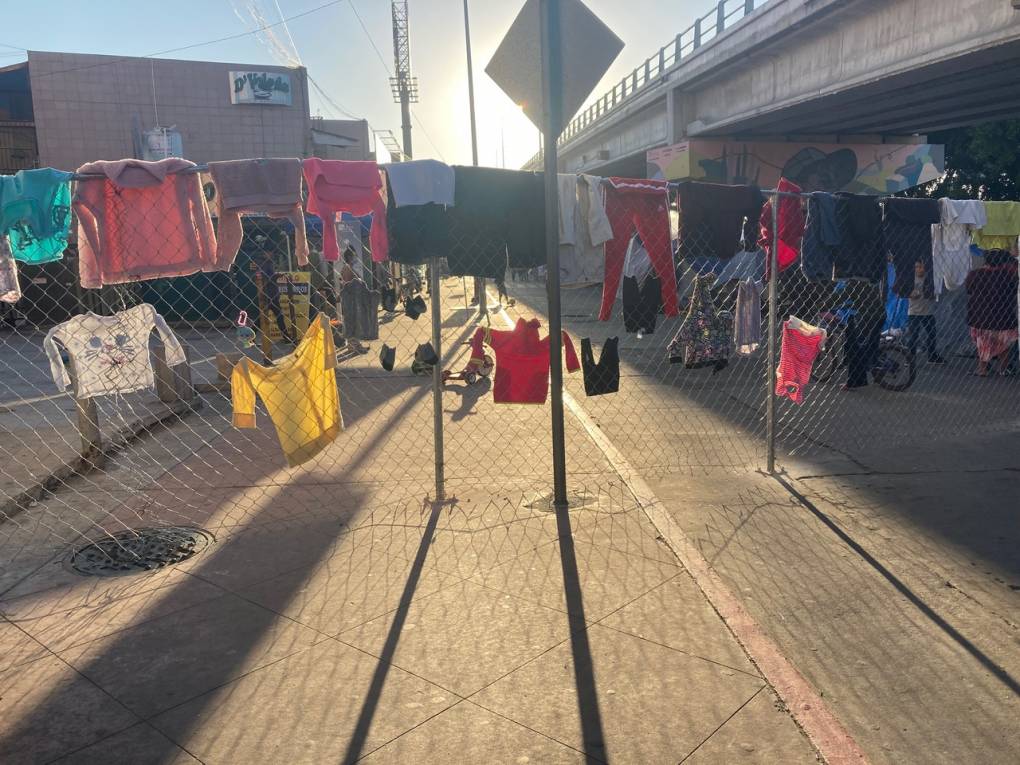
window.__IS_SSR__=true
window.__INITIAL_STATE__={
"attachmentsReducer": {
"audio_0": {
"type": "attachments",
"id": "audio_0",
"imgSizes": {
"kqedFullSize": {
"file": "https://ww2.kqed.org/news/wp-content/themes/KQED-unified/img/audio_bgs/background0.jpg"
}
}
},
"audio_1": {
"type": "attachments",
"id": "audio_1",
"imgSizes": {
"kqedFullSize": {
"file": "https://ww2.kqed.org/news/wp-content/themes/KQED-unified/img/audio_bgs/background1.jpg"
}
}
},
"audio_2": {
"type": "attachments",
"id": "audio_2",
"imgSizes": {
"kqedFullSize": {
"file": "https://ww2.kqed.org/news/wp-content/themes/KQED-unified/img/audio_bgs/background2.jpg"
}
}
},
"audio_3": {
"type": "attachments",
"id": "audio_3",
"imgSizes": {
"kqedFullSize": {
"file": "https://ww2.kqed.org/news/wp-content/themes/KQED-unified/img/audio_bgs/background3.jpg"
}
}
},
"audio_4": {
"type": "attachments",
"id": "audio_4",
"imgSizes": {
"kqedFullSize": {
"file": "https://ww2.kqed.org/news/wp-content/themes/KQED-unified/img/audio_bgs/background4.jpg"
}
}
},
"placeholder": {
"type": "attachments",
"id": "placeholder",
"imgSizes": {
"thumbnail": {
"file": "https://cdn.kqed.org/wp-content/uploads/2024/12/KQED-Default-Image-816638274-2000x1333-1-160x107.jpg",
"width": 160,
"height": 107,
"mimeType": "image/jpeg"
},
"medium": {
"file": "https://cdn.kqed.org/wp-content/uploads/2024/12/KQED-Default-Image-816638274-2000x1333-1-800x533.jpg",
"width": 800,
"height": 533,
"mimeType": "image/jpeg"
},
"medium_large": {
"file": "https://cdn.kqed.org/wp-content/uploads/2024/12/KQED-Default-Image-816638274-2000x1333-1-768x512.jpg",
"width": 768,
"height": 512,
"mimeType": "image/jpeg"
},
"large": {
"file": "https://cdn.kqed.org/wp-content/uploads/2024/12/KQED-Default-Image-816638274-2000x1333-1-1020x680.jpg",
"width": 1020,
"height": 680,
"mimeType": "image/jpeg"
},
"1536x1536": {
"file": "https://cdn.kqed.org/wp-content/uploads/2024/12/KQED-Default-Image-816638274-2000x1333-1-1536x1024.jpg",
"width": 1536,
"height": 1024,
"mimeType": "image/jpeg"
},
"fd-lrg": {
"file": "https://cdn.kqed.org/wp-content/uploads/2024/12/KQED-Default-Image-816638274-2000x1333-1-1536x1024.jpg",
"width": 1536,
"height": 1024,
"mimeType": "image/jpeg"
},
"fd-med": {
"file": "https://cdn.kqed.org/wp-content/uploads/2024/12/KQED-Default-Image-816638274-2000x1333-1-1020x680.jpg",
"width": 1020,
"height": 680,
"mimeType": "image/jpeg"
},
"fd-sm": {
"file": "https://cdn.kqed.org/wp-content/uploads/2024/12/KQED-Default-Image-816638274-2000x1333-1-800x533.jpg",
"width": 800,
"height": 533,
"mimeType": "image/jpeg"
},
"post-thumbnail": {
"file": "https://cdn.kqed.org/wp-content/uploads/2024/12/KQED-Default-Image-816638274-2000x1333-1-672x372.jpg",
"width": 672,
"height": 372,
"mimeType": "image/jpeg"
},
"twentyfourteen-full-width": {
"file": "https://cdn.kqed.org/wp-content/uploads/2024/12/KQED-Default-Image-816638274-2000x1333-1-1038x576.jpg",
"width": 1038,
"height": 576,
"mimeType": "image/jpeg"
},
"xxsmall": {
"file": "https://cdn.kqed.org/wp-content/uploads/2024/12/KQED-Default-Image-816638274-2000x1333-1-160x107.jpg",
"width": 160,
"height": 107,
"mimeType": "image/jpeg"
},
"xsmall": {
"file": "https://cdn.kqed.org/wp-content/uploads/2024/12/KQED-Default-Image-816638274-2000x1333-1-672x372.jpg",
"width": 672,
"height": 372,
"mimeType": "image/jpeg"
},
"small": {
"file": "https://cdn.kqed.org/wp-content/uploads/2024/12/KQED-Default-Image-816638274-2000x1333-1-672x372.jpg",
"width": 672,
"height": 372,
"mimeType": "image/jpeg"
},
"xlarge": {
"file": "https://cdn.kqed.org/wp-content/uploads/2024/12/KQED-Default-Image-816638274-2000x1333-1-1020x680.jpg",
"width": 1020,
"height": 680,
"mimeType": "image/jpeg"
},
"full-width": {
"file": "https://cdn.kqed.org/wp-content/uploads/2024/12/KQED-Default-Image-816638274-2000x1333-1-1920x1280.jpg",
"width": 1920,
"height": 1280,
"mimeType": "image/jpeg"
},
"guest-author-32": {
"file": "https://cdn.kqed.org/wp-content/uploads/2025/01/KQED-Default-Image-816638274-1333x1333-1-160x160.jpg",
"width": 32,
"height": 32,
"mimeType": "image/jpeg"
},
"guest-author-50": {
"file": "https://cdn.kqed.org/wp-content/uploads/2025/01/KQED-Default-Image-816638274-1333x1333-1-160x160.jpg",
"width": 50,
"height": 50,
"mimeType": "image/jpeg"
},
"guest-author-64": {
"file": "https://cdn.kqed.org/wp-content/uploads/2025/01/KQED-Default-Image-816638274-1333x1333-1-160x160.jpg",
"width": 64,
"height": 64,
"mimeType": "image/jpeg"
},
"guest-author-96": {
"file": "https://cdn.kqed.org/wp-content/uploads/2025/01/KQED-Default-Image-816638274-1333x1333-1-160x160.jpg",
"width": 96,
"height": 96,
"mimeType": "image/jpeg"
},
"guest-author-128": {
"file": "https://cdn.kqed.org/wp-content/uploads/2025/01/KQED-Default-Image-816638274-1333x1333-1-160x160.jpg",
"width": 128,
"height": 128,
"mimeType": "image/jpeg"
},
"detail": {
"file": "https://cdn.kqed.org/wp-content/uploads/2025/01/KQED-Default-Image-816638274-1333x1333-1-160x160.jpg",
"width": 160,
"height": 160,
"mimeType": "image/jpeg"
},
"kqedFullSize": {
"file": "https://cdn.kqed.org/wp-content/uploads/2024/12/KQED-Default-Image-816638274-2000x1333-1.jpg",
"width": 2000,
"height": 1333
}
}
},
"news_11907202": {
"type": "attachments",
"id": "news_11907202",
"meta": {
"index": "attachments_1716263798",
"site": "news",
"id": "11907202",
"found": true
},
"parent": 11907194,
"imgSizes": {
"twentyfourteen-full-width": {
"file": "https://ww2.kqed.org/app/uploads/sites/10/2022/03/whoweare_030422_final-1038x576.png",
"width": 1038,
"mimeType": "image/png",
"height": 576
},
"thumbnail": {
"file": "https://ww2.kqed.org/app/uploads/sites/10/2022/03/whoweare_030422_final-160x117.png",
"width": 160,
"mimeType": "image/png",
"height": 117
},
"post-thumbnail": {
"file": "https://ww2.kqed.org/app/uploads/sites/10/2022/03/whoweare_030422_final-672x372.png",
"width": 672,
"mimeType": "image/png",
"height": 372
},
"kqedFullSize": {
"file": "https://ww2.kqed.org/app/uploads/sites/10/2022/03/whoweare_030422_final.png",
"width": 1920,
"height": 1400
},
"large": {
"file": "https://ww2.kqed.org/app/uploads/sites/10/2022/03/whoweare_030422_final-1020x744.png",
"width": 1020,
"mimeType": "image/png",
"height": 744
},
"1536x1536": {
"file": "https://ww2.kqed.org/app/uploads/sites/10/2022/03/whoweare_030422_final-1536x1120.png",
"width": 1536,
"mimeType": "image/png",
"height": 1120
},
"medium": {
"file": "https://ww2.kqed.org/app/uploads/sites/10/2022/03/whoweare_030422_final-800x583.png",
"width": 800,
"mimeType": "image/png",
"height": 583
}
},
"publishDate": 1646420658,
"modified": 1646420809,
"caption": null,
"description": null,
"title": "whoweare_030422_final",
"credit": null,
"status": "inherit",
"altTag": "Cartoon: a label that reads, \"this is not who we are\" points at Joe Biden, who carries a paper that says, \"settlement for victims of family separation\" that is crossed out in red. In small parenthetical type to the right is written, \"but check back after the midterms.\" A migrant family looks on in the background.",
"isLoading": false,
"fetchFailed": false
},
"news_11907124": {
"type": "attachments",
"id": "news_11907124",
"meta": {
"index": "attachments_1716263798",
"site": "news",
"id": "11907124",
"found": true
},
"parent": 11907020,
"imgSizes": {
"twentyfourteen-full-width": {
"file": "https://ww2.kqed.org/app/uploads/sites/10/2022/03/RS54042_GettyImages-973077512-qut-1038x576.jpg",
"width": 1038,
"mimeType": "image/jpeg",
"height": 576
},
"thumbnail": {
"file": "https://ww2.kqed.org/app/uploads/sites/10/2022/03/RS54042_GettyImages-973077512-qut-160x107.jpg",
"width": 160,
"mimeType": "image/jpeg",
"height": 107
},
"post-thumbnail": {
"file": "https://ww2.kqed.org/app/uploads/sites/10/2022/03/RS54042_GettyImages-973077512-qut-672x372.jpg",
"width": 672,
"mimeType": "image/jpeg",
"height": 372
},
"kqedFullSize": {
"file": "https://ww2.kqed.org/app/uploads/sites/10/2022/03/RS54042_GettyImages-973077512-qut.jpg",
"width": 1920,
"height": 1280
},
"large": {
"file": "https://ww2.kqed.org/app/uploads/sites/10/2022/03/RS54042_GettyImages-973077512-qut-1020x680.jpg",
"width": 1020,
"mimeType": "image/jpeg",
"height": 680
},
"1536x1536": {
"file": "https://ww2.kqed.org/app/uploads/sites/10/2022/03/RS54042_GettyImages-973077512-qut-1536x1024.jpg",
"width": 1536,
"mimeType": "image/jpeg",
"height": 1024
},
"medium": {
"file": "https://ww2.kqed.org/app/uploads/sites/10/2022/03/RS54042_GettyImages-973077512-qut-800x533.jpg",
"width": 800,
"mimeType": "image/jpeg",
"height": 533
}
},
"publishDate": 1646345333,
"modified": 1646349875,
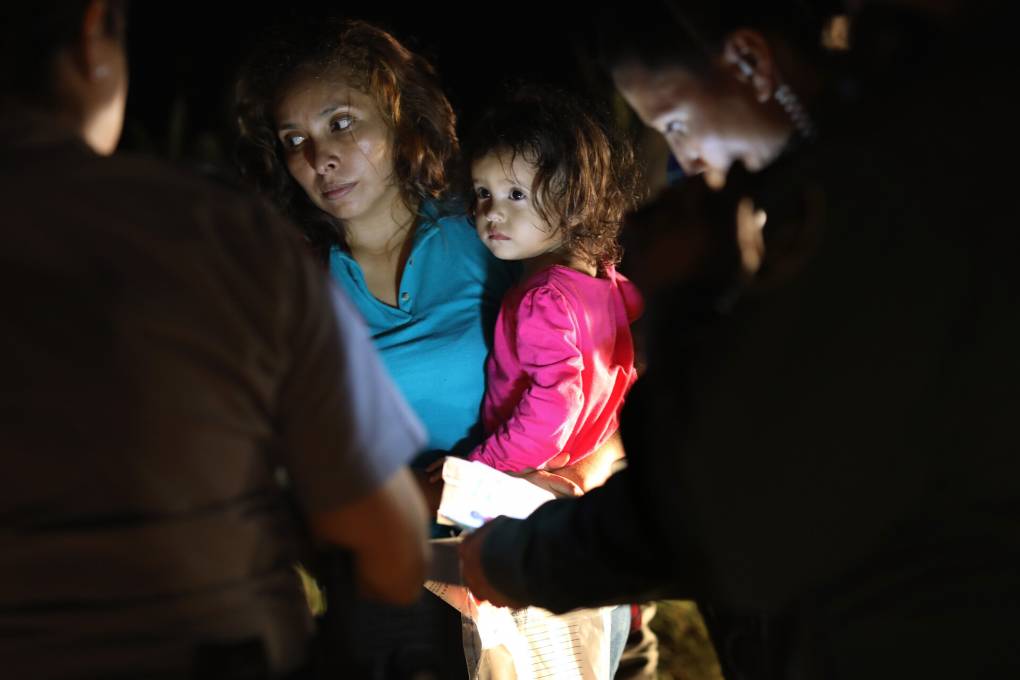
"caption": "A Honduran asylum seeker holds her 2-year-old child as U.S. Border Patrol agents review their papers near the U.S.-Mexico border on June 12, 2018, in Texas. They were sent to a processing center for possible separation as part of the Trump administration's 'zero tolerance' policy toward undocumented immigrants.",
"description": null,
"title": "Border Patrol Agents Detain Migrants Near US-Mexico Border",
"credit": "John Moore/Getty Images",
"status": "inherit",
"altTag": "night-time shot of woman holding her small child, both with concerned faces, surrounded by silhouettes of border patrol agents",
"isLoading": false,
"fetchFailed": false
},
"news_11906626": {
"type": "attachments",
"id": "news_11906626",
"meta": {
"index": "attachments_1716263798",
"site": "news",
"id": "11906626",
"found": true
},
"parent": 11906491,
"imgSizes": {
"twentyfourteen-full-width": {
"file": "https://ww2.kqed.org/app/uploads/sites/10/2022/02/RS53931_037_KQED_UkraineRally_02242022-qut-1-1038x576.jpg",
"width": 1038,
"mimeType": "image/jpeg",
"height": 576
},
"thumbnail": {
"file": "https://ww2.kqed.org/app/uploads/sites/10/2022/02/RS53931_037_KQED_UkraineRally_02242022-qut-1-160x107.jpg",
"width": 160,
"mimeType": "image/jpeg",
"height": 107
},
"post-thumbnail": {
"file": "https://ww2.kqed.org/app/uploads/sites/10/2022/02/RS53931_037_KQED_UkraineRally_02242022-qut-1-672x372.jpg",
"width": 672,
"mimeType": "image/jpeg",
"height": 372
},
"kqedFullSize": {
"file": "https://ww2.kqed.org/app/uploads/sites/10/2022/02/RS53931_037_KQED_UkraineRally_02242022-qut-1.jpg",
"width": 1920,
"height": 1280
},
"large": {
"file": "https://ww2.kqed.org/app/uploads/sites/10/2022/02/RS53931_037_KQED_UkraineRally_02242022-qut-1-1020x680.jpg",
"width": 1020,
"mimeType": "image/jpeg",
"height": 680
},
"1536x1536": {
"file": "https://ww2.kqed.org/app/uploads/sites/10/2022/02/RS53931_037_KQED_UkraineRally_02242022-qut-1-1536x1024.jpg",
"width": 1536,
"mimeType": "image/jpeg",
"height": 1024
},
"medium": {
"file": "https://ww2.kqed.org/app/uploads/sites/10/2022/02/RS53931_037_KQED_UkraineRally_02242022-qut-1-800x533.jpg",
"width": 800,
"mimeType": "image/jpeg",
"height": 533
}
},
"publishDate": 1645841882,
"modified": 1645841882,
"caption": "Hundreds of demonstrators gather in front of San Francisco City Hall on Feb. 24, 2022, to protest the Russian invasion of Ukraine.",
"description": null,
"title": "RS53931_037_KQED_UkraineRally_02242022-qut",
"credit": null,
"status": "inherit",
"altTag": null,
"isLoading": false,
"fetchFailed": false
},
"news_11906475": {
"type": "attachments",
"id": "news_11906475",
"meta": {
"index": "attachments_1716263798",
"site": "news",
"id": "11906475",
"found": true
},
"parent": 11906473,
"imgSizes": {
"twentyfourteen-full-width": {
"file": "https://ww2.kqed.org/app/uploads/sites/10/2022/02/RS53901_GettyImages-1232579208-qut-1038x576.jpg",
"width": 1038,
"mimeType": "image/jpeg",
"height": 576
},
"thumbnail": {
"file": "https://ww2.kqed.org/app/uploads/sites/10/2022/02/RS53901_GettyImages-1232579208-qut-160x107.jpg",
"width": 160,
"mimeType": "image/jpeg",
"height": 107
},
"post-thumbnail": {
"file": "https://ww2.kqed.org/app/uploads/sites/10/2022/02/RS53901_GettyImages-1232579208-qut-672x372.jpg",
"width": 672,
"mimeType": "image/jpeg",
"height": 372
},
"kqedFullSize": {
"file": "https://ww2.kqed.org/app/uploads/sites/10/2022/02/RS53901_GettyImages-1232579208-qut.jpg",
"width": 1920,
"height": 1280
},
"large": {
"file": "https://ww2.kqed.org/app/uploads/sites/10/2022/02/RS53901_GettyImages-1232579208-qut-1020x680.jpg",
"width": 1020,
"mimeType": "image/jpeg",
"height": 680
},
"1536x1536": {
"file": "https://ww2.kqed.org/app/uploads/sites/10/2022/02/RS53901_GettyImages-1232579208-qut-1536x1024.jpg",
"width": 1536,
"mimeType": "image/jpeg",
"height": 1024
},
"medium": {
"file": "https://ww2.kqed.org/app/uploads/sites/10/2022/02/RS53901_GettyImages-1232579208-qut-800x533.jpg",
"width": 800,
"mimeType": "image/jpeg",
"height": 533
}
},
"publishDate": 1645811683,
"modified": 1645819347,
"caption": "Ketanji Brown Jackson testifies before a Senate Judiciary Committee hearing on pending judicial nominations on April 28, 2021.",
"description": null,
"title": "Senate Judiciary Committee TW POOL",
"credit": "Tom Williams/CQ-Roll Call Inc. via Getty Images/POOL",
"status": "inherit",
"altTag": "profile photo of Ketanji Brown Jackson smiling",
"isLoading": false,
"fetchFailed": false
},
"news_11906374": {
"type": "attachments",
"id": "news_11906374",
"meta": {
"index": "attachments_1716263798",
"site": "news",
"id": "11906374",
"found": true
},
"parent": 11906356,
"imgSizes": {
"twentyfourteen-full-width": {
"file": "https://ww2.kqed.org/app/uploads/sites/10/2022/02/ukraine_revised_022422a_final-1038x576.png",
"width": 1038,
"mimeType": "image/png",
"height": 576
},
"thumbnail": {
"file": "https://ww2.kqed.org/app/uploads/sites/10/2022/02/ukraine_revised_022422a_final-160x106.png",
"width": 160,
"mimeType": "image/png",
"height": 106
},
"post-thumbnail": {
"file": "https://ww2.kqed.org/app/uploads/sites/10/2022/02/ukraine_revised_022422a_final-672x372.png",
"width": 672,
"mimeType": "image/png",
"height": 372
},
"kqedFullSize": {
"file": "https://ww2.kqed.org/app/uploads/sites/10/2022/02/ukraine_revised_022422a_final.png",
"width": 1920,
"height": 1272
},
"large": {
"file": "https://ww2.kqed.org/app/uploads/sites/10/2022/02/ukraine_revised_022422a_final-1020x676.png",
"width": 1020,
"mimeType": "image/png",
"height": 676
},
"1536x1536": {
"file": "https://ww2.kqed.org/app/uploads/sites/10/2022/02/ukraine_revised_022422a_final-1536x1018.png",
"width": 1536,
"mimeType": "image/png",
"height": 1018
},
"medium": {
"file": "https://ww2.kqed.org/app/uploads/sites/10/2022/02/ukraine_revised_022422a_final-800x530.png",
"width": 800,
"mimeType": "image/png",
"height": 530
}
},
"publishDate": 1645742461,
"modified": 1645742523,
"caption": null,
"description": null,
"title": "ukraine_revised_022422a_final",
"credit": null,
"status": "inherit",
"altTag": "Cartoon: Russian President Vladimir Putin tears Ukraine out of the landscape. Caption is \"Piece Keeper.\"",
"isLoading": false,
"fetchFailed": false
},
"news_11905430": {
"type": "attachments",
"id": "news_11905430",
"meta": {
"index": "attachments_1716263798",
"site": "news",
"id": "11905430",
"found": true
},
"parent": 11905429,
"imgSizes": {
"twentyfourteen-full-width": {
"file": "https://ww2.kqed.org/app/uploads/sites/10/2022/02/ap22038735487988-406e08ab721fc89b9ac39a3d70df1c65801d41dc-1038x576.jpg",
"width": 1038,
"mimeType": "image/jpeg",
"height": 576
},
"thumbnail": {
"file": "https://ww2.kqed.org/app/uploads/sites/10/2022/02/ap22038735487988-406e08ab721fc89b9ac39a3d70df1c65801d41dc-160x120.jpg",
"width": 160,
"mimeType": "image/jpeg",
"height": 120
},
"post-thumbnail": {
"file": "https://ww2.kqed.org/app/uploads/sites/10/2022/02/ap22038735487988-406e08ab721fc89b9ac39a3d70df1c65801d41dc-672x372.jpg",
"width": 672,
"mimeType": "image/jpeg",
"height": 372
},
"kqedFullSize": {
"file": "https://ww2.kqed.org/app/uploads/sites/10/2022/02/ap22038735487988-406e08ab721fc89b9ac39a3d70df1c65801d41dc-scaled-e1645046892712.jpg",
"width": 1920,
"height": 1440
},
"2048x2048": {
"file": "https://ww2.kqed.org/app/uploads/sites/10/2022/02/ap22038735487988-406e08ab721fc89b9ac39a3d70df1c65801d41dc-2048x1536.jpg",
"width": 2048,
"mimeType": "image/jpeg",
"height": 1536
},
"large": {
"file": "https://ww2.kqed.org/app/uploads/sites/10/2022/02/ap22038735487988-406e08ab721fc89b9ac39a3d70df1c65801d41dc-1020x765.jpg",
"width": 1020,
"mimeType": "image/jpeg",
"height": 765
},
"1536x1536": {
"file": "https://ww2.kqed.org/app/uploads/sites/10/2022/02/ap22038735487988-406e08ab721fc89b9ac39a3d70df1c65801d41dc-1536x1152.jpg",
"width": 1536,
"mimeType": "image/jpeg",
"height": 1152
},
"full-width": {
"file": "https://ww2.kqed.org/app/uploads/sites/10/2022/02/ap22038735487988-406e08ab721fc89b9ac39a3d70df1c65801d41dc-1920x1440.jpg",
"width": 1920,
"mimeType": "image/jpeg",
"height": 1440
},
"medium": {
"file": "https://ww2.kqed.org/app/uploads/sites/10/2022/02/ap22038735487988-406e08ab721fc89b9ac39a3d70df1c65801d41dc-800x600.jpg",
"width": 800,
"mimeType": "image/jpeg",
"height": 600
}
},
"publishDate": 1645046758,
"modified": 1645062417,
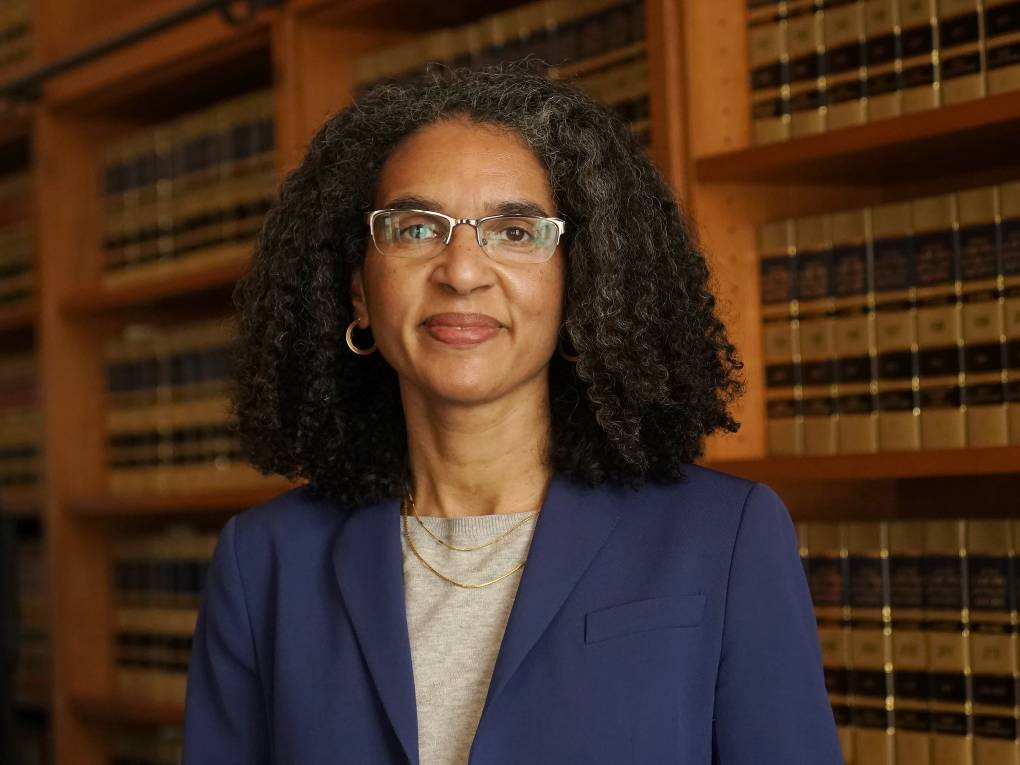
"caption": "Leondra Kruger, an associate justice of the Supreme Court of California, poses for photos in San Francisco on Feb. 3, 2022. ",
"description": "Leondra Kruger, an Associate Justice of the Supreme Court of California, poses for photos in San Francisco, Thursday, Feb. 3, 2022. (AP Photo/Jeff Chiu)",
"title": "California Supreme Court Justice Leondra Kruger is a leading contender to replace Justice Stephen Breyer on the U.S. Supreme Court.",
"credit": "Jeff Chiu/AP",
"status": "inherit",
"altTag": "A portrait of a woman with glasses.",
"isLoading": false,
"fetchFailed": false
},
"news_11905961": {
"type": "attachments",
"id": "news_11905961",
"meta": {
"index": "attachments_1716263798",
"site": "news",
"id": "11905961",
"found": true
},
"parent": 11905959,
"imgSizes": {
"twentyfourteen-full-width": {
"file": "https://ww2.kqed.org/app/uploads/sites/10/2022/02/RS53816_GettyImages-1366036344-qut-1038x576.jpg",
"width": 1038,
"mimeType": "image/jpeg",
"height": 576
},
"thumbnail": {
"file": "https://ww2.kqed.org/app/uploads/sites/10/2022/02/RS53816_GettyImages-1366036344-qut-160x107.jpg",
"width": 160,
"mimeType": "image/jpeg",
"height": 107
},
"post-thumbnail": {
"file": "https://ww2.kqed.org/app/uploads/sites/10/2022/02/RS53816_GettyImages-1366036344-qut-672x372.jpg",
"width": 672,
"mimeType": "image/jpeg",
"height": 372
},
"kqedFullSize": {
"file": "https://ww2.kqed.org/app/uploads/sites/10/2022/02/RS53816_GettyImages-1366036344-qut.jpg",
"width": 1920,
"height": 1278
},
"large": {
"file": "https://ww2.kqed.org/app/uploads/sites/10/2022/02/RS53816_GettyImages-1366036344-qut-1020x679.jpg",
"width": 1020,
"mimeType": "image/jpeg",
"height": 679
},
"1536x1536": {
"file": "https://ww2.kqed.org/app/uploads/sites/10/2022/02/RS53816_GettyImages-1366036344-qut-1536x1022.jpg",
"width": 1536,
"mimeType": "image/jpeg",
"height": 1022
},
"medium": {
"file": "https://ww2.kqed.org/app/uploads/sites/10/2022/02/RS53816_GettyImages-1366036344-qut-800x533.jpg",
"width": 800,
"mimeType": "image/jpeg",
"height": 533
}
},
"publishDate": 1645396337,
"modified": 1645559777,
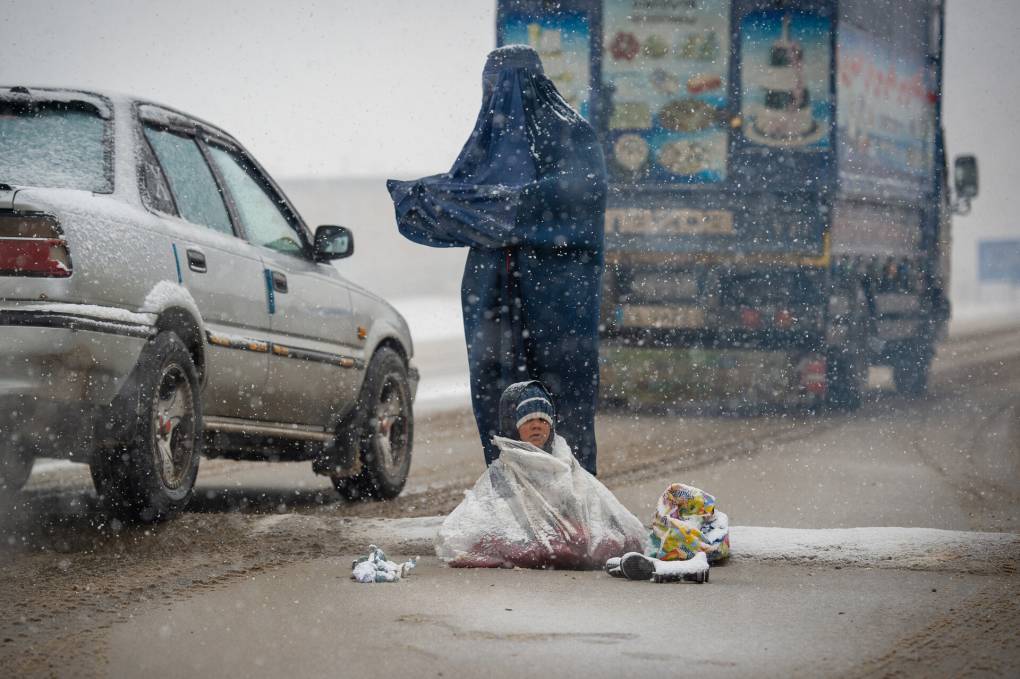
"caption": "An Afghan woman begs for money from passing cars in the snow, with her child at her feet, on the Kabul road south to Pul-e Alam, Afghanistan, on Jan. 17, 2022. The UN World Food Programme warns that 98% of Afghans are not getting enough to eat, due to a severe drought, the onset of winter, the collapse of the economy and the freezing of Afghan and donor funds after the Taliban takeover of the country in August 2021. The UN has made an emergency appeal for $5 billion to feed the hungry and forestall further economic collapse.",
"description": null,
"title": "Afghans Face Looming Humanitarian Disaster",
"credit": "Scott Peterson/Getty Images",
"status": "inherit",
"altTag": "A woman begs for money from passing cars as a child sits beside her in the snow.",
"isLoading": false,
"fetchFailed": false
},
"news_11901784": {
"type": "attachments",
"id": "news_11901784",
"meta": {
"index": "attachments_1716263798",
"site": "news",
"id": "11901784",
"found": true
},
"parent": 11901755,
"imgSizes": {
"twentyfourteen-full-width": {
"file": "https://ww2.kqed.org/app/uploads/sites/10/2022/01/mlkfilibuster_011422_final-1038x576.png",
"width": 1038,
"mimeType": "image/png",
"height": 576
},
"thumbnail": {
"file": "https://ww2.kqed.org/app/uploads/sites/10/2022/01/mlkfilibuster_011422_final-160x113.png",
"width": 160,
"mimeType": "image/png",
"height": 113
},
"post-thumbnail": {
"file": "https://ww2.kqed.org/app/uploads/sites/10/2022/01/mlkfilibuster_011422_final-672x372.png",
"width": 672,
"mimeType": "image/png",
"height": 372
},
"kqedFullSize": {
"file": "https://ww2.kqed.org/app/uploads/sites/10/2022/01/mlkfilibuster_011422_final.png",
"width": 1920,
"height": 1358
},
"large": {
"file": "https://ww2.kqed.org/app/uploads/sites/10/2022/01/mlkfilibuster_011422_final-1020x721.png",
"width": 1020,
"mimeType": "image/png",
"height": 721
},
"1536x1536": {
"file": "https://ww2.kqed.org/app/uploads/sites/10/2022/01/mlkfilibuster_011422_final-1536x1086.png",
"width": 1536,
"mimeType": "image/png",
"height": 1086
},
"medium": {
"file": "https://ww2.kqed.org/app/uploads/sites/10/2022/01/mlkfilibuster_011422_final-800x566.png",
"width": 800,
"mimeType": "image/png",
"height": 566
}
},
"publishDate": 1642204094,
"modified": 1642204198,
"caption": null,
"description": null,
"title": "mlkfilibuster_011422_final",
"credit": null,
"status": "inherit",
"altTag": "Cartoon: Martin Luther King Jr. at the Lincoln Memorial saying, \"I have a dream.\" The second panel shows Sen. Mitch McConnell saying, \"I have a filibuster.\"",
"isLoading": false,
"fetchFailed": false
},
"news_11899944": {
"type": "attachments",
"id": "news_11899944",
"meta": {
"index": "attachments_1716263798",
"site": "news",
"id": "11899944",
"found": true
},
"parent": 11899939,
"imgSizes": {
"twentyfourteen-full-width": {
"file": "https://ww2.kqed.org/app/uploads/sites/10/2021/12/GettyImages-1360246879-1038x576.jpg",
"width": 1038,
"mimeType": "image/jpeg",
"height": 576
},
"thumbnail": {
"file": "https://ww2.kqed.org/app/uploads/sites/10/2021/12/GettyImages-1360246879-160x106.jpg",
"width": 160,
"mimeType": "image/jpeg",
"height": 106
},
"post-thumbnail": {
"file": "https://ww2.kqed.org/app/uploads/sites/10/2021/12/GettyImages-1360246879-672x372.jpg",
"width": 672,
"mimeType": "image/jpeg",
"height": 372
},
"kqedFullSize": {
"file": "https://ww2.kqed.org/app/uploads/sites/10/2021/12/GettyImages-1360246879-scaled.jpg",
"width": 2560,
"height": 1700
},
"2048x2048": {
"file": "https://ww2.kqed.org/app/uploads/sites/10/2021/12/GettyImages-1360246879-2048x1360.jpg",
"width": 2048,
"mimeType": "image/jpeg",
"height": 1360
},
"large": {
"file": "https://ww2.kqed.org/app/uploads/sites/10/2021/12/GettyImages-1360246879-1020x677.jpg",
"width": 1020,
"mimeType": "image/jpeg",
"height": 677
},
"1536x1536": {
"file": "https://ww2.kqed.org/app/uploads/sites/10/2021/12/GettyImages-1360246879-1536x1020.jpg",
"width": 1536,
"mimeType": "image/jpeg",
"height": 1020
},
"full-width": {
"file": "https://ww2.kqed.org/app/uploads/sites/10/2021/12/GettyImages-1360246879-1920x1275.jpg",
"width": 1920,
"mimeType": "image/jpeg",
"height": 1275
},
"medium": {
"file": "https://ww2.kqed.org/app/uploads/sites/10/2021/12/GettyImages-1360246879-800x531.jpg",
"width": 800,
"mimeType": "image/jpeg",
"height": 531
}
},
"publishDate": 1640119430,
"modified": 1640119832,
"caption": "President Joe Biden speaks about the omicron variant in the State Dining Room of the White House, December 21, 2021 in Washington, D.C. As the omicron variant fuels a new wave of COVID-19 infections, Biden announced plans that will expand testing sites across the country, distribute millions of free at-home tests and boost federal resources to hospitals in need.",
"description": "President Joe Biden speaks about the omicron variant in the State Dining Room of the White House, December 21, 2021 in Washington, D.C.",
"title": "President Biden Delivers Remarks On Fight Against Covid-19",
"credit": "Drew Angerer/Getty Images",
"status": "inherit",
"altTag": "Joe Biden wears a suit and stands at a lectern, a Christmas tree behind him.",
"isLoading": false,
"fetchFailed": false
},
"news_11897940": {
"type": "attachments",
"id": "news_11897940",
"meta": {
"index": "attachments_1716263798",
"site": "news",
"id": "11897940",
"found": true
},
"parent": 11897929,
"imgSizes": {
"twentyfourteen-full-width": {
"file": "https://ww2.kqed.org/app/uploads/sites/10/2021/12/remain_120221_final-1038x576.png",
"width": 1038,
"mimeType": "image/png",
"height": 576
},
"thumbnail": {
"file": "https://ww2.kqed.org/app/uploads/sites/10/2021/12/remain_120221_final-160x111.png",
"width": 160,
"mimeType": "image/png",
"height": 111
},
"post-thumbnail": {
"file": "https://ww2.kqed.org/app/uploads/sites/10/2021/12/remain_120221_final-672x372.png",
"width": 672,
"mimeType": "image/png",
"height": 372
},
"kqedFullSize": {
"file": "https://ww2.kqed.org/app/uploads/sites/10/2021/12/remain_120221_final.png",
"width": 1920,
"height": 1330
},
"large": {
"file": "https://ww2.kqed.org/app/uploads/sites/10/2021/12/remain_120221_final-1020x707.png",
"width": 1020,
"mimeType": "image/png",
"height": 707
},
"1536x1536": {
"file": "https://ww2.kqed.org/app/uploads/sites/10/2021/12/remain_120221_final-1536x1064.png",
"width": 1536,
"mimeType": "image/png",
"height": 1064
},
"medium": {
"file": "https://ww2.kqed.org/app/uploads/sites/10/2021/12/remain_120221_final-800x554.png",
"width": 800,
"mimeType": "image/png",
"height": 554
}
},
"publishDate": 1638491313,
"modified": 1638491417,
"caption": null,
"description": null,
"title": "remain_120221_final",
"credit": null,
"status": "inherit",
"altTag": "Cartoon: shows \"then\" and \"now\" images of a \"remain in Mexico\" immigration sign. The Trump-era sign says things like \"rapists\" and \"murderers\" while the current Biden sign apologizes yet still calls on asylum-seekers to remain in Mexico.",
"isLoading": false,
"fetchFailed": false
},
"news_11897902": {
"type": "attachments",
"id": "news_11897902",
"meta": {
"index": "attachments_1716263798",
"site": "news",
"id": "11897902",
"found": true
},
"parent": 11897897,
"imgSizes": {
"twentyfourteen-full-width": {
"file": "https://ww2.kqed.org/app/uploads/sites/10/2021/12/GettyImages-1236644051-1024x576.jpg",
"width": 1024,
"mimeType": "image/jpeg",
"height": 576
},
"thumbnail": {
"file": "https://ww2.kqed.org/app/uploads/sites/10/2021/12/GettyImages-1236644051-160x103.jpg",
"width": 160,
"mimeType": "image/jpeg",
"height": 103
},
"post-thumbnail": {
"file": "https://ww2.kqed.org/app/uploads/sites/10/2021/12/GettyImages-1236644051-672x372.jpg",
"width": 672,
"mimeType": "image/jpeg",
"height": 372
},
"kqedFullSize": {
"file": "https://ww2.kqed.org/app/uploads/sites/10/2021/12/GettyImages-1236644051.jpg",
"width": 1024,
"height": 661
},
"large": {
"file": "https://ww2.kqed.org/app/uploads/sites/10/2021/12/GettyImages-1236644051-1020x658.jpg",
"width": 1020,
"mimeType": "image/jpeg",
"height": 658
},
"medium": {
"file": "https://ww2.kqed.org/app/uploads/sites/10/2021/12/GettyImages-1236644051-800x516.jpg",
"width": 800,
"mimeType": "image/jpeg",
"height": 516
}
},
"publishDate": 1638484637,
"modified": 1638484767,
"caption": "Migrants heading in a caravan to the United States walk in Nuevo Morelos in Veracruz state, Mexico, on Nov. 18, 2021.",
"description": null,
"title": "MEXICO-US-MIGRATION-CARAVAN",
"credit": "Claudio Cruz/AFP via Getty",
"status": "inherit",
"altTag": "A crowd of people, including someone pushing a stroller, walk along a road.",
"isLoading": false,
"fetchFailed": false
},
"news_11897505": {
"type": "attachments",
"id": "news_11897505",
"meta": {
"index": "attachments_1716263798",
"site": "news",
"id": "11897505",
"found": true
},
"parent": 11897503,
"imgSizes": {
"twentyfourteen-full-width": {
"file": "https://ww2.kqed.org/app/uploads/sites/10/2021/11/IMG-5192-1038x576.jpeg",
"width": 1038,
"mimeType": "image/jpeg",
"height": 576
},
"thumbnail": {
"file": "https://ww2.kqed.org/app/uploads/sites/10/2021/11/IMG-5192-160x120.jpeg",
"width": 160,
"mimeType": "image/jpeg",
"height": 120
},
"post-thumbnail": {
"file": "https://ww2.kqed.org/app/uploads/sites/10/2021/11/IMG-5192-672x372.jpeg",
"width": 672,
"mimeType": "image/jpeg",
"height": 372
},
"kqedFullSize": {
"file": "https://ww2.kqed.org/app/uploads/sites/10/2021/11/IMG-5192.jpeg",
"width": 1280,
"height": 960
},
"large": {
"file": "https://ww2.kqed.org/app/uploads/sites/10/2021/11/IMG-5192-1020x765.jpeg",
"width": 1020,
"mimeType": "image/jpeg",
"height": 765
},
"medium": {
"file": "https://ww2.kqed.org/app/uploads/sites/10/2021/11/IMG-5192-800x600.jpeg",
"width": 800,
"mimeType": "image/jpeg",
"height": 600
}
},
"publishDate": 1638058270,
"modified": 1638058363,
"caption": "Clothes hang to dry on a fence surrounding a migrant encampment just feet from the U.S.-Mexico border in Tijuana.",
"description": null,
"title": "Tijuana clothes.",
"credit": "Max Rivlin-Nadler",
"status": "inherit",
"altTag": "Clothes hang across the top of a chain-link fence in a photo taken as the sun was setting, gold-tinted light floods the concrete from behind the clothes. A freeway can be seen on the right side of the frame, in the background, a low building in the background to the left.",
"isLoading": false,
"fetchFailed": false
}
},
"audioPlayerReducer": {
"postId": "stream_live",
"isPaused": true,
"isPlaying": false,
"pfsActive": false,
"pledgeModalIsOpen": true,
"playerDrawerIsOpen": false,
"liveAudioPlayStartedAt": 0,
"liveAudioPlayContext": ""
},
"authorsReducer": {
"byline_news_11906473": {
"type": "authors",
"id": "byline_news_11906473",
"meta": {
"override": true
},
"slug": "byline_news_11906473",
"name": "\u003ca href=\"https://www.npr.org/people/2101289/nina-totenberg\">Nina Totenberg\u003c/a>",
"isLoading": false
},
"byline_news_11905959": {
"type": "authors",
"id": "byline_news_11905959",
"meta": {
"override": true
},
"slug": "byline_news_11905959",
"name": "Aamer Madhani and Kathy Gannon \u003cbr> Associated Press ",
"isLoading": false
},
"byline_news_11899939": {
"type": "authors",
"id": "byline_news_11899939",
"meta": {
"override": true
},
"slug": "byline_news_11899939",
"name": "\u003ca href=\"https://www.npr.org/people/930959243/jaclyn-diaz\">Jaclyn Diaz\u003c/a>",
"isLoading": false
},
"byline_news_11897897": {
"type": "authors",
"id": "byline_news_11897897",
"meta": {
"override": true
},
"slug": "byline_news_11897897",
"name": "Elliot Spagat\u003cbr>Associated Press",
"isLoading": false
},
"byline_news_11897503": {
"type": "authors",
"id": "byline_news_11897503",
"meta": {
"override": true
},
"slug": "byline_news_11897503",
"name": "Max Rivlin-Nadler",
"isLoading": false
},
"kqed": {
"type": "authors",
"id": "236",
"meta": {
"index": "authors_1716337520",
"id": "236",
"found": true
},
"name": "KQED News Staff",
"firstName": "KQED News Staff",
"lastName": null,
"slug": "kqed",
"email": "faq@kqed.org",
"display_author_email": false,
"staff_mastheads": [],
"title": null,
"bio": null,
"avatar": "https://secure.gravatar.com/avatar/ef0e801a68c4c54afa9180db14084167?s=600&d=blank&r=g",
"twitter": null,
"facebook": null,
"instagram": null,
"linkedin": null,
"sites": [
{
"site": "arts",
"roles": [
"contributor"
]
},
{
"site": "news",
"roles": [
"editor"
]
},
{
"site": "futureofyou",
"roles": [
"author"
]
}
],
"headData": {
"title": "KQED News Staff | KQED",
"description": null,
"ogImgSrc": "https://secure.gravatar.com/avatar/ef0e801a68c4c54afa9180db14084167?s=600&d=blank&r=g",
"twImgSrc": "https://secure.gravatar.com/avatar/ef0e801a68c4c54afa9180db14084167?s=600&d=blank&r=g"
},
"isLoading": false,
"link": "/author/kqed"
},
"scottshafer": {
"type": "authors",
"id": "255",
"meta": {
"index": "authors_1716337520",
"id": "255",
"found": true
},
"name": "Scott Shafer",
"firstName": "Scott",
"lastName": "Shafer",
"slug": "scottshafer",
"email": "sshafer@kqed.org",
"display_author_email": false,
"staff_mastheads": [
"news"
],
"title": "KQED Contributor",
"bio": "Scott Shafer is a senior editor with the KQED Politics and Government desk. He is co-host of Political Breakdown, the award-winning radio show and podcast with a personal take on the world of politics. Scott came to KQED in 1998 to host the statewide\u003cem> California Report\u003c/em>. Prior to that he had extended stints in politics and government\u003cem>.\u003c/em> He uses that inside experience at KQED in his, reporting, hosting and analysis for the politics desk. Scott collaborated \u003cem>Political Breakdown a\u003c/em>nd on \u003cem>The Political Mind of Jerry Brown, \u003c/em>an eight-part series about the life and extraordinary political career of the former governor. For fun, he plays water polo with the San Francisco Tsunami.",
"avatar": "https://secure.gravatar.com/avatar/a62ebae45b79d7aed1a39a0e3bf68104?s=600&d=blank&r=g",
"twitter": "scottshafer",
"bluesky": null,
"facebook": null,
"instagram": null,
"linkedin": null,
"sites": [
{
"site": "news",
"roles": [
"editor"
]
},
{
"site": "stateofhealth",
"roles": [
"author"
]
},
{
"site": "science",
"roles": [
"author"
]
},
{
"site": "forum",
"roles": [
"subscriber"
]
},
{
"site": "liveblog",
"roles": [
"author"
]
}
],
"headData": {
"title": "Scott Shafer | KQED",
"description": "KQED Contributor",
"ogImgSrc": "https://secure.gravatar.com/avatar/a62ebae45b79d7aed1a39a0e3bf68104?s=600&d=blank&r=g",
"twImgSrc": "https://secure.gravatar.com/avatar/a62ebae45b79d7aed1a39a0e3bf68104?s=600&d=blank&r=g"
},
"isLoading": false,
"link": "/author/scottshafer"
},
"markfiore": {
"type": "authors",
"id": "3236",
"meta": {
"index": "authors_1716337520",
"id": "3236",
"found": true
},
"name": "Mark Fiore",
"firstName": "Mark",
"lastName": "Fiore",
"slug": "markfiore",
"email": "mark@markfiore.com",
"display_author_email": false,
"staff_mastheads": [
"news"
],
"title": "KQED News Cartoonist",
"bio": "\u003ca href=\"http://www.MarkFiore.com\">MarkFiore.com\u003c/a> | \u003ca href=\"https://twitter.com/markfiore\">Follow on Twitter\u003c/a> | \u003ca href=\"https://www.facebook.com/pages/Mark-Fiore-Animated-Political-Cartoons/94451707396?ref=bookmarks\">Facebook\u003c/a> | \u003ca href=\"mailto:mark@markfiore.com\">email\u003c/a>\r\n\r\nPulitzer Prize-winner, Mark Fiore, who the Wall Street Journal has called “the undisputed guru of the form,” creates animated political cartoons in San Francisco, where his work has been featured regularly on the San Francisco Chronicle’s web site, SFGate.com. His work has appeared on Newsweek.com, Slate.com, CBSNews.com, MotherJones.com, DailyKos.com and NPR’s web site. Fiore’s political animation has appeared on CNN, Frontline, Bill Moyers Journal, Salon.com and cable and broadcast outlets across the globe.\r\n\r\nBeginning his professional life by drawing traditional political cartoons for newspapers, Fiore’s work appeared in publications ranging from the Washington Post to the Los Angeles Times. In the late 1990s, he began to experiment with animating political cartoons and, after a short stint at the San Jose Mercury News as their staff cartoonist, Fiore devoted all his energies to animation.\r\nGrowing up in California, Fiore also spent a good portion of his life in the backwoods of Idaho. It was this combination that shaped him politically. Mark majored in political science at Colorado College, where, in a perfect send-off for a cartoonist, he received his diploma in 1991 as commencement speaker Dick Cheney smiled approvingly.\r\nMark Fiore was awarded the Pulitzer Prize for political cartooning in 2010, a Robert F. Kennedy Journalism Award in 2004 and has twice received an Online Journalism Award for commentary from the Online News Association (2002, 2008). Fiore has received two awards for his work in new media from the National Cartoonists Society (2001, 2002), and in 2006 received The James Madison Freedom of Information Award from The Society of Professional Journalists.",
"avatar": "https://secure.gravatar.com/avatar/fc4e2a612b15b67bad0c6f0e1db4ca9b?s=600&d=blank&r=g",
"twitter": "MarkFiore",
"facebook": null,
"instagram": "https://www.instagram.com/markfiore/?hl=en",
"linkedin": null,
"sites": [
{
"site": "arts",
"roles": [
"contributor"
]
},
{
"site": "news",
"roles": [
"editor"
]
},
{
"site": "futureofyou",
"roles": [
"editor"
]
},
{
"site": "science",
"roles": [
"editor"
]
}
],
"headData": {
"title": "Mark Fiore | KQED",
"description": "KQED News Cartoonist",
"ogImgSrc": "https://secure.gravatar.com/avatar/fc4e2a612b15b67bad0c6f0e1db4ca9b?s=600&d=blank&r=g",
"twImgSrc": "https://secure.gravatar.com/avatar/fc4e2a612b15b67bad0c6f0e1db4ca9b?s=600&d=blank&r=g"
},
"isLoading": false,
"link": "/author/markfiore"
},
"mwiley": {
"type": "authors",
"id": "11526",
"meta": {
"index": "authors_1716337520",
"id": "11526",
"found": true
},
"name": "Michelle Wiley",
"firstName": "Michelle",
"lastName": "Wiley",
"slug": "mwiley",
"email": "mwiley@KQED.org",
"display_author_email": true,
"staff_mastheads": [],
"title": null,
"bio": "Michelle Wiley was the senior editor of weekends.",
"avatar": "https://secure.gravatar.com/avatar/3b897d82a09e8587e8e73fa69fbcc635?s=600&d=blank&r=g",
"twitter": "michelleewiley",
"facebook": null,
"instagram": null,
"linkedin": null,
"sites": [
{
"site": "",
"roles": [
"editor"
]
},
{
"site": "arts",
"roles": [
"editor"
]
},
{
"site": "news",
"roles": [
"subscriber"
]
},
{
"site": "lowdown",
"roles": [
"editor"
]
},
{
"site": "science",
"roles": [
"editor"
]
},
{
"site": "podcasts",
"roles": [
"editor"
]
}
],
"headData": {
"title": "Michelle Wiley | KQED",
"description": null,
"ogImgSrc": "https://secure.gravatar.com/avatar/3b897d82a09e8587e8e73fa69fbcc635?s=600&d=blank&r=g",
"twImgSrc": "https://secure.gravatar.com/avatar/3b897d82a09e8587e8e73fa69fbcc635?s=600&d=blank&r=g"
},
"isLoading": false,
"link": "/author/mwiley"
}
},
"pagesReducer": {
"news_tag_joe-biden": {
"type": "terms",
"id": "news_717",
"meta": {
"index": "terms_1716263798",
"site": "news",
"id": "717",
"score": 9.105204
},
"featImg": null,
"name": "Joe Biden",
"description": null,
"taxonomy": "tag",
"headData": {
"twImgId": null,
"twTitle": null,
"ogTitle": null,
"ogImgId": null,
"twDescription": null,
"description": null,
"title": "Joe Biden Archives | KQED News",
"ogDescription": null
},
"ttid": 726,
"slug": "joe-biden",
"isLoading": false,
"title": "Joe Biden",
"pageMeta": {
"site": "news",
"WpPageTemplate": "page-topic-editorial",
"currentPage": 9
},
"blocks": [
{
"blockName": "kqed/post-list",
"attrs": {
"layout": "cardArticle2",
"query": "posts/news?tag=joe-biden",
"seeMore": false,
"paginated": true,
"page": 9
}
},
{
"blockName": "kqed/ad"
}
]
}
},
"pfsSessionReducer": {},
"postsReducer": {
"stream_live": {
"type": "live",
"id": "stream_live",
"audioUrl": "https://streams.kqed.org/kqedradio",
"title": "Live Stream",
"excerpt": "Live Stream information currently unavailable.",
"link": "/radio",
"featImg": "",
"label": {
"name": "KQED Live",
"link": "/"
}
},
"stream_kqedNewscast": {
"type": "posts",
"id": "stream_kqedNewscast",
"audioUrl": "https://www.kqed.org/.stream/anon/radio/RDnews/newscast.mp3?_=1",
"title": "KQED Newscast",
"featImg": "",
"label": {
"name": "88.5 FM",
"link": "/"
}
},
"news_11907194": {
"type": "posts",
"id": "news_11907194",
"meta": {
"index": "posts_1716263798",
"site": "news",
"id": "11907194",
"score": null,
"sort": [
1646433242000
]
},
"guestAuthors": [],
"slug": "from-family-separation-to-financial-separation",
"title": "From Family Separation to Financial Separation",
"publishDate": 1646433242,
"format": "aside",
"headTitle": "From Family Separation to Financial Separation | KQED",
"labelTerm": {
"term": 18515,
"site": "news"
},
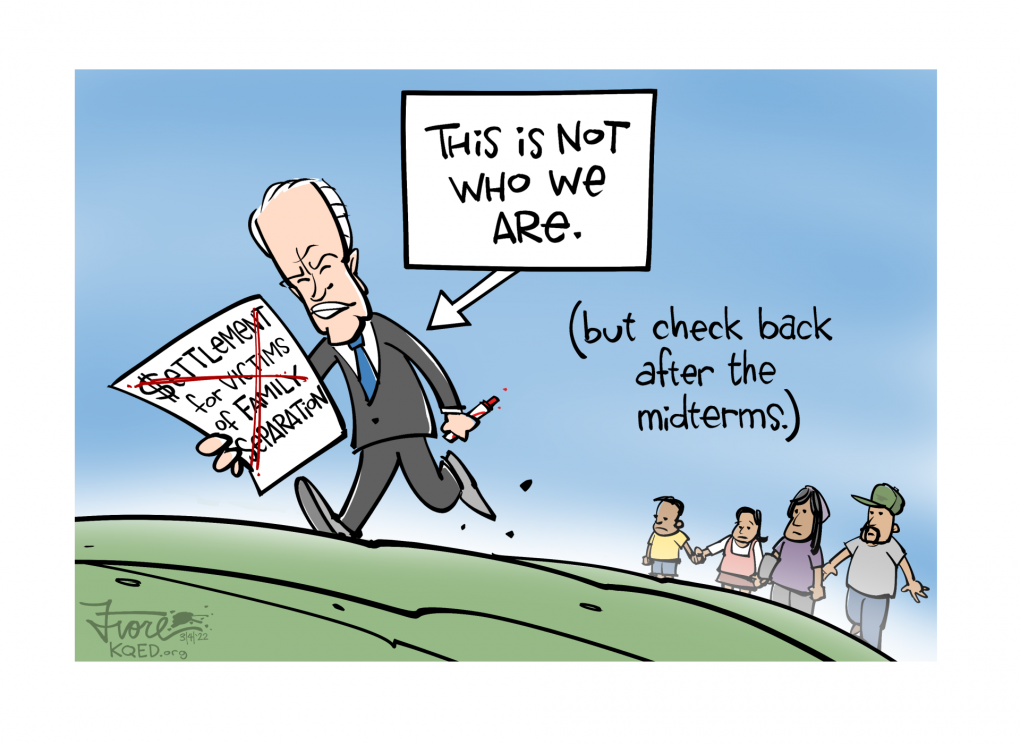
"content": "\u003cp>\u003ca href=\"https://ww2.kqed.org/app/uploads/sites/10/2022/03/whoweare_030422_final.png\">\u003cimg loading=\"lazy\" decoding=\"async\" class=\"alignnone size-full wp-image-11907202\" src=\"https://ww2.kqed.org/app/uploads/sites/10/2022/03/whoweare_030422_final.png\" alt='Cartoon: a label that reads, \"this is not who we are\" points at Joe Biden, who carries a paper that says, \"settlement for victims of family separation\" that is crossed out in red. In small parenthetical type to the right is written, \"but check back after the midterms.\" A migrant family looks on in the background.' width=\"1920\" height=\"1400\" srcset=\"https://cdn.kqed.org/wp-content/uploads/sites/10/2022/03/whoweare_030422_final.png 1920w, https://cdn.kqed.org/wp-content/uploads/sites/10/2022/03/whoweare_030422_final-800x583.png 800w, https://cdn.kqed.org/wp-content/uploads/sites/10/2022/03/whoweare_030422_final-1020x744.png 1020w, https://cdn.kqed.org/wp-content/uploads/sites/10/2022/03/whoweare_030422_final-160x117.png 160w, https://cdn.kqed.org/wp-content/uploads/sites/10/2022/03/whoweare_030422_final-1536x1120.png 1536w\" sizes=\"auto, (max-width: 1920px) 100vw, 1920px\">\u003c/a>Soon after right-wing media outlets slammed potential payouts to migrant families that had been separated under Trump, \u003ca href=\"https://bit.ly/fioreseparationsettlement\">the Biden administration withdrew from settlement talks\u003c/a> with immigrant advocates.\u003c/p>\n\u003cp>President Joe Biden was known for saying, “\u003ca href=\"https://www.vox.com/2018/6/20/17484414/joe-biden-trump-family-separation-immigration\">this is not who we are\u003c/a>” when he correctly excoriated the Trump administration’s family separation policy.\u003c/p>\n\u003cp>When talking about asylum-seeking families who were tortured by the U.S. government during Donald Trump’s “zero tolerance” policy, Biden more recently said, “\u003ca href=\"https://www.newyorker.com/news/news-desk/why-biden-refused-to-pay-restitution-to-families-separated-at-the-border\">you deserve some kind of compensation, no matter what.\u003c/a>”\u003c/p>\n\u003cp>Unfortunately, it looks like that compensation isn’t happening anytime soon.\u003c/p>\n\u003cp>[ad fullwidth]\u003c/p>\u003cp>\u003c/p>\n",
"blocks": [],
"excerpt": "Soon after right-wing media outlets slammed potential payouts to families that had been separated under Trump, the Biden administration withdrew from settlement talks with immigrant advocates.",
"status": "publish",
"parent": 0,
"modified": 1739475339,
"stats": {
"hasAudio": false,
"hasVideo": false,
"hasChartOrMap": false,
"iframeSrcs": [],
"hasGoogleForm": false,
"hasGallery": false,
"hasHearkenModule": false,
"hasPolis": false,
"paragraphCount": 6,
"wordCount": 108
},
"headData": {
"title": "From Family Separation to Financial Separation | KQED",
"description": "Soon after right-wing media outlets slammed potential payouts to families that had been separated under Trump, the Biden administration withdrew from settlement talks with immigrant advocates.",
"ogTitle": "",
"ogDescription": "",
"ogImgId": "",
"twTitle": "",
"twDescription": "",
"twImgId": "",
"schema": {
"@context": "https://schema.org",
"@type": "NewsArticle",
"headline": "From Family Separation to Financial Separation",
"datePublished": "2022-03-04T14:34:02-08:00",
"dateModified": "2025-02-13T11:35:39-08:00",
"image": "https://cdn.kqed.org/wp-content/uploads/2020/02/KQED-OG-Image@1x.png",
"isAccessibleForFree": "True",
"publisher": {
"@type": "NewsMediaOrganization",
"@id": "https://www.kqed.org/#organization",
"name": "KQED",
"logo": "https://cdn.kqed.org/wp-content/uploads/2020/02/KQED-OG-Image@1x.png",
"url": "https://www.kqed.org",
"sameAs": [
"https://www.facebook.com/KQED",
"https://twitter.com/KQED",
"https://www.instagram.com/kqed/",
"https://www.tiktok.com/@kqedofficial",
"https://www.linkedin.com/company/kqed",
"https://www.youtube.com/channel/UCeC0IOo7i1P_61zVUWbJ4nw"
]
}
}
},
"sticky": false,
"excludeFromSiteSearch": "Include",
"path": "/news/11907194/from-family-separation-to-financial-separation",
"audioTrackLength": null,
"parsedContent": [
{
"type": "contentString",
"content": "\u003cdiv class=\"post-body\">\u003cp>\u003cp>\u003ca href=\"https://ww2.kqed.org/app/uploads/sites/10/2022/03/whoweare_030422_final.png\">\u003cimg loading=\"lazy\" decoding=\"async\" class=\"alignnone size-full wp-image-11907202\" src=\"https://ww2.kqed.org/app/uploads/sites/10/2022/03/whoweare_030422_final.png\" alt='Cartoon: a label that reads, \"this is not who we are\" points at Joe Biden, who carries a paper that says, \"settlement for victims of family separation\" that is crossed out in red. In small parenthetical type to the right is written, \"but check back after the midterms.\" A migrant family looks on in the background.' width=\"1920\" height=\"1400\" srcset=\"https://cdn.kqed.org/wp-content/uploads/sites/10/2022/03/whoweare_030422_final.png 1920w, https://cdn.kqed.org/wp-content/uploads/sites/10/2022/03/whoweare_030422_final-800x583.png 800w, https://cdn.kqed.org/wp-content/uploads/sites/10/2022/03/whoweare_030422_final-1020x744.png 1020w, https://cdn.kqed.org/wp-content/uploads/sites/10/2022/03/whoweare_030422_final-160x117.png 160w, https://cdn.kqed.org/wp-content/uploads/sites/10/2022/03/whoweare_030422_final-1536x1120.png 1536w\" sizes=\"auto, (max-width: 1920px) 100vw, 1920px\">\u003c/a>Soon after right-wing media outlets slammed potential payouts to migrant families that had been separated under Trump, \u003ca href=\"https://bit.ly/fioreseparationsettlement\">the Biden administration withdrew from settlement talks\u003c/a> with immigrant advocates.\u003c/p>\n\u003cp>President Joe Biden was known for saying, “\u003ca href=\"https://www.vox.com/2018/6/20/17484414/joe-biden-trump-family-separation-immigration\">this is not who we are\u003c/a>” when he correctly excoriated the Trump administration’s family separation policy.\u003c/p>\n\u003cp>When talking about asylum-seeking families who were tortured by the U.S. government during Donald Trump’s “zero tolerance” policy, Biden more recently said, “\u003ca href=\"https://www.newyorker.com/news/news-desk/why-biden-refused-to-pay-restitution-to-families-separated-at-the-border\">you deserve some kind of compensation, no matter what.\u003c/a>”\u003c/p>\n\u003cp>Unfortunately, it looks like that compensation isn’t happening anytime soon.\u003c/p>\n\u003cp>\u003c/p>\u003c/div>",
"attributes": {
"named": {},
"numeric": []
}
},
{
"type": "component",
"content": "",
"name": "ad",
"attributes": {
"named": {
"label": "fullwidth"
},
"numeric": [
"fullwidth"
]
}
},
{
"type": "contentString",
"content": "\u003cdiv class=\"post-body\">\u003cp>\u003c/p>\u003cp>\u003c/p>\n\u003c/div>\u003c/p>",
"attributes": {
"named": {},
"numeric": []
}
}
],
"link": "/news/11907194/from-family-separation-to-financial-separation",
"authors": [
"3236"
],
"series": [
"news_18515"
],
"categories": [
"news_1169",
"news_6188",
"news_13"
],
"tags": [
"news_350",
"news_1323",
"news_23456",
"news_717",
"news_20949",
"news_23524",
"news_23792",
"news_23457"
],
"featImg": "news_11907202",
"label": "news_18515"
},
"news_11907020": {
"type": "posts",
"id": "news_11907020",
"meta": {
"index": "posts_1716263798",
"site": "news",
"id": "11907020",
"score": null,
"sort": [
1646346954000
]
},
"guestAuthors": [],
"slug": "biden-walked-away-from-compensating-separated-migrant-families-but-these-parents-arent-giving-up",
"title": "Biden Walked Away From Compensating Separated Migrant Families. But These Parents Aren't Giving Up",
"publishDate": 1646346954,
"format": "audio",
"headTitle": "Biden Walked Away From Compensating Separated Migrant Families. But These Parents Aren’t Giving Up | KQED",
"labelTerm": {
"term": 72,
"site": "news"
},
"content": "\u003cp>Days before the final 2020 presidential debate between candidate Joe Biden and then-President Donald Trump, news broke that hundreds of migrant children remained separated from their parents, more than two years after the Trump administration’s “zero tolerance” policy was halted.\u003c/p>\n\u003cp>At the debate in Nashville, Biden expressed his outrage.\u003c/p>\n\u003cp>“Their kids were ripped from their arms and separated,” he said. “It’s criminal.”\u003c/p>\n\u003cp>The Trump administration \u003ca href=\"https://www.washingtonpost.com/world/the_americas/family-separations-biden-trump-honduras/2021/01/31/f6b815cc-6198-11eb-9430-e7c77b5b0297_story.html\">separated more than 5,500 children from their parents\u003c/a>.\u003c/p>\n\u003cp>Reunifying the families — and undoing the harm of the separations — became a key part of Biden’s immigration platform. He ran an ad on it, just days before voters went to the polls.\u003c/p>\n\u003cp>https://www.youtube.com/watch?v=PevJComISV0\u003c/p>\n\u003cp>So it was a surprise in December of 2021 when the administration dropped out of negotiations with the American Civil Liberties Union to compensate families for the harm they suffered.\u003c/p>\n\u003cp>Though administration officials have not explained their decision, and the Justice Department declined to comment for this story, some advocates believe money and politics are to blame.\u003c/p>\n\u003cp>And with the breakdown of the talks, the Biden administration now faces a series of individual lawsuits as many of the affected families pursue compensation through the federal courts.\u003c/p>\n\u003cp>“Everyone has gone back to court and those lawsuits are spread out throughout the country,” said Lee Gelernt, deputy director of the ACLU’s Immigrants’ Rights Project. “I think they were on the right track to try and settle these globally. And unfortunately, politics got in the way.”\u003c/p>\n\u003ch2>Supposedly leaked compensation amount spawns backlash\u003c/h2>\n\u003cp>Nearly four years ago, the ACLU sued the federal government on behalf of newly arrived immigrant parents whose children had been taken from them by the Trump administration. This class action lawsuit, Ms. L v. ICE, led to the reunification of thousands of separated families, but the process has dragged on for years. The Trump administration was compelled by a court injunction to assist, but much of the work of locating the parents and children has been done by a team led by the ACLU.\u003c/p>\n\u003cp>When Biden was elected, it seemed like the government and the ACLU would finally be aligned in aiding the families. Shortly after taking office, the president signed an executive order establishing the Family Reunification Task Force. And a few months later, the ACLU and the government announced they’d be \u003ca href=\"https://www.kqed.org/news/11864249/family-separations-lawsuit-u-s-and-aclu-start-settlement-talks\">pursuing a settlement\u003c/a> in the case.\u003c/p>\n\u003cp>[aside postID='news_11864249,news_11858627,news_11888754' label='The Effort to Reunify Families']Then, according to advocates, a leaked number from the confidential negotiations caused the talks to break down: $450,000. In late October 2021, The Wall Street Journal reported that the Biden administration was considering paying each person harmed by family separation something close to that amount in monetary damages.\u003c/p>\n\u003cp>But according to ACLU attorney Gelernt, while they were discussing compensation for families, the actual dollar amount wasn’t firm.\u003c/p>\n\u003cp>“There was no offer on the table,” said Gelernt, who’s one of the attorneys on the Ms. L case. “There was no specific amount on the table. And we were prepared to continue negotiating.”\u003c/p>\n\u003cp>But it was too late. Once that number was out in the world, the backlash was swift. Online, and on right-wing media channels, politicians and pundits blasted the plan, calling government payouts to unauthorized immigrants “outrageous.”\u003c/p>\n\u003cp>Then, in December 2021, the administration \u003ca href=\"https://www.npr.org/2021/12/16/1065044185/justice-department-breaks-off-talks-on-compensation-for-separated-families\">backed out\u003c/a> of talks to compensate families altogether.\u003c/p>\n\u003ch2>‘You’re harmed, you sue’\u003c/h2>\n\u003cp>At the heart of the negotiations was an attempt to settle a series of lawsuits filed under the Federal Tort Claims Act by families who were separated. The FTCA \u003ca href=\"https://www.house.gov/doing-business-with-the-house/leases/federal-tort-claims-act\">allows individuals to sue the federal government\u003c/a> if they were harmed by government representatives acting in their official capacity.\u003c/p>\n\u003cp>With the collapse of the talks, attorneys say those families will now take their individual cases to federal judges across the country.\u003c/p>\n\u003cp>They add that the cases of families who were separated by border agents clearly meet the FTCA standard. A paper, published last year in the journal Pediatrics, found that the U.S. treatment of migrant children was \u003ca href=\"https://www.kqed.org/news/11843880/us-treatment-of-migrant-children-falls-under-un-definition-of-torture-doctors-say\">consistent with the United Nations’ definition of torture\u003c/a>.\u003c/p>\n\u003cp>[pullquote size='medium' align='right' citation='Carol Anne Donohoe, managing attorney, Family Reunification Project at Al Otro Lado']‘They have every right to file a claim like you or I would … You know, you’re harmed, you sue. That’s the American way.’[/pullquote]“The personal injury … in some cases it was physical harm, it’s emotional distress because we ripped their children from them,” said Carol Anne Donohoe, managing attorney for the Family Reunification Project at Al Otro Lado, a California-based immigrant rights organization. “There’s nothing that will ever make that OK.”\u003c/p>\n\u003cp>Whether or not money can undo the harm caused by the separations, Donohoe says, the families are entitled to pursue the legal remedy available under the U.S. justice system.\u003c/p>\n\u003cp>“They have every right to file a claim like you or I would,” she said. “You know, you’re harmed, you sue. That’s the American way.”\u003c/p>\n\u003cp>At the same time, Donohoe points out that the migrant parents who have been reunited with their kids in the U.S. may have a real need for those funds right now. Many are pursuing asylum claims, which can take years to resolve.\u003c/p>\n\u003cp>“Families that come here, they’re allowed to apply for a work permit — which they get within maybe two months — but if they need housing, if they need food … if they have any medical issues, there is nothing in place for these families,” Donohoe said.\u003c/p>\n\u003cp>[ad fullwidth]\u003c/p>\n\u003ch2>Three people, one room\u003c/h2>\n\u003cp>One of these families is headed by a widow named Sandra, who came to the U.S. with her two children — then 10 and 11 years old — in 2017. She said she fled Guatemala because she didn’t trust the police to protect her from a violent neighbor.\u003c/p>\n\u003cp>Sandra presented herself at a port of entry in Arizona, seeking asylum. After she and her children spent three days in immigration custody, Sandra said officials told her the facility could not support her children, and they would be taken away from her.\u003c/p>\n\u003cp>[aside tag=\"immigration\" label=\"Related Coverage\"]Sandra remained in immigration detention for three months before being deported without her children and didn’t see them for three years until she was allowed to return last year. She’s filed a tort claim against the federal government for the trauma caused by the separation. Sandra didn’t want to use her last name out of fear that talking to the press might harm her case.\u003c/p>\n\u003cp>Sandra and her kids — now 14 and 15 — are currently sharing a room in her brother-in-law’s house.\u003c/p>\n\u003cp>“In the place where we’re living, we just have one little room for the three of us, me and my kids,” she said, speaking through a translator. “Sometimes it’s really hard to sleep because we’re all in this one little room.”\u003c/p>\n\u003cp>Sandra said she’s having a hard time supporting her family. She’s been looking for work but most jobs she’s found would require her to work swing shifts, and that would prevent her from spending time with her kids. Without a steady job, she cannot afford a car or an apartment of her own.\u003c/p>\n\u003cp>Sandra says her kids often discuss what it’ll be like when they’re in a bigger place. She tells them to take advantage of their education, so when they’re adults they won’t have to struggle to support themselves.\u003c/p>\n\u003cp>“I tell them, ‘Study, my children, because you’re not meant to work the way I’m working. Just look at how I come home — exhausted,'” she said.\u003c/p>\n\u003cp>While she’s juggling looking for work and reconnecting with her kids, Sandra is also preparing, with the help of attorneys, to go before a judge with her tort claim.\u003c/p>\n\u003ch2>The politics of it all\u003c/h2>\n\u003cp>With the negotiated settlement off the table and the individual tort claims like Sandra’s moving forward, the Biden Justice Department could soon find itself having to defend the Trump administration’s family separation policy in court. And if the government loses, it could end up paying monetary damages — potentially greater than $450,000 — to the separated families.\u003c/p>\n\u003cp>That has led some advocates to conclude that politics — not fiscal pragmatism — may have motivated the administration to abandon the settlement talks.\u003c/p>\n\u003cp>Donohoe says she believes Biden was concerned about the potential political damage from providing payments.\u003c/p>\n\u003cp>“And now he doesn’t apparently care as much about the political damage of what it’s going to look like for his DOJ [to be] defending the same policy in court,” she said.\u003c/p>\n\u003cp>UC Berkeley political scientist Lisa García Bedolla says it’s possible that White House officials are trying to control the narrative ahead of this year’s midterm Congressional elections, where the president’s party traditionally suffers losses.\u003c/p>\n\u003cp>“What the White House in a midterm wants is they want the conversation to be one where they think that they can be portrayed in a positive light,” she said.\u003c/p>\n\u003cp>[pullquote size='medium' align='right' citation='Lee Gelernt, attorney, ACLU']‘I think the Biden administration is wrong to think the politics will be against them for doing what’s right here. But regardless, they need to do what’s right.’[/pullquote]With that in mind, Bedolla said, the administration may find it easier to deal with one tort claim at a time, rather than settling them all at once.\u003c/p>\n\u003cp>“It’s a trickle instead of a flood, right?” she said. “You’re dealing with each individual at a time, based on their individual circumstances.”\u003c/p>\n\u003cp>But the ACLU’s Gelernt disagrees that compensating families will hurt the Democrats politically.\u003c/p>\n\u003cp>“If you recall in 2018, a good chunk of the American public — not just Democrats and liberals [but] conservatives and Republicans — were outraged about the Trump administration taking little babies away from their parents,” he said. “So I think the Biden administration is wrong to think the politics will be against them for doing what’s right here. But regardless, they need to do what’s right.”\u003c/p>\n\u003cp>\u003cem>KQED’s Carlos Cabrera-Lomelí contributed to this story.\u003c/em>\u003c/p>\n\u003cp>[ad floatright]\u003c/p>\n",
"blocks": [],
"excerpt": "Reunifying families and undoing the harm they suffered was a key part of President Biden's immigration platform when he was elected. So it was a surprise in December when the administration dropped out of negotiations to compensate families.",
"status": "publish",
"parent": 0,
"modified": 1739475017,
"stats": {
"hasAudio": false,
"hasVideo": true,
"hasChartOrMap": false,
"iframeSrcs": [],
"hasGoogleForm": false,
"hasGallery": false,
"hasHearkenModule": false,
"hasPolis": false,
"paragraphCount": 46,
"wordCount": 1823
},
"headData": {
"title": "Biden Walked Away From Compensating Separated Migrant Families. But These Parents Aren't Giving Up | KQED",
"description": "Reunifying families and undoing the harm they suffered was a key part of President Biden's immigration platform when he was elected. So it was a surprise in December when the administration dropped out of negotiations to compensate families.",
"ogTitle": "",
"ogDescription": "",
"ogImgId": "",
"twTitle": "",
"twDescription": "",
"twImgId": "",
"schema": {
"@context": "https://schema.org",
"@type": "NewsArticle",
"headline": "Biden Walked Away From Compensating Separated Migrant Families. But These Parents Aren't Giving Up",
"datePublished": "2022-03-03T14:35:54-08:00",
"dateModified": "2025-02-13T11:30:17-08:00",
"image": "https://cdn.kqed.org/wp-content/uploads/2020/02/KQED-OG-Image@1x.png",
"isAccessibleForFree": "True",
"publisher": {
"@type": "NewsMediaOrganization",
"@id": "https://www.kqed.org/#organization",
"name": "KQED",
"logo": "https://cdn.kqed.org/wp-content/uploads/2020/02/KQED-OG-Image@1x.png",
"url": "https://www.kqed.org",
"sameAs": [
"https://www.facebook.com/KQED",
"https://twitter.com/KQED",
"https://www.instagram.com/kqed/",
"https://www.tiktok.com/@kqedofficial",
"https://www.linkedin.com/company/kqed",
"https://www.youtube.com/channel/UCeC0IOo7i1P_61zVUWbJ4nw"
]
}
}
},
"audioUrl": "https://traffic.omny.fm/d/clips/0af137ef-751e-4b19-a055-aaef00d2d578/ffca7e9f-6831-41c5-bcaf-aaef00f5a073/0280e941-dd47-459b-84be-ae4d0116cbbd/audio.mp3",
"sticky": false,
"excludeFromSiteSearch": "Include",
"path": "/news/11907020/biden-walked-away-from-compensating-separated-migrant-families-but-these-parents-arent-giving-up",
"audioTrackLength": null,
"parsedContent": [
{
"type": "contentString",
"content": "\u003cdiv class=\"post-body\">\u003cp>\u003cp>Days before the final 2020 presidential debate between candidate Joe Biden and then-President Donald Trump, news broke that hundreds of migrant children remained separated from their parents, more than two years after the Trump administration’s “zero tolerance” policy was halted.\u003c/p>\n\u003cp>At the debate in Nashville, Biden expressed his outrage.\u003c/p>\n\u003cp>“Their kids were ripped from their arms and separated,” he said. “It’s criminal.”\u003c/p>\n\u003cp>The Trump administration \u003ca href=\"https://www.washingtonpost.com/world/the_americas/family-separations-biden-trump-honduras/2021/01/31/f6b815cc-6198-11eb-9430-e7c77b5b0297_story.html\">separated more than 5,500 children from their parents\u003c/a>.\u003c/p>\n\u003cp>Reunifying the families — and undoing the harm of the separations — became a key part of Biden’s immigration platform. He ran an ad on it, just days before voters went to the polls.\u003c/p>\u003c/p>\u003cp>\u003cspan class='utils-parseShortcode-shortcodes-__youtubeShortcode__embedYoutube'>\n \u003cspan class='utils-parseShortcode-shortcodes-__youtubeShortcode__embedYoutubeInside'>\n \u003ciframe\n loading='lazy'\n class='utils-parseShortcode-shortcodes-__youtubeShortcode__youtubePlayer'\n type='text/html'\n src='//www.youtube.com/embed/PevJComISV0'\n title='//www.youtube.com/embed/PevJComISV0'\n allowfullscreen='true'\n style='border:0;'>\u003c/iframe>\n \u003c/span>\n \u003c/span>\u003c/p>\u003cp>\u003cp>So it was a surprise in December of 2021 when the administration dropped out of negotiations with the American Civil Liberties Union to compensate families for the harm they suffered.\u003c/p>\n\u003cp>Though administration officials have not explained their decision, and the Justice Department declined to comment for this story, some advocates believe money and politics are to blame.\u003c/p>\n\u003cp>And with the breakdown of the talks, the Biden administration now faces a series of individual lawsuits as many of the affected families pursue compensation through the federal courts.\u003c/p>\n\u003cp>“Everyone has gone back to court and those lawsuits are spread out throughout the country,” said Lee Gelernt, deputy director of the ACLU’s Immigrants’ Rights Project. “I think they were on the right track to try and settle these globally. And unfortunately, politics got in the way.”\u003c/p>\n\u003ch2>Supposedly leaked compensation amount spawns backlash\u003c/h2>\n\u003cp>Nearly four years ago, the ACLU sued the federal government on behalf of newly arrived immigrant parents whose children had been taken from them by the Trump administration. This class action lawsuit, Ms. L v. ICE, led to the reunification of thousands of separated families, but the process has dragged on for years. The Trump administration was compelled by a court injunction to assist, but much of the work of locating the parents and children has been done by a team led by the ACLU.\u003c/p>\n\u003cp>When Biden was elected, it seemed like the government and the ACLU would finally be aligned in aiding the families. Shortly after taking office, the president signed an executive order establishing the Family Reunification Task Force. And a few months later, the ACLU and the government announced they’d be \u003ca href=\"https://www.kqed.org/news/11864249/family-separations-lawsuit-u-s-and-aclu-start-settlement-talks\">pursuing a settlement\u003c/a> in the case.\u003c/p>\n\u003cp>\u003c/p>\u003c/div>",
"attributes": {
"named": {},
"numeric": []
}
},
{
"type": "component",
"content": "",
"name": "aside",
"attributes": {
"named": {
"postid": "news_11864249,news_11858627,news_11888754",
"label": "The Effort to Reunify Families "
},
"numeric": []
}
},
{
"type": "contentString",
"content": "\u003cdiv class=\"post-body\">\u003cp>Then, according to advocates, a leaked number from the confidential negotiations caused the talks to break down: $450,000. In late October 2021, The Wall Street Journal reported that the Biden administration was considering paying each person harmed by family separation something close to that amount in monetary damages.\u003c/p>\n\u003cp>But according to ACLU attorney Gelernt, while they were discussing compensation for families, the actual dollar amount wasn’t firm.\u003c/p>\n\u003cp>“There was no offer on the table,” said Gelernt, who’s one of the attorneys on the Ms. L case. “There was no specific amount on the table. And we were prepared to continue negotiating.”\u003c/p>\n\u003cp>But it was too late. Once that number was out in the world, the backlash was swift. Online, and on right-wing media channels, politicians and pundits blasted the plan, calling government payouts to unauthorized immigrants “outrageous.”\u003c/p>\n\u003cp>Then, in December 2021, the administration \u003ca href=\"https://www.npr.org/2021/12/16/1065044185/justice-department-breaks-off-talks-on-compensation-for-separated-families\">backed out\u003c/a> of talks to compensate families altogether.\u003c/p>\n\u003ch2>‘You’re harmed, you sue’\u003c/h2>\n\u003cp>At the heart of the negotiations was an attempt to settle a series of lawsuits filed under the Federal Tort Claims Act by families who were separated. The FTCA \u003ca href=\"https://www.house.gov/doing-business-with-the-house/leases/federal-tort-claims-act\">allows individuals to sue the federal government\u003c/a> if they were harmed by government representatives acting in their official capacity.\u003c/p>\n\u003cp>With the collapse of the talks, attorneys say those families will now take their individual cases to federal judges across the country.\u003c/p>\n\u003cp>They add that the cases of families who were separated by border agents clearly meet the FTCA standard. A paper, published last year in the journal Pediatrics, found that the U.S. treatment of migrant children was \u003ca href=\"https://www.kqed.org/news/11843880/us-treatment-of-migrant-children-falls-under-un-definition-of-torture-doctors-say\">consistent with the United Nations’ definition of torture\u003c/a>.\u003c/p>\n\u003cp>\u003c/p>\u003c/div>",
"attributes": {
"named": {},
"numeric": []
}
},
{
"type": "component",
"content": "‘They have every right to file a claim like you or I would … You know, you’re harmed, you sue. That’s the American way.’",
"name": "pullquote",
"attributes": {
"named": {
"size": "medium",
"align": "right",
"citation": "Carol Anne Donohoe, managing attorney, Family Reunification Project at Al Otro Lado",
"label": ""
},
"numeric": []
}
},
{
"type": "contentString",
"content": "\u003cdiv class=\"post-body\">\u003cp>“The personal injury … in some cases it was physical harm, it’s emotional distress because we ripped their children from them,” said Carol Anne Donohoe, managing attorney for the Family Reunification Project at Al Otro Lado, a California-based immigrant rights organization. “There’s nothing that will ever make that OK.”\u003c/p>\n\u003cp>Whether or not money can undo the harm caused by the separations, Donohoe says, the families are entitled to pursue the legal remedy available under the U.S. justice system.\u003c/p>\n\u003cp>“They have every right to file a claim like you or I would,” she said. “You know, you’re harmed, you sue. That’s the American way.”\u003c/p>\n\u003cp>At the same time, Donohoe points out that the migrant parents who have been reunited with their kids in the U.S. may have a real need for those funds right now. Many are pursuing asylum claims, which can take years to resolve.\u003c/p>\n\u003cp>“Families that come here, they’re allowed to apply for a work permit — which they get within maybe two months — but if they need housing, if they need food … if they have any medical issues, there is nothing in place for these families,” Donohoe said.\u003c/p>\n\u003cp>\u003c/p>\u003c/div>",
"attributes": {
"named": {},
"numeric": []
}
},
{
"type": "component",
"content": "",
"name": "ad",
"attributes": {
"named": {
"label": "fullwidth"
},
"numeric": [
"fullwidth"
]
}
},
{
"type": "contentString",
"content": "\u003cdiv class=\"post-body\">\u003cp>\u003c/p>\n\u003ch2>Three people, one room\u003c/h2>\n\u003cp>One of these families is headed by a widow named Sandra, who came to the U.S. with her two children — then 10 and 11 years old — in 2017. She said she fled Guatemala because she didn’t trust the police to protect her from a violent neighbor.\u003c/p>\n\u003cp>Sandra presented herself at a port of entry in Arizona, seeking asylum. After she and her children spent three days in immigration custody, Sandra said officials told her the facility could not support her children, and they would be taken away from her.\u003c/p>\n\u003cp>\u003c/p>\u003c/div>",
"attributes": {
"named": {},
"numeric": []
}
},
{
"type": "component",
"content": "",
"name": "aside",
"attributes": {
"named": {
"tag": "immigration",
"label": "Related Coverage "
},
"numeric": []
}
},
{
"type": "contentString",
"content": "\u003cdiv class=\"post-body\">\u003cp>Sandra remained in immigration detention for three months before being deported without her children and didn’t see them for three years until she was allowed to return last year. She’s filed a tort claim against the federal government for the trauma caused by the separation. Sandra didn’t want to use her last name out of fear that talking to the press might harm her case.\u003c/p>\n\u003cp>Sandra and her kids — now 14 and 15 — are currently sharing a room in her brother-in-law’s house.\u003c/p>\n\u003cp>“In the place where we’re living, we just have one little room for the three of us, me and my kids,” she said, speaking through a translator. “Sometimes it’s really hard to sleep because we’re all in this one little room.”\u003c/p>\n\u003cp>Sandra said she’s having a hard time supporting her family. She’s been looking for work but most jobs she’s found would require her to work swing shifts, and that would prevent her from spending time with her kids. Without a steady job, she cannot afford a car or an apartment of her own.\u003c/p>\n\u003cp>Sandra says her kids often discuss what it’ll be like when they’re in a bigger place. She tells them to take advantage of their education, so when they’re adults they won’t have to struggle to support themselves.\u003c/p>\n\u003cp>“I tell them, ‘Study, my children, because you’re not meant to work the way I’m working. Just look at how I come home — exhausted,'” she said.\u003c/p>\n\u003cp>While she’s juggling looking for work and reconnecting with her kids, Sandra is also preparing, with the help of attorneys, to go before a judge with her tort claim.\u003c/p>\n\u003ch2>The politics of it all\u003c/h2>\n\u003cp>With the negotiated settlement off the table and the individual tort claims like Sandra’s moving forward, the Biden Justice Department could soon find itself having to defend the Trump administration’s family separation policy in court. And if the government loses, it could end up paying monetary damages — potentially greater than $450,000 — to the separated families.\u003c/p>\n\u003cp>That has led some advocates to conclude that politics — not fiscal pragmatism — may have motivated the administration to abandon the settlement talks.\u003c/p>\n\u003cp>Donohoe says she believes Biden was concerned about the potential political damage from providing payments.\u003c/p>\n\u003cp>“And now he doesn’t apparently care as much about the political damage of what it’s going to look like for his DOJ [to be] defending the same policy in court,” she said.\u003c/p>\n\u003cp>UC Berkeley political scientist Lisa García Bedolla says it’s possible that White House officials are trying to control the narrative ahead of this year’s midterm Congressional elections, where the president’s party traditionally suffers losses.\u003c/p>\n\u003cp>“What the White House in a midterm wants is they want the conversation to be one where they think that they can be portrayed in a positive light,” she said.\u003c/p>\n\u003cp>\u003c/p>\u003c/div>",
"attributes": {
"named": {},
"numeric": []
}
},
{
"type": "component",
"content": "‘I think the Biden administration is wrong to think the politics will be against them for doing what’s right here. But regardless, they need to do what’s right.’",
"name": "pullquote",
"attributes": {
"named": {
"size": "medium",
"align": "right",
"citation": "Lee Gelernt, attorney, ACLU",
"label": ""
},
"numeric": []
}
},
{
"type": "contentString",
"content": "\u003cdiv class=\"post-body\">\u003cp>With that in mind, Bedolla said, the administration may find it easier to deal with one tort claim at a time, rather than settling them all at once.\u003c/p>\n\u003cp>“It’s a trickle instead of a flood, right?” she said. “You’re dealing with each individual at a time, based on their individual circumstances.”\u003c/p>\n\u003cp>But the ACLU’s Gelernt disagrees that compensating families will hurt the Democrats politically.\u003c/p>\n\u003cp>“If you recall in 2018, a good chunk of the American public — not just Democrats and liberals [but] conservatives and Republicans — were outraged about the Trump administration taking little babies away from their parents,” he said. “So I think the Biden administration is wrong to think the politics will be against them for doing what’s right here. But regardless, they need to do what’s right.”\u003c/p>\n\u003cp>\u003cem>KQED’s Carlos Cabrera-Lomelí contributed to this story.\u003c/em>\u003c/p>\n\u003cp>\u003c/p>\u003c/div>",
"attributes": {
"named": {},
"numeric": []
}
},
{
"type": "component",
"content": "",
"name": "ad",
"attributes": {
"named": {
"label": "floatright"
},
"numeric": [
"floatright"
]
}
},
{
"type": "contentString",
"content": "\u003cdiv class=\"post-body\">\u003cp>\u003c/p>\n\u003c/div>\u003c/p>",
"attributes": {
"named": {},
"numeric": []
}
}
],
"link": "/news/11907020/biden-walked-away-from-compensating-separated-migrant-families-but-these-parents-arent-giving-up",
"authors": [
"11526"
],
"programs": [
"news_72"
],
"categories": [
"news_1169",
"news_8",
"news_33520"
],
"tags": [
"news_350",
"news_29052",
"news_1323",
"news_23720",
"news_23456",
"news_27626",
"news_20202",
"news_717",
"news_23457"
],
"featImg": "news_11907124",
"label": "news_72"
},
"news_11906491": {
"type": "posts",
"id": "news_11906491",
"meta": {
"index": "posts_1716263798",
"site": "news",
"id": "11906491",
"score": null,
"sort": [
1645841895000
]
},
"guestAuthors": [],
"slug": "ukraine-conflict-this-week-in-california-news",
"title": "Ukraine Conflict | This Week in California News",
"publishDate": 1645841895,
"format": "video",
"headTitle": "Ukraine Conflict | This Week in California News | KQED",
"labelTerm": {
"term": 7052,
"site": "news"
},
"content": "\u003cp>\u003cb>Ukraine Conflict Reverberates in California\u003cbr>\n\u003c/b>\u003cspan style=\"font-weight: 400\">This week, Russian President Vladimar Putin invaded the sovereign nation of Ukraine in a move that is being called Europe’s “darkest hour” since World War II. In response, U.S. President Joe Biden announced new sanctions on Russian banks and sent 7,000 troops to Europe. We get perspective from Michael McFaul, who served as the U.S. ambassador to Russia from 2012 to 2014.\u003c/span>\u003c/p>\n\u003cp>\u003cspan style=\"font-weight: 400\">We also talk with U.S. Rep. Ro Khanna, D-Fremont, about his condemnation of Russian aggression. Khanna wrote in a tweet, “The United States stands with Ukraine. We will hold Putin accountable for his unconscionable, unjustified, and illegal attack on the innocent people of Ukraine. He is committing a crime against humanity and flagrantly violating international law.”\u003c/span>\u003c/p>\n\u003cp>\u003cspan style=\"font-weight: 400\"> \u003c/span>\u003cspan style=\"font-weight: 400\">Guests:\u003c/span>\u003c/p>\n\u003cul>\n\u003cli style=\"font-weight: 400\">\u003cspan style=\"font-weight: 400\">Michael McFaul, former U.S. ambassador to Russia, 2012-2014\u003c/span>\u003c/li>\n\u003cli style=\"font-weight: 400\">\u003cspan style=\"font-weight: 400\">U.S. Rep. Ro Khanna, D-Fremont\u003c/span>\u003c/li>\n\u003c/ul>\n\u003cp>\u003cb>This Week in California News and Politics\u003c/b>\u003cspan style=\"font-weight: 400\">\u003cbr>\n\u003c/span>\u003cspan style=\"font-weight: 400\">Hundreds gathered across California on Thursday to protest the war in Ukraine. We look at how the conflict in that region is affecting Bay Area companies and residents with ties to that region, as well as the latest poll numbers on whether masking should continue in schools and whether sports betting should be allowed in California. \u003c/span>\u003c/p>\n\u003cp>\u003cspan style=\"font-weight: 400\">Guests:\u003c/span>\u003c/p>\n\u003cul>\n\u003cli style=\"font-weight: 400\">\u003cspan style=\"font-weight: 400\">Guy Marzorati, KQED politics and government correspondent\u003c/span>\u003c/li>\n\u003cli style=\"font-weight: 400\">\u003cspan style=\"font-weight: 400\">Rachael Myrow, KQED Silicon Valley news desk senior editor\u003c/span>\u003c/li>\n\u003c/ul>\n\u003cp>\u003cb>Something Beautiful: Lake Cunningham Action Sports Park\u003cbr>\n\u003c/b>\u003cspan style=\"font-weight: 400\">At Lake Cunningham Action Sports Park in San Jose, skateboards, scooters and bicycles carve, grind and get as much air as they can. It’s one of California’s largest skate parks and it’s this week’s look at Something Beautiful. \u003c/span>\u003c/p>\n\u003cp>[ad fullwidth]\u003c/p>\n\u003cp>\u003c/p>\n\u003cp> \u003c/p>\n\n",
"blocks": [],
"excerpt": null,
"status": "publish",
"parent": 0,
"modified": 1726872586,
"stats": {
"hasAudio": false,
"hasVideo": false,
"hasChartOrMap": false,
"iframeSrcs": [],
"hasGoogleForm": false,
"hasGallery": false,
"hasHearkenModule": false,
"hasPolis": false,
"paragraphCount": 7,
"wordCount": 292
},
"headData": {
"title": "Ukraine Conflict | This Week in California News | KQED",
"description": "Ukraine Conflict Reverberates in California This week, Russian President Vladimar Putin invaded the sovereign nation of Ukraine in a move that is being called Europe's "darkest hour" since World War II. In response, U.S. President Joe Biden announced new sanctions on Russian banks and sent 7,000 troops to Europe. We get perspective from Michael McFaul, who served as the U.S. ambassador to Russia from 2012 to 2014. We also talk with U.S. Rep. Ro Khanna, D-Fremont, about his condemnation of Russian aggression. Khanna wrote in a tweet, "The United States stands with Ukraine. We will hold Putin accountable for his",
"ogTitle": "",
"ogDescription": "",
"ogImgId": "",
"twTitle": "",
"twDescription": "",
"twImgId": "",
"schema": {
"@context": "https://schema.org",
"@type": "NewsArticle",
"headline": "Ukraine Conflict | This Week in California News",
"datePublished": "2022-02-25T18:18:15-08:00",
"dateModified": "2024-09-20T15:49:46-07:00",
"image": "https://cdn.kqed.org/wp-content/uploads/2020/02/KQED-OG-Image@1x.png",
"isAccessibleForFree": "True",
"publisher": {
"@type": "NewsMediaOrganization",
"@id": "https://www.kqed.org/#organization",
"name": "KQED",
"logo": "https://cdn.kqed.org/wp-content/uploads/2020/02/KQED-OG-Image@1x.png",
"url": "https://www.kqed.org",
"sameAs": [
"https://www.facebook.com/KQED",
"https://twitter.com/KQED",
"https://www.instagram.com/kqed/",
"https://www.tiktok.com/@kqedofficial",
"https://www.linkedin.com/company/kqed",
"https://www.youtube.com/channel/UCeC0IOo7i1P_61zVUWbJ4nw"
]
}
}
},
"videoEmbed": "https://youtu.be/ZZnB51dlkQg",
"sticky": false,
"excludeFromSiteSearch": "Include",
"path": "/news/11906491/ukraine-conflict-this-week-in-california-news",
"audioTrackLength": null,
"parsedContent": [
{
"type": "contentString",
"content": "\u003cdiv class=\"post-body\">\u003cp>\u003cp>\u003cb>Ukraine Conflict Reverberates in California\u003cbr>\n\u003c/b>\u003cspan style=\"font-weight: 400\">This week, Russian President Vladimar Putin invaded the sovereign nation of Ukraine in a move that is being called Europe’s “darkest hour” since World War II. In response, U.S. President Joe Biden announced new sanctions on Russian banks and sent 7,000 troops to Europe. We get perspective from Michael McFaul, who served as the U.S. ambassador to Russia from 2012 to 2014.\u003c/span>\u003c/p>\n\u003cp>\u003cspan style=\"font-weight: 400\">We also talk with U.S. Rep. Ro Khanna, D-Fremont, about his condemnation of Russian aggression. Khanna wrote in a tweet, “The United States stands with Ukraine. We will hold Putin accountable for his unconscionable, unjustified, and illegal attack on the innocent people of Ukraine. He is committing a crime against humanity and flagrantly violating international law.”\u003c/span>\u003c/p>\n\u003cp>\u003cspan style=\"font-weight: 400\"> \u003c/span>\u003cspan style=\"font-weight: 400\">Guests:\u003c/span>\u003c/p>\n\u003cul>\n\u003cli style=\"font-weight: 400\">\u003cspan style=\"font-weight: 400\">Michael McFaul, former U.S. ambassador to Russia, 2012-2014\u003c/span>\u003c/li>\n\u003cli style=\"font-weight: 400\">\u003cspan style=\"font-weight: 400\">U.S. Rep. Ro Khanna, D-Fremont\u003c/span>\u003c/li>\n\u003c/ul>\n\u003cp>\u003cb>This Week in California News and Politics\u003c/b>\u003cspan style=\"font-weight: 400\">\u003cbr>\n\u003c/span>\u003cspan style=\"font-weight: 400\">Hundreds gathered across California on Thursday to protest the war in Ukraine. We look at how the conflict in that region is affecting Bay Area companies and residents with ties to that region, as well as the latest poll numbers on whether masking should continue in schools and whether sports betting should be allowed in California. \u003c/span>\u003c/p>\n\u003cp>\u003cspan style=\"font-weight: 400\">Guests:\u003c/span>\u003c/p>\n\u003cul>\n\u003cli style=\"font-weight: 400\">\u003cspan style=\"font-weight: 400\">Guy Marzorati, KQED politics and government correspondent\u003c/span>\u003c/li>\n\u003cli style=\"font-weight: 400\">\u003cspan style=\"font-weight: 400\">Rachael Myrow, KQED Silicon Valley news desk senior editor\u003c/span>\u003c/li>\n\u003c/ul>\n\u003cp>\u003cb>Something Beautiful: Lake Cunningham Action Sports Park\u003cbr>\n\u003c/b>\u003cspan style=\"font-weight: 400\">At Lake Cunningham Action Sports Park in San Jose, skateboards, scooters and bicycles carve, grind and get as much air as they can. It’s one of California’s largest skate parks and it’s this week’s look at Something Beautiful. \u003c/span>\u003c/p>\n\u003cp>\u003c/p>\u003c/div>",
"attributes": {
"named": {},
"numeric": []
}
},
{
"type": "component",
"content": "",
"name": "ad",
"attributes": {
"named": {
"label": "fullwidth"
},
"numeric": [
"fullwidth"
]
}
},
{
"type": "contentString",
"content": "\u003cdiv class=\"post-body\">\u003cp>\u003c/p>\n\u003cp>\u003c/p>\n\u003cp> \u003c/p>\n\n\u003c/div>\u003c/p>",
"attributes": {
"named": {},
"numeric": []
}
}
],
"link": "/news/11906491/ukraine-conflict-this-week-in-california-news",
"authors": [
"236"
],
"programs": [
"news_7052"
],
"categories": [
"news_1758",
"news_8",
"news_13",
"news_34166"
],
"tags": [
"news_1386",
"news_18538",
"news_23289",
"news_717",
"news_20297",
"news_19177",
"news_2011",
"news_6238",
"news_20279",
"news_18541",
"news_30632",
"news_1631",
"news_26723",
"news_236"
],
"featImg": "news_11906626",
"label": "news_7052"
},
"news_11906473": {
"type": "posts",
"id": "news_11906473",
"meta": {
"index": "posts_1716263798",
"site": "news",
"id": "11906473",
"score": null,
"sort": [
1645816953000
]
},
"guestAuthors": [],
"slug": "ketanji-brown-jackson-bidens-supreme-court-nominee-has-broken-new-ground-all-her-life",
"title": "Ketanji Brown Jackson, Biden's Supreme Court Nominee, Has Broken New Ground All Her Life",
"publishDate": 1645816953,
"format": "standard",
"headTitle": "Ketanji Brown Jackson, Biden’s Supreme Court Nominee, Has Broken New Ground All Her Life | KQED",
"labelTerm": {},
"content": "\u003cp>President Biden \u003ca href=\"https://www.whitehouse.gov/KBJ/\">has selected Judge Ketanji Brown Jackson\u003c/a> as his Supreme Court nominee to fill the seat left \u003ca href=\"https://www.npr.org/2022/01/27/1076091746/supreme-court-justice-breyer-retire-announce-biden-white-house\">when Judge Stephen Breyer retires\u003c/a> this summer.\u003c/p>\n\u003cp>At a White House event Friday introducing Jackson, Biden described her as a consensus-builder with a “pragmatic understanding that the law much work for the American people.”\u003c/p>\n\u003cp>Jackson, 51, has led a professional and personal life at once classic and unpredictable. Unlike most judges, her background is not as a prosecutor or major corporate lawyer, and her personal life also defies stereotypes.\u003c/p>\n\u003cp>Professionally, she is an experienced judge. For eight years, she served as a federal trial court judge and last June was confirmed for a seat on the U.S. Court of Appeals for the District of Columbia.\u003c/p>\n\u003cp>Prior to her becoming a judge, her legal experience was extensive and varied. While four members of the current court were at one time prosecutors, Jackson, if nominated, would be the first Supreme Court justice since Thurgood Marshall to have represented indigent criminal defendants.\u003c/p>\n\u003cp>[ad fullwidth]\u003c/p>\n\u003cp>At the White House event, Jackson opened her remarks by saying she was humbled by the nomination, noting that it came at a time when there was a lot going on in the world.\u003c/p>\n\u003cp>“I must begin these very brief remarks by thanking God for delivering me to this point in my professional journey,” she said. “My life has been blessed beyond measure and I do know that one can only come this far by faith.”\u003c/p>\n\u003cp>Later, she noted she shares a birthday with Constance Baker Motley, \u003ca href=\"https://www.npr.org/sections/codeswitch/2022/02/03/248994291/the-life-of-a-civil-rights-queen\">the first Black woman ever to be appointed as a federal judge\u003c/a>. Jackson said she stands on her shoulders and shares her commitment to equal justice under the law. “I can only hope that my life and career, my love of this country and the Constitution … will inspire future generations of Americans,” Jackson said.\u003c/p>\n\u003cp>News of Jackson’s nomination was cheered by California senators Alex Padilla and Dianne Feinstein, both of whom sit on the Senate Judiciary Committee.\u003c/p>\n\u003cp>“President Biden has made an exceptional choice with his historic nomination,” Padilla said in a statement. “Throughout her career as a public defender, a member of the U.S. Sentencing Commission, and a federal judge, Judge Jackson has consistently demonstrated a commitment to equal justice under law, respect for the Constitution, and a clear understanding of the impact that the law can have on ordinary Americans.”\u003c/p>\n\u003cp>“Judge Jackson is an experienced jurist and an outstanding nominee,” said Feinstein in a statement. “She embodies President Biden’s commitment to ensuring that the federal judiciary is representative of America as a whole.”\u003c/p>\n\u003ch2>Work as a public defender\u003c/h2>\n\u003cp>In addition to her work as a public defender, Jackson practiced at law firms large and small and served as vice chair of the U.S. Sentencing Commission at a time when it sought to reduce the draconian penalties for crack cocaine, penalties that were 100 times more severe than for powder cocaine. At the Sentencing Commission, she earned a reputation for building consensus, and most of the panel’s decisions were unanimous.\u003c/p>\n\u003cp>For Jackson, sentencing was not an abstract matter. One uncle is a former Miami police chief; another was a sex crimes detective; and her younger brother was a Baltimore police undercover agent. But her family also has had experience with the scourge of drugs. Her father’s older brother was sentenced to life in prison under a federal three-strikes law aimed at repeat drug offenders.\u003c/p>\n\u003cp>After more than 15 years behind bars, he contacted Jackson, by then a public defender, seeking help. According to The Washington Post, Jackson felt sympathy for her uncle, but saw no legal options for him at the time. Later, though, after learning that the law firm of Wilmer Hale was handling clemency cases free of charge, she referred her uncle to the firm. The Post quoted Wilmer Hale as saying that the case was referred “years before Judge Jackson became a federal judge” and that “she had no further involvement in the matter.” Eventually, the uncle would be one of 1,700 people whose sentences for nonviolent drug crimes were commuted by President Barack Obama, more than the past 12 presidents combined. By the time of the uncle’s release, he was 78 and in poor health. He died four months later, according to the Post.\u003c/p>\n\u003ch2>Trump-era record\u003c/h2>\n\u003cp>In 2012, Jackson was nominated for a seat on the federal trial court. Her confirmation went smoothly, with numerous lawyers on the right, as well as the left, supporting the nomination. She was confirmed for the trial court by a voice vote in 2013.\u003c/p>\n\u003cp>As a trial judge, Jackson earned a reputation for hard work, a raucous laugh and more than 500 opinions, some of them noteworthy not just for the outcome but their length.\u003c/p>\n\u003cp>Perhaps the most prominent was an opinion ordering President Trump’s former White House counsel Don McGahn to appear before the House Judiciary Committee to testify in its investigation into allegations of Russian interference in the 2016 elections. In it, she wrote, “Presidents are not kings. This means that they do not have subjects bound by loyalty or blood, whose destiny they are entitled to control.” But the opinion, which numbered some 119 pages, took four months to write, allowing Trump to essentially run out the clock as president. Ultimately, McGahn did testify before the committee in 2021 after the Justice Department, by then under control of the Biden administration, and the committee reached an agreement on the terms of his testimony.\u003c/p>\n\u003cp>[aside label='Related Coverage' tag='u-s-supreme-court']In 2018 Jackson, in another decision against Trump, ruled in favor of federal employee unions that were contesting several executive orders limiting the collective bargaining rights of federal workers. A federal appeals court panel reversed her decision on grounds that the unions had to pursue their claims first through an agency administrative process, and only after that, the appeals court said, could the unions go to federal court.\u003c/p>\n\u003cp>In another Trump-era case, Jackson sided with the administration, concluding that the Department of Homeland Security could waive more than two dozen environmental laws in order to construct a segment of the wall along the U.S. border with Mexico.\u003c/p>\n\u003ch2>Grilled by Senate Republicans on race\u003c/h2>\n\u003cp>Jackson’s nomination to the D.C. Circuit also went relatively smoothly after she was nominated by President Biden last year. Still, she got quite a grilling from some conservative senators on the Judiciary Committee. Sen. Josh Hawley, R-Mo., for instance, asked her this question: “Do you think that the U.S. criminal justice system is systemically racist or is infected with systematic racism and bias?”\u003c/p>\n\u003cp>“Those are not terms that I use in the law when we look at issues of race,” she replied, adding that in examining whether there has been race discrimination, courts “will generally look for attorneys to prove up discriminatory intent, discriminatory impact, in some cases, retaliation. There is no Supreme Court doctrine that speaks to systemic racism,” and those “aren’t words that I’ve ever used in a court of law to make claims based under the constitution or the applicable statutes. ”\u003c/p>\n\u003cp>Sen. Ted Cruz, R-Texas, asked her about her representation of clients in a case involving prisoners at Guantánamo Bay. Jackson said she filed a friend-of-the-court brief, representing 20 former federal judges who wanted to make the point that evidence obtained by torture would not have been accepted by the English courts in the system of common law that is the basis for ours. Cruz pressed further, asking her what led her to take on the case. She replied that she worked in a big firm and was assigned to represent the firm’s clients, who, in this case, were a group of judges.\u003c/p>\n\u003cp>When Sen. Tom Cotton, R-Ark., similarly challenged her about the case, she noted that at the time she was assigned to work on it, her brother was deployed to Iraq with the military. And in a follow-up written answer, she said that she was “keenly aware” of the threat posed by the 9/11 attack.\u003c/p>\n\u003cp>In the end, she was confirmed by a vote of 53-44, with three Republican senators supporting her — Susan Collins, Lisa Murkowski and the Judiciary Committee ranking Republican, Lindsey Graham.\u003c/p>\n\u003cp>On the appeals court, she most recently was part of a unanimous panel that upheld a congressional subpoena for White House records related to the Jan. 6 riots. When Trump appealed to the Supreme Court, the justices left the lower court ruling intact.\u003c/p>\n\u003ch2>From Miami to Harvard\u003c/h2>\n\u003cp>Jackson was born in Washington, D.C., where her parents were schoolteachers. They soon moved to Miami, where her father went to law school and rose to become the school board’s top lawyer, while her mother became a school principal. One of her earliest memories of the law, she has said, was sitting next to her father in the evening while he studied law books and she worked on her coloring books.\u003c/p>\n\u003cp>In high school, Jackson was a national oratory champion, then graduated with honors from Harvard College and Harvard Law School, where she was an editor on the law review. She clerked for three federal judges, including Justice Breyer, the man she would replace.\u003c/p>\n\u003cp>Jackson met her husband, Patrick Jackson, when the two were at Harvard College. He was, she says, her first “serious boyfriend” and has remained that ever since. They have two daughters.\u003c/p>\n\u003cp>At first blush, they look like an improbable couple.\u003c/p>\n\u003cp>As she put it in a charming — and candid — speech at the University of Georgia law school \u003ca href=\"https://digitalcommons.law.uga.edu/lectures_pre_arch_lectures_house/41/\">in March 2017\u003c/a>, “Patrick is a quintessential ‘Boston Brahmin’ — his family can be traced back to England before the Mayflower. … He and his twin brother are, in fact, the sixth generation in their family to graduate from Harvard College. By contrast, I am only the second generation in my family to go to \u003cem>any\u003c/em> college, and I am fairly certain that if you traced my family lineage back past my grandparents — who were raised in Georgia, by the way — you would find that my ancestors were slaves on both sides.”\u003c/p>\n\u003cp>Federal Judge Patti Saris, who hired Jackson as a law clerk straight out of law school, recalls her husband, who now looks full-on prep, as less so back then. At the time, he was a surgical resident at Massachusetts General Hospital, but he was so fascinated by his wife’s work he would often go to the courtroom after a long night on call to watch what was going on. As Saris remembers, the young doctor had often been up for 24-plus hours and looked incredibly scruffy, sitting in the back of the courtroom. Finally, one day, the judge’s courtroom marshal came up to her and whispered, “Judge, would you like me to remove the homeless man in the back row?”\u003c/p>\n\u003cp>The doctor, a star in the surgical world today, is the first to toot his wife’s horn.\u003c/p>\n\u003cp>Judge Brown said in that Georgia speech that being a federal judge was always her “dream job.” But after Obama nominated her in 2012, actually getting that job depended entirely on events beyond her control, namely Obama’s reelection.\u003c/p>\n\u003cp>“And when you add to that,” she said, “the fact that I am related by marriage to … Paul Ryan [then the House speaker], who was at that point running for vice president against President Obama, you can get the sense of what that period was like for me.”\u003c/p>\n\u003cp>As difficult as that confirmation may have seemed at the time, it may in hindsight be something of a picnic compared to what she is likely to face her as a nominee to the U.S. Supreme Court.\u003c/p>\n\u003cp>[ad floatright]\u003c/p>\n\u003cp>\u003cem>This story has been updated.\u003c/em>\u003cbr>\n\u003cem>KQED’s David Marks contributed to this story.\u003c/em>\u003c/p>\n\u003cdiv class=\"fullattribution\">Copyright 2022 NPR. To see more, visit \u003ca href=\"https://www.npr.org\">NPR.org\u003c/a>.\u003cimg decoding=\"async\" src=\"https://www.google-analytics.com/__utm.gif?utmac=UA-5828686-4&utmdt=Ketanji+Brown+Jackson%2C+Biden%27s+Supreme+Court+nominee%2C+has+blazed+trails+all+her+life+&utme=8(APIKey)9(MDAxOTAwOTE4MDEyMTkxMDAzNjczZDljZA004)\">\u003c/div>\n\n",
"blocks": [],
"excerpt": "President Biden announced that Judge Jackson, 51, will be his nominee to the Supreme Court. If confirmed, she will be the first Black woman to serve on the high court.",
"status": "publish",
"parent": 0,
"modified": 1721158481,
"stats": {
"hasAudio": false,
"hasVideo": false,
"hasChartOrMap": false,
"iframeSrcs": [],
"hasGoogleForm": false,
"hasGallery": false,
"hasHearkenModule": false,
"hasPolis": false,
"paragraphCount": 38,
"wordCount": 2068
},
"headData": {
"title": "Ketanji Brown Jackson, Biden's Supreme Court Nominee, Has Broken New Ground All Her Life | KQED",
"description": "President Biden announced that Judge Jackson, 51, will be his nominee to the Supreme Court. If confirmed, she will be the first Black woman to serve on the high court.",
"ogTitle": "",
"ogDescription": "",
"ogImgId": "",
"twTitle": "",
"twDescription": "",
"twImgId": "",
"schema": {
"@context": "https://schema.org",
"@type": "NewsArticle",
"headline": "Ketanji Brown Jackson, Biden's Supreme Court Nominee, Has Broken New Ground All Her Life",
"datePublished": "2022-02-25T11:22:33-08:00",
"dateModified": "2024-07-16T12:34:41-07:00",
"image": "https://cdn.kqed.org/wp-content/uploads/2020/02/KQED-OG-Image@1x.png",
"isAccessibleForFree": "True",
"publisher": {
"@type": "NewsMediaOrganization",
"@id": "https://www.kqed.org/#organization",
"name": "KQED",
"logo": "https://cdn.kqed.org/wp-content/uploads/2020/02/KQED-OG-Image@1x.png",
"url": "https://www.kqed.org",
"sameAs": [
"https://www.facebook.com/KQED",
"https://twitter.com/KQED",
"https://www.instagram.com/kqed/",
"https://www.tiktok.com/@kqedofficial",
"https://www.linkedin.com/company/kqed",
"https://www.youtube.com/channel/UCeC0IOo7i1P_61zVUWbJ4nw"
]
}
}
},
"source": "NPR",
"sourceUrl": "https://www.npr.org/",
"sticky": false,
"nprByline": "\u003ca href=\"https://www.npr.org/people/2101289/nina-totenberg\">Nina Totenberg\u003c/a>",
"nprStoryId": "1078086453",
"nprApiLink": "http://api.npr.org/query?id=1078086453&apiKey=MDAxOTAwOTE4MDEyMTkxMDAzNjczZDljZA004",
"nprHtmlLink": "https://www.npr.org/2022/02/14/1078086453/ketanji-brown-jackson-supreme-court-biden?ft=nprml&f=1078086453",
"nprRetrievedStory": "1",
"nprPubDate": "Fri, 25 Feb 2022 12:08:00 -0500",
"nprStoryDate": "Mon, 14 Feb 2022 16:10:40 -0500",
"nprLastModifiedDate": "Fri, 25 Feb 2022 12:08:54 -0500",
"excludeFromSiteSearch": "Include",
"showOnAuthorArchivePages": "No",
"path": "/news/11906473/ketanji-brown-jackson-bidens-supreme-court-nominee-has-broken-new-ground-all-her-life",
"audioTrackLength": null,
"parsedContent": [
{
"type": "contentString",
"content": "\u003cdiv class=\"post-body\">\u003cp>\u003cp>President Biden \u003ca href=\"https://www.whitehouse.gov/KBJ/\">has selected Judge Ketanji Brown Jackson\u003c/a> as his Supreme Court nominee to fill the seat left \u003ca href=\"https://www.npr.org/2022/01/27/1076091746/supreme-court-justice-breyer-retire-announce-biden-white-house\">when Judge Stephen Breyer retires\u003c/a> this summer.\u003c/p>\n\u003cp>At a White House event Friday introducing Jackson, Biden described her as a consensus-builder with a “pragmatic understanding that the law much work for the American people.”\u003c/p>\n\u003cp>Jackson, 51, has led a professional and personal life at once classic and unpredictable. Unlike most judges, her background is not as a prosecutor or major corporate lawyer, and her personal life also defies stereotypes.\u003c/p>\n\u003cp>Professionally, she is an experienced judge. For eight years, she served as a federal trial court judge and last June was confirmed for a seat on the U.S. Court of Appeals for the District of Columbia.\u003c/p>\n\u003cp>Prior to her becoming a judge, her legal experience was extensive and varied. While four members of the current court were at one time prosecutors, Jackson, if nominated, would be the first Supreme Court justice since Thurgood Marshall to have represented indigent criminal defendants.\u003c/p>\n\u003cp>\u003c/p>\u003c/div>",
"attributes": {
"named": {},
"numeric": []
}
},
{
"type": "component",
"content": "",
"name": "ad",
"attributes": {
"named": {
"label": "fullwidth"
},
"numeric": [
"fullwidth"
]
}
},
{
"type": "contentString",
"content": "\u003cdiv class=\"post-body\">\u003cp>\u003c/p>\n\u003cp>At the White House event, Jackson opened her remarks by saying she was humbled by the nomination, noting that it came at a time when there was a lot going on in the world.\u003c/p>\n\u003cp>“I must begin these very brief remarks by thanking God for delivering me to this point in my professional journey,” she said. “My life has been blessed beyond measure and I do know that one can only come this far by faith.”\u003c/p>\n\u003cp>Later, she noted she shares a birthday with Constance Baker Motley, \u003ca href=\"https://www.npr.org/sections/codeswitch/2022/02/03/248994291/the-life-of-a-civil-rights-queen\">the first Black woman ever to be appointed as a federal judge\u003c/a>. Jackson said she stands on her shoulders and shares her commitment to equal justice under the law. “I can only hope that my life and career, my love of this country and the Constitution … will inspire future generations of Americans,” Jackson said.\u003c/p>\n\u003cp>News of Jackson’s nomination was cheered by California senators Alex Padilla and Dianne Feinstein, both of whom sit on the Senate Judiciary Committee.\u003c/p>\n\u003cp>“President Biden has made an exceptional choice with his historic nomination,” Padilla said in a statement. “Throughout her career as a public defender, a member of the U.S. Sentencing Commission, and a federal judge, Judge Jackson has consistently demonstrated a commitment to equal justice under law, respect for the Constitution, and a clear understanding of the impact that the law can have on ordinary Americans.”\u003c/p>\n\u003cp>“Judge Jackson is an experienced jurist and an outstanding nominee,” said Feinstein in a statement. “She embodies President Biden’s commitment to ensuring that the federal judiciary is representative of America as a whole.”\u003c/p>\n\u003ch2>Work as a public defender\u003c/h2>\n\u003cp>In addition to her work as a public defender, Jackson practiced at law firms large and small and served as vice chair of the U.S. Sentencing Commission at a time when it sought to reduce the draconian penalties for crack cocaine, penalties that were 100 times more severe than for powder cocaine. At the Sentencing Commission, she earned a reputation for building consensus, and most of the panel’s decisions were unanimous.\u003c/p>\n\u003cp>For Jackson, sentencing was not an abstract matter. One uncle is a former Miami police chief; another was a sex crimes detective; and her younger brother was a Baltimore police undercover agent. But her family also has had experience with the scourge of drugs. Her father’s older brother was sentenced to life in prison under a federal three-strikes law aimed at repeat drug offenders.\u003c/p>\n\u003cp>After more than 15 years behind bars, he contacted Jackson, by then a public defender, seeking help. According to The Washington Post, Jackson felt sympathy for her uncle, but saw no legal options for him at the time. Later, though, after learning that the law firm of Wilmer Hale was handling clemency cases free of charge, she referred her uncle to the firm. The Post quoted Wilmer Hale as saying that the case was referred “years before Judge Jackson became a federal judge” and that “she had no further involvement in the matter.” Eventually, the uncle would be one of 1,700 people whose sentences for nonviolent drug crimes were commuted by President Barack Obama, more than the past 12 presidents combined. By the time of the uncle’s release, he was 78 and in poor health. He died four months later, according to the Post.\u003c/p>\n\u003ch2>Trump-era record\u003c/h2>\n\u003cp>In 2012, Jackson was nominated for a seat on the federal trial court. Her confirmation went smoothly, with numerous lawyers on the right, as well as the left, supporting the nomination. She was confirmed for the trial court by a voice vote in 2013.\u003c/p>\n\u003cp>As a trial judge, Jackson earned a reputation for hard work, a raucous laugh and more than 500 opinions, some of them noteworthy not just for the outcome but their length.\u003c/p>\n\u003cp>Perhaps the most prominent was an opinion ordering President Trump’s former White House counsel Don McGahn to appear before the House Judiciary Committee to testify in its investigation into allegations of Russian interference in the 2016 elections. In it, she wrote, “Presidents are not kings. This means that they do not have subjects bound by loyalty or blood, whose destiny they are entitled to control.” But the opinion, which numbered some 119 pages, took four months to write, allowing Trump to essentially run out the clock as president. Ultimately, McGahn did testify before the committee in 2021 after the Justice Department, by then under control of the Biden administration, and the committee reached an agreement on the terms of his testimony.\u003c/p>\n\u003cp>\u003c/p>\u003c/div>",
"attributes": {
"named": {},
"numeric": []
}
},
{
"type": "component",
"content": "",
"name": "aside",
"attributes": {
"named": {
"label": "Related Coverage ",
"tag": "u-s-supreme-court"
},
"numeric": []
}
},
{
"type": "contentString",
"content": "\u003cdiv class=\"post-body\">\u003cp>In 2018 Jackson, in another decision against Trump, ruled in favor of federal employee unions that were contesting several executive orders limiting the collective bargaining rights of federal workers. A federal appeals court panel reversed her decision on grounds that the unions had to pursue their claims first through an agency administrative process, and only after that, the appeals court said, could the unions go to federal court.\u003c/p>\n\u003cp>In another Trump-era case, Jackson sided with the administration, concluding that the Department of Homeland Security could waive more than two dozen environmental laws in order to construct a segment of the wall along the U.S. border with Mexico.\u003c/p>\n\u003ch2>Grilled by Senate Republicans on race\u003c/h2>\n\u003cp>Jackson’s nomination to the D.C. Circuit also went relatively smoothly after she was nominated by President Biden last year. Still, she got quite a grilling from some conservative senators on the Judiciary Committee. Sen. Josh Hawley, R-Mo., for instance, asked her this question: “Do you think that the U.S. criminal justice system is systemically racist or is infected with systematic racism and bias?”\u003c/p>\n\u003cp>“Those are not terms that I use in the law when we look at issues of race,” she replied, adding that in examining whether there has been race discrimination, courts “will generally look for attorneys to prove up discriminatory intent, discriminatory impact, in some cases, retaliation. There is no Supreme Court doctrine that speaks to systemic racism,” and those “aren’t words that I’ve ever used in a court of law to make claims based under the constitution or the applicable statutes. ”\u003c/p>\n\u003cp>Sen. Ted Cruz, R-Texas, asked her about her representation of clients in a case involving prisoners at Guantánamo Bay. Jackson said she filed a friend-of-the-court brief, representing 20 former federal judges who wanted to make the point that evidence obtained by torture would not have been accepted by the English courts in the system of common law that is the basis for ours. Cruz pressed further, asking her what led her to take on the case. She replied that she worked in a big firm and was assigned to represent the firm’s clients, who, in this case, were a group of judges.\u003c/p>\n\u003cp>When Sen. Tom Cotton, R-Ark., similarly challenged her about the case, she noted that at the time she was assigned to work on it, her brother was deployed to Iraq with the military. And in a follow-up written answer, she said that she was “keenly aware” of the threat posed by the 9/11 attack.\u003c/p>\n\u003cp>In the end, she was confirmed by a vote of 53-44, with three Republican senators supporting her — Susan Collins, Lisa Murkowski and the Judiciary Committee ranking Republican, Lindsey Graham.\u003c/p>\n\u003cp>On the appeals court, she most recently was part of a unanimous panel that upheld a congressional subpoena for White House records related to the Jan. 6 riots. When Trump appealed to the Supreme Court, the justices left the lower court ruling intact.\u003c/p>\n\u003ch2>From Miami to Harvard\u003c/h2>\n\u003cp>Jackson was born in Washington, D.C., where her parents were schoolteachers. They soon moved to Miami, where her father went to law school and rose to become the school board’s top lawyer, while her mother became a school principal. One of her earliest memories of the law, she has said, was sitting next to her father in the evening while he studied law books and she worked on her coloring books.\u003c/p>\n\u003cp>In high school, Jackson was a national oratory champion, then graduated with honors from Harvard College and Harvard Law School, where she was an editor on the law review. She clerked for three federal judges, including Justice Breyer, the man she would replace.\u003c/p>\n\u003cp>Jackson met her husband, Patrick Jackson, when the two were at Harvard College. He was, she says, her first “serious boyfriend” and has remained that ever since. They have two daughters.\u003c/p>\n\u003cp>At first blush, they look like an improbable couple.\u003c/p>\n\u003cp>As she put it in a charming — and candid — speech at the University of Georgia law school \u003ca href=\"https://digitalcommons.law.uga.edu/lectures_pre_arch_lectures_house/41/\">in March 2017\u003c/a>, “Patrick is a quintessential ‘Boston Brahmin’ — his family can be traced back to England before the Mayflower. … He and his twin brother are, in fact, the sixth generation in their family to graduate from Harvard College. By contrast, I am only the second generation in my family to go to \u003cem>any\u003c/em> college, and I am fairly certain that if you traced my family lineage back past my grandparents — who were raised in Georgia, by the way — you would find that my ancestors were slaves on both sides.”\u003c/p>\n\u003cp>Federal Judge Patti Saris, who hired Jackson as a law clerk straight out of law school, recalls her husband, who now looks full-on prep, as less so back then. At the time, he was a surgical resident at Massachusetts General Hospital, but he was so fascinated by his wife’s work he would often go to the courtroom after a long night on call to watch what was going on. As Saris remembers, the young doctor had often been up for 24-plus hours and looked incredibly scruffy, sitting in the back of the courtroom. Finally, one day, the judge’s courtroom marshal came up to her and whispered, “Judge, would you like me to remove the homeless man in the back row?”\u003c/p>\n\u003cp>The doctor, a star in the surgical world today, is the first to toot his wife’s horn.\u003c/p>\n\u003cp>Judge Brown said in that Georgia speech that being a federal judge was always her “dream job.” But after Obama nominated her in 2012, actually getting that job depended entirely on events beyond her control, namely Obama’s reelection.\u003c/p>\n\u003cp>“And when you add to that,” she said, “the fact that I am related by marriage to … Paul Ryan [then the House speaker], who was at that point running for vice president against President Obama, you can get the sense of what that period was like for me.”\u003c/p>\n\u003cp>As difficult as that confirmation may have seemed at the time, it may in hindsight be something of a picnic compared to what she is likely to face her as a nominee to the U.S. Supreme Court.\u003c/p>\n\u003cp>\u003c/p>\u003c/div>",
"attributes": {
"named": {},
"numeric": []
}
},
{
"type": "component",
"content": "",
"name": "ad",
"attributes": {
"named": {
"label": "floatright"
},
"numeric": [
"floatright"
]
}
},
{
"type": "contentString",
"content": "\u003cdiv class=\"post-body\">\u003cp>\u003c/p>\n\u003cp>\u003cem>This story has been updated.\u003c/em>\u003cbr>\n\u003cem>KQED’s David Marks contributed to this story.\u003c/em>\u003c/p>\n\u003cdiv class=\"fullattribution\">Copyright 2022 NPR. To see more, visit \u003ca href=\"https://www.npr.org\">NPR.org\u003c/a>.\u003cimg decoding=\"async\" src=\"https://www.google-analytics.com/__utm.gif?utmac=UA-5828686-4&utmdt=Ketanji+Brown+Jackson%2C+Biden%27s+Supreme+Court+nominee%2C+has+blazed+trails+all+her+life+&utme=8(APIKey)9(MDAxOTAwOTE4MDEyMTkxMDAzNjczZDljZA004)\">\u003c/div>\n\n\u003c/div>\u003c/p>",
"attributes": {
"named": {},
"numeric": []
}
}
],
"link": "/news/11906473/ketanji-brown-jackson-bidens-supreme-court-nominee-has-broken-new-ground-all-her-life",
"authors": [
"byline_news_11906473"
],
"categories": [
"news_6188",
"news_8",
"news_13"
],
"tags": [
"news_717",
"news_17968",
"news_201",
"news_1172"
],
"featImg": "news_11906475",
"label": "source_news_11906473"
},
"news_11906356": {
"type": "posts",
"id": "news_11906356",
"meta": {
"index": "posts_1716263798",
"site": "news",
"id": "11906356",
"score": null,
"sort": [
1645744012000
]
},
"guestAuthors": [],
"slug": "tearing-across-the-border",
"title": "Tearing Across the Border",
"publishDate": 1645744012,
"format": "aside",
"headTitle": "Tearing Across the Border | KQED",
"labelTerm": {
"term": 18515,
"site": "news"
},
"content": "\u003cp>\u003ca href=\"https://ww2.kqed.org/app/uploads/sites/10/2022/02/ukraine_revised_022422a_final.png\">\u003cimg loading=\"lazy\" decoding=\"async\" class=\"alignnone size-full wp-image-11906374\" src=\"https://ww2.kqed.org/app/uploads/sites/10/2022/02/ukraine_revised_022422a_final.png\" alt='Cartoon: Russian President Vladimir Putin tears Ukraine out of the landscape. Caption is \"Piece Keeper.\"' width=\"1920\" height=\"1272\" srcset=\"https://cdn.kqed.org/wp-content/uploads/sites/10/2022/02/ukraine_revised_022422a_final.png 1920w, https://cdn.kqed.org/wp-content/uploads/sites/10/2022/02/ukraine_revised_022422a_final-800x530.png 800w, https://cdn.kqed.org/wp-content/uploads/sites/10/2022/02/ukraine_revised_022422a_final-1020x676.png 1020w, https://cdn.kqed.org/wp-content/uploads/sites/10/2022/02/ukraine_revised_022422a_final-160x106.png 160w, https://cdn.kqed.org/wp-content/uploads/sites/10/2022/02/ukraine_revised_022422a_final-1536x1018.png 1536w\" sizes=\"(max-width: 1920px) 100vw, 1920px\">\u003c/a>In what could be the biggest war in Europe since World War II, \u003ca href=\"https://www.npr.org/live-updates/ukraine-russia-invasion-putin\">Russia invaded Ukraine on Thursday\u003c/a>, with airstrikes and ground battles taking place throughout the country.\u003c/p>\n\u003cp>Days earlier, Russian President Vladimir Putin claimed to be sending “peacekeeping” forces into Ukraine’s Donbas region, which borders Russia.\u003c/p>\n\u003cp>An invasion of the entire country began soon after.\u003c/p>\n\u003cp>Even though it is far away, \u003ca href=\"https://bit.ly/fioreukraineinvasion\">this war could have very real consequences for people in the U.S.\u003c/a>\u003c/p>\n\u003cp>[ad fullwidth]\u003c/p>\n\u003cp>\u003c/p>\n",
"blocks": [],
"excerpt": "In what could be the biggest war in Europe since World War II, Russia invaded Ukraine on Thursday, with airstrikes and ground battles taking place throughout the country. Even though it is far away, this war could have very real consequences for people in the U.S.",
"status": "publish",
"parent": 0,
"modified": 1721158453,
"stats": {
"hasAudio": false,
"hasVideo": false,
"hasChartOrMap": false,
"iframeSrcs": [],
"hasGoogleForm": false,
"hasGallery": false,
"hasHearkenModule": false,
"hasPolis": false,
"paragraphCount": 6,
"wordCount": 82
},
"headData": {
"title": "Tearing Across the Border | KQED",
"description": "In what could be the biggest war in Europe since World War II, Russia invaded Ukraine on Thursday, with airstrikes and ground battles taking place throughout the country. Even though it is far away, this war could have very real consequences for people in the U.S.",
"ogTitle": "",
"ogDescription": "",
"ogImgId": "",
"twTitle": "",
"twDescription": "",
"twImgId": "",
"schema": {
"@context": "https://schema.org",
"@type": "NewsArticle",
"headline": "Tearing Across the Border",
"datePublished": "2022-02-24T15:06:52-08:00",
"dateModified": "2024-07-16T12:34:13-07:00",
"image": "https://cdn.kqed.org/wp-content/uploads/2020/02/KQED-OG-Image@1x.png",
"isAccessibleForFree": "True",
"publisher": {
"@type": "NewsMediaOrganization",
"@id": "https://www.kqed.org/#organization",
"name": "KQED",
"logo": "https://cdn.kqed.org/wp-content/uploads/2020/02/KQED-OG-Image@1x.png",
"url": "https://www.kqed.org",
"sameAs": [
"https://www.facebook.com/KQED",
"https://twitter.com/KQED",
"https://www.instagram.com/kqed/",
"https://www.tiktok.com/@kqedofficial",
"https://www.linkedin.com/company/kqed",
"https://www.youtube.com/channel/UCeC0IOo7i1P_61zVUWbJ4nw"
]
}
}
},
"sticky": false,
"excludeFromSiteSearch": "Include",
"path": "/news/11906356/tearing-across-the-border",
"audioTrackLength": null,
"parsedContent": [
{
"type": "contentString",
"content": "\u003cdiv class=\"post-body\">\u003cp>\u003cp>\u003ca href=\"https://ww2.kqed.org/app/uploads/sites/10/2022/02/ukraine_revised_022422a_final.png\">\u003cimg loading=\"lazy\" decoding=\"async\" class=\"alignnone size-full wp-image-11906374\" src=\"https://ww2.kqed.org/app/uploads/sites/10/2022/02/ukraine_revised_022422a_final.png\" alt='Cartoon: Russian President Vladimir Putin tears Ukraine out of the landscape. Caption is \"Piece Keeper.\"' width=\"1920\" height=\"1272\" srcset=\"https://cdn.kqed.org/wp-content/uploads/sites/10/2022/02/ukraine_revised_022422a_final.png 1920w, https://cdn.kqed.org/wp-content/uploads/sites/10/2022/02/ukraine_revised_022422a_final-800x530.png 800w, https://cdn.kqed.org/wp-content/uploads/sites/10/2022/02/ukraine_revised_022422a_final-1020x676.png 1020w, https://cdn.kqed.org/wp-content/uploads/sites/10/2022/02/ukraine_revised_022422a_final-160x106.png 160w, https://cdn.kqed.org/wp-content/uploads/sites/10/2022/02/ukraine_revised_022422a_final-1536x1018.png 1536w\" sizes=\"(max-width: 1920px) 100vw, 1920px\">\u003c/a>In what could be the biggest war in Europe since World War II, \u003ca href=\"https://www.npr.org/live-updates/ukraine-russia-invasion-putin\">Russia invaded Ukraine on Thursday\u003c/a>, with airstrikes and ground battles taking place throughout the country.\u003c/p>\n\u003cp>Days earlier, Russian President Vladimir Putin claimed to be sending “peacekeeping” forces into Ukraine’s Donbas region, which borders Russia.\u003c/p>\n\u003cp>An invasion of the entire country began soon after.\u003c/p>\n\u003cp>Even though it is far away, \u003ca href=\"https://bit.ly/fioreukraineinvasion\">this war could have very real consequences for people in the U.S.\u003c/a>\u003c/p>\n\u003cp>\u003c/p>\u003c/div>",
"attributes": {
"named": {},
"numeric": []
}
},
{
"type": "component",
"content": "",
"name": "ad",
"attributes": {
"named": {
"label": "fullwidth"
},
"numeric": [
"fullwidth"
]
}
},
{
"type": "contentString",
"content": "\u003cdiv class=\"post-body\">\u003cp>\u003c/p>\n\u003cp>\u003c/p>\n\u003c/div>\u003c/p>",
"attributes": {
"named": {},
"numeric": []
}
}
],
"link": "/news/11906356/tearing-across-the-border",
"authors": [
"3236"
],
"series": [
"news_18515"
],
"categories": [
"news_6188",
"news_13"
],
"tags": [
"news_717",
"news_20949",
"news_20279",
"news_26723",
"news_20964"
],
"featImg": "news_11906374",
"label": "news_18515"
},
"news_11905770": {
"type": "posts",
"id": "news_11905770",
"meta": {
"index": "posts_1716263798",
"site": "news",
"id": "11905770",
"score": null,
"sort": [
1645570716000
]
},
"guestAuthors": [],
"slug": "how-california-judge-leondra-kruger-rose-to-be-on-bidens-supreme-court-short-list",
"title": "How California Judge Leondra Kruger Rose to Be on Biden's Supreme Court Short List",
"publishDate": 1645570716,
"format": "audio",
"headTitle": "How California Judge Leondra Kruger Rose to Be on Biden’s Supreme Court Short List | KQED",
"labelTerm": {
"term": 72,
"site": "news"
},
"content": "\u003cp>California Supreme Court Justice Leondra Kruger is hardly a household name. But to those who know her well, it is no surprise that she’s on President Biden’s short list to fill the seat of retiring U.S. Supreme Court Justice Stephen Breyer.\u003c/p>\n\u003cp>When a vacancy on the California Supreme Court opened up in 2014, then-Gov. Jerry Brown spent months searching for a replacement. Kruger — then 38 years old — was living on the East Coast, working for the solicitor general’s office in the Obama Justice Department.\u003c/p>\n\u003cp>“As soon as I met her, I was very impressed,” Brown said in 2019 after he left office.\u003c/p>\n\u003cp>When Brown nominated her, there was some grumbling that he didn’t choose an attorney or judge practicing in California — a criticism Brown brushed off. “I don’t think you’ve heard a peep of criticism,” he said. “[She’s] very independent, very well reasoned, very well prepared.”\u003c/p>\n\u003cp>Born and raised in Pasadena, Kruger graduated from Harvard before heading to Yale Law School. Common descriptions of her tend to say she’s studious, serious and focused.\u003c/p>\n\u003cp>[ad fullwidth]\u003c/p>\n\u003cp>“She’s very quiet. She’s reserved. She is, I think, more of a shy personality,” said NYU School of Law professor Melissa Murray. Murray was at Yale when Kruger became editor-in-chief of the Yale Law Journal — the first Black woman to hold that prestigious position.\u003c/p>\n\u003cp>“It was a really exciting moment, a real accomplishment, not just for her, but I think we all sort of took great pride in what she was able to accomplish,” Murray recalled.\u003c/p>\n\u003cp>Murray said she and Kruger bonded at Yale over their common family background.\u003c/p>\n\u003cp>“Her mother was from Jamaica. Both of my parents are from Jamaica, so I think we initially talked about that,” Murray said. “She had basically grown up in California in the Los Angeles area, the daughter of two doctors.”\u003c/p>\n\u003cp>In 2014, Murray was teaching at Berkeley Law and heard the criticism when Brown picked Kruger — a Washington, D.C., lawyer instead of one working in California.\u003c/p>\n\u003cp>“This wasn’t a carpetbagging situation,” Murray said. “She was impeccably qualified and this was a governor who I think was incredibly determined to put his stamp on the judiciary. And he did.”\u003c/p>\n\u003cp>[aside postID=news_10386867]After graduating from Yale, Kruger clerked for U.S. Supreme Court Justice John Paul Stevens. UC Hastings law school professor Rory Little, who worked for Stevens years earlier, said Kruger has exactly the right temperament for the bench.\u003c/p>\n\u003cp>“She’s kind of unflappably gracious, but also incredibly smart, just incisively smart and perceptive,” Little told KQED. “To me, she’s everything you might want in a judge.”\u003c/p>\n\u003cp>As a state Supreme Court Justice, Kruger has held nuanced, sometimes cautious positions. When the court has been divided, she has often joined colleagues appointed by Democratic governors, but not always. Rory Little said Kruger does not look at cases through a political lens.\u003c/p>\n\u003cp>“That is not who Leondra is,” Little said. “She is apolitical. I mean, I don’t think anybody can find anything in her record where she comments on things politically.”\u003c/p>\n\u003cp>Fatima Goss Graves, president and CEO of the National Women’s Law Center in Washington, also attended Yale with Kruger. She said having President Biden name a Black woman to the Supreme Court fills her with pride, whether it’s Kruger or someone else on the short list.\u003c/p>\n\u003cp>“And part of that pride comes from the fact that we have long known many people who would have been well qualified and would have made the Supreme Court better, but who were never considered,” Graves said.\u003c/p>\n\u003cp>There have already been misplaced criticisms from conservatives, who say that because Biden has committed to naming a Black woman that he’s somehow picking someone less qualified — a ridiculous notion given the credentials of the women he’s considering.\u003c/p>\n\u003cp>But Professor Little said no matter what they throw at her, Kruger will be ready.\u003c/p>\n\u003cp>“She’s not going to lose her cool during a Senate confirmation hearing and sort of lash out at the people on the panel. She’s not that kind of person, no matter what they say,” Little predicted.\u003c/p>\n\u003cp>\u003c/p>\n\u003cp>If Biden chooses her and she is confirmed, Kruger would be the youngest justice on the court at age 45. She would also join a short list of Supreme Court justices who came from state courts — a list that includes Arizona’s Sandra Day O’Connor and David Souter of New Hampshire.\u003c/p>\n\n",
"blocks": [],
"excerpt": "California Supreme Court Justice Leondra Kruger, who grew up in Pasadena, is hardly a household name. But that could change.",
"status": "publish",
"parent": 0,
"modified": 1721158425,
"stats": {
"hasAudio": false,
"hasVideo": false,
"hasChartOrMap": false,
"iframeSrcs": [],
"hasGoogleForm": false,
"hasGallery": false,
"hasHearkenModule": false,
"hasPolis": false,
"paragraphCount": 23,
"wordCount": 810
},
"headData": {
"title": "How California Judge Leondra Kruger Rose to Be on Biden's Supreme Court Short List | KQED",
"description": "California Supreme Court Justice Leondra Kruger, who grew up in Pasadena, is hardly a household name. But that could change.",
"ogTitle": "",
"ogDescription": "",
"ogImgId": "",
"twTitle": "",
"twDescription": "",
"twImgId": "",
"schema": {
"@context": "https://schema.org",
"@type": "NewsArticle",
"headline": "How California Judge Leondra Kruger Rose to Be on Biden's Supreme Court Short List",
"datePublished": "2022-02-22T14:58:36-08:00",
"dateModified": "2024-07-16T12:33:45-07:00",
"image": "https://cdn.kqed.org/wp-content/uploads/2020/02/KQED-OG-Image@1x.png",
"isAccessibleForFree": "True",
"publisher": {
"@type": "NewsMediaOrganization",
"@id": "https://www.kqed.org/#organization",
"name": "KQED",
"logo": "https://cdn.kqed.org/wp-content/uploads/2020/02/KQED-OG-Image@1x.png",
"url": "https://www.kqed.org",
"sameAs": [
"https://www.facebook.com/KQED",
"https://twitter.com/KQED",
"https://www.instagram.com/kqed/",
"https://www.tiktok.com/@kqedofficial",
"https://www.linkedin.com/company/kqed",
"https://www.youtube.com/channel/UCeC0IOo7i1P_61zVUWbJ4nw"
]
}
}
},
"audioUrl": "https://traffic.omny.fm/d/clips/0af137ef-751e-4b19-a055-aaef00d2d578/ffca7e9f-6831-41c5-bcaf-aaef00f5a073/99c77d7b-e27a-480c-b56c-ae4401141916/audio.mp3",
"sticky": false,
"excludeFromSiteSearch": "Include",
"path": "/news/11905770/how-california-judge-leondra-kruger-rose-to-be-on-bidens-supreme-court-short-list",
"audioTrackLength": null,
"parsedContent": [
{
"type": "contentString",
"content": "\u003cdiv class=\"post-body\">\u003cp>\u003cp>California Supreme Court Justice Leondra Kruger is hardly a household name. But to those who know her well, it is no surprise that she’s on President Biden’s short list to fill the seat of retiring U.S. Supreme Court Justice Stephen Breyer.\u003c/p>\n\u003cp>When a vacancy on the California Supreme Court opened up in 2014, then-Gov. Jerry Brown spent months searching for a replacement. Kruger — then 38 years old — was living on the East Coast, working for the solicitor general’s office in the Obama Justice Department.\u003c/p>\n\u003cp>“As soon as I met her, I was very impressed,” Brown said in 2019 after he left office.\u003c/p>\n\u003cp>When Brown nominated her, there was some grumbling that he didn’t choose an attorney or judge practicing in California — a criticism Brown brushed off. “I don’t think you’ve heard a peep of criticism,” he said. “[She’s] very independent, very well reasoned, very well prepared.”\u003c/p>\n\u003cp>Born and raised in Pasadena, Kruger graduated from Harvard before heading to Yale Law School. Common descriptions of her tend to say she’s studious, serious and focused.\u003c/p>\n\u003cp>\u003c/p>\u003c/div>",
"attributes": {
"named": {},
"numeric": []
}
},
{
"type": "component",
"content": "",
"name": "ad",
"attributes": {
"named": {
"label": "fullwidth"
},
"numeric": [
"fullwidth"
]
}
},
{
"type": "contentString",
"content": "\u003cdiv class=\"post-body\">\u003cp>\u003c/p>\n\u003cp>“She’s very quiet. She’s reserved. She is, I think, more of a shy personality,” said NYU School of Law professor Melissa Murray. Murray was at Yale when Kruger became editor-in-chief of the Yale Law Journal — the first Black woman to hold that prestigious position.\u003c/p>\n\u003cp>“It was a really exciting moment, a real accomplishment, not just for her, but I think we all sort of took great pride in what she was able to accomplish,” Murray recalled.\u003c/p>\n\u003cp>Murray said she and Kruger bonded at Yale over their common family background.\u003c/p>\n\u003cp>“Her mother was from Jamaica. Both of my parents are from Jamaica, so I think we initially talked about that,” Murray said. “She had basically grown up in California in the Los Angeles area, the daughter of two doctors.”\u003c/p>\n\u003cp>In 2014, Murray was teaching at Berkeley Law and heard the criticism when Brown picked Kruger — a Washington, D.C., lawyer instead of one working in California.\u003c/p>\n\u003cp>“This wasn’t a carpetbagging situation,” Murray said. “She was impeccably qualified and this was a governor who I think was incredibly determined to put his stamp on the judiciary. And he did.”\u003c/p>\n\u003cp>\u003c/p>\u003c/div>",
"attributes": {
"named": {},
"numeric": []
}
},
{
"type": "component",
"content": "",
"name": "aside",
"attributes": {
"named": {
"postid": "news_10386867",
"label": ""
},
"numeric": []
}
},
{
"type": "contentString",
"content": "\u003cdiv class=\"post-body\">\u003cp>After graduating from Yale, Kruger clerked for U.S. Supreme Court Justice John Paul Stevens. UC Hastings law school professor Rory Little, who worked for Stevens years earlier, said Kruger has exactly the right temperament for the bench.\u003c/p>\n\u003cp>“She’s kind of unflappably gracious, but also incredibly smart, just incisively smart and perceptive,” Little told KQED. “To me, she’s everything you might want in a judge.”\u003c/p>\n\u003cp>As a state Supreme Court Justice, Kruger has held nuanced, sometimes cautious positions. When the court has been divided, she has often joined colleagues appointed by Democratic governors, but not always. Rory Little said Kruger does not look at cases through a political lens.\u003c/p>\n\u003cp>“That is not who Leondra is,” Little said. “She is apolitical. I mean, I don’t think anybody can find anything in her record where she comments on things politically.”\u003c/p>\n\u003cp>Fatima Goss Graves, president and CEO of the National Women’s Law Center in Washington, also attended Yale with Kruger. She said having President Biden name a Black woman to the Supreme Court fills her with pride, whether it’s Kruger or someone else on the short list.\u003c/p>\n\u003cp>“And part of that pride comes from the fact that we have long known many people who would have been well qualified and would have made the Supreme Court better, but who were never considered,” Graves said.\u003c/p>\n\u003cp>There have already been misplaced criticisms from conservatives, who say that because Biden has committed to naming a Black woman that he’s somehow picking someone less qualified — a ridiculous notion given the credentials of the women he’s considering.\u003c/p>\n\u003cp>But Professor Little said no matter what they throw at her, Kruger will be ready.\u003c/p>\n\u003cp>“She’s not going to lose her cool during a Senate confirmation hearing and sort of lash out at the people on the panel. She’s not that kind of person, no matter what they say,” Little predicted.\u003c/p>\n\u003cp>\u003c/p>\n\u003cp>If Biden chooses her and she is confirmed, Kruger would be the youngest justice on the court at age 45. She would also join a short list of Supreme Court justices who came from state courts — a list that includes Arizona’s Sandra Day O’Connor and David Souter of New Hampshire.\u003c/p>\n\n\u003c/div>\u003c/p>",
"attributes": {
"named": {},
"numeric": []
}
}
],
"link": "/news/11905770/how-california-judge-leondra-kruger-rose-to-be-on-bidens-supreme-court-short-list",
"authors": [
"255"
],
"programs": [
"news_72"
],
"categories": [
"news_6188",
"news_8",
"news_13"
],
"tags": [
"news_18538",
"news_548",
"news_717",
"news_17968"
],
"featImg": "news_11905430",
"label": "news_72"
},
"news_11905959": {
"type": "posts",
"id": "news_11905959",
"meta": {
"index": "posts_1716263798",
"site": "news",
"id": "11905959",
"score": null,
"sort": [
1645411784000
]
},
"guestAuthors": [],
"slug": "its-immoral-says-bay-area-lawyer-on-bidens-move-to-freeze-afghan-money-for-9-11-victims",
"title": "'It's Immoral' Says Bay Area Lawyer on Biden's Move to Distribute Afghan Money to 9/11 Victims",
"publishDate": 1645411784,
"format": "standard",
"headTitle": "‘It’s Immoral’ Says Bay Area Lawyer on Biden’s Move to Distribute Afghan Money to 9/11 Victims | KQED",
"labelTerm": {
"site": "news"
},
"content": "\u003cp>President Joe Biden signed an order on February 11 to free $7 billion in Afghan assets now frozen in the U.S., splitting the money between humanitarian aid for poverty-stricken Afghanistan and a fund for Sept. 11 victims still seeking relief for the terror attacks that killed thousands and shocked the world.\u003c/p>\n\u003cp>No money would immediately be released. But Biden’s order calls for banks to provide $3.5 billion of the frozen amount to a trust fund for distribution through humanitarian groups for Afghan relief and basic needs. The other $3.5 billion would stay in the U.S. to finance payments from lawsuits by U.S. victims of terrorism that are still working their way through the courts.\u003c/p>\n\u003cp>\u003ca href=\"https://www.nasirilaw.com/\" target=\"_blank\" rel=\"noopener noreferrer\">Spojmie Nasiri\u003c/a>, a Bay Area lawyer born in Afghanistan, was on a U.S. military base assisting Afghan evacuees when she first heard about the order. “My response … is that it’s illegal, it’s immoral. It’s unconscionable for Biden to issue this executive order,” she told KQED.[pullquote size=\"medium\" align=\"right\" citation=\"Spojmie Nasiri, lawyer\"]‘This money doesn’t belong to any government or any entity. In essence, that money belongs to the people of Afghanistan.’[/pullquote]\u003c/p>\n\u003cp>She said the money includes currencies and bonds that the United States and other Western countries had donated to Afghanistan in the past.\u003c/p>\n\u003cp>“My stand is that it’s unconscionable, immoral, and I think it’s going to be litigated … This money doesn’t belong to any government or any entity. In essence, that money belongs to the people of Afghanistan.”\u003c/p>\n\u003cp>Nasiri said the Afghan diaspora has the responsibility to fight this injustice. “Afghan people are being robbed over, and over, and over again. This is sort of like the last punch in the gut for the Afghan people,” she said.\u003c/p>\n\u003cp>She also emphasized that none of the people who hijacked airplanes during the September 11 terrorists attacks were Afghan. “Afghanistan — the country as a whole were victims of Al Qaeda and Osama bin Laden,” she said.\u003c/p>\n\u003cp>International funding to Afghanistan was suspended and billions of dollars of the country’s assets abroad, mostly in the United States, were frozen after the Taliban took control of the country in August as the U.S. military withdrew.\u003c/p>\n\u003cp>Biden’s plan aims to resolve a complex situation in which the U.S. is sitting on billions owned by a country where there is no government it recognizes, with competing appeals for the money for the crying needs of the Afghan people, and for families still scarred by the 2001 attacks.[aside postID=\"forum_2010101887009,news_11898843,news_11900415\" label=\"Related Posts\"]Brett Eagleson, whose father, Bruce, died in the attack on the World Trade Center, said that though victims’ families support the distribution of a large portion of the funds to the Afghan people, the remaining funds should be distributed fairly among the families.\u003c/p>\n\u003cp>“Anything short of equitable treatment for and among the 9/11 families as it relates to these frozen assets is outrageous and will be seen as a betrayal” by the government, Eagleson said in a statement.\u003c/p>\n\u003cp>The Justice Department had signaled months ago that the administration was poised to intervene in a federal lawsuit filed by 9/11 victims and families in New York City. The deadline for that filing had been pushed back until Friday.\u003c/p>\n\u003cp>The families in that case won a U.S. court judgment in 2012 against the Taliban and some other entities. But other victims’ relatives also have ongoing lawsuits over the attacks, and a New York-based lawyer for about 500 families urged Friday that all be on equal footing for the fund.\u003c/p>\n\u003cp>“It’s going to take a lot of funds to provide monetary compensation, but we’ll never make these people whole. Never,” said attorney Jerry S. Goldman.\u003c/p>\n\u003cp>Afghanistan’s long-troubled economy has been in a tailspin since the Taliban takeover. Nearly 80% of the previous government’s budget came from the international community. That money, now cut off, financed hospitals, schools, factories and government ministries. Desperation for such basic necessities has been further exacerbated by the COVID-19 pandemic as well as health care shortages, drought and malnutrition.\u003c/p>\n\u003cp>Aid groups have warned of a looming humanitarian catastrophe. State employees, from doctors to teachers and administrative civil servants, haven’t been paid in months. Banks have restricted how much money account holders can withdraw.\u003c/p>\n\u003cp>U.S. courts where 9/11 victims have filed claims against the Taliban will have to take additional action for victims and families to be compensated from the $3.5 billion, deciding whether they have a claim, according to senior administration officials who briefed reporters.\u003c/p>\n\u003cp>The Biden administration is still working through details of setting up the trust fund, an effort the White House says likely will take months.\u003c/p>\n\u003cp>Because victims have ongoing legal claims on the $7 billion in the U.S. banking system, the courts would have to sign off before half the money for humanitarian assistance could be released to Afghanistan, the officials said.\u003c/p>\n\u003cp>The U.S. launched the war in Afghanistan more than 20 years ago after then-Taliban leader Mullah Omar refused to hand over al-Qaida leader Osama bin Laden following the 9/11 attacks on the United States. Bin Laden, who was born in Saudi Arabia but had his citizenship revoked, relocated to Afghanistan after being expelled from Sudan in 1996.\u003c/p>\n\u003cp>Taliban political spokesperson Mohammad Naeem criticized the Biden administration for not releasing all the funds to Afghanistan.\u003c/p>\n\u003cp>“Stealing the blocked funds of Afghan nation by the United States of America and its seizure [of those funds] shows the lowest level of humanity … of a country and a nation,” Naeem tweeted on Friday.\u003c/p>\n\u003cp>The Taliban have called on the international community to release funds and help stave off a humanitarian disaster.\u003c/p>\n\u003cp>The Biden administration pushed back against criticism that all $7 billion — largely derived from donations by the U.S. and other nations to Afghanistan — should be released to Afghanistan, arguing that the 9/11 claimants under the U.S. legal system have a right to their day in court.\u003c/p>\n\u003cp>Afghanistan has more than $9 billion in reserves, including just over $7 billion in reserves held in the United States. The rest is largely in Germany, the United Arab Emirates and Switzerland.\u003c/p>\n\u003cp>As of January the Taliban had managed to pay salaries of their ministries but were struggling to keep employees at work. They have promised to open schools for girls after the Afghan new year at the end of March, but humanitarian organizations say money is needed to pay teachers. Universities for women have reopened in several provinces with the Taliban saying the staggered opening will be completed by the end of February when all universities for women and men will open, a major concession to international demands.\u003c/p>\n\u003cp>In recent months, Afghans have been able to withdraw only $200 weekly and that only in Afghanis, not in U.S. currency. Afghanistan’s economy has teetered on the verge of collapse.\u003c/p>\n\u003cp>The United Nations last month issued an appeal for nearly $5 billion, its largest ever appeal for one country, estimating that nearly 90% of the country’s 38 million people were surviving below the poverty level of $1.90 a day. The U.N. also warned that upward of 1 million children risked starvation.\u003c/p>\n\u003cp>U.N. spokesperson Stéphane Dujarric said Friday night that the U.N. is “encouraged” by Biden’s executive order.\u003c/p>\n\u003cp>“It’s also important to reiterate that humanitarian assistance alone will be insufficient to meet the tremendous needs of Afghan women and men and children over the long term, and it is critical that the Afghan economy is able to restart in order for these needs of the Afghan people to be met with a sustainable and meaningful manner,” Dujarric said.\u003c/p>\n\u003cp>David Miliband, head of the International Rescue Committee, on Wednesday urged release of the funds to prevent famine.\u003c/p>\n\u003cp>“The humanitarian community did not choose the government, but that is no excuse to punish the people, and there is a middle course: to help the Afghan people without embracing the new government,” Miliband said at a Senate Judiciary subcommittee hearing on the matter.\u003c/p>\n\u003cp>\u003cem>This post includes additional reporting by KQED’s Annelise Finney. Gannon reported from Kabul, Afghanistan. Associated Press writers Eric Tucker and Ellen Knickmeyer in Washington and Jennifer Peltz in New York contributed reporting.\u003c/em>\u003c/p>\n\u003cp>[ad fullwidth]\u003c/p>\n\u003cp>[ad floatright]\u003c/p>\n",
"blocks": [],
"excerpt": "A Bay Area lawyer weighs in on President Biden's signed order of February 11 to free $7 billion in Afghan assets now frozen in the U.S., splitting the money between humanitarian aid for Afghanistan and a fund for Sept. 11 victims and families.",
"status": "publish",
"parent": 0,
"modified": 1722644865,
"stats": {
"hasAudio": false,
"hasVideo": false,
"hasChartOrMap": false,
"iframeSrcs": [],
"hasGoogleForm": false,
"hasGallery": false,
"hasHearkenModule": false,
"hasPolis": false,
"paragraphCount": 34,
"wordCount": 1455
},
"headData": {
"title": "'It's Immoral' Says Bay Area Lawyer on Biden's Move to Distribute Afghan Money to 9/11 Victims | KQED",
"description": "A Bay Area lawyer weighs in on President Biden's signed order of February 11 to free $7 billion in Afghan assets now frozen in the U.S., splitting the money between humanitarian aid for Afghanistan and a fund for Sept. 11 victims and families.",
"ogTitle": "",
"ogDescription": "",
"ogImgId": "",
"twTitle": "",
"twDescription": "",
"twImgId": "",
"schema": {
"@context": "https://schema.org",
"@type": "NewsArticle",
"headline": "'It's Immoral' Says Bay Area Lawyer on Biden's Move to Distribute Afghan Money to 9/11 Victims",
"datePublished": "2022-02-20T18:49:44-08:00",
"dateModified": "2024-08-02T17:27:45-07:00",
"image": "https://cdn.kqed.org/wp-content/uploads/2020/02/KQED-OG-Image@1x.png",
"isAccessibleForFree": "True",
"publisher": {
"@type": "NewsMediaOrganization",
"@id": "https://www.kqed.org/#organization",
"name": "KQED",
"logo": "https://cdn.kqed.org/wp-content/uploads/2020/02/KQED-OG-Image@1x.png",
"url": "https://www.kqed.org",
"sameAs": [
"https://www.facebook.com/KQED",
"https://twitter.com/KQED",
"https://www.instagram.com/kqed/",
"https://www.tiktok.com/@kqedofficial",
"https://www.linkedin.com/company/kqed",
"https://www.youtube.com/channel/UCeC0IOo7i1P_61zVUWbJ4nw"
]
}
}
},
"sticky": false,
"nprByline": "Aamer Madhani and Kathy Gannon \u003cbr> Associated Press ",
"excludeFromSiteSearch": "Include",
"showOnAuthorArchivePages": "No",
"path": "/news/11905959/its-immoral-says-bay-area-lawyer-on-bidens-move-to-freeze-afghan-money-for-9-11-victims",
"audioTrackLength": null,
"parsedContent": [
{
"type": "contentString",
"content": "\u003cdiv class=\"post-body\">\u003cp>\u003cp>President Joe Biden signed an order on February 11 to free $7 billion in Afghan assets now frozen in the U.S., splitting the money between humanitarian aid for poverty-stricken Afghanistan and a fund for Sept. 11 victims still seeking relief for the terror attacks that killed thousands and shocked the world.\u003c/p>\n\u003cp>No money would immediately be released. But Biden’s order calls for banks to provide $3.5 billion of the frozen amount to a trust fund for distribution through humanitarian groups for Afghan relief and basic needs. The other $3.5 billion would stay in the U.S. to finance payments from lawsuits by U.S. victims of terrorism that are still working their way through the courts.\u003c/p>\n\u003cp>\u003ca href=\"https://www.nasirilaw.com/\" target=\"_blank\" rel=\"noopener noreferrer\">Spojmie Nasiri\u003c/a>, a Bay Area lawyer born in Afghanistan, was on a U.S. military base assisting Afghan evacuees when she first heard about the order. “My response … is that it’s illegal, it’s immoral. It’s unconscionable for Biden to issue this executive order,” she told KQED.\u003c/p>\u003c/div>",
"attributes": {
"named": {},
"numeric": []
}
},
{
"type": "component",
"content": "‘This money doesn’t belong to any government or any entity. In essence, that money belongs to the people of Afghanistan.’",
"name": "pullquote",
"attributes": {
"named": {
"size": "medium",
"align": "right",
"citation": "Spojmie Nasiri, lawyer",
"label": ""
},
"numeric": []
}
},
{
"type": "contentString",
"content": "\u003cdiv class=\"post-body\">\u003cp>\u003c/p>\n\u003cp>She said the money includes currencies and bonds that the United States and other Western countries had donated to Afghanistan in the past.\u003c/p>\n\u003cp>“My stand is that it’s unconscionable, immoral, and I think it’s going to be litigated … This money doesn’t belong to any government or any entity. In essence, that money belongs to the people of Afghanistan.”\u003c/p>\n\u003cp>Nasiri said the Afghan diaspora has the responsibility to fight this injustice. “Afghan people are being robbed over, and over, and over again. This is sort of like the last punch in the gut for the Afghan people,” she said.\u003c/p>\n\u003cp>She also emphasized that none of the people who hijacked airplanes during the September 11 terrorists attacks were Afghan. “Afghanistan — the country as a whole were victims of Al Qaeda and Osama bin Laden,” she said.\u003c/p>\n\u003cp>International funding to Afghanistan was suspended and billions of dollars of the country’s assets abroad, mostly in the United States, were frozen after the Taliban took control of the country in August as the U.S. military withdrew.\u003c/p>\n\u003cp>Biden’s plan aims to resolve a complex situation in which the U.S. is sitting on billions owned by a country where there is no government it recognizes, with competing appeals for the money for the crying needs of the Afghan people, and for families still scarred by the 2001 attacks.\u003c/p>\u003c/div>",
"attributes": {
"named": {},
"numeric": []
}
},
{
"type": "component",
"content": "",
"name": "aside",
"attributes": {
"named": {
"postid": "forum_2010101887009,news_11898843,news_11900415",
"label": "Related Posts "
},
"numeric": []
}
},
{
"type": "contentString",
"content": "\u003cdiv class=\"post-body\">\u003cp>Brett Eagleson, whose father, Bruce, died in the attack on the World Trade Center, said that though victims’ families support the distribution of a large portion of the funds to the Afghan people, the remaining funds should be distributed fairly among the families.\u003c/p>\n\u003cp>“Anything short of equitable treatment for and among the 9/11 families as it relates to these frozen assets is outrageous and will be seen as a betrayal” by the government, Eagleson said in a statement.\u003c/p>\n\u003cp>The Justice Department had signaled months ago that the administration was poised to intervene in a federal lawsuit filed by 9/11 victims and families in New York City. The deadline for that filing had been pushed back until Friday.\u003c/p>\n\u003cp>The families in that case won a U.S. court judgment in 2012 against the Taliban and some other entities. But other victims’ relatives also have ongoing lawsuits over the attacks, and a New York-based lawyer for about 500 families urged Friday that all be on equal footing for the fund.\u003c/p>\n\u003cp>“It’s going to take a lot of funds to provide monetary compensation, but we’ll never make these people whole. Never,” said attorney Jerry S. Goldman.\u003c/p>\n\u003cp>Afghanistan’s long-troubled economy has been in a tailspin since the Taliban takeover. Nearly 80% of the previous government’s budget came from the international community. That money, now cut off, financed hospitals, schools, factories and government ministries. Desperation for such basic necessities has been further exacerbated by the COVID-19 pandemic as well as health care shortages, drought and malnutrition.\u003c/p>\n\u003cp>Aid groups have warned of a looming humanitarian catastrophe. State employees, from doctors to teachers and administrative civil servants, haven’t been paid in months. Banks have restricted how much money account holders can withdraw.\u003c/p>\n\u003cp>U.S. courts where 9/11 victims have filed claims against the Taliban will have to take additional action for victims and families to be compensated from the $3.5 billion, deciding whether they have a claim, according to senior administration officials who briefed reporters.\u003c/p>\n\u003cp>The Biden administration is still working through details of setting up the trust fund, an effort the White House says likely will take months.\u003c/p>\n\u003cp>Because victims have ongoing legal claims on the $7 billion in the U.S. banking system, the courts would have to sign off before half the money for humanitarian assistance could be released to Afghanistan, the officials said.\u003c/p>\n\u003cp>The U.S. launched the war in Afghanistan more than 20 years ago after then-Taliban leader Mullah Omar refused to hand over al-Qaida leader Osama bin Laden following the 9/11 attacks on the United States. Bin Laden, who was born in Saudi Arabia but had his citizenship revoked, relocated to Afghanistan after being expelled from Sudan in 1996.\u003c/p>\n\u003cp>Taliban political spokesperson Mohammad Naeem criticized the Biden administration for not releasing all the funds to Afghanistan.\u003c/p>\n\u003cp>“Stealing the blocked funds of Afghan nation by the United States of America and its seizure [of those funds] shows the lowest level of humanity … of a country and a nation,” Naeem tweeted on Friday.\u003c/p>\n\u003cp>The Taliban have called on the international community to release funds and help stave off a humanitarian disaster.\u003c/p>\n\u003cp>The Biden administration pushed back against criticism that all $7 billion — largely derived from donations by the U.S. and other nations to Afghanistan — should be released to Afghanistan, arguing that the 9/11 claimants under the U.S. legal system have a right to their day in court.\u003c/p>\n\u003cp>Afghanistan has more than $9 billion in reserves, including just over $7 billion in reserves held in the United States. The rest is largely in Germany, the United Arab Emirates and Switzerland.\u003c/p>\n\u003cp>As of January the Taliban had managed to pay salaries of their ministries but were struggling to keep employees at work. They have promised to open schools for girls after the Afghan new year at the end of March, but humanitarian organizations say money is needed to pay teachers. Universities for women have reopened in several provinces with the Taliban saying the staggered opening will be completed by the end of February when all universities for women and men will open, a major concession to international demands.\u003c/p>\n\u003cp>In recent months, Afghans have been able to withdraw only $200 weekly and that only in Afghanis, not in U.S. currency. Afghanistan’s economy has teetered on the verge of collapse.\u003c/p>\n\u003cp>The United Nations last month issued an appeal for nearly $5 billion, its largest ever appeal for one country, estimating that nearly 90% of the country’s 38 million people were surviving below the poverty level of $1.90 a day. The U.N. also warned that upward of 1 million children risked starvation.\u003c/p>\n\u003cp>U.N. spokesperson Stéphane Dujarric said Friday night that the U.N. is “encouraged” by Biden’s executive order.\u003c/p>\n\u003cp>“It’s also important to reiterate that humanitarian assistance alone will be insufficient to meet the tremendous needs of Afghan women and men and children over the long term, and it is critical that the Afghan economy is able to restart in order for these needs of the Afghan people to be met with a sustainable and meaningful manner,” Dujarric said.\u003c/p>\n\u003cp>David Miliband, head of the International Rescue Committee, on Wednesday urged release of the funds to prevent famine.\u003c/p>\n\u003cp>“The humanitarian community did not choose the government, but that is no excuse to punish the people, and there is a middle course: to help the Afghan people without embracing the new government,” Miliband said at a Senate Judiciary subcommittee hearing on the matter.\u003c/p>\n\u003cp>\u003cem>This post includes additional reporting by KQED’s Annelise Finney. Gannon reported from Kabul, Afghanistan. Associated Press writers Eric Tucker and Ellen Knickmeyer in Washington and Jennifer Peltz in New York contributed reporting.\u003c/em>\u003c/p>\n\u003cp>\u003c/p>\u003c/div>",
"attributes": {
"named": {},
"numeric": []
}
},
{
"type": "component",
"content": "",
"name": "ad",
"attributes": {
"named": {
"label": "fullwidth"
},
"numeric": [
"fullwidth"
]
}
},
{
"type": "contentString",
"content": "\u003cdiv class=\"post-body\">\u003cp>\u003c/p>\n\u003cp>\u003c/p>\u003c/div>",
"attributes": {
"named": {},
"numeric": []
}
},
{
"type": "component",
"content": "",
"name": "ad",
"attributes": {
"named": {
"label": "floatright"
},
"numeric": [
"floatright"
]
}
},
{
"type": "contentString",
"content": "\u003cdiv class=\"post-body\">\u003cp>\u003c/p>\n\u003c/div>\u003c/p>",
"attributes": {
"named": {},
"numeric": []
}
}
],
"link": "/news/11905959/its-immoral-says-bay-area-lawyer-on-bidens-move-to-freeze-afghan-money-for-9-11-victims",
"authors": [
"byline_news_11905959"
],
"categories": [
"news_8"
],
"tags": [
"news_1849",
"news_19537",
"news_717",
"news_21442"
],
"featImg": "news_11905961",
"label": "news"
},
"news_11901755": {
"type": "posts",
"id": "news_11901755",
"meta": {
"index": "posts_1716263798",
"site": "news",
"id": "11901755",
"score": null,
"sort": [
1642205272000
]
},
"guestAuthors": [],
"slug": "the-more-things-change",
"title": "The More Things Change ...",
"publishDate": 1642205272,
"format": "aside",
"headTitle": "The More Things Change … | KQED",
"labelTerm": {
"term": 18515,
"site": "news"
},
"content": "\u003cp>\u003ca href=\"https://ww2.kqed.org/app/uploads/sites/10/2022/01/mlkfilibuster_011422_final.png\">\u003cimg loading=\"lazy\" decoding=\"async\" class=\"alignnone size-full wp-image-11901784\" src=\"https://ww2.kqed.org/app/uploads/sites/10/2022/01/mlkfilibuster_011422_final.png\" alt='Cartoon: Martin Luther King Jr. at the Lincoln Memorial saying, \"I have a dream.\" The second panel shows Sen. Mitch McConnell saying, \"I have a filibuster.\"' width=\"1920\" height=\"1358\" srcset=\"https://cdn.kqed.org/wp-content/uploads/sites/10/2022/01/mlkfilibuster_011422_final.png 1920w, https://cdn.kqed.org/wp-content/uploads/sites/10/2022/01/mlkfilibuster_011422_final-800x566.png 800w, https://cdn.kqed.org/wp-content/uploads/sites/10/2022/01/mlkfilibuster_011422_final-1020x721.png 1020w, https://cdn.kqed.org/wp-content/uploads/sites/10/2022/01/mlkfilibuster_011422_final-160x113.png 160w, https://cdn.kqed.org/wp-content/uploads/sites/10/2022/01/mlkfilibuster_011422_final-1536x1086.png 1536w\" sizes=\"(max-width: 1920px) 100vw, 1920px\">\u003c/a>\u003c/p>\n\u003cp>\u003ca href=\"https://www.washingtonpost.com/history/2022/01/04/mlk-filibuster/\">Martin Luther King Jr. spoke out against using the filibuster\u003c/a> to block voting rights legislation in 1963.\u003c/p>\n\u003cp>Republicans in the U.S. Senate have \u003ca href=\"https://www.nytimes.com/2022/01/12/us/politics/democrats-voting-rights-bill.html\">blocked voting rights bills using the filibuster numerous times\u003c/a> last year.\u003c/p>\n\u003cp>With voting rights under attack in statehouses across the country, \u003ca href=\"https://www.npr.org/2022/01/11/1071829164/biden-speech-voting-rights-filibuster-senate\">President Joe Biden has backed a carve-out to the filibuster rule\u003c/a> to ease passage of the Freedom to Vote Act and the John Lewis Voting Rights Advancement Act.\u003c/p>\n\u003cp>Unfortunately, conservative Democratic senators like Joe Manchin and Kyrsten Sinema are siding with the Republican caucus in preserving the filibuster.\u003c/p>\n\u003cp>What is a filibuster, you ask? I created \u003ca href=\"http://www.markfiore.com/january-march-2022/2022/1/12/the-wonders-of-the-filibuster\">an animated explainer that details the largely racist history of the convoluted Senate rule\u003c/a>.\u003c/p>\n\u003cp>Major parts of the Voting Rights Act of 1965 that was filibustered by racist Southern Democrats (but eventually passed) were \u003ca href=\"https://www.npr.org/2021/07/01/1012294417/what-the-supreme-courts-arizona-decision-means-for-the-voting-rights-act\">recently struck down by the U.S. Supreme Court\u003c/a>.\u003c/p>\n\u003cp>Which has led politicians in some states to pass legislation that makes voting more difficult … and has led to more filibusters.\u003c/p>\n\u003cp>I know it’s a very, very long shot, but I sure hope Martin Luther King Jr. gets some shiny new voting rights laws for his birthday this year.\u003c/p>\n\u003cp>[ad fullwidth]\u003c/p>\n\u003cp>\u003c/p>\n",
"blocks": [],
"excerpt": "As Martin Luther King Jr. Day approaches, two voting rights bills face a difficult road in the U.S. Senate due to threats of a Republican-led filibuster. ",
"status": "publish",
"parent": 0,
"modified": 1721128871,
"stats": {
"hasAudio": false,
"hasVideo": false,
"hasChartOrMap": false,
"iframeSrcs": [],
"hasGoogleForm": false,
"hasGallery": false,
"hasHearkenModule": false,
"hasPolis": false,
"paragraphCount": 11,
"wordCount": 203
},
"headData": {
"title": "The More Things Change ... | KQED",
"description": "As Martin Luther King Jr. Day approaches, two voting rights bills face a difficult road in the U.S. Senate due to threats of a Republican-led filibuster. ",
"ogTitle": "",
"ogDescription": "",
"ogImgId": "",
"twTitle": "",
"twDescription": "",
"twImgId": "",
"schema": {
"@context": "https://schema.org",
"@type": "NewsArticle",
"headline": "The More Things Change ...",
"datePublished": "2022-01-14T16:07:52-08:00",
"dateModified": "2024-07-16T04:21:11-07:00",
"image": "https://cdn.kqed.org/wp-content/uploads/2020/02/KQED-OG-Image@1x.png",
"isAccessibleForFree": "True",
"publisher": {
"@type": "NewsMediaOrganization",
"@id": "https://www.kqed.org/#organization",
"name": "KQED",
"logo": "https://cdn.kqed.org/wp-content/uploads/2020/02/KQED-OG-Image@1x.png",
"url": "https://www.kqed.org",
"sameAs": [
"https://www.facebook.com/KQED",
"https://twitter.com/KQED",
"https://www.instagram.com/kqed/",
"https://www.tiktok.com/@kqedofficial",
"https://www.linkedin.com/company/kqed",
"https://www.youtube.com/channel/UCeC0IOo7i1P_61zVUWbJ4nw"
]
}
}
},
"sticky": false,
"excludeFromSiteSearch": "Include",
"path": "/news/11901755/the-more-things-change",
"audioTrackLength": null,
"parsedContent": [
{
"type": "contentString",
"content": "\u003cdiv class=\"post-body\">\u003cp>\u003cp>\u003ca href=\"https://ww2.kqed.org/app/uploads/sites/10/2022/01/mlkfilibuster_011422_final.png\">\u003cimg loading=\"lazy\" decoding=\"async\" class=\"alignnone size-full wp-image-11901784\" src=\"https://ww2.kqed.org/app/uploads/sites/10/2022/01/mlkfilibuster_011422_final.png\" alt='Cartoon: Martin Luther King Jr. at the Lincoln Memorial saying, \"I have a dream.\" The second panel shows Sen. Mitch McConnell saying, \"I have a filibuster.\"' width=\"1920\" height=\"1358\" srcset=\"https://cdn.kqed.org/wp-content/uploads/sites/10/2022/01/mlkfilibuster_011422_final.png 1920w, https://cdn.kqed.org/wp-content/uploads/sites/10/2022/01/mlkfilibuster_011422_final-800x566.png 800w, https://cdn.kqed.org/wp-content/uploads/sites/10/2022/01/mlkfilibuster_011422_final-1020x721.png 1020w, https://cdn.kqed.org/wp-content/uploads/sites/10/2022/01/mlkfilibuster_011422_final-160x113.png 160w, https://cdn.kqed.org/wp-content/uploads/sites/10/2022/01/mlkfilibuster_011422_final-1536x1086.png 1536w\" sizes=\"(max-width: 1920px) 100vw, 1920px\">\u003c/a>\u003c/p>\n\u003cp>\u003ca href=\"https://www.washingtonpost.com/history/2022/01/04/mlk-filibuster/\">Martin Luther King Jr. spoke out against using the filibuster\u003c/a> to block voting rights legislation in 1963.\u003c/p>\n\u003cp>Republicans in the U.S. Senate have \u003ca href=\"https://www.nytimes.com/2022/01/12/us/politics/democrats-voting-rights-bill.html\">blocked voting rights bills using the filibuster numerous times\u003c/a> last year.\u003c/p>\n\u003cp>With voting rights under attack in statehouses across the country, \u003ca href=\"https://www.npr.org/2022/01/11/1071829164/biden-speech-voting-rights-filibuster-senate\">President Joe Biden has backed a carve-out to the filibuster rule\u003c/a> to ease passage of the Freedom to Vote Act and the John Lewis Voting Rights Advancement Act.\u003c/p>\n\u003cp>Unfortunately, conservative Democratic senators like Joe Manchin and Kyrsten Sinema are siding with the Republican caucus in preserving the filibuster.\u003c/p>\n\u003cp>What is a filibuster, you ask? I created \u003ca href=\"http://www.markfiore.com/january-march-2022/2022/1/12/the-wonders-of-the-filibuster\">an animated explainer that details the largely racist history of the convoluted Senate rule\u003c/a>.\u003c/p>\n\u003cp>Major parts of the Voting Rights Act of 1965 that was filibustered by racist Southern Democrats (but eventually passed) were \u003ca href=\"https://www.npr.org/2021/07/01/1012294417/what-the-supreme-courts-arizona-decision-means-for-the-voting-rights-act\">recently struck down by the U.S. Supreme Court\u003c/a>.\u003c/p>\n\u003cp>Which has led politicians in some states to pass legislation that makes voting more difficult … and has led to more filibusters.\u003c/p>\n\u003cp>I know it’s a very, very long shot, but I sure hope Martin Luther King Jr. gets some shiny new voting rights laws for his birthday this year.\u003c/p>\n\u003cp>\u003c/p>\u003c/div>",
"attributes": {
"named": {},
"numeric": []
}
},
{
"type": "component",
"content": "",
"name": "ad",
"attributes": {
"named": {
"label": "fullwidth"
},
"numeric": [
"fullwidth"
]
}
},
{
"type": "contentString",
"content": "\u003cdiv class=\"post-body\">\u003cp>\u003c/p>\n\u003cp>\u003c/p>\n\u003c/div>\u003c/p>",
"attributes": {
"named": {},
"numeric": []
}
}
],
"link": "/news/11901755/the-more-things-change",
"authors": [
"3236"
],
"series": [
"news_18515"
],
"categories": [
"news_6188",
"news_13"
],
"tags": [
"news_717",
"news_20949",
"news_20755",
"news_21171",
"news_17968",
"news_23471",
"news_4711"
],
"featImg": "news_11901784",
"label": "news_18515"
},
"news_11899939": {
"type": "posts",
"id": "news_11899939",
"meta": {
"index": "posts_1716263798",
"site": "news",
"id": "11899939",
"score": null,
"sort": [
1640120506000
]
},
"guestAuthors": [],
"slug": "biden-announces-free-covid-19-home-tests-as-omicron-becomes-dominant-variant",
"title": "Biden Announces Free COVID-19 Home Tests, As Omicron Cases Surge",
"publishDate": 1640120506,
"format": "standard",
"headTitle": "Biden Announces Free COVID-19 Home Tests, As Omicron Cases Surge | KQED",
"labelTerm": {
"term": 253,
"site": "news"
},
"content": "\u003cp>With COVID-19 again surging in the U.S. because of the omicron variant, President Biden announced several new steps to address the risks posed by the highly contagious variant.\u003c/p>\n\u003cp>Saying he understands “how tired, worried and frustrated you are,” Biden outlined his administration’s latest approach to deal with the virus that has taken some 800,000 lives in the U.S.\u003c/p>\n\u003cp>Most notably, the government plans to buy a half-billion at-home COVID test kits and mail them to people who want them, with deliveries beginning in January.\u003c/p>\n\u003cp>[aside postID=\"news_11898455\" hero=\"https://ww2.kqed.org/app/uploads/sites/10/2021/12/RS52826_GettyImages-1227768883-qut.jpg\"]It’s a major step to tackling problems Americans have faced in easily accessing free at-home COVID tests throughout the pandemic.\u003c/p>\n\u003cp>Biden sought to assure Americans who are vaccinated and boosted that they have a high degree of protection against severe illness. But he also made it clear that it will not be unusual for vaccinated people to get COVID-19, because of the new variant and that they will likely experience no symptoms or mild symptoms.\u003c/p>\n\u003cp>“They should feel comfortable celebrating Christmas and the holidays as they planned,” the administration official said, noting people should take regular precautions like wearing masks during travel.\u003c/p>\n\u003cp>Biden will not announce new restrictions on schools or businesses, White House press secretary Jen Psaki said Monday.\u003c/p>\n\u003cp>“This is not a speech about locking the country down. This is a speech outlining and being direct and clear with the American people about the benefits of being vaccinated, the steps we’re going to take to increase access and to increase testing, and the risks posed to unvaccinated individuals,” she said.\u003c/p>\n\u003cp>[ad fullwidth]\u003c/p>\n\u003ch3>Access to free tests, a major new step\u003c/h3>\n\u003cp>On Monday, the omicron variant became the most dominant version of the coronavirus in the U.S. and cases continued to rise as many Americans prepared for Christmas holidays later this week.\u003c/p>\n\u003cp>But with so many new cases, Americans faced problems in accessing affordable COVID-19 tests.\u003c/p>\n\u003cp>New Yorkers hit the streets over the weekend trying to get tested but encountered long lines in the cold. The wait at a city-run testing and vaccination center in Times Square on Saturday afternoon was reportedly about three hours.\u003c/p>\n\u003cp>[pullquote align=\"right\" size=\"medium\" citation=\"Dr. Robert M. Wachter, UCSF\"]‘[Testing] just needs to be freely available in the same way that vaccines have been.’[/pullquote]The U.S. government wants to change that.\u003c/p>\n\u003cp>The federal government will announce new federal testing sites across the country, including one in New York City that will open before Christmas.\u003c/p>\n\u003cp>In January, the government will also start a website where people can order at-home tests to be delivered for free. This will augment plans announced earlier this month to require private insurance companies to reimburse people for the tests.\u003c/p>\n\u003cp>Biden will also continue using the Defense Production Act and other powers to make sure the U.S. is producing as many tests as quickly as possible.\u003c/p>\n\u003cp>These are all steps the administration should have made a while ago, said Dr. Robert M. Wachter, a professor and chairman of the Department of Medicine at UCSF.\u003c/p>\n\u003cp>Testing will only become more important as the U.S. continues to power through this surge, Wachter told NPR.\u003c/p>\n\u003cp>“It just needs to be freely available in the same way that vaccines have been,” he said of COVID-19 tests. “So that part is great. But because they are just starting now, it’s going to be a little bit late.”\u003c/p>\n\u003cp>Wachter said it will take some time for the government to gear up production and mail them out.\u003c/p>\n\u003cp>“Omicron is going to peak by mid-January, so it may miss a fair amount of this surge,” he said. “But better late than never. We have no idea how long this surge will last. This surge could go on for a couple of months.”\u003c/p>\n\u003cp>Dr. Carlos del Rio, the executive associate dean of the Emory School of Medicine & Grady Health System, calls the move “a step in the right direction,” but warns that it falls short.\u003c/p>\n\u003cp>He also insists that the U.S. needs a nationwide mask mandate.\u003c/p>\n\u003cp>Like other physicians contacted by NPR, Dr. Leana Wen doesn’t think 500 million tests will be enough.\u003c/p>\n\u003cp>“Half a billion, though impressive-sounding, does not come even close to what’s needed,” she says.\u003c/p>\n\u003cp>Wen, an emergency physician and professor of health policy and management at George Washington University, says the Biden administration needs to provide enough tests “for all American families to be able to test twice a week, every week.”\u003c/p>\n\u003cp>“It needs to become the norm to test before going to school and work, and before families and friends have dinner together,” she says.\u003c/p>\n\u003ch3>\u003cstrong>More aid to boost vaccines and help hospitals\u003c/strong>\u003c/h3>\n\u003cp>As part of this multipronged effort, the Federal Emergency Management Agency is deploying planning officials to assess needs across the country and preposition supplies like masks, gloves and ventilators.\u003c/p>\n\u003cp>The president announced that FEMA is standing up new pop-up vaccination clinics across the country. There are plans so far for a new mobile unit in Washington, D.C., and four new mobile units across New Mexico. FEMA will help set up additional sites in areas of high demand over the coming weeks.\u003c/p>\n\u003cp>Biden will also announce plans to beef up support for hospitals seeing high numbers of unvaccinated people who get sick from COVID.\u003c/p>\n\u003cp>The government will send ambulances and EMS workers to hot spots to help move people to places where there are open beds. Defense Secretary Lloyd Austin will mobilize 1,000 doctors, nurses, medics and other military medical personnel to deploy to hospitals in January and February.\u003c/p>\n\u003cp>For Wachter, this number of medical personnel feels like a “drop in the bucket.”\u003c/p>\n\u003cp>[aside label ='Related Coverage' tag='coronavirus']“Starting with that number will be fine, but if it turns out to be woefully inaccurate, then everyone will be scrambling,” he said. “It’s going to be a bit of a free-for-all to figure out how we staff hospitals. If this hits hard, I doubt this will suffice.”\u003c/p>\n\u003cp>The U.S.’s hard-hit areas will get a proper sense of what is needed in terms of additional medical personnel in a week or two, Wachter said.\u003c/p>\n\u003cp>“It may be that number will need to be 5,000 to 10,000,” he said. “The question is whether the number will be there.”\u003c/p>\n\u003cp>\u003cem>NPR health correspondent Rob Stein contributed to this report.\u003c/em>\u003cbr>\n[ad fullwidth]\u003c/p>\n\u003cp>[ad floatright]\u003c/p>\n",
"blocks": [],
"excerpt": "On Tuesday, President Joe Biden announced that the government plans to buy a half-billion at-home coronavirus test kits and mail them to people who want them as the country experiences a case surge due to omicron.",
"status": "publish",
"parent": 0,
"modified": 1721129071,
"stats": {
"hasAudio": false,
"hasVideo": false,
"hasChartOrMap": false,
"iframeSrcs": [],
"hasGoogleForm": false,
"hasGallery": false,
"hasHearkenModule": false,
"hasPolis": false,
"paragraphCount": 37,
"wordCount": 1140
},
"headData": {
"title": "Biden Announces Free COVID-19 Home Tests, As Omicron Cases Surge | KQED",
"description": "On Tuesday, President Joe Biden announced that the government plans to buy a half-billion at-home coronavirus test kits and mail them to people who want them as the country experiences a case surge due to omicron.",
"ogTitle": "",
"ogDescription": "",
"ogImgId": "",
"twTitle": "",
"twDescription": "",
"twImgId": "",
"schema": {
"@context": "https://schema.org",
"@type": "NewsArticle",
"headline": "Biden Announces Free COVID-19 Home Tests, As Omicron Cases Surge",
"datePublished": "2021-12-21T13:01:46-08:00",
"dateModified": "2024-07-16T04:24:31-07:00",
"image": "https://cdn.kqed.org/wp-content/uploads/2020/02/KQED-OG-Image@1x.png",
"isAccessibleForFree": "True",
"publisher": {
"@type": "NewsMediaOrganization",
"@id": "https://www.kqed.org/#organization",
"name": "KQED",
"logo": "https://cdn.kqed.org/wp-content/uploads/2020/02/KQED-OG-Image@1x.png",
"url": "https://www.kqed.org",
"sameAs": [
"https://www.facebook.com/KQED",
"https://twitter.com/KQED",
"https://www.instagram.com/kqed/",
"https://www.tiktok.com/@kqedofficial",
"https://www.linkedin.com/company/kqed",
"https://www.youtube.com/channel/UCeC0IOo7i1P_61zVUWbJ4nw"
]
}
}
},
"sticky": false,
"nprByline": "\u003ca href=\"https://www.npr.org/people/930959243/jaclyn-diaz\">Jaclyn Diaz\u003c/a>",
"excludeFromSiteSearch": "Include",
"showOnAuthorArchivePages": "No",
"path": "/news/11899939/biden-announces-free-covid-19-home-tests-as-omicron-becomes-dominant-variant",
"audioTrackLength": null,
"parsedContent": [
{
"type": "contentString",
"content": "\u003cdiv class=\"post-body\">\u003cp>\u003cp>With COVID-19 again surging in the U.S. because of the omicron variant, President Biden announced several new steps to address the risks posed by the highly contagious variant.\u003c/p>\n\u003cp>Saying he understands “how tired, worried and frustrated you are,” Biden outlined his administration’s latest approach to deal with the virus that has taken some 800,000 lives in the U.S.\u003c/p>\n\u003cp>Most notably, the government plans to buy a half-billion at-home COVID test kits and mail them to people who want them, with deliveries beginning in January.\u003c/p>\n\u003cp>\u003c/p>\u003c/div>",
"attributes": {
"named": {},
"numeric": []
}
},
{
"type": "component",
"content": "",
"name": "aside",
"attributes": {
"named": {
"postid": "news_11898455",
"hero": "https://ww2.kqed.org/app/uploads/sites/10/2021/12/RS52826_GettyImages-1227768883-qut.jpg",
"label": ""
},
"numeric": []
}
},
{
"type": "contentString",
"content": "\u003cdiv class=\"post-body\">\u003cp>It’s a major step to tackling problems Americans have faced in easily accessing free at-home COVID tests throughout the pandemic.\u003c/p>\n\u003cp>Biden sought to assure Americans who are vaccinated and boosted that they have a high degree of protection against severe illness. But he also made it clear that it will not be unusual for vaccinated people to get COVID-19, because of the new variant and that they will likely experience no symptoms or mild symptoms.\u003c/p>\n\u003cp>“They should feel comfortable celebrating Christmas and the holidays as they planned,” the administration official said, noting people should take regular precautions like wearing masks during travel.\u003c/p>\n\u003cp>Biden will not announce new restrictions on schools or businesses, White House press secretary Jen Psaki said Monday.\u003c/p>\n\u003cp>“This is not a speech about locking the country down. This is a speech outlining and being direct and clear with the American people about the benefits of being vaccinated, the steps we’re going to take to increase access and to increase testing, and the risks posed to unvaccinated individuals,” she said.\u003c/p>\n\u003cp>\u003c/p>\u003c/div>",
"attributes": {
"named": {},
"numeric": []
}
},
{
"type": "component",
"content": "",
"name": "ad",
"attributes": {
"named": {
"label": "fullwidth"
},
"numeric": [
"fullwidth"
]
}
},
{
"type": "contentString",
"content": "\u003cdiv class=\"post-body\">\u003cp>\u003c/p>\n\u003ch3>Access to free tests, a major new step\u003c/h3>\n\u003cp>On Monday, the omicron variant became the most dominant version of the coronavirus in the U.S. and cases continued to rise as many Americans prepared for Christmas holidays later this week.\u003c/p>\n\u003cp>But with so many new cases, Americans faced problems in accessing affordable COVID-19 tests.\u003c/p>\n\u003cp>New Yorkers hit the streets over the weekend trying to get tested but encountered long lines in the cold. The wait at a city-run testing and vaccination center in Times Square on Saturday afternoon was reportedly about three hours.\u003c/p>\n\u003cp>\u003c/p>\u003c/div>",
"attributes": {
"named": {},
"numeric": []
}
},
{
"type": "component",
"content": "‘[Testing] just needs to be freely available in the same way that vaccines have been.’",
"name": "pullquote",
"attributes": {
"named": {
"align": "right",
"size": "medium",
"citation": "Dr. Robert M. Wachter, UCSF",
"label": ""
},
"numeric": []
}
},
{
"type": "contentString",
"content": "\u003cdiv class=\"post-body\">\u003cp>The U.S. government wants to change that.\u003c/p>\n\u003cp>The federal government will announce new federal testing sites across the country, including one in New York City that will open before Christmas.\u003c/p>\n\u003cp>In January, the government will also start a website where people can order at-home tests to be delivered for free. This will augment plans announced earlier this month to require private insurance companies to reimburse people for the tests.\u003c/p>\n\u003cp>Biden will also continue using the Defense Production Act and other powers to make sure the U.S. is producing as many tests as quickly as possible.\u003c/p>\n\u003cp>These are all steps the administration should have made a while ago, said Dr. Robert M. Wachter, a professor and chairman of the Department of Medicine at UCSF.\u003c/p>\n\u003cp>Testing will only become more important as the U.S. continues to power through this surge, Wachter told NPR.\u003c/p>\n\u003cp>“It just needs to be freely available in the same way that vaccines have been,” he said of COVID-19 tests. “So that part is great. But because they are just starting now, it’s going to be a little bit late.”\u003c/p>\n\u003cp>Wachter said it will take some time for the government to gear up production and mail them out.\u003c/p>\n\u003cp>“Omicron is going to peak by mid-January, so it may miss a fair amount of this surge,” he said. “But better late than never. We have no idea how long this surge will last. This surge could go on for a couple of months.”\u003c/p>\n\u003cp>Dr. Carlos del Rio, the executive associate dean of the Emory School of Medicine & Grady Health System, calls the move “a step in the right direction,” but warns that it falls short.\u003c/p>\n\u003cp>He also insists that the U.S. needs a nationwide mask mandate.\u003c/p>\n\u003cp>Like other physicians contacted by NPR, Dr. Leana Wen doesn’t think 500 million tests will be enough.\u003c/p>\n\u003cp>“Half a billion, though impressive-sounding, does not come even close to what’s needed,” she says.\u003c/p>\n\u003cp>Wen, an emergency physician and professor of health policy and management at George Washington University, says the Biden administration needs to provide enough tests “for all American families to be able to test twice a week, every week.”\u003c/p>\n\u003cp>“It needs to become the norm to test before going to school and work, and before families and friends have dinner together,” she says.\u003c/p>\n\u003ch3>\u003cstrong>More aid to boost vaccines and help hospitals\u003c/strong>\u003c/h3>\n\u003cp>As part of this multipronged effort, the Federal Emergency Management Agency is deploying planning officials to assess needs across the country and preposition supplies like masks, gloves and ventilators.\u003c/p>\n\u003cp>The president announced that FEMA is standing up new pop-up vaccination clinics across the country. There are plans so far for a new mobile unit in Washington, D.C., and four new mobile units across New Mexico. FEMA will help set up additional sites in areas of high demand over the coming weeks.\u003c/p>\n\u003cp>Biden will also announce plans to beef up support for hospitals seeing high numbers of unvaccinated people who get sick from COVID.\u003c/p>\n\u003cp>The government will send ambulances and EMS workers to hot spots to help move people to places where there are open beds. Defense Secretary Lloyd Austin will mobilize 1,000 doctors, nurses, medics and other military medical personnel to deploy to hospitals in January and February.\u003c/p>\n\u003cp>For Wachter, this number of medical personnel feels like a “drop in the bucket.”\u003c/p>\n\u003cp>\u003c/p>\u003c/div>",
"attributes": {
"named": {},
"numeric": []
}
},
{
"type": "component",
"content": "",
"name": "aside",
"attributes": {
"named": {
"label": "Related Coverage ",
"tag": "coronavirus"
},
"numeric": []
}
},
{
"type": "contentString",
"content": "\u003cdiv class=\"post-body\">\u003cp>“Starting with that number will be fine, but if it turns out to be woefully inaccurate, then everyone will be scrambling,” he said. “It’s going to be a bit of a free-for-all to figure out how we staff hospitals. If this hits hard, I doubt this will suffice.”\u003c/p>\n\u003cp>The U.S.’s hard-hit areas will get a proper sense of what is needed in terms of additional medical personnel in a week or two, Wachter said.\u003c/p>\n\u003cp>“It may be that number will need to be 5,000 to 10,000,” he said. “The question is whether the number will be there.”\u003c/p>\n\u003cp>\u003cem>NPR health correspondent Rob Stein contributed to this report.\u003c/em>\u003cbr>\n\u003c/p>\u003c/div>",
"attributes": {
"named": {},
"numeric": []
}
},
{
"type": "component",
"content": "",
"name": "ad",
"attributes": {
"named": {
"label": "fullwidth"
},
"numeric": [
"fullwidth"
]
}
},
{
"type": "contentString",
"content": "\u003cdiv class=\"post-body\">\u003cp>\u003c/p>\n\u003cp>\u003c/p>\u003c/div>",
"attributes": {
"named": {},
"numeric": []
}
},
{
"type": "component",
"content": "",
"name": "ad",
"attributes": {
"named": {
"label": "floatright"
},
"numeric": [
"floatright"
]
}
},
{
"type": "contentString",
"content": "\u003cdiv class=\"post-body\">\u003cp>\u003c/p>\n\u003c/div>\u003c/p>",
"attributes": {
"named": {},
"numeric": []
}
}
],
"link": "/news/11899939/biden-announces-free-covid-19-home-tests-as-omicron-becomes-dominant-variant",
"authors": [
"byline_news_11899939"
],
"categories": [
"news_457",
"news_8",
"news_13"
],
"tags": [
"news_27350",
"news_27646",
"news_29123",
"news_27504",
"news_29122",
"news_717",
"news_30305",
"news_30306",
"news_19960"
],
"affiliates": [
"news_253"
],
"featImg": "news_11899944",
"label": "news_253"
},
"news_11897929": {
"type": "posts",
"id": "news_11897929",
"meta": {
"index": "posts_1716263798",
"site": "news",
"id": "11897929",
"score": null,
"sort": [
1638493657000
]
},
"parent": 0,
"labelTerm": {
"site": "news",
"term": 18515
},
"blocks": [],
"publishDate": 1638493657,
"format": "aside",
"disqusTitle": "Still Remaining",
"title": "Still Remaining",
"headTitle": "Mark Fiore: Drawn to the Bay | KQED News",
"content": "\u003cp>\u003ca href=\"https://ww2.kqed.org/app/uploads/sites/10/2021/12/remain_120221_final.png\">\u003cimg class=\"alignnone size-full wp-image-11897940\" src=\"https://ww2.kqed.org/app/uploads/sites/10/2021/12/remain_120221_final.png\" alt='Cartoon: shows \"then\" and \"now\" images of a \"remain in Mexico\" immigration sign. The Trump-era sign says things like \"rapists\" and \"murderers\" while the current Biden sign apologizes yet still calls on asylum-seekers to remain in Mexico.' width=\"1920\" height=\"1330\" srcset=\"https://ww2.kqed.org/app/uploads/sites/10/2021/12/remain_120221_final.png 1920w, https://ww2.kqed.org/app/uploads/sites/10/2021/12/remain_120221_final-800x554.png 800w, https://ww2.kqed.org/app/uploads/sites/10/2021/12/remain_120221_final-1020x707.png 1020w, https://ww2.kqed.org/app/uploads/sites/10/2021/12/remain_120221_final-160x111.png 160w, https://ww2.kqed.org/app/uploads/sites/10/2021/12/remain_120221_final-1536x1064.png 1536w\" sizes=\"(max-width: 1920px) 100vw, 1920px\">\u003c/a>\u003c/p>\n\u003cp>After suspending the Trump-era \"Remain in Mexico\" policy on President Biden's first day in office, his \u003ca href=\"https://bit.ly/fiorebidenremainmexico\">administration was forced to reinstate it due to a lawsuit brought by Texas and Missouri\u003c/a>.\u003c/p>\n\u003cp>The revived policy forces asylum-seekers, many fleeing violence and oppression, to stay in Mexico while they seek asylum in the United States.\u003c/p>\n\u003cp>This isn't just a bureaucratic hassle for people waiting for their immigration cases to be heard.\u003c/p>\n\u003cp>\u003ca href=\"https://www.humanrightsfirst.org/campaign/remain-mexico\">Human Rights First documented over 1,500 cases of \"violent attacks\"\u003c/a> on migrants who were waiting on the Mexico side of the border.\u003c/p>\n\u003cp>Even though Trump may be out of office, the damage caused by his policies is still with us.\u003c/p>\n\u003cp>And last time I checked, Missouri didn't even share a border with Mexico.\u003c/p>\n\u003cp>[ad fullwidth]\u003c/p>\n\u003cp>\u003c/p>\n",
"disqusIdentifier": "11897929 https://ww2.kqed.org/news/?p=11897929",
"disqusUrl": "https://ww2.kqed.org/news/2021/12/02/still-remaining/",
"stats": {
"hasVideo": false,
"hasChartOrMap": false,
"hasAudio": false,
"hasPolis": false,
"wordCount": 130,
"hasGoogleForm": false,
"hasGallery": false,
"hasHearkenModule": false,
"iframeSrcs": [],
"paragraphCount": 9
},
"modified": 1638833112,
"excerpt": "After suspending the Trump-era \"Remain in Mexico\" policy on President Biden's first day in office, his administration was forced to reinstate it due to a lawsuit brought by Texas and Missouri. ",
"headData": {
"twImgId": "",
"twTitle": "",
"ogTitle": "",
"ogImgId": "",
"twDescription": "",
"description": "After suspending the Trump-era "Remain in Mexico" policy on President Biden's first day in office, his administration was forced to reinstate it due to a lawsuit brought by Texas and Missouri. ",
"title": "Still Remaining | KQED",
"ogDescription": "",
"schema": {
"@context": "https://schema.org",
"@type": "NewsArticle",
"headline": "Still Remaining",
"datePublished": "2021-12-02T17:07:37-08:00",
"dateModified": "2021-12-06T15:25:12-08:00",
"image": "https://cdn.kqed.org/wp-content/uploads/2020/02/KQED-OG-Image@1x.png",
"isAccessibleForFree": "True",
"publisher": {
"@type": "NewsMediaOrganization",
"@id": "https://www.kqed.org/#organization",
"name": "KQED",
"logo": "https://cdn.kqed.org/wp-content/uploads/2020/02/KQED-OG-Image@1x.png",
"url": "https://www.kqed.org",
"sameAs": [
"https://www.facebook.com/KQED",
"https://twitter.com/KQED",
"https://www.instagram.com/kqed/",
"https://www.tiktok.com/@kqedofficial",
"https://www.linkedin.com/company/kqed",
"https://www.youtube.com/channel/UCeC0IOo7i1P_61zVUWbJ4nw"
]
}
}
},
"guestAuthors": [],
"slug": "still-remaining",
"status": "publish",
"excludeFromSiteSearch": "Include",
"path": "/news/11897929/still-remaining",
"audioTrackLength": null,
"parsedContent": [
{
"type": "contentString",
"content": "\u003cdiv class=\"post-body\">\u003cp>\u003cp>\u003ca href=\"https://ww2.kqed.org/app/uploads/sites/10/2021/12/remain_120221_final.png\">\u003cimg class=\"alignnone size-full wp-image-11897940\" src=\"https://ww2.kqed.org/app/uploads/sites/10/2021/12/remain_120221_final.png\" alt='Cartoon: shows \"then\" and \"now\" images of a \"remain in Mexico\" immigration sign. The Trump-era sign says things like \"rapists\" and \"murderers\" while the current Biden sign apologizes yet still calls on asylum-seekers to remain in Mexico.' width=\"1920\" height=\"1330\" srcset=\"https://ww2.kqed.org/app/uploads/sites/10/2021/12/remain_120221_final.png 1920w, https://ww2.kqed.org/app/uploads/sites/10/2021/12/remain_120221_final-800x554.png 800w, https://ww2.kqed.org/app/uploads/sites/10/2021/12/remain_120221_final-1020x707.png 1020w, https://ww2.kqed.org/app/uploads/sites/10/2021/12/remain_120221_final-160x111.png 160w, https://ww2.kqed.org/app/uploads/sites/10/2021/12/remain_120221_final-1536x1064.png 1536w\" sizes=\"(max-width: 1920px) 100vw, 1920px\">\u003c/a>\u003c/p>\n\u003cp>After suspending the Trump-era \"Remain in Mexico\" policy on President Biden's first day in office, his \u003ca href=\"https://bit.ly/fiorebidenremainmexico\">administration was forced to reinstate it due to a lawsuit brought by Texas and Missouri\u003c/a>.\u003c/p>\n\u003cp>The revived policy forces asylum-seekers, many fleeing violence and oppression, to stay in Mexico while they seek asylum in the United States.\u003c/p>\n\u003cp>This isn't just a bureaucratic hassle for people waiting for their immigration cases to be heard.\u003c/p>\n\u003cp>\u003ca href=\"https://www.humanrightsfirst.org/campaign/remain-mexico\">Human Rights First documented over 1,500 cases of \"violent attacks\"\u003c/a> on migrants who were waiting on the Mexico side of the border.\u003c/p>\n\u003cp>Even though Trump may be out of office, the damage caused by his policies is still with us.\u003c/p>\n\u003cp>And last time I checked, Missouri didn't even share a border with Mexico.\u003c/p>\n\u003cp>\u003c/p>\u003c/div>",
"attributes": {
"named": {},
"numeric": []
}
},
{
"type": "component",
"content": "",
"name": "ad",
"attributes": {
"named": {
"label": "fullwidth"
},
"numeric": [
"fullwidth"
]
}
},
{
"type": "contentString",
"content": "\u003cdiv class=\"post-body\">\u003cp>\u003c/p>\n\u003cp>\u003c/p>\n\u003c/div>\u003c/p>",
"attributes": {
"named": {},
"numeric": []
}
}
],
"link": "/news/11897929/still-remaining",
"authors": [
"3236"
],
"series": [
"news_18515"
],
"categories": [
"news_1169",
"news_6188",
"news_13"
],
"tags": [
"news_23087",
"news_26233",
"news_23653",
"news_20458",
"news_1323",
"news_717",
"news_20949",
"news_2403",
"news_23978",
"news_26112",
"news_21038"
],
"featImg": "news_11897940",
"label": "news_18515"
},
"news_11897897": {
"type": "posts",
"id": "news_11897897",
"meta": {
"index": "posts_1716263798",
"site": "news",
"id": "11897897",
"score": null,
"sort": [
1638486128000
]
},
"parent": 0,
"labelTerm": {
"site": "news"
},
"blocks": [],
"publishDate": 1638486128,
"format": "standard",
"disqusTitle": "US Resumes Trump-Era Policy Forcing Asylum-Seekers, Many in California, to Wait in Mexico",
"title": "US Resumes Trump-Era Policy Forcing Asylum-Seekers, Many in California, to Wait in Mexico",
"headTitle": "KQED News",
"content": "\u003cp>Migrants seeking to enter the United States will again have to stay in Mexico while they await immigration hearings, as the Biden administration reluctantly announced plans Thursday to reinstate the Trump-era policy and agreed to Mexico’s conditions for resuming it.\u003c/p>\n\u003cp>The move likely will affect thousands of migrants currently awaiting hearings in the California border cities of San Diego and Calexico, two of the seven locations being targeted. Migrants waiting in Nogales, Arizona, and the Texas border cities of Brownsville, Eagle Pass, El Paso and Laredo also will be relocated to Mexico, with the removal process expected to begin in one of those locations on Monday.\u003c/p>\n\u003cp>Revival of the “Remain in Mexico” policy comes even as the Biden administration maneuvers to end it in a way that survives legal scrutiny. President Joe Biden suspended the policy on \u003ca href=\"https://apnews.com/article/joe-biden-inauguration-day-one-d6637de1ce993d272108337c1030b79d\">his first day in office\u003c/a>, but a lawsuit by Texas and Missouri forced him to put it back into effect, subject to Mexico's acceptance.\u003c/p>\n\u003cp>Mexico’s foreign relations secretary said in light of U.S. concessions, Mexico will allow returns, expected to begin next week, “for humanitarian reasons and for temporary stays.”\u003c/p>\n\u003cp>Mexico's conditions for cooperation include COVID-19 vaccinations for all eligible migrants, more protection in dangerous Mexican border cities, better access to attorneys and quicker resolution of cases.\u003c/p>\n\u003cp>[ad fullwidth]\u003c/p>\n\u003cp>About 70,000 asylum-seekers have been subject to the policy, which President Donald Trump introduced in January 2019.\u003c/p>\n\u003cp>Illegal border crossings \u003ca href=\"https://www.cbp.gov/newsroom/stats/southwest-land-border-encounters\">fell sharply\u003c/a> after Mexico, facing Trump’s threat of higher tariffs, acquiesced in 2019 to the policy’s rapid expansion. Asylum-seekers experienced major violence while waiting in Mexico and faced a slew of legal obstacles, such as access to attorneys and case information.\u003c/p>\n\u003cp>The administration also has kept in place another Trump-era policy that allows it to return Central Americans to Mexico on the grounds of preventing the spread of COVID-19.\u003c/p>\n\u003cp>The Homeland Security Department \u003ca href=\"https://www.dhs.gov/news/2021/12/02/dhs-justice-and-state-prepare-court-ordered-reimplementation-mpp\">said Thursday\u003c/a> that it was acting to comply with a court order but that Secretary Alejandro Mayorkas believes the policy “has endemic flaws, imposed unjustifiable human costs, pulled resources and personnel away from other priority efforts, and failed to address the root causes of irregular migration.”\u003c/p>\n\u003cp>“Deeply flawed,” White House press secretary Jen Psaki said Thursday when describing the policy. “That's why we stopped enrolling individuals in the program on Day One, and subsequently issued a memorandum in June terminating the program.”\u003c/p>\n\u003cp>The administration issued another memo in October, trying again, unsuccessfully, to end the program.[aside label=\"related coverage\" tag=\"immigration\"]The dual announcements follow intense discussions between the U.S. and Mexico after U.S. District Judge Matthew Kacsmaryk, a Trump appointee based in Amarillo, Texas, ordered the policy reinstated, subject to Mexico's participation.\u003c/p>\n\u003cp>The policy's new iteration, outlined in a briefing for reporters and a court filing Thursday, promises major additions and changes that Mexico demanded.\u003c/p>\n\u003cp>Adult migrants subject to the policy will get the Johnson & Johnson COVID-19 vaccine, which requires only one shot. Children who are eligible under U.S. guidelines will get the Pfizer shot, with second shots when they come to the U.S. for their first hearings.\u003c/p>\n\u003cp>The U.S. will try to complete cases within 180 days, in response to Mexico's concerns that they will languish. The U.S. Justice Department is assigning 22 immigration judges to work on these cases exclusively.\u003c/p>\n\u003cp>U.S. authorities will ask migrants if they fear being returned to Mexico instead of relying on them to raise concerns unprompted. If the migrants express fear, they will be screened and have 24 hours to find an attorney or a representative.\u003c/p>\n\u003cp>The Biden administration is working to ensure migrants' safety when they travel to and from court, including within Mexico. Some migrants returned from Eagle Pass, Laredo and Brownsville, which border Mexican cities with particularly high rates of violent crime, will be moved to locations with less violent crime further inside Mexico.\u003c/p>\n\u003cp>The policy will apply to migrants from Western Hemisphere countries. U.S. officials haven't said how many will be processed daily.\u003c/p>\n\u003cp>Migrants will have an opportunity to meet with attorneys before each hearing. The U.S. State Department is working with Mexico on locations for video and phone access to attorneys in the U.S.\u003c/p>\n\u003cp>The changes mirror many conditions that Mexico laid out last week.\u003c/p>\n\u003cp>\"Vulnerable\" people will be exempt, including unaccompanied children, pregnant people, physically or mentally ill people, older people, Indigenous people and members of the LGBTQ+ community.\u003c/p>\n\u003cp>“The Mexican government reaffirms its commitment to migrant rights as well as to safe, orderly, regulated migration,” Mexico’s foreign relations secretary said in a statement Thursday, confirming that the country accepted the Biden administration's changes and additions.\u003c/p>\n\u003cp>Blas Nuñez-Neto, acting U.S. homeland security assistant secretary for border and immigration policy, said in the court filing that the administration shares Mexico's concerns.\u003c/p>\n\u003cp>Mexico also is seeking money from the U.S. for shelters and other organizations to substantially increase support for migrants waiting in Mexico for their U.S. asylum hearings.\u003c/p>\n\u003cp>The office of Texas Attorney General Ken Paxton didn't immediately respond to a request for comment. Last month, the judge denied his request to declare that the Biden administration was flouting the court order.\u003c/p>\n\u003cp>Paxton and Missouri Attorney General Eric Schmitt urged the judge to force the federal government “to live up to their duties by following the blueprint they previously followed.”\u003c/p>\n\u003cp>Many U.S.-based legal aid groups that have represented asylum-seekers waiting in Mexico say they will no longer take such cases, raising questions about how the U.S. can satisfy Mexico’s insistence on better access to counsel. But administration officials say they believe there are enough other lawyers who will represent asylum-seekers sent back to Mexico.\u003c/p>\n\u003cp>Many immigration advocates say the policy is beyond repair.\u003c/p>\n\u003cp>“The ‘Remain in Mexico’ policy was a humanitarian disaster when it was first implemented, and it is doomed to be so again,” said Eleanor Acer, senior director for refugee protection at Human Rights First, which has \u003ca href=\"https://www.humanrightsfirst.org/sites/default/files/PubliclyReportedMPPAttacks2.19.2021.pdf\">documented violence\u003c/a> against asylum-seekers while they were waiting in Mexico.\u003c/p>\n\u003cp>The U.N. refugee agency also renewed longstanding concerns on migrant safety and rights.\u003c/p>\n\u003cp>“The announced adjustments to the policy are not sufficient to address these fundamental concerns,” the U.N. high commissioner for refugees said \u003ca href=\"https://www.unhcr.org/news/press/2021/12/61a8eeef4/unhcr-comment-reinstatement-policy-endangers-asylum-seekers.html\">in a statement.\u003c/a>\u003c/p>\n\u003cp>[ad floatright]\u003c/p>\n\u003cp>\u003cem>Associated Press writer Darlene Superville contributed to this report.\u003c/em>\u003c/p>\n\n",
"disqusIdentifier": "11897897 https://ww2.kqed.org/news/?p=11897897",
"disqusUrl": "https://ww2.kqed.org/news/2021/12/02/us-resumes-trump-era-policy-forcing-asylum-seekers-many-in-california-to-wait-in-mexico/",
"stats": {
"hasVideo": false,
"hasChartOrMap": false,
"hasAudio": false,
"hasPolis": false,
"wordCount": 1110,
"hasGoogleForm": false,
"hasGallery": false,
"hasHearkenModule": false,
"iframeSrcs": [],
"paragraphCount": 33
},
"modified": 1638492136,
"excerpt": "The reinstatement of the policy, which President Donald Trump introduced in January 2019 and President Joe Biden suspended on his first day in office, likely will affect thousands of migrants currently awaiting hearings in seven border cities, including San Diego and Calexico.",
"headData": {
"twImgId": "",
"twTitle": "",
"ogTitle": "",
"ogImgId": "",
"twDescription": "",
"description": "The reinstatement of the policy, which President Donald Trump introduced in January 2019 and President Joe Biden suspended on his first day in office, likely will affect thousands of migrants currently awaiting hearings in seven border cities, including San Diego and Calexico.",
"title": "US Resumes Trump-Era Policy Forcing Asylum-Seekers, Many in California, to Wait in Mexico | KQED",
"ogDescription": "",
"schema": {
"@context": "https://schema.org",
"@type": "NewsArticle",
"headline": "US Resumes Trump-Era Policy Forcing Asylum-Seekers, Many in California, to Wait in Mexico",
"datePublished": "2021-12-02T15:02:08-08:00",
"dateModified": "2021-12-02T16:42:16-08:00",
"image": "https://cdn.kqed.org/wp-content/uploads/2020/02/KQED-OG-Image@1x.png",
"isAccessibleForFree": "True",
"publisher": {
"@type": "NewsMediaOrganization",
"@id": "https://www.kqed.org/#organization",
"name": "KQED",
"logo": "https://cdn.kqed.org/wp-content/uploads/2020/02/KQED-OG-Image@1x.png",
"url": "https://www.kqed.org",
"sameAs": [
"https://www.facebook.com/KQED",
"https://twitter.com/KQED",
"https://www.instagram.com/kqed/",
"https://www.tiktok.com/@kqedofficial",
"https://www.linkedin.com/company/kqed",
"https://www.youtube.com/channel/UCeC0IOo7i1P_61zVUWbJ4nw"
]
}
}
},
"guestAuthors": [],
"slug": "us-resumes-trump-era-policy-forcing-asylum-seekers-many-in-california-to-wait-in-mexico",
"status": "publish",
"nprByline": "Elliot Spagat\u003cbr>Associated Press",
"excludeFromSiteSearch": "Include",
"showOnAuthorArchivePages": "No",
"path": "/news/11897897/us-resumes-trump-era-policy-forcing-asylum-seekers-many-in-california-to-wait-in-mexico",
"audioTrackLength": null,
"parsedContent": [
{
"type": "contentString",
"content": "\u003cdiv class=\"post-body\">\u003cp>\u003cp>Migrants seeking to enter the United States will again have to stay in Mexico while they await immigration hearings, as the Biden administration reluctantly announced plans Thursday to reinstate the Trump-era policy and agreed to Mexico’s conditions for resuming it.\u003c/p>\n\u003cp>The move likely will affect thousands of migrants currently awaiting hearings in the California border cities of San Diego and Calexico, two of the seven locations being targeted. Migrants waiting in Nogales, Arizona, and the Texas border cities of Brownsville, Eagle Pass, El Paso and Laredo also will be relocated to Mexico, with the removal process expected to begin in one of those locations on Monday.\u003c/p>\n\u003cp>Revival of the “Remain in Mexico” policy comes even as the Biden administration maneuvers to end it in a way that survives legal scrutiny. President Joe Biden suspended the policy on \u003ca href=\"https://apnews.com/article/joe-biden-inauguration-day-one-d6637de1ce993d272108337c1030b79d\">his first day in office\u003c/a>, but a lawsuit by Texas and Missouri forced him to put it back into effect, subject to Mexico's acceptance.\u003c/p>\n\u003cp>Mexico’s foreign relations secretary said in light of U.S. concessions, Mexico will allow returns, expected to begin next week, “for humanitarian reasons and for temporary stays.”\u003c/p>\n\u003cp>Mexico's conditions for cooperation include COVID-19 vaccinations for all eligible migrants, more protection in dangerous Mexican border cities, better access to attorneys and quicker resolution of cases.\u003c/p>\n\u003cp>\u003c/p>\u003c/div>",
"attributes": {
"named": {},
"numeric": []
}
},
{
"type": "component",
"content": "",
"name": "ad",
"attributes": {
"named": {
"label": "fullwidth"
},
"numeric": [
"fullwidth"
]
}
},
{
"type": "contentString",
"content": "\u003cdiv class=\"post-body\">\u003cp>\u003c/p>\n\u003cp>About 70,000 asylum-seekers have been subject to the policy, which President Donald Trump introduced in January 2019.\u003c/p>\n\u003cp>Illegal border crossings \u003ca href=\"https://www.cbp.gov/newsroom/stats/southwest-land-border-encounters\">fell sharply\u003c/a> after Mexico, facing Trump’s threat of higher tariffs, acquiesced in 2019 to the policy’s rapid expansion. Asylum-seekers experienced major violence while waiting in Mexico and faced a slew of legal obstacles, such as access to attorneys and case information.\u003c/p>\n\u003cp>The administration also has kept in place another Trump-era policy that allows it to return Central Americans to Mexico on the grounds of preventing the spread of COVID-19.\u003c/p>\n\u003cp>The Homeland Security Department \u003ca href=\"https://www.dhs.gov/news/2021/12/02/dhs-justice-and-state-prepare-court-ordered-reimplementation-mpp\">said Thursday\u003c/a> that it was acting to comply with a court order but that Secretary Alejandro Mayorkas believes the policy “has endemic flaws, imposed unjustifiable human costs, pulled resources and personnel away from other priority efforts, and failed to address the root causes of irregular migration.”\u003c/p>\n\u003cp>“Deeply flawed,” White House press secretary Jen Psaki said Thursday when describing the policy. “That's why we stopped enrolling individuals in the program on Day One, and subsequently issued a memorandum in June terminating the program.”\u003c/p>\n\u003cp>The administration issued another memo in October, trying again, unsuccessfully, to end the program.\u003c/p>\u003c/div>",
"attributes": {
"named": {},
"numeric": []
}
},
{
"type": "component",
"content": "",
"name": "aside",
"attributes": {
"named": {
"label": "related coverage ",
"tag": "immigration"
},
"numeric": []
}
},
{
"type": "contentString",
"content": "\u003cdiv class=\"post-body\">\u003cp>The dual announcements follow intense discussions between the U.S. and Mexico after U.S. District Judge Matthew Kacsmaryk, a Trump appointee based in Amarillo, Texas, ordered the policy reinstated, subject to Mexico's participation.\u003c/p>\n\u003cp>The policy's new iteration, outlined in a briefing for reporters and a court filing Thursday, promises major additions and changes that Mexico demanded.\u003c/p>\n\u003cp>Adult migrants subject to the policy will get the Johnson & Johnson COVID-19 vaccine, which requires only one shot. Children who are eligible under U.S. guidelines will get the Pfizer shot, with second shots when they come to the U.S. for their first hearings.\u003c/p>\n\u003cp>The U.S. will try to complete cases within 180 days, in response to Mexico's concerns that they will languish. The U.S. Justice Department is assigning 22 immigration judges to work on these cases exclusively.\u003c/p>\n\u003cp>U.S. authorities will ask migrants if they fear being returned to Mexico instead of relying on them to raise concerns unprompted. If the migrants express fear, they will be screened and have 24 hours to find an attorney or a representative.\u003c/p>\n\u003cp>The Biden administration is working to ensure migrants' safety when they travel to and from court, including within Mexico. Some migrants returned from Eagle Pass, Laredo and Brownsville, which border Mexican cities with particularly high rates of violent crime, will be moved to locations with less violent crime further inside Mexico.\u003c/p>\n\u003cp>The policy will apply to migrants from Western Hemisphere countries. U.S. officials haven't said how many will be processed daily.\u003c/p>\n\u003cp>Migrants will have an opportunity to meet with attorneys before each hearing. The U.S. State Department is working with Mexico on locations for video and phone access to attorneys in the U.S.\u003c/p>\n\u003cp>The changes mirror many conditions that Mexico laid out last week.\u003c/p>\n\u003cp>\"Vulnerable\" people will be exempt, including unaccompanied children, pregnant people, physically or mentally ill people, older people, Indigenous people and members of the LGBTQ+ community.\u003c/p>\n\u003cp>“The Mexican government reaffirms its commitment to migrant rights as well as to safe, orderly, regulated migration,” Mexico’s foreign relations secretary said in a statement Thursday, confirming that the country accepted the Biden administration's changes and additions.\u003c/p>\n\u003cp>Blas Nuñez-Neto, acting U.S. homeland security assistant secretary for border and immigration policy, said in the court filing that the administration shares Mexico's concerns.\u003c/p>\n\u003cp>Mexico also is seeking money from the U.S. for shelters and other organizations to substantially increase support for migrants waiting in Mexico for their U.S. asylum hearings.\u003c/p>\n\u003cp>The office of Texas Attorney General Ken Paxton didn't immediately respond to a request for comment. Last month, the judge denied his request to declare that the Biden administration was flouting the court order.\u003c/p>\n\u003cp>Paxton and Missouri Attorney General Eric Schmitt urged the judge to force the federal government “to live up to their duties by following the blueprint they previously followed.”\u003c/p>\n\u003cp>Many U.S.-based legal aid groups that have represented asylum-seekers waiting in Mexico say they will no longer take such cases, raising questions about how the U.S. can satisfy Mexico’s insistence on better access to counsel. But administration officials say they believe there are enough other lawyers who will represent asylum-seekers sent back to Mexico.\u003c/p>\n\u003cp>Many immigration advocates say the policy is beyond repair.\u003c/p>\n\u003cp>“The ‘Remain in Mexico’ policy was a humanitarian disaster when it was first implemented, and it is doomed to be so again,” said Eleanor Acer, senior director for refugee protection at Human Rights First, which has \u003ca href=\"https://www.humanrightsfirst.org/sites/default/files/PubliclyReportedMPPAttacks2.19.2021.pdf\">documented violence\u003c/a> against asylum-seekers while they were waiting in Mexico.\u003c/p>\n\u003cp>The U.N. refugee agency also renewed longstanding concerns on migrant safety and rights.\u003c/p>\n\u003cp>“The announced adjustments to the policy are not sufficient to address these fundamental concerns,” the U.N. high commissioner for refugees said \u003ca href=\"https://www.unhcr.org/news/press/2021/12/61a8eeef4/unhcr-comment-reinstatement-policy-endangers-asylum-seekers.html\">in a statement.\u003c/a>\u003c/p>\n\u003cp>\u003c/p>\u003c/div>",
"attributes": {
"named": {},
"numeric": []
}
},
{
"type": "component",
"content": "",
"name": "ad",
"attributes": {
"named": {
"label": "floatright"
},
"numeric": [
"floatright"
]
}
},
{
"type": "contentString",
"content": "\u003cdiv class=\"post-body\">\u003cp>\u003c/p>\n\u003cp>\u003cem>Associated Press writer Darlene Superville contributed to this report.\u003c/em>\u003c/p>\n\n\u003c/div>\u003c/p>",
"attributes": {
"named": {},
"numeric": []
}
}
],
"link": "/news/11897897/us-resumes-trump-era-policy-forcing-asylum-seekers-many-in-california-to-wait-in-mexico",
"authors": [
"byline_news_11897897"
],
"categories": [
"news_1169",
"news_8"
],
"tags": [
"news_23653",
"news_1323",
"news_20202",
"news_717",
"news_23978",
"news_26112"
],
"featImg": "news_11897902",
"label": "news"
},
"news_11897503": {
"type": "posts",
"id": "news_11897503",
"meta": {
"index": "posts_1716263798",
"site": "news",
"id": "11897503",
"score": null,
"sort": [
1638198040000
]
},
"guestAuthors": [],
"slug": "in-tijuana-desperate-asylum-seekers-prepare-for-the-return-of-remain-in-mexico",
"title": "In Tijuana, Desperate Asylum Seekers Prepare for the Return of 'Remain in Mexico'",
"publishDate": 1638198040,
"format": "standard",
"headTitle": "In Tijuana, Desperate Asylum Seekers Prepare for the Return of ‘Remain in Mexico’ | KQED",
"labelTerm": {
"term": 72,
"site": "news"
},
"content": "\u003cp>Perched on a wall near her tent, just feet from the border wall separating Tijuana and San Diego, Chantal tells me she fled Honduras two years ago because she was kicked out of her home by her father and later beaten on the streets because of her gender identity.\u003c/p>\n\u003cp>The 23-year-old transgender woman, who wouldn’t give her full name because she’s afraid of being tracked down by Honduran gangs, has been living in a crowded migrant encampment in Tijuana for a month. And she’s intent on seeking asylum in the United States. She says she has family in the U.S., but that’s not why she’s trying to get there.\u003c/p>\n\u003cp>“They don’t approve of me either, because they’re very Christian,” she says, explaining that her gender identity isn’t in line with their beliefs.\u003c/p>\n\u003cp>In Mexico, Chantal says she was briefly abducted by a gang and has been beaten up on the streets of Tijuana.\u003c/p>\n\u003cp>“It’s very dangerous to be waiting in Mexico, just as dangerous as it was living in Honduras,” she tells me.\u003c/p>\n\u003cp>[ad fullwidth]\u003c/p>\n\u003cp>She’s been trying to enter the United States for months, but each time she’s been turned back because of a U.S. policy known as Title 42. That WWII-era public health statute, meant to prevent the spread of communicable disease, has been deployed during the pandemic to block almost all people — including most asylum seekers — from crossing the border without authorization.\u003c/p>\n\u003cp>Chantal is still hoping to find safety in the U.S. At this point, though, the only route she can see is through the resumption of one of the most dangerous policies of the Trump administration, known as “Remain in Mexico.”\u003c/p>\n\u003cp>From January 2019 to March 2020, more than 60,000 migrants were placed under Remain in Mexico, officially called the \u003ca href=\"https://www.dhs.gov/news/2019/01/24/migrant-protection-protocols\">Migrant Protection Protocols\u003c/a>, or MPP. The policy consigned many of these asylum seekers to waiting months in makeshift camps in Mexican cities with high crime rates along the border. [aside tag=\"immigration\" label=\"More coverage\"]\u003c/p>\n\u003cp>During that time, the group Human Rights First counted \u003ca href=\"https://www.humanrightsfirst.org/sites/default/files/PubliclyReportedMPPAttacks2.19.2021.pdf\">more than 1,500 reports of rape, murder and other violence against asylum seekers\u003c/a> in the program.\u003c/p>\n\u003cp>“People are living in conditions that are best described as prolonged episodes of The Hunger Games, while trying to fight their case,” said Nicole Ramos, a lawyer with Al Otro Lado, one of the few groups that provides legal services to migrants in Tijuana.\u003c/p>\n\u003cp>Waiting in Mexican border cities is not only dangerous, she says, but makes it almost impossible to find legal representation in the United States. \u003ca href=\"https://www.americanimmigrationcouncil.org/research/migrant-protection-protocols#:~:text=Through%20the%20end%20of%20December,experienced%20extreme%20danger%20in%20Mexico.\">Only 7% of MPP asylum seekers had a lawyer\u003c/a>, contributing to less than 1% of migrants actually winning their asylum cases while enrolled in Remain in Mexico. By contrast, \u003ca href=\"https://trac.syr.edu/phptools/immigration/asylum/\">closer to a third of asylum seekers overall won their cases during the same period\u003c/a>.\u003c/p>\n\u003cp>President Joe Biden campaigned on ending the MPP program, and in June his Secretary of Homeland Security issued a memo rescinding the program.\u003c/p>\n\u003cp>Several states, including Texas, challenged the rescission in federal court. And in August, a Trump-appointed federal judge sided with the states and ordered the Biden administration to restart the program as soon as possible. The U.S. Supreme Court refused to intervene, allowing the Texas ruling to go into effect.\u003c/p>\n\u003cp>While \u003ca href=\"https://www.dhs.gov/news/2021/10/29/dhs-issues-new-memo-terminate-mpp\">the Biden administration continues trying to terminate the program\u003c/a> in a way that will satisfy the courts, Homeland Security officials are also taking steps to reimplement Remain in Mexico, as ordered.\u003c/p>\n\u003cp>Last month, in an attempt to make the program as humane as possible, they convened a meeting with Al Otro Lado and other immigrant legal aid groups and asked them to provide assistance to asylum seekers in MPP. The organizations refused and walked out of the meeting.\u003c/p>\n\u003cp>“We are not going to touch that program,” Ramos said. “We feel like our resources are better used conducting human rights monitoring and interviews … and looking at ways to destroy the program.”\u003c/p>\n\u003cp>Federal officials, meanwhile, have been negotiating with the Mexican government to resume receiving migrants under MPP in the next few weeks.\u003c/p>\n\u003cp>Lawyers in San Diego say they’ve been told by federal officials that immigration judges have been designated and courtrooms have already been set aside.\u003c/p>\n\u003cp>Kate Clark, the lead immigration attorney with Jewish Family Service of San Diego, says the resumption of a program they oppose leaves legal service providers in a difficult spot.\u003c/p>\n\u003cp>“You can’t make an inhumane program humane,” she said. “That’s the hard line for us.”\u003c/p>\n\u003cp>But there may be ways her organization will get involved to help asylum seekers who end up in the program. Once migrants are placed in Remain in Mexico, she says, there are a few things lawyers can try to get them out of the program and into the U.S., in spite of Title 42, to continue their asylum cases from a safer location.\u003c/p>\n\u003cp>“Whether in the future we’re involved with submitting parole requests … that’s something for us to consider,” Clark said.[pullquote size=\"medium\" align=\"right\" citation=\"Nicole Ramos, attorney\"]‘People are living in conditions that are best described as prolonged episodes of The Hunger Games, while trying to fight their case.’[/pullquote]\u003c/p>\n\u003cp>At the Casa del Migrante shelter that sits on a hill beside the Tijuana River, lawyer Kathy Kruger says she will provide people with legal assistance if they are placed in Remain in Mexico. She works with migrants each day and knows their options are limited, and, she says, over the past two years, they’ve been given a lot of false hope about the asylum system along the border.\u003c/p>\n\u003cp>Earlier this year, the Biden administration began allowing people who had been in the original Remain in Mexico program to enter the U.S. and continue pursuing asylum from there. That approach ended with the Texas judge’s ruling this summer.\u003c/p>\n\u003cp>Now with Title 42, the public health policy, still blocking would-be asylum seekers from getting across the border, Kruger says she understands that some migrants may see a renewed Remain in Mexico program as their only hope to eventually win protection in the U.S.\u003c/p>\n\u003cp>“If they still want to do it, you just have to try to facilitate them for a smooth way of doing it,” Kruger said. “Everything that they went through made them take that decision.”\u003c/p>\n\u003cp>At the Tijuana migrant encampment, Chantal and others feel time is running out. There are plans to close the camp in the coming weeks and a fence has been built around it, meaning that no new migrants can enter the encampment, which has existed since February.\u003c/p>\n\u003cp>Chantal says she needs to take a step, any step, to begin her asylum claim.\u003c/p>\n\u003cp>“If there’s asylum in the United States, then I have to ask for it,” she says.\u003c/p>\n\u003cp>She pulls out her phone to show me what she looks like when she feels most comfortable. In the photo, she’s wearing makeup, and a long dress. In Mexico, though, she’s sticking to a sweatshirt and jeans, and just a little eye shadow, trying to keep a low profile and avoid being attacked.\u003c/p>\n\u003cp>“I want to dress like a woman, but I can’t here,” she tells me.\u003c/p>\n\u003cp>[ad floatright]\u003c/p>\n\u003cp>She knows that entering the Remain in Mexico program won’t get her out of Tijuana immediately, but it may be the only concrete step she has right now.\u003c/p>\n\n",
"blocks": [],
"excerpt": "As the controversial Trump-era program seems on the verge of restarting, migrants and their advocates are split about what to do.",
"status": "publish",
"parent": 0,
"modified": 1738777503,
"stats": {
"hasAudio": false,
"hasVideo": false,
"hasChartOrMap": false,
"iframeSrcs": [],
"hasGoogleForm": false,
"hasGallery": false,
"hasHearkenModule": false,
"hasPolis": false,
"paragraphCount": 34,
"wordCount": 1303
},
"headData": {
"title": "In Tijuana, Desperate Asylum Seekers Prepare for the Return of 'Remain in Mexico' | KQED",
"description": "As the controversial Trump-era program seems on the verge of restarting, migrants and their advocates are split about what to do.",
"ogTitle": "",
"ogDescription": "",
"ogImgId": "",
"twTitle": "",
"twDescription": "",
"twImgId": "",
"schema": {
"@context": "https://schema.org",
"@type": "NewsArticle",
"headline": "In Tijuana, Desperate Asylum Seekers Prepare for the Return of 'Remain in Mexico'",
"datePublished": "2021-11-29T07:00:40-08:00",
"dateModified": "2025-02-05T09:45:03-08:00",
"image": "https://cdn.kqed.org/wp-content/uploads/2020/02/KQED-OG-Image@1x.png",
"isAccessibleForFree": "True",
"publisher": {
"@type": "NewsMediaOrganization",
"@id": "https://www.kqed.org/#organization",
"name": "KQED",
"logo": "https://cdn.kqed.org/wp-content/uploads/2020/02/KQED-OG-Image@1x.png",
"url": "https://www.kqed.org",
"sameAs": [
"https://www.facebook.com/KQED",
"https://twitter.com/KQED",
"https://www.instagram.com/kqed/",
"https://www.tiktok.com/@kqedofficial",
"https://www.linkedin.com/company/kqed",
"https://www.youtube.com/channel/UCeC0IOo7i1P_61zVUWbJ4nw"
]
}
}
},
"audioUrl": "https://traffic.omny.fm/d/clips/0af137ef-751e-4b19-a055-aaef00d2d578/ffca7e9f-6831-4[…]f-aaef00f5a073/a22fad07-d24c-4f30-96c9-adef010fd881/audio.mp3",
"sticky": false,
"nprByline": "Max Rivlin-Nadler",
"excludeFromSiteSearch": "Include",
"showOnAuthorArchivePages": "No",
"path": "/news/11897503/in-tijuana-desperate-asylum-seekers-prepare-for-the-return-of-remain-in-mexico",
"audioTrackLength": null,
"parsedContent": [
{
"type": "contentString",
"content": "\u003cdiv class=\"post-body\">\u003cp>\u003cp>Perched on a wall near her tent, just feet from the border wall separating Tijuana and San Diego, Chantal tells me she fled Honduras two years ago because she was kicked out of her home by her father and later beaten on the streets because of her gender identity.\u003c/p>\n\u003cp>The 23-year-old transgender woman, who wouldn’t give her full name because she’s afraid of being tracked down by Honduran gangs, has been living in a crowded migrant encampment in Tijuana for a month. And she’s intent on seeking asylum in the United States. She says she has family in the U.S., but that’s not why she’s trying to get there.\u003c/p>\n\u003cp>“They don’t approve of me either, because they’re very Christian,” she says, explaining that her gender identity isn’t in line with their beliefs.\u003c/p>\n\u003cp>In Mexico, Chantal says she was briefly abducted by a gang and has been beaten up on the streets of Tijuana.\u003c/p>\n\u003cp>“It’s very dangerous to be waiting in Mexico, just as dangerous as it was living in Honduras,” she tells me.\u003c/p>\n\u003cp>\u003c/p>\u003c/div>",
"attributes": {
"named": {},
"numeric": []
}
},
{
"type": "component",
"content": "",
"name": "ad",
"attributes": {
"named": {
"label": "fullwidth"
},
"numeric": [
"fullwidth"
]
}
},
{
"type": "contentString",
"content": "\u003cdiv class=\"post-body\">\u003cp>\u003c/p>\n\u003cp>She’s been trying to enter the United States for months, but each time she’s been turned back because of a U.S. policy known as Title 42. That WWII-era public health statute, meant to prevent the spread of communicable disease, has been deployed during the pandemic to block almost all people — including most asylum seekers — from crossing the border without authorization.\u003c/p>\n\u003cp>Chantal is still hoping to find safety in the U.S. At this point, though, the only route she can see is through the resumption of one of the most dangerous policies of the Trump administration, known as “Remain in Mexico.”\u003c/p>\n\u003cp>From January 2019 to March 2020, more than 60,000 migrants were placed under Remain in Mexico, officially called the \u003ca href=\"https://www.dhs.gov/news/2019/01/24/migrant-protection-protocols\">Migrant Protection Protocols\u003c/a>, or MPP. The policy consigned many of these asylum seekers to waiting months in makeshift camps in Mexican cities with high crime rates along the border. \u003c/p>\u003c/div>",
"attributes": {
"named": {},
"numeric": []
}
},
{
"type": "component",
"content": "",
"name": "aside",
"attributes": {
"named": {
"tag": "immigration",
"label": "More coverage "
},
"numeric": []
}
},
{
"type": "contentString",
"content": "\u003cdiv class=\"post-body\">\u003cp>\u003c/p>\n\u003cp>During that time, the group Human Rights First counted \u003ca href=\"https://www.humanrightsfirst.org/sites/default/files/PubliclyReportedMPPAttacks2.19.2021.pdf\">more than 1,500 reports of rape, murder and other violence against asylum seekers\u003c/a> in the program.\u003c/p>\n\u003cp>“People are living in conditions that are best described as prolonged episodes of The Hunger Games, while trying to fight their case,” said Nicole Ramos, a lawyer with Al Otro Lado, one of the few groups that provides legal services to migrants in Tijuana.\u003c/p>\n\u003cp>Waiting in Mexican border cities is not only dangerous, she says, but makes it almost impossible to find legal representation in the United States. \u003ca href=\"https://www.americanimmigrationcouncil.org/research/migrant-protection-protocols#:~:text=Through%20the%20end%20of%20December,experienced%20extreme%20danger%20in%20Mexico.\">Only 7% of MPP asylum seekers had a lawyer\u003c/a>, contributing to less than 1% of migrants actually winning their asylum cases while enrolled in Remain in Mexico. By contrast, \u003ca href=\"https://trac.syr.edu/phptools/immigration/asylum/\">closer to a third of asylum seekers overall won their cases during the same period\u003c/a>.\u003c/p>\n\u003cp>President Joe Biden campaigned on ending the MPP program, and in June his Secretary of Homeland Security issued a memo rescinding the program.\u003c/p>\n\u003cp>Several states, including Texas, challenged the rescission in federal court. And in August, a Trump-appointed federal judge sided with the states and ordered the Biden administration to restart the program as soon as possible. The U.S. Supreme Court refused to intervene, allowing the Texas ruling to go into effect.\u003c/p>\n\u003cp>While \u003ca href=\"https://www.dhs.gov/news/2021/10/29/dhs-issues-new-memo-terminate-mpp\">the Biden administration continues trying to terminate the program\u003c/a> in a way that will satisfy the courts, Homeland Security officials are also taking steps to reimplement Remain in Mexico, as ordered.\u003c/p>\n\u003cp>Last month, in an attempt to make the program as humane as possible, they convened a meeting with Al Otro Lado and other immigrant legal aid groups and asked them to provide assistance to asylum seekers in MPP. The organizations refused and walked out of the meeting.\u003c/p>\n\u003cp>“We are not going to touch that program,” Ramos said. “We feel like our resources are better used conducting human rights monitoring and interviews … and looking at ways to destroy the program.”\u003c/p>\n\u003cp>Federal officials, meanwhile, have been negotiating with the Mexican government to resume receiving migrants under MPP in the next few weeks.\u003c/p>\n\u003cp>Lawyers in San Diego say they’ve been told by federal officials that immigration judges have been designated and courtrooms have already been set aside.\u003c/p>\n\u003cp>Kate Clark, the lead immigration attorney with Jewish Family Service of San Diego, says the resumption of a program they oppose leaves legal service providers in a difficult spot.\u003c/p>\n\u003cp>“You can’t make an inhumane program humane,” she said. “That’s the hard line for us.”\u003c/p>\n\u003cp>But there may be ways her organization will get involved to help asylum seekers who end up in the program. Once migrants are placed in Remain in Mexico, she says, there are a few things lawyers can try to get them out of the program and into the U.S., in spite of Title 42, to continue their asylum cases from a safer location.\u003c/p>\n\u003cp>“Whether in the future we’re involved with submitting parole requests … that’s something for us to consider,” Clark said.\u003c/p>\u003c/div>",
"attributes": {
"named": {},
"numeric": []
}
},
{
"type": "component",
"content": "‘People are living in conditions that are best described as prolonged episodes of The Hunger Games, while trying to fight their case.’",
"name": "pullquote",
"attributes": {
"named": {
"size": "medium",
"align": "right",
"citation": "Nicole Ramos, attorney",
"label": ""
},
"numeric": []
}
},
{
"type": "contentString",
"content": "\u003cdiv class=\"post-body\">\u003cp>\u003c/p>\n\u003cp>At the Casa del Migrante shelter that sits on a hill beside the Tijuana River, lawyer Kathy Kruger says she will provide people with legal assistance if they are placed in Remain in Mexico. She works with migrants each day and knows their options are limited, and, she says, over the past two years, they’ve been given a lot of false hope about the asylum system along the border.\u003c/p>\n\u003cp>Earlier this year, the Biden administration began allowing people who had been in the original Remain in Mexico program to enter the U.S. and continue pursuing asylum from there. That approach ended with the Texas judge’s ruling this summer.\u003c/p>\n\u003cp>Now with Title 42, the public health policy, still blocking would-be asylum seekers from getting across the border, Kruger says she understands that some migrants may see a renewed Remain in Mexico program as their only hope to eventually win protection in the U.S.\u003c/p>\n\u003cp>“If they still want to do it, you just have to try to facilitate them for a smooth way of doing it,” Kruger said. “Everything that they went through made them take that decision.”\u003c/p>\n\u003cp>At the Tijuana migrant encampment, Chantal and others feel time is running out. There are plans to close the camp in the coming weeks and a fence has been built around it, meaning that no new migrants can enter the encampment, which has existed since February.\u003c/p>\n\u003cp>Chantal says she needs to take a step, any step, to begin her asylum claim.\u003c/p>\n\u003cp>“If there’s asylum in the United States, then I have to ask for it,” she says.\u003c/p>\n\u003cp>She pulls out her phone to show me what she looks like when she feels most comfortable. In the photo, she’s wearing makeup, and a long dress. In Mexico, though, she’s sticking to a sweatshirt and jeans, and just a little eye shadow, trying to keep a low profile and avoid being attacked.\u003c/p>\n\u003cp>“I want to dress like a woman, but I can’t here,” she tells me.\u003c/p>\n\u003cp>\u003c/p>\u003c/div>",
"attributes": {
"named": {},
"numeric": []
}
},
{
"type": "component",
"content": "",
"name": "ad",
"attributes": {
"named": {
"label": "floatright"
},
"numeric": [
"floatright"
]
}
},
{
"type": "contentString",
"content": "\u003cdiv class=\"post-body\">\u003cp>\u003c/p>\n\u003cp>She knows that entering the Remain in Mexico program won’t get her out of Tijuana immediately, but it may be the only concrete step she has right now.\u003c/p>\n\n\u003c/div>\u003c/p>",
"attributes": {
"named": {},
"numeric": []
}
}
],
"link": "/news/11897503/in-tijuana-desperate-asylum-seekers-prepare-for-the-return-of-remain-in-mexico",
"authors": [
"byline_news_11897503"
],
"programs": [
"news_72"
],
"categories": [
"news_1169",
"news_8",
"news_33520"
],
"tags": [
"news_23087",
"news_26233",
"news_20202",
"news_717",
"news_24941",
"news_26112",
"news_21998",
"news_2486"
],
"featImg": "news_11897505",
"label": "news_72"
}
},
"podcastsReducer": {
"isFetching": false,
"fetchFailed": false,
"hasFetched": false,
"podcasts": {}
},
"radioProgramsReducer": {
"isFetching": false,
"fetchFailed": false,
"hasFetched": false,
"radioPrograms": {}
},
"radioSearchSegmentsReducer": {},
"programsReducer": {
"all-things-considered": {
"id": "all-things-considered",
"title": "All Things Considered",
"info": "Every weekday, \u003cem>All Things Considered\u003c/em> hosts Robert Siegel, Audie Cornish, Ari Shapiro, and Kelly McEvers present the program's trademark mix of news, interviews, commentaries, reviews, and offbeat features. Michel Martin hosts on the weekends.",
"airtime": "MON-FRI 1pm-2pm, 4:30pm-6:30pm\u003cbr />SAT-SUN 5pm-6pm",
"imageSrc": "https://cdn.kqed.org/wp-content/uploads/2024/04/All-Things-Considered-Podcast-Tile-360x360-1.jpg",
"officialWebsiteLink": "https://www.npr.org/programs/all-things-considered/",
"meta": {
"site": "news",
"source": "npr"
},
"link": "/radio/program/all-things-considered"
},
"american-suburb-podcast": {
"id": "american-suburb-podcast",
"title": "American Suburb: The Podcast",
"tagline": "The flip side of gentrification, told through one town",
"info": "Gentrification is changing cities across America, forcing people from neighborhoods they have long called home. Call them the displaced. Now those priced out of the Bay Area are looking for a better life in an unlikely place. American Suburb follows this migration to one California town along the Delta, 45 miles from San Francisco. But is this once sleepy suburb ready for them?",
"imageSrc": "https://cdn.kqed.org/wp-content/uploads/2024/04/American-Suburb-Podcast-Tile-703x703-1.jpg",
"officialWebsiteLink": "/news/series/american-suburb-podcast",
"meta": {
"site": "news",
"source": "kqed",
"order": 19
},
"link": "/news/series/american-suburb-podcast/",
"subscribe": {
"npr": "https://rpb3r.app.goo.gl/RBrW",
"apple": "https://itunes.apple.com/WebObjects/MZStore.woa/wa/viewPodcast?mt=2&id=1287748328",
"tuneIn": "https://tunein.com/radio/American-Suburb-p1086805/",
"rss": "https://ww2.kqed.org/news/series/american-suburb-podcast/feed/podcast",
"google": "https://podcasts.google.com/feed/aHR0cHM6Ly9mZWVkcy5tZWdhcGhvbmUuZm0vS1FJTkMzMDExODgxNjA5"
}
},
"baycurious": {
"id": "baycurious",
"title": "Bay Curious",
"tagline": "Exploring the Bay Area, one question at a time",
"info": "KQED’s new podcast, Bay Curious, gets to the bottom of the mysteries — both profound and peculiar — that give the Bay Area its unique identity. And we’ll do it with your help! You ask the questions. You decide what Bay Curious investigates. And you join us on the journey to find the answers.",
"imageSrc": "https://cdn.kqed.org/wp-content/uploads/2024/04/Bay-Curious-Podcast-Tile-703x703-1.jpg",
"imageAlt": "KQED Bay Curious",
"officialWebsiteLink": "/news/series/baycurious",
"meta": {
"site": "news",
"source": "kqed",
"order": 3
},
"link": "/podcasts/baycurious",
"subscribe": {
"apple": "https://podcasts.apple.com/us/podcast/bay-curious/id1172473406",
"npr": "https://www.npr.org/podcasts/500557090/bay-curious",
"rss": "https://ww2.kqed.org/news/category/bay-curious-podcast/feed/podcast",
"amazon": "https://music.amazon.com/podcasts/9a90d476-aa04-455d-9a4c-0871ed6216d4/bay-curious",
"stitcher": "https://www.stitcher.com/podcast/kqed/bay-curious",
"spotify": "https://open.spotify.com/show/6O76IdmhixfijmhTZLIJ8k"
}
},
"bbc-world-service": {
"id": "bbc-world-service",
"title": "BBC World Service",
"info": "The day's top stories from BBC News compiled twice daily in the week, once at weekends.",
"airtime": "MON-FRI 9pm-10pm, TUE-FRI 1am-2am",
"imageSrc": "https://cdn.kqed.org/wp-content/uploads/2024/04/BBC-World-Service-Podcast-Tile-360x360-1.jpg",
"officialWebsiteLink": "https://www.bbc.co.uk/sounds/play/live:bbc_world_service",
"meta": {
"site": "news",
"source": "BBC World Service"
},
"link": "/radio/program/bbc-world-service",
"subscribe": {
"apple": "https://itunes.apple.com/us/podcast/global-news-podcast/id135067274?mt=2",
"tuneIn": "https://tunein.com/radio/BBC-World-Service-p455581/",
"rss": "https://podcasts.files.bbci.co.uk/p02nq0gn.rss"
}
},
"californiareport": {
"id": "californiareport",
"title": "The California Report",
"tagline": "California, day by day",
"info": "KQED’s statewide radio news program providing daily coverage of issues, trends and public policy decisions.",
"imageSrc": "https://cdn.kqed.org/wp-content/uploads/2024/04/The-California-Report-Podcast-Tile-703x703-1.jpg",
"imageAlt": "KQED The California Report",
"officialWebsiteLink": "/californiareport",
"meta": {
"site": "news",
"source": "kqed",
"order": 8
},
"link": "/californiareport",
"subscribe": {
"apple": "https://podcasts.apple.com/us/podcast/kqeds-the-california-report/id79681292",
"amazon": "https://music.amazon.com/podcasts/26099305-72af-4542-9dde-ac1807fe36d5/kqed-s-the-california-report",
"npr": "https://www.npr.org/podcasts/432285393/the-california-report",
"stitcher": "https://www.stitcher.com/podcast/kqedfm-kqeds-the-california-report-podcast-8838",
"rss": "https://ww2.kqed.org/news/tag/tcram/feed/podcast"
}
},
"californiareportmagazine": {
"id": "californiareportmagazine",
"title": "The California Report Magazine",
"tagline": "Your state, your stories",
"info": "Every week, The California Report Magazine takes you on a road trip for the ears: to visit the places and meet the people who make California unique. The in-depth storytelling podcast from the California Report.",
"airtime": "FRI 4:30pm-5pm, 6:30pm-7pm, 11pm-11:30pm",
"imageSrc": "https://cdn.kqed.org/wp-content/uploads/2024/04/The-California-Report-Magazine-Podcast-Tile-703x703-1.jpg",
"imageAlt": "KQED The California Report Magazine",
"officialWebsiteLink": "/californiareportmagazine",
"meta": {
"site": "news",
"source": "kqed",
"order": 10
},
"link": "/californiareportmagazine",
"subscribe": {
"apple": "https://podcasts.apple.com/us/podcast/the-california-report-magazine/id1314750545",
"google": "https://podcasts.google.com/feed/aHR0cHM6Ly9mZWVkcy5tZWdhcGhvbmUuZm0vS1FJTkM3NjkwNjk1OTAz",
"npr": "https://www.npr.org/podcasts/564733126/the-california-report-magazine",
"stitcher": "https://www.stitcher.com/podcast/kqed/the-california-report-magazine",
"rss": "https://ww2.kqed.org/news/tag/tcrmag/feed/podcast"
}
},
"city-arts": {
"id": "city-arts",
"title": "City Arts & Lectures",
"info": "A one-hour radio program to hear celebrated writers, artists and thinkers address contemporary ideas and values, often discussing the creative process. Please note: tapes or transcripts are not available",
"imageSrc": "https://ww2.kqed.org/radio/wp-content/uploads/sites/50/2018/05/cityartsandlecture-300x300.jpg",
"officialWebsiteLink": "https://www.cityarts.net/",
"airtime": "SUN 1pm-2pm, TUE 10pm, WED 1am",
"meta": {
"site": "news",
"source": "City Arts & Lectures"
},
"link": "https://www.cityarts.net",
"subscribe": {
"tuneIn": "https://tunein.com/radio/City-Arts-and-Lectures-p692/",
"rss": "https://www.cityarts.net/feed/"
}
},
"closealltabs": {
"id": "closealltabs",
"title": "Close All Tabs",
"tagline": "Your irreverent guide to the trends redefining our world",
"info": "Close All Tabs breaks down how digital culture shapes our world through thoughtful insights and irreverent humor.",
"imageSrc": "https://cdn.kqed.org/wp-content/uploads/2025/02/CAT_2_Tile-scaled.jpg",
"imageAlt": "KQED Close All Tabs",
"officialWebsiteLink": "/podcasts/closealltabs",
"meta": {
"site": "news",
"source": "kqed",
"order": 1
},
"link": "/podcasts/closealltabs",
"subscribe": {
"apple": "https://podcasts.apple.com/us/podcast/close-all-tabs/id214663465",
"rss": "https://feeds.megaphone.fm/KQINC6993880386",
"amazon": "https://music.amazon.com/podcasts/92d9d4ac-67a3-4eed-b10a-fb45d45b1ef2/close-all-tabs",
"spotify": "https://open.spotify.com/show/6LAJFHnGK1pYXYzv6SIol6?si=deb0cae19813417c"
}
},
"code-switch-life-kit": {
"id": "code-switch-life-kit",
"title": "Code Switch / Life Kit",
"info": "\u003cem>Code Switch\u003c/em>, which listeners will hear in the first part of the hour, has fearless and much-needed conversations about race. Hosted by journalists of color, the show tackles the subject of race head-on, exploring how it impacts every part of society — from politics and pop culture to history, sports and more.\u003cbr />\u003cbr />\u003cem>Life Kit\u003c/em>, which will be in the second part of the hour, guides you through spaces and feelings no one prepares you for — from finances to mental health, from workplace microaggressions to imposter syndrome, from relationships to parenting. The show features experts with real world experience and shares their knowledge. Because everyone needs a little help being human.\u003cbr />\u003cbr />\u003ca href=\"https://www.npr.org/podcasts/510312/codeswitch\">\u003cem>Code Switch\u003c/em> offical site and podcast\u003c/a>\u003cbr />\u003ca href=\"https://www.npr.org/lifekit\">\u003cem>Life Kit\u003c/em> offical site and podcast\u003c/a>\u003cbr />",
"airtime": "SUN 9pm-10pm",
"imageSrc": "https://cdn.kqed.org/wp-content/uploads/2024/04/Code-Switch-Life-Kit-Podcast-Tile-360x360-1.jpg",
"meta": {
"site": "radio",
"source": "npr"
},
"link": "/radio/program/code-switch-life-kit",
"subscribe": {
"apple": "https://podcasts.apple.com/podcast/1112190608?mt=2&at=11l79Y&ct=nprdirectory",
"google": "https://podcasts.google.com/feed/aHR0cHM6Ly93d3cubnByLm9yZy9yc3MvcG9kY2FzdC5waHA_aWQ9NTEwMzEy",
"spotify": "https://open.spotify.com/show/3bExJ9JQpkwNhoHvaIIuyV",
"rss": "https://feeds.npr.org/510312/podcast.xml"
}
},
"commonwealth-club": {
"id": "commonwealth-club",
"title": "Commonwealth Club of California Podcast",
"info": "The Commonwealth Club of California is the nation's oldest and largest public affairs forum. As a non-partisan forum, The Club brings to the public airwaves diverse viewpoints on important topics. The Club's weekly radio broadcast - the oldest in the U.S., dating back to 1924 - is carried across the nation on public radio stations and is now podcasting. Our website archive features audio of our recent programs, as well as selected speeches from our long and distinguished history. This podcast feed is usually updated twice a week and is always un-edited.",
"airtime": "THU 10pm, FRI 1am",
"imageSrc": "https://cdn.kqed.org/wp-content/uploads/2024/04/Commonwealth-Club-Podcast-Tile-360x360-1.jpg",
"officialWebsiteLink": "https://www.commonwealthclub.org/podcasts",
"meta": {
"site": "news",
"source": "Commonwealth Club of California"
},
"link": "/radio/program/commonwealth-club",
"subscribe": {
"apple": "https://itunes.apple.com/us/podcast/commonwealth-club-of-california-podcast/id976334034?mt=2",
"google": "https://podcasts.google.com/feed/aHR0cDovL3d3dy5jb21tb253ZWFsdGhjbHViLm9yZy9hdWRpby9wb2RjYXN0L3dlZWtseS54bWw",
"tuneIn": "https://tunein.com/radio/Commonwealth-Club-of-California-p1060/"
}
},
"forum": {
"id": "forum",
"title": "Forum",
"tagline": "The conversation starts here",
"info": "KQED’s live call-in program discussing local, state, national and international issues, as well as in-depth interviews.",
"airtime": "MON-FRI 9am-11am, 10pm-11pm",
"imageSrc": "https://cdn.kqed.org/wp-content/uploads/2024/04/Forum-Podcast-Tile-703x703-1.jpg",
"imageAlt": "KQED Forum with Mina Kim and Alexis Madrigal",
"officialWebsiteLink": "/forum",
"meta": {
"site": "news",
"source": "kqed",
"order": 9
},
"link": "/forum",
"subscribe": {
"apple": "https://podcasts.apple.com/us/podcast/kqeds-forum/id73329719",
"google": "https://podcasts.google.com/feed/aHR0cHM6Ly9mZWVkcy5tZWdhcGhvbmUuZm0vS1FJTkM5NTU3MzgxNjMz",
"npr": "https://www.npr.org/podcasts/432307980/forum",
"stitcher": "https://www.stitcher.com/podcast/kqedfm-kqeds-forum-podcast",
"rss": "https://feeds.megaphone.fm/KQINC9557381633"
}
},
"freakonomics-radio": {
"id": "freakonomics-radio",
"title": "Freakonomics Radio",
"info": "Freakonomics Radio is a one-hour award-winning podcast and public-radio project hosted by Stephen Dubner, with co-author Steve Levitt as a regular guest. It is produced in partnership with WNYC.",
"imageSrc": "https://ww2.kqed.org/news/wp-content/uploads/sites/10/2018/05/freakonomicsRadio.png",
"officialWebsiteLink": "http://freakonomics.com/",
"airtime": "SUN 1am-2am, SAT 3pm-4pm",
"meta": {
"site": "radio",
"source": "WNYC"
},
"link": "/radio/program/freakonomics-radio",
"subscribe": {
"npr": "https://rpb3r.app.goo.gl/4s8b",
"apple": "https://itunes.apple.com/us/podcast/freakonomics-radio/id354668519",
"tuneIn": "https://tunein.com/podcasts/WNYC-Podcasts/Freakonomics-Radio-p272293/",
"rss": "https://feeds.feedburner.com/freakonomicsradio"
}
},
"fresh-air": {
"id": "fresh-air",
"title": "Fresh Air",
"info": "Hosted by Terry Gross, \u003cem>Fresh Air from WHYY\u003c/em> is the Peabody Award-winning weekday magazine of contemporary arts and issues. One of public radio's most popular programs, Fresh Air features intimate conversations with today's biggest luminaries.",
"airtime": "MON-FRI 7pm-8pm",
"imageSrc": "https://cdn.kqed.org/wp-content/uploads/2024/04/Fresh-Air-Podcast-Tile-360x360-1.jpg",
"officialWebsiteLink": "https://www.npr.org/programs/fresh-air/",
"meta": {
"site": "radio",
"source": "npr"
},
"link": "/radio/program/fresh-air",
"subscribe": {
"npr": "https://rpb3r.app.goo.gl/4s8b",
"apple": "https://itunes.apple.com/WebObjects/MZStore.woa/wa/viewPodcast?s=143441&mt=2&id=214089682&at=11l79Y&ct=nprdirectory",
"tuneIn": "https://tunein.com/radio/Fresh-Air-p17/",
"rss": "https://feeds.npr.org/381444908/podcast.xml"
}
},
"here-and-now": {
"id": "here-and-now",
"title": "Here & Now",
"info": "A live production of NPR and WBUR Boston, in collaboration with stations across the country, Here & Now reflects the fluid world of news as it's happening in the middle of the day, with timely, in-depth news, interviews and conversation. Hosted by Robin Young, Jeremy Hobson and Tonya Mosley.",
"airtime": "MON-THU 11am-12pm",
"imageSrc": "https://cdn.kqed.org/wp-content/uploads/2024/04/Here-And-Now-Podcast-Tile-360x360-1.jpg",
"officialWebsiteLink": "http://www.wbur.org/hereandnow",
"meta": {
"site": "news",
"source": "npr"
},
"link": "/radio/program/here-and-now",
"subsdcribe": {
"apple": "https://itunes.apple.com/WebObjects/MZStore.woa/wa/viewPodcast?mt=2&id=426698661",
"tuneIn": "https://tunein.com/radio/Here--Now-p211/",
"rss": "https://feeds.npr.org/510051/podcast.xml"
}
},
"hidden-brain": {
"id": "hidden-brain",
"title": "Hidden Brain",
"info": "Shankar Vedantam uses science and storytelling to reveal the unconscious patterns that drive human behavior, shape our choices and direct our relationships.",
"imageSrc": "https://ww2.kqed.org/radio/wp-content/uploads/sites/50/2018/05/hiddenbrain.jpg",
"officialWebsiteLink": "https://www.npr.org/series/423302056/hidden-brain",
"airtime": "SUN 7pm-8pm",
"meta": {
"site": "news",
"source": "NPR"
},
"link": "/radio/program/hidden-brain",
"subscribe": {
"apple": "https://itunes.apple.com/us/podcast/hidden-brain/id1028908750?mt=2",
"tuneIn": "https://tunein.com/podcasts/Science-Podcasts/Hidden-Brain-p787503/",
"rss": "https://feeds.npr.org/510308/podcast.xml"
}
},
"how-i-built-this": {
"id": "how-i-built-this",
"title": "How I Built This with Guy Raz",
"info": "Guy Raz dives into the stories behind some of the world's best known companies. How I Built This weaves a narrative journey about innovators, entrepreneurs and idealists—and the movements they built.",
"imageSrc": "https://ww2.kqed.org/news/wp-content/uploads/sites/10/2018/05/howIBuiltThis.png",
"officialWebsiteLink": "https://www.npr.org/podcasts/510313/how-i-built-this",
"airtime": "SUN 7:30pm-8pm",
"meta": {
"site": "news",
"source": "npr"
},
"link": "/radio/program/how-i-built-this",
"subscribe": {
"npr": "https://rpb3r.app.goo.gl/3zxy",
"apple": "https://itunes.apple.com/us/podcast/how-i-built-this-with-guy-raz/id1150510297?mt=2",
"tuneIn": "https://tunein.com/podcasts/Arts--Culture-Podcasts/How-I-Built-This-p910896/",
"rss": "https://feeds.npr.org/510313/podcast.xml"
}
},
"hyphenacion": {
"id": "hyphenacion",
"title": "Hyphenación",
"tagline": "Where conversation and cultura meet",
"info": "What kind of no sabo word is Hyphenación? For us, it’s about living within a hyphenation. Like being a third-gen Mexican-American from the Texas border now living that Bay Area Chicano life. Like Xorje! Each week we bring together a couple of hyphenated Latinos to talk all about personal life choices: family, careers, relationships, belonging … everything is on the table. ",
"imageSrc": "https://cdn.kqed.org/wp-content/uploads/2025/03/Hyphenacion_FinalAssets_PodcastTile.png",
"imageAlt": "KQED Hyphenación",
"officialWebsiteLink": "/podcasts/hyphenacion",
"meta": {
"site": "news",
"source": "kqed",
"order": 15
},
"link": "/podcasts/hyphenacion",
"subscribe": {
"apple": "https://podcasts.apple.com/us/podcast/hyphenaci%C3%B3n/id1191591838",
"spotify": "https://open.spotify.com/show/2p3Fifq96nw9BPcmFdIq0o?si=39209f7b25774f38",
"youtube": "https://www.youtube.com/c/kqedarts",
"amazon": "https://music.amazon.com/podcasts/6c3dd23c-93fb-4aab-97ba-1725fa6315f1/hyphenaci%C3%B3n",
"rss": "https://feeds.megaphone.fm/KQINC2275451163"
}
},
"jerrybrown": {
"id": "jerrybrown",
"title": "The Political Mind of Jerry Brown",
"tagline": "Lessons from a lifetime in politics",
"info": "The Political Mind of Jerry Brown brings listeners the wisdom of the former Governor, Mayor, and presidential candidate. Scott Shafer interviewed Brown for more than 40 hours, covering the former governor's life and half-century in the political game – and Brown has some lessons he'd like to share. ",
"imageSrc": "https://cdn.kqed.org/wp-content/uploads/2024/04/The-Political-Mind-of-Jerry-Brown-Podcast-Tile-703x703-1.jpg",
"imageAlt": "KQED The Political Mind of Jerry Brown",
"officialWebsiteLink": "/podcasts/jerrybrown",
"meta": {
"site": "news",
"source": "kqed",
"order": 18
},
"link": "/podcasts/jerrybrown",
"subscribe": {
"npr": "https://www.npr.org/podcasts/790253322/the-political-mind-of-jerry-brown",
"apple": "https://itunes.apple.com/us/podcast/id1492194549",
"rss": "https://ww2.kqed.org/news/series/jerrybrown/feed/podcast/",
"tuneIn": "http://tun.in/pjGcK",
"stitcher": "https://www.stitcher.com/podcast/kqed/the-political-mind-of-jerry-brown",
"spotify": "https://open.spotify.com/show/54C1dmuyFyKMFttY6X2j6r?si=K8SgRCoISNK6ZbjpXrX5-w",
"amazon": "https://music.amazon.com/podcasts/44420f75-3b0e-4301-ab3b-16da6b09e543/the-political-mind-of-jerry-brown"
}
},
"latino-usa": {
"id": "latino-usa",
"title": "Latino USA",
"airtime": "MON 1am-2am, SUN 6pm-7pm",
"info": "Latino USA, the radio journal of news and culture, is the only national, English-language radio program produced from a Latino perspective.",
"imageSrc": "https://ww2.kqed.org/radio/wp-content/uploads/sites/50/2018/04/latinoUsa.jpg",
"officialWebsiteLink": "http://latinousa.org/",
"meta": {
"site": "news",
"source": "npr"
},
"link": "/radio/program/latino-usa",
"subscribe": {
"npr": "https://rpb3r.app.goo.gl/xtTd",
"apple": "https://itunes.apple.com/WebObjects/MZStore.woa/wa/viewPodcast?s=143441&mt=2&id=79681317&at=11l79Y&ct=nprdirectory",
"tuneIn": "https://tunein.com/radio/Latino-USA-p621/",
"rss": "https://feeds.npr.org/510016/podcast.xml"
}
},
"marketplace": {
"id": "marketplace",
"title": "Marketplace",
"info": "Our flagship program, helmed by Kai Ryssdal, examines what the day in money delivered, through stories, conversations, newsworthy numbers and more. Updated Monday through Friday at about 3:30 p.m. PT.",
"airtime": "MON-FRI 4pm-4:30pm, MON-WED 6:30pm-7pm",
"imageSrc": "https://cdn.kqed.org/wp-content/uploads/2024/04/Marketplace-Podcast-Tile-360x360-1.jpg",
"officialWebsiteLink": "https://www.marketplace.org/",
"meta": {
"site": "news",
"source": "American Public Media"
},
"link": "/radio/program/marketplace",
"subscribe": {
"apple": "https://itunes.apple.com/WebObjects/MZStore.woa/wa/viewPodcast?s=143441&mt=2&id=201853034&at=11l79Y&ct=nprdirectory",
"tuneIn": "https://tunein.com/radio/APM-Marketplace-p88/",
"rss": "https://feeds.publicradio.org/public_feeds/marketplace-pm/rss/rss"
}
},
"masters-of-scale": {
"id": "masters-of-scale",
"title": "Masters of Scale",
"info": "Masters of Scale is an original podcast in which LinkedIn co-founder and Greylock Partner Reid Hoffman sets out to describe and prove theories that explain how great entrepreneurs take their companies from zero to a gazillion in ingenious fashion.",
"airtime": "Every other Wednesday June 12 through October 16 at 8pm (repeats Thursdays at 2am)",
"imageSrc": "https://cdn.kqed.org/wp-content/uploads/2024/04/Masters-of-Scale-Podcast-Tile-360x360-1.jpg",
"officialWebsiteLink": "https://mastersofscale.com/",
"meta": {
"site": "radio",
"source": "WaitWhat"
},
"link": "/radio/program/masters-of-scale",
"subscribe": {
"apple": "http://mastersofscale.app.link/",
"rss": "https://rss.art19.com/masters-of-scale"
}
},
"mindshift": {
"id": "mindshift",
"title": "MindShift",
"tagline": "A podcast about the future of learning and how we raise our kids",
"info": "The MindShift podcast explores the innovations in education that are shaping how kids learn. Hosts Ki Sung and Katrina Schwartz introduce listeners to educators, researchers, parents and students who are developing effective ways to improve how kids learn. We cover topics like how fed-up administrators are developing surprising tactics to deal with classroom disruptions; how listening to podcasts are helping kids develop reading skills; the consequences of overparenting; and why interdisciplinary learning can engage students on all ends of the traditional achievement spectrum. This podcast is part of the MindShift education site, a division of KQED News. KQED is an NPR/PBS member station based in San Francisco. You can also visit the MindShift website for episodes and supplemental blog posts or tweet us \u003ca href=\"https://twitter.com/MindShiftKQED\">@MindShiftKQED\u003c/a> or visit us at \u003ca href=\"/mindshift\">MindShift.KQED.org\u003c/a>",
"imageSrc": "https://cdn.kqed.org/wp-content/uploads/2024/04/Mindshift-Podcast-Tile-703x703-1.jpg",
"imageAlt": "KQED MindShift: How We Will Learn",
"officialWebsiteLink": "/mindshift/",
"meta": {
"site": "news",
"source": "kqed",
"order": 12
},
"link": "/podcasts/mindshift",
"subscribe": {
"apple": "https://podcasts.apple.com/us/podcast/mindshift-podcast/id1078765985",
"google": "https://podcasts.google.com/feed/aHR0cHM6Ly9mZWVkcy5tZWdhcGhvbmUuZm0vS1FJTkM1NzY0NjAwNDI5",
"npr": "https://www.npr.org/podcasts/464615685/mind-shift-podcast",
"stitcher": "https://www.stitcher.com/podcast/kqed/stories-teachers-share",
"spotify": "https://open.spotify.com/show/0MxSpNYZKNprFLCl7eEtyx"
}
},
"morning-edition": {
"id": "morning-edition",
"title": "Morning Edition",
"info": "\u003cem>Morning Edition\u003c/em> takes listeners around the country and the world with multi-faceted stories and commentaries every weekday. Hosts Steve Inskeep, David Greene and Rachel Martin bring you the latest breaking news and features to prepare you for the day.",
"airtime": "MON-FRI 3am-9am",
"imageSrc": "https://cdn.kqed.org/wp-content/uploads/2024/04/Morning-Edition-Podcast-Tile-360x360-1.jpg",
"officialWebsiteLink": "https://www.npr.org/programs/morning-edition/",
"meta": {
"site": "news",
"source": "npr"
},
"link": "/radio/program/morning-edition"
},
"onourwatch": {
"id": "onourwatch",
"title": "On Our Watch",
"tagline": "Deeply-reported investigative journalism",
"info": "For decades, the process for how police police themselves has been inconsistent – if not opaque. In some states, like California, these proceedings were completely hidden. After a new police transparency law unsealed scores of internal affairs files, our reporters set out to examine these cases and the shadow world of police discipline. On Our Watch brings listeners into the rooms where officers are questioned and witnesses are interrogated to find out who this system is really protecting. Is it the officers, or the public they've sworn to serve?",
"imageSrc": "https://cdn.kqed.org/wp-content/uploads/2024/04/On-Our-Watch-Podcast-Tile-703x703-1.jpg",
"imageAlt": "On Our Watch from NPR and KQED",
"officialWebsiteLink": "/podcasts/onourwatch",
"meta": {
"site": "news",
"source": "kqed",
"order": 11
},
"link": "/podcasts/onourwatch",
"subscribe": {
"apple": "https://podcasts.apple.com/podcast/id1567098962",
"google": "https://podcasts.google.com/feed/aHR0cHM6Ly9mZWVkcy5ucHIub3JnLzUxMDM2MC9wb2RjYXN0LnhtbD9zYz1nb29nbGVwb2RjYXN0cw",
"npr": "https://rpb3r.app.goo.gl/onourwatch",
"spotify": "https://open.spotify.com/show/0OLWoyizopu6tY1XiuX70x",
"tuneIn": "https://tunein.com/radio/On-Our-Watch-p1436229/",
"stitcher": "https://www.stitcher.com/show/on-our-watch",
"rss": "https://feeds.npr.org/510360/podcast.xml"
}
},
"on-the-media": {
"id": "on-the-media",
"title": "On The Media",
"info": "Our weekly podcast explores how the media 'sausage' is made, casts an incisive eye on fluctuations in the marketplace of ideas, and examines threats to the freedom of information and expression in America and abroad. For one hour a week, the show tries to lift the veil from the process of \"making media,\" especially news media, because it's through that lens that we see the world and the world sees us",
"airtime": "SUN 2pm-3pm, MON 12am-1am",
"imageSrc": "https://ww2.kqed.org/radio/wp-content/uploads/sites/50/2018/04/onTheMedia.png",
"officialWebsiteLink": "https://www.wnycstudios.org/shows/otm",
"meta": {
"site": "news",
"source": "wnyc"
},
"link": "/radio/program/on-the-media",
"subscribe": {
"apple": "https://itunes.apple.com/us/podcast/on-the-media/id73330715?mt=2",
"tuneIn": "https://tunein.com/radio/On-the-Media-p69/",
"rss": "http://feeds.wnyc.org/onthemedia"
}
},
"pbs-newshour": {
"id": "pbs-newshour",
"title": "PBS NewsHour",
"info": "Analysis, background reports and updates from the PBS NewsHour putting today's news in context.",
"airtime": "MON-FRI 3pm-4pm",
"imageSrc": "https://cdn.kqed.org/wp-content/uploads/2024/04/PBS-News-Hour-Podcast-Tile-360x360-1.jpg",
"officialWebsiteLink": "https://www.pbs.org/newshour/",
"meta": {
"site": "news",
"source": "pbs"
},
"link": "/radio/program/pbs-newshour",
"subscribe": {
"apple": "https://itunes.apple.com/us/podcast/pbs-newshour-full-show/id394432287?mt=2",
"tuneIn": "https://tunein.com/radio/PBS-NewsHour---Full-Show-p425698/",
"rss": "https://www.pbs.org/newshour/feeds/rss/podcasts/show"
}
},
"perspectives": {
"id": "perspectives",
"title": "Perspectives",
"tagline": "KQED's series of daily listener commentaries since 1991",
"info": "KQED's series of daily listener commentaries since 1991.",
"imageSrc": "https://cdn.kqed.org/wp-content/uploads/2025/01/Perspectives_Tile_Final.jpg",
"imageAlt": "KQED Perspectives",
"officialWebsiteLink": "/perspectives/",
"meta": {
"site": "radio",
"source": "kqed",
"order": 14
},
"link": "/perspectives",
"subscribe": {
"apple": "https://podcasts.apple.com/us/podcast/id73801135",
"npr": "https://www.npr.org/podcasts/432309616/perspectives",
"rss": "https://ww2.kqed.org/perspectives/category/perspectives/feed/",
"google": "https://podcasts.google.com/feed/aHR0cHM6Ly93dzIua3FlZC5vcmcvcGVyc3BlY3RpdmVzL2NhdGVnb3J5L3BlcnNwZWN0aXZlcy9mZWVkLw"
}
},
"planet-money": {
"id": "planet-money",
"title": "Planet Money",
"info": "The economy explained. Imagine you could call up a friend and say, Meet me at the bar and tell me what's going on with the economy. Now imagine that's actually a fun evening.",
"airtime": "SUN 3pm-4pm",
"imageSrc": "https://ww2.kqed.org/radio/wp-content/uploads/sites/50/2018/04/planetmoney.jpg",
"officialWebsiteLink": "https://www.npr.org/sections/money/",
"meta": {
"site": "news",
"source": "npr"
},
"link": "/radio/program/planet-money",
"subscribe": {
"npr": "https://rpb3r.app.goo.gl/M4f5",
"apple": "https://itunes.apple.com/us/podcast/planet-money/id290783428?mt=2",
"tuneIn": "https://tunein.com/podcasts/Business--Economics-Podcasts/Planet-Money-p164680/",
"rss": "https://feeds.npr.org/510289/podcast.xml"
}
},
"politicalbreakdown": {
"id": "politicalbreakdown",
"title": "Political Breakdown",
"tagline": "Politics from a personal perspective",
"info": "Political Breakdown is a new series that explores the political intersection of California and the nation. Each week hosts Scott Shafer and Marisa Lagos are joined with a new special guest to unpack politics -- with personality — and offer an insider’s glimpse at how politics happens.",
"airtime": "THU 6:30pm-7pm",
"imageSrc": "https://cdn.kqed.org/wp-content/uploads/2024/04/Political-Breakdown-2024-Podcast-Tile-703x703-1.jpg",
"imageAlt": "KQED Political Breakdown",
"officialWebsiteLink": "/podcasts/politicalbreakdown",
"meta": {
"site": "radio",
"source": "kqed",
"order": 5
},
"link": "/podcasts/politicalbreakdown",
"subscribe": {
"apple": "https://podcasts.apple.com/us/podcast/political-breakdown/id1327641087",
"amazon": "https://music.amazon.com/podcasts/e0c2d153-ad36-4c8d-901d-f1da6a724824/political-breakdown",
"npr": "https://www.npr.org/podcasts/572155894/political-breakdown",
"stitcher": "https://www.stitcher.com/podcast/kqed/political-breakdown",
"spotify": "https://open.spotify.com/show/07RVyIjIdk2WDuVehvBMoN",
"rss": "https://ww2.kqed.org/news/tag/political-breakdown/feed/podcast"
}
},
"possible": {
"id": "possible",
"title": "Possible",
"info": "Possible is hosted by entrepreneur Reid Hoffman and writer Aria Finger. Together in Possible, Hoffman and Finger lead enlightening discussions about building a brighter collective future. The show features interviews with visionary guests like Trevor Noah, Sam Altman and Janette Sadik-Khan. Possible paints an optimistic portrait of the world we can create through science, policy, business, art and our shared humanity. It asks: What if everything goes right for once? How can we get there? Each episode also includes a short fiction story generated by advanced AI GPT-4, serving as a thought-provoking springboard to speculate how humanity could leverage technology for good.",
"airtime": "SUN 2pm",
"imageSrc": "https://cdn.kqed.org/wp-content/uploads/2024/04/Possible-Podcast-Tile-360x360-1.jpg",
"officialWebsiteLink": "https://www.possible.fm/",
"meta": {
"site": "news",
"source": "Possible"
},
"link": "/radio/program/possible",
"subscribe": {
"apple": "https://podcasts.apple.com/us/podcast/possible/id1677184070",
"spotify": "https://open.spotify.com/show/730YpdUSNlMyPQwNnyjp4k"
}
},
"pri-the-world": {
"id": "pri-the-world",
"title": "PRI's The World: Latest Edition",
"info": "Each weekday, host Marco Werman and his team of producers bring you the world's most interesting stories in an hour of radio that reminds us just how small our planet really is.",
"airtime": "MON-FRI 2pm-3pm",
"imageSrc": "https://cdn.kqed.org/wp-content/uploads/2024/04/The-World-Podcast-Tile-360x360-1.jpg",
"officialWebsiteLink": "https://www.pri.org/programs/the-world",
"meta": {
"site": "news",
"source": "PRI"
},
"link": "/radio/program/pri-the-world",
"subscribe": {
"apple": "https://itunes.apple.com/us/podcast/pris-the-world-latest-edition/id278196007?mt=2",
"tuneIn": "https://tunein.com/podcasts/News--Politics-Podcasts/PRIs-The-World-p24/",
"rss": "http://feeds.feedburner.com/pri/theworld"
}
},
"radiolab": {
"id": "radiolab",
"title": "Radiolab",
"info": "A two-time Peabody Award-winner, Radiolab is an investigation told through sounds and stories, and centered around one big idea. In the Radiolab world, information sounds like music and science and culture collide. Hosted by Jad Abumrad and Robert Krulwich, the show is designed for listeners who demand skepticism, but appreciate wonder. WNYC Studios is the producer of other leading podcasts including Freakonomics Radio, Death, Sex & Money, On the Media and many more.",
"airtime": "SUN 12am-1am, SAT 2pm-3pm",
"imageSrc": "https://ww2.kqed.org/radio/wp-content/uploads/sites/50/2018/04/radiolab1400.png",
"officialWebsiteLink": "https://www.wnycstudios.org/shows/radiolab/",
"meta": {
"site": "science",
"source": "WNYC"
},
"link": "/radio/program/radiolab",
"subscribe": {
"apple": "https://itunes.apple.com/us/podcast/radiolab/id152249110?mt=2",
"tuneIn": "https://tunein.com/radio/RadioLab-p68032/",
"rss": "https://feeds.wnyc.org/radiolab"
}
},
"reveal": {
"id": "reveal",
"title": "Reveal",
"info": "Created by The Center for Investigative Reporting and PRX, Reveal is public radios first one-hour weekly radio show and podcast dedicated to investigative reporting. Credible, fact based and without a partisan agenda, Reveal combines the power and artistry of driveway moment storytelling with data-rich reporting on critically important issues. The result is stories that inform and inspire, arming our listeners with information to right injustices, hold the powerful accountable and improve lives.Reveal is hosted by Al Letson and showcases the award-winning work of CIR and newsrooms large and small across the nation. In a radio and podcast market crowded with choices, Reveal focuses on important and often surprising stories that illuminate the world for our listeners.",
"airtime": "SAT 4pm-5pm",
"imageSrc": "https://ww2.kqed.org/radio/wp-content/uploads/sites/50/2018/04/reveal300px.png",
"officialWebsiteLink": "https://www.revealnews.org/episodes/",
"meta": {
"site": "news",
"source": "npr"
},
"link": "/radio/program/reveal",
"subscribe": {
"apple": "https://itunes.apple.com/us/podcast/reveal/id886009669",
"tuneIn": "https://tunein.com/radio/Reveal-p679597/",
"rss": "http://feeds.revealradio.org/revealpodcast"
}
},
"rightnowish": {
"id": "rightnowish",
"title": "Rightnowish",
"tagline": "Art is where you find it",
"info": "Rightnowish digs into life in the Bay Area right now… ish. Journalist Pendarvis Harshaw takes us to galleries painted on the sides of liquor stores in West Oakland. We'll dance in warehouses in the Bayview, make smoothies with kids in South Berkeley, and listen to classical music in a 1984 Cutlass Supreme in Richmond. Every week, Pen talks to movers and shakers about how the Bay Area shapes what they create, and how they shape the place we call home.",
"imageSrc": "https://cdn.kqed.org/wp-content/uploads/2024/04/Rightnowish-Podcast-Tile-500x500-1.jpg",
"imageAlt": "KQED Rightnowish with Pendarvis Harshaw",
"officialWebsiteLink": "/podcasts/rightnowish",
"meta": {
"site": "arts",
"source": "kqed",
"order": 16
},
"link": "/podcasts/rightnowish",
"subscribe": {
"npr": "https://www.npr.org/podcasts/721590300/rightnowish",
"rss": "https://ww2.kqed.org/arts/programs/rightnowish/feed/podcast",
"apple": "https://podcasts.apple.com/us/podcast/rightnowish/id1482187648",
"stitcher": "https://www.stitcher.com/podcast/kqed/rightnowish",
"google": "https://podcasts.google.com/feed/aHR0cHM6Ly9mZWVkcy5tZWdhcGhvbmUuZm0vS1FJTkMxMjU5MTY3NDc4",
"spotify": "https://open.spotify.com/show/7kEJuafTzTVan7B78ttz1I"
}
},
"science-friday": {
"id": "science-friday",
"title": "Science Friday",
"info": "Science Friday is a weekly science talk show, broadcast live over public radio stations nationwide. Each week, the show focuses on science topics that are in the news and tries to bring an educated, balanced discussion to bear on the scientific issues at hand. Panels of expert guests join host Ira Flatow, a veteran science journalist, to discuss science and to take questions from listeners during the call-in portion of the program.",
"airtime": "FRI 11am-1pm",
"imageSrc": "https://cdn.kqed.org/wp-content/uploads/2024/04/Science-Friday-Podcast-Tile-360x360-1.jpg",
"officialWebsiteLink": "https://www.wnycstudios.org/shows/science-friday",
"meta": {
"site": "news",
"source": "npr"
},
"link": "/radio/program/science-friday",
"subscribe": {
"apple": "https://itunes.apple.com/WebObjects/MZStore.woa/wa/viewPodcast?s=143441&mt=2&id=73329284&at=11l79Y&ct=nprdirectory",
"tuneIn": "https://tunein.com/radio/Science-Friday-p394/",
"rss": "http://feeds.wnyc.org/science-friday"
}
},
"snap-judgment": {
"id": "snap-judgment",
"title": "Snap Judgment",
"tagline": "Real stories with killer beats",
"info": "The Snap Judgment radio show and podcast mixes real stories with killer beats to produce cinematic, dramatic radio. Snap's musical brand of storytelling dares listeners to see the world through the eyes of another. This is storytelling... with a BEAT!! Snap first aired on public radio stations nationwide in July 2010. Today, Snap Judgment airs on over 450 public radio stations and is brought to the airwaves by KQED & PRX.",
"airtime": "SAT 1pm-2pm, 9pm-10pm",
"imageSrc": "https://cdn.kqed.org/wp-content/uploads/2024/05/Snap-Judgment-Podcast-Tile-703x703-1.jpg",
"imageAlt": "KQED Snap Judgment",
"officialWebsiteLink": "https://snapjudgment.org",
"meta": {
"site": "arts",
"source": "kqed",
"order": 4
},
"link": "https://snapjudgment.org",
"subscribe": {
"apple": "https://podcasts.apple.com/us/podcast/snap-judgment/id283657561",
"npr": "https://www.npr.org/podcasts/449018144/snap-judgment",
"stitcher": "https://www.pandora.com/podcast/snap-judgment/PC:241?source=stitcher-sunset",
"spotify": "https://open.spotify.com/show/3Cct7ZWmxHNAtLgBTqjC5v",
"rss": "https://snap.feed.snapjudgment.org/"
}
},
"soldout": {
"id": "soldout",
"title": "SOLD OUT: Rethinking Housing in America",
"tagline": "A new future for housing",
"info": "Sold Out: Rethinking Housing in America",
"imageSrc": "https://cdn.kqed.org/wp-content/uploads/2024/04/Sold-Out-Podcast-Tile-703x703-1.jpg",
"imageAlt": "KQED Sold Out: Rethinking Housing in America",
"officialWebsiteLink": "/podcasts/soldout",
"meta": {
"site": "news",
"source": "kqed",
"order": 13
},
"link": "/podcasts/soldout",
"subscribe": {
"npr": "https://www.npr.org/podcasts/911586047/s-o-l-d-o-u-t-a-new-future-for-housing",
"apple": "https://podcasts.apple.com/us/podcast/introducing-sold-out-rethinking-housing-in-america/id1531354937",
"rss": "https://feeds.megaphone.fm/soldout",
"spotify": "https://open.spotify.com/show/38dTBSk2ISFoPiyYNoKn1X",
"stitcher": "https://www.stitcher.com/podcast/kqed/sold-out-rethinking-housing-in-america",
"tunein": "https://tunein.com/radio/SOLD-OUT-Rethinking-Housing-in-America-p1365871/"
}
},
"spooked": {
"id": "spooked",
"title": "Spooked",
"tagline": "True-life supernatural stories",
"info": "",
"imageSrc": "https://cdn.kqed.org/wp-content/uploads/2024/10/Spooked-Podcast-Tile-703x703-1.jpg",
"imageAlt": "KQED Spooked",
"officialWebsiteLink": "https://spookedpodcast.org/",
"meta": {
"site": "news",
"source": "kqed",
"order": 7
},
"link": "https://spookedpodcast.org/",
"subscribe": {
"apple": "https://podcasts.apple.com/us/podcast/spooked/id1279361017",
"npr": "https://www.npr.org/podcasts/549547848/snap-judgment-presents-spooked",
"spotify": "https://open.spotify.com/show/76571Rfl3m7PLJQZKQIGCT",
"rss": "https://feeds.simplecast.com/TBotaapn"
}
},
"tech-nation": {
"id": "tech-nation",
"title": "Tech Nation Radio Podcast",
"info": "Tech Nation is a weekly public radio program, hosted by Dr. Moira Gunn. Founded in 1993, it has grown from a simple interview show to a multi-faceted production, featuring conversations with noted technology and science leaders, and a weekly science and technology-related commentary.",
"airtime": "FRI 10pm",
"imageSrc": "https://cdn.kqed.org/wp-content/uploads/2024/04/Tech-Nation-Radio-Podcast-Tile-360x360-1.jpg",
"officialWebsiteLink": "http://technation.podomatic.com/",
"meta": {
"site": "science",
"source": "Tech Nation Media"
},
"link": "/radio/program/tech-nation",
"subscribe": {
"rss": "https://technation.podomatic.com/rss2.xml"
}
},
"ted-radio-hour": {
"id": "ted-radio-hour",
"title": "TED Radio Hour",
"info": "The TED Radio Hour is a journey through fascinating ideas, astonishing inventions, fresh approaches to old problems, and new ways to think and create.",
"airtime": "SUN 3pm-4pm, SAT 10pm-11pm",
"imageSrc": "https://ww2.kqed.org/radio/wp-content/uploads/sites/50/2018/04/tedRadioHour.jpg",
"officialWebsiteLink": "https://www.npr.org/programs/ted-radio-hour/?showDate=2018-06-22",
"meta": {
"site": "news",
"source": "npr"
},
"link": "/radio/program/ted-radio-hour",
"subscribe": {
"npr": "https://rpb3r.app.goo.gl/8vsS",
"apple": "https://itunes.apple.com/WebObjects/MZStore.woa/wa/viewPodcast?s=143441&mt=2&id=523121474&at=11l79Y&ct=nprdirectory",
"tuneIn": "https://tunein.com/radio/TED-Radio-Hour-p418021/",
"rss": "https://feeds.npr.org/510298/podcast.xml"
}
},
"thebay": {
"id": "thebay",
"title": "The Bay",
"tagline": "Local news to keep you rooted",
"info": "Host Devin Katayama walks you through the biggest story of the day with reporters and newsmakers.",
"imageSrc": "https://cdn.kqed.org/wp-content/uploads/2024/04/The-Bay-Podcast-Tile-703x703-1.jpg",
"imageAlt": "KQED The Bay",
"officialWebsiteLink": "/podcasts/thebay",
"meta": {
"site": "radio",
"source": "kqed",
"order": 2
},
"link": "/podcasts/thebay",
"subscribe": {
"apple": "https://podcasts.apple.com/us/podcast/the-bay/id1350043452",
"amazon": "https://music.amazon.com/podcasts/d800ea4c-7a2c-42f2-b861-edaf78a5db0b/the-bay",
"npr": "https://www.npr.org/podcasts/586725995/the-bay",
"stitcher": "https://www.stitcher.com/podcast/kqed/the-bay",
"spotify": "https://open.spotify.com/show/4BIKBKIujizLHlIlBNaAqQ",
"rss": "https://feeds.megaphone.fm/KQINC8259786327"
}
},
"thelatest": {
"id": "thelatest",
"title": "The Latest",
"tagline": "Trusted local news in real time",
"info": "",
"imageSrc": "https://cdn.kqed.org/wp-content/uploads/2025/05/The-Latest-2025-Podcast-Tile-703x703-1.jpg",
"imageAlt": "KQED The Latest",
"officialWebsiteLink": "/thelatest",
"meta": {
"site": "news",
"source": "kqed",
"order": 6
},
"link": "/thelatest",
"subscribe": {
"apple": "https://podcasts.apple.com/us/podcast/the-latest-from-kqed/id1197721799",
"npr": "https://www.npr.org/podcasts/1257949365/the-latest-from-k-q-e-d",
"spotify": "https://open.spotify.com/show/5KIIXMgM9GTi5AepwOYvIZ?si=bd3053fec7244dba",
"rss": "https://feeds.megaphone.fm/KQINC9137121918"
}
},
"theleap": {
"id": "theleap",
"title": "The Leap",
"tagline": "What if you closed your eyes, and jumped?",
"info": "Stories about people making dramatic, risky changes, told by award-winning public radio reporter Judy Campbell.",
"imageSrc": "https://cdn.kqed.org/wp-content/uploads/2024/04/The-Leap-Podcast-Tile-703x703-1.jpg",
"imageAlt": "KQED The Leap",
"officialWebsiteLink": "/podcasts/theleap",
"meta": {
"site": "news",
"source": "kqed",
"order": 17
},
"link": "/podcasts/theleap",
"subscribe": {
"apple": "https://podcasts.apple.com/us/podcast/the-leap/id1046668171",
"npr": "https://www.npr.org/podcasts/447248267/the-leap",
"stitcher": "https://www.stitcher.com/podcast/kqed/the-leap",
"spotify": "https://open.spotify.com/show/3sSlVHHzU0ytLwuGs1SD1U",
"rss": "https://ww2.kqed.org/news/programs/the-leap/feed/podcast"
}
},
"the-moth-radio-hour": {
"id": "the-moth-radio-hour",
"title": "The Moth Radio Hour",
"info": "Since its launch in 1997, The Moth has presented thousands of true stories, told live and without notes, to standing-room-only crowds worldwide. Moth storytellers stand alone, under a spotlight, with only a microphone and a roomful of strangers. The storyteller and the audience embark on a high-wire act of shared experience which is both terrifying and exhilarating. Since 2008, The Moth podcast has featured many of our favorite stories told live on Moth stages around the country. For information on all of our programs and live events, visit themoth.org.",
"airtime": "SAT 8pm-9pm and SUN 11am-12pm",
"imageSrc": "https://ww2.kqed.org/radio/wp-content/uploads/sites/50/2018/04/theMoth.jpg",
"officialWebsiteLink": "https://themoth.org/",
"meta": {
"site": "arts",
"source": "prx"
},
"link": "/radio/program/the-moth-radio-hour",
"subscribe": {
"apple": "https://itunes.apple.com/us/podcast/the-moth-podcast/id275699983?mt=2",
"tuneIn": "https://tunein.com/radio/The-Moth-p273888/",
"rss": "http://feeds.themoth.org/themothpodcast"
}
},
"the-new-yorker-radio-hour": {
"id": "the-new-yorker-radio-hour",
"title": "The New Yorker Radio Hour",
"info": "The New Yorker Radio Hour is a weekly program presented by the magazine's editor, David Remnick, and produced by WNYC Studios and The New Yorker. Each episode features a diverse mix of interviews, profiles, storytelling, and an occasional burst of humor inspired by the magazine, and shaped by its writers, artists, and editors. This isn't a radio version of a magazine, but something all its own, reflecting the rich possibilities of audio storytelling and conversation. Theme music for the show was composed and performed by Merrill Garbus of tUnE-YArDs.",
"airtime": "SAT 10am-11am",
"imageSrc": "https://cdn.kqed.org/wp-content/uploads/2024/04/The-New-Yorker-Podcast-Tile-360x360-1.jpg",
"officialWebsiteLink": "https://www.wnycstudios.org/shows/tnyradiohour",
"meta": {
"site": "arts",
"source": "WNYC"
},
"link": "/radio/program/the-new-yorker-radio-hour",
"subscribe": {
"apple": "https://itunes.apple.com/us/podcast/id1050430296",
"tuneIn": "https://tunein.com/podcasts/WNYC-Podcasts/New-Yorker-Radio-Hour-p803804/",
"rss": "https://feeds.feedburner.com/newyorkerradiohour"
}
},
"the-sam-sanders-show": {
"id": "the-sam-sanders-show",
"title": "The Sam Sanders Show",
"info": "One of public radio's most dynamic voices, Sam Sanders helped launch The NPR Politics Podcast and hosted NPR's hit show It's Been A Minute. Now, the award-winning host returns with something brand new, The Sam Sanders Show. Every week, Sam Sanders and friends dig into the culture that shapes our lives: what's driving the biggest trends, how artists really think, and even the memes you can't stop scrolling past. Sam is beloved for his way of unpacking the world and bringing you up close to fresh currents and engaging conversations. The Sam Sanders Show is smart, funny and always a good time.",
"airtime": "FRI 12-1pm AND SAT 11am-12pm",
"imageSrc": "https://cdn.kqed.org/wp-content/uploads/2025/11/The-Sam-Sanders-Show-Podcast-Tile-400x400-1.jpg",
"officialWebsiteLink": "https://www.kcrw.com/shows/the-sam-sanders-show/latest",
"meta": {
"site": "arts",
"source": "KCRW"
},
"link": "https://www.kcrw.com/shows/the-sam-sanders-show/latest",
"subscribe": {
"rss": "https://feed.cdnstream1.com/zjb/feed/download/ac/28/59/ac28594c-e1d0-4231-8728-61865cdc80e8.xml"
}
},
"the-splendid-table": {
"id": "the-splendid-table",
"title": "The Splendid Table",
"info": "\u003cem>The Splendid Table\u003c/em> hosts our nation's conversations about cooking, sustainability and food culture.",
"imageSrc": "https://cdn.kqed.org/wp-content/uploads/2024/04/The-Splendid-Table-Podcast-Tile-360x360-1.jpg",
"officialWebsiteLink": "https://www.splendidtable.org/",
"airtime": "SUN 10-11 pm",
"meta": {
"site": "radio",
"source": "npr"
},
"link": "/radio/program/the-splendid-table"
},
"this-american-life": {
"id": "this-american-life",
"title": "This American Life",
"info": "This American Life is a weekly public radio show, heard by 2.2 million people on more than 500 stations. Another 2.5 million people download the weekly podcast. It is hosted by Ira Glass, produced in collaboration with Chicago Public Media, delivered to stations by PRX The Public Radio Exchange, and has won all of the major broadcasting awards.",
"airtime": "SAT 12pm-1pm, 7pm-8pm",
"imageSrc": "https://ww2.kqed.org/radio/wp-content/uploads/sites/50/2018/04/thisAmericanLife.png",
"officialWebsiteLink": "https://www.thisamericanlife.org/",
"meta": {
"site": "news",
"source": "wbez"
},
"link": "/radio/program/this-american-life",
"subscribe": {
"apple": "https://itunes.apple.com/WebObjects/MZStore.woa/wa/viewPodcast?s=143441&mt=2&id=201671138&at=11l79Y&ct=nprdirectory",
"rss": "https://www.thisamericanlife.org/podcast/rss.xml"
}
},
"tinydeskradio": {
"id": "tinydeskradio",
"title": "Tiny Desk Radio",
"info": "We're bringing the best of Tiny Desk to the airwaves, only on public radio.",
"airtime": "SUN 8pm and SAT 9pm",
"imageSrc": "https://cdn.kqed.org/wp-content/uploads/2025/04/300x300-For-Member-Station-Logo-Tiny-Desk-Radio-@2x.png",
"officialWebsiteLink": "https://www.npr.org/series/g-s1-52030/tiny-desk-radio",
"meta": {
"site": "news",
"source": "npr"
},
"link": "/radio/program/tinydeskradio",
"subscribe": {
"rss": "https://feeds.npr.org/g-s1-52030/rss.xml"
}
},
"wait-wait-dont-tell-me": {
"id": "wait-wait-dont-tell-me",
"title": "Wait Wait... Don't Tell Me!",
"info": "Peter Sagal and Bill Kurtis host the weekly NPR News quiz show alongside some of the best and brightest news and entertainment personalities.",
"airtime": "SUN 10am-11am, SAT 11am-12pm, SAT 6pm-7pm",
"imageSrc": "https://cdn.kqed.org/wp-content/uploads/2024/04/Wait-Wait-Podcast-Tile-300x300-1.jpg",
"officialWebsiteLink": "https://www.npr.org/programs/wait-wait-dont-tell-me/",
"meta": {
"site": "news",
"source": "npr"
},
"link": "/radio/program/wait-wait-dont-tell-me",
"subscribe": {
"npr": "https://rpb3r.app.goo.gl/Xogv",
"apple": "https://itunes.apple.com/WebObjects/MZStore.woa/wa/viewPodcast?s=143441&mt=2&id=121493804&at=11l79Y&ct=nprdirectory",
"tuneIn": "https://tunein.com/radio/Wait-Wait-Dont-Tell-Me-p46/",
"rss": "https://feeds.npr.org/344098539/podcast.xml"
}
},
"weekend-edition-saturday": {
"id": "weekend-edition-saturday",
"title": "Weekend Edition Saturday",
"info": "Weekend Edition Saturday wraps up the week's news and offers a mix of analysis and features on a wide range of topics, including arts, sports, entertainment, and human interest stories. The two-hour program is hosted by NPR's Peabody Award-winning Scott Simon.",
"airtime": "SAT 5am-10am",
"imageSrc": "https://cdn.kqed.org/wp-content/uploads/2024/04/Weekend-Edition-Podcast-Tile-360x360-1.jpg",
"officialWebsiteLink": "https://www.npr.org/programs/weekend-edition-saturday/",
"meta": {
"site": "news",
"source": "npr"
},
"link": "/radio/program/weekend-edition-saturday"
},
"weekend-edition-sunday": {
"id": "weekend-edition-sunday",
"title": "Weekend Edition Sunday",
"info": "Weekend Edition Sunday features interviews with newsmakers, artists, scientists, politicians, musicians, writers, theologians and historians. The program has covered news events from Nelson Mandela's 1990 release from a South African prison to the capture of Saddam Hussein.",
"airtime": "SUN 5am-10am",
"imageSrc": "https://cdn.kqed.org/wp-content/uploads/2024/04/Weekend-Edition-Podcast-Tile-360x360-1.jpg",
"officialWebsiteLink": "https://www.npr.org/programs/weekend-edition-sunday/",
"meta": {
"site": "news",
"source": "npr"
},
"link": "/radio/program/weekend-edition-sunday"
}
},
"racesReducer": {},
"racesGenElectionReducer": {},
"racesGenElection2026Reducer": {},
"racesGenElection2026PresidentialReducer": {},
"radioSchedulesReducer": {},
"listsReducer": {
"posts/news?tag=joe-biden": {
"isFetching": false,
"latestQuery": {
"from": 96,
"size": 12
},
"vitalsOnly": false,
"totalRequested": 12,
"isLoading": false,
"isLoadingMore": true,
"total": {
"value": 234,
"relation": "eq"
},
"items": [
"news_11907194",
"news_11907020",
"news_11906491",
"news_11906473",
"news_11906356",
"news_11905770",
"news_11905959",
"news_11901755",
"news_11899939",
"news_11897929",
"news_11897897",
"news_11897503"
],
"complete": true
}
},
"recallGuideReducer": {
"intros": {},
"policy": {},
"candidates": {}
},
"savedArticleReducer": {
"articles": [],
"status": {}
},
"newslettersReducer": {
"isFetching": false,
"fetchFailed": false,
"hasFetched": false,
"newsletters": {},
"isSubscribing": false,
"isUnsubscribing": false,
"subscribedNewsletters": {}
},
"termsReducer": {
"about": {
"name": "About",
"type": "terms",
"id": "about",
"slug": "about",
"link": "/about",
"taxonomy": "site"
},
"arts": {
"name": "Arts & Culture",
"grouping": [
"arts",
"pop",
"trulyca"
],
"description": "KQED Arts provides daily in-depth coverage of the Bay Area's music, art, film, performing arts, literature and arts news, as well as cultural commentary and criticism.",
"type": "terms",
"id": "arts",
"slug": "arts",
"link": "/arts",
"taxonomy": "site"
},
"artschool": {
"name": "Art School",
"parent": "arts",
"type": "terms",
"id": "artschool",
"slug": "artschool",
"link": "/artschool",
"taxonomy": "site"
},
"bayareabites": {
"name": "KQED food",
"grouping": [
"food",
"bayareabites",
"checkplease"
],
"parent": "food",
"type": "terms",
"id": "bayareabites",
"slug": "bayareabites",
"link": "/food",
"taxonomy": "site"
},
"bayareahiphop": {
"name": "Bay Area Hiphop",
"type": "terms",
"id": "bayareahiphop",
"slug": "bayareahiphop",
"link": "/bayareahiphop",
"taxonomy": "site"
},
"campaign21": {
"name": "Campaign 21",
"type": "terms",
"id": "campaign21",
"slug": "campaign21",
"link": "/campaign21",
"taxonomy": "site"
},
"careers": {
"name": "Careers",
"type": "terms",
"id": "careers",
"slug": "careers",
"link": "/careers",
"taxonomy": "site"
},
"checkplease": {
"name": "KQED food",
"grouping": [
"food",
"bayareabites",
"checkplease"
],
"parent": "food",
"type": "terms",
"id": "checkplease",
"slug": "checkplease",
"link": "/food",
"taxonomy": "site"
},
"education": {
"name": "Education",
"grouping": [
"education"
],
"type": "terms",
"id": "education",
"slug": "education",
"link": "/education",
"taxonomy": "site"
},
"elections": {
"name": "Elections",
"type": "terms",
"id": "elections",
"slug": "elections",
"link": "/elections",
"taxonomy": "site"
},
"events": {
"name": "Events",
"type": "terms",
"id": "events",
"slug": "events",
"link": "/events",
"taxonomy": "site"
},
"event": {
"name": "Event",
"alias": "events",
"type": "terms",
"id": "event",
"slug": "event",
"link": "/event",
"taxonomy": "site"
},
"filmschoolshorts": {
"name": "Film School Shorts",
"type": "terms",
"id": "filmschoolshorts",
"slug": "filmschoolshorts",
"link": "/filmschoolshorts",
"taxonomy": "site"
},
"food": {
"name": "KQED food",
"grouping": [
"food",
"bayareabites",
"checkplease"
],
"type": "terms",
"id": "food",
"slug": "food",
"link": "/food",
"taxonomy": "site"
},
"forum": {
"name": "Forum",
"relatedContentQuery": "posts/forum?",
"parent": "news",
"type": "terms",
"id": "forum",
"slug": "forum",
"link": "/forum",
"taxonomy": "site"
},
"futureofyou": {
"name": "Future of You",
"grouping": [
"science",
"futureofyou"
],
"parent": "science",
"type": "terms",
"id": "futureofyou",
"slug": "futureofyou",
"link": "/futureofyou",
"taxonomy": "site"
},
"jpepinheart": {
"name": "KQED food",
"relatedContentQuery": "posts/food,bayareabites,checkplease",
"parent": "food",
"type": "terms",
"id": "jpepinheart",
"slug": "jpepinheart",
"link": "/food",
"taxonomy": "site"
},
"liveblog": {
"name": "Live Blog",
"type": "terms",
"id": "liveblog",
"slug": "liveblog",
"link": "/liveblog",
"taxonomy": "site"
},
"livetv": {
"name": "Live TV",
"parent": "tv",
"type": "terms",
"id": "livetv",
"slug": "livetv",
"link": "/livetv",
"taxonomy": "site"
},
"lowdown": {
"name": "The Lowdown",
"relatedContentQuery": "posts/lowdown?",
"parent": "news",
"type": "terms",
"id": "lowdown",
"slug": "lowdown",
"link": "/lowdown",
"taxonomy": "site"
},
"mindshift": {
"name": "Mindshift",
"parent": "news",
"description": "MindShift explores the future of education by highlighting the innovative – and sometimes counterintuitive – ways educators and parents are helping all children succeed.",
"type": "terms",
"id": "mindshift",
"slug": "mindshift",
"link": "/mindshift",
"taxonomy": "site"
},
"news": {
"name": "News",
"grouping": [
"news",
"forum"
],
"type": "terms",
"id": "news",
"slug": "news",
"link": "/news",
"taxonomy": "site"
},
"newsletters": {
"name": "newsletters",
"type": "terms",
"id": "newsletters",
"slug": "newsletters",
"link": "/newsletters",
"taxonomy": "site"
},
"perspectives": {
"name": "Perspectives",
"parent": "radio",
"type": "terms",
"id": "perspectives",
"slug": "perspectives",
"link": "/perspectives",
"taxonomy": "site"
},
"podcasts": {
"name": "Podcasts",
"type": "terms",
"id": "podcasts",
"slug": "podcasts",
"link": "/podcasts",
"taxonomy": "site"
},
"pop": {
"name": "Pop",
"parent": "arts",
"type": "terms",
"id": "pop",
"slug": "pop",
"link": "/pop",
"taxonomy": "site"
},
"pressroom": {
"name": "Pressroom",
"type": "terms",
"id": "pressroom",
"slug": "pressroom",
"link": "/pressroom",
"taxonomy": "site"
},
"quest": {
"name": "Quest",
"parent": "science",
"type": "terms",
"id": "quest",
"slug": "quest",
"link": "/quest",
"taxonomy": "site"
},
"radio": {
"name": "Radio",
"grouping": [
"forum",
"perspectives"
],
"description": "Listen to KQED Public Radio – home of Forum and The California Report – on 88.5 FM in San Francisco, 89.3 FM in Sacramento, 88.3 FM in Santa Rosa and 88.1 FM in Martinez.",
"type": "terms",
"id": "radio",
"slug": "radio",
"link": "/radio",
"taxonomy": "site"
},
"root": {
"name": "KQED",
"image": "https://ww2.kqed.org/app/uploads/2020/02/KQED-OG-Image@1x.png",
"imageWidth": 1200,
"imageHeight": 630,
"headData": {
"title": "KQED | News, Radio, Podcasts, TV | Public Media for Northern California",
"description": "KQED provides public radio, television, and independent reporting on issues that matter to the Bay Area. We’re the NPR and PBS member station for Northern California."
},
"type": "terms",
"id": "root",
"slug": "root",
"link": "/root",
"taxonomy": "site"
},
"science": {
"name": "Science",
"grouping": [
"science",
"futureofyou"
],
"description": "KQED Science brings you award-winning science and environment coverage from the Bay Area and beyond.",
"type": "terms",
"id": "science",
"slug": "science",
"link": "/science",
"taxonomy": "site"
},
"stateofhealth": {
"name": "State of Health",
"parent": "science",
"type": "terms",
"id": "stateofhealth",
"slug": "stateofhealth",
"link": "/stateofhealth",
"taxonomy": "site"
},
"support": {
"name": "Support",
"type": "terms",
"id": "support",
"slug": "support",
"link": "/support",
"taxonomy": "site"
},
"thedolist": {
"name": "The Do List",
"parent": "arts",
"type": "terms",
"id": "thedolist",
"slug": "thedolist",
"link": "/thedolist",
"taxonomy": "site"
},
"trulyca": {
"name": "Truly CA",
"grouping": [
"arts",
"pop",
"trulyca"
],
"parent": "arts",
"type": "terms",
"id": "trulyca",
"slug": "trulyca",
"link": "/trulyca",
"taxonomy": "site"
},
"tv": {
"name": "TV",
"type": "terms",
"id": "tv",
"slug": "tv",
"link": "/tv",
"taxonomy": "site"
},
"voterguide": {
"name": "Voter Guide",
"parent": "elections",
"alias": "elections",
"type": "terms",
"id": "voterguide",
"slug": "voterguide",
"link": "/voterguide",
"taxonomy": "site"
},
"guiaelectoral": {
"name": "Guia Electoral",
"parent": "elections",
"alias": "elections",
"type": "terms",
"id": "guiaelectoral",
"slug": "guiaelectoral",
"link": "/guiaelectoral",
"taxonomy": "site"
},
"news_tag_joe-biden": {
"isLoading": true
},
"news_717": {
"type": "terms",
"id": "news_717",
"meta": {
"index": "terms_1716263798",
"site": "news",
"id": "717",
"found": true
},
"relationships": {},
"featImg": null,
"name": "Joe Biden",
"description": null,
"taxonomy": "tag",
"headData": {
"twImgId": null,
"twTitle": null,
"ogTitle": null,
"ogImgId": null,
"twDescription": null,
"description": null,
"title": "Joe Biden Archives | KQED News",
"ogDescription": null
},
"ttid": 726,
"slug": "joe-biden",
"isLoading": false,
"link": "/news/tag/joe-biden"
},
"source_news_11906473": {
"type": "terms",
"id": "source_news_11906473",
"meta": {
"override": true
},
"name": "NPR",
"link": "https://www.npr.org/",
"isLoading": false
},
"news_18515": {
"type": "terms",
"id": "news_18515",
"meta": {
"index": "terms_1716263798",
"site": "news",
"id": "18515",
"found": true
},
"relationships": {},
"featImg": "https://ww2.kqed.org/app/uploads/sites/10/2015/09/DrawnBayHeader.jpg",
"name": "Mark Fiore: Drawn to the Bay",
"description": "\"Mark Fiore: Drawn to the Bay\" is a look at the Bay Area through the eyes of a longtime local cartoonist. Sometimes current, sometimes quirky, always interesting and engaging, you can find Drawn to the Bay here and on KQED’s Facebook, Twitter and Instagram feeds Monday through Friday. Mark Fiore is a Pulitzer Prize-winning political animator and cartoonist who hatched in California before the Intertubes were even invented.\r\n",
"taxonomy": "series",
"headData": {
"twImgId": null,
"twTitle": null,
"ogTitle": null,
"ogImgId": null,
"twDescription": null,
"description": "\"Mark Fiore: Drawn to the Bay\" is a look at the Bay Area through the eyes of a longtime local cartoonist. Sometimes current, sometimes quirky, always interesting and engaging, you can find Drawn to the Bay here and on KQED’s Facebook, Twitter and Instagram feeds Monday through Friday. Mark Fiore is a Pulitzer Prize-winning political animator and cartoonist who hatched in California before the Intertubes were even invented.",
"title": "Mark Fiore: Drawn to the Bay Archives | KQED News",
"ogDescription": null
},
"ttid": 18549,
"slug": "mark-fiore-drawn-to-the-bay",
"isLoading": false,
"link": "/news/series/mark-fiore-drawn-to-the-bay"
},
"news_1169": {
"type": "terms",
"id": "news_1169",
"meta": {
"index": "terms_1716263798",
"site": "news",
"id": "1169",
"found": true
},
"relationships": {},
"featImg": null,
"name": "Immigration",
"description": null,
"taxonomy": "category",
"headData": {
"twImgId": null,
"twTitle": null,
"ogTitle": null,
"ogImgId": null,
"twDescription": null,
"description": null,
"title": "Immigration Archives | KQED News",
"ogDescription": null
},
"ttid": 1180,
"slug": "immigration",
"isLoading": false,
"link": "/news/category/immigration"
},
"news_6188": {
"type": "terms",
"id": "news_6188",
"meta": {
"index": "terms_1716263798",
"site": "news",
"id": "6188",
"found": true
},
"relationships": {},
"featImg": null,
"name": "Law and Justice",
"description": null,
"taxonomy": "category",
"headData": {
"twImgId": null,
"twTitle": null,
"ogTitle": null,
"ogImgId": null,
"twDescription": null,
"description": null,
"title": "Law and Justice Archives | KQED News",
"ogDescription": null
},
"ttid": 6212,
"slug": "law-and-justice",
"isLoading": false,
"link": "/news/category/law-and-justice"
},
"news_13": {
"type": "terms",
"id": "news_13",
"meta": {
"index": "terms_1716263798",
"site": "news",
"id": "13",
"found": true
},
"relationships": {},
"name": "Politics",
"slug": "politics",
"taxonomy": "category",
"description": null,
"featImg": null,
"headData": {
"title": "Politics | KQED News",
"description": null,
"ogTitle": null,
"ogDescription": null,
"ogImgId": null,
"twTitle": null,
"twDescription": null,
"twImgId": null
},
"ttid": 13,
"isLoading": false,
"link": "/news/category/politics"
},
"news_350": {
"type": "terms",
"id": "news_350",
"meta": {
"index": "terms_1716263798",
"site": "news",
"id": "350",
"found": true
},
"relationships": {},
"featImg": null,
"name": "ACLU",
"description": null,
"taxonomy": "tag",
"headData": {
"twImgId": null,
"twTitle": null,
"ogTitle": null,
"ogImgId": null,
"twDescription": null,
"description": null,
"title": "ACLU Archives | KQED News",
"ogDescription": null
},
"ttid": 358,
"slug": "aclu",
"isLoading": false,
"link": "/news/tag/aclu"
},
"news_1323": {
"type": "terms",
"id": "news_1323",
"meta": {
"index": "terms_1716263798",
"site": "news",
"id": "1323",
"found": true
},
"relationships": {},
"featImg": null,
"name": "Donald Trump",
"description": null,
"taxonomy": "tag",
"headData": {
"twImgId": null,
"twTitle": null,
"ogTitle": null,
"ogImgId": null,
"twDescription": null,
"description": null,
"title": "Donald Trump Archives | KQED News",
"ogDescription": null
},
"ttid": 1335,
"slug": "donald-trump",
"isLoading": false,
"link": "/news/tag/donald-trump"
},
"news_23456": {
"type": "terms",
"id": "news_23456",
"meta": {
"index": "terms_1716263798",
"site": "news",
"id": "23456",
"found": true
},
"relationships": {},
"featImg": null,
"name": "family separation",
"description": null,
"taxonomy": "tag",
"headData": {
"twImgId": null,
"twTitle": null,
"ogTitle": null,
"ogImgId": null,
"twDescription": null,
"description": null,
"title": "family separation Archives | KQED News",
"ogDescription": null
},
"ttid": 23473,
"slug": "family-separation",
"isLoading": false,
"link": "/news/tag/family-separation"
},
"news_20949": {
"type": "terms",
"id": "news_20949",
"meta": {
"index": "terms_1716263798",
"site": "news",
"id": "20949",
"found": true
},
"relationships": {},
"featImg": null,
"name": "mark-fiore-drawn-to-the-bay-featured",
"description": null,
"taxonomy": "tag",
"headData": {
"twImgId": null,
"twTitle": null,
"ogTitle": null,
"ogImgId": null,
"twDescription": null,
"description": null,
"title": "mark-fiore-drawn-to-the-bay-featured Archives | KQED News",
"ogDescription": null
},
"ttid": 20966,
"slug": "mark-fiore-drawn-to-the-bay-featured",
"isLoading": false,
"link": "/news/tag/mark-fiore-drawn-to-the-bay-featured"
},
"news_23524": {
"type": "terms",
"id": "news_23524",
"meta": {
"index": "terms_1716263798",
"site": "news",
"id": "23524",
"found": true
},
"relationships": {},
"featImg": null,
"name": "migrant children",
"description": null,
"taxonomy": "tag",
"headData": {
"twImgId": null,
"twTitle": null,
"ogTitle": null,
"ogImgId": null,
"twDescription": null,
"description": null,
"title": "migrant children Archives | KQED News",
"ogDescription": null
},
"ttid": 23541,
"slug": "migrant-children",
"isLoading": false,
"link": "/news/tag/migrant-children"
},
"news_23792": {
"type": "terms",
"id": "news_23792",
"meta": {
"index": "terms_1716263798",
"site": "news",
"id": "23792",
"found": true
},
"relationships": {},
"featImg": null,
"name": "migrant families",
"description": null,
"taxonomy": "tag",
"headData": {
"twImgId": null,
"twTitle": null,
"ogTitle": null,
"ogImgId": null,
"twDescription": null,
"description": null,
"title": "migrant families Archives | KQED News",
"ogDescription": null
},
"ttid": 23809,
"slug": "migrant-families",
"isLoading": false,
"link": "/news/tag/migrant-families"
},
"news_23457": {
"type": "terms",
"id": "news_23457",
"meta": {
"index": "terms_1716263798",
"site": "news",
"id": "23457",
"found": true
},
"relationships": {},
"featImg": null,
"name": "zero tolerance",
"description": null,
"taxonomy": "tag",
"headData": {
"twImgId": null,
"twTitle": null,
"ogTitle": null,
"ogImgId": null,
"twDescription": null,
"description": null,
"title": "zero tolerance Archives | KQED News",
"ogDescription": null
},
"ttid": 23474,
"slug": "zero-tolerance",
"isLoading": false,
"link": "/news/tag/zero-tolerance"
},
"news_72": {
"type": "terms",
"id": "news_72",
"meta": {
"index": "terms_1716263798",
"site": "news",
"id": "72",
"found": true
},
"relationships": {},
"featImg": "https://ww2.kqed.org/app/uploads/sites/10/2014/10/TCR-2-Logo-Web-Banners-03.png",
"name": "The California Report",
"description": null,
"taxonomy": "program",
"headData": {
"twImgId": null,
"twTitle": null,
"ogTitle": null,
"ogImgId": null,
"twDescription": null,
"description": null,
"title": "The California Report Archives | KQED News",
"ogDescription": null
},
"ttid": 6969,
"slug": "the-california-report",
"isLoading": false,
"link": "/news/program/the-california-report"
},
"news_8": {
"type": "terms",
"id": "news_8",
"meta": {
"index": "terms_1716263798",
"site": "news",
"id": "8",
"found": true
},
"relationships": {},
"featImg": null,
"name": "News",
"description": null,
"taxonomy": "category",
"headData": {
"twImgId": null,
"twTitle": null,
"ogTitle": null,
"ogImgId": null,
"twDescription": null,
"description": null,
"title": "News Archives | KQED News",
"ogDescription": null
},
"ttid": 8,
"slug": "news",
"isLoading": false,
"link": "/news/category/news"
},
"news_33520": {
"type": "terms",
"id": "news_33520",
"meta": {
"index": "terms_1716263798",
"site": "news",
"id": "33520",
"found": true
},
"relationships": {},
"featImg": null,
"name": "Podcast",
"description": null,
"taxonomy": "category",
"headData": {
"twImgId": null,
"twTitle": null,
"ogTitle": null,
"ogImgId": null,
"twDescription": null,
"description": null,
"title": "Podcast Archives | KQED News",
"ogDescription": null
},
"ttid": 33537,
"slug": "podcast",
"isLoading": false,
"link": "/news/category/podcast"
},
"news_29052": {
"type": "terms",
"id": "news_29052",
"meta": {
"index": "terms_1716263798",
"site": "news",
"id": "29052",
"found": true
},
"relationships": {},
"featImg": null,
"name": "biden administration",
"description": null,
"taxonomy": "tag",
"headData": {
"twImgId": null,
"twTitle": null,
"ogTitle": null,
"ogImgId": null,
"twDescription": null,
"description": null,
"title": "biden administration Archives | KQED News",
"ogDescription": null
},
"ttid": 29069,
"slug": "biden-administration",
"isLoading": false,
"link": "/news/tag/biden-administration"
},
"news_23720": {
"type": "terms",
"id": "news_23720",
"meta": {
"index": "terms_1716263798",
"site": "news",
"id": "23720",
"found": true
},
"relationships": {},
"featImg": null,
"name": "family reunification",
"description": null,
"taxonomy": "tag",
"headData": {
"twImgId": null,
"twTitle": null,
"ogTitle": null,
"ogImgId": null,
"twDescription": null,
"description": null,
"title": "family reunification Archives | KQED News",
"ogDescription": null
},
"ttid": 23737,
"slug": "family-reunification",
"isLoading": false,
"link": "/news/tag/family-reunification"
},
"news_27626": {
"type": "terms",
"id": "news_27626",
"meta": {
"index": "terms_1716263798",
"site": "news",
"id": "27626",
"found": true
},
"relationships": {},
"featImg": null,
"name": "featured-news",
"description": null,
"taxonomy": "tag",
"headData": {
"twImgId": null,
"twTitle": null,
"ogTitle": null,
"ogImgId": null,
"twDescription": null,
"description": null,
"title": "featured-news Archives | KQED News",
"ogDescription": null
},
"ttid": 27643,
"slug": "featured-news",
"isLoading": false,
"link": "/news/tag/featured-news"
},
"news_20202": {
"type": "terms",
"id": "news_20202",
"meta": {
"index": "terms_1716263798",
"site": "news",
"id": "20202",
"found": true
},
"relationships": {},
"featImg": null,
"name": "immigration",
"description": null,
"taxonomy": "tag",
"headData": {
"twImgId": null,
"twTitle": null,
"ogTitle": null,
"ogImgId": null,
"twDescription": null,
"description": null,
"title": "immigration Archives | KQED News",
"ogDescription": null
},
"ttid": 20219,
"slug": "immigration",
"isLoading": false,
"link": "/news/tag/immigration"
},
"news_7052": {
"type": "terms",
"id": "news_7052",
"meta": {
"index": "terms_1716263798",
"site": "news",
"id": "7052",
"found": true
},
"relationships": {
"ogImgId": {
"data": {
"type": "attachments",
"id": "news_117396"
}
}
},
"featImg": "https://ww2.kqed.org/app/uploads/sites/10/2014/10/KQED-Newsroom-Logo-Web-Banners-051.png",
"name": "KQED Newsroom",
"description": null,
"taxonomy": "program",
"headData": {
"twImgId": null,
"twTitle": null,
"ogTitle": "KQED Newsroom",
"ogImgId": "news_117396",
"twDescription": null,
"description": "KQED Newsroom airs every Friday on KQED-9",
"title": "KQED Newsroom | KQED Arts",
"ogDescription": "KQED Newsroom is our weekly show highlighting the issues that matter most to the people of Northern California."
},
"ttid": 7078,
"slug": "kqed-newsroom",
"isLoading": false,
"link": "/news/program/kqed-newsroom"
},
"news_1758": {
"type": "terms",
"id": "news_1758",
"meta": {
"index": "terms_1716263798",
"site": "news",
"id": "1758",
"found": true
},
"relationships": {},
"featImg": null,
"name": "Economy",
"description": null,
"taxonomy": "category",
"headData": {
"twImgId": null,
"twTitle": null,
"ogTitle": null,
"ogImgId": null,
"twDescription": null,
"description": "Full coverage of the economy",
"title": "Economy Archives | KQED News",
"ogDescription": null
},
"ttid": 2648,
"slug": "economy",
"isLoading": false,
"link": "/news/category/economy"
},
"news_1386": {
"type": "terms",
"id": "news_1386",
"meta": {
"index": "terms_1716263798",
"site": "news",
"id": "1386",
"found": true
},
"relationships": {},
"featImg": null,
"name": "Bay Area",
"description": null,
"taxonomy": "tag",
"headData": {
"twImgId": null,
"twTitle": null,
"ogTitle": null,
"ogImgId": null,
"twDescription": null,
"description": null,
"title": "Bay Area Archives | KQED News",
"ogDescription": null
},
"ttid": 1398,
"slug": "bay-area",
"isLoading": false,
"link": "/news/tag/bay-area"
},
"news_18538": {
"type": "terms",
"id": "news_18538",
"meta": {
"index": "terms_1716263798",
"site": "news",
"id": "18538",
"found": true
},
"relationships": {},
"featImg": null,
"name": "California",
"description": null,
"taxonomy": "tag",
"headData": {
"twImgId": null,
"twTitle": null,
"ogTitle": null,
"ogImgId": null,
"twDescription": null,
"description": null,
"title": "California Archives | KQED News",
"ogDescription": null
},
"ttid": 31,
"slug": "california",
"isLoading": false,
"link": "/news/tag/california"
},
"news_23289": {
"type": "terms",
"id": "news_23289",
"meta": {
"index": "terms_1716263798",
"site": "news",
"id": "23289",
"found": true
},
"relationships": {},
"featImg": null,
"name": "Guy Marzorati",
"description": null,
"taxonomy": "tag",
"headData": {
"twImgId": null,
"twTitle": null,
"ogTitle": null,
"ogImgId": null,
"twDescription": null,
"description": null,
"title": "Guy Marzorati Archives | KQED News",
"ogDescription": null
},
"ttid": 23306,
"slug": "guy-marzorati",
"isLoading": false,
"link": "/news/tag/guy-marzorati"
},
"news_20297": {
"type": "terms",
"id": "news_20297",
"meta": {
"index": "terms_1716263798",
"site": "news",
"id": "20297",
"found": true
},
"relationships": {},
"featImg": "https://ww2.kqed.org/app/uploads/sites/10/2014/10/KQED-Newsroom-Logo-Web-Banners-051.png",
"name": "KQED Newsroom Full Episodes",
"description": null,
"taxonomy": "tag",
"headData": {
"twImgId": null,
"twTitle": null,
"ogTitle": null,
"ogImgId": null,
"twDescription": null,
"description": null,
"title": "KQED Newsroom Full Episodes Archives | KQED News",
"ogDescription": null
},
"ttid": 20314,
"slug": "kqed-newsroom-episode",
"isLoading": false,
"link": "/news/tag/kqed-newsroom-episode"
},
"news_19177": {
"type": "terms",
"id": "news_19177",
"meta": {
"index": "terms_1716263798",
"site": "news",
"id": "19177",
"found": true
},
"relationships": {},
"featImg": null,
"name": "kqed-newsroom-featured",
"description": null,
"taxonomy": "tag",
"headData": {
"twImgId": null,
"twTitle": null,
"ogTitle": null,
"ogImgId": null,
"twDescription": null,
"description": null,
"title": "kqed-newsroom-featured Archives | KQED News",
"ogDescription": null
},
"ttid": 19194,
"slug": "kqed-newsroom-featured",
"isLoading": false,
"link": "/news/tag/kqed-newsroom-featured"
},
"news_2011": {
"type": "terms",
"id": "news_2011",
"meta": {
"index": "terms_1716263798",
"site": "news",
"id": "2011",
"found": true
},
"relationships": {},
"featImg": null,
"name": "Rachael Myrow",
"description": null,
"taxonomy": "tag",
"headData": {
"twImgId": null,
"twTitle": null,
"ogTitle": null,
"ogImgId": null,
"twDescription": null,
"description": null,
"title": "Rachael Myrow Archives | KQED News",
"ogDescription": null
},
"ttid": 2026,
"slug": "rachael-myrow-2",
"isLoading": false,
"link": "/news/tag/rachael-myrow-2"
},
"news_6238": {
"type": "terms",
"id": "news_6238",
"meta": {
"index": "terms_1716263798",
"site": "news",
"id": "6238",
"found": true
},
"relationships": {},
"featImg": null,
"name": "Ro Khanna",
"description": null,
"taxonomy": "tag",
"headData": {
"twImgId": null,
"twTitle": null,
"ogTitle": null,
"ogImgId": null,
"twDescription": null,
"description": null,
"title": "Ro Khanna Archives | KQED News",
"ogDescription": null
},
"ttid": 6262,
"slug": "ro-khanna",
"isLoading": false,
"link": "/news/tag/ro-khanna"
},
"news_20279": {
"type": "terms",
"id": "news_20279",
"meta": {
"index": "terms_1716263798",
"site": "news",
"id": "20279",
"found": true
},
"relationships": {},
"featImg": null,
"name": "Russia",
"description": null,
"taxonomy": "tag",
"headData": {
"twImgId": null,
"twTitle": null,
"ogTitle": null,
"ogImgId": null,
"twDescription": null,
"description": null,
"title": "Russia Archives | KQED News",
"ogDescription": null
},
"ttid": 20296,
"slug": "russia",
"isLoading": false,
"link": "/news/tag/russia"
},
"news_18541": {
"type": "terms",
"id": "news_18541",
"meta": {
"index": "terms_1716263798",
"site": "news",
"id": "18541",
"found": true
},
"relationships": {},
"featImg": null,
"name": "San Jose",
"description": null,
"taxonomy": "tag",
"headData": {
"twImgId": null,
"twTitle": null,
"ogTitle": null,
"ogImgId": null,
"twDescription": null,
"description": null,
"title": "San Jose Archives | KQED News",
"ogDescription": null
},
"ttid": 91,
"slug": "san-jose",
"isLoading": false,
"link": "/news/tag/san-jose"
},
"news_30632": {
"type": "terms",
"id": "news_30632",
"meta": {
"index": "terms_1716263798",
"site": "news",
"id": "30632",
"found": true
},
"relationships": {},
"featImg": null,
"name": "Something Beautiful",
"description": null,
"taxonomy": "tag",
"headData": {
"twImgId": null,
"twTitle": null,
"ogTitle": null,
"ogImgId": null,
"twDescription": null,
"description": null,
"title": "Something Beautiful Archives | KQED News",
"ogDescription": null
},
"ttid": 30649,
"slug": "something-beautiful",
"isLoading": false,
"link": "/news/tag/something-beautiful"
},
"news_1631": {
"type": "terms",
"id": "news_1631",
"meta": {
"index": "terms_1716263798",
"site": "news",
"id": "1631",
"found": true
},
"relationships": {},
"name": "Technology",
"slug": "technology",
"taxonomy": "tag",
"description": null,
"featImg": null,
"headData": {
"title": "Technology | KQED News",
"description": null,
"ogTitle": null,
"ogDescription": null,
"ogImgId": null,
"twTitle": null,
"twDescription": null,
"twImgId": null
},
"ttid": 1643,
"isLoading": false,
"link": "/news/tag/technology"
},
"news_26723": {
"type": "terms",
"id": "news_26723",
"meta": {
"index": "terms_1716263798",
"site": "news",
"id": "26723",
"found": true
},
"relationships": {},
"featImg": null,
"name": "ukraine",
"description": null,
"taxonomy": "tag",
"headData": {
"twImgId": null,
"twTitle": null,
"ogTitle": null,
"ogImgId": null,
"twDescription": null,
"description": null,
"title": "ukraine Archives | KQED News",
"ogDescription": null
},
"ttid": 26740,
"slug": "ukraine",
"isLoading": false,
"link": "/news/tag/ukraine"
},
"news_236": {
"type": "terms",
"id": "news_236",
"meta": {
"index": "terms_1716263798",
"site": "news",
"id": "236",
"found": true
},
"relationships": {},
"featImg": null,
"name": "World War II",
"description": null,
"taxonomy": "tag",
"headData": {
"twImgId": null,
"twTitle": null,
"ogTitle": null,
"ogImgId": null,
"twDescription": null,
"description": null,
"title": "World War II Archives | KQED News",
"ogDescription": null
},
"ttid": 244,
"slug": "world-war-ii",
"isLoading": false,
"link": "/news/tag/world-war-ii"
},
"news_17968": {
"type": "terms",
"id": "news_17968",
"meta": {
"index": "terms_1716263798",
"site": "news",
"id": "17968",
"found": true
},
"relationships": {},
"name": "Politics",
"slug": "politics",
"taxonomy": "tag",
"description": null,
"featImg": null,
"headData": {
"title": "Politics | KQED News",
"description": null,
"ogTitle": null,
"ogDescription": null,
"ogImgId": null,
"twTitle": null,
"twDescription": null,
"twImgId": null
},
"ttid": 18002,
"isLoading": false,
"link": "/news/tag/politics"
},
"news_201": {
"type": "terms",
"id": "news_201",
"meta": {
"index": "terms_1716263798",
"site": "news",
"id": "201",
"found": true
},
"relationships": {},
"featImg": null,
"name": "SCOTUS",
"description": null,
"taxonomy": "tag",
"headData": {
"twImgId": null,
"twTitle": null,
"ogTitle": null,
"ogImgId": null,
"twDescription": null,
"description": null,
"title": "SCOTUS Archives | KQED News",
"ogDescription": null
},
"ttid": 209,
"slug": "scotus",
"isLoading": false,
"link": "/news/tag/scotus"
},
"news_1172": {
"type": "terms",
"id": "news_1172",
"meta": {
"index": "terms_1716263798",
"site": "news",
"id": "1172",
"found": true
},
"relationships": {},
"featImg": null,
"name": "U.S. Supreme Court",
"description": null,
"taxonomy": "tag",
"headData": {
"twImgId": null,
"twTitle": null,
"ogTitle": null,
"ogImgId": null,
"twDescription": null,
"description": null,
"title": "U.S. Supreme Court Archives | KQED News",
"ogDescription": null
},
"ttid": 1183,
"slug": "u-s-supreme-court",
"isLoading": false,
"link": "/news/tag/u-s-supreme-court"
},
"news_20964": {
"type": "terms",
"id": "news_20964",
"meta": {
"index": "terms_1716263798",
"site": "news",
"id": "20964",
"found": true
},
"relationships": {},
"featImg": null,
"name": "Vladimir Putin",
"description": null,
"taxonomy": "tag",
"headData": {
"twImgId": null,
"twTitle": null,
"ogTitle": null,
"ogImgId": null,
"twDescription": null,
"description": null,
"title": "Vladimir Putin Archives | KQED News",
"ogDescription": null
},
"ttid": 20981,
"slug": "vladimir-putin",
"isLoading": false,
"link": "/news/tag/vladimir-putin"
},
"news_548": {
"type": "terms",
"id": "news_548",
"meta": {
"index": "terms_1716263798",
"site": "news",
"id": "548",
"found": true
},
"relationships": {},
"featImg": null,
"name": "California Supreme Court",
"description": null,
"taxonomy": "tag",
"headData": {
"twImgId": null,
"twTitle": null,
"ogTitle": null,
"ogImgId": null,
"twDescription": null,
"description": null,
"title": "California Supreme Court Archives | KQED News",
"ogDescription": null
},
"ttid": 557,
"slug": "california-supreme-court",
"isLoading": false,
"link": "/news/tag/california-supreme-court"
},
"news_1849": {
"type": "terms",
"id": "news_1849",
"meta": {
"index": "terms_1716263798",
"site": "news",
"id": "1849",
"found": true
},
"relationships": {},
"featImg": null,
"name": "9/11",
"description": null,
"taxonomy": "tag",
"headData": {
"twImgId": null,
"twTitle": null,
"ogTitle": null,
"ogImgId": null,
"twDescription": null,
"description": null,
"title": "9/11 Archives | KQED News",
"ogDescription": null
},
"ttid": 1864,
"slug": "911",
"isLoading": false,
"link": "/news/tag/911"
},
"news_19537": {
"type": "terms",
"id": "news_19537",
"meta": {
"index": "terms_1716263798",
"site": "news",
"id": "19537",
"found": true
},
"relationships": {},
"featImg": null,
"name": "Afghanistan",
"description": null,
"taxonomy": "tag",
"headData": {
"twImgId": null,
"twTitle": null,
"ogTitle": null,
"ogImgId": null,
"twDescription": null,
"description": null,
"title": "Afghanistan Archives | KQED News",
"ogDescription": null
},
"ttid": 19554,
"slug": "afghanistan",
"isLoading": false,
"link": "/news/tag/afghanistan"
},
"news_21442": {
"type": "terms",
"id": "news_21442",
"meta": {
"index": "terms_1716263798",
"site": "news",
"id": "21442",
"found": true
},
"relationships": {},
"featImg": null,
"name": "law",
"description": null,
"taxonomy": "tag",
"headData": {
"twImgId": null,
"twTitle": null,
"ogTitle": null,
"ogImgId": null,
"twDescription": null,
"description": null,
"title": "law Archives | KQED News",
"ogDescription": null
},
"ttid": 21459,
"slug": "law",
"isLoading": false,
"link": "/news/tag/law"
},
"news_20755": {
"type": "terms",
"id": "news_20755",
"meta": {
"index": "terms_1716263798",
"site": "news",
"id": "20755",
"found": true
},
"relationships": {},
"featImg": null,
"name": "Martin Luther King Jr.",
"description": null,
"taxonomy": "tag",
"headData": {
"twImgId": null,
"twTitle": null,
"ogTitle": null,
"ogImgId": null,
"twDescription": null,
"description": null,
"title": "Martin Luther King Jr. Archives | KQED News",
"ogDescription": null
},
"ttid": 20772,
"slug": "martin-luther-king-jr",
"isLoading": false,
"link": "/news/tag/martin-luther-king-jr"
},
"news_21171": {
"type": "terms",
"id": "news_21171",
"meta": {
"index": "terms_1716263798",
"site": "news",
"id": "21171",
"found": true
},
"relationships": {},
"featImg": null,
"name": "Mitch McConnell",
"description": null,
"taxonomy": "tag",
"headData": {
"twImgId": null,
"twTitle": null,
"ogTitle": null,
"ogImgId": null,
"twDescription": null,
"description": null,
"title": "Mitch McConnell Archives | KQED News",
"ogDescription": null
},
"ttid": 21188,
"slug": "mitch-mcconnell",
"isLoading": false,
"link": "/news/tag/mitch-mcconnell"
},
"news_23471": {
"type": "terms",
"id": "news_23471",
"meta": {
"index": "terms_1716263798",
"site": "news",
"id": "23471",
"found": true
},
"relationships": {},
"featImg": null,
"name": "voting rights",
"description": null,
"taxonomy": "tag",
"headData": {
"twImgId": null,
"twTitle": null,
"ogTitle": null,
"ogImgId": null,
"twDescription": null,
"description": null,
"title": "voting rights Archives | KQED News",
"ogDescription": null
},
"ttid": 23488,
"slug": "voting-rights",
"isLoading": false,
"link": "/news/tag/voting-rights"
},
"news_4711": {
"type": "terms",
"id": "news_4711",
"meta": {
"index": "terms_1716263798",
"site": "news",
"id": "4711",
"found": true
},
"relationships": {},
"featImg": null,
"name": "Voting Rights Act",
"description": null,
"taxonomy": "tag",
"headData": {
"twImgId": null,
"twTitle": null,
"ogTitle": null,
"ogImgId": null,
"twDescription": null,
"description": null,
"title": "Voting Rights Act Archives | KQED News",
"ogDescription": null
},
"ttid": 4730,
"slug": "voting-rights-act",
"isLoading": false,
"link": "/news/tag/voting-rights-act"
},
"news_457": {
"type": "terms",
"id": "news_457",
"meta": {
"index": "terms_1716263798",
"site": "news",
"id": "457",
"found": true
},
"relationships": {},
"featImg": null,
"name": "Health",
"description": null,
"taxonomy": "category",
"headData": {
"twImgId": null,
"twTitle": null,
"ogTitle": null,
"ogImgId": null,
"twDescription": null,
"description": null,
"title": "Health Archives | KQED News",
"ogDescription": null
},
"ttid": 16998,
"slug": "health",
"isLoading": false,
"link": "/news/category/health"
},
"news_27350": {
"type": "terms",
"id": "news_27350",
"meta": {
"index": "terms_1716263798",
"site": "news",
"id": "27350",
"found": true
},
"relationships": {},
"featImg": null,
"name": "coronavirus",
"description": null,
"taxonomy": "tag",
"headData": {
"twImgId": null,
"twTitle": null,
"ogTitle": null,
"ogImgId": null,
"twDescription": null,
"description": null,
"title": "coronavirus Archives | KQED News",
"ogDescription": null
},
"ttid": 27367,
"slug": "coronavirus",
"isLoading": false,
"link": "/news/tag/coronavirus"
},
"news_27646": {
"type": "terms",
"id": "news_27646",
"meta": {
"index": "terms_1716263798",
"site": "news",
"id": "27646",
"found": true
},
"relationships": {},
"featImg": null,
"name": "coronavirus testing",
"description": null,
"taxonomy": "tag",
"headData": {
"twImgId": null,
"twTitle": null,
"ogTitle": null,
"ogImgId": null,
"twDescription": null,
"description": null,
"title": "coronavirus testing Archives | KQED News",
"ogDescription": null
},
"ttid": 27663,
"slug": "coronavirus-testing",
"isLoading": false,
"link": "/news/tag/coronavirus-testing"
},
"news_29123": {
"type": "terms",
"id": "news_29123",
"meta": {
"index": "terms_1716263798",
"site": "news",
"id": "29123",
"found": true
},
"relationships": {},
"featImg": null,
"name": "covid testing",
"description": null,
"taxonomy": "tag",
"headData": {
"twImgId": null,
"twTitle": null,
"ogTitle": null,
"ogImgId": null,
"twDescription": null,
"description": null,
"title": "covid testing Archives | KQED News",
"ogDescription": null
},
"ttid": 29140,
"slug": "covid-testing",
"isLoading": false,
"link": "/news/tag/covid-testing"
},
"news_27504": {
"type": "terms",
"id": "news_27504",
"meta": {
"index": "terms_1716263798",
"site": "news",
"id": "27504",
"found": true
},
"relationships": {},
"featImg": null,
"name": "covid-19",
"description": null,
"taxonomy": "tag",
"headData": {
"twImgId": null,
"twTitle": null,
"ogTitle": null,
"ogImgId": null,
"twDescription": null,
"description": null,
"title": "covid-19 Archives | KQED News",
"ogDescription": null
},
"ttid": 27521,
"slug": "covid-19",
"isLoading": false,
"link": "/news/tag/covid-19"
},
"news_29122": {
"type": "terms",
"id": "news_29122",
"meta": {
"index": "terms_1716263798",
"site": "news",
"id": "29122",
"found": true
},
"relationships": {},
"featImg": null,
"name": "COVID-19 testing",
"description": null,
"taxonomy": "tag",
"headData": {
"twImgId": null,
"twTitle": null,
"ogTitle": null,
"ogImgId": null,
"twDescription": null,
"description": null,
"title": "COVID-19 testing Archives | KQED News",
"ogDescription": null
},
"ttid": 29139,
"slug": "covid-19-testing",
"isLoading": false,
"link": "/news/tag/covid-19-testing"
},
"news_30305": {
"type": "terms",
"id": "news_30305",
"meta": {
"index": "terms_1716263798",
"site": "news",
"id": "30305",
"found": true
},
"relationships": {},
"featImg": null,
"name": "omicron",
"description": null,
"taxonomy": "tag",
"headData": {
"twImgId": null,
"twTitle": null,
"ogTitle": null,
"ogImgId": null,
"twDescription": null,
"description": null,
"title": "omicron Archives | KQED News",
"ogDescription": null
},
"ttid": 30322,
"slug": "omicron",
"isLoading": false,
"link": "/news/tag/omicron"
},
"news_30306": {
"type": "terms",
"id": "news_30306",
"meta": {
"index": "terms_1716263798",
"site": "news",
"id": "30306",
"found": true
},
"relationships": {},
"featImg": null,
"name": "omicron variant",
"description": null,
"taxonomy": "tag",
"headData": {
"twImgId": null,
"twTitle": null,
"ogTitle": null,
"ogImgId": null,
"twDescription": null,
"description": null,
"title": "omicron variant Archives | KQED News",
"ogDescription": null
},
"ttid": 30323,
"slug": "omicron-variant",
"isLoading": false,
"link": "/news/tag/omicron-variant"
},
"news_19960": {
"type": "terms",
"id": "news_19960",
"meta": {
"index": "terms_1716263798",
"site": "news",
"id": "19960",
"found": true
},
"relationships": {},
"featImg": null,
"name": "public health",
"description": null,
"taxonomy": "tag",
"headData": {
"twImgId": null,
"twTitle": null,
"ogTitle": null,
"ogImgId": null,
"twDescription": null,
"description": null,
"title": "public health Archives | KQED News",
"ogDescription": null
},
"ttid": 19977,
"slug": "public-health",
"isLoading": false,
"link": "/news/tag/public-health"
},
"news_253": {
"type": "terms",
"id": "news_253",
"meta": {
"index": "terms_1716263798",
"site": "news",
"id": "253",
"found": true
},
"relationships": {},
"featImg": null,
"name": "NPR",
"description": null,
"taxonomy": "affiliate",
"headData": {
"twImgId": null,
"twTitle": null,
"ogTitle": null,
"ogImgId": null,
"twDescription": null,
"description": "KQED is the NPR station for the Bay Area, providing award-winning news, programming, and community engagement.",
"title": "NPR Archives - Get the Latest News and Reports from California | KQED",
"ogDescription": null
},
"ttid": 7083,
"slug": "npr",
"isLoading": false,
"link": "/news/affiliate/npr"
},
"news_23087": {
"type": "terms",
"id": "news_23087",
"meta": {
"index": "terms_1716263798",
"site": "news",
"id": "23087",
"found": true
},
"relationships": {},
"featImg": null,
"name": "Asylum",
"description": null,
"taxonomy": "tag",
"headData": {
"twImgId": null,
"twTitle": null,
"ogTitle": null,
"ogImgId": null,
"twDescription": null,
"description": null,
"title": "Asylum Archives | KQED News",
"ogDescription": null
},
"ttid": 23104,
"slug": "asylum",
"isLoading": false,
"link": "/news/tag/asylum"
},
"news_26233": {
"type": "terms",
"id": "news_26233",
"meta": {
"index": "terms_1716263798",
"site": "news",
"id": "26233",
"found": true
},
"relationships": {},
"featImg": null,
"name": "asylum seeker",
"description": null,
"taxonomy": "tag",
"headData": {
"twImgId": null,
"twTitle": null,
"ogTitle": null,
"ogImgId": null,
"twDescription": null,
"description": null,
"title": "asylum seeker Archives | KQED News",
"ogDescription": null
},
"ttid": 26250,
"slug": "asylum-seeker",
"isLoading": false,
"link": "/news/tag/asylum-seeker"
},
"news_23653": {
"type": "terms",
"id": "news_23653",
"meta": {
"index": "terms_1716263798",
"site": "news",
"id": "23653",
"found": true
},
"relationships": {},
"featImg": null,
"name": "Asylum-seekers",
"description": null,
"taxonomy": "tag",
"headData": {
"twImgId": null,
"twTitle": null,
"ogTitle": null,
"ogImgId": null,
"twDescription": null,
"description": null,
"title": "Asylum-seekers Archives | KQED News",
"ogDescription": null
},
"ttid": 23670,
"slug": "asylum-seekers",
"isLoading": false,
"link": "/news/tag/asylum-seekers"
},
"news_20458": {
"type": "terms",
"id": "news_20458",
"meta": {
"index": "terms_1716263798",
"site": "news",
"id": "20458",
"found": true
},
"relationships": {},
"featImg": null,
"name": "border",
"description": null,
"taxonomy": "tag",
"headData": {
"twImgId": null,
"twTitle": null,
"ogTitle": null,
"ogImgId": null,
"twDescription": null,
"description": null,
"title": "border Archives | KQED News",
"ogDescription": null
},
"ttid": 20475,
"slug": "border",
"isLoading": false,
"link": "/news/tag/border"
},
"news_2403": {
"type": "terms",
"id": "news_2403",
"meta": {
"index": "terms_1716263798",
"site": "news",
"id": "2403",
"found": true
},
"relationships": {},
"featImg": null,
"name": "Mexico",
"description": null,
"taxonomy": "tag",
"headData": {
"twImgId": null,
"twTitle": null,
"ogTitle": null,
"ogImgId": null,
"twDescription": null,
"description": null,
"title": "Mexico Archives | KQED News",
"ogDescription": null
},
"ttid": 2418,
"slug": "mexico",
"isLoading": false,
"link": "/news/tag/mexico"
},
"news_23978": {
"type": "terms",
"id": "news_23978",
"meta": {
"index": "terms_1716263798",
"site": "news",
"id": "23978",
"found": true
},
"relationships": {},
"featImg": null,
"name": "migrants",
"description": null,
"taxonomy": "tag",
"headData": {
"twImgId": null,
"twTitle": null,
"ogTitle": null,
"ogImgId": null,
"twDescription": null,
"description": null,
"title": "migrants Archives | KQED News",
"ogDescription": null
},
"ttid": 23995,
"slug": "migrants",
"isLoading": false,
"link": "/news/tag/migrants"
},
"news_26112": {
"type": "terms",
"id": "news_26112",
"meta": {
"index": "terms_1716263798",
"site": "news",
"id": "26112",
"found": true
},
"relationships": {},
"featImg": null,
"name": "Remain in Mexico",
"description": null,
"taxonomy": "tag",
"headData": {
"twImgId": null,
"twTitle": null,
"ogTitle": null,
"ogImgId": null,
"twDescription": null,
"description": null,
"title": "Remain in Mexico Archives | KQED News",
"ogDescription": null
},
"ttid": 26129,
"slug": "remain-in-mexico",
"isLoading": false,
"link": "/news/tag/remain-in-mexico"
},
"news_21038": {
"type": "terms",
"id": "news_21038",
"meta": {
"index": "terms_1716263798",
"site": "news",
"id": "21038",
"found": true
},
"relationships": {},
"featImg": null,
"name": "U.S. Mexico border",
"description": null,
"taxonomy": "tag",
"headData": {
"twImgId": null,
"twTitle": null,
"ogTitle": null,
"ogImgId": null,
"twDescription": null,
"description": null,
"title": "U.S. Mexico border Archives | KQED News",
"ogDescription": null
},
"ttid": 21055,
"slug": "u-s-mexico-border",
"isLoading": false,
"link": "/news/tag/u-s-mexico-border"
},
"news_24941": {
"type": "terms",
"id": "news_24941",
"meta": {
"index": "terms_1716263798",
"site": "news",
"id": "24941",
"found": true
},
"relationships": {},
"featImg": null,
"name": "Migrant Protection Protocols",
"description": null,
"taxonomy": "tag",
"headData": {
"twImgId": null,
"twTitle": null,
"ogTitle": null,
"ogImgId": null,
"twDescription": null,
"description": null,
"title": "Migrant Protection Protocols Archives | KQED News",
"ogDescription": null
},
"ttid": 24958,
"slug": "migrant-protection-protocols",
"isLoading": false,
"link": "/news/tag/migrant-protection-protocols"
},
"news_21998": {
"type": "terms",
"id": "news_21998",
"meta": {
"index": "terms_1716263798",
"site": "news",
"id": "21998",
"found": true
},
"relationships": {},
"featImg": null,
"name": "TCRAM",
"description": null,
"taxonomy": "tag",
"headData": {
"twImgId": null,
"twTitle": null,
"ogTitle": null,
"ogImgId": null,
"twDescription": null,
"description": null,
"title": "TCRAM Archives | KQED News",
"ogDescription": null
},
"ttid": 22015,
"slug": "tcram",
"isLoading": false,
"link": "/news/tag/tcram"
},
"news_2486": {
"type": "terms",
"id": "news_2486",
"meta": {
"index": "terms_1716263798",
"site": "news",
"id": "2486",
"found": true
},
"relationships": {},
"featImg": null,
"name": "transgender",
"description": null,
"taxonomy": "tag",
"headData": {
"twImgId": null,
"twTitle": null,
"ogTitle": null,
"ogImgId": null,
"twDescription": null,
"description": null,
"title": "transgender Archives | KQED News",
"ogDescription": null
},
"ttid": 2501,
"slug": "transgender",
"isLoading": false,
"link": "/news/tag/transgender"
}
},
"userPermissionsReducer": {
"wpLoggedIn": false
},
"eventsReducer": {},
"fssReducer": {},
"tvDailyScheduleReducer": {},
"tvWeeklyScheduleReducer": {},
"tvPrimetimeScheduleReducer": {},
"tvMonthlyScheduleReducer": {},
"userAccountReducer": {
"user": {
"email": null,
"emailStatus": "EMAIL_UNVALIDATED",
"loggedStatus": "LOGGED_OUT",
"loggingChecked": false,
"articles": [],
"firstName": null,
"lastName": null,
"phoneNumber": null,
"fetchingMembership": false,
"membershipError": false,
"memberships": [
{
"id": null,
"startDate": null,
"firstName": null,
"lastName": null,
"familyNumber": null,
"memberNumber": null,
"memberSince": null,
"expirationDate": null,
"pfsEligible": false,
"isSustaining": false,
"membershipLevel": "Prospect",
"membershipStatus": "Non Member",
"lastGiftDate": null,
"renewalDate": null,
"lastDonationAmount": null
}
]
},
"authModal": {
"isOpen": false,
"view": "LANDING_VIEW"
},
"error": null
},
"youthMediaReducer": {},
"checkPleaseReducer": {
"filterData": {
"region": {
"key": "Restaurant Region",
"filters": [
"Any Region"
]
},
"cuisine": {
"key": "Restaurant Cuisine",
"filters": [
"Any Cuisine"
]
}
},
"restaurantDataById": {},
"restaurantIdsSorted": [],
"error": null
},
"userAgentReducer": {
"userAgent": "Mozilla/5.0 AppleWebKit/537.36 (KHTML, like Gecko; compatible; ClaudeBot/1.0; +claudebot@anthropic.com)",
"isBot": true
},
"requestOutcomesReducer": {
"notFound": []
}
}