window.__IS_SSR__=true
window.__INITIAL_STATE__={
"attachmentsReducer": {
"audio_0": {
"type": "attachments",
"id": "audio_0",
"imgSizes": {
"kqedFullSize": {
"file": "https://ww2.kqed.org/news/wp-content/themes/KQED-unified/img/audio_bgs/background0.jpg"
}
}
},
"audio_1": {
"type": "attachments",
"id": "audio_1",
"imgSizes": {
"kqedFullSize": {
"file": "https://ww2.kqed.org/news/wp-content/themes/KQED-unified/img/audio_bgs/background1.jpg"
}
}
},
"audio_2": {
"type": "attachments",
"id": "audio_2",
"imgSizes": {
"kqedFullSize": {
"file": "https://ww2.kqed.org/news/wp-content/themes/KQED-unified/img/audio_bgs/background2.jpg"
}
}
},
"audio_3": {
"type": "attachments",
"id": "audio_3",
"imgSizes": {
"kqedFullSize": {
"file": "https://ww2.kqed.org/news/wp-content/themes/KQED-unified/img/audio_bgs/background3.jpg"
}
}
},
"audio_4": {
"type": "attachments",
"id": "audio_4",
"imgSizes": {
"kqedFullSize": {
"file": "https://ww2.kqed.org/news/wp-content/themes/KQED-unified/img/audio_bgs/background4.jpg"
}
}
},
"placeholder": {
"type": "attachments",
"id": "placeholder",
"imgSizes": {
"thumbnail": {
"file": "https://cdn.kqed.org/wp-content/uploads/2024/12/KQED-Default-Image-816638274-2000x1333-1-160x107.jpg",
"width": 160,
"height": 107,
"mimeType": "image/jpeg"
},
"medium": {
"file": "https://cdn.kqed.org/wp-content/uploads/2024/12/KQED-Default-Image-816638274-2000x1333-1-800x533.jpg",
"width": 800,
"height": 533,
"mimeType": "image/jpeg"
},
"medium_large": {
"file": "https://cdn.kqed.org/wp-content/uploads/2024/12/KQED-Default-Image-816638274-2000x1333-1-768x512.jpg",
"width": 768,
"height": 512,
"mimeType": "image/jpeg"
},
"large": {
"file": "https://cdn.kqed.org/wp-content/uploads/2024/12/KQED-Default-Image-816638274-2000x1333-1-1020x680.jpg",
"width": 1020,
"height": 680,
"mimeType": "image/jpeg"
},
"1536x1536": {
"file": "https://cdn.kqed.org/wp-content/uploads/2024/12/KQED-Default-Image-816638274-2000x1333-1-1536x1024.jpg",
"width": 1536,
"height": 1024,
"mimeType": "image/jpeg"
},
"fd-lrg": {
"file": "https://cdn.kqed.org/wp-content/uploads/2024/12/KQED-Default-Image-816638274-2000x1333-1-1536x1024.jpg",
"width": 1536,
"height": 1024,
"mimeType": "image/jpeg"
},
"fd-med": {
"file": "https://cdn.kqed.org/wp-content/uploads/2024/12/KQED-Default-Image-816638274-2000x1333-1-1020x680.jpg",
"width": 1020,
"height": 680,
"mimeType": "image/jpeg"
},
"fd-sm": {
"file": "https://cdn.kqed.org/wp-content/uploads/2024/12/KQED-Default-Image-816638274-2000x1333-1-800x533.jpg",
"width": 800,
"height": 533,
"mimeType": "image/jpeg"
},
"post-thumbnail": {
"file": "https://cdn.kqed.org/wp-content/uploads/2024/12/KQED-Default-Image-816638274-2000x1333-1-672x372.jpg",
"width": 672,
"height": 372,
"mimeType": "image/jpeg"
},
"twentyfourteen-full-width": {
"file": "https://cdn.kqed.org/wp-content/uploads/2024/12/KQED-Default-Image-816638274-2000x1333-1-1038x576.jpg",
"width": 1038,
"height": 576,
"mimeType": "image/jpeg"
},
"xxsmall": {
"file": "https://cdn.kqed.org/wp-content/uploads/2024/12/KQED-Default-Image-816638274-2000x1333-1-160x107.jpg",
"width": 160,
"height": 107,
"mimeType": "image/jpeg"
},
"xsmall": {
"file": "https://cdn.kqed.org/wp-content/uploads/2024/12/KQED-Default-Image-816638274-2000x1333-1-672x372.jpg",
"width": 672,
"height": 372,
"mimeType": "image/jpeg"
},
"small": {
"file": "https://cdn.kqed.org/wp-content/uploads/2024/12/KQED-Default-Image-816638274-2000x1333-1-672x372.jpg",
"width": 672,
"height": 372,
"mimeType": "image/jpeg"
},
"xlarge": {
"file": "https://cdn.kqed.org/wp-content/uploads/2024/12/KQED-Default-Image-816638274-2000x1333-1-1020x680.jpg",
"width": 1020,
"height": 680,
"mimeType": "image/jpeg"
},
"full-width": {
"file": "https://cdn.kqed.org/wp-content/uploads/2024/12/KQED-Default-Image-816638274-2000x1333-1-1920x1280.jpg",
"width": 1920,
"height": 1280,
"mimeType": "image/jpeg"
},
"guest-author-32": {
"file": "https://cdn.kqed.org/wp-content/uploads/2025/01/KQED-Default-Image-816638274-1333x1333-1-160x160.jpg",
"width": 32,
"height": 32,
"mimeType": "image/jpeg"
},
"guest-author-50": {
"file": "https://cdn.kqed.org/wp-content/uploads/2025/01/KQED-Default-Image-816638274-1333x1333-1-160x160.jpg",
"width": 50,
"height": 50,
"mimeType": "image/jpeg"
},
"guest-author-64": {
"file": "https://cdn.kqed.org/wp-content/uploads/2025/01/KQED-Default-Image-816638274-1333x1333-1-160x160.jpg",
"width": 64,
"height": 64,
"mimeType": "image/jpeg"
},
"guest-author-96": {
"file": "https://cdn.kqed.org/wp-content/uploads/2025/01/KQED-Default-Image-816638274-1333x1333-1-160x160.jpg",
"width": 96,
"height": 96,
"mimeType": "image/jpeg"
},
"guest-author-128": {
"file": "https://cdn.kqed.org/wp-content/uploads/2025/01/KQED-Default-Image-816638274-1333x1333-1-160x160.jpg",
"width": 128,
"height": 128,
"mimeType": "image/jpeg"
},
"detail": {
"file": "https://cdn.kqed.org/wp-content/uploads/2025/01/KQED-Default-Image-816638274-1333x1333-1-160x160.jpg",
"width": 160,
"height": 160,
"mimeType": "image/jpeg"
},
"kqedFullSize": {
"file": "https://cdn.kqed.org/wp-content/uploads/2024/12/KQED-Default-Image-816638274-2000x1333-1.jpg",
"width": 2000,
"height": 1333
}
}
},
"news_11869381": {
"type": "attachments",
"id": "news_11869381",
"meta": {
"index": "attachments_1716263798",
"site": "news",
"id": "11869381",
"found": true
},
"title": "ICE-Holds-Immigrants-At-Adelanto-Detention-Facility",
"publishDate": 1618373261,
"status": "inherit",
"parent": 11869046,
"modified": 1618422196,
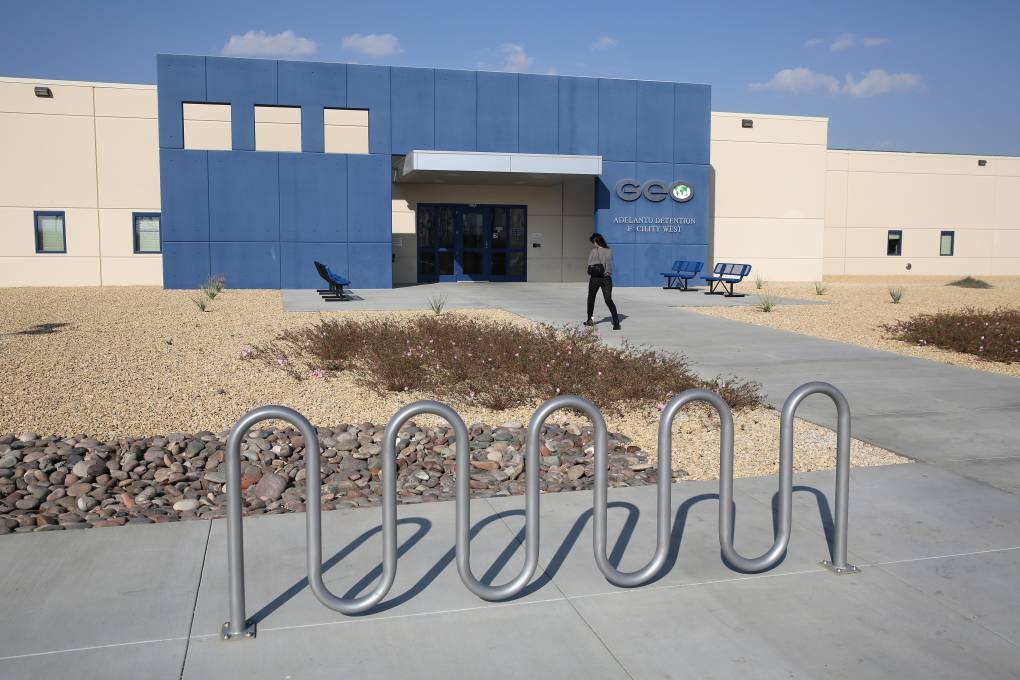
"caption": "The Adelanto Detention Facility is the largest U.S. Immigration and Customs Enforcement detention center in California. The facility is managed by the private GEO Group. Organizers signal that distrust of for-profit prison operators like GEO Group and Core Civic among detained migrants could complicate the process to vaccinate this population.",
"credit": "John Moore/Getty Images",
"altTag": null,
"description": "A family member walks into the Adelanto Detention Facility on November 15, 2013 in Adelanto, California. The facility is the largest Immigration and Customs Enforcement (ICE) detention center in California.",
"imgSizes": {
"medium": {
"file": "https://cdn.kqed.org/wp-content/uploads/sites/10/2021/04/GettyImages-450371267-1-800x533.jpg",
"width": 800,
"height": 533,
"mimeType": "image/jpeg"
},
"large": {
"file": "https://cdn.kqed.org/wp-content/uploads/sites/10/2021/04/GettyImages-450371267-1-1020x680.jpg",
"width": 1020,
"height": 680,
"mimeType": "image/jpeg"
},
"thumbnail": {
"file": "https://cdn.kqed.org/wp-content/uploads/sites/10/2021/04/GettyImages-450371267-1-160x107.jpg",
"width": 160,
"height": 107,
"mimeType": "image/jpeg"
},
"1536x1536": {
"file": "https://cdn.kqed.org/wp-content/uploads/sites/10/2021/04/GettyImages-450371267-1-1536x1024.jpg",
"width": 1536,
"height": 1024,
"mimeType": "image/jpeg"
},
"2048x2048": {
"file": "https://cdn.kqed.org/wp-content/uploads/sites/10/2021/04/GettyImages-450371267-1-2048x1365.jpg",
"width": 2048,
"height": 1365,
"mimeType": "image/jpeg"
},
"post-thumbnail": {
"file": "https://cdn.kqed.org/wp-content/uploads/sites/10/2021/04/GettyImages-450371267-1-672x372.jpg",
"width": 672,
"height": 372,
"mimeType": "image/jpeg"
},
"twentyfourteen-full-width": {
"file": "https://cdn.kqed.org/wp-content/uploads/sites/10/2021/04/GettyImages-450371267-1-1038x576.jpg",
"width": 1038,
"height": 576,
"mimeType": "image/jpeg"
},
"full-width": {
"file": "https://cdn.kqed.org/wp-content/uploads/sites/10/2021/04/GettyImages-450371267-1-1920x1280.jpg",
"width": 1920,
"height": 1280,
"mimeType": "image/jpeg"
},
"kqedFullSize": {
"file": "https://cdn.kqed.org/wp-content/uploads/sites/10/2021/04/GettyImages-450371267-1-scaled-e1778784968650.jpg",
"width": 2000,
"height": 1334
}
},
"isLoading": false,
"fetchFailed": false
},
"news_11859268": {
"type": "attachments",
"id": "news_11859268",
"meta": {
"index": "attachments_1716263798",
"site": "news",
"id": "11859268",
"found": true
},
"parent": 11858857,
"imgSizes": {
"apple_news_ca_square_4_0": {
"file": "https://ww2.kqed.org/app/uploads/sites/10/2021/02/EEA83CEA-CC03-4629-9BE5-CA5032807CB4-1-470x470.jpeg",
"width": 470,
"mimeType": "image/jpeg",
"height": 470
},
"thumbnail": {
"file": "https://ww2.kqed.org/app/uploads/sites/10/2021/02/EEA83CEA-CC03-4629-9BE5-CA5032807CB4-1-160x135.jpeg",
"width": 160,
"mimeType": "image/jpeg",
"height": 135
},
"post-thumbnail": {
"file": "https://ww2.kqed.org/app/uploads/sites/10/2021/02/EEA83CEA-CC03-4629-9BE5-CA5032807CB4-1-596x372.jpeg",
"width": 596,
"mimeType": "image/jpeg",
"height": 372
},
"kqedFullSize": {
"file": "https://ww2.kqed.org/app/uploads/sites/10/2021/02/EEA83CEA-CC03-4629-9BE5-CA5032807CB4-1.jpeg",
"width": 596,
"height": 503
},
"apple_news_ca_landscape_4_7": {
"file": "https://ww2.kqed.org/app/uploads/sites/10/2021/02/EEA83CEA-CC03-4629-9BE5-CA5032807CB4-1-596x474.jpeg",
"width": 596,
"mimeType": "image/jpeg",
"height": 474
},
"apple_news_ca_portrait_4_7": {
"file": "https://ww2.kqed.org/app/uploads/sites/10/2021/02/EEA83CEA-CC03-4629-9BE5-CA5032807CB4-1-414x503.jpeg",
"width": 414,
"mimeType": "image/jpeg",
"height": 503
},
"apple_news_ca_square_4_7": {
"file": "https://ww2.kqed.org/app/uploads/sites/10/2021/02/EEA83CEA-CC03-4629-9BE5-CA5032807CB4-1-550x503.jpeg",
"width": 550,
"mimeType": "image/jpeg",
"height": 503
},
"apple_news_ca_landscape_4_0": {
"file": "https://ww2.kqed.org/app/uploads/sites/10/2021/02/EEA83CEA-CC03-4629-9BE5-CA5032807CB4-1-536x402.jpeg",
"width": 536,
"mimeType": "image/jpeg",
"height": 402
},
"apple_news_ca_portrait_4_0": {
"file": "https://ww2.kqed.org/app/uploads/sites/10/2021/02/EEA83CEA-CC03-4629-9BE5-CA5032807CB4-1-354x472.jpeg",
"width": 354,
"mimeType": "image/jpeg",
"height": 472
}
},
"publishDate": 1612829667,
"modified": 1612829706,
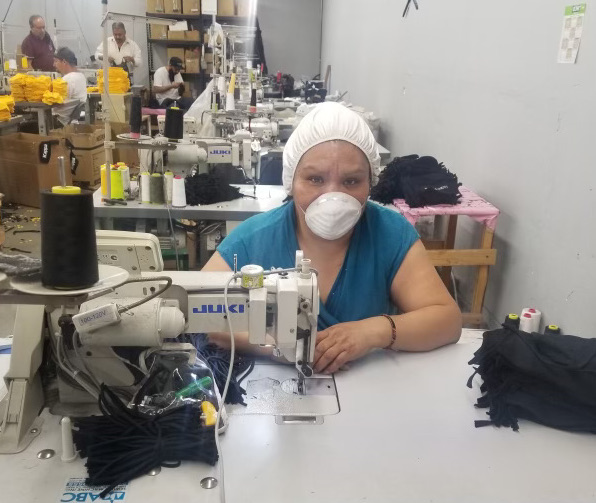
"caption": "Olegaria Ruiz at her job in a Los Angeles garment factory in June 2020.",
"description": null,
"title": "EEA83CEA-CC03-4629-9BE5-CA5032807CB4",
"credit": "Courtesy of Estela Perez, Garment Worker Center",
"status": "inherit",
"altTag": null,
"isLoading": false,
"fetchFailed": false
},
"news_11851305": {
"type": "attachments",
"id": "news_11851305",
"meta": {
"index": "attachments_1716263798",
"site": "news",
"id": "11851305",
"found": true
},
"parent": 11851270,
"imgSizes": {
"apple_news_ca_landscape_5_5": {
"file": "https://ww2.kqed.org/app/uploads/sites/10/2020/12/RS46424_GettyImages-1211310309-qut-1044x783.jpg",
"width": 1044,
"mimeType": "image/jpeg",
"height": 783
},
"apple_news_ca_square_4_0": {
"file": "https://ww2.kqed.org/app/uploads/sites/10/2020/12/RS46424_GettyImages-1211310309-qut-470x470.jpg",
"width": 470,
"mimeType": "image/jpeg",
"height": 470
},
"twentyfourteen-full-width": {
"file": "https://ww2.kqed.org/app/uploads/sites/10/2020/12/RS46424_GettyImages-1211310309-qut-1038x576.jpg",
"width": 1038,
"mimeType": "image/jpeg",
"height": 576
},
"thumbnail": {
"file": "https://ww2.kqed.org/app/uploads/sites/10/2020/12/RS46424_GettyImages-1211310309-qut-160x107.jpg",
"width": 160,
"mimeType": "image/jpeg",
"height": 107
},
"post-thumbnail": {
"file": "https://ww2.kqed.org/app/uploads/sites/10/2020/12/RS46424_GettyImages-1211310309-qut-672x372.jpg",
"width": 672,
"mimeType": "image/jpeg",
"height": 372
},
"kqedFullSize": {
"file": "https://ww2.kqed.org/app/uploads/sites/10/2020/12/RS46424_GettyImages-1211310309-qut.jpg",
"width": 1920,
"height": 1280
},
"apple_news_ca_landscape_4_7": {
"file": "https://ww2.kqed.org/app/uploads/sites/10/2020/12/RS46424_GettyImages-1211310309-qut-632x474.jpg",
"width": 632,
"mimeType": "image/jpeg",
"height": 474
},
"large": {
"file": "https://ww2.kqed.org/app/uploads/sites/10/2020/12/RS46424_GettyImages-1211310309-qut-1020x680.jpg",
"width": 1020,
"mimeType": "image/jpeg",
"height": 680
},
"apple_news_ca_landscape_4_0": {
"file": "https://ww2.kqed.org/app/uploads/sites/10/2020/12/RS46424_GettyImages-1211310309-qut-536x402.jpg",
"width": 536,
"mimeType": "image/jpeg",
"height": 402
},
"apple_news_ca_portrait_12_9": {
"file": "https://ww2.kqed.org/app/uploads/sites/10/2020/12/RS46424_GettyImages-1211310309-qut-1122x1280.jpg",
"width": 1122,
"mimeType": "image/jpeg",
"height": 1280
},
"medium": {
"file": "https://ww2.kqed.org/app/uploads/sites/10/2020/12/RS46424_GettyImages-1211310309-qut-800x533.jpg",
"width": 800,
"mimeType": "image/jpeg",
"height": 533
},
"apple_news_ca_portrait_4_0": {
"file": "https://ww2.kqed.org/app/uploads/sites/10/2020/12/RS46424_GettyImages-1211310309-qut-354x472.jpg",
"width": 354,
"mimeType": "image/jpeg",
"height": 472
},
"apple_news_ca_portrait_9_7": {
"file": "https://ww2.kqed.org/app/uploads/sites/10/2020/12/RS46424_GettyImages-1211310309-qut-840x1120.jpg",
"width": 840,
"mimeType": "image/jpeg",
"height": 1120
},
"apple_news_ca_landscape_12_9": {
"file": "https://ww2.kqed.org/app/uploads/sites/10/2020/12/RS46424_GettyImages-1211310309-qut-1832x1280.jpg",
"width": 1832,
"mimeType": "image/jpeg",
"height": 1280
},
"apple_news_ca_square_9_7": {
"file": "https://ww2.kqed.org/app/uploads/sites/10/2020/12/RS46424_GettyImages-1211310309-qut-1104x1104.jpg",
"width": 1104,
"mimeType": "image/jpeg",
"height": 1104
},
"1536x1536": {
"file": "https://ww2.kqed.org/app/uploads/sites/10/2020/12/RS46424_GettyImages-1211310309-qut-1536x1024.jpg",
"width": 1536,
"mimeType": "image/jpeg",
"height": 1024
},
"apple_news_ca_portrait_4_7": {
"file": "https://ww2.kqed.org/app/uploads/sites/10/2020/12/RS46424_GettyImages-1211310309-qut-414x552.jpg",
"width": 414,
"mimeType": "image/jpeg",
"height": 552
},
"apple_news_ca_square_12_9": {
"file": "https://ww2.kqed.org/app/uploads/sites/10/2020/12/RS46424_GettyImages-1211310309-qut-1472x1280.jpg",
"width": 1472,
"mimeType": "image/jpeg",
"height": 1280
},
"apple_news_ca_portrait_5_5": {
"file": "https://ww2.kqed.org/app/uploads/sites/10/2020/12/RS46424_GettyImages-1211310309-qut-687x916.jpg",
"width": 687,
"mimeType": "image/jpeg",
"height": 916
},
"apple_news_ca_square_4_7": {
"file": "https://ww2.kqed.org/app/uploads/sites/10/2020/12/RS46424_GettyImages-1211310309-qut-550x550.jpg",
"width": 550,
"mimeType": "image/jpeg",
"height": 550
},
"apple_news_ca_landscape_9_7": {
"file": "https://ww2.kqed.org/app/uploads/sites/10/2020/12/RS46424_GettyImages-1211310309-qut-1376x1032.jpg",
"width": 1376,
"mimeType": "image/jpeg",
"height": 1032
},
"apple_news_ca_square_5_5": {
"file": "https://ww2.kqed.org/app/uploads/sites/10/2020/12/RS46424_GettyImages-1211310309-qut-912x912.jpg",
"width": 912,
"mimeType": "image/jpeg",
"height": 912
}
},
"publishDate": 1608083968,
"modified": 1608084069,
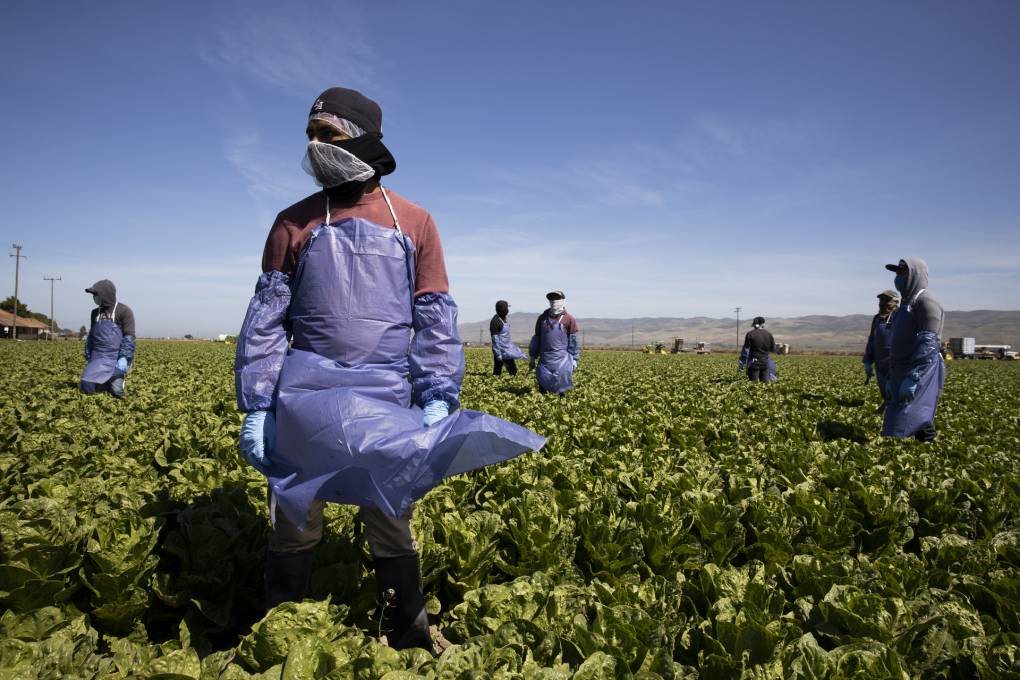
"caption": "Farm laborers from Fresh Harvest working with an H-2A visa maintain a safe distance as a machine is moved on April 27, 2020 in Greenfield, California. ",
"description": "Farm laborers from Fresh Harvest working with an H-2A visa maintain a safe distance as a machine is moved on April 27, 2020 in Greenfield, California. ",
"title": "Immigrant Agricultural Workers Critical To U.S. Food Security Amid COVID-19 Outbreak",
"credit": "Brent Stirton/Getty Images",
"status": "inherit",
"altTag": "\"\"",
"isLoading": false,
"fetchFailed": false
},
"news_11848275": {
"type": "attachments",
"id": "news_11848275",
"meta": {
"index": "attachments_1716263798",
"site": "news",
"id": "11848275",
"found": true
},
"parent": 11848066,
"imgSizes": {
"apple_news_ca_landscape_5_5": {
"file": "https://ww2.kqed.org/app/uploads/sites/10/2020/11/GettyImages-460793982-1044x783.jpg",
"width": 1044,
"mimeType": "image/jpeg",
"height": 783
},
"apple_news_ca_square_4_0": {
"file": "https://ww2.kqed.org/app/uploads/sites/10/2020/11/GettyImages-460793982-470x470.jpg",
"width": 470,
"mimeType": "image/jpeg",
"height": 470
},
"twentyfourteen-full-width": {
"file": "https://ww2.kqed.org/app/uploads/sites/10/2020/11/GettyImages-460793982-1038x576.jpg",
"width": 1038,
"mimeType": "image/jpeg",
"height": 576
},
"thumbnail": {
"file": "https://ww2.kqed.org/app/uploads/sites/10/2020/11/GettyImages-460793982-160x120.jpg",
"width": 160,
"mimeType": "image/jpeg",
"height": 120
},
"post-thumbnail": {
"file": "https://ww2.kqed.org/app/uploads/sites/10/2020/11/GettyImages-460793982-672x372.jpg",
"width": 672,
"mimeType": "image/jpeg",
"height": 372
},
"kqedFullSize": {
"file": "https://ww2.kqed.org/app/uploads/sites/10/2020/11/GettyImages-460793982-scaled-e1605902137163.jpg",
"width": 1920,
"height": 1440
},
"2048x2048": {
"file": "https://ww2.kqed.org/app/uploads/sites/10/2020/11/GettyImages-460793982-2048x1536.jpg",
"width": 2048,
"mimeType": "image/jpeg",
"height": 1536
},
"apple_news_ca_landscape_4_7": {
"file": "https://ww2.kqed.org/app/uploads/sites/10/2020/11/GettyImages-460793982-632x474.jpg",
"width": 632,
"mimeType": "image/jpeg",
"height": 474
},
"large": {
"file": "https://ww2.kqed.org/app/uploads/sites/10/2020/11/GettyImages-460793982-1020x765.jpg",
"width": 1020,
"mimeType": "image/jpeg",
"height": 765
},
"apple_news_ca_landscape_4_0": {
"file": "https://ww2.kqed.org/app/uploads/sites/10/2020/11/GettyImages-460793982-536x402.jpg",
"width": 536,
"mimeType": "image/jpeg",
"height": 402
},
"apple_news_ca_portrait_12_9": {
"file": "https://ww2.kqed.org/app/uploads/sites/10/2020/11/GettyImages-460793982-1122x1496.jpg",
"width": 1122,
"mimeType": "image/jpeg",
"height": 1496
},
"medium": {
"file": "https://ww2.kqed.org/app/uploads/sites/10/2020/11/GettyImages-460793982-800x600.jpg",
"width": 800,
"mimeType": "image/jpeg",
"height": 600
},
"apple_news_ca_portrait_4_0": {
"file": "https://ww2.kqed.org/app/uploads/sites/10/2020/11/GettyImages-460793982-354x472.jpg",
"width": 354,
"mimeType": "image/jpeg",
"height": 472
},
"apple_news_ca_portrait_9_7": {
"file": "https://ww2.kqed.org/app/uploads/sites/10/2020/11/GettyImages-460793982-840x1120.jpg",
"width": 840,
"mimeType": "image/jpeg",
"height": 1120
},
"apple_news_ca_landscape_12_9": {
"file": "https://ww2.kqed.org/app/uploads/sites/10/2020/11/GettyImages-460793982-1832x1374.jpg",
"width": 1832,
"mimeType": "image/jpeg",
"height": 1374
},
"apple_news_ca_square_9_7": {
"file": "https://ww2.kqed.org/app/uploads/sites/10/2020/11/GettyImages-460793982-1104x1104.jpg",
"width": 1104,
"mimeType": "image/jpeg",
"height": 1104
},
"1536x1536": {
"file": "https://ww2.kqed.org/app/uploads/sites/10/2020/11/GettyImages-460793982-1536x1152.jpg",
"width": 1536,
"mimeType": "image/jpeg",
"height": 1152
},
"apple_news_ca_portrait_4_7": {
"file": "https://ww2.kqed.org/app/uploads/sites/10/2020/11/GettyImages-460793982-414x552.jpg",
"width": 414,
"mimeType": "image/jpeg",
"height": 552
},
"apple_news_ca_square_12_9": {
"file": "https://ww2.kqed.org/app/uploads/sites/10/2020/11/GettyImages-460793982-1472x1472.jpg",
"width": 1472,
"mimeType": "image/jpeg",
"height": 1472
},
"apple_news_ca_portrait_5_5": {
"file": "https://ww2.kqed.org/app/uploads/sites/10/2020/11/GettyImages-460793982-687x916.jpg",
"width": 687,
"mimeType": "image/jpeg",
"height": 916
},
"full-width": {
"file": "https://ww2.kqed.org/app/uploads/sites/10/2020/11/GettyImages-460793982-1920x1440.jpg",
"width": 1920,
"mimeType": "image/jpeg",
"height": 1440
},
"apple_news_ca_square_4_7": {
"file": "https://ww2.kqed.org/app/uploads/sites/10/2020/11/GettyImages-460793982-550x550.jpg",
"width": 550,
"mimeType": "image/jpeg",
"height": 550
},
"apple_news_ca_landscape_9_7": {
"file": "https://ww2.kqed.org/app/uploads/sites/10/2020/11/GettyImages-460793982-1376x1032.jpg",
"width": 1376,
"mimeType": "image/jpeg",
"height": 1032
},
"apple_news_ca_square_5_5": {
"file": "https://ww2.kqed.org/app/uploads/sites/10/2020/11/GettyImages-460793982-912x912.jpg",
"width": 912,
"mimeType": "image/jpeg",
"height": 912
}
},
"publishDate": 1605902092,
"modified": 1605918933,
"caption": "Musicians stand in Mariachi Plaza in Boyle Heights. One song in a new collection celebrating the neighborhood's music takes its cue from the plaza, where mariachi from across LA have gathered since the 1930s.",
"description": "Musicians stand in Mariachi Plaza in Boyle Heights. One song in a new collection celebrating the neighborhood's music takes its cue from the plaza, where mariachi musicians from across LA have gathered since the 1930s.",
"title": "US-MEXICO-MUSIC-TRADITION-REAL ESTATE",
"credit": "ROBYN BECK/AFP via Getty Images",
"status": "inherit",
"isLoading": false,
"fetchFailed": false
},
"news_11838142": {
"type": "attachments",
"id": "news_11838142",
"meta": {
"index": "attachments_1716263798",
"site": "news",
"id": "11838142",
"found": true
},
"parent": 11838137,
"imgSizes": {
"apple_news_ca_landscape_5_5": {
"file": "https://ww2.kqed.org/app/uploads/sites/10/2020/09/RS44906_IMG_8037-Jimmy-qut-1044x783.jpg",
"width": 1044,
"mimeType": "image/jpeg",
"height": 783
},
"apple_news_ca_square_4_0": {
"file": "https://ww2.kqed.org/app/uploads/sites/10/2020/09/RS44906_IMG_8037-Jimmy-qut-470x470.jpg",
"width": 470,
"mimeType": "image/jpeg",
"height": 470
},
"twentyfourteen-full-width": {
"file": "https://ww2.kqed.org/app/uploads/sites/10/2020/09/RS44906_IMG_8037-Jimmy-qut-1038x576.jpg",
"width": 1038,
"mimeType": "image/jpeg",
"height": 576
},
"thumbnail": {
"file": "https://ww2.kqed.org/app/uploads/sites/10/2020/09/RS44906_IMG_8037-Jimmy-qut-160x107.jpg",
"width": 160,
"mimeType": "image/jpeg",
"height": 107
},
"post-thumbnail": {
"file": "https://ww2.kqed.org/app/uploads/sites/10/2020/09/RS44906_IMG_8037-Jimmy-qut-672x372.jpg",
"width": 672,
"mimeType": "image/jpeg",
"height": 372
},
"kqedFullSize": {
"file": "https://ww2.kqed.org/app/uploads/sites/10/2020/09/RS44906_IMG_8037-Jimmy-qut.jpg",
"width": 1920,
"height": 1282
},
"apple_news_ca_landscape_4_7": {
"file": "https://ww2.kqed.org/app/uploads/sites/10/2020/09/RS44906_IMG_8037-Jimmy-qut-632x474.jpg",
"width": 632,
"mimeType": "image/jpeg",
"height": 474
},
"large": {
"file": "https://ww2.kqed.org/app/uploads/sites/10/2020/09/RS44906_IMG_8037-Jimmy-qut-1020x681.jpg",
"width": 1020,
"mimeType": "image/jpeg",
"height": 681
},
"apple_news_ca_landscape_4_0": {
"file": "https://ww2.kqed.org/app/uploads/sites/10/2020/09/RS44906_IMG_8037-Jimmy-qut-536x402.jpg",
"width": 536,
"mimeType": "image/jpeg",
"height": 402
},
"apple_news_ca_portrait_12_9": {
"file": "https://ww2.kqed.org/app/uploads/sites/10/2020/09/RS44906_IMG_8037-Jimmy-qut-1122x1282.jpg",
"width": 1122,
"mimeType": "image/jpeg",
"height": 1282
},
"medium": {
"file": "https://ww2.kqed.org/app/uploads/sites/10/2020/09/RS44906_IMG_8037-Jimmy-qut-800x534.jpg",
"width": 800,
"mimeType": "image/jpeg",
"height": 534
},
"apple_news_ca_portrait_4_0": {
"file": "https://ww2.kqed.org/app/uploads/sites/10/2020/09/RS44906_IMG_8037-Jimmy-qut-354x472.jpg",
"width": 354,
"mimeType": "image/jpeg",
"height": 472
},
"apple_news_ca_portrait_9_7": {
"file": "https://ww2.kqed.org/app/uploads/sites/10/2020/09/RS44906_IMG_8037-Jimmy-qut-840x1120.jpg",
"width": 840,
"mimeType": "image/jpeg",
"height": 1120
},
"apple_news_ca_landscape_12_9": {
"file": "https://ww2.kqed.org/app/uploads/sites/10/2020/09/RS44906_IMG_8037-Jimmy-qut-1832x1282.jpg",
"width": 1832,
"mimeType": "image/jpeg",
"height": 1282
},
"apple_news_ca_square_9_7": {
"file": "https://ww2.kqed.org/app/uploads/sites/10/2020/09/RS44906_IMG_8037-Jimmy-qut-1104x1104.jpg",
"width": 1104,
"mimeType": "image/jpeg",
"height": 1104
},
"1536x1536": {
"file": "https://ww2.kqed.org/app/uploads/sites/10/2020/09/RS44906_IMG_8037-Jimmy-qut-1536x1026.jpg",
"width": 1536,
"mimeType": "image/jpeg",
"height": 1026
},
"apple_news_ca_portrait_4_7": {
"file": "https://ww2.kqed.org/app/uploads/sites/10/2020/09/RS44906_IMG_8037-Jimmy-qut-414x552.jpg",
"width": 414,
"mimeType": "image/jpeg",
"height": 552
},
"apple_news_ca_square_12_9": {
"file": "https://ww2.kqed.org/app/uploads/sites/10/2020/09/RS44906_IMG_8037-Jimmy-qut-1472x1282.jpg",
"width": 1472,
"mimeType": "image/jpeg",
"height": 1282
},
"apple_news_ca_portrait_5_5": {
"file": "https://ww2.kqed.org/app/uploads/sites/10/2020/09/RS44906_IMG_8037-Jimmy-qut-687x916.jpg",
"width": 687,
"mimeType": "image/jpeg",
"height": 916
},
"apple_news_ca_square_4_7": {
"file": "https://ww2.kqed.org/app/uploads/sites/10/2020/09/RS44906_IMG_8037-Jimmy-qut-550x550.jpg",
"width": 550,
"mimeType": "image/jpeg",
"height": 550
},
"apple_news_ca_landscape_9_7": {
"file": "https://ww2.kqed.org/app/uploads/sites/10/2020/09/RS44906_IMG_8037-Jimmy-qut-1376x1032.jpg",
"width": 1376,
"mimeType": "image/jpeg",
"height": 1032
},
"apple_news_ca_square_5_5": {
"file": "https://ww2.kqed.org/app/uploads/sites/10/2020/09/RS44906_IMG_8037-Jimmy-qut-912x912.jpg",
"width": 912,
"mimeType": "image/jpeg",
"height": 912
}
},
"publishDate": 1600218571,
"modified": 1600218752,
"caption": "Supporters of workers at Kome Japanese Seafood Buffet stand outside the restaurant in Daly City in 2018. The California Labor Commissioner cited Kome for minimum wage and other violations before the restaurant closed last year.",
"description": null,
"title": "RS44906_IMG_8037 Jimmy-qut",
"credit": "Courtesy of Chinese Progressive Association",
"status": "inherit",
"isLoading": false,
"fetchFailed": false
},
"news_11837554": {
"type": "attachments",
"id": "news_11837554",
"meta": {
"index": "attachments_1716263798",
"site": "news",
"id": "11837554",
"found": true
},
"parent": 11837511,
"imgSizes": {
"apple_news_ca_landscape_5_5": {
"file": "https://ww2.kqed.org/app/uploads/sites/10/2020/09/RS44728_006_KQED_Chinatown_Businesses_09022020-qut-1044x783.jpg",
"width": 1044,
"mimeType": "image/jpeg",
"height": 783
},
"apple_news_ca_square_4_0": {
"file": "https://ww2.kqed.org/app/uploads/sites/10/2020/09/RS44728_006_KQED_Chinatown_Businesses_09022020-qut-470x470.jpg",
"width": 470,
"mimeType": "image/jpeg",
"height": 470
},
"twentyfourteen-full-width": {
"file": "https://ww2.kqed.org/app/uploads/sites/10/2020/09/RS44728_006_KQED_Chinatown_Businesses_09022020-qut-1038x576.jpg",
"width": 1038,
"mimeType": "image/jpeg",
"height": 576
},
"thumbnail": {
"file": "https://ww2.kqed.org/app/uploads/sites/10/2020/09/RS44728_006_KQED_Chinatown_Businesses_09022020-qut-160x107.jpg",
"width": 160,
"mimeType": "image/jpeg",
"height": 107
},
"post-thumbnail": {
"file": "https://ww2.kqed.org/app/uploads/sites/10/2020/09/RS44728_006_KQED_Chinatown_Businesses_09022020-qut-672x372.jpg",
"width": 672,
"mimeType": "image/jpeg",
"height": 372
},
"kqedFullSize": {
"file": "https://ww2.kqed.org/app/uploads/sites/10/2020/09/RS44728_006_KQED_Chinatown_Businesses_09022020-qut.jpg",
"width": 1920,
"height": 1280
},
"apple_news_ca_landscape_4_7": {
"file": "https://ww2.kqed.org/app/uploads/sites/10/2020/09/RS44728_006_KQED_Chinatown_Businesses_09022020-qut-632x474.jpg",
"width": 632,
"mimeType": "image/jpeg",
"height": 474
},
"large": {
"file": "https://ww2.kqed.org/app/uploads/sites/10/2020/09/RS44728_006_KQED_Chinatown_Businesses_09022020-qut-1020x680.jpg",
"width": 1020,
"mimeType": "image/jpeg",
"height": 680
},
"apple_news_ca_landscape_4_0": {
"file": "https://ww2.kqed.org/app/uploads/sites/10/2020/09/RS44728_006_KQED_Chinatown_Businesses_09022020-qut-536x402.jpg",
"width": 536,
"mimeType": "image/jpeg",
"height": 402
},
"apple_news_ca_portrait_12_9": {
"file": "https://ww2.kqed.org/app/uploads/sites/10/2020/09/RS44728_006_KQED_Chinatown_Businesses_09022020-qut-1122x1280.jpg",
"width": 1122,
"mimeType": "image/jpeg",
"height": 1280
},
"medium": {
"file": "https://ww2.kqed.org/app/uploads/sites/10/2020/09/RS44728_006_KQED_Chinatown_Businesses_09022020-qut-800x533.jpg",
"width": 800,
"mimeType": "image/jpeg",
"height": 533
},
"apple_news_ca_portrait_4_0": {
"file": "https://ww2.kqed.org/app/uploads/sites/10/2020/09/RS44728_006_KQED_Chinatown_Businesses_09022020-qut-354x472.jpg",
"width": 354,
"mimeType": "image/jpeg",
"height": 472
},
"apple_news_ca_portrait_9_7": {
"file": "https://ww2.kqed.org/app/uploads/sites/10/2020/09/RS44728_006_KQED_Chinatown_Businesses_09022020-qut-840x1120.jpg",
"width": 840,
"mimeType": "image/jpeg",
"height": 1120
},
"apple_news_ca_landscape_12_9": {
"file": "https://ww2.kqed.org/app/uploads/sites/10/2020/09/RS44728_006_KQED_Chinatown_Businesses_09022020-qut-1832x1280.jpg",
"width": 1832,
"mimeType": "image/jpeg",
"height": 1280
},
"apple_news_ca_square_9_7": {
"file": "https://ww2.kqed.org/app/uploads/sites/10/2020/09/RS44728_006_KQED_Chinatown_Businesses_09022020-qut-1104x1104.jpg",
"width": 1104,
"mimeType": "image/jpeg",
"height": 1104
},
"1536x1536": {
"file": "https://ww2.kqed.org/app/uploads/sites/10/2020/09/RS44728_006_KQED_Chinatown_Businesses_09022020-qut-1536x1024.jpg",
"width": 1536,
"mimeType": "image/jpeg",
"height": 1024
},
"apple_news_ca_portrait_4_7": {
"file": "https://ww2.kqed.org/app/uploads/sites/10/2020/09/RS44728_006_KQED_Chinatown_Businesses_09022020-qut-414x552.jpg",
"width": 414,
"mimeType": "image/jpeg",
"height": 552
},
"apple_news_ca_square_12_9": {
"file": "https://ww2.kqed.org/app/uploads/sites/10/2020/09/RS44728_006_KQED_Chinatown_Businesses_09022020-qut-1472x1280.jpg",
"width": 1472,
"mimeType": "image/jpeg",
"height": 1280
},
"apple_news_ca_portrait_5_5": {
"file": "https://ww2.kqed.org/app/uploads/sites/10/2020/09/RS44728_006_KQED_Chinatown_Businesses_09022020-qut-687x916.jpg",
"width": 687,
"mimeType": "image/jpeg",
"height": 916
},
"apple_news_ca_square_4_7": {
"file": "https://ww2.kqed.org/app/uploads/sites/10/2020/09/RS44728_006_KQED_Chinatown_Businesses_09022020-qut-550x550.jpg",
"width": 550,
"mimeType": "image/jpeg",
"height": 550
},
"apple_news_ca_landscape_9_7": {
"file": "https://ww2.kqed.org/app/uploads/sites/10/2020/09/RS44728_006_KQED_Chinatown_Businesses_09022020-qut-1376x1032.jpg",
"width": 1376,
"mimeType": "image/jpeg",
"height": 1032
},
"apple_news_ca_square_5_5": {
"file": "https://ww2.kqed.org/app/uploads/sites/10/2020/09/RS44728_006_KQED_Chinatown_Businesses_09022020-qut-912x912.jpg",
"width": 912,
"mimeType": "image/jpeg",
"height": 912
}
},
"publishDate": 1599850698,
"modified": 1599864231,
"caption": "Tilly Tsang (L) and her daughter Chelsea Hung (R), owners of Washington Bakery and Restaurant in San Francisco's Chinatown on Sept. 2, 2020.",
"description": null,
"title": "RS44728_006_KQED_Chinatown_Businesses_09022020-qut",
"credit": "Beth LaBerge/KQED",
"status": "inherit",
"isLoading": false,
"fetchFailed": false
},
"news_11835783": {
"type": "attachments",
"id": "news_11835783",
"meta": {
"index": "attachments_1716263798",
"site": "news",
"id": "11835783",
"found": true
},
"parent": 0,
"imgSizes": {
"apple_news_ca_landscape_5_5": {
"file": "https://ww2.kqed.org/app/uploads/sites/10/2020/08/RS44638_016_KQED_Oakland_AleydaRebelo_08262020-qut-1044x783.jpg",
"width": 1044,
"mimeType": "image/jpeg",
"height": 783
},
"apple_news_ca_square_4_0": {
"file": "https://ww2.kqed.org/app/uploads/sites/10/2020/08/RS44638_016_KQED_Oakland_AleydaRebelo_08262020-qut-470x470.jpg",
"width": 470,
"mimeType": "image/jpeg",
"height": 470
},
"twentyfourteen-full-width": {
"file": "https://ww2.kqed.org/app/uploads/sites/10/2020/08/RS44638_016_KQED_Oakland_AleydaRebelo_08262020-qut-1038x576.jpg",
"width": 1038,
"mimeType": "image/jpeg",
"height": 576
},
"thumbnail": {
"file": "https://ww2.kqed.org/app/uploads/sites/10/2020/08/RS44638_016_KQED_Oakland_AleydaRebelo_08262020-qut-160x107.jpg",
"width": 160,
"mimeType": "image/jpeg",
"height": 107
},
"post-thumbnail": {
"file": "https://ww2.kqed.org/app/uploads/sites/10/2020/08/RS44638_016_KQED_Oakland_AleydaRebelo_08262020-qut-672x372.jpg",
"width": 672,
"mimeType": "image/jpeg",
"height": 372
},
"kqedFullSize": {
"file": "https://ww2.kqed.org/app/uploads/sites/10/2020/08/RS44638_016_KQED_Oakland_AleydaRebelo_08262020-qut.jpg",
"width": 1920,
"height": 1280
},
"apple_news_ca_landscape_4_7": {
"file": "https://ww2.kqed.org/app/uploads/sites/10/2020/08/RS44638_016_KQED_Oakland_AleydaRebelo_08262020-qut-632x474.jpg",
"width": 632,
"mimeType": "image/jpeg",
"height": 474
},
"large": {
"file": "https://ww2.kqed.org/app/uploads/sites/10/2020/08/RS44638_016_KQED_Oakland_AleydaRebelo_08262020-qut-1020x680.jpg",
"width": 1020,
"mimeType": "image/jpeg",
"height": 680
},
"apple_news_ca_landscape_4_0": {
"file": "https://ww2.kqed.org/app/uploads/sites/10/2020/08/RS44638_016_KQED_Oakland_AleydaRebelo_08262020-qut-536x402.jpg",
"width": 536,
"mimeType": "image/jpeg",
"height": 402
},
"apple_news_ca_portrait_12_9": {
"file": "https://ww2.kqed.org/app/uploads/sites/10/2020/08/RS44638_016_KQED_Oakland_AleydaRebelo_08262020-qut-1122x1280.jpg",
"width": 1122,
"mimeType": "image/jpeg",
"height": 1280
},
"medium": {
"file": "https://ww2.kqed.org/app/uploads/sites/10/2020/08/RS44638_016_KQED_Oakland_AleydaRebelo_08262020-qut-800x533.jpg",
"width": 800,
"mimeType": "image/jpeg",
"height": 533
},
"apple_news_ca_portrait_4_0": {
"file": "https://ww2.kqed.org/app/uploads/sites/10/2020/08/RS44638_016_KQED_Oakland_AleydaRebelo_08262020-qut-354x472.jpg",
"width": 354,
"mimeType": "image/jpeg",
"height": 472
},
"apple_news_ca_portrait_9_7": {
"file": "https://ww2.kqed.org/app/uploads/sites/10/2020/08/RS44638_016_KQED_Oakland_AleydaRebelo_08262020-qut-840x1120.jpg",
"width": 840,
"mimeType": "image/jpeg",
"height": 1120
},
"apple_news_ca_landscape_12_9": {
"file": "https://ww2.kqed.org/app/uploads/sites/10/2020/08/RS44638_016_KQED_Oakland_AleydaRebelo_08262020-qut-1832x1280.jpg",
"width": 1832,
"mimeType": "image/jpeg",
"height": 1280
},
"apple_news_ca_square_9_7": {
"file": "https://ww2.kqed.org/app/uploads/sites/10/2020/08/RS44638_016_KQED_Oakland_AleydaRebelo_08262020-qut-1104x1104.jpg",
"width": 1104,
"mimeType": "image/jpeg",
"height": 1104
},
"1536x1536": {
"file": "https://ww2.kqed.org/app/uploads/sites/10/2020/08/RS44638_016_KQED_Oakland_AleydaRebelo_08262020-qut-1536x1024.jpg",
"width": 1536,
"mimeType": "image/jpeg",
"height": 1024
},
"apple_news_ca_portrait_4_7": {
"file": "https://ww2.kqed.org/app/uploads/sites/10/2020/08/RS44638_016_KQED_Oakland_AleydaRebelo_08262020-qut-414x552.jpg",
"width": 414,
"mimeType": "image/jpeg",
"height": 552
},
"apple_news_ca_square_12_9": {
"file": "https://ww2.kqed.org/app/uploads/sites/10/2020/08/RS44638_016_KQED_Oakland_AleydaRebelo_08262020-qut-1472x1280.jpg",
"width": 1472,
"mimeType": "image/jpeg",
"height": 1280
},
"apple_news_ca_portrait_5_5": {
"file": "https://ww2.kqed.org/app/uploads/sites/10/2020/08/RS44638_016_KQED_Oakland_AleydaRebelo_08262020-qut-687x916.jpg",
"width": 687,
"mimeType": "image/jpeg",
"height": 916
},
"apple_news_ca_square_4_7": {
"file": "https://ww2.kqed.org/app/uploads/sites/10/2020/08/RS44638_016_KQED_Oakland_AleydaRebelo_08262020-qut-550x550.jpg",
"width": 550,
"mimeType": "image/jpeg",
"height": 550
},
"apple_news_ca_landscape_9_7": {
"file": "https://ww2.kqed.org/app/uploads/sites/10/2020/08/RS44638_016_KQED_Oakland_AleydaRebelo_08262020-qut-1376x1032.jpg",
"width": 1376,
"mimeType": "image/jpeg",
"height": 1032
},
"apple_news_ca_square_5_5": {
"file": "https://ww2.kqed.org/app/uploads/sites/10/2020/08/RS44638_016_KQED_Oakland_AleydaRebelo_08262020-qut-912x912.jpg",
"width": 912,
"mimeType": "image/jpeg",
"height": 912
}
},
"publishDate": 1598640347,
"modified": 1598642026,
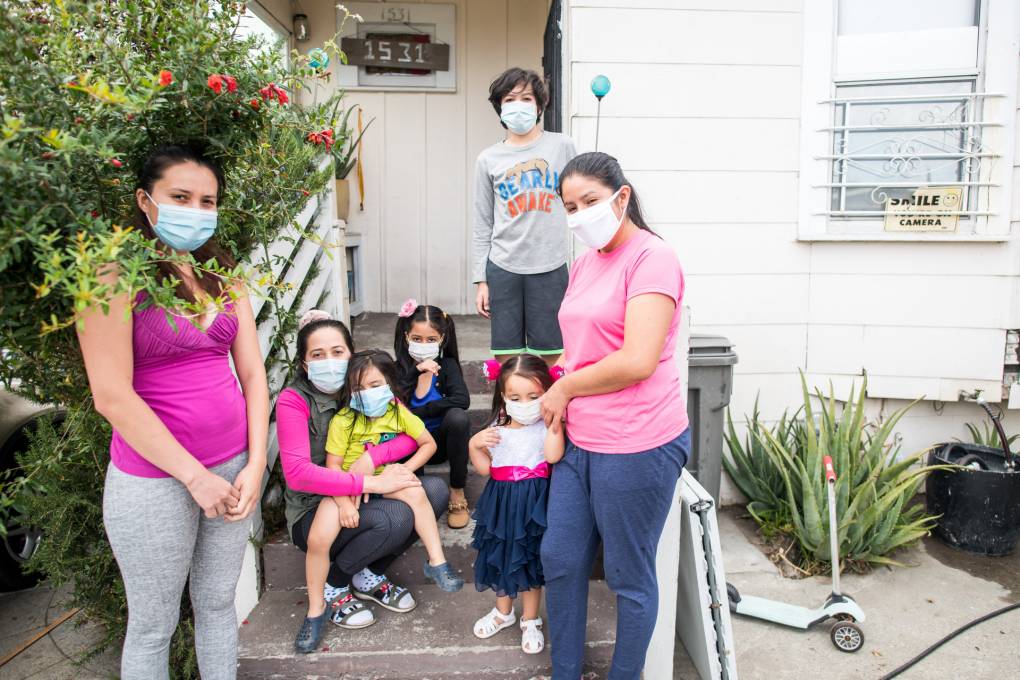
"caption": "Aleyda Rebelo (second from left) with her family at their home in Oakland on Aug. 26, 2020.",
"description": null,
"title": "evictionmoratorium",
"credit": "Beth LaBerge/KQED",
"status": "inherit",
"isLoading": false,
"fetchFailed": false
},
"news_11834257": {
"type": "attachments",
"id": "news_11834257",
"meta": {
"index": "attachments_1716263798",
"site": "news",
"id": "11834257",
"found": true
},
"parent": 11834253,
"imgSizes": {
"apple_news_ca_landscape_5_5": {
"file": "https://ww2.kqed.org/app/uploads/sites/10/2020/08/RS44512_take-heed-billboard-qut-1044x783.jpg",
"width": 1044,
"mimeType": "image/jpeg",
"height": 783
},
"apple_news_ca_square_4_0": {
"file": "https://ww2.kqed.org/app/uploads/sites/10/2020/08/RS44512_take-heed-billboard-qut-470x470.jpg",
"width": 470,
"mimeType": "image/jpeg",
"height": 470
},
"twentyfourteen-full-width": {
"file": "https://ww2.kqed.org/app/uploads/sites/10/2020/08/RS44512_take-heed-billboard-qut-1038x576.jpg",
"width": 1038,
"mimeType": "image/jpeg",
"height": 576
},
"thumbnail": {
"file": "https://ww2.kqed.org/app/uploads/sites/10/2020/08/RS44512_take-heed-billboard-qut-160x120.jpg",
"width": 160,
"mimeType": "image/jpeg",
"height": 120
},
"post-thumbnail": {
"file": "https://ww2.kqed.org/app/uploads/sites/10/2020/08/RS44512_take-heed-billboard-qut-672x372.jpg",
"width": 672,
"mimeType": "image/jpeg",
"height": 372
},
"kqedFullSize": {
"file": "https://ww2.kqed.org/app/uploads/sites/10/2020/08/RS44512_take-heed-billboard-qut.jpg",
"width": 1920,
"height": 1440
},
"apple_news_ca_landscape_4_7": {
"file": "https://ww2.kqed.org/app/uploads/sites/10/2020/08/RS44512_take-heed-billboard-qut-632x474.jpg",
"width": 632,
"mimeType": "image/jpeg",
"height": 474
},
"large": {
"file": "https://ww2.kqed.org/app/uploads/sites/10/2020/08/RS44512_take-heed-billboard-qut-1020x765.jpg",
"width": 1020,
"mimeType": "image/jpeg",
"height": 765
},
"apple_news_ca_landscape_4_0": {
"file": "https://ww2.kqed.org/app/uploads/sites/10/2020/08/RS44512_take-heed-billboard-qut-536x402.jpg",
"width": 536,
"mimeType": "image/jpeg",
"height": 402
},
"apple_news_ca_portrait_12_9": {
"file": "https://ww2.kqed.org/app/uploads/sites/10/2020/08/RS44512_take-heed-billboard-qut-1122x1440.jpg",
"width": 1122,
"mimeType": "image/jpeg",
"height": 1440
},
"medium": {
"file": "https://ww2.kqed.org/app/uploads/sites/10/2020/08/RS44512_take-heed-billboard-qut-800x600.jpg",
"width": 800,
"mimeType": "image/jpeg",
"height": 600
},
"apple_news_ca_portrait_4_0": {
"file": "https://ww2.kqed.org/app/uploads/sites/10/2020/08/RS44512_take-heed-billboard-qut-354x472.jpg",
"width": 354,
"mimeType": "image/jpeg",
"height": 472
},
"apple_news_ca_portrait_9_7": {
"file": "https://ww2.kqed.org/app/uploads/sites/10/2020/08/RS44512_take-heed-billboard-qut-840x1120.jpg",
"width": 840,
"mimeType": "image/jpeg",
"height": 1120
},
"apple_news_ca_landscape_12_9": {
"file": "https://ww2.kqed.org/app/uploads/sites/10/2020/08/RS44512_take-heed-billboard-qut-1832x1374.jpg",
"width": 1832,
"mimeType": "image/jpeg",
"height": 1374
},
"apple_news_ca_square_9_7": {
"file": "https://ww2.kqed.org/app/uploads/sites/10/2020/08/RS44512_take-heed-billboard-qut-1104x1104.jpg",
"width": 1104,
"mimeType": "image/jpeg",
"height": 1104
},
"1536x1536": {
"file": "https://ww2.kqed.org/app/uploads/sites/10/2020/08/RS44512_take-heed-billboard-qut-1536x1152.jpg",
"width": 1536,
"mimeType": "image/jpeg",
"height": 1152
},
"apple_news_ca_portrait_4_7": {
"file": "https://ww2.kqed.org/app/uploads/sites/10/2020/08/RS44512_take-heed-billboard-qut-414x552.jpg",
"width": 414,
"mimeType": "image/jpeg",
"height": 552
},
"apple_news_ca_square_12_9": {
"file": "https://ww2.kqed.org/app/uploads/sites/10/2020/08/RS44512_take-heed-billboard-qut-1472x1440.jpg",
"width": 1472,
"mimeType": "image/jpeg",
"height": 1440
},
"apple_news_ca_portrait_5_5": {
"file": "https://ww2.kqed.org/app/uploads/sites/10/2020/08/RS44512_take-heed-billboard-qut-687x916.jpg",
"width": 687,
"mimeType": "image/jpeg",
"height": 916
},
"apple_news_ca_square_4_7": {
"file": "https://ww2.kqed.org/app/uploads/sites/10/2020/08/RS44512_take-heed-billboard-qut-550x550.jpg",
"width": 550,
"mimeType": "image/jpeg",
"height": 550
},
"apple_news_ca_landscape_9_7": {
"file": "https://ww2.kqed.org/app/uploads/sites/10/2020/08/RS44512_take-heed-billboard-qut-1376x1032.jpg",
"width": 1376,
"mimeType": "image/jpeg",
"height": 1032
},
"apple_news_ca_square_5_5": {
"file": "https://ww2.kqed.org/app/uploads/sites/10/2020/08/RS44512_take-heed-billboard-qut-912x912.jpg",
"width": 912,
"mimeType": "image/jpeg",
"height": 912
}
},
"publishDate": 1597941415,
"modified": 1597941918,
"caption": "Every time reporter Emily Guerin visited California City for her investigation into real estate schemes, this billboard on the outskirts of town displayed a different Bible verse.",
"description": null,
"title": "RS44512_take heed billboard-qut",
"credit": "Emily Guerin/KPCC",
"status": "inherit",
"isLoading": false,
"fetchFailed": false
},
"news_11823791": {
"type": "attachments",
"id": "news_11823791",
"meta": {
"index": "attachments_1716263798",
"site": "news",
"id": "11823791",
"found": true
},
"parent": 11823707,
"imgSizes": {
"apple_news_ca_landscape_5_5": {
"file": "https://ww2.kqed.org/app/uploads/sites/10/2020/06/Gavin-Newsom-1044x783.jpg",
"width": 1044,
"mimeType": "image/jpeg",
"height": 783
},
"apple_news_ca_square_4_0": {
"file": "https://ww2.kqed.org/app/uploads/sites/10/2020/06/Gavin-Newsom-470x470.jpg",
"width": 470,
"mimeType": "image/jpeg",
"height": 470
},
"twentyfourteen-full-width": {
"file": "https://ww2.kqed.org/app/uploads/sites/10/2020/06/Gavin-Newsom-1038x576.jpg",
"width": 1038,
"mimeType": "image/jpeg",
"height": 576
},
"thumbnail": {
"file": "https://ww2.kqed.org/app/uploads/sites/10/2020/06/Gavin-Newsom-160x107.jpg",
"width": 160,
"mimeType": "image/jpeg",
"height": 107
},
"post-thumbnail": {
"file": "https://ww2.kqed.org/app/uploads/sites/10/2020/06/Gavin-Newsom-672x372.jpg",
"width": 672,
"mimeType": "image/jpeg",
"height": 372
},
"kqedFullSize": {
"file": "https://ww2.kqed.org/app/uploads/sites/10/2020/06/Gavin-Newsom.jpg",
"width": 1920,
"height": 1278
},
"apple_news_ca_landscape_4_7": {
"file": "https://ww2.kqed.org/app/uploads/sites/10/2020/06/Gavin-Newsom-632x474.jpg",
"width": 632,
"mimeType": "image/jpeg",
"height": 474
},
"large": {
"file": "https://ww2.kqed.org/app/uploads/sites/10/2020/06/Gavin-Newsom-1020x679.jpg",
"width": 1020,
"mimeType": "image/jpeg",
"height": 679
},
"apple_news_ca_landscape_4_0": {
"file": "https://ww2.kqed.org/app/uploads/sites/10/2020/06/Gavin-Newsom-536x402.jpg",
"width": 536,
"mimeType": "image/jpeg",
"height": 402
},
"apple_news_ca_portrait_12_9": {
"file": "https://ww2.kqed.org/app/uploads/sites/10/2020/06/Gavin-Newsom-1122x1278.jpg",
"width": 1122,
"mimeType": "image/jpeg",
"height": 1278
},
"medium": {
"file": "https://ww2.kqed.org/app/uploads/sites/10/2020/06/Gavin-Newsom-800x533.jpg",
"width": 800,
"mimeType": "image/jpeg",
"height": 533
},
"apple_news_ca_portrait_4_0": {
"file": "https://ww2.kqed.org/app/uploads/sites/10/2020/06/Gavin-Newsom-354x472.jpg",
"width": 354,
"mimeType": "image/jpeg",
"height": 472
},
"apple_news_ca_portrait_9_7": {
"file": "https://ww2.kqed.org/app/uploads/sites/10/2020/06/Gavin-Newsom-840x1120.jpg",
"width": 840,
"mimeType": "image/jpeg",
"height": 1120
},
"apple_news_ca_landscape_12_9": {
"file": "https://ww2.kqed.org/app/uploads/sites/10/2020/06/Gavin-Newsom-1832x1278.jpg",
"width": 1832,
"mimeType": "image/jpeg",
"height": 1278
},
"apple_news_ca_square_9_7": {
"file": "https://ww2.kqed.org/app/uploads/sites/10/2020/06/Gavin-Newsom-1104x1104.jpg",
"width": 1104,
"mimeType": "image/jpeg",
"height": 1104
},
"apple_news_ca_portrait_4_7": {
"file": "https://ww2.kqed.org/app/uploads/sites/10/2020/06/Gavin-Newsom-414x552.jpg",
"width": 414,
"mimeType": "image/jpeg",
"height": 552
},
"apple_news_ca_square_12_9": {
"file": "https://ww2.kqed.org/app/uploads/sites/10/2020/06/Gavin-Newsom-1472x1278.jpg",
"width": 1472,
"mimeType": "image/jpeg",
"height": 1278
},
"apple_news_ca_portrait_5_5": {
"file": "https://ww2.kqed.org/app/uploads/sites/10/2020/06/Gavin-Newsom-687x916.jpg",
"width": 687,
"mimeType": "image/jpeg",
"height": 916
},
"full-width": {
"file": "https://ww2.kqed.org/app/uploads/sites/10/2020/06/Gavin-Newsom-1920x1278.jpg",
"width": 1920,
"mimeType": "image/jpeg",
"height": 1278
},
"apple_news_ca_square_4_7": {
"file": "https://ww2.kqed.org/app/uploads/sites/10/2020/06/Gavin-Newsom-550x550.jpg",
"width": 550,
"mimeType": "image/jpeg",
"height": 550
},
"apple_news_ca_landscape_9_7": {
"file": "https://ww2.kqed.org/app/uploads/sites/10/2020/06/Gavin-Newsom-1376x1032.jpg",
"width": 1376,
"mimeType": "image/jpeg",
"height": 1032
},
"apple_news_ca_square_5_5": {
"file": "https://ww2.kqed.org/app/uploads/sites/10/2020/06/Gavin-Newsom-912x912.jpg",
"width": 912,
"mimeType": "image/jpeg",
"height": 912
}
},
"publishDate": 1591809288,
"modified": 1591809507,
"caption": "Gov. Gavin Newsom did not include expansion of California's Earned Income Tax Credit to undocumented workers in his January budget, before the pandemic-induced recession hit.",
"description": "Gov. Gavin Newsom did not include expansion of California's Earned Income Tax Credit to undocumented workers in his January budget, before the pandemic-induced recession hit.",
"title": "Gavin-Newsom",
"credit": "Beth LaBerge/KQED",
"status": "inherit",
"isLoading": false,
"fetchFailed": false
},
"news_11801748": {
"type": "attachments",
"id": "news_11801748",
"meta": {
"index": "attachments_1716263798",
"site": "news",
"id": "11801748",
"found": true
},
"parent": 11801732,
"imgSizes": {
"apple_news_ca_landscape_5_5": {
"file": "https://ww2.kqed.org/app/uploads/sites/10/2020/02/02142020_immigration_chaparral-FINAL-08-qut-1044x783.jpg",
"width": 1044,
"mimeType": "image/jpeg",
"height": 783
},
"apple_news_ca_square_4_0": {
"file": "https://ww2.kqed.org/app/uploads/sites/10/2020/02/02142020_immigration_chaparral-FINAL-08-qut-470x470.jpg",
"width": 470,
"mimeType": "image/jpeg",
"height": 470
},
"twentyfourteen-full-width": {
"file": "https://ww2.kqed.org/app/uploads/sites/10/2020/02/02142020_immigration_chaparral-FINAL-08-qut-1038x576.jpg",
"width": 1038,
"mimeType": "image/jpeg",
"height": 576
},
"thumbnail": {
"file": "https://ww2.kqed.org/app/uploads/sites/10/2020/02/02142020_immigration_chaparral-FINAL-08-qut-160x106.jpg",
"width": 160,
"mimeType": "image/jpeg",
"height": 106
},
"post-thumbnail": {
"file": "https://ww2.kqed.org/app/uploads/sites/10/2020/02/02142020_immigration_chaparral-FINAL-08-qut-672x372.jpg",
"width": 672,
"mimeType": "image/jpeg",
"height": 372
},
"kqedFullSize": {
"file": "https://ww2.kqed.org/app/uploads/sites/10/2020/02/02142020_immigration_chaparral-FINAL-08-qut.jpg",
"width": 1800,
"height": 1196
},
"apple_news_ca_landscape_4_7": {
"file": "https://ww2.kqed.org/app/uploads/sites/10/2020/02/02142020_immigration_chaparral-FINAL-08-qut-632x474.jpg",
"width": 632,
"mimeType": "image/jpeg",
"height": 474
},
"large": {
"file": "https://ww2.kqed.org/app/uploads/sites/10/2020/02/02142020_immigration_chaparral-FINAL-08-qut-1020x678.jpg",
"width": 1020,
"mimeType": "image/jpeg",
"height": 678
},
"apple_news_ca_landscape_4_0": {
"file": "https://ww2.kqed.org/app/uploads/sites/10/2020/02/02142020_immigration_chaparral-FINAL-08-qut-536x402.jpg",
"width": 536,
"mimeType": "image/jpeg",
"height": 402
},
"apple_news_ca_portrait_12_9": {
"file": "https://ww2.kqed.org/app/uploads/sites/10/2020/02/02142020_immigration_chaparral-FINAL-08-qut-1122x1196.jpg",
"width": 1122,
"mimeType": "image/jpeg",
"height": 1196
},
"medium": {
"file": "https://ww2.kqed.org/app/uploads/sites/10/2020/02/02142020_immigration_chaparral-FINAL-08-qut-800x532.jpg",
"width": 800,
"mimeType": "image/jpeg",
"height": 532
},
"apple_news_ca_portrait_4_0": {
"file": "https://ww2.kqed.org/app/uploads/sites/10/2020/02/02142020_immigration_chaparral-FINAL-08-qut-354x472.jpg",
"width": 354,
"mimeType": "image/jpeg",
"height": 472
},
"apple_news_ca_portrait_9_7": {
"file": "https://ww2.kqed.org/app/uploads/sites/10/2020/02/02142020_immigration_chaparral-FINAL-08-qut-840x1120.jpg",
"width": 840,
"mimeType": "image/jpeg",
"height": 1120
},
"apple_news_ca_square_9_7": {
"file": "https://ww2.kqed.org/app/uploads/sites/10/2020/02/02142020_immigration_chaparral-FINAL-08-qut-1104x1104.jpg",
"width": 1104,
"mimeType": "image/jpeg",
"height": 1104
},
"apple_news_ca_portrait_4_7": {
"file": "https://ww2.kqed.org/app/uploads/sites/10/2020/02/02142020_immigration_chaparral-FINAL-08-qut-414x552.jpg",
"width": 414,
"mimeType": "image/jpeg",
"height": 552
},
"apple_news_ca_square_12_9": {
"file": "https://ww2.kqed.org/app/uploads/sites/10/2020/02/02142020_immigration_chaparral-FINAL-08-qut-1472x1196.jpg",
"width": 1472,
"mimeType": "image/jpeg",
"height": 1196
},
"apple_news_ca_portrait_5_5": {
"file": "https://ww2.kqed.org/app/uploads/sites/10/2020/02/02142020_immigration_chaparral-FINAL-08-qut-687x916.jpg",
"width": 687,
"mimeType": "image/jpeg",
"height": 916
},
"apple_news_ca_square_4_7": {
"file": "https://ww2.kqed.org/app/uploads/sites/10/2020/02/02142020_immigration_chaparral-FINAL-08-qut-550x550.jpg",
"width": 550,
"mimeType": "image/jpeg",
"height": 550
},
"apple_news_ca_landscape_9_7": {
"file": "https://ww2.kqed.org/app/uploads/sites/10/2020/02/02142020_immigration_chaparral-FINAL-08-qut-1376x1032.jpg",
"width": 1376,
"mimeType": "image/jpeg",
"height": 1032
},
"apple_news_ca_square_5_5": {
"file": "https://ww2.kqed.org/app/uploads/sites/10/2020/02/02142020_immigration_chaparral-FINAL-08-qut-912x912.jpg",
"width": 912,
"mimeType": "image/jpeg",
"height": 912
}
},
"publishDate": 1581715470,
"modified": 1581715570,
"caption": "A woman holds a child as they wait to hear their position on a list of people waiting at the U.S.-Mexico border to seek asylum in the U.S. on Nov. 21, 2018, in Tijuana, Mexico.",
"description": "A woman holds a child as they wait to hear their position on a list of people waiting at the U.S.-Mexico border to seek asylum in the U.S. on Nov. 21, 2018, in Tijuana, Mexico.",
"title": "02142020_immigration_chaparral FINAL 08-qut",
"credit": "David Maung for KQED",
"status": "inherit",
"isLoading": false,
"fetchFailed": false
},
"news_11790705": {
"type": "attachments",
"id": "news_11790705",
"meta": {
"index": "attachments_1716263798",
"site": "news",
"id": "11790705",
"found": true
},
"parent": 11790704,
"imgSizes": {
"apple_news_ca_square_4_0": {
"file": "https://ww2.kqed.org/news/wp-content/uploads/sites/10/2021/03/ww2.kqed_.orgOrpheumTheatre-3eeb839b4f5e7c8d64916c1ebce4e33ad209e21f-470x450.jpg",
"width": 470,
"mimeType": "image/jpeg",
"height": 450
},
"thumbnail": {
"file": "https://ww2.kqed.org/news/wp-content/uploads/sites/10/2021/03/ww2.kqed_.orgOrpheumTheatre-3eeb839b4f5e7c8d64916c1ebce4e33ad209e21f-160x90.jpg",
"width": 160,
"mimeType": "image/jpeg",
"height": 90
},
"post-thumbnail": {
"file": "https://ww2.kqed.org/news/wp-content/uploads/sites/10/2021/03/ww2.kqed_.orgOrpheumTheatre-3eeb839b4f5e7c8d64916c1ebce4e33ad209e21f-672x372.jpg",
"width": 672,
"mimeType": "image/jpeg",
"height": 372
},
"kqedFullSize": {
"file": "https://ww2.kqed.org/news/wp-content/uploads/sites/10/2021/03/ww2.kqed_.orgOrpheumTheatre-3eeb839b4f5e7c8d64916c1ebce4e33ad209e21f.jpg",
"width": 0,
"height": 0
},
"apple_news_ca_landscape_4_7": {
"file": "https://ww2.kqed.org/news/wp-content/uploads/sites/10/2021/03/ww2.kqed_.orgOrpheumTheatre-3eeb839b4f5e7c8d64916c1ebce4e33ad209e21f-632x450.jpg",
"width": 632,
"mimeType": "image/jpeg",
"height": 450
},
"apple_news_ca_portrait_4_7": {
"file": "https://ww2.kqed.org/news/wp-content/uploads/sites/10/2021/03/ww2.kqed_.orgOrpheumTheatre-3eeb839b4f5e7c8d64916c1ebce4e33ad209e21f-414x450.jpg",
"width": 414,
"mimeType": "image/jpeg",
"height": 450
},
"apple_news_ca_portrait_5_5": {
"file": "https://ww2.kqed.org/news/wp-content/uploads/sites/10/2021/03/ww2.kqed_.orgOrpheumTheatre-3eeb839b4f5e7c8d64916c1ebce4e33ad209e21f-687x450.jpg",
"width": 687,
"mimeType": "image/jpeg",
"height": 450
},
"apple_news_ca_square_4_7": {
"file": "https://ww2.kqed.org/news/wp-content/uploads/sites/10/2021/03/ww2.kqed_.orgOrpheumTheatre-3eeb839b4f5e7c8d64916c1ebce4e33ad209e21f-550x450.jpg",
"width": 550,
"mimeType": "image/jpeg",
"height": 450
},
"apple_news_ca_landscape_4_0": {
"file": "https://ww2.kqed.org/news/wp-content/uploads/sites/10/2021/03/ww2.kqed_.orgOrpheumTheatre-3eeb839b4f5e7c8d64916c1ebce4e33ad209e21f-536x402.jpg",
"width": 536,
"mimeType": "image/jpeg",
"height": 402
},
"medium": {
"file": "https://ww2.kqed.org/news/wp-content/uploads/sites/10/2021/03/ww2.kqed_.orgOrpheumTheatre-3eeb839b4f5e7c8d64916c1ebce4e33ad209e21f-800x450.jpg",
"width": 800,
"mimeType": "image/jpeg",
"height": 450
},
"apple_news_ca_portrait_4_0": {
"file": "https://ww2.kqed.org/news/wp-content/uploads/sites/10/2021/03/ww2.kqed_.orgOrpheumTheatre-3eeb839b4f5e7c8d64916c1ebce4e33ad209e21f-354x450.jpg",
"width": 354,
"mimeType": "image/jpeg",
"height": 450
}
},
"publishDate": 1616537225,
"modified": 1616537225,
"caption": null,
"description": null,
"title": "OrpheumTheatre-3eeb839b4f5e7c8d64916c1ebce4e33ad209e21f",
"credit": null,
"status": "inherit",
"isLoading": false,
"fetchFailed": false
}
},
"audioPlayerReducer": {
"postId": "stream_live",
"isPaused": true,
"isPlaying": false,
"pfsActive": false,
"pledgeModalIsOpen": true,
"playerDrawerIsOpen": false,
"liveAudioPlayStartedAt": 0,
"liveAudioPlayContext": ""
},
"authorsReducer": {
"byline_news_11789044": {
"type": "authors",
"id": "byline_news_11789044",
"meta": {
"override": true
},
"slug": "byline_news_11789044",
"name": "Erica Hellerstein \u003cbr>\u003cstrong>Mercury News\u003c/strong>",
"isLoading": false
},
"sasha-khokha": {
"type": "authors",
"id": "254",
"meta": {
"index": "authors_1716337520",
"id": "254",
"found": true
},
"name": "Sasha Khokha",
"firstName": "Sasha",
"lastName": "Khokha",
"slug": "sasha-khokha",
"email": "skhokha@kqed.org",
"display_author_email": true,
"staff_mastheads": [
"news"
],
"title": "Host, The California Report Magazine",
"bio": "Sasha Khokha is the host of \u003cem>The California Report's \u003c/em> weekly magazine program, which takes listeners on sound-rich excursions to meet the people that make the Golden State unique -- through audio documentaries and long-form stories. As \u003cem>The California Report's\u003c/em> Central Valley Bureau Chief based in Fresno for nearly a dozen years, Sasha brought the lives and concerns of rural Californians to listeners around the state. Her reporting helped expose the hidden price immigrant women janitors and farmworkers may pay to keep their jobs: sexual assault at work. It inspired two new California laws to protect them from sexual harassment. She was a key member of the reporting team for the Frontline film \u003cem>Rape on the Night Shift, \u003c/em>which was nominated for two national Emmys. Sasha has also won a national Edward R. Murrow and a national PRNDI award for investigative reporting, as well as multiple prizes from the Society for Professional Journalists. Sasha is a proud alum of the UC Berkeley Graduate School of Journalism and Brown University and a member of the South Asian Journalists Association.",
"avatar": "https://secure.gravatar.com/avatar/e4b5e1541aaeea2aa356aa1fb2a68950?s=600&d=blank&r=g",
"twitter": "KQEDSashaKhokha",
"facebook": null,
"instagram": null,
"linkedin": null,
"sites": [
{
"site": "news",
"roles": [
"editor"
]
},
{
"site": "stateofhealth",
"roles": [
"author"
]
},
{
"site": "science",
"roles": [
"author"
]
},
{
"site": "quest",
"roles": [
"subscriber"
]
}
],
"headData": {
"title": "Sasha Khokha | KQED",
"description": "Host, The California Report Magazine",
"ogImgSrc": "https://secure.gravatar.com/avatar/e4b5e1541aaeea2aa356aa1fb2a68950?s=600&d=blank&r=g",
"twImgSrc": "https://secure.gravatar.com/avatar/e4b5e1541aaeea2aa356aa1fb2a68950?s=600&d=blank&r=g"
},
"isLoading": false,
"link": "/author/sasha-khokha"
},
"scottshafer": {
"type": "authors",
"id": "255",
"meta": {
"index": "authors_1716337520",
"id": "255",
"found": true
},
"name": "Scott Shafer",
"firstName": "Scott",
"lastName": "Shafer",
"slug": "scottshafer",
"email": "sshafer@kqed.org",
"display_author_email": false,
"staff_mastheads": [
"news"
],
"title": "KQED Contributor",
"bio": "Scott Shafer is a senior editor with the KQED Politics and Government desk. He is co-host of Political Breakdown, the award-winning radio show and podcast with a personal take on the world of politics. Scott came to KQED in 1998 to host the statewide\u003cem> California Report\u003c/em>. Prior to that he had extended stints in politics and government\u003cem>.\u003c/em> He uses that inside experience at KQED in his, reporting, hosting and analysis for the politics desk. Scott collaborated \u003cem>Political Breakdown a\u003c/em>nd on \u003cem>The Political Mind of Jerry Brown, \u003c/em>an eight-part series about the life and extraordinary political career of the former governor. For fun, he plays water polo with the San Francisco Tsunami.",
"avatar": "https://secure.gravatar.com/avatar/a62ebae45b79d7aed1a39a0e3bf68104?s=600&d=blank&r=g",
"twitter": "scottshafer",
"bluesky": null,
"facebook": null,
"instagram": null,
"linkedin": null,
"sites": [
{
"site": "news",
"roles": [
"editor"
]
},
{
"site": "stateofhealth",
"roles": [
"author"
]
},
{
"site": "science",
"roles": [
"author"
]
},
{
"site": "forum",
"roles": [
"subscriber"
]
},
{
"site": "liveblog",
"roles": [
"author"
]
}
],
"headData": {
"title": "Scott Shafer | KQED",
"description": "KQED Contributor",
"ogImgSrc": "https://secure.gravatar.com/avatar/a62ebae45b79d7aed1a39a0e3bf68104?s=600&d=blank&r=g",
"twImgSrc": "https://secure.gravatar.com/avatar/a62ebae45b79d7aed1a39a0e3bf68104?s=600&d=blank&r=g"
},
"isLoading": false,
"link": "/author/scottshafer"
},
"tychehendricks": {
"type": "authors",
"id": "259",
"meta": {
"index": "authors_1716337520",
"id": "259",
"found": true
},
"name": "Tyche Hendricks",
"firstName": "Tyche",
"lastName": "Hendricks",
"slug": "tychehendricks",
"email": "thendricks@kqed.org",
"display_author_email": true,
"staff_mastheads": [
"news"
],
"title": "KQED Senior Editor, Immigration",
"bio": "\u003cspan style=\"font-weight: 400;\">Tyche Hendricks is KQED’s senior editor for immigration, leading coverage of the policy and politics that affect California’s immigrant communities. Her work for KQED’s radio and online audiences is also carried on NPR and other national outlets. She has been recognized with awards from the Radio and Television News Directors Association, the Society for Professional Journalists; the Education Writers Association; the Best of the West and the National Federation of Community Broadcasters. Before joining KQED in 2010, Tyche spent more than a dozen years as a newspaper reporter, notably at the \u003c/span>\u003ci>\u003cspan style=\"font-weight: 400;\">San Francisco Chronicle\u003c/span>\u003c/i>\u003cspan style=\"font-weight: 400;\">. At different times she has covered criminal justice, government and politics and urban planning. Tyche has taught in the MFA Creative Writing program at the University of San Francisco and at UC Berkeley’s Graduate School of Journalism, where she was co-director of a national immigration symposium for professional journalists. She is the author of \u003c/span>\u003ci>\u003cspan style=\"font-weight: 400;\">The Wind Doesn't Need a Passport: Stories from the U.S.-Mexico Borderlands\u003c/span>\u003c/i>\u003cspan style=\"font-weight: 400;\"> (University of California Press). \u003c/span>",
"avatar": "https://secure.gravatar.com/avatar/b8ee458e2731c2d43df86882ce17267e?s=600&d=blank&r=g",
"twitter": "tychehendricks",
"facebook": null,
"instagram": null,
"linkedin": null,
"sites": [
{
"site": "news",
"roles": [
"editor"
]
},
{
"site": "stateofhealth",
"roles": [
"editor"
]
}
],
"headData": {
"title": "Tyche Hendricks | KQED",
"description": "KQED Senior Editor, Immigration",
"ogImgSrc": "https://secure.gravatar.com/avatar/b8ee458e2731c2d43df86882ce17267e?s=600&d=blank&r=g",
"twImgSrc": "https://secure.gravatar.com/avatar/b8ee458e2731c2d43df86882ce17267e?s=600&d=blank&r=g"
},
"isLoading": false,
"link": "/author/tychehendricks"
},
"adembosky": {
"type": "authors",
"id": "3205",
"meta": {
"index": "authors_1716337520",
"id": "3205",
"found": true
},
"name": "April Dembosky",
"firstName": "April",
"lastName": "Dembosky",
"slug": "adembosky",
"email": "adembosky@kqed.org",
"display_author_email": false,
"staff_mastheads": [
"news",
"science"
],
"title": "KQED Health Correspondent",
"bio": "April Dembosky is the health correspondent for KQED News and a regular contributor to NPR. She specializes in covering altered states of mind, from postpartum depression to methamphetamine-induced psychosis to the insanity defense. Her investigative series on insurance companies sidestepping mental health laws won multiple awards, including first place in beat reporting from the national Association of Health Care Journalists. She is the recipient of numerous other prizes and fellowships, including a national Edward R. Murrow award for investigative reporting, a Society of Professional Journalists award for long-form storytelling, and a Carter Center Fellowship for Mental Health Journalism.\r\n\r\nDembosky reported and produced \u003cem>Soundtrack of Silence\u003c/em>, an audio documentary about music and memory that is currently being made into a feature film by Paramount Pictures.\r\n\r\nBefore joining KQED in 2013, Dembosky covered technology and Silicon Valley for \u003cem>The Financial Times of London,\u003c/em> and contributed business and arts stories to \u003cem>Marketplace \u003c/em>and \u003cem>The New York Times.\u003c/em> She got her undergraduate degree in philosophy from Smith College and her master's in journalism from the University of California, Berkeley. She is a classically trained violinist and proud alum of the first symphony orchestra at Burning Man.",
"avatar": "https://secure.gravatar.com/avatar/ef92999be4ceb9ea60701e7dc276f813?s=600&d=blank&r=g",
"twitter": "adembosky",
"facebook": null,
"instagram": null,
"linkedin": null,
"sites": [
{
"site": "arts",
"roles": [
"author"
]
},
{
"site": "news",
"roles": [
"editor"
]
},
{
"site": "futureofyou",
"roles": [
"author"
]
},
{
"site": "stateofhealth",
"roles": [
"editor"
]
},
{
"site": "science",
"roles": [
"editor"
]
},
{
"site": "forum",
"roles": [
"editor"
]
}
],
"headData": {
"title": "April Dembosky | KQED",
"description": "KQED Health Correspondent",
"ogImgSrc": "https://secure.gravatar.com/avatar/ef92999be4ceb9ea60701e7dc276f813?s=600&d=blank&r=g",
"twImgSrc": "https://secure.gravatar.com/avatar/ef92999be4ceb9ea60701e7dc276f813?s=600&d=blank&r=g"
},
"isLoading": false,
"link": "/author/adembosky"
},
"clei": {
"type": "authors",
"id": "8617",
"meta": {
"index": "authors_1716337520",
"id": "8617",
"found": true
},
"name": "Cecilia Lei",
"firstName": "Cecilia",
"lastName": "Lei",
"slug": "clei",
"email": "clei@KQED.org",
"display_author_email": false,
"staff_mastheads": [],
"title": "KQED Contributor",
"bio": "Cecilia Lei is an on-call host and producer for KQED News and Podcasts. Previously, she was the executive producer and host of the San Francisco Chronicle's daily news podcast, 'Fifth and Mission'. Cecilia is a graduate of UC Berkeley’s Graduate School of Journalism and the former president of the Asian American Journalists Association San Francisco Bay Area chapter.",
"avatar": "https://secure.gravatar.com/avatar/40975f1f88fccf628ee537bf6ffc2af8?s=600&d=blank&r=g",
"twitter": null,
"facebook": null,
"instagram": null,
"linkedin": null,
"sites": [
{
"site": "arts",
"roles": [
"contributor"
]
},
{
"site": "news",
"roles": [
"author",
"read_private_posts"
]
},
{
"site": "about",
"roles": [
"editor"
]
}
],
"headData": {
"title": "Cecilia Lei | KQED",
"description": "KQED Contributor",
"ogImgSrc": "https://secure.gravatar.com/avatar/40975f1f88fccf628ee537bf6ffc2af8?s=600&d=blank&r=g",
"twImgSrc": "https://secure.gravatar.com/avatar/40975f1f88fccf628ee537bf6ffc2af8?s=600&d=blank&r=g"
},
"isLoading": false,
"link": "/author/clei"
},
"fjhabvala": {
"type": "authors",
"id": "8659",
"meta": {
"index": "authors_1716337520",
"id": "8659",
"found": true
},
"name": "Farida Jhabvala Romero",
"firstName": "Farida",
"lastName": "Jhabvala Romero",
"slug": "fjhabvala",
"email": "fjhabvala@kqed.org",
"display_author_email": true,
"staff_mastheads": [
"news"
],
"title": "KQED Contributor",
"bio": "Farida Jhabvala Romero is a Labor Correspondent for KQED. She previously covered immigration. Farida was \u003ca href=\"https://www.ccnma.org/2022-most-influential-latina-journalists\">named\u003c/a> one of the 10 Most Influential Latina Journalists in California in 2022 by the California Chicano News Media Association. Her work has won awards from the Society of Professional Journalists (Northern California), as well as a national and regional Edward M. Murrow Award for the collaborative reporting projects “Dangerous Air” and “Graying California.” Before joining KQED, Farida worked as a producer at Radio Bilingüe, a national public radio network. Farida earned her master’s degree in journalism from Stanford University.",
"avatar": "https://secure.gravatar.com/avatar/f9f022d4e2609741874222a1e9d41f48fea74011aa7c615eef91d9a50c944ebe?s=600&d=blank&r=g",
"twitter": "FaridaJhabvala",
"bluesky": null,
"facebook": null,
"instagram": null,
"linkedin": "https://www.linkedin.com/in/faridajhabvala/",
"sites": [
{
"site": "news",
"roles": [
"editor"
]
},
{
"site": "stateofhealth",
"roles": [
"author"
]
},
{
"site": "liveblog",
"roles": [
"author"
]
}
],
"headData": {
"title": "Farida Jhabvala Romero | KQED",
"description": "KQED Contributor",
"ogImgSrc": "https://secure.gravatar.com/avatar/f9f022d4e2609741874222a1e9d41f48fea74011aa7c615eef91d9a50c944ebe?s=600&d=blank&r=g",
"twImgSrc": "https://secure.gravatar.com/avatar/f9f022d4e2609741874222a1e9d41f48fea74011aa7c615eef91d9a50c944ebe?s=600&d=blank&r=g"
},
"isLoading": false,
"link": "/author/fjhabvala"
},
"korr": {
"type": "authors",
"id": "11200",
"meta": {
"index": "authors_1716337520",
"id": "11200",
"found": true
},
"name": "Katie Orr",
"firstName": "Katie",
"lastName": "Orr",
"slug": "korr",
"email": "korr@kqed.org",
"display_author_email": false,
"staff_mastheads": [],
"title": "KQED Contributor",
"bio": "Katie Orr was a Sacramento-based reporter for KQED's Politics and Government Desk, covering the state Capitol and a variety of issues including women in politics, voting and elections and legislation. Prior to joining KQED in 2016, Katie was state government reporter for Capital Public Radio in Sacramento. She's also worked for KPBS in San Diego, where she covered City Hall.\r\n\r\nKatie received her masters degree in political science from San Diego State University and holds a Bachelors degree in broadcast journalism from Arizona State University.\r\n\r\nIn 2015 Katie won a national Clarion Award for a series of stories she did on women in California politics. She's been honored by the Society for Professional Journalists and, in 2013, was named by \u003cem>The Washington Post\u003c/em> as one of the country's top state Capitol reporters. She's also reported for the award-winning documentary series \u003cem>The View from Here \u003c/em>and was part of the team that won national PRNDI and Gabriel Awards in 2015. She lives in Sacramento with her husband. Twitter: @1KatieOrr",
"avatar": "https://secure.gravatar.com/avatar/41a40b25845adc78f50808670860449e?s=600&d=blank&r=g",
"twitter": "1katieorr",
"facebook": null,
"instagram": null,
"linkedin": null,
"sites": [
{
"site": "news",
"roles": [
"subscriber"
]
},
{
"site": "stateofhealth",
"roles": [
"author"
]
},
{
"site": "forum",
"roles": [
"author"
]
}
],
"headData": {
"title": "Katie Orr | KQED",
"description": "KQED Contributor",
"ogImgSrc": "https://secure.gravatar.com/avatar/41a40b25845adc78f50808670860449e?s=600&d=blank&r=g",
"twImgSrc": "https://secure.gravatar.com/avatar/41a40b25845adc78f50808670860449e?s=600&d=blank&r=g"
},
"isLoading": false,
"link": "/author/korr"
},
"mwiley": {
"type": "authors",
"id": "11526",
"meta": {
"index": "authors_1716337520",
"id": "11526",
"found": true
},
"name": "Michelle Wiley",
"firstName": "Michelle",
"lastName": "Wiley",
"slug": "mwiley",
"email": "mwiley@KQED.org",
"display_author_email": true,
"staff_mastheads": [],
"title": null,
"bio": "Michelle Wiley was the senior editor of weekends.",
"avatar": "https://secure.gravatar.com/avatar/3b897d82a09e8587e8e73fa69fbcc635?s=600&d=blank&r=g",
"twitter": "michelleewiley",
"facebook": null,
"instagram": null,
"linkedin": null,
"sites": [
{
"site": "",
"roles": [
"editor"
]
},
{
"site": "arts",
"roles": [
"editor"
]
},
{
"site": "news",
"roles": [
"subscriber"
]
},
{
"site": "lowdown",
"roles": [
"editor"
]
},
{
"site": "science",
"roles": [
"editor"
]
},
{
"site": "podcasts",
"roles": [
"editor"
]
}
],
"headData": {
"title": "Michelle Wiley | KQED",
"description": null,
"ogImgSrc": "https://secure.gravatar.com/avatar/3b897d82a09e8587e8e73fa69fbcc635?s=600&d=blank&r=g",
"twImgSrc": "https://secure.gravatar.com/avatar/3b897d82a09e8587e8e73fa69fbcc635?s=600&d=blank&r=g"
},
"isLoading": false,
"link": "/author/mwiley"
},
"aehsanipour": {
"type": "authors",
"id": "11580",
"meta": {
"index": "authors_1716337520",
"id": "11580",
"found": true
},
"name": "Asal Ehsanipour",
"firstName": "Asal",
"lastName": "Ehsanipour",
"slug": "aehsanipour",
"email": "aehsanipour@kqed.org",
"display_author_email": false,
"staff_mastheads": [],
"title": "Reporter and Producer",
"bio": "Asal Ehsanipour is a producer and reporter for Rightnowish, Bay Curious and The California Report Magazine. She is also a producer for \u003ca href=\"https://www.thedoubleshift.com/\">The Double Shift\u003c/a>, a podcast about a new generation of working mothers. In 2018, Asal was named an Emerging Journalist Fellow by the Journalism and Women’s Symposium. Her work has appeared on KQED, KALW, PRI’s The World, and in several food and travel publications.",
"avatar": "https://secure.gravatar.com/avatar/c0e210438f5dca1b76921ff9f0eada52?s=600&d=blank&r=g",
"twitter": null,
"facebook": null,
"instagram": null,
"linkedin": null,
"sites": [
{
"site": "arts",
"roles": []
},
{
"site": "news",
"roles": [
"author",
"edit_others_posts"
]
}
],
"headData": {
"title": "Asal Ehsanipour | KQED",
"description": "Reporter and Producer",
"ogImgSrc": "https://secure.gravatar.com/avatar/c0e210438f5dca1b76921ff9f0eada52?s=600&d=blank&r=g",
"twImgSrc": "https://secure.gravatar.com/avatar/c0e210438f5dca1b76921ff9f0eada52?s=600&d=blank&r=g"
},
"isLoading": false,
"link": "/author/aehsanipour"
},
"harzate": {
"type": "authors",
"id": "11727",
"meta": {
"index": "authors_1716337520",
"id": "11727",
"found": true
},
"name": "Héctor Alejandro Arzate",
"firstName": "Héctor Alejandro",
"lastName": "Arzate",
"slug": "harzate",
"email": "harzate@kqed.org",
"display_author_email": false,
"staff_mastheads": [],
"title": "KQED Contributor",
"bio": null,
"avatar": "https://secure.gravatar.com/avatar/23c72c3afa19f2c6801c5db997a908d8?s=600&d=blank&r=g",
"twitter": null,
"facebook": null,
"instagram": null,
"linkedin": null,
"sites": [
{
"site": "news",
"roles": [
"author"
]
}
],
"headData": {
"title": "Héctor Alejandro Arzate | KQED",
"description": "KQED Contributor",
"ogImgSrc": "https://secure.gravatar.com/avatar/23c72c3afa19f2c6801c5db997a908d8?s=600&d=blank&r=g",
"twImgSrc": "https://secure.gravatar.com/avatar/23c72c3afa19f2c6801c5db997a908d8?s=600&d=blank&r=g"
},
"isLoading": false,
"link": "/author/harzate"
}
},
"pagesReducer": {
"news_tag_immigrants": {
"type": "terms",
"id": "news_17708",
"meta": {
"index": "terms_1716263798",
"site": "news",
"id": "17708",
"score": 8.668587
},
"featImg": null,
"name": "immigrants",
"description": null,
"taxonomy": "tag",
"headData": {
"twImgId": null,
"twTitle": null,
"ogTitle": null,
"ogImgId": null,
"twDescription": null,
"description": null,
"title": "immigrants Archives | KQED News",
"ogDescription": null
},
"ttid": 17742,
"slug": "immigrants",
"isLoading": false,
"title": "immigrants",
"pageMeta": {
"site": "news",
"WpPageTemplate": "page-topic-editorial",
"currentPage": 7
},
"blocks": [
{
"blockName": "kqed/post-list",
"attrs": {
"layout": "cardArticle2",
"query": "posts/news?tag=immigrants",
"seeMore": false,
"paginated": true,
"page": 7
}
},
{
"blockName": "kqed/ad"
}
]
}
},
"pfsSessionReducer": {},
"postsReducer": {
"stream_live": {
"type": "live",
"id": "stream_live",
"audioUrl": "https://streams.kqed.org/kqedradio",
"title": "Live Stream",
"excerpt": "Live Stream information currently unavailable.",
"link": "/radio",
"featImg": "",
"label": {
"name": "KQED Live",
"link": "/"
}
},
"stream_kqedNewscast": {
"type": "posts",
"id": "stream_kqedNewscast",
"audioUrl": "https://www.kqed.org/.stream/anon/radio/RDnews/newscast.mp3?_=1",
"title": "KQED Newscast",
"featImg": "",
"label": {
"name": "88.5 FM",
"link": "/"
}
},
"news_11869046": {
"type": "posts",
"id": "news_11869046",
"meta": {
"index": "posts_1716263798",
"site": "news",
"id": "11869046",
"score": null,
"sort": [
1618405258000
]
},
"parent": 0,
"labelTerm": {
"site": "news"
},
"blocks": [],
"publishDate": 1618405258,
"format": "standard",
"disqusTitle": "Advocates Work to Combat Vaccine Distrust in ICE Detention Facilities",
"title": "Advocates Work to Combat Vaccine Distrust in ICE Detention Facilities",
"headTitle": "KQED News",
"content": "\u003cp>Immigrant advocates are pushing state officials to increase outreach at facilities where U.S. Immigration and Customs Enforcement detainees are being held, to combat distrust over the COVID-19 vaccine.\u003c/p>\n\u003cp>\"Immigrants inside were saying, 'Hey, they're offering us a vaccine, but we have no information. We have no idea what it's about, if there are any side effects,' \" said Edwin Carmona-Cruz, director of community engagement at the California Collaborative for Immigrant Justice, a coalition of pro-bono legal service providers that offer support to immigrants in detention facilities.\u003c/p>\n\u003cp>While federal, state and local officials have engaged in a public outreach campaign for months to ensure that residents are aware of the facts about the vaccine, advocates say similar efforts have not been made within detention facilities.\u003c/p>\n\u003cp>[pullquote align=\"right\" size=\"medium\" citation=\"Joaquin Arambula, state Assemblymember, D-Fresno\"]'Individuals in detention harbor serious fears and mistrust towards detention operators, and as a result may not feel safe accepting vaccines from these operators.'[/pullquote]And even when information is provided by ICE — or the subcontractors that run their facilities — there is often widespread distrust. There have been \u003ca href=\"https://news.usc.edu/180906/covid-19-suicide-and-substandard-medical-care-driving-high-rate-of-death-among-ice-detainees/\">numerous reports\u003c/a> of the substandard health care provided at ICE facilities, and advocates say detainees may be skeptical of what immigration officials are telling them.\u003c/p>\n\u003cp>\"Individuals in detention harbor serious fears and mistrust toward detention operators, and as a result may not feel safe accepting vaccines from these operators,\" said state Assemblymember Joaquin Arambula, D-Fresno, at a press conference on Monday.\u003c/p>\n\u003cp>\"Given these serious challenges around trust towards detention operators, it is clear that the public health officials and the community can play a vital role with respect to how vaccinations and information are presented and shared with individuals inside these facilities.\"\u003c/p>\n\u003cp>Arambula has introduced \u003ca href=\"https://leginfo.legislature.ca.gov/faces/billNavClient.xhtml?bill_id=202120220AB263\">Assembly Bill 263\u003c/a>, which would \"require a private detention facility operator to comply with, and adhere to, all local and state public health orders and occupational safety and health regulations.\"\u003c/p>\n\u003cp>\"There is no trust — and there's mistrust — in both ICE and for-profit prison operators like GEO Group and Core Civic,\" Carmona-Cruz said. \"How are they going to believe that the information that they're giving to them is true when ... the medical care and medical negligence that happens in these facilities runs rampant.\"\u003c/p>\n\u003cp>[aside postID=\"news_11856995\" hero=\"https://ww2.kqed.org/app/uploads/sites/10/2021/01/Herrera-1020x771.jpg\"]After hearing these concerns from detainees, Carmona-Cruz and others took on another approach. For three weeks, they've operated a hotline — staffed by health care professionals — that people in ICE detention could call to get any of their questions answered.\u003c/p>\n\u003cp>So far, the program has only been in place at a few facilities: the Yuba County Jail, Golden State Annex and the Mesa Verde ICE Processing Facility. But advocates say it's the state's responsibility to expand these efforts.\u003c/p>\n\u003cp>Dr. Daniel Turner-Lloveras, a physician at Harbor-UCLA Medical Center, is one of the health care providers who's been staffing these calls. He says a systematic approach is needed to address \"medical mistrust\" in detention facilities, since any infection hot spots will \"contribute to the spread of COVID-19.\"\u003c/p>\n\u003cp>\"We must try our best to counteract this misinformation by educating our patients in a way that they're going to understand, in a cultural and linguistically appropriate, patient-centered fashion,\" Turner-Lloveras said.\u003c/p>\n\u003cp>In a statement, a spokesperson for CoreCivic — which runs the Otay Mesa Detention Center in San Diego — said it has \"rigorously followed the guidance of local, state and federal health authorities, as well as our government partners.\"\u003c/p>\n\u003cp>The Management & Training Corporation, which operates the Imperial Regional Detention Facility in Calexico, said it is providing the vaccine to \"all detainees who have expressed their desire to be vaccinated,\" and is providing informational sessions and documents about the vaccine in English, Spanish and other languages.\u003c/p>\n\u003cp>[pullquote align=\"right\" size=\"medium\" citation=\"Jackie Gonzalez, policy director of Immigrant Defense Advocates\"]'Report after report came out that the federal government and the state government essentially played a game of hot potato.'[/pullquote]In a statement, ICE said it is \"firmly committed to the health and welfare of all those in its custody.\"\u003c/p>\n\u003cp>People in immigration detention facilities became eligible for the vaccine back in March. Advocates said there were \u003ca href=\"https://www.kqed.org/news/11857822/advocates-fear-immigrant-detainees-could-be-left-out-of-vaccination-plans\">months of back and forth\u003c/a> over who was responsible for providing the vaccine — the state or the federal government.\u003c/p>\n\u003cp>\"Report after report came out that the federal government and the state government essentially played a game of hot potato,\" said Jackie Gonzalez, policy director of Immigrant Defense Advocates.\u003c/p>\n\u003cp>This caused widespread concerns among advocates that detainees would be left out.\u003c/p>\n\u003cp>[aside tag=\"mesa-verde\" label=\"more coverage\"]Eventually, on March 11, \u003ca href=\"https://www.kqed.org/news/11864820/ice-detainees-in-california-now-eligible-for-covid-19-vaccine\">state officials opted to include the immigrant detention centers\u003c/a> in their March 15 rollout of the vaccine — since they are considered to be in high-risk congregate care facilities. This meant that the state would provide vaccine doses for detainees to county health departments, who would in turn provide them to detention centers to administer to the people held there.\u003c/p>\n\u003cp>Overall, Carmona-Cruz said, California should recognize that vaccinating people in detention will ultimately help the state achieve its goals.\u003c/p>\n\u003cp>\"Immigrants in detention are also our neighbors, our friends, our family members, [they're] residents of the state. And they're also contributing to the success of how the state does. So we definitely need to consider and characterize it that way,\" he said.\u003c/p>\n\u003cp>As of April 12, 777 people in ICE detention in California have contracted the coronavirus since the pandemic started.\u003cbr>\n[ad fullwidth]\u003c/p>\n\u003cp>\u003c/p>\n",
"disqusIdentifier": "11869046 https://ww2.kqed.org/news/?p=11869046",
"disqusUrl": "https://ww2.kqed.org/news/2021/04/14/advocates-work-to-combat-vaccine-distrust-in-ice-detention-facilities/",
"stats": {
"hasVideo": false,
"hasChartOrMap": false,
"hasAudio": false,
"hasPolis": false,
"wordCount": 951,
"hasGoogleForm": false,
"hasGallery": false,
"hasHearkenModule": false,
"iframeSrcs": [],
"paragraphCount": 23
},
"modified": 1618422200,
"excerpt": "California currently provides COVID-19 vaccines to immigrants detained in ICE detention centers. Advocates argue that authorities are not doing enough to provide adequate information about the vaccine to this vulnerable group.",
"headData": {
"twImgId": "",
"twTitle": "",
"ogTitle": "",
"ogImgId": "",
"twDescription": "",
"description": "California currently provides COVID-19 vaccines to immigrants detained in ICE detention centers. Advocates argue that authorities are not doing enough to provide adequate information about the vaccine to this vulnerable group.",
"title": "Advocates Work to Combat Vaccine Distrust in ICE Detention Facilities | KQED",
"ogDescription": "",
"schema": {
"@context": "https://schema.org",
"@type": "NewsArticle",
"headline": "Advocates Work to Combat Vaccine Distrust in ICE Detention Facilities",
"datePublished": "2021-04-14T06:00:58-07:00",
"dateModified": "2021-04-14T10:43:20-07:00",
"image": "https://cdn.kqed.org/wp-content/uploads/2020/02/KQED-OG-Image@1x.png",
"isAccessibleForFree": "True",
"publisher": {
"@type": "NewsMediaOrganization",
"@id": "https://www.kqed.org/#organization",
"name": "KQED",
"logo": "https://cdn.kqed.org/wp-content/uploads/2020/02/KQED-OG-Image@1x.png",
"url": "https://www.kqed.org",
"sameAs": [
"https://www.facebook.com/KQED",
"https://twitter.com/KQED",
"https://www.instagram.com/kqed/",
"https://www.tiktok.com/@kqedofficial",
"https://www.linkedin.com/company/kqed",
"https://www.youtube.com/channel/UCeC0IOo7i1P_61zVUWbJ4nw"
]
}
}
},
"guestAuthors": [],
"slug": "advocates-work-to-combat-vaccine-distrust-in-ice-detention-facilities",
"status": "publish",
"path": "/news/11869046/advocates-work-to-combat-vaccine-distrust-in-ice-detention-facilities",
"audioTrackLength": null,
"parsedContent": [
{
"type": "contentString",
"content": "\u003cdiv class=\"post-body\">\u003cp>\u003cp>Immigrant advocates are pushing state officials to increase outreach at facilities where U.S. Immigration and Customs Enforcement detainees are being held, to combat distrust over the COVID-19 vaccine.\u003c/p>\n\u003cp>\"Immigrants inside were saying, 'Hey, they're offering us a vaccine, but we have no information. We have no idea what it's about, if there are any side effects,' \" said Edwin Carmona-Cruz, director of community engagement at the California Collaborative for Immigrant Justice, a coalition of pro-bono legal service providers that offer support to immigrants in detention facilities.\u003c/p>\n\u003cp>While federal, state and local officials have engaged in a public outreach campaign for months to ensure that residents are aware of the facts about the vaccine, advocates say similar efforts have not been made within detention facilities.\u003c/p>\n\u003cp>\u003c/p>\u003c/div>",
"attributes": {
"named": {},
"numeric": []
}
},
{
"type": "component",
"content": "'Individuals in detention harbor serious fears and mistrust towards detention operators, and as a result may not feel safe accepting vaccines from these operators.'",
"name": "pullquote",
"attributes": {
"named": {
"align": "right",
"size": "medium",
"citation": "Joaquin Arambula, state Assemblymember, D-Fresno",
"label": ""
},
"numeric": []
}
},
{
"type": "contentString",
"content": "\u003cdiv class=\"post-body\">\u003cp>And even when information is provided by ICE — or the subcontractors that run their facilities — there is often widespread distrust. There have been \u003ca href=\"https://news.usc.edu/180906/covid-19-suicide-and-substandard-medical-care-driving-high-rate-of-death-among-ice-detainees/\">numerous reports\u003c/a> of the substandard health care provided at ICE facilities, and advocates say detainees may be skeptical of what immigration officials are telling them.\u003c/p>\n\u003cp>\"Individuals in detention harbor serious fears and mistrust toward detention operators, and as a result may not feel safe accepting vaccines from these operators,\" said state Assemblymember Joaquin Arambula, D-Fresno, at a press conference on Monday.\u003c/p>\n\u003cp>\"Given these serious challenges around trust towards detention operators, it is clear that the public health officials and the community can play a vital role with respect to how vaccinations and information are presented and shared with individuals inside these facilities.\"\u003c/p>\n\u003cp>Arambula has introduced \u003ca href=\"https://leginfo.legislature.ca.gov/faces/billNavClient.xhtml?bill_id=202120220AB263\">Assembly Bill 263\u003c/a>, which would \"require a private detention facility operator to comply with, and adhere to, all local and state public health orders and occupational safety and health regulations.\"\u003c/p>\n\u003cp>\"There is no trust — and there's mistrust — in both ICE and for-profit prison operators like GEO Group and Core Civic,\" Carmona-Cruz said. \"How are they going to believe that the information that they're giving to them is true when ... the medical care and medical negligence that happens in these facilities runs rampant.\"\u003c/p>\n\u003cp>\u003c/p>\u003c/div>",
"attributes": {
"named": {},
"numeric": []
}
},
{
"type": "component",
"content": "",
"name": "aside",
"attributes": {
"named": {
"postid": "news_11856995",
"hero": "https://ww2.kqed.org/app/uploads/sites/10/2021/01/Herrera-1020x771.jpg",
"label": ""
},
"numeric": []
}
},
{
"type": "contentString",
"content": "\u003cdiv class=\"post-body\">\u003cp>After hearing these concerns from detainees, Carmona-Cruz and others took on another approach. For three weeks, they've operated a hotline — staffed by health care professionals — that people in ICE detention could call to get any of their questions answered.\u003c/p>\n\u003cp>So far, the program has only been in place at a few facilities: the Yuba County Jail, Golden State Annex and the Mesa Verde ICE Processing Facility. But advocates say it's the state's responsibility to expand these efforts.\u003c/p>\n\u003cp>Dr. Daniel Turner-Lloveras, a physician at Harbor-UCLA Medical Center, is one of the health care providers who's been staffing these calls. He says a systematic approach is needed to address \"medical mistrust\" in detention facilities, since any infection hot spots will \"contribute to the spread of COVID-19.\"\u003c/p>\n\u003cp>\"We must try our best to counteract this misinformation by educating our patients in a way that they're going to understand, in a cultural and linguistically appropriate, patient-centered fashion,\" Turner-Lloveras said.\u003c/p>\n\u003cp>In a statement, a spokesperson for CoreCivic — which runs the Otay Mesa Detention Center in San Diego — said it has \"rigorously followed the guidance of local, state and federal health authorities, as well as our government partners.\"\u003c/p>\n\u003cp>The Management & Training Corporation, which operates the Imperial Regional Detention Facility in Calexico, said it is providing the vaccine to \"all detainees who have expressed their desire to be vaccinated,\" and is providing informational sessions and documents about the vaccine in English, Spanish and other languages.\u003c/p>\n\u003cp>\u003c/p>\u003c/div>",
"attributes": {
"named": {},
"numeric": []
}
},
{
"type": "component",
"content": "'Report after report came out that the federal government and the state government essentially played a game of hot potato.'",
"name": "pullquote",
"attributes": {
"named": {
"align": "right",
"size": "medium",
"citation": "Jackie Gonzalez, policy director of Immigrant Defense Advocates",
"label": ""
},
"numeric": []
}
},
{
"type": "contentString",
"content": "\u003cdiv class=\"post-body\">\u003cp>In a statement, ICE said it is \"firmly committed to the health and welfare of all those in its custody.\"\u003c/p>\n\u003cp>People in immigration detention facilities became eligible for the vaccine back in March. Advocates said there were \u003ca href=\"https://www.kqed.org/news/11857822/advocates-fear-immigrant-detainees-could-be-left-out-of-vaccination-plans\">months of back and forth\u003c/a> over who was responsible for providing the vaccine — the state or the federal government.\u003c/p>\n\u003cp>\"Report after report came out that the federal government and the state government essentially played a game of hot potato,\" said Jackie Gonzalez, policy director of Immigrant Defense Advocates.\u003c/p>\n\u003cp>This caused widespread concerns among advocates that detainees would be left out.\u003c/p>\n\u003cp>\u003c/p>\u003c/div>",
"attributes": {
"named": {},
"numeric": []
}
},
{
"type": "component",
"content": "",
"name": "aside",
"attributes": {
"named": {
"tag": "mesa-verde",
"label": "more coverage "
},
"numeric": []
}
},
{
"type": "contentString",
"content": "\u003cdiv class=\"post-body\">\u003cp>Eventually, on March 11, \u003ca href=\"https://www.kqed.org/news/11864820/ice-detainees-in-california-now-eligible-for-covid-19-vaccine\">state officials opted to include the immigrant detention centers\u003c/a> in their March 15 rollout of the vaccine — since they are considered to be in high-risk congregate care facilities. This meant that the state would provide vaccine doses for detainees to county health departments, who would in turn provide them to detention centers to administer to the people held there.\u003c/p>\n\u003cp>Overall, Carmona-Cruz said, California should recognize that vaccinating people in detention will ultimately help the state achieve its goals.\u003c/p>\n\u003cp>\"Immigrants in detention are also our neighbors, our friends, our family members, [they're] residents of the state. And they're also contributing to the success of how the state does. So we definitely need to consider and characterize it that way,\" he said.\u003c/p>\n\u003cp>As of April 12, 777 people in ICE detention in California have contracted the coronavirus since the pandemic started.\u003cbr>\n\u003c/p>\u003c/div>",
"attributes": {
"named": {},
"numeric": []
}
},
{
"type": "component",
"content": "",
"name": "ad",
"attributes": {
"named": {
"label": "fullwidth"
},
"numeric": [
"fullwidth"
]
}
},
{
"type": "contentString",
"content": "\u003cdiv class=\"post-body\">\u003cp>\u003c/p>\n\u003cp>\u003c/p>\n\u003c/div>\u003c/p>",
"attributes": {
"named": {},
"numeric": []
}
}
],
"link": "/news/11869046/advocates-work-to-combat-vaccine-distrust-in-ice-detention-facilities",
"authors": [
"11526"
],
"categories": [
"news_457",
"news_1169",
"news_8"
],
"tags": [
"news_27240",
"news_21027",
"news_6884",
"news_17708",
"news_20202",
"news_27797",
"news_20529"
],
"featImg": "news_11869381",
"label": "news"
},
"news_11858857": {
"type": "posts",
"id": "news_11858857",
"meta": {
"index": "posts_1716263798",
"site": "news",
"id": "11858857",
"score": null,
"sort": [
1612829972000
]
},
"guestAuthors": [],
"slug": "without-vaccines-las-garment-workers-are-hanging-by-a-thread",
"title": "Without COVID-19 Vaccine, LA's Garment Workers Are Hanging by a Thread",
"publishDate": 1612829972,
"format": "standard",
"headTitle": "Without COVID-19 Vaccine, LA’s Garment Workers Are Hanging by a Thread | KQED",
"labelTerm": {
"term": 26731,
"site": "news"
},
"content": "\u003cp>Olegaria Ruiz is among scores of undocumented front-line workers who feel left out of California’s new age-based COVID-19 vaccination plan.\u003c/p>\n\u003cp>[pullquote size=\"medium\" align=\"right\" citation=\"Alex Sanchez, Garment Worker Center\" ]‘It might be funny to say, but maybe I needed to walk in somebody else’s shoes in order to understand what they’re going through.’[/pullquote]“More than anything, we need the government to help us get the vaccine, too,” said Ruiz, 46, who’s worked in the garment industry in Los Angeles for 27 years.\u003c/p>\n\u003cp>Ruiz says she doesn’t know of any co-workers, including those over 65, who have gotten the vaccine yet. A lot of them, she says, lack internet access and don’t know how to navigate the state’s complicated sign-up system.\u003c/p>\n\u003cp>Throughout the pandemic, Ruiz has worked 12-hour shifts, seven days a week to sew masks, hospital gowns and surgical hair nets for doctors and nurses, she says.\u003c/p>\n\u003cp>But she says she’s not always paid for all the hours she works and sometimes earns less than minimum wage.\u003c/p>\n\u003cfigure id=\"attachment_11858873\" class=\"wp-caption aligncenter\" style=\"max-width: 600px\">\u003ca href=\"https://ww2.kqed.org/app/uploads/sites/10/2021/02/94B2E043-0339-4F3B-8C38-A5A3EACDEB12.jpeg\">\u003cimg loading=\"lazy\" decoding=\"async\" class=\"wp-image-11858873 size-full\" src=\"https://ww2.kqed.org/app/uploads/sites/10/2021/02/94B2E043-0339-4F3B-8C38-A5A3EACDEB12.jpeg\" alt=\"\" width=\"600\" height=\"600\" srcset=\"https://cdn.kqed.org/wp-content/uploads/sites/10/2021/02/94B2E043-0339-4F3B-8C38-A5A3EACDEB12.jpeg 600w, https://cdn.kqed.org/wp-content/uploads/sites/10/2021/02/94B2E043-0339-4F3B-8C38-A5A3EACDEB12-160x160.jpeg 160w, https://cdn.kqed.org/wp-content/uploads/sites/10/2021/02/94B2E043-0339-4F3B-8C38-A5A3EACDEB12-550x550.jpeg 550w, https://cdn.kqed.org/wp-content/uploads/sites/10/2021/02/94B2E043-0339-4F3B-8C38-A5A3EACDEB12-470x470.jpeg 470w\" sizes=\"auto, (max-width: 600px) 100vw, 600px\">\u003c/a>\u003cfigcaption class=\"wp-caption-text\">Ruiz sews face masks at her station in a garment factory. \u003ccite>(Courtesy of Estela Perez, a member of the Garment Workers Center.)\u003c/cite>\u003c/figcaption>\u003c/figure>\n\u003cp>At the same time, it’s difficult to socially distance in sweatshop factories, where upward of 50 seamstresses can often be sewing in one room. To make matters worse, Ruiz says many of her co-workers workers aren’t being provided face masks by their employers.\u003c/p>\n\u003cp>[ad fullwidth]\u003c/p>\n\u003cp>[aside label=\"related coverage\" tag=\"essential-workers\"]“There’s no social distancing, and people don’t use masks,” Ruiz said. “[Some of my co-workers] sometimes can’t afford to buy masks because we aren’t being paid what we’re supposed to — a minimum salary.”\u003c/p>\n\u003cp>Ruiz worries about getting sick, but feels like she has no choice but to show up to work. As an undocumented worker, she doesn’t qualify for unemployment benefits or government stimulus payments. For now, she has to focus on keeping a roof over her family’s head.\u003c/p>\n\u003cp>“We’re afraid to work, but we have to do it,” said Ruiz. “How are we going to pay rent? How are we going to pay bills? We can’t force our children to live on the street.”\u003c/p>\n\u003cp>It’s hard to know how bad COVID-19 outbreaks have been in sweatshop factories because many of them operate in the shadows, and workers like Ruiz frequently move between jobs.\u003c/p>\n\u003cp>“I don’t believe the ICU numbers tell the whole story as far as how many people are going to live and die because of reopening [California’s economy],” said Alex Sanchez, a field organizer with the \u003ca href=\"https://garmentworkercenter.org/\">Garment Worker Center\u003c/a>, which advocates for the estimated 45,000 garment workers in Los Angeles. “I think it’s way too soon. And I don’t believe we are going to be able to flatten the curve if we still have people out there at high risk not having access to a vaccine.”\u003c/p>\n\u003cp>Sanchez, 44, contracted COVID-19 in late December, likely from his son, who works at an Amazon warehouse where there have been several outbreaks. He had no preexisting conditions, but was hospitalized in the ICU for nearly two weeks. He’s now home, recovering with the help of an oxygen machine.\u003c/p>\n\u003cblockquote class=\"twitter-tweet\">\n\u003cp dir=\"ltr\" lang=\"en\">I’ve been sick battling Covid and pneumonia since 12/27. I was hospitalized for two weeks. Even if anything reopens, please protect yourself. I am 44 years old with no pre-existing conditions and almost died. Please be safe. I’m now home on oxygen \u003ca href=\"https://t.co/BZ3lLryZNq\">pic.twitter.com/BZ3lLryZNq\u003c/a>\u003c/p>\n\u003cp>— Alex Sanchez (@LALiving213) \u003ca href=\"https://twitter.com/LALiving213/status/1353598378874085376?ref_src=twsrc%5Etfw\">January 25, 2021\u003c/a>\u003c/p>\u003c/blockquote>\n\u003cp>From his living room, he’s been trying to help older garment workers who meet the age requirements to secure vaccine appointments online.\u003c/p>\n\u003cp>In between doing hourly exercises to expand his lung capacity, Sanchez has also been advocating for all garment workers — and other low-wage essential workers who have to perform their jobs inside — to get the vaccine as soon as possible.\u003c/p>\n\u003cfigure id=\"attachment_11858875\" class=\"wp-caption aligncenter\" style=\"max-width: 640px\">\u003ca href=\"https://ww2.kqed.org/app/uploads/sites/10/2021/02/IMG_20210117_222540_6901.jpg\">\u003cimg loading=\"lazy\" decoding=\"async\" class=\"wp-image-11858875 size-large\" src=\"https://ww2.kqed.org/app/uploads/sites/10/2021/02/IMG_20210117_222540_6901-1020x1020.jpg\" alt=\"\" width=\"640\" height=\"640\" srcset=\"https://cdn.kqed.org/wp-content/uploads/sites/10/2021/02/IMG_20210117_222540_6901-1020x1020.jpg 1020w, https://cdn.kqed.org/wp-content/uploads/sites/10/2021/02/IMG_20210117_222540_6901-800x800.jpg 800w, https://cdn.kqed.org/wp-content/uploads/sites/10/2021/02/IMG_20210117_222540_6901-160x160.jpg 160w, https://cdn.kqed.org/wp-content/uploads/sites/10/2021/02/IMG_20210117_222540_6901-1472x1472.jpg 1472w, https://cdn.kqed.org/wp-content/uploads/sites/10/2021/02/IMG_20210117_222540_6901-1104x1104.jpg 1104w, https://cdn.kqed.org/wp-content/uploads/sites/10/2021/02/IMG_20210117_222540_6901-912x912.jpg 912w, https://cdn.kqed.org/wp-content/uploads/sites/10/2021/02/IMG_20210117_222540_6901-550x550.jpg 550w, https://cdn.kqed.org/wp-content/uploads/sites/10/2021/02/IMG_20210117_222540_6901-470x470.jpg 470w, https://cdn.kqed.org/wp-content/uploads/sites/10/2021/02/IMG_20210117_222540_6901.jpg 1498w\" sizes=\"auto, (max-width: 640px) 100vw, 640px\">\u003c/a>\u003cfigcaption class=\"wp-caption-text\">Alex Sanchez, field organizer for the Garment Worker Center, who is recovering from COVID-19, holds his two children while breathing oxygen. \u003ccite>(Courtesy of Alex Sanchez.)\u003c/cite>\u003c/figcaption>\u003c/figure>\n\u003cp>“Those are the people that should be focused on first,” Sanchez said. “But it just seems like they don’t have a voice or big lobbying power, that they’re being excluded from the vaccine delivery, even though they are producing masks and gowns for the health care community.”\u003c/p>\n\u003cp>\u003c/p>\n\u003cp>“I had the privilege of having health care to go to the doctor, but most folks don’t,” Sanchez added. “It might be funny to say, but maybe I needed to walk in somebody else’s shoes in order to understand what they’re going through. So maybe I had to live it in order for me to be able to preach it. So I’m glad I’m here. I’m just trying to do whatever I can to keep everybody safe.”\u003c/p>\n\n",
"blocks": [],
"excerpt": "Many garment workers have been working in sweatshops to produce masks and other kinds of PPE, often without being protected themselves. ",
"status": "publish",
"parent": 0,
"modified": 1740613653,
"stats": {
"hasAudio": false,
"hasVideo": false,
"hasChartOrMap": false,
"iframeSrcs": [],
"hasGoogleForm": false,
"hasGallery": false,
"hasHearkenModule": false,
"hasPolis": false,
"paragraphCount": 19,
"wordCount": 899
},
"headData": {
"title": "Without COVID-19 Vaccine, LA's Garment Workers Are Hanging by a Thread | KQED",
"description": "Many garment workers have been working in sweatshops to produce masks and other kinds of PPE, often without being protected themselves. ",
"ogTitle": "",
"ogDescription": "",
"ogImgId": "",
"twTitle": "",
"twDescription": "",
"twImgId": "",
"schema": {
"@context": "https://schema.org",
"@type": "NewsArticle",
"headline": "Without COVID-19 Vaccine, LA's Garment Workers Are Hanging by a Thread",
"datePublished": "2021-02-08T16:19:32-08:00",
"dateModified": "2025-02-26T15:47:33-08:00",
"image": "https://cdn.kqed.org/wp-content/uploads/2020/02/KQED-OG-Image@1x.png",
"isAccessibleForFree": "True",
"publisher": {
"@type": "NewsMediaOrganization",
"@id": "https://www.kqed.org/#organization",
"name": "KQED",
"logo": "https://cdn.kqed.org/wp-content/uploads/2020/02/KQED-OG-Image@1x.png",
"url": "https://www.kqed.org",
"sameAs": [
"https://www.facebook.com/KQED",
"https://twitter.com/KQED",
"https://www.instagram.com/kqed/",
"https://www.tiktok.com/@kqedofficial",
"https://www.linkedin.com/company/kqed",
"https://www.youtube.com/channel/UCeC0IOo7i1P_61zVUWbJ4nw"
]
}
}
},
"audioUrl": "https://traffic.omny.fm/d/clips/0af137ef-751e-4b19-a055-aaef00d2d578/ffca7e9f-6831-41c5-bcaf-aaef00f5a073/c198923f-9316-4273-856d-acc901516533/audio.mp3",
"sticky": false,
"path": "/news/11858857/without-vaccines-las-garment-workers-are-hanging-by-a-thread",
"audioTrackLength": null,
"parsedContent": [
{
"type": "contentString",
"content": "\u003cdiv class=\"post-body\">\u003cp>\u003cp>Olegaria Ruiz is among scores of undocumented front-line workers who feel left out of California’s new age-based COVID-19 vaccination plan.\u003c/p>\n\u003cp>\u003c/p>\u003c/div>",
"attributes": {
"named": {},
"numeric": []
}
},
{
"type": "component",
"content": "‘It might be funny to say, but maybe I needed to walk in somebody else’s shoes in order to understand what they’re going through.’",
"name": "pullquote",
"attributes": {
"named": {
"size": "medium",
"align": "right",
"citation": "Alex Sanchez, Garment Worker Center",
"label": ""
},
"numeric": []
}
},
{
"type": "contentString",
"content": "\u003cdiv class=\"post-body\">\u003cp>“More than anything, we need the government to help us get the vaccine, too,” said Ruiz, 46, who’s worked in the garment industry in Los Angeles for 27 years.\u003c/p>\n\u003cp>Ruiz says she doesn’t know of any co-workers, including those over 65, who have gotten the vaccine yet. A lot of them, she says, lack internet access and don’t know how to navigate the state’s complicated sign-up system.\u003c/p>\n\u003cp>Throughout the pandemic, Ruiz has worked 12-hour shifts, seven days a week to sew masks, hospital gowns and surgical hair nets for doctors and nurses, she says.\u003c/p>\n\u003cp>But she says she’s not always paid for all the hours she works and sometimes earns less than minimum wage.\u003c/p>\n\u003cfigure id=\"attachment_11858873\" class=\"wp-caption aligncenter\" style=\"max-width: 600px\">\u003ca href=\"https://ww2.kqed.org/app/uploads/sites/10/2021/02/94B2E043-0339-4F3B-8C38-A5A3EACDEB12.jpeg\">\u003cimg loading=\"lazy\" decoding=\"async\" class=\"wp-image-11858873 size-full\" src=\"https://ww2.kqed.org/app/uploads/sites/10/2021/02/94B2E043-0339-4F3B-8C38-A5A3EACDEB12.jpeg\" alt=\"\" width=\"600\" height=\"600\" srcset=\"https://cdn.kqed.org/wp-content/uploads/sites/10/2021/02/94B2E043-0339-4F3B-8C38-A5A3EACDEB12.jpeg 600w, https://cdn.kqed.org/wp-content/uploads/sites/10/2021/02/94B2E043-0339-4F3B-8C38-A5A3EACDEB12-160x160.jpeg 160w, https://cdn.kqed.org/wp-content/uploads/sites/10/2021/02/94B2E043-0339-4F3B-8C38-A5A3EACDEB12-550x550.jpeg 550w, https://cdn.kqed.org/wp-content/uploads/sites/10/2021/02/94B2E043-0339-4F3B-8C38-A5A3EACDEB12-470x470.jpeg 470w\" sizes=\"auto, (max-width: 600px) 100vw, 600px\">\u003c/a>\u003cfigcaption class=\"wp-caption-text\">Ruiz sews face masks at her station in a garment factory. \u003ccite>(Courtesy of Estela Perez, a member of the Garment Workers Center.)\u003c/cite>\u003c/figcaption>\u003c/figure>\n\u003cp>At the same time, it’s difficult to socially distance in sweatshop factories, where upward of 50 seamstresses can often be sewing in one room. To make matters worse, Ruiz says many of her co-workers workers aren’t being provided face masks by their employers.\u003c/p>\n\u003cp>\u003c/p>\u003c/div>",
"attributes": {
"named": {},
"numeric": []
}
},
{
"type": "component",
"content": "",
"name": "ad",
"attributes": {
"named": {
"label": "fullwidth"
},
"numeric": [
"fullwidth"
]
}
},
{
"type": "contentString",
"content": "\u003cdiv class=\"post-body\">\u003cp>\u003c/p>\n\u003cp>\u003c/p>\u003c/div>",
"attributes": {
"named": {},
"numeric": []
}
},
{
"type": "component",
"content": "",
"name": "aside",
"attributes": {
"named": {
"label": "related coverage ",
"tag": "essential-workers"
},
"numeric": []
}
},
{
"type": "contentString",
"content": "\u003cdiv class=\"post-body\">\u003cp>“There’s no social distancing, and people don’t use masks,” Ruiz said. “[Some of my co-workers] sometimes can’t afford to buy masks because we aren’t being paid what we’re supposed to — a minimum salary.”\u003c/p>\n\u003cp>Ruiz worries about getting sick, but feels like she has no choice but to show up to work. As an undocumented worker, she doesn’t qualify for unemployment benefits or government stimulus payments. For now, she has to focus on keeping a roof over her family’s head.\u003c/p>\n\u003cp>“We’re afraid to work, but we have to do it,” said Ruiz. “How are we going to pay rent? How are we going to pay bills? We can’t force our children to live on the street.”\u003c/p>\n\u003cp>It’s hard to know how bad COVID-19 outbreaks have been in sweatshop factories because many of them operate in the shadows, and workers like Ruiz frequently move between jobs.\u003c/p>\n\u003cp>“I don’t believe the ICU numbers tell the whole story as far as how many people are going to live and die because of reopening [California’s economy],” said Alex Sanchez, a field organizer with the \u003ca href=\"https://garmentworkercenter.org/\">Garment Worker Center\u003c/a>, which advocates for the estimated 45,000 garment workers in Los Angeles. “I think it’s way too soon. And I don’t believe we are going to be able to flatten the curve if we still have people out there at high risk not having access to a vaccine.”\u003c/p>\n\u003cp>Sanchez, 44, contracted COVID-19 in late December, likely from his son, who works at an Amazon warehouse where there have been several outbreaks. He had no preexisting conditions, but was hospitalized in the ICU for nearly two weeks. He’s now home, recovering with the help of an oxygen machine.\u003c/p>\n\u003cblockquote class=\"twitter-tweet\">\n\u003cp dir=\"ltr\" lang=\"en\">I’ve been sick battling Covid and pneumonia since 12/27. I was hospitalized for two weeks. Even if anything reopens, please protect yourself. I am 44 years old with no pre-existing conditions and almost died. Please be safe. I’m now home on oxygen \u003ca href=\"https://t.co/BZ3lLryZNq\">pic.twitter.com/BZ3lLryZNq\u003c/a>\u003c/p>\n\u003cp>— Alex Sanchez (@LALiving213) \u003ca href=\"https://twitter.com/LALiving213/status/1353598378874085376?ref_src=twsrc%5Etfw\">January 25, 2021\u003c/a>\u003c/p>\u003c/blockquote>\n\u003cp>From his living room, he’s been trying to help older garment workers who meet the age requirements to secure vaccine appointments online.\u003c/p>\n\u003cp>In between doing hourly exercises to expand his lung capacity, Sanchez has also been advocating for all garment workers — and other low-wage essential workers who have to perform their jobs inside — to get the vaccine as soon as possible.\u003c/p>\n\u003cfigure id=\"attachment_11858875\" class=\"wp-caption aligncenter\" style=\"max-width: 640px\">\u003ca href=\"https://ww2.kqed.org/app/uploads/sites/10/2021/02/IMG_20210117_222540_6901.jpg\">\u003cimg loading=\"lazy\" decoding=\"async\" class=\"wp-image-11858875 size-large\" src=\"https://ww2.kqed.org/app/uploads/sites/10/2021/02/IMG_20210117_222540_6901-1020x1020.jpg\" alt=\"\" width=\"640\" height=\"640\" srcset=\"https://cdn.kqed.org/wp-content/uploads/sites/10/2021/02/IMG_20210117_222540_6901-1020x1020.jpg 1020w, https://cdn.kqed.org/wp-content/uploads/sites/10/2021/02/IMG_20210117_222540_6901-800x800.jpg 800w, https://cdn.kqed.org/wp-content/uploads/sites/10/2021/02/IMG_20210117_222540_6901-160x160.jpg 160w, https://cdn.kqed.org/wp-content/uploads/sites/10/2021/02/IMG_20210117_222540_6901-1472x1472.jpg 1472w, https://cdn.kqed.org/wp-content/uploads/sites/10/2021/02/IMG_20210117_222540_6901-1104x1104.jpg 1104w, https://cdn.kqed.org/wp-content/uploads/sites/10/2021/02/IMG_20210117_222540_6901-912x912.jpg 912w, https://cdn.kqed.org/wp-content/uploads/sites/10/2021/02/IMG_20210117_222540_6901-550x550.jpg 550w, https://cdn.kqed.org/wp-content/uploads/sites/10/2021/02/IMG_20210117_222540_6901-470x470.jpg 470w, https://cdn.kqed.org/wp-content/uploads/sites/10/2021/02/IMG_20210117_222540_6901.jpg 1498w\" sizes=\"auto, (max-width: 640px) 100vw, 640px\">\u003c/a>\u003cfigcaption class=\"wp-caption-text\">Alex Sanchez, field organizer for the Garment Worker Center, who is recovering from COVID-19, holds his two children while breathing oxygen. \u003ccite>(Courtesy of Alex Sanchez.)\u003c/cite>\u003c/figcaption>\u003c/figure>\n\u003cp>“Those are the people that should be focused on first,” Sanchez said. “But it just seems like they don’t have a voice or big lobbying power, that they’re being excluded from the vaccine delivery, even though they are producing masks and gowns for the health care community.”\u003c/p>\n\u003cp>\u003c/p>\n\u003cp>“I had the privilege of having health care to go to the doctor, but most folks don’t,” Sanchez added. “It might be funny to say, but maybe I needed to walk in somebody else’s shoes in order to understand what they’re going through. So maybe I had to live it in order for me to be able to preach it. So I’m glad I’m here. I’m just trying to do whatever I can to keep everybody safe.”\u003c/p>\n\n\u003c/div>\u003c/p>",
"attributes": {
"named": {},
"numeric": []
}
}
],
"link": "/news/11858857/without-vaccines-las-garment-workers-are-hanging-by-a-thread",
"authors": [
"11727"
],
"programs": [
"news_72",
"news_26731"
],
"categories": [
"news_1758",
"news_457",
"news_1169",
"news_8",
"news_33520"
],
"tags": [
"news_27989",
"news_27698",
"news_18543",
"news_17708",
"news_4",
"news_27684",
"news_244",
"news_981"
],
"featImg": "news_11859268",
"label": "news_26731"
},
"news_11851270": {
"type": "posts",
"id": "news_11851270",
"meta": {
"index": "posts_1716263798",
"site": "news",
"id": "11851270",
"score": null,
"sort": [
1608120103000
]
},
"guestAuthors": [],
"slug": "californias-farmworkers-feed-the-world-should-they-be-next-for-a-vaccine",
"title": "California’s Farmworkers Feed the World. Should They Be Next for a Vaccine?",
"publishDate": 1608120103,
"format": "image",
"headTitle": "California’s Farmworkers Feed the World. Should They Be Next for a Vaccine? | KQED",
"labelTerm": {
"site": "news"
},
"content": "\u003cp>This summer, while many Californians went to work in their pajamas at their kitchen tables, Vicente Reyes went to work in the grape fields of the Central Valley.\u003c/p>\n\u003cp>“Other Americans have been able to shelter in place at home, we still keep working,” he said. “And without our work, there wouldn’t be any food.”\u003c/p>\n\u003cp>California produce, meat and dairy gets shipped all over the country and the world. This is why Reyes believes agricultural workers should be next to get the COVID-19 vaccine.\u003c/p>\n\u003cp>“If there would be a shortage of food, then there would be more chaos,” he said.\u003c/p>\n\u003cfigure id=\"attachment_11851296\" class=\"wp-caption aligncenter\" style=\"max-width: 800px\">\u003cimg loading=\"lazy\" decoding=\"async\" class=\"size-full wp-image-11851296\" src=\"https://ww2.kqed.org/app/uploads/sites/10/2020/12/VicenteReyes.jpg\" alt='\"\"' width=\"800\" height=\"545\" srcset=\"https://cdn.kqed.org/wp-content/uploads/sites/10/2020/12/VicenteReyes.jpg 800w, https://cdn.kqed.org/wp-content/uploads/sites/10/2020/12/VicenteReyes-160x109.jpg 160w\" sizes=\"auto, (max-width: 800px) 100vw, 800px\">\u003cfigcaption class=\"wp-caption-text\">Vicente Reyes worked through the summer harvesting table grapes in the fields of California’s Central Valley. \u003ccite>(Courtesy Vicente Reyes)\u003c/cite>\u003c/figcaption>\u003c/figure>\n\u003cp>While doctors, nurses and other health care workers began to receive the new COVID-19 vaccine this week, the state is still actively debating which essential workers will be next in line. Officials are using a framework of risk, equity and societal impact to decide who should be prioritized — meat packers, teachers, those who manage wastewater or electrical supply — and based on discussions so far, they appear to be giving deep consideration to agricultural workers.\u003c/p>\n\u003cp>\u003ca href=\"https://news.berkeley.edu/2020/12/02/california-farmworkers-hit-hard-by-covid-19-study-finds/\" target=\"_blank\" rel=\"noopener noreferrer\">Studies\u003c/a> \u003ca href=\"https://www.cirsinc.org/phocadownload/userupload/elevated_farmworker_vulnerability_covid-19_infection_research-report_absract_final_villarejo_07-25-2020.pdf\" target=\"_blank\" rel=\"noopener noreferrer\">show\u003c/a> farmworkers are at higher risk of contracting the coronavirus than the average population because they earn lower wages that force them to live in crowded conditions or drive to work sites in crowded trucks. There have been \u003ca href=\"https://www.kqed.org/news/11850332/covid-19-again-sweeps-through-foster-farms-plants-in-central-valley\" target=\"_blank\" rel=\"noopener noreferrer\">multiple outbreaks\u003c/a> at Foster Farms’ poultry processing plants in the state. And when agricultural workers do get sick, Reyes says, they can’t afford to take time off work or go to the doctor.\u003c/p>\n\u003cp>“We try not to, because we would have to pay,” he says. “We just try to walk it out or try to find home remedies to get better.”\u003c/p>\n\u003cp>[pullquote size='medium' align='right' citation='Diana Tellefson Torres, executive director of the United Farm Workers Foundation']‘This is definitely an opportunity to redress a lot of the inequities that farmworkers have experienced, not only for decades, but for centuries.’[/pullquote]\u003c/p>\n\u003cp>\u003ca href=\"https://www.dol.gov/sites/dolgov/files/ETA/naws/pdfs/NAWS_Research_Report_13.pdf\" target=\"_blank\" rel=\"noopener noreferrer\">About 50%\u003c/a> of farmworkers are undocumented, and without legal status they have been systematically left out of U.S. labor protections, like overtime and sick pay. Under the Affordable Care Act, \u003ca href=\"https://www.kqed.org/stateofhealth/142601/farming-industry-chafed-by-obamacare-requirements\" target=\"_blank\" rel=\"noopener noreferrer\">undocumented immigrants\u003c/a> were prohibited from getting health insurance through the state’s Medicaid program or from buying it through the state’s marketplace.\u003c/p>\n\u003cp>Without health coverage, advocates say farmworkers are paying the price with their lives: Latinos are \u003ca href=\"https://www.cdc.gov/coronavirus/2019-ncov/covid-data/investigations-discovery/hospitalization-death-by-race-ethnicity.html\" target=\"_blank\" rel=\"noopener noreferrer\">almost three times\u003c/a> more likely to die from COVID-19 than white people.\u003c/p>\n\u003cp>“We’re seeing these structural inequities that are now being exacerbated because of a pandemic,” says Diana Tellefson Torres, executive director of the United Farm Workers Foundation, adding that all the barriers they face in getting care is another reason farmworkers should be prioritized for the vaccine.\u003c/p>\n\u003cp>“This is definitely an opportunity to redress a lot of the inequities that farmworkers have experienced, not only for decades, but for centuries,” she says. [ad fullwidth]\u003c/p>\n\u003ch3>\u003cstrong>Different Counties, Different Priorities\u003c/strong>\u003c/h3>\n\u003cp>The state has made clear that it’s taking equity considerations like this very seriously in its vaccine plans. But it will be up to individual counties to implement the state plan, balancing equity concerns with the complicated logistics of shipping vaccines that need to be stored at minus 94 degrees Farenheit to rural areas.\u003c/p>\n\u003cp>Some counties already have a plan.\u003c/p>\n\u003cp>“In Riverside County, we have a large farmworker population,” says Kim Saruwatari, director of public health for Riverside County. “So we know that once you take it out of the deep freeze, it’s good for five days. So, take a smaller amount, take it out to those farmworking communities, administer everything we have, get more, and take it out and keep going until we get everybody covered.”\u003c/p>\n\u003cp>[aside tag=\"covid-vaccines\" label=\"more coverage\"]\u003c/p>\n\u003cp>But smaller counties with less money may find this daunting — even impractical. For Eric Sergienko, public health officer for Mariposa County, it doesn’t make sense to vaccinate farmworkers first because the first vaccines endorsed by the Food and Drug Administration — the \u003ca href=\"https://www.kqed.org/coronavirusliveupdates/news/11850939/fda-authorizes-covid-19-vaccine-for-emergency-use-in-u-s\">Pfizer-BioNTech\u003c/a> and \u003ca href=\"https://www.kqed.org/science/1971735/fda-researchers-endorse-moderna-covid-19-vaccine\">Moderna\u003c/a> vaccines — each require two doses: the primary shot followed by a booster.\u003c/p>\n\u003cp>“So if it were just a single shot, I think we would be able to wrangle with logistics fairly easily,” Sergienko says. “But seeing as we have to find that person either 21 days or 28 days later, that adds a layer of complexity.”\u003c/p>\n\u003cp>Farmworkers are mobile, he adds. They could be working or living in a different place one month later. He says the most effective strategy could be to wait.\u003c/p>\n\u003cp>“Don’t let the perfect be the enemy of the good,” he says. “Hold us as closely to those equitable measures as possible, but recognize that it’s not going to be perfect.”\u003c/p>\n\u003cp>Sergienko is concerned about equity, but he needs to use an equation that works for his region. His county has just one hospital and no intensive care unit. If someone gets really sick and needs an ICU bed, they get flown or taken in an ambulance to a tertiary care facility, usually in Fresno or Modesto.\u003c/p>\n\u003cp>[pullquote size='medium' align='right' citation='Eric Sergienko, public health officer for Mariposa County']‘The more people I keep out of the hospital, the better the people that are actually hospitalized will do.’[/pullquote]\u003c/p>\n\u003cp>But hospitals in those regions are running out of beds. The San Joaquin Valley region had less than 2% of its ICU beds available as of Dec. 14, meaning patients have to wait longer, and get care from staff members who are stretched thin. To Sergienko, it makes sense to vaccinate frail, elderly people first because they’re most likely to need critical care.\u003c/p>\n\u003cp>“The more people I keep out of the hospital, the better the people that are actually hospitalized will do,” he says.\u003c/p>\n\u003cp>Inequity cuts across ethnicity, age and geography, Sergienko says. He hopes the state’s final vaccine plan will somehow account for this: Who needs the vaccine most in Mariposa County may be very different from who needs it most in San Diego or San Francisco.\u003c/p>\n\u003cp>[ad floatright]\u003c/p>\n",
"blocks": [],
"excerpt": "Some county officials say the challenges of vaccinating rural farmworkers may be reason to delay the effort",
"status": "publish",
"parent": 0,
"modified": 1740613687,
"stats": {
"hasAudio": false,
"hasVideo": false,
"hasChartOrMap": false,
"iframeSrcs": [],
"hasGoogleForm": false,
"hasGallery": false,
"hasHearkenModule": false,
"hasPolis": false,
"paragraphCount": 26,
"wordCount": 1072
},
"headData": {
"title": "California’s Farmworkers Feed the World. Should They Be Next for a Vaccine? | KQED",
"description": "Some county officials say the challenges of vaccinating rural farmworkers may be reason to delay the effort",
"ogTitle": "",
"ogDescription": "",
"ogImgId": "",
"twTitle": "",
"twDescription": "",
"twImgId": "",
"schema": {
"@context": "https://schema.org",
"@type": "NewsArticle",
"headline": "California’s Farmworkers Feed the World. Should They Be Next for a Vaccine?",
"datePublished": "2020-12-16T04:01:43-08:00",
"dateModified": "2025-02-26T15:48:07-08:00",
"image": "https://cdn.kqed.org/wp-content/uploads/2020/02/KQED-OG-Image@1x.png",
"isAccessibleForFree": "True",
"publisher": {
"@type": "NewsMediaOrganization",
"@id": "https://www.kqed.org/#organization",
"name": "KQED",
"logo": "https://cdn.kqed.org/wp-content/uploads/2020/02/KQED-OG-Image@1x.png",
"url": "https://www.kqed.org",
"sameAs": [
"https://www.facebook.com/KQED",
"https://twitter.com/KQED",
"https://www.instagram.com/kqed/",
"https://www.tiktok.com/@kqedofficial",
"https://www.linkedin.com/company/kqed",
"https://www.youtube.com/channel/UCeC0IOo7i1P_61zVUWbJ4nw"
]
}
}
},
"audioUrl": "https://traffic.omny.fm/d/clips/0af137ef-751e-4b19-a055-aaef00d2d578/ffca7e9f-6831-41c5-bcaf-aaef00f5a073/08344f83-e3ec-4f28-81ae-ac920109ab1a/audio.mp3",
"sticky": false,
"templateType": "standard",
"featuredImageType": "standard",
"excludeFromSiteSearch": "Include",
"articleAge": "0",
"path": "/news/11851270/californias-farmworkers-feed-the-world-should-they-be-next-for-a-vaccine",
"audioTrackLength": null,
"parsedContent": [
{
"type": "contentString",
"content": "\u003cdiv class=\"post-body\">\u003cp>\u003cp>This summer, while many Californians went to work in their pajamas at their kitchen tables, Vicente Reyes went to work in the grape fields of the Central Valley.\u003c/p>\n\u003cp>“Other Americans have been able to shelter in place at home, we still keep working,” he said. “And without our work, there wouldn’t be any food.”\u003c/p>\n\u003cp>California produce, meat and dairy gets shipped all over the country and the world. This is why Reyes believes agricultural workers should be next to get the COVID-19 vaccine.\u003c/p>\n\u003cp>“If there would be a shortage of food, then there would be more chaos,” he said.\u003c/p>\n\u003cfigure id=\"attachment_11851296\" class=\"wp-caption aligncenter\" style=\"max-width: 800px\">\u003cimg loading=\"lazy\" decoding=\"async\" class=\"size-full wp-image-11851296\" src=\"https://ww2.kqed.org/app/uploads/sites/10/2020/12/VicenteReyes.jpg\" alt='\"\"' width=\"800\" height=\"545\" srcset=\"https://cdn.kqed.org/wp-content/uploads/sites/10/2020/12/VicenteReyes.jpg 800w, https://cdn.kqed.org/wp-content/uploads/sites/10/2020/12/VicenteReyes-160x109.jpg 160w\" sizes=\"auto, (max-width: 800px) 100vw, 800px\">\u003cfigcaption class=\"wp-caption-text\">Vicente Reyes worked through the summer harvesting table grapes in the fields of California’s Central Valley. \u003ccite>(Courtesy Vicente Reyes)\u003c/cite>\u003c/figcaption>\u003c/figure>\n\u003cp>While doctors, nurses and other health care workers began to receive the new COVID-19 vaccine this week, the state is still actively debating which essential workers will be next in line. Officials are using a framework of risk, equity and societal impact to decide who should be prioritized — meat packers, teachers, those who manage wastewater or electrical supply — and based on discussions so far, they appear to be giving deep consideration to agricultural workers.\u003c/p>\n\u003cp>\u003ca href=\"https://news.berkeley.edu/2020/12/02/california-farmworkers-hit-hard-by-covid-19-study-finds/\" target=\"_blank\" rel=\"noopener noreferrer\">Studies\u003c/a> \u003ca href=\"https://www.cirsinc.org/phocadownload/userupload/elevated_farmworker_vulnerability_covid-19_infection_research-report_absract_final_villarejo_07-25-2020.pdf\" target=\"_blank\" rel=\"noopener noreferrer\">show\u003c/a> farmworkers are at higher risk of contracting the coronavirus than the average population because they earn lower wages that force them to live in crowded conditions or drive to work sites in crowded trucks. There have been \u003ca href=\"https://www.kqed.org/news/11850332/covid-19-again-sweeps-through-foster-farms-plants-in-central-valley\" target=\"_blank\" rel=\"noopener noreferrer\">multiple outbreaks\u003c/a> at Foster Farms’ poultry processing plants in the state. And when agricultural workers do get sick, Reyes says, they can’t afford to take time off work or go to the doctor.\u003c/p>\n\u003cp>“We try not to, because we would have to pay,” he says. “We just try to walk it out or try to find home remedies to get better.”\u003c/p>\n\u003cp>\u003c/p>\u003c/div>",
"attributes": {
"named": {},
"numeric": []
}
},
{
"type": "component",
"content": "‘This is definitely an opportunity to redress a lot of the inequities that farmworkers have experienced, not only for decades, but for centuries.’",
"name": "pullquote",
"attributes": {
"named": {
"size": "medium",
"align": "right",
"citation": "Diana Tellefson Torres, executive director of the United Farm Workers Foundation",
"label": ""
},
"numeric": []
}
},
{
"type": "contentString",
"content": "\u003cdiv class=\"post-body\">\u003cp>\u003c/p>\n\u003cp>\u003ca href=\"https://www.dol.gov/sites/dolgov/files/ETA/naws/pdfs/NAWS_Research_Report_13.pdf\" target=\"_blank\" rel=\"noopener noreferrer\">About 50%\u003c/a> of farmworkers are undocumented, and without legal status they have been systematically left out of U.S. labor protections, like overtime and sick pay. Under the Affordable Care Act, \u003ca href=\"https://www.kqed.org/stateofhealth/142601/farming-industry-chafed-by-obamacare-requirements\" target=\"_blank\" rel=\"noopener noreferrer\">undocumented immigrants\u003c/a> were prohibited from getting health insurance through the state’s Medicaid program or from buying it through the state’s marketplace.\u003c/p>\n\u003cp>Without health coverage, advocates say farmworkers are paying the price with their lives: Latinos are \u003ca href=\"https://www.cdc.gov/coronavirus/2019-ncov/covid-data/investigations-discovery/hospitalization-death-by-race-ethnicity.html\" target=\"_blank\" rel=\"noopener noreferrer\">almost three times\u003c/a> more likely to die from COVID-19 than white people.\u003c/p>\n\u003cp>“We’re seeing these structural inequities that are now being exacerbated because of a pandemic,” says Diana Tellefson Torres, executive director of the United Farm Workers Foundation, adding that all the barriers they face in getting care is another reason farmworkers should be prioritized for the vaccine.\u003c/p>\n\u003cp>“This is definitely an opportunity to redress a lot of the inequities that farmworkers have experienced, not only for decades, but for centuries,” she says. \u003c/p>\u003c/div>",
"attributes": {
"named": {},
"numeric": []
}
},
{
"type": "component",
"content": "",
"name": "ad",
"attributes": {
"named": {
"label": "fullwidth"
},
"numeric": [
"fullwidth"
]
}
},
{
"type": "contentString",
"content": "\u003cdiv class=\"post-body\">\u003cp>\u003c/p>\n\u003ch3>\u003cstrong>Different Counties, Different Priorities\u003c/strong>\u003c/h3>\n\u003cp>The state has made clear that it’s taking equity considerations like this very seriously in its vaccine plans. But it will be up to individual counties to implement the state plan, balancing equity concerns with the complicated logistics of shipping vaccines that need to be stored at minus 94 degrees Farenheit to rural areas.\u003c/p>\n\u003cp>Some counties already have a plan.\u003c/p>\n\u003cp>“In Riverside County, we have a large farmworker population,” says Kim Saruwatari, director of public health for Riverside County. “So we know that once you take it out of the deep freeze, it’s good for five days. So, take a smaller amount, take it out to those farmworking communities, administer everything we have, get more, and take it out and keep going until we get everybody covered.”\u003c/p>\n\u003cp>\u003c/p>\u003c/div>",
"attributes": {
"named": {},
"numeric": []
}
},
{
"type": "component",
"content": "",
"name": "aside",
"attributes": {
"named": {
"tag": "covid-vaccines",
"label": "more coverage "
},
"numeric": []
}
},
{
"type": "contentString",
"content": "\u003cdiv class=\"post-body\">\u003cp>\u003c/p>\n\u003cp>But smaller counties with less money may find this daunting — even impractical. For Eric Sergienko, public health officer for Mariposa County, it doesn’t make sense to vaccinate farmworkers first because the first vaccines endorsed by the Food and Drug Administration — the \u003ca href=\"https://www.kqed.org/coronavirusliveupdates/news/11850939/fda-authorizes-covid-19-vaccine-for-emergency-use-in-u-s\">Pfizer-BioNTech\u003c/a> and \u003ca href=\"https://www.kqed.org/science/1971735/fda-researchers-endorse-moderna-covid-19-vaccine\">Moderna\u003c/a> vaccines — each require two doses: the primary shot followed by a booster.\u003c/p>\n\u003cp>“So if it were just a single shot, I think we would be able to wrangle with logistics fairly easily,” Sergienko says. “But seeing as we have to find that person either 21 days or 28 days later, that adds a layer of complexity.”\u003c/p>\n\u003cp>Farmworkers are mobile, he adds. They could be working or living in a different place one month later. He says the most effective strategy could be to wait.\u003c/p>\n\u003cp>“Don’t let the perfect be the enemy of the good,” he says. “Hold us as closely to those equitable measures as possible, but recognize that it’s not going to be perfect.”\u003c/p>\n\u003cp>Sergienko is concerned about equity, but he needs to use an equation that works for his region. His county has just one hospital and no intensive care unit. If someone gets really sick and needs an ICU bed, they get flown or taken in an ambulance to a tertiary care facility, usually in Fresno or Modesto.\u003c/p>\n\u003cp>\u003c/p>\u003c/div>",
"attributes": {
"named": {},
"numeric": []
}
},
{
"type": "component",
"content": "‘The more people I keep out of the hospital, the better the people that are actually hospitalized will do.’",
"name": "pullquote",
"attributes": {
"named": {
"size": "medium",
"align": "right",
"citation": "Eric Sergienko, public health officer for Mariposa County",
"label": ""
},
"numeric": []
}
},
{
"type": "contentString",
"content": "\u003cdiv class=\"post-body\">\u003cp>\u003c/p>\n\u003cp>But hospitals in those regions are running out of beds. The San Joaquin Valley region had less than 2% of its ICU beds available as of Dec. 14, meaning patients have to wait longer, and get care from staff members who are stretched thin. To Sergienko, it makes sense to vaccinate frail, elderly people first because they’re most likely to need critical care.\u003c/p>\n\u003cp>“The more people I keep out of the hospital, the better the people that are actually hospitalized will do,” he says.\u003c/p>\n\u003cp>Inequity cuts across ethnicity, age and geography, Sergienko says. He hopes the state’s final vaccine plan will somehow account for this: Who needs the vaccine most in Mariposa County may be very different from who needs it most in San Diego or San Francisco.\u003c/p>\n\u003cp>\u003c/p>\u003c/div>",
"attributes": {
"named": {},
"numeric": []
}
},
{
"type": "component",
"content": "",
"name": "ad",
"attributes": {
"named": {
"label": "floatright"
},
"numeric": [
"floatright"
]
}
},
{
"type": "contentString",
"content": "\u003cdiv class=\"post-body\">\u003cp>\u003c/p>\n\u003c/div>\u003c/p>",
"attributes": {
"named": {},
"numeric": []
}
}
],
"link": "/news/11851270/californias-farmworkers-feed-the-world-should-they-be-next-for-a-vaccine",
"authors": [
"3205"
],
"categories": [
"news_457",
"news_1169",
"news_8"
],
"tags": [
"news_27350",
"news_28801",
"news_21405",
"news_18269",
"news_18543",
"news_17708",
"news_244",
"news_981"
],
"featImg": "news_11851305",
"label": "news"
},
"news_11848066": {
"type": "posts",
"id": "news_11848066",
"meta": {
"index": "posts_1716263798",
"site": "news",
"id": "11848066",
"score": null,
"sort": [
1605920676000
]
},
"guestAuthors": [],
"slug": "connection-history-and-resilience-capturing-the-heart-of-las-boyle-heights-in-song",
"title": "'Connection, History and Resilience': Capturing the Heart of LA's Boyle Heights in Song",
"publishDate": 1605920676,
"format": "audio",
"headTitle": "‘Connection, History and Resilience’: Capturing the Heart of LA’s Boyle Heights in Song | KQED",
"labelTerm": {
"term": 26731,
"site": "news"
},
"content": "\u003cp>How do sounds capture a neighborhood? What does it mean when local residents archive their own local soundscape?\u003c/p>\n\u003cp>Those are the driving questions behind a new project in the East Los Angeles neighborhood of Boyle Heights. The \u003ca href=\"https://actaonline.org/program/sounds-of-california/\">Alliance for California Traditional Arts\u003c/a> has commissioned 10 original songs from local artists, focused on themes of anti-displacement and belonging, along with stories about the immigrant experience.\u003c/p>\n\u003cp>Grammy Award-winning musician and ACTA program manager \u003ca href=\"https://www.youtube.com/watch?v=uu5laJPLn7g\">Quetzal Flores\u003c/a> has been helping to curate the project.\u003c/p>\n\u003cp>\u003ca href=\"https://podcasts.apple.com/us/podcast/the-california-report-magazine/id1314750545?mt=2\">The California Report Magazine\u003c/a> host Sasha Khokha sat down with Flores to talk about the project, and how it focuses on immigrant narratives and culture. This interview has been edited for length and clarity.\u003c/p>\n\u003cp>https://www.youtube.com/watch?v=Q4Xj0hcpRD0\u003c/p>\n\u003ch3>On Boyle Heights, a Community of Immigrants\u003c/h3>\n\u003cp>[pullquote size=\"medium\" align=\"right\" citation=\"Quetzal Flores\"]‘When you put the narrative in the hands of artists, they tell beautiful, powerful stories of deep connection, deep history, and resilience.’[/pullquote]\u003c/p>\n\u003cp>Boyle Heights has been a community of immigrants since its inception.\u003c/p>\n\u003cp>There were communities that could not live anywhere besides Boyle Heights, Compton or other parts of the city that were designated [for immigrants and BIPOC people] through redlining policies. We look at how the economic powers within the city of Los Angeles are positioning themselves to to gentrify Boyle Heights, to displace people, to prey on economic opportunity in the place that has been their sanctuary.\u003c/p>\n\u003cp>There’s a history of defiance, resistance to power and to the oppressive tactics of capitalism, patriarchy and white supremacy.\u003c/p>\n\u003cfigure id=\"attachment_11848070\" class=\"wp-caption alignnone\" style=\"max-width: 800px\">\u003cimg loading=\"lazy\" decoding=\"async\" class=\"size-medium wp-image-11848070\" src=\"https://ww2.kqed.org/app/uploads/sites/10/2020/11/RS46064_19.-Screen-Shot-2020-11-17-at-12.51.44-PM-qut-800x417.jpg\" alt=\"\" width=\"800\" height=\"417\" srcset=\"https://cdn.kqed.org/wp-content/uploads/sites/10/2020/11/RS46064_19.-Screen-Shot-2020-11-17-at-12.51.44-PM-qut-800x417.jpg 800w, https://cdn.kqed.org/wp-content/uploads/sites/10/2020/11/RS46064_19.-Screen-Shot-2020-11-17-at-12.51.44-PM-qut-1020x532.jpg 1020w, https://cdn.kqed.org/wp-content/uploads/sites/10/2020/11/RS46064_19.-Screen-Shot-2020-11-17-at-12.51.44-PM-qut-160x83.jpg 160w, https://cdn.kqed.org/wp-content/uploads/sites/10/2020/11/RS46064_19.-Screen-Shot-2020-11-17-at-12.51.44-PM-qut-1536x801.jpg 1536w, https://cdn.kqed.org/wp-content/uploads/sites/10/2020/11/RS46064_19.-Screen-Shot-2020-11-17-at-12.51.44-PM-qut.jpg 1920w\" sizes=\"(max-width: 800px) 100vw, 800px\">\u003cfigcaption class=\"wp-caption-text\">A group of anti-eviction protesters in downtown LA. \u003ccite>(Courtesy of Eva Garcia/ACTA)\u003c/cite>\u003c/figcaption>\u003c/figure>\n\u003ch3>On Cross-Cultural Neighborhood Connections\u003c/h3>\n\u003cp>There’s a great story that I was told by a friend: an Eastern European woman would walk by my friend’s house every day [when she was little].\u003c/p>\n\u003cp>One day she stopped and said, ‘Hey, little girl. Come here. What’s that smell? I pass by your house every day and that smell reels me in.’\u003c/p>\n\u003cp>The little girl says, ‘My mom is making tortillas.’ So she brought her a tortilla with some butter on it. And the woman said, ‘This is incredible. Can we exchange? I make sour cream. I will bring you a batch of sour cream every week and you give me tortillas and we’ll exchange.’\u003c/p>\n\u003cp>These two women became best friends and were connected for the rest of their lives.\u003c/p>\n\u003cp>https://www.youtube.com/watch?v=dY4X616IbT4&\u003c/p>\n\u003ch3>On Reclaiming Boyle Heights’ Narrative\u003c/h3>\n\u003cp>Eddika Organista’s song “Their Landing” chronicles her family’s migration story from Tijuana to Boyle Heights — the story of many people living in Boyle Heights. Eddika told the personal story of her parents arriving from Tijuana, being homeless in the city and finding home in Boyle Heights.\u003c/p>\n\u003cp>When artist Nobuko Miyamoto was a young girl, she and her family were incarcerated by the United States government. Coming out of camp they landed in Boyle Heights. Miyamoto sings about seeing her mother restitch their lives back together, and healing from the trauma of being forcibly removed and incarcerated.\u003c/p>\n\u003cp>https://www.youtube.com/watch?v=yqvIyATWcp8\u003c/p>\n\u003cp>[pullquote size=\"medium\" align=\"right\" citation=\"Nobuko Miyamoto\"]‘Boyle Heights was a refuge for many Japanese Americans returning from World War II concentration camps. We found color, a taste for food and music and life that been stolen from us.’[/pullquote]\u003c/p>\n\u003cp>Miyamoto became a trained dancer who landed in Broadway and landed a part also in “West Side Story.” During that period she was very active in the movement for Asian American rights, so she’s been a deeply rooted activist and performer for many years.\u003c/p>\n\u003cp>Miyamoto is also a community elder, and she holds a very important perspective. The cross-generational dialogue within these compositions is key.\u003c/p>\n\u003ch3>On Blending Genres and Languages\u003c/h3>\n\u003cp>Angelica Mata’s song, “Mariachi Plaza” is a song in the collection that is bilingual, both in English and Spanish, and it also blends different genres of music.\u003c/p>\n\u003cp>Angelica is the child of two prominent mariachis in Los Angeles. In “Mariachi Plaza” she blends a lush ballad-like introduction into a mariachi piece with fervor and intensity and pride that mariachi elicits.\u003c/p>\n\u003cp>Angelica’s main tradition is mariachi music, but she’s a lover of all genres of music. She loves Brazilian music. She loves jazz. And lyrically, she loves her neighborhood.\u003c/p>\n\u003cp>https://www.youtube.com/watch?v=sF8CHTptaBo\u003c/p>\n\u003cp>Oftentimes, what happens in the process of gentrifying a community, there’s an erasure of culture and the people.\u003c/p>\n\u003cp>To center the culture and the people is a way of reaffirming our existence — it’s the mirror that people can look at and say to themselves, ‘I matter. I have value. My value is not determined by how much money I make, but the deep connections I have to people in this neighborhood and the sounds that remind me I belong here.’\u003c/p>\n\u003cp>\u003cem>The Sounds of California project will launch a website in the Spring, where listeners can access sounds from many vibrant communities across the state.\u003c/em>\u003c/p>\n\u003cp>[ad fullwidth]\u003c/p>\n\u003cp>\u003c/p>\n",
"blocks": [],
"excerpt": "A new collection of songs by neighborhood artists celebrates the immigrant roots of LA's Boyle Heights.",
"status": "publish",
"parent": 0,
"modified": 1721151735,
"stats": {
"hasAudio": false,
"hasVideo": true,
"hasChartOrMap": false,
"iframeSrcs": [],
"hasGoogleForm": false,
"hasGallery": false,
"hasHearkenModule": false,
"hasPolis": false,
"paragraphCount": 25,
"wordCount": 877
},
"headData": {
"title": "'Connection, History and Resilience': Capturing the Heart of LA's Boyle Heights in Song | KQED",
"description": "A new collection of songs by neighborhood artists celebrates the immigrant roots of LA's Boyle Heights.",
"ogTitle": "",
"ogDescription": "",
"ogImgId": "",
"twTitle": "",
"twDescription": "",
"twImgId": "",
"schema": {
"@context": "https://schema.org",
"@type": "NewsArticle",
"headline": "'Connection, History and Resilience': Capturing the Heart of LA's Boyle Heights in Song",
"datePublished": "2020-11-20T17:04:36-08:00",
"dateModified": "2024-07-16T10:42:15-07:00",
"image": "https://cdn.kqed.org/wp-content/uploads/2020/02/KQED-OG-Image@1x.png",
"isAccessibleForFree": "True",
"publisher": {
"@type": "NewsMediaOrganization",
"@id": "https://www.kqed.org/#organization",
"name": "KQED",
"logo": "https://cdn.kqed.org/wp-content/uploads/2020/02/KQED-OG-Image@1x.png",
"url": "https://www.kqed.org",
"sameAs": [
"https://www.facebook.com/KQED",
"https://twitter.com/KQED",
"https://www.instagram.com/kqed/",
"https://www.tiktok.com/@kqedofficial",
"https://www.linkedin.com/company/kqed",
"https://www.youtube.com/channel/UCeC0IOo7i1P_61zVUWbJ4nw"
]
}
}
},
"audioUrl": "https://traffic.omny.fm/d/clips/0af137ef-751e-4b19-a055-aaef00d2d578/ffca7e9f-6831-41c5-bcaf-aaef00f5a073/dccf02a6-1712-4b64-b3e4-ac7a00104c1b/audio.mp3",
"sticky": false,
"path": "/news/11848066/connection-history-and-resilience-capturing-the-heart-of-las-boyle-heights-in-song",
"audioTrackLength": null,
"parsedContent": [
{
"type": "contentString",
"content": "\u003cdiv class=\"post-body\">\u003cp>\u003cp>How do sounds capture a neighborhood? What does it mean when local residents archive their own local soundscape?\u003c/p>\n\u003cp>Those are the driving questions behind a new project in the East Los Angeles neighborhood of Boyle Heights. The \u003ca href=\"https://actaonline.org/program/sounds-of-california/\">Alliance for California Traditional Arts\u003c/a> has commissioned 10 original songs from local artists, focused on themes of anti-displacement and belonging, along with stories about the immigrant experience.\u003c/p>\n\u003cp>Grammy Award-winning musician and ACTA program manager \u003ca href=\"https://www.youtube.com/watch?v=uu5laJPLn7g\">Quetzal Flores\u003c/a> has been helping to curate the project.\u003c/p>\n\u003cp>\u003ca href=\"https://podcasts.apple.com/us/podcast/the-california-report-magazine/id1314750545?mt=2\">The California Report Magazine\u003c/a> host Sasha Khokha sat down with Flores to talk about the project, and how it focuses on immigrant narratives and culture. This interview has been edited for length and clarity.\u003c/p>\u003c/p>\u003cp>\u003cspan class='utils-parseShortcode-shortcodes-__youtubeShortcode__embedYoutube'>\n \u003cspan class='utils-parseShortcode-shortcodes-__youtubeShortcode__embedYoutubeInside'>\n \u003ciframe\n loading='lazy'\n class='utils-parseShortcode-shortcodes-__youtubeShortcode__youtubePlayer'\n type='text/html'\n src='//www.youtube.com/embed/Q4Xj0hcpRD0'\n title='//www.youtube.com/embed/Q4Xj0hcpRD0'\n allowfullscreen='true'\n style='border:0;'>\u003c/iframe>\n \u003c/span>\n \u003c/span>\u003c/p>\u003cp>\u003ch3>On Boyle Heights, a Community of Immigrants\u003c/h3>\n\u003cp>\u003c/p>\u003c/div>",
"attributes": {
"named": {},
"numeric": []
}
},
{
"type": "component",
"content": "‘When you put the narrative in the hands of artists, they tell beautiful, powerful stories of deep connection, deep history, and resilience.’",
"name": "pullquote",
"attributes": {
"named": {
"size": "medium",
"align": "right",
"citation": "Quetzal Flores",
"label": ""
},
"numeric": []
}
},
{
"type": "contentString",
"content": "\u003cdiv class=\"post-body\">\u003cp>\u003c/p>\n\u003cp>Boyle Heights has been a community of immigrants since its inception.\u003c/p>\n\u003cp>There were communities that could not live anywhere besides Boyle Heights, Compton or other parts of the city that were designated [for immigrants and BIPOC people] through redlining policies. We look at how the economic powers within the city of Los Angeles are positioning themselves to to gentrify Boyle Heights, to displace people, to prey on economic opportunity in the place that has been their sanctuary.\u003c/p>\n\u003cp>There’s a history of defiance, resistance to power and to the oppressive tactics of capitalism, patriarchy and white supremacy.\u003c/p>\n\u003cfigure id=\"attachment_11848070\" class=\"wp-caption alignnone\" style=\"max-width: 800px\">\u003cimg loading=\"lazy\" decoding=\"async\" class=\"size-medium wp-image-11848070\" src=\"https://ww2.kqed.org/app/uploads/sites/10/2020/11/RS46064_19.-Screen-Shot-2020-11-17-at-12.51.44-PM-qut-800x417.jpg\" alt=\"\" width=\"800\" height=\"417\" srcset=\"https://cdn.kqed.org/wp-content/uploads/sites/10/2020/11/RS46064_19.-Screen-Shot-2020-11-17-at-12.51.44-PM-qut-800x417.jpg 800w, https://cdn.kqed.org/wp-content/uploads/sites/10/2020/11/RS46064_19.-Screen-Shot-2020-11-17-at-12.51.44-PM-qut-1020x532.jpg 1020w, https://cdn.kqed.org/wp-content/uploads/sites/10/2020/11/RS46064_19.-Screen-Shot-2020-11-17-at-12.51.44-PM-qut-160x83.jpg 160w, https://cdn.kqed.org/wp-content/uploads/sites/10/2020/11/RS46064_19.-Screen-Shot-2020-11-17-at-12.51.44-PM-qut-1536x801.jpg 1536w, https://cdn.kqed.org/wp-content/uploads/sites/10/2020/11/RS46064_19.-Screen-Shot-2020-11-17-at-12.51.44-PM-qut.jpg 1920w\" sizes=\"(max-width: 800px) 100vw, 800px\">\u003cfigcaption class=\"wp-caption-text\">A group of anti-eviction protesters in downtown LA. \u003ccite>(Courtesy of Eva Garcia/ACTA)\u003c/cite>\u003c/figcaption>\u003c/figure>\n\u003ch3>On Cross-Cultural Neighborhood Connections\u003c/h3>\n\u003cp>There’s a great story that I was told by a friend: an Eastern European woman would walk by my friend’s house every day [when she was little].\u003c/p>\n\u003cp>One day she stopped and said, ‘Hey, little girl. Come here. What’s that smell? I pass by your house every day and that smell reels me in.’\u003c/p>\n\u003cp>The little girl says, ‘My mom is making tortillas.’ So she brought her a tortilla with some butter on it. And the woman said, ‘This is incredible. Can we exchange? I make sour cream. I will bring you a batch of sour cream every week and you give me tortillas and we’ll exchange.’\u003c/p>\n\u003cp>These two women became best friends and were connected for the rest of their lives.\u003c/p>\u003c/p>\u003cp>\u003cspan class='utils-parseShortcode-shortcodes-__youtubeShortcode__embedYoutube'>\n \u003cspan class='utils-parseShortcode-shortcodes-__youtubeShortcode__embedYoutubeInside'>\n \u003ciframe\n loading='lazy'\n class='utils-parseShortcode-shortcodes-__youtubeShortcode__youtubePlayer'\n type='text/html'\n src='//www.youtube.com/embed/dY4X616IbT4'\n title='//www.youtube.com/embed/dY4X616IbT4'\n allowfullscreen='true'\n style='border:0;'>\u003c/iframe>\n \u003c/span>\n \u003c/span>\u003c/p>\u003cp>\u003ch3>On Reclaiming Boyle Heights’ Narrative\u003c/h3>\n\u003cp>Eddika Organista’s song “Their Landing” chronicles her family’s migration story from Tijuana to Boyle Heights — the story of many people living in Boyle Heights. Eddika told the personal story of her parents arriving from Tijuana, being homeless in the city and finding home in Boyle Heights.\u003c/p>\n\u003cp>When artist Nobuko Miyamoto was a young girl, she and her family were incarcerated by the United States government. Coming out of camp they landed in Boyle Heights. Miyamoto sings about seeing her mother restitch their lives back together, and healing from the trauma of being forcibly removed and incarcerated.\u003c/p>\u003c/p>\u003cp>\u003cspan class='utils-parseShortcode-shortcodes-__youtubeShortcode__embedYoutube'>\n \u003cspan class='utils-parseShortcode-shortcodes-__youtubeShortcode__embedYoutubeInside'>\n \u003ciframe\n loading='lazy'\n class='utils-parseShortcode-shortcodes-__youtubeShortcode__youtubePlayer'\n type='text/html'\n src='//www.youtube.com/embed/yqvIyATWcp8'\n title='//www.youtube.com/embed/yqvIyATWcp8'\n allowfullscreen='true'\n style='border:0;'>\u003c/iframe>\n \u003c/span>\n \u003c/span>\u003c/p>\u003cp>\u003cp>\u003c/p>\u003c/div>",
"attributes": {
"named": {},
"numeric": []
}
},
{
"type": "component",
"content": "‘Boyle Heights was a refuge for many Japanese Americans returning from World War II concentration camps. We found color, a taste for food and music and life that been stolen from us.’",
"name": "pullquote",
"attributes": {
"named": {
"size": "medium",
"align": "right",
"citation": "Nobuko Miyamoto",
"label": ""
},
"numeric": []
}
},
{
"type": "contentString",
"content": "\u003cdiv class=\"post-body\">\u003cp>\u003c/p>\n\u003cp>Miyamoto became a trained dancer who landed in Broadway and landed a part also in “West Side Story.” During that period she was very active in the movement for Asian American rights, so she’s been a deeply rooted activist and performer for many years.\u003c/p>\n\u003cp>Miyamoto is also a community elder, and she holds a very important perspective. The cross-generational dialogue within these compositions is key.\u003c/p>\n\u003ch3>On Blending Genres and Languages\u003c/h3>\n\u003cp>Angelica Mata’s song, “Mariachi Plaza” is a song in the collection that is bilingual, both in English and Spanish, and it also blends different genres of music.\u003c/p>\n\u003cp>Angelica is the child of two prominent mariachis in Los Angeles. In “Mariachi Plaza” she blends a lush ballad-like introduction into a mariachi piece with fervor and intensity and pride that mariachi elicits.\u003c/p>\n\u003cp>Angelica’s main tradition is mariachi music, but she’s a lover of all genres of music. She loves Brazilian music. She loves jazz. And lyrically, she loves her neighborhood.\u003c/p>\u003c/p>\u003cp>\u003cspan class='utils-parseShortcode-shortcodes-__youtubeShortcode__embedYoutube'>\n \u003cspan class='utils-parseShortcode-shortcodes-__youtubeShortcode__embedYoutubeInside'>\n \u003ciframe\n loading='lazy'\n class='utils-parseShortcode-shortcodes-__youtubeShortcode__youtubePlayer'\n type='text/html'\n src='//www.youtube.com/embed/sF8CHTptaBo'\n title='//www.youtube.com/embed/sF8CHTptaBo'\n allowfullscreen='true'\n style='border:0;'>\u003c/iframe>\n \u003c/span>\n \u003c/span>\u003c/p>\u003cp>\u003cp>Oftentimes, what happens in the process of gentrifying a community, there’s an erasure of culture and the people.\u003c/p>\n\u003cp>To center the culture and the people is a way of reaffirming our existence — it’s the mirror that people can look at and say to themselves, ‘I matter. I have value. My value is not determined by how much money I make, but the deep connections I have to people in this neighborhood and the sounds that remind me I belong here.’\u003c/p>\n\u003cp>\u003cem>The Sounds of California project will launch a website in the Spring, where listeners can access sounds from many vibrant communities across the state.\u003c/em>\u003c/p>\n\u003cp>\u003c/p>\u003c/div>",
"attributes": {
"named": {},
"numeric": []
}
},
{
"type": "component",
"content": "",
"name": "ad",
"attributes": {
"named": {
"label": "fullwidth"
},
"numeric": [
"fullwidth"
]
}
},
{
"type": "contentString",
"content": "\u003cdiv class=\"post-body\">\u003cp>\u003c/p>\n\u003cp>\u003c/p>\n\u003c/div>\u003c/p>",
"attributes": {
"named": {},
"numeric": []
}
}
],
"link": "/news/11848066/connection-history-and-resilience-capturing-the-heart-of-las-boyle-heights-in-song",
"authors": [
"11580"
],
"programs": [
"news_26731"
],
"categories": [
"news_8"
],
"tags": [
"news_19133",
"news_17708",
"news_2267",
"news_25409",
"news_4",
"news_21258",
"news_1425"
],
"featImg": "news_11848275",
"label": "news_26731"
},
"news_11838137": {
"type": "posts",
"id": "news_11838137",
"meta": {
"index": "posts_1716263798",
"site": "news",
"id": "11838137",
"score": null,
"sort": [
1600264845000
]
},
"parent": 0,
"labelTerm": {
"site": "news",
"term": 72
},
"blocks": [],
"publishDate": 1600264845,
"format": "standard",
"disqusTitle": "Immigrants Win Back Stolen Wages, But Few May Report Violations During Pandemic",
"title": "Immigrants Win Back Stolen Wages, But Few May Report Violations During Pandemic",
"headTitle": "The California Report | KQED News",
"content": "\u003cp>Before it went out of business last year, Kome Japanese Seafood Buffet in Daly City was a popular spot for families celebrating birthdays and graduations.\u003c/p>\n\u003cp>Ping Tam, 29, started working at the Daly City restaurant in 2012, prepping food in the kitchen for the sushi bar.\u003c/p>\n\u003cp>From his very first paycheck, Tam said, he noticed that his wages only covered eight-hour shifts. But Tam was clocking 10-hour workdays, six days a week, he said. And the \u003ca href=\"http://wagetheftisacrime.com/\" target=\"_blank\" rel=\"noopener noreferrer\">wage theft\u003c/a> went on for several years.\u003c/p>\n\u003cp>\"I was angry, but also felt powerless,” said Tam, an immigrant from Hong Kong, speaking in Cantonese. “Many of us complained to management but nothing would change. They just ignored us.\"\u003c/p>\n\u003cfigure id=\"attachment_11838154\" class=\"wp-caption alignright\" style=\"max-width: 640px\">\u003cimg class=\"size-large wp-image-11838154\" src=\"https://ww2.kqed.org/app/uploads/sites/10/2020/09/RS44905_IMG_4096-scaled-e1600230297200-1020x1360.jpg\" alt=\"Ping Tam, 29, testified against his former employers at a hearing at the Labor Commissioner's Office.\" width=\"640\" height=\"853\" srcset=\"https://ww2.kqed.org/app/uploads/sites/10/2020/09/RS44905_IMG_4096-scaled-e1600230297200-1020x1360.jpg 1020w, https://ww2.kqed.org/app/uploads/sites/10/2020/09/RS44905_IMG_4096-scaled-e1600230297200-800x1067.jpg 800w, https://ww2.kqed.org/app/uploads/sites/10/2020/09/RS44905_IMG_4096-scaled-e1600230297200-160x213.jpg 160w, https://ww2.kqed.org/app/uploads/sites/10/2020/09/RS44905_IMG_4096-scaled-e1600230297200-1152x1536.jpg 1152w, https://ww2.kqed.org/app/uploads/sites/10/2020/09/RS44905_IMG_4096-scaled-e1600230297200-1536x2048.jpg 1536w, https://ww2.kqed.org/app/uploads/sites/10/2020/09/RS44905_IMG_4096-scaled-e1600230297200-1122x1496.jpg 1122w, https://ww2.kqed.org/app/uploads/sites/10/2020/09/RS44905_IMG_4096-scaled-e1600230297200-840x1120.jpg 840w, https://ww2.kqed.org/app/uploads/sites/10/2020/09/RS44905_IMG_4096-scaled-e1600230297200-687x916.jpg 687w, https://ww2.kqed.org/app/uploads/sites/10/2020/09/RS44905_IMG_4096-scaled-e1600230297200-414x552.jpg 414w, https://ww2.kqed.org/app/uploads/sites/10/2020/09/RS44905_IMG_4096-scaled-e1600230297200-354x472.jpg 354w, https://ww2.kqed.org/app/uploads/sites/10/2020/09/RS44905_IMG_4096-scaled-e1600230297200.jpg 1920w\" sizes=\"(max-width: 640px) 100vw, 640px\">\u003cfigcaption class=\"wp-caption-text\">Ping Tam, 29, testified against his former employers at a hearing at the California Labor Commissioner's Office. \u003ccite>(Courtesy of Chinese Progressive Association)\u003c/cite>\u003c/figcaption>\u003c/figure>\n\u003cp>After a four-year legal battle, Tam and more than a hundred sushi chefs, servers, dishwashers and other restaurant staff won a multi-million dollar settlement against Kome’s owners. It was announced \u003ca href=\"https://www.dir.ca.gov/DIRNews/2020/2020-68.html\" target=\"_blank\" rel=\"noopener noreferrer\">last month\u003c/a> by the California Labor Commissioner's Office.\u003c/p>\n\u003cp>In recent years, a series of well-known restaurants in the Bay Area, including \u003ca href=\"https://sfist.com/2020/06/04/current-and-former-burma-superstar-employees-win-1-3m-class-action-suit/\" target=\"_blank\" rel=\"noopener noreferrer\">Burma Superstar\u003c/a> and \u003ca href=\"https://www.sfchronicle.com/bayarea/article/La-Taqueria-workers-risky-complaints-over-13040018.php?utm_campaign=twitter-premium&utm_source=CMS%20Sharing%20Button&utm_medium=social\" target=\"_blank\" rel=\"noopener noreferrer\">La Taqueria\u003c/a>, have settled or received fines for allegedly stealing wages from their workers.\u003c/p>\n\u003cp>But advocates and state officials in charge of upholding labor laws worry that vulnerable workers today will be less likely to report mistreatment, because the pandemic has resulted in widespread job insecurity.\u003c/p>\n\u003cp>The California Labor Commissioner's Office opened an investigation and payroll audit at Kome in 2016, after some employees \u003ca href=\"http://wagetheftisacrime.com/Report-Laborlaw-Violation.html\" target=\"_blank\" rel=\"noopener noreferrer\">complained\u003c/a> that the restaurant’s owners were using workers’ tips to pay minimum wage salaries.\u003c/p>\n\u003cp>Building a case requires those impacted to cooperate with the labor agency and testify during hearings, said Winnie Kao, an attorney with the Asian Law Caucus in San Francisco. But workers may be afraid of losing their jobs or facing retaliation from their employers, and some are too scared to proceed, she said.\u003c/p>\n\u003cp>“Some of the most abused workers involve workers who are unfamiliar with the legal system, who are sometimes fearful of government agencies,” said Kao, who represented some of the Kome workers. “There can be language barriers or cultural barriers.”\u003c/p>\n\u003cp>Tam was one of a handful of Kome workers who were willing to step forward.\u003c/p>\n\u003cp>[ad fullwidth]\u003c/p>\n\u003cp>The nonprofit Chinese Progressive Association helped them organize. The workers passed out flyers outside the restaurant about the violations they said they experienced and garnered attention from the San Francisco Board of Supervisors, which passed a \u003ca href=\"https://sfgov.legistar.com/LegislationDetail.aspx?ID=3936648&GUID=22262B66-A541-4EBD-AA22-BF981A0AF44B\" target=\"_blank\" rel=\"noopener noreferrer\">resolution\u003c/a> urging San Franciscans to stop going to Kome until the Labor Commissioner’s citation was resolved.\u003c/p>\n\u003cp>Tam, who moved to the U.S. in 2008 in search of economic opportunities, said he decided to speak up about his experience after his employers retaliated against him and other workers, cutting their hours and even firing one employee.\u003c/p>\n\u003cp>When Tam testified in person against his former employers at a hearing last year, Kao said he held his ground and inspired others.[pullquote size=\"medium\" align=\"right\" citation=\"Cindy Elias, attorney\"]'You had workers who were brave enough to come forward and file a complaint ... the amount of courage and strength it takes for workers to do that.'[/pullquote]\u003c/p>\n\u003cp>“He was really centered and just matter-of-fact about telling the truth,” said Kao. “Just a really strong, solid leader.”\u003c/p>\n\u003cp>The Labor Commissioner \u003ca href=\"https://www.dir.ca.gov/DIRNews/2018/2018-39.pdf\" target=\"_blank\" rel=\"noopener noreferrer\">found\u003c/a> that between 2014 and 2017, dozens of cooks, sushi chefs and dishwashers were paid a fixed amount that didn’t include overtime, even though they typically worked 55 hours per week. California law requires that most hourly workers be paid one and a half times their regular rate when they put in more than eight hours a day or more than 40 hours a week.\u003c/p>\n\u003cp>The restaurant’s owners also stole overtime from other staffers, such as servers and busers, and illegally counted the workers’ tips as part of their hourly wage, according to the investigation.\u003c/p>\n\u003cp>Under the settlement, Kome’s owners agreed to pay $2.6 million, mostly in back wages owed to 133 workers. The employers did not admit to any wrongdoing, however, said Cindy Elias, an attorney with the Bureau of Field Enforcement at the Labor Commissioner’s Office, who worked on the case.\u003c/p>\n\u003cp>The labor agency initially issued wage assessments and civil penalties totaling $5.16 million in the summer of 2018, but officials reduced the amount after the employers presented evidence that they had already paid employees some of that money.\u003c/p>\n\u003cp>Each worker will get on average $14,200. A first check was sent out in August, and a second payment will go out by the end of the year, said Elias.\u003c/p>\n\u003cp>“It's a huge victory for the unheard voices, the people that are most vulnerable,” she said. “You had workers who were brave enough to come forward and file a complaint. ... I mean the amount of courage and strength it takes for workers to do that.”\u003c/p>\n\u003cp>She added that all workers in California are protected by labor laws, regardless of their immigration status.[aside label='More Immigration Coverage' tag='immigrants']\u003c/p>\n\u003cp>The restaurant owners named in the settlement are David Leung, Wendy Lai Ip, Gang Zhou, Jun Zheng, Bai Dong Zhang and Tiffany Leung. They did not return a request for comment sent to their attorney.\u003c/p>\n\u003cp>A spokeswoman for the California Restaurant Association said that restaurants who cheat not only harm their employees but also put other law-abiding businesses at a disadvantage.\u003c/p>\n\u003cp>“People should be held to account when wage theft occurs,” said the association’s spokeswoman, Sharokina Shams, in a statement. “Beyond the obvious damage done to the workers involved, there is damage to neighboring businesses as well since they are forced to compete with an operator who is failing to comply with laws.”\u003c/p>\n\u003cp>Wage theft costs the state’s workforce a whopping $2 billion in earnings per year, according to a 2017 \u003ca href=\"https://www.epi.org/publication/employers-steal-billions-from-workers-paychecks-each-year/\" target=\"_blank\" rel=\"noopener noreferrer\">report\u003c/a> by the Economic Policy Institute, a nonprofit think tank in Washington, D.C.\u003c/p>\n\u003cp>Elias and Kao, with the Asian Law Caucus, worry that with millions of Californians unemployed, low-wage workers who do have jobs will be less willing to cooperate in investigations of abuse or retaliation.\u003c/p>\n\u003cp>“It's much more difficult for people to report labor law violations because they're very afraid of the consequences and losing their job, especially during this time,” said Elias. “I am sure that’s a consideration that workers are taking into account.”\u003c/p>\n\u003cp>Still, Ping Tam said the fact that he and his co-workers are finally recovering thousands of dollars in wages they were owed sends a message that employers can be held accountable.\u003c/p>\n\u003cp>“This settlement provides a credible signal that if owners exploit their workers, there will be oversight and workers will be compensated,” said Tam, who lives with his mother in a single-room occupancy hotel in San Francisco’s Chinatown.\u003c/p>\n\u003cp>“What I want out of this is to send the message that workers have rights that will be protected, that workers can have a recourse,” he said.\u003c/p>\n\u003cp>[ad floatright]\u003c/p>\n",
"disqusIdentifier": "11838137 https://ww2.kqed.org/news/?p=11838137",
"disqusUrl": "https://ww2.kqed.org/news/2020/09/16/immigrants-win-back-stolen-wages-but-few-may-report-violations-during-pandemic/",
"stats": {
"hasVideo": false,
"hasChartOrMap": false,
"hasAudio": false,
"hasPolis": false,
"wordCount": 1216,
"hasGoogleForm": false,
"hasGallery": false,
"hasHearkenModule": false,
"iframeSrcs": [],
"paragraphCount": 33
},
"modified": 1600290180,
"excerpt": "Advocates say the kind of investigation that led to a multi-million dollar wage theft settlement would be tougher today as more workers fear losing their jobs. ",
"headData": {
"twImgId": "",
"twTitle": "",
"ogTitle": "",
"ogImgId": "",
"twDescription": "",
"description": "Advocates say the kind of investigation that led to a multi-million dollar wage theft settlement would be tougher today as more workers fear losing their jobs. ",
"title": "Immigrants Win Back Stolen Wages, But Few May Report Violations During Pandemic | KQED",
"ogDescription": "",
"schema": {
"@context": "https://schema.org",
"@type": "NewsArticle",
"headline": "Immigrants Win Back Stolen Wages, But Few May Report Violations During Pandemic",
"datePublished": "2020-09-16T07:00:45-07:00",
"dateModified": "2020-09-16T14:03:00-07:00",
"image": "https://cdn.kqed.org/wp-content/uploads/2020/02/KQED-OG-Image@1x.png",
"isAccessibleForFree": "True",
"publisher": {
"@type": "NewsMediaOrganization",
"@id": "https://www.kqed.org/#organization",
"name": "KQED",
"logo": "https://cdn.kqed.org/wp-content/uploads/2020/02/KQED-OG-Image@1x.png",
"url": "https://www.kqed.org",
"sameAs": [
"https://www.facebook.com/KQED",
"https://twitter.com/KQED",
"https://www.instagram.com/kqed/",
"https://www.tiktok.com/@kqedofficial",
"https://www.linkedin.com/company/kqed",
"https://www.youtube.com/channel/UCeC0IOo7i1P_61zVUWbJ4nw"
]
}
}
},
"guestAuthors": [],
"slug": "immigrants-win-back-stolen-wages-but-few-may-report-violations-during-pandemic",
"status": "publish",
"audioUrl": "https://traffic.omny.fm/d/clips/0af137ef-751e-4b19-a055-aaef00d2d578/ffca7e9f-6831-41c5-bcaf-aaef00f5a073/6f12d284-5537-47bf-8416-ac37012abd56/audio.mp3",
"path": "/news/11838137/immigrants-win-back-stolen-wages-but-few-may-report-violations-during-pandemic",
"audioTrackLength": null,
"parsedContent": [
{
"type": "contentString",
"content": "\u003cdiv class=\"post-body\">\u003cp>\u003cp>Before it went out of business last year, Kome Japanese Seafood Buffet in Daly City was a popular spot for families celebrating birthdays and graduations.\u003c/p>\n\u003cp>Ping Tam, 29, started working at the Daly City restaurant in 2012, prepping food in the kitchen for the sushi bar.\u003c/p>\n\u003cp>From his very first paycheck, Tam said, he noticed that his wages only covered eight-hour shifts. But Tam was clocking 10-hour workdays, six days a week, he said. And the \u003ca href=\"http://wagetheftisacrime.com/\" target=\"_blank\" rel=\"noopener noreferrer\">wage theft\u003c/a> went on for several years.\u003c/p>\n\u003cp>\"I was angry, but also felt powerless,” said Tam, an immigrant from Hong Kong, speaking in Cantonese. “Many of us complained to management but nothing would change. They just ignored us.\"\u003c/p>\n\u003cfigure id=\"attachment_11838154\" class=\"wp-caption alignright\" style=\"max-width: 640px\">\u003cimg class=\"size-large wp-image-11838154\" src=\"https://ww2.kqed.org/app/uploads/sites/10/2020/09/RS44905_IMG_4096-scaled-e1600230297200-1020x1360.jpg\" alt=\"Ping Tam, 29, testified against his former employers at a hearing at the Labor Commissioner's Office.\" width=\"640\" height=\"853\" srcset=\"https://ww2.kqed.org/app/uploads/sites/10/2020/09/RS44905_IMG_4096-scaled-e1600230297200-1020x1360.jpg 1020w, https://ww2.kqed.org/app/uploads/sites/10/2020/09/RS44905_IMG_4096-scaled-e1600230297200-800x1067.jpg 800w, https://ww2.kqed.org/app/uploads/sites/10/2020/09/RS44905_IMG_4096-scaled-e1600230297200-160x213.jpg 160w, https://ww2.kqed.org/app/uploads/sites/10/2020/09/RS44905_IMG_4096-scaled-e1600230297200-1152x1536.jpg 1152w, https://ww2.kqed.org/app/uploads/sites/10/2020/09/RS44905_IMG_4096-scaled-e1600230297200-1536x2048.jpg 1536w, https://ww2.kqed.org/app/uploads/sites/10/2020/09/RS44905_IMG_4096-scaled-e1600230297200-1122x1496.jpg 1122w, https://ww2.kqed.org/app/uploads/sites/10/2020/09/RS44905_IMG_4096-scaled-e1600230297200-840x1120.jpg 840w, https://ww2.kqed.org/app/uploads/sites/10/2020/09/RS44905_IMG_4096-scaled-e1600230297200-687x916.jpg 687w, https://ww2.kqed.org/app/uploads/sites/10/2020/09/RS44905_IMG_4096-scaled-e1600230297200-414x552.jpg 414w, https://ww2.kqed.org/app/uploads/sites/10/2020/09/RS44905_IMG_4096-scaled-e1600230297200-354x472.jpg 354w, https://ww2.kqed.org/app/uploads/sites/10/2020/09/RS44905_IMG_4096-scaled-e1600230297200.jpg 1920w\" sizes=\"(max-width: 640px) 100vw, 640px\">\u003cfigcaption class=\"wp-caption-text\">Ping Tam, 29, testified against his former employers at a hearing at the California Labor Commissioner's Office. \u003ccite>(Courtesy of Chinese Progressive Association)\u003c/cite>\u003c/figcaption>\u003c/figure>\n\u003cp>After a four-year legal battle, Tam and more than a hundred sushi chefs, servers, dishwashers and other restaurant staff won a multi-million dollar settlement against Kome’s owners. It was announced \u003ca href=\"https://www.dir.ca.gov/DIRNews/2020/2020-68.html\" target=\"_blank\" rel=\"noopener noreferrer\">last month\u003c/a> by the California Labor Commissioner's Office.\u003c/p>\n\u003cp>In recent years, a series of well-known restaurants in the Bay Area, including \u003ca href=\"https://sfist.com/2020/06/04/current-and-former-burma-superstar-employees-win-1-3m-class-action-suit/\" target=\"_blank\" rel=\"noopener noreferrer\">Burma Superstar\u003c/a> and \u003ca href=\"https://www.sfchronicle.com/bayarea/article/La-Taqueria-workers-risky-complaints-over-13040018.php?utm_campaign=twitter-premium&utm_source=CMS%20Sharing%20Button&utm_medium=social\" target=\"_blank\" rel=\"noopener noreferrer\">La Taqueria\u003c/a>, have settled or received fines for allegedly stealing wages from their workers.\u003c/p>\n\u003cp>But advocates and state officials in charge of upholding labor laws worry that vulnerable workers today will be less likely to report mistreatment, because the pandemic has resulted in widespread job insecurity.\u003c/p>\n\u003cp>The California Labor Commissioner's Office opened an investigation and payroll audit at Kome in 2016, after some employees \u003ca href=\"http://wagetheftisacrime.com/Report-Laborlaw-Violation.html\" target=\"_blank\" rel=\"noopener noreferrer\">complained\u003c/a> that the restaurant’s owners were using workers’ tips to pay minimum wage salaries.\u003c/p>\n\u003cp>Building a case requires those impacted to cooperate with the labor agency and testify during hearings, said Winnie Kao, an attorney with the Asian Law Caucus in San Francisco. But workers may be afraid of losing their jobs or facing retaliation from their employers, and some are too scared to proceed, she said.\u003c/p>\n\u003cp>“Some of the most abused workers involve workers who are unfamiliar with the legal system, who are sometimes fearful of government agencies,” said Kao, who represented some of the Kome workers. “There can be language barriers or cultural barriers.”\u003c/p>\n\u003cp>Tam was one of a handful of Kome workers who were willing to step forward.\u003c/p>\n\u003cp>\u003c/p>\u003c/div>",
"attributes": {
"named": {},
"numeric": []
}
},
{
"type": "component",
"content": "",
"name": "ad",
"attributes": {
"named": {
"label": "fullwidth"
},
"numeric": [
"fullwidth"
]
}
},
{
"type": "contentString",
"content": "\u003cdiv class=\"post-body\">\u003cp>\u003c/p>\n\u003cp>The nonprofit Chinese Progressive Association helped them organize. The workers passed out flyers outside the restaurant about the violations they said they experienced and garnered attention from the San Francisco Board of Supervisors, which passed a \u003ca href=\"https://sfgov.legistar.com/LegislationDetail.aspx?ID=3936648&GUID=22262B66-A541-4EBD-AA22-BF981A0AF44B\" target=\"_blank\" rel=\"noopener noreferrer\">resolution\u003c/a> urging San Franciscans to stop going to Kome until the Labor Commissioner’s citation was resolved.\u003c/p>\n\u003cp>Tam, who moved to the U.S. in 2008 in search of economic opportunities, said he decided to speak up about his experience after his employers retaliated against him and other workers, cutting their hours and even firing one employee.\u003c/p>\n\u003cp>When Tam testified in person against his former employers at a hearing last year, Kao said he held his ground and inspired others.\u003c/p>\u003c/div>",
"attributes": {
"named": {},
"numeric": []
}
},
{
"type": "component",
"content": "'You had workers who were brave enough to come forward and file a complaint ... the amount of courage and strength it takes for workers to do that.'",
"name": "pullquote",
"attributes": {
"named": {
"size": "medium",
"align": "right",
"citation": "Cindy Elias, attorney",
"label": ""
},
"numeric": []
}
},
{
"type": "contentString",
"content": "\u003cdiv class=\"post-body\">\u003cp>\u003c/p>\n\u003cp>“He was really centered and just matter-of-fact about telling the truth,” said Kao. “Just a really strong, solid leader.”\u003c/p>\n\u003cp>The Labor Commissioner \u003ca href=\"https://www.dir.ca.gov/DIRNews/2018/2018-39.pdf\" target=\"_blank\" rel=\"noopener noreferrer\">found\u003c/a> that between 2014 and 2017, dozens of cooks, sushi chefs and dishwashers were paid a fixed amount that didn’t include overtime, even though they typically worked 55 hours per week. California law requires that most hourly workers be paid one and a half times their regular rate when they put in more than eight hours a day or more than 40 hours a week.\u003c/p>\n\u003cp>The restaurant’s owners also stole overtime from other staffers, such as servers and busers, and illegally counted the workers’ tips as part of their hourly wage, according to the investigation.\u003c/p>\n\u003cp>Under the settlement, Kome’s owners agreed to pay $2.6 million, mostly in back wages owed to 133 workers. The employers did not admit to any wrongdoing, however, said Cindy Elias, an attorney with the Bureau of Field Enforcement at the Labor Commissioner’s Office, who worked on the case.\u003c/p>\n\u003cp>The labor agency initially issued wage assessments and civil penalties totaling $5.16 million in the summer of 2018, but officials reduced the amount after the employers presented evidence that they had already paid employees some of that money.\u003c/p>\n\u003cp>Each worker will get on average $14,200. A first check was sent out in August, and a second payment will go out by the end of the year, said Elias.\u003c/p>\n\u003cp>“It's a huge victory for the unheard voices, the people that are most vulnerable,” she said. “You had workers who were brave enough to come forward and file a complaint. ... I mean the amount of courage and strength it takes for workers to do that.”\u003c/p>\n\u003cp>She added that all workers in California are protected by labor laws, regardless of their immigration status.\u003c/p>\u003c/div>",
"attributes": {
"named": {},
"numeric": []
}
},
{
"type": "component",
"content": "",
"name": "aside",
"attributes": {
"named": {
"label": "More Immigration Coverage ",
"tag": "immigrants"
},
"numeric": []
}
},
{
"type": "contentString",
"content": "\u003cdiv class=\"post-body\">\u003cp>\u003c/p>\n\u003cp>The restaurant owners named in the settlement are David Leung, Wendy Lai Ip, Gang Zhou, Jun Zheng, Bai Dong Zhang and Tiffany Leung. They did not return a request for comment sent to their attorney.\u003c/p>\n\u003cp>A spokeswoman for the California Restaurant Association said that restaurants who cheat not only harm their employees but also put other law-abiding businesses at a disadvantage.\u003c/p>\n\u003cp>“People should be held to account when wage theft occurs,” said the association’s spokeswoman, Sharokina Shams, in a statement. “Beyond the obvious damage done to the workers involved, there is damage to neighboring businesses as well since they are forced to compete with an operator who is failing to comply with laws.”\u003c/p>\n\u003cp>Wage theft costs the state’s workforce a whopping $2 billion in earnings per year, according to a 2017 \u003ca href=\"https://www.epi.org/publication/employers-steal-billions-from-workers-paychecks-each-year/\" target=\"_blank\" rel=\"noopener noreferrer\">report\u003c/a> by the Economic Policy Institute, a nonprofit think tank in Washington, D.C.\u003c/p>\n\u003cp>Elias and Kao, with the Asian Law Caucus, worry that with millions of Californians unemployed, low-wage workers who do have jobs will be less willing to cooperate in investigations of abuse or retaliation.\u003c/p>\n\u003cp>“It's much more difficult for people to report labor law violations because they're very afraid of the consequences and losing their job, especially during this time,” said Elias. “I am sure that’s a consideration that workers are taking into account.”\u003c/p>\n\u003cp>Still, Ping Tam said the fact that he and his co-workers are finally recovering thousands of dollars in wages they were owed sends a message that employers can be held accountable.\u003c/p>\n\u003cp>“This settlement provides a credible signal that if owners exploit their workers, there will be oversight and workers will be compensated,” said Tam, who lives with his mother in a single-room occupancy hotel in San Francisco’s Chinatown.\u003c/p>\n\u003cp>“What I want out of this is to send the message that workers have rights that will be protected, that workers can have a recourse,” he said.\u003c/p>\n\u003cp>\u003c/p>\u003c/div>",
"attributes": {
"named": {},
"numeric": []
}
},
{
"type": "component",
"content": "",
"name": "ad",
"attributes": {
"named": {
"label": "floatright"
},
"numeric": [
"floatright"
]
}
},
{
"type": "contentString",
"content": "\u003cdiv class=\"post-body\">\u003cp>\u003c/p>\n\u003c/div>\u003c/p>",
"attributes": {
"named": {},
"numeric": []
}
}
],
"link": "/news/11838137/immigrants-win-back-stolen-wages-but-few-may-report-violations-during-pandemic",
"authors": [
"8659"
],
"programs": [
"news_72"
],
"categories": [
"news_1169",
"news_8"
],
"tags": [
"news_23078",
"news_27626",
"news_17708",
"news_20202",
"news_19904",
"news_22714",
"news_18208"
],
"featImg": "news_11838142",
"label": "news_72"
},
"news_11837511": {
"type": "posts",
"id": "news_11837511",
"meta": {
"index": "posts_1716263798",
"site": "news",
"id": "11837511",
"score": null,
"sort": [
1599863617000
]
},
"parent": 0,
"labelTerm": {
"site": "news"
},
"blocks": [],
"publishDate": 1599863617,
"format": "standard",
"disqusTitle": "What’s Lost in Bay Area Asian Culture When SF Eviction Moratorium Ends?",
"title": "What’s Lost in Bay Area Asian Culture When SF Eviction Moratorium Ends?",
"headTitle": "KQED News",
"content": "\u003cp>\u003cem>This report contains a clarification.\u003c/em>\u003c/p>\n\u003cp>\u003cstrong>Update, 4:10 p.m., Sept. 29:\u003c/strong> After extending San Francisco's commercial eviction moratorium earlier this month until Sept. 30, Mayor London Breed has now extended the moratorium for another 60 days, until Nov. 30, 2020.\u003c/p>\n\u003cp>\u003cstrong>Original post:\u003c/strong>\u003cbr>\nBefore the pandemic, Tilly Tsang, owner of Washington Bakery and Restaurant in San Francisco’s Chinatown, says breakfast was always the busiest. Each morning, a rotation of regular customers would enter the restaurant, order their usual – sometimes a bun or a pastry from the bakery counter – and sit down to survey who else from the neighborhood was around.\u003c/p>\n\u003cp>“A lot of people, mostly older people, come every day to sit down and just have a cup of coffee, or a cup of \u003ci>lai chai,\u003c/i>” Tsang said. “They just want to see if they know anybody so they can chat, chat, chat.”\u003c/p>\n\u003cp>\u003ci>Lai chai,\u003c/i> or milk tea, is one of the many Hong Kong staples that Tsang has offered at her restaurant, a local favorite, for over two decades, along with their beloved baked pork chop rice plates and salt and pepper chicken wings. Her loyal customers include Chinatown residents who live in single-room occupancy hotels (SROs). They treat Tsang’s restaurant, and other immigrant and family-owned businesses, as an essential place to catch up and socialize with one another because many of their cramped buildings lack common areas.\u003c/p>\n\u003cp>[ad fullwidth]\u003c/p>\n\u003cp>But since the COVID-19 pandemic, small business owners like Tsang are facing the devastating reality that many will not survive. Tens of thousands have already permanently closed in the United States, and it is uncertain when another round of federal government assistance will arrive. Aid from the federal Paycheck Protection Program has largely run out for those who could get it.\u003c/p>\n\u003cp>Eviction moratoriums have prevented more San Francisco businesses from folding, but the city’s \u003ca href=\"https://oewd.org/sites/default/files/Documents/Guidance%20Temporary%20Moratorium%20on%20Commercial%20Evictions_v8.12.2020%20expires%209.14.20.pdf\">commercial eviction moratorium\u003c/a> ends on Sept. 14. That means commercial tenants will have until Monday to pay back missed rent payments – which for many add up to six months rent – or else landlords can start evicting them as early as October. Locals fear that once commercial evictions begin, those who depend on the businesses for jobs, culture and community will be displaced, and the cultural landscape of San Francisco will be irreparably harmed.\u003c/p>\n\u003cp>Real estate attorney \u003ca href=\"https://www.perkinscoie.com/en/professionals/allan-e-low.html\">Allan Low\u003c/a> is working pro bono to assist small business owners in the city’s Asian cultural districts. He says without immediate steps on both the federal and local level to address the threat of permanent closures, “We’re going to be faced with a tidal wave of evictions, bankruptcies and retail landscapes that are just going to be completely obliterated.”\u003c/p>\n\u003cp>He says that could mean devastation to neighborhoods that have largely defined San Francisco’s unique culture, including Chinatown, Japantown and the city’s newest cultural district, SOMA Pilipinas.\u003c/p>\n\u003cp>The ripple effects will hit the larger Bay Area Asian Pacific Islander American population that depend on these hubs for a sense of belonging, essential services and cultural empowerment – especially in a region that has already faced rapid gentrification and demographic shifts.\u003c/p>\n\u003ch3>In Chinatown: Holding Space for One Another\u003c/h3>\n\u003cp>Unlike its more affluent neighbors in Russian Hill and North Beach, Chinatown has been able to stave off years of housing and development pressures thanks to its strong community, tenant organizing and zoning restrictions.\u003c/p>\n\u003cp>District 3 Supervisor Aaron Peskin says the neighborhood has benefited from its “incredibly rich fabric of community-based organizations” such as the \u003ca href=\"https://www.chinatowncdc.org/\">Chinatown Community Development Center (CCDC)\u003c/a>. The nonprofit housing organization quickly leapt into action at the start of the pandemic with its short-term \u003ca href=\"https://www.kqed.org/news/11816116/chinatown-housing-group-feeds-vulnerable-sro-tenants-by-reviving-legacy-restaurants\">Feed + Fuel Chinatown program\u003c/a>. The program immediately mobilized Chinatown restaurants to feed vulnerable SRO restaurants and the elderly. It allowed restaurant owners to hire back laid off employees and pay rents, but it ended in mid-July.\u003c/p>\n\u003cfigure id=\"attachment_11837566\" class=\"wp-caption alignnone\" style=\"max-width: 1920px\">\u003cimg class=\"size-full wp-image-11837566\" src=\"https://ww2.kqed.org/app/uploads/sites/10/2020/09/RS44732_010_KQED_Chinatown_Businesses_09022020-qut.jpg\" alt=\"\" width=\"1920\" height=\"1280\" srcset=\"https://ww2.kqed.org/app/uploads/sites/10/2020/09/RS44732_010_KQED_Chinatown_Businesses_09022020-qut.jpg 1920w, https://ww2.kqed.org/app/uploads/sites/10/2020/09/RS44732_010_KQED_Chinatown_Businesses_09022020-qut-800x533.jpg 800w, https://ww2.kqed.org/app/uploads/sites/10/2020/09/RS44732_010_KQED_Chinatown_Businesses_09022020-qut-1020x680.jpg 1020w, https://ww2.kqed.org/app/uploads/sites/10/2020/09/RS44732_010_KQED_Chinatown_Businesses_09022020-qut-160x107.jpg 160w, https://ww2.kqed.org/app/uploads/sites/10/2020/09/RS44732_010_KQED_Chinatown_Businesses_09022020-qut-1536x1024.jpg 1536w\" sizes=\"(max-width: 1920px) 100vw, 1920px\">\u003cfigcaption class=\"wp-caption-text\">Chelsea Hung works to package meals for a Chinatown Community Development Center program that provides meal delivery for for seniors and residents in local SROs or public housing during COVID-19, at the Washington Bakery and Restaurant in San Francisco's Chinatown on Sept. 2, 2020. \u003ccite>(Beth LaBerge/KQED)\u003c/cite>\u003c/figcaption>\u003c/figure>\n\u003cp>Some restaurants, like Tsang’s, are still participating in a similar effort through the city’s \u003ca href=\"https://www.sfhsa.org/services/health-food/groceries-and-meals/great-plates-delivered-meal-program\">Great Plates program\u003c/a>, but most say they are only generating about 25% of their regular revenue, a CCDC restaurant survey revealed. Nearly 60% of restaurant jobs have been eliminated and less than a quarter of the Chinatown restaurants surveyed say they can maintain their businesses; the rest are either unsure, barely surviving or have only months left to stay open.\u003c/p>\n\u003cp>Even though shelter-in-place orders were announced in mid-March, the painful drop in business started in January for Frank Chui, co-owner of the Hang Ah Tea Room.\u003c/p>\n\u003cp>“It was a fall-off-the-cliff kind of decline,” he said. “It wasn’t slow. It was immediately – boom, within a week, 70% to 90% drop, like no business.”\u003c/p>\n\u003cp>Bay Area APIA businesses, not just in Chinatown, were hit first – as early as December 2019 – because of rising xenophobia and anti-Asian discrimination, which motivated \u003ca href=\"https://www.kqed.org/news/11803203/pelosi-lunches-in-sf-chinatown-lending-support-to-businesses-amid-coronavirus-fears\">politicians to encourage patronage of Chinatown businesses\u003c/a> before San Francisco issued its shelter-in-place orders.[pullquote size=\"medium\" align=\"right\" citation=\"Chelsea Hung, Washington Bakery & Restaurant\"]'It becomes this domino effect ... It’s not just the loss of a business, it’s the loss of a whole community.'[/pullquote]\u003c/p>\n\u003cp>Chui says the closure of Hang Ah Tea Room, which was established in 1920, would mean the permanent loss of an important piece of San Francisco Chinatown and American history: “It’s the first dim sum house in America.” Chui acquired the restaurant in 2014 and had hopes of celebrating its 100th anniversary this year.\u003c/p>\n\u003cp>Owning the restaurant was an opportunity for Chui to help protect part of Chinatown’s legacy; the restaurant has generations of customers that make visiting Hang Ah Tea Room an annual tradition. But the challenges of COVID-19 has forced him to cut more than half of his staff – all recent immigrants who live in Chinatown. Chui says they have all been able to collect unemployment benefits after the layoffs.\u003c/p>\n\u003cp>At Tsang’s \u003ca href=\"https://www.wbrsf.com/\">Washington Bakery and Restaurant\u003c/a>, some employees have stayed on for decades. Keeping the restaurant in the family is a priority for Tsang and her daughter Chelsea Hung. Hung moved back from New York in 2018 after working in tech to help out with the restaurant because she couldn’t bear the thought of letting the business go when her mother contemplated retiring a couple years ago.\u003c/p>\n\u003cp>“I think it's up to our generation to pay it forward and continue the community we grew up in,” Hung said. “It's more than the restaurant, but also for the community.”\u003c/p>\n\u003cp>She explains that the businesses are intricately linked to a unique commercial ecosystem that helps make Chinatown a complete neighborhood: “We use a lot of local vendors, and if we had to shut down those vendors would be affected, too,” Hung said. “It becomes this domino effect. ... It’s not just the loss of a business, it’s the loss of a whole community.”\u003c/p>\n\u003cfigure id=\"attachment_11837560\" class=\"wp-caption alignnone\" style=\"max-width: 1920px\">\u003cimg class=\"size-full wp-image-11837560\" src=\"https://ww2.kqed.org/app/uploads/sites/10/2020/09/RS44703_029_KQED_Chinatown_Businesses_08302020-qut.jpg\" alt=\"\" width=\"1920\" height=\"1278\" srcset=\"https://ww2.kqed.org/app/uploads/sites/10/2020/09/RS44703_029_KQED_Chinatown_Businesses_08302020-qut.jpg 1920w, https://ww2.kqed.org/app/uploads/sites/10/2020/09/RS44703_029_KQED_Chinatown_Businesses_08302020-qut-800x533.jpg 800w, https://ww2.kqed.org/app/uploads/sites/10/2020/09/RS44703_029_KQED_Chinatown_Businesses_08302020-qut-1020x679.jpg 1020w, https://ww2.kqed.org/app/uploads/sites/10/2020/09/RS44703_029_KQED_Chinatown_Businesses_08302020-qut-160x107.jpg 160w, https://ww2.kqed.org/app/uploads/sites/10/2020/09/RS44703_029_KQED_Chinatown_Businesses_08302020-qut-1536x1022.jpg 1536w\" sizes=\"(max-width: 1920px) 100vw, 1920px\">\u003cfigcaption class=\"wp-caption-text\">As apart of the 'Shared Spaces' program, sections of Grant Avenue in San Francisco's Chinatown are temporarily closed to traffic on Aug. 30, 2020. The street closure, every Saturday and Sunday from 8 a.m. to 9 p.m, allows pedestrians more space and restaurants to open for outdoor dining.\u003c/figcaption>\u003c/figure>\n\u003cp>The city is trying to help struggling Chinatown businesses by encouraging restaurants to participate in outdoor dining. While the city’s \u003ca href=\"https://sf.gov/shared-spaces\">Shared Spaces program \u003c/a>had already shut down a stretch of Grant Street – the corridor of Chinatown most known for its tourist souvenir shops – for outdoor dining, it has primarily been utilized by outside visitors and tourists who have slowly begun to return to Chinatown. Hoping to loop in more restaurants, especially ones that serve locals, CCDC and the Chinese Chamber of Commerce started providing grants and technical assistance to merchants, such as securing barricades to partition an outdoor dining area.\u003c/p>\n\u003cp>Hung says the program has helped Washington Cafe and Restaurant, and the effort has slowly welcomed back their usual regulars who have happily found an outdoor alternative for the morning \u003ci>lai chai\u003c/i>. “They’re happy about that but they’re also facing their own challenges of how to social distance, but also be active and still live their life,” she explained.\u003c/p>\n\u003cp>Though Hung says their landlord, who also owns a business in Chinatown, has accommodated delayed rent payments for now, she still has to pay several months’ in full, and it’s an anxiety-inducing reality that is sinking in for businesses across the city as the eviction moratorium is scheduled to end on Sept. 14.\u003c/p>\n\u003cfigure id=\"attachment_11837567\" class=\"wp-caption alignnone\" style=\"max-width: 1920px\">\u003cimg class=\"size-full wp-image-11837567\" src=\"https://ww2.kqed.org/app/uploads/sites/10/2020/09/RS44739_017_KQED_Chinatown_Businesses_09022020-qut.jpg\" alt=\"\" width=\"1920\" height=\"1280\" srcset=\"https://ww2.kqed.org/app/uploads/sites/10/2020/09/RS44739_017_KQED_Chinatown_Businesses_09022020-qut.jpg 1920w, https://ww2.kqed.org/app/uploads/sites/10/2020/09/RS44739_017_KQED_Chinatown_Businesses_09022020-qut-800x533.jpg 800w, https://ww2.kqed.org/app/uploads/sites/10/2020/09/RS44739_017_KQED_Chinatown_Businesses_09022020-qut-1020x680.jpg 1020w, https://ww2.kqed.org/app/uploads/sites/10/2020/09/RS44739_017_KQED_Chinatown_Businesses_09022020-qut-160x107.jpg 160w, https://ww2.kqed.org/app/uploads/sites/10/2020/09/RS44739_017_KQED_Chinatown_Businesses_09022020-qut-1536x1024.jpg 1536w\" sizes=\"(max-width: 1920px) 100vw, 1920px\">\u003cfigcaption class=\"wp-caption-text\">Jade Zhu takes orders at outdoor tables at the Washington Bakery and Restaurant in San Francisco's Chinatown on Sept. 2, 2020.\u003c/figcaption>\u003c/figure>\n\u003ch3>In Japantown: Two Landlords Determine the Fate of Dozens\u003c/h3>\n\u003cp>While the threat of commercial evictions in Chinatown is imminent, it may be blunted by the fact that building ownership in the neighborhood is more diversified compared to others. Supervisor Peskin says that because many of its buildings are owned by family associations, for example, that are not “entirely motivated by money and rent,” he believes businesses in other neighborhoods face a graver risk of permanently closing.\u003c/p>\n\u003cp>One such neighborhood is Japantown where the fate of dozens of small businesses in the East and West sides of the Japan Center mall – the cultural district’s main commercial center – is in the hands of just two landlords.\u003c/p>\n\u003cfigure id=\"attachment_11837573\" class=\"wp-caption alignnone\" style=\"max-width: 1920px\">\u003cimg class=\"size-full wp-image-11837573\" src=\"https://ww2.kqed.org/app/uploads/sites/10/2020/09/RS44780_063_KQED_Japantown_Businesses_09022020-qut.jpg\" alt=\"\" width=\"1920\" height=\"1280\" srcset=\"https://ww2.kqed.org/app/uploads/sites/10/2020/09/RS44780_063_KQED_Japantown_Businesses_09022020-qut.jpg 1920w, https://ww2.kqed.org/app/uploads/sites/10/2020/09/RS44780_063_KQED_Japantown_Businesses_09022020-qut-800x533.jpg 800w, https://ww2.kqed.org/app/uploads/sites/10/2020/09/RS44780_063_KQED_Japantown_Businesses_09022020-qut-1020x680.jpg 1020w, https://ww2.kqed.org/app/uploads/sites/10/2020/09/RS44780_063_KQED_Japantown_Businesses_09022020-qut-160x107.jpg 160w, https://ww2.kqed.org/app/uploads/sites/10/2020/09/RS44780_063_KQED_Japantown_Businesses_09022020-qut-1536x1024.jpg 1536w\" sizes=\"(max-width: 1920px) 100vw, 1920px\">\u003cfigcaption class=\"wp-caption-text\">The Japntown Peace Plaza on Sept. 2, 2020. \u003ccite>(Beth LaBerge/KQED)\u003c/cite>\u003c/figcaption>\u003c/figure>\n\u003cp>Since the start of the pandemic, the closure of the two-building indoor mall has severely impacted the more than 50 businesses inside, which are a mix of mom-and-pop shops and restaurants.\u003c/p>\n\u003cp>In addition to the rent, businesses must pay the common area maintenance fees that have more than doubled for some tenants since a turnover in property management in 2018. Adding to tenants’ woes has been the total lack of response to requests for future rent relief structure on the part of one particular landlord, Kinokuniya Bookstores of America, which makes negotiating a deal impossible, says Diane Matsuda, a staff attorney with \u003ca href=\"https://www.apilegaloutreach.org/\">Asian Pacific Islander Legal Outreach (APILO)\u003c/a>, a nonprofit organization.\u003c/p>\n\u003cp>“The biggest challenge here is that you have two really big mega landlords and those mega landlords control a lot of the cultural and economic hub of Japantown,” Matsuda says. “Should they not want to negotiate or have any kind of rent abatement ... you’re really talking about us losing literally a whole ethnic community that has been here since the start of the 19th century.\u003c/p>\n\u003cp>Matsuda and Low, who is also fighting for Chinatown business owners, have been representing nearly 40 Japan Center tenants in total, many of whom are native Japanese speakers with limited English proficiency.\u003c/p>\n\u003cp>“They don't have to just be the quiet Americans that I think the property manager wants them to be,” Matsuda said.\u003c/p>\n\u003cfigure id=\"attachment_11837577\" class=\"wp-caption alignnone\" style=\"max-width: 1920px\">\u003cimg class=\"size-full wp-image-11837577\" src=\"https://ww2.kqed.org/app/uploads/sites/10/2020/09/RS44765_046_KQED_Japantown_Businesses_09022020-qut.jpg\" alt=\"\" width=\"1920\" height=\"1280\" srcset=\"https://ww2.kqed.org/app/uploads/sites/10/2020/09/RS44765_046_KQED_Japantown_Businesses_09022020-qut.jpg 1920w, https://ww2.kqed.org/app/uploads/sites/10/2020/09/RS44765_046_KQED_Japantown_Businesses_09022020-qut-800x533.jpg 800w, https://ww2.kqed.org/app/uploads/sites/10/2020/09/RS44765_046_KQED_Japantown_Businesses_09022020-qut-1020x680.jpg 1020w, https://ww2.kqed.org/app/uploads/sites/10/2020/09/RS44765_046_KQED_Japantown_Businesses_09022020-qut-160x107.jpg 160w, https://ww2.kqed.org/app/uploads/sites/10/2020/09/RS44765_046_KQED_Japantown_Businesses_09022020-qut-1536x1024.jpg 1536w\" sizes=\"(max-width: 1920px) 100vw, 1920px\">\u003cfigcaption class=\"wp-caption-text\">The Japan Center East Mall on Sept. 2, 2020. \u003ccite>(Beth LaBerge/KQED)\u003c/cite>\u003c/figcaption>\u003c/figure>\n\u003cp>One such tenant is Ryan Kimura, who owns Pika Pika on the Kinokuniya side of the mall. Since 2006, \u003ca href=\"https://www.pikapikasf.com/\">Pika Pika\u003c/a> has been a specialty store that features \u003ci>purikura\u003c/i>, or Japanese sticker photo booths, which is often frequented by young teens and families. The photos are a popular Japanese phenomenon that Kimura wanted to bring to the U.S. after living in Japan for several years. It’s an in-person and unique social experience that has made it impossible for the business to reopen during the pandemic. Despite no revenue, Pika Pika continues to receive monthly invoices for rent and services, according to Kimura, who says he and his family are now leaning towards closing up the 14-year-old shop for good.\u003c/p>\n\u003cp>Many of the businesses, like Pika Pika, highlight unique aspects of Japanese culture, from gardening knowledge to selling products that would otherwise only be found in Japan. For the tenants, the business of sharing Japanese culture and traditions is a deeply personal passion – one that now stands to be lost if rent negotiations do not take place.\u003c/p>\n\u003cp>Before the pandemic, a coalition of Japantown mall tenants expressed their concerns over high common-area maintenance charges that dramatically increased since Davis Property Management took over management of the Kinokuniya Building in 2018. Kimura and Matsuda say some of the tenants have seen over a 100% increase in the fees and that some are paying more in these charges than in rent itself.[pullquote size=\"medium\" align=\"right\" citation=\"Diane Matsuda, Asian Pacific Islander Legal Outreach\"]'You’re really talking about us losing literally a whole ethnic community that has been here since the start of the 19th century.'[/pullquote]\u003c/p>\n\u003cp>“This has caused a lot of friction within our mall and a lot of tenants are upset about it and the lack of transparency,” says Kimura. “We send multiple emails, letters to our property managers and landlords and have heard nothing back.”\u003c/p>\n\u003cp>Attempts to reach Kinokuniya’s attorneys for this story were unsuccessful, but Kirsten Fletcher, the building’s property manager wrote that “it is difficult all around,” and cites that the building owner also owns over 50 stores in the Americas alone. “Rent is contracted and due by the tenants, no one is making money,” Fletcher replied in an email.\u003c/p>\n\u003cp>Fletcher also notes that one month of deferred rent was offered to Kinokuniya tenants earlier in the pandemic.\u003c/p>\n\u003cp>Establishing and securing the commercial and retail district of Japantown is an effort that dates back more than a century, starting from when Japanese immigrants settled into the area after the 1906 earthquake. It grew into a thriving community that spanned about 40 blocks during its heyday until Executive Order 9066 during World War II swept Japanese citizens and Japanese Americans into internment camps.\u003c/p>\n\u003cp>Since then, through years of economic development, buildings have been razed and the neighborhood has been reduced into only a commercial district. It’s why protecting the mom-and-pop shops in Japantown is an effort to preserve the cultural heart of the wider Bay Area Japanese American community, many of whom come into San Francisco to convene and continue important traditions. Japantown is less residential than Chinatown but it serves as a focal point for key community events and festivals, including local basketball league games, the annual Cherry Blossom and Obon Festivals and gatherings at the Japanese Buddhist church in the neighborhood.\u003c/p>\n\u003cfigure id=\"attachment_11837572\" class=\"wp-caption alignnone\" style=\"max-width: 1920px\">\u003cimg class=\"size-full wp-image-11837572\" src=\"https://ww2.kqed.org/app/uploads/sites/10/2020/09/RS44778_061_KQED_Japantown_Businesses_09022020-qut-1.jpg\" alt=\"\" width=\"1920\" height=\"1280\" srcset=\"https://ww2.kqed.org/app/uploads/sites/10/2020/09/RS44778_061_KQED_Japantown_Businesses_09022020-qut-1.jpg 1920w, https://ww2.kqed.org/app/uploads/sites/10/2020/09/RS44778_061_KQED_Japantown_Businesses_09022020-qut-1-800x533.jpg 800w, https://ww2.kqed.org/app/uploads/sites/10/2020/09/RS44778_061_KQED_Japantown_Businesses_09022020-qut-1-1020x680.jpg 1020w, https://ww2.kqed.org/app/uploads/sites/10/2020/09/RS44778_061_KQED_Japantown_Businesses_09022020-qut-1-160x107.jpg 160w, https://ww2.kqed.org/app/uploads/sites/10/2020/09/RS44778_061_KQED_Japantown_Businesses_09022020-qut-1-1536x1024.jpg 1536w\" sizes=\"(max-width: 1920px) 100vw, 1920px\">\u003cfigcaption class=\"wp-caption-text\">Xiao Feng brings out an order at the Matcha Cafe Maiko at the Japan Center West Mall on Sept. 2, 2020. \u003ccite>(Beth LaBerge/KQED)\u003c/cite>\u003c/figcaption>\u003c/figure>\n\u003cp>Kristy Wang, a community planning policy director with the\u003ca href=\"https://www.spur.org/\"> San Francisco Bay Area Planning and Urban Research Association (SPUR)\u003c/a> adds that keeping businesses alive in these neighborhoods is essential in preserving a cultural home base for communities, even if they move away.\u003c/p>\n\u003cp>She cites the exodus of San Francisco’s Black population as an example: “So many people have had to move out or decided to move out. And if you lose those businesses, then you lose a place to go back to even.”\u003c/p>\n\u003cp>Low says attempts to reach out to Kinokuniya’s property manager and attorneys have gone unanswered, and he’s afraid that once the commercial eviction moratorium is lifted on Monday, many of these businesses won’t make it.\u003c/p>\n\u003cp>“Our existing commercial eviction moratorium was based on the assumption that this pandemic would only last six months ... it was a very short-term reaction,” Low said. “I think we relied too much on the good faith that landlords and tenants can work out their own problems and what we’re rapidly realizing is this is not the case.”\u003c/p>\n\u003cp>As it stands now, the \u003ca href=\"https://sf.gov/check-if-your-business-qualifies-eviction-moratorium\">commercial eviction moratorium\u003c/a> states that if commercial tenants have not paid all outstanding rent after six months, landlords are able to evict them for non-payment.\u003c/p>\n\u003cp>Low has drafted an ordinance – and is in talks with Supervisor Peskin, as well as District 5 Supervisor Dean Preston, whose jurisdiction includes Japantown – that would extend the existing moratorium as well as add more weight to its enforcement.\u003c/p>\n\u003cp>Though the timeline of when this may happen is still unclear, Peskin says he hopes to arrive at a solution that will be “legally sound.”\u003c/p>\n\u003cp>Low adds, however, that an extension of the moratorium still won’t be enough. “The moratorium is fine just for stalling the evictions,\" he says. \"You have to get to the underlying problem, which is not only stopping the evictions or addressing evictions, but somehow addressing the money.\"\u003c/p>\n\u003ch3>In SOMA Pilipinas: Incubating Survival Strategies\u003c/h3>\n\u003cp>Another population in San Francisco that is acutely familiar with being forced to relocate is the Filipino American population.\u003c/p>\n\u003cp>\u003ca href=\"https://www.somapilipinas.org/\">SOMA Pilipinas\u003c/a> was formed in 2016 in part to encourage entrepreneurship among Filipino Americans in a Filipino-dedicated business corridor and reclaim space in a city that has repeatedly displaced them.\u003c/p>\n\u003cfigure id=\"attachment_11837569\" class=\"wp-caption alignnone\" style=\"max-width: 1920px\">\u003cimg class=\"size-full wp-image-11837569\" src=\"https://ww2.kqed.org/app/uploads/sites/10/2020/09/RS44754_033_KQED_SOMAPilipinas_Businesses_09022020-qut.jpg\" alt=\"\" width=\"1920\" height=\"1280\" srcset=\"https://ww2.kqed.org/app/uploads/sites/10/2020/09/RS44754_033_KQED_SOMAPilipinas_Businesses_09022020-qut.jpg 1920w, https://ww2.kqed.org/app/uploads/sites/10/2020/09/RS44754_033_KQED_SOMAPilipinas_Businesses_09022020-qut-800x533.jpg 800w, https://ww2.kqed.org/app/uploads/sites/10/2020/09/RS44754_033_KQED_SOMAPilipinas_Businesses_09022020-qut-1020x680.jpg 1020w, https://ww2.kqed.org/app/uploads/sites/10/2020/09/RS44754_033_KQED_SOMAPilipinas_Businesses_09022020-qut-160x107.jpg 160w, https://ww2.kqed.org/app/uploads/sites/10/2020/09/RS44754_033_KQED_SOMAPilipinas_Businesses_09022020-qut-1536x1024.jpg 1536w\" sizes=\"(max-width: 1920px) 100vw, 1920px\">\u003cfigcaption class=\"wp-caption-text\">A mural on the Bayanihan Community Center in the SOMA Pilipinas neighborhood in San Francisco on Sept. 2, 2020. \u003ccite>(Beth LaBerge/KQED)\u003c/cite>\u003c/figcaption>\u003c/figure>\n\u003cp>There had been a 10-block radius neighborhood dubbed “Manilatown” on Kearny Street in the 1920s established by Filipino migrant farmworkers. But as urban renewal and development sought to grow the city’s Financial District, Filipinos were slowly pushed out of the area. \u003ca href=\"https://twitter.com/NotoriousECG/status/1290829342059016193\">The tension came to a head in 1977\u003c/a>, when the International Hotel, or I-Hotel, a residential building for Filipino immigrants, faced eviction threats, which led to large protests and coalition building with other groups, including Chinese and Japanese American activists.\u003c/p>\n\u003cp>Eventually, I-Hotel evictions took place and shifted Filipino immigrants to the SOMA district, where they opened up businesses and established storefronts. But they then faced additional mass displacement during the development of Yerba Buena and Moscone centers.\u003c/p>\n\u003cp>“SOMA Pilipinas is kind of a great hope of ‘we can finally write the narratives that we always wanted,’ ” said Desi Danganan, executive director of \u003ca href=\"https://kultivatelabs.com/\">Kultivate Labs\u003c/a>, a nonprofit arts and economic development organization, who helped spearhead the district.\u003c/p>\n\u003cp>“All of these past struggles led up to this momentous opportunity to develop our community in one of the most wealthiest progressive cities in the world,” said Danganan. Since its establishment and before the pandemic, SOMA Pilipinas had 18 businesses in the neighborhood – its main corridor is on Mission Street between Fifth and Seventh streets – and many of its owners are younger Filipino entrepreneurs and artists. The district has since lost four businesses due to the economic challenges of the coronavirus.\u003c/p>\n\u003cfigure id=\"attachment_11837568\" class=\"wp-caption alignnone\" style=\"max-width: 1920px\">\u003cimg class=\"size-full wp-image-11837568\" src=\"https://ww2.kqed.org/app/uploads/sites/10/2020/09/RS44753_031_KQED_SOMAPilipinas_Businesses_09022020-qut.jpg\" alt=\"\" width=\"1920\" height=\"1280\" srcset=\"https://ww2.kqed.org/app/uploads/sites/10/2020/09/RS44753_031_KQED_SOMAPilipinas_Businesses_09022020-qut.jpg 1920w, https://ww2.kqed.org/app/uploads/sites/10/2020/09/RS44753_031_KQED_SOMAPilipinas_Businesses_09022020-qut-800x533.jpg 800w, https://ww2.kqed.org/app/uploads/sites/10/2020/09/RS44753_031_KQED_SOMAPilipinas_Businesses_09022020-qut-1020x680.jpg 1020w, https://ww2.kqed.org/app/uploads/sites/10/2020/09/RS44753_031_KQED_SOMAPilipinas_Businesses_09022020-qut-160x107.jpg 160w, https://ww2.kqed.org/app/uploads/sites/10/2020/09/RS44753_031_KQED_SOMAPilipinas_Businesses_09022020-qut-1536x1024.jpg 1536w\" sizes=\"(max-width: 1920px) 100vw, 1920px\">\u003cfigcaption class=\"wp-caption-text\">A person rides a bike by a mural on Bindlestiff, a Filipinx black box theater on 6th Street in the SOMA Pilipinas neighborhood in San Francisco on Sept. 2, 2020. \u003ccite>(Beth LaBerge/KQED)\u003c/cite>\u003c/figcaption>\u003c/figure>\n\u003cp>In a survey conducted a few months ago, more than half of the food and retail businesses in SOMA Pilipinas have lost more than 90% of their revenue, largely attributed to the lack of foot traffic from employees in nearby office buildings, including the Twitter headquarters. Nearly 70% of the businesses say they only had a handful of months left to stay afloat.\u003c/p>\n\u003cp>The impact on SOMA Pilipinas may mean a serious hurdle for new Filipino entrepreneurs who saw the new business district as a source of cultural empowerment. With a background in entrepreneurship and business marketing, Danganan says he realized early on that establishing an economic footprint would be critical in creating a cultural space for the Filipino community.\u003c/p>\n\u003cp>“Access to capital and mentorship was the biggest barrier to entry into doing business in the south of market, or SOMA Pilipinas,” he said. Through Kultivate Labs, Danganan and his team function as an incubator to help kickstart Filipino businesses.\u003c/p>\n\u003cp>One such business owner is Hü Gamit, a 27-year-old San Francisco native who followed in the footsteps of his late grandfather, Papay, who once owned The Gamit Barbershop on 6th Street. He grew up in his grandfather’s shop, which he says was a safe space for Filipino immigrants, and watched him bond with the local community. He established his own barber shop, \u003ca href=\"https://www.youbyhu.com/\">Yoü by Hü\u003c/a>, on Sixth Street in August 2019 and says it provided an opportunity to continue a family and cultural legacy – he frequently runs into SOMA community members who remember his grandfather fondly – and empower himself to contribute something new for the larger SOMA community.\u003c/p>\n\u003cp>“The one thing I'm most proud of is I've turned myself into a business. Like, I am the business,” Gamit said. “My space on Sixth Street, that's my place, that's like my home court.” He says it’s especially meaningful as someone who was born and raised in the city who has witnessed the power shifts and dynamics of gentrification.\u003c/p>\n\u003cp>But dreams of entrepreneurs like Gamit have been thwarted by the coronavirus, which has kept him from opening his shop since March.\u003c/p>\n\u003cp>Some food businesses in the neighborhood have been able to survive by \u003ca href=\"https://www.kqed.org/news/11815455/struggling-fil-am-restaurants-are-helping-feed-frontline-filipino-health-workers\">feeding front-line Filipino health workers\u003c/a>, an initiative designed by Kultivate Labs. But Reina Montenegro, owner of \u003ca href=\"https://www.nicksonmission.com/\">Nick’s on Mission\u003c/a>, a Filipino vegan restaurant, feels the urgency to pivot in order to survive.\u003c/p>\n\u003cp>A former caterer, Montenegro has turned to building her online presence, hosting cooking classes and preparing meal prep packages, to adapt during the uncertainty. While her landlord has accommodated late payments, she says the stack of unpaid bills, rent and other costs is growing to a point where she may have to rethink her entire business structure, and not return to the brick-and-mortar model at all.\u003c/p>\n\u003cfigure id=\"attachment_11837570\" class=\"wp-caption alignnone\" style=\"max-width: 1920px\">\u003cimg class=\"size-full wp-image-11837570\" src=\"https://ww2.kqed.org/app/uploads/sites/10/2020/09/RS44756_035_KQED_SOMAPilipinas_Businesses_09022020-qut.jpg\" alt=\"\" width=\"1920\" height=\"1280\" srcset=\"https://ww2.kqed.org/app/uploads/sites/10/2020/09/RS44756_035_KQED_SOMAPilipinas_Businesses_09022020-qut.jpg 1920w, https://ww2.kqed.org/app/uploads/sites/10/2020/09/RS44756_035_KQED_SOMAPilipinas_Businesses_09022020-qut-800x533.jpg 800w, https://ww2.kqed.org/app/uploads/sites/10/2020/09/RS44756_035_KQED_SOMAPilipinas_Businesses_09022020-qut-1020x680.jpg 1020w, https://ww2.kqed.org/app/uploads/sites/10/2020/09/RS44756_035_KQED_SOMAPilipinas_Businesses_09022020-qut-160x107.jpg 160w, https://ww2.kqed.org/app/uploads/sites/10/2020/09/RS44756_035_KQED_SOMAPilipinas_Businesses_09022020-qut-1536x1024.jpg 1536w\" sizes=\"(max-width: 1920px) 100vw, 1920px\">\u003cfigcaption class=\"wp-caption-text\">Rita's Catering & Eatery serving Filipino cuisine from a food truck in the SOMA Pilipinas neighborhood in San Francisco on Sept. 2, 2020.\u003c/figcaption>\u003c/figure>\n\u003cp>Through grants and support from city politicians, Danganan said San Francisco has been largely supportive of SOMA Pilipinas and hopes that the city continues to incorporate equity in every decision.\u003c/p>\n\u003cp>While he continues to triage support for the SOMA Pilipinas businesses that continue to face devastating uncertainty, Danganan says he’s always willing to place a bet on culture, especially in San Francisco: “It's like hardware and software. Hardware is just like any kind of city infrastructure and software is the culture. And that's what we have here.”\u003c/p>\n\u003cp>He recognizes, though, that the survival of cultural neighborhoods will boil down to each community’s ability to take care of itself. Danganan holds the incredible political savvy of Chinatown, cultivated by decades of activism and organizing by community leaders and activists, as an example.\u003c/p>\n\u003cp>“We’re heavily supported by our city government, as they should, but at some point, our community’s going to have to come together and support ourselves. It’s the only way to push us forward.”\u003c/p>\n\u003cp>[ad floatright]\u003c/p>\n\u003cp>\u003cem>Sept. 15: Davis Property Management, the property management company for the Kinokuniya tenants of Japan Center, offered one month of deferred rent earlier in the pandemic. The story has been edited to include this response.\u003c/em>\u003c/p>\n\n",
"disqusIdentifier": "11837511 https://ww2.kqed.org/news/?p=11837511",
"disqusUrl": "https://ww2.kqed.org/news/2020/09/11/whats-lost-in-bay-area-asian-culture-when-sf-eviction-moratorium-ends/",
"stats": {
"hasVideo": false,
"hasChartOrMap": false,
"hasAudio": false,
"hasPolis": false,
"wordCount": 3969,
"hasGoogleForm": false,
"hasGallery": false,
"hasHearkenModule": false,
"iframeSrcs": [],
"paragraphCount": 68
},
"modified": 1601421893,
"excerpt": "If a commercial eviction moratorium isn’t extended, the damage to business owners could ripple out across the Bay Area and permanently alter hubs for Asian American culture in Chinatown, Japantown and SOMA Pilipinas. ",
"headData": {
"twImgId": "",
"twTitle": "",
"ogTitle": "",
"ogImgId": "",
"twDescription": "",
"description": "If a commercial eviction moratorium isn’t extended, the damage to business owners could ripple out across the Bay Area and permanently alter hubs for Asian American culture in Chinatown, Japantown and SOMA Pilipinas. ",
"title": "What’s Lost in Bay Area Asian Culture When SF Eviction Moratorium Ends? | KQED",
"ogDescription": "",
"schema": {
"@context": "https://schema.org",
"@type": "NewsArticle",
"headline": "What’s Lost in Bay Area Asian Culture When SF Eviction Moratorium Ends?",
"datePublished": "2020-09-11T15:33:37-07:00",
"dateModified": "2020-09-29T16:24:53-07:00",
"image": "https://cdn.kqed.org/wp-content/uploads/2020/02/KQED-OG-Image@1x.png",
"isAccessibleForFree": "True",
"publisher": {
"@type": "NewsMediaOrganization",
"@id": "https://www.kqed.org/#organization",
"name": "KQED",
"logo": "https://cdn.kqed.org/wp-content/uploads/2020/02/KQED-OG-Image@1x.png",
"url": "https://www.kqed.org",
"sameAs": [
"https://www.facebook.com/KQED",
"https://twitter.com/KQED",
"https://www.instagram.com/kqed/",
"https://www.tiktok.com/@kqedofficial",
"https://www.linkedin.com/company/kqed",
"https://www.youtube.com/channel/UCeC0IOo7i1P_61zVUWbJ4nw"
]
}
}
},
"guestAuthors": [],
"slug": "whats-lost-in-bay-area-asian-culture-when-sf-eviction-moratorium-ends",
"status": "publish",
"subhead": "If a commercial eviction moratorium isn’t extended by Monday, the damage to business owners will ripple out across the Bay Area",
"path": "/news/11837511/whats-lost-in-bay-area-asian-culture-when-sf-eviction-moratorium-ends",
"audioTrackLength": null,
"parsedContent": [
{
"type": "contentString",
"content": "\u003cdiv class=\"post-body\">\u003cp>\u003cp>\u003cem>This report contains a clarification.\u003c/em>\u003c/p>\n\u003cp>\u003cstrong>Update, 4:10 p.m., Sept. 29:\u003c/strong> After extending San Francisco's commercial eviction moratorium earlier this month until Sept. 30, Mayor London Breed has now extended the moratorium for another 60 days, until Nov. 30, 2020.\u003c/p>\n\u003cp>\u003cstrong>Original post:\u003c/strong>\u003cbr>\nBefore the pandemic, Tilly Tsang, owner of Washington Bakery and Restaurant in San Francisco’s Chinatown, says breakfast was always the busiest. Each morning, a rotation of regular customers would enter the restaurant, order their usual – sometimes a bun or a pastry from the bakery counter – and sit down to survey who else from the neighborhood was around.\u003c/p>\n\u003cp>“A lot of people, mostly older people, come every day to sit down and just have a cup of coffee, or a cup of \u003ci>lai chai,\u003c/i>” Tsang said. “They just want to see if they know anybody so they can chat, chat, chat.”\u003c/p>\n\u003cp>\u003ci>Lai chai,\u003c/i> or milk tea, is one of the many Hong Kong staples that Tsang has offered at her restaurant, a local favorite, for over two decades, along with their beloved baked pork chop rice plates and salt and pepper chicken wings. Her loyal customers include Chinatown residents who live in single-room occupancy hotels (SROs). They treat Tsang’s restaurant, and other immigrant and family-owned businesses, as an essential place to catch up and socialize with one another because many of their cramped buildings lack common areas.\u003c/p>\n\u003cp>\u003c/p>\u003c/div>",
"attributes": {
"named": {},
"numeric": []
}
},
{
"type": "component",
"content": "",
"name": "ad",
"attributes": {
"named": {
"label": "fullwidth"
},
"numeric": [
"fullwidth"
]
}
},
{
"type": "contentString",
"content": "\u003cdiv class=\"post-body\">\u003cp>\u003c/p>\n\u003cp>But since the COVID-19 pandemic, small business owners like Tsang are facing the devastating reality that many will not survive. Tens of thousands have already permanently closed in the United States, and it is uncertain when another round of federal government assistance will arrive. Aid from the federal Paycheck Protection Program has largely run out for those who could get it.\u003c/p>\n\u003cp>Eviction moratoriums have prevented more San Francisco businesses from folding, but the city’s \u003ca href=\"https://oewd.org/sites/default/files/Documents/Guidance%20Temporary%20Moratorium%20on%20Commercial%20Evictions_v8.12.2020%20expires%209.14.20.pdf\">commercial eviction moratorium\u003c/a> ends on Sept. 14. That means commercial tenants will have until Monday to pay back missed rent payments – which for many add up to six months rent – or else landlords can start evicting them as early as October. Locals fear that once commercial evictions begin, those who depend on the businesses for jobs, culture and community will be displaced, and the cultural landscape of San Francisco will be irreparably harmed.\u003c/p>\n\u003cp>Real estate attorney \u003ca href=\"https://www.perkinscoie.com/en/professionals/allan-e-low.html\">Allan Low\u003c/a> is working pro bono to assist small business owners in the city’s Asian cultural districts. He says without immediate steps on both the federal and local level to address the threat of permanent closures, “We’re going to be faced with a tidal wave of evictions, bankruptcies and retail landscapes that are just going to be completely obliterated.”\u003c/p>\n\u003cp>He says that could mean devastation to neighborhoods that have largely defined San Francisco’s unique culture, including Chinatown, Japantown and the city’s newest cultural district, SOMA Pilipinas.\u003c/p>\n\u003cp>The ripple effects will hit the larger Bay Area Asian Pacific Islander American population that depend on these hubs for a sense of belonging, essential services and cultural empowerment – especially in a region that has already faced rapid gentrification and demographic shifts.\u003c/p>\n\u003ch3>In Chinatown: Holding Space for One Another\u003c/h3>\n\u003cp>Unlike its more affluent neighbors in Russian Hill and North Beach, Chinatown has been able to stave off years of housing and development pressures thanks to its strong community, tenant organizing and zoning restrictions.\u003c/p>\n\u003cp>District 3 Supervisor Aaron Peskin says the neighborhood has benefited from its “incredibly rich fabric of community-based organizations” such as the \u003ca href=\"https://www.chinatowncdc.org/\">Chinatown Community Development Center (CCDC)\u003c/a>. The nonprofit housing organization quickly leapt into action at the start of the pandemic with its short-term \u003ca href=\"https://www.kqed.org/news/11816116/chinatown-housing-group-feeds-vulnerable-sro-tenants-by-reviving-legacy-restaurants\">Feed + Fuel Chinatown program\u003c/a>. The program immediately mobilized Chinatown restaurants to feed vulnerable SRO restaurants and the elderly. It allowed restaurant owners to hire back laid off employees and pay rents, but it ended in mid-July.\u003c/p>\n\u003cfigure id=\"attachment_11837566\" class=\"wp-caption alignnone\" style=\"max-width: 1920px\">\u003cimg class=\"size-full wp-image-11837566\" src=\"https://ww2.kqed.org/app/uploads/sites/10/2020/09/RS44732_010_KQED_Chinatown_Businesses_09022020-qut.jpg\" alt=\"\" width=\"1920\" height=\"1280\" srcset=\"https://ww2.kqed.org/app/uploads/sites/10/2020/09/RS44732_010_KQED_Chinatown_Businesses_09022020-qut.jpg 1920w, https://ww2.kqed.org/app/uploads/sites/10/2020/09/RS44732_010_KQED_Chinatown_Businesses_09022020-qut-800x533.jpg 800w, https://ww2.kqed.org/app/uploads/sites/10/2020/09/RS44732_010_KQED_Chinatown_Businesses_09022020-qut-1020x680.jpg 1020w, https://ww2.kqed.org/app/uploads/sites/10/2020/09/RS44732_010_KQED_Chinatown_Businesses_09022020-qut-160x107.jpg 160w, https://ww2.kqed.org/app/uploads/sites/10/2020/09/RS44732_010_KQED_Chinatown_Businesses_09022020-qut-1536x1024.jpg 1536w\" sizes=\"(max-width: 1920px) 100vw, 1920px\">\u003cfigcaption class=\"wp-caption-text\">Chelsea Hung works to package meals for a Chinatown Community Development Center program that provides meal delivery for for seniors and residents in local SROs or public housing during COVID-19, at the Washington Bakery and Restaurant in San Francisco's Chinatown on Sept. 2, 2020. \u003ccite>(Beth LaBerge/KQED)\u003c/cite>\u003c/figcaption>\u003c/figure>\n\u003cp>Some restaurants, like Tsang’s, are still participating in a similar effort through the city’s \u003ca href=\"https://www.sfhsa.org/services/health-food/groceries-and-meals/great-plates-delivered-meal-program\">Great Plates program\u003c/a>, but most say they are only generating about 25% of their regular revenue, a CCDC restaurant survey revealed. Nearly 60% of restaurant jobs have been eliminated and less than a quarter of the Chinatown restaurants surveyed say they can maintain their businesses; the rest are either unsure, barely surviving or have only months left to stay open.\u003c/p>\n\u003cp>Even though shelter-in-place orders were announced in mid-March, the painful drop in business started in January for Frank Chui, co-owner of the Hang Ah Tea Room.\u003c/p>\n\u003cp>“It was a fall-off-the-cliff kind of decline,” he said. “It wasn’t slow. It was immediately – boom, within a week, 70% to 90% drop, like no business.”\u003c/p>\n\u003cp>Bay Area APIA businesses, not just in Chinatown, were hit first – as early as December 2019 – because of rising xenophobia and anti-Asian discrimination, which motivated \u003ca href=\"https://www.kqed.org/news/11803203/pelosi-lunches-in-sf-chinatown-lending-support-to-businesses-amid-coronavirus-fears\">politicians to encourage patronage of Chinatown businesses\u003c/a> before San Francisco issued its shelter-in-place orders.\u003c/p>\u003c/div>",
"attributes": {
"named": {},
"numeric": []
}
},
{
"type": "component",
"content": "'It becomes this domino effect ... It’s not just the loss of a business, it’s the loss of a whole community.'",
"name": "pullquote",
"attributes": {
"named": {
"size": "medium",
"align": "right",
"citation": "Chelsea Hung, Washington Bakery & Restaurant",
"label": ""
},
"numeric": []
}
},
{
"type": "contentString",
"content": "\u003cdiv class=\"post-body\">\u003cp>\u003c/p>\n\u003cp>Chui says the closure of Hang Ah Tea Room, which was established in 1920, would mean the permanent loss of an important piece of San Francisco Chinatown and American history: “It’s the first dim sum house in America.” Chui acquired the restaurant in 2014 and had hopes of celebrating its 100th anniversary this year.\u003c/p>\n\u003cp>Owning the restaurant was an opportunity for Chui to help protect part of Chinatown’s legacy; the restaurant has generations of customers that make visiting Hang Ah Tea Room an annual tradition. But the challenges of COVID-19 has forced him to cut more than half of his staff – all recent immigrants who live in Chinatown. Chui says they have all been able to collect unemployment benefits after the layoffs.\u003c/p>\n\u003cp>At Tsang’s \u003ca href=\"https://www.wbrsf.com/\">Washington Bakery and Restaurant\u003c/a>, some employees have stayed on for decades. Keeping the restaurant in the family is a priority for Tsang and her daughter Chelsea Hung. Hung moved back from New York in 2018 after working in tech to help out with the restaurant because she couldn’t bear the thought of letting the business go when her mother contemplated retiring a couple years ago.\u003c/p>\n\u003cp>“I think it's up to our generation to pay it forward and continue the community we grew up in,” Hung said. “It's more than the restaurant, but also for the community.”\u003c/p>\n\u003cp>She explains that the businesses are intricately linked to a unique commercial ecosystem that helps make Chinatown a complete neighborhood: “We use a lot of local vendors, and if we had to shut down those vendors would be affected, too,” Hung said. “It becomes this domino effect. ... It’s not just the loss of a business, it’s the loss of a whole community.”\u003c/p>\n\u003cfigure id=\"attachment_11837560\" class=\"wp-caption alignnone\" style=\"max-width: 1920px\">\u003cimg class=\"size-full wp-image-11837560\" src=\"https://ww2.kqed.org/app/uploads/sites/10/2020/09/RS44703_029_KQED_Chinatown_Businesses_08302020-qut.jpg\" alt=\"\" width=\"1920\" height=\"1278\" srcset=\"https://ww2.kqed.org/app/uploads/sites/10/2020/09/RS44703_029_KQED_Chinatown_Businesses_08302020-qut.jpg 1920w, https://ww2.kqed.org/app/uploads/sites/10/2020/09/RS44703_029_KQED_Chinatown_Businesses_08302020-qut-800x533.jpg 800w, https://ww2.kqed.org/app/uploads/sites/10/2020/09/RS44703_029_KQED_Chinatown_Businesses_08302020-qut-1020x679.jpg 1020w, https://ww2.kqed.org/app/uploads/sites/10/2020/09/RS44703_029_KQED_Chinatown_Businesses_08302020-qut-160x107.jpg 160w, https://ww2.kqed.org/app/uploads/sites/10/2020/09/RS44703_029_KQED_Chinatown_Businesses_08302020-qut-1536x1022.jpg 1536w\" sizes=\"(max-width: 1920px) 100vw, 1920px\">\u003cfigcaption class=\"wp-caption-text\">As apart of the 'Shared Spaces' program, sections of Grant Avenue in San Francisco's Chinatown are temporarily closed to traffic on Aug. 30, 2020. The street closure, every Saturday and Sunday from 8 a.m. to 9 p.m, allows pedestrians more space and restaurants to open for outdoor dining.\u003c/figcaption>\u003c/figure>\n\u003cp>The city is trying to help struggling Chinatown businesses by encouraging restaurants to participate in outdoor dining. While the city’s \u003ca href=\"https://sf.gov/shared-spaces\">Shared Spaces program \u003c/a>had already shut down a stretch of Grant Street – the corridor of Chinatown most known for its tourist souvenir shops – for outdoor dining, it has primarily been utilized by outside visitors and tourists who have slowly begun to return to Chinatown. Hoping to loop in more restaurants, especially ones that serve locals, CCDC and the Chinese Chamber of Commerce started providing grants and technical assistance to merchants, such as securing barricades to partition an outdoor dining area.\u003c/p>\n\u003cp>Hung says the program has helped Washington Cafe and Restaurant, and the effort has slowly welcomed back their usual regulars who have happily found an outdoor alternative for the morning \u003ci>lai chai\u003c/i>. “They’re happy about that but they’re also facing their own challenges of how to social distance, but also be active and still live their life,” she explained.\u003c/p>\n\u003cp>Though Hung says their landlord, who also owns a business in Chinatown, has accommodated delayed rent payments for now, she still has to pay several months’ in full, and it’s an anxiety-inducing reality that is sinking in for businesses across the city as the eviction moratorium is scheduled to end on Sept. 14.\u003c/p>\n\u003cfigure id=\"attachment_11837567\" class=\"wp-caption alignnone\" style=\"max-width: 1920px\">\u003cimg class=\"size-full wp-image-11837567\" src=\"https://ww2.kqed.org/app/uploads/sites/10/2020/09/RS44739_017_KQED_Chinatown_Businesses_09022020-qut.jpg\" alt=\"\" width=\"1920\" height=\"1280\" srcset=\"https://ww2.kqed.org/app/uploads/sites/10/2020/09/RS44739_017_KQED_Chinatown_Businesses_09022020-qut.jpg 1920w, https://ww2.kqed.org/app/uploads/sites/10/2020/09/RS44739_017_KQED_Chinatown_Businesses_09022020-qut-800x533.jpg 800w, https://ww2.kqed.org/app/uploads/sites/10/2020/09/RS44739_017_KQED_Chinatown_Businesses_09022020-qut-1020x680.jpg 1020w, https://ww2.kqed.org/app/uploads/sites/10/2020/09/RS44739_017_KQED_Chinatown_Businesses_09022020-qut-160x107.jpg 160w, https://ww2.kqed.org/app/uploads/sites/10/2020/09/RS44739_017_KQED_Chinatown_Businesses_09022020-qut-1536x1024.jpg 1536w\" sizes=\"(max-width: 1920px) 100vw, 1920px\">\u003cfigcaption class=\"wp-caption-text\">Jade Zhu takes orders at outdoor tables at the Washington Bakery and Restaurant in San Francisco's Chinatown on Sept. 2, 2020.\u003c/figcaption>\u003c/figure>\n\u003ch3>In Japantown: Two Landlords Determine the Fate of Dozens\u003c/h3>\n\u003cp>While the threat of commercial evictions in Chinatown is imminent, it may be blunted by the fact that building ownership in the neighborhood is more diversified compared to others. Supervisor Peskin says that because many of its buildings are owned by family associations, for example, that are not “entirely motivated by money and rent,” he believes businesses in other neighborhoods face a graver risk of permanently closing.\u003c/p>\n\u003cp>One such neighborhood is Japantown where the fate of dozens of small businesses in the East and West sides of the Japan Center mall – the cultural district’s main commercial center – is in the hands of just two landlords.\u003c/p>\n\u003cfigure id=\"attachment_11837573\" class=\"wp-caption alignnone\" style=\"max-width: 1920px\">\u003cimg class=\"size-full wp-image-11837573\" src=\"https://ww2.kqed.org/app/uploads/sites/10/2020/09/RS44780_063_KQED_Japantown_Businesses_09022020-qut.jpg\" alt=\"\" width=\"1920\" height=\"1280\" srcset=\"https://ww2.kqed.org/app/uploads/sites/10/2020/09/RS44780_063_KQED_Japantown_Businesses_09022020-qut.jpg 1920w, https://ww2.kqed.org/app/uploads/sites/10/2020/09/RS44780_063_KQED_Japantown_Businesses_09022020-qut-800x533.jpg 800w, https://ww2.kqed.org/app/uploads/sites/10/2020/09/RS44780_063_KQED_Japantown_Businesses_09022020-qut-1020x680.jpg 1020w, https://ww2.kqed.org/app/uploads/sites/10/2020/09/RS44780_063_KQED_Japantown_Businesses_09022020-qut-160x107.jpg 160w, https://ww2.kqed.org/app/uploads/sites/10/2020/09/RS44780_063_KQED_Japantown_Businesses_09022020-qut-1536x1024.jpg 1536w\" sizes=\"(max-width: 1920px) 100vw, 1920px\">\u003cfigcaption class=\"wp-caption-text\">The Japntown Peace Plaza on Sept. 2, 2020. \u003ccite>(Beth LaBerge/KQED)\u003c/cite>\u003c/figcaption>\u003c/figure>\n\u003cp>Since the start of the pandemic, the closure of the two-building indoor mall has severely impacted the more than 50 businesses inside, which are a mix of mom-and-pop shops and restaurants.\u003c/p>\n\u003cp>In addition to the rent, businesses must pay the common area maintenance fees that have more than doubled for some tenants since a turnover in property management in 2018. Adding to tenants’ woes has been the total lack of response to requests for future rent relief structure on the part of one particular landlord, Kinokuniya Bookstores of America, which makes negotiating a deal impossible, says Diane Matsuda, a staff attorney with \u003ca href=\"https://www.apilegaloutreach.org/\">Asian Pacific Islander Legal Outreach (APILO)\u003c/a>, a nonprofit organization.\u003c/p>\n\u003cp>“The biggest challenge here is that you have two really big mega landlords and those mega landlords control a lot of the cultural and economic hub of Japantown,” Matsuda says. “Should they not want to negotiate or have any kind of rent abatement ... you’re really talking about us losing literally a whole ethnic community that has been here since the start of the 19th century.\u003c/p>\n\u003cp>Matsuda and Low, who is also fighting for Chinatown business owners, have been representing nearly 40 Japan Center tenants in total, many of whom are native Japanese speakers with limited English proficiency.\u003c/p>\n\u003cp>“They don't have to just be the quiet Americans that I think the property manager wants them to be,” Matsuda said.\u003c/p>\n\u003cfigure id=\"attachment_11837577\" class=\"wp-caption alignnone\" style=\"max-width: 1920px\">\u003cimg class=\"size-full wp-image-11837577\" src=\"https://ww2.kqed.org/app/uploads/sites/10/2020/09/RS44765_046_KQED_Japantown_Businesses_09022020-qut.jpg\" alt=\"\" width=\"1920\" height=\"1280\" srcset=\"https://ww2.kqed.org/app/uploads/sites/10/2020/09/RS44765_046_KQED_Japantown_Businesses_09022020-qut.jpg 1920w, https://ww2.kqed.org/app/uploads/sites/10/2020/09/RS44765_046_KQED_Japantown_Businesses_09022020-qut-800x533.jpg 800w, https://ww2.kqed.org/app/uploads/sites/10/2020/09/RS44765_046_KQED_Japantown_Businesses_09022020-qut-1020x680.jpg 1020w, https://ww2.kqed.org/app/uploads/sites/10/2020/09/RS44765_046_KQED_Japantown_Businesses_09022020-qut-160x107.jpg 160w, https://ww2.kqed.org/app/uploads/sites/10/2020/09/RS44765_046_KQED_Japantown_Businesses_09022020-qut-1536x1024.jpg 1536w\" sizes=\"(max-width: 1920px) 100vw, 1920px\">\u003cfigcaption class=\"wp-caption-text\">The Japan Center East Mall on Sept. 2, 2020. \u003ccite>(Beth LaBerge/KQED)\u003c/cite>\u003c/figcaption>\u003c/figure>\n\u003cp>One such tenant is Ryan Kimura, who owns Pika Pika on the Kinokuniya side of the mall. Since 2006, \u003ca href=\"https://www.pikapikasf.com/\">Pika Pika\u003c/a> has been a specialty store that features \u003ci>purikura\u003c/i>, or Japanese sticker photo booths, which is often frequented by young teens and families. The photos are a popular Japanese phenomenon that Kimura wanted to bring to the U.S. after living in Japan for several years. It’s an in-person and unique social experience that has made it impossible for the business to reopen during the pandemic. Despite no revenue, Pika Pika continues to receive monthly invoices for rent and services, according to Kimura, who says he and his family are now leaning towards closing up the 14-year-old shop for good.\u003c/p>\n\u003cp>Many of the businesses, like Pika Pika, highlight unique aspects of Japanese culture, from gardening knowledge to selling products that would otherwise only be found in Japan. For the tenants, the business of sharing Japanese culture and traditions is a deeply personal passion – one that now stands to be lost if rent negotiations do not take place.\u003c/p>\n\u003cp>Before the pandemic, a coalition of Japantown mall tenants expressed their concerns over high common-area maintenance charges that dramatically increased since Davis Property Management took over management of the Kinokuniya Building in 2018. Kimura and Matsuda say some of the tenants have seen over a 100% increase in the fees and that some are paying more in these charges than in rent itself.\u003c/p>\u003c/div>",
"attributes": {
"named": {},
"numeric": []
}
},
{
"type": "component",
"content": "'You’re really talking about us losing literally a whole ethnic community that has been here since the start of the 19th century.'",
"name": "pullquote",
"attributes": {
"named": {
"size": "medium",
"align": "right",
"citation": "Diane Matsuda, Asian Pacific Islander Legal Outreach",
"label": ""
},
"numeric": []
}
},
{
"type": "contentString",
"content": "\u003cdiv class=\"post-body\">\u003cp>\u003c/p>\n\u003cp>“This has caused a lot of friction within our mall and a lot of tenants are upset about it and the lack of transparency,” says Kimura. “We send multiple emails, letters to our property managers and landlords and have heard nothing back.”\u003c/p>\n\u003cp>Attempts to reach Kinokuniya’s attorneys for this story were unsuccessful, but Kirsten Fletcher, the building’s property manager wrote that “it is difficult all around,” and cites that the building owner also owns over 50 stores in the Americas alone. “Rent is contracted and due by the tenants, no one is making money,” Fletcher replied in an email.\u003c/p>\n\u003cp>Fletcher also notes that one month of deferred rent was offered to Kinokuniya tenants earlier in the pandemic.\u003c/p>\n\u003cp>Establishing and securing the commercial and retail district of Japantown is an effort that dates back more than a century, starting from when Japanese immigrants settled into the area after the 1906 earthquake. It grew into a thriving community that spanned about 40 blocks during its heyday until Executive Order 9066 during World War II swept Japanese citizens and Japanese Americans into internment camps.\u003c/p>\n\u003cp>Since then, through years of economic development, buildings have been razed and the neighborhood has been reduced into only a commercial district. It’s why protecting the mom-and-pop shops in Japantown is an effort to preserve the cultural heart of the wider Bay Area Japanese American community, many of whom come into San Francisco to convene and continue important traditions. Japantown is less residential than Chinatown but it serves as a focal point for key community events and festivals, including local basketball league games, the annual Cherry Blossom and Obon Festivals and gatherings at the Japanese Buddhist church in the neighborhood.\u003c/p>\n\u003cfigure id=\"attachment_11837572\" class=\"wp-caption alignnone\" style=\"max-width: 1920px\">\u003cimg class=\"size-full wp-image-11837572\" src=\"https://ww2.kqed.org/app/uploads/sites/10/2020/09/RS44778_061_KQED_Japantown_Businesses_09022020-qut-1.jpg\" alt=\"\" width=\"1920\" height=\"1280\" srcset=\"https://ww2.kqed.org/app/uploads/sites/10/2020/09/RS44778_061_KQED_Japantown_Businesses_09022020-qut-1.jpg 1920w, https://ww2.kqed.org/app/uploads/sites/10/2020/09/RS44778_061_KQED_Japantown_Businesses_09022020-qut-1-800x533.jpg 800w, https://ww2.kqed.org/app/uploads/sites/10/2020/09/RS44778_061_KQED_Japantown_Businesses_09022020-qut-1-1020x680.jpg 1020w, https://ww2.kqed.org/app/uploads/sites/10/2020/09/RS44778_061_KQED_Japantown_Businesses_09022020-qut-1-160x107.jpg 160w, https://ww2.kqed.org/app/uploads/sites/10/2020/09/RS44778_061_KQED_Japantown_Businesses_09022020-qut-1-1536x1024.jpg 1536w\" sizes=\"(max-width: 1920px) 100vw, 1920px\">\u003cfigcaption class=\"wp-caption-text\">Xiao Feng brings out an order at the Matcha Cafe Maiko at the Japan Center West Mall on Sept. 2, 2020. \u003ccite>(Beth LaBerge/KQED)\u003c/cite>\u003c/figcaption>\u003c/figure>\n\u003cp>Kristy Wang, a community planning policy director with the\u003ca href=\"https://www.spur.org/\"> San Francisco Bay Area Planning and Urban Research Association (SPUR)\u003c/a> adds that keeping businesses alive in these neighborhoods is essential in preserving a cultural home base for communities, even if they move away.\u003c/p>\n\u003cp>She cites the exodus of San Francisco’s Black population as an example: “So many people have had to move out or decided to move out. And if you lose those businesses, then you lose a place to go back to even.”\u003c/p>\n\u003cp>Low says attempts to reach out to Kinokuniya’s property manager and attorneys have gone unanswered, and he’s afraid that once the commercial eviction moratorium is lifted on Monday, many of these businesses won’t make it.\u003c/p>\n\u003cp>“Our existing commercial eviction moratorium was based on the assumption that this pandemic would only last six months ... it was a very short-term reaction,” Low said. “I think we relied too much on the good faith that landlords and tenants can work out their own problems and what we’re rapidly realizing is this is not the case.”\u003c/p>\n\u003cp>As it stands now, the \u003ca href=\"https://sf.gov/check-if-your-business-qualifies-eviction-moratorium\">commercial eviction moratorium\u003c/a> states that if commercial tenants have not paid all outstanding rent after six months, landlords are able to evict them for non-payment.\u003c/p>\n\u003cp>Low has drafted an ordinance – and is in talks with Supervisor Peskin, as well as District 5 Supervisor Dean Preston, whose jurisdiction includes Japantown – that would extend the existing moratorium as well as add more weight to its enforcement.\u003c/p>\n\u003cp>Though the timeline of when this may happen is still unclear, Peskin says he hopes to arrive at a solution that will be “legally sound.”\u003c/p>\n\u003cp>Low adds, however, that an extension of the moratorium still won’t be enough. “The moratorium is fine just for stalling the evictions,\" he says. \"You have to get to the underlying problem, which is not only stopping the evictions or addressing evictions, but somehow addressing the money.\"\u003c/p>\n\u003ch3>In SOMA Pilipinas: Incubating Survival Strategies\u003c/h3>\n\u003cp>Another population in San Francisco that is acutely familiar with being forced to relocate is the Filipino American population.\u003c/p>\n\u003cp>\u003ca href=\"https://www.somapilipinas.org/\">SOMA Pilipinas\u003c/a> was formed in 2016 in part to encourage entrepreneurship among Filipino Americans in a Filipino-dedicated business corridor and reclaim space in a city that has repeatedly displaced them.\u003c/p>\n\u003cfigure id=\"attachment_11837569\" class=\"wp-caption alignnone\" style=\"max-width: 1920px\">\u003cimg class=\"size-full wp-image-11837569\" src=\"https://ww2.kqed.org/app/uploads/sites/10/2020/09/RS44754_033_KQED_SOMAPilipinas_Businesses_09022020-qut.jpg\" alt=\"\" width=\"1920\" height=\"1280\" srcset=\"https://ww2.kqed.org/app/uploads/sites/10/2020/09/RS44754_033_KQED_SOMAPilipinas_Businesses_09022020-qut.jpg 1920w, https://ww2.kqed.org/app/uploads/sites/10/2020/09/RS44754_033_KQED_SOMAPilipinas_Businesses_09022020-qut-800x533.jpg 800w, https://ww2.kqed.org/app/uploads/sites/10/2020/09/RS44754_033_KQED_SOMAPilipinas_Businesses_09022020-qut-1020x680.jpg 1020w, https://ww2.kqed.org/app/uploads/sites/10/2020/09/RS44754_033_KQED_SOMAPilipinas_Businesses_09022020-qut-160x107.jpg 160w, https://ww2.kqed.org/app/uploads/sites/10/2020/09/RS44754_033_KQED_SOMAPilipinas_Businesses_09022020-qut-1536x1024.jpg 1536w\" sizes=\"(max-width: 1920px) 100vw, 1920px\">\u003cfigcaption class=\"wp-caption-text\">A mural on the Bayanihan Community Center in the SOMA Pilipinas neighborhood in San Francisco on Sept. 2, 2020. \u003ccite>(Beth LaBerge/KQED)\u003c/cite>\u003c/figcaption>\u003c/figure>\n\u003cp>There had been a 10-block radius neighborhood dubbed “Manilatown” on Kearny Street in the 1920s established by Filipino migrant farmworkers. But as urban renewal and development sought to grow the city’s Financial District, Filipinos were slowly pushed out of the area. \u003ca href=\"https://twitter.com/NotoriousECG/status/1290829342059016193\">The tension came to a head in 1977\u003c/a>, when the International Hotel, or I-Hotel, a residential building for Filipino immigrants, faced eviction threats, which led to large protests and coalition building with other groups, including Chinese and Japanese American activists.\u003c/p>\n\u003cp>Eventually, I-Hotel evictions took place and shifted Filipino immigrants to the SOMA district, where they opened up businesses and established storefronts. But they then faced additional mass displacement during the development of Yerba Buena and Moscone centers.\u003c/p>\n\u003cp>“SOMA Pilipinas is kind of a great hope of ‘we can finally write the narratives that we always wanted,’ ” said Desi Danganan, executive director of \u003ca href=\"https://kultivatelabs.com/\">Kultivate Labs\u003c/a>, a nonprofit arts and economic development organization, who helped spearhead the district.\u003c/p>\n\u003cp>“All of these past struggles led up to this momentous opportunity to develop our community in one of the most wealthiest progressive cities in the world,” said Danganan. Since its establishment and before the pandemic, SOMA Pilipinas had 18 businesses in the neighborhood – its main corridor is on Mission Street between Fifth and Seventh streets – and many of its owners are younger Filipino entrepreneurs and artists. The district has since lost four businesses due to the economic challenges of the coronavirus.\u003c/p>\n\u003cfigure id=\"attachment_11837568\" class=\"wp-caption alignnone\" style=\"max-width: 1920px\">\u003cimg class=\"size-full wp-image-11837568\" src=\"https://ww2.kqed.org/app/uploads/sites/10/2020/09/RS44753_031_KQED_SOMAPilipinas_Businesses_09022020-qut.jpg\" alt=\"\" width=\"1920\" height=\"1280\" srcset=\"https://ww2.kqed.org/app/uploads/sites/10/2020/09/RS44753_031_KQED_SOMAPilipinas_Businesses_09022020-qut.jpg 1920w, https://ww2.kqed.org/app/uploads/sites/10/2020/09/RS44753_031_KQED_SOMAPilipinas_Businesses_09022020-qut-800x533.jpg 800w, https://ww2.kqed.org/app/uploads/sites/10/2020/09/RS44753_031_KQED_SOMAPilipinas_Businesses_09022020-qut-1020x680.jpg 1020w, https://ww2.kqed.org/app/uploads/sites/10/2020/09/RS44753_031_KQED_SOMAPilipinas_Businesses_09022020-qut-160x107.jpg 160w, https://ww2.kqed.org/app/uploads/sites/10/2020/09/RS44753_031_KQED_SOMAPilipinas_Businesses_09022020-qut-1536x1024.jpg 1536w\" sizes=\"(max-width: 1920px) 100vw, 1920px\">\u003cfigcaption class=\"wp-caption-text\">A person rides a bike by a mural on Bindlestiff, a Filipinx black box theater on 6th Street in the SOMA Pilipinas neighborhood in San Francisco on Sept. 2, 2020. \u003ccite>(Beth LaBerge/KQED)\u003c/cite>\u003c/figcaption>\u003c/figure>\n\u003cp>In a survey conducted a few months ago, more than half of the food and retail businesses in SOMA Pilipinas have lost more than 90% of their revenue, largely attributed to the lack of foot traffic from employees in nearby office buildings, including the Twitter headquarters. Nearly 70% of the businesses say they only had a handful of months left to stay afloat.\u003c/p>\n\u003cp>The impact on SOMA Pilipinas may mean a serious hurdle for new Filipino entrepreneurs who saw the new business district as a source of cultural empowerment. With a background in entrepreneurship and business marketing, Danganan says he realized early on that establishing an economic footprint would be critical in creating a cultural space for the Filipino community.\u003c/p>\n\u003cp>“Access to capital and mentorship was the biggest barrier to entry into doing business in the south of market, or SOMA Pilipinas,” he said. Through Kultivate Labs, Danganan and his team function as an incubator to help kickstart Filipino businesses.\u003c/p>\n\u003cp>One such business owner is Hü Gamit, a 27-year-old San Francisco native who followed in the footsteps of his late grandfather, Papay, who once owned The Gamit Barbershop on 6th Street. He grew up in his grandfather’s shop, which he says was a safe space for Filipino immigrants, and watched him bond with the local community. He established his own barber shop, \u003ca href=\"https://www.youbyhu.com/\">Yoü by Hü\u003c/a>, on Sixth Street in August 2019 and says it provided an opportunity to continue a family and cultural legacy – he frequently runs into SOMA community members who remember his grandfather fondly – and empower himself to contribute something new for the larger SOMA community.\u003c/p>\n\u003cp>“The one thing I'm most proud of is I've turned myself into a business. Like, I am the business,” Gamit said. “My space on Sixth Street, that's my place, that's like my home court.” He says it’s especially meaningful as someone who was born and raised in the city who has witnessed the power shifts and dynamics of gentrification.\u003c/p>\n\u003cp>But dreams of entrepreneurs like Gamit have been thwarted by the coronavirus, which has kept him from opening his shop since March.\u003c/p>\n\u003cp>Some food businesses in the neighborhood have been able to survive by \u003ca href=\"https://www.kqed.org/news/11815455/struggling-fil-am-restaurants-are-helping-feed-frontline-filipino-health-workers\">feeding front-line Filipino health workers\u003c/a>, an initiative designed by Kultivate Labs. But Reina Montenegro, owner of \u003ca href=\"https://www.nicksonmission.com/\">Nick’s on Mission\u003c/a>, a Filipino vegan restaurant, feels the urgency to pivot in order to survive.\u003c/p>\n\u003cp>A former caterer, Montenegro has turned to building her online presence, hosting cooking classes and preparing meal prep packages, to adapt during the uncertainty. While her landlord has accommodated late payments, she says the stack of unpaid bills, rent and other costs is growing to a point where she may have to rethink her entire business structure, and not return to the brick-and-mortar model at all.\u003c/p>\n\u003cfigure id=\"attachment_11837570\" class=\"wp-caption alignnone\" style=\"max-width: 1920px\">\u003cimg class=\"size-full wp-image-11837570\" src=\"https://ww2.kqed.org/app/uploads/sites/10/2020/09/RS44756_035_KQED_SOMAPilipinas_Businesses_09022020-qut.jpg\" alt=\"\" width=\"1920\" height=\"1280\" srcset=\"https://ww2.kqed.org/app/uploads/sites/10/2020/09/RS44756_035_KQED_SOMAPilipinas_Businesses_09022020-qut.jpg 1920w, https://ww2.kqed.org/app/uploads/sites/10/2020/09/RS44756_035_KQED_SOMAPilipinas_Businesses_09022020-qut-800x533.jpg 800w, https://ww2.kqed.org/app/uploads/sites/10/2020/09/RS44756_035_KQED_SOMAPilipinas_Businesses_09022020-qut-1020x680.jpg 1020w, https://ww2.kqed.org/app/uploads/sites/10/2020/09/RS44756_035_KQED_SOMAPilipinas_Businesses_09022020-qut-160x107.jpg 160w, https://ww2.kqed.org/app/uploads/sites/10/2020/09/RS44756_035_KQED_SOMAPilipinas_Businesses_09022020-qut-1536x1024.jpg 1536w\" sizes=\"(max-width: 1920px) 100vw, 1920px\">\u003cfigcaption class=\"wp-caption-text\">Rita's Catering & Eatery serving Filipino cuisine from a food truck in the SOMA Pilipinas neighborhood in San Francisco on Sept. 2, 2020.\u003c/figcaption>\u003c/figure>\n\u003cp>Through grants and support from city politicians, Danganan said San Francisco has been largely supportive of SOMA Pilipinas and hopes that the city continues to incorporate equity in every decision.\u003c/p>\n\u003cp>While he continues to triage support for the SOMA Pilipinas businesses that continue to face devastating uncertainty, Danganan says he’s always willing to place a bet on culture, especially in San Francisco: “It's like hardware and software. Hardware is just like any kind of city infrastructure and software is the culture. And that's what we have here.”\u003c/p>\n\u003cp>He recognizes, though, that the survival of cultural neighborhoods will boil down to each community’s ability to take care of itself. Danganan holds the incredible political savvy of Chinatown, cultivated by decades of activism and organizing by community leaders and activists, as an example.\u003c/p>\n\u003cp>“We’re heavily supported by our city government, as they should, but at some point, our community’s going to have to come together and support ourselves. It’s the only way to push us forward.”\u003c/p>\n\u003cp>\u003c/p>\u003c/div>",
"attributes": {
"named": {},
"numeric": []
}
},
{
"type": "component",
"content": "",
"name": "ad",
"attributes": {
"named": {
"label": "floatright"
},
"numeric": [
"floatright"
]
}
},
{
"type": "contentString",
"content": "\u003cdiv class=\"post-body\">\u003cp>\u003c/p>\n\u003cp>\u003cem>Sept. 15: Davis Property Management, the property management company for the Kinokuniya tenants of Japan Center, offered one month of deferred rent earlier in the pandemic. The story has been edited to include this response.\u003c/em>\u003c/p>\n\n\u003c/div>\u003c/p>",
"attributes": {
"named": {},
"numeric": []
}
}
],
"link": "/news/11837511/whats-lost-in-bay-area-asian-culture-when-sf-eviction-moratorium-ends",
"authors": [
"8617"
],
"categories": [
"news_223",
"news_8"
],
"tags": [
"news_24788",
"news_393",
"news_27701",
"news_17708",
"news_23056",
"news_38",
"news_6142",
"news_20920",
"news_6544"
],
"featImg": "news_11837554",
"label": "news"
},
"news_11835767": {
"type": "posts",
"id": "news_11835767",
"meta": {
"index": "posts_1716263798",
"site": "news",
"id": "11835767",
"score": null,
"sort": [
1598652977000
]
},
"guestAuthors": [],
"slug": "what-am-i-going-to-do-for-families-losing-wages-bay-area-rents-are-now-a-crisis",
"title": "‘What Am I Going to Do?' For Families Losing Wages, Bay Area Rents Are Now a Crisis",
"publishDate": 1598652977,
"format": "standard",
"headTitle": "‘What Am I Going to Do?’ For Families Losing Wages, Bay Area Rents Are Now a Crisis | KQED",
"labelTerm": {
"term": 6944,
"site": "news"
},
"content": "\u003cp>Aleyda Rebelo hasn’t slept well since the pandemic began.\u003c/p>\n\u003cp>Many nights, she tosses and turns in bed, anxious about how she’ll pay the $1,200 monthly rent on the house she shares with her family in Oakland’s Fruitvale neighborhood.\u003c/p>\n\u003cp>“I’m so worried because my family depends on me. If I don’t make money, it’s very difficult,” said Rebelo, 35, in Spanish.\u003c/p>\n\u003cp>The mother of four became the main breadwinner in her household about five years ago, she said, after her husband was disabled at his last job.\u003c/p>\n\u003cp>Rebelo cleans homes in San Francisco and the Oakland hills but, since March, she has lost several clients and more than half of her earnings, she said.\u003c/p>\n\u003cp>Rebelo is one of hundreds of thousands of Bay Area \u003ca href=\"https://ternercenter.berkeley.edu/blog/covid-19-and-vulnerable-renters-california\">renters who saw their incomes drop\u003c/a> during the pandemic, as shelter-in-place and social distancing measures became the norm. The economic slowdown has compounded the stress on families for whom the regional housing market was already unaffordable — and the strain is felt especially in lower-income areas like Fruitvale.\u003c/p>\n\u003cp>At the same time, the health of people in the neighborhood has been battered by the coronavirus. A cluster of three ZIP codes there, including 94601 — where Rebelo lives — has the highest case rates of COVID-19 in Alameda County, according to its\u003ca href=\"https://covid-19.acgov.org/data.page?\"> public health department\u003c/a>.\u003c/p>\n\u003cfigure id=\"attachment_11835785\" class=\"wp-caption alignnone\" style=\"max-width: 1920px\">\u003cimg loading=\"lazy\" decoding=\"async\" class=\"size-full wp-image-11835785\" src=\"https://ww2.kqed.org/app/uploads/sites/10/2020/08/RS44635_013_KQED_Oakland_AleydaRebelo_08262020-qut.jpg\" alt=\"\" width=\"1920\" height=\"1280\" srcset=\"https://cdn.kqed.org/wp-content/uploads/sites/10/2020/08/RS44635_013_KQED_Oakland_AleydaRebelo_08262020-qut.jpg 1920w, https://cdn.kqed.org/wp-content/uploads/sites/10/2020/08/RS44635_013_KQED_Oakland_AleydaRebelo_08262020-qut-800x533.jpg 800w, https://cdn.kqed.org/wp-content/uploads/sites/10/2020/08/RS44635_013_KQED_Oakland_AleydaRebelo_08262020-qut-1020x680.jpg 1020w, https://cdn.kqed.org/wp-content/uploads/sites/10/2020/08/RS44635_013_KQED_Oakland_AleydaRebelo_08262020-qut-160x107.jpg 160w, https://cdn.kqed.org/wp-content/uploads/sites/10/2020/08/RS44635_013_KQED_Oakland_AleydaRebelo_08262020-qut-1536x1024.jpg 1536w\" sizes=\"(max-width: 1920px) 100vw, 1920px\">\u003cfigcaption class=\"wp-caption-text\">Aleyda Rebelo at her home in Oakland on Aug. 26, 2020. \u003ccite>(Beth LaBerge/KQED)\u003c/cite>\u003c/figcaption>\u003c/figure>\n\u003cp>\u003cspan style=\"font-weight: 400;\">[pullquote size='medium' align='right' citation=\"Aleyda Rebelo\"]‘I’m so worried because my family depends on me.’[/pullquote]\u003c/span>\u003c/p>\n\u003cp>Rebelo said her 2-year-old niece, whose family lives in the neighborhood, tested positive for COVID-19 this month. And Rebelo worries about bringing the virus home to her husband, who she said suffered lung damage by inhaling chemicals used to treat wood floors at his job.\u003c/p>\n\u003cp>“If my husband gets the virus he could die, because he already has a more delicate health condition,” said Rebelo, an immigrant from El Salvador. “So, it’s a huge stress having to go out.”\u003c/p>\n\u003cp>Like Rebelo, most of the residents in ZIP code 94601 work in jobs that can’t be done from home, so they are at higher risk for contracting the virus. And wages for Rebelo and her neighbors tend to be low.\u003c/p>\n\u003cp>As a consequence, more than 28% of people in the ZIP code live in poverty — twice the state average, \u003ca href=\"https://censusreporter.org/profiles/86000US94601-94601/\">according to census figures\u003c/a>.\u003c/p>\n\u003ch3>‘We’ve Just Seen the Need Intensify’\u003c/h3>\n\u003cp>Even before the pandemic, many in Fruitvale and adjacent parts of East Oakland were already spending a big share of their paychecks on rent and had no financial cushion to cope with lost income, said Carolina Reid, an assistant professor in city and regional planning at UC Berkeley.\u003c/p>\n\u003cp>“It’s hard to come up with the words that are sufficient to describe what a crisis this must be for some households in terms of concerns over their health … concerns over paying rent,” said Reid, a researcher at UC Berkeley’s \u003ca href=\"https://ternercenter.berkeley.edu\">Terner Center for Housing Innovation\u003c/a>.\u003c/p>\n\u003cfigure id=\"attachment_11835784\" class=\"wp-caption alignnone\" style=\"max-width: 1920px\">\u003cimg loading=\"lazy\" decoding=\"async\" class=\"size-full wp-image-11835784\" src=\"https://ww2.kqed.org/app/uploads/sites/10/2020/08/RS44627_005_KQED_Oakland_AleydaRebelo_08262020-qut.jpg\" alt=\"\" width=\"1920\" height=\"1280\" srcset=\"https://cdn.kqed.org/wp-content/uploads/sites/10/2020/08/RS44627_005_KQED_Oakland_AleydaRebelo_08262020-qut.jpg 1920w, https://cdn.kqed.org/wp-content/uploads/sites/10/2020/08/RS44627_005_KQED_Oakland_AleydaRebelo_08262020-qut-800x533.jpg 800w, https://cdn.kqed.org/wp-content/uploads/sites/10/2020/08/RS44627_005_KQED_Oakland_AleydaRebelo_08262020-qut-1020x680.jpg 1020w, https://cdn.kqed.org/wp-content/uploads/sites/10/2020/08/RS44627_005_KQED_Oakland_AleydaRebelo_08262020-qut-160x107.jpg 160w, https://cdn.kqed.org/wp-content/uploads/sites/10/2020/08/RS44627_005_KQED_Oakland_AleydaRebelo_08262020-qut-1536x1024.jpg 1536w\" sizes=\"(max-width: 1920px) 100vw, 1920px\">\u003cfigcaption class=\"wp-caption-text\">Raphael, 3, Jessalyn, 2, and Genesis 7, play outside of the home of Aleyda Rebelo in Oakland on Aug. 26, 2020. \u003ccite>(Beth LaBerge/KQED)\u003c/cite>\u003c/figcaption>\u003c/figure>\n\u003cp>For now, local and state eviction moratoriums have been a lifeline for renters like Rebelo. But once those policies end, tenants may still have to pay landlords the full amount of their back rent.\u003c/p>\n\u003cp>Reid and others worry that could lead to an unprecedented wave of evictions, especially hitting low-income renters of color. As many as 5.4 million people in California are at risk of eviction, according to \u003ca href=\"https://www.aspeninstitute.org/blog-posts/the-covid-19-eviction-crisis-an-estimated-30-40-million-people-in-america-are-at-risk/\">estimates by the Aspen Institute\u003c/a>.\u003c/p>\n\u003cp>\u003cspan style=\"font-weight: 400;\">[pullquote size='medium' align='right' citation=\"Carolina Reid, UC Berkeley.\"]‘It’s hard to come up with the words that are sufficient to describe what a crisis this must be for some households.’[/pullquote]\u003c/span>\u003c/p>\n\u003cp>“It’s going to increase homelessness and it’s also going to have an impact on our ability to have economic recovery,” Reid said. “We are in for a prolonged recession, if not worse, if we can’t get people back on their feet.”\u003c/p>\n\u003cp>To avoid massive evictions, Reid said, the federal government must continue to provide cash assistance to people who’ve been financially hurt by the pandemic, so they can pay for rent, groceries and other basic needs — and help keep the larger economy afloat.\u003c/p>\n\u003cp>On Friday, Gov. Gavin Newsom \u003ca href=\"https://www.kqed.org/news/11835565/newsom-announces-new-statewide-eviction-moratorium-but-major-concessions-may-threaten-tenants\">announced a plan for a new eviction moratorium\u003c/a> that could protect millions of renters in the state, if the Legislature approves it.\u003c/p>\n\u003cp>[aside postID=\"news_11812172\" label=\"Pandemic finance resources\"]\u003c/p>\n\u003cp>Though the bill, Assembly Bill 3088, does not go as far as tenants’ groups had hoped, it would prevent landlords from evicting tenants for missing rent between March 1 and Aug. 31. Unpaid rent from that period would be converted to civil debt, meaning landlords could take tenants to small claims court to try to recover the amount.\u003c/p>\n\u003cp>For rents missed between Sept. 1 and Jan. 31, tenants would have to pay at least 25% of what they owe or face eviction. The remaining amount would be converted to civil debt.\u003c/p>\n\u003cfigure id=\"attachment_11835786\" class=\"wp-caption alignnone\" style=\"max-width: 1920px\">\u003cimg loading=\"lazy\" decoding=\"async\" class=\"size-full wp-image-11835786\" src=\"https://ww2.kqed.org/app/uploads/sites/10/2020/08/RS44624_002_KQED_Oakland_AleydaRebelo_08262020-qut-1.jpg\" alt=\"\" width=\"1920\" height=\"1280\" srcset=\"https://cdn.kqed.org/wp-content/uploads/sites/10/2020/08/RS44624_002_KQED_Oakland_AleydaRebelo_08262020-qut-1.jpg 1920w, https://cdn.kqed.org/wp-content/uploads/sites/10/2020/08/RS44624_002_KQED_Oakland_AleydaRebelo_08262020-qut-1-800x533.jpg 800w, https://cdn.kqed.org/wp-content/uploads/sites/10/2020/08/RS44624_002_KQED_Oakland_AleydaRebelo_08262020-qut-1-1020x680.jpg 1020w, https://cdn.kqed.org/wp-content/uploads/sites/10/2020/08/RS44624_002_KQED_Oakland_AleydaRebelo_08262020-qut-1-160x107.jpg 160w, https://cdn.kqed.org/wp-content/uploads/sites/10/2020/08/RS44624_002_KQED_Oakland_AleydaRebelo_08262020-qut-1-1536x1024.jpg 1536w\" sizes=\"(max-width: 1920px) 100vw, 1920px\">\u003cfigcaption class=\"wp-caption-text\">Christopher, 12, and Raphael, 3, the children of Aleyda Rebelo, play basketball outside of their home in Oakland on Aug. 26, 2020.\u003c/figcaption>\u003c/figure>\n\u003cp>Meanwhile, in Oakland, a program called \u003ca href=\"https://www.keepoaklandhoused.org\">Keep Oakland Housed\u003c/a> has been channeling private donations to provide emergency assistance to people in need.\u003c/p>\n\u003cp>The program has been around for two years, but since the pandemic started it has received hundreds more calls for help, said Jonathan Russell, who directs housing strategy for Bay Area Community Services, one the nonprofits that run it.\u003c/p>\n\u003cp>“We’ve just seen the need intensify,” Russell said. “What was already an extremely difficult and expensive market … we’ve just seen that exacerbated and worsened.”\u003c/p>\n\u003cp>\u003cspan style=\"font-weight: 400;\">[ad fullwidth]\u003c/span>\u003c/p>\n\u003ch3>“What Am I Going to Do?”\u003c/h3>\n\u003cp>The Keep Oakland Housed program helped Aleyda Rebelo pay a PG&E bill, car repairs and more than $4,000 in rent payments on her family’s Fruitvale home that she had missed from May to August.\u003c/p>\n\u003cp>“The reality is, it doesn’t fix September,” Russell said of the aid Rebelo received. “But it puts September in a context where the burden of rent — that would otherwise compound in the future — is gone. And the car is working.”\u003c/p>\n\u003cfigure id=\"attachment_11835804\" class=\"wp-caption alignnone\" style=\"max-width: 1920px\">\u003cimg loading=\"lazy\" decoding=\"async\" class=\"size-full wp-image-11835804\" src=\"https://ww2.kqed.org/app/uploads/sites/10/2020/08/RS44636_014_KQED_Oakland_AleydaRebelo_08262020-qut.jpg\" alt=\"\" width=\"1920\" height=\"1280\" srcset=\"https://cdn.kqed.org/wp-content/uploads/sites/10/2020/08/RS44636_014_KQED_Oakland_AleydaRebelo_08262020-qut.jpg 1920w, https://cdn.kqed.org/wp-content/uploads/sites/10/2020/08/RS44636_014_KQED_Oakland_AleydaRebelo_08262020-qut-800x533.jpg 800w, https://cdn.kqed.org/wp-content/uploads/sites/10/2020/08/RS44636_014_KQED_Oakland_AleydaRebelo_08262020-qut-1020x680.jpg 1020w, https://cdn.kqed.org/wp-content/uploads/sites/10/2020/08/RS44636_014_KQED_Oakland_AleydaRebelo_08262020-qut-160x107.jpg 160w, https://cdn.kqed.org/wp-content/uploads/sites/10/2020/08/RS44636_014_KQED_Oakland_AleydaRebelo_08262020-qut-1536x1024.jpg 1536w\" sizes=\"(max-width: 1920px) 100vw, 1920px\">\u003cfigcaption class=\"wp-caption-text\">Aleyda Rebelo and her son Raphael Roque, 3, at their home in Oakland on Aug. 26, 2020. \u003ccite>(Beth LaBerge/KQED)\u003c/cite>\u003c/figcaption>\u003c/figure>\n\u003cp>Rebelo said the financial help was a huge relief that gave her and her family an emotional and financial break during the crisis.\u003c/p>\n\u003cp>But many others she knows who have lost jobs, like her sister, haven’t been able to find help, she said. And Rebelo is still anxious, because she doesn’t know when she’ll be able to work full time again to cover her rent and bills.\u003c/p>\n\u003cp>“I still don’t have all my work, the way I had it before the pandemic,” she said. “And it’s like, what am I going to do?”\u003c/p>\n\u003cp>[ad floatright]\u003c/p>\n",
"blocks": [],
"excerpt": "With no financial cushion, eviction is a real fear for Aleyda Rebelo and other low-wage workers in places like Oakland's Fruitvale neighborhood.",
"status": "publish",
"parent": 0,
"modified": 1725928158,
"stats": {
"hasAudio": false,
"hasVideo": false,
"hasChartOrMap": false,
"iframeSrcs": [],
"hasGoogleForm": false,
"hasGallery": false,
"hasHearkenModule": false,
"hasPolis": false,
"paragraphCount": 33,
"wordCount": 1237
},
"headData": {
"title": "‘What Am I Going to Do?' For Families Losing Wages, Bay Area Rents Are Now a Crisis | KQED",
"description": "With no financial cushion, eviction is a real fear for Aleyda Rebelo and other low-wage workers in places like Oakland's Fruitvale neighborhood.",
"ogTitle": "",
"ogDescription": "",
"ogImgId": "",
"twTitle": "",
"twDescription": "",
"twImgId": "",
"schema": {
"@context": "https://schema.org",
"@type": "NewsArticle",
"headline": "‘What Am I Going to Do?' For Families Losing Wages, Bay Area Rents Are Now a Crisis",
"datePublished": "2020-08-28T15:16:17-07:00",
"dateModified": "2024-09-09T17:29:18-07:00",
"image": "https://cdn.kqed.org/wp-content/uploads/2020/02/KQED-OG-Image@1x.png",
"isAccessibleForFree": "True",
"publisher": {
"@type": "NewsMediaOrganization",
"@id": "https://www.kqed.org/#organization",
"name": "KQED",
"logo": "https://cdn.kqed.org/wp-content/uploads/2020/02/KQED-OG-Image@1x.png",
"url": "https://www.kqed.org",
"sameAs": [
"https://www.facebook.com/KQED",
"https://twitter.com/KQED",
"https://www.instagram.com/kqed/",
"https://www.tiktok.com/@kqedofficial",
"https://www.linkedin.com/company/kqed",
"https://www.youtube.com/channel/UCeC0IOo7i1P_61zVUWbJ4nw"
]
}
}
},
"audioUrl": "https://traffic.omny.fm/d/clips/0af137ef-751e-4b19-a055-aaef00d2d578/ffca7e9f-6831-41c5-bcaf-aaef00f5a073/9d04cd18-24dc-4572-a2e2-ac2401289cc0/audio.mp3",
"sticky": false,
"path": "/news/11835767/what-am-i-going-to-do-for-families-losing-wages-bay-area-rents-are-now-a-crisis",
"audioTrackLength": null,
"parsedContent": [
{
"type": "contentString",
"content": "\u003cdiv class=\"post-body\">\u003cp>\u003cp>Aleyda Rebelo hasn’t slept well since the pandemic began.\u003c/p>\n\u003cp>Many nights, she tosses and turns in bed, anxious about how she’ll pay the $1,200 monthly rent on the house she shares with her family in Oakland’s Fruitvale neighborhood.\u003c/p>\n\u003cp>“I’m so worried because my family depends on me. If I don’t make money, it’s very difficult,” said Rebelo, 35, in Spanish.\u003c/p>\n\u003cp>The mother of four became the main breadwinner in her household about five years ago, she said, after her husband was disabled at his last job.\u003c/p>\n\u003cp>Rebelo cleans homes in San Francisco and the Oakland hills but, since March, she has lost several clients and more than half of her earnings, she said.\u003c/p>\n\u003cp>Rebelo is one of hundreds of thousands of Bay Area \u003ca href=\"https://ternercenter.berkeley.edu/blog/covid-19-and-vulnerable-renters-california\">renters who saw their incomes drop\u003c/a> during the pandemic, as shelter-in-place and social distancing measures became the norm. The economic slowdown has compounded the stress on families for whom the regional housing market was already unaffordable — and the strain is felt especially in lower-income areas like Fruitvale.\u003c/p>\n\u003cp>At the same time, the health of people in the neighborhood has been battered by the coronavirus. A cluster of three ZIP codes there, including 94601 — where Rebelo lives — has the highest case rates of COVID-19 in Alameda County, according to its\u003ca href=\"https://covid-19.acgov.org/data.page?\"> public health department\u003c/a>.\u003c/p>\n\u003cfigure id=\"attachment_11835785\" class=\"wp-caption alignnone\" style=\"max-width: 1920px\">\u003cimg loading=\"lazy\" decoding=\"async\" class=\"size-full wp-image-11835785\" src=\"https://ww2.kqed.org/app/uploads/sites/10/2020/08/RS44635_013_KQED_Oakland_AleydaRebelo_08262020-qut.jpg\" alt=\"\" width=\"1920\" height=\"1280\" srcset=\"https://cdn.kqed.org/wp-content/uploads/sites/10/2020/08/RS44635_013_KQED_Oakland_AleydaRebelo_08262020-qut.jpg 1920w, https://cdn.kqed.org/wp-content/uploads/sites/10/2020/08/RS44635_013_KQED_Oakland_AleydaRebelo_08262020-qut-800x533.jpg 800w, https://cdn.kqed.org/wp-content/uploads/sites/10/2020/08/RS44635_013_KQED_Oakland_AleydaRebelo_08262020-qut-1020x680.jpg 1020w, https://cdn.kqed.org/wp-content/uploads/sites/10/2020/08/RS44635_013_KQED_Oakland_AleydaRebelo_08262020-qut-160x107.jpg 160w, https://cdn.kqed.org/wp-content/uploads/sites/10/2020/08/RS44635_013_KQED_Oakland_AleydaRebelo_08262020-qut-1536x1024.jpg 1536w\" sizes=\"(max-width: 1920px) 100vw, 1920px\">\u003cfigcaption class=\"wp-caption-text\">Aleyda Rebelo at her home in Oakland on Aug. 26, 2020. \u003ccite>(Beth LaBerge/KQED)\u003c/cite>\u003c/figcaption>\u003c/figure>\n\u003cp>\u003cspan style=\"font-weight: 400;\">\u003c/p>\u003c/div>",
"attributes": {
"named": {},
"numeric": []
}
},
{
"type": "component",
"content": "‘I’m so worried because my family depends on me.’",
"name": "pullquote",
"attributes": {
"named": {
"size": "medium",
"align": "right",
"citation": "Aleyda Rebelo",
"label": ""
},
"numeric": []
}
},
{
"type": "contentString",
"content": "\u003cdiv class=\"post-body\">\u003cp>\u003c/span>\u003c/p>\n\u003cp>Rebelo said her 2-year-old niece, whose family lives in the neighborhood, tested positive for COVID-19 this month. And Rebelo worries about bringing the virus home to her husband, who she said suffered lung damage by inhaling chemicals used to treat wood floors at his job.\u003c/p>\n\u003cp>“If my husband gets the virus he could die, because he already has a more delicate health condition,” said Rebelo, an immigrant from El Salvador. “So, it’s a huge stress having to go out.”\u003c/p>\n\u003cp>Like Rebelo, most of the residents in ZIP code 94601 work in jobs that can’t be done from home, so they are at higher risk for contracting the virus. And wages for Rebelo and her neighbors tend to be low.\u003c/p>\n\u003cp>As a consequence, more than 28% of people in the ZIP code live in poverty — twice the state average, \u003ca href=\"https://censusreporter.org/profiles/86000US94601-94601/\">according to census figures\u003c/a>.\u003c/p>\n\u003ch3>‘We’ve Just Seen the Need Intensify’\u003c/h3>\n\u003cp>Even before the pandemic, many in Fruitvale and adjacent parts of East Oakland were already spending a big share of their paychecks on rent and had no financial cushion to cope with lost income, said Carolina Reid, an assistant professor in city and regional planning at UC Berkeley.\u003c/p>\n\u003cp>“It’s hard to come up with the words that are sufficient to describe what a crisis this must be for some households in terms of concerns over their health … concerns over paying rent,” said Reid, a researcher at UC Berkeley’s \u003ca href=\"https://ternercenter.berkeley.edu\">Terner Center for Housing Innovation\u003c/a>.\u003c/p>\n\u003cfigure id=\"attachment_11835784\" class=\"wp-caption alignnone\" style=\"max-width: 1920px\">\u003cimg loading=\"lazy\" decoding=\"async\" class=\"size-full wp-image-11835784\" src=\"https://ww2.kqed.org/app/uploads/sites/10/2020/08/RS44627_005_KQED_Oakland_AleydaRebelo_08262020-qut.jpg\" alt=\"\" width=\"1920\" height=\"1280\" srcset=\"https://cdn.kqed.org/wp-content/uploads/sites/10/2020/08/RS44627_005_KQED_Oakland_AleydaRebelo_08262020-qut.jpg 1920w, https://cdn.kqed.org/wp-content/uploads/sites/10/2020/08/RS44627_005_KQED_Oakland_AleydaRebelo_08262020-qut-800x533.jpg 800w, https://cdn.kqed.org/wp-content/uploads/sites/10/2020/08/RS44627_005_KQED_Oakland_AleydaRebelo_08262020-qut-1020x680.jpg 1020w, https://cdn.kqed.org/wp-content/uploads/sites/10/2020/08/RS44627_005_KQED_Oakland_AleydaRebelo_08262020-qut-160x107.jpg 160w, https://cdn.kqed.org/wp-content/uploads/sites/10/2020/08/RS44627_005_KQED_Oakland_AleydaRebelo_08262020-qut-1536x1024.jpg 1536w\" sizes=\"(max-width: 1920px) 100vw, 1920px\">\u003cfigcaption class=\"wp-caption-text\">Raphael, 3, Jessalyn, 2, and Genesis 7, play outside of the home of Aleyda Rebelo in Oakland on Aug. 26, 2020. \u003ccite>(Beth LaBerge/KQED)\u003c/cite>\u003c/figcaption>\u003c/figure>\n\u003cp>For now, local and state eviction moratoriums have been a lifeline for renters like Rebelo. But once those policies end, tenants may still have to pay landlords the full amount of their back rent.\u003c/p>\n\u003cp>Reid and others worry that could lead to an unprecedented wave of evictions, especially hitting low-income renters of color. As many as 5.4 million people in California are at risk of eviction, according to \u003ca href=\"https://www.aspeninstitute.org/blog-posts/the-covid-19-eviction-crisis-an-estimated-30-40-million-people-in-america-are-at-risk/\">estimates by the Aspen Institute\u003c/a>.\u003c/p>\n\u003cp>\u003cspan style=\"font-weight: 400;\">\u003c/p>\u003c/div>",
"attributes": {
"named": {},
"numeric": []
}
},
{
"type": "component",
"content": "‘It’s hard to come up with the words that are sufficient to describe what a crisis this must be for some households.’",
"name": "pullquote",
"attributes": {
"named": {
"size": "medium",
"align": "right",
"citation": "Carolina Reid, UC Berkeley.",
"label": ""
},
"numeric": []
}
},
{
"type": "contentString",
"content": "\u003cdiv class=\"post-body\">\u003cp>\u003c/span>\u003c/p>\n\u003cp>“It’s going to increase homelessness and it’s also going to have an impact on our ability to have economic recovery,” Reid said. “We are in for a prolonged recession, if not worse, if we can’t get people back on their feet.”\u003c/p>\n\u003cp>To avoid massive evictions, Reid said, the federal government must continue to provide cash assistance to people who’ve been financially hurt by the pandemic, so they can pay for rent, groceries and other basic needs — and help keep the larger economy afloat.\u003c/p>\n\u003cp>On Friday, Gov. Gavin Newsom \u003ca href=\"https://www.kqed.org/news/11835565/newsom-announces-new-statewide-eviction-moratorium-but-major-concessions-may-threaten-tenants\">announced a plan for a new eviction moratorium\u003c/a> that could protect millions of renters in the state, if the Legislature approves it.\u003c/p>\n\u003cp>\u003c/p>\u003c/div>",
"attributes": {
"named": {},
"numeric": []
}
},
{
"type": "component",
"content": "",
"name": "aside",
"attributes": {
"named": {
"postid": "news_11812172",
"label": "Pandemic finance resources "
},
"numeric": []
}
},
{
"type": "contentString",
"content": "\u003cdiv class=\"post-body\">\u003cp>\u003c/p>\n\u003cp>Though the bill, Assembly Bill 3088, does not go as far as tenants’ groups had hoped, it would prevent landlords from evicting tenants for missing rent between March 1 and Aug. 31. Unpaid rent from that period would be converted to civil debt, meaning landlords could take tenants to small claims court to try to recover the amount.\u003c/p>\n\u003cp>For rents missed between Sept. 1 and Jan. 31, tenants would have to pay at least 25% of what they owe or face eviction. The remaining amount would be converted to civil debt.\u003c/p>\n\u003cfigure id=\"attachment_11835786\" class=\"wp-caption alignnone\" style=\"max-width: 1920px\">\u003cimg loading=\"lazy\" decoding=\"async\" class=\"size-full wp-image-11835786\" src=\"https://ww2.kqed.org/app/uploads/sites/10/2020/08/RS44624_002_KQED_Oakland_AleydaRebelo_08262020-qut-1.jpg\" alt=\"\" width=\"1920\" height=\"1280\" srcset=\"https://cdn.kqed.org/wp-content/uploads/sites/10/2020/08/RS44624_002_KQED_Oakland_AleydaRebelo_08262020-qut-1.jpg 1920w, https://cdn.kqed.org/wp-content/uploads/sites/10/2020/08/RS44624_002_KQED_Oakland_AleydaRebelo_08262020-qut-1-800x533.jpg 800w, https://cdn.kqed.org/wp-content/uploads/sites/10/2020/08/RS44624_002_KQED_Oakland_AleydaRebelo_08262020-qut-1-1020x680.jpg 1020w, https://cdn.kqed.org/wp-content/uploads/sites/10/2020/08/RS44624_002_KQED_Oakland_AleydaRebelo_08262020-qut-1-160x107.jpg 160w, https://cdn.kqed.org/wp-content/uploads/sites/10/2020/08/RS44624_002_KQED_Oakland_AleydaRebelo_08262020-qut-1-1536x1024.jpg 1536w\" sizes=\"(max-width: 1920px) 100vw, 1920px\">\u003cfigcaption class=\"wp-caption-text\">Christopher, 12, and Raphael, 3, the children of Aleyda Rebelo, play basketball outside of their home in Oakland on Aug. 26, 2020.\u003c/figcaption>\u003c/figure>\n\u003cp>Meanwhile, in Oakland, a program called \u003ca href=\"https://www.keepoaklandhoused.org\">Keep Oakland Housed\u003c/a> has been channeling private donations to provide emergency assistance to people in need.\u003c/p>\n\u003cp>The program has been around for two years, but since the pandemic started it has received hundreds more calls for help, said Jonathan Russell, who directs housing strategy for Bay Area Community Services, one the nonprofits that run it.\u003c/p>\n\u003cp>“We’ve just seen the need intensify,” Russell said. “What was already an extremely difficult and expensive market … we’ve just seen that exacerbated and worsened.”\u003c/p>\n\u003cp>\u003cspan style=\"font-weight: 400;\">\u003c/p>\u003c/div>",
"attributes": {
"named": {},
"numeric": []
}
},
{
"type": "component",
"content": "",
"name": "ad",
"attributes": {
"named": {
"label": "fullwidth"
},
"numeric": [
"fullwidth"
]
}
},
{
"type": "contentString",
"content": "\u003cdiv class=\"post-body\">\u003cp>\u003c/span>\u003c/p>\n\u003ch3>“What Am I Going to Do?”\u003c/h3>\n\u003cp>The Keep Oakland Housed program helped Aleyda Rebelo pay a PG&E bill, car repairs and more than $4,000 in rent payments on her family’s Fruitvale home that she had missed from May to August.\u003c/p>\n\u003cp>“The reality is, it doesn’t fix September,” Russell said of the aid Rebelo received. “But it puts September in a context where the burden of rent — that would otherwise compound in the future — is gone. And the car is working.”\u003c/p>\n\u003cfigure id=\"attachment_11835804\" class=\"wp-caption alignnone\" style=\"max-width: 1920px\">\u003cimg loading=\"lazy\" decoding=\"async\" class=\"size-full wp-image-11835804\" src=\"https://ww2.kqed.org/app/uploads/sites/10/2020/08/RS44636_014_KQED_Oakland_AleydaRebelo_08262020-qut.jpg\" alt=\"\" width=\"1920\" height=\"1280\" srcset=\"https://cdn.kqed.org/wp-content/uploads/sites/10/2020/08/RS44636_014_KQED_Oakland_AleydaRebelo_08262020-qut.jpg 1920w, https://cdn.kqed.org/wp-content/uploads/sites/10/2020/08/RS44636_014_KQED_Oakland_AleydaRebelo_08262020-qut-800x533.jpg 800w, https://cdn.kqed.org/wp-content/uploads/sites/10/2020/08/RS44636_014_KQED_Oakland_AleydaRebelo_08262020-qut-1020x680.jpg 1020w, https://cdn.kqed.org/wp-content/uploads/sites/10/2020/08/RS44636_014_KQED_Oakland_AleydaRebelo_08262020-qut-160x107.jpg 160w, https://cdn.kqed.org/wp-content/uploads/sites/10/2020/08/RS44636_014_KQED_Oakland_AleydaRebelo_08262020-qut-1536x1024.jpg 1536w\" sizes=\"(max-width: 1920px) 100vw, 1920px\">\u003cfigcaption class=\"wp-caption-text\">Aleyda Rebelo and her son Raphael Roque, 3, at their home in Oakland on Aug. 26, 2020. \u003ccite>(Beth LaBerge/KQED)\u003c/cite>\u003c/figcaption>\u003c/figure>\n\u003cp>Rebelo said the financial help was a huge relief that gave her and her family an emotional and financial break during the crisis.\u003c/p>\n\u003cp>But many others she knows who have lost jobs, like her sister, haven’t been able to find help, she said. And Rebelo is still anxious, because she doesn’t know when she’ll be able to work full time again to cover her rent and bills.\u003c/p>\n\u003cp>“I still don’t have all my work, the way I had it before the pandemic,” she said. “And it’s like, what am I going to do?”\u003c/p>\n\u003cp>\u003c/p>\u003c/div>",
"attributes": {
"named": {},
"numeric": []
}
},
{
"type": "component",
"content": "",
"name": "ad",
"attributes": {
"named": {
"label": "floatright"
},
"numeric": [
"floatright"
]
}
},
{
"type": "contentString",
"content": "\u003cdiv class=\"post-body\">\u003cp>\u003c/p>\n\u003c/div>\u003c/p>",
"attributes": {
"named": {},
"numeric": []
}
}
],
"link": "/news/11835767/what-am-i-going-to-do-for-families-losing-wages-bay-area-rents-are-now-a-crisis",
"authors": [
"8659"
],
"programs": [
"news_6944"
],
"categories": [
"news_1758",
"news_6266",
"news_1169",
"news_8"
],
"tags": [
"news_24805",
"news_27350",
"news_27504",
"news_20013",
"news_21883",
"news_27701",
"news_27626",
"news_85",
"news_1775",
"news_27208",
"news_21358",
"news_20265",
"news_17708",
"news_27707",
"news_3733"
],
"featImg": "news_11835783",
"label": "news_6944"
},
"news_11834253": {
"type": "posts",
"id": "news_11834253",
"meta": {
"index": "posts_1716263798",
"site": "news",
"id": "11834253",
"score": null,
"sort": [
1598052912000
]
},
"guestAuthors": [],
"slug": "the-mirage-of-california-city-deception-power-and-money-in-the-mojave-desert",
"title": "The Mirage of 'California City': Deception, Power and Money in the Mojave Desert",
"publishDate": 1598052912,
"format": "audio",
"headTitle": "The Mirage of ‘California City’: Deception, Power and Money in the Mojave Desert | KQED",
"labelTerm": {
"term": 26731,
"site": "news"
},
"content": "\u003cp>In 2017, Ben Perez went to a Mojave Desert resort for a free vacation and ended up signing away his life savings.\u003c/p>\n\u003cp>He was sold on an idea that a mostly uninhabited, sun-baked desert city might one day become the next Palm Springs, the next Silicon Valley. It turned out Perez is one of tens of thousands of people who’ve been drawn into this mirage for decades.\u003c/p>\n\u003cp>The new podcast \u003ca href=\"https://laist.com/podcasts/california-city.php\">“California City”\u003c/a> follows award-winning journalist Emily Guerin in uncovering the mind-boggling history of a place made up of sprawling suburbs … with no houses. A place where empty desert land is presented as a ticket to the American Dream.\u003c/p>\n\u003cfigure id=\"attachment_11834254\" class=\"wp-caption alignnone\" style=\"max-width: 800px\">\u003cimg loading=\"lazy\" decoding=\"async\" class=\"size-medium wp-image-11834254\" src=\"https://ww2.kqed.org/app/uploads/sites/10/2020/08/RS44509__Drone-Roads-0668-qut-800x600.jpg\" alt=\"\" width=\"800\" height=\"600\" srcset=\"https://cdn.kqed.org/wp-content/uploads/sites/10/2020/08/RS44509__Drone-Roads-0668-qut-800x600.jpg 800w, https://cdn.kqed.org/wp-content/uploads/sites/10/2020/08/RS44509__Drone-Roads-0668-qut-1020x764.jpg 1020w, https://cdn.kqed.org/wp-content/uploads/sites/10/2020/08/RS44509__Drone-Roads-0668-qut-160x120.jpg 160w, https://cdn.kqed.org/wp-content/uploads/sites/10/2020/08/RS44509__Drone-Roads-0668-qut-1536x1151.jpg 1536w, https://cdn.kqed.org/wp-content/uploads/sites/10/2020/08/RS44509__Drone-Roads-0668-qut-1832x1374.jpg 1832w, https://cdn.kqed.org/wp-content/uploads/sites/10/2020/08/RS44509__Drone-Roads-0668-qut-1376x1032.jpg 1376w, https://cdn.kqed.org/wp-content/uploads/sites/10/2020/08/RS44509__Drone-Roads-0668-qut-1044x783.jpg 1044w, https://cdn.kqed.org/wp-content/uploads/sites/10/2020/08/RS44509__Drone-Roads-0668-qut-632x474.jpg 632w, https://cdn.kqed.org/wp-content/uploads/sites/10/2020/08/RS44509__Drone-Roads-0668-qut-536x402.jpg 536w, https://cdn.kqed.org/wp-content/uploads/sites/10/2020/08/RS44509__Drone-Roads-0668-qut.jpg 1920w\" sizes=\"(max-width: 800px) 100vw, 800px\">\u003cfigcaption class=\"wp-caption-text\">California City is carved out of the Mojave Desert. It was designed in the late 1950s for hundreds of thousands of people, but today, there are only about 14,000 residents. Many neighborhoods remain unbuilt. Dirt roads lead to nowhere. Some have street signs, but many are unnamed. One former resident remembered standing at the corner of ‘blank and blank.’ \u003ccite>(Chava Sanchez/KPCC)\u003c/cite>\u003c/figcaption>\u003c/figure>\n\u003cp>For decades, real estate developers have gotten rich by selling this fever dream to thousands of people, many of whom are hard-working immigrants looking to build a better future.\u003c/p>\n\u003cp>But the reality is much different.\u003c/p>\n\u003cp>The land investments never paid off, and the landowners — many of whom scraped together their life savings to buy a plot of land — were left with next to nothing.\u003c/p>\n\u003cfigure id=\"attachment_11834255\" class=\"wp-caption alignnone\" style=\"max-width: 800px\">\u003cimg loading=\"lazy\" decoding=\"async\" class=\"size-medium wp-image-11834255\" src=\"https://ww2.kqed.org/app/uploads/sites/10/2020/08/RS44510_Desert-_For-Sale_-qut-800x533.jpg\" alt=\"\" width=\"800\" height=\"533\" srcset=\"https://cdn.kqed.org/wp-content/uploads/sites/10/2020/08/RS44510_Desert-_For-Sale_-qut-800x533.jpg 800w, https://cdn.kqed.org/wp-content/uploads/sites/10/2020/08/RS44510_Desert-_For-Sale_-qut-1020x680.jpg 1020w, https://cdn.kqed.org/wp-content/uploads/sites/10/2020/08/RS44510_Desert-_For-Sale_-qut-160x107.jpg 160w, https://cdn.kqed.org/wp-content/uploads/sites/10/2020/08/RS44510_Desert-_For-Sale_-qut-1536x1024.jpg 1536w, https://cdn.kqed.org/wp-content/uploads/sites/10/2020/08/RS44510_Desert-_For-Sale_-qut.jpg 1920w\" sizes=\"(max-width: 800px) 100vw, 800px\">\u003cfigcaption class=\"wp-caption-text\">California City is filled with signs advertising vacant land for sale. \u003ccite>(Chava Sanchez/KPCC)\u003c/cite>\u003c/figcaption>\u003c/figure>\n\u003cp>California City is just a few miles north of Edwards Air Force Base.\u003c/p>\n\u003cp>It’s the third-largest city in the state by land area, but the population stood at only 14,120 in the last census. It’s a one-bar town surrounded by a vast layout of unpaved streets, filled with people too afraid to talk about the heart of the problem.\u003c/p>\n\u003cp>[ad fullwidth]\u003c/p>\n\u003cp>It’s a story in which victims can be perpetrators and heroes can be villains — from the do-gooder attorney who helped thousands of people before committing a heinous crime of his own, to a former police chief who decided not to investigate an open secret in his own town.\u003c/p>\n\u003cp>To uncover the full scope of this story, and raise awareness about the thousands of people who were affected, this Western crime noir goes back to where it all got started 60 years ago by an immigrant with a dream of his own.\u003c/p>\n\u003cfigure id=\"attachment_11834256\" class=\"wp-caption alignnone\" style=\"max-width: 800px\">\u003cimg loading=\"lazy\" decoding=\"async\" class=\"size-medium wp-image-11834256\" src=\"https://ww2.kqed.org/app/uploads/sites/10/2020/08/RS44511_Drone-CA-City-0489-qut-800x600.jpg\" alt=\"\" width=\"800\" height=\"600\" srcset=\"https://cdn.kqed.org/wp-content/uploads/sites/10/2020/08/RS44511_Drone-CA-City-0489-qut-800x600.jpg 800w, https://cdn.kqed.org/wp-content/uploads/sites/10/2020/08/RS44511_Drone-CA-City-0489-qut-1020x764.jpg 1020w, https://cdn.kqed.org/wp-content/uploads/sites/10/2020/08/RS44511_Drone-CA-City-0489-qut-160x120.jpg 160w, https://cdn.kqed.org/wp-content/uploads/sites/10/2020/08/RS44511_Drone-CA-City-0489-qut-1536x1151.jpg 1536w, https://cdn.kqed.org/wp-content/uploads/sites/10/2020/08/RS44511_Drone-CA-City-0489-qut-1832x1374.jpg 1832w, https://cdn.kqed.org/wp-content/uploads/sites/10/2020/08/RS44511_Drone-CA-City-0489-qut-1376x1032.jpg 1376w, https://cdn.kqed.org/wp-content/uploads/sites/10/2020/08/RS44511_Drone-CA-City-0489-qut-1044x783.jpg 1044w, https://cdn.kqed.org/wp-content/uploads/sites/10/2020/08/RS44511_Drone-CA-City-0489-qut-632x474.jpg 632w, https://cdn.kqed.org/wp-content/uploads/sites/10/2020/08/RS44511_Drone-CA-City-0489-qut-536x402.jpg 536w, https://cdn.kqed.org/wp-content/uploads/sites/10/2020/08/RS44511_Drone-CA-City-0489-qut.jpg 1920w\" sizes=\"(max-width: 800px) 100vw, 800px\">\u003cfigcaption class=\"wp-caption-text\">California City is the third largest city in the state – by land area. But it’s never become the thriving community early developers promised it would be. \u003ccite>(Chava Sanchez/KPCC)\u003c/cite>\u003c/figcaption>\u003c/figure>\n\u003cp>In this episode of the California Report Magazine, Guerin tells us how salespeople convinced Ben Perez to spend 5 years’ worth of his savings in a matter of three hours.\u003c/p>\n\u003cp>It’s an excerpt from the first episode of the California City podcast, an 8-part series from our partners at \u003ca href=\"https://www.laiststudios.com/\">LAist Studios.\u003c/a>\u003c/p>\n\u003cp>\u003c/p>\n",
"blocks": [],
"excerpt": "California City: a would-be city of the future, where empty desert land is sold as a ticket to the American Dream.",
"status": "publish",
"parent": 0,
"modified": 1721156085,
"stats": {
"hasAudio": false,
"hasVideo": false,
"hasChartOrMap": false,
"iframeSrcs": [],
"hasGoogleForm": false,
"hasGallery": false,
"hasHearkenModule": false,
"hasPolis": false,
"paragraphCount": 14,
"wordCount": 513
},
"headData": {
"title": "The Mirage of 'California City': Deception, Power and Money in the Mojave Desert | KQED",
"description": "California City: a would-be city of the future, where empty desert land is sold as a ticket to the American Dream.",
"ogTitle": "",
"ogDescription": "",
"ogImgId": "",
"twTitle": "",
"twDescription": "",
"twImgId": "",
"schema": {
"@context": "https://schema.org",
"@type": "NewsArticle",
"headline": "The Mirage of 'California City': Deception, Power and Money in the Mojave Desert",
"datePublished": "2020-08-21T16:35:12-07:00",
"dateModified": "2024-07-16T11:54:45-07:00",
"image": "https://cdn.kqed.org/wp-content/uploads/2020/02/KQED-OG-Image@1x.png",
"isAccessibleForFree": "True",
"publisher": {
"@type": "NewsMediaOrganization",
"@id": "https://www.kqed.org/#organization",
"name": "KQED",
"logo": "https://cdn.kqed.org/wp-content/uploads/2020/02/KQED-OG-Image@1x.png",
"url": "https://www.kqed.org",
"sameAs": [
"https://www.facebook.com/KQED",
"https://twitter.com/KQED",
"https://www.instagram.com/kqed/",
"https://www.tiktok.com/@kqedofficial",
"https://www.linkedin.com/company/kqed",
"https://www.youtube.com/channel/UCeC0IOo7i1P_61zVUWbJ4nw"
]
}
}
},
"audioUrl": "https://www.podtrac.com/pts/redirect.mp3/traffic.megaphone.fm/KQINC6738994031.mp3",
"sticky": false,
"path": "/news/11834253/the-mirage-of-california-city-deception-power-and-money-in-the-mojave-desert",
"audioTrackLength": null,
"parsedContent": [
{
"type": "contentString",
"content": "\u003cdiv class=\"post-body\">\u003cp>\u003cp>In 2017, Ben Perez went to a Mojave Desert resort for a free vacation and ended up signing away his life savings.\u003c/p>\n\u003cp>He was sold on an idea that a mostly uninhabited, sun-baked desert city might one day become the next Palm Springs, the next Silicon Valley. It turned out Perez is one of tens of thousands of people who’ve been drawn into this mirage for decades.\u003c/p>\n\u003cp>The new podcast \u003ca href=\"https://laist.com/podcasts/california-city.php\">“California City”\u003c/a> follows award-winning journalist Emily Guerin in uncovering the mind-boggling history of a place made up of sprawling suburbs … with no houses. A place where empty desert land is presented as a ticket to the American Dream.\u003c/p>\n\u003cfigure id=\"attachment_11834254\" class=\"wp-caption alignnone\" style=\"max-width: 800px\">\u003cimg loading=\"lazy\" decoding=\"async\" class=\"size-medium wp-image-11834254\" src=\"https://ww2.kqed.org/app/uploads/sites/10/2020/08/RS44509__Drone-Roads-0668-qut-800x600.jpg\" alt=\"\" width=\"800\" height=\"600\" srcset=\"https://cdn.kqed.org/wp-content/uploads/sites/10/2020/08/RS44509__Drone-Roads-0668-qut-800x600.jpg 800w, https://cdn.kqed.org/wp-content/uploads/sites/10/2020/08/RS44509__Drone-Roads-0668-qut-1020x764.jpg 1020w, https://cdn.kqed.org/wp-content/uploads/sites/10/2020/08/RS44509__Drone-Roads-0668-qut-160x120.jpg 160w, https://cdn.kqed.org/wp-content/uploads/sites/10/2020/08/RS44509__Drone-Roads-0668-qut-1536x1151.jpg 1536w, https://cdn.kqed.org/wp-content/uploads/sites/10/2020/08/RS44509__Drone-Roads-0668-qut-1832x1374.jpg 1832w, https://cdn.kqed.org/wp-content/uploads/sites/10/2020/08/RS44509__Drone-Roads-0668-qut-1376x1032.jpg 1376w, https://cdn.kqed.org/wp-content/uploads/sites/10/2020/08/RS44509__Drone-Roads-0668-qut-1044x783.jpg 1044w, https://cdn.kqed.org/wp-content/uploads/sites/10/2020/08/RS44509__Drone-Roads-0668-qut-632x474.jpg 632w, https://cdn.kqed.org/wp-content/uploads/sites/10/2020/08/RS44509__Drone-Roads-0668-qut-536x402.jpg 536w, https://cdn.kqed.org/wp-content/uploads/sites/10/2020/08/RS44509__Drone-Roads-0668-qut.jpg 1920w\" sizes=\"(max-width: 800px) 100vw, 800px\">\u003cfigcaption class=\"wp-caption-text\">California City is carved out of the Mojave Desert. It was designed in the late 1950s for hundreds of thousands of people, but today, there are only about 14,000 residents. Many neighborhoods remain unbuilt. Dirt roads lead to nowhere. Some have street signs, but many are unnamed. One former resident remembered standing at the corner of ‘blank and blank.’ \u003ccite>(Chava Sanchez/KPCC)\u003c/cite>\u003c/figcaption>\u003c/figure>\n\u003cp>For decades, real estate developers have gotten rich by selling this fever dream to thousands of people, many of whom are hard-working immigrants looking to build a better future.\u003c/p>\n\u003cp>But the reality is much different.\u003c/p>\n\u003cp>The land investments never paid off, and the landowners — many of whom scraped together their life savings to buy a plot of land — were left with next to nothing.\u003c/p>\n\u003cfigure id=\"attachment_11834255\" class=\"wp-caption alignnone\" style=\"max-width: 800px\">\u003cimg loading=\"lazy\" decoding=\"async\" class=\"size-medium wp-image-11834255\" src=\"https://ww2.kqed.org/app/uploads/sites/10/2020/08/RS44510_Desert-_For-Sale_-qut-800x533.jpg\" alt=\"\" width=\"800\" height=\"533\" srcset=\"https://cdn.kqed.org/wp-content/uploads/sites/10/2020/08/RS44510_Desert-_For-Sale_-qut-800x533.jpg 800w, https://cdn.kqed.org/wp-content/uploads/sites/10/2020/08/RS44510_Desert-_For-Sale_-qut-1020x680.jpg 1020w, https://cdn.kqed.org/wp-content/uploads/sites/10/2020/08/RS44510_Desert-_For-Sale_-qut-160x107.jpg 160w, https://cdn.kqed.org/wp-content/uploads/sites/10/2020/08/RS44510_Desert-_For-Sale_-qut-1536x1024.jpg 1536w, https://cdn.kqed.org/wp-content/uploads/sites/10/2020/08/RS44510_Desert-_For-Sale_-qut.jpg 1920w\" sizes=\"(max-width: 800px) 100vw, 800px\">\u003cfigcaption class=\"wp-caption-text\">California City is filled with signs advertising vacant land for sale. \u003ccite>(Chava Sanchez/KPCC)\u003c/cite>\u003c/figcaption>\u003c/figure>\n\u003cp>California City is just a few miles north of Edwards Air Force Base.\u003c/p>\n\u003cp>It’s the third-largest city in the state by land area, but the population stood at only 14,120 in the last census. It’s a one-bar town surrounded by a vast layout of unpaved streets, filled with people too afraid to talk about the heart of the problem.\u003c/p>\n\u003cp>\u003c/p>\u003c/div>",
"attributes": {
"named": {},
"numeric": []
}
},
{
"type": "component",
"content": "",
"name": "ad",
"attributes": {
"named": {
"label": "fullwidth"
},
"numeric": [
"fullwidth"
]
}
},
{
"type": "contentString",
"content": "\u003cdiv class=\"post-body\">\u003cp>\u003c/p>\n\u003cp>It’s a story in which victims can be perpetrators and heroes can be villains — from the do-gooder attorney who helped thousands of people before committing a heinous crime of his own, to a former police chief who decided not to investigate an open secret in his own town.\u003c/p>\n\u003cp>To uncover the full scope of this story, and raise awareness about the thousands of people who were affected, this Western crime noir goes back to where it all got started 60 years ago by an immigrant with a dream of his own.\u003c/p>\n\u003cfigure id=\"attachment_11834256\" class=\"wp-caption alignnone\" style=\"max-width: 800px\">\u003cimg loading=\"lazy\" decoding=\"async\" class=\"size-medium wp-image-11834256\" src=\"https://ww2.kqed.org/app/uploads/sites/10/2020/08/RS44511_Drone-CA-City-0489-qut-800x600.jpg\" alt=\"\" width=\"800\" height=\"600\" srcset=\"https://cdn.kqed.org/wp-content/uploads/sites/10/2020/08/RS44511_Drone-CA-City-0489-qut-800x600.jpg 800w, https://cdn.kqed.org/wp-content/uploads/sites/10/2020/08/RS44511_Drone-CA-City-0489-qut-1020x764.jpg 1020w, https://cdn.kqed.org/wp-content/uploads/sites/10/2020/08/RS44511_Drone-CA-City-0489-qut-160x120.jpg 160w, https://cdn.kqed.org/wp-content/uploads/sites/10/2020/08/RS44511_Drone-CA-City-0489-qut-1536x1151.jpg 1536w, https://cdn.kqed.org/wp-content/uploads/sites/10/2020/08/RS44511_Drone-CA-City-0489-qut-1832x1374.jpg 1832w, https://cdn.kqed.org/wp-content/uploads/sites/10/2020/08/RS44511_Drone-CA-City-0489-qut-1376x1032.jpg 1376w, https://cdn.kqed.org/wp-content/uploads/sites/10/2020/08/RS44511_Drone-CA-City-0489-qut-1044x783.jpg 1044w, https://cdn.kqed.org/wp-content/uploads/sites/10/2020/08/RS44511_Drone-CA-City-0489-qut-632x474.jpg 632w, https://cdn.kqed.org/wp-content/uploads/sites/10/2020/08/RS44511_Drone-CA-City-0489-qut-536x402.jpg 536w, https://cdn.kqed.org/wp-content/uploads/sites/10/2020/08/RS44511_Drone-CA-City-0489-qut.jpg 1920w\" sizes=\"(max-width: 800px) 100vw, 800px\">\u003cfigcaption class=\"wp-caption-text\">California City is the third largest city in the state – by land area. But it’s never become the thriving community early developers promised it would be. \u003ccite>(Chava Sanchez/KPCC)\u003c/cite>\u003c/figcaption>\u003c/figure>\n\u003cp>In this episode of the California Report Magazine, Guerin tells us how salespeople convinced Ben Perez to spend 5 years’ worth of his savings in a matter of three hours.\u003c/p>\n\u003cp>It’s an excerpt from the first episode of the California City podcast, an 8-part series from our partners at \u003ca href=\"https://www.laiststudios.com/\">LAist Studios.\u003c/a>\u003c/p>\n\u003cp>\u003c/p>\n\u003c/div>\u003c/p>",
"attributes": {
"named": {},
"numeric": []
}
}
],
"link": "/news/11834253/the-mirage-of-california-city-deception-power-and-money-in-the-mojave-desert",
"authors": [
"254"
],
"programs": [
"news_72",
"news_26731"
],
"categories": [
"news_6266",
"news_8"
],
"tags": [
"news_18538",
"news_20023",
"news_5056",
"news_17708",
"news_20732",
"news_28426",
"news_27065",
"news_4308",
"news_21268",
"news_22018",
"news_483"
],
"affiliates": [
"news_7055",
"news_24117"
],
"featImg": "news_11834257",
"label": "news_26731"
},
"news_11823707": {
"type": "posts",
"id": "news_11823707",
"meta": {
"index": "posts_1716263798",
"site": "news",
"id": "11823707",
"score": null,
"sort": [
1591779918000
]
},
"parent": 0,
"labelTerm": {
"site": "news"
},
"blocks": [],
"publishDate": 1591779918,
"format": "audio",
"disqusTitle": "Will Newsom Back Benefits for Undocumented Californians?",
"title": "Will Newsom Back Benefits for Undocumented Californians?",
"headTitle": "KQED News",
"content": "\u003cp>The coronavirus pandemic and recent protests over the use of excessive force by police have laid bare what many knew before: income and wealth inequality and all its consequences are rampant throughout the California, especially in communities of color.\u003c/p>\n\u003cp>This week, as legislative leaders and Gov. Gavin Newsom hammer out a final state budget agreement, we'll learn the fate of two programs aimed at helping segments of that population: undocumented seniors and a tax credit for low-income working families.\u003c/p>\n\u003cp>In 2015, California created its own modest version of a federal program called the Earned Income Tax Credit, or EITC. California adopted the same guidelines established by the federal government in 1996, which gives eligible people who file federal income taxes a cash refund – but only if they file with a Social Security number.\u003c/p>\n\u003cp>Since then, both governors Jerry Brown and Gavin Newsom have supported expanding the program to more people, while maintaining the ban on undocumented filers who use Individual Tax Identification Numbers (ITINs).\u003c/p>\n\u003cp>Supporters of the Cal EITC, like Sasha Feldstein with the California Immigrant Policy Center, say there is bipartisan support for the program because it rewards work.\u003c/p>\n\u003cp>[ad fullwidth]\u003c/p>\n\u003cp>\"Because the more that you earn, the more you can get through their credit. So that's a reason why conservatives and Republicans tend to like the EITCs,\" Feldstein said.\u003c/p>\n\u003cp>But Feldstein is less enamored of the federal limitations California adopted, which prevent those who use ITINs from getting the tax refund. In fact, if one or more family members file taxes with an ITIN, the entire family is ineligible for the refund.\u003c/p>\n\u003cp>Gov. Newsom, who has supported and initiated several programs benefiting low-income Californians, did not include expansion of Cal EITC to undocumented workers in his January budget, before the pandemic-induced recession hit.\u003c/p>\n\u003cp>Feldstein said the governor has been asked about it, \"but he just says 'it's not a priority right now.' And that's about it. So, yeah, it's pretty baffling to me why the governor hasn't supported this.\"\u003c/p>\n\u003cp>\"You know, these are people who are working, many of them on the frontlines of the COVID-19 crisis, farmworkers, warehouse workers, domestic workers, restaurant workers. They're working, they're paying taxes. And so there's no reason why they shouldn't be eligible for this tax credit,\" Feldstein said.\u003c/p>\n\u003cp>In fact, undocumented immigrants are ineligible for a wide range of safety net programs, like Social Security and the recent $3 trillion federal stimulus. When Gov. Newsom announced a program to give them one-time cash payments during the pandemic in April, he noted how little undocumented immigrants get back for the taxes they pay.\u003c/p>\n\u003cp>\"[They're] paying just last year over $2.5 billion of local and state and local taxes. And yet many mixed-status families are having a hard time taking care of their children,\" the governor noted.\u003c/p>\n\u003cp>And yet while Newsom supports the Cal-EITC generally, he is yet to embrace extending it to undocumented tax filers.\u003c/p>\n\u003cp>[aside label='Related Coverage' tag='immigration']Assemblywoman Eloise Reyes, D-San Bernardino, is sponsoring a bill, \u003ca href=\"https://leginfo.legislature.ca.gov/faces/billTextClient.xhtml?bill_id=201920200AB1593\" target=\"_blank\" rel=\"noopener noreferrer\">AB 1593\u003c/a>, to change that.\u003c/p>\n\u003cp>\"These immigrants are going to continue to live here. Many have U.S.-born children. And most importantly they are working and they’re filing their taxes here,\" Reyes said.\u003c/p>\n\u003cp>Reyes notes that the Latino Caucus in the Legislature is making AB 1593 a priority for this legislative session. In fact, the caucuses representing Latino, African American, API, LGBT and Jewish lawmakers sent a letter to the governor in support of the change.\u003c/p>\n\u003cp>Alissa Anderson with the California Budget and Policy Center said expanding the Cal EITC to all eligible families – including ITIN filers – would help up to 460,000 households in California at a cost of about $65 million, according to an Assembly fiscal analysis.\u003c/p>\n\u003cp>\"It's really just a fraction of what the state spends on tax breaks overall, which overwhelmingly go to people with money,\" said Anderson. \"So ending the exclusion of immigrants from the Cal EITC is just a drop in the bucket compared to what the state spends on tax expenditures overall.\"\u003c/p>\n\u003cp>Expanding the Cal EITC now, as the state faces a $54 billion budget deficit, might be a heavy lift. And yet, the scaled-back version adopted by the Legislature in its budget framework supports a limited expansion to help only ITIN-filing families with children younger than six.\u003c/p>\n\u003cp>We’ll find out this week during final budget negotiations whether Gov. Newsom accepts that as well as an expansion of Medi-Cal to undocumented seniors.\u003c/p>\n\u003cp>Newsom is not opposed to the idea of expanding the state’s low-income health insurance program. He actually proposed more than $80 million for it in his \u003ca href=\"http://www.ebudget.ca.gov/2020-21/pdf/BudgetSummary/HealthandHumanServices.pdf\">January budget plan\u003c/a>. But since then, the coronavirus has decimated the state’s economy. And when Newsom announced his revised budget plan in May, the Medi-Cal expansion wasn’t in it.\u003c/p>\n\u003cp>“That's just one of the many things that we wanted to do, that I announced, at least my support and intention, in January that unfortunately we're not in a position at this time to advance,\" Newsom said.\u003c/p>\n\u003cp>The Legislature doesn’t agree. Lawmakers included the expansion in \u003ca href=\"https://sbud.senate.ca.gov/sites/sbud.senate.ca.gov/files/Legislatures_Version_June_3_2020.pdf\">their budget proposal\u003c/a>, though they pushed back the implementation to 2022 and gave the governor the ability to delay it further.\u003c/p>\n\u003cp>Rachel Linn Gish from Health Access California said the delay is disappointing, but she’s happy the Legislature is still considering the needs of undocumented seniors.\u003c/p>\n\u003cp>“They've always needed this care. They need it now more than ever,\" she said. \"We're in the middle of a pandemic that is especially preying on our senior population. And undocumented seniors are even more at risk because they are excluded from these programs.”\u003c/p>\n\u003cp>Shana Charles, assistant professor of public health at California State University Fullerton, said past Medi-Cal expansions have shown covering more people is a good investment for the state.\u003c/p>\n\u003cp>“We get savings in terms of reduced health care costs,\" Charles said. \"When people have insurance, then they are much more likely to get care earlier. And that's much cheaper care.”\u003c/p>\n\u003cp>\u003c/p>\n\u003cp>The Legislature must pass a balanced budget by next Monday.\u003c/p>\n\n",
"disqusIdentifier": "11823707 https://ww2.kqed.org/news/?p=11823707",
"disqusUrl": "https://ww2.kqed.org/news/2020/06/10/will-newsom-back-benefits-for-undocumented-californians/",
"stats": {
"hasVideo": false,
"hasChartOrMap": false,
"hasAudio": false,
"hasPolis": false,
"wordCount": 1054,
"hasGoogleForm": false,
"hasGallery": false,
"hasHearkenModule": false,
"iframeSrcs": [],
"paragraphCount": 30
},
"modified": 1591834985,
"excerpt": "The fate of two programs aimed at helping low-income immigrants will be decided in budget negotiations this week.",
"headData": {
"twImgId": "",
"twTitle": "",
"ogTitle": "",
"ogImgId": "",
"twDescription": "",
"description": "The fate of two programs aimed at helping low-income immigrants will be decided in budget negotiations this week.",
"title": "Will Newsom Back Benefits for Undocumented Californians? | KQED",
"ogDescription": "",
"schema": {
"@context": "https://schema.org",
"@type": "NewsArticle",
"headline": "Will Newsom Back Benefits for Undocumented Californians?",
"datePublished": "2020-06-10T02:05:18-07:00",
"dateModified": "2020-06-10T17:23:05-07:00",
"image": "https://cdn.kqed.org/wp-content/uploads/2020/02/KQED-OG-Image@1x.png",
"isAccessibleForFree": "True",
"publisher": {
"@type": "NewsMediaOrganization",
"@id": "https://www.kqed.org/#organization",
"name": "KQED",
"logo": "https://cdn.kqed.org/wp-content/uploads/2020/02/KQED-OG-Image@1x.png",
"url": "https://www.kqed.org",
"sameAs": [
"https://www.facebook.com/KQED",
"https://twitter.com/KQED",
"https://www.instagram.com/kqed/",
"https://www.tiktok.com/@kqedofficial",
"https://www.linkedin.com/company/kqed",
"https://www.youtube.com/channel/UCeC0IOo7i1P_61zVUWbJ4nw"
]
}
}
},
"guestAuthors": [],
"slug": "will-newsom-back-benefits-for-undocumented-californians",
"status": "publish",
"audioUrl": "https://traffic.omny.fm/d/clips/0af137ef-751e-4b19-a055-aaef00d2d578/ffca7e9f-6831-41c5-bcaf-aaef00f5a073/d97102f4-bc33-4e82-8f52-abd6011180c7/audio.mp3",
"path": "/news/11823707/will-newsom-back-benefits-for-undocumented-californians",
"audioDuration": 329000,
"audioTrackLength": null,
"parsedContent": [
{
"type": "contentString",
"content": "\u003cdiv class=\"post-body\">\u003cp>\u003cp>The coronavirus pandemic and recent protests over the use of excessive force by police have laid bare what many knew before: income and wealth inequality and all its consequences are rampant throughout the California, especially in communities of color.\u003c/p>\n\u003cp>This week, as legislative leaders and Gov. Gavin Newsom hammer out a final state budget agreement, we'll learn the fate of two programs aimed at helping segments of that population: undocumented seniors and a tax credit for low-income working families.\u003c/p>\n\u003cp>In 2015, California created its own modest version of a federal program called the Earned Income Tax Credit, or EITC. California adopted the same guidelines established by the federal government in 1996, which gives eligible people who file federal income taxes a cash refund – but only if they file with a Social Security number.\u003c/p>\n\u003cp>Since then, both governors Jerry Brown and Gavin Newsom have supported expanding the program to more people, while maintaining the ban on undocumented filers who use Individual Tax Identification Numbers (ITINs).\u003c/p>\n\u003cp>Supporters of the Cal EITC, like Sasha Feldstein with the California Immigrant Policy Center, say there is bipartisan support for the program because it rewards work.\u003c/p>\n\u003cp>\u003c/p>\u003c/div>",
"attributes": {
"named": {},
"numeric": []
}
},
{
"type": "component",
"content": "",
"name": "ad",
"attributes": {
"named": {
"label": "fullwidth"
},
"numeric": [
"fullwidth"
]
}
},
{
"type": "contentString",
"content": "\u003cdiv class=\"post-body\">\u003cp>\u003c/p>\n\u003cp>\"Because the more that you earn, the more you can get through their credit. So that's a reason why conservatives and Republicans tend to like the EITCs,\" Feldstein said.\u003c/p>\n\u003cp>But Feldstein is less enamored of the federal limitations California adopted, which prevent those who use ITINs from getting the tax refund. In fact, if one or more family members file taxes with an ITIN, the entire family is ineligible for the refund.\u003c/p>\n\u003cp>Gov. Newsom, who has supported and initiated several programs benefiting low-income Californians, did not include expansion of Cal EITC to undocumented workers in his January budget, before the pandemic-induced recession hit.\u003c/p>\n\u003cp>Feldstein said the governor has been asked about it, \"but he just says 'it's not a priority right now.' And that's about it. So, yeah, it's pretty baffling to me why the governor hasn't supported this.\"\u003c/p>\n\u003cp>\"You know, these are people who are working, many of them on the frontlines of the COVID-19 crisis, farmworkers, warehouse workers, domestic workers, restaurant workers. They're working, they're paying taxes. And so there's no reason why they shouldn't be eligible for this tax credit,\" Feldstein said.\u003c/p>\n\u003cp>In fact, undocumented immigrants are ineligible for a wide range of safety net programs, like Social Security and the recent $3 trillion federal stimulus. When Gov. Newsom announced a program to give them one-time cash payments during the pandemic in April, he noted how little undocumented immigrants get back for the taxes they pay.\u003c/p>\n\u003cp>\"[They're] paying just last year over $2.5 billion of local and state and local taxes. And yet many mixed-status families are having a hard time taking care of their children,\" the governor noted.\u003c/p>\n\u003cp>And yet while Newsom supports the Cal-EITC generally, he is yet to embrace extending it to undocumented tax filers.\u003c/p>\n\u003cp>\u003c/p>\u003c/div>",
"attributes": {
"named": {},
"numeric": []
}
},
{
"type": "component",
"content": "",
"name": "aside",
"attributes": {
"named": {
"label": "Related Coverage ",
"tag": "immigration"
},
"numeric": []
}
},
{
"type": "contentString",
"content": "\u003cdiv class=\"post-body\">\u003cp>Assemblywoman Eloise Reyes, D-San Bernardino, is sponsoring a bill, \u003ca href=\"https://leginfo.legislature.ca.gov/faces/billTextClient.xhtml?bill_id=201920200AB1593\" target=\"_blank\" rel=\"noopener noreferrer\">AB 1593\u003c/a>, to change that.\u003c/p>\n\u003cp>\"These immigrants are going to continue to live here. Many have U.S.-born children. And most importantly they are working and they’re filing their taxes here,\" Reyes said.\u003c/p>\n\u003cp>Reyes notes that the Latino Caucus in the Legislature is making AB 1593 a priority for this legislative session. In fact, the caucuses representing Latino, African American, API, LGBT and Jewish lawmakers sent a letter to the governor in support of the change.\u003c/p>\n\u003cp>Alissa Anderson with the California Budget and Policy Center said expanding the Cal EITC to all eligible families – including ITIN filers – would help up to 460,000 households in California at a cost of about $65 million, according to an Assembly fiscal analysis.\u003c/p>\n\u003cp>\"It's really just a fraction of what the state spends on tax breaks overall, which overwhelmingly go to people with money,\" said Anderson. \"So ending the exclusion of immigrants from the Cal EITC is just a drop in the bucket compared to what the state spends on tax expenditures overall.\"\u003c/p>\n\u003cp>Expanding the Cal EITC now, as the state faces a $54 billion budget deficit, might be a heavy lift. And yet, the scaled-back version adopted by the Legislature in its budget framework supports a limited expansion to help only ITIN-filing families with children younger than six.\u003c/p>\n\u003cp>We’ll find out this week during final budget negotiations whether Gov. Newsom accepts that as well as an expansion of Medi-Cal to undocumented seniors.\u003c/p>\n\u003cp>Newsom is not opposed to the idea of expanding the state’s low-income health insurance program. He actually proposed more than $80 million for it in his \u003ca href=\"http://www.ebudget.ca.gov/2020-21/pdf/BudgetSummary/HealthandHumanServices.pdf\">January budget plan\u003c/a>. But since then, the coronavirus has decimated the state’s economy. And when Newsom announced his revised budget plan in May, the Medi-Cal expansion wasn’t in it.\u003c/p>\n\u003cp>“That's just one of the many things that we wanted to do, that I announced, at least my support and intention, in January that unfortunately we're not in a position at this time to advance,\" Newsom said.\u003c/p>\n\u003cp>The Legislature doesn’t agree. Lawmakers included the expansion in \u003ca href=\"https://sbud.senate.ca.gov/sites/sbud.senate.ca.gov/files/Legislatures_Version_June_3_2020.pdf\">their budget proposal\u003c/a>, though they pushed back the implementation to 2022 and gave the governor the ability to delay it further.\u003c/p>\n\u003cp>Rachel Linn Gish from Health Access California said the delay is disappointing, but she’s happy the Legislature is still considering the needs of undocumented seniors.\u003c/p>\n\u003cp>“They've always needed this care. They need it now more than ever,\" she said. \"We're in the middle of a pandemic that is especially preying on our senior population. And undocumented seniors are even more at risk because they are excluded from these programs.”\u003c/p>\n\u003cp>Shana Charles, assistant professor of public health at California State University Fullerton, said past Medi-Cal expansions have shown covering more people is a good investment for the state.\u003c/p>\n\u003cp>“We get savings in terms of reduced health care costs,\" Charles said. \"When people have insurance, then they are much more likely to get care earlier. And that's much cheaper care.”\u003c/p>\n\u003cp>\u003c/p>\n\u003cp>The Legislature must pass a balanced budget by next Monday.\u003c/p>\n\n\u003c/div>\u003c/p>",
"attributes": {
"named": {},
"numeric": []
}
}
],
"link": "/news/11823707/will-newsom-back-benefits-for-undocumented-californians",
"authors": [
"255",
"11200"
],
"categories": [
"news_1169",
"news_8",
"news_13"
],
"tags": [
"news_18538",
"news_402",
"news_17708",
"news_20202",
"news_17968",
"news_244"
],
"featImg": "news_11823791",
"label": "news"
},
"news_11801732": {
"type": "posts",
"id": "news_11801732",
"meta": {
"index": "posts_1716263798",
"site": "news",
"id": "11801732",
"score": null,
"sort": [
1582045282000
]
},
"guestAuthors": [],
"slug": "trumps-changes-to-immigration-could-take-years-to-undo-experts-say",
"title": "Trump's Changes to Immigration Could Take Years to Undo — Even With a New President",
"publishDate": 1582045282,
"format": "standard",
"headTitle": "Trump’s Changes to Immigration Could Take Years to Undo — Even With a New President | KQED",
"labelTerm": {
"term": 72,
"site": "news"
},
"content": "\u003cp>As the 2020 presidential contest ramps up, President Trump is doubling down on restricting immigration to the U.S. — a key campaign pledge he made during his first run for the White House and one that he is hoping will earn him a second term. For many voters, immigration could be a defining issue in November — whether they support or oppose his policies.\u003c/p>\n\u003cp>In his first week in office in January 2017, Trump issued a series of directives to dramatically increase border enforcement, expand detention and deportation of immigrants and halt refugee resettlement. The president often speaks of immigrants as “dangerous” and a threat to Americans, using words like “criminals” and calling a migrant caravan an “invasion.”\u003c/p>\n\u003cp>Now, three years on, the transformation of federal immigration policy has been far-reaching, touching legal immigrants and asylum-seekers as well as immigrants in the country without authorization.\u003c/p>\n\u003cp>Trump’s antagonists, including California political leaders, have filed \u003ca href=\"https://www.forbes.com/sites/stuartanderson/2019/11/05/all-the-presidents-immigration-lawsuits/#68e55c6a7d8e\" target=\"_blank\" rel=\"noopener noreferrer\">scores of lawsuits\u003c/a> blocking many of the administration’s immigration moves — at least temporarily. But judges have \u003ca href=\"https://www.npr.org/2019/09/11/759981451/supreme-court-allows-government-to-curtail-asylum-requests-during-legal-fight\" target=\"_blank\" rel=\"noopener noreferrer\">allowed\u003c/a> other policies to take effect, even as legal challenges work their way through federal courts.\u003c/p>\n\u003cfigure id=\"attachment_11801948\" class=\"wp-caption alignnone\" style=\"max-width: 800px\">\u003cimg loading=\"lazy\" decoding=\"async\" class=\"wp-image-11801948 size-medium\" src=\"https://ww2.kqed.org/app/uploads/sites/10/2020/02/02142020_ICE-qut-800x533.jpg\" alt=\"\" width=\"800\" height=\"533\" srcset=\"https://cdn.kqed.org/wp-content/uploads/sites/10/2020/02/02142020_ICE-qut-800x533.jpg 800w, https://cdn.kqed.org/wp-content/uploads/sites/10/2020/02/02142020_ICE-qut-160x107.jpg 160w, https://cdn.kqed.org/wp-content/uploads/sites/10/2020/02/02142020_ICE-qut-1020x680.jpg 1020w, https://cdn.kqed.org/wp-content/uploads/sites/10/2020/02/02142020_ICE-qut.jpg 1920w\" sizes=\"auto, (max-width: 800px) 100vw, 800px\">\u003cfigcaption class=\"wp-caption-text\">U.S. Immigration and Customs Enforcement provided this handout of an ICE enforcement operation it said was targeting immigration fugitives and re-entrants, among others, on Feb. 9, 2017, in Atlanta, Georgia. (Photo by Bryan Cox/U.S. Immigration and Customs Enforcement via Getty Images)\u003c/figcaption>\u003c/figure>\n\u003cp>Trump’s harsh rhetoric and restrictive policies present a stark contrast with the Democratic field of presidential candidates. But analysts say the scope of the changes made by the Trump administration is so broad that the effects are likely to endure for years, even if the president is not reelected.\u003c/p>\n\u003cp>[ad fullwidth]\u003c/p>\n\u003cp>The administration’s enforcement push comes at a time when illegal immigration at the U.S.-Mexico border is \u003ca href=\"https://www.cbp.gov/sites/default/files/assets/documents/2020-Jan/U.S.%20Border%20Patrol%20Total%20Apprehensions%20%28FY%201925%20-%20FY%202019%29.pdf\" target=\"_blank\" rel=\"noopener noreferrer\">far lower\u003c/a> than it was 20 years ago. And most undocumented immigrants have lived in the U.S. for a decade or more.\u003c/p>\n\u003cp>Meanwhile, just 577,000 immigrants were granted lawful permanent residence last year, far fewer than any time in the past two decades, when the U.S. issued roughly 1 million \u003ca href=\"https://www.dhs.gov/immigration-statistics/yearbook/2018/table1\" target=\"_blank\" rel=\"noopener noreferrer\">green cards\u003c/a> annually.\u003c/p>\n\u003ch2>‘One of the Major Eras of Xenophobia?’\u003c/h2>\n\u003cp>Some immigration scholars say this presidency is more hostile to immigrants than any in modern history, while advocates who favor tougher immigration policies applaud Trump’s approach.\u003c/p>\n\u003cp>UC Davis School of Law Dean Kevin R. Johnson contrasted the current era with the 1950s, when more than 1 million Mexicans were rounded up in a mass deportation campaign.\u003c/p>\n\u003cp>“Even when he put in place Operation Wetback, President Eisenhower didn’t talk about immigrants the way this president does,” Johnson said. “The talk about race, and the fear created in immigrant communities, are what differentiates this president.”\u003c/p>\n\u003cp>[pullquote size='medium' align='right' citation='Jessica Vaughan, the Center for Immigration Studies']‘Almost every part of our immigration system has been touched.’[/pullquote]“In a historical sense, it represents one of the major eras of xenophobia,” said University of San Francisco law professor Bill Ong Hing, comparing this period to the 1920s.\u003c/p>\n\u003cp>Jessica Vaughan, director of policy studies at the Center for Immigration Studies, said that while Trump’s language is “coarse,” she gives him high marks for clamping down “to de-incentivize people streaming up to the border, thinking they’d be released into the interior.”\u003c/p>\n\u003cp>“Almost every part of our immigration system has been touched,” added Vaughn, whose center favors reducing immigration.\u003c/p>\n\u003cp>Meanwhile, \u003ca href=\"https://news.gallup.com/poll/1660/immigration.aspx\" target=\"_blank\" rel=\"noopener noreferrer\">public\u003c/a> \u003ca href=\"https://www.pewresearch.org/fact-tank/2019/11/12/americans-immigration-policy-priorities-divisions-between-and-within-the-two-parties/\" target=\"_blank\" rel=\"noopener noreferrer\">opinion\u003c/a> polls show that most Americans \u003ca href=\"https://www.pewresearch.org/fact-tank/2019/11/12/americans-immigration-policy-priorities-divisions-between-and-within-the-two-parties/\" target=\"_blank\" rel=\"noopener noreferrer\">support\u003c/a> border security as well as a path to citizenship for undocumented immigrants, and they favor taking in refugees of war and violence.\u003c/p>\n\u003cfigure id=\"attachment_11757637\" class=\"wp-caption alignnone\" style=\"max-width: 800px\">\u003cimg loading=\"lazy\" decoding=\"async\" class=\"size-medium wp-image-11757637\" src=\"https://ww2.kqed.org/app/uploads/sites/10/2019/06/ap_19126782050207_wide-926c85f779a71eddf5da6a166e583dd036c4cd76-800x450.jpg\" alt='Cuban migrants cross a bridge in Mexico to be processed as asylum-seekers in the U.S. The labor union representing asylum officers claims the policy formally known as the Migrant Protection Protocols is a \"widespread violation\" of international and domestic la' width=\"800\" height=\"450\">\u003cfigcaption class=\"wp-caption-text\">Cuban migrants cross a bridge in Mexico to be processed as asylum-seekers in the U.S. \u003ccite>(Christian Torres/AP )\u003c/cite>\u003c/figcaption>\u003c/figure>\n\u003ch2>Little Tweaks, Huge Policy Implications\u003c/h2>\n\u003cp>So far, immigration changes under Trump have not been enshrined in new laws.\u003c/p>\n\u003cp>Instead, he has used his executive authority, like other presidents before him, to accomplish his goals.\u003c/p>\n\u003cp>[aside postID=news_11801856 label='the lasting impact of trump' hero=\"https://cdn.kqed.org/wp-content/uploads/sites/10/2020/02/02142020_immigration_girl-qut-1020x642.jpg\"]\u003c/p>\n\u003cp>“Little tweaks have huge policy implications,” said Sarah Pierce, an immigration policy analyst at the nonpartisan Migration Policy Institute in Washington, D.C. “So any future administration that’s more friendly to immigration is going to require decades to reverse this.”\u003c/p>\n\u003cp>Here’s a look at what those changes add up to:\u003c/p>\n\u003cp>\u003cstrong>— Trying to build a border wall\u003c/strong>\u003c/p>\n\u003cp>President Trump’s pledge to build a wall on the Mexican border galvanized enthusiasm among his supporters, but it has proven difficult — and costly.\u003c/p>\n\u003cp>Congress approved much less money than Trump requested — $1.3 billion in the 2020 spending bill, rather than $8.6 billion. Despite legal challenges, conservative court majorities have recently \u003ca href=\"https://www.npr.org/2020/01/09/794969121/appeals-court-allows-trump-to-divert-3-6-billion-in-military-funds-for-border-wa\" target=\"_blank\" rel=\"noopener noreferrer\">allowed construction\u003c/a> to move ahead.\u003c/p>\n\u003cp>As of January, the government had built one mile of new barrier and 100 miles of replacement or secondary fencing — at a cost of almost $20 million per mile, \u003ca href=\"https://www.npr.org/2020/01/17/797410228/at-11-billion-and-counting-trumps-border-wall-would-be-the-worlds-most-expensive\" target=\"_blank\" rel=\"noopener noreferrer\">NPR reported\u003c/a>.\u003c/p>\n\u003cp>\u003cstrong>— Restricting access to asylum\u003c/strong>\u003c/p>\n\u003cp>The administration may not have gotten far with a physical wall, but it has succeeded in erecting a virtual wall of regulations, blocking tens of thousands of migrants from being considered for asylum at the U.S.-Mexico border.\u003c/p>\n\u003cp>For example: Over the past year, border officials sent about 60,000 non-Mexicans back to Mexico to wait while their asylum cases are decided in U.S. immigration courts. It’s next to impossible for migrants in the so-called Remain in Mexico program to find U.S. immigration lawyers, and fewer than 200 have won their cases.\u003c/p>\n\u003cp>And last year, a \u003ca href=\"https://www.federalregister.gov/documents/2019/07/16/2019-15246/asylum-eligibility-and-procedural-modifications\" target=\"_blank\" rel=\"noopener noreferrer\">new rule\u003c/a> shut out all asylum-seekers who crossed a “third country” en route to the U.S. but didn’t ask for protection there.\u003c/p>\n\u003cp>Federal courts have \u003ca href=\"https://www.npr.org/2019/09/11/759981451/supreme-court-allows-government-to-curtail-asylum-requests-during-legal-fight\" target=\"_blank\" rel=\"noopener noreferrer\">allowed both policies\u003c/a> to take effect while lower courts hear legal challenges.\u003c/p>\n\u003cp>\u003cstrong>— Separating families and zero tolerance\u003c/strong>\u003c/p>\n\u003cp>Removing migrant children from their parents at the U.S.-Mexico border was one of the Trump administration’s most controversial steps — and prompted a broad, bipartisan backlash.\u003c/p>\n\u003cp>The separations began after then-Attorney General Jeff Sessions announced a “zero tolerance” policy aimed at criminally prosecuting all adults — including parents — who cross the border illegally.\u003c/p>\n\u003cp>In 2018, a federal judge in San Diego halted the separations and ordered the reunification of families. More than 18 months later, perhaps as many as 2,000 of the more than 5,500 separated children still have not been reunited with their parents.\u003c/p>\n\u003cfigure id=\"attachment_11798878\" class=\"wp-caption alignnone\" style=\"max-width: 800px\">\u003cimg loading=\"lazy\" decoding=\"async\" class=\"size-medium wp-image-11798878\" src=\"https://ww2.kqed.org/app/uploads/sites/10/2020/01/GettyImages-986359448-800x533.jpg\" alt=\"\" width=\"800\" height=\"533\" srcset=\"https://cdn.kqed.org/wp-content/uploads/sites/10/2020/01/GettyImages-986359448-800x533.jpg 800w, https://cdn.kqed.org/wp-content/uploads/sites/10/2020/01/GettyImages-986359448-160x107.jpg 160w, https://cdn.kqed.org/wp-content/uploads/sites/10/2020/01/GettyImages-986359448-1020x679.jpg 1020w, https://cdn.kqed.org/wp-content/uploads/sites/10/2020/01/GettyImages-986359448.jpg 1920w\" sizes=\"auto, (max-width: 800px) 100vw, 800px\">\u003cfigcaption class=\"wp-caption-text\">People demonstrate in Washington, DC, on June 28, 2018, demanding an end to the separation of migrant children from their parents. (Photo credit should read NICHOLAS KAMM/AFP via Getty Images)\u003c/figcaption>\u003c/figure>\n\u003cp>\u003cstrong>— Pushing to end DACA \u003c/strong>\u003c/p>\n\u003cp>Since 2012, Deferred Action for Childhood Arrivals has granted temporary protection from deportation — and permission to work — to \u003ca href=\"https://www.uscis.gov/tools/reports-studies/immigration-forms-data\" target=\"_blank\" rel=\"noopener noreferrer\">more than 800,000\u003c/a> young undocumented immigrants brought to the U.S. as children.\u003c/p>\n\u003cp>In 2017, the Trump administration moved to end DACA, calling it an \u003ca href=\"https://www.justice.gov/opa/speech/attorney-general-sessions-delivers-remarks-daca\" target=\"_blank\" rel=\"noopener noreferrer\">overreach\u003c/a> of President Barack Obama’s executive power. The University of California and others sued, and federal judges have kept the program in place while the case is appealed. The U.S. Supreme Court is \u003ca href=\"https://www.kqed.org/news/11785839/u-s-supreme-court-takes-on-daca-and-the-fate-of-nearly-200000-california-dreamers\" target=\"_blank\" rel=\"noopener noreferrer\">expected\u003c/a> to rule this spring.\u003c/p>\n\u003cp>There are currently about 650,000 DACA recipients and nearly 200,000 of them live in California.\u003c/p>\n\u003cp>\u003cstrong>— Broadening immigration enforcement\u003c/strong>\u003c/p>\n\u003cp>With an \u003ca href=\"https://www.whitehouse.gov/presidential-actions/executive-order-enhancing-public-safety-interior-united-states/\" target=\"_blank\" rel=\"noopener noreferrer\">executive order\u003c/a> in his first days in office, Trump wiped away Obama’s deportation priorities, which had focused on violent criminals and recent border crossers. Instead, Trump made just about any “removable alien” a priority.\u003c/p>\n\u003cp>As a result, the share of immigrants arrested by U.S. Immigration and Customs Enforcement who had no criminal record grew — from 14% in 2016 to 36% last year, according to Pierce of the Migration Policy Institute.\u003c/p>\n\u003cp>\u003cstrong>— Restricting legal immigration \u003c/strong>\u003c/p>\n\u003cp>In January, the U.S. Supreme Court ruled that the administration may expand the so-called “public charge” rule, even as that’s being challenged in court. The rule is a sweeping effort to restrict lower-income immigrants from becoming permanent U.S. residents.\u003c/p>\n\u003cp>The government has long denied green cards to people who used substantial cash assistance from the government. Now the rule applies to immigrants who have used, or might use, many more non-cash benefits, including food stamps and MediCal — even for short periods. San Francisco and Santa Clara counties filed the first challenge to the rule, saying it could hurt the U.S. citizen children of immigrants.\u003c/p>\n\u003cp>\u003cstrong>— Refugee and humanitarian restrictions\u003c/strong>\u003c/p>\n\u003cp>President Trump has \u003ca href=\"https://www.migrationpolicy.org/programs/data-hub/charts/us-annual-refugee-resettlement-ceilings-and-number-refugees-admitted-united\" target=\"_blank\" rel=\"noopener noreferrer\">slashed\u003c/a> the number of refugees the U.S. will admit annually — from 85,000 when he was elected, to a historic low of 18,000 for 2020.\u003c/p>\n\u003cp>[pullquote size='medium' align='right' citation='Sarah Pierce, Migration Policy Institute']‘Little tweaks have huge policy implications. So any future administration that’s more friendly to immigration is going to require decades to reverse this.’[/pullquote]The administration has also tried to terminate Temporary Protected Status for citizens of six countries allowed to stay in the U.S. following war or natural disaster. Roughly \u003ca href=\"https://www.everycrsreport.com/files/20190329_RS20844_40bba737bf5e4440ac7bebb19757db87fe994fa4.pdf\" target=\"_blank\" rel=\"noopener noreferrer\">400,000 TPS holders\u003c/a> could face deportation.\u003c/p>\n\u003cp>A federal judge in San Francisco has \u003ca href=\"https://www.kqed.org/news/11783511/trump-administration-extends-protections-for-many-salvadorans-living-in-u-s\" target=\"_blank\" rel=\"noopener noreferrer\">temporarily blocked\u003c/a> the administration from ending TPS for people from El Salvador, Haiti, Nicaragua, Sudan, Honduras and Nepal. The 9th U.S. Circuit Court of Appeals is deciding whether to allow that injunction to stand.\u003c/p>\n\u003cp>\u003cstrong>— Aiming to expand detention of children\u003c/strong>\u003c/p>\n\u003cp>Children in immigration custody are protected by the \u003ca href=\"https://www.aila.org/infonet/flores-v-reno-settlement-agreement\" target=\"_blank\" rel=\"noopener noreferrer\">Flores settlement agreement\u003c/a>. It says children should be released to an adult sponsor — but if they remain in custody, it must be in a licensed child care facility, not a jail-like setting.\u003c/p>\n\u003cp>In 2015, a federal judge in Los Angeles ruled that kids must be released promptly from ICE family detention centers, generally within 20 days. Last year, the Trump administration published \u003ca href=\"https://www.kqed.org/news/11769437/whats-in-new-trump-immigration-rule-overriding-flores-agreement-3-key-changes\" target=\"_blank\" rel=\"noopener noreferrer\">federal rules aimed\u003c/a> at replacing Flores and permitting long-term family detention, which the L.A. judge blocked.\u003c/p>\n\u003cp>Meanwhile, six migrant children \u003ca href=\"https://www.propublica.org/article/six-children-died-in-border-patrol-care-democrats-in-congress-want-to-know-why\" target=\"_blank\" rel=\"noopener noreferrer\">died\u003c/a> of illness in federal custody between September 2018 and May 2019.\u003c/p>\n\u003cp>\u003cstrong>— Tightening pressure on immigration courts\u003c/strong>\u003c/p>\n\u003cp>The Justice Department, which oversees immigration courts, has tried to speed up deportations by setting a quota requiring judges to complete 700 cases a year.\u003c/p>\n\u003cp>Then-Attorney General Sessions also stripped authority from immigration judges, barring them from dismissing or suspending low-priority cases. Sessions also ordered judges to reopen more than 300,000 cases that had been administratively closed. That’s on top of a historic backlog of more than 1 million cases.\u003c/p>\n\u003cp>Immigration judges say their limited discretion and the pressure to close cases faster is creating an “\u003ca href=\"https://thehill.com/changing-america/well-being/mental-health/480165-immigration-judges-are-retiring-and-quitting-early\" target=\"_blank\" rel=\"noopener noreferrer\">unbearable\u003c/a>” work environment and threatening due process for immigrants.\u003c/p>\n\u003cfigure id=\"attachment_11796924\" class=\"wp-caption alignnone\" style=\"max-width: 800px\">\u003cimg loading=\"lazy\" decoding=\"async\" class=\"size-medium wp-image-11796924\" src=\"https://ww2.kqed.org/app/uploads/sites/10/2020/01/01172020_asylum-seeker_mexico-qut-800x532.jpg\" alt=\"A woman waits to hear her place on a list of people waiting in Tijuana, Mexico, on Nov. 18, 2018, to seek asylum in the U.S.\" width=\"800\" height=\"532\" srcset=\"https://cdn.kqed.org/wp-content/uploads/sites/10/2020/01/01172020_asylum-seeker_mexico-qut-800x532.jpg 800w, https://cdn.kqed.org/wp-content/uploads/sites/10/2020/01/01172020_asylum-seeker_mexico-qut-160x106.jpg 160w, https://cdn.kqed.org/wp-content/uploads/sites/10/2020/01/01172020_asylum-seeker_mexico-qut-1020x679.jpg 1020w, https://cdn.kqed.org/wp-content/uploads/sites/10/2020/01/01172020_asylum-seeker_mexico-qut.jpg 1800w\" sizes=\"auto, (max-width: 800px) 100vw, 800px\">\u003cfigcaption class=\"wp-caption-text\">A woman waits to hear her place on a list of people waiting in Tijuana, Mexico, on Nov. 18, 2018, to seek asylum in the U.S. \u003ccite>(David Maung/KQED)\u003c/cite>\u003c/figcaption>\u003c/figure>\n\u003cp>\u003cstrong>Political Implications\u003c/strong>\u003c/p>\n\u003cp>How lasting President Trump’s immigration restrictions prove will largely depend on the 2020 election, and who wins not just the presidency but also control of Congress.\u003c/p>\n\u003cp>In his State of the Union speech in early February, Trump emphasized his push to build a border wall, his opposition to sanctuary cities and his agreements that turn back asylum-seekers at the border.\u003c/p>\n\u003cp>It’s a strategy that Jessica Vaughan, with the conservative Center for Immigration Studies, believes will be popular.\u003c/p>\n\u003cp>“People are insistent that the laws be enforced. That’s a strength for him going into this election and he knows it,” she said. “We’re going to see him keep doing things he thinks are going to play well with voters.”\u003c/p>\n\u003cp>[aside postID=news_11797878,news_11796825,news_11785839]But others believe Trump’s tough-on-immigrants approach could backfire this year, even though it worked for him in 2016.\u003c/p>\n\u003cp>Matt Barreto, a professor of political science at UCLA and co-founder of the Latino Decisions polling firm, said \u003ca href=\"http://publications.unidosus.org/bitstream/handle/123456789/1996/TheStateoftheLatinoVote.pdf?sequence=1&isAllowed=y\" target=\"_blank\" rel=\"noopener noreferrer\">polls show Latino\u003c/a> and immigrant voters are angry over the president’s racially polarizing language, family separations and the deaths of migrant children in federal custody.\u003c/p>\n\u003cp>“No one’s in favor of putting kids in cages and giving them space blankets,” Barreto said. “It’s a hard thing to sell.”\u003c/p>\n\u003cp>Robust Latino turnout in 2018 helped flip at least a dozen congressional seats from Republican to Democrat, according to Barreto’s research, and it could play a big role in this year’s general election.\u003c/p>\n\u003cp>“I think on Super Tuesday we’ll get a really big clue,” he said. “We’ll have [primaries in] Texas and California both. If the turnout is really robust we’ll see that people are amped up and ready to participate.”\u003c/p>\n\u003cp>If Trump is reelected, Vaughan and others expect him to put forward a major immigration bill crafted by presidential adviser and son-in-law Jared Kushner. The proposal codifies many restrictive enforcement measures and favors high-skilled immigrants over family-based immigration.\u003c/p>\n\u003cp>For advocates and politicians, immigration is intensely polarizing, said Theresa Cardinal Brown, director of immigration policy at the centrist Bipartisan Policy Center in Washington, D.C.\u003c/p>\n\u003cp>“Immigration is now ranking up amongst those insoluble, intractable issues like abortion and gun control,” she said. “There’s no middle ground that people will admit to … And that’s highly problematic for an issue like immigration that has to be legislated.”\u003c/p>\n\u003cp>But she believes that public opinion is more nuanced.\u003c/p>\n\u003cp>[ad floatright]\u003c/p>\n\u003cp>“People believe in a middle ground,” she said. “They say, ‘Sure we can secure our borders, but we can also have compassion for immigrants. Sure we can tighten our legal immigration system, but that doesn’t mean we have to break up families.’ ”\u003c/p>\n\n",
"blocks": [],
"excerpt": "The transformation of federal immigration policy has been far-reaching — so broad that the effects are likely to endure for years, even if the president is not reelected, experts say.",
"status": "publish",
"parent": 0,
"modified": 1738715836,
"stats": {
"hasAudio": false,
"hasVideo": false,
"hasChartOrMap": false,
"iframeSrcs": [],
"hasGoogleForm": false,
"hasGallery": false,
"hasHearkenModule": false,
"hasPolis": false,
"paragraphCount": 71,
"wordCount": 2386
},
"headData": {
"title": "Trump's Changes to Immigration Could Take Years to Undo — Even With a New President | KQED",
"description": "The transformation of federal immigration policy has been far-reaching — so broad that the effects are likely to endure for years, even if the president is not reelected, experts say.",
"ogTitle": "",
"ogDescription": "",
"ogImgId": "",
"twTitle": "",
"twDescription": "",
"twImgId": "",
"schema": {
"@context": "https://schema.org",
"@type": "NewsArticle",
"headline": "Trump's Changes to Immigration Could Take Years to Undo — Even With a New President",
"datePublished": "2020-02-18T09:01:22-08:00",
"dateModified": "2025-02-04T16:37:16-08:00",
"image": "https://cdn.kqed.org/wp-content/uploads/2020/02/KQED-OG-Image@1x.png",
"isAccessibleForFree": "True",
"publisher": {
"@type": "NewsMediaOrganization",
"@id": "https://www.kqed.org/#organization",
"name": "KQED",
"logo": "https://cdn.kqed.org/wp-content/uploads/2020/02/KQED-OG-Image@1x.png",
"url": "https://www.kqed.org",
"sameAs": [
"https://www.facebook.com/KQED",
"https://twitter.com/KQED",
"https://www.instagram.com/kqed/",
"https://www.tiktok.com/@kqedofficial",
"https://www.linkedin.com/company/kqed",
"https://www.youtube.com/channel/UCeC0IOo7i1P_61zVUWbJ4nw"
]
}
}
},
"sticky": false,
"path": "/news/11801732/trumps-changes-to-immigration-could-take-years-to-undo-experts-say",
"audioTrackLength": null,
"parsedContent": [
{
"type": "contentString",
"content": "\u003cdiv class=\"post-body\">\u003cp>\u003cp>As the 2020 presidential contest ramps up, President Trump is doubling down on restricting immigration to the U.S. — a key campaign pledge he made during his first run for the White House and one that he is hoping will earn him a second term. For many voters, immigration could be a defining issue in November — whether they support or oppose his policies.\u003c/p>\n\u003cp>In his first week in office in January 2017, Trump issued a series of directives to dramatically increase border enforcement, expand detention and deportation of immigrants and halt refugee resettlement. The president often speaks of immigrants as “dangerous” and a threat to Americans, using words like “criminals” and calling a migrant caravan an “invasion.”\u003c/p>\n\u003cp>Now, three years on, the transformation of federal immigration policy has been far-reaching, touching legal immigrants and asylum-seekers as well as immigrants in the country without authorization.\u003c/p>\n\u003cp>Trump’s antagonists, including California political leaders, have filed \u003ca href=\"https://www.forbes.com/sites/stuartanderson/2019/11/05/all-the-presidents-immigration-lawsuits/#68e55c6a7d8e\" target=\"_blank\" rel=\"noopener noreferrer\">scores of lawsuits\u003c/a> blocking many of the administration’s immigration moves — at least temporarily. But judges have \u003ca href=\"https://www.npr.org/2019/09/11/759981451/supreme-court-allows-government-to-curtail-asylum-requests-during-legal-fight\" target=\"_blank\" rel=\"noopener noreferrer\">allowed\u003c/a> other policies to take effect, even as legal challenges work their way through federal courts.\u003c/p>\n\u003cfigure id=\"attachment_11801948\" class=\"wp-caption alignnone\" style=\"max-width: 800px\">\u003cimg loading=\"lazy\" decoding=\"async\" class=\"wp-image-11801948 size-medium\" src=\"https://ww2.kqed.org/app/uploads/sites/10/2020/02/02142020_ICE-qut-800x533.jpg\" alt=\"\" width=\"800\" height=\"533\" srcset=\"https://cdn.kqed.org/wp-content/uploads/sites/10/2020/02/02142020_ICE-qut-800x533.jpg 800w, https://cdn.kqed.org/wp-content/uploads/sites/10/2020/02/02142020_ICE-qut-160x107.jpg 160w, https://cdn.kqed.org/wp-content/uploads/sites/10/2020/02/02142020_ICE-qut-1020x680.jpg 1020w, https://cdn.kqed.org/wp-content/uploads/sites/10/2020/02/02142020_ICE-qut.jpg 1920w\" sizes=\"auto, (max-width: 800px) 100vw, 800px\">\u003cfigcaption class=\"wp-caption-text\">U.S. Immigration and Customs Enforcement provided this handout of an ICE enforcement operation it said was targeting immigration fugitives and re-entrants, among others, on Feb. 9, 2017, in Atlanta, Georgia. (Photo by Bryan Cox/U.S. Immigration and Customs Enforcement via Getty Images)\u003c/figcaption>\u003c/figure>\n\u003cp>Trump’s harsh rhetoric and restrictive policies present a stark contrast with the Democratic field of presidential candidates. But analysts say the scope of the changes made by the Trump administration is so broad that the effects are likely to endure for years, even if the president is not reelected.\u003c/p>\n\u003cp>\u003c/p>\u003c/div>",
"attributes": {
"named": {},
"numeric": []
}
},
{
"type": "component",
"content": "",
"name": "ad",
"attributes": {
"named": {
"label": "fullwidth"
},
"numeric": [
"fullwidth"
]
}
},
{
"type": "contentString",
"content": "\u003cdiv class=\"post-body\">\u003cp>\u003c/p>\n\u003cp>The administration’s enforcement push comes at a time when illegal immigration at the U.S.-Mexico border is \u003ca href=\"https://www.cbp.gov/sites/default/files/assets/documents/2020-Jan/U.S.%20Border%20Patrol%20Total%20Apprehensions%20%28FY%201925%20-%20FY%202019%29.pdf\" target=\"_blank\" rel=\"noopener noreferrer\">far lower\u003c/a> than it was 20 years ago. And most undocumented immigrants have lived in the U.S. for a decade or more.\u003c/p>\n\u003cp>Meanwhile, just 577,000 immigrants were granted lawful permanent residence last year, far fewer than any time in the past two decades, when the U.S. issued roughly 1 million \u003ca href=\"https://www.dhs.gov/immigration-statistics/yearbook/2018/table1\" target=\"_blank\" rel=\"noopener noreferrer\">green cards\u003c/a> annually.\u003c/p>\n\u003ch2>‘One of the Major Eras of Xenophobia?’\u003c/h2>\n\u003cp>Some immigration scholars say this presidency is more hostile to immigrants than any in modern history, while advocates who favor tougher immigration policies applaud Trump’s approach.\u003c/p>\n\u003cp>UC Davis School of Law Dean Kevin R. Johnson contrasted the current era with the 1950s, when more than 1 million Mexicans were rounded up in a mass deportation campaign.\u003c/p>\n\u003cp>“Even when he put in place Operation Wetback, President Eisenhower didn’t talk about immigrants the way this president does,” Johnson said. “The talk about race, and the fear created in immigrant communities, are what differentiates this president.”\u003c/p>\n\u003cp>\u003c/p>\u003c/div>",
"attributes": {
"named": {},
"numeric": []
}
},
{
"type": "component",
"content": "‘Almost every part of our immigration system has been touched.’",
"name": "pullquote",
"attributes": {
"named": {
"size": "medium",
"align": "right",
"citation": "Jessica Vaughan, the Center for Immigration Studies",
"label": ""
},
"numeric": []
}
},
{
"type": "contentString",
"content": "\u003cdiv class=\"post-body\">\u003cp>“In a historical sense, it represents one of the major eras of xenophobia,” said University of San Francisco law professor Bill Ong Hing, comparing this period to the 1920s.\u003c/p>\n\u003cp>Jessica Vaughan, director of policy studies at the Center for Immigration Studies, said that while Trump’s language is “coarse,” she gives him high marks for clamping down “to de-incentivize people streaming up to the border, thinking they’d be released into the interior.”\u003c/p>\n\u003cp>“Almost every part of our immigration system has been touched,” added Vaughn, whose center favors reducing immigration.\u003c/p>\n\u003cp>Meanwhile, \u003ca href=\"https://news.gallup.com/poll/1660/immigration.aspx\" target=\"_blank\" rel=\"noopener noreferrer\">public\u003c/a> \u003ca href=\"https://www.pewresearch.org/fact-tank/2019/11/12/americans-immigration-policy-priorities-divisions-between-and-within-the-two-parties/\" target=\"_blank\" rel=\"noopener noreferrer\">opinion\u003c/a> polls show that most Americans \u003ca href=\"https://www.pewresearch.org/fact-tank/2019/11/12/americans-immigration-policy-priorities-divisions-between-and-within-the-two-parties/\" target=\"_blank\" rel=\"noopener noreferrer\">support\u003c/a> border security as well as a path to citizenship for undocumented immigrants, and they favor taking in refugees of war and violence.\u003c/p>\n\u003cfigure id=\"attachment_11757637\" class=\"wp-caption alignnone\" style=\"max-width: 800px\">\u003cimg loading=\"lazy\" decoding=\"async\" class=\"size-medium wp-image-11757637\" src=\"https://ww2.kqed.org/app/uploads/sites/10/2019/06/ap_19126782050207_wide-926c85f779a71eddf5da6a166e583dd036c4cd76-800x450.jpg\" alt='Cuban migrants cross a bridge in Mexico to be processed as asylum-seekers in the U.S. The labor union representing asylum officers claims the policy formally known as the Migrant Protection Protocols is a \"widespread violation\" of international and domestic la' width=\"800\" height=\"450\">\u003cfigcaption class=\"wp-caption-text\">Cuban migrants cross a bridge in Mexico to be processed as asylum-seekers in the U.S. \u003ccite>(Christian Torres/AP )\u003c/cite>\u003c/figcaption>\u003c/figure>\n\u003ch2>Little Tweaks, Huge Policy Implications\u003c/h2>\n\u003cp>So far, immigration changes under Trump have not been enshrined in new laws.\u003c/p>\n\u003cp>Instead, he has used his executive authority, like other presidents before him, to accomplish his goals.\u003c/p>\n\u003cp>\u003c/p>\u003c/div>",
"attributes": {
"named": {},
"numeric": []
}
},
{
"type": "component",
"content": "",
"name": "aside",
"attributes": {
"named": {
"postid": "news_11801856",
"label": "the lasting impact of trump ",
"hero": "https://cdn.kqed.org/wp-content/uploads/sites/10/2020/02/02142020_immigration_girl-qut-1020x642.jpg"
},
"numeric": []
}
},
{
"type": "contentString",
"content": "\u003cdiv class=\"post-body\">\u003cp>\u003c/p>\n\u003cp>“Little tweaks have huge policy implications,” said Sarah Pierce, an immigration policy analyst at the nonpartisan Migration Policy Institute in Washington, D.C. “So any future administration that’s more friendly to immigration is going to require decades to reverse this.”\u003c/p>\n\u003cp>Here’s a look at what those changes add up to:\u003c/p>\n\u003cp>\u003cstrong>— Trying to build a border wall\u003c/strong>\u003c/p>\n\u003cp>President Trump’s pledge to build a wall on the Mexican border galvanized enthusiasm among his supporters, but it has proven difficult — and costly.\u003c/p>\n\u003cp>Congress approved much less money than Trump requested — $1.3 billion in the 2020 spending bill, rather than $8.6 billion. Despite legal challenges, conservative court majorities have recently \u003ca href=\"https://www.npr.org/2020/01/09/794969121/appeals-court-allows-trump-to-divert-3-6-billion-in-military-funds-for-border-wa\" target=\"_blank\" rel=\"noopener noreferrer\">allowed construction\u003c/a> to move ahead.\u003c/p>\n\u003cp>As of January, the government had built one mile of new barrier and 100 miles of replacement or secondary fencing — at a cost of almost $20 million per mile, \u003ca href=\"https://www.npr.org/2020/01/17/797410228/at-11-billion-and-counting-trumps-border-wall-would-be-the-worlds-most-expensive\" target=\"_blank\" rel=\"noopener noreferrer\">NPR reported\u003c/a>.\u003c/p>\n\u003cp>\u003cstrong>— Restricting access to asylum\u003c/strong>\u003c/p>\n\u003cp>The administration may not have gotten far with a physical wall, but it has succeeded in erecting a virtual wall of regulations, blocking tens of thousands of migrants from being considered for asylum at the U.S.-Mexico border.\u003c/p>\n\u003cp>For example: Over the past year, border officials sent about 60,000 non-Mexicans back to Mexico to wait while their asylum cases are decided in U.S. immigration courts. It’s next to impossible for migrants in the so-called Remain in Mexico program to find U.S. immigration lawyers, and fewer than 200 have won their cases.\u003c/p>\n\u003cp>And last year, a \u003ca href=\"https://www.federalregister.gov/documents/2019/07/16/2019-15246/asylum-eligibility-and-procedural-modifications\" target=\"_blank\" rel=\"noopener noreferrer\">new rule\u003c/a> shut out all asylum-seekers who crossed a “third country” en route to the U.S. but didn’t ask for protection there.\u003c/p>\n\u003cp>Federal courts have \u003ca href=\"https://www.npr.org/2019/09/11/759981451/supreme-court-allows-government-to-curtail-asylum-requests-during-legal-fight\" target=\"_blank\" rel=\"noopener noreferrer\">allowed both policies\u003c/a> to take effect while lower courts hear legal challenges.\u003c/p>\n\u003cp>\u003cstrong>— Separating families and zero tolerance\u003c/strong>\u003c/p>\n\u003cp>Removing migrant children from their parents at the U.S.-Mexico border was one of the Trump administration’s most controversial steps — and prompted a broad, bipartisan backlash.\u003c/p>\n\u003cp>The separations began after then-Attorney General Jeff Sessions announced a “zero tolerance” policy aimed at criminally prosecuting all adults — including parents — who cross the border illegally.\u003c/p>\n\u003cp>In 2018, a federal judge in San Diego halted the separations and ordered the reunification of families. More than 18 months later, perhaps as many as 2,000 of the more than 5,500 separated children still have not been reunited with their parents.\u003c/p>\n\u003cfigure id=\"attachment_11798878\" class=\"wp-caption alignnone\" style=\"max-width: 800px\">\u003cimg loading=\"lazy\" decoding=\"async\" class=\"size-medium wp-image-11798878\" src=\"https://ww2.kqed.org/app/uploads/sites/10/2020/01/GettyImages-986359448-800x533.jpg\" alt=\"\" width=\"800\" height=\"533\" srcset=\"https://cdn.kqed.org/wp-content/uploads/sites/10/2020/01/GettyImages-986359448-800x533.jpg 800w, https://cdn.kqed.org/wp-content/uploads/sites/10/2020/01/GettyImages-986359448-160x107.jpg 160w, https://cdn.kqed.org/wp-content/uploads/sites/10/2020/01/GettyImages-986359448-1020x679.jpg 1020w, https://cdn.kqed.org/wp-content/uploads/sites/10/2020/01/GettyImages-986359448.jpg 1920w\" sizes=\"auto, (max-width: 800px) 100vw, 800px\">\u003cfigcaption class=\"wp-caption-text\">People demonstrate in Washington, DC, on June 28, 2018, demanding an end to the separation of migrant children from their parents. (Photo credit should read NICHOLAS KAMM/AFP via Getty Images)\u003c/figcaption>\u003c/figure>\n\u003cp>\u003cstrong>— Pushing to end DACA \u003c/strong>\u003c/p>\n\u003cp>Since 2012, Deferred Action for Childhood Arrivals has granted temporary protection from deportation — and permission to work — to \u003ca href=\"https://www.uscis.gov/tools/reports-studies/immigration-forms-data\" target=\"_blank\" rel=\"noopener noreferrer\">more than 800,000\u003c/a> young undocumented immigrants brought to the U.S. as children.\u003c/p>\n\u003cp>In 2017, the Trump administration moved to end DACA, calling it an \u003ca href=\"https://www.justice.gov/opa/speech/attorney-general-sessions-delivers-remarks-daca\" target=\"_blank\" rel=\"noopener noreferrer\">overreach\u003c/a> of President Barack Obama’s executive power. The University of California and others sued, and federal judges have kept the program in place while the case is appealed. The U.S. Supreme Court is \u003ca href=\"https://www.kqed.org/news/11785839/u-s-supreme-court-takes-on-daca-and-the-fate-of-nearly-200000-california-dreamers\" target=\"_blank\" rel=\"noopener noreferrer\">expected\u003c/a> to rule this spring.\u003c/p>\n\u003cp>There are currently about 650,000 DACA recipients and nearly 200,000 of them live in California.\u003c/p>\n\u003cp>\u003cstrong>— Broadening immigration enforcement\u003c/strong>\u003c/p>\n\u003cp>With an \u003ca href=\"https://www.whitehouse.gov/presidential-actions/executive-order-enhancing-public-safety-interior-united-states/\" target=\"_blank\" rel=\"noopener noreferrer\">executive order\u003c/a> in his first days in office, Trump wiped away Obama’s deportation priorities, which had focused on violent criminals and recent border crossers. Instead, Trump made just about any “removable alien” a priority.\u003c/p>\n\u003cp>As a result, the share of immigrants arrested by U.S. Immigration and Customs Enforcement who had no criminal record grew — from 14% in 2016 to 36% last year, according to Pierce of the Migration Policy Institute.\u003c/p>\n\u003cp>\u003cstrong>— Restricting legal immigration \u003c/strong>\u003c/p>\n\u003cp>In January, the U.S. Supreme Court ruled that the administration may expand the so-called “public charge” rule, even as that’s being challenged in court. The rule is a sweeping effort to restrict lower-income immigrants from becoming permanent U.S. residents.\u003c/p>\n\u003cp>The government has long denied green cards to people who used substantial cash assistance from the government. Now the rule applies to immigrants who have used, or might use, many more non-cash benefits, including food stamps and MediCal — even for short periods. San Francisco and Santa Clara counties filed the first challenge to the rule, saying it could hurt the U.S. citizen children of immigrants.\u003c/p>\n\u003cp>\u003cstrong>— Refugee and humanitarian restrictions\u003c/strong>\u003c/p>\n\u003cp>President Trump has \u003ca href=\"https://www.migrationpolicy.org/programs/data-hub/charts/us-annual-refugee-resettlement-ceilings-and-number-refugees-admitted-united\" target=\"_blank\" rel=\"noopener noreferrer\">slashed\u003c/a> the number of refugees the U.S. will admit annually — from 85,000 when he was elected, to a historic low of 18,000 for 2020.\u003c/p>\n\u003cp>\u003c/p>\u003c/div>",
"attributes": {
"named": {},
"numeric": []
}
},
{
"type": "component",
"content": "‘Little tweaks have huge policy implications. So any future administration that’s more friendly to immigration is going to require decades to reverse this.’",
"name": "pullquote",
"attributes": {
"named": {
"size": "medium",
"align": "right",
"citation": "Sarah Pierce, Migration Policy Institute",
"label": ""
},
"numeric": []
}
},
{
"type": "contentString",
"content": "\u003cdiv class=\"post-body\">\u003cp>The administration has also tried to terminate Temporary Protected Status for citizens of six countries allowed to stay in the U.S. following war or natural disaster. Roughly \u003ca href=\"https://www.everycrsreport.com/files/20190329_RS20844_40bba737bf5e4440ac7bebb19757db87fe994fa4.pdf\" target=\"_blank\" rel=\"noopener noreferrer\">400,000 TPS holders\u003c/a> could face deportation.\u003c/p>\n\u003cp>A federal judge in San Francisco has \u003ca href=\"https://www.kqed.org/news/11783511/trump-administration-extends-protections-for-many-salvadorans-living-in-u-s\" target=\"_blank\" rel=\"noopener noreferrer\">temporarily blocked\u003c/a> the administration from ending TPS for people from El Salvador, Haiti, Nicaragua, Sudan, Honduras and Nepal. The 9th U.S. Circuit Court of Appeals is deciding whether to allow that injunction to stand.\u003c/p>\n\u003cp>\u003cstrong>— Aiming to expand detention of children\u003c/strong>\u003c/p>\n\u003cp>Children in immigration custody are protected by the \u003ca href=\"https://www.aila.org/infonet/flores-v-reno-settlement-agreement\" target=\"_blank\" rel=\"noopener noreferrer\">Flores settlement agreement\u003c/a>. It says children should be released to an adult sponsor — but if they remain in custody, it must be in a licensed child care facility, not a jail-like setting.\u003c/p>\n\u003cp>In 2015, a federal judge in Los Angeles ruled that kids must be released promptly from ICE family detention centers, generally within 20 days. Last year, the Trump administration published \u003ca href=\"https://www.kqed.org/news/11769437/whats-in-new-trump-immigration-rule-overriding-flores-agreement-3-key-changes\" target=\"_blank\" rel=\"noopener noreferrer\">federal rules aimed\u003c/a> at replacing Flores and permitting long-term family detention, which the L.A. judge blocked.\u003c/p>\n\u003cp>Meanwhile, six migrant children \u003ca href=\"https://www.propublica.org/article/six-children-died-in-border-patrol-care-democrats-in-congress-want-to-know-why\" target=\"_blank\" rel=\"noopener noreferrer\">died\u003c/a> of illness in federal custody between September 2018 and May 2019.\u003c/p>\n\u003cp>\u003cstrong>— Tightening pressure on immigration courts\u003c/strong>\u003c/p>\n\u003cp>The Justice Department, which oversees immigration courts, has tried to speed up deportations by setting a quota requiring judges to complete 700 cases a year.\u003c/p>\n\u003cp>Then-Attorney General Sessions also stripped authority from immigration judges, barring them from dismissing or suspending low-priority cases. Sessions also ordered judges to reopen more than 300,000 cases that had been administratively closed. That’s on top of a historic backlog of more than 1 million cases.\u003c/p>\n\u003cp>Immigration judges say their limited discretion and the pressure to close cases faster is creating an “\u003ca href=\"https://thehill.com/changing-america/well-being/mental-health/480165-immigration-judges-are-retiring-and-quitting-early\" target=\"_blank\" rel=\"noopener noreferrer\">unbearable\u003c/a>” work environment and threatening due process for immigrants.\u003c/p>\n\u003cfigure id=\"attachment_11796924\" class=\"wp-caption alignnone\" style=\"max-width: 800px\">\u003cimg loading=\"lazy\" decoding=\"async\" class=\"size-medium wp-image-11796924\" src=\"https://ww2.kqed.org/app/uploads/sites/10/2020/01/01172020_asylum-seeker_mexico-qut-800x532.jpg\" alt=\"A woman waits to hear her place on a list of people waiting in Tijuana, Mexico, on Nov. 18, 2018, to seek asylum in the U.S.\" width=\"800\" height=\"532\" srcset=\"https://cdn.kqed.org/wp-content/uploads/sites/10/2020/01/01172020_asylum-seeker_mexico-qut-800x532.jpg 800w, https://cdn.kqed.org/wp-content/uploads/sites/10/2020/01/01172020_asylum-seeker_mexico-qut-160x106.jpg 160w, https://cdn.kqed.org/wp-content/uploads/sites/10/2020/01/01172020_asylum-seeker_mexico-qut-1020x679.jpg 1020w, https://cdn.kqed.org/wp-content/uploads/sites/10/2020/01/01172020_asylum-seeker_mexico-qut.jpg 1800w\" sizes=\"auto, (max-width: 800px) 100vw, 800px\">\u003cfigcaption class=\"wp-caption-text\">A woman waits to hear her place on a list of people waiting in Tijuana, Mexico, on Nov. 18, 2018, to seek asylum in the U.S. \u003ccite>(David Maung/KQED)\u003c/cite>\u003c/figcaption>\u003c/figure>\n\u003cp>\u003cstrong>Political Implications\u003c/strong>\u003c/p>\n\u003cp>How lasting President Trump’s immigration restrictions prove will largely depend on the 2020 election, and who wins not just the presidency but also control of Congress.\u003c/p>\n\u003cp>In his State of the Union speech in early February, Trump emphasized his push to build a border wall, his opposition to sanctuary cities and his agreements that turn back asylum-seekers at the border.\u003c/p>\n\u003cp>It’s a strategy that Jessica Vaughan, with the conservative Center for Immigration Studies, believes will be popular.\u003c/p>\n\u003cp>“People are insistent that the laws be enforced. That’s a strength for him going into this election and he knows it,” she said. “We’re going to see him keep doing things he thinks are going to play well with voters.”\u003c/p>\n\u003cp>\u003c/p>\u003c/div>",
"attributes": {
"named": {},
"numeric": []
}
},
{
"type": "component",
"content": "",
"name": "aside",
"attributes": {
"named": {
"postid": "news_11797878,news_11796825,news_11785839",
"label": ""
},
"numeric": []
}
},
{
"type": "contentString",
"content": "\u003cdiv class=\"post-body\">\u003cp>But others believe Trump’s tough-on-immigrants approach could backfire this year, even though it worked for him in 2016.\u003c/p>\n\u003cp>Matt Barreto, a professor of political science at UCLA and co-founder of the Latino Decisions polling firm, said \u003ca href=\"http://publications.unidosus.org/bitstream/handle/123456789/1996/TheStateoftheLatinoVote.pdf?sequence=1&isAllowed=y\" target=\"_blank\" rel=\"noopener noreferrer\">polls show Latino\u003c/a> and immigrant voters are angry over the president’s racially polarizing language, family separations and the deaths of migrant children in federal custody.\u003c/p>\n\u003cp>“No one’s in favor of putting kids in cages and giving them space blankets,” Barreto said. “It’s a hard thing to sell.”\u003c/p>\n\u003cp>Robust Latino turnout in 2018 helped flip at least a dozen congressional seats from Republican to Democrat, according to Barreto’s research, and it could play a big role in this year’s general election.\u003c/p>\n\u003cp>“I think on Super Tuesday we’ll get a really big clue,” he said. “We’ll have [primaries in] Texas and California both. If the turnout is really robust we’ll see that people are amped up and ready to participate.”\u003c/p>\n\u003cp>If Trump is reelected, Vaughan and others expect him to put forward a major immigration bill crafted by presidential adviser and son-in-law Jared Kushner. The proposal codifies many restrictive enforcement measures and favors high-skilled immigrants over family-based immigration.\u003c/p>\n\u003cp>For advocates and politicians, immigration is intensely polarizing, said Theresa Cardinal Brown, director of immigration policy at the centrist Bipartisan Policy Center in Washington, D.C.\u003c/p>\n\u003cp>“Immigration is now ranking up amongst those insoluble, intractable issues like abortion and gun control,” she said. “There’s no middle ground that people will admit to … And that’s highly problematic for an issue like immigration that has to be legislated.”\u003c/p>\n\u003cp>But she believes that public opinion is more nuanced.\u003c/p>\n\u003cp>\u003c/p>\u003c/div>",
"attributes": {
"named": {},
"numeric": []
}
},
{
"type": "component",
"content": "",
"name": "ad",
"attributes": {
"named": {
"label": "floatright"
},
"numeric": [
"floatright"
]
}
},
{
"type": "contentString",
"content": "\u003cdiv class=\"post-body\">\u003cp>\u003c/p>\n\u003cp>“People believe in a middle ground,” she said. “They say, ‘Sure we can secure our borders, but we can also have compassion for immigrants. Sure we can tighten our legal immigration system, but that doesn’t mean we have to break up families.’ ”\u003c/p>\n\n\u003c/div>\u003c/p>",
"attributes": {
"named": {},
"numeric": []
}
}
],
"link": "/news/11801732/trumps-changes-to-immigration-could-take-years-to-undo-experts-say",
"authors": [
"259"
],
"programs": [
"news_72"
],
"categories": [
"news_1169",
"news_6188",
"news_8",
"news_33520",
"news_13"
],
"tags": [
"news_23653",
"news_335",
"news_20226",
"news_1323",
"news_20415",
"news_23456",
"news_19542",
"news_21027",
"news_17708",
"news_20202",
"news_20377",
"news_17968",
"news_26537"
],
"featImg": "news_11801748",
"label": "news_72"
},
"news_11790690": {
"type": "posts",
"id": "news_11790690",
"meta": {
"index": "posts_1716263798",
"site": "news",
"id": "11790690",
"score": null,
"sort": [
1576099488000
]
},
"guestAuthors": [],
"slug": "brain-waste-highly-skilled-immigrants-struggle-to-fill-workforce-gaps",
"title": "‘Brain Waste': Highly Skilled Immigrants Struggle to Fill Workforce Gaps",
"publishDate": 1576099488,
"format": "audio",
"headTitle": "‘Brain Waste’: Highly Skilled Immigrants Struggle to Fill Workforce Gaps | KQED",
"labelTerm": {
"term": 72,
"site": "news"
},
"content": "\u003cp>Burmese doctors dish sushi at a restaurant, a Jordanian computer engineer drives for Uber, and a Nepali non-profit program officer stocks shelves at a Walmart.\u003c/p>\n\u003cp>Nearly two million college-educated immigrants labor in jobs for which they are overqualified, or cannot find work at all.\u003c/p>\n\u003cp>The so-called “brain waste” phenomenon is costing California and other states billions of dollars per year in lost individual earnings and tax revenues, according to estimates by the Migration Policy Institute. The problem is worsening as, among immigrants continuing to arrive in the United States, there’s a greater proportion of college-educated individuals, experts warn.\u003c/p>\n\u003cp>[audio src=\"https://od1.kqed.org/anon.kqed/radio/tcr/2020/01/JhabvalaRomeroRefugeeWorkforce.mp3\" /]\u003c/p>\n\u003cp>New immigrants face barriers to obtaining high-skilled jobs that may take years to overcome, \u003ca href=\"http://www.ncsl.org/research/labor-and-employment/barriers-to-work-immigrants-with-work-authorization.aspx\" target=\"_blank\" rel=\"noopener noreferrer\">including\u003c/a> the lack of U.S. professional work experience and technical English fluency. The process for getting foreign credentials recognized in this country can be long, complicated and expensive, especially in highly regulated fields like health care.\u003c/p>\n\u003cp>Wilmer Garcia Ricardo, a physician in Cuba and Venezuela for seven years, was admitted to the U.S. in 2012 through a now-defunct government humanitarian parole program for Cuban medical professionals. But once he resettled in Louisville, Ky., Garcia Ricardo was left on his own to figure out how to work again as a doctor in America.\u003c/p>\n\u003cp>“It has been years of study and sacrifice,” said Garcia Ricardo, now 38 years old.\u003c/p>\n\u003cfigure id=\"attachment_11790706\" class=\"wp-caption alignright\" style=\"max-width: 1920px\">\u003cimg loading=\"lazy\" decoding=\"async\" class=\"size-full wp-image-11790706\" src=\"https://ww2.kqed.org/app/uploads/sites/10/2019/12/RS40416_Photo-2-qut.jpg\" alt=\"\" width=\"1920\" height=\"1440\" srcset=\"https://cdn.kqed.org/wp-content/uploads/sites/10/2019/12/RS40416_Photo-2-qut.jpg 1920w, https://cdn.kqed.org/wp-content/uploads/sites/10/2019/12/RS40416_Photo-2-qut-160x120.jpg 160w, https://cdn.kqed.org/wp-content/uploads/sites/10/2019/12/RS40416_Photo-2-qut-800x600.jpg 800w, https://cdn.kqed.org/wp-content/uploads/sites/10/2019/12/RS40416_Photo-2-qut-1020x765.jpg 1020w, https://cdn.kqed.org/wp-content/uploads/sites/10/2019/12/RS40416_Photo-2-qut-1200x900.jpg 1200w, https://cdn.kqed.org/wp-content/uploads/sites/10/2019/12/RS40416_Photo-2-qut-1832x1374.jpg 1832w, https://cdn.kqed.org/wp-content/uploads/sites/10/2019/12/RS40416_Photo-2-qut-1376x1032.jpg 1376w, https://cdn.kqed.org/wp-content/uploads/sites/10/2019/12/RS40416_Photo-2-qut-1044x783.jpg 1044w, https://cdn.kqed.org/wp-content/uploads/sites/10/2019/12/RS40416_Photo-2-qut-632x474.jpg 632w, https://cdn.kqed.org/wp-content/uploads/sites/10/2019/12/RS40416_Photo-2-qut-536x402.jpg 536w\" sizes=\"auto, (max-width: 1920px) 100vw, 1920px\">\u003cfigcaption class=\"wp-caption-text\">International Rescue Committee staffer Saeideh Mahdavisefat leads a job interview workshop with recently arrived refugees at the resettlement agency’s offices in San Jose on Oct. 16, 2019. \u003ccite>(Farida Jhabvala Romero/KQED)\u003c/cite>\u003c/figcaption>\u003c/figure>\n\u003cp>He took classes to improve his English. He bought books online and looked into blogs and forums about other immigrant physicians going through the rigorous U.S. medical licensing process. Meanwhile, he got a job as a patient care aide at a nursing home to pay his bills.\u003c/p>\n\u003cp>“That was like, being a doctor in January 2012, and then, three months after, going to the bottom of the health care system in America,” said Garcia Ricardo. “It was frustrating.”\u003c/p>\n\u003cp>Professional demotion is typical among the recent immigrants, including refugees, asylees and other humanitarian migrants who get help adjusting to life in America through the International Rescue Committee, said Kevin Davis, career development coordinator at the resettlement agency’s offices in San Jose.\u003c/p>\n\u003cp>IRC’s program focuses on helping humanitarian migrants rebuild or start careers in the U.S. through training, coaching and scholarships.\u003c/p>\n\u003cp>While many of these immigrants come with limited English or professional work experience, Davis estimates about half of the 200 clients in his program per year are highly skilled or college educated.\u003c/p>\n\u003cp>Regardless of their talents and expertise, nearly all of them get what Davis calls “survival jobs” in retail, hospitality, security and other industries during their first months in the U.S.\u003c/p>\n\u003cp>“The survival job is like a stepping stone,” he said. “And once they can pay their immediate bills, then we will work with them to sort of say, ‘All right, well, what comes next?’”\u003c/p>\n\u003cfigure id=\"attachment_11790707\" class=\"wp-caption alignnone\" style=\"max-width: 1920px\">\u003cimg loading=\"lazy\" decoding=\"async\" class=\"size-full wp-image-11790707\" src=\"https://ww2.kqed.org/app/uploads/sites/10/2019/12/RS40415_Photo-5-qut.jpg\" alt=\"\" width=\"1920\" height=\"1440\" srcset=\"https://cdn.kqed.org/wp-content/uploads/sites/10/2019/12/RS40415_Photo-5-qut.jpg 1920w, https://cdn.kqed.org/wp-content/uploads/sites/10/2019/12/RS40415_Photo-5-qut-160x120.jpg 160w, https://cdn.kqed.org/wp-content/uploads/sites/10/2019/12/RS40415_Photo-5-qut-800x600.jpg 800w, https://cdn.kqed.org/wp-content/uploads/sites/10/2019/12/RS40415_Photo-5-qut-1020x765.jpg 1020w, https://cdn.kqed.org/wp-content/uploads/sites/10/2019/12/RS40415_Photo-5-qut-1200x900.jpg 1200w, https://cdn.kqed.org/wp-content/uploads/sites/10/2019/12/RS40415_Photo-5-qut-1832x1374.jpg 1832w, https://cdn.kqed.org/wp-content/uploads/sites/10/2019/12/RS40415_Photo-5-qut-1376x1032.jpg 1376w, https://cdn.kqed.org/wp-content/uploads/sites/10/2019/12/RS40415_Photo-5-qut-1044x783.jpg 1044w, https://cdn.kqed.org/wp-content/uploads/sites/10/2019/12/RS40415_Photo-5-qut-632x474.jpg 632w, https://cdn.kqed.org/wp-content/uploads/sites/10/2019/12/RS40415_Photo-5-qut-536x402.jpg 536w\" sizes=\"auto, (max-width: 1920px) 100vw, 1920px\">\u003cfigcaption class=\"wp-caption-text\">A billboard at the International Rescue Committee San Jose office displays advice for newly arrived immigrants to handle job interviews. The resettlement agency provides training, coaching and scholarships for humanitarian migrants to start or rebuild careers in the U.S. \u003ccite>(Farida Jhabvala Romero/KQED)\u003c/cite>\u003c/figcaption>\u003c/figure>\n\u003ch3>‘Brain Waste’\u003c/h3>\n\u003cp>In California, about 450,000 immigrants with at least a bachelor’s degree are underemployed, meaning they have low-skilled jobs , or they can’t find work at all, according to an \u003ca href=\"https://www.migrationpolicy.org/research/untapped-talent-costs-brain-waste-among-highly-skilled-immigrants-united-states\" target=\"_blank\" rel=\"noopener noreferrer\">analysis\u003c/a> by the Migration Policy Institute. About 25 percent of highly skilled immigrants are overqualified for their jobs in the state compared to 19 percent for the U.S. born workers.\u003c/p>\n\u003cp>The cost to California, the state with the largest immigrant population, is significant: about $9.4 billion in lost annual earnings that result in nearly $700 million foregone state and local taxes, said Jeanne Batalova, a senior policy analyst at the institute and co-author of the report.\u003c/p>\n\u003cp>Compared to the U.S., countries like Canada and Australia have invested more resources to help immigrants understand and navigate licensing and other requirements to make their way into professional occupations, she said.\u003c/p>\n\u003cp>“The United States has a fairly laissez faire approach to helping immigrants integrate into the labor market. And really the approach is sink or swim,” said Batalova. “Unfortunately, at the national level, there hasn’t really been a strategy developed to deal with what we call ‘brain waste.’”\u003c/p>\n\u003cp>[ad fullwidth]\u003c/p>\n\u003cp>The issue has become more pronounced as the U.S. economy increasingly depends on highly skilled workers. Moreover, in recent years, a larger proportion of immigrants — about \u003ca href=\"https://www.migrationpolicy.org/news/mpi-reveals-striking-finding-nearly-half-immigrant-adults-arriving-us-2011-have-college-degree\" target=\"_blank\" rel=\"noopener noreferrer\">48 percent\u003c/a> — arrive in the U.S. with at least a bachelor’s degree, said Batalova.\u003c/p>\n\u003cp>“That can become an important talent pool, if their skills are put to good use,” she said.\u003c/p>\n\u003cp>On the other hand, employers often don’t know how to interpret and determine the value of an applicant’s credentials from foreign universities, said Jina Krause-Vilmar, CEO at Upwardly Global, a non-profit founded in San Francisco that helps place high-skilled immigrants and refugees in professional careers in the U.S.\u003c/p>\n\u003cp>“How do you value somebody from the University of Baghdad versus somebody from UCLA?” said Krause-Vilmar, whose organization frequently works with employers. “Part of it is building that awareness amongst employers so that they can effectively understand what this untapped talent pool offers.”\u003c/p>\n\u003cfigure id=\"attachment_11790712\" class=\"wp-caption alignnone\" style=\"max-width: 1920px\">\u003cimg loading=\"lazy\" decoding=\"async\" class=\"size-full wp-image-11790712\" src=\"https://ww2.kqed.org/app/uploads/sites/10/2019/12/RS40413_Photo-3-qut.jpg\" alt=\"\" width=\"1920\" height=\"1280\" srcset=\"https://cdn.kqed.org/wp-content/uploads/sites/10/2019/12/RS40413_Photo-3-qut.jpg 1920w, https://cdn.kqed.org/wp-content/uploads/sites/10/2019/12/RS40413_Photo-3-qut-160x107.jpg 160w, https://cdn.kqed.org/wp-content/uploads/sites/10/2019/12/RS40413_Photo-3-qut-800x533.jpg 800w, https://cdn.kqed.org/wp-content/uploads/sites/10/2019/12/RS40413_Photo-3-qut-1020x680.jpg 1020w, https://cdn.kqed.org/wp-content/uploads/sites/10/2019/12/RS40413_Photo-3-qut-1200x800.jpg 1200w\" sizes=\"auto, (max-width: 1920px) 100vw, 1920px\">\u003cfigcaption class=\"wp-caption-text\">Wilmer Garcia Ricardo is now a medical resident in the San Joaquin General Hospitals’ family medicine department. He said obtaining work experience in the U.S. through the UCLA International Medical Graduate program was key to obtaining his residency position. \u003ccite>(Farida Jhabvala Romero/KQED)\u003c/cite>\u003c/figcaption>\u003c/figure>\n\u003ch3>One Doctor’s Story\u003c/h3>\n\u003cp>Garcia Ricardo, who trained as a family medicine practitioner in Cuba, knew of the need for more physicians in the U.S. In the next decade, California will face a shortfall of 4,100 primary care clinicians, which is \u003ca href=\"https://calmatters.org/projects/california-doctor-shortage-free-med-school-loan-repayment-recruiting-solutions/\" target=\"_blank\" rel=\"noopener noreferrer\">already affecting\u003c/a> rural and low-income urban areas, \u003ca href=\"https://futurehealthworkforce.org/2019/02/04/ca-looming-workforce-crisis/\" target=\"_blank\" rel=\"noopener noreferrer\">according to\u003c/a> the California Future Health Workforce Commission.\u003c/p>\n\u003cp>[aside postID=\"news_11722933\" label=\"\"]The Cuban immigrant said he spent six years and more than $10,000 to eventually pass the U.S. medical licensing exams and apply for residency programs, which he needs to be licensed as a doctor in any state. He drove Uber and Lyft on the side to make ends meet, he said.\u003c/p>\n\u003cp>“I applied to 166 programs, and I received one interview invitation,” said Garcia Ricardo. “And at the end of a process, all that money was lost. I was not granted a position.”\u003c/p>\n\u003cp>He figures a big reason was that, unlike domestic medical graduates, he didn’t have any “hands-on medical experience” in this country.\u003c/p>\n\u003cp>“All my experience as a doctor was from Cuba and Venezuela, and all my work experience in the U.S. was as a patient assistant,” said Garcia Ricardo, with a shrug.\u003c/p>\n\u003cp>But he didn’t give up.\u003c/p>\n\u003cp>It was a unique program in California, the UCLA International Medical Graduate Program, that finally gave him the qualifications and training to better compete for coveted residency spots in family medicine.\u003c/p>\n\u003cp>Applying to residency programs is an extremely competitive process, and those positions are very limited, especially in rural and low-income communities, said Dr. Michelle Bholat, an associate professor at the UCLA Department of Family Medicine and co-director of the IMG program.\u003c/p>\n\u003cp>“If I had a magic wand, I would say ‘Let us get some additional residency positions available in our most underserved areas in California,’” said Bholat.\u003c/p>\n\u003cp>Thanks to a \u003ca href=\"https://sd30.senate.ca.gov/news/press-releases/2012-07-16-holly-mitchell-bill-will-add-new-doctors-underserved-communities\" target=\"_blank\" rel=\"noopener noreferrer\">state law\u003c/a> approved in 2012, Spanish-speaking physicians in the IMG program can work under supervision with patients at a Los Angeles family clinic and hospital, so they learn the U.S. health care system and gain valuable work experience.\u003c/p>\n\u003cp>[pullquote size=\"medium\" align=\"right\" citation=\"Dr. Michelle Bholat, co-director of the IMG program\"]‘What we have seen, at least in our program, is that the residents that are from those backgrounds tend to want to stay in that community and serve those patients long term.’[/pullquote]Although there are hundreds of applicants to the program each year, only about 15 physicians are admitted, said Bholat.\u003c/p>\n\u003cp>In exchange for the training, the doctors commit to working at least two years in underserved medical communities once they are licensed. Since 2006, 140 doctors have graduated from the IMG program.\u003c/p>\n\u003cp>Bholat has high hopes for one of this year’s graduates, Garcia Ricardo. Now, he is a medical resident at San Joaquin General Hospital, south of Stockton. Most patients at the county hospital qualify for Medi-Cal, and about 40 percent speak Spanish, according to doctors.\u003c/p>\n\u003cp>“He’s going to be a role model for that Latino community to know that ‘You know what? I have a doctor that understands me. I have a doctor who’s going to be there for my family,”’ said Bholat.\u003c/p>\n\u003cp>Garcia Ricardo compared the years he struggled in America to regain his profession to feeling like a fish out of water, gasping for air and flopping around.\u003c/p>\n\u003cp>“And then you put the fish back in the water? That’s the same feeling I had when I had a white coat back on,” said Garcia Ricardo, and smiled.\u003c/p>\n\u003cp>Dr. Elyas Parsa, who oversees San Joaquin General Hospital’s family residency program, said it’s “invaluable” to have a physician like Garcia Ricardo who culturally understands patients and speaks their language. Immigrant physicians are also passionate about working with underserved communities, said Parsa.\u003c/p>\n\u003cp>“What we have seen, at least in our program, is that the residents that are from those backgrounds tend to want to stay in that community and serve those patients long term,” said Parsa, himself a political refugee from Iran.\u003c/p>\n\u003ch3>Rules Vary State by State\u003c/h3>\n\u003cp>While the federal government oversees immigration, state governments regulate the practice of occupations. Those requirements often vary across state lines and can be cumbersome to navigate.\u003c/p>\n\u003cp>[aside postID=\"news_11682562,news_11299596,news_13815450\" label=\"Related coverage\"]Some states like Utah and South Dakota have modified certain licensing requirements to make it easier for internationally trained professionals to re-enter fields such as occupational therapy or dentistry, according to a \u003ca href=\"http://www.ncsl.org/research/labor-and-employment/barriers-to-work-immigrants-with-work-authorization.aspx\" target=\"_blank\" rel=\"noopener noreferrer\">report\u003c/a> by the National Conference of State Legislatures.\u003c/p>\n\u003cp>In recent years, U.S. Department of Labor has provided \u003ca href=\"https://www.dol.gov/newsroom/releases/eta/eta20180625\" target=\"_blank\" rel=\"noopener noreferrer\">grants\u003c/a> for states to study how to streamline occupational licensing rules, in part to make it easier for people to be recertified after they move to another state.\u003c/p>\n\u003cp>The federal government could also provide additional financial support to organizations that help internationally educated professionals integrate into the U.S. workforce, said Batalova of the Migration Policy Institute.\u003c/p>\n\u003cp>Refugees, asylees and other immigrants can access limited federal and local financial support while they look for work. But there’s a lot of pressure to earn income as soon as possible, especially in high-cost regions like the Bay Area. Davis at the IRC said his program often coaches immigrants to take gradual steps into careers in healthcare and other industries desperate for workers.\u003c/p>\n\u003cp>Eden Asfaha, 38, followed that trajectory.\u003c/p>\n\u003cfigure id=\"attachment_11790710\" class=\"wp-caption alignnone\" style=\"max-width: 1920px\">\u003cimg loading=\"lazy\" decoding=\"async\" class=\"size-full wp-image-11790710\" src=\"https://ww2.kqed.org/app/uploads/sites/10/2019/12/RS40414_Photo-4-qut.jpg\" alt=\"\" width=\"1920\" height=\"1280\" srcset=\"https://cdn.kqed.org/wp-content/uploads/sites/10/2019/12/RS40414_Photo-4-qut.jpg 1920w, https://cdn.kqed.org/wp-content/uploads/sites/10/2019/12/RS40414_Photo-4-qut-160x107.jpg 160w, https://cdn.kqed.org/wp-content/uploads/sites/10/2019/12/RS40414_Photo-4-qut-800x533.jpg 800w, https://cdn.kqed.org/wp-content/uploads/sites/10/2019/12/RS40414_Photo-4-qut-1020x680.jpg 1020w, https://cdn.kqed.org/wp-content/uploads/sites/10/2019/12/RS40414_Photo-4-qut-1200x800.jpg 1200w\" sizes=\"auto, (max-width: 1920px) 100vw, 1920px\">\u003cfigcaption class=\"wp-caption-text\">Eden Asfaha, an asylee from Eritrea, works the cashier at a Holiday Inn restaurant in San Jose, Calif. on Nov. 14, 2019. Asfaha is finishing training to be licensed as a phlebotomy technician. \u003ccite>(Farida Jhabvala Romero/KQED)\u003c/cite>\u003c/figcaption>\u003c/figure>\n\u003ch3>Starting a New Path\u003c/h3>\n\u003cp>Asfaha was a secretary for a European Union diplomatic office in her native Eritrea, and worked in community development for European-based non-profits.\u003c/p>\n\u003cp>After winning asylum in the U.S. in 2014, she attended an IRC job fair to land her first American job as a cashier and hostess at a San Jose restaurant. That allowed her to enroll in classes at De Anza Community College in Cupertino to become a phlebotomy technician.\u003c/p>\n\u003cp>“I decided to switch to something that’s practical that I can find a job in the laboratory,” said Asfaha, an evangelical Christian who fled Eritrea to escape religious persecution.\u003c/p>\n\u003cp>She eventually plans to go back to school to train as a medical lab technician, she said.\u003c/p>\n\u003cp>“When I came here, I knew I would be starting from scratch. I knew it was going to be a hard road ahead,” said Asfaha. “I just have to take the steps I need to get in there.”\u003c/p>\n\u003cp>\u003cem>The California Dream series is a statewide media collaboration of CalMatters, KPBS, KPCC, KQED and Capital Public Radio, with support from the Corporation for Public Broadcasting, the James Irvine Foundation and the College Futures Foundation.\u003c/em>\u003c/p>\n\u003cp>\u003cimg loading=\"lazy\" decoding=\"async\" class=\"alignnone size-full wp-image-11768052\" src=\"https://ww2.kqed.org/app/uploads/sites/10/2019/08/CADreamBanner-1-800x219.jpg\" alt=\"\" width=\"800\" height=\"219\" srcset=\"https://cdn.kqed.org/wp-content/uploads/sites/10/2019/08/CADreamBanner-1-800x219.jpg 800w, https://cdn.kqed.org/wp-content/uploads/sites/10/2019/08/CADreamBanner-1-800x219-160x44.jpg 160w\" sizes=\"auto, (max-width: 800px) 100vw, 800px\">\u003c/p>\n\u003cp>[ad floatright]\u003c/p>\n",
"blocks": [],
"excerpt": "Nearly 2 million college-educated immigrants labor in jobs for which they are overqualified. Many cannot find work at all.",
"status": "publish",
"parent": 0,
"modified": 1740182327,
"stats": {
"hasAudio": true,
"hasVideo": false,
"hasChartOrMap": false,
"iframeSrcs": [],
"hasGoogleForm": false,
"hasGallery": false,
"hasHearkenModule": false,
"hasPolis": false,
"paragraphCount": 54,
"wordCount": 2172
},
"headData": {
"title": "‘Brain Waste': Highly Skilled Immigrants Struggle to Fill Workforce Gaps | KQED",
"description": "Nearly 2 million college-educated immigrants labor in jobs for which they are overqualified. Many cannot find work at all.",
"ogTitle": "",
"ogDescription": "",
"ogImgId": "",
"twTitle": "",
"twDescription": "",
"twImgId": "",
"schema": {
"@context": "https://schema.org",
"@type": "NewsArticle",
"headline": "‘Brain Waste': Highly Skilled Immigrants Struggle to Fill Workforce Gaps",
"datePublished": "2019-12-11T13:24:48-08:00",
"dateModified": "2025-02-21T15:58:47-08:00",
"image": "https://cdn.kqed.org/wp-content/uploads/2020/02/KQED-OG-Image@1x.png",
"isAccessibleForFree": "True",
"publisher": {
"@type": "NewsMediaOrganization",
"@id": "https://www.kqed.org/#organization",
"name": "KQED",
"logo": "https://cdn.kqed.org/wp-content/uploads/2020/02/KQED-OG-Image@1x.png",
"url": "https://www.kqed.org",
"sameAs": [
"https://www.facebook.com/KQED",
"https://twitter.com/KQED",
"https://www.instagram.com/kqed/",
"https://www.tiktok.com/@kqedofficial",
"https://www.linkedin.com/company/kqed",
"https://www.youtube.com/channel/UCeC0IOo7i1P_61zVUWbJ4nw"
]
}
}
},
"audioUrl": "https://od1.kqed.org/anon.kqed/radio/tcr/2020/01/JhabvalaRomeroRefugeeWorkforce.mp3",
"sticky": false,
"audioTrackLength": 246,
"path": "/news/11790690/brain-waste-highly-skilled-immigrants-struggle-to-fill-workforce-gaps",
"audioDuration": null,
"parsedContent": [
{
"type": "contentString",
"content": "\u003cdiv class=\"post-body\">\u003cp>\u003cp>Burmese doctors dish sushi at a restaurant, a Jordanian computer engineer drives for Uber, and a Nepali non-profit program officer stocks shelves at a Walmart.\u003c/p>\n\u003cp>Nearly two million college-educated immigrants labor in jobs for which they are overqualified, or cannot find work at all.\u003c/p>\n\u003cp>The so-called “brain waste” phenomenon is costing California and other states billions of dollars per year in lost individual earnings and tax revenues, according to estimates by the Migration Policy Institute. The problem is worsening as, among immigrants continuing to arrive in the United States, there’s a greater proportion of college-educated individuals, experts warn.\u003c/p>\n\u003cp>\u003c/p>\u003c/div>",
"attributes": {
"named": {},
"numeric": []
}
},
{
"type": "component",
"content": "",
"name": "audio",
"attributes": {
"named": {
"src": "https://od1.kqed.org/anon.kqed/radio/tcr/2020/01/JhabvalaRomeroRefugeeWorkforce.mp3",
"label": ""
},
"numeric": []
}
},
{
"type": "contentString",
"content": "\u003cdiv class=\"post-body\">\u003cp>\u003c/p>\n\u003cp>New immigrants face barriers to obtaining high-skilled jobs that may take years to overcome, \u003ca href=\"http://www.ncsl.org/research/labor-and-employment/barriers-to-work-immigrants-with-work-authorization.aspx\" target=\"_blank\" rel=\"noopener noreferrer\">including\u003c/a> the lack of U.S. professional work experience and technical English fluency. The process for getting foreign credentials recognized in this country can be long, complicated and expensive, especially in highly regulated fields like health care.\u003c/p>\n\u003cp>Wilmer Garcia Ricardo, a physician in Cuba and Venezuela for seven years, was admitted to the U.S. in 2012 through a now-defunct government humanitarian parole program for Cuban medical professionals. But once he resettled in Louisville, Ky., Garcia Ricardo was left on his own to figure out how to work again as a doctor in America.\u003c/p>\n\u003cp>“It has been years of study and sacrifice,” said Garcia Ricardo, now 38 years old.\u003c/p>\n\u003cfigure id=\"attachment_11790706\" class=\"wp-caption alignright\" style=\"max-width: 1920px\">\u003cimg loading=\"lazy\" decoding=\"async\" class=\"size-full wp-image-11790706\" src=\"https://ww2.kqed.org/app/uploads/sites/10/2019/12/RS40416_Photo-2-qut.jpg\" alt=\"\" width=\"1920\" height=\"1440\" srcset=\"https://cdn.kqed.org/wp-content/uploads/sites/10/2019/12/RS40416_Photo-2-qut.jpg 1920w, https://cdn.kqed.org/wp-content/uploads/sites/10/2019/12/RS40416_Photo-2-qut-160x120.jpg 160w, https://cdn.kqed.org/wp-content/uploads/sites/10/2019/12/RS40416_Photo-2-qut-800x600.jpg 800w, https://cdn.kqed.org/wp-content/uploads/sites/10/2019/12/RS40416_Photo-2-qut-1020x765.jpg 1020w, https://cdn.kqed.org/wp-content/uploads/sites/10/2019/12/RS40416_Photo-2-qut-1200x900.jpg 1200w, https://cdn.kqed.org/wp-content/uploads/sites/10/2019/12/RS40416_Photo-2-qut-1832x1374.jpg 1832w, https://cdn.kqed.org/wp-content/uploads/sites/10/2019/12/RS40416_Photo-2-qut-1376x1032.jpg 1376w, https://cdn.kqed.org/wp-content/uploads/sites/10/2019/12/RS40416_Photo-2-qut-1044x783.jpg 1044w, https://cdn.kqed.org/wp-content/uploads/sites/10/2019/12/RS40416_Photo-2-qut-632x474.jpg 632w, https://cdn.kqed.org/wp-content/uploads/sites/10/2019/12/RS40416_Photo-2-qut-536x402.jpg 536w\" sizes=\"auto, (max-width: 1920px) 100vw, 1920px\">\u003cfigcaption class=\"wp-caption-text\">International Rescue Committee staffer Saeideh Mahdavisefat leads a job interview workshop with recently arrived refugees at the resettlement agency’s offices in San Jose on Oct. 16, 2019. \u003ccite>(Farida Jhabvala Romero/KQED)\u003c/cite>\u003c/figcaption>\u003c/figure>\n\u003cp>He took classes to improve his English. He bought books online and looked into blogs and forums about other immigrant physicians going through the rigorous U.S. medical licensing process. Meanwhile, he got a job as a patient care aide at a nursing home to pay his bills.\u003c/p>\n\u003cp>“That was like, being a doctor in January 2012, and then, three months after, going to the bottom of the health care system in America,” said Garcia Ricardo. “It was frustrating.”\u003c/p>\n\u003cp>Professional demotion is typical among the recent immigrants, including refugees, asylees and other humanitarian migrants who get help adjusting to life in America through the International Rescue Committee, said Kevin Davis, career development coordinator at the resettlement agency’s offices in San Jose.\u003c/p>\n\u003cp>IRC’s program focuses on helping humanitarian migrants rebuild or start careers in the U.S. through training, coaching and scholarships.\u003c/p>\n\u003cp>While many of these immigrants come with limited English or professional work experience, Davis estimates about half of the 200 clients in his program per year are highly skilled or college educated.\u003c/p>\n\u003cp>Regardless of their talents and expertise, nearly all of them get what Davis calls “survival jobs” in retail, hospitality, security and other industries during their first months in the U.S.\u003c/p>\n\u003cp>“The survival job is like a stepping stone,” he said. “And once they can pay their immediate bills, then we will work with them to sort of say, ‘All right, well, what comes next?’”\u003c/p>\n\u003cfigure id=\"attachment_11790707\" class=\"wp-caption alignnone\" style=\"max-width: 1920px\">\u003cimg loading=\"lazy\" decoding=\"async\" class=\"size-full wp-image-11790707\" src=\"https://ww2.kqed.org/app/uploads/sites/10/2019/12/RS40415_Photo-5-qut.jpg\" alt=\"\" width=\"1920\" height=\"1440\" srcset=\"https://cdn.kqed.org/wp-content/uploads/sites/10/2019/12/RS40415_Photo-5-qut.jpg 1920w, https://cdn.kqed.org/wp-content/uploads/sites/10/2019/12/RS40415_Photo-5-qut-160x120.jpg 160w, https://cdn.kqed.org/wp-content/uploads/sites/10/2019/12/RS40415_Photo-5-qut-800x600.jpg 800w, https://cdn.kqed.org/wp-content/uploads/sites/10/2019/12/RS40415_Photo-5-qut-1020x765.jpg 1020w, https://cdn.kqed.org/wp-content/uploads/sites/10/2019/12/RS40415_Photo-5-qut-1200x900.jpg 1200w, https://cdn.kqed.org/wp-content/uploads/sites/10/2019/12/RS40415_Photo-5-qut-1832x1374.jpg 1832w, https://cdn.kqed.org/wp-content/uploads/sites/10/2019/12/RS40415_Photo-5-qut-1376x1032.jpg 1376w, https://cdn.kqed.org/wp-content/uploads/sites/10/2019/12/RS40415_Photo-5-qut-1044x783.jpg 1044w, https://cdn.kqed.org/wp-content/uploads/sites/10/2019/12/RS40415_Photo-5-qut-632x474.jpg 632w, https://cdn.kqed.org/wp-content/uploads/sites/10/2019/12/RS40415_Photo-5-qut-536x402.jpg 536w\" sizes=\"auto, (max-width: 1920px) 100vw, 1920px\">\u003cfigcaption class=\"wp-caption-text\">A billboard at the International Rescue Committee San Jose office displays advice for newly arrived immigrants to handle job interviews. The resettlement agency provides training, coaching and scholarships for humanitarian migrants to start or rebuild careers in the U.S. \u003ccite>(Farida Jhabvala Romero/KQED)\u003c/cite>\u003c/figcaption>\u003c/figure>\n\u003ch3>‘Brain Waste’\u003c/h3>\n\u003cp>In California, about 450,000 immigrants with at least a bachelor’s degree are underemployed, meaning they have low-skilled jobs , or they can’t find work at all, according to an \u003ca href=\"https://www.migrationpolicy.org/research/untapped-talent-costs-brain-waste-among-highly-skilled-immigrants-united-states\" target=\"_blank\" rel=\"noopener noreferrer\">analysis\u003c/a> by the Migration Policy Institute. About 25 percent of highly skilled immigrants are overqualified for their jobs in the state compared to 19 percent for the U.S. born workers.\u003c/p>\n\u003cp>The cost to California, the state with the largest immigrant population, is significant: about $9.4 billion in lost annual earnings that result in nearly $700 million foregone state and local taxes, said Jeanne Batalova, a senior policy analyst at the institute and co-author of the report.\u003c/p>\n\u003cp>Compared to the U.S., countries like Canada and Australia have invested more resources to help immigrants understand and navigate licensing and other requirements to make their way into professional occupations, she said.\u003c/p>\n\u003cp>“The United States has a fairly laissez faire approach to helping immigrants integrate into the labor market. And really the approach is sink or swim,” said Batalova. “Unfortunately, at the national level, there hasn’t really been a strategy developed to deal with what we call ‘brain waste.’”\u003c/p>\n\u003cp>\u003c/p>\u003c/div>",
"attributes": {
"named": {},
"numeric": []
}
},
{
"type": "component",
"content": "",
"name": "ad",
"attributes": {
"named": {
"label": "fullwidth"
},
"numeric": [
"fullwidth"
]
}
},
{
"type": "contentString",
"content": "\u003cdiv class=\"post-body\">\u003cp>\u003c/p>\n\u003cp>The issue has become more pronounced as the U.S. economy increasingly depends on highly skilled workers. Moreover, in recent years, a larger proportion of immigrants — about \u003ca href=\"https://www.migrationpolicy.org/news/mpi-reveals-striking-finding-nearly-half-immigrant-adults-arriving-us-2011-have-college-degree\" target=\"_blank\" rel=\"noopener noreferrer\">48 percent\u003c/a> — arrive in the U.S. with at least a bachelor’s degree, said Batalova.\u003c/p>\n\u003cp>“That can become an important talent pool, if their skills are put to good use,” she said.\u003c/p>\n\u003cp>On the other hand, employers often don’t know how to interpret and determine the value of an applicant’s credentials from foreign universities, said Jina Krause-Vilmar, CEO at Upwardly Global, a non-profit founded in San Francisco that helps place high-skilled immigrants and refugees in professional careers in the U.S.\u003c/p>\n\u003cp>“How do you value somebody from the University of Baghdad versus somebody from UCLA?” said Krause-Vilmar, whose organization frequently works with employers. “Part of it is building that awareness amongst employers so that they can effectively understand what this untapped talent pool offers.”\u003c/p>\n\u003cfigure id=\"attachment_11790712\" class=\"wp-caption alignnone\" style=\"max-width: 1920px\">\u003cimg loading=\"lazy\" decoding=\"async\" class=\"size-full wp-image-11790712\" src=\"https://ww2.kqed.org/app/uploads/sites/10/2019/12/RS40413_Photo-3-qut.jpg\" alt=\"\" width=\"1920\" height=\"1280\" srcset=\"https://cdn.kqed.org/wp-content/uploads/sites/10/2019/12/RS40413_Photo-3-qut.jpg 1920w, https://cdn.kqed.org/wp-content/uploads/sites/10/2019/12/RS40413_Photo-3-qut-160x107.jpg 160w, https://cdn.kqed.org/wp-content/uploads/sites/10/2019/12/RS40413_Photo-3-qut-800x533.jpg 800w, https://cdn.kqed.org/wp-content/uploads/sites/10/2019/12/RS40413_Photo-3-qut-1020x680.jpg 1020w, https://cdn.kqed.org/wp-content/uploads/sites/10/2019/12/RS40413_Photo-3-qut-1200x800.jpg 1200w\" sizes=\"auto, (max-width: 1920px) 100vw, 1920px\">\u003cfigcaption class=\"wp-caption-text\">Wilmer Garcia Ricardo is now a medical resident in the San Joaquin General Hospitals’ family medicine department. He said obtaining work experience in the U.S. through the UCLA International Medical Graduate program was key to obtaining his residency position. \u003ccite>(Farida Jhabvala Romero/KQED)\u003c/cite>\u003c/figcaption>\u003c/figure>\n\u003ch3>One Doctor’s Story\u003c/h3>\n\u003cp>Garcia Ricardo, who trained as a family medicine practitioner in Cuba, knew of the need for more physicians in the U.S. In the next decade, California will face a shortfall of 4,100 primary care clinicians, which is \u003ca href=\"https://calmatters.org/projects/california-doctor-shortage-free-med-school-loan-repayment-recruiting-solutions/\" target=\"_blank\" rel=\"noopener noreferrer\">already affecting\u003c/a> rural and low-income urban areas, \u003ca href=\"https://futurehealthworkforce.org/2019/02/04/ca-looming-workforce-crisis/\" target=\"_blank\" rel=\"noopener noreferrer\">according to\u003c/a> the California Future Health Workforce Commission.\u003c/p>\n\u003cp>\u003c/p>\u003c/div>",
"attributes": {
"named": {},
"numeric": []
}
},
{
"type": "component",
"content": "",
"name": "aside",
"attributes": {
"named": {
"postid": "news_11722933",
"label": ""
},
"numeric": []
}
},
{
"type": "contentString",
"content": "\u003cdiv class=\"post-body\">\u003cp>The Cuban immigrant said he spent six years and more than $10,000 to eventually pass the U.S. medical licensing exams and apply for residency programs, which he needs to be licensed as a doctor in any state. He drove Uber and Lyft on the side to make ends meet, he said.\u003c/p>\n\u003cp>“I applied to 166 programs, and I received one interview invitation,” said Garcia Ricardo. “And at the end of a process, all that money was lost. I was not granted a position.”\u003c/p>\n\u003cp>He figures a big reason was that, unlike domestic medical graduates, he didn’t have any “hands-on medical experience” in this country.\u003c/p>\n\u003cp>“All my experience as a doctor was from Cuba and Venezuela, and all my work experience in the U.S. was as a patient assistant,” said Garcia Ricardo, with a shrug.\u003c/p>\n\u003cp>But he didn’t give up.\u003c/p>\n\u003cp>It was a unique program in California, the UCLA International Medical Graduate Program, that finally gave him the qualifications and training to better compete for coveted residency spots in family medicine.\u003c/p>\n\u003cp>Applying to residency programs is an extremely competitive process, and those positions are very limited, especially in rural and low-income communities, said Dr. Michelle Bholat, an associate professor at the UCLA Department of Family Medicine and co-director of the IMG program.\u003c/p>\n\u003cp>“If I had a magic wand, I would say ‘Let us get some additional residency positions available in our most underserved areas in California,’” said Bholat.\u003c/p>\n\u003cp>Thanks to a \u003ca href=\"https://sd30.senate.ca.gov/news/press-releases/2012-07-16-holly-mitchell-bill-will-add-new-doctors-underserved-communities\" target=\"_blank\" rel=\"noopener noreferrer\">state law\u003c/a> approved in 2012, Spanish-speaking physicians in the IMG program can work under supervision with patients at a Los Angeles family clinic and hospital, so they learn the U.S. health care system and gain valuable work experience.\u003c/p>\n\u003cp>\u003c/p>\u003c/div>",
"attributes": {
"named": {},
"numeric": []
}
},
{
"type": "component",
"content": "‘What we have seen, at least in our program, is that the residents that are from those backgrounds tend to want to stay in that community and serve those patients long term.’",
"name": "pullquote",
"attributes": {
"named": {
"size": "medium",
"align": "right",
"citation": "Dr. Michelle Bholat, co-director of the IMG program",
"label": ""
},
"numeric": []
}
},
{
"type": "contentString",
"content": "\u003cdiv class=\"post-body\">\u003cp>Although there are hundreds of applicants to the program each year, only about 15 physicians are admitted, said Bholat.\u003c/p>\n\u003cp>In exchange for the training, the doctors commit to working at least two years in underserved medical communities once they are licensed. Since 2006, 140 doctors have graduated from the IMG program.\u003c/p>\n\u003cp>Bholat has high hopes for one of this year’s graduates, Garcia Ricardo. Now, he is a medical resident at San Joaquin General Hospital, south of Stockton. Most patients at the county hospital qualify for Medi-Cal, and about 40 percent speak Spanish, according to doctors.\u003c/p>\n\u003cp>“He’s going to be a role model for that Latino community to know that ‘You know what? I have a doctor that understands me. I have a doctor who’s going to be there for my family,”’ said Bholat.\u003c/p>\n\u003cp>Garcia Ricardo compared the years he struggled in America to regain his profession to feeling like a fish out of water, gasping for air and flopping around.\u003c/p>\n\u003cp>“And then you put the fish back in the water? That’s the same feeling I had when I had a white coat back on,” said Garcia Ricardo, and smiled.\u003c/p>\n\u003cp>Dr. Elyas Parsa, who oversees San Joaquin General Hospital’s family residency program, said it’s “invaluable” to have a physician like Garcia Ricardo who culturally understands patients and speaks their language. Immigrant physicians are also passionate about working with underserved communities, said Parsa.\u003c/p>\n\u003cp>“What we have seen, at least in our program, is that the residents that are from those backgrounds tend to want to stay in that community and serve those patients long term,” said Parsa, himself a political refugee from Iran.\u003c/p>\n\u003ch3>Rules Vary State by State\u003c/h3>\n\u003cp>While the federal government oversees immigration, state governments regulate the practice of occupations. Those requirements often vary across state lines and can be cumbersome to navigate.\u003c/p>\n\u003cp>\u003c/p>\u003c/div>",
"attributes": {
"named": {},
"numeric": []
}
},
{
"type": "component",
"content": "",
"name": "aside",
"attributes": {
"named": {
"postid": "news_11682562,news_11299596,news_13815450",
"label": "Related coverage "
},
"numeric": []
}
},
{
"type": "contentString",
"content": "\u003cdiv class=\"post-body\">\u003cp>Some states like Utah and South Dakota have modified certain licensing requirements to make it easier for internationally trained professionals to re-enter fields such as occupational therapy or dentistry, according to a \u003ca href=\"http://www.ncsl.org/research/labor-and-employment/barriers-to-work-immigrants-with-work-authorization.aspx\" target=\"_blank\" rel=\"noopener noreferrer\">report\u003c/a> by the National Conference of State Legislatures.\u003c/p>\n\u003cp>In recent years, U.S. Department of Labor has provided \u003ca href=\"https://www.dol.gov/newsroom/releases/eta/eta20180625\" target=\"_blank\" rel=\"noopener noreferrer\">grants\u003c/a> for states to study how to streamline occupational licensing rules, in part to make it easier for people to be recertified after they move to another state.\u003c/p>\n\u003cp>The federal government could also provide additional financial support to organizations that help internationally educated professionals integrate into the U.S. workforce, said Batalova of the Migration Policy Institute.\u003c/p>\n\u003cp>Refugees, asylees and other immigrants can access limited federal and local financial support while they look for work. But there’s a lot of pressure to earn income as soon as possible, especially in high-cost regions like the Bay Area. Davis at the IRC said his program often coaches immigrants to take gradual steps into careers in healthcare and other industries desperate for workers.\u003c/p>\n\u003cp>Eden Asfaha, 38, followed that trajectory.\u003c/p>\n\u003cfigure id=\"attachment_11790710\" class=\"wp-caption alignnone\" style=\"max-width: 1920px\">\u003cimg loading=\"lazy\" decoding=\"async\" class=\"size-full wp-image-11790710\" src=\"https://ww2.kqed.org/app/uploads/sites/10/2019/12/RS40414_Photo-4-qut.jpg\" alt=\"\" width=\"1920\" height=\"1280\" srcset=\"https://cdn.kqed.org/wp-content/uploads/sites/10/2019/12/RS40414_Photo-4-qut.jpg 1920w, https://cdn.kqed.org/wp-content/uploads/sites/10/2019/12/RS40414_Photo-4-qut-160x107.jpg 160w, https://cdn.kqed.org/wp-content/uploads/sites/10/2019/12/RS40414_Photo-4-qut-800x533.jpg 800w, https://cdn.kqed.org/wp-content/uploads/sites/10/2019/12/RS40414_Photo-4-qut-1020x680.jpg 1020w, https://cdn.kqed.org/wp-content/uploads/sites/10/2019/12/RS40414_Photo-4-qut-1200x800.jpg 1200w\" sizes=\"auto, (max-width: 1920px) 100vw, 1920px\">\u003cfigcaption class=\"wp-caption-text\">Eden Asfaha, an asylee from Eritrea, works the cashier at a Holiday Inn restaurant in San Jose, Calif. on Nov. 14, 2019. Asfaha is finishing training to be licensed as a phlebotomy technician. \u003ccite>(Farida Jhabvala Romero/KQED)\u003c/cite>\u003c/figcaption>\u003c/figure>\n\u003ch3>Starting a New Path\u003c/h3>\n\u003cp>Asfaha was a secretary for a European Union diplomatic office in her native Eritrea, and worked in community development for European-based non-profits.\u003c/p>\n\u003cp>After winning asylum in the U.S. in 2014, she attended an IRC job fair to land her first American job as a cashier and hostess at a San Jose restaurant. That allowed her to enroll in classes at De Anza Community College in Cupertino to become a phlebotomy technician.\u003c/p>\n\u003cp>“I decided to switch to something that’s practical that I can find a job in the laboratory,” said Asfaha, an evangelical Christian who fled Eritrea to escape religious persecution.\u003c/p>\n\u003cp>She eventually plans to go back to school to train as a medical lab technician, she said.\u003c/p>\n\u003cp>“When I came here, I knew I would be starting from scratch. I knew it was going to be a hard road ahead,” said Asfaha. “I just have to take the steps I need to get in there.”\u003c/p>\n\u003cp>\u003cem>The California Dream series is a statewide media collaboration of CalMatters, KPBS, KPCC, KQED and Capital Public Radio, with support from the Corporation for Public Broadcasting, the James Irvine Foundation and the College Futures Foundation.\u003c/em>\u003c/p>\n\u003cp>\u003cimg loading=\"lazy\" decoding=\"async\" class=\"alignnone size-full wp-image-11768052\" src=\"https://ww2.kqed.org/app/uploads/sites/10/2019/08/CADreamBanner-1-800x219.jpg\" alt=\"\" width=\"800\" height=\"219\" srcset=\"https://cdn.kqed.org/wp-content/uploads/sites/10/2019/08/CADreamBanner-1-800x219.jpg 800w, https://cdn.kqed.org/wp-content/uploads/sites/10/2019/08/CADreamBanner-1-800x219-160x44.jpg 160w\" sizes=\"auto, (max-width: 800px) 100vw, 800px\">\u003c/p>\n\u003cp>\u003c/p>\u003c/div>",
"attributes": {
"named": {},
"numeric": []
}
},
{
"type": "component",
"content": "",
"name": "ad",
"attributes": {
"named": {
"label": "floatright"
},
"numeric": [
"floatright"
]
}
},
{
"type": "contentString",
"content": "\u003cdiv class=\"post-body\">\u003cp>\u003c/p>\n\u003c/div>\u003c/p>",
"attributes": {
"named": {},
"numeric": []
}
}
],
"link": "/news/11790690/brain-waste-highly-skilled-immigrants-struggle-to-fill-workforce-gaps",
"authors": [
"8659"
],
"programs": [
"news_72"
],
"series": [
"news_21879"
],
"categories": [
"news_18540",
"news_457",
"news_1169",
"news_8",
"news_33520"
],
"tags": [
"news_21840",
"news_18543",
"news_17708",
"news_19904",
"news_19006",
"news_17041"
],
"featImg": "news_11790705",
"label": "news_72"
},
"news_11789044": {
"type": "posts",
"id": "news_11789044",
"meta": {
"index": "posts_1716263798",
"site": "news",
"id": "11789044",
"score": null,
"sort": [
1575053756000
]
},
"guestAuthors": [],
"slug": "cost-of-citizenship-would-rise-60-under-trump-plan",
"title": "Cost of Citizenship Would Rise 60% Under Trump Plan",
"publishDate": 1575053756,
"format": "standard",
"headTitle": "Cost of Citizenship Would Rise 60% Under Trump Plan | KQED",
"labelTerm": {},
"content": "\u003cp>A recent proposal by the Trump administration to increase the cost of applying for U.S. citizenship will disproportionately affect low-income immigrants and could dissuade many green card holders from applying, immigration advocates say.\u003c/p>\n\u003cp>The proposed new rule, published on Nov. 14 by the \u003ca href=\"https://www.federalregister.gov/documents/2019/11/14/2019-24366/us-citizenship-and-immigration-services-fee-schedule-and-changes-to-certain-other-immigration\" target=\"_blank\" rel=\"noopener noreferrer\">Federal Register\u003c/a> with a month-long comment period, would raise the naturalization application fee for most eligible immigrants by more than 60 percent, from $725 to $1,170. It also would eliminate a fee waiver now available to low-income applicants.\u003c/p>\n\u003cp>[aside tag=\"citizenship\" label=\"Related coverage\"]\u003c/p>\n\u003cp>The increase is one of a number of immigration-related fee hikes proposed. Others would charge asylum seekers for filing applications and work permits, and increase the cost of renewal for recipients of the Deferred Action for Childhood Arrivals program, or DACA, whose fate is currently being deliberated by the Supreme Court.\u003c/p>\n\u003cp>In a \u003ca href=\"https://www.uscis.gov/news/news-releases/uscis-proposes-adjust-fees-meet-operational-needs\" target=\"_blank\" rel=\"noopener noreferrer\">statement\u003c/a>, Ken Cuccinelli, acting director of U.S. Citizenship and Immigration Services, said the increases were needed to support an “overextended system” with a deficit of more than $1 billion, but local immigration advocates argue the shortfall could be funded in other ways. They say the additional cost of applying for citizenship would present significant barriers for low-income green card holders since the higher fee is equivalent to roughly two weeks of pay for California workers making minimum wage.\u003c/p>\n\u003cp>“This is part of a coordinated and concerted effort to manipulate the immigration system and the naturalization system so that it becomes a system that favors the wealthy,” says Melissa Rodgers, director of programs at the San Francisco-based Immigrant Legal Resource Center. “It’s a vicious attack on vulnerable communities and it’s a vicious attack on communities of color who are going to be most affected by these changes.”\u003c/p>\n\u003cp>Rogers estimated that up to \u003ca href=\"https://dornsife.usc.edu/assets/sites/731/docs/CSII_Citizenship_Brief_May2016_Final_Web.pdf\" target=\"_blank\" rel=\"noopener noreferrer\">one-third\u003c/a> of the roughly 9 million people now eligible for naturalization could be priced out by the proposal. A 2018 \u003ca href=\"https://www.pnas.org/content/115/5/939.full\" target=\"_blank\" rel=\"noopener noreferrer\">study\u003c/a> from Stanford University’s Immigration Policy Lab concluded that the current $725 fee already prevents a “considerable share” of low-income immigrants from applying for citizenship. The study also found that application rates for eligible, financially insecure immigrants increased by more than 40% when they were given vouchers that covered the cost of applying.\u003c/p>\n\u003cp>[pullquote size=\"medium\" align=\"right\" citation=\"Maricela Gutiérrez,executive director of SIREN\"]“Every penny counts for these families.”[/pullquote]\u003c/p>\n\u003cp>Maricela Gutiérrez, executive director of the San Jose-based immigrant rights nonprofit SIREN, says clients have expressed concern about the possibility of higher fees.\u003c/p>\n\u003cp>“Many of these clients have minimum wage jobs, they’re helping their children with college and book fees, and many of them live in rental units that are very expensive,” she says. “Every penny counts for these families. And another increase when they were putting away a certain amount of money for their applications will most likely delay when they can apply.”\u003c/p>\n\u003cp>Others noted that the changes could potentially limit the number of people who would apply for naturalization and vote in the 2020 presidential election. Richard Hobbs, an immigration attorney in San Jose, says many of his clients are interested in becoming citizens so they can vote — a possibility that could become less likely for those who can’t afford the higher costs of applying.\u003c/p>\n\u003cp>“I think it’s a very pointed policy to prevent immigrants from being able to vote,” he said.\u003c/p>\n\u003cp>\u003cem>Erica Hellerstein is a Mercury News reporter who is part of \u003ca href=\"https://calmatters.org/divide/\" target=\"_blank\" rel=\"noopener noreferrer\">The California Divide\u003c/a>, a collaboration among newsrooms examining income inequity and economic survival in California.\u003c/em>\u003c/p>\n\u003cp>\u003cem>CalMatters.org is a nonprofit, nonpartisan media venture explaining California policies and politics.\u003c/em>\u003c/p>\n\u003cp>[ad fullwidth]\u003c/p>\n\u003cp>\u003c/p>\n",
"blocks": [],
"excerpt": "Low-income immigrants would be affected the most, since they already have trouble paying the naturalization fee. ",
"status": "publish",
"parent": 0,
"modified": 1721123536,
"stats": {
"hasAudio": false,
"hasVideo": false,
"hasChartOrMap": false,
"iframeSrcs": [],
"hasGoogleForm": false,
"hasGallery": false,
"hasHearkenModule": false,
"hasPolis": false,
"paragraphCount": 16,
"wordCount": 634
},
"headData": {
"title": "Cost of Citizenship Would Rise 60% Under Trump Plan | KQED",
"description": "Low-income immigrants would be affected the most, since they already have trouble paying the naturalization fee. ",
"ogTitle": "",
"ogDescription": "",
"ogImgId": "",
"twTitle": "",
"twDescription": "",
"twImgId": "",
"schema": {
"@context": "https://schema.org",
"@type": "NewsArticle",
"headline": "Cost of Citizenship Would Rise 60% Under Trump Plan",
"datePublished": "2019-11-29T10:55:56-08:00",
"dateModified": "2024-07-16T02:52:16-07:00",
"image": "https://cdn.kqed.org/wp-content/uploads/2020/02/KQED-OG-Image@1x.png",
"isAccessibleForFree": "True",
"publisher": {
"@type": "NewsMediaOrganization",
"@id": "https://www.kqed.org/#organization",
"name": "KQED",
"logo": "https://cdn.kqed.org/wp-content/uploads/2020/02/KQED-OG-Image@1x.png",
"url": "https://www.kqed.org",
"sameAs": [
"https://www.facebook.com/KQED",
"https://twitter.com/KQED",
"https://www.instagram.com/kqed/",
"https://www.tiktok.com/@kqedofficial",
"https://www.linkedin.com/company/kqed",
"https://www.youtube.com/channel/UCeC0IOo7i1P_61zVUWbJ4nw"
]
}
}
},
"source": "CALmatters",
"sourceUrl": "https://calmatters.org/california-divide/2019/11/cost-of-citizenship-would-rise-60-under-trump-plan/",
"sticky": false,
"nprByline": "Erica Hellerstein \u003cbr>\u003cstrong>Mercury News\u003c/strong>",
"path": "/news/11789044/cost-of-citizenship-would-rise-60-under-trump-plan",
"audioTrackLength": null,
"parsedContent": [
{
"type": "contentString",
"content": "\u003cdiv class=\"post-body\">\u003cp>\u003cp>A recent proposal by the Trump administration to increase the cost of applying for U.S. citizenship will disproportionately affect low-income immigrants and could dissuade many green card holders from applying, immigration advocates say.\u003c/p>\n\u003cp>The proposed new rule, published on Nov. 14 by the \u003ca href=\"https://www.federalregister.gov/documents/2019/11/14/2019-24366/us-citizenship-and-immigration-services-fee-schedule-and-changes-to-certain-other-immigration\" target=\"_blank\" rel=\"noopener noreferrer\">Federal Register\u003c/a> with a month-long comment period, would raise the naturalization application fee for most eligible immigrants by more than 60 percent, from $725 to $1,170. It also would eliminate a fee waiver now available to low-income applicants.\u003c/p>\n\u003cp>\u003c/p>\u003c/div>",
"attributes": {
"named": {},
"numeric": []
}
},
{
"type": "component",
"content": "",
"name": "aside",
"attributes": {
"named": {
"tag": "citizenship",
"label": "Related coverage "
},
"numeric": []
}
},
{
"type": "contentString",
"content": "\u003cdiv class=\"post-body\">\u003cp>\u003c/p>\n\u003cp>The increase is one of a number of immigration-related fee hikes proposed. Others would charge asylum seekers for filing applications and work permits, and increase the cost of renewal for recipients of the Deferred Action for Childhood Arrivals program, or DACA, whose fate is currently being deliberated by the Supreme Court.\u003c/p>\n\u003cp>In a \u003ca href=\"https://www.uscis.gov/news/news-releases/uscis-proposes-adjust-fees-meet-operational-needs\" target=\"_blank\" rel=\"noopener noreferrer\">statement\u003c/a>, Ken Cuccinelli, acting director of U.S. Citizenship and Immigration Services, said the increases were needed to support an “overextended system” with a deficit of more than $1 billion, but local immigration advocates argue the shortfall could be funded in other ways. They say the additional cost of applying for citizenship would present significant barriers for low-income green card holders since the higher fee is equivalent to roughly two weeks of pay for California workers making minimum wage.\u003c/p>\n\u003cp>“This is part of a coordinated and concerted effort to manipulate the immigration system and the naturalization system so that it becomes a system that favors the wealthy,” says Melissa Rodgers, director of programs at the San Francisco-based Immigrant Legal Resource Center. “It’s a vicious attack on vulnerable communities and it’s a vicious attack on communities of color who are going to be most affected by these changes.”\u003c/p>\n\u003cp>Rogers estimated that up to \u003ca href=\"https://dornsife.usc.edu/assets/sites/731/docs/CSII_Citizenship_Brief_May2016_Final_Web.pdf\" target=\"_blank\" rel=\"noopener noreferrer\">one-third\u003c/a> of the roughly 9 million people now eligible for naturalization could be priced out by the proposal. A 2018 \u003ca href=\"https://www.pnas.org/content/115/5/939.full\" target=\"_blank\" rel=\"noopener noreferrer\">study\u003c/a> from Stanford University’s Immigration Policy Lab concluded that the current $725 fee already prevents a “considerable share” of low-income immigrants from applying for citizenship. The study also found that application rates for eligible, financially insecure immigrants increased by more than 40% when they were given vouchers that covered the cost of applying.\u003c/p>\n\u003cp>\u003c/p>\u003c/div>",
"attributes": {
"named": {},
"numeric": []
}
},
{
"type": "component",
"content": "“Every penny counts for these families.”",
"name": "pullquote",
"attributes": {
"named": {
"size": "medium",
"align": "right",
"citation": "Maricela Gutiérrez,executive director of SIREN",
"label": ""
},
"numeric": []
}
},
{
"type": "contentString",
"content": "\u003cdiv class=\"post-body\">\u003cp>\u003c/p>\n\u003cp>Maricela Gutiérrez, executive director of the San Jose-based immigrant rights nonprofit SIREN, says clients have expressed concern about the possibility of higher fees.\u003c/p>\n\u003cp>“Many of these clients have minimum wage jobs, they’re helping their children with college and book fees, and many of them live in rental units that are very expensive,” she says. “Every penny counts for these families. And another increase when they were putting away a certain amount of money for their applications will most likely delay when they can apply.”\u003c/p>\n\u003cp>Others noted that the changes could potentially limit the number of people who would apply for naturalization and vote in the 2020 presidential election. Richard Hobbs, an immigration attorney in San Jose, says many of his clients are interested in becoming citizens so they can vote — a possibility that could become less likely for those who can’t afford the higher costs of applying.\u003c/p>\n\u003cp>“I think it’s a very pointed policy to prevent immigrants from being able to vote,” he said.\u003c/p>\n\u003cp>\u003cem>Erica Hellerstein is a Mercury News reporter who is part of \u003ca href=\"https://calmatters.org/divide/\" target=\"_blank\" rel=\"noopener noreferrer\">The California Divide\u003c/a>, a collaboration among newsrooms examining income inequity and economic survival in California.\u003c/em>\u003c/p>\n\u003cp>\u003cem>CalMatters.org is a nonprofit, nonpartisan media venture explaining California policies and politics.\u003c/em>\u003c/p>\n\u003cp>\u003c/p>\u003c/div>",
"attributes": {
"named": {},
"numeric": []
}
},
{
"type": "component",
"content": "",
"name": "ad",
"attributes": {
"named": {
"label": "fullwidth"
},
"numeric": [
"fullwidth"
]
}
},
{
"type": "contentString",
"content": "\u003cdiv class=\"post-body\">\u003cp>\u003c/p>\n\u003cp>\u003c/p>\n\u003c/div>\u003c/p>",
"attributes": {
"named": {},
"numeric": []
}
}
],
"link": "/news/11789044/cost-of-citizenship-would-rise-60-under-trump-plan",
"authors": [
"byline_news_11789044"
],
"categories": [
"news_1169",
"news_8"
],
"tags": [
"news_22883",
"news_17708",
"news_20202"
],
"affiliates": [
"news_18481"
],
"featImg": "news_11789046",
"label": "source_news_11789044"
}
},
"podcastsReducer": {
"isFetching": false,
"fetchFailed": false,
"hasFetched": false,
"podcasts": {}
},
"radioProgramsReducer": {
"isFetching": false,
"fetchFailed": false,
"hasFetched": false,
"radioPrograms": {}
},
"radioSearchSegmentsReducer": {},
"programsReducer": {
"all-things-considered": {
"id": "all-things-considered",
"title": "All Things Considered",
"info": "Every weekday, \u003cem>All Things Considered\u003c/em> hosts Robert Siegel, Audie Cornish, Ari Shapiro, and Kelly McEvers present the program's trademark mix of news, interviews, commentaries, reviews, and offbeat features. Michel Martin hosts on the weekends.",
"airtime": "MON-FRI 1pm-2pm, 4:30pm-6:30pm\u003cbr />SAT-SUN 5pm-6pm",
"imageSrc": "https://cdn.kqed.org/wp-content/uploads/2024/04/All-Things-Considered-Podcast-Tile-360x360-1.jpg",
"officialWebsiteLink": "https://www.npr.org/programs/all-things-considered/",
"meta": {
"site": "news",
"source": "npr"
},
"link": "/radio/program/all-things-considered"
},
"american-suburb-podcast": {
"id": "american-suburb-podcast",
"title": "American Suburb: The Podcast",
"tagline": "The flip side of gentrification, told through one town",
"info": "Gentrification is changing cities across America, forcing people from neighborhoods they have long called home. Call them the displaced. Now those priced out of the Bay Area are looking for a better life in an unlikely place. American Suburb follows this migration to one California town along the Delta, 45 miles from San Francisco. But is this once sleepy suburb ready for them?",
"imageSrc": "https://cdn.kqed.org/wp-content/uploads/2024/04/American-Suburb-Podcast-Tile-703x703-1.jpg",
"officialWebsiteLink": "/news/series/american-suburb-podcast",
"meta": {
"site": "news",
"source": "kqed",
"order": 19
},
"link": "/news/series/american-suburb-podcast/",
"subscribe": {
"npr": "https://rpb3r.app.goo.gl/RBrW",
"apple": "https://itunes.apple.com/WebObjects/MZStore.woa/wa/viewPodcast?mt=2&id=1287748328",
"tuneIn": "https://tunein.com/radio/American-Suburb-p1086805/",
"rss": "https://ww2.kqed.org/news/series/american-suburb-podcast/feed/podcast",
"google": "https://podcasts.google.com/feed/aHR0cHM6Ly9mZWVkcy5tZWdhcGhvbmUuZm0vS1FJTkMzMDExODgxNjA5"
}
},
"baycurious": {
"id": "baycurious",
"title": "Bay Curious",
"tagline": "Exploring the Bay Area, one question at a time",
"info": "KQED’s new podcast, Bay Curious, gets to the bottom of the mysteries — both profound and peculiar — that give the Bay Area its unique identity. And we’ll do it with your help! You ask the questions. You decide what Bay Curious investigates. And you join us on the journey to find the answers.",
"imageSrc": "https://cdn.kqed.org/wp-content/uploads/2024/04/Bay-Curious-Podcast-Tile-703x703-1.jpg",
"imageAlt": "KQED Bay Curious",
"officialWebsiteLink": "/news/series/baycurious",
"meta": {
"site": "news",
"source": "kqed",
"order": 3
},
"link": "/podcasts/baycurious",
"subscribe": {
"apple": "https://podcasts.apple.com/us/podcast/bay-curious/id1172473406",
"npr": "https://www.npr.org/podcasts/500557090/bay-curious",
"rss": "https://ww2.kqed.org/news/category/bay-curious-podcast/feed/podcast",
"amazon": "https://music.amazon.com/podcasts/9a90d476-aa04-455d-9a4c-0871ed6216d4/bay-curious",
"stitcher": "https://www.stitcher.com/podcast/kqed/bay-curious",
"spotify": "https://open.spotify.com/show/6O76IdmhixfijmhTZLIJ8k"
}
},
"bbc-world-service": {
"id": "bbc-world-service",
"title": "BBC World Service",
"info": "The day's top stories from BBC News compiled twice daily in the week, once at weekends.",
"airtime": "MON-FRI 9pm-10pm, TUE-FRI 1am-2am",
"imageSrc": "https://cdn.kqed.org/wp-content/uploads/2024/04/BBC-World-Service-Podcast-Tile-360x360-1.jpg",
"officialWebsiteLink": "https://www.bbc.co.uk/sounds/play/live:bbc_world_service",
"meta": {
"site": "news",
"source": "BBC World Service"
},
"link": "/radio/program/bbc-world-service",
"subscribe": {
"apple": "https://itunes.apple.com/us/podcast/global-news-podcast/id135067274?mt=2",
"tuneIn": "https://tunein.com/radio/BBC-World-Service-p455581/",
"rss": "https://podcasts.files.bbci.co.uk/p02nq0gn.rss"
}
},
"californiareport": {
"id": "californiareport",
"title": "The California Report",
"tagline": "California, day by day",
"info": "KQED’s statewide radio news program providing daily coverage of issues, trends and public policy decisions.",
"imageSrc": "https://cdn.kqed.org/wp-content/uploads/2024/04/The-California-Report-Podcast-Tile-703x703-1.jpg",
"imageAlt": "KQED The California Report",
"officialWebsiteLink": "/californiareport",
"meta": {
"site": "news",
"source": "kqed",
"order": 8
},
"link": "/californiareport",
"subscribe": {
"apple": "https://podcasts.apple.com/us/podcast/kqeds-the-california-report/id79681292",
"amazon": "https://music.amazon.com/podcasts/26099305-72af-4542-9dde-ac1807fe36d5/kqed-s-the-california-report",
"npr": "https://www.npr.org/podcasts/432285393/the-california-report",
"stitcher": "https://www.stitcher.com/podcast/kqedfm-kqeds-the-california-report-podcast-8838",
"rss": "https://ww2.kqed.org/news/tag/tcram/feed/podcast"
}
},
"californiareportmagazine": {
"id": "californiareportmagazine",
"title": "The California Report Magazine",
"tagline": "Your state, your stories",
"info": "Every week, The California Report Magazine takes you on a road trip for the ears: to visit the places and meet the people who make California unique. The in-depth storytelling podcast from the California Report.",
"airtime": "FRI 4:30pm-5pm, 6:30pm-7pm, 11pm-11:30pm",
"imageSrc": "https://cdn.kqed.org/wp-content/uploads/2024/04/The-California-Report-Magazine-Podcast-Tile-703x703-1.jpg",
"imageAlt": "KQED The California Report Magazine",
"officialWebsiteLink": "/californiareportmagazine",
"meta": {
"site": "news",
"source": "kqed",
"order": 10
},
"link": "/californiareportmagazine",
"subscribe": {
"apple": "https://podcasts.apple.com/us/podcast/the-california-report-magazine/id1314750545",
"google": "https://podcasts.google.com/feed/aHR0cHM6Ly9mZWVkcy5tZWdhcGhvbmUuZm0vS1FJTkM3NjkwNjk1OTAz",
"npr": "https://www.npr.org/podcasts/564733126/the-california-report-magazine",
"stitcher": "https://www.stitcher.com/podcast/kqed/the-california-report-magazine",
"rss": "https://ww2.kqed.org/news/tag/tcrmag/feed/podcast"
}
},
"city-arts": {
"id": "city-arts",
"title": "City Arts & Lectures",
"info": "A one-hour radio program to hear celebrated writers, artists and thinkers address contemporary ideas and values, often discussing the creative process. Please note: tapes or transcripts are not available",
"imageSrc": "https://ww2.kqed.org/radio/wp-content/uploads/sites/50/2018/05/cityartsandlecture-300x300.jpg",
"officialWebsiteLink": "https://www.cityarts.net/",
"airtime": "SUN 1pm-2pm, TUE 10pm, WED 1am",
"meta": {
"site": "news",
"source": "City Arts & Lectures"
},
"link": "https://www.cityarts.net",
"subscribe": {
"tuneIn": "https://tunein.com/radio/City-Arts-and-Lectures-p692/",
"rss": "https://www.cityarts.net/feed/"
}
},
"closealltabs": {
"id": "closealltabs",
"title": "Close All Tabs",
"tagline": "Your irreverent guide to the trends redefining our world",
"info": "Close All Tabs breaks down how digital culture shapes our world through thoughtful insights and irreverent humor.",
"imageSrc": "https://cdn.kqed.org/wp-content/uploads/2025/02/CAT_2_Tile-scaled.jpg",
"imageAlt": "KQED Close All Tabs",
"officialWebsiteLink": "/podcasts/closealltabs",
"meta": {
"site": "news",
"source": "kqed",
"order": 1
},
"link": "/podcasts/closealltabs",
"subscribe": {
"apple": "https://podcasts.apple.com/us/podcast/close-all-tabs/id214663465",
"rss": "https://feeds.megaphone.fm/KQINC6993880386",
"amazon": "https://music.amazon.com/podcasts/92d9d4ac-67a3-4eed-b10a-fb45d45b1ef2/close-all-tabs",
"spotify": "https://open.spotify.com/show/6LAJFHnGK1pYXYzv6SIol6?si=deb0cae19813417c"
}
},
"code-switch-life-kit": {
"id": "code-switch-life-kit",
"title": "Code Switch / Life Kit",
"info": "\u003cem>Code Switch\u003c/em>, which listeners will hear in the first part of the hour, has fearless and much-needed conversations about race. Hosted by journalists of color, the show tackles the subject of race head-on, exploring how it impacts every part of society — from politics and pop culture to history, sports and more.\u003cbr />\u003cbr />\u003cem>Life Kit\u003c/em>, which will be in the second part of the hour, guides you through spaces and feelings no one prepares you for — from finances to mental health, from workplace microaggressions to imposter syndrome, from relationships to parenting. The show features experts with real world experience and shares their knowledge. Because everyone needs a little help being human.\u003cbr />\u003cbr />\u003ca href=\"https://www.npr.org/podcasts/510312/codeswitch\">\u003cem>Code Switch\u003c/em> offical site and podcast\u003c/a>\u003cbr />\u003ca href=\"https://www.npr.org/lifekit\">\u003cem>Life Kit\u003c/em> offical site and podcast\u003c/a>\u003cbr />",
"airtime": "SUN 9pm-10pm",
"imageSrc": "https://cdn.kqed.org/wp-content/uploads/2024/04/Code-Switch-Life-Kit-Podcast-Tile-360x360-1.jpg",
"meta": {
"site": "radio",
"source": "npr"
},
"link": "/radio/program/code-switch-life-kit",
"subscribe": {
"apple": "https://podcasts.apple.com/podcast/1112190608?mt=2&at=11l79Y&ct=nprdirectory",
"google": "https://podcasts.google.com/feed/aHR0cHM6Ly93d3cubnByLm9yZy9yc3MvcG9kY2FzdC5waHA_aWQ9NTEwMzEy",
"spotify": "https://open.spotify.com/show/3bExJ9JQpkwNhoHvaIIuyV",
"rss": "https://feeds.npr.org/510312/podcast.xml"
}
},
"commonwealth-club": {
"id": "commonwealth-club",
"title": "Commonwealth Club of California Podcast",
"info": "The Commonwealth Club of California is the nation's oldest and largest public affairs forum. As a non-partisan forum, The Club brings to the public airwaves diverse viewpoints on important topics. The Club's weekly radio broadcast - the oldest in the U.S., dating back to 1924 - is carried across the nation on public radio stations and is now podcasting. Our website archive features audio of our recent programs, as well as selected speeches from our long and distinguished history. This podcast feed is usually updated twice a week and is always un-edited.",
"airtime": "THU 10pm, FRI 1am",
"imageSrc": "https://cdn.kqed.org/wp-content/uploads/2024/04/Commonwealth-Club-Podcast-Tile-360x360-1.jpg",
"officialWebsiteLink": "https://www.commonwealthclub.org/podcasts",
"meta": {
"site": "news",
"source": "Commonwealth Club of California"
},
"link": "/radio/program/commonwealth-club",
"subscribe": {
"apple": "https://itunes.apple.com/us/podcast/commonwealth-club-of-california-podcast/id976334034?mt=2",
"google": "https://podcasts.google.com/feed/aHR0cDovL3d3dy5jb21tb253ZWFsdGhjbHViLm9yZy9hdWRpby9wb2RjYXN0L3dlZWtseS54bWw",
"tuneIn": "https://tunein.com/radio/Commonwealth-Club-of-California-p1060/"
}
},
"forum": {
"id": "forum",
"title": "Forum",
"tagline": "The conversation starts here",
"info": "KQED’s live call-in program discussing local, state, national and international issues, as well as in-depth interviews.",
"airtime": "MON-FRI 9am-11am, 10pm-11pm",
"imageSrc": "https://cdn.kqed.org/wp-content/uploads/2024/04/Forum-Podcast-Tile-703x703-1.jpg",
"imageAlt": "KQED Forum with Mina Kim and Alexis Madrigal",
"officialWebsiteLink": "/forum",
"meta": {
"site": "news",
"source": "kqed",
"order": 9
},
"link": "/forum",
"subscribe": {
"apple": "https://podcasts.apple.com/us/podcast/kqeds-forum/id73329719",
"google": "https://podcasts.google.com/feed/aHR0cHM6Ly9mZWVkcy5tZWdhcGhvbmUuZm0vS1FJTkM5NTU3MzgxNjMz",
"npr": "https://www.npr.org/podcasts/432307980/forum",
"stitcher": "https://www.stitcher.com/podcast/kqedfm-kqeds-forum-podcast",
"rss": "https://feeds.megaphone.fm/KQINC9557381633"
}
},
"freakonomics-radio": {
"id": "freakonomics-radio",
"title": "Freakonomics Radio",
"info": "Freakonomics Radio is a one-hour award-winning podcast and public-radio project hosted by Stephen Dubner, with co-author Steve Levitt as a regular guest. It is produced in partnership with WNYC.",
"imageSrc": "https://ww2.kqed.org/news/wp-content/uploads/sites/10/2018/05/freakonomicsRadio.png",
"officialWebsiteLink": "http://freakonomics.com/",
"airtime": "SUN 1am-2am, SAT 3pm-4pm",
"meta": {
"site": "radio",
"source": "WNYC"
},
"link": "/radio/program/freakonomics-radio",
"subscribe": {
"npr": "https://rpb3r.app.goo.gl/4s8b",
"apple": "https://itunes.apple.com/us/podcast/freakonomics-radio/id354668519",
"tuneIn": "https://tunein.com/podcasts/WNYC-Podcasts/Freakonomics-Radio-p272293/",
"rss": "https://feeds.feedburner.com/freakonomicsradio"
}
},
"fresh-air": {
"id": "fresh-air",
"title": "Fresh Air",
"info": "Hosted by Terry Gross, \u003cem>Fresh Air from WHYY\u003c/em> is the Peabody Award-winning weekday magazine of contemporary arts and issues. One of public radio's most popular programs, Fresh Air features intimate conversations with today's biggest luminaries.",
"airtime": "MON-FRI 7pm-8pm",
"imageSrc": "https://cdn.kqed.org/wp-content/uploads/2024/04/Fresh-Air-Podcast-Tile-360x360-1.jpg",
"officialWebsiteLink": "https://www.npr.org/programs/fresh-air/",
"meta": {
"site": "radio",
"source": "npr"
},
"link": "/radio/program/fresh-air",
"subscribe": {
"npr": "https://rpb3r.app.goo.gl/4s8b",
"apple": "https://itunes.apple.com/WebObjects/MZStore.woa/wa/viewPodcast?s=143441&mt=2&id=214089682&at=11l79Y&ct=nprdirectory",
"tuneIn": "https://tunein.com/radio/Fresh-Air-p17/",
"rss": "https://feeds.npr.org/381444908/podcast.xml"
}
},
"here-and-now": {
"id": "here-and-now",
"title": "Here & Now",
"info": "A live production of NPR and WBUR Boston, in collaboration with stations across the country, Here & Now reflects the fluid world of news as it's happening in the middle of the day, with timely, in-depth news, interviews and conversation. Hosted by Robin Young, Jeremy Hobson and Tonya Mosley.",
"airtime": "MON-THU 11am-12pm",
"imageSrc": "https://cdn.kqed.org/wp-content/uploads/2024/04/Here-And-Now-Podcast-Tile-360x360-1.jpg",
"officialWebsiteLink": "http://www.wbur.org/hereandnow",
"meta": {
"site": "news",
"source": "npr"
},
"link": "/radio/program/here-and-now",
"subsdcribe": {
"apple": "https://itunes.apple.com/WebObjects/MZStore.woa/wa/viewPodcast?mt=2&id=426698661",
"tuneIn": "https://tunein.com/radio/Here--Now-p211/",
"rss": "https://feeds.npr.org/510051/podcast.xml"
}
},
"hidden-brain": {
"id": "hidden-brain",
"title": "Hidden Brain",
"info": "Shankar Vedantam uses science and storytelling to reveal the unconscious patterns that drive human behavior, shape our choices and direct our relationships.",
"imageSrc": "https://ww2.kqed.org/radio/wp-content/uploads/sites/50/2018/05/hiddenbrain.jpg",
"officialWebsiteLink": "https://www.npr.org/series/423302056/hidden-brain",
"airtime": "SUN 7pm-8pm",
"meta": {
"site": "news",
"source": "NPR"
},
"link": "/radio/program/hidden-brain",
"subscribe": {
"apple": "https://itunes.apple.com/us/podcast/hidden-brain/id1028908750?mt=2",
"tuneIn": "https://tunein.com/podcasts/Science-Podcasts/Hidden-Brain-p787503/",
"rss": "https://feeds.npr.org/510308/podcast.xml"
}
},
"how-i-built-this": {
"id": "how-i-built-this",
"title": "How I Built This with Guy Raz",
"info": "Guy Raz dives into the stories behind some of the world's best known companies. How I Built This weaves a narrative journey about innovators, entrepreneurs and idealists—and the movements they built.",
"imageSrc": "https://ww2.kqed.org/news/wp-content/uploads/sites/10/2018/05/howIBuiltThis.png",
"officialWebsiteLink": "https://www.npr.org/podcasts/510313/how-i-built-this",
"airtime": "SUN 7:30pm-8pm",
"meta": {
"site": "news",
"source": "npr"
},
"link": "/radio/program/how-i-built-this",
"subscribe": {
"npr": "https://rpb3r.app.goo.gl/3zxy",
"apple": "https://itunes.apple.com/us/podcast/how-i-built-this-with-guy-raz/id1150510297?mt=2",
"tuneIn": "https://tunein.com/podcasts/Arts--Culture-Podcasts/How-I-Built-This-p910896/",
"rss": "https://feeds.npr.org/510313/podcast.xml"
}
},
"hyphenacion": {
"id": "hyphenacion",
"title": "Hyphenación",
"tagline": "Where conversation and cultura meet",
"info": "What kind of no sabo word is Hyphenación? For us, it’s about living within a hyphenation. Like being a third-gen Mexican-American from the Texas border now living that Bay Area Chicano life. Like Xorje! Each week we bring together a couple of hyphenated Latinos to talk all about personal life choices: family, careers, relationships, belonging … everything is on the table. ",
"imageSrc": "https://cdn.kqed.org/wp-content/uploads/2025/03/Hyphenacion_FinalAssets_PodcastTile.png",
"imageAlt": "KQED Hyphenación",
"officialWebsiteLink": "/podcasts/hyphenacion",
"meta": {
"site": "news",
"source": "kqed",
"order": 15
},
"link": "/podcasts/hyphenacion",
"subscribe": {
"apple": "https://podcasts.apple.com/us/podcast/hyphenaci%C3%B3n/id1191591838",
"spotify": "https://open.spotify.com/show/2p3Fifq96nw9BPcmFdIq0o?si=39209f7b25774f38",
"youtube": "https://www.youtube.com/c/kqedarts",
"amazon": "https://music.amazon.com/podcasts/6c3dd23c-93fb-4aab-97ba-1725fa6315f1/hyphenaci%C3%B3n",
"rss": "https://feeds.megaphone.fm/KQINC2275451163"
}
},
"jerrybrown": {
"id": "jerrybrown",
"title": "The Political Mind of Jerry Brown",
"tagline": "Lessons from a lifetime in politics",
"info": "The Political Mind of Jerry Brown brings listeners the wisdom of the former Governor, Mayor, and presidential candidate. Scott Shafer interviewed Brown for more than 40 hours, covering the former governor's life and half-century in the political game – and Brown has some lessons he'd like to share. ",
"imageSrc": "https://cdn.kqed.org/wp-content/uploads/2024/04/The-Political-Mind-of-Jerry-Brown-Podcast-Tile-703x703-1.jpg",
"imageAlt": "KQED The Political Mind of Jerry Brown",
"officialWebsiteLink": "/podcasts/jerrybrown",
"meta": {
"site": "news",
"source": "kqed",
"order": 18
},
"link": "/podcasts/jerrybrown",
"subscribe": {
"npr": "https://www.npr.org/podcasts/790253322/the-political-mind-of-jerry-brown",
"apple": "https://itunes.apple.com/us/podcast/id1492194549",
"rss": "https://ww2.kqed.org/news/series/jerrybrown/feed/podcast/",
"tuneIn": "http://tun.in/pjGcK",
"stitcher": "https://www.stitcher.com/podcast/kqed/the-political-mind-of-jerry-brown",
"spotify": "https://open.spotify.com/show/54C1dmuyFyKMFttY6X2j6r?si=K8SgRCoISNK6ZbjpXrX5-w",
"amazon": "https://music.amazon.com/podcasts/44420f75-3b0e-4301-ab3b-16da6b09e543/the-political-mind-of-jerry-brown"
}
},
"latino-usa": {
"id": "latino-usa",
"title": "Latino USA",
"airtime": "MON 1am-2am, SUN 6pm-7pm",
"info": "Latino USA, the radio journal of news and culture, is the only national, English-language radio program produced from a Latino perspective.",
"imageSrc": "https://ww2.kqed.org/radio/wp-content/uploads/sites/50/2018/04/latinoUsa.jpg",
"officialWebsiteLink": "http://latinousa.org/",
"meta": {
"site": "news",
"source": "npr"
},
"link": "/radio/program/latino-usa",
"subscribe": {
"npr": "https://rpb3r.app.goo.gl/xtTd",
"apple": "https://itunes.apple.com/WebObjects/MZStore.woa/wa/viewPodcast?s=143441&mt=2&id=79681317&at=11l79Y&ct=nprdirectory",
"tuneIn": "https://tunein.com/radio/Latino-USA-p621/",
"rss": "https://feeds.npr.org/510016/podcast.xml"
}
},
"marketplace": {
"id": "marketplace",
"title": "Marketplace",
"info": "Our flagship program, helmed by Kai Ryssdal, examines what the day in money delivered, through stories, conversations, newsworthy numbers and more. Updated Monday through Friday at about 3:30 p.m. PT.",
"airtime": "MON-FRI 4pm-4:30pm, MON-WED 6:30pm-7pm",
"imageSrc": "https://cdn.kqed.org/wp-content/uploads/2024/04/Marketplace-Podcast-Tile-360x360-1.jpg",
"officialWebsiteLink": "https://www.marketplace.org/",
"meta": {
"site": "news",
"source": "American Public Media"
},
"link": "/radio/program/marketplace",
"subscribe": {
"apple": "https://itunes.apple.com/WebObjects/MZStore.woa/wa/viewPodcast?s=143441&mt=2&id=201853034&at=11l79Y&ct=nprdirectory",
"tuneIn": "https://tunein.com/radio/APM-Marketplace-p88/",
"rss": "https://feeds.publicradio.org/public_feeds/marketplace-pm/rss/rss"
}
},
"masters-of-scale": {
"id": "masters-of-scale",
"title": "Masters of Scale",
"info": "Masters of Scale is an original podcast in which LinkedIn co-founder and Greylock Partner Reid Hoffman sets out to describe and prove theories that explain how great entrepreneurs take their companies from zero to a gazillion in ingenious fashion.",
"airtime": "Every other Wednesday June 12 through October 16 at 8pm (repeats Thursdays at 2am)",
"imageSrc": "https://cdn.kqed.org/wp-content/uploads/2024/04/Masters-of-Scale-Podcast-Tile-360x360-1.jpg",
"officialWebsiteLink": "https://mastersofscale.com/",
"meta": {
"site": "radio",
"source": "WaitWhat"
},
"link": "/radio/program/masters-of-scale",
"subscribe": {
"apple": "http://mastersofscale.app.link/",
"rss": "https://rss.art19.com/masters-of-scale"
}
},
"mindshift": {
"id": "mindshift",
"title": "MindShift",
"tagline": "A podcast about the future of learning and how we raise our kids",
"info": "The MindShift podcast explores the innovations in education that are shaping how kids learn. Hosts Ki Sung and Katrina Schwartz introduce listeners to educators, researchers, parents and students who are developing effective ways to improve how kids learn. We cover topics like how fed-up administrators are developing surprising tactics to deal with classroom disruptions; how listening to podcasts are helping kids develop reading skills; the consequences of overparenting; and why interdisciplinary learning can engage students on all ends of the traditional achievement spectrum. This podcast is part of the MindShift education site, a division of KQED News. KQED is an NPR/PBS member station based in San Francisco. You can also visit the MindShift website for episodes and supplemental blog posts or tweet us \u003ca href=\"https://twitter.com/MindShiftKQED\">@MindShiftKQED\u003c/a> or visit us at \u003ca href=\"/mindshift\">MindShift.KQED.org\u003c/a>",
"imageSrc": "https://cdn.kqed.org/wp-content/uploads/2024/04/Mindshift-Podcast-Tile-703x703-1.jpg",
"imageAlt": "KQED MindShift: How We Will Learn",
"officialWebsiteLink": "/mindshift/",
"meta": {
"site": "news",
"source": "kqed",
"order": 12
},
"link": "/podcasts/mindshift",
"subscribe": {
"apple": "https://podcasts.apple.com/us/podcast/mindshift-podcast/id1078765985",
"google": "https://podcasts.google.com/feed/aHR0cHM6Ly9mZWVkcy5tZWdhcGhvbmUuZm0vS1FJTkM1NzY0NjAwNDI5",
"npr": "https://www.npr.org/podcasts/464615685/mind-shift-podcast",
"stitcher": "https://www.stitcher.com/podcast/kqed/stories-teachers-share",
"spotify": "https://open.spotify.com/show/0MxSpNYZKNprFLCl7eEtyx"
}
},
"morning-edition": {
"id": "morning-edition",
"title": "Morning Edition",
"info": "\u003cem>Morning Edition\u003c/em> takes listeners around the country and the world with multi-faceted stories and commentaries every weekday. Hosts Steve Inskeep, David Greene and Rachel Martin bring you the latest breaking news and features to prepare you for the day.",
"airtime": "MON-FRI 3am-9am",
"imageSrc": "https://cdn.kqed.org/wp-content/uploads/2024/04/Morning-Edition-Podcast-Tile-360x360-1.jpg",
"officialWebsiteLink": "https://www.npr.org/programs/morning-edition/",
"meta": {
"site": "news",
"source": "npr"
},
"link": "/radio/program/morning-edition"
},
"onourwatch": {
"id": "onourwatch",
"title": "On Our Watch",
"tagline": "Deeply-reported investigative journalism",
"info": "For decades, the process for how police police themselves has been inconsistent – if not opaque. In some states, like California, these proceedings were completely hidden. After a new police transparency law unsealed scores of internal affairs files, our reporters set out to examine these cases and the shadow world of police discipline. On Our Watch brings listeners into the rooms where officers are questioned and witnesses are interrogated to find out who this system is really protecting. Is it the officers, or the public they've sworn to serve?",
"imageSrc": "https://cdn.kqed.org/wp-content/uploads/2024/04/On-Our-Watch-Podcast-Tile-703x703-1.jpg",
"imageAlt": "On Our Watch from NPR and KQED",
"officialWebsiteLink": "/podcasts/onourwatch",
"meta": {
"site": "news",
"source": "kqed",
"order": 11
},
"link": "/podcasts/onourwatch",
"subscribe": {
"apple": "https://podcasts.apple.com/podcast/id1567098962",
"google": "https://podcasts.google.com/feed/aHR0cHM6Ly9mZWVkcy5ucHIub3JnLzUxMDM2MC9wb2RjYXN0LnhtbD9zYz1nb29nbGVwb2RjYXN0cw",
"npr": "https://rpb3r.app.goo.gl/onourwatch",
"spotify": "https://open.spotify.com/show/0OLWoyizopu6tY1XiuX70x",
"tuneIn": "https://tunein.com/radio/On-Our-Watch-p1436229/",
"stitcher": "https://www.stitcher.com/show/on-our-watch",
"rss": "https://feeds.npr.org/510360/podcast.xml"
}
},
"on-the-media": {
"id": "on-the-media",
"title": "On The Media",
"info": "Our weekly podcast explores how the media 'sausage' is made, casts an incisive eye on fluctuations in the marketplace of ideas, and examines threats to the freedom of information and expression in America and abroad. For one hour a week, the show tries to lift the veil from the process of \"making media,\" especially news media, because it's through that lens that we see the world and the world sees us",
"airtime": "SUN 2pm-3pm, MON 12am-1am",
"imageSrc": "https://ww2.kqed.org/radio/wp-content/uploads/sites/50/2018/04/onTheMedia.png",
"officialWebsiteLink": "https://www.wnycstudios.org/shows/otm",
"meta": {
"site": "news",
"source": "wnyc"
},
"link": "/radio/program/on-the-media",
"subscribe": {
"apple": "https://itunes.apple.com/us/podcast/on-the-media/id73330715?mt=2",
"tuneIn": "https://tunein.com/radio/On-the-Media-p69/",
"rss": "http://feeds.wnyc.org/onthemedia"
}
},
"pbs-newshour": {
"id": "pbs-newshour",
"title": "PBS NewsHour",
"info": "Analysis, background reports and updates from the PBS NewsHour putting today's news in context.",
"airtime": "MON-FRI 3pm-4pm",
"imageSrc": "https://cdn.kqed.org/wp-content/uploads/2024/04/PBS-News-Hour-Podcast-Tile-360x360-1.jpg",
"officialWebsiteLink": "https://www.pbs.org/newshour/",
"meta": {
"site": "news",
"source": "pbs"
},
"link": "/radio/program/pbs-newshour",
"subscribe": {
"apple": "https://itunes.apple.com/us/podcast/pbs-newshour-full-show/id394432287?mt=2",
"tuneIn": "https://tunein.com/radio/PBS-NewsHour---Full-Show-p425698/",
"rss": "https://www.pbs.org/newshour/feeds/rss/podcasts/show"
}
},
"perspectives": {
"id": "perspectives",
"title": "Perspectives",
"tagline": "KQED's series of daily listener commentaries since 1991",
"info": "KQED's series of daily listener commentaries since 1991.",
"imageSrc": "https://cdn.kqed.org/wp-content/uploads/2025/01/Perspectives_Tile_Final.jpg",
"imageAlt": "KQED Perspectives",
"officialWebsiteLink": "/perspectives/",
"meta": {
"site": "radio",
"source": "kqed",
"order": 14
},
"link": "/perspectives",
"subscribe": {
"apple": "https://podcasts.apple.com/us/podcast/id73801135",
"npr": "https://www.npr.org/podcasts/432309616/perspectives",
"rss": "https://ww2.kqed.org/perspectives/category/perspectives/feed/",
"google": "https://podcasts.google.com/feed/aHR0cHM6Ly93dzIua3FlZC5vcmcvcGVyc3BlY3RpdmVzL2NhdGVnb3J5L3BlcnNwZWN0aXZlcy9mZWVkLw"
}
},
"planet-money": {
"id": "planet-money",
"title": "Planet Money",
"info": "The economy explained. Imagine you could call up a friend and say, Meet me at the bar and tell me what's going on with the economy. Now imagine that's actually a fun evening.",
"airtime": "SUN 3pm-4pm",
"imageSrc": "https://ww2.kqed.org/radio/wp-content/uploads/sites/50/2018/04/planetmoney.jpg",
"officialWebsiteLink": "https://www.npr.org/sections/money/",
"meta": {
"site": "news",
"source": "npr"
},
"link": "/radio/program/planet-money",
"subscribe": {
"npr": "https://rpb3r.app.goo.gl/M4f5",
"apple": "https://itunes.apple.com/us/podcast/planet-money/id290783428?mt=2",
"tuneIn": "https://tunein.com/podcasts/Business--Economics-Podcasts/Planet-Money-p164680/",
"rss": "https://feeds.npr.org/510289/podcast.xml"
}
},
"politicalbreakdown": {
"id": "politicalbreakdown",
"title": "Political Breakdown",
"tagline": "Politics from a personal perspective",
"info": "Political Breakdown is a new series that explores the political intersection of California and the nation. Each week hosts Scott Shafer and Marisa Lagos are joined with a new special guest to unpack politics -- with personality — and offer an insider’s glimpse at how politics happens.",
"airtime": "THU 6:30pm-7pm",
"imageSrc": "https://cdn.kqed.org/wp-content/uploads/2024/04/Political-Breakdown-2024-Podcast-Tile-703x703-1.jpg",
"imageAlt": "KQED Political Breakdown",
"officialWebsiteLink": "/podcasts/politicalbreakdown",
"meta": {
"site": "radio",
"source": "kqed",
"order": 5
},
"link": "/podcasts/politicalbreakdown",
"subscribe": {
"apple": "https://podcasts.apple.com/us/podcast/political-breakdown/id1327641087",
"amazon": "https://music.amazon.com/podcasts/e0c2d153-ad36-4c8d-901d-f1da6a724824/political-breakdown",
"npr": "https://www.npr.org/podcasts/572155894/political-breakdown",
"stitcher": "https://www.stitcher.com/podcast/kqed/political-breakdown",
"spotify": "https://open.spotify.com/show/07RVyIjIdk2WDuVehvBMoN",
"rss": "https://ww2.kqed.org/news/tag/political-breakdown/feed/podcast"
}
},
"possible": {
"id": "possible",
"title": "Possible",
"info": "Possible is hosted by entrepreneur Reid Hoffman and writer Aria Finger. Together in Possible, Hoffman and Finger lead enlightening discussions about building a brighter collective future. The show features interviews with visionary guests like Trevor Noah, Sam Altman and Janette Sadik-Khan. Possible paints an optimistic portrait of the world we can create through science, policy, business, art and our shared humanity. It asks: What if everything goes right for once? How can we get there? Each episode also includes a short fiction story generated by advanced AI GPT-4, serving as a thought-provoking springboard to speculate how humanity could leverage technology for good.",
"airtime": "SUN 2pm",
"imageSrc": "https://cdn.kqed.org/wp-content/uploads/2024/04/Possible-Podcast-Tile-360x360-1.jpg",
"officialWebsiteLink": "https://www.possible.fm/",
"meta": {
"site": "news",
"source": "Possible"
},
"link": "/radio/program/possible",
"subscribe": {
"apple": "https://podcasts.apple.com/us/podcast/possible/id1677184070",
"spotify": "https://open.spotify.com/show/730YpdUSNlMyPQwNnyjp4k"
}
},
"pri-the-world": {
"id": "pri-the-world",
"title": "PRI's The World: Latest Edition",
"info": "Each weekday, host Marco Werman and his team of producers bring you the world's most interesting stories in an hour of radio that reminds us just how small our planet really is.",
"airtime": "MON-FRI 2pm-3pm",
"imageSrc": "https://cdn.kqed.org/wp-content/uploads/2024/04/The-World-Podcast-Tile-360x360-1.jpg",
"officialWebsiteLink": "https://www.pri.org/programs/the-world",
"meta": {
"site": "news",
"source": "PRI"
},
"link": "/radio/program/pri-the-world",
"subscribe": {
"apple": "https://itunes.apple.com/us/podcast/pris-the-world-latest-edition/id278196007?mt=2",
"tuneIn": "https://tunein.com/podcasts/News--Politics-Podcasts/PRIs-The-World-p24/",
"rss": "http://feeds.feedburner.com/pri/theworld"
}
},
"radiolab": {
"id": "radiolab",
"title": "Radiolab",
"info": "A two-time Peabody Award-winner, Radiolab is an investigation told through sounds and stories, and centered around one big idea. In the Radiolab world, information sounds like music and science and culture collide. Hosted by Jad Abumrad and Robert Krulwich, the show is designed for listeners who demand skepticism, but appreciate wonder. WNYC Studios is the producer of other leading podcasts including Freakonomics Radio, Death, Sex & Money, On the Media and many more.",
"airtime": "SUN 12am-1am, SAT 2pm-3pm",
"imageSrc": "https://ww2.kqed.org/radio/wp-content/uploads/sites/50/2018/04/radiolab1400.png",
"officialWebsiteLink": "https://www.wnycstudios.org/shows/radiolab/",
"meta": {
"site": "science",
"source": "WNYC"
},
"link": "/radio/program/radiolab",
"subscribe": {
"apple": "https://itunes.apple.com/us/podcast/radiolab/id152249110?mt=2",
"tuneIn": "https://tunein.com/radio/RadioLab-p68032/",
"rss": "https://feeds.wnyc.org/radiolab"
}
},
"reveal": {
"id": "reveal",
"title": "Reveal",
"info": "Created by The Center for Investigative Reporting and PRX, Reveal is public radios first one-hour weekly radio show and podcast dedicated to investigative reporting. Credible, fact based and without a partisan agenda, Reveal combines the power and artistry of driveway moment storytelling with data-rich reporting on critically important issues. The result is stories that inform and inspire, arming our listeners with information to right injustices, hold the powerful accountable and improve lives.Reveal is hosted by Al Letson and showcases the award-winning work of CIR and newsrooms large and small across the nation. In a radio and podcast market crowded with choices, Reveal focuses on important and often surprising stories that illuminate the world for our listeners.",
"airtime": "SAT 4pm-5pm",
"imageSrc": "https://ww2.kqed.org/radio/wp-content/uploads/sites/50/2018/04/reveal300px.png",
"officialWebsiteLink": "https://www.revealnews.org/episodes/",
"meta": {
"site": "news",
"source": "npr"
},
"link": "/radio/program/reveal",
"subscribe": {
"apple": "https://itunes.apple.com/us/podcast/reveal/id886009669",
"tuneIn": "https://tunein.com/radio/Reveal-p679597/",
"rss": "http://feeds.revealradio.org/revealpodcast"
}
},
"rightnowish": {
"id": "rightnowish",
"title": "Rightnowish",
"tagline": "Art is where you find it",
"info": "Rightnowish digs into life in the Bay Area right now… ish. Journalist Pendarvis Harshaw takes us to galleries painted on the sides of liquor stores in West Oakland. We'll dance in warehouses in the Bayview, make smoothies with kids in South Berkeley, and listen to classical music in a 1984 Cutlass Supreme in Richmond. Every week, Pen talks to movers and shakers about how the Bay Area shapes what they create, and how they shape the place we call home.",
"imageSrc": "https://cdn.kqed.org/wp-content/uploads/2024/04/Rightnowish-Podcast-Tile-500x500-1.jpg",
"imageAlt": "KQED Rightnowish with Pendarvis Harshaw",
"officialWebsiteLink": "/podcasts/rightnowish",
"meta": {
"site": "arts",
"source": "kqed",
"order": 16
},
"link": "/podcasts/rightnowish",
"subscribe": {
"npr": "https://www.npr.org/podcasts/721590300/rightnowish",
"rss": "https://ww2.kqed.org/arts/programs/rightnowish/feed/podcast",
"apple": "https://podcasts.apple.com/us/podcast/rightnowish/id1482187648",
"stitcher": "https://www.stitcher.com/podcast/kqed/rightnowish",
"google": "https://podcasts.google.com/feed/aHR0cHM6Ly9mZWVkcy5tZWdhcGhvbmUuZm0vS1FJTkMxMjU5MTY3NDc4",
"spotify": "https://open.spotify.com/show/7kEJuafTzTVan7B78ttz1I"
}
},
"science-friday": {
"id": "science-friday",
"title": "Science Friday",
"info": "Science Friday is a weekly science talk show, broadcast live over public radio stations nationwide. Each week, the show focuses on science topics that are in the news and tries to bring an educated, balanced discussion to bear on the scientific issues at hand. Panels of expert guests join host Ira Flatow, a veteran science journalist, to discuss science and to take questions from listeners during the call-in portion of the program.",
"airtime": "FRI 11am-1pm",
"imageSrc": "https://cdn.kqed.org/wp-content/uploads/2024/04/Science-Friday-Podcast-Tile-360x360-1.jpg",
"officialWebsiteLink": "https://www.wnycstudios.org/shows/science-friday",
"meta": {
"site": "news",
"source": "npr"
},
"link": "/radio/program/science-friday",
"subscribe": {
"apple": "https://itunes.apple.com/WebObjects/MZStore.woa/wa/viewPodcast?s=143441&mt=2&id=73329284&at=11l79Y&ct=nprdirectory",
"tuneIn": "https://tunein.com/radio/Science-Friday-p394/",
"rss": "http://feeds.wnyc.org/science-friday"
}
},
"snap-judgment": {
"id": "snap-judgment",
"title": "Snap Judgment",
"tagline": "Real stories with killer beats",
"info": "The Snap Judgment radio show and podcast mixes real stories with killer beats to produce cinematic, dramatic radio. Snap's musical brand of storytelling dares listeners to see the world through the eyes of another. This is storytelling... with a BEAT!! Snap first aired on public radio stations nationwide in July 2010. Today, Snap Judgment airs on over 450 public radio stations and is brought to the airwaves by KQED & PRX.",
"airtime": "SAT 1pm-2pm, 9pm-10pm",
"imageSrc": "https://cdn.kqed.org/wp-content/uploads/2024/05/Snap-Judgment-Podcast-Tile-703x703-1.jpg",
"imageAlt": "KQED Snap Judgment",
"officialWebsiteLink": "https://snapjudgment.org",
"meta": {
"site": "arts",
"source": "kqed",
"order": 4
},
"link": "https://snapjudgment.org",
"subscribe": {
"apple": "https://podcasts.apple.com/us/podcast/snap-judgment/id283657561",
"npr": "https://www.npr.org/podcasts/449018144/snap-judgment",
"stitcher": "https://www.pandora.com/podcast/snap-judgment/PC:241?source=stitcher-sunset",
"spotify": "https://open.spotify.com/show/3Cct7ZWmxHNAtLgBTqjC5v",
"rss": "https://snap.feed.snapjudgment.org/"
}
},
"soldout": {
"id": "soldout",
"title": "SOLD OUT: Rethinking Housing in America",
"tagline": "A new future for housing",
"info": "Sold Out: Rethinking Housing in America",
"imageSrc": "https://cdn.kqed.org/wp-content/uploads/2024/04/Sold-Out-Podcast-Tile-703x703-1.jpg",
"imageAlt": "KQED Sold Out: Rethinking Housing in America",
"officialWebsiteLink": "/podcasts/soldout",
"meta": {
"site": "news",
"source": "kqed",
"order": 13
},
"link": "/podcasts/soldout",
"subscribe": {
"npr": "https://www.npr.org/podcasts/911586047/s-o-l-d-o-u-t-a-new-future-for-housing",
"apple": "https://podcasts.apple.com/us/podcast/introducing-sold-out-rethinking-housing-in-america/id1531354937",
"rss": "https://feeds.megaphone.fm/soldout",
"spotify": "https://open.spotify.com/show/38dTBSk2ISFoPiyYNoKn1X",
"stitcher": "https://www.stitcher.com/podcast/kqed/sold-out-rethinking-housing-in-america",
"tunein": "https://tunein.com/radio/SOLD-OUT-Rethinking-Housing-in-America-p1365871/"
}
},
"spooked": {
"id": "spooked",
"title": "Spooked",
"tagline": "True-life supernatural stories",
"info": "",
"imageSrc": "https://cdn.kqed.org/wp-content/uploads/2024/10/Spooked-Podcast-Tile-703x703-1.jpg",
"imageAlt": "KQED Spooked",
"officialWebsiteLink": "https://spookedpodcast.org/",
"meta": {
"site": "news",
"source": "kqed",
"order": 7
},
"link": "https://spookedpodcast.org/",
"subscribe": {
"apple": "https://podcasts.apple.com/us/podcast/spooked/id1279361017",
"npr": "https://www.npr.org/podcasts/549547848/snap-judgment-presents-spooked",
"spotify": "https://open.spotify.com/show/76571Rfl3m7PLJQZKQIGCT",
"rss": "https://feeds.simplecast.com/TBotaapn"
}
},
"tech-nation": {
"id": "tech-nation",
"title": "Tech Nation Radio Podcast",
"info": "Tech Nation is a weekly public radio program, hosted by Dr. Moira Gunn. Founded in 1993, it has grown from a simple interview show to a multi-faceted production, featuring conversations with noted technology and science leaders, and a weekly science and technology-related commentary.",
"airtime": "FRI 10pm",
"imageSrc": "https://cdn.kqed.org/wp-content/uploads/2024/04/Tech-Nation-Radio-Podcast-Tile-360x360-1.jpg",
"officialWebsiteLink": "http://technation.podomatic.com/",
"meta": {
"site": "science",
"source": "Tech Nation Media"
},
"link": "/radio/program/tech-nation",
"subscribe": {
"rss": "https://technation.podomatic.com/rss2.xml"
}
},
"ted-radio-hour": {
"id": "ted-radio-hour",
"title": "TED Radio Hour",
"info": "The TED Radio Hour is a journey through fascinating ideas, astonishing inventions, fresh approaches to old problems, and new ways to think and create.",
"airtime": "SUN 3pm-4pm, SAT 10pm-11pm",
"imageSrc": "https://ww2.kqed.org/radio/wp-content/uploads/sites/50/2018/04/tedRadioHour.jpg",
"officialWebsiteLink": "https://www.npr.org/programs/ted-radio-hour/?showDate=2018-06-22",
"meta": {
"site": "news",
"source": "npr"
},
"link": "/radio/program/ted-radio-hour",
"subscribe": {
"npr": "https://rpb3r.app.goo.gl/8vsS",
"apple": "https://itunes.apple.com/WebObjects/MZStore.woa/wa/viewPodcast?s=143441&mt=2&id=523121474&at=11l79Y&ct=nprdirectory",
"tuneIn": "https://tunein.com/radio/TED-Radio-Hour-p418021/",
"rss": "https://feeds.npr.org/510298/podcast.xml"
}
},
"thebay": {
"id": "thebay",
"title": "The Bay",
"tagline": "Local news to keep you rooted",
"info": "Host Devin Katayama walks you through the biggest story of the day with reporters and newsmakers.",
"imageSrc": "https://cdn.kqed.org/wp-content/uploads/2024/04/The-Bay-Podcast-Tile-703x703-1.jpg",
"imageAlt": "KQED The Bay",
"officialWebsiteLink": "/podcasts/thebay",
"meta": {
"site": "radio",
"source": "kqed",
"order": 2
},
"link": "/podcasts/thebay",
"subscribe": {
"apple": "https://podcasts.apple.com/us/podcast/the-bay/id1350043452",
"amazon": "https://music.amazon.com/podcasts/d800ea4c-7a2c-42f2-b861-edaf78a5db0b/the-bay",
"npr": "https://www.npr.org/podcasts/586725995/the-bay",
"stitcher": "https://www.stitcher.com/podcast/kqed/the-bay",
"spotify": "https://open.spotify.com/show/4BIKBKIujizLHlIlBNaAqQ",
"rss": "https://feeds.megaphone.fm/KQINC8259786327"
}
},
"thelatest": {
"id": "thelatest",
"title": "The Latest",
"tagline": "Trusted local news in real time",
"info": "",
"imageSrc": "https://cdn.kqed.org/wp-content/uploads/2025/05/The-Latest-2025-Podcast-Tile-703x703-1.jpg",
"imageAlt": "KQED The Latest",
"officialWebsiteLink": "/thelatest",
"meta": {
"site": "news",
"source": "kqed",
"order": 6
},
"link": "/thelatest",
"subscribe": {
"apple": "https://podcasts.apple.com/us/podcast/the-latest-from-kqed/id1197721799",
"npr": "https://www.npr.org/podcasts/1257949365/the-latest-from-k-q-e-d",
"spotify": "https://open.spotify.com/show/5KIIXMgM9GTi5AepwOYvIZ?si=bd3053fec7244dba",
"rss": "https://feeds.megaphone.fm/KQINC9137121918"
}
},
"theleap": {
"id": "theleap",
"title": "The Leap",
"tagline": "What if you closed your eyes, and jumped?",
"info": "Stories about people making dramatic, risky changes, told by award-winning public radio reporter Judy Campbell.",
"imageSrc": "https://cdn.kqed.org/wp-content/uploads/2024/04/The-Leap-Podcast-Tile-703x703-1.jpg",
"imageAlt": "KQED The Leap",
"officialWebsiteLink": "/podcasts/theleap",
"meta": {
"site": "news",
"source": "kqed",
"order": 17
},
"link": "/podcasts/theleap",
"subscribe": {
"apple": "https://podcasts.apple.com/us/podcast/the-leap/id1046668171",
"npr": "https://www.npr.org/podcasts/447248267/the-leap",
"stitcher": "https://www.stitcher.com/podcast/kqed/the-leap",
"spotify": "https://open.spotify.com/show/3sSlVHHzU0ytLwuGs1SD1U",
"rss": "https://ww2.kqed.org/news/programs/the-leap/feed/podcast"
}
},
"the-moth-radio-hour": {
"id": "the-moth-radio-hour",
"title": "The Moth Radio Hour",
"info": "Since its launch in 1997, The Moth has presented thousands of true stories, told live and without notes, to standing-room-only crowds worldwide. Moth storytellers stand alone, under a spotlight, with only a microphone and a roomful of strangers. The storyteller and the audience embark on a high-wire act of shared experience which is both terrifying and exhilarating. Since 2008, The Moth podcast has featured many of our favorite stories told live on Moth stages around the country. For information on all of our programs and live events, visit themoth.org.",
"airtime": "SAT 8pm-9pm and SUN 11am-12pm",
"imageSrc": "https://ww2.kqed.org/radio/wp-content/uploads/sites/50/2018/04/theMoth.jpg",
"officialWebsiteLink": "https://themoth.org/",
"meta": {
"site": "arts",
"source": "prx"
},
"link": "/radio/program/the-moth-radio-hour",
"subscribe": {
"apple": "https://itunes.apple.com/us/podcast/the-moth-podcast/id275699983?mt=2",
"tuneIn": "https://tunein.com/radio/The-Moth-p273888/",
"rss": "http://feeds.themoth.org/themothpodcast"
}
},
"the-new-yorker-radio-hour": {
"id": "the-new-yorker-radio-hour",
"title": "The New Yorker Radio Hour",
"info": "The New Yorker Radio Hour is a weekly program presented by the magazine's editor, David Remnick, and produced by WNYC Studios and The New Yorker. Each episode features a diverse mix of interviews, profiles, storytelling, and an occasional burst of humor inspired by the magazine, and shaped by its writers, artists, and editors. This isn't a radio version of a magazine, but something all its own, reflecting the rich possibilities of audio storytelling and conversation. Theme music for the show was composed and performed by Merrill Garbus of tUnE-YArDs.",
"airtime": "SAT 10am-11am",
"imageSrc": "https://cdn.kqed.org/wp-content/uploads/2024/04/The-New-Yorker-Podcast-Tile-360x360-1.jpg",
"officialWebsiteLink": "https://www.wnycstudios.org/shows/tnyradiohour",
"meta": {
"site": "arts",
"source": "WNYC"
},
"link": "/radio/program/the-new-yorker-radio-hour",
"subscribe": {
"apple": "https://itunes.apple.com/us/podcast/id1050430296",
"tuneIn": "https://tunein.com/podcasts/WNYC-Podcasts/New-Yorker-Radio-Hour-p803804/",
"rss": "https://feeds.feedburner.com/newyorkerradiohour"
}
},
"the-sam-sanders-show": {
"id": "the-sam-sanders-show",
"title": "The Sam Sanders Show",
"info": "One of public radio's most dynamic voices, Sam Sanders helped launch The NPR Politics Podcast and hosted NPR's hit show It's Been A Minute. Now, the award-winning host returns with something brand new, The Sam Sanders Show. Every week, Sam Sanders and friends dig into the culture that shapes our lives: what's driving the biggest trends, how artists really think, and even the memes you can't stop scrolling past. Sam is beloved for his way of unpacking the world and bringing you up close to fresh currents and engaging conversations. The Sam Sanders Show is smart, funny and always a good time.",
"airtime": "FRI 12-1pm AND SAT 11am-12pm",
"imageSrc": "https://cdn.kqed.org/wp-content/uploads/2025/11/The-Sam-Sanders-Show-Podcast-Tile-400x400-1.jpg",
"officialWebsiteLink": "https://www.kcrw.com/shows/the-sam-sanders-show/latest",
"meta": {
"site": "arts",
"source": "KCRW"
},
"link": "https://www.kcrw.com/shows/the-sam-sanders-show/latest",
"subscribe": {
"rss": "https://feed.cdnstream1.com/zjb/feed/download/ac/28/59/ac28594c-e1d0-4231-8728-61865cdc80e8.xml"
}
},
"the-splendid-table": {
"id": "the-splendid-table",
"title": "The Splendid Table",
"info": "\u003cem>The Splendid Table\u003c/em> hosts our nation's conversations about cooking, sustainability and food culture.",
"imageSrc": "https://cdn.kqed.org/wp-content/uploads/2024/04/The-Splendid-Table-Podcast-Tile-360x360-1.jpg",
"officialWebsiteLink": "https://www.splendidtable.org/",
"airtime": "SUN 10-11 pm",
"meta": {
"site": "radio",
"source": "npr"
},
"link": "/radio/program/the-splendid-table"
},
"this-american-life": {
"id": "this-american-life",
"title": "This American Life",
"info": "This American Life is a weekly public radio show, heard by 2.2 million people on more than 500 stations. Another 2.5 million people download the weekly podcast. It is hosted by Ira Glass, produced in collaboration with Chicago Public Media, delivered to stations by PRX The Public Radio Exchange, and has won all of the major broadcasting awards.",
"airtime": "SAT 12pm-1pm, 7pm-8pm",
"imageSrc": "https://ww2.kqed.org/radio/wp-content/uploads/sites/50/2018/04/thisAmericanLife.png",
"officialWebsiteLink": "https://www.thisamericanlife.org/",
"meta": {
"site": "news",
"source": "wbez"
},
"link": "/radio/program/this-american-life",
"subscribe": {
"apple": "https://itunes.apple.com/WebObjects/MZStore.woa/wa/viewPodcast?s=143441&mt=2&id=201671138&at=11l79Y&ct=nprdirectory",
"rss": "https://www.thisamericanlife.org/podcast/rss.xml"
}
},
"tinydeskradio": {
"id": "tinydeskradio",
"title": "Tiny Desk Radio",
"info": "We're bringing the best of Tiny Desk to the airwaves, only on public radio.",
"airtime": "SUN 8pm and SAT 9pm",
"imageSrc": "https://cdn.kqed.org/wp-content/uploads/2025/04/300x300-For-Member-Station-Logo-Tiny-Desk-Radio-@2x.png",
"officialWebsiteLink": "https://www.npr.org/series/g-s1-52030/tiny-desk-radio",
"meta": {
"site": "news",
"source": "npr"
},
"link": "/radio/program/tinydeskradio",
"subscribe": {
"rss": "https://feeds.npr.org/g-s1-52030/rss.xml"
}
},
"wait-wait-dont-tell-me": {
"id": "wait-wait-dont-tell-me",
"title": "Wait Wait... Don't Tell Me!",
"info": "Peter Sagal and Bill Kurtis host the weekly NPR News quiz show alongside some of the best and brightest news and entertainment personalities.",
"airtime": "SUN 10am-11am, SAT 11am-12pm, SAT 6pm-7pm",
"imageSrc": "https://cdn.kqed.org/wp-content/uploads/2024/04/Wait-Wait-Podcast-Tile-300x300-1.jpg",
"officialWebsiteLink": "https://www.npr.org/programs/wait-wait-dont-tell-me/",
"meta": {
"site": "news",
"source": "npr"
},
"link": "/radio/program/wait-wait-dont-tell-me",
"subscribe": {
"npr": "https://rpb3r.app.goo.gl/Xogv",
"apple": "https://itunes.apple.com/WebObjects/MZStore.woa/wa/viewPodcast?s=143441&mt=2&id=121493804&at=11l79Y&ct=nprdirectory",
"tuneIn": "https://tunein.com/radio/Wait-Wait-Dont-Tell-Me-p46/",
"rss": "https://feeds.npr.org/344098539/podcast.xml"
}
},
"weekend-edition-saturday": {
"id": "weekend-edition-saturday",
"title": "Weekend Edition Saturday",
"info": "Weekend Edition Saturday wraps up the week's news and offers a mix of analysis and features on a wide range of topics, including arts, sports, entertainment, and human interest stories. The two-hour program is hosted by NPR's Peabody Award-winning Scott Simon.",
"airtime": "SAT 5am-10am",
"imageSrc": "https://cdn.kqed.org/wp-content/uploads/2024/04/Weekend-Edition-Podcast-Tile-360x360-1.jpg",
"officialWebsiteLink": "https://www.npr.org/programs/weekend-edition-saturday/",
"meta": {
"site": "news",
"source": "npr"
},
"link": "/radio/program/weekend-edition-saturday"
},
"weekend-edition-sunday": {
"id": "weekend-edition-sunday",
"title": "Weekend Edition Sunday",
"info": "Weekend Edition Sunday features interviews with newsmakers, artists, scientists, politicians, musicians, writers, theologians and historians. The program has covered news events from Nelson Mandela's 1990 release from a South African prison to the capture of Saddam Hussein.",
"airtime": "SUN 5am-10am",
"imageSrc": "https://cdn.kqed.org/wp-content/uploads/2024/04/Weekend-Edition-Podcast-Tile-360x360-1.jpg",
"officialWebsiteLink": "https://www.npr.org/programs/weekend-edition-sunday/",
"meta": {
"site": "news",
"source": "npr"
},
"link": "/radio/program/weekend-edition-sunday"
}
},
"racesReducer": {},
"racesGenElectionReducer": {},
"racesGenElection2026Reducer": {},
"radioSchedulesReducer": {},
"listsReducer": {
"posts/news?tag=immigrants": {
"isFetching": false,
"latestQuery": {
"from": 72,
"size": 12
},
"vitalsOnly": false,
"totalRequested": 12,
"isLoading": false,
"isLoadingMore": true,
"total": {
"value": 110,
"relation": "eq"
},
"items": [
"news_11869046",
"news_11858857",
"news_11851270",
"news_11848066",
"news_11838137",
"news_11837511",
"news_11835767",
"news_11834253",
"news_11823707",
"news_11801732",
"news_11790690",
"news_11789044"
],
"complete": true
}
},
"recallGuideReducer": {
"intros": {},
"policy": {},
"candidates": {}
},
"savedArticleReducer": {
"articles": [],
"status": {}
},
"newslettersReducer": {
"isFetching": false,
"fetchFailed": false,
"hasFetched": false,
"newsletters": {},
"isSubscribing": false,
"isUnsubscribing": false,
"subscribedNewsletters": {}
},
"termsReducer": {
"about": {
"name": "About",
"type": "terms",
"id": "about",
"slug": "about",
"link": "/about",
"taxonomy": "site"
},
"arts": {
"name": "Arts & Culture",
"grouping": [
"arts",
"pop",
"trulyca"
],
"description": "KQED Arts provides daily in-depth coverage of the Bay Area's music, art, film, performing arts, literature and arts news, as well as cultural commentary and criticism.",
"type": "terms",
"id": "arts",
"slug": "arts",
"link": "/arts",
"taxonomy": "site"
},
"artschool": {
"name": "Art School",
"parent": "arts",
"type": "terms",
"id": "artschool",
"slug": "artschool",
"link": "/artschool",
"taxonomy": "site"
},
"bayareabites": {
"name": "KQED food",
"grouping": [
"food",
"bayareabites",
"checkplease"
],
"parent": "food",
"type": "terms",
"id": "bayareabites",
"slug": "bayareabites",
"link": "/food",
"taxonomy": "site"
},
"bayareahiphop": {
"name": "Bay Area Hiphop",
"type": "terms",
"id": "bayareahiphop",
"slug": "bayareahiphop",
"link": "/bayareahiphop",
"taxonomy": "site"
},
"campaign21": {
"name": "Campaign 21",
"type": "terms",
"id": "campaign21",
"slug": "campaign21",
"link": "/campaign21",
"taxonomy": "site"
},
"careers": {
"name": "Careers",
"type": "terms",
"id": "careers",
"slug": "careers",
"link": "/careers",
"taxonomy": "site"
},
"checkplease": {
"name": "KQED food",
"grouping": [
"food",
"bayareabites",
"checkplease"
],
"parent": "food",
"type": "terms",
"id": "checkplease",
"slug": "checkplease",
"link": "/food",
"taxonomy": "site"
},
"education": {
"name": "Education",
"grouping": [
"education"
],
"type": "terms",
"id": "education",
"slug": "education",
"link": "/education",
"taxonomy": "site"
},
"elections": {
"name": "Elections",
"type": "terms",
"id": "elections",
"slug": "elections",
"link": "/elections",
"taxonomy": "site"
},
"events": {
"name": "Events",
"type": "terms",
"id": "events",
"slug": "events",
"link": "/events",
"taxonomy": "site"
},
"event": {
"name": "Event",
"alias": "events",
"type": "terms",
"id": "event",
"slug": "event",
"link": "/event",
"taxonomy": "site"
},
"filmschoolshorts": {
"name": "Film School Shorts",
"type": "terms",
"id": "filmschoolshorts",
"slug": "filmschoolshorts",
"link": "/filmschoolshorts",
"taxonomy": "site"
},
"food": {
"name": "KQED food",
"grouping": [
"food",
"bayareabites",
"checkplease"
],
"type": "terms",
"id": "food",
"slug": "food",
"link": "/food",
"taxonomy": "site"
},
"forum": {
"name": "Forum",
"relatedContentQuery": "posts/forum?",
"parent": "news",
"type": "terms",
"id": "forum",
"slug": "forum",
"link": "/forum",
"taxonomy": "site"
},
"futureofyou": {
"name": "Future of You",
"grouping": [
"science",
"futureofyou"
],
"parent": "science",
"type": "terms",
"id": "futureofyou",
"slug": "futureofyou",
"link": "/futureofyou",
"taxonomy": "site"
},
"jpepinheart": {
"name": "KQED food",
"relatedContentQuery": "posts/food,bayareabites,checkplease",
"parent": "food",
"type": "terms",
"id": "jpepinheart",
"slug": "jpepinheart",
"link": "/food",
"taxonomy": "site"
},
"liveblog": {
"name": "Live Blog",
"type": "terms",
"id": "liveblog",
"slug": "liveblog",
"link": "/liveblog",
"taxonomy": "site"
},
"livetv": {
"name": "Live TV",
"parent": "tv",
"type": "terms",
"id": "livetv",
"slug": "livetv",
"link": "/livetv",
"taxonomy": "site"
},
"lowdown": {
"name": "The Lowdown",
"relatedContentQuery": "posts/lowdown?",
"parent": "news",
"type": "terms",
"id": "lowdown",
"slug": "lowdown",
"link": "/lowdown",
"taxonomy": "site"
},
"mindshift": {
"name": "Mindshift",
"parent": "news",
"description": "MindShift explores the future of education by highlighting the innovative – and sometimes counterintuitive – ways educators and parents are helping all children succeed.",
"type": "terms",
"id": "mindshift",
"slug": "mindshift",
"link": "/mindshift",
"taxonomy": "site"
},
"news": {
"name": "News",
"grouping": [
"news",
"forum"
],
"type": "terms",
"id": "news",
"slug": "news",
"link": "/news",
"taxonomy": "site"
},
"newsletters": {
"name": "newsletters",
"type": "terms",
"id": "newsletters",
"slug": "newsletters",
"link": "/newsletters",
"taxonomy": "site"
},
"perspectives": {
"name": "Perspectives",
"parent": "radio",
"type": "terms",
"id": "perspectives",
"slug": "perspectives",
"link": "/perspectives",
"taxonomy": "site"
},
"podcasts": {
"name": "Podcasts",
"type": "terms",
"id": "podcasts",
"slug": "podcasts",
"link": "/podcasts",
"taxonomy": "site"
},
"pop": {
"name": "Pop",
"parent": "arts",
"type": "terms",
"id": "pop",
"slug": "pop",
"link": "/pop",
"taxonomy": "site"
},
"pressroom": {
"name": "Pressroom",
"type": "terms",
"id": "pressroom",
"slug": "pressroom",
"link": "/pressroom",
"taxonomy": "site"
},
"quest": {
"name": "Quest",
"parent": "science",
"type": "terms",
"id": "quest",
"slug": "quest",
"link": "/quest",
"taxonomy": "site"
},
"radio": {
"name": "Radio",
"grouping": [
"forum",
"perspectives"
],
"description": "Listen to KQED Public Radio – home of Forum and The California Report – on 88.5 FM in San Francisco, 89.3 FM in Sacramento, 88.3 FM in Santa Rosa and 88.1 FM in Martinez.",
"type": "terms",
"id": "radio",
"slug": "radio",
"link": "/radio",
"taxonomy": "site"
},
"root": {
"name": "KQED",
"image": "https://ww2.kqed.org/app/uploads/2020/02/KQED-OG-Image@1x.png",
"imageWidth": 1200,
"imageHeight": 630,
"headData": {
"title": "KQED | News, Radio, Podcasts, TV | Public Media for Northern California",
"description": "KQED provides public radio, television, and independent reporting on issues that matter to the Bay Area. We’re the NPR and PBS member station for Northern California."
},
"type": "terms",
"id": "root",
"slug": "root",
"link": "/root",
"taxonomy": "site"
},
"science": {
"name": "Science",
"grouping": [
"science",
"futureofyou"
],
"description": "KQED Science brings you award-winning science and environment coverage from the Bay Area and beyond.",
"type": "terms",
"id": "science",
"slug": "science",
"link": "/science",
"taxonomy": "site"
},
"stateofhealth": {
"name": "State of Health",
"parent": "science",
"type": "terms",
"id": "stateofhealth",
"slug": "stateofhealth",
"link": "/stateofhealth",
"taxonomy": "site"
},
"support": {
"name": "Support",
"type": "terms",
"id": "support",
"slug": "support",
"link": "/support",
"taxonomy": "site"
},
"thedolist": {
"name": "The Do List",
"parent": "arts",
"type": "terms",
"id": "thedolist",
"slug": "thedolist",
"link": "/thedolist",
"taxonomy": "site"
},
"trulyca": {
"name": "Truly CA",
"grouping": [
"arts",
"pop",
"trulyca"
],
"parent": "arts",
"type": "terms",
"id": "trulyca",
"slug": "trulyca",
"link": "/trulyca",
"taxonomy": "site"
},
"tv": {
"name": "TV",
"type": "terms",
"id": "tv",
"slug": "tv",
"link": "/tv",
"taxonomy": "site"
},
"voterguide": {
"name": "Voter Guide",
"parent": "elections",
"alias": "elections",
"type": "terms",
"id": "voterguide",
"slug": "voterguide",
"link": "/voterguide",
"taxonomy": "site"
},
"guiaelectoral": {
"name": "Guia Electoral",
"parent": "elections",
"alias": "elections",
"type": "terms",
"id": "guiaelectoral",
"slug": "guiaelectoral",
"link": "/guiaelectoral",
"taxonomy": "site"
},
"news_tag_immigrants": {
"isLoading": true
},
"news_17708": {
"type": "terms",
"id": "news_17708",
"meta": {
"index": "terms_1716263798",
"site": "news",
"id": "17708",
"found": true
},
"relationships": {},
"featImg": null,
"name": "immigrants",
"description": null,
"taxonomy": "tag",
"headData": {
"twImgId": null,
"twTitle": null,
"ogTitle": null,
"ogImgId": null,
"twDescription": null,
"description": null,
"title": "immigrants Archives | KQED News",
"ogDescription": null
},
"ttid": 17742,
"slug": "immigrants",
"isLoading": false,
"link": "/news/tag/immigrants"
},
"source_news_11789044": {
"type": "terms",
"id": "source_news_11789044",
"meta": {
"override": true
},
"name": "CALmatters",
"link": "https://calmatters.org/california-divide/2019/11/cost-of-citizenship-would-rise-60-under-trump-plan/",
"isLoading": false
},
"news_457": {
"type": "terms",
"id": "news_457",
"meta": {
"index": "terms_1716263798",
"site": "news",
"id": "457",
"found": true
},
"relationships": {},
"featImg": null,
"name": "Health",
"description": null,
"taxonomy": "category",
"headData": {
"twImgId": null,
"twTitle": null,
"ogTitle": null,
"ogImgId": null,
"twDescription": null,
"description": null,
"title": "Health Archives | KQED News",
"ogDescription": null
},
"ttid": 16998,
"slug": "health",
"isLoading": false,
"link": "/news/category/health"
},
"news_1169": {
"type": "terms",
"id": "news_1169",
"meta": {
"index": "terms_1716263798",
"site": "news",
"id": "1169",
"found": true
},
"relationships": {},
"featImg": null,
"name": "Immigration",
"description": null,
"taxonomy": "category",
"headData": {
"twImgId": null,
"twTitle": null,
"ogTitle": null,
"ogImgId": null,
"twDescription": null,
"description": null,
"title": "Immigration Archives | KQED News",
"ogDescription": null
},
"ttid": 1180,
"slug": "immigration",
"isLoading": false,
"link": "/news/category/immigration"
},
"news_8": {
"type": "terms",
"id": "news_8",
"meta": {
"index": "terms_1716263798",
"site": "news",
"id": "8",
"found": true
},
"relationships": {},
"featImg": null,
"name": "News",
"description": null,
"taxonomy": "category",
"headData": {
"twImgId": null,
"twTitle": null,
"ogTitle": null,
"ogImgId": null,
"twDescription": null,
"description": null,
"title": "News Archives | KQED News",
"ogDescription": null
},
"ttid": 8,
"slug": "news",
"isLoading": false,
"link": "/news/category/news"
},
"news_27240": {
"type": "terms",
"id": "news_27240",
"meta": {
"index": "terms_1716263798",
"site": "news",
"id": "27240",
"found": true
},
"relationships": {},
"featImg": null,
"name": "detention centers",
"description": null,
"taxonomy": "tag",
"headData": {
"twImgId": null,
"twTitle": null,
"ogTitle": null,
"ogImgId": null,
"twDescription": null,
"description": null,
"title": "detention centers Archives | KQED News",
"ogDescription": null
},
"ttid": 27257,
"slug": "detention-centers",
"isLoading": false,
"link": "/news/tag/detention-centers"
},
"news_21027": {
"type": "terms",
"id": "news_21027",
"meta": {
"index": "terms_1716263798",
"site": "news",
"id": "21027",
"found": true
},
"relationships": {},
"featImg": null,
"name": "ICE",
"description": null,
"taxonomy": "tag",
"headData": {
"twImgId": null,
"twTitle": null,
"ogTitle": null,
"ogImgId": null,
"twDescription": null,
"description": null,
"title": "ICE Archives | KQED News",
"ogDescription": null
},
"ttid": 21044,
"slug": "ice",
"isLoading": false,
"link": "/news/tag/ice"
},
"news_6884": {
"type": "terms",
"id": "news_6884",
"meta": {
"index": "terms_1716263798",
"site": "news",
"id": "6884",
"found": true
},
"relationships": {},
"featImg": null,
"name": "ICE detention",
"description": null,
"taxonomy": "tag",
"headData": {
"twImgId": null,
"twTitle": null,
"ogTitle": null,
"ogImgId": null,
"twDescription": null,
"description": null,
"title": "ICE detention Archives | KQED News",
"ogDescription": null
},
"ttid": 6908,
"slug": "ice-detention",
"isLoading": false,
"link": "/news/tag/ice-detention"
},
"news_20202": {
"type": "terms",
"id": "news_20202",
"meta": {
"index": "terms_1716263798",
"site": "news",
"id": "20202",
"found": true
},
"relationships": {},
"featImg": null,
"name": "immigration",
"description": null,
"taxonomy": "tag",
"headData": {
"twImgId": null,
"twTitle": null,
"ogTitle": null,
"ogImgId": null,
"twDescription": null,
"description": null,
"title": "immigration Archives | KQED News",
"ogDescription": null
},
"ttid": 20219,
"slug": "immigration",
"isLoading": false,
"link": "/news/tag/immigration"
},
"news_27797": {
"type": "terms",
"id": "news_27797",
"meta": {
"index": "terms_1716263798",
"site": "news",
"id": "27797",
"found": true
},
"relationships": {},
"featImg": null,
"name": "Mesa Verde",
"description": null,
"taxonomy": "tag",
"headData": {
"twImgId": null,
"twTitle": null,
"ogTitle": null,
"ogImgId": null,
"twDescription": null,
"description": null,
"title": "Mesa Verde Archives | KQED News",
"ogDescription": null
},
"ttid": 27814,
"slug": "mesa-verde",
"isLoading": false,
"link": "/news/tag/mesa-verde"
},
"news_20529": {
"type": "terms",
"id": "news_20529",
"meta": {
"index": "terms_1716263798",
"site": "news",
"id": "20529",
"found": true
},
"relationships": {},
"featImg": null,
"name": "U.S. Immigration and Customs Enforcement",
"description": null,
"taxonomy": "tag",
"headData": {
"twImgId": null,
"twTitle": null,
"ogTitle": null,
"ogImgId": null,
"twDescription": null,
"description": null,
"title": "U.S. Immigration and Customs Enforcement Archives | KQED News",
"ogDescription": null
},
"ttid": 20546,
"slug": "u-s-immigration-and-customs-enforcement",
"isLoading": false,
"link": "/news/tag/u-s-immigration-and-customs-enforcement"
},
"news_72": {
"type": "terms",
"id": "news_72",
"meta": {
"index": "terms_1716263798",
"site": "news",
"id": "72",
"found": true
},
"relationships": {},
"featImg": "https://ww2.kqed.org/app/uploads/sites/10/2014/10/TCR-2-Logo-Web-Banners-03.png",
"name": "The California Report",
"description": null,
"taxonomy": "program",
"headData": {
"twImgId": null,
"twTitle": null,
"ogTitle": null,
"ogImgId": null,
"twDescription": null,
"description": null,
"title": "The California Report Archives | KQED News",
"ogDescription": null
},
"ttid": 6969,
"slug": "the-california-report",
"isLoading": false,
"link": "/news/program/the-california-report"
},
"news_26731": {
"type": "terms",
"id": "news_26731",
"meta": {
"index": "terms_1716263798",
"site": "news",
"id": "26731",
"found": true
},
"relationships": {},
"featImg": null,
"name": "The California Report Magazine",
"description": null,
"taxonomy": "program",
"headData": {
"twImgId": null,
"twTitle": null,
"ogTitle": null,
"ogImgId": null,
"twDescription": null,
"description": null,
"title": "The California Report Magazine Archives | KQED News",
"ogDescription": null
},
"ttid": 26748,
"slug": "the-california-report-magazine",
"isLoading": false,
"link": "/news/program/the-california-report-magazine"
},
"news_1758": {
"type": "terms",
"id": "news_1758",
"meta": {
"index": "terms_1716263798",
"site": "news",
"id": "1758",
"found": true
},
"relationships": {},
"featImg": null,
"name": "Economy",
"description": null,
"taxonomy": "category",
"headData": {
"twImgId": null,
"twTitle": null,
"ogTitle": null,
"ogImgId": null,
"twDescription": null,
"description": "Full coverage of the economy",
"title": "Economy Archives | KQED News",
"ogDescription": null
},
"ttid": 2648,
"slug": "economy",
"isLoading": false,
"link": "/news/category/economy"
},
"news_33520": {
"type": "terms",
"id": "news_33520",
"meta": {
"index": "terms_1716263798",
"site": "news",
"id": "33520",
"found": true
},
"relationships": {},
"featImg": null,
"name": "Podcast",
"description": null,
"taxonomy": "category",
"headData": {
"twImgId": null,
"twTitle": null,
"ogTitle": null,
"ogImgId": null,
"twDescription": null,
"description": null,
"title": "Podcast Archives | KQED News",
"ogDescription": null
},
"ttid": 33537,
"slug": "podcast",
"isLoading": false,
"link": "/news/category/podcast"
},
"news_27989": {
"type": "terms",
"id": "news_27989",
"meta": {
"index": "terms_1716263798",
"site": "news",
"id": "27989",
"found": true
},
"relationships": {},
"featImg": null,
"name": "covid",
"description": null,
"taxonomy": "tag",
"headData": {
"twImgId": null,
"twTitle": null,
"ogTitle": null,
"ogImgId": null,
"twDescription": null,
"description": null,
"title": "covid Archives | KQED News",
"ogDescription": null
},
"ttid": 28006,
"slug": "covid",
"isLoading": false,
"link": "/news/tag/covid"
},
"news_27698": {
"type": "terms",
"id": "news_27698",
"meta": {
"index": "terms_1716263798",
"site": "news",
"id": "27698",
"found": true
},
"relationships": {},
"featImg": null,
"name": "essential workers",
"description": null,
"taxonomy": "tag",
"headData": {
"twImgId": null,
"twTitle": null,
"ogTitle": null,
"ogImgId": null,
"twDescription": null,
"description": null,
"title": "essential workers Archives | KQED News",
"ogDescription": null
},
"ttid": 27715,
"slug": "essential-workers",
"isLoading": false,
"link": "/news/tag/essential-workers"
},
"news_18543": {
"type": "terms",
"id": "news_18543",
"meta": {
"index": "terms_1716263798",
"site": "news",
"id": "18543",
"found": true
},
"relationships": {},
"featImg": null,
"name": "Health",
"description": null,
"taxonomy": "tag",
"headData": {
"twImgId": null,
"twTitle": null,
"ogTitle": null,
"ogImgId": null,
"twDescription": null,
"description": null,
"title": "Health Archives | KQED News",
"ogDescription": null
},
"ttid": 466,
"slug": "health",
"isLoading": false,
"link": "/news/tag/health"
},
"news_4": {
"type": "terms",
"id": "news_4",
"meta": {
"index": "terms_1716263798",
"site": "news",
"id": "4",
"found": true
},
"relationships": {},
"featImg": null,
"name": "los angeles",
"description": null,
"taxonomy": "tag",
"headData": {
"twImgId": null,
"twTitle": null,
"ogTitle": null,
"ogImgId": null,
"twDescription": null,
"description": null,
"title": "los angeles Archives | KQED News",
"ogDescription": null
},
"ttid": 4,
"slug": "los-angeles",
"isLoading": false,
"link": "/news/tag/los-angeles"
},
"news_27684": {
"type": "terms",
"id": "news_27684",
"meta": {
"index": "terms_1716263798",
"site": "news",
"id": "27684",
"found": true
},
"relationships": {},
"featImg": null,
"name": "ppe",
"description": null,
"taxonomy": "tag",
"headData": {
"twImgId": null,
"twTitle": null,
"ogTitle": null,
"ogImgId": null,
"twDescription": null,
"description": null,
"title": "ppe Archives | KQED News",
"ogDescription": null
},
"ttid": 27701,
"slug": "ppe",
"isLoading": false,
"link": "/news/tag/ppe"
},
"news_244": {
"type": "terms",
"id": "news_244",
"meta": {
"index": "terms_1716263798",
"site": "news",
"id": "244",
"found": true
},
"relationships": {},
"featImg": null,
"name": "undocumented immigrants",
"description": null,
"taxonomy": "tag",
"headData": {
"twImgId": null,
"twTitle": null,
"ogTitle": null,
"ogImgId": null,
"twDescription": null,
"description": null,
"title": "undocumented immigrants Archives | KQED News",
"ogDescription": null
},
"ttid": 252,
"slug": "undocumented-immigrants",
"isLoading": false,
"link": "/news/tag/undocumented-immigrants"
},
"news_981": {
"type": "terms",
"id": "news_981",
"meta": {
"index": "terms_1716263798",
"site": "news",
"id": "981",
"found": true
},
"relationships": {},
"name": "Vaccines",
"slug": "vaccines",
"taxonomy": "tag",
"description": null,
"featImg": null,
"headData": {
"title": "Vaccines | KQED News",
"description": null,
"ogTitle": null,
"ogDescription": null,
"ogImgId": null,
"twTitle": null,
"twDescription": null,
"twImgId": null
},
"ttid": 991,
"isLoading": false,
"link": "/news/tag/vaccines"
},
"news_27350": {
"type": "terms",
"id": "news_27350",
"meta": {
"index": "terms_1716263798",
"site": "news",
"id": "27350",
"found": true
},
"relationships": {},
"featImg": null,
"name": "coronavirus",
"description": null,
"taxonomy": "tag",
"headData": {
"twImgId": null,
"twTitle": null,
"ogTitle": null,
"ogImgId": null,
"twDescription": null,
"description": null,
"title": "coronavirus Archives | KQED News",
"ogDescription": null
},
"ttid": 27367,
"slug": "coronavirus",
"isLoading": false,
"link": "/news/tag/coronavirus"
},
"news_28801": {
"type": "terms",
"id": "news_28801",
"meta": {
"index": "terms_1716263798",
"site": "news",
"id": "28801",
"found": true
},
"relationships": {},
"name": "COVID vaccines",
"slug": "covid-vaccines",
"taxonomy": "tag",
"description": null,
"featImg": null,
"headData": {
"title": "COVID vaccines | KQED News",
"description": null,
"ogTitle": null,
"ogDescription": null,
"ogImgId": null,
"twTitle": null,
"twDescription": null,
"twImgId": null
},
"ttid": 28818,
"isLoading": false,
"link": "/news/tag/covid-vaccines"
},
"news_21405": {
"type": "terms",
"id": "news_21405",
"meta": {
"index": "terms_1716263798",
"site": "news",
"id": "21405",
"found": true
},
"relationships": {},
"featImg": null,
"name": "equity",
"description": null,
"taxonomy": "tag",
"headData": {
"twImgId": null,
"twTitle": null,
"ogTitle": null,
"ogImgId": null,
"twDescription": null,
"description": null,
"title": "equity Archives | KQED News",
"ogDescription": null
},
"ttid": 21422,
"slug": "equity",
"isLoading": false,
"link": "/news/tag/equity"
},
"news_18269": {
"type": "terms",
"id": "news_18269",
"meta": {
"index": "terms_1716263798",
"site": "news",
"id": "18269",
"found": true
},
"relationships": {},
"featImg": null,
"name": "farmworkers",
"description": null,
"taxonomy": "tag",
"headData": {
"twImgId": null,
"twTitle": null,
"ogTitle": null,
"ogImgId": null,
"twDescription": null,
"description": null,
"title": "farmworkers Archives | KQED News",
"ogDescription": null
},
"ttid": 18303,
"slug": "farmworkers",
"isLoading": false,
"link": "/news/tag/farmworkers"
},
"news_19133": {
"type": "terms",
"id": "news_19133",
"meta": {
"index": "terms_1716263798",
"site": "news",
"id": "19133",
"found": true
},
"relationships": {},
"featImg": null,
"name": "Arts",
"description": null,
"taxonomy": "tag",
"headData": {
"twImgId": null,
"twTitle": null,
"ogTitle": null,
"ogImgId": null,
"twDescription": null,
"description": null,
"title": "Arts Archives | KQED News",
"ogDescription": null
},
"ttid": 19150,
"slug": "arts",
"isLoading": false,
"link": "/news/tag/arts"
},
"news_2267": {
"type": "terms",
"id": "news_2267",
"meta": {
"index": "terms_1716263798",
"site": "news",
"id": "2267",
"found": true
},
"relationships": {},
"featImg": null,
"name": "Japanese internment",
"description": null,
"taxonomy": "tag",
"headData": {
"twImgId": null,
"twTitle": null,
"ogTitle": null,
"ogImgId": null,
"twDescription": null,
"description": null,
"title": "Japanese internment Archives | KQED News",
"ogDescription": null
},
"ttid": 2282,
"slug": "japanese-internment",
"isLoading": false,
"link": "/news/tag/japanese-internment"
},
"news_25409": {
"type": "terms",
"id": "news_25409",
"meta": {
"index": "terms_1716263798",
"site": "news",
"id": "25409",
"found": true
},
"relationships": {},
"featImg": null,
"name": "Latinx",
"description": null,
"taxonomy": "tag",
"headData": {
"twImgId": null,
"twTitle": null,
"ogTitle": null,
"ogImgId": null,
"twDescription": null,
"description": null,
"title": "Latinx Archives | KQED News",
"ogDescription": null
},
"ttid": 25426,
"slug": "latinx",
"isLoading": false,
"link": "/news/tag/latinx"
},
"news_21258": {
"type": "terms",
"id": "news_21258",
"meta": {
"index": "terms_1716263798",
"site": "news",
"id": "21258",
"found": true
},
"relationships": {},
"featImg": null,
"name": "Mariachi",
"description": null,
"taxonomy": "tag",
"headData": {
"twImgId": null,
"twTitle": null,
"ogTitle": null,
"ogImgId": null,
"twDescription": null,
"description": null,
"title": "Mariachi Archives | KQED News",
"ogDescription": null
},
"ttid": 21275,
"slug": "mariachi",
"isLoading": false,
"link": "/news/tag/mariachi"
},
"news_1425": {
"type": "terms",
"id": "news_1425",
"meta": {
"index": "terms_1716263798",
"site": "news",
"id": "1425",
"found": true
},
"relationships": {},
"featImg": null,
"name": "music",
"description": null,
"taxonomy": "tag",
"headData": {
"twImgId": null,
"twTitle": null,
"ogTitle": null,
"ogImgId": null,
"twDescription": null,
"description": null,
"title": "music Archives | KQED News",
"ogDescription": null
},
"ttid": 1437,
"slug": "music",
"isLoading": false,
"link": "/news/tag/music"
},
"news_23078": {
"type": "terms",
"id": "news_23078",
"meta": {
"index": "terms_1716263798",
"site": "news",
"id": "23078",
"found": true
},
"relationships": {},
"featImg": null,
"name": "Chinese Americans",
"description": null,
"taxonomy": "tag",
"headData": {
"twImgId": null,
"twTitle": null,
"ogTitle": null,
"ogImgId": null,
"twDescription": null,
"description": null,
"title": "Chinese Americans Archives | KQED News",
"ogDescription": null
},
"ttid": 23095,
"slug": "chinese-americans",
"isLoading": false,
"link": "/news/tag/chinese-americans"
},
"news_27626": {
"type": "terms",
"id": "news_27626",
"meta": {
"index": "terms_1716263798",
"site": "news",
"id": "27626",
"found": true
},
"relationships": {},
"featImg": null,
"name": "featured-news",
"description": null,
"taxonomy": "tag",
"headData": {
"twImgId": null,
"twTitle": null,
"ogTitle": null,
"ogImgId": null,
"twDescription": null,
"description": null,
"title": "featured-news Archives | KQED News",
"ogDescription": null
},
"ttid": 27643,
"slug": "featured-news",
"isLoading": false,
"link": "/news/tag/featured-news"
},
"news_19904": {
"type": "terms",
"id": "news_19904",
"meta": {
"index": "terms_1716263798",
"site": "news",
"id": "19904",
"found": true
},
"relationships": {},
"name": "Labor",
"slug": "labor",
"taxonomy": "tag",
"description": null,
"featImg": null,
"headData": {
"title": "Labor | KQED News",
"description": null,
"ogTitle": null,
"ogDescription": null,
"ogImgId": null,
"twTitle": null,
"twDescription": null,
"twImgId": null
},
"ttid": 19921,
"isLoading": false,
"link": "/news/tag/labor"
},
"news_22714": {
"type": "terms",
"id": "news_22714",
"meta": {
"index": "terms_1716263798",
"site": "news",
"id": "22714",
"found": true
},
"relationships": {},
"featImg": null,
"name": "restaurants",
"description": null,
"taxonomy": "tag",
"headData": {
"twImgId": null,
"twTitle": null,
"ogTitle": null,
"ogImgId": null,
"twDescription": null,
"description": null,
"title": "restaurants Archives | KQED News",
"ogDescription": null
},
"ttid": 22731,
"slug": "restaurants",
"isLoading": false,
"link": "/news/tag/restaurants"
},
"news_18208": {
"type": "terms",
"id": "news_18208",
"meta": {
"index": "terms_1716263798",
"site": "news",
"id": "18208",
"found": true
},
"relationships": {},
"featImg": null,
"name": "wage theft",
"description": null,
"taxonomy": "tag",
"headData": {
"twImgId": null,
"twTitle": null,
"ogTitle": null,
"ogImgId": null,
"twDescription": null,
"description": null,
"title": "wage theft Archives | KQED News",
"ogDescription": null
},
"ttid": 18242,
"slug": "wage-theft",
"isLoading": false,
"link": "/news/tag/wage-theft"
},
"news_223": {
"type": "terms",
"id": "news_223",
"meta": {
"index": "terms_1716263798",
"site": "news",
"id": "223",
"found": true
},
"relationships": {},
"featImg": null,
"name": "Arts and Culture",
"description": null,
"taxonomy": "category",
"headData": {
"twImgId": null,
"twTitle": null,
"ogTitle": null,
"ogImgId": null,
"twDescription": null,
"description": null,
"title": "Arts and Culture Archives | KQED News",
"ogDescription": null
},
"ttid": 231,
"slug": "arts-and-culture",
"isLoading": false,
"link": "/news/category/arts-and-culture"
},
"news_24788": {
"type": "terms",
"id": "news_24788",
"meta": {
"index": "terms_1716263798",
"site": "news",
"id": "24788",
"found": true
},
"relationships": {},
"featImg": null,
"name": "Asian American",
"description": null,
"taxonomy": "tag",
"headData": {
"twImgId": null,
"twTitle": null,
"ogTitle": null,
"ogImgId": null,
"twDescription": null,
"description": null,
"title": "Asian American Archives | KQED News",
"ogDescription": null
},
"ttid": 24805,
"slug": "asian-american",
"isLoading": false,
"link": "/news/tag/asian-american"
},
"news_393": {
"type": "terms",
"id": "news_393",
"meta": {
"index": "terms_1716263798",
"site": "news",
"id": "393",
"found": true
},
"relationships": {},
"featImg": null,
"name": "Chinatown",
"description": null,
"taxonomy": "tag",
"headData": {
"twImgId": null,
"twTitle": null,
"ogTitle": null,
"ogImgId": null,
"twDescription": null,
"description": null,
"title": "Chinatown Archives | KQED News",
"ogDescription": null
},
"ttid": 401,
"slug": "chinatown",
"isLoading": false,
"link": "/news/tag/chinatown"
},
"news_27701": {
"type": "terms",
"id": "news_27701",
"meta": {
"index": "terms_1716263798",
"site": "news",
"id": "27701",
"found": true
},
"relationships": {},
"featImg": null,
"name": "eviction moratorium",
"description": null,
"taxonomy": "tag",
"headData": {
"twImgId": null,
"twTitle": null,
"ogTitle": null,
"ogImgId": null,
"twDescription": null,
"description": null,
"title": "eviction moratorium Archives | KQED News",
"ogDescription": null
},
"ttid": 27718,
"slug": "eviction-moratorium",
"isLoading": false,
"link": "/news/tag/eviction-moratorium"
},
"news_23056": {
"type": "terms",
"id": "news_23056",
"meta": {
"index": "terms_1716263798",
"site": "news",
"id": "23056",
"found": true
},
"relationships": {},
"featImg": null,
"name": "japantown",
"description": null,
"taxonomy": "tag",
"headData": {
"twImgId": null,
"twTitle": null,
"ogTitle": null,
"ogImgId": null,
"twDescription": null,
"description": null,
"title": "japantown Archives | KQED News",
"ogDescription": null
},
"ttid": 23073,
"slug": "japantown",
"isLoading": false,
"link": "/news/tag/japantown"
},
"news_38": {
"type": "terms",
"id": "news_38",
"meta": {
"index": "terms_1716263798",
"site": "news",
"id": "38",
"found": true
},
"relationships": {},
"featImg": null,
"name": "San Francisco",
"description": null,
"taxonomy": "tag",
"headData": {
"twImgId": null,
"twTitle": null,
"ogTitle": null,
"ogImgId": null,
"twDescription": null,
"description": null,
"title": "San Francisco Archives | KQED News",
"ogDescription": null
},
"ttid": 58,
"slug": "san-francisco",
"isLoading": false,
"link": "/news/tag/san-francisco"
},
"news_6142": {
"type": "terms",
"id": "news_6142",
"meta": {
"index": "terms_1716263798",
"site": "news",
"id": "6142",
"found": true
},
"relationships": {},
"featImg": null,
"name": "San Francisco evictions",
"description": null,
"taxonomy": "tag",
"headData": {
"twImgId": null,
"twTitle": null,
"ogTitle": null,
"ogImgId": null,
"twDescription": null,
"description": null,
"title": "San Francisco evictions Archives | KQED News",
"ogDescription": null
},
"ttid": 6166,
"slug": "san-francisco-evictions",
"isLoading": false,
"link": "/news/tag/san-francisco-evictions"
},
"news_20920": {
"type": "terms",
"id": "news_20920",
"meta": {
"index": "terms_1716263798",
"site": "news",
"id": "20920",
"found": true
},
"relationships": {},
"featImg": null,
"name": "small business",
"description": null,
"taxonomy": "tag",
"headData": {
"twImgId": null,
"twTitle": null,
"ogTitle": null,
"ogImgId": null,
"twDescription": null,
"description": null,
"title": "small business Archives | KQED News",
"ogDescription": null
},
"ttid": 20937,
"slug": "small-business",
"isLoading": false,
"link": "/news/tag/small-business"
},
"news_6544": {
"type": "terms",
"id": "news_6544",
"meta": {
"index": "terms_1716263798",
"site": "news",
"id": "6544",
"found": true
},
"relationships": {},
"featImg": null,
"name": "SOMA",
"description": null,
"taxonomy": "tag",
"headData": {
"twImgId": null,
"twTitle": null,
"ogTitle": null,
"ogImgId": null,
"twDescription": null,
"description": null,
"title": "SOMA Archives | KQED News",
"ogDescription": null
},
"ttid": 6568,
"slug": "soma",
"isLoading": false,
"link": "/news/tag/soma"
},
"news_6944": {
"type": "terms",
"id": "news_6944",
"meta": {
"index": "terms_1716263798",
"site": "news",
"id": "6944",
"found": true
},
"relationships": {},
"featImg": "https://ww2.kqed.org/app/uploads/sites/10/2014/10/News-Fix-Logo-Web-Banners-04.png",
"name": "News Fix",
"description": null,
"taxonomy": "program",
"headData": {
"twImgId": null,
"twTitle": null,
"ogTitle": null,
"ogImgId": null,
"twDescription": null,
"description": "The News Fix is a daily news podcast from KQED that breaks down the latest headlines and provides in-depth analysis of the stories that matter to the Bay Area.",
"title": "News Fix - Daily Dose of Bay Area News | KQED",
"ogDescription": null
},
"ttid": 6968,
"slug": "news-fix",
"isLoading": false,
"link": "/news/program/news-fix"
},
"news_6266": {
"type": "terms",
"id": "news_6266",
"meta": {
"index": "terms_1716263798",
"site": "news",
"id": "6266",
"found": true
},
"relationships": {},
"featImg": null,
"name": "Housing",
"description": null,
"taxonomy": "category",
"headData": {
"twImgId": null,
"twTitle": null,
"ogTitle": null,
"ogImgId": null,
"twDescription": null,
"description": null,
"title": "Housing Archives | KQED News",
"ogDescription": null
},
"ttid": 6290,
"slug": "housing",
"isLoading": false,
"link": "/news/category/housing"
},
"news_24805": {
"type": "terms",
"id": "news_24805",
"meta": {
"index": "terms_1716263798",
"site": "news",
"id": "24805",
"found": true
},
"relationships": {},
"featImg": null,
"name": "affordable housing crisis",
"description": null,
"taxonomy": "tag",
"headData": {
"twImgId": null,
"twTitle": null,
"ogTitle": null,
"ogImgId": null,
"twDescription": null,
"description": null,
"title": "affordable housing crisis Archives | KQED News",
"ogDescription": null
},
"ttid": 24822,
"slug": "affordable-housing-crisis",
"isLoading": false,
"link": "/news/tag/affordable-housing-crisis"
},
"news_27504": {
"type": "terms",
"id": "news_27504",
"meta": {
"index": "terms_1716263798",
"site": "news",
"id": "27504",
"found": true
},
"relationships": {},
"featImg": null,
"name": "covid-19",
"description": null,
"taxonomy": "tag",
"headData": {
"twImgId": null,
"twTitle": null,
"ogTitle": null,
"ogImgId": null,
"twDescription": null,
"description": null,
"title": "covid-19 Archives | KQED News",
"ogDescription": null
},
"ttid": 27521,
"slug": "covid-19",
"isLoading": false,
"link": "/news/tag/covid-19"
},
"news_20013": {
"type": "terms",
"id": "news_20013",
"meta": {
"index": "terms_1716263798",
"site": "news",
"id": "20013",
"found": true
},
"relationships": {},
"featImg": null,
"name": "education",
"description": null,
"taxonomy": "tag",
"headData": {
"twImgId": null,
"twTitle": null,
"ogTitle": null,
"ogImgId": null,
"twDescription": null,
"description": null,
"title": "education Archives | KQED News",
"ogDescription": null
},
"ttid": 20030,
"slug": "education",
"isLoading": false,
"link": "/news/tag/education"
},
"news_21883": {
"type": "terms",
"id": "news_21883",
"meta": {
"index": "terms_1716263798",
"site": "news",
"id": "21883",
"found": true
},
"relationships": {},
"featImg": null,
"name": "eviction",
"description": null,
"taxonomy": "tag",
"headData": {
"twImgId": null,
"twTitle": null,
"ogTitle": null,
"ogImgId": null,
"twDescription": null,
"description": null,
"title": "eviction Archives | KQED News",
"ogDescription": null
},
"ttid": 21900,
"slug": "eviction",
"isLoading": false,
"link": "/news/tag/eviction"
},
"news_85": {
"type": "terms",
"id": "news_85",
"meta": {
"index": "terms_1716263798",
"site": "news",
"id": "85",
"found": true
},
"relationships": {},
"featImg": null,
"name": "Fruitvale",
"description": null,
"taxonomy": "tag",
"headData": {
"twImgId": null,
"twTitle": null,
"ogTitle": null,
"ogImgId": null,
"twDescription": null,
"description": null,
"title": "Fruitvale Archives | KQED News",
"ogDescription": null
},
"ttid": 87,
"slug": "fruitvale",
"isLoading": false,
"link": "/news/tag/fruitvale"
},
"news_1775": {
"type": "terms",
"id": "news_1775",
"meta": {
"index": "terms_1716263798",
"site": "news",
"id": "1775",
"found": true
},
"relationships": {},
"featImg": null,
"name": "housing",
"description": null,
"taxonomy": "tag",
"headData": {
"twImgId": null,
"twTitle": null,
"ogTitle": null,
"ogImgId": null,
"twDescription": null,
"description": null,
"title": "housing Archives | KQED News",
"ogDescription": null
},
"ttid": 1790,
"slug": "housing",
"isLoading": false,
"link": "/news/tag/housing"
},
"news_27208": {
"type": "terms",
"id": "news_27208",
"meta": {
"index": "terms_1716263798",
"site": "news",
"id": "27208",
"found": true
},
"relationships": {},
"featImg": null,
"name": "housing affordability",
"description": null,
"taxonomy": "tag",
"headData": {
"twImgId": null,
"twTitle": null,
"ogTitle": null,
"ogImgId": null,
"twDescription": null,
"description": null,
"title": "housing affordability Archives | KQED News",
"ogDescription": null
},
"ttid": 27225,
"slug": "housing-affordability",
"isLoading": false,
"link": "/news/tag/housing-affordability"
},
"news_21358": {
"type": "terms",
"id": "news_21358",
"meta": {
"index": "terms_1716263798",
"site": "news",
"id": "21358",
"found": true
},
"relationships": {},
"featImg": null,
"name": "housing crisis",
"description": null,
"taxonomy": "tag",
"headData": {
"twImgId": null,
"twTitle": null,
"ogTitle": null,
"ogImgId": null,
"twDescription": null,
"description": null,
"title": "housing crisis Archives | KQED News",
"ogDescription": null
},
"ttid": 21375,
"slug": "housing-crisis",
"isLoading": false,
"link": "/news/tag/housing-crisis"
},
"news_20265": {
"type": "terms",
"id": "news_20265",
"meta": {
"index": "terms_1716263798",
"site": "news",
"id": "20265",
"found": true
},
"relationships": {},
"featImg": null,
"name": "housing insecurity",
"description": null,
"taxonomy": "tag",
"headData": {
"twImgId": null,
"twTitle": null,
"ogTitle": null,
"ogImgId": null,
"twDescription": null,
"description": null,
"title": "housing insecurity Archives | KQED News",
"ogDescription": null
},
"ttid": 20282,
"slug": "housing-insecurity",
"isLoading": false,
"link": "/news/tag/housing-insecurity"
},
"news_27707": {
"type": "terms",
"id": "news_27707",
"meta": {
"index": "terms_1716263798",
"site": "news",
"id": "27707",
"found": true
},
"relationships": {},
"featImg": null,
"name": "tenants",
"description": null,
"taxonomy": "tag",
"headData": {
"twImgId": null,
"twTitle": null,
"ogTitle": null,
"ogImgId": null,
"twDescription": null,
"description": null,
"title": "tenants Archives | KQED News",
"ogDescription": null
},
"ttid": 27724,
"slug": "tenants",
"isLoading": false,
"link": "/news/tag/tenants"
},
"news_3733": {
"type": "terms",
"id": "news_3733",
"meta": {
"index": "terms_1716263798",
"site": "news",
"id": "3733",
"found": true
},
"relationships": {},
"featImg": null,
"name": "wages",
"description": null,
"taxonomy": "tag",
"headData": {
"twImgId": null,
"twTitle": null,
"ogTitle": null,
"ogImgId": null,
"twDescription": null,
"description": null,
"title": "wages Archives | KQED News",
"ogDescription": null
},
"ttid": 3751,
"slug": "wages",
"isLoading": false,
"link": "/news/tag/wages"
},
"news_18538": {
"type": "terms",
"id": "news_18538",
"meta": {
"index": "terms_1716263798",
"site": "news",
"id": "18538",
"found": true
},
"relationships": {},
"featImg": null,
"name": "California",
"description": null,
"taxonomy": "tag",
"headData": {
"twImgId": null,
"twTitle": null,
"ogTitle": null,
"ogImgId": null,
"twDescription": null,
"description": null,
"title": "California Archives | KQED News",
"ogDescription": null
},
"ttid": 31,
"slug": "california",
"isLoading": false,
"link": "/news/tag/california"
},
"news_20023": {
"type": "terms",
"id": "news_20023",
"meta": {
"index": "terms_1716263798",
"site": "news",
"id": "20023",
"found": true
},
"relationships": {},
"featImg": null,
"name": "environment",
"description": null,
"taxonomy": "tag",
"headData": {
"twImgId": null,
"twTitle": null,
"ogTitle": null,
"ogImgId": null,
"twDescription": null,
"description": null,
"title": "environment Archives | KQED News",
"ogDescription": null
},
"ttid": 20040,
"slug": "environment",
"isLoading": false,
"link": "/news/tag/environment"
},
"news_5056": {
"type": "terms",
"id": "news_5056",
"meta": {
"index": "terms_1716263798",
"site": "news",
"id": "5056",
"found": true
},
"relationships": {},
"featImg": null,
"name": "Filipino Americans",
"description": null,
"taxonomy": "tag",
"headData": {
"twImgId": null,
"twTitle": null,
"ogTitle": null,
"ogImgId": null,
"twDescription": null,
"description": null,
"title": "Filipino Americans Archives | KQED News",
"ogDescription": null
},
"ttid": 5077,
"slug": "filipino-americans",
"isLoading": false,
"link": "/news/tag/filipino-americans"
},
"news_20732": {
"type": "terms",
"id": "news_20732",
"meta": {
"index": "terms_1716263798",
"site": "news",
"id": "20732",
"found": true
},
"relationships": {},
"featImg": null,
"name": "Mojave Desert",
"description": null,
"taxonomy": "tag",
"headData": {
"twImgId": null,
"twTitle": null,
"ogTitle": null,
"ogImgId": null,
"twDescription": null,
"description": null,
"title": "Mojave Desert Archives | KQED News",
"ogDescription": null
},
"ttid": 20749,
"slug": "mojave-desert",
"isLoading": false,
"link": "/news/tag/mojave-desert"
},
"news_28426": {
"type": "terms",
"id": "news_28426",
"meta": {
"index": "terms_1716263798",
"site": "news",
"id": "28426",
"found": true
},
"relationships": {},
"featImg": null,
"name": "podcast",
"description": null,
"taxonomy": "tag",
"headData": {
"twImgId": null,
"twTitle": null,
"ogTitle": null,
"ogImgId": null,
"twDescription": null,
"description": null,
"title": "podcast Archives | KQED News",
"ogDescription": null
},
"ttid": 28443,
"slug": "podcast",
"isLoading": false,
"link": "/news/tag/podcast"
},
"news_27065": {
"type": "terms",
"id": "news_27065",
"meta": {
"index": "terms_1716263798",
"site": "news",
"id": "27065",
"found": true
},
"relationships": {},
"name": "real estate speculation",
"slug": "real-estate-speculation",
"taxonomy": "tag",
"description": null,
"featImg": null,
"headData": {
"title": "real estate speculation | KQED News",
"description": null,
"ogTitle": null,
"ogDescription": null,
"ogImgId": null,
"twTitle": null,
"twDescription": null,
"twImgId": null,
"metaRobotsNoIndex": "noindex"
},
"ttid": 27082,
"isLoading": false,
"link": "/news/tag/real-estate-speculation"
},
"news_4308": {
"type": "terms",
"id": "news_4308",
"meta": {
"index": "terms_1716263798",
"site": "news",
"id": "4308",
"found": true
},
"relationships": {},
"featImg": null,
"name": "scam",
"description": null,
"taxonomy": "tag",
"headData": {
"twImgId": null,
"twTitle": null,
"ogTitle": null,
"ogImgId": null,
"twDescription": null,
"description": null,
"title": "scam Archives | KQED News",
"ogDescription": null
},
"ttid": 4327,
"slug": "scam",
"isLoading": false,
"link": "/news/tag/scam"
},
"news_21268": {
"type": "terms",
"id": "news_21268",
"meta": {
"index": "terms_1716263798",
"site": "news",
"id": "21268",
"found": true
},
"relationships": {},
"featImg": null,
"name": "tcrarchive",
"description": null,
"taxonomy": "tag",
"headData": {
"twImgId": null,
"twTitle": null,
"ogTitle": null,
"ogImgId": null,
"twDescription": null,
"description": null,
"title": "tcrarchive Archives | KQED News",
"ogDescription": null
},
"ttid": 21285,
"slug": "tcrarchive",
"isLoading": false,
"link": "/news/tag/tcrarchive"
},
"news_22018": {
"type": "terms",
"id": "news_22018",
"meta": {
"index": "terms_1716263798",
"site": "news",
"id": "22018",
"found": true
},
"relationships": {},
"featImg": null,
"name": "TCRMag",
"description": null,
"taxonomy": "tag",
"headData": {
"twImgId": null,
"twTitle": null,
"ogTitle": null,
"ogImgId": null,
"twDescription": null,
"description": null,
"title": "TCRMag Archives | KQED News",
"ogDescription": null
},
"ttid": 22035,
"slug": "tcrmag",
"isLoading": false,
"link": "/news/tag/tcrmag"
},
"news_483": {
"type": "terms",
"id": "news_483",
"meta": {
"index": "terms_1716263798",
"site": "news",
"id": "483",
"found": true
},
"relationships": {},
"featImg": null,
"name": "water",
"description": null,
"taxonomy": "tag",
"headData": {
"twImgId": null,
"twTitle": null,
"ogTitle": null,
"ogImgId": null,
"twDescription": null,
"description": null,
"title": "water Archives | KQED News",
"ogDescription": null
},
"ttid": 492,
"slug": "water-2",
"isLoading": false,
"link": "/news/tag/water-2"
},
"news_7055": {
"type": "terms",
"id": "news_7055",
"meta": {
"index": "terms_1716263798",
"site": "news",
"id": "7055",
"found": true
},
"relationships": {},
"featImg": null,
"name": "KPCC",
"description": null,
"taxonomy": "affiliate",
"headData": {
"twImgId": null,
"twTitle": null,
"ogTitle": null,
"ogImgId": null,
"twDescription": null,
"description": null,
"title": "KPCC Archives | KQED Arts",
"ogDescription": null
},
"ttid": 7082,
"slug": "kpcc",
"isLoading": false,
"link": "/news/affiliate/kpcc"
},
"news_24117": {
"type": "terms",
"id": "news_24117",
"meta": {
"index": "terms_1716263798",
"site": "news",
"id": "24117",
"found": true
},
"relationships": {},
"featImg": null,
"name": "LAist",
"description": null,
"taxonomy": "affiliate",
"headData": {
"twImgId": null,
"twTitle": null,
"ogTitle": null,
"ogImgId": null,
"twDescription": null,
"description": null,
"title": "LAist Archives | KQED Arts",
"ogDescription": null
},
"ttid": 24134,
"slug": "laist",
"isLoading": false,
"link": "/news/affiliate/laist"
},
"news_13": {
"type": "terms",
"id": "news_13",
"meta": {
"index": "terms_1716263798",
"site": "news",
"id": "13",
"found": true
},
"relationships": {},
"name": "Politics",
"slug": "politics",
"taxonomy": "category",
"description": null,
"featImg": null,
"headData": {
"title": "Politics | KQED News",
"description": null,
"ogTitle": null,
"ogDescription": null,
"ogImgId": null,
"twTitle": null,
"twDescription": null,
"twImgId": null
},
"ttid": 13,
"isLoading": false,
"link": "/news/category/politics"
},
"news_402": {
"type": "terms",
"id": "news_402",
"meta": {
"index": "terms_1716263798",
"site": "news",
"id": "402",
"found": true
},
"relationships": {},
"featImg": null,
"name": "California budget",
"description": null,
"taxonomy": "tag",
"headData": {
"twImgId": null,
"twTitle": null,
"ogTitle": null,
"ogImgId": null,
"twDescription": null,
"description": null,
"title": "California budget Archives | KQED News",
"ogDescription": null
},
"ttid": 410,
"slug": "california-budget",
"isLoading": false,
"link": "/news/tag/california-budget"
},
"news_17968": {
"type": "terms",
"id": "news_17968",
"meta": {
"index": "terms_1716263798",
"site": "news",
"id": "17968",
"found": true
},
"relationships": {},
"name": "Politics",
"slug": "politics",
"taxonomy": "tag",
"description": null,
"featImg": null,
"headData": {
"title": "Politics | KQED News",
"description": null,
"ogTitle": null,
"ogDescription": null,
"ogImgId": null,
"twTitle": null,
"twDescription": null,
"twImgId": null
},
"ttid": 18002,
"isLoading": false,
"link": "/news/tag/politics"
},
"news_6188": {
"type": "terms",
"id": "news_6188",
"meta": {
"index": "terms_1716263798",
"site": "news",
"id": "6188",
"found": true
},
"relationships": {},
"featImg": null,
"name": "Law and Justice",
"description": null,
"taxonomy": "category",
"headData": {
"twImgId": null,
"twTitle": null,
"ogTitle": null,
"ogImgId": null,
"twDescription": null,
"description": null,
"title": "Law and Justice Archives | KQED News",
"ogDescription": null
},
"ttid": 6212,
"slug": "law-and-justice",
"isLoading": false,
"link": "/news/category/law-and-justice"
},
"news_23653": {
"type": "terms",
"id": "news_23653",
"meta": {
"index": "terms_1716263798",
"site": "news",
"id": "23653",
"found": true
},
"relationships": {},
"featImg": null,
"name": "Asylum-seekers",
"description": null,
"taxonomy": "tag",
"headData": {
"twImgId": null,
"twTitle": null,
"ogTitle": null,
"ogImgId": null,
"twDescription": null,
"description": null,
"title": "Asylum-seekers Archives | KQED News",
"ogDescription": null
},
"ttid": 23670,
"slug": "asylum-seekers",
"isLoading": false,
"link": "/news/tag/asylum-seekers"
},
"news_335": {
"type": "terms",
"id": "news_335",
"meta": {
"index": "terms_1716263798",
"site": "news",
"id": "335",
"found": true
},
"relationships": {},
"featImg": null,
"name": "Barack Obama",
"description": null,
"taxonomy": "tag",
"headData": {
"twImgId": null,
"twTitle": null,
"ogTitle": null,
"ogImgId": null,
"twDescription": null,
"description": null,
"title": "Barack Obama Archives | KQED News",
"ogDescription": null
},
"ttid": 343,
"slug": "barack-obama",
"isLoading": false,
"link": "/news/tag/barack-obama"
},
"news_20226": {
"type": "terms",
"id": "news_20226",
"meta": {
"index": "terms_1716263798",
"site": "news",
"id": "20226",
"found": true
},
"relationships": {},
"featImg": null,
"name": "DACA",
"description": null,
"taxonomy": "tag",
"headData": {
"twImgId": null,
"twTitle": null,
"ogTitle": null,
"ogImgId": null,
"twDescription": null,
"description": null,
"title": "DACA Archives | KQED News",
"ogDescription": null
},
"ttid": 20243,
"slug": "daca",
"isLoading": false,
"link": "/news/tag/daca"
},
"news_1323": {
"type": "terms",
"id": "news_1323",
"meta": {
"index": "terms_1716263798",
"site": "news",
"id": "1323",
"found": true
},
"relationships": {},
"featImg": null,
"name": "Donald Trump",
"description": null,
"taxonomy": "tag",
"headData": {
"twImgId": null,
"twTitle": null,
"ogTitle": null,
"ogImgId": null,
"twDescription": null,
"description": null,
"title": "Donald Trump Archives | KQED News",
"ogDescription": null
},
"ttid": 1335,
"slug": "donald-trump",
"isLoading": false,
"link": "/news/tag/donald-trump"
},
"news_20415": {
"type": "terms",
"id": "news_20415",
"meta": {
"index": "terms_1716263798",
"site": "news",
"id": "20415",
"found": true
},
"relationships": {},
"featImg": null,
"name": "dreamers",
"description": null,
"taxonomy": "tag",
"headData": {
"twImgId": null,
"twTitle": null,
"ogTitle": null,
"ogImgId": null,
"twDescription": null,
"description": null,
"title": "dreamers Archives | KQED News",
"ogDescription": null
},
"ttid": 20432,
"slug": "dreamers",
"isLoading": false,
"link": "/news/tag/dreamers"
},
"news_23456": {
"type": "terms",
"id": "news_23456",
"meta": {
"index": "terms_1716263798",
"site": "news",
"id": "23456",
"found": true
},
"relationships": {},
"featImg": null,
"name": "family separation",
"description": null,
"taxonomy": "tag",
"headData": {
"twImgId": null,
"twTitle": null,
"ogTitle": null,
"ogImgId": null,
"twDescription": null,
"description": null,
"title": "family separation Archives | KQED News",
"ogDescription": null
},
"ttid": 23473,
"slug": "family-separation",
"isLoading": false,
"link": "/news/tag/family-separation"
},
"news_19542": {
"type": "terms",
"id": "news_19542",
"meta": {
"index": "terms_1716263798",
"site": "news",
"id": "19542",
"found": true
},
"relationships": {},
"featImg": null,
"name": "featured",
"description": null,
"taxonomy": "tag",
"headData": {
"twImgId": null,
"twTitle": null,
"ogTitle": null,
"ogImgId": null,
"twDescription": null,
"description": null,
"title": "featured Archives | KQED News",
"ogDescription": null
},
"ttid": 19559,
"slug": "featured",
"isLoading": false,
"link": "/news/tag/featured"
},
"news_20377": {
"type": "terms",
"id": "news_20377",
"meta": {
"index": "terms_1716263798",
"site": "news",
"id": "20377",
"found": true
},
"relationships": {},
"featImg": null,
"name": "jeff sessions",
"description": null,
"taxonomy": "tag",
"headData": {
"twImgId": null,
"twTitle": null,
"ogTitle": null,
"ogImgId": null,
"twDescription": null,
"description": null,
"title": "jeff sessions Archives | KQED News",
"ogDescription": null
},
"ttid": 20394,
"slug": "jeff-sessions",
"isLoading": false,
"link": "/news/tag/jeff-sessions"
},
"news_26537": {
"type": "terms",
"id": "news_26537",
"meta": {
"index": "terms_1716263798",
"site": "news",
"id": "26537",
"found": true
},
"relationships": {},
"featImg": null,
"name": "USCIS",
"description": null,
"taxonomy": "tag",
"headData": {
"twImgId": null,
"twTitle": null,
"ogTitle": null,
"ogImgId": null,
"twDescription": null,
"description": null,
"title": "USCIS Archives | KQED News",
"ogDescription": null
},
"ttid": 26554,
"slug": "uscis",
"isLoading": false,
"link": "/news/tag/uscis"
},
"news_21879": {
"type": "terms",
"id": "news_21879",
"meta": {
"index": "terms_1716263798",
"site": "news",
"id": "21879",
"found": true
},
"relationships": {},
"featImg": "https://ww2.kqed.org/app/uploads/sites/10/2017/10/interstate-1920x1080-tight-crop.jpg",
"name": "The California Dream",
"description": "\u003ch1>The California Dream\u003c/h1>\r\nYou became a Californian because someone in your family believed in a dream. A strong public education. The promise of a job. The weather. (Ahhh, the weather.) In its long history, the California Dream has meant different things to different people. Today, the state’s identity is in marked contrast to the rest of the country. The dream may still be alive, but it’s challenged at every corner.\r\n\r\nWhat does it mean today?\r\n\r\nKQED and mission-driven media organizations around the state will explore the California Dream starting this year. Reporters and producers will tell the personal stories and discuss the ideas that make up the history, future and current state of the California Dream.\r\n\r\nIs the dream still attainable for most people who live here? \u003ca href=\"https://www.kqed.org/news/11671006/what-was-your-familys-california-dream\">\u003cstrong>Tell us your California Dream story\u003c/strong>\u003c/a>.\r\n\r\n\u003ca href=\"https://www.kqed.org/news/11671006/what-was-your-familys-california-dream\">\u003cimg class=\"aligncenter size-medium wp-image-11660152\" src=\"https://ww2.kqed.org/news/wp-content/uploads/sites/10/2018/04/CADreamBanner-1-800x219.jpg\" alt=\"\" width=\"800\" height=\"219\" />\u003c/a>",
"taxonomy": "series",
"headData": {
"twImgId": null,
"twTitle": null,
"ogTitle": null,
"ogImgId": null,
"twDescription": null,
"description": "The California Dream You became a Californian because someone in your family believed in a dream. A strong public education. The promise of a job. The weather. (Ahhh, the weather.) In its long history, the California Dream has meant different things to different people. Today, the state’s identity is in marked contrast to the rest of the country. The dream may still be alive, but it’s challenged at every corner. What does it mean today? KQED and mission-driven media organizations around the state will explore the California Dream starting this year. Reporters and producers will tell the personal stories and discuss the ideas that make up the history, future and current state of the California Dream. Is the dream still attainable for most people who live here? Tell us your California Dream story.",
"title": "The California Dream Archives | KQED News",
"ogDescription": null
},
"ttid": 21896,
"slug": "californiadream",
"isLoading": false,
"link": "/news/series/californiadream"
},
"news_18540": {
"type": "terms",
"id": "news_18540",
"meta": {
"index": "terms_1716263798",
"site": "news",
"id": "18540",
"found": true
},
"relationships": {},
"featImg": null,
"name": "Education",
"description": null,
"taxonomy": "category",
"headData": {
"twImgId": null,
"twTitle": null,
"ogTitle": null,
"ogImgId": null,
"twDescription": null,
"description": null,
"title": "Education Archives | KQED News",
"ogDescription": null
},
"ttid": 2595,
"slug": "education",
"isLoading": false,
"link": "/news/category/education"
},
"news_21840": {
"type": "terms",
"id": "news_21840",
"meta": {
"index": "terms_1716263798",
"site": "news",
"id": "21840",
"found": true
},
"relationships": {},
"featImg": null,
"name": "California Dream",
"description": null,
"taxonomy": "tag",
"headData": {
"twImgId": null,
"twTitle": null,
"ogTitle": null,
"ogImgId": null,
"twDescription": null,
"description": null,
"title": "California Dream Archives | KQED News",
"ogDescription": null
},
"ttid": 21857,
"slug": "california-dream",
"isLoading": false,
"link": "/news/tag/california-dream"
},
"news_19006": {
"type": "terms",
"id": "news_19006",
"meta": {
"index": "terms_1716263798",
"site": "news",
"id": "19006",
"found": true
},
"relationships": {},
"featImg": null,
"name": "refugees",
"description": null,
"taxonomy": "tag",
"headData": {
"twImgId": null,
"twTitle": null,
"ogTitle": null,
"ogImgId": null,
"twDescription": null,
"description": null,
"title": "refugees Archives | KQED News",
"ogDescription": null
},
"ttid": 19023,
"slug": "refugees",
"isLoading": false,
"link": "/news/tag/refugees"
},
"news_17041": {
"type": "terms",
"id": "news_17041",
"meta": {
"index": "terms_1716263798",
"site": "news",
"id": "17041",
"found": true
},
"relationships": {},
"featImg": null,
"name": "the-california-report-featured",
"description": null,
"taxonomy": "tag",
"headData": {
"twImgId": null,
"twTitle": null,
"ogTitle": null,
"ogImgId": null,
"twDescription": null,
"description": null,
"title": "the-california-report-featured Archives | KQED News",
"ogDescription": null
},
"ttid": 17067,
"slug": "the-california-report-featured",
"isLoading": false,
"link": "/news/tag/the-california-report-featured"
},
"news_22883": {
"type": "terms",
"id": "news_22883",
"meta": {
"index": "terms_1716263798",
"site": "news",
"id": "22883",
"found": true
},
"relationships": {},
"featImg": null,
"name": "citizenship",
"description": null,
"taxonomy": "tag",
"headData": {
"twImgId": null,
"twTitle": null,
"ogTitle": null,
"ogImgId": null,
"twDescription": null,
"description": null,
"title": "citizenship Archives | KQED News",
"ogDescription": null
},
"ttid": 22900,
"slug": "citizenship",
"isLoading": false,
"link": "/news/tag/citizenship"
},
"news_18481": {
"type": "terms",
"id": "news_18481",
"meta": {
"index": "terms_1716263798",
"site": "news",
"id": "18481",
"found": true
},
"relationships": {},
"featImg": null,
"name": "CALmatters",
"description": null,
"taxonomy": "affiliate",
"headData": {
"twImgId": null,
"twTitle": null,
"ogTitle": null,
"ogImgId": null,
"twDescription": null,
"description": null,
"title": "CALmatters Archives | KQED Arts",
"ogDescription": null
},
"ttid": 18515,
"slug": "calmatters",
"isLoading": false,
"link": "/news/affiliate/calmatters"
}
},
"userPermissionsReducer": {
"wpLoggedIn": false
},
"eventsReducer": {},
"fssReducer": {},
"tvDailyScheduleReducer": {},
"tvWeeklyScheduleReducer": {},
"tvPrimetimeScheduleReducer": {},
"tvMonthlyScheduleReducer": {},
"userAccountReducer": {
"user": {
"email": null,
"emailStatus": "EMAIL_UNVALIDATED",
"loggedStatus": "LOGGED_OUT",
"loggingChecked": false,
"articles": [],
"firstName": null,
"lastName": null,
"phoneNumber": null,
"fetchingMembership": false,
"membershipError": false,
"memberships": [
{
"id": null,
"startDate": null,
"firstName": null,
"lastName": null,
"familyNumber": null,
"memberNumber": null,
"memberSince": null,
"expirationDate": null,
"pfsEligible": false,
"isSustaining": false,
"membershipLevel": "Prospect",
"membershipStatus": "Non Member",
"lastGiftDate": null,
"renewalDate": null,
"lastDonationAmount": null
}
]
},
"authModal": {
"isOpen": false,
"view": "LANDING_VIEW"
},
"error": null
},
"youthMediaReducer": {},
"checkPleaseReducer": {
"filterData": {
"region": {
"key": "Restaurant Region",
"filters": [
"Any Region"
]
},
"cuisine": {
"key": "Restaurant Cuisine",
"filters": [
"Any Cuisine"
]
}
},
"restaurantDataById": {},
"restaurantIdsSorted": [],
"error": null
},
"userAgentReducer": {
"userAgent": "Mozilla/5.0 AppleWebKit/537.36 (KHTML, like Gecko; compatible; ClaudeBot/1.0; +claudebot@anthropic.com)",
"isBot": true
},
"requestOutcomesReducer": {
"notFound": []
}
}