window.__IS_SSR__=true
window.__INITIAL_STATE__={
"attachmentsReducer": {
"audio_0": {
"type": "attachments",
"id": "audio_0",
"imgSizes": {
"kqedFullSize": {
"file": "https://ww2.kqed.org/news/wp-content/themes/KQED-unified/img/audio_bgs/background0.jpg"
}
}
},
"audio_1": {
"type": "attachments",
"id": "audio_1",
"imgSizes": {
"kqedFullSize": {
"file": "https://ww2.kqed.org/news/wp-content/themes/KQED-unified/img/audio_bgs/background1.jpg"
}
}
},
"audio_2": {
"type": "attachments",
"id": "audio_2",
"imgSizes": {
"kqedFullSize": {
"file": "https://ww2.kqed.org/news/wp-content/themes/KQED-unified/img/audio_bgs/background2.jpg"
}
}
},
"audio_3": {
"type": "attachments",
"id": "audio_3",
"imgSizes": {
"kqedFullSize": {
"file": "https://ww2.kqed.org/news/wp-content/themes/KQED-unified/img/audio_bgs/background3.jpg"
}
}
},
"audio_4": {
"type": "attachments",
"id": "audio_4",
"imgSizes": {
"kqedFullSize": {
"file": "https://ww2.kqed.org/news/wp-content/themes/KQED-unified/img/audio_bgs/background4.jpg"
}
}
},
"placeholder": {
"type": "attachments",
"id": "placeholder",
"imgSizes": {
"thumbnail": {
"file": "https://cdn.kqed.org/wp-content/uploads/2024/12/KQED-Default-Image-816638274-2000x1333-1-160x107.jpg",
"width": 160,
"height": 107,
"mimeType": "image/jpeg"
},
"medium": {
"file": "https://cdn.kqed.org/wp-content/uploads/2024/12/KQED-Default-Image-816638274-2000x1333-1-800x533.jpg",
"width": 800,
"height": 533,
"mimeType": "image/jpeg"
},
"medium_large": {
"file": "https://cdn.kqed.org/wp-content/uploads/2024/12/KQED-Default-Image-816638274-2000x1333-1-768x512.jpg",
"width": 768,
"height": 512,
"mimeType": "image/jpeg"
},
"large": {
"file": "https://cdn.kqed.org/wp-content/uploads/2024/12/KQED-Default-Image-816638274-2000x1333-1-1020x680.jpg",
"width": 1020,
"height": 680,
"mimeType": "image/jpeg"
},
"1536x1536": {
"file": "https://cdn.kqed.org/wp-content/uploads/2024/12/KQED-Default-Image-816638274-2000x1333-1-1536x1024.jpg",
"width": 1536,
"height": 1024,
"mimeType": "image/jpeg"
},
"fd-lrg": {
"file": "https://cdn.kqed.org/wp-content/uploads/2024/12/KQED-Default-Image-816638274-2000x1333-1-1536x1024.jpg",
"width": 1536,
"height": 1024,
"mimeType": "image/jpeg"
},
"fd-med": {
"file": "https://cdn.kqed.org/wp-content/uploads/2024/12/KQED-Default-Image-816638274-2000x1333-1-1020x680.jpg",
"width": 1020,
"height": 680,
"mimeType": "image/jpeg"
},
"fd-sm": {
"file": "https://cdn.kqed.org/wp-content/uploads/2024/12/KQED-Default-Image-816638274-2000x1333-1-800x533.jpg",
"width": 800,
"height": 533,
"mimeType": "image/jpeg"
},
"post-thumbnail": {
"file": "https://cdn.kqed.org/wp-content/uploads/2024/12/KQED-Default-Image-816638274-2000x1333-1-672x372.jpg",
"width": 672,
"height": 372,
"mimeType": "image/jpeg"
},
"twentyfourteen-full-width": {
"file": "https://cdn.kqed.org/wp-content/uploads/2024/12/KQED-Default-Image-816638274-2000x1333-1-1038x576.jpg",
"width": 1038,
"height": 576,
"mimeType": "image/jpeg"
},
"xxsmall": {
"file": "https://cdn.kqed.org/wp-content/uploads/2024/12/KQED-Default-Image-816638274-2000x1333-1-160x107.jpg",
"width": 160,
"height": 107,
"mimeType": "image/jpeg"
},
"xsmall": {
"file": "https://cdn.kqed.org/wp-content/uploads/2024/12/KQED-Default-Image-816638274-2000x1333-1-672x372.jpg",
"width": 672,
"height": 372,
"mimeType": "image/jpeg"
},
"small": {
"file": "https://cdn.kqed.org/wp-content/uploads/2024/12/KQED-Default-Image-816638274-2000x1333-1-672x372.jpg",
"width": 672,
"height": 372,
"mimeType": "image/jpeg"
},
"xlarge": {
"file": "https://cdn.kqed.org/wp-content/uploads/2024/12/KQED-Default-Image-816638274-2000x1333-1-1020x680.jpg",
"width": 1020,
"height": 680,
"mimeType": "image/jpeg"
},
"full-width": {
"file": "https://cdn.kqed.org/wp-content/uploads/2024/12/KQED-Default-Image-816638274-2000x1333-1-1920x1280.jpg",
"width": 1920,
"height": 1280,
"mimeType": "image/jpeg"
},
"guest-author-32": {
"file": "https://cdn.kqed.org/wp-content/uploads/2025/01/KQED-Default-Image-816638274-1333x1333-1-160x160.jpg",
"width": 32,
"height": 32,
"mimeType": "image/jpeg"
},
"guest-author-50": {
"file": "https://cdn.kqed.org/wp-content/uploads/2025/01/KQED-Default-Image-816638274-1333x1333-1-160x160.jpg",
"width": 50,
"height": 50,
"mimeType": "image/jpeg"
},
"guest-author-64": {
"file": "https://cdn.kqed.org/wp-content/uploads/2025/01/KQED-Default-Image-816638274-1333x1333-1-160x160.jpg",
"width": 64,
"height": 64,
"mimeType": "image/jpeg"
},
"guest-author-96": {
"file": "https://cdn.kqed.org/wp-content/uploads/2025/01/KQED-Default-Image-816638274-1333x1333-1-160x160.jpg",
"width": 96,
"height": 96,
"mimeType": "image/jpeg"
},
"guest-author-128": {
"file": "https://cdn.kqed.org/wp-content/uploads/2025/01/KQED-Default-Image-816638274-1333x1333-1-160x160.jpg",
"width": 128,
"height": 128,
"mimeType": "image/jpeg"
},
"detail": {
"file": "https://cdn.kqed.org/wp-content/uploads/2025/01/KQED-Default-Image-816638274-1333x1333-1-160x160.jpg",
"width": 160,
"height": 160,
"mimeType": "image/jpeg"
},
"kqedFullSize": {
"file": "https://cdn.kqed.org/wp-content/uploads/2024/12/KQED-Default-Image-816638274-2000x1333-1.jpg",
"width": 2000,
"height": 1333
}
}
},
"news_12012267": {
"type": "attachments",
"id": "news_12012267",
"meta": {
"index": "attachments_1716263798",
"site": "news",
"id": "12012267",
"found": true
},
"title": "Sacramento travel",
"publishDate": 1730504002,
"status": "inherit",
"parent": 0,
"modified": 1730504057,
"caption": "The California State Capitol on March 3, 2024.",
"credit": "Nick Otto for the Washington Post via Getty",
"altTag": null,
"description": null,
"imgSizes": {
"medium": {
"file": "https://cdn.kqed.org/wp-content/uploads/sites/10/2024/11/GETTYIMAGES-1170899609-KQED-800x533.jpg",
"width": 800,
"height": 533,
"mimeType": "image/jpeg"
},
"large": {
"file": "https://cdn.kqed.org/wp-content/uploads/sites/10/2024/11/GETTYIMAGES-1170899609-KQED-1020x680.jpg",
"width": 1020,
"height": 680,
"mimeType": "image/jpeg"
},
"thumbnail": {
"file": "https://cdn.kqed.org/wp-content/uploads/sites/10/2024/11/GETTYIMAGES-1170899609-KQED-160x107.jpg",
"width": 160,
"height": 107,
"mimeType": "image/jpeg"
},
"1536x1536": {
"file": "https://cdn.kqed.org/wp-content/uploads/sites/10/2024/11/GETTYIMAGES-1170899609-KQED-1536x1024.jpg",
"width": 1536,
"height": 1024,
"mimeType": "image/jpeg"
},
"post-thumbnail": {
"file": "https://cdn.kqed.org/wp-content/uploads/sites/10/2024/11/GETTYIMAGES-1170899609-KQED-672x372.jpg",
"width": 672,
"height": 372,
"mimeType": "image/jpeg"
},
"twentyfourteen-full-width": {
"file": "https://cdn.kqed.org/wp-content/uploads/sites/10/2024/11/GETTYIMAGES-1170899609-KQED-1038x576.jpg",
"width": 1038,
"height": 576,
"mimeType": "image/jpeg"
},
"full-width": {
"file": "https://cdn.kqed.org/wp-content/uploads/sites/10/2024/11/GETTYIMAGES-1170899609-KQED-1920x1280.jpg",
"width": 1920,
"height": 1280,
"mimeType": "image/jpeg"
},
"kqedFullSize": {
"file": "https://cdn.kqed.org/wp-content/uploads/sites/10/2024/11/GETTYIMAGES-1170899609-KQED.jpg",
"width": 2000,
"height": 1333
}
},
"isLoading": false,
"fetchFailed": false
},
"news_12014256": {
"type": "attachments",
"id": "news_12014256",
"meta": {
"index": "attachments_1716263798",
"site": "news",
"id": "12014256",
"found": true
},
"title": "Election 2024 Trump",
"publishDate": 1731530648,
"status": "inherit",
"parent": 12014254,
"modified": 1731709450,
"caption": "Republican presidential nominee former President Donald Trump arrives to speak during a campaign event at Alro Steel on Aug. 29, 2024, in Potterville, Michigan.",
"credit": "Alex Brandon/AP Photo",
"altTag": null,
"description": null,
"imgSizes": {
"medium": {
"file": "https://cdn.kqed.org/wp-content/uploads/sites/10/2024/11/DonaldTrumpLaborAP-800x533.jpg",
"width": 800,
"height": 533,
"mimeType": "image/jpeg"
},
"large": {
"file": "https://cdn.kqed.org/wp-content/uploads/sites/10/2024/11/DonaldTrumpLaborAP-1020x680.jpg",
"width": 1020,
"height": 680,
"mimeType": "image/jpeg"
},
"thumbnail": {
"file": "https://cdn.kqed.org/wp-content/uploads/sites/10/2024/11/DonaldTrumpLaborAP-160x107.jpg",
"width": 160,
"height": 107,
"mimeType": "image/jpeg"
},
"1536x1536": {
"file": "https://cdn.kqed.org/wp-content/uploads/sites/10/2024/11/DonaldTrumpLaborAP-1536x1024.jpg",
"width": 1536,
"height": 1024,
"mimeType": "image/jpeg"
},
"post-thumbnail": {
"file": "https://cdn.kqed.org/wp-content/uploads/sites/10/2024/11/DonaldTrumpLaborAP-672x372.jpg",
"width": 672,
"height": 372,
"mimeType": "image/jpeg"
},
"twentyfourteen-full-width": {
"file": "https://cdn.kqed.org/wp-content/uploads/sites/10/2024/11/DonaldTrumpLaborAP-1038x576.jpg",
"width": 1038,
"height": 576,
"mimeType": "image/jpeg"
},
"full-width": {
"file": "https://cdn.kqed.org/wp-content/uploads/sites/10/2024/11/DonaldTrumpLaborAP-1920x1280.jpg",
"width": 1920,
"height": 1280,
"mimeType": "image/jpeg"
},
"kqedFullSize": {
"file": "https://cdn.kqed.org/wp-content/uploads/sites/10/2024/11/DonaldTrumpLaborAP.jpg",
"width": 2000,
"height": 1333
}
},
"isLoading": false,
"fetchFailed": false
},
"news_12007786": {
"type": "attachments",
"id": "news_12007786",
"meta": {
"index": "attachments_1716263798",
"site": "news",
"id": "12007786",
"found": true
},
"title": "KQED-49-KQED",
"publishDate": 1727986917,
"status": "inherit",
"parent": 0,
"modified": 1727987217,
"caption": "Vivianne Petit Frere works from the corner of her restaurant, Lakou Lakay, in Tijuana on Sept. 18, 2024. ",
"credit": "Zoë Meyers for KQED",
"altTag": null,
"description": null,
"imgSizes": {
"medium": {
"file": "https://cdn.kqed.org/wp-content/uploads/sites/10/2024/10/KQED-49-KQED-800x534.jpg",
"width": 800,
"height": 534,
"mimeType": "image/jpeg"
},
"large": {
"file": "https://cdn.kqed.org/wp-content/uploads/sites/10/2024/10/KQED-49-KQED-1020x680.jpg",
"width": 1020,
"height": 680,
"mimeType": "image/jpeg"
},
"thumbnail": {
"file": "https://cdn.kqed.org/wp-content/uploads/sites/10/2024/10/KQED-49-KQED-160x107.jpg",
"width": 160,
"height": 107,
"mimeType": "image/jpeg"
},
"1536x1536": {
"file": "https://cdn.kqed.org/wp-content/uploads/sites/10/2024/10/KQED-49-KQED-1536x1025.jpg",
"width": 1536,
"height": 1025,
"mimeType": "image/jpeg"
},
"post-thumbnail": {
"file": "https://cdn.kqed.org/wp-content/uploads/sites/10/2024/10/KQED-49-KQED-672x372.jpg",
"width": 672,
"height": 372,
"mimeType": "image/jpeg"
},
"twentyfourteen-full-width": {
"file": "https://cdn.kqed.org/wp-content/uploads/sites/10/2024/10/KQED-49-KQED-1038x576.jpg",
"width": 1038,
"height": 576,
"mimeType": "image/jpeg"
},
"full-width": {
"file": "https://cdn.kqed.org/wp-content/uploads/sites/10/2024/10/KQED-49-KQED-1920x1281.jpg",
"width": 1920,
"height": 1281,
"mimeType": "image/jpeg"
},
"kqedFullSize": {
"file": "https://cdn.kqed.org/wp-content/uploads/sites/10/2024/10/KQED-49-KQED.jpg",
"width": 2000,
"height": 1334
}
},
"isLoading": false,
"fetchFailed": false
},
"news_12007439": {
"type": "attachments",
"id": "news_12007439",
"meta": {
"index": "attachments_1716263798",
"site": "news",
"id": "12007439",
"found": true
},
"title": "53989799287_49aa2b7353_3k",
"publishDate": 1727887916,
"status": "inherit",
"parent": 12007435,
"modified": 1727888457,
"caption": "Judith Peralta, a promotora de salud with Monument Impact, pitches Medi-Cal, California’s Medicaid plan, to shoppers leaving La Superior Mercados in Pittsburg on Thursday, Sept. 5, 2024. ",
"credit": "Hiram Alejandro Durán for El Tímpano/CatchLight Local/Report for America corps member",
"altTag": "A woman in a blue shirt with a shopping cart stands near a woman holding a clipboard and a young boy. There is another woman in green holding a cellphone to her ear.",
"description": null,
"imgSizes": {
"medium": {
"file": "https://cdn.kqed.org/wp-content/uploads/sites/10/2024/10/53989799287_49aa2b7353_3k-800x532.jpg",
"width": 800,
"height": 532,
"mimeType": "image/jpeg"
},
"large": {
"file": "https://cdn.kqed.org/wp-content/uploads/sites/10/2024/10/53989799287_49aa2b7353_3k-1020x679.jpg",
"width": 1020,
"height": 679,
"mimeType": "image/jpeg"
},
"thumbnail": {
"file": "https://cdn.kqed.org/wp-content/uploads/sites/10/2024/10/53989799287_49aa2b7353_3k-160x106.jpg",
"width": 160,
"height": 106,
"mimeType": "image/jpeg"
},
"1536x1536": {
"file": "https://cdn.kqed.org/wp-content/uploads/sites/10/2024/10/53989799287_49aa2b7353_3k-1536x1022.jpg",
"width": 1536,
"height": 1022,
"mimeType": "image/jpeg"
},
"2048x2048": {
"file": "https://cdn.kqed.org/wp-content/uploads/sites/10/2024/10/53989799287_49aa2b7353_3k-2048x1363.jpg",
"width": 2048,
"height": 1363,
"mimeType": "image/jpeg"
},
"post-thumbnail": {
"file": "https://cdn.kqed.org/wp-content/uploads/sites/10/2024/10/53989799287_49aa2b7353_3k-672x372.jpg",
"width": 672,
"height": 372,
"mimeType": "image/jpeg"
},
"twentyfourteen-full-width": {
"file": "https://cdn.kqed.org/wp-content/uploads/sites/10/2024/10/53989799287_49aa2b7353_3k-1038x576.jpg",
"width": 1038,
"height": 576,
"mimeType": "image/jpeg"
},
"full-width": {
"file": "https://cdn.kqed.org/wp-content/uploads/sites/10/2024/10/53989799287_49aa2b7353_3k-1920x1277.jpg",
"width": 1920,
"height": 1277,
"mimeType": "image/jpeg"
},
"kqedFullSize": {
"file": "https://cdn.kqed.org/wp-content/uploads/sites/10/2024/10/53989799287_49aa2b7353_3k-scaled.jpg",
"width": 2560,
"height": 1703
}
},
"isLoading": false,
"fetchFailed": false
},
"news_12000015": {
"type": "attachments",
"id": "news_12000015",
"meta": {
"index": "attachments_1716263798",
"site": "news",
"id": "12000015",
"found": true
},
"title": "10Sandra-fields9_qed",
"publishDate": 1723576632,
"status": "inherit",
"parent": 11999978,
"modified": 1723576698,
"caption": "SB 1299 would make it easier to win workers’ compensation claims for heat-related illnesses or deaths in the agricultural industry. Opponents say it could lead to unfair costs for employers.",
"credit": "Grace Rubenstein/KQED",
"altTag": null,
"description": null,
"imgSizes": {
"medium": {
"file": "https://cdn.kqed.org/wp-content/uploads/sites/10/2024/08/10Sandra-fields9_qed-800x533.jpg",
"width": 800,
"height": 533,
"mimeType": "image/jpeg"
},
"large": {
"file": "https://cdn.kqed.org/wp-content/uploads/sites/10/2024/08/10Sandra-fields9_qed-1020x680.jpg",
"width": 1020,
"height": 680,
"mimeType": "image/jpeg"
},
"thumbnail": {
"file": "https://cdn.kqed.org/wp-content/uploads/sites/10/2024/08/10Sandra-fields9_qed-160x107.jpg",
"width": 160,
"height": 107,
"mimeType": "image/jpeg"
},
"1536x1536": {
"file": "https://cdn.kqed.org/wp-content/uploads/sites/10/2024/08/10Sandra-fields9_qed-1536x1024.jpg",
"width": 1536,
"height": 1024,
"mimeType": "image/jpeg"
},
"post-thumbnail": {
"file": "https://cdn.kqed.org/wp-content/uploads/sites/10/2024/08/10Sandra-fields9_qed-672x372.jpg",
"width": 672,
"height": 372,
"mimeType": "image/jpeg"
},
"twentyfourteen-full-width": {
"file": "https://cdn.kqed.org/wp-content/uploads/sites/10/2024/08/10Sandra-fields9_qed-1038x576.jpg",
"width": 1038,
"height": 576,
"mimeType": "image/jpeg"
},
"full-width": {
"file": "https://cdn.kqed.org/wp-content/uploads/sites/10/2024/08/10Sandra-fields9_qed-1920x1280.jpg",
"width": 1920,
"height": 1280,
"mimeType": "image/jpeg"
},
"kqedFullSize": {
"file": "https://cdn.kqed.org/wp-content/uploads/sites/10/2024/08/10Sandra-fields9_qed.jpg",
"width": 2000,
"height": 1333
}
},
"isLoading": false,
"fetchFailed": false
},
"news_11989657": {
"type": "attachments",
"id": "news_11989657",
"meta": {
"index": "attachments_1716263798",
"site": "news",
"id": "11989657",
"found": true
},
"title": "240610-TKParentsDilemma-24-BL_qut",
"publishDate": 1718051259,
"status": "inherit",
"parent": 0,
"modified": 1718142095,
"caption": "Jennifer Currier prepares her two children, Kaia, 5, and Kane, 2, for summer camp at their home in Alameda on June 10 before her husband, Steve, takes the kids to camp and she leaves for work. On other days, a nanny takes the kids to school after both parents go to work.",
"credit": "Beth LaBerge/KQED",
"altTag": null,
"description": null,
"imgSizes": {
"medium": {
"file": "https://cdn.kqed.org/wp-content/uploads/sites/10/2024/06/240610-TKParentsDilemma-24-BL_qut-800x533.jpg",
"width": 800,
"height": 533,
"mimeType": "image/jpeg"
},
"large": {
"file": "https://cdn.kqed.org/wp-content/uploads/sites/10/2024/06/240610-TKParentsDilemma-24-BL_qut-1020x680.jpg",
"width": 1020,
"height": 680,
"mimeType": "image/jpeg"
},
"thumbnail": {
"file": "https://cdn.kqed.org/wp-content/uploads/sites/10/2024/06/240610-TKParentsDilemma-24-BL_qut-160x107.jpg",
"width": 160,
"height": 107,
"mimeType": "image/jpeg"
},
"1536x1536": {
"file": "https://cdn.kqed.org/wp-content/uploads/sites/10/2024/06/240610-TKParentsDilemma-24-BL_qut-1536x1024.jpg",
"width": 1536,
"height": 1024,
"mimeType": "image/jpeg"
},
"post-thumbnail": {
"file": "https://cdn.kqed.org/wp-content/uploads/sites/10/2024/06/240610-TKParentsDilemma-24-BL_qut-672x372.jpg",
"width": 672,
"height": 372,
"mimeType": "image/jpeg"
},
"twentyfourteen-full-width": {
"file": "https://cdn.kqed.org/wp-content/uploads/sites/10/2024/06/240610-TKParentsDilemma-24-BL_qut-1038x576.jpg",
"width": 1038,
"height": 576,
"mimeType": "image/jpeg"
},
"kqedFullSize": {
"file": "https://cdn.kqed.org/wp-content/uploads/sites/10/2024/06/240610-TKParentsDilemma-24-BL_qut.jpg",
"width": 1920,
"height": 1280
}
},
"isLoading": false,
"fetchFailed": false
},
"news_11972486": {
"type": "attachments",
"id": "news_11972486",
"meta": {
"index": "attachments_1716263798",
"site": "news",
"id": "11972486",
"found": true
},
"parent": 0,
"imgSizes": {
"twentyfourteen-full-width": {
"file": "https://cdn.kqed.org/wp-content/uploads/sites/10/2024/01/240111-ANGEL-CRUZ-PARK-LM-02-KQED-1038x576.jpg",
"width": 1038,
"mimeType": "image/jpeg",
"height": 576
},
"thumbnail": {
"file": "https://cdn.kqed.org/wp-content/uploads/sites/10/2024/01/240111-ANGEL-CRUZ-PARK-LM-02-KQED-160x107.jpg",
"width": 160,
"mimeType": "image/jpeg",
"height": 107
},
"post-thumbnail": {
"file": "https://cdn.kqed.org/wp-content/uploads/sites/10/2024/01/240111-ANGEL-CRUZ-PARK-LM-02-KQED-672x372.jpg",
"width": 672,
"mimeType": "image/jpeg",
"height": 372
},
"kqedFullSize": {
"file": "https://cdn.kqed.org/wp-content/uploads/sites/10/2024/01/240111-ANGEL-CRUZ-PARK-LM-02-KQED.jpg",
"width": 2000,
"height": 1333
},
"large": {
"file": "https://cdn.kqed.org/wp-content/uploads/sites/10/2024/01/240111-ANGEL-CRUZ-PARK-LM-02-KQED-1020x680.jpg",
"width": 1020,
"mimeType": "image/jpeg",
"height": 680
},
"1536x1536": {
"file": "https://cdn.kqed.org/wp-content/uploads/sites/10/2024/01/240111-ANGEL-CRUZ-PARK-LM-02-KQED-1536x1024.jpg",
"width": 1536,
"mimeType": "image/jpeg",
"height": 1024
},
"full-width": {
"file": "https://cdn.kqed.org/wp-content/uploads/sites/10/2024/01/240111-ANGEL-CRUZ-PARK-LM-02-KQED-1920x1280.jpg",
"width": 1920,
"mimeType": "image/jpeg",
"height": 1280
},
"medium": {
"file": "https://cdn.kqed.org/wp-content/uploads/sites/10/2024/01/240111-ANGEL-CRUZ-PARK-LM-02-KQED-800x533.jpg",
"width": 800,
"mimeType": "image/jpeg",
"height": 533
}
},
"publishDate": 1705019361,
"modified": 1706228356,
"caption": "Rotana Lach cooks sausages and beef sticks on a tabletop grill at Angel Cruz Park in Stockton on Nov. 12, 2023. She resisted learning to cook when she was young but had been a vendor at Angel Cruz Park for 15 years.",
"description": null,
"title": "240111-ANGEL CRUZ PARK-LM-02-KQED",
"credit": "Lisa Morehouse/KQED",
"status": "inherit",
"altTag": "A person with long hair smiles while tending to a grill in a park setting.",
"isLoading": false,
"fetchFailed": false
},
"news_11964113": {
"type": "attachments",
"id": "news_11964113",
"meta": {
"index": "attachments_1716263798",
"site": "news",
"id": "11964113",
"found": true
},
"parent": 11964105,
"imgSizes": {
"twentyfourteen-full-width": {
"file": "https://ww2.kqed.org/app/uploads/sites/10/2023/10/100123_Aura-Silva-Vergara_AM_CM_01-1038x576.jpg",
"width": 1038,
"mimeType": "image/jpeg",
"height": 576
},
"thumbnail": {
"file": "https://ww2.kqed.org/app/uploads/sites/10/2023/10/100123_Aura-Silva-Vergara_AM_CM_01-160x107.jpg",
"width": 160,
"mimeType": "image/jpeg",
"height": 107
},
"post-thumbnail": {
"file": "https://ww2.kqed.org/app/uploads/sites/10/2023/10/100123_Aura-Silva-Vergara_AM_CM_01-672x372.jpg",
"width": 672,
"mimeType": "image/jpeg",
"height": 372
},
"kqedFullSize": {
"file": "https://ww2.kqed.org/app/uploads/sites/10/2023/10/100123_Aura-Silva-Vergara_AM_CM_01.jpg",
"width": 2000,
"height": 1333
},
"large": {
"file": "https://ww2.kqed.org/app/uploads/sites/10/2023/10/100123_Aura-Silva-Vergara_AM_CM_01-1020x680.jpg",
"width": 1020,
"mimeType": "image/jpeg",
"height": 680
},
"1536x1536": {
"file": "https://ww2.kqed.org/app/uploads/sites/10/2023/10/100123_Aura-Silva-Vergara_AM_CM_01-1536x1024.jpg",
"width": 1536,
"mimeType": "image/jpeg",
"height": 1024
},
"full-width": {
"file": "https://ww2.kqed.org/app/uploads/sites/10/2023/10/100123_Aura-Silva-Vergara_AM_CM_01-1920x1280.jpg",
"width": 1920,
"mimeType": "image/jpeg",
"height": 1280
},
"medium": {
"file": "https://ww2.kqed.org/app/uploads/sites/10/2023/10/100123_Aura-Silva-Vergara_AM_CM_01-800x533.jpg",
"width": 800,
"mimeType": "image/jpeg",
"height": 533
}
},
"publishDate": 1697052473,
"modified": 1697062586,
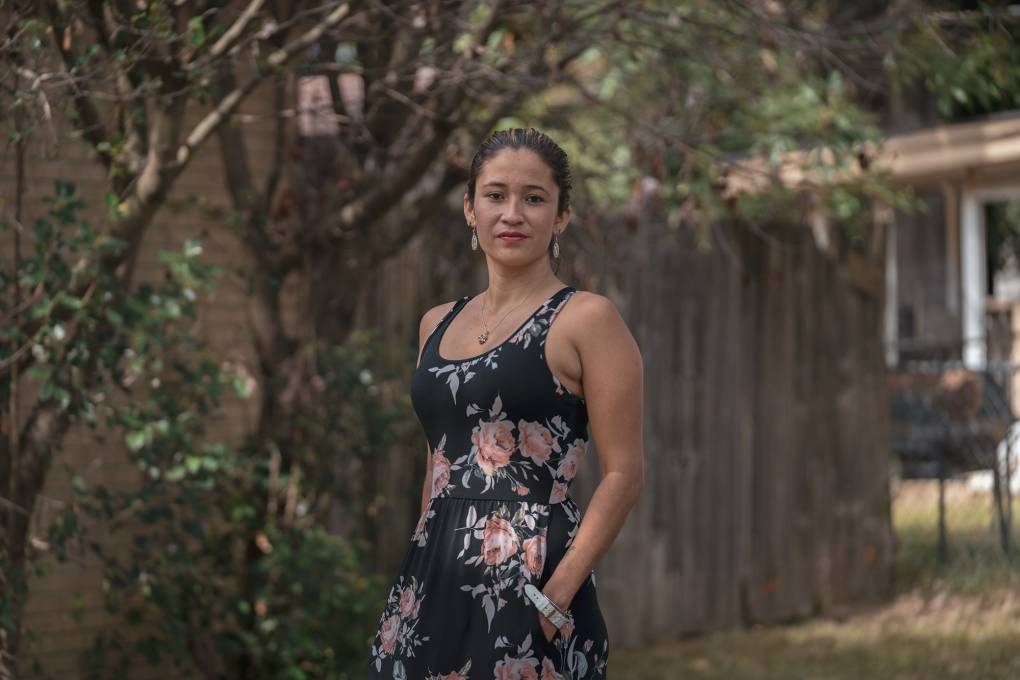
"caption": "Aura Silva Vergara stands for a portrait at the home where she stays in Memphis, Tenn. Silva Vergara is an asylum seeker from Colombia who entered the country via the southern border and was sent to California first before arriving in Tennessee.",
"description": null,
"title": "100123_Aura-Silva-Vergara_AM_CM_01",
"credit": "Andrea Morales/CalMatters",
"status": "inherit",
"altTag": "A woman with a black floral-printed dress stands outside.",
"isLoading": false,
"fetchFailed": false
},
"news_11960537": {
"type": "attachments",
"id": "news_11960537",
"meta": {
"index": "attachments_1716263798",
"site": "news",
"id": "11960537",
"found": true
},
"parent": 11960536,
"imgSizes": {
"twentyfourteen-full-width": {
"file": "https://ww2.kqed.org/app/uploads/sites/10/2023/09/farmworker-in-vineyard-1020x576.jpg",
"width": 1020,
"mimeType": "image/jpeg",
"height": 576
},
"thumbnail": {
"file": "https://ww2.kqed.org/app/uploads/sites/10/2023/09/farmworker-in-vineyard-160x107.jpg",
"width": 160,
"mimeType": "image/jpeg",
"height": 107
},
"post-thumbnail": {
"file": "https://ww2.kqed.org/app/uploads/sites/10/2023/09/farmworker-in-vineyard-672x372.jpg",
"width": 672,
"mimeType": "image/jpeg",
"height": 372
},
"kqedFullSize": {
"file": "https://ww2.kqed.org/app/uploads/sites/10/2023/09/farmworker-in-vineyard.jpg",
"width": 1020,
"height": 680
},
"medium": {
"file": "https://ww2.kqed.org/app/uploads/sites/10/2023/09/farmworker-in-vineyard-800x533.jpg",
"width": 800,
"mimeType": "image/jpeg",
"height": 533
}
},
"publishDate": 1694393822,
"modified": 1694393849,
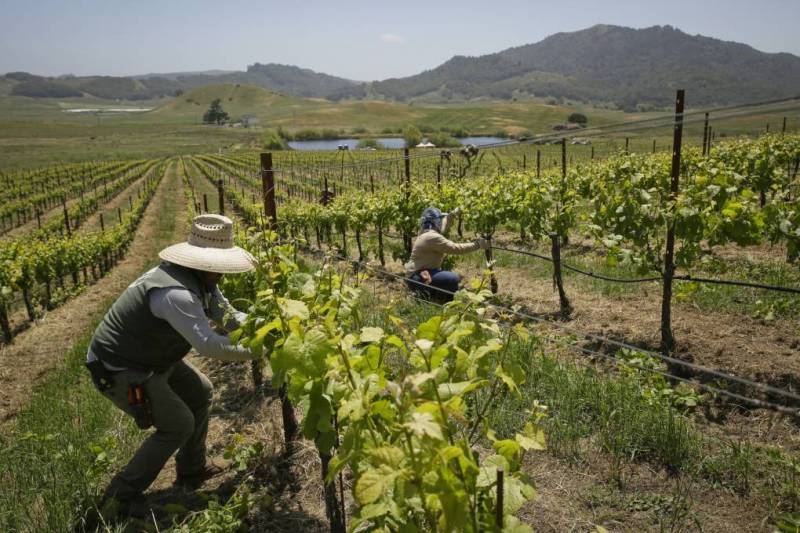
"caption": "Trabajadores cortan las hojas de las vides de Pinot Noir en Petaluma el 21 de mayo de 2018.",
"description": null,
"title": "farmworker in vineyard",
"credit": "Eric Risberg/Foto AP",
"status": "inherit",
"altTag": null,
"isLoading": false,
"fetchFailed": false
},
"news_11954146": {
"type": "attachments",
"id": "news_11954146",
"meta": {
"index": "attachments_1716263798",
"site": "news",
"id": "11954146",
"found": true
},
"parent": 0,
"imgSizes": {
"twentyfourteen-full-width": {
"file": "https://ww2.kqed.org/app/uploads/sites/10/2023/06/062623-CALIFORNIA-ARMENIA-01-KQED-1038x576.jpg",
"width": 1038,
"mimeType": "image/jpeg",
"height": 576
},
"thumbnail": {
"file": "https://ww2.kqed.org/app/uploads/sites/10/2023/06/062623-CALIFORNIA-ARMENIA-01-KQED-160x107.jpg",
"width": 160,
"mimeType": "image/jpeg",
"height": 107
},
"post-thumbnail": {
"file": "https://ww2.kqed.org/app/uploads/sites/10/2023/06/062623-CALIFORNIA-ARMENIA-01-KQED-672x372.jpg",
"width": 672,
"mimeType": "image/jpeg",
"height": 372
},
"kqedFullSize": {
"file": "https://ww2.kqed.org/app/uploads/sites/10/2023/06/062623-CALIFORNIA-ARMENIA-01-KQED.jpg",
"width": 2000,
"height": 1333
},
"large": {
"file": "https://ww2.kqed.org/app/uploads/sites/10/2023/06/062623-CALIFORNIA-ARMENIA-01-KQED-1020x680.jpg",
"width": 1020,
"mimeType": "image/jpeg",
"height": 680
},
"1536x1536": {
"file": "https://ww2.kqed.org/app/uploads/sites/10/2023/06/062623-CALIFORNIA-ARMENIA-01-KQED-1536x1024.jpg",
"width": 1536,
"mimeType": "image/jpeg",
"height": 1024
},
"full-width": {
"file": "https://ww2.kqed.org/app/uploads/sites/10/2023/06/062623-CALIFORNIA-ARMENIA-01-KQED-1920x1280.jpg",
"width": 1920,
"mimeType": "image/jpeg",
"height": 1280
},
"medium": {
"file": "https://ww2.kqed.org/app/uploads/sites/10/2023/06/062623-CALIFORNIA-ARMENIA-01-KQED-800x533.jpg",
"width": 800,
"mimeType": "image/jpeg",
"height": 533
}
},
"publishDate": 1687821468,
"modified": 1687890736,
"caption": "The sun rises over Yerevan, Armenia, with Mount Ararat in the distance, on Feb. 14, 2023. The city has sent thousands of immigrants to LA for generations. But now some of their children are leaving California and moving to Armenia.",
"description": null,
"title": "062623-CALIFORNIA ARMENIA-01-KQED",
"credit": "Courtesy of Levi Bridges",
"status": "inherit",
"altTag": "A city scape with mountains rising in the background.",
"isLoading": false,
"fetchFailed": false
},
"news_11906095": {
"type": "attachments",
"id": "news_11906095",
"meta": {
"index": "attachments_1716263798",
"site": "news",
"id": "11906095",
"found": true
},
"parent": 11906026,
"imgSizes": {
"twentyfourteen-full-width": {
"file": "https://ww2.kqed.org/app/uploads/sites/10/2022/02/Sabaa-Tahir-BW_credit_Ayesha-Ahmad-Photography-1038x576.png",
"width": 1038,
"mimeType": "image/png",
"height": 576
},
"thumbnail": {
"file": "https://ww2.kqed.org/app/uploads/sites/10/2022/02/Sabaa-Tahir-BW_credit_Ayesha-Ahmad-Photography-160x107.png",
"width": 160,
"mimeType": "image/png",
"height": 107
},
"post-thumbnail": {
"file": "https://ww2.kqed.org/app/uploads/sites/10/2022/02/Sabaa-Tahir-BW_credit_Ayesha-Ahmad-Photography-672x372.png",
"width": 672,
"mimeType": "image/png",
"height": 372
},
"kqedFullSize": {
"file": "https://ww2.kqed.org/app/uploads/sites/10/2022/02/Sabaa-Tahir-BW_credit_Ayesha-Ahmad-Photography.png",
"width": 1920,
"height": 1280
},
"large": {
"file": "https://ww2.kqed.org/app/uploads/sites/10/2022/02/Sabaa-Tahir-BW_credit_Ayesha-Ahmad-Photography-1020x680.png",
"width": 1020,
"mimeType": "image/png",
"height": 680
},
"1536x1536": {
"file": "https://ww2.kqed.org/app/uploads/sites/10/2022/02/Sabaa-Tahir-BW_credit_Ayesha-Ahmad-Photography-1536x1024.png",
"width": 1536,
"mimeType": "image/png",
"height": 1024
},
"medium": {
"file": "https://ww2.kqed.org/app/uploads/sites/10/2022/02/Sabaa-Tahir-BW_credit_Ayesha-Ahmad-Photography-800x533.png",
"width": 800,
"mimeType": "image/png",
"height": 533
}
},
"publishDate": 1645568128,
"modified": 1645850255,
"caption": "Young adult novelist Sabaa Tahir.",
"description": null,
"title": "Sabaa Tahir BW_credit_Ayesha Ahmad Photography",
"credit": "Ayesha Ahmad Photography",
"status": "inherit",
"altTag": "A woman in a t-shirt posing.",
"isLoading": false,
"fetchFailed": false
},
"news_11904228": {
"type": "attachments",
"id": "news_11904228",
"meta": {
"index": "attachments_1716263798",
"site": "news",
"id": "11904228",
"found": true
},
"parent": 11903964,
"imgSizes": {
"twentyfourteen-full-width": {
"file": "https://ww2.kqed.org/app/uploads/sites/10/2022/02/image5PT-1038x576.jpeg",
"width": 1038,
"mimeType": "image/jpeg",
"height": 576
},
"thumbnail": {
"file": "https://ww2.kqed.org/app/uploads/sites/10/2022/02/image5PT-160x109.jpeg",
"width": 160,
"mimeType": "image/jpeg",
"height": 109
},
"post-thumbnail": {
"file": "https://ww2.kqed.org/app/uploads/sites/10/2022/02/image5PT-672x372.jpeg",
"width": 672,
"mimeType": "image/jpeg",
"height": 372
},
"kqedFullSize": {
"file": "https://ww2.kqed.org/app/uploads/sites/10/2022/02/image5PT.jpeg",
"width": 1170,
"height": 800
},
"large": {
"file": "https://ww2.kqed.org/app/uploads/sites/10/2022/02/image5PT-1020x697.jpeg",
"width": 1020,
"mimeType": "image/jpeg",
"height": 697
},
"medium": {
"file": "https://ww2.kqed.org/app/uploads/sites/10/2022/02/image5PT-800x547.jpeg",
"width": 800,
"mimeType": "image/jpeg",
"height": 547
}
},
"publishDate": 1644021945,
"modified": 1644022031,
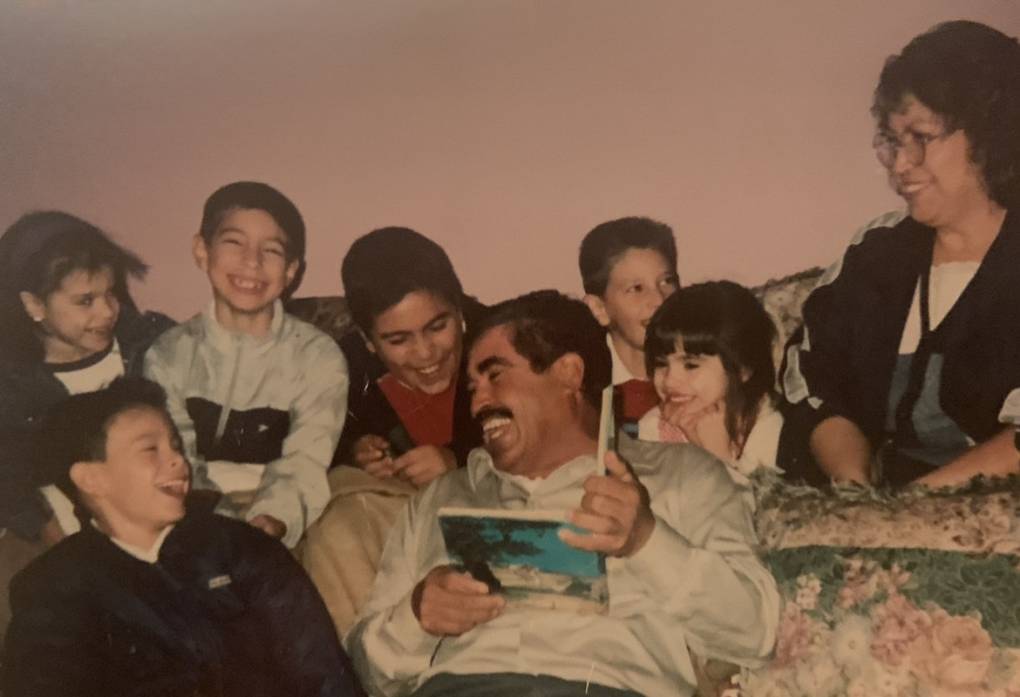
"caption": "Tomás Reyes Soto with his wife and grandchildren in their home in Madera in 2004. ",
"description": null,
"title": "image5PT",
"credit": "Courtesy Madi Bolaños",
"status": "inherit",
"altTag": "A man reading a book, surrounded by his wife and young grandchildren.",
"isLoading": false,
"fetchFailed": false
}
},
"audioPlayerReducer": {
"postId": "stream_live",
"isPaused": true,
"isPlaying": false,
"pfsActive": false,
"pledgeModalIsOpen": true,
"playerDrawerIsOpen": false,
"liveAudioPlayStartedAt": 0,
"liveAudioPlayContext": ""
},
"authorsReducer": {
"byline_news_12007435": {
"type": "authors",
"id": "byline_news_12007435",
"meta": {
"override": true
},
"slug": "byline_news_12007435",
"name": "\u003ca href=\"https://www.eltimpano.org/author/jasmine-aguilera/\">Jasmine Aguilera, \u003c/a>El Tímpano ",
"isLoading": false
},
"byline_news_11964105": {
"type": "authors",
"id": "byline_news_11964105",
"meta": {
"override": true
},
"slug": "byline_news_11964105",
"name": "\u003ca href=\"https://calmatters.org/author/kervy-robles/\">Justo Robles\u003c/a> and \u003ca href=\"https://calmatters.org/author/alejandra-reyesvelarde/\">Alejandra Reyes-Velarde\u003c/a>",
"isLoading": false
},
"byline_news_11954142": {
"type": "authors",
"id": "byline_news_11954142",
"meta": {
"override": true
},
"slug": "byline_news_11954142",
"name": "\u003ca href=\"https://www.levibridges.com/\">Levi Bridges\u003c/a>",
"isLoading": false
},
"tychehendricks": {
"type": "authors",
"id": "259",
"meta": {
"index": "authors_1716337520",
"id": "259",
"found": true
},
"name": "Tyche Hendricks",
"firstName": "Tyche",
"lastName": "Hendricks",
"slug": "tychehendricks",
"email": "thendricks@kqed.org",
"display_author_email": true,
"staff_mastheads": [
"news"
],
"title": "KQED Senior Editor, Immigration",
"bio": "\u003cspan style=\"font-weight: 400;\">Tyche Hendricks is KQED’s senior editor for immigration, leading coverage of the policy and politics that affect California’s immigrant communities. Her work for KQED’s radio and online audiences is also carried on NPR and other national outlets. She has been recognized with awards from the Radio and Television News Directors Association, the Society for Professional Journalists; the Education Writers Association; the Best of the West and the National Federation of Community Broadcasters. Before joining KQED in 2010, Tyche spent more than a dozen years as a newspaper reporter, notably at the \u003c/span>\u003ci>\u003cspan style=\"font-weight: 400;\">San Francisco Chronicle\u003c/span>\u003c/i>\u003cspan style=\"font-weight: 400;\">. At different times she has covered criminal justice, government and politics and urban planning. Tyche has taught in the MFA Creative Writing program at the University of San Francisco and at UC Berkeley’s Graduate School of Journalism, where she was co-director of a national immigration symposium for professional journalists. She is the author of \u003c/span>\u003ci>\u003cspan style=\"font-weight: 400;\">The Wind Doesn't Need a Passport: Stories from the U.S.-Mexico Borderlands\u003c/span>\u003c/i>\u003cspan style=\"font-weight: 400;\"> (University of California Press). \u003c/span>",
"avatar": "https://secure.gravatar.com/avatar/b8ee458e2731c2d43df86882ce17267e?s=600&d=blank&r=g",
"twitter": "tychehendricks",
"facebook": null,
"instagram": null,
"linkedin": null,
"sites": [
{
"site": "news",
"roles": [
"editor"
]
},
{
"site": "stateofhealth",
"roles": [
"editor"
]
}
],
"headData": {
"title": "Tyche Hendricks | KQED",
"description": "KQED Senior Editor, Immigration",
"ogImgSrc": "https://secure.gravatar.com/avatar/b8ee458e2731c2d43df86882ce17267e?s=600&d=blank&r=g",
"twImgSrc": "https://secure.gravatar.com/avatar/b8ee458e2731c2d43df86882ce17267e?s=600&d=blank&r=g"
},
"isLoading": false,
"link": "/author/tychehendricks"
},
"lmorehouse": {
"type": "authors",
"id": "3229",
"meta": {
"index": "authors_1716337520",
"id": "3229",
"found": true
},
"name": "Lisa Morehouse",
"firstName": "Lisa",
"lastName": "Morehouse",
"slug": "lmorehouse",
"email": "morehouse.lisa@gmail.com",
"display_author_email": false,
"staff_mastheads": [],
"title": "KQED Contributor",
"bio": "Lisa Morehouse is an award-winning public radio and print journalist, who has filed for National Public Radio, American Public Media, KQED Public Radio, Edutopia, and McSweeney’s. Her reporting has taken her from Samoan traveling circuses to Mississippi Delta classrooms to the homes of Lao refugees in rural Iowa. In addition to reporting, she teaches radio production to at-risk youth in the Bay Area. Her series \u003ca href=\"http://afterthegoldrushradio.com/\">After the Gold Rush\u003c/a> featured the changing industries, populations and identities of rural towns throughout California. She’s now producing \u003ca href=\"http://www.californiafoodways.com/\">California Foodways\u003c/a>, a series exploring the intersections of food, culture, economics, history and labor. Follow along on the \u003ca href=\"https://www.facebook.com/californiafoodways?ref=hl\">Facebook page\u003c/a> or on Twitter @cafoodways.",
"avatar": "https://secure.gravatar.com/avatar/dae74b002a6e256f39abb19d6f5acaea?s=600&d=blank&r=g",
"twitter": null,
"facebook": null,
"instagram": null,
"linkedin": null,
"sites": [
{
"site": "",
"roles": [
"editor"
]
},
{
"site": "news",
"roles": [
"author"
]
}
],
"headData": {
"title": "Lisa Morehouse | KQED",
"description": "KQED Contributor",
"ogImgSrc": "https://secure.gravatar.com/avatar/dae74b002a6e256f39abb19d6f5acaea?s=600&d=blank&r=g",
"twImgSrc": "https://secure.gravatar.com/avatar/dae74b002a6e256f39abb19d6f5acaea?s=600&d=blank&r=g"
},
"isLoading": false,
"link": "/author/lmorehouse"
},
"afont": {
"type": "authors",
"id": "8637",
"meta": {
"index": "authors_1716337520",
"id": "8637",
"found": true
},
"name": "Amanda Font",
"firstName": "Amanda",
"lastName": "Font",
"slug": "afont",
"email": "afont@kqed.org",
"display_author_email": false,
"staff_mastheads": [],
"title": "KQED Contributor",
"bio": "Amanda Font is a producer on \u003cem>The Latest\u003c/em> podcast, and the host and co-producer of the series \u003cem>Audible Cosmos\u003c/em>. She has previously worked as a producer and reporter on the \u003cem>Bay Curious\u003c/em> podcast, and director of \u003cem>The California Report Magazine\u003c/em>. She grew up in the deserts of Southern California and moved north for the trees. Amanda earned a B.A. from the BECA program at San Francisco State, where she worked in the university's radio station. Amanda Font is represented by SAG-AFTRA.",
"avatar": "https://secure.gravatar.com/avatar/d9e81cf0117d5849b9cfb7ab4b1422f1?s=600&d=blank&r=g",
"twitter": null,
"facebook": null,
"instagram": null,
"linkedin": null,
"sites": [
{
"site": "news",
"roles": [
"add_users",
"create_users"
]
},
{
"site": "science",
"roles": []
},
{
"site": "forum",
"roles": [
"administrator"
]
},
{
"site": "perspectives",
"roles": [
"administrator"
]
},
{
"site": "radio",
"roles": [
"administrator"
]
}
],
"headData": {
"title": "Amanda Font | KQED",
"description": "KQED Contributor",
"ogImgSrc": "https://secure.gravatar.com/avatar/d9e81cf0117d5849b9cfb7ab4b1422f1?s=600&d=blank&r=g",
"twImgSrc": "https://secure.gravatar.com/avatar/d9e81cf0117d5849b9cfb7ab4b1422f1?s=600&d=blank&r=g"
},
"isLoading": false,
"link": "/author/afont"
},
"fjhabvala": {
"type": "authors",
"id": "8659",
"meta": {
"index": "authors_1716337520",
"id": "8659",
"found": true
},
"name": "Farida Jhabvala Romero",
"firstName": "Farida",
"lastName": "Jhabvala Romero",
"slug": "fjhabvala",
"email": "fjhabvala@kqed.org",
"display_author_email": true,
"staff_mastheads": [
"news"
],
"title": "KQED Contributor",
"bio": "Farida Jhabvala Romero is a Labor Correspondent for KQED. She previously covered immigration. Farida was \u003ca href=\"https://www.ccnma.org/2022-most-influential-latina-journalists\">named\u003c/a> one of the 10 Most Influential Latina Journalists in California in 2022 by the California Chicano News Media Association. Her work has won awards from the Society of Professional Journalists (Northern California), as well as a national and regional Edward M. Murrow Award for the collaborative reporting projects “Dangerous Air” and “Graying California.” Before joining KQED, Farida worked as a producer at Radio Bilingüe, a national public radio network. Farida earned her master’s degree in journalism from Stanford University.",
"avatar": "https://secure.gravatar.com/avatar/f9f022d4e2609741874222a1e9d41f48fea74011aa7c615eef91d9a50c944ebe?s=600&d=blank&r=g",
"twitter": "FaridaJhabvala",
"bluesky": null,
"facebook": null,
"instagram": null,
"linkedin": "https://www.linkedin.com/in/faridajhabvala/",
"sites": [
{
"site": "news",
"roles": [
"editor"
]
},
{
"site": "stateofhealth",
"roles": [
"author"
]
},
{
"site": "liveblog",
"roles": [
"author"
]
}
],
"headData": {
"title": "Farida Jhabvala Romero | KQED",
"description": "KQED Contributor",
"ogImgSrc": "https://secure.gravatar.com/avatar/f9f022d4e2609741874222a1e9d41f48fea74011aa7c615eef91d9a50c944ebe?s=600&d=blank&r=g",
"twImgSrc": "https://secure.gravatar.com/avatar/f9f022d4e2609741874222a1e9d41f48fea74011aa7c615eef91d9a50c944ebe?s=600&d=blank&r=g"
},
"isLoading": false,
"link": "/author/fjhabvala"
},
"btorres": {
"type": "authors",
"id": "11666",
"meta": {
"index": "authors_1716337520",
"id": "11666",
"found": true
},
"name": "Blanca Torres",
"firstName": "Blanca",
"lastName": "Torres",
"slug": "btorres",
"email": "btorres@kqed.org",
"display_author_email": true,
"staff_mastheads": [
"news"
],
"title": "Producer, Forum",
"bio": "Blanca Torres brings sharp news judgement and keen sense of lively conversation to her work as producer for Forum. She loves producing shows that leave listeners feeling like they heard distinctive voices, learned something new and gained a fresh perspective.\r\n\r\nShe joined KQED in January of 2020 after 16 years of working as a newspaper reporter most recently at the \u003cem>San Francisco Business Times,\u003c/em> where she wrote about real estate and economic development. Before that, she covered a variety of beats including crime, education, retail, workplace, the economy, consumer issues, and small business for the \u003cem>Contra Costa Times, Baltimore Sun\u003c/em> and\u003cem> The Seattle Times\u003c/em>. In addition to reporting, she worked as an editorial writer and columnist for the \u003cem>Seattle Times\u003c/em>. From 2017 to 2020, Blanca won a total of ten awards from the National Association of Real Estate Editors and won first place for land use reporting from the California News Publishers Association two years in a row. She is also a member and former board member for the National Association of Hispanic Journalists.\r\n\r\nA native of the Pacific Northwest, Blanca earned her bachelor's degree from Vanderbilt University in Nashville and a master's in fine arts in creative writing at Mills College. She lives in the East Bay with her family.",
"avatar": "https://secure.gravatar.com/avatar/50b49d19b14a1eed34f26ebf4681152cdd81574ed21851100871ccd29e578cdc?s=600&d=blank&r=g",
"twitter": "@blancawrites",
"bluesky": null,
"facebook": null,
"instagram": null,
"linkedin": null,
"sites": [
{
"site": "arts",
"roles": [
"editor"
]
},
{
"site": "news",
"roles": [
"editor"
]
},
{
"site": "forum",
"roles": [
"editor"
]
}
],
"headData": {
"title": "Blanca Torres | KQED",
"description": "Producer, Forum",
"ogImgSrc": "https://secure.gravatar.com/avatar/50b49d19b14a1eed34f26ebf4681152cdd81574ed21851100871ccd29e578cdc?s=600&d=blank&r=g",
"twImgSrc": "https://secure.gravatar.com/avatar/50b49d19b14a1eed34f26ebf4681152cdd81574ed21851100871ccd29e578cdc?s=600&d=blank&r=g"
},
"isLoading": false,
"link": "/author/btorres"
},
"ccabreralomeli": {
"type": "authors",
"id": "11708",
"meta": {
"index": "authors_1716337520",
"id": "11708",
"found": true
},
"name": "Carlos Cabrera-Lomelí",
"firstName": "Carlos",
"lastName": "Cabrera-Lomelí",
"slug": "ccabreralomeli",
"email": "ccabreralomeli@KQED.org",
"display_author_email": true,
"staff_mastheads": [
"news"
],
"title": "Community Reporter",
"bio": "Carlos Cabrera-Lomelí is a community reporter with KQED's digital engagement team. He also reports and co-produces for KQED's bilingual news hub KQED en Español. He grew up in San Francisco's Mission District and has previously worked with Univision, 48 Hills and REFORMA in Mexico City.",
"avatar": "https://secure.gravatar.com/avatar/c309be9665e484f887b818c89e273ecc673004f426f36b24d00a4d813a2e0518?s=600&d=blank&r=g",
"twitter": "@LomeliCabrera",
"bluesky": null,
"facebook": null,
"instagram": null,
"linkedin": null,
"sites": [
{
"site": "arts",
"roles": [
"editor"
]
},
{
"site": "news",
"roles": [
"editor"
]
},
{
"site": "about",
"roles": [
"editor"
]
},
{
"site": "science",
"roles": [
"editor"
]
},
{
"site": "perspectives",
"roles": [
"editor"
]
},
{
"site": "elections",
"roles": [
"editor"
]
},
{
"site": "liveblog",
"roles": [
"contributor"
]
}
],
"headData": {
"title": "Carlos Cabrera-Lomelí | KQED",
"description": "Community Reporter",
"ogImgSrc": "https://secure.gravatar.com/avatar/c309be9665e484f887b818c89e273ecc673004f426f36b24d00a4d813a2e0518?s=600&d=blank&r=g",
"twImgSrc": "https://secure.gravatar.com/avatar/c309be9665e484f887b818c89e273ecc673004f426f36b24d00a4d813a2e0518?s=600&d=blank&r=g"
},
"isLoading": false,
"link": "/author/ccabreralomeli"
},
"kmizuguchi": {
"type": "authors",
"id": "11739",
"meta": {
"index": "authors_1716337520",
"id": "11739",
"found": true
},
"name": "Keith Mizuguchi",
"firstName": "Keith",
"lastName": "Mizuguchi",
"slug": "kmizuguchi",
"email": "kmizuguchi@kqed.org",
"display_author_email": false,
"staff_mastheads": [],
"title": "KQED Contributor",
"bio": null,
"avatar": "https://secure.gravatar.com/avatar/64d8a7de0723d4099b9fe4e915136103febcc20809abce228ee4415bcb237023?s=600&d=blank&r=g",
"twitter": null,
"bluesky": null,
"facebook": null,
"instagram": null,
"linkedin": null,
"sites": [
{
"site": "news",
"roles": [
"editor"
]
},
{
"site": "science",
"roles": [
"editor"
]
}
],
"headData": {
"title": "Keith Mizuguchi | KQED",
"description": "KQED Contributor",
"ogImgSrc": "https://secure.gravatar.com/avatar/64d8a7de0723d4099b9fe4e915136103febcc20809abce228ee4415bcb237023?s=600&d=blank&r=g",
"twImgSrc": "https://secure.gravatar.com/avatar/64d8a7de0723d4099b9fe4e915136103febcc20809abce228ee4415bcb237023?s=600&d=blank&r=g"
},
"isLoading": false,
"link": "/author/kmizuguchi"
},
"mbolanos": {
"type": "authors",
"id": "11895",
"meta": {
"index": "authors_1716337520",
"id": "11895",
"found": true
},
"name": "Madi Bolaños",
"firstName": "Madi",
"lastName": "Bolaños",
"slug": "mbolanos",
"email": "mbolanos@kqed.org",
"display_author_email": false,
"staff_mastheads": [],
"title": "KQED Contributor",
"bio": null,
"avatar": "https://secure.gravatar.com/avatar/e6df5601c1f2d951e46a3fb42764330f?s=600&d=blank&r=g",
"twitter": null,
"bluesky": null,
"facebook": null,
"instagram": null,
"linkedin": null,
"sites": [
{
"site": "news",
"roles": [
"author"
]
}
],
"headData": {
"title": "Madi Bolaños | KQED",
"description": "KQED Contributor",
"ogImgSrc": "https://secure.gravatar.com/avatar/e6df5601c1f2d951e46a3fb42764330f?s=600&d=blank&r=g",
"twImgSrc": "https://secure.gravatar.com/avatar/e6df5601c1f2d951e46a3fb42764330f?s=600&d=blank&r=g"
},
"isLoading": false,
"link": "/author/mbolanos"
}
},
"pagesReducer": {
"news_tag_immigrants": {
"type": "terms",
"id": "news_17708",
"meta": {
"index": "terms_1716263798",
"site": "news",
"id": "17708",
"score": 8.668587
},
"featImg": null,
"name": "immigrants",
"description": null,
"taxonomy": "tag",
"headData": {
"twImgId": null,
"twTitle": null,
"ogTitle": null,
"ogImgId": null,
"twDescription": null,
"description": null,
"title": "immigrants Archives | KQED News",
"ogDescription": null
},
"ttid": 17742,
"slug": "immigrants",
"isLoading": false,
"title": "immigrants",
"pageMeta": {
"site": "news",
"WpPageTemplate": "page-topic-editorial",
"currentPage": 6
},
"blocks": [
{
"blockName": "kqed/post-list",
"attrs": {
"layout": "cardArticle2",
"query": "posts/news?tag=immigrants",
"seeMore": false,
"paginated": true,
"page": 6
}
},
{
"blockName": "kqed/ad"
}
]
}
},
"pfsSessionReducer": {},
"postsReducer": {
"stream_live": {
"type": "live",
"id": "stream_live",
"audioUrl": "https://streams.kqed.org/kqedradio",
"title": "Live Stream",
"excerpt": "Live Stream information currently unavailable.",
"link": "/radio",
"featImg": "",
"label": {
"name": "KQED Live",
"link": "/"
}
},
"stream_kqedNewscast": {
"type": "posts",
"id": "stream_kqedNewscast",
"audioUrl": "https://www.kqed.org/.stream/anon/radio/RDnews/newscast.mp3?_=1",
"title": "KQED Newscast",
"featImg": "",
"label": {
"name": "88.5 FM",
"link": "/"
}
},
"news_12016377": {
"type": "posts",
"id": "news_12016377",
"meta": {
"index": "posts_1716263798",
"site": "news",
"id": "12016377",
"score": null,
"sort": [
1733248694000
]
},
"guestAuthors": [],
"slug": "lawmakers-return-to-sacramento-with-incoming-trump-administration-top-of-mind",
"title": "Lawmakers Return To Sacramento With Incoming Trump Administration Top Of Mind",
"publishDate": 1733248694,
"format": "audio",
"headTitle": "Lawmakers Return To Sacramento With Incoming Trump Administration Top Of Mind | KQED",
"labelTerm": {},
"content": "\u003cp>\u003cb>Here are the morning’s top stories on Tuesday, December 3, 2024…\u003c/b>\u003c/p>\n\u003cul>\n\u003cli style=\"font-weight: 400\">\u003cspan style=\"font-weight: 400\">California lawmakers began both their \u003c/span>\u003ca href=\"https://www.kqed.org/news/12016294/california-democrats-prepare-for-trump-vow-renewed-focus-affordability\">\u003cspan style=\"font-weight: 400\">new legislative session and a special session \u003c/span>\u003c/a>\u003cspan style=\"font-weight: 400\">called by Governor Newsom on Monday, with Democrats introducing bills to prepare for another Trump presidency. But some leaders cautioned that a resistance to Trump’s policies had to be paired with a renewed focus on governing fundamentals and solving the daily challenges facing Californians.\u003c/span>\u003c/li>\n\u003cli style=\"font-weight: 400\">\u003cspan style=\"font-weight: 400\">As California lawmakers strategize ways to Trump Proof the state’s liberal policies, a high priority is safeguarding \u003c/span>\u003ca href=\"https://calmatters.org/health/2024/12/california-abortion-laws-after-trump/\">\u003cspan style=\"font-weight: 400\">access to abortions\u003c/span>\u003c/a>\u003cspan style=\"font-weight: 400\"> and reproductive care. \u003c/span>\u003c/li>\n\u003cli style=\"font-weight: 400\">\u003cspan style=\"font-weight: 400\">Immigrants and community organizations \u003c/span>\u003ca href=\"https://www.capradio.org/articles/2024/12/02/immigrant-advocates-rally-at-state-capitol-demand-more-protections-from-california-lawmakers/\">\u003cspan style=\"font-weight: 400\">rallied for stronger immigration protections\u003c/span>\u003c/a>\u003cspan style=\"font-weight: 400\"> at the State Capitol on Monday.\u003c/span>\u003c/li>\n\u003cli>Proposed state legislation \u003ca href=\"https://calmatters.org/politics/capitol/2024/12/california-election-results-bill-vote-count/\">could help speed up\u003c/a> California’s notoriously slow ballot counting process.\u003c/li>\n\u003c/ul>\n\u003ch2 class=\"routes-Site-routes-Post-Title-__Title__title\">\u003ca href=\"https://www.kqed.org/news/12016294/california-democrats-prepare-for-trump-vow-renewed-focus-affordability\">\u003cstrong>California Democrats Prepare For Trump, But Vow Renewed Focus On Affordability\u003c/strong>\u003c/a>\u003c/h2>\n\u003cp>A new session of the state legislature kicked off Monday with a flurry of proposals by Democrats to position the state government as a bulwark against the incoming administration of President-elect \u003ca href=\"https://www.kqed.org/news/tag/donald-trump\">Donald Trump\u003c/a>.\u003c/p>\n\u003cp>Opening day ceremonies at the Capitol, marked by celebratory galas and oaths of office, shifted to announcements of legislation to fund future lawsuits against the Trump administration and protect abortion access. But humbled by the results of the November election, in which Republicans made small gains in both houses of the legislature, Democratic leaders vowed to renew their focus on increasing affordability.\u003c/p>\n\u003cp>“Our constituents told us two very important things in November,” Assembly Speaker Robert Rivas (D-Hollister) said. “First, they continue to believe deeply in California’s values of tolerance, of equality and of human rights. But second, our constituents — they don’t feel that the state of California is working for them.”\u003c/p>\n\u003cp>\u003cspan style=\"font-weight: 400\">Rivas pushed lawmakers to focus their energy on ideas to reduce the price of housing, household goods, and the cost of starting a business. The speaker said he would enforce that focus by limiting the number of bills each member is allowed to introduce over the course of the two-year session from 50 to 35.\u003c/span>\u003c/p>\n\u003ch2 class=\"entry-title \">\u003ca href=\"https://calmatters.org/health/2024/12/california-abortion-laws-after-trump/\">\u003cstrong>California Democrats Plan To Crack Down On Cities That Block Abortion Clinics\u003c/strong>\u003c/a>\u003c/h2>\n\u003cp>As President-elect Donald Trump prepares to take office, California Democrats are developing new plans to strengthen the state’s \u003ca href=\"https://calmatters.org/tag/abortion/\" target=\"_blank\" rel=\"noreferrer noopener\">abortion\u003c/a> protections.\u003c/p>\n\u003cp>[ad fullwidth]\u003c/p>\n\u003cp>Attorney General Rob Bonta on Monday announced two legislative proposals aimed at safeguarding medication abortion and enforcing the state’s \u003ca href=\"https://leginfo.legislature.ca.gov/faces/codes_displayText.xhtml?lawCode=HSC&division=106.&title=&part=2.&chapter=2.&article=2.5.\" target=\"_blank\" rel=\"noreferrer noopener\">Reproductive Privacy Act\u003c/a>, which ensures individuals have the right to make decisions about reproductive care without government interference.\u003c/p>\n\u003cp>Both bills, if enacted, would join more than two dozen other laws intended to make \u003ca href=\"https://calmatters.org/explainers/abortion-in-california-laws/\" target=\"_blank\" rel=\"noreferrer noopener\">California a reproductive health “safe haven\u003c/a>” since the Supreme Court’s Dobbs decision three years ago eliminated federal abortion protections.\u003c/p>\n\u003ch2 class=\"page-title\">\u003ca href=\"https://www.capradio.org/articles/2024/12/02/immigrant-advocates-rally-at-state-capitol-demand-more-protections-from-california-lawmakers/\">\u003cstrong>Immigrant Advocates Demand More Protections From California Lawmakers\u003c/strong>\u003c/a>\u003c/h2>\n\u003cp>Immigrants and community advocates descended on Sacramento Monday with a clear demand of state lawmakers: create more protections for undocumented Californians. Advocates from across the state marched in the streets surrounding the state Capitol.\u003c/p>\n\u003cp>“Newsom, escucha, estamos en la lucha,” they chanted, which translates to “Newsom, listen, we are in the fight.”\u003c/p>\n\u003cp>The rally came weeks ahead of President-elect Donald Trump’s return to the White House. Trump has vowed to carry out mass deportations early in his term, which has frightened immigrant families and their supporters concerns immigration advocates.\u003c/p>\n\u003ch2>\u003ca href=\"https://calmatters.org/politics/capitol/2024/12/california-election-results-bill-vote-count/\">\u003cstrong>Legislation Takes Aim At California’s Ballot Counting Process\u003c/strong>\u003c/a>\u003c/h2>\n\u003cp>Assemblymember \u003ca href=\"https://digitaldemocracy.calmatters.org/legislators/marc-berman-100944\">Marc Berman\u003c/a>, a Palo Alto Democrat who led the Assembly Elections Committee from 2017 to 2021, is \u003ca href=\"https://leginfo.legislature.ca.gov/faces/billNavClient.xhtml?bill_id=202520260AB5\">introducing legislation to help counties speed up California’s ballot counting process\u003c/a>. He was also the author of the law that made vote-by-mail permanent in California.\u003c/p>\n\u003cp>The details of the bill are unclear, as Berman told CalMatters he plans to speak with county election officials about changes they wish to see and also explore the possibility of increased funding for ballot counting.\u003c/p>\n\u003cp>\u003c/p>\n\u003cp>Election officials statewide have thousands of ballots left to count. Under state law, counties have until Thursday to certify their election results.\u003c/p>\n\n",
"blocks": [],
"excerpt": "Democrats introduced bills Monday to prepare for another Trump presidency.",
"status": "publish",
"parent": 0,
"modified": 1738179942,
"stats": {
"hasAudio": false,
"hasVideo": false,
"hasChartOrMap": false,
"iframeSrcs": [],
"hasGoogleForm": false,
"hasGallery": false,
"hasHearkenModule": false,
"hasPolis": false,
"paragraphCount": 16,
"wordCount": 689
},
"headData": {
"title": "Lawmakers Return To Sacramento With Incoming Trump Administration Top Of Mind | KQED",
"description": "Democrats introduced bills Monday to prepare for another Trump presidency.",
"ogTitle": "",
"ogDescription": "",
"ogImgId": "",
"twTitle": "",
"twDescription": "",
"twImgId": "",
"schema": {
"@context": "https://schema.org",
"@type": "NewsArticle",
"headline": "Lawmakers Return To Sacramento With Incoming Trump Administration Top Of Mind",
"datePublished": "2024-12-03T09:58:14-08:00",
"dateModified": "2025-01-29T11:45:42-08:00",
"image": "https://cdn.kqed.org/wp-content/uploads/2020/02/KQED-OG-Image@1x.png",
"isAccessibleForFree": "True",
"publisher": {
"@type": "NewsMediaOrganization",
"@id": "https://www.kqed.org/#organization",
"name": "KQED",
"logo": "https://cdn.kqed.org/wp-content/uploads/2020/02/KQED-OG-Image@1x.png",
"url": "https://www.kqed.org",
"sameAs": [
"https://www.facebook.com/KQED",
"https://twitter.com/KQED",
"https://www.instagram.com/kqed/",
"https://www.tiktok.com/@kqedofficial",
"https://www.linkedin.com/company/kqed",
"https://www.youtube.com/channel/UCeC0IOo7i1P_61zVUWbJ4nw"
]
}
}
},
"source": "The California Report",
"sourceUrl": "https://www.kqed.org/news/tag/tcrarchive/",
"audioUrl": "https://www.podtrac.com/pts/redirect.mp3/chrt.fm/track/G6C7C3/traffic.megaphone.fm/KQINC7654133776.mp3?updated=1733239216",
"sticky": false,
"nprStoryId": "kqed-12016377",
"excludeFromSiteSearch": "Include",
"articleAge": "0",
"path": "/news/12016377/lawmakers-return-to-sacramento-with-incoming-trump-administration-top-of-mind",
"audioTrackLength": null,
"parsedContent": [
{
"type": "contentString",
"content": "\u003cdiv class=\"post-body\">\u003cp>\u003cp>\u003cb>Here are the morning’s top stories on Tuesday, December 3, 2024…\u003c/b>\u003c/p>\n\u003cul>\n\u003cli style=\"font-weight: 400\">\u003cspan style=\"font-weight: 400\">California lawmakers began both their \u003c/span>\u003ca href=\"https://www.kqed.org/news/12016294/california-democrats-prepare-for-trump-vow-renewed-focus-affordability\">\u003cspan style=\"font-weight: 400\">new legislative session and a special session \u003c/span>\u003c/a>\u003cspan style=\"font-weight: 400\">called by Governor Newsom on Monday, with Democrats introducing bills to prepare for another Trump presidency. But some leaders cautioned that a resistance to Trump’s policies had to be paired with a renewed focus on governing fundamentals and solving the daily challenges facing Californians.\u003c/span>\u003c/li>\n\u003cli style=\"font-weight: 400\">\u003cspan style=\"font-weight: 400\">As California lawmakers strategize ways to Trump Proof the state’s liberal policies, a high priority is safeguarding \u003c/span>\u003ca href=\"https://calmatters.org/health/2024/12/california-abortion-laws-after-trump/\">\u003cspan style=\"font-weight: 400\">access to abortions\u003c/span>\u003c/a>\u003cspan style=\"font-weight: 400\"> and reproductive care. \u003c/span>\u003c/li>\n\u003cli style=\"font-weight: 400\">\u003cspan style=\"font-weight: 400\">Immigrants and community organizations \u003c/span>\u003ca href=\"https://www.capradio.org/articles/2024/12/02/immigrant-advocates-rally-at-state-capitol-demand-more-protections-from-california-lawmakers/\">\u003cspan style=\"font-weight: 400\">rallied for stronger immigration protections\u003c/span>\u003c/a>\u003cspan style=\"font-weight: 400\"> at the State Capitol on Monday.\u003c/span>\u003c/li>\n\u003cli>Proposed state legislation \u003ca href=\"https://calmatters.org/politics/capitol/2024/12/california-election-results-bill-vote-count/\">could help speed up\u003c/a> California’s notoriously slow ballot counting process.\u003c/li>\n\u003c/ul>\n\u003ch2 class=\"routes-Site-routes-Post-Title-__Title__title\">\u003ca href=\"https://www.kqed.org/news/12016294/california-democrats-prepare-for-trump-vow-renewed-focus-affordability\">\u003cstrong>California Democrats Prepare For Trump, But Vow Renewed Focus On Affordability\u003c/strong>\u003c/a>\u003c/h2>\n\u003cp>A new session of the state legislature kicked off Monday with a flurry of proposals by Democrats to position the state government as a bulwark against the incoming administration of President-elect \u003ca href=\"https://www.kqed.org/news/tag/donald-trump\">Donald Trump\u003c/a>.\u003c/p>\n\u003cp>Opening day ceremonies at the Capitol, marked by celebratory galas and oaths of office, shifted to announcements of legislation to fund future lawsuits against the Trump administration and protect abortion access. But humbled by the results of the November election, in which Republicans made small gains in both houses of the legislature, Democratic leaders vowed to renew their focus on increasing affordability.\u003c/p>\n\u003cp>“Our constituents told us two very important things in November,” Assembly Speaker Robert Rivas (D-Hollister) said. “First, they continue to believe deeply in California’s values of tolerance, of equality and of human rights. But second, our constituents — they don’t feel that the state of California is working for them.”\u003c/p>\n\u003cp>\u003cspan style=\"font-weight: 400\">Rivas pushed lawmakers to focus their energy on ideas to reduce the price of housing, household goods, and the cost of starting a business. The speaker said he would enforce that focus by limiting the number of bills each member is allowed to introduce over the course of the two-year session from 50 to 35.\u003c/span>\u003c/p>\n\u003ch2 class=\"entry-title \">\u003ca href=\"https://calmatters.org/health/2024/12/california-abortion-laws-after-trump/\">\u003cstrong>California Democrats Plan To Crack Down On Cities That Block Abortion Clinics\u003c/strong>\u003c/a>\u003c/h2>\n\u003cp>As President-elect Donald Trump prepares to take office, California Democrats are developing new plans to strengthen the state’s \u003ca href=\"https://calmatters.org/tag/abortion/\" target=\"_blank\" rel=\"noreferrer noopener\">abortion\u003c/a> protections.\u003c/p>\n\u003cp>\u003c/p>\u003c/div>",
"attributes": {
"named": {},
"numeric": []
}
},
{
"type": "component",
"content": "",
"name": "ad",
"attributes": {
"named": {
"label": "fullwidth"
},
"numeric": [
"fullwidth"
]
}
},
{
"type": "contentString",
"content": "\u003cdiv class=\"post-body\">\u003cp>\u003c/p>\n\u003cp>Attorney General Rob Bonta on Monday announced two legislative proposals aimed at safeguarding medication abortion and enforcing the state’s \u003ca href=\"https://leginfo.legislature.ca.gov/faces/codes_displayText.xhtml?lawCode=HSC&division=106.&title=&part=2.&chapter=2.&article=2.5.\" target=\"_blank\" rel=\"noreferrer noopener\">Reproductive Privacy Act\u003c/a>, which ensures individuals have the right to make decisions about reproductive care without government interference.\u003c/p>\n\u003cp>Both bills, if enacted, would join more than two dozen other laws intended to make \u003ca href=\"https://calmatters.org/explainers/abortion-in-california-laws/\" target=\"_blank\" rel=\"noreferrer noopener\">California a reproductive health “safe haven\u003c/a>” since the Supreme Court’s Dobbs decision three years ago eliminated federal abortion protections.\u003c/p>\n\u003ch2 class=\"page-title\">\u003ca href=\"https://www.capradio.org/articles/2024/12/02/immigrant-advocates-rally-at-state-capitol-demand-more-protections-from-california-lawmakers/\">\u003cstrong>Immigrant Advocates Demand More Protections From California Lawmakers\u003c/strong>\u003c/a>\u003c/h2>\n\u003cp>Immigrants and community advocates descended on Sacramento Monday with a clear demand of state lawmakers: create more protections for undocumented Californians. Advocates from across the state marched in the streets surrounding the state Capitol.\u003c/p>\n\u003cp>“Newsom, escucha, estamos en la lucha,” they chanted, which translates to “Newsom, listen, we are in the fight.”\u003c/p>\n\u003cp>The rally came weeks ahead of President-elect Donald Trump’s return to the White House. Trump has vowed to carry out mass deportations early in his term, which has frightened immigrant families and their supporters concerns immigration advocates.\u003c/p>\n\u003ch2>\u003ca href=\"https://calmatters.org/politics/capitol/2024/12/california-election-results-bill-vote-count/\">\u003cstrong>Legislation Takes Aim At California’s Ballot Counting Process\u003c/strong>\u003c/a>\u003c/h2>\n\u003cp>Assemblymember \u003ca href=\"https://digitaldemocracy.calmatters.org/legislators/marc-berman-100944\">Marc Berman\u003c/a>, a Palo Alto Democrat who led the Assembly Elections Committee from 2017 to 2021, is \u003ca href=\"https://leginfo.legislature.ca.gov/faces/billNavClient.xhtml?bill_id=202520260AB5\">introducing legislation to help counties speed up California’s ballot counting process\u003c/a>. He was also the author of the law that made vote-by-mail permanent in California.\u003c/p>\n\u003cp>The details of the bill are unclear, as Berman told CalMatters he plans to speak with county election officials about changes they wish to see and also explore the possibility of increased funding for ballot counting.\u003c/p>\n\u003cp>\u003c/p>\n\u003cp>Election officials statewide have thousands of ballots left to count. Under state law, counties have until Thursday to certify their election results.\u003c/p>\n\n\u003c/div>\u003c/p>",
"attributes": {
"named": {},
"numeric": []
}
}
],
"link": "/news/12016377/lawmakers-return-to-sacramento-with-incoming-trump-administration-top-of-mind",
"authors": [
"11739"
],
"programs": [
"news_72"
],
"categories": [
"news_33520",
"news_34018"
],
"tags": [
"news_30251",
"news_18123",
"news_1323",
"news_17708",
"news_31046",
"news_21998",
"news_21268"
],
"featImg": "news_12012267",
"label": "source_news_12016377"
},
"news_12014254": {
"type": "posts",
"id": "news_12014254",
"meta": {
"index": "posts_1716263798",
"site": "news",
"id": "12014254",
"score": null,
"sort": [
1731931256000
]
},
"guestAuthors": [],
"slug": "federal-enforcement-worker-protections-likely-shifting-california-under-trump",
"title": "Federal Enforcement of Worker Protections Likely Shifting in California Under Trump",
"publishDate": 1731931256,
"format": "standard",
"headTitle": "Federal Enforcement of Worker Protections Likely Shifting in California Under Trump | KQED",
"labelTerm": {
"site": "news"
},
"content": "\u003cp>The \u003ca href=\"https://www.kqed.org/news/tag/donald-trump\">incoming Trump administration\u003c/a> will likely impact federal workplace enforcement priorities in California and other states and unwind the Biden administration’s efforts to extend employee protections to millions more people in the U.S., according to several experts.\u003c/p>\n\u003cp>The U.S. Department of Labor has long aimed to ensure fair pay and safe working conditions for low-wage earners. The agency’s current leader, Julie Su, a former California labor secretary, \u003ca href=\"https://www.kqed.org/news/11984268/us-department-of-labor-hails-expanded-protections-for-h-2a-farmworkers-in-santa-rosa\">has focused resources\u003c/a> to prioritize protecting those who are most vulnerable to exploitation, including the immigrant workforce and migrant children who come to the U.S. without their parents.\u003c/p>\n\u003cp>Federal law protects workers, regardless of their immigration status. Judy Conti, government affairs director at the National Employment Law Project, a worker advocacy group, expects the Department of Labor’s focus to shift under the administration of a president-elect who campaigned on deporting millions of undocumented immigrants. Tom Homan, Trump’s pick for border czar, plans for immigration agents to conduct \u003ca href=\"https://thehill.com/latino/4984064-trump-administration-workplace-raids/\">more workplace raids\u003c/a> as part of that crackdown.\u003c/p>\n\u003cp>“We know how hostile they are to immigrant workers and just downright disrespectful and disdainful,” said Conti, who has followed labor enforcement and the low-wage workforce for nearly three decades. “So I think you’ll probably see a big change there.”\u003c/p>\n\u003cp>[ad fullwidth]\u003c/p>\n\u003cp>California has the country’s largest undocumented workforce, with about 1.4 million people primarily working in the construction, agriculture and service industries as of 2022, according to the \u003ca href=\"https://www.pewresearch.org/short-reads/2024/07/22/what-we-know-about-unauthorized-immigrants-living-in-the-us/#:~:text=The%20six%20states%20with%20the%20largest%20unauthorized,*%20New%20Jersey%20(475%2C000)%20*%20Illinois%20(400%2C000)\">Pew Research Center\u003c/a>. Nationwide, an estimated 8.3 million workers were unauthorized immigrants that year, about 5% of the total workforce.\u003c/p>\n\u003cp>Former president Donald Trump’s pick to lead the Labor Department, which has yet to be announced, will reveal more about the administration’s direction and priorities for the agency. Su, the acting secretary, will lose her job on Jan. 20. Her confirmation to the secretary post was stalled by Republicans in the Senate.\u003c/p>\n\u003cfigure id=\"attachment_11999284\" class=\"wp-caption aligncenter\" style=\"max-width: 2000px\">\u003cimg loading=\"lazy\" decoding=\"async\" class=\"size-full wp-image-11999284\" src=\"https://cdn.kqed.org/wp-content/uploads/sites/10/2024/08/farmlabor20120427_qed.jpg\" alt=\"\" width=\"2000\" height=\"1094\" srcset=\"https://cdn.kqed.org/wp-content/uploads/sites/10/2024/08/farmlabor20120427_qed.jpg 2000w, https://cdn.kqed.org/wp-content/uploads/sites/10/2024/08/farmlabor20120427_qed-800x438.jpg 800w, https://cdn.kqed.org/wp-content/uploads/sites/10/2024/08/farmlabor20120427_qed-1020x558.jpg 1020w, https://cdn.kqed.org/wp-content/uploads/sites/10/2024/08/farmlabor20120427_qed-160x88.jpg 160w, https://cdn.kqed.org/wp-content/uploads/sites/10/2024/08/farmlabor20120427_qed-1536x840.jpg 1536w, https://cdn.kqed.org/wp-content/uploads/sites/10/2024/08/farmlabor20120427_qed-1920x1050.jpg 1920w\" sizes=\"(max-width: 2000px) 100vw, 2000px\">\u003cfigcaption class=\"wp-caption-text\">Farmworkers harvest strawberries at a farm in Carlsbad, California, on April 28, 2006. \u003ccite>(Sandy Huffaker/Getty Images)\u003c/cite>\u003c/figcaption>\u003c/figure>\n\u003cp>Su declined a KQED interview request through her office.\u003c/p>\n\u003cp>New leadership, especially a more pro-business one, will likely move to rescind or weaken some of the department’s recent regulations facing legal challenges from industry groups. One rule will make an estimated \u003ca href=\"https://www.epi.org/blog/explaining-the-department-of-labors-new-overtime-rule-that-will-benefit-4-3-million-workers/\">4.3 million\u003c/a> more salaried employees eligible to \u003ca href=\"https://blog.dol.gov/2024/04/23/what-the-new-overtime-rule-means-for-workers#:~:text=The%20department's%20final%20rule%2C%20which,how%20they'll%20be%20calculated.\">receive extra overtime pay\u003c/a> after it goes fully into effect next year. Another \u003ca href=\"https://www.dol.gov/newsroom/releases/whd/whd20240109-1\">makes it harder\u003c/a> for employers to classify workers as independent contractors, who are often cheaper because they are not covered by minimum wage and workplace safety requirements, among other laws.\u003c/p>\n\u003cp>Paul DeCamp, an attorney who ran the wage and hour division under President George W. Bush, said the department could also be led with greater sensitivity toward the needs of working Americans because Trump and Vice President-elect JD Vance aggressively courted blue-collar workers during the campaign.\u003c/p>\n\u003cp>“I don’t think that this administration wants to put a thumb in the eye of the working class,” DeCamp said. “If they start having their agencies take actions that are perceived as hurting blue-collar workers, that’ll kind of run contrary to the case that they made for why they should get elected.”\u003c/p>\n\u003cp>The Biden administration’s \u003ca href=\"https://www.dol.gov/newsroom/releases/whd/whd20240109-1\">independent contractor rule\u003c/a>, which went into effect earlier this year, allows labor enforcement actions against Uber, Lyft, Doordash and other companies that successfully fought to remain exempt from California state rules that attempted to require them to classify drivers as employees.\u003c/p>\n\u003cfigure id=\"attachment_11992506\" class=\"wp-caption aligncenter\" style=\"max-width: 1200px\">\u003cimg loading=\"lazy\" decoding=\"async\" class=\"wp-image-11992506 size-full\" src=\"https://cdn.kqed.org/wp-content/uploads/sites/10/2024/07/010_KQED_DomesticWorkerSocorroDiaz_01232023_scr.jpg\" alt=\"\" width=\"1200\" height=\"800\" srcset=\"https://cdn.kqed.org/wp-content/uploads/sites/10/2024/07/010_KQED_DomesticWorkerSocorroDiaz_01232023_scr.jpg 1200w, https://cdn.kqed.org/wp-content/uploads/sites/10/2024/07/010_KQED_DomesticWorkerSocorroDiaz_01232023_scr-800x533.jpg 800w, https://cdn.kqed.org/wp-content/uploads/sites/10/2024/07/010_KQED_DomesticWorkerSocorroDiaz_01232023_scr-1020x680.jpg 1020w, https://cdn.kqed.org/wp-content/uploads/sites/10/2024/07/010_KQED_DomesticWorkerSocorroDiaz_01232023_scr-160x107.jpg 160w\" sizes=\"(max-width: 1200px) 100vw, 1200px\">\u003cfigcaption class=\"wp-caption-text\">A woman dusts during her shift cleaning houses in Occidental, Calif., on Jan. 23, 2023 \u003ccite>(Beth LaBerge/KQED)\u003c/cite>\u003c/figcaption>\u003c/figure>\n\u003cp>The regulation could also impact janitorial, domestic service, landscaping, trucking and other businesses in which misclassified workers lose income, said Samantha Sanders, a former policy adviser at the Labor Department’s wage and hour division during the Obama administration.\u003c/p>\n\u003cp>“These are workers who are already often facing difficult working conditions and very low pay. And when they are misclassified as independent contractors, they lose out on that even more,” said Sanders, who directs government affairs and advocacy at the liberal Economic Policy Institute. “It’s pretty safe to say that we’re expecting this new administration to be a disaster for workers.”\u003c/p>\n\u003cp>The U.S. Department of Labor investigates employers that cheat and exploit employees, unfairly competing with law-abiding businesses. The agency’s commitment to upholding worker rights has remained steady regardless of what party is in power, DeCamp said. However, the scope of some protections may differ, with Democratic administrations generally applying laws more broadly, DeCamp said.\u003c/p>\n\u003cp>[aside postID=news_12014403 hero='https://cdn.kqed.org/wp-content/uploads/sites/10/2024/11/TrumpDisasterAidAP-1020x680.jpg']\u003c/p>\n\u003cp>He would not be surprised if a second Trump administration curtailed who qualifies for overtime pay when working more than 40 hours a week and reinstated a previous Trump-era rule that is less strict on which workers qualify as independent contractors.\u003c/p>\n\u003cp>“They’ve already got a rule they like,” DeCamp, who represents and advises businesses at the law firm Epstein, Becker, Green, said. “I don’t think they need to go back to square one.”\u003c/p>\n\u003cp>In California, worker protections on the books against wage theft or exploitative child labor are regarded as stronger than federal laws. However, the state agencies tasked with enforcing those rules, such as the California Labor Commissioner’s Office and Cal/OSHA, have struggled with an understaffing crisis for years, \u003ca href=\"https://www.kqed.org/news/11979626/workers-lost-millions-to-californias-worst-known-wage-thief-and-hes-still-in-business\">blunting their enforcement abilities\u003c/a>.\u003c/p>\n\u003cp>The U.S. Department of Labor has functioned as an important source of relief for thousands of low-income workers in the state each year who were underpaid or suffered other abuses.\u003c/p>\n\u003cp>The department’s wage and hour division, charged with enforcing wage, child labor and other statutes, recovered $56.4 million in wages and damages for nearly 20,000 California workers in the last two fiscal years, according to figures provided by a labor department spokesperson. Businesses were assessed an additional $5.4 million in penalties during that time.\u003c/p>\n\u003cp>About nine in 10 employers agree to settle and pay wages or penalties as a result of an investigation, according to labor department officials, higher than the rate at state labor enforcement agencies in California.\u003c/p>\n\u003cp>\u003c/p>\n",
"blocks": [],
"excerpt": "Experts anticipate the Trump administration’s Department of Labor will weaken workforce protections for immigrants and roll back regulations extending employee protections to more people.",
"status": "publish",
"parent": 0,
"modified": 1731960281,
"stats": {
"hasAudio": false,
"hasVideo": false,
"hasChartOrMap": false,
"iframeSrcs": [],
"hasGoogleForm": false,
"hasGallery": false,
"hasHearkenModule": false,
"hasPolis": false,
"paragraphCount": 23,
"wordCount": 1063
},
"headData": {
"title": "Federal Enforcement of Worker Protections Likely Shifting in California Under Trump | KQED",
"description": "Experts anticipate the Trump administration’s Department of Labor will weaken workforce protections for immigrants and roll back regulations extending employee protections to more people.",
"ogTitle": "",
"ogDescription": "",
"ogImgId": "",
"twTitle": "",
"twDescription": "",
"twImgId": "",
"schema": {
"@context": "https://schema.org",
"@type": "NewsArticle",
"headline": "Federal Enforcement of Worker Protections Likely Shifting in California Under Trump",
"datePublished": "2024-11-18T04:00:56-08:00",
"dateModified": "2024-11-18T12:04:41-08:00",
"image": "https://cdn.kqed.org/wp-content/uploads/2020/02/KQED-OG-Image@1x.png",
"isAccessibleForFree": "True",
"publisher": {
"@type": "NewsMediaOrganization",
"@id": "https://www.kqed.org/#organization",
"name": "KQED",
"logo": "https://cdn.kqed.org/wp-content/uploads/2020/02/KQED-OG-Image@1x.png",
"url": "https://www.kqed.org",
"sameAs": [
"https://www.facebook.com/KQED",
"https://twitter.com/KQED",
"https://www.instagram.com/kqed/",
"https://www.tiktok.com/@kqedofficial",
"https://www.linkedin.com/company/kqed",
"https://www.youtube.com/channel/UCeC0IOo7i1P_61zVUWbJ4nw"
]
}
}
},
"audioUrl": "https://traffic.omny.fm/d/clips/0af137ef-751e-4b19-a055-aaef00d2d578/ffca7e9f-6831-41c5-bcaf-aaef00f5a073/14fe364e-ff12-44ec-8b40-b22c0113a187/audio.mp3?accessToken=eyJhbGciOiJIUzI1NiIsImtpZCI6IjlzYTZ6N20wdUVtT0VhcnZBUGdxVHciLCJ0eXAiOiJKV1QifQ.eyJjbGlwIjoiMTRmZTM2NGUtZmYxMi00NGVjLThiNDAtYjIyYzAxMTNhMTg3IiwiYWRzIjowfQ.tiHeiEMlKFIIYuVFDnrCVUjhLv0EHSb5JLxk4iJaxWQ",
"sticky": false,
"nprStoryId": "kqed-12014254",
"excludeFromSiteSearch": "Include",
"articleAge": "0",
"path": "/news/12014254/federal-enforcement-worker-protections-likely-shifting-california-under-trump",
"audioTrackLength": null,
"parsedContent": [
{
"type": "contentString",
"content": "\u003cdiv class=\"post-body\">\u003cp>\u003cp>The \u003ca href=\"https://www.kqed.org/news/tag/donald-trump\">incoming Trump administration\u003c/a> will likely impact federal workplace enforcement priorities in California and other states and unwind the Biden administration’s efforts to extend employee protections to millions more people in the U.S., according to several experts.\u003c/p>\n\u003cp>The U.S. Department of Labor has long aimed to ensure fair pay and safe working conditions for low-wage earners. The agency’s current leader, Julie Su, a former California labor secretary, \u003ca href=\"https://www.kqed.org/news/11984268/us-department-of-labor-hails-expanded-protections-for-h-2a-farmworkers-in-santa-rosa\">has focused resources\u003c/a> to prioritize protecting those who are most vulnerable to exploitation, including the immigrant workforce and migrant children who come to the U.S. without their parents.\u003c/p>\n\u003cp>Federal law protects workers, regardless of their immigration status. Judy Conti, government affairs director at the National Employment Law Project, a worker advocacy group, expects the Department of Labor’s focus to shift under the administration of a president-elect who campaigned on deporting millions of undocumented immigrants. Tom Homan, Trump’s pick for border czar, plans for immigration agents to conduct \u003ca href=\"https://thehill.com/latino/4984064-trump-administration-workplace-raids/\">more workplace raids\u003c/a> as part of that crackdown.\u003c/p>\n\u003cp>“We know how hostile they are to immigrant workers and just downright disrespectful and disdainful,” said Conti, who has followed labor enforcement and the low-wage workforce for nearly three decades. “So I think you’ll probably see a big change there.”\u003c/p>\n\u003cp>\u003c/p>\u003c/div>",
"attributes": {
"named": {},
"numeric": []
}
},
{
"type": "component",
"content": "",
"name": "ad",
"attributes": {
"named": {
"label": "fullwidth"
},
"numeric": [
"fullwidth"
]
}
},
{
"type": "contentString",
"content": "\u003cdiv class=\"post-body\">\u003cp>\u003c/p>\n\u003cp>California has the country’s largest undocumented workforce, with about 1.4 million people primarily working in the construction, agriculture and service industries as of 2022, according to the \u003ca href=\"https://www.pewresearch.org/short-reads/2024/07/22/what-we-know-about-unauthorized-immigrants-living-in-the-us/#:~:text=The%20six%20states%20with%20the%20largest%20unauthorized,*%20New%20Jersey%20(475%2C000)%20*%20Illinois%20(400%2C000)\">Pew Research Center\u003c/a>. Nationwide, an estimated 8.3 million workers were unauthorized immigrants that year, about 5% of the total workforce.\u003c/p>\n\u003cp>Former president Donald Trump’s pick to lead the Labor Department, which has yet to be announced, will reveal more about the administration’s direction and priorities for the agency. Su, the acting secretary, will lose her job on Jan. 20. Her confirmation to the secretary post was stalled by Republicans in the Senate.\u003c/p>\n\u003cfigure id=\"attachment_11999284\" class=\"wp-caption aligncenter\" style=\"max-width: 2000px\">\u003cimg loading=\"lazy\" decoding=\"async\" class=\"size-full wp-image-11999284\" src=\"https://cdn.kqed.org/wp-content/uploads/sites/10/2024/08/farmlabor20120427_qed.jpg\" alt=\"\" width=\"2000\" height=\"1094\" srcset=\"https://cdn.kqed.org/wp-content/uploads/sites/10/2024/08/farmlabor20120427_qed.jpg 2000w, https://cdn.kqed.org/wp-content/uploads/sites/10/2024/08/farmlabor20120427_qed-800x438.jpg 800w, https://cdn.kqed.org/wp-content/uploads/sites/10/2024/08/farmlabor20120427_qed-1020x558.jpg 1020w, https://cdn.kqed.org/wp-content/uploads/sites/10/2024/08/farmlabor20120427_qed-160x88.jpg 160w, https://cdn.kqed.org/wp-content/uploads/sites/10/2024/08/farmlabor20120427_qed-1536x840.jpg 1536w, https://cdn.kqed.org/wp-content/uploads/sites/10/2024/08/farmlabor20120427_qed-1920x1050.jpg 1920w\" sizes=\"(max-width: 2000px) 100vw, 2000px\">\u003cfigcaption class=\"wp-caption-text\">Farmworkers harvest strawberries at a farm in Carlsbad, California, on April 28, 2006. \u003ccite>(Sandy Huffaker/Getty Images)\u003c/cite>\u003c/figcaption>\u003c/figure>\n\u003cp>Su declined a KQED interview request through her office.\u003c/p>\n\u003cp>New leadership, especially a more pro-business one, will likely move to rescind or weaken some of the department’s recent regulations facing legal challenges from industry groups. One rule will make an estimated \u003ca href=\"https://www.epi.org/blog/explaining-the-department-of-labors-new-overtime-rule-that-will-benefit-4-3-million-workers/\">4.3 million\u003c/a> more salaried employees eligible to \u003ca href=\"https://blog.dol.gov/2024/04/23/what-the-new-overtime-rule-means-for-workers#:~:text=The%20department's%20final%20rule%2C%20which,how%20they'll%20be%20calculated.\">receive extra overtime pay\u003c/a> after it goes fully into effect next year. Another \u003ca href=\"https://www.dol.gov/newsroom/releases/whd/whd20240109-1\">makes it harder\u003c/a> for employers to classify workers as independent contractors, who are often cheaper because they are not covered by minimum wage and workplace safety requirements, among other laws.\u003c/p>\n\u003cp>Paul DeCamp, an attorney who ran the wage and hour division under President George W. Bush, said the department could also be led with greater sensitivity toward the needs of working Americans because Trump and Vice President-elect JD Vance aggressively courted blue-collar workers during the campaign.\u003c/p>\n\u003cp>“I don’t think that this administration wants to put a thumb in the eye of the working class,” DeCamp said. “If they start having their agencies take actions that are perceived as hurting blue-collar workers, that’ll kind of run contrary to the case that they made for why they should get elected.”\u003c/p>\n\u003cp>The Biden administration’s \u003ca href=\"https://www.dol.gov/newsroom/releases/whd/whd20240109-1\">independent contractor rule\u003c/a>, which went into effect earlier this year, allows labor enforcement actions against Uber, Lyft, Doordash and other companies that successfully fought to remain exempt from California state rules that attempted to require them to classify drivers as employees.\u003c/p>\n\u003cfigure id=\"attachment_11992506\" class=\"wp-caption aligncenter\" style=\"max-width: 1200px\">\u003cimg loading=\"lazy\" decoding=\"async\" class=\"wp-image-11992506 size-full\" src=\"https://cdn.kqed.org/wp-content/uploads/sites/10/2024/07/010_KQED_DomesticWorkerSocorroDiaz_01232023_scr.jpg\" alt=\"\" width=\"1200\" height=\"800\" srcset=\"https://cdn.kqed.org/wp-content/uploads/sites/10/2024/07/010_KQED_DomesticWorkerSocorroDiaz_01232023_scr.jpg 1200w, https://cdn.kqed.org/wp-content/uploads/sites/10/2024/07/010_KQED_DomesticWorkerSocorroDiaz_01232023_scr-800x533.jpg 800w, https://cdn.kqed.org/wp-content/uploads/sites/10/2024/07/010_KQED_DomesticWorkerSocorroDiaz_01232023_scr-1020x680.jpg 1020w, https://cdn.kqed.org/wp-content/uploads/sites/10/2024/07/010_KQED_DomesticWorkerSocorroDiaz_01232023_scr-160x107.jpg 160w\" sizes=\"(max-width: 1200px) 100vw, 1200px\">\u003cfigcaption class=\"wp-caption-text\">A woman dusts during her shift cleaning houses in Occidental, Calif., on Jan. 23, 2023 \u003ccite>(Beth LaBerge/KQED)\u003c/cite>\u003c/figcaption>\u003c/figure>\n\u003cp>The regulation could also impact janitorial, domestic service, landscaping, trucking and other businesses in which misclassified workers lose income, said Samantha Sanders, a former policy adviser at the Labor Department’s wage and hour division during the Obama administration.\u003c/p>\n\u003cp>“These are workers who are already often facing difficult working conditions and very low pay. And when they are misclassified as independent contractors, they lose out on that even more,” said Sanders, who directs government affairs and advocacy at the liberal Economic Policy Institute. “It’s pretty safe to say that we’re expecting this new administration to be a disaster for workers.”\u003c/p>\n\u003cp>The U.S. Department of Labor investigates employers that cheat and exploit employees, unfairly competing with law-abiding businesses. The agency’s commitment to upholding worker rights has remained steady regardless of what party is in power, DeCamp said. However, the scope of some protections may differ, with Democratic administrations generally applying laws more broadly, DeCamp said.\u003c/p>\n\u003cp>\u003c/p>\u003c/div>",
"attributes": {
"named": {},
"numeric": []
}
},
{
"type": "component",
"content": "",
"name": "aside",
"attributes": {
"named": {
"postid": "news_12014403",
"hero": "https://cdn.kqed.org/wp-content/uploads/sites/10/2024/11/TrumpDisasterAidAP-1020x680.jpg",
"label": ""
},
"numeric": []
}
},
{
"type": "contentString",
"content": "\u003cdiv class=\"post-body\">\u003cp>\u003c/p>\n\u003cp>He would not be surprised if a second Trump administration curtailed who qualifies for overtime pay when working more than 40 hours a week and reinstated a previous Trump-era rule that is less strict on which workers qualify as independent contractors.\u003c/p>\n\u003cp>“They’ve already got a rule they like,” DeCamp, who represents and advises businesses at the law firm Epstein, Becker, Green, said. “I don’t think they need to go back to square one.”\u003c/p>\n\u003cp>In California, worker protections on the books against wage theft or exploitative child labor are regarded as stronger than federal laws. However, the state agencies tasked with enforcing those rules, such as the California Labor Commissioner’s Office and Cal/OSHA, have struggled with an understaffing crisis for years, \u003ca href=\"https://www.kqed.org/news/11979626/workers-lost-millions-to-californias-worst-known-wage-thief-and-hes-still-in-business\">blunting their enforcement abilities\u003c/a>.\u003c/p>\n\u003cp>The U.S. Department of Labor has functioned as an important source of relief for thousands of low-income workers in the state each year who were underpaid or suffered other abuses.\u003c/p>\n\u003cp>The department’s wage and hour division, charged with enforcing wage, child labor and other statutes, recovered $56.4 million in wages and damages for nearly 20,000 California workers in the last two fiscal years, according to figures provided by a labor department spokesperson. Businesses were assessed an additional $5.4 million in penalties during that time.\u003c/p>\n\u003cp>About nine in 10 employers agree to settle and pay wages or penalties as a result of an investigation, according to labor department officials, higher than the rate at state labor enforcement agencies in California.\u003c/p>\n\u003cp>\u003c/p>\n\u003c/div>\u003c/p>",
"attributes": {
"named": {},
"numeric": []
}
}
],
"link": "/news/12014254/federal-enforcement-worker-protections-likely-shifting-california-under-trump",
"authors": [
"8659"
],
"categories": [
"news_34551",
"news_8",
"news_13"
],
"tags": [
"news_34377",
"news_17708",
"news_19904",
"news_17968",
"news_3733"
],
"featImg": "news_12014256",
"label": "news"
},
"news_12007740": {
"type": "posts",
"id": "news_12007740",
"meta": {
"index": "posts_1716263798",
"site": "news",
"id": "12007740",
"score": null,
"sort": [
1728052226000
]
},
"guestAuthors": [],
"slug": "haitians-on-edge-at-californias-border-even-as-they-put-down-roots",
"title": "Haitians Are Settling Along California-Mexico Border, Despite Concerns Over Anti-Immigrant Politics",
"publishDate": 1728052226,
"format": "standard",
"headTitle": "Haitians Are Settling Along California-Mexico Border, Despite Concerns Over Anti-Immigrant Politics | KQED",
"labelTerm": {},
"content": "\u003cp>[dropcap]I[/dropcap]n San Diego’s City Heights neighborhood, one recent day, Rosemarthe Pierre, 37, was among dozens of immigrants spilling out the doors into the sunshine after morning English classes at the city’s College of Continuing Education.\u003c/p>\n\u003cp>Pierre, an asylum seeker from Haiti, said she’s been studying here for a year and hopes learning English will help her find a job once her work permit is approved.\u003c/p>\n\u003cp>Speaking through an interpreter in her native Haitian Creole, Pierre said she fled her country when it \u003ca href=\"https://www.amnesty.org/en/latest/news/2024/03/haiti-crisis-requires-international-condemnation-lasting-solutions/#:~:text=Haiti%20has%20been%20plunged%20into,such%20as%20ports%20and%20airports\">plunged into turmoil\u003c/a> following the assassination of President \u003ca href=\"https://en.wikipedia.org/wiki/Jovenel_Mo%C3%AFse\">Jovenel Moïse\u003c/a> in 2021. Gang members killed her husband before he could get out, but with the help of family, Pierre was able to bring her daughter, now 13, to the U.S., she said.\u003c/p>\n\u003cp>[ad fullwidth]\u003c/p>\n\u003cp>Pierre and her daughter are among more than \u003ca href=\"https://www.cbp.gov/newsroom/national-media-release/cbp-releases-august-2024-monthly-update\">300,000\u003c/a> \u003ca href=\"https://ohss.dhs.gov/topics/immigration/immigration-enforcement/immigration-enforcement-and-legal-processes-monthly#table-data-heading\">Haitians\u003c/a> who have been granted temporary humanitarian parole — and an opportunity to apply for asylum — in the U.S. since January 2023.\u003c/p>\n\u003cp>The vast majority who come through Tijuana and San Diego travel on to jobs or loved ones in other cities, but a few thousand, including Pierre, are putting down roots here.\u003c/p>\n\u003cp>Yet even as they work to build more secure new lives in the U.S., Haitians are confronting a new kind of crisis — the barrage of anti-immigrant rhetoric from the Republican presidential campaign of Donald Trump, who targeted Haitians in Ohio last month with outlandish and false accusations of eating other peoples’ pets.\u003c/p>\n\u003cp>This week \u003ca href=\"https://x.com/newsnation/status/1841672076371099873?s=46&t=-Fryv-WUcoW_Mg1M5zBACQ\">Trump told NewsNation\u003c/a> that, if elected, he would revoke Temporary Protected Status, a humanitarian legal protection, and deport the Haitians living in Springfield, Ohio.\u003c/p>\n\u003cp>“Absolutely I’d revoke it,” he said. “What’s happening there is horrible … You have to remove the people. We cannot destroy our country.”\u003c/p>\n\u003cp>Trump’s attacks set Pierre on edge. And though his claim that Haitians were making meals of cats and dogs was patently untrue, she felt a need to rebut it.\u003c/p>\n\u003cp>“That’s something that I’ve never done. Never,” she said. “I don’t know where this comes from. But my parents raised me well. I would never in my life do something like that.”\u003c/p>\n\u003cfigure id=\"attachment_12007792\" class=\"wp-caption aligncenter\" style=\"max-width: 2000px\">\u003cimg loading=\"lazy\" decoding=\"async\" class=\"size-full wp-image-12007792\" src=\"https://cdn.kqed.org/wp-content/uploads/sites/10/2024/10/KQED-72-KQED.jpg\" alt=\"\" width=\"2000\" height=\"1334\" srcset=\"https://cdn.kqed.org/wp-content/uploads/sites/10/2024/10/KQED-72-KQED.jpg 2000w, https://cdn.kqed.org/wp-content/uploads/sites/10/2024/10/KQED-72-KQED-800x534.jpg 800w, https://cdn.kqed.org/wp-content/uploads/sites/10/2024/10/KQED-72-KQED-1020x680.jpg 1020w, https://cdn.kqed.org/wp-content/uploads/sites/10/2024/10/KQED-72-KQED-160x107.jpg 160w, https://cdn.kqed.org/wp-content/uploads/sites/10/2024/10/KQED-72-KQED-1536x1025.jpg 1536w, https://cdn.kqed.org/wp-content/uploads/sites/10/2024/10/KQED-72-KQED-1920x1281.jpg 1920w\" sizes=\"(max-width: 2000px) 100vw, 2000px\">\u003cfigcaption class=\"wp-caption-text\">Rosemarthe Pierre waits outside of San Diego Continuing Education’s Mid-City campus after attending English class on Sept. 19, 2024. \u003ccite>(Zoë Meyers for KQED)\u003c/cite>\u003c/figcaption>\u003c/figure>\n\u003ch2>‘The scars could take years to heal’\u003c/h2>\n\u003cp>Across the street from the college, a cluster of Haitians gathered on their lunch breaks in the parking lot of El Super, a supermarket specializing in Latin American products. One man served up generous portions of rice and stewed crab from pots in the back of his minivan while others chatted.\u003c/p>\n\u003cp>Even though it was weeks after Trump and his running mate, Sen. J.D. Vance, first made the anti-Haitian slurs, the men were still venting their frustration and fear, said Jeef Nelson, a community advocate with the nonprofit Haitian Bridge Alliance, who joined in the conversation.\u003c/p>\n\u003cp>“They feel hurt. They feel betrayed to hear speech like that coming out of the mouth of a presidential candidate,” Nelson said. “It’s going to have ugly repercussions on the Haitian population. And the scars could take years to heal.”\u003c/p>\n\u003cfigure id=\"attachment_12007784\" class=\"wp-caption aligncenter\" style=\"max-width: 2000px\">\u003cimg loading=\"lazy\" decoding=\"async\" class=\"size-full wp-image-12007784\" src=\"https://cdn.kqed.org/wp-content/uploads/sites/10/2024/10/KQED-19-KQED.jpg\" alt=\"\" width=\"2000\" height=\"1333\" srcset=\"https://cdn.kqed.org/wp-content/uploads/sites/10/2024/10/KQED-19-KQED.jpg 2000w, https://cdn.kqed.org/wp-content/uploads/sites/10/2024/10/KQED-19-KQED-800x533.jpg 800w, https://cdn.kqed.org/wp-content/uploads/sites/10/2024/10/KQED-19-KQED-1020x680.jpg 1020w, https://cdn.kqed.org/wp-content/uploads/sites/10/2024/10/KQED-19-KQED-160x107.jpg 160w, https://cdn.kqed.org/wp-content/uploads/sites/10/2024/10/KQED-19-KQED-1536x1024.jpg 1536w, https://cdn.kqed.org/wp-content/uploads/sites/10/2024/10/KQED-19-KQED-1920x1280.jpg 1920w\" sizes=\"(max-width: 2000px) 100vw, 2000px\">\u003cfigcaption class=\"wp-caption-text\">Jeef Nelson (right) and David Boniface from the Haitian Bridge Alliance bring meals to migrants waiting for flights at San Diego International Airport on Sept. 16, 2024. \u003ccite>(Zoë Meyers for KQED)\u003c/cite>\u003c/figcaption>\u003c/figure>\n\u003cp>But Zachee St. Vil, a father of three with a small moving company in San Diego, said he’d lived through much worse. Standing in the shade, he chalked up Trump’s comments to electioneering and decided not to let it get to him.\u003c/p>\n\u003cp>“There’s the Democrat and the Republican. One says one thing, and one says another,” said St. Vil, 52, speaking in Spanish. “But in a democracy, once the voting is over, the country unites and peace can return. We all need peace.”\u003c/p>\n\u003cp>In St. Vil’s life, peace hasn’t always been a given. He said he left Haiti 25 years ago \u003ca href=\"https://1997-2001.state.gov/global/human_rights/1999_hrp_report/haiti.html\">when police violence and insecurity became intolerable\u003c/a>. For years, he made a home in Venezuela, but then that country, too, fell into economic and political collapse. So four years ago, he and his family journeyed on to California, crossing the border illegally. They eventually received protection from deportation and were given work permits — but no pathway to citizenship — under a humanitarian program called Temporary Protected Status.\u003c/p>\n\u003cp>Then tragedy struck. St. Vil’s son, \u003ca href=\"https://www.cbs8.com/article/news/local/2-people-rescued-one-still-missing-mission-beach/509-68fde096-7ec8-4eec-a25e-df74f4b7fb38\">a popular and promising basketball player\u003c/a>, \u003ca href=\"https://www.sacbee.com/news/california/article275277841.html\">drowned on a trip to the beach\u003c/a> just days after his high school graduation. Two years on, St. Vil is still gripped by grief. Yet he said he’s found San Diego to be a welcoming place that’s finally provided his family with a baseline of security.\u003c/p>\n\u003cp>“I can build my business here. I feel safe to go outside at any hour,” he said. “Compared to other countries, it’s a lot better here.”\u003c/p>\n\u003cfigure id=\"attachment_12007794\" class=\"wp-caption aligncenter\" style=\"max-width: 1333px\">\u003cimg loading=\"lazy\" decoding=\"async\" class=\"size-full wp-image-12007794\" src=\"https://cdn.kqed.org/wp-content/uploads/sites/10/2024/10/KQED-74-KQED-e1727990802264.jpg\" alt=\"\" width=\"1333\" height=\"983\" srcset=\"https://cdn.kqed.org/wp-content/uploads/sites/10/2024/10/KQED-74-KQED-e1727990802264.jpg 1333w, https://cdn.kqed.org/wp-content/uploads/sites/10/2024/10/KQED-74-KQED-e1727990802264-800x590.jpg 800w, https://cdn.kqed.org/wp-content/uploads/sites/10/2024/10/KQED-74-KQED-e1727990802264-1020x752.jpg 1020w, https://cdn.kqed.org/wp-content/uploads/sites/10/2024/10/KQED-74-KQED-e1727990802264-160x118.jpg 160w\" sizes=\"(max-width: 1333px) 100vw, 1333px\">\u003cfigcaption class=\"wp-caption-text\">Zachee St. Vil, an immigrant from Haiti, stops by to see friends in San Diego’s City Heights neighborhood before starting work on Sept. 19, 2024. \u003ccite>(Zoë Meyers for KQED)\u003c/cite>\u003c/figcaption>\u003c/figure>\n\u003ch2>Haitians have integrated\u003c/h2>\n\u003cp>But on the presidential campaign trail, Trump and Vance have not backed off their inflammatory, racialized claims that immigrants are “invading” and “poisoning the blood” of the country.\u003c/p>\n\u003cp>At rallies, \u003ca href=\"https://www.youtube.com/watch?v=aTIxM7Kfh38\">Trump has declared\u003c/a> that immigrants are “attacking villages and towns” and that predominantly white Midwestern communities “will be transformed into a Third World hellhole.”\u003c/p>\n\u003cp>San Diego County Supervisor Nora Vargas calls that rhetoric “disgusting.”\u003c/p>\n\u003cp>“Using this as a talking point to get votes, I think, signifies the racism that exists,” said Vargas, whose district hugs the border and includes City Heights, one of San Diego’s most diverse neighborhoods and home to a large share of immigrants and refugees.\u003c/p>\n\u003cp>“We need to set the record straight that Haitians who are in the United States have integrated,” she said. “They’re doing their work, they’re participating.”\u003c/p>\n\u003cp>Today, at the U.S.–Mexico border, almost all Haitians are arriving legally through a process established last year by the Biden administration that lets migrants in Mexico make appointments on a cellphone app and be vetted by U.S. border officials for parole. Once in the U.S., they’re put into immigration court proceedings, where they can make a claim for asylum.\u003c/p>\n\u003cfigure id=\"attachment_12007793\" class=\"wp-caption aligncenter\" style=\"max-width: 2000px\">\u003cimg loading=\"lazy\" decoding=\"async\" class=\"size-full wp-image-12007793\" src=\"https://cdn.kqed.org/wp-content/uploads/sites/10/2024/10/KQED-73-KQED.jpg\" alt=\"\" width=\"2000\" height=\"1334\" srcset=\"https://cdn.kqed.org/wp-content/uploads/sites/10/2024/10/KQED-73-KQED.jpg 2000w, https://cdn.kqed.org/wp-content/uploads/sites/10/2024/10/KQED-73-KQED-800x534.jpg 800w, https://cdn.kqed.org/wp-content/uploads/sites/10/2024/10/KQED-73-KQED-1020x680.jpg 1020w, https://cdn.kqed.org/wp-content/uploads/sites/10/2024/10/KQED-73-KQED-160x107.jpg 160w, https://cdn.kqed.org/wp-content/uploads/sites/10/2024/10/KQED-73-KQED-1536x1025.jpg 1536w, https://cdn.kqed.org/wp-content/uploads/sites/10/2024/10/KQED-73-KQED-1920x1281.jpg 1920w\" sizes=\"(max-width: 2000px) 100vw, 2000px\">\u003cfigcaption class=\"wp-caption-text\">Alex, an immigrant from Haiti, prepares lunch for other Haitians in San Diego on Sept. 19, 2024. \u003ccite>(Zoë Meyers for KQED)\u003c/cite>\u003c/figcaption>\u003c/figure>\n\u003cp>In Haiti, decades of political instability, dire poverty, natural disasters and weak civic institutions have led to a grave crisis, \u003ca href=\"https://www.amnesty.org/en/latest/news/2024/03/haiti-crisis-requires-international-condemnation-lasting-solutions/#:~:text=Haiti%20has%20been%20plunged%20into,such%20as%20ports%20and%20airports\">Amnesty International declared\u003c/a> this year. Criminal gangs now control most of Port au Prince and have unleashed terrifying violence.\u003c/p>\n\u003cp>“It’s not that people want to leave. But they cannot stay. They can’t see a future in such chaos,” said Nelson, of the Haitian Bridge Alliance. “It’s not safe. Everybody’s living day by day, knowing that the next day they might die.”\u003c/p>\n\u003cp>Nelson came to the U.S. in 2018 when he was invited to be a research assistant for a California professor he had met through his job as an office manager at a Haitian university. He said his six-month position was renewed, and he eventually was able to obtain a green card and U.S. citizenship.\u003c/p>\n\u003cp>Now he works to support the Haitians who’ve settled in San Diego, as well as newly arrived migrants who are heading on to other destinations. (His organization, Haitian Bridge Alliance, also recently filed a criminal complaint in Ohio against Donald Trump over the incendiary pet-eating allegations.)\u003c/p>\n\u003cp>A \u003ca href=\"https://www.sandiegocounty.gov/content/dam/sdc/hhsa/programs/hsec/oira/2024-2026%20Refugee%20Support%20Services%20Plan.pdf\">recent report (PDF)\u003c/a> on refugees and asylees in San Diego County found that between 2,700 and 4,700 Haitians had settled in the area between autumn of 2020 and summer of 2023.\u003c/p>\n\u003cp>However, not all the Haitians arriving at the border are entering the U.S. San Diego’s small Haitian community, which is mirrored by a similar one in Tijuana. An estimated 5,000 Haitians have settled there, beginning in 2016.\u003c/p>\n\u003ch2>‘My American dream has evaporated’\u003c/h2>\n\u003cfigure id=\"attachment_12007785\" class=\"wp-caption aligncenter\" style=\"max-width: 1333px\">\u003cimg loading=\"lazy\" decoding=\"async\" class=\"size-full wp-image-12007785\" src=\"https://cdn.kqed.org/wp-content/uploads/sites/10/2024/10/KQED-48-KQED-e1727990650659.jpg\" alt=\"\" width=\"1333\" height=\"1010\" srcset=\"https://cdn.kqed.org/wp-content/uploads/sites/10/2024/10/KQED-48-KQED-e1727990650659.jpg 1333w, https://cdn.kqed.org/wp-content/uploads/sites/10/2024/10/KQED-48-KQED-e1727990650659-800x606.jpg 800w, https://cdn.kqed.org/wp-content/uploads/sites/10/2024/10/KQED-48-KQED-e1727990650659-1020x773.jpg 1020w, https://cdn.kqed.org/wp-content/uploads/sites/10/2024/10/KQED-48-KQED-e1727990650659-160x121.jpg 160w\" sizes=\"(max-width: 1333px) 100vw, 1333px\">\u003cfigcaption class=\"wp-caption-text\">Vivianne Petit Frere looks out the entrance of her restaurant, Lakou Lakay, in Tijuana on Sept. 18, 2024. \u003ccite>(Zoë Meyers for KQED)\u003c/cite>\u003c/figcaption>\u003c/figure>\n\u003cp>One of those is Vivianne Petit Frere. She left Haiti in 2019 when mass protests over skyrocketing fuel prices led to a political crisis and crackdown. She settled first in Brazil, then made it to Mexico in 2021. The journey — through 10 countries and across the perilous jungle of the Darien Gap — took five months, she said.\u003c/p>\n\u003cp>“We came here to cross into the U.S.,” she said. “You know everyone has their American dream.”\u003c/p>\n\u003cp>However, three years later, Petit Frere has put down roots and become an anchor of the Haitian community in Tijuana. She runs a restaurant downtown called Lakou Lakay. The phrase translates from Haitian Creole as the patio or courtyard of a home — a place for people to gather.\u003c/p>\n\u003cp>“Haitians are the best at cooking rice,” Petit Frere said, serving up a plate heaped with a rice and beans dish, fried chicken, fried green plantain and a spicy, pickled cabbage slaw called pikliz. “I want Mexicans to learn how delicious Haitian food is.”\u003c/p>\n\u003cfigure id=\"attachment_12007823\" class=\"wp-caption aligncenter\" style=\"max-width: 2513px\">\u003cimg loading=\"lazy\" decoding=\"async\" class=\"size-full wp-image-12007823\" src=\"https://cdn.kqed.org/wp-content/uploads/sites/10/2024/10/HAITIANS-AT-THE-BORDER-DIPTYCH-2.jpg\" alt=\"\" width=\"2513\" height=\"833\" srcset=\"https://cdn.kqed.org/wp-content/uploads/sites/10/2024/10/HAITIANS-AT-THE-BORDER-DIPTYCH-2.jpg 2513w, https://cdn.kqed.org/wp-content/uploads/sites/10/2024/10/HAITIANS-AT-THE-BORDER-DIPTYCH-2-800x265.jpg 800w, https://cdn.kqed.org/wp-content/uploads/sites/10/2024/10/HAITIANS-AT-THE-BORDER-DIPTYCH-2-1020x338.jpg 1020w, https://cdn.kqed.org/wp-content/uploads/sites/10/2024/10/HAITIANS-AT-THE-BORDER-DIPTYCH-2-160x53.jpg 160w, https://cdn.kqed.org/wp-content/uploads/sites/10/2024/10/HAITIANS-AT-THE-BORDER-DIPTYCH-2-1536x509.jpg 1536w, https://cdn.kqed.org/wp-content/uploads/sites/10/2024/10/HAITIANS-AT-THE-BORDER-DIPTYCH-2-2048x679.jpg 2048w, https://cdn.kqed.org/wp-content/uploads/sites/10/2024/10/HAITIANS-AT-THE-BORDER-DIPTYCH-2-1920x636.jpg 1920w\" sizes=\"(max-width: 2513px) 100vw, 2513px\">\u003cfigcaption class=\"wp-caption-text\">Left: The restaurant Lakou Lakay serves Haitian food in Tijuana. Right: Vivianne Petit Frere completes school work from a table in her restaurant, Lakou Lakay, in Tijuana on Sept. 18, 2024. \u003ccite>(Zoë Meyers for KQED)\u003c/cite>\u003c/figcaption>\u003c/figure>\n\u003cp>The restaurant — with aqua green walls, bright yellow beams, blue chairs and photographs of Caribbean beaches — is not only a place for Mexicans to taste a bit of Haiti but also an informal gathering spot for Tijuana Haitians, who know they are welcome to come in and sit down, whether or not they order anything. It’s also Petit Frere’s informal office.\u003c/p>\n\u003cp>“I’m a mother, a businesswoman, a student and a social worker,” she said, opening up her laptop at a back table. Petit Frere is studying for a degree in social work at the University of Baja California. And she’s become the Tijuana community organizer for the Haitian Bridge Alliance.\u003c/p>\n\u003cp>Earlier that morning, she and her husband delivered a carload of diapers and other baby supplies to a maternal health clinic serving migrants of all backgrounds.\u003c/p>\n\u003cp>“We help other community groups, and they help us,” she said. “We support them with donations, translation, whatever we can. And they provide things like health services and legal aid to Haitian migrants.”\u003c/p>\n\u003cfigure id=\"attachment_12007825\" class=\"wp-caption aligncenter\" style=\"max-width: 2513px\">\u003cimg loading=\"lazy\" decoding=\"async\" class=\"size-full wp-image-12007825\" src=\"https://cdn.kqed.org/wp-content/uploads/sites/10/2024/10/HAITIANS-AT-THE-BORDER-DIPTYCH-1.jpg\" alt=\"\" width=\"2513\" height=\"833\" srcset=\"https://cdn.kqed.org/wp-content/uploads/sites/10/2024/10/HAITIANS-AT-THE-BORDER-DIPTYCH-1.jpg 2513w, https://cdn.kqed.org/wp-content/uploads/sites/10/2024/10/HAITIANS-AT-THE-BORDER-DIPTYCH-1-800x265.jpg 800w, https://cdn.kqed.org/wp-content/uploads/sites/10/2024/10/HAITIANS-AT-THE-BORDER-DIPTYCH-1-1020x338.jpg 1020w, https://cdn.kqed.org/wp-content/uploads/sites/10/2024/10/HAITIANS-AT-THE-BORDER-DIPTYCH-1-160x53.jpg 160w, https://cdn.kqed.org/wp-content/uploads/sites/10/2024/10/HAITIANS-AT-THE-BORDER-DIPTYCH-1-1536x509.jpg 1536w, https://cdn.kqed.org/wp-content/uploads/sites/10/2024/10/HAITIANS-AT-THE-BORDER-DIPTYCH-1-2048x679.jpg 2048w, https://cdn.kqed.org/wp-content/uploads/sites/10/2024/10/HAITIANS-AT-THE-BORDER-DIPTYCH-1-1920x636.jpg 1920w\" sizes=\"(max-width: 2513px) 100vw, 2513px\">\u003cfigcaption class=\"wp-caption-text\">Left: Vivianne Petit Frere drops off diapers at a women’s health clinic in Tijuana. Right: Petit Frere stops to speak with a friend outside of a women’s health care clinic in Tijuana on Sept. 18, 2024. \u003ccite>(Zoë Meyers for KQED)\u003c/cite>\u003c/figcaption>\u003c/figure>\n\u003cp>Petit Frere feels that Haitians are treated with respect in Tijuana, though she said the Mexican government is sometimes slow to respond to their needs. Still, she’s become a legal permanent resident of Mexico, a process that’s somewhat easier than in the U.S.\u003c/p>\n\u003cp>Tijuana is where she met her husband, Joseph Saint, who’s also from Haiti. Together, they’re raising three children from their past marriages. … and a toddler who was born in Mexico.\u003c/p>\n\u003cp>“My son, who was born in Haiti, came here as a small child, so now he behaves like a Mexican,” she said. “And I have my Mexican daughter as well, so I see myself as part of this community. My life is here now.”\u003c/p>\n\u003cfigure id=\"attachment_12007795\" class=\"wp-caption aligncenter\" style=\"max-width: 2000px\">\u003cimg loading=\"lazy\" decoding=\"async\" class=\"size-full wp-image-12007795\" src=\"https://cdn.kqed.org/wp-content/uploads/sites/10/2024/10/KQED-75-KQED.jpg\" alt=\"\" width=\"2000\" height=\"1334\" srcset=\"https://cdn.kqed.org/wp-content/uploads/sites/10/2024/10/KQED-75-KQED.jpg 2000w, https://cdn.kqed.org/wp-content/uploads/sites/10/2024/10/KQED-75-KQED-800x534.jpg 800w, https://cdn.kqed.org/wp-content/uploads/sites/10/2024/10/KQED-75-KQED-1020x680.jpg 1020w, https://cdn.kqed.org/wp-content/uploads/sites/10/2024/10/KQED-75-KQED-160x107.jpg 160w, https://cdn.kqed.org/wp-content/uploads/sites/10/2024/10/KQED-75-KQED-1536x1025.jpg 1536w, https://cdn.kqed.org/wp-content/uploads/sites/10/2024/10/KQED-75-KQED-1920x1281.jpg 1920w\" sizes=\"(max-width: 2000px) 100vw, 2000px\">\u003cfigcaption class=\"wp-caption-text\">Joseph Saint, Vivianne Petit Frere’s husband, bargains with a salesman at his wife’s restaurant in Tijuana on Sept. 18, 2024. \u003ccite>(Zoë Meyers for KQED)\u003c/cite>\u003c/figcaption>\u003c/figure>\n\u003cp>Now, when she looks at the United States, she said she sees a presidential candidate stirring up fear and revulsion toward Haitian immigrants. And she sees a culture where people’s lives revolve around making money and chasing material things rather than building community.\u003c/p>\n\u003cp>“My American dream has evaporated,” she said. “The United States has so many contradictions. I realized that over there, you never really belong. … I feel more free here.”\u003c/p>\n\u003cp>[ad floatright]\u003c/p>\n",
"blocks": [],
"excerpt": "A small community of Haitians calls San Diego home. But former President Donald Trump’s anti-immigrant message leaves some wondering if they can truly belong. The view looks different for those in Tijuana.",
"status": "publish",
"parent": 0,
"modified": 1729131994,
"stats": {
"hasAudio": false,
"hasVideo": false,
"hasChartOrMap": false,
"iframeSrcs": [],
"hasGoogleForm": false,
"hasGallery": false,
"hasHearkenModule": false,
"hasPolis": false,
"paragraphCount": 45,
"wordCount": 2146
},
"headData": {
"title": "Haitians Are Settling Along California-Mexico Border, Despite Concerns Over Anti-Immigrant Politics | KQED",
"description": "A small community of Haitians calls San Diego home. But former President Donald Trump’s anti-immigrant message leaves some wondering if they can truly belong. The view looks different for those in Tijuana.",
"ogTitle": "",
"ogDescription": "",
"ogImgId": "",
"twTitle": "",
"twDescription": "",
"twImgId": "",
"schema": {
"@context": "https://schema.org",
"@type": "NewsArticle",
"headline": "Haitians Are Settling Along California-Mexico Border, Despite Concerns Over Anti-Immigrant Politics",
"datePublished": "2024-10-04T07:30:26-07:00",
"dateModified": "2024-10-16T19:26:34-07:00",
"image": "https://cdn.kqed.org/wp-content/uploads/2020/02/KQED-OG-Image@1x.png",
"isAccessibleForFree": "True",
"publisher": {
"@type": "NewsMediaOrganization",
"@id": "https://www.kqed.org/#organization",
"name": "KQED",
"logo": "https://cdn.kqed.org/wp-content/uploads/2020/02/KQED-OG-Image@1x.png",
"url": "https://www.kqed.org",
"sameAs": [
"https://www.facebook.com/KQED",
"https://twitter.com/KQED",
"https://www.instagram.com/kqed/",
"https://www.tiktok.com/@kqedofficial",
"https://www.linkedin.com/company/kqed",
"https://www.youtube.com/channel/UCeC0IOo7i1P_61zVUWbJ4nw"
]
}
}
},
"source": "immigration",
"sourceUrl": "https://www.kqed.org/immigration",
"audioUrl": "https://cdn.kqed.org/wp-content/uploads/sites/10/2024/10/Tyche-SD-Haitians.mp3",
"sticky": false,
"nprStoryId": "kqed-12007740",
"excludeFromSiteSearch": "Include",
"articleAge": "0",
"path": "/news/12007740/haitians-on-edge-at-californias-border-even-as-they-put-down-roots",
"audioTrackLength": null,
"parsedContent": [
{
"type": "contentString",
"content": "\u003cdiv class=\"post-body\">\u003cp>\u003cp>\u003c/p>\u003cp>\u003cspan class=\"utils-parseShortcode-shortcodes-__dropcapShortcode__dropcap\">I\u003c/span>\u003c/p>\u003cp>n San Diego’s City Heights neighborhood, one recent day, Rosemarthe Pierre, 37, was among dozens of immigrants spilling out the doors into the sunshine after morning English classes at the city’s College of Continuing Education.\u003c/p>\n\u003cp>Pierre, an asylum seeker from Haiti, said she’s been studying here for a year and hopes learning English will help her find a job once her work permit is approved.\u003c/p>\n\u003cp>Speaking through an interpreter in her native Haitian Creole, Pierre said she fled her country when it \u003ca href=\"https://www.amnesty.org/en/latest/news/2024/03/haiti-crisis-requires-international-condemnation-lasting-solutions/#:~:text=Haiti%20has%20been%20plunged%20into,such%20as%20ports%20and%20airports\">plunged into turmoil\u003c/a> following the assassination of President \u003ca href=\"https://en.wikipedia.org/wiki/Jovenel_Mo%C3%AFse\">Jovenel Moïse\u003c/a> in 2021. Gang members killed her husband before he could get out, but with the help of family, Pierre was able to bring her daughter, now 13, to the U.S., she said.\u003c/p>\n\u003cp>\u003c/p>\u003c/div>",
"attributes": {
"named": {},
"numeric": []
}
},
{
"type": "component",
"content": "",
"name": "ad",
"attributes": {
"named": {
"label": "fullwidth"
},
"numeric": [
"fullwidth"
]
}
},
{
"type": "contentString",
"content": "\u003cdiv class=\"post-body\">\u003cp>\u003c/p>\n\u003cp>Pierre and her daughter are among more than \u003ca href=\"https://www.cbp.gov/newsroom/national-media-release/cbp-releases-august-2024-monthly-update\">300,000\u003c/a> \u003ca href=\"https://ohss.dhs.gov/topics/immigration/immigration-enforcement/immigration-enforcement-and-legal-processes-monthly#table-data-heading\">Haitians\u003c/a> who have been granted temporary humanitarian parole — and an opportunity to apply for asylum — in the U.S. since January 2023.\u003c/p>\n\u003cp>The vast majority who come through Tijuana and San Diego travel on to jobs or loved ones in other cities, but a few thousand, including Pierre, are putting down roots here.\u003c/p>\n\u003cp>Yet even as they work to build more secure new lives in the U.S., Haitians are confronting a new kind of crisis — the barrage of anti-immigrant rhetoric from the Republican presidential campaign of Donald Trump, who targeted Haitians in Ohio last month with outlandish and false accusations of eating other peoples’ pets.\u003c/p>\n\u003cp>This week \u003ca href=\"https://x.com/newsnation/status/1841672076371099873?s=46&t=-Fryv-WUcoW_Mg1M5zBACQ\">Trump told NewsNation\u003c/a> that, if elected, he would revoke Temporary Protected Status, a humanitarian legal protection, and deport the Haitians living in Springfield, Ohio.\u003c/p>\n\u003cp>“Absolutely I’d revoke it,” he said. “What’s happening there is horrible … You have to remove the people. We cannot destroy our country.”\u003c/p>\n\u003cp>Trump’s attacks set Pierre on edge. And though his claim that Haitians were making meals of cats and dogs was patently untrue, she felt a need to rebut it.\u003c/p>\n\u003cp>“That’s something that I’ve never done. Never,” she said. “I don’t know where this comes from. But my parents raised me well. I would never in my life do something like that.”\u003c/p>\n\u003cfigure id=\"attachment_12007792\" class=\"wp-caption aligncenter\" style=\"max-width: 2000px\">\u003cimg loading=\"lazy\" decoding=\"async\" class=\"size-full wp-image-12007792\" src=\"https://cdn.kqed.org/wp-content/uploads/sites/10/2024/10/KQED-72-KQED.jpg\" alt=\"\" width=\"2000\" height=\"1334\" srcset=\"https://cdn.kqed.org/wp-content/uploads/sites/10/2024/10/KQED-72-KQED.jpg 2000w, https://cdn.kqed.org/wp-content/uploads/sites/10/2024/10/KQED-72-KQED-800x534.jpg 800w, https://cdn.kqed.org/wp-content/uploads/sites/10/2024/10/KQED-72-KQED-1020x680.jpg 1020w, https://cdn.kqed.org/wp-content/uploads/sites/10/2024/10/KQED-72-KQED-160x107.jpg 160w, https://cdn.kqed.org/wp-content/uploads/sites/10/2024/10/KQED-72-KQED-1536x1025.jpg 1536w, https://cdn.kqed.org/wp-content/uploads/sites/10/2024/10/KQED-72-KQED-1920x1281.jpg 1920w\" sizes=\"(max-width: 2000px) 100vw, 2000px\">\u003cfigcaption class=\"wp-caption-text\">Rosemarthe Pierre waits outside of San Diego Continuing Education’s Mid-City campus after attending English class on Sept. 19, 2024. \u003ccite>(Zoë Meyers for KQED)\u003c/cite>\u003c/figcaption>\u003c/figure>\n\u003ch2>‘The scars could take years to heal’\u003c/h2>\n\u003cp>Across the street from the college, a cluster of Haitians gathered on their lunch breaks in the parking lot of El Super, a supermarket specializing in Latin American products. One man served up generous portions of rice and stewed crab from pots in the back of his minivan while others chatted.\u003c/p>\n\u003cp>Even though it was weeks after Trump and his running mate, Sen. J.D. Vance, first made the anti-Haitian slurs, the men were still venting their frustration and fear, said Jeef Nelson, a community advocate with the nonprofit Haitian Bridge Alliance, who joined in the conversation.\u003c/p>\n\u003cp>“They feel hurt. They feel betrayed to hear speech like that coming out of the mouth of a presidential candidate,” Nelson said. “It’s going to have ugly repercussions on the Haitian population. And the scars could take years to heal.”\u003c/p>\n\u003cfigure id=\"attachment_12007784\" class=\"wp-caption aligncenter\" style=\"max-width: 2000px\">\u003cimg loading=\"lazy\" decoding=\"async\" class=\"size-full wp-image-12007784\" src=\"https://cdn.kqed.org/wp-content/uploads/sites/10/2024/10/KQED-19-KQED.jpg\" alt=\"\" width=\"2000\" height=\"1333\" srcset=\"https://cdn.kqed.org/wp-content/uploads/sites/10/2024/10/KQED-19-KQED.jpg 2000w, https://cdn.kqed.org/wp-content/uploads/sites/10/2024/10/KQED-19-KQED-800x533.jpg 800w, https://cdn.kqed.org/wp-content/uploads/sites/10/2024/10/KQED-19-KQED-1020x680.jpg 1020w, https://cdn.kqed.org/wp-content/uploads/sites/10/2024/10/KQED-19-KQED-160x107.jpg 160w, https://cdn.kqed.org/wp-content/uploads/sites/10/2024/10/KQED-19-KQED-1536x1024.jpg 1536w, https://cdn.kqed.org/wp-content/uploads/sites/10/2024/10/KQED-19-KQED-1920x1280.jpg 1920w\" sizes=\"(max-width: 2000px) 100vw, 2000px\">\u003cfigcaption class=\"wp-caption-text\">Jeef Nelson (right) and David Boniface from the Haitian Bridge Alliance bring meals to migrants waiting for flights at San Diego International Airport on Sept. 16, 2024. \u003ccite>(Zoë Meyers for KQED)\u003c/cite>\u003c/figcaption>\u003c/figure>\n\u003cp>But Zachee St. Vil, a father of three with a small moving company in San Diego, said he’d lived through much worse. Standing in the shade, he chalked up Trump’s comments to electioneering and decided not to let it get to him.\u003c/p>\n\u003cp>“There’s the Democrat and the Republican. One says one thing, and one says another,” said St. Vil, 52, speaking in Spanish. “But in a democracy, once the voting is over, the country unites and peace can return. We all need peace.”\u003c/p>\n\u003cp>In St. Vil’s life, peace hasn’t always been a given. He said he left Haiti 25 years ago \u003ca href=\"https://1997-2001.state.gov/global/human_rights/1999_hrp_report/haiti.html\">when police violence and insecurity became intolerable\u003c/a>. For years, he made a home in Venezuela, but then that country, too, fell into economic and political collapse. So four years ago, he and his family journeyed on to California, crossing the border illegally. They eventually received protection from deportation and were given work permits — but no pathway to citizenship — under a humanitarian program called Temporary Protected Status.\u003c/p>\n\u003cp>Then tragedy struck. St. Vil’s son, \u003ca href=\"https://www.cbs8.com/article/news/local/2-people-rescued-one-still-missing-mission-beach/509-68fde096-7ec8-4eec-a25e-df74f4b7fb38\">a popular and promising basketball player\u003c/a>, \u003ca href=\"https://www.sacbee.com/news/california/article275277841.html\">drowned on a trip to the beach\u003c/a> just days after his high school graduation. Two years on, St. Vil is still gripped by grief. Yet he said he’s found San Diego to be a welcoming place that’s finally provided his family with a baseline of security.\u003c/p>\n\u003cp>“I can build my business here. I feel safe to go outside at any hour,” he said. “Compared to other countries, it’s a lot better here.”\u003c/p>\n\u003cfigure id=\"attachment_12007794\" class=\"wp-caption aligncenter\" style=\"max-width: 1333px\">\u003cimg loading=\"lazy\" decoding=\"async\" class=\"size-full wp-image-12007794\" src=\"https://cdn.kqed.org/wp-content/uploads/sites/10/2024/10/KQED-74-KQED-e1727990802264.jpg\" alt=\"\" width=\"1333\" height=\"983\" srcset=\"https://cdn.kqed.org/wp-content/uploads/sites/10/2024/10/KQED-74-KQED-e1727990802264.jpg 1333w, https://cdn.kqed.org/wp-content/uploads/sites/10/2024/10/KQED-74-KQED-e1727990802264-800x590.jpg 800w, https://cdn.kqed.org/wp-content/uploads/sites/10/2024/10/KQED-74-KQED-e1727990802264-1020x752.jpg 1020w, https://cdn.kqed.org/wp-content/uploads/sites/10/2024/10/KQED-74-KQED-e1727990802264-160x118.jpg 160w\" sizes=\"(max-width: 1333px) 100vw, 1333px\">\u003cfigcaption class=\"wp-caption-text\">Zachee St. Vil, an immigrant from Haiti, stops by to see friends in San Diego’s City Heights neighborhood before starting work on Sept. 19, 2024. \u003ccite>(Zoë Meyers for KQED)\u003c/cite>\u003c/figcaption>\u003c/figure>\n\u003ch2>Haitians have integrated\u003c/h2>\n\u003cp>But on the presidential campaign trail, Trump and Vance have not backed off their inflammatory, racialized claims that immigrants are “invading” and “poisoning the blood” of the country.\u003c/p>\n\u003cp>At rallies, \u003ca href=\"https://www.youtube.com/watch?v=aTIxM7Kfh38\">Trump has declared\u003c/a> that immigrants are “attacking villages and towns” and that predominantly white Midwestern communities “will be transformed into a Third World hellhole.”\u003c/p>\n\u003cp>San Diego County Supervisor Nora Vargas calls that rhetoric “disgusting.”\u003c/p>\n\u003cp>“Using this as a talking point to get votes, I think, signifies the racism that exists,” said Vargas, whose district hugs the border and includes City Heights, one of San Diego’s most diverse neighborhoods and home to a large share of immigrants and refugees.\u003c/p>\n\u003cp>“We need to set the record straight that Haitians who are in the United States have integrated,” she said. “They’re doing their work, they’re participating.”\u003c/p>\n\u003cp>Today, at the U.S.–Mexico border, almost all Haitians are arriving legally through a process established last year by the Biden administration that lets migrants in Mexico make appointments on a cellphone app and be vetted by U.S. border officials for parole. Once in the U.S., they’re put into immigration court proceedings, where they can make a claim for asylum.\u003c/p>\n\u003cfigure id=\"attachment_12007793\" class=\"wp-caption aligncenter\" style=\"max-width: 2000px\">\u003cimg loading=\"lazy\" decoding=\"async\" class=\"size-full wp-image-12007793\" src=\"https://cdn.kqed.org/wp-content/uploads/sites/10/2024/10/KQED-73-KQED.jpg\" alt=\"\" width=\"2000\" height=\"1334\" srcset=\"https://cdn.kqed.org/wp-content/uploads/sites/10/2024/10/KQED-73-KQED.jpg 2000w, https://cdn.kqed.org/wp-content/uploads/sites/10/2024/10/KQED-73-KQED-800x534.jpg 800w, https://cdn.kqed.org/wp-content/uploads/sites/10/2024/10/KQED-73-KQED-1020x680.jpg 1020w, https://cdn.kqed.org/wp-content/uploads/sites/10/2024/10/KQED-73-KQED-160x107.jpg 160w, https://cdn.kqed.org/wp-content/uploads/sites/10/2024/10/KQED-73-KQED-1536x1025.jpg 1536w, https://cdn.kqed.org/wp-content/uploads/sites/10/2024/10/KQED-73-KQED-1920x1281.jpg 1920w\" sizes=\"(max-width: 2000px) 100vw, 2000px\">\u003cfigcaption class=\"wp-caption-text\">Alex, an immigrant from Haiti, prepares lunch for other Haitians in San Diego on Sept. 19, 2024. \u003ccite>(Zoë Meyers for KQED)\u003c/cite>\u003c/figcaption>\u003c/figure>\n\u003cp>In Haiti, decades of political instability, dire poverty, natural disasters and weak civic institutions have led to a grave crisis, \u003ca href=\"https://www.amnesty.org/en/latest/news/2024/03/haiti-crisis-requires-international-condemnation-lasting-solutions/#:~:text=Haiti%20has%20been%20plunged%20into,such%20as%20ports%20and%20airports\">Amnesty International declared\u003c/a> this year. Criminal gangs now control most of Port au Prince and have unleashed terrifying violence.\u003c/p>\n\u003cp>“It’s not that people want to leave. But they cannot stay. They can’t see a future in such chaos,” said Nelson, of the Haitian Bridge Alliance. “It’s not safe. Everybody’s living day by day, knowing that the next day they might die.”\u003c/p>\n\u003cp>Nelson came to the U.S. in 2018 when he was invited to be a research assistant for a California professor he had met through his job as an office manager at a Haitian university. He said his six-month position was renewed, and he eventually was able to obtain a green card and U.S. citizenship.\u003c/p>\n\u003cp>Now he works to support the Haitians who’ve settled in San Diego, as well as newly arrived migrants who are heading on to other destinations. (His organization, Haitian Bridge Alliance, also recently filed a criminal complaint in Ohio against Donald Trump over the incendiary pet-eating allegations.)\u003c/p>\n\u003cp>A \u003ca href=\"https://www.sandiegocounty.gov/content/dam/sdc/hhsa/programs/hsec/oira/2024-2026%20Refugee%20Support%20Services%20Plan.pdf\">recent report (PDF)\u003c/a> on refugees and asylees in San Diego County found that between 2,700 and 4,700 Haitians had settled in the area between autumn of 2020 and summer of 2023.\u003c/p>\n\u003cp>However, not all the Haitians arriving at the border are entering the U.S. San Diego’s small Haitian community, which is mirrored by a similar one in Tijuana. An estimated 5,000 Haitians have settled there, beginning in 2016.\u003c/p>\n\u003ch2>‘My American dream has evaporated’\u003c/h2>\n\u003cfigure id=\"attachment_12007785\" class=\"wp-caption aligncenter\" style=\"max-width: 1333px\">\u003cimg loading=\"lazy\" decoding=\"async\" class=\"size-full wp-image-12007785\" src=\"https://cdn.kqed.org/wp-content/uploads/sites/10/2024/10/KQED-48-KQED-e1727990650659.jpg\" alt=\"\" width=\"1333\" height=\"1010\" srcset=\"https://cdn.kqed.org/wp-content/uploads/sites/10/2024/10/KQED-48-KQED-e1727990650659.jpg 1333w, https://cdn.kqed.org/wp-content/uploads/sites/10/2024/10/KQED-48-KQED-e1727990650659-800x606.jpg 800w, https://cdn.kqed.org/wp-content/uploads/sites/10/2024/10/KQED-48-KQED-e1727990650659-1020x773.jpg 1020w, https://cdn.kqed.org/wp-content/uploads/sites/10/2024/10/KQED-48-KQED-e1727990650659-160x121.jpg 160w\" sizes=\"(max-width: 1333px) 100vw, 1333px\">\u003cfigcaption class=\"wp-caption-text\">Vivianne Petit Frere looks out the entrance of her restaurant, Lakou Lakay, in Tijuana on Sept. 18, 2024. \u003ccite>(Zoë Meyers for KQED)\u003c/cite>\u003c/figcaption>\u003c/figure>\n\u003cp>One of those is Vivianne Petit Frere. She left Haiti in 2019 when mass protests over skyrocketing fuel prices led to a political crisis and crackdown. She settled first in Brazil, then made it to Mexico in 2021. The journey — through 10 countries and across the perilous jungle of the Darien Gap — took five months, she said.\u003c/p>\n\u003cp>“We came here to cross into the U.S.,” she said. “You know everyone has their American dream.”\u003c/p>\n\u003cp>However, three years later, Petit Frere has put down roots and become an anchor of the Haitian community in Tijuana. She runs a restaurant downtown called Lakou Lakay. The phrase translates from Haitian Creole as the patio or courtyard of a home — a place for people to gather.\u003c/p>\n\u003cp>“Haitians are the best at cooking rice,” Petit Frere said, serving up a plate heaped with a rice and beans dish, fried chicken, fried green plantain and a spicy, pickled cabbage slaw called pikliz. “I want Mexicans to learn how delicious Haitian food is.”\u003c/p>\n\u003cfigure id=\"attachment_12007823\" class=\"wp-caption aligncenter\" style=\"max-width: 2513px\">\u003cimg loading=\"lazy\" decoding=\"async\" class=\"size-full wp-image-12007823\" src=\"https://cdn.kqed.org/wp-content/uploads/sites/10/2024/10/HAITIANS-AT-THE-BORDER-DIPTYCH-2.jpg\" alt=\"\" width=\"2513\" height=\"833\" srcset=\"https://cdn.kqed.org/wp-content/uploads/sites/10/2024/10/HAITIANS-AT-THE-BORDER-DIPTYCH-2.jpg 2513w, https://cdn.kqed.org/wp-content/uploads/sites/10/2024/10/HAITIANS-AT-THE-BORDER-DIPTYCH-2-800x265.jpg 800w, https://cdn.kqed.org/wp-content/uploads/sites/10/2024/10/HAITIANS-AT-THE-BORDER-DIPTYCH-2-1020x338.jpg 1020w, https://cdn.kqed.org/wp-content/uploads/sites/10/2024/10/HAITIANS-AT-THE-BORDER-DIPTYCH-2-160x53.jpg 160w, https://cdn.kqed.org/wp-content/uploads/sites/10/2024/10/HAITIANS-AT-THE-BORDER-DIPTYCH-2-1536x509.jpg 1536w, https://cdn.kqed.org/wp-content/uploads/sites/10/2024/10/HAITIANS-AT-THE-BORDER-DIPTYCH-2-2048x679.jpg 2048w, https://cdn.kqed.org/wp-content/uploads/sites/10/2024/10/HAITIANS-AT-THE-BORDER-DIPTYCH-2-1920x636.jpg 1920w\" sizes=\"(max-width: 2513px) 100vw, 2513px\">\u003cfigcaption class=\"wp-caption-text\">Left: The restaurant Lakou Lakay serves Haitian food in Tijuana. Right: Vivianne Petit Frere completes school work from a table in her restaurant, Lakou Lakay, in Tijuana on Sept. 18, 2024. \u003ccite>(Zoë Meyers for KQED)\u003c/cite>\u003c/figcaption>\u003c/figure>\n\u003cp>The restaurant — with aqua green walls, bright yellow beams, blue chairs and photographs of Caribbean beaches — is not only a place for Mexicans to taste a bit of Haiti but also an informal gathering spot for Tijuana Haitians, who know they are welcome to come in and sit down, whether or not they order anything. It’s also Petit Frere’s informal office.\u003c/p>\n\u003cp>“I’m a mother, a businesswoman, a student and a social worker,” she said, opening up her laptop at a back table. Petit Frere is studying for a degree in social work at the University of Baja California. And she’s become the Tijuana community organizer for the Haitian Bridge Alliance.\u003c/p>\n\u003cp>Earlier that morning, she and her husband delivered a carload of diapers and other baby supplies to a maternal health clinic serving migrants of all backgrounds.\u003c/p>\n\u003cp>“We help other community groups, and they help us,” she said. “We support them with donations, translation, whatever we can. And they provide things like health services and legal aid to Haitian migrants.”\u003c/p>\n\u003cfigure id=\"attachment_12007825\" class=\"wp-caption aligncenter\" style=\"max-width: 2513px\">\u003cimg loading=\"lazy\" decoding=\"async\" class=\"size-full wp-image-12007825\" src=\"https://cdn.kqed.org/wp-content/uploads/sites/10/2024/10/HAITIANS-AT-THE-BORDER-DIPTYCH-1.jpg\" alt=\"\" width=\"2513\" height=\"833\" srcset=\"https://cdn.kqed.org/wp-content/uploads/sites/10/2024/10/HAITIANS-AT-THE-BORDER-DIPTYCH-1.jpg 2513w, https://cdn.kqed.org/wp-content/uploads/sites/10/2024/10/HAITIANS-AT-THE-BORDER-DIPTYCH-1-800x265.jpg 800w, https://cdn.kqed.org/wp-content/uploads/sites/10/2024/10/HAITIANS-AT-THE-BORDER-DIPTYCH-1-1020x338.jpg 1020w, https://cdn.kqed.org/wp-content/uploads/sites/10/2024/10/HAITIANS-AT-THE-BORDER-DIPTYCH-1-160x53.jpg 160w, https://cdn.kqed.org/wp-content/uploads/sites/10/2024/10/HAITIANS-AT-THE-BORDER-DIPTYCH-1-1536x509.jpg 1536w, https://cdn.kqed.org/wp-content/uploads/sites/10/2024/10/HAITIANS-AT-THE-BORDER-DIPTYCH-1-2048x679.jpg 2048w, https://cdn.kqed.org/wp-content/uploads/sites/10/2024/10/HAITIANS-AT-THE-BORDER-DIPTYCH-1-1920x636.jpg 1920w\" sizes=\"(max-width: 2513px) 100vw, 2513px\">\u003cfigcaption class=\"wp-caption-text\">Left: Vivianne Petit Frere drops off diapers at a women’s health clinic in Tijuana. Right: Petit Frere stops to speak with a friend outside of a women’s health care clinic in Tijuana on Sept. 18, 2024. \u003ccite>(Zoë Meyers for KQED)\u003c/cite>\u003c/figcaption>\u003c/figure>\n\u003cp>Petit Frere feels that Haitians are treated with respect in Tijuana, though she said the Mexican government is sometimes slow to respond to their needs. Still, she’s become a legal permanent resident of Mexico, a process that’s somewhat easier than in the U.S.\u003c/p>\n\u003cp>Tijuana is where she met her husband, Joseph Saint, who’s also from Haiti. Together, they’re raising three children from their past marriages. … and a toddler who was born in Mexico.\u003c/p>\n\u003cp>“My son, who was born in Haiti, came here as a small child, so now he behaves like a Mexican,” she said. “And I have my Mexican daughter as well, so I see myself as part of this community. My life is here now.”\u003c/p>\n\u003cfigure id=\"attachment_12007795\" class=\"wp-caption aligncenter\" style=\"max-width: 2000px\">\u003cimg loading=\"lazy\" decoding=\"async\" class=\"size-full wp-image-12007795\" src=\"https://cdn.kqed.org/wp-content/uploads/sites/10/2024/10/KQED-75-KQED.jpg\" alt=\"\" width=\"2000\" height=\"1334\" srcset=\"https://cdn.kqed.org/wp-content/uploads/sites/10/2024/10/KQED-75-KQED.jpg 2000w, https://cdn.kqed.org/wp-content/uploads/sites/10/2024/10/KQED-75-KQED-800x534.jpg 800w, https://cdn.kqed.org/wp-content/uploads/sites/10/2024/10/KQED-75-KQED-1020x680.jpg 1020w, https://cdn.kqed.org/wp-content/uploads/sites/10/2024/10/KQED-75-KQED-160x107.jpg 160w, https://cdn.kqed.org/wp-content/uploads/sites/10/2024/10/KQED-75-KQED-1536x1025.jpg 1536w, https://cdn.kqed.org/wp-content/uploads/sites/10/2024/10/KQED-75-KQED-1920x1281.jpg 1920w\" sizes=\"(max-width: 2000px) 100vw, 2000px\">\u003cfigcaption class=\"wp-caption-text\">Joseph Saint, Vivianne Petit Frere’s husband, bargains with a salesman at his wife’s restaurant in Tijuana on Sept. 18, 2024. \u003ccite>(Zoë Meyers for KQED)\u003c/cite>\u003c/figcaption>\u003c/figure>\n\u003cp>Now, when she looks at the United States, she said she sees a presidential candidate stirring up fear and revulsion toward Haitian immigrants. And she sees a culture where people’s lives revolve around making money and chasing material things rather than building community.\u003c/p>\n\u003cp>“My American dream has evaporated,” she said. “The United States has so many contradictions. I realized that over there, you never really belong. … I feel more free here.”\u003c/p>\n\u003cp>\u003c/p>\u003c/div>",
"attributes": {
"named": {},
"numeric": []
}
},
{
"type": "component",
"content": "",
"name": "ad",
"attributes": {
"named": {
"label": "floatright"
},
"numeric": [
"floatright"
]
}
},
{
"type": "contentString",
"content": "\u003cdiv class=\"post-body\">\u003cp>\u003c/p>\n\u003c/div>\u003c/p>",
"attributes": {
"named": {},
"numeric": []
}
}
],
"link": "/news/12007740/haitians-on-edge-at-californias-border-even-as-they-put-down-roots",
"authors": [
"259"
],
"categories": [
"news_1169",
"news_8",
"news_33520"
],
"tags": [
"news_24736",
"news_27626",
"news_34582",
"news_17708",
"news_20202",
"news_21998"
],
"featImg": "news_12007786",
"label": "source_news_12007740"
},
"news_12007435": {
"type": "posts",
"id": "news_12007435",
"meta": {
"index": "posts_1716263798",
"site": "news",
"id": "12007435",
"score": null,
"sort": [
1727965829000
]
},
"guestAuthors": [],
"slug": "more-california-immigrants-are-eligible-for-medi-cal-but-some-are-hesitant-to-enroll",
"title": "More California Immigrants Are Eligible For Medi-Cal, but Some Are Hesitant to Enroll",
"publishDate": 1727965829,
"format": "standard",
"headTitle": "More California Immigrants Are Eligible For Medi-Cal, but Some Are Hesitant to Enroll | KQED",
"labelTerm": {},
"content": "\u003cp>\u003ci data-stringify-type=\"italic\">This story was produced by \u003ca href=\"https://www.eltimpano.org\">El Tímpano\u003c/a>\u003c/i>\u003ci data-stringify-type=\"italic\">, a bilingual nonprofit news outlet that amplifies the voices of Latino and Mayan immigrants in Oakland and the wider Bay Area. The original version of the story can be found \u003ca href=\"https://www.eltimpano.org/health/lingering-fears-over-past-immigration-policies-are-fueling-a-reluctance-to-enroll-in-medi-cal\">here\u003c/a>\u003c/i>\u003ci data-stringify-type=\"italic\">.\u003c/i>\u003c/p>\n\u003cp>[dropcap]O[/dropcap]n a bright and early morning in Pittsburg, two women position themselves tactically outside the La Superior Mercados between the extra-large charcoal grill for roasting chicken and the rows of yellow-trimmed grocery carts. The supermarket is frequented by the area’s Latino community and anyone trying to get in or out this morning must pass the women first and hear their sales pitch. Their product should be easy to sell: free to low-cost health insurance for people with low incomes. But often, a surprising answer to their question, “Can we sign you up for Medi-Cal?” is “no.”\u003c/p>\n\u003cp>The list of benefits a patient can receive with full-scope Medi-Cal for free or at low cost includes emergency services, maternity care, mental health and substance use disorder services, pediatric care, and more, the women explain to passers-by. Their enrollment services are offered for free through Monument Impact, a nonprofit organization in Contra Costa County that helps connect low-income immigrants to resources, they remind folks. Still, several of the shoppers, mostly Spanish-speaking Latinos, look at the women with skepticism as they make their pitch.\u003c/p>\n\u003cp>Medi-Cal expanded to include all qualifying adults regardless of immigration status in January 2024. This year’s expansion was the final phase of an eight-year effort to extend Medi-Cal to undocumented immigrants, first to children and pregnant women, then to children under 19, to young adults under 26, and to older adults over 50, as part of the state’s initiative to expand health care access to all Californians. The UC Berkeley Labor Center \u003ca href=\"https://laborcenter.berkeley.edu/californias-uninsured-in-2024/\">estimates\u003c/a> that close to one million undocumented Californians will have gained access to Medi-Cal through this expansion.\u003c/p>\n\u003cp>Judith Peralta and Mireya Robles said that at the start of the year, it was no problem engaging folks and encouraging them to sign up for the program. As \u003cem>promotoras de salud\u003c/em>, health promoters, Peralta and Robles serve as trusted messengers to connect their community to limited health insurance options available to low-income immigrants.\u003c/p>\n\u003cp>[ad fullwidth]\u003c/p>\n\u003cp>The first few months of the year, the women saw a rush to apply for Medi-Cal—hundreds of people in the community were ready to enroll. But in recent months, they’ve found convincing people to sign up more challenging. Many of the people they encounter either already have Medi-Cal, know they don’t meet the income requirements to qualify for the program, or, in many cases, brush them off with a kind but adamant “no.” They’re afraid of Medi-Cal, the women say.\u003c/p>\n\u003cp>“It’s often men who have more fear, they’ll tell us ‘no, no,’” Peralta said in Spanish. “Like they’ll say it has something to do with immigration or it has to do with the government. Like they don’t want to give their name.”\u003c/p>\n\u003cp>Distrust of government has long run deep in Latino immigrant communities but reached a low point in 2019. That’s when the Trump administration announced that using certain government benefits could prevent undocumented immigrants from ever qualifying for legal status. The Trump administration leaned on a category known as a “\u003ca href=\"https://www.uscis.gov/green-card/green-card-processes-and-procedures/public-charge/public-charge-resources\">public charge\u003c/a>” to institute these changes. A public charge is an unauthorized immigrant who is likely to become dependent on government benefits. A designation of public charge jeopardizes an immigrant’s chances of securing legal status in the U.S. Before 2019, only using cash assistance for income like Temporary Assistance for Needy Families or needing long-term institutionalized care paid for by the government meant risking a designation of public charge from an immigration official.\u003c/p>\n\u003cp>The Trump administration expanded public charge to include Medicaid, the Supplemental Nutrition Assistance Program, housing assistance, energy assistance, child-care subsidies, and other benefits, according to the Migration Policy Institute, a nonpartisan research organization. Overnight, what was once an obscure set of bureaucratic rules became a household concern.\u003c/p>\n\u003cfigure id=\"attachment_12007441\" class=\"wp-caption aligncenter\" style=\"max-width: 2560px\">\u003ca href=\"https://cdn.kqed.org/wp-content/uploads/sites/10/2024/10/53990928363_dcca480217_3k-scaled.jpg\">\u003cimg loading=\"lazy\" decoding=\"async\" class=\"size-full wp-image-12007441\" src=\"https://cdn.kqed.org/wp-content/uploads/sites/10/2024/10/53990928363_dcca480217_3k-scaled.jpg\" alt=\"Three women sit at a table together in a building with a man sitting in a chair across from them.\" width=\"2560\" height=\"1703\" srcset=\"https://cdn.kqed.org/wp-content/uploads/sites/10/2024/10/53990928363_dcca480217_3k-scaled.jpg 2560w, https://cdn.kqed.org/wp-content/uploads/sites/10/2024/10/53990928363_dcca480217_3k-800x532.jpg 800w, https://cdn.kqed.org/wp-content/uploads/sites/10/2024/10/53990928363_dcca480217_3k-1020x679.jpg 1020w, https://cdn.kqed.org/wp-content/uploads/sites/10/2024/10/53990928363_dcca480217_3k-160x106.jpg 160w, https://cdn.kqed.org/wp-content/uploads/sites/10/2024/10/53990928363_dcca480217_3k-1536x1022.jpg 1536w, https://cdn.kqed.org/wp-content/uploads/sites/10/2024/10/53990928363_dcca480217_3k-2048x1363.jpg 2048w, https://cdn.kqed.org/wp-content/uploads/sites/10/2024/10/53990928363_dcca480217_3k-1920x1277.jpg 1920w\" sizes=\"auto, (max-width: 2560px) 100vw, 2560px\">\u003c/a>\u003cfigcaption class=\"wp-caption-text\">Azucena Espinoza, a senior promotora at Monument Impact, registered walk-ins looking for help with their Medi-Cal application at Monument Impact’s offices in Antioch on Thursday, Sept. 5, 2024. \u003ccite>(Hiram Alejandro Durán for El Tímpano/CatchLight Local/Report for America corps member)\u003c/cite>\u003c/figcaption>\u003c/figure>\n\u003cp>Before 2019, “I actually had no clue of even the words ‘public charge,’” said Janet Anwar, registration services manager at Tiburcio Vasquez Health Center, a nonprofit East Bay health clinic. “It wasn’t a common word in our community, not until then. It brought a lot of concerns to our patients because there was a lot of miscommunication as to what was public charge, how it impacts immigration cases.”\u003c/p>\n\u003cp>Though the Trump public charge rules were only in effect for a short period and were reversed officially at the start of the Biden administration, researchers and immigrant advocates said the changes caused a long-lasting “chilling effect.” Experts say the Trump 2024 campaign has so far not mentioned public charge in its immigration agenda, but undocumented immigrants in California remain afraid, and that fear is preventing people from applying for the newly expanded Medi-Cal benefits.\u003c/p>\n\u003cp>This better-safe-than-sorry mindset means that undocumented immigrants may go years without seeing a medical professional or end up with high out-of-pocket expenses when they do seek medical care. Without insurance, immigrants will \u003ca href=\"https://www.kff.org/racial-equity-and-health-policy/fact-sheet/key-facts-on-health-coverage-of-immigrants/\">delay care\u003c/a> until their health condition is no longer tolerable or go without care entirely.\u003c/p>\n\u003cp>“We saw it all,” Anwar said, describing the years that followed Trump’s changes to public charge. “We saw patients not wanting to come in, not even for their appointments, thinking that just getting the services for their health care was going to affect them.”\u003c/p>\n\u003cp>People were also afraid to apply for benefits for their U.S.-born children, she added. “They even thought that that was going to affect them in some sort of way.”\u003c/p>\n\u003cp>In an election year, with former President Donald Trump again on the ballot, many undocumented immigrants are expressing concern about a return of the expanded public charge rules and how the government might use their information should they apply for Medi-Cal without legal status.\u003c/p>\n\u003cp>“They are afraid no matter what,” Azucena Espinoza, a senior \u003cem>promotora\u003c/em> with Monument Impact, explained in Spanish. “They say, ‘For what reason do they want all this information about us? So that tomorrow or the day after, they can use it [against us]?’ And they are right to feel that way because we know it could be Donald Trump. We don’t know what will happen, right?”\u003c/p>\n\u003cfigure id=\"attachment_12007440\" class=\"wp-caption aligncenter\" style=\"max-width: 1920px\">\u003ca href=\"https://cdn.kqed.org/wp-content/uploads/sites/10/2024/10/53990695216_ea9e0d141e_o-scaled.jpg\">\u003cimg loading=\"lazy\" decoding=\"async\" class=\"size-full wp-image-12007440\" src=\"https://cdn.kqed.org/wp-content/uploads/sites/10/2024/10/53990695216_ea9e0d141e_o-scaled.jpg\" alt=\"A headshot of a woman wearing earrings and a drew with flower designs.\" width=\"1920\" height=\"2560\" srcset=\"https://cdn.kqed.org/wp-content/uploads/sites/10/2024/10/53990695216_ea9e0d141e_o-scaled.jpg 1920w, https://cdn.kqed.org/wp-content/uploads/sites/10/2024/10/53990695216_ea9e0d141e_o-800x1067.jpg 800w, https://cdn.kqed.org/wp-content/uploads/sites/10/2024/10/53990695216_ea9e0d141e_o-1020x1360.jpg 1020w, https://cdn.kqed.org/wp-content/uploads/sites/10/2024/10/53990695216_ea9e0d141e_o-160x213.jpg 160w, https://cdn.kqed.org/wp-content/uploads/sites/10/2024/10/53990695216_ea9e0d141e_o-1152x1536.jpg 1152w, https://cdn.kqed.org/wp-content/uploads/sites/10/2024/10/53990695216_ea9e0d141e_o-1536x2048.jpg 1536w\" sizes=\"auto, (max-width: 1920px) 100vw, 1920px\">\u003c/a>\u003cfigcaption class=\"wp-caption-text\">Azucena Espinoza, a senior promotora at Monument Impact, registered walk-ins looking for help with their Medi-Cal application at Monument Impact’s offices in Antioch on Thursday, Sept. 5, 2024. \u003ccite>(Hiram Alejandro Durán for El Tímpano/CatchLight Local/Report for America corps member)\u003c/cite>\u003c/figcaption>\u003c/figure>\n\u003ch2>The ‘chilling effect’\u003c/h2>\n\u003cp>The concept of public charge has existed in U.S. immigration policy for \u003ca href=\"https://www.kff.org/racial-equity-and-health-policy/issue-brief/2022-changes-to-the-public-charge-inadmissibility-rule-and-the-implications-for-health-care/\">more than a century\u003c/a>. From 1999 to 2019, the share of undocumented immigrants who could be considered a public charge was 3%, according to the \u003ca href=\"https://latino.ucla.edu/research/lessons-2022-adult-medical-expansion/\">UCLA Latino Policy and Politics Institute\u003c/a> (LPPI), because the number of social programs an unauthorized immigrant would need to use in order to be deemed a public charge was limited. When the Trump administration expanded that list to include more social programs, the share of undocumented immigrants who could be considered a public charge rose to 47%.\u003c/p>\n\u003cp>Applications for Medicaid immediately declined following the Trump administration’s changes to public charge, according to the UCLA researchers. They found that 17% of undocumented immigrants avoided any public benefits enrollment in 2019. Mixed-status households also avoided applying for public benefits for fear of jeopardizing their undocumented loved ones, or immigrant parents of U.S.-born children avoided signing their children up for health benefits for fear it would negatively impact the family’s position in the country.\u003c/p>\n\u003cp>Though the Trump administration’s changes were challenged in court and ultimately were reversed in 2021, UCLA researchers have found evidence that the “chilling effect” lingers years later. When, in 2023, the UCLA researchers began studying California’s expansion of Medi-Cal to undocumented immigrants, fear of public charge came up again.\u003c/p>\n\u003cp>“Immigration status continues to be a barrier for folks to enroll in Medi-Cal,” said Lucía Félix Beltrán, senior research fellow at LPPI. “There is still a fair amount of work to be done around public charge. That’s where partnering with community organizations comes in. But even then it’s like, these decisions are made at the household level. It doesn’t matter how many organizations get involved or how many flyers you give out or how many briefs you publish. These decisions are made within households and that’s where it gets kind of tricky.”\u003c/p>\n\u003cp>In a statement to El Tímpano, a California Department of Health Care Services spokesperson said the agency is “unable to speculate about the potential impact of future public charge rule changes.” They added, however, that “California law strictly protects personal information, including immigration status, ensuring confidentiality for all applicants. If an individual does not have satisfactory immigration status and applies for Medi-Cal, California does not share their immigration status with the federal government, and the federal government does not have access to state-owned data.”\u003c/p>\n\u003ch2>Changing minds\u003c/h2>\n\u003cp>Changing minds when the perceived risk is so high is a challenge for the nonprofits tasked with informing community members about Medi-Cal and public charge.\u003c/p>\n\u003cp>The DHCS website includes \u003ca href=\"https://www.dhcs.ca.gov/services/medi-cal/eligibility/Documents/SPAN-Medi-Cal-Expansion-FAQ.pdf\">information in Spanish\u003c/a> that reminds interested Medi-Cal applicants that their information will not be shared with federal immigration enforcement agencies. All dollars spent on the expansion of Medi-Cal to undocumented people come from state funding. Regardless, other than long-term institutionalized care paid for by the government—nursing home or mental health institution care are examples, according to \u003ca href=\"https://www.uscis.gov/green-card/green-card-processes-and-procedures/public-charge/public-charge-resources\">U.S. Citizenship and Immigration Services\u003c/a>—Medi-Cal is exempt from the public charge rule. (According to DHCS, short-term institutional care like rehabilitation, respite care or treatment for behavioral or substance use disorder issues are not considered subject to public charge review).\u003c/p>\n\u003cp>However, for advice on navigating public charge and Medi-Cal, DHCS said to speak to certified nonprofit organizations—the agency cannot directly answer questions on this topic. Among those certified nonprofits is the Multicultural Institute, which provides immigrant families with health, immigration and labor resources at their three locations across the Bay Area.\u003c/p>\n\u003cp>The blocks surrounding the Multicultural Institute in Berkeley are lined with day laborers, immigrant men looking for whatever work they can find in construction or other household jobs. Outreach workers from the organization spend mornings canvassing the blocks to talk to the men and see what they might need, whether it’s food from their pantry or Medi-Cal coverage.\u003c/p>\n\u003cp>“We don’t have any lawyers here, but we do our best” to address public charge questions, said Daniela Gonzalez-Perez, Health and Engagement Manager at the Multicultural Institute, who added that they do still often hear concerns, the aftermath of what life was like during the Trump administration.\u003c/p>\n\u003cfigure id=\"attachment_12007438\" class=\"wp-caption aligncenter\" style=\"max-width: 2560px\">\u003ca href=\"https://cdn.kqed.org/wp-content/uploads/sites/10/2024/10/53955177560_6ab629b4a7_3k-scaled.jpg\">\u003cimg loading=\"lazy\" decoding=\"async\" class=\"size-full wp-image-12007438\" src=\"https://cdn.kqed.org/wp-content/uploads/sites/10/2024/10/53955177560_6ab629b4a7_3k-scaled.jpg\" alt=\"A woman with glasses and a white flowery shirt stands outside near plants.\" width=\"2560\" height=\"1703\" srcset=\"https://cdn.kqed.org/wp-content/uploads/sites/10/2024/10/53955177560_6ab629b4a7_3k-scaled.jpg 2560w, https://cdn.kqed.org/wp-content/uploads/sites/10/2024/10/53955177560_6ab629b4a7_3k-800x532.jpg 800w, https://cdn.kqed.org/wp-content/uploads/sites/10/2024/10/53955177560_6ab629b4a7_3k-1020x679.jpg 1020w, https://cdn.kqed.org/wp-content/uploads/sites/10/2024/10/53955177560_6ab629b4a7_3k-160x106.jpg 160w, https://cdn.kqed.org/wp-content/uploads/sites/10/2024/10/53955177560_6ab629b4a7_3k-1536x1022.jpg 1536w, https://cdn.kqed.org/wp-content/uploads/sites/10/2024/10/53955177560_6ab629b4a7_3k-2048x1363.jpg 2048w, https://cdn.kqed.org/wp-content/uploads/sites/10/2024/10/53955177560_6ab629b4a7_3k-1920x1277.jpg 1920w\" sizes=\"auto, (max-width: 2560px) 100vw, 2560px\">\u003c/a>\u003cfigcaption class=\"wp-caption-text\">Daniela Gonzalez-Perez, Health and Engagement Manager at the Multicultural Institute says the community of immigrant families and individuals they serve worry about another Trump Administration, photographed on Thursday, Aug. 15, 2024. \u003ccite>(Hiram Alejandro Durán for El Tímpano/CatchLight Local/Report for America corps member)\u003c/cite>\u003c/figcaption>\u003c/figure>\n\u003cp>There was “a lot of fear of deportation, you know, just a fear of the reality that we were living in under Trump’s America and his hate or disdain for the immigrant community,” she said. “There’s a lot of uncertainty still of what would actually happen if they apply for benefits…If they are super, super concerned then we would refer them out to a partner organization that handles immigration cases.”\u003c/p>\n\u003cp>What many health and immigrant advocates hear frequently, according to interviews with El Tímpano, is that undocumented immigrants will avoid public benefits and delay seeing a doctor or medical professional for years, until their needs are dire and have to go to an emergency room.[aside postID=\"news_11998034,news_11991442\" label=\"Related Stories\"]\u003c/p>\n\u003cp>“There are people out there who said…that immigrants use way too much public benefits and it’s just not true based on the numbers,” said Valerie Lacarte, a senior policy analyst with the Migration Policy Institute who studied immigrant participation in government programs like Medicaid. When comparing low-income U.S. citizens with low-income non-citizens, usage of public benefits dips. In the vast majority of the U.S., most undocumented immigrants do not qualify for Medicaid—California is an exception. However, when comparing the U.S.-born low-income population and immigrants who are federally eligible for Medicaid, participation in the program was at 76% for citizens and 66% for non-citizens, \u003ca href=\"https://www.migrationpolicy.org/sites/default/files/publications/mpi-hsi_medicaid-brief_final.pdf\">according to MPI\u003c/a>. Fears of participating in government programs may depress participation, the researchers found.\u003c/p>\n\u003cp>Helping undocumented immigrants in California overcome that fear can be an uphill battle for the \u003cem>promotoras\u003c/em> tasked with connecting their community with Medi-Cal.\u003c/p>\n\u003cp>“There was a man who we were trying to get to sign up for Medi-Cal, and he said no because Trump will just take it away,” Robles said in Spanish, laughing about it with Peralta in front of the La Superior grocery store in Pittsburgh.\u003c/p>\n\u003cp>“Little by little, people start trusting us since they’ll see us so often,” she added. “At first it was like no one wanted to [enroll], like they didn’t trust us much. But now, since we’re out here so often…people will recognize us, and they’ll say, ‘Oh, you are the women from Medi-Cal’—they’ll recognize us and start sharing their problems.”\u003c/p>\n\u003cfigure id=\"attachment_12007442\" class=\"wp-caption aligncenter\" style=\"max-width: 2560px\">\u003ca href=\"https://cdn.kqed.org/wp-content/uploads/sites/10/2024/10/53991008254_4b67325eb8_o-scaled.jpg\">\u003cimg loading=\"lazy\" decoding=\"async\" class=\"size-full wp-image-12007442\" src=\"https://cdn.kqed.org/wp-content/uploads/sites/10/2024/10/53991008254_4b67325eb8_o-scaled.jpg\" alt=\"Two women wearing black t-shirts and hats talk to two men outside a building as another man walks past pushing a shopping cart.\" width=\"2560\" height=\"1703\" srcset=\"https://cdn.kqed.org/wp-content/uploads/sites/10/2024/10/53991008254_4b67325eb8_o-scaled.jpg 2560w, https://cdn.kqed.org/wp-content/uploads/sites/10/2024/10/53991008254_4b67325eb8_o-800x532.jpg 800w, https://cdn.kqed.org/wp-content/uploads/sites/10/2024/10/53991008254_4b67325eb8_o-1020x679.jpg 1020w, https://cdn.kqed.org/wp-content/uploads/sites/10/2024/10/53991008254_4b67325eb8_o-160x106.jpg 160w, https://cdn.kqed.org/wp-content/uploads/sites/10/2024/10/53991008254_4b67325eb8_o-1536x1022.jpg 1536w, https://cdn.kqed.org/wp-content/uploads/sites/10/2024/10/53991008254_4b67325eb8_o-2048x1363.jpg 2048w, https://cdn.kqed.org/wp-content/uploads/sites/10/2024/10/53991008254_4b67325eb8_o-1920x1277.jpg 1920w\" sizes=\"auto, (max-width: 2560px) 100vw, 2560px\">\u003c/a>\u003cfigcaption class=\"wp-caption-text\">Mireya Robles and her colleague Judith Peralta distribute information to Spanish-speaking Latinos outside of La Superior Mercados in Pittsburg on Thursday, Sept. 5, 2024. Robles and her colleague listened to stories of personal health concerns, employment and income to help people determine what the best possible route to attaining health care coverage looks like in their individual situation. \u003ccite>(Hiram Alejandro Durán for El Tímpano/CatchLight Local/Report for America corps member)\u003c/cite>\u003c/figcaption>\u003c/figure>\n\u003cp>Robles, herself undocumented, recently obtained Medi-Cal this year through the latest expansion of the program. She’ll often share her own experience with people who express fear over public charge.\u003c/p>\n\u003cp>“We’re here to convince them,” she said. “Look, this is very important for you, for your health…This doesn’t hurt, on the contrary, it helps.”\u003c/p>\n\u003cp>In many cases, their efforts are successful. A few miles away at the Monument Impact office in Antioch, Espinoza, the senior \u003cem>promotora\u003c/em> for the organization, helps to organize the day’s appointments for immigrants to sit with a member of the team and work on their Medi-Cal application together. Some of the people in the waiting room are walk-ins.\u003c/p>\n\u003cp>“There are some people who cannot be convinced,” Espinoza said, “but others can be.”\u003c/p>\n\u003cp>By the end of the day, 13 new people were enrolled in Medi-Cal.\u003c/p>\n\u003cp>[ad floatright]\u003c/p>\n\u003cp>\u003cem>Jasmine Aguilera is participating in the Journalism & Women Symposium’s Health Journalism Fellowship, supported by The Commonwealth Fund.\u003c/em>\u003c/p>\n\n",
"blocks": [],
"excerpt": "Though the restrictive Trump-era public charge rule is no longer in place, it’s left people wary of signing up for newly expanded health benefits.",
"status": "publish",
"parent": 0,
"modified": 1740778242,
"stats": {
"hasAudio": false,
"hasVideo": false,
"hasChartOrMap": false,
"iframeSrcs": [],
"hasGoogleForm": false,
"hasGallery": false,
"hasHearkenModule": false,
"hasPolis": false,
"paragraphCount": 40,
"wordCount": 2701
},
"headData": {
"title": "More California Immigrants Are Eligible For Medi-Cal, but Some Are Hesitant to Enroll | KQED",
"description": "Though the restrictive Trump-era public charge rule is no longer in place, it’s left people wary of signing up for newly expanded health benefits.",
"ogTitle": "",
"ogDescription": "",
"ogImgId": "",
"twTitle": "",
"twDescription": "",
"twImgId": "",
"schema": {
"@context": "https://schema.org",
"@type": "NewsArticle",
"headline": "More California Immigrants Are Eligible For Medi-Cal, but Some Are Hesitant to Enroll",
"datePublished": "2024-10-03T07:30:29-07:00",
"dateModified": "2025-02-28T13:30:42-08:00",
"image": "https://cdn.kqed.org/wp-content/uploads/2020/02/KQED-OG-Image@1x.png",
"isAccessibleForFree": "True",
"publisher": {
"@type": "NewsMediaOrganization",
"@id": "https://www.kqed.org/#organization",
"name": "KQED",
"logo": "https://cdn.kqed.org/wp-content/uploads/2020/02/KQED-OG-Image@1x.png",
"url": "https://www.kqed.org",
"sameAs": [
"https://www.facebook.com/KQED",
"https://twitter.com/KQED",
"https://www.instagram.com/kqed/",
"https://www.tiktok.com/@kqedofficial",
"https://www.linkedin.com/company/kqed",
"https://www.youtube.com/channel/UCeC0IOo7i1P_61zVUWbJ4nw"
]
}
}
},
"source": "El Tímpano",
"sourceUrl": "https://www.eltimpano.org",
"sticky": false,
"nprByline": "\u003ca href=\"https://www.eltimpano.org/author/jasmine-aguilera/\">Jasmine Aguilera, \u003c/a>El Tímpano ",
"nprStoryId": "kqed-12007435",
"templateType": "standard",
"featuredImageType": "standard",
"excludeFromSiteSearch": "Include",
"showOnAuthorArchivePages": "No",
"articleAge": "0",
"path": "/news/12007435/more-california-immigrants-are-eligible-for-medi-cal-but-some-are-hesitant-to-enroll",
"audioTrackLength": null,
"parsedContent": [
{
"type": "contentString",
"content": "\u003cdiv class=\"post-body\">\u003cp>\u003cp>\u003ci data-stringify-type=\"italic\">This story was produced by \u003ca href=\"https://www.eltimpano.org\">El Tímpano\u003c/a>\u003c/i>\u003ci data-stringify-type=\"italic\">, a bilingual nonprofit news outlet that amplifies the voices of Latino and Mayan immigrants in Oakland and the wider Bay Area. The original version of the story can be found \u003ca href=\"https://www.eltimpano.org/health/lingering-fears-over-past-immigration-policies-are-fueling-a-reluctance-to-enroll-in-medi-cal\">here\u003c/a>\u003c/i>\u003ci data-stringify-type=\"italic\">.\u003c/i>\u003c/p>\n\u003cp>\u003c/p>\u003cp>\u003cspan class=\"utils-parseShortcode-shortcodes-__dropcapShortcode__dropcap\">O\u003c/span>\u003c/p>\u003cp>n a bright and early morning in Pittsburg, two women position themselves tactically outside the La Superior Mercados between the extra-large charcoal grill for roasting chicken and the rows of yellow-trimmed grocery carts. The supermarket is frequented by the area’s Latino community and anyone trying to get in or out this morning must pass the women first and hear their sales pitch. Their product should be easy to sell: free to low-cost health insurance for people with low incomes. But often, a surprising answer to their question, “Can we sign you up for Medi-Cal?” is “no.”\u003c/p>\n\u003cp>The list of benefits a patient can receive with full-scope Medi-Cal for free or at low cost includes emergency services, maternity care, mental health and substance use disorder services, pediatric care, and more, the women explain to passers-by. Their enrollment services are offered for free through Monument Impact, a nonprofit organization in Contra Costa County that helps connect low-income immigrants to resources, they remind folks. Still, several of the shoppers, mostly Spanish-speaking Latinos, look at the women with skepticism as they make their pitch.\u003c/p>\n\u003cp>Medi-Cal expanded to include all qualifying adults regardless of immigration status in January 2024. This year’s expansion was the final phase of an eight-year effort to extend Medi-Cal to undocumented immigrants, first to children and pregnant women, then to children under 19, to young adults under 26, and to older adults over 50, as part of the state’s initiative to expand health care access to all Californians. The UC Berkeley Labor Center \u003ca href=\"https://laborcenter.berkeley.edu/californias-uninsured-in-2024/\">estimates\u003c/a> that close to one million undocumented Californians will have gained access to Medi-Cal through this expansion.\u003c/p>\n\u003cp>Judith Peralta and Mireya Robles said that at the start of the year, it was no problem engaging folks and encouraging them to sign up for the program. As \u003cem>promotoras de salud\u003c/em>, health promoters, Peralta and Robles serve as trusted messengers to connect their community to limited health insurance options available to low-income immigrants.\u003c/p>\n\u003cp>\u003c/p>\u003c/div>",
"attributes": {
"named": {},
"numeric": []
}
},
{
"type": "component",
"content": "",
"name": "ad",
"attributes": {
"named": {
"label": "fullwidth"
},
"numeric": [
"fullwidth"
]
}
},
{
"type": "contentString",
"content": "\u003cdiv class=\"post-body\">\u003cp>\u003c/p>\n\u003cp>The first few months of the year, the women saw a rush to apply for Medi-Cal—hundreds of people in the community were ready to enroll. But in recent months, they’ve found convincing people to sign up more challenging. Many of the people they encounter either already have Medi-Cal, know they don’t meet the income requirements to qualify for the program, or, in many cases, brush them off with a kind but adamant “no.” They’re afraid of Medi-Cal, the women say.\u003c/p>\n\u003cp>“It’s often men who have more fear, they’ll tell us ‘no, no,’” Peralta said in Spanish. “Like they’ll say it has something to do with immigration or it has to do with the government. Like they don’t want to give their name.”\u003c/p>\n\u003cp>Distrust of government has long run deep in Latino immigrant communities but reached a low point in 2019. That’s when the Trump administration announced that using certain government benefits could prevent undocumented immigrants from ever qualifying for legal status. The Trump administration leaned on a category known as a “\u003ca href=\"https://www.uscis.gov/green-card/green-card-processes-and-procedures/public-charge/public-charge-resources\">public charge\u003c/a>” to institute these changes. A public charge is an unauthorized immigrant who is likely to become dependent on government benefits. A designation of public charge jeopardizes an immigrant’s chances of securing legal status in the U.S. Before 2019, only using cash assistance for income like Temporary Assistance for Needy Families or needing long-term institutionalized care paid for by the government meant risking a designation of public charge from an immigration official.\u003c/p>\n\u003cp>The Trump administration expanded public charge to include Medicaid, the Supplemental Nutrition Assistance Program, housing assistance, energy assistance, child-care subsidies, and other benefits, according to the Migration Policy Institute, a nonpartisan research organization. Overnight, what was once an obscure set of bureaucratic rules became a household concern.\u003c/p>\n\u003cfigure id=\"attachment_12007441\" class=\"wp-caption aligncenter\" style=\"max-width: 2560px\">\u003ca href=\"https://cdn.kqed.org/wp-content/uploads/sites/10/2024/10/53990928363_dcca480217_3k-scaled.jpg\">\u003cimg loading=\"lazy\" decoding=\"async\" class=\"size-full wp-image-12007441\" src=\"https://cdn.kqed.org/wp-content/uploads/sites/10/2024/10/53990928363_dcca480217_3k-scaled.jpg\" alt=\"Three women sit at a table together in a building with a man sitting in a chair across from them.\" width=\"2560\" height=\"1703\" srcset=\"https://cdn.kqed.org/wp-content/uploads/sites/10/2024/10/53990928363_dcca480217_3k-scaled.jpg 2560w, https://cdn.kqed.org/wp-content/uploads/sites/10/2024/10/53990928363_dcca480217_3k-800x532.jpg 800w, https://cdn.kqed.org/wp-content/uploads/sites/10/2024/10/53990928363_dcca480217_3k-1020x679.jpg 1020w, https://cdn.kqed.org/wp-content/uploads/sites/10/2024/10/53990928363_dcca480217_3k-160x106.jpg 160w, https://cdn.kqed.org/wp-content/uploads/sites/10/2024/10/53990928363_dcca480217_3k-1536x1022.jpg 1536w, https://cdn.kqed.org/wp-content/uploads/sites/10/2024/10/53990928363_dcca480217_3k-2048x1363.jpg 2048w, https://cdn.kqed.org/wp-content/uploads/sites/10/2024/10/53990928363_dcca480217_3k-1920x1277.jpg 1920w\" sizes=\"auto, (max-width: 2560px) 100vw, 2560px\">\u003c/a>\u003cfigcaption class=\"wp-caption-text\">Azucena Espinoza, a senior promotora at Monument Impact, registered walk-ins looking for help with their Medi-Cal application at Monument Impact’s offices in Antioch on Thursday, Sept. 5, 2024. \u003ccite>(Hiram Alejandro Durán for El Tímpano/CatchLight Local/Report for America corps member)\u003c/cite>\u003c/figcaption>\u003c/figure>\n\u003cp>Before 2019, “I actually had no clue of even the words ‘public charge,’” said Janet Anwar, registration services manager at Tiburcio Vasquez Health Center, a nonprofit East Bay health clinic. “It wasn’t a common word in our community, not until then. It brought a lot of concerns to our patients because there was a lot of miscommunication as to what was public charge, how it impacts immigration cases.”\u003c/p>\n\u003cp>Though the Trump public charge rules were only in effect for a short period and were reversed officially at the start of the Biden administration, researchers and immigrant advocates said the changes caused a long-lasting “chilling effect.” Experts say the Trump 2024 campaign has so far not mentioned public charge in its immigration agenda, but undocumented immigrants in California remain afraid, and that fear is preventing people from applying for the newly expanded Medi-Cal benefits.\u003c/p>\n\u003cp>This better-safe-than-sorry mindset means that undocumented immigrants may go years without seeing a medical professional or end up with high out-of-pocket expenses when they do seek medical care. Without insurance, immigrants will \u003ca href=\"https://www.kff.org/racial-equity-and-health-policy/fact-sheet/key-facts-on-health-coverage-of-immigrants/\">delay care\u003c/a> until their health condition is no longer tolerable or go without care entirely.\u003c/p>\n\u003cp>“We saw it all,” Anwar said, describing the years that followed Trump’s changes to public charge. “We saw patients not wanting to come in, not even for their appointments, thinking that just getting the services for their health care was going to affect them.”\u003c/p>\n\u003cp>People were also afraid to apply for benefits for their U.S.-born children, she added. “They even thought that that was going to affect them in some sort of way.”\u003c/p>\n\u003cp>In an election year, with former President Donald Trump again on the ballot, many undocumented immigrants are expressing concern about a return of the expanded public charge rules and how the government might use their information should they apply for Medi-Cal without legal status.\u003c/p>\n\u003cp>“They are afraid no matter what,” Azucena Espinoza, a senior \u003cem>promotora\u003c/em> with Monument Impact, explained in Spanish. “They say, ‘For what reason do they want all this information about us? So that tomorrow or the day after, they can use it [against us]?’ And they are right to feel that way because we know it could be Donald Trump. We don’t know what will happen, right?”\u003c/p>\n\u003cfigure id=\"attachment_12007440\" class=\"wp-caption aligncenter\" style=\"max-width: 1920px\">\u003ca href=\"https://cdn.kqed.org/wp-content/uploads/sites/10/2024/10/53990695216_ea9e0d141e_o-scaled.jpg\">\u003cimg loading=\"lazy\" decoding=\"async\" class=\"size-full wp-image-12007440\" src=\"https://cdn.kqed.org/wp-content/uploads/sites/10/2024/10/53990695216_ea9e0d141e_o-scaled.jpg\" alt=\"A headshot of a woman wearing earrings and a drew with flower designs.\" width=\"1920\" height=\"2560\" srcset=\"https://cdn.kqed.org/wp-content/uploads/sites/10/2024/10/53990695216_ea9e0d141e_o-scaled.jpg 1920w, https://cdn.kqed.org/wp-content/uploads/sites/10/2024/10/53990695216_ea9e0d141e_o-800x1067.jpg 800w, https://cdn.kqed.org/wp-content/uploads/sites/10/2024/10/53990695216_ea9e0d141e_o-1020x1360.jpg 1020w, https://cdn.kqed.org/wp-content/uploads/sites/10/2024/10/53990695216_ea9e0d141e_o-160x213.jpg 160w, https://cdn.kqed.org/wp-content/uploads/sites/10/2024/10/53990695216_ea9e0d141e_o-1152x1536.jpg 1152w, https://cdn.kqed.org/wp-content/uploads/sites/10/2024/10/53990695216_ea9e0d141e_o-1536x2048.jpg 1536w\" sizes=\"auto, (max-width: 1920px) 100vw, 1920px\">\u003c/a>\u003cfigcaption class=\"wp-caption-text\">Azucena Espinoza, a senior promotora at Monument Impact, registered walk-ins looking for help with their Medi-Cal application at Monument Impact’s offices in Antioch on Thursday, Sept. 5, 2024. \u003ccite>(Hiram Alejandro Durán for El Tímpano/CatchLight Local/Report for America corps member)\u003c/cite>\u003c/figcaption>\u003c/figure>\n\u003ch2>The ‘chilling effect’\u003c/h2>\n\u003cp>The concept of public charge has existed in U.S. immigration policy for \u003ca href=\"https://www.kff.org/racial-equity-and-health-policy/issue-brief/2022-changes-to-the-public-charge-inadmissibility-rule-and-the-implications-for-health-care/\">more than a century\u003c/a>. From 1999 to 2019, the share of undocumented immigrants who could be considered a public charge was 3%, according to the \u003ca href=\"https://latino.ucla.edu/research/lessons-2022-adult-medical-expansion/\">UCLA Latino Policy and Politics Institute\u003c/a> (LPPI), because the number of social programs an unauthorized immigrant would need to use in order to be deemed a public charge was limited. When the Trump administration expanded that list to include more social programs, the share of undocumented immigrants who could be considered a public charge rose to 47%.\u003c/p>\n\u003cp>Applications for Medicaid immediately declined following the Trump administration’s changes to public charge, according to the UCLA researchers. They found that 17% of undocumented immigrants avoided any public benefits enrollment in 2019. Mixed-status households also avoided applying for public benefits for fear of jeopardizing their undocumented loved ones, or immigrant parents of U.S.-born children avoided signing their children up for health benefits for fear it would negatively impact the family’s position in the country.\u003c/p>\n\u003cp>Though the Trump administration’s changes were challenged in court and ultimately were reversed in 2021, UCLA researchers have found evidence that the “chilling effect” lingers years later. When, in 2023, the UCLA researchers began studying California’s expansion of Medi-Cal to undocumented immigrants, fear of public charge came up again.\u003c/p>\n\u003cp>“Immigration status continues to be a barrier for folks to enroll in Medi-Cal,” said Lucía Félix Beltrán, senior research fellow at LPPI. “There is still a fair amount of work to be done around public charge. That’s where partnering with community organizations comes in. But even then it’s like, these decisions are made at the household level. It doesn’t matter how many organizations get involved or how many flyers you give out or how many briefs you publish. These decisions are made within households and that’s where it gets kind of tricky.”\u003c/p>\n\u003cp>In a statement to El Tímpano, a California Department of Health Care Services spokesperson said the agency is “unable to speculate about the potential impact of future public charge rule changes.” They added, however, that “California law strictly protects personal information, including immigration status, ensuring confidentiality for all applicants. If an individual does not have satisfactory immigration status and applies for Medi-Cal, California does not share their immigration status with the federal government, and the federal government does not have access to state-owned data.”\u003c/p>\n\u003ch2>Changing minds\u003c/h2>\n\u003cp>Changing minds when the perceived risk is so high is a challenge for the nonprofits tasked with informing community members about Medi-Cal and public charge.\u003c/p>\n\u003cp>The DHCS website includes \u003ca href=\"https://www.dhcs.ca.gov/services/medi-cal/eligibility/Documents/SPAN-Medi-Cal-Expansion-FAQ.pdf\">information in Spanish\u003c/a> that reminds interested Medi-Cal applicants that their information will not be shared with federal immigration enforcement agencies. All dollars spent on the expansion of Medi-Cal to undocumented people come from state funding. Regardless, other than long-term institutionalized care paid for by the government—nursing home or mental health institution care are examples, according to \u003ca href=\"https://www.uscis.gov/green-card/green-card-processes-and-procedures/public-charge/public-charge-resources\">U.S. Citizenship and Immigration Services\u003c/a>—Medi-Cal is exempt from the public charge rule. (According to DHCS, short-term institutional care like rehabilitation, respite care or treatment for behavioral or substance use disorder issues are not considered subject to public charge review).\u003c/p>\n\u003cp>However, for advice on navigating public charge and Medi-Cal, DHCS said to speak to certified nonprofit organizations—the agency cannot directly answer questions on this topic. Among those certified nonprofits is the Multicultural Institute, which provides immigrant families with health, immigration and labor resources at their three locations across the Bay Area.\u003c/p>\n\u003cp>The blocks surrounding the Multicultural Institute in Berkeley are lined with day laborers, immigrant men looking for whatever work they can find in construction or other household jobs. Outreach workers from the organization spend mornings canvassing the blocks to talk to the men and see what they might need, whether it’s food from their pantry or Medi-Cal coverage.\u003c/p>\n\u003cp>“We don’t have any lawyers here, but we do our best” to address public charge questions, said Daniela Gonzalez-Perez, Health and Engagement Manager at the Multicultural Institute, who added that they do still often hear concerns, the aftermath of what life was like during the Trump administration.\u003c/p>\n\u003cfigure id=\"attachment_12007438\" class=\"wp-caption aligncenter\" style=\"max-width: 2560px\">\u003ca href=\"https://cdn.kqed.org/wp-content/uploads/sites/10/2024/10/53955177560_6ab629b4a7_3k-scaled.jpg\">\u003cimg loading=\"lazy\" decoding=\"async\" class=\"size-full wp-image-12007438\" src=\"https://cdn.kqed.org/wp-content/uploads/sites/10/2024/10/53955177560_6ab629b4a7_3k-scaled.jpg\" alt=\"A woman with glasses and a white flowery shirt stands outside near plants.\" width=\"2560\" height=\"1703\" srcset=\"https://cdn.kqed.org/wp-content/uploads/sites/10/2024/10/53955177560_6ab629b4a7_3k-scaled.jpg 2560w, https://cdn.kqed.org/wp-content/uploads/sites/10/2024/10/53955177560_6ab629b4a7_3k-800x532.jpg 800w, https://cdn.kqed.org/wp-content/uploads/sites/10/2024/10/53955177560_6ab629b4a7_3k-1020x679.jpg 1020w, https://cdn.kqed.org/wp-content/uploads/sites/10/2024/10/53955177560_6ab629b4a7_3k-160x106.jpg 160w, https://cdn.kqed.org/wp-content/uploads/sites/10/2024/10/53955177560_6ab629b4a7_3k-1536x1022.jpg 1536w, https://cdn.kqed.org/wp-content/uploads/sites/10/2024/10/53955177560_6ab629b4a7_3k-2048x1363.jpg 2048w, https://cdn.kqed.org/wp-content/uploads/sites/10/2024/10/53955177560_6ab629b4a7_3k-1920x1277.jpg 1920w\" sizes=\"auto, (max-width: 2560px) 100vw, 2560px\">\u003c/a>\u003cfigcaption class=\"wp-caption-text\">Daniela Gonzalez-Perez, Health and Engagement Manager at the Multicultural Institute says the community of immigrant families and individuals they serve worry about another Trump Administration, photographed on Thursday, Aug. 15, 2024. \u003ccite>(Hiram Alejandro Durán for El Tímpano/CatchLight Local/Report for America corps member)\u003c/cite>\u003c/figcaption>\u003c/figure>\n\u003cp>There was “a lot of fear of deportation, you know, just a fear of the reality that we were living in under Trump’s America and his hate or disdain for the immigrant community,” she said. “There’s a lot of uncertainty still of what would actually happen if they apply for benefits…If they are super, super concerned then we would refer them out to a partner organization that handles immigration cases.”\u003c/p>\n\u003cp>What many health and immigrant advocates hear frequently, according to interviews with El Tímpano, is that undocumented immigrants will avoid public benefits and delay seeing a doctor or medical professional for years, until their needs are dire and have to go to an emergency room.\u003c/p>\u003c/div>",
"attributes": {
"named": {},
"numeric": []
}
},
{
"type": "component",
"content": "",
"name": "aside",
"attributes": {
"named": {
"postid": "news_11998034,news_11991442",
"label": "Related Stories "
},
"numeric": []
}
},
{
"type": "contentString",
"content": "\u003cdiv class=\"post-body\">\u003cp>\u003c/p>\n\u003cp>“There are people out there who said…that immigrants use way too much public benefits and it’s just not true based on the numbers,” said Valerie Lacarte, a senior policy analyst with the Migration Policy Institute who studied immigrant participation in government programs like Medicaid. When comparing low-income U.S. citizens with low-income non-citizens, usage of public benefits dips. In the vast majority of the U.S., most undocumented immigrants do not qualify for Medicaid—California is an exception. However, when comparing the U.S.-born low-income population and immigrants who are federally eligible for Medicaid, participation in the program was at 76% for citizens and 66% for non-citizens, \u003ca href=\"https://www.migrationpolicy.org/sites/default/files/publications/mpi-hsi_medicaid-brief_final.pdf\">according to MPI\u003c/a>. Fears of participating in government programs may depress participation, the researchers found.\u003c/p>\n\u003cp>Helping undocumented immigrants in California overcome that fear can be an uphill battle for the \u003cem>promotoras\u003c/em> tasked with connecting their community with Medi-Cal.\u003c/p>\n\u003cp>“There was a man who we were trying to get to sign up for Medi-Cal, and he said no because Trump will just take it away,” Robles said in Spanish, laughing about it with Peralta in front of the La Superior grocery store in Pittsburgh.\u003c/p>\n\u003cp>“Little by little, people start trusting us since they’ll see us so often,” she added. “At first it was like no one wanted to [enroll], like they didn’t trust us much. But now, since we’re out here so often…people will recognize us, and they’ll say, ‘Oh, you are the women from Medi-Cal’—they’ll recognize us and start sharing their problems.”\u003c/p>\n\u003cfigure id=\"attachment_12007442\" class=\"wp-caption aligncenter\" style=\"max-width: 2560px\">\u003ca href=\"https://cdn.kqed.org/wp-content/uploads/sites/10/2024/10/53991008254_4b67325eb8_o-scaled.jpg\">\u003cimg loading=\"lazy\" decoding=\"async\" class=\"size-full wp-image-12007442\" src=\"https://cdn.kqed.org/wp-content/uploads/sites/10/2024/10/53991008254_4b67325eb8_o-scaled.jpg\" alt=\"Two women wearing black t-shirts and hats talk to two men outside a building as another man walks past pushing a shopping cart.\" width=\"2560\" height=\"1703\" srcset=\"https://cdn.kqed.org/wp-content/uploads/sites/10/2024/10/53991008254_4b67325eb8_o-scaled.jpg 2560w, https://cdn.kqed.org/wp-content/uploads/sites/10/2024/10/53991008254_4b67325eb8_o-800x532.jpg 800w, https://cdn.kqed.org/wp-content/uploads/sites/10/2024/10/53991008254_4b67325eb8_o-1020x679.jpg 1020w, https://cdn.kqed.org/wp-content/uploads/sites/10/2024/10/53991008254_4b67325eb8_o-160x106.jpg 160w, https://cdn.kqed.org/wp-content/uploads/sites/10/2024/10/53991008254_4b67325eb8_o-1536x1022.jpg 1536w, https://cdn.kqed.org/wp-content/uploads/sites/10/2024/10/53991008254_4b67325eb8_o-2048x1363.jpg 2048w, https://cdn.kqed.org/wp-content/uploads/sites/10/2024/10/53991008254_4b67325eb8_o-1920x1277.jpg 1920w\" sizes=\"auto, (max-width: 2560px) 100vw, 2560px\">\u003c/a>\u003cfigcaption class=\"wp-caption-text\">Mireya Robles and her colleague Judith Peralta distribute information to Spanish-speaking Latinos outside of La Superior Mercados in Pittsburg on Thursday, Sept. 5, 2024. Robles and her colleague listened to stories of personal health concerns, employment and income to help people determine what the best possible route to attaining health care coverage looks like in their individual situation. \u003ccite>(Hiram Alejandro Durán for El Tímpano/CatchLight Local/Report for America corps member)\u003c/cite>\u003c/figcaption>\u003c/figure>\n\u003cp>Robles, herself undocumented, recently obtained Medi-Cal this year through the latest expansion of the program. She’ll often share her own experience with people who express fear over public charge.\u003c/p>\n\u003cp>“We’re here to convince them,” she said. “Look, this is very important for you, for your health…This doesn’t hurt, on the contrary, it helps.”\u003c/p>\n\u003cp>In many cases, their efforts are successful. A few miles away at the Monument Impact office in Antioch, Espinoza, the senior \u003cem>promotora\u003c/em> for the organization, helps to organize the day’s appointments for immigrants to sit with a member of the team and work on their Medi-Cal application together. Some of the people in the waiting room are walk-ins.\u003c/p>\n\u003cp>“There are some people who cannot be convinced,” Espinoza said, “but others can be.”\u003c/p>\n\u003cp>By the end of the day, 13 new people were enrolled in Medi-Cal.\u003c/p>\n\u003cp>\u003c/p>\u003c/div>",
"attributes": {
"named": {},
"numeric": []
}
},
{
"type": "component",
"content": "",
"name": "ad",
"attributes": {
"named": {
"label": "floatright"
},
"numeric": [
"floatright"
]
}
},
{
"type": "contentString",
"content": "\u003cdiv class=\"post-body\">\u003cp>\u003c/p>\n\u003cp>\u003cem>Jasmine Aguilera is participating in the Journalism & Women Symposium’s Health Journalism Fellowship, supported by The Commonwealth Fund.\u003c/em>\u003c/p>\n\n\u003c/div>\u003c/p>",
"attributes": {
"named": {},
"numeric": []
}
}
],
"link": "/news/12007435/more-california-immigrants-are-eligible-for-medi-cal-but-some-are-hesitant-to-enroll",
"authors": [
"byline_news_12007435"
],
"categories": [
"news_457",
"news_1169",
"news_8"
],
"tags": [
"news_18543",
"news_17708",
"news_18159",
"news_2605",
"news_20666"
],
"featImg": "news_12007439",
"label": "source_news_12007435"
},
"news_11999978": {
"type": "posts",
"id": "news_11999978",
"meta": {
"index": "posts_1716263798",
"site": "news",
"id": "11999978",
"score": null,
"sort": [
1723577320000
]
},
"guestAuthors": [],
"slug": "california-farmworkers-call-for-more-employers-to-comply-with-heat-illness-prevention",
"title": "California Farmworkers Call For More Employers to Comply with Heat-Illness Prevention",
"publishDate": 1723577320,
"format": "standard",
"headTitle": "California Farmworkers Call For More Employers to Comply with Heat-Illness Prevention | KQED",
"labelTerm": {
"site": "news"
},
"content": "\u003cp>California \u003ca href=\"https://www.kqed.org/news/tag/farmworkers\">farmworkers\u003c/a> who say they’ve faced dangerously hot worksites spoke Monday in support of a bill that seeks to protect them from extreme heat.\u003c/p>\n\u003cp>The proposed legislation, SB 1299, would make it easier for agricultural laborers to win workers’ compensation claims for heat-related illnesses or deaths. Opponents of the bill, which faces a legislative deadline this week, said it could lead to unfair costs for employers even if they comply with existing worker protections. But supporters hope it will save lives by boosting compliance.\u003c/p>\n\u003cp>Many farmworkers are low-wage immigrants who are reluctant to complain to state authorities about problems at their worksites because they fear losing their jobs. Erika Barros, who experienced heat stroke symptoms in June while picking tomatoes on a day when the temperature surpassed triple digits, didn’t know she had the right to rest breaks in the shade.\u003c/p>\n\u003cp>She said her employer, Ruiz Farm Labor, did not provide any training on heat illness prevention as required by state state law.\u003c/p>\n\u003cp>[ad fullwidth]\u003c/p>\n\u003cp>“Workers have rights when it’s hot, but those rights aren’t good for much if bosses don’t respect them,” Barros, 32, said in Spanish at a press conference in Sacramento. “That’s why I’m here today because I want things to actually change. We don’t want to risk our lives when we go to work.”\u003c/p>\n\u003cp>On Monday, workers in agriculture, fast food, airports and other industries across the U.S. kicked off “Heat Week,” a campaign led by the Service Employees International Union. The union is calling on the Biden Administration to implement recently proposed nationwide protections for both indoor and outdoor workers and on employers to voluntarily do more to keep staffers safe.\u003c/p>\n\u003cp>Nearly 500 workers in the U.S. died from heat-related causes from 2011 to 2022, and almost 34,000 injuries and illnesses resulted in days away from work, according to the U.S. Bureau of Labor Statistics. Workers in agriculture are much \u003ca href=\"https://www.lung.org/blog/climate-change-impacts-farmworkers#:~:text=As%20outdoor%20workers%2C%20they%20are,harmful%20exposures%20to%20wildfire%20smoke.\">more likely\u003c/a> to die from heat-related stress than in other industries, according to research, partly because of the strenuous physical work they often do in direct sun.\u003c/p>\n\u003cfigure id=\"attachment_12000022\" class=\"wp-caption aligncenter\" style=\"max-width: 2000px\">\u003cimg loading=\"lazy\" decoding=\"async\" class=\"size-full wp-image-12000022\" src=\"https://cdn.kqed.org/wp-content/uploads/sites/10/2024/08/oranges-lining-road-2_qed.jpg\" alt=\"\" width=\"2000\" height=\"1333\" srcset=\"https://cdn.kqed.org/wp-content/uploads/sites/10/2024/08/oranges-lining-road-2_qed.jpg 2000w, https://cdn.kqed.org/wp-content/uploads/sites/10/2024/08/oranges-lining-road-2_qed-800x533.jpg 800w, https://cdn.kqed.org/wp-content/uploads/sites/10/2024/08/oranges-lining-road-2_qed-1020x680.jpg 1020w, https://cdn.kqed.org/wp-content/uploads/sites/10/2024/08/oranges-lining-road-2_qed-160x107.jpg 160w, https://cdn.kqed.org/wp-content/uploads/sites/10/2024/08/oranges-lining-road-2_qed-1536x1024.jpg 1536w, https://cdn.kqed.org/wp-content/uploads/sites/10/2024/08/oranges-lining-road-2_qed-1920x1280.jpg 1920w\" sizes=\"(max-width: 2000px) 100vw, 2000px\">\u003cfigcaption class=\"wp-caption-text\">Lindsay, California, is a town of about 12,000 in the heart of the state’s citrus farming belt in Tulare County. \u003ccite>(Kerry Klein/KQED)\u003c/cite>\u003c/figcaption>\u003c/figure>\n\u003cp>After four workers died from heat illnesses in 2005, California became the first state to require employers to offer drinking water, shade and rest breaks at outdoor worksites when the temperature exceeds 80 degrees. However, agricultural laborers \u003ca href=\"https://insideclimatenews.org/news/31122023/california-farmworkers-dying-in-the-heat/#:~:text=According%20to%20the%202022%20annual,exposure%20between%202018%20and%202022.\">still died\u003c/a> or got sick from excessive heat, though how many exactly is hard to pinpoint.\u003c/p>\n\u003cp>About 15% of farmworkers reported employers never provided enough breaks or shade when it was 80 degrees or warmer, according to a \u003ca href=\"https://clc.ucmerced.edu/sites/clc.ucmerced.edu/files/page/documents/fwhs_report_2.2.2383.pdf\">survey\u003c/a> of 1,200 agricultural workers published by UC Merced researchers in 2022.\u003c/p>\n\u003cp>The state agency tasked with enforcing workplace safety rules, the California Division of Occupational Safety and Health, known as Cal/OSHA, has struggled for years with severe understaffing. More than \u003ca href=\"https://www.dir.ca.gov/dosh/DOSH-Recruitment-Hiring.html\">one in three\u003c/a> of the agency’s enforcement positions remained vacant in June.\u003c/p>\n\u003cp>“The enforcement-only approach is not enough, and we have seen it,” said Teresa Romero, president of the United Farm Workers, which is sponsoring SB 1299. “Every year, the UFW receives complaints from workers who are experiencing dangerous, out-of-compliance workplaces during extreme heat. The question has been what to do about it. And we believe that SB 1299 is the best path forward.”\u003c/p>\n\u003cp>The state Senate passed SB 1299 in May, and the state Assembly’s Appropriations Committee is expected to decide on Thursday whether to advance the measure to a full floor vote.\u003c/p>\n\u003cp>It can often be difficult for workers to prove that a heat illness was developed at their job. According to the proposed legislation, authored by state Sen. Dave Cortese (D- San Jose), a farmworkers’ heat-related illness or death would be presumed to have occurred on the job if a worker or a surviving relative proves the employer was not following heat safety regulations. Employers would have an opportunity to rebut claims.\u003c/p>\n\u003cp>[aside postID=news_11999237 hero='https://cdn.kqed.org/wp-content/uploads/sites/10/2024/08/farmlabor20120427_qed-1020x558.jpg']\u003c/p>\n\u003cp>A long list of agricultural and business groups, as well as some insurance carriers, oppose the bill. Bryan Little, who directs employment policy at the California Farm Bureau, worries that the Workers Compensation Appeals Board, rather than experienced inspectors at Cal/OSHA, would decide whether an employer violated heat regulations if SB 1299 becomes law.\u003c/p>\n\u003cp>“People by and large are in compliance and doing the things that the heat prevention standard requires them to do,” said Little, who has led dozens of employer trainings on the state’s heat rules. “A lot of our employers are not always perfect in their compliance, but they’re working very hard at it and training their employees and training the supervisors, and making sure that everyone understands how we protect ourselves.”\u003c/p>\n\u003cp>Heat illness can develop gradually over days, and workers may get sick due to other activities or pre-existing conditions, he added.\u003c/p>\n\u003cp>“It’s a terrible thing when someone suffers from a heart attack in the months between April and September, but that doesn’t mean that every heart attack that someone suffers from is heat-related,” Little said.\u003c/p>\n\u003cp>Barros, a mother of three, said she shivered and felt nauseous — both symptoms of the body overheating — while working in a tomato field in Yolo County on June 6. The temperature reached 105 degrees. She and five co-workers ended up leaving the worksite near Winters after checking in with a supervisor. When they returned to work the next day, Barros said they were fired.\u003c/p>\n\u003cp>Cal/OSHA is \u003ca href=\"https://www.osha.gov/ords/imis/establishment.inspection_detail?id=1755569.015\">investigating\u003c/a> Ruiz Farm Labor over workplace safety. The California Labor Commissioner is also investigating the business for potential retaliation.\u003c/p>\n\u003cp>A Cal/OSHA spokesperson told KQED in a statement that the agency is working to increase hiring and create a new, first-ever agricultural unit to significantly expand enforcement, with new offices planned in Salinas, Bakersfield, Fresno and other communities to better protect workers.\u003c/p>\n\u003cp>Heat inspections by the agency increased last year, as compared to 2021, according to the spokesperson.\u003c/p>\n\u003cp>\u003c/p>\n",
"blocks": [],
"excerpt": "SB 1299 would make it easier to win workers’ compensation claims for heat-related illnesses or deaths in the agricultural industry. Opponents say it could lead to unfair costs for employers.",
"status": "publish",
"parent": 0,
"modified": 1723655473,
"stats": {
"hasAudio": false,
"hasVideo": false,
"hasChartOrMap": false,
"iframeSrcs": [],
"hasGoogleForm": false,
"hasGallery": false,
"hasHearkenModule": false,
"hasPolis": false,
"paragraphCount": 24,
"wordCount": 1069
},
"headData": {
"title": "California Farmworkers Call For More Employers to Comply with Heat-Illness Prevention | KQED",
"description": "SB 1299 would make it easier to win workers’ compensation claims for heat-related illnesses or deaths in the agricultural industry. Opponents say it could lead to unfair costs for employers.",
"ogTitle": "",
"ogDescription": "",
"ogImgId": "",
"twTitle": "",
"twDescription": "",
"twImgId": "",
"schema": {
"@context": "https://schema.org",
"@type": "NewsArticle",
"headline": "California Farmworkers Call For More Employers to Comply with Heat-Illness Prevention",
"datePublished": "2024-08-13T12:28:40-07:00",
"dateModified": "2024-08-14T10:11:13-07:00",
"image": "https://cdn.kqed.org/wp-content/uploads/2020/02/KQED-OG-Image@1x.png",
"isAccessibleForFree": "True",
"publisher": {
"@type": "NewsMediaOrganization",
"@id": "https://www.kqed.org/#organization",
"name": "KQED",
"logo": "https://cdn.kqed.org/wp-content/uploads/2020/02/KQED-OG-Image@1x.png",
"url": "https://www.kqed.org",
"sameAs": [
"https://www.facebook.com/KQED",
"https://twitter.com/KQED",
"https://www.instagram.com/kqed/",
"https://www.tiktok.com/@kqedofficial",
"https://www.linkedin.com/company/kqed",
"https://www.youtube.com/channel/UCeC0IOo7i1P_61zVUWbJ4nw"
]
}
}
},
"audioUrl": "https://traffic.omny.fm/d/clips/0af137ef-751e-4b19-a055-aaef00d2d578/ffca7e9f-6831-4[…]f-aaef00f5a073/67ebc884-ea8b-47af-bce8-b1cc01072890/audio.mp3",
"sticky": false,
"nprStoryId": "kqed-11999978",
"excludeFromSiteSearch": "Include",
"articleAge": "0",
"path": "/news/11999978/california-farmworkers-call-for-more-employers-to-comply-with-heat-illness-prevention",
"audioTrackLength": null,
"parsedContent": [
{
"type": "contentString",
"content": "\u003cdiv class=\"post-body\">\u003cp>\u003cp>California \u003ca href=\"https://www.kqed.org/news/tag/farmworkers\">farmworkers\u003c/a> who say they’ve faced dangerously hot worksites spoke Monday in support of a bill that seeks to protect them from extreme heat.\u003c/p>\n\u003cp>The proposed legislation, SB 1299, would make it easier for agricultural laborers to win workers’ compensation claims for heat-related illnesses or deaths. Opponents of the bill, which faces a legislative deadline this week, said it could lead to unfair costs for employers even if they comply with existing worker protections. But supporters hope it will save lives by boosting compliance.\u003c/p>\n\u003cp>Many farmworkers are low-wage immigrants who are reluctant to complain to state authorities about problems at their worksites because they fear losing their jobs. Erika Barros, who experienced heat stroke symptoms in June while picking tomatoes on a day when the temperature surpassed triple digits, didn’t know she had the right to rest breaks in the shade.\u003c/p>\n\u003cp>She said her employer, Ruiz Farm Labor, did not provide any training on heat illness prevention as required by state state law.\u003c/p>\n\u003cp>\u003c/p>\u003c/div>",
"attributes": {
"named": {},
"numeric": []
}
},
{
"type": "component",
"content": "",
"name": "ad",
"attributes": {
"named": {
"label": "fullwidth"
},
"numeric": [
"fullwidth"
]
}
},
{
"type": "contentString",
"content": "\u003cdiv class=\"post-body\">\u003cp>\u003c/p>\n\u003cp>“Workers have rights when it’s hot, but those rights aren’t good for much if bosses don’t respect them,” Barros, 32, said in Spanish at a press conference in Sacramento. “That’s why I’m here today because I want things to actually change. We don’t want to risk our lives when we go to work.”\u003c/p>\n\u003cp>On Monday, workers in agriculture, fast food, airports and other industries across the U.S. kicked off “Heat Week,” a campaign led by the Service Employees International Union. The union is calling on the Biden Administration to implement recently proposed nationwide protections for both indoor and outdoor workers and on employers to voluntarily do more to keep staffers safe.\u003c/p>\n\u003cp>Nearly 500 workers in the U.S. died from heat-related causes from 2011 to 2022, and almost 34,000 injuries and illnesses resulted in days away from work, according to the U.S. Bureau of Labor Statistics. Workers in agriculture are much \u003ca href=\"https://www.lung.org/blog/climate-change-impacts-farmworkers#:~:text=As%20outdoor%20workers%2C%20they%20are,harmful%20exposures%20to%20wildfire%20smoke.\">more likely\u003c/a> to die from heat-related stress than in other industries, according to research, partly because of the strenuous physical work they often do in direct sun.\u003c/p>\n\u003cfigure id=\"attachment_12000022\" class=\"wp-caption aligncenter\" style=\"max-width: 2000px\">\u003cimg loading=\"lazy\" decoding=\"async\" class=\"size-full wp-image-12000022\" src=\"https://cdn.kqed.org/wp-content/uploads/sites/10/2024/08/oranges-lining-road-2_qed.jpg\" alt=\"\" width=\"2000\" height=\"1333\" srcset=\"https://cdn.kqed.org/wp-content/uploads/sites/10/2024/08/oranges-lining-road-2_qed.jpg 2000w, https://cdn.kqed.org/wp-content/uploads/sites/10/2024/08/oranges-lining-road-2_qed-800x533.jpg 800w, https://cdn.kqed.org/wp-content/uploads/sites/10/2024/08/oranges-lining-road-2_qed-1020x680.jpg 1020w, https://cdn.kqed.org/wp-content/uploads/sites/10/2024/08/oranges-lining-road-2_qed-160x107.jpg 160w, https://cdn.kqed.org/wp-content/uploads/sites/10/2024/08/oranges-lining-road-2_qed-1536x1024.jpg 1536w, https://cdn.kqed.org/wp-content/uploads/sites/10/2024/08/oranges-lining-road-2_qed-1920x1280.jpg 1920w\" sizes=\"(max-width: 2000px) 100vw, 2000px\">\u003cfigcaption class=\"wp-caption-text\">Lindsay, California, is a town of about 12,000 in the heart of the state’s citrus farming belt in Tulare County. \u003ccite>(Kerry Klein/KQED)\u003c/cite>\u003c/figcaption>\u003c/figure>\n\u003cp>After four workers died from heat illnesses in 2005, California became the first state to require employers to offer drinking water, shade and rest breaks at outdoor worksites when the temperature exceeds 80 degrees. However, agricultural laborers \u003ca href=\"https://insideclimatenews.org/news/31122023/california-farmworkers-dying-in-the-heat/#:~:text=According%20to%20the%202022%20annual,exposure%20between%202018%20and%202022.\">still died\u003c/a> or got sick from excessive heat, though how many exactly is hard to pinpoint.\u003c/p>\n\u003cp>About 15% of farmworkers reported employers never provided enough breaks or shade when it was 80 degrees or warmer, according to a \u003ca href=\"https://clc.ucmerced.edu/sites/clc.ucmerced.edu/files/page/documents/fwhs_report_2.2.2383.pdf\">survey\u003c/a> of 1,200 agricultural workers published by UC Merced researchers in 2022.\u003c/p>\n\u003cp>The state agency tasked with enforcing workplace safety rules, the California Division of Occupational Safety and Health, known as Cal/OSHA, has struggled for years with severe understaffing. More than \u003ca href=\"https://www.dir.ca.gov/dosh/DOSH-Recruitment-Hiring.html\">one in three\u003c/a> of the agency’s enforcement positions remained vacant in June.\u003c/p>\n\u003cp>“The enforcement-only approach is not enough, and we have seen it,” said Teresa Romero, president of the United Farm Workers, which is sponsoring SB 1299. “Every year, the UFW receives complaints from workers who are experiencing dangerous, out-of-compliance workplaces during extreme heat. The question has been what to do about it. And we believe that SB 1299 is the best path forward.”\u003c/p>\n\u003cp>The state Senate passed SB 1299 in May, and the state Assembly’s Appropriations Committee is expected to decide on Thursday whether to advance the measure to a full floor vote.\u003c/p>\n\u003cp>It can often be difficult for workers to prove that a heat illness was developed at their job. According to the proposed legislation, authored by state Sen. Dave Cortese (D- San Jose), a farmworkers’ heat-related illness or death would be presumed to have occurred on the job if a worker or a surviving relative proves the employer was not following heat safety regulations. Employers would have an opportunity to rebut claims.\u003c/p>\n\u003cp>\u003c/p>\u003c/div>",
"attributes": {
"named": {},
"numeric": []
}
},
{
"type": "component",
"content": "",
"name": "aside",
"attributes": {
"named": {
"postid": "news_11999237",
"hero": "https://cdn.kqed.org/wp-content/uploads/sites/10/2024/08/farmlabor20120427_qed-1020x558.jpg",
"label": ""
},
"numeric": []
}
},
{
"type": "contentString",
"content": "\u003cdiv class=\"post-body\">\u003cp>\u003c/p>\n\u003cp>A long list of agricultural and business groups, as well as some insurance carriers, oppose the bill. Bryan Little, who directs employment policy at the California Farm Bureau, worries that the Workers Compensation Appeals Board, rather than experienced inspectors at Cal/OSHA, would decide whether an employer violated heat regulations if SB 1299 becomes law.\u003c/p>\n\u003cp>“People by and large are in compliance and doing the things that the heat prevention standard requires them to do,” said Little, who has led dozens of employer trainings on the state’s heat rules. “A lot of our employers are not always perfect in their compliance, but they’re working very hard at it and training their employees and training the supervisors, and making sure that everyone understands how we protect ourselves.”\u003c/p>\n\u003cp>Heat illness can develop gradually over days, and workers may get sick due to other activities or pre-existing conditions, he added.\u003c/p>\n\u003cp>“It’s a terrible thing when someone suffers from a heart attack in the months between April and September, but that doesn’t mean that every heart attack that someone suffers from is heat-related,” Little said.\u003c/p>\n\u003cp>Barros, a mother of three, said she shivered and felt nauseous — both symptoms of the body overheating — while working in a tomato field in Yolo County on June 6. The temperature reached 105 degrees. She and five co-workers ended up leaving the worksite near Winters after checking in with a supervisor. When they returned to work the next day, Barros said they were fired.\u003c/p>\n\u003cp>Cal/OSHA is \u003ca href=\"https://www.osha.gov/ords/imis/establishment.inspection_detail?id=1755569.015\">investigating\u003c/a> Ruiz Farm Labor over workplace safety. The California Labor Commissioner is also investigating the business for potential retaliation.\u003c/p>\n\u003cp>A Cal/OSHA spokesperson told KQED in a statement that the agency is working to increase hiring and create a new, first-ever agricultural unit to significantly expand enforcement, with new offices planned in Salinas, Bakersfield, Fresno and other communities to better protect workers.\u003c/p>\n\u003cp>Heat inspections by the agency increased last year, as compared to 2021, according to the spokesperson.\u003c/p>\n\u003cp>\u003c/p>\n\u003c/div>\u003c/p>",
"attributes": {
"named": {},
"numeric": []
}
}
],
"link": "/news/11999978/california-farmworkers-call-for-more-employers-to-comply-with-heat-illness-prevention",
"authors": [
"8659"
],
"categories": [
"news_457",
"news_8"
],
"tags": [
"news_18538",
"news_34263",
"news_18269",
"news_27626",
"news_18543",
"news_2929",
"news_31551",
"news_32889",
"news_20579",
"news_17708",
"news_19904"
],
"featImg": "news_12000015",
"label": "news"
},
"news_11989789": {
"type": "posts",
"id": "news_11989789",
"meta": {
"index": "posts_1716263798",
"site": "news",
"id": "11989789",
"score": null,
"sort": [
1718202634000
]
},
"guestAuthors": [],
"slug": "as-californias-transitional-kindergarten-enrollment-grows-parents-must-make-big-choices",
"title": "As California's Transitional Kindergarten Enrollment Grows, Parents Must Make Big Choices",
"publishDate": 1718202634,
"format": "standard",
"headTitle": "As California’s Transitional Kindergarten Enrollment Grows, Parents Must Make Big Choices | KQED",
"labelTerm": {
"term": 72,
"site": "news"
},
"content": "\u003cp>\u003cem>California is in the middle of an ambitious plan to offer transitional kindergarten to all 4-year-olds by the 2025–26 school year. KQED and LAist are teaming up \u003ca href=\"https://www.kqed.org/news/11989615/california-struggles-with-classroom-space-for-transitional-kindergarten\">on a series\u003c/a> examining the challenges the state faces as it tries to add a new grade to its sprawling public school system.\u003c/em>\u003c/p>\n\u003cp>[dropcap]W[/dropcap]hen the end-of-day bell buzzes in Mrs. Nobriga’s transitional kindergarten class at Holbrook Language Academy in Concord, her students excitedly cluster on the carpet, waiting to be picked up.\u003c/p>\n\u003cp>One student, Galilea, runs to her family and hugs her dad, Victor Buendia, and younger brother, Fabian.\u003c/p>\n\u003cp>For Buendia, the simple act of picking up his daughter from school requires some maneuvering.\u003c/p>\n\u003cp>[ad fullwidth]\u003c/p>\n\u003cp>As an emergency medical technician, he used to work a day shift and wouldn’t get home until late in the evening. But he switched his schedule to start at 4 a.m., so now he’s off by noon — giving him enough to get home, change, load his 2-year-old son Fabian in the car and pick up Galilea when school ends at 1:35 p.m. His wife, Karina Buendia, handles the morning drop-off before heading to her 9-to-5 job as a nurse.\u003c/p>\n\u003cp>“We talked, and we were like, ‘You know what? It’s going to be an early shift,’ but I know I’m going to be out early. I’m going to be able to come and pick her up,” Victor Buendia said. “We want her to know that we’re there for her.”\u003c/p>\n\u003cfigure id=\"attachment_11989792\" class=\"wp-caption aligncenter\" style=\"max-width: 1920px\">\u003cimg loading=\"lazy\" decoding=\"async\" class=\"size-full wp-image-11989792\" src=\"https://cdn.kqed.org/wp-content/uploads/sites/10/2024/06/240520-TKParentsDilemma-53-BL_qut.jpg\" alt=\"\" width=\"1920\" height=\"1280\" srcset=\"https://cdn.kqed.org/wp-content/uploads/sites/10/2024/06/240520-TKParentsDilemma-53-BL_qut.jpg 1920w, https://cdn.kqed.org/wp-content/uploads/sites/10/2024/06/240520-TKParentsDilemma-53-BL_qut-800x533.jpg 800w, https://cdn.kqed.org/wp-content/uploads/sites/10/2024/06/240520-TKParentsDilemma-53-BL_qut-1020x680.jpg 1020w, https://cdn.kqed.org/wp-content/uploads/sites/10/2024/06/240520-TKParentsDilemma-53-BL_qut-160x107.jpg 160w, https://cdn.kqed.org/wp-content/uploads/sites/10/2024/06/240520-TKParentsDilemma-53-BL_qut-1536x1024.jpg 1536w\" sizes=\"(max-width: 1920px) 100vw, 1920px\">\u003cfigcaption class=\"wp-caption-text\">Victor and Karina Buendia pick up their daughter Galilea, 5, after a transitional kindergarten class at Holbrook Language Academy in Concord on May 20. \u003ccite>(Beth LaBerge/KQED)\u003c/cite>\u003c/figcaption>\u003c/figure>\n\u003cp>The Buendias are among the thousands of parents who have opted into California’s ambitious $2.7 billion expansion of transitional kindergarten. In 2021, lawmakers voted to gradually phase in the grade on public school campuses over a five-year period until it covers all 4-year-olds in the state. Gov. Gavin Newsom has made universal TK a hallmark of his administration.\u003c/p>\n\u003cp>Enrollment has significantly increased to 150,000 students this past school year, but the state still has a long way to go to reach its goal of serving more than 300,000 by the fall of 2025.\u003c/p>\n\u003cp>The program’s growth will largely depend on parents buying into the program, but the transition to this new grade creates logistical challenges that force working parents like the Buendias to make difficult choices.[aside postID=news_11989465 hero='https://cdn.kqed.org/wp-content/uploads/sites/10/2024/05/240517-TKBilingualLearners-27-BL_qut-1020x680.jpg']KQED interviewed several families about their experiences with TK and many said drop-off and pick-up arrangements are a major hurdle. Others said their neighborhood school didn’t offer TK, and programs at other schools were difficult to travel to. Some parents said they missed key deadlines because they didn’t know their child was eligible.\u003c/p>\n\u003cp>“This is a major expansion over the course of five years — it’s historic,” said Hanna Melnick, senior policy advisor at the Learning Policy Institute. To accommodate a new grade, schools need additional classroom space, supplies, teachers and outreach to families. The state has provided funding, but progress has varied by school district and individual school.\u003c/p>\n\u003cp>“It’s very exciting that California has prioritized early learning,” Melnick said. “It’s going to be messy no matter where you go to expand this quickly.”\u003c/p>\n\u003cp>The Learning Policy Institute surveyed parents who didn’t enroll their kids in TK and found that the most common reasons were that the school did not offer before- or after-school care or that the available school was not close to home.\u003c/p>\n\u003cp>Some families have opted out of public school altogether or are waiting longer to enroll their kids, like when they are 6 years old. But there is still a gap of missing students, Melnick said, who are not enrolled in public school, private school or homeschooling.\u003c/p>\n\u003cfigure id=\"attachment_11988709\" class=\"wp-caption aligncenter\" style=\"max-width: 2000px\">\u003cimg loading=\"lazy\" decoding=\"async\" class=\"size-full wp-image-11988709\" src=\"https://cdn.kqed.org/wp-content/uploads/sites/10/2024/06/240520-TKPARENTSDILEMMA-60-BL-KQED.jpg\" alt=\"\" width=\"2000\" height=\"1333\" srcset=\"https://cdn.kqed.org/wp-content/uploads/sites/10/2024/06/240520-TKPARENTSDILEMMA-60-BL-KQED.jpg 2000w, https://cdn.kqed.org/wp-content/uploads/sites/10/2024/06/240520-TKPARENTSDILEMMA-60-BL-KQED-800x533.jpg 800w, https://cdn.kqed.org/wp-content/uploads/sites/10/2024/06/240520-TKPARENTSDILEMMA-60-BL-KQED-1020x680.jpg 1020w, https://cdn.kqed.org/wp-content/uploads/sites/10/2024/06/240520-TKPARENTSDILEMMA-60-BL-KQED-160x107.jpg 160w, https://cdn.kqed.org/wp-content/uploads/sites/10/2024/06/240520-TKPARENTSDILEMMA-60-BL-KQED-1536x1024.jpg 1536w, https://cdn.kqed.org/wp-content/uploads/sites/10/2024/06/240520-TKPARENTSDILEMMA-60-BL-KQED-1920x1280.jpg 1920w\" sizes=\"(max-width: 2000px) 100vw, 2000px\">\u003cfigcaption class=\"wp-caption-text\">Victor and Karina Buendia, along with their son Fabian, 3, pick up their daughter Galilea, 5, after a transitional kindergarten class at Holbrook Language Academy in Concord on May 20. \u003ccite>(Beth LaBerge/KQED)\u003c/cite>\u003c/figcaption>\u003c/figure>\n\u003cp>“We knew coming from the pandemic that enrollment across the country has fallen in preschool everywhere,” she said. “We simply don’t really know what’s happening with a lot of families.”\u003c/p>\n\u003cp>Like many parents, the Buendias worried about sending their 4-year-old to an elementary school and wondered if she would adapt to a structured school environment.\u003c/p>\n\u003cp>“I was kind of skeptical,” Victor Buendia said. “At first, I was like, I don’t know how I feel about leaving my kid for long hours.”\u003c/p>\n\u003cp>Before starting TK, Galilea stayed home with her grandparents, which had its benefits, but she also spent a lot of time isolated from other kids during the pandemic. When she did see other kids, like at the park, she didn’t know how to interact with them.\u003c/p>\n\u003cp>Now that Galilea will be off to kindergarten next fall, her parents are thrilled with the progress she’s made socially and academically and said enrolling her in TK was the right choice.\u003c/p>\n\u003cp>“In our case, [TK] was a great help,” Karina Buendia said. “Galilea turned 1 during COVID-19. She was struggling with socialization, so for us, she is getting the skills she needs.”\u003c/p>\n\u003ch2>Getting into school and getting there\u003c/h2>\n\u003cp>Alameda mom, Jennifer Currier, said when she first heard about transitional kindergarten, signing up her daughter Kaia seemed like a no-brainer. She heard great things about Alameda’s public schools and enrolling could help them save the $2,000 monthly tuition they were paying for private preschool.\u003c/p>\n\u003cp>But, their neighborhood school did not offer TK, so they had to consider other schools in the district, some of which would require driving through “horrendous traffic.”\u003c/p>\n\u003cfigure id=\"attachment_11989660\" class=\"wp-caption aligncenter\" style=\"max-width: 1920px\">\u003cimg loading=\"lazy\" decoding=\"async\" class=\"size-full wp-image-11989660\" src=\"https://cdn.kqed.org/wp-content/uploads/sites/10/2024/06/240610-TKParentsDilemma-43-BL_qut.jpg\" alt=\"\" width=\"1920\" height=\"1280\" srcset=\"https://cdn.kqed.org/wp-content/uploads/sites/10/2024/06/240610-TKParentsDilemma-43-BL_qut.jpg 1920w, https://cdn.kqed.org/wp-content/uploads/sites/10/2024/06/240610-TKParentsDilemma-43-BL_qut-800x533.jpg 800w, https://cdn.kqed.org/wp-content/uploads/sites/10/2024/06/240610-TKParentsDilemma-43-BL_qut-1020x680.jpg 1020w, https://cdn.kqed.org/wp-content/uploads/sites/10/2024/06/240610-TKParentsDilemma-43-BL_qut-160x107.jpg 160w, https://cdn.kqed.org/wp-content/uploads/sites/10/2024/06/240610-TKParentsDilemma-43-BL_qut-1536x1024.jpg 1536w\" sizes=\"(max-width: 1920px) 100vw, 1920px\">\u003cfigcaption class=\"wp-caption-text\">Jennifer and Steve Currier leave the house with their two children, Kaia, 5, and Kane, 2, in Alameda on June 10, before Steve takes the kids to camp and Jennifer leaves for work. \u003ccite>(Beth LaBerge/KQED)\u003c/cite>\u003c/figcaption>\u003c/figure>\n\u003cp>Only one Alameda school offering TK was a feasible distance away for Currier’s daughter, so landing a spot was crucial. She compared registration to securing tickets to the Coachella music festival.\u003c/p>\n\u003cp>Last school year, 81% of school districts, county offices of education and charter schools reported offering TK at all of their elementary schools. In addition, 82% reported providing full-day classes, and sometimes alongside part-day classes, according to the state Department of Education.\u003c/p>\n\u003cp>The Alameda Unified School District has taken a deliberately slow approach to implementing universal TK, said Tanya Harris, director for elementary education.\u003c/p>\n\u003cp>The district has nine elementary schools but has added TK incrementally since the statewide expansion started. This fall, six of the district’s schools will offer TK before expanding to all or most of the schools by fall 2025.\u003c/p>\n\u003cp>Demand has been high, with classes filling up to capacity each year, Harris said, but the district has not wanted to rush to add more.\u003c/p>\n\u003cp>“It has been nice to have the slower rollout to be really thoughtful and really find the right folks to be in the classroom,” Harris said.\u003c/p>\n\u003cp>Once Currier managed to enroll her daughter, the next step was figuring out transportation. Currier, an eye doctor, and her husband, an air traffic controller, need to be out of the house well before the kids start school.\u003c/p>\n\u003cfigure id=\"attachment_11989655\" class=\"wp-caption aligncenter\" style=\"max-width: 1920px\">\u003cimg loading=\"lazy\" decoding=\"async\" class=\"size-full wp-image-11989655\" src=\"https://cdn.kqed.org/wp-content/uploads/sites/10/2024/06/240610-TKParentsDilemma-37-BL_qut.jpg\" alt=\"\" width=\"1920\" height=\"1280\" srcset=\"https://cdn.kqed.org/wp-content/uploads/sites/10/2024/06/240610-TKParentsDilemma-37-BL_qut.jpg 1920w, https://cdn.kqed.org/wp-content/uploads/sites/10/2024/06/240610-TKParentsDilemma-37-BL_qut-800x533.jpg 800w, https://cdn.kqed.org/wp-content/uploads/sites/10/2024/06/240610-TKParentsDilemma-37-BL_qut-1020x680.jpg 1020w, https://cdn.kqed.org/wp-content/uploads/sites/10/2024/06/240610-TKParentsDilemma-37-BL_qut-160x107.jpg 160w, https://cdn.kqed.org/wp-content/uploads/sites/10/2024/06/240610-TKParentsDilemma-37-BL_qut-1536x1024.jpg 1536w\" sizes=\"(max-width: 1920px) 100vw, 1920px\">\u003cfigcaption class=\"wp-caption-text\">Jennifer and Steve Currier prepare their two children, Kaia, 5, and Kane, 2, for summer camp at their home in Alameda on June 10. \u003ccite>(Beth LaBerge/KQED)\u003c/cite>\u003c/figcaption>\u003c/figure>\n\u003cp>So they hired a morning nanny who ferries their daughter to school and their 3-year-old son to preschool. In the afternoon, their daughter stays on for after-school care. Even with paying for the morning nanny at $35 per hour and after-school care at $525 per month, the Curriers are saving about $800 a month on childcare.\u003c/p>\n\u003cp>Despite the difficulties, Currier said she feels grateful.\u003c/p>\n\u003cp>“It was a really good fit for [Kaia] to be in TK because she was able to encounter lots of different people from different parts of Alameda,” she said. But she knows others may not be able to make the same choice.\u003c/p>\n\u003cp>“The hours [for TK] can be challenging for a lot of people,” she said. “My husband and I have talked about this a lot, how do people make it work?”\u003c/p>\n\u003cp>State education officials say they’re encouraged by increased enrollment to TK across all racial and ethnic groups because one of their goals is to provide equitable access to the state’s youngest learners.\u003c/p>\n\u003cp>“There’s that overall hope that more and more families find access to high-quality, universal pre-K and that TK is one of those really strong options that’s available to them in a really good way in their community,” said Sarah Neville-Morgan, deputy superintendent at the CDE. A mark of quality, she added, includes having children in the same neighborhood going to the same TK classroom, regardless of their family’s income level.\u003c/p>\n\u003ch2>‘It’s hard to compete with free’\u003c/h2>\n\u003cp>For some parents, the high cost of child care drove them to choose TK.\u003c/p>\n\u003cp>“It’s hard to compete with free,” said Alexis Ford, who lives in Concord and enrolled her son Mikey in TK last fall at the same school as Galilea.\u003c/p>\n\u003cp>Alexis Ford works at a Head Start child care center, which serves low-income families, but couldn’t enroll her son there because her family’s earnings were above the eligibility requirement for the federal preschool program. Before TK, Mikey was cared for by his grandparents and went to a private preschool part-time because full-time care was too expensive.\u003c/p>\n\u003cfigure id=\"attachment_11989820\" class=\"wp-caption aligncenter\" style=\"max-width: 2000px\">\u003cimg loading=\"lazy\" decoding=\"async\" class=\"size-full wp-image-11989820\" src=\"https://cdn.kqed.org/wp-content/uploads/sites/10/2024/06/240520-TKParentsDilemma-01-BL.jpg\" alt=\"\" width=\"2000\" height=\"1333\" srcset=\"https://cdn.kqed.org/wp-content/uploads/sites/10/2024/06/240520-TKParentsDilemma-01-BL.jpg 2000w, https://cdn.kqed.org/wp-content/uploads/sites/10/2024/06/240520-TKParentsDilemma-01-BL-800x533.jpg 800w, https://cdn.kqed.org/wp-content/uploads/sites/10/2024/06/240520-TKParentsDilemma-01-BL-1020x680.jpg 1020w, https://cdn.kqed.org/wp-content/uploads/sites/10/2024/06/240520-TKParentsDilemma-01-BL-160x107.jpg 160w, https://cdn.kqed.org/wp-content/uploads/sites/10/2024/06/240520-TKParentsDilemma-01-BL-1536x1024.jpg 1536w, https://cdn.kqed.org/wp-content/uploads/sites/10/2024/06/240520-TKParentsDilemma-01-BL-1920x1280.jpg 1920w\" sizes=\"(max-width: 2000px) 100vw, 2000px\">\u003cfigcaption class=\"wp-caption-text\">Mikey, 5, (right) works on an exercise with another student in a transitional kindergarten class at Holbrook Language Academy in Concord on May 20. \u003ccite>(Beth LaBerge/KQED)\u003c/cite>\u003c/figcaption>\u003c/figure>\n\u003cp>At first, Ford said she was hesitant about making the transition to TK.\u003c/p>\n\u003cp>“If we could have afforded to send Mikey for full-time at St. Michael’s, we probably would have kept them there until kindergarten,” she said. “Preschool centers and family child care homes can offer a smaller group, more individualized care, for longer.”\u003c/p>\n\u003cp>Mikey was diagnosed with autism when he was three and now receives specialized services at school to help him with speech and other skills. So far, he’s done well in a regular classroom.\u003c/p>\n\u003cp>“We are pretty satisfied,” Ford said. “The plan is he will be here through eighth grade.”\u003c/p>\n\u003cp>For some parents, the shifting eligibility deadlines for TK have created confusion. For this current school year, kids had to turn 4 by April 2. For the class entering this fall, the cut-off is June 2. And for the 2025-26 school year, the cut-off date will move for good to Sept. 1.\u003c/p>\n\u003cp>Christina Martinez of Concord said she feels like her daughter, Skye Ruiz, “fell through the TK cracks.”[aside postID=news_11989615 hero='https://cdn.kqed.org/wp-content/uploads/sites/10/2024/06/TKBackPack-1020x647.jpg']Skye was too young to enroll in TK last fall. This year, she’s eligible for kindergarten because she will be 5 by Sept. 1, but her mother is unsure if she’s ready. Skye has been attending a half-day program that is mostly play-based. It’s great, Martinez said but hasn’t provided her daughter much academic preparation for kindergarten.\u003c/p>\n\u003cp>Martinez decided to enroll Skye in a private TK program at St. Mary’s, a Catholic School in Walnut Creek.\u003c/p>\n\u003cp>Martinez said she hopes the extra year will help Skye ease into school.\u003c/p>\n\u003cp>“I have to pay whatever I have to pay to make sure my kids get an acceptable education at this point,” she said.\u003c/p>\n\u003cp>The whole process of deciding on which school and which grade to start with was “very stressful,” Martinez said.\u003c/p>\n\u003cp>“I did not anticipate that at all,” she said. “These are the things you do not think about when you’re going to have a baby. Like, wow, I’m going to have to think about your whole academic career when you’re 4.”\u003c/p>\n\u003cp>Now that her family has decided, she’s looking forward to her daughter starting school.\u003c/p>\n\u003cp>“I’m just hopefully optimistic,” Martinez said, “that it’s the right place for my daughter.”\u003c/p>\n\u003cp>\u003ca href=\"https://www.kqed.org/author/daisynguyen\">\u003cem>Daisy Nguyen\u003c/em>\u003c/a>\u003cem> contributed reporting for this story.\u003c/em>\u003c/p>\n\u003cp>[ad floatright]\u003c/p>\n",
"blocks": [],
"excerpt": "As California moves toward its goal of serving more than 300,000 students by the fall of 2025, the success of universal TK will largely depend on parents buying into the program.",
"status": "publish",
"parent": 0,
"modified": 1718233426,
"stats": {
"hasAudio": false,
"hasVideo": false,
"hasChartOrMap": false,
"iframeSrcs": [],
"hasGoogleForm": false,
"hasGallery": false,
"hasHearkenModule": false,
"hasPolis": false,
"paragraphCount": 53,
"wordCount": 2192
},
"headData": {
"title": "As California's Transitional Kindergarten Enrollment Grows, Parents Must Make Big Choices | KQED",
"description": "As California moves toward its goal of serving more than 300,000 students by the fall of 2025, the success of universal TK will largely depend on parents buying into the program.",
"ogTitle": "",
"ogDescription": "",
"ogImgId": "",
"twTitle": "",
"twDescription": "",
"twImgId": "",
"schema": {
"@context": "https://schema.org",
"@type": "NewsArticle",
"headline": "As California's Transitional Kindergarten Enrollment Grows, Parents Must Make Big Choices",
"datePublished": "2024-06-12T07:30:34-07:00",
"dateModified": "2024-06-12T16:03:46-07:00",
"image": "https://cdn.kqed.org/wp-content/uploads/2020/02/KQED-OG-Image@1x.png",
"isAccessibleForFree": "True",
"publisher": {
"@type": "NewsMediaOrganization",
"@id": "https://www.kqed.org/#organization",
"name": "KQED",
"logo": "https://cdn.kqed.org/wp-content/uploads/2020/02/KQED-OG-Image@1x.png",
"url": "https://www.kqed.org",
"sameAs": [
"https://www.facebook.com/KQED",
"https://twitter.com/KQED",
"https://www.instagram.com/kqed/",
"https://www.tiktok.com/@kqedofficial",
"https://www.linkedin.com/company/kqed",
"https://www.youtube.com/channel/UCeC0IOo7i1P_61zVUWbJ4nw"
]
}
}
},
"audioUrl": "https://traffic.omny.fm/d/clips/0af137ef-751e-4b19-a055-aaef00d2d578/ffca7e9f-6831-41c5-bcaf-aaef00f5a073/899697ce-1677-49b5-8e27-b18d00fb2aaa/audio.mp3",
"sticky": false,
"nprStoryId": "kqed-11989789",
"excludeFromSiteSearch": "Include",
"articleAge": "0",
"path": "/news/11989789/as-californias-transitional-kindergarten-enrollment-grows-parents-must-make-big-choices",
"audioTrackLength": null,
"parsedContent": [
{
"type": "contentString",
"content": "\u003cdiv class=\"post-body\">\u003cp>\u003cp>\u003cem>California is in the middle of an ambitious plan to offer transitional kindergarten to all 4-year-olds by the 2025–26 school year. KQED and LAist are teaming up \u003ca href=\"https://www.kqed.org/news/11989615/california-struggles-with-classroom-space-for-transitional-kindergarten\">on a series\u003c/a> examining the challenges the state faces as it tries to add a new grade to its sprawling public school system.\u003c/em>\u003c/p>\n\u003cp>\u003c/p>\u003cp>\u003cspan class=\"utils-parseShortcode-shortcodes-__dropcapShortcode__dropcap\">W\u003c/span>\u003c/p>\u003cp>hen the end-of-day bell buzzes in Mrs. Nobriga’s transitional kindergarten class at Holbrook Language Academy in Concord, her students excitedly cluster on the carpet, waiting to be picked up.\u003c/p>\n\u003cp>One student, Galilea, runs to her family and hugs her dad, Victor Buendia, and younger brother, Fabian.\u003c/p>\n\u003cp>For Buendia, the simple act of picking up his daughter from school requires some maneuvering.\u003c/p>\n\u003cp>\u003c/p>\u003c/div>",
"attributes": {
"named": {},
"numeric": []
}
},
{
"type": "component",
"content": "",
"name": "ad",
"attributes": {
"named": {
"label": "fullwidth"
},
"numeric": [
"fullwidth"
]
}
},
{
"type": "contentString",
"content": "\u003cdiv class=\"post-body\">\u003cp>\u003c/p>\n\u003cp>As an emergency medical technician, he used to work a day shift and wouldn’t get home until late in the evening. But he switched his schedule to start at 4 a.m., so now he’s off by noon — giving him enough to get home, change, load his 2-year-old son Fabian in the car and pick up Galilea when school ends at 1:35 p.m. His wife, Karina Buendia, handles the morning drop-off before heading to her 9-to-5 job as a nurse.\u003c/p>\n\u003cp>“We talked, and we were like, ‘You know what? It’s going to be an early shift,’ but I know I’m going to be out early. I’m going to be able to come and pick her up,” Victor Buendia said. “We want her to know that we’re there for her.”\u003c/p>\n\u003cfigure id=\"attachment_11989792\" class=\"wp-caption aligncenter\" style=\"max-width: 1920px\">\u003cimg loading=\"lazy\" decoding=\"async\" class=\"size-full wp-image-11989792\" src=\"https://cdn.kqed.org/wp-content/uploads/sites/10/2024/06/240520-TKParentsDilemma-53-BL_qut.jpg\" alt=\"\" width=\"1920\" height=\"1280\" srcset=\"https://cdn.kqed.org/wp-content/uploads/sites/10/2024/06/240520-TKParentsDilemma-53-BL_qut.jpg 1920w, https://cdn.kqed.org/wp-content/uploads/sites/10/2024/06/240520-TKParentsDilemma-53-BL_qut-800x533.jpg 800w, https://cdn.kqed.org/wp-content/uploads/sites/10/2024/06/240520-TKParentsDilemma-53-BL_qut-1020x680.jpg 1020w, https://cdn.kqed.org/wp-content/uploads/sites/10/2024/06/240520-TKParentsDilemma-53-BL_qut-160x107.jpg 160w, https://cdn.kqed.org/wp-content/uploads/sites/10/2024/06/240520-TKParentsDilemma-53-BL_qut-1536x1024.jpg 1536w\" sizes=\"(max-width: 1920px) 100vw, 1920px\">\u003cfigcaption class=\"wp-caption-text\">Victor and Karina Buendia pick up their daughter Galilea, 5, after a transitional kindergarten class at Holbrook Language Academy in Concord on May 20. \u003ccite>(Beth LaBerge/KQED)\u003c/cite>\u003c/figcaption>\u003c/figure>\n\u003cp>The Buendias are among the thousands of parents who have opted into California’s ambitious $2.7 billion expansion of transitional kindergarten. In 2021, lawmakers voted to gradually phase in the grade on public school campuses over a five-year period until it covers all 4-year-olds in the state. Gov. Gavin Newsom has made universal TK a hallmark of his administration.\u003c/p>\n\u003cp>Enrollment has significantly increased to 150,000 students this past school year, but the state still has a long way to go to reach its goal of serving more than 300,000 by the fall of 2025.\u003c/p>\n\u003cp>The program’s growth will largely depend on parents buying into the program, but the transition to this new grade creates logistical challenges that force working parents like the Buendias to make difficult choices.\u003c/p>\u003c/div>",
"attributes": {
"named": {},
"numeric": []
}
},
{
"type": "component",
"content": "",
"name": "aside",
"attributes": {
"named": {
"postid": "news_11989465",
"hero": "https://cdn.kqed.org/wp-content/uploads/sites/10/2024/05/240517-TKBilingualLearners-27-BL_qut-1020x680.jpg",
"label": ""
},
"numeric": []
}
},
{
"type": "contentString",
"content": "\u003cdiv class=\"post-body\">\u003cp>KQED interviewed several families about their experiences with TK and many said drop-off and pick-up arrangements are a major hurdle. Others said their neighborhood school didn’t offer TK, and programs at other schools were difficult to travel to. Some parents said they missed key deadlines because they didn’t know their child was eligible.\u003c/p>\n\u003cp>“This is a major expansion over the course of five years — it’s historic,” said Hanna Melnick, senior policy advisor at the Learning Policy Institute. To accommodate a new grade, schools need additional classroom space, supplies, teachers and outreach to families. The state has provided funding, but progress has varied by school district and individual school.\u003c/p>\n\u003cp>“It’s very exciting that California has prioritized early learning,” Melnick said. “It’s going to be messy no matter where you go to expand this quickly.”\u003c/p>\n\u003cp>The Learning Policy Institute surveyed parents who didn’t enroll their kids in TK and found that the most common reasons were that the school did not offer before- or after-school care or that the available school was not close to home.\u003c/p>\n\u003cp>Some families have opted out of public school altogether or are waiting longer to enroll their kids, like when they are 6 years old. But there is still a gap of missing students, Melnick said, who are not enrolled in public school, private school or homeschooling.\u003c/p>\n\u003cfigure id=\"attachment_11988709\" class=\"wp-caption aligncenter\" style=\"max-width: 2000px\">\u003cimg loading=\"lazy\" decoding=\"async\" class=\"size-full wp-image-11988709\" src=\"https://cdn.kqed.org/wp-content/uploads/sites/10/2024/06/240520-TKPARENTSDILEMMA-60-BL-KQED.jpg\" alt=\"\" width=\"2000\" height=\"1333\" srcset=\"https://cdn.kqed.org/wp-content/uploads/sites/10/2024/06/240520-TKPARENTSDILEMMA-60-BL-KQED.jpg 2000w, https://cdn.kqed.org/wp-content/uploads/sites/10/2024/06/240520-TKPARENTSDILEMMA-60-BL-KQED-800x533.jpg 800w, https://cdn.kqed.org/wp-content/uploads/sites/10/2024/06/240520-TKPARENTSDILEMMA-60-BL-KQED-1020x680.jpg 1020w, https://cdn.kqed.org/wp-content/uploads/sites/10/2024/06/240520-TKPARENTSDILEMMA-60-BL-KQED-160x107.jpg 160w, https://cdn.kqed.org/wp-content/uploads/sites/10/2024/06/240520-TKPARENTSDILEMMA-60-BL-KQED-1536x1024.jpg 1536w, https://cdn.kqed.org/wp-content/uploads/sites/10/2024/06/240520-TKPARENTSDILEMMA-60-BL-KQED-1920x1280.jpg 1920w\" sizes=\"(max-width: 2000px) 100vw, 2000px\">\u003cfigcaption class=\"wp-caption-text\">Victor and Karina Buendia, along with their son Fabian, 3, pick up their daughter Galilea, 5, after a transitional kindergarten class at Holbrook Language Academy in Concord on May 20. \u003ccite>(Beth LaBerge/KQED)\u003c/cite>\u003c/figcaption>\u003c/figure>\n\u003cp>“We knew coming from the pandemic that enrollment across the country has fallen in preschool everywhere,” she said. “We simply don’t really know what’s happening with a lot of families.”\u003c/p>\n\u003cp>Like many parents, the Buendias worried about sending their 4-year-old to an elementary school and wondered if she would adapt to a structured school environment.\u003c/p>\n\u003cp>“I was kind of skeptical,” Victor Buendia said. “At first, I was like, I don’t know how I feel about leaving my kid for long hours.”\u003c/p>\n\u003cp>Before starting TK, Galilea stayed home with her grandparents, which had its benefits, but she also spent a lot of time isolated from other kids during the pandemic. When she did see other kids, like at the park, she didn’t know how to interact with them.\u003c/p>\n\u003cp>Now that Galilea will be off to kindergarten next fall, her parents are thrilled with the progress she’s made socially and academically and said enrolling her in TK was the right choice.\u003c/p>\n\u003cp>“In our case, [TK] was a great help,” Karina Buendia said. “Galilea turned 1 during COVID-19. She was struggling with socialization, so for us, she is getting the skills she needs.”\u003c/p>\n\u003ch2>Getting into school and getting there\u003c/h2>\n\u003cp>Alameda mom, Jennifer Currier, said when she first heard about transitional kindergarten, signing up her daughter Kaia seemed like a no-brainer. She heard great things about Alameda’s public schools and enrolling could help them save the $2,000 monthly tuition they were paying for private preschool.\u003c/p>\n\u003cp>But, their neighborhood school did not offer TK, so they had to consider other schools in the district, some of which would require driving through “horrendous traffic.”\u003c/p>\n\u003cfigure id=\"attachment_11989660\" class=\"wp-caption aligncenter\" style=\"max-width: 1920px\">\u003cimg loading=\"lazy\" decoding=\"async\" class=\"size-full wp-image-11989660\" src=\"https://cdn.kqed.org/wp-content/uploads/sites/10/2024/06/240610-TKParentsDilemma-43-BL_qut.jpg\" alt=\"\" width=\"1920\" height=\"1280\" srcset=\"https://cdn.kqed.org/wp-content/uploads/sites/10/2024/06/240610-TKParentsDilemma-43-BL_qut.jpg 1920w, https://cdn.kqed.org/wp-content/uploads/sites/10/2024/06/240610-TKParentsDilemma-43-BL_qut-800x533.jpg 800w, https://cdn.kqed.org/wp-content/uploads/sites/10/2024/06/240610-TKParentsDilemma-43-BL_qut-1020x680.jpg 1020w, https://cdn.kqed.org/wp-content/uploads/sites/10/2024/06/240610-TKParentsDilemma-43-BL_qut-160x107.jpg 160w, https://cdn.kqed.org/wp-content/uploads/sites/10/2024/06/240610-TKParentsDilemma-43-BL_qut-1536x1024.jpg 1536w\" sizes=\"(max-width: 1920px) 100vw, 1920px\">\u003cfigcaption class=\"wp-caption-text\">Jennifer and Steve Currier leave the house with their two children, Kaia, 5, and Kane, 2, in Alameda on June 10, before Steve takes the kids to camp and Jennifer leaves for work. \u003ccite>(Beth LaBerge/KQED)\u003c/cite>\u003c/figcaption>\u003c/figure>\n\u003cp>Only one Alameda school offering TK was a feasible distance away for Currier’s daughter, so landing a spot was crucial. She compared registration to securing tickets to the Coachella music festival.\u003c/p>\n\u003cp>Last school year, 81% of school districts, county offices of education and charter schools reported offering TK at all of their elementary schools. In addition, 82% reported providing full-day classes, and sometimes alongside part-day classes, according to the state Department of Education.\u003c/p>\n\u003cp>The Alameda Unified School District has taken a deliberately slow approach to implementing universal TK, said Tanya Harris, director for elementary education.\u003c/p>\n\u003cp>The district has nine elementary schools but has added TK incrementally since the statewide expansion started. This fall, six of the district’s schools will offer TK before expanding to all or most of the schools by fall 2025.\u003c/p>\n\u003cp>Demand has been high, with classes filling up to capacity each year, Harris said, but the district has not wanted to rush to add more.\u003c/p>\n\u003cp>“It has been nice to have the slower rollout to be really thoughtful and really find the right folks to be in the classroom,” Harris said.\u003c/p>\n\u003cp>Once Currier managed to enroll her daughter, the next step was figuring out transportation. Currier, an eye doctor, and her husband, an air traffic controller, need to be out of the house well before the kids start school.\u003c/p>\n\u003cfigure id=\"attachment_11989655\" class=\"wp-caption aligncenter\" style=\"max-width: 1920px\">\u003cimg loading=\"lazy\" decoding=\"async\" class=\"size-full wp-image-11989655\" src=\"https://cdn.kqed.org/wp-content/uploads/sites/10/2024/06/240610-TKParentsDilemma-37-BL_qut.jpg\" alt=\"\" width=\"1920\" height=\"1280\" srcset=\"https://cdn.kqed.org/wp-content/uploads/sites/10/2024/06/240610-TKParentsDilemma-37-BL_qut.jpg 1920w, https://cdn.kqed.org/wp-content/uploads/sites/10/2024/06/240610-TKParentsDilemma-37-BL_qut-800x533.jpg 800w, https://cdn.kqed.org/wp-content/uploads/sites/10/2024/06/240610-TKParentsDilemma-37-BL_qut-1020x680.jpg 1020w, https://cdn.kqed.org/wp-content/uploads/sites/10/2024/06/240610-TKParentsDilemma-37-BL_qut-160x107.jpg 160w, https://cdn.kqed.org/wp-content/uploads/sites/10/2024/06/240610-TKParentsDilemma-37-BL_qut-1536x1024.jpg 1536w\" sizes=\"(max-width: 1920px) 100vw, 1920px\">\u003cfigcaption class=\"wp-caption-text\">Jennifer and Steve Currier prepare their two children, Kaia, 5, and Kane, 2, for summer camp at their home in Alameda on June 10. \u003ccite>(Beth LaBerge/KQED)\u003c/cite>\u003c/figcaption>\u003c/figure>\n\u003cp>So they hired a morning nanny who ferries their daughter to school and their 3-year-old son to preschool. In the afternoon, their daughter stays on for after-school care. Even with paying for the morning nanny at $35 per hour and after-school care at $525 per month, the Curriers are saving about $800 a month on childcare.\u003c/p>\n\u003cp>Despite the difficulties, Currier said she feels grateful.\u003c/p>\n\u003cp>“It was a really good fit for [Kaia] to be in TK because she was able to encounter lots of different people from different parts of Alameda,” she said. But she knows others may not be able to make the same choice.\u003c/p>\n\u003cp>“The hours [for TK] can be challenging for a lot of people,” she said. “My husband and I have talked about this a lot, how do people make it work?”\u003c/p>\n\u003cp>State education officials say they’re encouraged by increased enrollment to TK across all racial and ethnic groups because one of their goals is to provide equitable access to the state’s youngest learners.\u003c/p>\n\u003cp>“There’s that overall hope that more and more families find access to high-quality, universal pre-K and that TK is one of those really strong options that’s available to them in a really good way in their community,” said Sarah Neville-Morgan, deputy superintendent at the CDE. A mark of quality, she added, includes having children in the same neighborhood going to the same TK classroom, regardless of their family’s income level.\u003c/p>\n\u003ch2>‘It’s hard to compete with free’\u003c/h2>\n\u003cp>For some parents, the high cost of child care drove them to choose TK.\u003c/p>\n\u003cp>“It’s hard to compete with free,” said Alexis Ford, who lives in Concord and enrolled her son Mikey in TK last fall at the same school as Galilea.\u003c/p>\n\u003cp>Alexis Ford works at a Head Start child care center, which serves low-income families, but couldn’t enroll her son there because her family’s earnings were above the eligibility requirement for the federal preschool program. Before TK, Mikey was cared for by his grandparents and went to a private preschool part-time because full-time care was too expensive.\u003c/p>\n\u003cfigure id=\"attachment_11989820\" class=\"wp-caption aligncenter\" style=\"max-width: 2000px\">\u003cimg loading=\"lazy\" decoding=\"async\" class=\"size-full wp-image-11989820\" src=\"https://cdn.kqed.org/wp-content/uploads/sites/10/2024/06/240520-TKParentsDilemma-01-BL.jpg\" alt=\"\" width=\"2000\" height=\"1333\" srcset=\"https://cdn.kqed.org/wp-content/uploads/sites/10/2024/06/240520-TKParentsDilemma-01-BL.jpg 2000w, https://cdn.kqed.org/wp-content/uploads/sites/10/2024/06/240520-TKParentsDilemma-01-BL-800x533.jpg 800w, https://cdn.kqed.org/wp-content/uploads/sites/10/2024/06/240520-TKParentsDilemma-01-BL-1020x680.jpg 1020w, https://cdn.kqed.org/wp-content/uploads/sites/10/2024/06/240520-TKParentsDilemma-01-BL-160x107.jpg 160w, https://cdn.kqed.org/wp-content/uploads/sites/10/2024/06/240520-TKParentsDilemma-01-BL-1536x1024.jpg 1536w, https://cdn.kqed.org/wp-content/uploads/sites/10/2024/06/240520-TKParentsDilemma-01-BL-1920x1280.jpg 1920w\" sizes=\"(max-width: 2000px) 100vw, 2000px\">\u003cfigcaption class=\"wp-caption-text\">Mikey, 5, (right) works on an exercise with another student in a transitional kindergarten class at Holbrook Language Academy in Concord on May 20. \u003ccite>(Beth LaBerge/KQED)\u003c/cite>\u003c/figcaption>\u003c/figure>\n\u003cp>At first, Ford said she was hesitant about making the transition to TK.\u003c/p>\n\u003cp>“If we could have afforded to send Mikey for full-time at St. Michael’s, we probably would have kept them there until kindergarten,” she said. “Preschool centers and family child care homes can offer a smaller group, more individualized care, for longer.”\u003c/p>\n\u003cp>Mikey was diagnosed with autism when he was three and now receives specialized services at school to help him with speech and other skills. So far, he’s done well in a regular classroom.\u003c/p>\n\u003cp>“We are pretty satisfied,” Ford said. “The plan is he will be here through eighth grade.”\u003c/p>\n\u003cp>For some parents, the shifting eligibility deadlines for TK have created confusion. For this current school year, kids had to turn 4 by April 2. For the class entering this fall, the cut-off is June 2. And for the 2025-26 school year, the cut-off date will move for good to Sept. 1.\u003c/p>\n\u003cp>Christina Martinez of Concord said she feels like her daughter, Skye Ruiz, “fell through the TK cracks.”\u003c/p>\u003c/div>",
"attributes": {
"named": {},
"numeric": []
}
},
{
"type": "component",
"content": "",
"name": "aside",
"attributes": {
"named": {
"postid": "news_11989615",
"hero": "https://cdn.kqed.org/wp-content/uploads/sites/10/2024/06/TKBackPack-1020x647.jpg",
"label": ""
},
"numeric": []
}
},
{
"type": "contentString",
"content": "\u003cdiv class=\"post-body\">\u003cp>Skye was too young to enroll in TK last fall. This year, she’s eligible for kindergarten because she will be 5 by Sept. 1, but her mother is unsure if she’s ready. Skye has been attending a half-day program that is mostly play-based. It’s great, Martinez said but hasn’t provided her daughter much academic preparation for kindergarten.\u003c/p>\n\u003cp>Martinez decided to enroll Skye in a private TK program at St. Mary’s, a Catholic School in Walnut Creek.\u003c/p>\n\u003cp>Martinez said she hopes the extra year will help Skye ease into school.\u003c/p>\n\u003cp>“I have to pay whatever I have to pay to make sure my kids get an acceptable education at this point,” she said.\u003c/p>\n\u003cp>The whole process of deciding on which school and which grade to start with was “very stressful,” Martinez said.\u003c/p>\n\u003cp>“I did not anticipate that at all,” she said. “These are the things you do not think about when you’re going to have a baby. Like, wow, I’m going to have to think about your whole academic career when you’re 4.”\u003c/p>\n\u003cp>Now that her family has decided, she’s looking forward to her daughter starting school.\u003c/p>\n\u003cp>“I’m just hopefully optimistic,” Martinez said, “that it’s the right place for my daughter.”\u003c/p>\n\u003cp>\u003ca href=\"https://www.kqed.org/author/daisynguyen\">\u003cem>Daisy Nguyen\u003c/em>\u003c/a>\u003cem> contributed reporting for this story.\u003c/em>\u003c/p>\n\u003cp>\u003c/p>\u003c/div>",
"attributes": {
"named": {},
"numeric": []
}
},
{
"type": "component",
"content": "",
"name": "ad",
"attributes": {
"named": {
"label": "floatright"
},
"numeric": [
"floatright"
]
}
},
{
"type": "contentString",
"content": "\u003cdiv class=\"post-body\">\u003cp>\u003c/p>\n\u003c/div>\u003c/p>",
"attributes": {
"named": {},
"numeric": []
}
}
],
"link": "/news/11989789/as-californias-transitional-kindergarten-enrollment-grows-parents-must-make-big-choices",
"authors": [
"11666"
],
"programs": [
"news_72"
],
"categories": [
"news_18540",
"news_8"
],
"tags": [
"news_18538",
"news_32102",
"news_20013",
"news_27626",
"news_6904",
"news_27924",
"news_17708",
"news_25409"
],
"featImg": "news_11989657",
"label": "news_72"
},
"news_11973699": {
"type": "posts",
"id": "news_11973699",
"meta": {
"index": "posts_1716263798",
"site": "news",
"id": "11973699",
"score": null,
"sort": [
1706283044000
]
},
"guestAuthors": [],
"slug": "this-stockton-park-is-a-weekend-haven-for-hmong-and-cambodian-bites",
"title": "This Stockton Park Is a Weekend Haven for Hmong and Cambodian Bites",
"publishDate": 1706283044,
"format": "standard",
"headTitle": "This Stockton Park Is a Weekend Haven for Hmong and Cambodian Bites | KQED",
"labelTerm": {
"term": 26731,
"site": "news"
},
"content": "\u003cp>At first glance, Angel Cruz Park on the northern end of Stockton doesn’t appear extraordinary — there are tennis courts, a softball field, a playground and picnic tables. But along the southern end, the air is filled with wafts of smoke, the smell of grilled meats and karaoke tracks booming out of speakers.\u003c/p>\n\u003cp>For more than 30 years, especially on weekends, Angel Cruz Park has been a destination for made-to-order dishes created by local food vendors, many of whom are Hmong and Cambodian immigrants. Locals argue over who has the best beef sticks or papaya salad.[pullquote size=\"medium\" align=\"right\" citation=\"Rotana Lach, food vendor, Angel Cruz Park in Stockton\"]‘I make beef stick, chicken stick, sausage, angel wing, stuffed chicken, lao sausage and papaya salad. I make everything by myself.’[/pullquote]The vendors that make this park a food-lovers destination start their days early. Rotana Lach was the first to arrive on a recent Sunday. At 7 a.m., before she even set up her cooking station, she swept the area clean with a tree branch.\u003c/p>\n\u003cp>With a mischievous smile, Lach explained that 15 years ago, when she was first establishing herself as a vendor in this park, she used to show up even earlier, at 2 or 3 in the morning, to stake out this prime spot. That didn’t make her too popular with other vendors.\u003c/p>\n\u003cp>“After that, they get mad at me all the time,” Lach said with a little laugh.\u003c/p>\n\u003cp>She began unloading her car, which was stuffed with folding tables, charcoal and cleaning supplies\u003cem>. \u003c/em>She pulled out coolers full of food she prepped at home in the middle of the night.\u003c/p>\n\u003cp>[ad fullwidth]\u003c/p>\n\u003cp>“I make beef stick, chicken stick, sausage, angel wing, stuffed chicken, lao sausage and papaya salad,” she said. “I make everything by myself.”\u003c/p>\n\u003cp>Lach started cooking as a livelihood in a roundabout way. Growing up in Cambodia, she rejected her family’s efforts to get her to cook, saying it felt too traditional. Born in Battambang in 1974, the chaos of the war in Vietnam and ongoing regional conflicts was all around her.[aside label='More on California Foodways' tag='california-foodways']When she was a little girl, she said, a friend accidentally detonated an explosive near her, leaving her with burn scars that are still painful.\u003c/p>\n\u003cp>“Sometimes, it’s like my head hurts,” Lach said. “I cannot control myself, sometimes.”\u003c/p>\n\u003cp>A few years after the explosion, Lach said her family moved out of the city to cultivate land closer to the Thai border. As she grew older, into her teen years, her family was even more eager for her to learn to cook. They saw it as a necessary skill for her future, but Lach resisted.\u003c/p>\n\u003cp>“I tell my stepmom, ‘No, I don’t want to cook,’” Lach said. “When people ask [about] marriage, tell them your daughter [doesn’t] know how to cook.”\u003c/p>\n\u003cp>Her plan to delay marriage worked for a while; suitors stopped asking to marry her. But Lach said, eventually, she did marry, and her husband brought her to Stockton, \u003ca href=\"https://www.pewresearch.org/social-trends/fact-sheet/asian-americans-cambodians-in-the-u-s/\">home to one of the largest populations of Cambodians in the country.\u003c/a>\u003c/p>\n\u003cfigure id=\"attachment_11972487\" class=\"wp-caption aligncenter\" style=\"max-width: 2000px\">\u003cimg loading=\"lazy\" decoding=\"async\" class=\"size-full wp-image-11972487\" src=\"https://cdn.kqed.org/wp-content/uploads/sites/10/2024/01/240111-ANGEL-CRUZ-PARK-LM-03-KQED.jpg\" alt=\"A person wearing a baseball cap smiles while working with food in an park setting.\" width=\"2000\" height=\"1333\" srcset=\"https://cdn.kqed.org/wp-content/uploads/sites/10/2024/01/240111-ANGEL-CRUZ-PARK-LM-03-KQED.jpg 2000w, https://cdn.kqed.org/wp-content/uploads/sites/10/2024/01/240111-ANGEL-CRUZ-PARK-LM-03-KQED-800x533.jpg 800w, https://cdn.kqed.org/wp-content/uploads/sites/10/2024/01/240111-ANGEL-CRUZ-PARK-LM-03-KQED-1020x680.jpg 1020w, https://cdn.kqed.org/wp-content/uploads/sites/10/2024/01/240111-ANGEL-CRUZ-PARK-LM-03-KQED-160x107.jpg 160w, https://cdn.kqed.org/wp-content/uploads/sites/10/2024/01/240111-ANGEL-CRUZ-PARK-LM-03-KQED-1536x1024.jpg 1536w, https://cdn.kqed.org/wp-content/uploads/sites/10/2024/01/240111-ANGEL-CRUZ-PARK-LM-03-KQED-1920x1280.jpg 1920w\" sizes=\"auto, (max-width: 2000px) 100vw, 2000px\">\u003cfigcaption class=\"wp-caption-text\">Bopha Om works at her cousin Rotana’s side, making papaya salad to order at Angel Cruz Park on Nov. 12, 2023. \u003ccite>(Lisa Morehouse/KQED)\u003c/cite>\u003c/figcaption>\u003c/figure>\n\u003cp>That was 20 years ago, and she’s since divorced that husband. But the difficulty of those early days hasn’t left her. When she arrived in California, she only spoke Khmer.\u003c/p>\n\u003cp>“No writing, no reading,” she said.\u003c/p>\n\u003cp>She didn’t speak any English, so she attended adult school for about five years.\u003c/p>\n\u003cp>Cooking finally caught up to her.\u003c/p>\n\u003cp>With a husband and a growing family, she finally had to learn. At parties, she’d spy on what experienced cooks were doing. She also spent time online watching cooking videos on YouTube.\u003c/p>\n\u003cp>All that work paid off.\u003c/p>\n\u003cp>Now, her stall at the Angel Cruz Park food market earns enough money to support her four kids and to send funds back to relatives in Cambodia.\u003c/p>\n\u003ch2>A multigenerational community\u003c/h2>\n\u003cp>The vendors at this longstanding market represent several different generations within the Southeast Asian community. Many of the longest-standing stalls are run by older folks. Lach falls into the middle category. And then, there are the younger, newer folks, like Steve Kim.\u003c/p>\n\u003cp>“As a Cambodian American, we’re known for using a lemongrass paste,” Kim said. “[It] has like kaffir lime leaf, garlic, longa, turmeric.”\u003c/p>\n\u003cfigure id=\"attachment_11972484\" class=\"wp-caption aligncenter\" style=\"max-width: 2000px\">\u003cimg loading=\"lazy\" decoding=\"async\" class=\"size-full wp-image-11972484\" src=\"https://cdn.kqed.org/wp-content/uploads/sites/10/2024/01/240111-ANGEL-CRUZ-PARK-LM-01-KQED.jpg\" alt=\"A person in a baseball cap smiles while standing under a tent in an park setting.\" width=\"2000\" height=\"1333\" srcset=\"https://cdn.kqed.org/wp-content/uploads/sites/10/2024/01/240111-ANGEL-CRUZ-PARK-LM-01-KQED.jpg 2000w, https://cdn.kqed.org/wp-content/uploads/sites/10/2024/01/240111-ANGEL-CRUZ-PARK-LM-01-KQED-800x533.jpg 800w, https://cdn.kqed.org/wp-content/uploads/sites/10/2024/01/240111-ANGEL-CRUZ-PARK-LM-01-KQED-1020x680.jpg 1020w, https://cdn.kqed.org/wp-content/uploads/sites/10/2024/01/240111-ANGEL-CRUZ-PARK-LM-01-KQED-160x107.jpg 160w, https://cdn.kqed.org/wp-content/uploads/sites/10/2024/01/240111-ANGEL-CRUZ-PARK-LM-01-KQED-1536x1024.jpg 1536w, https://cdn.kqed.org/wp-content/uploads/sites/10/2024/01/240111-ANGEL-CRUZ-PARK-LM-01-KQED-1920x1280.jpg 1920w\" sizes=\"auto, (max-width: 2000px) 100vw, 2000px\">\u003cfigcaption class=\"wp-caption-text\">Steve Kim at his stand at Angel Cruz Park on Nov. 12, 2023. Kim started selling three lemonades at the park in the summer of 2023 and has since added Cambodian food, waffles and boba teas to his menu. \u003ccite>(Lisa Morehouse/KQED)\u003c/cite>\u003c/figcaption>\u003c/figure>\n\u003cp>Kim’s tent is fancier than the others, with laminated images of the items he sells: lemonades, boba tea, Cambodian food and waffles. The 30-year-old said his stomach led him to start cooking.\u003c/p>\n\u003cp>“In the fourth grade, I was like, ‘Hey, mom’s always working. Dad is always working. You know, we come [home] after school [and we’re] starving.’”\u003c/p>\n\u003cp>He asked his mom to teach him some Cambodian basics — and his cooking evolved from there.\u003c/p>\n\u003cp>After managing restaurants for years and making food videos on TikTok, he started selling at Angel Cruz Park in the summer of 2023. He wanted to see if he could build a customer base before jumping into the financial commitment of a full-fledged restaurant. [pullquote size=\"medium\" align=\"right\" citation=\"Steve Kim, food vendor, Angel Cruz Park\"]‘When the Southeast Asians migrated, they decided to showcase their food and their culture. … this park has grown a lot. The food is cheap; it’s made fresh to order. And it’s like a community event.’[/pullquote]“So once I got my business license all set up, my permits and everything, I was like, ‘Hey, let’s just try it out,’” Kim said.\u003c/p>\n\u003cp>He started with three types of lemonade — strawberry, grapefruit and dragonfruit — and then added more items.\u003c/p>\n\u003cp>The Angel Cruz Park market is a Stockton institution, Kim said.\u003c/p>\n\u003cp>“When the Southeast Asians migrated, they decided to showcase their food and their culture,” Kim said. “And since then, this park has grown a lot. The food is cheap; it’s made fresh to order. And it’s like a community event.”\u003c/p>\n\u003cp>He likes that there are multiple generations at the park, elders who established this tradition, and people his age who are expanding on it.\u003c/p>\n\u003cp>“You hear a lot of negativity about Stockton, but once you come here and you see it [with] your own eyes, it’s not like that,” Kim said.\u003c/p>\n\u003cp>[ad floatright]\u003c/p>\n",
"blocks": [],
"excerpt": "For more than 30 years, Angel Cruz Park in Stockton has been a destination for made-to-order dishes created by local food vendors, many of whom are Hmong and Cambodian immigrants. ",
"status": "publish",
"parent": 0,
"modified": 1765232846,
"stats": {
"hasAudio": false,
"hasVideo": false,
"hasChartOrMap": false,
"iframeSrcs": [],
"hasGoogleForm": false,
"hasGallery": false,
"hasHearkenModule": false,
"hasPolis": false,
"paragraphCount": 31,
"wordCount": 1178
},
"headData": {
"title": "This Stockton Park Is a Weekend Haven for Hmong and Cambodian Bites | KQED",
"description": "For more than 30 years, Angel Cruz Park in Stockton has been a destination for made-to-order dishes created by local food vendors, many of whom are Hmong and Cambodian immigrants. ",
"ogTitle": "",
"ogDescription": "",
"ogImgId": "",
"twTitle": "",
"twDescription": "",
"twImgId": "",
"schema": {
"@context": "https://schema.org",
"@type": "NewsArticle",
"headline": "This Stockton Park Is a Weekend Haven for Hmong and Cambodian Bites",
"datePublished": "2024-01-26T07:30:44-08:00",
"dateModified": "2025-12-08T14:27:26-08:00",
"image": "https://cdn.kqed.org/wp-content/uploads/2020/02/KQED-OG-Image@1x.png",
"isAccessibleForFree": "True",
"publisher": {
"@type": "NewsMediaOrganization",
"@id": "https://www.kqed.org/#organization",
"name": "KQED",
"logo": "https://cdn.kqed.org/wp-content/uploads/2020/02/KQED-OG-Image@1x.png",
"url": "https://www.kqed.org",
"sameAs": [
"https://www.facebook.com/KQED",
"https://twitter.com/KQED",
"https://www.instagram.com/kqed/",
"https://www.tiktok.com/@kqedofficial",
"https://www.linkedin.com/company/kqed",
"https://www.youtube.com/channel/UCeC0IOo7i1P_61zVUWbJ4nw"
]
}
}
},
"primaryCategory": {
"termId": 8,
"slug": "news",
"name": "News"
},
"audioUrl": "https://traffic.omny.fm/d/clips/0af137ef-751e-4b19-a055-aaef00d2d578/ffca7e9f-6831-41c5-bcaf-aaef00f5a073/b1229e45-a72d-4988-81aa-b10101815af7/audio.mp3",
"sticky": false,
"excludeFromSiteSearch": "Include",
"articleAge": "0",
"path": "/news/11973699/this-stockton-park-is-a-weekend-haven-for-hmong-and-cambodian-bites",
"audioTrackLength": null,
"parsedContent": [
{
"type": "contentString",
"content": "\u003cdiv class=\"post-body\">\u003cp>\u003cp>At first glance, Angel Cruz Park on the northern end of Stockton doesn’t appear extraordinary — there are tennis courts, a softball field, a playground and picnic tables. But along the southern end, the air is filled with wafts of smoke, the smell of grilled meats and karaoke tracks booming out of speakers.\u003c/p>\n\u003cp>For more than 30 years, especially on weekends, Angel Cruz Park has been a destination for made-to-order dishes created by local food vendors, many of whom are Hmong and Cambodian immigrants. Locals argue over who has the best beef sticks or papaya salad.\u003c/p>\u003c/div>",
"attributes": {
"named": {},
"numeric": []
}
},
{
"type": "component",
"content": "‘I make beef stick, chicken stick, sausage, angel wing, stuffed chicken, lao sausage and papaya salad. I make everything by myself.’",
"name": "pullquote",
"attributes": {
"named": {
"size": "medium",
"align": "right",
"citation": "Rotana Lach, food vendor, Angel Cruz Park in Stockton",
"label": ""
},
"numeric": []
}
},
{
"type": "contentString",
"content": "\u003cdiv class=\"post-body\">\u003cp>The vendors that make this park a food-lovers destination start their days early. Rotana Lach was the first to arrive on a recent Sunday. At 7 a.m., before she even set up her cooking station, she swept the area clean with a tree branch.\u003c/p>\n\u003cp>With a mischievous smile, Lach explained that 15 years ago, when she was first establishing herself as a vendor in this park, she used to show up even earlier, at 2 or 3 in the morning, to stake out this prime spot. That didn’t make her too popular with other vendors.\u003c/p>\n\u003cp>“After that, they get mad at me all the time,” Lach said with a little laugh.\u003c/p>\n\u003cp>She began unloading her car, which was stuffed with folding tables, charcoal and cleaning supplies\u003cem>. \u003c/em>She pulled out coolers full of food she prepped at home in the middle of the night.\u003c/p>\n\u003cp>\u003c/p>\u003c/div>",
"attributes": {
"named": {},
"numeric": []
}
},
{
"type": "component",
"content": "",
"name": "ad",
"attributes": {
"named": {
"label": "fullwidth"
},
"numeric": [
"fullwidth"
]
}
},
{
"type": "contentString",
"content": "\u003cdiv class=\"post-body\">\u003cp>\u003c/p>\n\u003cp>“I make beef stick, chicken stick, sausage, angel wing, stuffed chicken, lao sausage and papaya salad,” she said. “I make everything by myself.”\u003c/p>\n\u003cp>Lach started cooking as a livelihood in a roundabout way. Growing up in Cambodia, she rejected her family’s efforts to get her to cook, saying it felt too traditional. Born in Battambang in 1974, the chaos of the war in Vietnam and ongoing regional conflicts was all around her.\u003c/p>\u003c/div>",
"attributes": {
"named": {},
"numeric": []
}
},
{
"type": "component",
"content": "",
"name": "aside",
"attributes": {
"named": {
"label": "More on California Foodways ",
"tag": "california-foodways"
},
"numeric": []
}
},
{
"type": "contentString",
"content": "\u003cdiv class=\"post-body\">\u003cp>When she was a little girl, she said, a friend accidentally detonated an explosive near her, leaving her with burn scars that are still painful.\u003c/p>\n\u003cp>“Sometimes, it’s like my head hurts,” Lach said. “I cannot control myself, sometimes.”\u003c/p>\n\u003cp>A few years after the explosion, Lach said her family moved out of the city to cultivate land closer to the Thai border. As she grew older, into her teen years, her family was even more eager for her to learn to cook. They saw it as a necessary skill for her future, but Lach resisted.\u003c/p>\n\u003cp>“I tell my stepmom, ‘No, I don’t want to cook,’” Lach said. “When people ask [about] marriage, tell them your daughter [doesn’t] know how to cook.”\u003c/p>\n\u003cp>Her plan to delay marriage worked for a while; suitors stopped asking to marry her. But Lach said, eventually, she did marry, and her husband brought her to Stockton, \u003ca href=\"https://www.pewresearch.org/social-trends/fact-sheet/asian-americans-cambodians-in-the-u-s/\">home to one of the largest populations of Cambodians in the country.\u003c/a>\u003c/p>\n\u003cfigure id=\"attachment_11972487\" class=\"wp-caption aligncenter\" style=\"max-width: 2000px\">\u003cimg loading=\"lazy\" decoding=\"async\" class=\"size-full wp-image-11972487\" src=\"https://cdn.kqed.org/wp-content/uploads/sites/10/2024/01/240111-ANGEL-CRUZ-PARK-LM-03-KQED.jpg\" alt=\"A person wearing a baseball cap smiles while working with food in an park setting.\" width=\"2000\" height=\"1333\" srcset=\"https://cdn.kqed.org/wp-content/uploads/sites/10/2024/01/240111-ANGEL-CRUZ-PARK-LM-03-KQED.jpg 2000w, https://cdn.kqed.org/wp-content/uploads/sites/10/2024/01/240111-ANGEL-CRUZ-PARK-LM-03-KQED-800x533.jpg 800w, https://cdn.kqed.org/wp-content/uploads/sites/10/2024/01/240111-ANGEL-CRUZ-PARK-LM-03-KQED-1020x680.jpg 1020w, https://cdn.kqed.org/wp-content/uploads/sites/10/2024/01/240111-ANGEL-CRUZ-PARK-LM-03-KQED-160x107.jpg 160w, https://cdn.kqed.org/wp-content/uploads/sites/10/2024/01/240111-ANGEL-CRUZ-PARK-LM-03-KQED-1536x1024.jpg 1536w, https://cdn.kqed.org/wp-content/uploads/sites/10/2024/01/240111-ANGEL-CRUZ-PARK-LM-03-KQED-1920x1280.jpg 1920w\" sizes=\"auto, (max-width: 2000px) 100vw, 2000px\">\u003cfigcaption class=\"wp-caption-text\">Bopha Om works at her cousin Rotana’s side, making papaya salad to order at Angel Cruz Park on Nov. 12, 2023. \u003ccite>(Lisa Morehouse/KQED)\u003c/cite>\u003c/figcaption>\u003c/figure>\n\u003cp>That was 20 years ago, and she’s since divorced that husband. But the difficulty of those early days hasn’t left her. When she arrived in California, she only spoke Khmer.\u003c/p>\n\u003cp>“No writing, no reading,” she said.\u003c/p>\n\u003cp>She didn’t speak any English, so she attended adult school for about five years.\u003c/p>\n\u003cp>Cooking finally caught up to her.\u003c/p>\n\u003cp>With a husband and a growing family, she finally had to learn. At parties, she’d spy on what experienced cooks were doing. She also spent time online watching cooking videos on YouTube.\u003c/p>\n\u003cp>All that work paid off.\u003c/p>\n\u003cp>Now, her stall at the Angel Cruz Park food market earns enough money to support her four kids and to send funds back to relatives in Cambodia.\u003c/p>\n\u003ch2>A multigenerational community\u003c/h2>\n\u003cp>The vendors at this longstanding market represent several different generations within the Southeast Asian community. Many of the longest-standing stalls are run by older folks. Lach falls into the middle category. And then, there are the younger, newer folks, like Steve Kim.\u003c/p>\n\u003cp>“As a Cambodian American, we’re known for using a lemongrass paste,” Kim said. “[It] has like kaffir lime leaf, garlic, longa, turmeric.”\u003c/p>\n\u003cfigure id=\"attachment_11972484\" class=\"wp-caption aligncenter\" style=\"max-width: 2000px\">\u003cimg loading=\"lazy\" decoding=\"async\" class=\"size-full wp-image-11972484\" src=\"https://cdn.kqed.org/wp-content/uploads/sites/10/2024/01/240111-ANGEL-CRUZ-PARK-LM-01-KQED.jpg\" alt=\"A person in a baseball cap smiles while standing under a tent in an park setting.\" width=\"2000\" height=\"1333\" srcset=\"https://cdn.kqed.org/wp-content/uploads/sites/10/2024/01/240111-ANGEL-CRUZ-PARK-LM-01-KQED.jpg 2000w, https://cdn.kqed.org/wp-content/uploads/sites/10/2024/01/240111-ANGEL-CRUZ-PARK-LM-01-KQED-800x533.jpg 800w, https://cdn.kqed.org/wp-content/uploads/sites/10/2024/01/240111-ANGEL-CRUZ-PARK-LM-01-KQED-1020x680.jpg 1020w, https://cdn.kqed.org/wp-content/uploads/sites/10/2024/01/240111-ANGEL-CRUZ-PARK-LM-01-KQED-160x107.jpg 160w, https://cdn.kqed.org/wp-content/uploads/sites/10/2024/01/240111-ANGEL-CRUZ-PARK-LM-01-KQED-1536x1024.jpg 1536w, https://cdn.kqed.org/wp-content/uploads/sites/10/2024/01/240111-ANGEL-CRUZ-PARK-LM-01-KQED-1920x1280.jpg 1920w\" sizes=\"auto, (max-width: 2000px) 100vw, 2000px\">\u003cfigcaption class=\"wp-caption-text\">Steve Kim at his stand at Angel Cruz Park on Nov. 12, 2023. Kim started selling three lemonades at the park in the summer of 2023 and has since added Cambodian food, waffles and boba teas to his menu. \u003ccite>(Lisa Morehouse/KQED)\u003c/cite>\u003c/figcaption>\u003c/figure>\n\u003cp>Kim’s tent is fancier than the others, with laminated images of the items he sells: lemonades, boba tea, Cambodian food and waffles. The 30-year-old said his stomach led him to start cooking.\u003c/p>\n\u003cp>“In the fourth grade, I was like, ‘Hey, mom’s always working. Dad is always working. You know, we come [home] after school [and we’re] starving.’”\u003c/p>\n\u003cp>He asked his mom to teach him some Cambodian basics — and his cooking evolved from there.\u003c/p>\n\u003cp>After managing restaurants for years and making food videos on TikTok, he started selling at Angel Cruz Park in the summer of 2023. He wanted to see if he could build a customer base before jumping into the financial commitment of a full-fledged restaurant. \u003c/p>\u003c/div>",
"attributes": {
"named": {},
"numeric": []
}
},
{
"type": "component",
"content": "‘When the Southeast Asians migrated, they decided to showcase their food and their culture. … this park has grown a lot. The food is cheap; it’s made fresh to order. And it’s like a community event.’",
"name": "pullquote",
"attributes": {
"named": {
"size": "medium",
"align": "right",
"citation": "Steve Kim, food vendor, Angel Cruz Park",
"label": ""
},
"numeric": []
}
},
{
"type": "contentString",
"content": "\u003cdiv class=\"post-body\">\u003cp>“So once I got my business license all set up, my permits and everything, I was like, ‘Hey, let’s just try it out,’” Kim said.\u003c/p>\n\u003cp>He started with three types of lemonade — strawberry, grapefruit and dragonfruit — and then added more items.\u003c/p>\n\u003cp>The Angel Cruz Park market is a Stockton institution, Kim said.\u003c/p>\n\u003cp>“When the Southeast Asians migrated, they decided to showcase their food and their culture,” Kim said. “And since then, this park has grown a lot. The food is cheap; it’s made fresh to order. And it’s like a community event.”\u003c/p>\n\u003cp>He likes that there are multiple generations at the park, elders who established this tradition, and people his age who are expanding on it.\u003c/p>\n\u003cp>“You hear a lot of negativity about Stockton, but once you come here and you see it [with] your own eyes, it’s not like that,” Kim said.\u003c/p>\n\u003cp>\u003c/p>\u003c/div>",
"attributes": {
"named": {},
"numeric": []
}
},
{
"type": "component",
"content": "",
"name": "ad",
"attributes": {
"named": {
"label": "floatright"
},
"numeric": [
"floatright"
]
}
},
{
"type": "contentString",
"content": "\u003cdiv class=\"post-body\">\u003cp>\u003c/p>\n\u003c/div>\u003c/p>",
"attributes": {
"named": {},
"numeric": []
}
}
],
"link": "/news/11973699/this-stockton-park-is-a-weekend-haven-for-hmong-and-cambodian-bites",
"authors": [
"3229"
],
"programs": [
"news_72",
"news_26731"
],
"series": [
"news_17045"
],
"categories": [
"news_34551",
"news_8",
"news_33520"
],
"tags": [
"news_17886",
"news_30864",
"news_22973",
"news_27626",
"news_333",
"news_20632",
"news_17708",
"news_19904",
"news_33457",
"news_784"
],
"featImg": "news_11972486",
"label": "news_26731"
},
"news_11964105": {
"type": "posts",
"id": "news_11964105",
"meta": {
"index": "posts_1716263798",
"site": "news",
"id": "11964105",
"score": null,
"sort": [
1697063676000
]
},
"parent": 0,
"labelTerm": {
"site": "news",
"term": 18481
},
"blocks": [],
"publishDate": 1697063676,
"format": "standard",
"title": "A Tale of Two California Cities: Contrasting Responses to Unexpected Migrant Arrivals",
"headTitle": "A Tale of Two California Cities: Contrasting Responses to Unexpected Migrant Arrivals | KQED",
"content": "\u003cp>Aura Silva was among 36 migrants who in early June were driven from Texas’ border to New Mexico and then flown to Sacramento. She had no family there to take her in and no knowledge of how to find shelter. She had just learned about the capital city several days before, after crossing the U.S. border.\u003c/p>\n\u003cp>The Diocese of Sacramento and partner organizations stepped in to help, offering clothes and food to the 31-year-old Colombian mother and her fellow travelers. The next few days, the migrants slept at a synagogue before being placed in a hotel.\u003c/p>\n\u003cp>[pullquote size=\"medium\" align=\"right\" citation=\"Angelica Salas, director, The Coalition for Humane Immigrant Rights\"]‘We have to be responsive to these major emergencies, sometimes not created from a natural flow of migration but by the politics in the nation.’[/pullquote]While grateful for that support, Silva soon began to feel frustrated because she couldn’t find a job. Without guidance on the convoluted U.S. asylum process, Silva didn’t know how to apply for a work permit, which can take six months or more to get.\u003c/p>\n\u003cp>After three months of waiting, Silva decided to leave Sacramento.\u003c/p>\n\u003cp>“A friend of mine told me I could find a job at a Mexican restaurant in Memphis. I thought about it for days until I left,” Silva said during a phone interview from the apartment she shares with three other migrants in Tennessee’s second largest city.\u003c/p>\n\u003cfigure id=\"attachment_11964108\" class=\"wp-caption aligncenter\" style=\"max-width: 800px\">\u003ca href=\"https://ww2.kqed.org/app/uploads/sites/10/2023/10/091923_Migrants-Los-Angeles_LJ_CM_01.jpg\">\u003cimg decoding=\"async\" loading=\"lazy\" class=\"size-medium wp-image-11964108\" src=\"https://ww2.kqed.org/app/uploads/sites/10/2023/10/091923_Migrants-Los-Angeles_LJ_CM_01-800x533.jpg\" alt=\"People exit the bus wearing face masks and blue clothing holding bags.\" width=\"800\" height=\"533\" srcset=\"https://ww2.kqed.org/app/uploads/sites/10/2023/10/091923_Migrants-Los-Angeles_LJ_CM_01-800x533.jpg 800w, https://ww2.kqed.org/app/uploads/sites/10/2023/10/091923_Migrants-Los-Angeles_LJ_CM_01-1020x680.jpg 1020w, https://ww2.kqed.org/app/uploads/sites/10/2023/10/091923_Migrants-Los-Angeles_LJ_CM_01-160x107.jpg 160w, https://ww2.kqed.org/app/uploads/sites/10/2023/10/091923_Migrants-Los-Angeles_LJ_CM_01-1536x1024.jpg 1536w, https://ww2.kqed.org/app/uploads/sites/10/2023/10/091923_Migrants-Los-Angeles_LJ_CM_01-1920x1280.jpg 1920w, https://ww2.kqed.org/app/uploads/sites/10/2023/10/091923_Migrants-Los-Angeles_LJ_CM_01.jpg 2000w\" sizes=\"(max-width: 800px) 100vw, 800px\">\u003c/a>\u003cfigcaption class=\"wp-caption-text\">Migrants arrive to St. Anthony’s Croatian Catholic Church in Los Angeles on 2 buses traveling from Texas on Sept. 19, 2023. \u003ccite>(Lauren Justice/CalMatters)\u003c/cite>\u003c/figcaption>\u003c/figure>\n\u003cp>Silva and her fellow new arrivals in Sacramento found an under-resourced local support system, community leaders said. Some, like Silva, already are considering moving on to other destinations.\u003c/p>\n\u003cp>By contrast, other migrants are finding better support in Los Angeles. Since June, more than 900 migrants have arrived there, most on buses from Texas. Advocates say they are being quickly integrated into the L.A. community.\u003c/p>\n\u003cfigure id=\"attachment_11964109\" class=\"wp-caption aligncenter\" style=\"max-width: 800px\">\u003ca href=\"https://ww2.kqed.org/app/uploads/sites/10/2023/10/091923_Migrants-Los-Angeles_LJ_CM_02.jpg\">\u003cimg decoding=\"async\" loading=\"lazy\" class=\"size-medium wp-image-11964109\" src=\"https://ww2.kqed.org/app/uploads/sites/10/2023/10/091923_Migrants-Los-Angeles_LJ_CM_02-800x533.jpg\" alt=\"People exit the bus wearing face masks and blue clothing.\" width=\"800\" height=\"533\" srcset=\"https://ww2.kqed.org/app/uploads/sites/10/2023/10/091923_Migrants-Los-Angeles_LJ_CM_02-800x533.jpg 800w, https://ww2.kqed.org/app/uploads/sites/10/2023/10/091923_Migrants-Los-Angeles_LJ_CM_02-1020x680.jpg 1020w, https://ww2.kqed.org/app/uploads/sites/10/2023/10/091923_Migrants-Los-Angeles_LJ_CM_02-160x107.jpg 160w, https://ww2.kqed.org/app/uploads/sites/10/2023/10/091923_Migrants-Los-Angeles_LJ_CM_02-1536x1024.jpg 1536w, https://ww2.kqed.org/app/uploads/sites/10/2023/10/091923_Migrants-Los-Angeles_LJ_CM_02-1920x1280.jpg 1920w, https://ww2.kqed.org/app/uploads/sites/10/2023/10/091923_Migrants-Los-Angeles_LJ_CM_02.jpg 2000w\" sizes=\"(max-width: 800px) 100vw, 800px\">\u003c/a>\u003cfigcaption class=\"wp-caption-text\">Migrants arrive to St. Anthony’s Croatian Catholic Church in Los Angeles. \u003ccite>(Lauren Justice/CalMatters)\u003c/cite>\u003c/figcaption>\u003c/figure>\n\u003ch2>Texas ‘theatrics’ or California hospitality\u003c/h2>\n\u003cp>Los Angeles has received millions of dollars from the state to help newly arrived migrants. Sacramento has received no such help from the state. State officials said that’s because of the significantly larger number of migrant arrivals in L.A. than in Sacramento.\u003c/p>\n\u003cp>Some lawmakers applaud California’s response.\u003c/p>\n\u003cp>“While the governors of Florida and Texas have decided to play politics with human lives, our state has decided to take a compassionate approach towards individuals who are in need of care,” said Assembly member Wendy Carrillo, a Democrat from Los Angeles. “For me, it’s about coming together as a state to recognize the humanity of people, and treating them with dignity, rather than engaging in political theatrics.”\u003c/p>\n\u003cp>Beyond \u003ca href=\"https://calmatters.org/justice/2023/06/gavin-newsom-migrant-flights/\">the political controversy\u003c/a> over the unexpected migrant arrivals, Silva’s experience raises a question: Does the capital city have sufficient resources to help migrants, especially compared to Los Angeles?\u003c/p>\n\u003cfigure id=\"attachment_11964110\" class=\"wp-caption aligncenter\" style=\"max-width: 800px\">\u003ca href=\"https://ww2.kqed.org/app/uploads/sites/10/2023/10/091923_Migrants-Los-Angeles_LJ_CM_03.jpg\">\u003cimg decoding=\"async\" loading=\"lazy\" class=\"size-medium wp-image-11964110\" src=\"https://ww2.kqed.org/app/uploads/sites/10/2023/10/091923_Migrants-Los-Angeles_LJ_CM_03-800x533.jpg\" alt=\"A family with a young girl on the left, a woman holding a baby in the center and a man on the right.\" width=\"800\" height=\"533\" srcset=\"https://ww2.kqed.org/app/uploads/sites/10/2023/10/091923_Migrants-Los-Angeles_LJ_CM_03-800x533.jpg 800w, https://ww2.kqed.org/app/uploads/sites/10/2023/10/091923_Migrants-Los-Angeles_LJ_CM_03-1020x680.jpg 1020w, https://ww2.kqed.org/app/uploads/sites/10/2023/10/091923_Migrants-Los-Angeles_LJ_CM_03-160x107.jpg 160w, https://ww2.kqed.org/app/uploads/sites/10/2023/10/091923_Migrants-Los-Angeles_LJ_CM_03-1536x1024.jpg 1536w, https://ww2.kqed.org/app/uploads/sites/10/2023/10/091923_Migrants-Los-Angeles_LJ_CM_03-1920x1280.jpg 1920w, https://ww2.kqed.org/app/uploads/sites/10/2023/10/091923_Migrants-Los-Angeles_LJ_CM_03.jpg 2000w\" sizes=\"(max-width: 800px) 100vw, 800px\">\u003c/a>\u003cfigcaption class=\"wp-caption-text\">(left to right) Daughter Sheryl Paz, 11, Dena Arenas, 31, mother, 5-month-old daughter Hanna Paiz, and Hember Paiz, 30, father, stand for a portrait at the Immigrant Defenders Law Center in Los Angeles Sept. 19, 2023. The family immigrated to the US from Guatemala in June 2023. \u003ccite>(Lauren Justice/CalMatters)\u003c/cite>\u003c/figcaption>\u003c/figure>\n\u003cp>A few days after Silva landed in Sacramento, Hember Paiz and Dena Arenas arrived in L.A.’s Union Station. They were part of Texas Gov. Greg Abbott’s plans to bus thousands of migrants to Democratic-led cities.\u003c/p>\n\u003cp>The Guatemalan couple received a paper listing local resources and phone numbers. They knew who to call for legal advice, for instance. A relative picked them up.\u003c/p>\n\u003cp>Three months later Paiz and Arenas were sitting in a downtown Los Angeles law office, ready to apply for a government work permit.\u003c/p>\n\u003cp>“The city is beautiful, honestly,” Paiz said in September. “We don’t yet have jobs to be able to become more independent.”\u003c/p>\n\u003cp>With help from the local nonprofit Immigrant Defenders Law Center, Paiz and Arenas applied for work permits, received health care coverage for their family through Medi-Cal and enrolled in the state’s Supplemental Nutrition Program for Women, Infants and Children.\u003c/p>\n\u003ch2>No funds available\u003c/h2>\n\u003cp>Meanwhile in Sacramento, some community leaders were criticizing how California’s capital city responded to the arrival of the 36 migrants in June.\u003c/p>\n\u003cp>“What we saw in the experience of these particular migrants is that integration into this community has been slower,” said Jessie Tientcheu, CEO of Opening Doors, a resettlement organization in Sacramento.\u003c/p>\n\u003cfigure id=\"attachment_11964114\" class=\"wp-caption aligncenter\" style=\"max-width: 800px\">\u003ca href=\"https://ww2.kqed.org/app/uploads/sites/10/2023/10/100123_Aura-Silva-Vergara_AM_CM_02.jpg\">\u003cimg decoding=\"async\" loading=\"lazy\" class=\"size-medium wp-image-11964114\" src=\"https://ww2.kqed.org/app/uploads/sites/10/2023/10/100123_Aura-Silva-Vergara_AM_CM_02-800x533.jpg\" alt=\"A woman wearing a black floral-printed dress stairs out a window.\" width=\"800\" height=\"533\" srcset=\"https://ww2.kqed.org/app/uploads/sites/10/2023/10/100123_Aura-Silva-Vergara_AM_CM_02-800x533.jpg 800w, https://ww2.kqed.org/app/uploads/sites/10/2023/10/100123_Aura-Silva-Vergara_AM_CM_02-1020x680.jpg 1020w, https://ww2.kqed.org/app/uploads/sites/10/2023/10/100123_Aura-Silva-Vergara_AM_CM_02-160x107.jpg 160w, https://ww2.kqed.org/app/uploads/sites/10/2023/10/100123_Aura-Silva-Vergara_AM_CM_02-1536x1024.jpg 1536w, https://ww2.kqed.org/app/uploads/sites/10/2023/10/100123_Aura-Silva-Vergara_AM_CM_02-1920x1280.jpg 1920w, https://ww2.kqed.org/app/uploads/sites/10/2023/10/100123_Aura-Silva-Vergara_AM_CM_02.jpg 2000w\" sizes=\"(max-width: 800px) 100vw, 800px\">\u003c/a>\u003cfigcaption class=\"wp-caption-text\">Aura Silva Vergara stands for a portrait at the home where she stays in Memphis, Tenn. \u003ccite>(Andrea Morales/CalMatters)\u003c/cite>\u003c/figcaption>\u003c/figure>\n\u003cp>“I think we need a more coordinated approach. And that is going to include both the city and the county governments, as well as the state, frankly.”\u003c/p>\n\u003cp>For 32 years the mission of Sacramento Area Congregations Together (ACT) has been to organize and work with the faith community to further social justice causes. On June 2 the organization’s executive director, Gabby Trejo, received a phone call, informing her that a group of 16 migrants had been abruptly dropped off at the offices of the Sacramento diocese and needed immediate assistance.\u003c/p>\n\u003cp>[aside postID=\"news_11958372,news_11957568\" label=\"Related Stories\"]Though Sacramento ACT had never provided direct services in a situation like this, Trejo said, the organization decided to respond to what seemed to be a temporary emergency.\u003c/p>\n\u003cp>But it wasn’t temporary. Three days later, a second flight with 15 Latin American asylum seekers, including Silva, arrived in Sacramento similarly unprepared.\u003c/p>\n\u003cp>“At the beginning this incident was considered a crisis, but it quickly escalated,” Trejo said.\u003c/p>\n\u003cp>“We got a sense of how much the hotels cost per day, but we realized we would need help, so we pulled someone out of retirement to help us with folks going to ER, dental appointments, and a lot of coordination. We normally don’t do that.”\u003c/p>\n\u003cp>Anticipating the logistical and economic challenges of helping a growing number of asylum seekers in Sacramento, Trejo sent a funding request to Sacramento County on July 12, more than a month after the migrants’ unexpected arrivals.\u003c/p>\n\u003cp>Trejo asked for nearly $194,000, to cover 17 hotel rooms for four months and to pay the salaries of a case manager and staff. Trejo said at first Sacramento County officials said they would explore available resources to assist the migrants, though spending the funds would require approval by the county Board of Supervisors.\u003c/p>\n\u003cp>Sacramento County ultimately did not release the money, saying in a written statement that officials had not identified funds they could allocate for the immigrants.\u003c/p>\n\u003ch2>Fears of sleeping on streets\u003c/h2>\n\u003cp>As Sacramento ACT waited for an official answer from Sacramento County, Silva feared having to sleep on the streets again.\u003c/p>\n\u003cp>She’d experienced homelessness during her journey to the United States, she said. She had walked across mountains in the notorious Darién Gap rainforest in Panama and traversed several Central American countries to reach Mexico. She settled in Ciudad Juárez, near the U.S. border, for about a month.\u003c/p>\n\u003cp>In May Silva surrendered to U.S. border officials in El Paso, Texas. Once Silva was released and placed into a shelter two men approached her, promising her housing and a job in California. Feeling hopeful, she accepted the ticket on a chartered flight, which was later revealed to have been paid for by Florida’s migrant relocation program.\u003c/p>\n\u003cp>[ad fullwidth]\u003c/p>\n\u003cp>Silva thought Sacramento might be where she could start over and, little by little, fulfill the promise she had made to the 15-year-old daughter she left back in Colombia: to make enough money to help her daughter continue and improve on her education.\u003c/p>\n\u003cp>Some time before Sacramento County rejected Trejo’s funding request, the Governor’s Office of Business and Economic Development (GO-Biz) \u003ca href=\"https://business.ca.gov/go-biz-announces-first-ever-grants-to-help-immigrants-succeed-in-their-communities/\">announced\u003c/a> the state’s first Local Immigrant Integration and Inclusion Grants, more than $6 million going to 12 local governments across California.\u003c/p>\n\u003cp>Sacramento County was awarded $910,210 to “establish an interagency task force to promote cross-jurisdictional coordination to create a rapid response plan and system of care for newly arriving migrants,” according to the state agency. But the county would not be able to disburse the funds until January.\u003c/p>\n\u003cp>Like Silva, some asylum seekers have left Sacramento. Ones who stayed were told Sacramento ACT could no longer help them financially.\u003c/p>\n\u003ch2>State aid for Los Angeles\u003c/h2>\n\u003cp>California officials began planning last spring for a potential increase in migrant arrivals linked to the impending end of Title 42, a federal emergency health rule that had allowed border officials to turn away migrants at the U.S.-Mexico border, to prevent the spread of COVID-19.\u003c/p>\n\u003cp>From April 2021 to September 30, 2023, the state helped more than 472,000 migrants who were processed and released at the border, said Scott Murray, a social services department spokesperson. That includes more than 98,000 who came to the state since Title 42 ended on May 12.\u003c/p>\n\u003cfigure id=\"attachment_11964111\" class=\"wp-caption aligncenter\" style=\"max-width: 800px\">\u003ca href=\"https://ww2.kqed.org/app/uploads/sites/10/2023/10/091923_Migrants-Los-Angeles_LJ_CM_04.jpg\">\u003cimg decoding=\"async\" loading=\"lazy\" class=\"size-medium wp-image-11964111\" src=\"https://ww2.kqed.org/app/uploads/sites/10/2023/10/091923_Migrants-Los-Angeles_LJ_CM_04-800x533.jpg\" alt=\"A white, blue and green colored bus on the street.\" width=\"800\" height=\"533\" srcset=\"https://ww2.kqed.org/app/uploads/sites/10/2023/10/091923_Migrants-Los-Angeles_LJ_CM_04-800x533.jpg 800w, https://ww2.kqed.org/app/uploads/sites/10/2023/10/091923_Migrants-Los-Angeles_LJ_CM_04-1020x680.jpg 1020w, https://ww2.kqed.org/app/uploads/sites/10/2023/10/091923_Migrants-Los-Angeles_LJ_CM_04-160x107.jpg 160w, https://ww2.kqed.org/app/uploads/sites/10/2023/10/091923_Migrants-Los-Angeles_LJ_CM_04-1536x1024.jpg 1536w, https://ww2.kqed.org/app/uploads/sites/10/2023/10/091923_Migrants-Los-Angeles_LJ_CM_04-1920x1280.jpg 1920w, https://ww2.kqed.org/app/uploads/sites/10/2023/10/091923_Migrants-Los-Angeles_LJ_CM_04.jpg 2000w\" sizes=\"(max-width: 800px) 100vw, 800px\">\u003c/a>\u003cfigcaption class=\"wp-caption-text\">Migrants arrive to St. Anthony’s Croatian Catholic Church in Los Angeles on 2 buses traveling from Texas on Sept. 19, 2023. \u003ccite>(Lauren Justice/CalMatters)\u003c/cite>\u003c/figcaption>\u003c/figure>\n\u003cp>The state’s preparation included a $1.3 million contract with the Coalition for Humane Immigrant Rights in Los Angeles, the lead organization of the L.A. Welcomes Collective of nonprofits. Officials allowed that contract to stay in place, to provide humanitarian aid for migrants arriving to the L.A. area from Texas, Murray said. It expires in December.\u003c/p>\n\u003cp>As part of the state’s 2023 budget, the L.A. County government also received $2 million from the state’s social services department, to work with nonprofits providing aid to newly arriving migrants.\u003c/p>\n\u003cp>Lyndsay Toczylowski, executive director at the Immigrant Defenders Law Center, said her firm is providing legal guidance and support to migrants seeking asylum. The L.A. Welcomes Collective organizations also work with each other and with state and local officials to provide services to arriving migrants. That includes medical attention and a warm meal at arrival, and legal services and transportation to new destinations if migrants choose to leave L.A., said Jorge-Mario Cabrera, a spokesperson for the Coalition for Humane Immigrant Rights, more commonly known as CHIRLA.\u003c/p>\n\u003cp>This is nothing new for the organization, said Executive Director Angelica Salas. “We feel like this is the nature of the work we do, which is that we have to be responsive to these major emergencies, sometimes not created from a natural flow of migration but by the politics in the nation.”\u003c/p>\n\u003ch2>A family’s flight\u003c/h2>\n\u003cp>Since June, Texas has sent dozens of buses of migrants to Los Angeles. The City Council in August \u003ca href=\"https://clkrep.lacity.org/onlinedocs/2023/23-0655_misc_6-16-23.pdf\">voted to (PDF)\u003c/a> investigate whether human trafficking, kidnapping, or any other crime was committed when the first bus arrived from Texas on June 14.\u003c/p>\n\u003cfigure id=\"attachment_11964112\" class=\"wp-caption aligncenter\" style=\"max-width: 800px\">\u003ca href=\"https://ww2.kqed.org/app/uploads/sites/10/2023/10/091923_Migrants-Los-Angeles_LJ_CM_05.jpg\">\u003cimg decoding=\"async\" loading=\"lazy\" class=\"size-medium wp-image-11964112\" src=\"https://ww2.kqed.org/app/uploads/sites/10/2023/10/091923_Migrants-Los-Angeles_LJ_CM_05-800x533.jpg\" alt=\"A young girl wearing a white floral-printed shirt holds a baby to her face.\" width=\"800\" height=\"533\" srcset=\"https://ww2.kqed.org/app/uploads/sites/10/2023/10/091923_Migrants-Los-Angeles_LJ_CM_05-800x533.jpg 800w, https://ww2.kqed.org/app/uploads/sites/10/2023/10/091923_Migrants-Los-Angeles_LJ_CM_05-1020x680.jpg 1020w, https://ww2.kqed.org/app/uploads/sites/10/2023/10/091923_Migrants-Los-Angeles_LJ_CM_05-160x107.jpg 160w, https://ww2.kqed.org/app/uploads/sites/10/2023/10/091923_Migrants-Los-Angeles_LJ_CM_05-1536x1024.jpg 1536w, https://ww2.kqed.org/app/uploads/sites/10/2023/10/091923_Migrants-Los-Angeles_LJ_CM_05-1920x1280.jpg 1920w, https://ww2.kqed.org/app/uploads/sites/10/2023/10/091923_Migrants-Los-Angeles_LJ_CM_05.jpg 2000w\" sizes=\"(max-width: 800px) 100vw, 800px\">\u003c/a>\u003cfigcaption class=\"wp-caption-text\">Sheryl Paiz, 11, holds her baby sister Hanna at the Immigrant Defenders Law Center in Los Angeles on Sept. 19, 2023. \u003ccite>(Lauren Justice/CalMatters)\u003c/cite>\u003c/figcaption>\u003c/figure>\n\u003cp>Paiz, Arenas and their two daughters were on one of those buses. The Guatemalan family had escaped gang violence in their hometown, they said, then endured a long journey hoping for a more stable life.\u003c/p>\n\u003cp>“The gang activity was growing and we were getting threats; we were being extorted and abused,” Paiz said. “It was a difficult situation. More than anything, that’s why I needed to look for some security and protection for my family.”\u003c/p>\n\u003cp>Paiz, 30, had been a propane gas salesman, and his daily routine involved driving a truck through various neighborhoods. Gang violence was growing in Guatemala, Paiz said, and gang members harassed him on his work routes. They stole money and, when he stopped carrying cash, they stole tanks of gas, which his employer deducted from his earnings, he said.\u003c/p>\n\u003cp>In early 2023, two gang members approached him at work with a proposition, Paiz said: Would he join the gang as an informant? They asked that he give them information about his clients and in exchange, gang members would leave him alone and supplement his earnings.\u003c/p>\n\u003cp>Paiz said no and the gang assaulted him. He arrived home that day with his nose and mouth bloodied and his chest covered in bruises. Soon after the family left Guatemala and made the journey to the U.S.-Mexico border by car, bus and foot.\u003c/p>\n\u003ch2>Claiming asylum\u003c/h2>\n\u003cp>By the time Paiz, Arenas and their oldest daughter made it to the U.S.-Mexico border, Arenas, 31, was near the end of her pregnancy. Hanna was born in April in Tamaulipas, Mexico where they waited two months before crossing the border to Laredo, Texas.\u003c/p>\n\u003cp>There they claimed asylum, saying they had fled violence in Guatemala. The family was transported to a Laredo church where they waited two weeks for the bus that would take them to Los Angeles.\u003c/p>\n\u003cp>Hanna, barely a month old, cried the whole way. She had wanted warm milk but there was no way to heat up her formula on the bus, Arenas said.\u003c/p>\n\u003cp>The only consolation, Arenas said, was the view out the window of a beautiful new country she had never seen before, as the bus made its way through the Arizona desert.\u003c/p>\n\u003cp>Three months later the family sat in a Los Angeles legal office. Arenas bounced Hanna on her lap as the infant babbled. Occasionally croons would begin to turn into cries, and Arenas would stand and rock Hanna to quiet her. Arenas handed Hanna to 11-year-old Sheryl, who rubbed noses with her baby sister.\u003c/p>\n\u003cp>Paiz said the family is living in central Los Angeles with his uncle, and he’s looking for jobs while he waits for his permit.\u003c/p>\n\u003cp>“We want stability, emotionally and economically,” Paiz said. “My family wants to have a home free of everything we went through in Guatemala. To forget about all of that and build a new home.”\u003c/p>\n\u003ch2>A promise to keep\u003c/h2>\n\u003cp>In total, California has spent more than $1.3 billion since 2019, to assist the federal government in providing humanitarian services and help for newly arriving migrants, said Murray, of the California Department of Social Services. The Coalition for Humane Immigrant Rights’ contract is part of that investment.\u003c/p>\n\u003cp>California does not have a contract with Sacramento ACT, or any other organization in Sacramento, for providing services to migrants sent there, Murray said.\u003c/p>\n\u003cp>Because Sacramento ACT couldn’t provide long-term assistance to asylum seekers, at least two other organizations stepped in. NorCal Resist has daily supplied food and basic necessities and Opening Doors, which has worked with Afghan and Ukrainian refugees, will pay for housing the asylum seekers for six months.\u003c/p>\n\u003cp>Tientcheu, of Opening Doors, said welcoming migrants is a good investment for the city and county of Sacramento — and for the state.\u003c/p>\n\u003cp>“Immigrants and refugees are incredibly entrepreneurial,” she said. “Over time, they pay more in taxes than they use in public benefits.”\u003c/p>\n\u003cfigure id=\"attachment_11964115\" class=\"wp-caption aligncenter\" style=\"max-width: 800px\">\u003ca href=\"https://ww2.kqed.org/app/uploads/sites/10/2023/10/100223_Aura-Silva_AM_CM_03.jpg\">\u003cimg decoding=\"async\" loading=\"lazy\" class=\"size-medium wp-image-11964115\" src=\"https://ww2.kqed.org/app/uploads/sites/10/2023/10/100223_Aura-Silva_AM_CM_03-800x533.jpg\" alt=\"A woman standing for a portrait with a view from her side. \" width=\"800\" height=\"533\" srcset=\"https://ww2.kqed.org/app/uploads/sites/10/2023/10/100223_Aura-Silva_AM_CM_03-800x533.jpg 800w, https://ww2.kqed.org/app/uploads/sites/10/2023/10/100223_Aura-Silva_AM_CM_03-1020x680.jpg 1020w, https://ww2.kqed.org/app/uploads/sites/10/2023/10/100223_Aura-Silva_AM_CM_03-160x107.jpg 160w, https://ww2.kqed.org/app/uploads/sites/10/2023/10/100223_Aura-Silva_AM_CM_03-1536x1024.jpg 1536w, https://ww2.kqed.org/app/uploads/sites/10/2023/10/100223_Aura-Silva_AM_CM_03-1920x1280.jpg 1920w, https://ww2.kqed.org/app/uploads/sites/10/2023/10/100223_Aura-Silva_AM_CM_03.jpg 2000w\" sizes=\"(max-width: 800px) 100vw, 800px\">\u003c/a>\u003cfigcaption class=\"wp-caption-text\">Aura Silva Vergara stands for a portrait at the home where she stays in Memphis, Tenn. \u003ccite>(Andrea Morales/CalMatters)\u003c/cite>\u003c/figcaption>\u003c/figure>\n\u003cp>Days before Silva left Sacramento, she was able to start working on her declaration for asylum application, detailing her experiences in Colombia and her reasons for fleeing and fearing going back. But Silva wasn’t able to file her asylum application while in Sacramento, she said, because she wasn’t given proper information about the asylum process.\u003c/p>\n\u003cp>In her paperwork, Silva recounted that her former partner, a police officer in Colombia, psychically abused her. Before she could report it to authorities, he threatened to kill her, she said.\u003c/p>\n\u003cp>Now, seven months after she fled Colombia, Silva works as a waitress in Memphis. Her tips are best on weekends, she said, though her earnings aren’t enough to pay for her own apartment.\u003c/p>\n\u003cp>Still, Silva is able to send money to Colombia, to build a better future for her daughter.\u003c/p>\n\u003cp>“I didn’t want to leave Sacramento. I loved it,” Silva said. “But I came to this country to work and give my daughter a better education. That was a promise I will keep.”\u003c/p>\n\u003cp>[ad floatright]\u003c/p>\n",
"stats": {
"hasVideo": false,
"hasChartOrMap": false,
"hasAudio": false,
"hasPolis": false,
"wordCount": 2765,
"hasGoogleForm": false,
"hasGallery": false,
"hasHearkenModule": false,
"iframeSrcs": [],
"paragraphCount": 65
},
"modified": 1697066449,
"excerpt": "While many of the 900-plus migrants who arrived in Los Angeles from Republican states quickly integrated into the community, the few dozen who went to Sacramento found an under-resourced support system.",
"headData": {
"twImgId": "",
"twTitle": "",
"ogTitle": "",
"ogImgId": "",
"twDescription": "",
"description": "While many of the 900-plus migrants who arrived in Los Angeles from Republican states quickly integrated into the community, the few dozen who went to Sacramento found an under-resourced support system.",
"title": "A Tale of Two California Cities: Contrasting Responses to Unexpected Migrant Arrivals | KQED",
"ogDescription": "",
"schema": {
"@context": "https://schema.org",
"@type": "NewsArticle",
"headline": "A Tale of Two California Cities: Contrasting Responses to Unexpected Migrant Arrivals",
"datePublished": "2023-10-11T15:34:36-07:00",
"dateModified": "2023-10-11T16:20:49-07:00",
"image": "https://cdn.kqed.org/wp-content/uploads/2020/02/KQED-OG-Image@1x.png",
"isAccessibleForFree": "True",
"publisher": {
"@type": "NewsMediaOrganization",
"@id": "https://www.kqed.org/#organization",
"name": "KQED",
"logo": "https://cdn.kqed.org/wp-content/uploads/2020/02/KQED-OG-Image@1x.png",
"url": "https://www.kqed.org",
"sameAs": [
"https://www.facebook.com/KQED",
"https://twitter.com/KQED",
"https://www.instagram.com/kqed/",
"https://www.tiktok.com/@kqedofficial",
"https://www.linkedin.com/company/kqed",
"https://www.youtube.com/channel/UCeC0IOo7i1P_61zVUWbJ4nw"
]
}
}
},
"guestAuthors": [],
"slug": "a-tale-of-two-california-cities-contrasting-responses-to-unexpected-migrant-arrivals",
"status": "publish",
"nprByline": "\u003ca href=\"https://calmatters.org/author/kervy-robles/\">Justo Robles\u003c/a> and \u003ca href=\"https://calmatters.org/author/alejandra-reyesvelarde/\">Alejandra Reyes-Velarde\u003c/a>",
"excludeFromSiteSearch": "Include",
"showOnAuthorArchivePages": "No",
"articleAge": "0",
"path": "/news/11964105/a-tale-of-two-california-cities-contrasting-responses-to-unexpected-migrant-arrivals",
"audioTrackLength": null,
"parsedContent": [
{
"type": "contentString",
"content": "\u003cdiv class=\"post-body\">\u003cp>\u003cp>Aura Silva was among 36 migrants who in early June were driven from Texas’ border to New Mexico and then flown to Sacramento. She had no family there to take her in and no knowledge of how to find shelter. She had just learned about the capital city several days before, after crossing the U.S. border.\u003c/p>\n\u003cp>The Diocese of Sacramento and partner organizations stepped in to help, offering clothes and food to the 31-year-old Colombian mother and her fellow travelers. The next few days, the migrants slept at a synagogue before being placed in a hotel.\u003c/p>\n\u003cp>\u003c/p>\u003c/div>",
"attributes": {
"named": {},
"numeric": []
}
},
{
"type": "component",
"content": "‘We have to be responsive to these major emergencies, sometimes not created from a natural flow of migration but by the politics in the nation.’",
"name": "pullquote",
"attributes": {
"named": {
"size": "medium",
"align": "right",
"citation": "Angelica Salas, director, The Coalition for Humane Immigrant Rights",
"label": ""
},
"numeric": []
}
},
{
"type": "contentString",
"content": "\u003cdiv class=\"post-body\">\u003cp>While grateful for that support, Silva soon began to feel frustrated because she couldn’t find a job. Without guidance on the convoluted U.S. asylum process, Silva didn’t know how to apply for a work permit, which can take six months or more to get.\u003c/p>\n\u003cp>After three months of waiting, Silva decided to leave Sacramento.\u003c/p>\n\u003cp>“A friend of mine told me I could find a job at a Mexican restaurant in Memphis. I thought about it for days until I left,” Silva said during a phone interview from the apartment she shares with three other migrants in Tennessee’s second largest city.\u003c/p>\n\u003cfigure id=\"attachment_11964108\" class=\"wp-caption aligncenter\" style=\"max-width: 800px\">\u003ca href=\"https://ww2.kqed.org/app/uploads/sites/10/2023/10/091923_Migrants-Los-Angeles_LJ_CM_01.jpg\">\u003cimg decoding=\"async\" loading=\"lazy\" class=\"size-medium wp-image-11964108\" src=\"https://ww2.kqed.org/app/uploads/sites/10/2023/10/091923_Migrants-Los-Angeles_LJ_CM_01-800x533.jpg\" alt=\"People exit the bus wearing face masks and blue clothing holding bags.\" width=\"800\" height=\"533\" srcset=\"https://ww2.kqed.org/app/uploads/sites/10/2023/10/091923_Migrants-Los-Angeles_LJ_CM_01-800x533.jpg 800w, https://ww2.kqed.org/app/uploads/sites/10/2023/10/091923_Migrants-Los-Angeles_LJ_CM_01-1020x680.jpg 1020w, https://ww2.kqed.org/app/uploads/sites/10/2023/10/091923_Migrants-Los-Angeles_LJ_CM_01-160x107.jpg 160w, https://ww2.kqed.org/app/uploads/sites/10/2023/10/091923_Migrants-Los-Angeles_LJ_CM_01-1536x1024.jpg 1536w, https://ww2.kqed.org/app/uploads/sites/10/2023/10/091923_Migrants-Los-Angeles_LJ_CM_01-1920x1280.jpg 1920w, https://ww2.kqed.org/app/uploads/sites/10/2023/10/091923_Migrants-Los-Angeles_LJ_CM_01.jpg 2000w\" sizes=\"(max-width: 800px) 100vw, 800px\">\u003c/a>\u003cfigcaption class=\"wp-caption-text\">Migrants arrive to St. Anthony’s Croatian Catholic Church in Los Angeles on 2 buses traveling from Texas on Sept. 19, 2023. \u003ccite>(Lauren Justice/CalMatters)\u003c/cite>\u003c/figcaption>\u003c/figure>\n\u003cp>Silva and her fellow new arrivals in Sacramento found an under-resourced local support system, community leaders said. Some, like Silva, already are considering moving on to other destinations.\u003c/p>\n\u003cp>By contrast, other migrants are finding better support in Los Angeles. Since June, more than 900 migrants have arrived there, most on buses from Texas. Advocates say they are being quickly integrated into the L.A. community.\u003c/p>\n\u003cfigure id=\"attachment_11964109\" class=\"wp-caption aligncenter\" style=\"max-width: 800px\">\u003ca href=\"https://ww2.kqed.org/app/uploads/sites/10/2023/10/091923_Migrants-Los-Angeles_LJ_CM_02.jpg\">\u003cimg decoding=\"async\" loading=\"lazy\" class=\"size-medium wp-image-11964109\" src=\"https://ww2.kqed.org/app/uploads/sites/10/2023/10/091923_Migrants-Los-Angeles_LJ_CM_02-800x533.jpg\" alt=\"People exit the bus wearing face masks and blue clothing.\" width=\"800\" height=\"533\" srcset=\"https://ww2.kqed.org/app/uploads/sites/10/2023/10/091923_Migrants-Los-Angeles_LJ_CM_02-800x533.jpg 800w, https://ww2.kqed.org/app/uploads/sites/10/2023/10/091923_Migrants-Los-Angeles_LJ_CM_02-1020x680.jpg 1020w, https://ww2.kqed.org/app/uploads/sites/10/2023/10/091923_Migrants-Los-Angeles_LJ_CM_02-160x107.jpg 160w, https://ww2.kqed.org/app/uploads/sites/10/2023/10/091923_Migrants-Los-Angeles_LJ_CM_02-1536x1024.jpg 1536w, https://ww2.kqed.org/app/uploads/sites/10/2023/10/091923_Migrants-Los-Angeles_LJ_CM_02-1920x1280.jpg 1920w, https://ww2.kqed.org/app/uploads/sites/10/2023/10/091923_Migrants-Los-Angeles_LJ_CM_02.jpg 2000w\" sizes=\"(max-width: 800px) 100vw, 800px\">\u003c/a>\u003cfigcaption class=\"wp-caption-text\">Migrants arrive to St. Anthony’s Croatian Catholic Church in Los Angeles. \u003ccite>(Lauren Justice/CalMatters)\u003c/cite>\u003c/figcaption>\u003c/figure>\n\u003ch2>Texas ‘theatrics’ or California hospitality\u003c/h2>\n\u003cp>Los Angeles has received millions of dollars from the state to help newly arrived migrants. Sacramento has received no such help from the state. State officials said that’s because of the significantly larger number of migrant arrivals in L.A. than in Sacramento.\u003c/p>\n\u003cp>Some lawmakers applaud California’s response.\u003c/p>\n\u003cp>“While the governors of Florida and Texas have decided to play politics with human lives, our state has decided to take a compassionate approach towards individuals who are in need of care,” said Assembly member Wendy Carrillo, a Democrat from Los Angeles. “For me, it’s about coming together as a state to recognize the humanity of people, and treating them with dignity, rather than engaging in political theatrics.”\u003c/p>\n\u003cp>Beyond \u003ca href=\"https://calmatters.org/justice/2023/06/gavin-newsom-migrant-flights/\">the political controversy\u003c/a> over the unexpected migrant arrivals, Silva’s experience raises a question: Does the capital city have sufficient resources to help migrants, especially compared to Los Angeles?\u003c/p>\n\u003cfigure id=\"attachment_11964110\" class=\"wp-caption aligncenter\" style=\"max-width: 800px\">\u003ca href=\"https://ww2.kqed.org/app/uploads/sites/10/2023/10/091923_Migrants-Los-Angeles_LJ_CM_03.jpg\">\u003cimg decoding=\"async\" loading=\"lazy\" class=\"size-medium wp-image-11964110\" src=\"https://ww2.kqed.org/app/uploads/sites/10/2023/10/091923_Migrants-Los-Angeles_LJ_CM_03-800x533.jpg\" alt=\"A family with a young girl on the left, a woman holding a baby in the center and a man on the right.\" width=\"800\" height=\"533\" srcset=\"https://ww2.kqed.org/app/uploads/sites/10/2023/10/091923_Migrants-Los-Angeles_LJ_CM_03-800x533.jpg 800w, https://ww2.kqed.org/app/uploads/sites/10/2023/10/091923_Migrants-Los-Angeles_LJ_CM_03-1020x680.jpg 1020w, https://ww2.kqed.org/app/uploads/sites/10/2023/10/091923_Migrants-Los-Angeles_LJ_CM_03-160x107.jpg 160w, https://ww2.kqed.org/app/uploads/sites/10/2023/10/091923_Migrants-Los-Angeles_LJ_CM_03-1536x1024.jpg 1536w, https://ww2.kqed.org/app/uploads/sites/10/2023/10/091923_Migrants-Los-Angeles_LJ_CM_03-1920x1280.jpg 1920w, https://ww2.kqed.org/app/uploads/sites/10/2023/10/091923_Migrants-Los-Angeles_LJ_CM_03.jpg 2000w\" sizes=\"(max-width: 800px) 100vw, 800px\">\u003c/a>\u003cfigcaption class=\"wp-caption-text\">(left to right) Daughter Sheryl Paz, 11, Dena Arenas, 31, mother, 5-month-old daughter Hanna Paiz, and Hember Paiz, 30, father, stand for a portrait at the Immigrant Defenders Law Center in Los Angeles Sept. 19, 2023. The family immigrated to the US from Guatemala in June 2023. \u003ccite>(Lauren Justice/CalMatters)\u003c/cite>\u003c/figcaption>\u003c/figure>\n\u003cp>A few days after Silva landed in Sacramento, Hember Paiz and Dena Arenas arrived in L.A.’s Union Station. They were part of Texas Gov. Greg Abbott’s plans to bus thousands of migrants to Democratic-led cities.\u003c/p>\n\u003cp>The Guatemalan couple received a paper listing local resources and phone numbers. They knew who to call for legal advice, for instance. A relative picked them up.\u003c/p>\n\u003cp>Three months later Paiz and Arenas were sitting in a downtown Los Angeles law office, ready to apply for a government work permit.\u003c/p>\n\u003cp>“The city is beautiful, honestly,” Paiz said in September. “We don’t yet have jobs to be able to become more independent.”\u003c/p>\n\u003cp>With help from the local nonprofit Immigrant Defenders Law Center, Paiz and Arenas applied for work permits, received health care coverage for their family through Medi-Cal and enrolled in the state’s Supplemental Nutrition Program for Women, Infants and Children.\u003c/p>\n\u003ch2>No funds available\u003c/h2>\n\u003cp>Meanwhile in Sacramento, some community leaders were criticizing how California’s capital city responded to the arrival of the 36 migrants in June.\u003c/p>\n\u003cp>“What we saw in the experience of these particular migrants is that integration into this community has been slower,” said Jessie Tientcheu, CEO of Opening Doors, a resettlement organization in Sacramento.\u003c/p>\n\u003cfigure id=\"attachment_11964114\" class=\"wp-caption aligncenter\" style=\"max-width: 800px\">\u003ca href=\"https://ww2.kqed.org/app/uploads/sites/10/2023/10/100123_Aura-Silva-Vergara_AM_CM_02.jpg\">\u003cimg decoding=\"async\" loading=\"lazy\" class=\"size-medium wp-image-11964114\" src=\"https://ww2.kqed.org/app/uploads/sites/10/2023/10/100123_Aura-Silva-Vergara_AM_CM_02-800x533.jpg\" alt=\"A woman wearing a black floral-printed dress stairs out a window.\" width=\"800\" height=\"533\" srcset=\"https://ww2.kqed.org/app/uploads/sites/10/2023/10/100123_Aura-Silva-Vergara_AM_CM_02-800x533.jpg 800w, https://ww2.kqed.org/app/uploads/sites/10/2023/10/100123_Aura-Silva-Vergara_AM_CM_02-1020x680.jpg 1020w, https://ww2.kqed.org/app/uploads/sites/10/2023/10/100123_Aura-Silva-Vergara_AM_CM_02-160x107.jpg 160w, https://ww2.kqed.org/app/uploads/sites/10/2023/10/100123_Aura-Silva-Vergara_AM_CM_02-1536x1024.jpg 1536w, https://ww2.kqed.org/app/uploads/sites/10/2023/10/100123_Aura-Silva-Vergara_AM_CM_02-1920x1280.jpg 1920w, https://ww2.kqed.org/app/uploads/sites/10/2023/10/100123_Aura-Silva-Vergara_AM_CM_02.jpg 2000w\" sizes=\"(max-width: 800px) 100vw, 800px\">\u003c/a>\u003cfigcaption class=\"wp-caption-text\">Aura Silva Vergara stands for a portrait at the home where she stays in Memphis, Tenn. \u003ccite>(Andrea Morales/CalMatters)\u003c/cite>\u003c/figcaption>\u003c/figure>\n\u003cp>“I think we need a more coordinated approach. And that is going to include both the city and the county governments, as well as the state, frankly.”\u003c/p>\n\u003cp>For 32 years the mission of Sacramento Area Congregations Together (ACT) has been to organize and work with the faith community to further social justice causes. On June 2 the organization’s executive director, Gabby Trejo, received a phone call, informing her that a group of 16 migrants had been abruptly dropped off at the offices of the Sacramento diocese and needed immediate assistance.\u003c/p>\n\u003cp>\u003c/p>\u003c/div>",
"attributes": {
"named": {},
"numeric": []
}
},
{
"type": "component",
"content": "",
"name": "aside",
"attributes": {
"named": {
"postid": "news_11958372,news_11957568",
"label": "Related Stories "
},
"numeric": []
}
},
{
"type": "contentString",
"content": "\u003cdiv class=\"post-body\">\u003cp>Though Sacramento ACT had never provided direct services in a situation like this, Trejo said, the organization decided to respond to what seemed to be a temporary emergency.\u003c/p>\n\u003cp>But it wasn’t temporary. Three days later, a second flight with 15 Latin American asylum seekers, including Silva, arrived in Sacramento similarly unprepared.\u003c/p>\n\u003cp>“At the beginning this incident was considered a crisis, but it quickly escalated,” Trejo said.\u003c/p>\n\u003cp>“We got a sense of how much the hotels cost per day, but we realized we would need help, so we pulled someone out of retirement to help us with folks going to ER, dental appointments, and a lot of coordination. We normally don’t do that.”\u003c/p>\n\u003cp>Anticipating the logistical and economic challenges of helping a growing number of asylum seekers in Sacramento, Trejo sent a funding request to Sacramento County on July 12, more than a month after the migrants’ unexpected arrivals.\u003c/p>\n\u003cp>Trejo asked for nearly $194,000, to cover 17 hotel rooms for four months and to pay the salaries of a case manager and staff. Trejo said at first Sacramento County officials said they would explore available resources to assist the migrants, though spending the funds would require approval by the county Board of Supervisors.\u003c/p>\n\u003cp>Sacramento County ultimately did not release the money, saying in a written statement that officials had not identified funds they could allocate for the immigrants.\u003c/p>\n\u003ch2>Fears of sleeping on streets\u003c/h2>\n\u003cp>As Sacramento ACT waited for an official answer from Sacramento County, Silva feared having to sleep on the streets again.\u003c/p>\n\u003cp>She’d experienced homelessness during her journey to the United States, she said. She had walked across mountains in the notorious Darién Gap rainforest in Panama and traversed several Central American countries to reach Mexico. She settled in Ciudad Juárez, near the U.S. border, for about a month.\u003c/p>\n\u003cp>In May Silva surrendered to U.S. border officials in El Paso, Texas. Once Silva was released and placed into a shelter two men approached her, promising her housing and a job in California. Feeling hopeful, she accepted the ticket on a chartered flight, which was later revealed to have been paid for by Florida’s migrant relocation program.\u003c/p>\n\u003cp>\u003c/p>\u003c/div>",
"attributes": {
"named": {},
"numeric": []
}
},
{
"type": "component",
"content": "",
"name": "ad",
"attributes": {
"named": {
"label": "fullwidth"
},
"numeric": [
"fullwidth"
]
}
},
{
"type": "contentString",
"content": "\u003cdiv class=\"post-body\">\u003cp>\u003c/p>\n\u003cp>Silva thought Sacramento might be where she could start over and, little by little, fulfill the promise she had made to the 15-year-old daughter she left back in Colombia: to make enough money to help her daughter continue and improve on her education.\u003c/p>\n\u003cp>Some time before Sacramento County rejected Trejo’s funding request, the Governor’s Office of Business and Economic Development (GO-Biz) \u003ca href=\"https://business.ca.gov/go-biz-announces-first-ever-grants-to-help-immigrants-succeed-in-their-communities/\">announced\u003c/a> the state’s first Local Immigrant Integration and Inclusion Grants, more than $6 million going to 12 local governments across California.\u003c/p>\n\u003cp>Sacramento County was awarded $910,210 to “establish an interagency task force to promote cross-jurisdictional coordination to create a rapid response plan and system of care for newly arriving migrants,” according to the state agency. But the county would not be able to disburse the funds until January.\u003c/p>\n\u003cp>Like Silva, some asylum seekers have left Sacramento. Ones who stayed were told Sacramento ACT could no longer help them financially.\u003c/p>\n\u003ch2>State aid for Los Angeles\u003c/h2>\n\u003cp>California officials began planning last spring for a potential increase in migrant arrivals linked to the impending end of Title 42, a federal emergency health rule that had allowed border officials to turn away migrants at the U.S.-Mexico border, to prevent the spread of COVID-19.\u003c/p>\n\u003cp>From April 2021 to September 30, 2023, the state helped more than 472,000 migrants who were processed and released at the border, said Scott Murray, a social services department spokesperson. That includes more than 98,000 who came to the state since Title 42 ended on May 12.\u003c/p>\n\u003cfigure id=\"attachment_11964111\" class=\"wp-caption aligncenter\" style=\"max-width: 800px\">\u003ca href=\"https://ww2.kqed.org/app/uploads/sites/10/2023/10/091923_Migrants-Los-Angeles_LJ_CM_04.jpg\">\u003cimg decoding=\"async\" loading=\"lazy\" class=\"size-medium wp-image-11964111\" src=\"https://ww2.kqed.org/app/uploads/sites/10/2023/10/091923_Migrants-Los-Angeles_LJ_CM_04-800x533.jpg\" alt=\"A white, blue and green colored bus on the street.\" width=\"800\" height=\"533\" srcset=\"https://ww2.kqed.org/app/uploads/sites/10/2023/10/091923_Migrants-Los-Angeles_LJ_CM_04-800x533.jpg 800w, https://ww2.kqed.org/app/uploads/sites/10/2023/10/091923_Migrants-Los-Angeles_LJ_CM_04-1020x680.jpg 1020w, https://ww2.kqed.org/app/uploads/sites/10/2023/10/091923_Migrants-Los-Angeles_LJ_CM_04-160x107.jpg 160w, https://ww2.kqed.org/app/uploads/sites/10/2023/10/091923_Migrants-Los-Angeles_LJ_CM_04-1536x1024.jpg 1536w, https://ww2.kqed.org/app/uploads/sites/10/2023/10/091923_Migrants-Los-Angeles_LJ_CM_04-1920x1280.jpg 1920w, https://ww2.kqed.org/app/uploads/sites/10/2023/10/091923_Migrants-Los-Angeles_LJ_CM_04.jpg 2000w\" sizes=\"(max-width: 800px) 100vw, 800px\">\u003c/a>\u003cfigcaption class=\"wp-caption-text\">Migrants arrive to St. Anthony’s Croatian Catholic Church in Los Angeles on 2 buses traveling from Texas on Sept. 19, 2023. \u003ccite>(Lauren Justice/CalMatters)\u003c/cite>\u003c/figcaption>\u003c/figure>\n\u003cp>The state’s preparation included a $1.3 million contract with the Coalition for Humane Immigrant Rights in Los Angeles, the lead organization of the L.A. Welcomes Collective of nonprofits. Officials allowed that contract to stay in place, to provide humanitarian aid for migrants arriving to the L.A. area from Texas, Murray said. It expires in December.\u003c/p>\n\u003cp>As part of the state’s 2023 budget, the L.A. County government also received $2 million from the state’s social services department, to work with nonprofits providing aid to newly arriving migrants.\u003c/p>\n\u003cp>Lyndsay Toczylowski, executive director at the Immigrant Defenders Law Center, said her firm is providing legal guidance and support to migrants seeking asylum. The L.A. Welcomes Collective organizations also work with each other and with state and local officials to provide services to arriving migrants. That includes medical attention and a warm meal at arrival, and legal services and transportation to new destinations if migrants choose to leave L.A., said Jorge-Mario Cabrera, a spokesperson for the Coalition for Humane Immigrant Rights, more commonly known as CHIRLA.\u003c/p>\n\u003cp>This is nothing new for the organization, said Executive Director Angelica Salas. “We feel like this is the nature of the work we do, which is that we have to be responsive to these major emergencies, sometimes not created from a natural flow of migration but by the politics in the nation.”\u003c/p>\n\u003ch2>A family’s flight\u003c/h2>\n\u003cp>Since June, Texas has sent dozens of buses of migrants to Los Angeles. The City Council in August \u003ca href=\"https://clkrep.lacity.org/onlinedocs/2023/23-0655_misc_6-16-23.pdf\">voted to (PDF)\u003c/a> investigate whether human trafficking, kidnapping, or any other crime was committed when the first bus arrived from Texas on June 14.\u003c/p>\n\u003cfigure id=\"attachment_11964112\" class=\"wp-caption aligncenter\" style=\"max-width: 800px\">\u003ca href=\"https://ww2.kqed.org/app/uploads/sites/10/2023/10/091923_Migrants-Los-Angeles_LJ_CM_05.jpg\">\u003cimg decoding=\"async\" loading=\"lazy\" class=\"size-medium wp-image-11964112\" src=\"https://ww2.kqed.org/app/uploads/sites/10/2023/10/091923_Migrants-Los-Angeles_LJ_CM_05-800x533.jpg\" alt=\"A young girl wearing a white floral-printed shirt holds a baby to her face.\" width=\"800\" height=\"533\" srcset=\"https://ww2.kqed.org/app/uploads/sites/10/2023/10/091923_Migrants-Los-Angeles_LJ_CM_05-800x533.jpg 800w, https://ww2.kqed.org/app/uploads/sites/10/2023/10/091923_Migrants-Los-Angeles_LJ_CM_05-1020x680.jpg 1020w, https://ww2.kqed.org/app/uploads/sites/10/2023/10/091923_Migrants-Los-Angeles_LJ_CM_05-160x107.jpg 160w, https://ww2.kqed.org/app/uploads/sites/10/2023/10/091923_Migrants-Los-Angeles_LJ_CM_05-1536x1024.jpg 1536w, https://ww2.kqed.org/app/uploads/sites/10/2023/10/091923_Migrants-Los-Angeles_LJ_CM_05-1920x1280.jpg 1920w, https://ww2.kqed.org/app/uploads/sites/10/2023/10/091923_Migrants-Los-Angeles_LJ_CM_05.jpg 2000w\" sizes=\"(max-width: 800px) 100vw, 800px\">\u003c/a>\u003cfigcaption class=\"wp-caption-text\">Sheryl Paiz, 11, holds her baby sister Hanna at the Immigrant Defenders Law Center in Los Angeles on Sept. 19, 2023. \u003ccite>(Lauren Justice/CalMatters)\u003c/cite>\u003c/figcaption>\u003c/figure>\n\u003cp>Paiz, Arenas and their two daughters were on one of those buses. The Guatemalan family had escaped gang violence in their hometown, they said, then endured a long journey hoping for a more stable life.\u003c/p>\n\u003cp>“The gang activity was growing and we were getting threats; we were being extorted and abused,” Paiz said. “It was a difficult situation. More than anything, that’s why I needed to look for some security and protection for my family.”\u003c/p>\n\u003cp>Paiz, 30, had been a propane gas salesman, and his daily routine involved driving a truck through various neighborhoods. Gang violence was growing in Guatemala, Paiz said, and gang members harassed him on his work routes. They stole money and, when he stopped carrying cash, they stole tanks of gas, which his employer deducted from his earnings, he said.\u003c/p>\n\u003cp>In early 2023, two gang members approached him at work with a proposition, Paiz said: Would he join the gang as an informant? They asked that he give them information about his clients and in exchange, gang members would leave him alone and supplement his earnings.\u003c/p>\n\u003cp>Paiz said no and the gang assaulted him. He arrived home that day with his nose and mouth bloodied and his chest covered in bruises. Soon after the family left Guatemala and made the journey to the U.S.-Mexico border by car, bus and foot.\u003c/p>\n\u003ch2>Claiming asylum\u003c/h2>\n\u003cp>By the time Paiz, Arenas and their oldest daughter made it to the U.S.-Mexico border, Arenas, 31, was near the end of her pregnancy. Hanna was born in April in Tamaulipas, Mexico where they waited two months before crossing the border to Laredo, Texas.\u003c/p>\n\u003cp>There they claimed asylum, saying they had fled violence in Guatemala. The family was transported to a Laredo church where they waited two weeks for the bus that would take them to Los Angeles.\u003c/p>\n\u003cp>Hanna, barely a month old, cried the whole way. She had wanted warm milk but there was no way to heat up her formula on the bus, Arenas said.\u003c/p>\n\u003cp>The only consolation, Arenas said, was the view out the window of a beautiful new country she had never seen before, as the bus made its way through the Arizona desert.\u003c/p>\n\u003cp>Three months later the family sat in a Los Angeles legal office. Arenas bounced Hanna on her lap as the infant babbled. Occasionally croons would begin to turn into cries, and Arenas would stand and rock Hanna to quiet her. Arenas handed Hanna to 11-year-old Sheryl, who rubbed noses with her baby sister.\u003c/p>\n\u003cp>Paiz said the family is living in central Los Angeles with his uncle, and he’s looking for jobs while he waits for his permit.\u003c/p>\n\u003cp>“We want stability, emotionally and economically,” Paiz said. “My family wants to have a home free of everything we went through in Guatemala. To forget about all of that and build a new home.”\u003c/p>\n\u003ch2>A promise to keep\u003c/h2>\n\u003cp>In total, California has spent more than $1.3 billion since 2019, to assist the federal government in providing humanitarian services and help for newly arriving migrants, said Murray, of the California Department of Social Services. The Coalition for Humane Immigrant Rights’ contract is part of that investment.\u003c/p>\n\u003cp>California does not have a contract with Sacramento ACT, or any other organization in Sacramento, for providing services to migrants sent there, Murray said.\u003c/p>\n\u003cp>Because Sacramento ACT couldn’t provide long-term assistance to asylum seekers, at least two other organizations stepped in. NorCal Resist has daily supplied food and basic necessities and Opening Doors, which has worked with Afghan and Ukrainian refugees, will pay for housing the asylum seekers for six months.\u003c/p>\n\u003cp>Tientcheu, of Opening Doors, said welcoming migrants is a good investment for the city and county of Sacramento — and for the state.\u003c/p>\n\u003cp>“Immigrants and refugees are incredibly entrepreneurial,” she said. “Over time, they pay more in taxes than they use in public benefits.”\u003c/p>\n\u003cfigure id=\"attachment_11964115\" class=\"wp-caption aligncenter\" style=\"max-width: 800px\">\u003ca href=\"https://ww2.kqed.org/app/uploads/sites/10/2023/10/100223_Aura-Silva_AM_CM_03.jpg\">\u003cimg decoding=\"async\" loading=\"lazy\" class=\"size-medium wp-image-11964115\" src=\"https://ww2.kqed.org/app/uploads/sites/10/2023/10/100223_Aura-Silva_AM_CM_03-800x533.jpg\" alt=\"A woman standing for a portrait with a view from her side. \" width=\"800\" height=\"533\" srcset=\"https://ww2.kqed.org/app/uploads/sites/10/2023/10/100223_Aura-Silva_AM_CM_03-800x533.jpg 800w, https://ww2.kqed.org/app/uploads/sites/10/2023/10/100223_Aura-Silva_AM_CM_03-1020x680.jpg 1020w, https://ww2.kqed.org/app/uploads/sites/10/2023/10/100223_Aura-Silva_AM_CM_03-160x107.jpg 160w, https://ww2.kqed.org/app/uploads/sites/10/2023/10/100223_Aura-Silva_AM_CM_03-1536x1024.jpg 1536w, https://ww2.kqed.org/app/uploads/sites/10/2023/10/100223_Aura-Silva_AM_CM_03-1920x1280.jpg 1920w, https://ww2.kqed.org/app/uploads/sites/10/2023/10/100223_Aura-Silva_AM_CM_03.jpg 2000w\" sizes=\"(max-width: 800px) 100vw, 800px\">\u003c/a>\u003cfigcaption class=\"wp-caption-text\">Aura Silva Vergara stands for a portrait at the home where she stays in Memphis, Tenn. \u003ccite>(Andrea Morales/CalMatters)\u003c/cite>\u003c/figcaption>\u003c/figure>\n\u003cp>Days before Silva left Sacramento, she was able to start working on her declaration for asylum application, detailing her experiences in Colombia and her reasons for fleeing and fearing going back. But Silva wasn’t able to file her asylum application while in Sacramento, she said, because she wasn’t given proper information about the asylum process.\u003c/p>\n\u003cp>In her paperwork, Silva recounted that her former partner, a police officer in Colombia, psychically abused her. Before she could report it to authorities, he threatened to kill her, she said.\u003c/p>\n\u003cp>Now, seven months after she fled Colombia, Silva works as a waitress in Memphis. Her tips are best on weekends, she said, though her earnings aren’t enough to pay for her own apartment.\u003c/p>\n\u003cp>Still, Silva is able to send money to Colombia, to build a better future for her daughter.\u003c/p>\n\u003cp>“I didn’t want to leave Sacramento. I loved it,” Silva said. “But I came to this country to work and give my daughter a better education. That was a promise I will keep.”\u003c/p>\n\u003cp>\u003c/p>\u003c/div>",
"attributes": {
"named": {},
"numeric": []
}
},
{
"type": "component",
"content": "",
"name": "ad",
"attributes": {
"named": {
"label": "floatright"
},
"numeric": [
"floatright"
]
}
},
{
"type": "contentString",
"content": "\u003cdiv class=\"post-body\">\u003cp>\u003c/p>\n\u003c/div>\u003c/p>",
"attributes": {
"named": {},
"numeric": []
}
}
],
"link": "/news/11964105/a-tale-of-two-california-cities-contrasting-responses-to-unexpected-migrant-arrivals",
"authors": [
"byline_news_11964105"
],
"categories": [
"news_1169",
"news_8"
],
"tags": [
"news_25969",
"news_17708",
"news_4",
"news_95"
],
"affiliates": [
"news_18481"
],
"featImg": "news_11964113",
"label": "news_18481"
},
"news_11960536": {
"type": "posts",
"id": "news_11960536",
"meta": {
"index": "posts_1716263798",
"site": "news",
"id": "11960536",
"score": null,
"sort": [
1694517349000
]
},
"guestAuthors": [],
"slug": "trabaja-en-los-campos-de-california-que-hacer-si-sufre-represalias",
"title": "¿Trabaja en los campos de California? Qué hacer si su patrón toma represalias contra usted",
"publishDate": 1694517349,
"format": "standard",
"headTitle": "¿Trabaja en los campos de California? Qué hacer si su patrón toma represalias contra usted | KQED",
"labelTerm": {},
"content": "\u003cp>\u003ca href=\"https://www.kqed.org/news/11958506/guide-unsafe-working-conditions-employer-retaliation-and-worker-protections\">\u003cem>Read in English\u003c/em>\u003c/a>\u003c/p>\n\u003cp>21 trabajadores agrícolas inmigrantes \u003ca href=\"https://www.kqed.org/news/11957505/campesinos-denunciaron-a-un-vinedo-por-abusos-laborales-y-ganaron\">recibirán colectivamente 328 mil 077 dólares de su antiguo empleador, Mauritson Farms\u003c/a>, una empresa de viñedos del condado de Sonoma, después de que el productor llegó a un acuerdo con los reguladores laborales estatales este verano.\u003c/p>\n\u003cp>Funcionarios de la Junta de Relaciones Laborales Agrícolas de California (ALRB, por sus siglas en inglés) anunciaron en julio que su investigación había determinado que Mauritson Farms tomó represalias contra los trabajadores, quienes se encontraban en Estados Unidos con una visa H-2A.\u003c/p>\n\u003cp>Después de haber pedido mejoras laborales en los campos de Mauritson Farms, los campesinos no recibieron una oferta de empleo para la siguiente temporada de cultivo. El acuerdo de 328 mil 077 dólares que beneficiará a los 21 trabajadores representa lo que los trabajadores perdieron en ingresos por haber sido excluidos de la temporada de 2022, según los cálculos del ALRB.[aside postID=\"news_11957505\" hero=\"https://ww2.kqed.org/app/uploads/sites/10/2023/08/farmworker-lady-and-supporters.jpg\"]“Cuando recibí la noticia, agradecí a Dios que se ganó porque no fue nada fácil. Teníamos mucho miedo de hablar. Fue un proceso complicado, pero hay que quitarse ese miedo”, dijo Martín Sandoval Rivera, uno de los trabajadores que denunció las condiciones en Mauritson Farms. Actualmente se encuentra en el estado de Oaxaca, México, manejando varios trabajos para poder mantener a su familia.\u003c/p>\n\u003cp>Desgraciadamente, es algo común en la industria agrícola ver casos donde los patrones toman represalias contra trabajadores que alzan la voz. En la industria agrícola muchos trabajadores son castigados por su jefe, o por la persona que les dio empleo, después de solicitar un lugar de trabajo mejor o más seguro.\u003c/p>\n\u003cp>\u003cstrong>Al hacer clic en una de estas preguntas, tendrá más información específica:\u003c/strong>\u003c/p>\n\u003cul>\n\u003cli>\u003ca href=\"#considera\">\u003cstrong>¿Cuándo es que un lugar de trabajo se vuelve “inseguro” para los campesinos?\u003c/strong>\u003c/a>\u003c/li>\n\u003cli>\u003ca href=\"#represalias\">\u003cstrong>¿Qué son las represalias por parte de un empresario?\u003c/strong>\u003c/a>\u003c/li>\n\u003cli>\u003ca href=\"#siguen\">\u003cstrong>¿Estas protecciones también benefician a los trabajadores indocumentados?\u003c/strong>\u003c/a>\u003c/li>\n\u003cli>\u003ca href=\"#organismos\">\u003cstrong>¿Qué organismos hacen cumplir las leyes laborales en California?\u003c/strong>\u003c/a>\u003c/li>\n\u003cli>\u003ca href=\"#creo\">\u003cstrong>Creo que mi empleador ha tomado represalias contra mí por denunciar las condiciones de trabajo. ¿Qué debo hacer?\u003c/strong>\u003c/a>\u003c/li>\n\u003cli>\u003ca href=\"#preocupa\">\u003cstrong>Me preocupa mi situación migratoria si denuncio algo que pasó en el trabajo. ¿Cuáles son mis opciones?\u003c/strong>\u003c/a>\u003c/li>\n\u003c/ul>\n\u003cp>En California es ilegal que un empresario tome represalias contra un empleado, independientemente de su situación en materia de inmigración o documentación. Pero eso no impide que algunos cultivadores castiguen a los trabajadores que denuncian.\u003c/p>\n\u003cp>Cuando trabaja en el campo, aunque esté en Estados Unidos sin papeles, su empleador tiene que respetar sus derechos, por eso hemos creado esta guía para informar a los trabajadores agrícolas sobre sus derechos y qué hacer si su empleador no los respeta.\u003cbr>\n[ad fullwidth]\u003c/p>\n\u003ch3>\u003ca id=\"considera\">\u003c/a>¿Cuándo es que un lugar de trabajo se vuelve inseguro?\u003c/h3>\n\u003cp>California cuenta con una \u003ca href=\"https://www.dir.ca.gov/dosh/dosh_publications/ag-field-operations.pdf\">larga lista de normas que definen lo que es un lugar de trabajo seguro en la agricultura\u003c/a>. Esta lista cubre temas como la seguridad de los trabajadores durante los incendios forestales, el manejo de maquinaria agrícola, e incluso en el caso de las lecherías e instalaciones de grano, cómo prevenir accidentes en espacios confinados.\u003c/p>\n\u003cp>Sin importar la temperatura, \u003ca href=\"https://www.kqed.org/news/11955907/derechos-laborales-ola-de-calor\">los empresarios deben siempre proveer a los campesinos suficiente agua potable cerca de donde están trabajando.\u003c/a> Cada empleado debe tener acceso al menos a un litro de agua cada hora, e incluso si la gente trae sus propias botellas de agua, los empleadores deben tener suficiente agua disponible en el lugar.[aside postID=\"news_11955907\" hero=\"https://ww2.kqed.org/app/uploads/sites/10/2023/07/RS50596_019_SanFrancisco_HeatWaveImpacts_08062021-qut-1020x680-1.jpg\"]Cuando las temperaturas superan los 80 grados Fahrenheit (equivalente a 27 centígrados), los empresarios también deben proporcionar una zona con sombra suficiente para acomodar a todos los trabajadores en la propiedad. En los días en que la temperatura supere los 95 grados Fahrenheit (equivalente a 35 centígrados), los supervisores deben monitorear el bienestar de los trabajadores a lo largo del día y asegurarse de que tomen descansos de al menos 10 minutos cada 2 horas para evitar la insolación. No basta con “ofrecer” estas pausas.\u003c/p>\n\u003cp>Es importante recalcar que estas normas de seguridad contra el calor se aplican a los trabajadores de todas las industrias, no sólo del sector agrícola.\u003c/p>\n\u003ch3>\u003ca id=\"represalias\">\u003c/a>¿Qué son las represalias por parte de un empresario?\u003c/h3>\n\u003cp>En California, se entiende por represalia cuando un empresario despide, castiga o recorta el salario o el horario de un trabajador porque éste ha intentado mejorar sus condiciones laborales. Esto incluye los \u003ca href=\"https://www.kqed.org/news/11956413/how-california-farmworkers-took-on-a-sonoma-winery-over-abuses-and-won\">casos de cultivadores que se niegan a volver a contratar a trabajadores de temporada para la próxima cosecha después de que hayan denunciado su situación\u003c/a>.\u003c/p>\n\u003cp>Pedirle a su jefe que mejore las condiciones de trabajo no tiene que ser algo grande como organizar una huelga o una marcha. También puede ser el:\u003c/p>\n\u003cul>\n\u003cli>Pedir más agua y sombra para los días de mucho calor.\u003c/li>\n\u003cli>Pedir el equipo necesario para trabajar con seguridad en el campo.\u003c/li>\n\u003cli>Señalar que le falta parte de su salario.\u003c/li>\n\u003c/ul>\n\u003cp>Si hay una ley que tenga que ver con su seguridad, sus derechos laborales o su salario, y su empleador no la está cumpliendo, debe poder hablar de ello con libertad y seguridad con su jefe.\u003c/p>\n\u003ch3>\u003ca id=\"siguen\">\u003c/a>¿Estas protecciones aplican incluso si uno no tiene papeles?\u003c/h3>\n\u003cp>Sí. Las normas de seguridad de California benefician a todos los trabajadores, sin importar su estatus migratorio. Su empleador no puede usar su situación migratoria como razón para excluir a usted o sus colegas de las protecciones de seguridad.[pullquote align=\"right\" size=\"medium\" citation=\"Jessica Arciniega, directora regional del ALRB\"]‘Nuestra oficina no pregunta por su estatus migratorio, si usted cree que podría traerle problemas.’[/pullquote]Además, los trabajadores indocumentados pueden pedir ayuda a las dependencias estatales que hacen cumplir las leyes laborales; es decir, ser indocumentado no les impide solicitar (y obtener) esta ayuda del estado de California.\u003c/p>\n\u003cp>“Nuestra oficina no pregunta por su estatus migratorio, si usted cree que podría traerle problemas”, confirma Jessica Arciniega, directora regional del ALRB, que investiga posibles abusos laborales en el sector agrícola.\u003c/p>\n\u003ch3>¿Y si no tengo un contrato formal para trabajar, siguen aplicándose estas protecciones?\u003c/h3>\n\u003cp>Si trabaja para un particular o una empresa sin un contrato de trabajo formal, los expertos en derechos laborales afirman que estas protecciones siguen siendo aplicables en su caso, siempre y cuando pueda demostrar que, como trabajador, ha proporcionado mano de obra a cambio de una remuneración, o sea un pago.\u003c/p>\n\u003cp>En algunos casos, esa prueba puede incluir una comunicación escrita entre el trabajador y el empresario, como un correo electrónico o un mensaje de texto, que confirme que se ha producido un intercambio de servicios a cambio de dinero.\u003c/p>\n\u003ch3>\u003ca id=\"organismos\">\u003c/a>¿Qué organismos hacen cumplir las normas laborales en California?\u003c/h3>\n\u003cp>Existen tres dependencias estatales que investigan las infracciones laborales y tienen autoridad para sancionar a los malos empleadores. Las tres agencias pueden investigar casos en la industria agrícola.\u003c/p>\n\u003cp>\u003cstrong>La Junta de Relaciones Laborales Agrícolas\u003c/strong>\u003c/p>\n\u003cp>El ALRB fue creado en 1975 después de que el entonces gobernador Jerry Brown firmara la Ley de Relaciones Laborales Agrícolas de California en 1975. Esta legislación también define lo que es una violación de derechos laborales, lo que incluye represalias, despedir o recortar el salario de los empleados que piden mejores condiciones de trabajo.\u003c/p>\n\u003cp>“A quienes creen que sus derechos laborales no fueron respetados, yo recomendaría que llamen a nuestra oficina”, dijo Arciniega del ALRB. “Nuestro personal no sólo es bilingüe, sino que también entiende bien la cultura. Muchos de ellos, sus familias o generaciones pasadas han trabajado en la agricultura o actualmente son trabajadores agrícolas.”\u003c/p>\n\u003cp>Puede ponerse en contacto directamente con el ALRB llamando al 1-800-449-3699 o \u003ca href=\"https://www.alrb.ca.gov/contact-us/\">dirigirse a sus oficinas regionales situadas en Indio, Oxnard, Salinas, Santa Rosa, o Visalia\u003c/a>. Los trabajadores del Área de la Bahía deben ponerse en contacto con la oficina de Santa Rosa (el teléfono para esa oficina es: (707) 527-3256)\u003c/p>\n\u003cp>Un funcionario del ALRB puede hablarle más sobre cuáles son las normas de seguridad en el trabajo y qué derechos aplican en su situación. Además, pueden explicarle cómo usted puede presentar una denuncia contra su empleador, lo que podría desencadenar una investigación formal de su empleador por parte del ALRB.\u003c/p>\n\u003cp>\u003cstrong>Cal/OSHA\u003c/strong>\u003c/p>\n\u003cp>Cal/OSHA crea y hace cumplir las normas estatales sobre seguridad en el lugar de trabajo, asegurándose de que los empleados no estén expuestos a sustancias químicas peligrosas ni se encuentren en situaciones de riesgo.\u003c/p>\n\u003cp>Si su jefe le obliga a usted o a sus compañeros a hacer algo que no sabe si es seguro o no, puede ponerse en contacto con la agencia llamando al (415) 557-0100 o \u003ca href=\"https://www.dir.ca.gov/dosh/complaint.htm\">visitando la página web de la agencia\u003c/a>.\u003c/p>\n\u003cp>\u003cstrong>Oficina del Comisionado Laboral\u003c/strong>\u003c/p>\n\u003cp>La Oficina del Comisionado Laboral, también conocida como la División de Cumplimiento de Normas Laborales (DLSE por sus siglas en inglés), es la parte del Departamento de Relaciones Industriales de California y se encarga de investigar el robo de salarios y las represalias de los empleadores contra los trabajadores.\u003c/p>\n\u003cp>Si usted cree que su jefe no le paga correctamente por las horas que trabaja o se niega a pagar las horas extra, \u003ca href=\"https://www.dir.ca.gov/dlse/howtoreportviolationtobofe.htm\">éste es el organismo al que debe dirigirse\u003c/a>.\u003c/p>\n\u003ch3>\u003ca id=\"creo\">\u003c/a>Creo que mi jefe ha tomado represalias contra mí por denunciar las condiciones de trabajo. ¿Qué debo hacer?\u003c/h3>\n\u003cp>\u003cstrong>Haga una pausa mientras lo documenta todo.\u003c/strong>\u003c/p>\n\u003cp>Si acaba de perder su empleo o su salario y cree que se debe a represalias, primero dese tiempo para procesar la situación y ordenar sus ideas.\u003c/p>\n\u003cp>“Yo recomendio que escribas todo lo que te pasó, porque con todas esas emociones fuertes que uno tiene en ese momento, es fácil olvidar los detalles importantes”, dijo Ana Salgado, ex trabajadora agrícola e integrante de la junta directiva de North Bay Jobs With Justice (NBJWJ), un grupo de derechos laborales que ayudó a los campesinos que denunciaron a Mauritson Farms.\u003c/p>\n\u003cp>“Cree en ti mismo y en lo que tú sabes que pasó”, añadió.\u003c/p>\n\u003cfigure id=\"attachment_11957508\" class=\"wp-caption aligncenter\" style=\"max-width: 1920px\">\u003cimg loading=\"lazy\" decoding=\"async\" class=\"size-full wp-image-11957508\" src=\"https://ww2.kqed.org/app/uploads/sites/10/2023/08/healdsburg-plaza-farm-workers-rally.jpg\" alt=\"Una mujer habla enfrente de una multitud. Muchos en la multitud sostienen letreros y pancartas con lemas de justicia labora.\" width=\"1920\" height=\"1280\" srcset=\"https://cdn.kqed.org/wp-content/uploads/sites/10/2023/08/healdsburg-plaza-farm-workers-rally.jpg 1920w, https://cdn.kqed.org/wp-content/uploads/sites/10/2023/08/healdsburg-plaza-farm-workers-rally-800x533.jpg 800w, https://cdn.kqed.org/wp-content/uploads/sites/10/2023/08/healdsburg-plaza-farm-workers-rally-1020x680.jpg 1020w, https://cdn.kqed.org/wp-content/uploads/sites/10/2023/08/healdsburg-plaza-farm-workers-rally-160x107.jpg 160w, https://cdn.kqed.org/wp-content/uploads/sites/10/2023/08/healdsburg-plaza-farm-workers-rally-1536x1024.jpg 1536w\" sizes=\"(max-width: 1920px) 100vw, 1920px\">\u003cfigcaption class=\"wp-caption-text\">Ana Salgado (centro), ex trabajadora agrícola y miembro de la junta directiva de NBJWJ, habla en una rueda de prensa del lunes, 24 de julio de 2023, en la plaza central de Healdsburg. \u003ccite>(Juliana Yamada/KQED)\u003c/cite>\u003c/figcaption>\u003c/figure>\n\u003cp>\u003cstrong>Recopile pruebas anteriores\u003c/strong>\u003c/p>\n\u003cp>Mientras anota sus experiencias, busque también mensajes escritos entre usted y su empleador en los que describen las condiciones de trabajo y la respuesta de su supervisor. Puede tratarse de cartas, correos electrónicos o incluso capturas de pantalla de una conversación por mensaje de texto.\u003c/p>\n\u003cp>Otros detalles importantes que debe buscar: sus recibos o comprobantes de pago si es que hubo un recorte en su salario o las horas que trabajó. Además, tenga fotos de donde trabaja, lo que puede incluir los campos o cualquier otro sitio donde usted labora y ha visto condiciones laborales inseguras, y su vivienda, si esa es proporcionada por su empleador.\u003c/p>\n\u003cp>\u003cstrong>Busque ayuda de los profesionales\u003c/strong>\u003c/p>\n\u003cp>Salgado, activista con NBJWJ, también recomienda buscar la ayuda de una organización de derechos laborales en su zona. Los integrantes del grupo pueden ayudarle a crear una cronología de lo ocurrido, a ponerse en contacto con su empresa si quiere intentar resolver la situación directamente, o incluso prepararle para hablar con funcionarios estatales si decide dar ese paso.\u003c/p>\n\u003cp>En función de sus recursos, como el número de empleados, algunos grupos pueden ofrecer más ayuda que otros. Por eso, si cree que necesitas más orientación y apoyo, considere la posibilidad de acudir a más de una organización.\u003c/p>\n\u003cp>Aquí hay algunas organizaciones en el Área de la Bahía que pueden conectar a los trabajadores agrícolas con ayuda:\u003c/p>\n\u003cul>\n\u003cli>California Rural Legal Assistance: (800) 337-0690\u003c/li>\n\u003cli>Legal Aid at Work: (415) 864-8208\u003c/li>\n\u003cli>North Bay Organizing Project: (707) 843-7858\u003c/li>\n\u003cli>Asian Americans Advancing Justice/Asian Law Caucus: (415) 896-1701\u003c/li>\n\u003cli>Centro Legal de la Raza (Oakland): (510) 437-1554\u003c/li>\n\u003cli>Centro Legal de la Raza (San Francisco): (415) 575-3500\u003c/li>\n\u003c/ul>\n\u003ch3>Quiero presentar una denuncia para que los funcionarios investiguen mi situación. ¿Qué hay que hacer?\u003c/h3>\n\u003cp>Si está dispuesto a denunciar lo ocurrido, el ALRB será el organismo al que deberá dirigirse. Necesitará \u003ca href=\"https://www.alrb.ca.gov/wp-content/uploads/sites/196/2018/05/alrb_form38_en.pdf\">un formulario de Denuncia contra el empleador\u003c/a>, el cual deberá imprimir, rellenar y enviar por correo electrónico o postal, a la oficina local del ALRB más cercana, y si necesita rellenar el formulario en otro idioma que no sea el inglés, también contacte al ALRB.\u003c/p>\n\u003cp>Para los residentes del Área de la Bahía, la oficina indicada se encuentra en Santa Rosa:\u003c/p>\n\u003cul>\n\u003cli>Teléfono: (707) 527-3256\u003c/li>\n\u003cli>Correo electrónico: Póngase en contacto con la directora regional Jessica Arciniega escribiendo a Jessica.Arciniega@alrb.ca.gov\u003c/li>\n\u003cli>Correo postal: 606 Healdsburg Avenue, Santa Rosa, CA 95401\u003c/li>\n\u003c/ul>\n\u003cp>Tenga en cuenta que el ALRB requiere que al menos dos trabajadores se reúnan para presentar una denuncia. Si le pone nervioso este paso, un grupo de derechos laborales puede presentar una denuncia en su nombre, que es lo que ocurrió en el caso de Mauritson Farms.\u003c/p>\n\u003ch3>Por qué debe presentar una denuncia lo antes posible (aunque esté nervioso)\u003c/h3>\n\u003cp>Quienes abogan por los derechos de los campesinos recomiendan que uno denuncie lo que pasó lo más antes posible. De este modo, los funcionarios del estado tienen más tiempo para hablar con los trabajadores e investigar lo ocurrido en los campos.\u003c/p>\n\u003cp>El tiempo es aún más importante cuando los trabajadores agrícolas están en el país con un permiso de trabajo temporal, como la visa H-2A.[aside label='Más en español' tag='kqed-en-espanol']Es comprensible que se sienta muy nervioso a la hora de presentar una denuncia, sobre todo si teme que su empleador o la persona que le consiguió el trabajo le amenace con más represalias. Pero tenga en cuenta que hay un límite de tiempo para denunciar un incidente ante el estado. Sólo tiene seis meses desde el momento en que sufrió represalias (cuando le recortaron horas, o le despidieron o supo que no le volverían a contratar) para presentar una denuncia ante el ALRB.\u003c/p>\n\u003cp>Una vez que ya hayan pasado los seis meses, los funcionarios no pueden iniciar una investigación.\u003c/p>\n\u003cp>¿Y si su jefe, o la persona que le conectó con el empleo, como un reclutador, sigue amenazándole con más represalias si habla con el estado?\u003c/p>\n\u003cp>En este caso, podría ser una buena idea buscar ayuda de un grupo de derechos laborales para protegerse.\u003c/p>\n\u003ch4>Ya que yo haya presentado una denuncia ante el ALRB, ¿qué ocurre?\u003c/h4>\n\u003cp>\u003cstrong>La agencia evalúa su caso\u003c/strong>\u003c/p>\n\u003cp>Los funcionarios decidirán primero si su situación cumple los requisitos para iniciar una investigación.\u003c/p>\n\u003cp>Algunos ejemplos de cuándo el ALRB no podría tomar su caso son: si fue despedido, hace dos años, y cree que su jefe lo hizo para tomar represalias contra usted, ya que esa situación excede el límite de tiempo de seis meses del ALRB, y la agencia no puede iniciar una investigación. O si el incidente tuvo lugar en un rancho ubicado en otro estado, eso también queda fuera de la jurisdicción del ALRB.\u003c/p>\n\u003cfigure id=\"attachment_11956406\" class=\"wp-caption aligncenter\" style=\"max-width: 2000px\">\u003cimg loading=\"lazy\" decoding=\"async\" class=\"size-full wp-image-11956406\" src=\"https://ww2.kqed.org/app/uploads/sites/10/2023/07/RS67225_20230724-NBJWJPresser-05-JY-KQED.jpg\" alt='Una persona con cabello largo y ropa forma; habla frente a otras personas con carteles que dicen \"Los campesinos merecen pago por desastre\". El grupo se encuentra en un parque.' width=\"2000\" height=\"1333\" srcset=\"https://cdn.kqed.org/wp-content/uploads/sites/10/2023/07/RS67225_20230724-NBJWJPresser-05-JY-KQED.jpg 2000w, https://cdn.kqed.org/wp-content/uploads/sites/10/2023/07/RS67225_20230724-NBJWJPresser-05-JY-KQED-800x533.jpg 800w, https://cdn.kqed.org/wp-content/uploads/sites/10/2023/07/RS67225_20230724-NBJWJPresser-05-JY-KQED-1020x680.jpg 1020w, https://cdn.kqed.org/wp-content/uploads/sites/10/2023/07/RS67225_20230724-NBJWJPresser-05-JY-KQED-160x107.jpg 160w, https://cdn.kqed.org/wp-content/uploads/sites/10/2023/07/RS67225_20230724-NBJWJPresser-05-JY-KQED-1536x1024.jpg 1536w, https://cdn.kqed.org/wp-content/uploads/sites/10/2023/07/RS67225_20230724-NBJWJPresser-05-JY-KQED-1920x1280.jpg 1920w\" sizes=\"(max-width: 2000px) 100vw, 2000px\">\u003cfigcaption class=\"wp-caption-text\">Julia Montgomery, abogada principal del ALRB, habla en una rueda de prensa organizada por el grupo de derechos laborales NBJWJ, el lunes, 24 de julio de 2023. Montgomery, junto con otros funcionarios del ALRB, compartieron detalles sobre el acuerdo legal entre su dependencia y el empleador Mauritson Farms, para resolver una denuncia presentada por un grupo de campesinos que previamente trabajaban en los viñedos de Mauritson. \u003ccite>(Juliana Yamada/KQED)\u003c/cite>\u003c/figcaption>\u003c/figure>\n\u003cp>\u003cstrong>Se inicia una investigación y su empleador es notificado\u003c/strong>\u003c/p>\n\u003cp>Si el organismo puede aceptar el caso, los funcionarios del ALRB se lo confirmarán. A partir de ese momento, notificarán a su empleador de la acusación y que se iniciará una investigación, explica Julia Montgomery, abogada principal del ALRB.\u003c/p>\n\u003cp>“Un equipo de abogados e investigadores se encargará de la investigación, que puede incluir a los trabajadores implicados en la investigación, otros empleados, supervisores y cualquier otra persona que pueda tener información relevante”, dijo Montgomery. Los investigadores también pueden solicitar documentos y otros registros escritos tanto a los empresarios como a los trabajadores, explicó.\u003c/p>\n\u003cp>Este paso puede tardar meses, o incluso años. Si ya no se encuentra en EE.UU. debido a su situación migratoria, el ALRB seguirá intentando ponerse en contacto con usted. En casos anteriores, los funcionarios de la agencia han localizado a trabajadores agrícolas incluso cuando han viajado de regreso a comunidades rurales remotas en sus países de origen.\u003c/p>\n\u003cp>\u003cstrong>Se toma una decisión sobre la acusación\u003c/strong>\u003c/p>\n\u003cp>Tras la investigación, los funcionarios determinarán si hay pruebas suficientes para confirmar si hubo represalias u otra práctica laboral injusta. Si no hay pruebas suficientes, se desestima la denuncia, o sea que se termina el proceso de investigación.\u003c/p>\n\u003cp>Sin embargo, si las pruebas son suficientes, el director regional del ALRB presentará una denuncia formal contra el empresario.\u003c/p>\n\u003cp>Pero espere, eso no significa que haya ganado su caso todavía — falta aún más.\u003c/p>\n\u003ch3>El ALRB presenta una demanda legal contra un empresario\u003c/h3>\n\u003cp>Se fijará una fecha para una audiencia con un juez, el cual decidirá si el empresario violó la ley.\u003c/p>\n\u003cp>Ambas partes tendrán la oportunidad de defender su caso: su empleador y sus representantes legales, y el ALRB, que argumentará que usted sufrió represalias.\u003c/p>\n\u003cp>Si el juez falla a favor del ALRB y de los empleados implicados, los trabajadores pueden recibir un monto para compensar los salarios perdidos y, potencialmente, incluso volver a ser contratados si perdieron su empleo. Los funcionarios del ALRB se desplazarán al rancho e informarán a los demás empleados del caso. Además, los empresarios podrían enfrentarse a fuertes multas.\u003c/p>\n\u003cp>En cualquier momento del proceso, el ALRB puede llegar a un acuerdo con el empresario. Un acuerdo puede incluir indemnizaciones para los trabajadores afectados o incluso ofertas de empleo.\u003c/p>\n\u003ch3>\u003ca id=\"preocupa\">\u003c/a>Me preocupa mi situación de inmigración si denuncio lo ocurrido en el trabajo. ¿Cuáles son mis opciones?\u003c/h3>\n\u003cp>El 19 de julio, el gobernador Gavin Newsom anunció un \u003ca href=\"https://www.kqed.org/news/11956315/some-migrant-farmworkers-to-get-free-legal-help-with-immigration\">programa piloto de 4.5 millones de dólares para proporcionar servicios legales de inmigración gratuitos a los trabajadores agrícolas que están involucrados en investigaciones laborales estatales (enlace sólo en inglés)\u003c/a>.\u003c/p>\n\u003cp>Esto incluiría servicios de revisión de casos, asesoría legal y representación por un abogado a los trabajadores en California que tengan un caso pendiente ya sea con la ALRB, la Oficina del Comisionado Laboral o Cal/OSHA.[aside postID=\"news_11941448\" hero=\"https://ww2.kqed.org/app/uploads/sites/10/2023/02/FARMWORKETS-SHOVELING-DIRT-YELLOW-RAINGEAR.jpg\"]El objetivo de este programa, según los funcionarios, es abordar uno de los temores que impiden a los empleados hablar, el miedo a perder su visado o a no volver a ser contratados, poniéndolos en contacto con expertos en inmigración que podrían ayudarles a encontrar formas de permanecer en este país. Y a principios de este año, \u003ca href=\"https://www.kqed.org/news/11941448/que-es-el-programa-de-accion-diferida-de-la-administracion-biden-para-trabajadores-indocumentados\">el gobierno del presidente Biden presentó una nueva y simplificada iniciativa de “acción diferida”\u003c/a> que permite a los trabajadores solicitar un permiso de trabajo y dos años de protección frente a la deportación si cooperan con una investigación sobre derechos laborales.\u003c/p>\n\u003cp>Para obtener más información sobre el programa piloto y si su caso podría calificar para servicios legales gratuitos del estado, \u003ca href=\"https://www.alrb.ca.gov/contact-us/\">contacte la oficina de ALRB más cercana a usted\u003c/a>.\u003c/p>\n\u003chr>\n\u003cp>\u003cem>Este artículo fue traducido por la periodista \u003ca href=\"https://www.kqed.org/author/mpena/\">María Peña\u003c/a> y editado por el periodista \u003ca href=\"https://www.kqed.org/author/ccabreralomeli\">Carlos Cabrera-Lomelí\u003c/a>.\u003c/em>\u003c/p>\n\u003cp>[ad fullwidth]\u003c/p>\n\u003cp>[ad floatright]\u003c/p>\n",
"blocks": [],
"excerpt": "En California, es ilegal que un patrón castigue o corra a un campesino por pedir mejoras laborales. Le explicamos sus derechos, los cuales aplican a todos, incluso a los inmigrantes indocumentados.",
"status": "publish",
"parent": 0,
"modified": 1721133874,
"stats": {
"hasAudio": false,
"hasVideo": false,
"hasChartOrMap": false,
"iframeSrcs": [],
"hasGoogleForm": false,
"hasGallery": false,
"hasHearkenModule": false,
"hasPolis": false,
"paragraphCount": 70,
"wordCount": 3703
},
"headData": {
"title": "¿Trabaja en los campos de California? Qué hacer si su patrón toma represalias contra usted | KQED",
"description": "En California, es ilegal que un patrón castigue o corra a un campesino por pedir mejoras laborales. Le explicamos sus derechos, los cuales aplican a todos, incluso a los inmigrantes indocumentados.",
"ogTitle": "",
"ogDescription": "",
"ogImgId": "",
"twTitle": "",
"twDescription": "",
"twImgId": "",
"schema": {
"@context": "https://schema.org",
"@type": "NewsArticle",
"headline": "¿Trabaja en los campos de California? Qué hacer si su patrón toma represalias contra usted",
"datePublished": "2023-09-12T04:15:49-07:00",
"dateModified": "2024-07-16T05:44:34-07:00",
"image": "https://cdn.kqed.org/wp-content/uploads/2020/02/KQED-OG-Image@1x.png",
"isAccessibleForFree": "True",
"publisher": {
"@type": "NewsMediaOrganization",
"@id": "https://www.kqed.org/#organization",
"name": "KQED",
"logo": "https://cdn.kqed.org/wp-content/uploads/2020/02/KQED-OG-Image@1x.png",
"url": "https://www.kqed.org",
"sameAs": [
"https://www.facebook.com/KQED",
"https://twitter.com/KQED",
"https://www.instagram.com/kqed/",
"https://www.tiktok.com/@kqedofficial",
"https://www.linkedin.com/company/kqed",
"https://www.youtube.com/channel/UCeC0IOo7i1P_61zVUWbJ4nw"
]
}
}
},
"source": "KQED en Español",
"sourceUrl": "https://www.kqed.org/kqedenespanol",
"audioUrl": "https://traffic.omny.fm/d/clips/0af137ef-751e-4b19-a055-aaef00d2d578/ffca7e9f-6831-41c5-bcaf-aaef00f5a073/4479236b-6b94-45b8-aea6-b05301139438/audio.mp3",
"sticky": false,
"excludeFromSiteSearch": "Include",
"articleAge": "0",
"path": "/news/11960536/trabaja-en-los-campos-de-california-que-hacer-si-sufre-represalias",
"audioTrackLength": null,
"parsedContent": [
{
"type": "contentString",
"content": "\u003cdiv class=\"post-body\">\u003cp>\u003cp>\u003ca href=\"https://www.kqed.org/news/11958506/guide-unsafe-working-conditions-employer-retaliation-and-worker-protections\">\u003cem>Read in English\u003c/em>\u003c/a>\u003c/p>\n\u003cp>21 trabajadores agrícolas inmigrantes \u003ca href=\"https://www.kqed.org/news/11957505/campesinos-denunciaron-a-un-vinedo-por-abusos-laborales-y-ganaron\">recibirán colectivamente 328 mil 077 dólares de su antiguo empleador, Mauritson Farms\u003c/a>, una empresa de viñedos del condado de Sonoma, después de que el productor llegó a un acuerdo con los reguladores laborales estatales este verano.\u003c/p>\n\u003cp>Funcionarios de la Junta de Relaciones Laborales Agrícolas de California (ALRB, por sus siglas en inglés) anunciaron en julio que su investigación había determinado que Mauritson Farms tomó represalias contra los trabajadores, quienes se encontraban en Estados Unidos con una visa H-2A.\u003c/p>\n\u003cp>Después de haber pedido mejoras laborales en los campos de Mauritson Farms, los campesinos no recibieron una oferta de empleo para la siguiente temporada de cultivo. El acuerdo de 328 mil 077 dólares que beneficiará a los 21 trabajadores representa lo que los trabajadores perdieron en ingresos por haber sido excluidos de la temporada de 2022, según los cálculos del ALRB.\u003c/p>\u003c/div>",
"attributes": {
"named": {},
"numeric": []
}
},
{
"type": "component",
"content": "",
"name": "aside",
"attributes": {
"named": {
"postid": "news_11957505",
"hero": "https://ww2.kqed.org/app/uploads/sites/10/2023/08/farmworker-lady-and-supporters.jpg",
"label": ""
},
"numeric": []
}
},
{
"type": "contentString",
"content": "\u003cdiv class=\"post-body\">\u003cp>“Cuando recibí la noticia, agradecí a Dios que se ganó porque no fue nada fácil. Teníamos mucho miedo de hablar. Fue un proceso complicado, pero hay que quitarse ese miedo”, dijo Martín Sandoval Rivera, uno de los trabajadores que denunció las condiciones en Mauritson Farms. Actualmente se encuentra en el estado de Oaxaca, México, manejando varios trabajos para poder mantener a su familia.\u003c/p>\n\u003cp>Desgraciadamente, es algo común en la industria agrícola ver casos donde los patrones toman represalias contra trabajadores que alzan la voz. En la industria agrícola muchos trabajadores son castigados por su jefe, o por la persona que les dio empleo, después de solicitar un lugar de trabajo mejor o más seguro.\u003c/p>\n\u003cp>\u003cstrong>Al hacer clic en una de estas preguntas, tendrá más información específica:\u003c/strong>\u003c/p>\n\u003cul>\n\u003cli>\u003ca href=\"#considera\">\u003cstrong>¿Cuándo es que un lugar de trabajo se vuelve “inseguro” para los campesinos?\u003c/strong>\u003c/a>\u003c/li>\n\u003cli>\u003ca href=\"#represalias\">\u003cstrong>¿Qué son las represalias por parte de un empresario?\u003c/strong>\u003c/a>\u003c/li>\n\u003cli>\u003ca href=\"#siguen\">\u003cstrong>¿Estas protecciones también benefician a los trabajadores indocumentados?\u003c/strong>\u003c/a>\u003c/li>\n\u003cli>\u003ca href=\"#organismos\">\u003cstrong>¿Qué organismos hacen cumplir las leyes laborales en California?\u003c/strong>\u003c/a>\u003c/li>\n\u003cli>\u003ca href=\"#creo\">\u003cstrong>Creo que mi empleador ha tomado represalias contra mí por denunciar las condiciones de trabajo. ¿Qué debo hacer?\u003c/strong>\u003c/a>\u003c/li>\n\u003cli>\u003ca href=\"#preocupa\">\u003cstrong>Me preocupa mi situación migratoria si denuncio algo que pasó en el trabajo. ¿Cuáles son mis opciones?\u003c/strong>\u003c/a>\u003c/li>\n\u003c/ul>\n\u003cp>En California es ilegal que un empresario tome represalias contra un empleado, independientemente de su situación en materia de inmigración o documentación. Pero eso no impide que algunos cultivadores castiguen a los trabajadores que denuncian.\u003c/p>\n\u003cp>Cuando trabaja en el campo, aunque esté en Estados Unidos sin papeles, su empleador tiene que respetar sus derechos, por eso hemos creado esta guía para informar a los trabajadores agrícolas sobre sus derechos y qué hacer si su empleador no los respeta.\u003cbr>\n\u003c/p>\u003c/div>",
"attributes": {
"named": {},
"numeric": []
}
},
{
"type": "component",
"content": "",
"name": "ad",
"attributes": {
"named": {
"label": "fullwidth"
},
"numeric": [
"fullwidth"
]
}
},
{
"type": "contentString",
"content": "\u003cdiv class=\"post-body\">\u003cp>\u003c/p>\n\u003ch3>\u003ca id=\"considera\">\u003c/a>¿Cuándo es que un lugar de trabajo se vuelve inseguro?\u003c/h3>\n\u003cp>California cuenta con una \u003ca href=\"https://www.dir.ca.gov/dosh/dosh_publications/ag-field-operations.pdf\">larga lista de normas que definen lo que es un lugar de trabajo seguro en la agricultura\u003c/a>. Esta lista cubre temas como la seguridad de los trabajadores durante los incendios forestales, el manejo de maquinaria agrícola, e incluso en el caso de las lecherías e instalaciones de grano, cómo prevenir accidentes en espacios confinados.\u003c/p>\n\u003cp>Sin importar la temperatura, \u003ca href=\"https://www.kqed.org/news/11955907/derechos-laborales-ola-de-calor\">los empresarios deben siempre proveer a los campesinos suficiente agua potable cerca de donde están trabajando.\u003c/a> Cada empleado debe tener acceso al menos a un litro de agua cada hora, e incluso si la gente trae sus propias botellas de agua, los empleadores deben tener suficiente agua disponible en el lugar.\u003c/p>\u003c/div>",
"attributes": {
"named": {},
"numeric": []
}
},
{
"type": "component",
"content": "",
"name": "aside",
"attributes": {
"named": {
"postid": "news_11955907",
"hero": "https://ww2.kqed.org/app/uploads/sites/10/2023/07/RS50596_019_SanFrancisco_HeatWaveImpacts_08062021-qut-1020x680-1.jpg",
"label": ""
},
"numeric": []
}
},
{
"type": "contentString",
"content": "\u003cdiv class=\"post-body\">\u003cp>Cuando las temperaturas superan los 80 grados Fahrenheit (equivalente a 27 centígrados), los empresarios también deben proporcionar una zona con sombra suficiente para acomodar a todos los trabajadores en la propiedad. En los días en que la temperatura supere los 95 grados Fahrenheit (equivalente a 35 centígrados), los supervisores deben monitorear el bienestar de los trabajadores a lo largo del día y asegurarse de que tomen descansos de al menos 10 minutos cada 2 horas para evitar la insolación. No basta con “ofrecer” estas pausas.\u003c/p>\n\u003cp>Es importante recalcar que estas normas de seguridad contra el calor se aplican a los trabajadores de todas las industrias, no sólo del sector agrícola.\u003c/p>\n\u003ch3>\u003ca id=\"represalias\">\u003c/a>¿Qué son las represalias por parte de un empresario?\u003c/h3>\n\u003cp>En California, se entiende por represalia cuando un empresario despide, castiga o recorta el salario o el horario de un trabajador porque éste ha intentado mejorar sus condiciones laborales. Esto incluye los \u003ca href=\"https://www.kqed.org/news/11956413/how-california-farmworkers-took-on-a-sonoma-winery-over-abuses-and-won\">casos de cultivadores que se niegan a volver a contratar a trabajadores de temporada para la próxima cosecha después de que hayan denunciado su situación\u003c/a>.\u003c/p>\n\u003cp>Pedirle a su jefe que mejore las condiciones de trabajo no tiene que ser algo grande como organizar una huelga o una marcha. También puede ser el:\u003c/p>\n\u003cul>\n\u003cli>Pedir más agua y sombra para los días de mucho calor.\u003c/li>\n\u003cli>Pedir el equipo necesario para trabajar con seguridad en el campo.\u003c/li>\n\u003cli>Señalar que le falta parte de su salario.\u003c/li>\n\u003c/ul>\n\u003cp>Si hay una ley que tenga que ver con su seguridad, sus derechos laborales o su salario, y su empleador no la está cumpliendo, debe poder hablar de ello con libertad y seguridad con su jefe.\u003c/p>\n\u003ch3>\u003ca id=\"siguen\">\u003c/a>¿Estas protecciones aplican incluso si uno no tiene papeles?\u003c/h3>\n\u003cp>Sí. Las normas de seguridad de California benefician a todos los trabajadores, sin importar su estatus migratorio. Su empleador no puede usar su situación migratoria como razón para excluir a usted o sus colegas de las protecciones de seguridad.\u003c/p>\u003c/div>",
"attributes": {
"named": {},
"numeric": []
}
},
{
"type": "component",
"content": "‘Nuestra oficina no pregunta por su estatus migratorio, si usted cree que podría traerle problemas.’",
"name": "pullquote",
"attributes": {
"named": {
"align": "right",
"size": "medium",
"citation": "Jessica Arciniega, directora regional del ALRB",
"label": ""
},
"numeric": []
}
},
{
"type": "contentString",
"content": "\u003cdiv class=\"post-body\">\u003cp>Además, los trabajadores indocumentados pueden pedir ayuda a las dependencias estatales que hacen cumplir las leyes laborales; es decir, ser indocumentado no les impide solicitar (y obtener) esta ayuda del estado de California.\u003c/p>\n\u003cp>“Nuestra oficina no pregunta por su estatus migratorio, si usted cree que podría traerle problemas”, confirma Jessica Arciniega, directora regional del ALRB, que investiga posibles abusos laborales en el sector agrícola.\u003c/p>\n\u003ch3>¿Y si no tengo un contrato formal para trabajar, siguen aplicándose estas protecciones?\u003c/h3>\n\u003cp>Si trabaja para un particular o una empresa sin un contrato de trabajo formal, los expertos en derechos laborales afirman que estas protecciones siguen siendo aplicables en su caso, siempre y cuando pueda demostrar que, como trabajador, ha proporcionado mano de obra a cambio de una remuneración, o sea un pago.\u003c/p>\n\u003cp>En algunos casos, esa prueba puede incluir una comunicación escrita entre el trabajador y el empresario, como un correo electrónico o un mensaje de texto, que confirme que se ha producido un intercambio de servicios a cambio de dinero.\u003c/p>\n\u003ch3>\u003ca id=\"organismos\">\u003c/a>¿Qué organismos hacen cumplir las normas laborales en California?\u003c/h3>\n\u003cp>Existen tres dependencias estatales que investigan las infracciones laborales y tienen autoridad para sancionar a los malos empleadores. Las tres agencias pueden investigar casos en la industria agrícola.\u003c/p>\n\u003cp>\u003cstrong>La Junta de Relaciones Laborales Agrícolas\u003c/strong>\u003c/p>\n\u003cp>El ALRB fue creado en 1975 después de que el entonces gobernador Jerry Brown firmara la Ley de Relaciones Laborales Agrícolas de California en 1975. Esta legislación también define lo que es una violación de derechos laborales, lo que incluye represalias, despedir o recortar el salario de los empleados que piden mejores condiciones de trabajo.\u003c/p>\n\u003cp>“A quienes creen que sus derechos laborales no fueron respetados, yo recomendaría que llamen a nuestra oficina”, dijo Arciniega del ALRB. “Nuestro personal no sólo es bilingüe, sino que también entiende bien la cultura. Muchos de ellos, sus familias o generaciones pasadas han trabajado en la agricultura o actualmente son trabajadores agrícolas.”\u003c/p>\n\u003cp>Puede ponerse en contacto directamente con el ALRB llamando al 1-800-449-3699 o \u003ca href=\"https://www.alrb.ca.gov/contact-us/\">dirigirse a sus oficinas regionales situadas en Indio, Oxnard, Salinas, Santa Rosa, o Visalia\u003c/a>. Los trabajadores del Área de la Bahía deben ponerse en contacto con la oficina de Santa Rosa (el teléfono para esa oficina es: (707) 527-3256)\u003c/p>\n\u003cp>Un funcionario del ALRB puede hablarle más sobre cuáles son las normas de seguridad en el trabajo y qué derechos aplican en su situación. Además, pueden explicarle cómo usted puede presentar una denuncia contra su empleador, lo que podría desencadenar una investigación formal de su empleador por parte del ALRB.\u003c/p>\n\u003cp>\u003cstrong>Cal/OSHA\u003c/strong>\u003c/p>\n\u003cp>Cal/OSHA crea y hace cumplir las normas estatales sobre seguridad en el lugar de trabajo, asegurándose de que los empleados no estén expuestos a sustancias químicas peligrosas ni se encuentren en situaciones de riesgo.\u003c/p>\n\u003cp>Si su jefe le obliga a usted o a sus compañeros a hacer algo que no sabe si es seguro o no, puede ponerse en contacto con la agencia llamando al (415) 557-0100 o \u003ca href=\"https://www.dir.ca.gov/dosh/complaint.htm\">visitando la página web de la agencia\u003c/a>.\u003c/p>\n\u003cp>\u003cstrong>Oficina del Comisionado Laboral\u003c/strong>\u003c/p>\n\u003cp>La Oficina del Comisionado Laboral, también conocida como la División de Cumplimiento de Normas Laborales (DLSE por sus siglas en inglés), es la parte del Departamento de Relaciones Industriales de California y se encarga de investigar el robo de salarios y las represalias de los empleadores contra los trabajadores.\u003c/p>\n\u003cp>Si usted cree que su jefe no le paga correctamente por las horas que trabaja o se niega a pagar las horas extra, \u003ca href=\"https://www.dir.ca.gov/dlse/howtoreportviolationtobofe.htm\">éste es el organismo al que debe dirigirse\u003c/a>.\u003c/p>\n\u003ch3>\u003ca id=\"creo\">\u003c/a>Creo que mi jefe ha tomado represalias contra mí por denunciar las condiciones de trabajo. ¿Qué debo hacer?\u003c/h3>\n\u003cp>\u003cstrong>Haga una pausa mientras lo documenta todo.\u003c/strong>\u003c/p>\n\u003cp>Si acaba de perder su empleo o su salario y cree que se debe a represalias, primero dese tiempo para procesar la situación y ordenar sus ideas.\u003c/p>\n\u003cp>“Yo recomendio que escribas todo lo que te pasó, porque con todas esas emociones fuertes que uno tiene en ese momento, es fácil olvidar los detalles importantes”, dijo Ana Salgado, ex trabajadora agrícola e integrante de la junta directiva de North Bay Jobs With Justice (NBJWJ), un grupo de derechos laborales que ayudó a los campesinos que denunciaron a Mauritson Farms.\u003c/p>\n\u003cp>“Cree en ti mismo y en lo que tú sabes que pasó”, añadió.\u003c/p>\n\u003cfigure id=\"attachment_11957508\" class=\"wp-caption aligncenter\" style=\"max-width: 1920px\">\u003cimg loading=\"lazy\" decoding=\"async\" class=\"size-full wp-image-11957508\" src=\"https://ww2.kqed.org/app/uploads/sites/10/2023/08/healdsburg-plaza-farm-workers-rally.jpg\" alt=\"Una mujer habla enfrente de una multitud. Muchos en la multitud sostienen letreros y pancartas con lemas de justicia labora.\" width=\"1920\" height=\"1280\" srcset=\"https://cdn.kqed.org/wp-content/uploads/sites/10/2023/08/healdsburg-plaza-farm-workers-rally.jpg 1920w, https://cdn.kqed.org/wp-content/uploads/sites/10/2023/08/healdsburg-plaza-farm-workers-rally-800x533.jpg 800w, https://cdn.kqed.org/wp-content/uploads/sites/10/2023/08/healdsburg-plaza-farm-workers-rally-1020x680.jpg 1020w, https://cdn.kqed.org/wp-content/uploads/sites/10/2023/08/healdsburg-plaza-farm-workers-rally-160x107.jpg 160w, https://cdn.kqed.org/wp-content/uploads/sites/10/2023/08/healdsburg-plaza-farm-workers-rally-1536x1024.jpg 1536w\" sizes=\"(max-width: 1920px) 100vw, 1920px\">\u003cfigcaption class=\"wp-caption-text\">Ana Salgado (centro), ex trabajadora agrícola y miembro de la junta directiva de NBJWJ, habla en una rueda de prensa del lunes, 24 de julio de 2023, en la plaza central de Healdsburg. \u003ccite>(Juliana Yamada/KQED)\u003c/cite>\u003c/figcaption>\u003c/figure>\n\u003cp>\u003cstrong>Recopile pruebas anteriores\u003c/strong>\u003c/p>\n\u003cp>Mientras anota sus experiencias, busque también mensajes escritos entre usted y su empleador en los que describen las condiciones de trabajo y la respuesta de su supervisor. Puede tratarse de cartas, correos electrónicos o incluso capturas de pantalla de una conversación por mensaje de texto.\u003c/p>\n\u003cp>Otros detalles importantes que debe buscar: sus recibos o comprobantes de pago si es que hubo un recorte en su salario o las horas que trabajó. Además, tenga fotos de donde trabaja, lo que puede incluir los campos o cualquier otro sitio donde usted labora y ha visto condiciones laborales inseguras, y su vivienda, si esa es proporcionada por su empleador.\u003c/p>\n\u003cp>\u003cstrong>Busque ayuda de los profesionales\u003c/strong>\u003c/p>\n\u003cp>Salgado, activista con NBJWJ, también recomienda buscar la ayuda de una organización de derechos laborales en su zona. Los integrantes del grupo pueden ayudarle a crear una cronología de lo ocurrido, a ponerse en contacto con su empresa si quiere intentar resolver la situación directamente, o incluso prepararle para hablar con funcionarios estatales si decide dar ese paso.\u003c/p>\n\u003cp>En función de sus recursos, como el número de empleados, algunos grupos pueden ofrecer más ayuda que otros. Por eso, si cree que necesitas más orientación y apoyo, considere la posibilidad de acudir a más de una organización.\u003c/p>\n\u003cp>Aquí hay algunas organizaciones en el Área de la Bahía que pueden conectar a los trabajadores agrícolas con ayuda:\u003c/p>\n\u003cul>\n\u003cli>California Rural Legal Assistance: (800) 337-0690\u003c/li>\n\u003cli>Legal Aid at Work: (415) 864-8208\u003c/li>\n\u003cli>North Bay Organizing Project: (707) 843-7858\u003c/li>\n\u003cli>Asian Americans Advancing Justice/Asian Law Caucus: (415) 896-1701\u003c/li>\n\u003cli>Centro Legal de la Raza (Oakland): (510) 437-1554\u003c/li>\n\u003cli>Centro Legal de la Raza (San Francisco): (415) 575-3500\u003c/li>\n\u003c/ul>\n\u003ch3>Quiero presentar una denuncia para que los funcionarios investiguen mi situación. ¿Qué hay que hacer?\u003c/h3>\n\u003cp>Si está dispuesto a denunciar lo ocurrido, el ALRB será el organismo al que deberá dirigirse. Necesitará \u003ca href=\"https://www.alrb.ca.gov/wp-content/uploads/sites/196/2018/05/alrb_form38_en.pdf\">un formulario de Denuncia contra el empleador\u003c/a>, el cual deberá imprimir, rellenar y enviar por correo electrónico o postal, a la oficina local del ALRB más cercana, y si necesita rellenar el formulario en otro idioma que no sea el inglés, también contacte al ALRB.\u003c/p>\n\u003cp>Para los residentes del Área de la Bahía, la oficina indicada se encuentra en Santa Rosa:\u003c/p>\n\u003cul>\n\u003cli>Teléfono: (707) 527-3256\u003c/li>\n\u003cli>Correo electrónico: Póngase en contacto con la directora regional Jessica Arciniega escribiendo a Jessica.Arciniega@alrb.ca.gov\u003c/li>\n\u003cli>Correo postal: 606 Healdsburg Avenue, Santa Rosa, CA 95401\u003c/li>\n\u003c/ul>\n\u003cp>Tenga en cuenta que el ALRB requiere que al menos dos trabajadores se reúnan para presentar una denuncia. Si le pone nervioso este paso, un grupo de derechos laborales puede presentar una denuncia en su nombre, que es lo que ocurrió en el caso de Mauritson Farms.\u003c/p>\n\u003ch3>Por qué debe presentar una denuncia lo antes posible (aunque esté nervioso)\u003c/h3>\n\u003cp>Quienes abogan por los derechos de los campesinos recomiendan que uno denuncie lo que pasó lo más antes posible. De este modo, los funcionarios del estado tienen más tiempo para hablar con los trabajadores e investigar lo ocurrido en los campos.\u003c/p>\n\u003cp>El tiempo es aún más importante cuando los trabajadores agrícolas están en el país con un permiso de trabajo temporal, como la visa H-2A.\u003c/p>\u003c/div>",
"attributes": {
"named": {},
"numeric": []
}
},
{
"type": "component",
"content": "",
"name": "aside",
"attributes": {
"named": {
"label": "Más en español ",
"tag": "kqed-en-espanol"
},
"numeric": []
}
},
{
"type": "contentString",
"content": "\u003cdiv class=\"post-body\">\u003cp>Es comprensible que se sienta muy nervioso a la hora de presentar una denuncia, sobre todo si teme que su empleador o la persona que le consiguió el trabajo le amenace con más represalias. Pero tenga en cuenta que hay un límite de tiempo para denunciar un incidente ante el estado. Sólo tiene seis meses desde el momento en que sufrió represalias (cuando le recortaron horas, o le despidieron o supo que no le volverían a contratar) para presentar una denuncia ante el ALRB.\u003c/p>\n\u003cp>Una vez que ya hayan pasado los seis meses, los funcionarios no pueden iniciar una investigación.\u003c/p>\n\u003cp>¿Y si su jefe, o la persona que le conectó con el empleo, como un reclutador, sigue amenazándole con más represalias si habla con el estado?\u003c/p>\n\u003cp>En este caso, podría ser una buena idea buscar ayuda de un grupo de derechos laborales para protegerse.\u003c/p>\n\u003ch4>Ya que yo haya presentado una denuncia ante el ALRB, ¿qué ocurre?\u003c/h4>\n\u003cp>\u003cstrong>La agencia evalúa su caso\u003c/strong>\u003c/p>\n\u003cp>Los funcionarios decidirán primero si su situación cumple los requisitos para iniciar una investigación.\u003c/p>\n\u003cp>Algunos ejemplos de cuándo el ALRB no podría tomar su caso son: si fue despedido, hace dos años, y cree que su jefe lo hizo para tomar represalias contra usted, ya que esa situación excede el límite de tiempo de seis meses del ALRB, y la agencia no puede iniciar una investigación. O si el incidente tuvo lugar en un rancho ubicado en otro estado, eso también queda fuera de la jurisdicción del ALRB.\u003c/p>\n\u003cfigure id=\"attachment_11956406\" class=\"wp-caption aligncenter\" style=\"max-width: 2000px\">\u003cimg loading=\"lazy\" decoding=\"async\" class=\"size-full wp-image-11956406\" src=\"https://ww2.kqed.org/app/uploads/sites/10/2023/07/RS67225_20230724-NBJWJPresser-05-JY-KQED.jpg\" alt='Una persona con cabello largo y ropa forma; habla frente a otras personas con carteles que dicen \"Los campesinos merecen pago por desastre\". El grupo se encuentra en un parque.' width=\"2000\" height=\"1333\" srcset=\"https://cdn.kqed.org/wp-content/uploads/sites/10/2023/07/RS67225_20230724-NBJWJPresser-05-JY-KQED.jpg 2000w, https://cdn.kqed.org/wp-content/uploads/sites/10/2023/07/RS67225_20230724-NBJWJPresser-05-JY-KQED-800x533.jpg 800w, https://cdn.kqed.org/wp-content/uploads/sites/10/2023/07/RS67225_20230724-NBJWJPresser-05-JY-KQED-1020x680.jpg 1020w, https://cdn.kqed.org/wp-content/uploads/sites/10/2023/07/RS67225_20230724-NBJWJPresser-05-JY-KQED-160x107.jpg 160w, https://cdn.kqed.org/wp-content/uploads/sites/10/2023/07/RS67225_20230724-NBJWJPresser-05-JY-KQED-1536x1024.jpg 1536w, https://cdn.kqed.org/wp-content/uploads/sites/10/2023/07/RS67225_20230724-NBJWJPresser-05-JY-KQED-1920x1280.jpg 1920w\" sizes=\"(max-width: 2000px) 100vw, 2000px\">\u003cfigcaption class=\"wp-caption-text\">Julia Montgomery, abogada principal del ALRB, habla en una rueda de prensa organizada por el grupo de derechos laborales NBJWJ, el lunes, 24 de julio de 2023. Montgomery, junto con otros funcionarios del ALRB, compartieron detalles sobre el acuerdo legal entre su dependencia y el empleador Mauritson Farms, para resolver una denuncia presentada por un grupo de campesinos que previamente trabajaban en los viñedos de Mauritson. \u003ccite>(Juliana Yamada/KQED)\u003c/cite>\u003c/figcaption>\u003c/figure>\n\u003cp>\u003cstrong>Se inicia una investigación y su empleador es notificado\u003c/strong>\u003c/p>\n\u003cp>Si el organismo puede aceptar el caso, los funcionarios del ALRB se lo confirmarán. A partir de ese momento, notificarán a su empleador de la acusación y que se iniciará una investigación, explica Julia Montgomery, abogada principal del ALRB.\u003c/p>\n\u003cp>“Un equipo de abogados e investigadores se encargará de la investigación, que puede incluir a los trabajadores implicados en la investigación, otros empleados, supervisores y cualquier otra persona que pueda tener información relevante”, dijo Montgomery. Los investigadores también pueden solicitar documentos y otros registros escritos tanto a los empresarios como a los trabajadores, explicó.\u003c/p>\n\u003cp>Este paso puede tardar meses, o incluso años. Si ya no se encuentra en EE.UU. debido a su situación migratoria, el ALRB seguirá intentando ponerse en contacto con usted. En casos anteriores, los funcionarios de la agencia han localizado a trabajadores agrícolas incluso cuando han viajado de regreso a comunidades rurales remotas en sus países de origen.\u003c/p>\n\u003cp>\u003cstrong>Se toma una decisión sobre la acusación\u003c/strong>\u003c/p>\n\u003cp>Tras la investigación, los funcionarios determinarán si hay pruebas suficientes para confirmar si hubo represalias u otra práctica laboral injusta. Si no hay pruebas suficientes, se desestima la denuncia, o sea que se termina el proceso de investigación.\u003c/p>\n\u003cp>Sin embargo, si las pruebas son suficientes, el director regional del ALRB presentará una denuncia formal contra el empresario.\u003c/p>\n\u003cp>Pero espere, eso no significa que haya ganado su caso todavía — falta aún más.\u003c/p>\n\u003ch3>El ALRB presenta una demanda legal contra un empresario\u003c/h3>\n\u003cp>Se fijará una fecha para una audiencia con un juez, el cual decidirá si el empresario violó la ley.\u003c/p>\n\u003cp>Ambas partes tendrán la oportunidad de defender su caso: su empleador y sus representantes legales, y el ALRB, que argumentará que usted sufrió represalias.\u003c/p>\n\u003cp>Si el juez falla a favor del ALRB y de los empleados implicados, los trabajadores pueden recibir un monto para compensar los salarios perdidos y, potencialmente, incluso volver a ser contratados si perdieron su empleo. Los funcionarios del ALRB se desplazarán al rancho e informarán a los demás empleados del caso. Además, los empresarios podrían enfrentarse a fuertes multas.\u003c/p>\n\u003cp>En cualquier momento del proceso, el ALRB puede llegar a un acuerdo con el empresario. Un acuerdo puede incluir indemnizaciones para los trabajadores afectados o incluso ofertas de empleo.\u003c/p>\n\u003ch3>\u003ca id=\"preocupa\">\u003c/a>Me preocupa mi situación de inmigración si denuncio lo ocurrido en el trabajo. ¿Cuáles son mis opciones?\u003c/h3>\n\u003cp>El 19 de julio, el gobernador Gavin Newsom anunció un \u003ca href=\"https://www.kqed.org/news/11956315/some-migrant-farmworkers-to-get-free-legal-help-with-immigration\">programa piloto de 4.5 millones de dólares para proporcionar servicios legales de inmigración gratuitos a los trabajadores agrícolas que están involucrados en investigaciones laborales estatales (enlace sólo en inglés)\u003c/a>.\u003c/p>\n\u003cp>Esto incluiría servicios de revisión de casos, asesoría legal y representación por un abogado a los trabajadores en California que tengan un caso pendiente ya sea con la ALRB, la Oficina del Comisionado Laboral o Cal/OSHA.\u003c/p>\u003c/div>",
"attributes": {
"named": {},
"numeric": []
}
},
{
"type": "component",
"content": "",
"name": "aside",
"attributes": {
"named": {
"postid": "news_11941448",
"hero": "https://ww2.kqed.org/app/uploads/sites/10/2023/02/FARMWORKETS-SHOVELING-DIRT-YELLOW-RAINGEAR.jpg",
"label": ""
},
"numeric": []
}
},
{
"type": "contentString",
"content": "\u003cdiv class=\"post-body\">\u003cp>El objetivo de este programa, según los funcionarios, es abordar uno de los temores que impiden a los empleados hablar, el miedo a perder su visado o a no volver a ser contratados, poniéndolos en contacto con expertos en inmigración que podrían ayudarles a encontrar formas de permanecer en este país. Y a principios de este año, \u003ca href=\"https://www.kqed.org/news/11941448/que-es-el-programa-de-accion-diferida-de-la-administracion-biden-para-trabajadores-indocumentados\">el gobierno del presidente Biden presentó una nueva y simplificada iniciativa de “acción diferida”\u003c/a> que permite a los trabajadores solicitar un permiso de trabajo y dos años de protección frente a la deportación si cooperan con una investigación sobre derechos laborales.\u003c/p>\n\u003cp>Para obtener más información sobre el programa piloto y si su caso podría calificar para servicios legales gratuitos del estado, \u003ca href=\"https://www.alrb.ca.gov/contact-us/\">contacte la oficina de ALRB más cercana a usted\u003c/a>.\u003c/p>\n\u003chr>\n\u003cp>\u003cem>Este artículo fue traducido por la periodista \u003ca href=\"https://www.kqed.org/author/mpena/\">María Peña\u003c/a> y editado por el periodista \u003ca href=\"https://www.kqed.org/author/ccabreralomeli\">Carlos Cabrera-Lomelí\u003c/a>.\u003c/em>\u003c/p>\n\u003cp>\u003c/p>\u003c/div>",
"attributes": {
"named": {},
"numeric": []
}
},
{
"type": "component",
"content": "",
"name": "ad",
"attributes": {
"named": {
"label": "fullwidth"
},
"numeric": [
"fullwidth"
]
}
},
{
"type": "contentString",
"content": "\u003cdiv class=\"post-body\">\u003cp>\u003c/p>\n\u003cp>\u003c/p>\u003c/div>",
"attributes": {
"named": {},
"numeric": []
}
},
{
"type": "component",
"content": "",
"name": "ad",
"attributes": {
"named": {
"label": "floatright"
},
"numeric": [
"floatright"
]
}
},
{
"type": "contentString",
"content": "\u003cdiv class=\"post-body\">\u003cp>\u003c/p>\n\u003c/div>\u003c/p>",
"attributes": {
"named": {},
"numeric": []
}
}
],
"link": "/news/11960536/trabaja-en-los-campos-de-california-que-hacer-si-sufre-represalias",
"authors": [
"11708"
],
"categories": [
"news_1169",
"news_28523"
],
"tags": [
"news_32707",
"news_6145",
"news_28586",
"news_29423",
"news_30152",
"news_17708",
"news_20202",
"news_28535",
"news_28790",
"news_28640",
"news_27775",
"news_28444",
"news_19904",
"news_33039",
"news_29865",
"news_31269",
"news_244"
],
"featImg": "news_11960537",
"label": "source_news_11960536"
},
"news_11954142": {
"type": "posts",
"id": "news_11954142",
"meta": {
"index": "posts_1716263798",
"site": "news",
"id": "11954142",
"score": null,
"sort": [
1688043600000
]
},
"parent": 0,
"labelTerm": {
"site": "news",
"term": 26731
},
"blocks": [],
"publishDate": 1688043600,
"format": "standard",
"title": "More California Armenians Are Moving Back to Their Parents' Native Land",
"headTitle": "More California Armenians Are Moving Back to Their Parents’ Native Land | KQED",
"content": "\u003cp>Hovik Manucharyan got on a plane and flew to a country at war.\u003c/p>\n\u003cp>It was fall 2020 and he felt drawn back to his home country of Armenia to help.\u003c/p>\n\u003cp>He’s not alone. Many Armenians who’ve grown up outside the country — often in California — are moving back to their homeland in a kind of reverse migration. They’re seeking a closer connection to their culture, and community, and are using skills they gained in the U.S. to make a difference in a country that many know more from stories than from experience.\u003c/p>\n\u003cp>This reverse migration is making an impact. Californian transplants have started businesses and nonprofits. Some work in Armenia’s government. Others have helped expand Armenia’s tech sector or work to develop infrastructure in this small country that is still recovering from a \u003ca href=\"https://www.washingtonpost.com/world/europe/nagorno-karabkah-drones-azerbaijan-aremenia/2020/11/11/441bcbd2-193d-11eb-8bda-814ca56e138b_story.html\">44-day war\u003c/a> with Azerbaijan over the disputed territory of \u003ca href=\"https://www.bbc.com/news/world-europe-18270325\">Nagorno-Karabakh\u003c/a>, which is populated by ethnic Armenians.\u003c/p>\n\u003cp>[ad fullwidth]\u003c/p>\n\u003cp>Armenian immigrants in the United States, like Manucharyan, rallied to send aid to Armenia during the war when entire towns fell to Azerbaijan and thousands of Armenians were \u003ca href=\"https://www.unhcr.org/am/en/persons-in-refugee-like-situation\">displaced\u003c/a>. The conflict with Azerbaijan was one of many reasons that Manucharyan and his wife, Suzanna, decided to move their family to Armenia.\u003c/p>\n\u003cp>“It just sort of feels less stressful being here [in Armenia] than far away and hearing about your homeland and not being able to contribute,” Manucharyan said.[pullquote size=\"medium\" align=\"right\" citation=\"Mikael Matossian, Yerevan, Armenia resident\"]‘I just felt like I wasn’t doing enough in LA knowing that people my age, or younger, were being displaced or killed by the war here.’[/pullquote]Both Manucharyan and Suzanna moved to Los Angeles from Armenia when they were younger and spent most of their adult years in California. But they still feel strongly connected to their homeland.\u003c/p>\n\u003cp>For many Armenians, the 2020 war provided the impetus to leave California behind. The Manucharyans are part of a growing trend of Californians moving to Armenia full-time.\u003c/p>\n\u003cp>“I just felt like I wasn’t doing enough in L.A. knowing that people my age, or younger, were being displaced or killed by the war here,” said Mikael Matossian, 28, who relocated to Yerevan last year.\u003c/p>\n\u003ch2>Little Armenia\u003c/h2>\n\u003cp>There are actually more Armenians \u003ca href=\"https://www.migrationpolicy.org/article/development-through-diversity-engaging-armenia%E2%80%99s-new-and-old-diaspora\">living outside\u003c/a> the country than there are inside Armenia. Starting in 1915, hundreds of thousands of people fled the Armenian genocide, \u003ca href=\"https://gsp.yale.edu/case-studies/armenian-genocide\">committed\u003c/a> by the Ottoman Empire — which was succeeded by modern-day Turkey — and wound up all over the world. Another large wave of immigration from Armenia started in the ’90s after the Soviet Union collapsed and Armenia became an independent country.[aside label='More on Immigration' tag='immigration']Los Angeles County has the largest population of Armenians in the world outside Armenia, with the city of Glendale — sometimes called Little Armenia — considered the epicenter of Armenian language and culture in California. Armenian is widely spoken in Los Angeles, with Armenian restaurants and schools scattered around the city. For many, the Armenian diaspora in California provides a grounding community. But for some, it can sometimes feel suffocating.\u003c/p>\n\u003cp>“I wanted to get out [of the community] because I really needed space to be myself,” said Kyle Khandikian, who grew up in L.A. and went to an Armenian school in Encino.\u003c/p>\n\u003cp>Khandikian, who identifies as gay, said that when he was growing up, LGBTQ issues were a taboo subject in L.A.’s Armenian community.\u003c/p>\n\u003cp>“As a kid, I didn’t feel like I could be out and I wasn’t out,” Khandikian said.\u003c/p>\n\u003cfigure id=\"attachment_11954150\" class=\"wp-caption aligncenter\" style=\"max-width: 2000px\">\u003cimg decoding=\"async\" loading=\"lazy\" class=\"size-full wp-image-11954150\" src=\"https://ww2.kqed.org/app/uploads/sites/10/2023/06/062623-CALIFORNIA-ARMENIA-05-KQED.jpg\" alt=\"A person with short facial hair and glasses is photographed outdoors near a stream flowing through snowy terrain.\" width=\"2000\" height=\"1334\" srcset=\"https://ww2.kqed.org/app/uploads/sites/10/2023/06/062623-CALIFORNIA-ARMENIA-05-KQED.jpg 2000w, https://ww2.kqed.org/app/uploads/sites/10/2023/06/062623-CALIFORNIA-ARMENIA-05-KQED-800x534.jpg 800w, https://ww2.kqed.org/app/uploads/sites/10/2023/06/062623-CALIFORNIA-ARMENIA-05-KQED-1020x680.jpg 1020w, https://ww2.kqed.org/app/uploads/sites/10/2023/06/062623-CALIFORNIA-ARMENIA-05-KQED-160x107.jpg 160w, https://ww2.kqed.org/app/uploads/sites/10/2023/06/062623-CALIFORNIA-ARMENIA-05-KQED-1536x1025.jpg 1536w, https://ww2.kqed.org/app/uploads/sites/10/2023/06/062623-CALIFORNIA-ARMENIA-05-KQED-1920x1281.jpg 1920w\" sizes=\"(max-width: 2000px) 100vw, 2000px\">\u003cfigcaption class=\"wp-caption-text\">Kyle Khandikian hiking in Yeghegis, Armenia. Growing up, Khandikian wanted space from the Armenian community in L.A. that he grew up in, but as an adult he decided to move to Yerevan to immerse himself in his family’s culture. \u003ccite>(Courtesy of Kyle Khandikian)\u003c/cite>\u003c/figcaption>\u003c/figure>\n\u003cp>When he started college at UCLA, Khandikian tried stepping away from the Armenian community. But being Armenian continued to be an important part of his identity.\u003c/p>\n\u003cp>“I think that if you asked one of my friends from UCLA, ‘Who is Kyle?’ One of the first things they will say is, ‘Kyle is Armenian,’” Khandikian said.[pullquote size=\"medium\" align=\"right\" citation=\"Kyle Khandikian, Yerevan, Armenia resident\"]‘Maybe one of the reasons why I wanted to come here is to let go of some of the baggage that I was given just by way of being born into this place and this people.’[/pullquote]Once Khandikian got some distance from the Armenian community during college and became comfortable with his sexuality, he felt like his different identities — Armenian and queer — could coexist. That made him want to wholeheartedly embrace his Armenian side in a way he felt like he couldn’t before.\u003c/p>\n\u003cp>So he moved to Yerevan to immerse himself in Armenian culture.\u003c/p>\n\u003cp>“Maybe one of the reasons why I wanted to come here is to let go of some of the baggage that I was given just by way of being born into this place and this people,” Khandikian said.\u003c/p>\n\u003ch2>A reverse brain drain\u003c/h2>\n\u003cp>Many Californians got the bug to move here after volunteering in Armenia during college.[pullquote size=\"medium\" align=\"right\" citation=\"Nanor Balabanian, Yerevan, Armenia resident\"]‘We had a common purpose and passion for our people, and I think I realized the power of our unity.’[/pullquote]Nanor Balabanian, 33, visited the country one summer with students from UC Santa Barbara. They set up a computer lab in a remote Armenian village using equipment they bought after fundraising at home.\u003c/p>\n\u003cp>“We had a common purpose and passion for our people, and I think I realized the power of our unity,” Balabanian said.\u003c/p>\n\u003cp>Balabanian turned the work she started during that first summer into a full-fledged nonprofit called \u003ca href=\"https://www.hiddenroadinitiative.org\">The Hidden Road Initiative\u003c/a> that helps expand access to education and provides leadership opportunities in rural Armenian villages.\u003c/p>\n\u003cfigure id=\"attachment_11954149\" class=\"wp-caption aligncenter\" style=\"max-width: 2000px\">\u003cimg decoding=\"async\" loading=\"lazy\" class=\"size-full wp-image-11954149\" src=\"https://ww2.kqed.org/app/uploads/sites/10/2023/06/062623-CALIFORNIA-ARMENIA-04-KQED.jpg\" alt=\"Four people and one dog walk down a sidewalk in a city wearing winter clothing.\" width=\"2000\" height=\"1333\" srcset=\"https://ww2.kqed.org/app/uploads/sites/10/2023/06/062623-CALIFORNIA-ARMENIA-04-KQED.jpg 2000w, https://ww2.kqed.org/app/uploads/sites/10/2023/06/062623-CALIFORNIA-ARMENIA-04-KQED-800x533.jpg 800w, https://ww2.kqed.org/app/uploads/sites/10/2023/06/062623-CALIFORNIA-ARMENIA-04-KQED-1020x680.jpg 1020w, https://ww2.kqed.org/app/uploads/sites/10/2023/06/062623-CALIFORNIA-ARMENIA-04-KQED-160x107.jpg 160w, https://ww2.kqed.org/app/uploads/sites/10/2023/06/062623-CALIFORNIA-ARMENIA-04-KQED-1536x1024.jpg 1536w, https://ww2.kqed.org/app/uploads/sites/10/2023/06/062623-CALIFORNIA-ARMENIA-04-KQED-1920x1280.jpg 1920w\" sizes=\"(max-width: 2000px) 100vw, 2000px\">\u003cfigcaption class=\"wp-caption-text\">Nanor Balabanian, far left, walks through Yerevan, Armenia, with several young Armenian women she works with as part of her nonprofit, the Hidden Road Initiative, on February 9, 2023. Balabanian formerly worked as a teacher in California and now helps provide young Armenians with educational and leadership opportunities as part of her organization. \u003ccite>(Courtesy of Levi Bridges)\u003c/cite>\u003c/figcaption>\u003c/figure>\n\u003cp>Balabanian’s work is an example of a reverse brain drain happening in Armenia. Instead of educated, skilled workers moving away from their home countries for opportunities in the U.S., Armenians from Los Angeles, and elsewhere in the state, are bringing their skills back to Armenia.[pullquote size=\"medium\" align=\"right\" citation=\"Mikael Matossian, Yerevan, Armenia resident\"]‘I think there’s a really important role for diasporans to play here to support the ongoing development of the country.’[/pullquote]Mikael Matossian, a 28-year-old who grew up in the San Fernando Valley, used to work in the renewable energy industry in Los Angeles. Now, he helps Armenia make its energy system less dependent on Russian gas.\u003c/p>\n\u003cp>“I think there’s a really important role for diasporans to play here to support the ongoing development of the country,” Matossian said.\u003c/p>\n\u003ch2>\u003cstrong>A sense of community\u003c/strong>\u003c/h2>\n\u003cp>Even though Matossian had never lived in Armenia full-time before moving to Yerevan last year, he said the country immediately felt like home. Just hearing people talking in Armenian everywhere, the language he spoke with his parents and grandparents back in L.A., gave everything a sense of familiarity.\u003c/p>\n\u003cp>But moving to Armenia isn’t a seamless transition for many who grew up as part of the diaspora. Matossian — and many other Californians — use a dialect called Western Armenian commonly spoken by the descendants of those who fled parts of the country that were annexed to Turkey during the genocide a century ago.\u003c/p>\n\u003cfigure id=\"attachment_11954147\" class=\"wp-caption aligncenter\" style=\"max-width: 2000px\">\u003cimg decoding=\"async\" loading=\"lazy\" class=\"size-full wp-image-11954147\" src=\"https://ww2.kqed.org/app/uploads/sites/10/2023/06/062623-CALIFORNIA-ARMENIA-02-KQED.jpg\" alt=\"A person with a beard stands on a a sidewalk in a city.\" width=\"2000\" height=\"1333\" srcset=\"https://ww2.kqed.org/app/uploads/sites/10/2023/06/062623-CALIFORNIA-ARMENIA-02-KQED.jpg 2000w, https://ww2.kqed.org/app/uploads/sites/10/2023/06/062623-CALIFORNIA-ARMENIA-02-KQED-800x533.jpg 800w, https://ww2.kqed.org/app/uploads/sites/10/2023/06/062623-CALIFORNIA-ARMENIA-02-KQED-1020x680.jpg 1020w, https://ww2.kqed.org/app/uploads/sites/10/2023/06/062623-CALIFORNIA-ARMENIA-02-KQED-160x107.jpg 160w, https://ww2.kqed.org/app/uploads/sites/10/2023/06/062623-CALIFORNIA-ARMENIA-02-KQED-1536x1024.jpg 1536w, https://ww2.kqed.org/app/uploads/sites/10/2023/06/062623-CALIFORNIA-ARMENIA-02-KQED-1920x1280.jpg 1920w\" sizes=\"(max-width: 2000px) 100vw, 2000px\">\u003cfigcaption class=\"wp-caption-text\">Mikael Matossian, 28, stands in central Yerevan on February 12, 2023. Matossian moved to Yerevan last year and rents an apartment from an Armenian man who moved to L.A. ‘I feel like we traded places,’ Matossian said. \u003ccite>(Courtesy of Levi Bridges)\u003c/cite>\u003c/figcaption>\u003c/figure>\n\u003cp>Many Californians who move here have to master the local dialect, Eastern Armenian, spoken in the capital. Matossian said he felt self-conscious at times when he spoke after arriving in Yerevan.\u003c/p>\n\u003cp>“I wanted to fit in here, but I’ve since kind of abandoned that idea — I’m comfortable with my dialect,” Matossian said.\u003c/p>\n\u003cp>Older Californians like Hovik Manucharyan — who moved his family to Yerevan after volunteering during the 2020 war — say they want their children to grow up with a closer connection to Armenian language and culture.\u003c/p>\n\u003cp>The move was a big change for Manucharyan’s three kids, but they felt welcomed when they arrived at their new Armenian school.\u003c/p>\n\u003cfigure id=\"attachment_11954148\" class=\"wp-caption aligncenter\" style=\"max-width: 2000px\">\u003cimg decoding=\"async\" loading=\"lazy\" class=\"size-full wp-image-11954148\" src=\"https://ww2.kqed.org/app/uploads/sites/10/2023/06/062623-CALIFORNIA-ARMENIA-03-KQED.jpg\" alt=\"Five people, two adults, two teens and one younger child sit at a table laid out with food.\" width=\"2000\" height=\"1334\" srcset=\"https://ww2.kqed.org/app/uploads/sites/10/2023/06/062623-CALIFORNIA-ARMENIA-03-KQED.jpg 2000w, https://ww2.kqed.org/app/uploads/sites/10/2023/06/062623-CALIFORNIA-ARMENIA-03-KQED-800x534.jpg 800w, https://ww2.kqed.org/app/uploads/sites/10/2023/06/062623-CALIFORNIA-ARMENIA-03-KQED-1020x680.jpg 1020w, https://ww2.kqed.org/app/uploads/sites/10/2023/06/062623-CALIFORNIA-ARMENIA-03-KQED-160x107.jpg 160w, https://ww2.kqed.org/app/uploads/sites/10/2023/06/062623-CALIFORNIA-ARMENIA-03-KQED-1536x1025.jpg 1536w, https://ww2.kqed.org/app/uploads/sites/10/2023/06/062623-CALIFORNIA-ARMENIA-03-KQED-1920x1281.jpg 1920w\" sizes=\"(max-width: 2000px) 100vw, 2000px\">\u003cfigcaption class=\"wp-caption-text\">The Manucharyan family seated at their home in Yerevan, Armenia, on February 13, 2023. The family, who formerly lived in Glendale, moved to Yerevan, Armenia two years ago, to be closer to the country they love. \u003ccite>(Courtesy of Levi Bridges)\u003c/cite>\u003c/figcaption>\u003c/figure>\n\u003cp>Manurcharyan’s 17-year-old daughter, Vardine, said American students don’t really care when a new kid shows up in class. But in Armenia, students crowded around her on her first day at school introducing themselves and offering to show her around.\u003c/p>\n\u003cp>“Schools [in Armenia] are more like family,” she said.\u003c/p>\n\u003cp>Californians living in Yerevan described a closer connection to their ancestral homeland now that they live in Armenia. Their families survived a genocide that tried to extinguish Armenian culture.[aside postID=news_11841878 hero='https://ww2.kqed.org/app/uploads/sites/10/2020/10/1920_IMG_2213-copy-1020x574.jpg']But the survivors carried it with them when they fled as if their traditions and language were burning embers that they later rekindled, in places like Glendale, into big roaring bonfires.\u003c/p>\n\u003cp>Moving nearly halfway around the world makes Armenia more palpable, something you can touch without getting burnt, and carry with you when you go.\u003c/p>\n\u003cp>[ad floatright]\u003c/p>\n",
"stats": {
"hasVideo": false,
"hasChartOrMap": false,
"hasAudio": false,
"hasPolis": false,
"wordCount": 1702,
"hasGoogleForm": false,
"hasGallery": false,
"hasHearkenModule": false,
"iframeSrcs": [],
"paragraphCount": 33
},
"modified": 1688056990,
"excerpt": "Los Angeles County's Armenian population is thriving. Now, a younger generation heads back to Armenia to reconnect with their culture and revitalize the country.",
"headData": {
"twImgId": "",
"twTitle": "",
"ogTitle": "",
"ogImgId": "",
"twDescription": "",
"description": "Los Angeles County's Armenian population is thriving. Now, a younger generation heads back to Armenia to reconnect with their culture and revitalize the country.",
"title": "More California Armenians Are Moving Back to Their Parents' Native Land | KQED",
"ogDescription": "",
"schema": {
"@context": "https://schema.org",
"@type": "NewsArticle",
"headline": "More California Armenians Are Moving Back to Their Parents' Native Land",
"datePublished": "2023-06-29T06:00:00-07:00",
"dateModified": "2023-06-29T09:43:10-07:00",
"image": "https://cdn.kqed.org/wp-content/uploads/2020/02/KQED-OG-Image@1x.png",
"isAccessibleForFree": "True",
"publisher": {
"@type": "NewsMediaOrganization",
"@id": "https://www.kqed.org/#organization",
"name": "KQED",
"logo": "https://cdn.kqed.org/wp-content/uploads/2020/02/KQED-OG-Image@1x.png",
"url": "https://www.kqed.org",
"sameAs": [
"https://www.facebook.com/KQED",
"https://twitter.com/KQED",
"https://www.instagram.com/kqed/",
"https://www.tiktok.com/@kqedofficial",
"https://www.linkedin.com/company/kqed",
"https://www.youtube.com/channel/UCeC0IOo7i1P_61zVUWbJ4nw"
]
}
}
},
"guestAuthors": [],
"slug": "more-california-armenians-are-moving-back-to-their-parents-native-land",
"status": "publish",
"audioUrl": "https://traffic.omny.fm/d/clips/0af137ef-751e-4b19-a055-aaef00d2d578/ffca7e9f-6831-41c5-bcaf-aaef00f5a073/23b0ee3b-cc00-446e-af94-b02e015bda88/audio.mp3",
"nprByline": "\u003ca href=\"https://www.levibridges.com/\">Levi Bridges\u003c/a>",
"excludeFromSiteSearch": "Include",
"showOnAuthorArchivePages": "No",
"articleAge": "0",
"path": "/news/11954142/more-california-armenians-are-moving-back-to-their-parents-native-land",
"audioTrackLength": null,
"parsedContent": [
{
"type": "contentString",
"content": "\u003cdiv class=\"post-body\">\u003cp>\u003cp>Hovik Manucharyan got on a plane and flew to a country at war.\u003c/p>\n\u003cp>It was fall 2020 and he felt drawn back to his home country of Armenia to help.\u003c/p>\n\u003cp>He’s not alone. Many Armenians who’ve grown up outside the country — often in California — are moving back to their homeland in a kind of reverse migration. They’re seeking a closer connection to their culture, and community, and are using skills they gained in the U.S. to make a difference in a country that many know more from stories than from experience.\u003c/p>\n\u003cp>This reverse migration is making an impact. Californian transplants have started businesses and nonprofits. Some work in Armenia’s government. Others have helped expand Armenia’s tech sector or work to develop infrastructure in this small country that is still recovering from a \u003ca href=\"https://www.washingtonpost.com/world/europe/nagorno-karabkah-drones-azerbaijan-aremenia/2020/11/11/441bcbd2-193d-11eb-8bda-814ca56e138b_story.html\">44-day war\u003c/a> with Azerbaijan over the disputed territory of \u003ca href=\"https://www.bbc.com/news/world-europe-18270325\">Nagorno-Karabakh\u003c/a>, which is populated by ethnic Armenians.\u003c/p>\n\u003cp>\u003c/p>\u003c/div>",
"attributes": {
"named": {},
"numeric": []
}
},
{
"type": "component",
"content": "",
"name": "ad",
"attributes": {
"named": {
"label": "fullwidth"
},
"numeric": [
"fullwidth"
]
}
},
{
"type": "contentString",
"content": "\u003cdiv class=\"post-body\">\u003cp>\u003c/p>\n\u003cp>Armenian immigrants in the United States, like Manucharyan, rallied to send aid to Armenia during the war when entire towns fell to Azerbaijan and thousands of Armenians were \u003ca href=\"https://www.unhcr.org/am/en/persons-in-refugee-like-situation\">displaced\u003c/a>. The conflict with Azerbaijan was one of many reasons that Manucharyan and his wife, Suzanna, decided to move their family to Armenia.\u003c/p>\n\u003cp>“It just sort of feels less stressful being here [in Armenia] than far away and hearing about your homeland and not being able to contribute,” Manucharyan said.\u003c/p>\u003c/div>",
"attributes": {
"named": {},
"numeric": []
}
},
{
"type": "component",
"content": "‘I just felt like I wasn’t doing enough in LA knowing that people my age, or younger, were being displaced or killed by the war here.’",
"name": "pullquote",
"attributes": {
"named": {
"size": "medium",
"align": "right",
"citation": "Mikael Matossian, Yerevan, Armenia resident",
"label": ""
},
"numeric": []
}
},
{
"type": "contentString",
"content": "\u003cdiv class=\"post-body\">\u003cp>Both Manucharyan and Suzanna moved to Los Angeles from Armenia when they were younger and spent most of their adult years in California. But they still feel strongly connected to their homeland.\u003c/p>\n\u003cp>For many Armenians, the 2020 war provided the impetus to leave California behind. The Manucharyans are part of a growing trend of Californians moving to Armenia full-time.\u003c/p>\n\u003cp>“I just felt like I wasn’t doing enough in L.A. knowing that people my age, or younger, were being displaced or killed by the war here,” said Mikael Matossian, 28, who relocated to Yerevan last year.\u003c/p>\n\u003ch2>Little Armenia\u003c/h2>\n\u003cp>There are actually more Armenians \u003ca href=\"https://www.migrationpolicy.org/article/development-through-diversity-engaging-armenia%E2%80%99s-new-and-old-diaspora\">living outside\u003c/a> the country than there are inside Armenia. Starting in 1915, hundreds of thousands of people fled the Armenian genocide, \u003ca href=\"https://gsp.yale.edu/case-studies/armenian-genocide\">committed\u003c/a> by the Ottoman Empire — which was succeeded by modern-day Turkey — and wound up all over the world. Another large wave of immigration from Armenia started in the ’90s after the Soviet Union collapsed and Armenia became an independent country.\u003c/p>\u003c/div>",
"attributes": {
"named": {},
"numeric": []
}
},
{
"type": "component",
"content": "",
"name": "aside",
"attributes": {
"named": {
"label": "More on Immigration ",
"tag": "immigration"
},
"numeric": []
}
},
{
"type": "contentString",
"content": "\u003cdiv class=\"post-body\">\u003cp>Los Angeles County has the largest population of Armenians in the world outside Armenia, with the city of Glendale — sometimes called Little Armenia — considered the epicenter of Armenian language and culture in California. Armenian is widely spoken in Los Angeles, with Armenian restaurants and schools scattered around the city. For many, the Armenian diaspora in California provides a grounding community. But for some, it can sometimes feel suffocating.\u003c/p>\n\u003cp>“I wanted to get out [of the community] because I really needed space to be myself,” said Kyle Khandikian, who grew up in L.A. and went to an Armenian school in Encino.\u003c/p>\n\u003cp>Khandikian, who identifies as gay, said that when he was growing up, LGBTQ issues were a taboo subject in L.A.’s Armenian community.\u003c/p>\n\u003cp>“As a kid, I didn’t feel like I could be out and I wasn’t out,” Khandikian said.\u003c/p>\n\u003cfigure id=\"attachment_11954150\" class=\"wp-caption aligncenter\" style=\"max-width: 2000px\">\u003cimg decoding=\"async\" loading=\"lazy\" class=\"size-full wp-image-11954150\" src=\"https://ww2.kqed.org/app/uploads/sites/10/2023/06/062623-CALIFORNIA-ARMENIA-05-KQED.jpg\" alt=\"A person with short facial hair and glasses is photographed outdoors near a stream flowing through snowy terrain.\" width=\"2000\" height=\"1334\" srcset=\"https://ww2.kqed.org/app/uploads/sites/10/2023/06/062623-CALIFORNIA-ARMENIA-05-KQED.jpg 2000w, https://ww2.kqed.org/app/uploads/sites/10/2023/06/062623-CALIFORNIA-ARMENIA-05-KQED-800x534.jpg 800w, https://ww2.kqed.org/app/uploads/sites/10/2023/06/062623-CALIFORNIA-ARMENIA-05-KQED-1020x680.jpg 1020w, https://ww2.kqed.org/app/uploads/sites/10/2023/06/062623-CALIFORNIA-ARMENIA-05-KQED-160x107.jpg 160w, https://ww2.kqed.org/app/uploads/sites/10/2023/06/062623-CALIFORNIA-ARMENIA-05-KQED-1536x1025.jpg 1536w, https://ww2.kqed.org/app/uploads/sites/10/2023/06/062623-CALIFORNIA-ARMENIA-05-KQED-1920x1281.jpg 1920w\" sizes=\"(max-width: 2000px) 100vw, 2000px\">\u003cfigcaption class=\"wp-caption-text\">Kyle Khandikian hiking in Yeghegis, Armenia. Growing up, Khandikian wanted space from the Armenian community in L.A. that he grew up in, but as an adult he decided to move to Yerevan to immerse himself in his family’s culture. \u003ccite>(Courtesy of Kyle Khandikian)\u003c/cite>\u003c/figcaption>\u003c/figure>\n\u003cp>When he started college at UCLA, Khandikian tried stepping away from the Armenian community. But being Armenian continued to be an important part of his identity.\u003c/p>\n\u003cp>“I think that if you asked one of my friends from UCLA, ‘Who is Kyle?’ One of the first things they will say is, ‘Kyle is Armenian,’” Khandikian said.\u003c/p>\u003c/div>",
"attributes": {
"named": {},
"numeric": []
}
},
{
"type": "component",
"content": "‘Maybe one of the reasons why I wanted to come here is to let go of some of the baggage that I was given just by way of being born into this place and this people.’",
"name": "pullquote",
"attributes": {
"named": {
"size": "medium",
"align": "right",
"citation": "Kyle Khandikian, Yerevan, Armenia resident",
"label": ""
},
"numeric": []
}
},
{
"type": "contentString",
"content": "\u003cdiv class=\"post-body\">\u003cp>Once Khandikian got some distance from the Armenian community during college and became comfortable with his sexuality, he felt like his different identities — Armenian and queer — could coexist. That made him want to wholeheartedly embrace his Armenian side in a way he felt like he couldn’t before.\u003c/p>\n\u003cp>So he moved to Yerevan to immerse himself in Armenian culture.\u003c/p>\n\u003cp>“Maybe one of the reasons why I wanted to come here is to let go of some of the baggage that I was given just by way of being born into this place and this people,” Khandikian said.\u003c/p>\n\u003ch2>A reverse brain drain\u003c/h2>\n\u003cp>Many Californians got the bug to move here after volunteering in Armenia during college.\u003c/p>\u003c/div>",
"attributes": {
"named": {},
"numeric": []
}
},
{
"type": "component",
"content": "‘We had a common purpose and passion for our people, and I think I realized the power of our unity.’",
"name": "pullquote",
"attributes": {
"named": {
"size": "medium",
"align": "right",
"citation": "Nanor Balabanian, Yerevan, Armenia resident",
"label": ""
},
"numeric": []
}
},
{
"type": "contentString",
"content": "\u003cdiv class=\"post-body\">\u003cp>Nanor Balabanian, 33, visited the country one summer with students from UC Santa Barbara. They set up a computer lab in a remote Armenian village using equipment they bought after fundraising at home.\u003c/p>\n\u003cp>“We had a common purpose and passion for our people, and I think I realized the power of our unity,” Balabanian said.\u003c/p>\n\u003cp>Balabanian turned the work she started during that first summer into a full-fledged nonprofit called \u003ca href=\"https://www.hiddenroadinitiative.org\">The Hidden Road Initiative\u003c/a> that helps expand access to education and provides leadership opportunities in rural Armenian villages.\u003c/p>\n\u003cfigure id=\"attachment_11954149\" class=\"wp-caption aligncenter\" style=\"max-width: 2000px\">\u003cimg decoding=\"async\" loading=\"lazy\" class=\"size-full wp-image-11954149\" src=\"https://ww2.kqed.org/app/uploads/sites/10/2023/06/062623-CALIFORNIA-ARMENIA-04-KQED.jpg\" alt=\"Four people and one dog walk down a sidewalk in a city wearing winter clothing.\" width=\"2000\" height=\"1333\" srcset=\"https://ww2.kqed.org/app/uploads/sites/10/2023/06/062623-CALIFORNIA-ARMENIA-04-KQED.jpg 2000w, https://ww2.kqed.org/app/uploads/sites/10/2023/06/062623-CALIFORNIA-ARMENIA-04-KQED-800x533.jpg 800w, https://ww2.kqed.org/app/uploads/sites/10/2023/06/062623-CALIFORNIA-ARMENIA-04-KQED-1020x680.jpg 1020w, https://ww2.kqed.org/app/uploads/sites/10/2023/06/062623-CALIFORNIA-ARMENIA-04-KQED-160x107.jpg 160w, https://ww2.kqed.org/app/uploads/sites/10/2023/06/062623-CALIFORNIA-ARMENIA-04-KQED-1536x1024.jpg 1536w, https://ww2.kqed.org/app/uploads/sites/10/2023/06/062623-CALIFORNIA-ARMENIA-04-KQED-1920x1280.jpg 1920w\" sizes=\"(max-width: 2000px) 100vw, 2000px\">\u003cfigcaption class=\"wp-caption-text\">Nanor Balabanian, far left, walks through Yerevan, Armenia, with several young Armenian women she works with as part of her nonprofit, the Hidden Road Initiative, on February 9, 2023. Balabanian formerly worked as a teacher in California and now helps provide young Armenians with educational and leadership opportunities as part of her organization. \u003ccite>(Courtesy of Levi Bridges)\u003c/cite>\u003c/figcaption>\u003c/figure>\n\u003cp>Balabanian’s work is an example of a reverse brain drain happening in Armenia. Instead of educated, skilled workers moving away from their home countries for opportunities in the U.S., Armenians from Los Angeles, and elsewhere in the state, are bringing their skills back to Armenia.\u003c/p>\u003c/div>",
"attributes": {
"named": {},
"numeric": []
}
},
{
"type": "component",
"content": "‘I think there’s a really important role for diasporans to play here to support the ongoing development of the country.’",
"name": "pullquote",
"attributes": {
"named": {
"size": "medium",
"align": "right",
"citation": "Mikael Matossian, Yerevan, Armenia resident",
"label": ""
},
"numeric": []
}
},
{
"type": "contentString",
"content": "\u003cdiv class=\"post-body\">\u003cp>Mikael Matossian, a 28-year-old who grew up in the San Fernando Valley, used to work in the renewable energy industry in Los Angeles. Now, he helps Armenia make its energy system less dependent on Russian gas.\u003c/p>\n\u003cp>“I think there’s a really important role for diasporans to play here to support the ongoing development of the country,” Matossian said.\u003c/p>\n\u003ch2>\u003cstrong>A sense of community\u003c/strong>\u003c/h2>\n\u003cp>Even though Matossian had never lived in Armenia full-time before moving to Yerevan last year, he said the country immediately felt like home. Just hearing people talking in Armenian everywhere, the language he spoke with his parents and grandparents back in L.A., gave everything a sense of familiarity.\u003c/p>\n\u003cp>But moving to Armenia isn’t a seamless transition for many who grew up as part of the diaspora. Matossian — and many other Californians — use a dialect called Western Armenian commonly spoken by the descendants of those who fled parts of the country that were annexed to Turkey during the genocide a century ago.\u003c/p>\n\u003cfigure id=\"attachment_11954147\" class=\"wp-caption aligncenter\" style=\"max-width: 2000px\">\u003cimg decoding=\"async\" loading=\"lazy\" class=\"size-full wp-image-11954147\" src=\"https://ww2.kqed.org/app/uploads/sites/10/2023/06/062623-CALIFORNIA-ARMENIA-02-KQED.jpg\" alt=\"A person with a beard stands on a a sidewalk in a city.\" width=\"2000\" height=\"1333\" srcset=\"https://ww2.kqed.org/app/uploads/sites/10/2023/06/062623-CALIFORNIA-ARMENIA-02-KQED.jpg 2000w, https://ww2.kqed.org/app/uploads/sites/10/2023/06/062623-CALIFORNIA-ARMENIA-02-KQED-800x533.jpg 800w, https://ww2.kqed.org/app/uploads/sites/10/2023/06/062623-CALIFORNIA-ARMENIA-02-KQED-1020x680.jpg 1020w, https://ww2.kqed.org/app/uploads/sites/10/2023/06/062623-CALIFORNIA-ARMENIA-02-KQED-160x107.jpg 160w, https://ww2.kqed.org/app/uploads/sites/10/2023/06/062623-CALIFORNIA-ARMENIA-02-KQED-1536x1024.jpg 1536w, https://ww2.kqed.org/app/uploads/sites/10/2023/06/062623-CALIFORNIA-ARMENIA-02-KQED-1920x1280.jpg 1920w\" sizes=\"(max-width: 2000px) 100vw, 2000px\">\u003cfigcaption class=\"wp-caption-text\">Mikael Matossian, 28, stands in central Yerevan on February 12, 2023. Matossian moved to Yerevan last year and rents an apartment from an Armenian man who moved to L.A. ‘I feel like we traded places,’ Matossian said. \u003ccite>(Courtesy of Levi Bridges)\u003c/cite>\u003c/figcaption>\u003c/figure>\n\u003cp>Many Californians who move here have to master the local dialect, Eastern Armenian, spoken in the capital. Matossian said he felt self-conscious at times when he spoke after arriving in Yerevan.\u003c/p>\n\u003cp>“I wanted to fit in here, but I’ve since kind of abandoned that idea — I’m comfortable with my dialect,” Matossian said.\u003c/p>\n\u003cp>Older Californians like Hovik Manucharyan — who moved his family to Yerevan after volunteering during the 2020 war — say they want their children to grow up with a closer connection to Armenian language and culture.\u003c/p>\n\u003cp>The move was a big change for Manucharyan’s three kids, but they felt welcomed when they arrived at their new Armenian school.\u003c/p>\n\u003cfigure id=\"attachment_11954148\" class=\"wp-caption aligncenter\" style=\"max-width: 2000px\">\u003cimg decoding=\"async\" loading=\"lazy\" class=\"size-full wp-image-11954148\" src=\"https://ww2.kqed.org/app/uploads/sites/10/2023/06/062623-CALIFORNIA-ARMENIA-03-KQED.jpg\" alt=\"Five people, two adults, two teens and one younger child sit at a table laid out with food.\" width=\"2000\" height=\"1334\" srcset=\"https://ww2.kqed.org/app/uploads/sites/10/2023/06/062623-CALIFORNIA-ARMENIA-03-KQED.jpg 2000w, https://ww2.kqed.org/app/uploads/sites/10/2023/06/062623-CALIFORNIA-ARMENIA-03-KQED-800x534.jpg 800w, https://ww2.kqed.org/app/uploads/sites/10/2023/06/062623-CALIFORNIA-ARMENIA-03-KQED-1020x680.jpg 1020w, https://ww2.kqed.org/app/uploads/sites/10/2023/06/062623-CALIFORNIA-ARMENIA-03-KQED-160x107.jpg 160w, https://ww2.kqed.org/app/uploads/sites/10/2023/06/062623-CALIFORNIA-ARMENIA-03-KQED-1536x1025.jpg 1536w, https://ww2.kqed.org/app/uploads/sites/10/2023/06/062623-CALIFORNIA-ARMENIA-03-KQED-1920x1281.jpg 1920w\" sizes=\"(max-width: 2000px) 100vw, 2000px\">\u003cfigcaption class=\"wp-caption-text\">The Manucharyan family seated at their home in Yerevan, Armenia, on February 13, 2023. The family, who formerly lived in Glendale, moved to Yerevan, Armenia two years ago, to be closer to the country they love. \u003ccite>(Courtesy of Levi Bridges)\u003c/cite>\u003c/figcaption>\u003c/figure>\n\u003cp>Manurcharyan’s 17-year-old daughter, Vardine, said American students don’t really care when a new kid shows up in class. But in Armenia, students crowded around her on her first day at school introducing themselves and offering to show her around.\u003c/p>\n\u003cp>“Schools [in Armenia] are more like family,” she said.\u003c/p>\n\u003cp>Californians living in Yerevan described a closer connection to their ancestral homeland now that they live in Armenia. Their families survived a genocide that tried to extinguish Armenian culture.\u003c/p>\u003c/div>",
"attributes": {
"named": {},
"numeric": []
}
},
{
"type": "component",
"content": "",
"name": "aside",
"attributes": {
"named": {
"postid": "news_11841878",
"hero": "https://ww2.kqed.org/app/uploads/sites/10/2020/10/1920_IMG_2213-copy-1020x574.jpg",
"label": ""
},
"numeric": []
}
},
{
"type": "contentString",
"content": "\u003cdiv class=\"post-body\">\u003cp>But the survivors carried it with them when they fled as if their traditions and language were burning embers that they later rekindled, in places like Glendale, into big roaring bonfires.\u003c/p>\n\u003cp>Moving nearly halfway around the world makes Armenia more palpable, something you can touch without getting burnt, and carry with you when you go.\u003c/p>\n\u003cp>\u003c/p>\u003c/div>",
"attributes": {
"named": {},
"numeric": []
}
},
{
"type": "component",
"content": "",
"name": "ad",
"attributes": {
"named": {
"label": "floatright"
},
"numeric": [
"floatright"
]
}
},
{
"type": "contentString",
"content": "\u003cdiv class=\"post-body\">\u003cp>\u003c/p>\n\u003c/div>\u003c/p>",
"attributes": {
"named": {},
"numeric": []
}
}
],
"link": "/news/11954142/more-california-armenians-are-moving-back-to-their-parents-native-land",
"authors": [
"byline_news_11954142"
],
"programs": [
"news_72",
"news_26731"
],
"categories": [
"news_1169",
"news_8"
],
"tags": [
"news_28659",
"news_28945",
"news_18538",
"news_22973",
"news_17708",
"news_4",
"news_21238",
"news_30162"
],
"featImg": "news_11954146",
"label": "news_26731"
},
"news_11906026": {
"type": "posts",
"id": "news_11906026",
"meta": {
"index": "posts_1716263798",
"site": "news",
"id": "11906026",
"score": null,
"sort": [
1645884037000
]
},
"guestAuthors": [],
"slug": "all-my-rage-a-story-of-love-loss-and-forgiveness-in-the-mojave-desert",
"title": "'All My Rage': A Story of Love, Loss and Forgiveness in the Mojave Desert",
"publishDate": 1645884037,
"format": "audio",
"headTitle": "‘All My Rage’: A Story of Love, Loss and Forgiveness in the Mojave Desert | KQED",
"labelTerm": {
"term": 26731,
"site": "news"
},
"content": "\u003cp>In her new young adult novel, “\u003ca href=\"https://www.penguinrandomhouse.com/books/625057/all-my-rage-by-sabaa-tahir/\">All My Rage\u003c/a>,” author \u003ca href=\"https://sabaatahir.com/\">Sabaa Tahir\u003c/a> tells a story of cultural identity and growing up through the eyes of two teenage best friends. Noor and Salahudin are both Pakistani American, living in the small fictional town of Juniper, in California’s Mojave Desert. Noor wants nothing more than to go away to college and leave behind their rural town.\u003c/p>\n\u003cfigure id=\"attachment_11906203\" class=\"wp-caption alignright\" style=\"max-width: 250px\">\u003ca href=\"https://ww2.kqed.org/app/uploads/sites/10/2023/02/All-My-Rage-COVER.jpg\">\u003cimg loading=\"lazy\" decoding=\"async\" class=\"wp-image-11906203\" src=\"https://ww2.kqed.org/app/uploads/sites/10/2023/02/All-My-Rage-COVER-160x242.jpg\" alt=\"\" width=\"250\" height=\"378\" srcset=\"https://cdn.kqed.org/wp-content/uploads/sites/10/2023/02/All-My-Rage-COVER-160x242.jpg 160w, https://cdn.kqed.org/wp-content/uploads/sites/10/2023/02/All-My-Rage-COVER-800x1209.jpg 800w, https://cdn.kqed.org/wp-content/uploads/sites/10/2023/02/All-My-Rage-COVER-1020x1542.jpg 1020w, https://cdn.kqed.org/wp-content/uploads/sites/10/2023/02/All-My-Rage-COVER-1016x1536.jpg 1016w, https://cdn.kqed.org/wp-content/uploads/sites/10/2023/02/All-My-Rage-COVER.jpg 1278w\" sizes=\"(max-width: 250px) 100vw, 250px\">\u003c/a>\u003cfigcaption class=\"wp-caption-text\">Courtesy of Penguin Random House\u003c/figcaption>\u003c/figure>\n\u003cp>Tahir is the bestselling author of the young adult fantasy series “\u003ca href=\"https://www.goodreads.com/series/153986-an-ember-in-the-ashes\">An Ember in the Ashes\u003c/a>,” which features a young woman of color as the hero fighting back against an oppressive empire. In contrast to her fantasy novels, Tahir mines her own experiences in her most recent book. Like her main character, Salahudin, she is the child of Pakistani immigrants who grew up in a rural town in the Mojave Desert, in her parents’ 18-room motel.\u003c/p>\n\u003cp>Tahir recently spoke with The California Report Magazine’s Sasha Khokha.\u003c/p>\n\u003cp>\u003cem>(Excerpts of this interview have been edited for length and clarity.)\u003c/em>\u003c/p>\n\u003ch2>On being shaped by the experience of growing up in her family’s motel\u003c/h2>\n\u003cp>I think the thing that I remember the most are all the different types of people who would come through. Everything I learned, from how to curse, to the different ways that people expressed kindness. We had a tenant once who paid us with a bird because I think he didn’t have enough money to make rent. But he had all these birds that he loved, that he kept in the room. We had a tenant once who [damaged] the room, [making] a hole in the wall or something, and he left without saying anything about it. But my parents found money in the room, and they assumed that that was his way of saying, “Hey, sorry about this. I hope this will pay for it.”\u003c/p>\n\u003cp>[ad fullwidth]\u003c/p>\n\u003cp>But we also had people who wouldn’t pay rent, who ruined the rooms, who called us names, who were abusive. It really was an experience of extremes. I was quiet, I loved reading. I was in my head a lot. And I think that there was so much more going on inside than I ever really expressed. So I would lose myself in books and reading and writing stories.\u003c/p>\n\u003cfigure id=\"attachment_11906170\" class=\"wp-caption alignnone\" style=\"max-width: 800px\">\u003ca href=\"https://ww2.kqed.org/app/uploads/sites/10/2023/02/Little-Sabaa-scaled.jpg\">\u003cimg loading=\"lazy\" decoding=\"async\" class=\"size-medium wp-image-11906170\" src=\"https://ww2.kqed.org/app/uploads/sites/10/2023/02/Little-Sabaa-800x600.jpg\" alt=\"A young Pakistani-American girls stands on the grass smiling at the camera. She is wearing a pink dress with a white collar, and her hair pulled back with a headband. \" width=\"800\" height=\"600\" srcset=\"https://cdn.kqed.org/wp-content/uploads/sites/10/2023/02/Little-Sabaa-800x600.jpg 800w, https://cdn.kqed.org/wp-content/uploads/sites/10/2023/02/Little-Sabaa-1020x765.jpg 1020w, https://cdn.kqed.org/wp-content/uploads/sites/10/2023/02/Little-Sabaa-160x120.jpg 160w, https://cdn.kqed.org/wp-content/uploads/sites/10/2023/02/Little-Sabaa-1536x1152.jpg 1536w, https://cdn.kqed.org/wp-content/uploads/sites/10/2023/02/Little-Sabaa-2048x1536.jpg 2048w, https://cdn.kqed.org/wp-content/uploads/sites/10/2023/02/Little-Sabaa-1920x1440.jpg 1920w\" sizes=\"(max-width: 800px) 100vw, 800px\">\u003c/a>\u003cfigcaption class=\"wp-caption-text\">Author Sabaa Tahir as a child. \u003ccite>(Courtesy of Sabaa Tahir)\u003c/cite>\u003c/figcaption>\u003c/figure>\n\u003ch2>On writing for young adults\u003c/h2>\n\u003cp>I feel like 14 to 22 is an age of such change and such growth. So much of story is about the arc, about the change and the growth within a character. So to me, it seems like a natural fit to write about young adults. I love writing for children who are at a vulnerable time in their life and to write stories that are, in my mind, realistic but that also offer hope. Because as a young person myself, I really, really needed to see hope in the books that I read.[pullquote align=\"right\" size=\"medium\" citation=\"Sabaa Tahir\"]‘I love writing for children who are at a vulnerable time in their life and to write stories that are, in my mind, realistic but that also offer hope.’[/pullquote]I think honesty is really important, showing the messy reality of these kids’ lives, both in the struggle but also in the beauty and in the humor — in allowing for a lack of resolution, or a resolution that is perhaps a little bit more ambiguous. Because the truth is that trauma doesn’t always leave us. We can heal from it. Sometimes we can shed it, but not always. I wanted to portray that realistically for young people because I don’t think young people are always taught how to deal with trauma. And yet young people go through immense amounts of trauma, whether adults want to admit it or not.\u003c/p>\n\u003ch2>On using music to express Noor’s emotions\u003c/h2>\n\u003cp>One of the songs that means so much to Noor is “\u003ca href=\"https://www.youtube.com/watch?v=8-r-V0uK4u0&ab_channel=SmashingPumpkinsVEVO\">Bullet with Butterfly Wings\u003c/a>” by [The] Smashing Pumpkins. And I think people who know the song will recognize the title of this book. It’s this ’90s anthem and it really encompasses this sense of rage that Noor feels that is buried very deep. Another song that Noor loves is by Masuma Anwar called “\u003ca href=\"https://www.youtube.com/watch?v=bEPenI-2WsA&ab_channel=GaaneShaane\">Tainu Ghul Gayaan\u003c/a>.” Anwar has this really deep voice and this incredible range.\u003c/p>\n\u003cp>Noor really struggles to express her feelings. When she speaks out loud, she ends up using short sentences, really having a hard time saying what she means. So one of the reasons why she loves Masuma Anwar so much is because this woman puts so much feeling into a single word.\u003c/p>\n\u003cp>Anna Leone’s song “Once” comes up on Noor’s playlist as Noor and Salahudin are driving together, and they’ve just shared some deep secrets with each other. This is a song that is all about regret and the past:\u003c/p>\n\u003cblockquote>\u003cp>I close my eyes and lean my head back. The road is smooth beneath the wheels. The window cool against the bruise on my cheek, and Anna Leone sings “Once” about what it means to move on from the past.\u003c/p>\n\u003cp>“Sometimes, Salahudin,” I say, “it feels like too much. I think about the shit we’ve read in school. Those books all about one problem. A kid who’s bullied. A kid who’s beaten. A kid who’s poor. And I think of us and how we won the shit-luck lottery. We have all the problems.”\u003c/p>\n\u003cp>“Nazar seh bachau.” He utters Auntie Misbah’s oath against the evil eye so fervently that I laugh.\u003c/p>\n\u003cp>\u003cem>Famine comes when you lament the flood.\u003c/em> I hear Auntie Misbah say in my head. \u003cem>It could always be worse.\u003c/em>\u003c/p>\n\u003cp>“Do you think our adulthoods will make up for everything we had to deal with as kids?” I ask him.\u003c/p>\n\u003cp>“Like, we get out of here and you go to med school and I become a writer and our lives will be amazing?”\u003c/p>\n\u003cp>“They don’t have to be amazing. Just not…” My face throbs, “Not this.”\u003c/p>\n\u003cp>“You’re going to escape this place, Noor.” He looks over at me. “You’re going to become a doctor. Your adulthood is going to make up for all of it.”\u003c/p>\u003c/blockquote>\n\u003cp>https://youtu.be/sNp5WDG7NlE\u003c/p>\n\u003ch2>On what is bringing her joy right now\u003c/h2>\n\u003cp>I think there’s so much wonderful art being created. There are so many wonderful books out in the world right now. There’s so much fantastic music that’s being created.\u003c/p>\n\u003cp>I also take great joy from the young people in my own life. I’ve been so amazed by my kids and my nieces and nephews. Their positivity despite everything they’ve gone through in the past two years. How laughter is something that is just a part of their daily, hourly, a part of their life. There are times when I’m stressing over something, and in the background, I will hear my kids just busting up over something ridiculous. And it’s just this wonderful reminder to get out of my head and to put away some of these worries and to just let myself laugh.\u003c/p>\n\u003cp>That’s also a part of “All My Rage,” that there is so much hope there. There is humor. There is light in this story of some really difficult things, because that is often how we get through the most difficult parts of our life, with humor and friendship and hope.\u003c/p>\n\u003cp>[ad floatright]\u003c/p>\n\u003cp>\u003cem>Sabaa Tahir’s novel “\u003ca href=\"https://www.penguinrandomhouse.com/books/625057/all-my-rage-by-sabaa-tahir/\">All My Rage\u003c/a>” comes out on March 1. \u003c/em>\u003c/p>\n\n",
"blocks": [],
"excerpt": "Sabaa Tahir's new young adult novel is told through the eyes of two Pakistani American teenagers growing up and discovering themselves in the middle of the Southern California desert.",
"status": "publish",
"parent": 0,
"modified": 1721158395,
"stats": {
"hasAudio": false,
"hasVideo": false,
"hasChartOrMap": false,
"iframeSrcs": [],
"hasGoogleForm": false,
"hasGallery": false,
"hasHearkenModule": false,
"hasPolis": false,
"paragraphCount": 24,
"wordCount": 1332
},
"headData": {
"title": "'All My Rage': A Story of Love, Loss and Forgiveness in the Mojave Desert | KQED",
"description": "Sabaa Tahir's new young adult novel is told through the eyes of two Pakistani American teenagers growing up and discovering themselves in the middle of the Southern California desert.",
"ogTitle": "",
"ogDescription": "",
"ogImgId": "",
"twTitle": "",
"twDescription": "",
"twImgId": "",
"schema": {
"@context": "https://schema.org",
"@type": "NewsArticle",
"headline": "'All My Rage': A Story of Love, Loss and Forgiveness in the Mojave Desert",
"datePublished": "2022-02-26T06:00:37-08:00",
"dateModified": "2024-07-16T12:33:15-07:00",
"image": "https://cdn.kqed.org/wp-content/uploads/2020/02/KQED-OG-Image@1x.png",
"isAccessibleForFree": "True",
"publisher": {
"@type": "NewsMediaOrganization",
"@id": "https://www.kqed.org/#organization",
"name": "KQED",
"logo": "https://cdn.kqed.org/wp-content/uploads/2020/02/KQED-OG-Image@1x.png",
"url": "https://www.kqed.org",
"sameAs": [
"https://www.facebook.com/KQED",
"https://twitter.com/KQED",
"https://www.instagram.com/kqed/",
"https://www.tiktok.com/@kqedofficial",
"https://www.linkedin.com/company/kqed",
"https://www.youtube.com/channel/UCeC0IOo7i1P_61zVUWbJ4nw"
]
}
}
},
"audioUrl": "https://traffic.omny.fm/d/clips/0af137ef-751e-4b19-a055-aaef00d2d578/ffca7e9f-6831-41c5-bcaf-aaef00f5a073/5760c755-49d8-45ed-b3f3-ae46017de639/audio.mp3",
"sticky": false,
"excludeFromSiteSearch": "Include",
"path": "/news/11906026/all-my-rage-a-story-of-love-loss-and-forgiveness-in-the-mojave-desert",
"audioTrackLength": null,
"parsedContent": [
{
"type": "contentString",
"content": "\u003cdiv class=\"post-body\">\u003cp>\u003cp>In her new young adult novel, “\u003ca href=\"https://www.penguinrandomhouse.com/books/625057/all-my-rage-by-sabaa-tahir/\">All My Rage\u003c/a>,” author \u003ca href=\"https://sabaatahir.com/\">Sabaa Tahir\u003c/a> tells a story of cultural identity and growing up through the eyes of two teenage best friends. Noor and Salahudin are both Pakistani American, living in the small fictional town of Juniper, in California’s Mojave Desert. Noor wants nothing more than to go away to college and leave behind their rural town.\u003c/p>\n\u003cfigure id=\"attachment_11906203\" class=\"wp-caption alignright\" style=\"max-width: 250px\">\u003ca href=\"https://ww2.kqed.org/app/uploads/sites/10/2023/02/All-My-Rage-COVER.jpg\">\u003cimg loading=\"lazy\" decoding=\"async\" class=\"wp-image-11906203\" src=\"https://ww2.kqed.org/app/uploads/sites/10/2023/02/All-My-Rage-COVER-160x242.jpg\" alt=\"\" width=\"250\" height=\"378\" srcset=\"https://cdn.kqed.org/wp-content/uploads/sites/10/2023/02/All-My-Rage-COVER-160x242.jpg 160w, https://cdn.kqed.org/wp-content/uploads/sites/10/2023/02/All-My-Rage-COVER-800x1209.jpg 800w, https://cdn.kqed.org/wp-content/uploads/sites/10/2023/02/All-My-Rage-COVER-1020x1542.jpg 1020w, https://cdn.kqed.org/wp-content/uploads/sites/10/2023/02/All-My-Rage-COVER-1016x1536.jpg 1016w, https://cdn.kqed.org/wp-content/uploads/sites/10/2023/02/All-My-Rage-COVER.jpg 1278w\" sizes=\"(max-width: 250px) 100vw, 250px\">\u003c/a>\u003cfigcaption class=\"wp-caption-text\">Courtesy of Penguin Random House\u003c/figcaption>\u003c/figure>\n\u003cp>Tahir is the bestselling author of the young adult fantasy series “\u003ca href=\"https://www.goodreads.com/series/153986-an-ember-in-the-ashes\">An Ember in the Ashes\u003c/a>,” which features a young woman of color as the hero fighting back against an oppressive empire. In contrast to her fantasy novels, Tahir mines her own experiences in her most recent book. Like her main character, Salahudin, she is the child of Pakistani immigrants who grew up in a rural town in the Mojave Desert, in her parents’ 18-room motel.\u003c/p>\n\u003cp>Tahir recently spoke with The California Report Magazine’s Sasha Khokha.\u003c/p>\n\u003cp>\u003cem>(Excerpts of this interview have been edited for length and clarity.)\u003c/em>\u003c/p>\n\u003ch2>On being shaped by the experience of growing up in her family’s motel\u003c/h2>\n\u003cp>I think the thing that I remember the most are all the different types of people who would come through. Everything I learned, from how to curse, to the different ways that people expressed kindness. We had a tenant once who paid us with a bird because I think he didn’t have enough money to make rent. But he had all these birds that he loved, that he kept in the room. We had a tenant once who [damaged] the room, [making] a hole in the wall or something, and he left without saying anything about it. But my parents found money in the room, and they assumed that that was his way of saying, “Hey, sorry about this. I hope this will pay for it.”\u003c/p>\n\u003cp>\u003c/p>\u003c/div>",
"attributes": {
"named": {},
"numeric": []
}
},
{
"type": "component",
"content": "",
"name": "ad",
"attributes": {
"named": {
"label": "fullwidth"
},
"numeric": [
"fullwidth"
]
}
},
{
"type": "contentString",
"content": "\u003cdiv class=\"post-body\">\u003cp>\u003c/p>\n\u003cp>But we also had people who wouldn’t pay rent, who ruined the rooms, who called us names, who were abusive. It really was an experience of extremes. I was quiet, I loved reading. I was in my head a lot. And I think that there was so much more going on inside than I ever really expressed. So I would lose myself in books and reading and writing stories.\u003c/p>\n\u003cfigure id=\"attachment_11906170\" class=\"wp-caption alignnone\" style=\"max-width: 800px\">\u003ca href=\"https://ww2.kqed.org/app/uploads/sites/10/2023/02/Little-Sabaa-scaled.jpg\">\u003cimg loading=\"lazy\" decoding=\"async\" class=\"size-medium wp-image-11906170\" src=\"https://ww2.kqed.org/app/uploads/sites/10/2023/02/Little-Sabaa-800x600.jpg\" alt=\"A young Pakistani-American girls stands on the grass smiling at the camera. She is wearing a pink dress with a white collar, and her hair pulled back with a headband. \" width=\"800\" height=\"600\" srcset=\"https://cdn.kqed.org/wp-content/uploads/sites/10/2023/02/Little-Sabaa-800x600.jpg 800w, https://cdn.kqed.org/wp-content/uploads/sites/10/2023/02/Little-Sabaa-1020x765.jpg 1020w, https://cdn.kqed.org/wp-content/uploads/sites/10/2023/02/Little-Sabaa-160x120.jpg 160w, https://cdn.kqed.org/wp-content/uploads/sites/10/2023/02/Little-Sabaa-1536x1152.jpg 1536w, https://cdn.kqed.org/wp-content/uploads/sites/10/2023/02/Little-Sabaa-2048x1536.jpg 2048w, https://cdn.kqed.org/wp-content/uploads/sites/10/2023/02/Little-Sabaa-1920x1440.jpg 1920w\" sizes=\"(max-width: 800px) 100vw, 800px\">\u003c/a>\u003cfigcaption class=\"wp-caption-text\">Author Sabaa Tahir as a child. \u003ccite>(Courtesy of Sabaa Tahir)\u003c/cite>\u003c/figcaption>\u003c/figure>\n\u003ch2>On writing for young adults\u003c/h2>\n\u003cp>I feel like 14 to 22 is an age of such change and such growth. So much of story is about the arc, about the change and the growth within a character. So to me, it seems like a natural fit to write about young adults. I love writing for children who are at a vulnerable time in their life and to write stories that are, in my mind, realistic but that also offer hope. Because as a young person myself, I really, really needed to see hope in the books that I read.\u003c/p>\u003c/div>",
"attributes": {
"named": {},
"numeric": []
}
},
{
"type": "component",
"content": "‘I love writing for children who are at a vulnerable time in their life and to write stories that are, in my mind, realistic but that also offer hope.’",
"name": "pullquote",
"attributes": {
"named": {
"align": "right",
"size": "medium",
"citation": "Sabaa Tahir",
"label": ""
},
"numeric": []
}
},
{
"type": "contentString",
"content": "\u003cdiv class=\"post-body\">\u003cp>I think honesty is really important, showing the messy reality of these kids’ lives, both in the struggle but also in the beauty and in the humor — in allowing for a lack of resolution, or a resolution that is perhaps a little bit more ambiguous. Because the truth is that trauma doesn’t always leave us. We can heal from it. Sometimes we can shed it, but not always. I wanted to portray that realistically for young people because I don’t think young people are always taught how to deal with trauma. And yet young people go through immense amounts of trauma, whether adults want to admit it or not.\u003c/p>\n\u003ch2>On using music to express Noor’s emotions\u003c/h2>\n\u003cp>One of the songs that means so much to Noor is “\u003ca href=\"https://www.youtube.com/watch?v=8-r-V0uK4u0&ab_channel=SmashingPumpkinsVEVO\">Bullet with Butterfly Wings\u003c/a>” by [The] Smashing Pumpkins. And I think people who know the song will recognize the title of this book. It’s this ’90s anthem and it really encompasses this sense of rage that Noor feels that is buried very deep. Another song that Noor loves is by Masuma Anwar called “\u003ca href=\"https://www.youtube.com/watch?v=bEPenI-2WsA&ab_channel=GaaneShaane\">Tainu Ghul Gayaan\u003c/a>.” Anwar has this really deep voice and this incredible range.\u003c/p>\n\u003cp>Noor really struggles to express her feelings. When she speaks out loud, she ends up using short sentences, really having a hard time saying what she means. So one of the reasons why she loves Masuma Anwar so much is because this woman puts so much feeling into a single word.\u003c/p>\n\u003cp>Anna Leone’s song “Once” comes up on Noor’s playlist as Noor and Salahudin are driving together, and they’ve just shared some deep secrets with each other. This is a song that is all about regret and the past:\u003c/p>\n\u003cblockquote>\u003cp>I close my eyes and lean my head back. The road is smooth beneath the wheels. The window cool against the bruise on my cheek, and Anna Leone sings “Once” about what it means to move on from the past.\u003c/p>\n\u003cp>“Sometimes, Salahudin,” I say, “it feels like too much. I think about the shit we’ve read in school. Those books all about one problem. A kid who’s bullied. A kid who’s beaten. A kid who’s poor. And I think of us and how we won the shit-luck lottery. We have all the problems.”\u003c/p>\n\u003cp>“Nazar seh bachau.” He utters Auntie Misbah’s oath against the evil eye so fervently that I laugh.\u003c/p>\n\u003cp>\u003cem>Famine comes when you lament the flood.\u003c/em> I hear Auntie Misbah say in my head. \u003cem>It could always be worse.\u003c/em>\u003c/p>\n\u003cp>“Do you think our adulthoods will make up for everything we had to deal with as kids?” I ask him.\u003c/p>\n\u003cp>“Like, we get out of here and you go to med school and I become a writer and our lives will be amazing?”\u003c/p>\n\u003cp>“They don’t have to be amazing. Just not…” My face throbs, “Not this.”\u003c/p>\n\u003cp>“You’re going to escape this place, Noor.” He looks over at me. “You’re going to become a doctor. Your adulthood is going to make up for all of it.”\u003c/p>\u003c/blockquote>\u003c/p>\u003cp>\u003cspan class='utils-parseShortcode-shortcodes-__youtubeShortcode__embedYoutube'>\n \u003cspan class='utils-parseShortcode-shortcodes-__youtubeShortcode__embedYoutubeInside'>\n \u003ciframe\n loading='lazy'\n class='utils-parseShortcode-shortcodes-__youtubeShortcode__youtubePlayer'\n type='text/html'\n src='//www.youtube.com/embed/sNp5WDG7NlE'\n title='//www.youtube.com/embed/sNp5WDG7NlE'\n allowfullscreen='true'\n style='border:0;'>\u003c/iframe>\n \u003c/span>\n \u003c/span>\u003c/p>\u003cp>\u003ch2>On what is bringing her joy right now\u003c/h2>\n\u003cp>I think there’s so much wonderful art being created. There are so many wonderful books out in the world right now. There’s so much fantastic music that’s being created.\u003c/p>\n\u003cp>I also take great joy from the young people in my own life. I’ve been so amazed by my kids and my nieces and nephews. Their positivity despite everything they’ve gone through in the past two years. How laughter is something that is just a part of their daily, hourly, a part of their life. There are times when I’m stressing over something, and in the background, I will hear my kids just busting up over something ridiculous. And it’s just this wonderful reminder to get out of my head and to put away some of these worries and to just let myself laugh.\u003c/p>\n\u003cp>That’s also a part of “All My Rage,” that there is so much hope there. There is humor. There is light in this story of some really difficult things, because that is often how we get through the most difficult parts of our life, with humor and friendship and hope.\u003c/p>\n\u003cp>\u003c/p>\u003c/div>",
"attributes": {
"named": {},
"numeric": []
}
},
{
"type": "component",
"content": "",
"name": "ad",
"attributes": {
"named": {
"label": "floatright"
},
"numeric": [
"floatright"
]
}
},
{
"type": "contentString",
"content": "\u003cdiv class=\"post-body\">\u003cp>\u003c/p>\n\u003cp>\u003cem>Sabaa Tahir’s novel “\u003ca href=\"https://www.penguinrandomhouse.com/books/625057/all-my-rage-by-sabaa-tahir/\">All My Rage\u003c/a>” comes out on March 1. \u003c/em>\u003c/p>\n\n\u003c/div>\u003c/p>",
"attributes": {
"named": {},
"numeric": []
}
}
],
"link": "/news/11906026/all-my-rage-a-story-of-love-loss-and-forgiveness-in-the-mojave-desert",
"authors": [
"8637"
],
"programs": [
"news_72",
"news_26731"
],
"categories": [
"news_29992",
"news_223",
"news_8"
],
"tags": [
"news_30705",
"news_17708",
"news_20732",
"news_1425",
"news_4272",
"news_18355"
],
"featImg": "news_11906095",
"label": "news_26731"
},
"news_11903964": {
"type": "posts",
"id": "news_11903964",
"meta": {
"index": "posts_1716263798",
"site": "news",
"id": "11903964",
"score": null,
"sort": [
1644024602000
]
},
"guestAuthors": [],
"slug": "he-taught-me-what-unconditional-love-is-a-granddaughter-remembers-her-papi-tomas-lost-to-covid",
"title": "'He Taught Me What Unconditional Love Is': A Granddaughter Remembers Her Papi Tomás, Lost to COVID",
"publishDate": 1644024602,
"format": "standard",
"headTitle": "‘He Taught Me What Unconditional Love Is’: A Granddaughter Remembers Her Papi Tomás, Lost to COVID | KQED",
"labelTerm": {
"term": 26731,
"site": "news"
},
"content": "\u003cp>\u003cem>More than 80,000 Californians have died so far from COVID-19. \u003ca href=\"https://podcasts.apple.com/us/podcast/the-california-report-magazine/id1314750545?mt=2\">The California Report Magazine\u003c/a> has been honoring some of them with a series of tributes from loved ones. If you’d like to submit a remembrance, please \u003ca href=\"http://kqed.org/lost2covid\">fill out this form\u003c/a>.\u003c/em>\u003c/p>\n\u003cp>\u003cem>This tribute to Tomás Reyes Soto comes from his granddaughter Madi Bolaños, a radio reporter at KVPR, the local NPR station in Fresno.\u003c/em>\u003c/p>\n\u003cp>We all called my grandfather Papi Tomás. He died on Dec. 13, 2020, a week before his 69th birthday. In the year since his death, I’ve had a lot of time to think about his legacy and what his decisions meant for me and my future. I feel this extreme sense of gratitude to him. My Papi Tomás taught me the value of hard work, to have pride in my work, and that nothing was out of my reach.\u003c/p>\n\u003cfigure id=\"attachment_11903996\" class=\"wp-caption alignnone\" style=\"max-width: 800px\">\u003cimg loading=\"lazy\" decoding=\"async\" class=\"size-medium wp-image-11903996\" src=\"https://ww2.kqed.org/app/uploads/sites/10/2022/02/image1PT-800x1017.jpg\" alt=\"\" width=\"800\" height=\"1017\" srcset=\"https://cdn.kqed.org/wp-content/uploads/sites/10/2022/02/image1PT-800x1017.jpg 800w, https://cdn.kqed.org/wp-content/uploads/sites/10/2022/02/image1PT-1020x1297.jpg 1020w, https://cdn.kqed.org/wp-content/uploads/sites/10/2022/02/image1PT-160x203.jpg 160w, https://cdn.kqed.org/wp-content/uploads/sites/10/2022/02/image1PT.jpg 1125w\" sizes=\"(max-width: 800px) 100vw, 800px\">\u003cfigcaption class=\"wp-caption-text\">Tomás Reyes Soto with his grandchildren, Robert Murillo II (top left), Crishtian Ceja (top center), Judith Ceja (top right) and Madi Bolaños. \u003ccite>(Courtesy Madi Bolaños)\u003c/cite>\u003c/figcaption>\u003c/figure>\n\u003cp>Papi Tomás was born in Pueblo Nuevo, in the Mexican state of Durango, in 1951. When he was 12, he started traveling to the neighboring state of Sinaloa to work picking tomatoes. On one of his trips, when he was 16, he met my grandma, Elisa Aguilar Zepeda, who we call Mami Licha. She says he was very direct.\u003c/p>\n\u003cp>“He went up to me and said, ‘You’re going to be my wife, chaparrita,’” she told me in Spanish. “I told him, ‘You’re crazy.’ That Saturday, he sent a mariachi that played music from Northern Mexico.”\u003c/p>\n\u003cp>[ad fullwidth]\u003c/p>\n\u003cp>They married and had five kids together. Soon after, they moved to Mexicali, on the border with California. He was a taquero, making and selling tacos. My mom, Monica Reyes-Aguilar, says some of her favorite memories are helping him cut cabbage and tomatoes.\u003c/p>\n\u003cfigure id=\"attachment_11903999\" class=\"wp-caption alignright\" style=\"max-width: 288px\">\u003cimg loading=\"lazy\" decoding=\"async\" class=\"wp-image-11903999\" src=\"https://ww2.kqed.org/app/uploads/sites/10/2022/02/image4PT-800x768.jpg\" alt=\"An old, damaged photo of a man and a woman close together.\" width=\"288\" height=\"276\" srcset=\"https://cdn.kqed.org/wp-content/uploads/sites/10/2022/02/image4PT-800x768.jpg 800w, https://cdn.kqed.org/wp-content/uploads/sites/10/2022/02/image4PT-1020x979.jpg 1020w, https://cdn.kqed.org/wp-content/uploads/sites/10/2022/02/image4PT-160x154.jpg 160w, https://cdn.kqed.org/wp-content/uploads/sites/10/2022/02/image4PT.jpg 1170w\" sizes=\"(max-width: 288px) 100vw, 288px\">\u003cfigcaption class=\"wp-caption-text\">Tomás Reyes Soto and his wife, Elisa de Reyes in Mexicali, Mexico, in 1980. \u003ccite>(Courtesy Madi Bolaños)\u003c/cite>\u003c/figcaption>\u003c/figure>\n\u003cp>“I just remember he used to make the best tacos, the best flour tortillas, tacos with the best salsas,” she said. “He made really good spicy salsa. That was his thing.”\u003c/p>\n\u003cp>But Mami Licha said Papi Tomás always had bigger dreams to move to the United States. He never attended school as a child, and he didn’t want that for his kids. So in 1985, he took his wife and kids through the desert to cross the border.\u003c/p>\n\u003cp>“He had the idea that his children had to grow up in the United States and that they were going to be the best there,” Mami Licha told me. “He was always proud of their accomplishments. When our two oldest kids graduated from university, he cried so hard.”\u003c/p>\n\u003cp>Mami Licha says sometimes she felt like her kids loved their dad more than her, because she had to be the strict one. But my mom remembers her dad being even more strict than her mom, especially after he came home from a long day of work in the fields.\u003c/p>\n\u003cp>“We’d see the truck and we would run home, make sure that house was clean and everything was nice and tidy because Papi Tomás was coming,” my mom recalled.\u003c/p>\n\u003cp>He picked garlic, olives and oranges for 40 years. He enjoyed it. It was honest work, but he wanted his kids to strive for more.\u003c/p>\n\u003cp>“He would tell all of us, ‘You better pay attention in school or this will be your future,'” my mom said. “And I took it literally. I wanted to get straight A’s because I did not like working in the fields.”\u003c/p>\n\u003cp>Papi Tomás’s kids remember him as a tough-love kind of dad. But that changed when he became a grandfather. I was born when my mom was 20 years old. She was a single mother. Many people, including my grandpa, told her she was making the wrong decision by keeping me.\u003c/p>\n\u003cfigure id=\"attachment_11904003\" class=\"wp-caption aligncenter\" style=\"max-width: 800px\">\u003cimg loading=\"lazy\" decoding=\"async\" class=\"wp-image-11904003 size-medium\" src=\"https://ww2.kqed.org/app/uploads/sites/10/2022/02/image2PT-800x1057.jpg\" alt=\"An grandfather standing outside with his arm around his granddaughter.\" width=\"800\" height=\"1057\" srcset=\"https://cdn.kqed.org/wp-content/uploads/sites/10/2022/02/image2PT-800x1057.jpg 800w, https://cdn.kqed.org/wp-content/uploads/sites/10/2022/02/image2PT-1020x1348.jpg 1020w, https://cdn.kqed.org/wp-content/uploads/sites/10/2022/02/image2PT-160x211.jpg 160w, https://cdn.kqed.org/wp-content/uploads/sites/10/2022/02/image2PT-1162x1536.jpg 1162w, https://cdn.kqed.org/wp-content/uploads/sites/10/2022/02/image2PT.jpg 1170w\" sizes=\"(max-width: 800px) 100vw, 800px\">\u003cfigcaption class=\"wp-caption-text\">Tomás Reyes Soto and his granddaughter Madi Bolaños on her 23rd birthday. \u003ccite>(Courtesy Madi Bolaños)\u003c/cite>\u003c/figcaption>\u003c/figure>\n\u003cp>My mom says their relationship was contentious for the first year of my life. But she was determined to prove him wrong and everyone else who doubted her. She was going to be a successful single mom because her dad taught her to be hardworking and determined.\u003c/p>\n\u003cp>She got a job as a teller at a bank. Now she works as a lending consultant. And she owns a new home near the same fields where her dad took her to pick olives as a teenager. He would always say, “A chambear porque nacimos bonitos pero pobres!” (Translation: “Work hard because we were born good-looking but poor!”) She took that literally, too.\u003c/p>\n\u003cp>I was his fifth grandchild. Altogether, there were 15 of us.\u003c/p>\n\u003cp>[aside label=\"More stories from our 'Lost to COVID' series\" tag=\"lost-to-covid\"]“He’d start counting them,” Mami Licha remembered. “Every few years he’d say, ‘How many are there now?’ And he’d name them, but not by their actual names, by the nicknames he’d give them.”\u003c/p>\n\u003cp>He called one of his grandson’s “rábanito,” Spanish for radish, because he blushed easily. Another one was “nadador” (swimmer), because he was trying to swim in the tub at only 6 months old. I was his “Monicita Jr.” or his “Madi Yupi.”\u003c/p>\n\u003cp>As a kid, it was a great morning if he’d call and say, in Spanish, “Madi Yupi, do you want me to pick you up from school today?” I’d run out of my classroom and see him waiting for me in his pickup truck wearing his jeans, a button-up shirt, a hat and his signature mustache. He’d dye his mustache every few months when it started to turn gray.\u003c/p>\n\u003cp>At that time, he worked as a supervisor in the fields. After picking me up, he’d usually have to go back to work or run a few work-related errands. I remember on one of those days, we stopped at the gas station near his house and from inside his truck he called out to a woman on the street. He told her, “Be careful, immigration agents are driving around the neighborhood.” He was always looking out for his undocumented community.\u003c/p>\n\u003cp>I knew I could always count on my Papi Tomás. He taught me what unconditional love is. He was a second father to all of his grandchildren. He was even a father figure to his nephew and niece Grecia and Angel Mundaca, who didn’t have a present father.\u003c/p>\n\u003cfigure id=\"attachment_11903990\" class=\"wp-caption aligncenter\" style=\"max-width: 2560px\">\u003ca href=\"https://ww2.kqed.org/app/uploads/sites/10/2022/02/image7PT-scaled.jpg\">\u003cimg loading=\"lazy\" decoding=\"async\" class=\"wp-image-11903990 size-full\" src=\"https://ww2.kqed.org/app/uploads/sites/10/2022/02/image7PT-scaled.jpg\" alt=\"A man sits with his young granddaughter on his lap in a kitchen.\" width=\"2560\" height=\"1831\" srcset=\"https://cdn.kqed.org/wp-content/uploads/sites/10/2022/02/image7PT-scaled.jpg 2560w, https://cdn.kqed.org/wp-content/uploads/sites/10/2022/02/image7PT-800x572.jpg 800w, https://cdn.kqed.org/wp-content/uploads/sites/10/2022/02/image7PT-1020x729.jpg 1020w, https://cdn.kqed.org/wp-content/uploads/sites/10/2022/02/image7PT-160x114.jpg 160w, https://cdn.kqed.org/wp-content/uploads/sites/10/2022/02/image7PT-1536x1099.jpg 1536w, https://cdn.kqed.org/wp-content/uploads/sites/10/2022/02/image7PT-2048x1465.jpg 2048w, https://cdn.kqed.org/wp-content/uploads/sites/10/2022/02/image7PT-1920x1373.jpg 1920w\" sizes=\"(max-width: 2560px) 100vw, 2560px\">\u003c/a>\u003cfigcaption class=\"wp-caption-text\">Tomás Reyes Soto and his granddaughter Madi Bolaños in Fresno in 2003. \u003ccite>(Courtesy Madi Bolaños)\u003c/cite>\u003c/figcaption>\u003c/figure>\n\u003cp>In the last few years before his death, he spent the most time with his younger grandchildren Mario Olguin, 11, and Melanie Olguin, 17.\u003c/p>\n\u003cp>“I mean, if my mom or dad wasn’t there when I needed them, who would be there? My grandpa,” Mario Olguin told me. “He would always be there when I needed him.”\u003c/p>\n\u003cp>“He would always pick me up from school and he just wanted to hang out more with me and, like, get to know me better,” Melanie Olguin said. “He’d be like, ‘Oh, let’s go to eat.’ Oh, look at your belly, so tiny, so small. You look so skinny. Let’s go out to eat.’ All the time.”[pullquote align=\"right\" size=\"medium\" citation=\"Mario Olguin, one of Soto's 15 grandchildren\"]‘I mean, if my mom or dad wasn’t there when I needed them, who would be there? My grandpa. He would always be there when I needed him.’[/pullquote]His grandchildren were the joy of the second half of his life. But that time was also far from easy for him. He had high cholesterol, but he didn’t take it seriously until he had a heart attack at age 57. He underwent major heart surgeries shortly after. Then, at age 68, he was diagnosed with prostate cancer. In the final years of his life, he’d talk about his death like it was just around the corner. He’d tell us to make sure we took care of our grandma, our Mami Licha, after he died.\u003c/p>\n\u003cp>At the start of the pandemic, Papi Tomás took COVID-19 very seriously. He only left his house to go work in the fields. Then in late November 2020, Mami Licha contracted the virus while working as a housekeeper at a hospital. Papi Tomás took care of her. Then he contracted the virus, and so did my mom.\u003c/p>\n\u003cp>“My body was in a lot of pain and all I can think of is that I hope my dad is not in the same pain that I am going through,” my mom remembered. “And the next day when we learned that he had passed away, it was painful.”\u003c/p>\n\u003cp>He had been sick for a few days. My grandma tried convincing him to go to the hospital, but he told her he didn’t want to die alone. She tried to convince him that since she worked at the hospital, she would check in on him as often as she could. He still refused.\u003c/p>\n\u003cfigure id=\"attachment_11903992\" class=\"wp-caption aligncenter\" style=\"max-width: 800px\">\u003cimg loading=\"lazy\" decoding=\"async\" class=\"wp-image-11903992 size-medium\" src=\"https://ww2.kqed.org/app/uploads/sites/10/2022/02/image3PT-800x453.jpg\" alt=\"An older man with a mustache with his head next to his granddaughter.\" width=\"800\" height=\"453\" srcset=\"https://cdn.kqed.org/wp-content/uploads/sites/10/2022/02/image3PT-800x453.jpg 800w, https://cdn.kqed.org/wp-content/uploads/sites/10/2022/02/image3PT-1020x578.jpg 1020w, https://cdn.kqed.org/wp-content/uploads/sites/10/2022/02/image3PT-160x91.jpg 160w, https://cdn.kqed.org/wp-content/uploads/sites/10/2022/02/image3PT-1536x871.jpg 1536w, https://cdn.kqed.org/wp-content/uploads/sites/10/2022/02/image3PT-1920x1088.jpg 1920w, https://cdn.kqed.org/wp-content/uploads/sites/10/2022/02/image3PT.jpg 2036w\" sizes=\"(max-width: 800px) 100vw, 800px\">\u003cfigcaption class=\"wp-caption-text\">Tomás Reyes Soto (with his signature dyed mustache) and his granddaughter Melanie Olguin. \u003ccite>(Courtesy Madi Bolaños)\u003c/cite>\u003c/figcaption>\u003c/figure>\n\u003cp>My Mami Licha found him at home, lifeless, after returning from her night shift at the hospital. That morning, I remember waking up to a scream from across the house. My cousins had gotten the news. My mom, who had been bedridden for days, suddenly had the energy to get dressed. We all raced to the car, tears streaming down our faces as we made the 25-minute drive to my grandparents’ house. All his children and most of us grandchildren arrived shortly after hearing the news.\u003c/p>\n\u003cp>“We were parked right there outside the driveway,” Melanie remembered. “I remember my mom screaming really loud, ‘Oh, no, no, no, you’re lying!’ in Spanish. She was like, ‘You’re lying! He’s fine!’”\u003c/p>\n\u003cp>Tomás Reyes Soto died in his sleep, lying on his side with his hands clasped together in front of him. For my mom and me the grief is still very real.\u003c/p>\n\u003cp>“It’s still painful,” she told me. “You never want to go through that pain that your parents are gone, especially someone that you care for so much.”\u003c/p>\n\u003cp>A year before my grandpa died, I graduated college and got an internship in Washington, D.C. The day before I left, I went to visit him. I told him how grateful I was for his sacrifices, for the values he instilled in my mom and that she passed on to me. The values that allowed me to fly across the country to pursue my dream of becoming a reporter. We hugged and shared a few tears together.\u003c/p>\n\u003cp>Later that day, my mom told me Papi Tomás called her to tell her she did a good job raising me. I felt and still feel indebted to him and my mom for the sacrifices they made for me. I’m just happy I was able to tell him that before he passed away.\u003c/p>\n\u003cp>[ad floatright]\u003c/p>\n\u003cp>https://docs.google.com/forms/d/e/1FAIpQLSckOJOhLOFX1NkhVutxIrCJeo1LxJejpCRt4cyNWdgzeQRk1A/viewform?embedded=true\u003c/p>\n\n",
"blocks": [],
"excerpt": "My Papi Tomás taught me the value of hard work, to have pride in my work, and that nothing was out of my reach.",
"status": "publish",
"parent": 0,
"modified": 1721157826,
"stats": {
"hasAudio": false,
"hasVideo": false,
"hasChartOrMap": false,
"iframeSrcs": [],
"hasGoogleForm": true,
"hasGallery": false,
"hasHearkenModule": false,
"hasPolis": false,
"paragraphCount": 36,
"wordCount": 2032
},
"headData": {
"title": "'He Taught Me What Unconditional Love Is': A Granddaughter Remembers Her Papi Tomás, Lost to COVID | KQED",
"description": "My Papi Tomás taught me the value of hard work, to have pride in my work, and that nothing was out of my reach.",
"ogTitle": "",
"ogDescription": "",
"ogImgId": "",
"twTitle": "",
"twDescription": "",
"twImgId": "",
"schema": {
"@context": "https://schema.org",
"@type": "NewsArticle",
"headline": "'He Taught Me What Unconditional Love Is': A Granddaughter Remembers Her Papi Tomás, Lost to COVID",
"datePublished": "2022-02-04T17:30:02-08:00",
"dateModified": "2024-07-16T12:23:46-07:00",
"image": "https://cdn.kqed.org/wp-content/uploads/2020/02/KQED-OG-Image@1x.png",
"isAccessibleForFree": "True",
"publisher": {
"@type": "NewsMediaOrganization",
"@id": "https://www.kqed.org/#organization",
"name": "KQED",
"logo": "https://cdn.kqed.org/wp-content/uploads/2020/02/KQED-OG-Image@1x.png",
"url": "https://www.kqed.org",
"sameAs": [
"https://www.facebook.com/KQED",
"https://twitter.com/KQED",
"https://www.instagram.com/kqed/",
"https://www.tiktok.com/@kqedofficial",
"https://www.linkedin.com/company/kqed",
"https://www.youtube.com/channel/UCeC0IOo7i1P_61zVUWbJ4nw"
]
}
}
},
"audioUrl": "https://traffic.omny.fm/d/clips/0af137ef-751e-4b19-a055-aaef00d2d578/ffca7e9f-6831-41c5-bcaf-aaef00f5a073/8678f0e9-ce05-48eb-9f50-ae3201653a41/audio.mp3",
"sticky": false,
"excludeFromSiteSearch": "Include",
"showOnAuthorArchivePages": "No",
"articleAge": "0",
"path": "/news/11903964/he-taught-me-what-unconditional-love-is-a-granddaughter-remembers-her-papi-tomas-lost-to-covid",
"audioTrackLength": null,
"parsedContent": [
{
"type": "contentString",
"content": "\u003cdiv class=\"post-body\">\u003cp>\u003cp>\u003cem>More than 80,000 Californians have died so far from COVID-19. \u003ca href=\"https://podcasts.apple.com/us/podcast/the-california-report-magazine/id1314750545?mt=2\">The California Report Magazine\u003c/a> has been honoring some of them with a series of tributes from loved ones. If you’d like to submit a remembrance, please \u003ca href=\"http://kqed.org/lost2covid\">fill out this form\u003c/a>.\u003c/em>\u003c/p>\n\u003cp>\u003cem>This tribute to Tomás Reyes Soto comes from his granddaughter Madi Bolaños, a radio reporter at KVPR, the local NPR station in Fresno.\u003c/em>\u003c/p>\n\u003cp>We all called my grandfather Papi Tomás. He died on Dec. 13, 2020, a week before his 69th birthday. In the year since his death, I’ve had a lot of time to think about his legacy and what his decisions meant for me and my future. I feel this extreme sense of gratitude to him. My Papi Tomás taught me the value of hard work, to have pride in my work, and that nothing was out of my reach.\u003c/p>\n\u003cfigure id=\"attachment_11903996\" class=\"wp-caption alignnone\" style=\"max-width: 800px\">\u003cimg loading=\"lazy\" decoding=\"async\" class=\"size-medium wp-image-11903996\" src=\"https://ww2.kqed.org/app/uploads/sites/10/2022/02/image1PT-800x1017.jpg\" alt=\"\" width=\"800\" height=\"1017\" srcset=\"https://cdn.kqed.org/wp-content/uploads/sites/10/2022/02/image1PT-800x1017.jpg 800w, https://cdn.kqed.org/wp-content/uploads/sites/10/2022/02/image1PT-1020x1297.jpg 1020w, https://cdn.kqed.org/wp-content/uploads/sites/10/2022/02/image1PT-160x203.jpg 160w, https://cdn.kqed.org/wp-content/uploads/sites/10/2022/02/image1PT.jpg 1125w\" sizes=\"(max-width: 800px) 100vw, 800px\">\u003cfigcaption class=\"wp-caption-text\">Tomás Reyes Soto with his grandchildren, Robert Murillo II (top left), Crishtian Ceja (top center), Judith Ceja (top right) and Madi Bolaños. \u003ccite>(Courtesy Madi Bolaños)\u003c/cite>\u003c/figcaption>\u003c/figure>\n\u003cp>Papi Tomás was born in Pueblo Nuevo, in the Mexican state of Durango, in 1951. When he was 12, he started traveling to the neighboring state of Sinaloa to work picking tomatoes. On one of his trips, when he was 16, he met my grandma, Elisa Aguilar Zepeda, who we call Mami Licha. She says he was very direct.\u003c/p>\n\u003cp>“He went up to me and said, ‘You’re going to be my wife, chaparrita,’” she told me in Spanish. “I told him, ‘You’re crazy.’ That Saturday, he sent a mariachi that played music from Northern Mexico.”\u003c/p>\n\u003cp>\u003c/p>\u003c/div>",
"attributes": {
"named": {},
"numeric": []
}
},
{
"type": "component",
"content": "",
"name": "ad",
"attributes": {
"named": {
"label": "fullwidth"
},
"numeric": [
"fullwidth"
]
}
},
{
"type": "contentString",
"content": "\u003cdiv class=\"post-body\">\u003cp>\u003c/p>\n\u003cp>They married and had five kids together. Soon after, they moved to Mexicali, on the border with California. He was a taquero, making and selling tacos. My mom, Monica Reyes-Aguilar, says some of her favorite memories are helping him cut cabbage and tomatoes.\u003c/p>\n\u003cfigure id=\"attachment_11903999\" class=\"wp-caption alignright\" style=\"max-width: 288px\">\u003cimg loading=\"lazy\" decoding=\"async\" class=\"wp-image-11903999\" src=\"https://ww2.kqed.org/app/uploads/sites/10/2022/02/image4PT-800x768.jpg\" alt=\"An old, damaged photo of a man and a woman close together.\" width=\"288\" height=\"276\" srcset=\"https://cdn.kqed.org/wp-content/uploads/sites/10/2022/02/image4PT-800x768.jpg 800w, https://cdn.kqed.org/wp-content/uploads/sites/10/2022/02/image4PT-1020x979.jpg 1020w, https://cdn.kqed.org/wp-content/uploads/sites/10/2022/02/image4PT-160x154.jpg 160w, https://cdn.kqed.org/wp-content/uploads/sites/10/2022/02/image4PT.jpg 1170w\" sizes=\"(max-width: 288px) 100vw, 288px\">\u003cfigcaption class=\"wp-caption-text\">Tomás Reyes Soto and his wife, Elisa de Reyes in Mexicali, Mexico, in 1980. \u003ccite>(Courtesy Madi Bolaños)\u003c/cite>\u003c/figcaption>\u003c/figure>\n\u003cp>“I just remember he used to make the best tacos, the best flour tortillas, tacos with the best salsas,” she said. “He made really good spicy salsa. That was his thing.”\u003c/p>\n\u003cp>But Mami Licha said Papi Tomás always had bigger dreams to move to the United States. He never attended school as a child, and he didn’t want that for his kids. So in 1985, he took his wife and kids through the desert to cross the border.\u003c/p>\n\u003cp>“He had the idea that his children had to grow up in the United States and that they were going to be the best there,” Mami Licha told me. “He was always proud of their accomplishments. When our two oldest kids graduated from university, he cried so hard.”\u003c/p>\n\u003cp>Mami Licha says sometimes she felt like her kids loved their dad more than her, because she had to be the strict one. But my mom remembers her dad being even more strict than her mom, especially after he came home from a long day of work in the fields.\u003c/p>\n\u003cp>“We’d see the truck and we would run home, make sure that house was clean and everything was nice and tidy because Papi Tomás was coming,” my mom recalled.\u003c/p>\n\u003cp>He picked garlic, olives and oranges for 40 years. He enjoyed it. It was honest work, but he wanted his kids to strive for more.\u003c/p>\n\u003cp>“He would tell all of us, ‘You better pay attention in school or this will be your future,'” my mom said. “And I took it literally. I wanted to get straight A’s because I did not like working in the fields.”\u003c/p>\n\u003cp>Papi Tomás’s kids remember him as a tough-love kind of dad. But that changed when he became a grandfather. I was born when my mom was 20 years old. She was a single mother. Many people, including my grandpa, told her she was making the wrong decision by keeping me.\u003c/p>\n\u003cfigure id=\"attachment_11904003\" class=\"wp-caption aligncenter\" style=\"max-width: 800px\">\u003cimg loading=\"lazy\" decoding=\"async\" class=\"wp-image-11904003 size-medium\" src=\"https://ww2.kqed.org/app/uploads/sites/10/2022/02/image2PT-800x1057.jpg\" alt=\"An grandfather standing outside with his arm around his granddaughter.\" width=\"800\" height=\"1057\" srcset=\"https://cdn.kqed.org/wp-content/uploads/sites/10/2022/02/image2PT-800x1057.jpg 800w, https://cdn.kqed.org/wp-content/uploads/sites/10/2022/02/image2PT-1020x1348.jpg 1020w, https://cdn.kqed.org/wp-content/uploads/sites/10/2022/02/image2PT-160x211.jpg 160w, https://cdn.kqed.org/wp-content/uploads/sites/10/2022/02/image2PT-1162x1536.jpg 1162w, https://cdn.kqed.org/wp-content/uploads/sites/10/2022/02/image2PT.jpg 1170w\" sizes=\"(max-width: 800px) 100vw, 800px\">\u003cfigcaption class=\"wp-caption-text\">Tomás Reyes Soto and his granddaughter Madi Bolaños on her 23rd birthday. \u003ccite>(Courtesy Madi Bolaños)\u003c/cite>\u003c/figcaption>\u003c/figure>\n\u003cp>My mom says their relationship was contentious for the first year of my life. But she was determined to prove him wrong and everyone else who doubted her. She was going to be a successful single mom because her dad taught her to be hardworking and determined.\u003c/p>\n\u003cp>She got a job as a teller at a bank. Now she works as a lending consultant. And she owns a new home near the same fields where her dad took her to pick olives as a teenager. He would always say, “A chambear porque nacimos bonitos pero pobres!” (Translation: “Work hard because we were born good-looking but poor!”) She took that literally, too.\u003c/p>\n\u003cp>I was his fifth grandchild. Altogether, there were 15 of us.\u003c/p>\n\u003cp>\u003c/p>\u003c/div>",
"attributes": {
"named": {},
"numeric": []
}
},
{
"type": "component",
"content": "",
"name": "aside",
"attributes": {
"named": {
"label": "More stories from our 'Lost to COVID' series ",
"tag": "lost-to-covid"
},
"numeric": []
}
},
{
"type": "contentString",
"content": "\u003cdiv class=\"post-body\">\u003cp>“He’d start counting them,” Mami Licha remembered. “Every few years he’d say, ‘How many are there now?’ And he’d name them, but not by their actual names, by the nicknames he’d give them.”\u003c/p>\n\u003cp>He called one of his grandson’s “rábanito,” Spanish for radish, because he blushed easily. Another one was “nadador” (swimmer), because he was trying to swim in the tub at only 6 months old. I was his “Monicita Jr.” or his “Madi Yupi.”\u003c/p>\n\u003cp>As a kid, it was a great morning if he’d call and say, in Spanish, “Madi Yupi, do you want me to pick you up from school today?” I’d run out of my classroom and see him waiting for me in his pickup truck wearing his jeans, a button-up shirt, a hat and his signature mustache. He’d dye his mustache every few months when it started to turn gray.\u003c/p>\n\u003cp>At that time, he worked as a supervisor in the fields. After picking me up, he’d usually have to go back to work or run a few work-related errands. I remember on one of those days, we stopped at the gas station near his house and from inside his truck he called out to a woman on the street. He told her, “Be careful, immigration agents are driving around the neighborhood.” He was always looking out for his undocumented community.\u003c/p>\n\u003cp>I knew I could always count on my Papi Tomás. He taught me what unconditional love is. He was a second father to all of his grandchildren. He was even a father figure to his nephew and niece Grecia and Angel Mundaca, who didn’t have a present father.\u003c/p>\n\u003cfigure id=\"attachment_11903990\" class=\"wp-caption aligncenter\" style=\"max-width: 2560px\">\u003ca href=\"https://ww2.kqed.org/app/uploads/sites/10/2022/02/image7PT-scaled.jpg\">\u003cimg loading=\"lazy\" decoding=\"async\" class=\"wp-image-11903990 size-full\" src=\"https://ww2.kqed.org/app/uploads/sites/10/2022/02/image7PT-scaled.jpg\" alt=\"A man sits with his young granddaughter on his lap in a kitchen.\" width=\"2560\" height=\"1831\" srcset=\"https://cdn.kqed.org/wp-content/uploads/sites/10/2022/02/image7PT-scaled.jpg 2560w, https://cdn.kqed.org/wp-content/uploads/sites/10/2022/02/image7PT-800x572.jpg 800w, https://cdn.kqed.org/wp-content/uploads/sites/10/2022/02/image7PT-1020x729.jpg 1020w, https://cdn.kqed.org/wp-content/uploads/sites/10/2022/02/image7PT-160x114.jpg 160w, https://cdn.kqed.org/wp-content/uploads/sites/10/2022/02/image7PT-1536x1099.jpg 1536w, https://cdn.kqed.org/wp-content/uploads/sites/10/2022/02/image7PT-2048x1465.jpg 2048w, https://cdn.kqed.org/wp-content/uploads/sites/10/2022/02/image7PT-1920x1373.jpg 1920w\" sizes=\"(max-width: 2560px) 100vw, 2560px\">\u003c/a>\u003cfigcaption class=\"wp-caption-text\">Tomás Reyes Soto and his granddaughter Madi Bolaños in Fresno in 2003. \u003ccite>(Courtesy Madi Bolaños)\u003c/cite>\u003c/figcaption>\u003c/figure>\n\u003cp>In the last few years before his death, he spent the most time with his younger grandchildren Mario Olguin, 11, and Melanie Olguin, 17.\u003c/p>\n\u003cp>“I mean, if my mom or dad wasn’t there when I needed them, who would be there? My grandpa,” Mario Olguin told me. “He would always be there when I needed him.”\u003c/p>\n\u003cp>“He would always pick me up from school and he just wanted to hang out more with me and, like, get to know me better,” Melanie Olguin said. “He’d be like, ‘Oh, let’s go to eat.’ Oh, look at your belly, so tiny, so small. You look so skinny. Let’s go out to eat.’ All the time.”\u003c/p>\u003c/div>",
"attributes": {
"named": {},
"numeric": []
}
},
{
"type": "component",
"content": "‘I mean, if my mom or dad wasn’t there when I needed them, who would be there? My grandpa. He would always be there when I needed him.’",
"name": "pullquote",
"attributes": {
"named": {
"align": "right",
"size": "medium",
"citation": "Mario Olguin, one of Soto's 15 grandchildren",
"label": ""
},
"numeric": []
}
},
{
"type": "contentString",
"content": "\u003cdiv class=\"post-body\">\u003cp>His grandchildren were the joy of the second half of his life. But that time was also far from easy for him. He had high cholesterol, but he didn’t take it seriously until he had a heart attack at age 57. He underwent major heart surgeries shortly after. Then, at age 68, he was diagnosed with prostate cancer. In the final years of his life, he’d talk about his death like it was just around the corner. He’d tell us to make sure we took care of our grandma, our Mami Licha, after he died.\u003c/p>\n\u003cp>At the start of the pandemic, Papi Tomás took COVID-19 very seriously. He only left his house to go work in the fields. Then in late November 2020, Mami Licha contracted the virus while working as a housekeeper at a hospital. Papi Tomás took care of her. Then he contracted the virus, and so did my mom.\u003c/p>\n\u003cp>“My body was in a lot of pain and all I can think of is that I hope my dad is not in the same pain that I am going through,” my mom remembered. “And the next day when we learned that he had passed away, it was painful.”\u003c/p>\n\u003cp>He had been sick for a few days. My grandma tried convincing him to go to the hospital, but he told her he didn’t want to die alone. She tried to convince him that since she worked at the hospital, she would check in on him as often as she could. He still refused.\u003c/p>\n\u003cfigure id=\"attachment_11903992\" class=\"wp-caption aligncenter\" style=\"max-width: 800px\">\u003cimg loading=\"lazy\" decoding=\"async\" class=\"wp-image-11903992 size-medium\" src=\"https://ww2.kqed.org/app/uploads/sites/10/2022/02/image3PT-800x453.jpg\" alt=\"An older man with a mustache with his head next to his granddaughter.\" width=\"800\" height=\"453\" srcset=\"https://cdn.kqed.org/wp-content/uploads/sites/10/2022/02/image3PT-800x453.jpg 800w, https://cdn.kqed.org/wp-content/uploads/sites/10/2022/02/image3PT-1020x578.jpg 1020w, https://cdn.kqed.org/wp-content/uploads/sites/10/2022/02/image3PT-160x91.jpg 160w, https://cdn.kqed.org/wp-content/uploads/sites/10/2022/02/image3PT-1536x871.jpg 1536w, https://cdn.kqed.org/wp-content/uploads/sites/10/2022/02/image3PT-1920x1088.jpg 1920w, https://cdn.kqed.org/wp-content/uploads/sites/10/2022/02/image3PT.jpg 2036w\" sizes=\"(max-width: 800px) 100vw, 800px\">\u003cfigcaption class=\"wp-caption-text\">Tomás Reyes Soto (with his signature dyed mustache) and his granddaughter Melanie Olguin. \u003ccite>(Courtesy Madi Bolaños)\u003c/cite>\u003c/figcaption>\u003c/figure>\n\u003cp>My Mami Licha found him at home, lifeless, after returning from her night shift at the hospital. That morning, I remember waking up to a scream from across the house. My cousins had gotten the news. My mom, who had been bedridden for days, suddenly had the energy to get dressed. We all raced to the car, tears streaming down our faces as we made the 25-minute drive to my grandparents’ house. All his children and most of us grandchildren arrived shortly after hearing the news.\u003c/p>\n\u003cp>“We were parked right there outside the driveway,” Melanie remembered. “I remember my mom screaming really loud, ‘Oh, no, no, no, you’re lying!’ in Spanish. She was like, ‘You’re lying! He’s fine!’”\u003c/p>\n\u003cp>Tomás Reyes Soto died in his sleep, lying on his side with his hands clasped together in front of him. For my mom and me the grief is still very real.\u003c/p>\n\u003cp>“It’s still painful,” she told me. “You never want to go through that pain that your parents are gone, especially someone that you care for so much.”\u003c/p>\n\u003cp>A year before my grandpa died, I graduated college and got an internship in Washington, D.C. The day before I left, I went to visit him. I told him how grateful I was for his sacrifices, for the values he instilled in my mom and that she passed on to me. The values that allowed me to fly across the country to pursue my dream of becoming a reporter. We hugged and shared a few tears together.\u003c/p>\n\u003cp>Later that day, my mom told me Papi Tomás called her to tell her she did a good job raising me. I felt and still feel indebted to him and my mom for the sacrifices they made for me. I’m just happy I was able to tell him that before he passed away.\u003c/p>\n\u003cp>\u003c/p>\u003c/div>",
"attributes": {
"named": {},
"numeric": []
}
},
{
"type": "component",
"content": "",
"name": "ad",
"attributes": {
"named": {
"label": "floatright"
},
"numeric": [
"floatright"
]
}
},
{
"type": "contentString",
"content": "\u003cdiv class=\"post-body\">\u003cp>\u003c/p>\u003c/p>\u003cp>\u003cdiv class='utils-parseShortcode-shortcodes-__shortcodes__shortcodeWrapper'>\n \u003ciframe\n src='https://docs.google.com/forms/d/e/1FAIpQLSckOJOhLOFX1NkhVutxIrCJeo1LxJejpCRt4cyNWdgzeQRk1A/viewform?embedded=true?embedded=true'\n title='https://docs.google.com/forms/d/e/1FAIpQLSckOJOhLOFX1NkhVutxIrCJeo1LxJejpCRt4cyNWdgzeQRk1A/viewform?embedded=true'\n width='760' height='500'\n frameborder='0'\n marginheight='0' marginwidth='0'>\u003c/iframe>\u003c/div>\u003c/p>\u003cp>\n\u003c/div>\u003c/p>",
"attributes": {
"named": {},
"numeric": []
}
}
],
"link": "/news/11903964/he-taught-me-what-unconditional-love-is-a-granddaughter-remembers-her-papi-tomas-lost-to-covid",
"authors": [
"11895"
],
"programs": [
"news_72",
"news_26731"
],
"categories": [
"news_1169",
"news_8"
],
"tags": [
"news_311",
"news_27504",
"news_28005",
"news_18269",
"news_17708",
"news_28128",
"news_2403",
"news_1773"
],
"affiliates": [
"news_29969"
],
"featImg": "news_11904228",
"label": "news_26731"
}
},
"podcastsReducer": {
"isFetching": false,
"fetchFailed": false,
"hasFetched": false,
"podcasts": {}
},
"radioProgramsReducer": {
"isFetching": false,
"fetchFailed": false,
"hasFetched": false,
"radioPrograms": {}
},
"radioSearchSegmentsReducer": {},
"programsReducer": {
"all-things-considered": {
"id": "all-things-considered",
"title": "All Things Considered",
"info": "Every weekday, \u003cem>All Things Considered\u003c/em> hosts Robert Siegel, Audie Cornish, Ari Shapiro, and Kelly McEvers present the program's trademark mix of news, interviews, commentaries, reviews, and offbeat features. Michel Martin hosts on the weekends.",
"airtime": "MON-FRI 1pm-2pm, 4:30pm-6:30pm\u003cbr />SAT-SUN 5pm-6pm",
"imageSrc": "https://cdn.kqed.org/wp-content/uploads/2024/04/All-Things-Considered-Podcast-Tile-360x360-1.jpg",
"officialWebsiteLink": "https://www.npr.org/programs/all-things-considered/",
"meta": {
"site": "news",
"source": "npr"
},
"link": "/radio/program/all-things-considered"
},
"american-suburb-podcast": {
"id": "american-suburb-podcast",
"title": "American Suburb: The Podcast",
"tagline": "The flip side of gentrification, told through one town",
"info": "Gentrification is changing cities across America, forcing people from neighborhoods they have long called home. Call them the displaced. Now those priced out of the Bay Area are looking for a better life in an unlikely place. American Suburb follows this migration to one California town along the Delta, 45 miles from San Francisco. But is this once sleepy suburb ready for them?",
"imageSrc": "https://cdn.kqed.org/wp-content/uploads/2024/04/American-Suburb-Podcast-Tile-703x703-1.jpg",
"officialWebsiteLink": "/news/series/american-suburb-podcast",
"meta": {
"site": "news",
"source": "kqed",
"order": 19
},
"link": "/news/series/american-suburb-podcast/",
"subscribe": {
"npr": "https://rpb3r.app.goo.gl/RBrW",
"apple": "https://itunes.apple.com/WebObjects/MZStore.woa/wa/viewPodcast?mt=2&id=1287748328",
"tuneIn": "https://tunein.com/radio/American-Suburb-p1086805/",
"rss": "https://ww2.kqed.org/news/series/american-suburb-podcast/feed/podcast",
"google": "https://podcasts.google.com/feed/aHR0cHM6Ly9mZWVkcy5tZWdhcGhvbmUuZm0vS1FJTkMzMDExODgxNjA5"
}
},
"baycurious": {
"id": "baycurious",
"title": "Bay Curious",
"tagline": "Exploring the Bay Area, one question at a time",
"info": "KQED’s new podcast, Bay Curious, gets to the bottom of the mysteries — both profound and peculiar — that give the Bay Area its unique identity. And we’ll do it with your help! You ask the questions. You decide what Bay Curious investigates. And you join us on the journey to find the answers.",
"imageSrc": "https://cdn.kqed.org/wp-content/uploads/2024/04/Bay-Curious-Podcast-Tile-703x703-1.jpg",
"imageAlt": "KQED Bay Curious",
"officialWebsiteLink": "/news/series/baycurious",
"meta": {
"site": "news",
"source": "kqed",
"order": 3
},
"link": "/podcasts/baycurious",
"subscribe": {
"apple": "https://podcasts.apple.com/us/podcast/bay-curious/id1172473406",
"npr": "https://www.npr.org/podcasts/500557090/bay-curious",
"rss": "https://ww2.kqed.org/news/category/bay-curious-podcast/feed/podcast",
"amazon": "https://music.amazon.com/podcasts/9a90d476-aa04-455d-9a4c-0871ed6216d4/bay-curious",
"stitcher": "https://www.stitcher.com/podcast/kqed/bay-curious",
"spotify": "https://open.spotify.com/show/6O76IdmhixfijmhTZLIJ8k"
}
},
"bbc-world-service": {
"id": "bbc-world-service",
"title": "BBC World Service",
"info": "The day's top stories from BBC News compiled twice daily in the week, once at weekends.",
"airtime": "MON-FRI 9pm-10pm, TUE-FRI 1am-2am",
"imageSrc": "https://cdn.kqed.org/wp-content/uploads/2024/04/BBC-World-Service-Podcast-Tile-360x360-1.jpg",
"officialWebsiteLink": "https://www.bbc.co.uk/sounds/play/live:bbc_world_service",
"meta": {
"site": "news",
"source": "BBC World Service"
},
"link": "/radio/program/bbc-world-service",
"subscribe": {
"apple": "https://itunes.apple.com/us/podcast/global-news-podcast/id135067274?mt=2",
"tuneIn": "https://tunein.com/radio/BBC-World-Service-p455581/",
"rss": "https://podcasts.files.bbci.co.uk/p02nq0gn.rss"
}
},
"californiareport": {
"id": "californiareport",
"title": "The California Report",
"tagline": "California, day by day",
"info": "KQED’s statewide radio news program providing daily coverage of issues, trends and public policy decisions.",
"imageSrc": "https://cdn.kqed.org/wp-content/uploads/2024/04/The-California-Report-Podcast-Tile-703x703-1.jpg",
"imageAlt": "KQED The California Report",
"officialWebsiteLink": "/californiareport",
"meta": {
"site": "news",
"source": "kqed",
"order": 8
},
"link": "/californiareport",
"subscribe": {
"apple": "https://podcasts.apple.com/us/podcast/kqeds-the-california-report/id79681292",
"amazon": "https://music.amazon.com/podcasts/26099305-72af-4542-9dde-ac1807fe36d5/kqed-s-the-california-report",
"npr": "https://www.npr.org/podcasts/432285393/the-california-report",
"stitcher": "https://www.stitcher.com/podcast/kqedfm-kqeds-the-california-report-podcast-8838",
"rss": "https://ww2.kqed.org/news/tag/tcram/feed/podcast"
}
},
"californiareportmagazine": {
"id": "californiareportmagazine",
"title": "The California Report Magazine",
"tagline": "Your state, your stories",
"info": "Every week, The California Report Magazine takes you on a road trip for the ears: to visit the places and meet the people who make California unique. The in-depth storytelling podcast from the California Report.",
"airtime": "FRI 4:30pm-5pm, 6:30pm-7pm, 11pm-11:30pm",
"imageSrc": "https://cdn.kqed.org/wp-content/uploads/2024/04/The-California-Report-Magazine-Podcast-Tile-703x703-1.jpg",
"imageAlt": "KQED The California Report Magazine",
"officialWebsiteLink": "/californiareportmagazine",
"meta": {
"site": "news",
"source": "kqed",
"order": 10
},
"link": "/californiareportmagazine",
"subscribe": {
"apple": "https://podcasts.apple.com/us/podcast/the-california-report-magazine/id1314750545",
"google": "https://podcasts.google.com/feed/aHR0cHM6Ly9mZWVkcy5tZWdhcGhvbmUuZm0vS1FJTkM3NjkwNjk1OTAz",
"npr": "https://www.npr.org/podcasts/564733126/the-california-report-magazine",
"stitcher": "https://www.stitcher.com/podcast/kqed/the-california-report-magazine",
"rss": "https://ww2.kqed.org/news/tag/tcrmag/feed/podcast"
}
},
"city-arts": {
"id": "city-arts",
"title": "City Arts & Lectures",
"info": "A one-hour radio program to hear celebrated writers, artists and thinkers address contemporary ideas and values, often discussing the creative process. Please note: tapes or transcripts are not available",
"imageSrc": "https://ww2.kqed.org/radio/wp-content/uploads/sites/50/2018/05/cityartsandlecture-300x300.jpg",
"officialWebsiteLink": "https://www.cityarts.net/",
"airtime": "SUN 1pm-2pm, TUE 10pm, WED 1am",
"meta": {
"site": "news",
"source": "City Arts & Lectures"
},
"link": "https://www.cityarts.net",
"subscribe": {
"tuneIn": "https://tunein.com/radio/City-Arts-and-Lectures-p692/",
"rss": "https://www.cityarts.net/feed/"
}
},
"closealltabs": {
"id": "closealltabs",
"title": "Close All Tabs",
"tagline": "Your irreverent guide to the trends redefining our world",
"info": "Close All Tabs breaks down how digital culture shapes our world through thoughtful insights and irreverent humor.",
"imageSrc": "https://cdn.kqed.org/wp-content/uploads/2025/02/CAT_2_Tile-scaled.jpg",
"imageAlt": "KQED Close All Tabs",
"officialWebsiteLink": "/podcasts/closealltabs",
"meta": {
"site": "news",
"source": "kqed",
"order": 1
},
"link": "/podcasts/closealltabs",
"subscribe": {
"apple": "https://podcasts.apple.com/us/podcast/close-all-tabs/id214663465",
"rss": "https://feeds.megaphone.fm/KQINC6993880386",
"amazon": "https://music.amazon.com/podcasts/92d9d4ac-67a3-4eed-b10a-fb45d45b1ef2/close-all-tabs",
"spotify": "https://open.spotify.com/show/6LAJFHnGK1pYXYzv6SIol6?si=deb0cae19813417c"
}
},
"code-switch-life-kit": {
"id": "code-switch-life-kit",
"title": "Code Switch / Life Kit",
"info": "\u003cem>Code Switch\u003c/em>, which listeners will hear in the first part of the hour, has fearless and much-needed conversations about race. Hosted by journalists of color, the show tackles the subject of race head-on, exploring how it impacts every part of society — from politics and pop culture to history, sports and more.\u003cbr />\u003cbr />\u003cem>Life Kit\u003c/em>, which will be in the second part of the hour, guides you through spaces and feelings no one prepares you for — from finances to mental health, from workplace microaggressions to imposter syndrome, from relationships to parenting. The show features experts with real world experience and shares their knowledge. Because everyone needs a little help being human.\u003cbr />\u003cbr />\u003ca href=\"https://www.npr.org/podcasts/510312/codeswitch\">\u003cem>Code Switch\u003c/em> offical site and podcast\u003c/a>\u003cbr />\u003ca href=\"https://www.npr.org/lifekit\">\u003cem>Life Kit\u003c/em> offical site and podcast\u003c/a>\u003cbr />",
"airtime": "SUN 9pm-10pm",
"imageSrc": "https://cdn.kqed.org/wp-content/uploads/2024/04/Code-Switch-Life-Kit-Podcast-Tile-360x360-1.jpg",
"meta": {
"site": "radio",
"source": "npr"
},
"link": "/radio/program/code-switch-life-kit",
"subscribe": {
"apple": "https://podcasts.apple.com/podcast/1112190608?mt=2&at=11l79Y&ct=nprdirectory",
"google": "https://podcasts.google.com/feed/aHR0cHM6Ly93d3cubnByLm9yZy9yc3MvcG9kY2FzdC5waHA_aWQ9NTEwMzEy",
"spotify": "https://open.spotify.com/show/3bExJ9JQpkwNhoHvaIIuyV",
"rss": "https://feeds.npr.org/510312/podcast.xml"
}
},
"commonwealth-club": {
"id": "commonwealth-club",
"title": "Commonwealth Club of California Podcast",
"info": "The Commonwealth Club of California is the nation's oldest and largest public affairs forum. As a non-partisan forum, The Club brings to the public airwaves diverse viewpoints on important topics. The Club's weekly radio broadcast - the oldest in the U.S., dating back to 1924 - is carried across the nation on public radio stations and is now podcasting. Our website archive features audio of our recent programs, as well as selected speeches from our long and distinguished history. This podcast feed is usually updated twice a week and is always un-edited.",
"airtime": "THU 10pm, FRI 1am",
"imageSrc": "https://cdn.kqed.org/wp-content/uploads/2024/04/Commonwealth-Club-Podcast-Tile-360x360-1.jpg",
"officialWebsiteLink": "https://www.commonwealthclub.org/podcasts",
"meta": {
"site": "news",
"source": "Commonwealth Club of California"
},
"link": "/radio/program/commonwealth-club",
"subscribe": {
"apple": "https://itunes.apple.com/us/podcast/commonwealth-club-of-california-podcast/id976334034?mt=2",
"google": "https://podcasts.google.com/feed/aHR0cDovL3d3dy5jb21tb253ZWFsdGhjbHViLm9yZy9hdWRpby9wb2RjYXN0L3dlZWtseS54bWw",
"tuneIn": "https://tunein.com/radio/Commonwealth-Club-of-California-p1060/"
}
},
"forum": {
"id": "forum",
"title": "Forum",
"tagline": "The conversation starts here",
"info": "KQED’s live call-in program discussing local, state, national and international issues, as well as in-depth interviews.",
"airtime": "MON-FRI 9am-11am, 10pm-11pm",
"imageSrc": "https://cdn.kqed.org/wp-content/uploads/2024/04/Forum-Podcast-Tile-703x703-1.jpg",
"imageAlt": "KQED Forum with Mina Kim and Alexis Madrigal",
"officialWebsiteLink": "/forum",
"meta": {
"site": "news",
"source": "kqed",
"order": 9
},
"link": "/forum",
"subscribe": {
"apple": "https://podcasts.apple.com/us/podcast/kqeds-forum/id73329719",
"google": "https://podcasts.google.com/feed/aHR0cHM6Ly9mZWVkcy5tZWdhcGhvbmUuZm0vS1FJTkM5NTU3MzgxNjMz",
"npr": "https://www.npr.org/podcasts/432307980/forum",
"stitcher": "https://www.stitcher.com/podcast/kqedfm-kqeds-forum-podcast",
"rss": "https://feeds.megaphone.fm/KQINC9557381633"
}
},
"freakonomics-radio": {
"id": "freakonomics-radio",
"title": "Freakonomics Radio",
"info": "Freakonomics Radio is a one-hour award-winning podcast and public-radio project hosted by Stephen Dubner, with co-author Steve Levitt as a regular guest. It is produced in partnership with WNYC.",
"imageSrc": "https://ww2.kqed.org/news/wp-content/uploads/sites/10/2018/05/freakonomicsRadio.png",
"officialWebsiteLink": "http://freakonomics.com/",
"airtime": "SUN 1am-2am, SAT 3pm-4pm",
"meta": {
"site": "radio",
"source": "WNYC"
},
"link": "/radio/program/freakonomics-radio",
"subscribe": {
"npr": "https://rpb3r.app.goo.gl/4s8b",
"apple": "https://itunes.apple.com/us/podcast/freakonomics-radio/id354668519",
"tuneIn": "https://tunein.com/podcasts/WNYC-Podcasts/Freakonomics-Radio-p272293/",
"rss": "https://feeds.feedburner.com/freakonomicsradio"
}
},
"fresh-air": {
"id": "fresh-air",
"title": "Fresh Air",
"info": "Hosted by Terry Gross, \u003cem>Fresh Air from WHYY\u003c/em> is the Peabody Award-winning weekday magazine of contemporary arts and issues. One of public radio's most popular programs, Fresh Air features intimate conversations with today's biggest luminaries.",
"airtime": "MON-FRI 7pm-8pm",
"imageSrc": "https://cdn.kqed.org/wp-content/uploads/2024/04/Fresh-Air-Podcast-Tile-360x360-1.jpg",
"officialWebsiteLink": "https://www.npr.org/programs/fresh-air/",
"meta": {
"site": "radio",
"source": "npr"
},
"link": "/radio/program/fresh-air",
"subscribe": {
"npr": "https://rpb3r.app.goo.gl/4s8b",
"apple": "https://itunes.apple.com/WebObjects/MZStore.woa/wa/viewPodcast?s=143441&mt=2&id=214089682&at=11l79Y&ct=nprdirectory",
"tuneIn": "https://tunein.com/radio/Fresh-Air-p17/",
"rss": "https://feeds.npr.org/381444908/podcast.xml"
}
},
"here-and-now": {
"id": "here-and-now",
"title": "Here & Now",
"info": "A live production of NPR and WBUR Boston, in collaboration with stations across the country, Here & Now reflects the fluid world of news as it's happening in the middle of the day, with timely, in-depth news, interviews and conversation. Hosted by Robin Young, Jeremy Hobson and Tonya Mosley.",
"airtime": "MON-THU 11am-12pm",
"imageSrc": "https://cdn.kqed.org/wp-content/uploads/2024/04/Here-And-Now-Podcast-Tile-360x360-1.jpg",
"officialWebsiteLink": "http://www.wbur.org/hereandnow",
"meta": {
"site": "news",
"source": "npr"
},
"link": "/radio/program/here-and-now",
"subsdcribe": {
"apple": "https://itunes.apple.com/WebObjects/MZStore.woa/wa/viewPodcast?mt=2&id=426698661",
"tuneIn": "https://tunein.com/radio/Here--Now-p211/",
"rss": "https://feeds.npr.org/510051/podcast.xml"
}
},
"hidden-brain": {
"id": "hidden-brain",
"title": "Hidden Brain",
"info": "Shankar Vedantam uses science and storytelling to reveal the unconscious patterns that drive human behavior, shape our choices and direct our relationships.",
"imageSrc": "https://ww2.kqed.org/radio/wp-content/uploads/sites/50/2018/05/hiddenbrain.jpg",
"officialWebsiteLink": "https://www.npr.org/series/423302056/hidden-brain",
"airtime": "SUN 7pm-8pm",
"meta": {
"site": "news",
"source": "NPR"
},
"link": "/radio/program/hidden-brain",
"subscribe": {
"apple": "https://itunes.apple.com/us/podcast/hidden-brain/id1028908750?mt=2",
"tuneIn": "https://tunein.com/podcasts/Science-Podcasts/Hidden-Brain-p787503/",
"rss": "https://feeds.npr.org/510308/podcast.xml"
}
},
"how-i-built-this": {
"id": "how-i-built-this",
"title": "How I Built This with Guy Raz",
"info": "Guy Raz dives into the stories behind some of the world's best known companies. How I Built This weaves a narrative journey about innovators, entrepreneurs and idealists—and the movements they built.",
"imageSrc": "https://ww2.kqed.org/news/wp-content/uploads/sites/10/2018/05/howIBuiltThis.png",
"officialWebsiteLink": "https://www.npr.org/podcasts/510313/how-i-built-this",
"airtime": "SUN 7:30pm-8pm",
"meta": {
"site": "news",
"source": "npr"
},
"link": "/radio/program/how-i-built-this",
"subscribe": {
"npr": "https://rpb3r.app.goo.gl/3zxy",
"apple": "https://itunes.apple.com/us/podcast/how-i-built-this-with-guy-raz/id1150510297?mt=2",
"tuneIn": "https://tunein.com/podcasts/Arts--Culture-Podcasts/How-I-Built-This-p910896/",
"rss": "https://feeds.npr.org/510313/podcast.xml"
}
},
"hyphenacion": {
"id": "hyphenacion",
"title": "Hyphenación",
"tagline": "Where conversation and cultura meet",
"info": "What kind of no sabo word is Hyphenación? For us, it’s about living within a hyphenation. Like being a third-gen Mexican-American from the Texas border now living that Bay Area Chicano life. Like Xorje! Each week we bring together a couple of hyphenated Latinos to talk all about personal life choices: family, careers, relationships, belonging … everything is on the table. ",
"imageSrc": "https://cdn.kqed.org/wp-content/uploads/2025/03/Hyphenacion_FinalAssets_PodcastTile.png",
"imageAlt": "KQED Hyphenación",
"officialWebsiteLink": "/podcasts/hyphenacion",
"meta": {
"site": "news",
"source": "kqed",
"order": 15
},
"link": "/podcasts/hyphenacion",
"subscribe": {
"apple": "https://podcasts.apple.com/us/podcast/hyphenaci%C3%B3n/id1191591838",
"spotify": "https://open.spotify.com/show/2p3Fifq96nw9BPcmFdIq0o?si=39209f7b25774f38",
"youtube": "https://www.youtube.com/c/kqedarts",
"amazon": "https://music.amazon.com/podcasts/6c3dd23c-93fb-4aab-97ba-1725fa6315f1/hyphenaci%C3%B3n",
"rss": "https://feeds.megaphone.fm/KQINC2275451163"
}
},
"jerrybrown": {
"id": "jerrybrown",
"title": "The Political Mind of Jerry Brown",
"tagline": "Lessons from a lifetime in politics",
"info": "The Political Mind of Jerry Brown brings listeners the wisdom of the former Governor, Mayor, and presidential candidate. Scott Shafer interviewed Brown for more than 40 hours, covering the former governor's life and half-century in the political game – and Brown has some lessons he'd like to share. ",
"imageSrc": "https://cdn.kqed.org/wp-content/uploads/2024/04/The-Political-Mind-of-Jerry-Brown-Podcast-Tile-703x703-1.jpg",
"imageAlt": "KQED The Political Mind of Jerry Brown",
"officialWebsiteLink": "/podcasts/jerrybrown",
"meta": {
"site": "news",
"source": "kqed",
"order": 18
},
"link": "/podcasts/jerrybrown",
"subscribe": {
"npr": "https://www.npr.org/podcasts/790253322/the-political-mind-of-jerry-brown",
"apple": "https://itunes.apple.com/us/podcast/id1492194549",
"rss": "https://ww2.kqed.org/news/series/jerrybrown/feed/podcast/",
"tuneIn": "http://tun.in/pjGcK",
"stitcher": "https://www.stitcher.com/podcast/kqed/the-political-mind-of-jerry-brown",
"spotify": "https://open.spotify.com/show/54C1dmuyFyKMFttY6X2j6r?si=K8SgRCoISNK6ZbjpXrX5-w",
"amazon": "https://music.amazon.com/podcasts/44420f75-3b0e-4301-ab3b-16da6b09e543/the-political-mind-of-jerry-brown"
}
},
"latino-usa": {
"id": "latino-usa",
"title": "Latino USA",
"airtime": "MON 1am-2am, SUN 6pm-7pm",
"info": "Latino USA, the radio journal of news and culture, is the only national, English-language radio program produced from a Latino perspective.",
"imageSrc": "https://ww2.kqed.org/radio/wp-content/uploads/sites/50/2018/04/latinoUsa.jpg",
"officialWebsiteLink": "http://latinousa.org/",
"meta": {
"site": "news",
"source": "npr"
},
"link": "/radio/program/latino-usa",
"subscribe": {
"npr": "https://rpb3r.app.goo.gl/xtTd",
"apple": "https://itunes.apple.com/WebObjects/MZStore.woa/wa/viewPodcast?s=143441&mt=2&id=79681317&at=11l79Y&ct=nprdirectory",
"tuneIn": "https://tunein.com/radio/Latino-USA-p621/",
"rss": "https://feeds.npr.org/510016/podcast.xml"
}
},
"marketplace": {
"id": "marketplace",
"title": "Marketplace",
"info": "Our flagship program, helmed by Kai Ryssdal, examines what the day in money delivered, through stories, conversations, newsworthy numbers and more. Updated Monday through Friday at about 3:30 p.m. PT.",
"airtime": "MON-FRI 4pm-4:30pm, MON-WED 6:30pm-7pm",
"imageSrc": "https://cdn.kqed.org/wp-content/uploads/2024/04/Marketplace-Podcast-Tile-360x360-1.jpg",
"officialWebsiteLink": "https://www.marketplace.org/",
"meta": {
"site": "news",
"source": "American Public Media"
},
"link": "/radio/program/marketplace",
"subscribe": {
"apple": "https://itunes.apple.com/WebObjects/MZStore.woa/wa/viewPodcast?s=143441&mt=2&id=201853034&at=11l79Y&ct=nprdirectory",
"tuneIn": "https://tunein.com/radio/APM-Marketplace-p88/",
"rss": "https://feeds.publicradio.org/public_feeds/marketplace-pm/rss/rss"
}
},
"masters-of-scale": {
"id": "masters-of-scale",
"title": "Masters of Scale",
"info": "Masters of Scale is an original podcast in which LinkedIn co-founder and Greylock Partner Reid Hoffman sets out to describe and prove theories that explain how great entrepreneurs take their companies from zero to a gazillion in ingenious fashion.",
"airtime": "Every other Wednesday June 12 through October 16 at 8pm (repeats Thursdays at 2am)",
"imageSrc": "https://cdn.kqed.org/wp-content/uploads/2024/04/Masters-of-Scale-Podcast-Tile-360x360-1.jpg",
"officialWebsiteLink": "https://mastersofscale.com/",
"meta": {
"site": "radio",
"source": "WaitWhat"
},
"link": "/radio/program/masters-of-scale",
"subscribe": {
"apple": "http://mastersofscale.app.link/",
"rss": "https://rss.art19.com/masters-of-scale"
}
},
"mindshift": {
"id": "mindshift",
"title": "MindShift",
"tagline": "A podcast about the future of learning and how we raise our kids",
"info": "The MindShift podcast explores the innovations in education that are shaping how kids learn. Hosts Ki Sung and Katrina Schwartz introduce listeners to educators, researchers, parents and students who are developing effective ways to improve how kids learn. We cover topics like how fed-up administrators are developing surprising tactics to deal with classroom disruptions; how listening to podcasts are helping kids develop reading skills; the consequences of overparenting; and why interdisciplinary learning can engage students on all ends of the traditional achievement spectrum. This podcast is part of the MindShift education site, a division of KQED News. KQED is an NPR/PBS member station based in San Francisco. You can also visit the MindShift website for episodes and supplemental blog posts or tweet us \u003ca href=\"https://twitter.com/MindShiftKQED\">@MindShiftKQED\u003c/a> or visit us at \u003ca href=\"/mindshift\">MindShift.KQED.org\u003c/a>",
"imageSrc": "https://cdn.kqed.org/wp-content/uploads/2024/04/Mindshift-Podcast-Tile-703x703-1.jpg",
"imageAlt": "KQED MindShift: How We Will Learn",
"officialWebsiteLink": "/mindshift/",
"meta": {
"site": "news",
"source": "kqed",
"order": 12
},
"link": "/podcasts/mindshift",
"subscribe": {
"apple": "https://podcasts.apple.com/us/podcast/mindshift-podcast/id1078765985",
"google": "https://podcasts.google.com/feed/aHR0cHM6Ly9mZWVkcy5tZWdhcGhvbmUuZm0vS1FJTkM1NzY0NjAwNDI5",
"npr": "https://www.npr.org/podcasts/464615685/mind-shift-podcast",
"stitcher": "https://www.stitcher.com/podcast/kqed/stories-teachers-share",
"spotify": "https://open.spotify.com/show/0MxSpNYZKNprFLCl7eEtyx"
}
},
"morning-edition": {
"id": "morning-edition",
"title": "Morning Edition",
"info": "\u003cem>Morning Edition\u003c/em> takes listeners around the country and the world with multi-faceted stories and commentaries every weekday. Hosts Steve Inskeep, David Greene and Rachel Martin bring you the latest breaking news and features to prepare you for the day.",
"airtime": "MON-FRI 3am-9am",
"imageSrc": "https://cdn.kqed.org/wp-content/uploads/2024/04/Morning-Edition-Podcast-Tile-360x360-1.jpg",
"officialWebsiteLink": "https://www.npr.org/programs/morning-edition/",
"meta": {
"site": "news",
"source": "npr"
},
"link": "/radio/program/morning-edition"
},
"onourwatch": {
"id": "onourwatch",
"title": "On Our Watch",
"tagline": "Deeply-reported investigative journalism",
"info": "For decades, the process for how police police themselves has been inconsistent – if not opaque. In some states, like California, these proceedings were completely hidden. After a new police transparency law unsealed scores of internal affairs files, our reporters set out to examine these cases and the shadow world of police discipline. On Our Watch brings listeners into the rooms where officers are questioned and witnesses are interrogated to find out who this system is really protecting. Is it the officers, or the public they've sworn to serve?",
"imageSrc": "https://cdn.kqed.org/wp-content/uploads/2024/04/On-Our-Watch-Podcast-Tile-703x703-1.jpg",
"imageAlt": "On Our Watch from NPR and KQED",
"officialWebsiteLink": "/podcasts/onourwatch",
"meta": {
"site": "news",
"source": "kqed",
"order": 11
},
"link": "/podcasts/onourwatch",
"subscribe": {
"apple": "https://podcasts.apple.com/podcast/id1567098962",
"google": "https://podcasts.google.com/feed/aHR0cHM6Ly9mZWVkcy5ucHIub3JnLzUxMDM2MC9wb2RjYXN0LnhtbD9zYz1nb29nbGVwb2RjYXN0cw",
"npr": "https://rpb3r.app.goo.gl/onourwatch",
"spotify": "https://open.spotify.com/show/0OLWoyizopu6tY1XiuX70x",
"tuneIn": "https://tunein.com/radio/On-Our-Watch-p1436229/",
"stitcher": "https://www.stitcher.com/show/on-our-watch",
"rss": "https://feeds.npr.org/510360/podcast.xml"
}
},
"on-the-media": {
"id": "on-the-media",
"title": "On The Media",
"info": "Our weekly podcast explores how the media 'sausage' is made, casts an incisive eye on fluctuations in the marketplace of ideas, and examines threats to the freedom of information and expression in America and abroad. For one hour a week, the show tries to lift the veil from the process of \"making media,\" especially news media, because it's through that lens that we see the world and the world sees us",
"airtime": "SUN 2pm-3pm, MON 12am-1am",
"imageSrc": "https://ww2.kqed.org/radio/wp-content/uploads/sites/50/2018/04/onTheMedia.png",
"officialWebsiteLink": "https://www.wnycstudios.org/shows/otm",
"meta": {
"site": "news",
"source": "wnyc"
},
"link": "/radio/program/on-the-media",
"subscribe": {
"apple": "https://itunes.apple.com/us/podcast/on-the-media/id73330715?mt=2",
"tuneIn": "https://tunein.com/radio/On-the-Media-p69/",
"rss": "http://feeds.wnyc.org/onthemedia"
}
},
"pbs-newshour": {
"id": "pbs-newshour",
"title": "PBS NewsHour",
"info": "Analysis, background reports and updates from the PBS NewsHour putting today's news in context.",
"airtime": "MON-FRI 3pm-4pm",
"imageSrc": "https://cdn.kqed.org/wp-content/uploads/2024/04/PBS-News-Hour-Podcast-Tile-360x360-1.jpg",
"officialWebsiteLink": "https://www.pbs.org/newshour/",
"meta": {
"site": "news",
"source": "pbs"
},
"link": "/radio/program/pbs-newshour",
"subscribe": {
"apple": "https://itunes.apple.com/us/podcast/pbs-newshour-full-show/id394432287?mt=2",
"tuneIn": "https://tunein.com/radio/PBS-NewsHour---Full-Show-p425698/",
"rss": "https://www.pbs.org/newshour/feeds/rss/podcasts/show"
}
},
"perspectives": {
"id": "perspectives",
"title": "Perspectives",
"tagline": "KQED's series of daily listener commentaries since 1991",
"info": "KQED's series of daily listener commentaries since 1991.",
"imageSrc": "https://cdn.kqed.org/wp-content/uploads/2025/01/Perspectives_Tile_Final.jpg",
"imageAlt": "KQED Perspectives",
"officialWebsiteLink": "/perspectives/",
"meta": {
"site": "radio",
"source": "kqed",
"order": 14
},
"link": "/perspectives",
"subscribe": {
"apple": "https://podcasts.apple.com/us/podcast/id73801135",
"npr": "https://www.npr.org/podcasts/432309616/perspectives",
"rss": "https://ww2.kqed.org/perspectives/category/perspectives/feed/",
"google": "https://podcasts.google.com/feed/aHR0cHM6Ly93dzIua3FlZC5vcmcvcGVyc3BlY3RpdmVzL2NhdGVnb3J5L3BlcnNwZWN0aXZlcy9mZWVkLw"
}
},
"planet-money": {
"id": "planet-money",
"title": "Planet Money",
"info": "The economy explained. Imagine you could call up a friend and say, Meet me at the bar and tell me what's going on with the economy. Now imagine that's actually a fun evening.",
"airtime": "SUN 3pm-4pm",
"imageSrc": "https://ww2.kqed.org/radio/wp-content/uploads/sites/50/2018/04/planetmoney.jpg",
"officialWebsiteLink": "https://www.npr.org/sections/money/",
"meta": {
"site": "news",
"source": "npr"
},
"link": "/radio/program/planet-money",
"subscribe": {
"npr": "https://rpb3r.app.goo.gl/M4f5",
"apple": "https://itunes.apple.com/us/podcast/planet-money/id290783428?mt=2",
"tuneIn": "https://tunein.com/podcasts/Business--Economics-Podcasts/Planet-Money-p164680/",
"rss": "https://feeds.npr.org/510289/podcast.xml"
}
},
"politicalbreakdown": {
"id": "politicalbreakdown",
"title": "Political Breakdown",
"tagline": "Politics from a personal perspective",
"info": "Political Breakdown is a new series that explores the political intersection of California and the nation. Each week hosts Scott Shafer and Marisa Lagos are joined with a new special guest to unpack politics -- with personality — and offer an insider’s glimpse at how politics happens.",
"airtime": "THU 6:30pm-7pm",
"imageSrc": "https://cdn.kqed.org/wp-content/uploads/2024/04/Political-Breakdown-2024-Podcast-Tile-703x703-1.jpg",
"imageAlt": "KQED Political Breakdown",
"officialWebsiteLink": "/podcasts/politicalbreakdown",
"meta": {
"site": "radio",
"source": "kqed",
"order": 5
},
"link": "/podcasts/politicalbreakdown",
"subscribe": {
"apple": "https://podcasts.apple.com/us/podcast/political-breakdown/id1327641087",
"amazon": "https://music.amazon.com/podcasts/e0c2d153-ad36-4c8d-901d-f1da6a724824/political-breakdown",
"npr": "https://www.npr.org/podcasts/572155894/political-breakdown",
"stitcher": "https://www.stitcher.com/podcast/kqed/political-breakdown",
"spotify": "https://open.spotify.com/show/07RVyIjIdk2WDuVehvBMoN",
"rss": "https://ww2.kqed.org/news/tag/political-breakdown/feed/podcast"
}
},
"possible": {
"id": "possible",
"title": "Possible",
"info": "Possible is hosted by entrepreneur Reid Hoffman and writer Aria Finger. Together in Possible, Hoffman and Finger lead enlightening discussions about building a brighter collective future. The show features interviews with visionary guests like Trevor Noah, Sam Altman and Janette Sadik-Khan. Possible paints an optimistic portrait of the world we can create through science, policy, business, art and our shared humanity. It asks: What if everything goes right for once? How can we get there? Each episode also includes a short fiction story generated by advanced AI GPT-4, serving as a thought-provoking springboard to speculate how humanity could leverage technology for good.",
"airtime": "SUN 2pm",
"imageSrc": "https://cdn.kqed.org/wp-content/uploads/2024/04/Possible-Podcast-Tile-360x360-1.jpg",
"officialWebsiteLink": "https://www.possible.fm/",
"meta": {
"site": "news",
"source": "Possible"
},
"link": "/radio/program/possible",
"subscribe": {
"apple": "https://podcasts.apple.com/us/podcast/possible/id1677184070",
"spotify": "https://open.spotify.com/show/730YpdUSNlMyPQwNnyjp4k"
}
},
"pri-the-world": {
"id": "pri-the-world",
"title": "PRI's The World: Latest Edition",
"info": "Each weekday, host Marco Werman and his team of producers bring you the world's most interesting stories in an hour of radio that reminds us just how small our planet really is.",
"airtime": "MON-FRI 2pm-3pm",
"imageSrc": "https://cdn.kqed.org/wp-content/uploads/2024/04/The-World-Podcast-Tile-360x360-1.jpg",
"officialWebsiteLink": "https://www.pri.org/programs/the-world",
"meta": {
"site": "news",
"source": "PRI"
},
"link": "/radio/program/pri-the-world",
"subscribe": {
"apple": "https://itunes.apple.com/us/podcast/pris-the-world-latest-edition/id278196007?mt=2",
"tuneIn": "https://tunein.com/podcasts/News--Politics-Podcasts/PRIs-The-World-p24/",
"rss": "http://feeds.feedburner.com/pri/theworld"
}
},
"radiolab": {
"id": "radiolab",
"title": "Radiolab",
"info": "A two-time Peabody Award-winner, Radiolab is an investigation told through sounds and stories, and centered around one big idea. In the Radiolab world, information sounds like music and science and culture collide. Hosted by Jad Abumrad and Robert Krulwich, the show is designed for listeners who demand skepticism, but appreciate wonder. WNYC Studios is the producer of other leading podcasts including Freakonomics Radio, Death, Sex & Money, On the Media and many more.",
"airtime": "SUN 12am-1am, SAT 2pm-3pm",
"imageSrc": "https://ww2.kqed.org/radio/wp-content/uploads/sites/50/2018/04/radiolab1400.png",
"officialWebsiteLink": "https://www.wnycstudios.org/shows/radiolab/",
"meta": {
"site": "science",
"source": "WNYC"
},
"link": "/radio/program/radiolab",
"subscribe": {
"apple": "https://itunes.apple.com/us/podcast/radiolab/id152249110?mt=2",
"tuneIn": "https://tunein.com/radio/RadioLab-p68032/",
"rss": "https://feeds.wnyc.org/radiolab"
}
},
"reveal": {
"id": "reveal",
"title": "Reveal",
"info": "Created by The Center for Investigative Reporting and PRX, Reveal is public radios first one-hour weekly radio show and podcast dedicated to investigative reporting. Credible, fact based and without a partisan agenda, Reveal combines the power and artistry of driveway moment storytelling with data-rich reporting on critically important issues. The result is stories that inform and inspire, arming our listeners with information to right injustices, hold the powerful accountable and improve lives.Reveal is hosted by Al Letson and showcases the award-winning work of CIR and newsrooms large and small across the nation. In a radio and podcast market crowded with choices, Reveal focuses on important and often surprising stories that illuminate the world for our listeners.",
"airtime": "SAT 4pm-5pm",
"imageSrc": "https://ww2.kqed.org/radio/wp-content/uploads/sites/50/2018/04/reveal300px.png",
"officialWebsiteLink": "https://www.revealnews.org/episodes/",
"meta": {
"site": "news",
"source": "npr"
},
"link": "/radio/program/reveal",
"subscribe": {
"apple": "https://itunes.apple.com/us/podcast/reveal/id886009669",
"tuneIn": "https://tunein.com/radio/Reveal-p679597/",
"rss": "http://feeds.revealradio.org/revealpodcast"
}
},
"rightnowish": {
"id": "rightnowish",
"title": "Rightnowish",
"tagline": "Art is where you find it",
"info": "Rightnowish digs into life in the Bay Area right now… ish. Journalist Pendarvis Harshaw takes us to galleries painted on the sides of liquor stores in West Oakland. We'll dance in warehouses in the Bayview, make smoothies with kids in South Berkeley, and listen to classical music in a 1984 Cutlass Supreme in Richmond. Every week, Pen talks to movers and shakers about how the Bay Area shapes what they create, and how they shape the place we call home.",
"imageSrc": "https://cdn.kqed.org/wp-content/uploads/2024/04/Rightnowish-Podcast-Tile-500x500-1.jpg",
"imageAlt": "KQED Rightnowish with Pendarvis Harshaw",
"officialWebsiteLink": "/podcasts/rightnowish",
"meta": {
"site": "arts",
"source": "kqed",
"order": 16
},
"link": "/podcasts/rightnowish",
"subscribe": {
"npr": "https://www.npr.org/podcasts/721590300/rightnowish",
"rss": "https://ww2.kqed.org/arts/programs/rightnowish/feed/podcast",
"apple": "https://podcasts.apple.com/us/podcast/rightnowish/id1482187648",
"stitcher": "https://www.stitcher.com/podcast/kqed/rightnowish",
"google": "https://podcasts.google.com/feed/aHR0cHM6Ly9mZWVkcy5tZWdhcGhvbmUuZm0vS1FJTkMxMjU5MTY3NDc4",
"spotify": "https://open.spotify.com/show/7kEJuafTzTVan7B78ttz1I"
}
},
"science-friday": {
"id": "science-friday",
"title": "Science Friday",
"info": "Science Friday is a weekly science talk show, broadcast live over public radio stations nationwide. Each week, the show focuses on science topics that are in the news and tries to bring an educated, balanced discussion to bear on the scientific issues at hand. Panels of expert guests join host Ira Flatow, a veteran science journalist, to discuss science and to take questions from listeners during the call-in portion of the program.",
"airtime": "FRI 11am-1pm",
"imageSrc": "https://cdn.kqed.org/wp-content/uploads/2024/04/Science-Friday-Podcast-Tile-360x360-1.jpg",
"officialWebsiteLink": "https://www.wnycstudios.org/shows/science-friday",
"meta": {
"site": "news",
"source": "npr"
},
"link": "/radio/program/science-friday",
"subscribe": {
"apple": "https://itunes.apple.com/WebObjects/MZStore.woa/wa/viewPodcast?s=143441&mt=2&id=73329284&at=11l79Y&ct=nprdirectory",
"tuneIn": "https://tunein.com/radio/Science-Friday-p394/",
"rss": "http://feeds.wnyc.org/science-friday"
}
},
"snap-judgment": {
"id": "snap-judgment",
"title": "Snap Judgment",
"tagline": "Real stories with killer beats",
"info": "The Snap Judgment radio show and podcast mixes real stories with killer beats to produce cinematic, dramatic radio. Snap's musical brand of storytelling dares listeners to see the world through the eyes of another. This is storytelling... with a BEAT!! Snap first aired on public radio stations nationwide in July 2010. Today, Snap Judgment airs on over 450 public radio stations and is brought to the airwaves by KQED & PRX.",
"airtime": "SAT 1pm-2pm, 9pm-10pm",
"imageSrc": "https://cdn.kqed.org/wp-content/uploads/2024/05/Snap-Judgment-Podcast-Tile-703x703-1.jpg",
"imageAlt": "KQED Snap Judgment",
"officialWebsiteLink": "https://snapjudgment.org",
"meta": {
"site": "arts",
"source": "kqed",
"order": 4
},
"link": "https://snapjudgment.org",
"subscribe": {
"apple": "https://podcasts.apple.com/us/podcast/snap-judgment/id283657561",
"npr": "https://www.npr.org/podcasts/449018144/snap-judgment",
"stitcher": "https://www.pandora.com/podcast/snap-judgment/PC:241?source=stitcher-sunset",
"spotify": "https://open.spotify.com/show/3Cct7ZWmxHNAtLgBTqjC5v",
"rss": "https://snap.feed.snapjudgment.org/"
}
},
"soldout": {
"id": "soldout",
"title": "SOLD OUT: Rethinking Housing in America",
"tagline": "A new future for housing",
"info": "Sold Out: Rethinking Housing in America",
"imageSrc": "https://cdn.kqed.org/wp-content/uploads/2024/04/Sold-Out-Podcast-Tile-703x703-1.jpg",
"imageAlt": "KQED Sold Out: Rethinking Housing in America",
"officialWebsiteLink": "/podcasts/soldout",
"meta": {
"site": "news",
"source": "kqed",
"order": 13
},
"link": "/podcasts/soldout",
"subscribe": {
"npr": "https://www.npr.org/podcasts/911586047/s-o-l-d-o-u-t-a-new-future-for-housing",
"apple": "https://podcasts.apple.com/us/podcast/introducing-sold-out-rethinking-housing-in-america/id1531354937",
"rss": "https://feeds.megaphone.fm/soldout",
"spotify": "https://open.spotify.com/show/38dTBSk2ISFoPiyYNoKn1X",
"stitcher": "https://www.stitcher.com/podcast/kqed/sold-out-rethinking-housing-in-america",
"tunein": "https://tunein.com/radio/SOLD-OUT-Rethinking-Housing-in-America-p1365871/"
}
},
"spooked": {
"id": "spooked",
"title": "Spooked",
"tagline": "True-life supernatural stories",
"info": "",
"imageSrc": "https://cdn.kqed.org/wp-content/uploads/2024/10/Spooked-Podcast-Tile-703x703-1.jpg",
"imageAlt": "KQED Spooked",
"officialWebsiteLink": "https://spookedpodcast.org/",
"meta": {
"site": "news",
"source": "kqed",
"order": 7
},
"link": "https://spookedpodcast.org/",
"subscribe": {
"apple": "https://podcasts.apple.com/us/podcast/spooked/id1279361017",
"npr": "https://www.npr.org/podcasts/549547848/snap-judgment-presents-spooked",
"spotify": "https://open.spotify.com/show/76571Rfl3m7PLJQZKQIGCT",
"rss": "https://feeds.simplecast.com/TBotaapn"
}
},
"tech-nation": {
"id": "tech-nation",
"title": "Tech Nation Radio Podcast",
"info": "Tech Nation is a weekly public radio program, hosted by Dr. Moira Gunn. Founded in 1993, it has grown from a simple interview show to a multi-faceted production, featuring conversations with noted technology and science leaders, and a weekly science and technology-related commentary.",
"airtime": "FRI 10pm",
"imageSrc": "https://cdn.kqed.org/wp-content/uploads/2024/04/Tech-Nation-Radio-Podcast-Tile-360x360-1.jpg",
"officialWebsiteLink": "http://technation.podomatic.com/",
"meta": {
"site": "science",
"source": "Tech Nation Media"
},
"link": "/radio/program/tech-nation",
"subscribe": {
"rss": "https://technation.podomatic.com/rss2.xml"
}
},
"ted-radio-hour": {
"id": "ted-radio-hour",
"title": "TED Radio Hour",
"info": "The TED Radio Hour is a journey through fascinating ideas, astonishing inventions, fresh approaches to old problems, and new ways to think and create.",
"airtime": "SUN 3pm-4pm, SAT 10pm-11pm",
"imageSrc": "https://ww2.kqed.org/radio/wp-content/uploads/sites/50/2018/04/tedRadioHour.jpg",
"officialWebsiteLink": "https://www.npr.org/programs/ted-radio-hour/?showDate=2018-06-22",
"meta": {
"site": "news",
"source": "npr"
},
"link": "/radio/program/ted-radio-hour",
"subscribe": {
"npr": "https://rpb3r.app.goo.gl/8vsS",
"apple": "https://itunes.apple.com/WebObjects/MZStore.woa/wa/viewPodcast?s=143441&mt=2&id=523121474&at=11l79Y&ct=nprdirectory",
"tuneIn": "https://tunein.com/radio/TED-Radio-Hour-p418021/",
"rss": "https://feeds.npr.org/510298/podcast.xml"
}
},
"thebay": {
"id": "thebay",
"title": "The Bay",
"tagline": "Local news to keep you rooted",
"info": "Host Devin Katayama walks you through the biggest story of the day with reporters and newsmakers.",
"imageSrc": "https://cdn.kqed.org/wp-content/uploads/2024/04/The-Bay-Podcast-Tile-703x703-1.jpg",
"imageAlt": "KQED The Bay",
"officialWebsiteLink": "/podcasts/thebay",
"meta": {
"site": "radio",
"source": "kqed",
"order": 2
},
"link": "/podcasts/thebay",
"subscribe": {
"apple": "https://podcasts.apple.com/us/podcast/the-bay/id1350043452",
"amazon": "https://music.amazon.com/podcasts/d800ea4c-7a2c-42f2-b861-edaf78a5db0b/the-bay",
"npr": "https://www.npr.org/podcasts/586725995/the-bay",
"stitcher": "https://www.stitcher.com/podcast/kqed/the-bay",
"spotify": "https://open.spotify.com/show/4BIKBKIujizLHlIlBNaAqQ",
"rss": "https://feeds.megaphone.fm/KQINC8259786327"
}
},
"thelatest": {
"id": "thelatest",
"title": "The Latest",
"tagline": "Trusted local news in real time",
"info": "",
"imageSrc": "https://cdn.kqed.org/wp-content/uploads/2025/05/The-Latest-2025-Podcast-Tile-703x703-1.jpg",
"imageAlt": "KQED The Latest",
"officialWebsiteLink": "/thelatest",
"meta": {
"site": "news",
"source": "kqed",
"order": 6
},
"link": "/thelatest",
"subscribe": {
"apple": "https://podcasts.apple.com/us/podcast/the-latest-from-kqed/id1197721799",
"npr": "https://www.npr.org/podcasts/1257949365/the-latest-from-k-q-e-d",
"spotify": "https://open.spotify.com/show/5KIIXMgM9GTi5AepwOYvIZ?si=bd3053fec7244dba",
"rss": "https://feeds.megaphone.fm/KQINC9137121918"
}
},
"theleap": {
"id": "theleap",
"title": "The Leap",
"tagline": "What if you closed your eyes, and jumped?",
"info": "Stories about people making dramatic, risky changes, told by award-winning public radio reporter Judy Campbell.",
"imageSrc": "https://cdn.kqed.org/wp-content/uploads/2024/04/The-Leap-Podcast-Tile-703x703-1.jpg",
"imageAlt": "KQED The Leap",
"officialWebsiteLink": "/podcasts/theleap",
"meta": {
"site": "news",
"source": "kqed",
"order": 17
},
"link": "/podcasts/theleap",
"subscribe": {
"apple": "https://podcasts.apple.com/us/podcast/the-leap/id1046668171",
"npr": "https://www.npr.org/podcasts/447248267/the-leap",
"stitcher": "https://www.stitcher.com/podcast/kqed/the-leap",
"spotify": "https://open.spotify.com/show/3sSlVHHzU0ytLwuGs1SD1U",
"rss": "https://ww2.kqed.org/news/programs/the-leap/feed/podcast"
}
},
"the-moth-radio-hour": {
"id": "the-moth-radio-hour",
"title": "The Moth Radio Hour",
"info": "Since its launch in 1997, The Moth has presented thousands of true stories, told live and without notes, to standing-room-only crowds worldwide. Moth storytellers stand alone, under a spotlight, with only a microphone and a roomful of strangers. The storyteller and the audience embark on a high-wire act of shared experience which is both terrifying and exhilarating. Since 2008, The Moth podcast has featured many of our favorite stories told live on Moth stages around the country. For information on all of our programs and live events, visit themoth.org.",
"airtime": "SAT 8pm-9pm and SUN 11am-12pm",
"imageSrc": "https://ww2.kqed.org/radio/wp-content/uploads/sites/50/2018/04/theMoth.jpg",
"officialWebsiteLink": "https://themoth.org/",
"meta": {
"site": "arts",
"source": "prx"
},
"link": "/radio/program/the-moth-radio-hour",
"subscribe": {
"apple": "https://itunes.apple.com/us/podcast/the-moth-podcast/id275699983?mt=2",
"tuneIn": "https://tunein.com/radio/The-Moth-p273888/",
"rss": "http://feeds.themoth.org/themothpodcast"
}
},
"the-new-yorker-radio-hour": {
"id": "the-new-yorker-radio-hour",
"title": "The New Yorker Radio Hour",
"info": "The New Yorker Radio Hour is a weekly program presented by the magazine's editor, David Remnick, and produced by WNYC Studios and The New Yorker. Each episode features a diverse mix of interviews, profiles, storytelling, and an occasional burst of humor inspired by the magazine, and shaped by its writers, artists, and editors. This isn't a radio version of a magazine, but something all its own, reflecting the rich possibilities of audio storytelling and conversation. Theme music for the show was composed and performed by Merrill Garbus of tUnE-YArDs.",
"airtime": "SAT 10am-11am",
"imageSrc": "https://cdn.kqed.org/wp-content/uploads/2024/04/The-New-Yorker-Podcast-Tile-360x360-1.jpg",
"officialWebsiteLink": "https://www.wnycstudios.org/shows/tnyradiohour",
"meta": {
"site": "arts",
"source": "WNYC"
},
"link": "/radio/program/the-new-yorker-radio-hour",
"subscribe": {
"apple": "https://itunes.apple.com/us/podcast/id1050430296",
"tuneIn": "https://tunein.com/podcasts/WNYC-Podcasts/New-Yorker-Radio-Hour-p803804/",
"rss": "https://feeds.feedburner.com/newyorkerradiohour"
}
},
"the-sam-sanders-show": {
"id": "the-sam-sanders-show",
"title": "The Sam Sanders Show",
"info": "One of public radio's most dynamic voices, Sam Sanders helped launch The NPR Politics Podcast and hosted NPR's hit show It's Been A Minute. Now, the award-winning host returns with something brand new, The Sam Sanders Show. Every week, Sam Sanders and friends dig into the culture that shapes our lives: what's driving the biggest trends, how artists really think, and even the memes you can't stop scrolling past. Sam is beloved for his way of unpacking the world and bringing you up close to fresh currents and engaging conversations. The Sam Sanders Show is smart, funny and always a good time.",
"airtime": "FRI 12-1pm AND SAT 11am-12pm",
"imageSrc": "https://cdn.kqed.org/wp-content/uploads/2025/11/The-Sam-Sanders-Show-Podcast-Tile-400x400-1.jpg",
"officialWebsiteLink": "https://www.kcrw.com/shows/the-sam-sanders-show/latest",
"meta": {
"site": "arts",
"source": "KCRW"
},
"link": "https://www.kcrw.com/shows/the-sam-sanders-show/latest",
"subscribe": {
"rss": "https://feed.cdnstream1.com/zjb/feed/download/ac/28/59/ac28594c-e1d0-4231-8728-61865cdc80e8.xml"
}
},
"the-splendid-table": {
"id": "the-splendid-table",
"title": "The Splendid Table",
"info": "\u003cem>The Splendid Table\u003c/em> hosts our nation's conversations about cooking, sustainability and food culture.",
"imageSrc": "https://cdn.kqed.org/wp-content/uploads/2024/04/The-Splendid-Table-Podcast-Tile-360x360-1.jpg",
"officialWebsiteLink": "https://www.splendidtable.org/",
"airtime": "SUN 10-11 pm",
"meta": {
"site": "radio",
"source": "npr"
},
"link": "/radio/program/the-splendid-table"
},
"this-american-life": {
"id": "this-american-life",
"title": "This American Life",
"info": "This American Life is a weekly public radio show, heard by 2.2 million people on more than 500 stations. Another 2.5 million people download the weekly podcast. It is hosted by Ira Glass, produced in collaboration with Chicago Public Media, delivered to stations by PRX The Public Radio Exchange, and has won all of the major broadcasting awards.",
"airtime": "SAT 12pm-1pm, 7pm-8pm",
"imageSrc": "https://ww2.kqed.org/radio/wp-content/uploads/sites/50/2018/04/thisAmericanLife.png",
"officialWebsiteLink": "https://www.thisamericanlife.org/",
"meta": {
"site": "news",
"source": "wbez"
},
"link": "/radio/program/this-american-life",
"subscribe": {
"apple": "https://itunes.apple.com/WebObjects/MZStore.woa/wa/viewPodcast?s=143441&mt=2&id=201671138&at=11l79Y&ct=nprdirectory",
"rss": "https://www.thisamericanlife.org/podcast/rss.xml"
}
},
"tinydeskradio": {
"id": "tinydeskradio",
"title": "Tiny Desk Radio",
"info": "We're bringing the best of Tiny Desk to the airwaves, only on public radio.",
"airtime": "SUN 8pm and SAT 9pm",
"imageSrc": "https://cdn.kqed.org/wp-content/uploads/2025/04/300x300-For-Member-Station-Logo-Tiny-Desk-Radio-@2x.png",
"officialWebsiteLink": "https://www.npr.org/series/g-s1-52030/tiny-desk-radio",
"meta": {
"site": "news",
"source": "npr"
},
"link": "/radio/program/tinydeskradio",
"subscribe": {
"rss": "https://feeds.npr.org/g-s1-52030/rss.xml"
}
},
"wait-wait-dont-tell-me": {
"id": "wait-wait-dont-tell-me",
"title": "Wait Wait... Don't Tell Me!",
"info": "Peter Sagal and Bill Kurtis host the weekly NPR News quiz show alongside some of the best and brightest news and entertainment personalities.",
"airtime": "SUN 10am-11am, SAT 11am-12pm, SAT 6pm-7pm",
"imageSrc": "https://cdn.kqed.org/wp-content/uploads/2024/04/Wait-Wait-Podcast-Tile-300x300-1.jpg",
"officialWebsiteLink": "https://www.npr.org/programs/wait-wait-dont-tell-me/",
"meta": {
"site": "news",
"source": "npr"
},
"link": "/radio/program/wait-wait-dont-tell-me",
"subscribe": {
"npr": "https://rpb3r.app.goo.gl/Xogv",
"apple": "https://itunes.apple.com/WebObjects/MZStore.woa/wa/viewPodcast?s=143441&mt=2&id=121493804&at=11l79Y&ct=nprdirectory",
"tuneIn": "https://tunein.com/radio/Wait-Wait-Dont-Tell-Me-p46/",
"rss": "https://feeds.npr.org/344098539/podcast.xml"
}
},
"weekend-edition-saturday": {
"id": "weekend-edition-saturday",
"title": "Weekend Edition Saturday",
"info": "Weekend Edition Saturday wraps up the week's news and offers a mix of analysis and features on a wide range of topics, including arts, sports, entertainment, and human interest stories. The two-hour program is hosted by NPR's Peabody Award-winning Scott Simon.",
"airtime": "SAT 5am-10am",
"imageSrc": "https://cdn.kqed.org/wp-content/uploads/2024/04/Weekend-Edition-Podcast-Tile-360x360-1.jpg",
"officialWebsiteLink": "https://www.npr.org/programs/weekend-edition-saturday/",
"meta": {
"site": "news",
"source": "npr"
},
"link": "/radio/program/weekend-edition-saturday"
},
"weekend-edition-sunday": {
"id": "weekend-edition-sunday",
"title": "Weekend Edition Sunday",
"info": "Weekend Edition Sunday features interviews with newsmakers, artists, scientists, politicians, musicians, writers, theologians and historians. The program has covered news events from Nelson Mandela's 1990 release from a South African prison to the capture of Saddam Hussein.",
"airtime": "SUN 5am-10am",
"imageSrc": "https://cdn.kqed.org/wp-content/uploads/2024/04/Weekend-Edition-Podcast-Tile-360x360-1.jpg",
"officialWebsiteLink": "https://www.npr.org/programs/weekend-edition-sunday/",
"meta": {
"site": "news",
"source": "npr"
},
"link": "/radio/program/weekend-edition-sunday"
}
},
"racesReducer": {},
"racesGenElectionReducer": {},
"racesGenElection2026Reducer": {},
"radioSchedulesReducer": {},
"listsReducer": {
"posts/news?tag=immigrants": {
"isFetching": false,
"latestQuery": {
"from": 60,
"size": 12
},
"vitalsOnly": false,
"totalRequested": 12,
"isLoading": false,
"isLoadingMore": true,
"total": {
"value": 110,
"relation": "eq"
},
"items": [
"news_12016377",
"news_12014254",
"news_12007740",
"news_12007435",
"news_11999978",
"news_11989789",
"news_11973699",
"news_11964105",
"news_11960536",
"news_11954142",
"news_11906026",
"news_11903964"
],
"complete": true
}
},
"recallGuideReducer": {
"intros": {},
"policy": {},
"candidates": {}
},
"savedArticleReducer": {
"articles": [],
"status": {}
},
"newslettersReducer": {
"isFetching": false,
"fetchFailed": false,
"hasFetched": false,
"newsletters": {},
"isSubscribing": false,
"isUnsubscribing": false,
"subscribedNewsletters": {}
},
"termsReducer": {
"about": {
"name": "About",
"type": "terms",
"id": "about",
"slug": "about",
"link": "/about",
"taxonomy": "site"
},
"arts": {
"name": "Arts & Culture",
"grouping": [
"arts",
"pop",
"trulyca"
],
"description": "KQED Arts provides daily in-depth coverage of the Bay Area's music, art, film, performing arts, literature and arts news, as well as cultural commentary and criticism.",
"type": "terms",
"id": "arts",
"slug": "arts",
"link": "/arts",
"taxonomy": "site"
},
"artschool": {
"name": "Art School",
"parent": "arts",
"type": "terms",
"id": "artschool",
"slug": "artschool",
"link": "/artschool",
"taxonomy": "site"
},
"bayareabites": {
"name": "KQED food",
"grouping": [
"food",
"bayareabites",
"checkplease"
],
"parent": "food",
"type": "terms",
"id": "bayareabites",
"slug": "bayareabites",
"link": "/food",
"taxonomy": "site"
},
"bayareahiphop": {
"name": "Bay Area Hiphop",
"type": "terms",
"id": "bayareahiphop",
"slug": "bayareahiphop",
"link": "/bayareahiphop",
"taxonomy": "site"
},
"campaign21": {
"name": "Campaign 21",
"type": "terms",
"id": "campaign21",
"slug": "campaign21",
"link": "/campaign21",
"taxonomy": "site"
},
"careers": {
"name": "Careers",
"type": "terms",
"id": "careers",
"slug": "careers",
"link": "/careers",
"taxonomy": "site"
},
"checkplease": {
"name": "KQED food",
"grouping": [
"food",
"bayareabites",
"checkplease"
],
"parent": "food",
"type": "terms",
"id": "checkplease",
"slug": "checkplease",
"link": "/food",
"taxonomy": "site"
},
"education": {
"name": "Education",
"grouping": [
"education"
],
"type": "terms",
"id": "education",
"slug": "education",
"link": "/education",
"taxonomy": "site"
},
"elections": {
"name": "Elections",
"type": "terms",
"id": "elections",
"slug": "elections",
"link": "/elections",
"taxonomy": "site"
},
"events": {
"name": "Events",
"type": "terms",
"id": "events",
"slug": "events",
"link": "/events",
"taxonomy": "site"
},
"event": {
"name": "Event",
"alias": "events",
"type": "terms",
"id": "event",
"slug": "event",
"link": "/event",
"taxonomy": "site"
},
"filmschoolshorts": {
"name": "Film School Shorts",
"type": "terms",
"id": "filmschoolshorts",
"slug": "filmschoolshorts",
"link": "/filmschoolshorts",
"taxonomy": "site"
},
"food": {
"name": "KQED food",
"grouping": [
"food",
"bayareabites",
"checkplease"
],
"type": "terms",
"id": "food",
"slug": "food",
"link": "/food",
"taxonomy": "site"
},
"forum": {
"name": "Forum",
"relatedContentQuery": "posts/forum?",
"parent": "news",
"type": "terms",
"id": "forum",
"slug": "forum",
"link": "/forum",
"taxonomy": "site"
},
"futureofyou": {
"name": "Future of You",
"grouping": [
"science",
"futureofyou"
],
"parent": "science",
"type": "terms",
"id": "futureofyou",
"slug": "futureofyou",
"link": "/futureofyou",
"taxonomy": "site"
},
"jpepinheart": {
"name": "KQED food",
"relatedContentQuery": "posts/food,bayareabites,checkplease",
"parent": "food",
"type": "terms",
"id": "jpepinheart",
"slug": "jpepinheart",
"link": "/food",
"taxonomy": "site"
},
"liveblog": {
"name": "Live Blog",
"type": "terms",
"id": "liveblog",
"slug": "liveblog",
"link": "/liveblog",
"taxonomy": "site"
},
"livetv": {
"name": "Live TV",
"parent": "tv",
"type": "terms",
"id": "livetv",
"slug": "livetv",
"link": "/livetv",
"taxonomy": "site"
},
"lowdown": {
"name": "The Lowdown",
"relatedContentQuery": "posts/lowdown?",
"parent": "news",
"type": "terms",
"id": "lowdown",
"slug": "lowdown",
"link": "/lowdown",
"taxonomy": "site"
},
"mindshift": {
"name": "Mindshift",
"parent": "news",
"description": "MindShift explores the future of education by highlighting the innovative – and sometimes counterintuitive – ways educators and parents are helping all children succeed.",
"type": "terms",
"id": "mindshift",
"slug": "mindshift",
"link": "/mindshift",
"taxonomy": "site"
},
"news": {
"name": "News",
"grouping": [
"news",
"forum"
],
"type": "terms",
"id": "news",
"slug": "news",
"link": "/news",
"taxonomy": "site"
},
"newsletters": {
"name": "newsletters",
"type": "terms",
"id": "newsletters",
"slug": "newsletters",
"link": "/newsletters",
"taxonomy": "site"
},
"perspectives": {
"name": "Perspectives",
"parent": "radio",
"type": "terms",
"id": "perspectives",
"slug": "perspectives",
"link": "/perspectives",
"taxonomy": "site"
},
"podcasts": {
"name": "Podcasts",
"type": "terms",
"id": "podcasts",
"slug": "podcasts",
"link": "/podcasts",
"taxonomy": "site"
},
"pop": {
"name": "Pop",
"parent": "arts",
"type": "terms",
"id": "pop",
"slug": "pop",
"link": "/pop",
"taxonomy": "site"
},
"pressroom": {
"name": "Pressroom",
"type": "terms",
"id": "pressroom",
"slug": "pressroom",
"link": "/pressroom",
"taxonomy": "site"
},
"quest": {
"name": "Quest",
"parent": "science",
"type": "terms",
"id": "quest",
"slug": "quest",
"link": "/quest",
"taxonomy": "site"
},
"radio": {
"name": "Radio",
"grouping": [
"forum",
"perspectives"
],
"description": "Listen to KQED Public Radio – home of Forum and The California Report – on 88.5 FM in San Francisco, 89.3 FM in Sacramento, 88.3 FM in Santa Rosa and 88.1 FM in Martinez.",
"type": "terms",
"id": "radio",
"slug": "radio",
"link": "/radio",
"taxonomy": "site"
},
"root": {
"name": "KQED",
"image": "https://ww2.kqed.org/app/uploads/2020/02/KQED-OG-Image@1x.png",
"imageWidth": 1200,
"imageHeight": 630,
"headData": {
"title": "KQED | News, Radio, Podcasts, TV | Public Media for Northern California",
"description": "KQED provides public radio, television, and independent reporting on issues that matter to the Bay Area. We’re the NPR and PBS member station for Northern California."
},
"type": "terms",
"id": "root",
"slug": "root",
"link": "/root",
"taxonomy": "site"
},
"science": {
"name": "Science",
"grouping": [
"science",
"futureofyou"
],
"description": "KQED Science brings you award-winning science and environment coverage from the Bay Area and beyond.",
"type": "terms",
"id": "science",
"slug": "science",
"link": "/science",
"taxonomy": "site"
},
"stateofhealth": {
"name": "State of Health",
"parent": "science",
"type": "terms",
"id": "stateofhealth",
"slug": "stateofhealth",
"link": "/stateofhealth",
"taxonomy": "site"
},
"support": {
"name": "Support",
"type": "terms",
"id": "support",
"slug": "support",
"link": "/support",
"taxonomy": "site"
},
"thedolist": {
"name": "The Do List",
"parent": "arts",
"type": "terms",
"id": "thedolist",
"slug": "thedolist",
"link": "/thedolist",
"taxonomy": "site"
},
"trulyca": {
"name": "Truly CA",
"grouping": [
"arts",
"pop",
"trulyca"
],
"parent": "arts",
"type": "terms",
"id": "trulyca",
"slug": "trulyca",
"link": "/trulyca",
"taxonomy": "site"
},
"tv": {
"name": "TV",
"type": "terms",
"id": "tv",
"slug": "tv",
"link": "/tv",
"taxonomy": "site"
},
"voterguide": {
"name": "Voter Guide",
"parent": "elections",
"alias": "elections",
"type": "terms",
"id": "voterguide",
"slug": "voterguide",
"link": "/voterguide",
"taxonomy": "site"
},
"guiaelectoral": {
"name": "Guia Electoral",
"parent": "elections",
"alias": "elections",
"type": "terms",
"id": "guiaelectoral",
"slug": "guiaelectoral",
"link": "/guiaelectoral",
"taxonomy": "site"
},
"news_tag_immigrants": {
"isLoading": true
},
"news_17708": {
"type": "terms",
"id": "news_17708",
"meta": {
"index": "terms_1716263798",
"site": "news",
"id": "17708",
"found": true
},
"relationships": {},
"featImg": null,
"name": "immigrants",
"description": null,
"taxonomy": "tag",
"headData": {
"twImgId": null,
"twTitle": null,
"ogTitle": null,
"ogImgId": null,
"twDescription": null,
"description": null,
"title": "immigrants Archives | KQED News",
"ogDescription": null
},
"ttid": 17742,
"slug": "immigrants",
"isLoading": false,
"link": "/news/tag/immigrants"
},
"source_news_12016377": {
"type": "terms",
"id": "source_news_12016377",
"meta": {
"override": true
},
"name": "The California Report",
"link": "https://www.kqed.org/news/tag/tcrarchive/",
"isLoading": false
},
"source_news_12007740": {
"type": "terms",
"id": "source_news_12007740",
"meta": {
"override": true
},
"name": "immigration",
"link": "https://www.kqed.org/immigration",
"isLoading": false
},
"source_news_12007435": {
"type": "terms",
"id": "source_news_12007435",
"meta": {
"override": true
},
"name": "El Tímpano",
"link": "https://www.eltimpano.org",
"isLoading": false
},
"source_news_11960536": {
"type": "terms",
"id": "source_news_11960536",
"meta": {
"override": true
},
"name": "KQED en Español",
"link": "https://www.kqed.org/kqedenespanol",
"isLoading": false
},
"news_72": {
"type": "terms",
"id": "news_72",
"meta": {
"index": "terms_1716263798",
"site": "news",
"id": "72",
"found": true
},
"relationships": {},
"featImg": "https://ww2.kqed.org/app/uploads/sites/10/2014/10/TCR-2-Logo-Web-Banners-03.png",
"name": "The California Report",
"description": null,
"taxonomy": "program",
"headData": {
"twImgId": null,
"twTitle": null,
"ogTitle": null,
"ogImgId": null,
"twDescription": null,
"description": null,
"title": "The California Report Archives | KQED News",
"ogDescription": null
},
"ttid": 6969,
"slug": "the-california-report",
"isLoading": false,
"link": "/news/program/the-california-report"
},
"news_33520": {
"type": "terms",
"id": "news_33520",
"meta": {
"index": "terms_1716263798",
"site": "news",
"id": "33520",
"found": true
},
"relationships": {},
"featImg": null,
"name": "Podcast",
"description": null,
"taxonomy": "category",
"headData": {
"twImgId": null,
"twTitle": null,
"ogTitle": null,
"ogImgId": null,
"twDescription": null,
"description": null,
"title": "Podcast Archives | KQED News",
"ogDescription": null
},
"ttid": 33537,
"slug": "podcast",
"isLoading": false,
"link": "/news/category/podcast"
},
"news_34018": {
"type": "terms",
"id": "news_34018",
"meta": {
"index": "terms_1716263798",
"site": "news",
"id": "34018",
"found": true
},
"relationships": {},
"featImg": null,
"name": "tcr",
"description": null,
"taxonomy": "category",
"headData": {
"twImgId": null,
"twTitle": null,
"ogTitle": null,
"ogImgId": null,
"twDescription": null,
"description": null,
"title": "tcr Archives | KQED News",
"ogDescription": null
},
"ttid": 34035,
"slug": "tcr",
"isLoading": false,
"link": "/news/category/tcr"
},
"news_30251": {
"type": "terms",
"id": "news_30251",
"meta": {
"index": "terms_1716263798",
"site": "news",
"id": "30251",
"found": true
},
"relationships": {},
"featImg": null,
"name": "abortion access",
"description": null,
"taxonomy": "tag",
"headData": {
"twImgId": null,
"twTitle": null,
"ogTitle": null,
"ogImgId": null,
"twDescription": null,
"description": null,
"title": "abortion access Archives | KQED News",
"ogDescription": null
},
"ttid": 30268,
"slug": "abortion-access",
"isLoading": false,
"link": "/news/tag/abortion-access"
},
"news_18123": {
"type": "terms",
"id": "news_18123",
"meta": {
"index": "terms_1716263798",
"site": "news",
"id": "18123",
"found": true
},
"relationships": {},
"featImg": null,
"name": "deportation",
"description": null,
"taxonomy": "tag",
"headData": {
"twImgId": null,
"twTitle": null,
"ogTitle": null,
"ogImgId": null,
"twDescription": null,
"description": null,
"title": "deportation Archives | KQED News",
"ogDescription": null
},
"ttid": 18157,
"slug": "deportation",
"isLoading": false,
"link": "/news/tag/deportation"
},
"news_1323": {
"type": "terms",
"id": "news_1323",
"meta": {
"index": "terms_1716263798",
"site": "news",
"id": "1323",
"found": true
},
"relationships": {},
"featImg": null,
"name": "Donald Trump",
"description": null,
"taxonomy": "tag",
"headData": {
"twImgId": null,
"twTitle": null,
"ogTitle": null,
"ogImgId": null,
"twDescription": null,
"description": null,
"title": "Donald Trump Archives | KQED News",
"ogDescription": null
},
"ttid": 1335,
"slug": "donald-trump",
"isLoading": false,
"link": "/news/tag/donald-trump"
},
"news_31046": {
"type": "terms",
"id": "news_31046",
"meta": {
"index": "terms_1716263798",
"site": "news",
"id": "31046",
"found": true
},
"relationships": {},
"featImg": null,
"name": "reproductive rights",
"description": null,
"taxonomy": "tag",
"headData": {
"twImgId": null,
"twTitle": null,
"ogTitle": null,
"ogImgId": null,
"twDescription": null,
"description": null,
"title": "reproductive rights Archives | KQED News",
"ogDescription": null
},
"ttid": 31063,
"slug": "reproductive-rights",
"isLoading": false,
"link": "/news/tag/reproductive-rights"
},
"news_21998": {
"type": "terms",
"id": "news_21998",
"meta": {
"index": "terms_1716263798",
"site": "news",
"id": "21998",
"found": true
},
"relationships": {},
"featImg": null,
"name": "TCRAM",
"description": null,
"taxonomy": "tag",
"headData": {
"twImgId": null,
"twTitle": null,
"ogTitle": null,
"ogImgId": null,
"twDescription": null,
"description": null,
"title": "TCRAM Archives | KQED News",
"ogDescription": null
},
"ttid": 22015,
"slug": "tcram",
"isLoading": false,
"link": "/news/tag/tcram"
},
"news_21268": {
"type": "terms",
"id": "news_21268",
"meta": {
"index": "terms_1716263798",
"site": "news",
"id": "21268",
"found": true
},
"relationships": {},
"featImg": null,
"name": "tcrarchive",
"description": null,
"taxonomy": "tag",
"headData": {
"twImgId": null,
"twTitle": null,
"ogTitle": null,
"ogImgId": null,
"twDescription": null,
"description": null,
"title": "tcrarchive Archives | KQED News",
"ogDescription": null
},
"ttid": 21285,
"slug": "tcrarchive",
"isLoading": false,
"link": "/news/tag/tcrarchive"
},
"news_34551": {
"type": "terms",
"id": "news_34551",
"meta": {
"index": "terms_1716263798",
"site": "news",
"id": "34551",
"found": true
},
"relationships": {},
"name": "Labor",
"slug": "labor",
"taxonomy": "category",
"description": "We examine worker safety, workplace regulation, employment trends and union organizing.",
"featImg": null,
"headData": {
"title": "Labor | KQED News",
"description": "We examine worker safety, workplace regulation, employment trends and union organizing.",
"ogTitle": null,
"ogDescription": null,
"ogImgId": null,
"twTitle": null,
"twDescription": null,
"twImgId": null
},
"ttid": 34568,
"isLoading": false,
"link": "/news/category/labor"
},
"news_8": {
"type": "terms",
"id": "news_8",
"meta": {
"index": "terms_1716263798",
"site": "news",
"id": "8",
"found": true
},
"relationships": {},
"featImg": null,
"name": "News",
"description": null,
"taxonomy": "category",
"headData": {
"twImgId": null,
"twTitle": null,
"ogTitle": null,
"ogImgId": null,
"twDescription": null,
"description": null,
"title": "News Archives | KQED News",
"ogDescription": null
},
"ttid": 8,
"slug": "news",
"isLoading": false,
"link": "/news/category/news"
},
"news_13": {
"type": "terms",
"id": "news_13",
"meta": {
"index": "terms_1716263798",
"site": "news",
"id": "13",
"found": true
},
"relationships": {},
"name": "Politics",
"slug": "politics",
"taxonomy": "category",
"description": null,
"featImg": null,
"headData": {
"title": "Politics | KQED News",
"description": null,
"ogTitle": null,
"ogDescription": null,
"ogImgId": null,
"twTitle": null,
"twDescription": null,
"twImgId": null
},
"ttid": 13,
"isLoading": false,
"link": "/news/category/politics"
},
"news_34377": {
"type": "terms",
"id": "news_34377",
"meta": {
"index": "terms_1716263798",
"site": "news",
"id": "34377",
"found": true
},
"relationships": {},
"name": "featured-politics",
"slug": "featured-politics",
"taxonomy": "tag",
"description": null,
"featImg": null,
"headData": {
"title": "featured-politics Archives | KQED News",
"description": null,
"ogTitle": null,
"ogDescription": null,
"ogImgId": null,
"twTitle": null,
"twDescription": null,
"twImgId": null
},
"ttid": 34394,
"isLoading": false,
"link": "/news/tag/featured-politics"
},
"news_19904": {
"type": "terms",
"id": "news_19904",
"meta": {
"index": "terms_1716263798",
"site": "news",
"id": "19904",
"found": true
},
"relationships": {},
"name": "Labor",
"slug": "labor",
"taxonomy": "tag",
"description": null,
"featImg": null,
"headData": {
"title": "Labor | KQED News",
"description": null,
"ogTitle": null,
"ogDescription": null,
"ogImgId": null,
"twTitle": null,
"twDescription": null,
"twImgId": null
},
"ttid": 19921,
"isLoading": false,
"link": "/news/tag/labor"
},
"news_17968": {
"type": "terms",
"id": "news_17968",
"meta": {
"index": "terms_1716263798",
"site": "news",
"id": "17968",
"found": true
},
"relationships": {},
"name": "Politics",
"slug": "politics",
"taxonomy": "tag",
"description": null,
"featImg": null,
"headData": {
"title": "Politics | KQED News",
"description": null,
"ogTitle": null,
"ogDescription": null,
"ogImgId": null,
"twTitle": null,
"twDescription": null,
"twImgId": null
},
"ttid": 18002,
"isLoading": false,
"link": "/news/tag/politics"
},
"news_3733": {
"type": "terms",
"id": "news_3733",
"meta": {
"index": "terms_1716263798",
"site": "news",
"id": "3733",
"found": true
},
"relationships": {},
"featImg": null,
"name": "wages",
"description": null,
"taxonomy": "tag",
"headData": {
"twImgId": null,
"twTitle": null,
"ogTitle": null,
"ogImgId": null,
"twDescription": null,
"description": null,
"title": "wages Archives | KQED News",
"ogDescription": null
},
"ttid": 3751,
"slug": "wages",
"isLoading": false,
"link": "/news/tag/wages"
},
"news_33738": {
"type": "terms",
"id": "news_33738",
"meta": {
"index": "terms_1716263798",
"site": "news",
"id": "33738",
"found": true
},
"relationships": {},
"featImg": null,
"name": "California",
"description": null,
"taxonomy": "interest",
"headData": {
"twImgId": null,
"twTitle": null,
"ogTitle": null,
"ogImgId": null,
"twDescription": null,
"description": null,
"title": "California Archives | KQED News",
"ogDescription": null
},
"ttid": 33755,
"slug": "california",
"isLoading": false,
"link": "/news/interest/california"
},
"news_33734": {
"type": "terms",
"id": "news_33734",
"meta": {
"index": "terms_1716263798",
"site": "news",
"id": "33734",
"found": true
},
"relationships": {},
"featImg": null,
"name": "Local Politics",
"description": null,
"taxonomy": "interest",
"headData": {
"twImgId": null,
"twTitle": null,
"ogTitle": null,
"ogImgId": null,
"twDescription": null,
"description": null,
"title": "Local Politics Archives | KQED News",
"ogDescription": null
},
"ttid": 33751,
"slug": "local-politics",
"isLoading": false,
"link": "/news/interest/local-politics"
},
"news_33733": {
"type": "terms",
"id": "news_33733",
"meta": {
"index": "terms_1716263798",
"site": "news",
"id": "33733",
"found": true
},
"relationships": {},
"featImg": null,
"name": "News",
"description": null,
"taxonomy": "interest",
"headData": {
"twImgId": null,
"twTitle": null,
"ogTitle": null,
"ogImgId": null,
"twDescription": null,
"description": null,
"title": "News Archives | KQED News",
"ogDescription": null
},
"ttid": 33750,
"slug": "news",
"isLoading": false,
"link": "/news/interest/news"
},
"news_1169": {
"type": "terms",
"id": "news_1169",
"meta": {
"index": "terms_1716263798",
"site": "news",
"id": "1169",
"found": true
},
"relationships": {},
"featImg": null,
"name": "Immigration",
"description": null,
"taxonomy": "category",
"headData": {
"twImgId": null,
"twTitle": null,
"ogTitle": null,
"ogImgId": null,
"twDescription": null,
"description": null,
"title": "Immigration Archives | KQED News",
"ogDescription": null
},
"ttid": 1180,
"slug": "immigration",
"isLoading": false,
"link": "/news/category/immigration"
},
"news_24736": {
"type": "terms",
"id": "news_24736",
"meta": {
"index": "terms_1716263798",
"site": "news",
"id": "24736",
"found": true
},
"relationships": {},
"featImg": null,
"name": "CBP",
"description": null,
"taxonomy": "tag",
"headData": {
"twImgId": null,
"twTitle": null,
"ogTitle": null,
"ogImgId": null,
"twDescription": null,
"description": null,
"title": "CBP Archives | KQED News",
"ogDescription": null
},
"ttid": 24753,
"slug": "cbp",
"isLoading": false,
"link": "/news/tag/cbp"
},
"news_27626": {
"type": "terms",
"id": "news_27626",
"meta": {
"index": "terms_1716263798",
"site": "news",
"id": "27626",
"found": true
},
"relationships": {},
"featImg": null,
"name": "featured-news",
"description": null,
"taxonomy": "tag",
"headData": {
"twImgId": null,
"twTitle": null,
"ogTitle": null,
"ogImgId": null,
"twDescription": null,
"description": null,
"title": "featured-news Archives | KQED News",
"ogDescription": null
},
"ttid": 27643,
"slug": "featured-news",
"isLoading": false,
"link": "/news/tag/featured-news"
},
"news_34582": {
"type": "terms",
"id": "news_34582",
"meta": {
"index": "terms_1716263798",
"site": "news",
"id": "34582",
"found": true
},
"relationships": {},
"name": "Haitians",
"slug": "haitians",
"taxonomy": "tag",
"description": null,
"featImg": null,
"headData": {
"title": "Haitians | KQED News",
"description": null,
"ogTitle": null,
"ogDescription": null,
"ogImgId": null,
"twTitle": null,
"twDescription": null,
"twImgId": null,
"metaRobotsNoIndex": "noindex"
},
"ttid": 34599,
"isLoading": false,
"link": "/news/tag/haitians"
},
"news_20202": {
"type": "terms",
"id": "news_20202",
"meta": {
"index": "terms_1716263798",
"site": "news",
"id": "20202",
"found": true
},
"relationships": {},
"featImg": null,
"name": "immigration",
"description": null,
"taxonomy": "tag",
"headData": {
"twImgId": null,
"twTitle": null,
"ogTitle": null,
"ogImgId": null,
"twDescription": null,
"description": null,
"title": "immigration Archives | KQED News",
"ogDescription": null
},
"ttid": 20219,
"slug": "immigration",
"isLoading": false,
"link": "/news/tag/immigration"
},
"news_33748": {
"type": "terms",
"id": "news_33748",
"meta": {
"index": "terms_1716263798",
"site": "news",
"id": "33748",
"found": true
},
"relationships": {},
"featImg": null,
"name": "Immigration",
"description": null,
"taxonomy": "interest",
"headData": {
"twImgId": null,
"twTitle": null,
"ogTitle": null,
"ogImgId": null,
"twDescription": null,
"description": null,
"title": "Immigration Archives | KQED News",
"ogDescription": null
},
"ttid": 33765,
"slug": "immigration",
"isLoading": false,
"link": "/news/interest/immigration"
},
"news_457": {
"type": "terms",
"id": "news_457",
"meta": {
"index": "terms_1716263798",
"site": "news",
"id": "457",
"found": true
},
"relationships": {},
"featImg": null,
"name": "Health",
"description": null,
"taxonomy": "category",
"headData": {
"twImgId": null,
"twTitle": null,
"ogTitle": null,
"ogImgId": null,
"twDescription": null,
"description": null,
"title": "Health Archives | KQED News",
"ogDescription": null
},
"ttid": 16998,
"slug": "health",
"isLoading": false,
"link": "/news/category/health"
},
"news_18543": {
"type": "terms",
"id": "news_18543",
"meta": {
"index": "terms_1716263798",
"site": "news",
"id": "18543",
"found": true
},
"relationships": {},
"featImg": null,
"name": "Health",
"description": null,
"taxonomy": "tag",
"headData": {
"twImgId": null,
"twTitle": null,
"ogTitle": null,
"ogImgId": null,
"twDescription": null,
"description": null,
"title": "Health Archives | KQED News",
"ogDescription": null
},
"ttid": 466,
"slug": "health",
"isLoading": false,
"link": "/news/tag/health"
},
"news_18159": {
"type": "terms",
"id": "news_18159",
"meta": {
"index": "terms_1716263798",
"site": "news",
"id": "18159",
"found": true
},
"relationships": {},
"featImg": null,
"name": "insurance",
"description": null,
"taxonomy": "tag",
"headData": {
"twImgId": null,
"twTitle": null,
"ogTitle": null,
"ogImgId": null,
"twDescription": null,
"description": null,
"title": "insurance Archives | KQED News",
"ogDescription": null
},
"ttid": 18193,
"slug": "insurance",
"isLoading": false,
"link": "/news/tag/insurance"
},
"news_2605": {
"type": "terms",
"id": "news_2605",
"meta": {
"index": "terms_1716263798",
"site": "news",
"id": "2605",
"found": true
},
"relationships": {},
"featImg": null,
"name": "Medi-Cal",
"description": null,
"taxonomy": "tag",
"headData": {
"twImgId": null,
"twTitle": null,
"ogTitle": null,
"ogImgId": null,
"twDescription": null,
"description": null,
"title": "Medi-Cal Archives | KQED News",
"ogDescription": null
},
"ttid": 2621,
"slug": "medi-cal",
"isLoading": false,
"link": "/news/tag/medi-cal"
},
"news_20666": {
"type": "terms",
"id": "news_20666",
"meta": {
"index": "terms_1716263798",
"site": "news",
"id": "20666",
"found": true
},
"relationships": {},
"featImg": null,
"name": "Medicaid",
"description": null,
"taxonomy": "tag",
"headData": {
"twImgId": null,
"twTitle": null,
"ogTitle": null,
"ogImgId": null,
"twDescription": null,
"description": null,
"title": "Medicaid Archives | KQED News",
"ogDescription": null
},
"ttid": 20683,
"slug": "medicaid",
"isLoading": false,
"link": "/news/tag/medicaid"
},
"news_18538": {
"type": "terms",
"id": "news_18538",
"meta": {
"index": "terms_1716263798",
"site": "news",
"id": "18538",
"found": true
},
"relationships": {},
"featImg": null,
"name": "California",
"description": null,
"taxonomy": "tag",
"headData": {
"twImgId": null,
"twTitle": null,
"ogTitle": null,
"ogImgId": null,
"twDescription": null,
"description": null,
"title": "California Archives | KQED News",
"ogDescription": null
},
"ttid": 31,
"slug": "california",
"isLoading": false,
"link": "/news/tag/california"
},
"news_34263": {
"type": "terms",
"id": "news_34263",
"meta": {
"index": "terms_1716263798",
"site": "news",
"id": "34263",
"found": true
},
"relationships": {},
"name": "Extreme Heat",
"slug": "extreme-heat",
"taxonomy": "tag",
"description": null,
"featImg": null,
"headData": {
"title": "Extreme Heat Archives | KQED News",
"description": null,
"ogTitle": null,
"ogDescription": null,
"ogImgId": null,
"twTitle": null,
"twDescription": null,
"twImgId": null
},
"ttid": 34280,
"isLoading": false,
"link": "/news/tag/extreme-heat"
},
"news_18269": {
"type": "terms",
"id": "news_18269",
"meta": {
"index": "terms_1716263798",
"site": "news",
"id": "18269",
"found": true
},
"relationships": {},
"featImg": null,
"name": "farmworkers",
"description": null,
"taxonomy": "tag",
"headData": {
"twImgId": null,
"twTitle": null,
"ogTitle": null,
"ogImgId": null,
"twDescription": null,
"description": null,
"title": "farmworkers Archives | KQED News",
"ogDescription": null
},
"ttid": 18303,
"slug": "farmworkers",
"isLoading": false,
"link": "/news/tag/farmworkers"
},
"news_2929": {
"type": "terms",
"id": "news_2929",
"meta": {
"index": "terms_1716263798",
"site": "news",
"id": "2929",
"found": true
},
"relationships": {},
"featImg": null,
"name": "heat",
"description": null,
"taxonomy": "tag",
"headData": {
"twImgId": null,
"twTitle": null,
"ogTitle": null,
"ogImgId": null,
"twDescription": null,
"description": null,
"title": "heat Archives | KQED News",
"ogDescription": null
},
"ttid": 2947,
"slug": "heat",
"isLoading": false,
"link": "/news/tag/heat"
},
"news_31551": {
"type": "terms",
"id": "news_31551",
"meta": {
"index": "terms_1716263798",
"site": "news",
"id": "31551",
"found": true
},
"relationships": {},
"featImg": null,
"name": "heat illness",
"description": null,
"taxonomy": "tag",
"headData": {
"twImgId": null,
"twTitle": null,
"ogTitle": null,
"ogImgId": null,
"twDescription": null,
"description": null,
"title": "heat illness Archives | KQED News",
"ogDescription": null
},
"ttid": 31568,
"slug": "heat-illness",
"isLoading": false,
"link": "/news/tag/heat-illness"
},
"news_32889": {
"type": "terms",
"id": "news_32889",
"meta": {
"index": "terms_1716263798",
"site": "news",
"id": "32889",
"found": true
},
"relationships": {},
"featImg": null,
"name": "immigrant farmworkers",
"description": null,
"taxonomy": "tag",
"headData": {
"twImgId": null,
"twTitle": null,
"ogTitle": null,
"ogImgId": null,
"twDescription": null,
"description": null,
"title": "immigrant farmworkers Archives | KQED News",
"ogDescription": null
},
"ttid": 32906,
"slug": "immigrant-farmworkers",
"isLoading": false,
"link": "/news/tag/immigrant-farmworkers"
},
"news_20579": {
"type": "terms",
"id": "news_20579",
"meta": {
"index": "terms_1716263798",
"site": "news",
"id": "20579",
"found": true
},
"relationships": {},
"featImg": null,
"name": "immigrant rights",
"description": null,
"taxonomy": "tag",
"headData": {
"twImgId": null,
"twTitle": null,
"ogTitle": null,
"ogImgId": null,
"twDescription": null,
"description": null,
"title": "immigrant rights Archives | KQED News",
"ogDescription": null
},
"ttid": 20596,
"slug": "immigrant-rights",
"isLoading": false,
"link": "/news/tag/immigrant-rights"
},
"news_18540": {
"type": "terms",
"id": "news_18540",
"meta": {
"index": "terms_1716263798",
"site": "news",
"id": "18540",
"found": true
},
"relationships": {},
"featImg": null,
"name": "Education",
"description": null,
"taxonomy": "category",
"headData": {
"twImgId": null,
"twTitle": null,
"ogTitle": null,
"ogImgId": null,
"twDescription": null,
"description": null,
"title": "Education Archives | KQED News",
"ogDescription": null
},
"ttid": 2595,
"slug": "education",
"isLoading": false,
"link": "/news/category/education"
},
"news_32102": {
"type": "terms",
"id": "news_32102",
"meta": {
"index": "terms_1716263798",
"site": "news",
"id": "32102",
"found": true
},
"relationships": {},
"featImg": null,
"name": "early childhood education and care",
"description": null,
"taxonomy": "tag",
"headData": {
"twImgId": null,
"twTitle": null,
"ogTitle": null,
"ogImgId": null,
"twDescription": null,
"description": null,
"title": "early childhood education and care Archives | KQED News",
"ogDescription": null
},
"ttid": 32119,
"slug": "early-childhood-education-and-care",
"isLoading": false,
"link": "/news/tag/early-childhood-education-and-care"
},
"news_20013": {
"type": "terms",
"id": "news_20013",
"meta": {
"index": "terms_1716263798",
"site": "news",
"id": "20013",
"found": true
},
"relationships": {},
"featImg": null,
"name": "education",
"description": null,
"taxonomy": "tag",
"headData": {
"twImgId": null,
"twTitle": null,
"ogTitle": null,
"ogImgId": null,
"twDescription": null,
"description": null,
"title": "education Archives | KQED News",
"ogDescription": null
},
"ttid": 20030,
"slug": "education",
"isLoading": false,
"link": "/news/tag/education"
},
"news_6904": {
"type": "terms",
"id": "news_6904",
"meta": {
"index": "terms_1716263798",
"site": "news",
"id": "6904",
"found": true
},
"relationships": {},
"featImg": null,
"name": "immigrant children",
"description": null,
"taxonomy": "tag",
"headData": {
"twImgId": null,
"twTitle": null,
"ogTitle": null,
"ogImgId": null,
"twDescription": null,
"description": null,
"title": "immigrant children Archives | KQED News",
"ogDescription": null
},
"ttid": 6928,
"slug": "immigrant-children",
"isLoading": false,
"link": "/news/tag/immigrant-children"
},
"news_27924": {
"type": "terms",
"id": "news_27924",
"meta": {
"index": "terms_1716263798",
"site": "news",
"id": "27924",
"found": true
},
"relationships": {},
"featImg": null,
"name": "immigrant students",
"description": null,
"taxonomy": "tag",
"headData": {
"twImgId": null,
"twTitle": null,
"ogTitle": null,
"ogImgId": null,
"twDescription": null,
"description": null,
"title": "immigrant students Archives | KQED News",
"ogDescription": null
},
"ttid": 27941,
"slug": "immigrant-students",
"isLoading": false,
"link": "/news/tag/immigrant-students"
},
"news_25409": {
"type": "terms",
"id": "news_25409",
"meta": {
"index": "terms_1716263798",
"site": "news",
"id": "25409",
"found": true
},
"relationships": {},
"featImg": null,
"name": "Latinx",
"description": null,
"taxonomy": "tag",
"headData": {
"twImgId": null,
"twTitle": null,
"ogTitle": null,
"ogImgId": null,
"twDescription": null,
"description": null,
"title": "Latinx Archives | KQED News",
"ogDescription": null
},
"ttid": 25426,
"slug": "latinx",
"isLoading": false,
"link": "/news/tag/latinx"
},
"news_33746": {
"type": "terms",
"id": "news_33746",
"meta": {
"index": "terms_1716263798",
"site": "news",
"id": "33746",
"found": true
},
"relationships": {},
"featImg": null,
"name": "Education",
"description": null,
"taxonomy": "interest",
"headData": {
"twImgId": null,
"twTitle": null,
"ogTitle": null,
"ogImgId": null,
"twDescription": null,
"description": null,
"title": "Education Archives | KQED News",
"ogDescription": null
},
"ttid": 33763,
"slug": "education",
"isLoading": false,
"link": "/news/interest/education"
},
"news_26731": {
"type": "terms",
"id": "news_26731",
"meta": {
"index": "terms_1716263798",
"site": "news",
"id": "26731",
"found": true
},
"relationships": {},
"featImg": null,
"name": "The California Report Magazine",
"description": null,
"taxonomy": "program",
"headData": {
"twImgId": null,
"twTitle": null,
"ogTitle": null,
"ogImgId": null,
"twDescription": null,
"description": null,
"title": "The California Report Magazine Archives | KQED News",
"ogDescription": null
},
"ttid": 26748,
"slug": "the-california-report-magazine",
"isLoading": false,
"link": "/news/program/the-california-report-magazine"
},
"news_17045": {
"type": "terms",
"id": "news_17045",
"meta": {
"index": "terms_1716263798",
"site": "news",
"id": "17045",
"found": true
},
"relationships": {},
"featImg": null,
"name": "California Foodways",
"description": "\u003ca href=\"http://www.californiafoodways.com/\" target=\"_blank\">California Foodways\u003c/a> is a series by independent producer Lisa Morehouse. She's traveling county by county reporting on people and places at the intersection of food, culture, history and economy.\r\n\r\nFollow the series on \u003ca href=\"https://www.facebook.com/californiafoodways\">Facebook\u003c/a> and Twitter \u003ca href=\"https://twitter.com/cafoodways\">@cafoodways.\r\n\u003c/a>\r\n\u003cem>Funded in part by \u003ca href=\"http://www.calhum.org/\">Cal Humanities\u003c/a>.\u003c/em>",
"taxonomy": "series",
"headData": {
"twImgId": null,
"twTitle": null,
"ogTitle": null,
"ogImgId": null,
"twDescription": null,
"description": "California Foodways is a series by independent producer Lisa Morehouse. She's traveling county by county reporting on people and places at the intersection of food, culture, history and economy. Follow the series on Facebook and Twitter @cafoodways. Funded in part by Cal Humanities.",
"title": "California Foodways Archives | KQED News",
"ogDescription": null
},
"ttid": 17073,
"slug": "california-foodways",
"isLoading": false,
"link": "/news/series/california-foodways"
},
"news_17886": {
"type": "terms",
"id": "news_17886",
"meta": {
"index": "terms_1716263798",
"site": "news",
"id": "17886",
"found": true
},
"relationships": {},
"featImg": null,
"name": "California Foodways",
"description": null,
"taxonomy": "tag",
"headData": {
"twImgId": null,
"twTitle": null,
"ogTitle": null,
"ogImgId": null,
"twDescription": null,
"description": null,
"title": "California Foodways Archives | KQED News",
"ogDescription": null
},
"ttid": 17920,
"slug": "california-foodways",
"isLoading": false,
"link": "/news/tag/california-foodways"
},
"news_30864": {
"type": "terms",
"id": "news_30864",
"meta": {
"index": "terms_1716263798",
"site": "news",
"id": "30864",
"found": true
},
"relationships": {},
"name": "Cambodia",
"slug": "cambodia",
"taxonomy": "tag",
"description": null,
"featImg": null,
"headData": {
"title": "Cambodia | KQED News",
"description": null,
"ogTitle": null,
"ogDescription": null,
"ogImgId": null,
"twTitle": null,
"twDescription": null,
"twImgId": null,
"metaRobotsNoIndex": "noindex"
},
"ttid": 30881,
"isLoading": false,
"link": "/news/tag/cambodia"
},
"news_22973": {
"type": "terms",
"id": "news_22973",
"meta": {
"index": "terms_1716263798",
"site": "news",
"id": "22973",
"found": true
},
"relationships": {},
"featImg": null,
"name": "culture",
"description": null,
"taxonomy": "tag",
"headData": {
"twImgId": null,
"twTitle": null,
"ogTitle": null,
"ogImgId": null,
"twDescription": null,
"description": null,
"title": "culture Archives | KQED News",
"ogDescription": null
},
"ttid": 22990,
"slug": "culture",
"isLoading": false,
"link": "/news/tag/culture"
},
"news_333": {
"type": "terms",
"id": "news_333",
"meta": {
"index": "terms_1716263798",
"site": "news",
"id": "333",
"found": true
},
"relationships": {},
"featImg": null,
"name": "Food",
"description": null,
"taxonomy": "tag",
"headData": {
"twImgId": null,
"twTitle": null,
"ogTitle": null,
"ogImgId": null,
"twDescription": null,
"description": null,
"title": "Food Archives | KQED News",
"ogDescription": null
},
"ttid": 341,
"slug": "food",
"isLoading": false,
"link": "/news/tag/food"
},
"news_20632": {
"type": "terms",
"id": "news_20632",
"meta": {
"index": "terms_1716263798",
"site": "news",
"id": "20632",
"found": true
},
"relationships": {},
"featImg": null,
"name": "Hmong",
"description": null,
"taxonomy": "tag",
"headData": {
"twImgId": null,
"twTitle": null,
"ogTitle": null,
"ogImgId": null,
"twDescription": null,
"description": null,
"title": "Hmong Archives | KQED News",
"ogDescription": null
},
"ttid": 20649,
"slug": "hmong",
"isLoading": false,
"link": "/news/tag/hmong"
},
"news_33457": {
"type": "terms",
"id": "news_33457",
"meta": {
"index": "terms_1716263798",
"site": "news",
"id": "33457",
"found": true
},
"relationships": {},
"name": "southeast asian refugees",
"slug": "southeast-asian-refugees",
"taxonomy": "tag",
"description": null,
"featImg": null,
"headData": {
"title": "southeast asian refugees | KQED News",
"description": null,
"ogTitle": null,
"ogDescription": null,
"ogImgId": null,
"twTitle": null,
"twDescription": null,
"twImgId": null,
"metaRobotsNoIndex": "noindex"
},
"ttid": 33474,
"isLoading": false,
"link": "/news/tag/southeast-asian-refugees"
},
"news_784": {
"type": "terms",
"id": "news_784",
"meta": {
"index": "terms_1716263798",
"site": "news",
"id": "784",
"found": true
},
"relationships": {},
"featImg": null,
"name": "Stockton",
"description": null,
"taxonomy": "tag",
"headData": {
"twImgId": null,
"twTitle": null,
"ogTitle": null,
"ogImgId": null,
"twDescription": null,
"description": null,
"title": "Stockton Archives | KQED News",
"ogDescription": null
},
"ttid": 794,
"slug": "stockton",
"isLoading": false,
"link": "/news/tag/stockton"
},
"news_25969": {
"type": "terms",
"id": "news_25969",
"meta": {
"index": "terms_1716263798",
"site": "news",
"id": "25969",
"found": true
},
"relationships": {},
"featImg": null,
"name": "border crisis",
"description": null,
"taxonomy": "tag",
"headData": {
"twImgId": null,
"twTitle": null,
"ogTitle": null,
"ogImgId": null,
"twDescription": null,
"description": null,
"title": "border crisis Archives | KQED News",
"ogDescription": null
},
"ttid": 25986,
"slug": "border-crisis",
"isLoading": false,
"link": "/news/tag/border-crisis"
},
"news_4": {
"type": "terms",
"id": "news_4",
"meta": {
"index": "terms_1716263798",
"site": "news",
"id": "4",
"found": true
},
"relationships": {},
"featImg": null,
"name": "los angeles",
"description": null,
"taxonomy": "tag",
"headData": {
"twImgId": null,
"twTitle": null,
"ogTitle": null,
"ogImgId": null,
"twDescription": null,
"description": null,
"title": "los angeles Archives | KQED News",
"ogDescription": null
},
"ttid": 4,
"slug": "los-angeles",
"isLoading": false,
"link": "/news/tag/los-angeles"
},
"news_95": {
"type": "terms",
"id": "news_95",
"meta": {
"index": "terms_1716263798",
"site": "news",
"id": "95",
"found": true
},
"relationships": {},
"featImg": null,
"name": "Sacramento",
"description": null,
"taxonomy": "tag",
"headData": {
"twImgId": null,
"twTitle": null,
"ogTitle": null,
"ogImgId": null,
"twDescription": null,
"description": null,
"title": "Sacramento Archives | KQED News",
"ogDescription": null
},
"ttid": 411,
"slug": "sacramento",
"isLoading": false,
"link": "/news/tag/sacramento"
},
"news_18481": {
"type": "terms",
"id": "news_18481",
"meta": {
"index": "terms_1716263798",
"site": "news",
"id": "18481",
"found": true
},
"relationships": {},
"featImg": null,
"name": "CALmatters",
"description": null,
"taxonomy": "affiliate",
"headData": {
"twImgId": null,
"twTitle": null,
"ogTitle": null,
"ogImgId": null,
"twDescription": null,
"description": null,
"title": "CALmatters Archives | KQED Arts",
"ogDescription": null
},
"ttid": 18515,
"slug": "calmatters",
"isLoading": false,
"link": "/news/affiliate/calmatters"
},
"news_28523": {
"type": "terms",
"id": "news_28523",
"meta": {
"index": "terms_1716263798",
"site": "news",
"id": "28523",
"found": true
},
"relationships": {},
"featImg": null,
"name": "KQED en Español",
"description": null,
"taxonomy": "category",
"headData": {
"twImgId": null,
"twTitle": null,
"ogTitle": null,
"ogImgId": null,
"twDescription": null,
"description": null,
"title": "KQED en Español Archives | KQED News",
"ogDescription": null
},
"ttid": 28540,
"slug": "kqed-en-espanol",
"isLoading": false,
"link": "/news/category/kqed-en-espanol"
},
"news_32707": {
"type": "terms",
"id": "news_32707",
"meta": {
"index": "terms_1716263798",
"site": "news",
"id": "32707",
"found": true
},
"relationships": {},
"featImg": null,
"name": "audience-news",
"description": null,
"taxonomy": "tag",
"headData": {
"twImgId": null,
"twTitle": null,
"ogTitle": null,
"ogImgId": null,
"twDescription": null,
"description": null,
"title": "audience-news Archives | KQED News",
"ogDescription": null
},
"ttid": 32724,
"slug": "audience-news",
"isLoading": false,
"link": "/news/tag/audience-news"
},
"news_6145": {
"type": "terms",
"id": "news_6145",
"meta": {
"index": "terms_1716263798",
"site": "news",
"id": "6145",
"found": true
},
"relationships": {},
"featImg": null,
"name": "Cal-OSHA",
"description": null,
"taxonomy": "tag",
"headData": {
"twImgId": null,
"twTitle": null,
"ogTitle": null,
"ogImgId": null,
"twDescription": null,
"description": null,
"title": "Cal-OSHA Archives | KQED News",
"ogDescription": null
},
"ttid": 6169,
"slug": "cal-osha",
"isLoading": false,
"link": "/news/tag/cal-osha"
},
"news_28586": {
"type": "terms",
"id": "news_28586",
"meta": {
"index": "terms_1716263798",
"site": "news",
"id": "28586",
"found": true
},
"relationships": {},
"featImg": null,
"name": "en español",
"description": null,
"taxonomy": "tag",
"headData": {
"twImgId": null,
"twTitle": null,
"ogTitle": null,
"ogImgId": null,
"twDescription": null,
"description": null,
"title": "en español Archives | KQED News",
"ogDescription": null
},
"ttid": 28603,
"slug": "en-espanol",
"isLoading": false,
"link": "/news/tag/en-espanol"
},
"news_29423": {
"type": "terms",
"id": "news_29423",
"meta": {
"index": "terms_1716263798",
"site": "news",
"id": "29423",
"found": true
},
"relationships": {},
"featImg": null,
"name": "guia",
"description": null,
"taxonomy": "tag",
"headData": {
"twImgId": null,
"twTitle": null,
"ogTitle": null,
"ogImgId": null,
"twDescription": null,
"description": null,
"title": "guia Archives | KQED News",
"ogDescription": null
},
"ttid": 29440,
"slug": "guia",
"isLoading": false,
"link": "/news/tag/guia"
},
"news_30152": {
"type": "terms",
"id": "news_30152",
"meta": {
"index": "terms_1716263798",
"site": "news",
"id": "30152",
"found": true
},
"relationships": {},
"featImg": null,
"name": "guías de KQED",
"description": null,
"taxonomy": "tag",
"headData": {
"twImgId": null,
"twTitle": null,
"ogTitle": null,
"ogImgId": null,
"twDescription": null,
"description": null,
"title": "guías de KQED Archives | KQED News",
"ogDescription": null
},
"ttid": 30169,
"slug": "guias-de-kqed",
"isLoading": false,
"link": "/news/tag/guias-de-kqed"
},
"news_28535": {
"type": "terms",
"id": "news_28535",
"meta": {
"index": "terms_1716263798",
"site": "news",
"id": "28535",
"found": true
},
"relationships": {},
"featImg": null,
"name": "inmigración",
"description": null,
"taxonomy": "tag",
"headData": {
"twImgId": null,
"twTitle": null,
"ogTitle": null,
"ogImgId": null,
"twDescription": null,
"description": null,
"title": "inmigración Archives | KQED News",
"ogDescription": null
},
"ttid": 28552,
"slug": "inmigracion",
"isLoading": false,
"link": "/news/tag/inmigracion"
},
"news_28790": {
"type": "terms",
"id": "news_28790",
"meta": {
"index": "terms_1716263798",
"site": "news",
"id": "28790",
"found": true
},
"relationships": {},
"featImg": null,
"name": "inmigrantes",
"description": null,
"taxonomy": "tag",
"headData": {
"twImgId": null,
"twTitle": null,
"ogTitle": null,
"ogImgId": null,
"twDescription": null,
"description": null,
"title": "inmigrantes Archives | KQED News",
"ogDescription": null
},
"ttid": 28807,
"slug": "inmigrantes",
"isLoading": false,
"link": "/news/tag/inmigrantes"
},
"news_28640": {
"type": "terms",
"id": "news_28640",
"meta": {
"index": "terms_1716263798",
"site": "news",
"id": "28640",
"found": true
},
"relationships": {},
"featImg": null,
"name": "inmigrantes indocumentados",
"description": null,
"taxonomy": "tag",
"headData": {
"twImgId": null,
"twTitle": null,
"ogTitle": null,
"ogImgId": null,
"twDescription": null,
"description": null,
"title": "inmigrantes indocumentados Archives | KQED News",
"ogDescription": null
},
"ttid": 28657,
"slug": "inmigrantes-indocumentados",
"isLoading": false,
"link": "/news/tag/inmigrantes-indocumentados"
},
"news_27775": {
"type": "terms",
"id": "news_27775",
"meta": {
"index": "terms_1716263798",
"site": "news",
"id": "27775",
"found": true
},
"relationships": {},
"featImg": null,
"name": "kqed en español",
"description": null,
"taxonomy": "tag",
"headData": {
"twImgId": null,
"twTitle": null,
"ogTitle": null,
"ogImgId": null,
"twDescription": null,
"description": null,
"title": "kqed en español Archives | KQED News",
"ogDescription": null
},
"ttid": 27792,
"slug": "kqed-en-espanol",
"isLoading": false,
"link": "/news/tag/kqed-en-espanol"
},
"news_28444": {
"type": "terms",
"id": "news_28444",
"meta": {
"index": "terms_1716263798",
"site": "news",
"id": "28444",
"found": true
},
"relationships": {},
"featImg": null,
"name": "kqedenespanol",
"description": null,
"taxonomy": "tag",
"headData": {
"twImgId": null,
"twTitle": null,
"ogTitle": null,
"ogImgId": null,
"twDescription": null,
"description": null,
"title": "kqedenespanol Archives | KQED News",
"ogDescription": null
},
"ttid": 28461,
"slug": "kqedenespanol",
"isLoading": false,
"link": "/news/tag/kqedenespanol"
},
"news_33039": {
"type": "terms",
"id": "news_33039",
"meta": {
"index": "terms_1716263798",
"site": "news",
"id": "33039",
"found": true
},
"relationships": {},
"name": "Labor Commissioner’s Office",
"slug": "labor-commissioners-office",
"taxonomy": "tag",
"description": null,
"featImg": null,
"headData": {
"title": "Labor Commissioner’s Office | KQED News",
"description": null,
"ogTitle": null,
"ogDescription": null,
"ogImgId": null,
"twTitle": null,
"twDescription": null,
"twImgId": null,
"metaRobotsNoIndex": "noindex"
},
"ttid": 33056,
"isLoading": false,
"link": "/news/tag/labor-commissioners-office"
},
"news_29865": {
"type": "terms",
"id": "news_29865",
"meta": {
"index": "terms_1716263798",
"site": "news",
"id": "29865",
"found": true
},
"relationships": {},
"featImg": null,
"name": "labor rights",
"description": null,
"taxonomy": "tag",
"headData": {
"twImgId": null,
"twTitle": null,
"ogTitle": null,
"ogImgId": null,
"twDescription": null,
"description": null,
"title": "labor rights Archives | KQED News",
"ogDescription": null
},
"ttid": 29882,
"slug": "labor-rights",
"isLoading": false,
"link": "/news/tag/labor-rights"
},
"news_31269": {
"type": "terms",
"id": "news_31269",
"meta": {
"index": "terms_1716263798",
"site": "news",
"id": "31269",
"found": true
},
"relationships": {},
"name": "Mauritson Wines",
"slug": "mauritson-wines",
"taxonomy": "tag",
"description": null,
"featImg": null,
"headData": {
"title": "Mauritson Wines | KQED News",
"description": null,
"ogTitle": null,
"ogDescription": null,
"ogImgId": null,
"twTitle": null,
"twDescription": null,
"twImgId": null,
"metaRobotsNoIndex": "noindex"
},
"ttid": 31286,
"isLoading": false,
"link": "/news/tag/mauritson-wines"
},
"news_244": {
"type": "terms",
"id": "news_244",
"meta": {
"index": "terms_1716263798",
"site": "news",
"id": "244",
"found": true
},
"relationships": {},
"featImg": null,
"name": "undocumented immigrants",
"description": null,
"taxonomy": "tag",
"headData": {
"twImgId": null,
"twTitle": null,
"ogTitle": null,
"ogImgId": null,
"twDescription": null,
"description": null,
"title": "undocumented immigrants Archives | KQED News",
"ogDescription": null
},
"ttid": 252,
"slug": "undocumented-immigrants",
"isLoading": false,
"link": "/news/tag/undocumented-immigrants"
},
"news_28659": {
"type": "terms",
"id": "news_28659",
"meta": {
"index": "terms_1716263798",
"site": "news",
"id": "28659",
"found": true
},
"relationships": {},
"name": "Armenia",
"slug": "armenia",
"taxonomy": "tag",
"description": null,
"featImg": null,
"headData": {
"title": "Armenia | KQED News",
"description": null,
"ogTitle": null,
"ogDescription": null,
"ogImgId": null,
"twTitle": null,
"twDescription": null,
"twImgId": null,
"metaRobotsNoIndex": "noindex"
},
"ttid": 28676,
"isLoading": false,
"link": "/news/tag/armenia"
},
"news_28945": {
"type": "terms",
"id": "news_28945",
"meta": {
"index": "terms_1716263798",
"site": "news",
"id": "28945",
"found": true
},
"relationships": {},
"name": "Armenian",
"slug": "armenian",
"taxonomy": "tag",
"description": null,
"featImg": null,
"headData": {
"title": "Armenian | KQED News",
"description": null,
"ogTitle": null,
"ogDescription": null,
"ogImgId": null,
"twTitle": null,
"twDescription": null,
"twImgId": null,
"metaRobotsNoIndex": "noindex"
},
"ttid": 28962,
"isLoading": false,
"link": "/news/tag/armenian"
},
"news_21238": {
"type": "terms",
"id": "news_21238",
"meta": {
"index": "terms_1716263798",
"site": "news",
"id": "21238",
"found": true
},
"relationships": {},
"featImg": null,
"name": "Los Angeles County",
"description": null,
"taxonomy": "tag",
"headData": {
"twImgId": null,
"twTitle": null,
"ogTitle": null,
"ogImgId": null,
"twDescription": null,
"description": null,
"title": "Los Angeles County Archives | KQED News",
"ogDescription": null
},
"ttid": 21255,
"slug": "los-angeles-county",
"isLoading": false,
"link": "/news/tag/los-angeles-county"
},
"news_30162": {
"type": "terms",
"id": "news_30162",
"meta": {
"index": "terms_1716263798",
"site": "news",
"id": "30162",
"found": true
},
"relationships": {},
"featImg": null,
"name": "The California Report Magazine",
"description": null,
"taxonomy": "tag",
"headData": {
"twImgId": null,
"twTitle": null,
"ogTitle": null,
"ogImgId": null,
"twDescription": null,
"description": null,
"title": "The California Report Magazine Archives | KQED News",
"ogDescription": null
},
"ttid": 30179,
"slug": "the-california-report-magazine",
"isLoading": false,
"link": "/news/tag/the-california-report-magazine"
},
"news_29992": {
"type": "terms",
"id": "news_29992",
"meta": {
"index": "terms_1716263798",
"site": "news",
"id": "29992",
"found": true
},
"relationships": {},
"featImg": null,
"name": "Arts",
"description": null,
"taxonomy": "category",
"headData": {
"twImgId": null,
"twTitle": null,
"ogTitle": null,
"ogImgId": null,
"twDescription": null,
"description": null,
"title": "Arts Archives | KQED News",
"ogDescription": null
},
"ttid": 30009,
"slug": "arts",
"isLoading": false,
"link": "/news/category/arts"
},
"news_223": {
"type": "terms",
"id": "news_223",
"meta": {
"index": "terms_1716263798",
"site": "news",
"id": "223",
"found": true
},
"relationships": {},
"featImg": null,
"name": "Arts and Culture",
"description": null,
"taxonomy": "category",
"headData": {
"twImgId": null,
"twTitle": null,
"ogTitle": null,
"ogImgId": null,
"twDescription": null,
"description": null,
"title": "Arts and Culture Archives | KQED News",
"ogDescription": null
},
"ttid": 231,
"slug": "arts-and-culture",
"isLoading": false,
"link": "/news/category/arts-and-culture"
},
"news_30705": {
"type": "terms",
"id": "news_30705",
"meta": {
"index": "terms_1716263798",
"site": "news",
"id": "30705",
"found": true
},
"relationships": {},
"name": "fiction",
"slug": "fiction",
"taxonomy": "tag",
"description": null,
"featImg": null,
"headData": {
"title": "fiction | KQED News",
"description": null,
"ogTitle": null,
"ogDescription": null,
"ogImgId": null,
"twTitle": null,
"twDescription": null,
"twImgId": null,
"metaRobotsNoIndex": "noindex"
},
"ttid": 30722,
"isLoading": false,
"link": "/news/tag/fiction"
},
"news_20732": {
"type": "terms",
"id": "news_20732",
"meta": {
"index": "terms_1716263798",
"site": "news",
"id": "20732",
"found": true
},
"relationships": {},
"featImg": null,
"name": "Mojave Desert",
"description": null,
"taxonomy": "tag",
"headData": {
"twImgId": null,
"twTitle": null,
"ogTitle": null,
"ogImgId": null,
"twDescription": null,
"description": null,
"title": "Mojave Desert Archives | KQED News",
"ogDescription": null
},
"ttid": 20749,
"slug": "mojave-desert",
"isLoading": false,
"link": "/news/tag/mojave-desert"
},
"news_1425": {
"type": "terms",
"id": "news_1425",
"meta": {
"index": "terms_1716263798",
"site": "news",
"id": "1425",
"found": true
},
"relationships": {},
"featImg": null,
"name": "music",
"description": null,
"taxonomy": "tag",
"headData": {
"twImgId": null,
"twTitle": null,
"ogTitle": null,
"ogImgId": null,
"twDescription": null,
"description": null,
"title": "music Archives | KQED News",
"ogDescription": null
},
"ttid": 1437,
"slug": "music",
"isLoading": false,
"link": "/news/tag/music"
},
"news_4272": {
"type": "terms",
"id": "news_4272",
"meta": {
"index": "terms_1716263798",
"site": "news",
"id": "4272",
"found": true
},
"relationships": {},
"featImg": null,
"name": "Muslims",
"description": null,
"taxonomy": "tag",
"headData": {
"twImgId": null,
"twTitle": null,
"ogTitle": null,
"ogImgId": null,
"twDescription": null,
"description": null,
"title": "Muslims Archives | KQED News",
"ogDescription": null
},
"ttid": 4291,
"slug": "muslims",
"isLoading": false,
"link": "/news/tag/muslims"
},
"news_18355": {
"type": "terms",
"id": "news_18355",
"meta": {
"index": "terms_1716263798",
"site": "news",
"id": "18355",
"found": true
},
"relationships": {},
"featImg": null,
"name": "Southern California",
"description": null,
"taxonomy": "tag",
"headData": {
"twImgId": null,
"twTitle": null,
"ogTitle": null,
"ogImgId": null,
"twDescription": null,
"description": null,
"title": "Southern California Archives | KQED News",
"ogDescription": null
},
"ttid": 18389,
"slug": "southern-california",
"isLoading": false,
"link": "/news/tag/southern-california"
},
"news_311": {
"type": "terms",
"id": "news_311",
"meta": {
"index": "terms_1716263798",
"site": "news",
"id": "311",
"found": true
},
"relationships": {},
"featImg": null,
"name": "Central Valley",
"description": null,
"taxonomy": "tag",
"headData": {
"twImgId": null,
"twTitle": null,
"ogTitle": null,
"ogImgId": null,
"twDescription": null,
"description": null,
"title": "Central Valley Archives | KQED News",
"ogDescription": null
},
"ttid": 319,
"slug": "central-valley",
"isLoading": false,
"link": "/news/tag/central-valley"
},
"news_27504": {
"type": "terms",
"id": "news_27504",
"meta": {
"index": "terms_1716263798",
"site": "news",
"id": "27504",
"found": true
},
"relationships": {},
"featImg": null,
"name": "covid-19",
"description": null,
"taxonomy": "tag",
"headData": {
"twImgId": null,
"twTitle": null,
"ogTitle": null,
"ogImgId": null,
"twDescription": null,
"description": null,
"title": "covid-19 Archives | KQED News",
"ogDescription": null
},
"ttid": 27521,
"slug": "covid-19",
"isLoading": false,
"link": "/news/tag/covid-19"
},
"news_28005": {
"type": "terms",
"id": "news_28005",
"meta": {
"index": "terms_1716263798",
"site": "news",
"id": "28005",
"found": true
},
"relationships": {},
"featImg": null,
"name": "covid-19 deaths",
"description": null,
"taxonomy": "tag",
"headData": {
"twImgId": null,
"twTitle": null,
"ogTitle": null,
"ogImgId": null,
"twDescription": null,
"description": null,
"title": "covid-19 deaths Archives | KQED News",
"ogDescription": null
},
"ttid": 28022,
"slug": "covid-19-deaths",
"isLoading": false,
"link": "/news/tag/covid-19-deaths"
},
"news_28128": {
"type": "terms",
"id": "news_28128",
"meta": {
"index": "terms_1716263798",
"site": "news",
"id": "28128",
"found": true
},
"relationships": {},
"name": "mexicali",
"slug": "mexicali",
"taxonomy": "tag",
"description": null,
"featImg": null,
"headData": {
"title": "mexicali | KQED News",
"description": null,
"ogTitle": null,
"ogDescription": null,
"ogImgId": null,
"twTitle": null,
"twDescription": null,
"twImgId": null,
"metaRobotsNoIndex": "noindex"
},
"ttid": 28145,
"isLoading": false,
"link": "/news/tag/mexicali"
},
"news_2403": {
"type": "terms",
"id": "news_2403",
"meta": {
"index": "terms_1716263798",
"site": "news",
"id": "2403",
"found": true
},
"relationships": {},
"featImg": null,
"name": "Mexico",
"description": null,
"taxonomy": "tag",
"headData": {
"twImgId": null,
"twTitle": null,
"ogTitle": null,
"ogImgId": null,
"twDescription": null,
"description": null,
"title": "Mexico Archives | KQED News",
"ogDescription": null
},
"ttid": 2418,
"slug": "mexico",
"isLoading": false,
"link": "/news/tag/mexico"
},
"news_1773": {
"type": "terms",
"id": "news_1773",
"meta": {
"index": "terms_1716263798",
"site": "news",
"id": "1773",
"found": true
},
"relationships": {},
"featImg": null,
"name": "obituary",
"description": null,
"taxonomy": "tag",
"headData": {
"twImgId": null,
"twTitle": null,
"ogTitle": null,
"ogImgId": null,
"twDescription": null,
"description": null,
"title": "obituary Archives | KQED News",
"ogDescription": null
},
"ttid": 1788,
"slug": "obituary",
"isLoading": false,
"link": "/news/tag/obituary"
},
"news_29969": {
"type": "terms",
"id": "news_29969",
"meta": {
"index": "terms_1716263798",
"site": "news",
"id": "29969",
"found": true
},
"relationships": {},
"featImg": null,
"name": "KVPR",
"description": null,
"taxonomy": "affiliate",
"headData": {
"twImgId": null,
"twTitle": null,
"ogTitle": null,
"ogImgId": null,
"twDescription": null,
"description": null,
"title": "KVPR Archives | KQED Arts",
"ogDescription": null
},
"ttid": 29986,
"slug": "kvpr",
"isLoading": false,
"link": "/news/affiliate/kvpr"
}
},
"userPermissionsReducer": {
"wpLoggedIn": false
},
"eventsReducer": {},
"fssReducer": {},
"tvDailyScheduleReducer": {},
"tvWeeklyScheduleReducer": {},
"tvPrimetimeScheduleReducer": {},
"tvMonthlyScheduleReducer": {},
"userAccountReducer": {
"user": {
"email": null,
"emailStatus": "EMAIL_UNVALIDATED",
"loggedStatus": "LOGGED_OUT",
"loggingChecked": false,
"articles": [],
"firstName": null,
"lastName": null,
"phoneNumber": null,
"fetchingMembership": false,
"membershipError": false,
"memberships": [
{
"id": null,
"startDate": null,
"firstName": null,
"lastName": null,
"familyNumber": null,
"memberNumber": null,
"memberSince": null,
"expirationDate": null,
"pfsEligible": false,
"isSustaining": false,
"membershipLevel": "Prospect",
"membershipStatus": "Non Member",
"lastGiftDate": null,
"renewalDate": null,
"lastDonationAmount": null
}
]
},
"authModal": {
"isOpen": false,
"view": "LANDING_VIEW"
},
"error": null
},
"youthMediaReducer": {},
"checkPleaseReducer": {
"filterData": {
"region": {
"key": "Restaurant Region",
"filters": [
"Any Region"
]
},
"cuisine": {
"key": "Restaurant Cuisine",
"filters": [
"Any Cuisine"
]
}
},
"restaurantDataById": {},
"restaurantIdsSorted": [],
"error": null
},
"userAgentReducer": {
"userAgent": "Mozilla/5.0 AppleWebKit/537.36 (KHTML, like Gecko; compatible; ClaudeBot/1.0; +claudebot@anthropic.com)",
"isBot": true
},
"requestOutcomesReducer": {
"notFound": []
}
}